Skip to content
Monday

13 July 2015

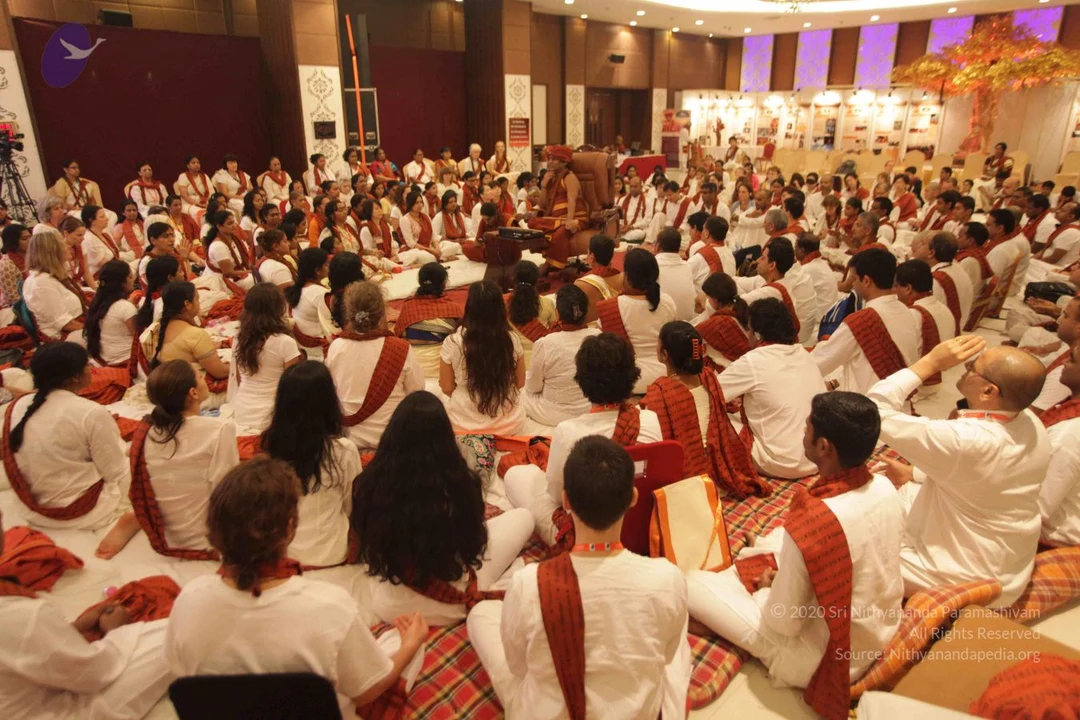
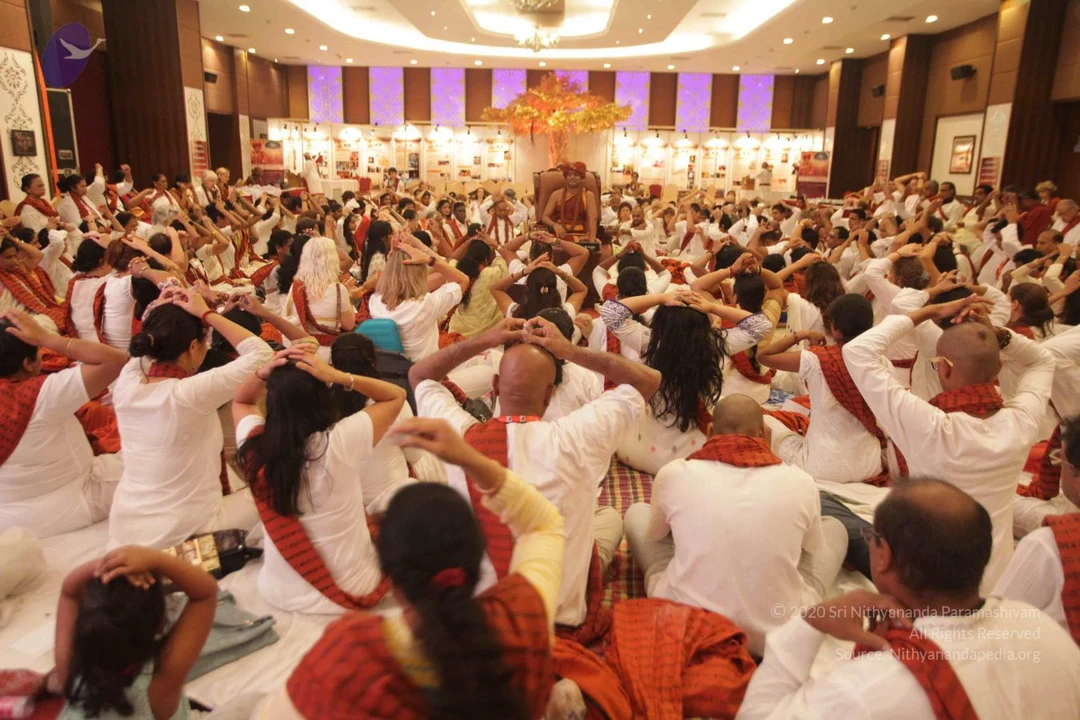
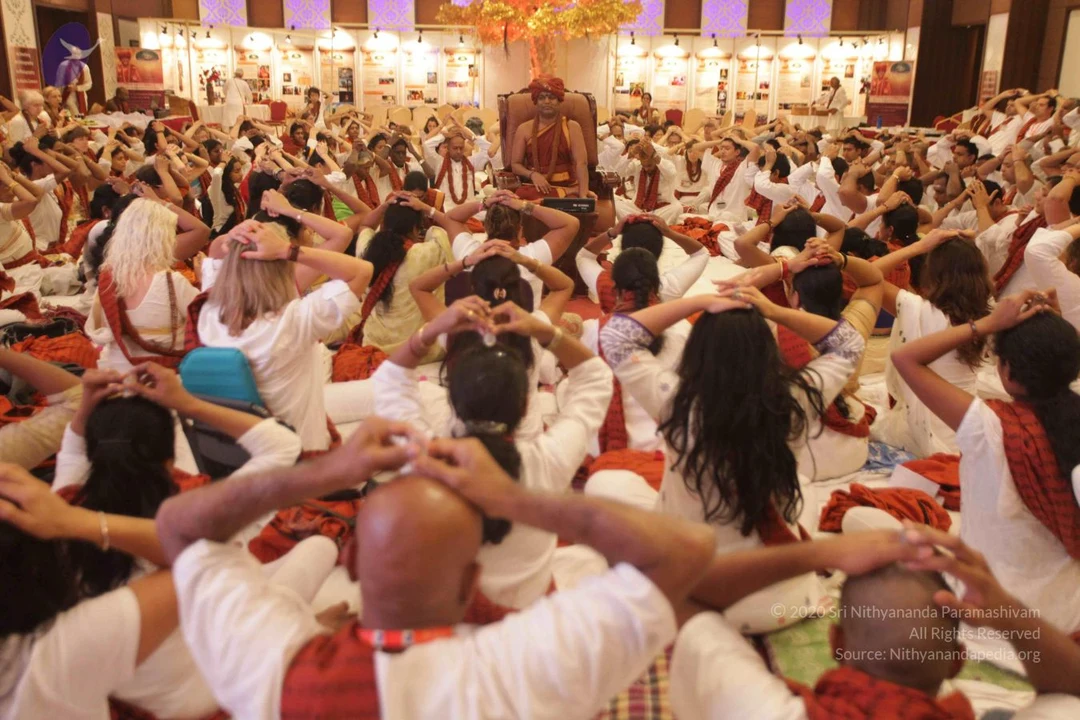
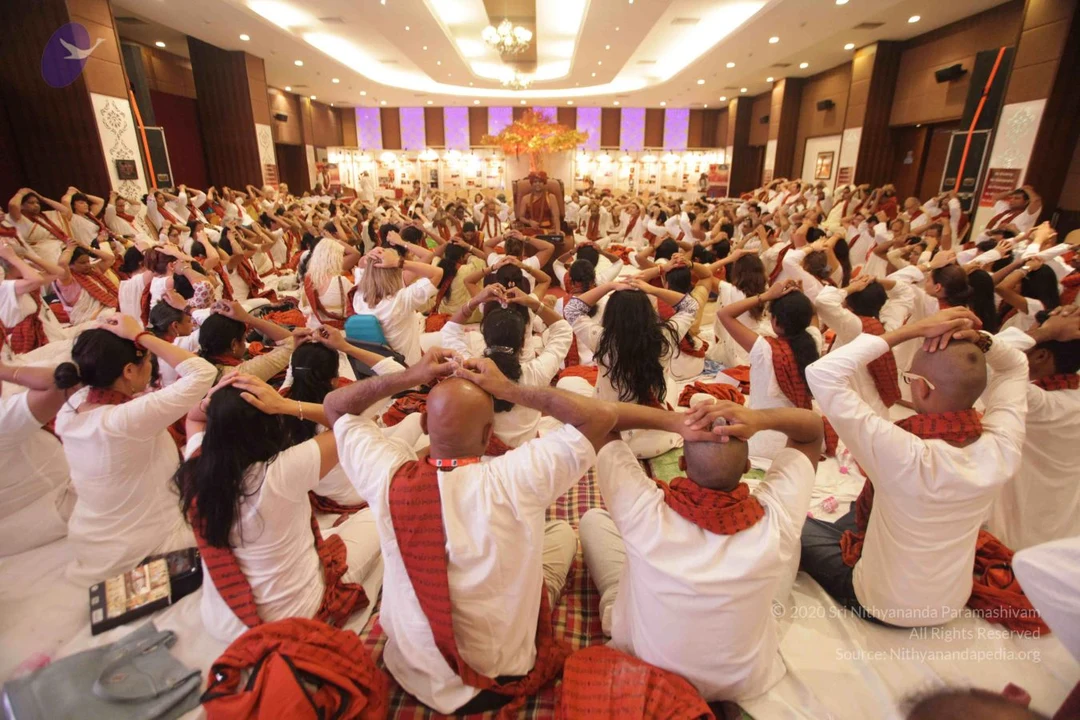
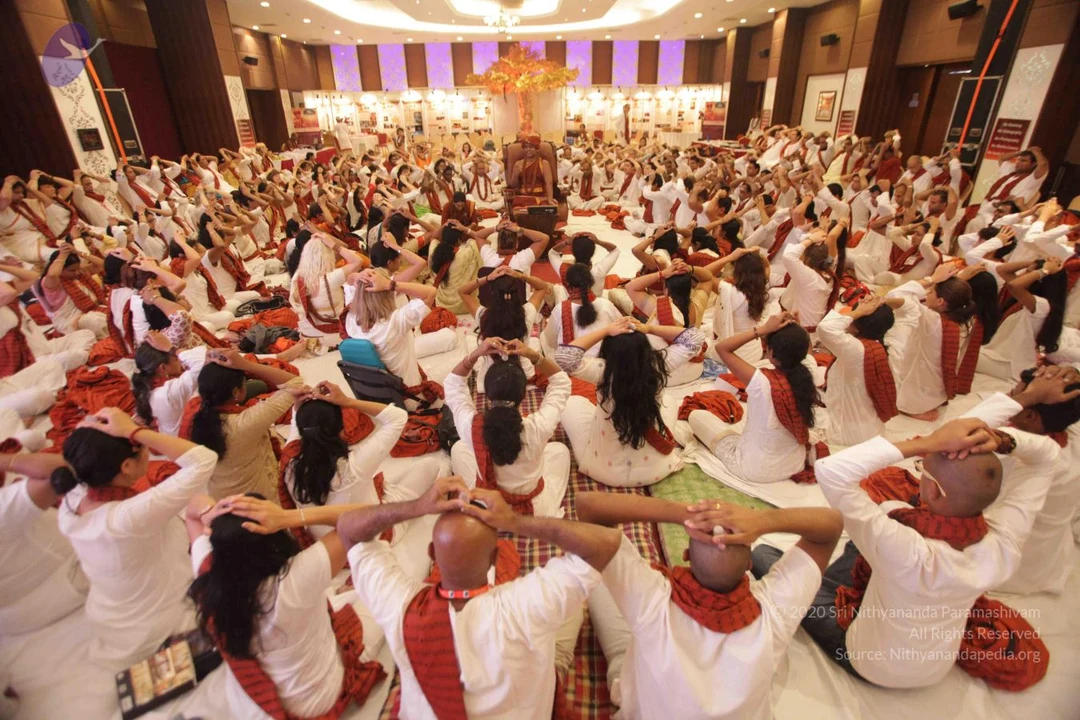
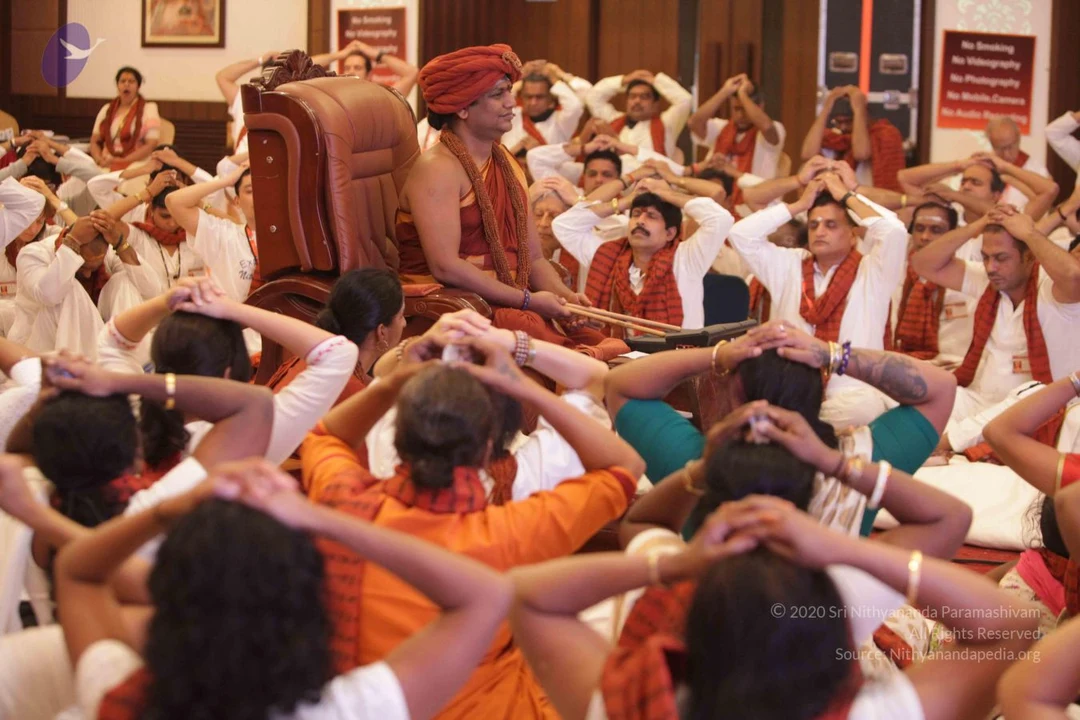
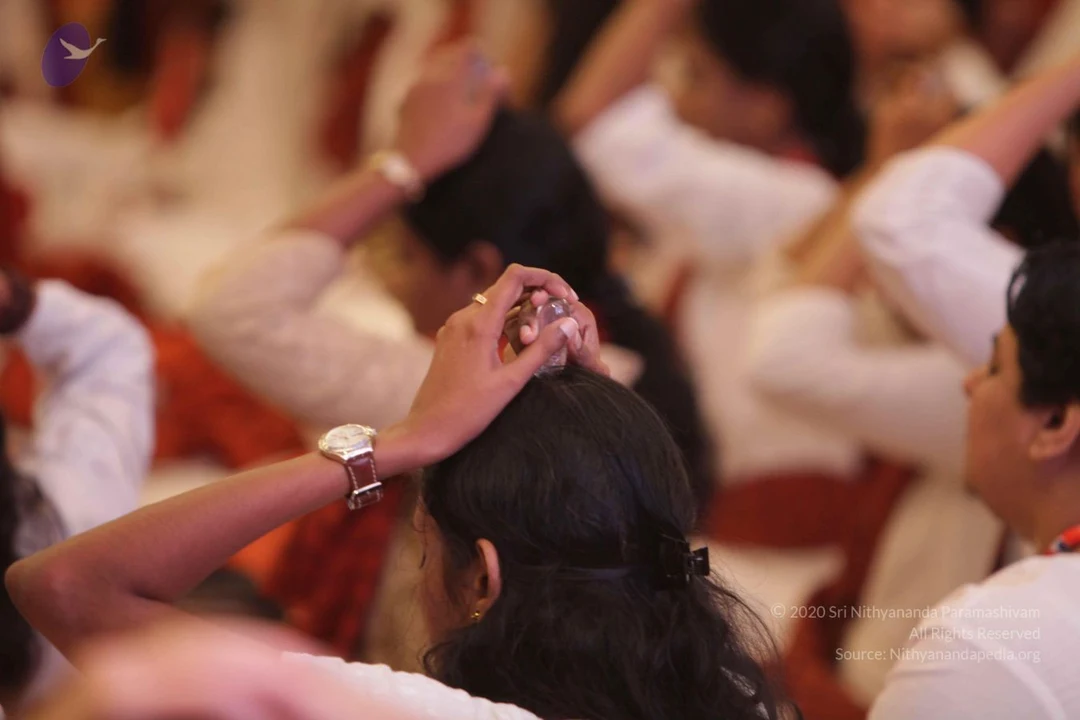
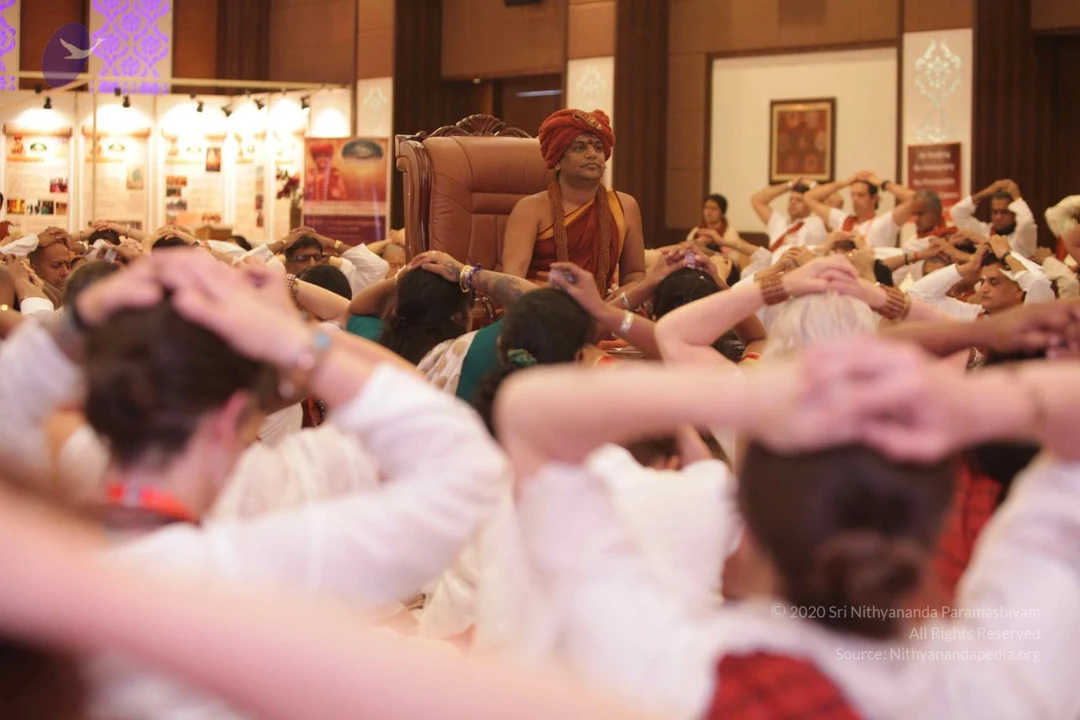
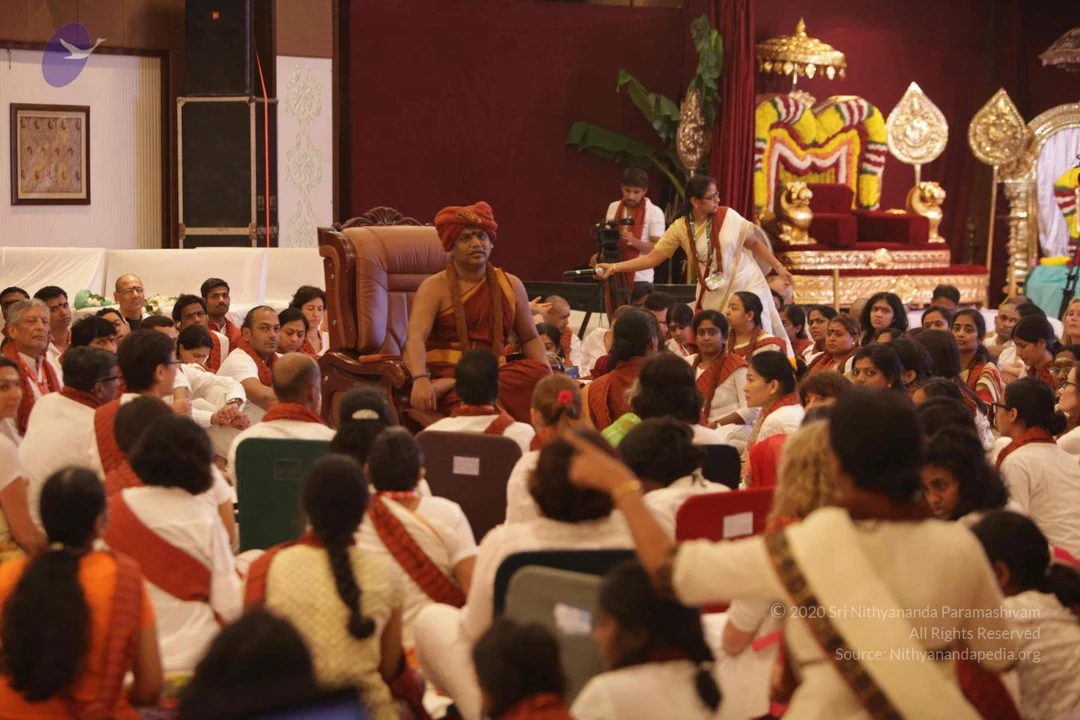
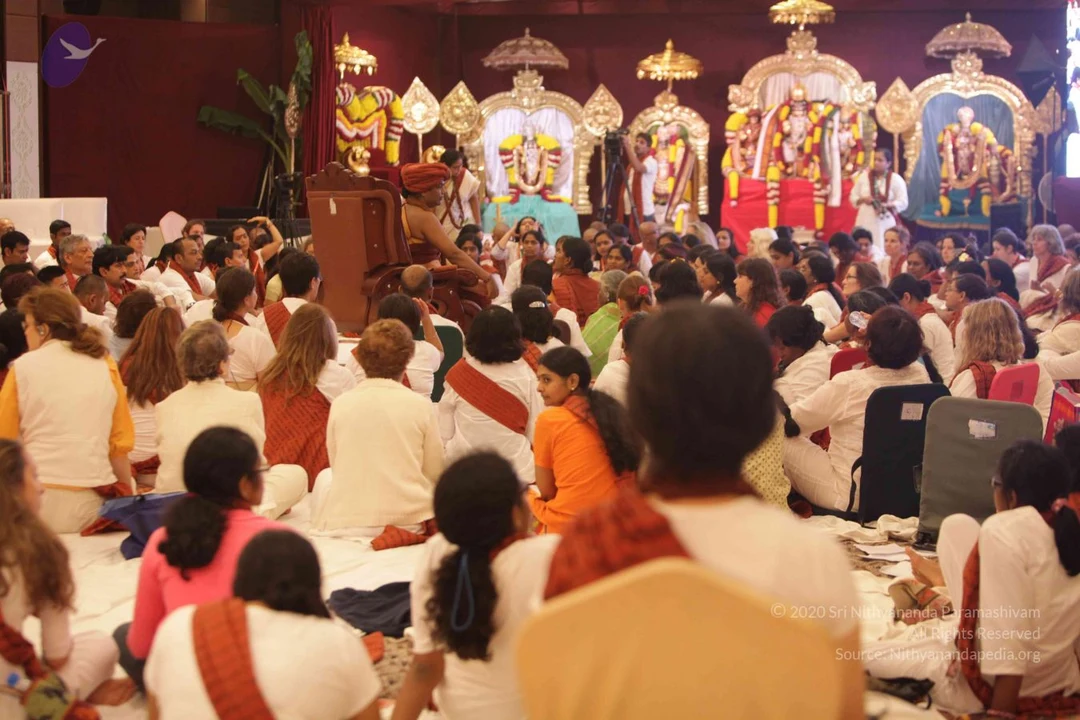
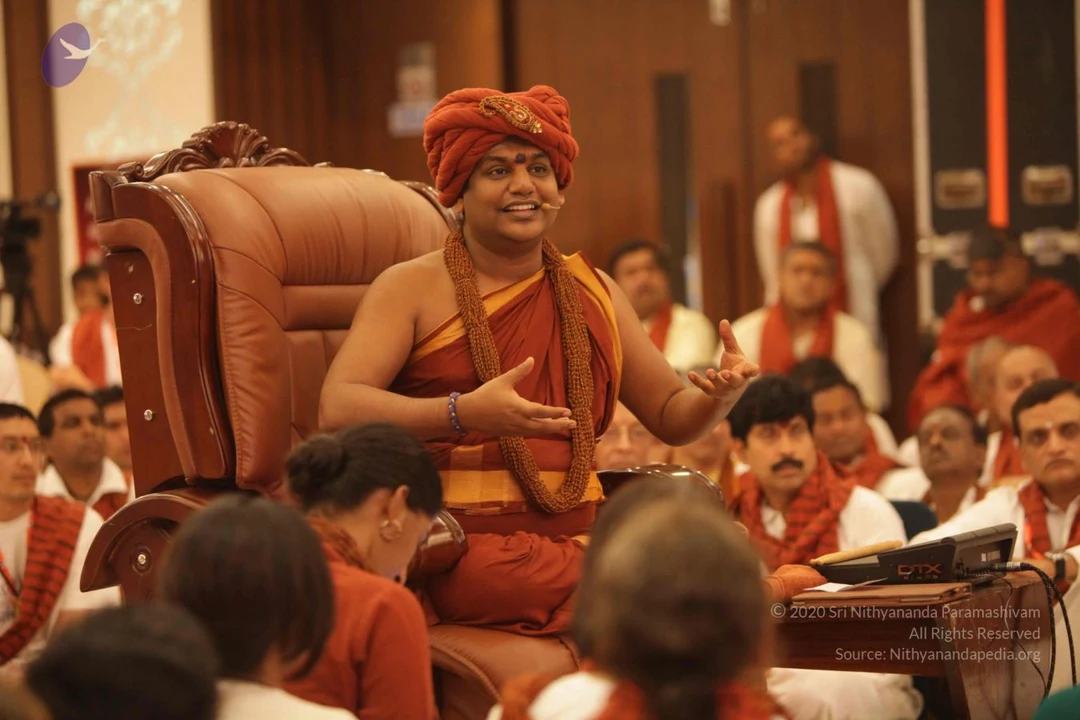
Secrets to How Mantras Work In Mandala Process || Part 1 || IA || 13 July 2015

Dated photos
640
Source pages
1
Media
15
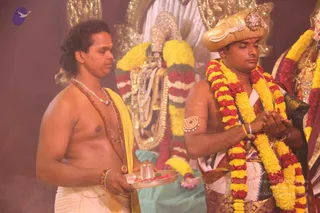
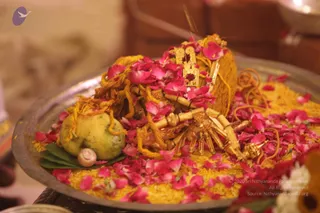
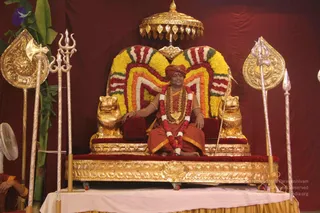
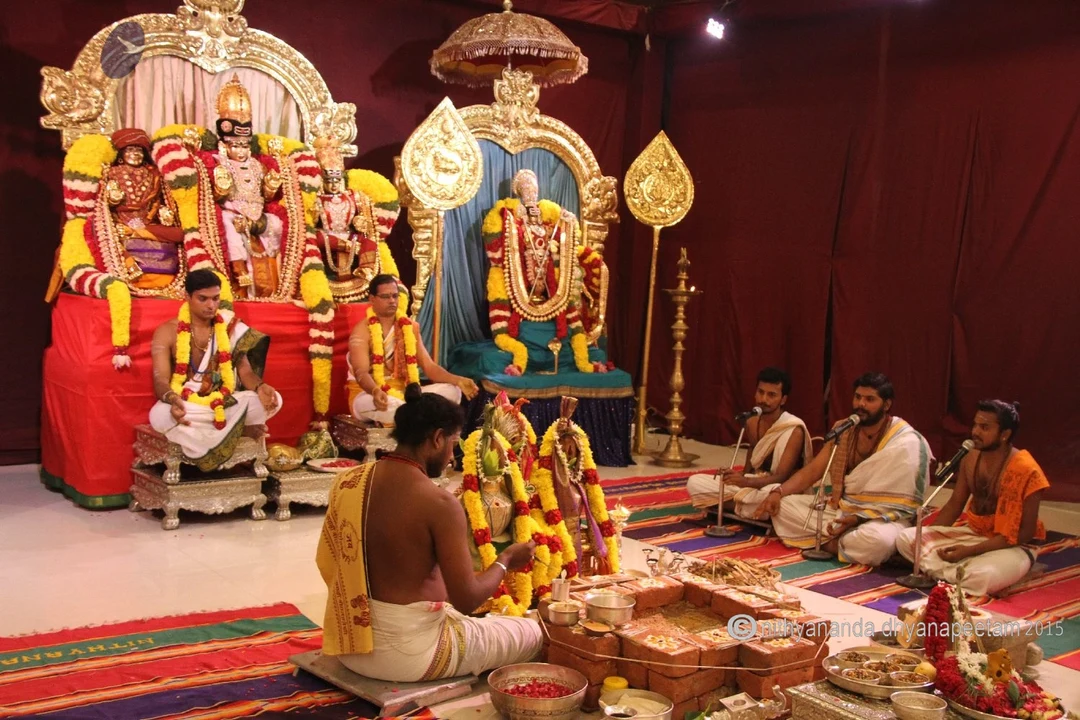
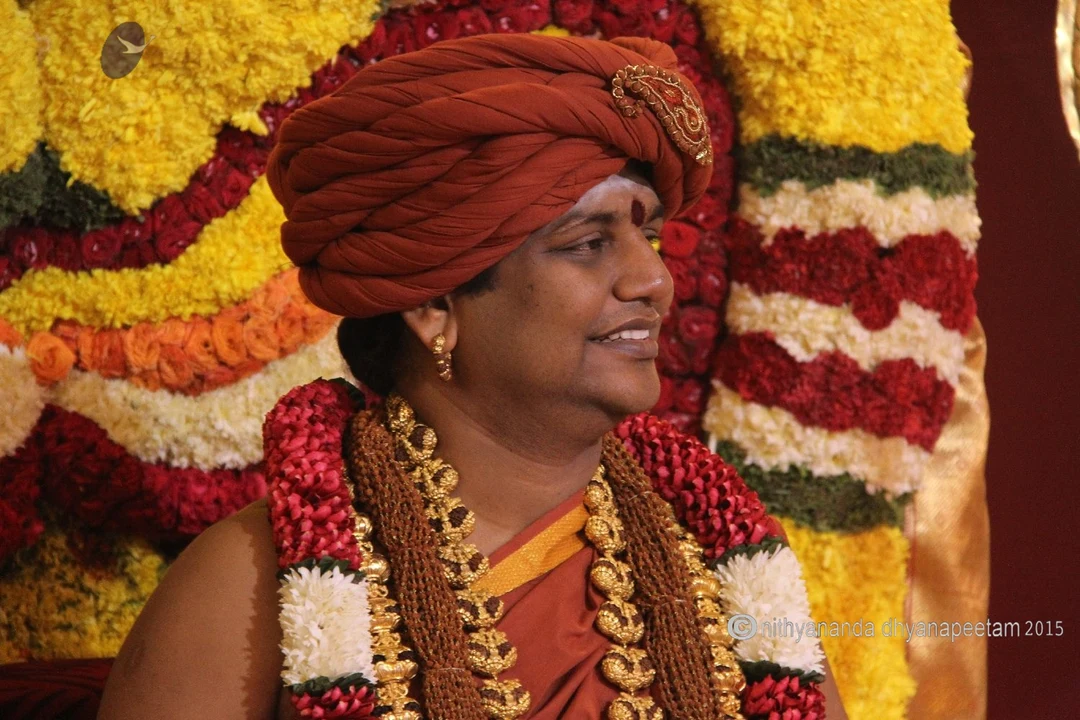
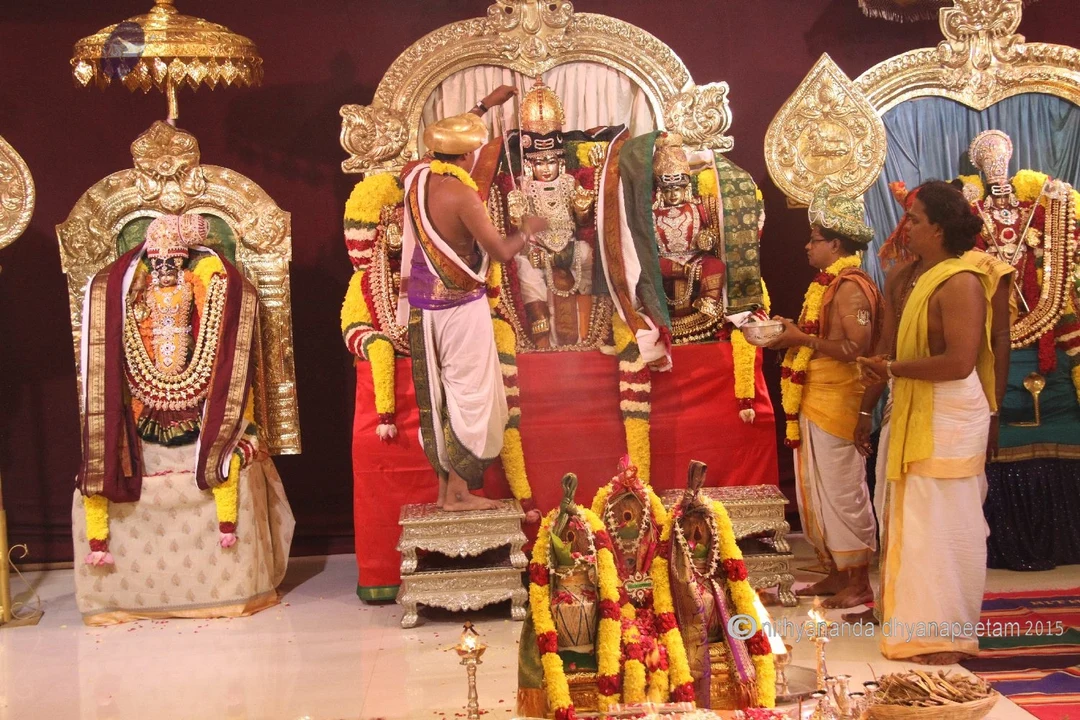
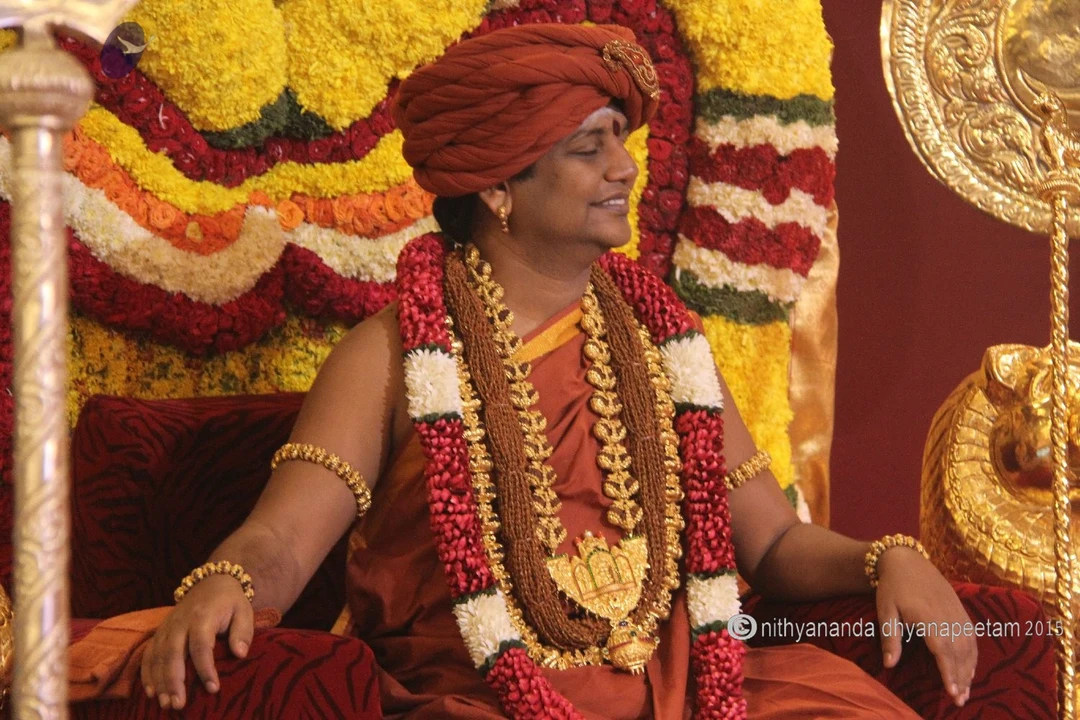
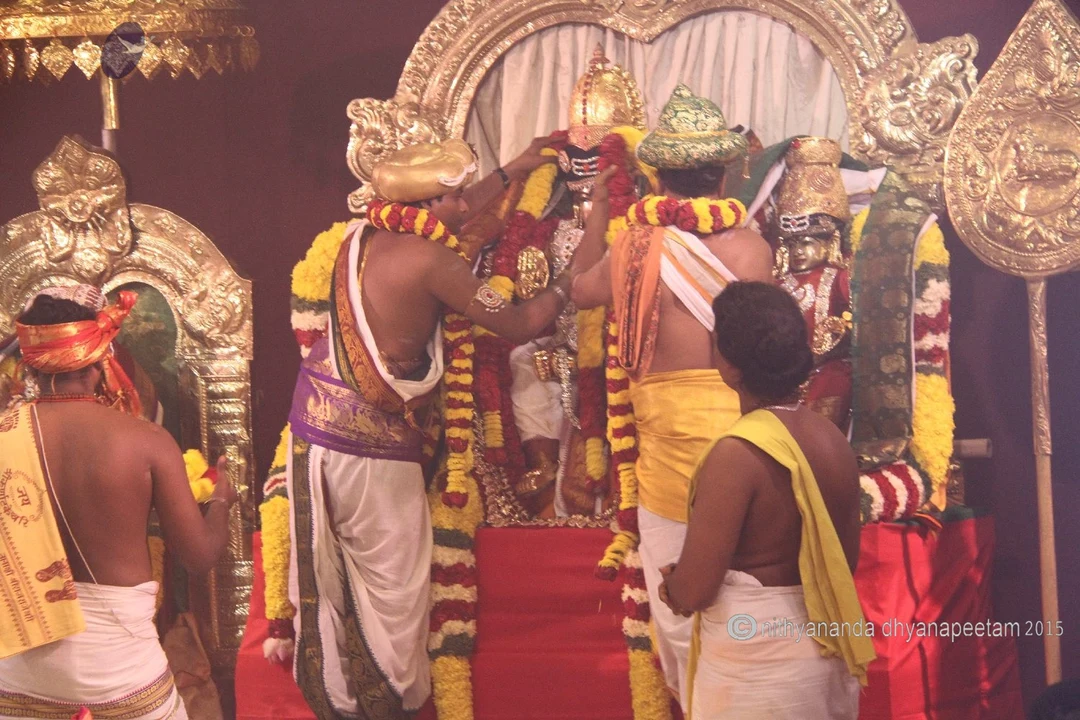
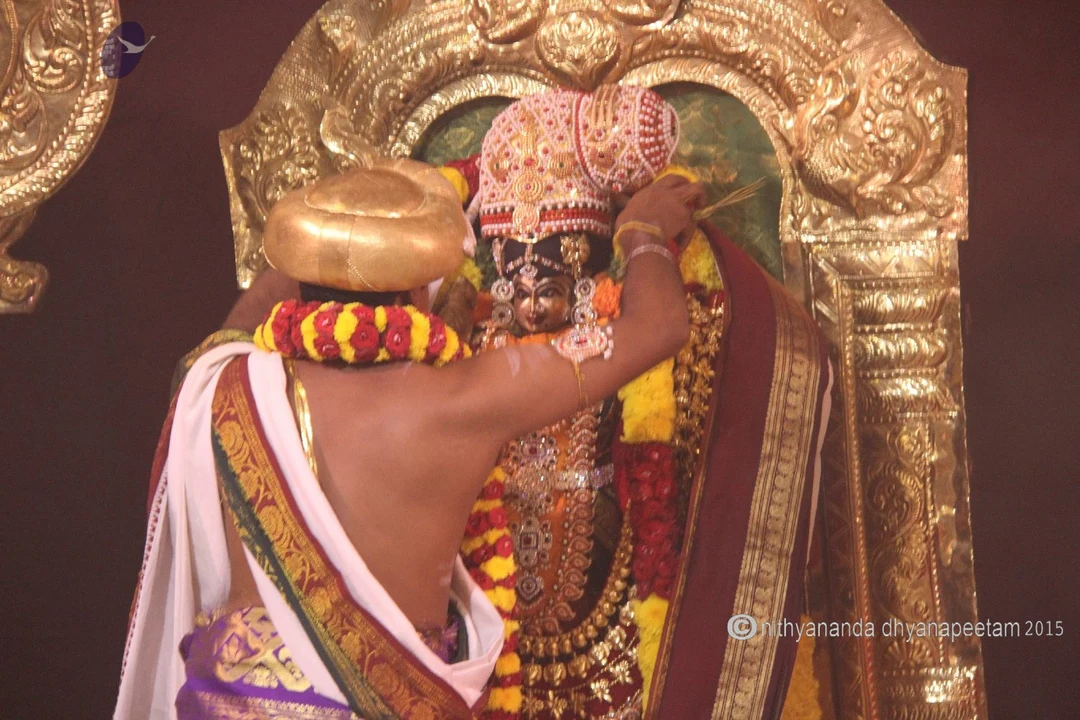
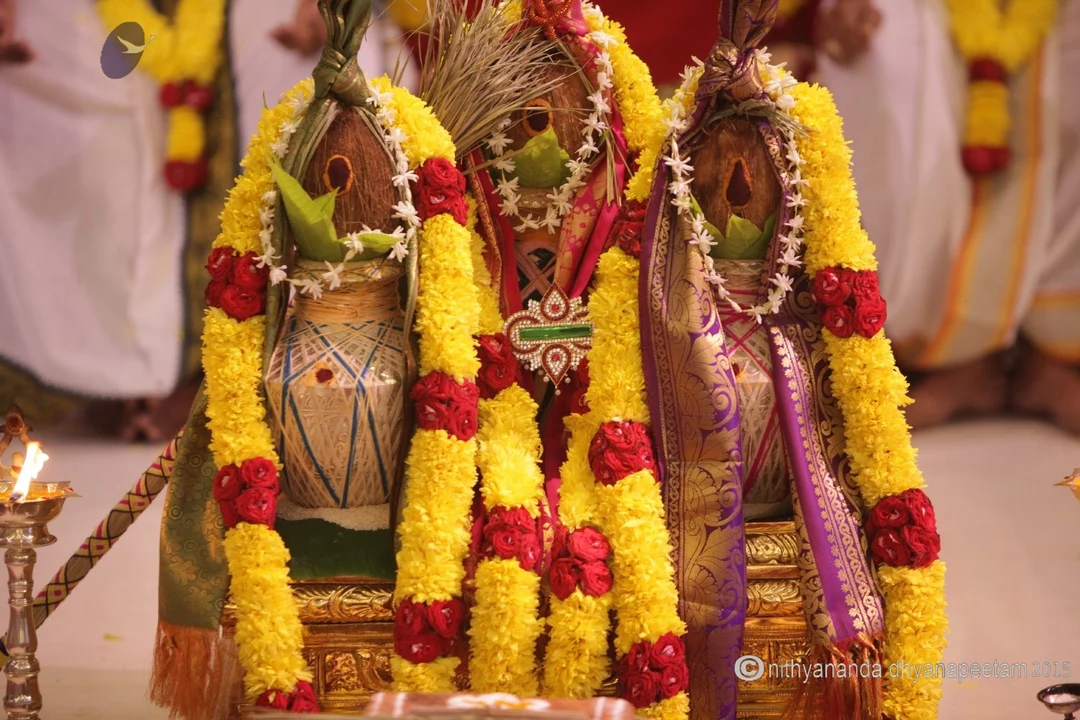
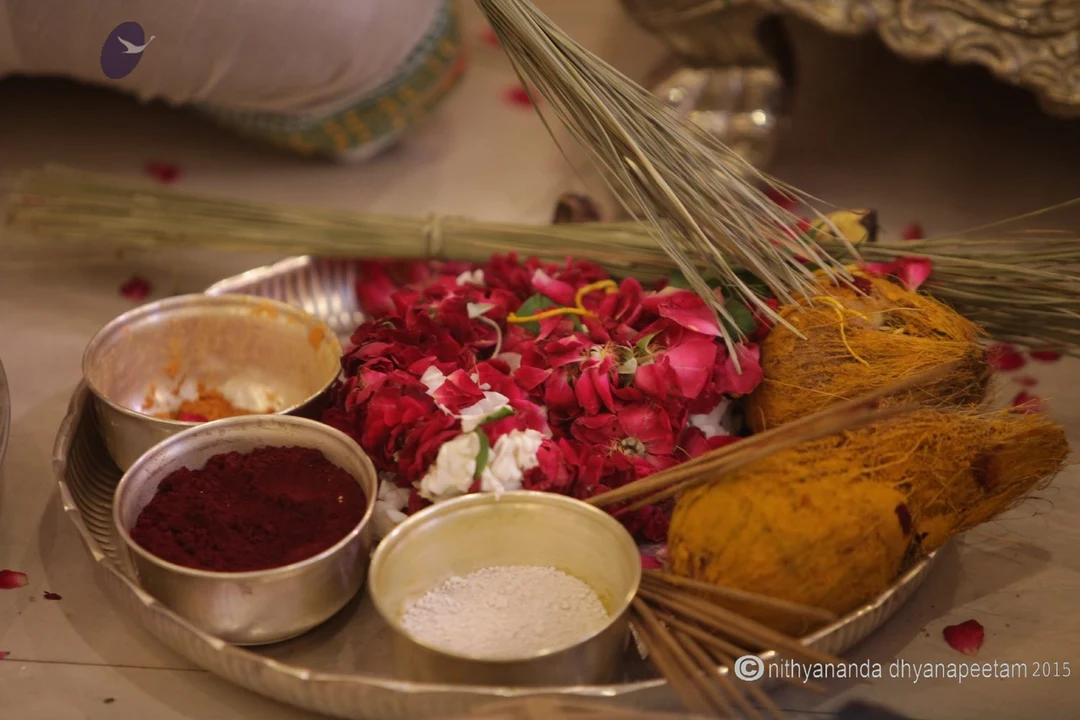
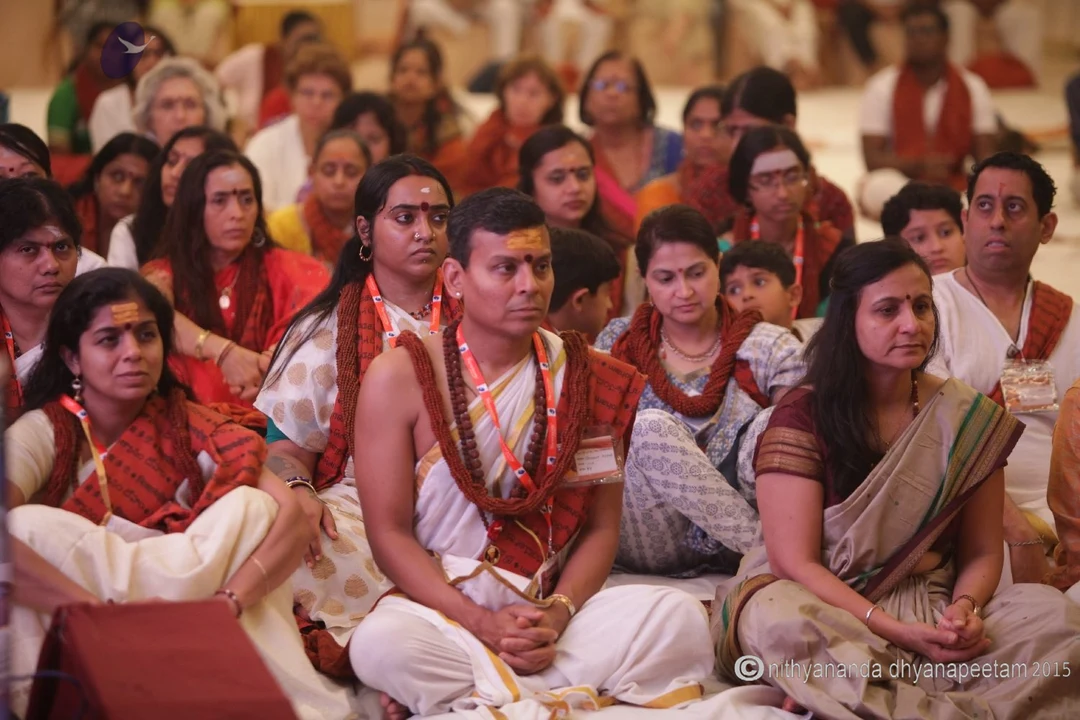
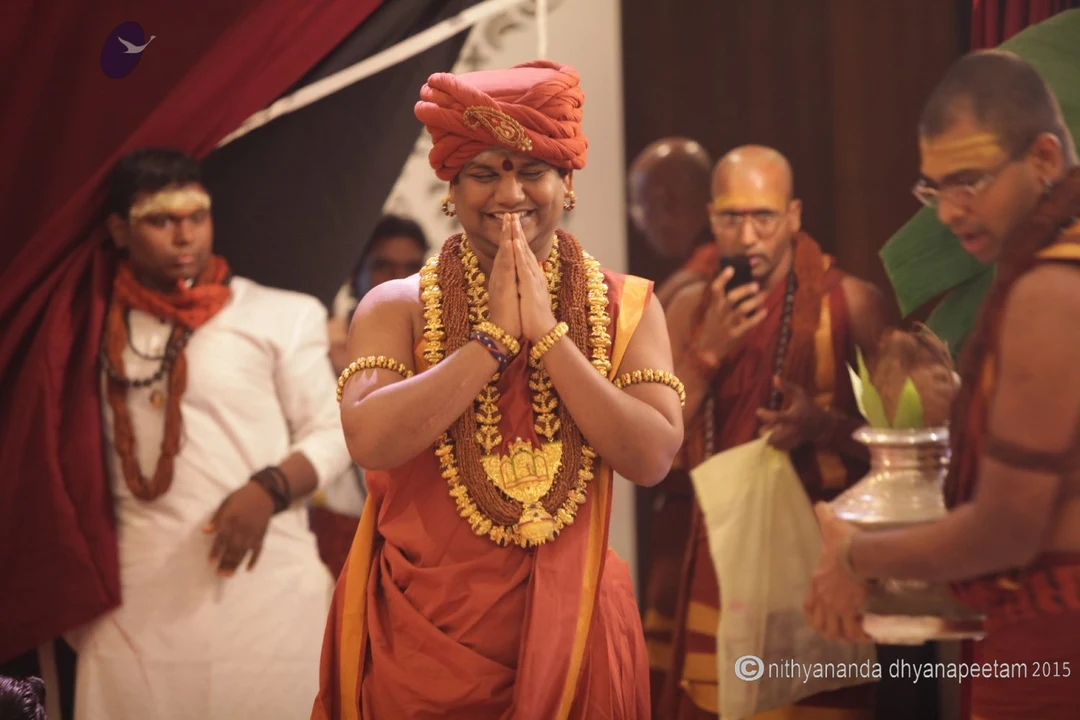
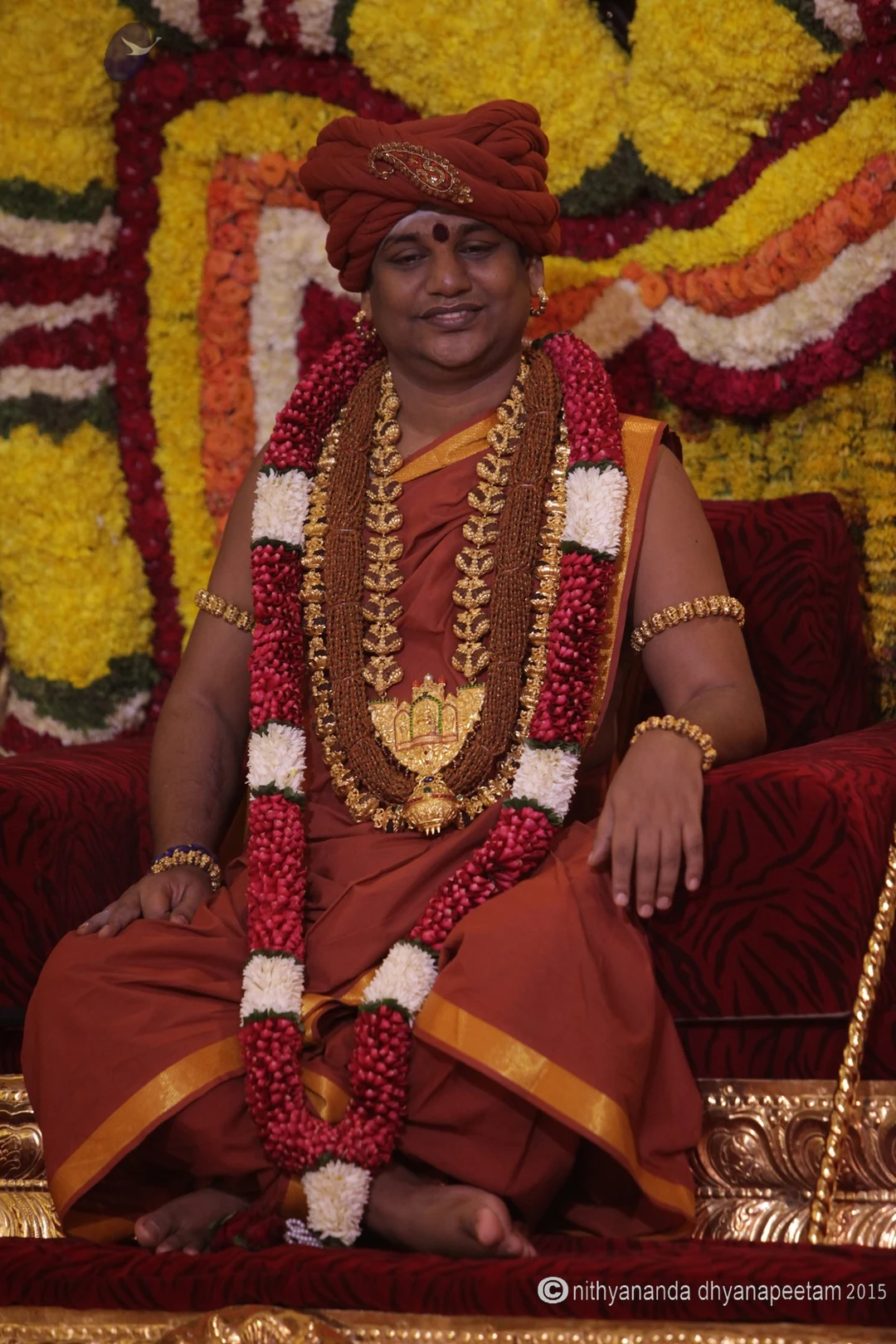
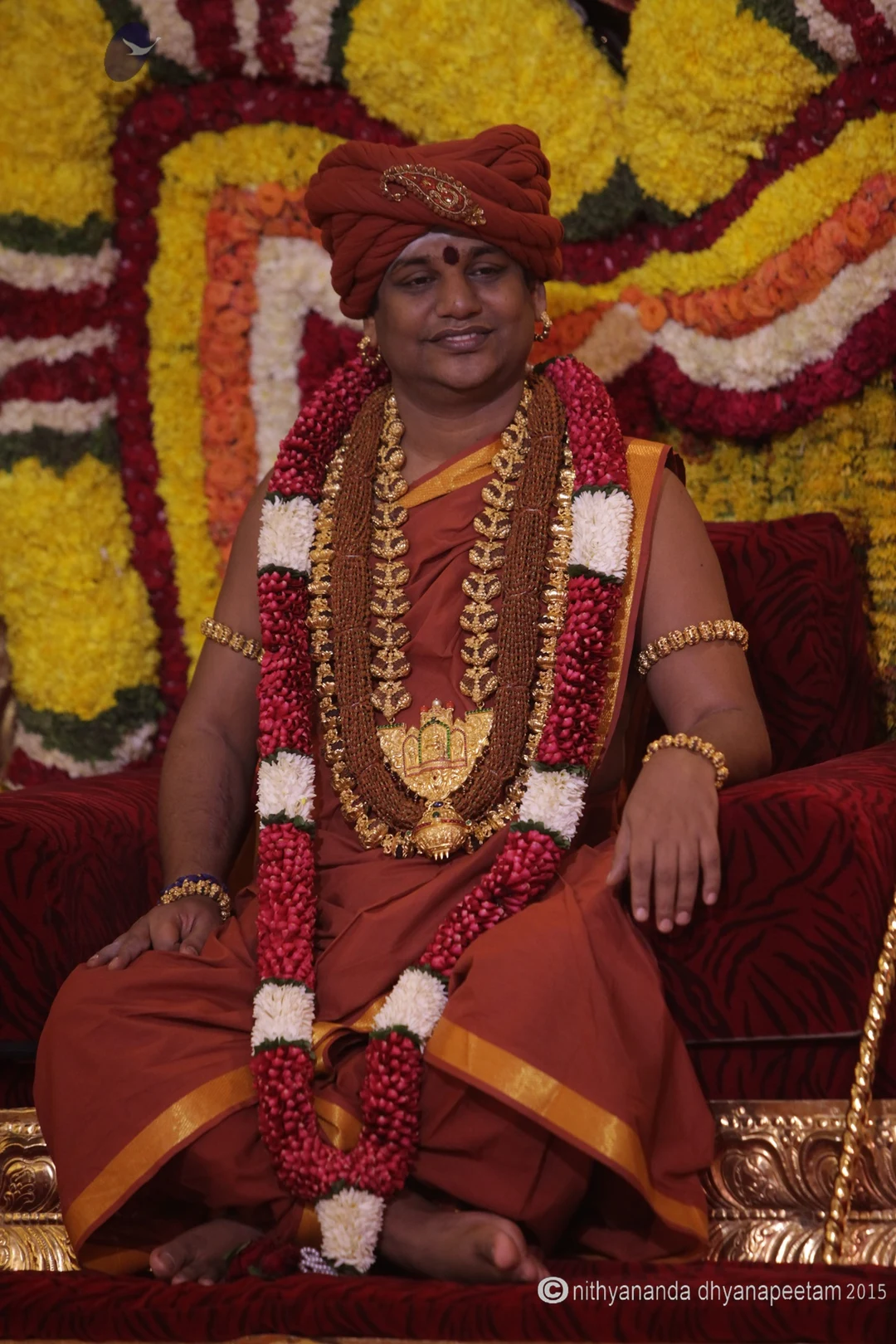
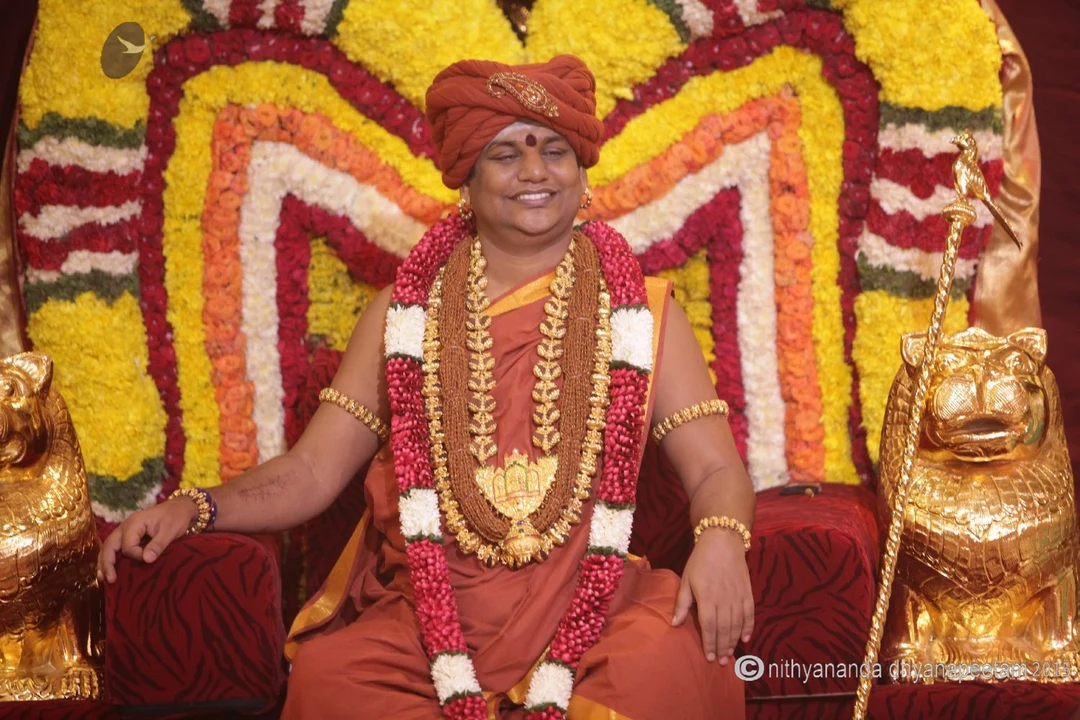
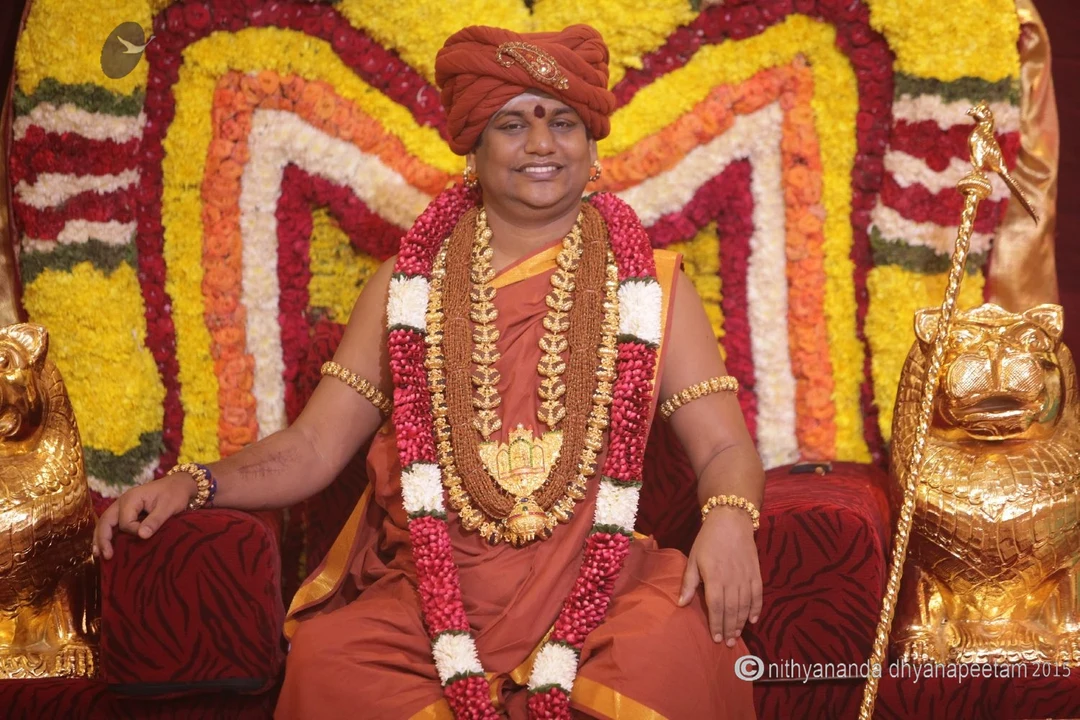
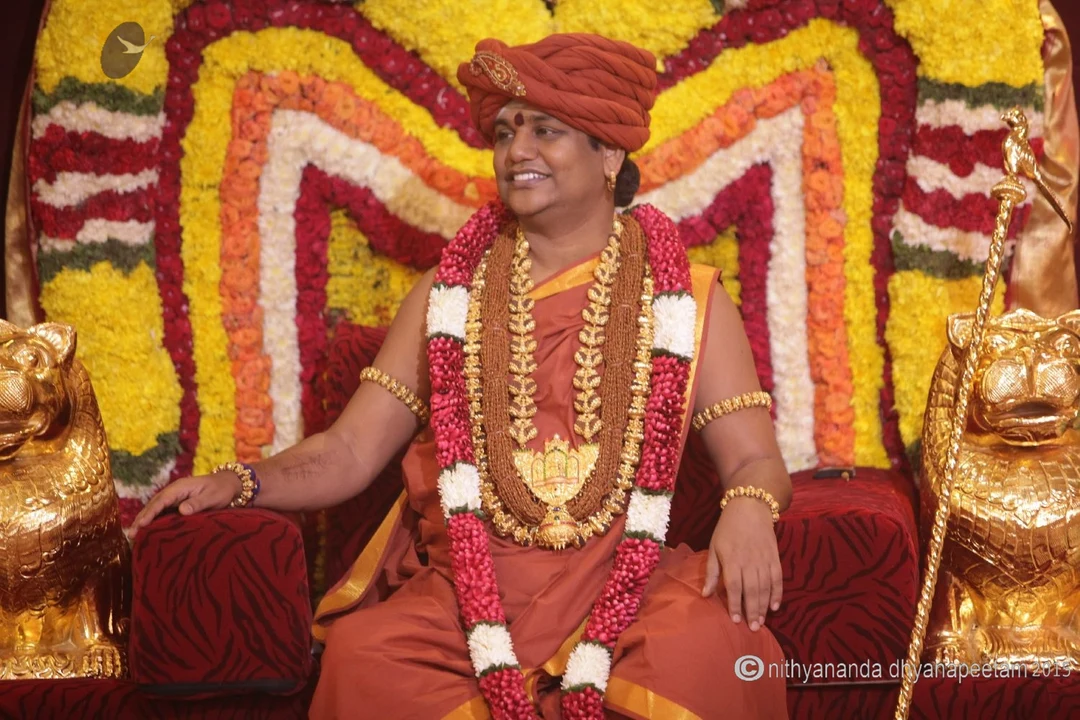
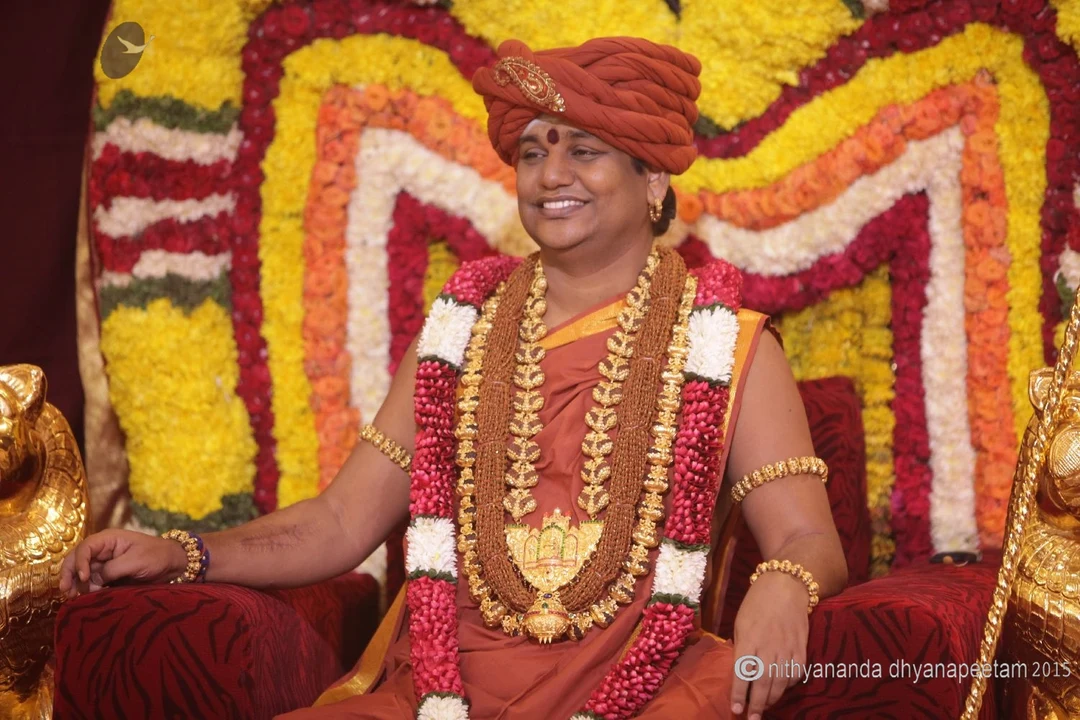
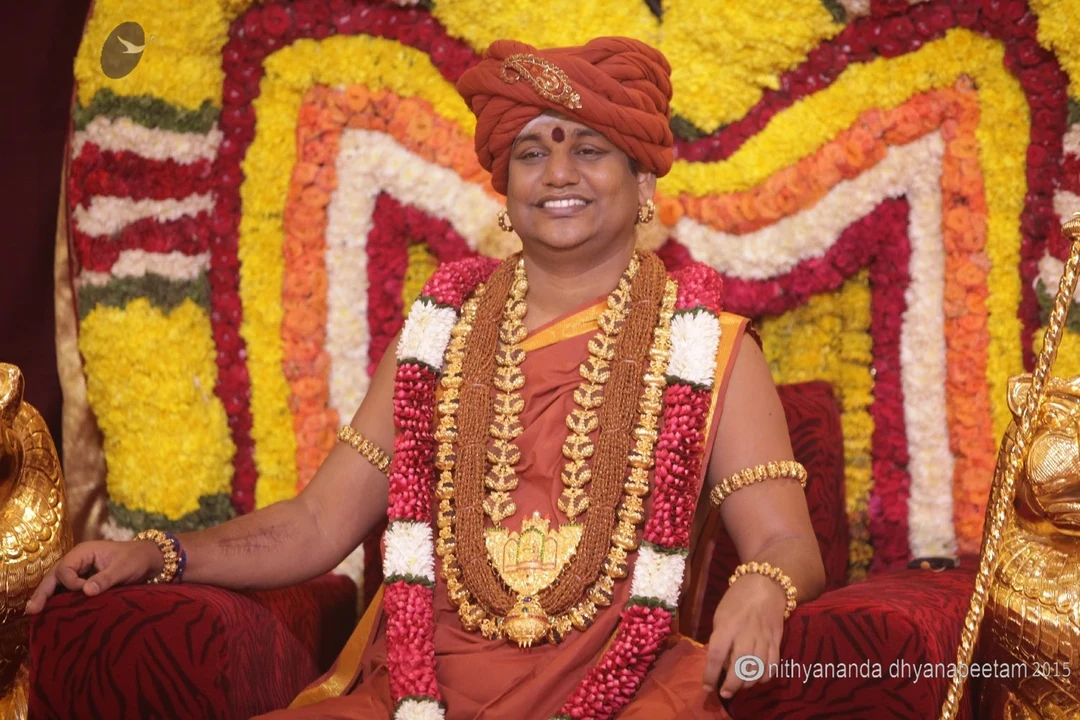
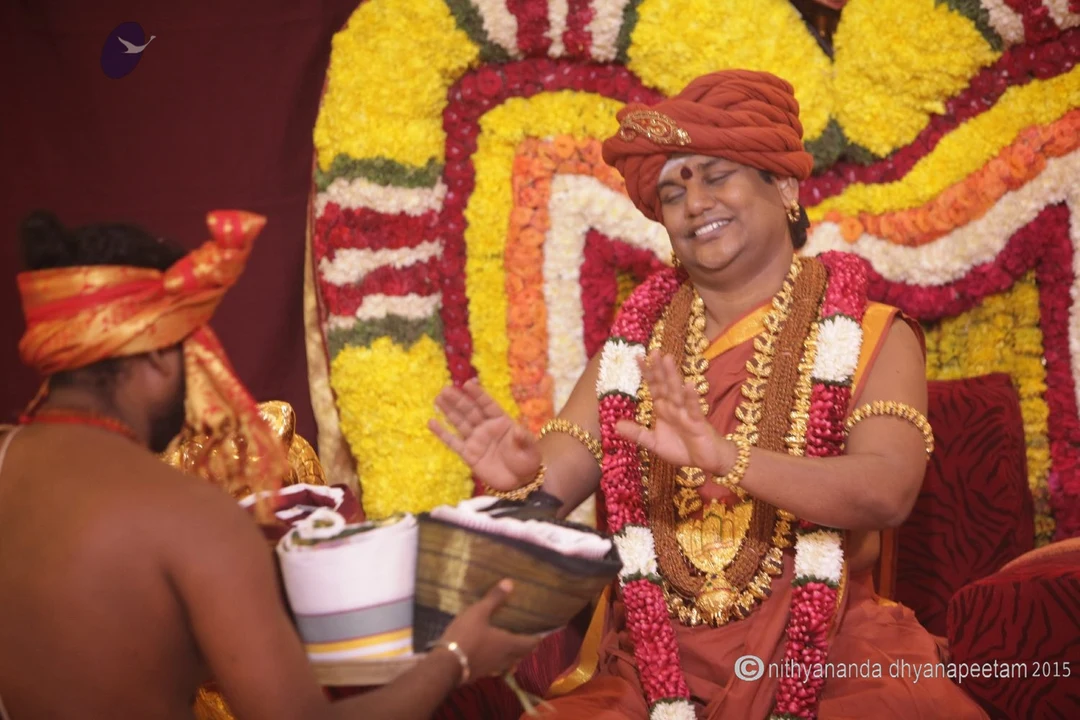
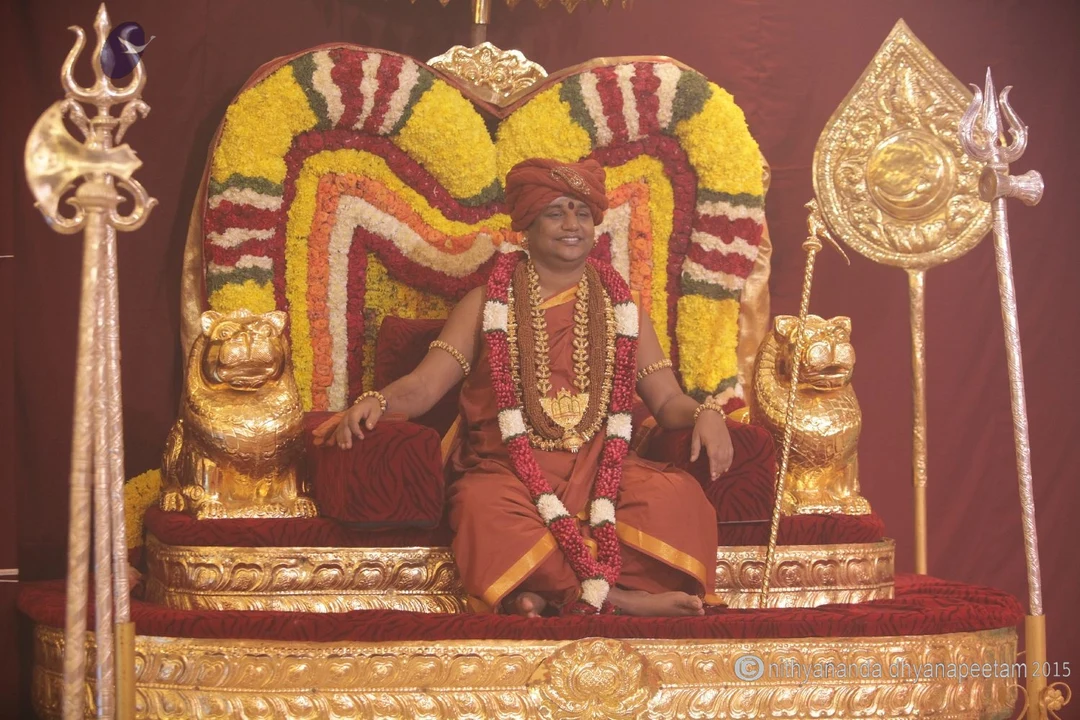
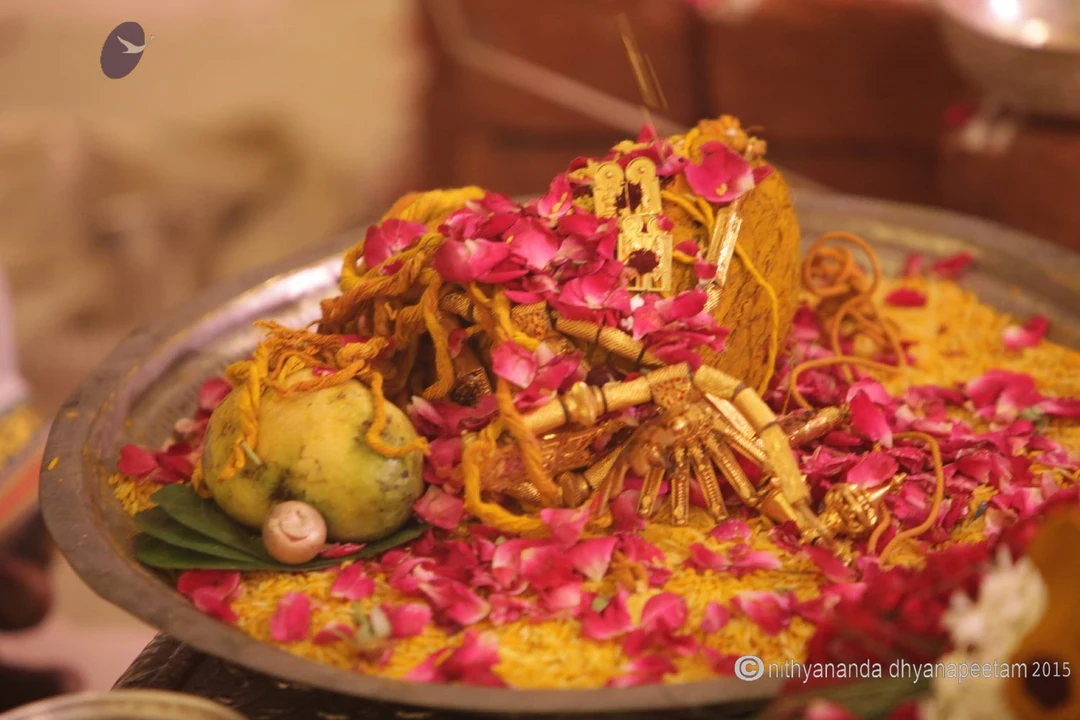
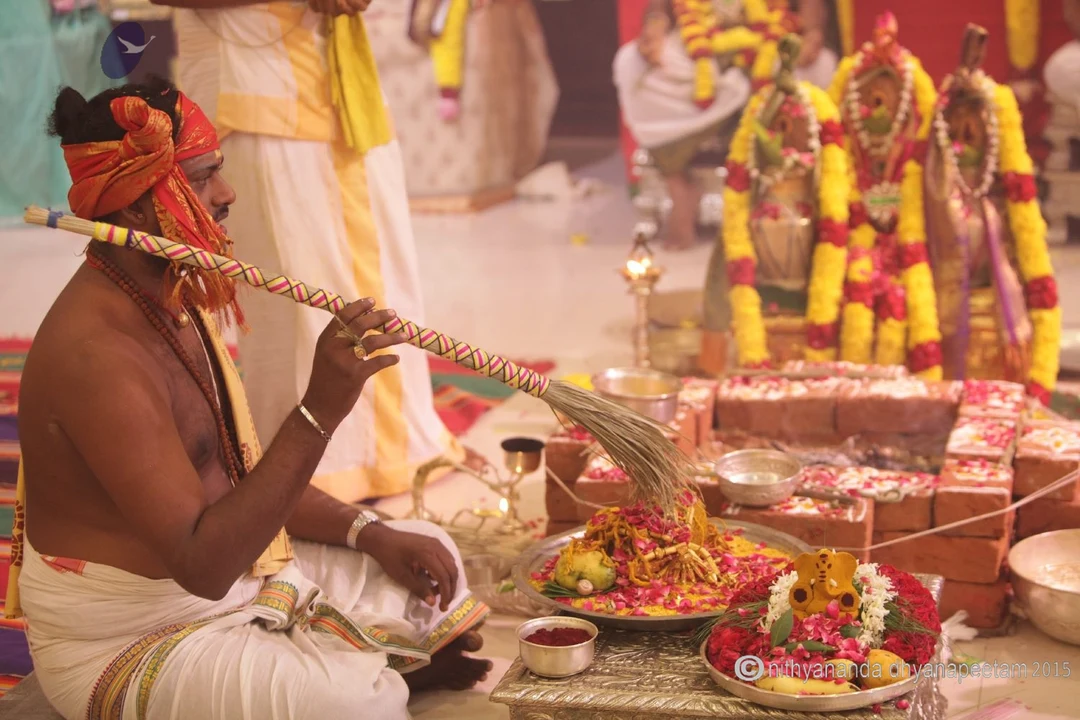
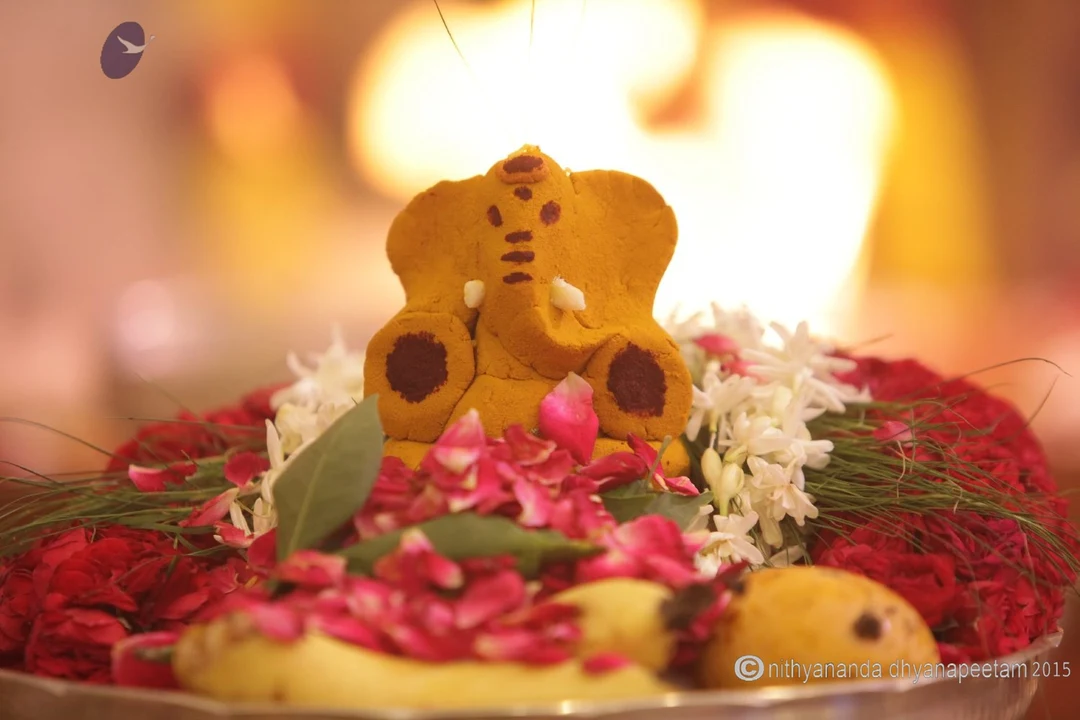
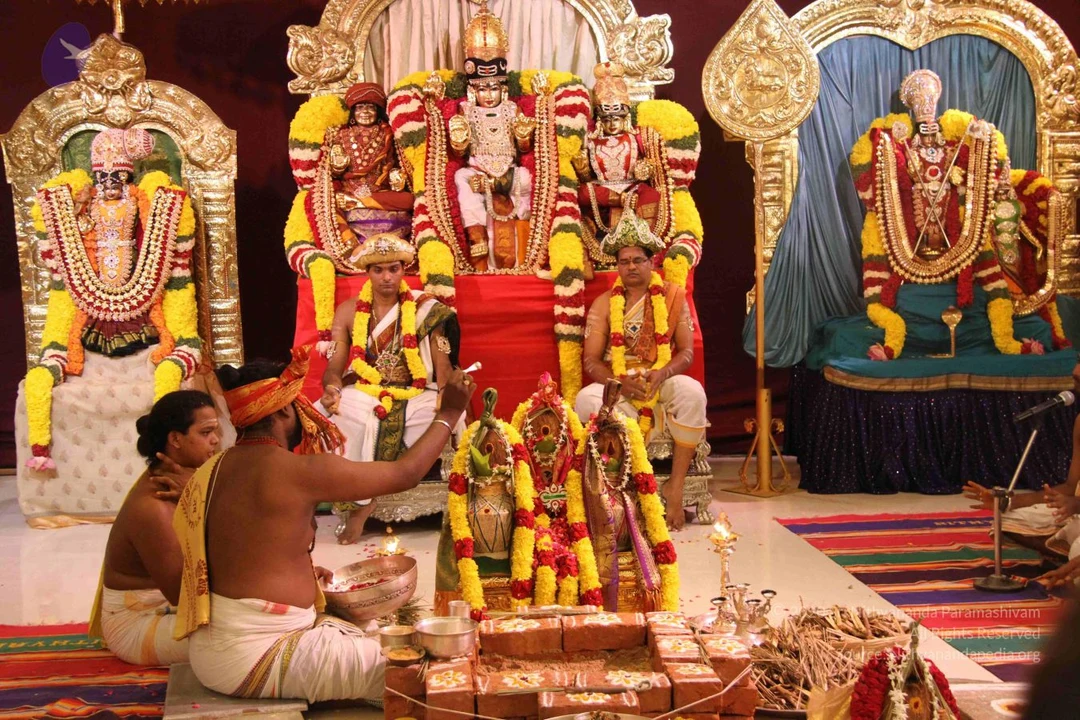
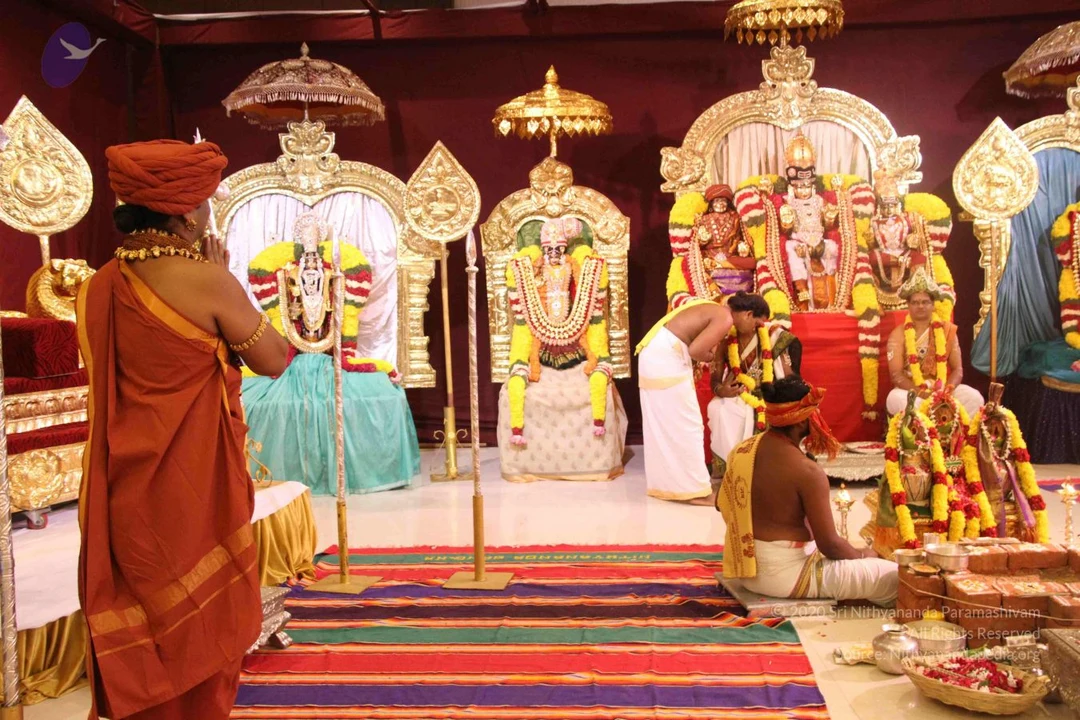
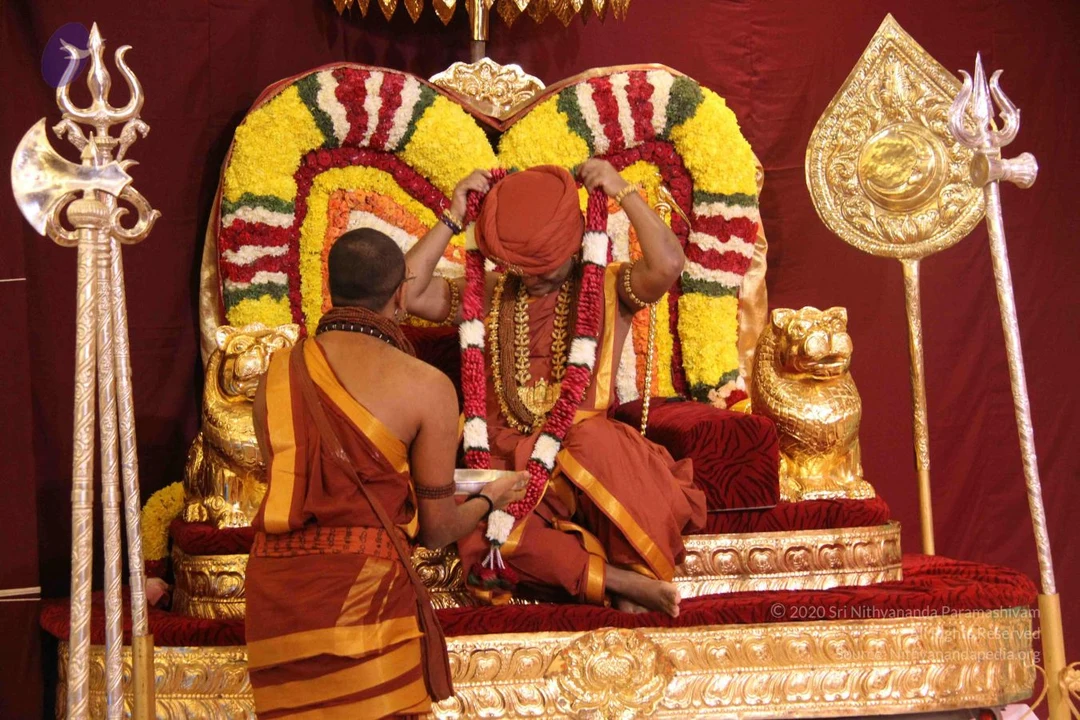
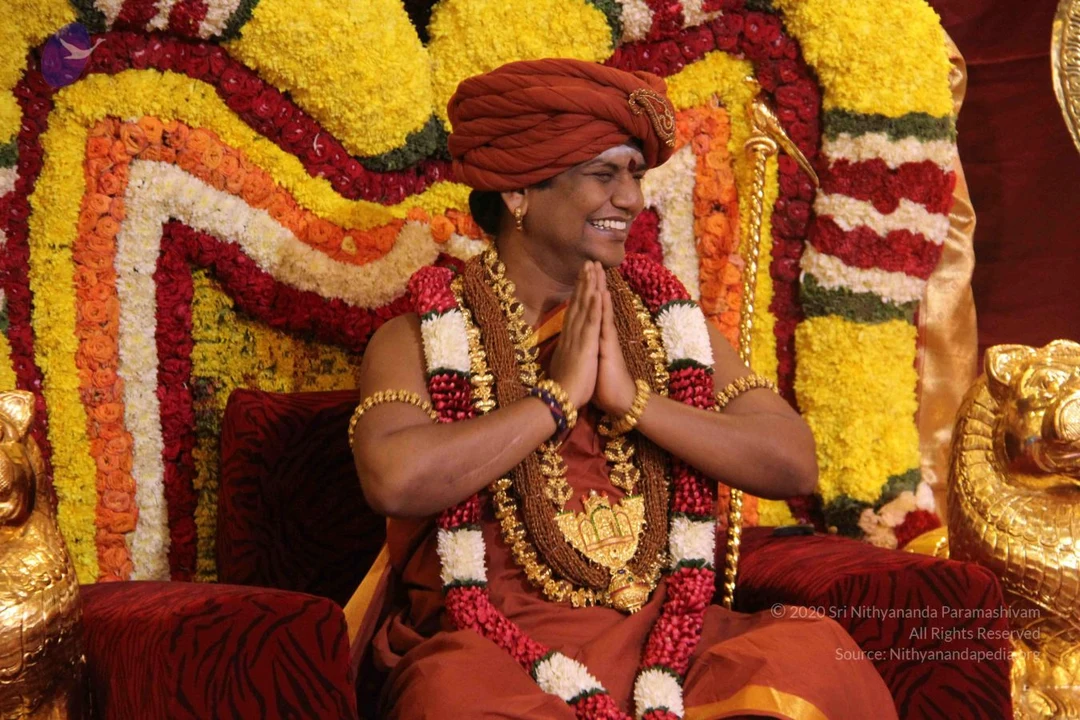
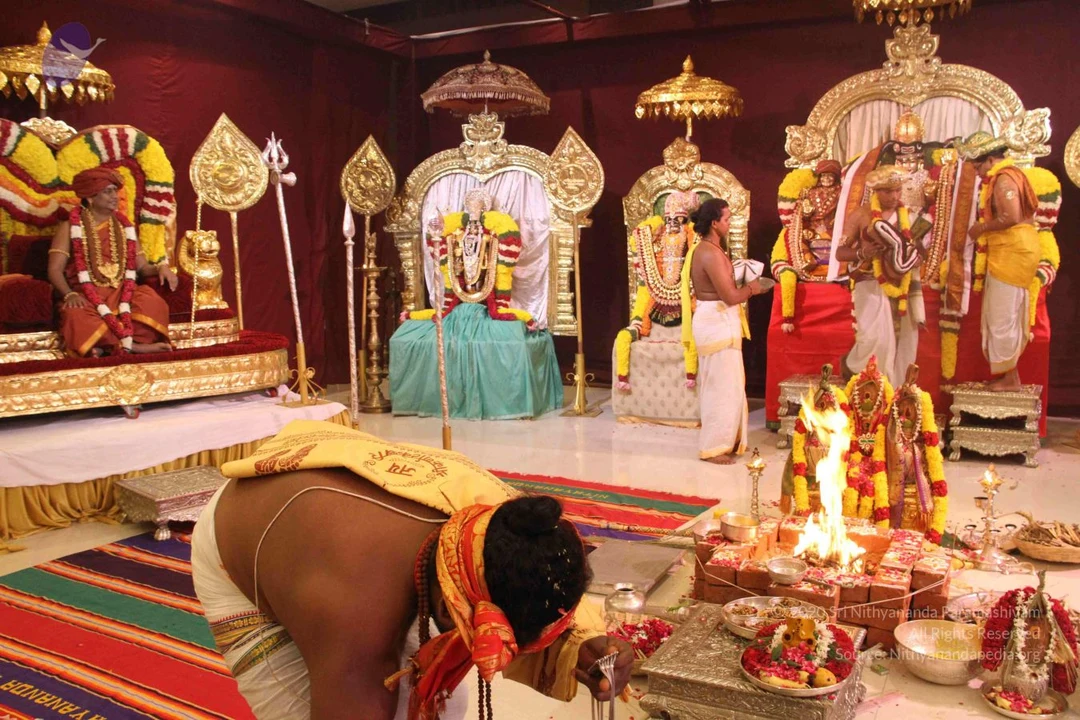
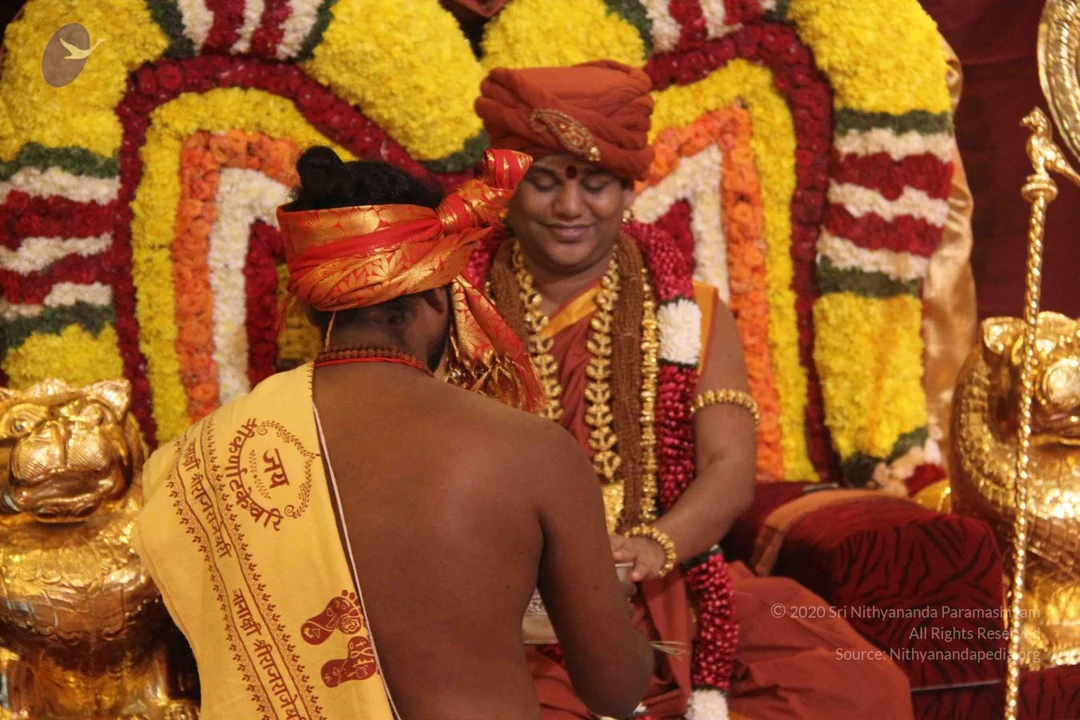
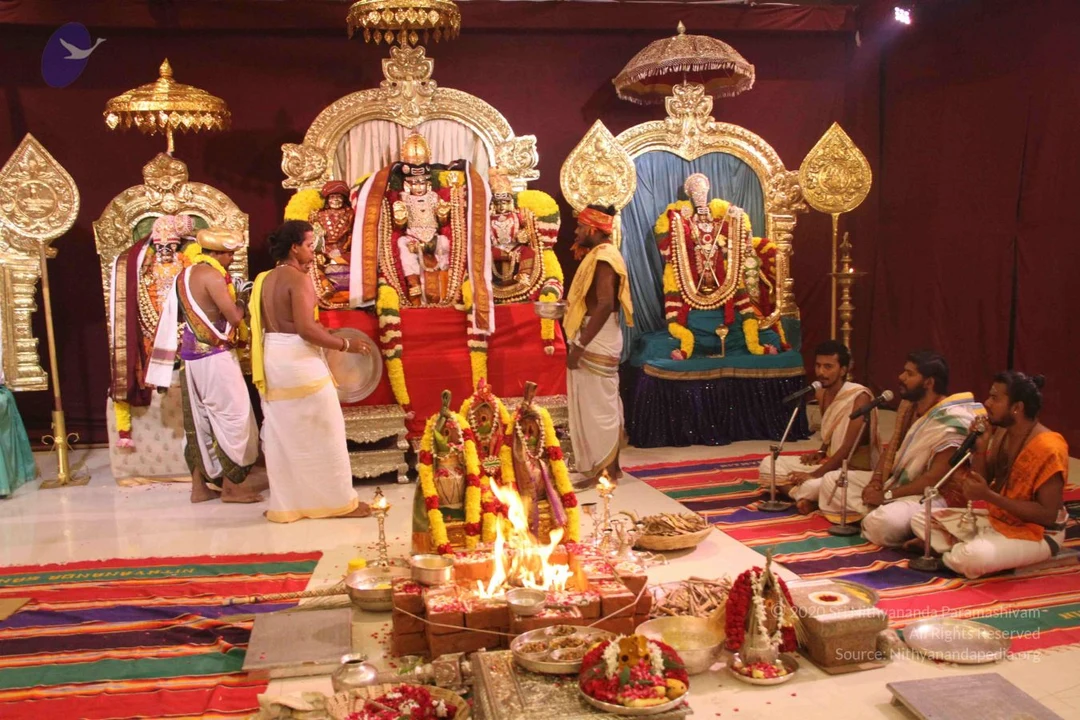
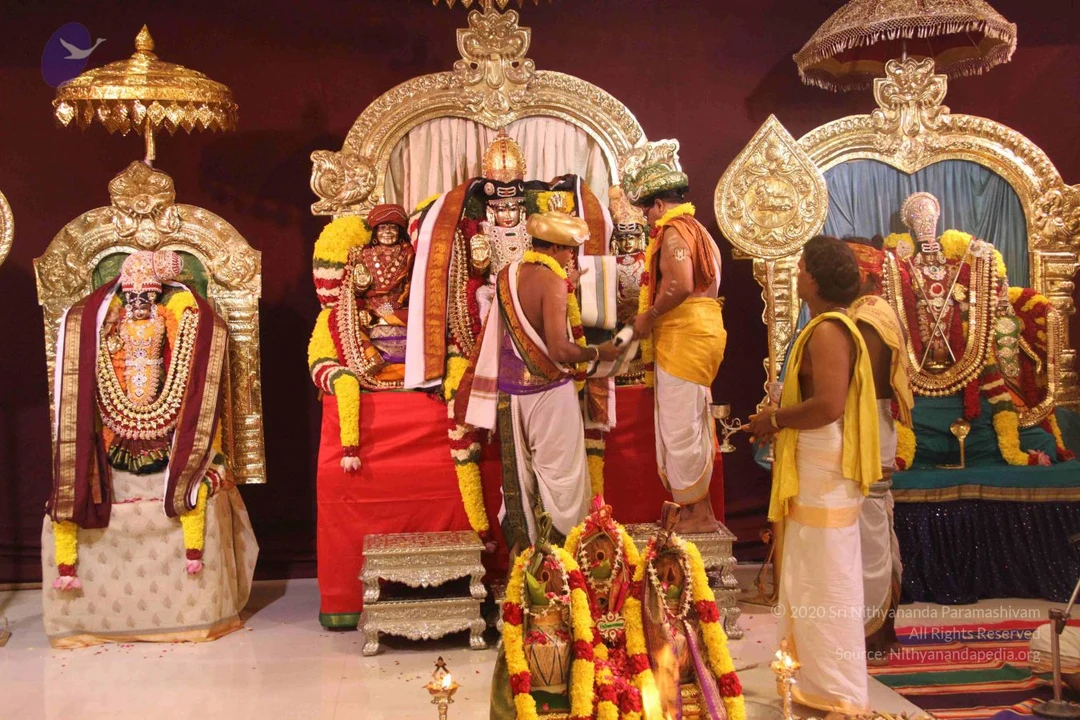
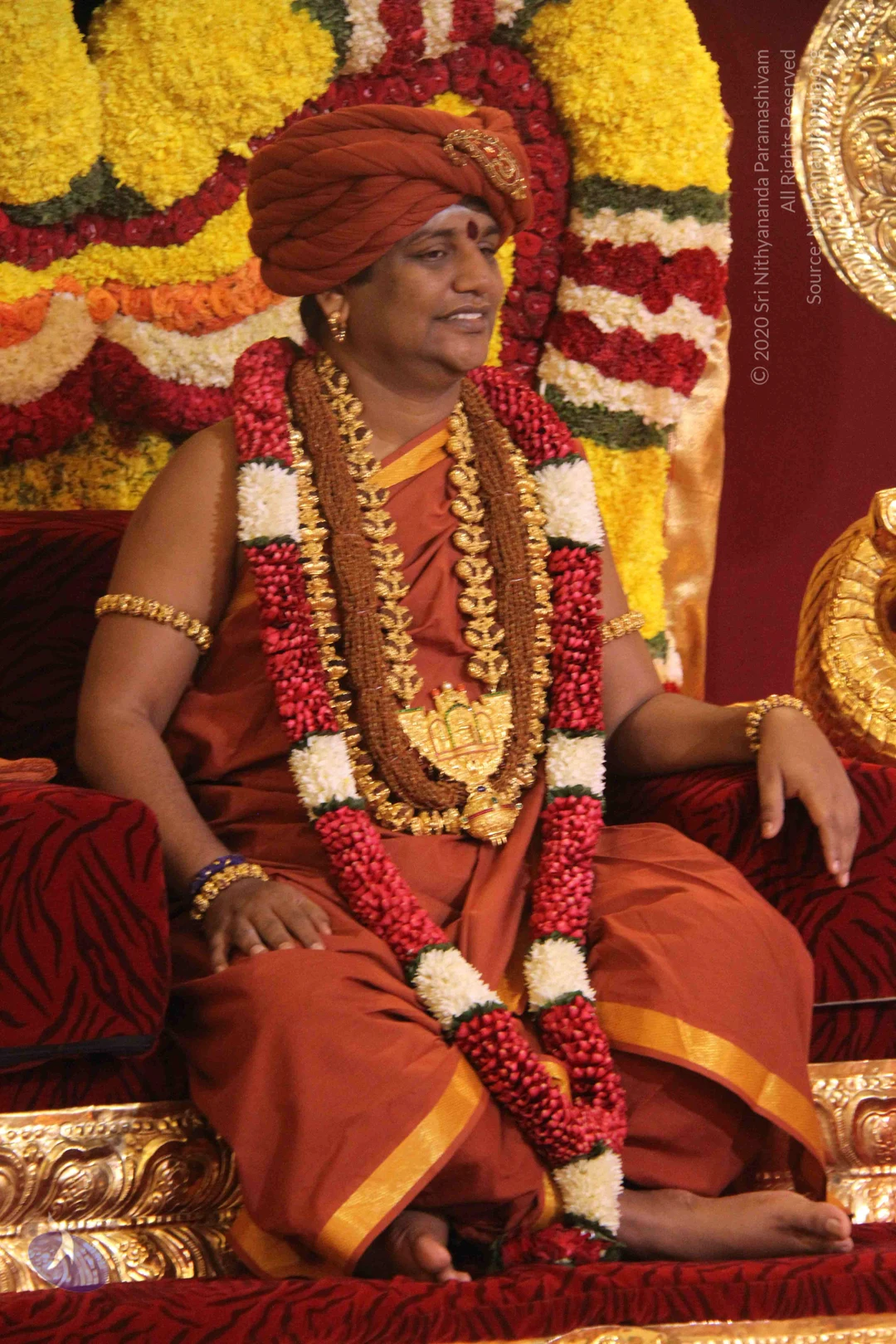
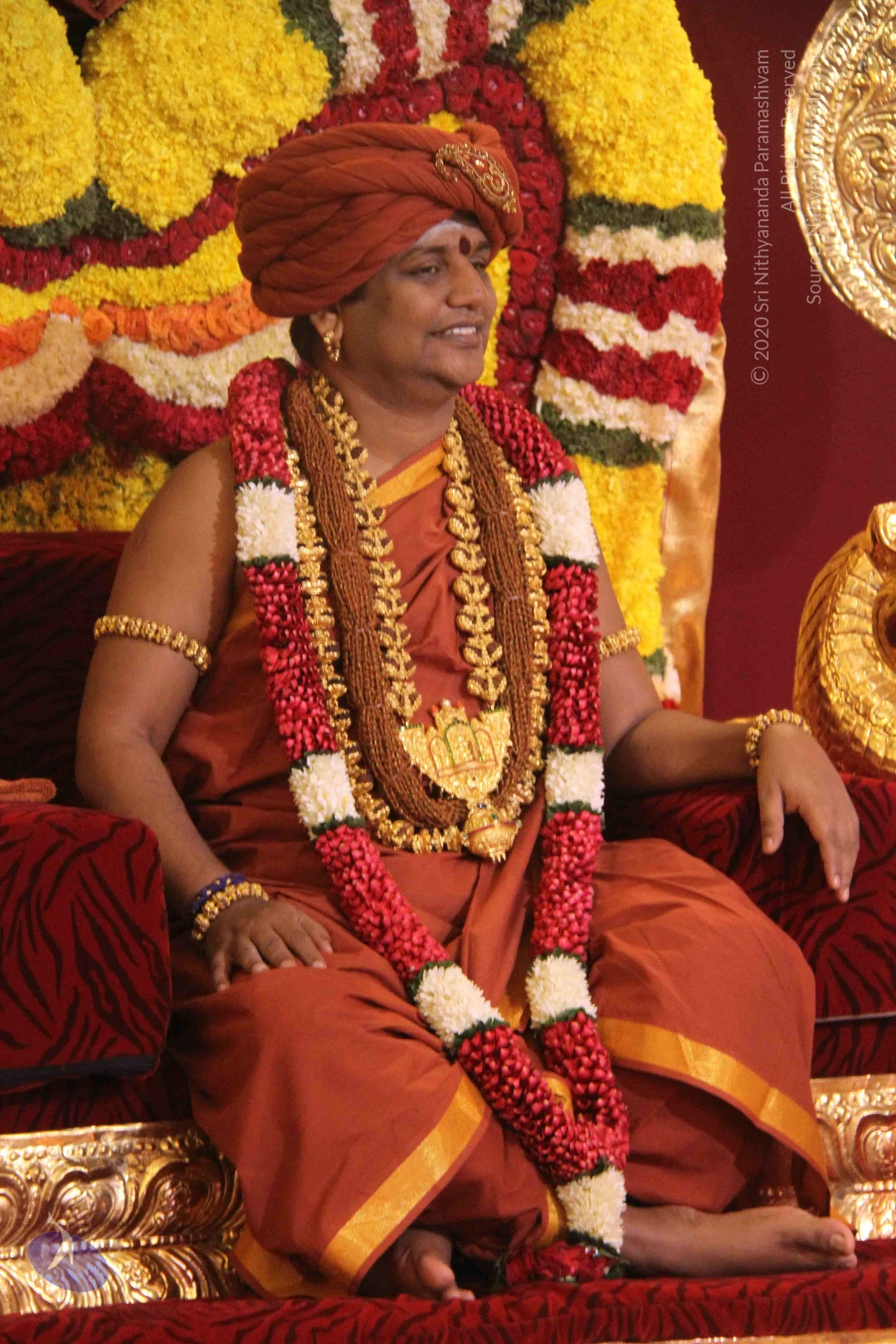
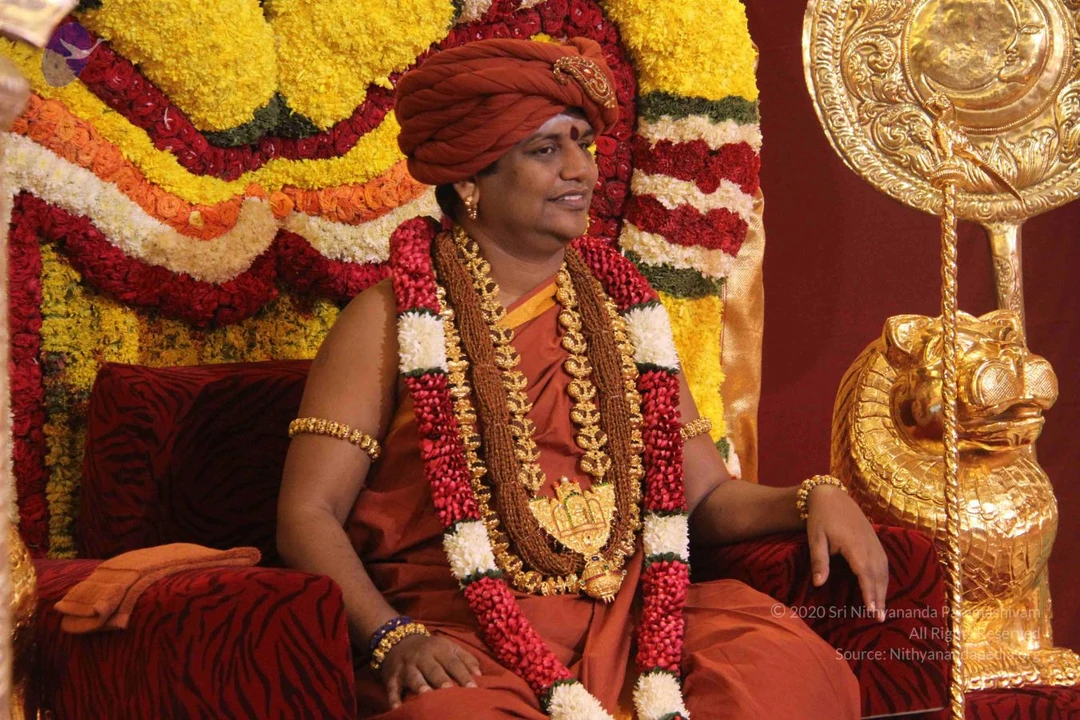
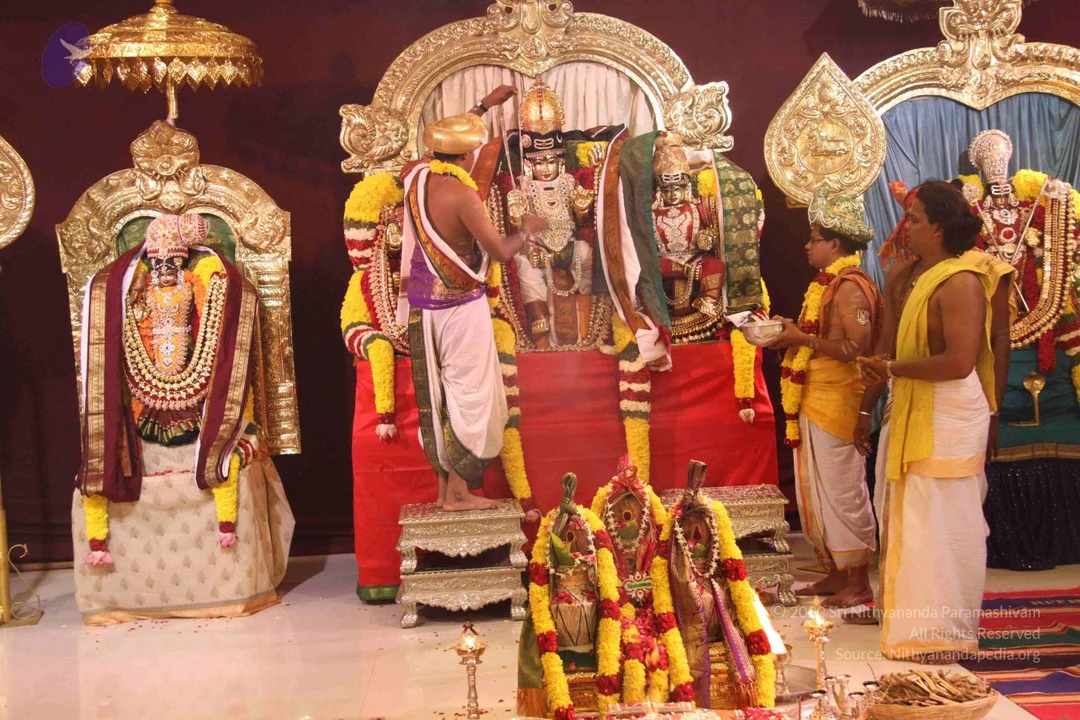
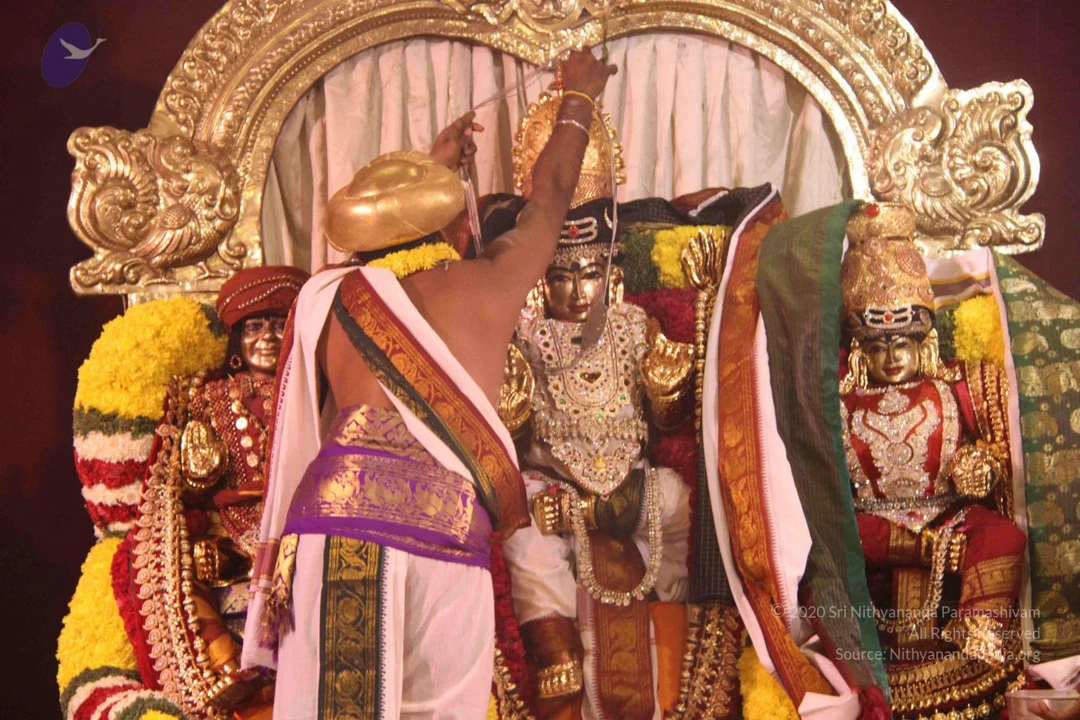
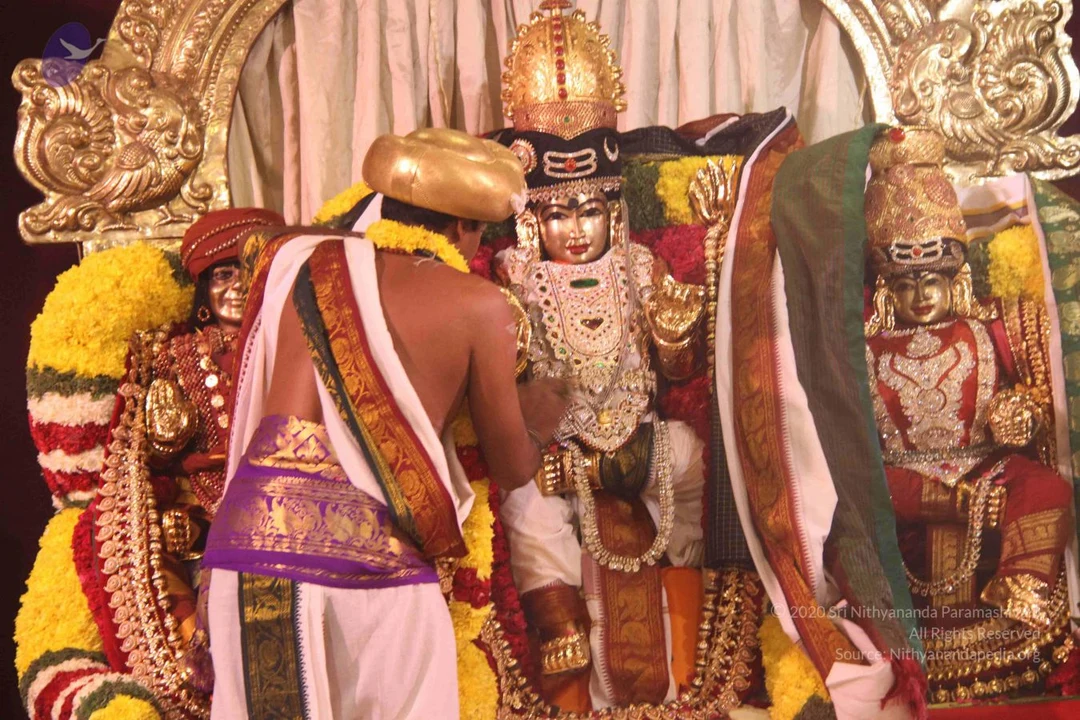
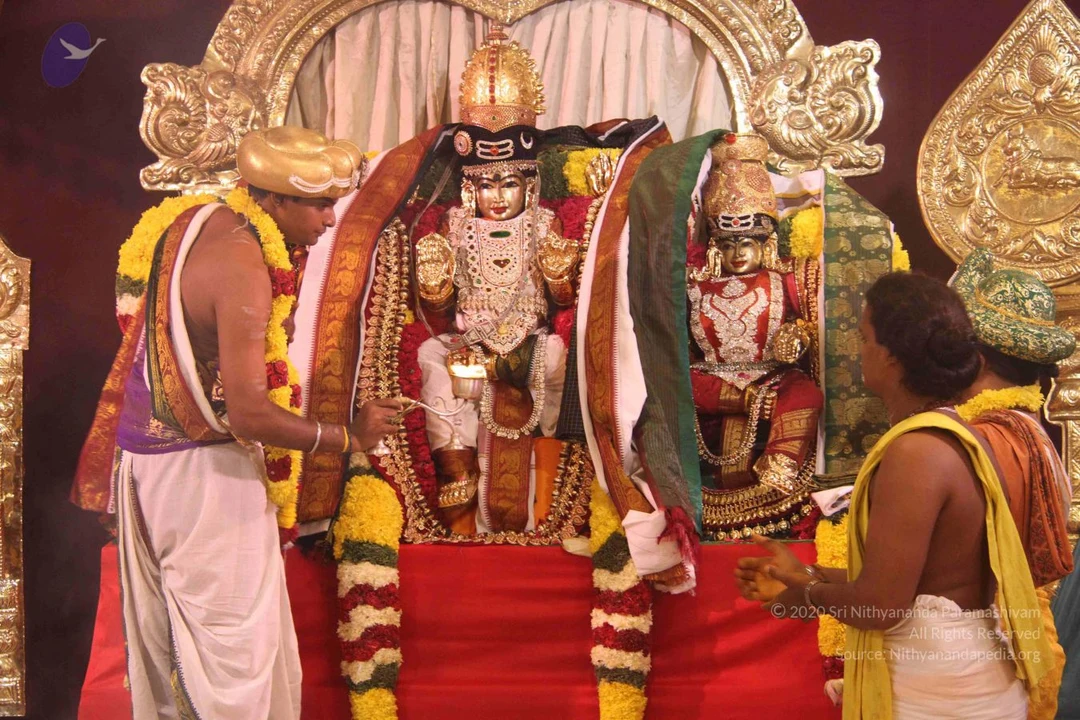
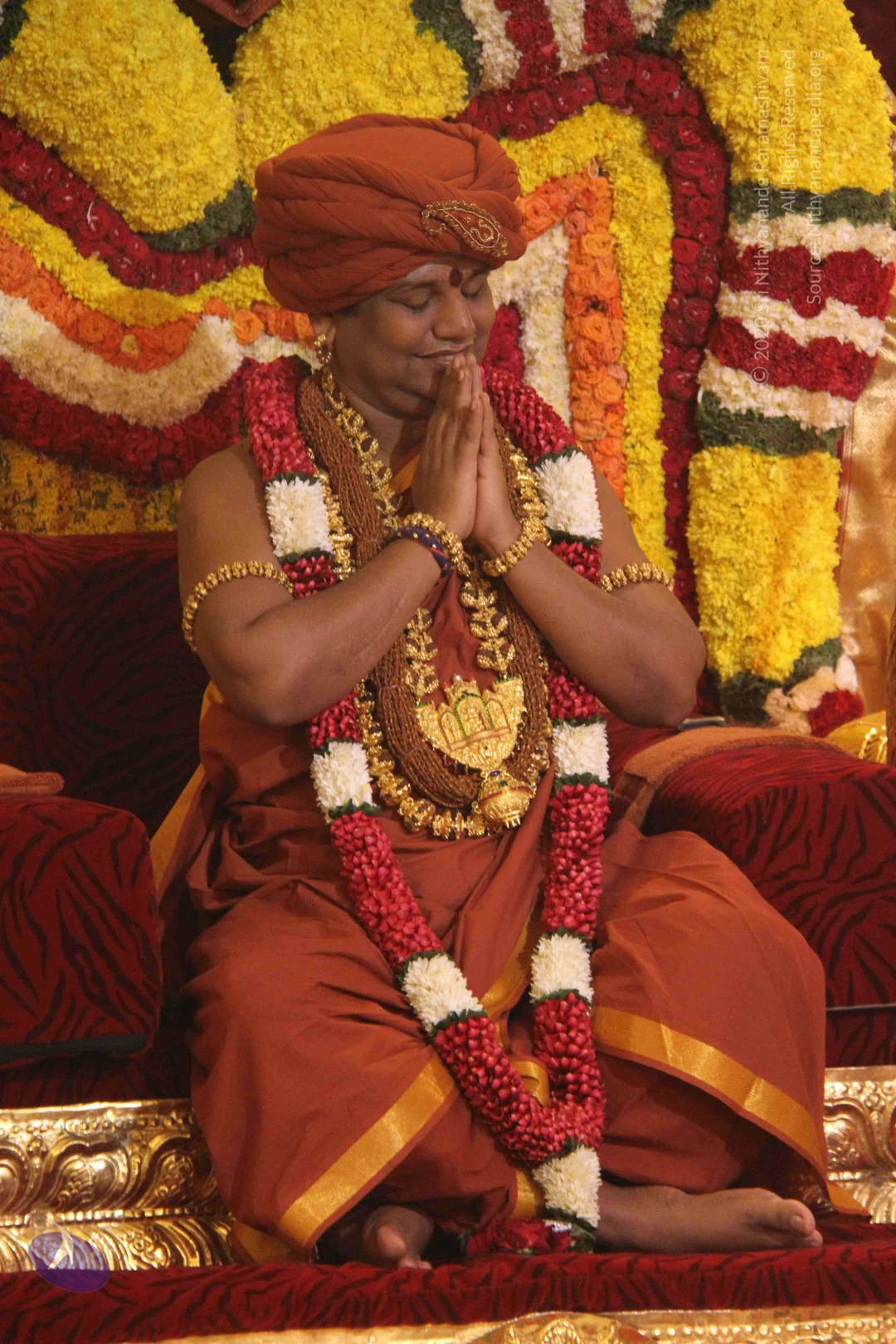
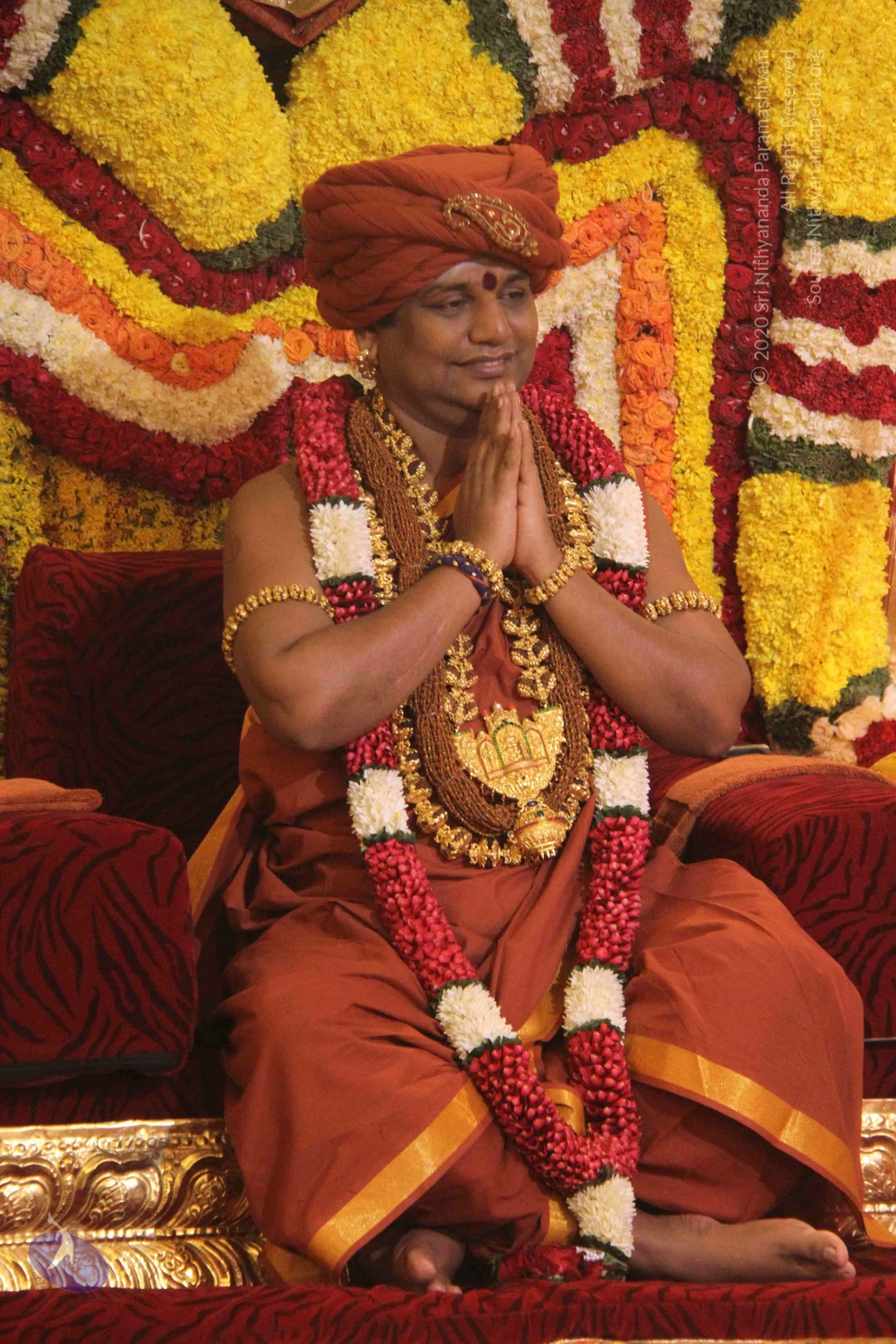
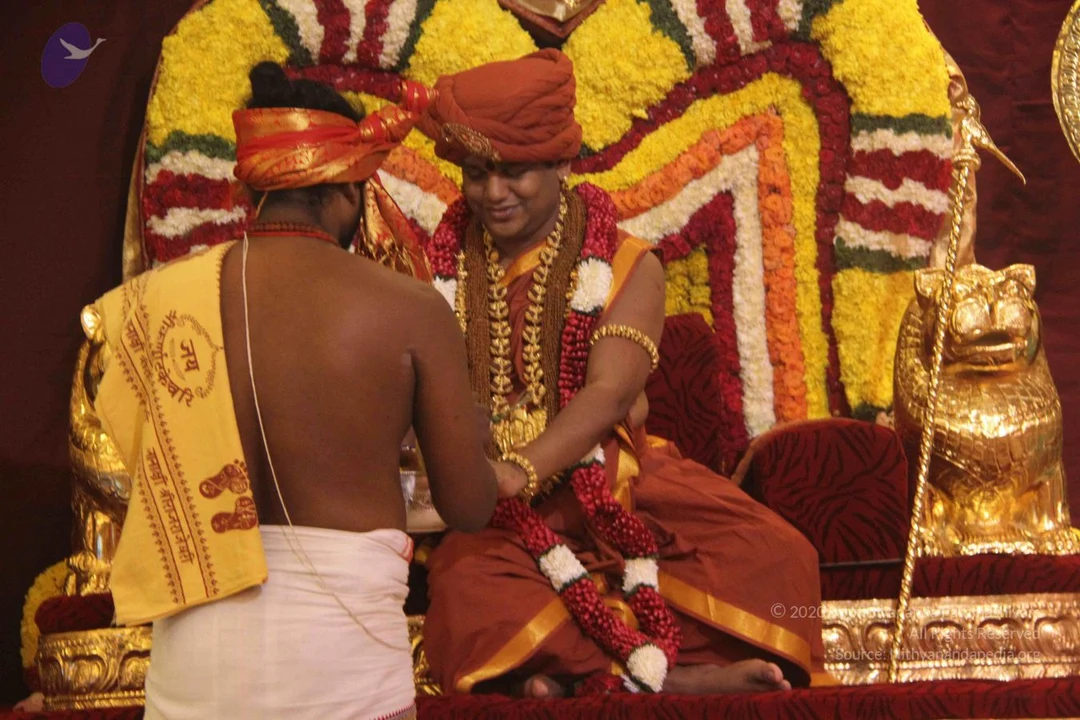
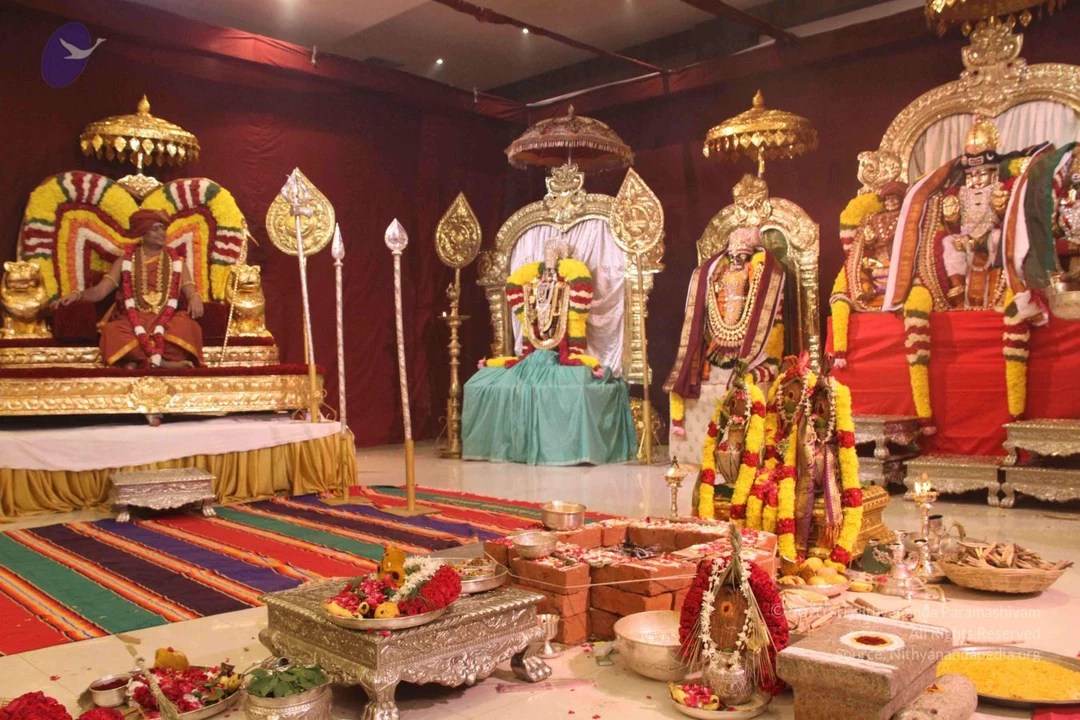
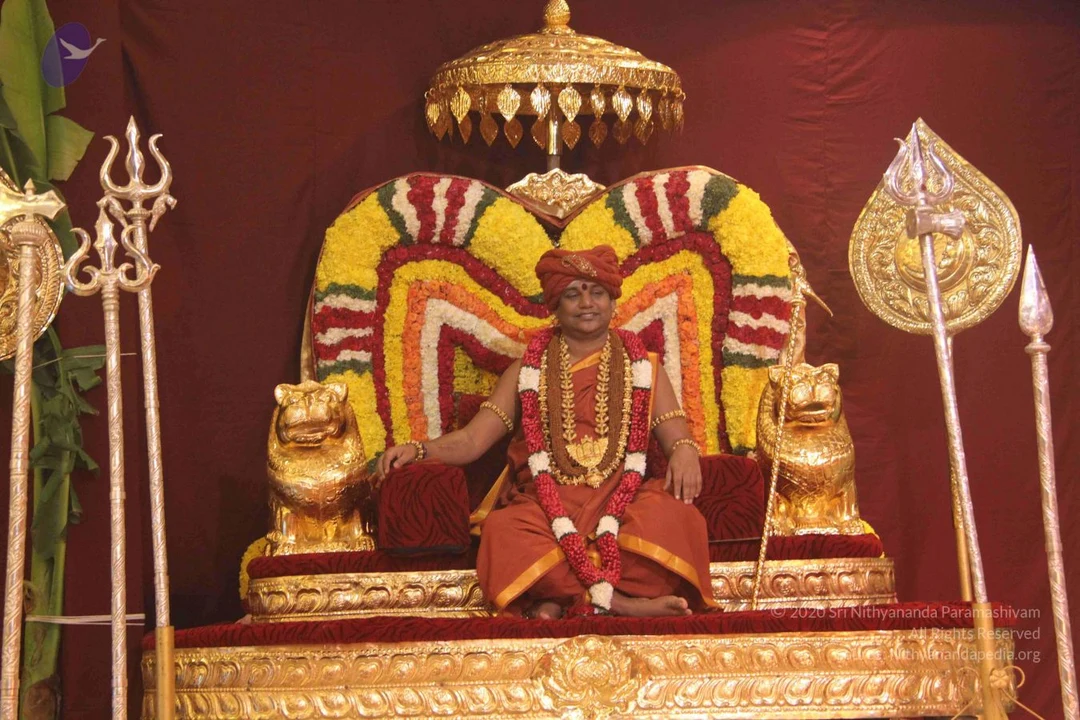
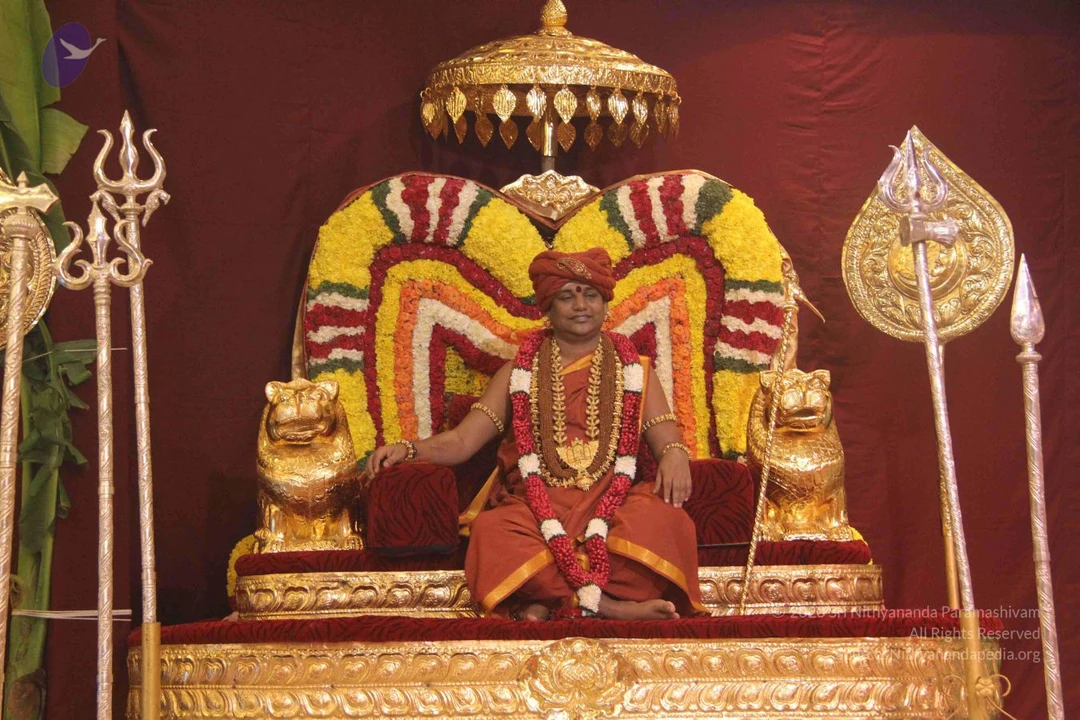
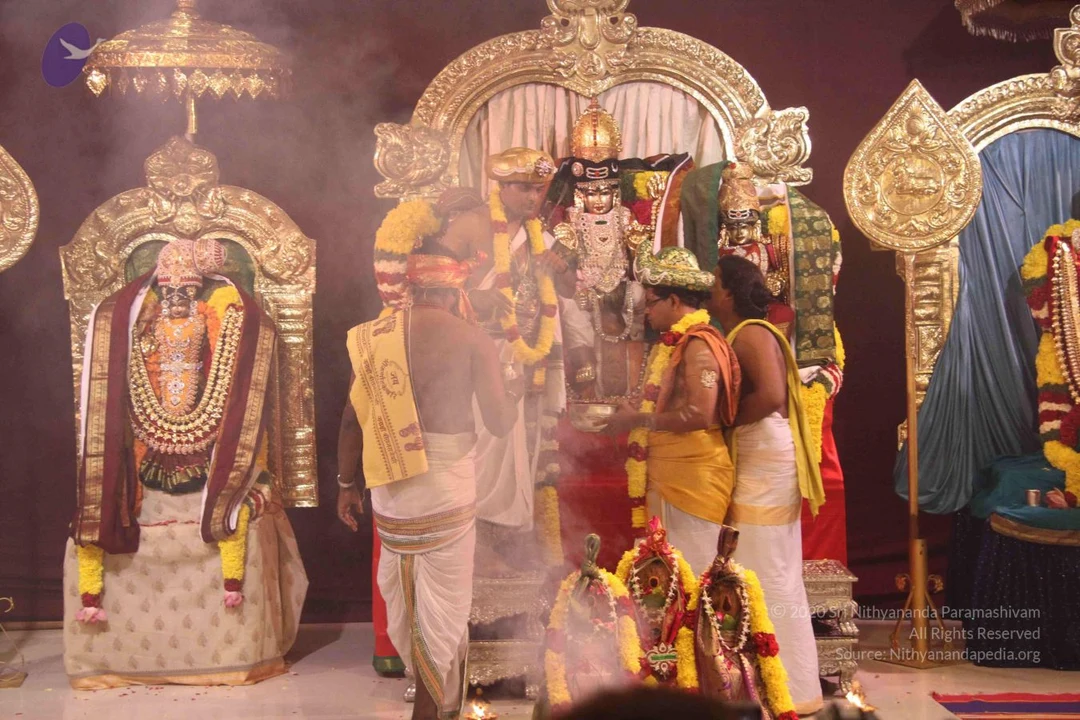
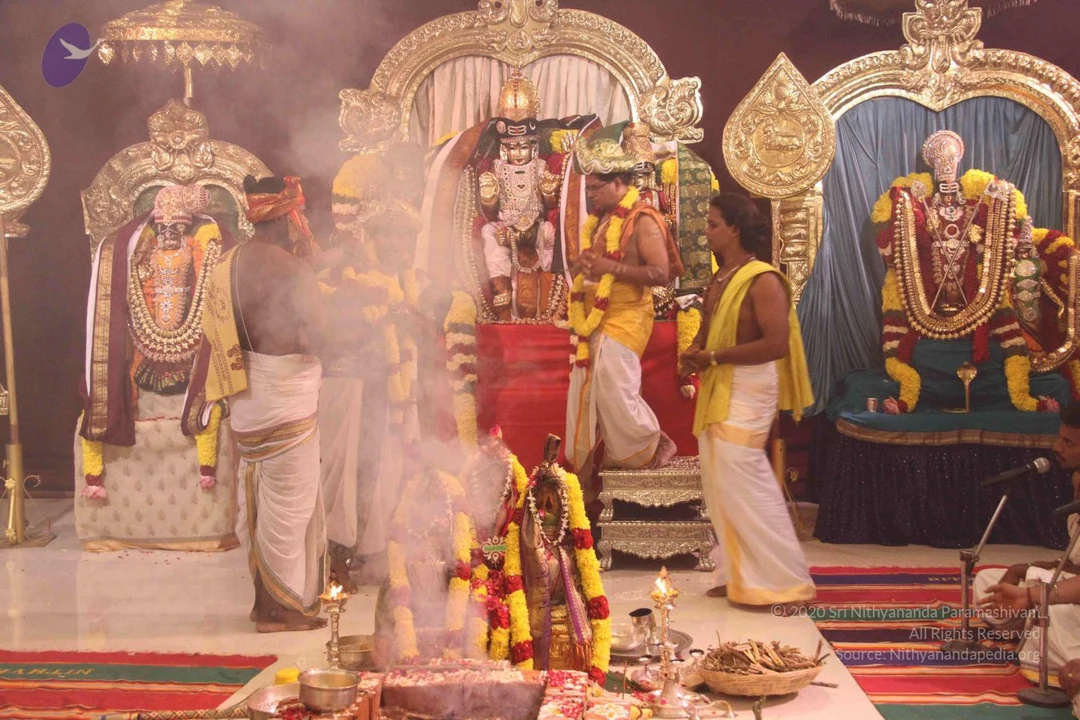
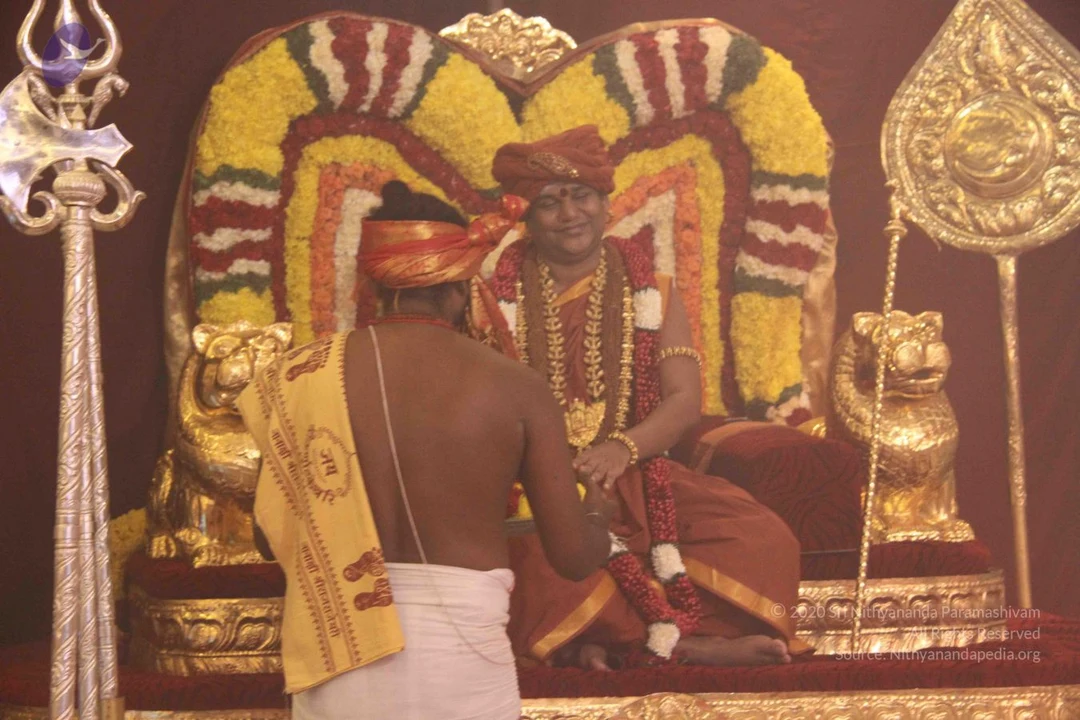
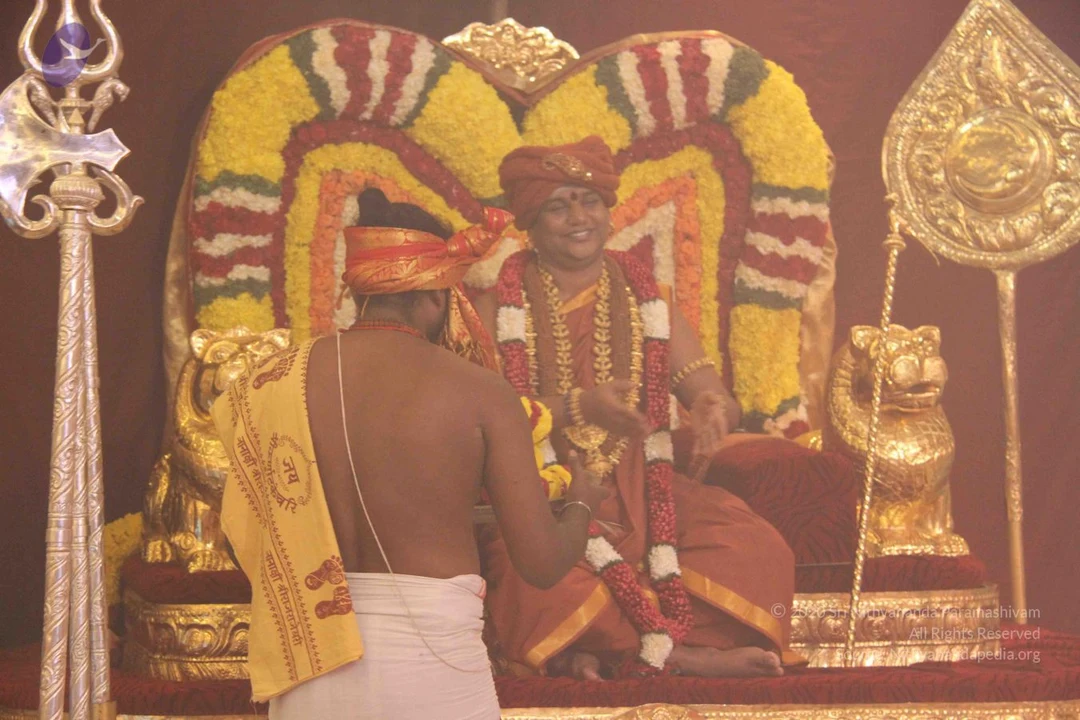
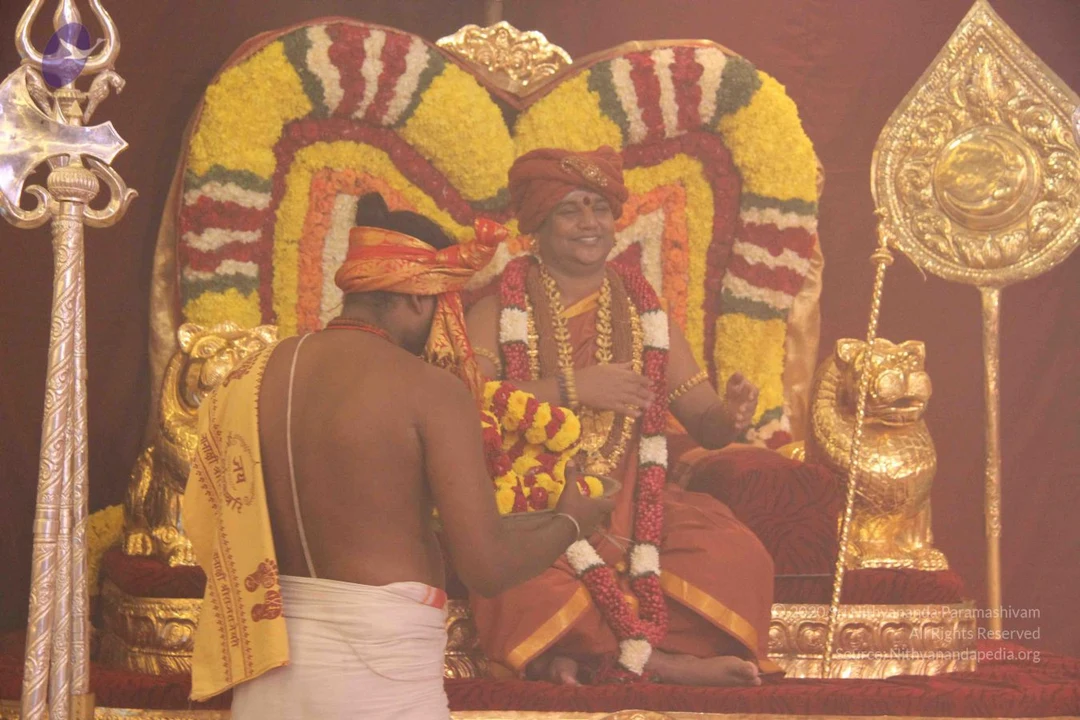
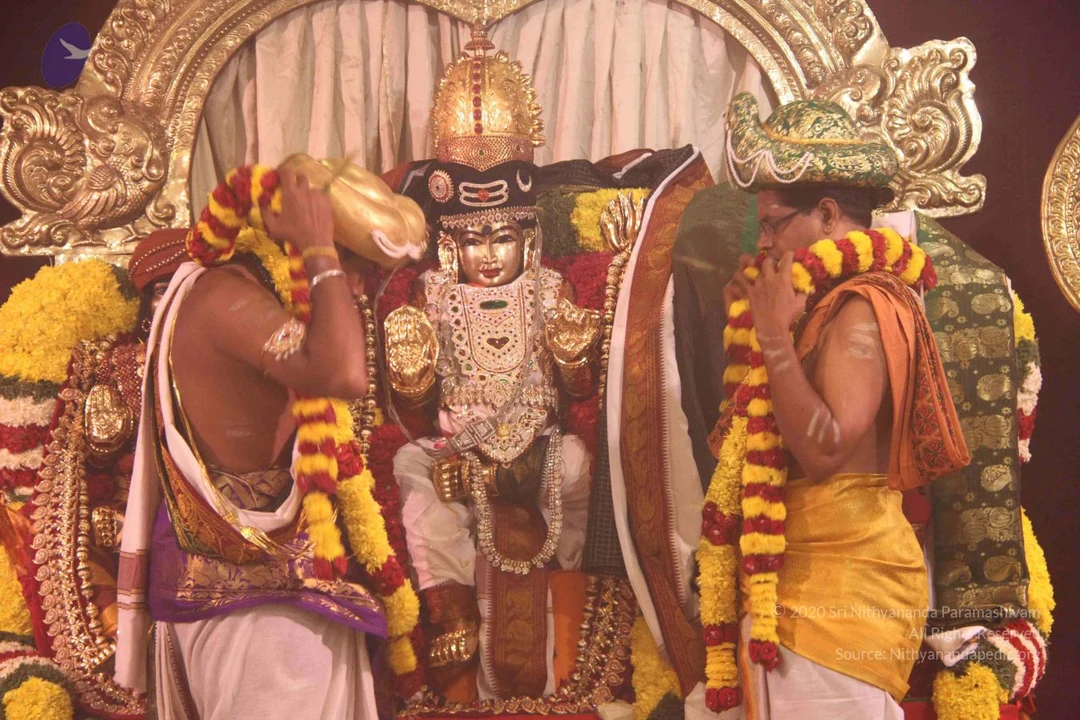
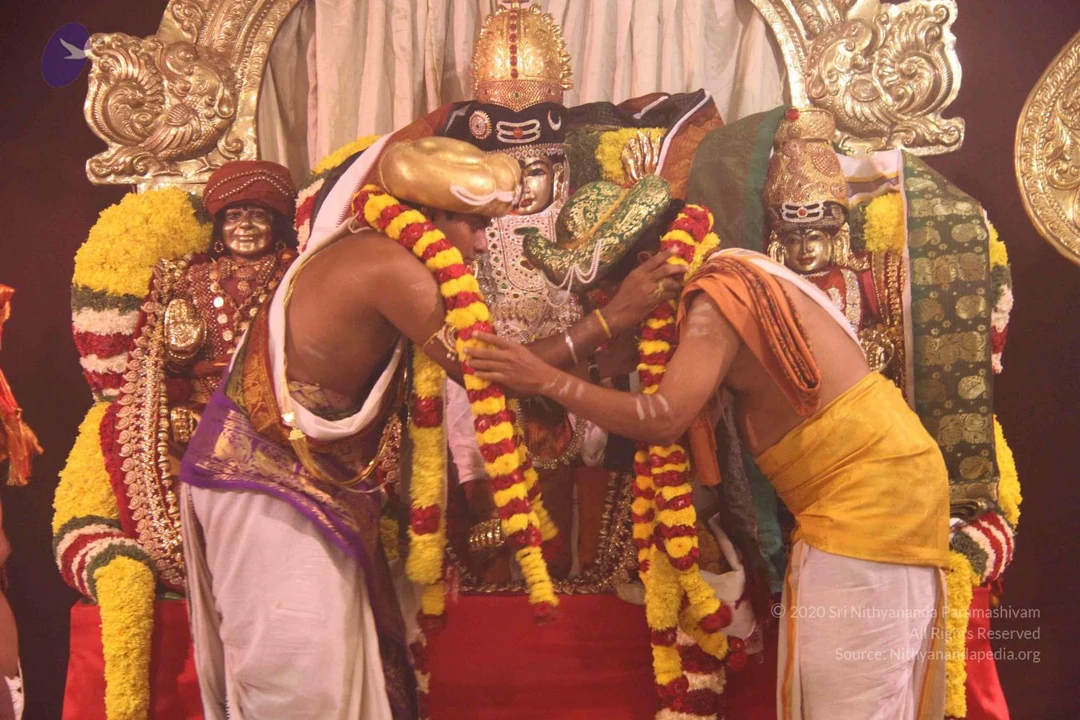
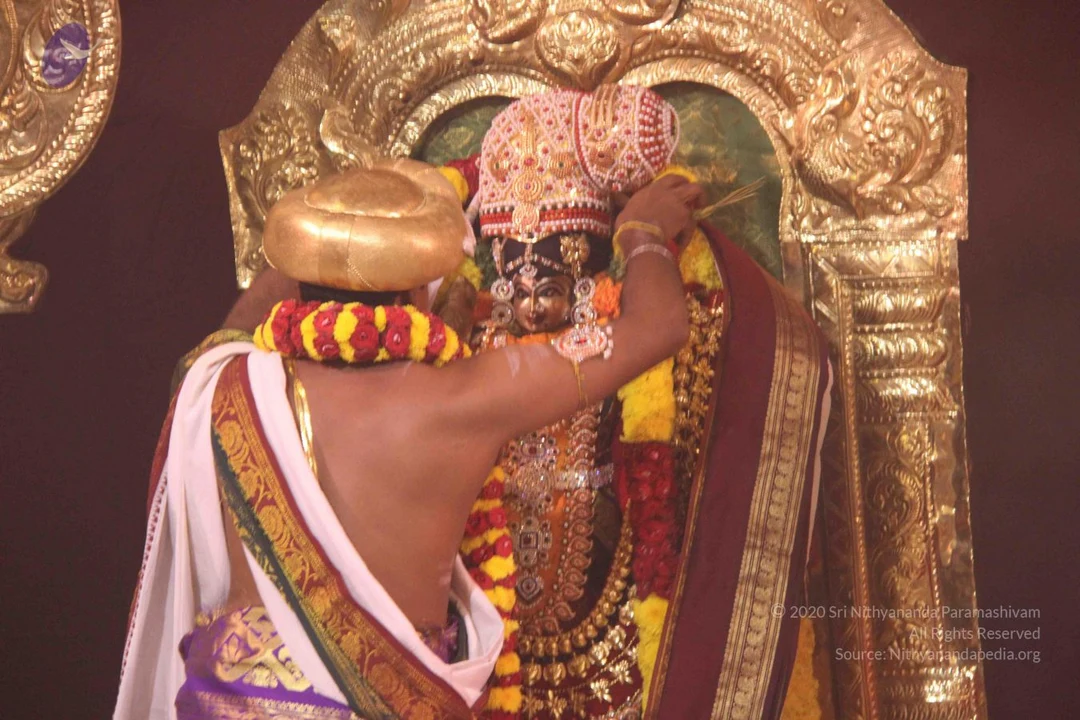
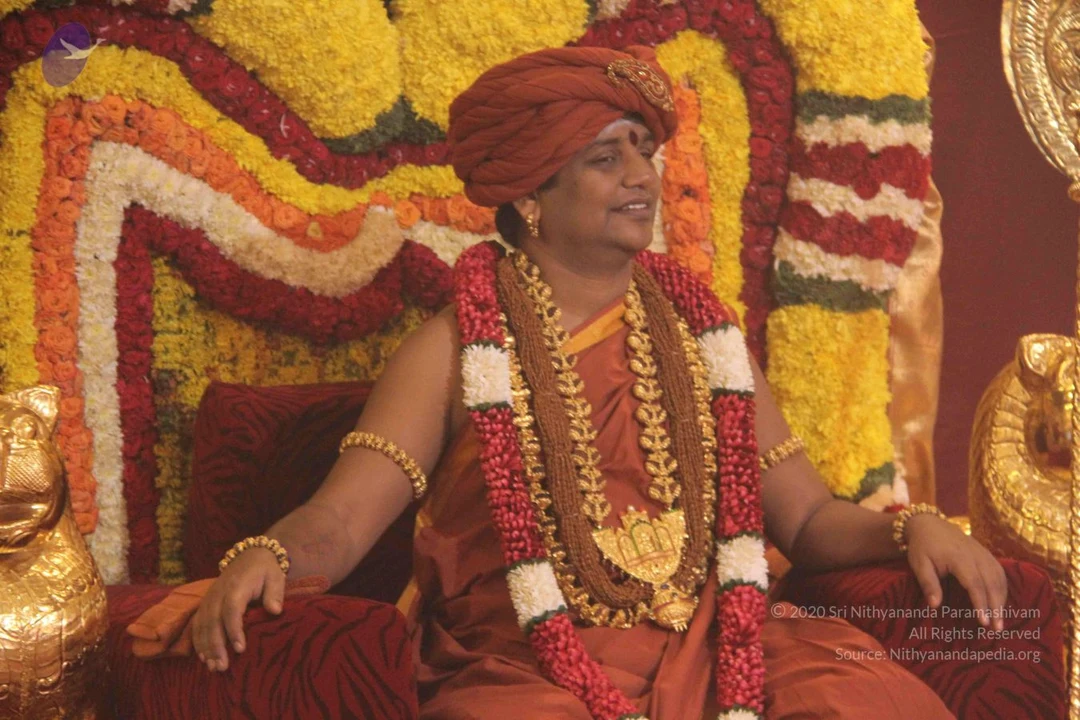
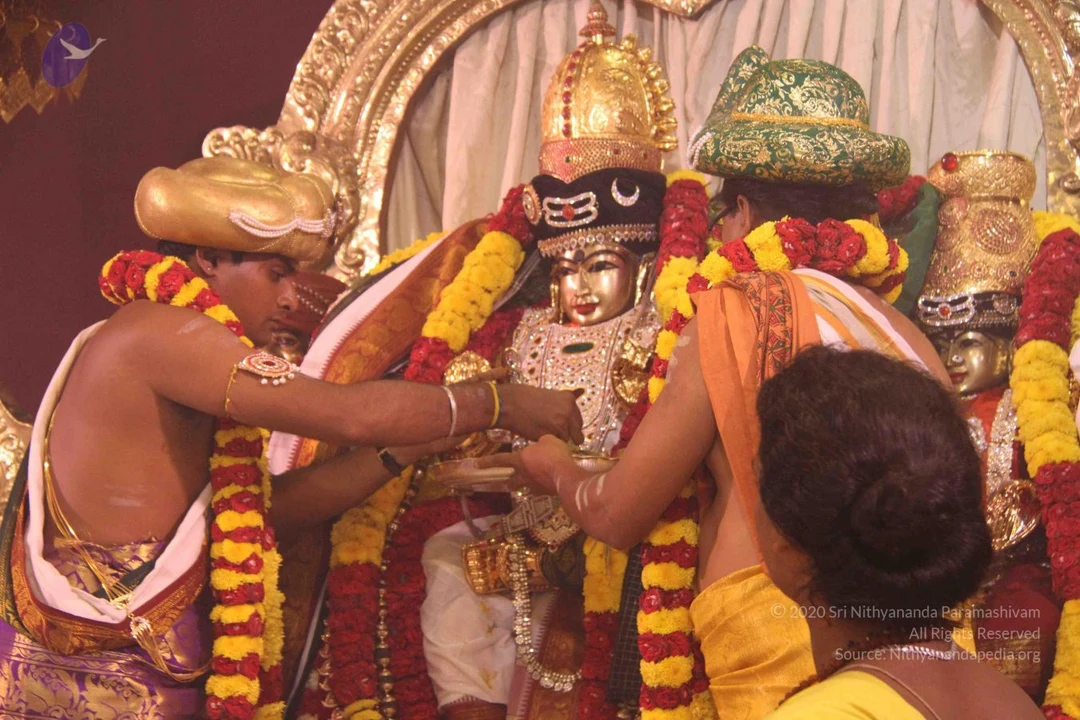
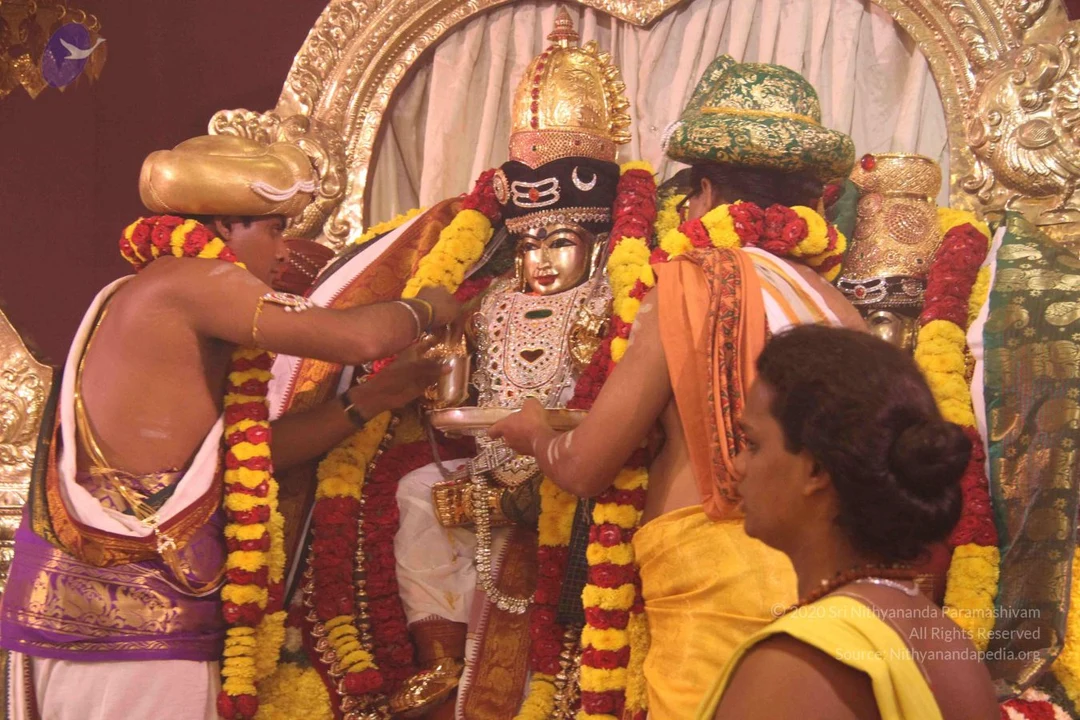
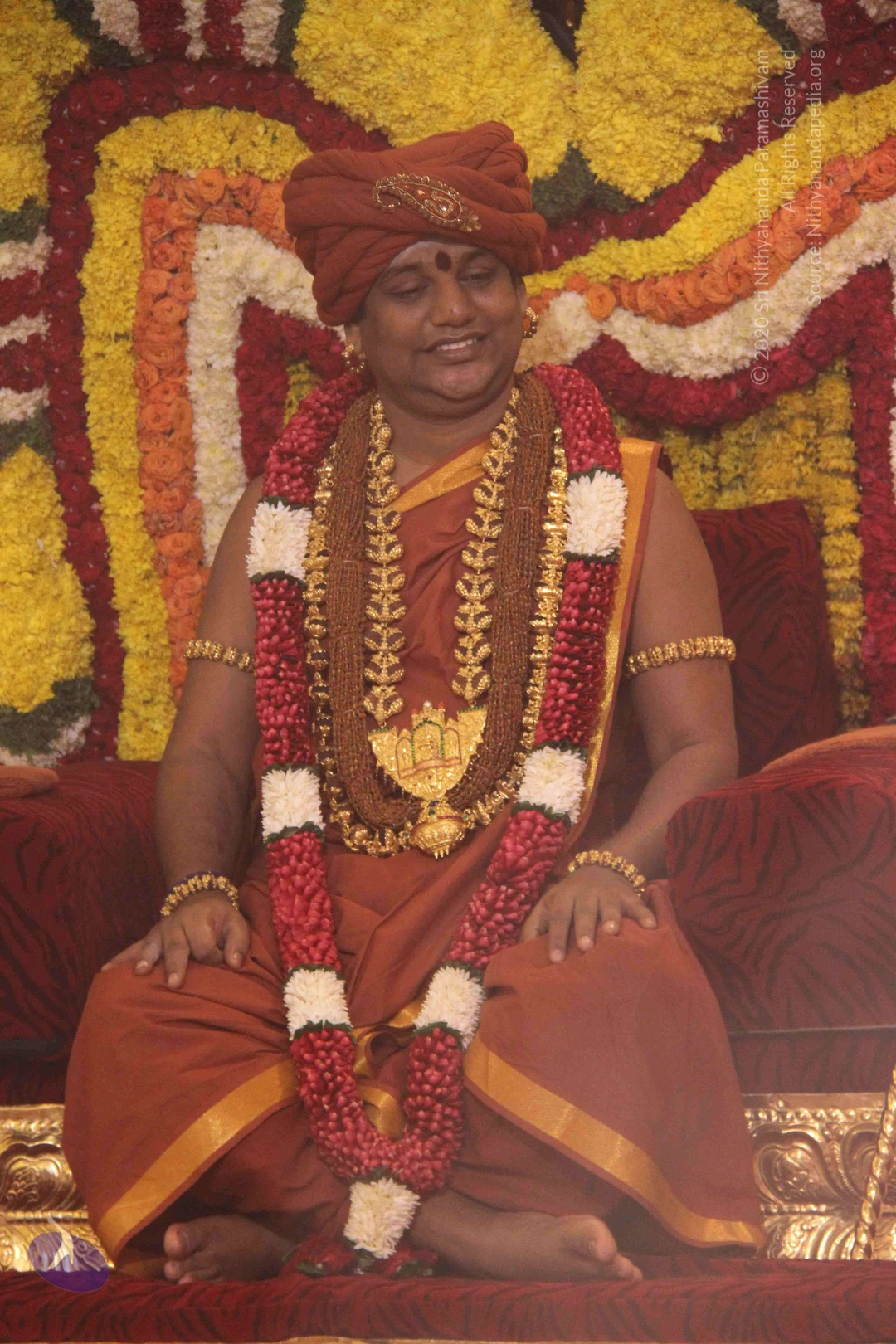
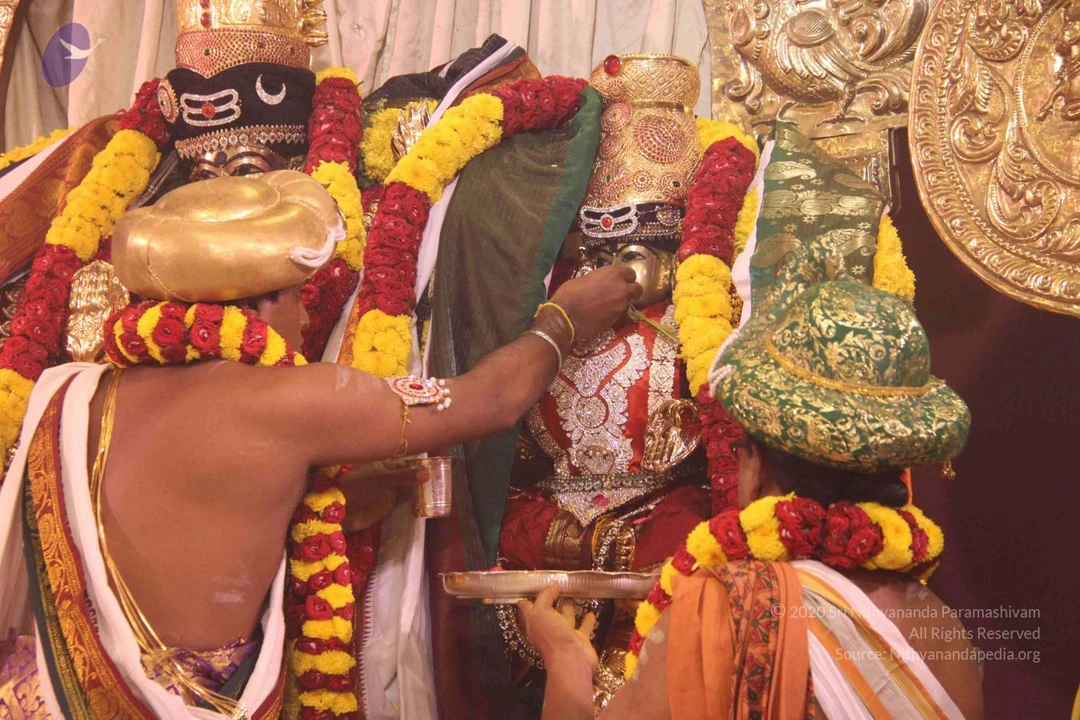
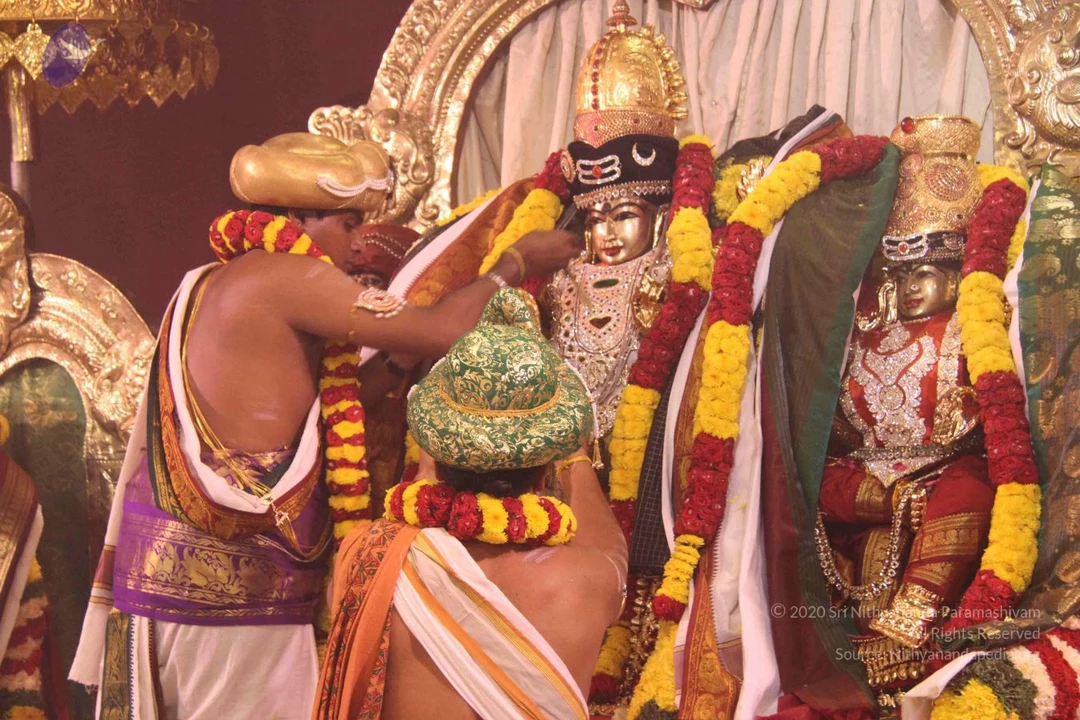
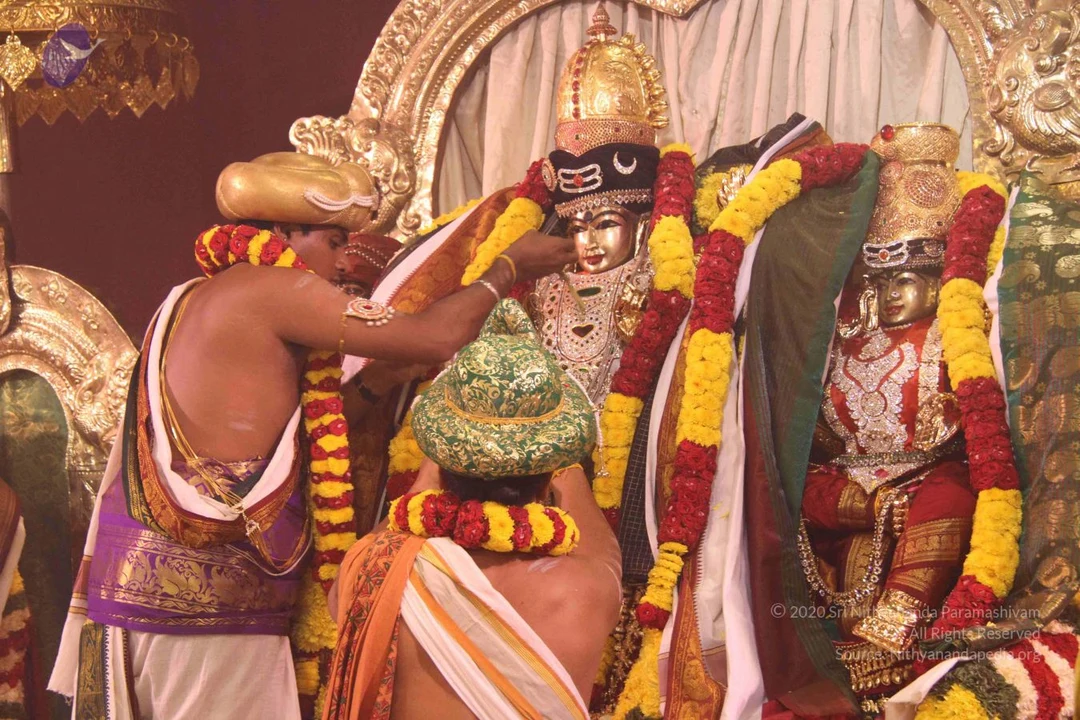
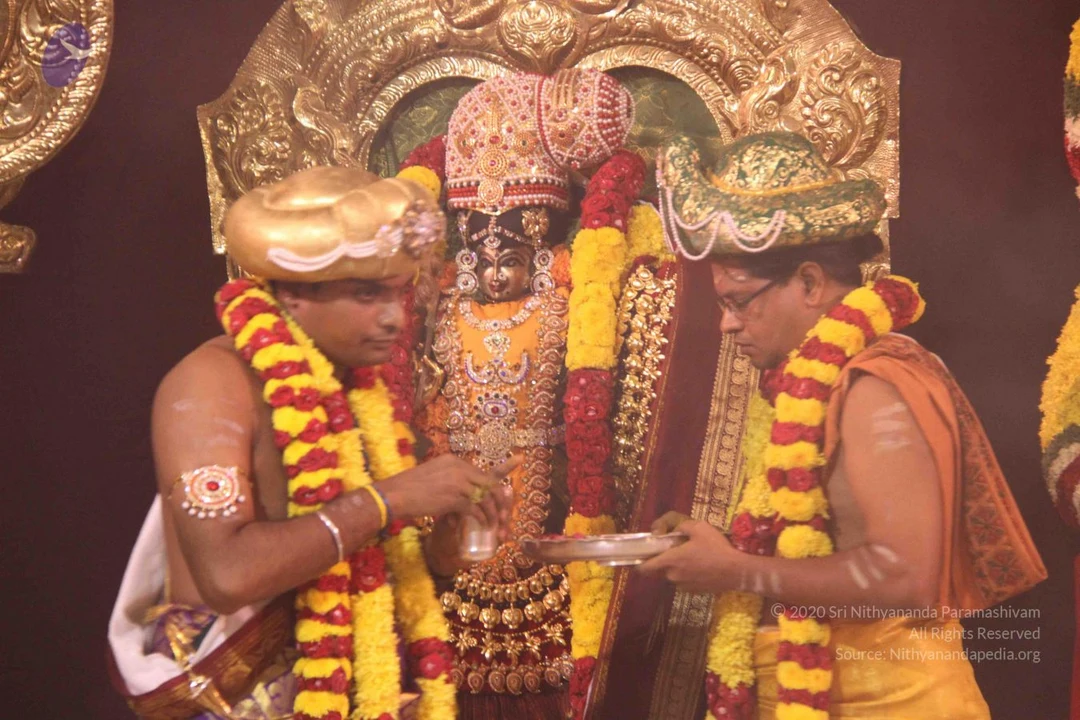
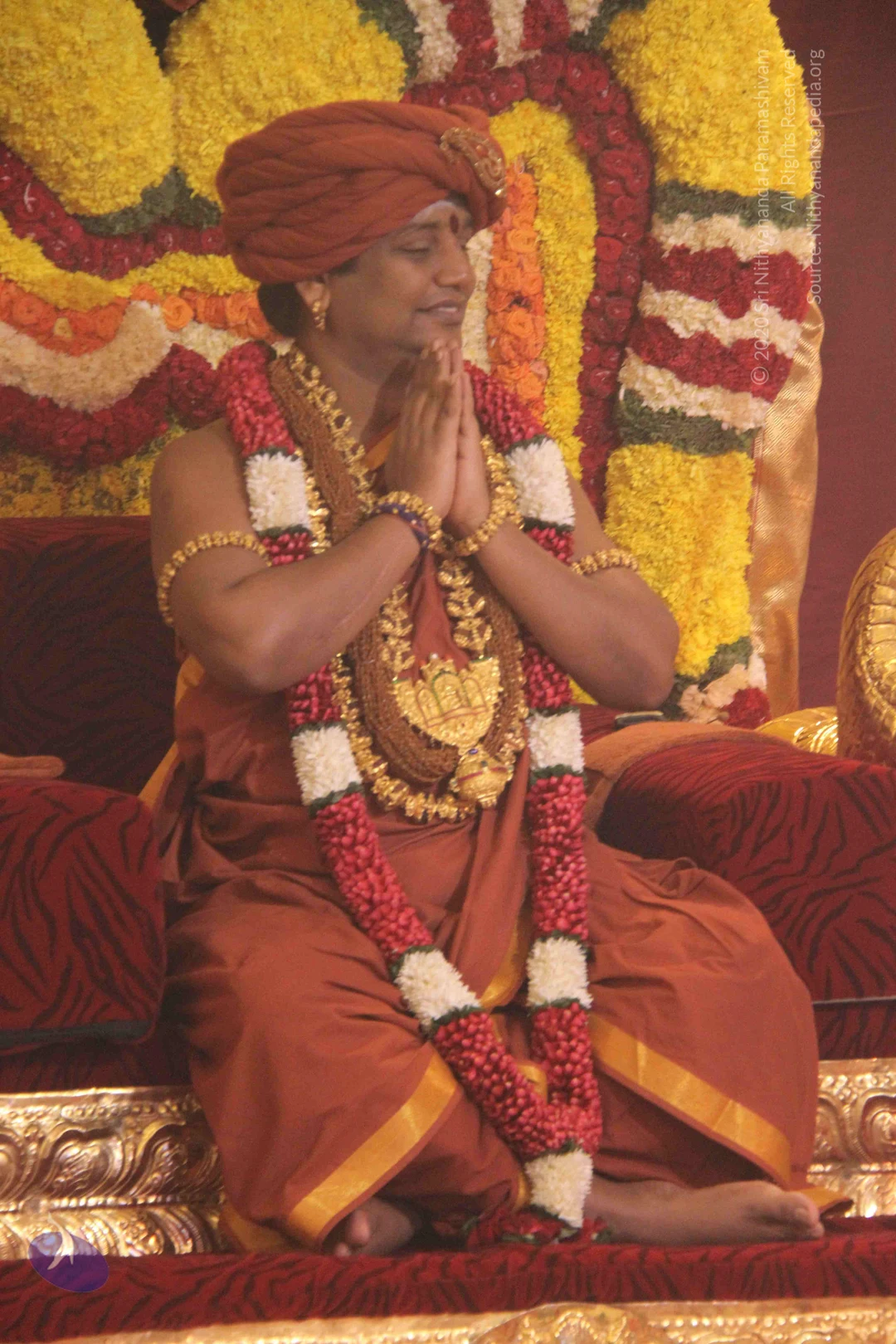
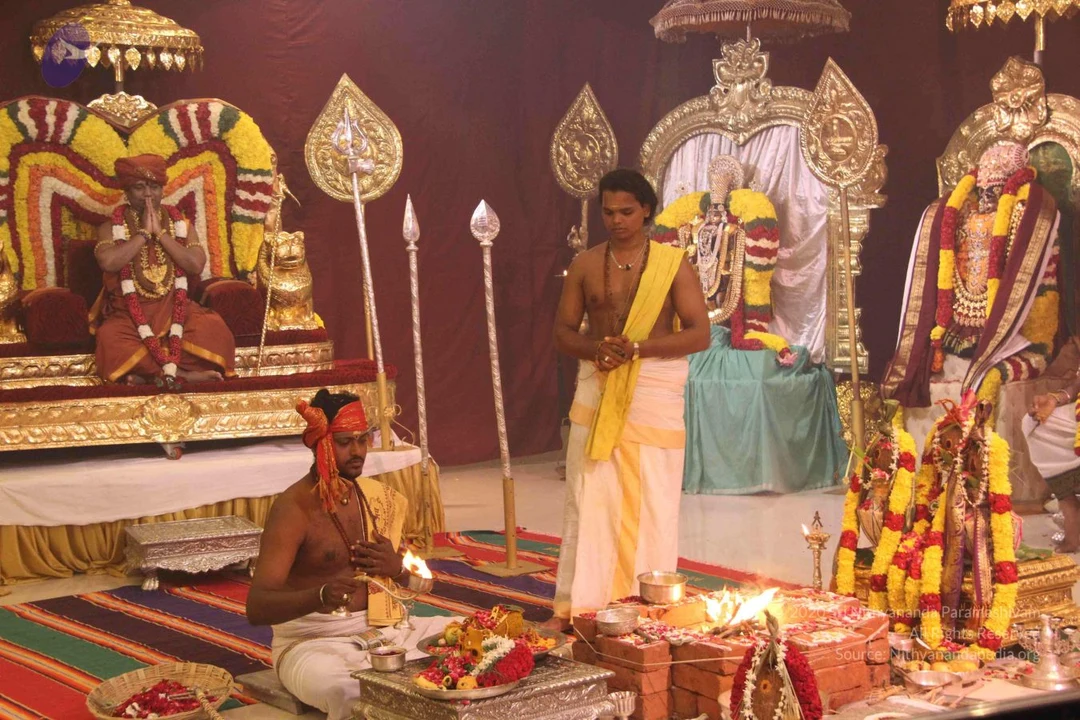
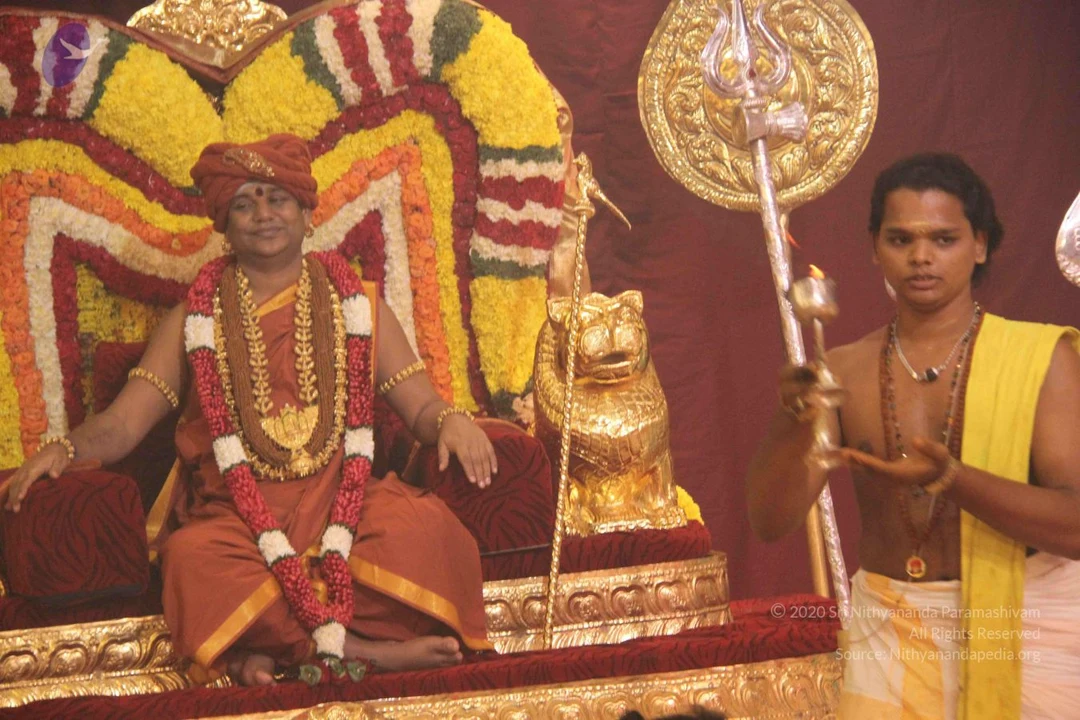
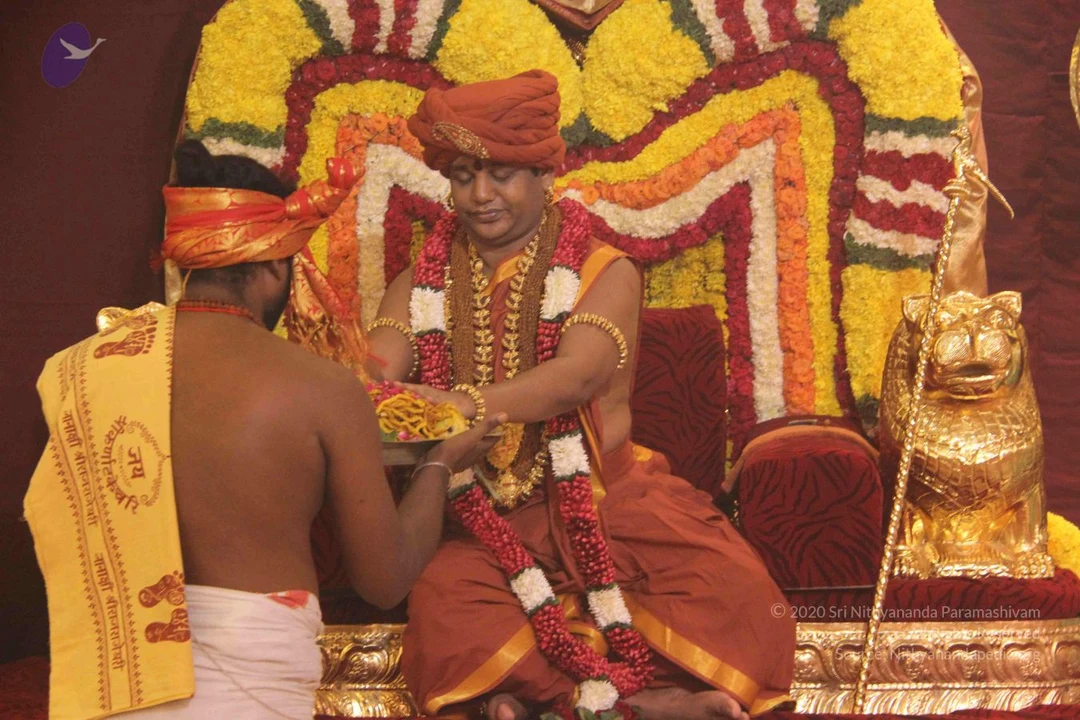
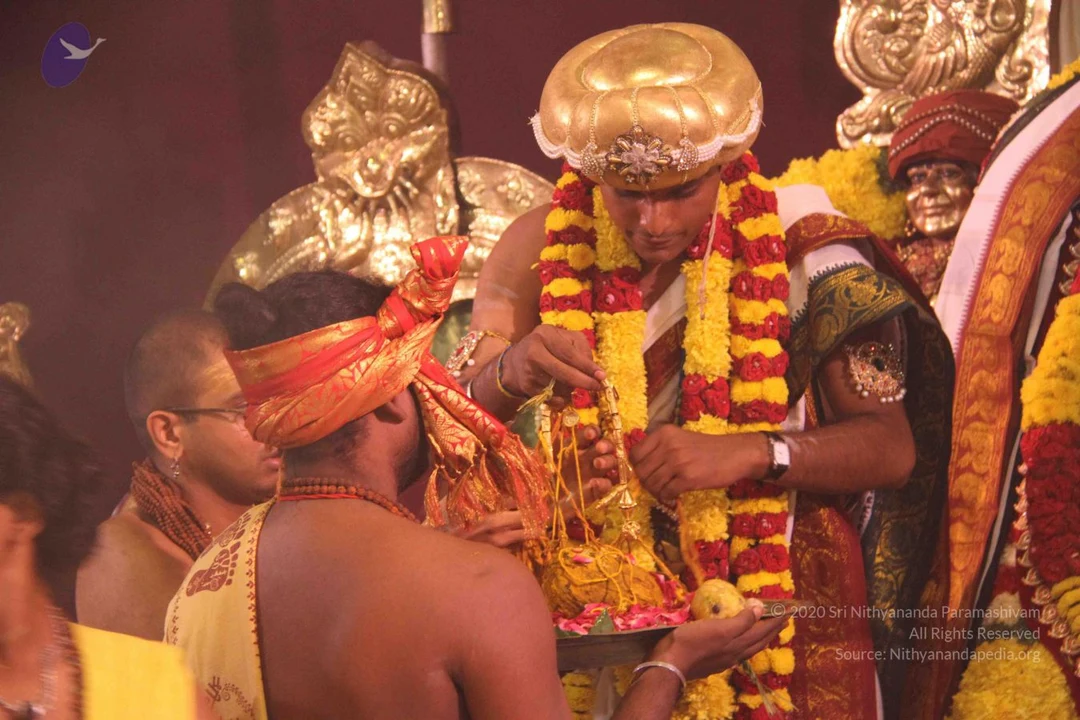
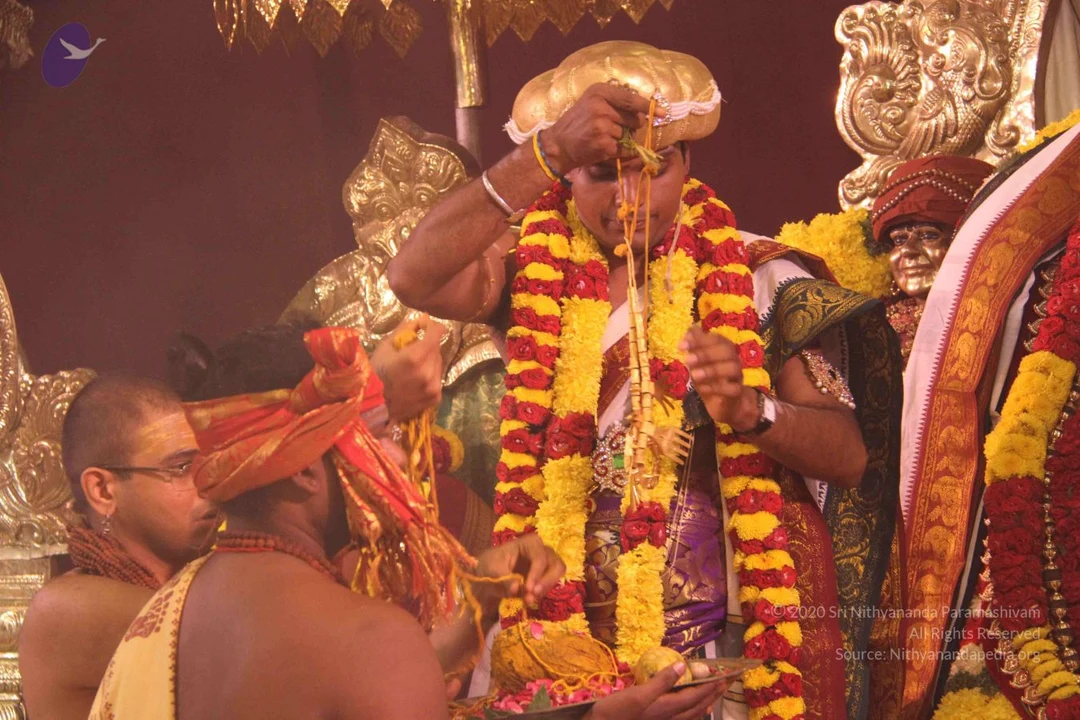
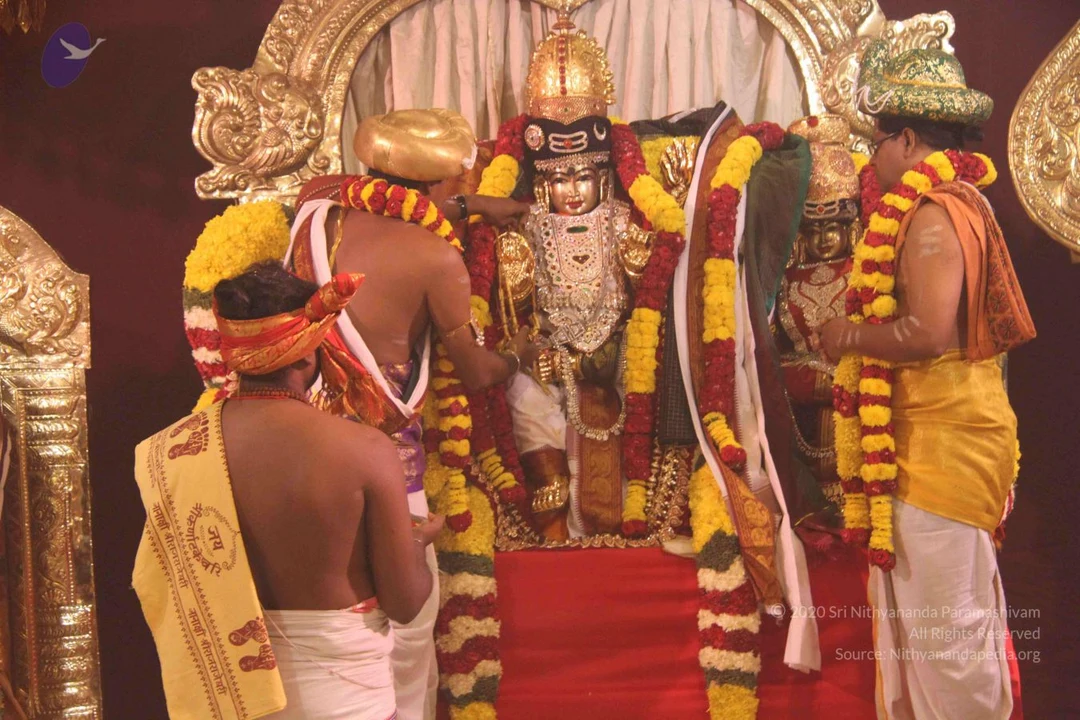
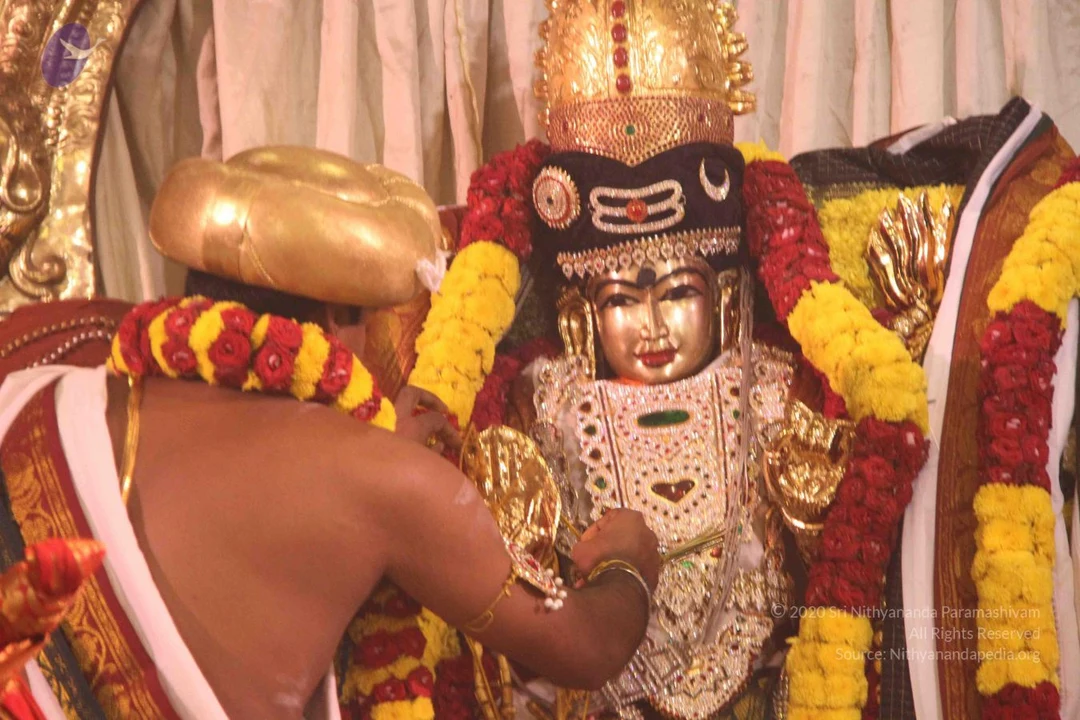
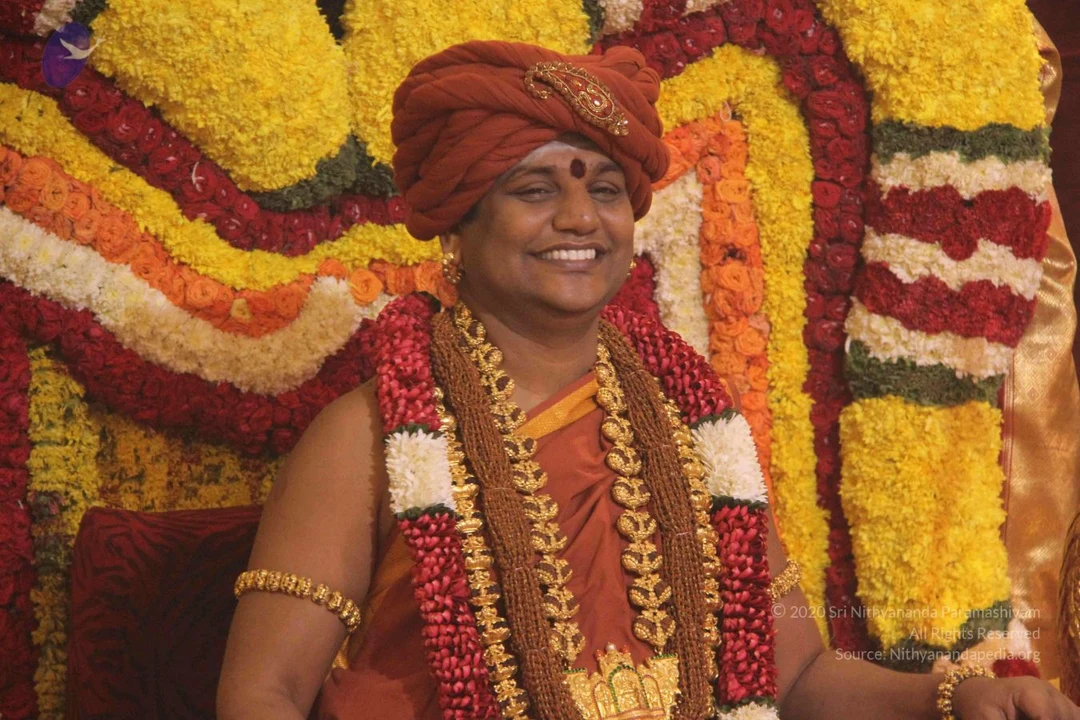
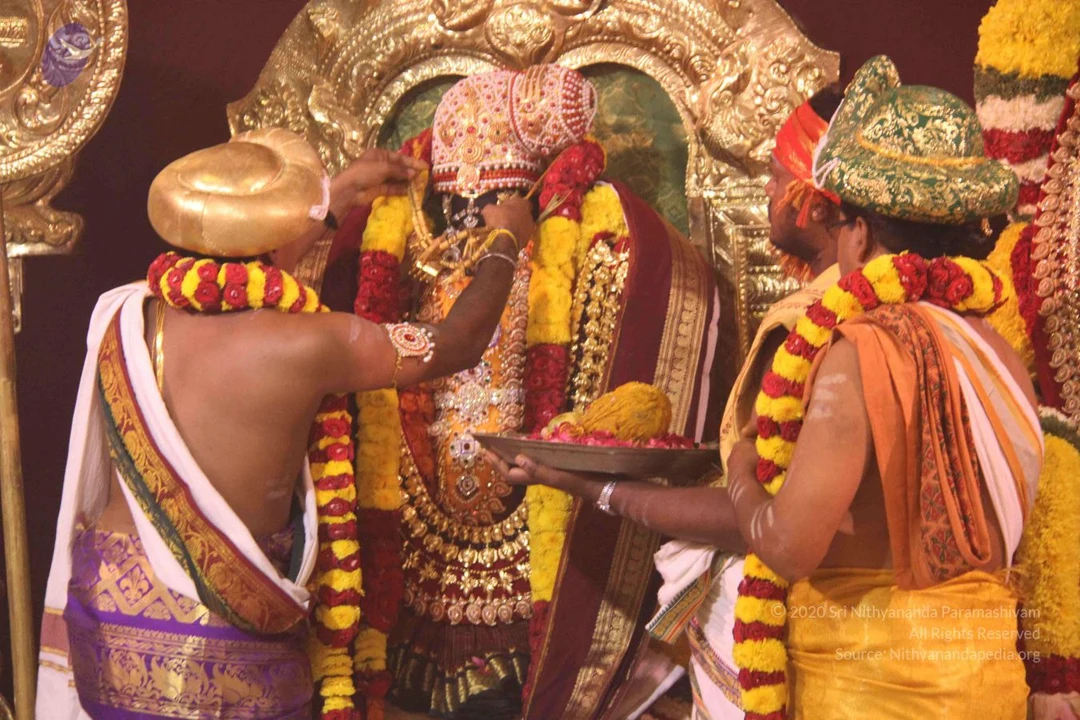
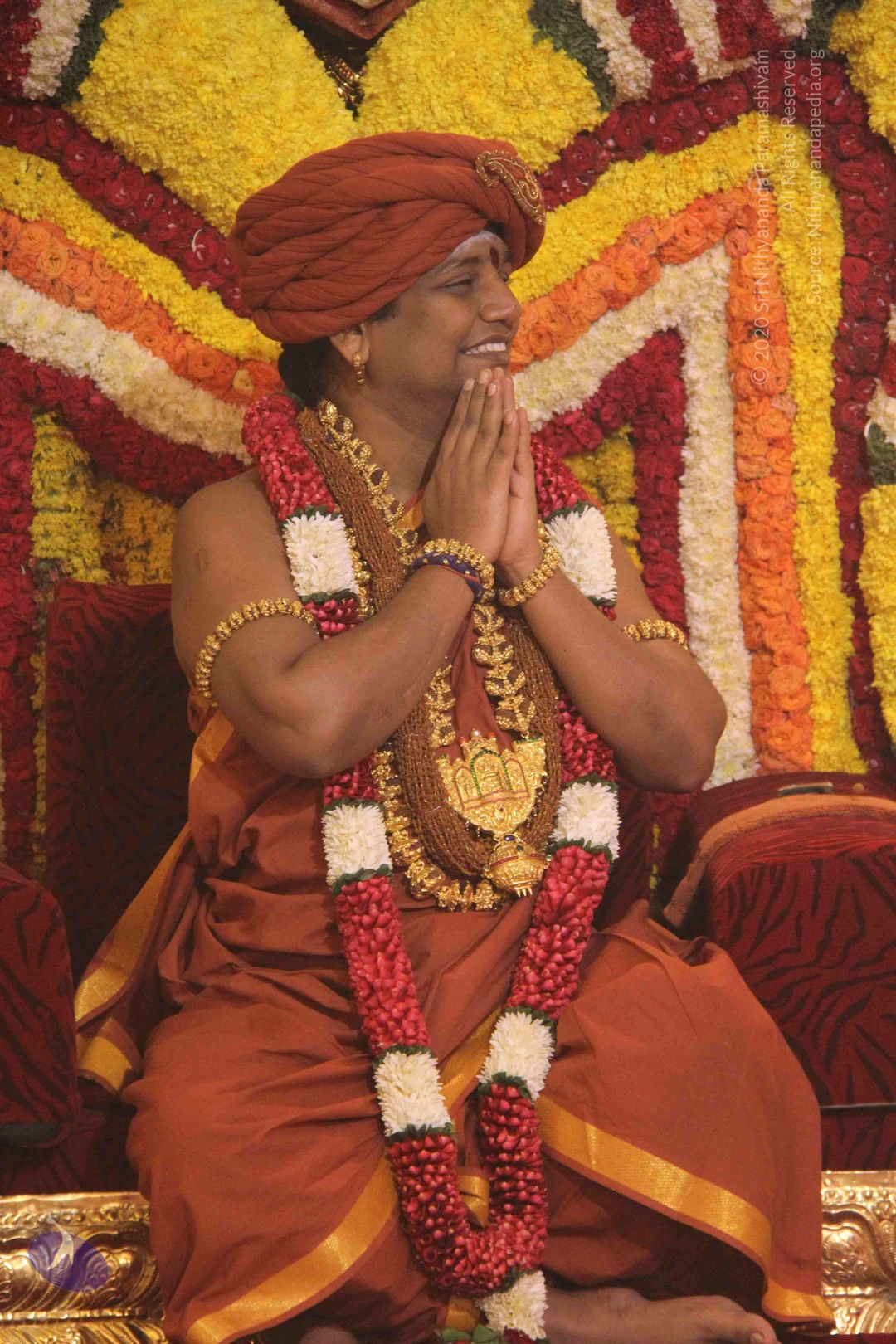
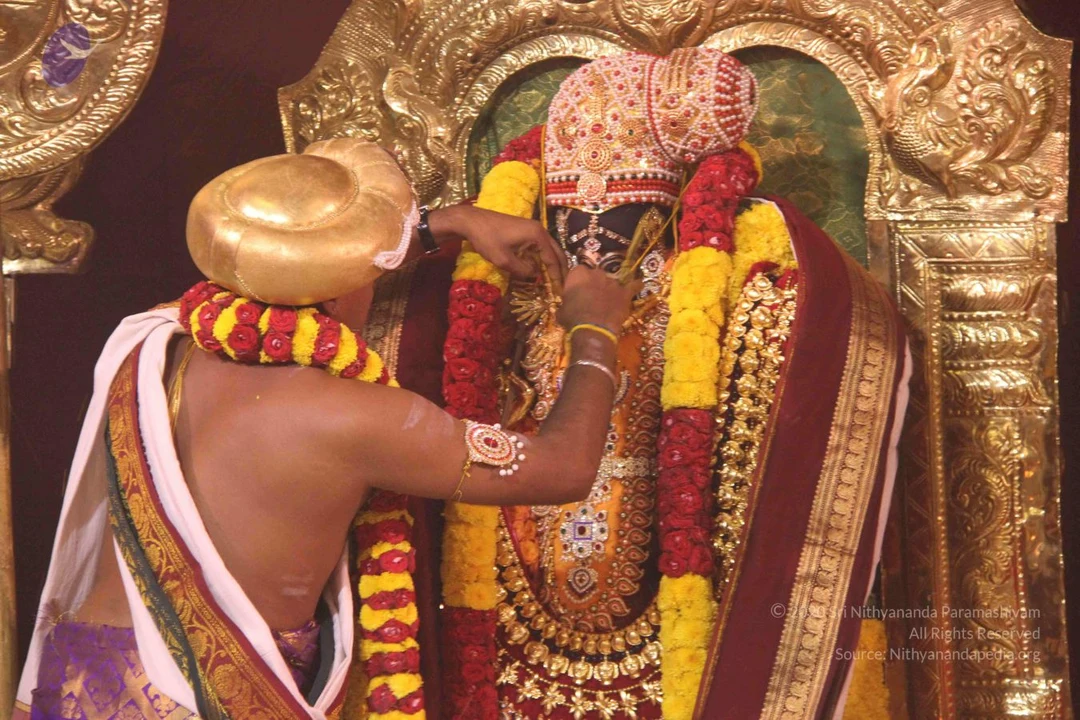
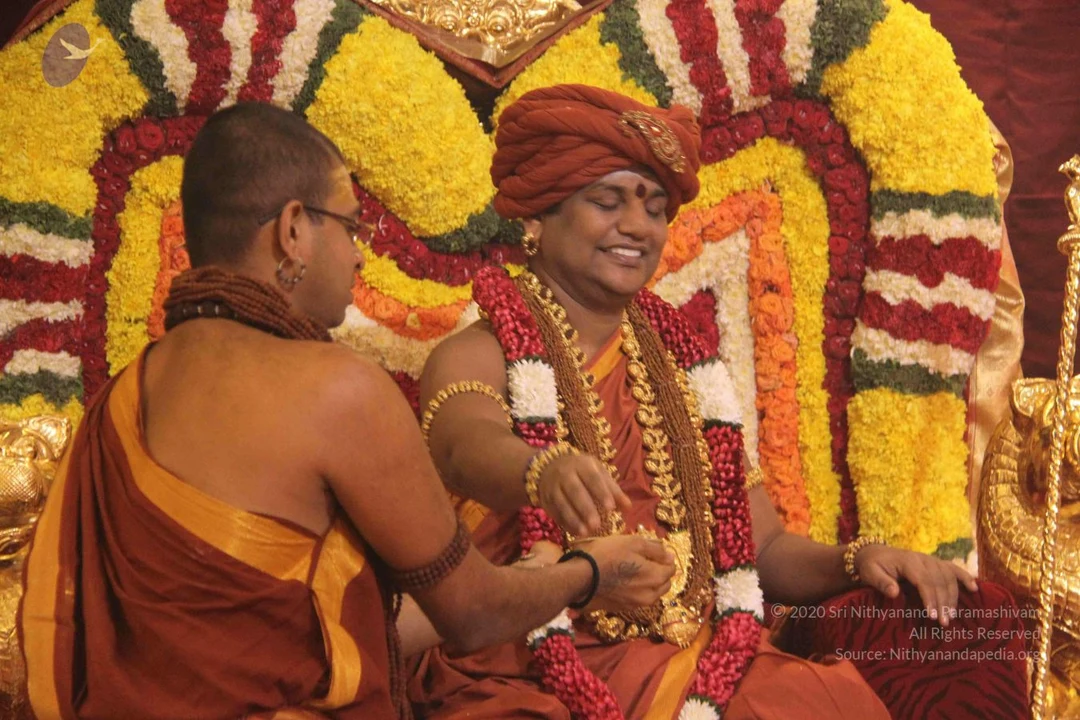
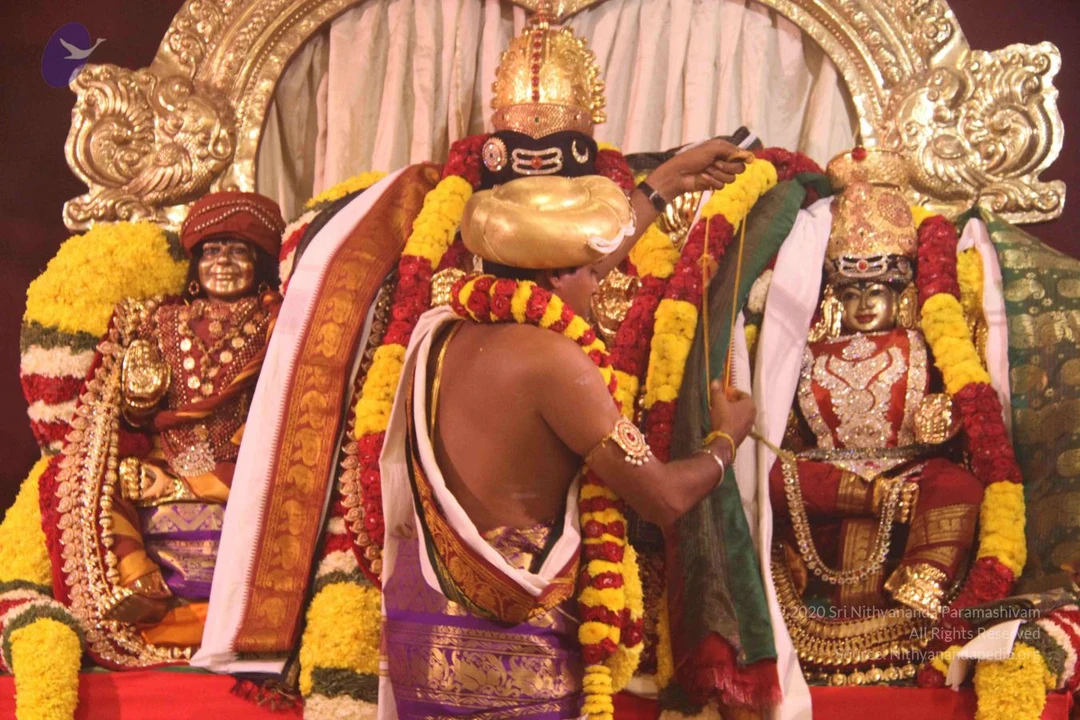
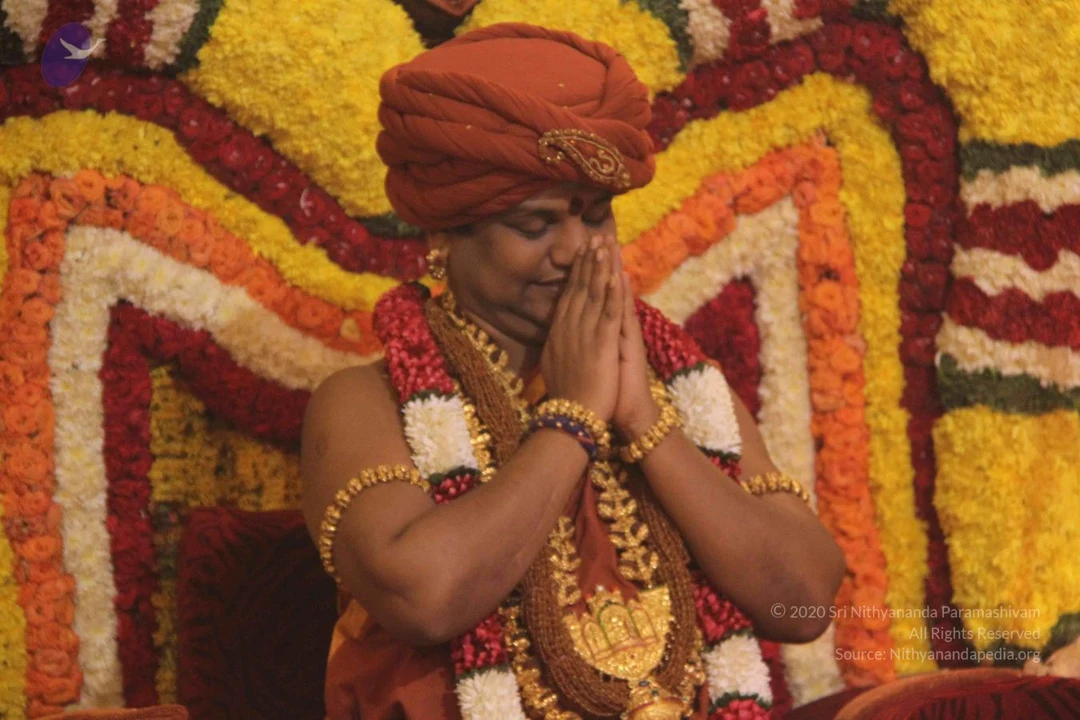
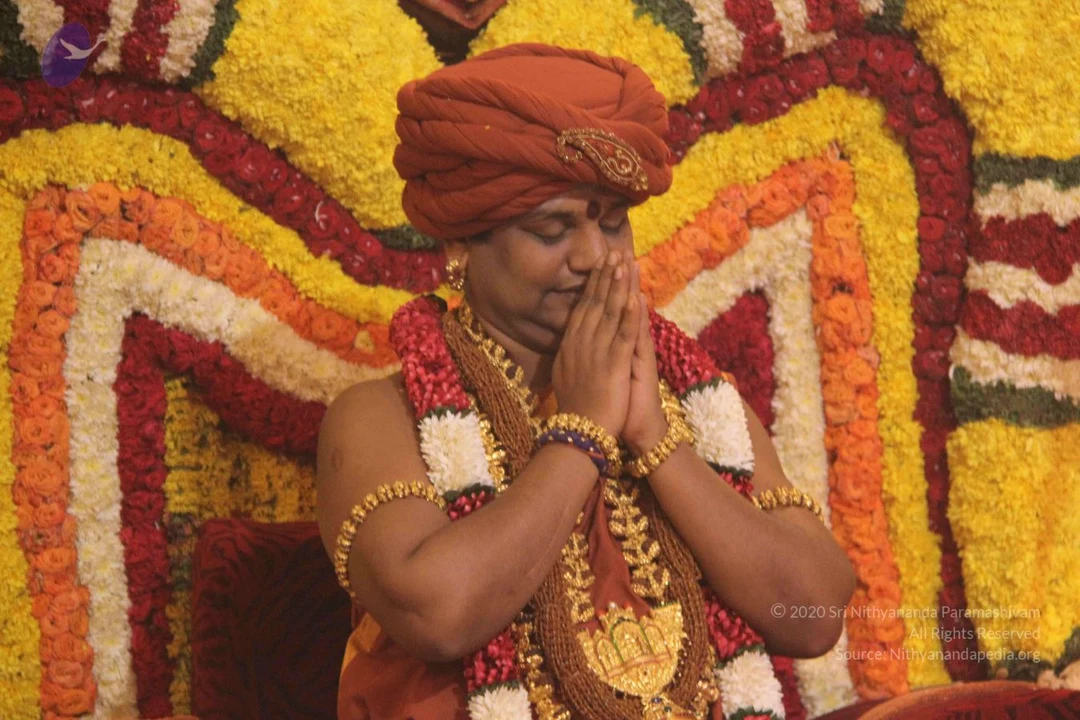
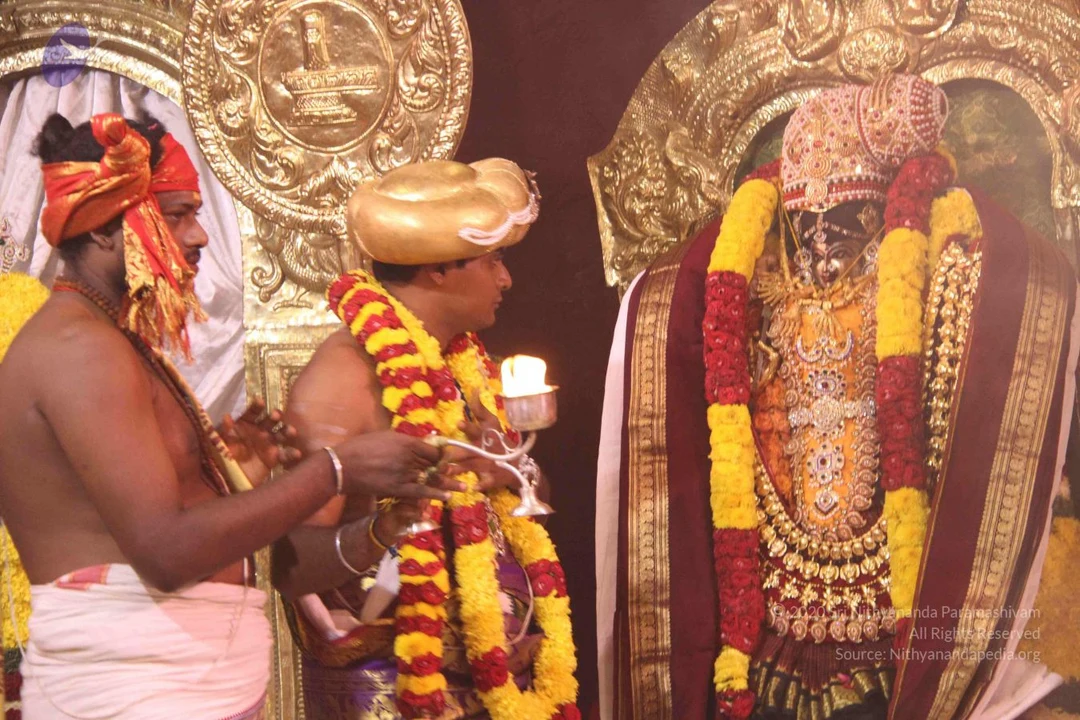
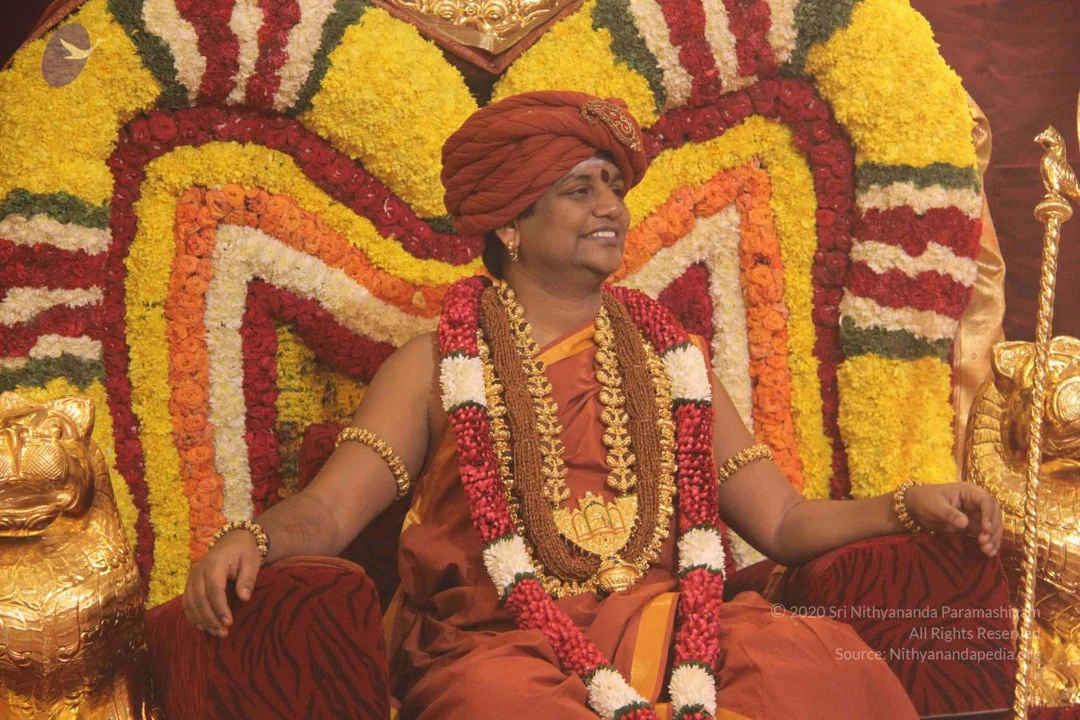
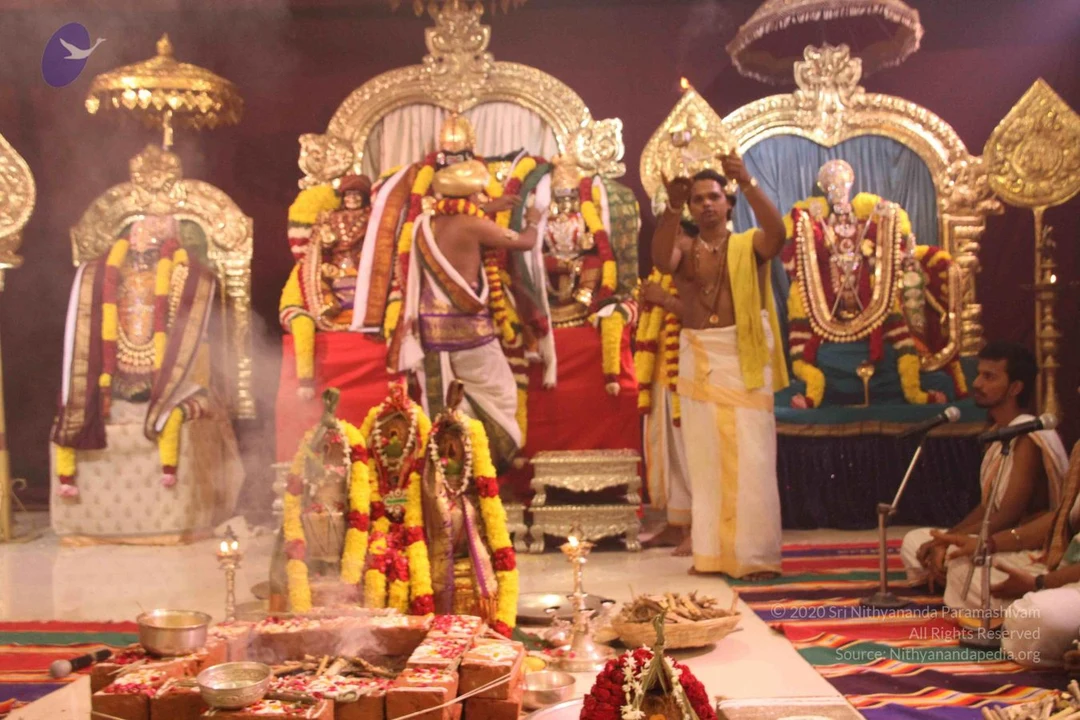
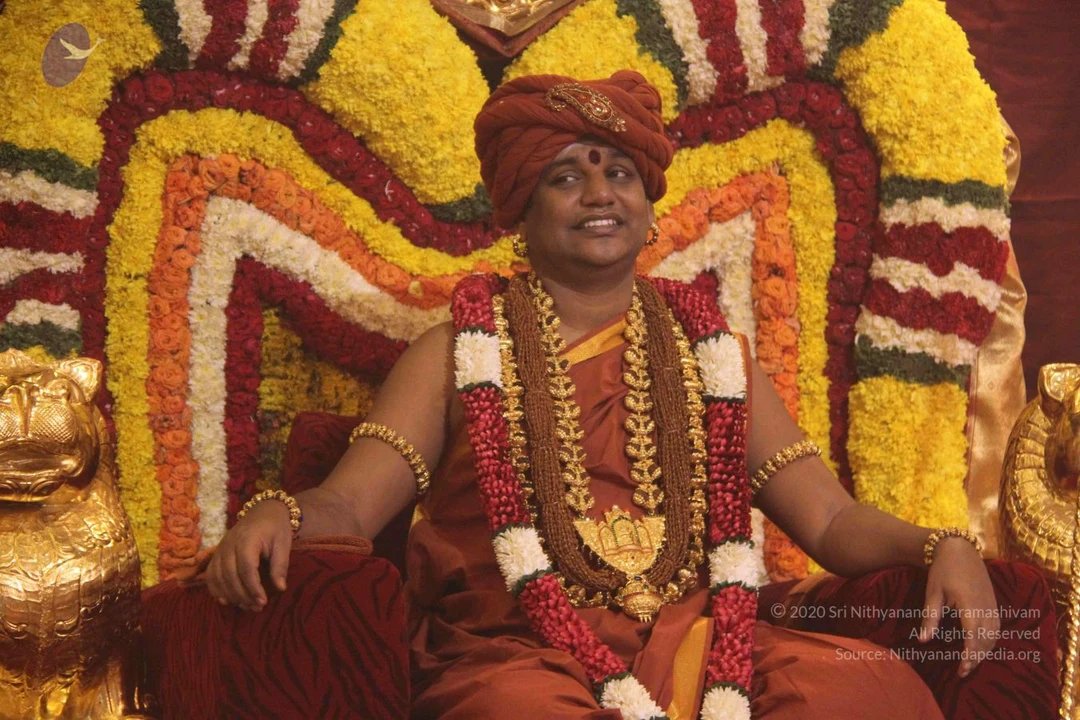
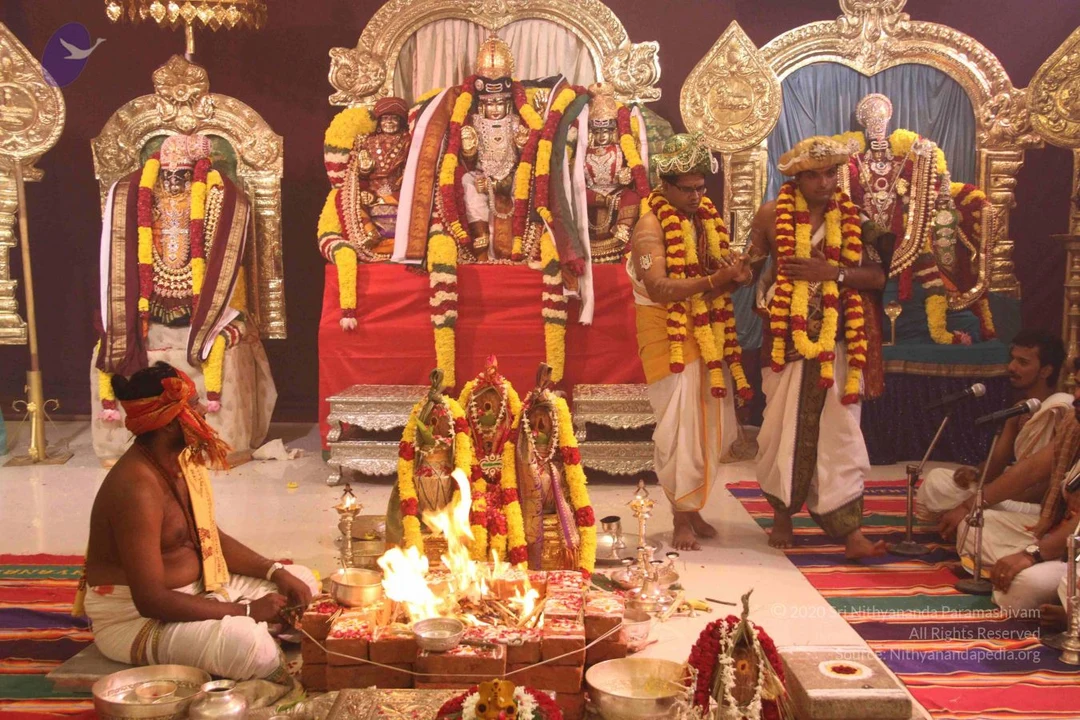
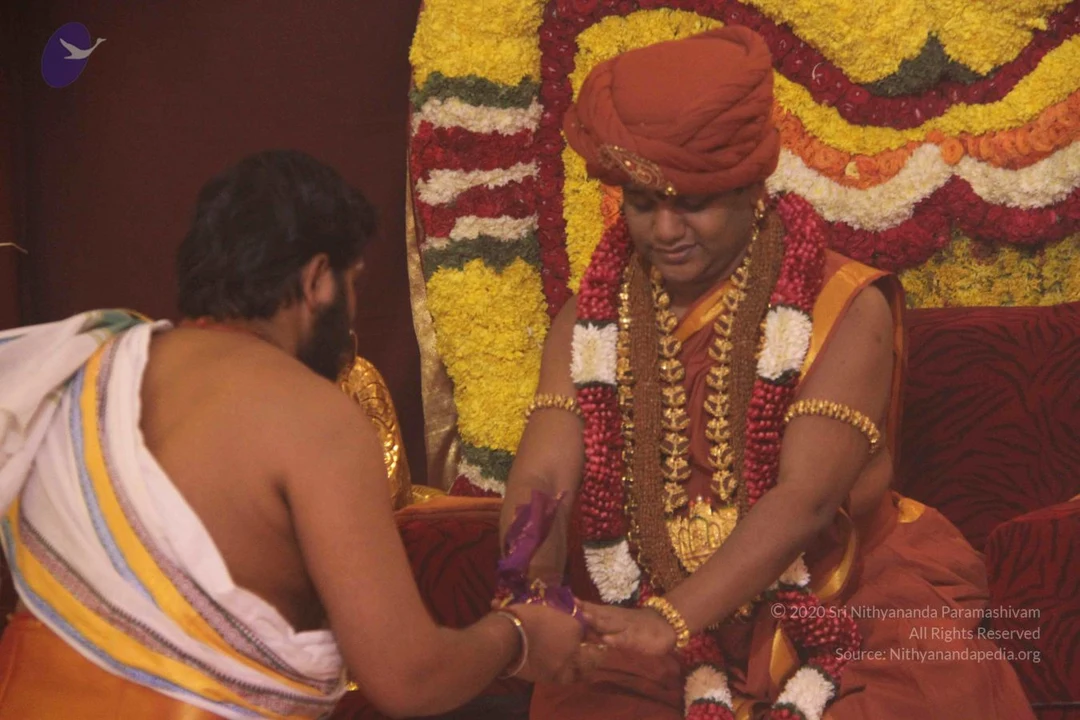
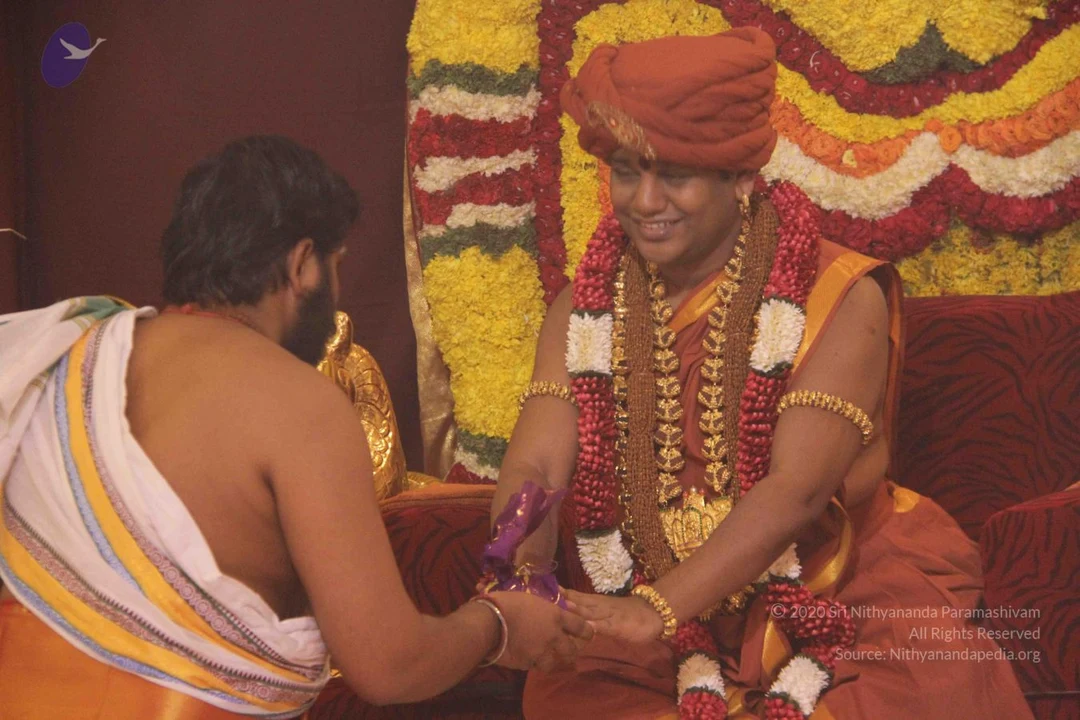
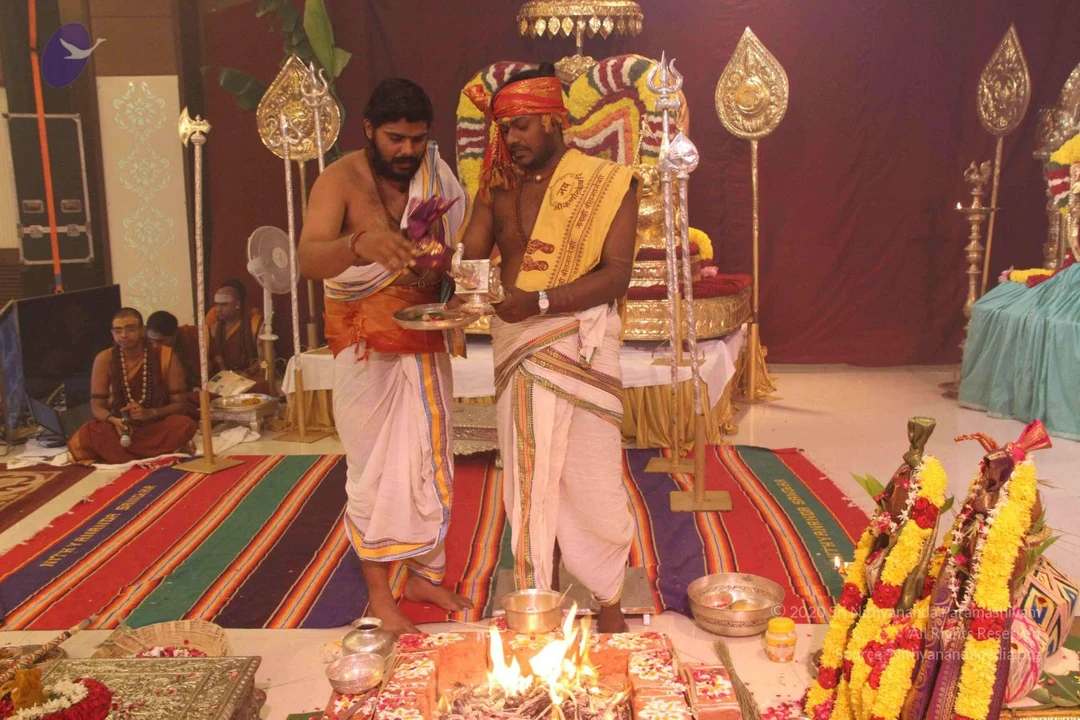
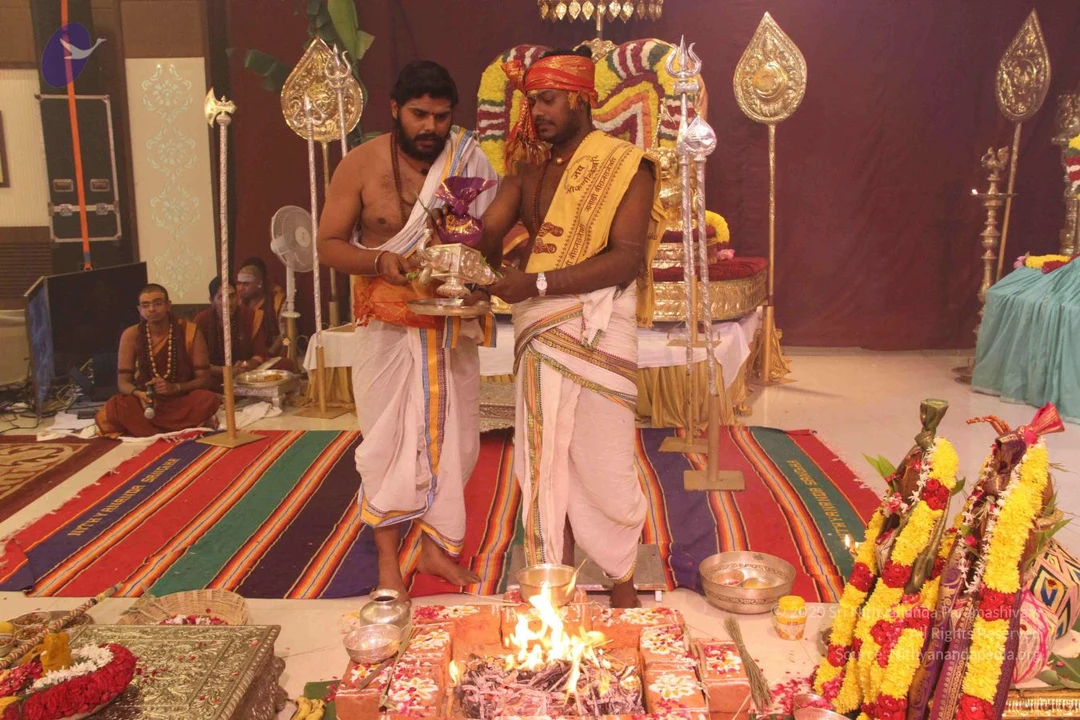
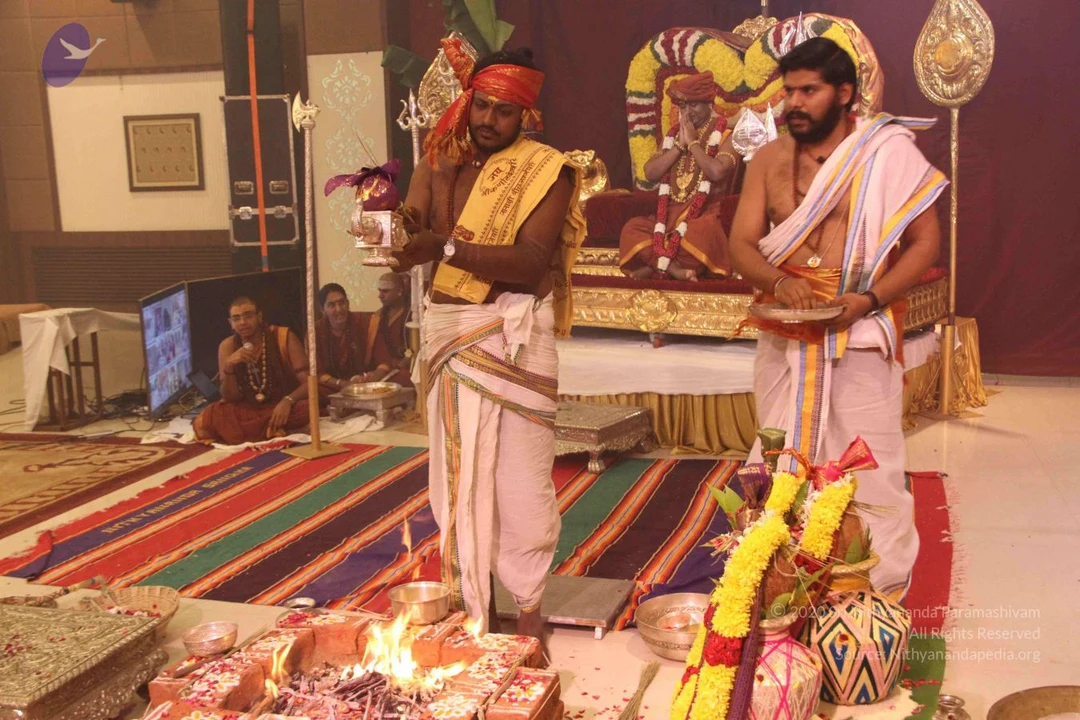
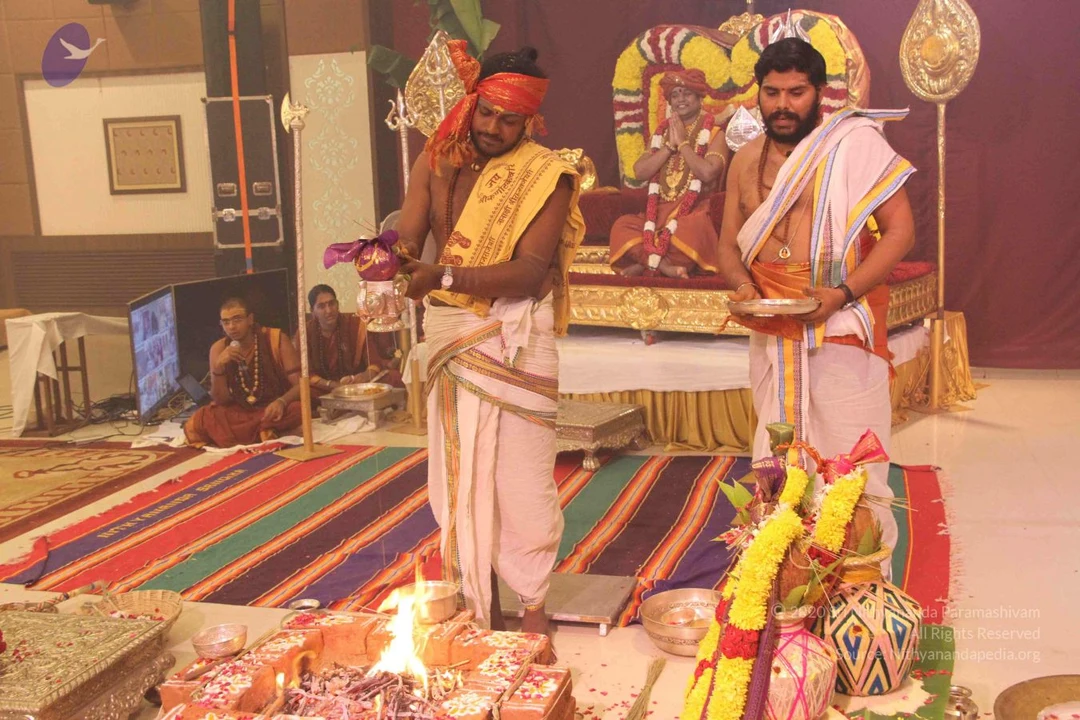
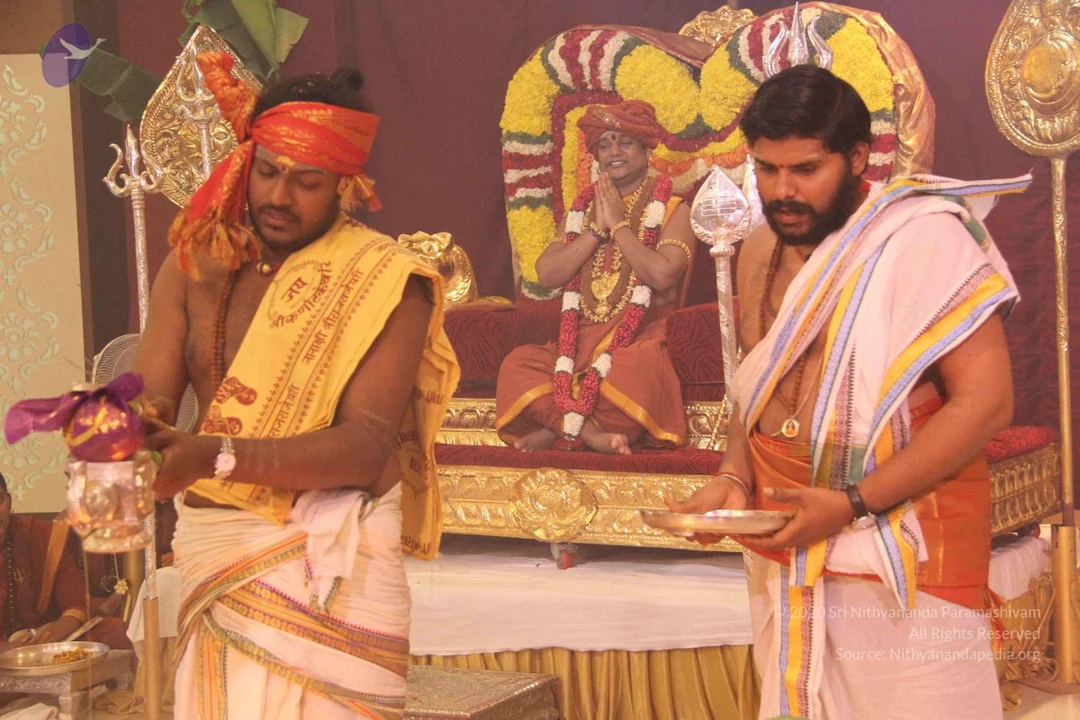
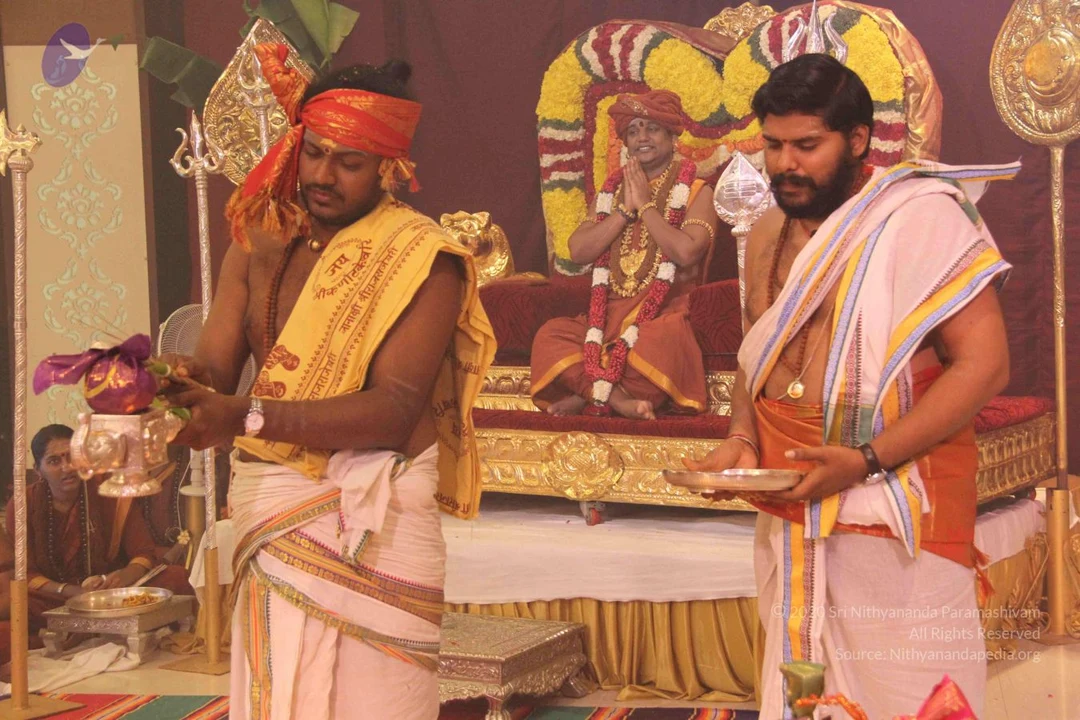
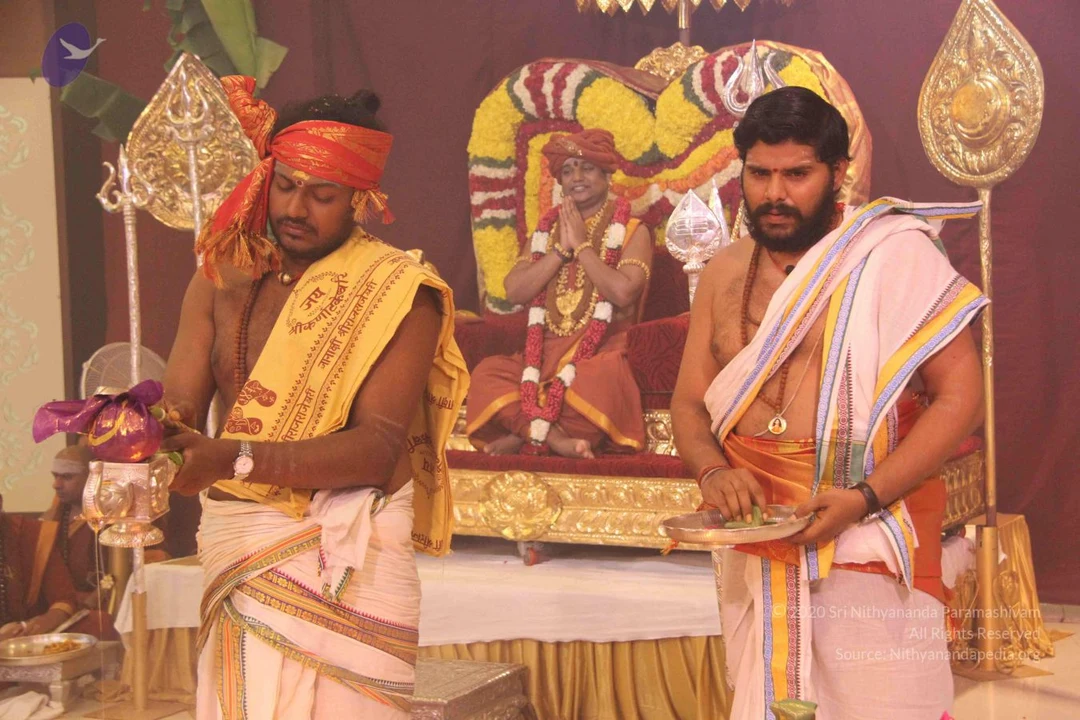
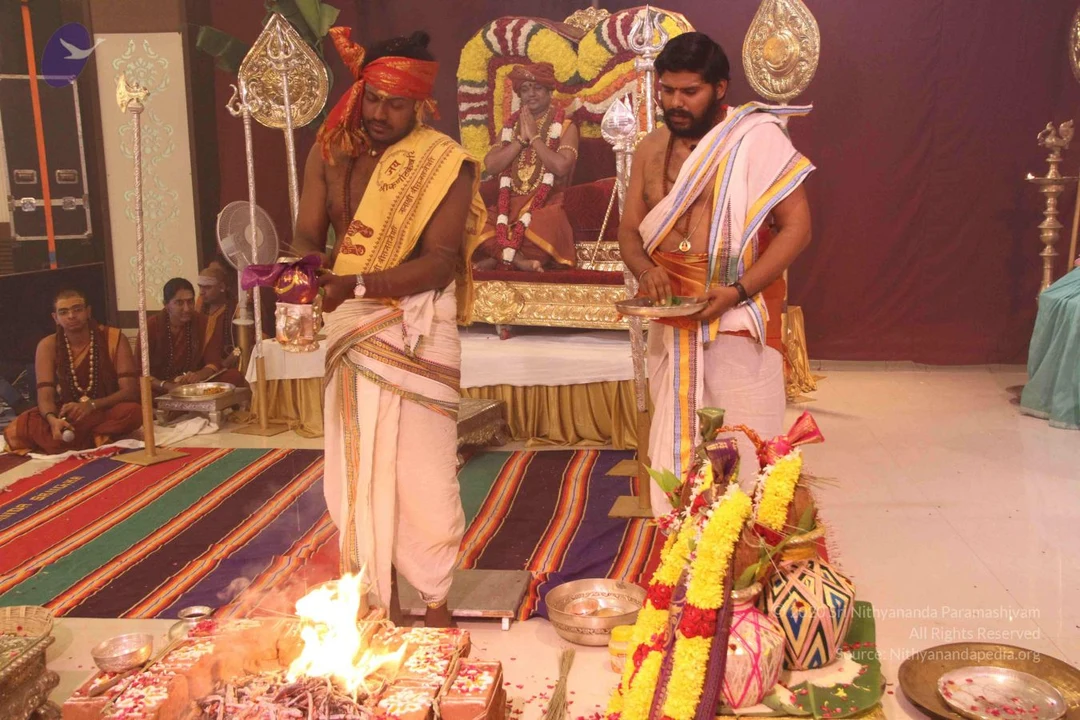
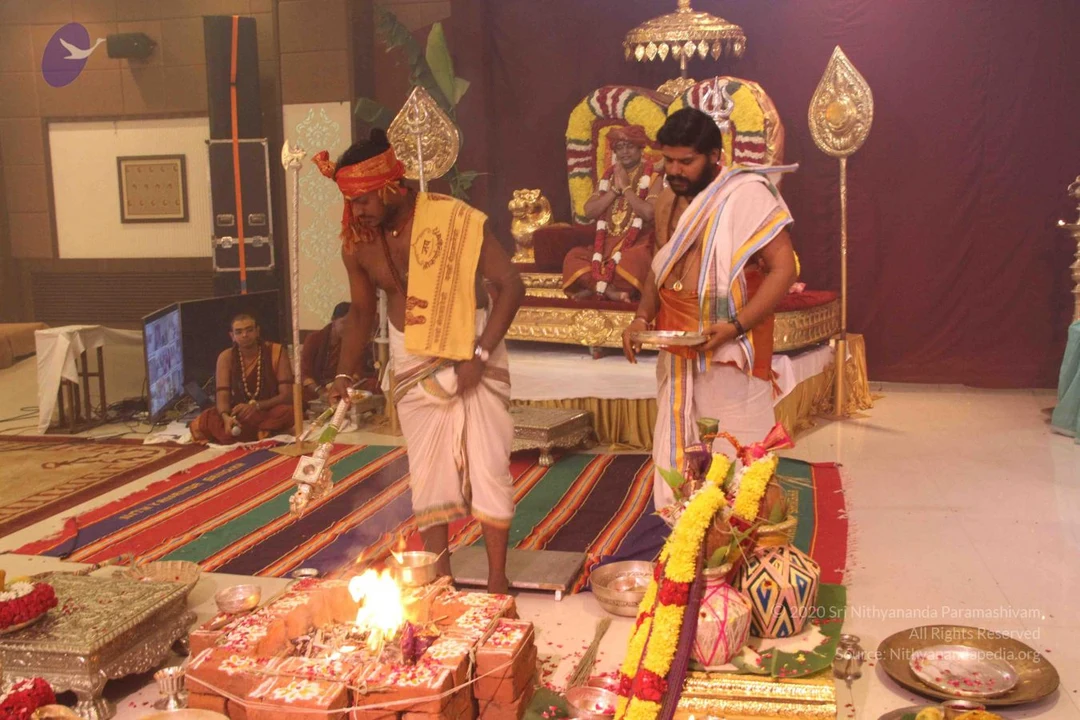
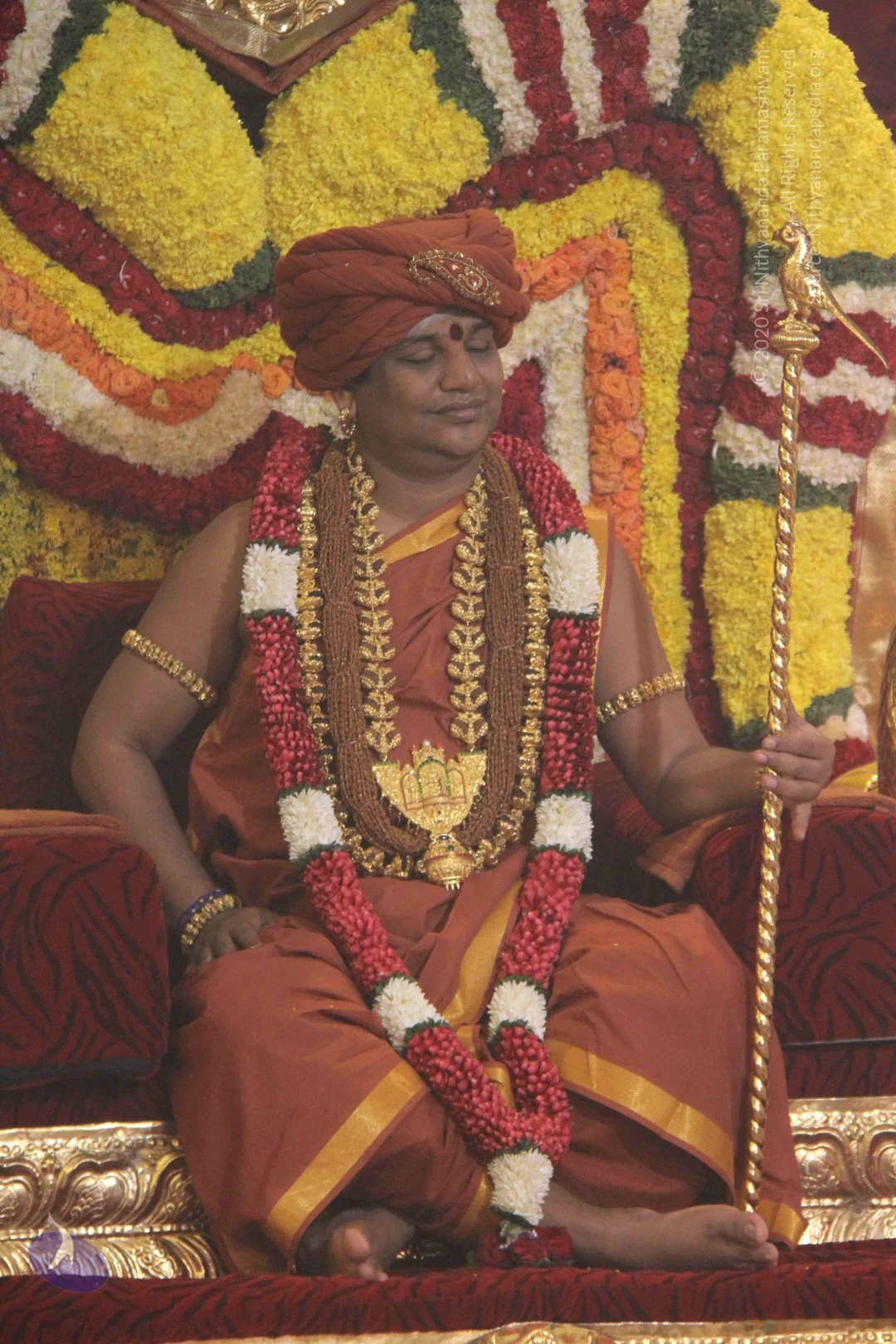
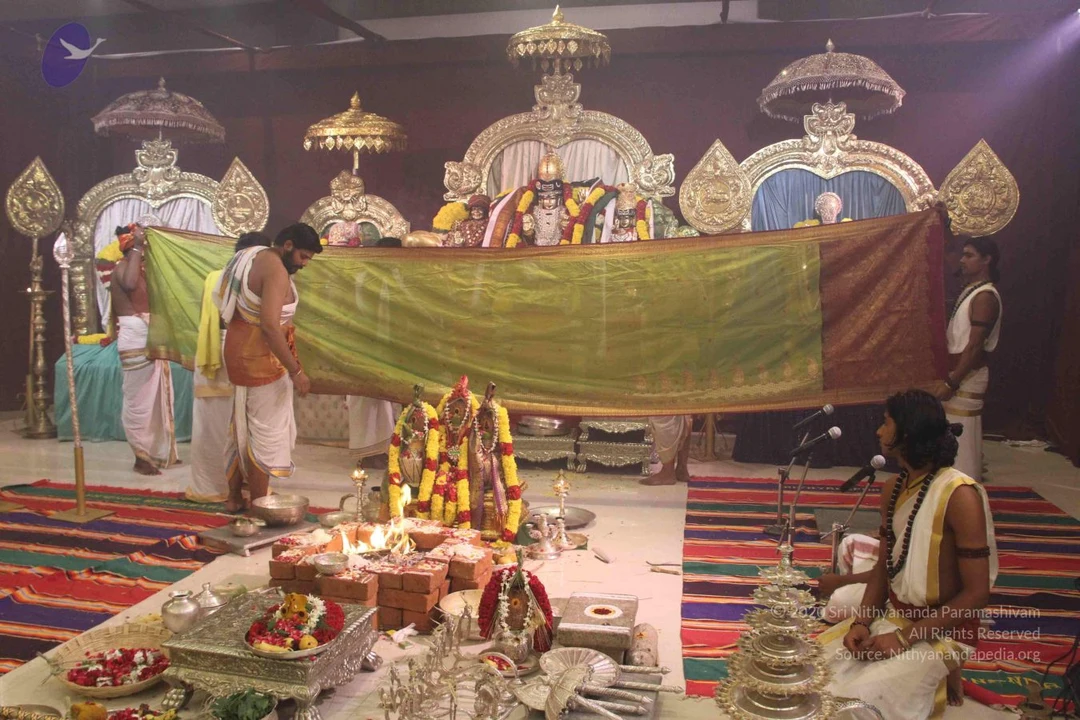
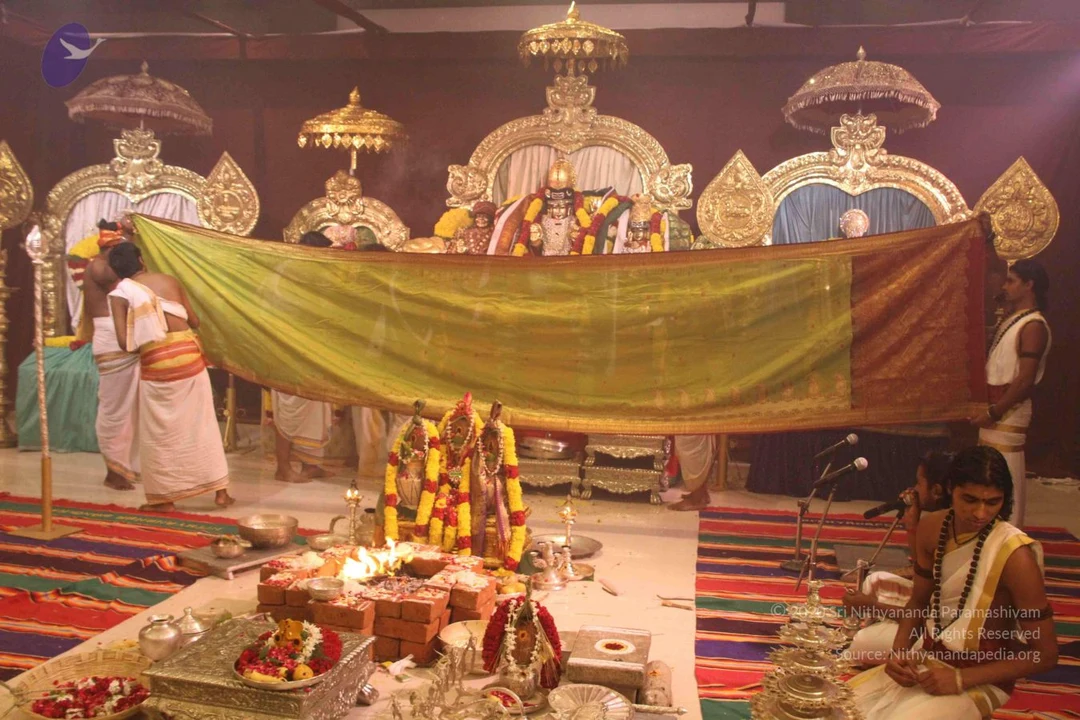
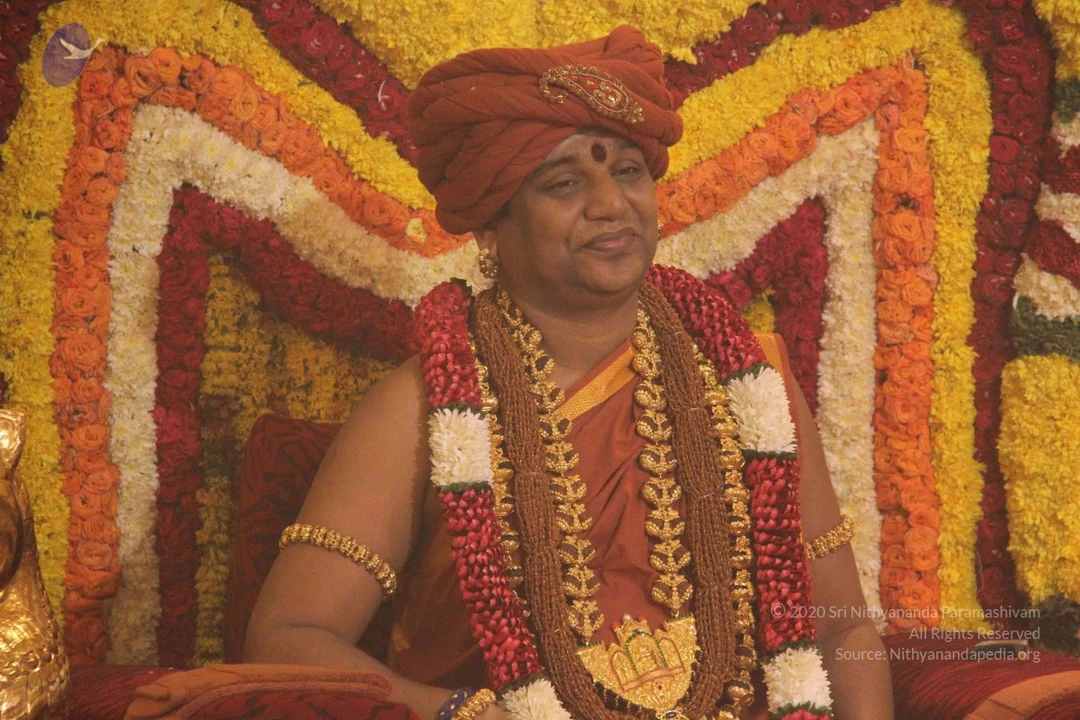
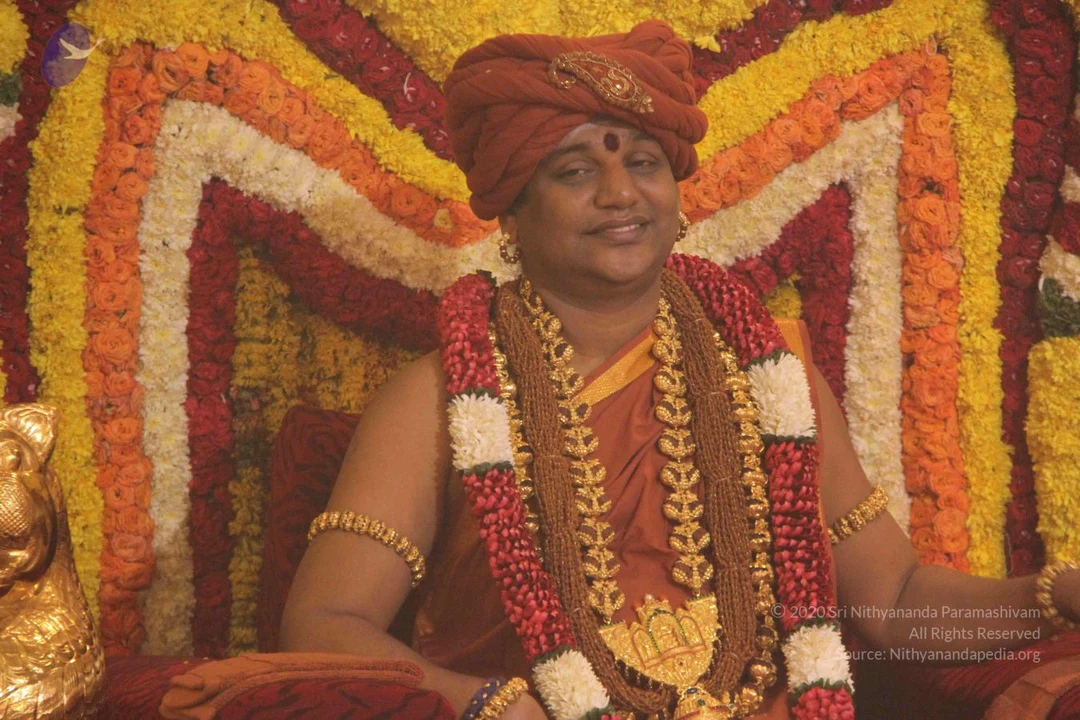
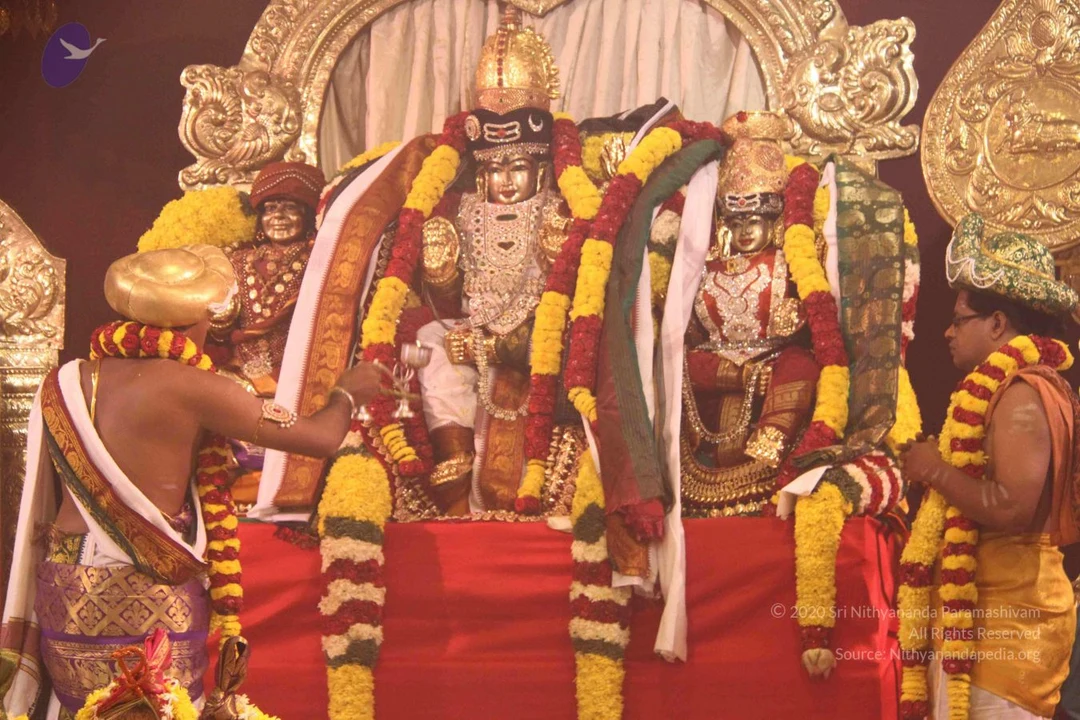
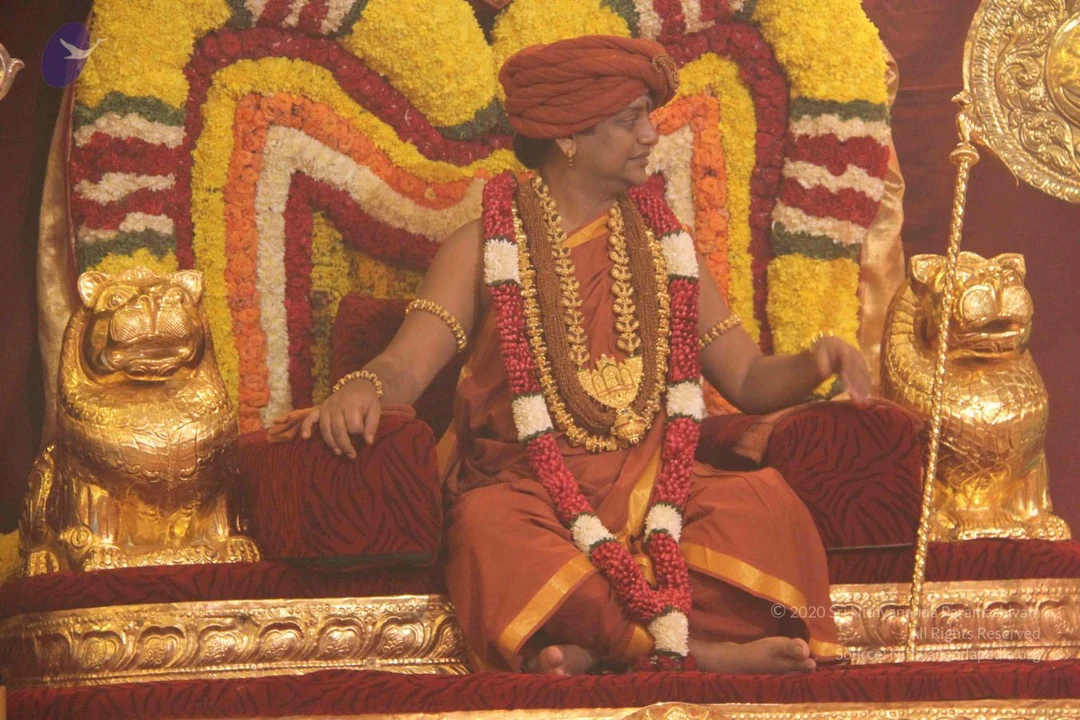
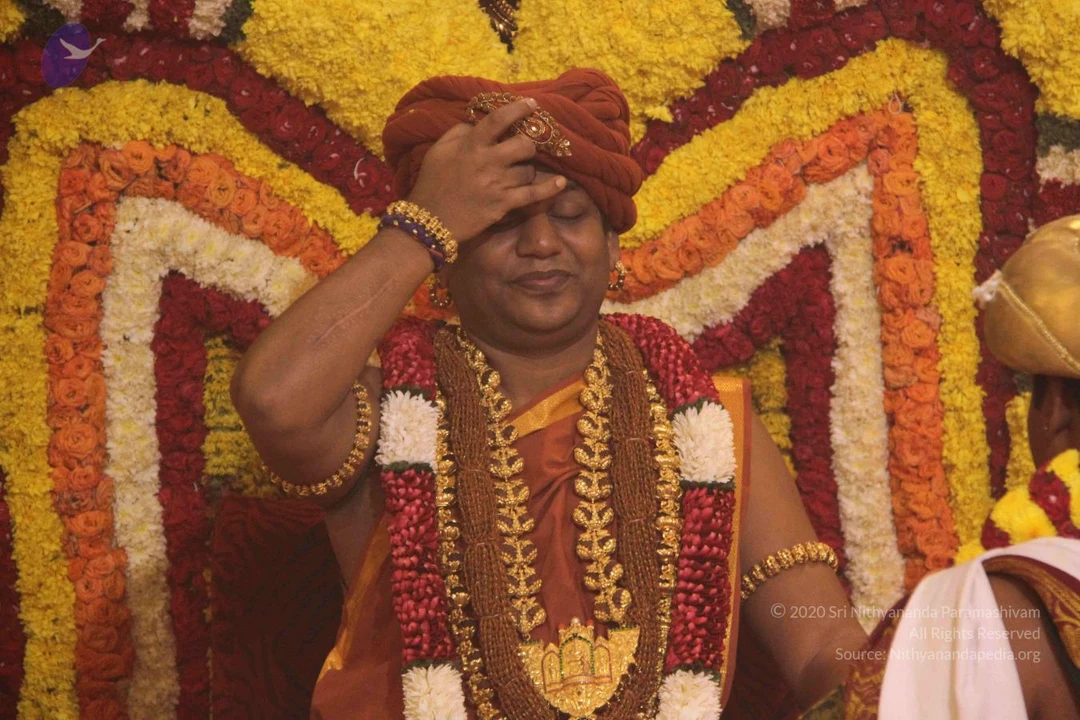
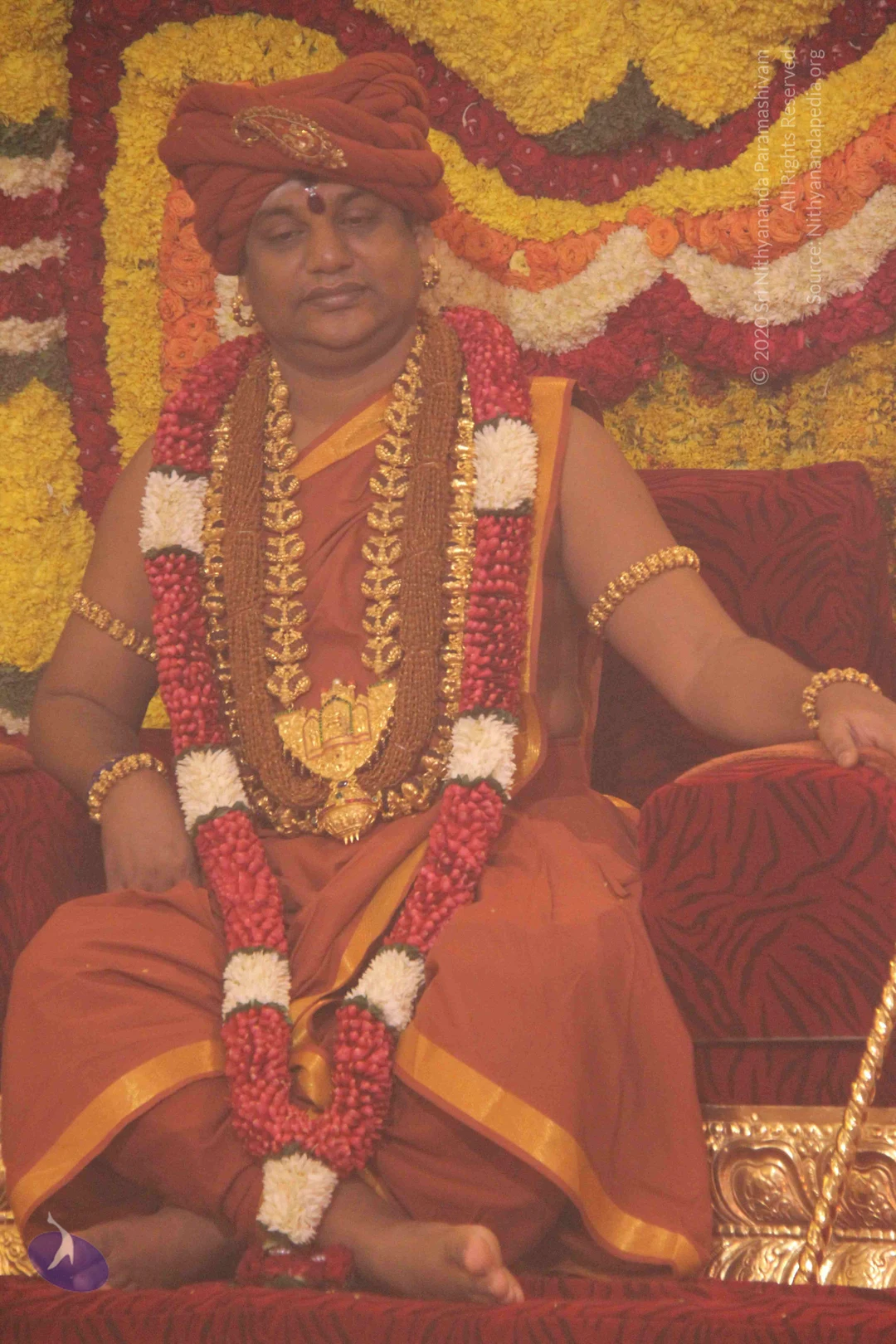
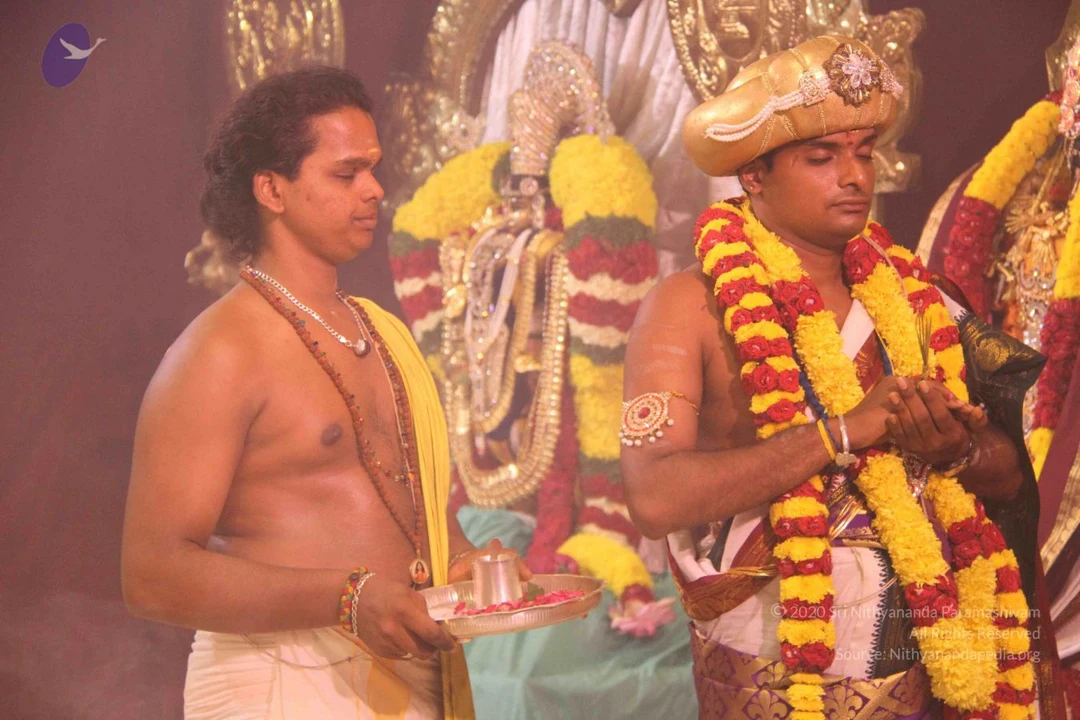
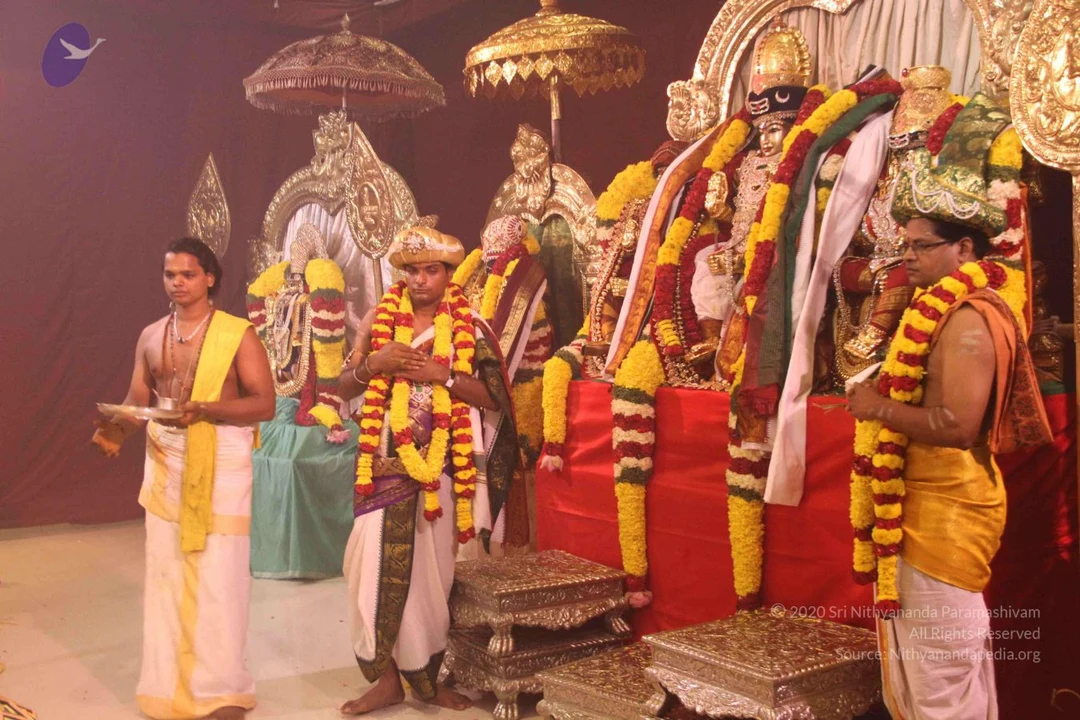
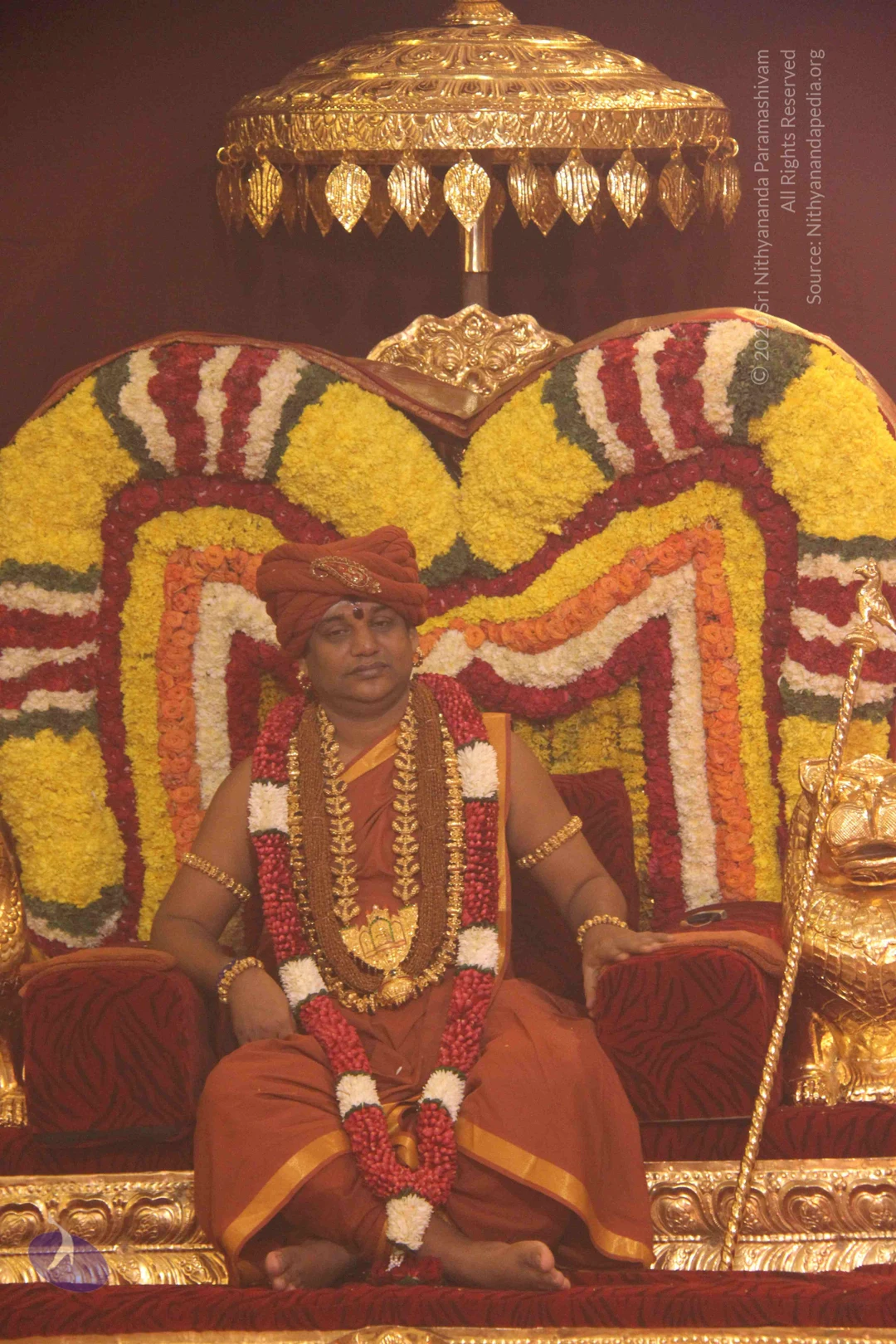
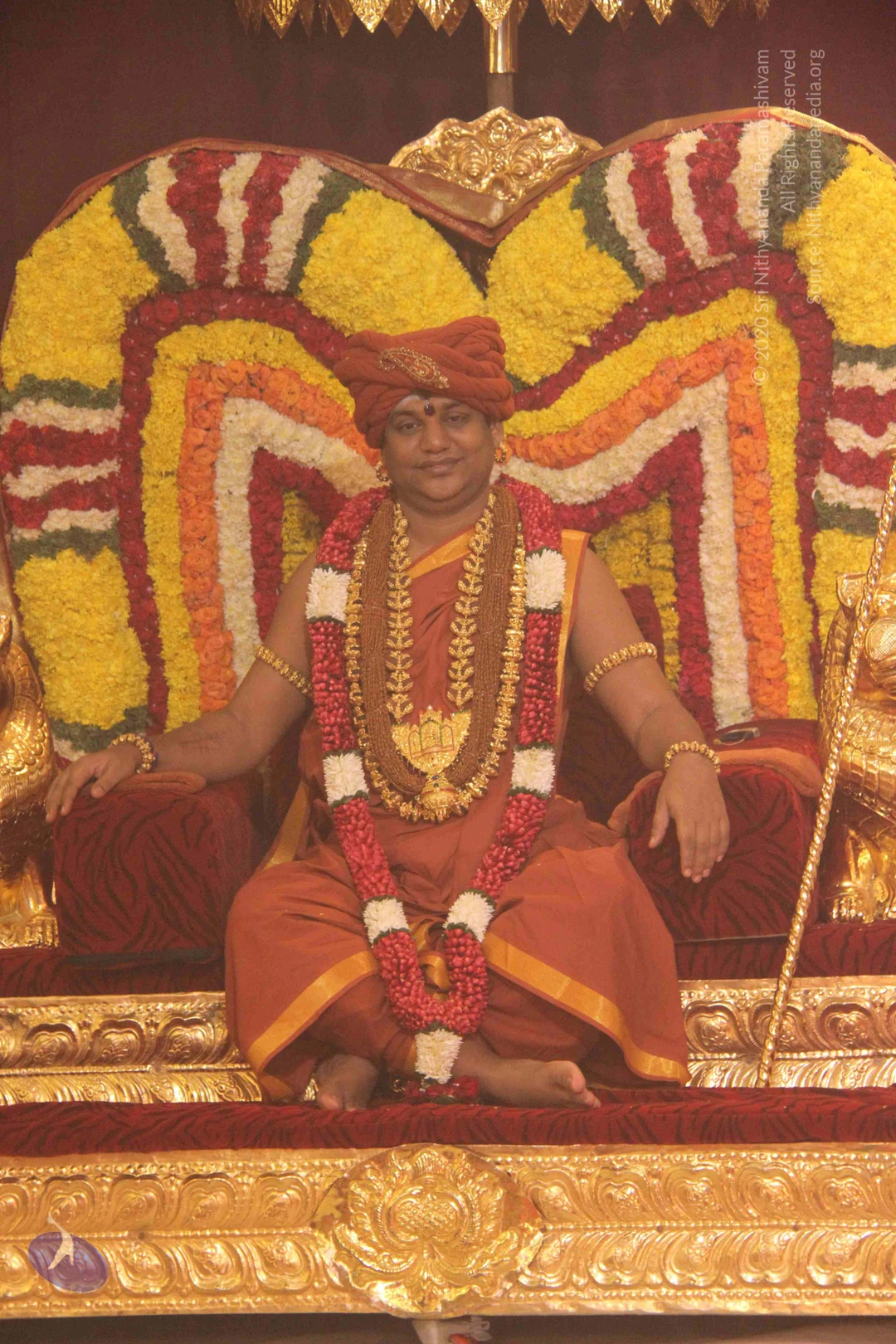
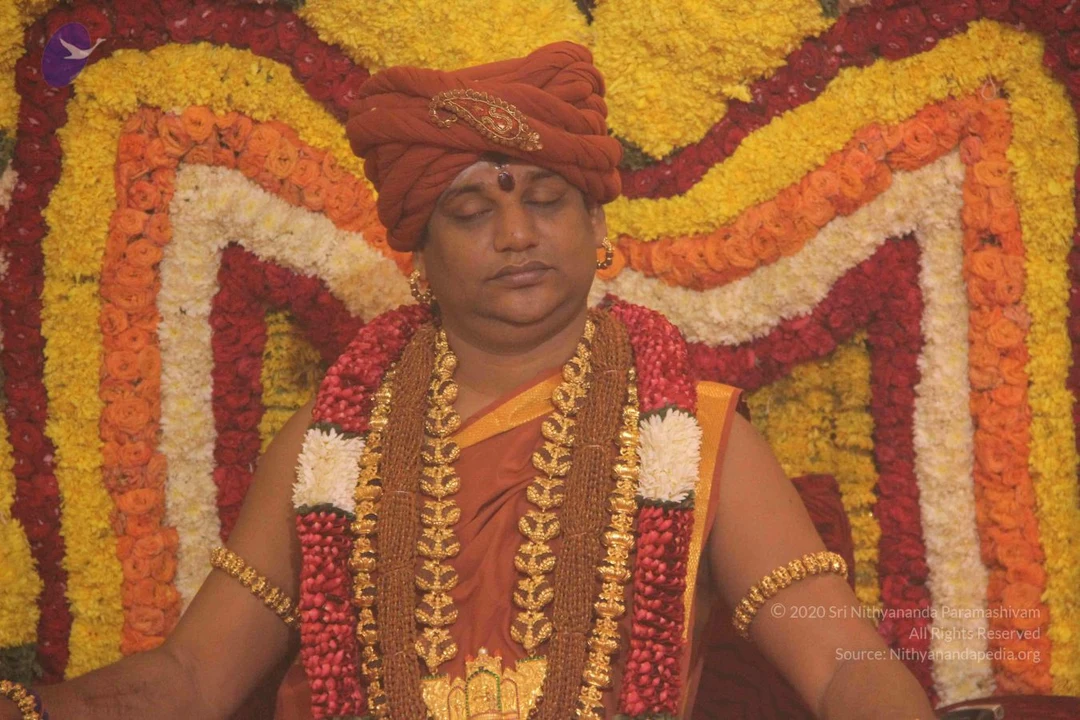
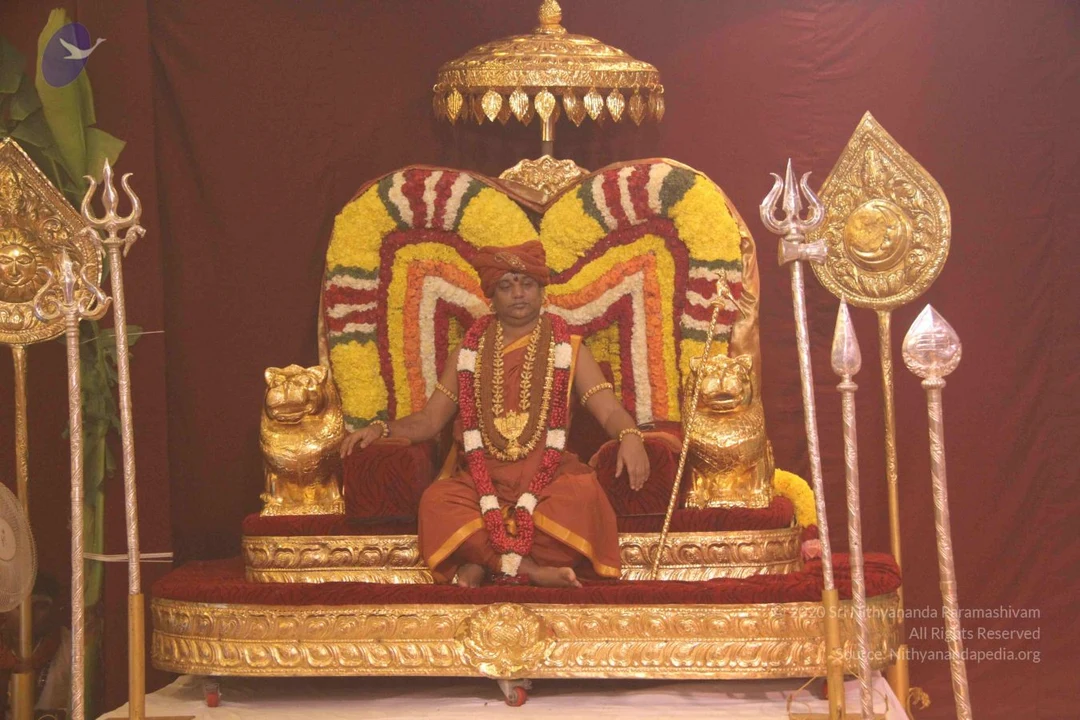
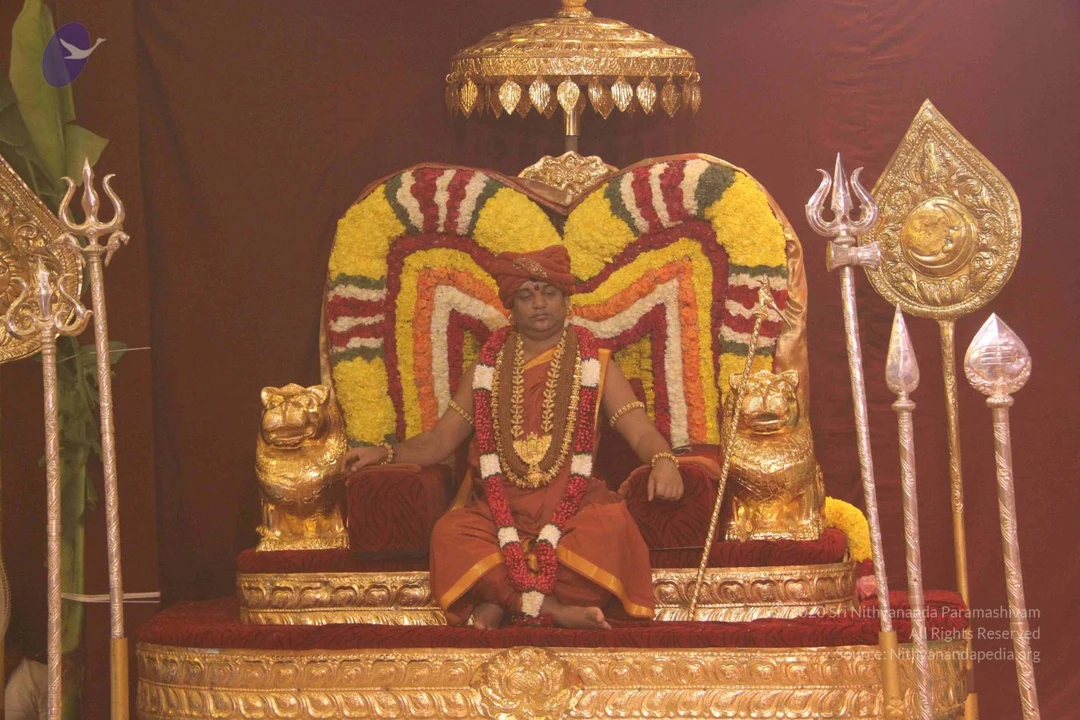
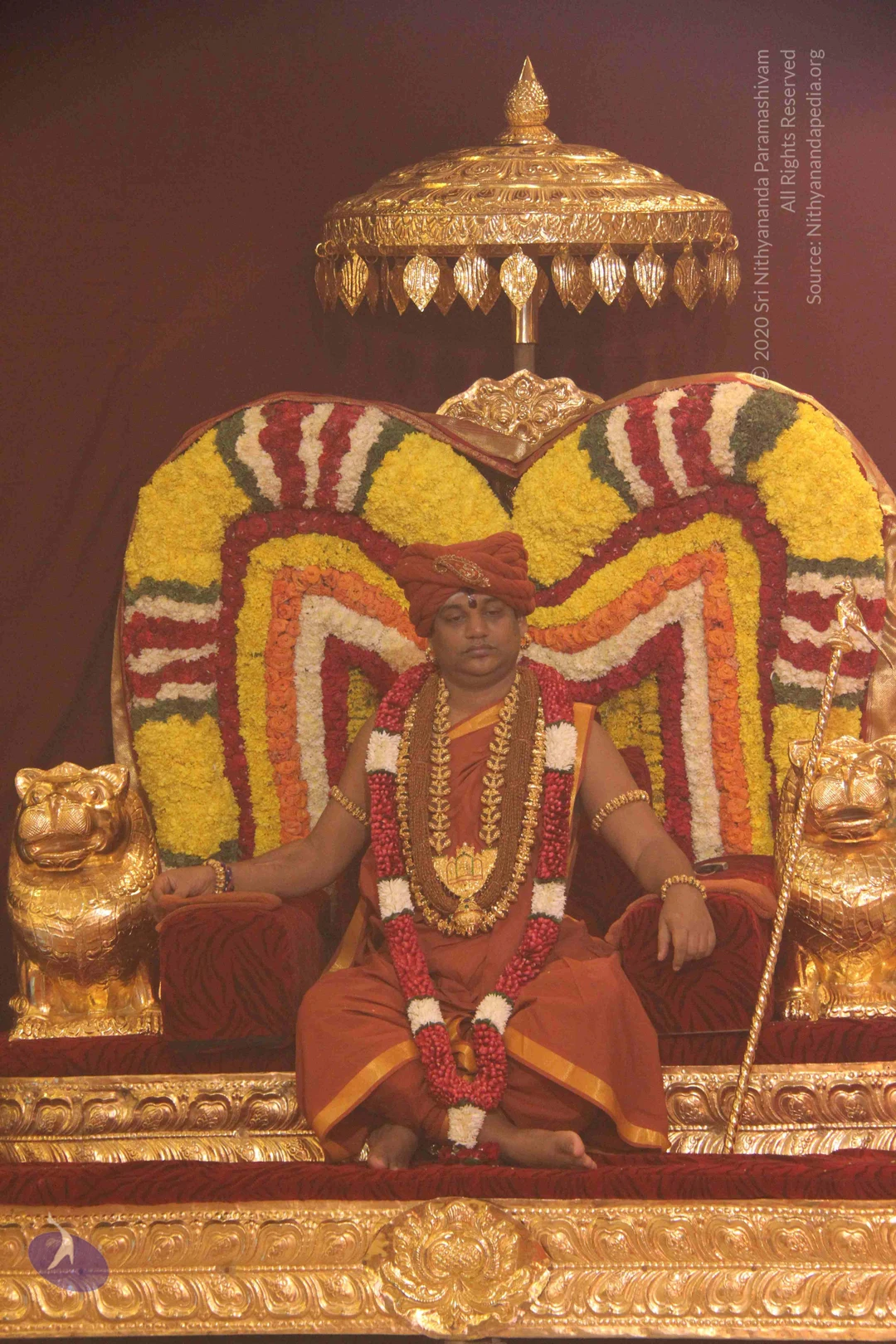
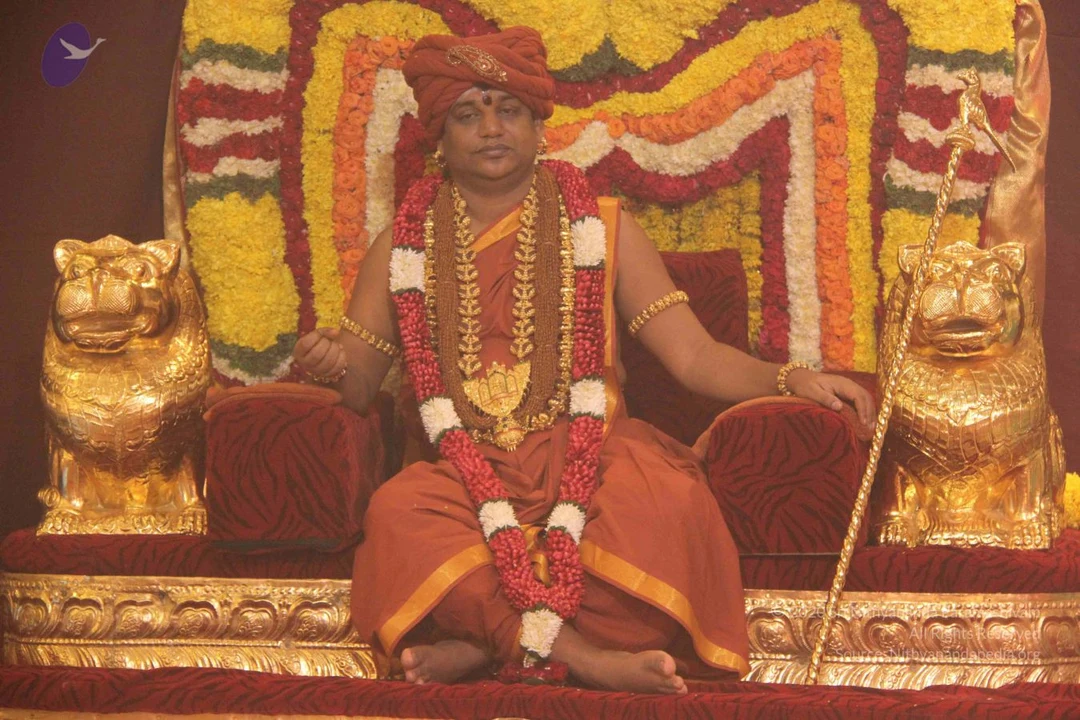
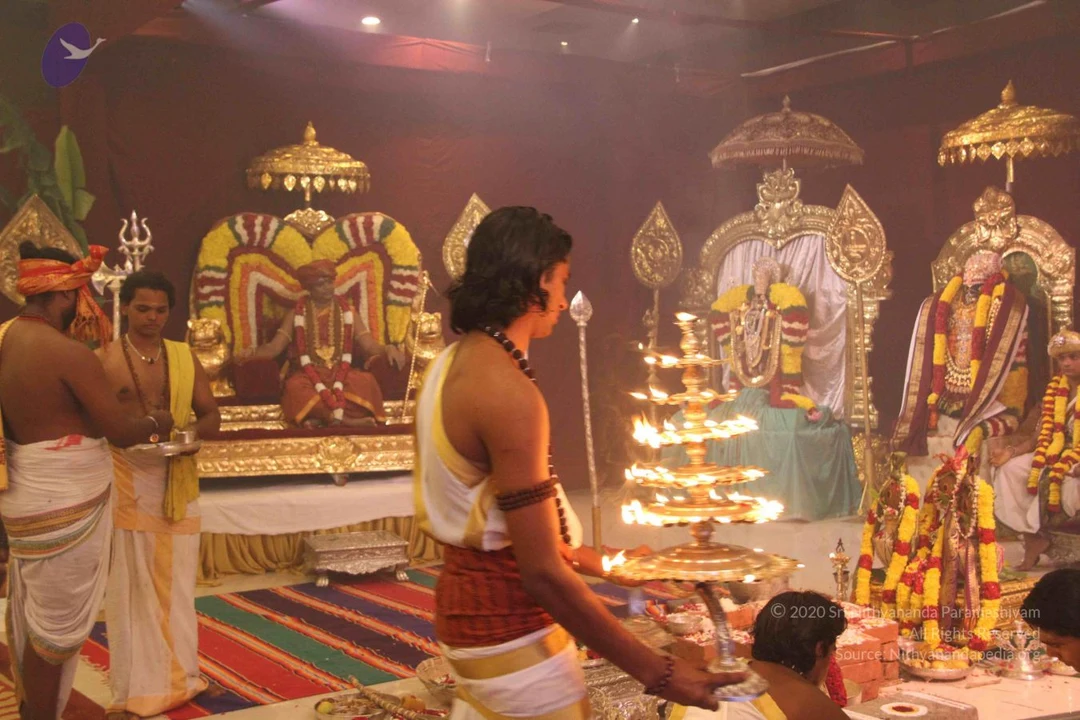
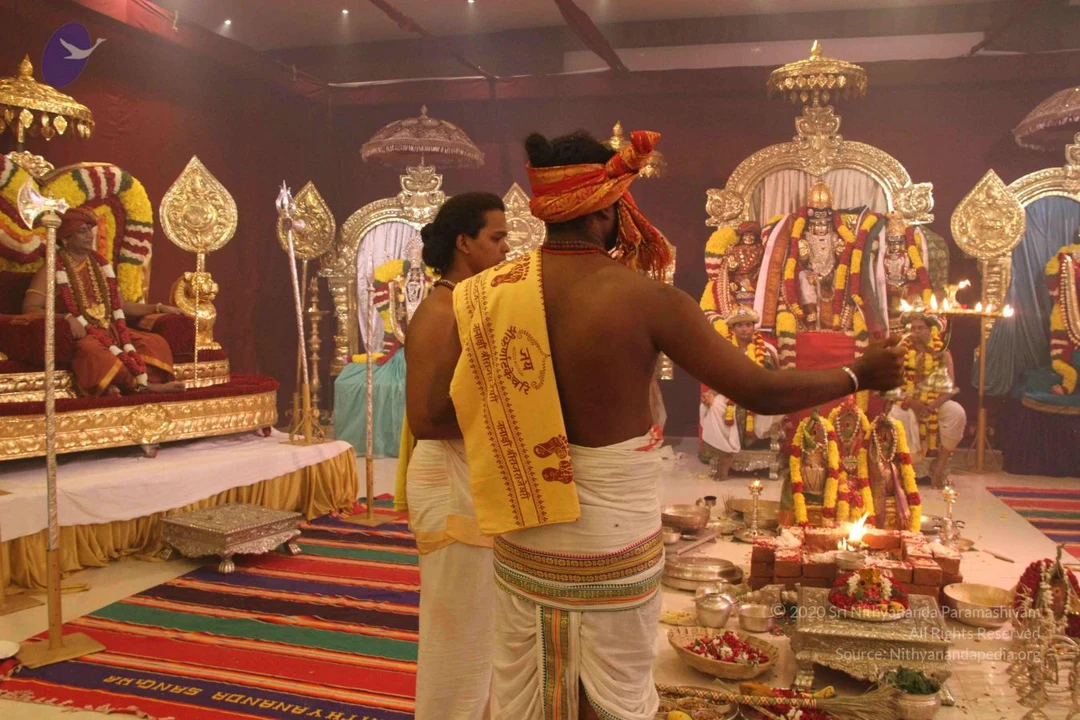
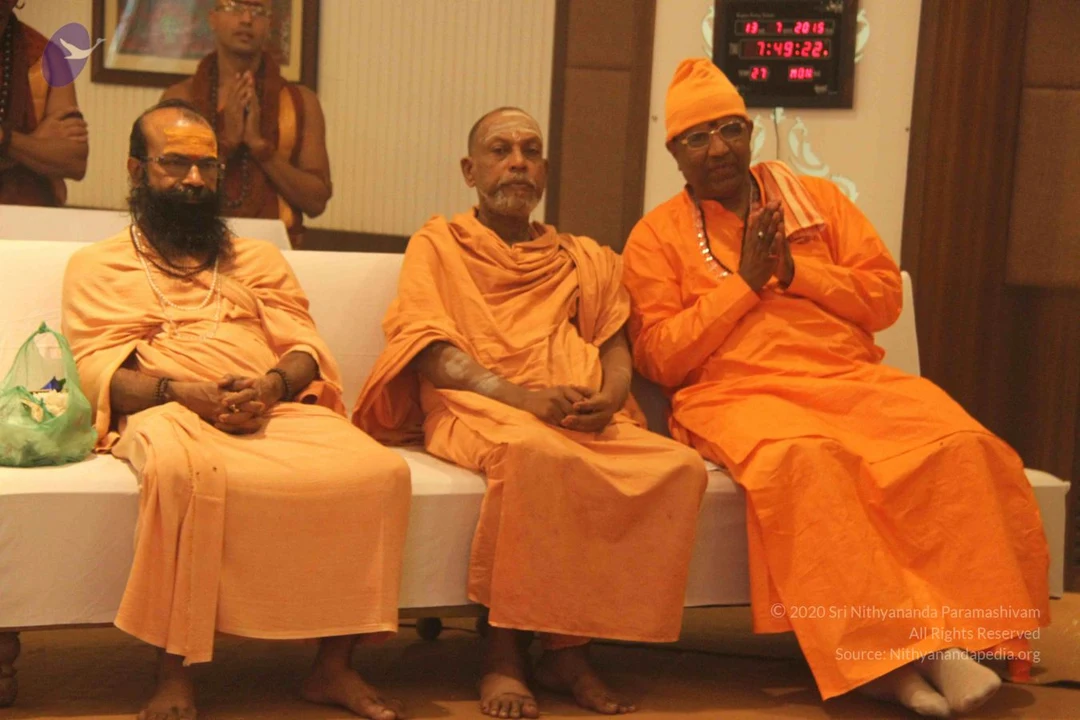
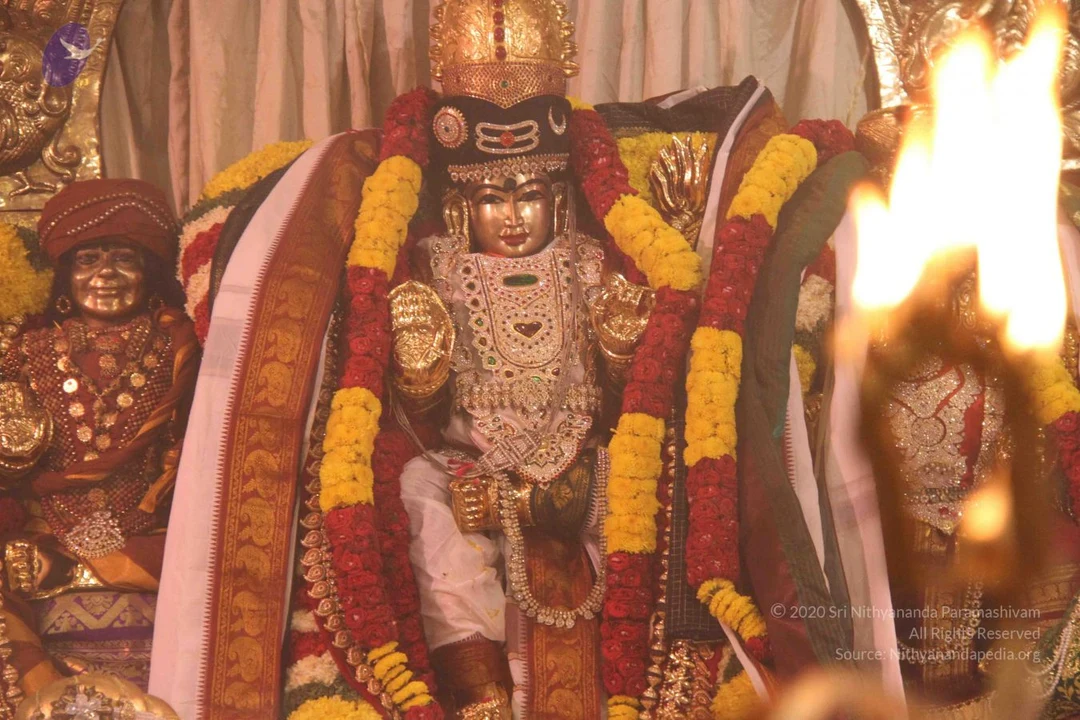
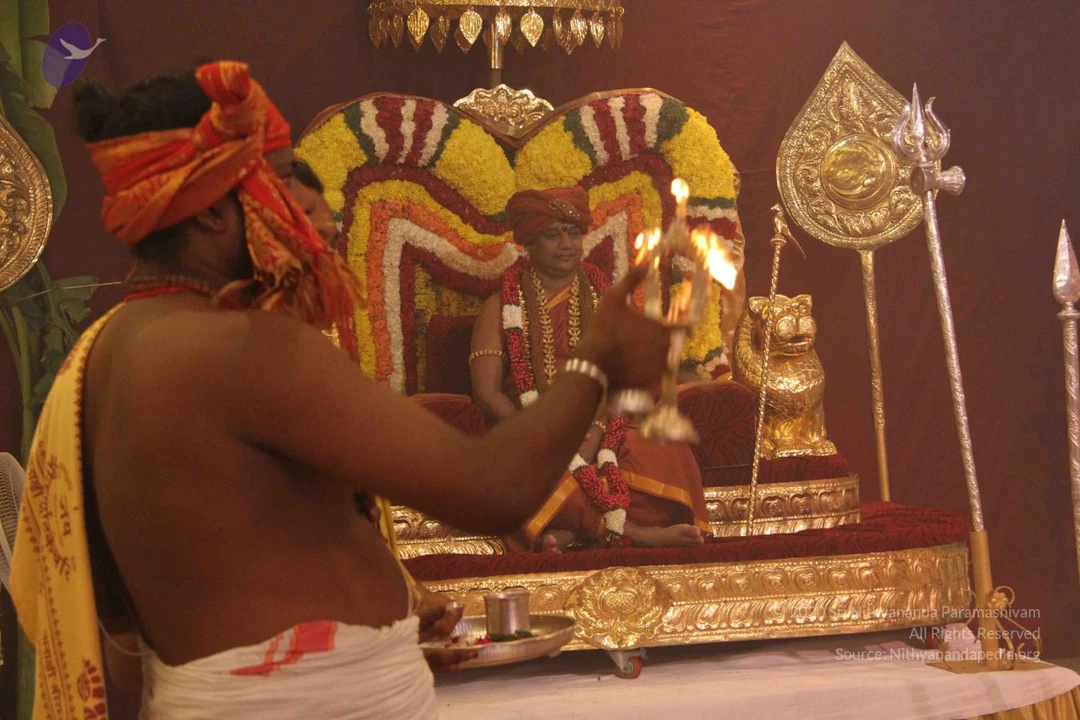
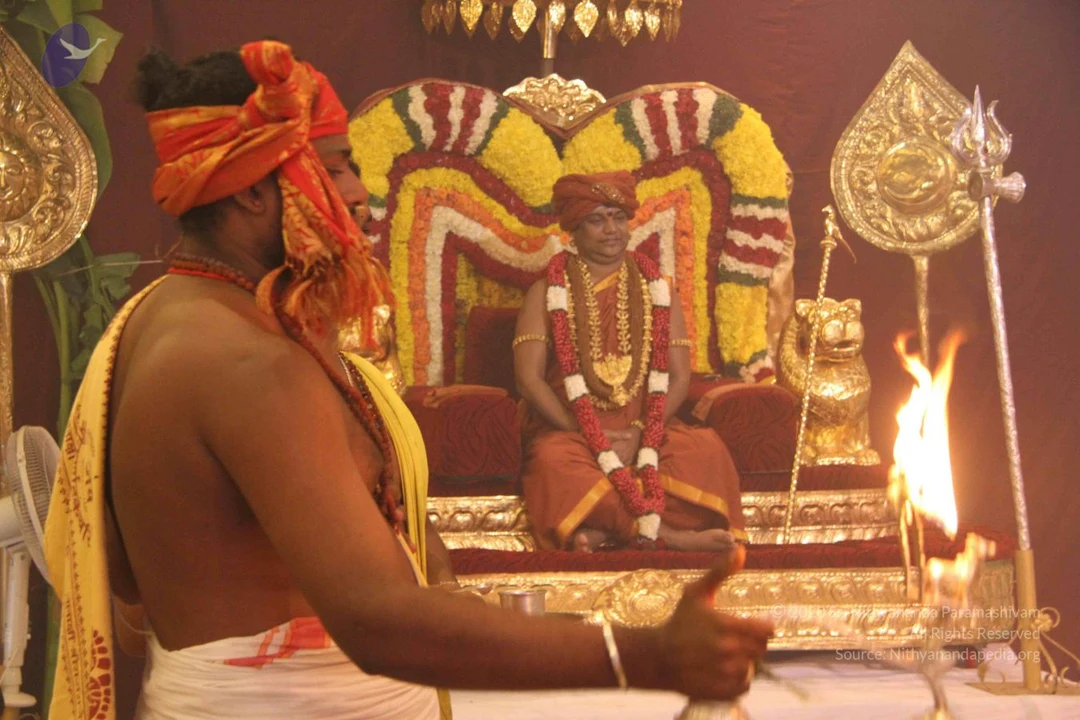
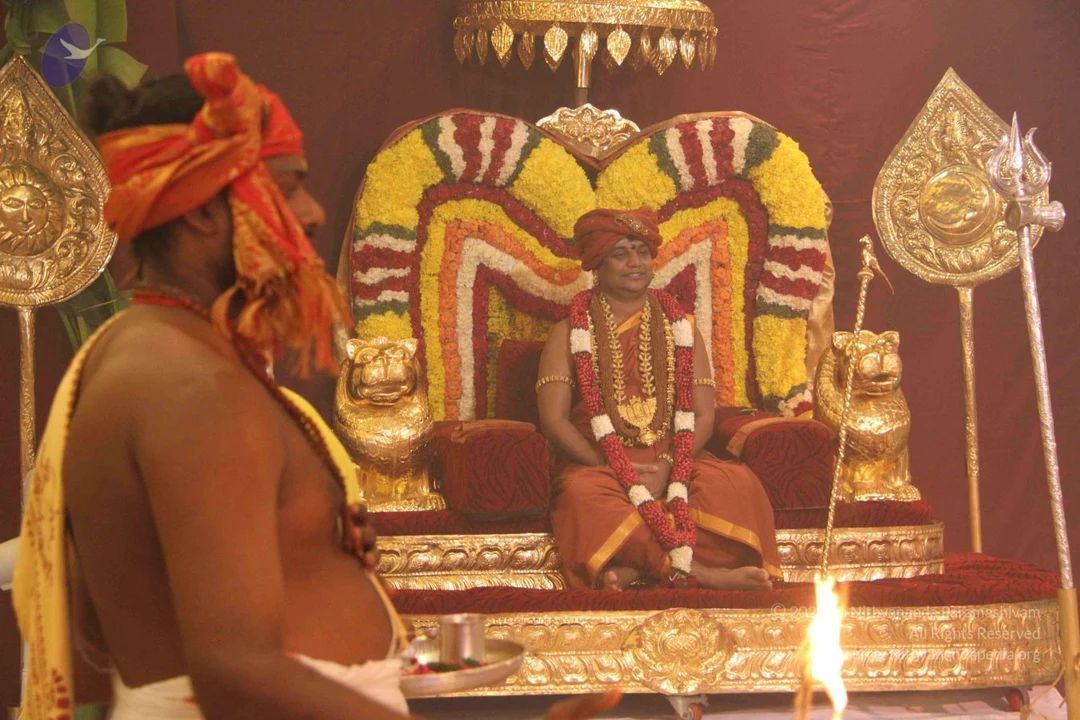
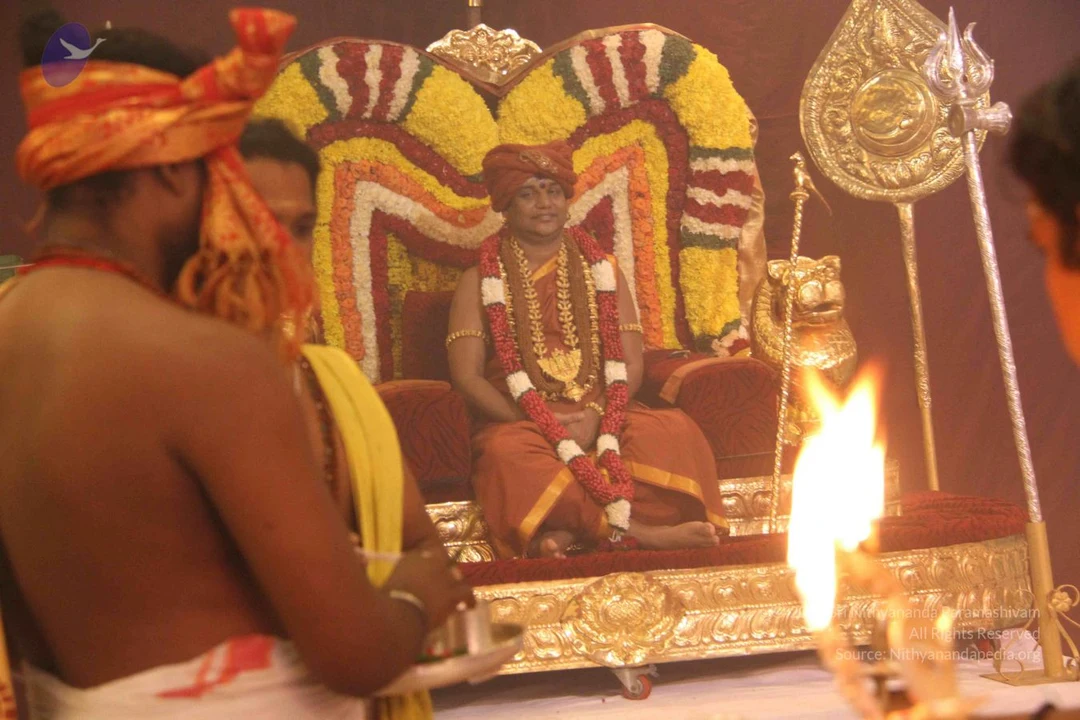
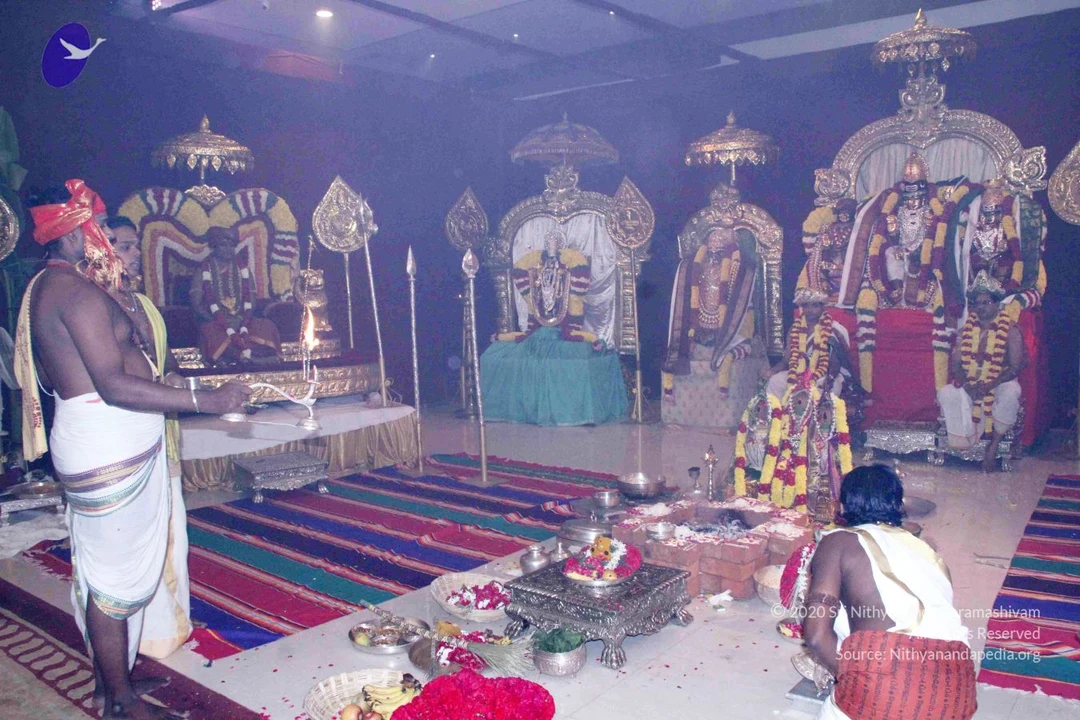
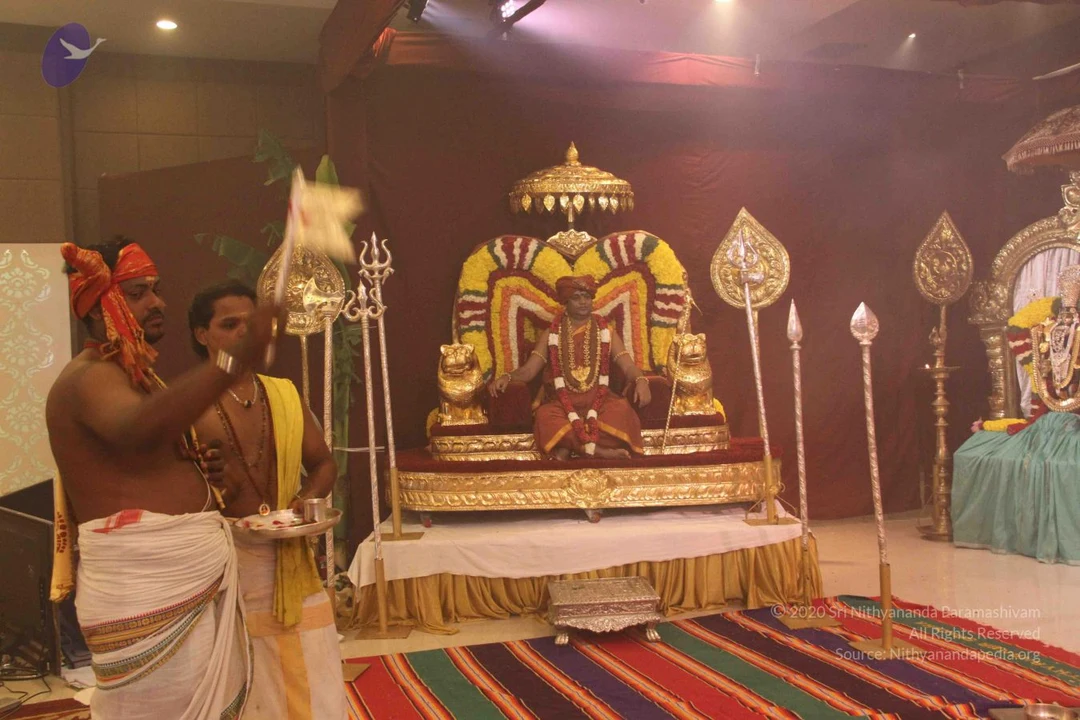
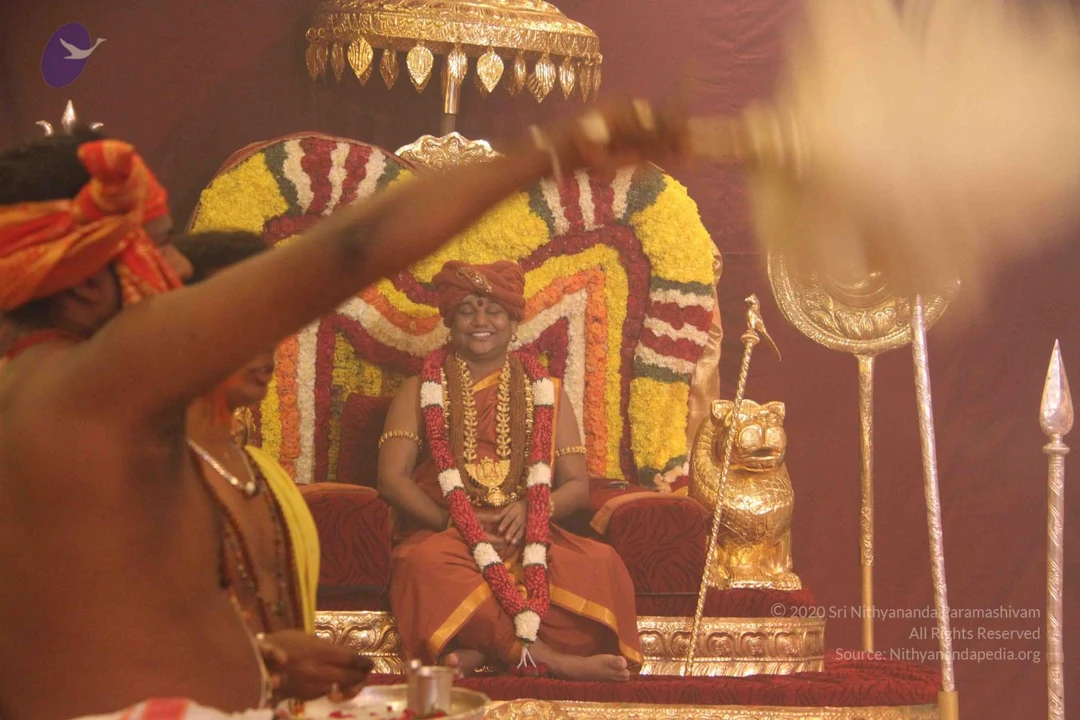
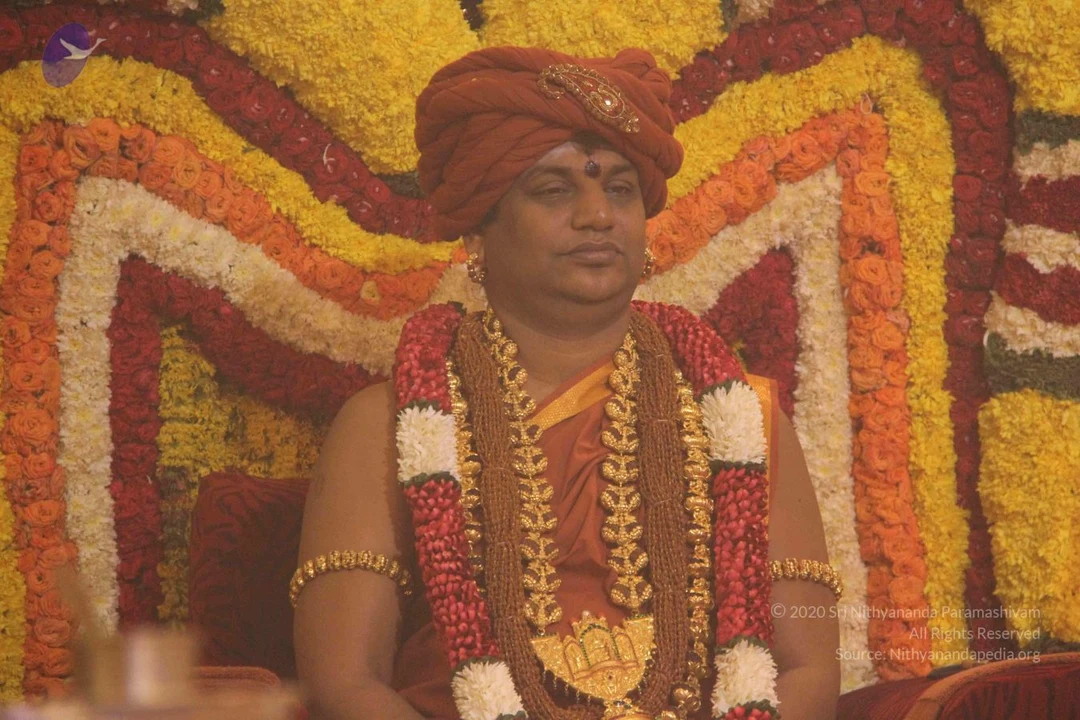
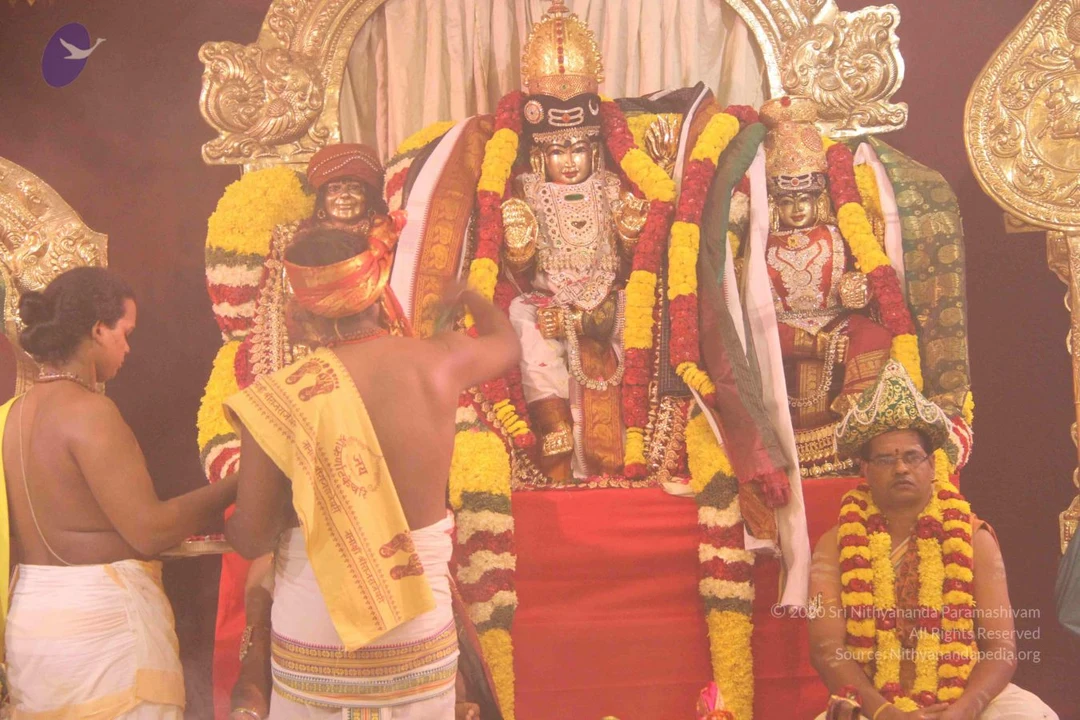
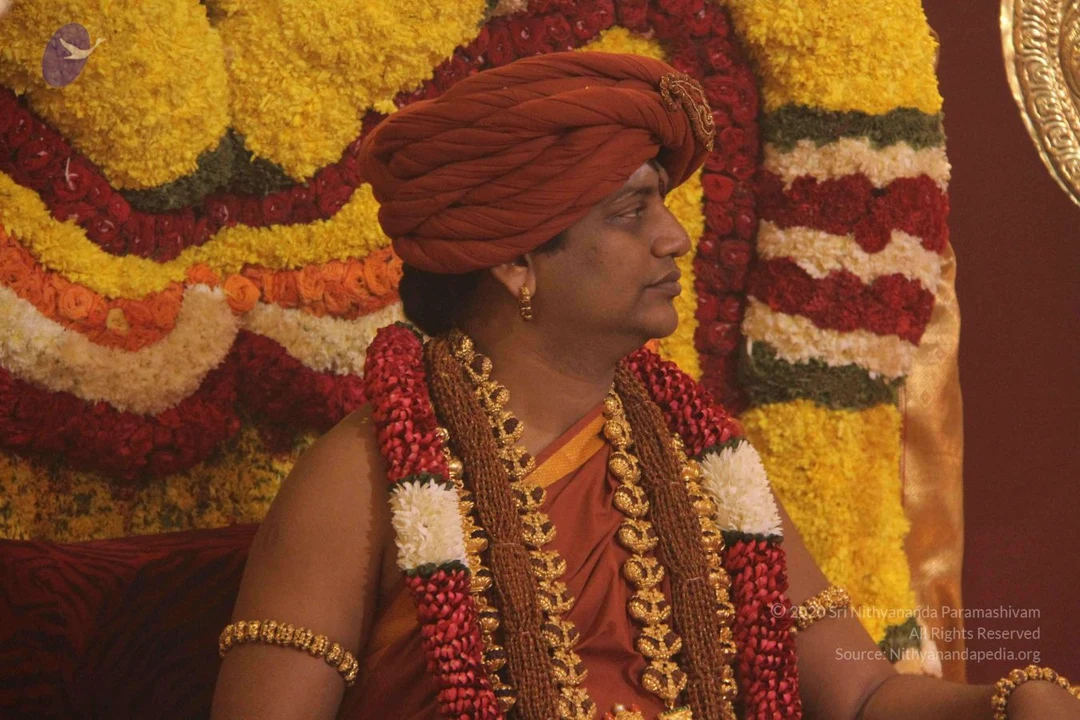
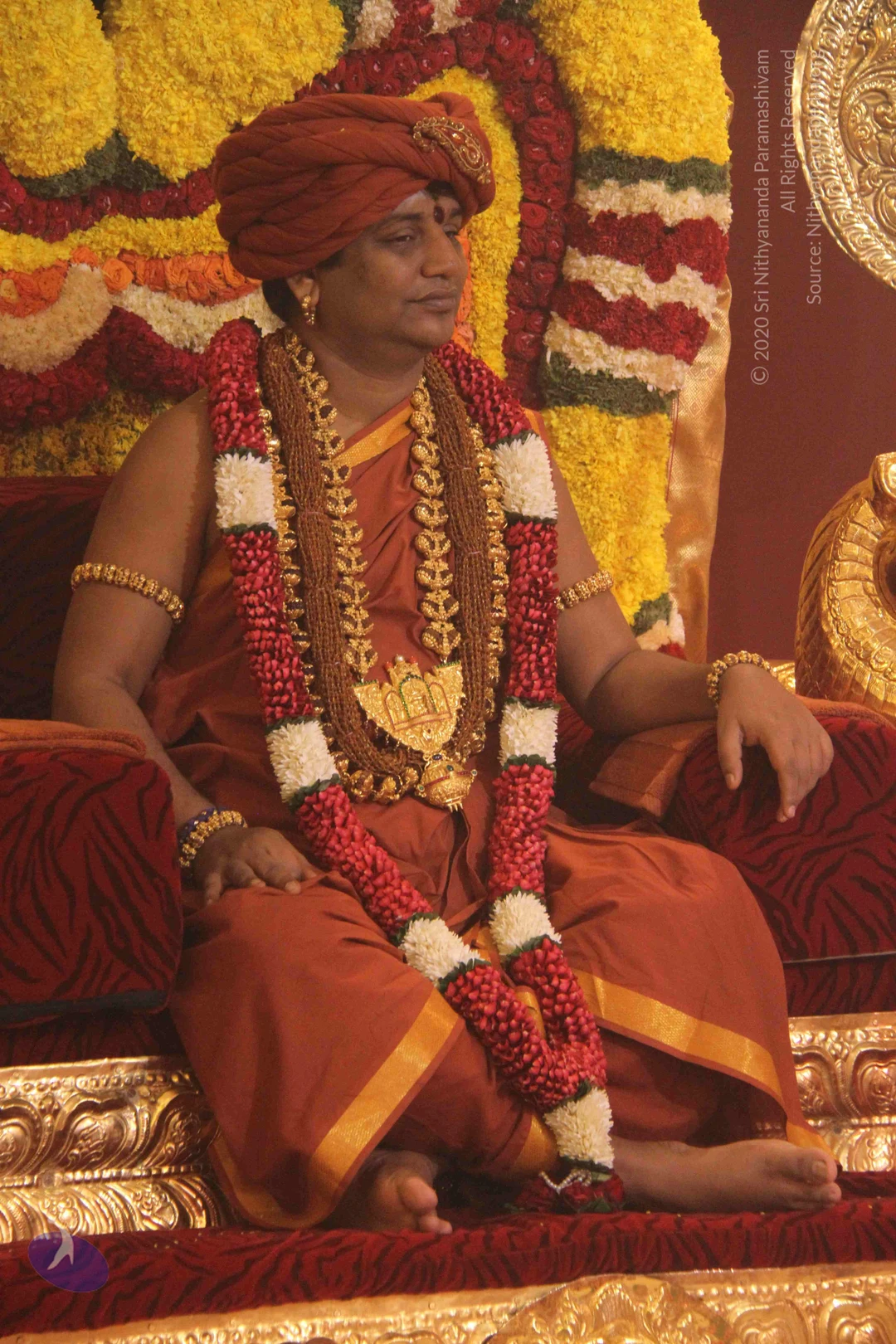
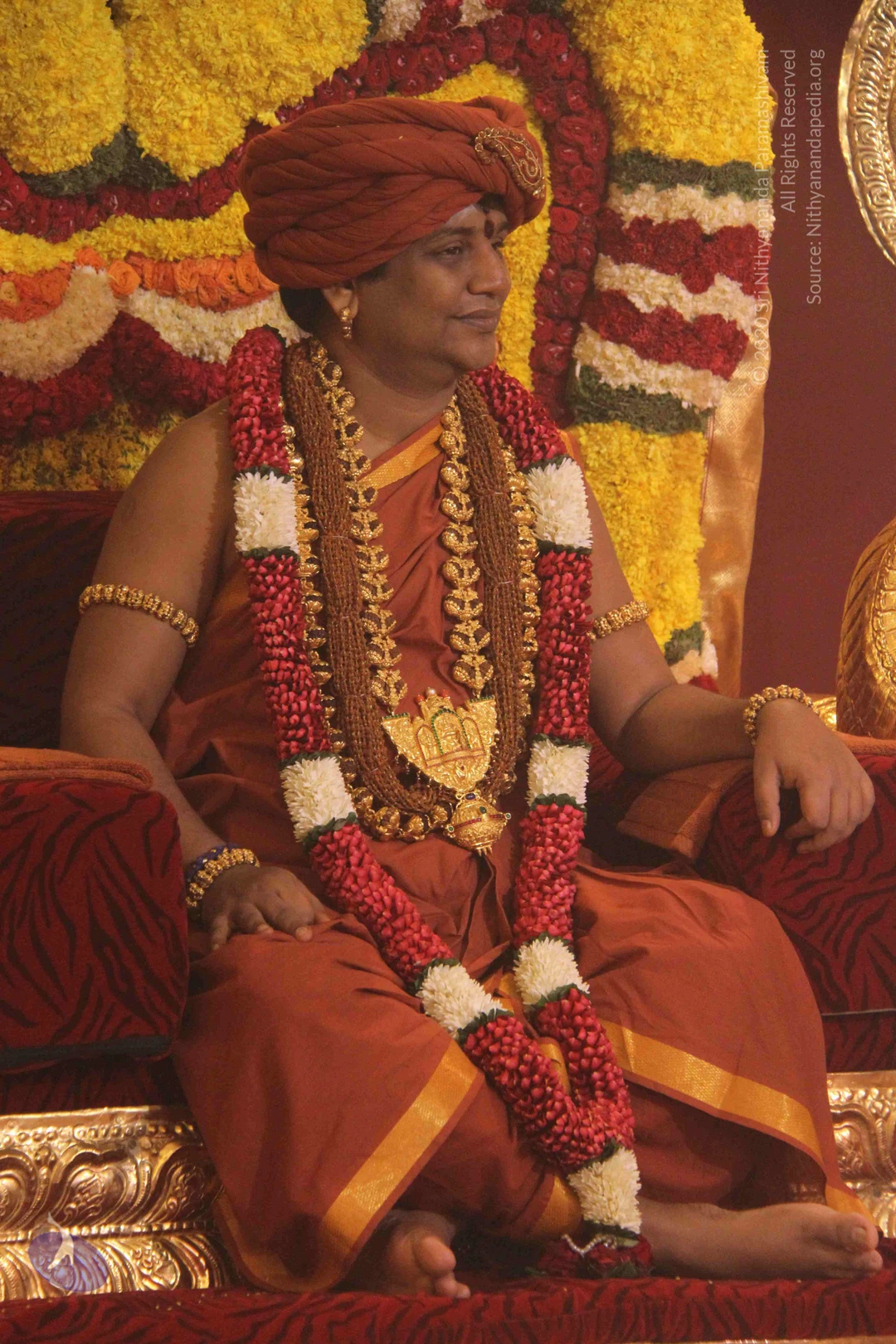
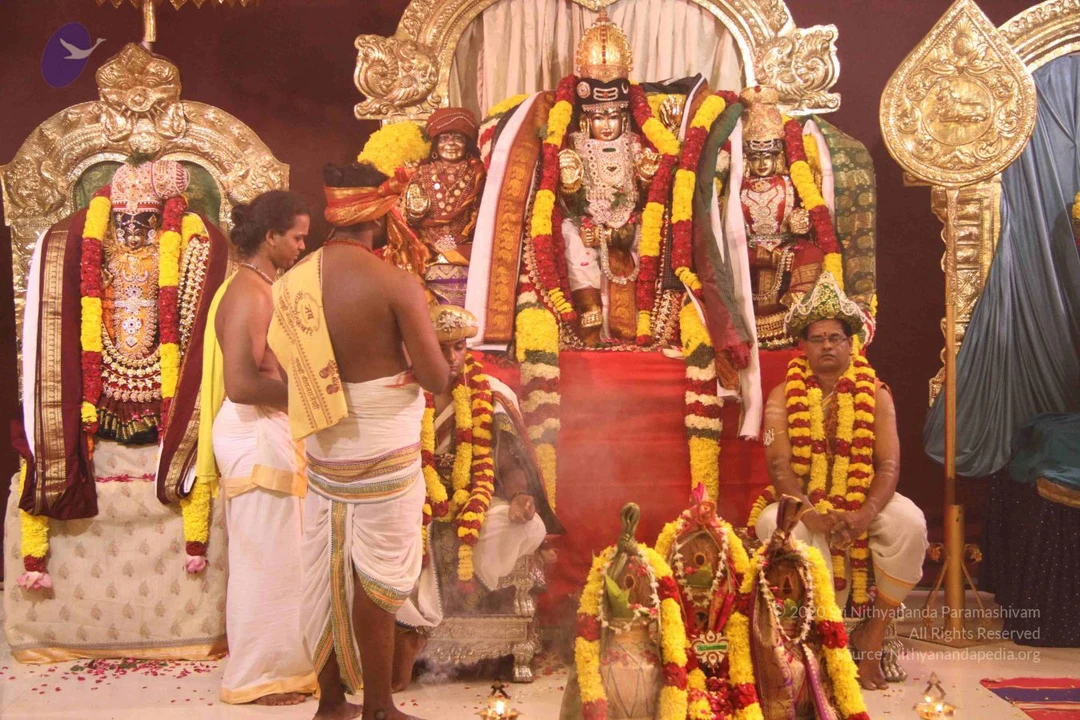
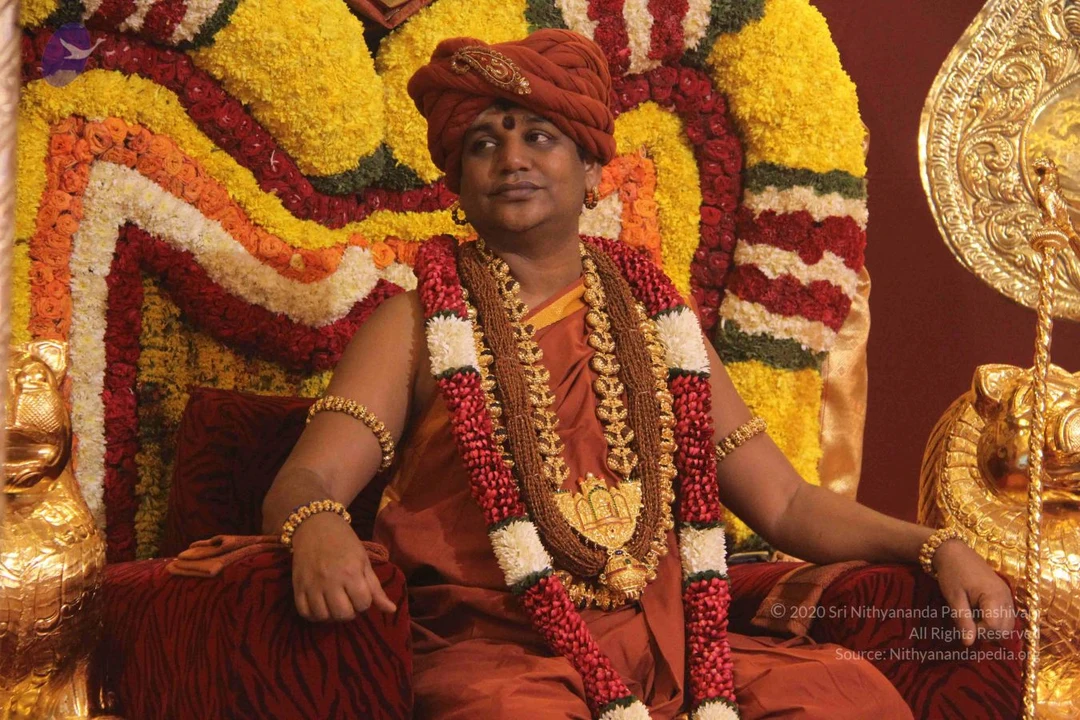
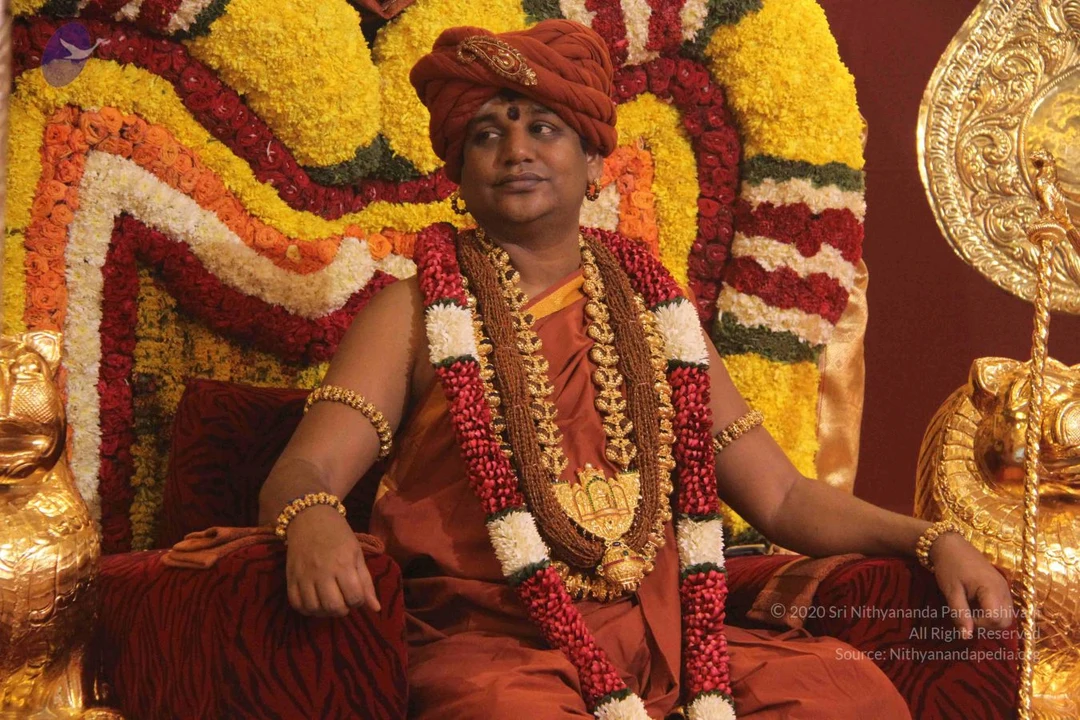
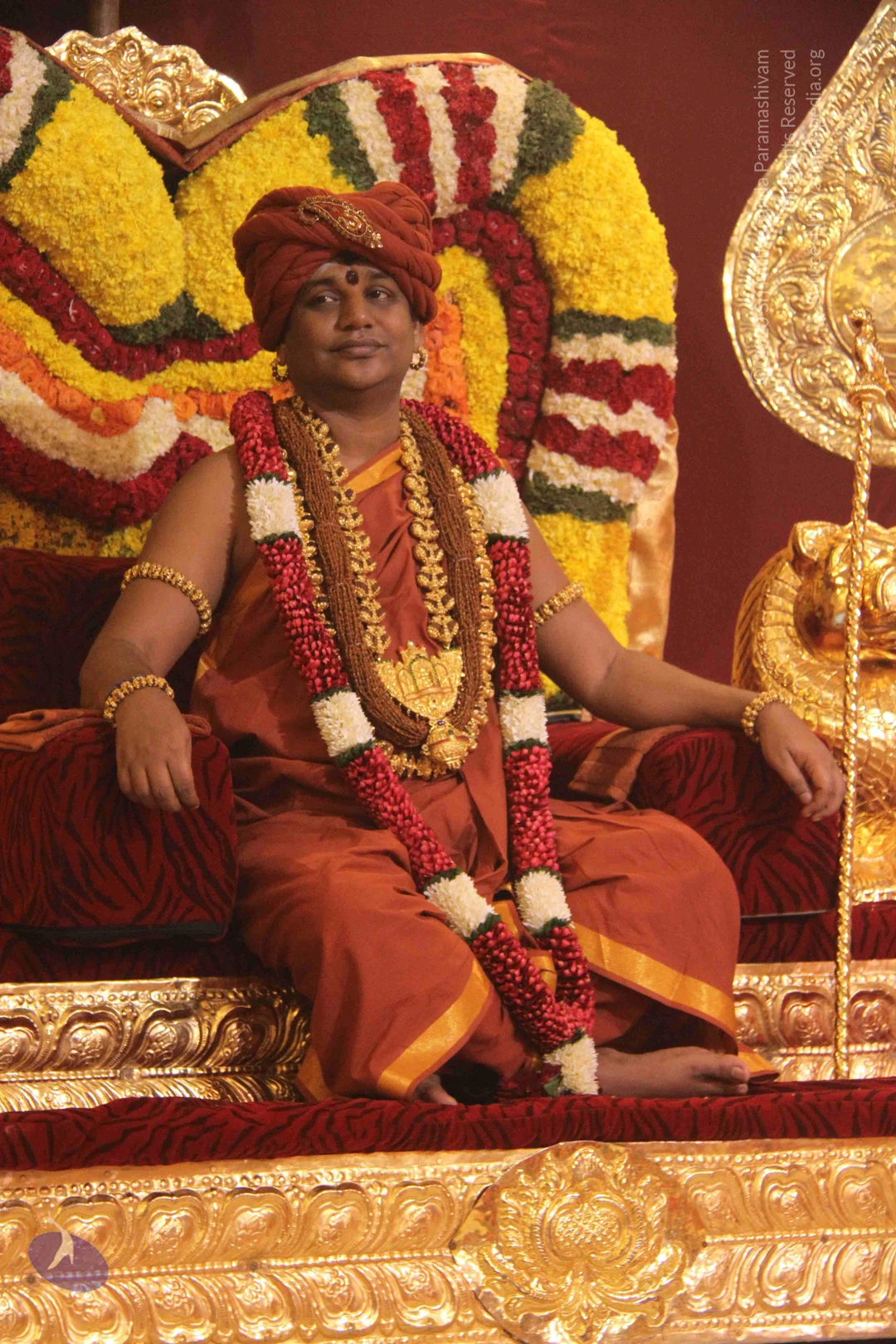
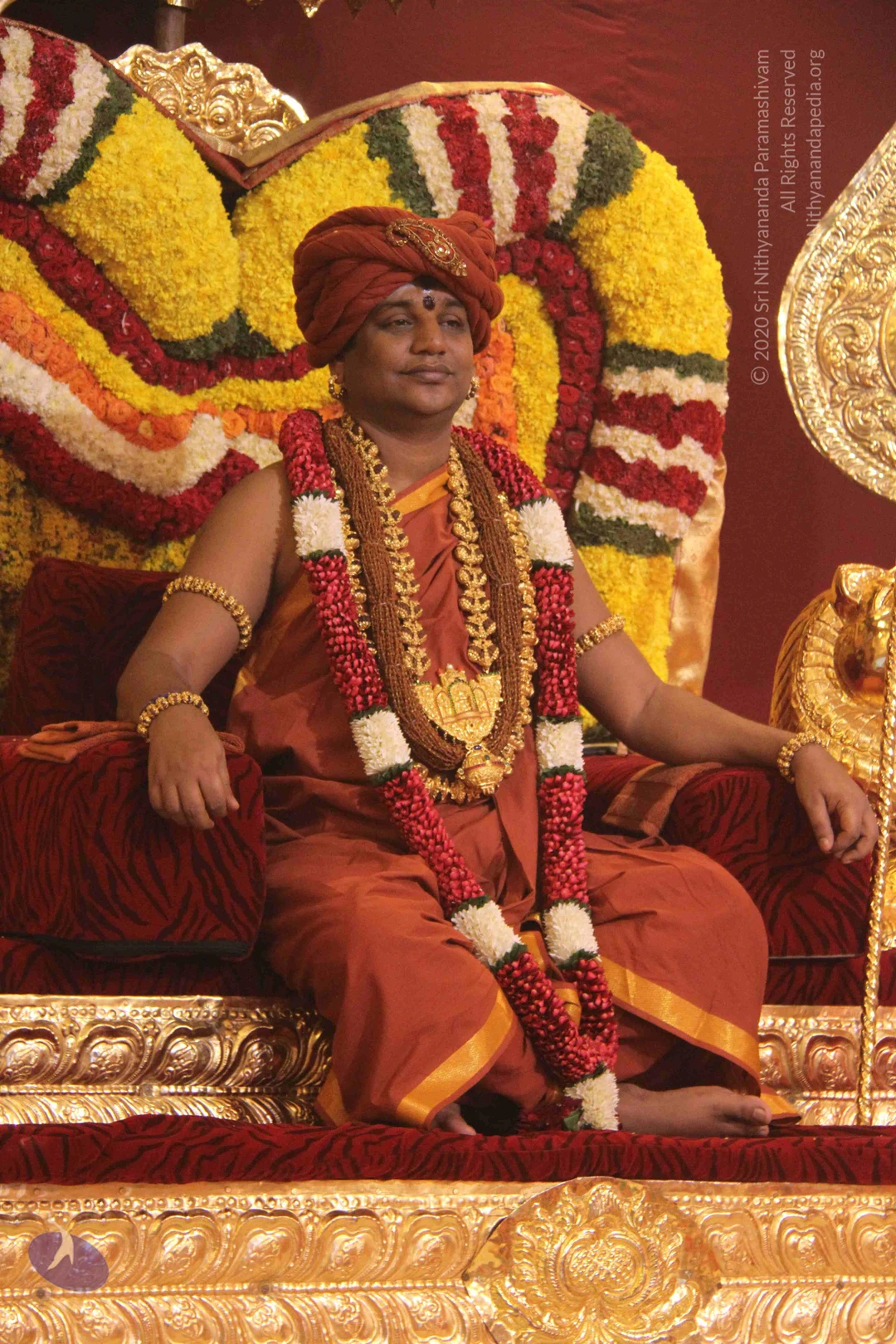
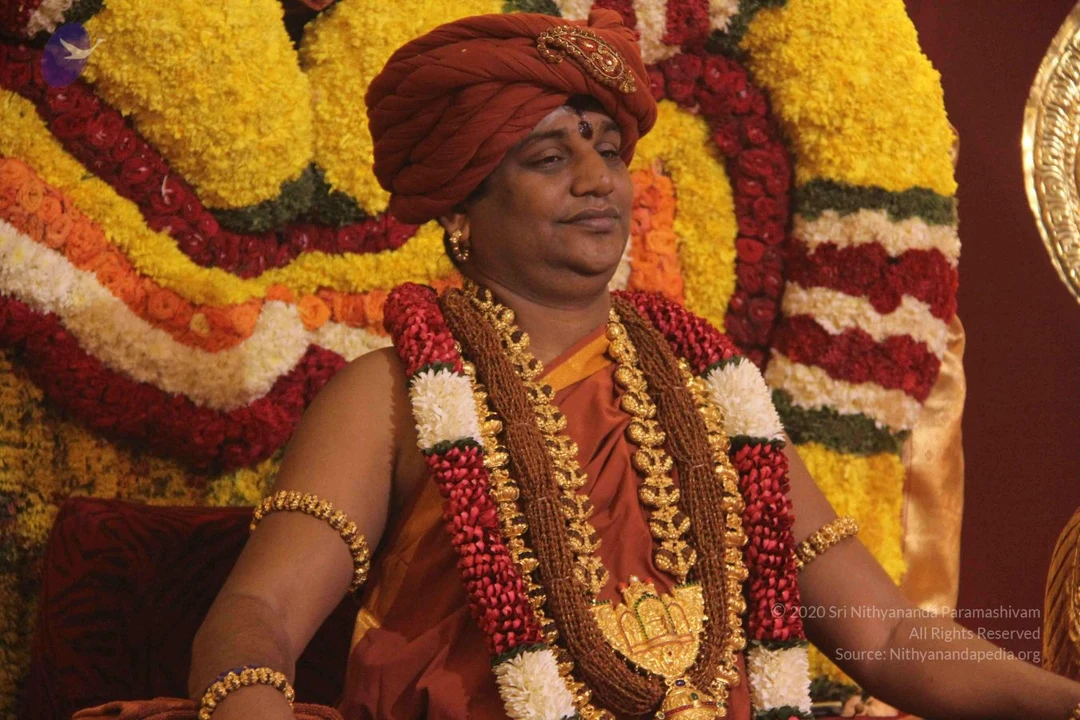
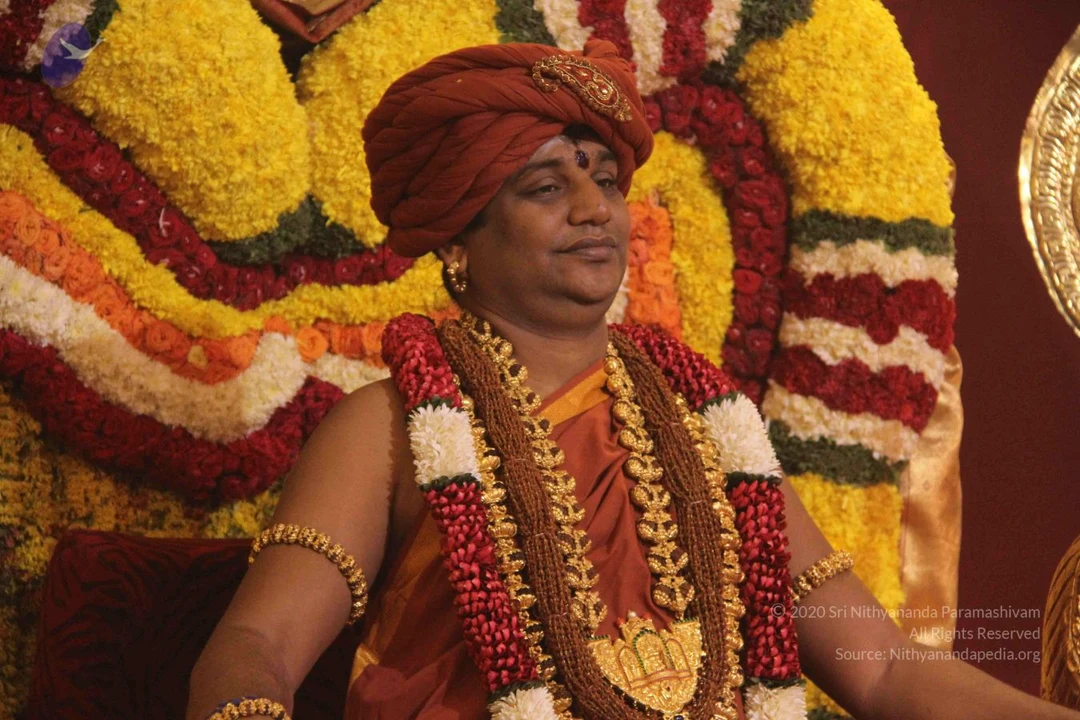
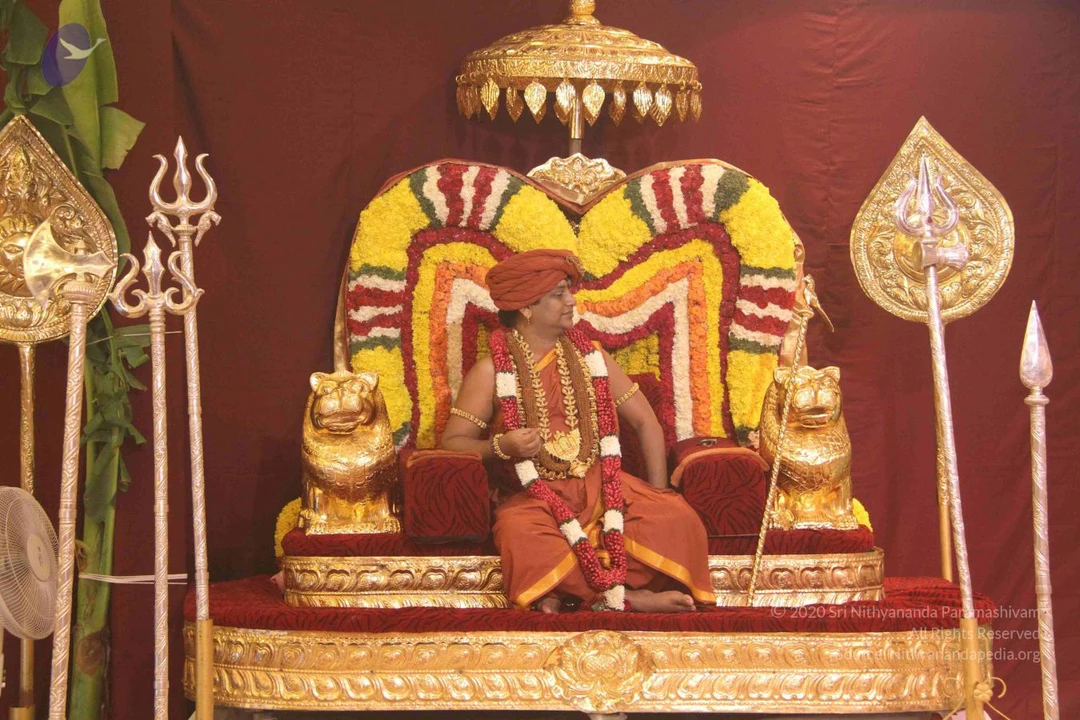
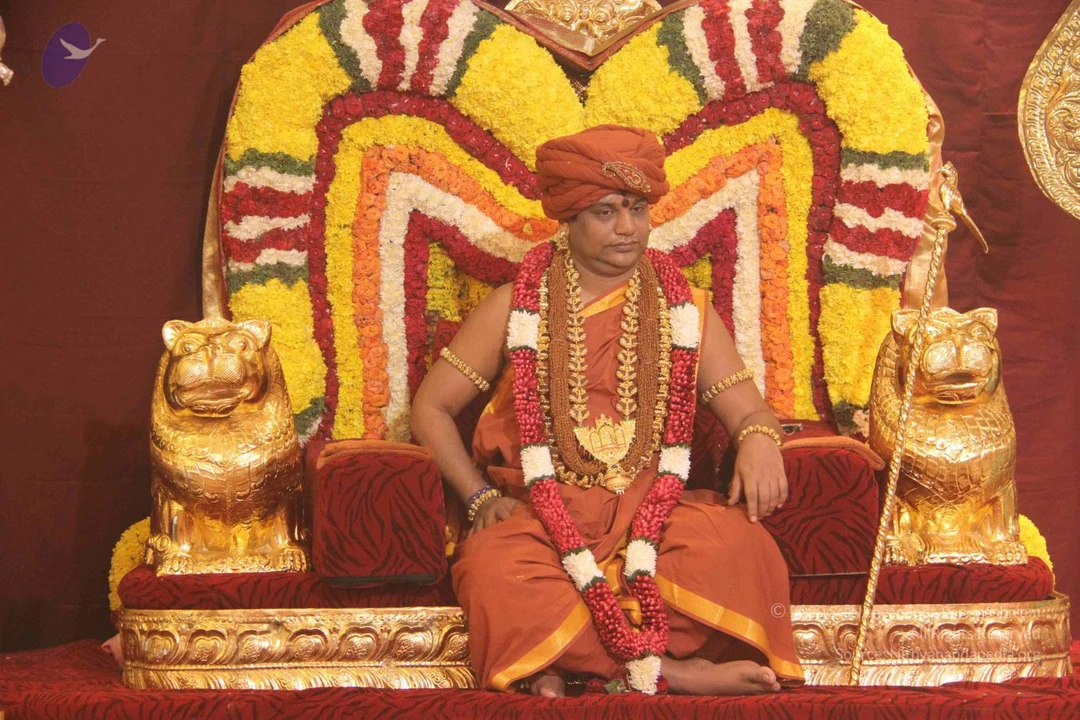
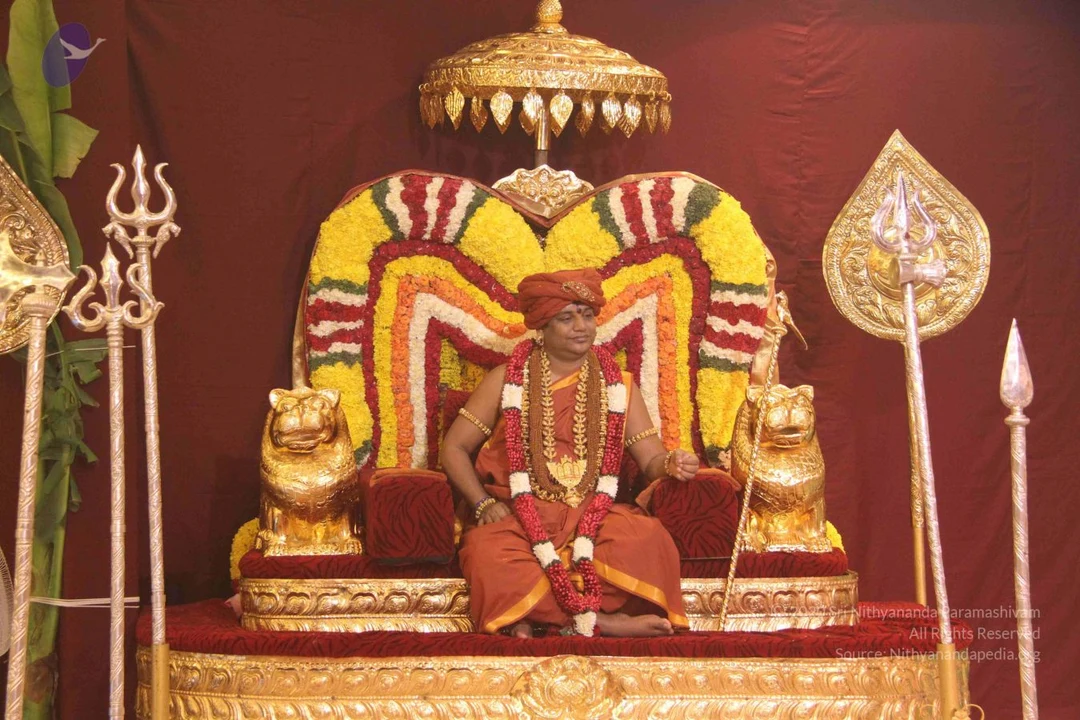
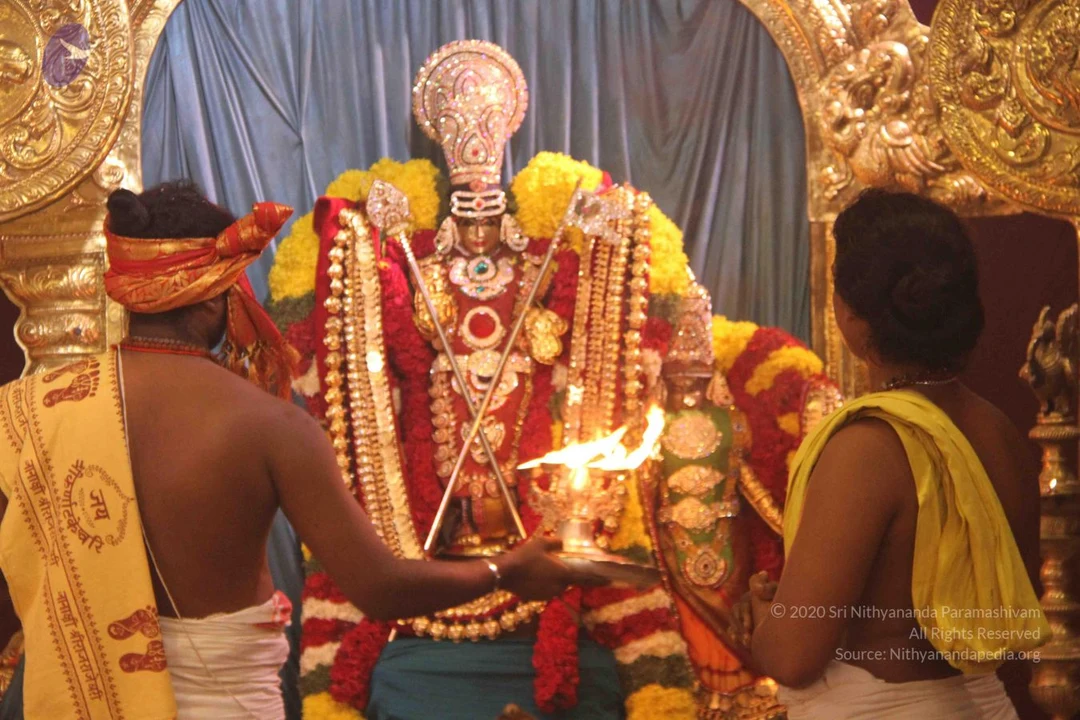
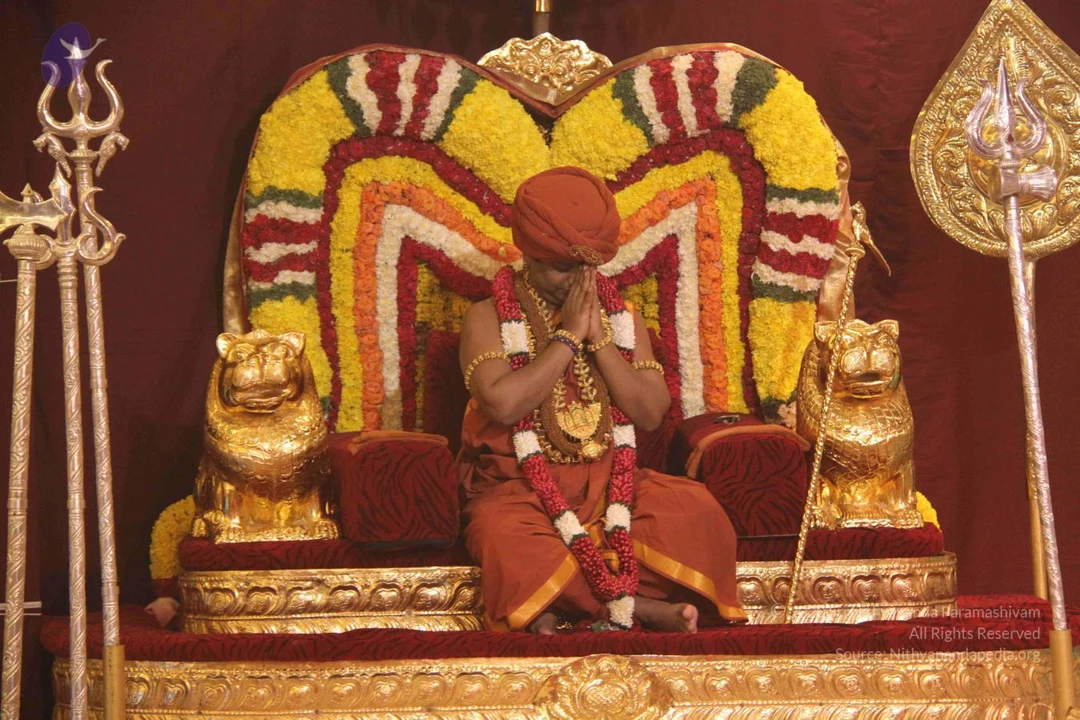
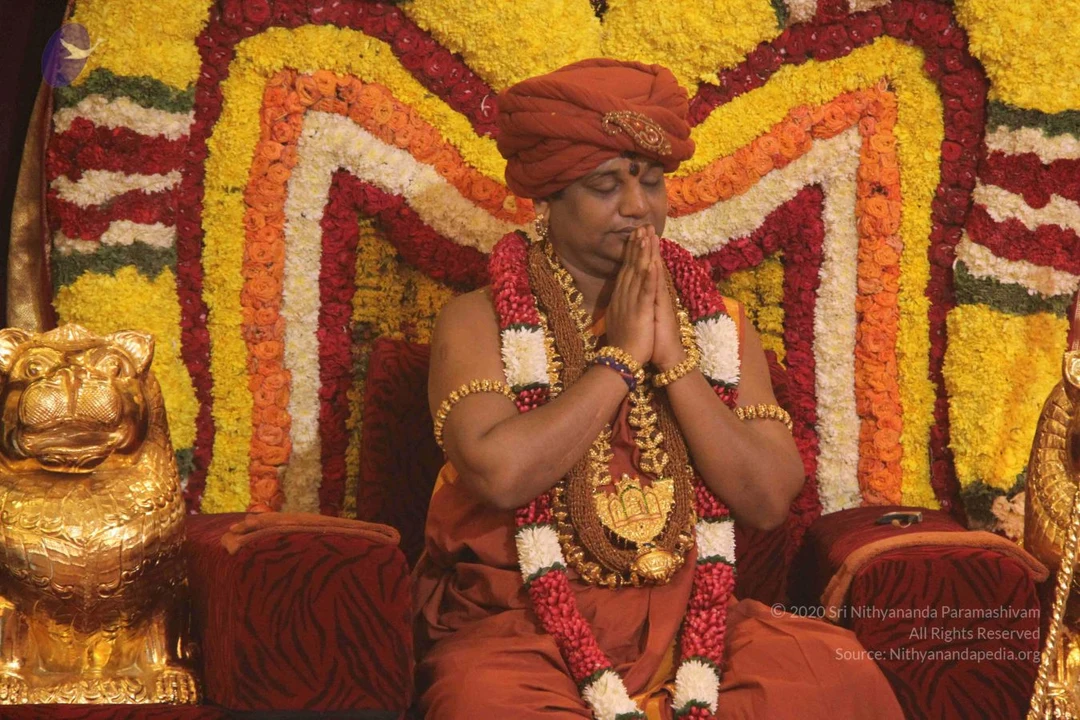
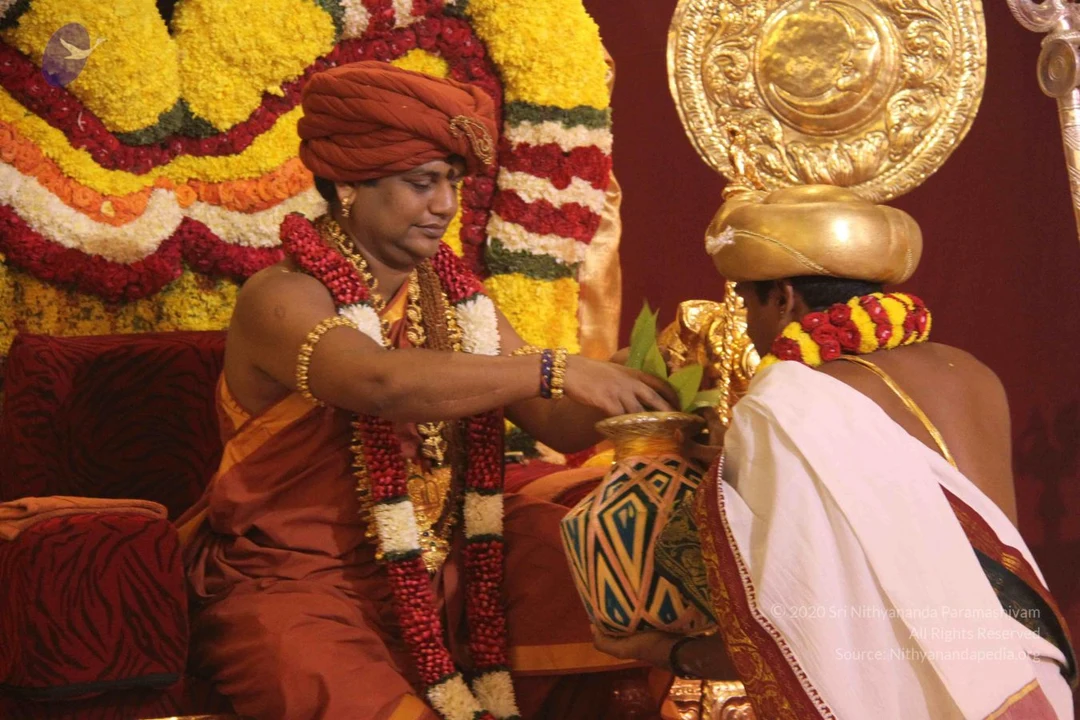
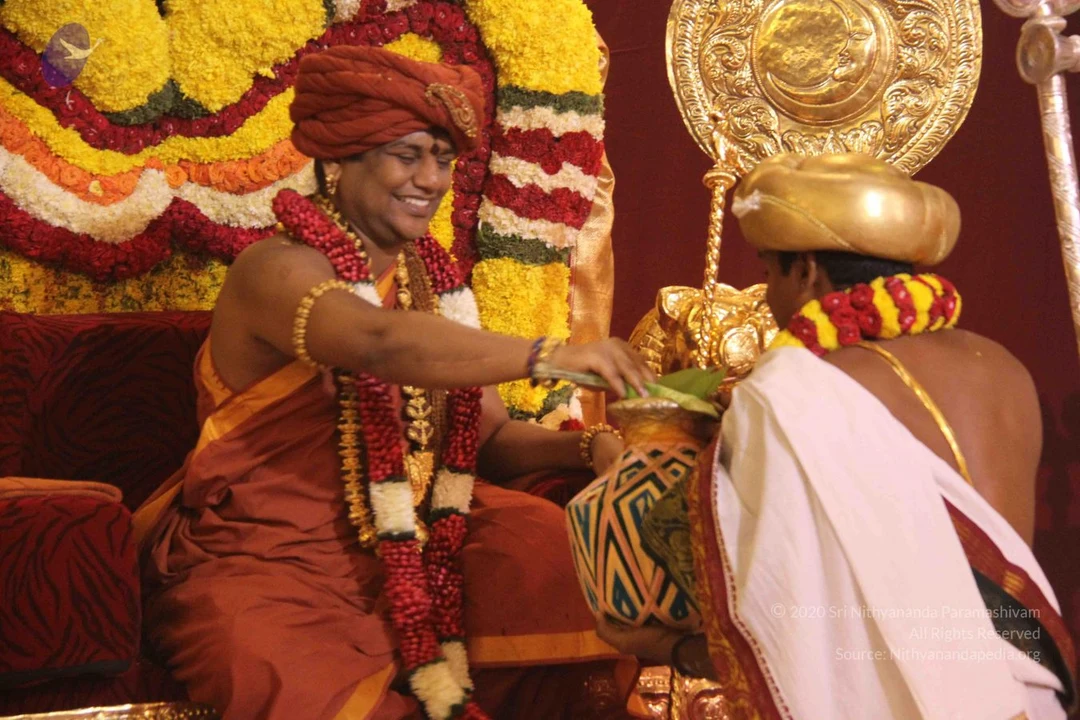
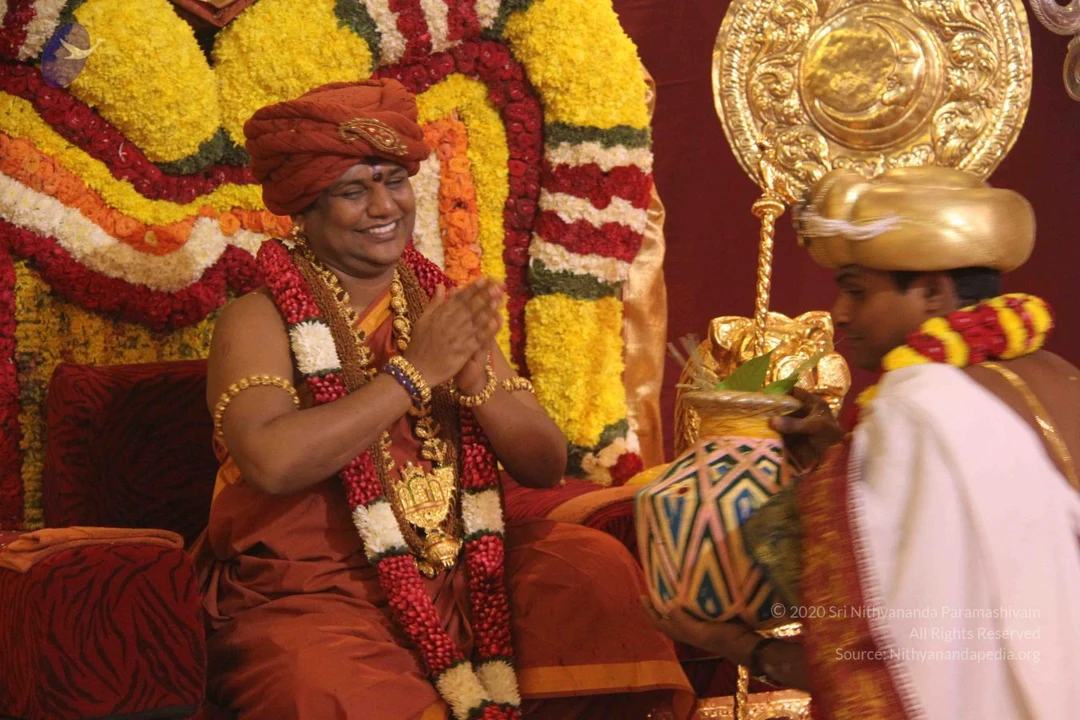
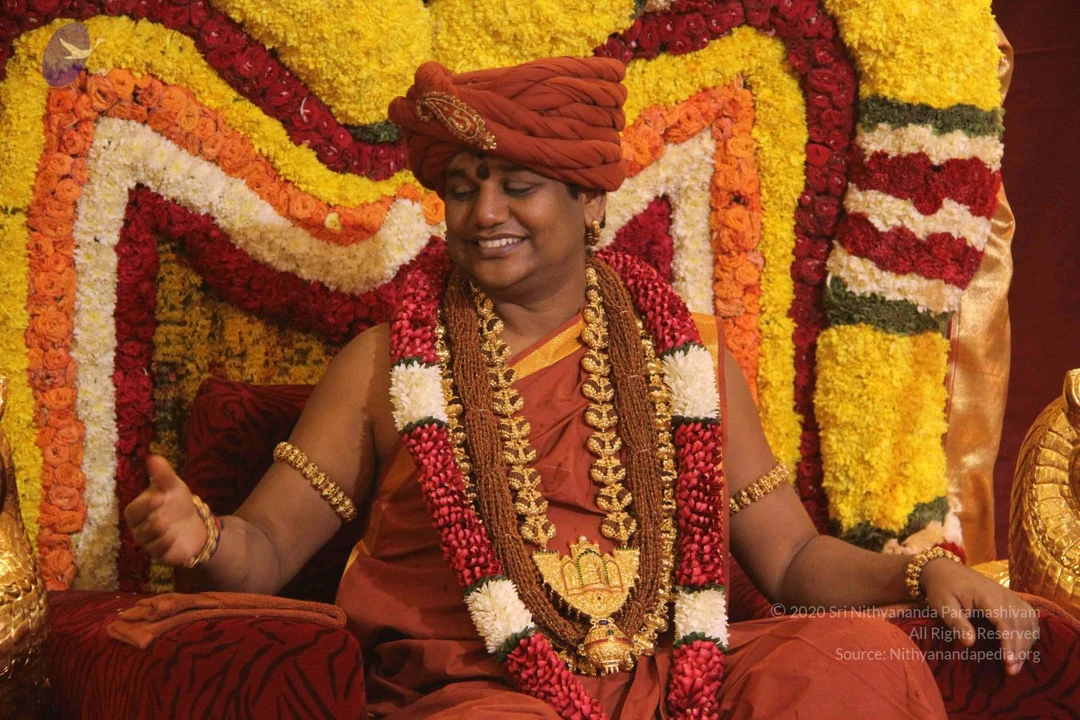
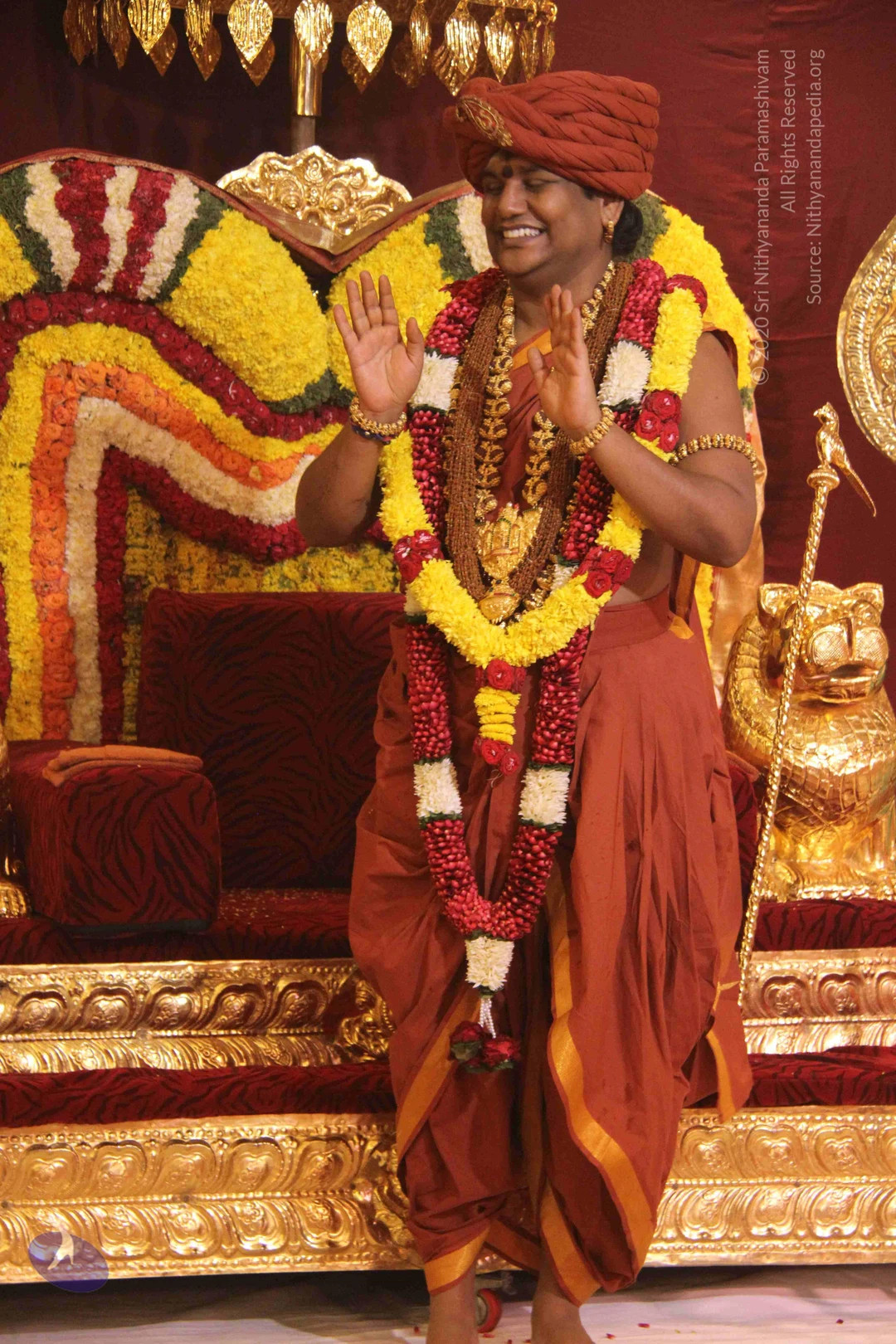
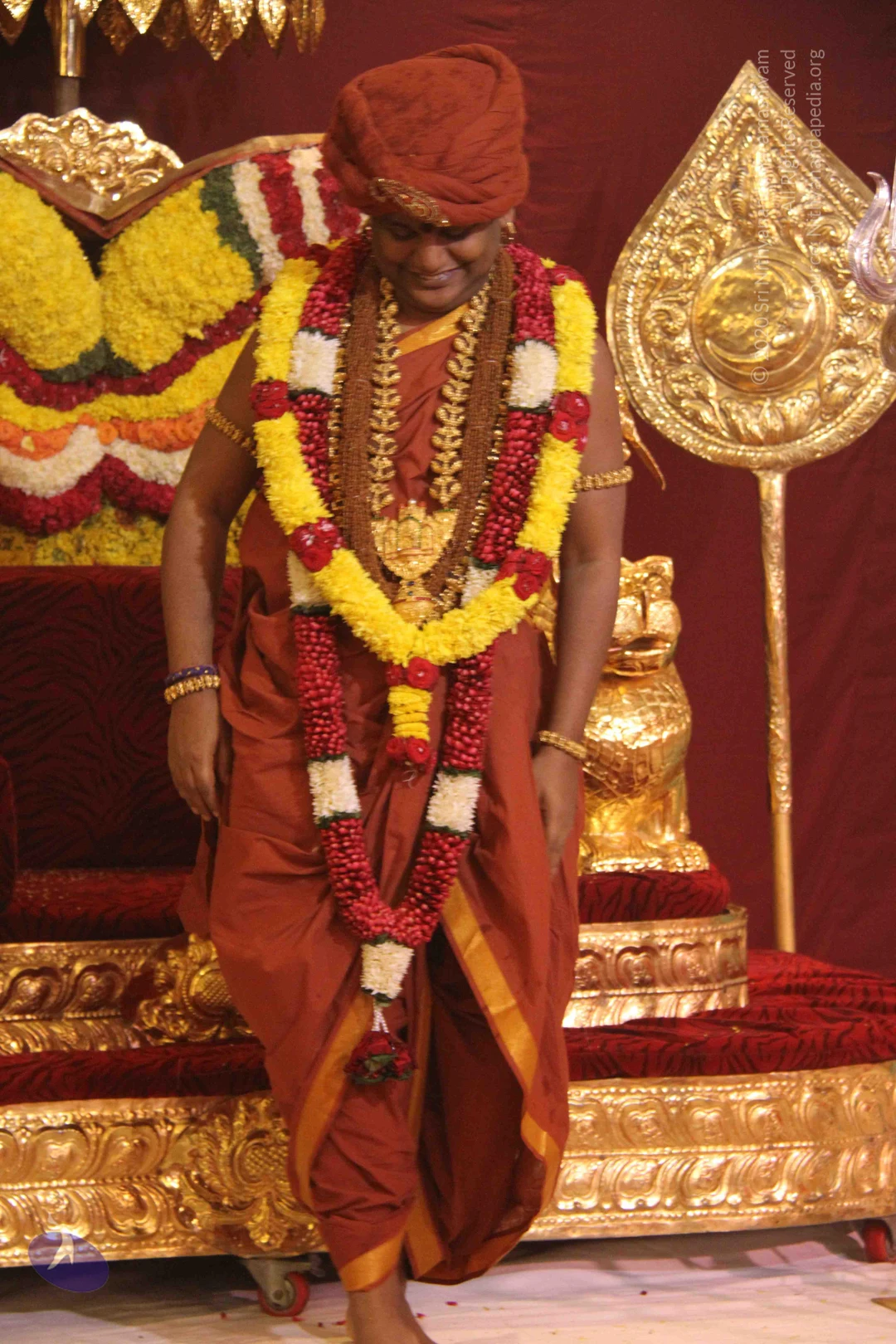
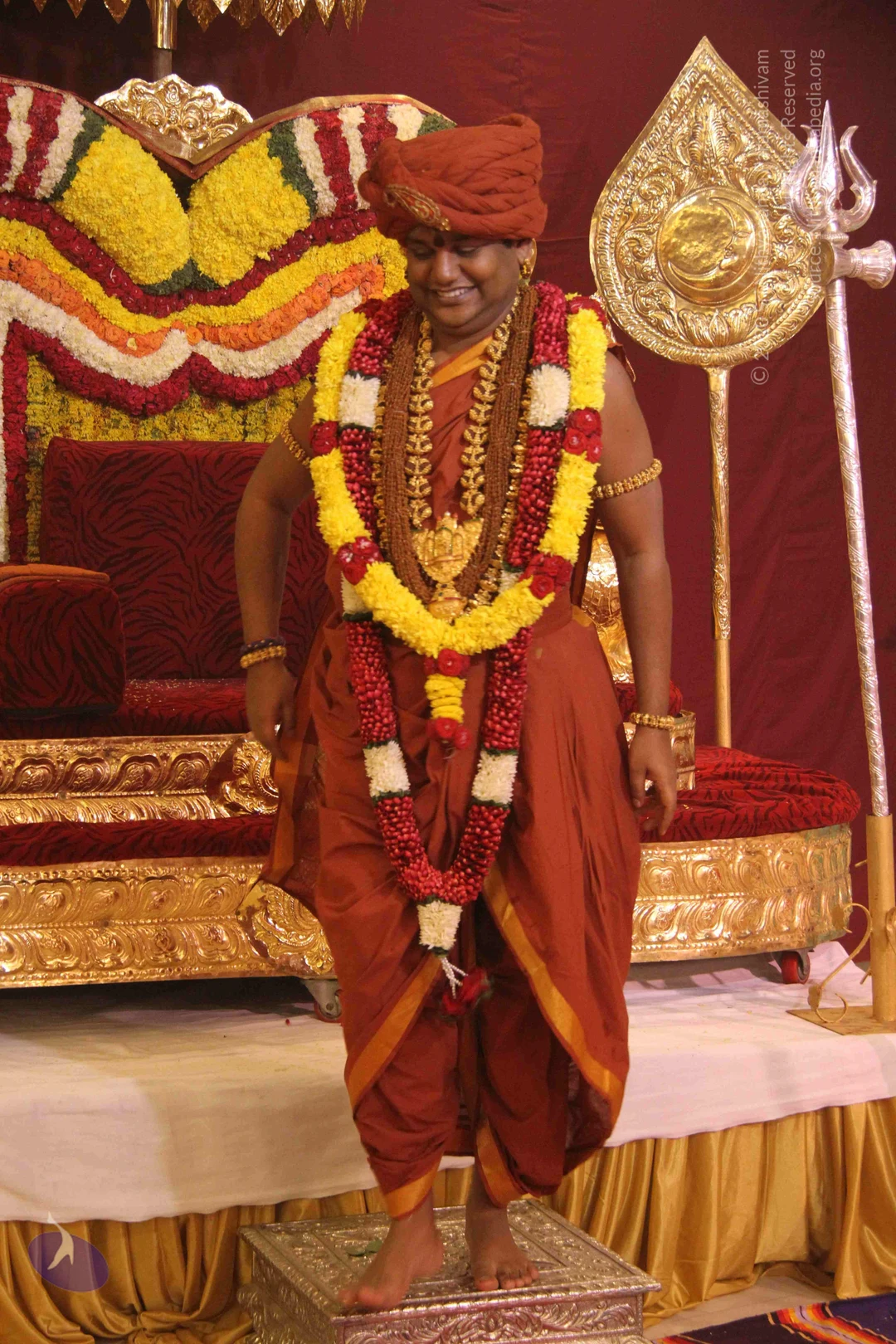
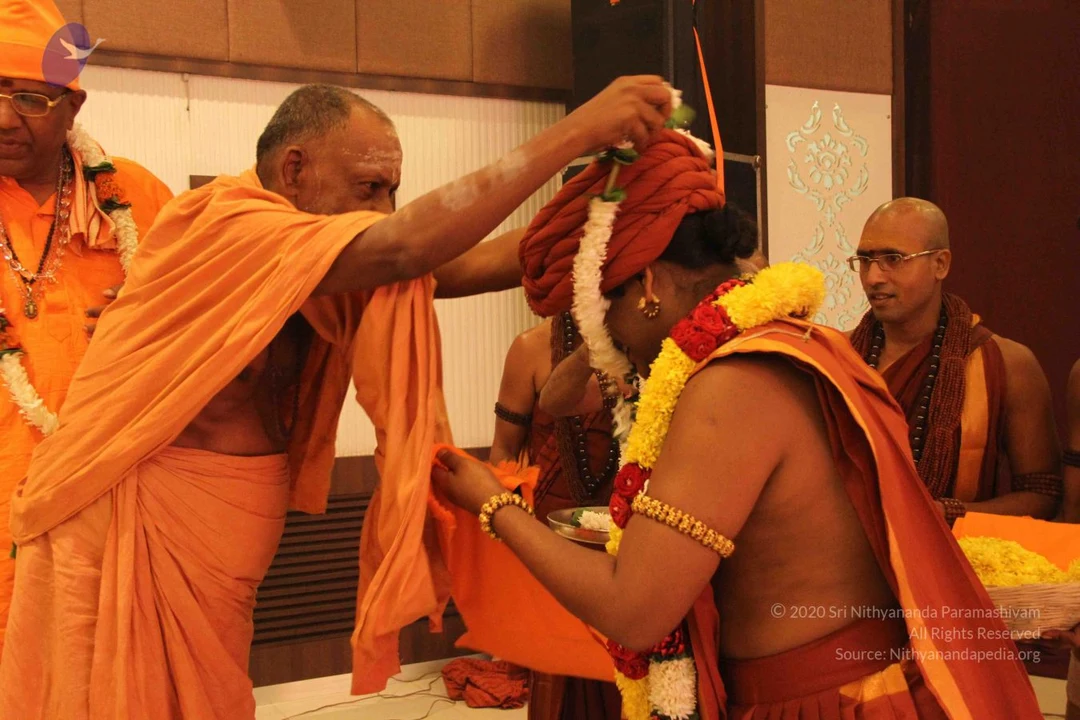
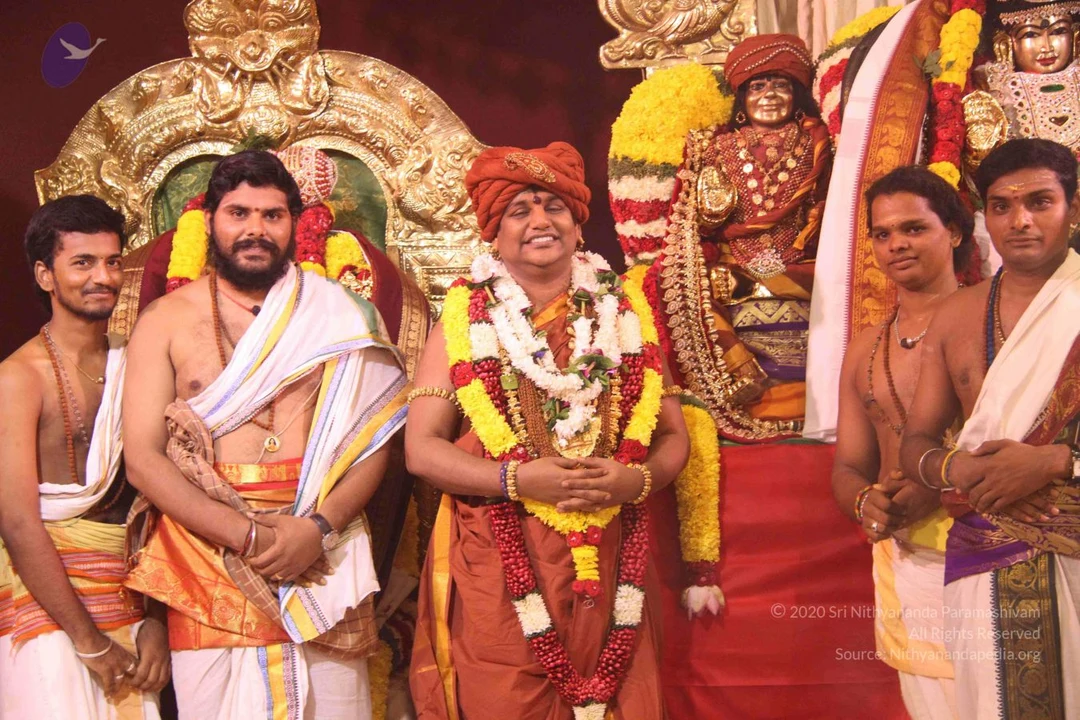
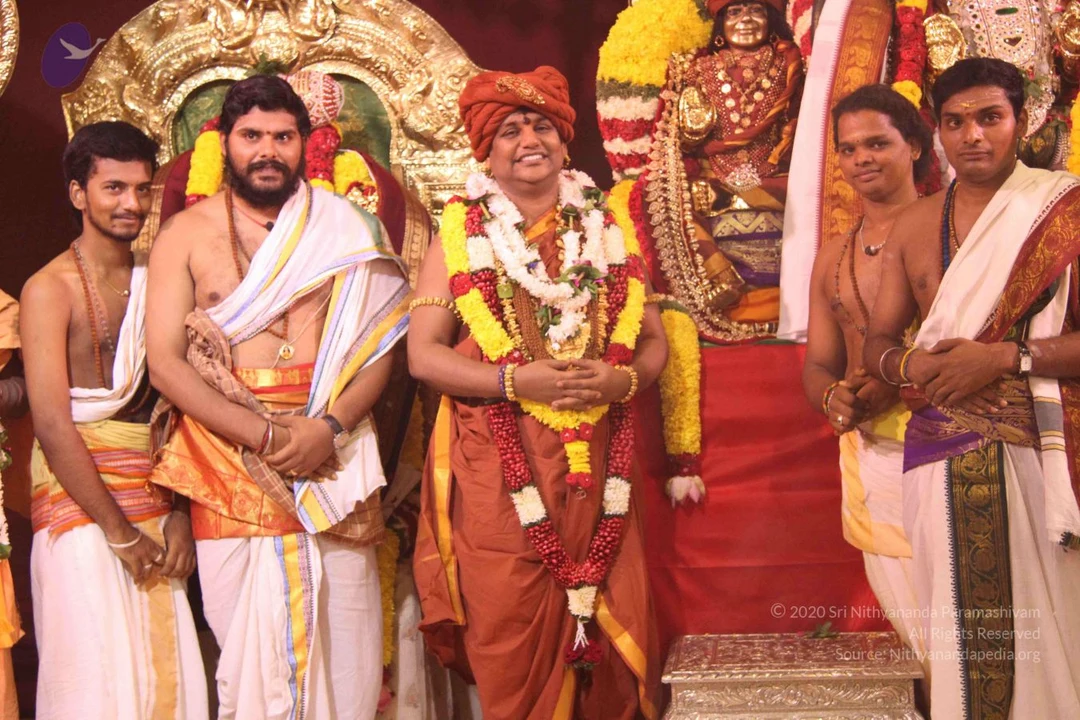
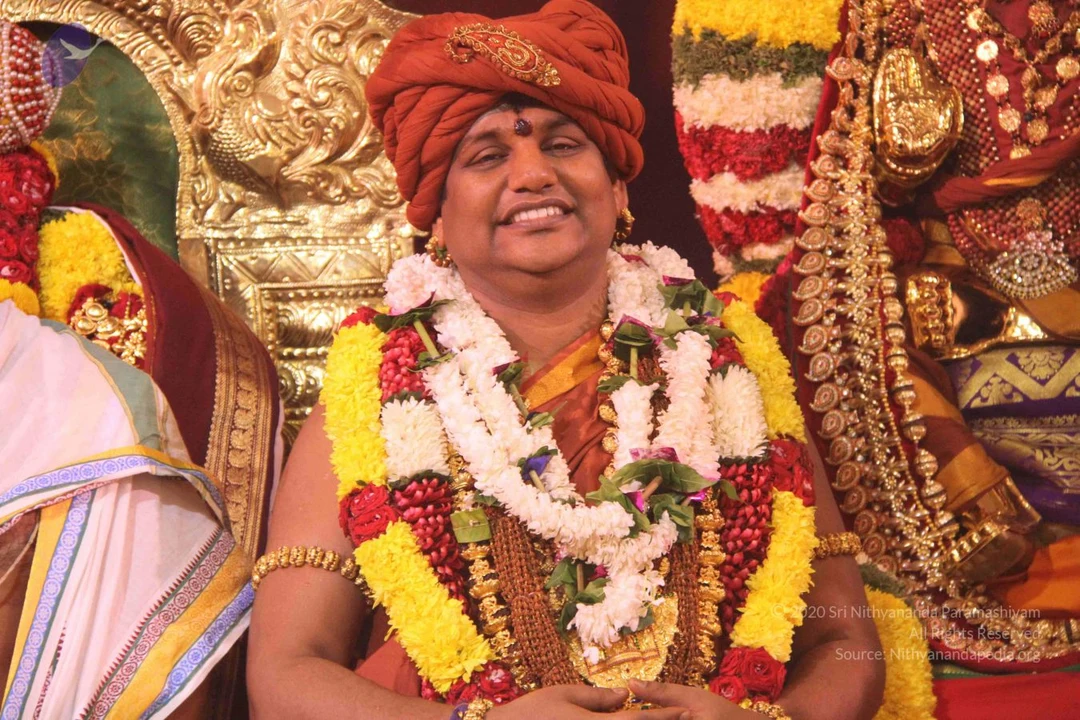
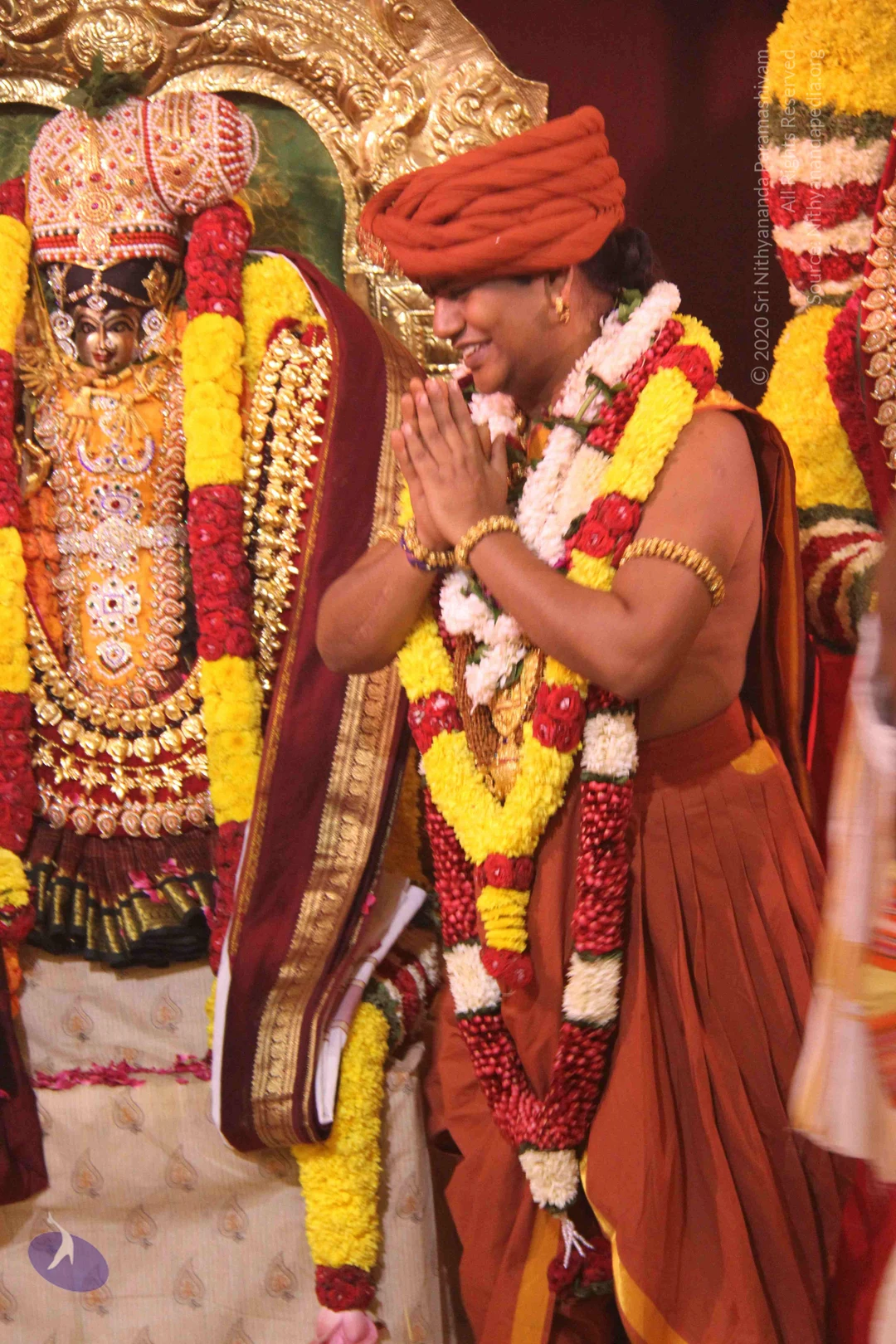
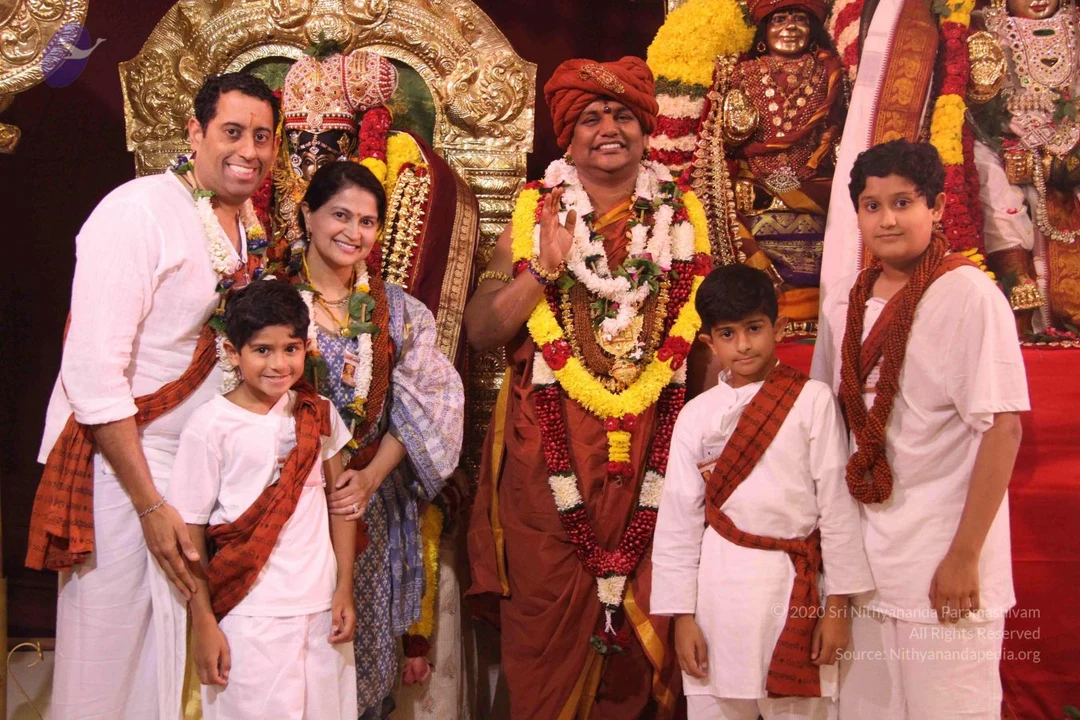
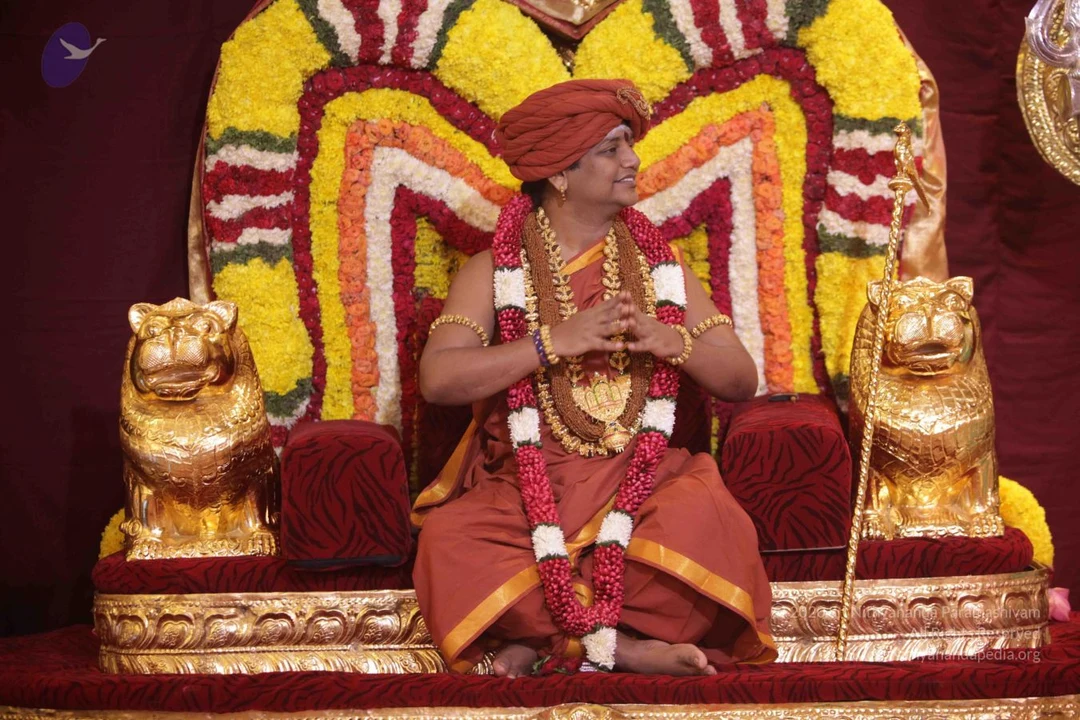
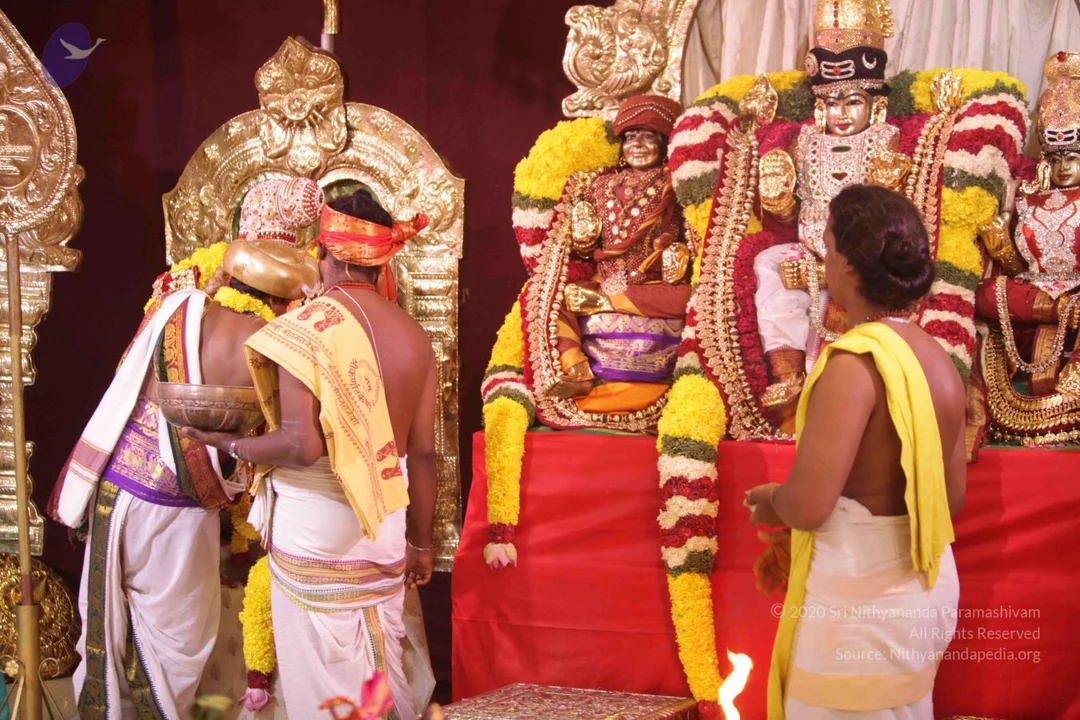
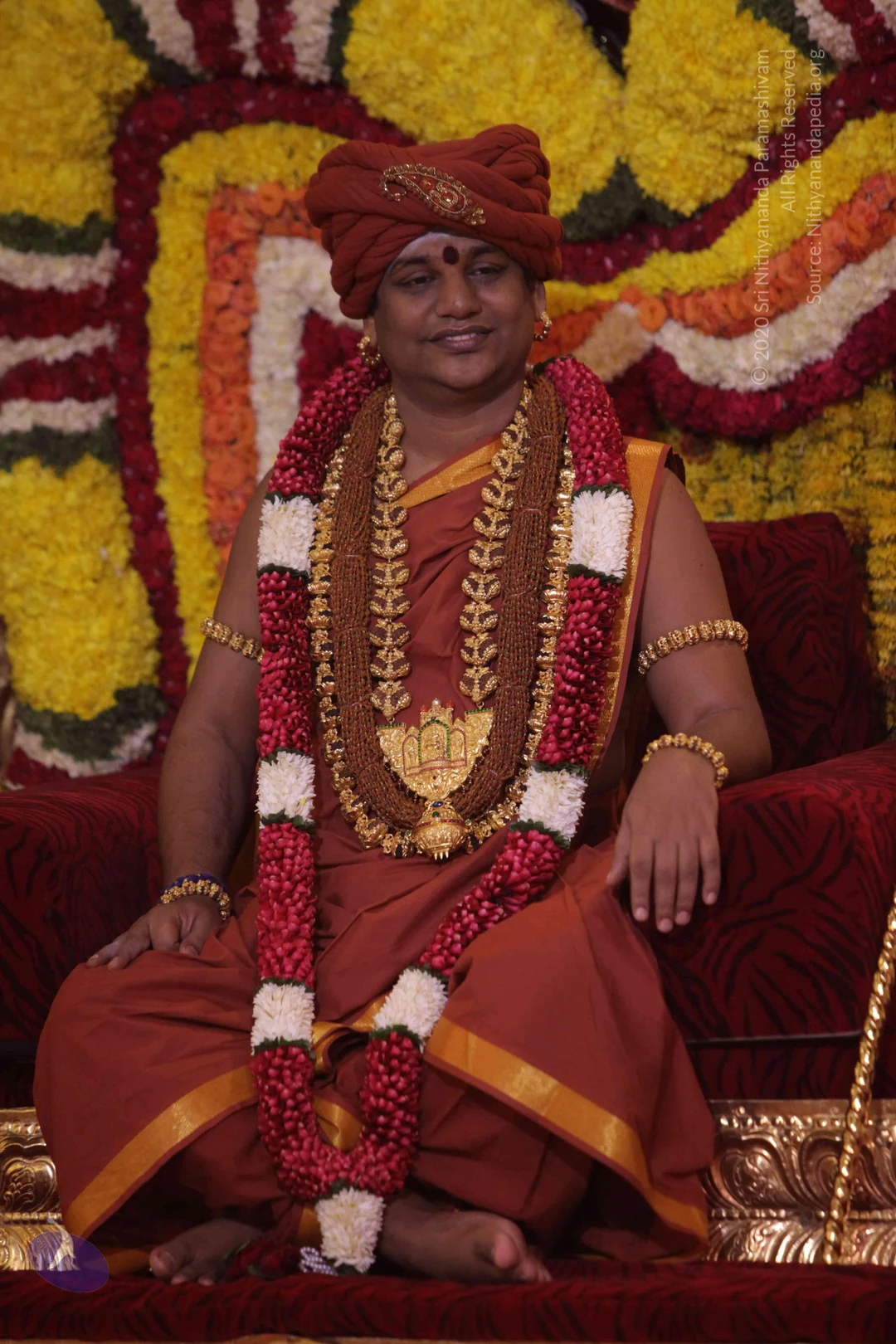
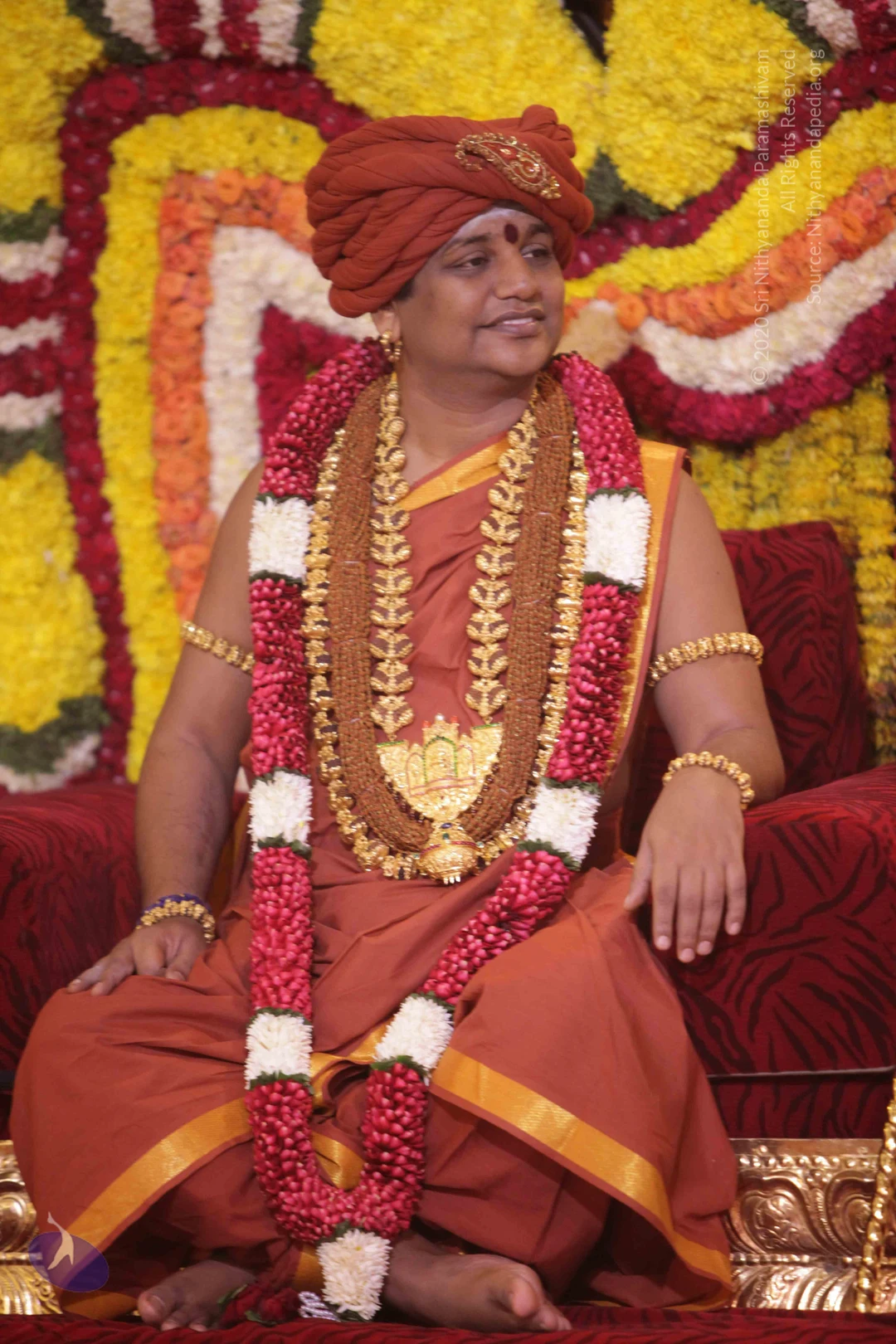
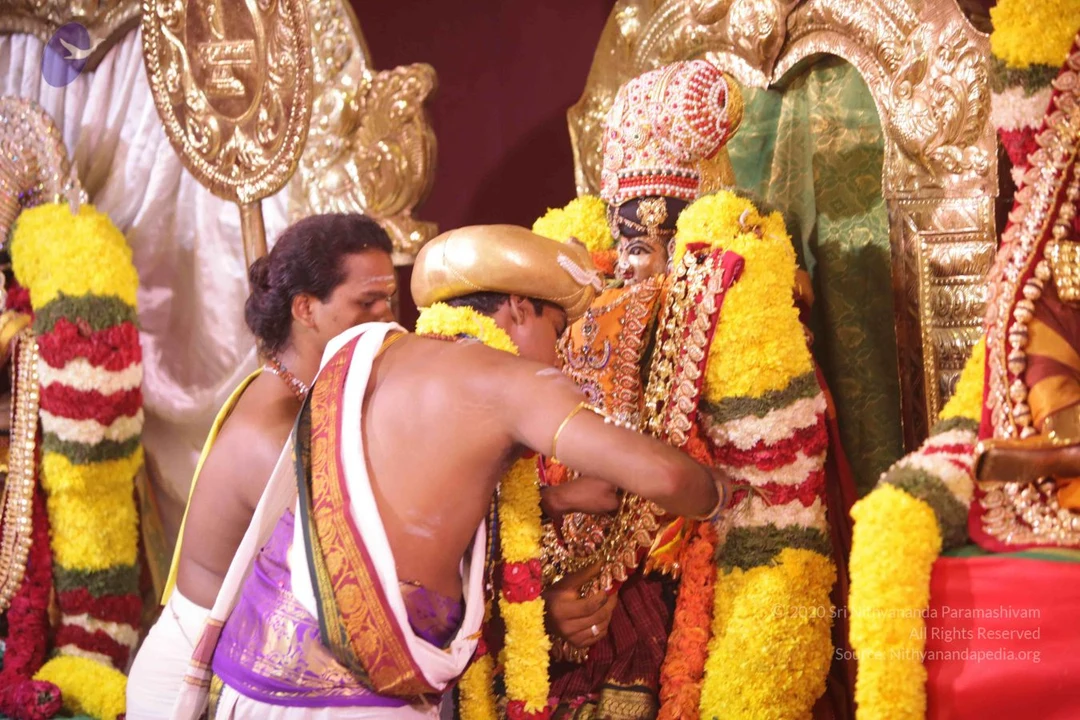
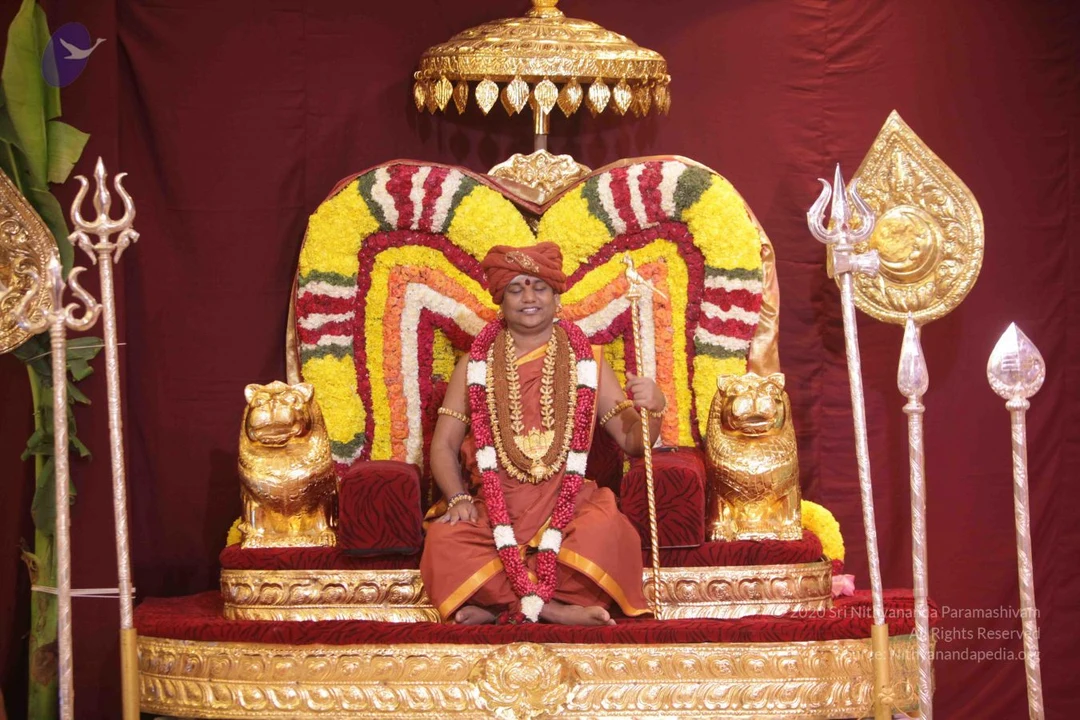
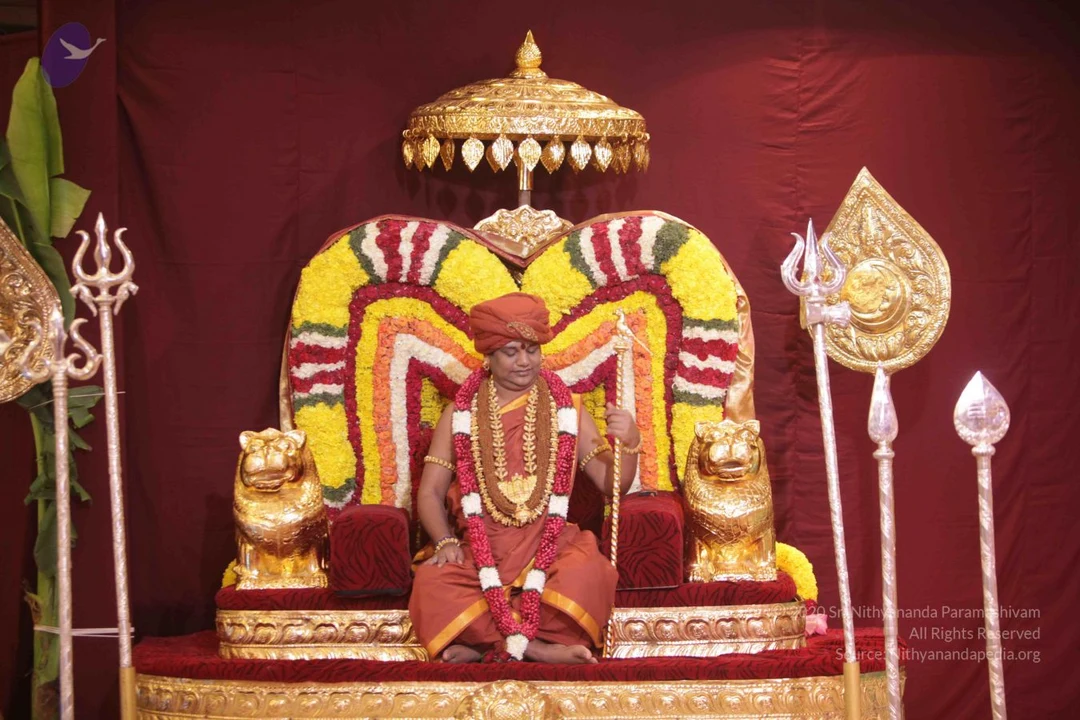
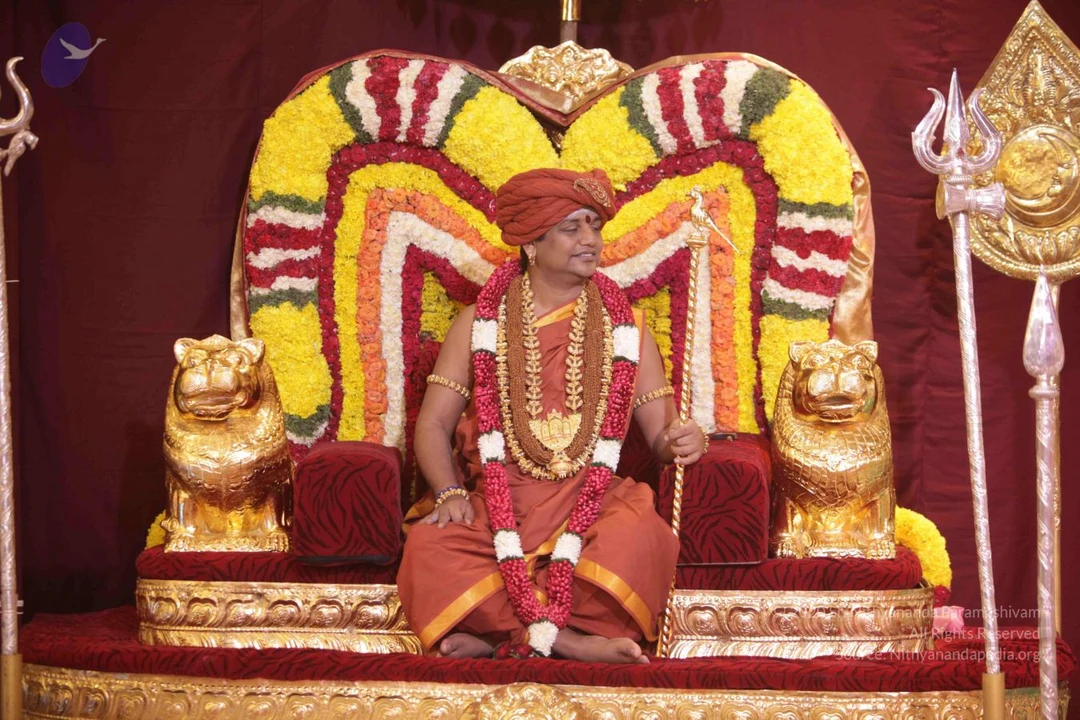
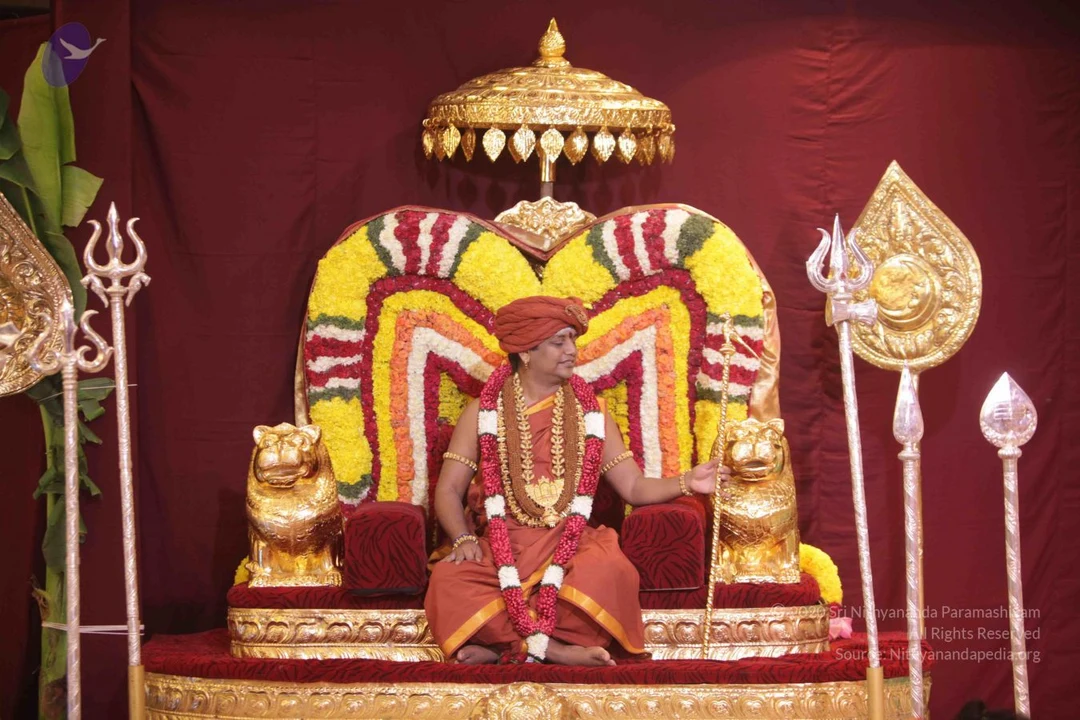
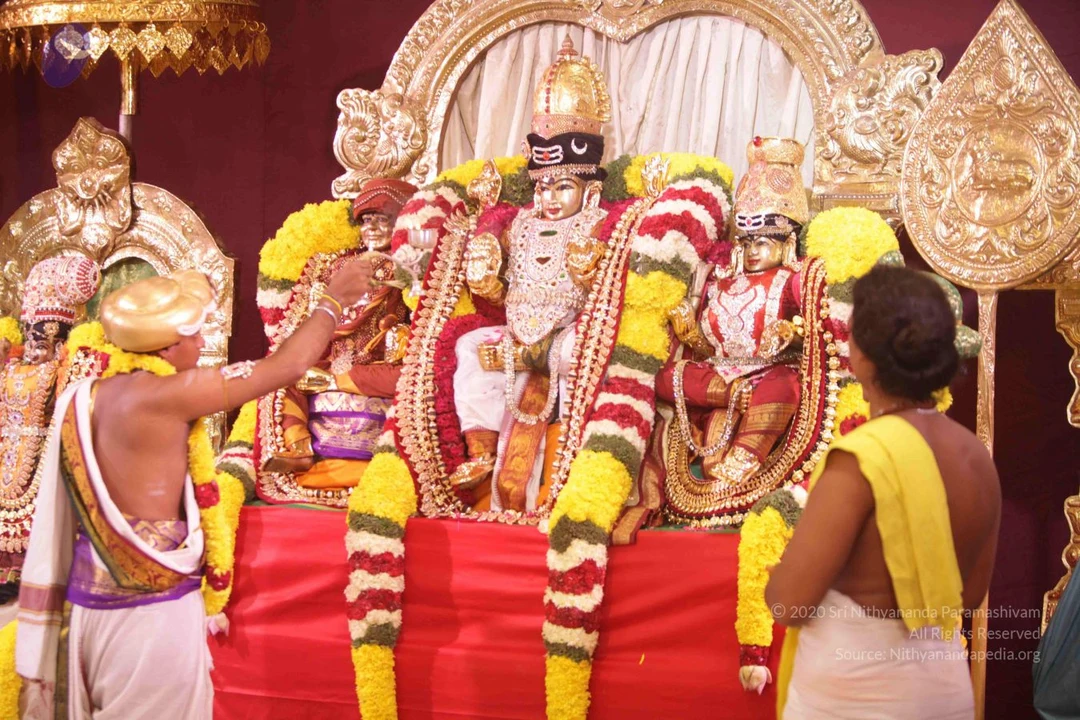
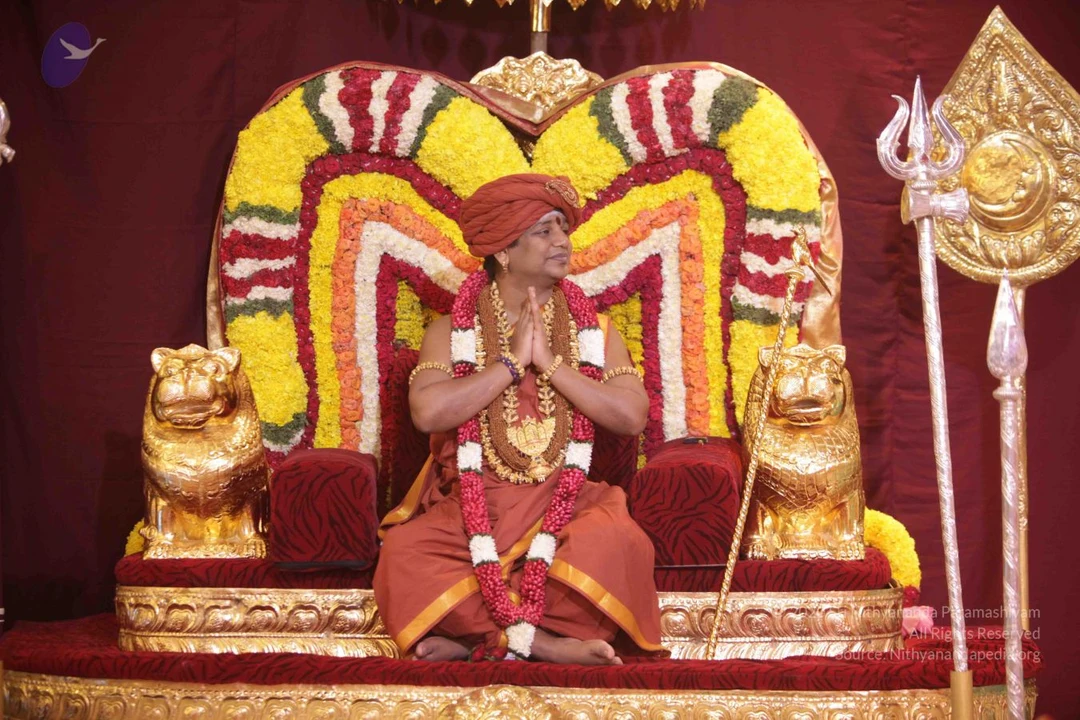
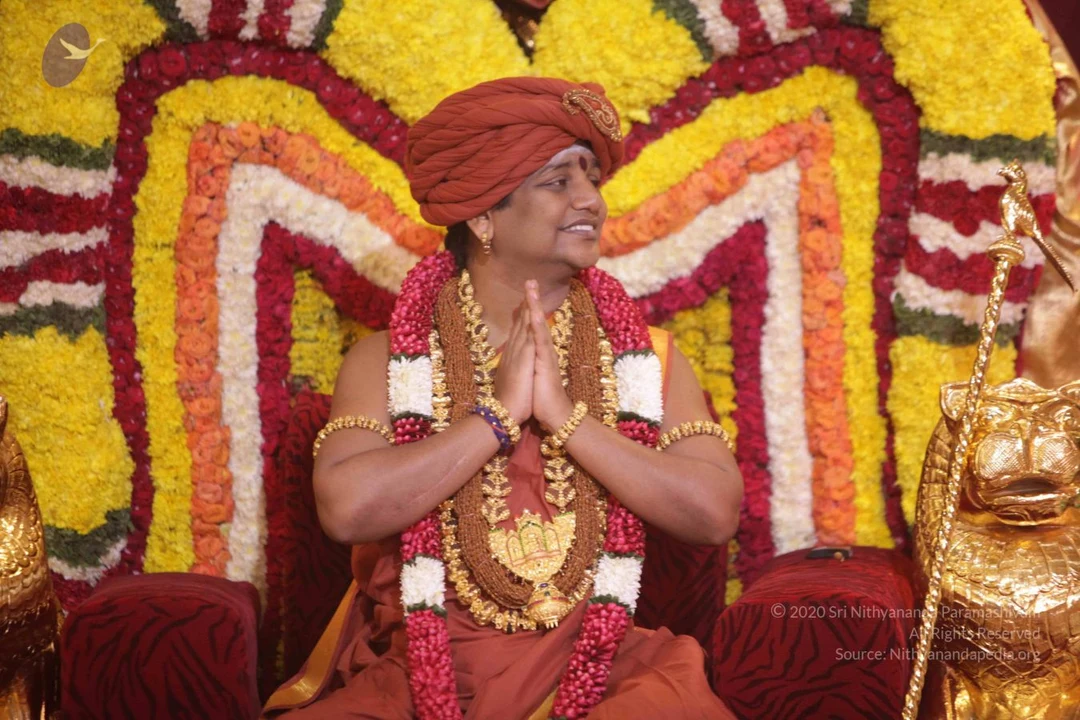
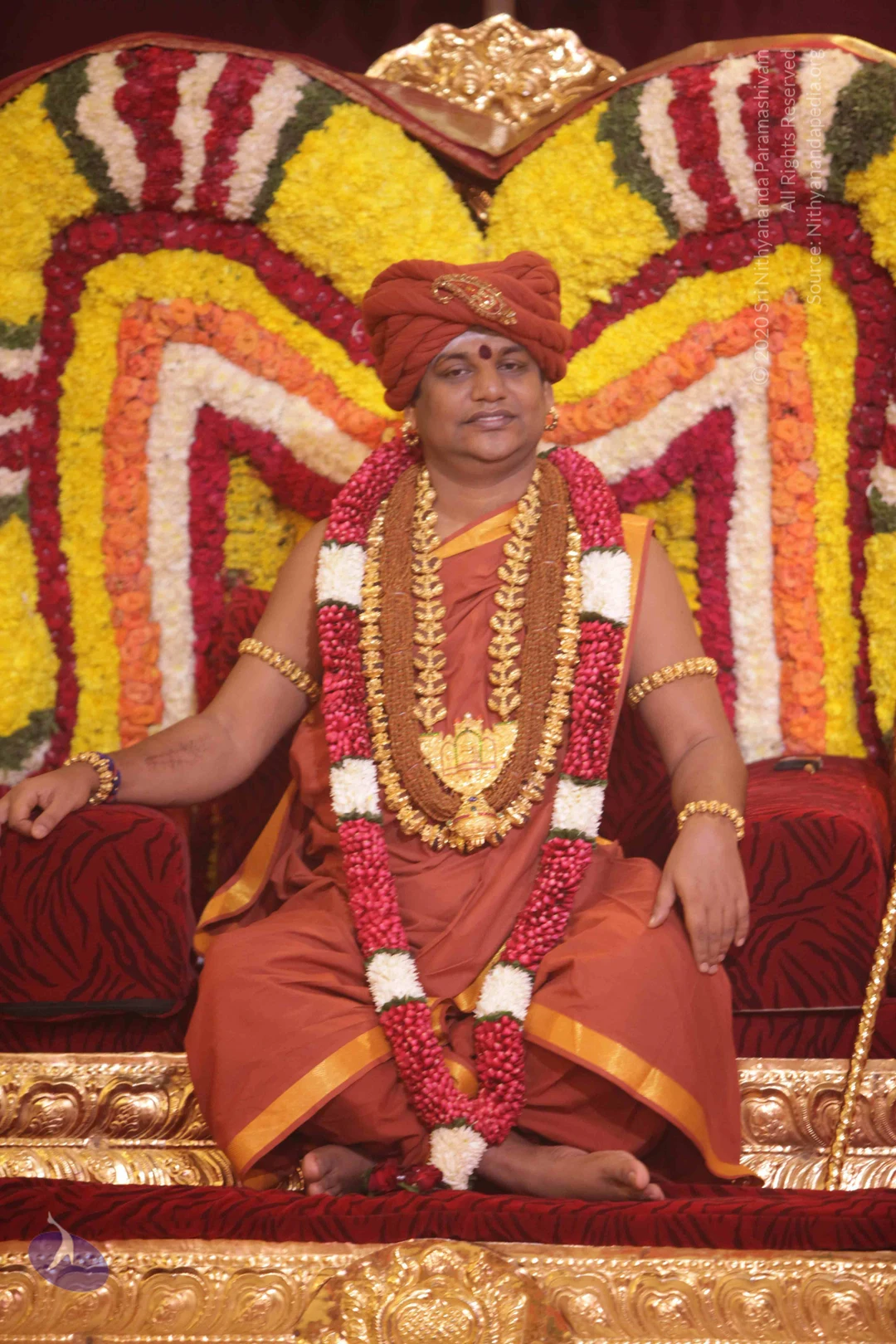
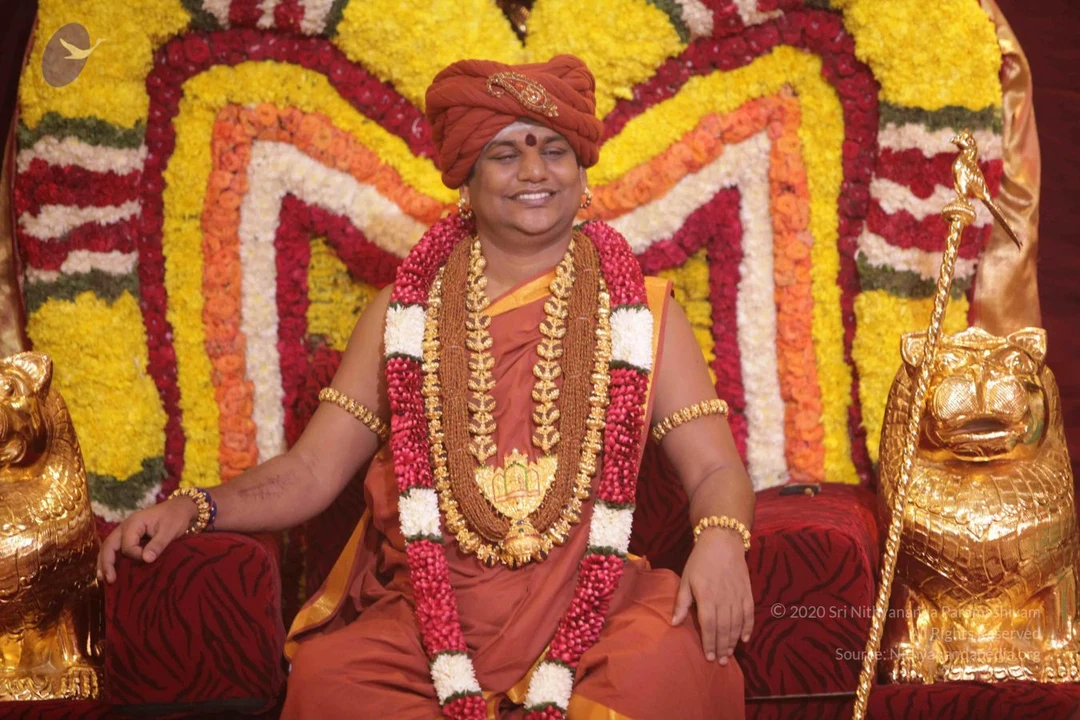
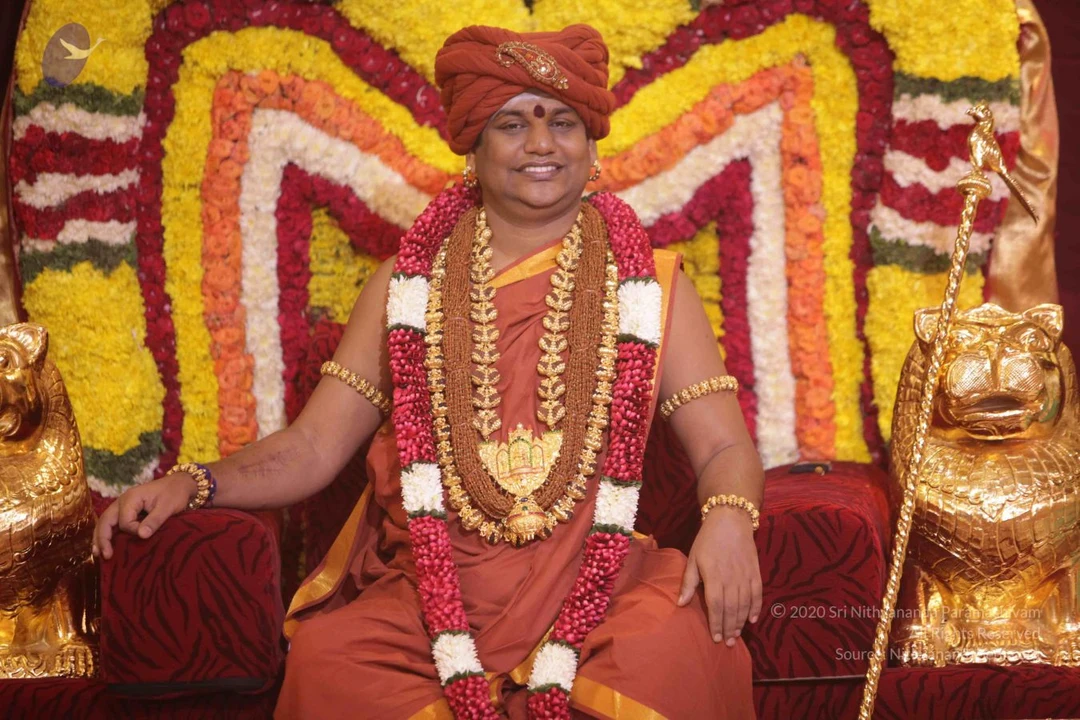
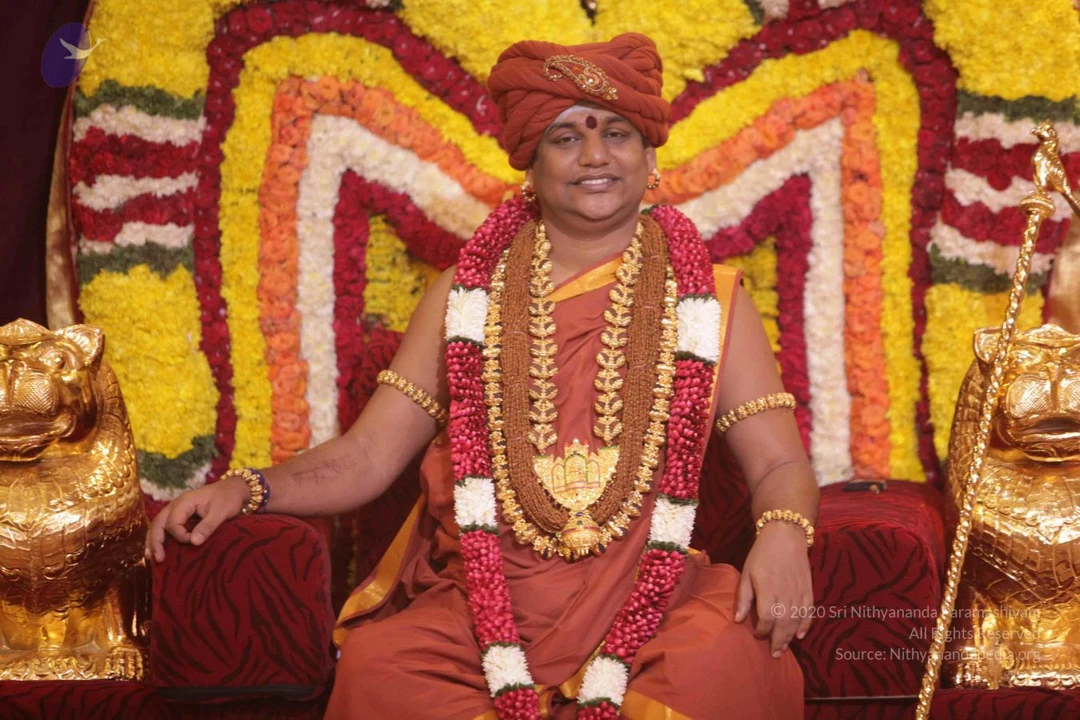
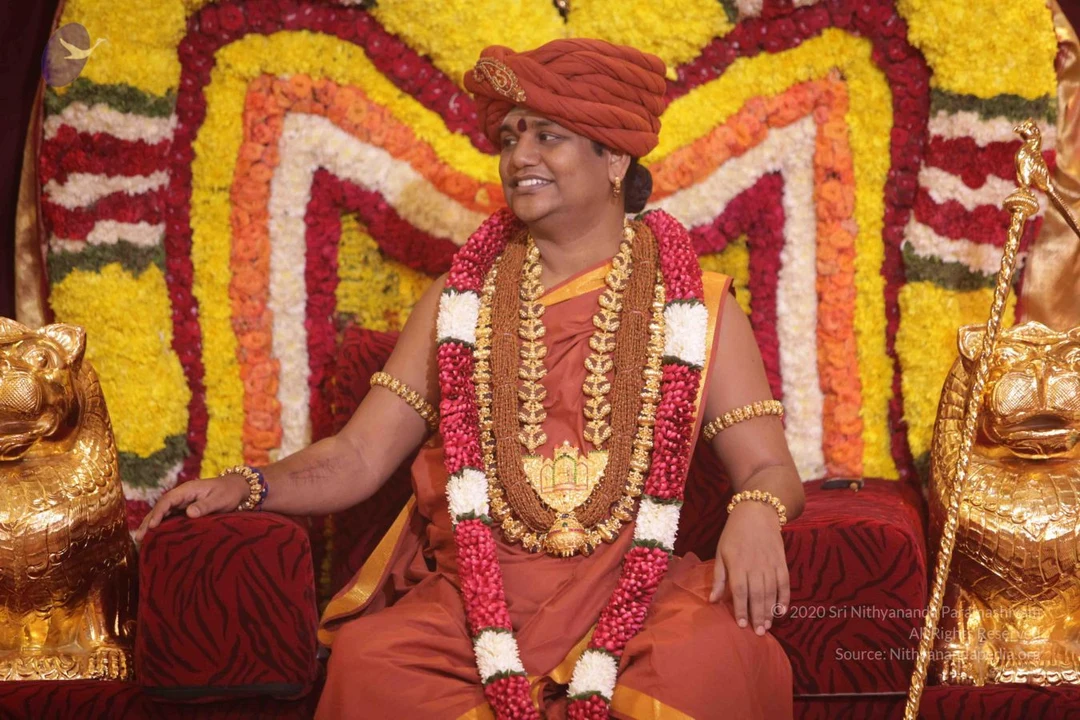
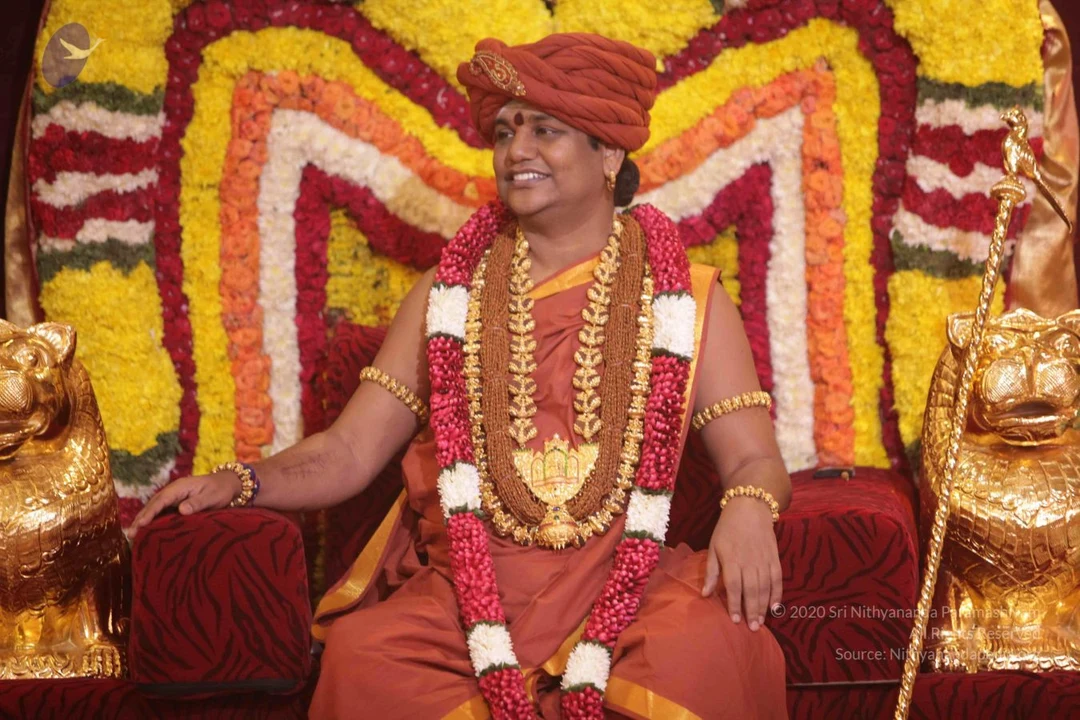
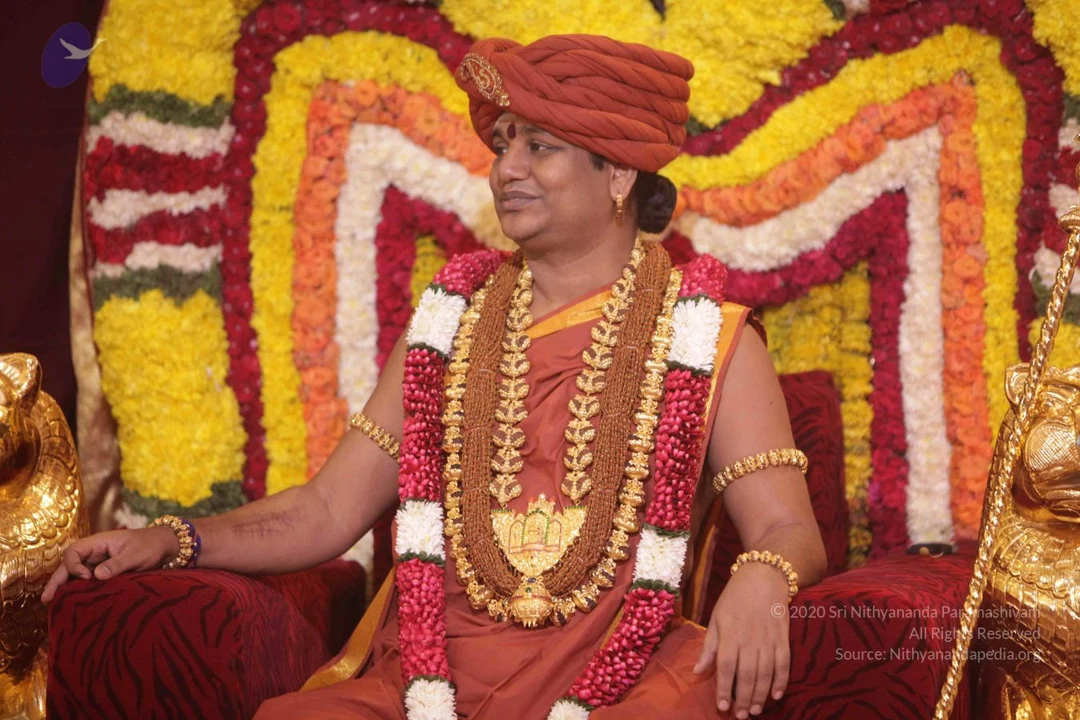
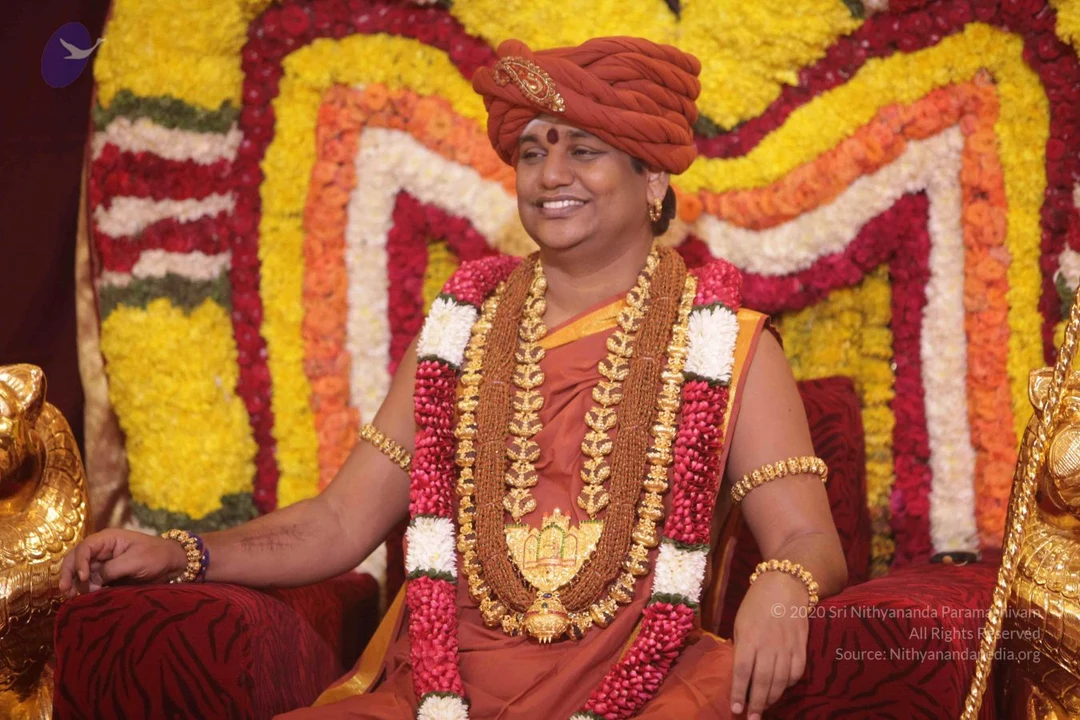
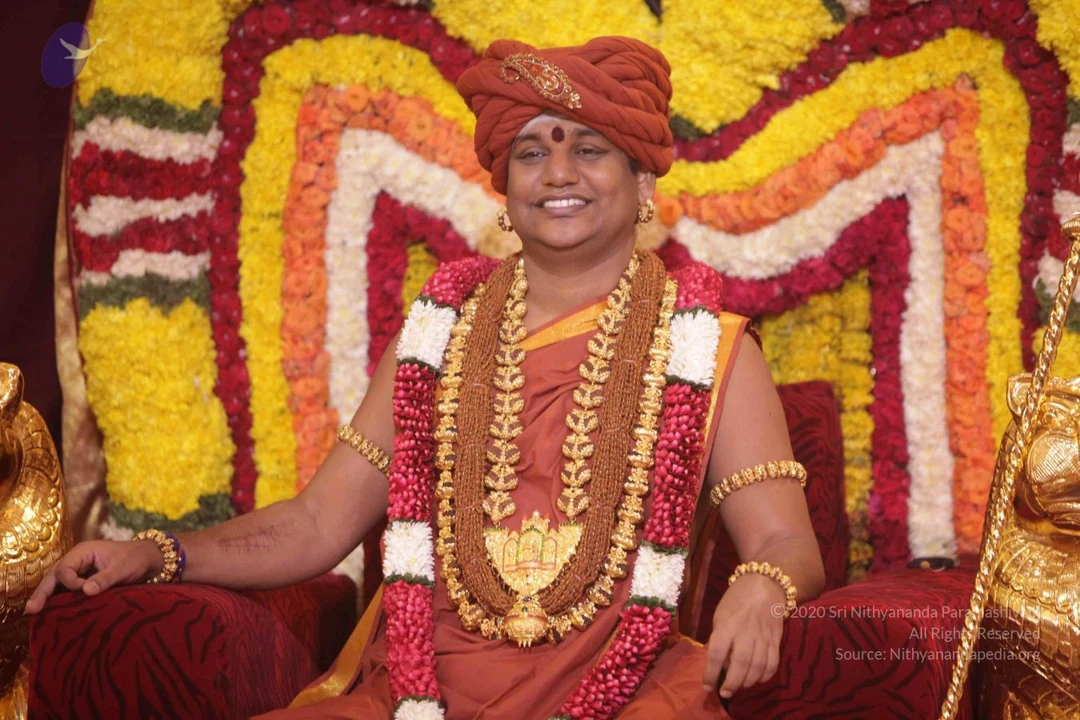
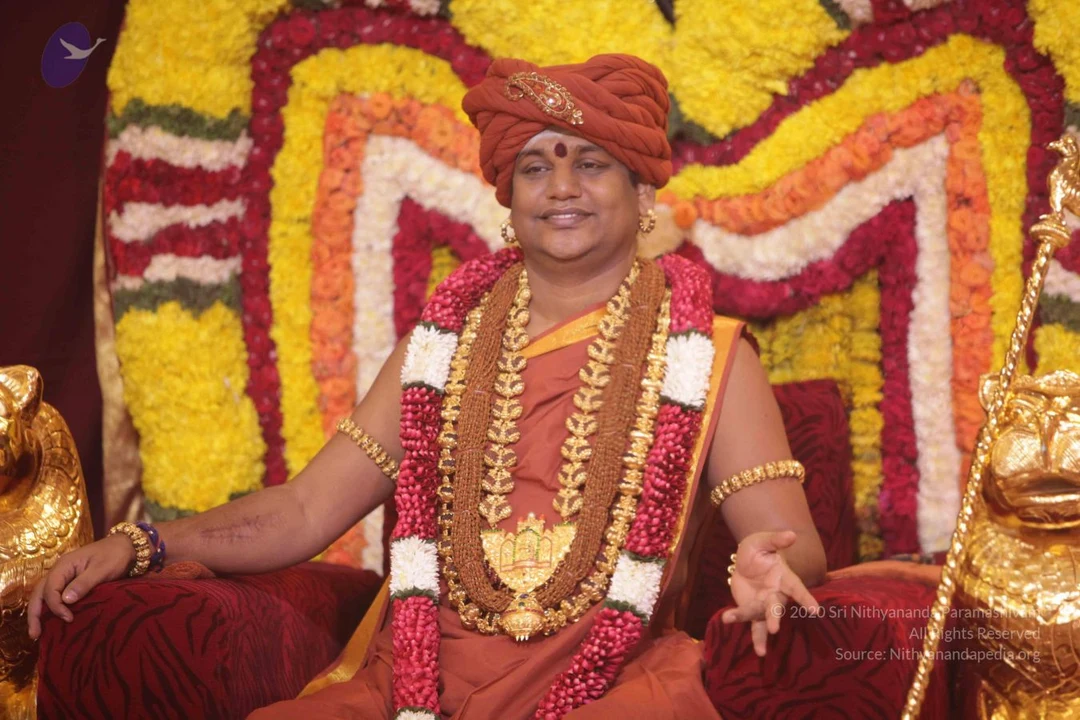
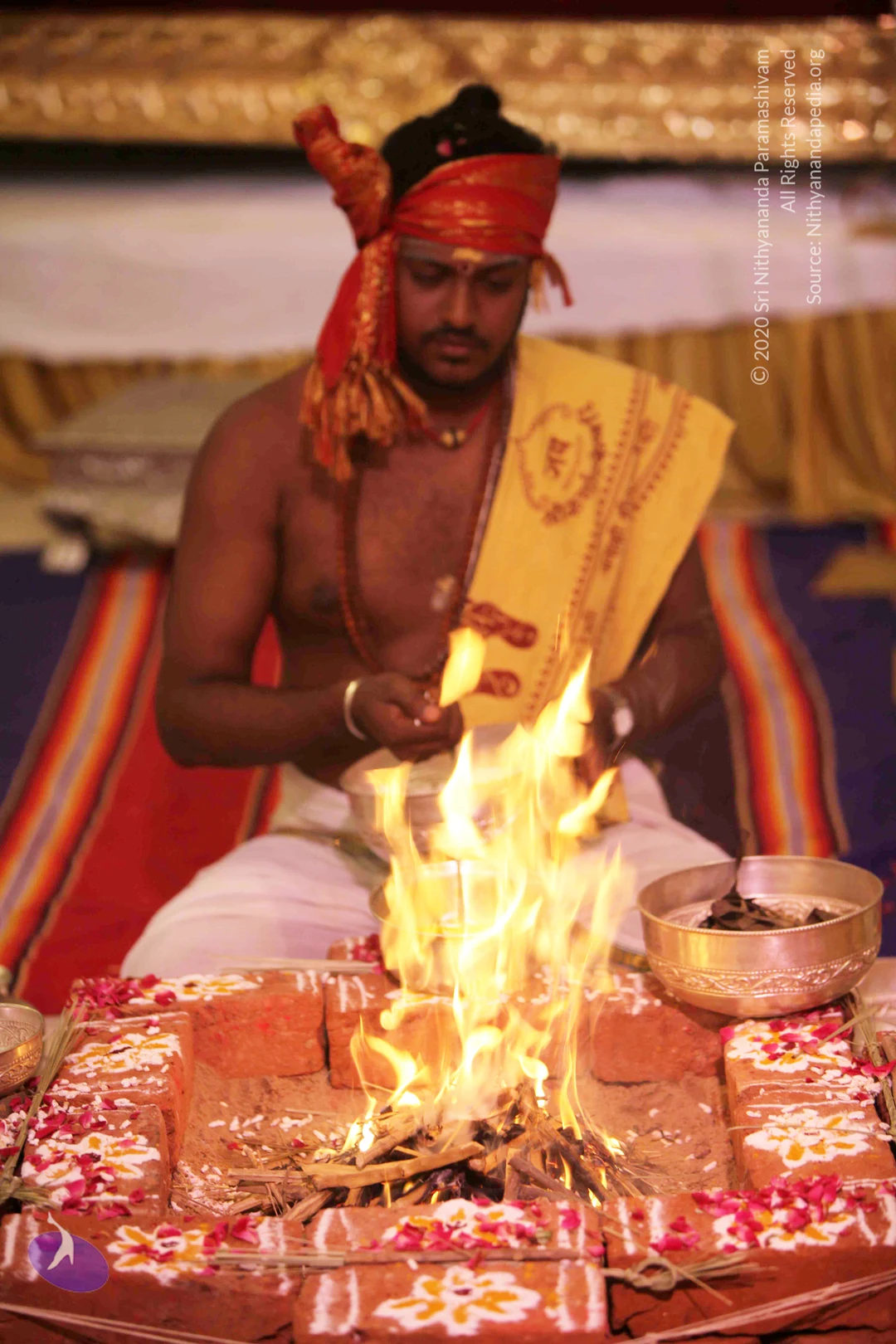
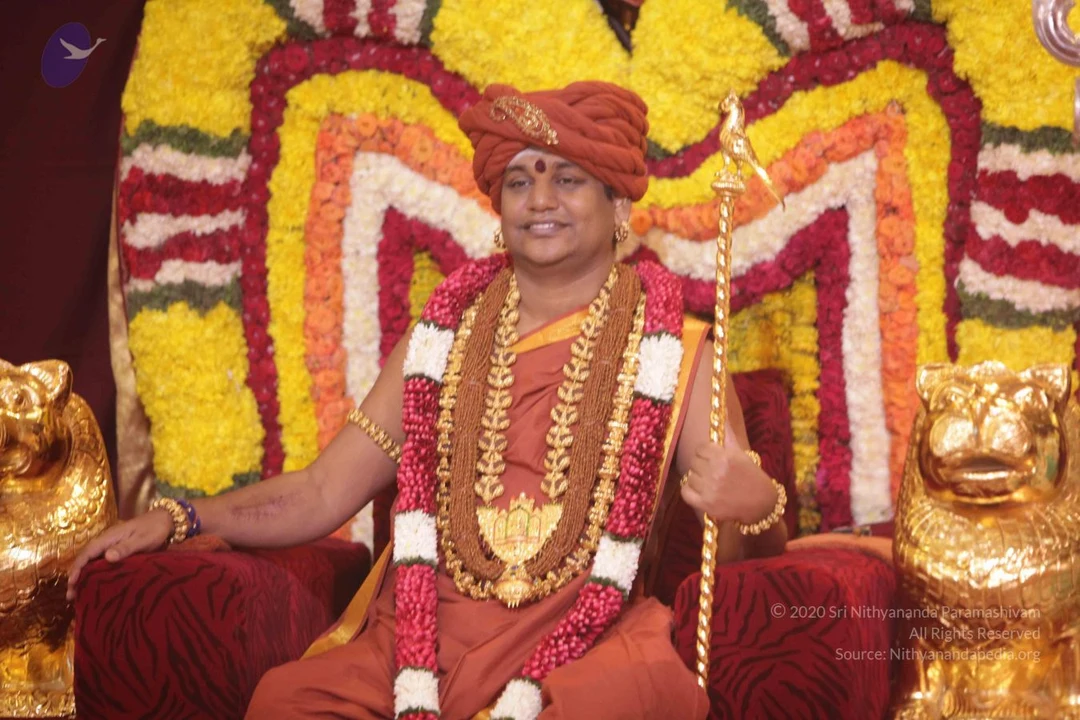
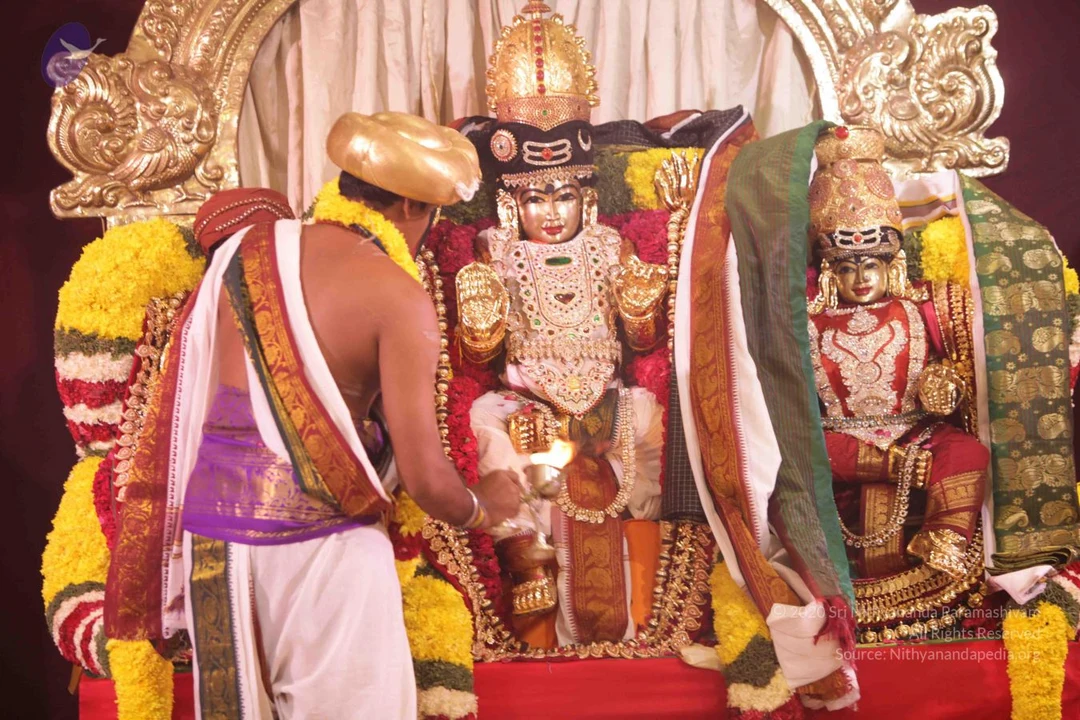
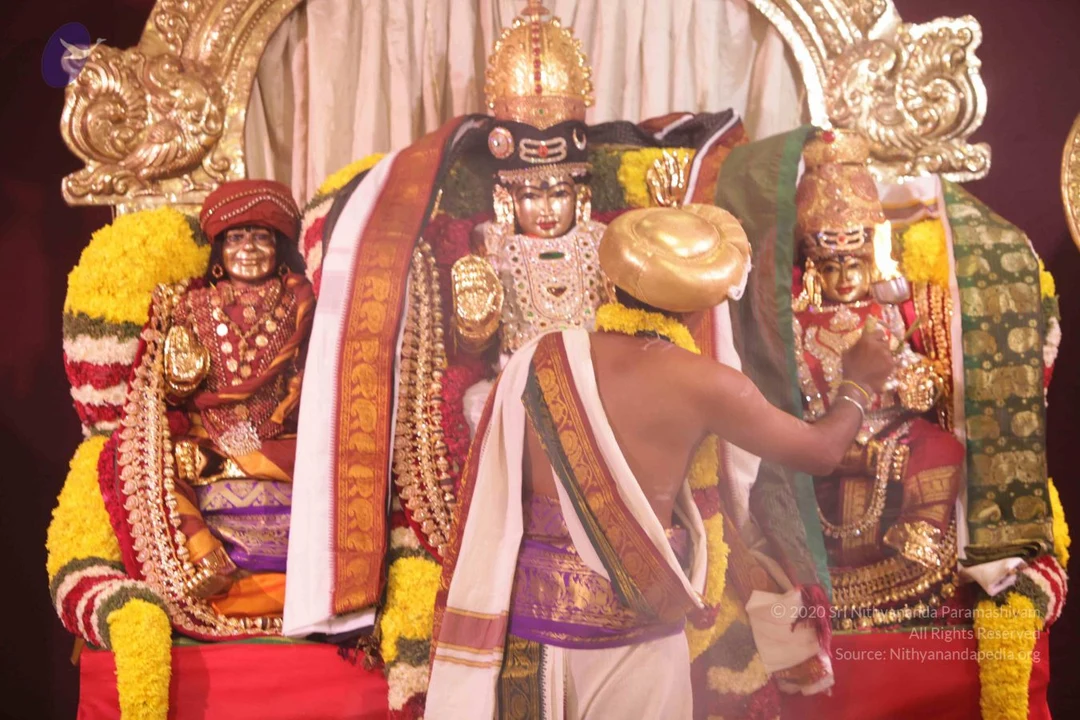
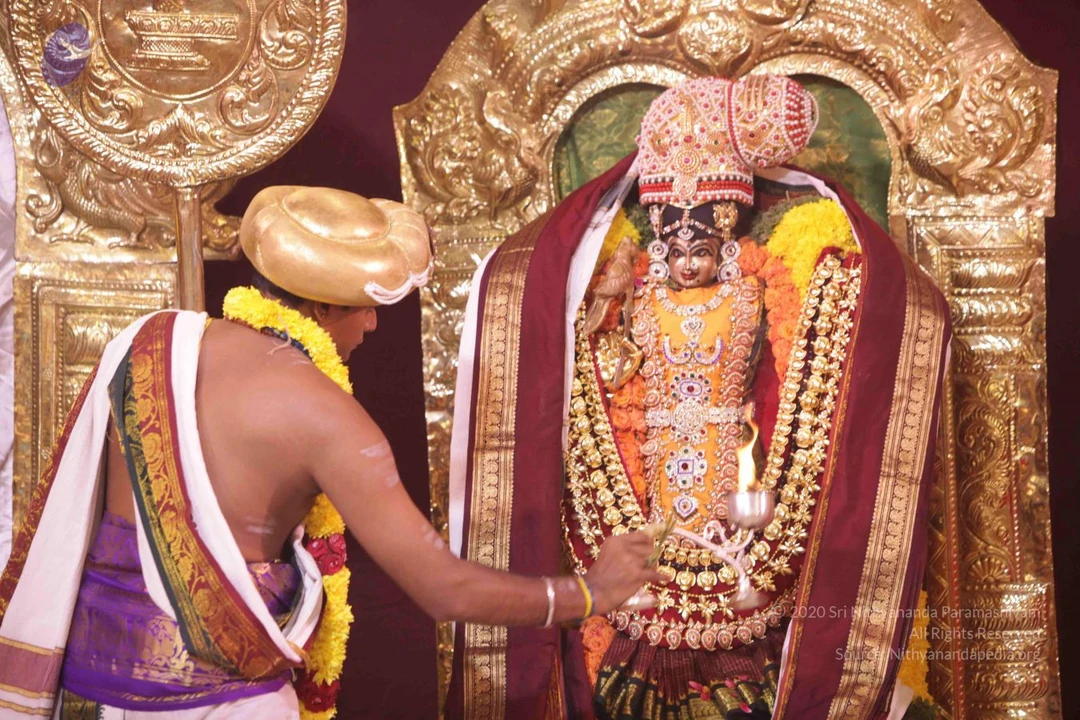
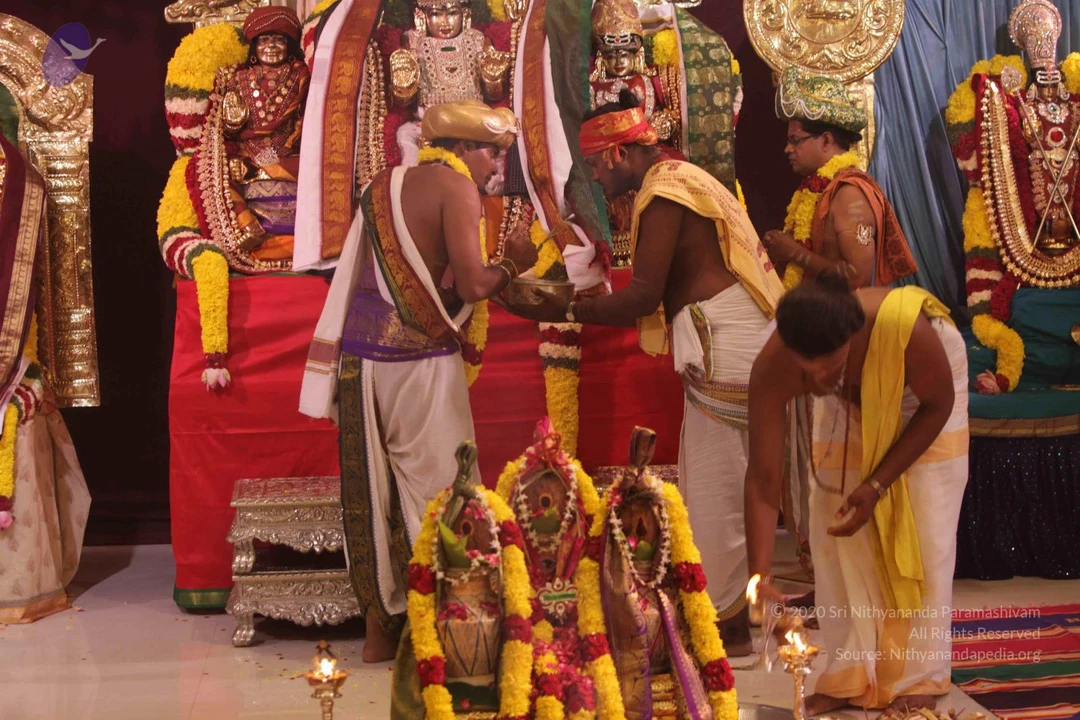
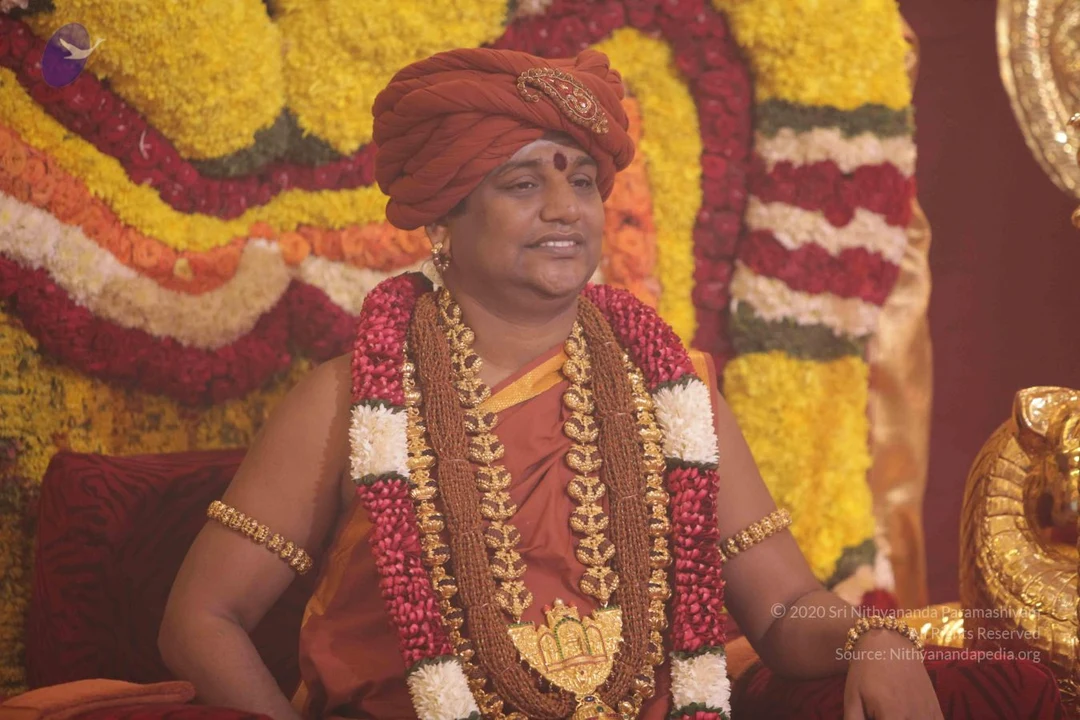
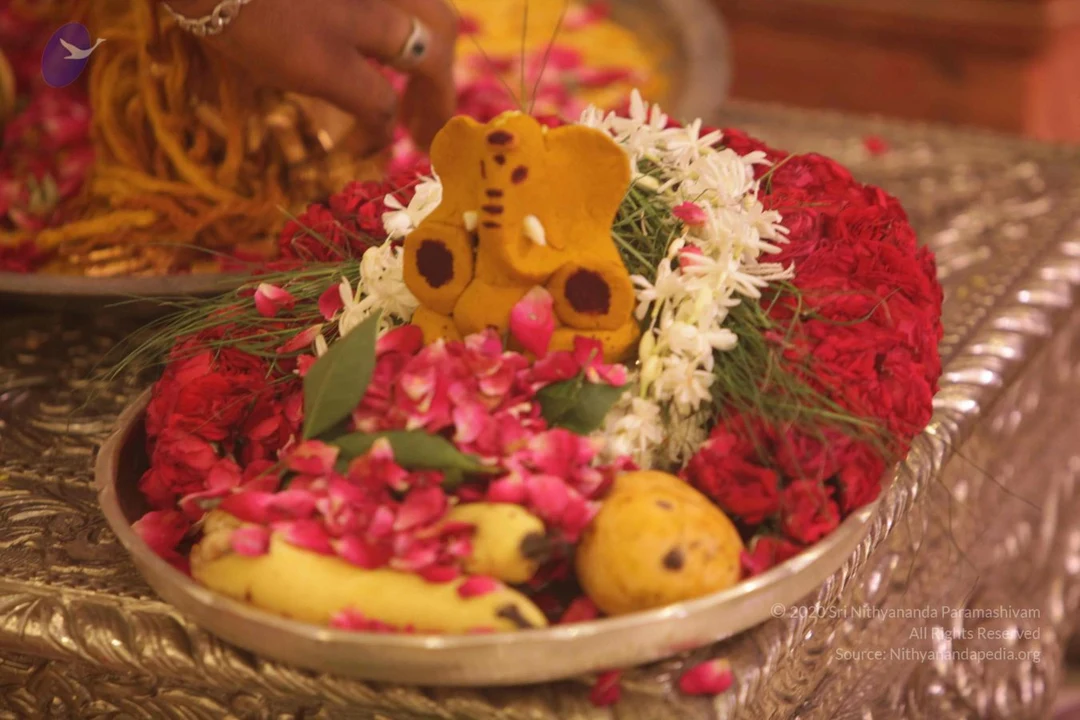
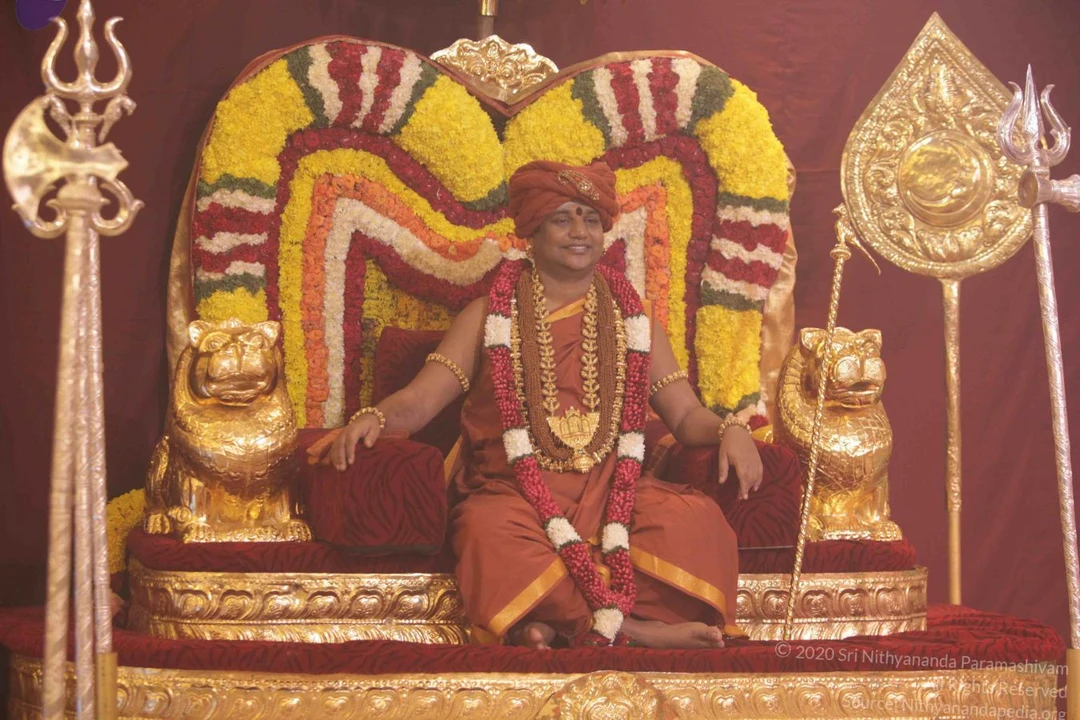
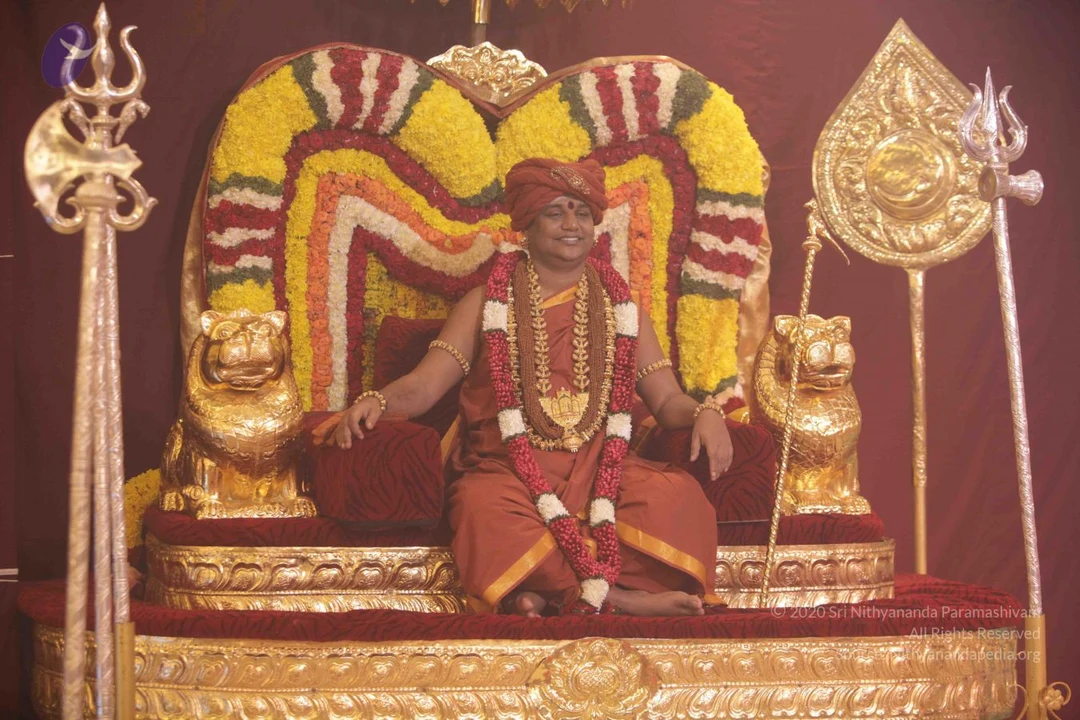
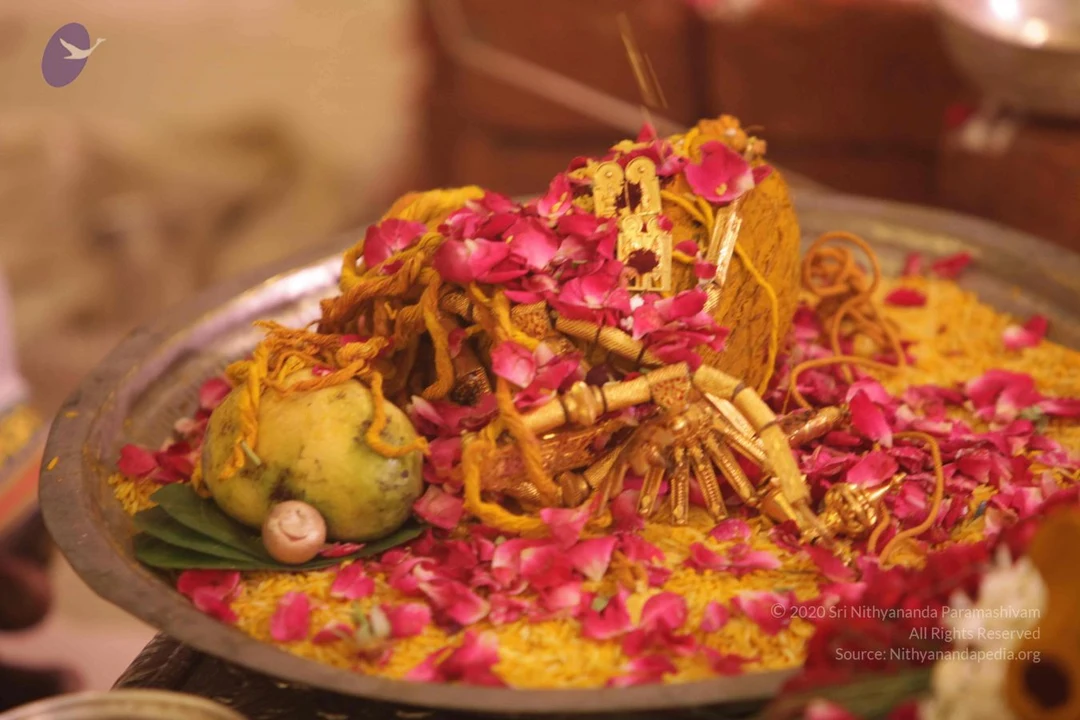
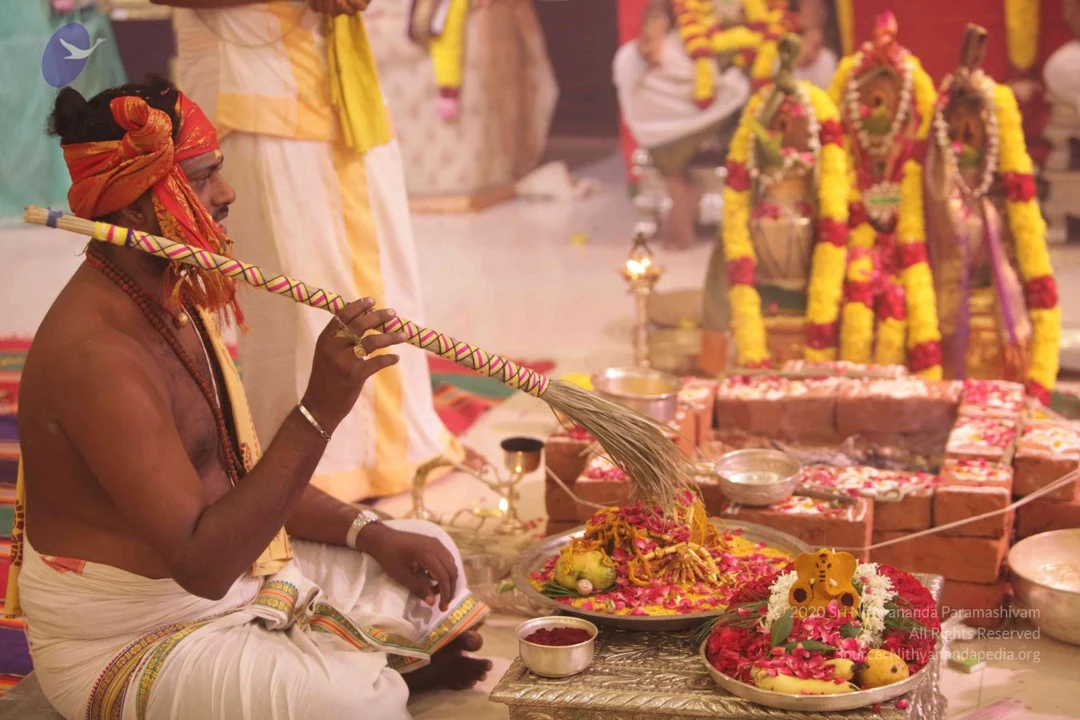
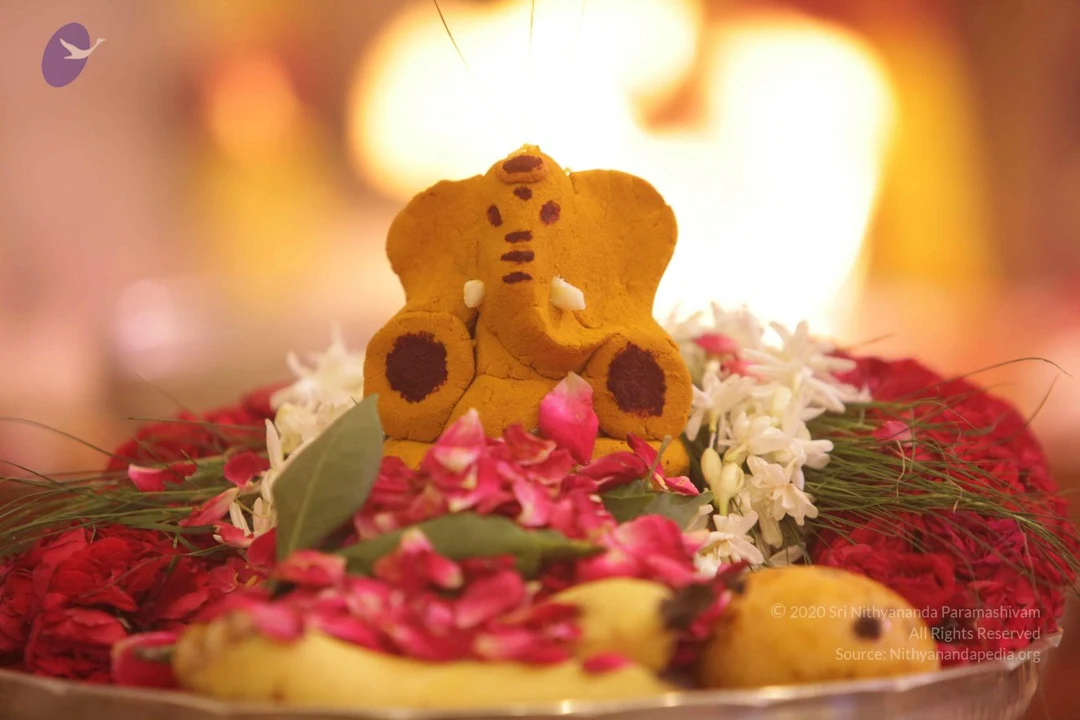
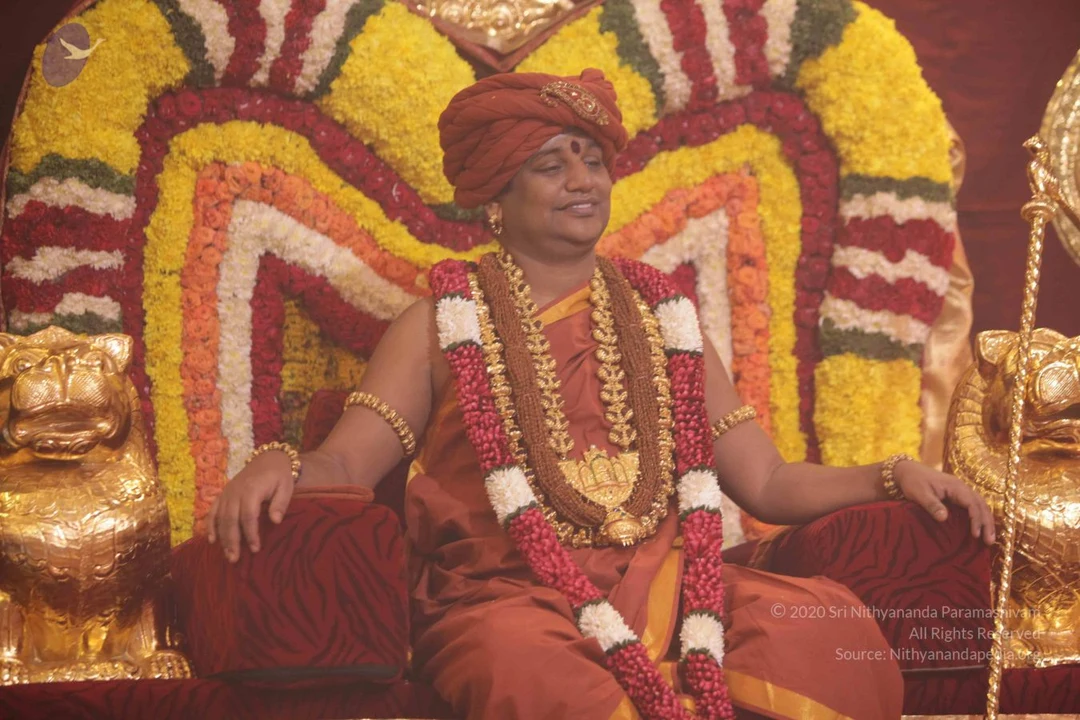
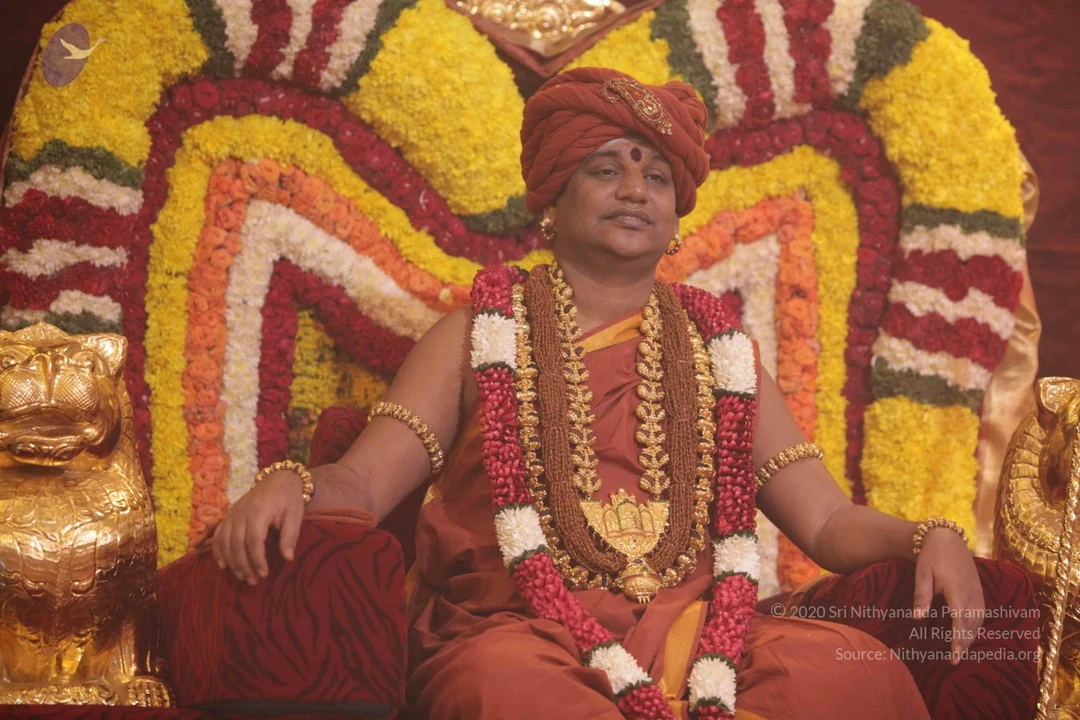
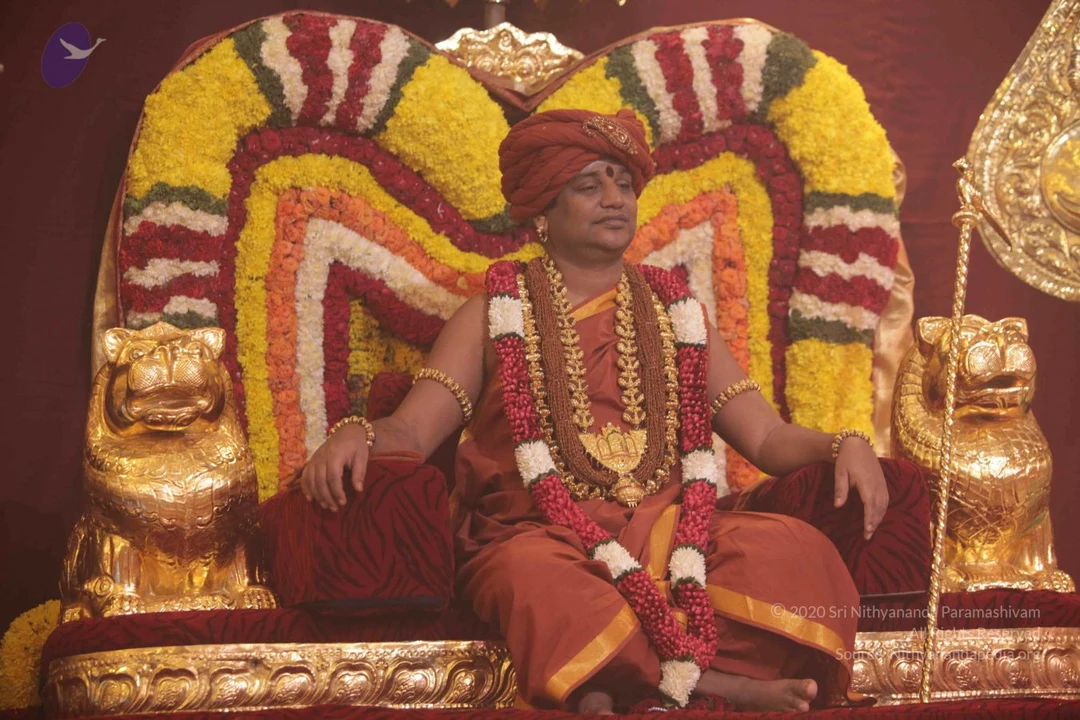
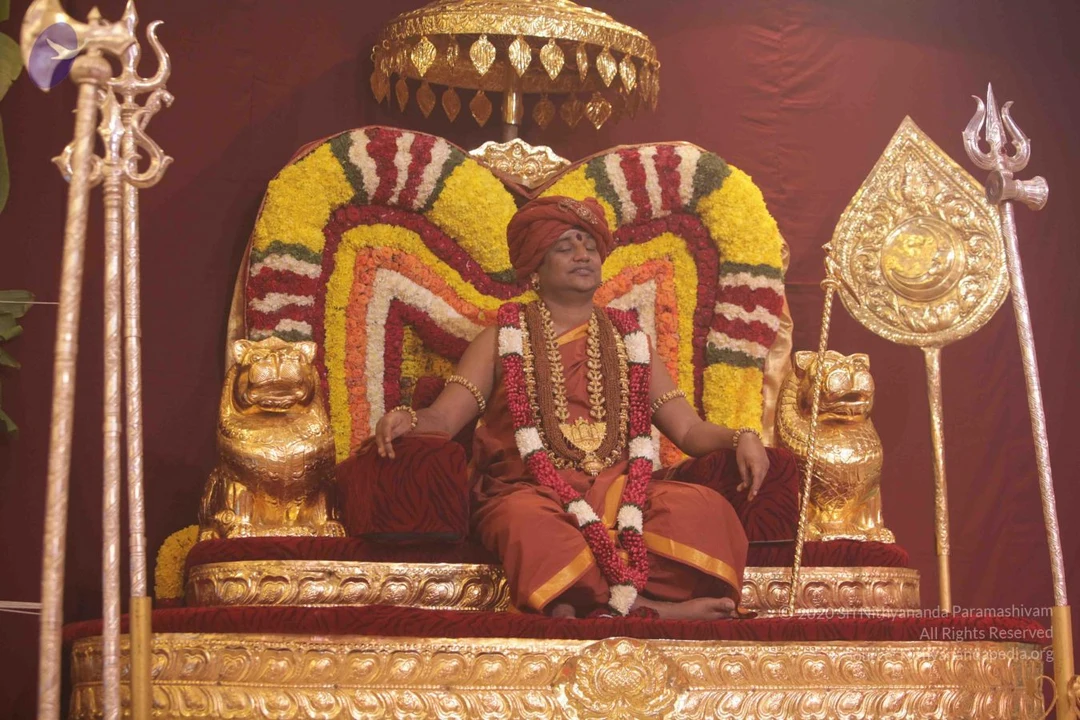
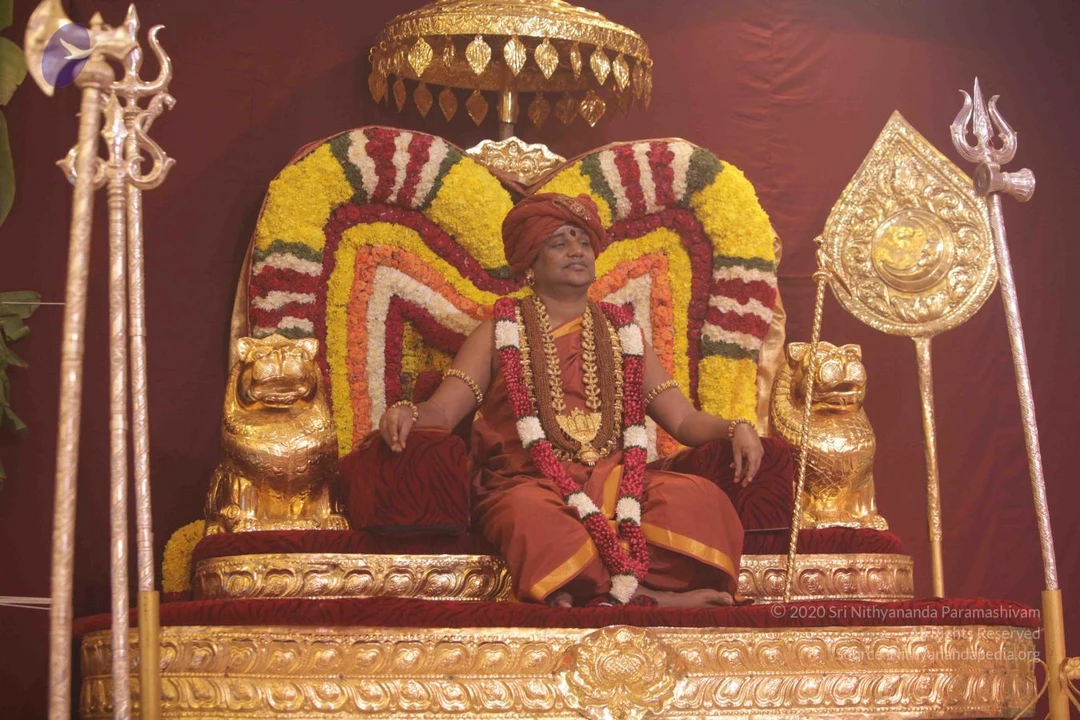
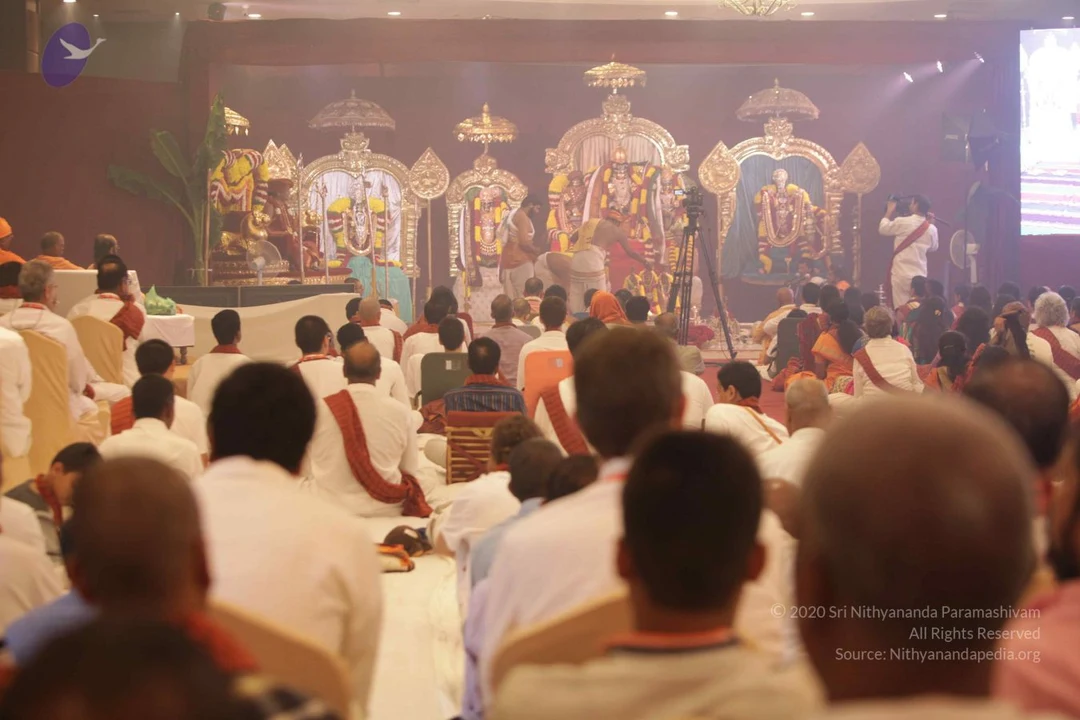
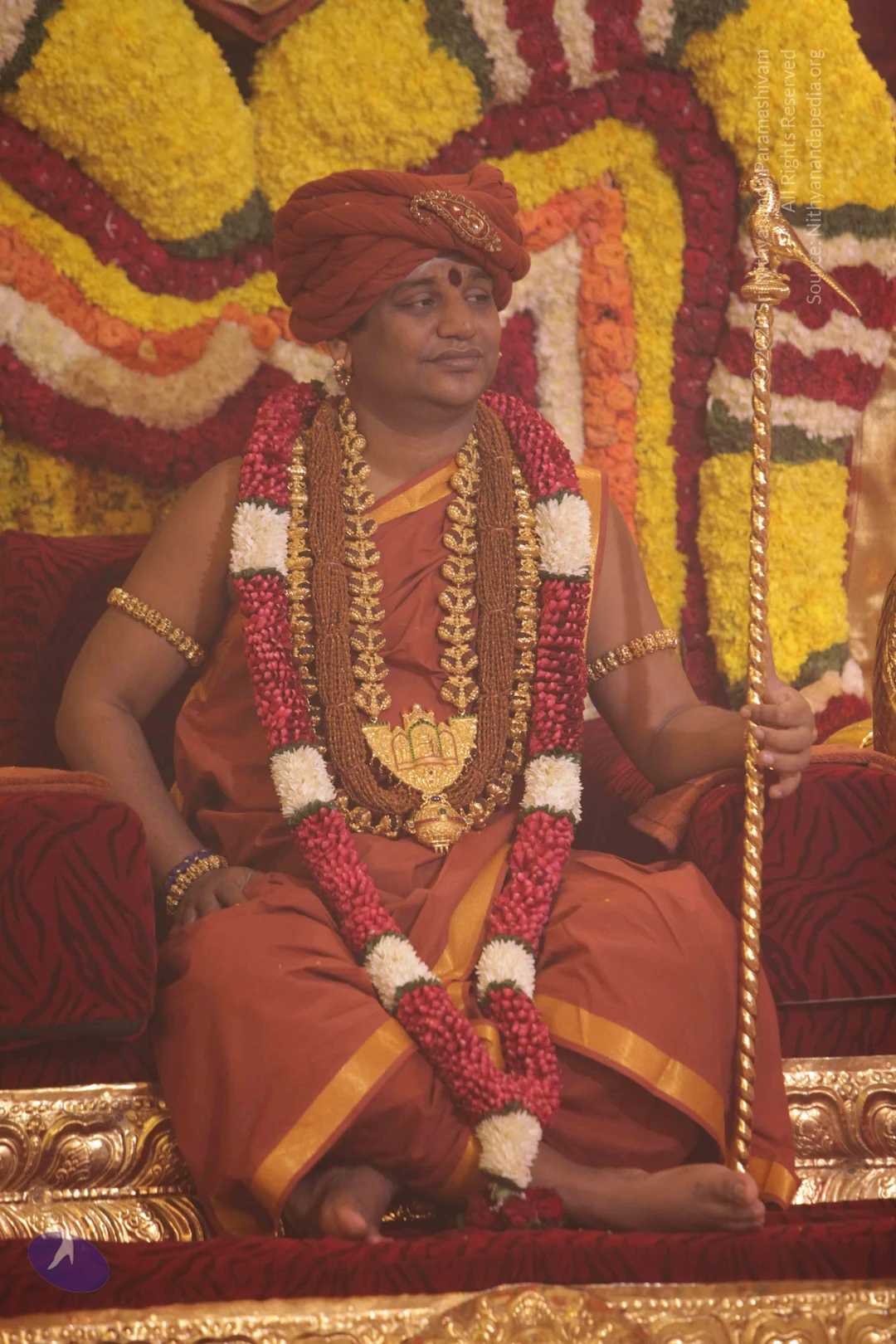
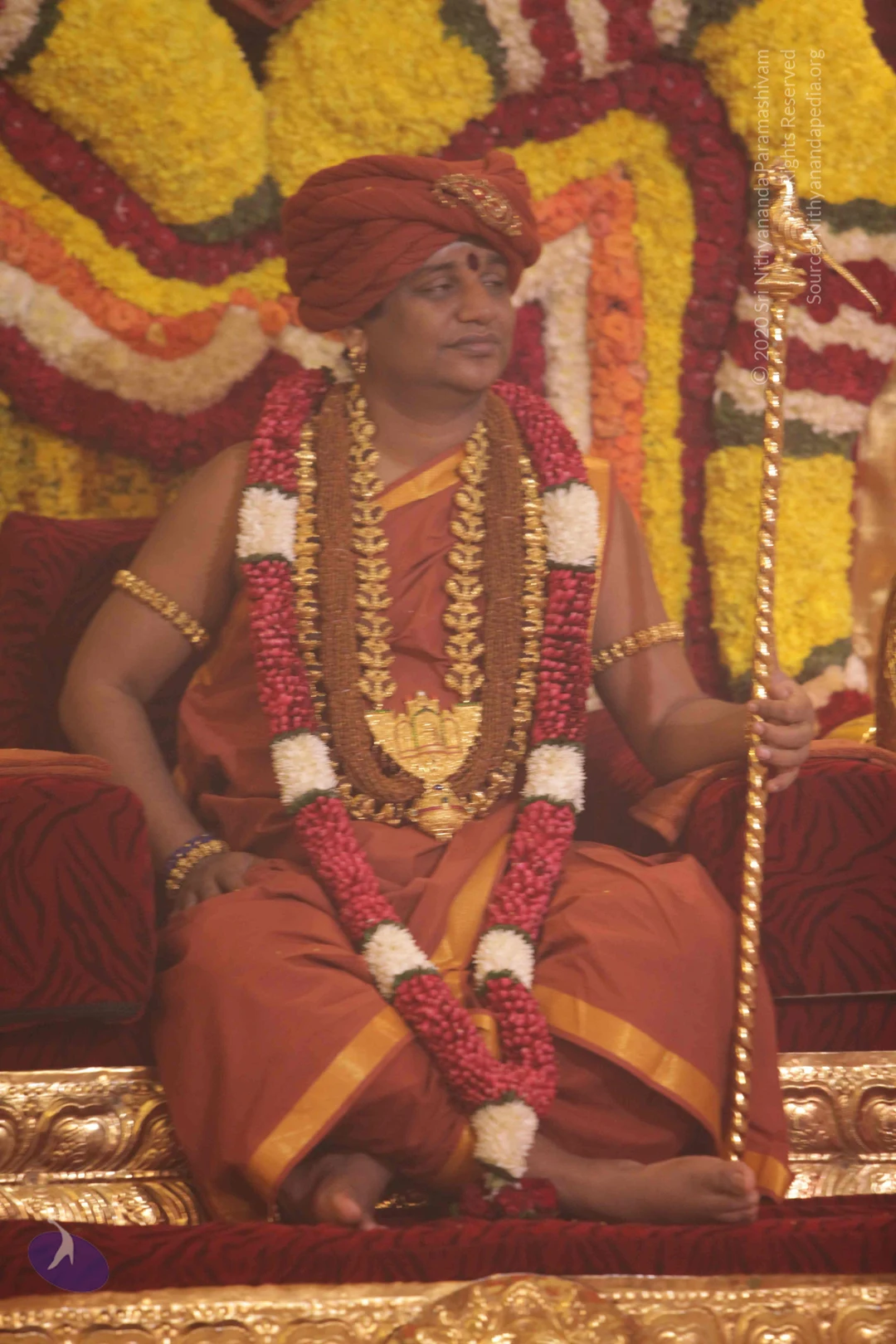
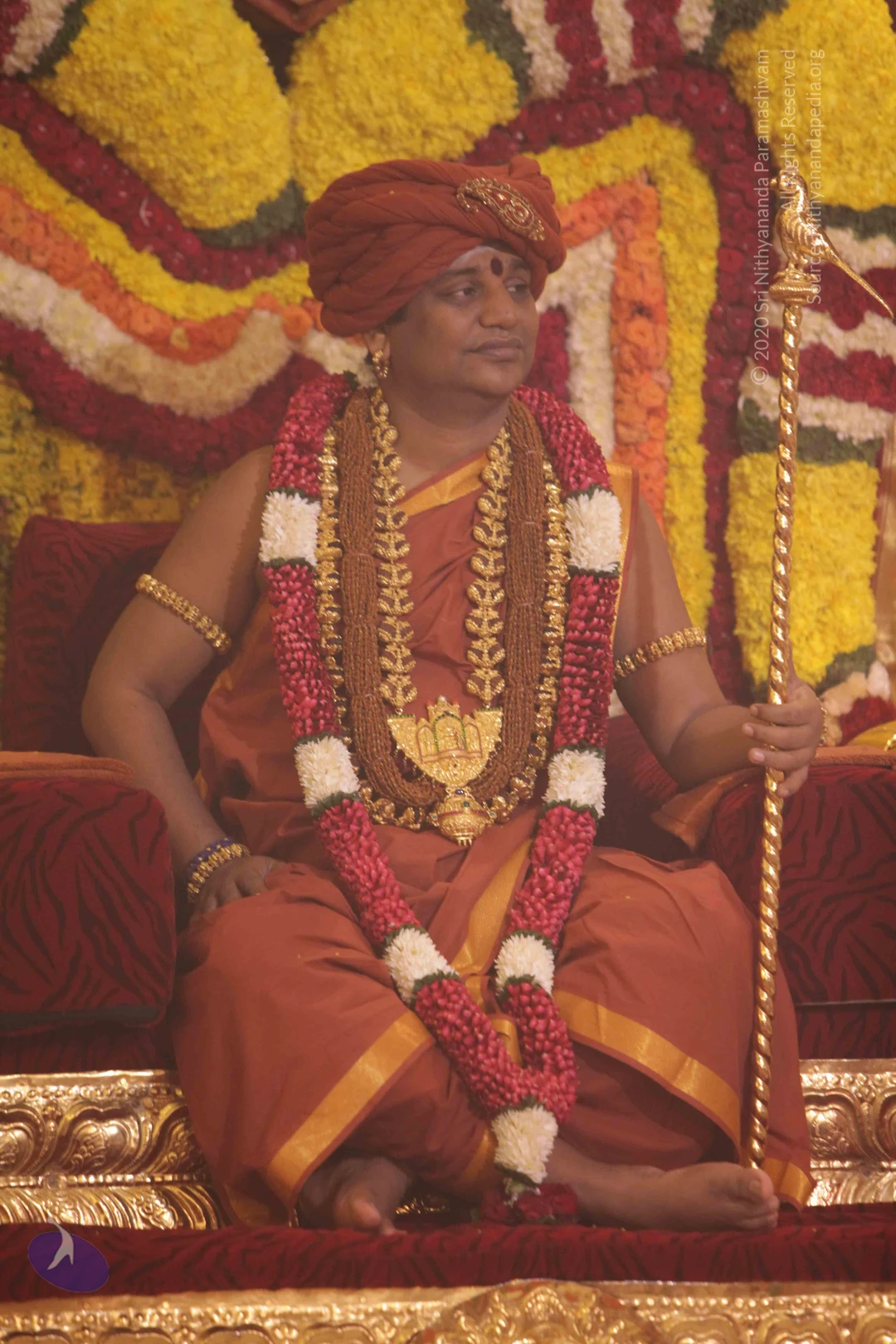
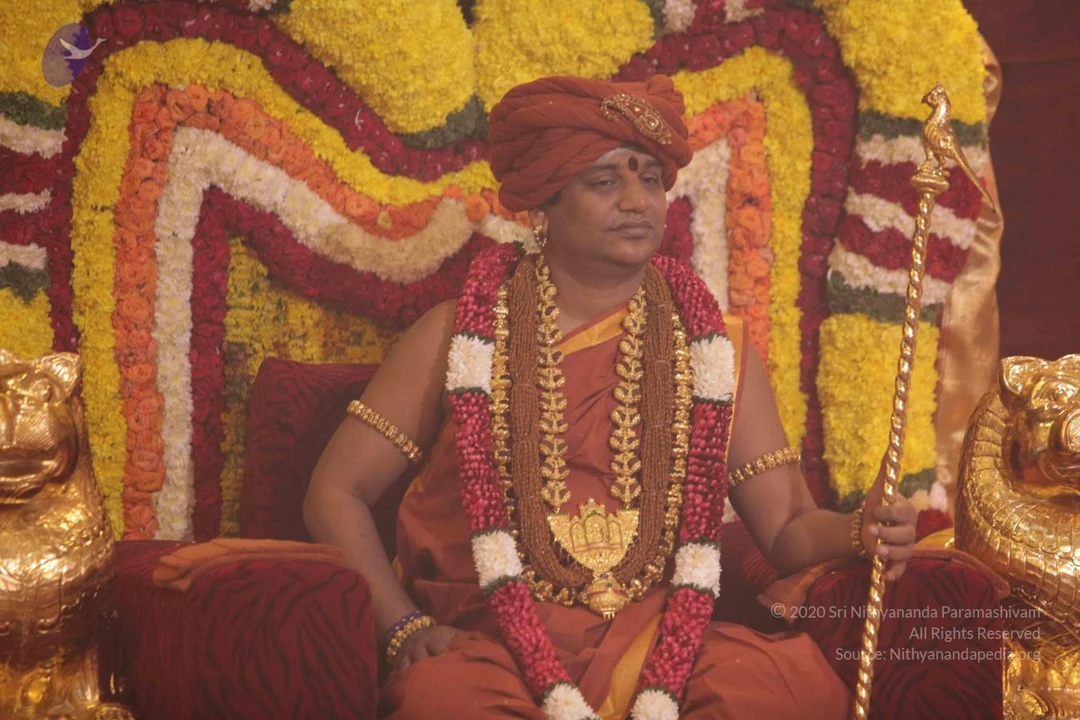
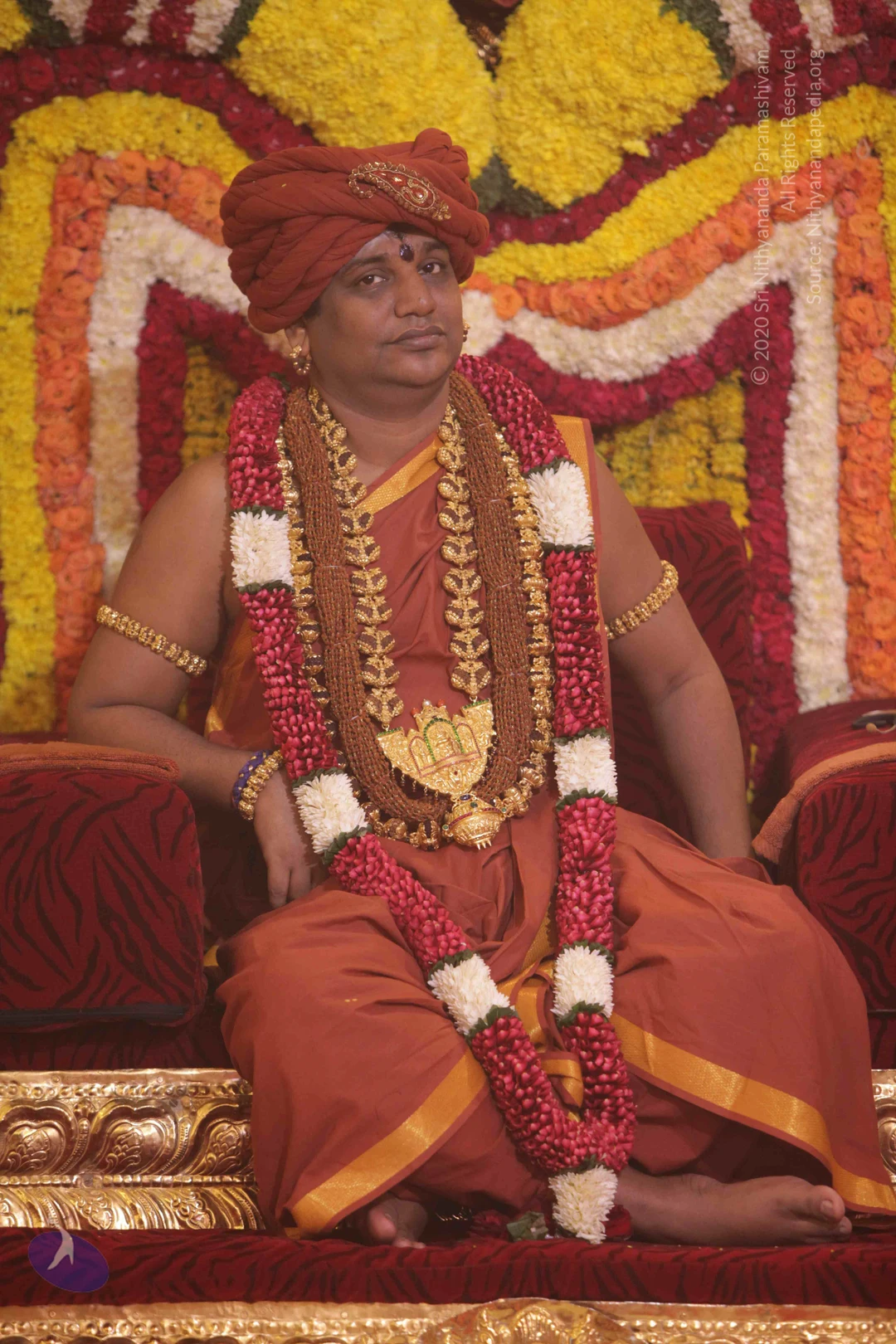
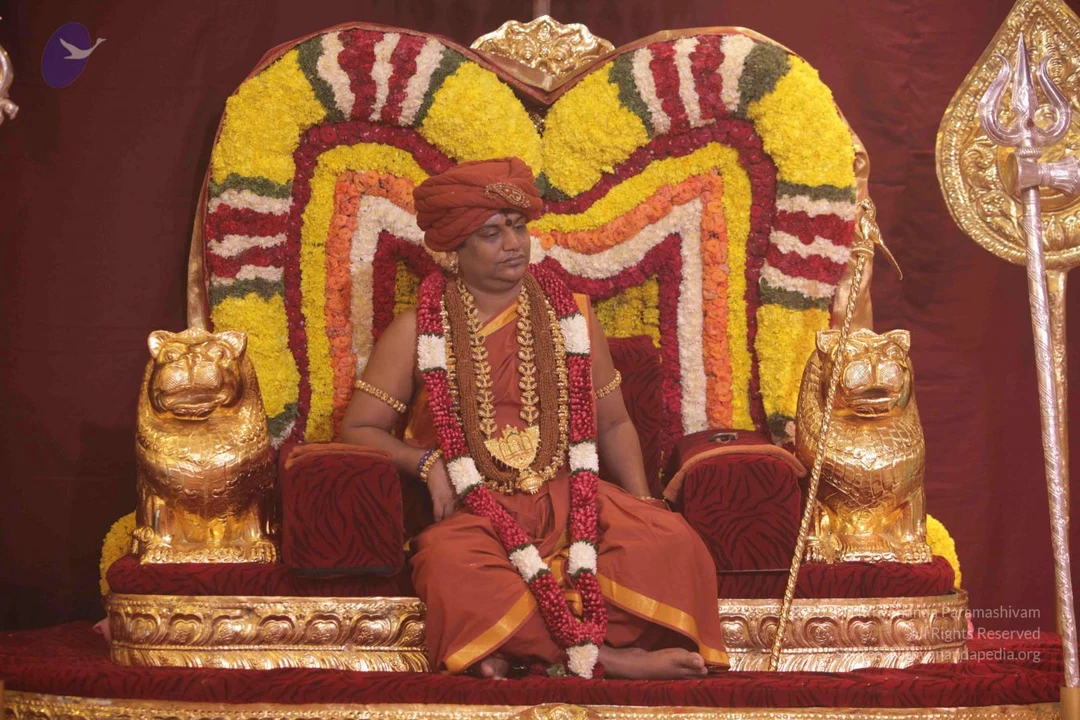
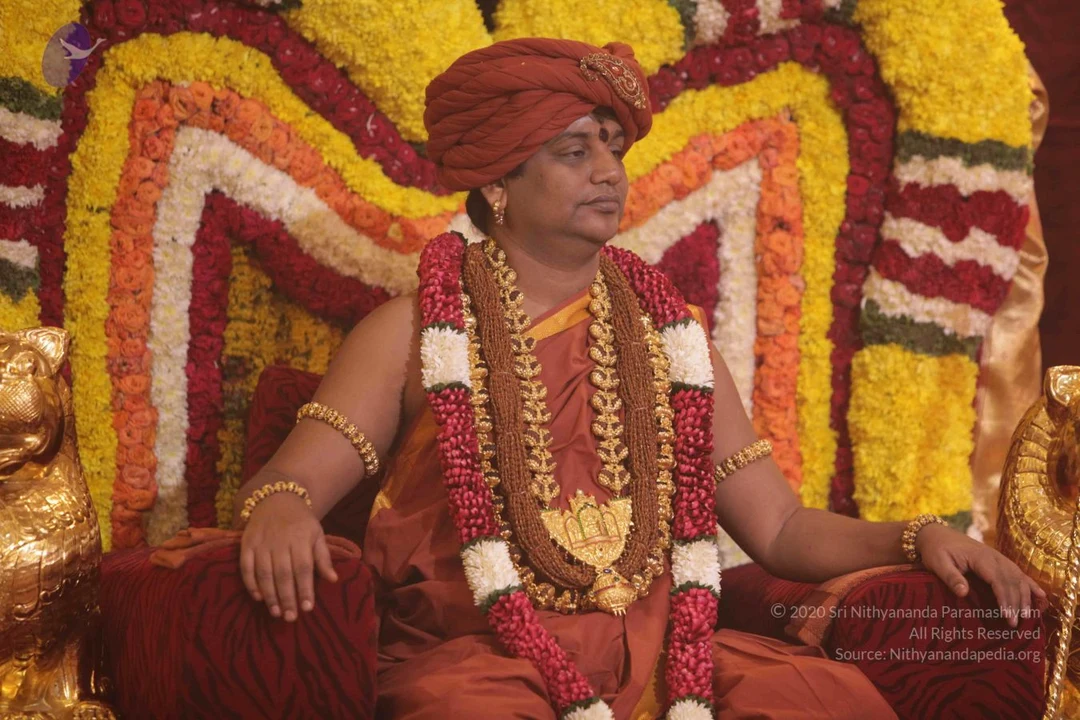
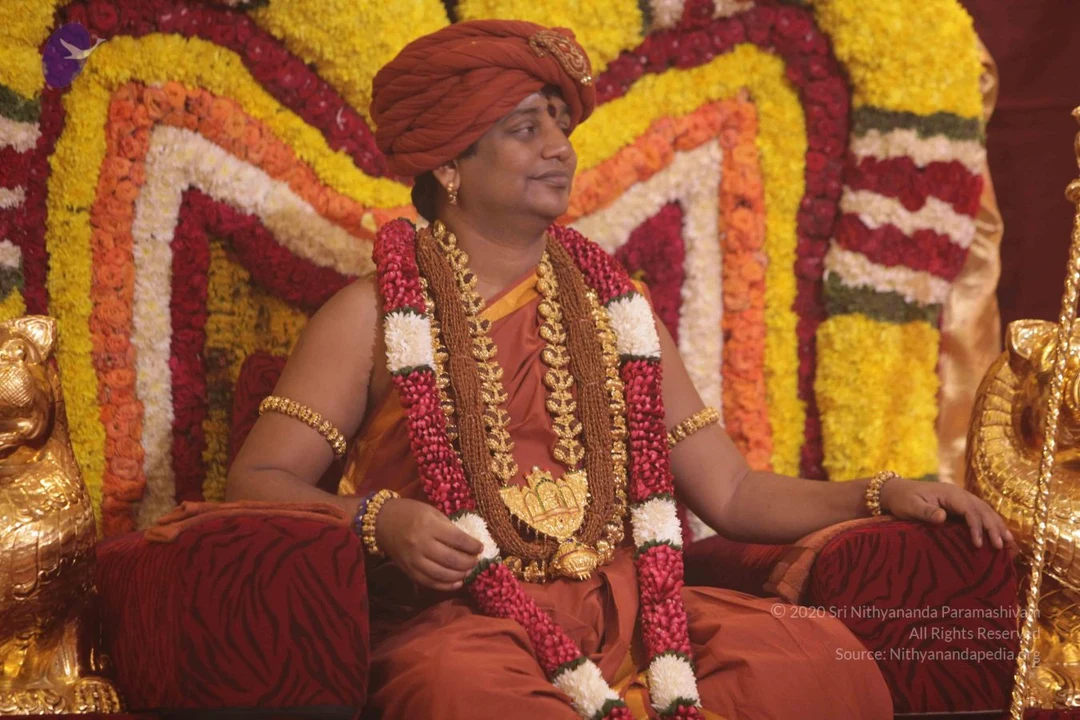
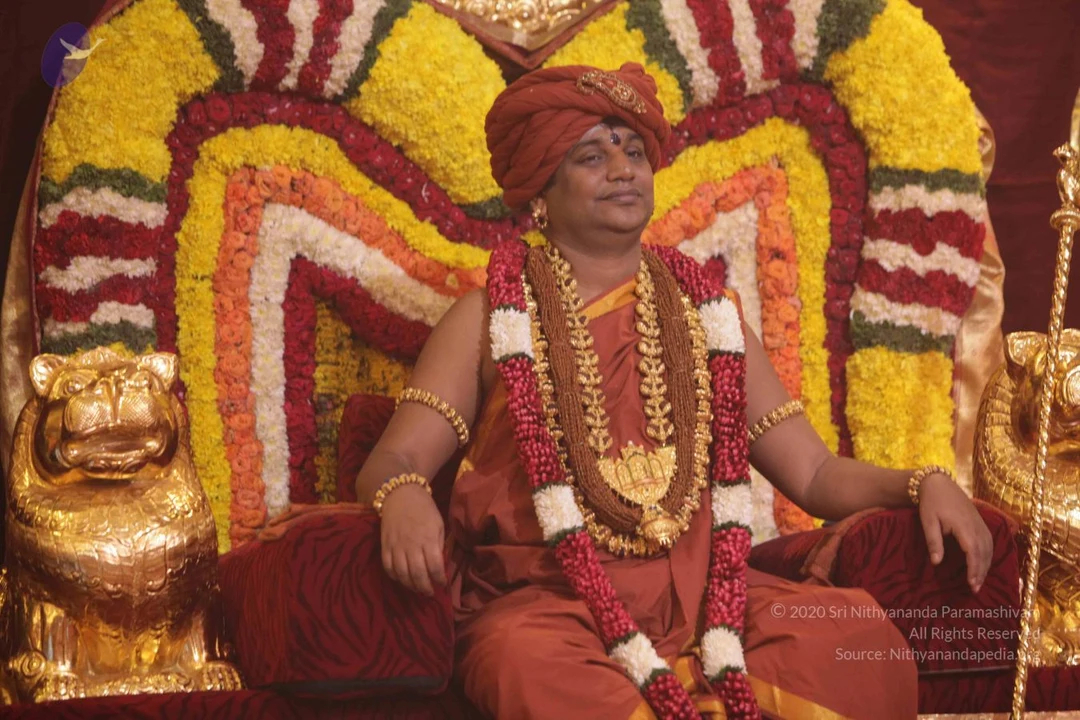
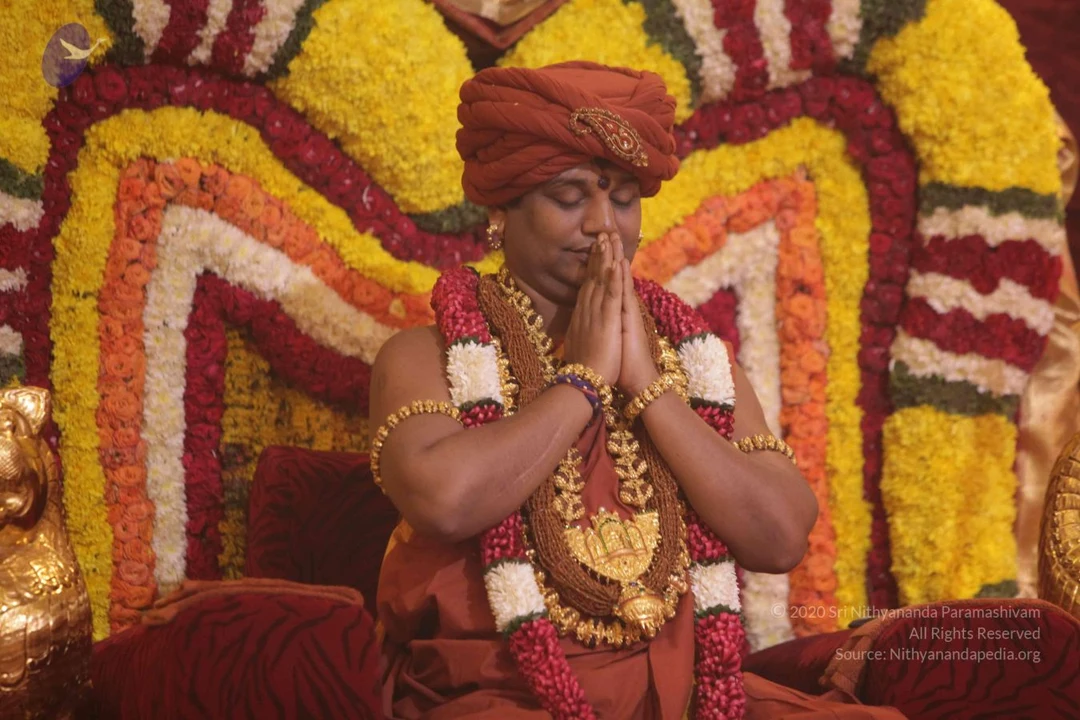
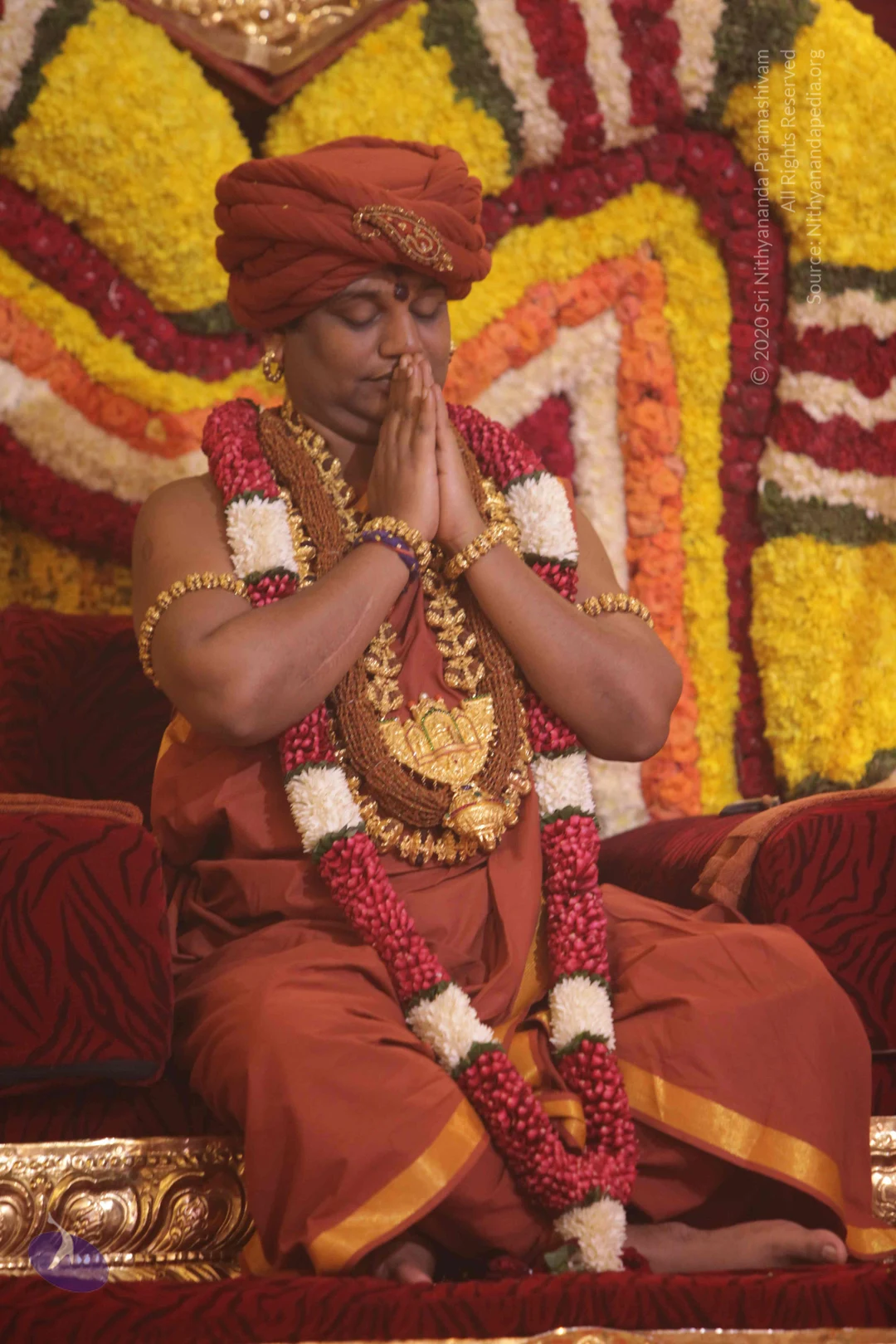
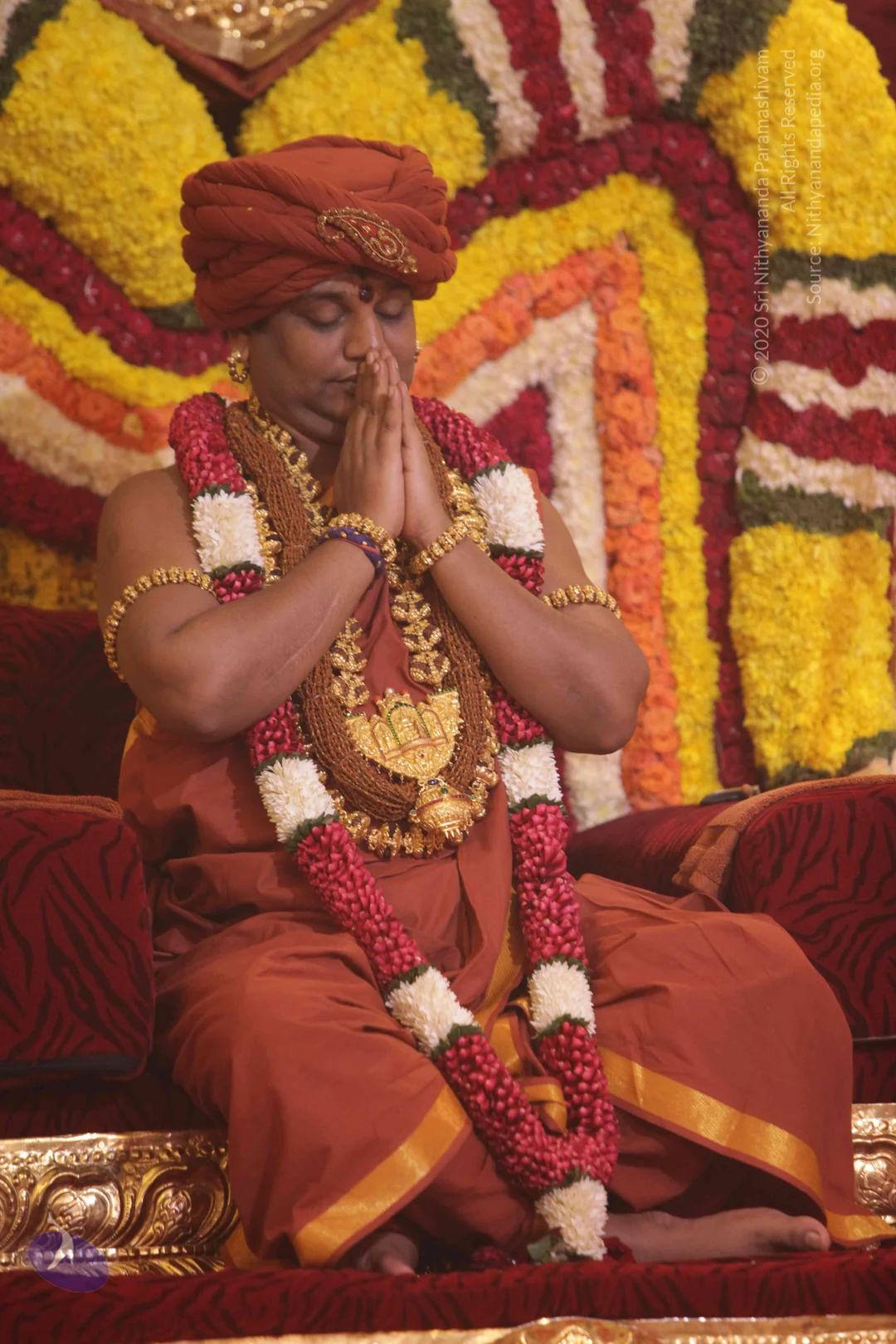
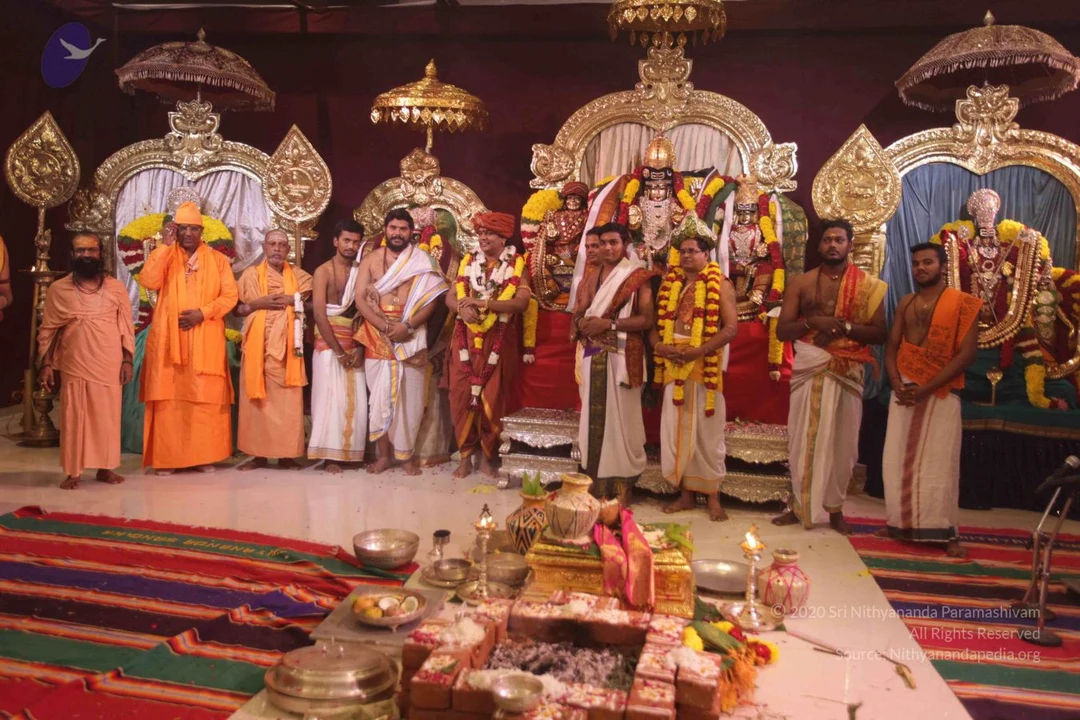
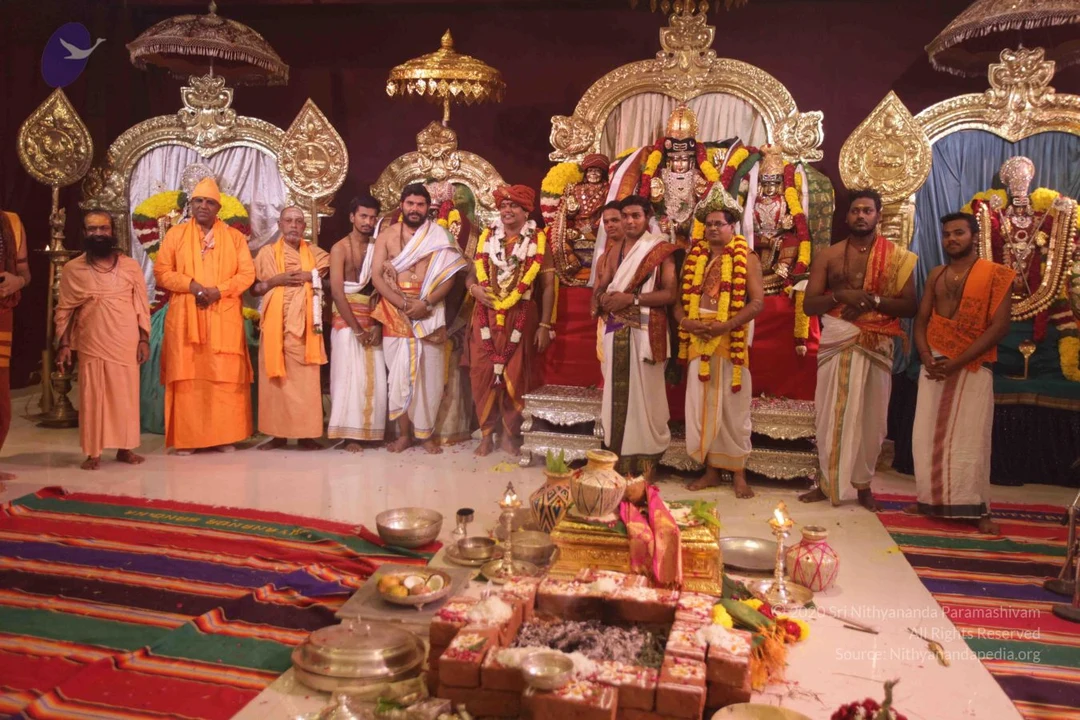
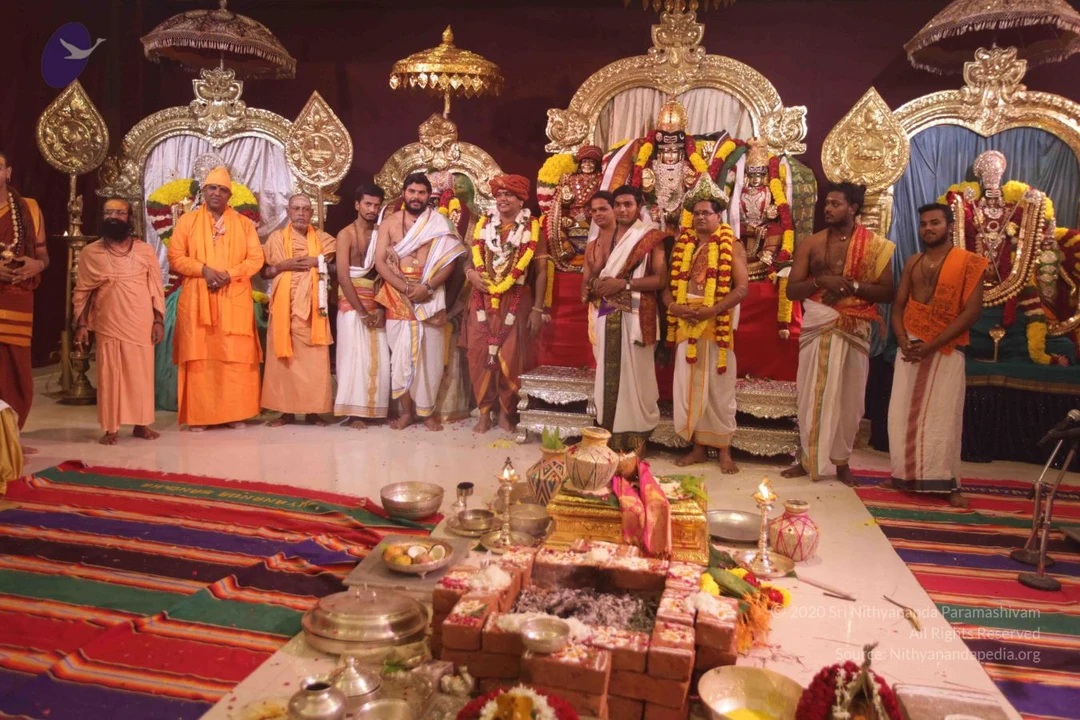
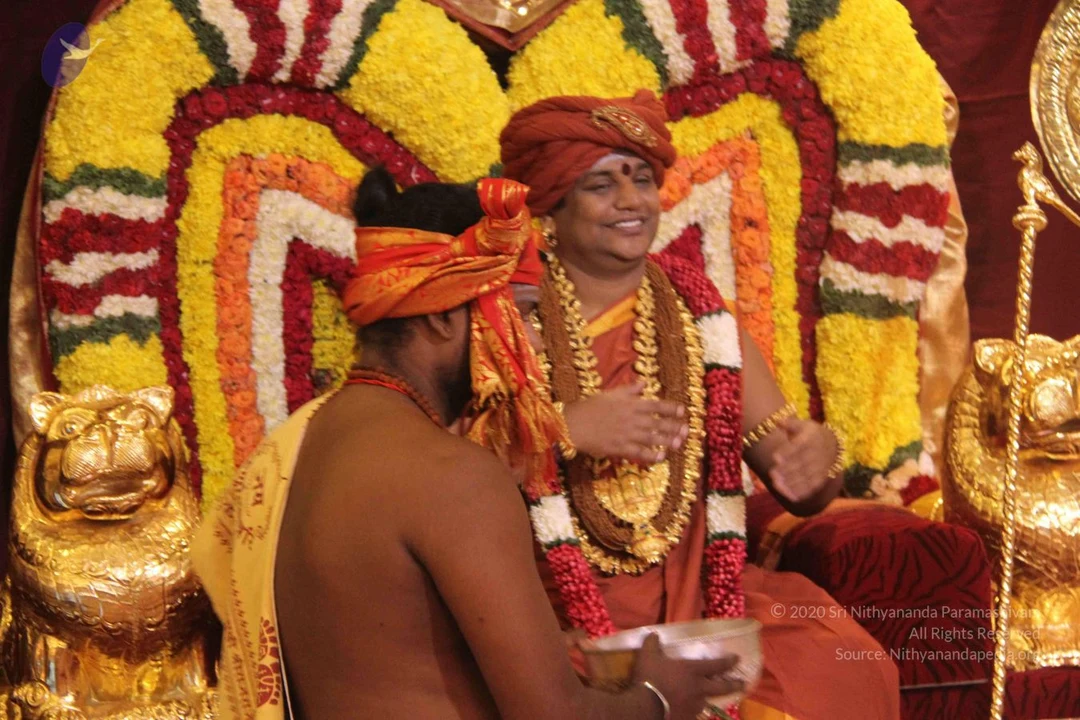
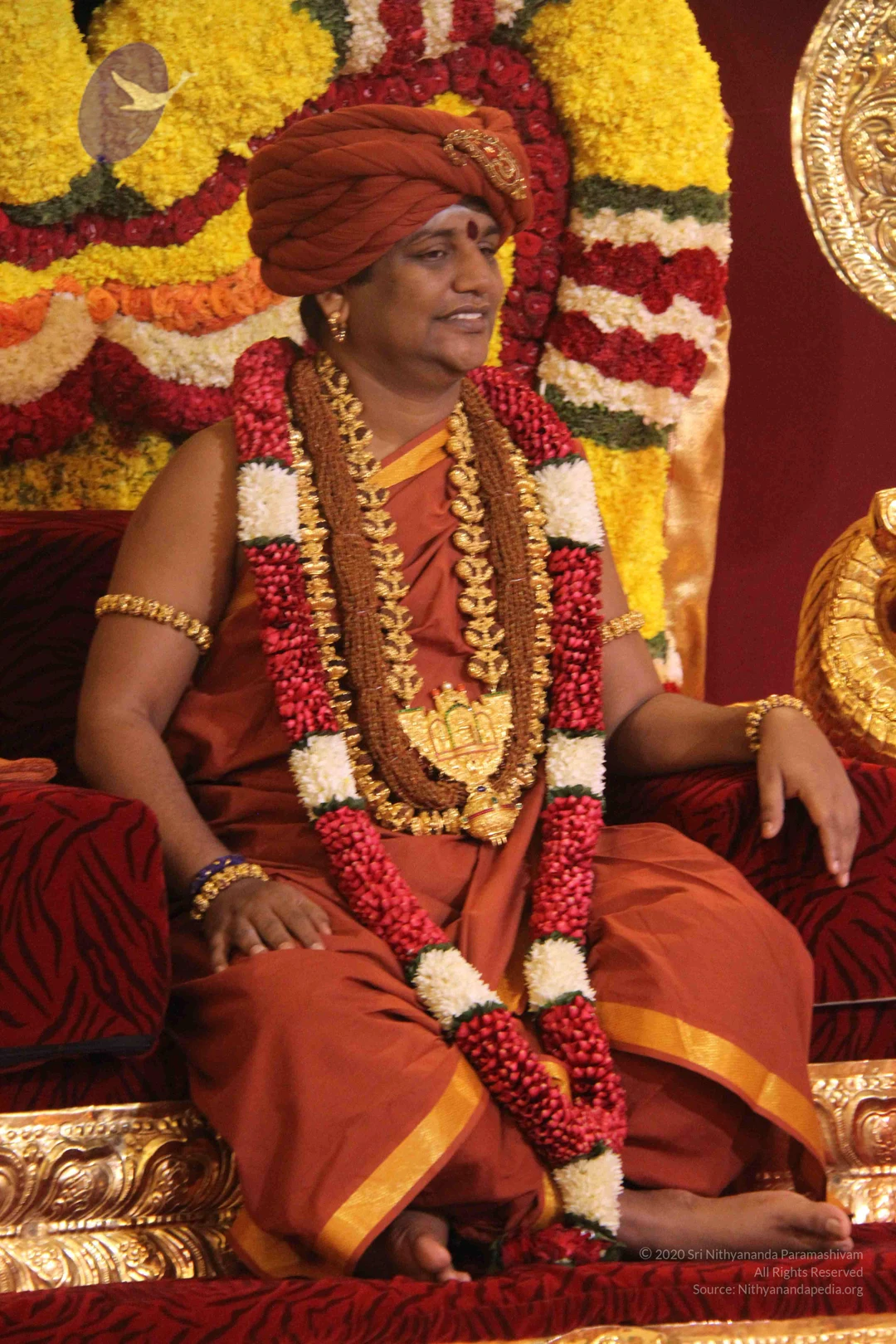
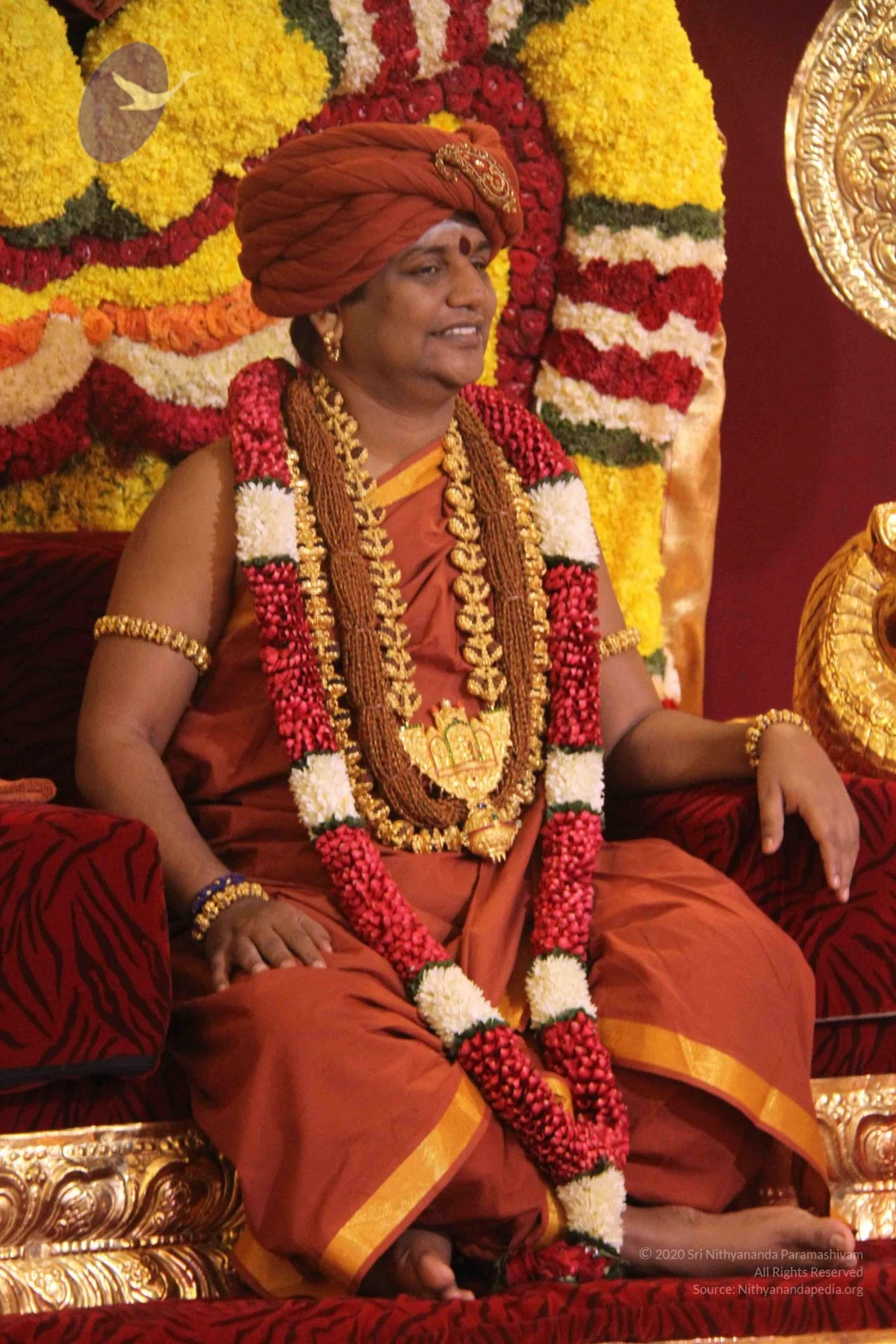
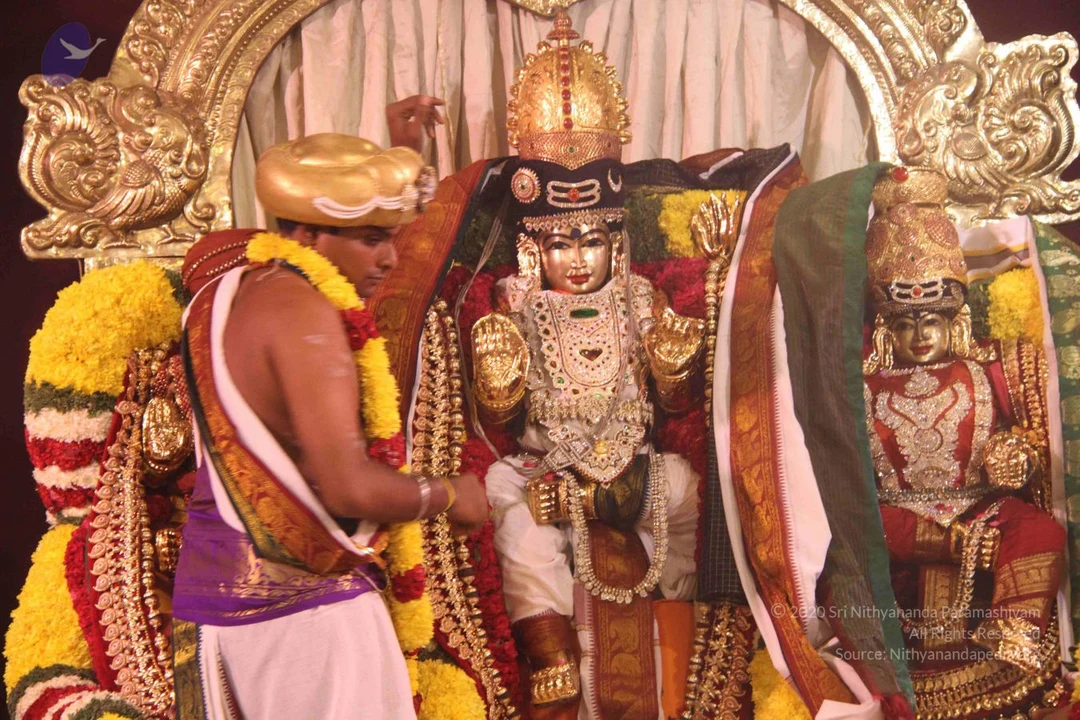
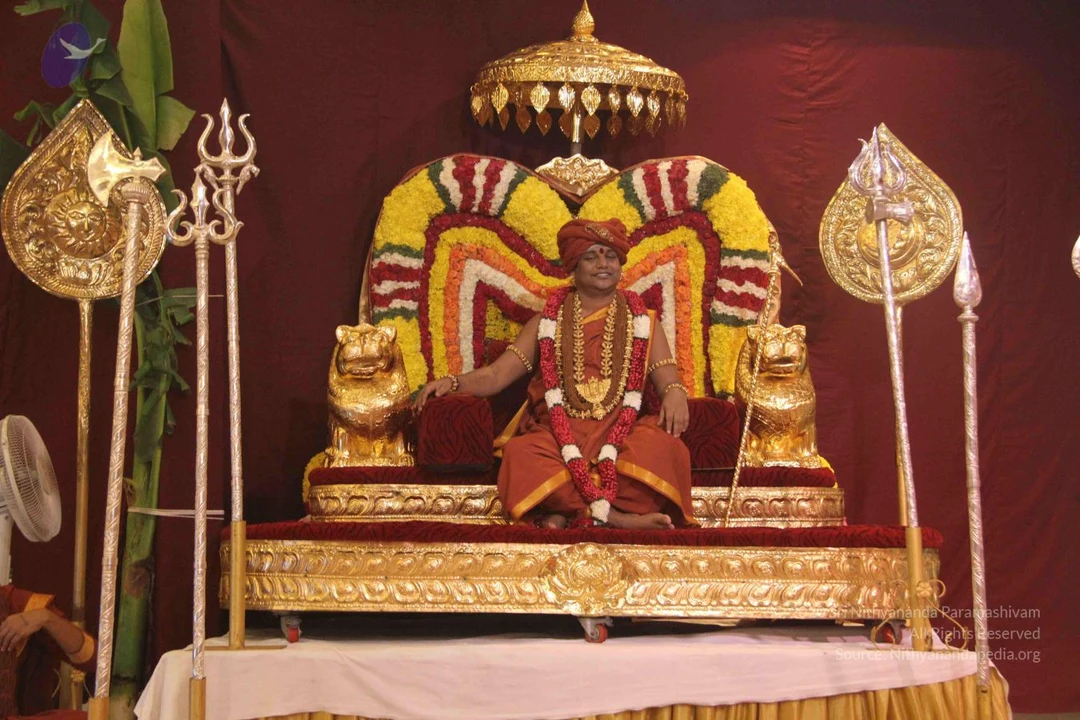
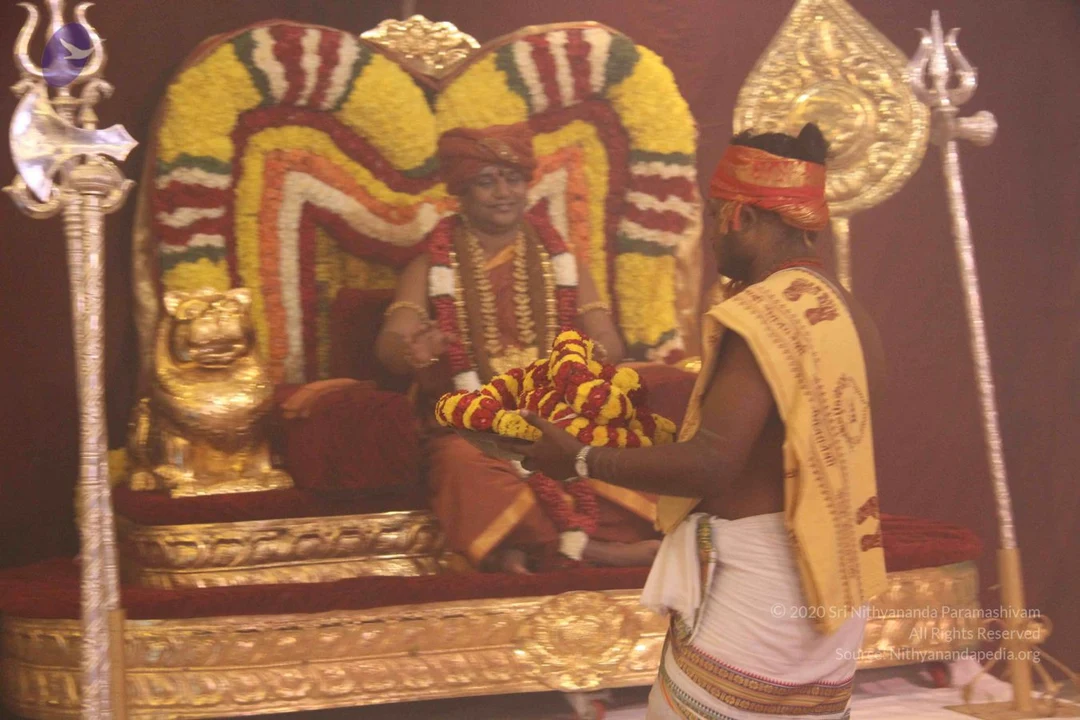
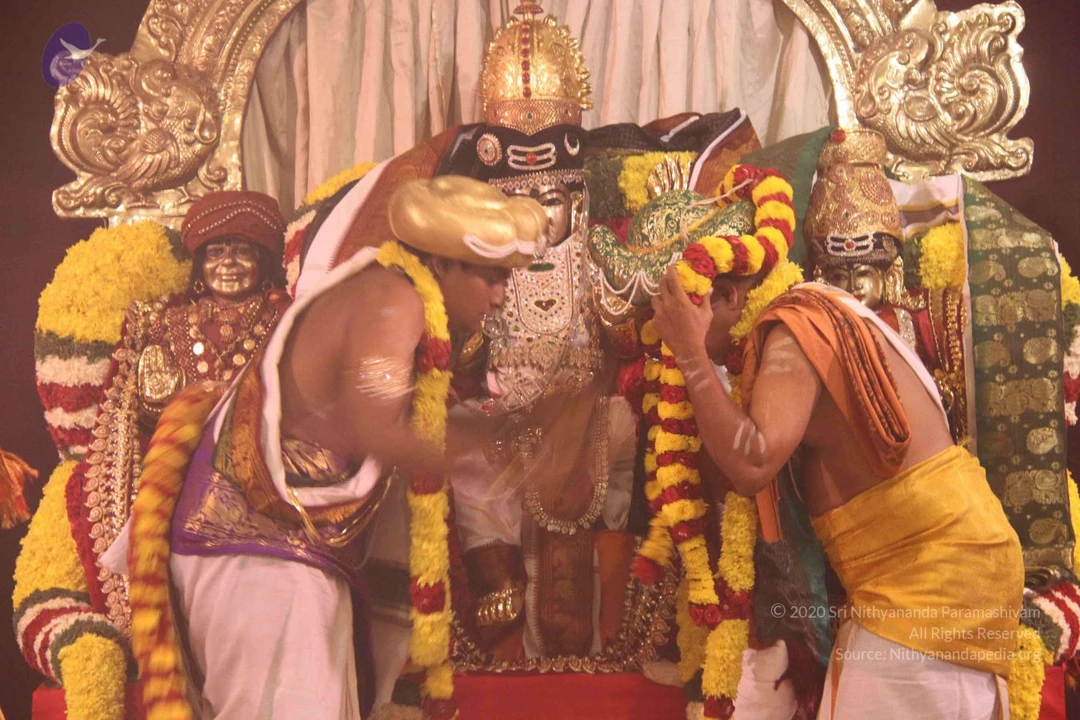
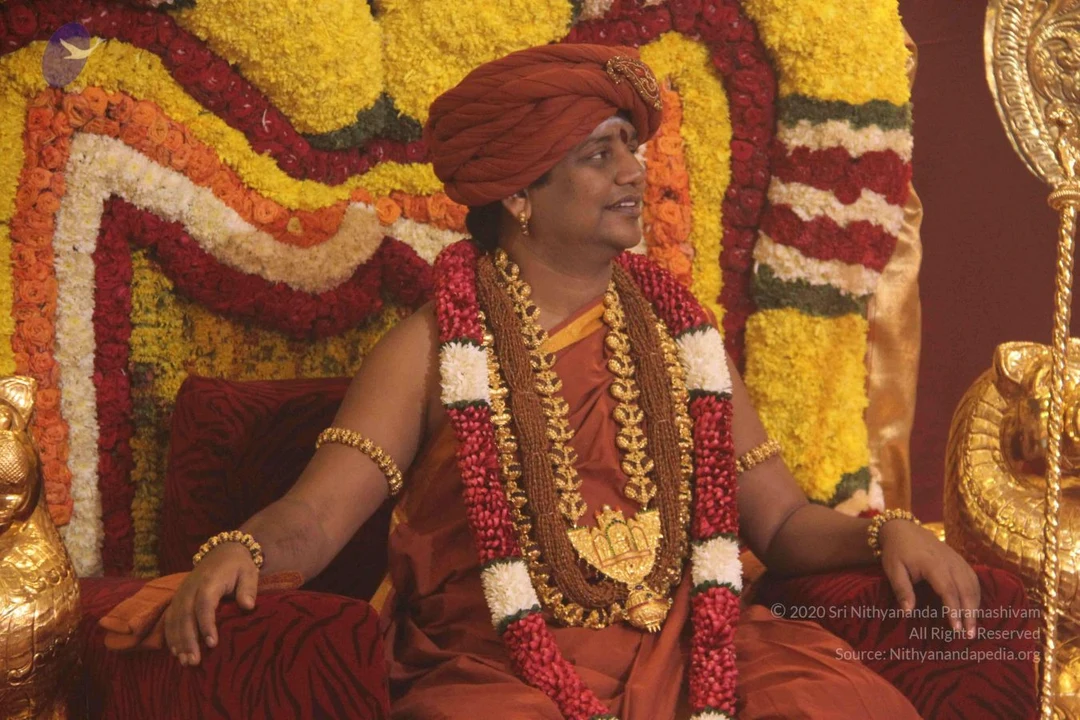
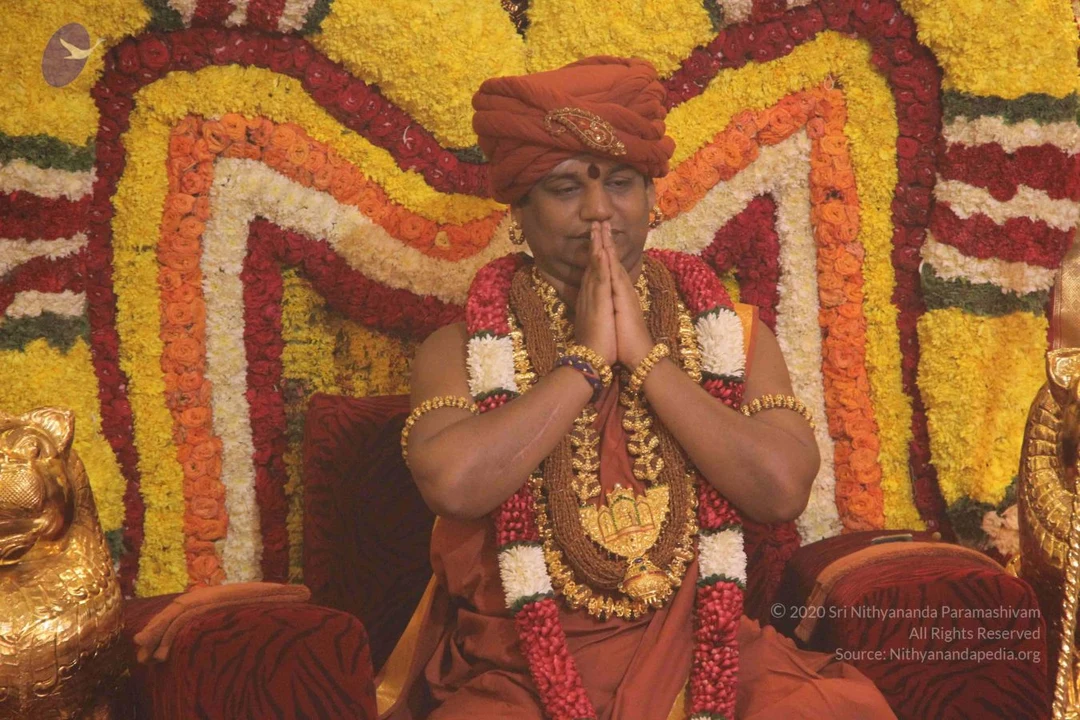
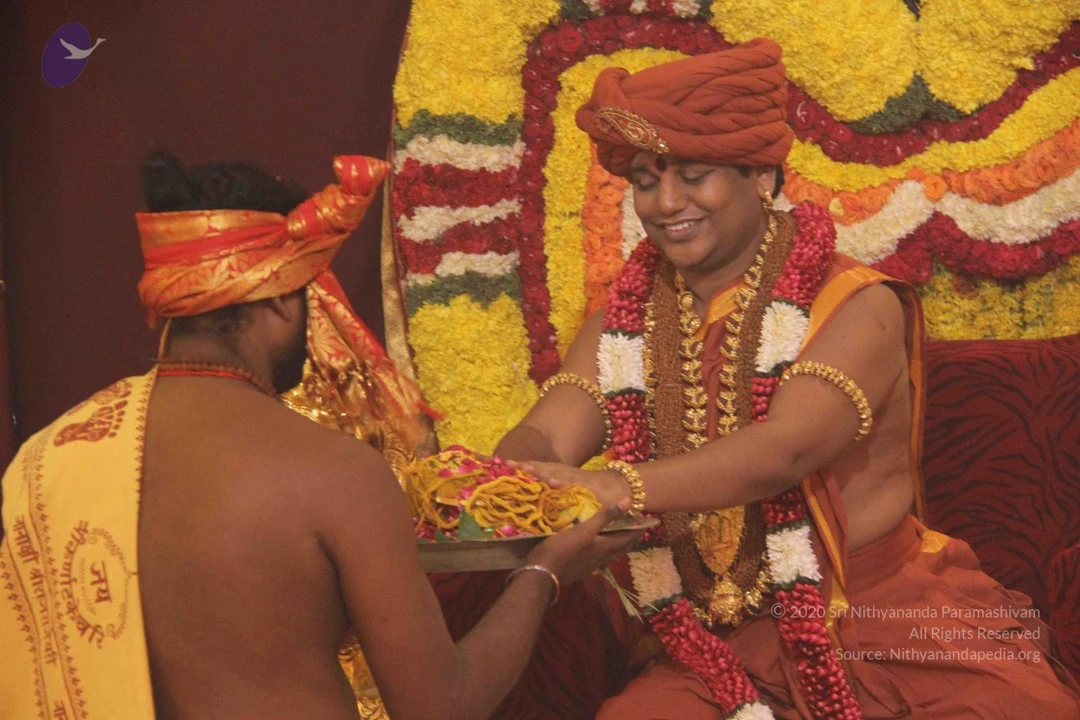
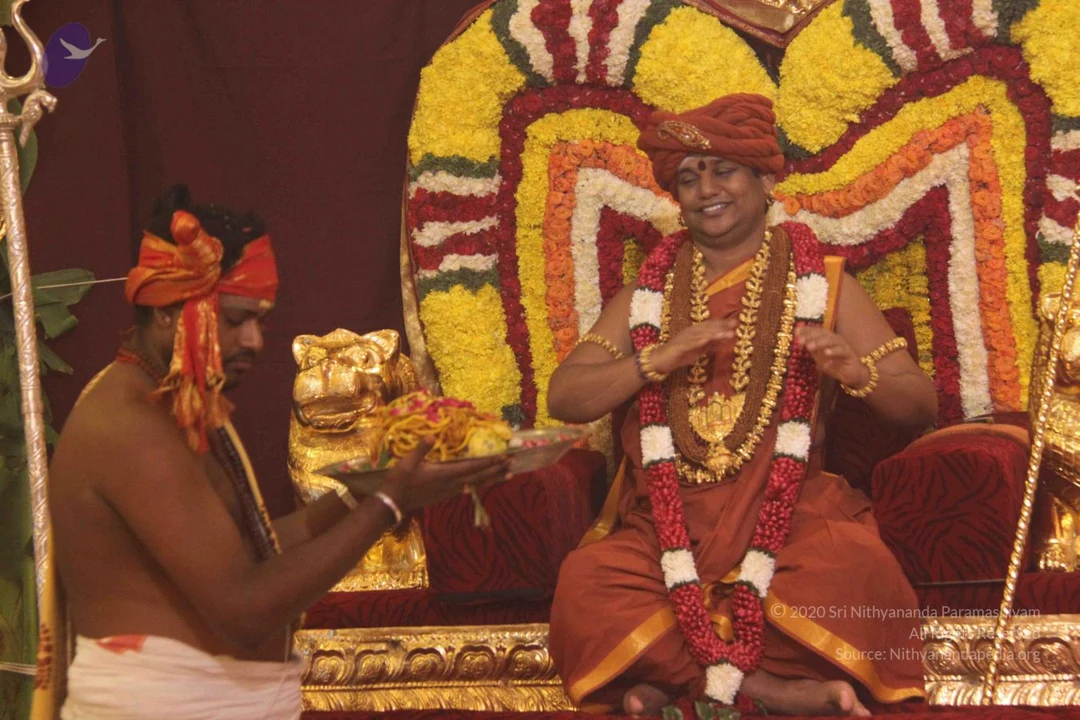
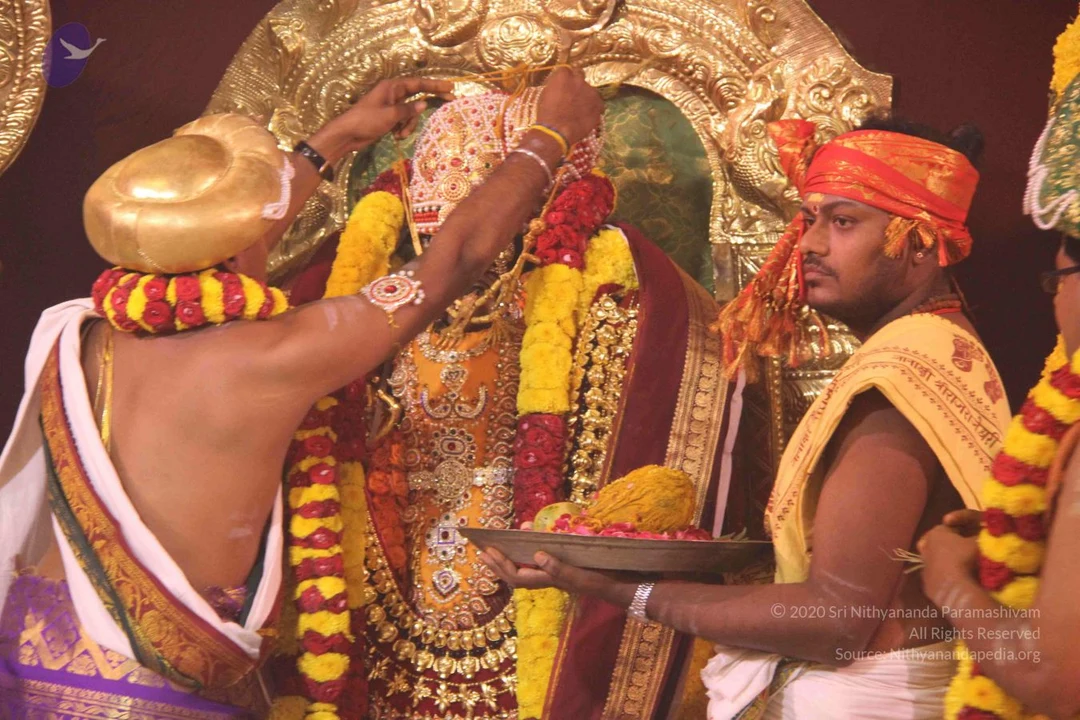
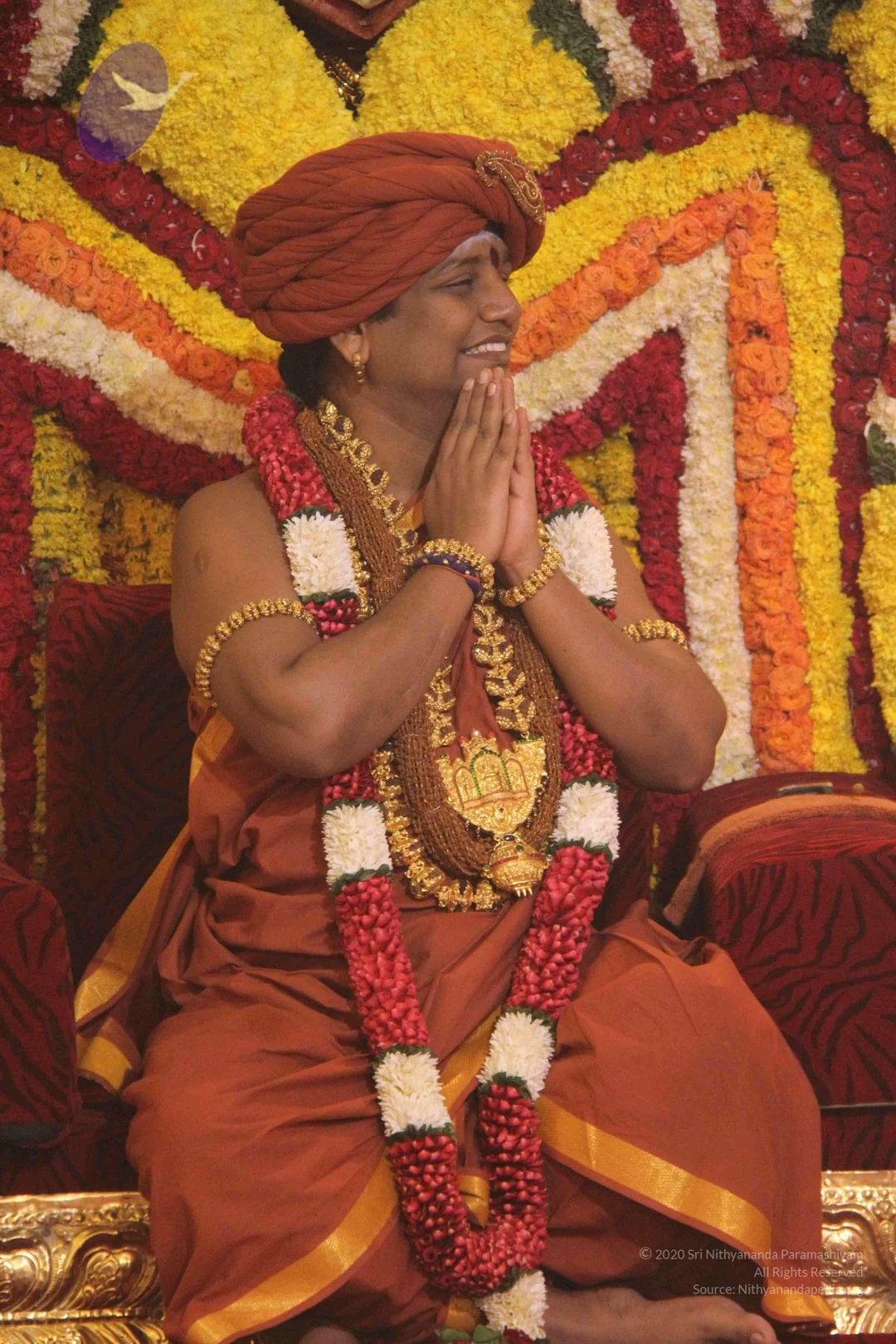
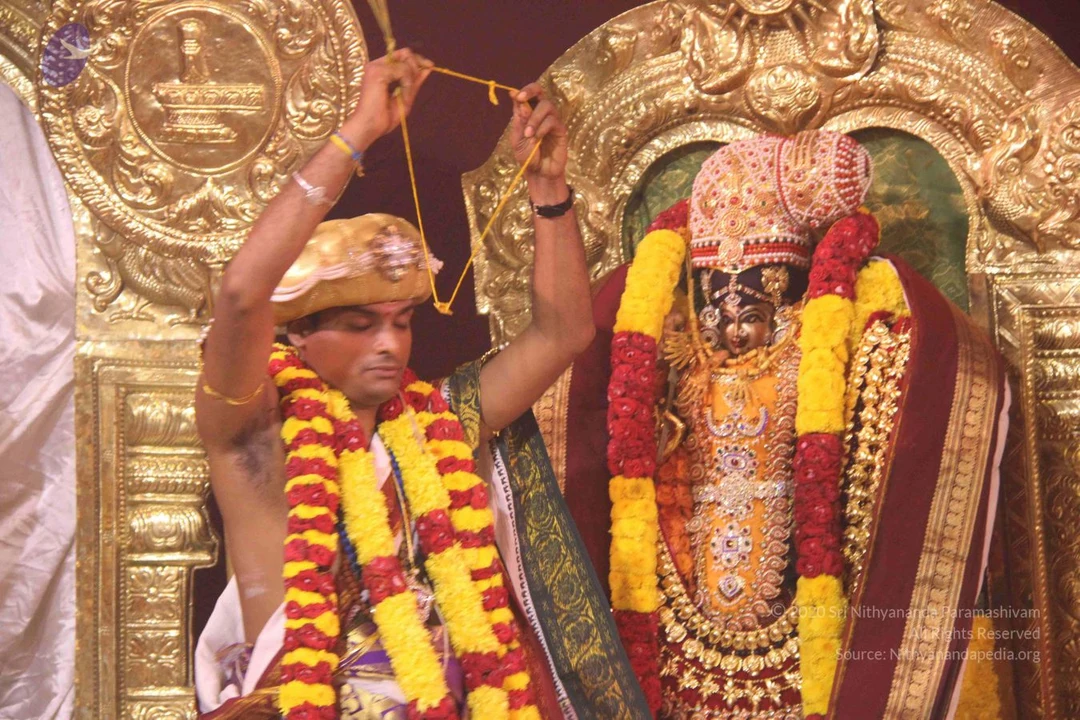
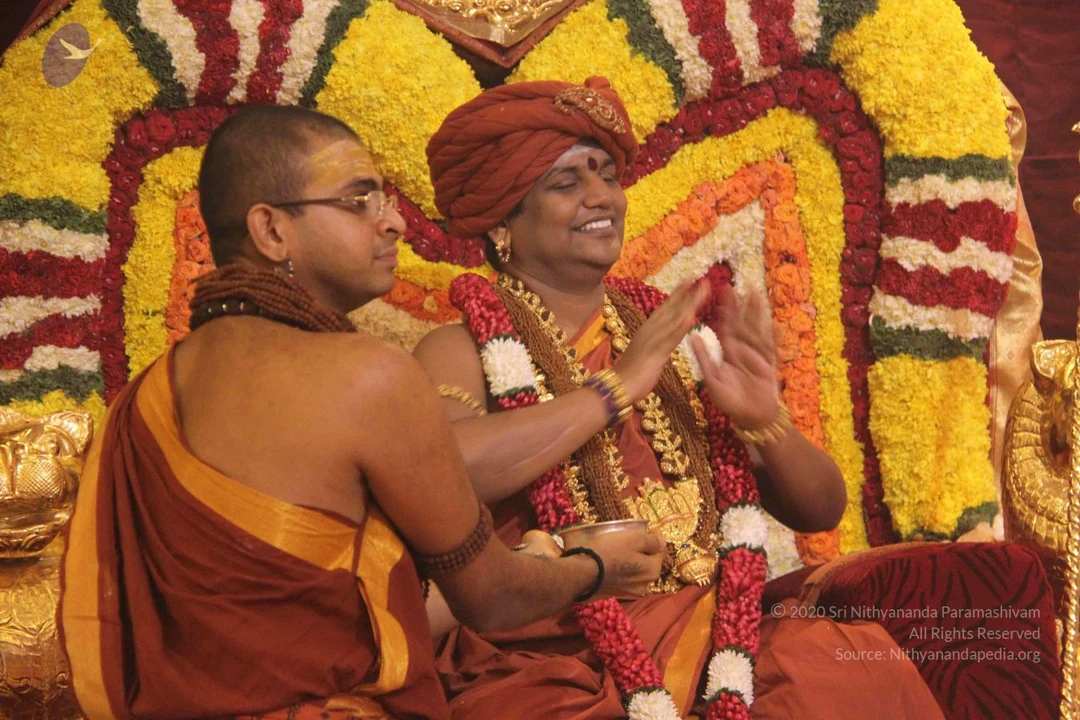
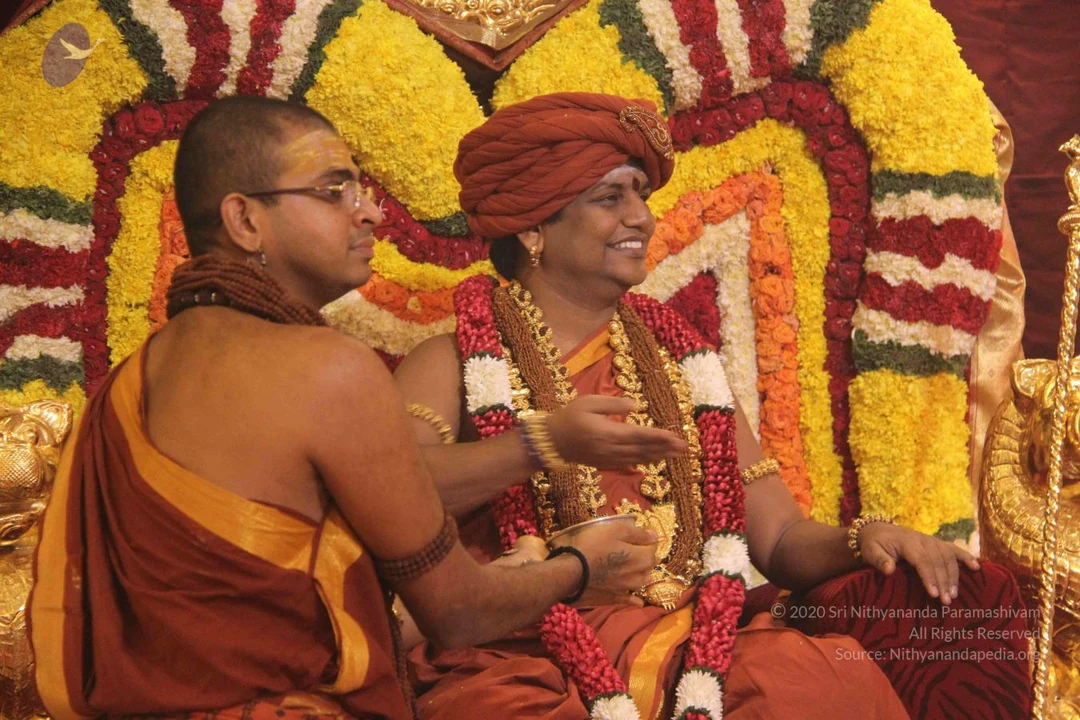
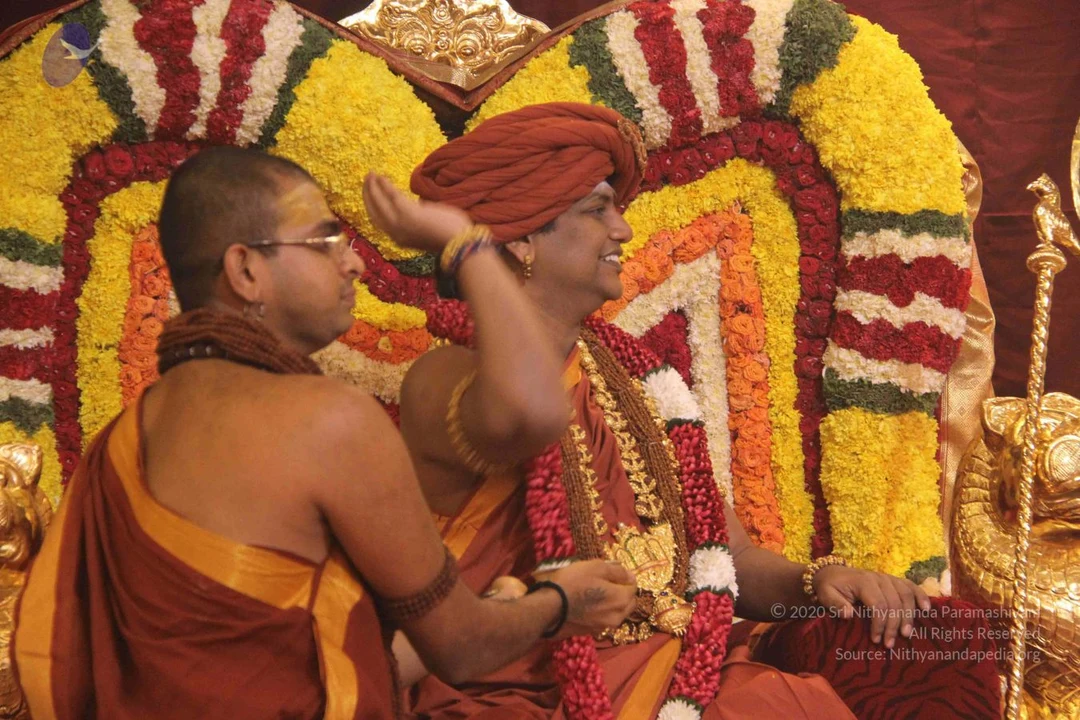
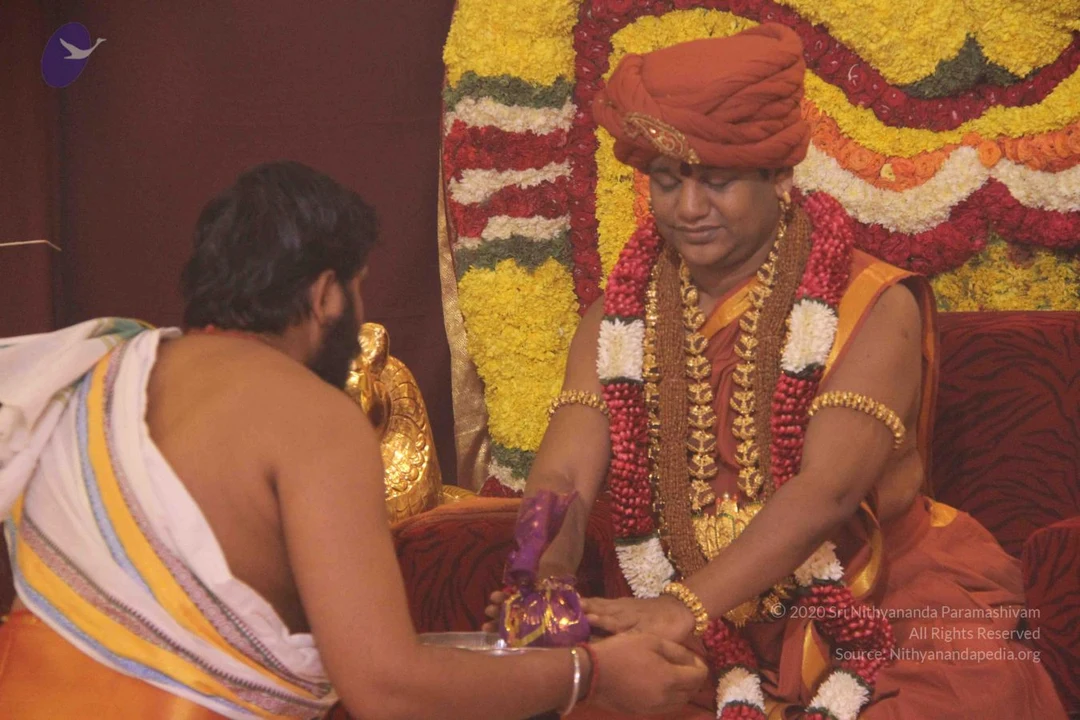
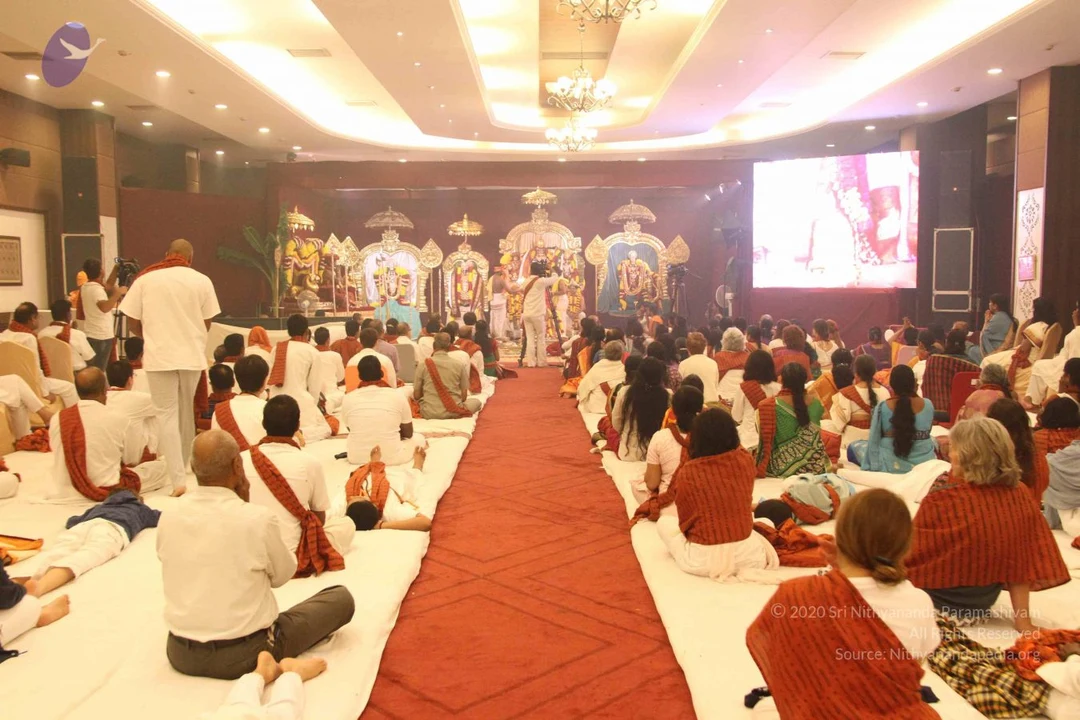
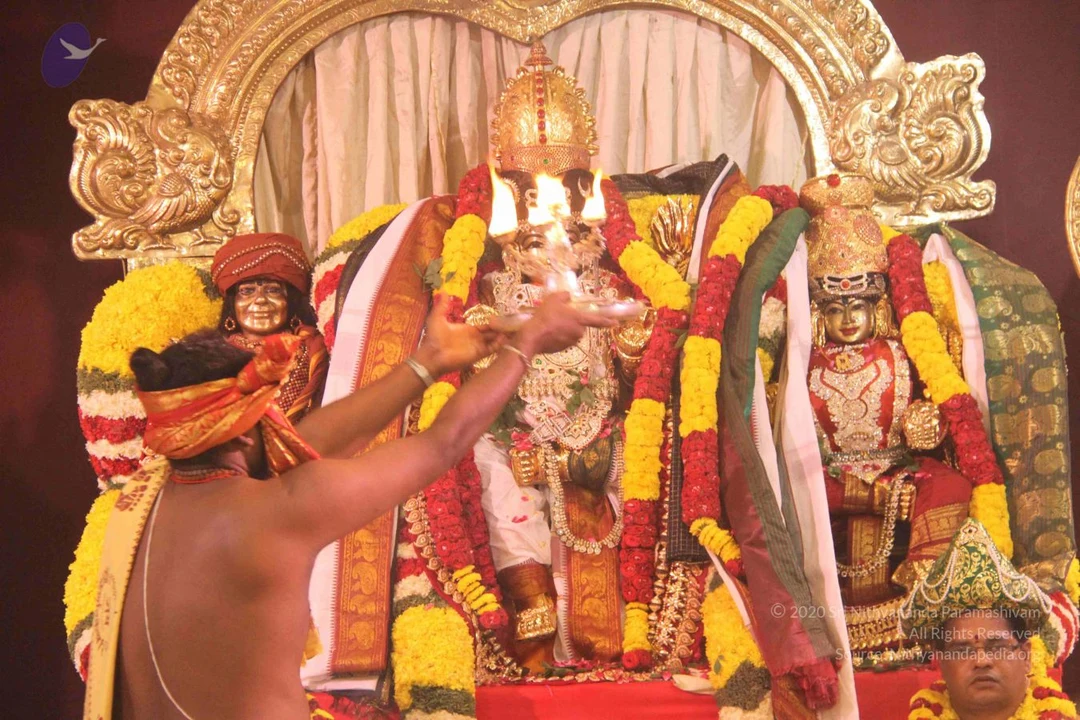
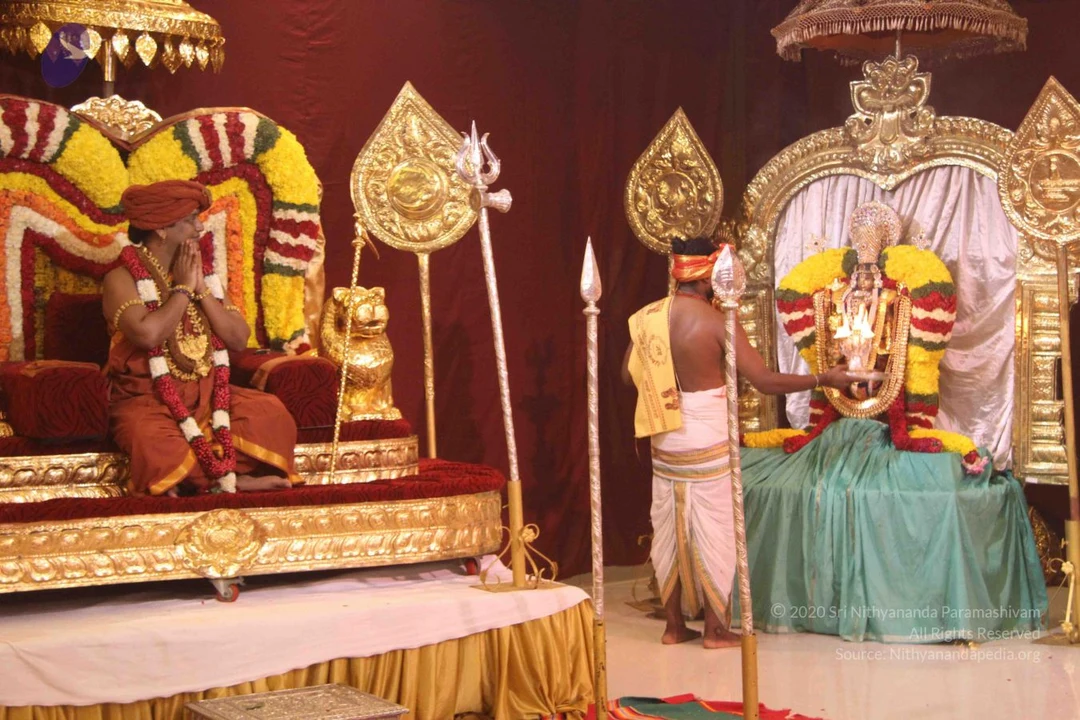
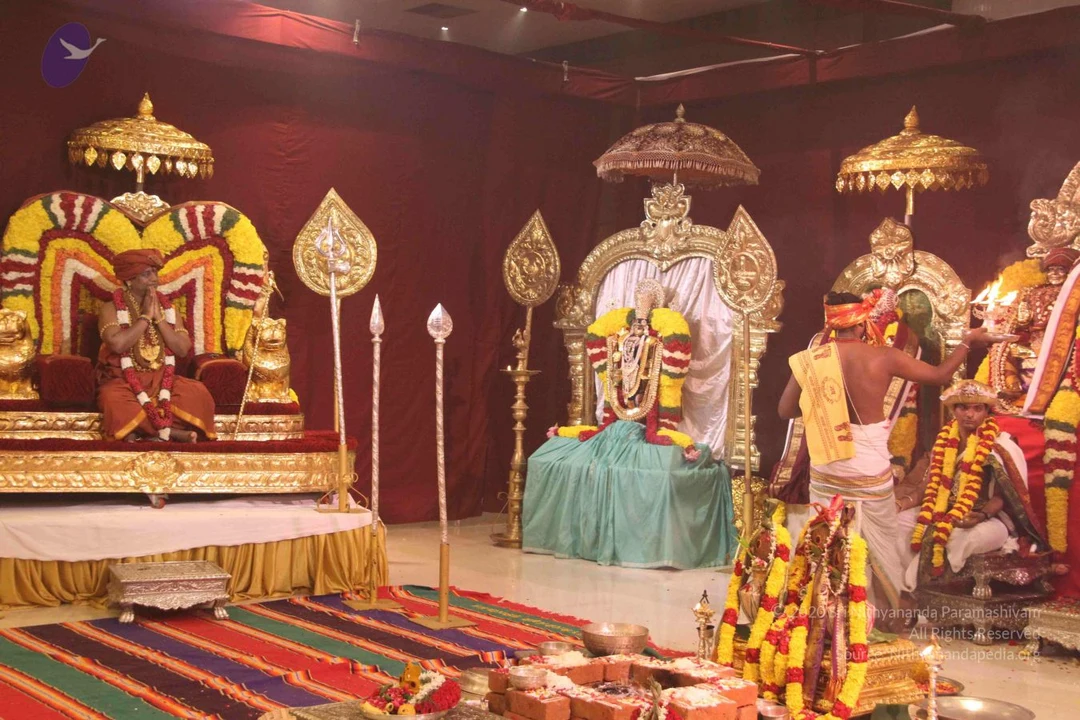
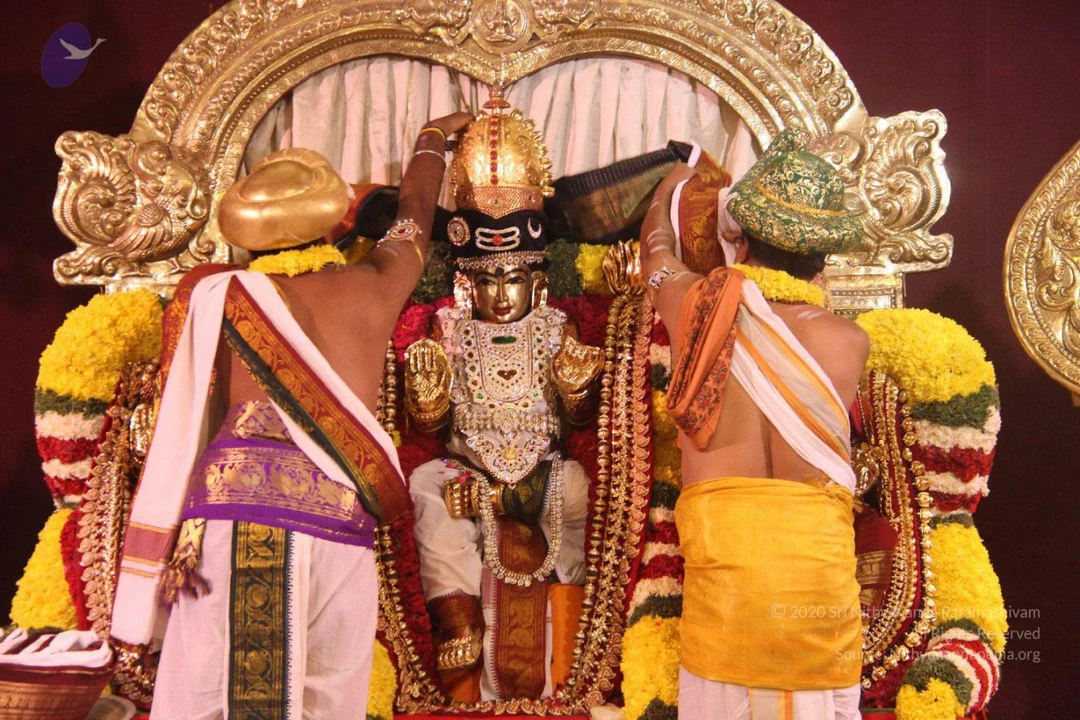
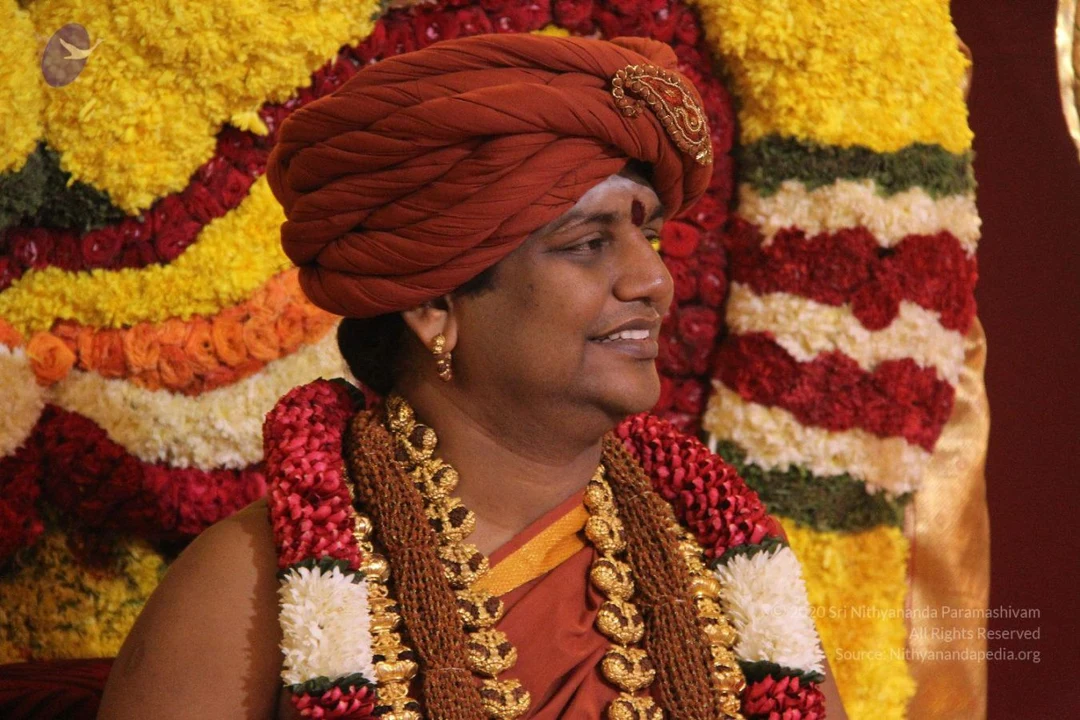
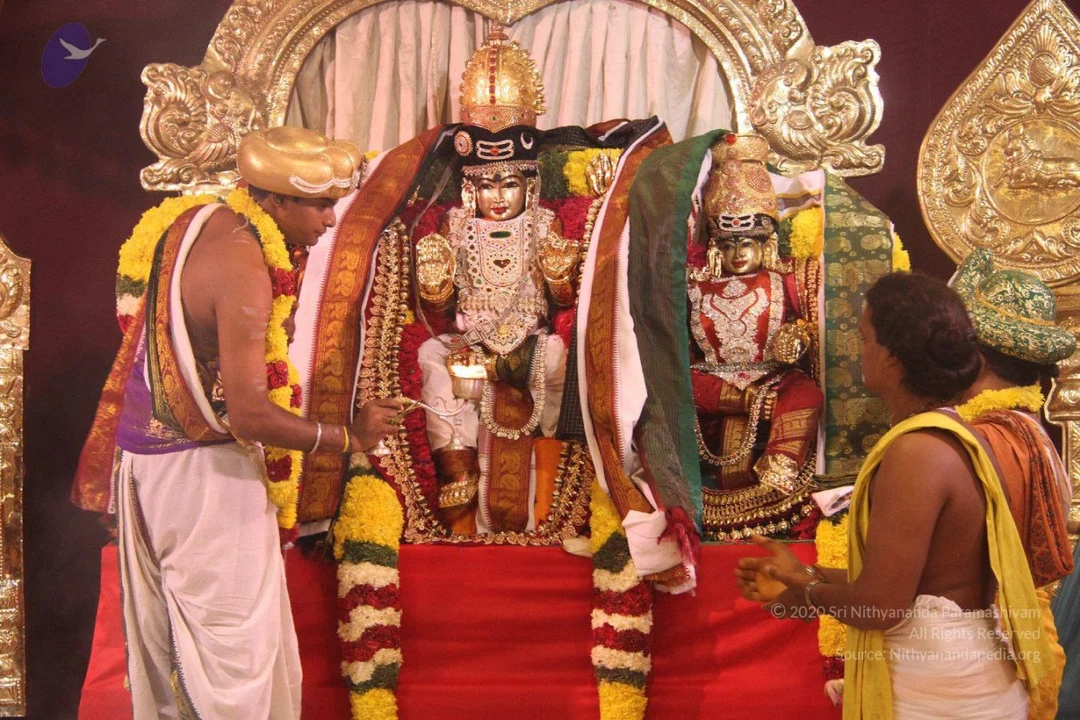
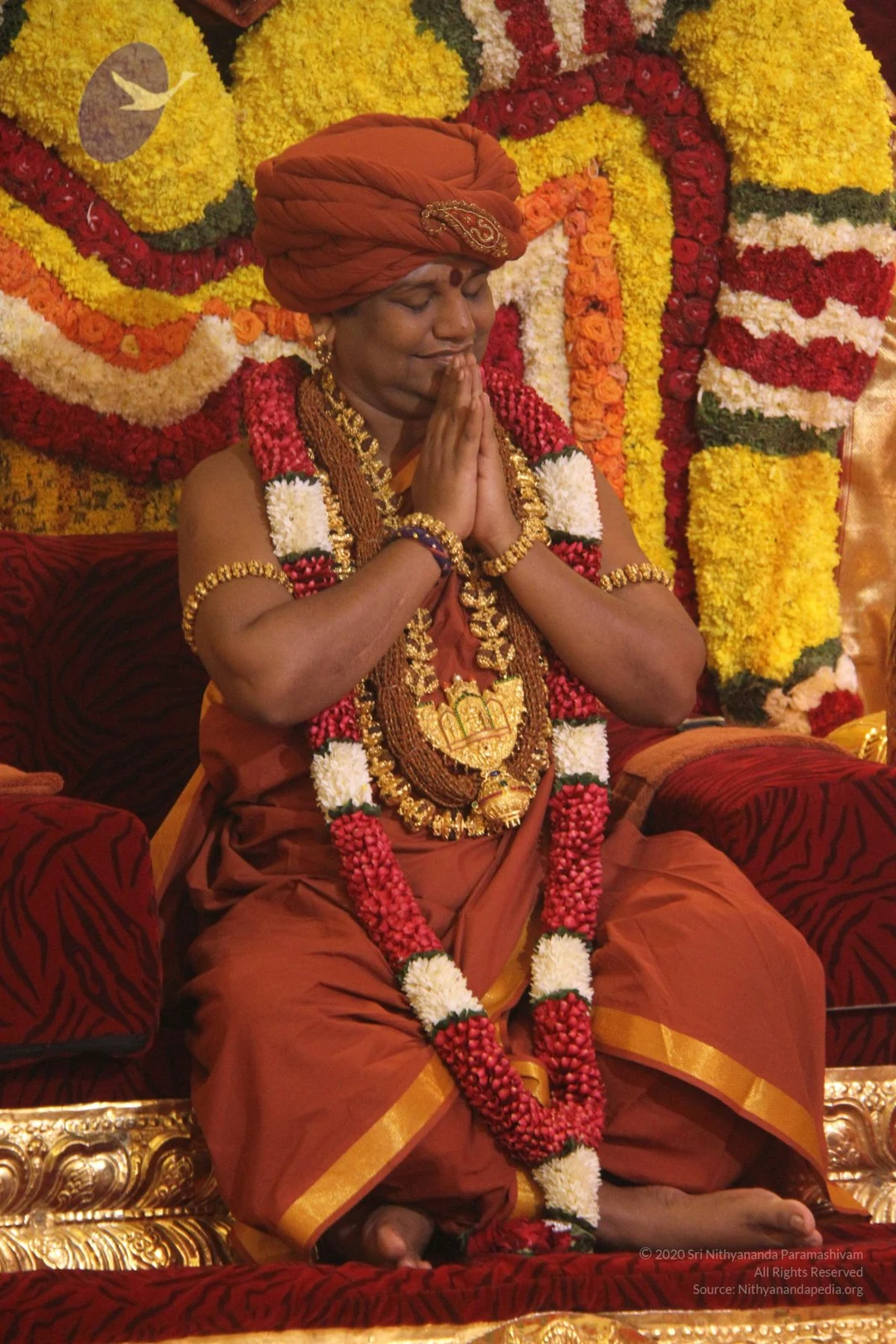
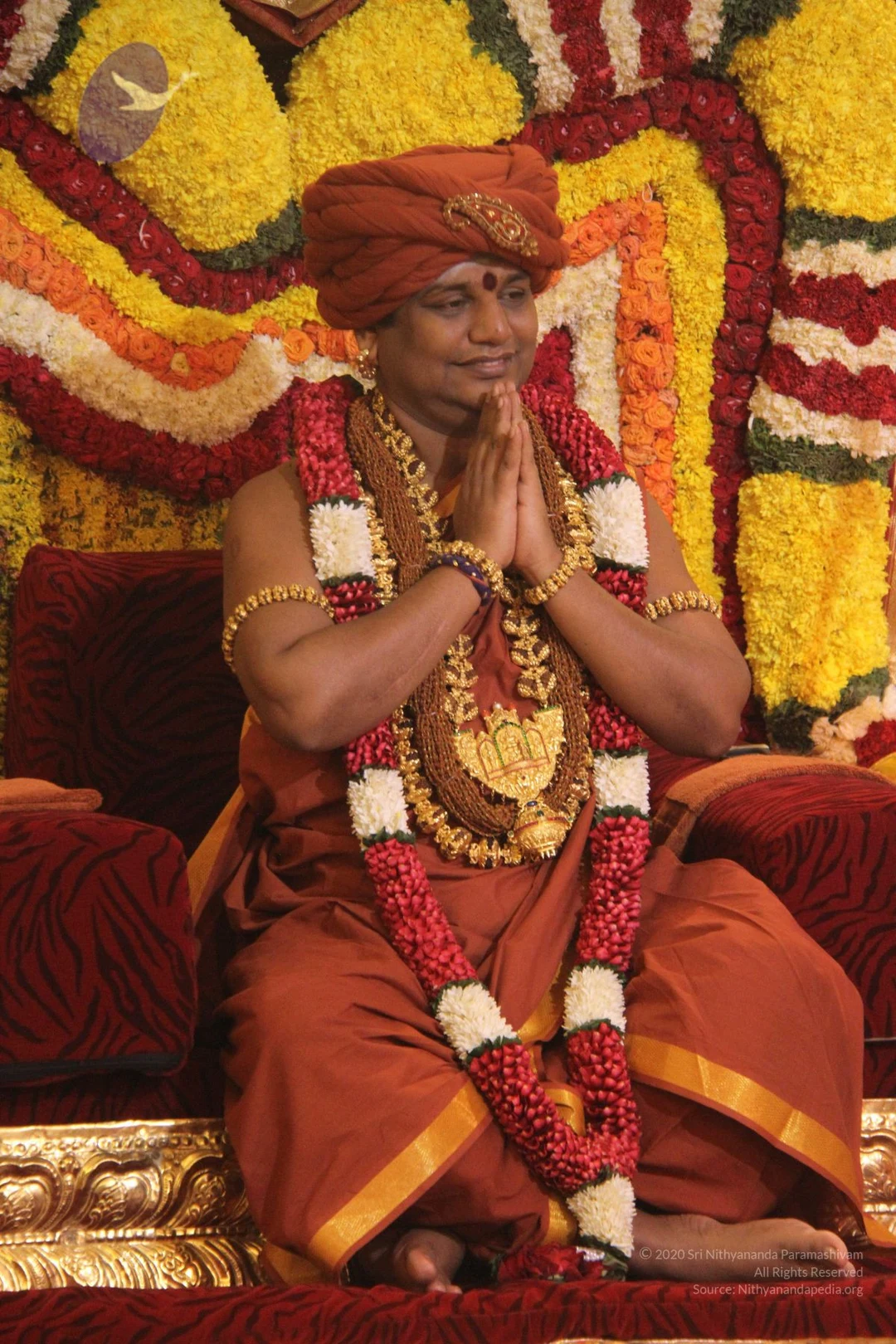
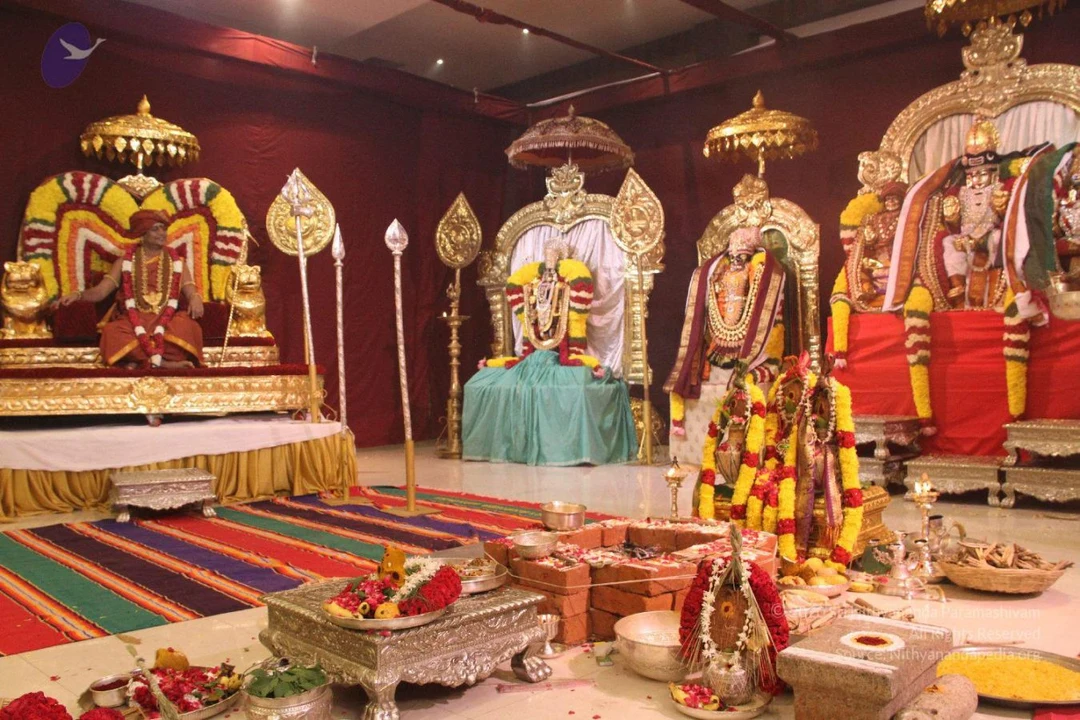
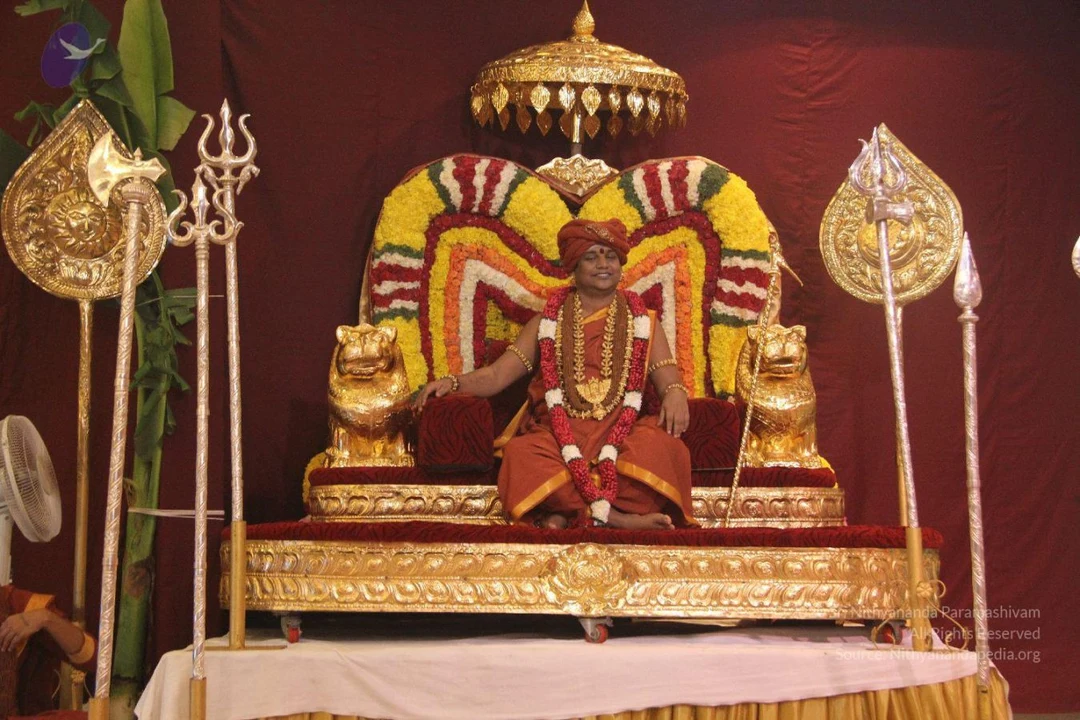
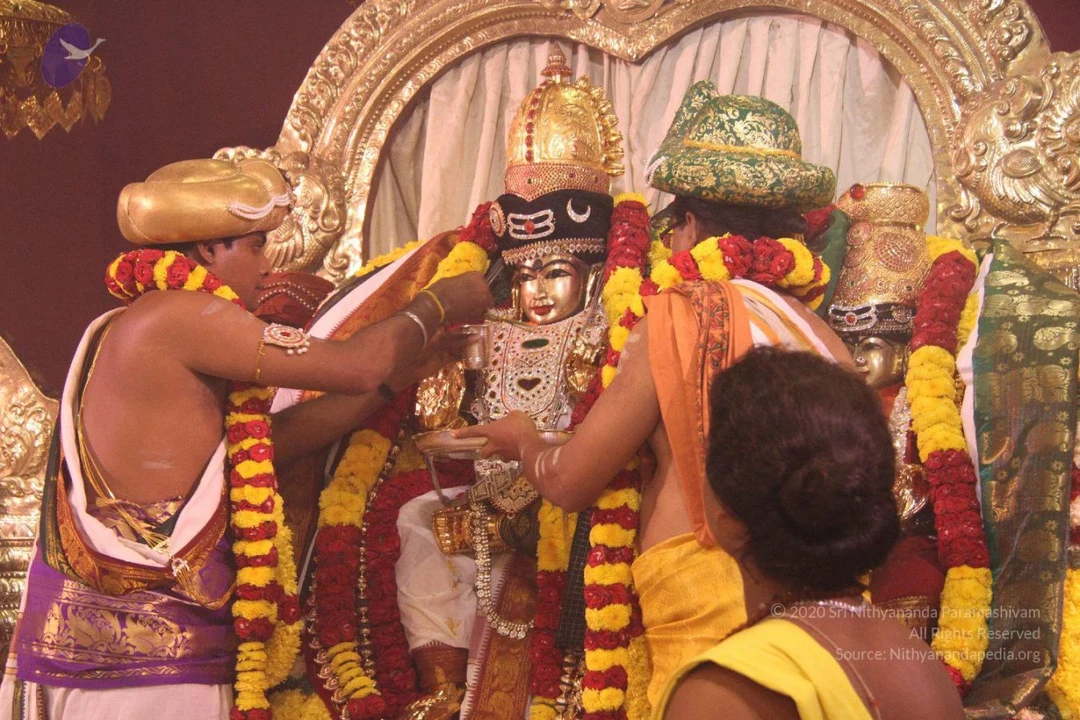
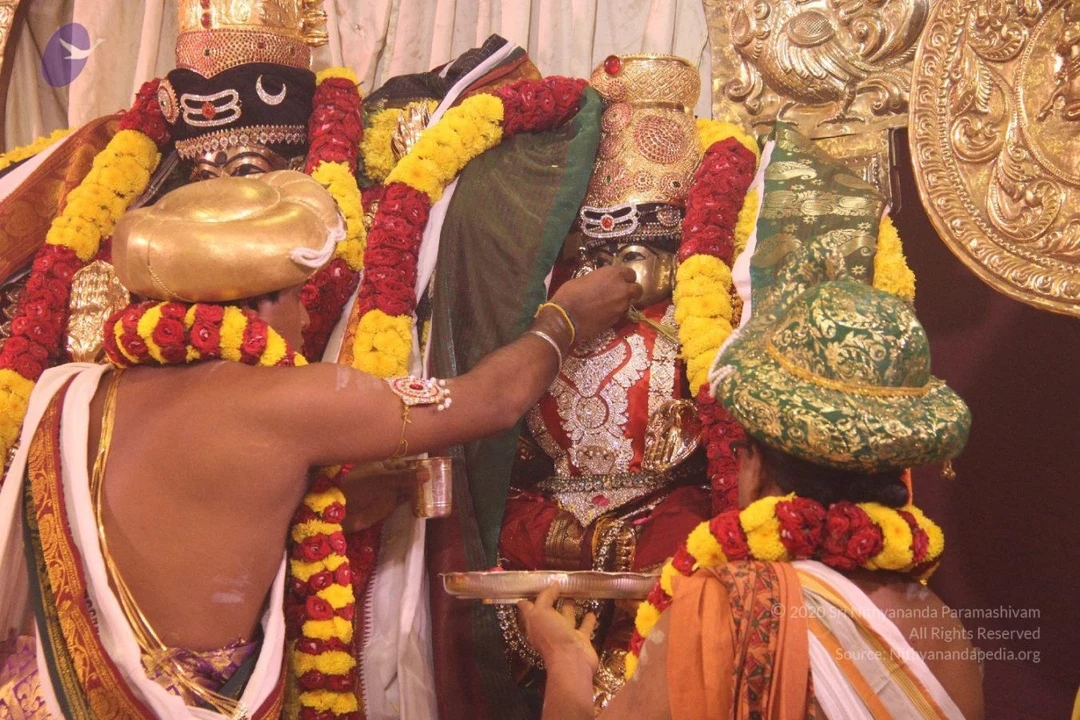
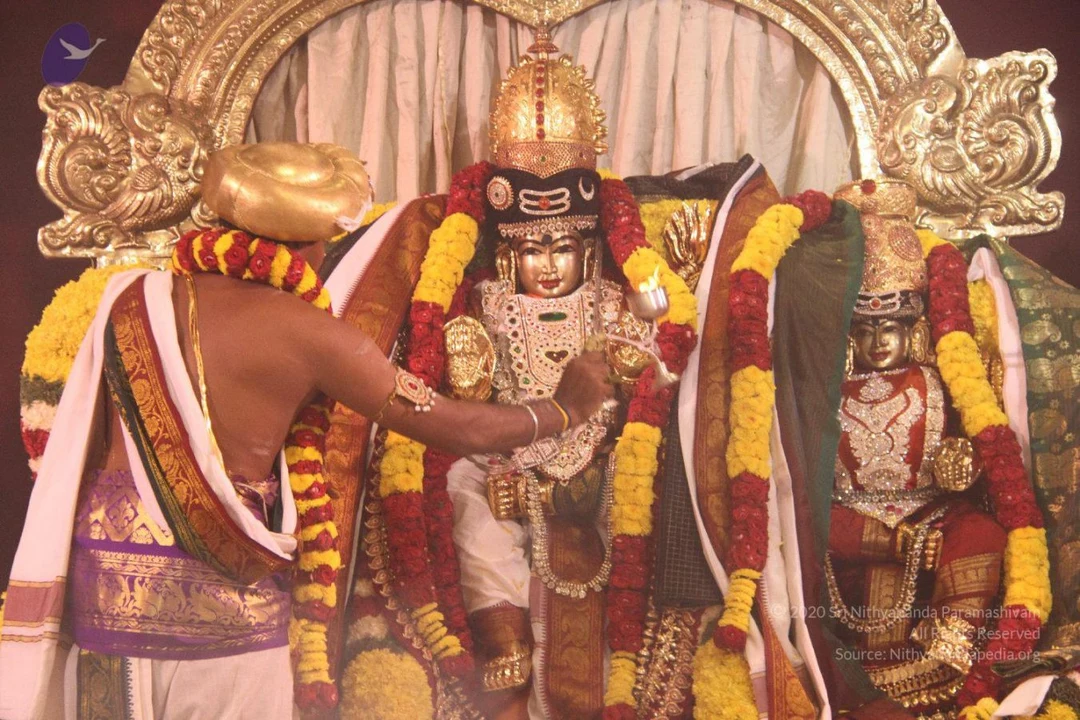
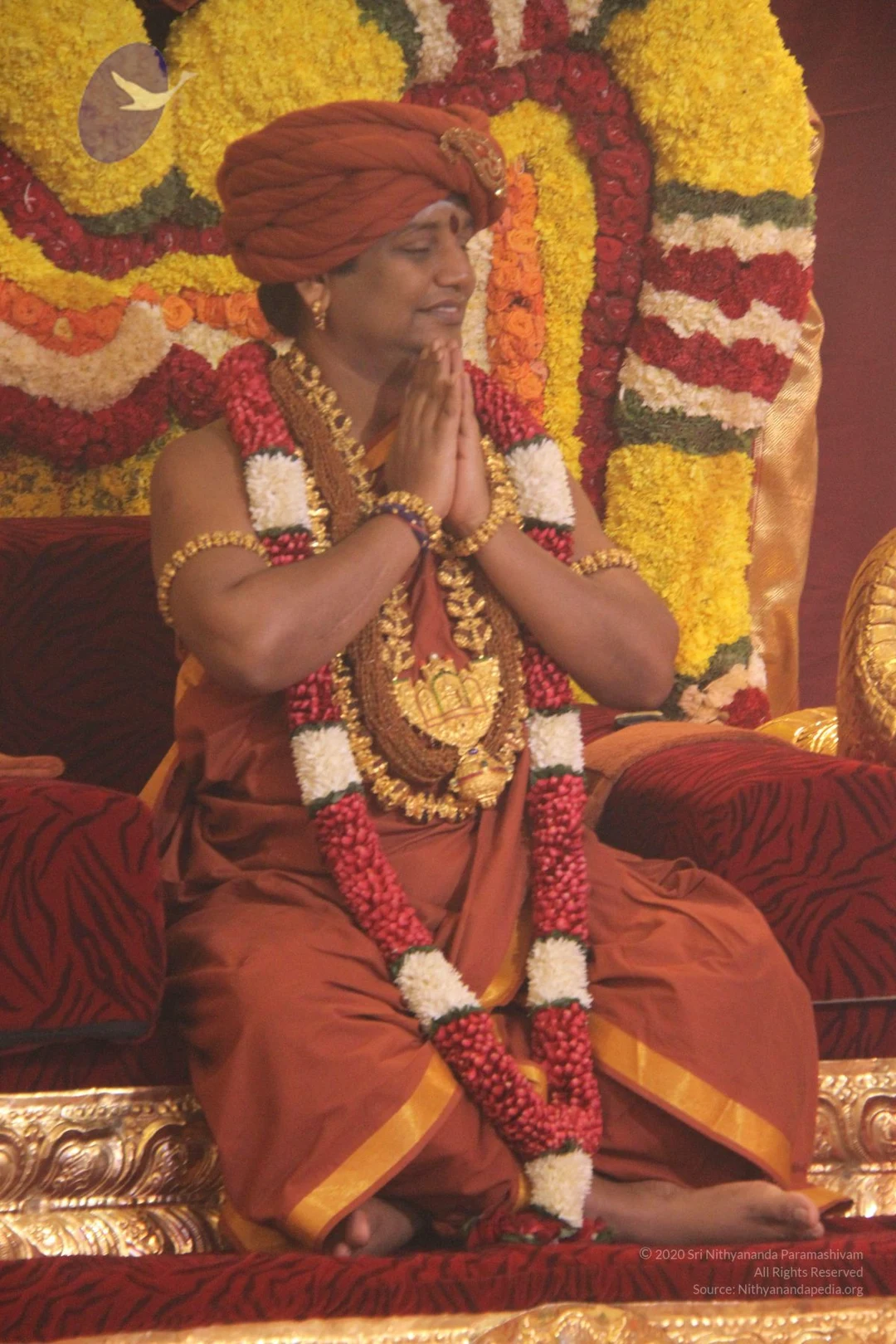
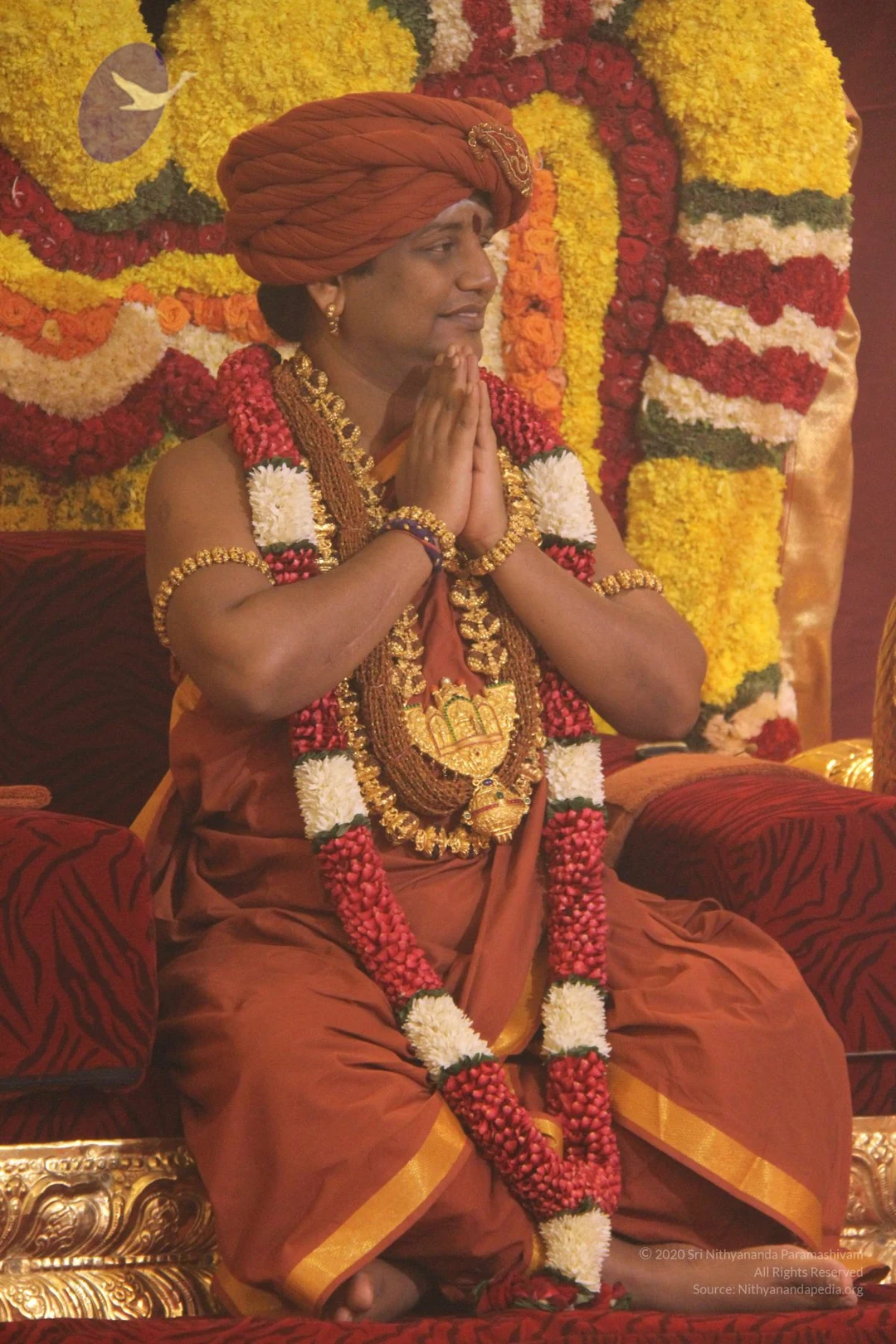
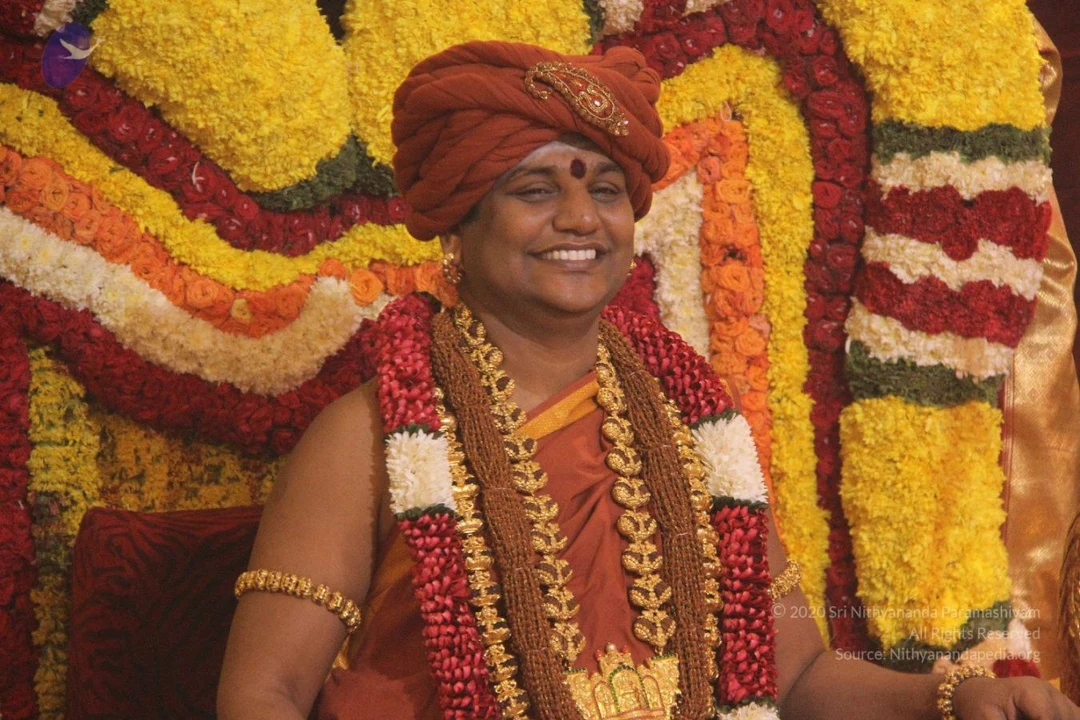
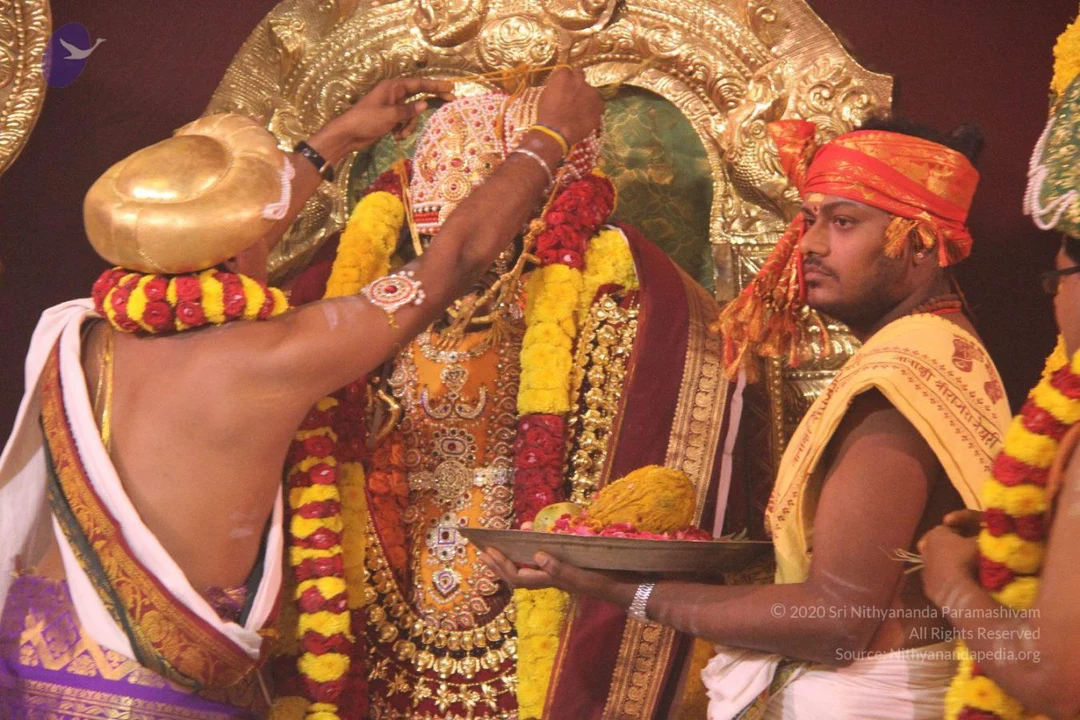
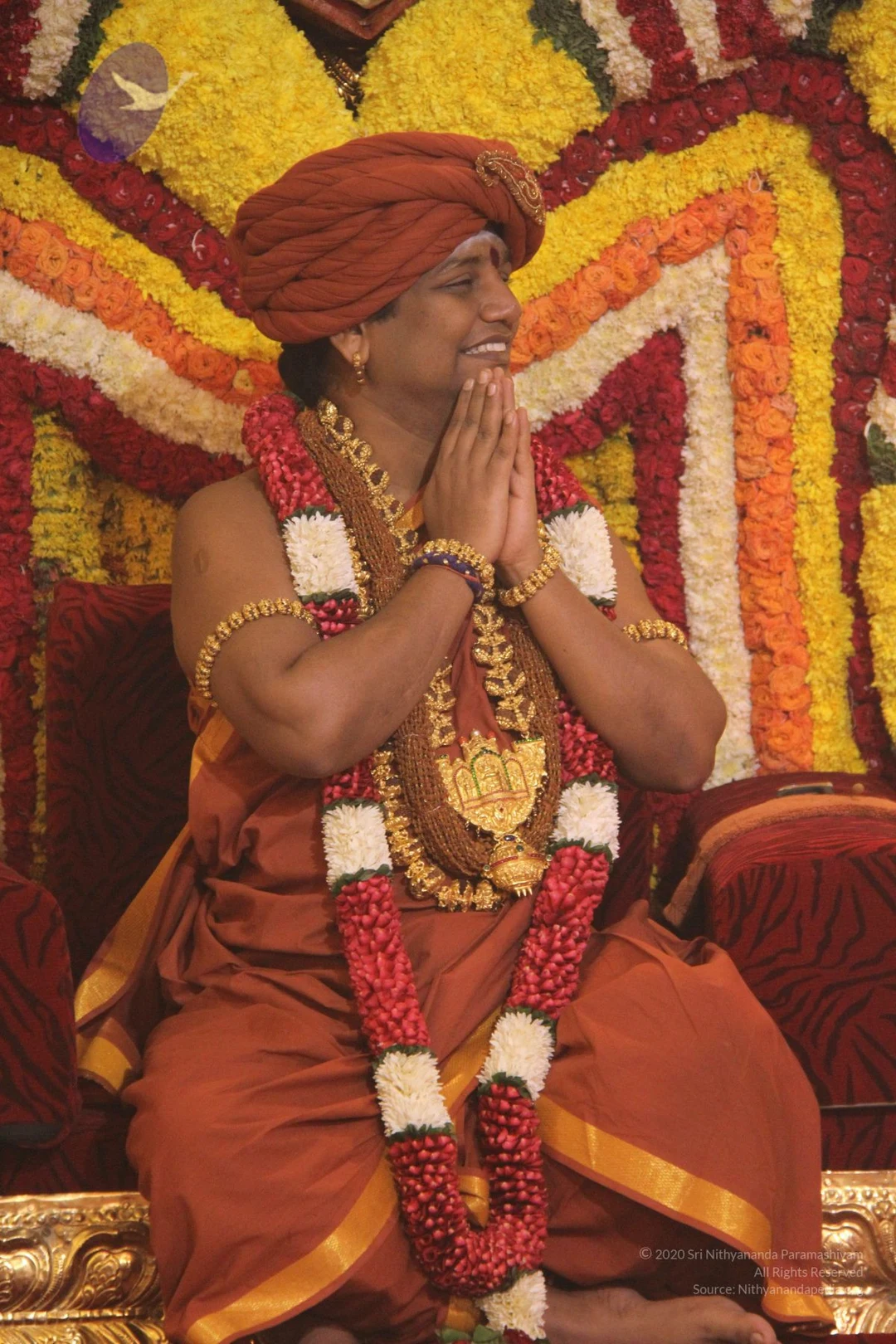
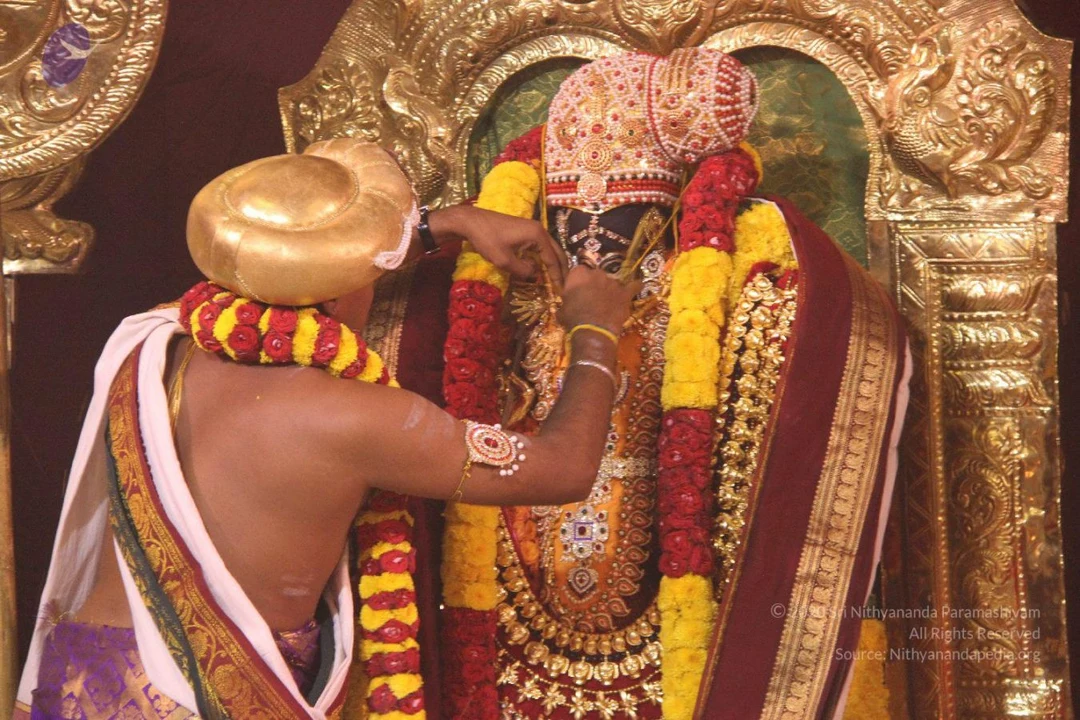
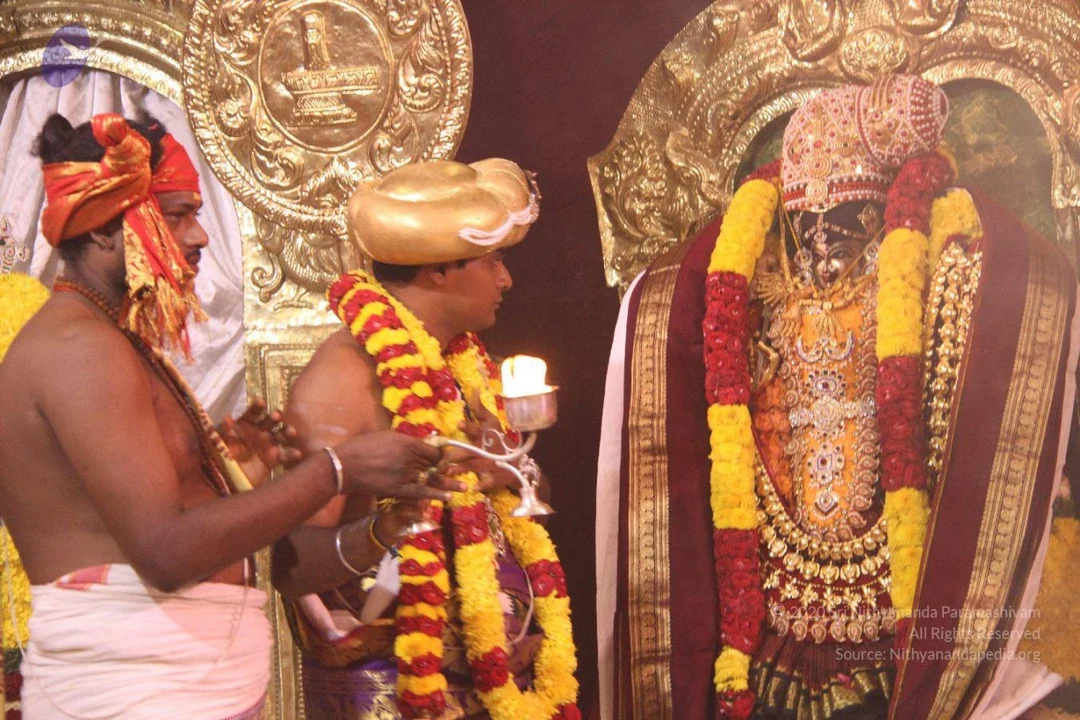
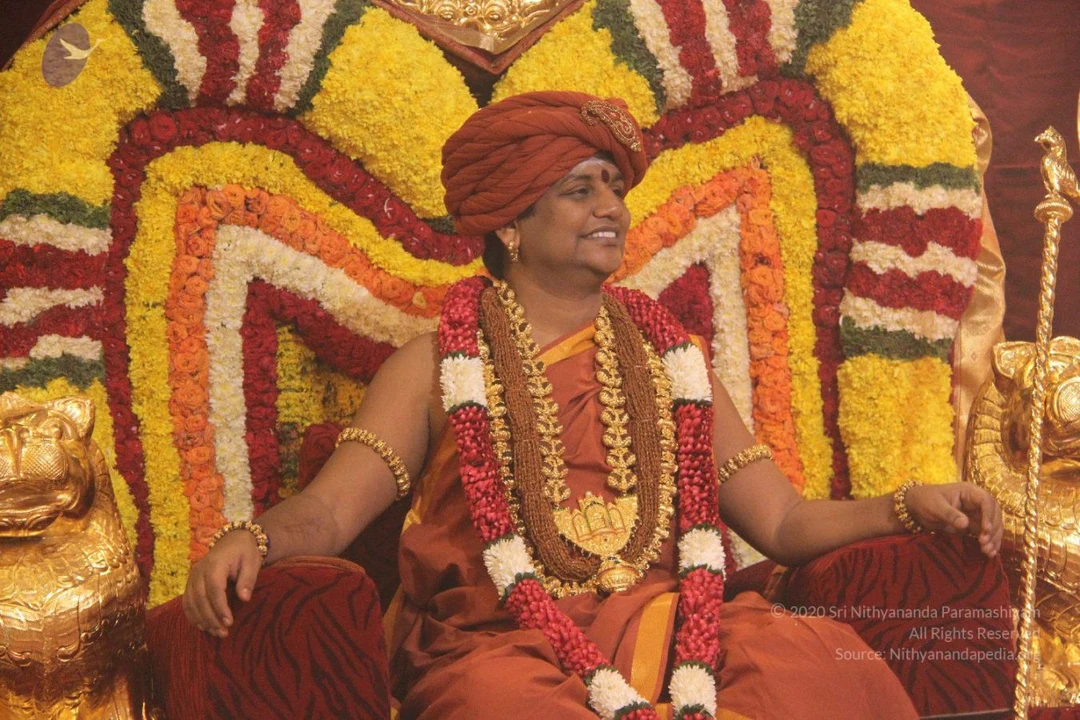
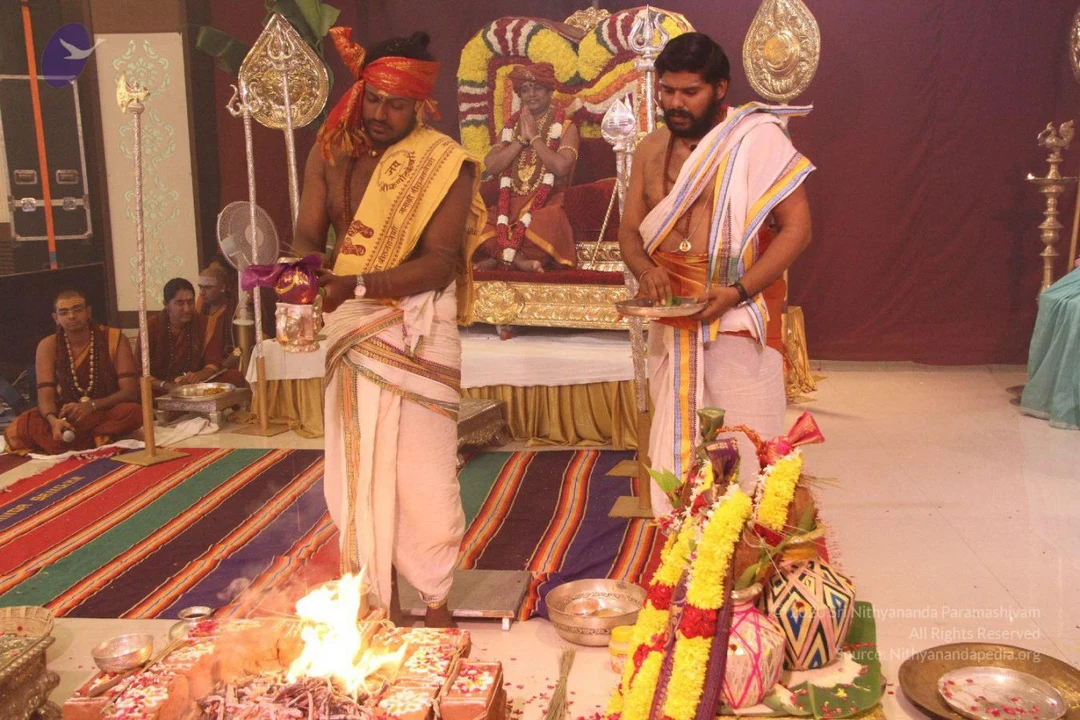
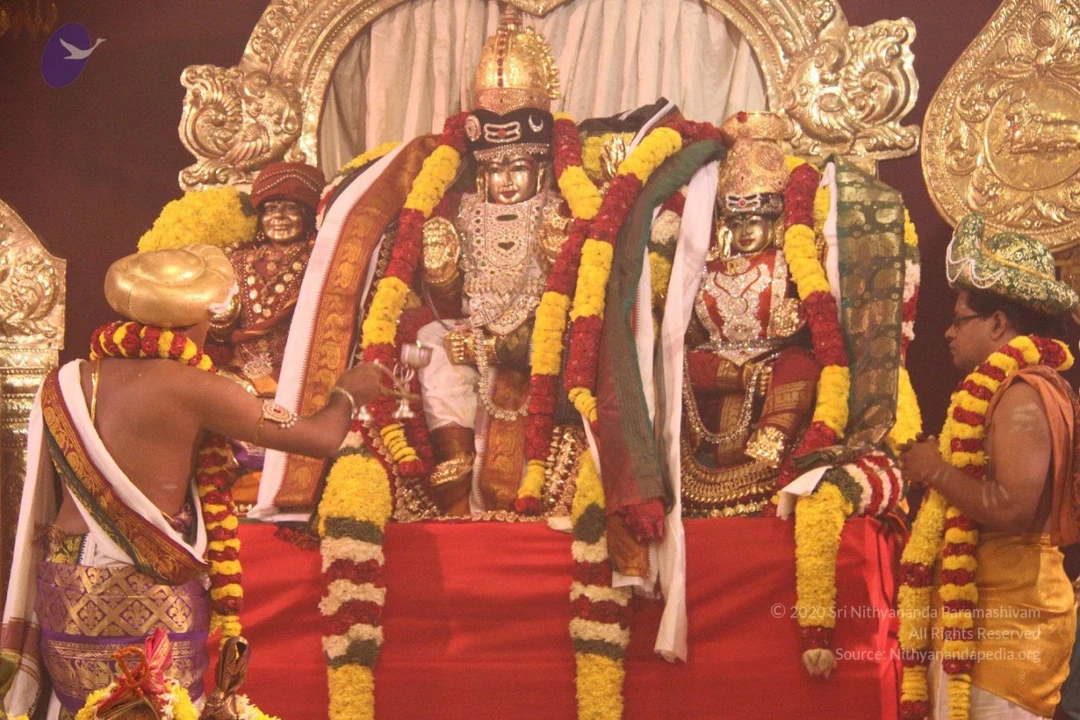
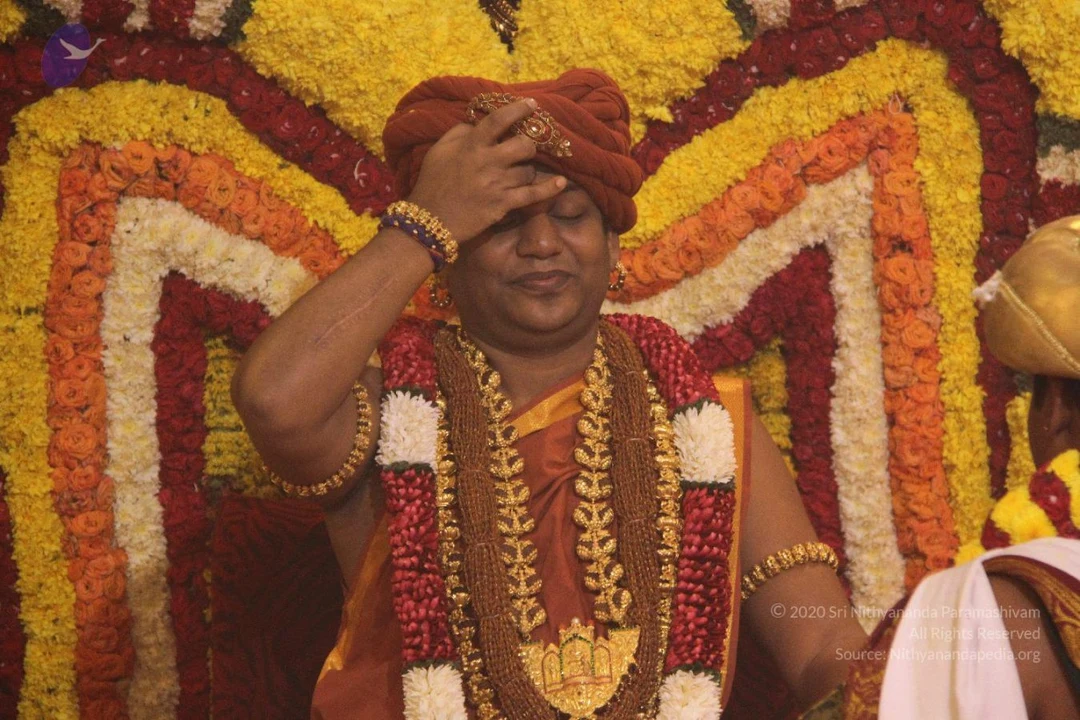
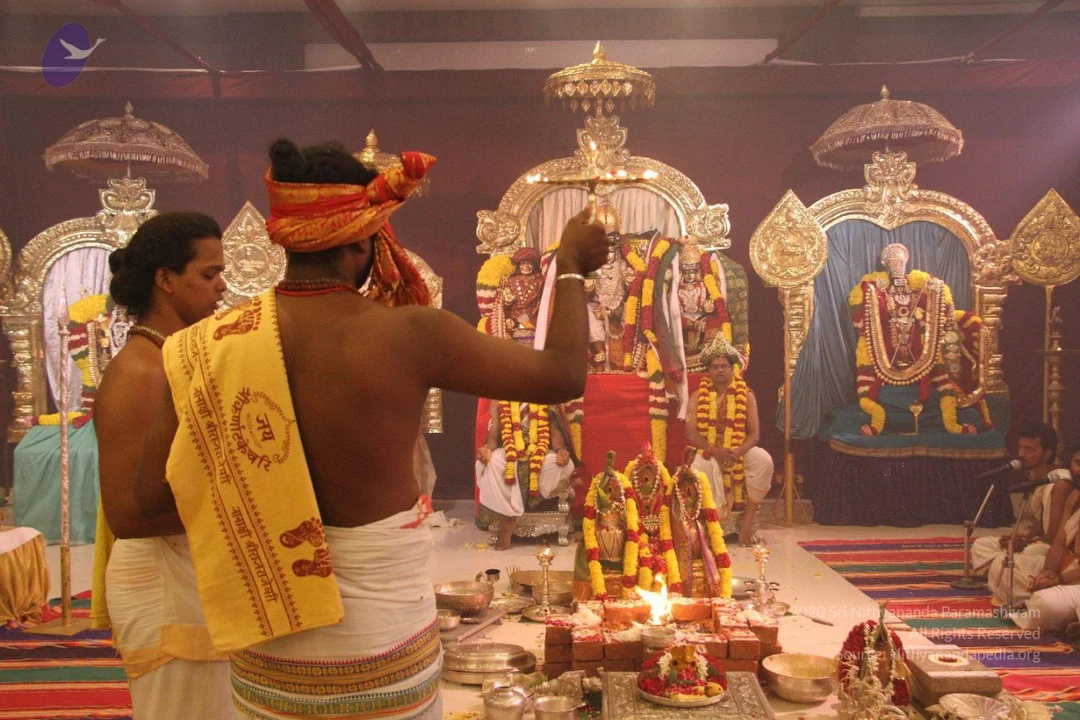
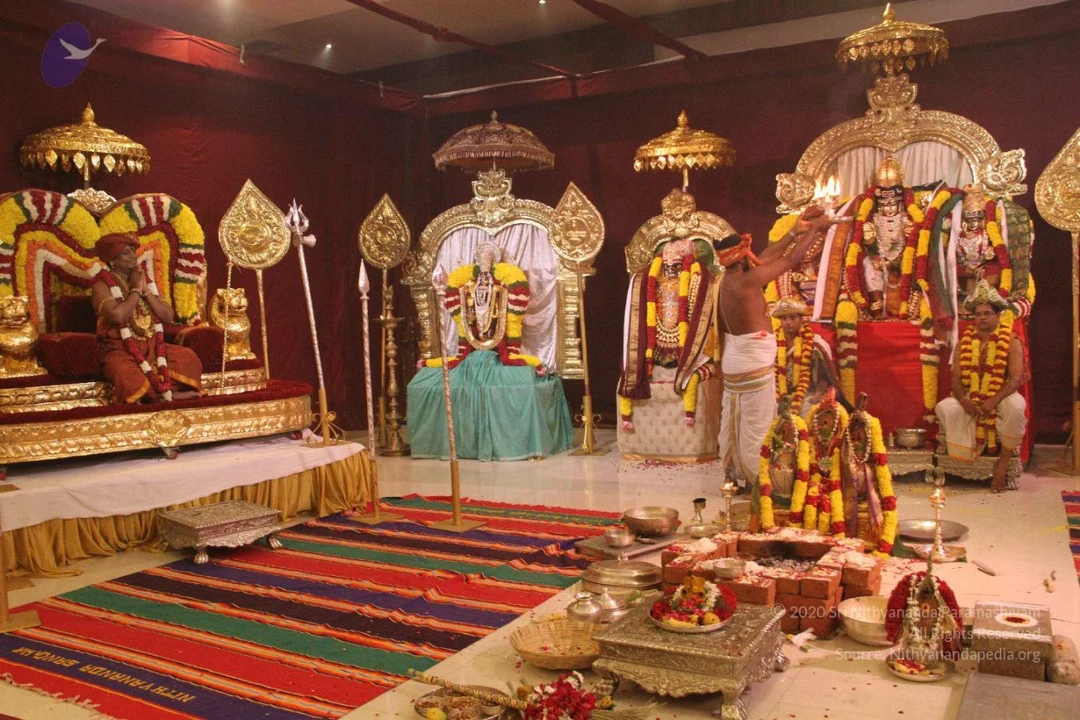
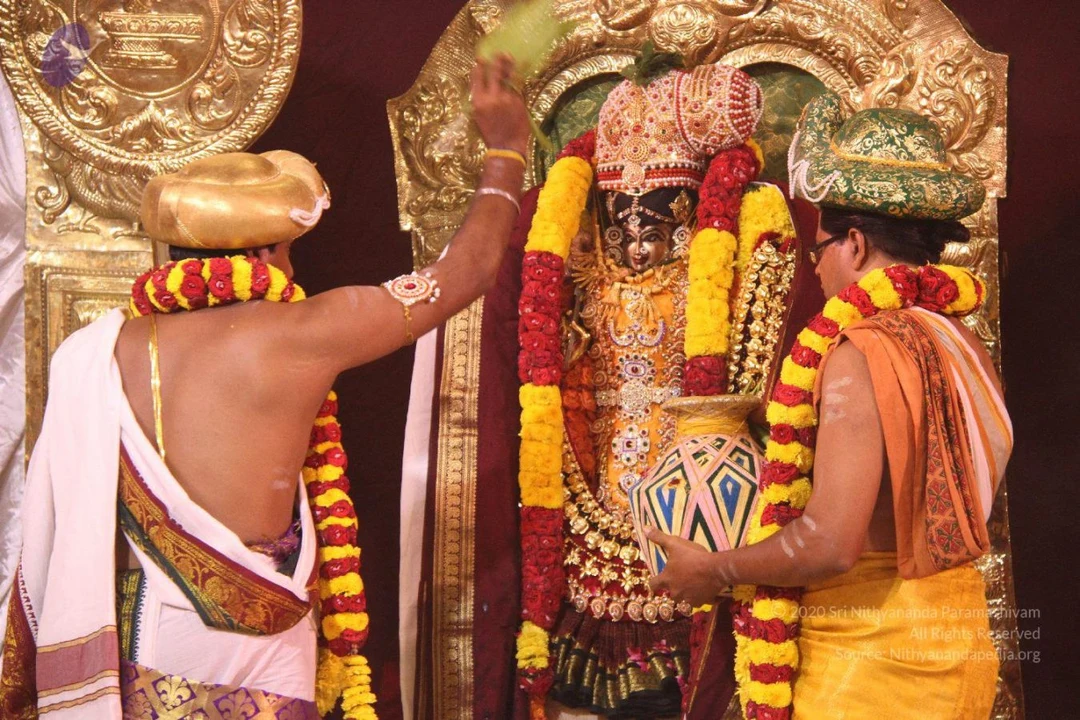
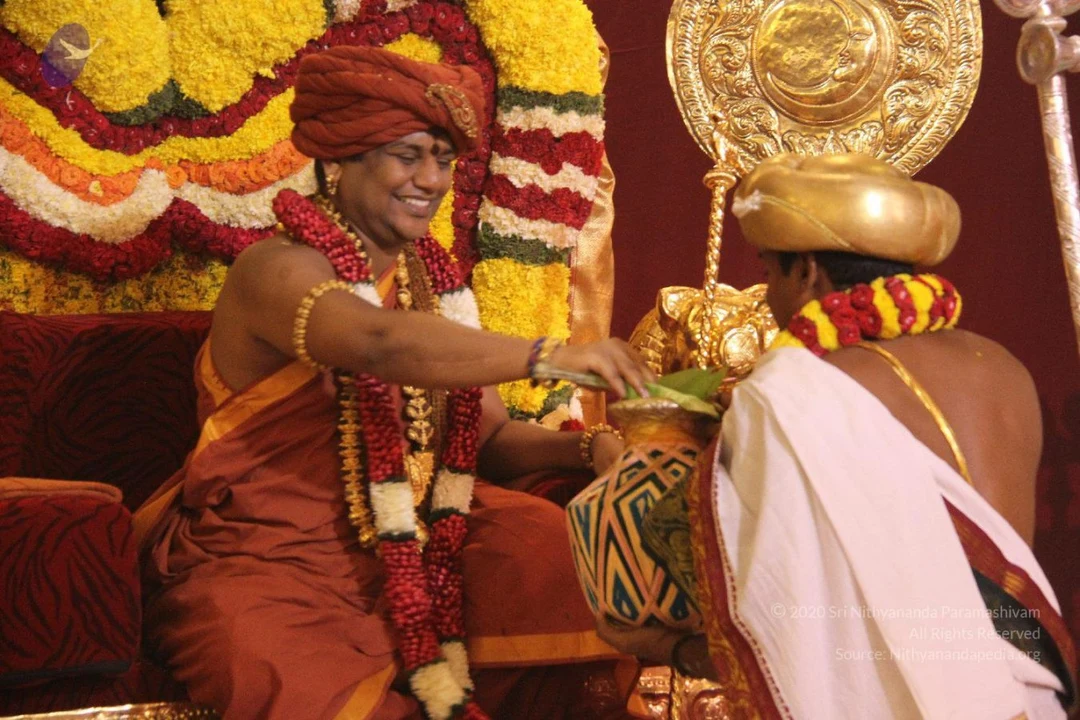
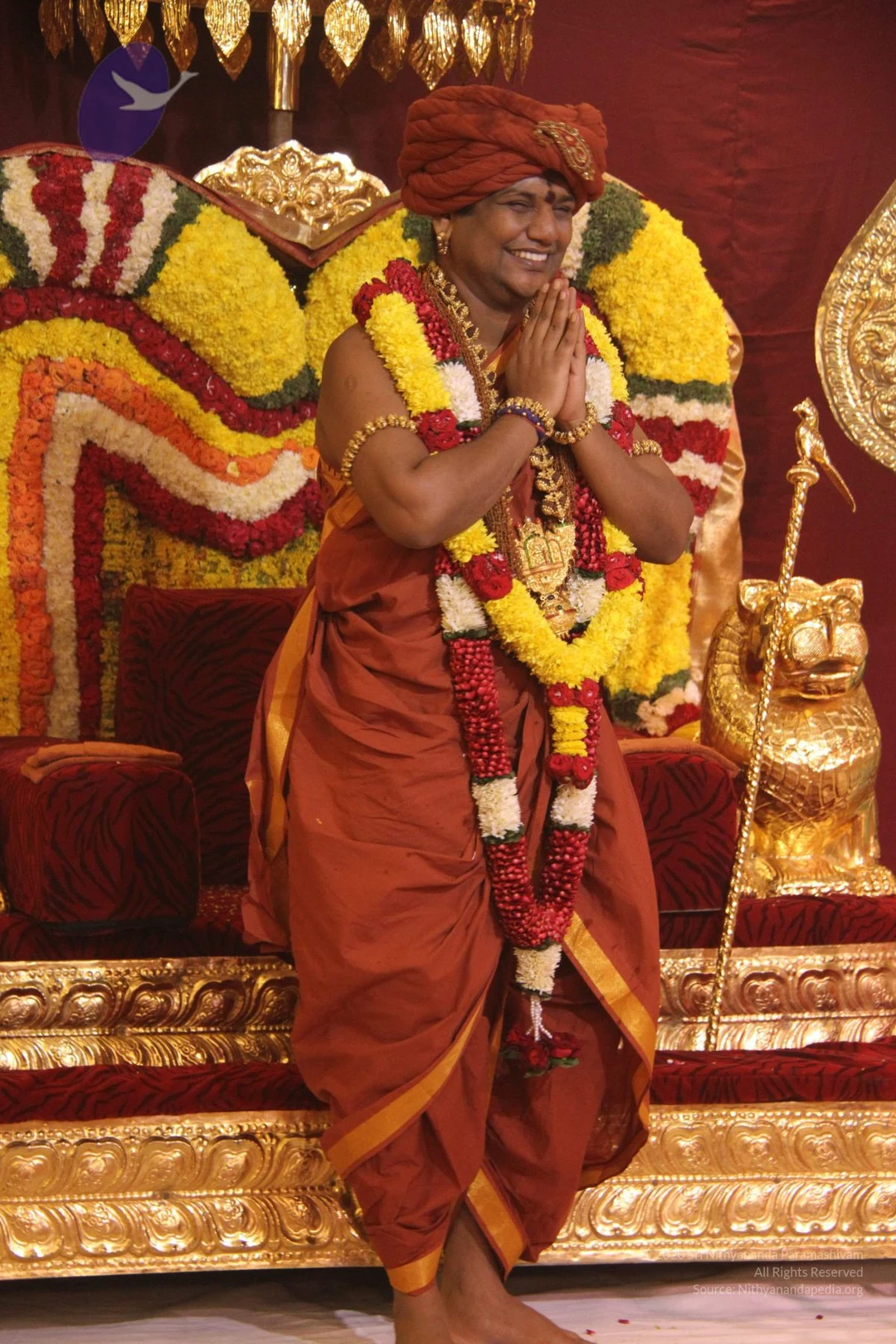
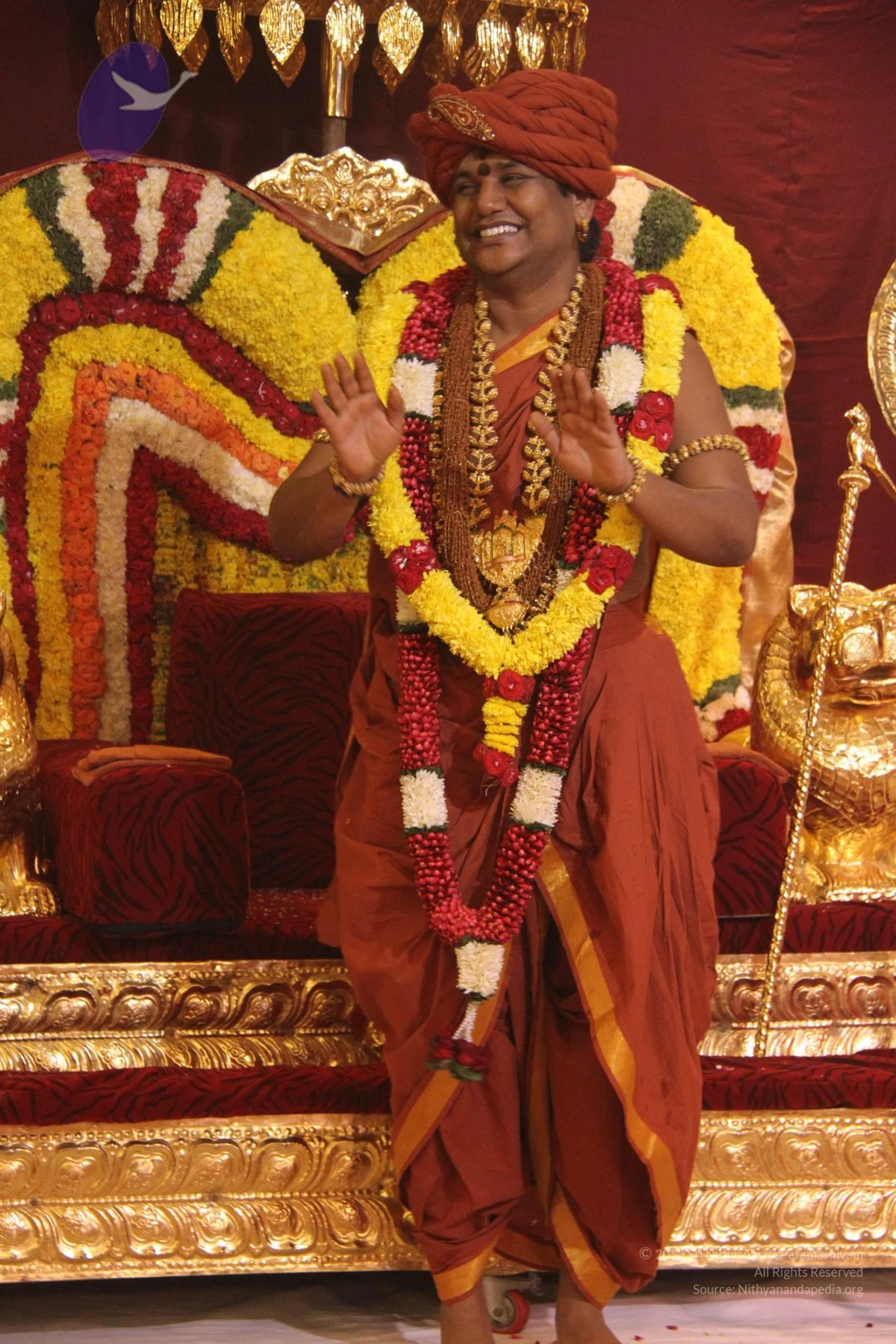
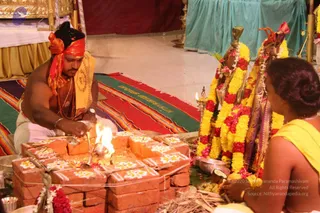
A photograph of a ritual scene in front of a large golden deity murti draped with yellow and red-green garlands. On the left, a bare-chested man with a rudraksha mala and a gold chain stands in white dhoti and yellow shawl, holding a silver plate with a small vessel and rose petals. On the right, a man in a golden turban and white silk dhoti with a purple-gold border stands with palms joined in prayer, wearing a red and yellow flower garland and an armlet. Smoke or incense haze fills the background.A close-up photograph of a ritual offering on a round silver tray scattered with turmeric-yellow rice and pink and red rose petals. At the centre sits a yellow-wrapped coconut-like fruit beside a small white shell, with a bundle of yellow and orange threads tied around a golden-hued object, and a cluster of gold-coloured ritual implements and small ornaments. Green betel-type leaves lie beneath the fruit. Blurred background suggests a temple or ritual hall. No people are visible.A seated man in saffron-orange robes sits on an ornate golden throne with lion-head armrests and a floral garland of red and white flowers. He wears a saffron turban, a rudraksha-style mala, heavy gold necklaces and gold bangles. Behind him is a striking throne back of concentric bands in yellow, red, white and green flower garlands. Golden ceremonial umbrella overhead, flanking silver and gold trident staffs and ceremonial shields, a maroon backdrop, banana leaves and a small fan complete the scene.

July 13 2015

Original wiki page
Contents

Title

Secrets to How Mantras Work In Mandala Process || Part 1 || IA || 13 July 2015

Description

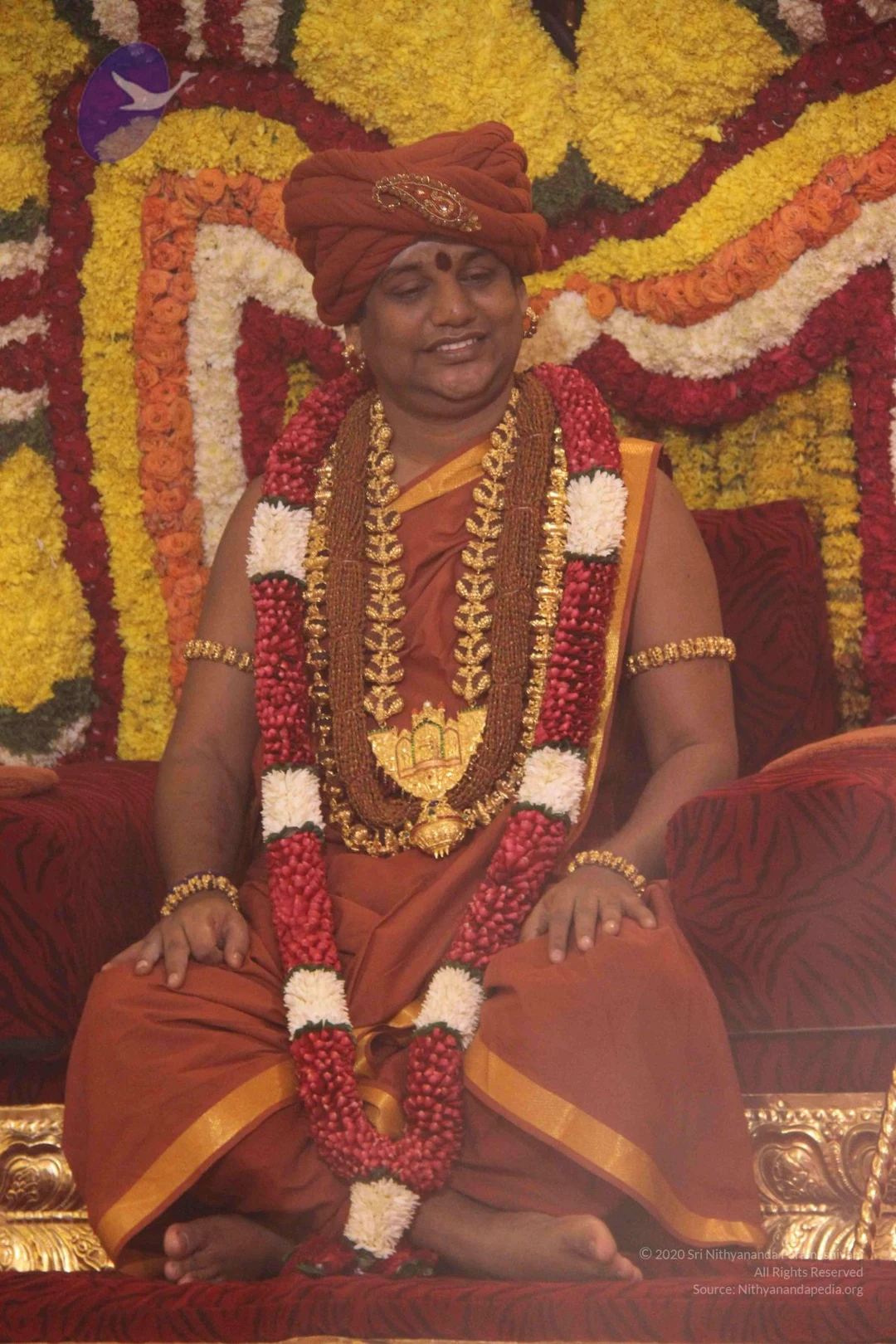
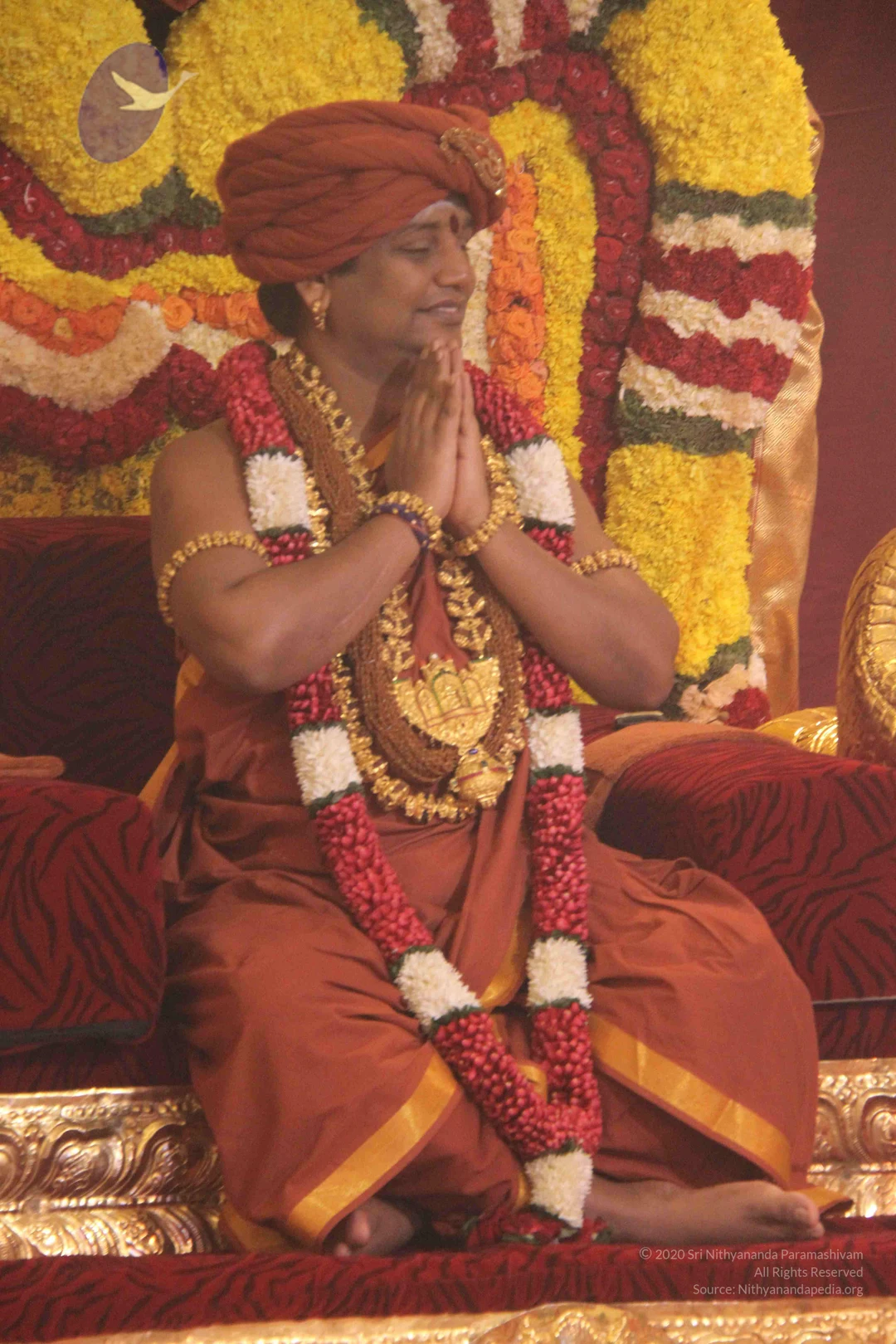
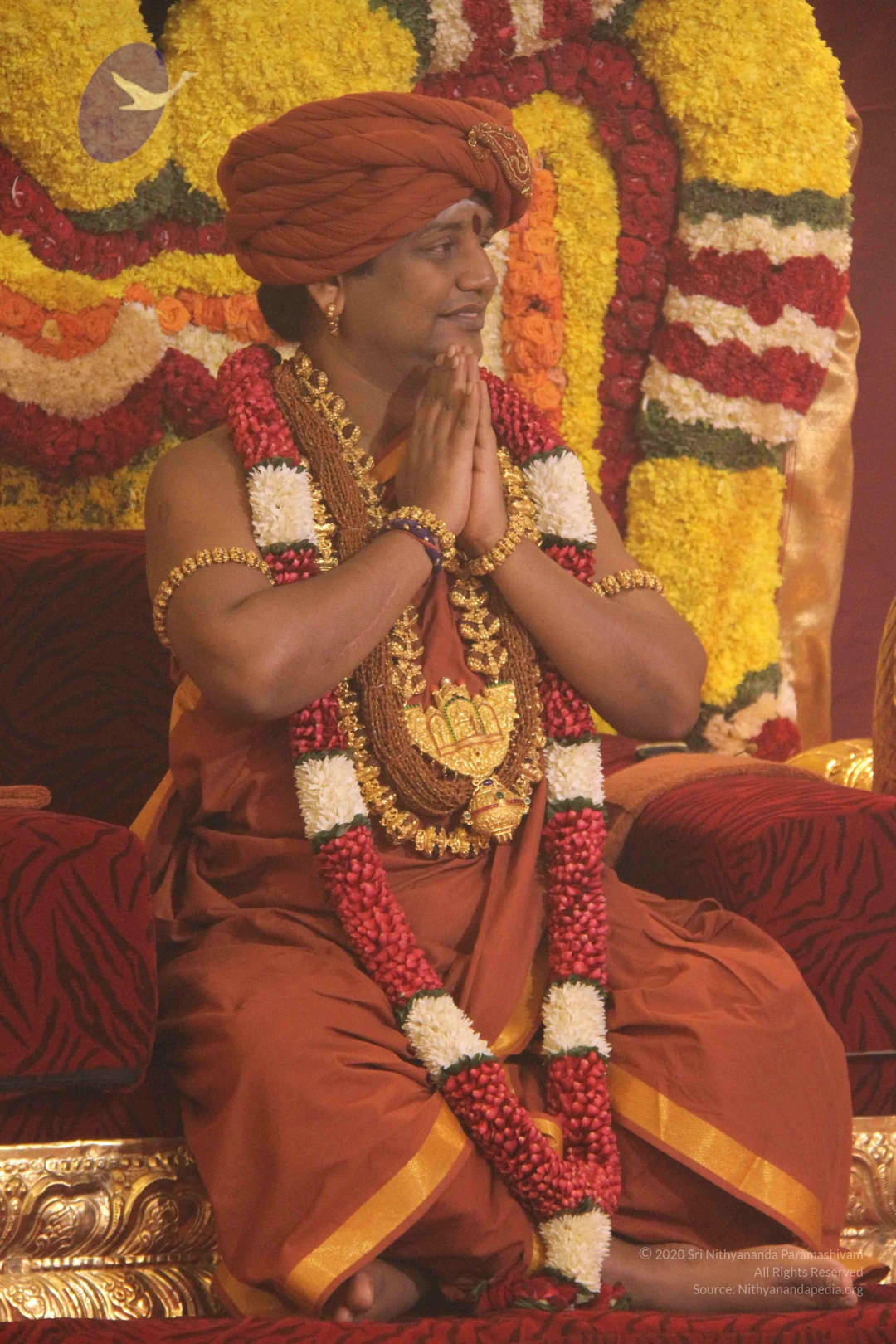
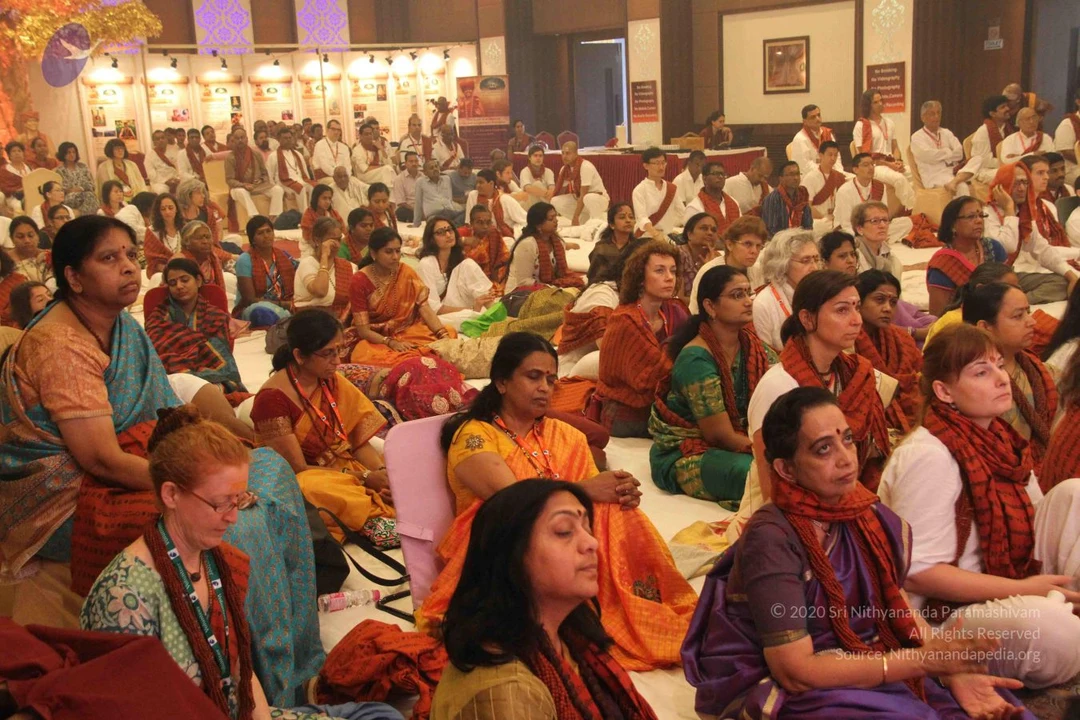
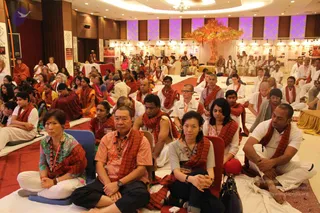
Name Of The Convention: Inner Awakening Session on: Science Of Mandala Process Date: 13 July 2015 Venue: Varanasi, India Part 1

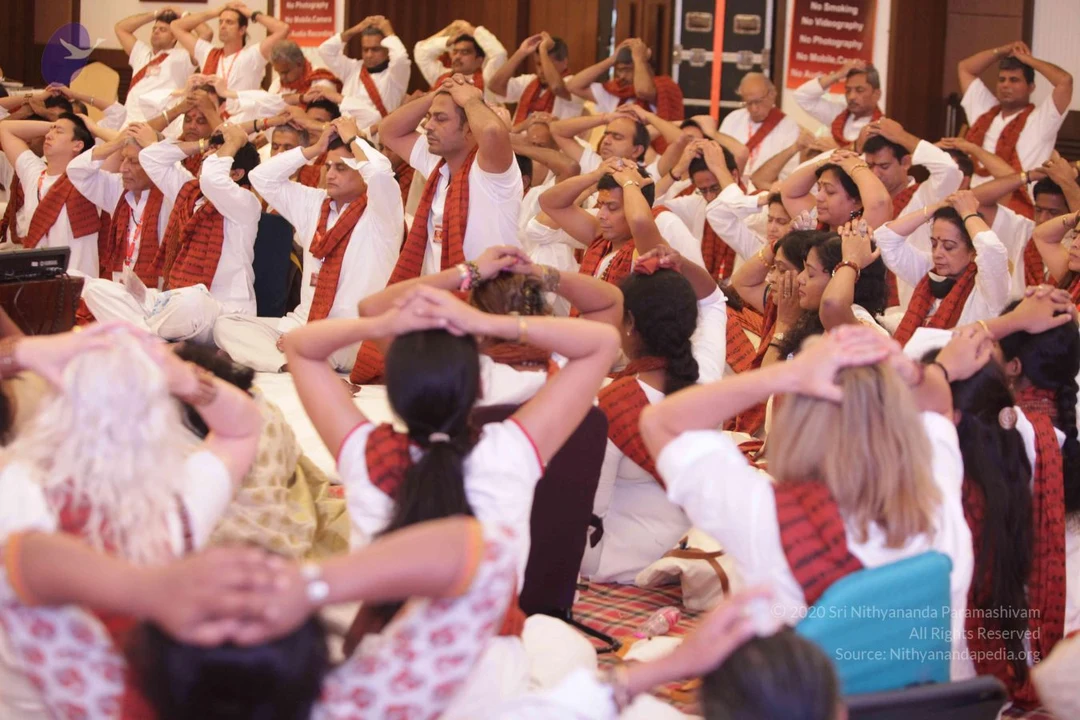
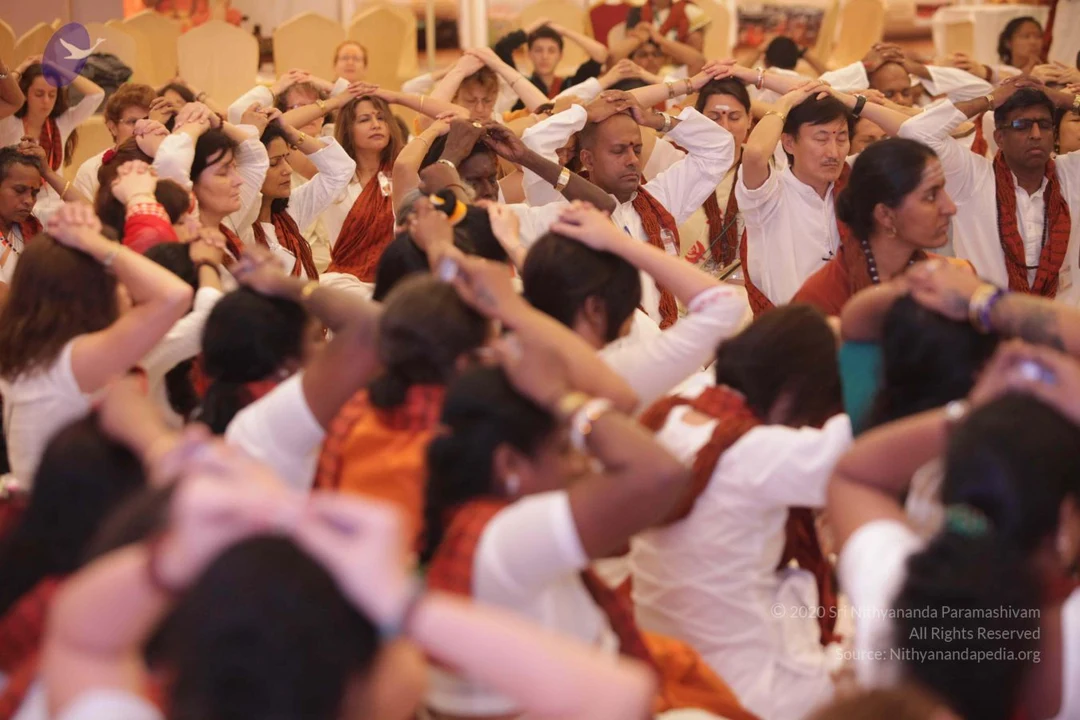
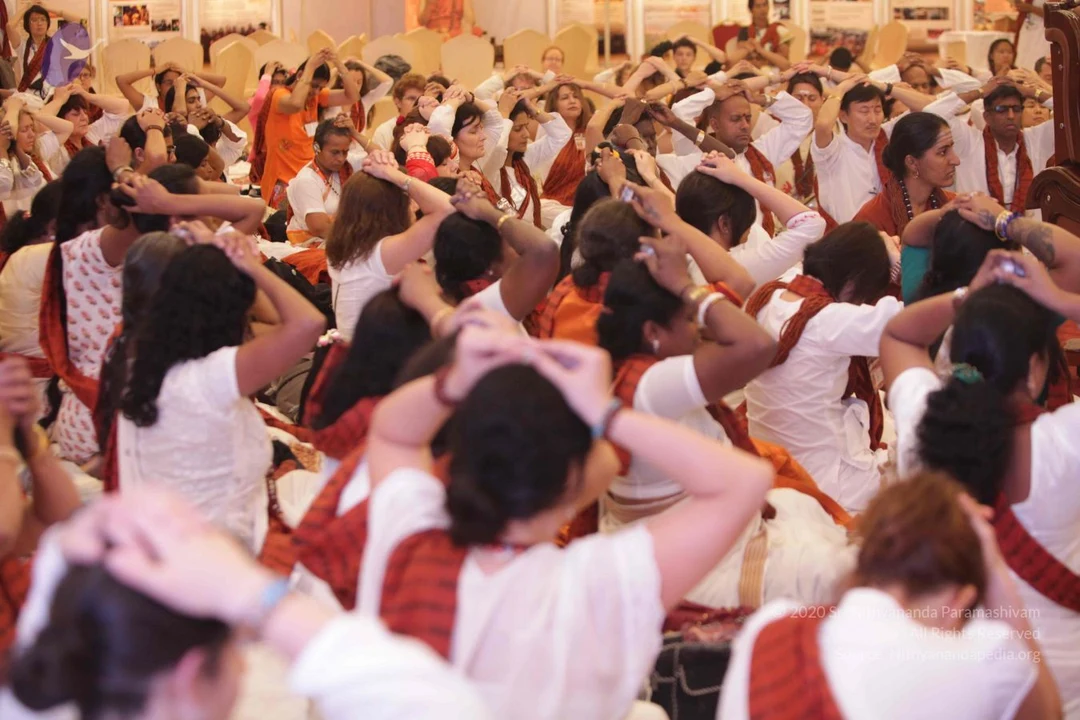
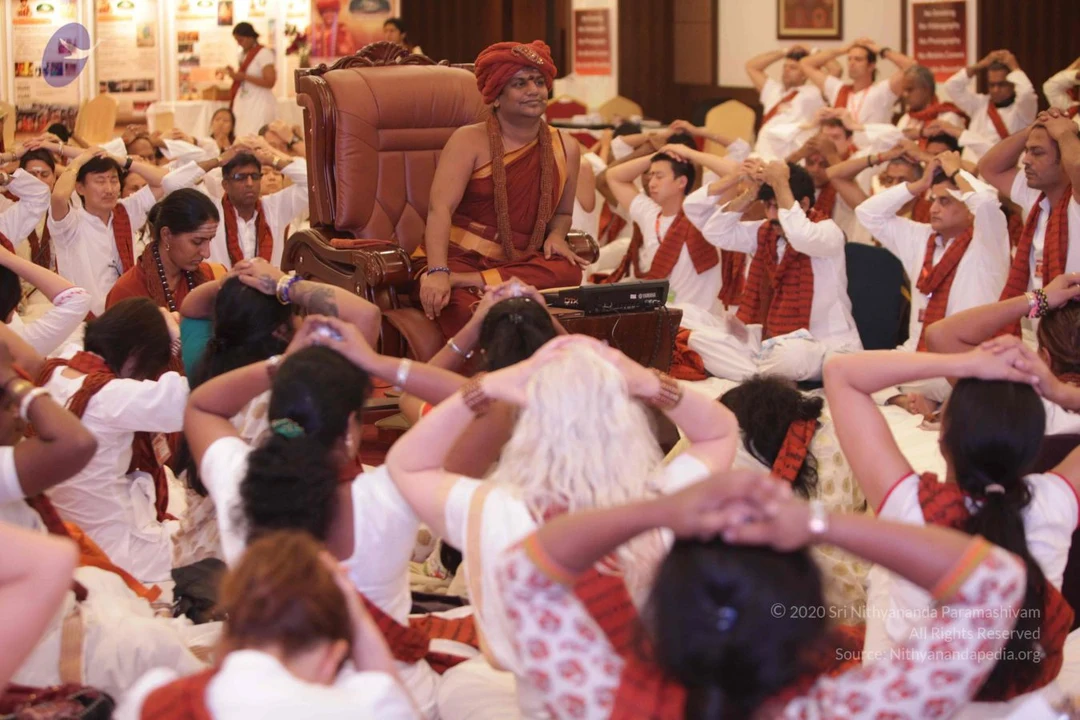
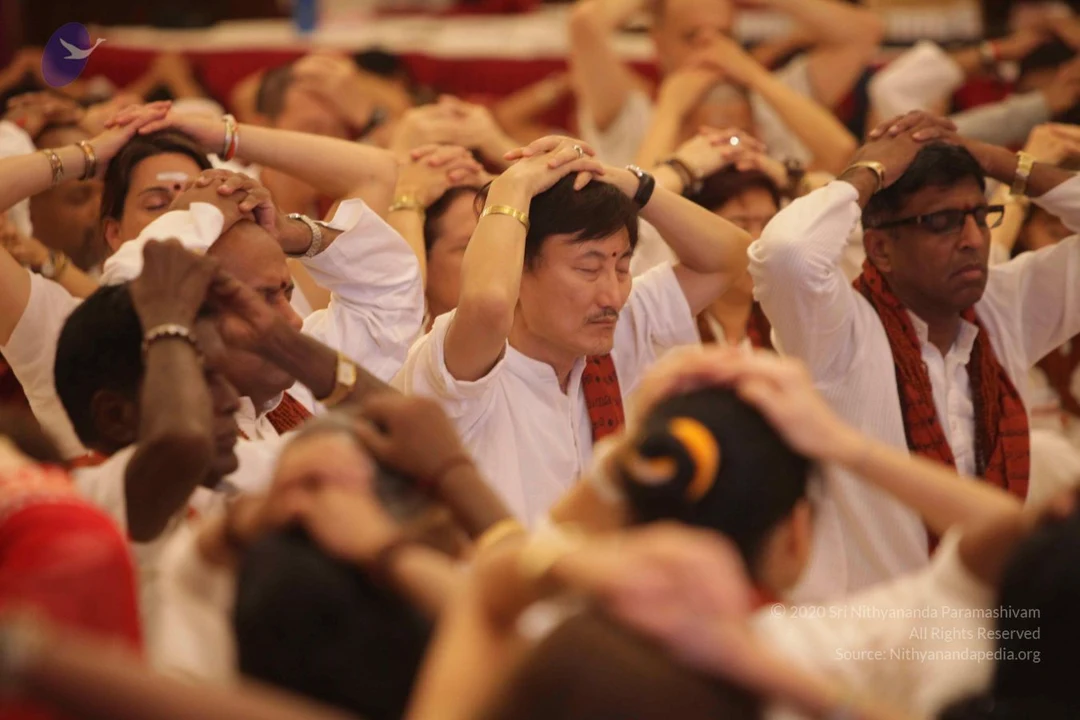
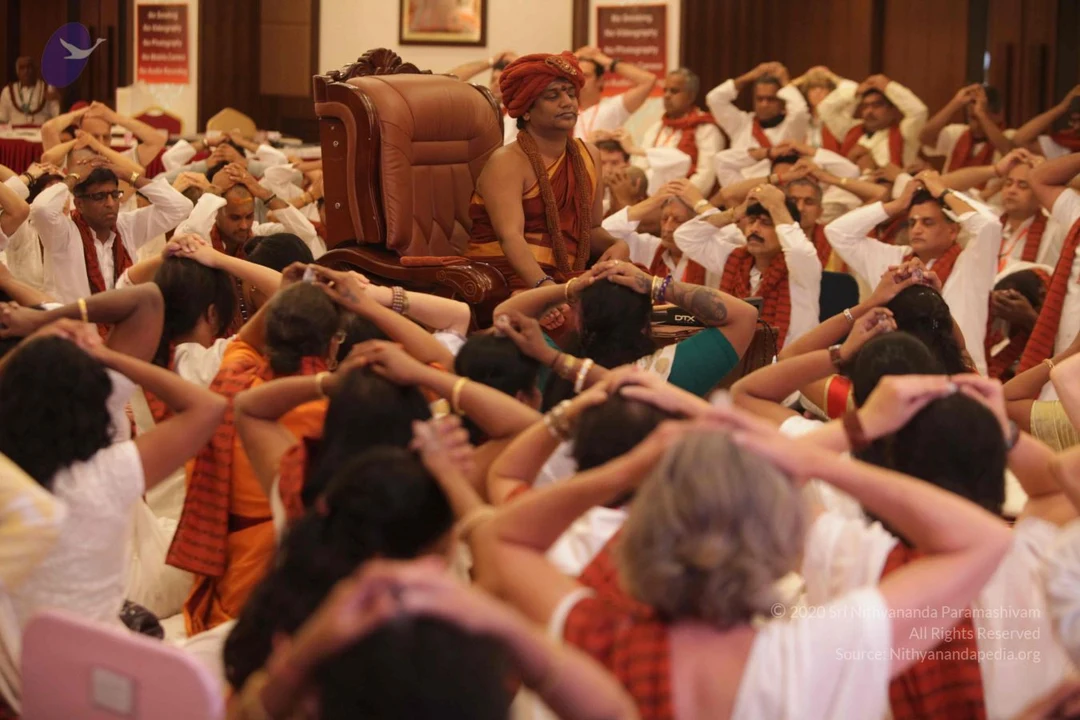
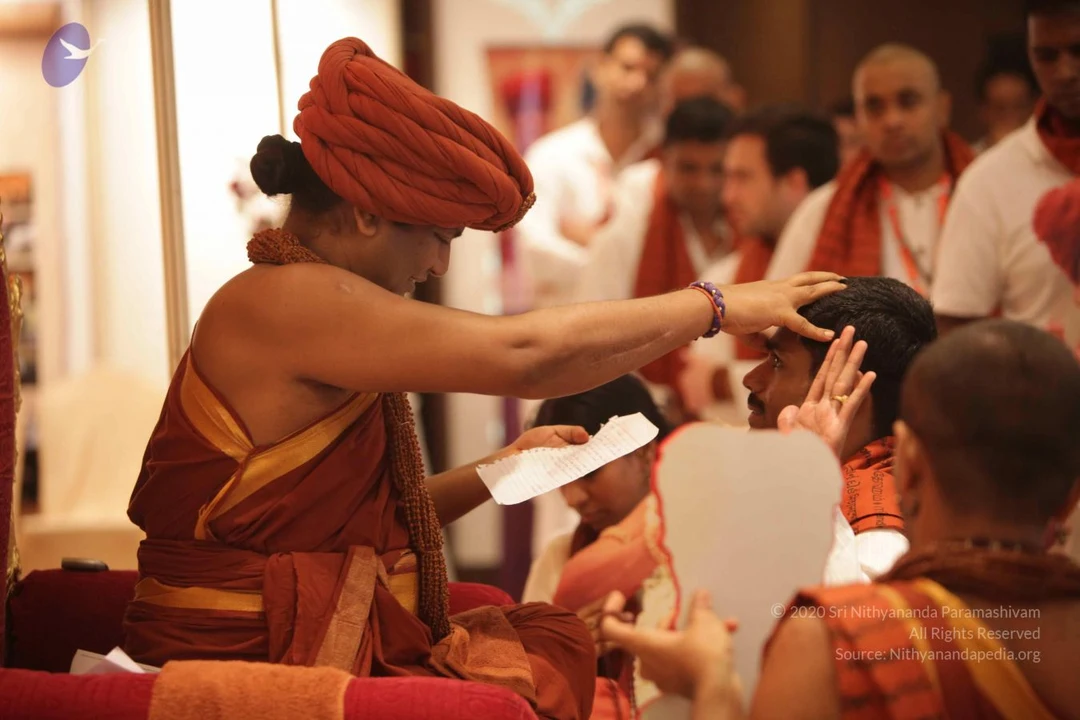
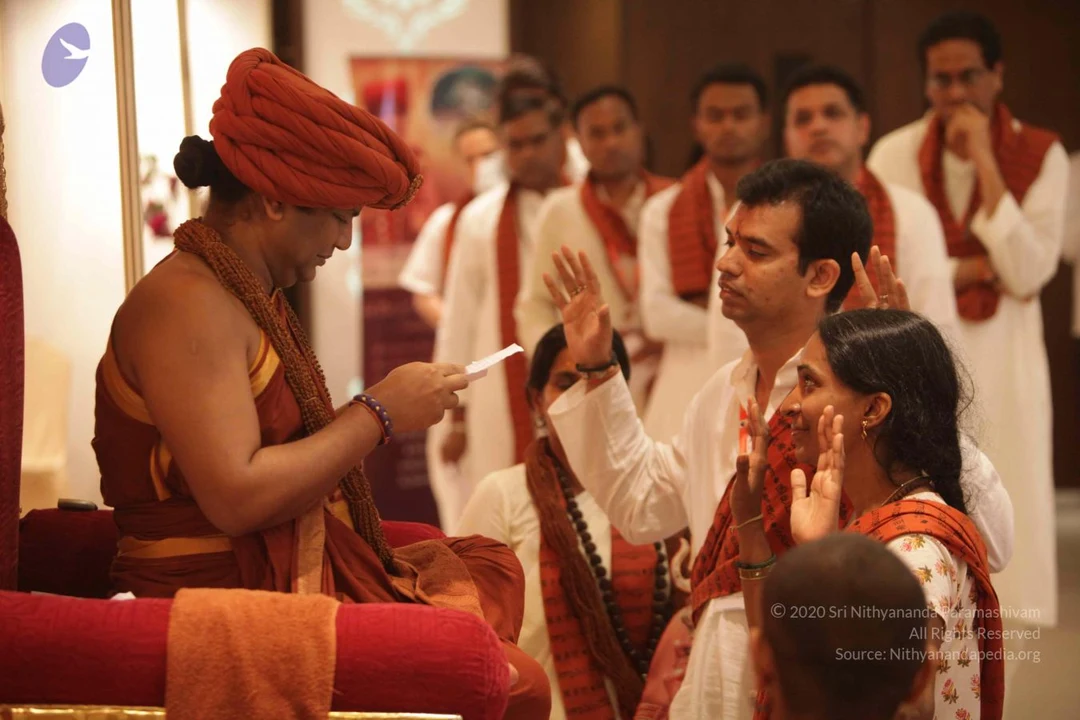
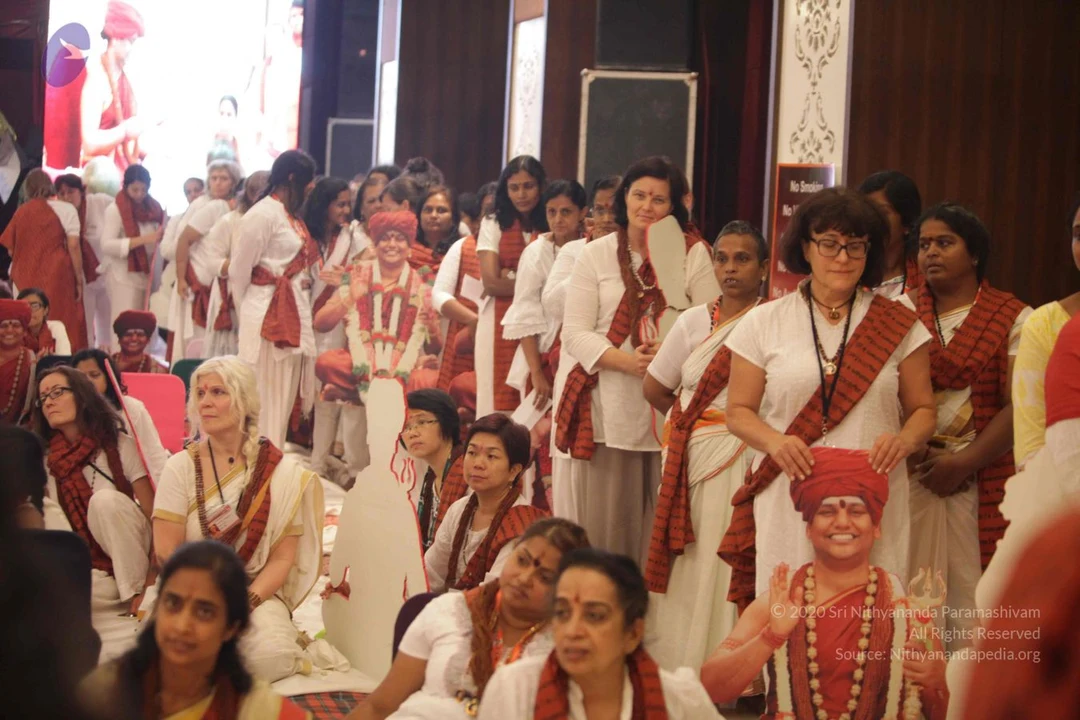
In this video Supreme Pontiff of Hinduism, Jagatguru Mahasannidhanam His Divine Holiness Bhagavan #Nithyananda Paramaśivam guides delegates through a Shodasi Vidya Mandala Process which is a spiritual process conducted by HDH where the delegates sit in a mandala (special formation of an energy circuit) drawn on the ground and He energises the circuit with the superconscious energy which initiates them into expressing superconscious capabilities. Want to know the different names of Kundalini when it moves through the chakras? There are at least 15 god names being chanted during the initiation into the 16 sounds of Shodasi Vidya. Know why you cannot sleep for even one mantra during the initiation where some 50 mantras will be chanted.

The Supreme Pontiff of Hinduism Jagatguru Mahasannidhanam His Divine Holiness Nithyananda Paramashivam (HDH) is the reviver of #KAILASA - the ancient enlightened civilization and the great cosmic borderless Hindu nation. Revered as the incarnation of Paramashiva - the primordial Hindu Divinity, HDH has a following of 2 billion Hindus worldwide with de facto spiritual embassies in over 150 countries. He has worked untiringly for over 26 years for the revival of Kailasa, for global peace and to give super conscious breakthrough to humanity. He has survived the worst persecution of multiple assassination attempts on person and on character by anti-Hindu elements. He is collecting, organising, preserving, time capsuling, decoding, spreading and reviving 20 Million source books of Hinduism and the 64 sacred arts & sciences like Ayurveda, music, dance, sculpting, astrology, vastu and much more. Close to 20,000 hours of HDH’s timeless talks have been recorded till date (Sep 2020), which are a treasure trove of powerful cognitions to solve individual and global problems of any kind.

Link to Video:

VideoAudio

Title

Secrets Of Bhaga Shastra Revealed By Mahadeva || Part 2 || IA || July 2015

Description

Name Of The Convention: Inner Awakening Session on: Bhaga Shastra – Mahadeva’s Kitchen Date: 13 July 2015 Venue: Varanasi, India Part 2

In this video Supreme Pontiff of Hinduism, Jagatguru Mahasannidhanam His Divine Holiness Bhagavan #Nithyananda Paramaśivam reveals to delegates the contents of Bhaga Shastra which is a section of The sacred Source texts “Agamas” revealed by the primordial divinity, Paramaśiva, specifically guiding how to cook nutritious food that aids in the holistic and conscious growth of a person. Besides having hundreds of recipes, it also indicate how you should build your house and how you can get everything your body need from mother nature. Some of the cooking utensils found in the book can still be found in the Chettiar community, preserving the Vedic tradition.

The Supreme Pontiff of Hinduism Jagatguru Mahasannidhanam His Divine Holiness Nithyananda Paramashivam (HDH) is the reviver of #KAILASA - the ancient enlightened civilization and the great cosmic borderless Hindu nation. Revered as the incarnation of Paramashiva - the primordial Hindu Divinity, HDH has a following of 2 billion Hindus worldwide with de facto spiritual embassies in over 150 countries. He has worked untiringly for over 26 years for the revival of Kailasa, for global peace and to give super conscious breakthrough to humanity. He has survived the worst persecution of multiple assassination attempts on person and on character by anti-Hindu elements. He is collecting, organising, preserving, time capsuling, decoding, spreading and reviving 20 Million source books of Hinduism and the 64 sacred arts & sciences like Ayurveda, music, dance, sculpting, astrology, vastu and much more. Close to 20,000 hours of HDH’s timeless talks have been recorded till date (Sep 2020), which are a treasure trove of powerful cognitions to solve individual and global problems of any kind.

Link to Video:

VideoAudio

Title

Untold Secrets Of Science Of Third Eye Revealed || Part 3 || IA || July 2015

Description

Name Of The Convention: Inner Awakening (IA) Session on: The Science of Third Eye Date: 13 July 2015 Venue: Varanasi, India Part 3

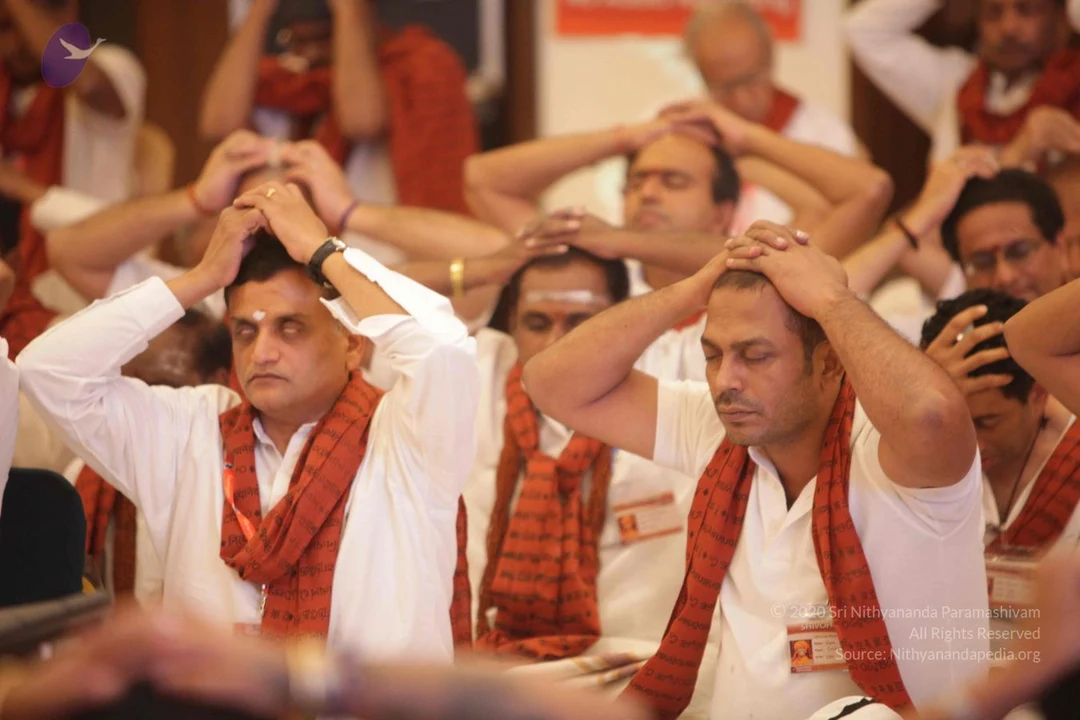
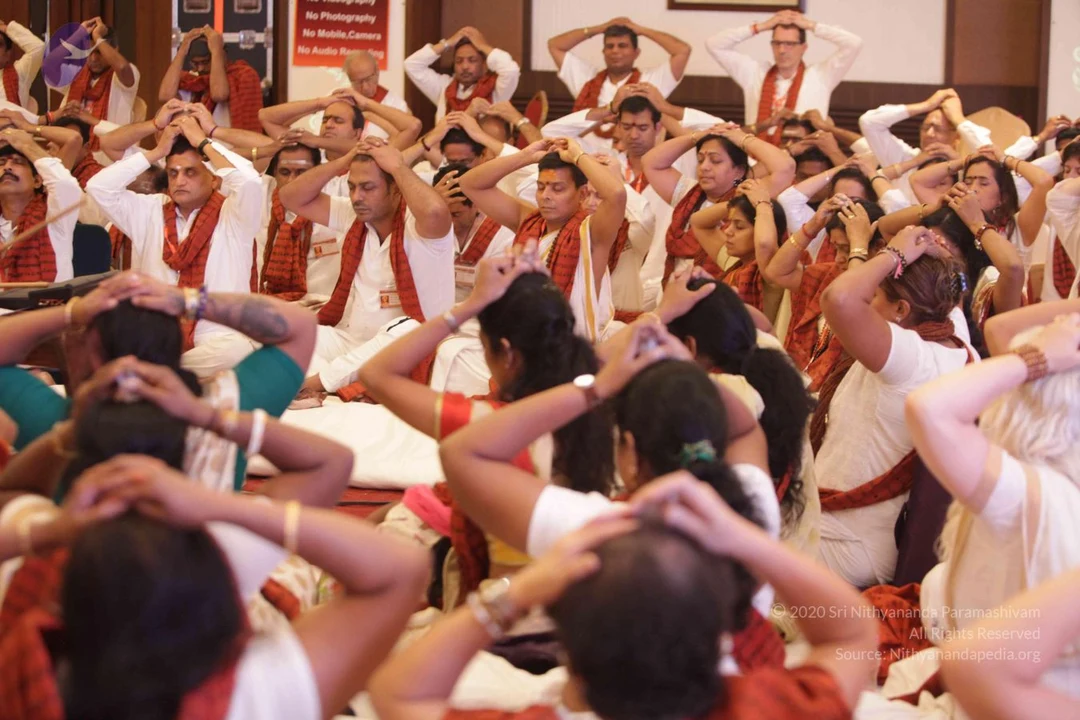
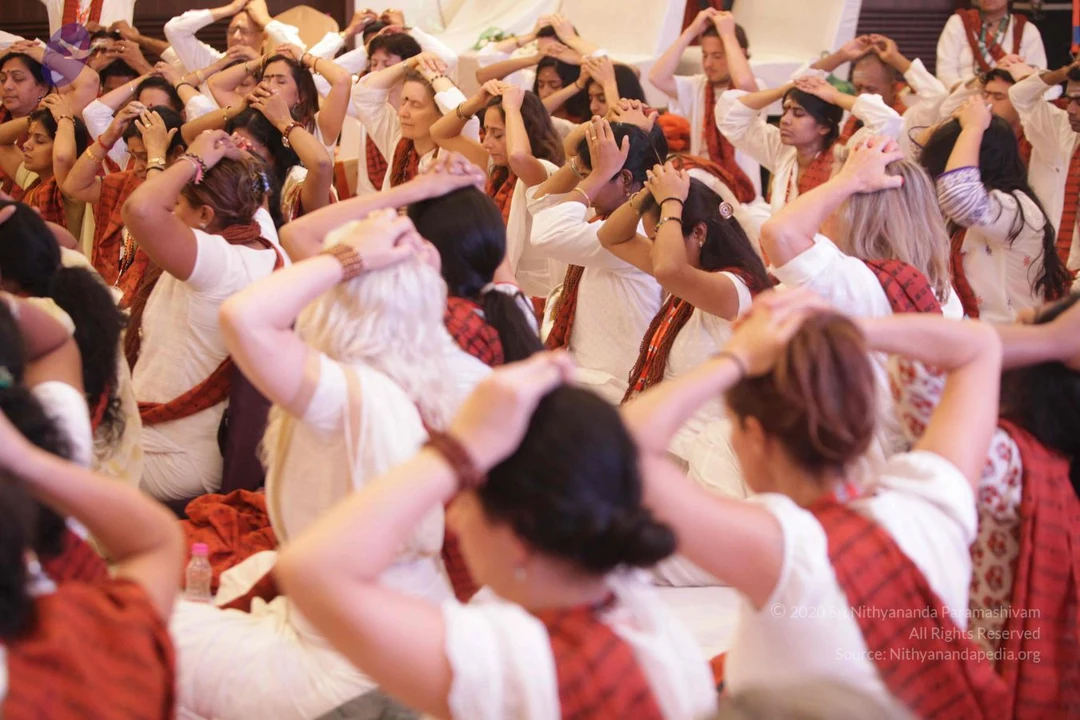
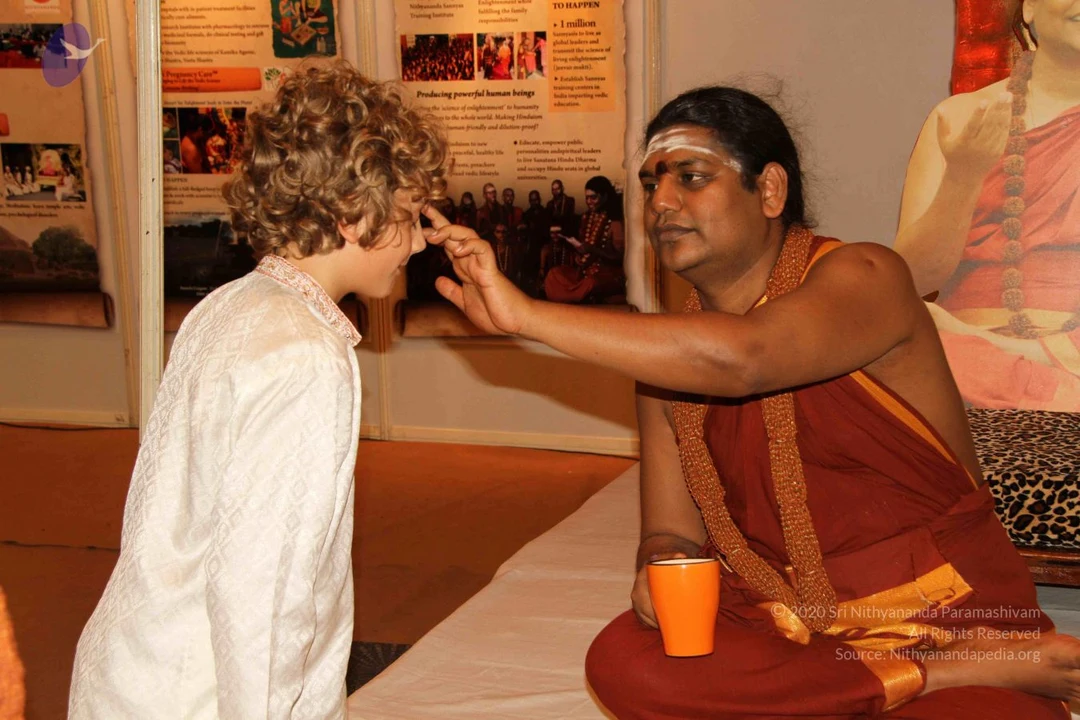
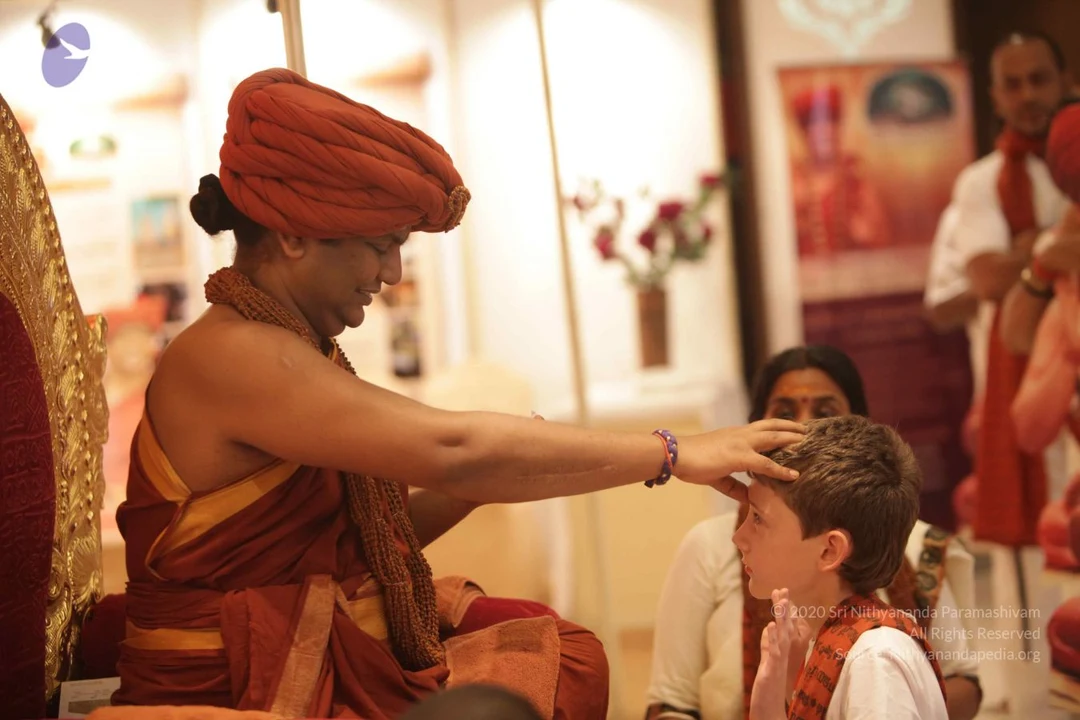
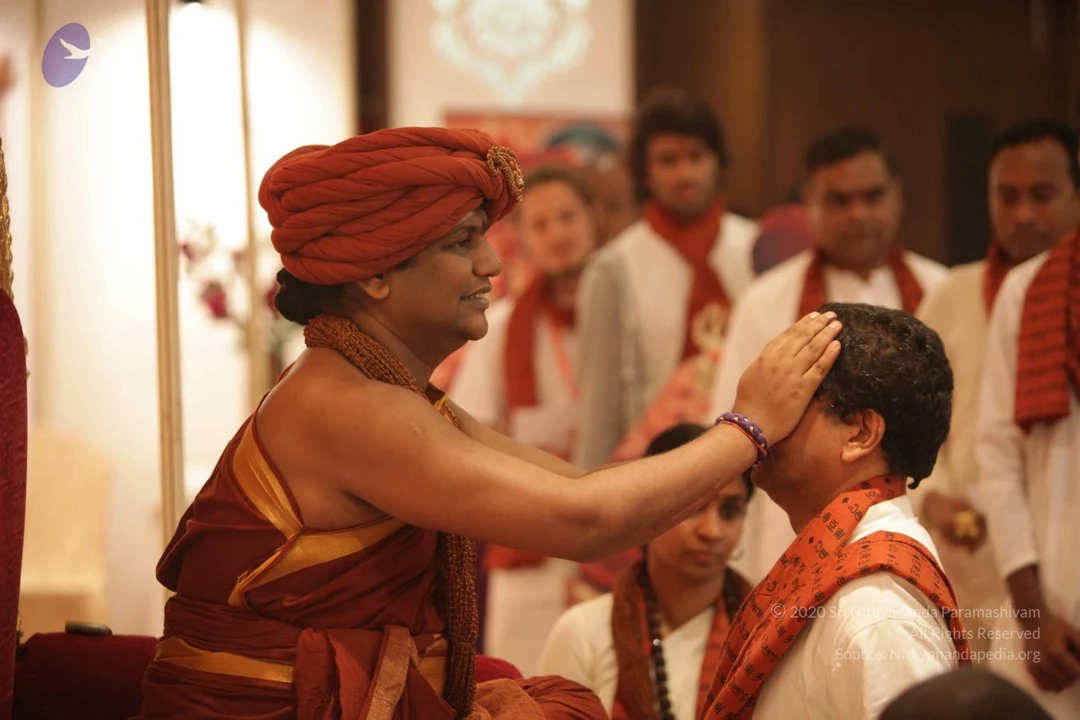
In this video Supreme Pontiff of Hinduism, Jagatguru Mahasannidhanam His Divine Holiness Bhagavan #Nithyananda Paramaśivam reveals to delegates the science of Third Eye awakening which is a spiritual process done by HDH to awaken the energy of the Third Eye located between the eyebrows which manifests spiritual powers in the individual who starts radiating superconscious abilities such as seeing beyond time and space through the Third Eye, cosmically downloading information on any desired subject and so on. He becomes a source of infinite knowledge and capabilities. Learn how to play with your Third Eye which will give you the spiritual practice needed with ease. Understand why a child’s Third Eye can be awakened by just one touch while an adult cannot. Know why fluoride toothpaste has more disturbances than alcohol to Third Eye.

The Supreme Pontiff of Hinduism Jagatguru Mahasannidhanam His Divine Holiness Nithyananda Paramashivam (HDH) is the reviver of #KAILASA - the ancient enlightened civilization and the great cosmic borderless Hindu nation. Revered as the incarnation of Paramashiva - the primordial Hindu Divinity, HDH has a following of 2 billion Hindus worldwide with de facto spiritual embassies in over 150 countries. He has worked untiringly for over 26 years for the revival of Kailasa, for global peace and to give super conscious breakthrough to humanity. He has survived the worst persecution of multiple assassination attempts on person and on character by anti-Hindu elements. He is collecting, organising, preserving, time capsuling, decoding, spreading and reviving 20 Million source books of Hinduism and the 64 sacred arts & sciences like Ayurveda, music, dance, sculpting, astrology, vastu and much more. Close to 20,000 hours of HDH’s timeless talks have been recorded till date (Sep 2020), which are a treasure trove of powerful cognitions to solve individual and global problems of any kind.

Link to Video:

VideoAudio

Title

Powerful Shodasi Vidya Mandala Process || Part 4 || IA || July 2015

Description

Name Of The Convention: Inner Awakening Session on: Mandala Process Date: 13 July 2015 Venue: Varanasi, India Part 4

In this video Supreme Pontiff of Hinduism, Jagatguru Mahasannidhanam His Divine Holiness Bhagavan #Nithyananda Paramaśivam guides delegates through a Mandala Process which will initiate all into the 16 sounds of Shodashi Vidya. More than 15 god names and some 50 mantras will be chanted during this Mandala Process which is a spiritual process conducted by HDH where the delegates sit in a mandala (special formation of an energy circuit) drawn on the ground and He energises the circuit with the superconscious energy which initiates them into expressing superconscious capabilities.

The Supreme Pontiff of Hinduism Jagatguru Mahasannidhanam His Divine Holiness Nithyananda Paramashivam (HDH) is the reviver of #KAILASA - the ancient enlightened civilization and the great cosmic borderless Hindu nation. Revered as the incarnation of Paramashiva - the primordial Hindu Divinity, HDH has a following of 2 billion Hindus worldwide with de facto spiritual embassies in over 150 countries. He has worked untiringly for over 26 years for the revival of Kailasa, for global peace and to give super conscious breakthrough to humanity. He has survived the worst persecution of multiple assassination attempts on person and on character by anti-Hindu elements. He is collecting, organising, preserving, time capsuling, decoding, spreading and reviving 20 Million source books of Hinduism and the 64 sacred arts & sciences like Ayurveda, music, dance, sculpting, astrology, vastu and much more. Close to 20,000 hours of HDH’s timeless talks have been recorded till date (Sep 2020), which are a treasure trove of powerful cognitions to solve individual and global problems of any kind.

Watch, share and like our videos | Subscribe to our channel to be notified of the next upload.

The Supreme Pontiff of Hinduism Jagatguru Mahasannidhanam His Divine Holiness Nithyananda Paramashivam (HDH) is the reviver of #KAILASA - the ancient enlightened civilization and the great cosmic borderless Hindu nation. Revered as the incarnation of Paramashiva - the primordial Hindu Divinity, HDH has a following of 2 billion Hindus worldwide with de facto spiritual embassies in over 150 countries. He has worked untiringly for over 26 years for the revival of Kailasa, for global peace and to give super conscious breakthrough to humanity. He has survived the worst persecution of multiple assassination attempts on person and on character by anti-Hindu elements. He is collecting, organising, preserving, time capsuling, decoding, spreading and reviving 20 Million source books of Hinduism and the 64 sacred arts & sciences like Ayurveda, music, dance, sculpting, astrology, vastu and much more. Close to 20,000 hours of HDH’s timeless talks have been recorded till date (Sep 2020), which are a treasure trove of powerful cognitions to solve individual and global problems of any kind.

Link to Video:

VideoAudio

Title

Secrets of Atma Linga & Third Eye || Part 5

Description

This video is an excerpt from the Inner Awakening program conducted on 13 July 2015 at Varanasi, India. Here HDH #Nithyananda Paramashivam reveals to participants the science of Atma Linga & #ThirdEye such as why spatika is chosen to create the linga. Ever wonder why the Linga is shaped like our thumb? Know why you need to be present to receive your Atma Linga and learn how to handle it and what you can do with it. How to know you are experiencing #Kundalini awakening and how Kundalini flowers in your body? How to improve your inconsistent 3rd Eye readings?

Link to Video

VideoAudio

Title

Secrets To Conscious Birth || Part 6 || IA || 13 July 2015

Description

Title: Secrets To Conscious Birth Revealed || Inner Awakening || July 2015 Name Of The Program - Inner Awakening (IA) Session on – The Science of Paramatma, Conscious Birth, Shodashi Mantra, Atma Linga & 3rd Eye Venue - Varanasi, India Date - 13 July 2015 Part 6 of 9

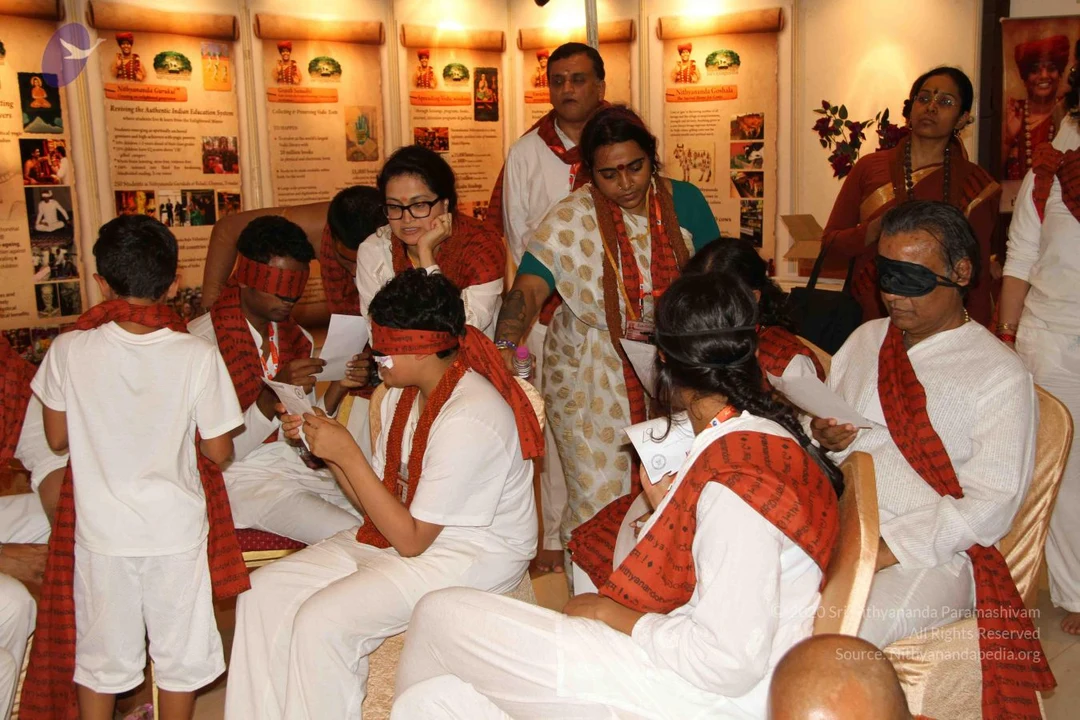
This video is an excerpt from the Inner Awakening program conducted on 13 July 2015 at Varanasi, India. Here HDH #Nithyananda Paramashivam reveals to participants the science of Paramatma, #Conscious Birth, #Shodashi Mantra including how it is useful to your day to day life. Know what initiation can provide you with and why do you have Incompletion. Learn how to heal someone with your Atma Linga. Find out what will happen to your patterns when your 3rd eye is awakened. If you have kids that can do blindfold readings, they can help you to get to your next level of 3rd eye awakening. Ever wonder what will happen to you after attaining Enlightenment??

Link to Video:

VideoAudio

Title

Secrets To Devotion & Bathing In Ganges River || Part 7 || IA || July 2015

Description

Name Of The Convention: Inner Awakening (IA) Session on: The Science of Devotion, Third Eye Awakening & Bathing In Ganges River Date: 13 July 2015 Venue: Varanasi, India Part 7

In this video Supreme Pontiff of Hinduism, Jagatguru Mahasannidhanam His Divine Holiness Bhagavan #Nithyananda Paramaśivam reveals to delegates the science of Devotion, Third Eye Awakening and bathing in Ganges river. Discover what exactly happen to feeling connection after enlightenment. Know the deeper meaning of Devotion and how to relate to deities. Understand how to become enlightened when you are in completion with nature. Find out what are the symptoms of Third eye awakening which is a spiritual process done by HDH to awaken the energy of the Third Eye located between the eyebrows which manifests spiritual powers in the individual who starts radiating superconscious abilities such as seeing beyond time and space through the Third Eye, cosmically downloading information on any desired subject and so on. He becomes a source of infinite knowledge and capabilities.

The Supreme Pontiff of Hinduism Jagatguru Mahasannidhanam His Divine Holiness Nithyananda Paramashivam (HDH) is the reviver of #KAILASA - the ancient enlightened civilization and the great cosmic borderless Hindu nation. Revered as the incarnation of Paramashiva - the primordial Hindu Divinity, HDH has a following of 2 billion Hindus worldwide with de facto spiritual embassies in over 150 countries. He has worked untiringly for over 26 years for the revival of Kailasa, for global peace and to give super conscious breakthrough to humanity. He has survived the worst persecution of multiple assassination attempts on person and on character by anti-Hindu elements. He is collecting, organising, preserving, time capsuling, decoding, spreading and reviving 20 Million source books of Hinduism and the 64 sacred arts & sciences like Ayurveda, music, dance, sculpting, astrology, vastu and much more. Close to 20,000 hours of HDH’s timeless talks have been recorded till date (Sep 2020), which are a treasure trove of powerful cognitions to solve individual and global problems of any kind.

Link to Video:

VideoAudio

Description:

The Daily Video Magazine of the Nithyananda Sangha

Link to Video:

Photos From The Day:
Photos Of The Day:
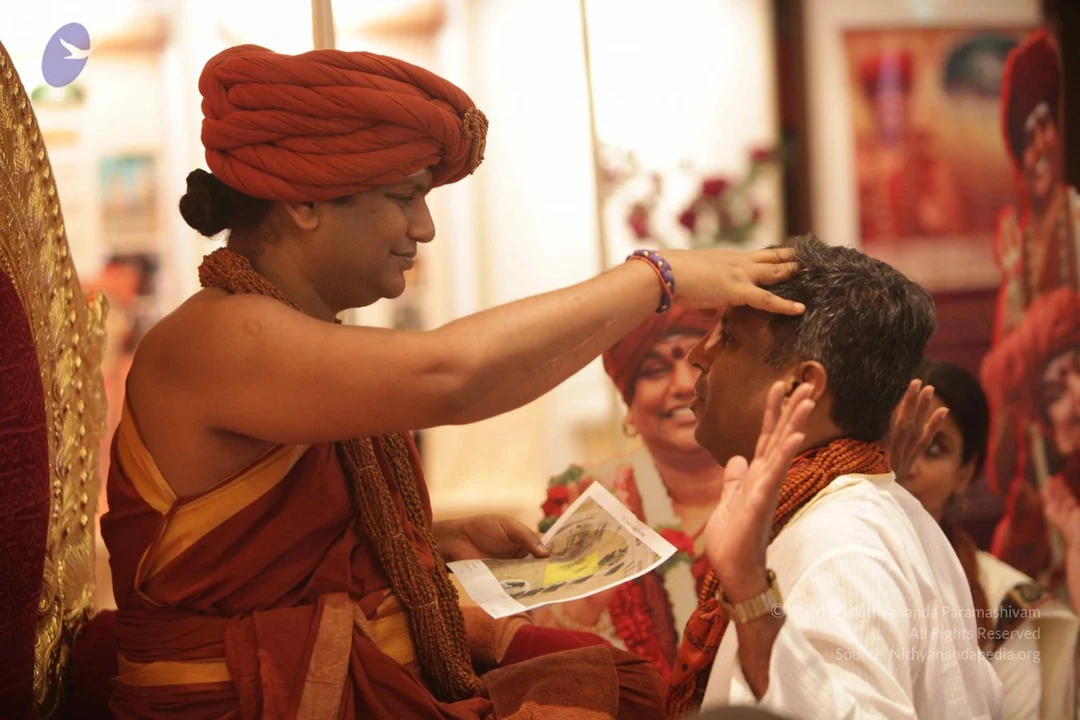
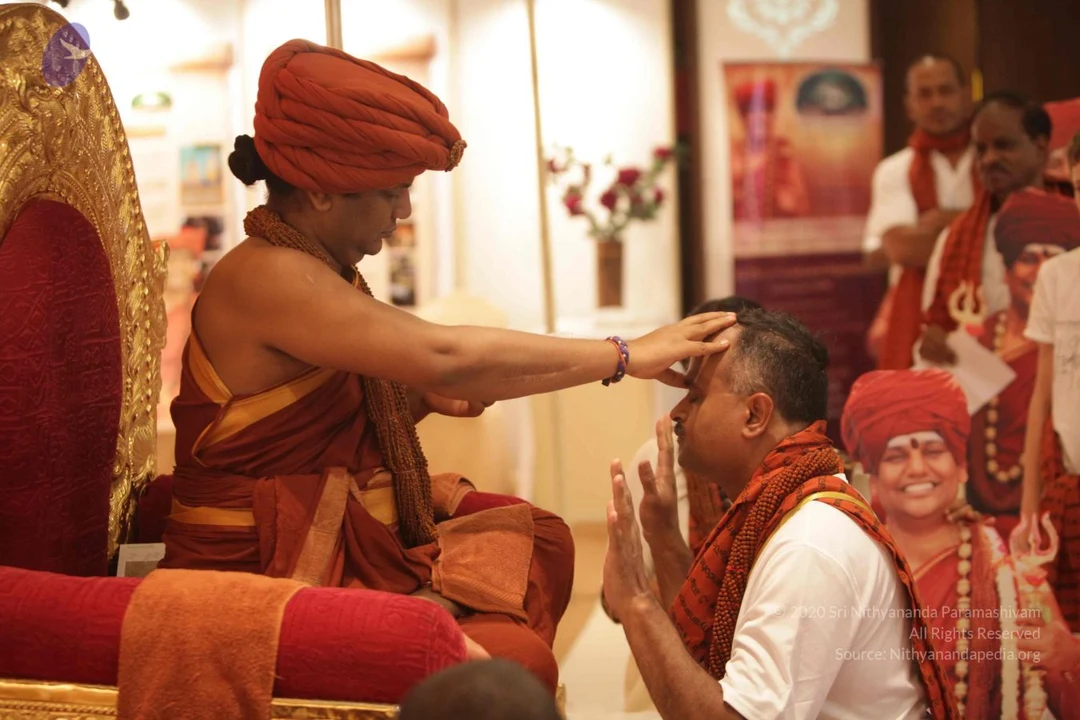
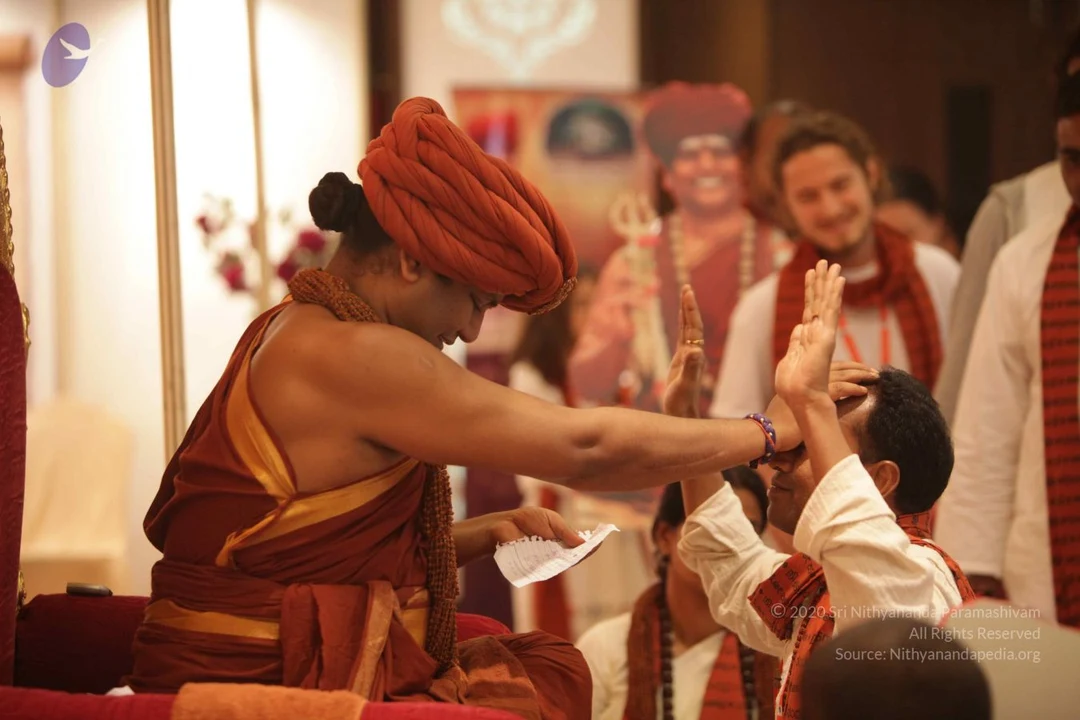
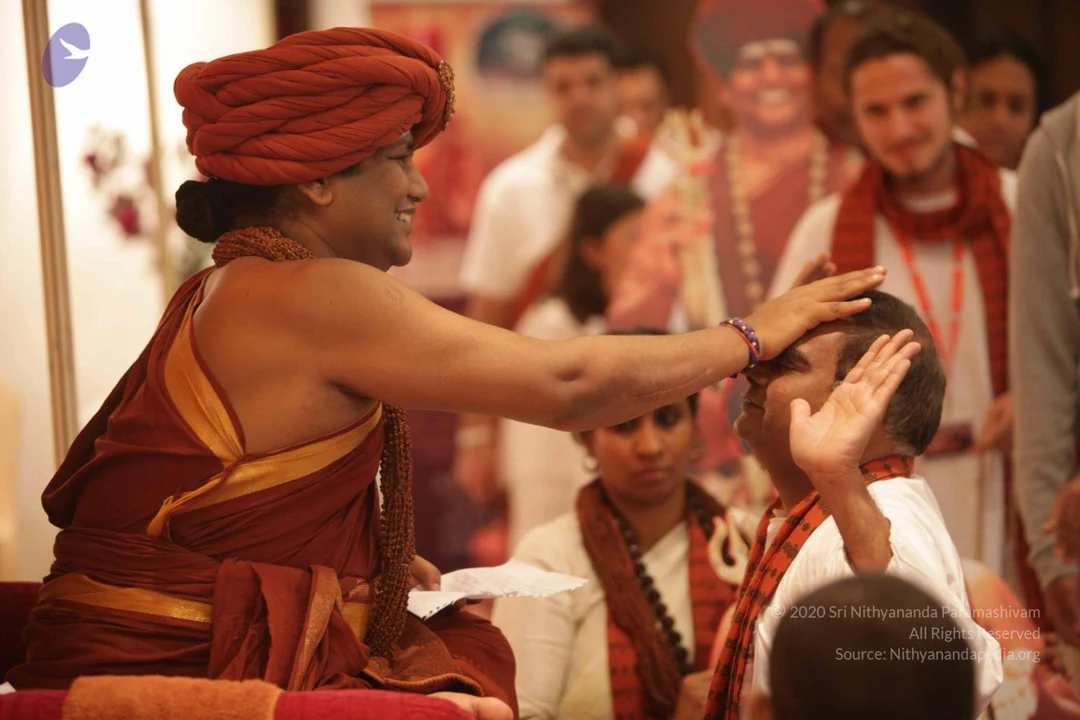
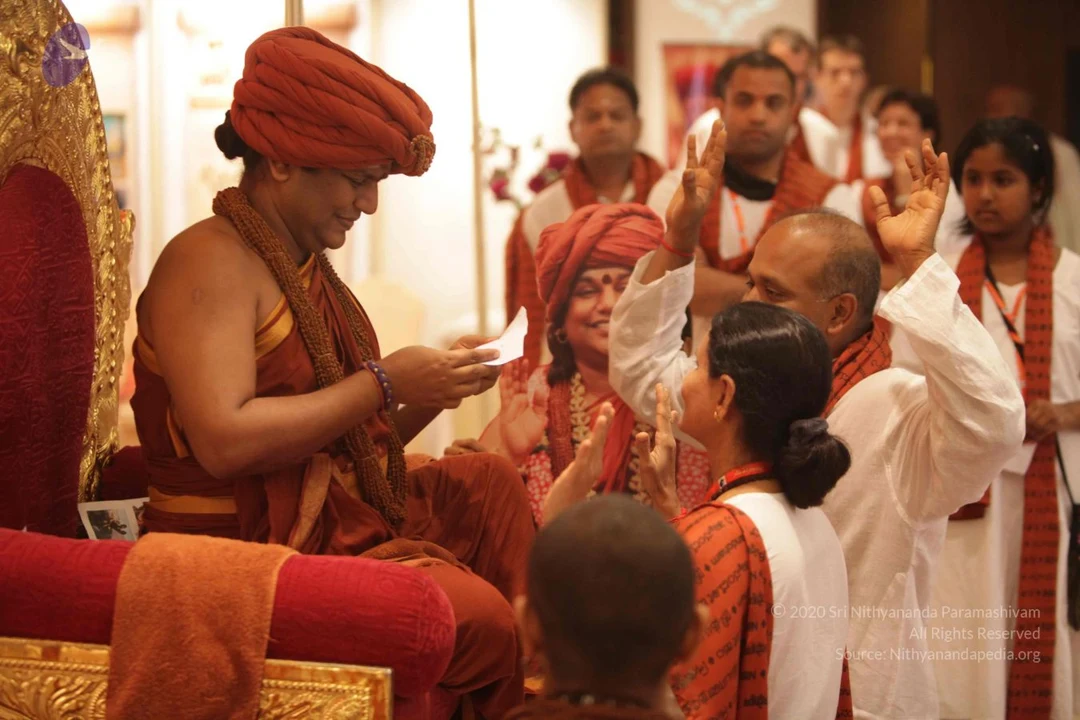
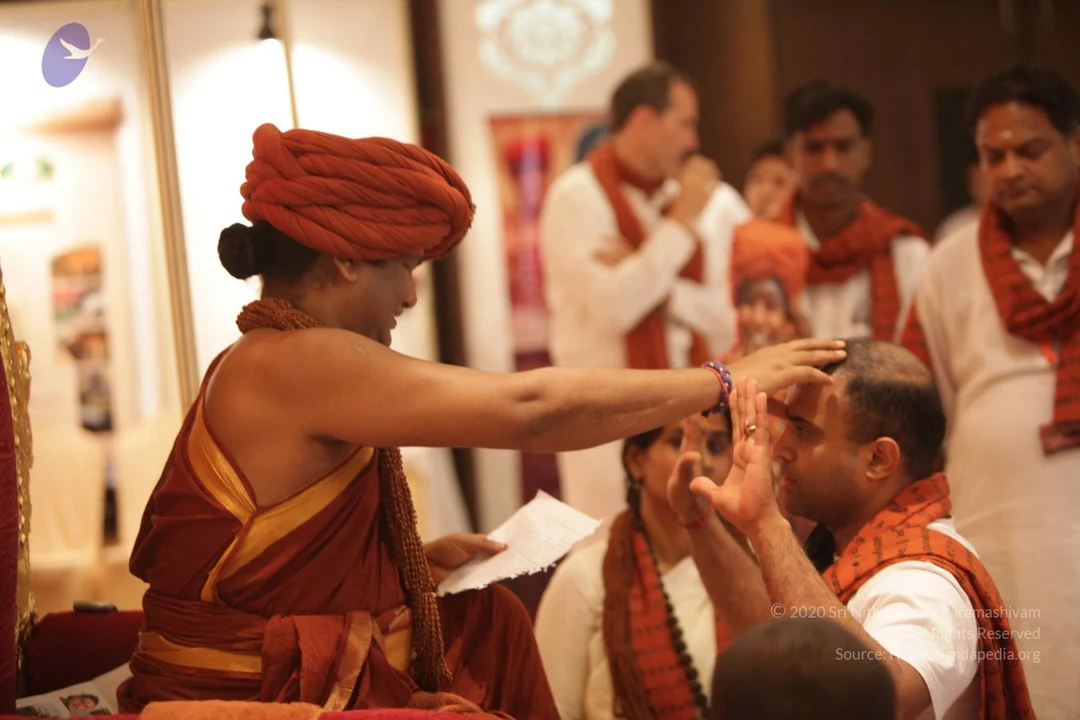
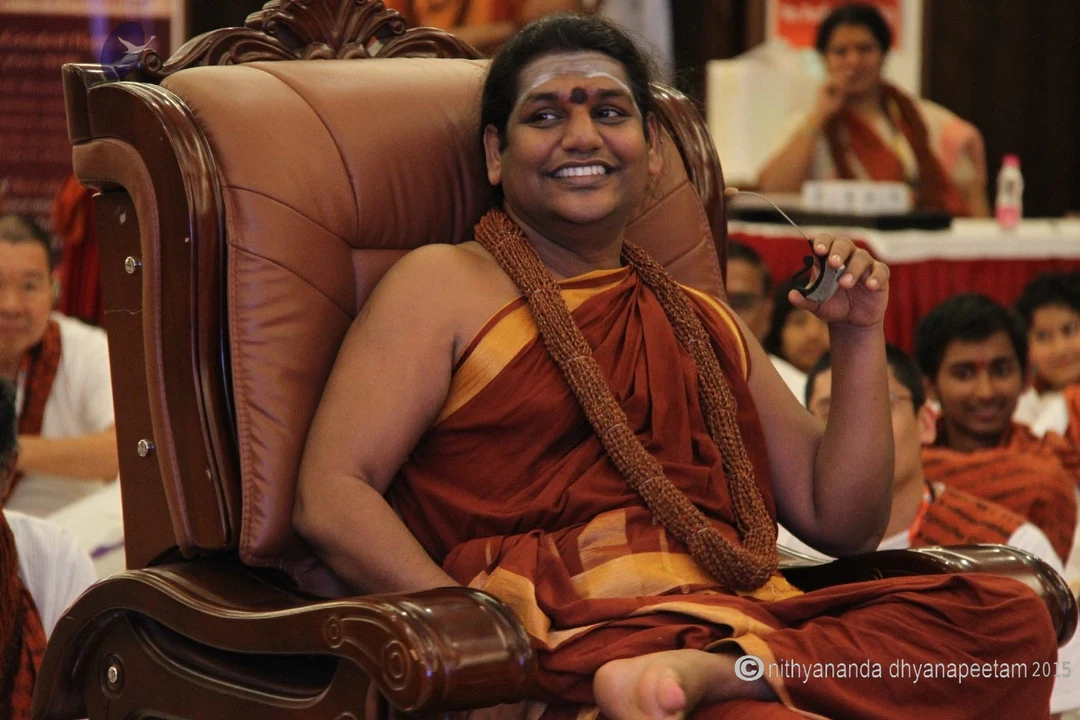
Third Eye and Atmalinga Initiation

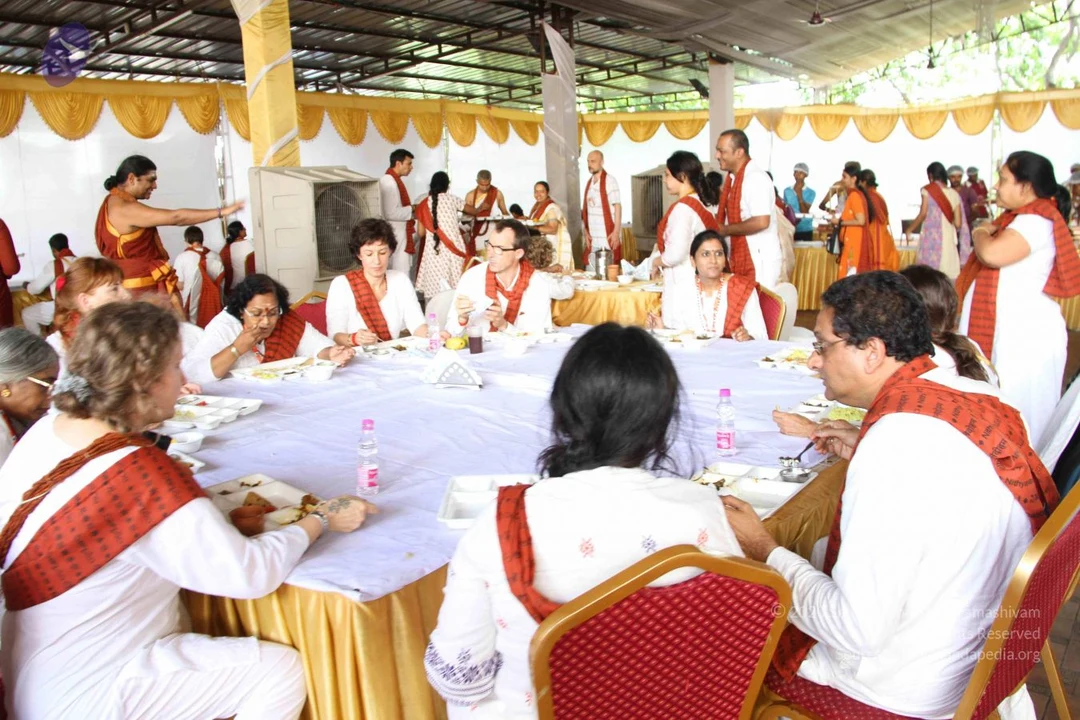
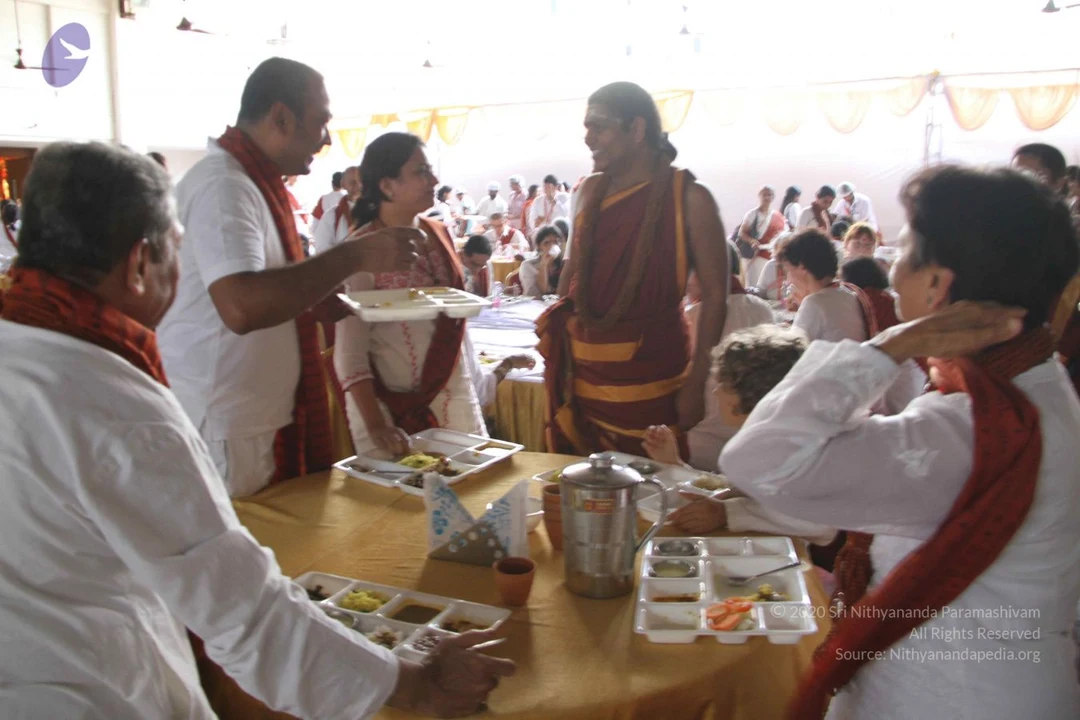
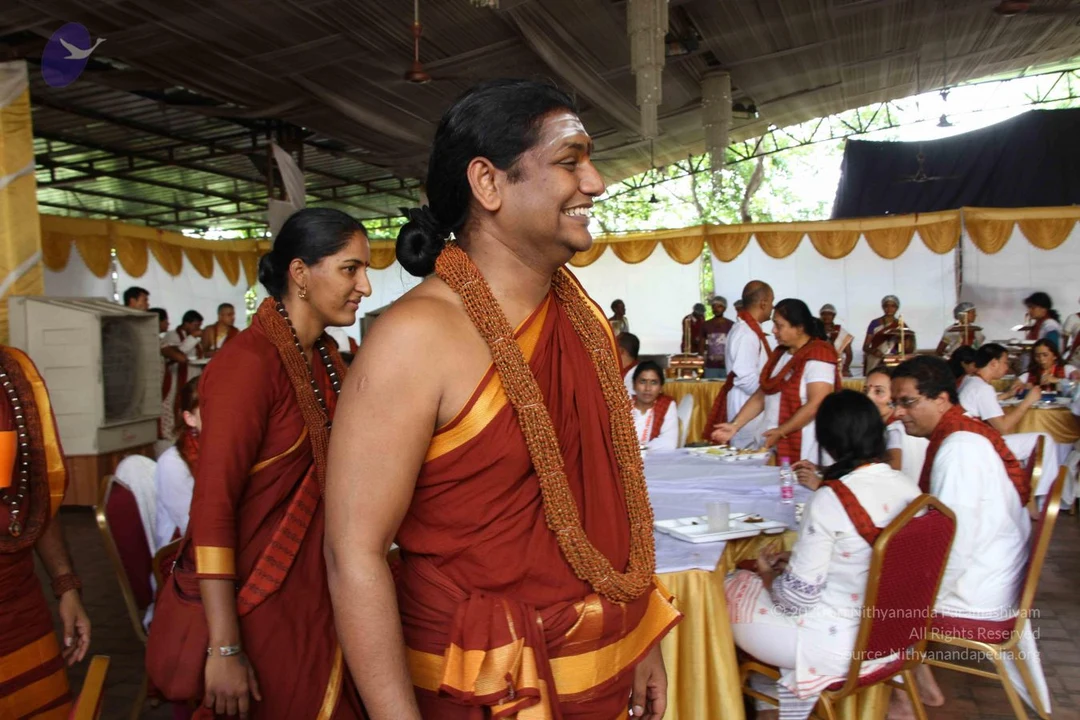
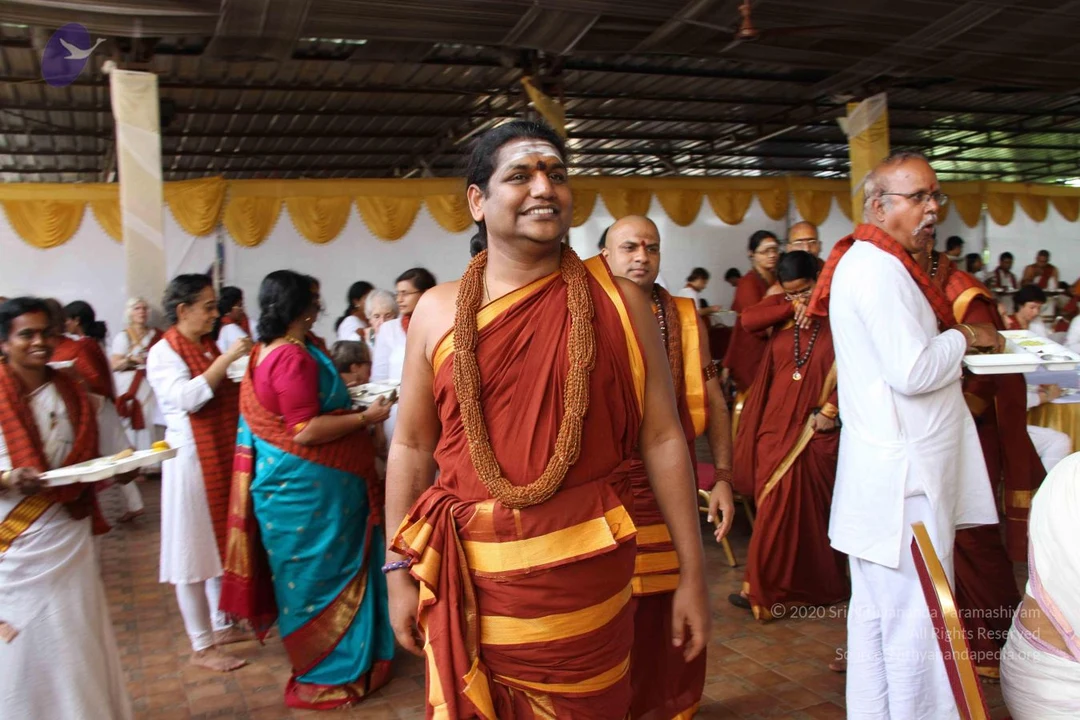
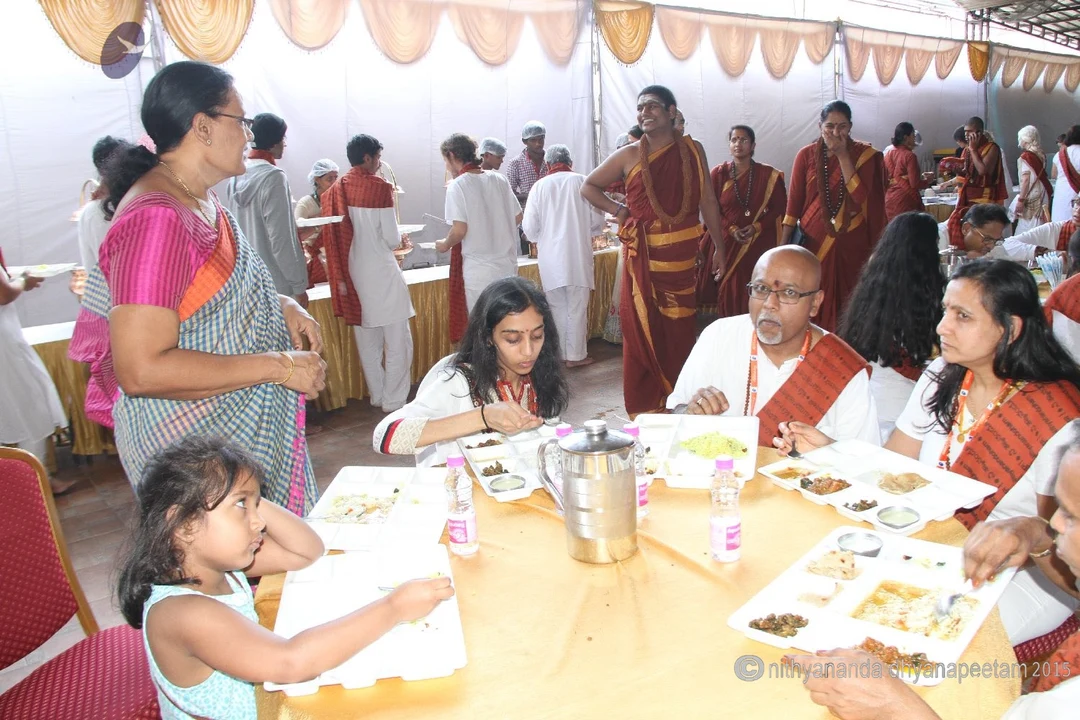
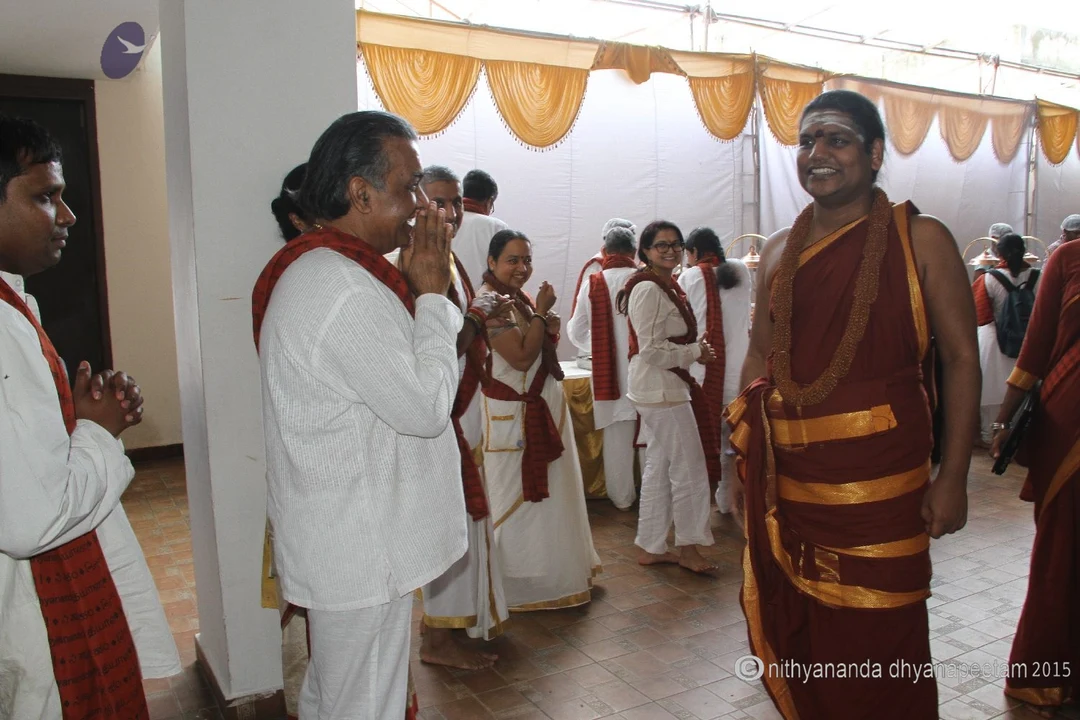
Lunch Break Initiation

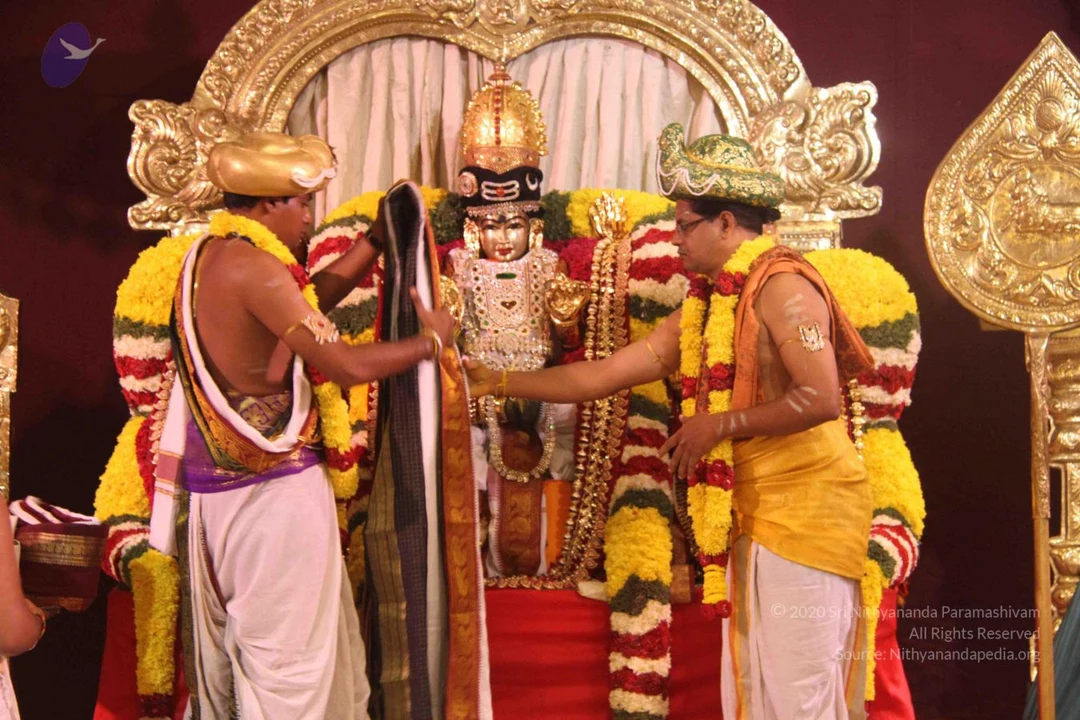
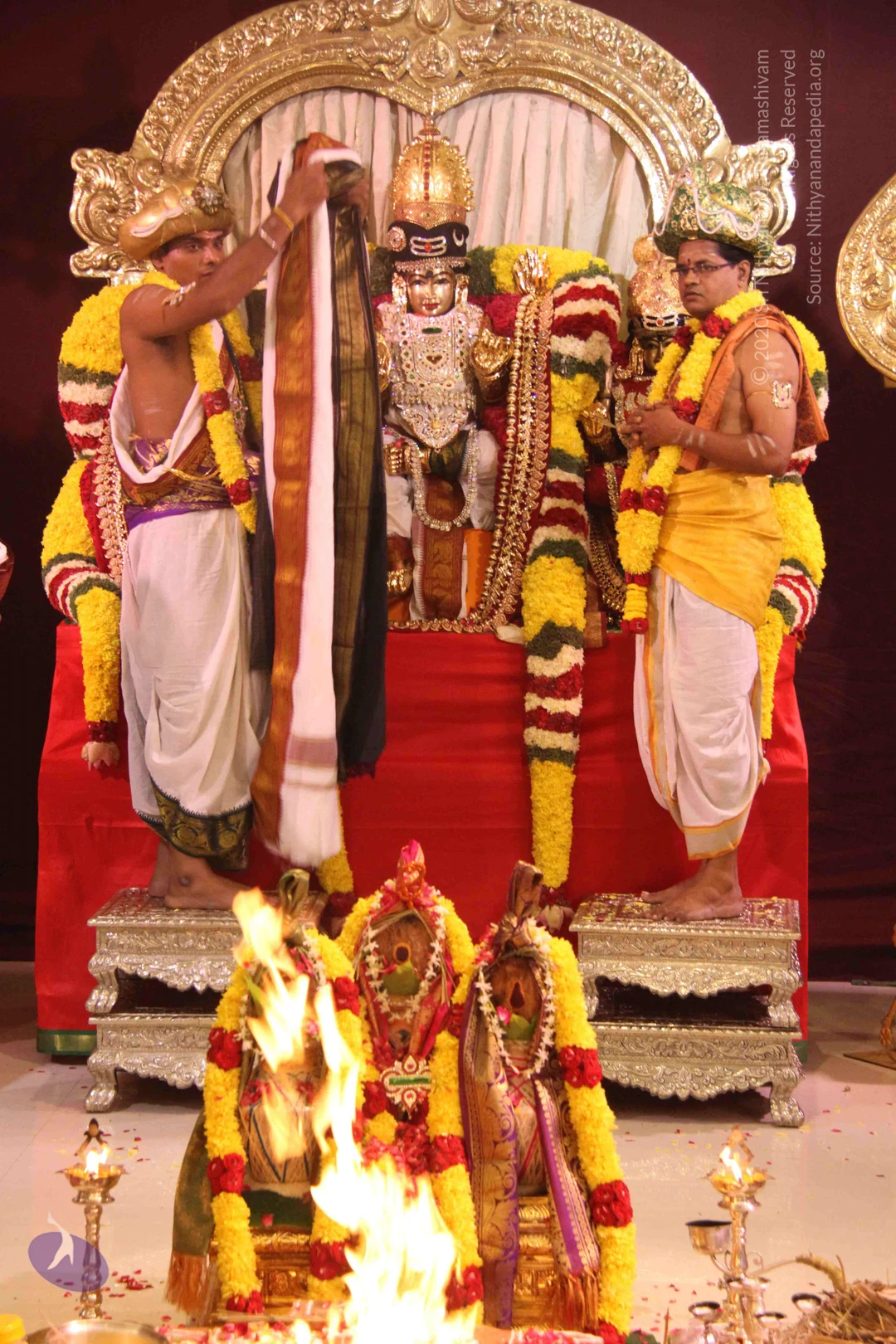
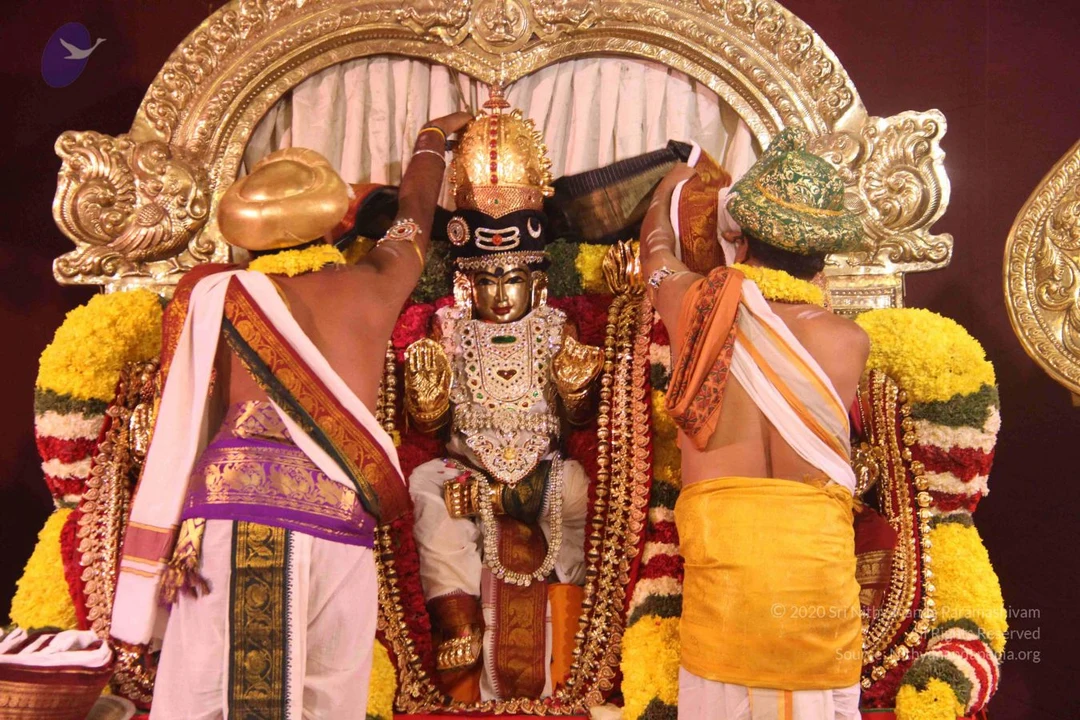
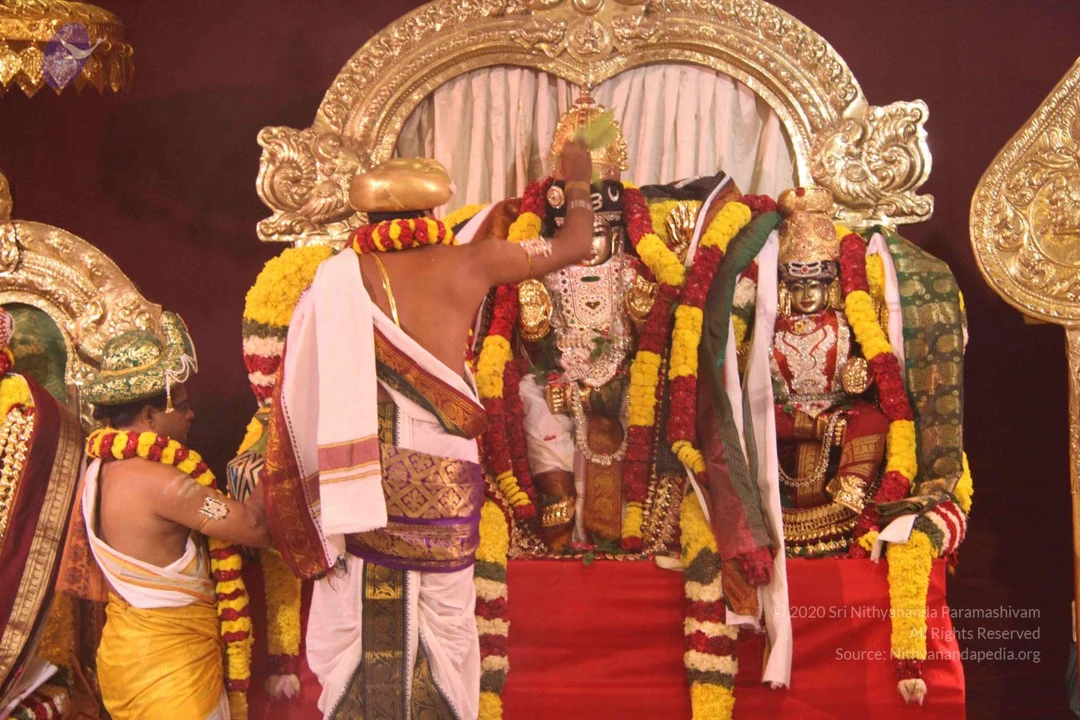
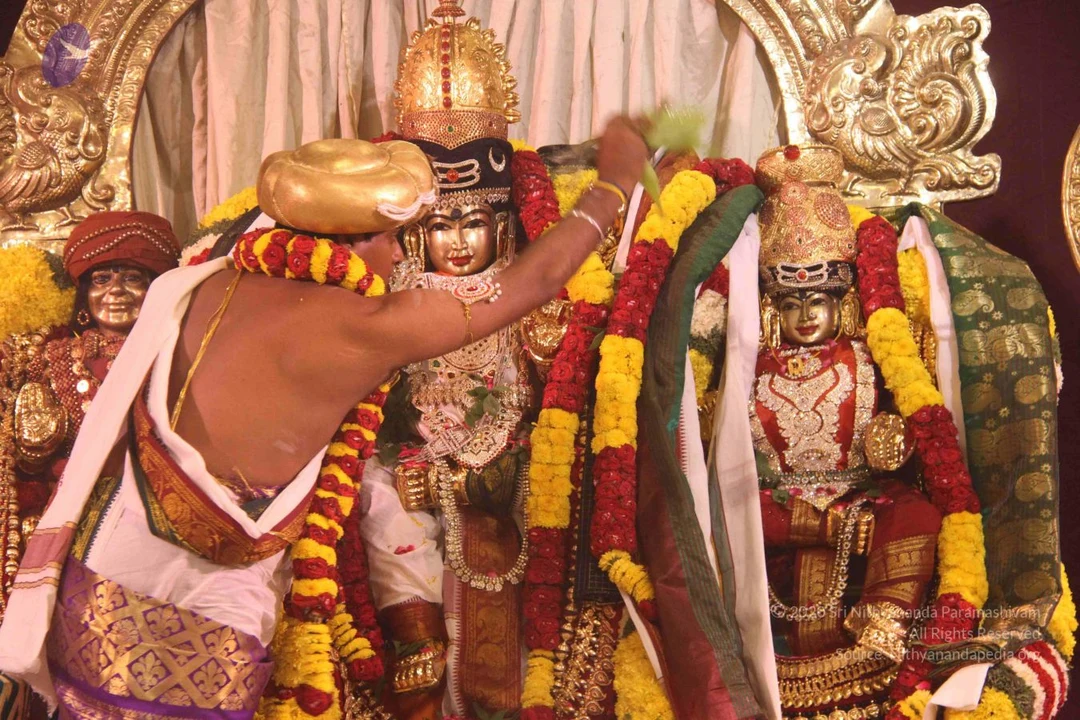
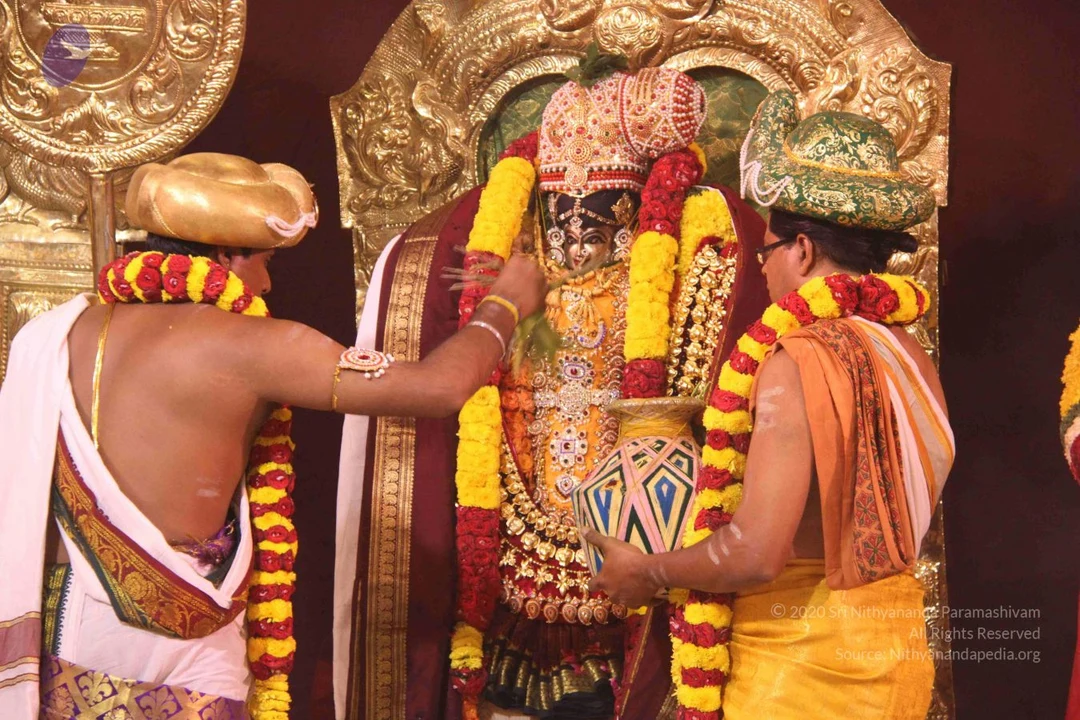
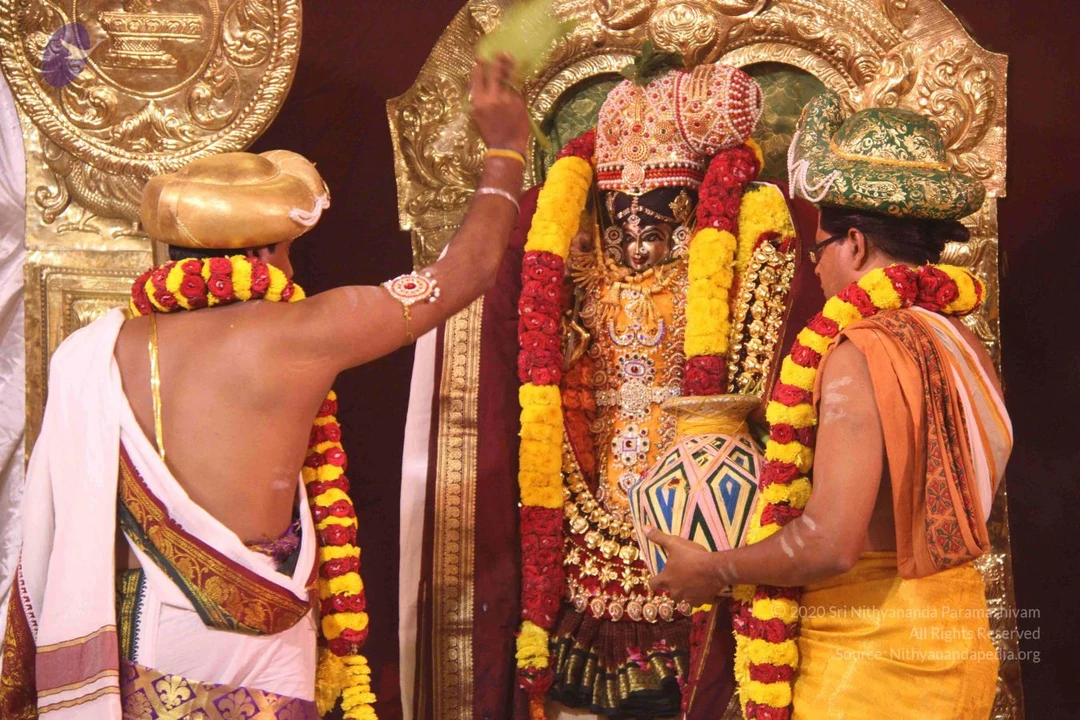
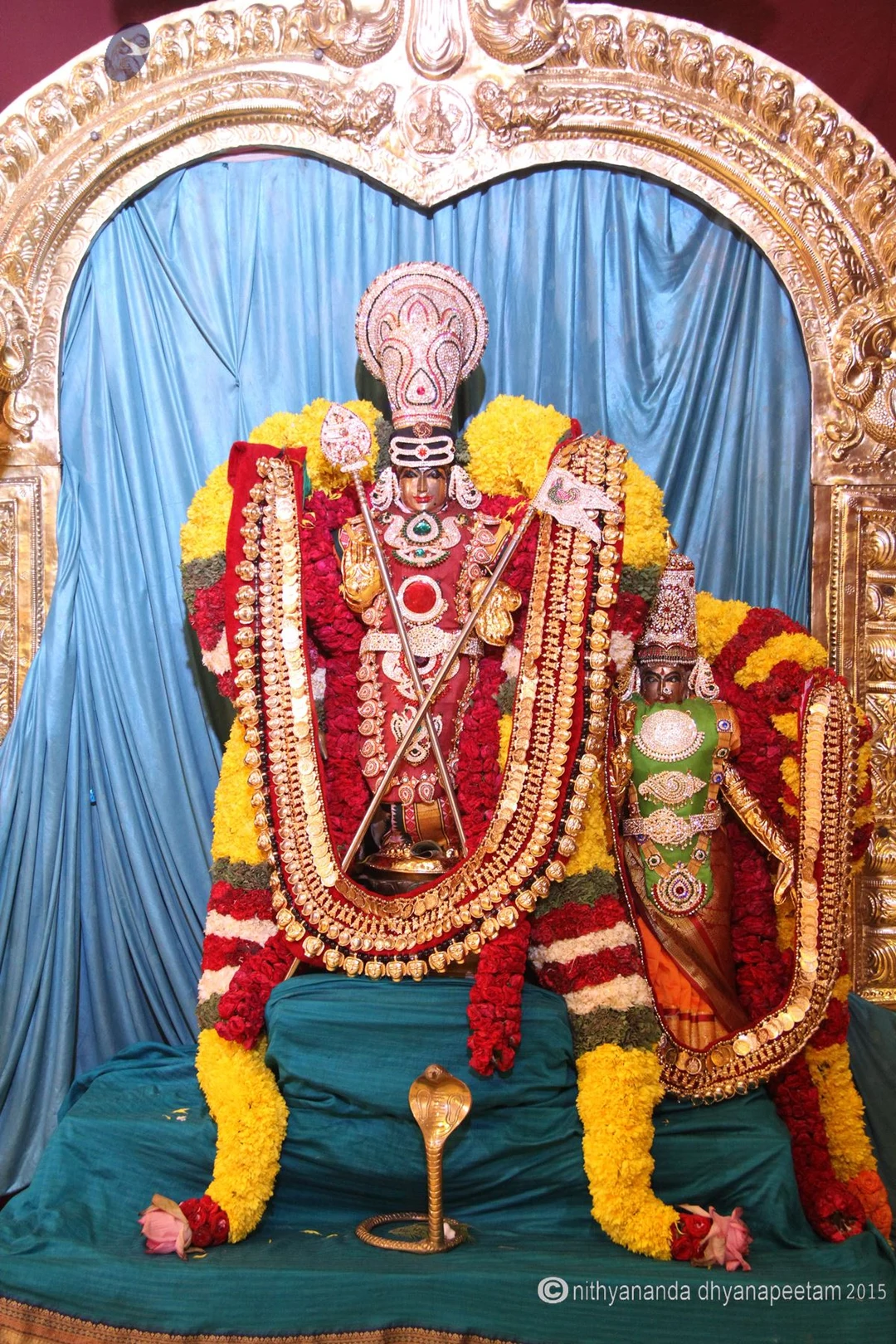
Meenakshi-Thirukalyanam

Photos Of The Day:
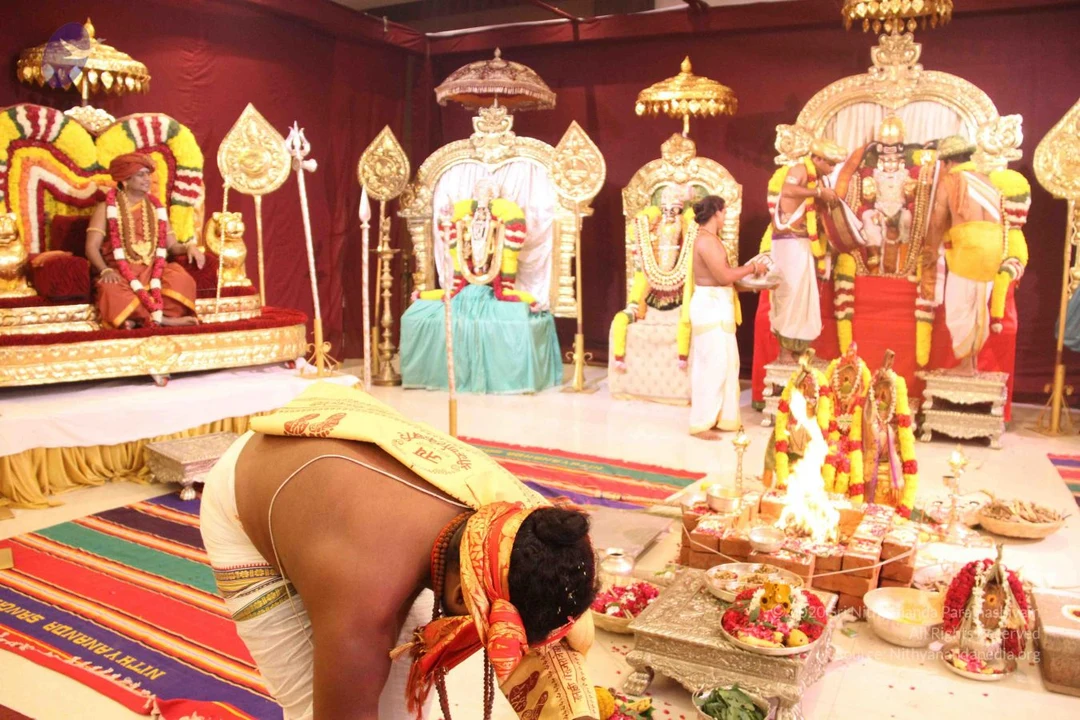
IA-Varanasi-Meenakshi-Thirukalyanam

Photos Of The Day:
More Photos from Meenakshi Tirukalyanam

More Photos from Darshan

Photos from this day

View all 640 photos

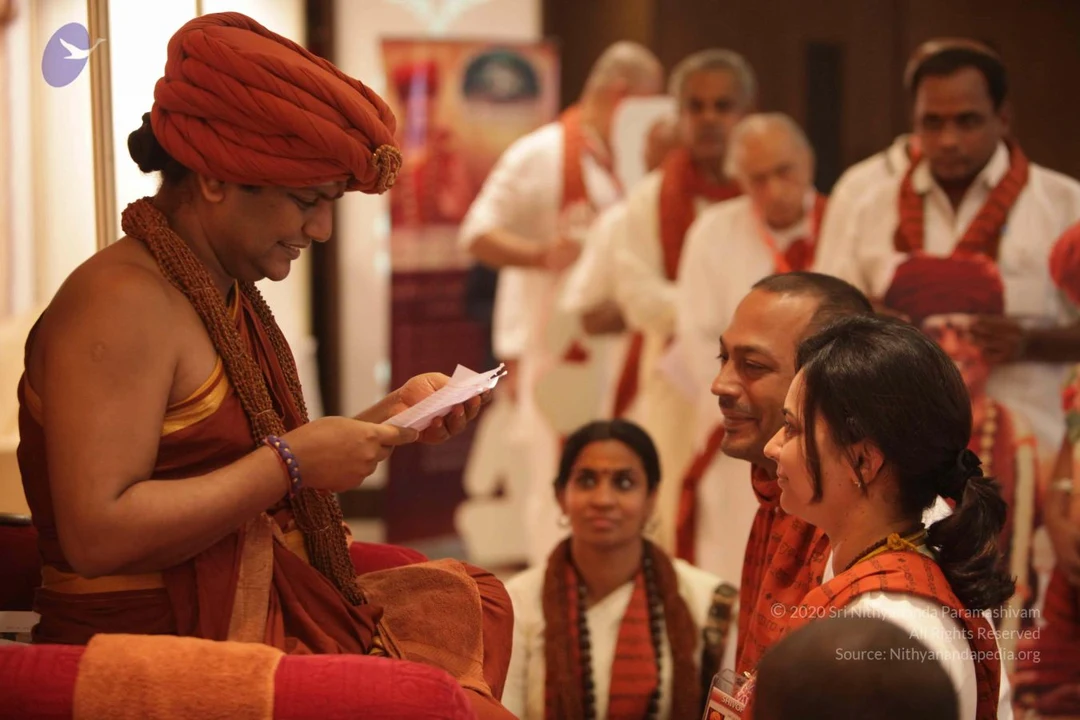
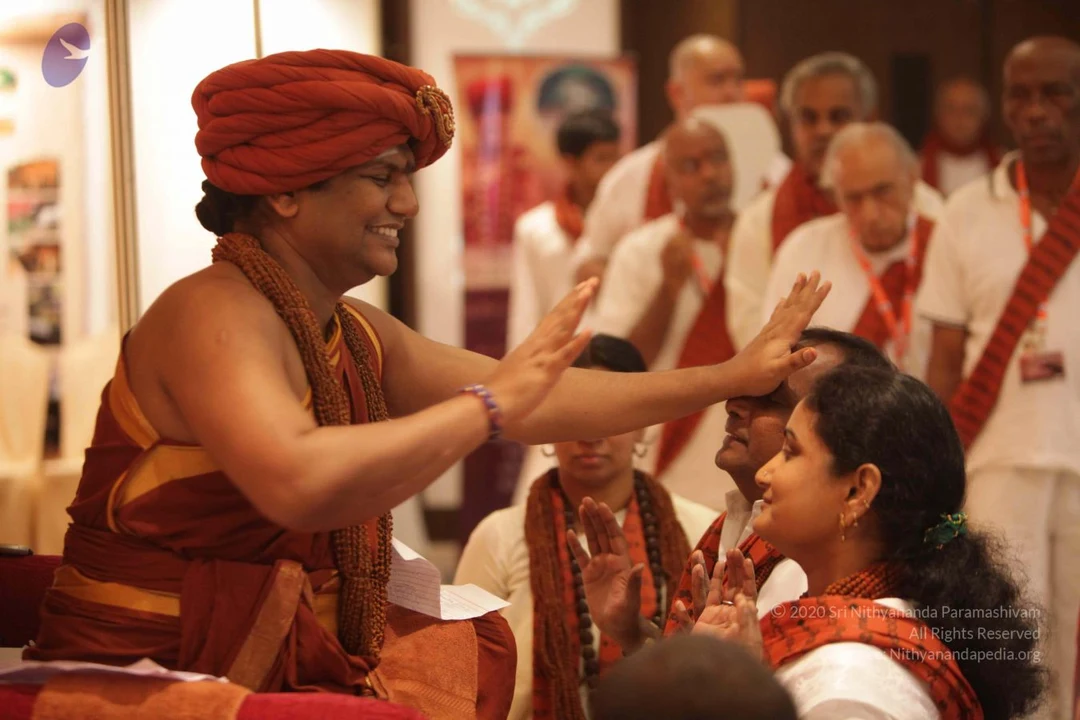
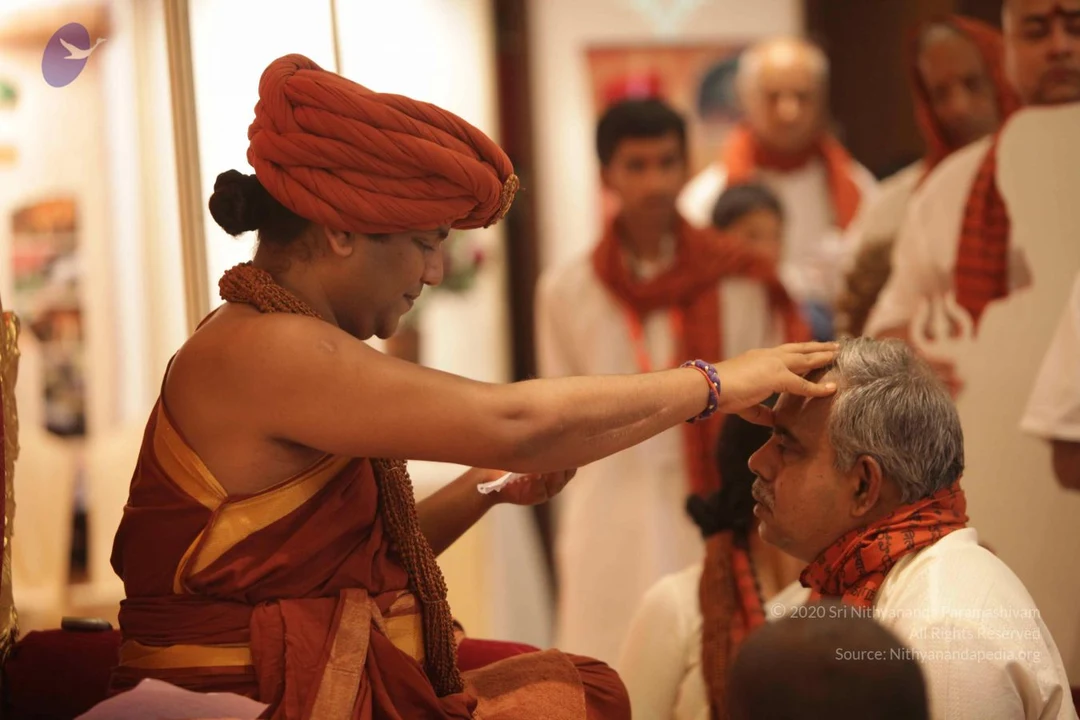
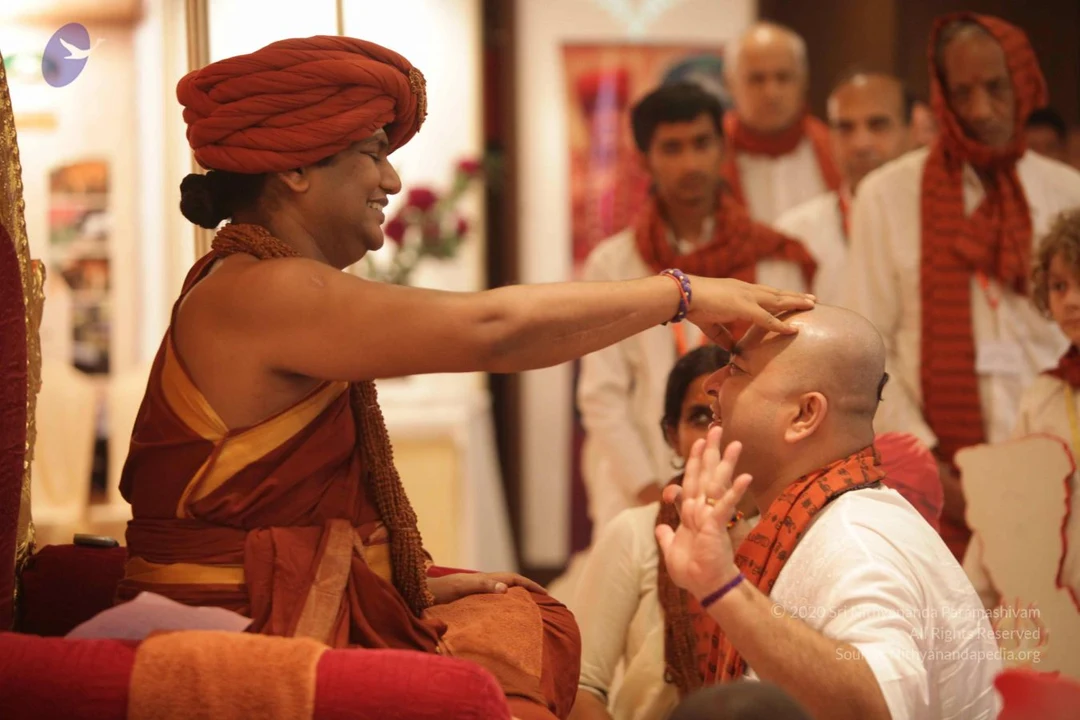
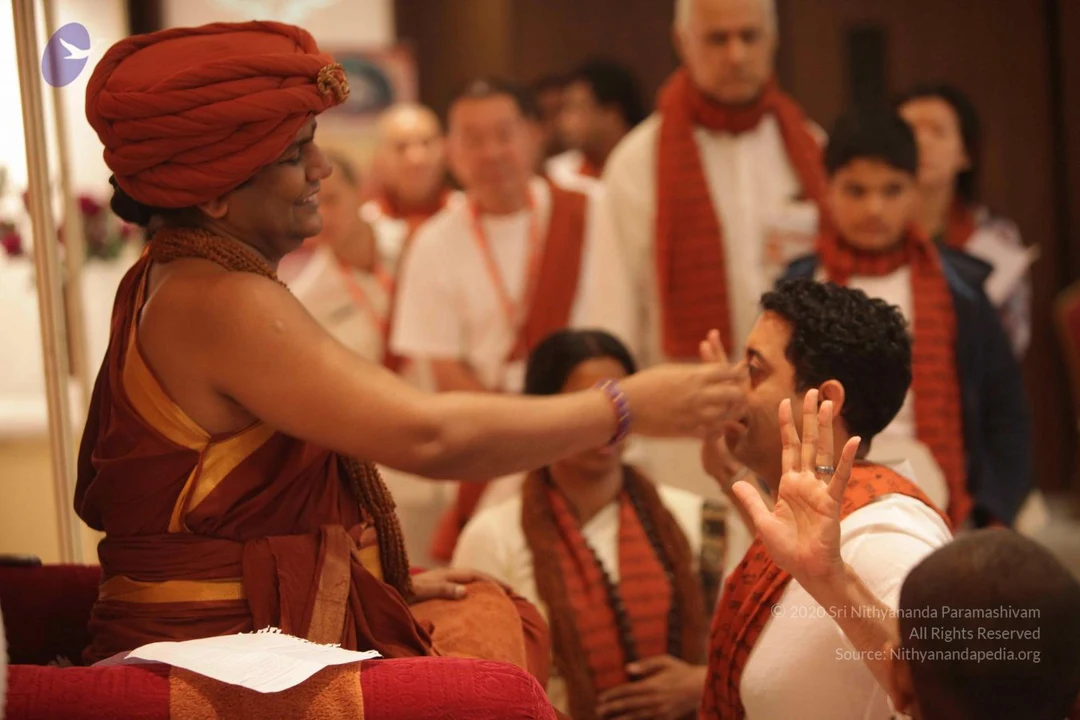
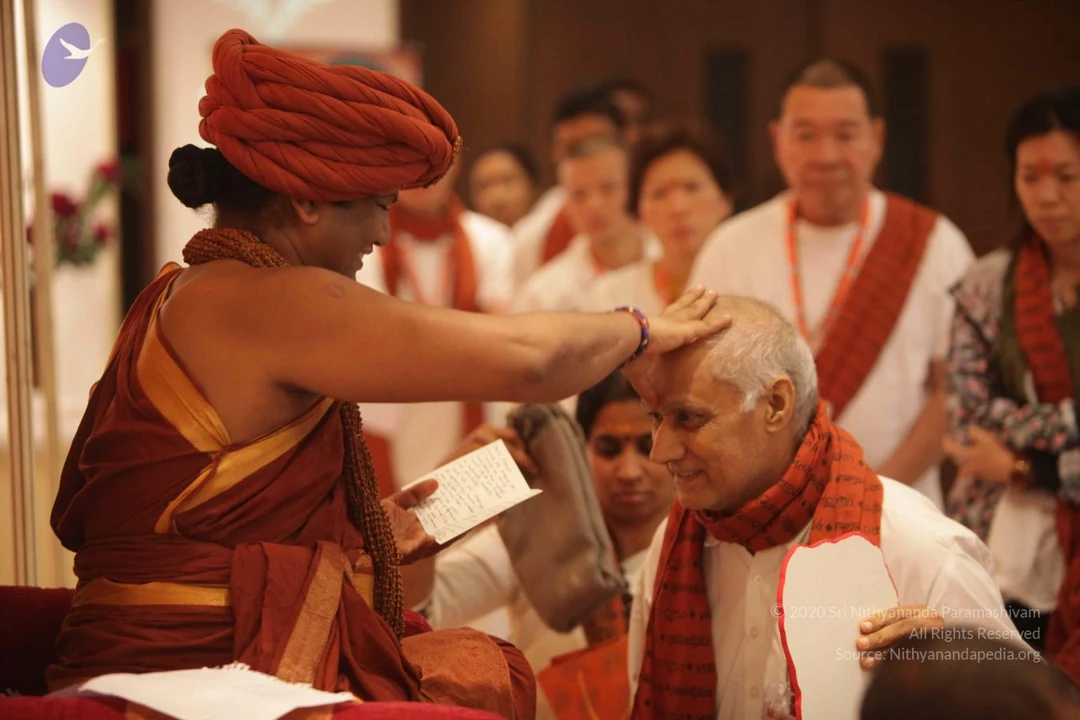
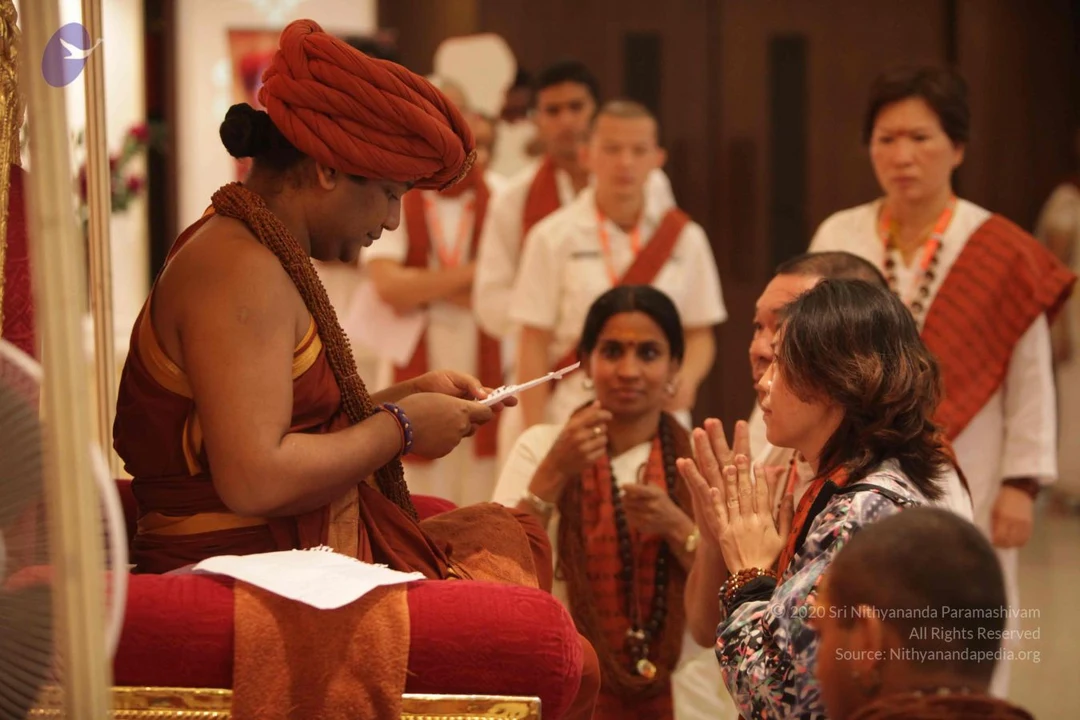
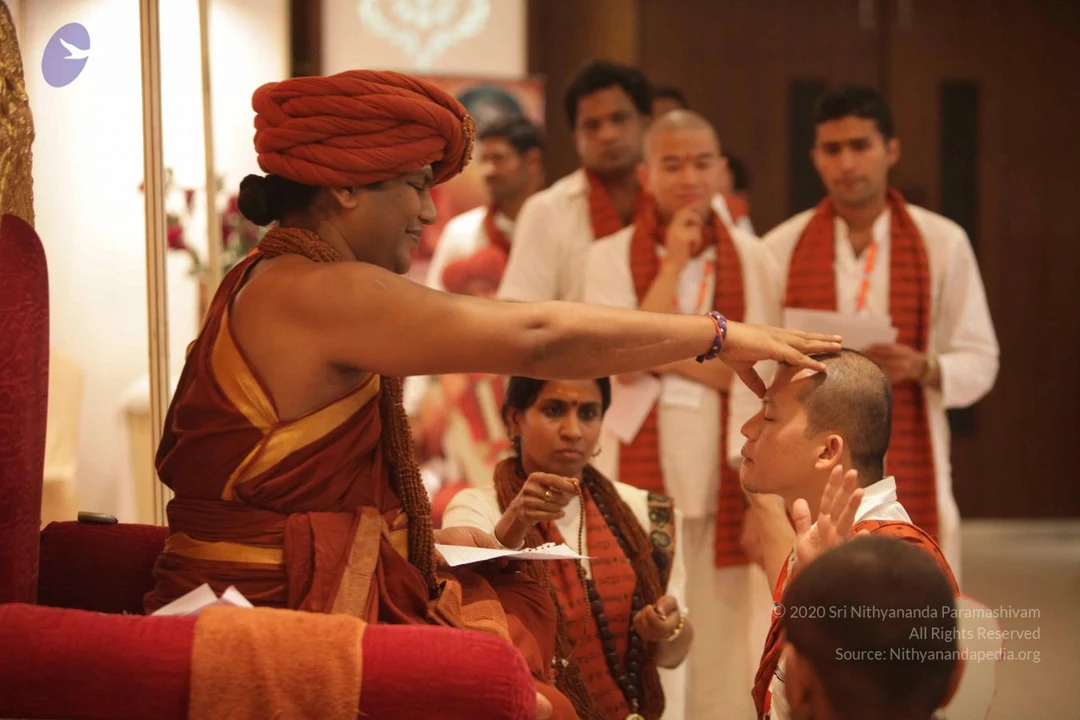
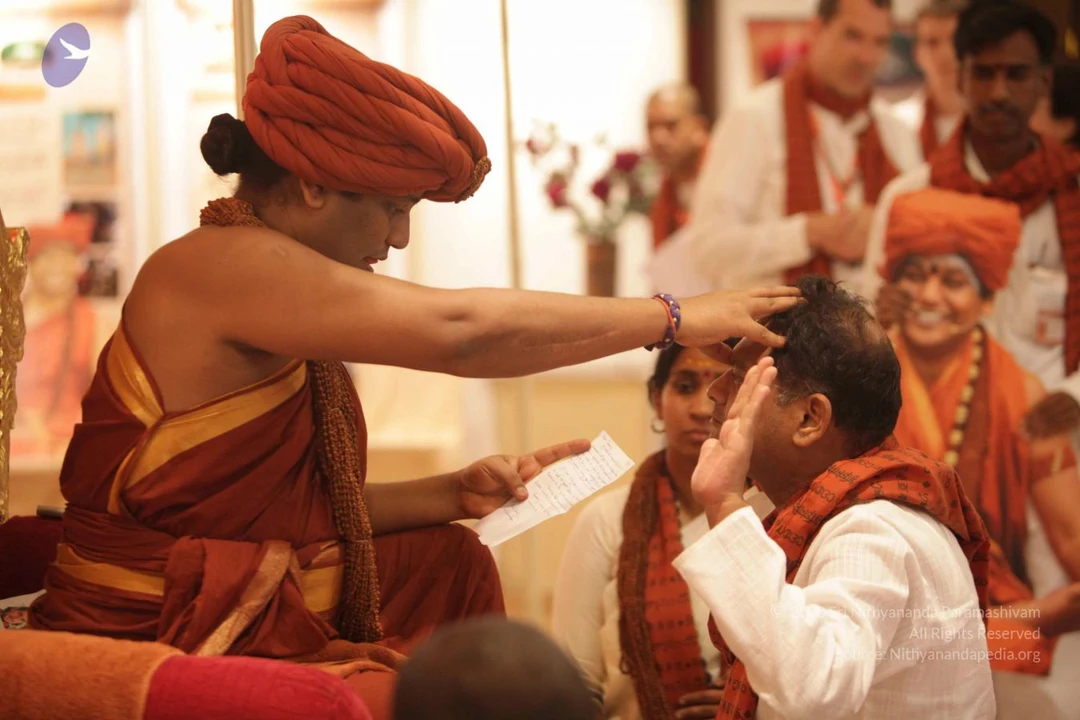
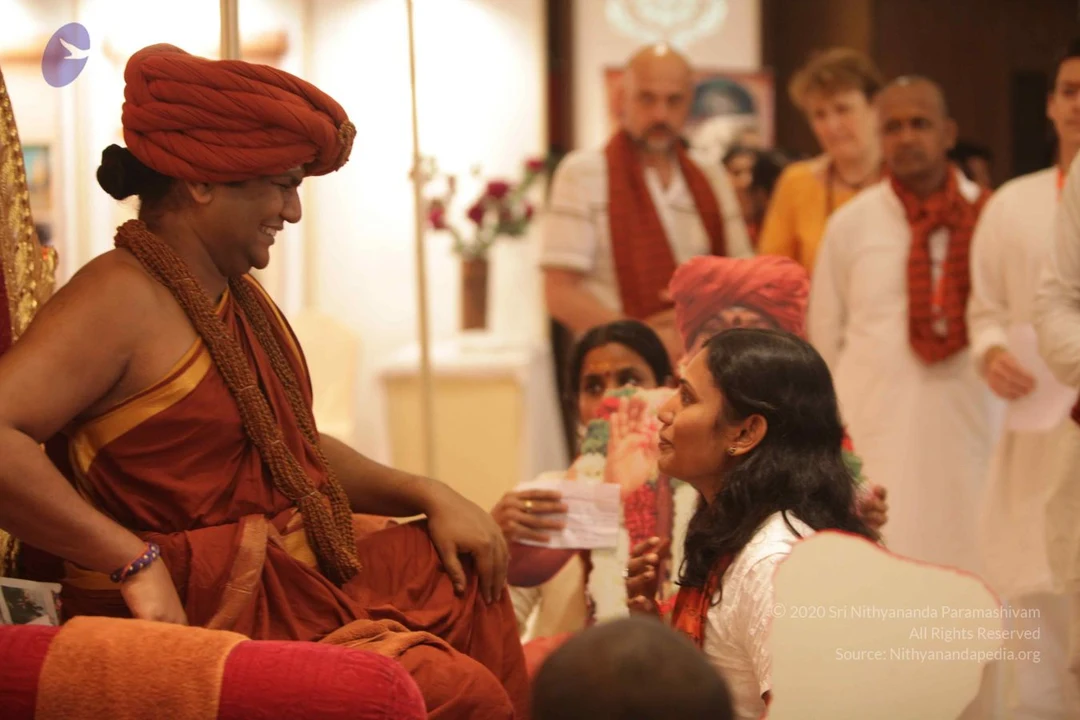
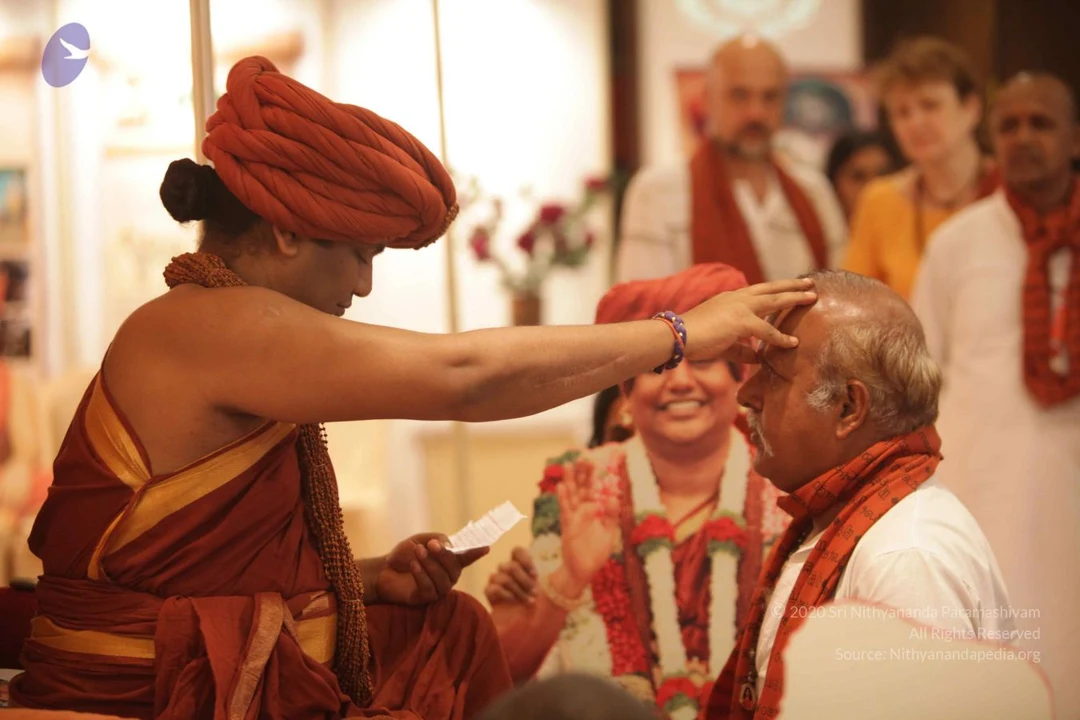
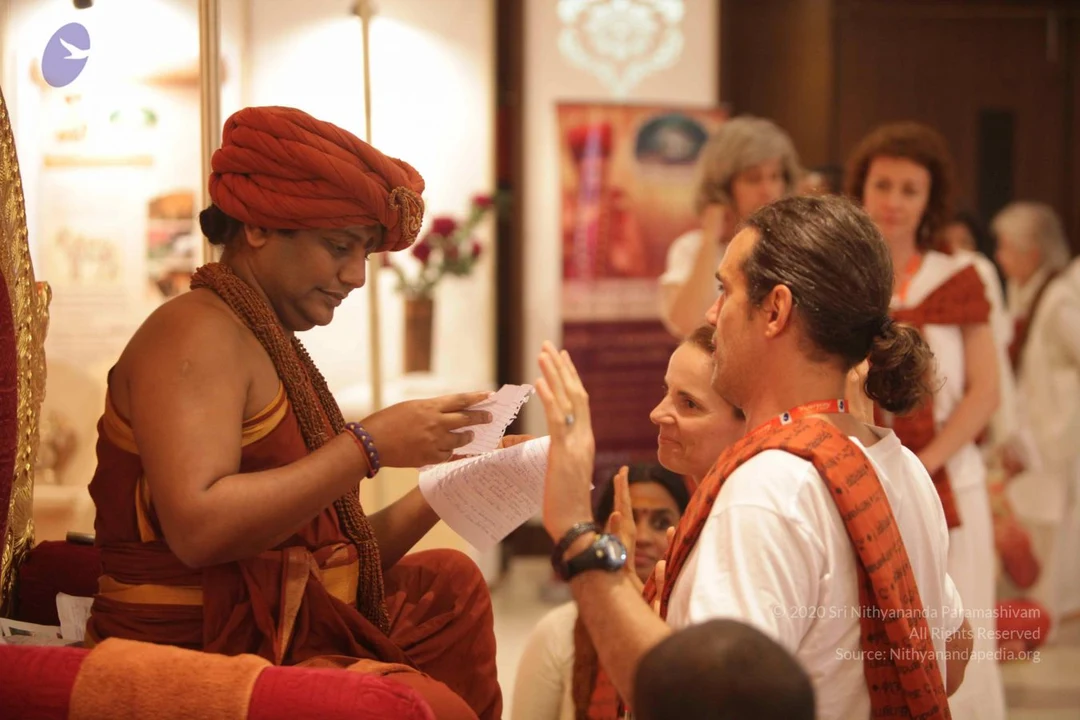
Third Eye and Atmalinga Initiation

38 photosSource gallery
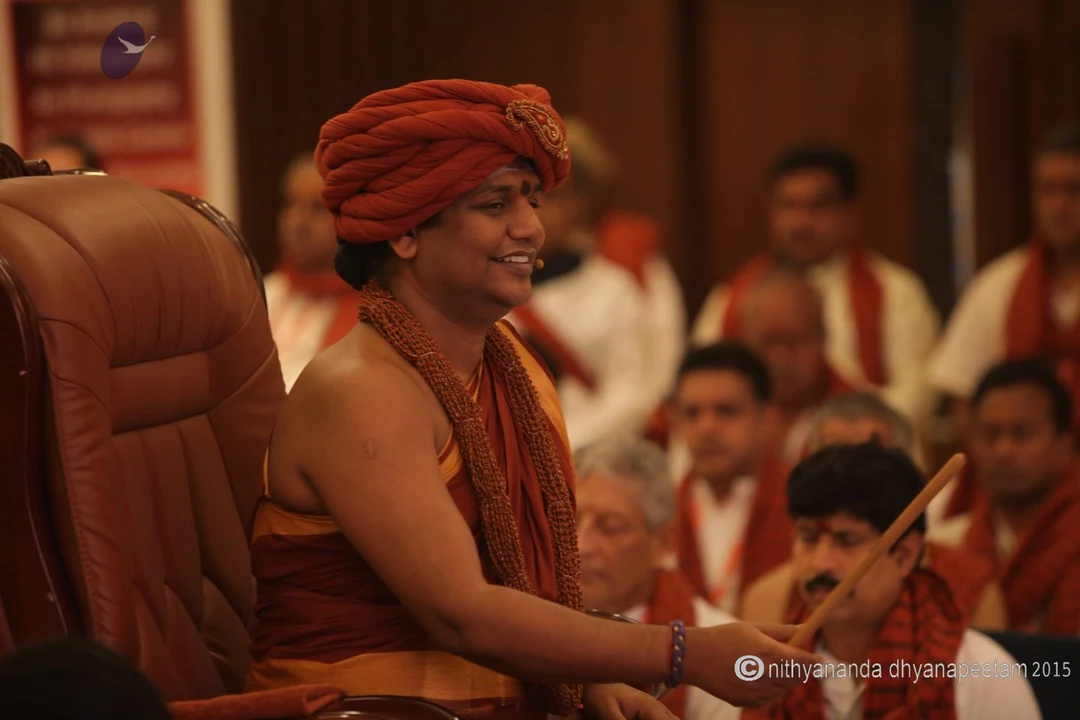
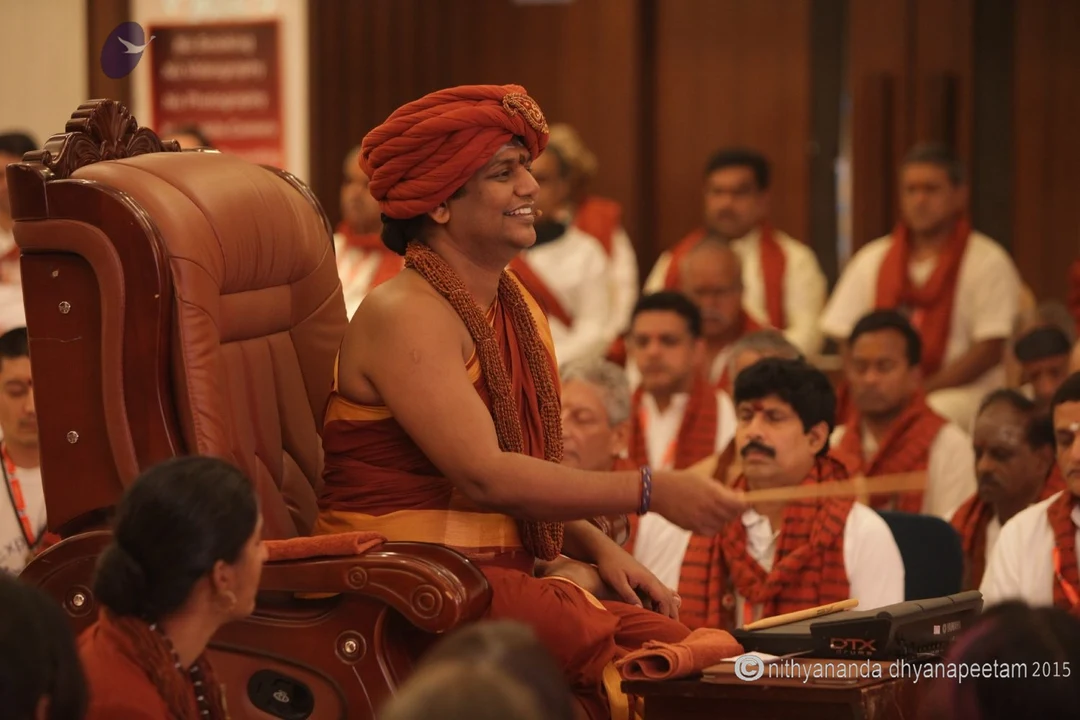
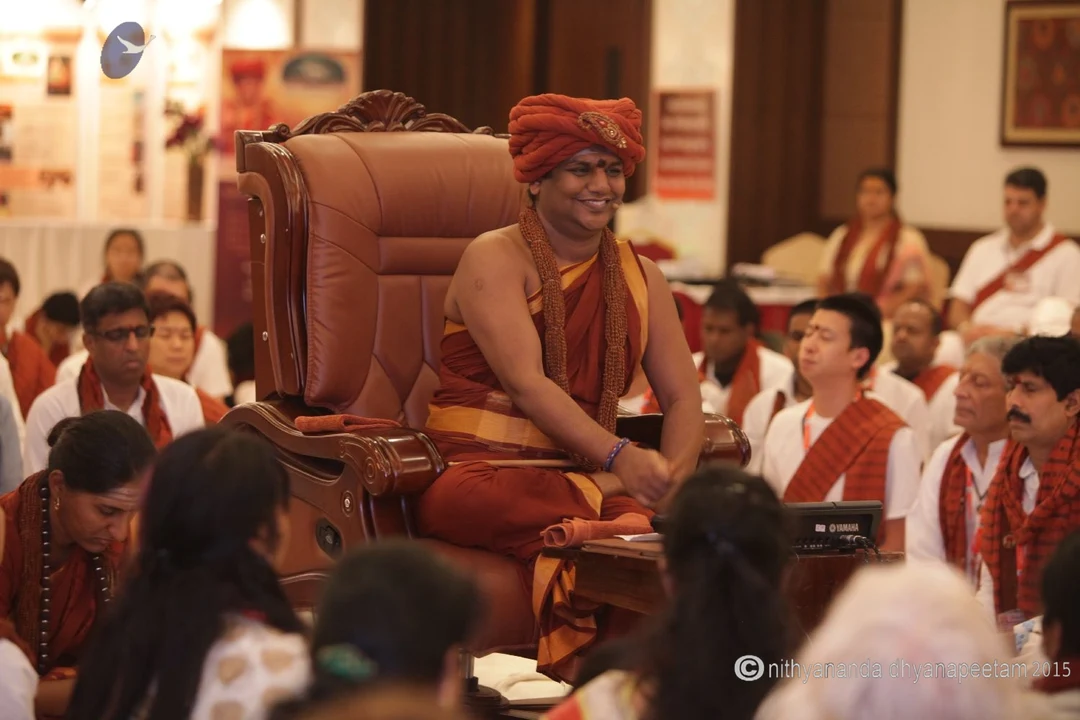
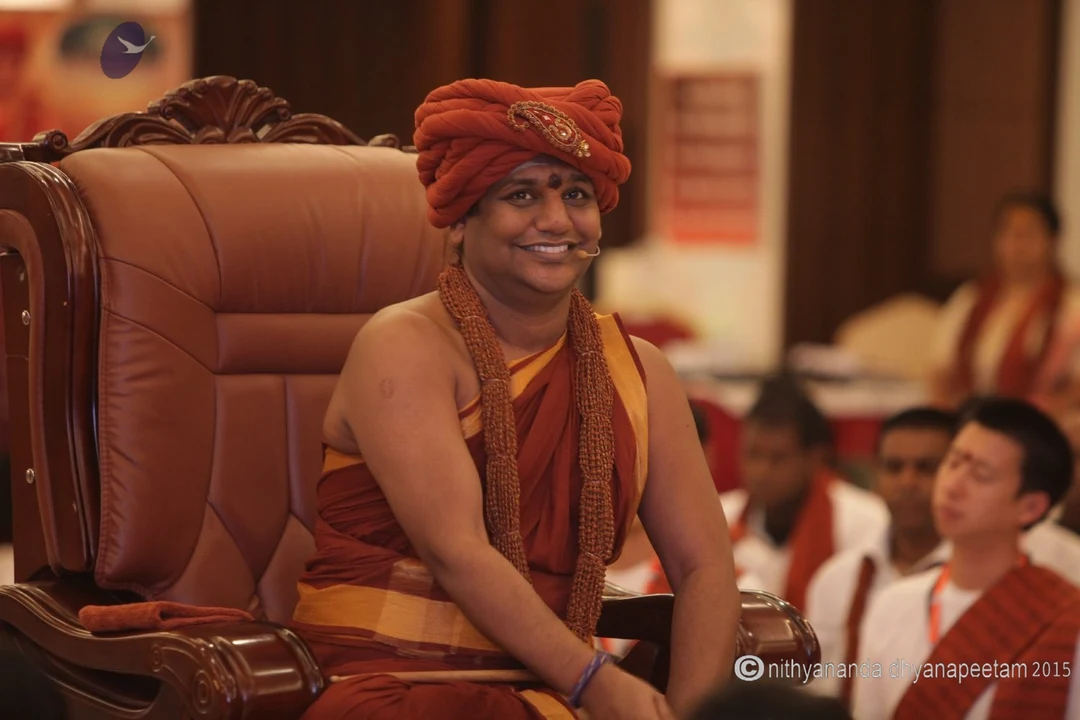
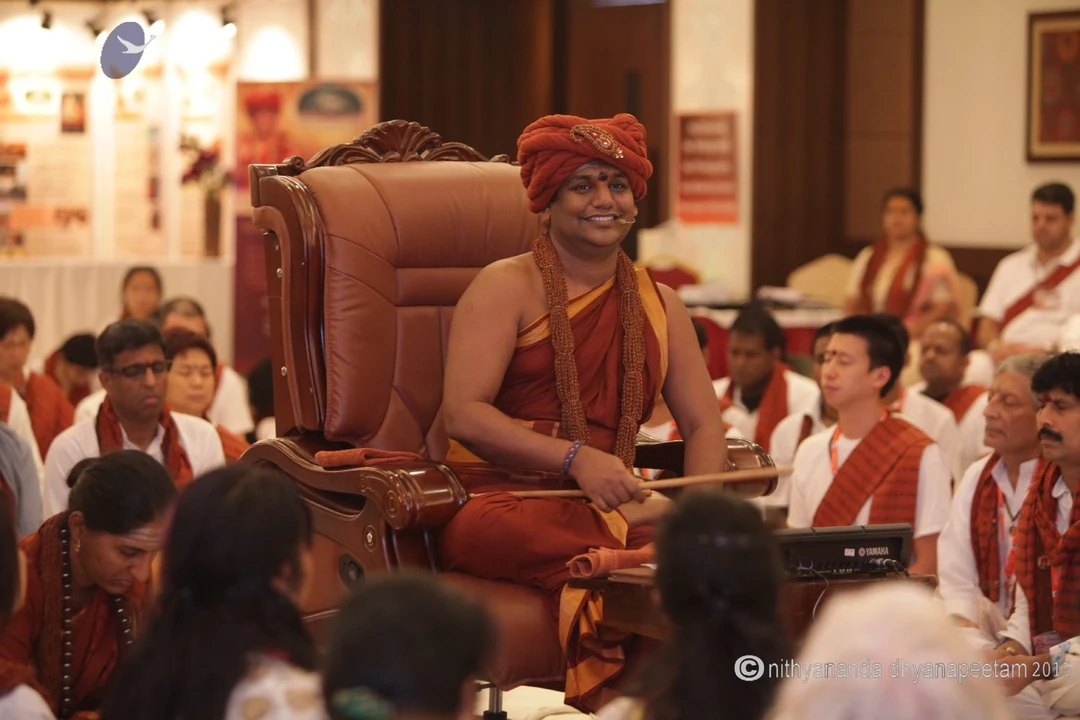
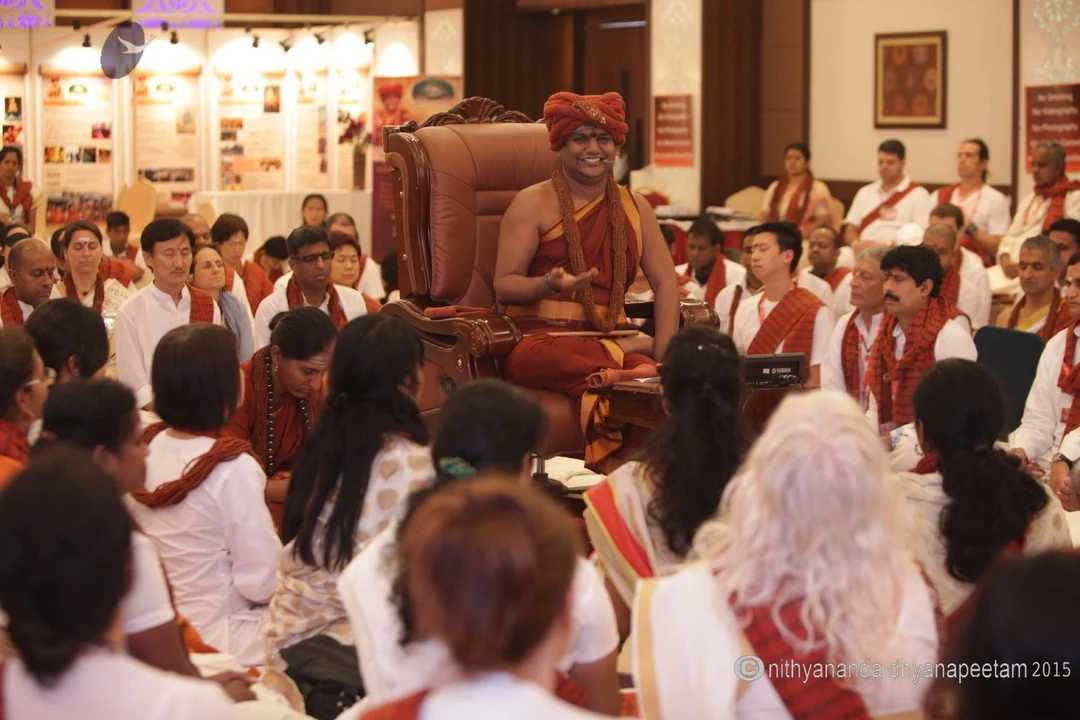
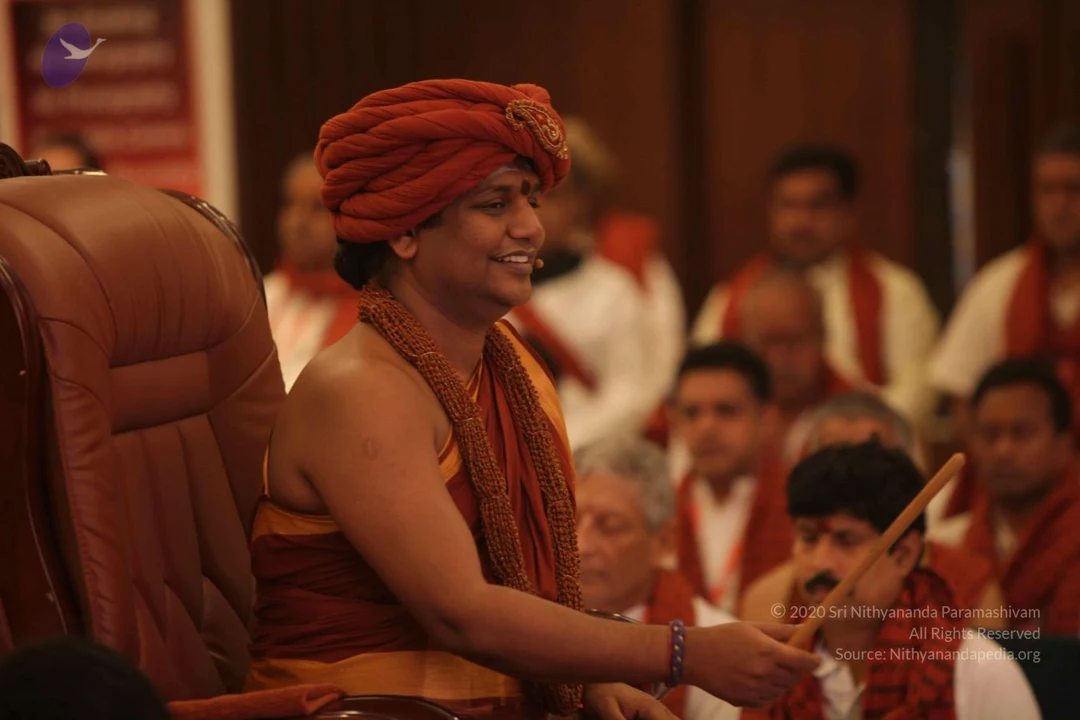
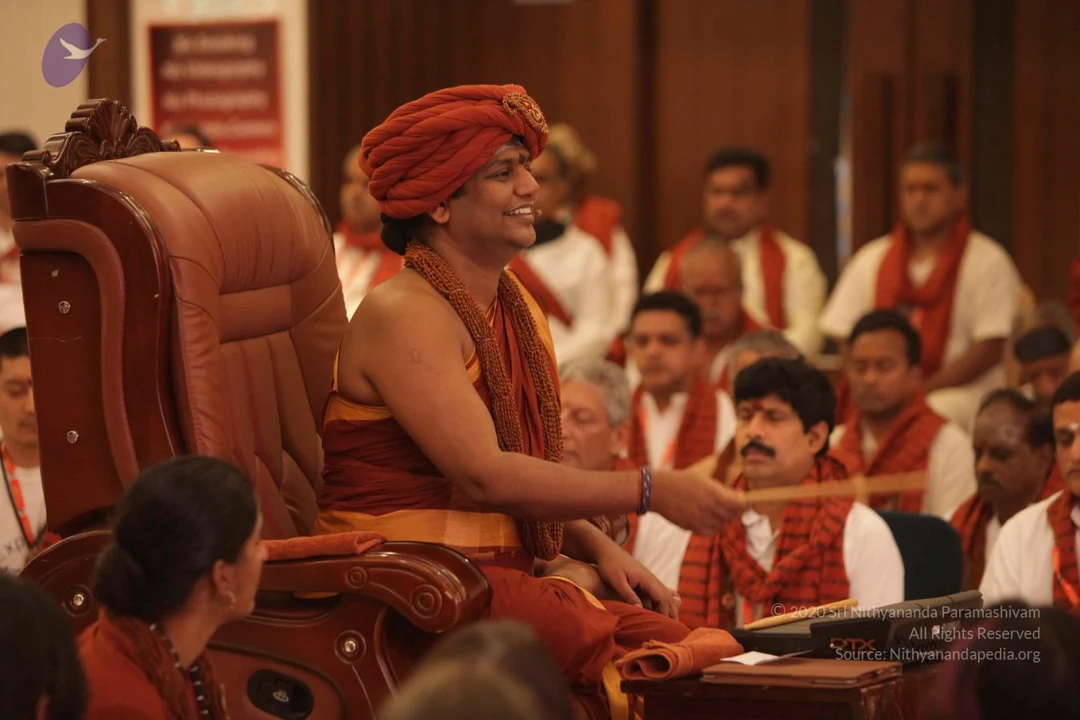
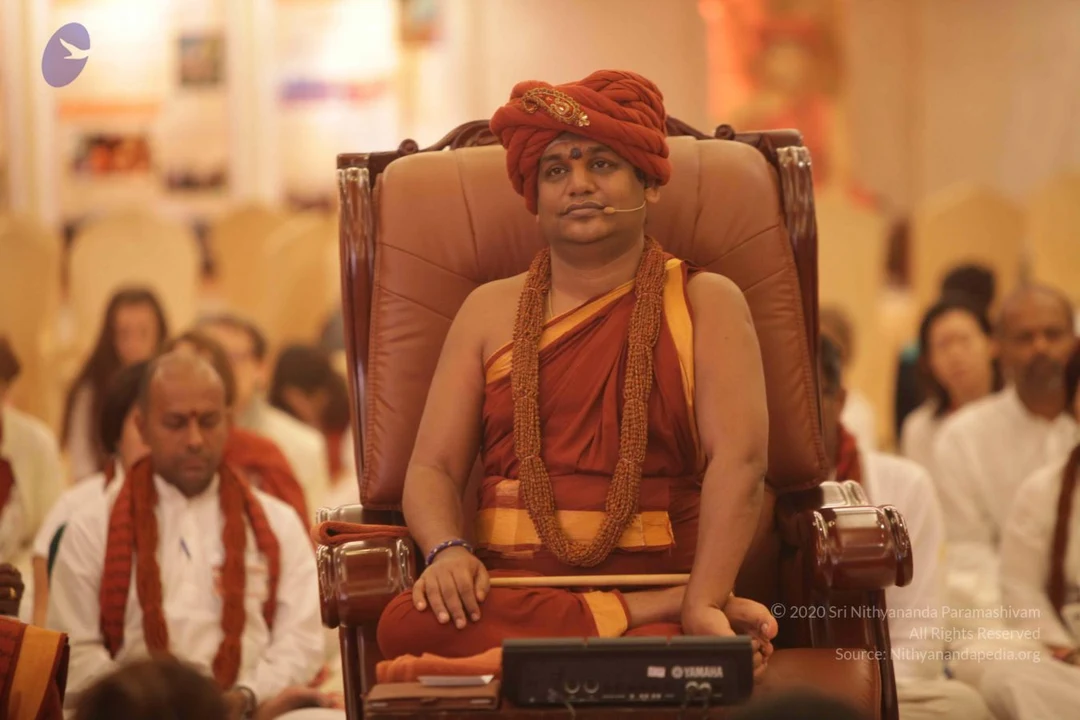
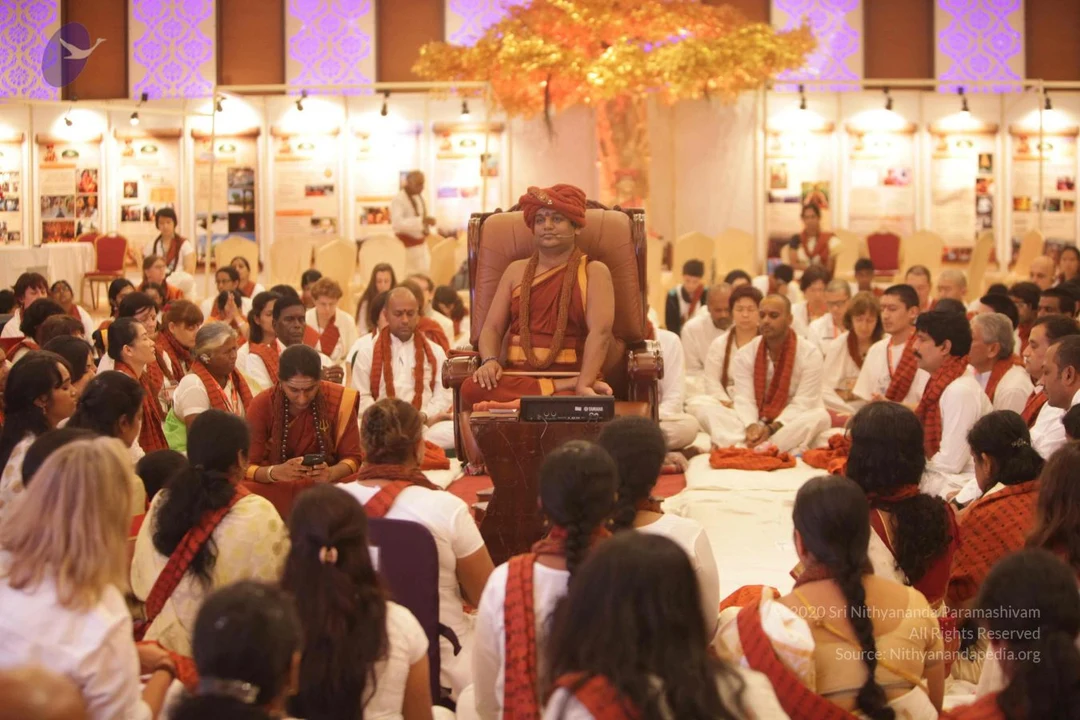
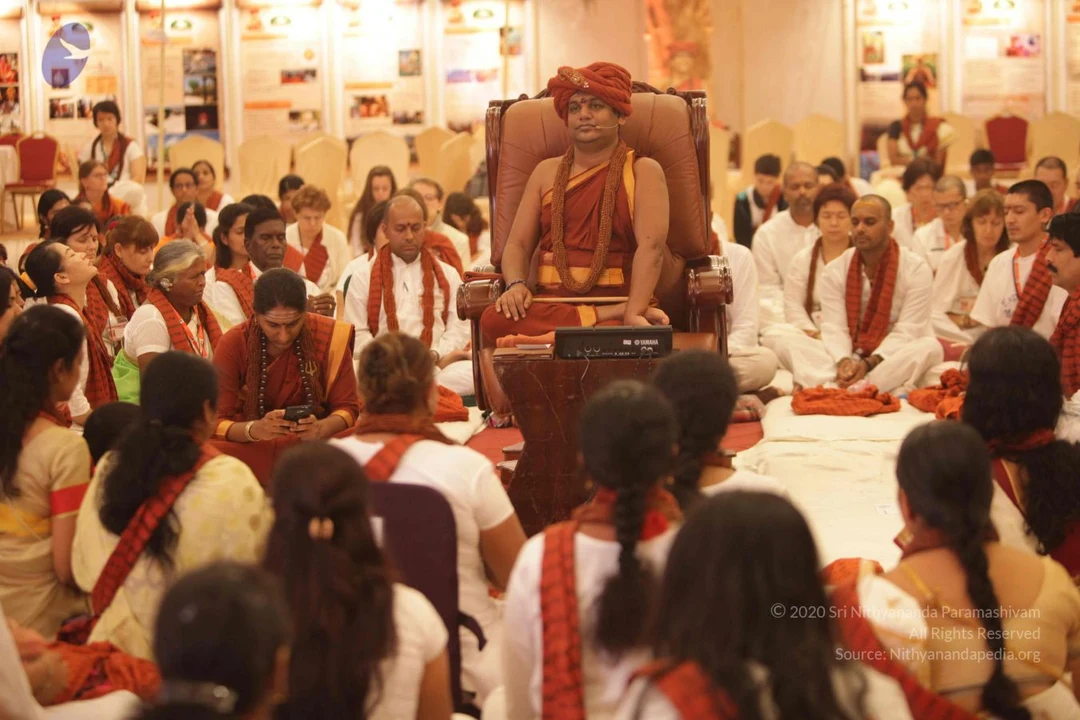
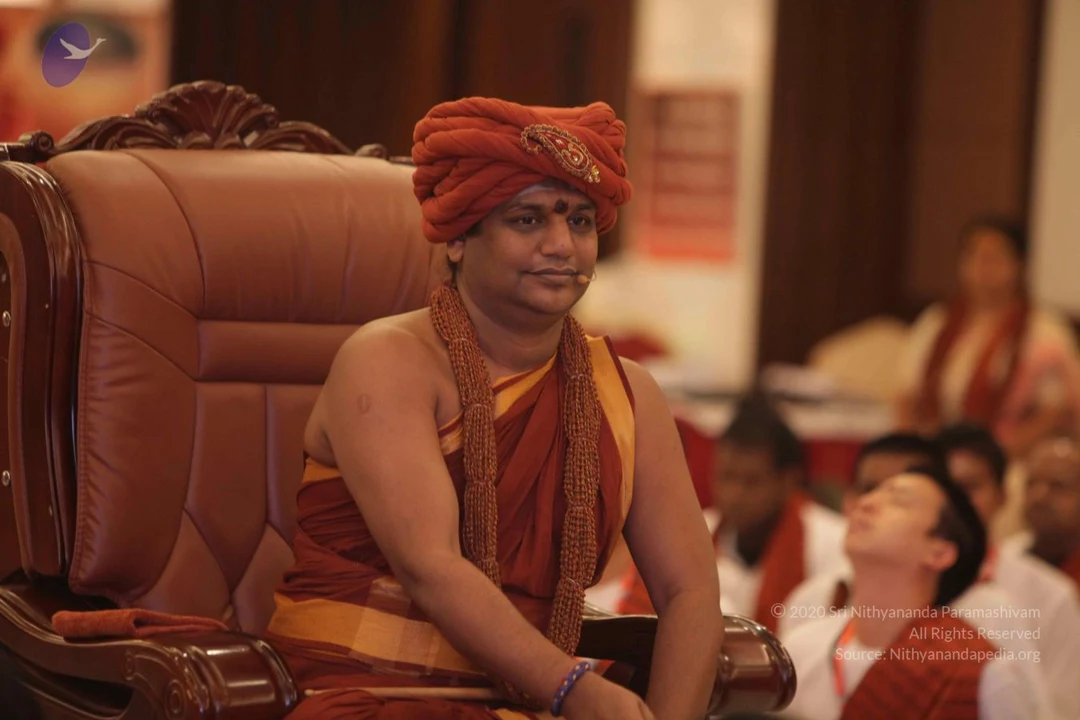
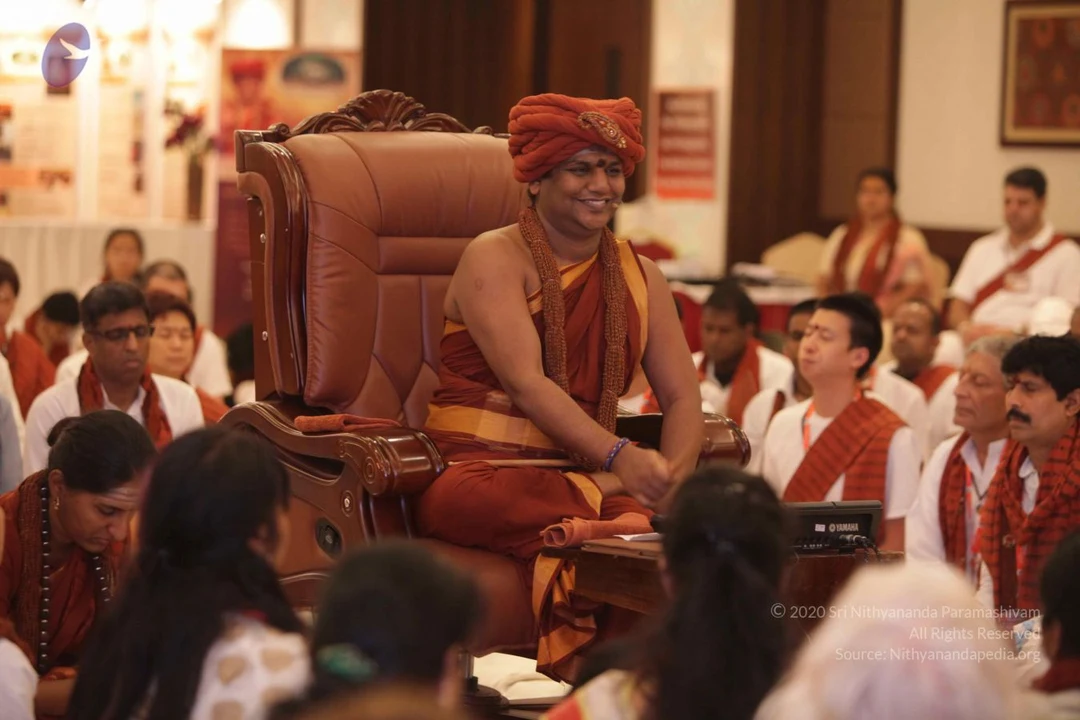
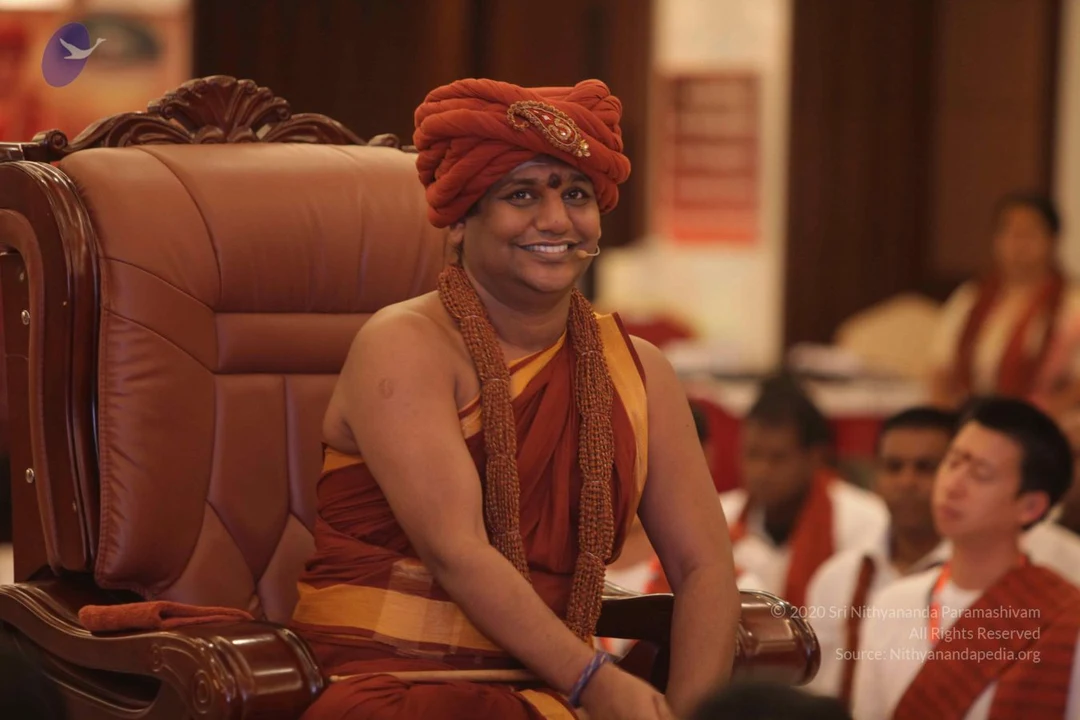
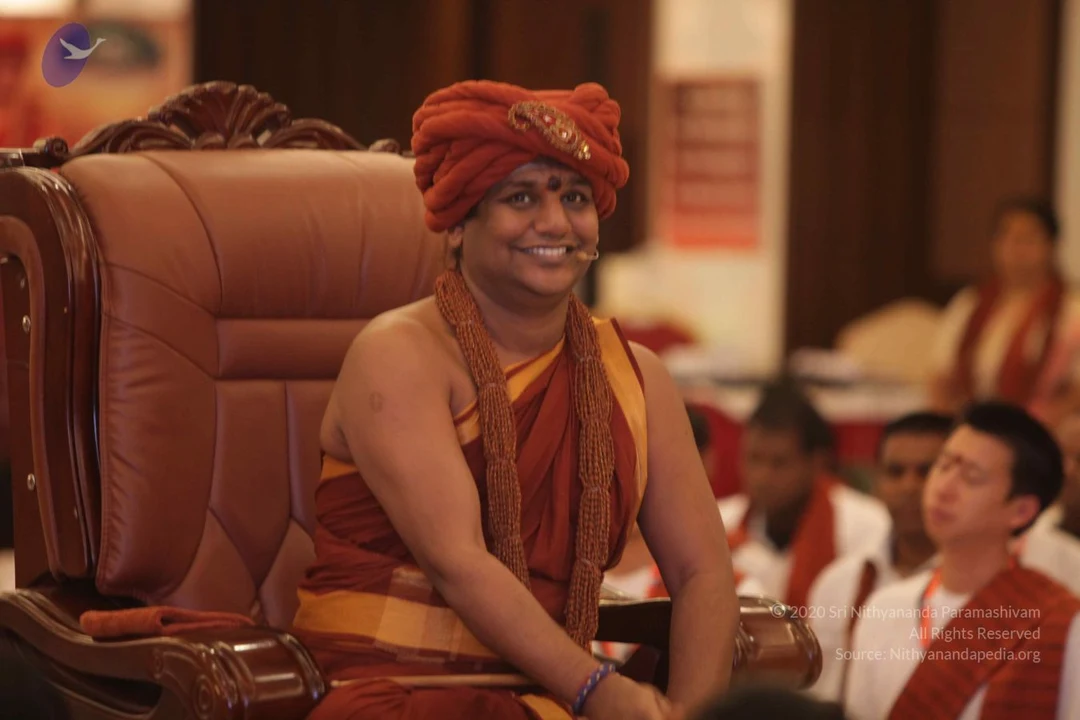
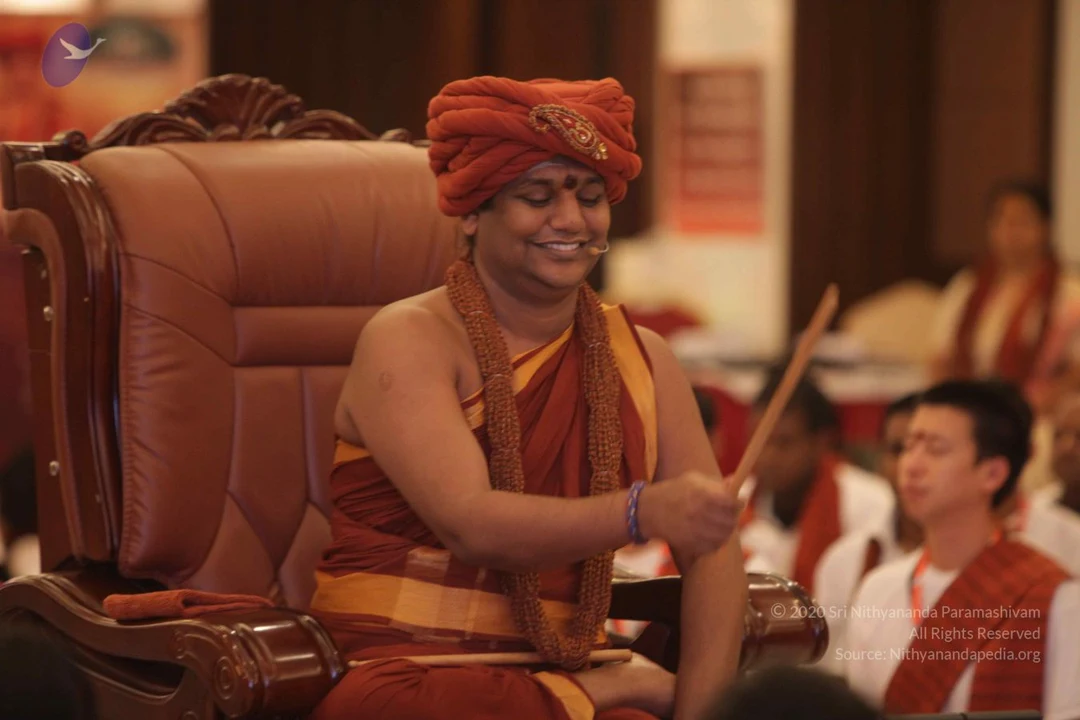
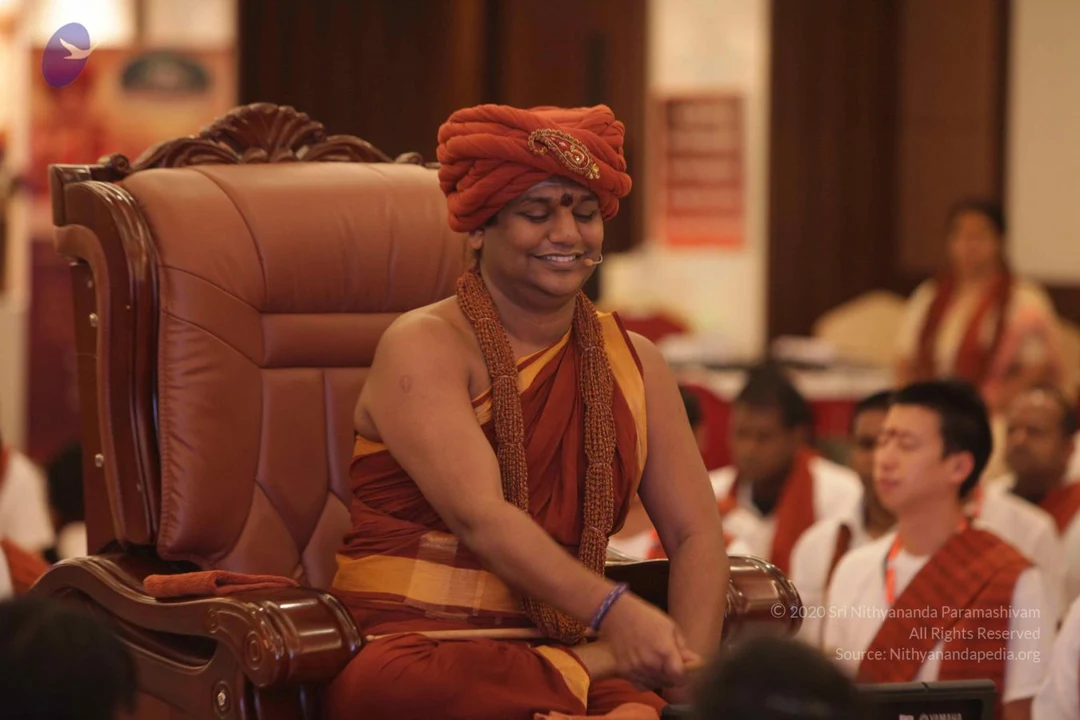
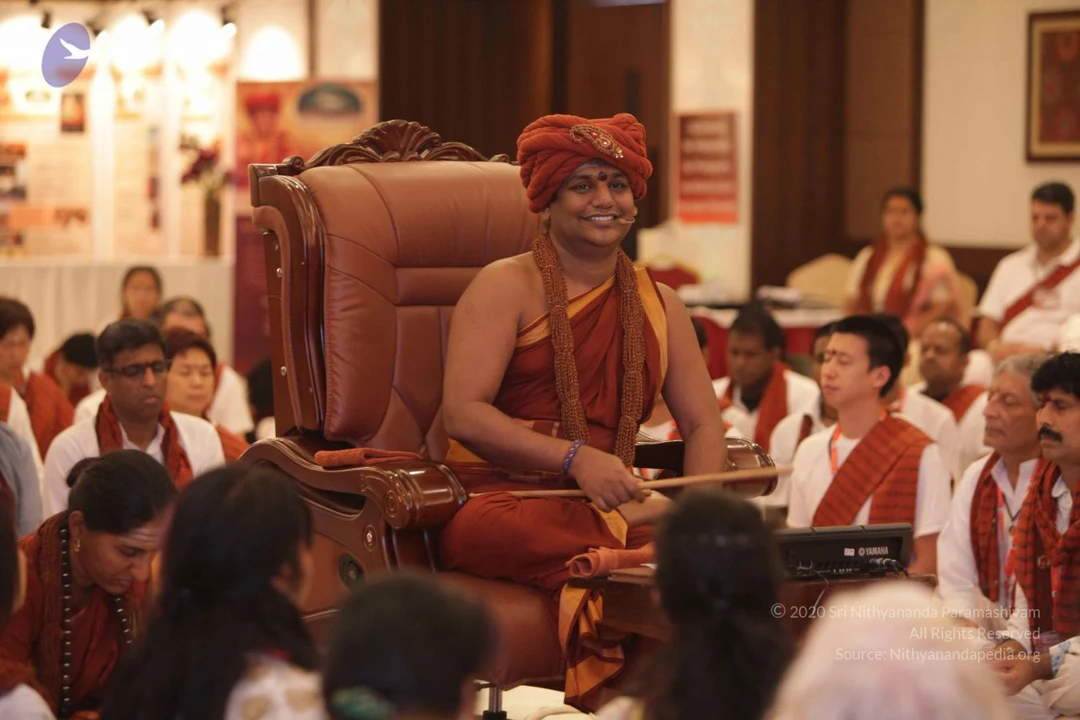
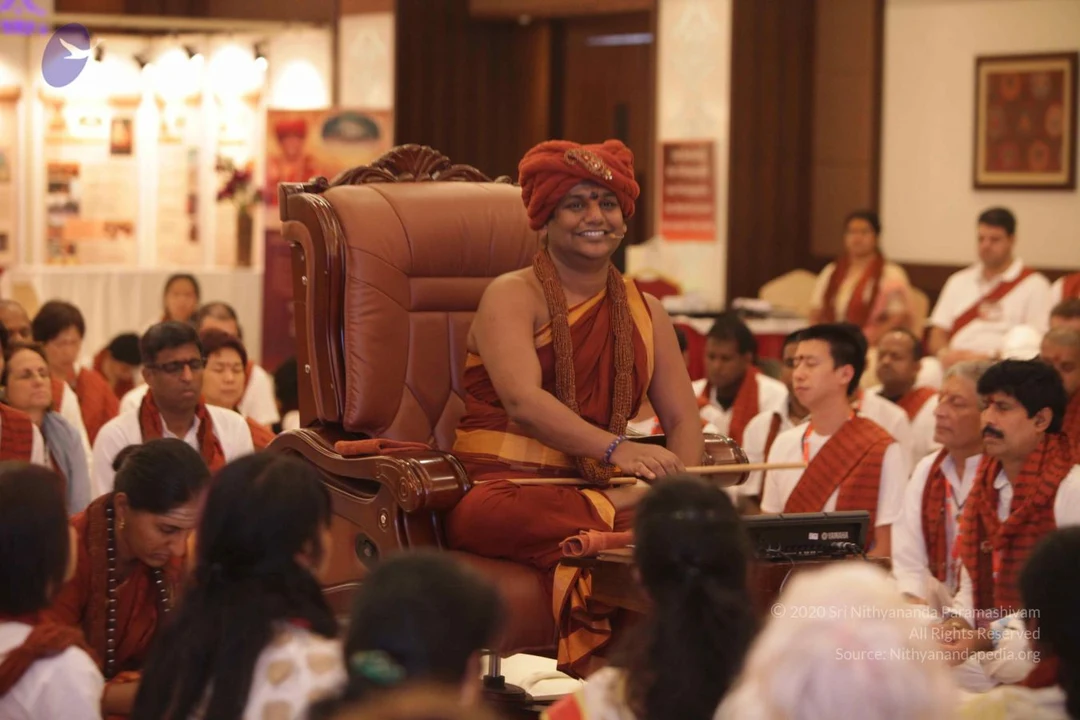
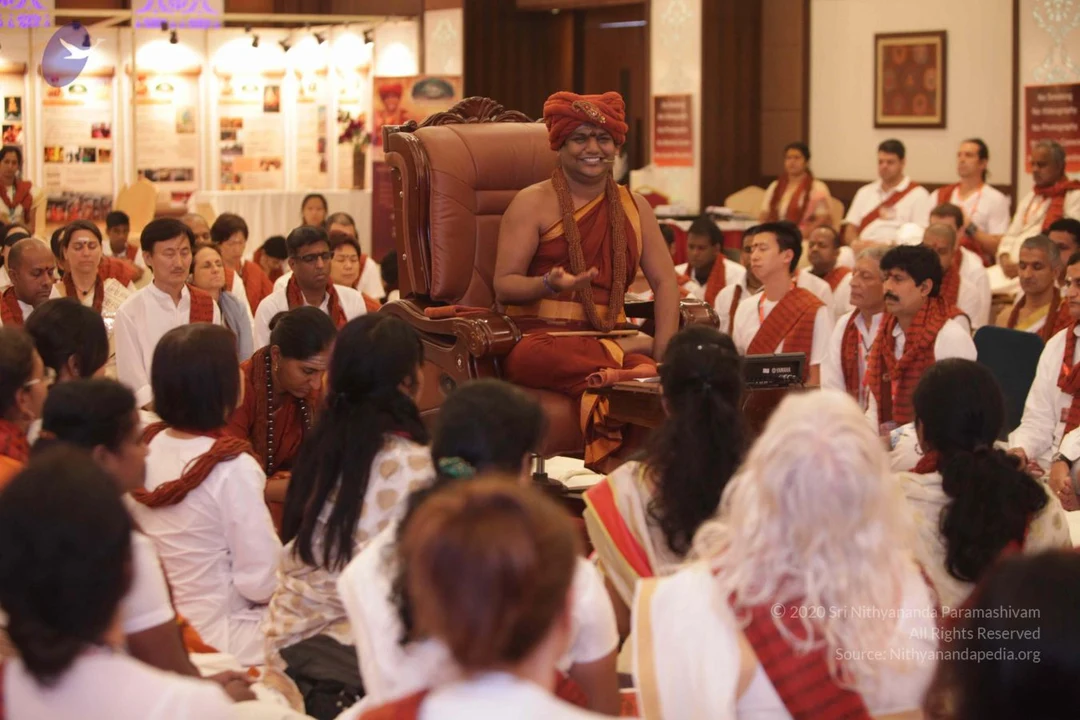
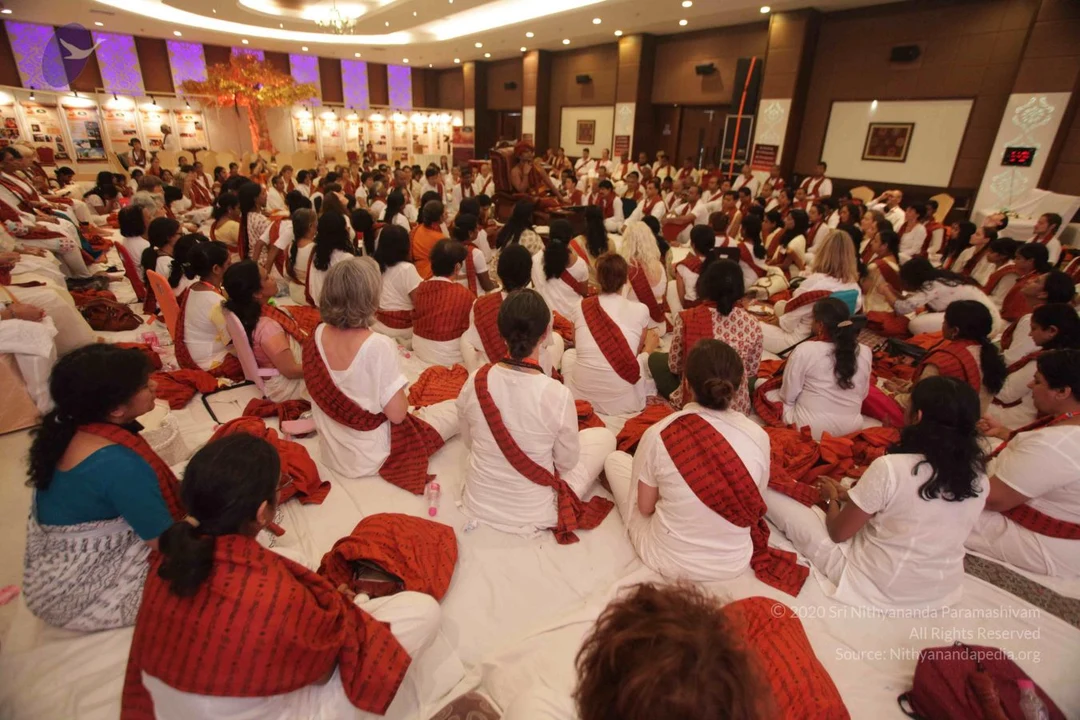
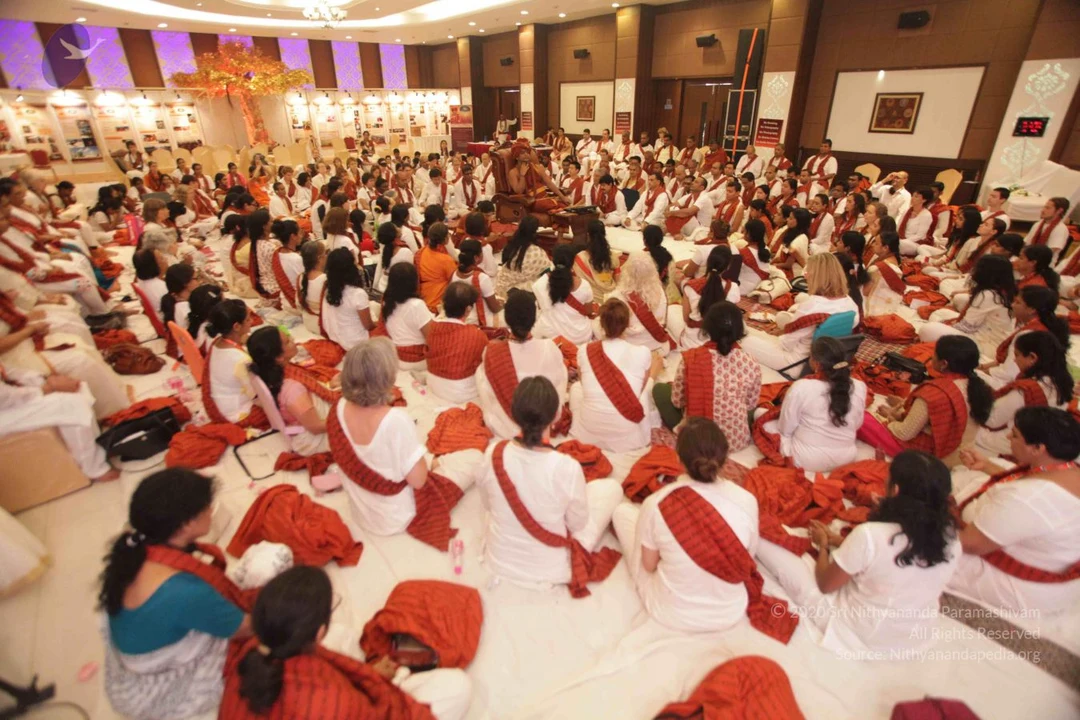
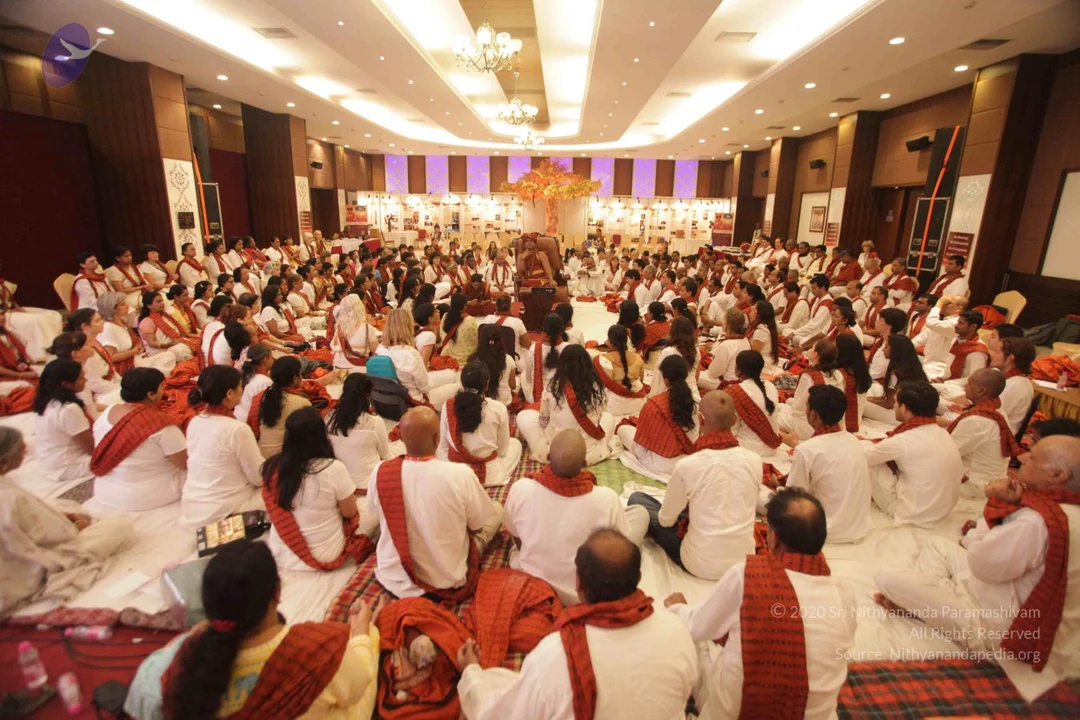
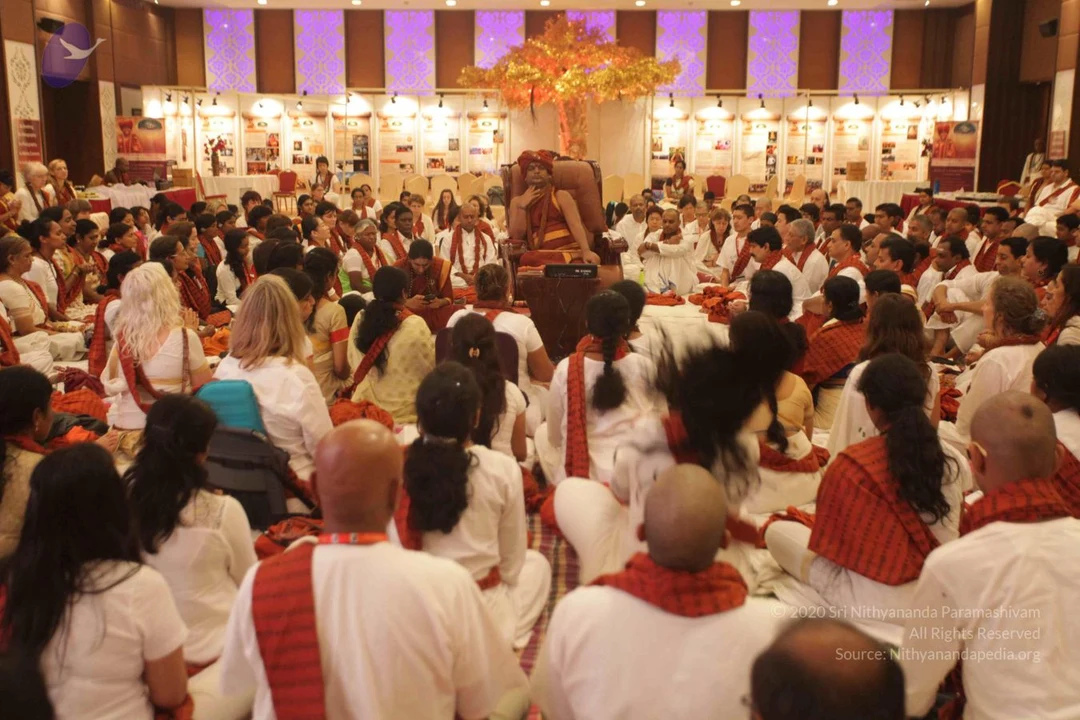
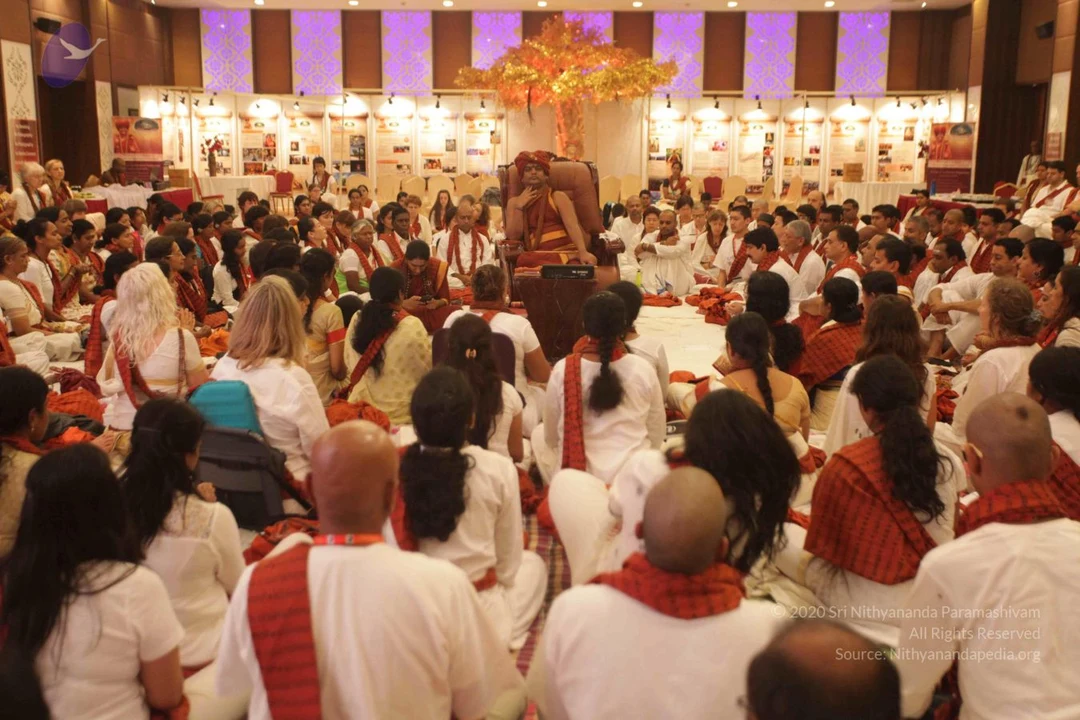
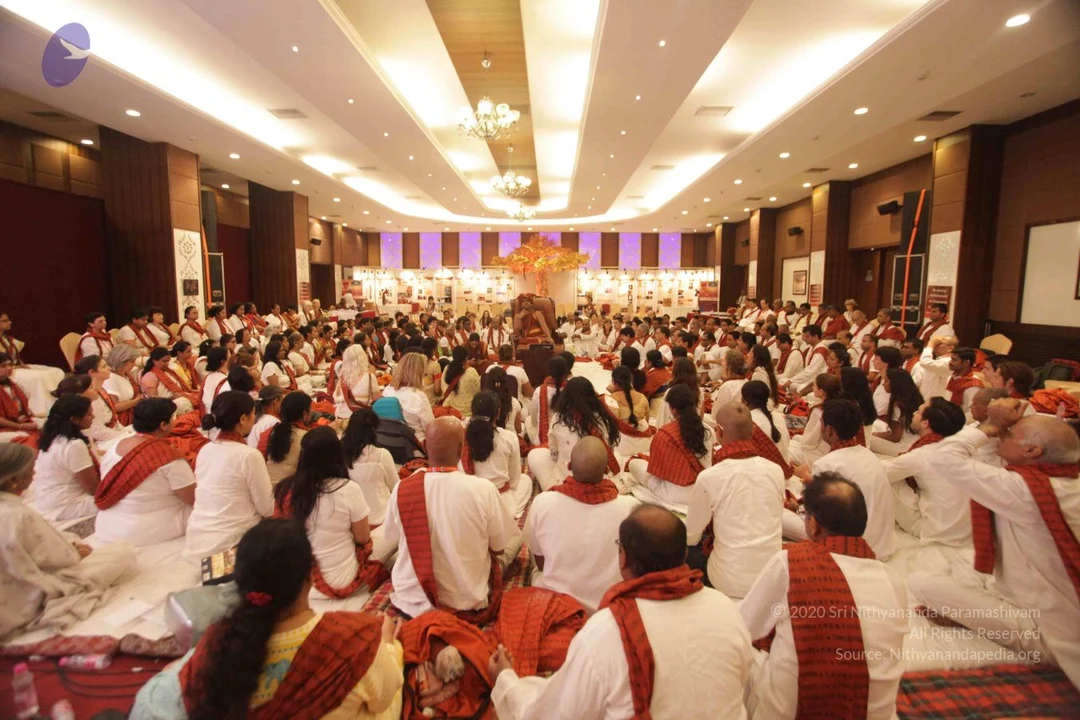
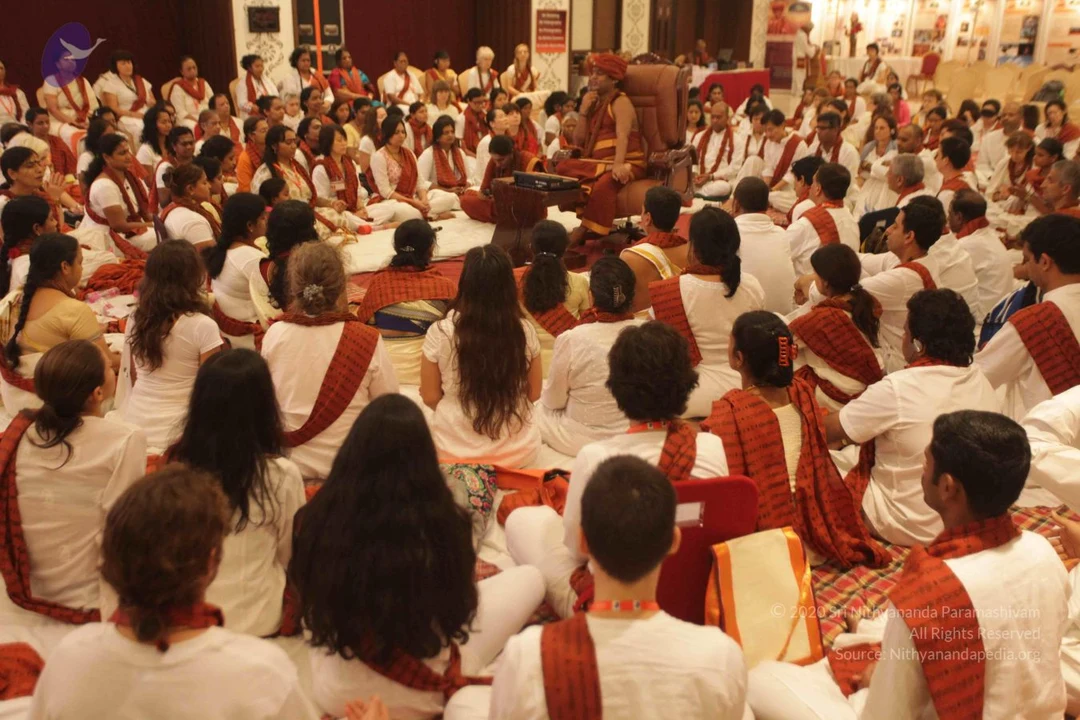
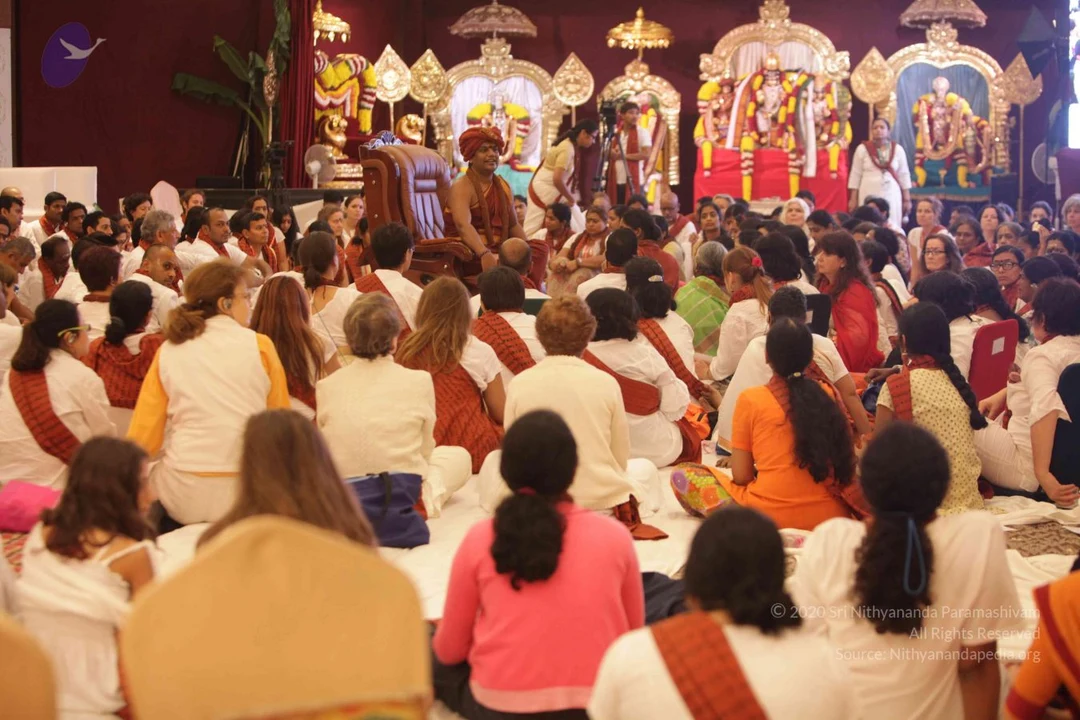
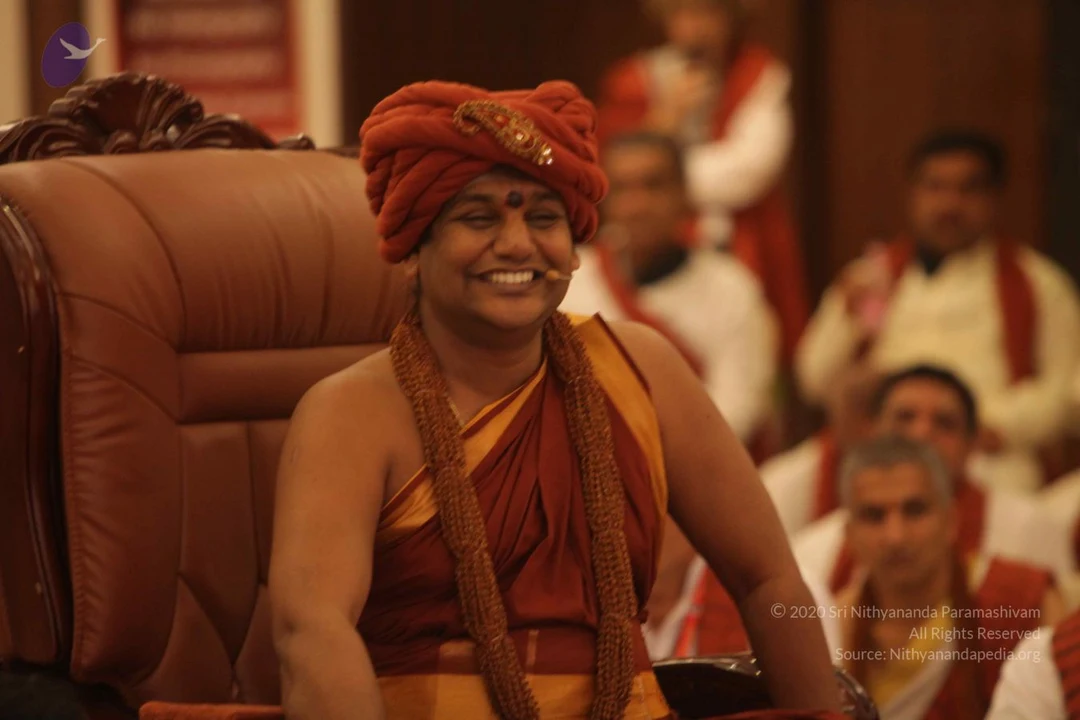
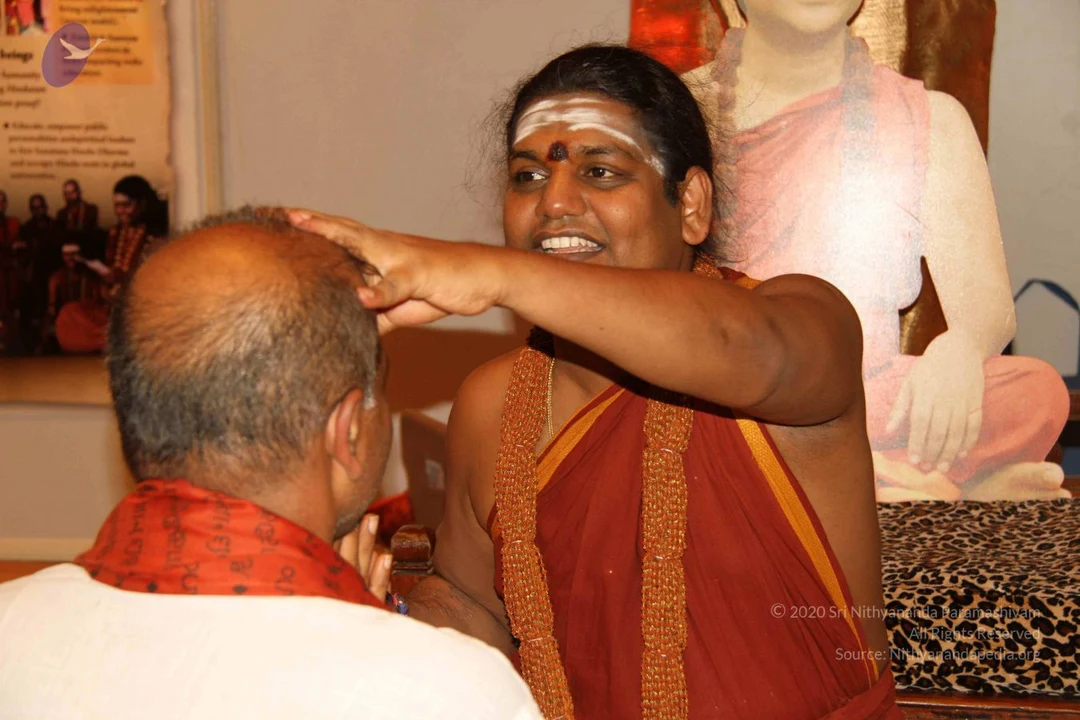
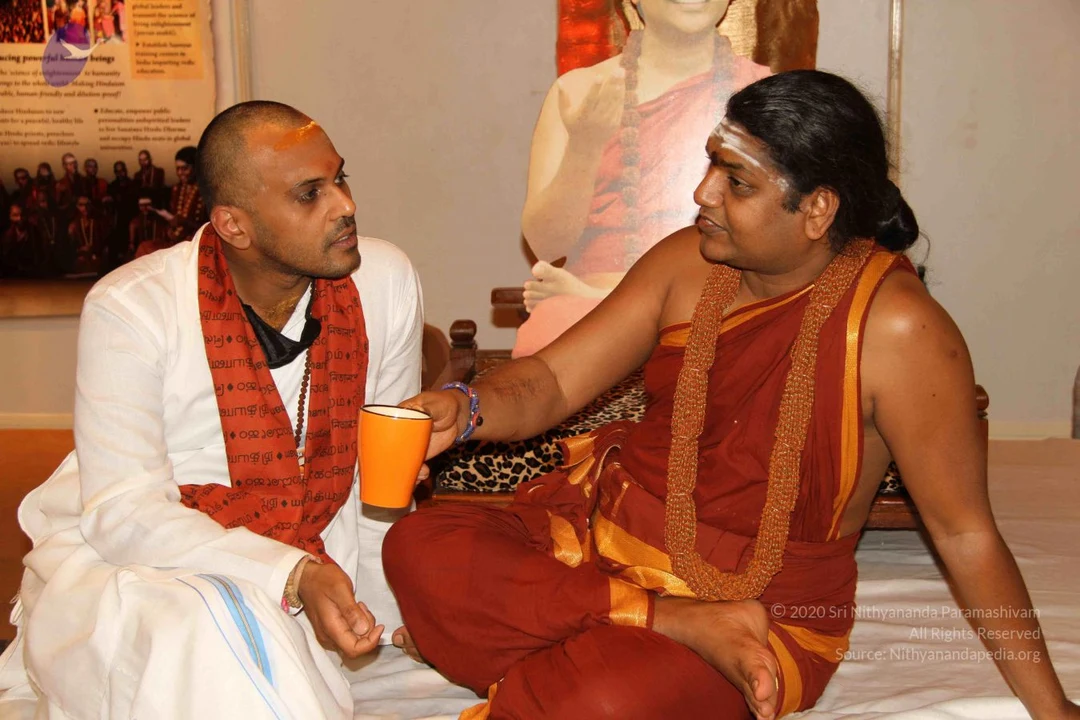
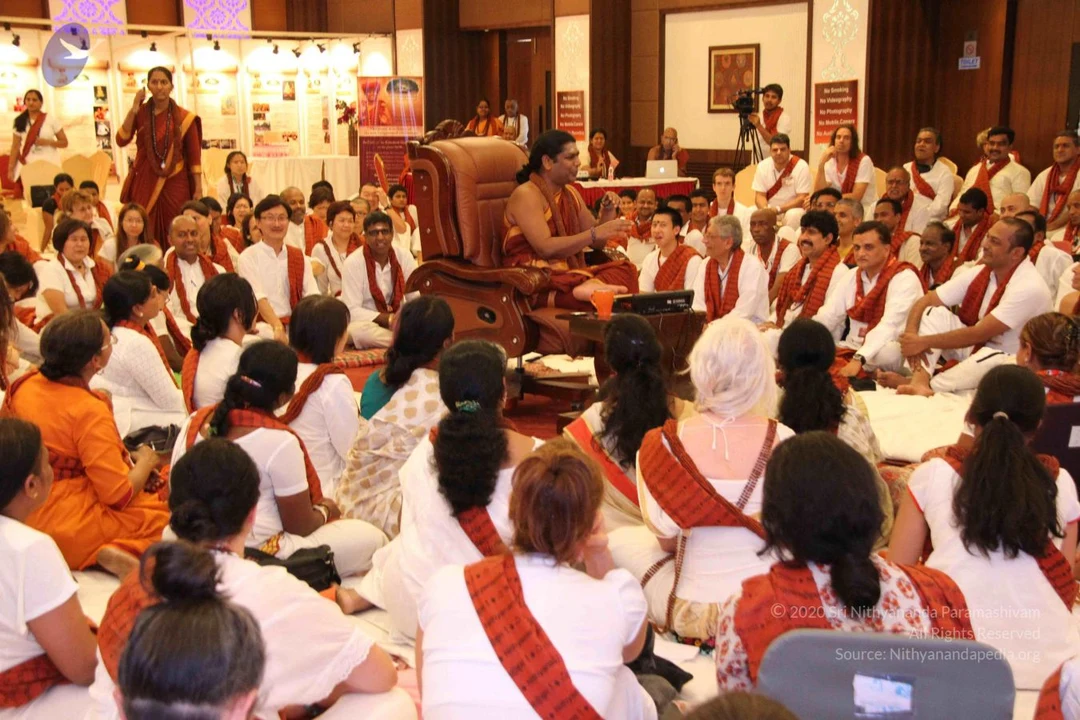
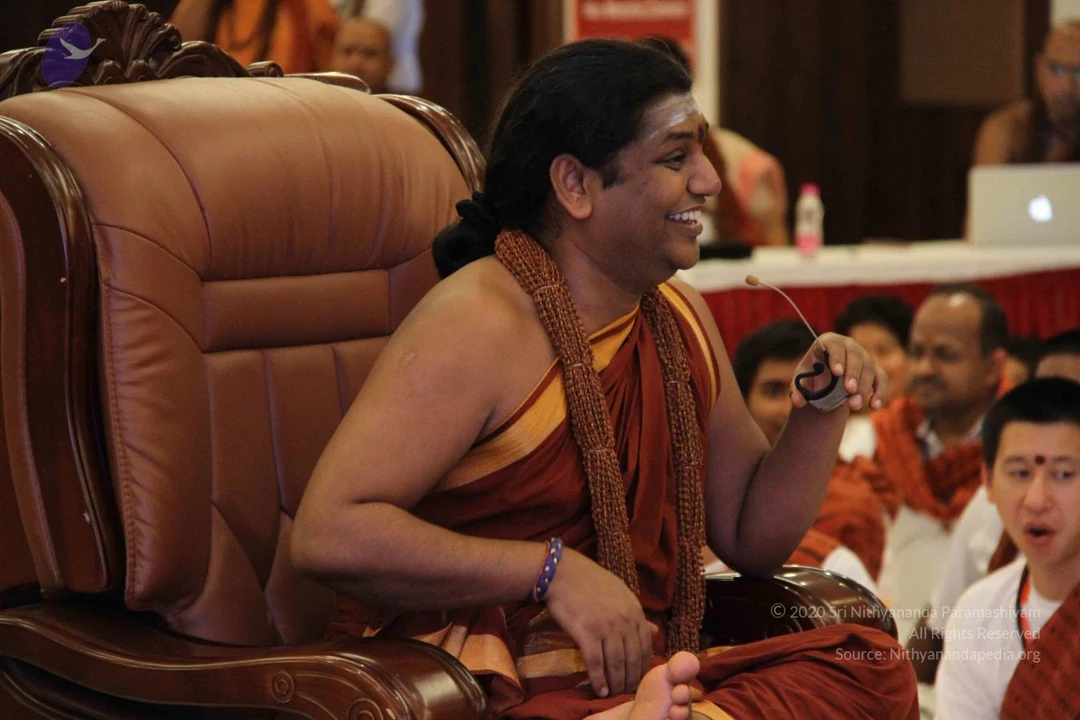
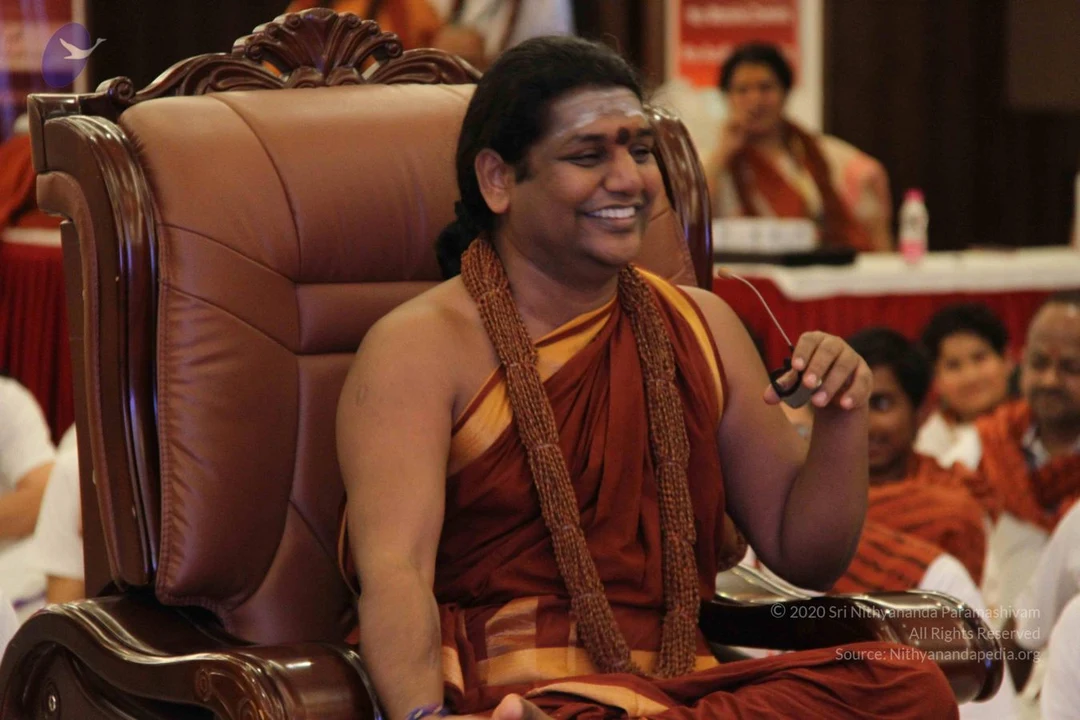
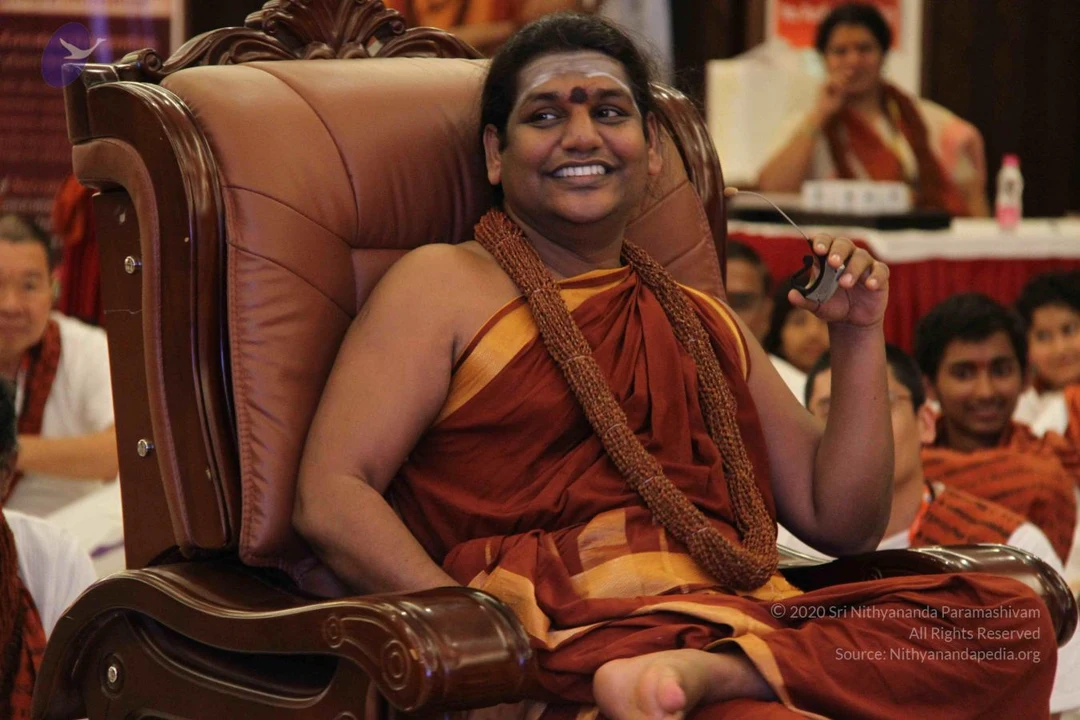
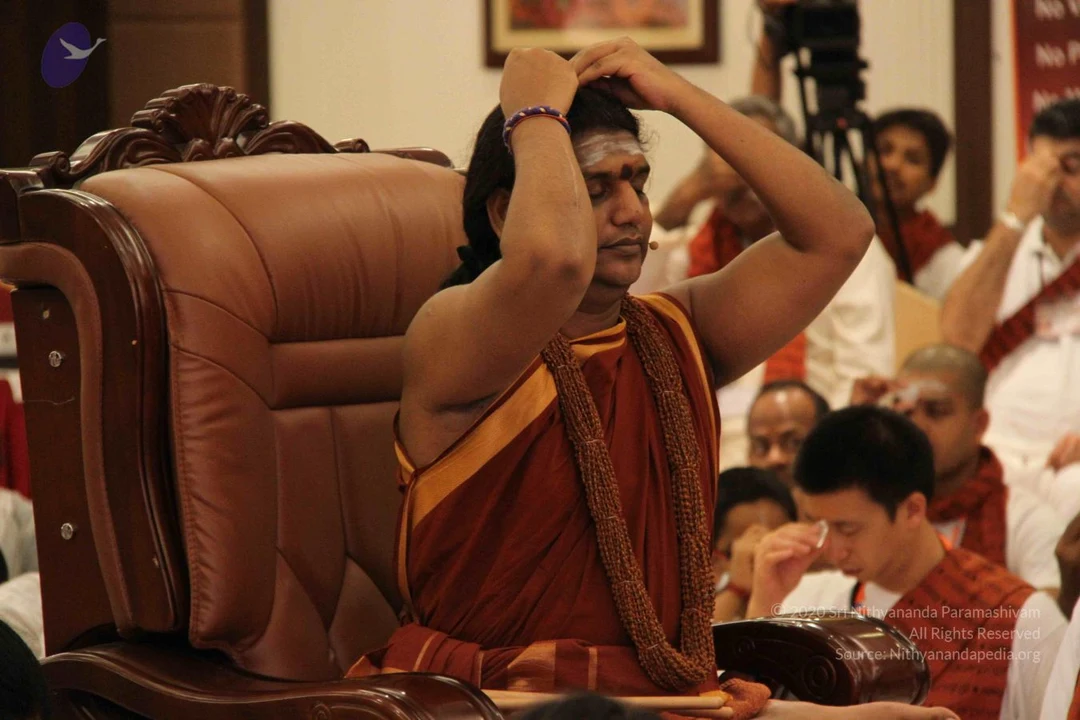
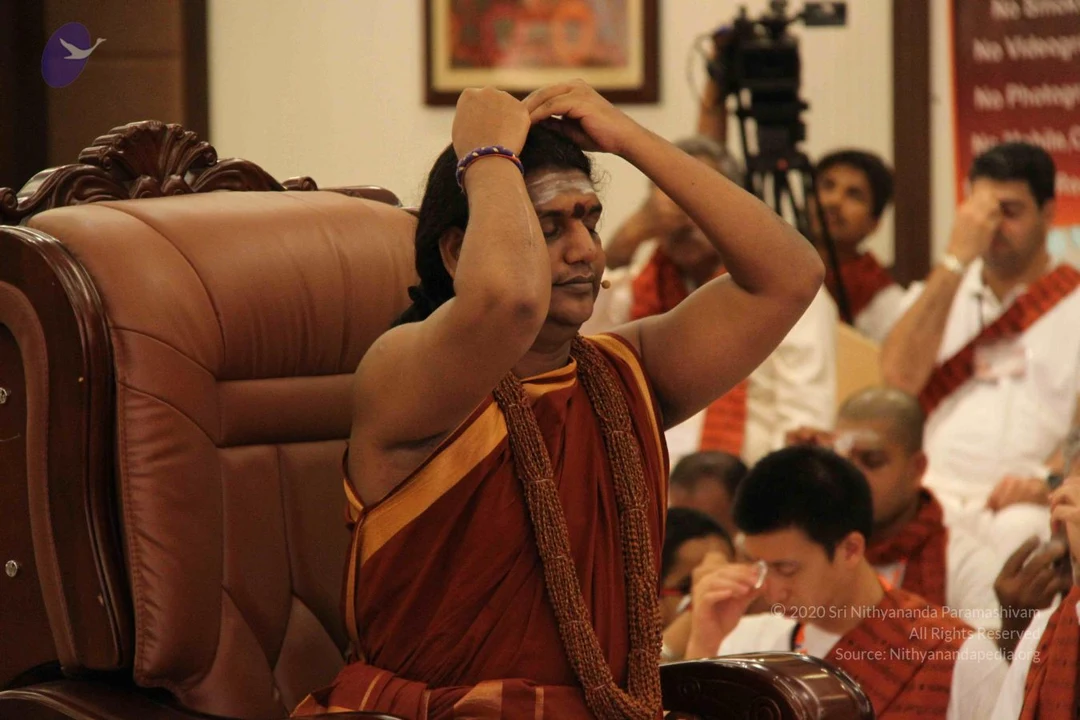
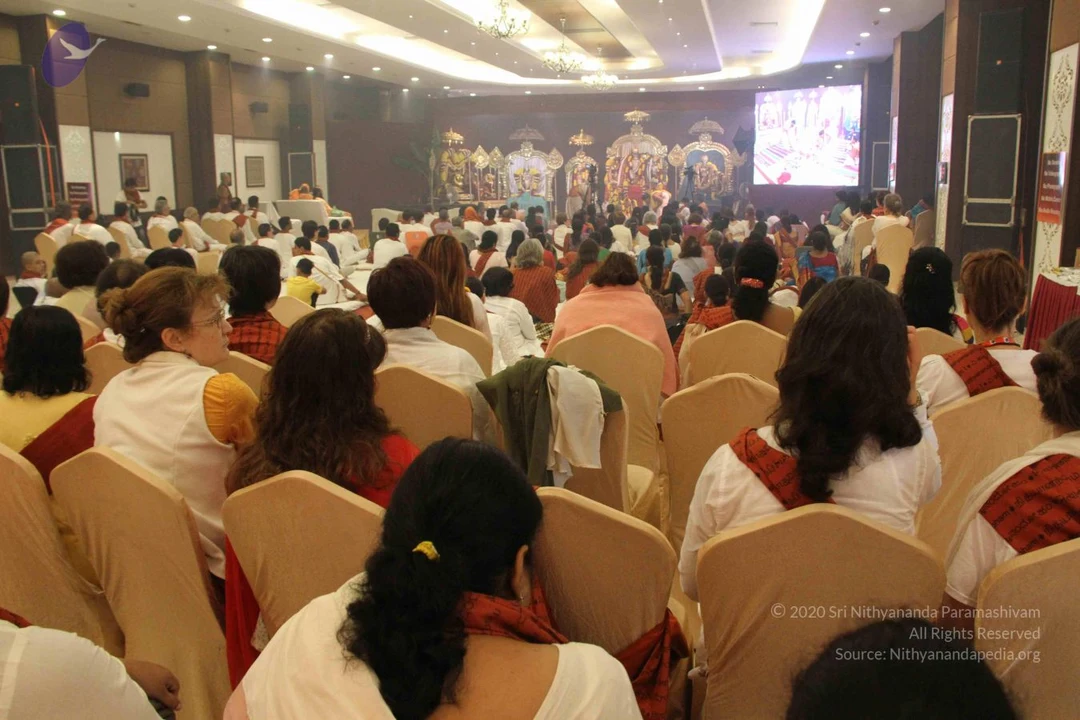
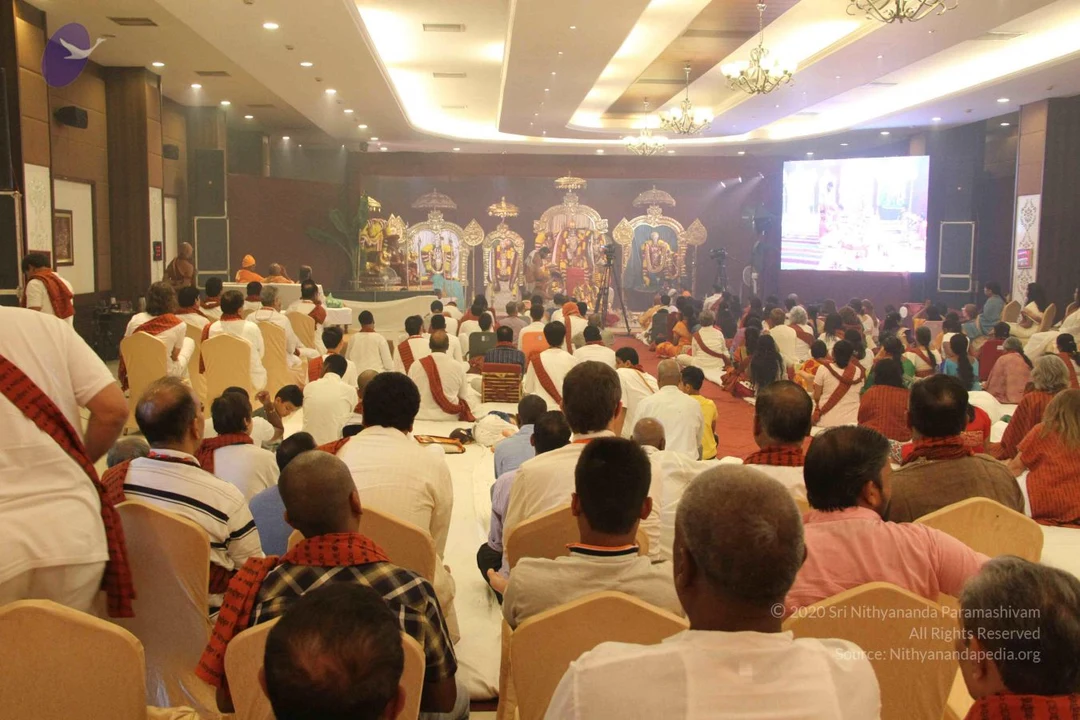
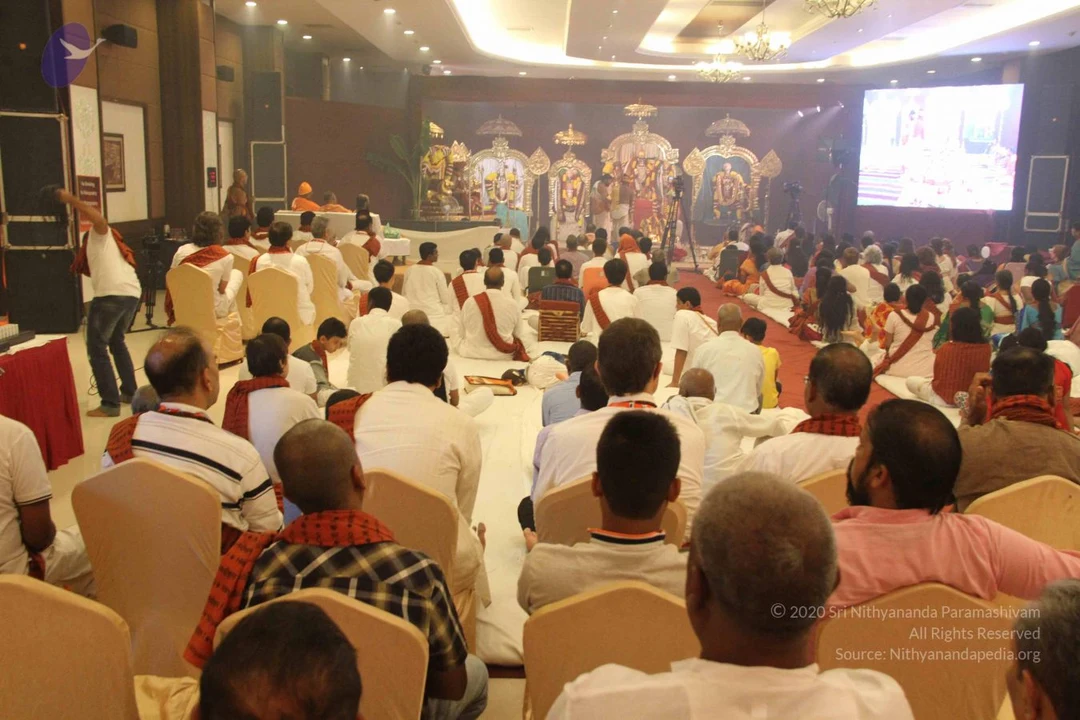
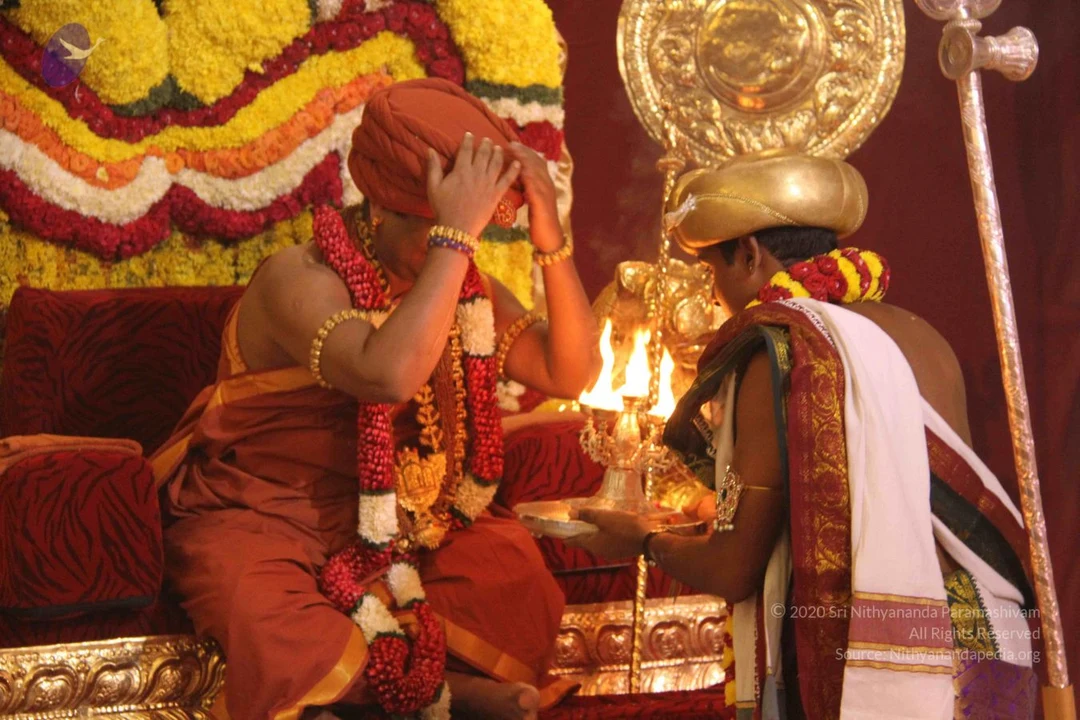
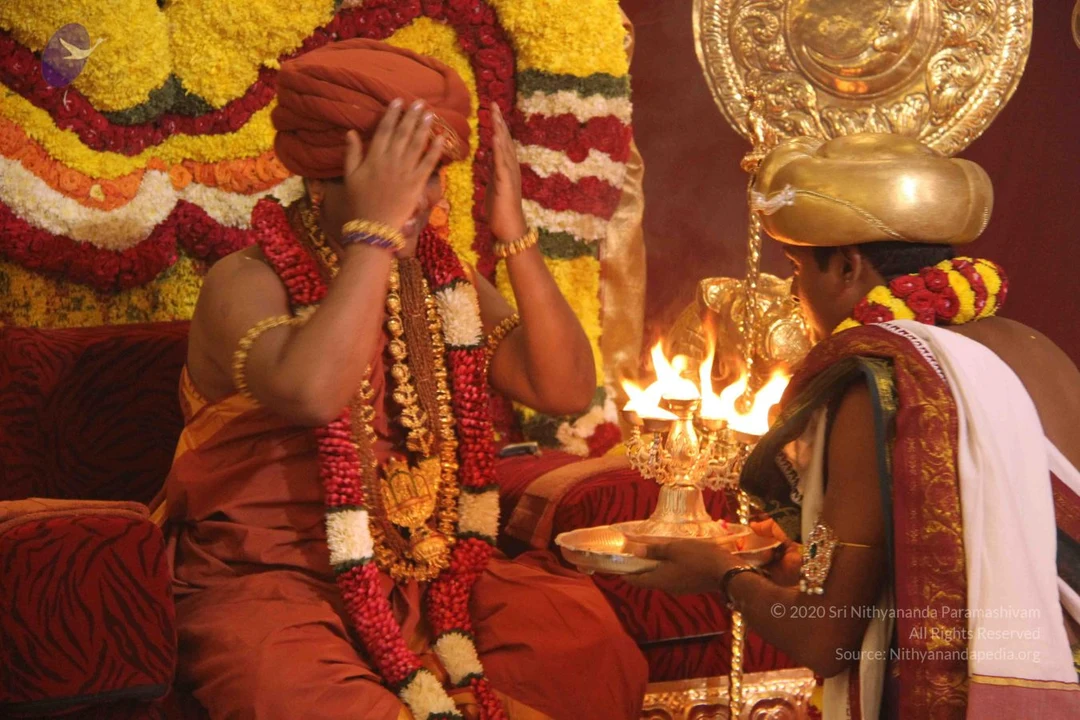
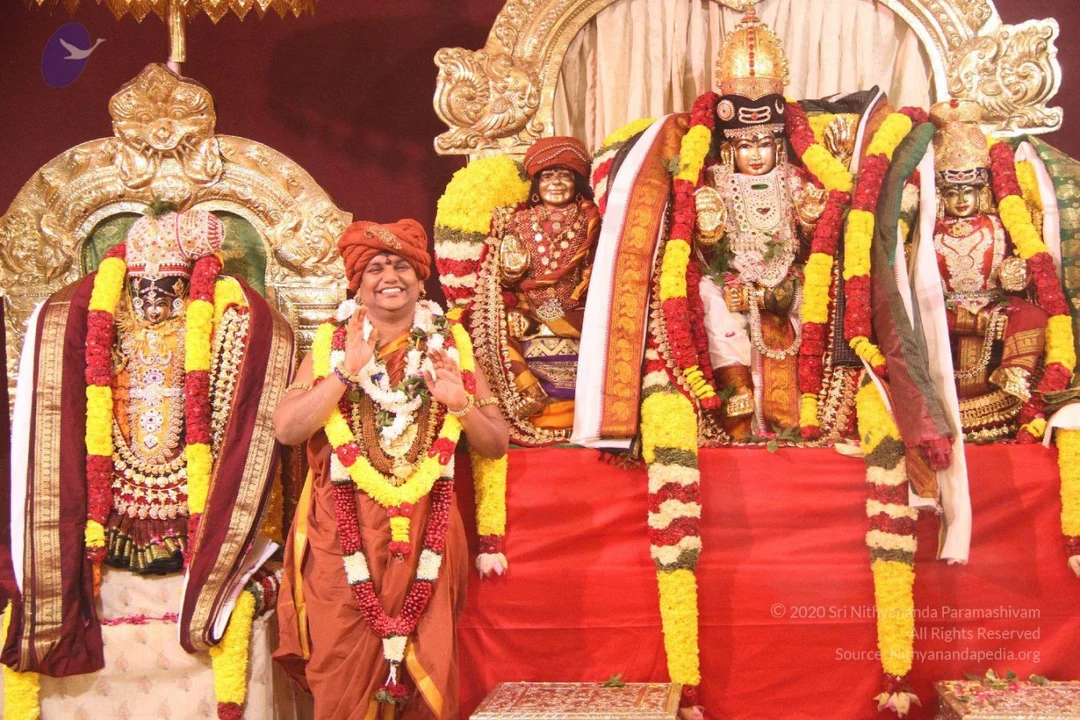
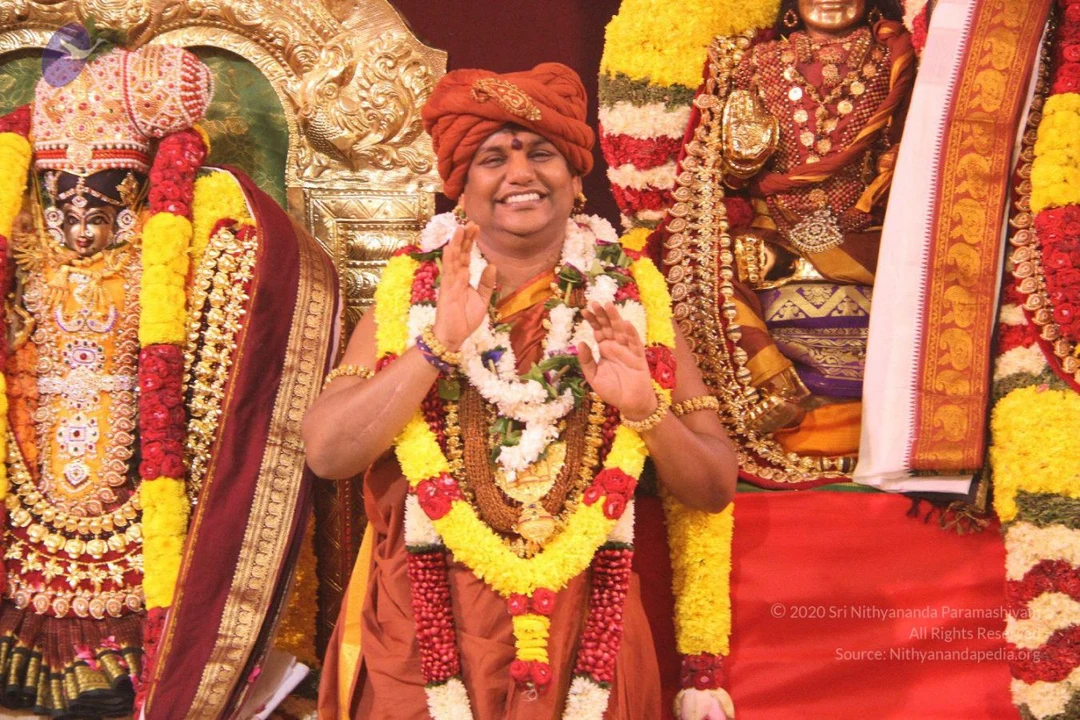
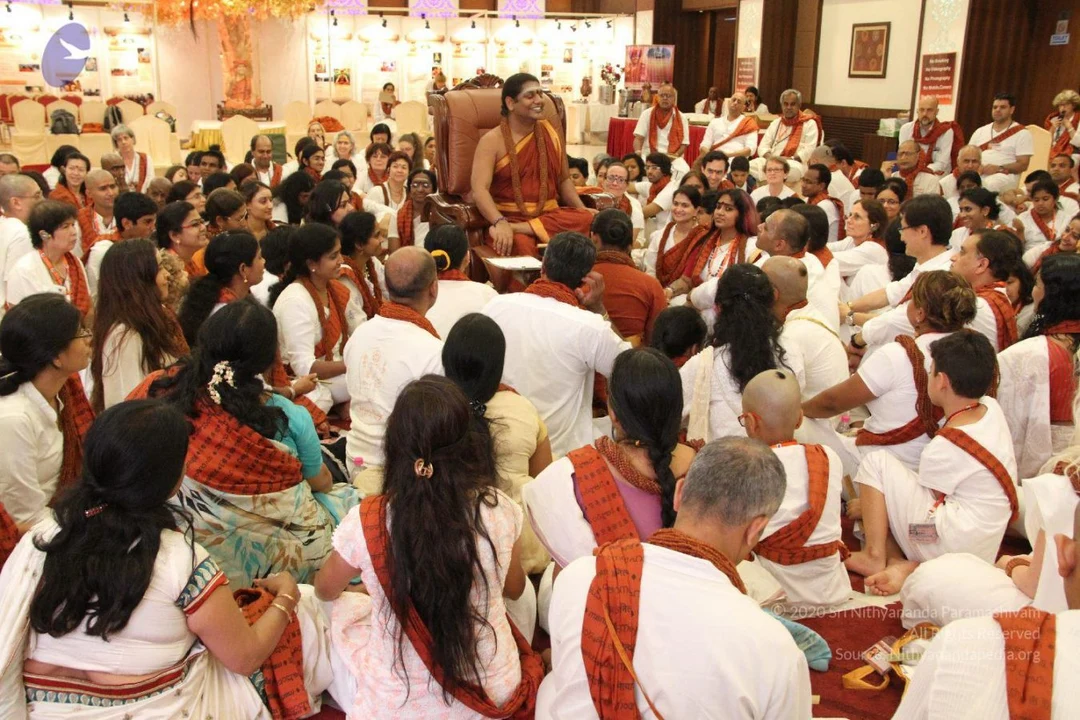
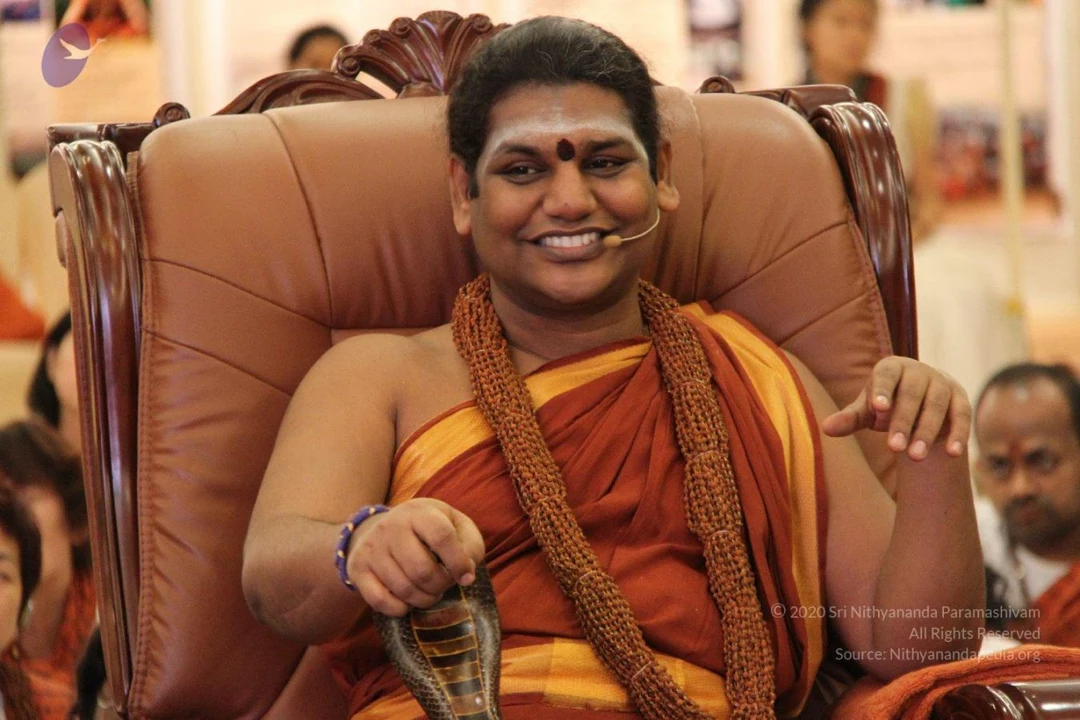
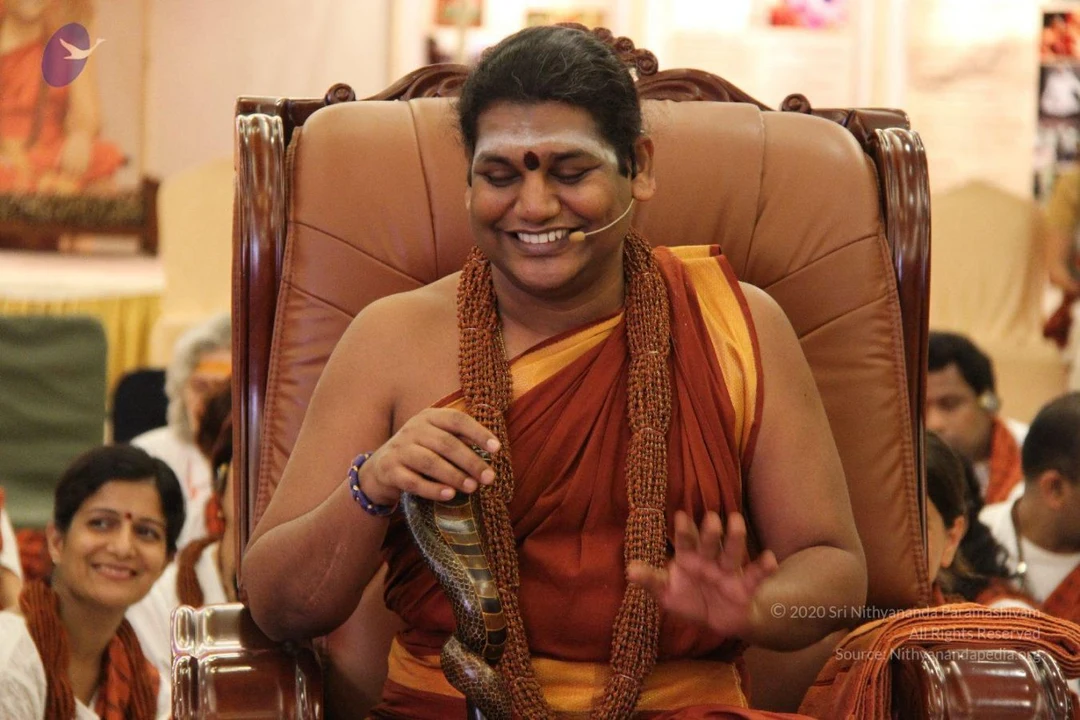
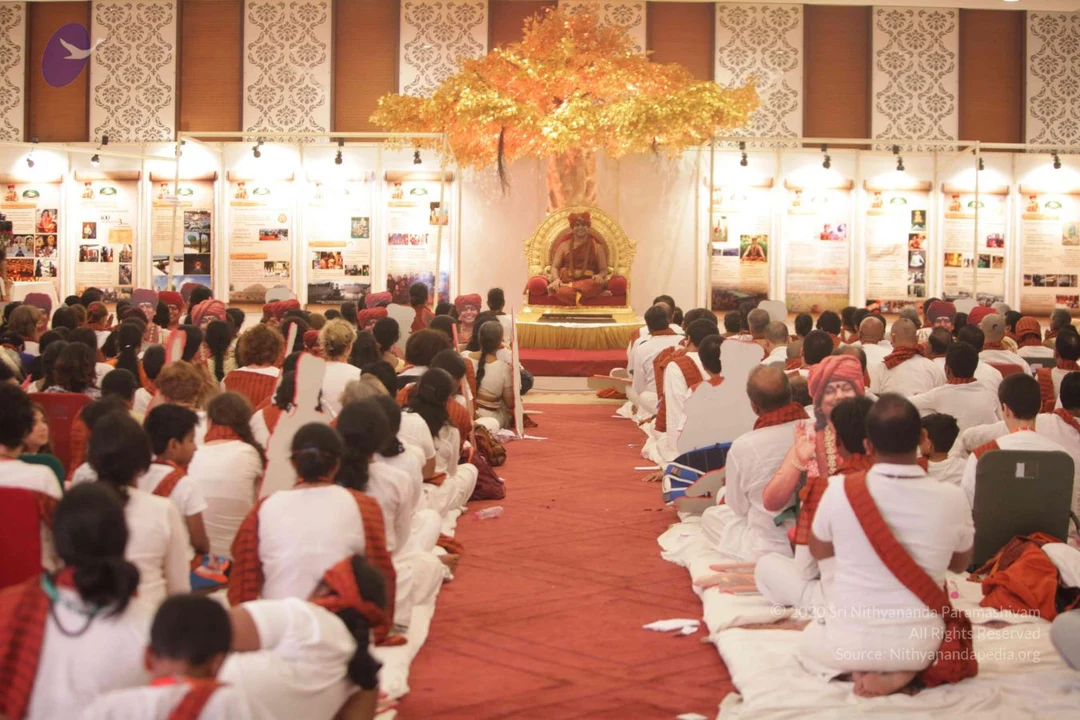
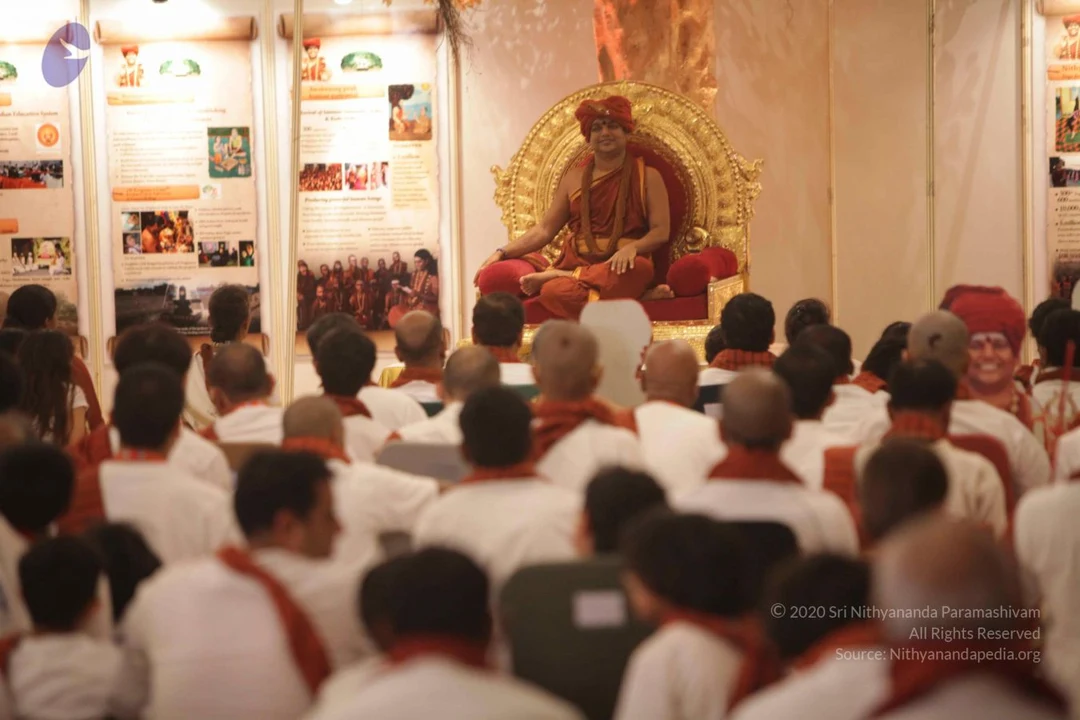
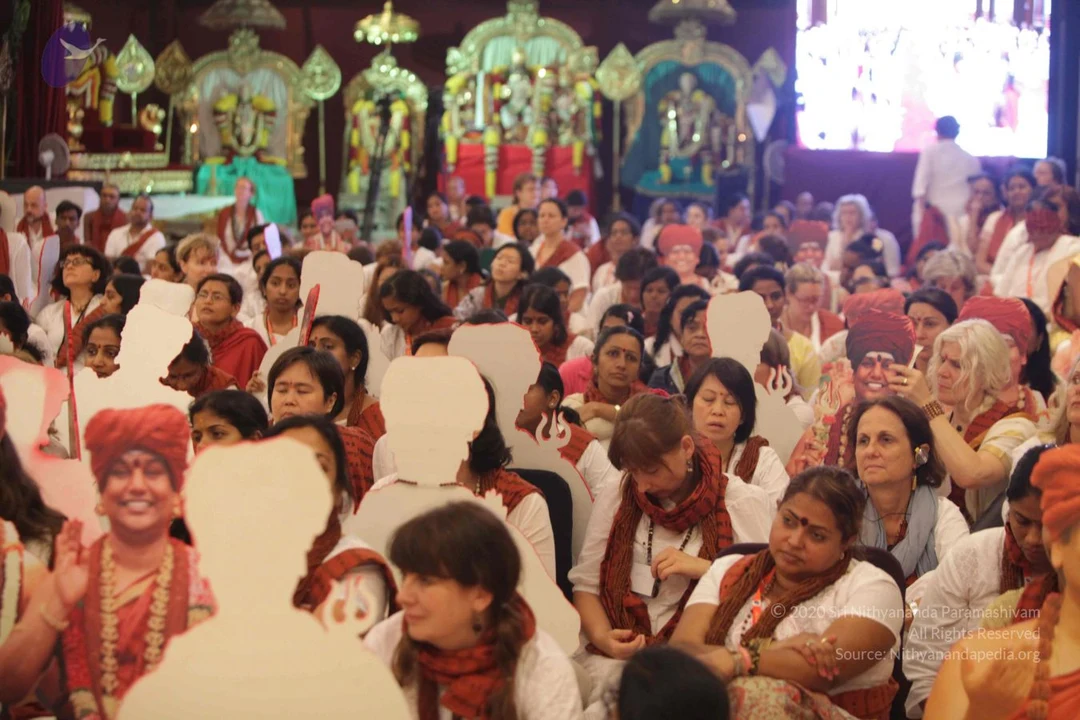
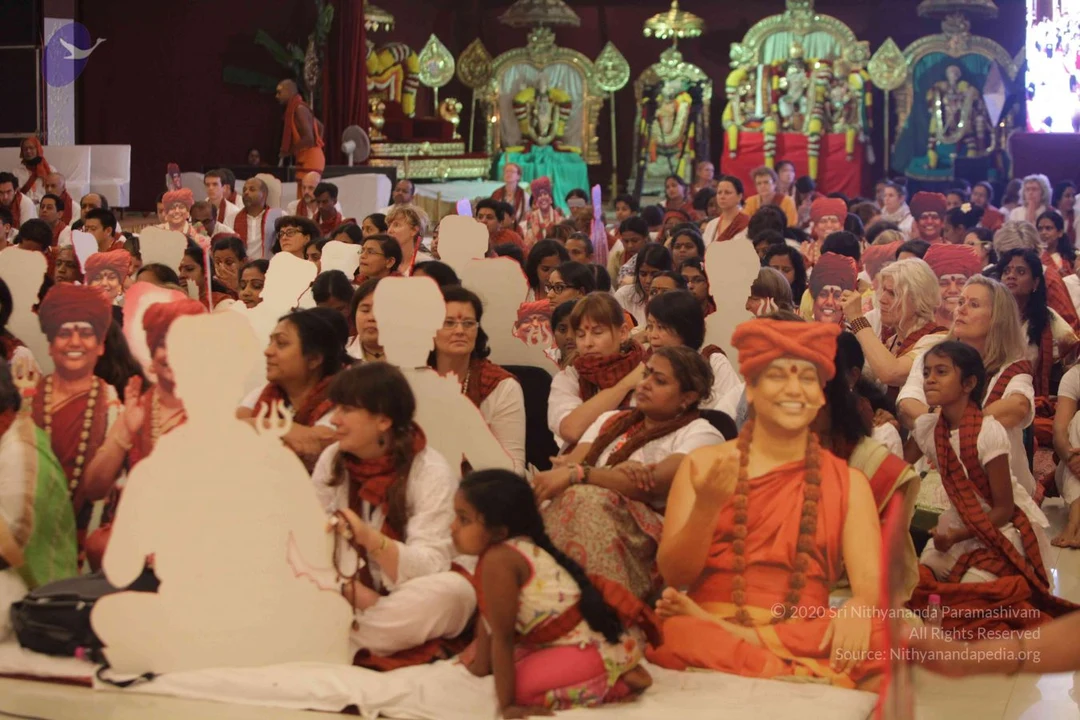
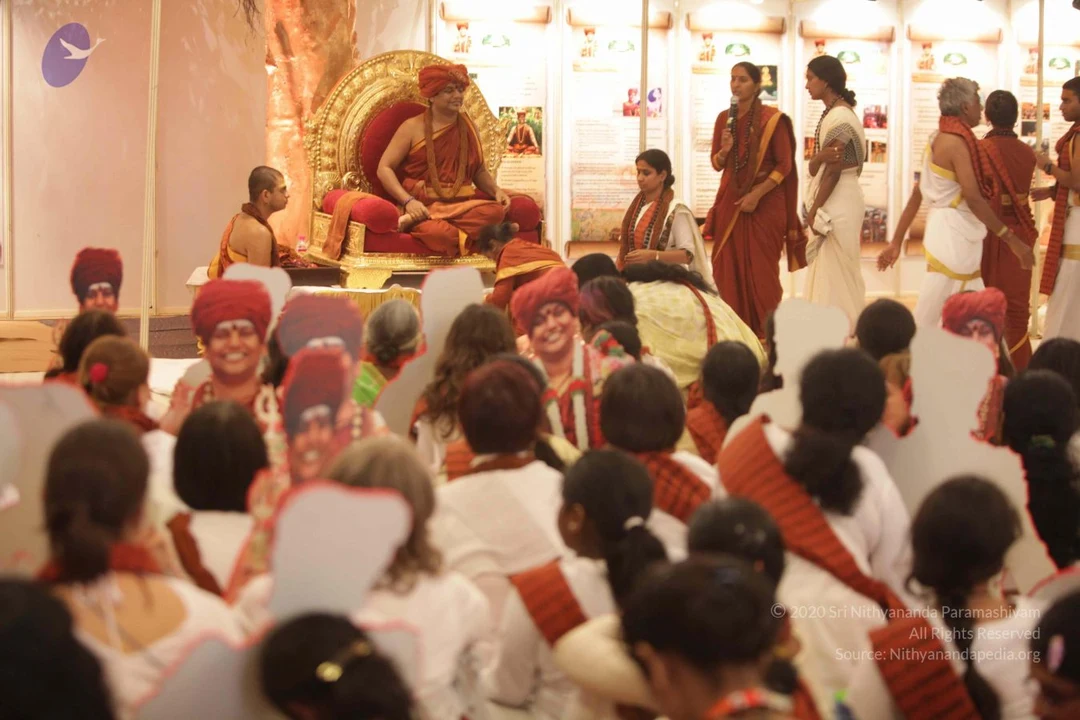
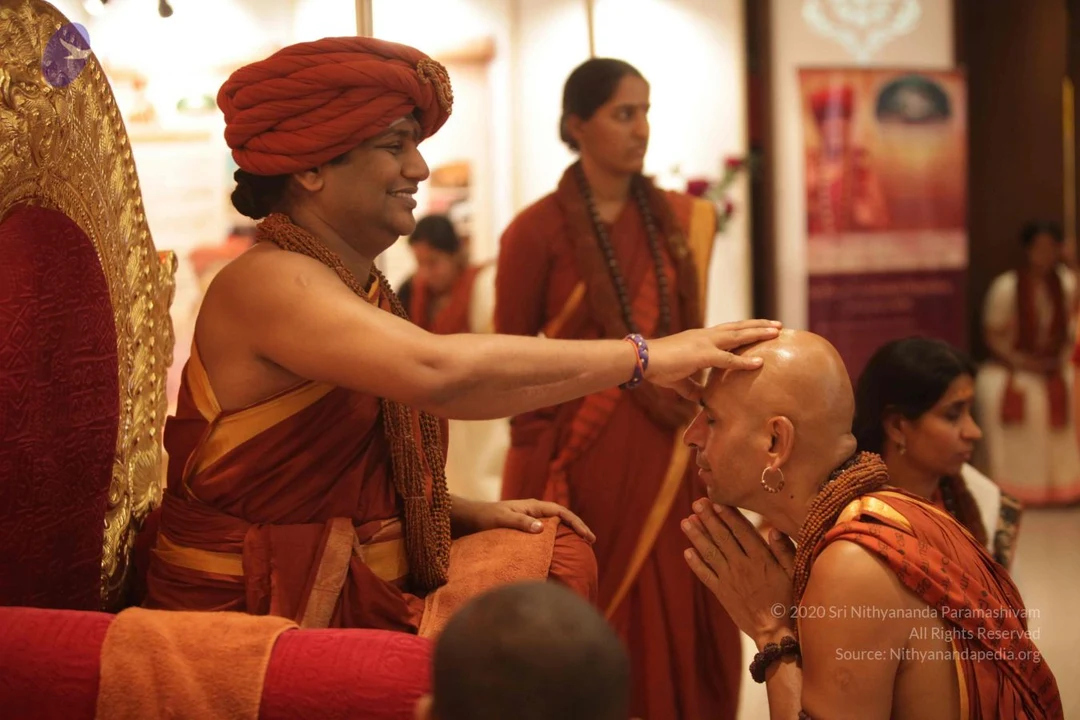
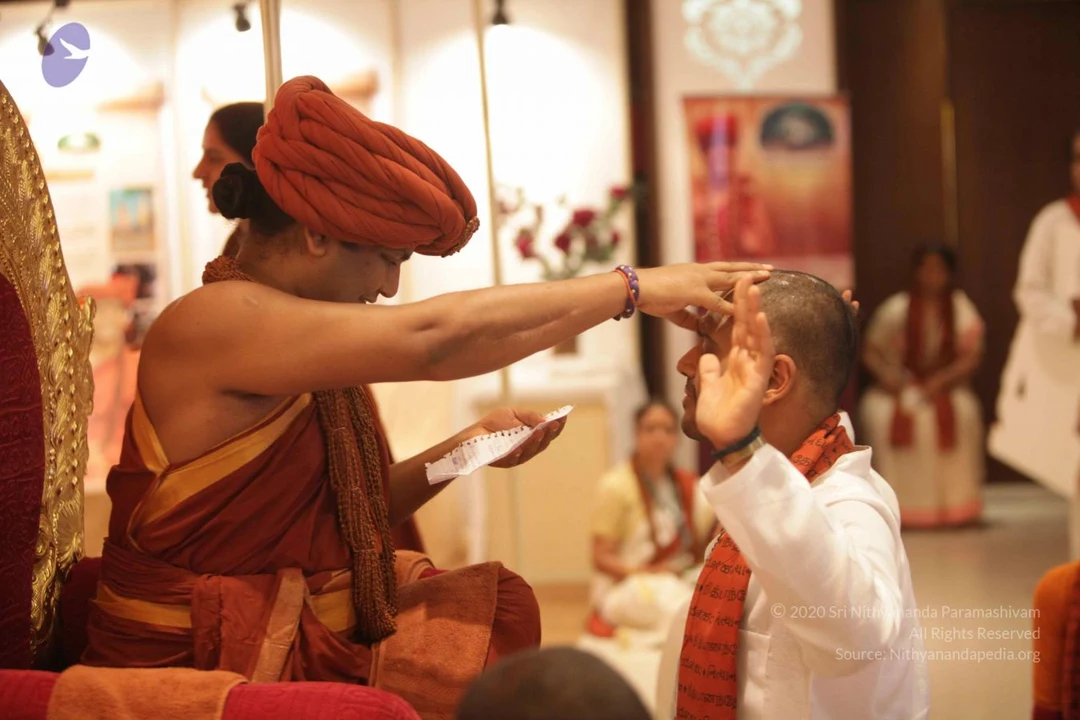
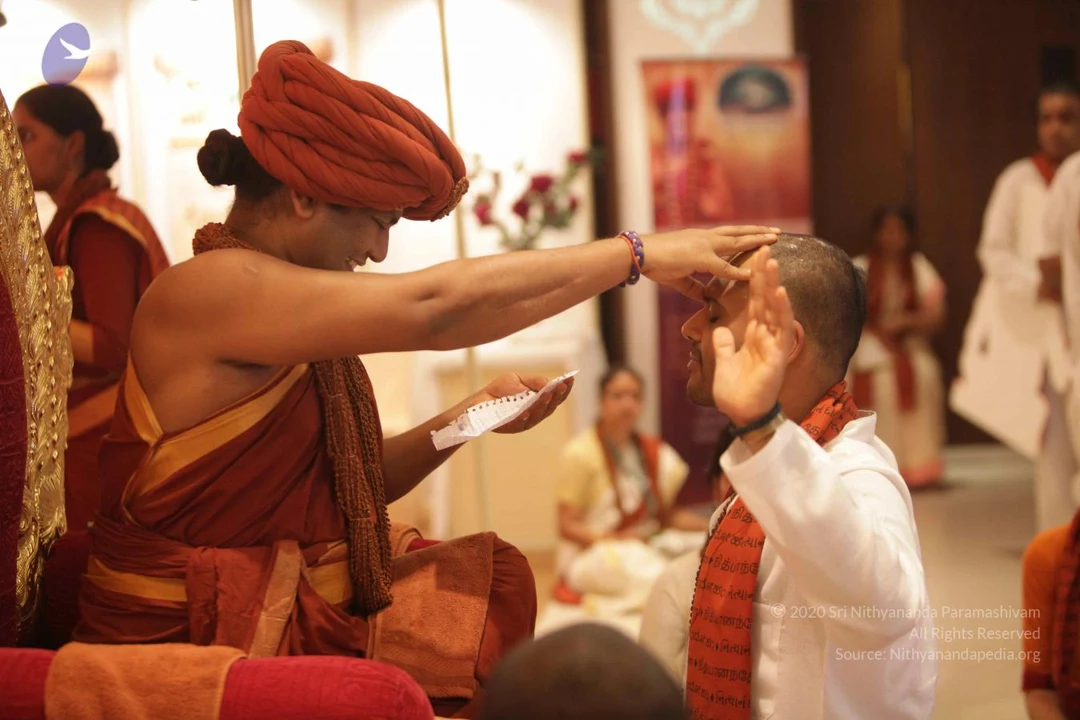
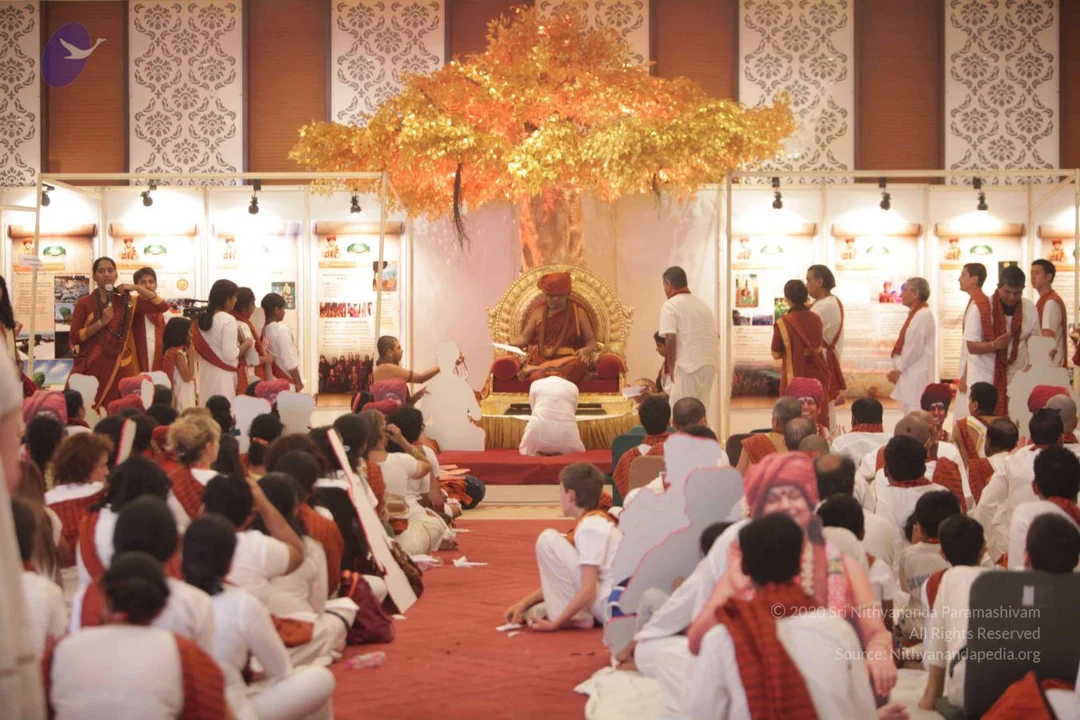
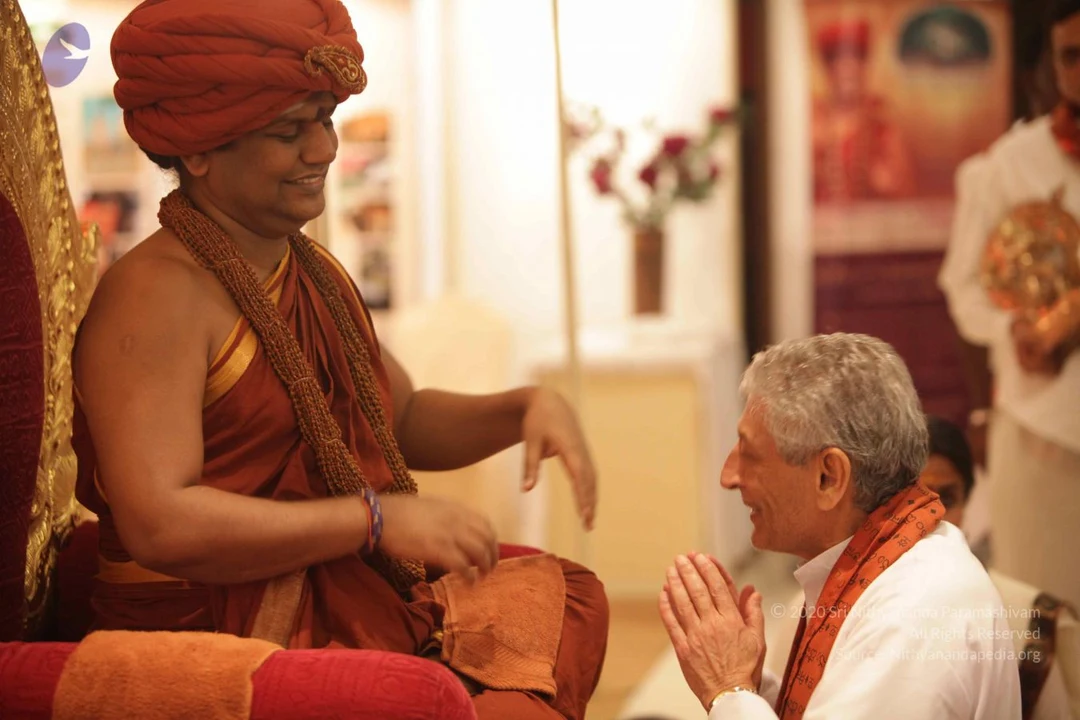
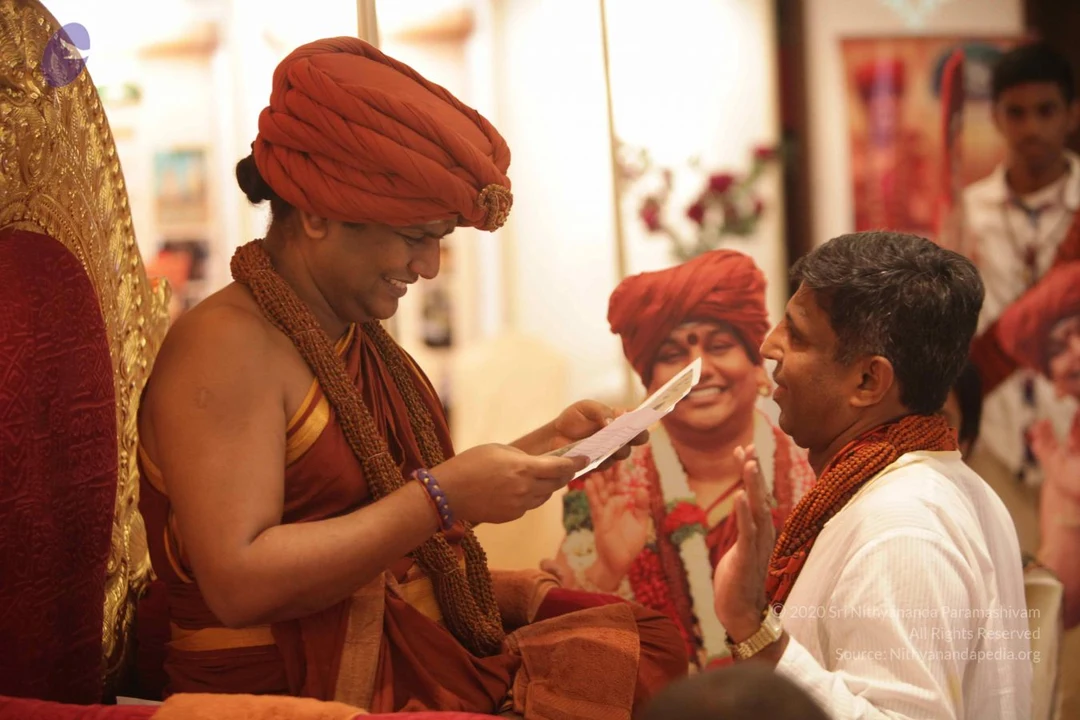
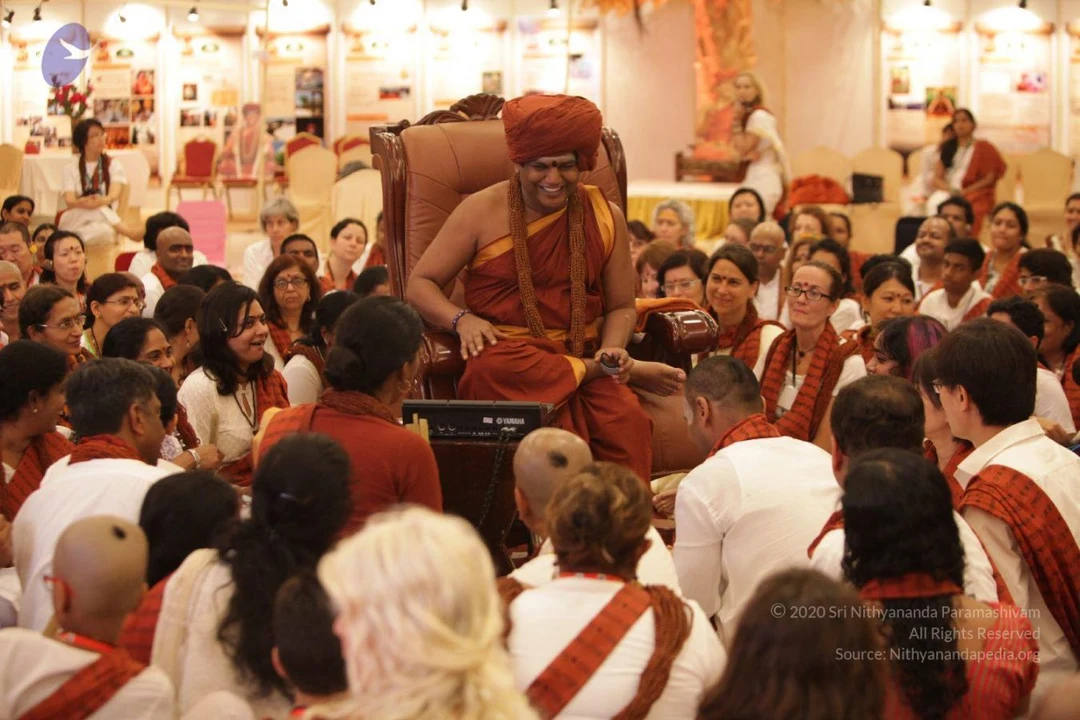
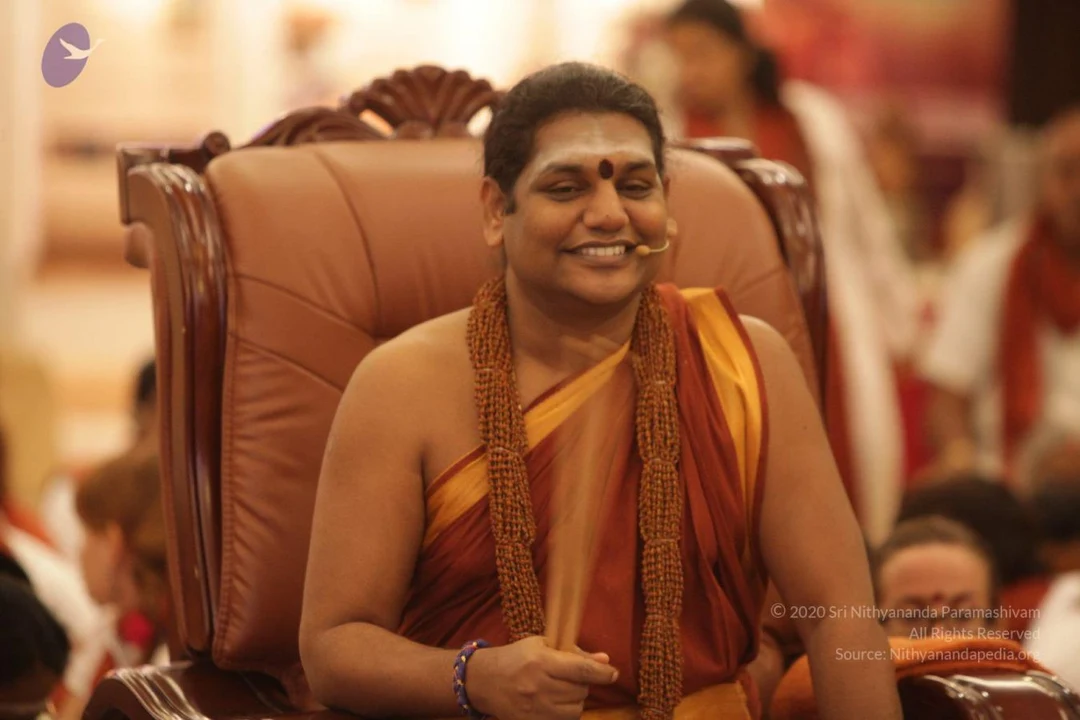
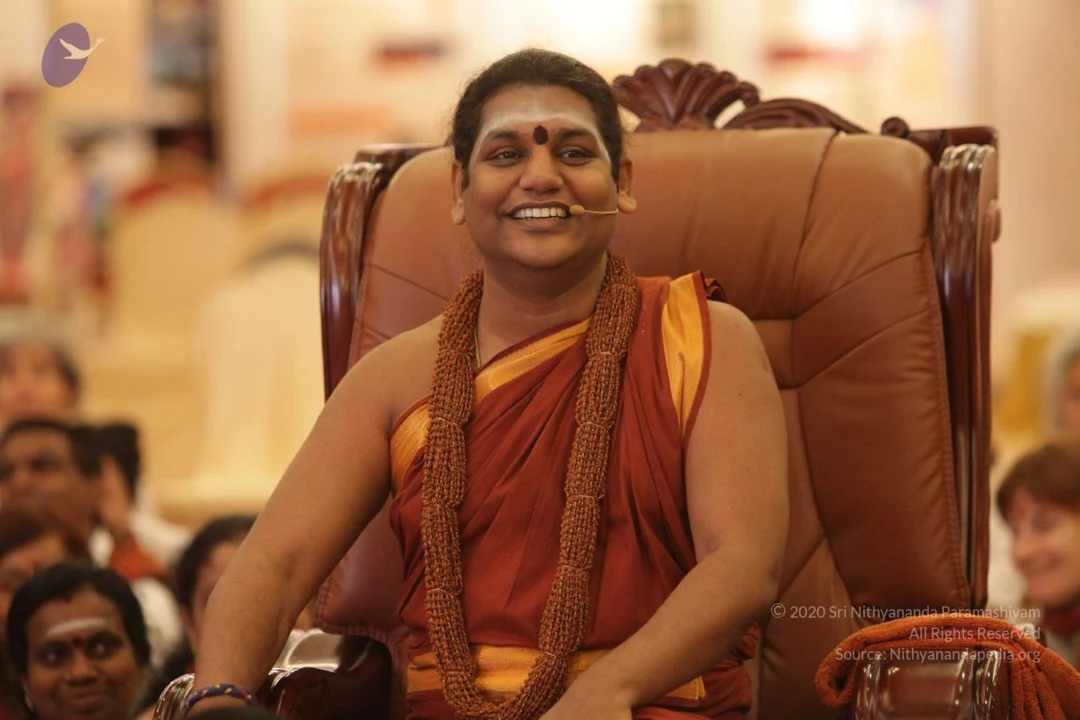
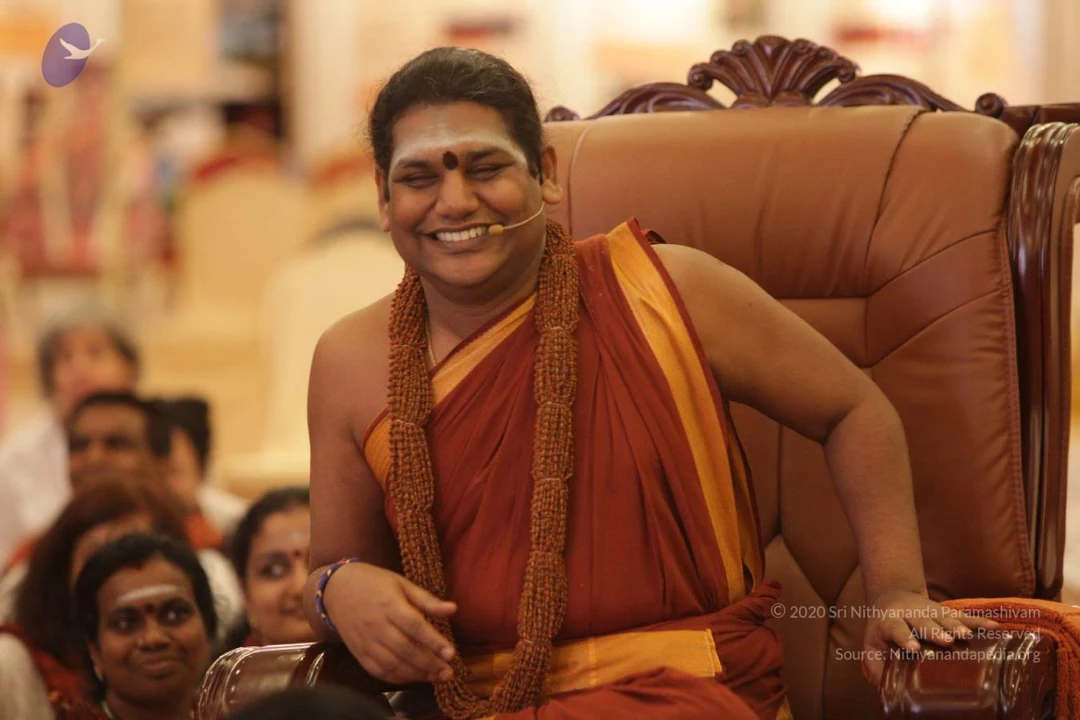
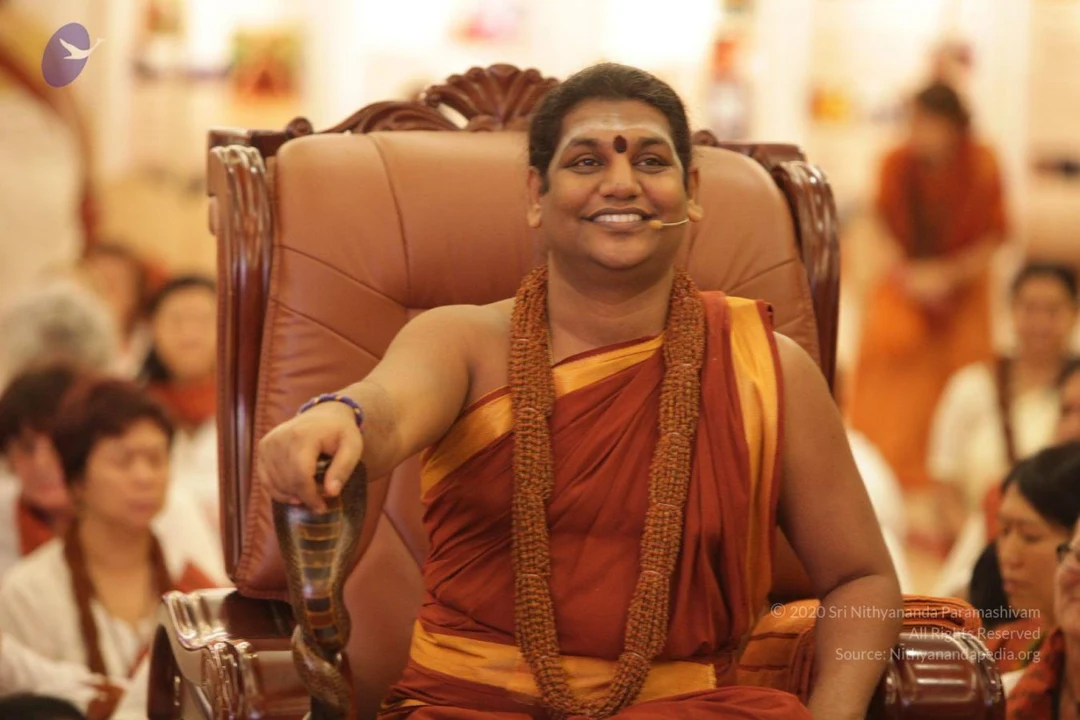
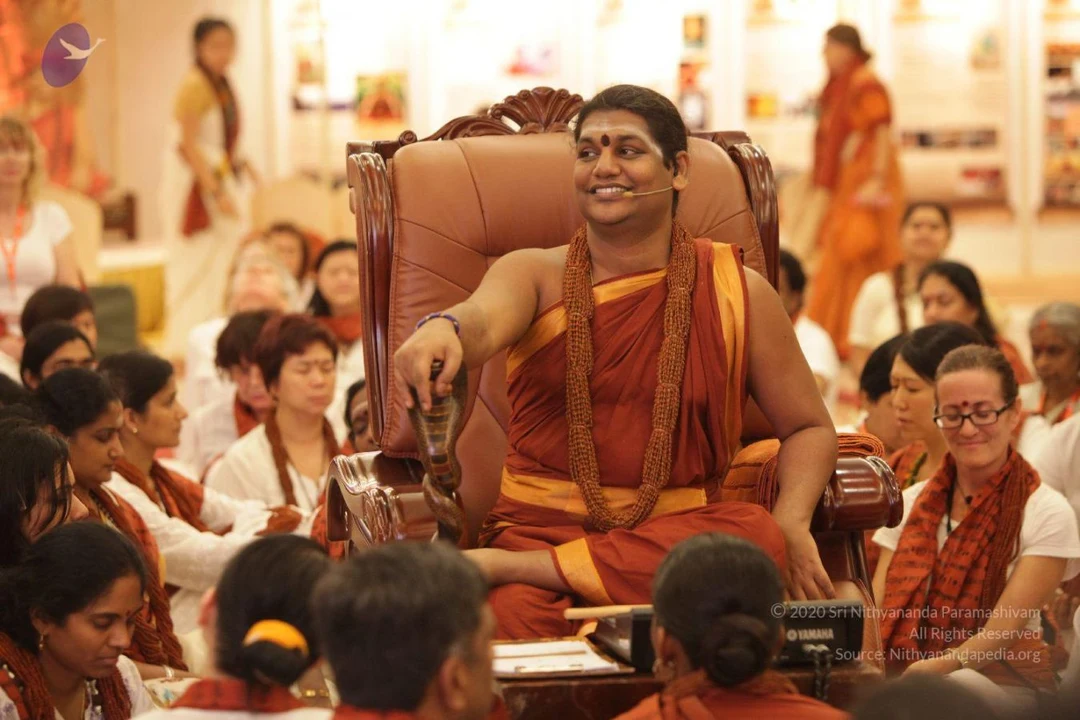
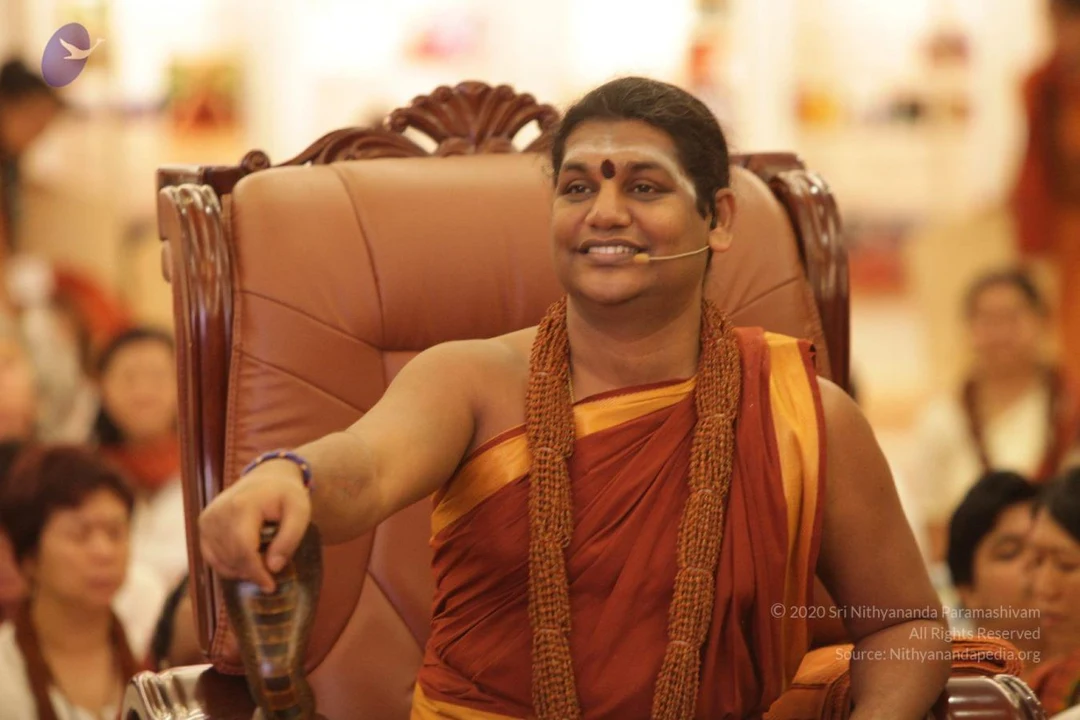
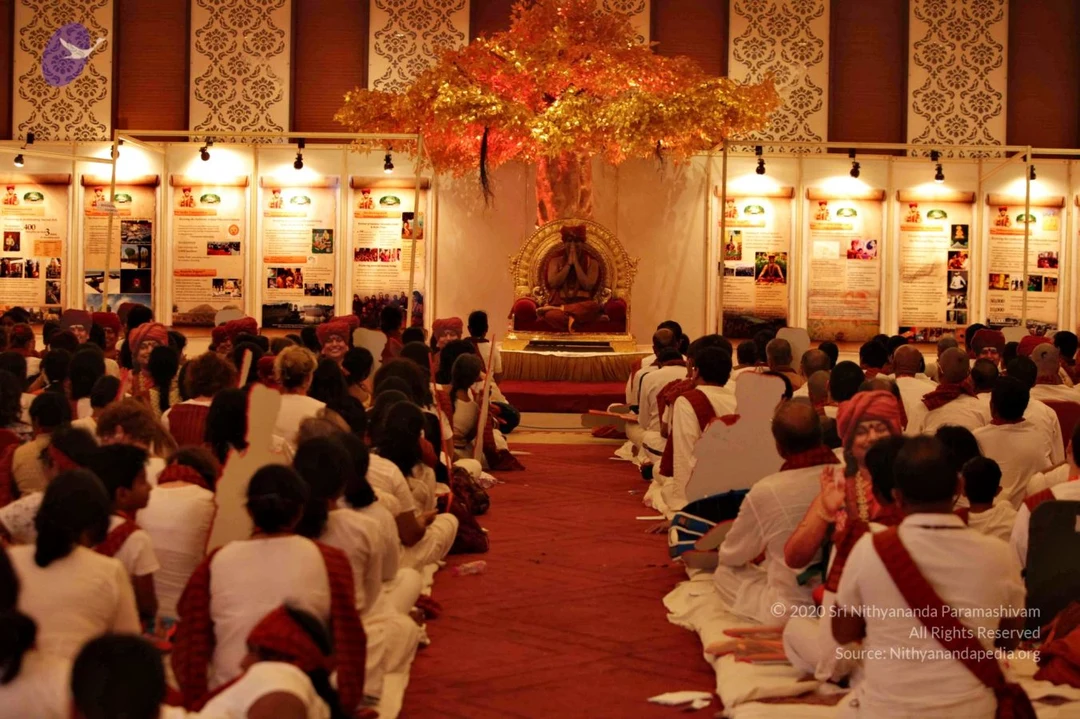
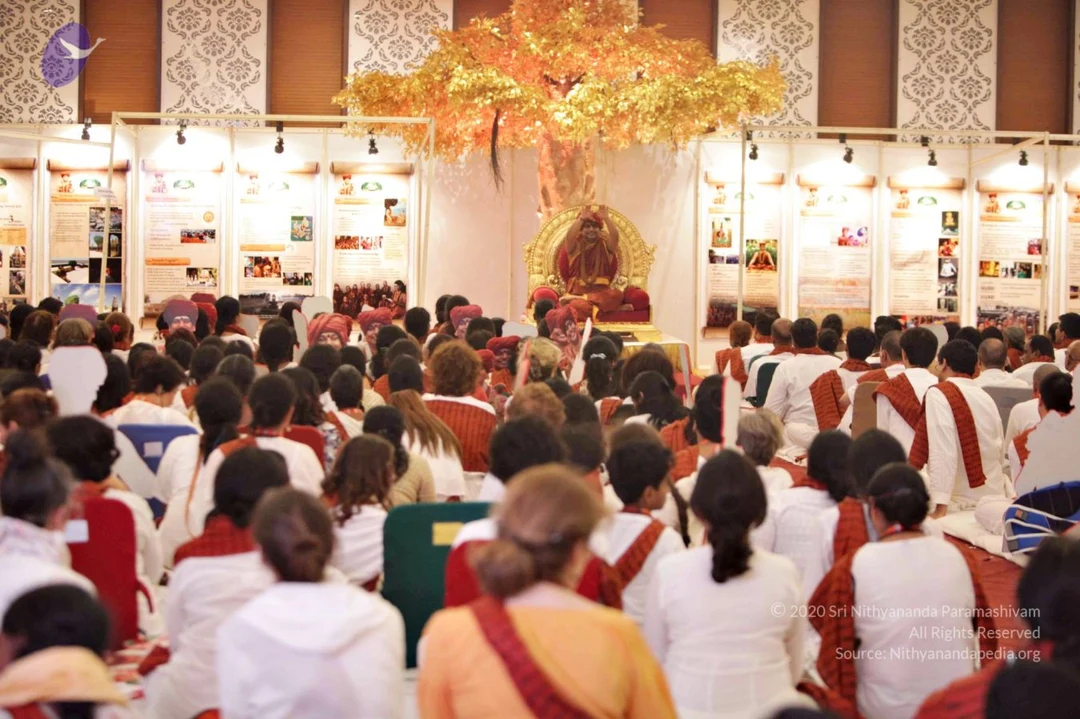
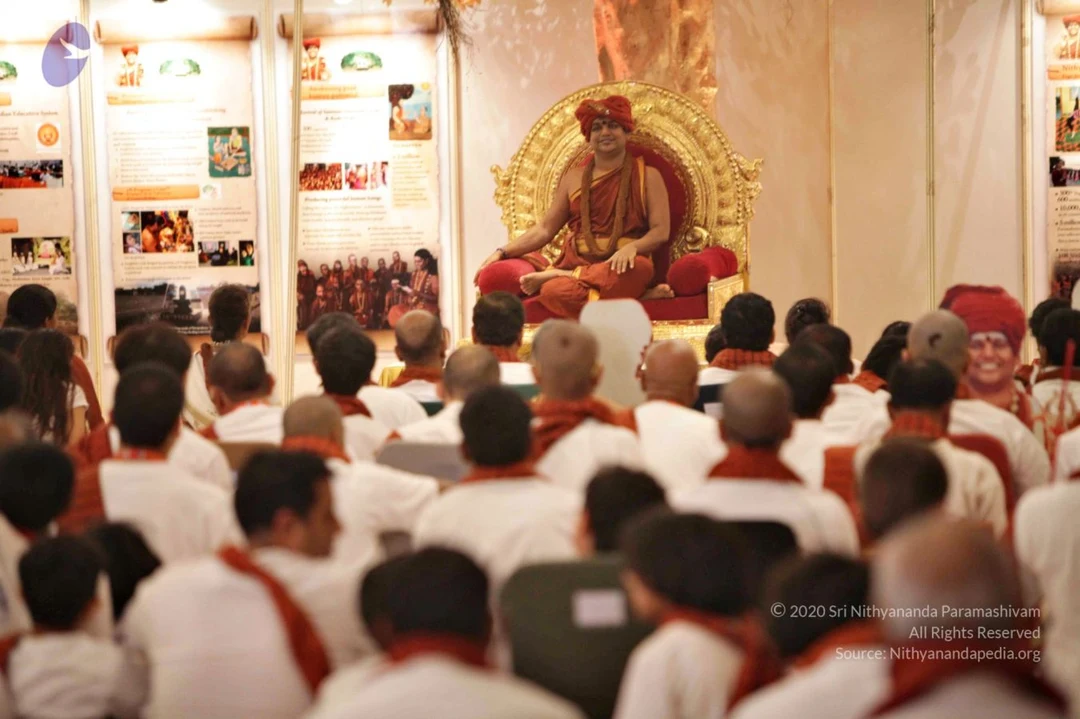
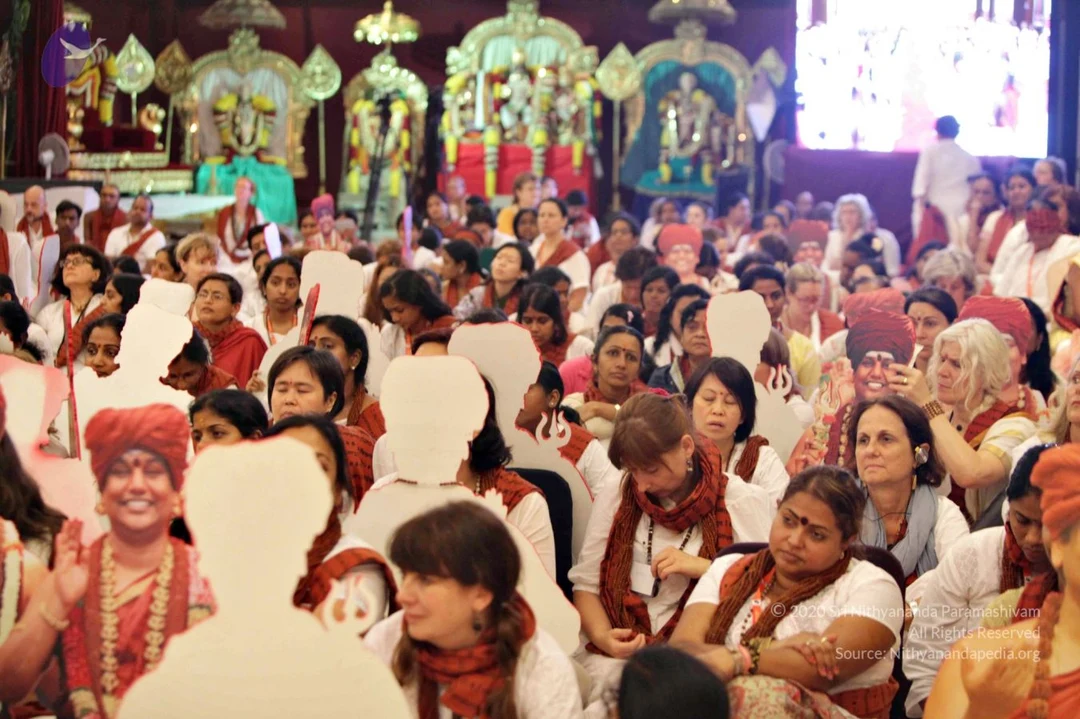
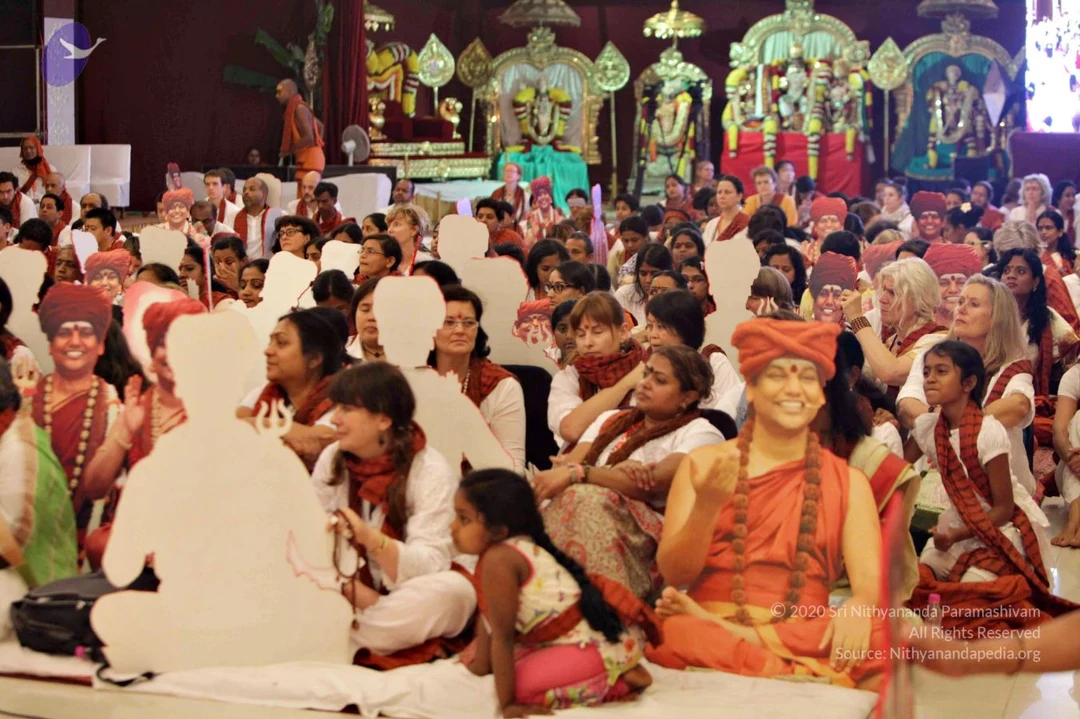
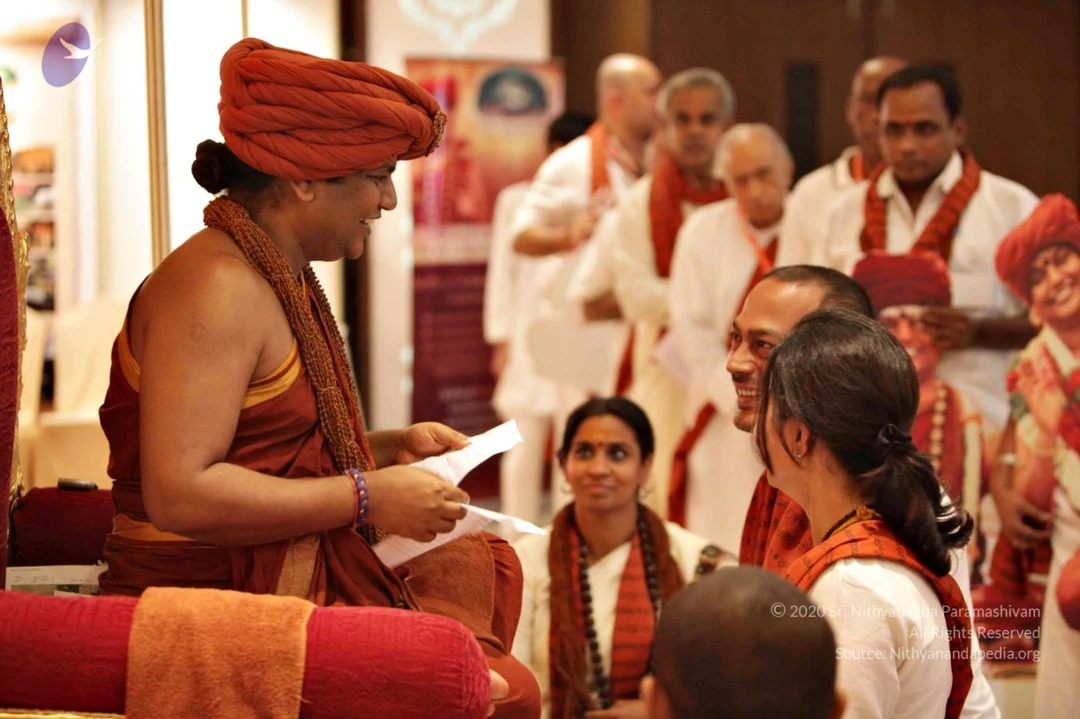
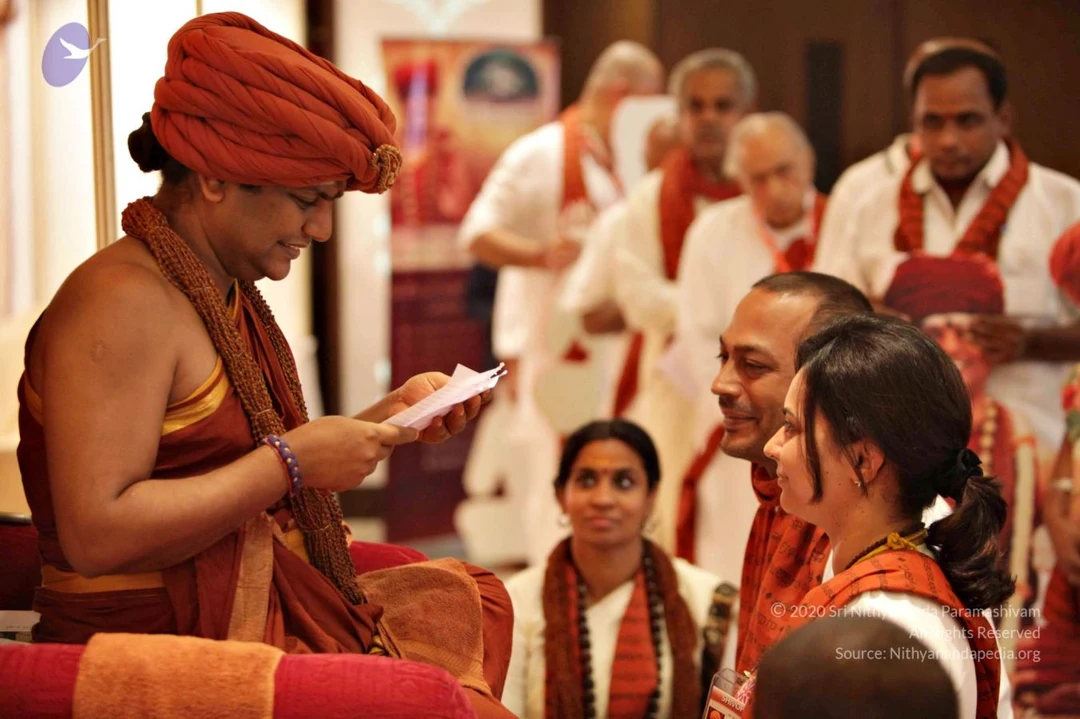
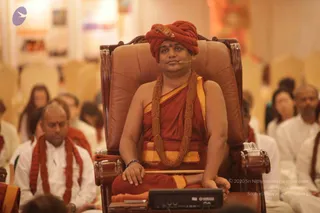
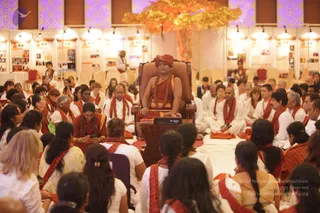
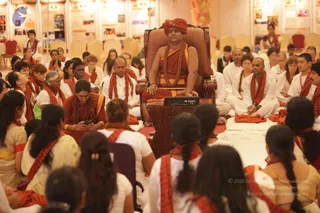
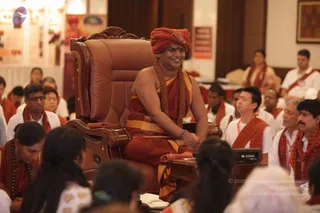
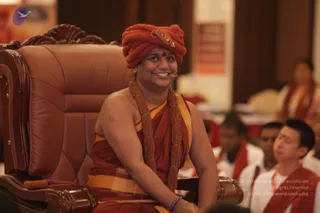
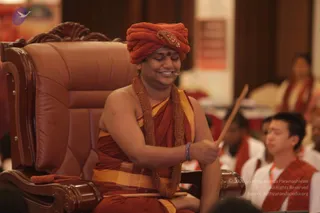
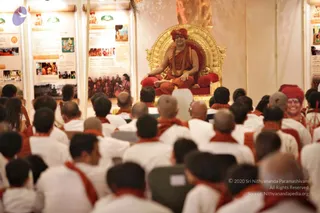
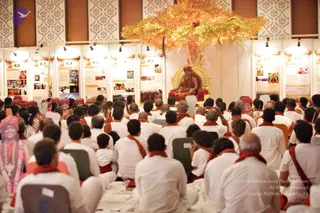
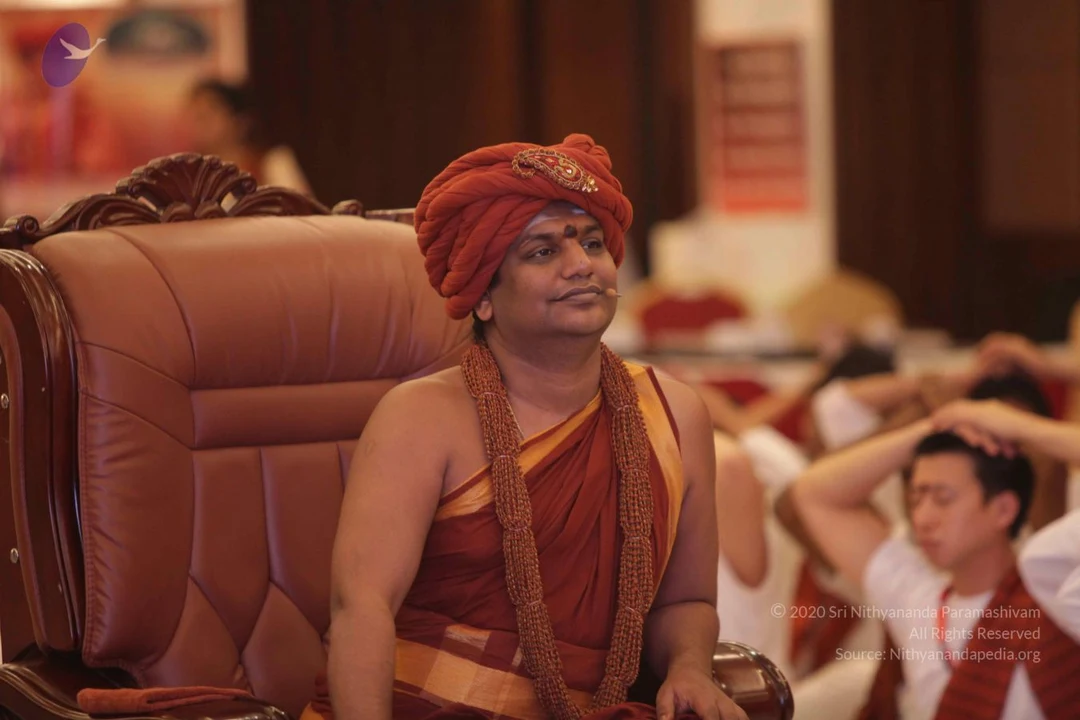
A seated man in saffron-orange and red robes sits on a brown leather throne-style chair with a wooden frame, cross-legged with hands resting on his lap. He wears a red-and-gold turban with a gold ornament, a multi-strand rudraksha mala, a gold-trimmed saffron wrap, and a small headset microphone. Behind him, a sea of seated devotees in white and red shawls fills a bright, warmly lit hall, with a YAMAHA audio mixer on the floor in front of the chair. Printed captions on the image read 'Paramahamsa Nithyananda' copyright information, and the page excerpt describes a Mandala process session in Varanasi. A visible saffron-robed figure with an ornate turban and rudraksha mala appears in the centre; the appearance cues are distinctive enough to label as Swamiji (probable) seated in person.A large indoor hall with cream and purple patterned panels and an orange-leaved decorative tree behind a central seat. A man seated on a dark wooden throne-style chair wears an orange turban, orange shawl and a beaded mala, with hands resting on his knees. Around him, a seated crowd in white clothes with orange shawls fills the floor, and several people in orange-toned saris and kurtas sit among them. Many attendees face the central figure from the foreground, including women with long braids. Display boards line the back walls. A seated man in an orange turban and robe on a throne fits the page's stated presence, so this is a probable Swamiji (probable) in a seated, central position amid a satsang-style gathering.A seated figure on an ornate brown throne-like chair at the front of a hall, wearing an orange-red turban, an orange and saffron robe and a long beaded rudraksha-style mala necklace, with a microphone at the face. Rows of seated devotees fill the foreground and middle, many in white ritual clothes with orange-red shawls, and women in yellow and cream sarees. Behind them, a wall with framed photographs and a golden deity image. The figure appears to be a person, seated as the speaker before the delegates. Several people are visible; many more are seated in the rows.A seated man in an orange-red turban and saffron-orange robe with a striped gold-and-orange border sits on an ornate brown leather throne chair in a hall. He wears a long rudraksha mala with a bead necklace and a blue-and-gold bracelet, and smiles toward the audience. Seated devotees in white shirts and red-orange shawls fill the foreground and background, some holding notebooks. A wooden table with a microphone and a Yamaha speaker sits beside the throne. Wall panels and framed pictures are visible behind. Swamiji (probable) is a seated teacher on a throne addressing a satsang-style gathering, identifiable by the turban, saffron robe and mala, though the face is not used for identification.A smiling man in a red-orange turban with a small gold ornament and a red bindi sits on an ornate brown leather throne-style chair. He wears a rudraksha mala of brown beads around his neck over an orange-red shawl with a yellow border, and a small microphone is clipped near his face. Behind him, seated attendees in white and red-orange shawls listen, and a man in white with an orange shawl sits with eyes closed at right. Swamiji (probable): the orange turban, rudraksha mala and ornate ceremonial clothing are the qualifying cues for the seated central figure, who is in person at the event.A photograph of a man seated on an ornate carved wooden throne with brown leather upholstery, smiling with eyes closed while holding a thin wooden stick in his right hand. He wears a saffron-orange turban with a gold ornament, bare-chested under an orange and yellow wrap, with a long rudraksha mala and a blue bead bracelet, and a red-orange tilak on his forehead. Behind him, seated participants in white garments with orange-red shawls sit in a hall, and a woman in an orange shawl is visible at the upper right. The figure appears consistent with the page's Swamiji reference, a probable match based on the turban, saffron dress and rudraksha cues, while the people in the background are devotees.

Lunch Break Initiation

33 photosSource gallery
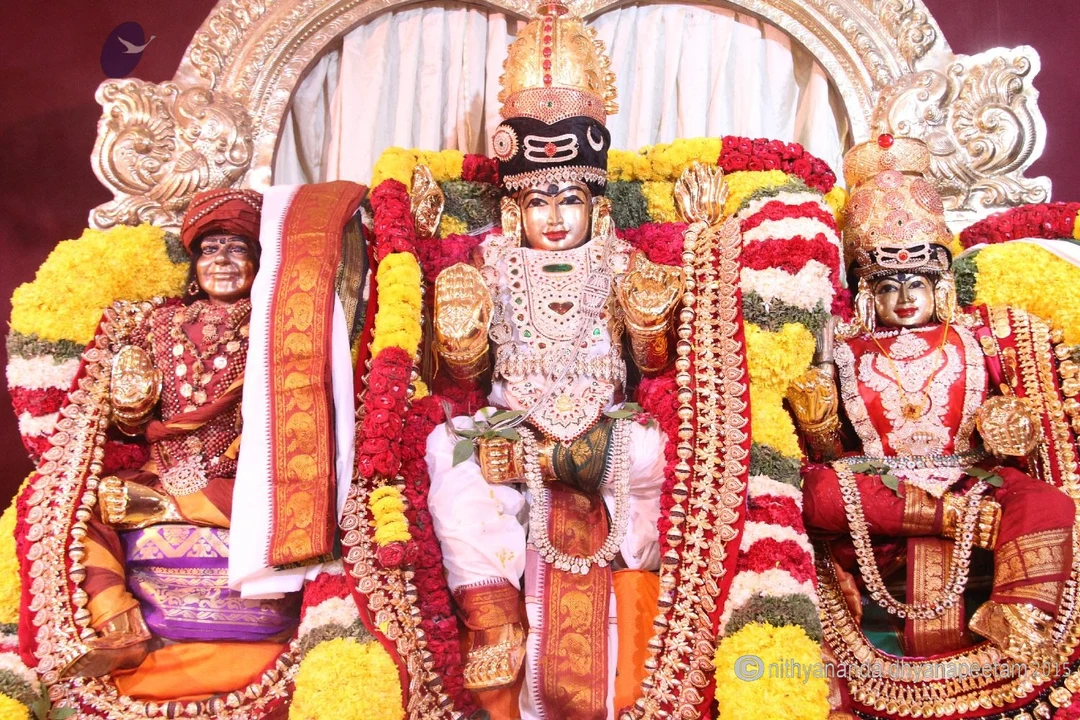
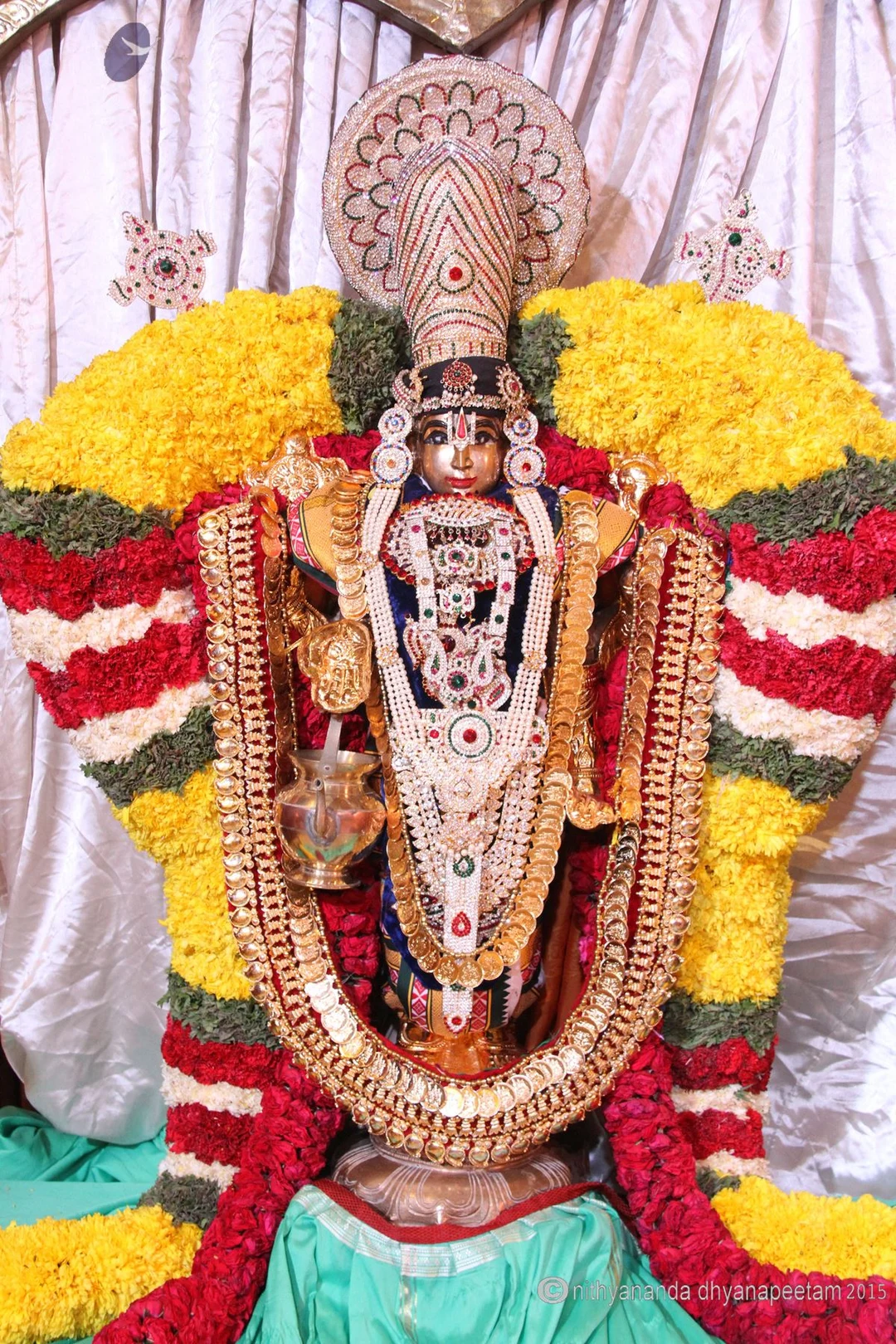
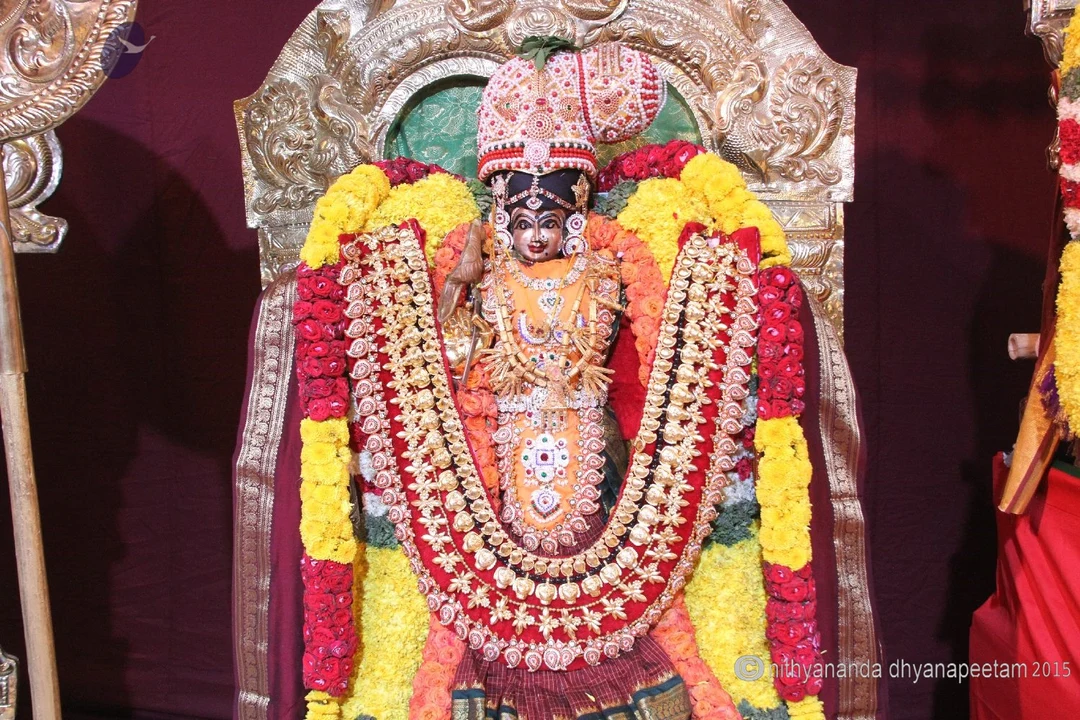
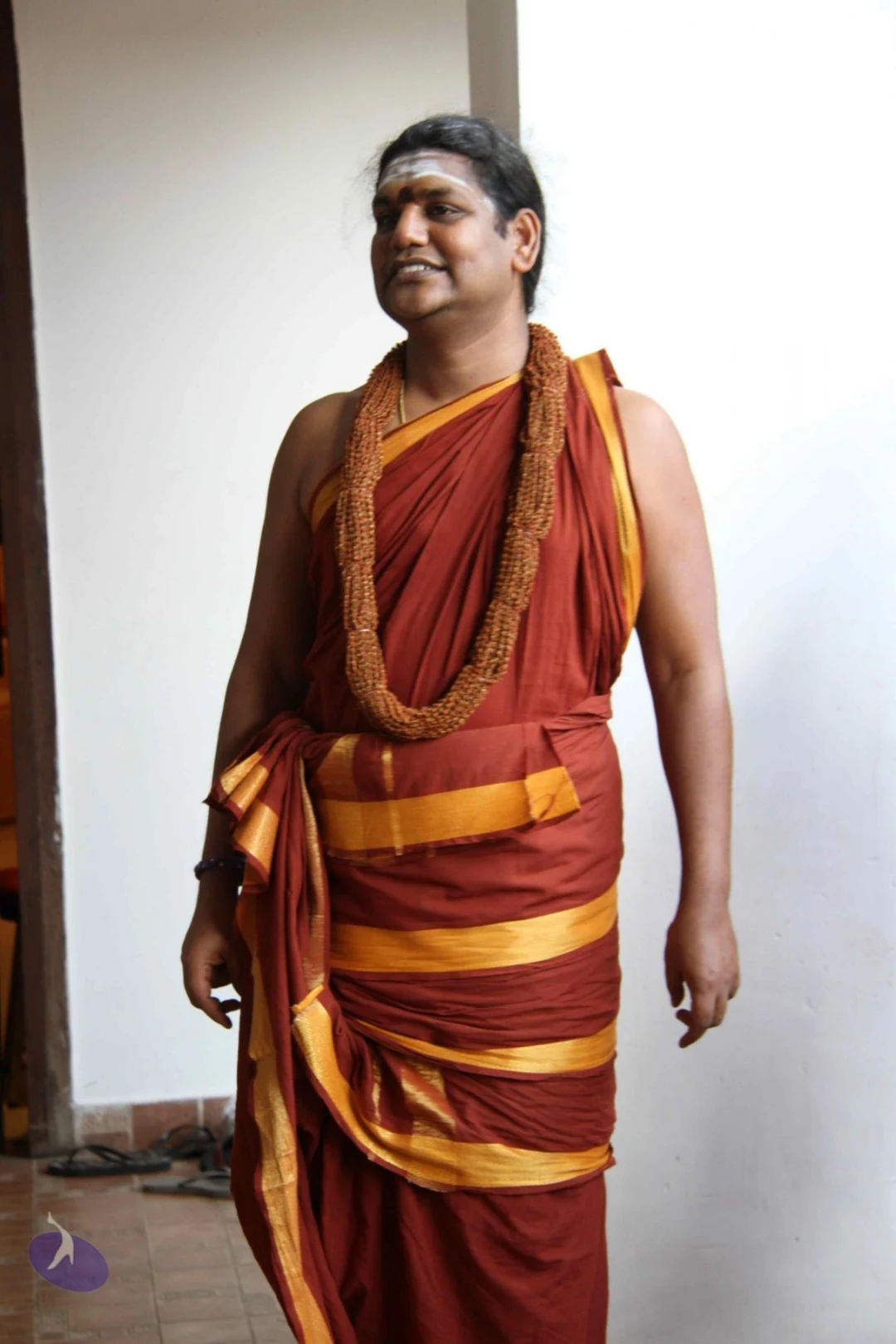
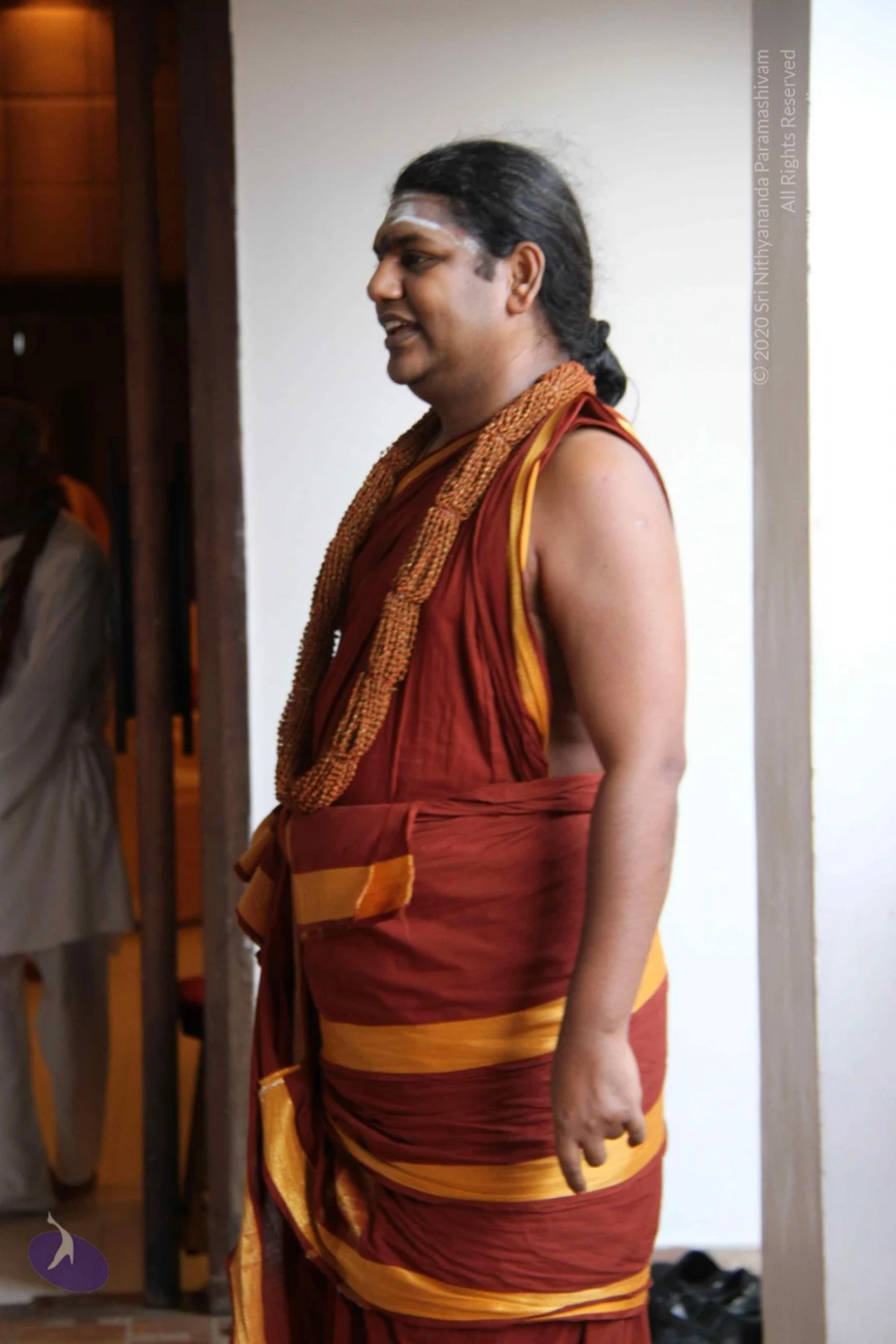
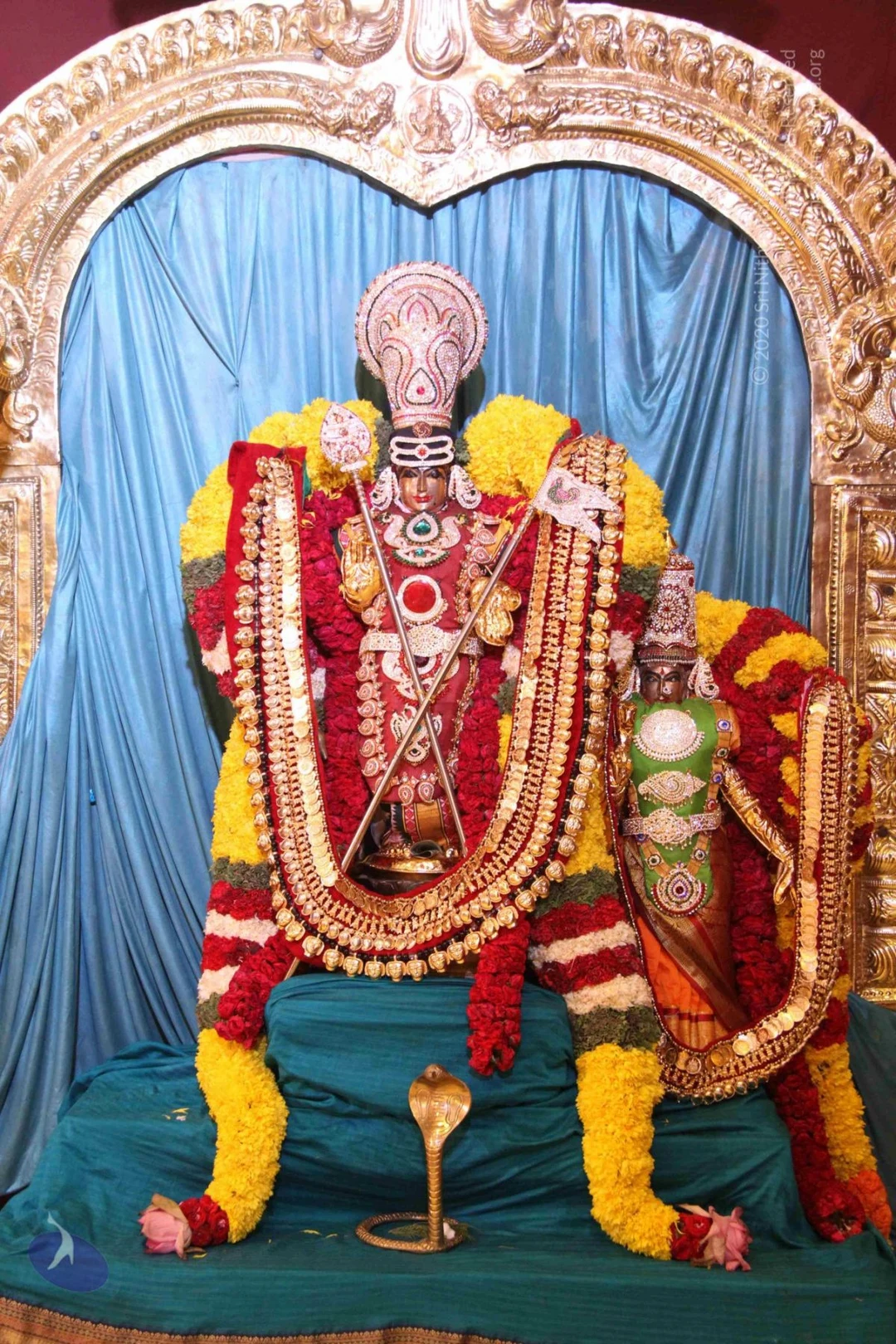
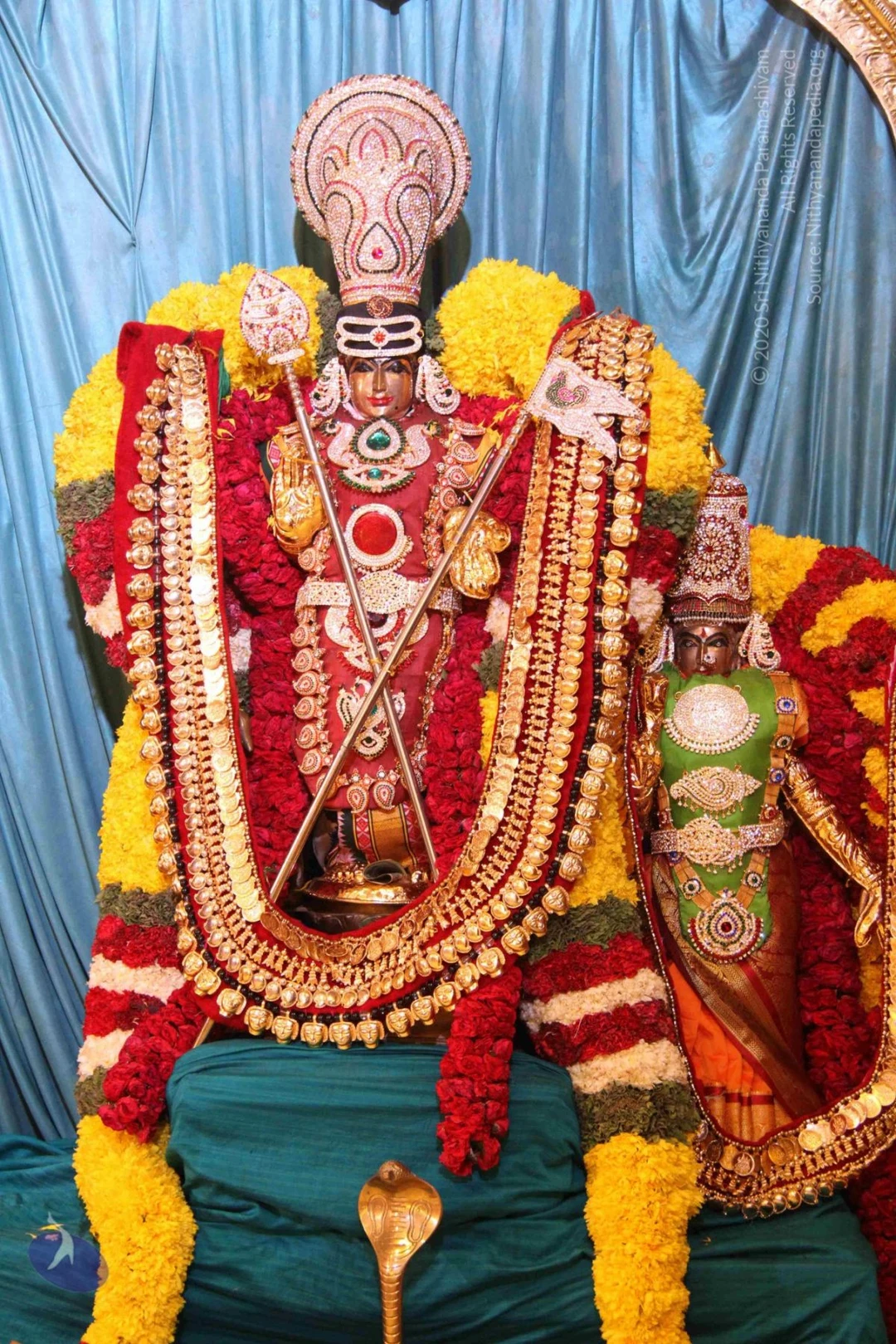
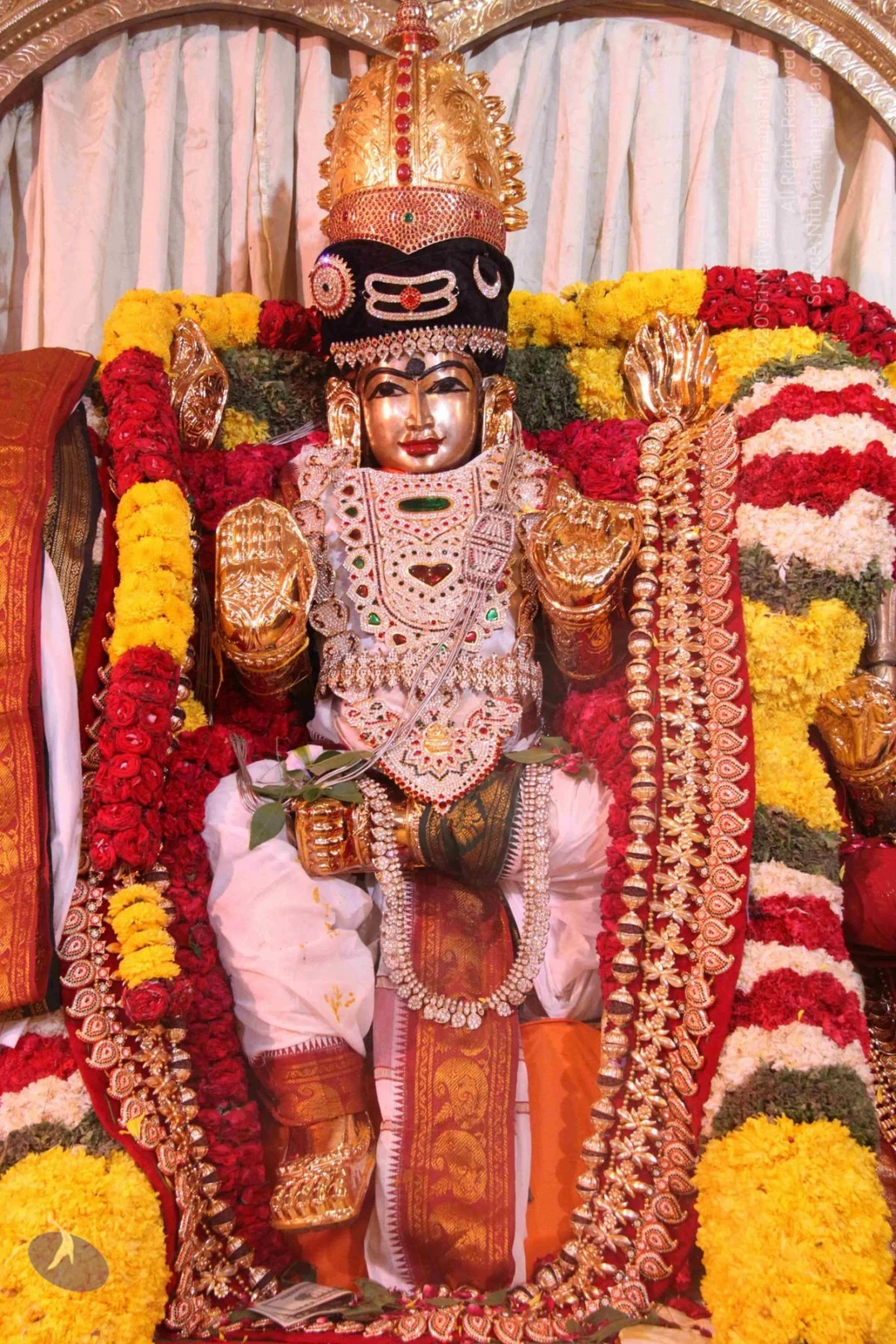
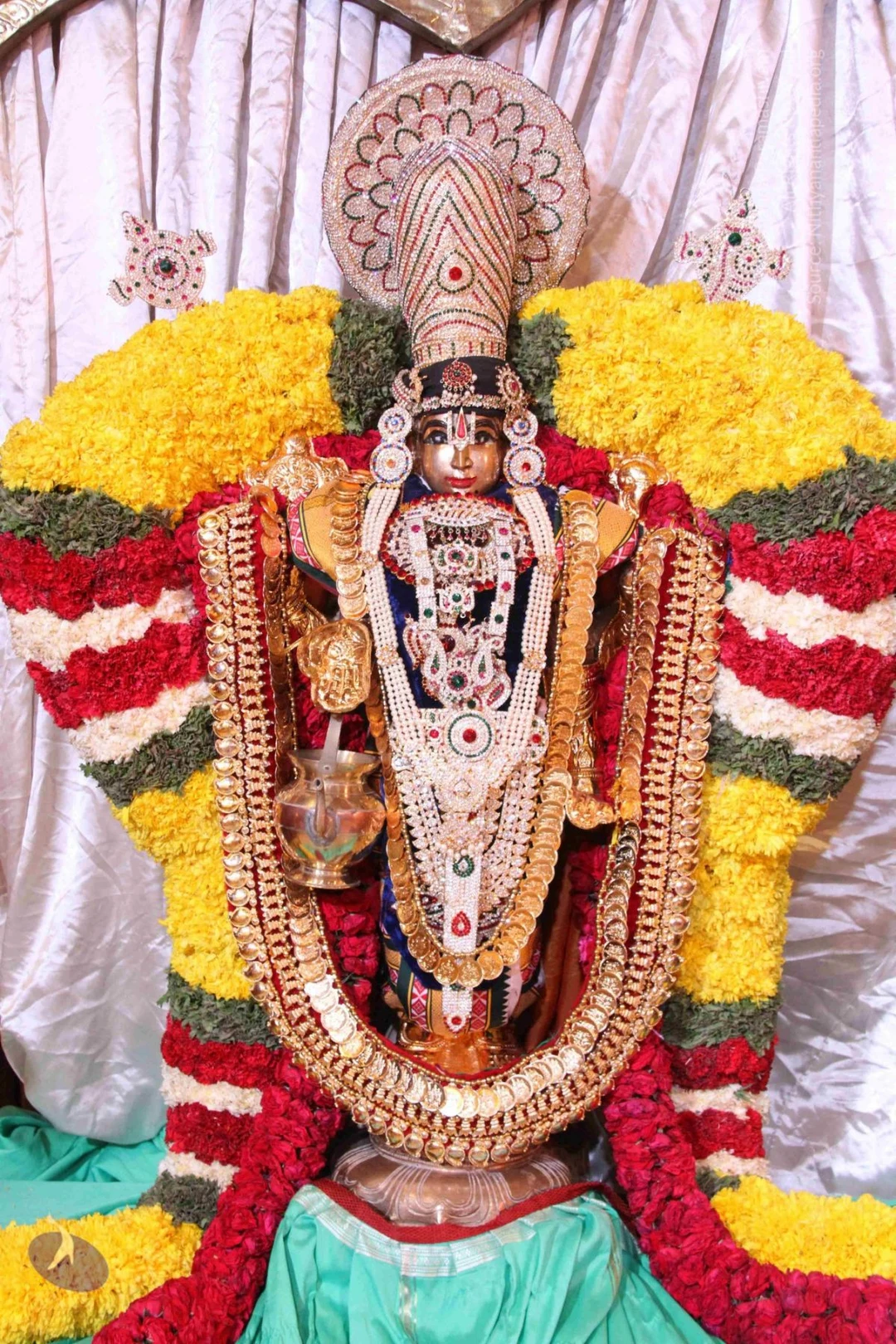
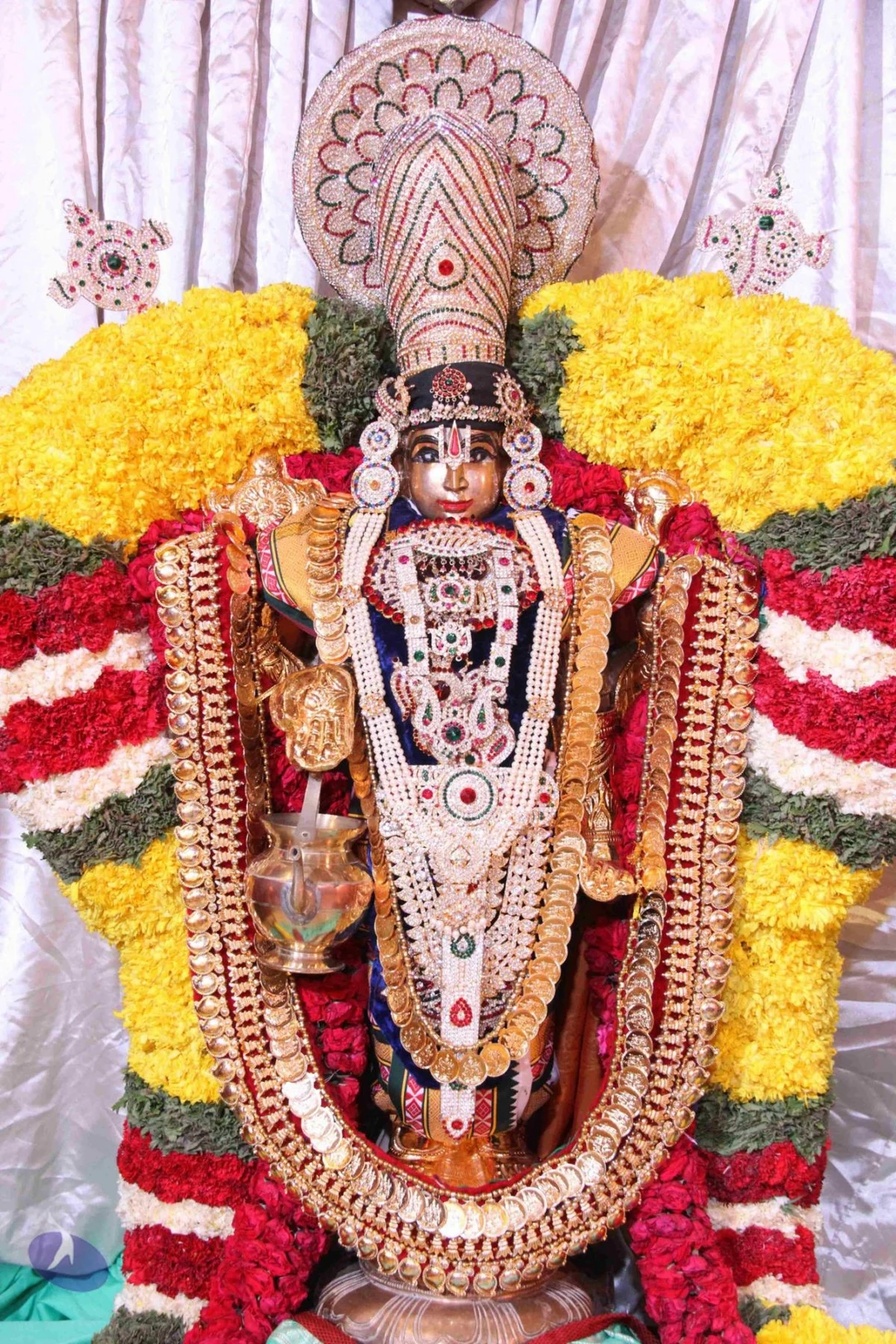
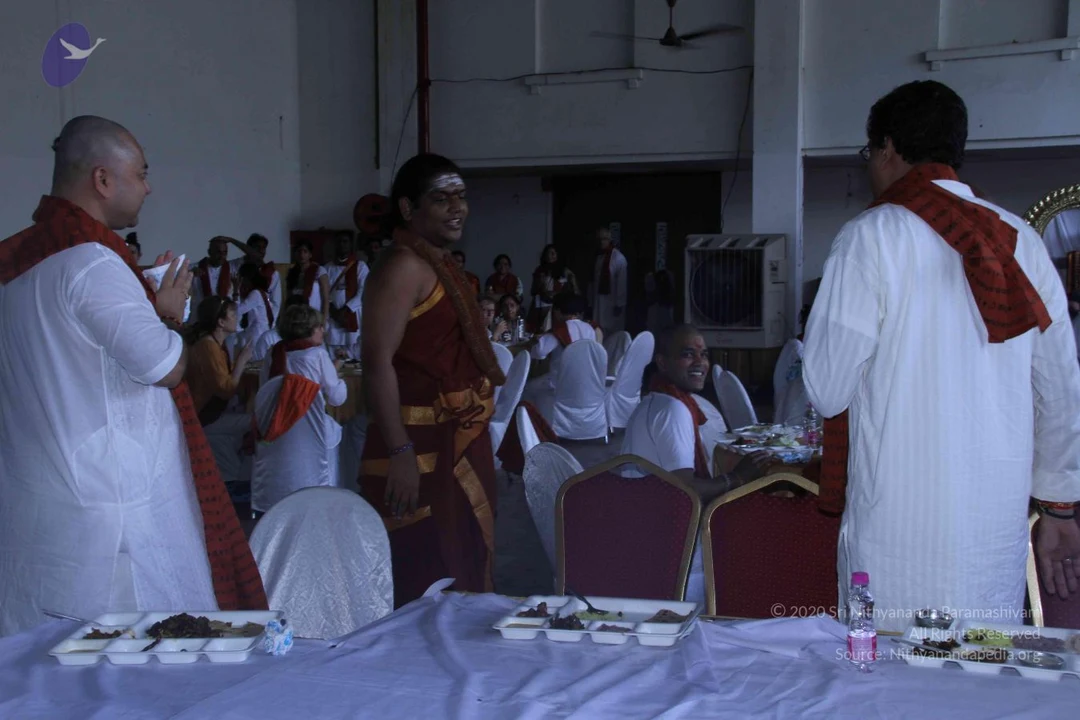
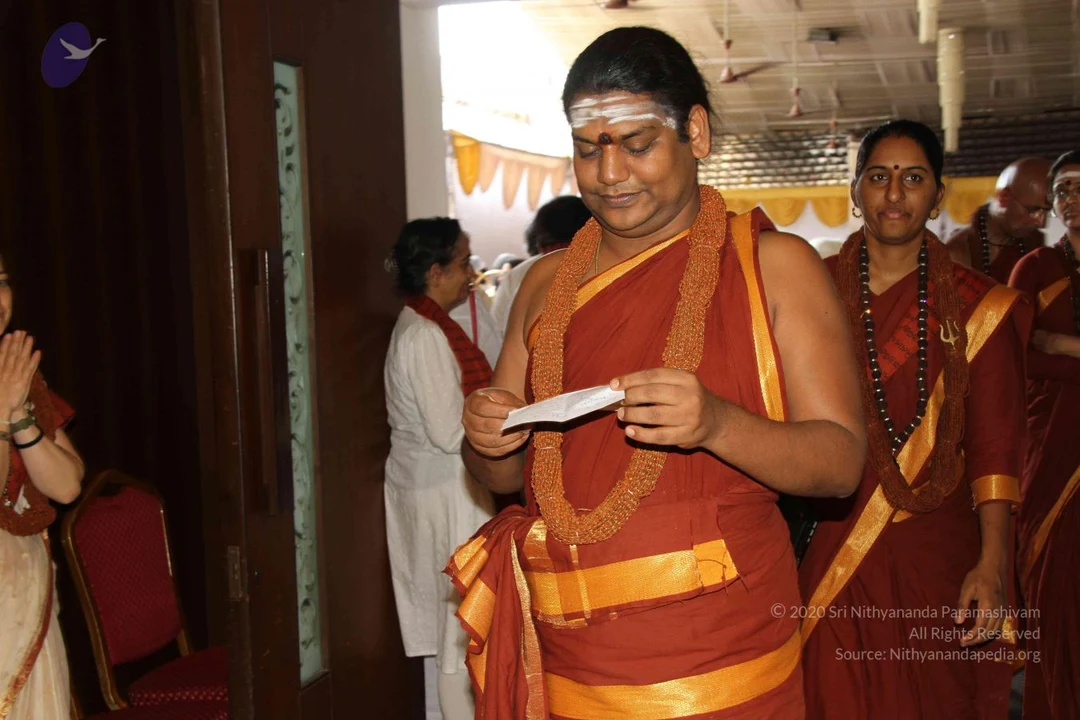
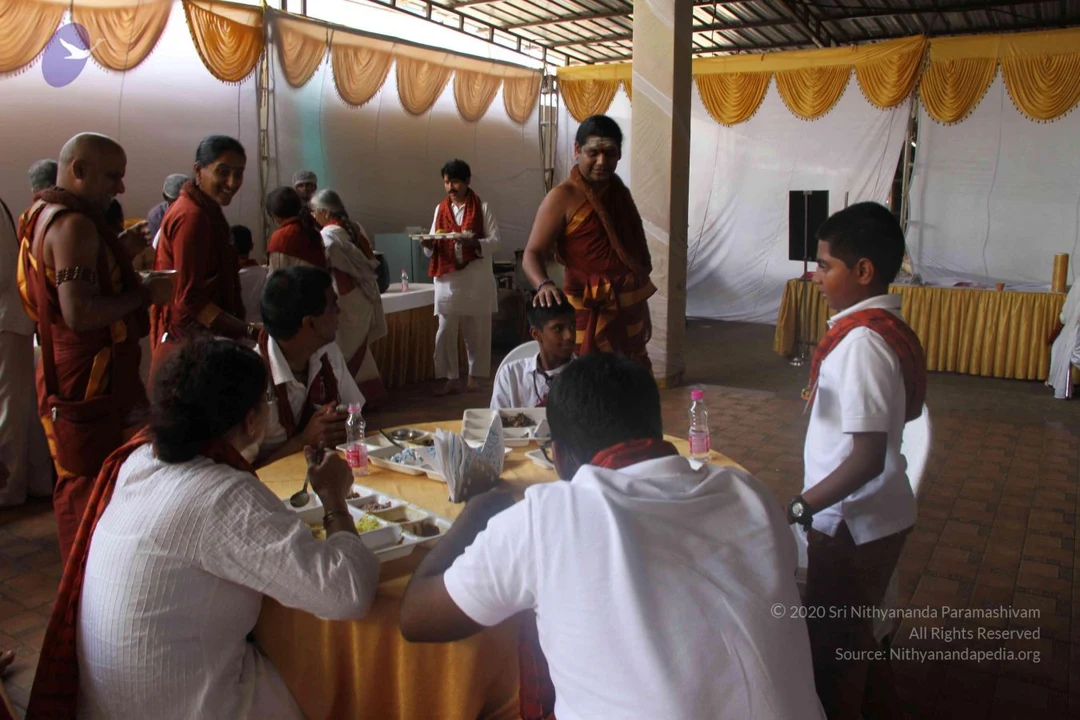
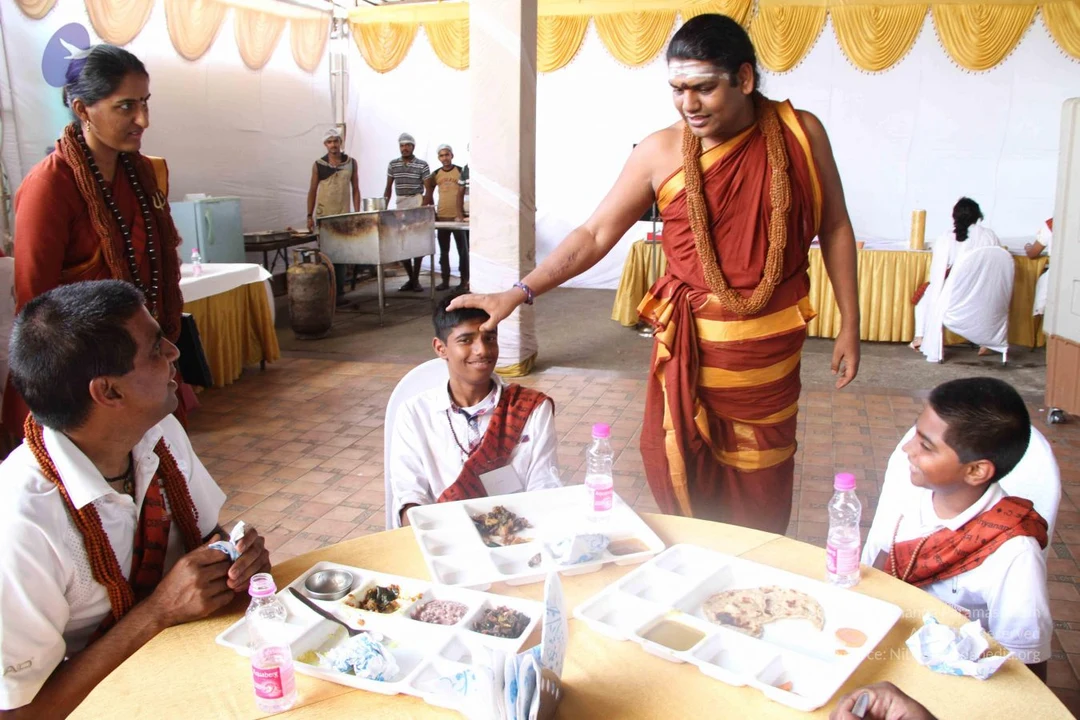
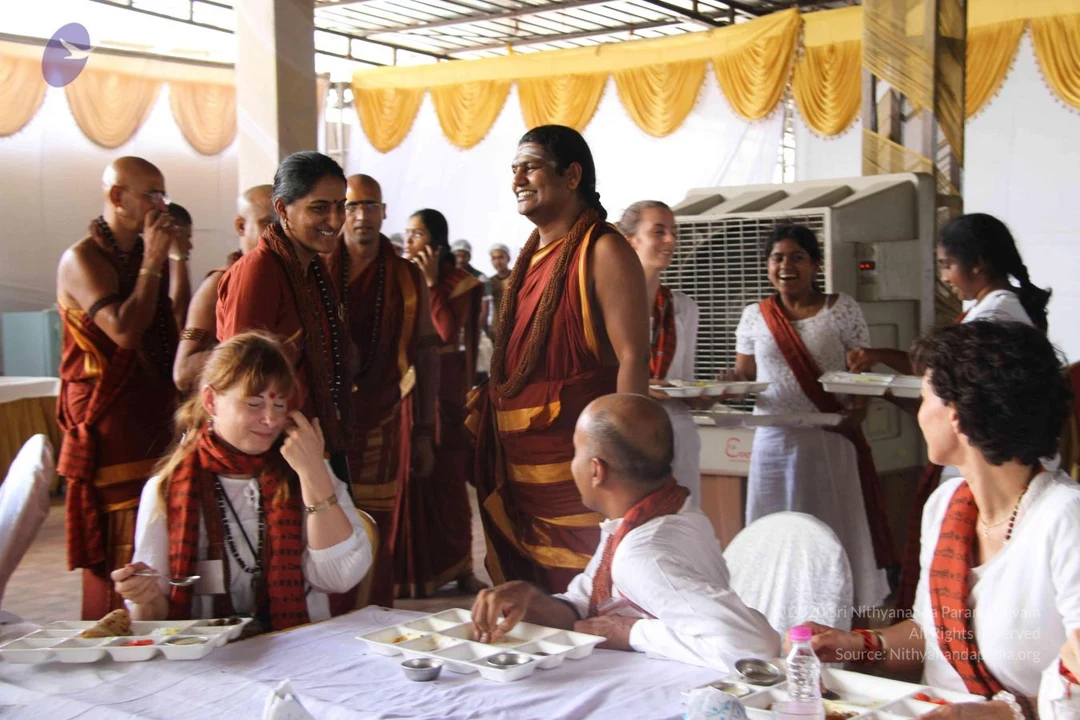
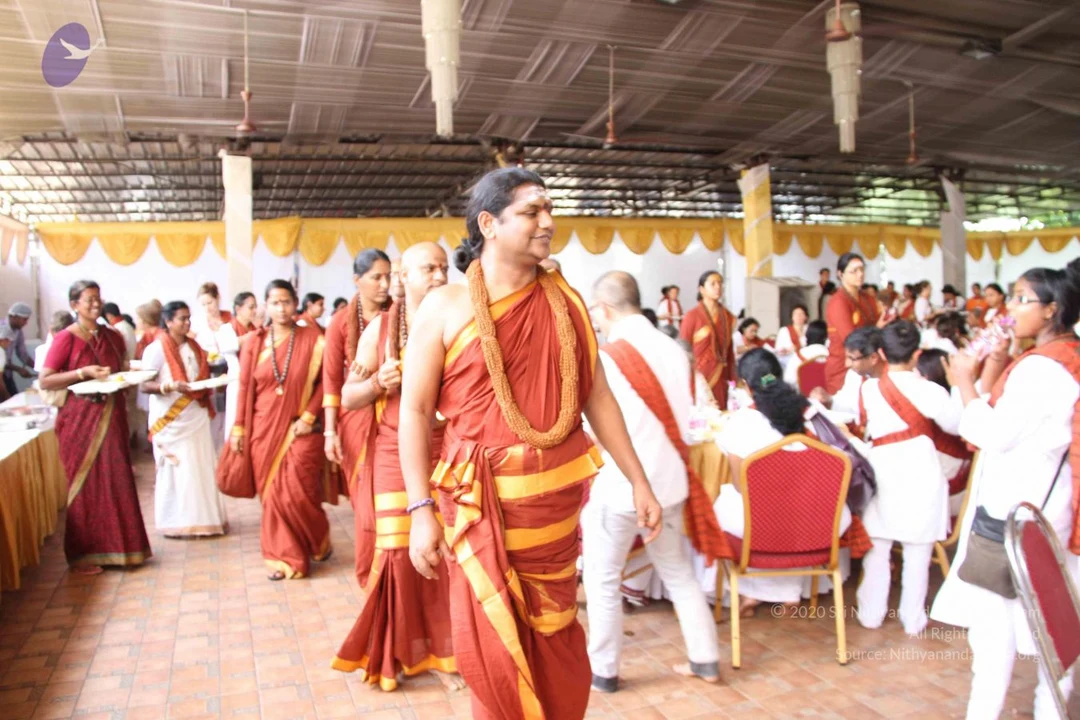
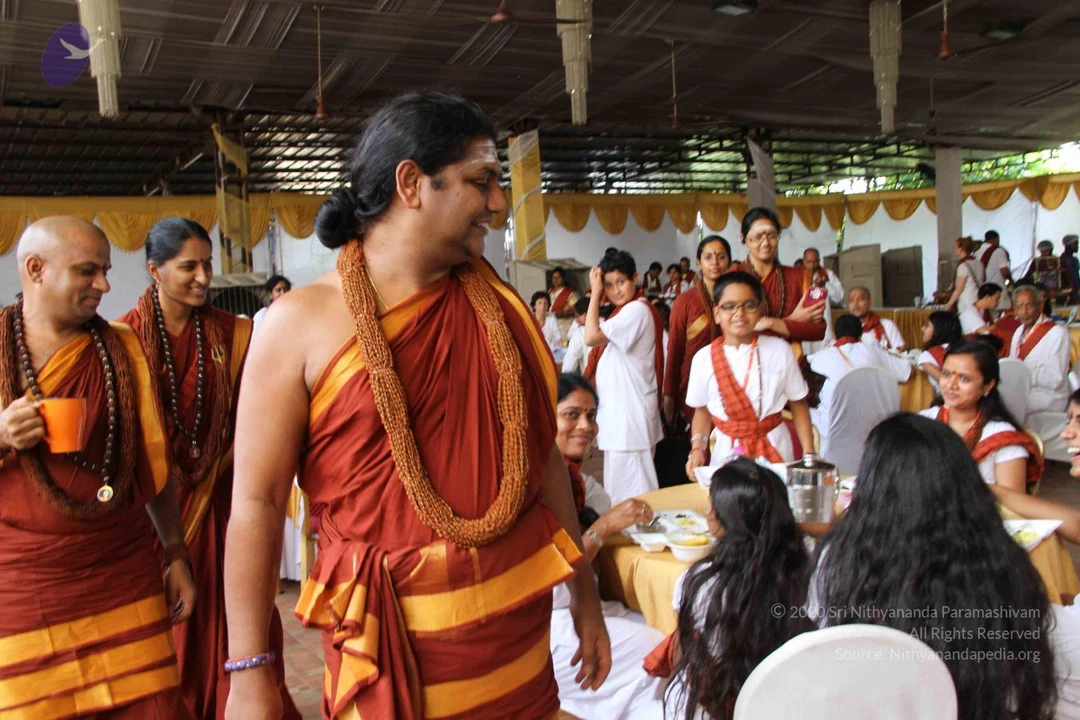
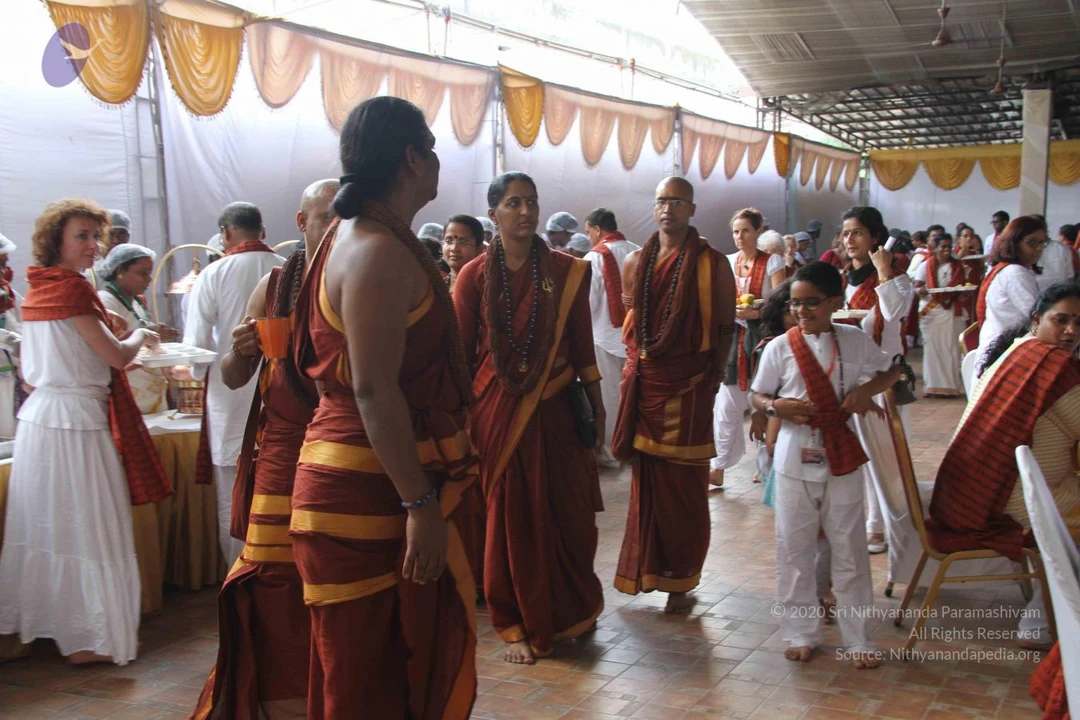
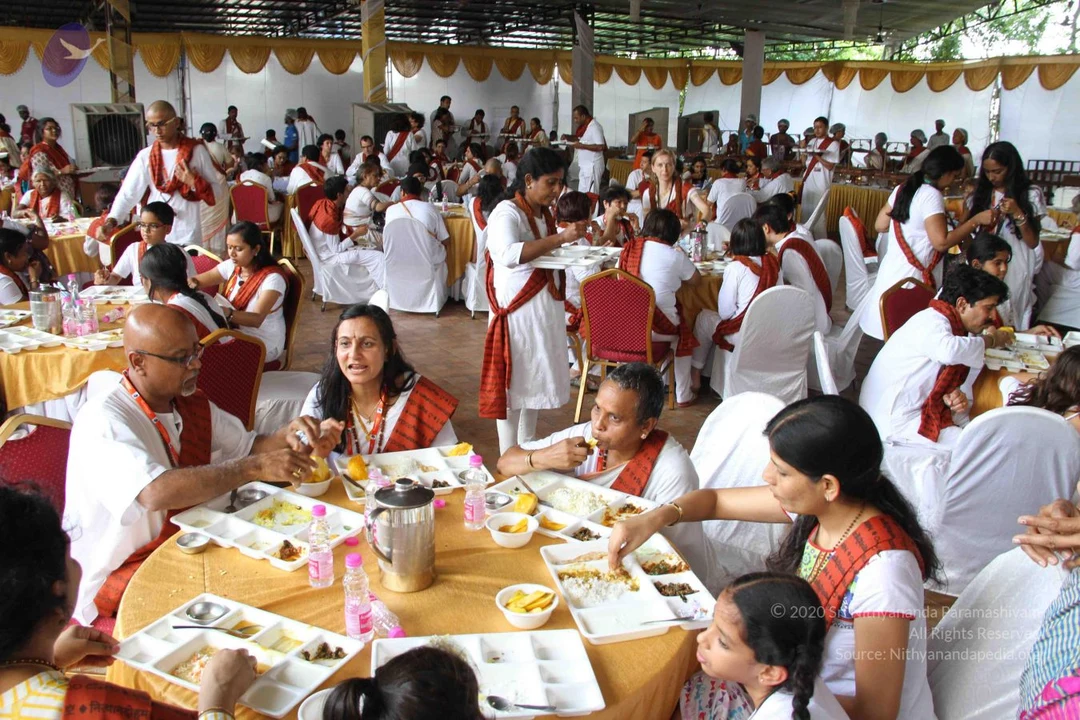
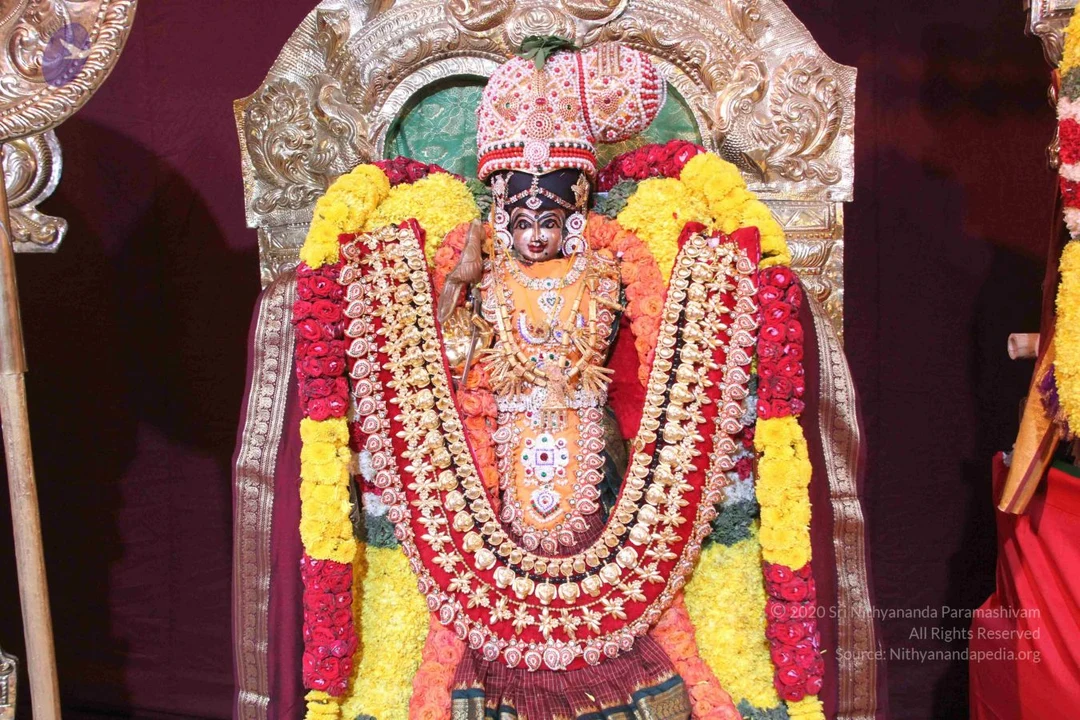
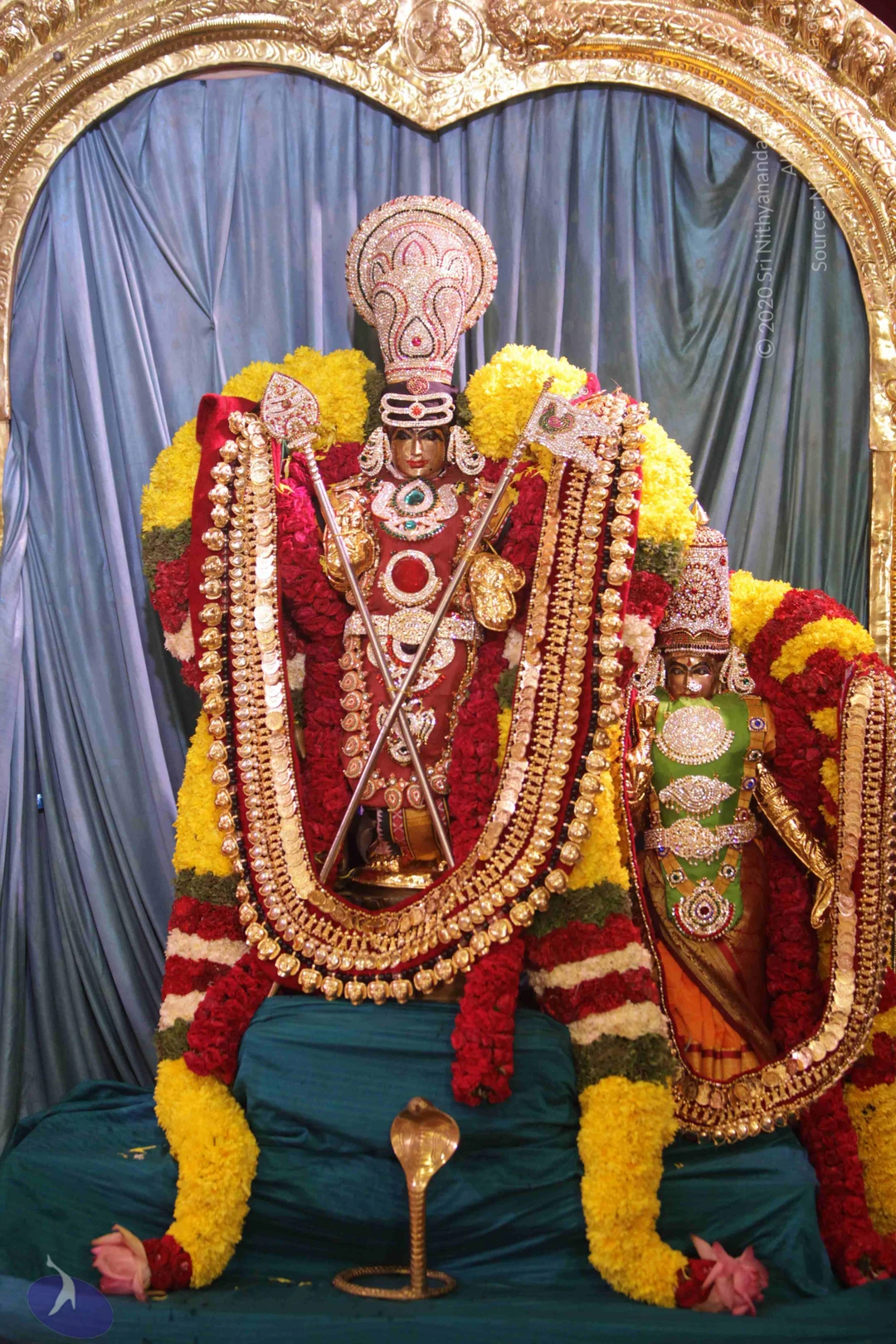
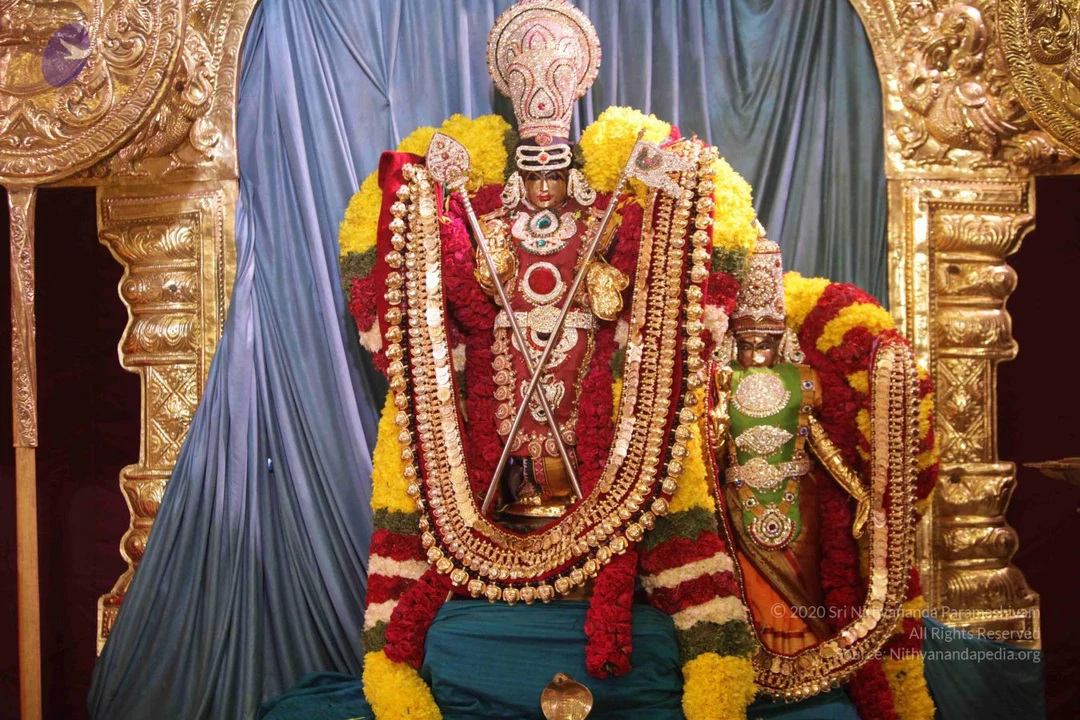
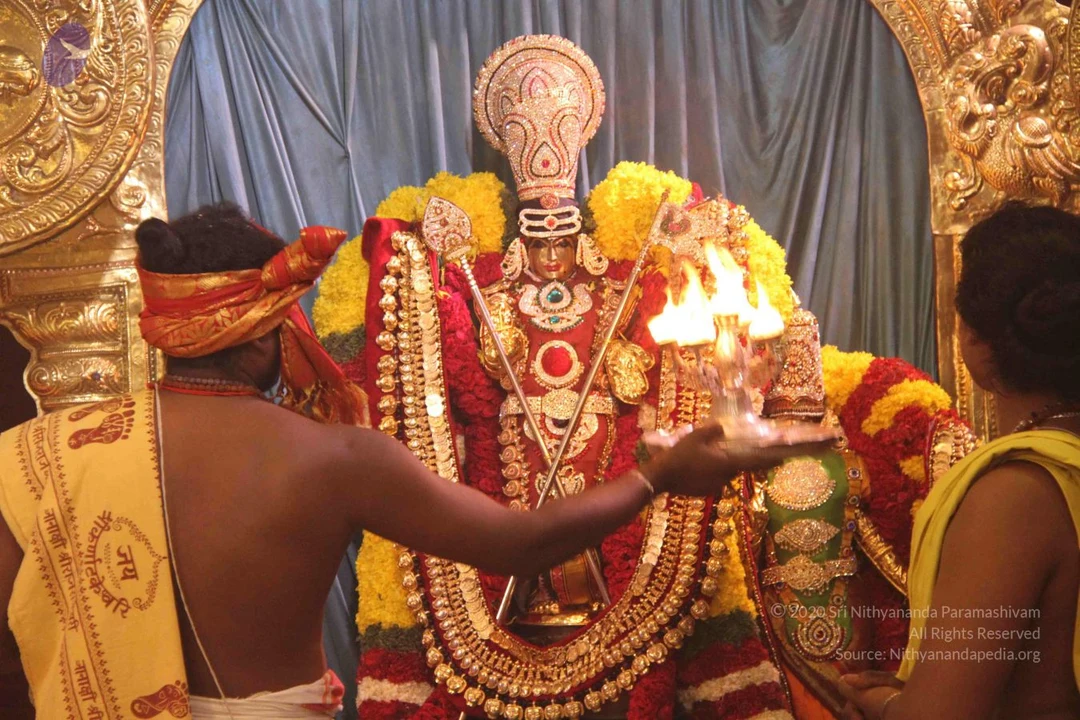
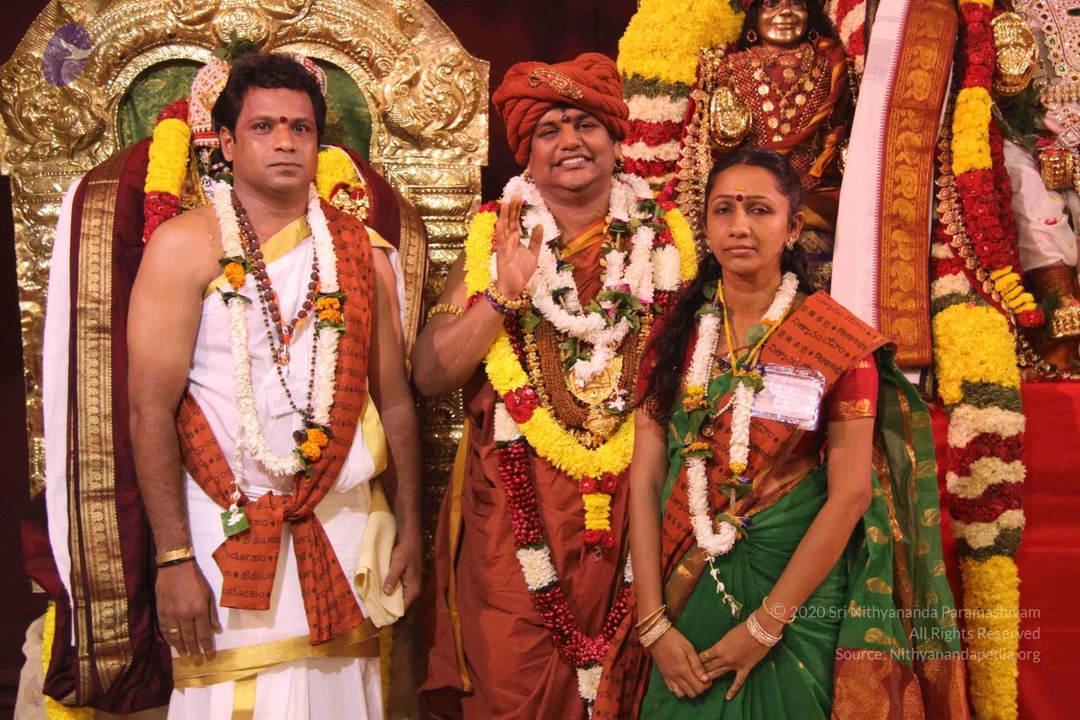
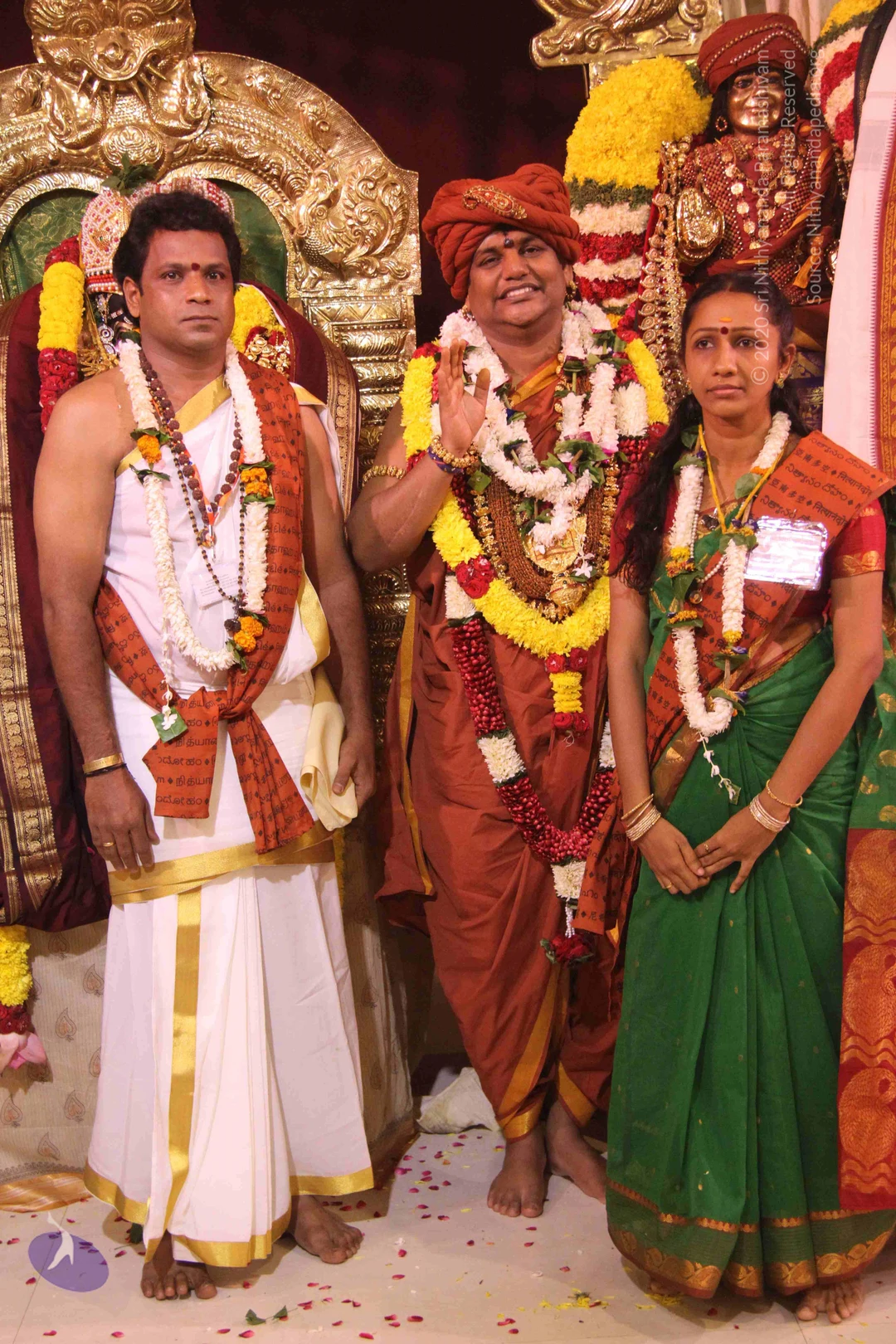
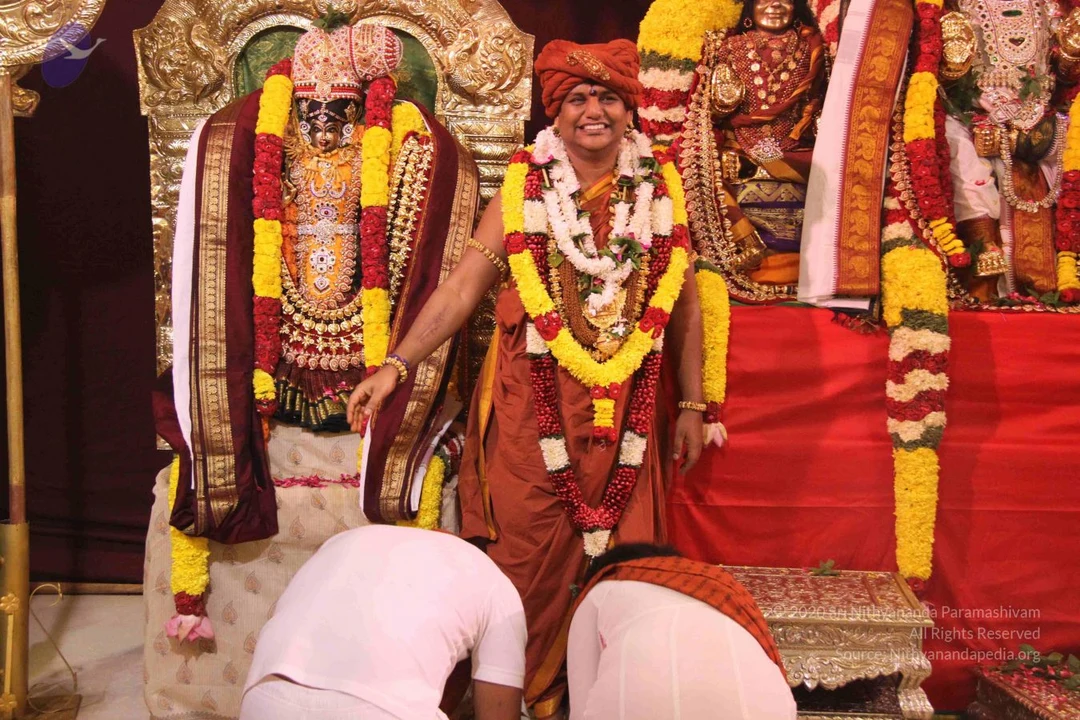
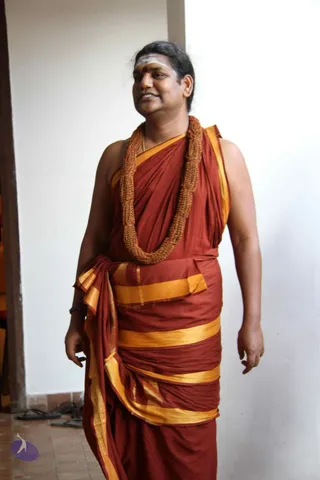
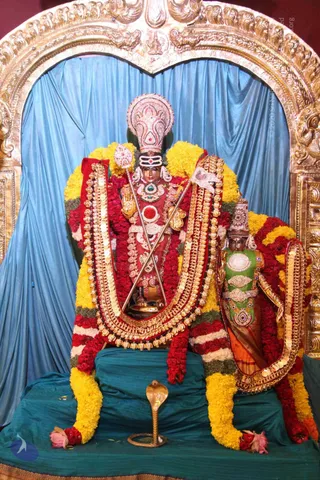
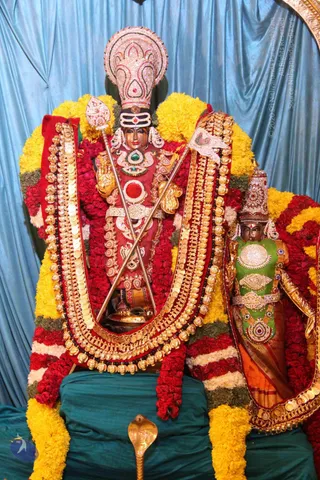
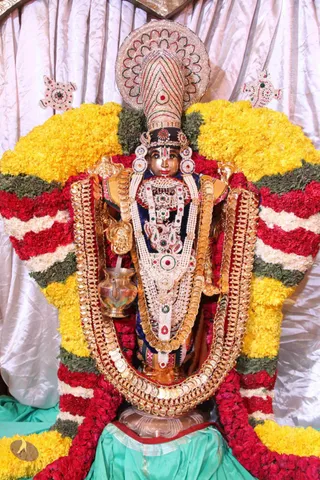
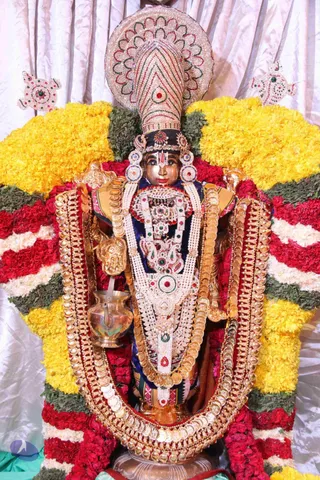
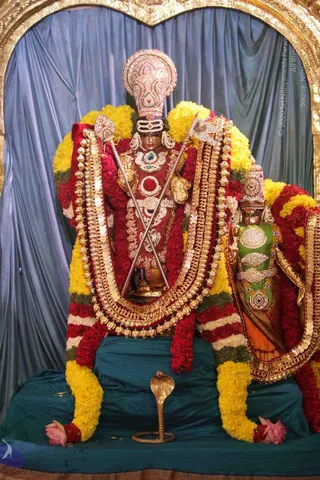
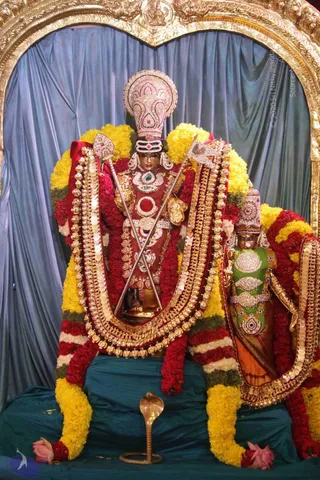
A man stands indoors against a plain white wall beside a doorway, with sandals on the tiled floor behind him. He wears a maroon-red unstitched robe with broad gold-bordered draping, wrapped around the waist and over one shoulder, and a long rudraksha mala of brown beads around his neck. A white and red forehead marking is visible, and his dark hair is swept back. a person: the robe, rudraksha mala and sannyasi-style draping are consistent with the page's description of a person, but the appearance cues are not conclusive, so this is an uncertain candidate.A decorated deity murti of Murugan with his consort stands on a teal draped platform before a blue curtain and ornate gold arch. The principal figure wears a red garment, a tall jewelled crown, a large red central medallion, and carries a spear-like vel. Beside him a smaller female figure wears a green blouse and orange sari with jewelled ornaments. Both are garlanded with yellow and red flower garlands and gold coin necklaces. A small golden cobra sits at the base, with pink roses scattered on the platform. This is a statue, not a living person, and no a person candidate is visible.A decorated deity murti of a male god and a female consort seated on a green-draped throne before a blue drape. The male figure wears a red garment, a jewelled crown with a Shiva-lingam style tilak, ornate gold necklaces, and holds a spear-like vel and a flag. The female figure wears a green blouse with jewelled ornaments and an orange sari. Both are garlanded with yellow marigolds and red flowers, and a golden cobra sits on the throne front. No living people are visible.A richly decorated deity murti of Venkateswara with a tall ornate crown and a vertical Vaishnava tilak on the forehead, standing before a pale silk drape. Yellow marigold garlands and red and white flower strands frame the figure in a broad arch, and it wears gold coin necklaces, pearl and jewelled chains, and a golden lamp-shaped ornament. A brass oil lamp with a lit wick sits at its side, and a teal cloth covers the base. No people are visible.A decorated deity murti of Venkateswara (Vishnu form) stands at the centre, framed by elaborate floral garlands in yellow marigold and red and white blooms with green leaves. The murti wears a tall jewelled crown with a peacock-feather style fan, a large gold and pearl necklace, layered gold coin garlands, and a blue robe with gold border. A brass kalasha-style vessel hangs at the left side, and jewelled shankha and chakra motifs are fixed to the backdrop. A white silk curtain forms the background. No people are visible.A dining hall with white-covered tables and red-and-gold upholstered chairs. In the centre, a man in a rust-red dhoti with a gold waistband and red shawl, with white tilak on his forehead, smiles while standing. To the left, a bald man in white kurta with a red-and-black shawl holds a cup. To the right, a man in a white kurta and red shawl stands facing away. Trays of food and water bottles sit on the tables, and other people in white and red shawls are seated in the background near a wall air conditioner.

Meenakshi-Thirukalyanam

16 photosSource gallery
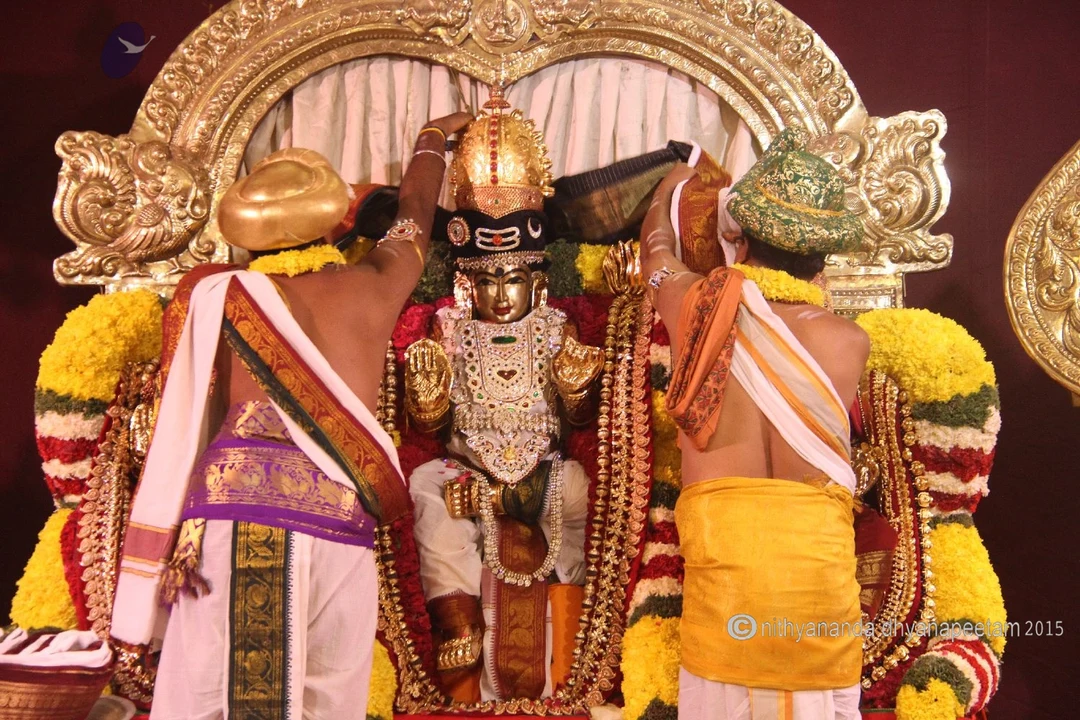
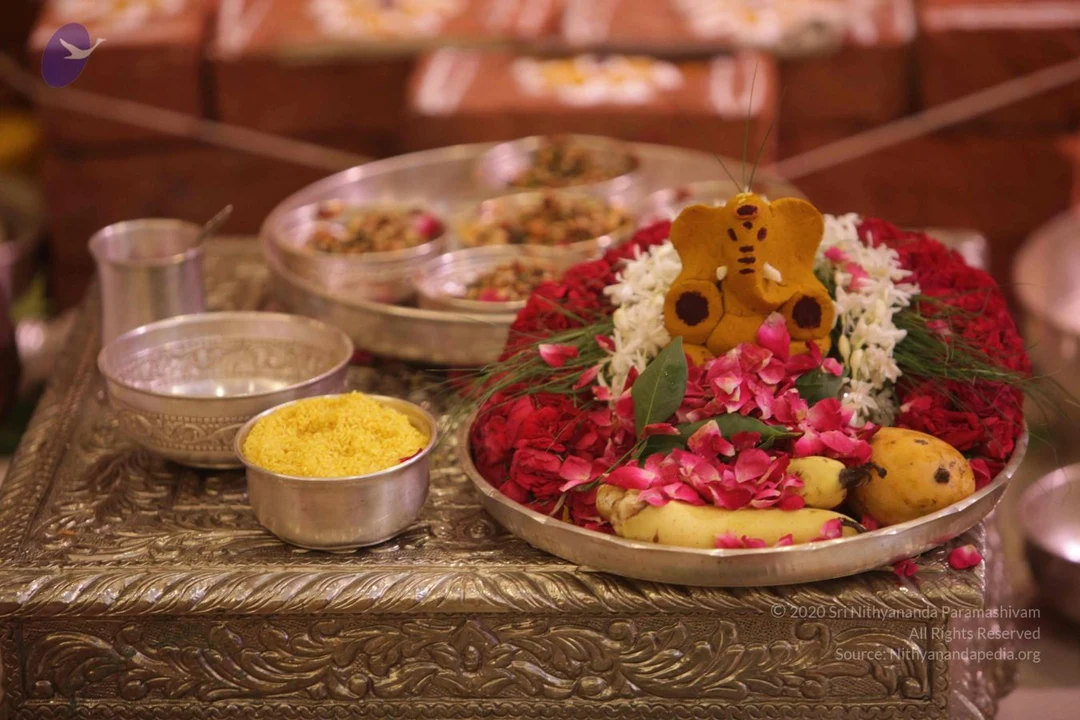
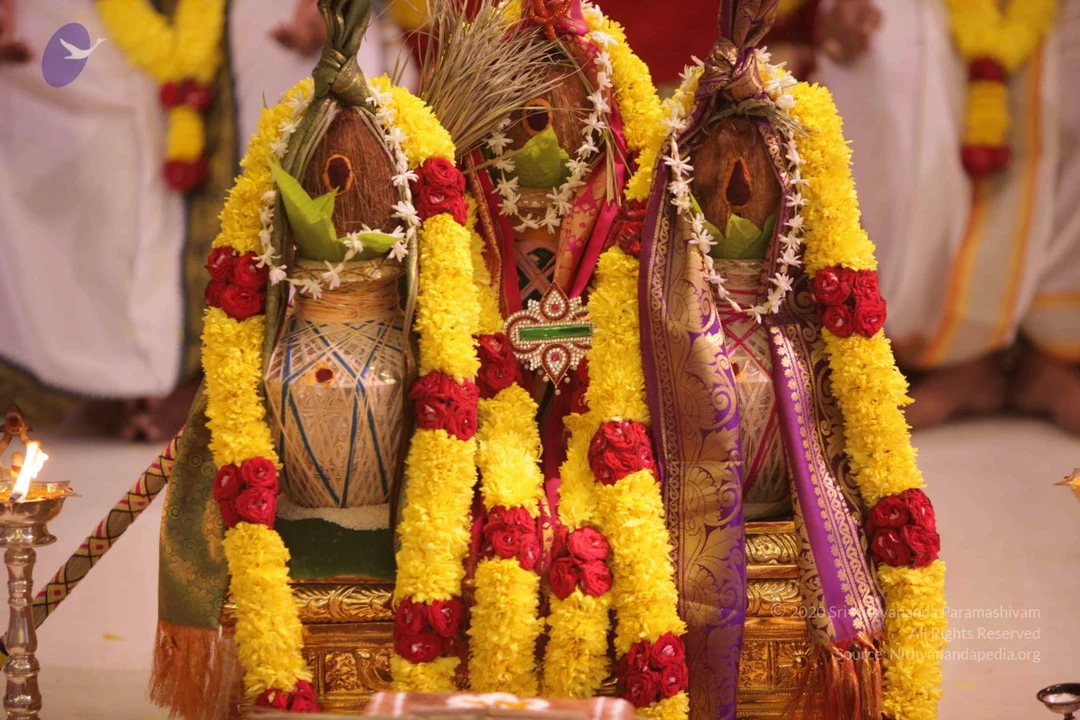
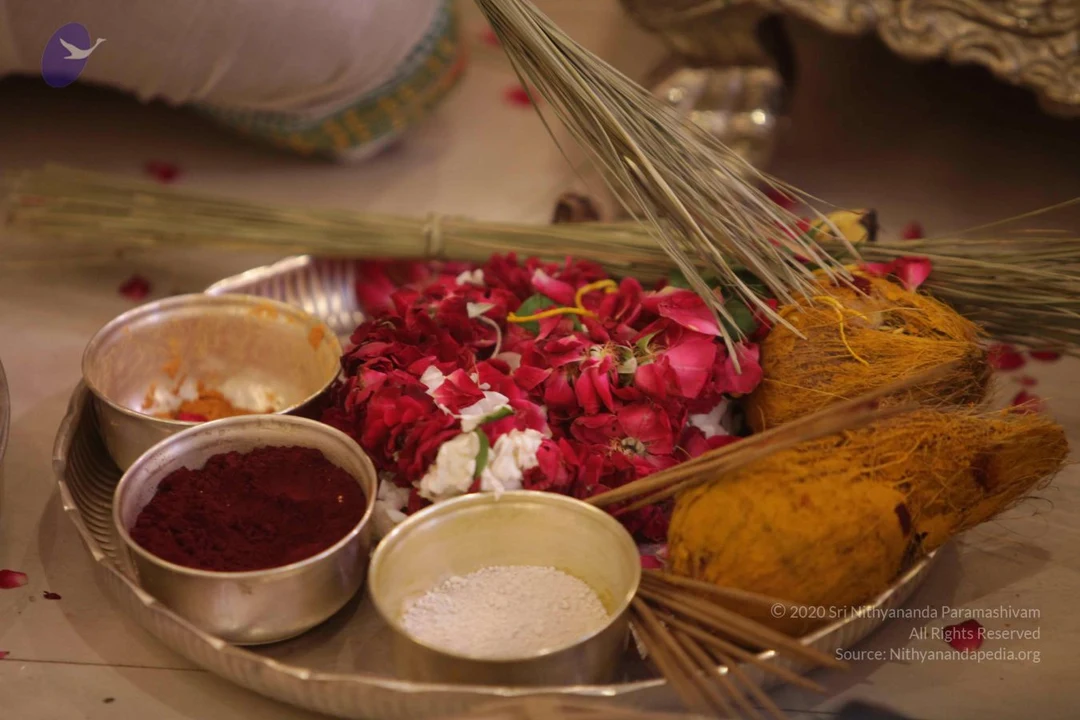
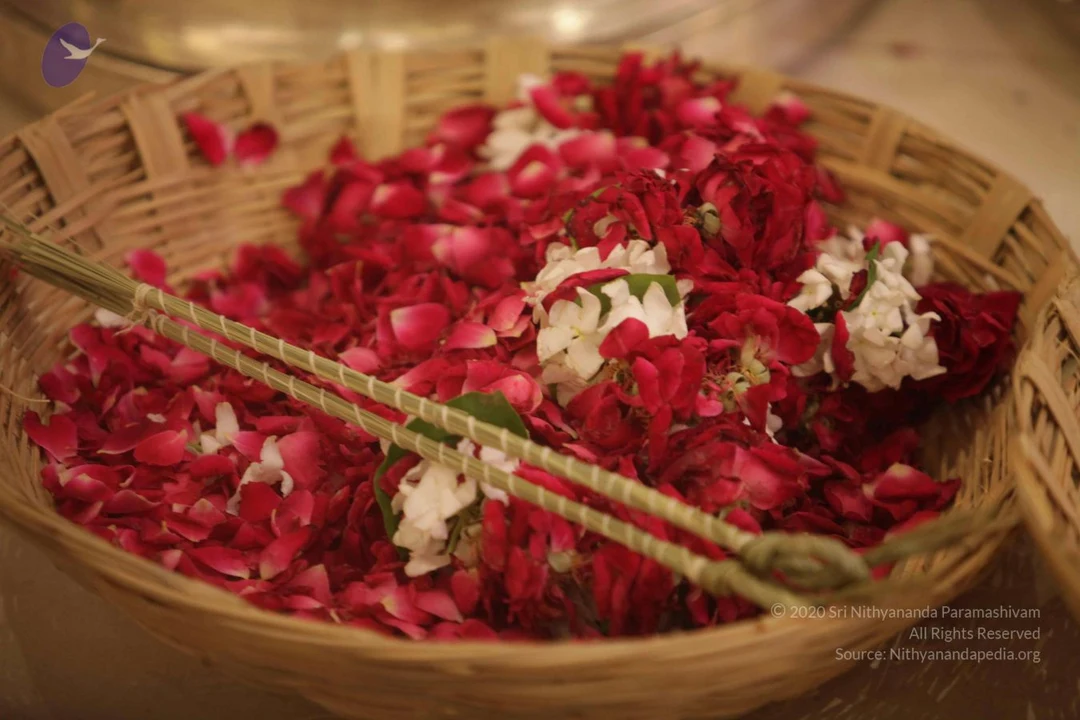
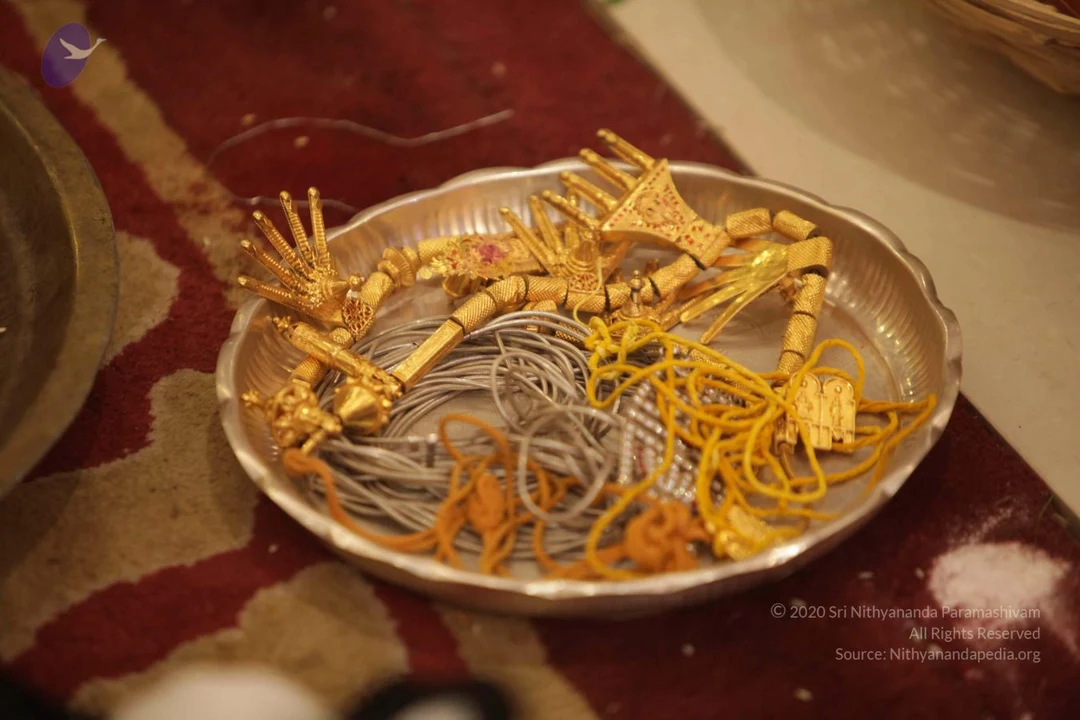
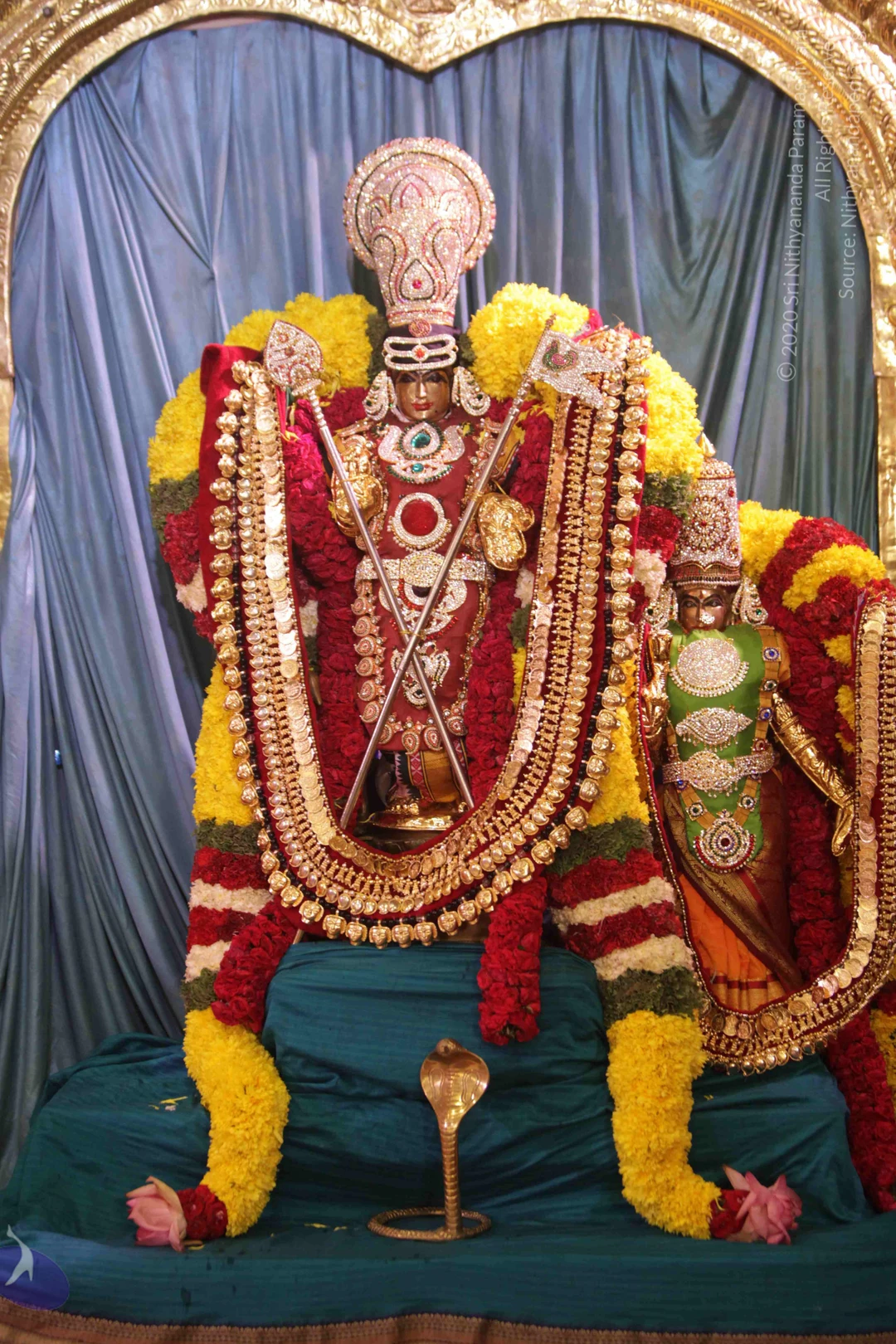
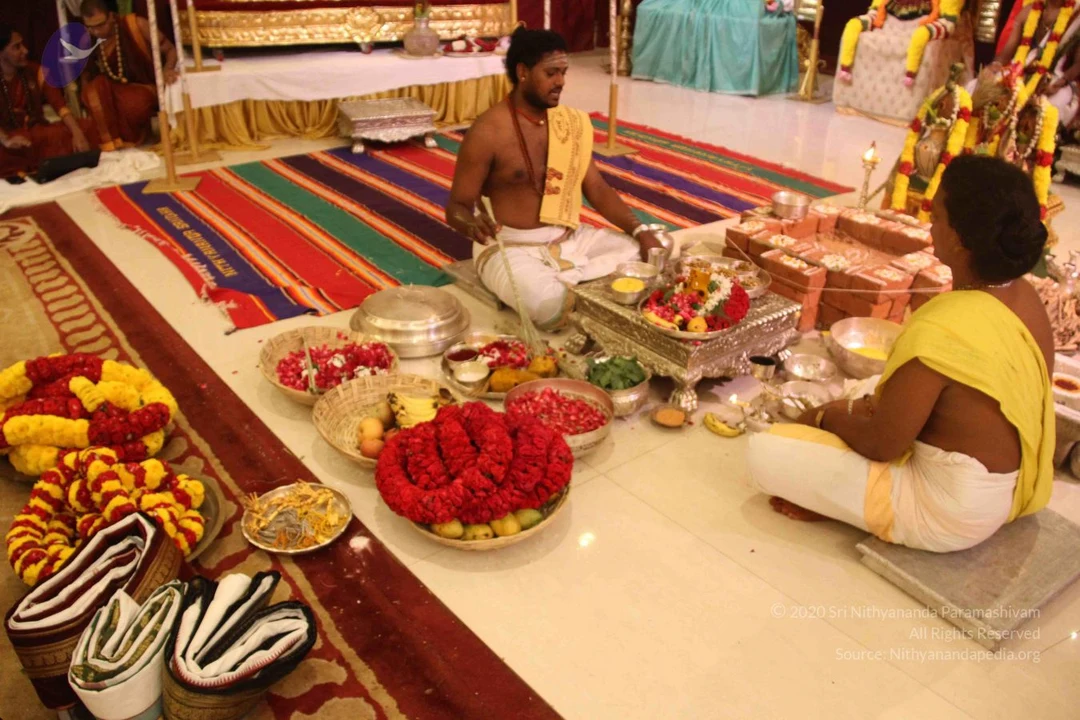
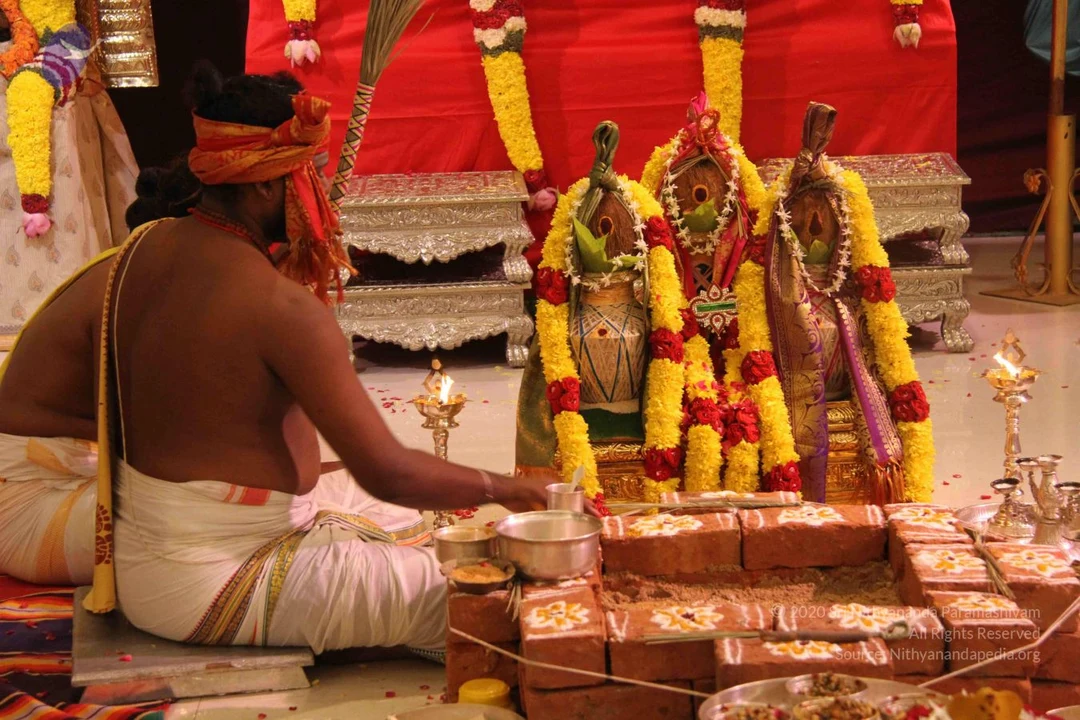
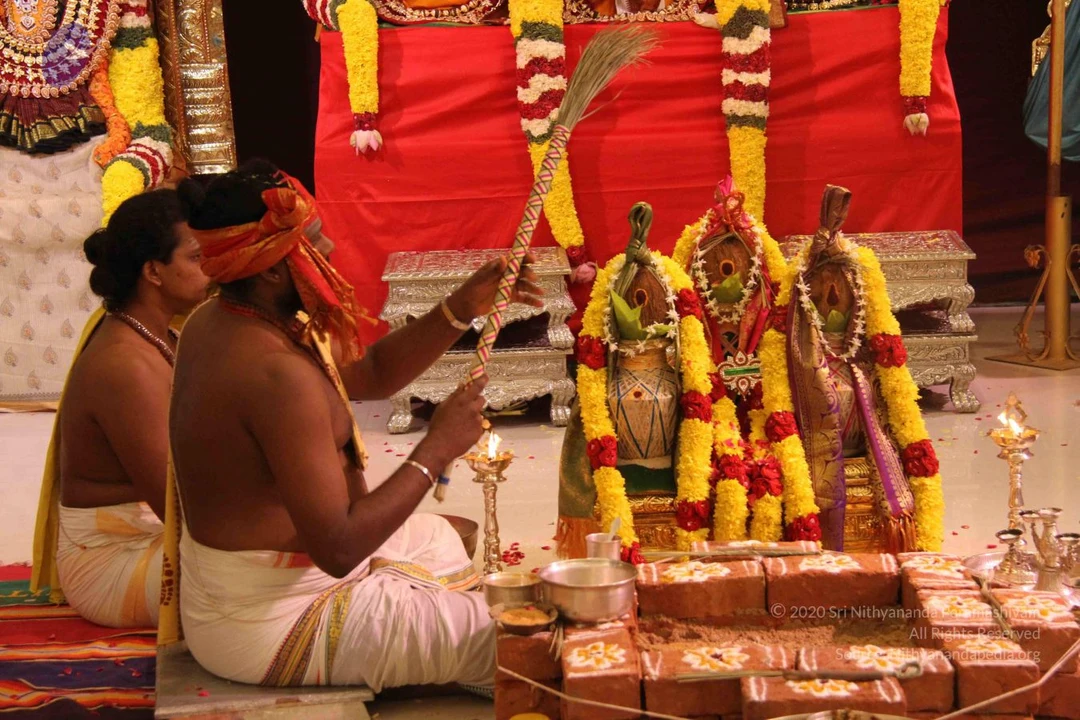
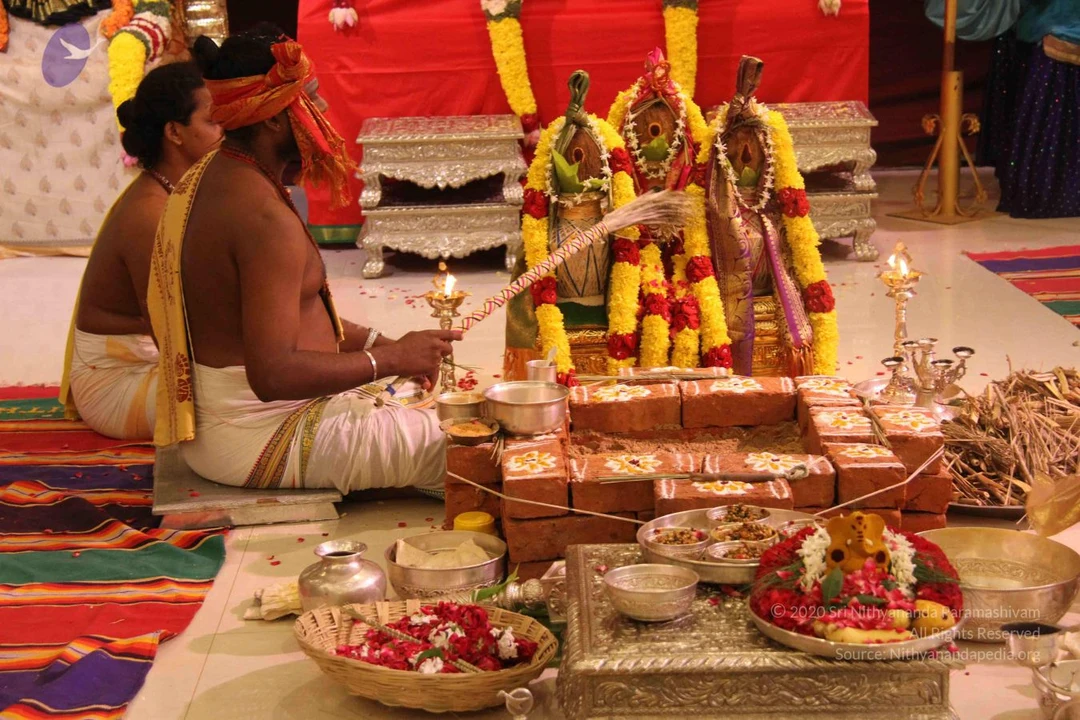
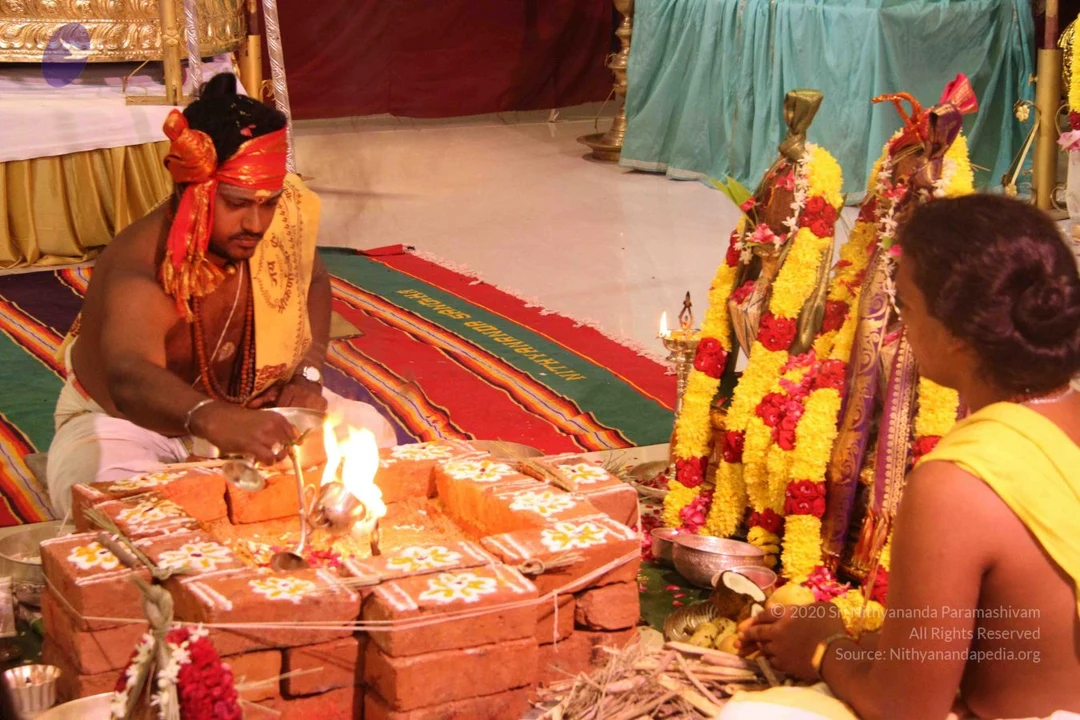
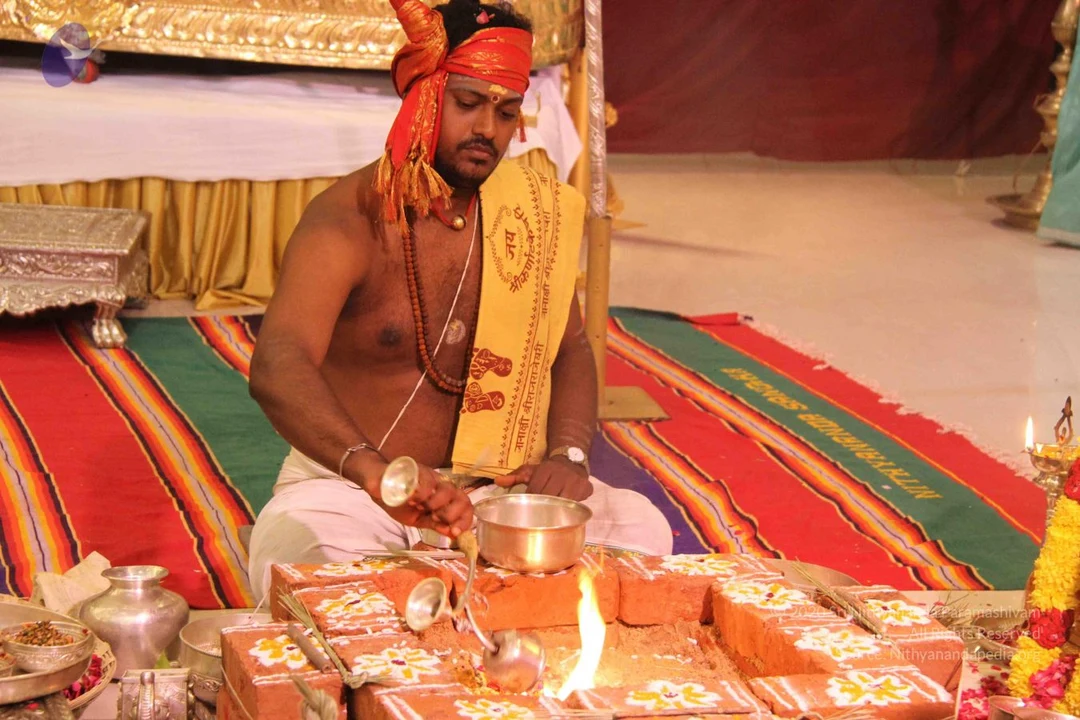
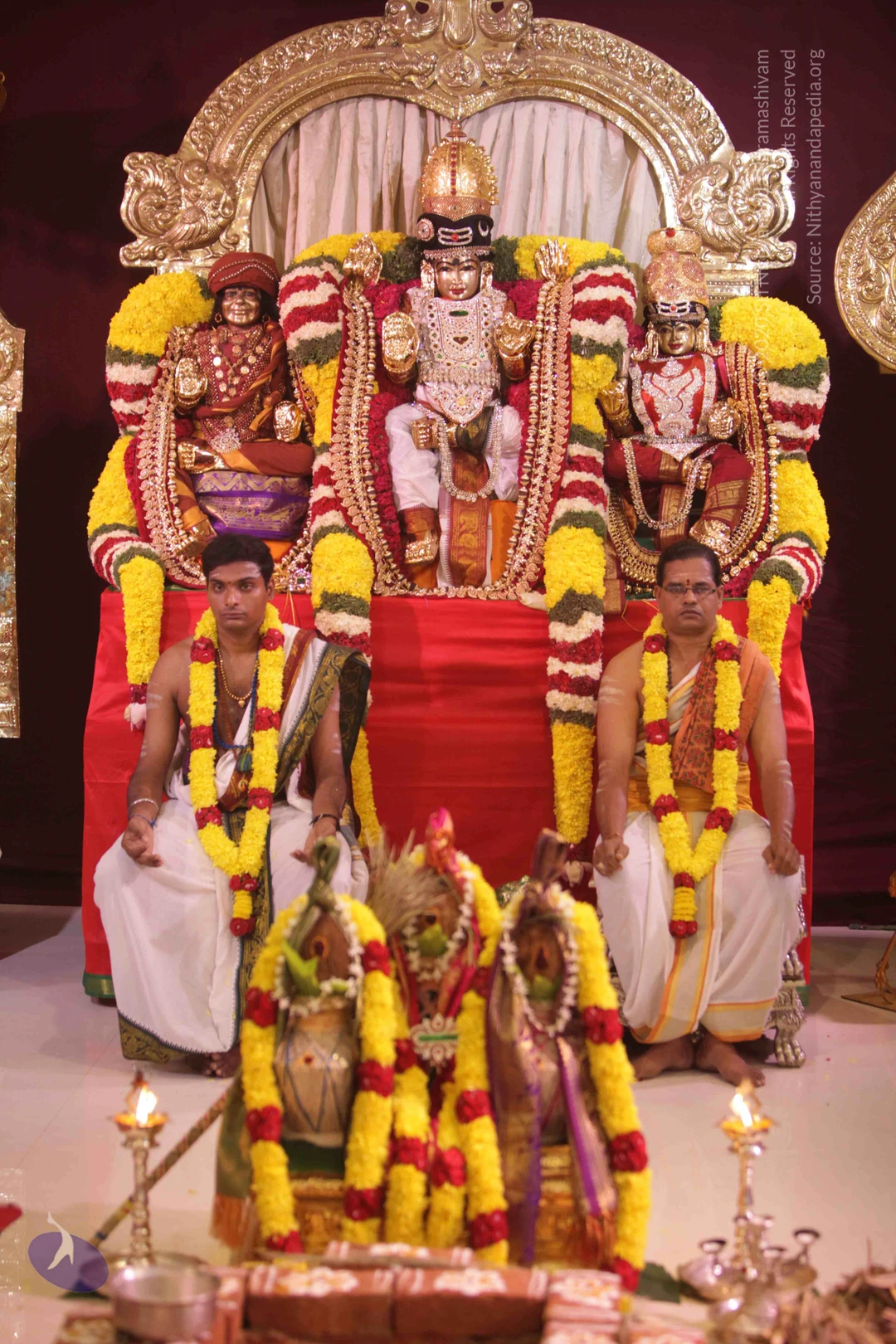
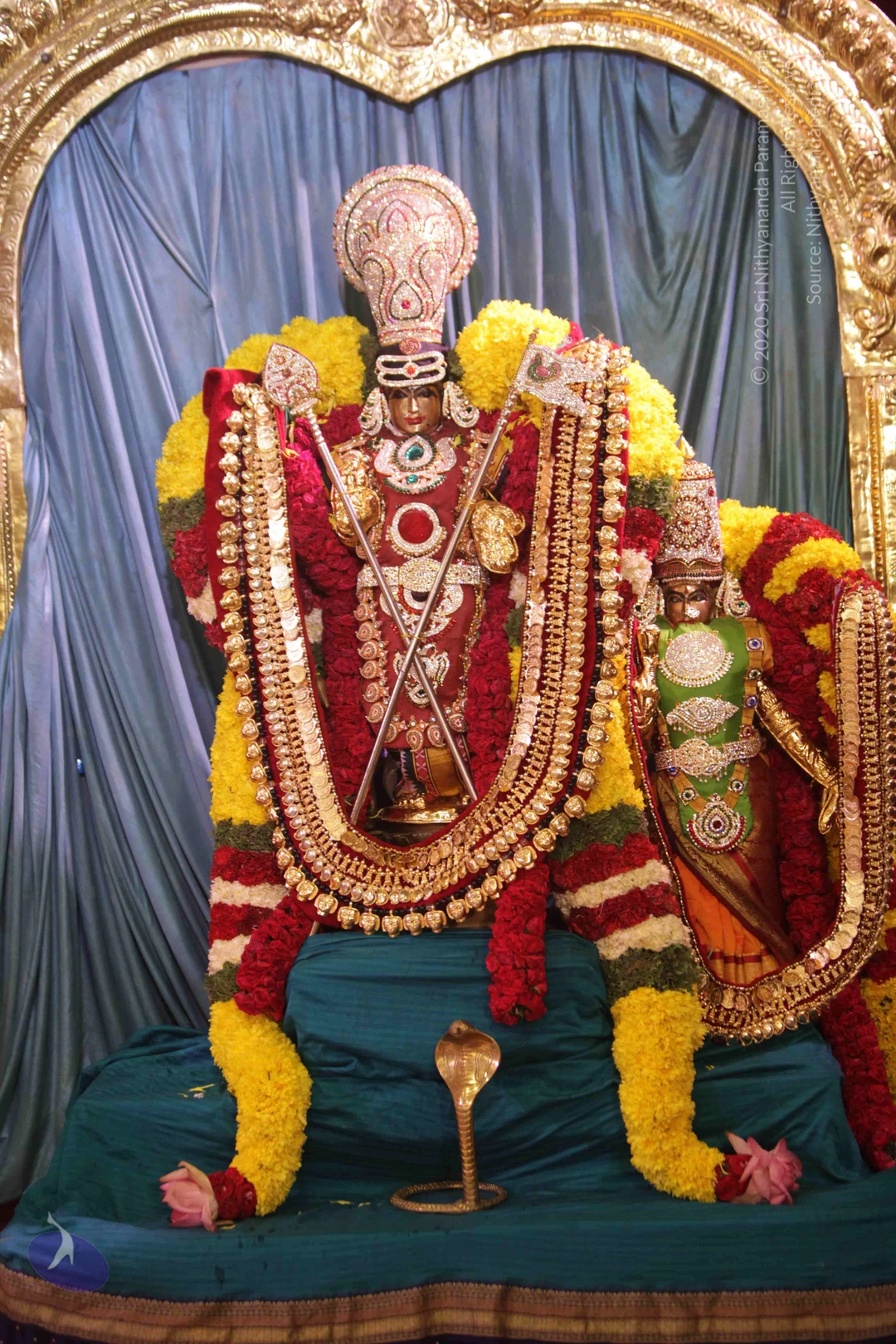
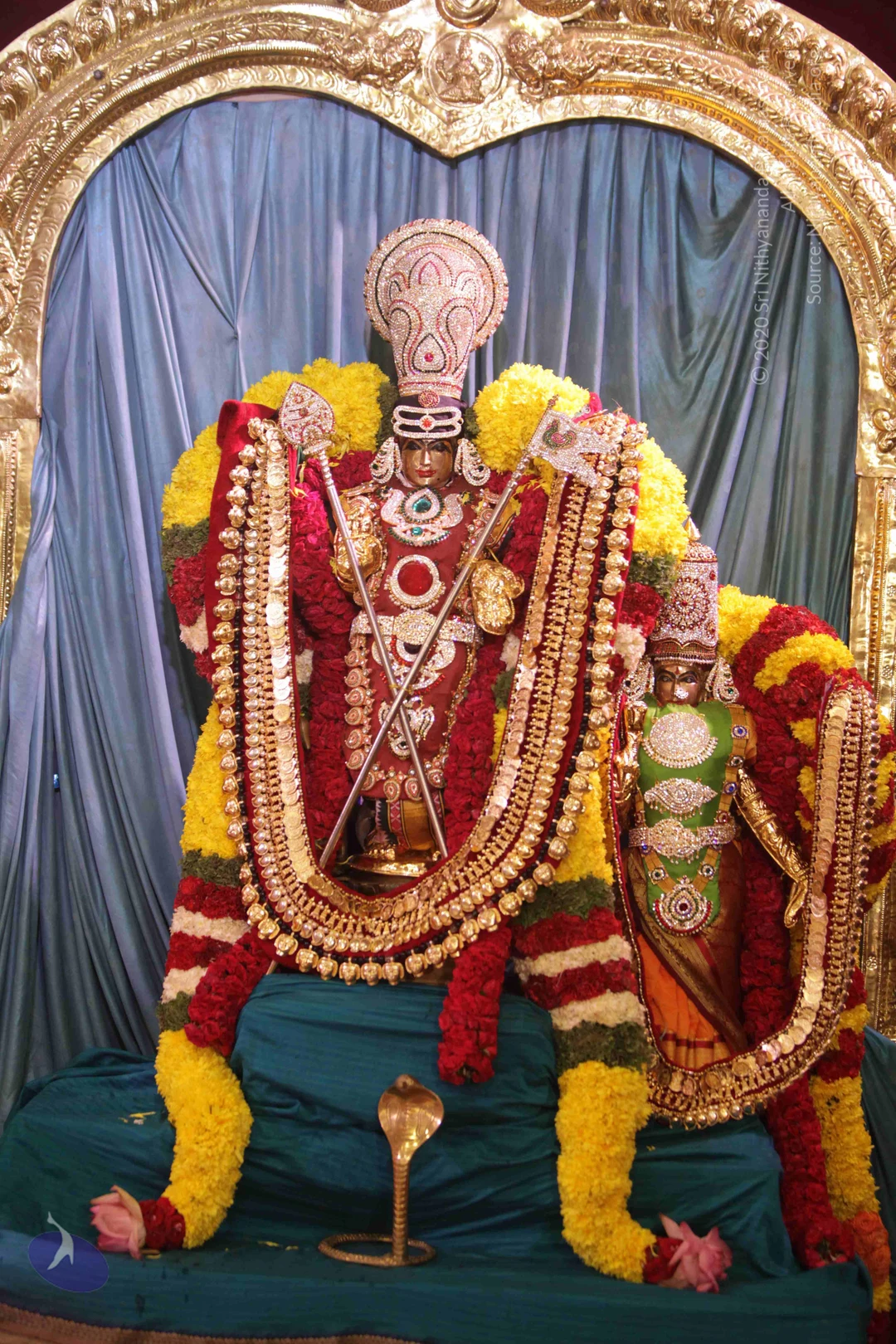
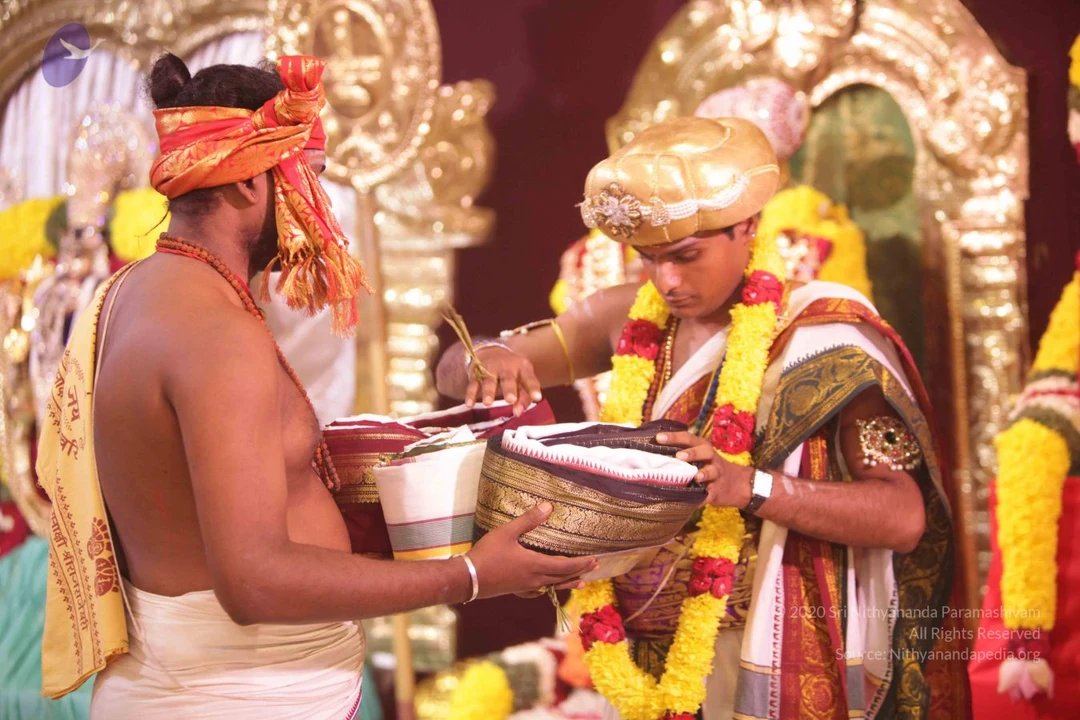
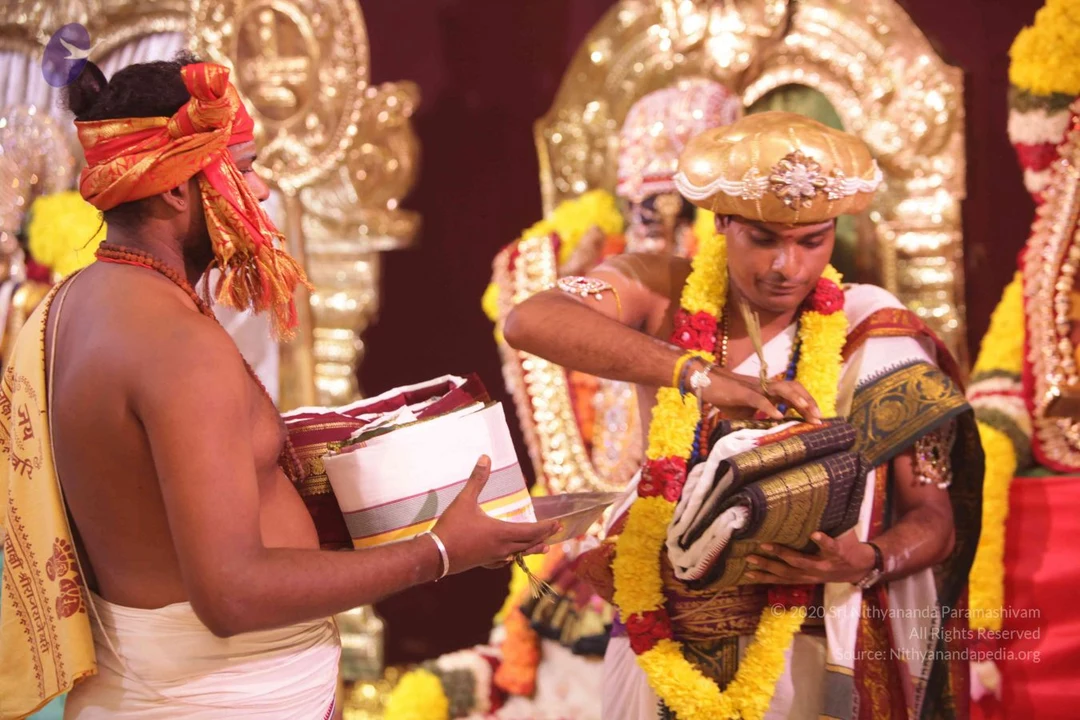
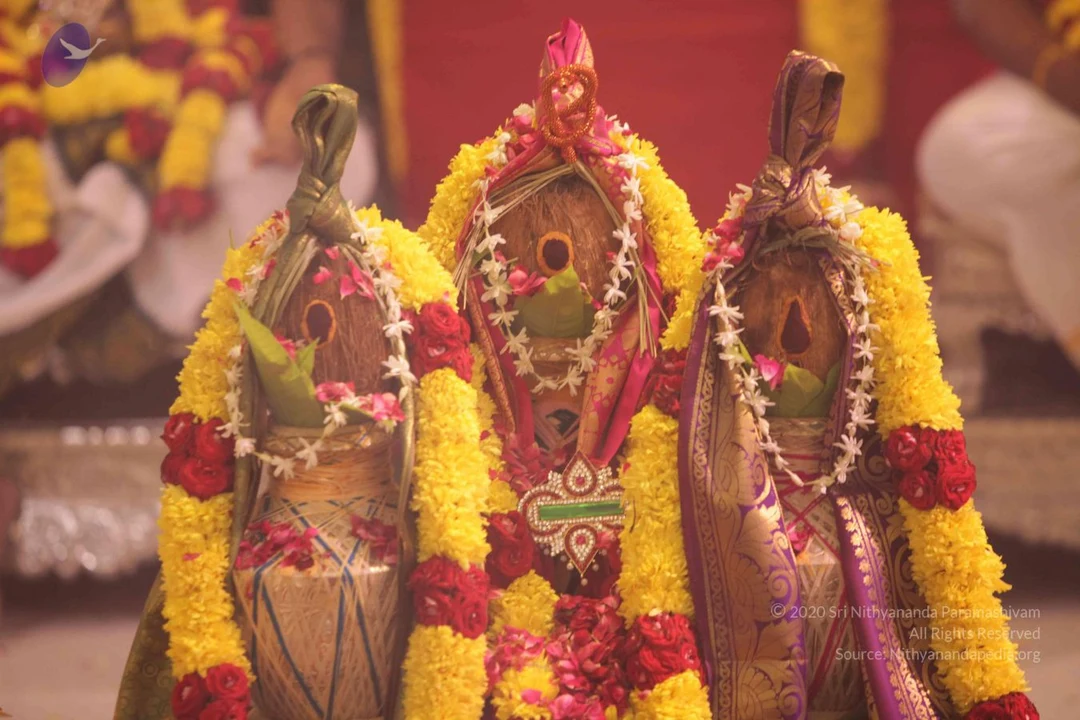
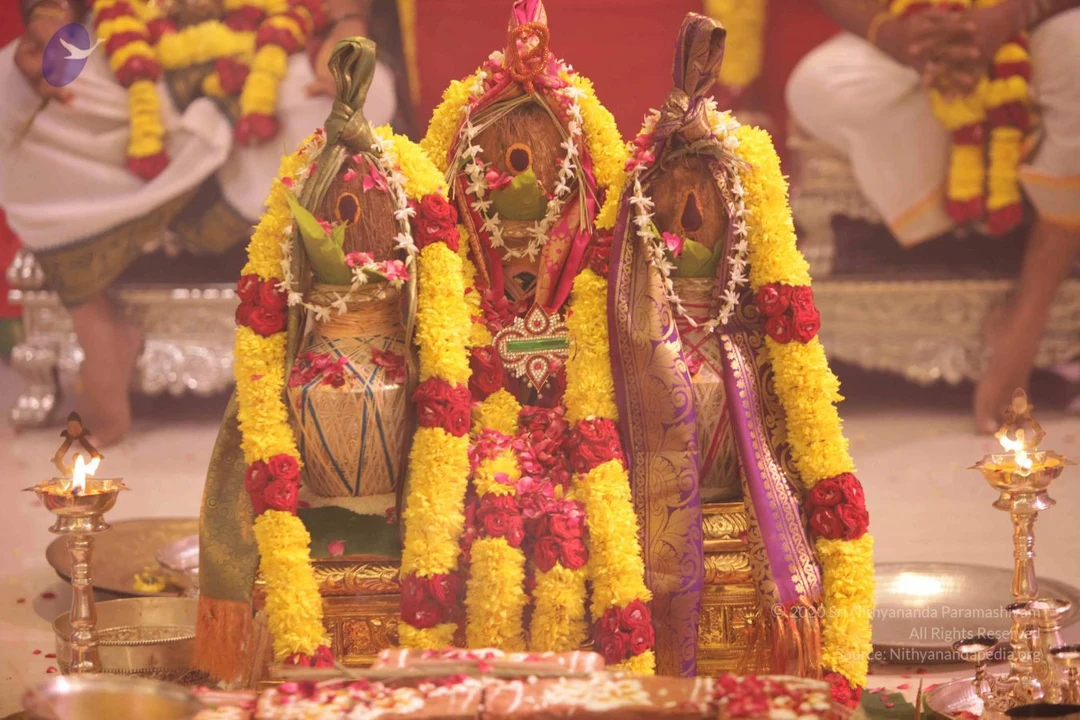
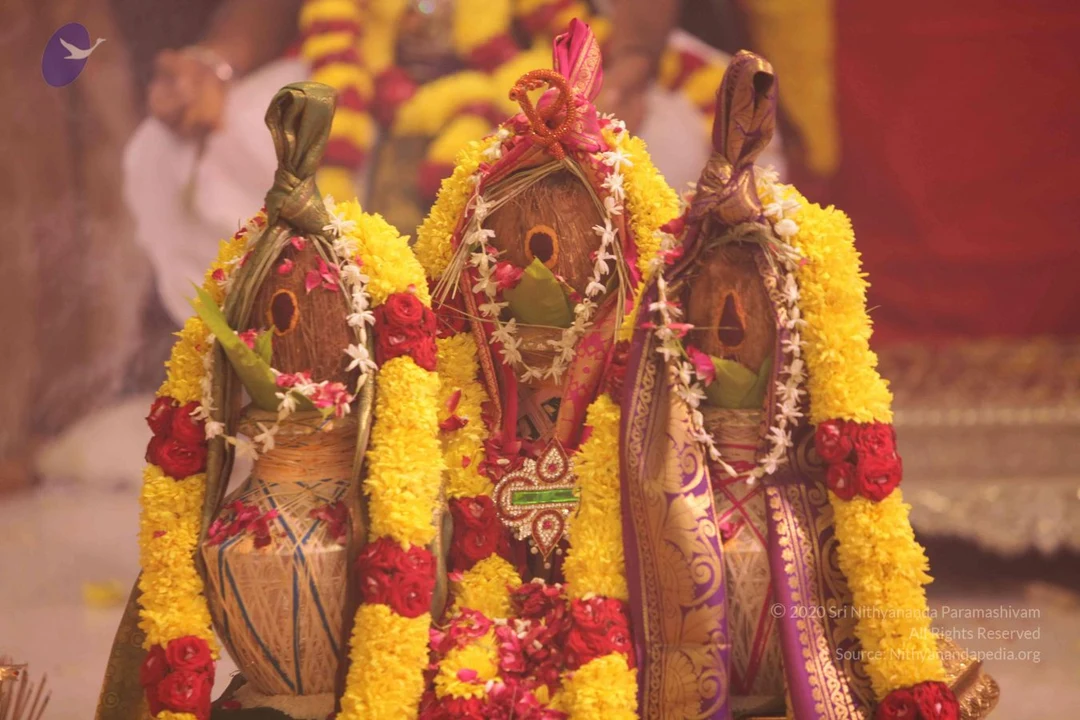
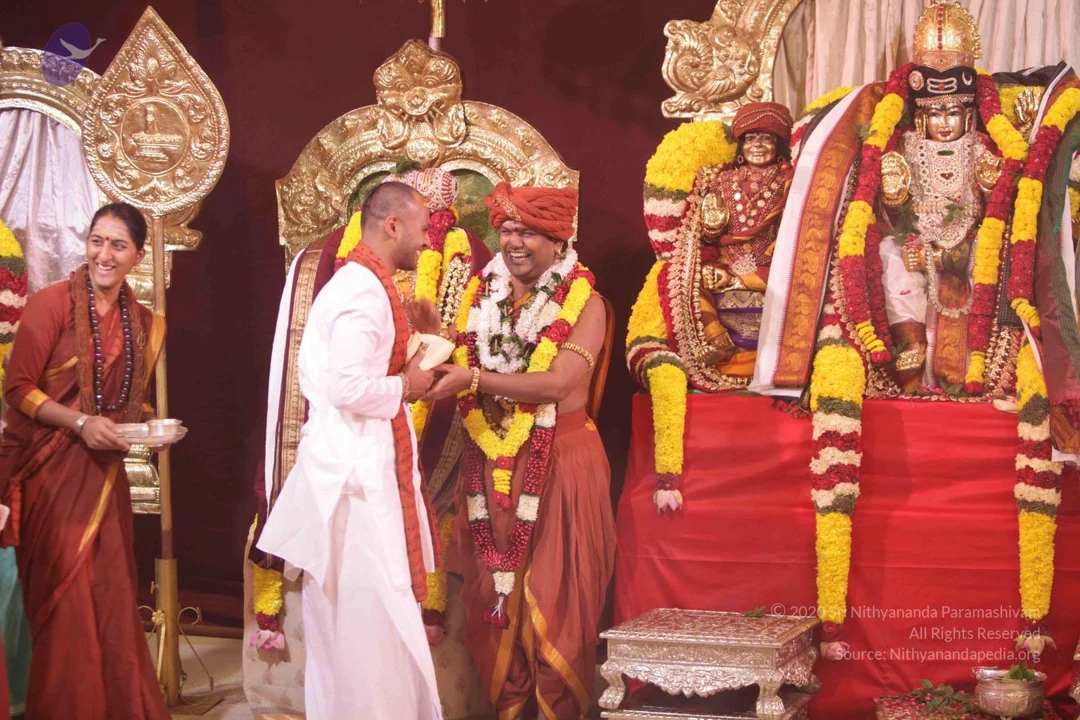
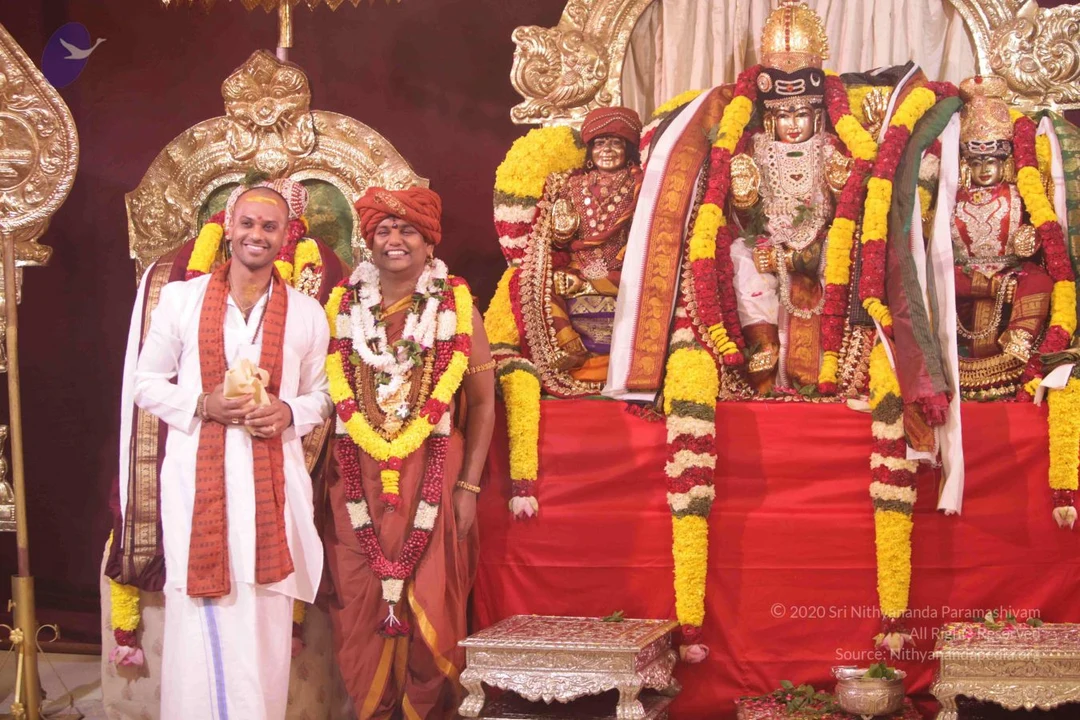
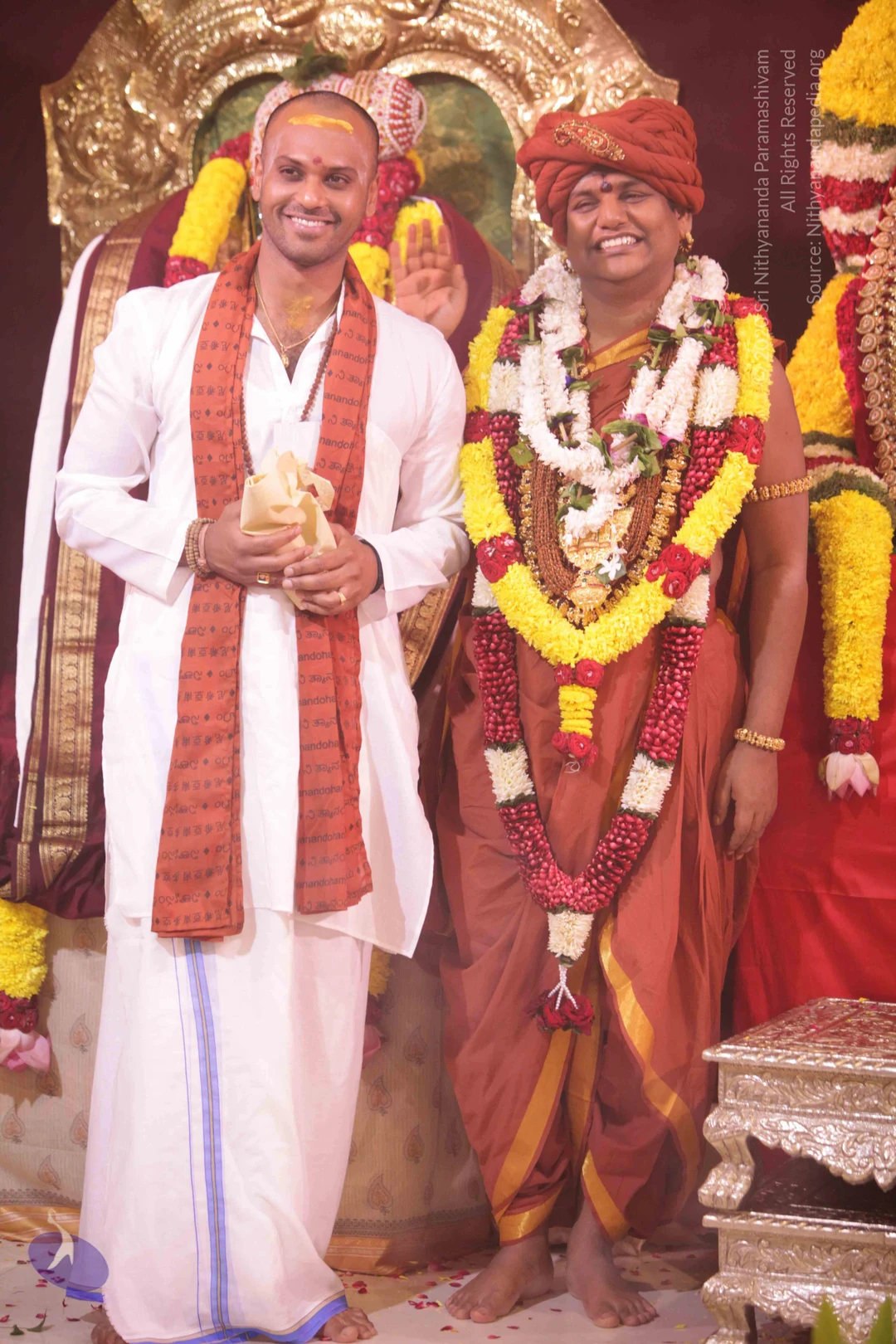
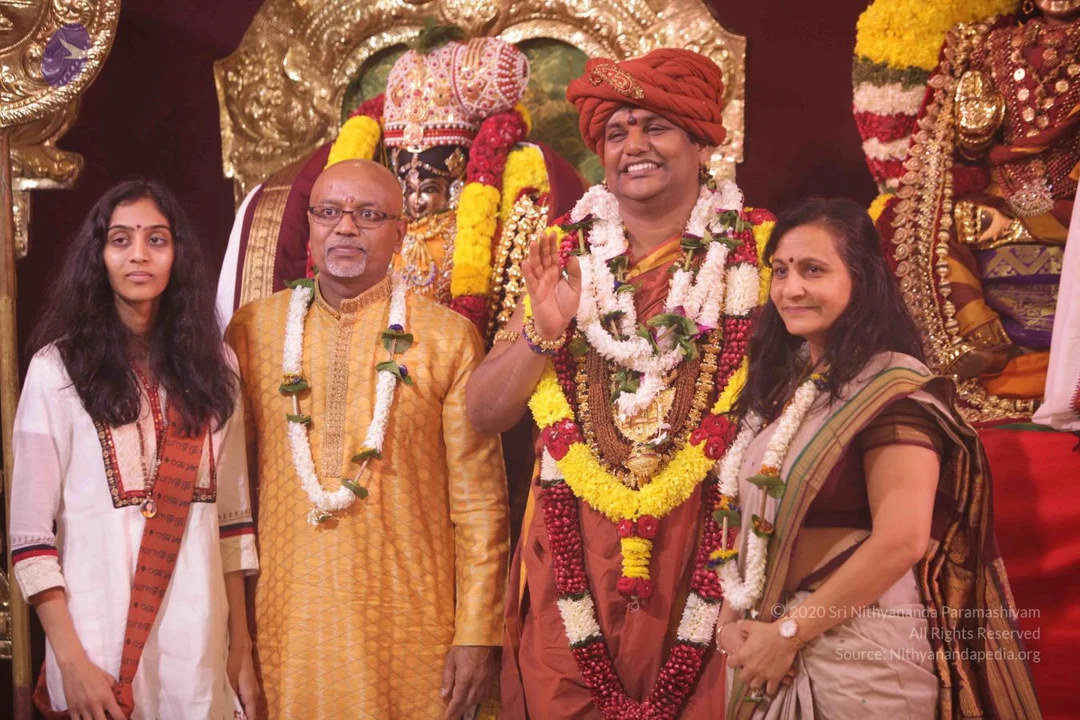
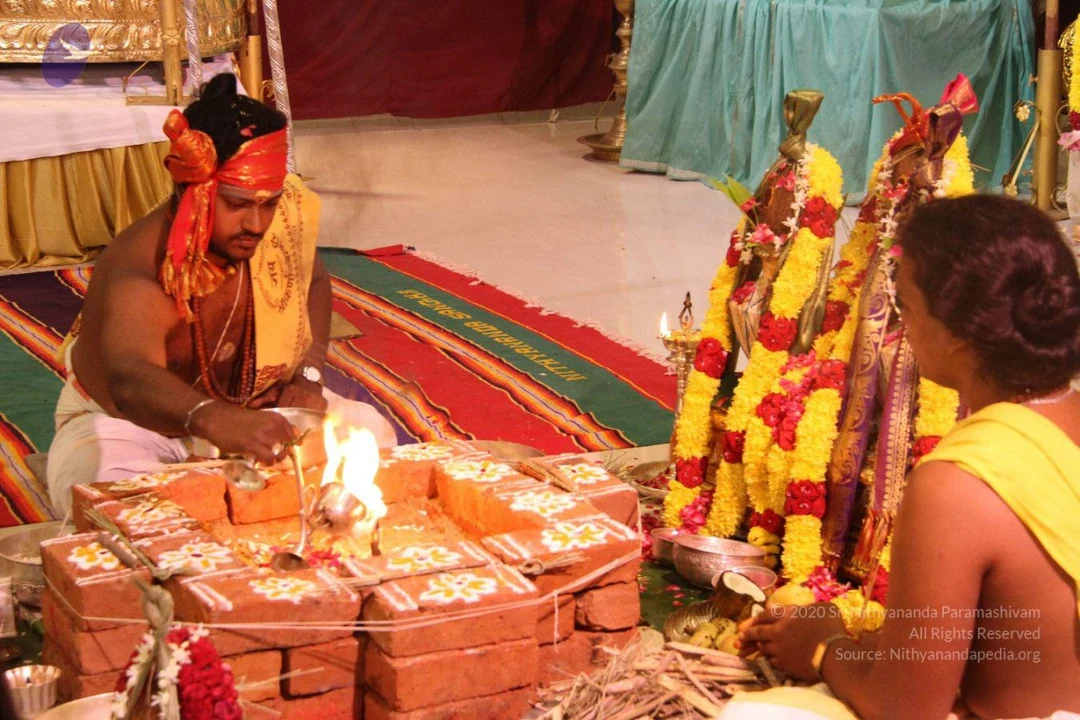
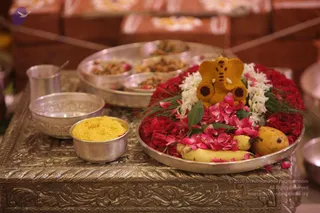
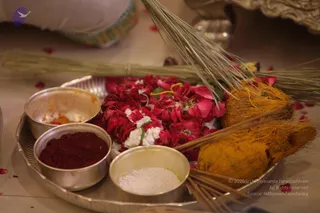
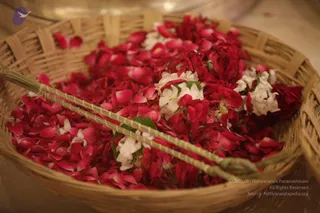
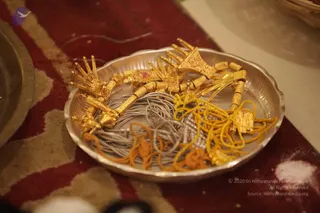
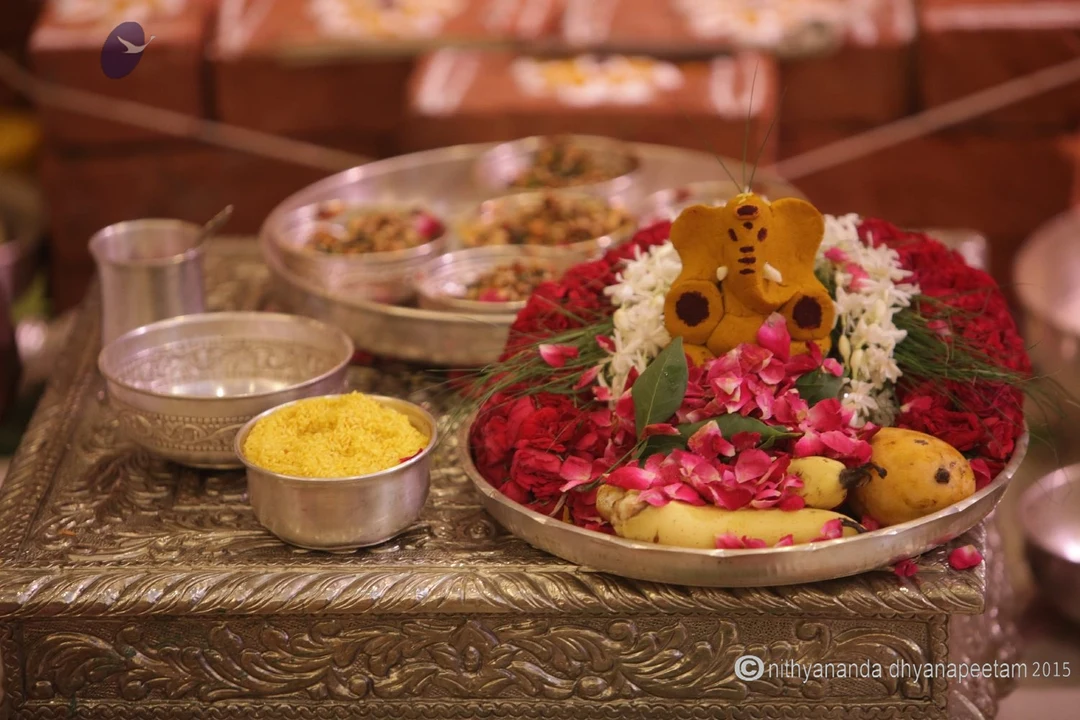
Close-up photo of a ritual offering arrangement on an ornate silver-toned base. A large silver plate holds a dense bed of red rose petals and red flower garlands, white jasmine-style flowers, green leaves, scattered pink petals, and a yellow-orange turmeric-coloured clay or sculpted elephant-headed figure. Behind are a silver tray with small bowls of grains or dal, a small silver cup, and a bowl of yellow powder, possibly turmeric or kumkum-coloured offering. No people are visible; the scene suggests a puja offering setup.Close photograph of a silver puja thali on a light floor scattered with rose petals. Red and white flower petals and a garland of red roses and white blossoms sit in the centre. Two halved coconuts with fibrous husks rest at the right, with a bundle of dried grass stalks and a broom-like bunch behind them. Three small metal bowls hold orange-yellow turmeric powder, deep red kumkum, and white powder. No people are visible; the scene is a ritual offering arrangement.A close photograph of a woven bamboo basket filled with red rose petals and white jasmine-like flowers, with a pair of green grass or reed stalks laid across the top. No people are visible; the scene is a flower offering arranged for ritual use, shot in shallow focus against a pale background.Close photograph of a shallow silver-coloured metal tray resting on a red cloth with cream stripes. The tray holds gold-coloured ritual objects, including ornate golden hand-shaped pieces and decorated handles, alongside tangled silver-grey cords, orange threads and yellow threads with a small gold charm. No people are visible; the setting appears to be a ritual preparation area with a brass plate at the left edge.A decorated deity murti of a standing male figure with a tall jeweled crown and two spears crossed behind him, draped in a red garment and heavy yellow and red marigold and rose garlands with gold coin necklaces. Beside him stands a second female figure in a green blouse with an orange sari, also richly adorned with jewelry and a jeweled headdress. A small brass cobra stands in front on a teal cloth-covered platform, with pink roses at the base. Blue drapes and a gold arched frame form the backdrop. No physical people are present; the figures are statues.Photograph of two ornately decorated deity murti standing before a blue draped backdrop within a gold-carved arch. The taller figure wears a jeweled crown, a red garment with gold and jeweled ornaments, and holds crossed silver staffs; the smaller figure beside it wears a green garment, jeweled necklaces and a jeweled headdress. Both are wrapped in yellow and red marigold and rose garlands with gold coin-style chains draped across them. A brass cobra stands at the base on a teal cloth, with pink flowers nearby. No physical people are visible.

IA-Varanasi-Meenakshi-Thirukalyanam

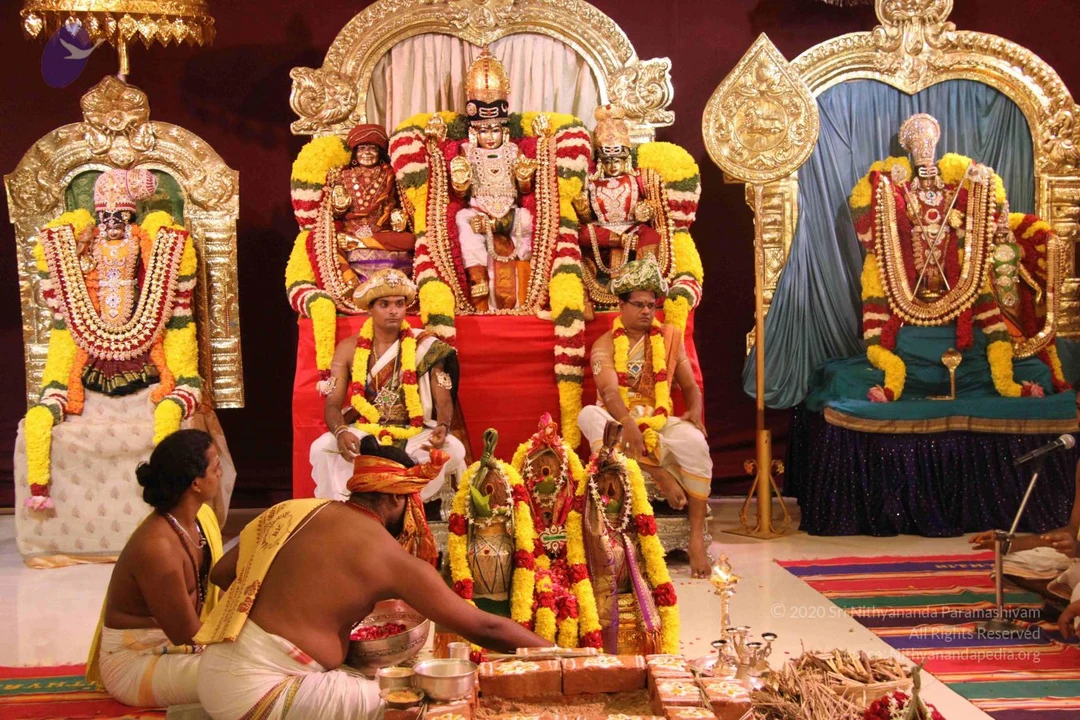
308 photosSource gallery
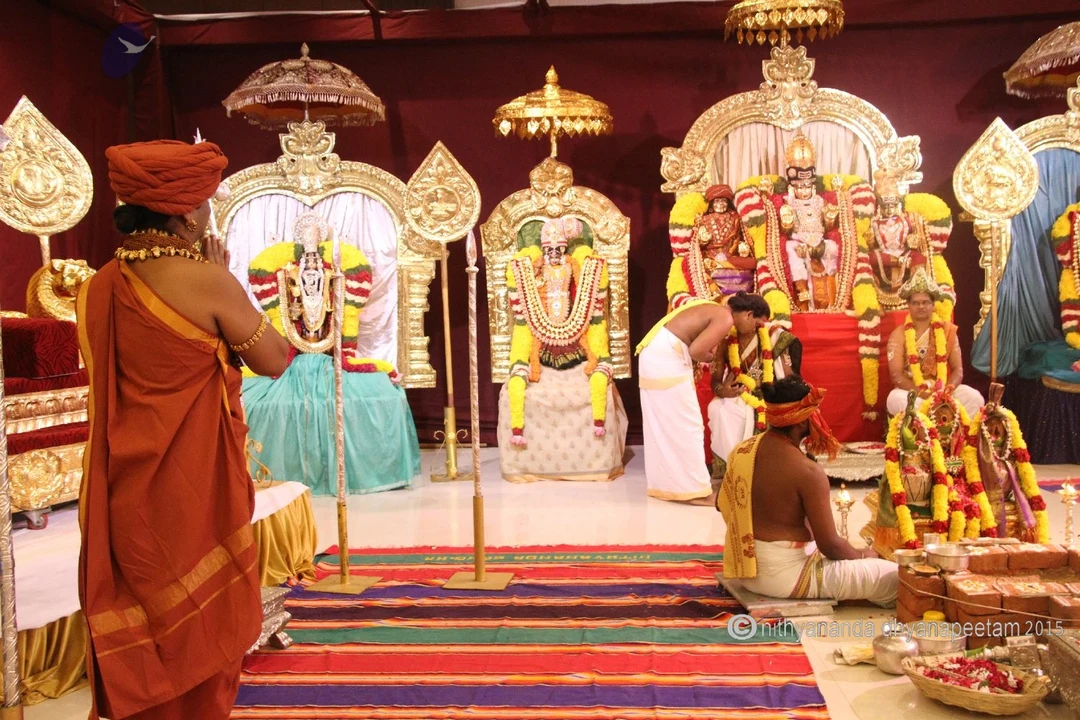
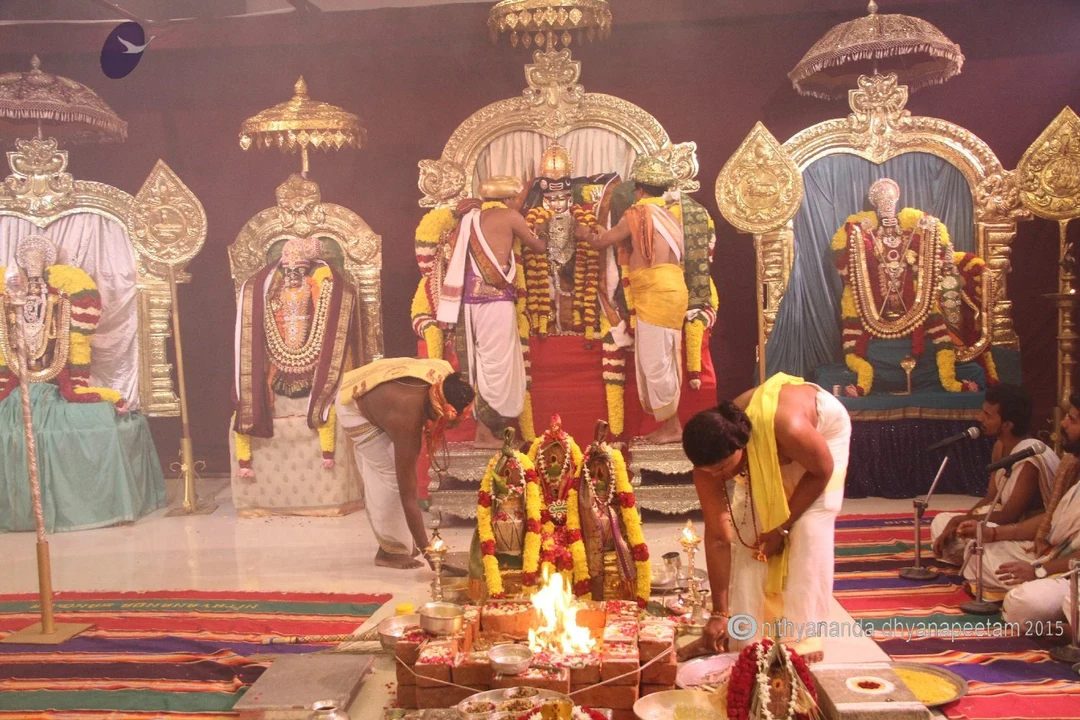
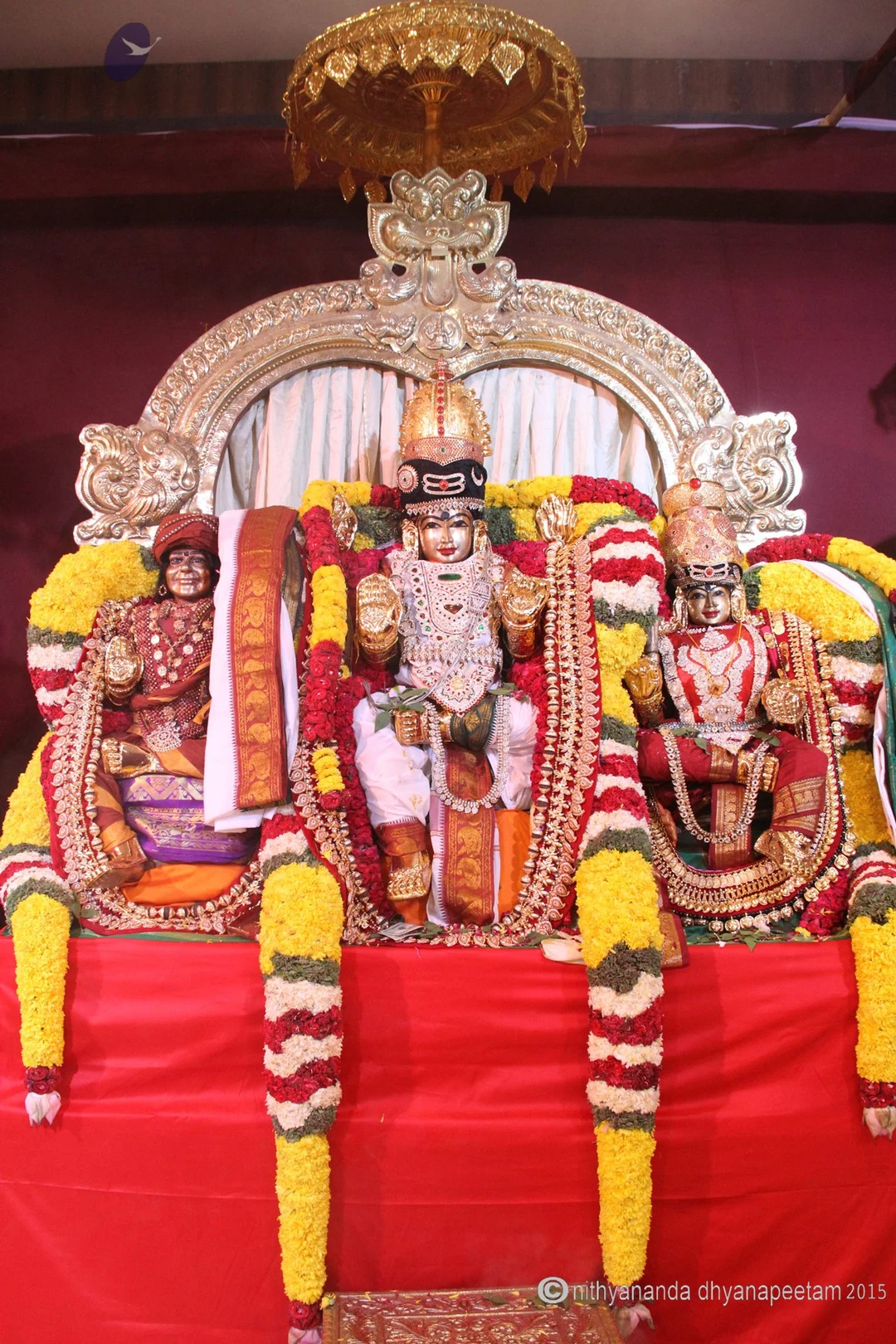
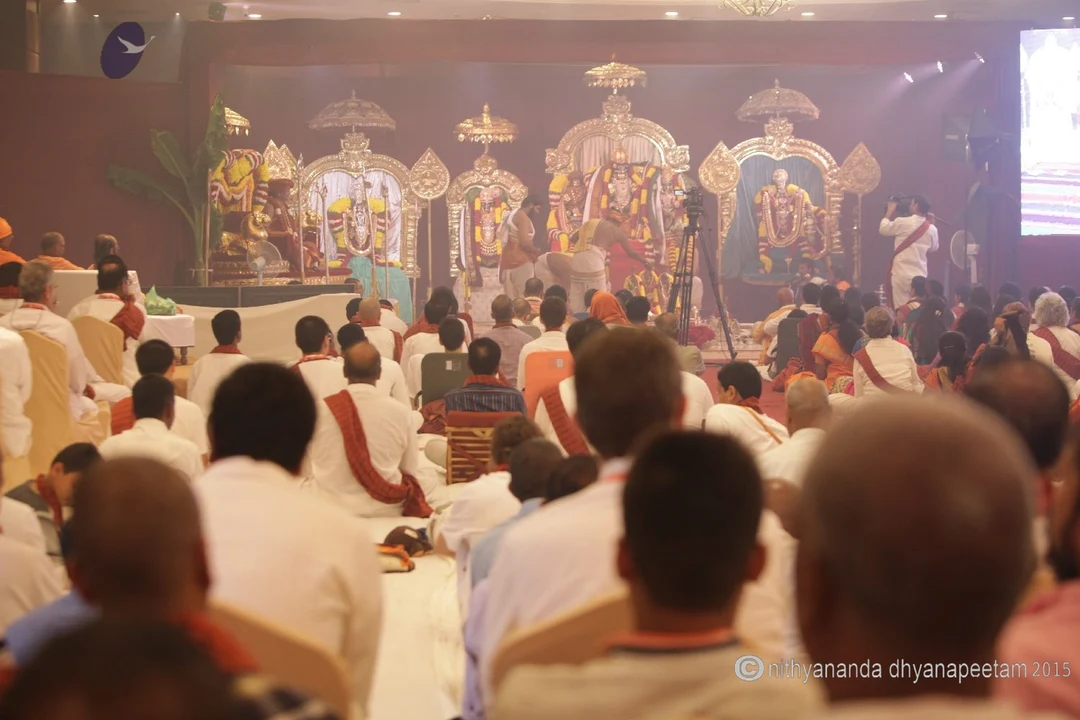
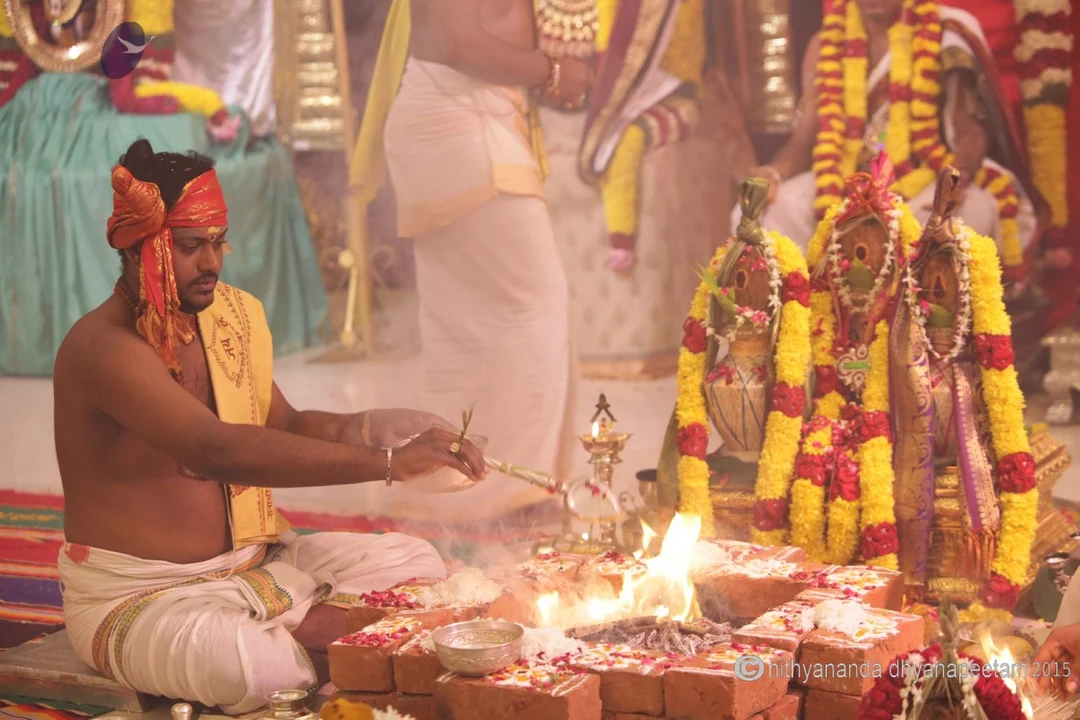
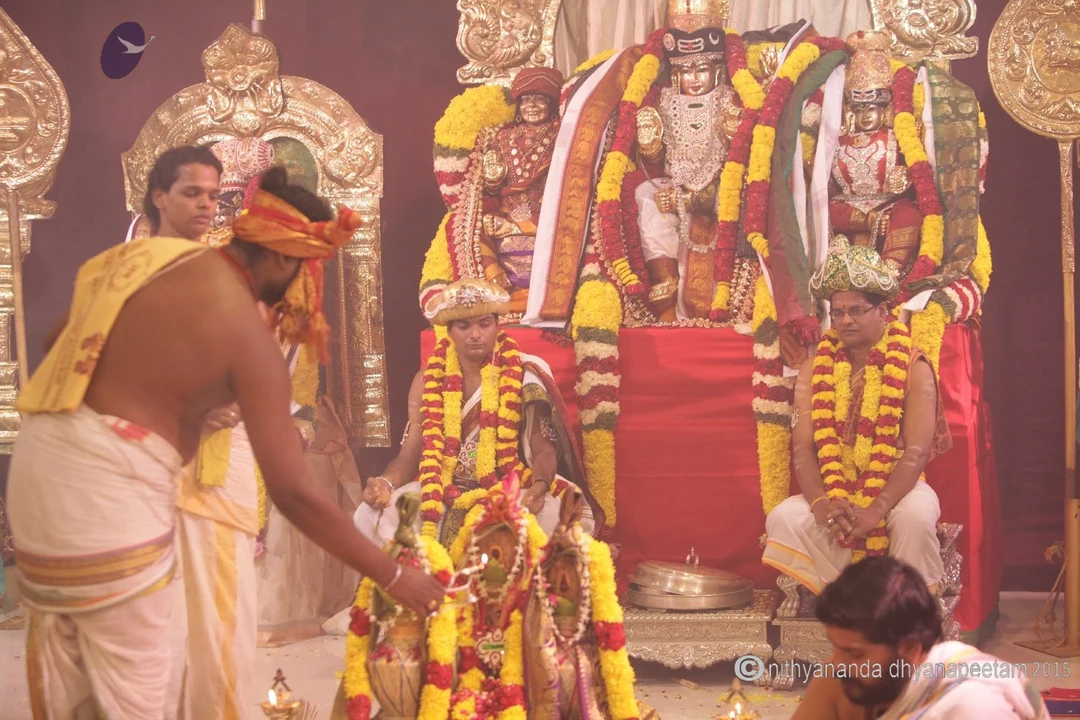
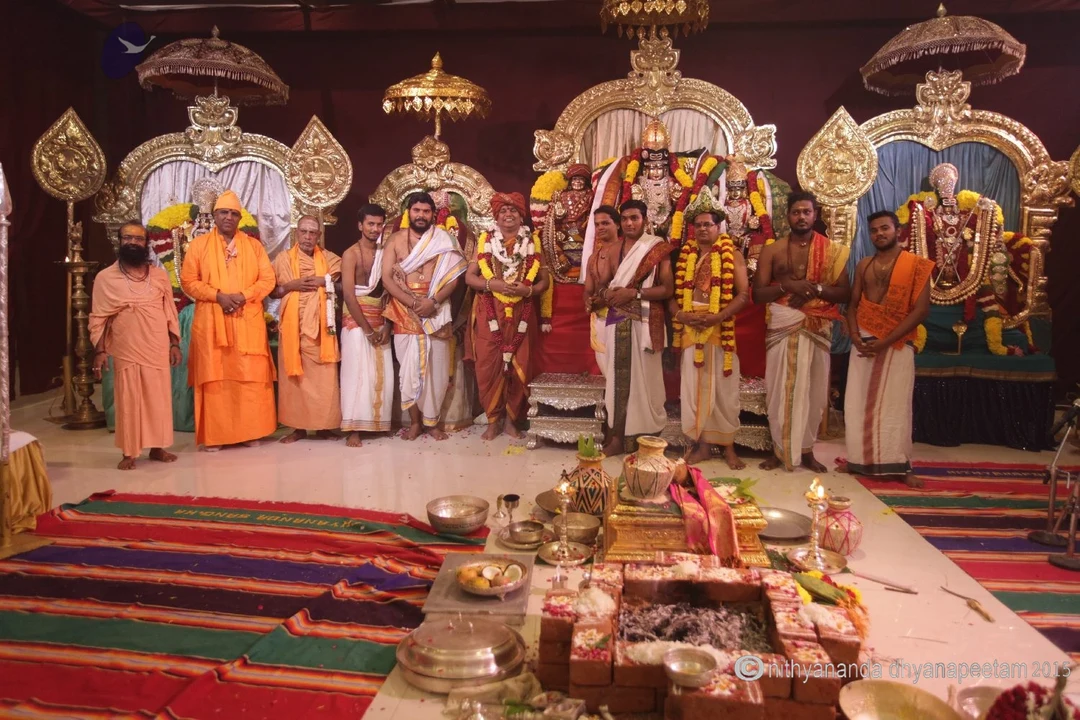
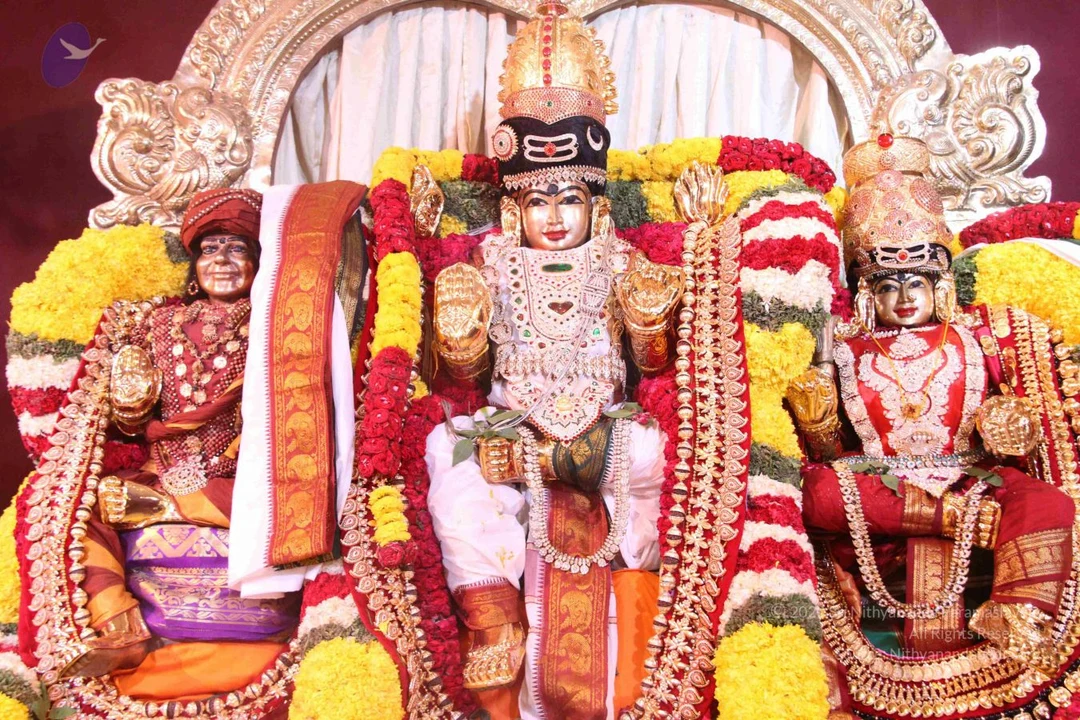
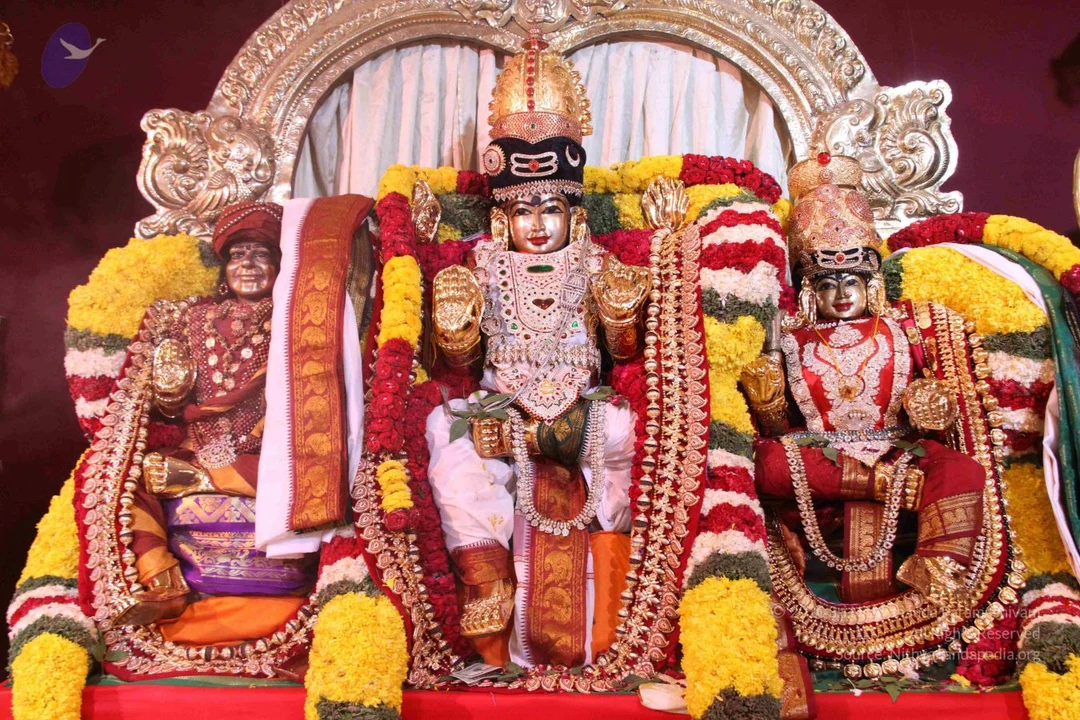
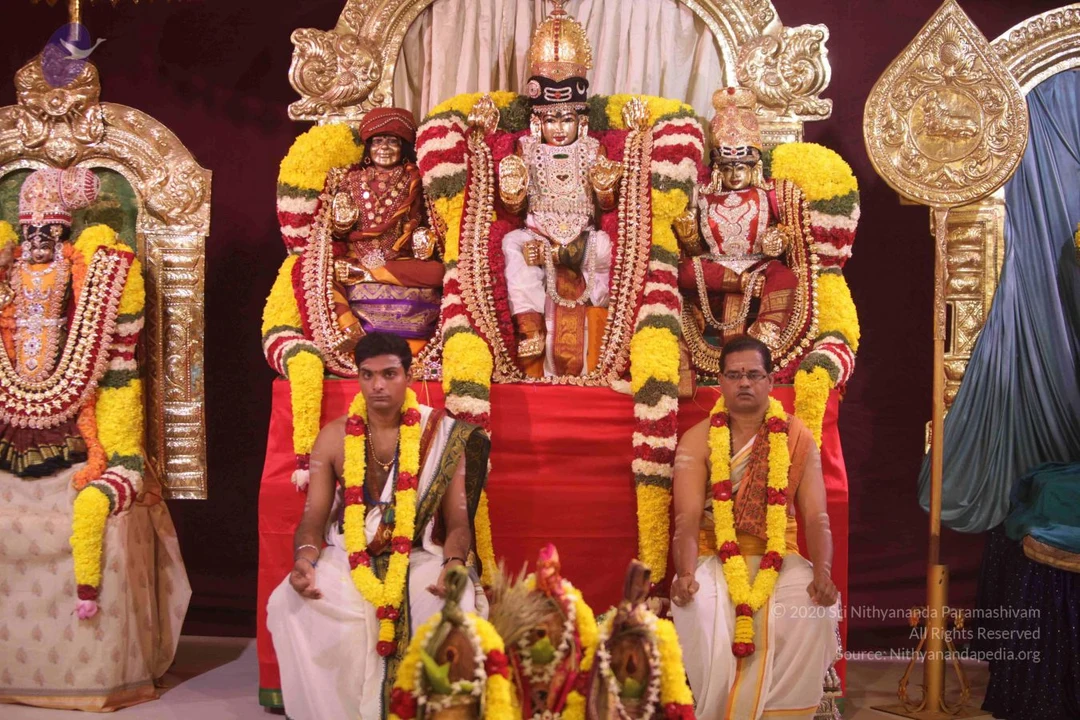
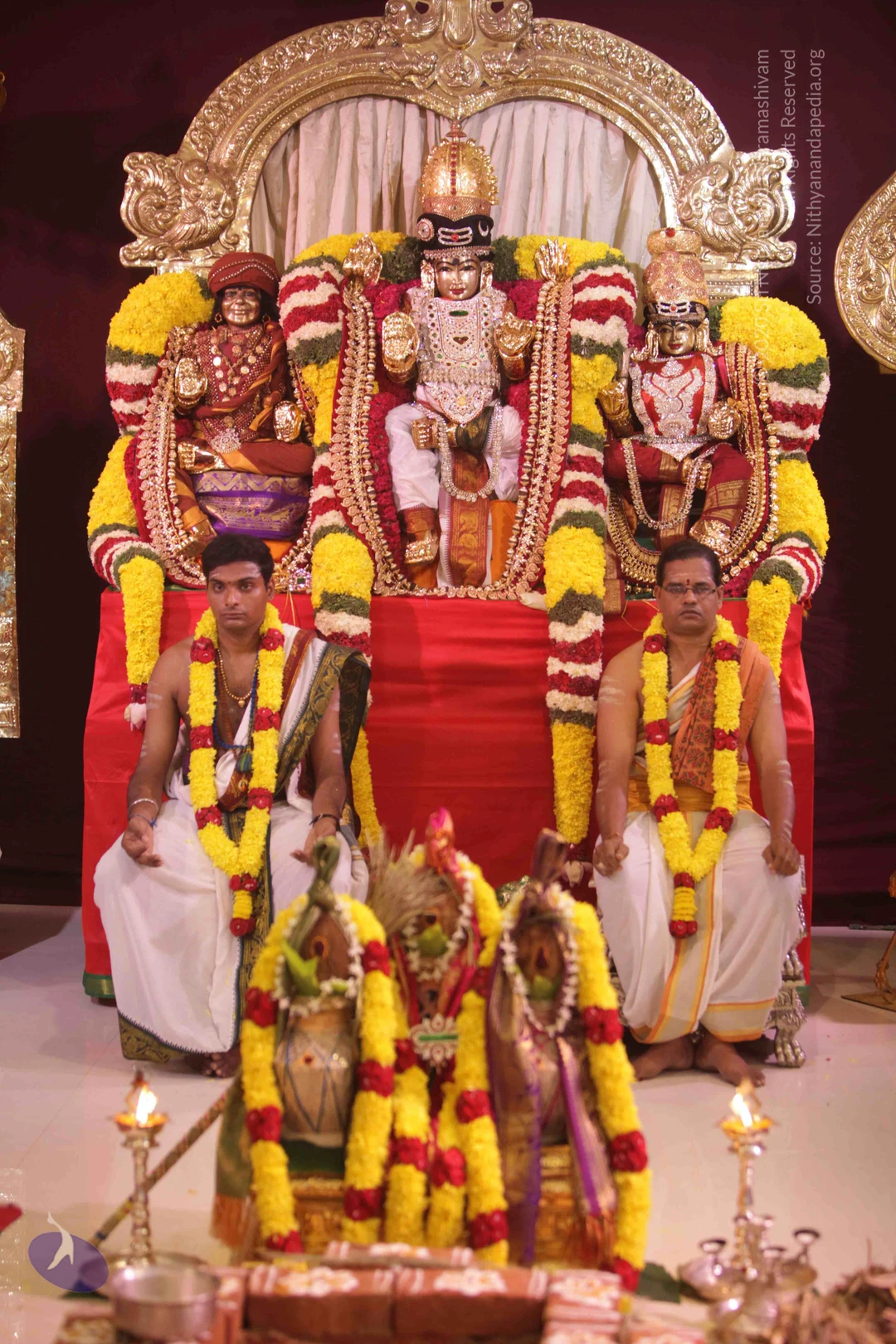
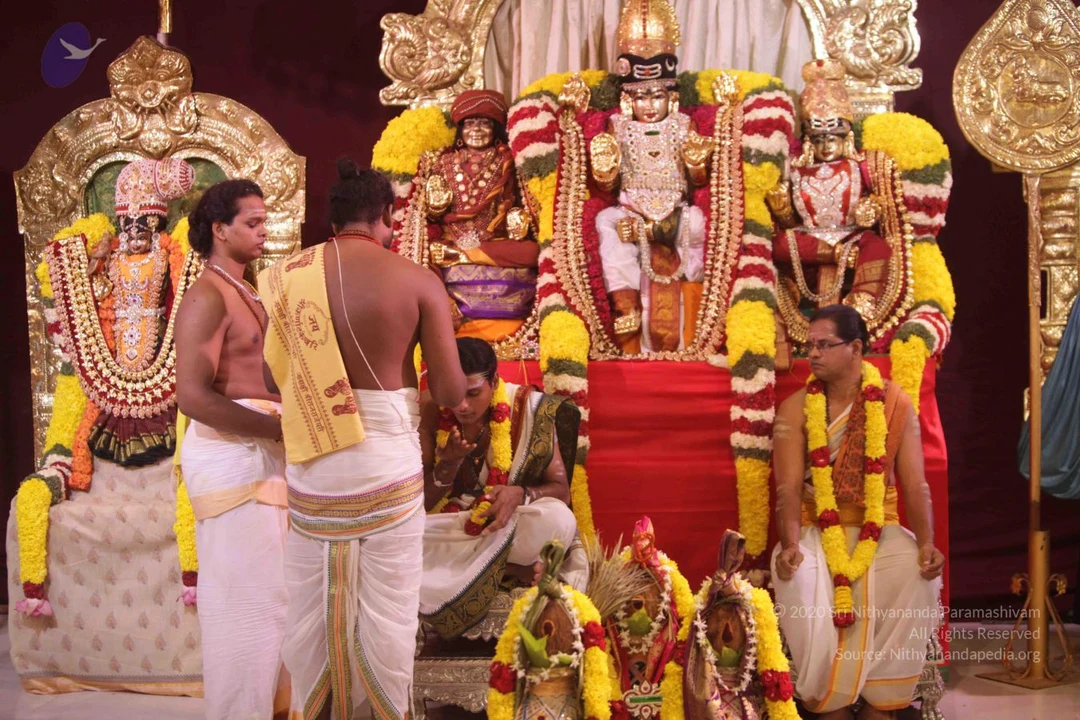
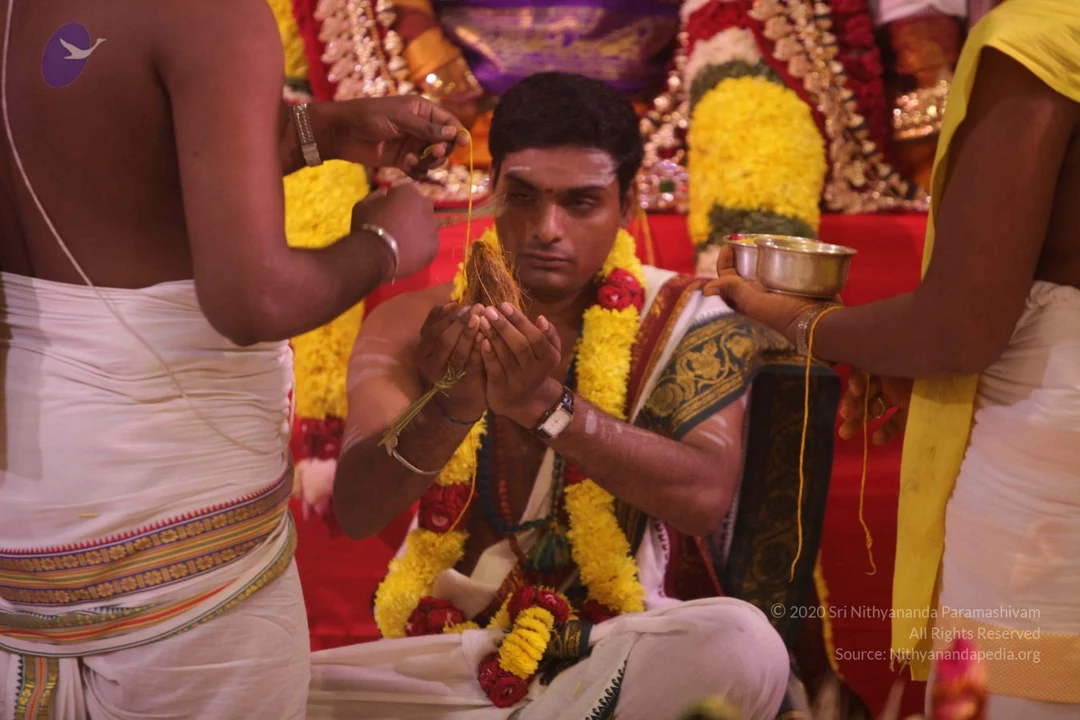
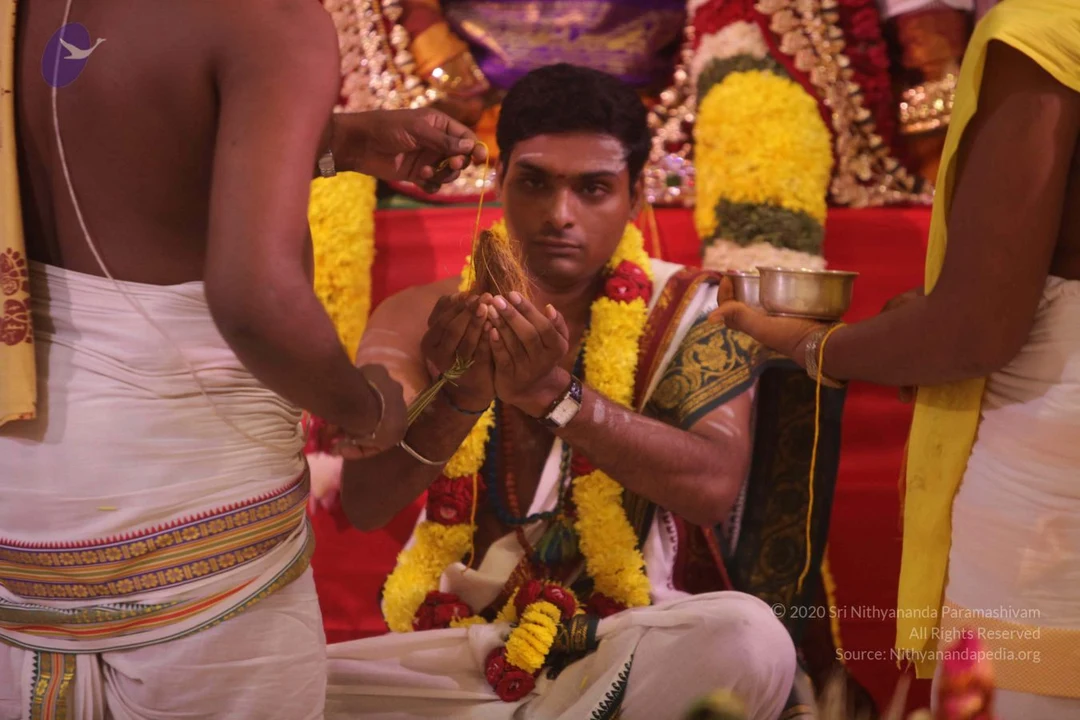
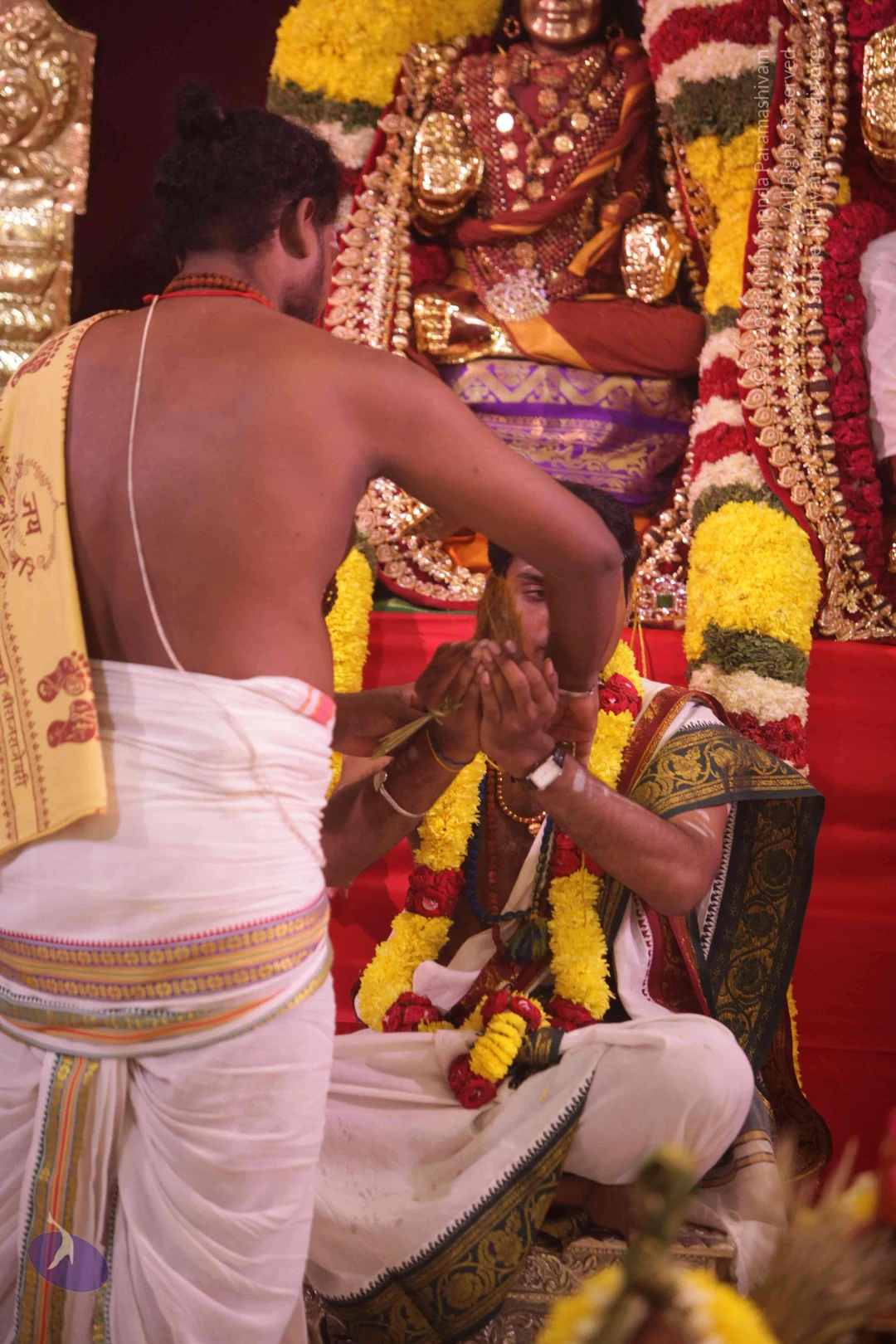
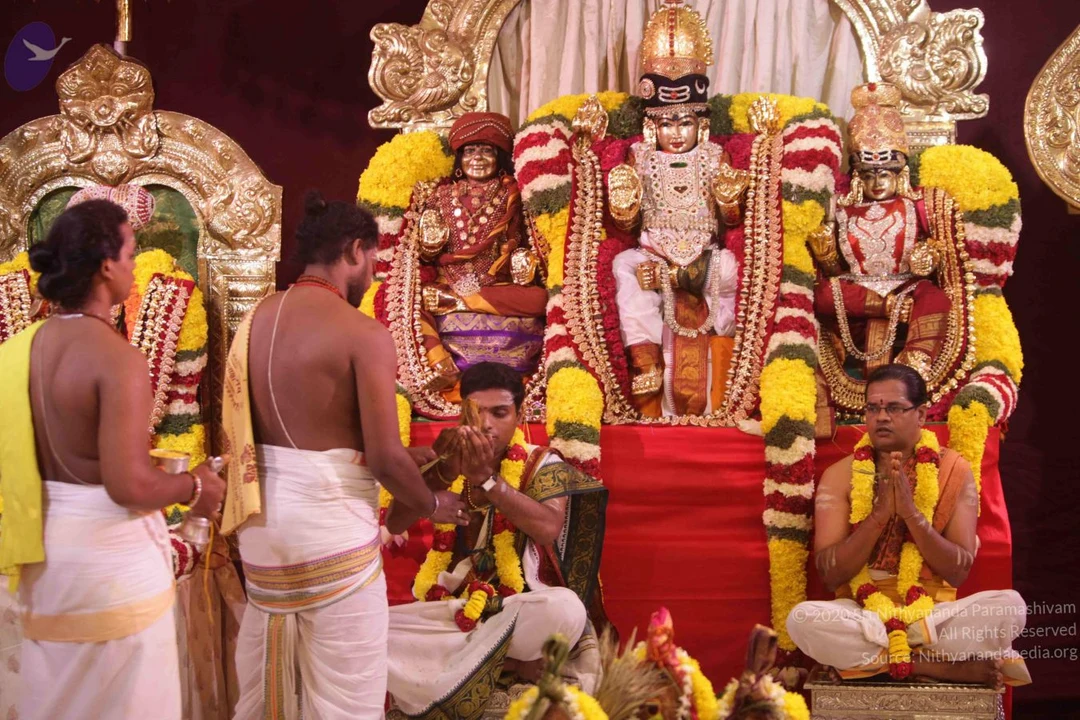
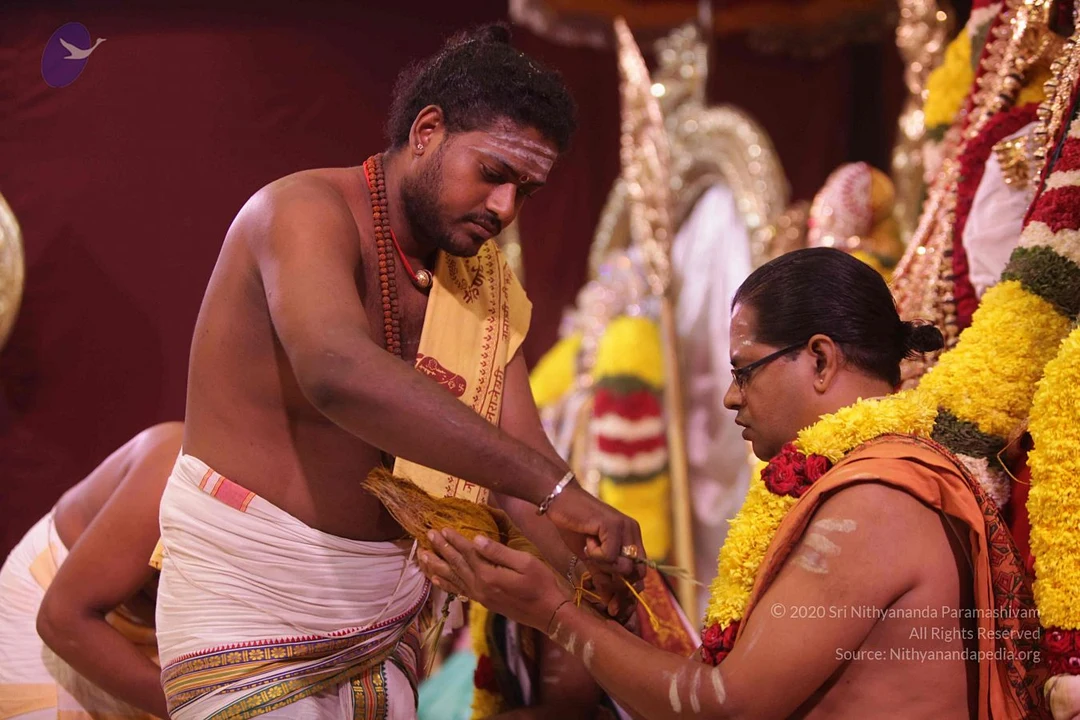
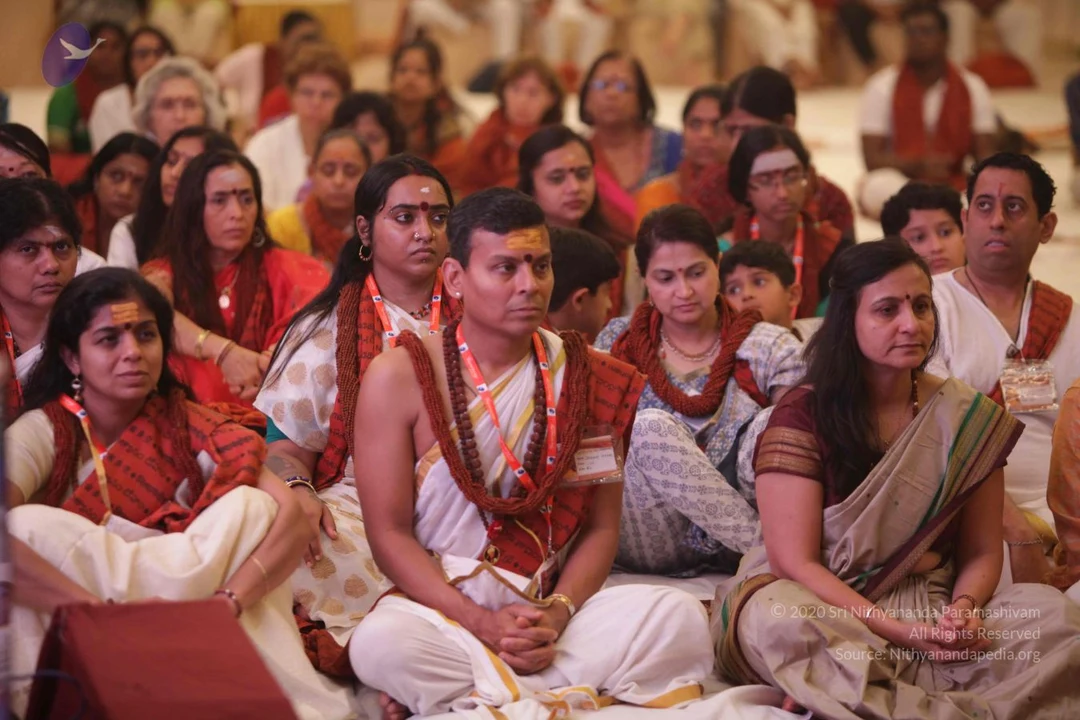
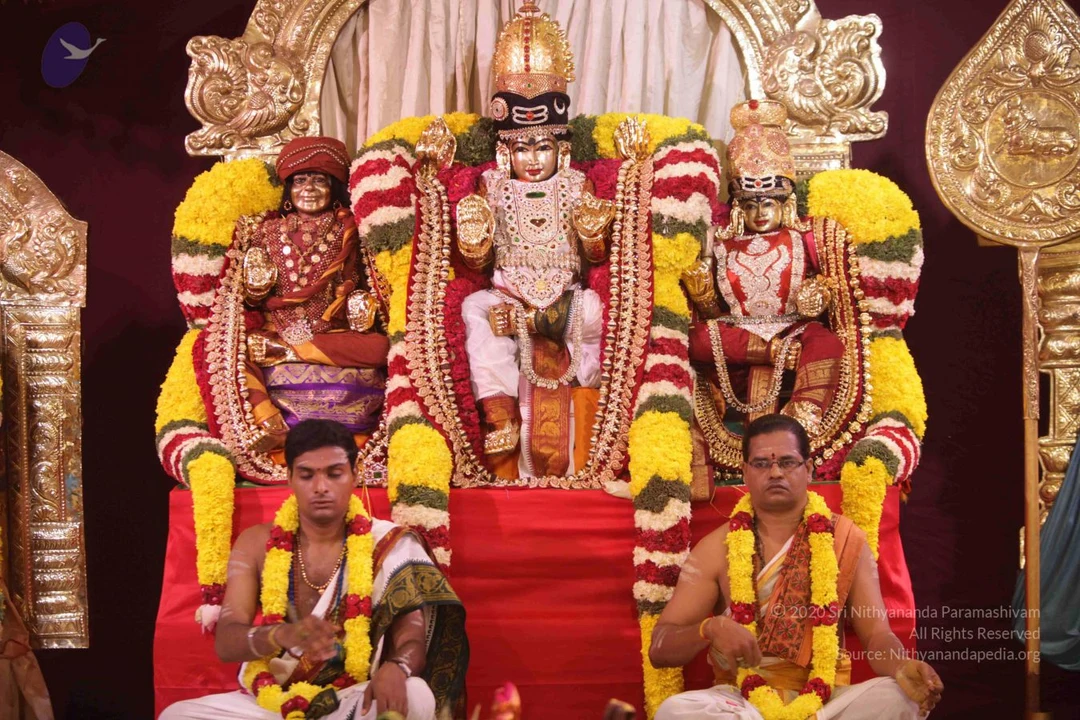
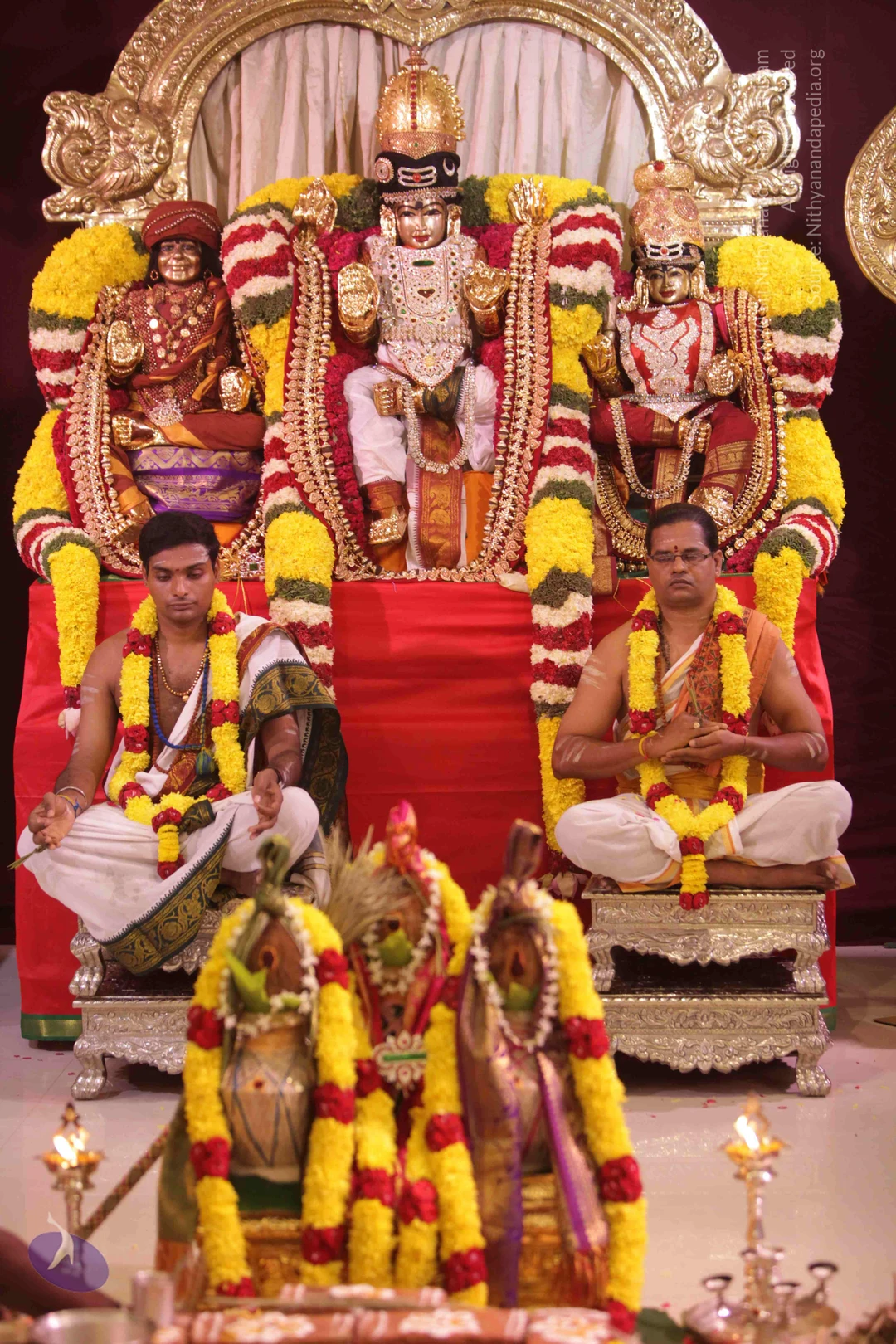
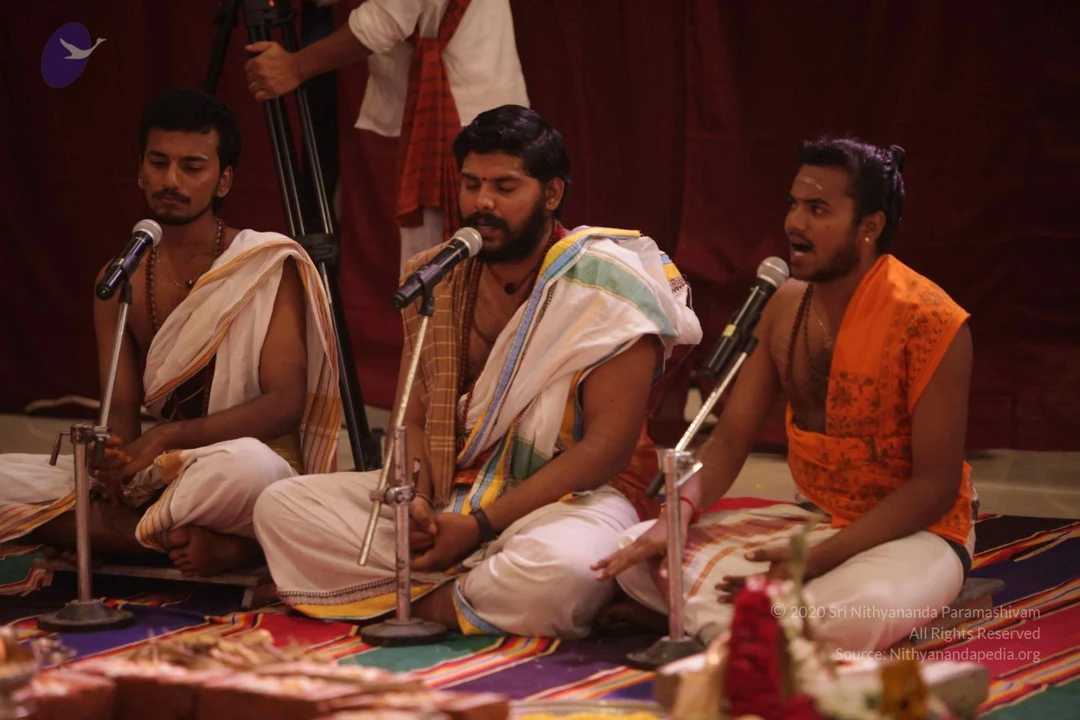
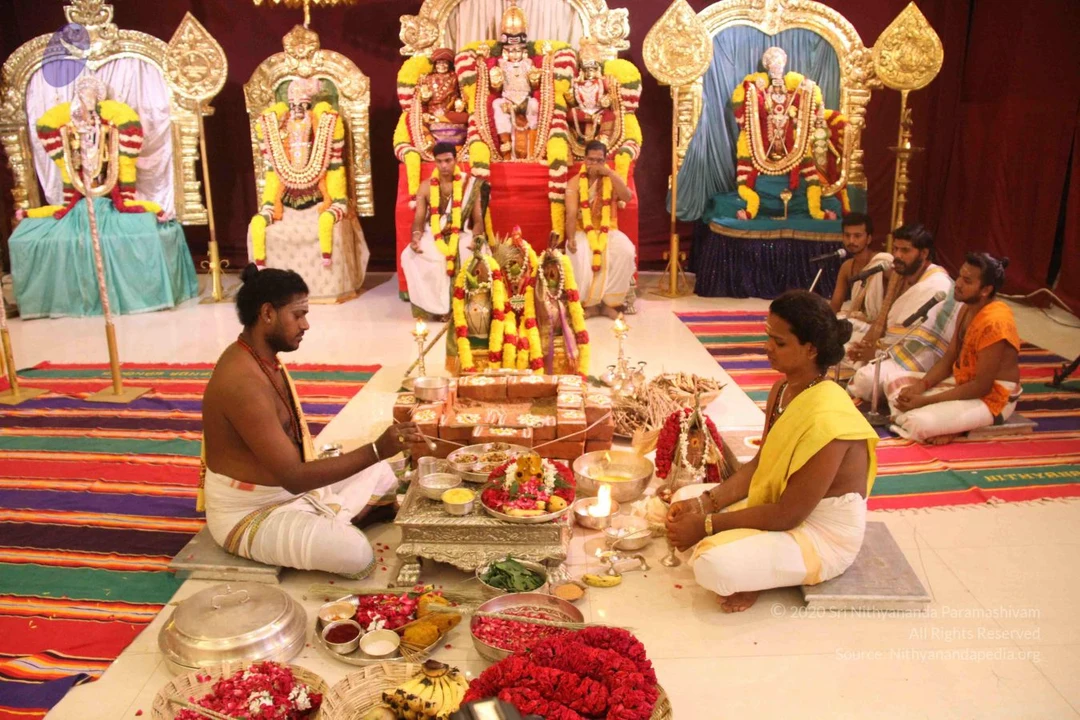
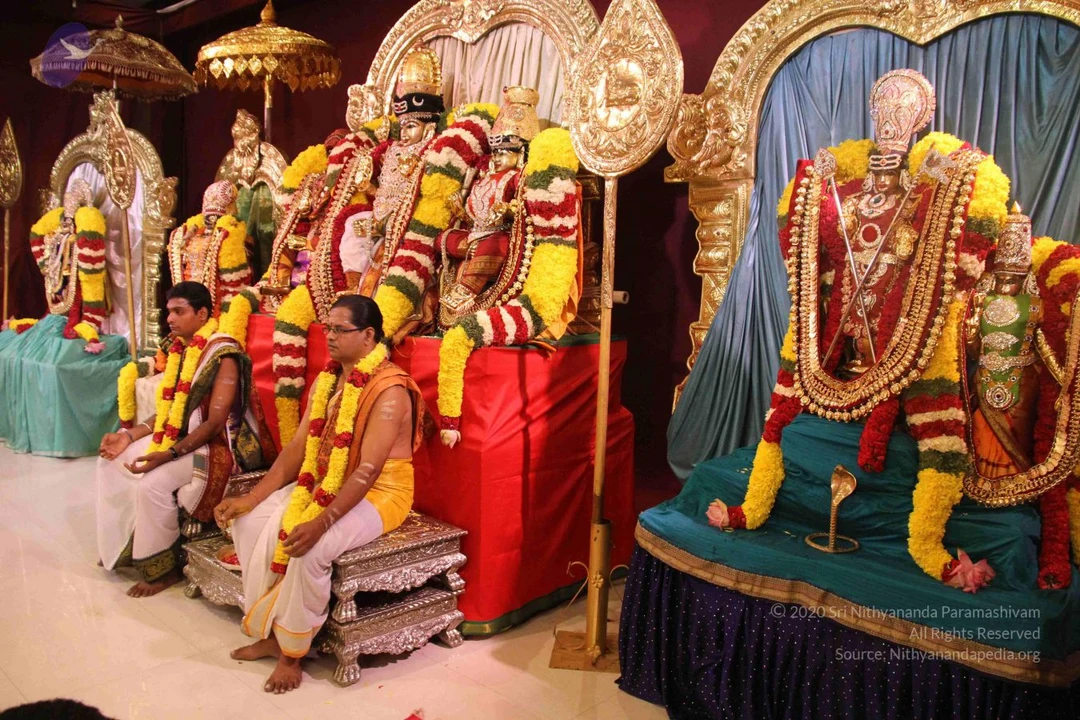
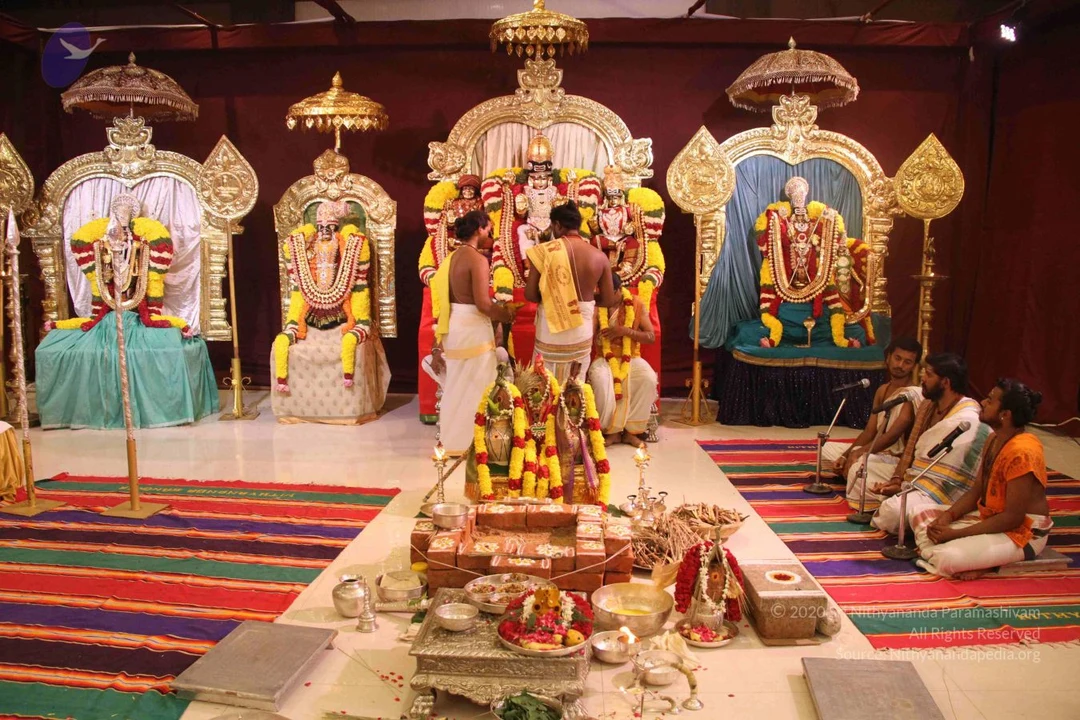
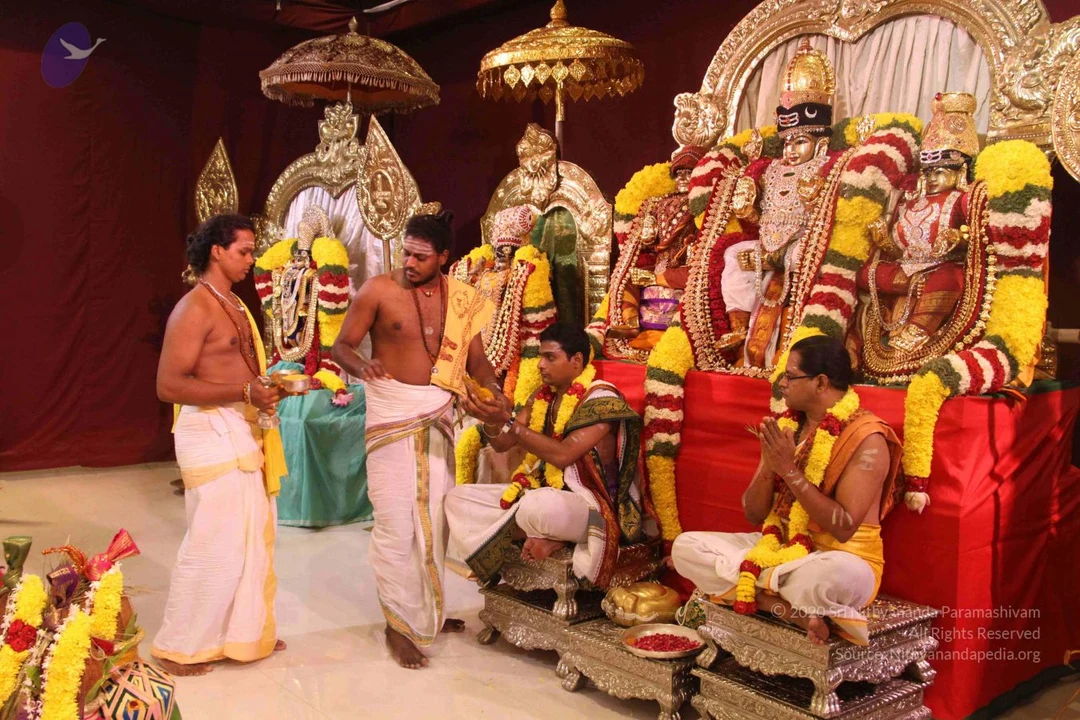
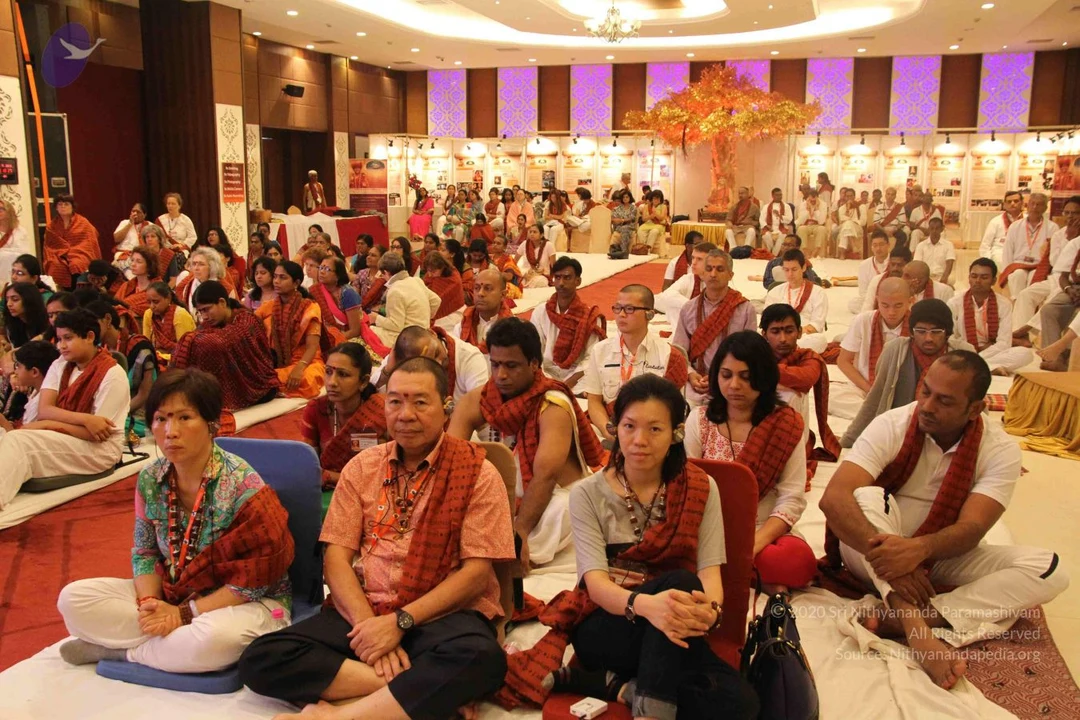
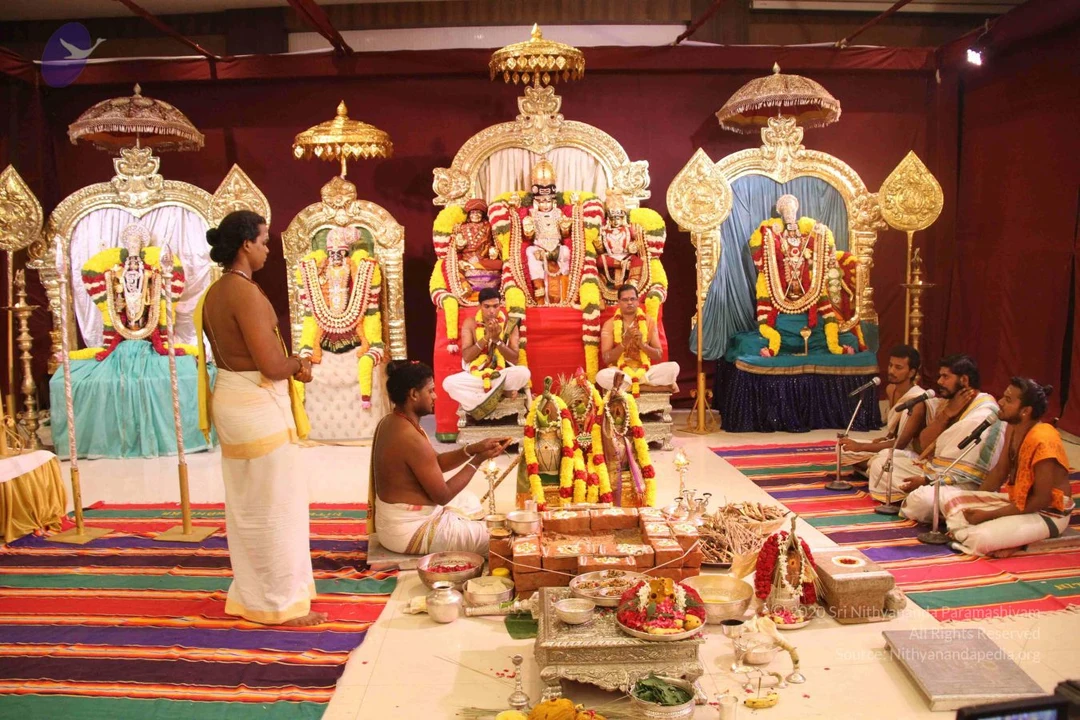
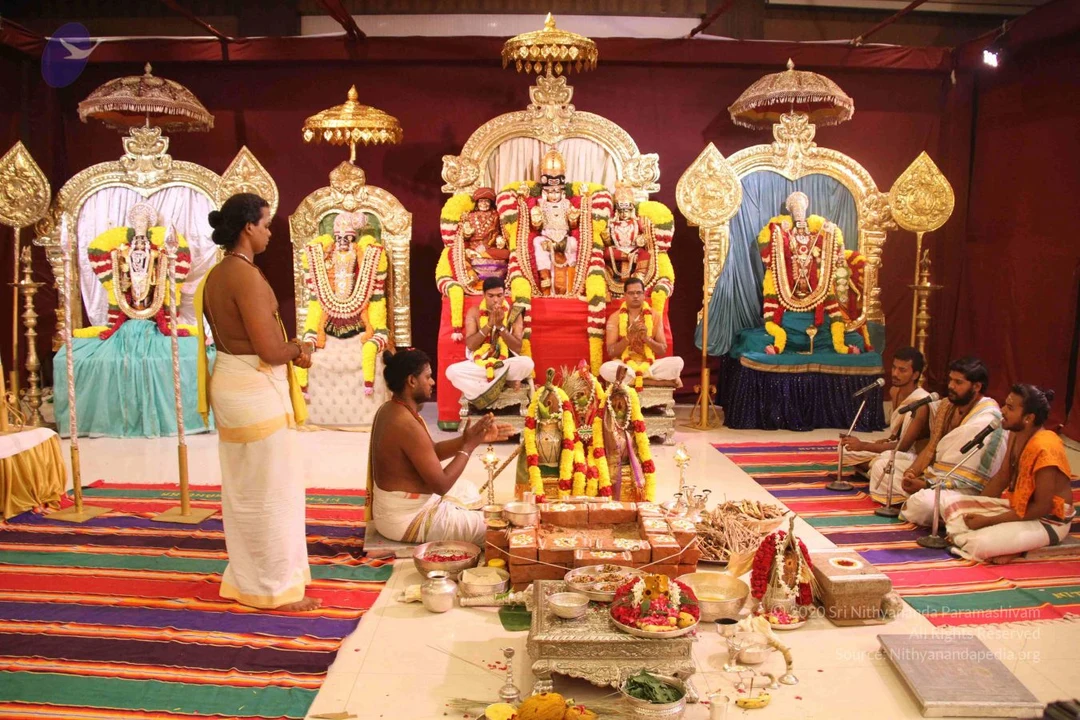
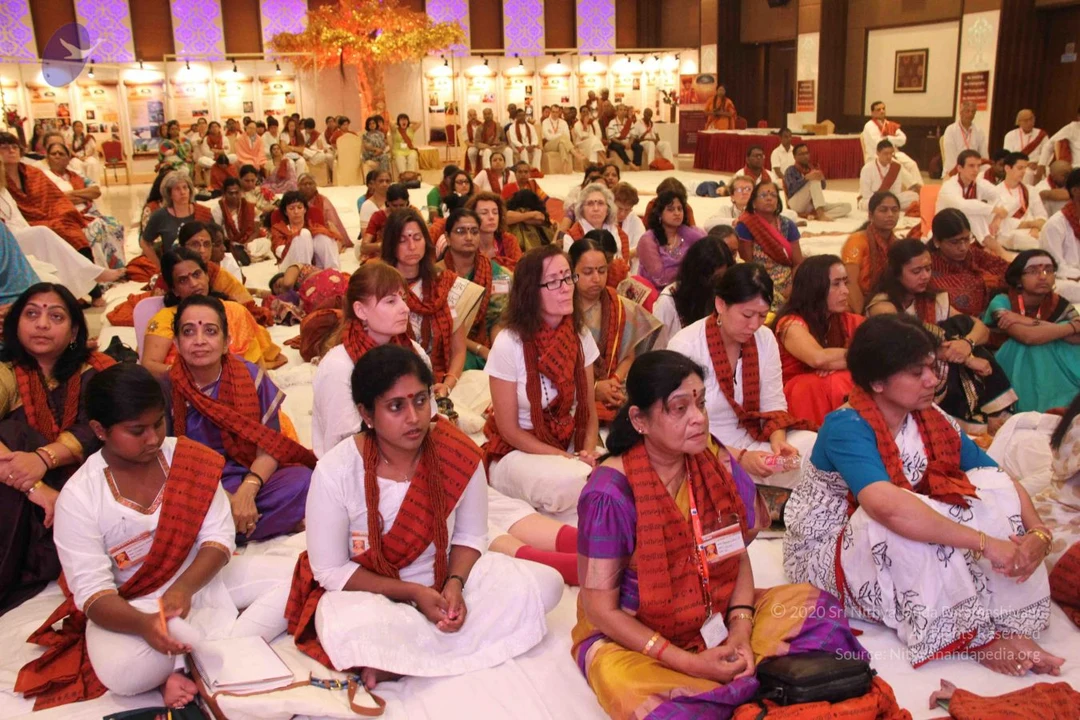
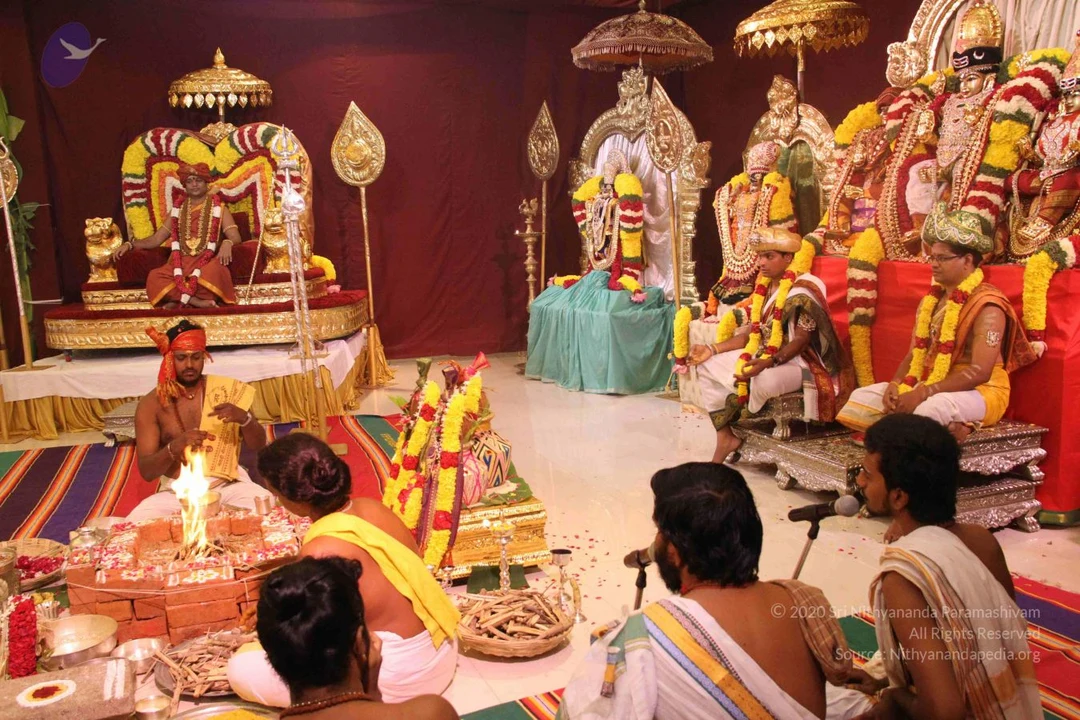
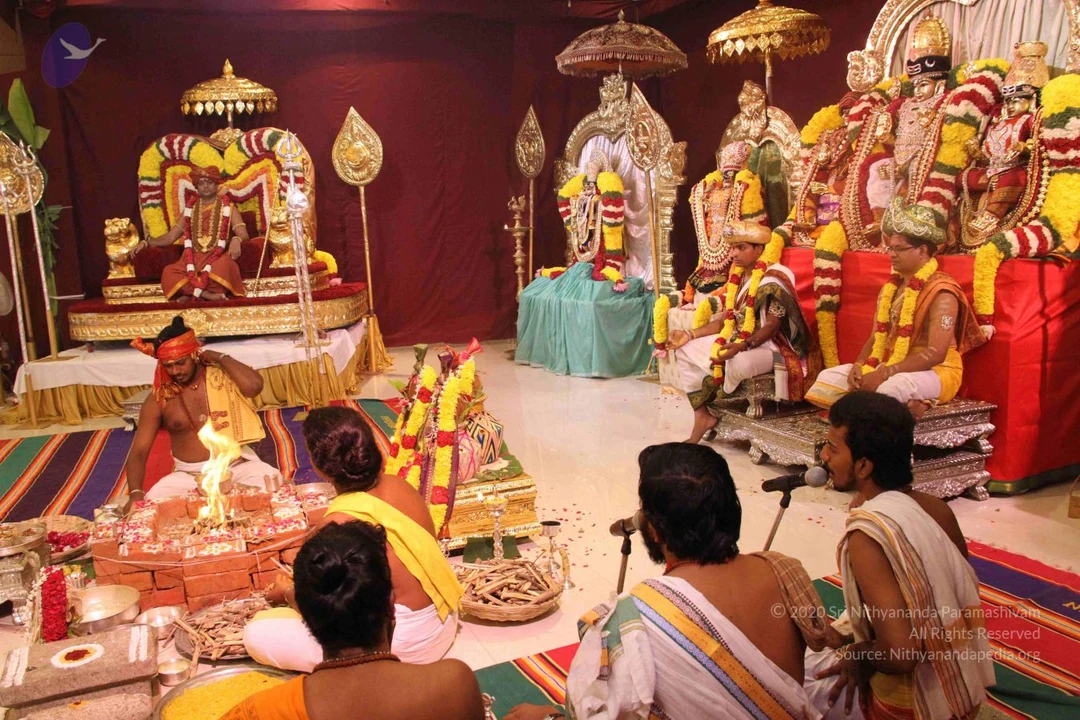
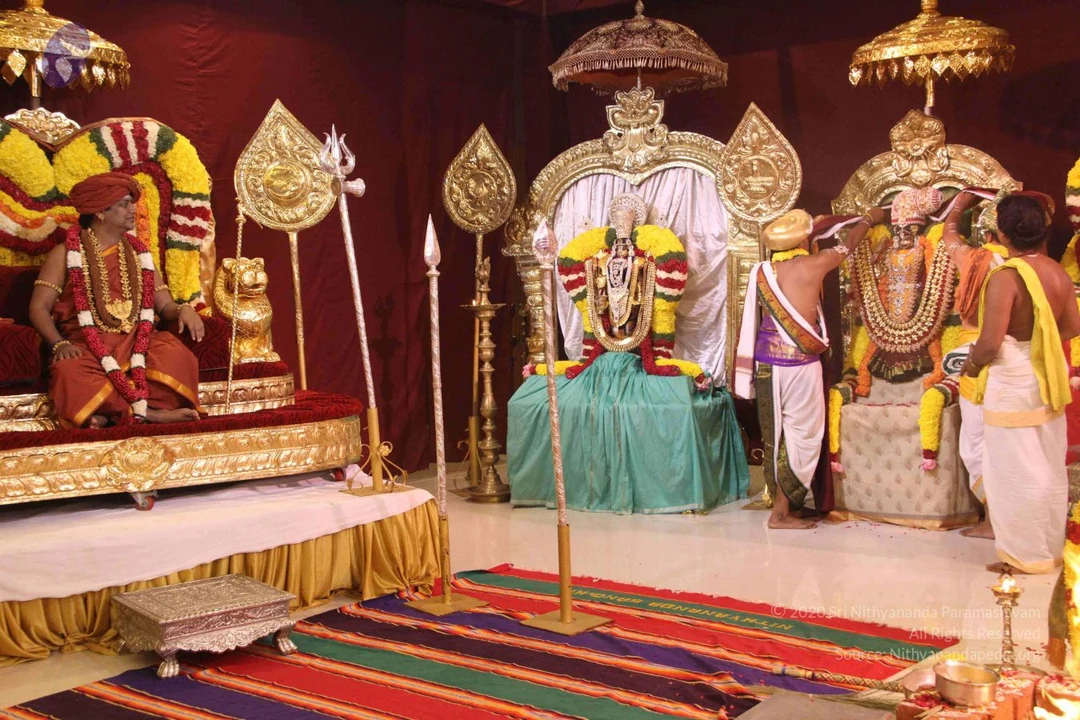
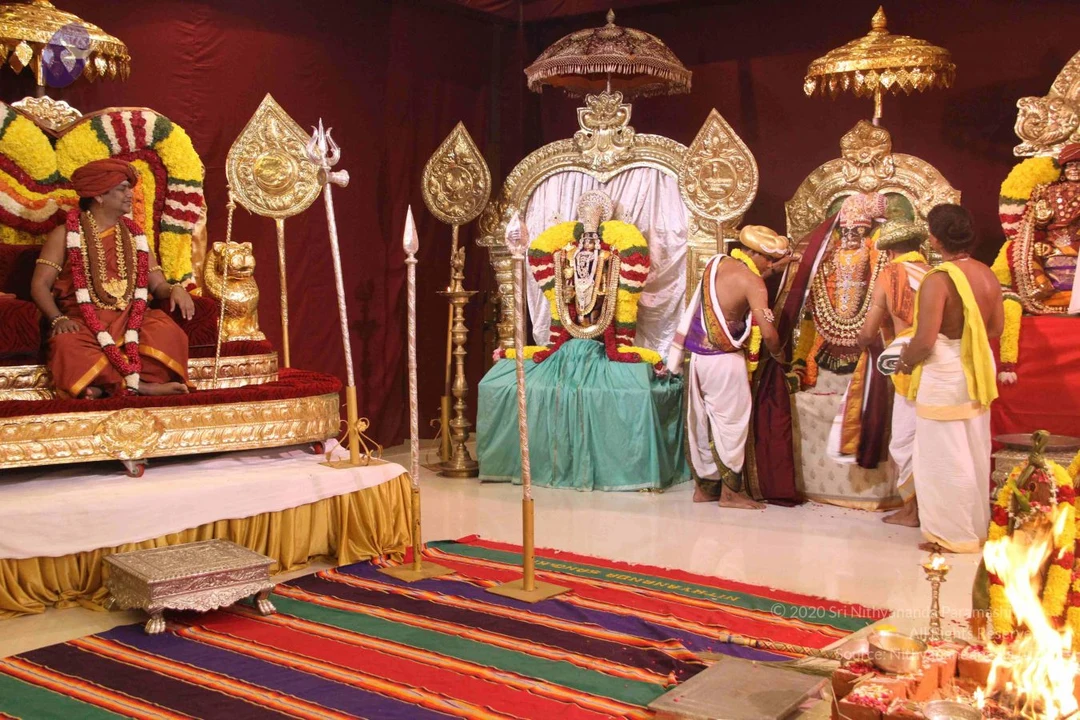
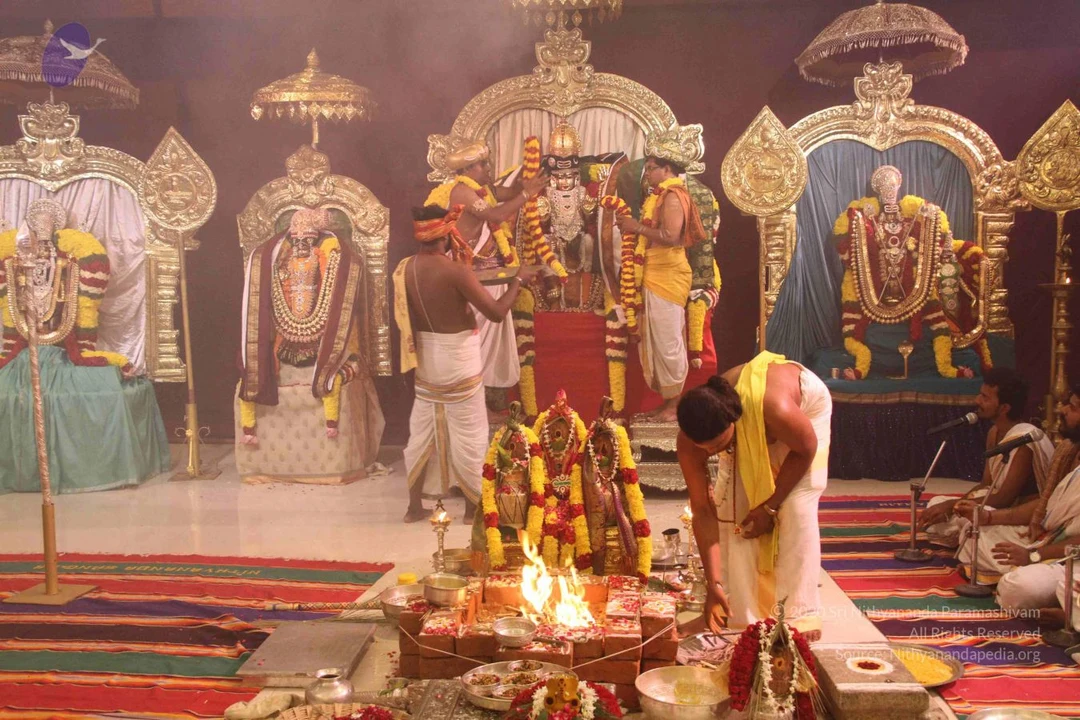
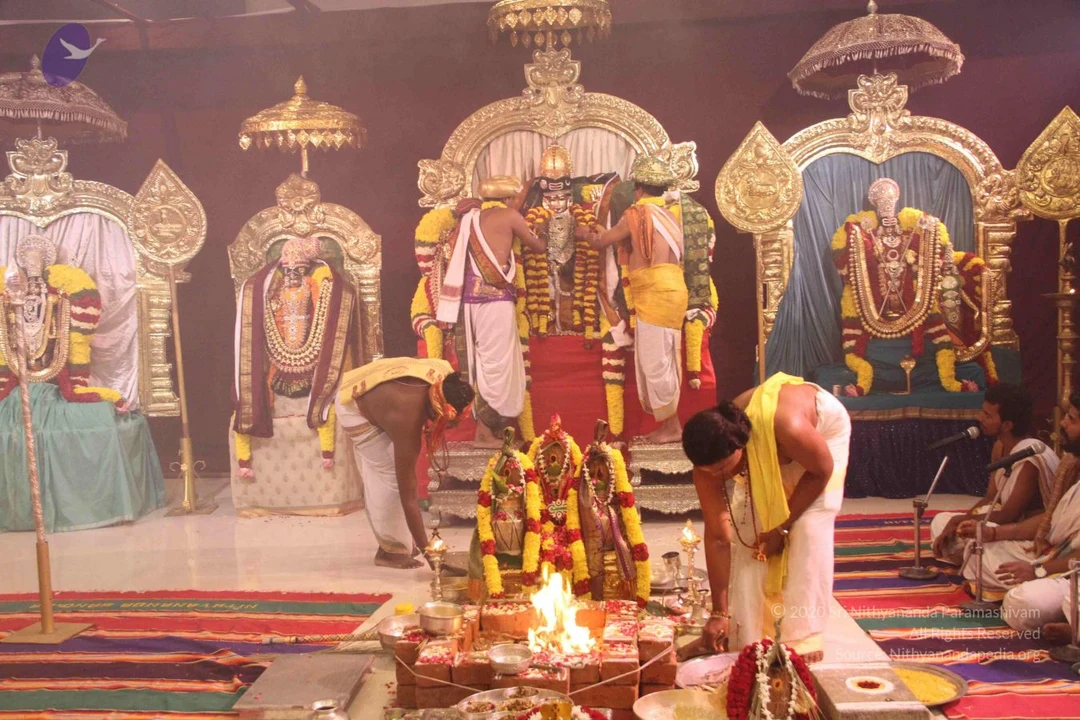
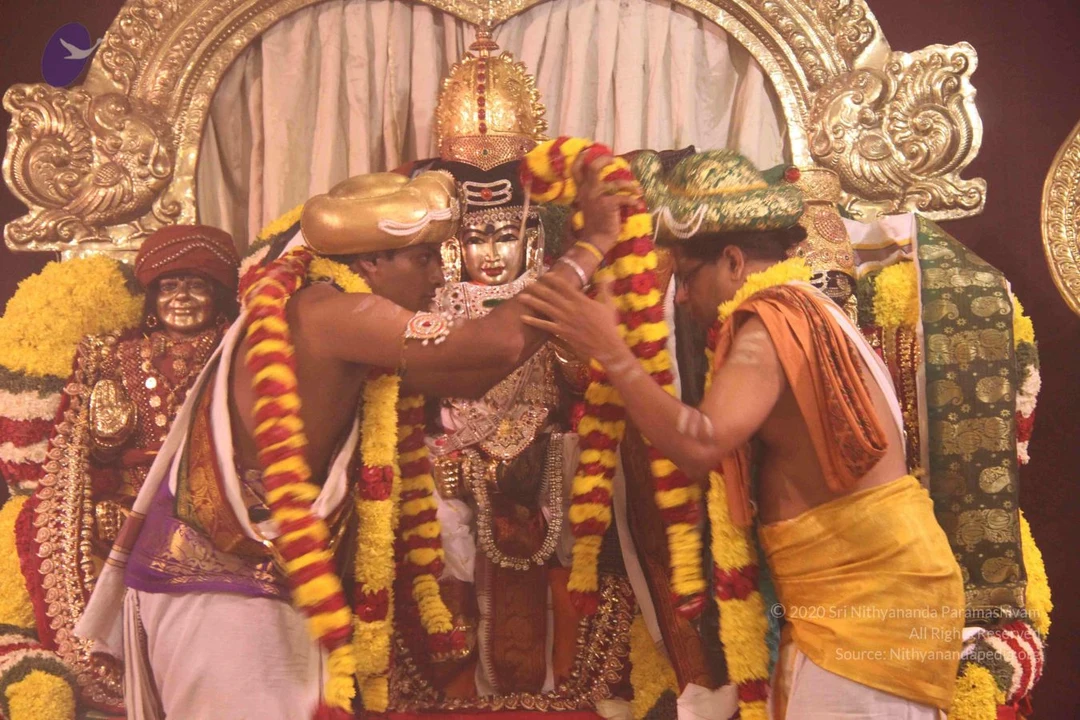
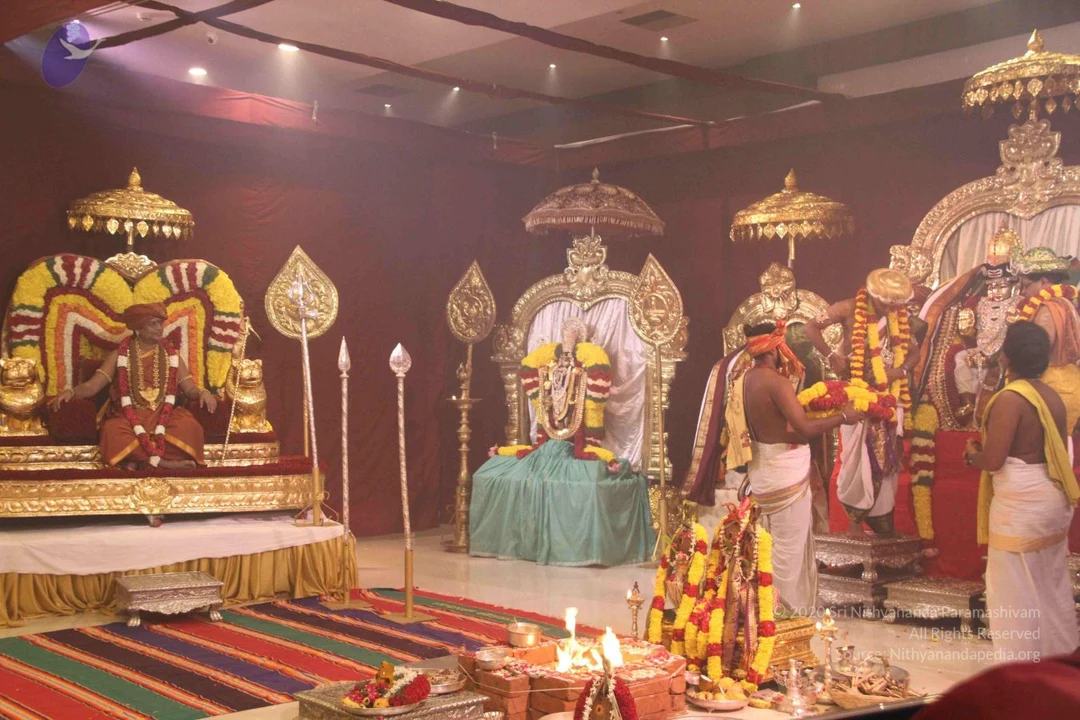
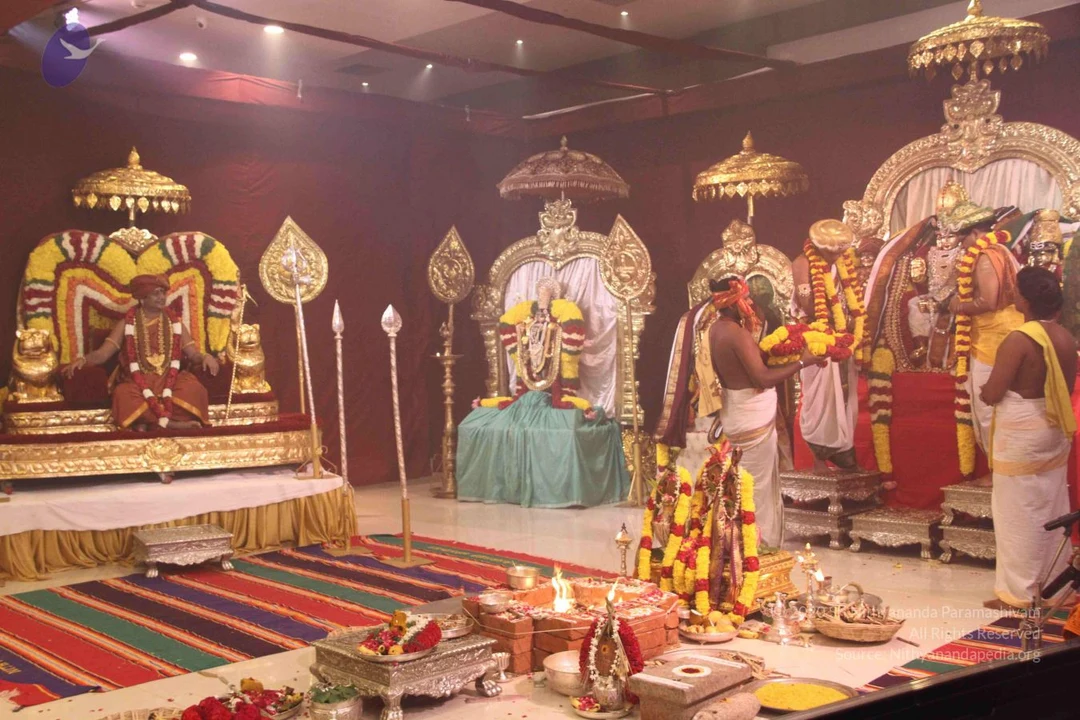
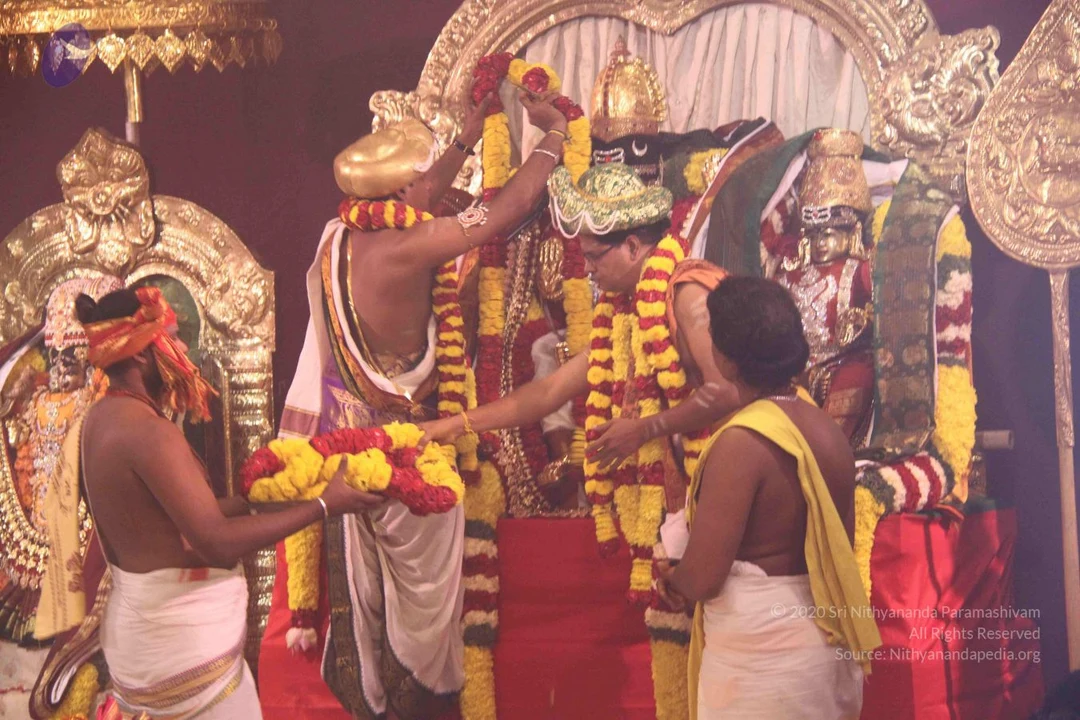
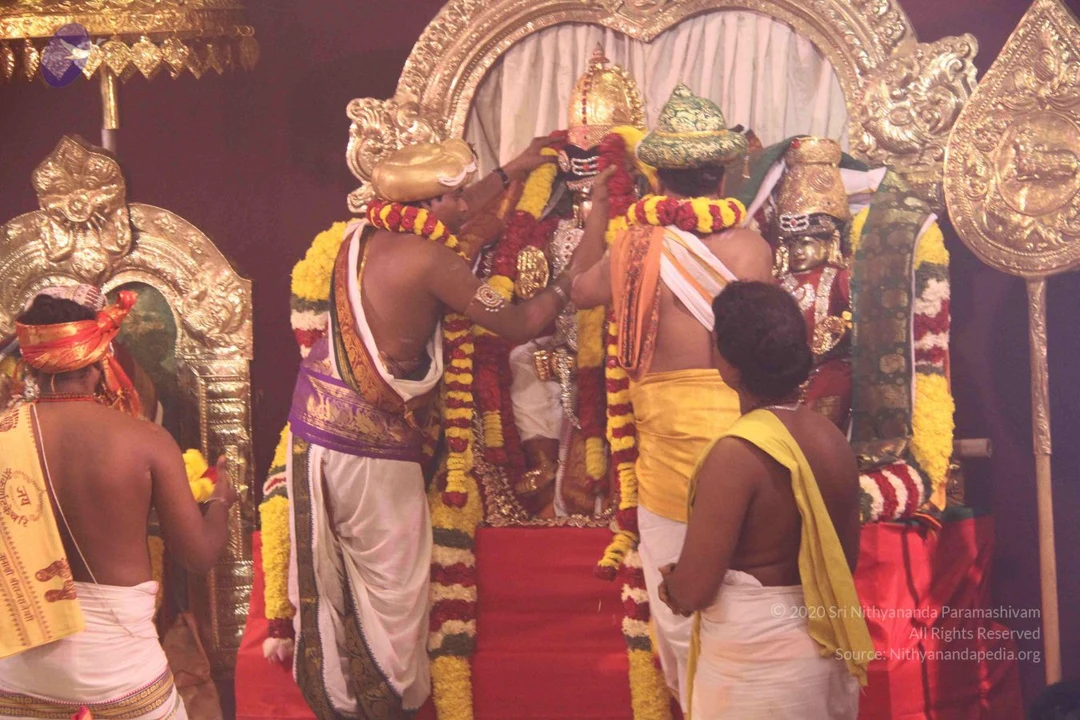
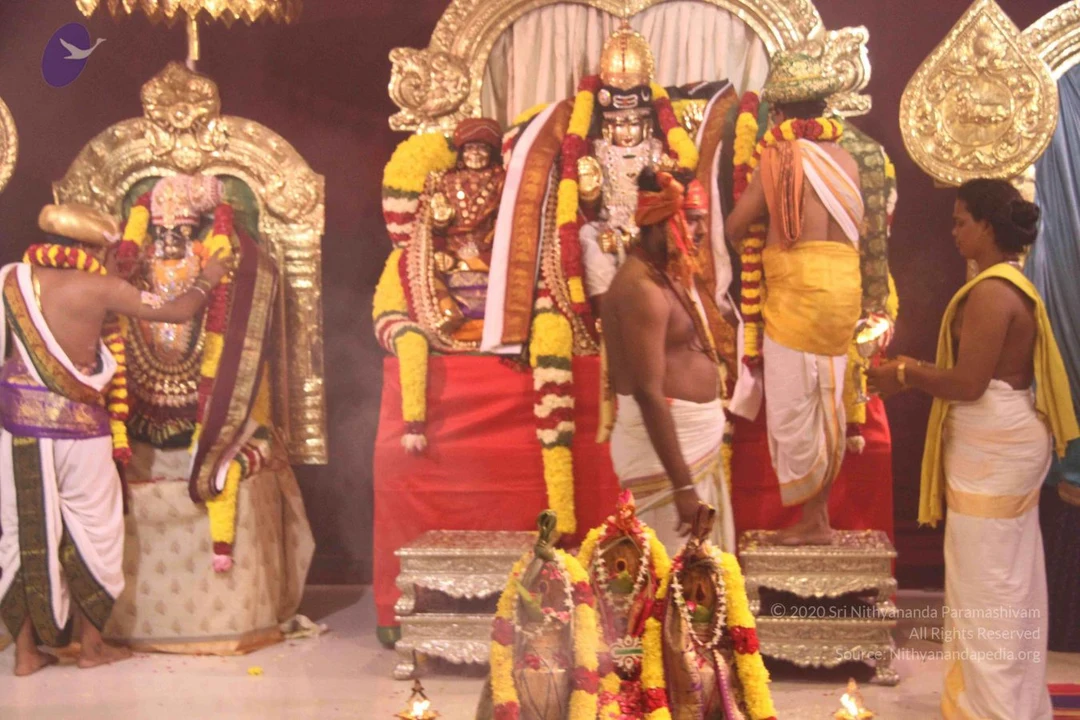
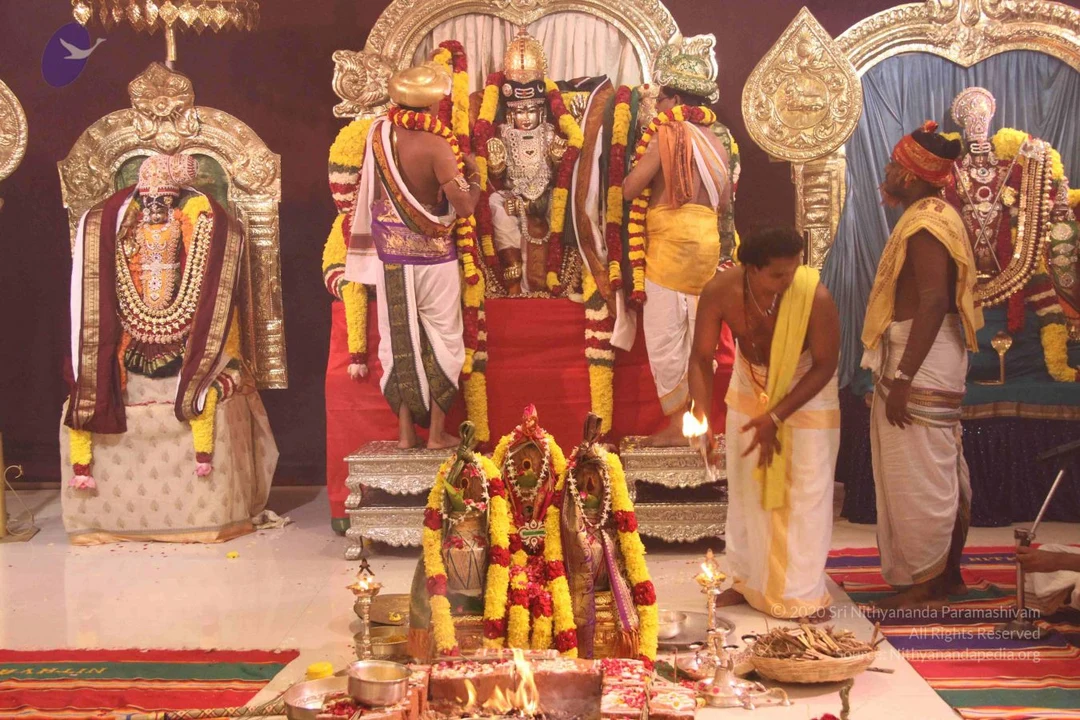
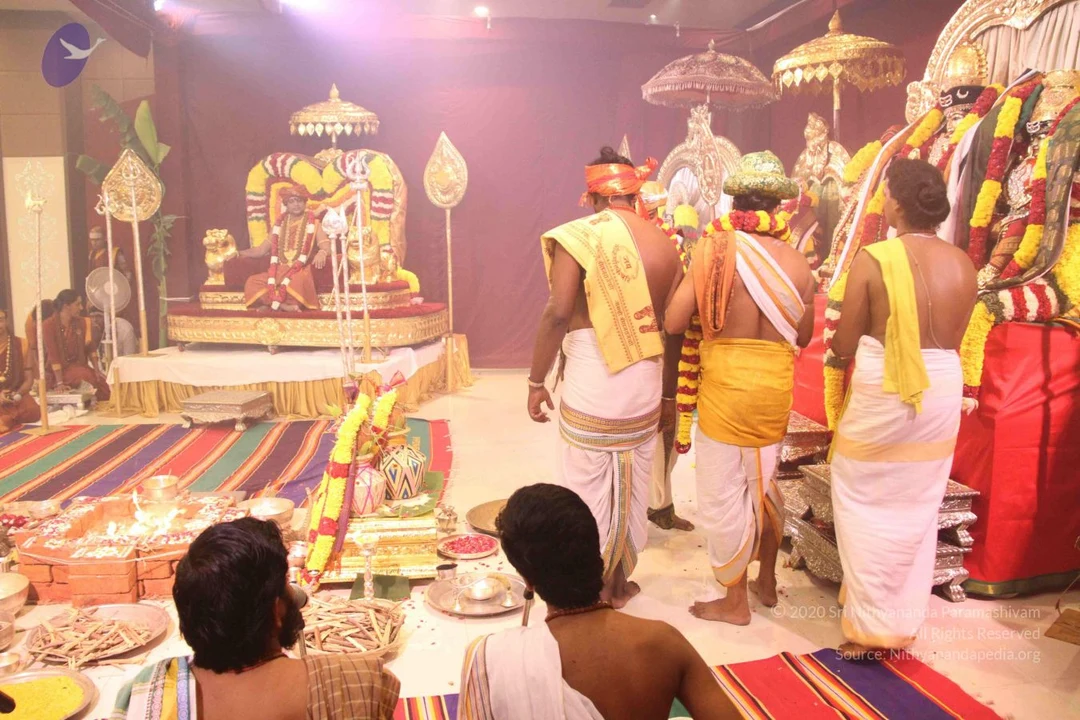
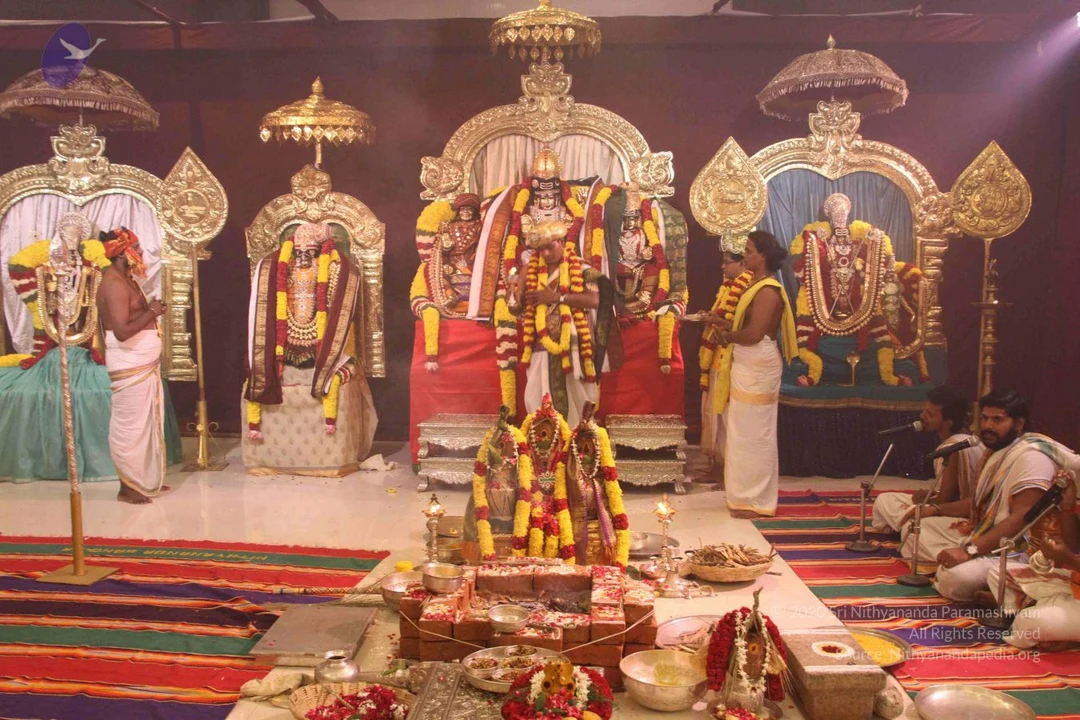
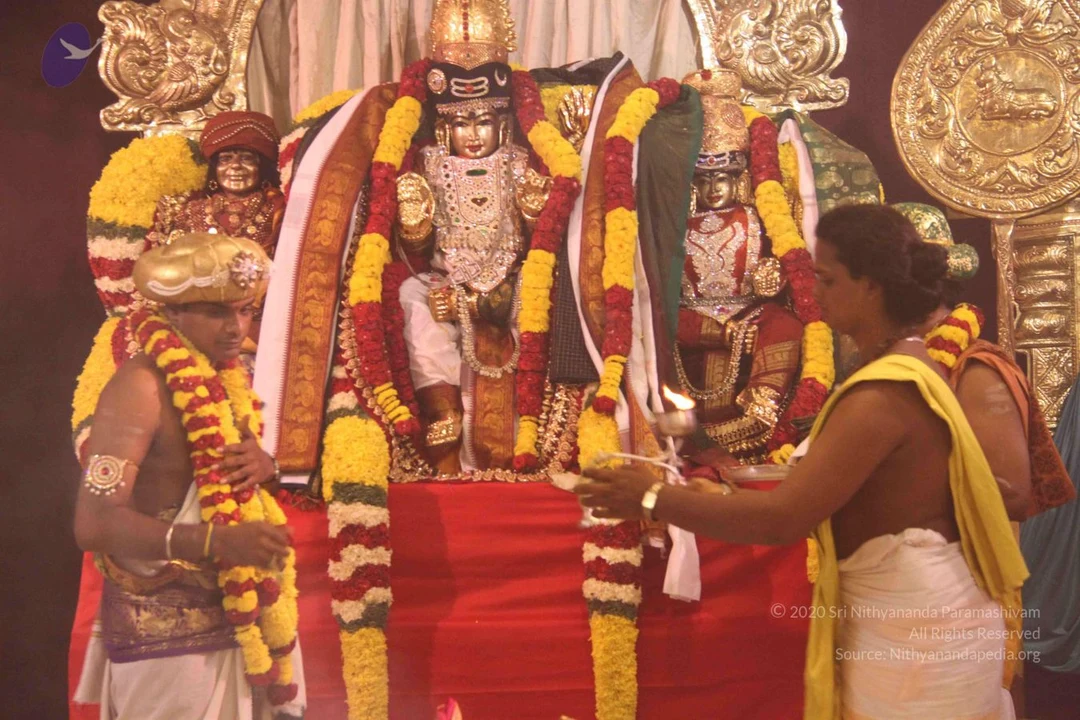
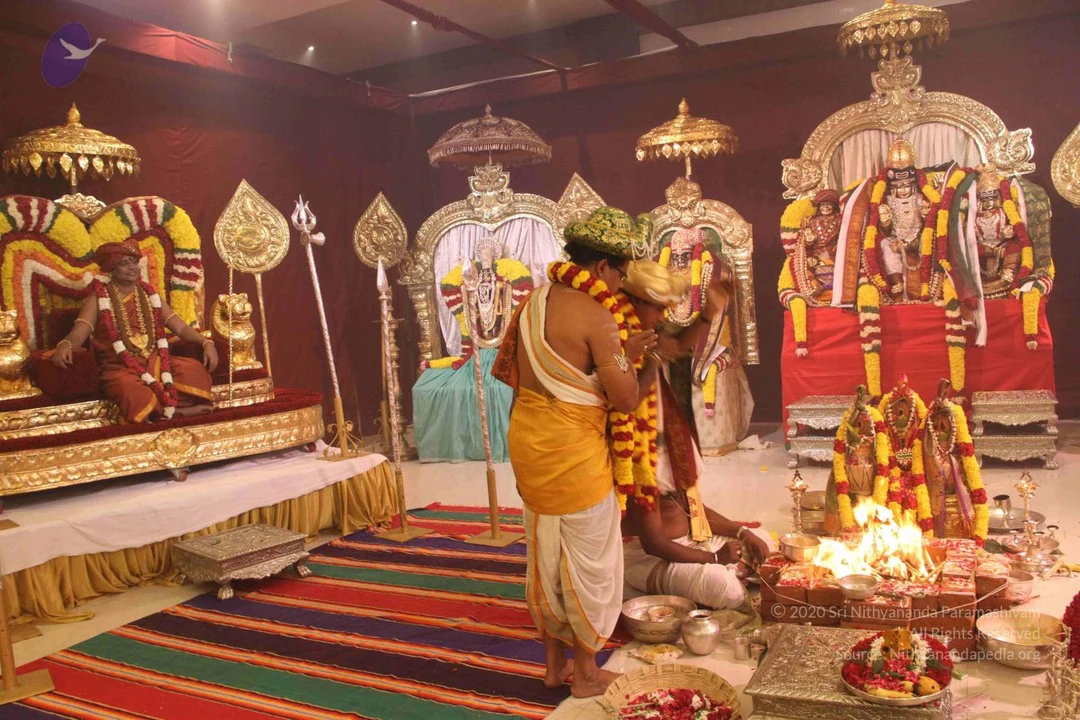
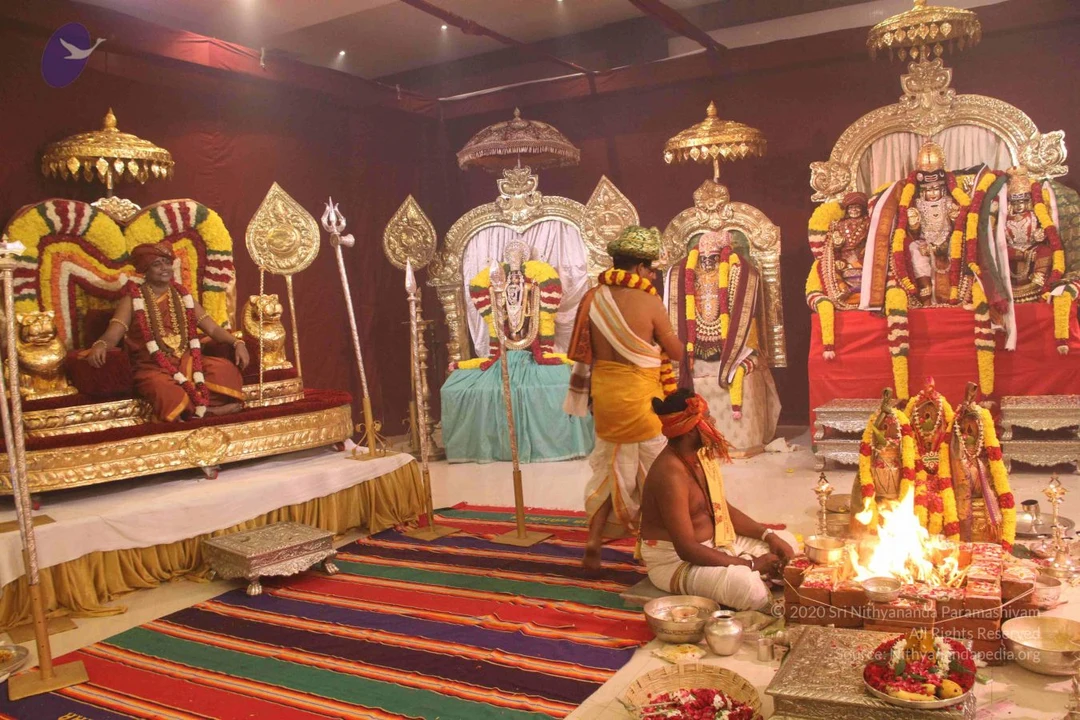
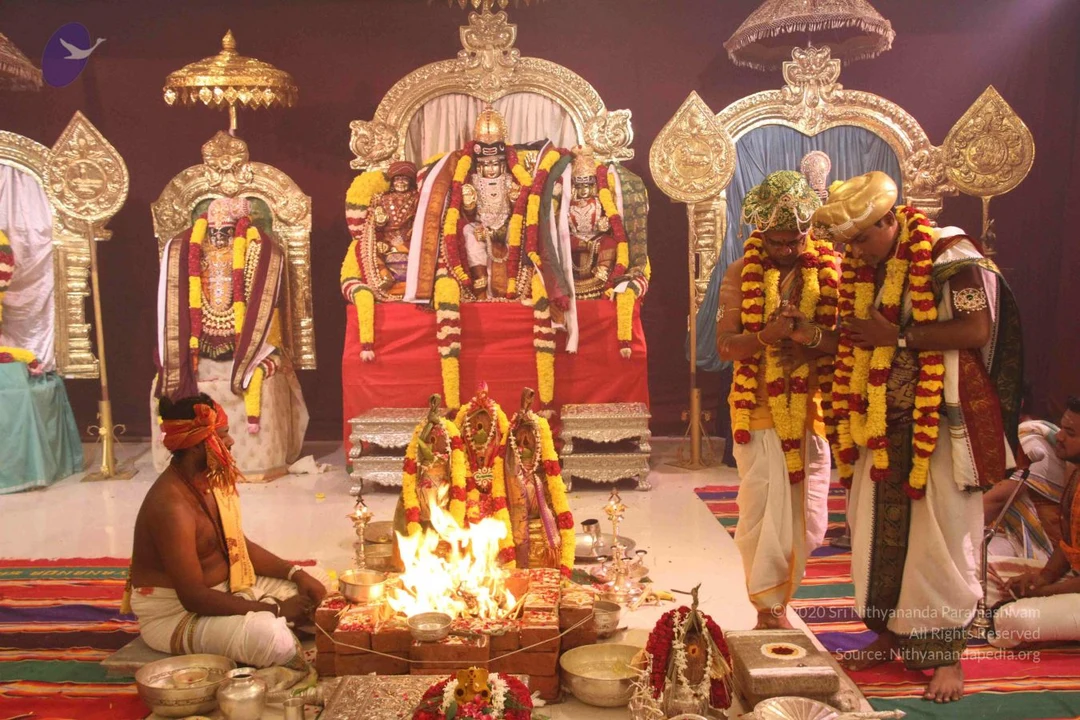
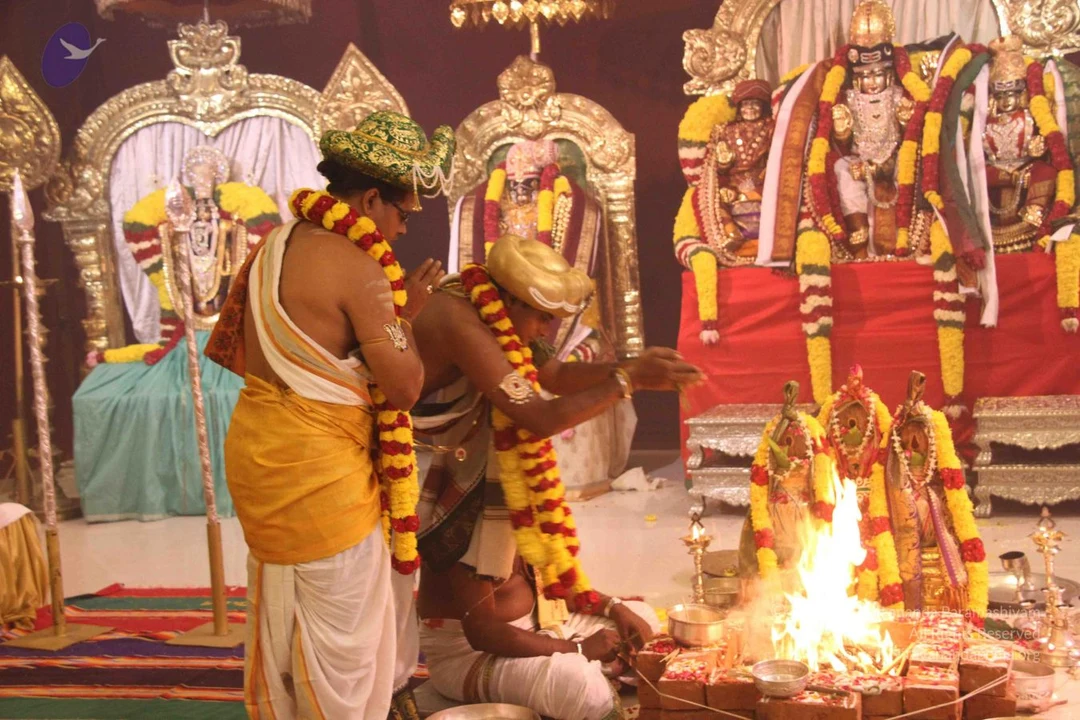
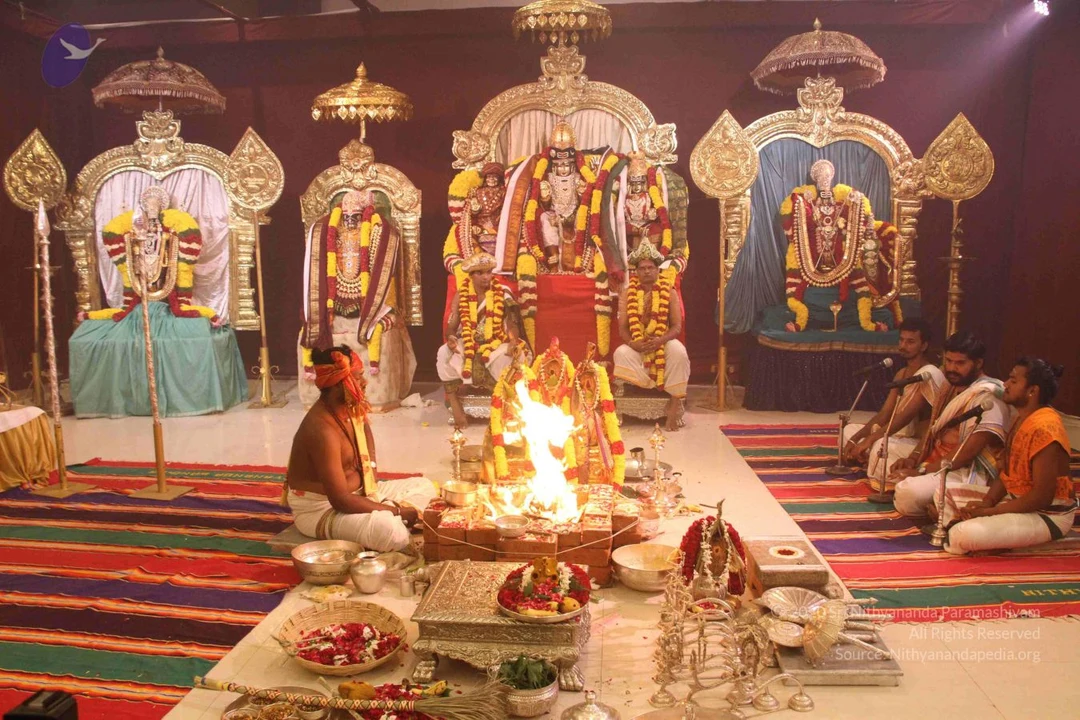
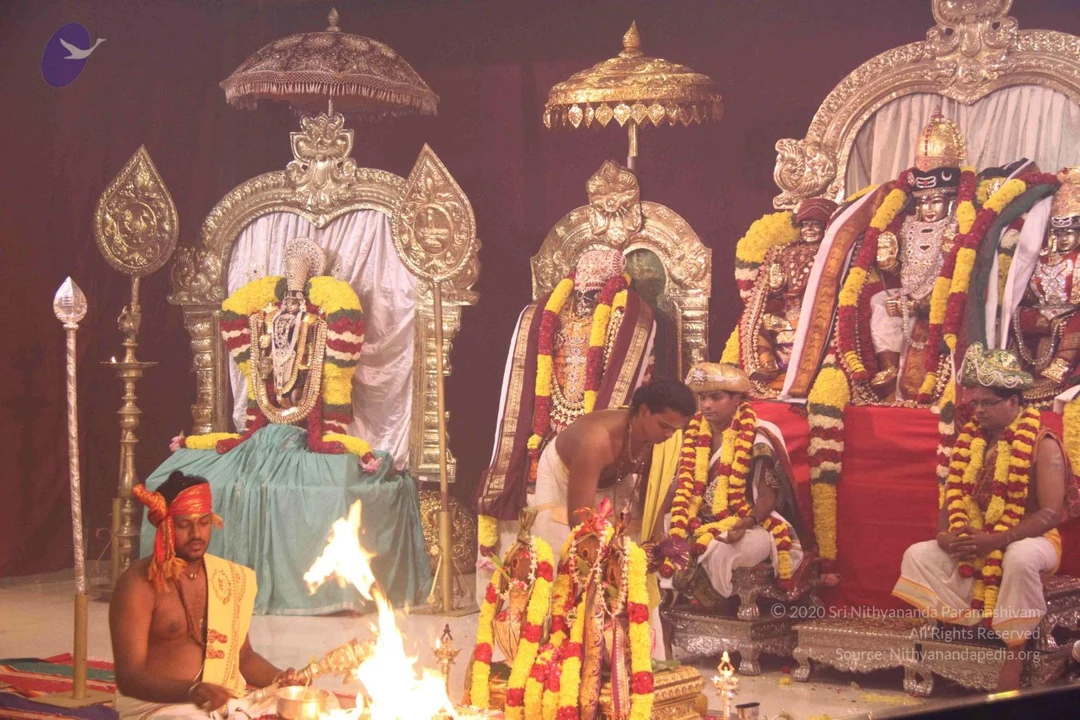
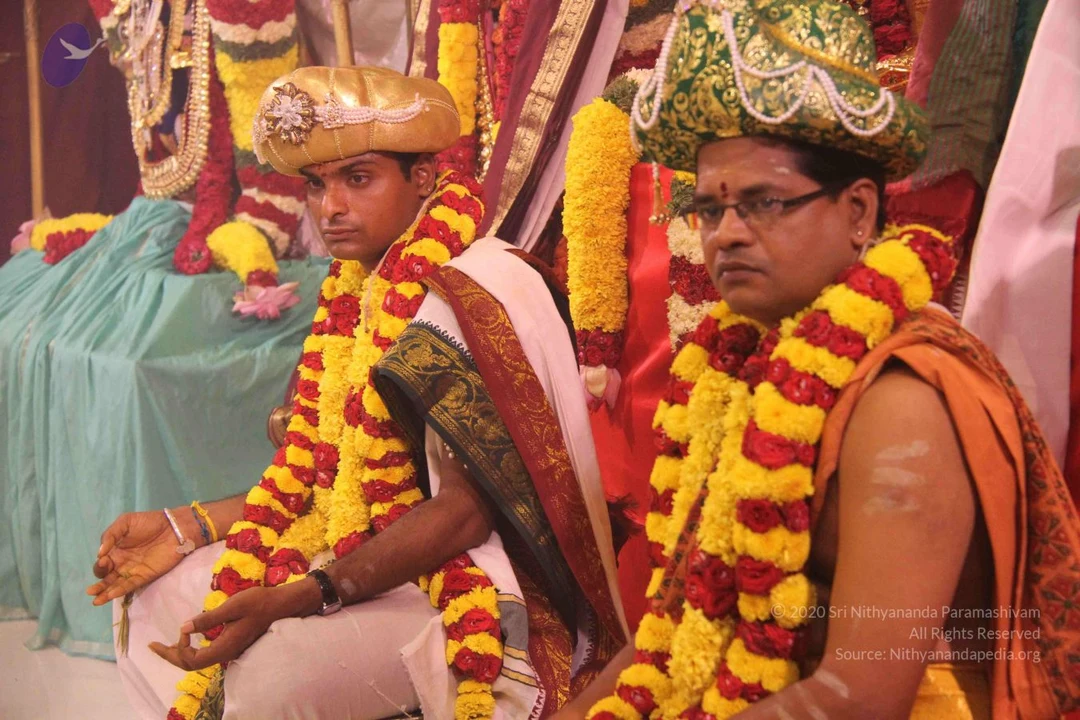
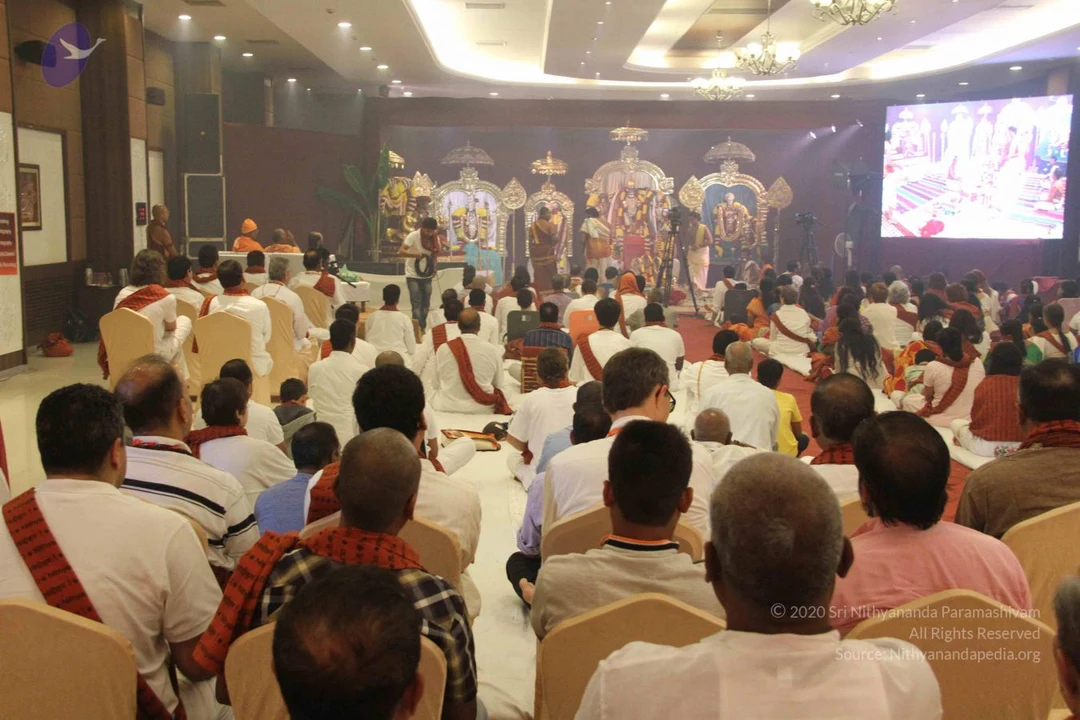
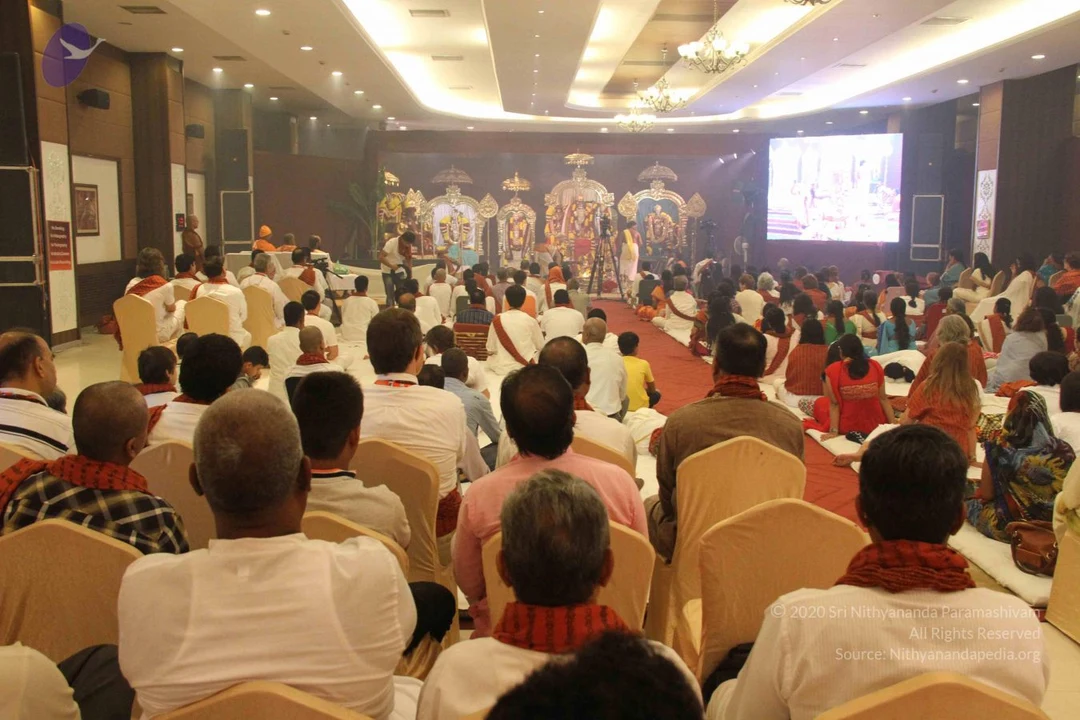
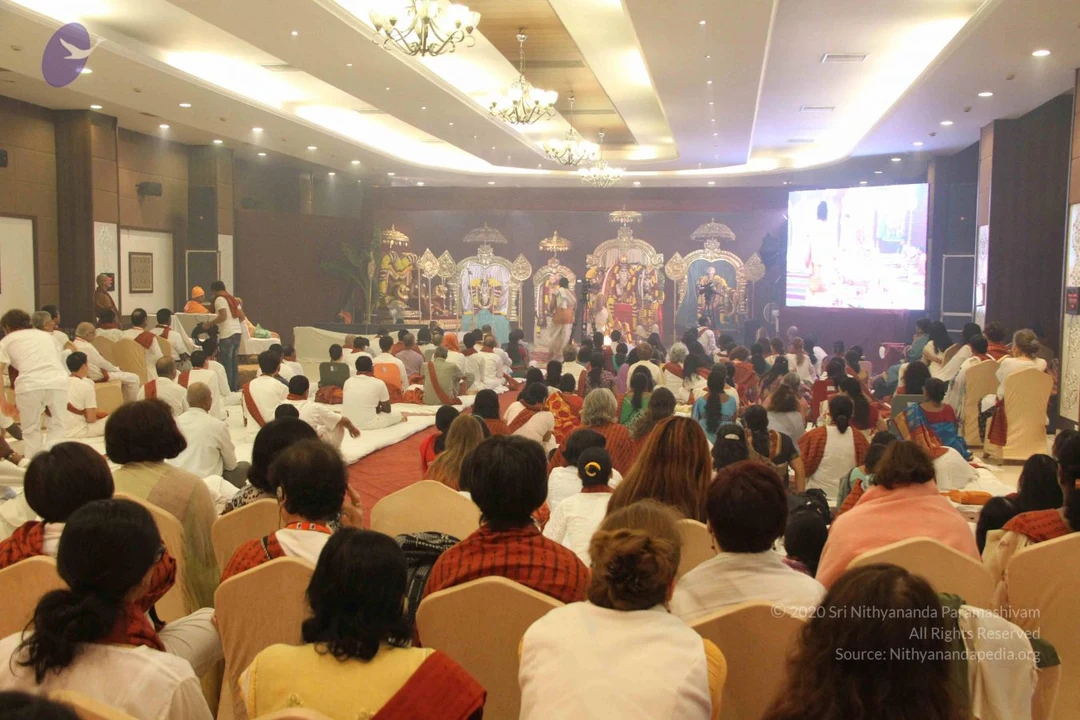
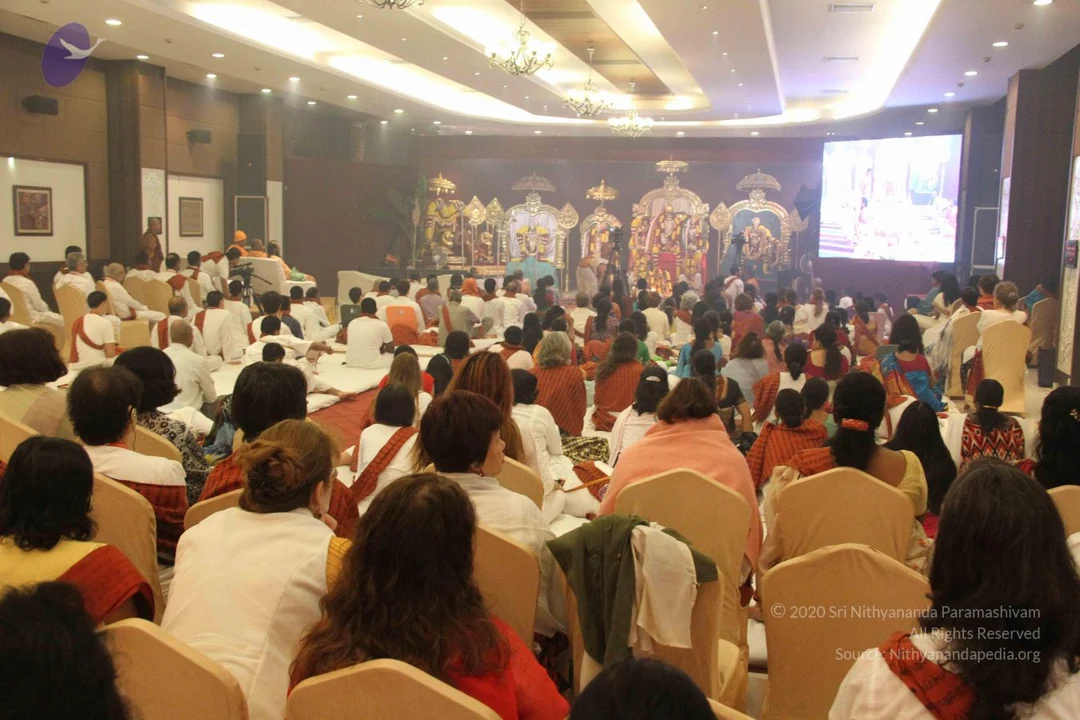
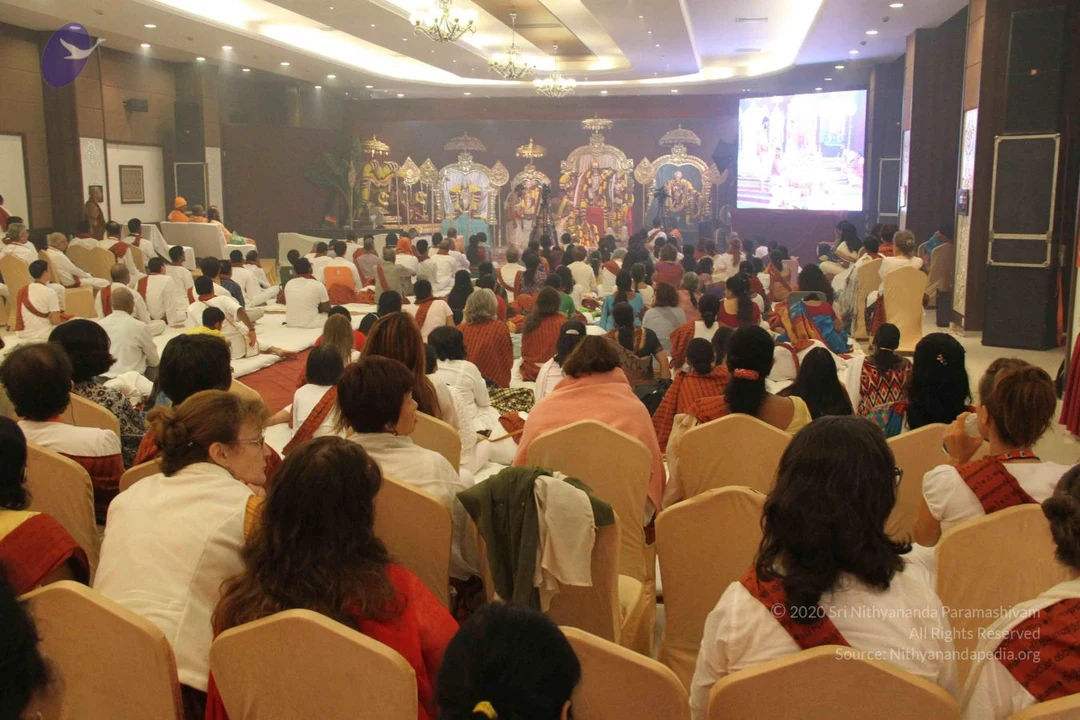
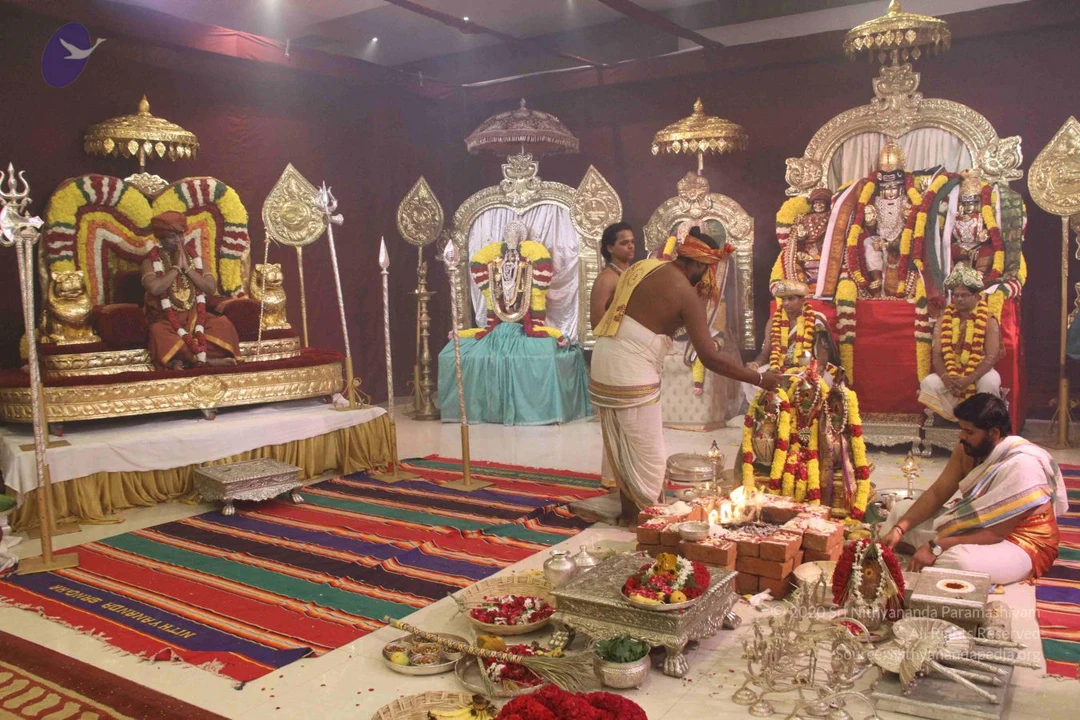
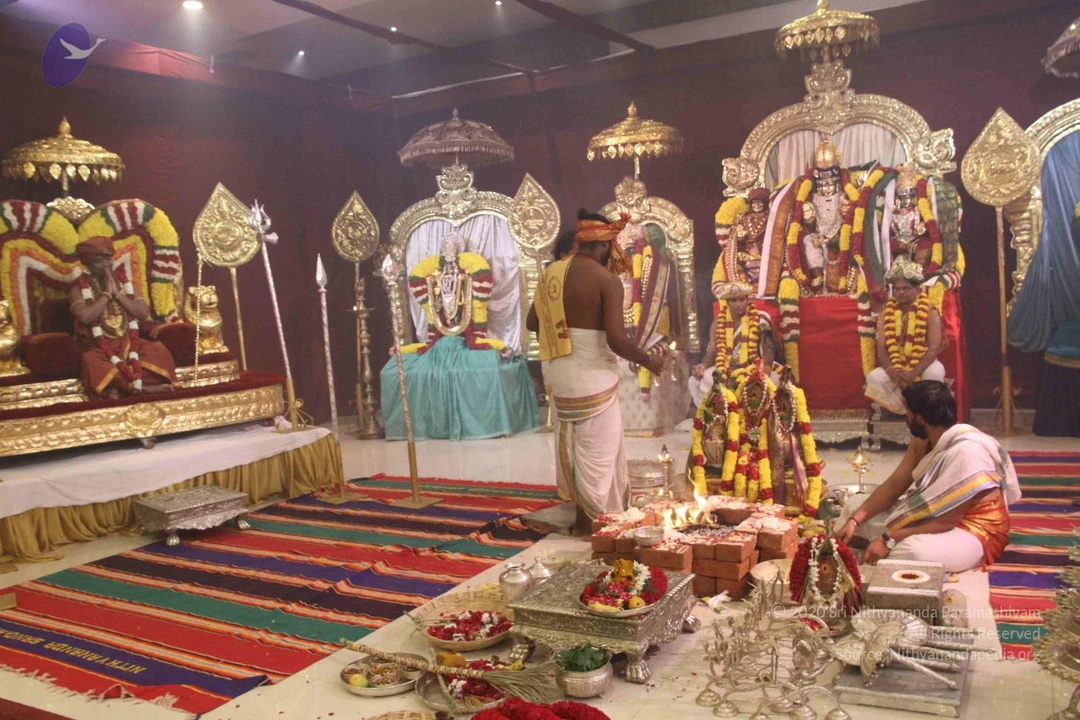
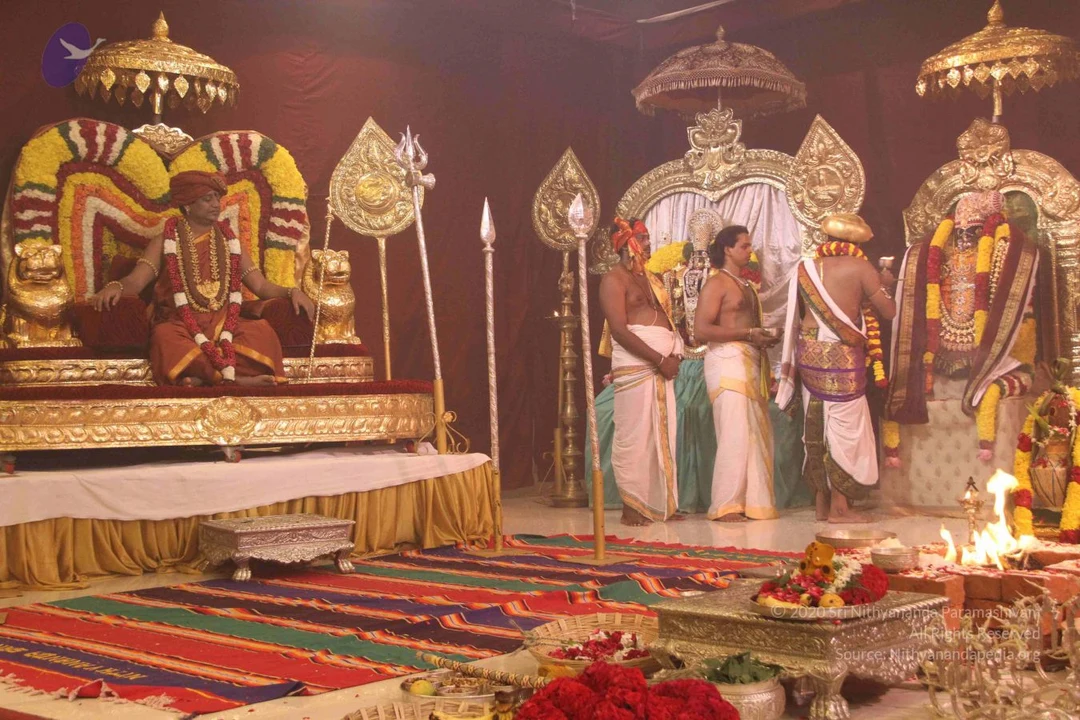
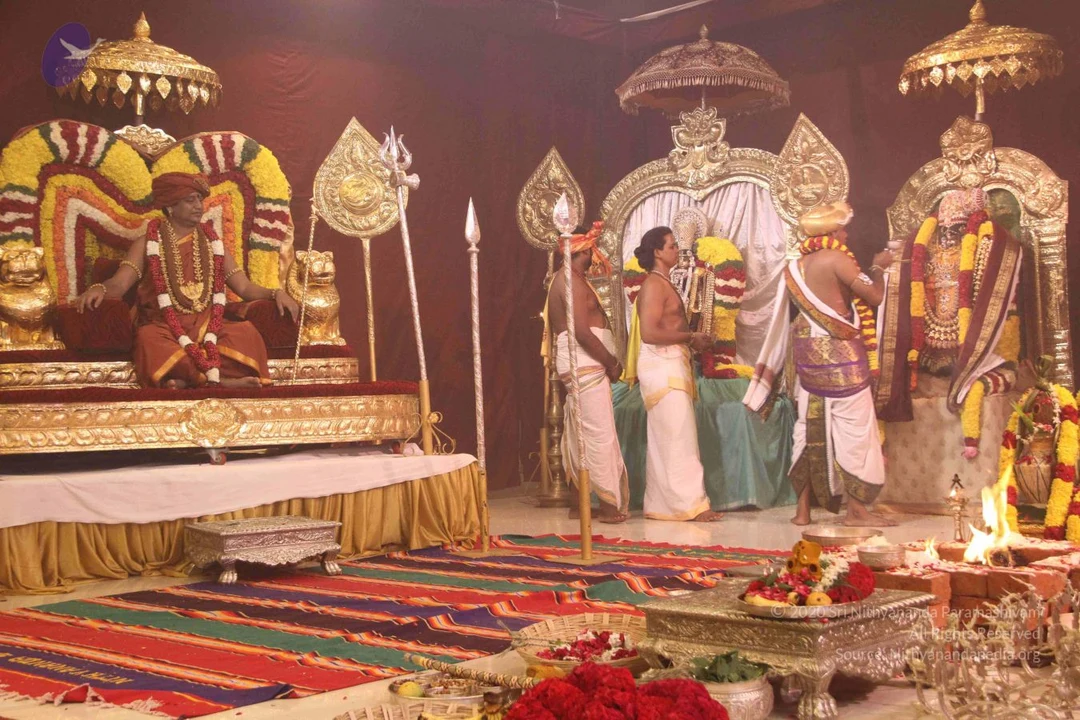
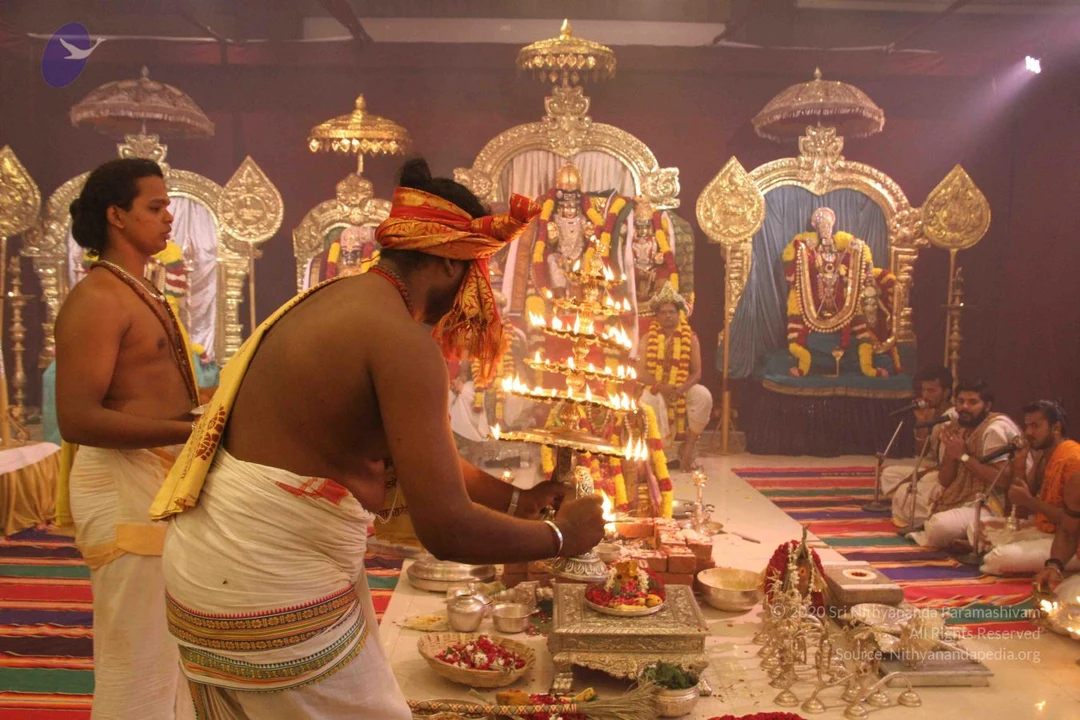
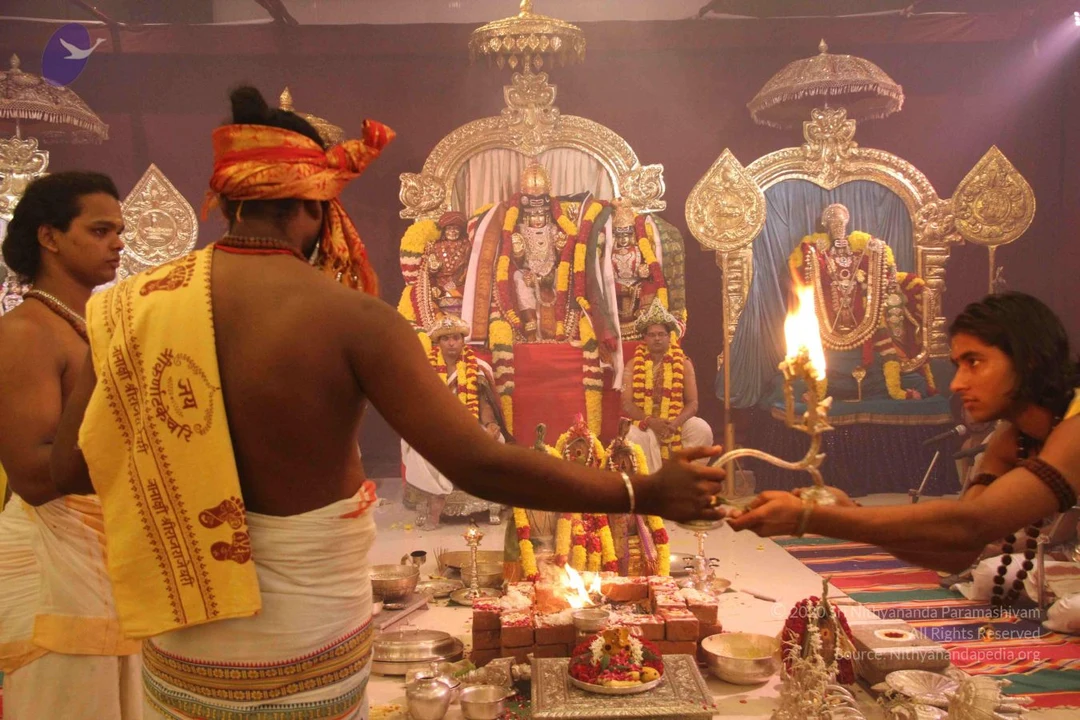
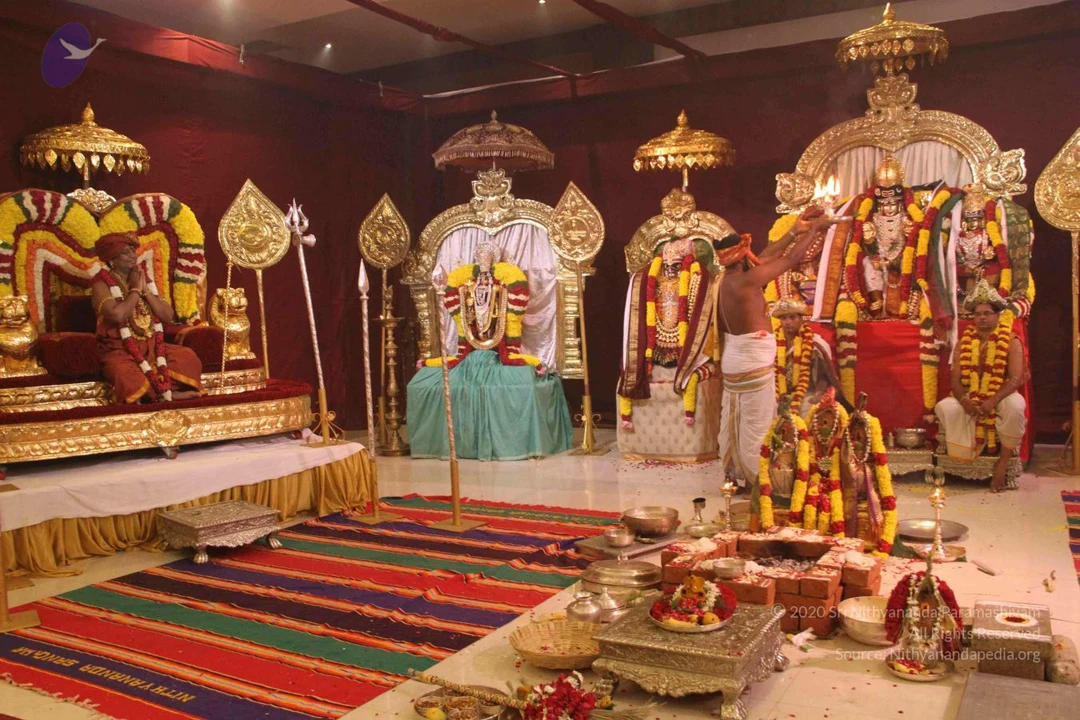
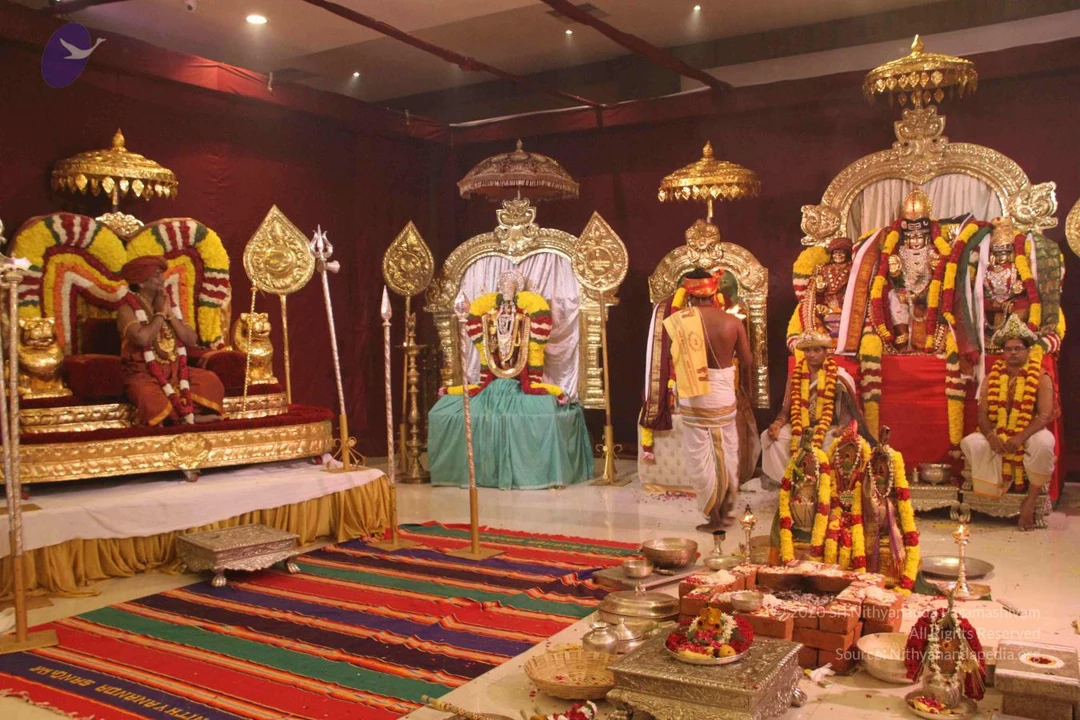
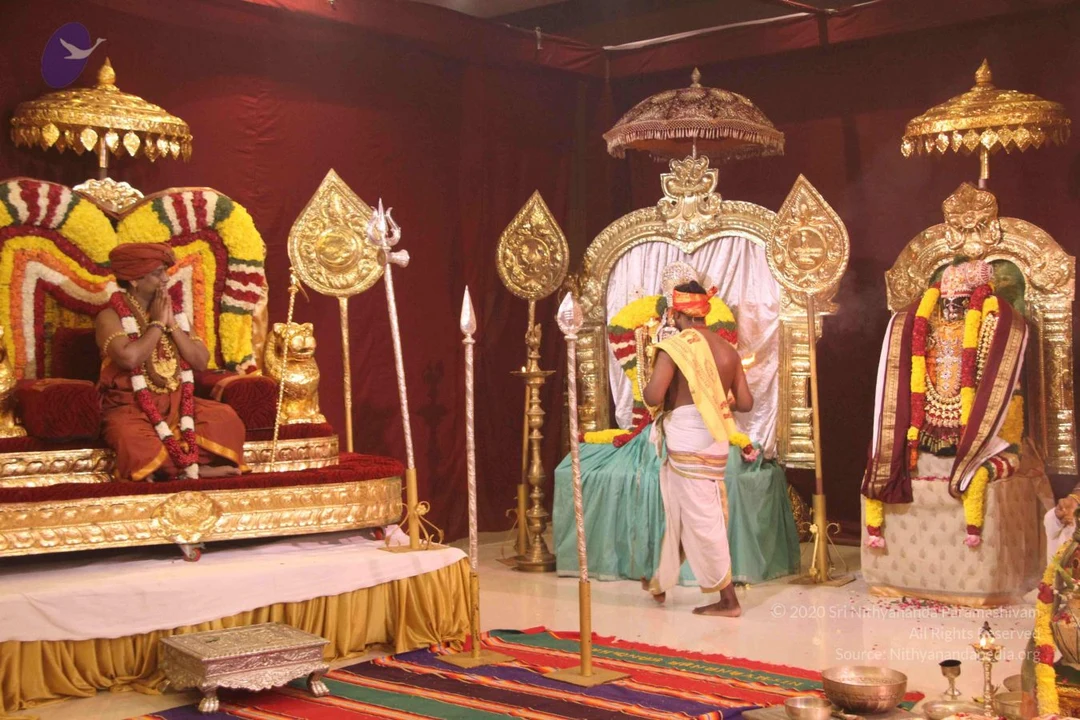
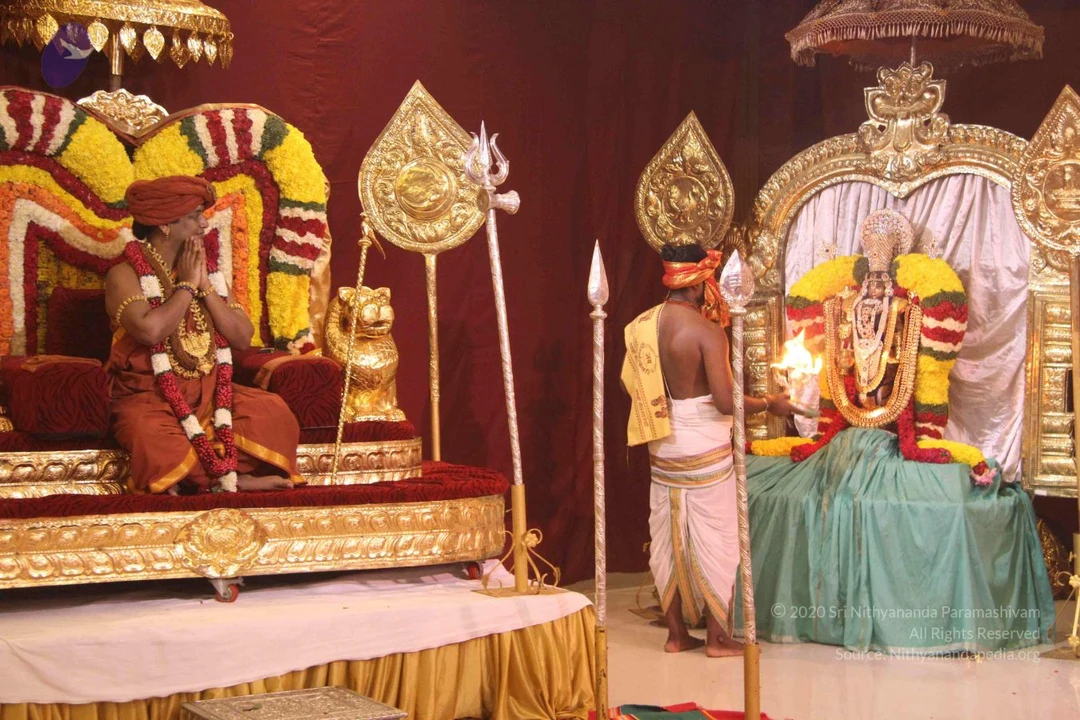
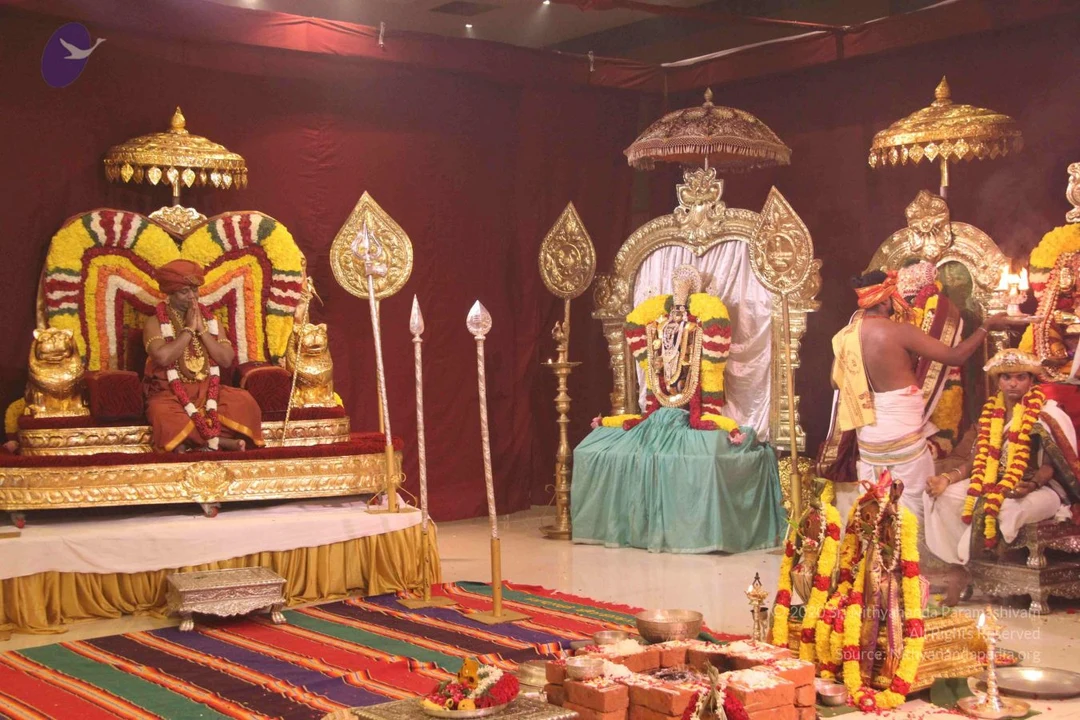
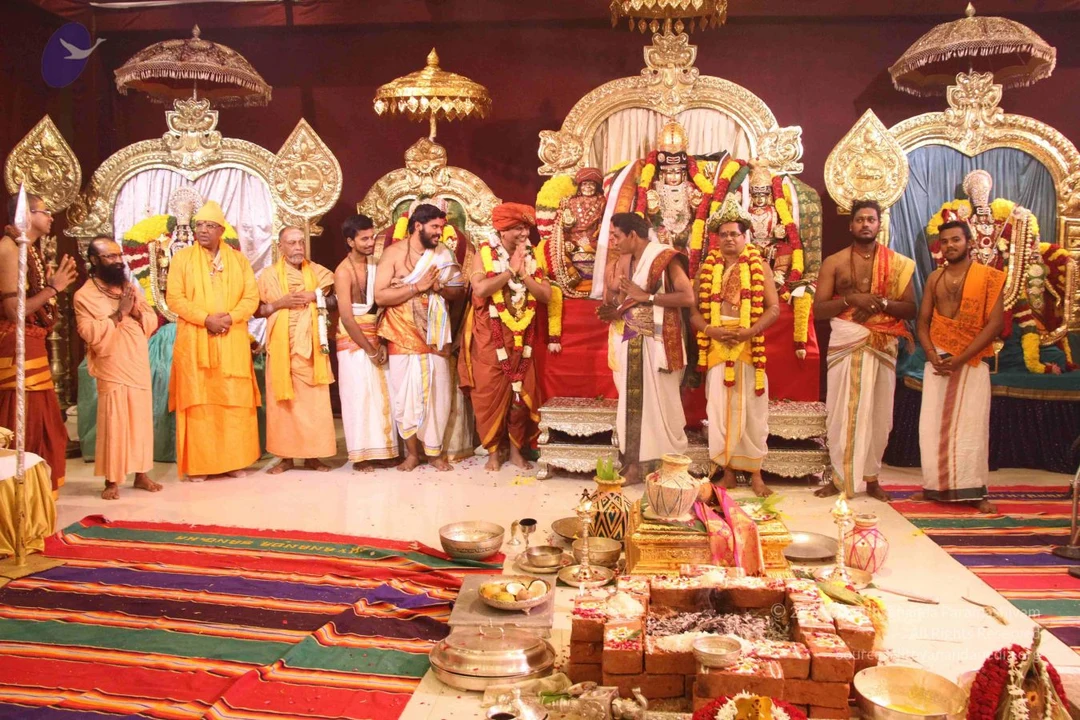
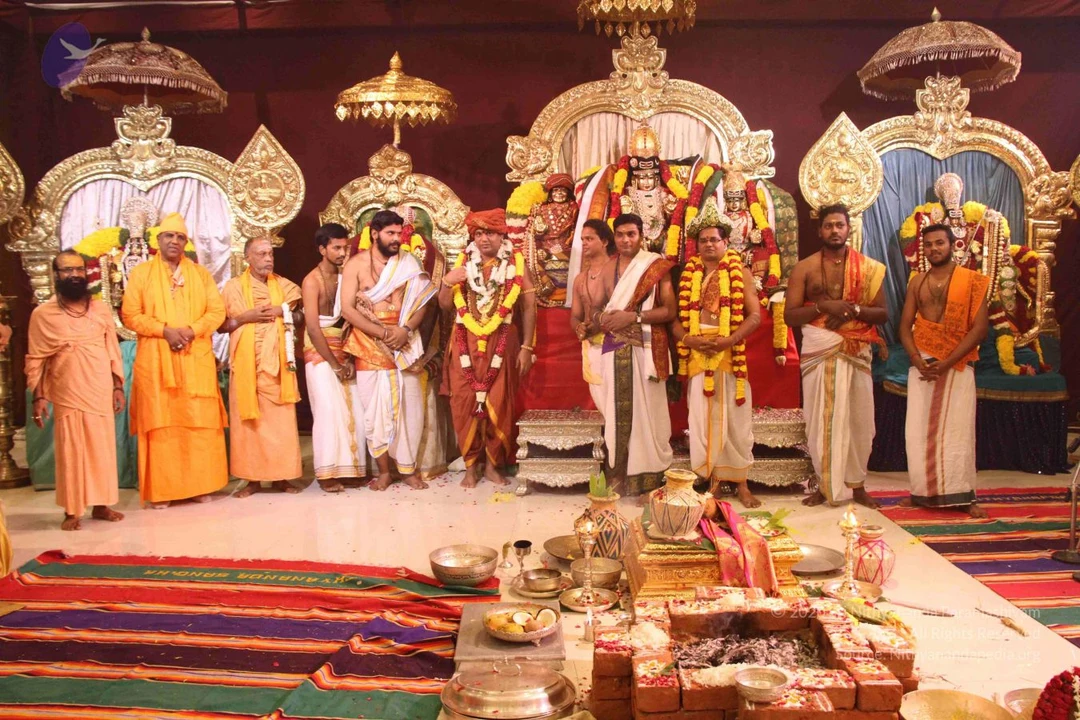
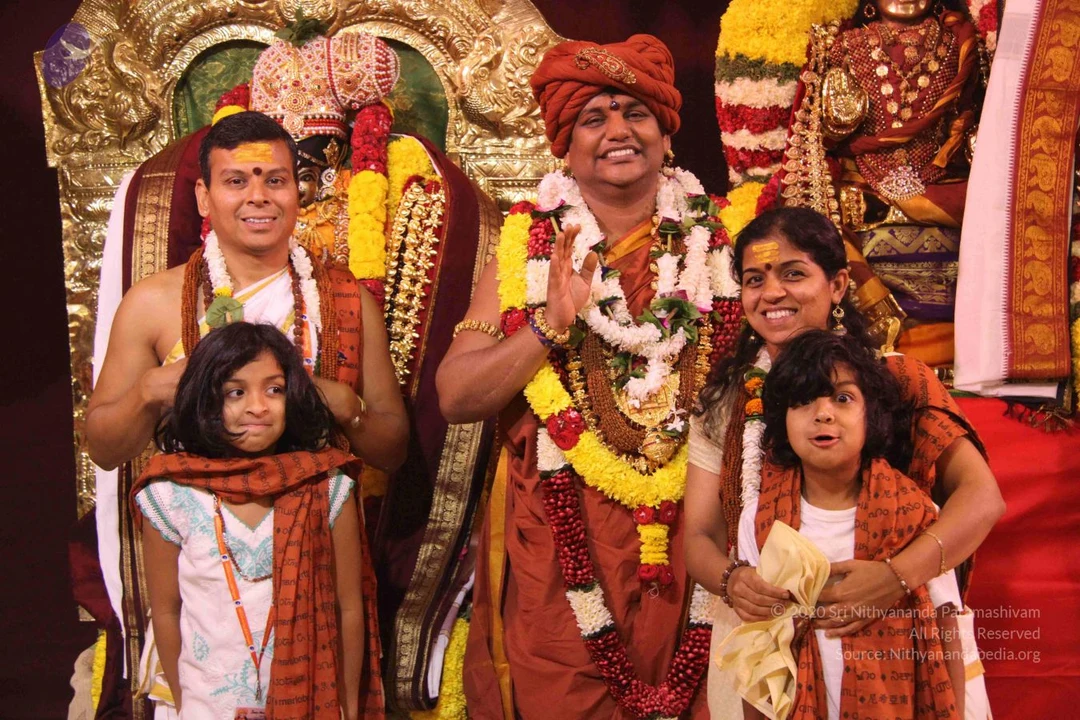
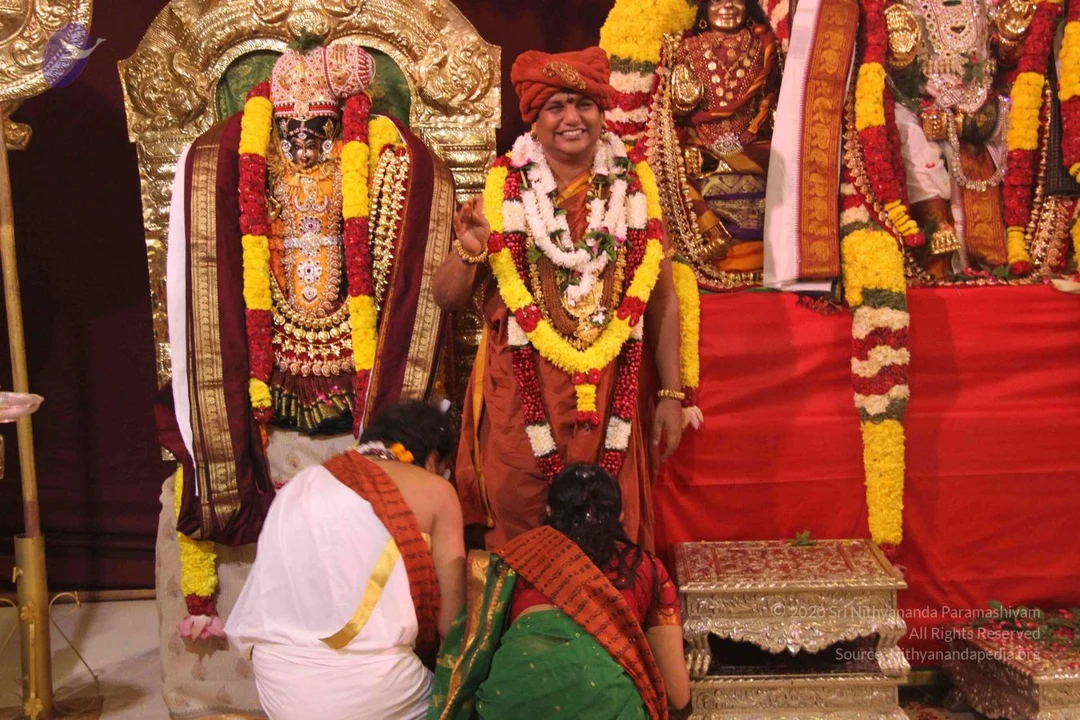
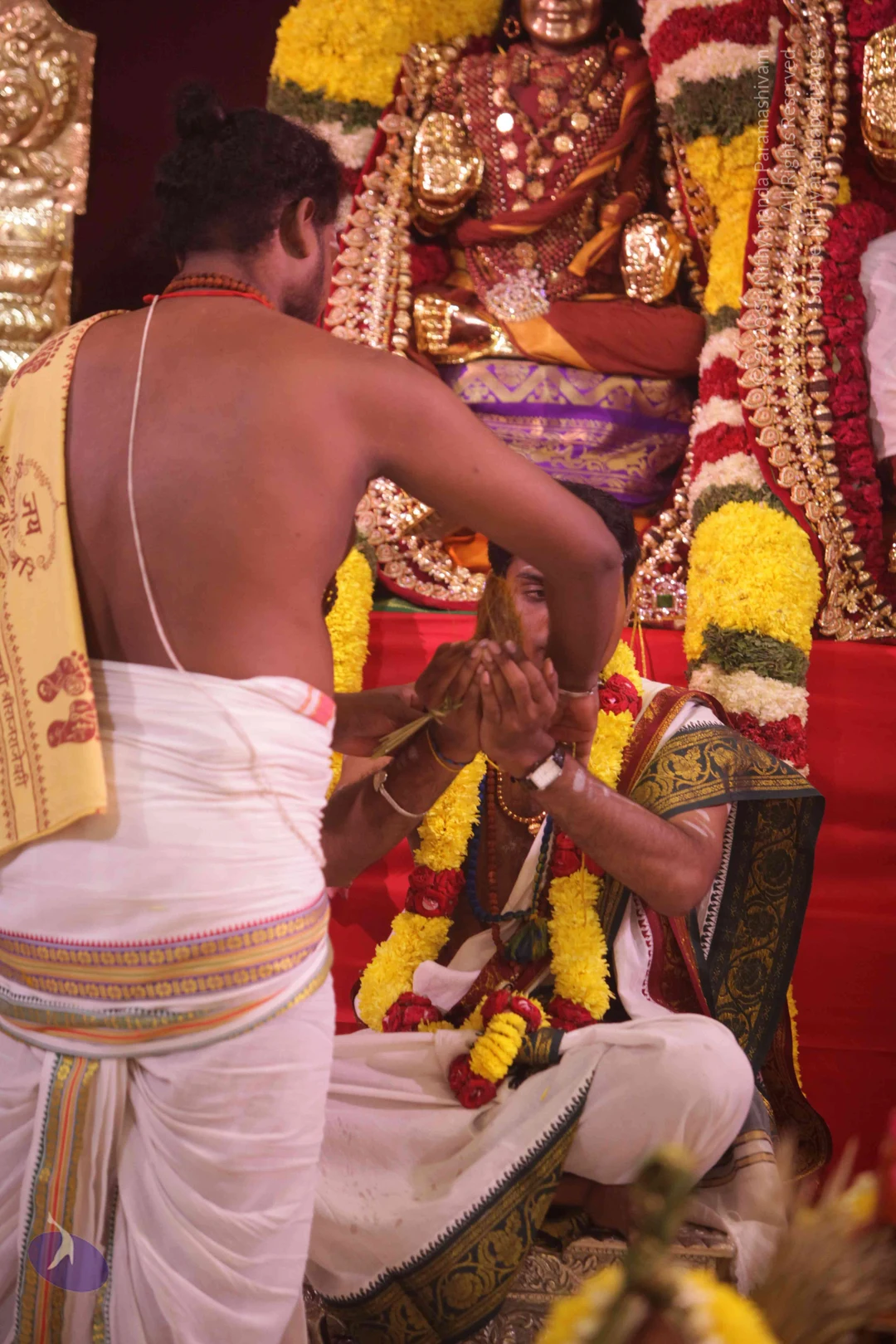
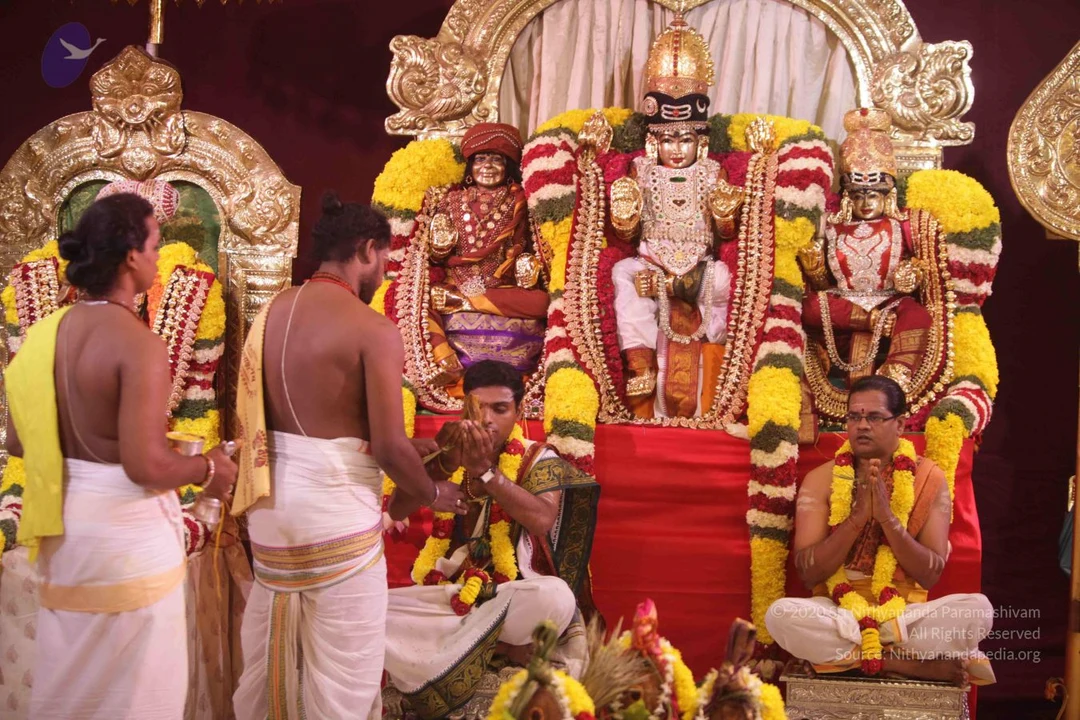
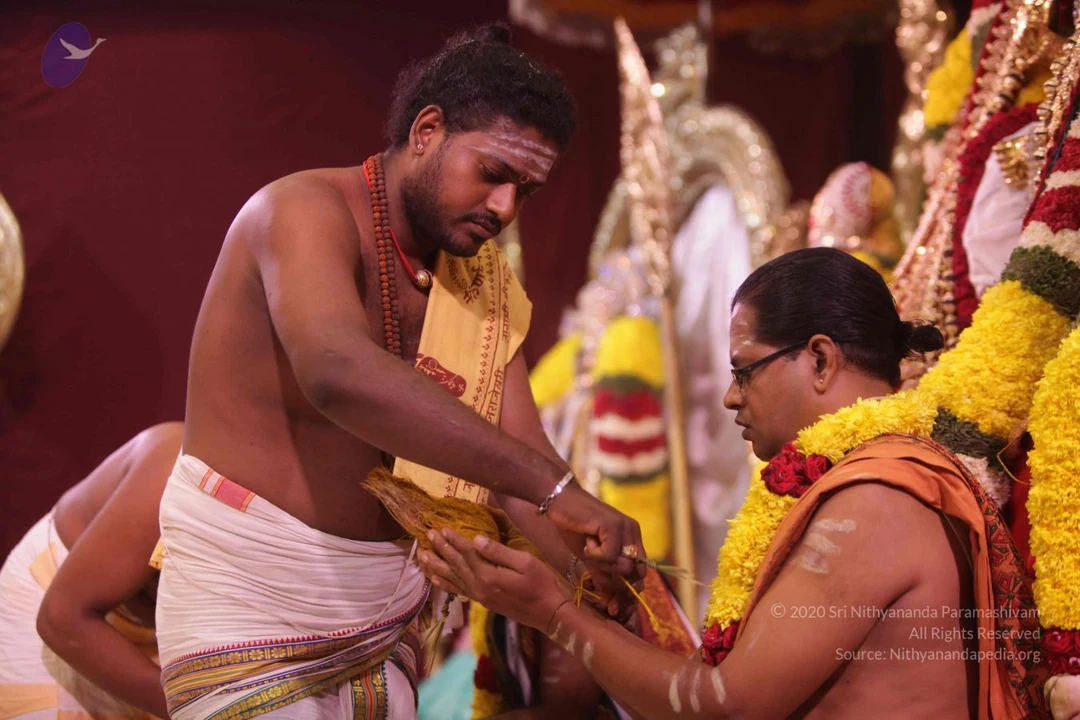
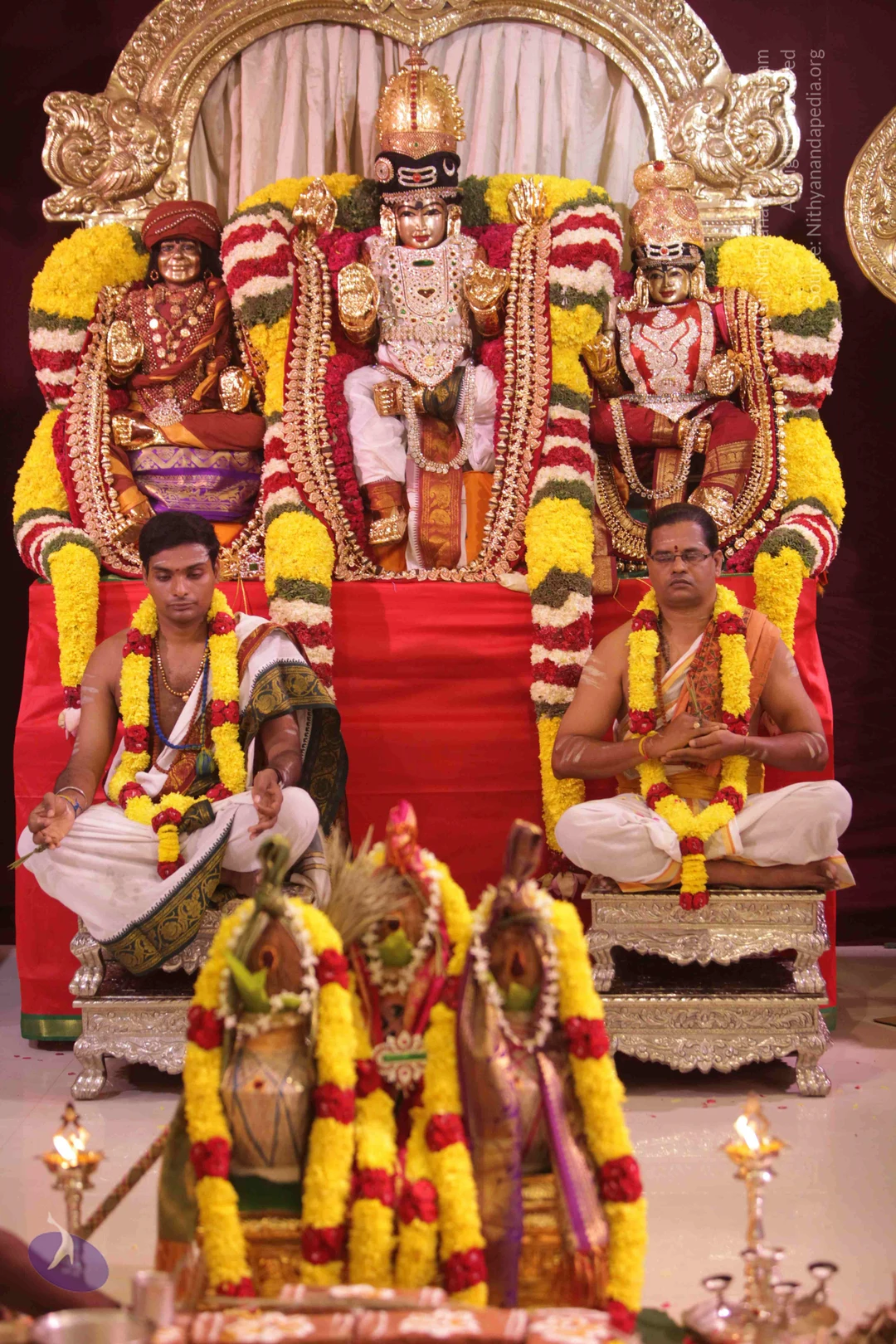
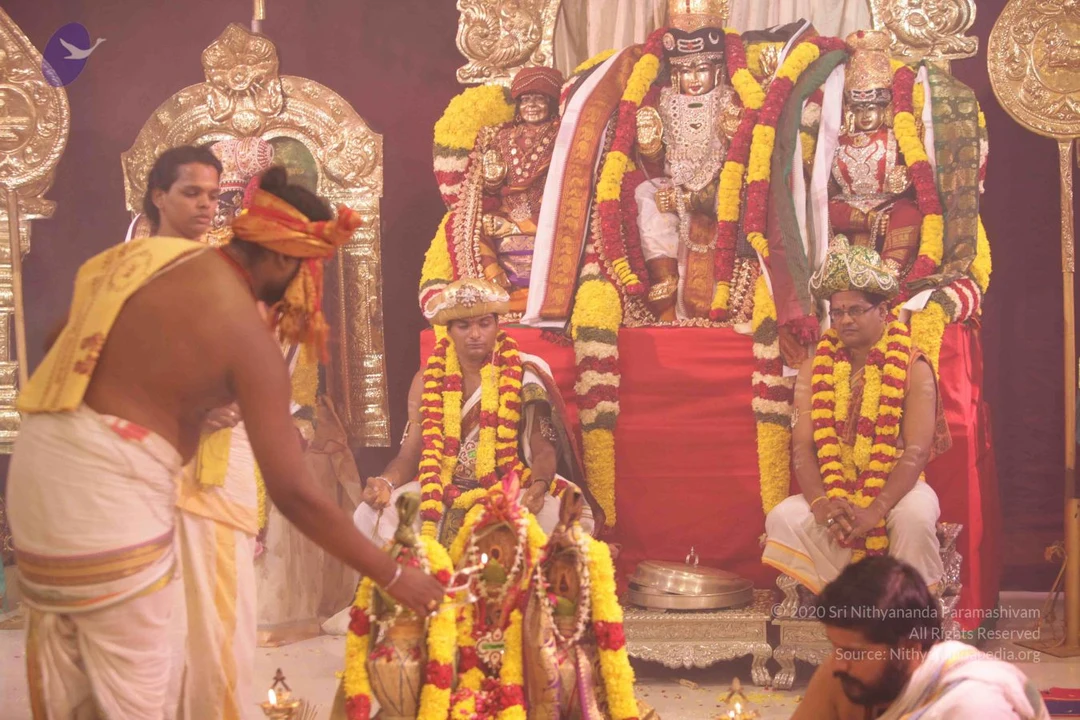
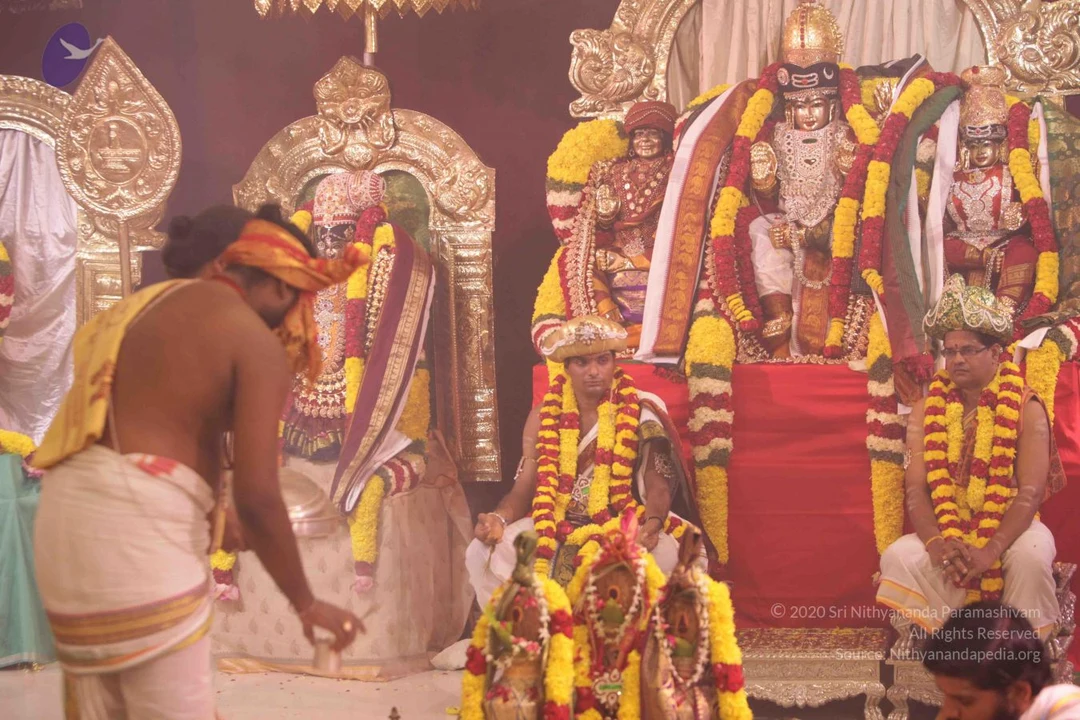
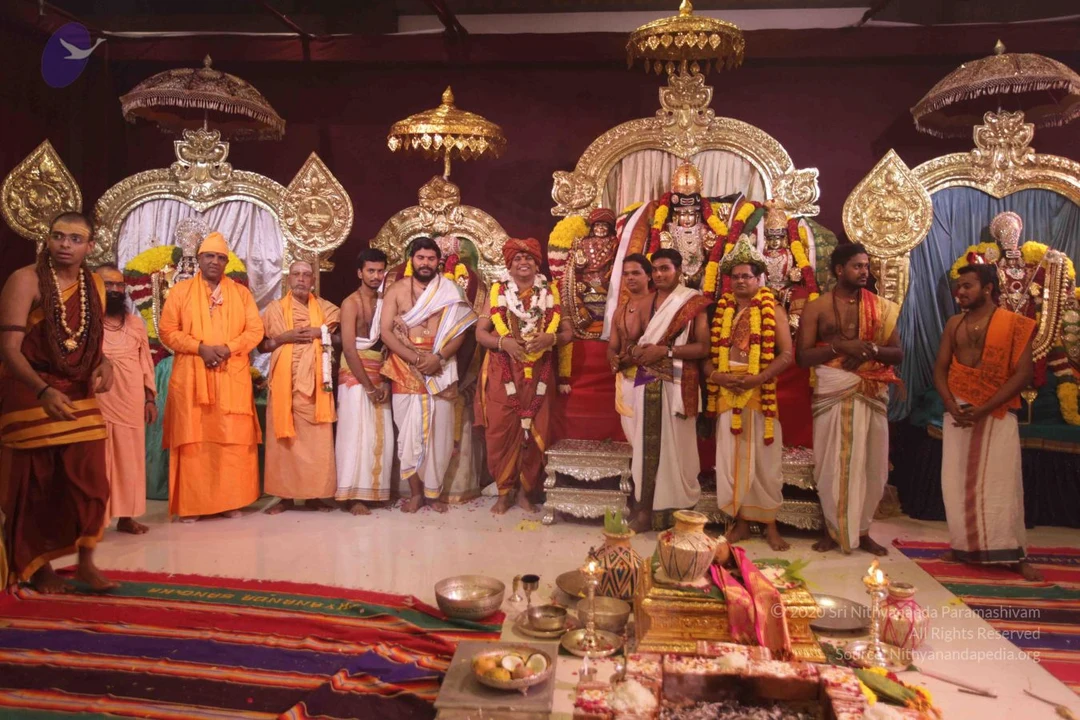
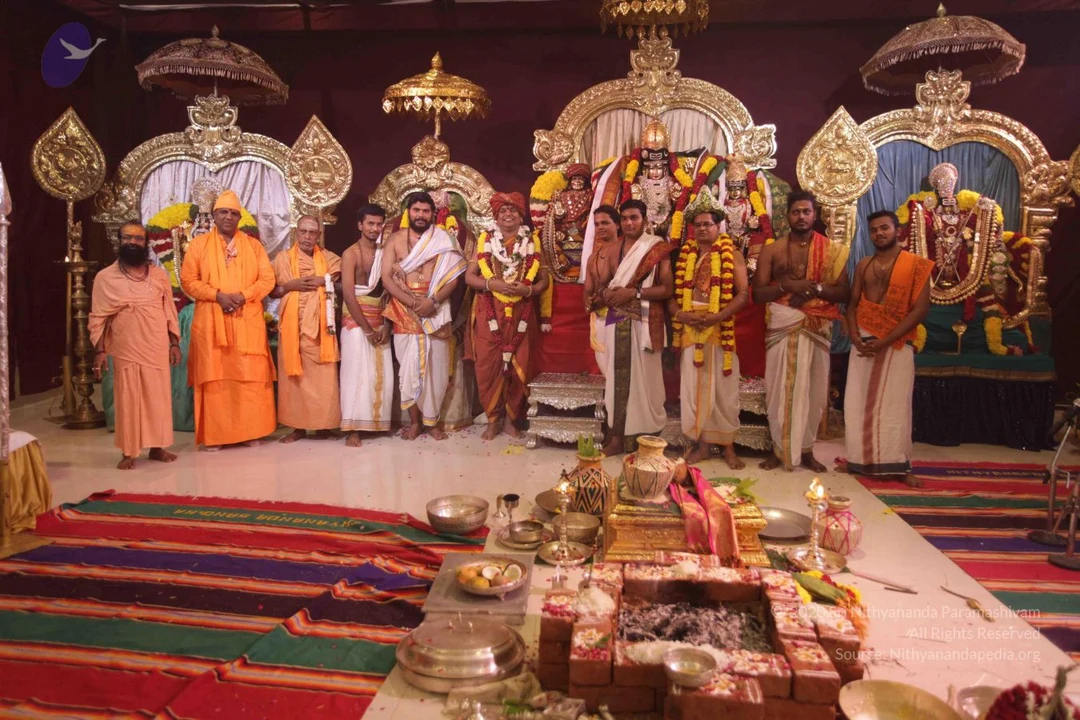
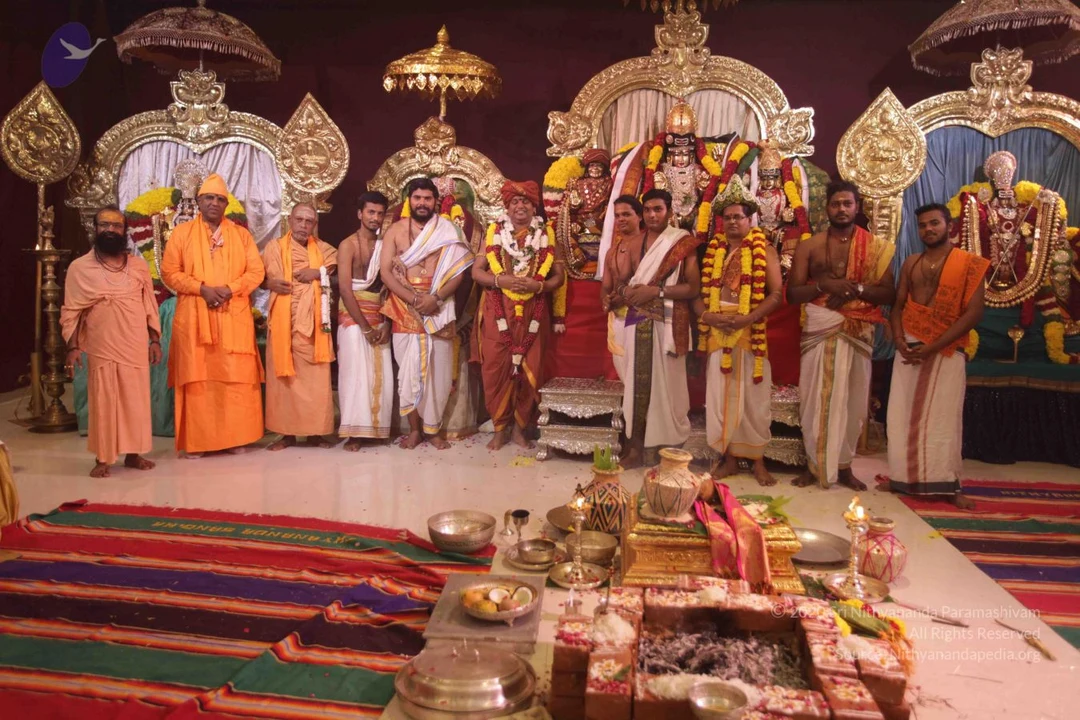
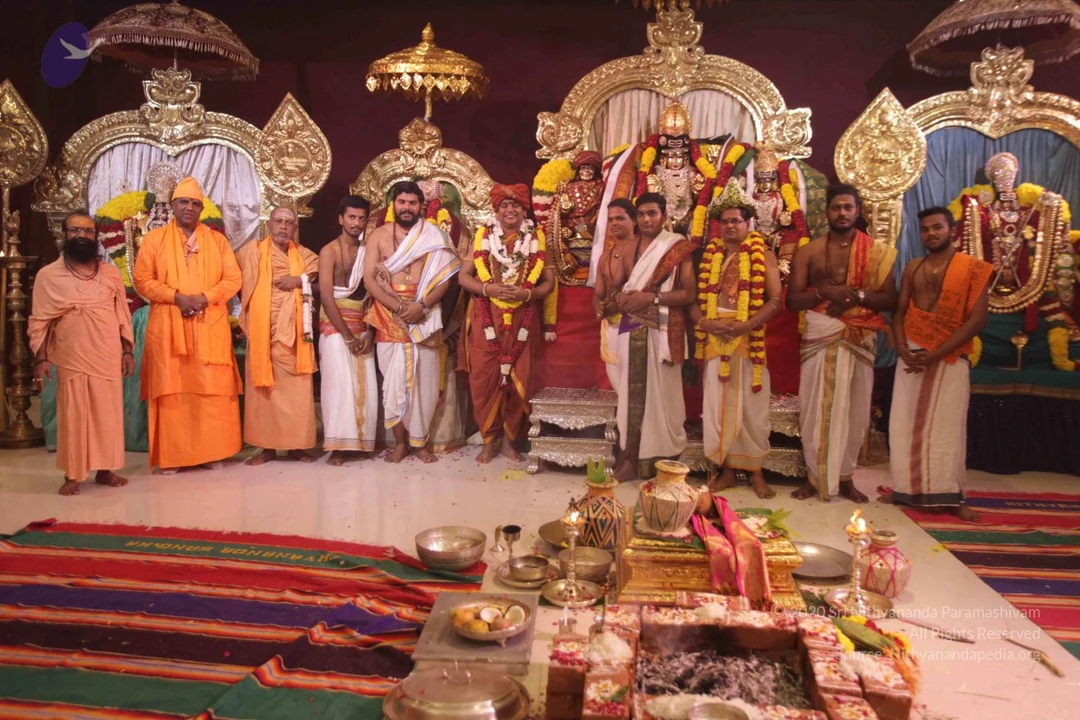
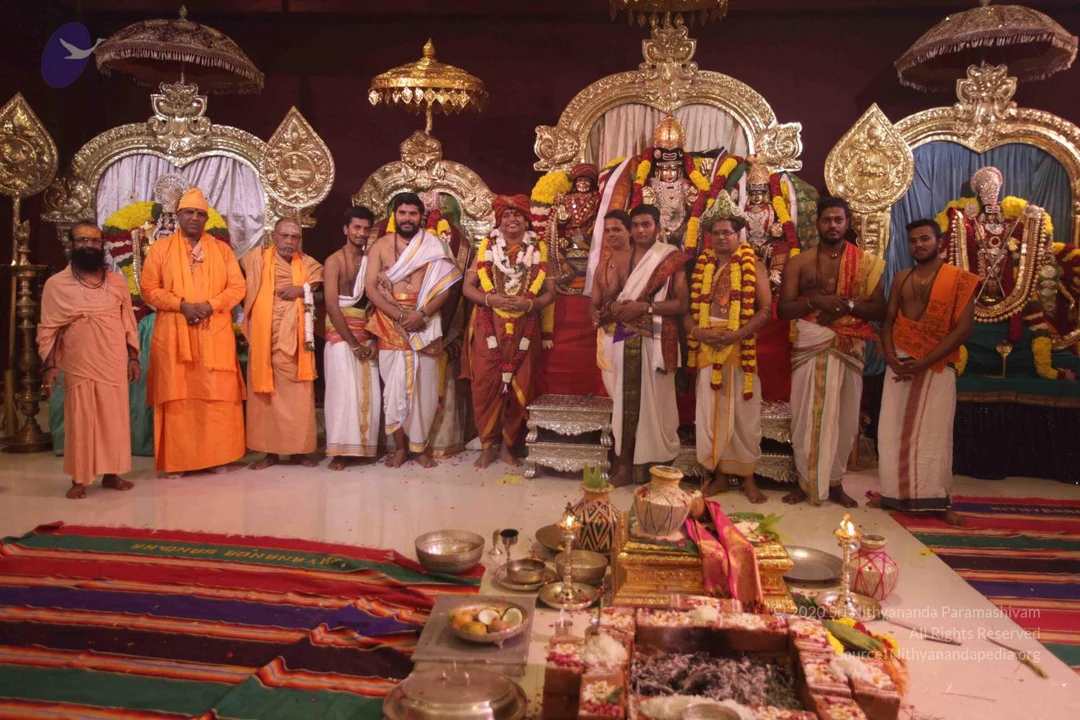
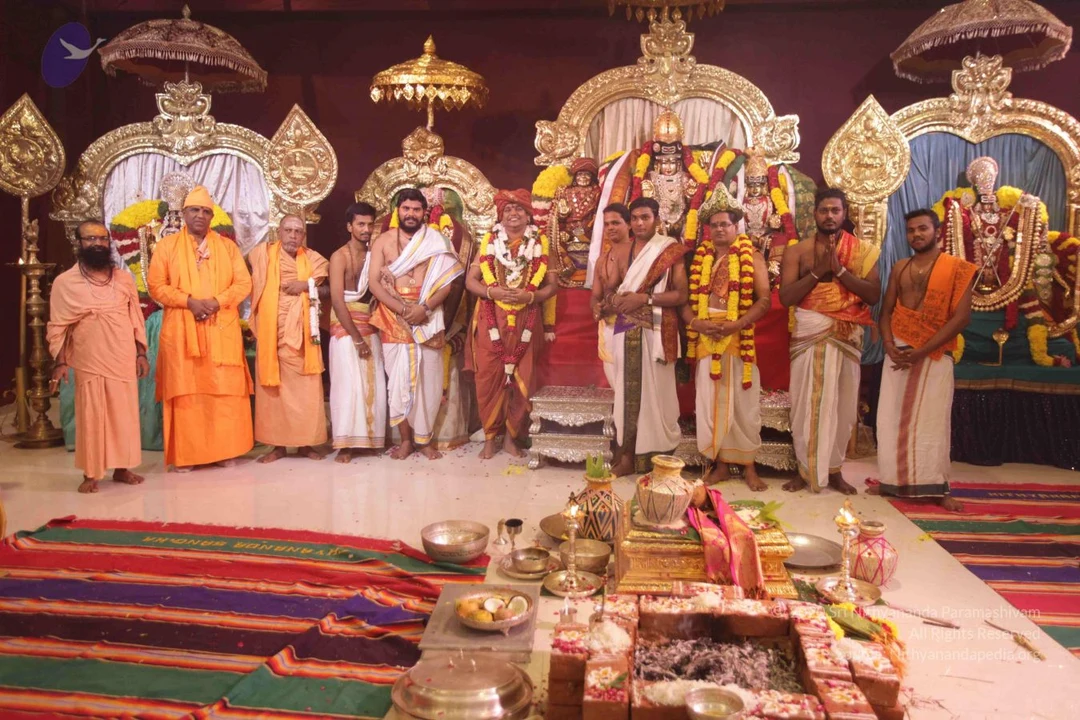
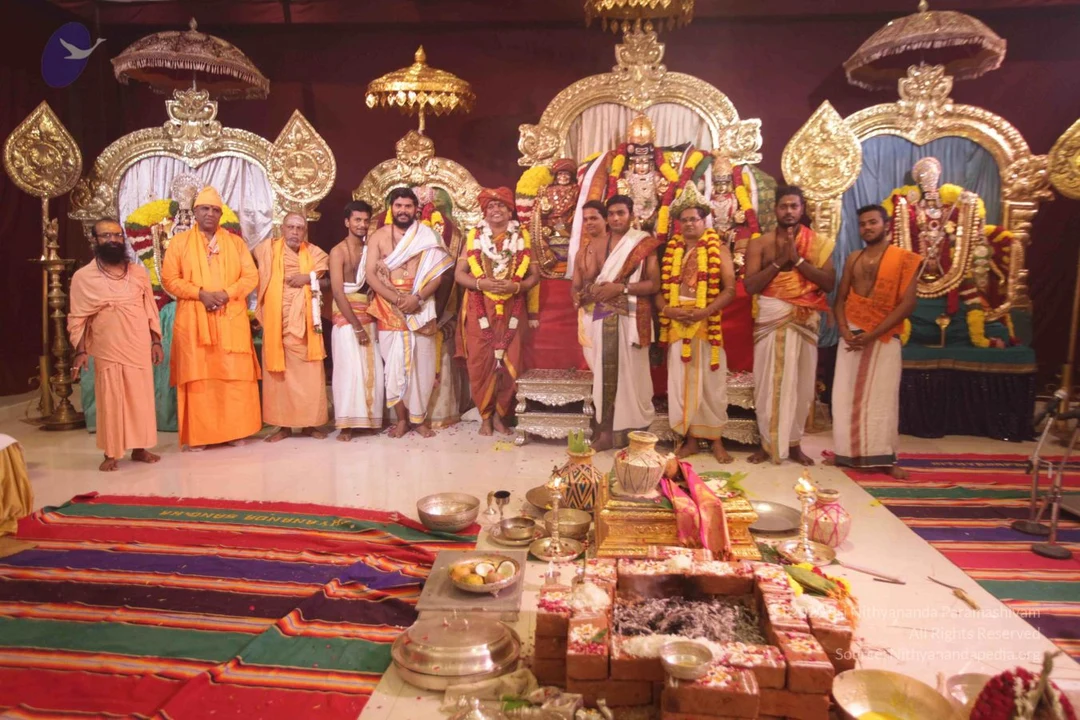
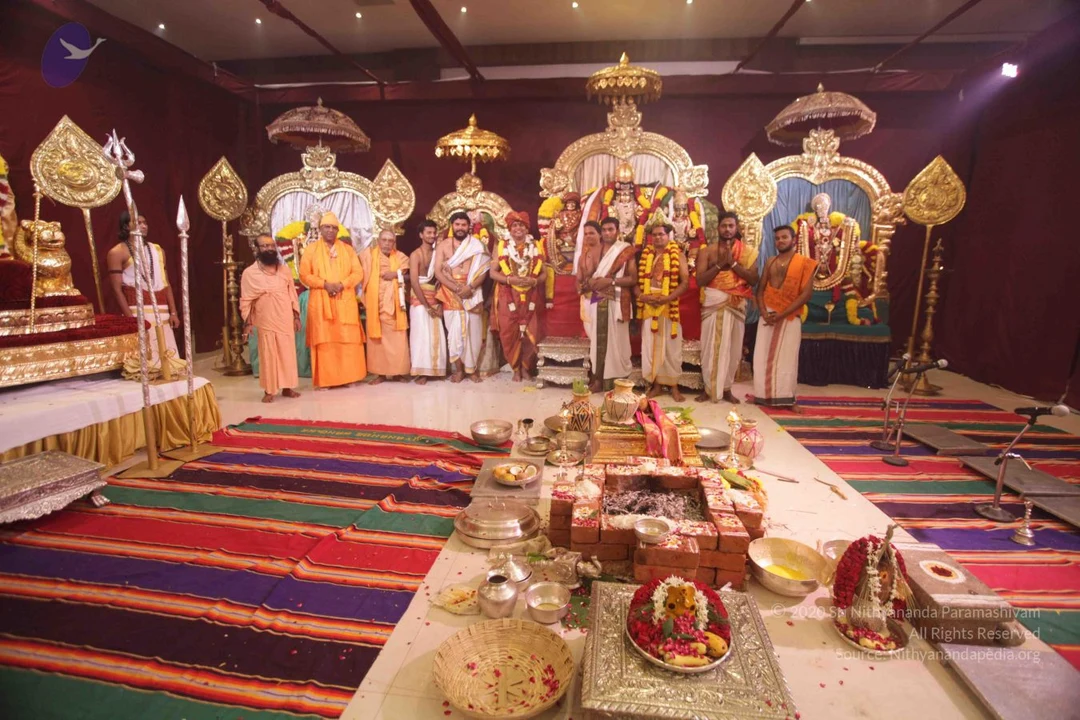
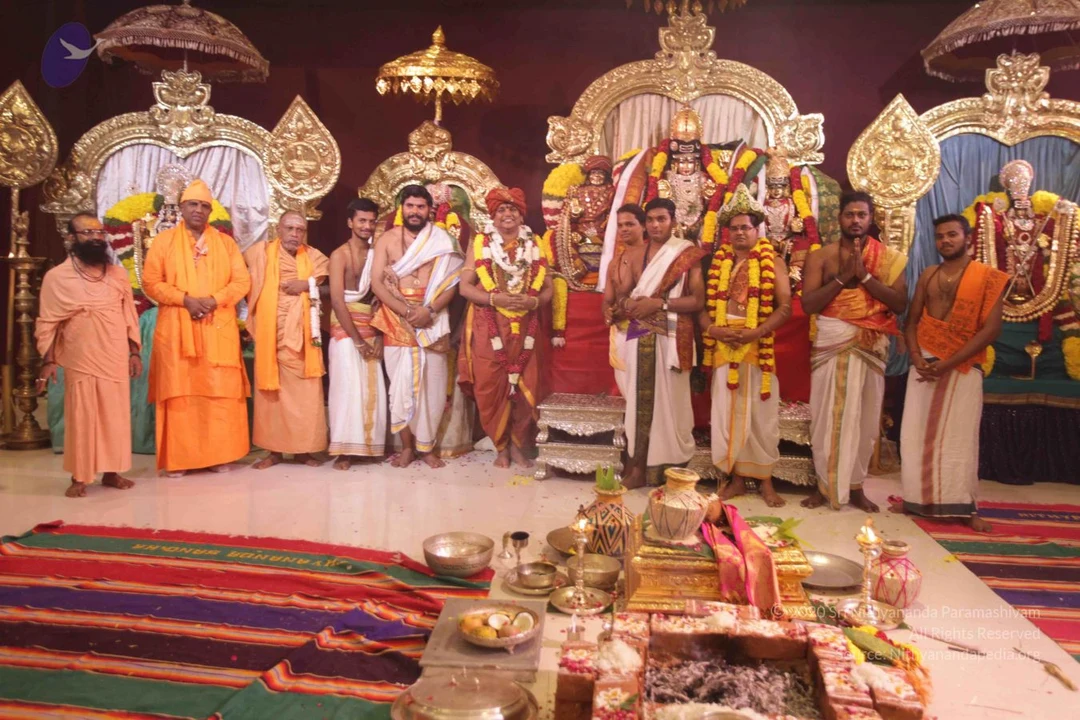
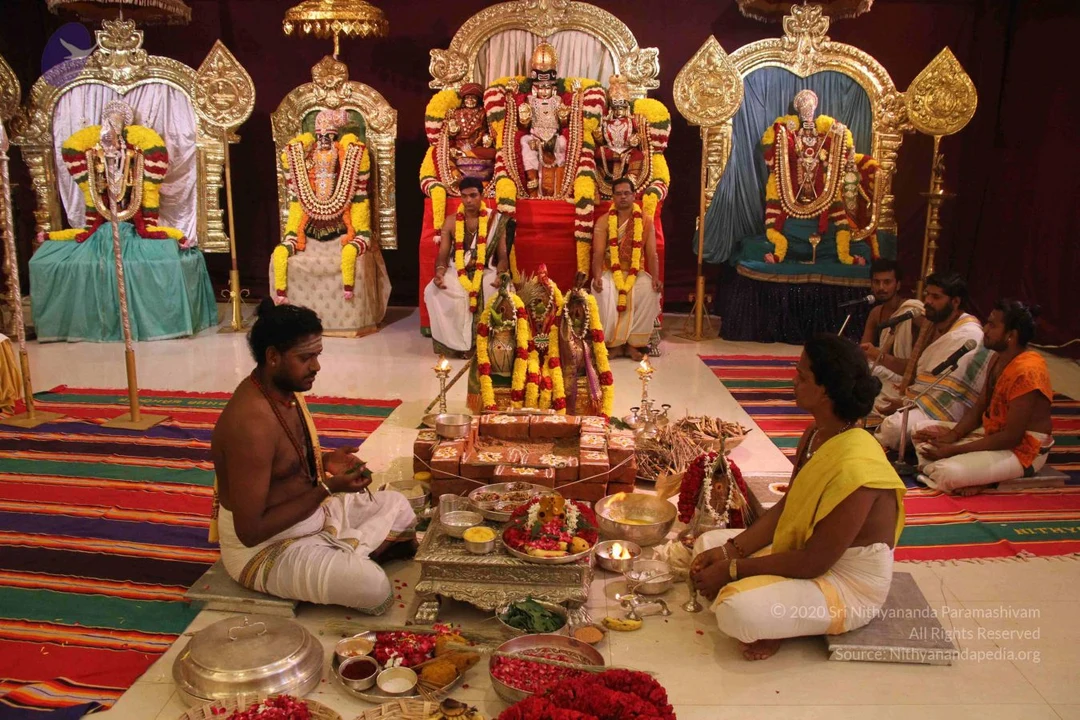
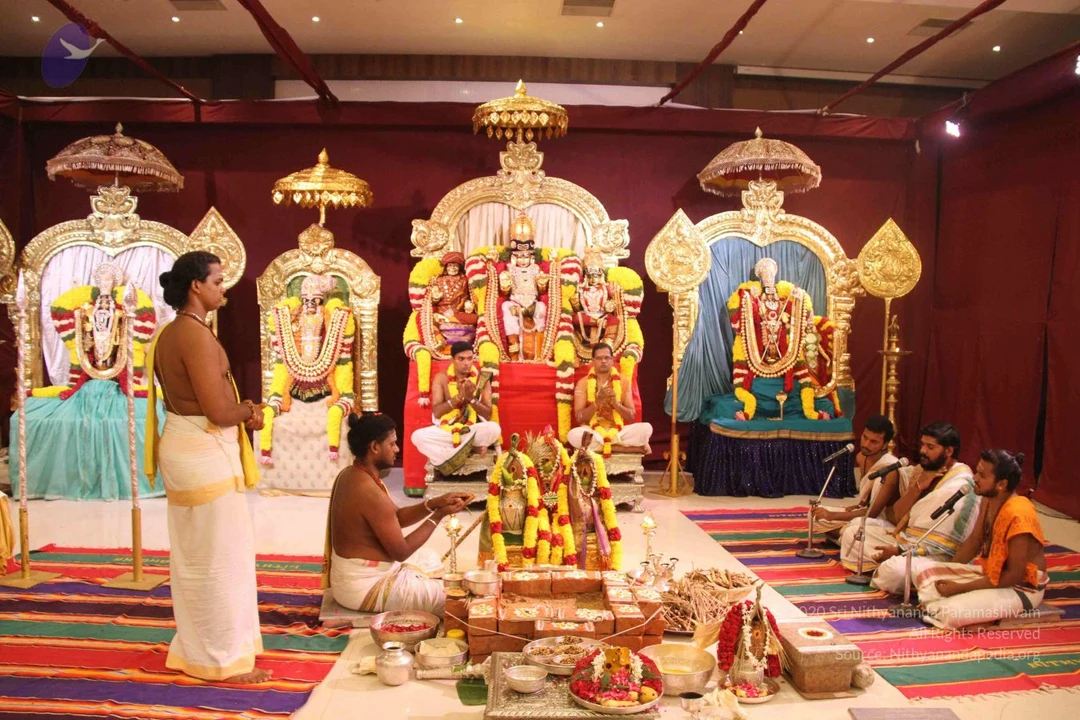
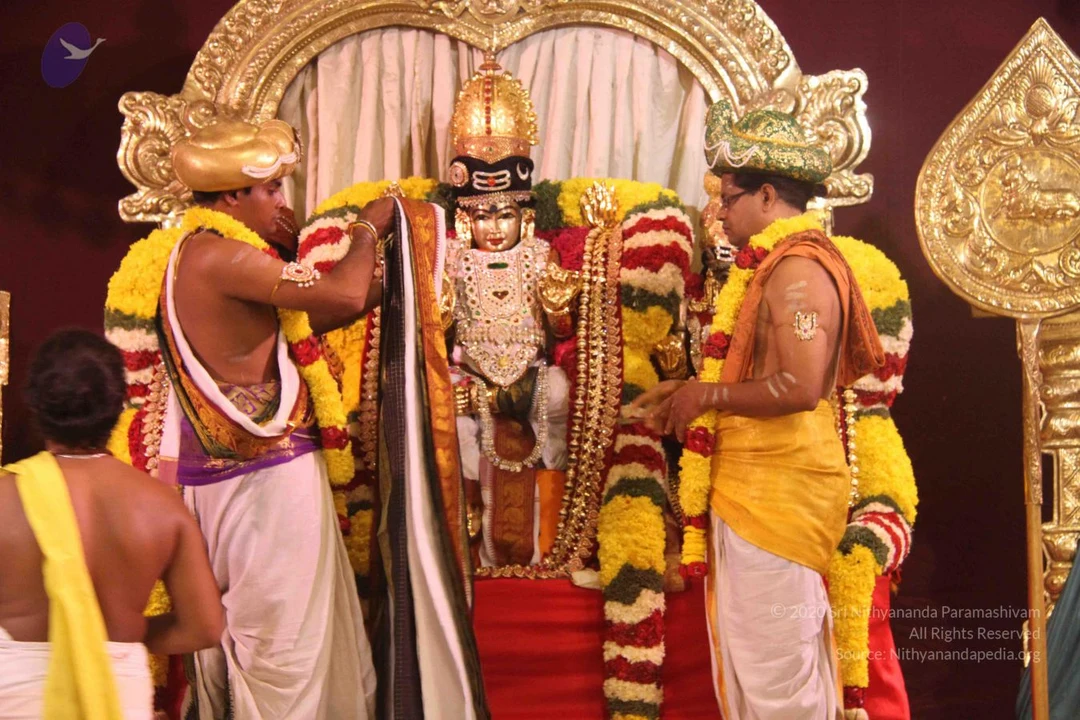
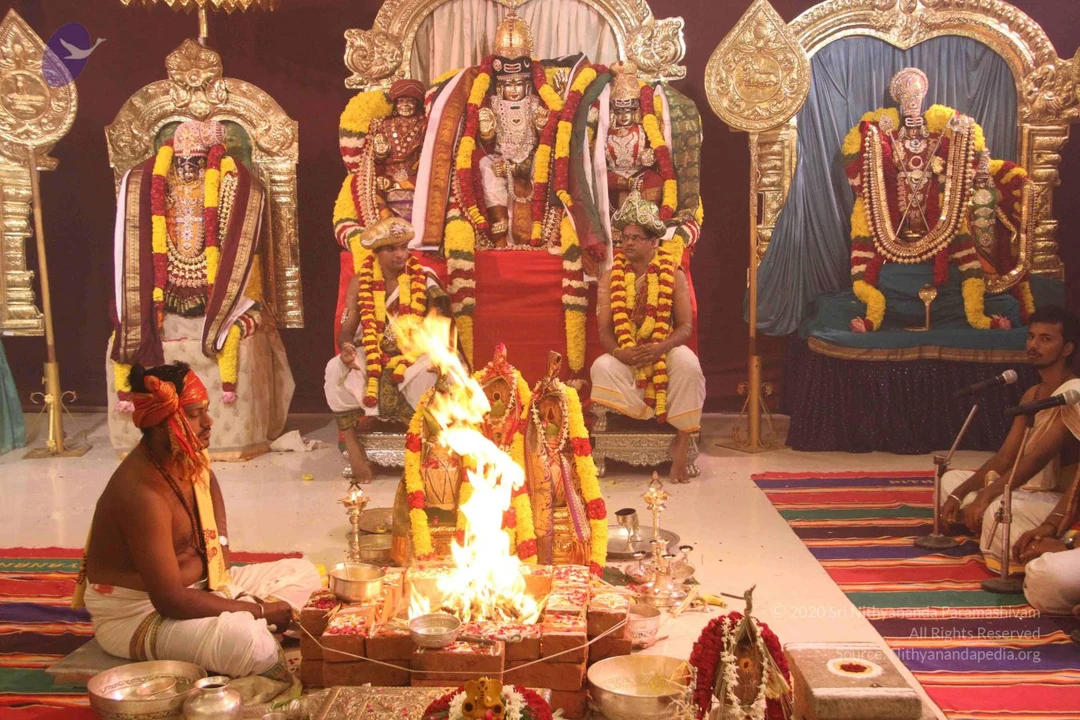
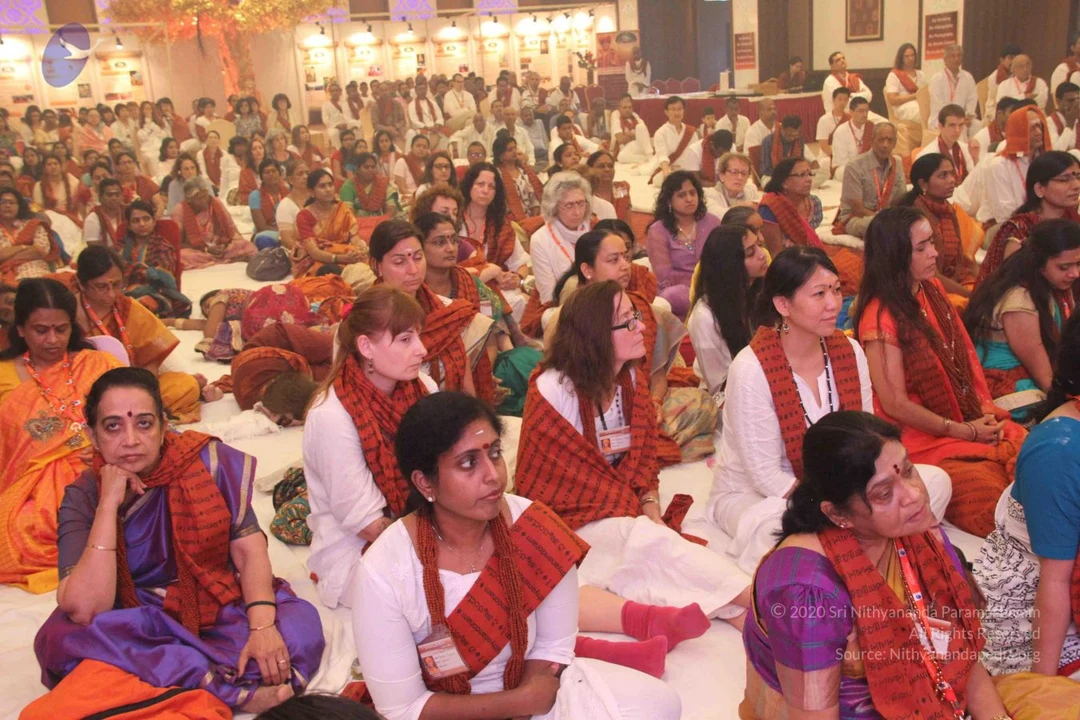
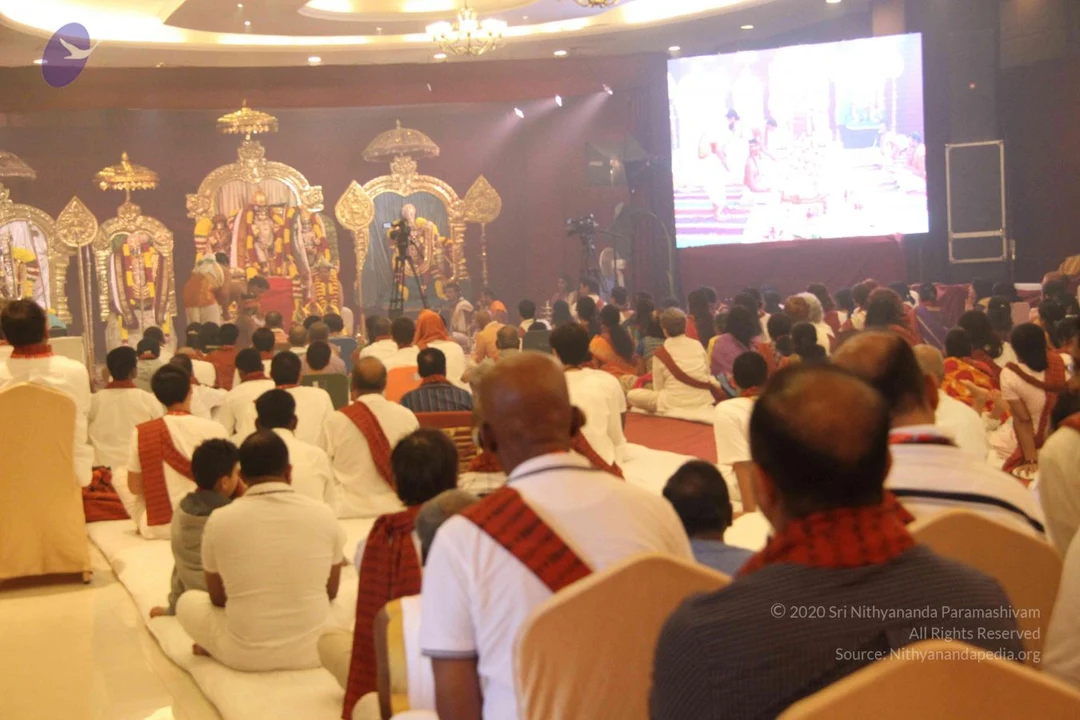
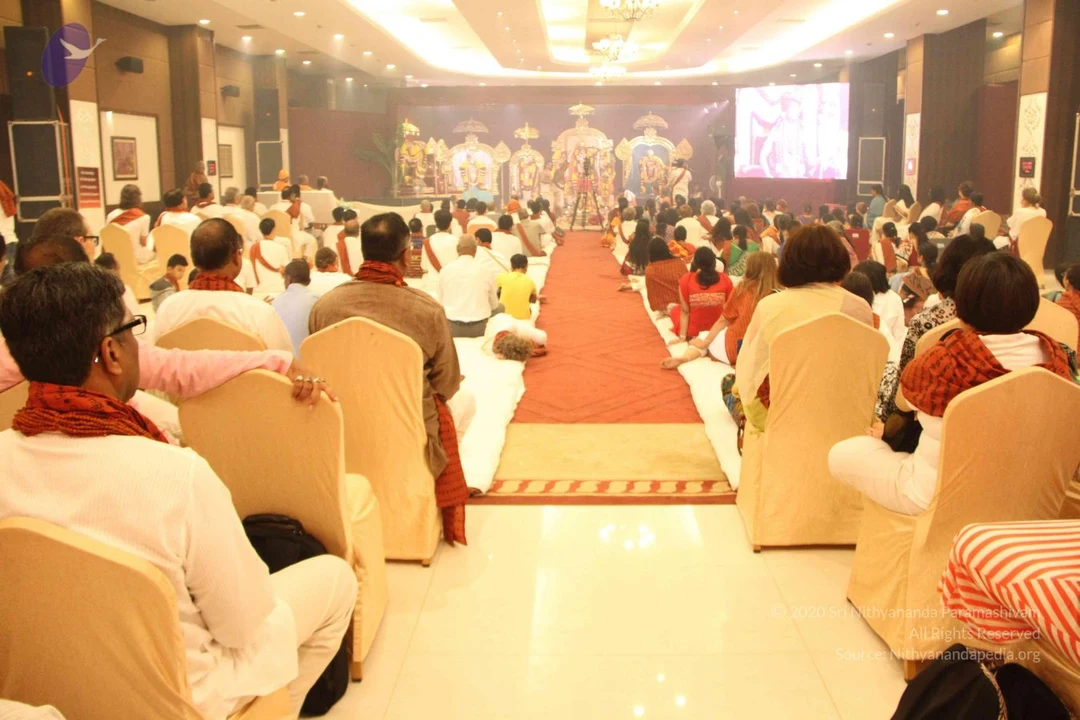
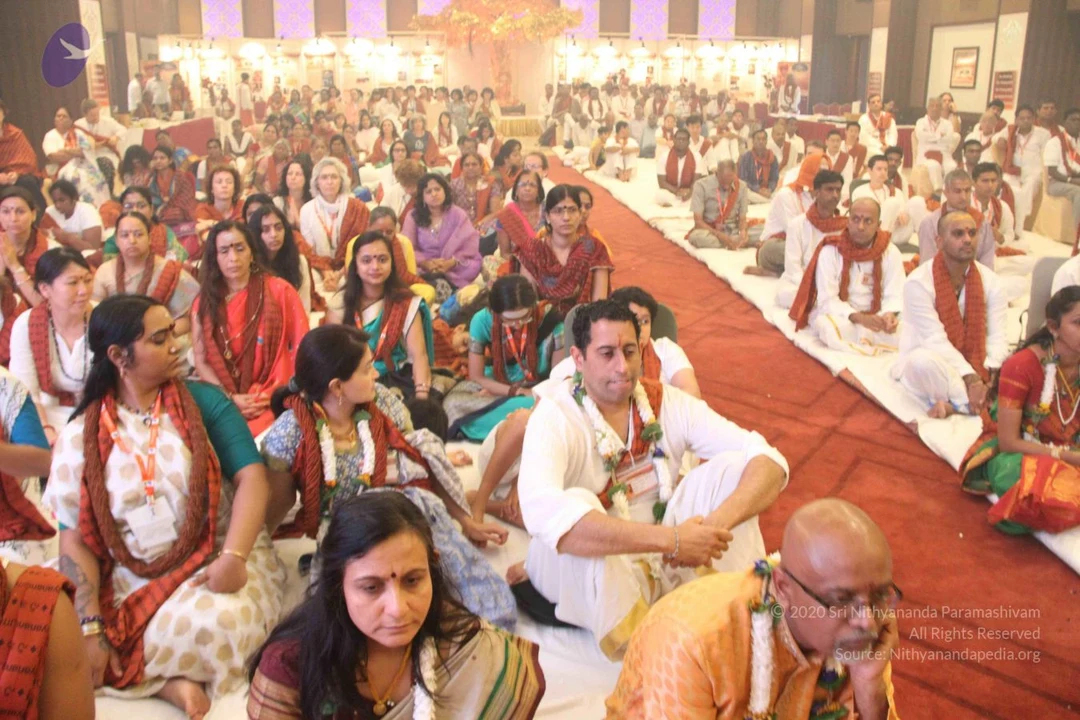
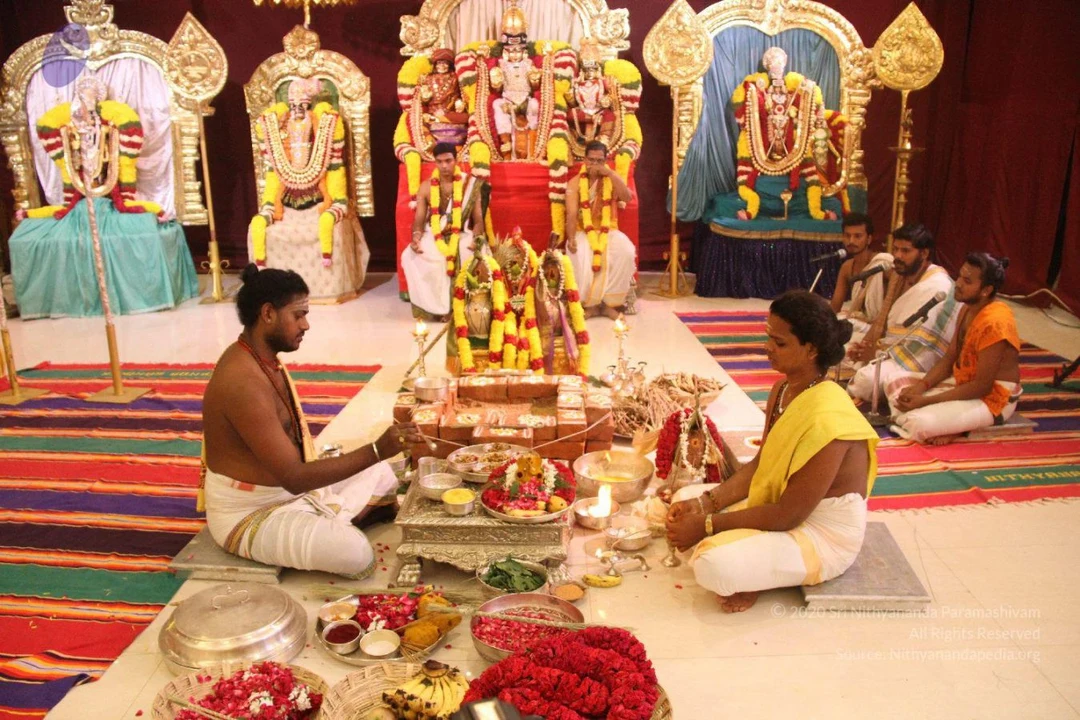
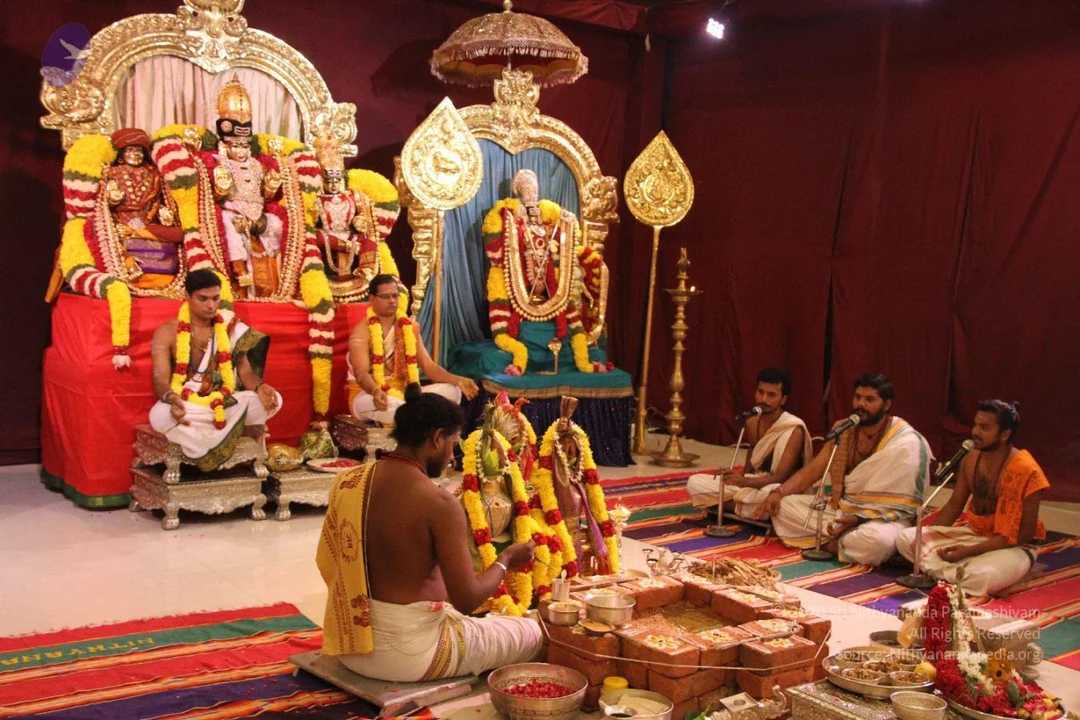
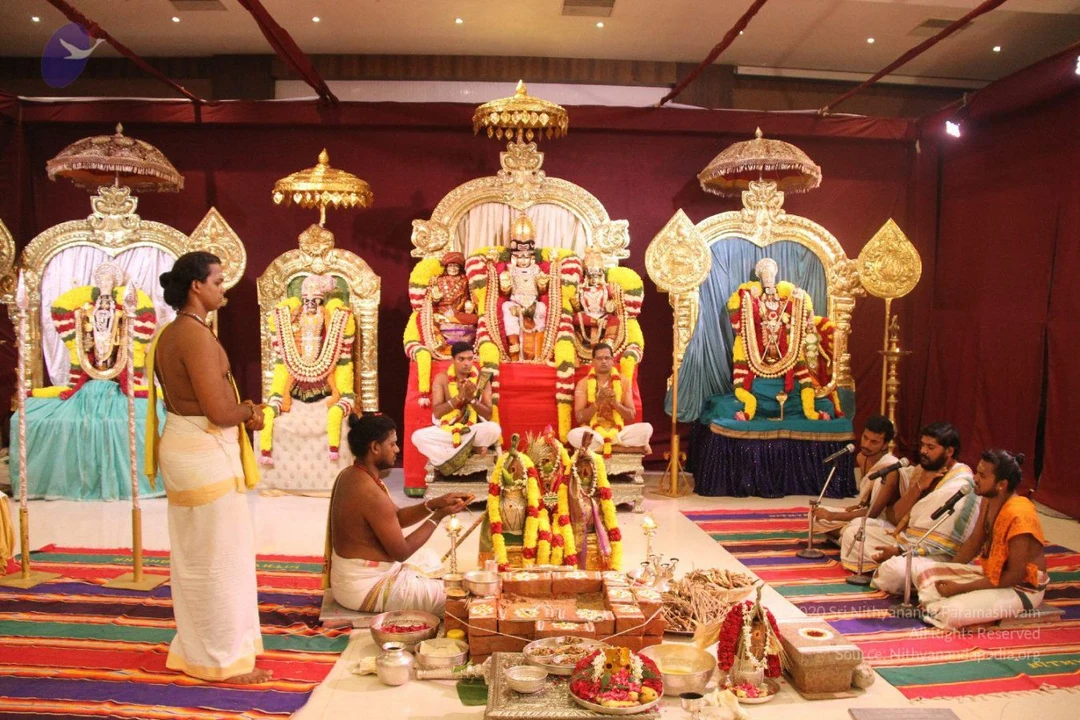
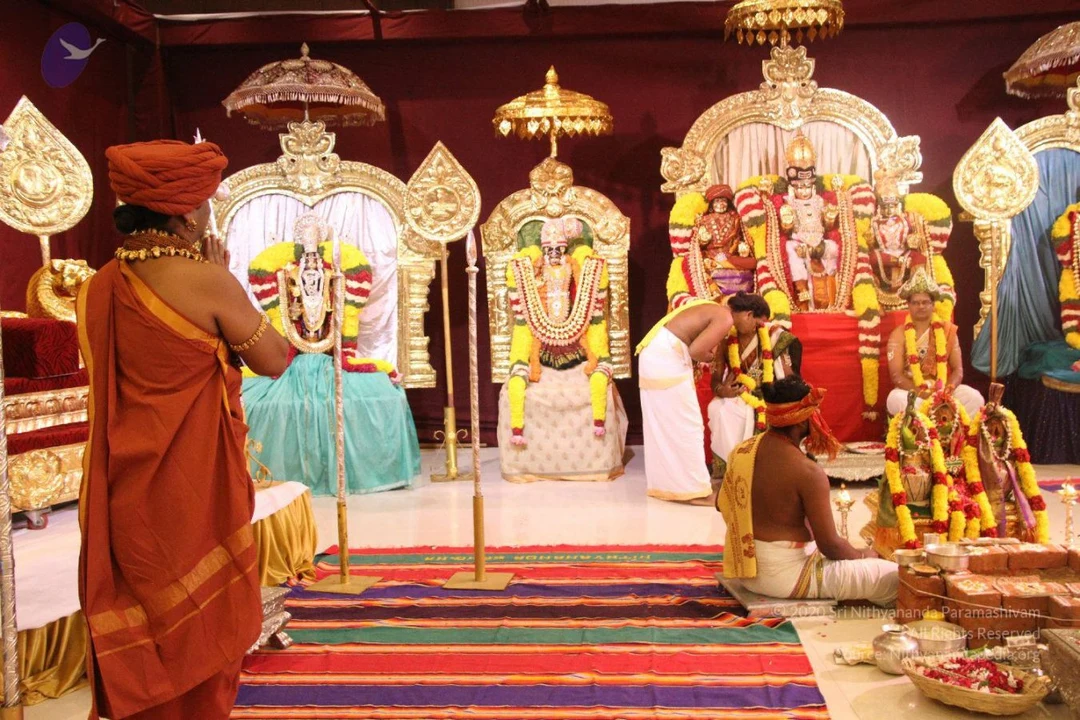
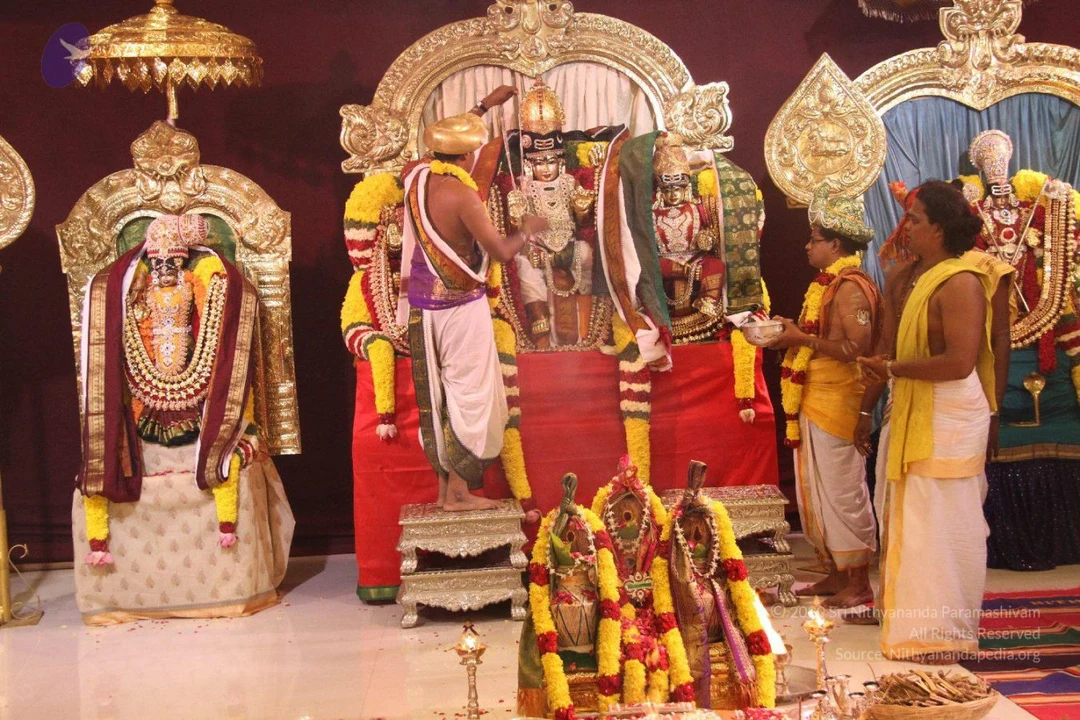
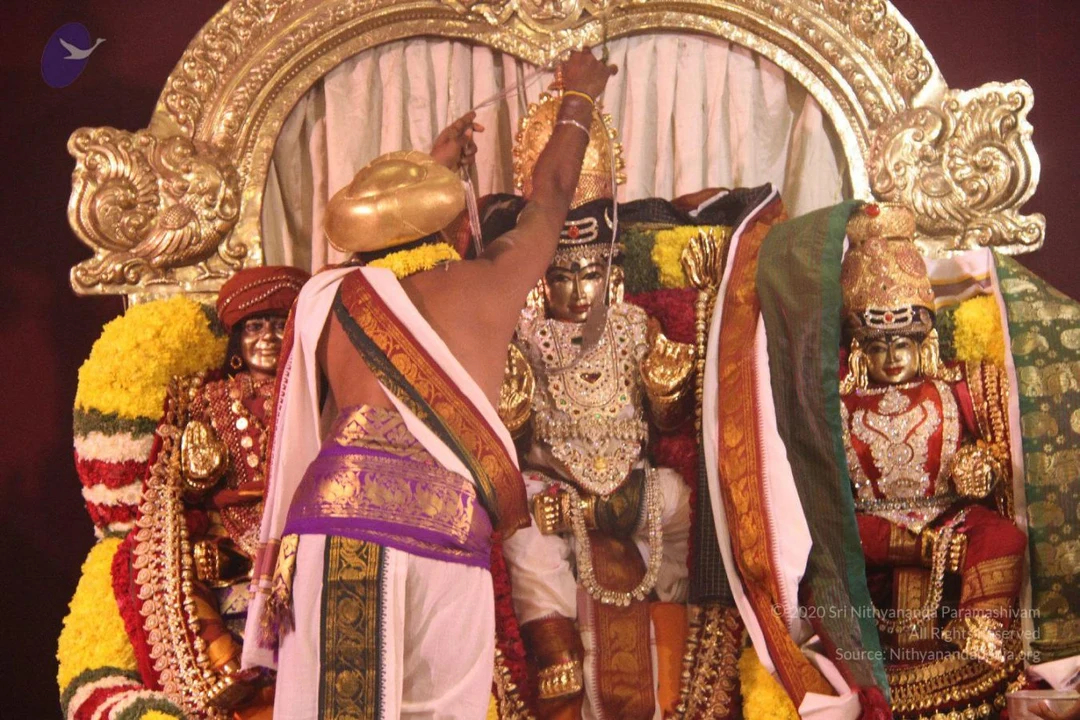
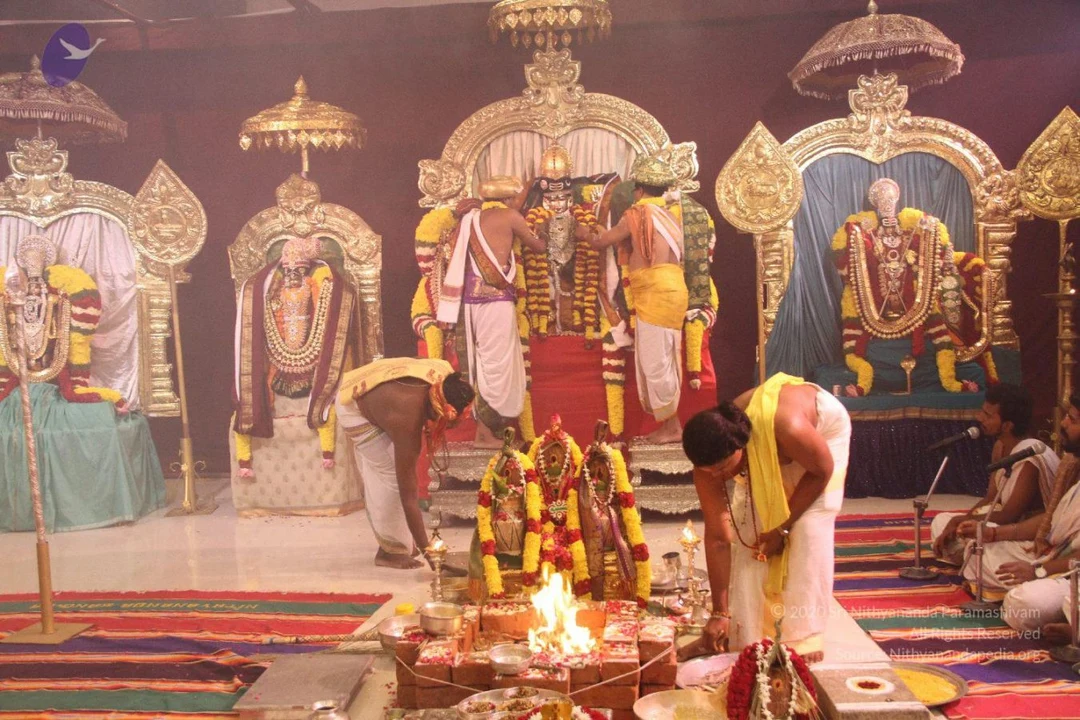
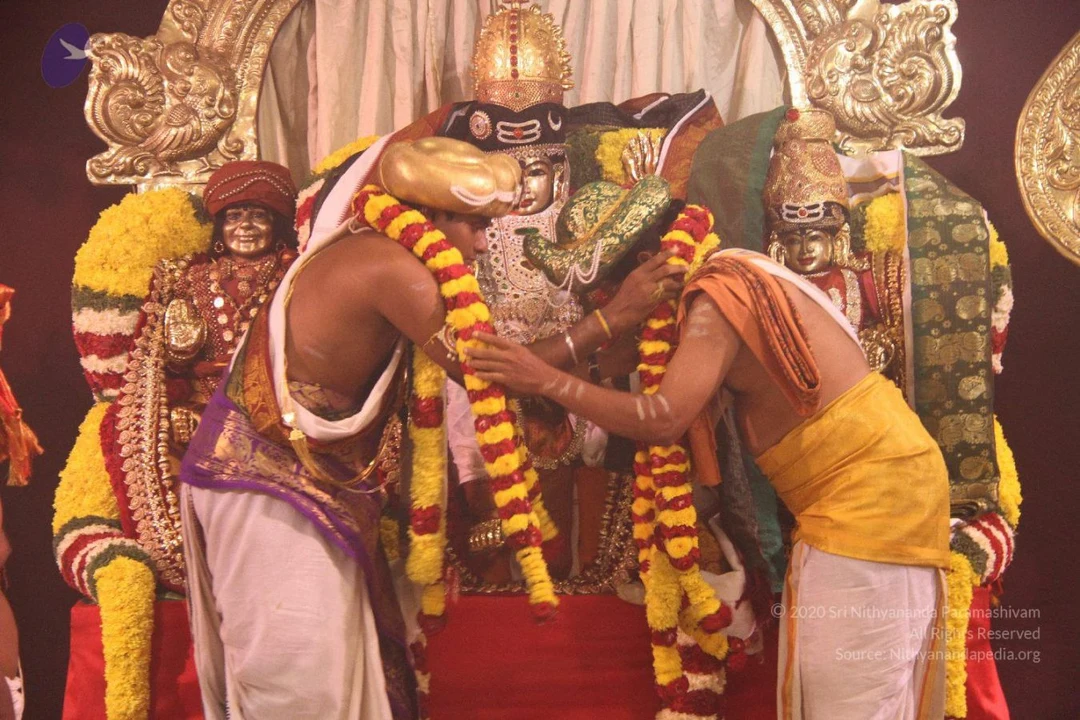
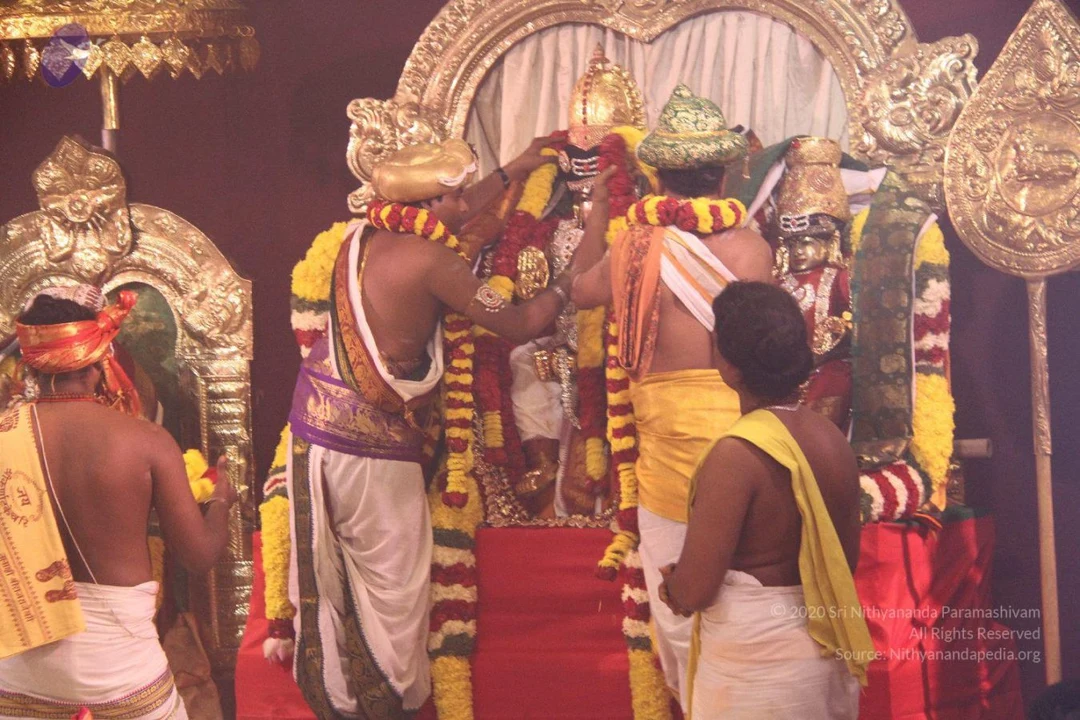
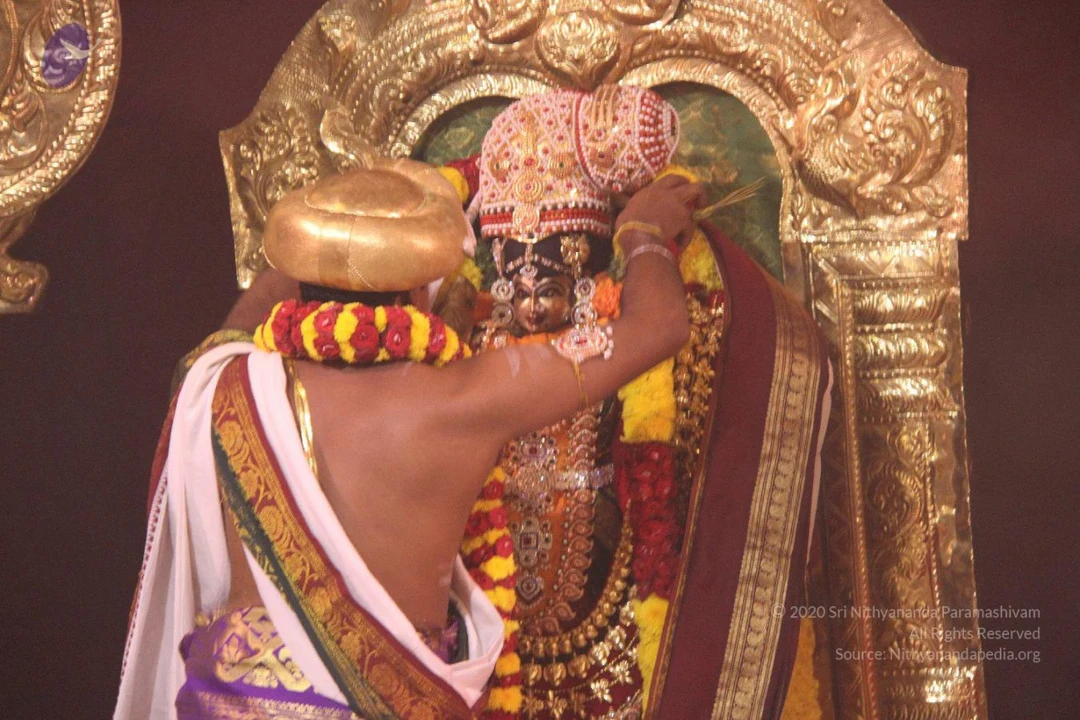
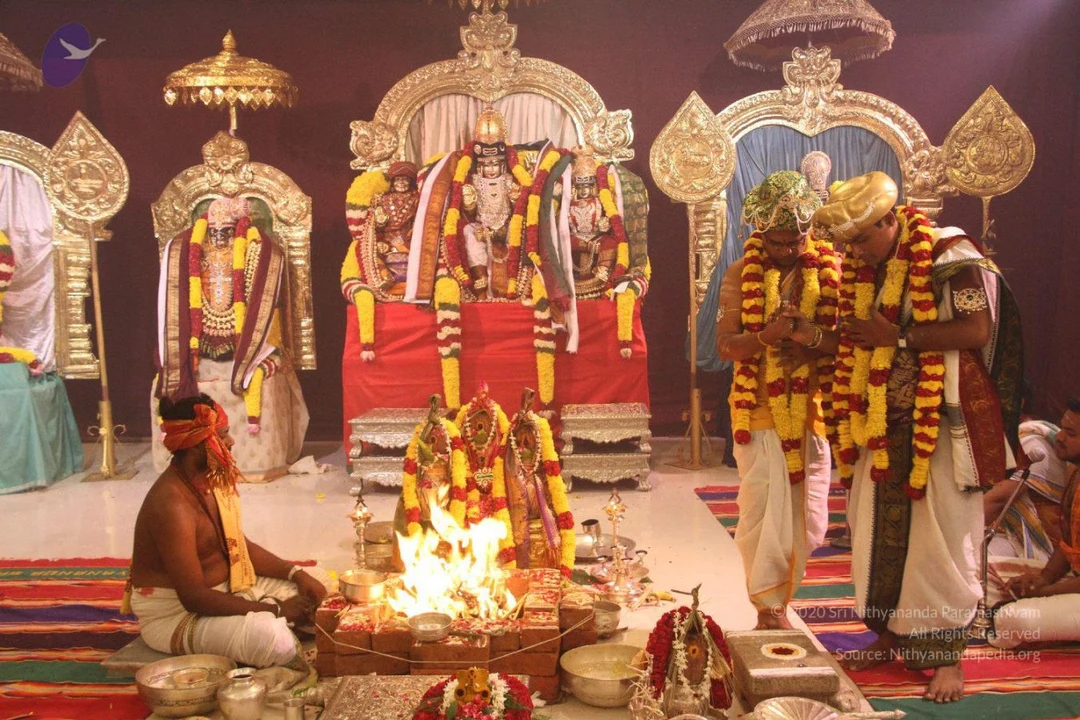
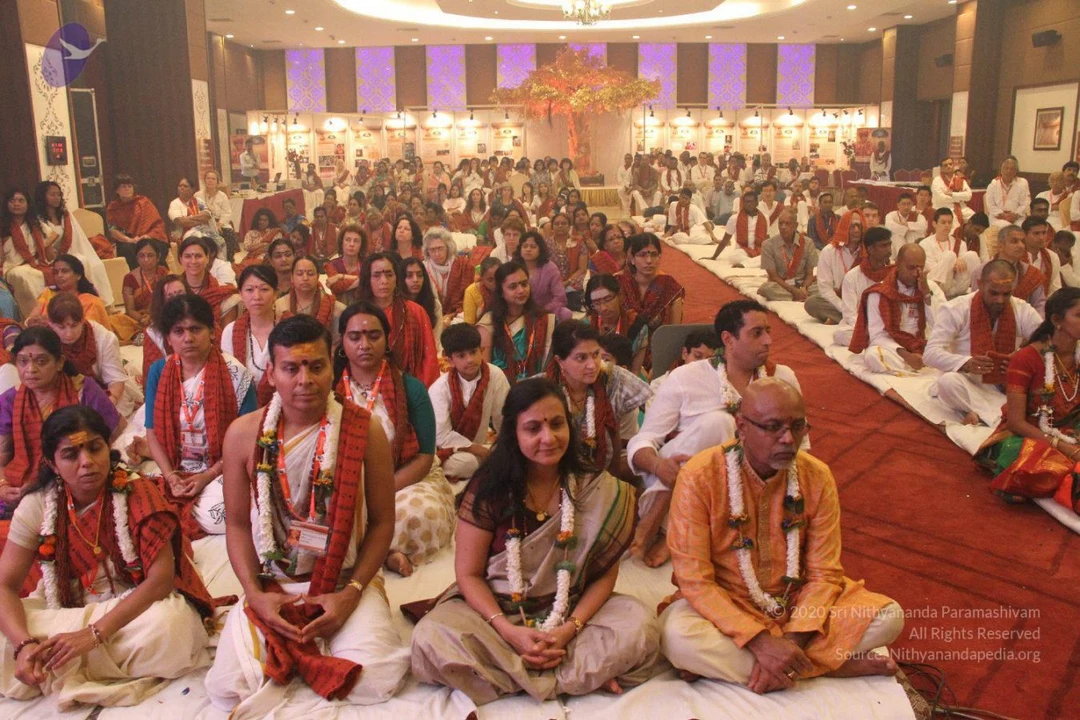
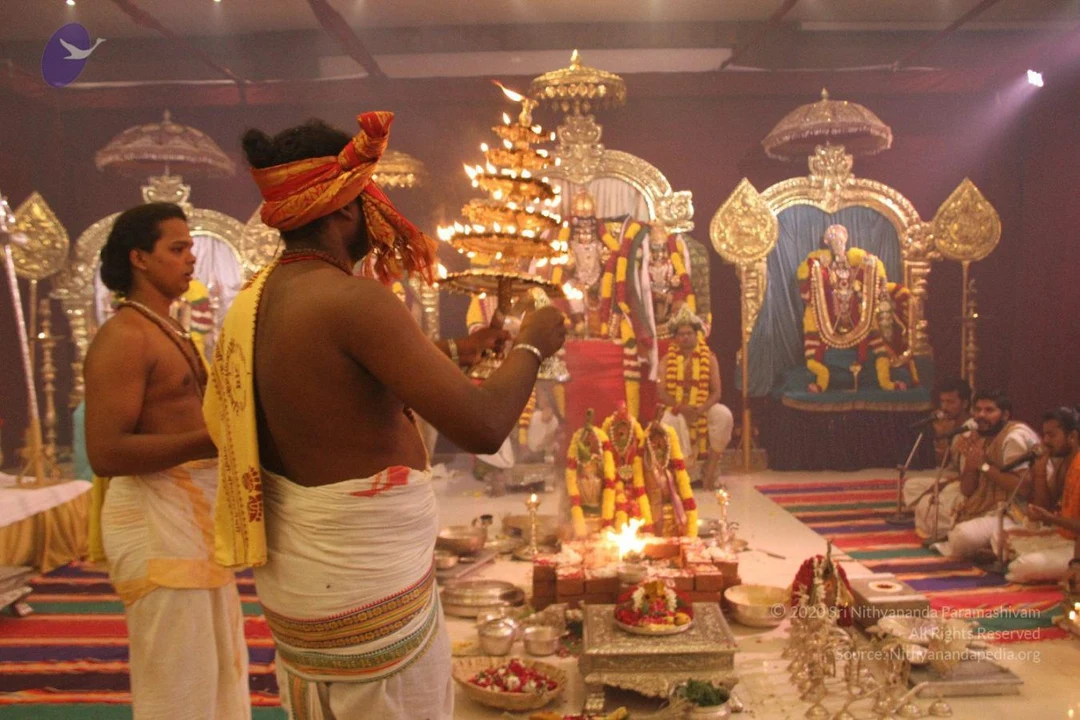
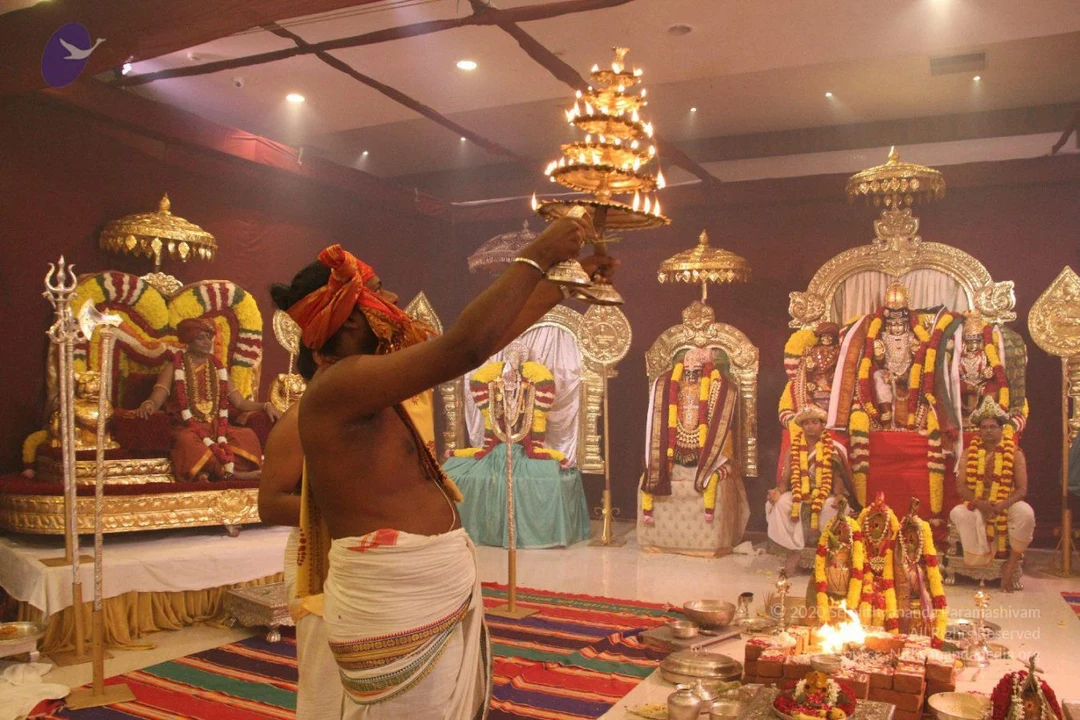
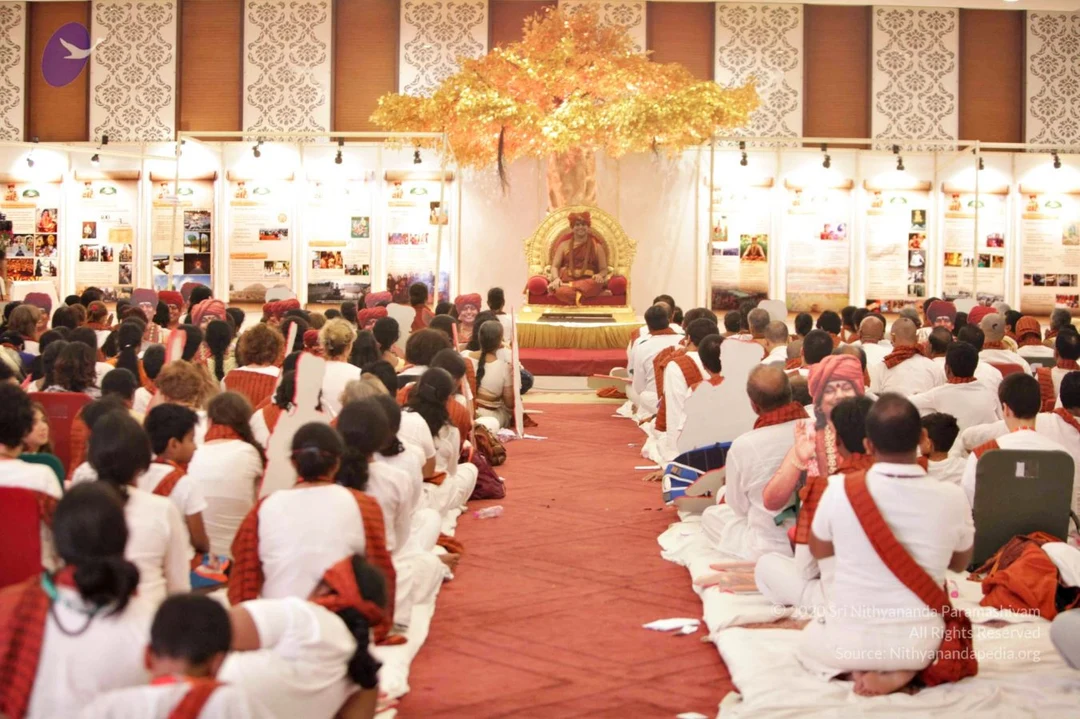
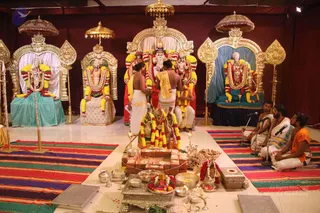
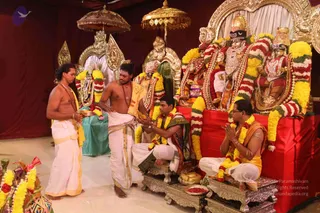
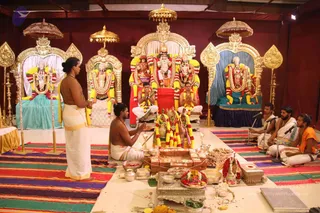
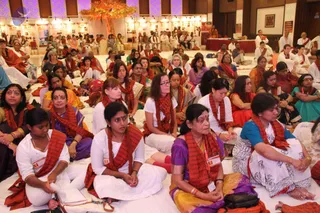
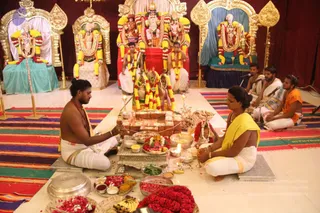
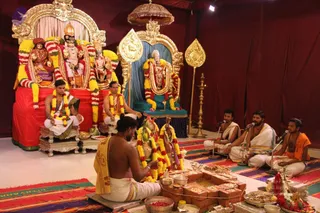
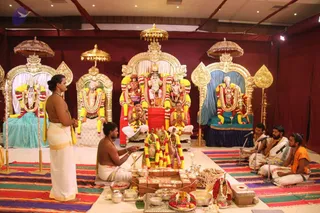
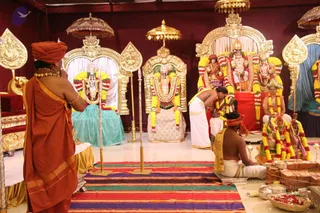
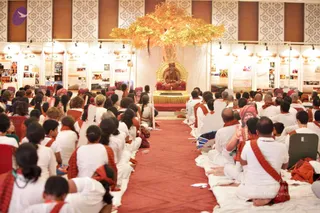
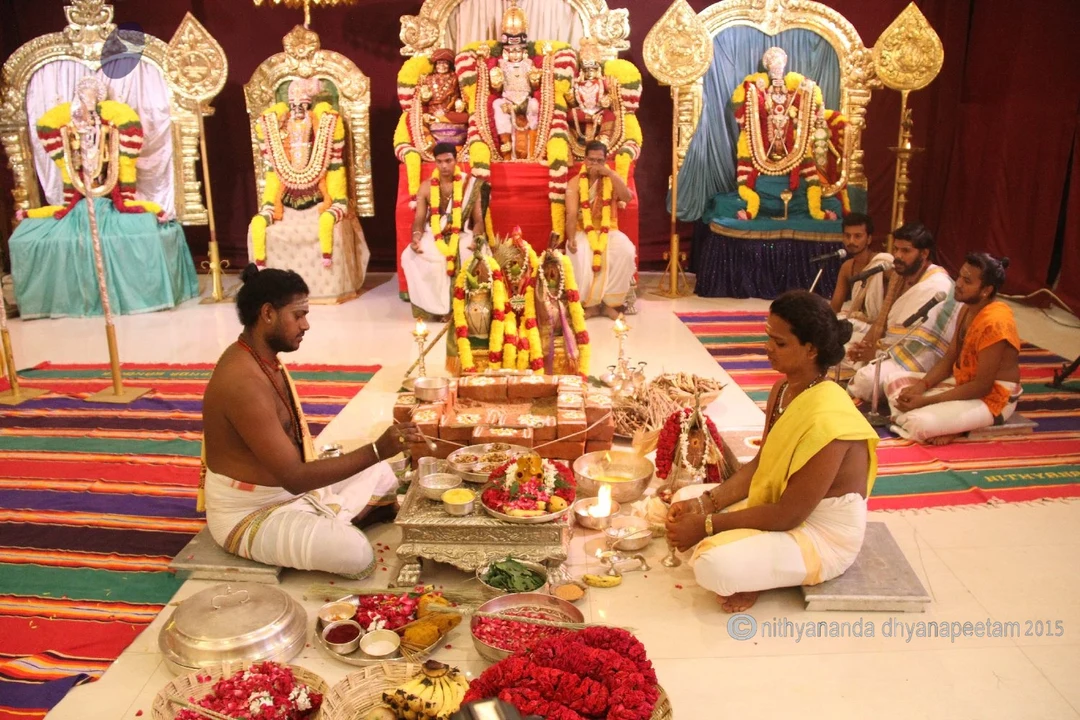
A photograph of a temple-style ritual setting with several deity murtis draped in garlands of yellow and red flowers, seated on gilded thrones under golden umbrellas and ornate arched canopies. Two men sit cross-legged on the left and centre foreground; the central man wears a saffron upper cloth over white dhoti with flower garland and sits on a silver stool, while the other wears a white dhoti and maroon-striped shawl. Both have sandalwood or ash markings on arms. A teal-draped altar on the right holds a small brass kalasha and rose petals. No distinctive appearance cues establish a person in person.A ritual puja scene in a tent-like hall with striped red, green and orange floor mats. Centre stage is an ornate gold throne-like seat backed by a red cloth, with a deity murti or figure adorned with yellow and red garlands. Three gold-framed thrones with umbrellas flank the stage, each holding a seated figure draped in marigold garlands. In front, two priests in white dhotis stand facing the central seat; one wears a yellow sash. Three seated men on the right wear white and an orange shirt, facing the altar. Brass pots, plates of flowers and fruit, lamps, and offering trays sit on the floor in the foreground.Ritual scene in a red-draped shrine with two gilded deity murti seated on a red throne, both garlanded with yellow and red flower garlands. Two shirtless priests in white dhotis stand at left, one holding a small brass vessel and the other a flower or offering. Two seated devotees sit on silver stools in front of the throne: one in a green and gold shawl with a garland, the other in orange-saffron cloth with bare shoulders, hands folded in anjali. Ornate gold parasols stand behind, with a kalasha and floral offerings at lower left. Pooja or abhishekam setting.A large seated audience inside a hall with patterned purple wall panels and a tall artificial golden tree. Many delegates sit cross-legged on white mats over a red carpet, wearing white kurtas and red-and-orange shawls. Foreground figures include a woman in a patterned blouse, a man in a pink shirt with a rudraksha-style beaded necklace and wristwatch, a woman in grey top with a black bag, and a man in white on the right, all attentive. Behind them, rows of participants and display booths line the wall. The crowd is large, well over twenty people visible.Inside a decorated ceremonial hall, a ritual is underway before an ornate golden throne with a central deity murti flanked by a smaller figure, all garlanded with yellow and orange marigold and red flower strands. Golden parasol-like canopies and carved golden side seats frame the scene. On the floor, colourful striped mats lie beneath a white cloth with a red platform. A bare-chested man in white dhoti and a shawl stands with folded hands facing a seated priest in white dhoti who performs offerings over brass trays of fruit, flowers, sweets and vessels, with a silver lamp nearby. Two men seated in white dhotis and a man in orange shirt sit at the right, with microphones on stands. Two seated men in white dhotis with garlands sit with hands folded near the central throne. No individual is identified as a person.A photograph of a large seated gathering in a hall with cream and red decorations, a stylised tree and a raised red-draped table at the far end. Many women and some men sit closely on white sheets on the floor, most wearing red-and-orange shawls with dark patterned borders over white, purple, teal, mustard and magenta saris and salwars. Several hold small papers or beads and wear visitor badges on lanyards. Foreground participants sit cross-legged with hands folded in their laps, listening attentively. A faint publication credit appears at the lower right.

Photos Of The Day:
150 photosSource gallery
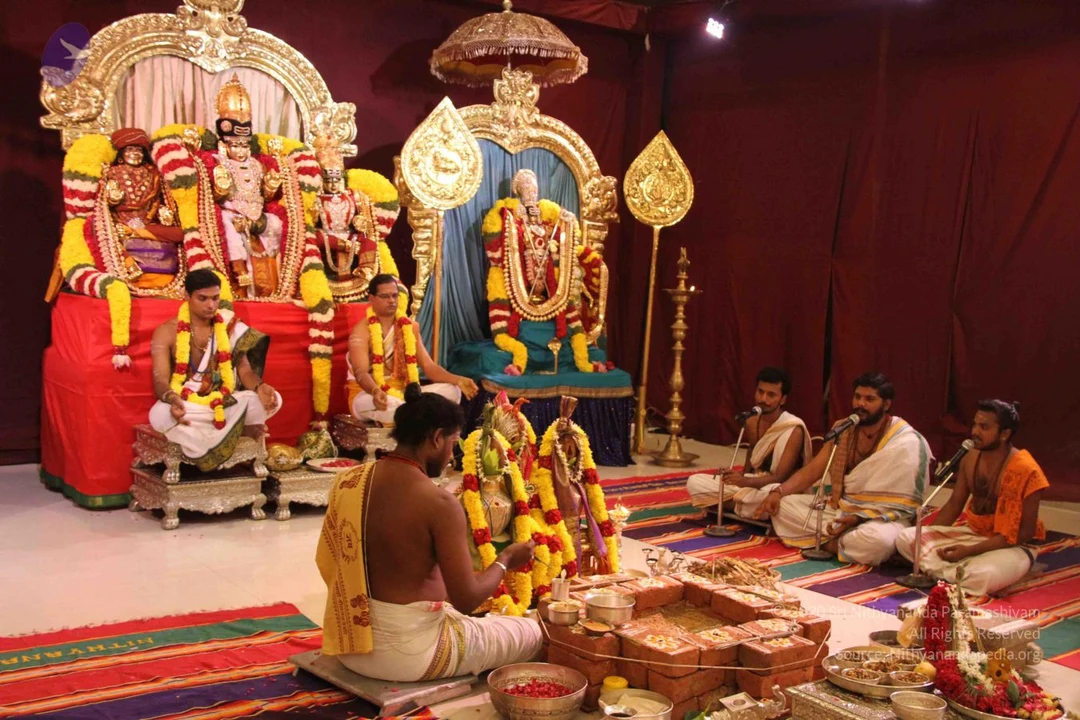
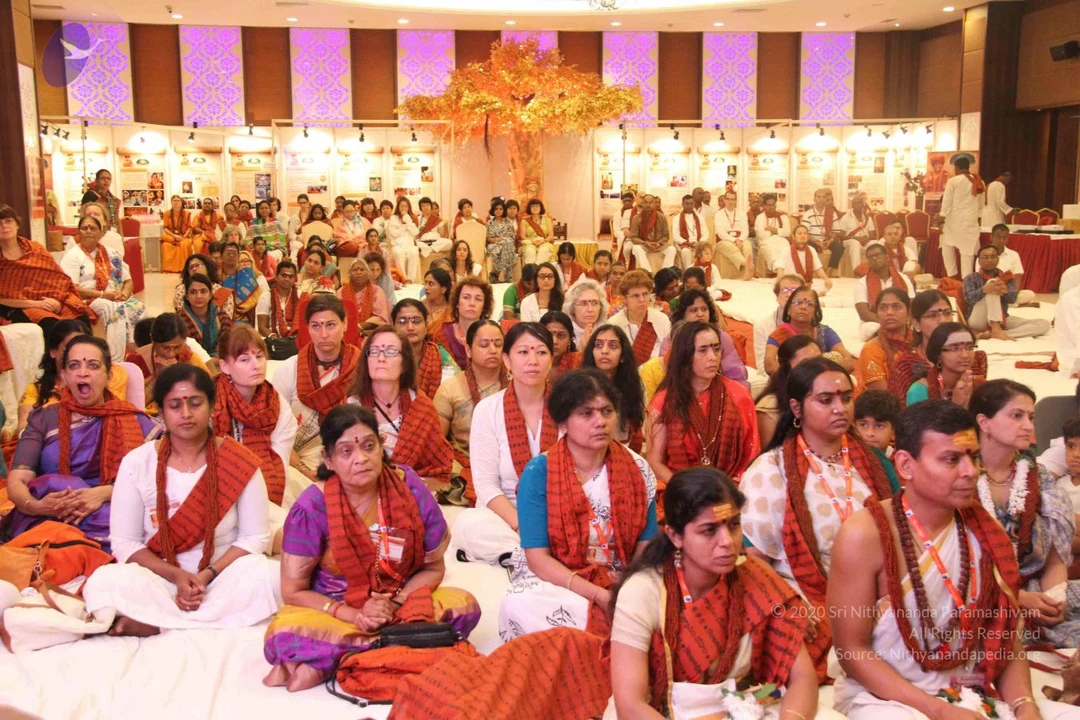
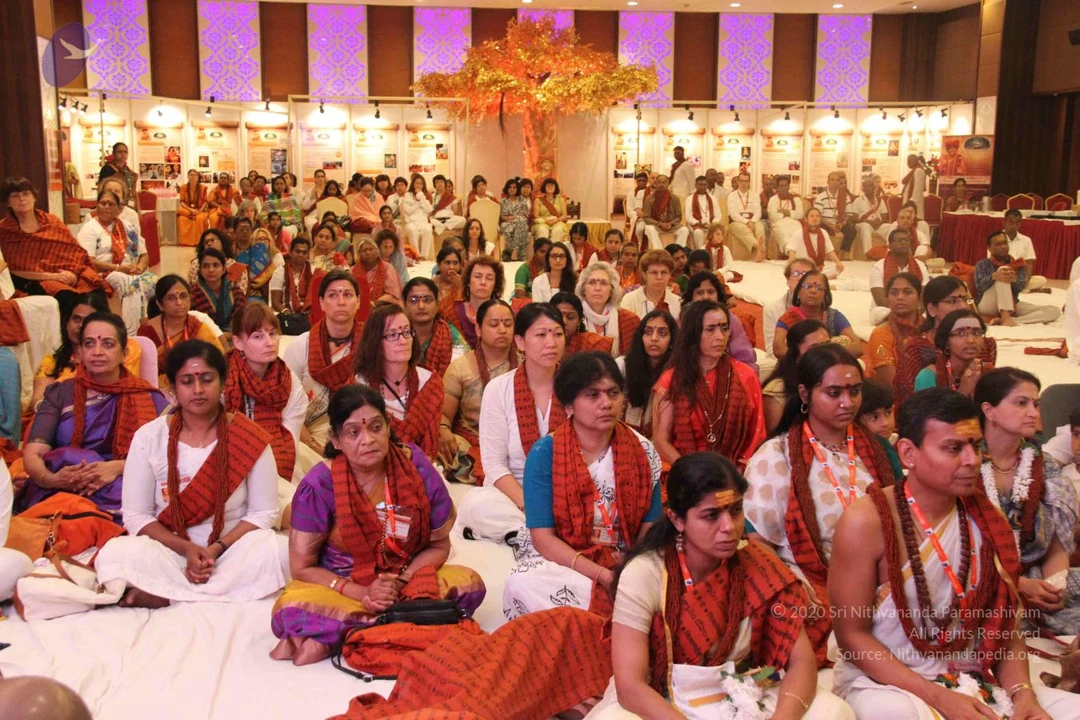
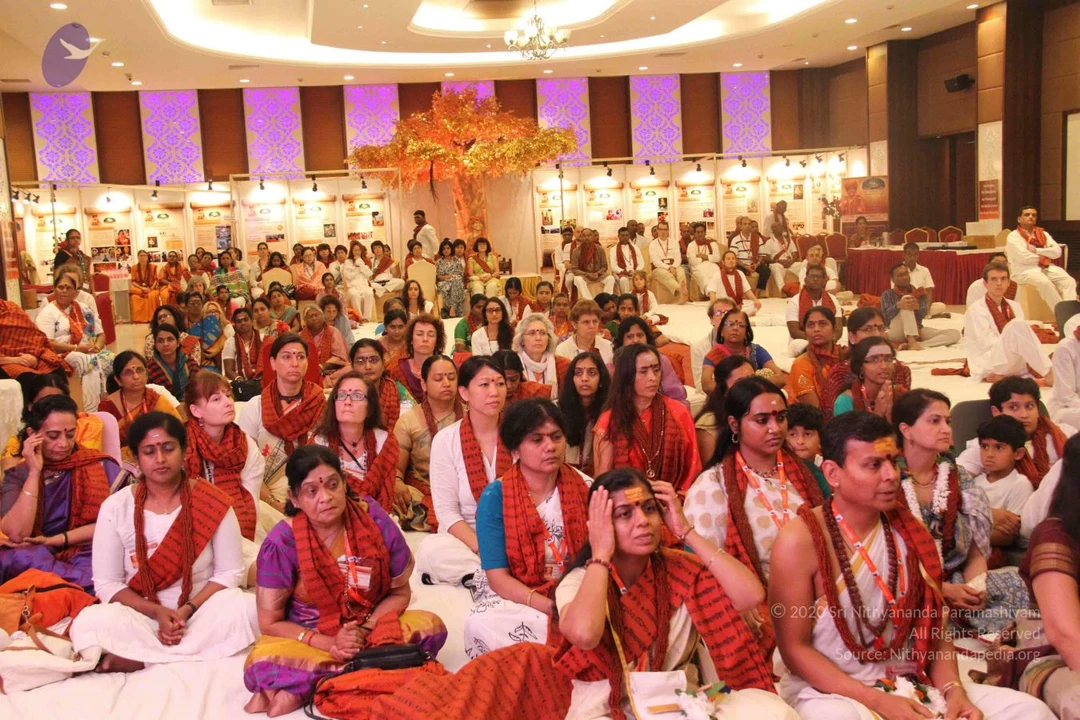
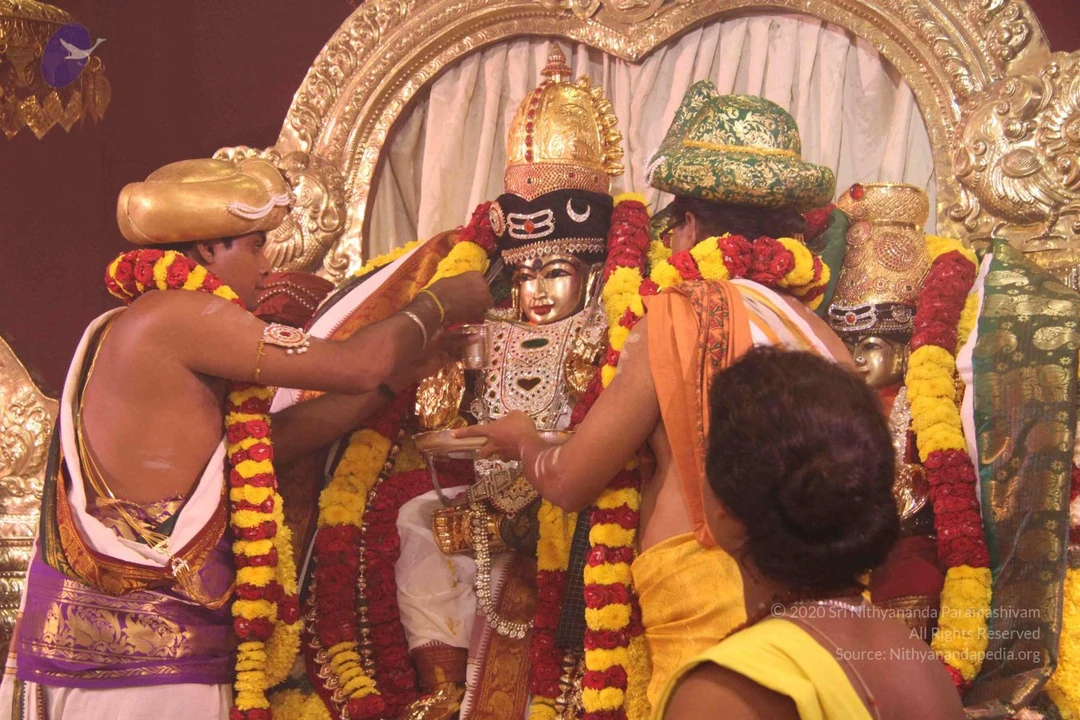
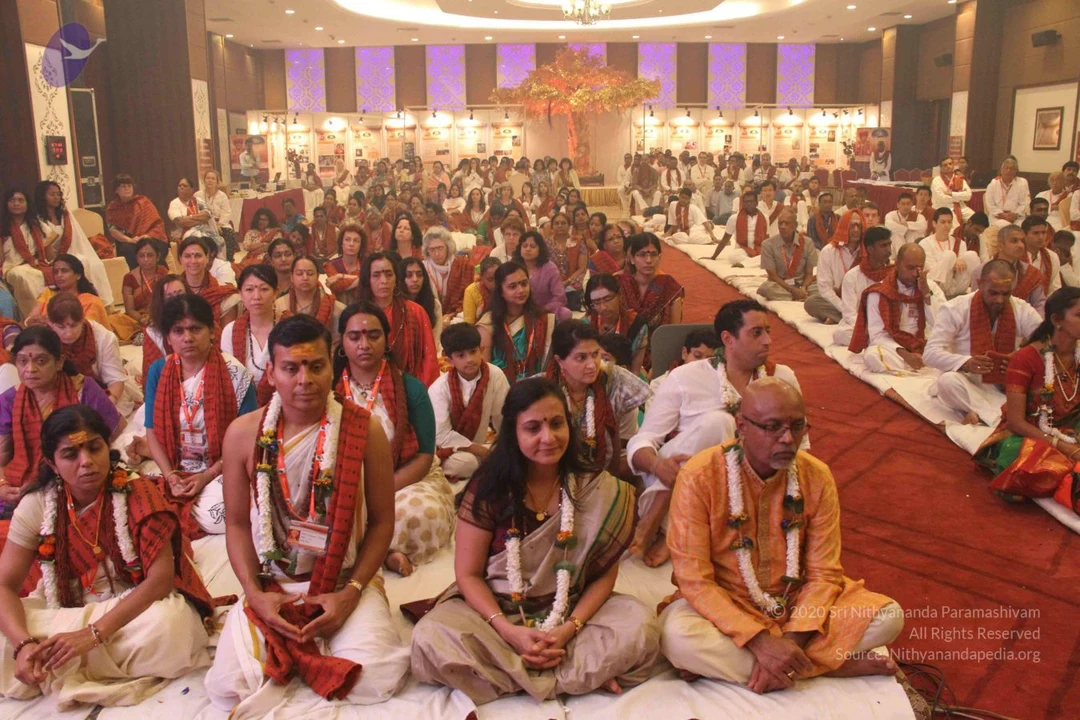
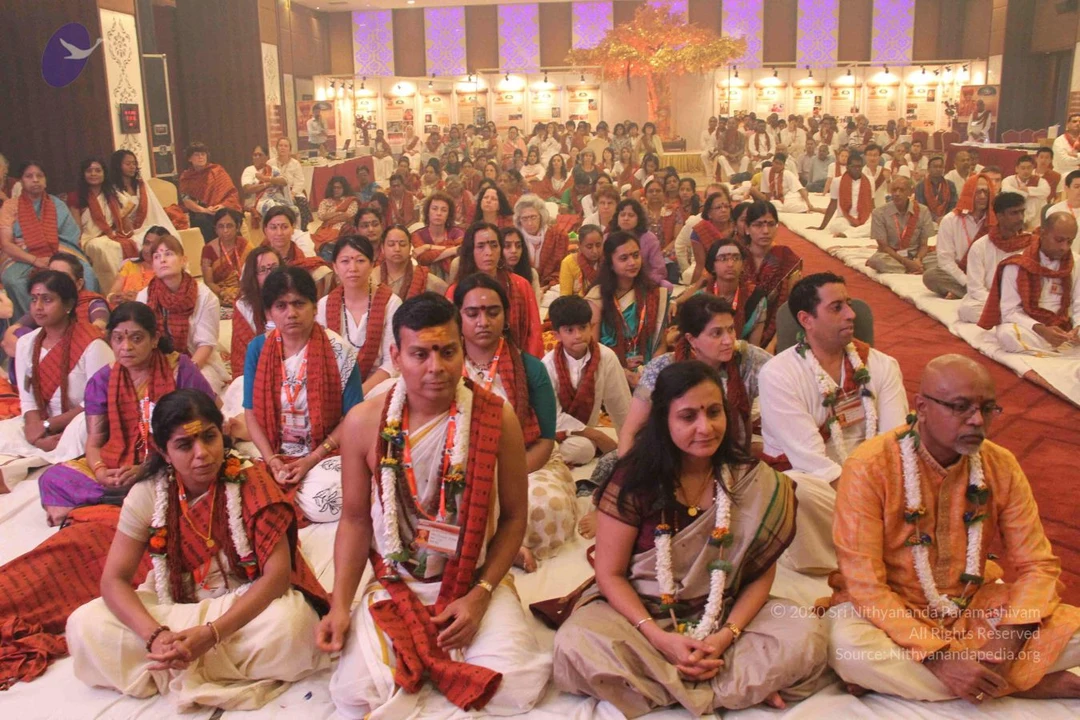
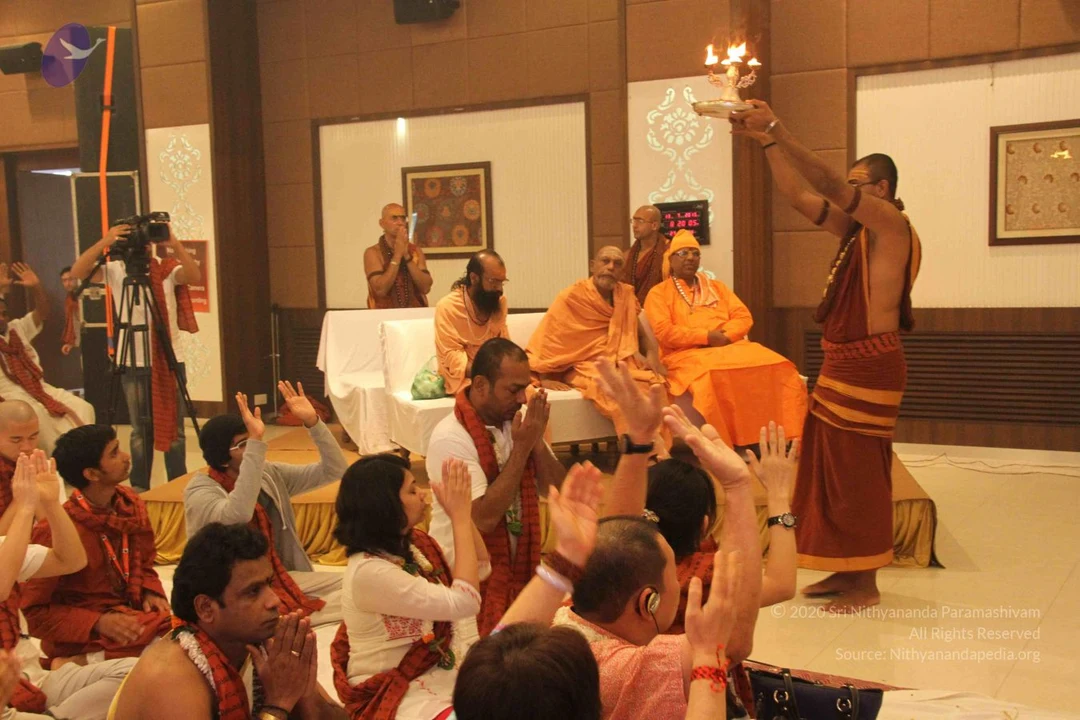
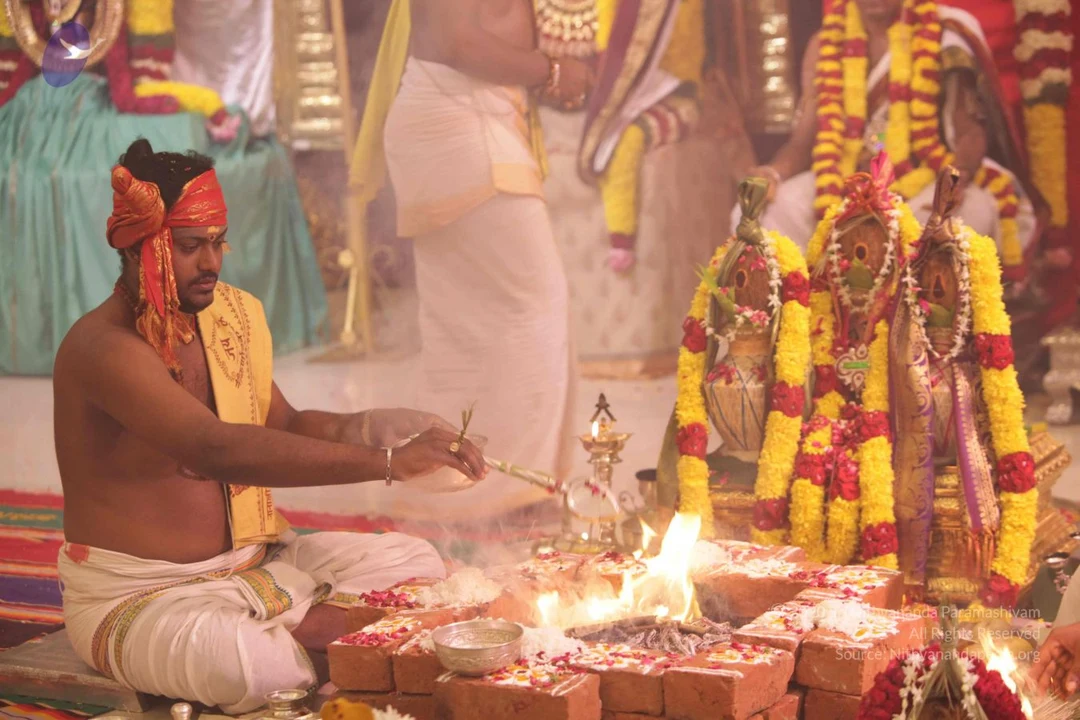
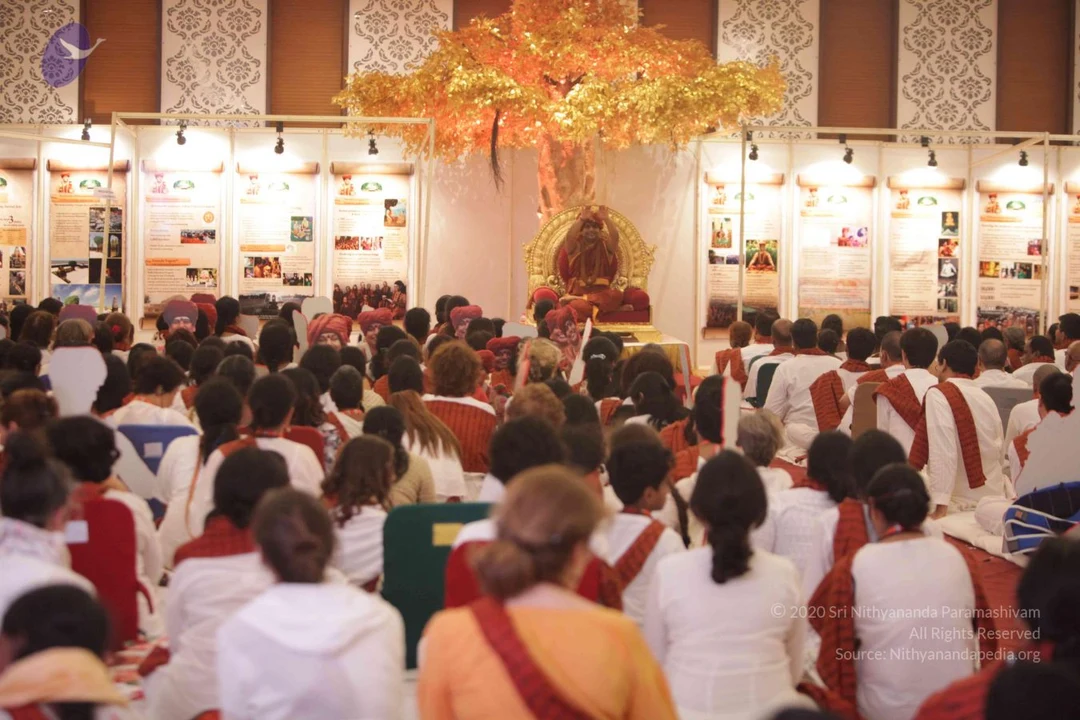
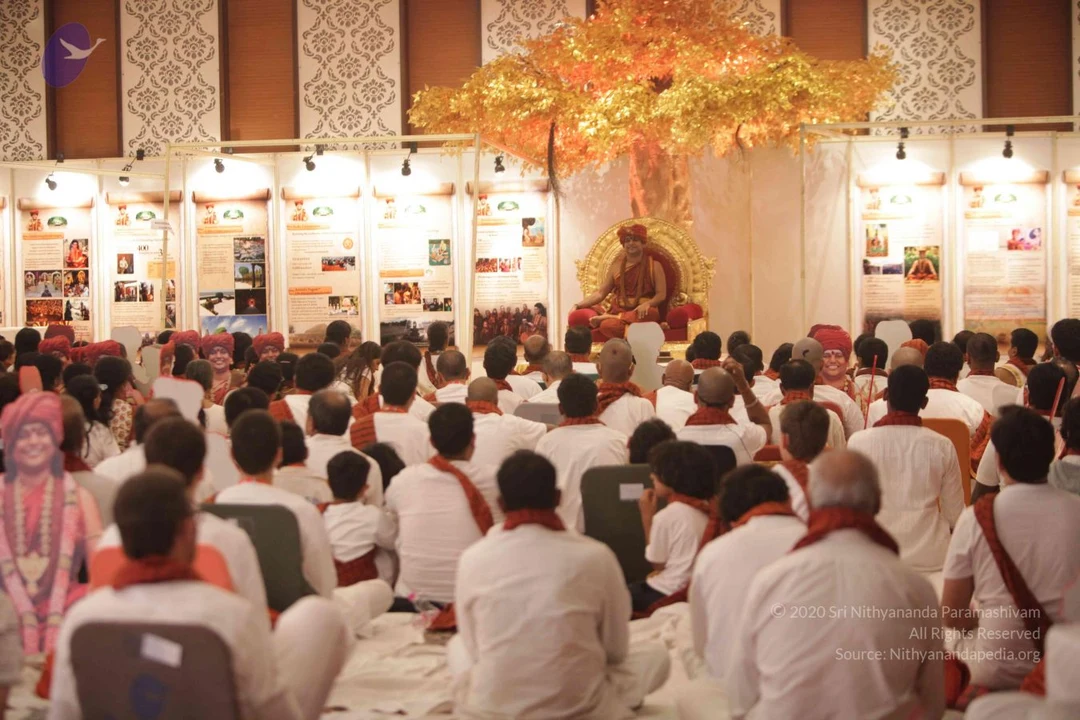
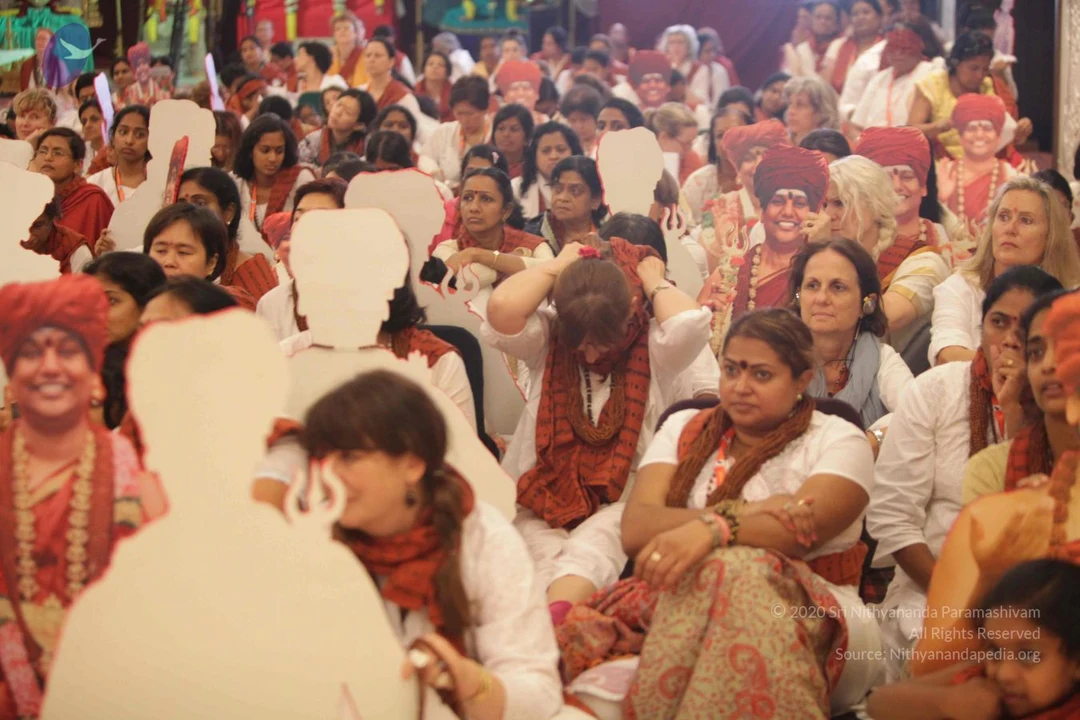
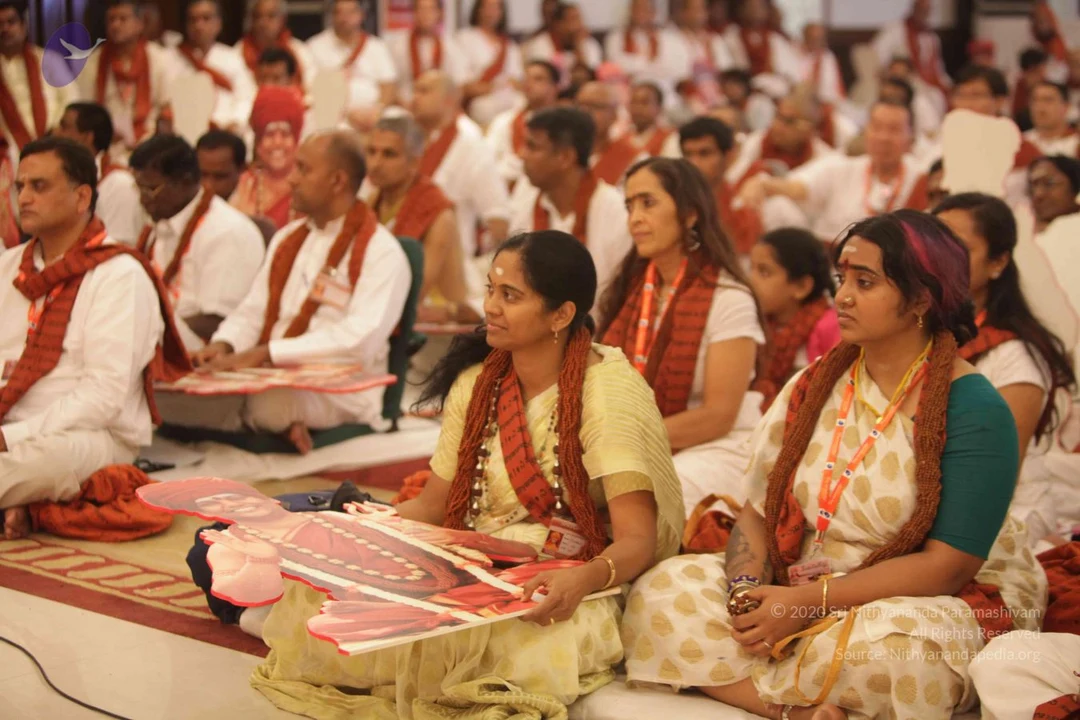
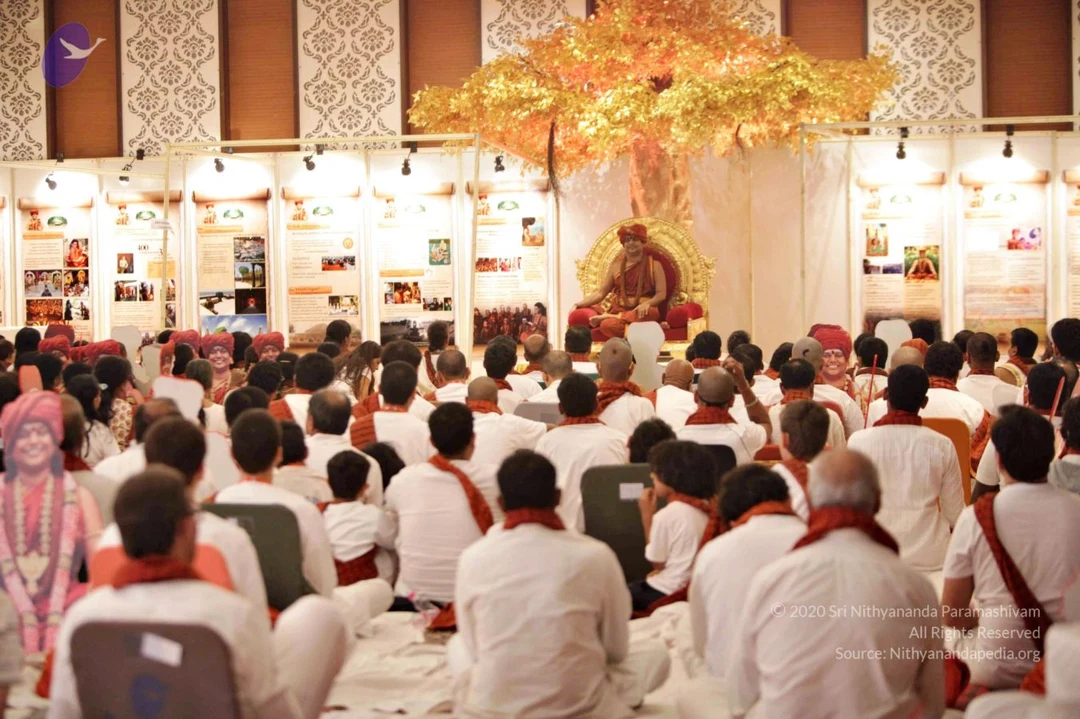
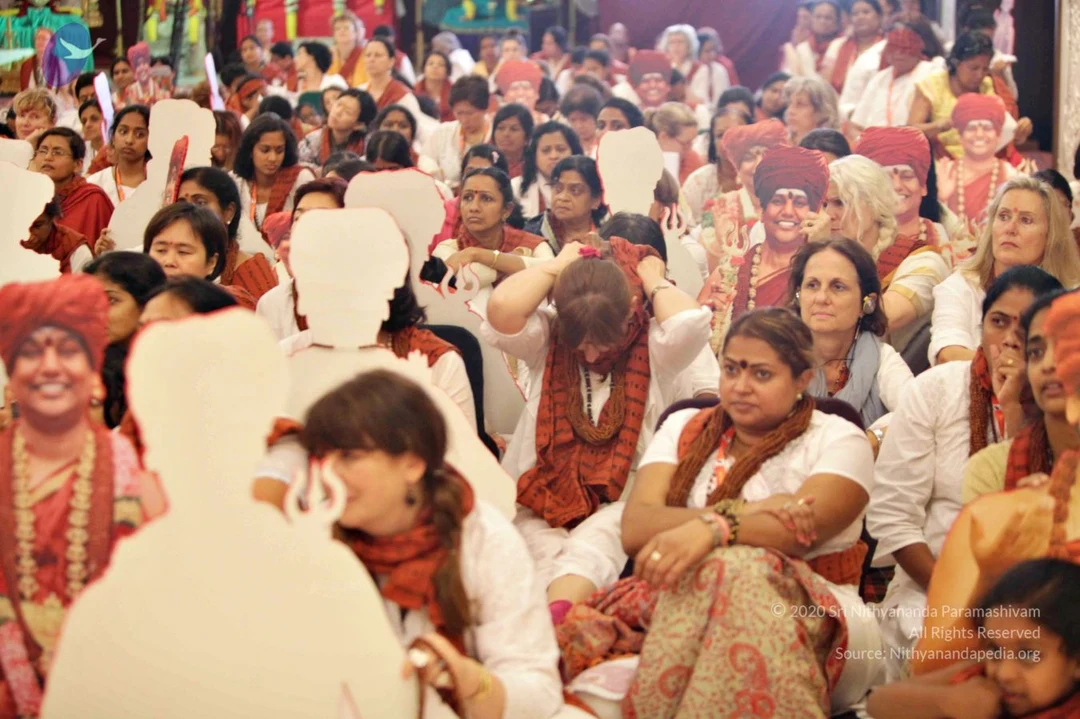
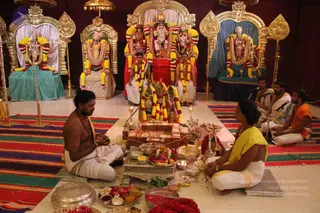
A ritual puja in a temple-style hall with a gold-framed central altar holding three deity murtis draped in marigold garlands, flanked by two more garlanded murtis on side thrones. Two seated priests in white dhotis and bare-chested sit before brass offering trays, flowers, lamps and a homa-like setup. A woman in a yellow sari sits on the right, and several men in white dhotis, one in an orange cloth, sit on striped mats chanting near microphones. Brass vessels, marigolds and red flowers fill the floor.A photograph of a temple-style ritual setting with several deity murtis draped in garlands of yellow and red flowers, seated on gilded thrones under golden umbrellas and ornate arched canopies. Two men sit cross-legged on the left and centre foreground; the central man wears a saffron upper cloth over white dhoti with flower garland and sits on a silver stool, while the other wears a white dhoti and maroon-striped shawl. Both have sandalwood or ash markings on arms. A teal-draped altar on the right holds a small brass kalasha and rose petals. No distinctive appearance cues establish a person in person.A ritual puja scene in a tent-like hall with striped red, green and orange floor mats. Centre stage is an ornate gold throne-like seat backed by a red cloth, with a deity murti or figure adorned with yellow and red garlands. Three gold-framed thrones with umbrellas flank the stage, each holding a seated figure draped in marigold garlands. In front, two priests in white dhotis stand facing the central seat; one wears a yellow sash. Three seated men on the right wear white and an orange shirt, facing the altar. Brass pots, plates of flowers and fruit, lamps, and offering trays sit on the floor in the foreground.Ritual scene in a red-draped shrine with two gilded deity murti seated on a red throne, both garlanded with yellow and red flower garlands. Two shirtless priests in white dhotis stand at left, one holding a small brass vessel and the other a flower or offering. Two seated devotees sit on silver stools in front of the throne: one in a green and gold shawl with a garland, the other in orange-saffron cloth with bare shoulders, hands folded in anjali. Ornate gold parasols stand behind, with a kalasha and floral offerings at lower left. Pooja or abhishekam setting.A large seated audience inside a hall with patterned purple wall panels and a tall artificial golden tree. Many delegates sit cross-legged on white mats over a red carpet, wearing white kurtas and red-and-orange shawls. Foreground figures include a woman in a patterned blouse, a man in a pink shirt with a rudraksha-style beaded necklace and wristwatch, a woman in grey top with a black bag, and a man in white on the right, all attentive. Behind them, rows of participants and display booths line the wall. The crowd is large, well over twenty people visible.A photograph of a large seated gathering in a hall with cream and red decorations, a stylised tree and a raised red-draped table at the far end. Many women and some men sit closely on white sheets on the floor, most wearing red-and-orange shawls with dark patterned borders over white, purple, teal, mustard and magenta saris and salwars. Several hold small papers or beads and wear visitor badges on lanyards. Foreground participants sit cross-legged with hands folded in their laps, listening attentively. A faint publication credit appears at the lower right.
More Photos from Meenakshi Tirukalyanam

73 photosSource gallery
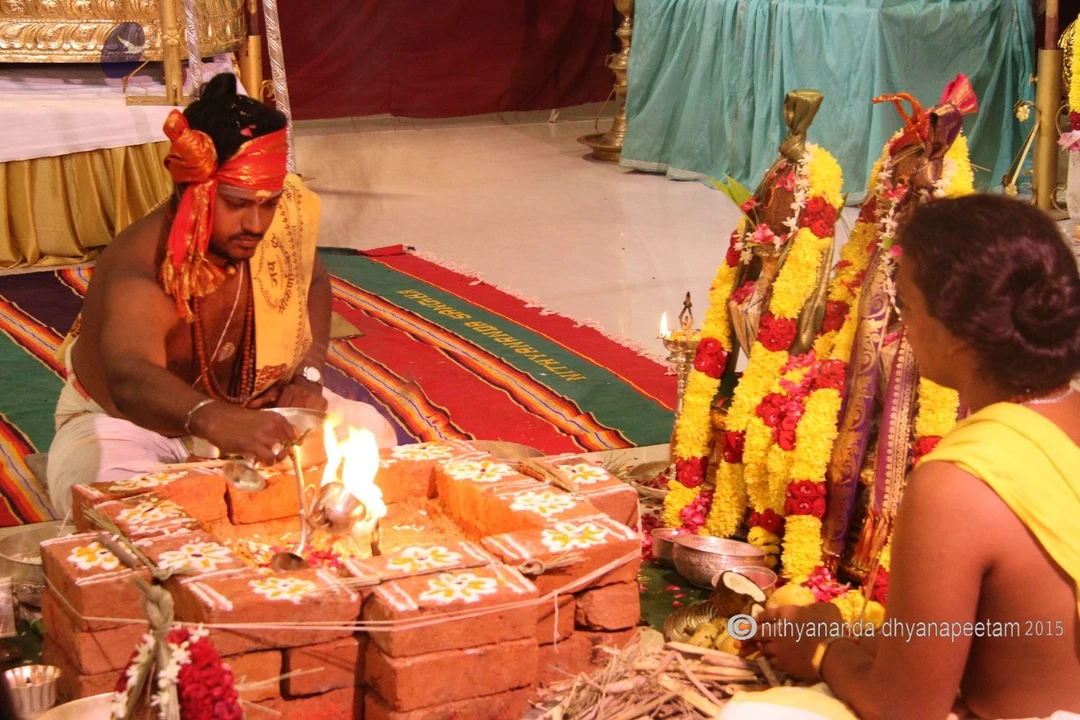
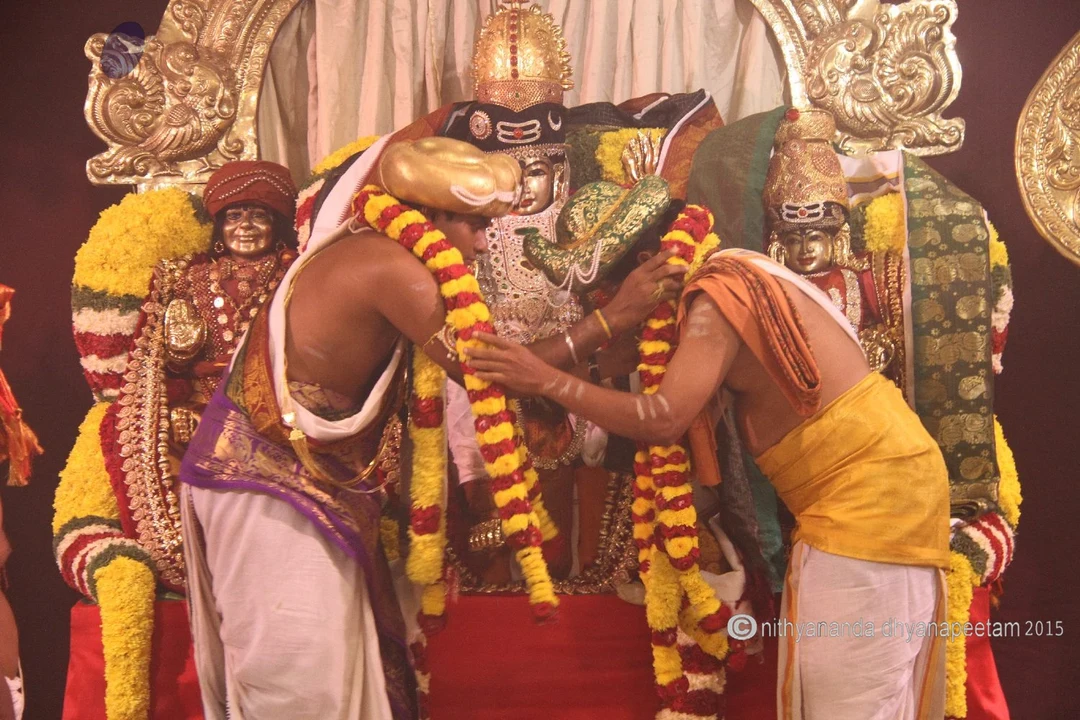
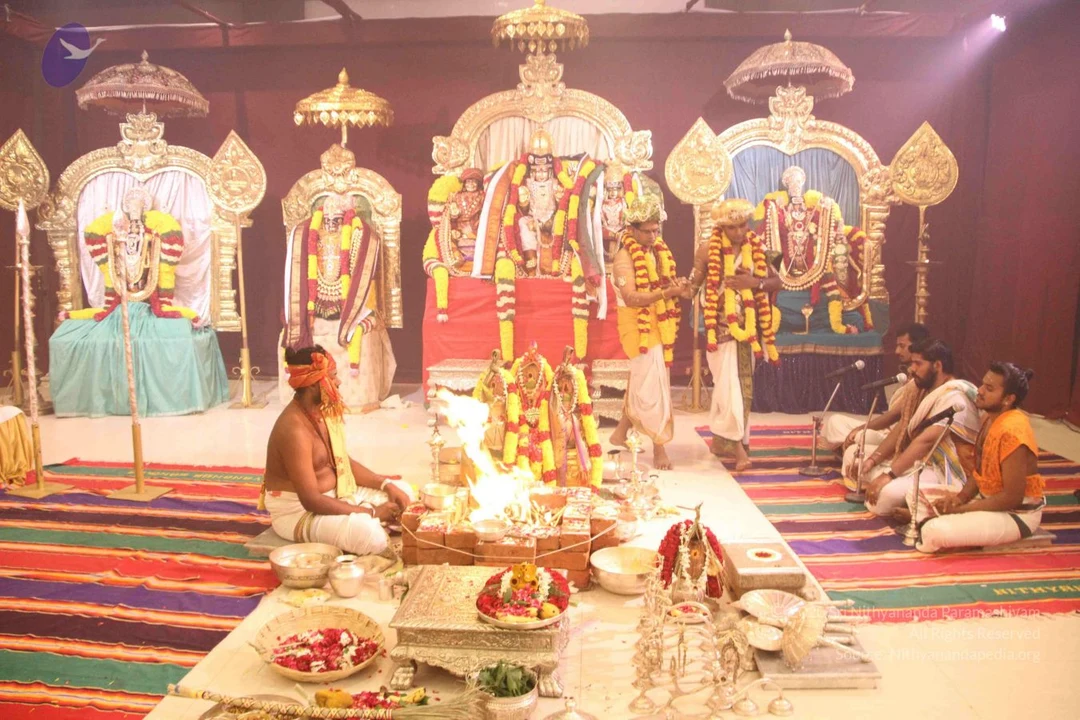
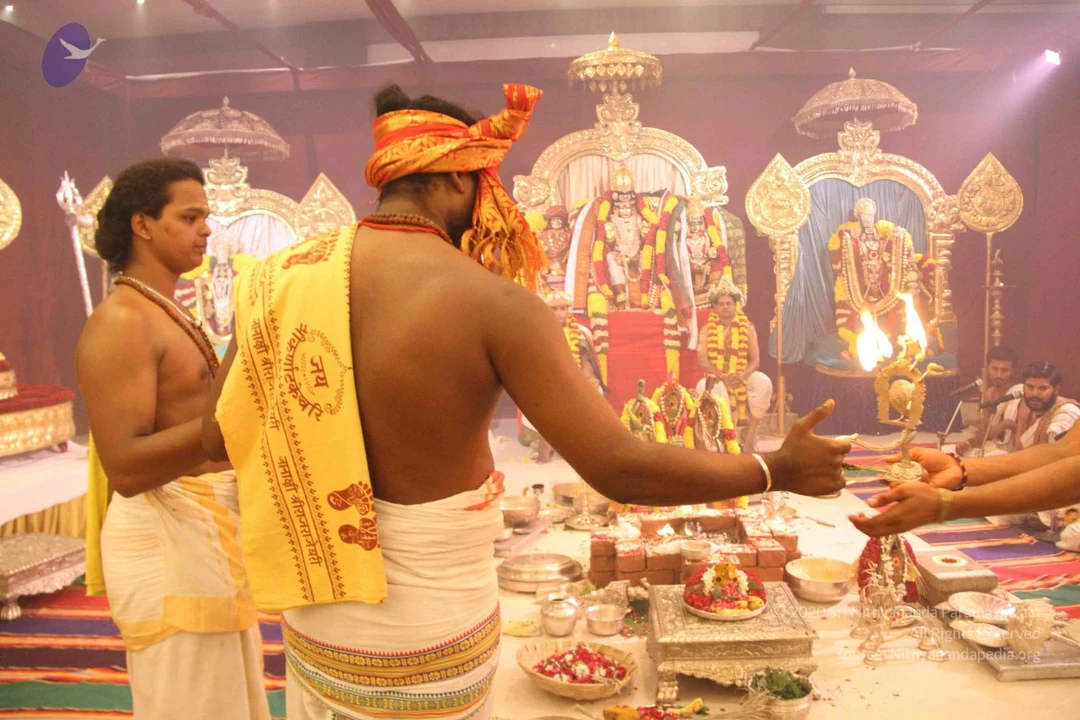
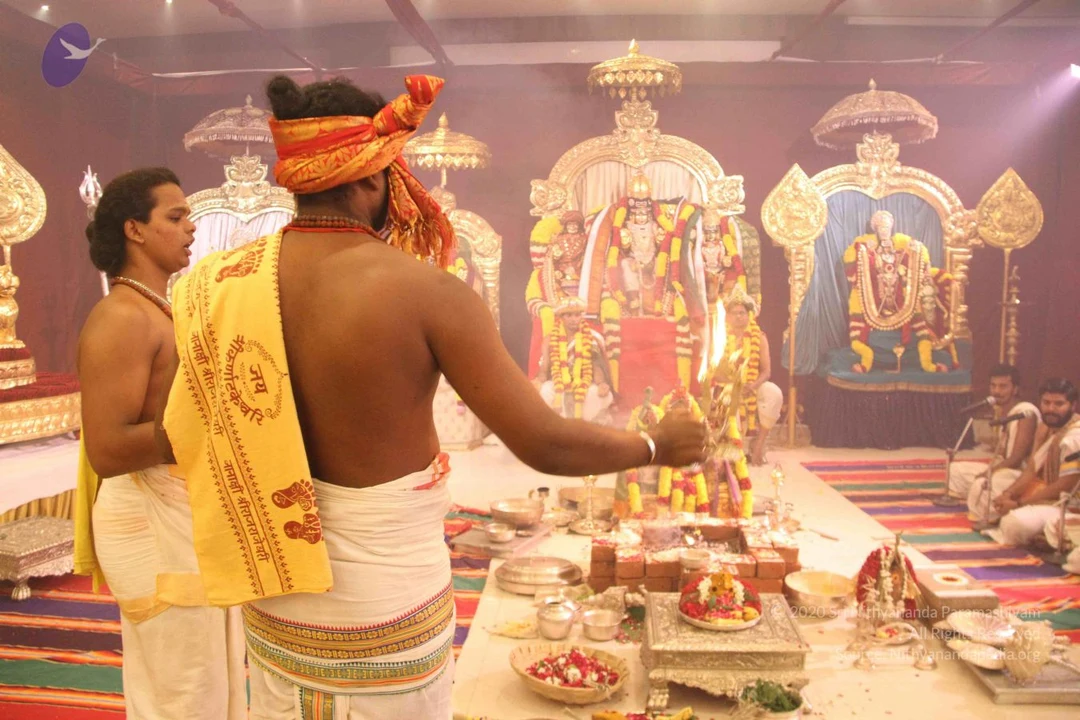
Inside a decorated ceremonial hall, a ritual is underway before an ornate golden throne with a central deity murti flanked by a smaller figure, all garlanded with yellow and orange marigold and red flower strands. Golden parasol-like canopies and carved golden side seats frame the scene. On the floor, colourful striped mats lie beneath a white cloth with a red platform. A bare-chested man in white dhoti and a shawl stands with folded hands facing a seated priest in white dhoti who performs offerings over brass trays of fruit, flowers, sweets and vessels, with a silver lamp nearby. Two men seated in white dhotis and a man in orange shirt sit at the right, with microphones on stands. Two seated men in white dhotis with garlands sit with hands folded near the central throne. No individual is identified as a person.

More Photos from Darshan

7 photosSource gallery
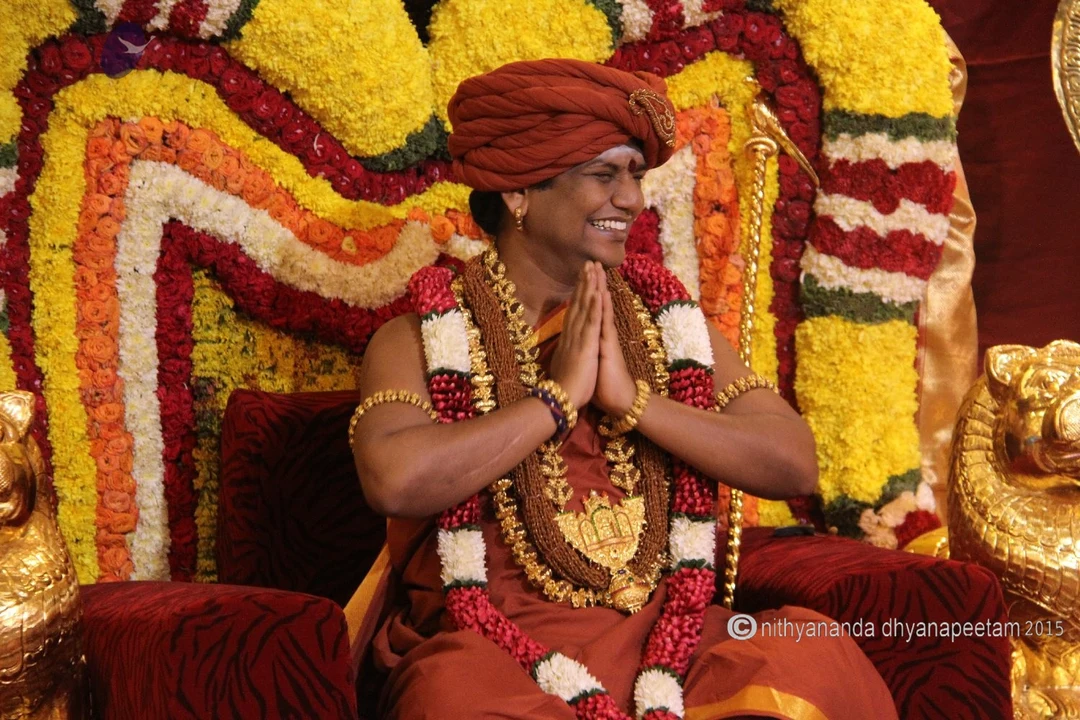
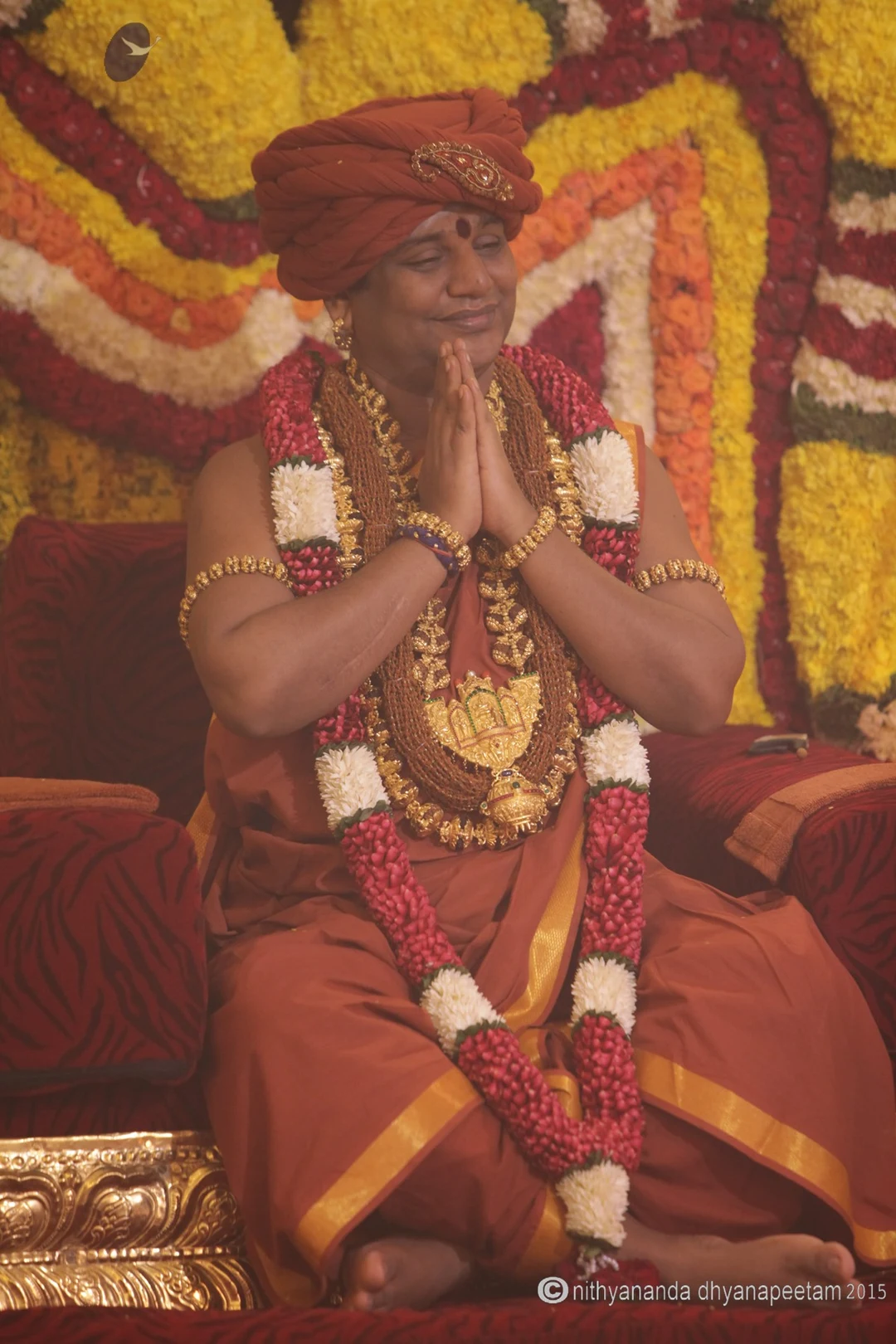
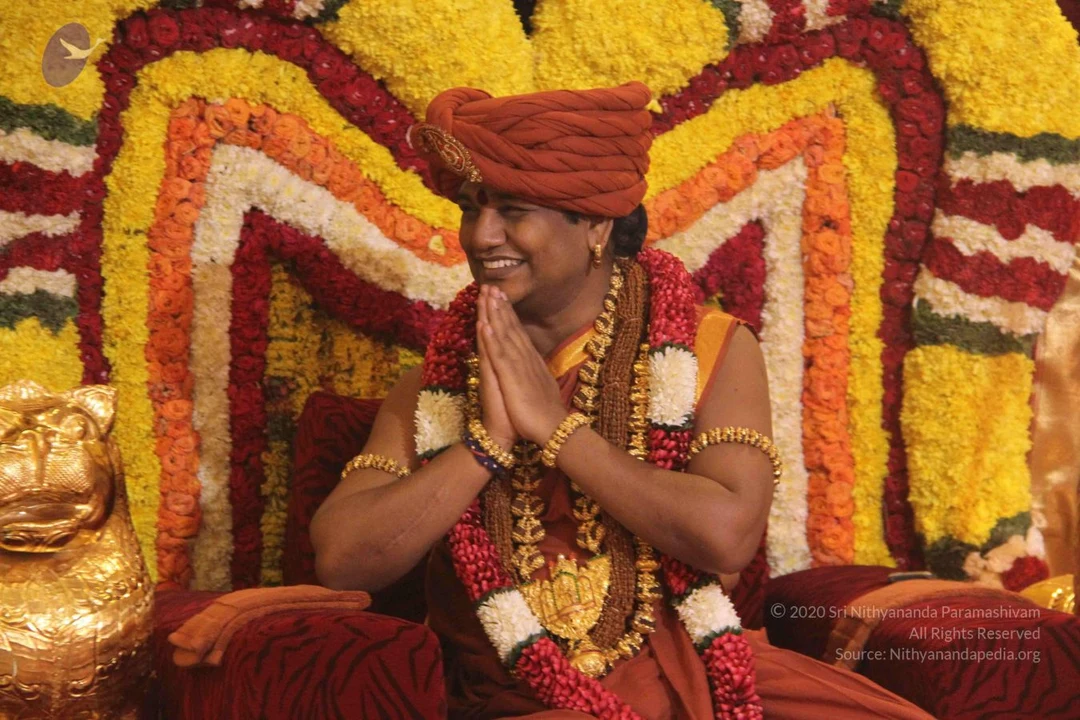
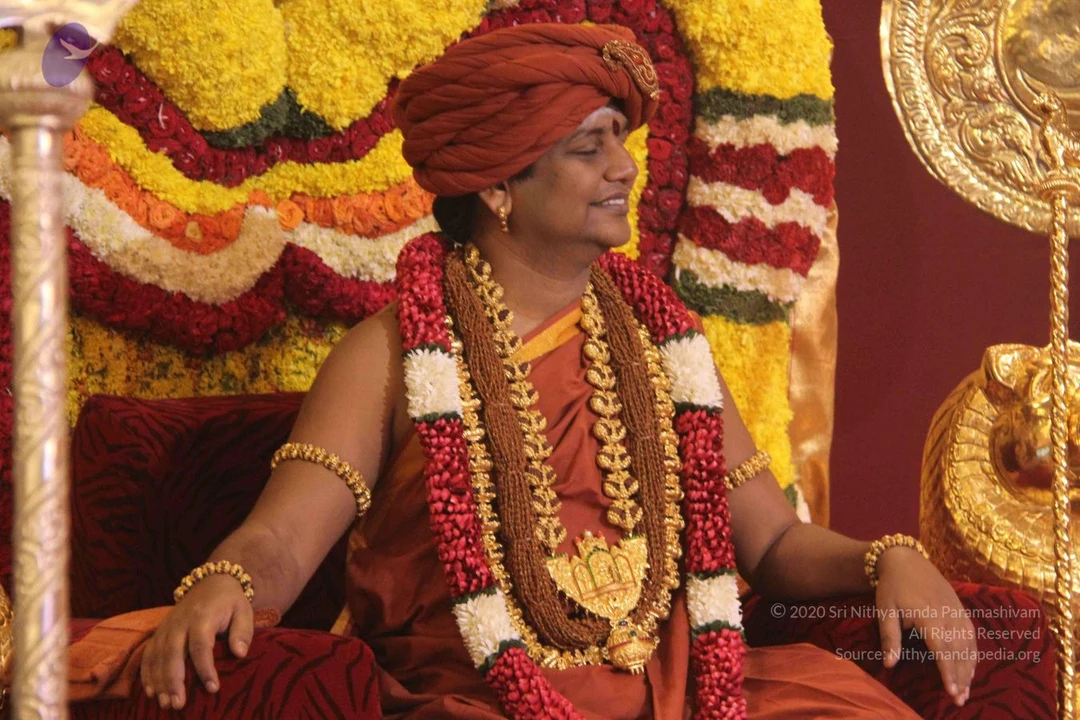
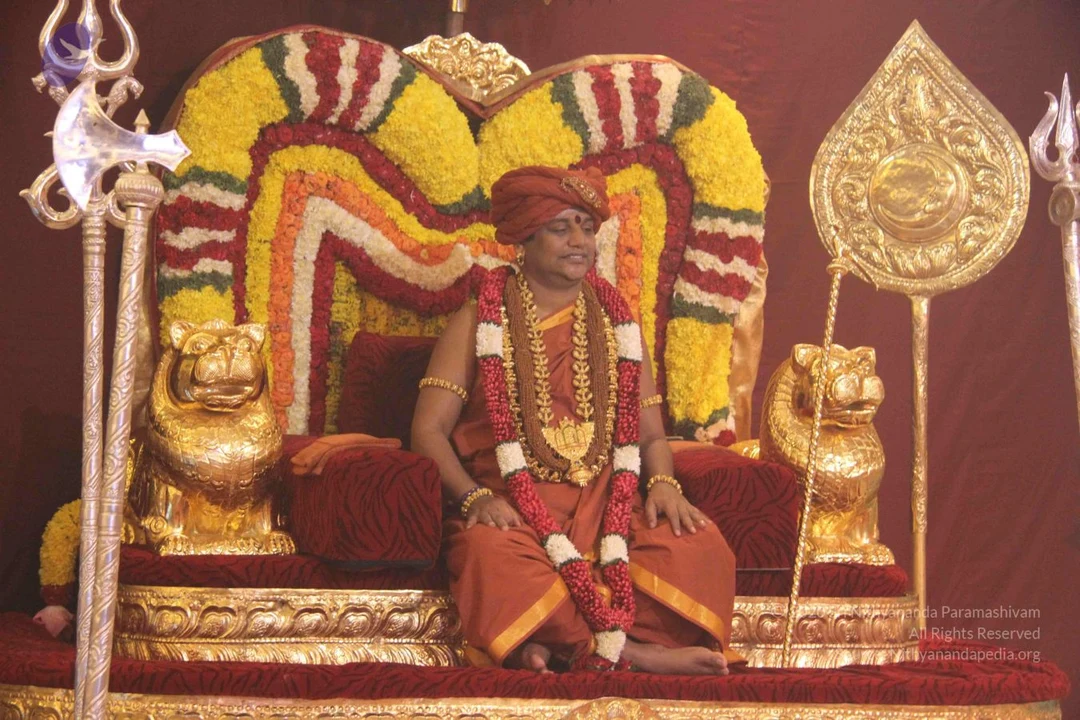
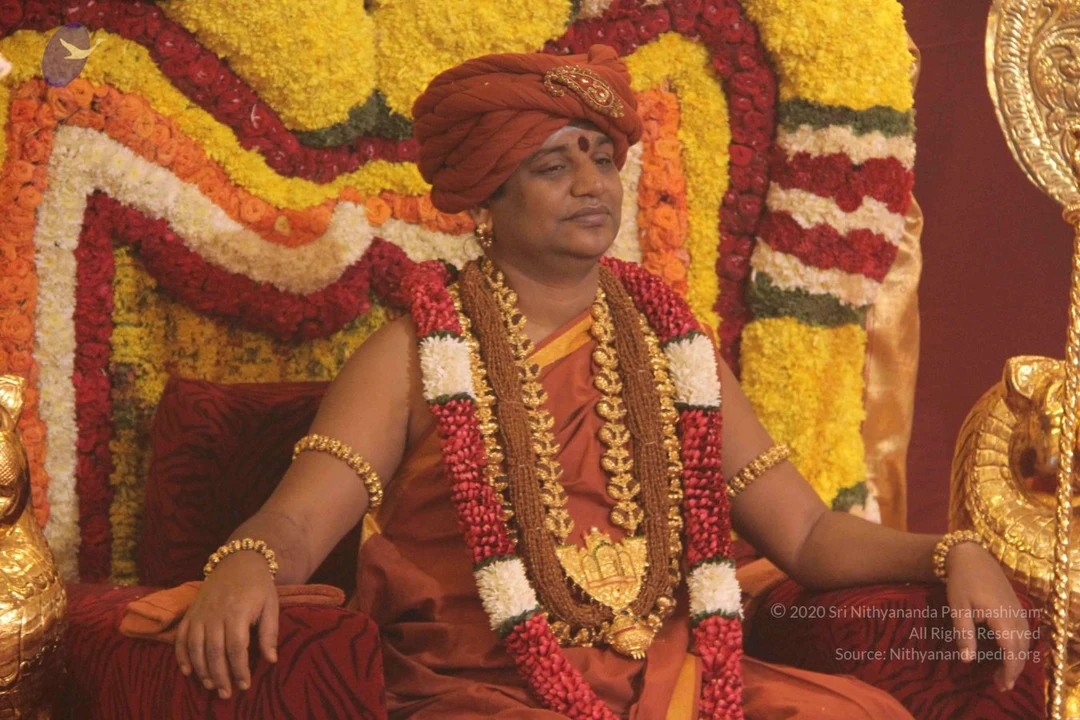
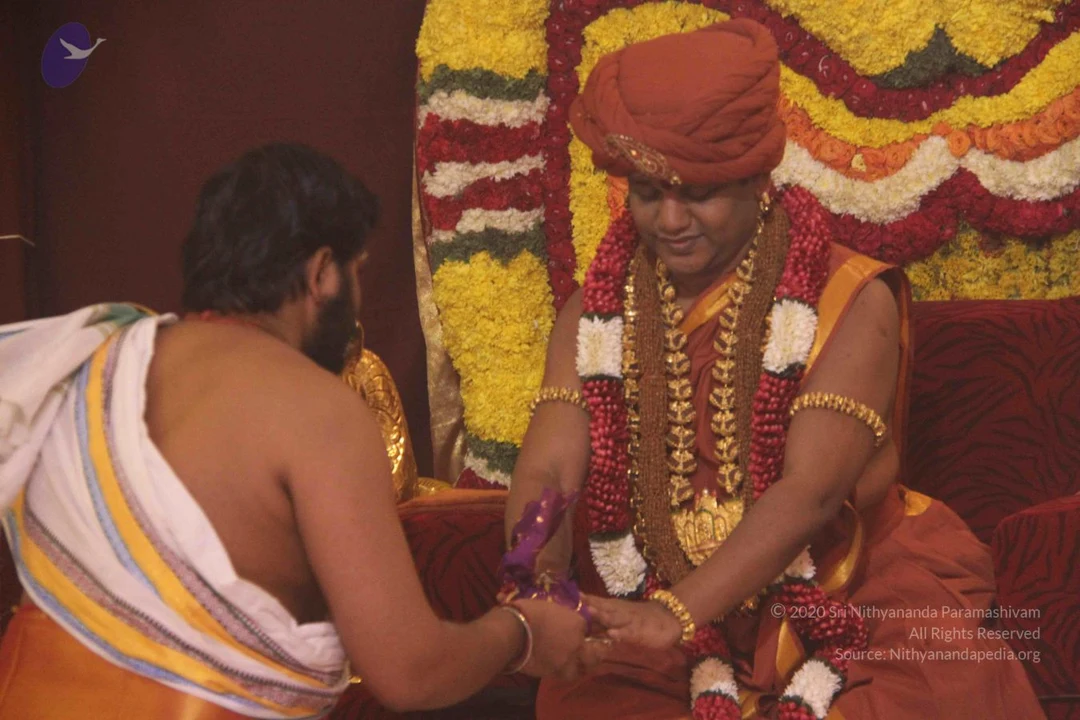
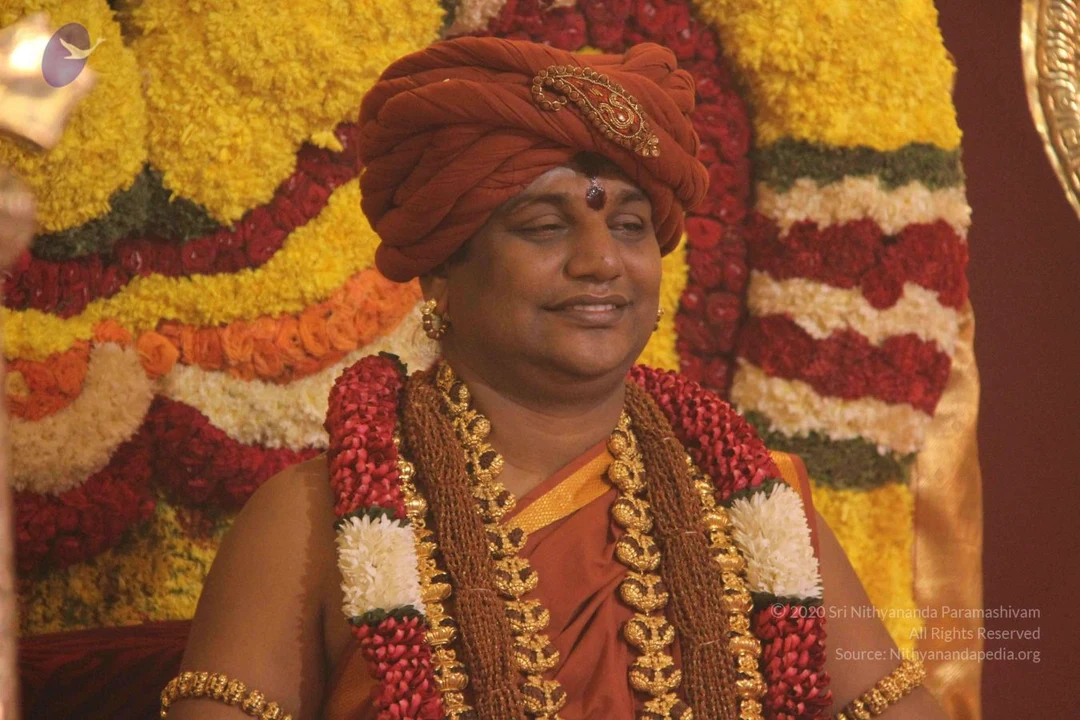
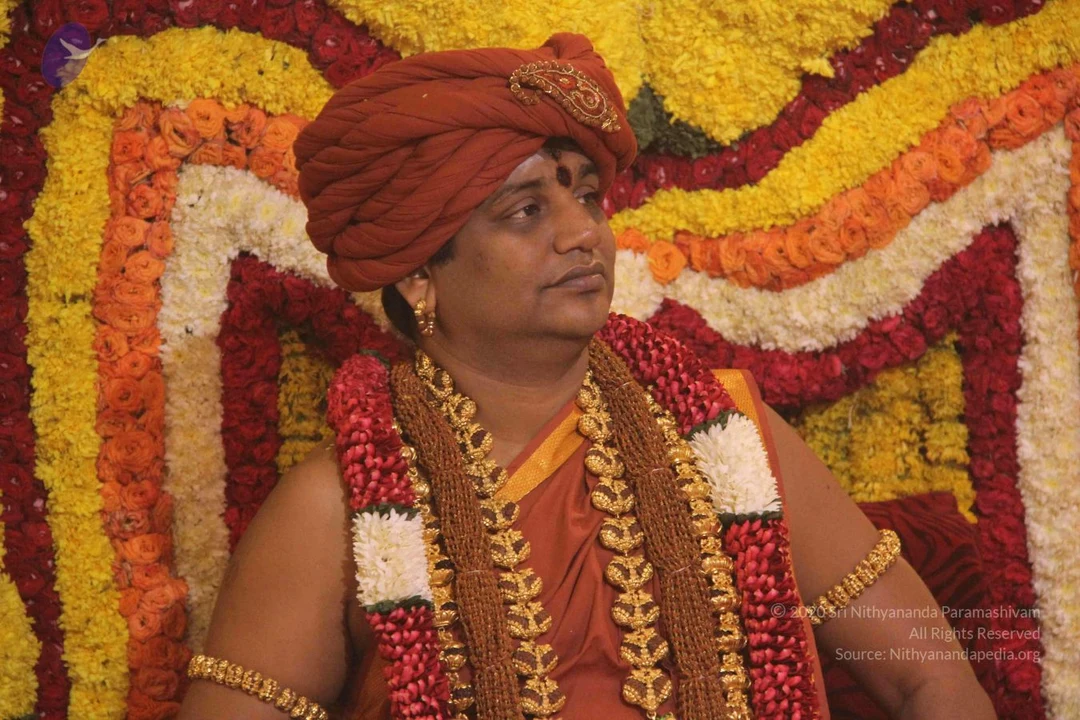
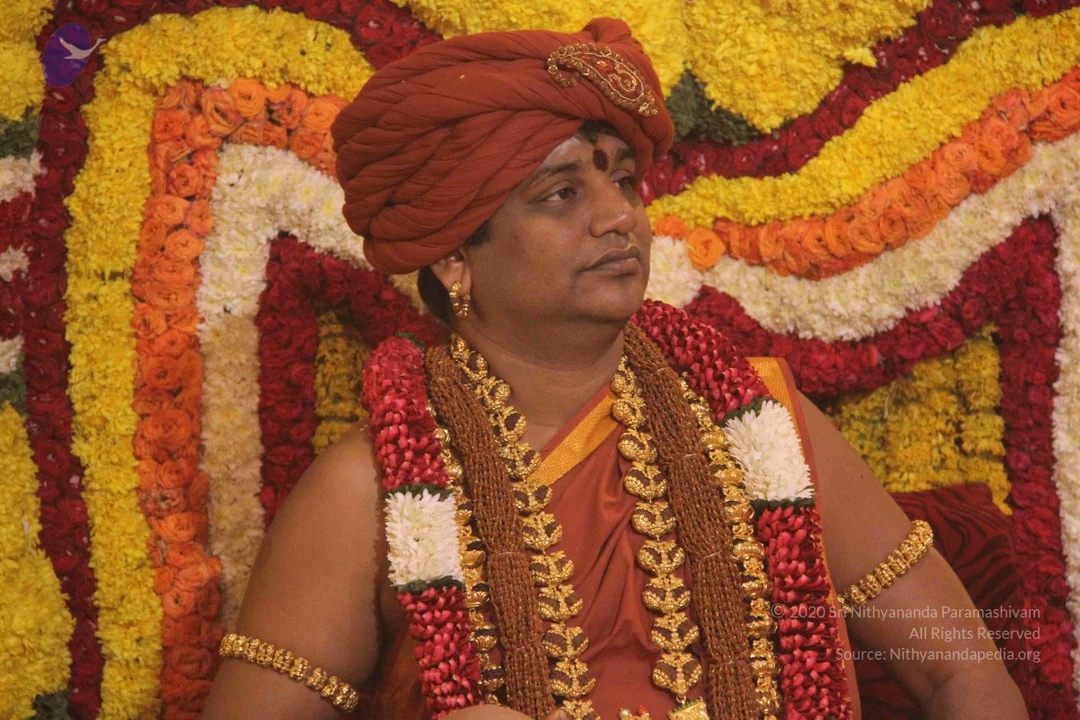
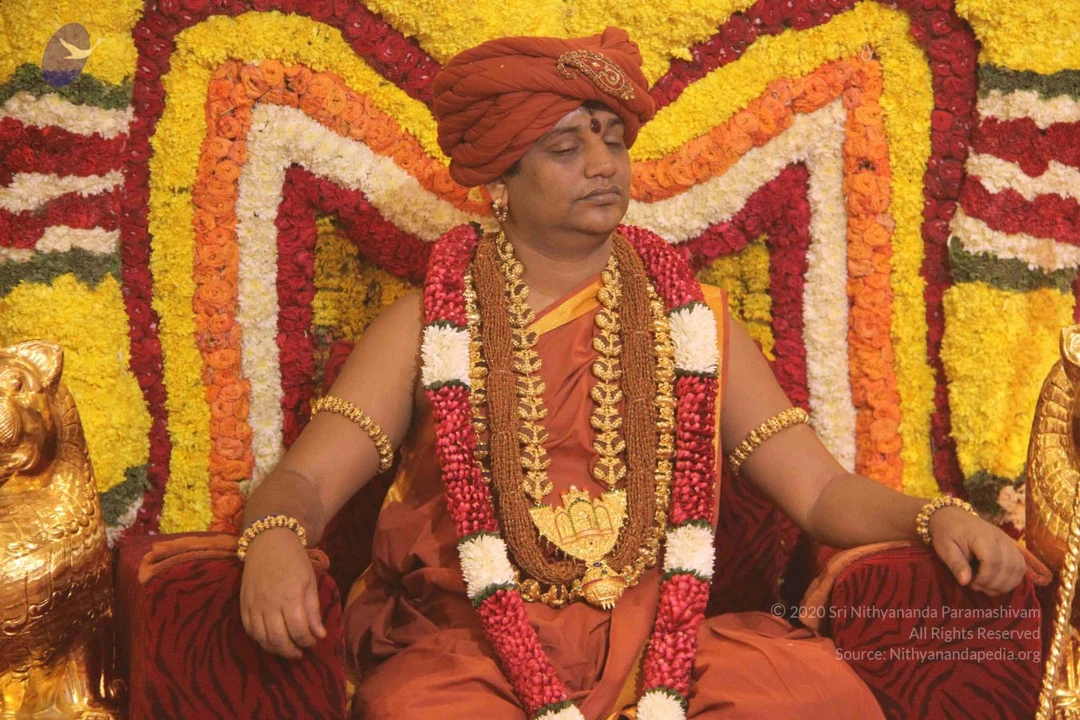
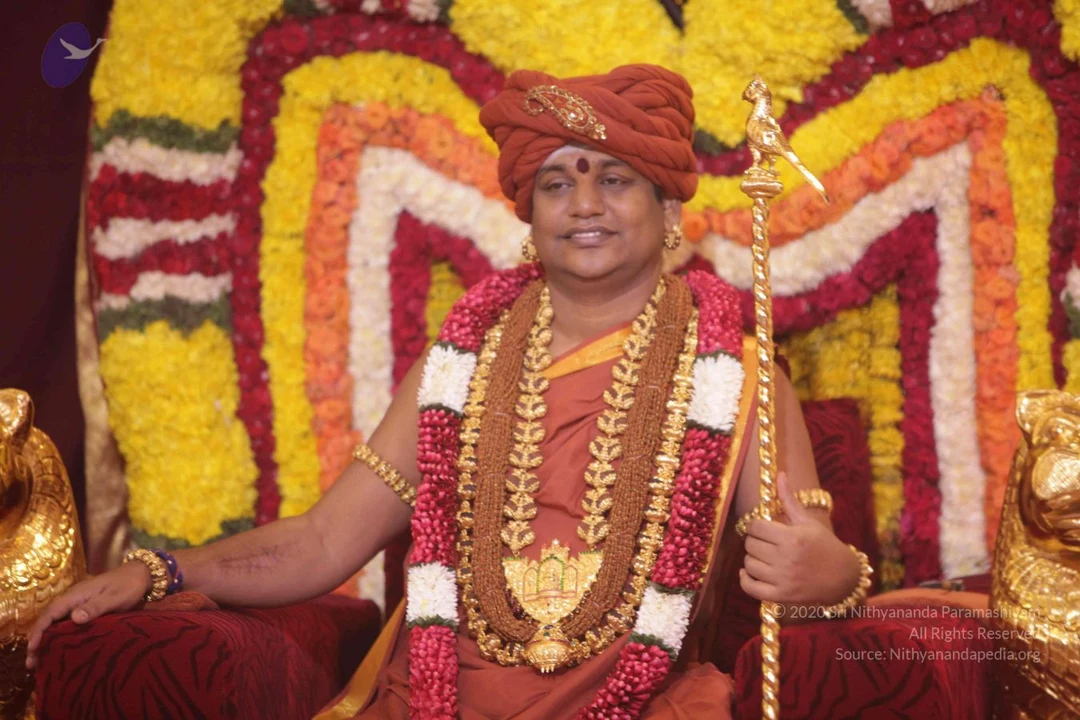
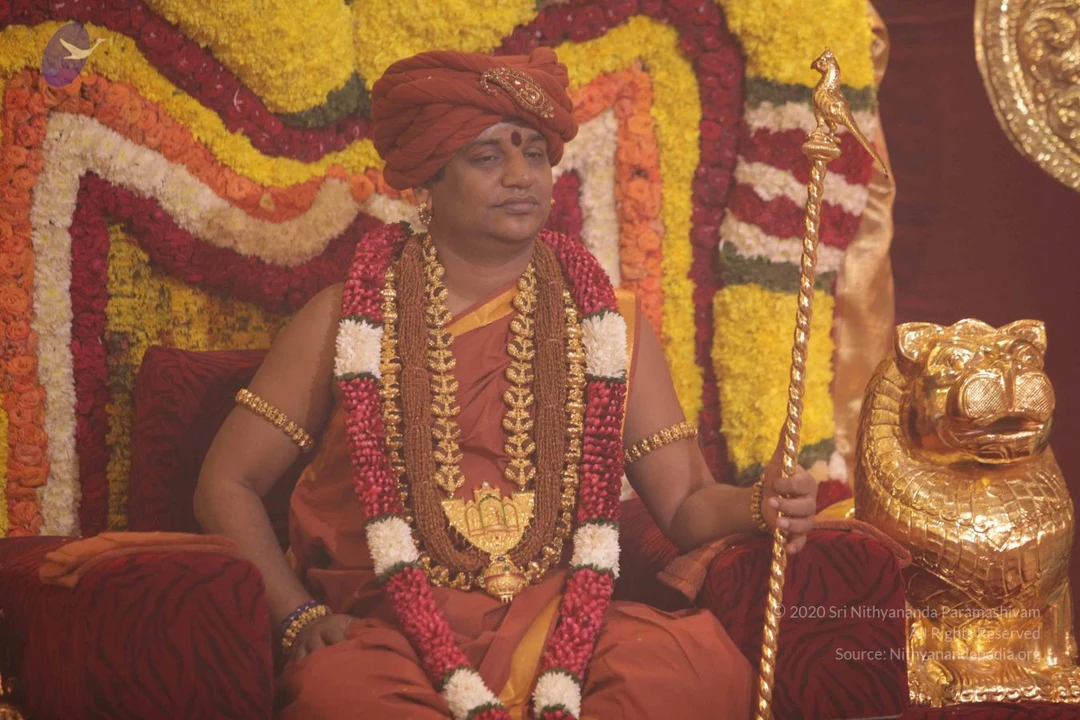
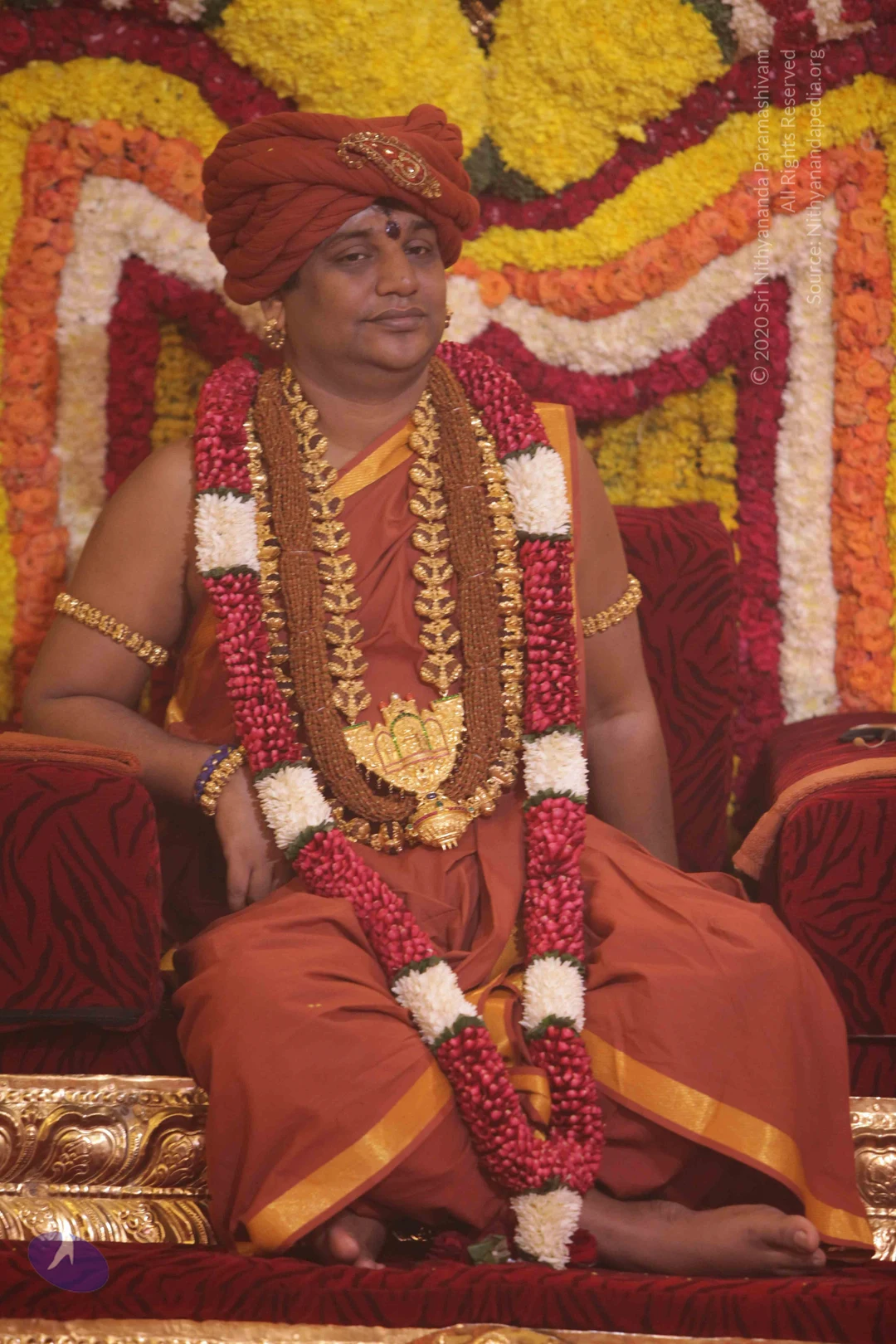
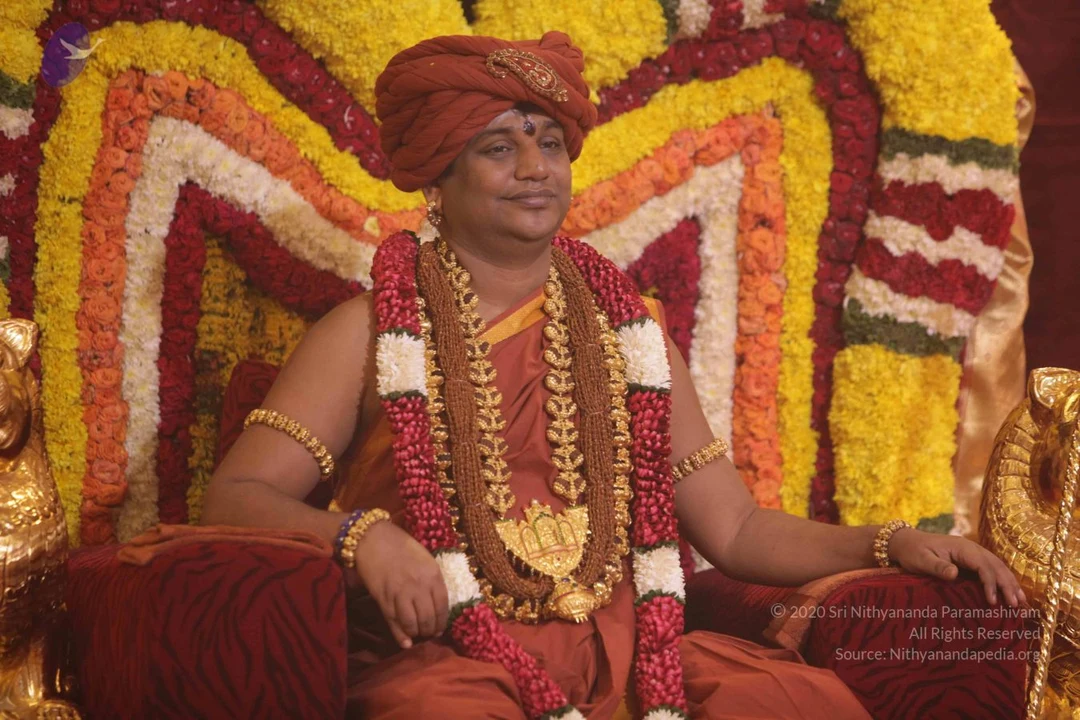
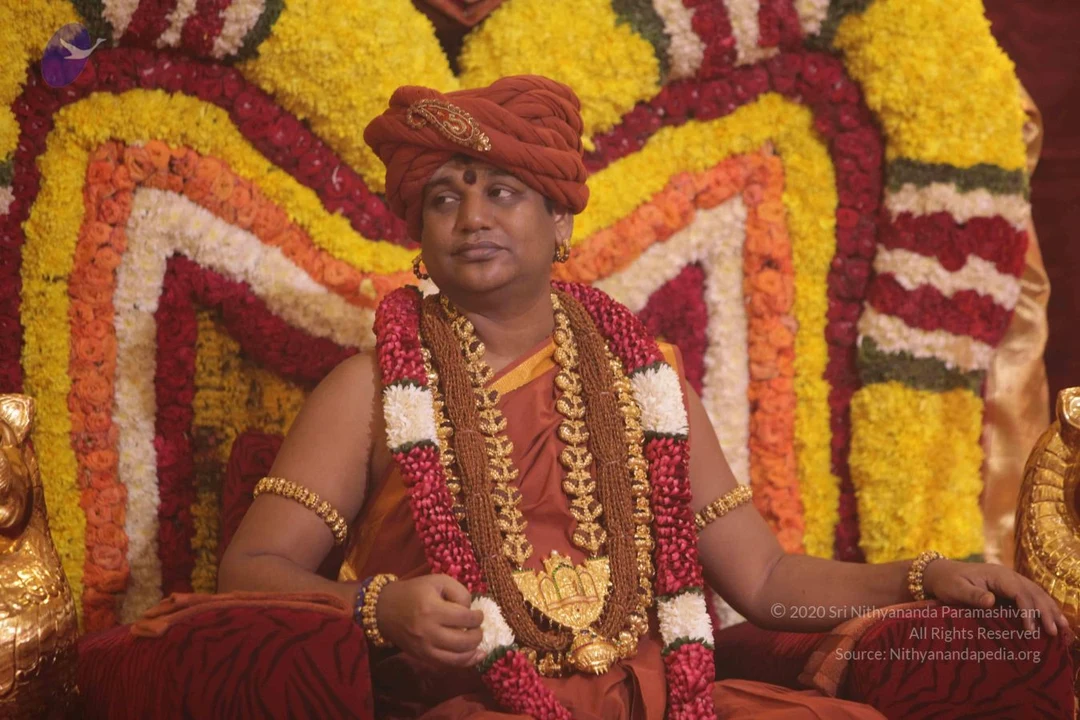
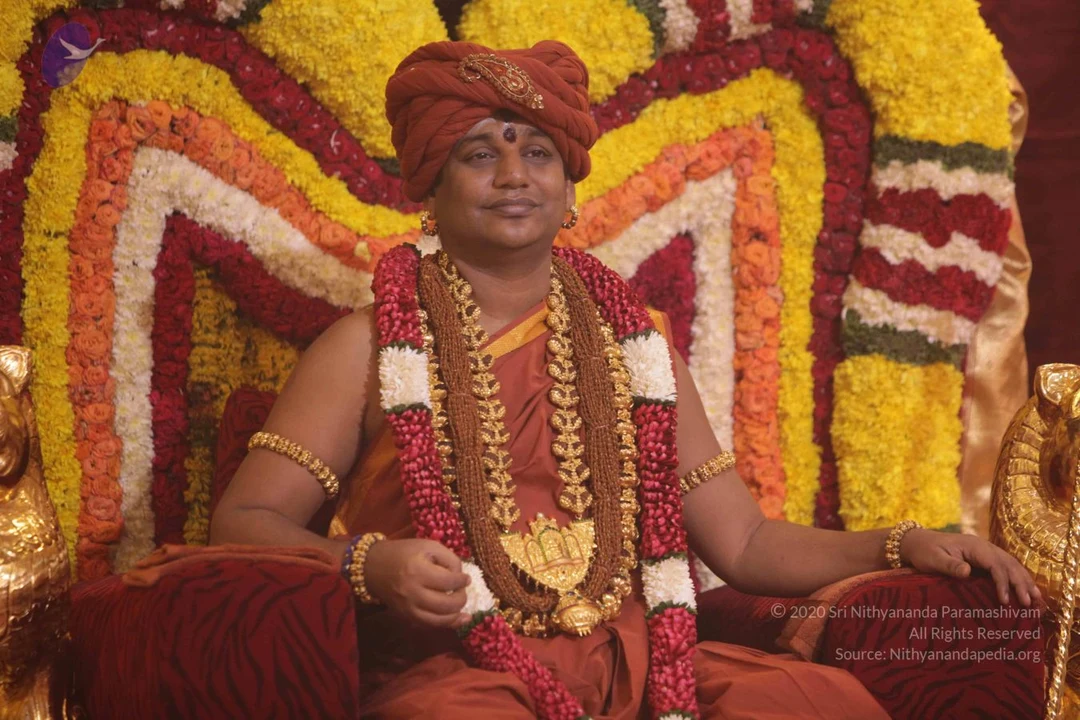
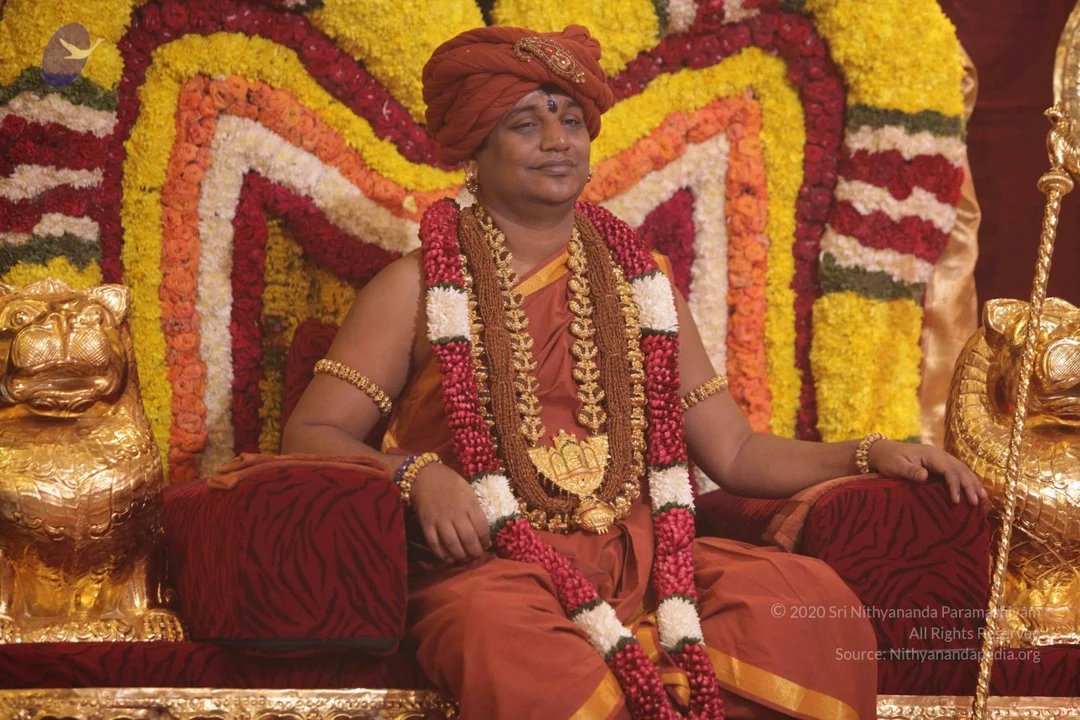
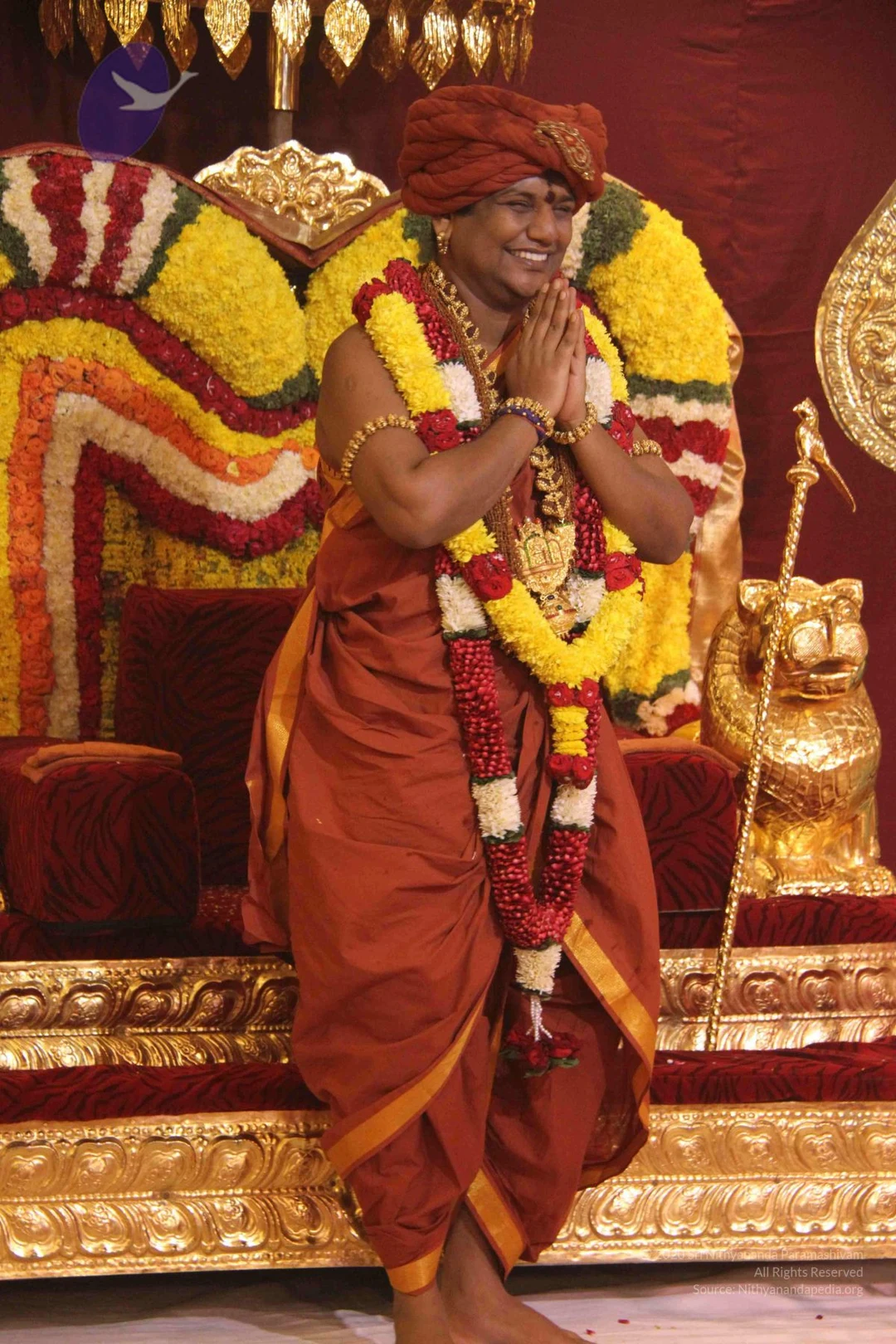
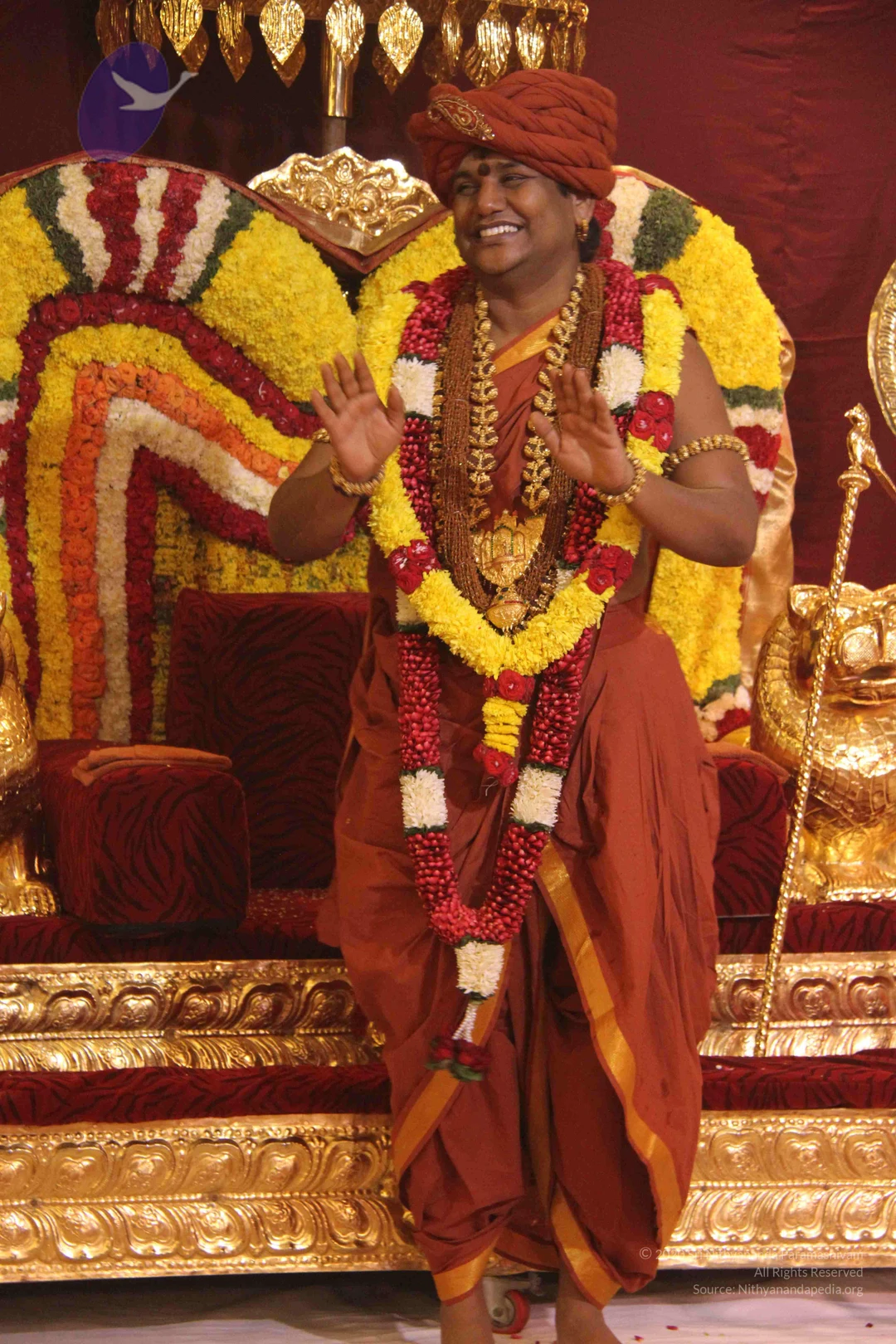
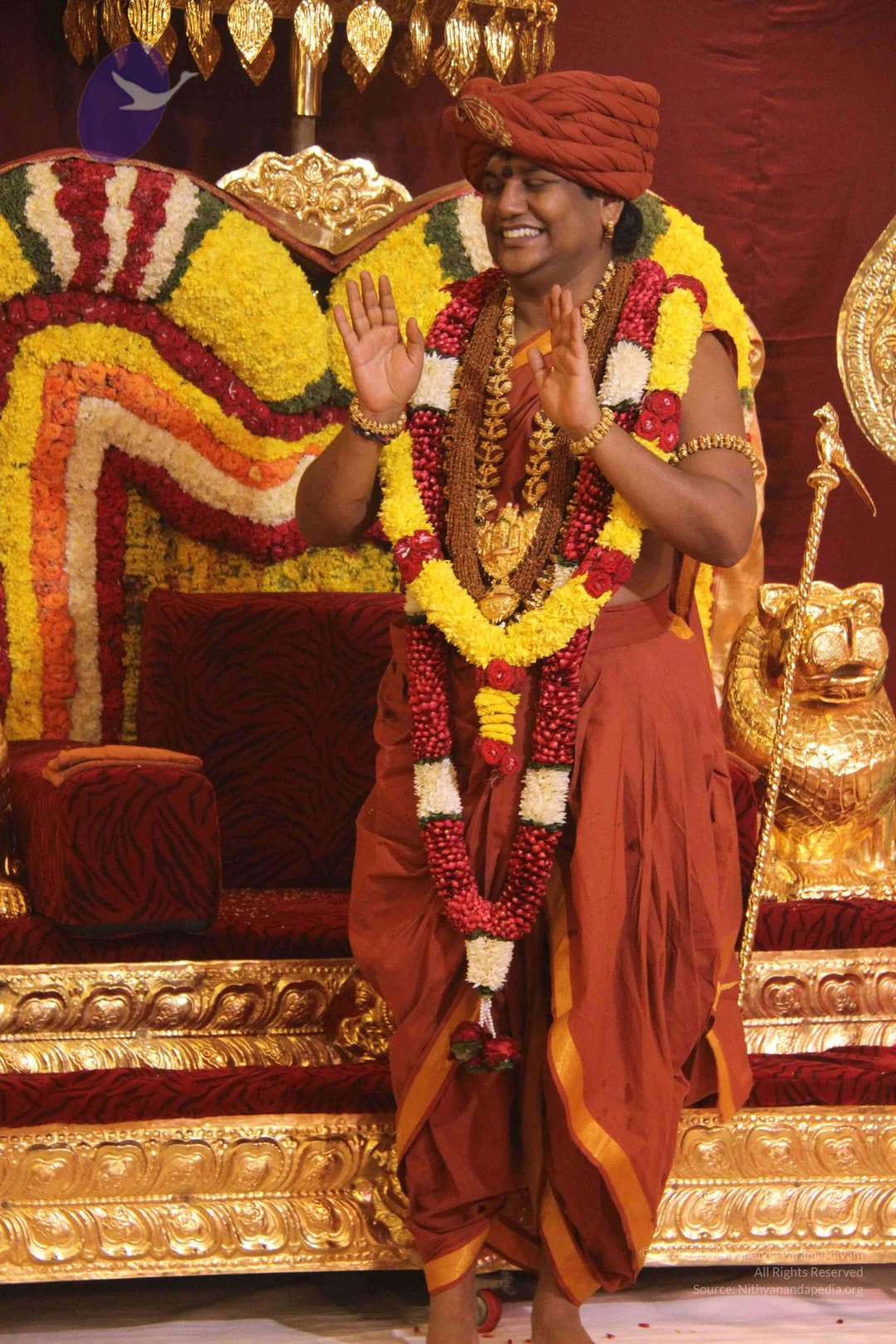
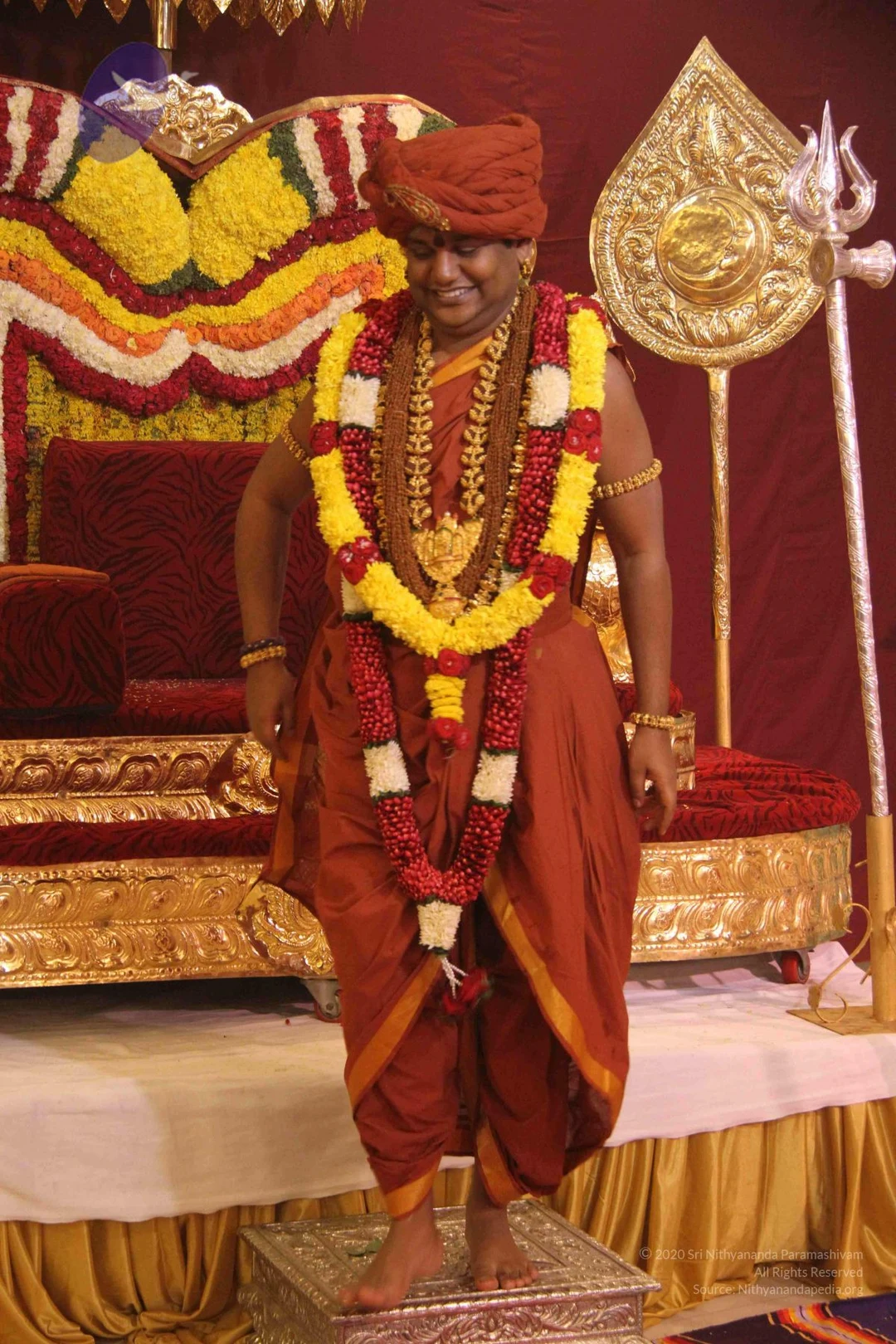
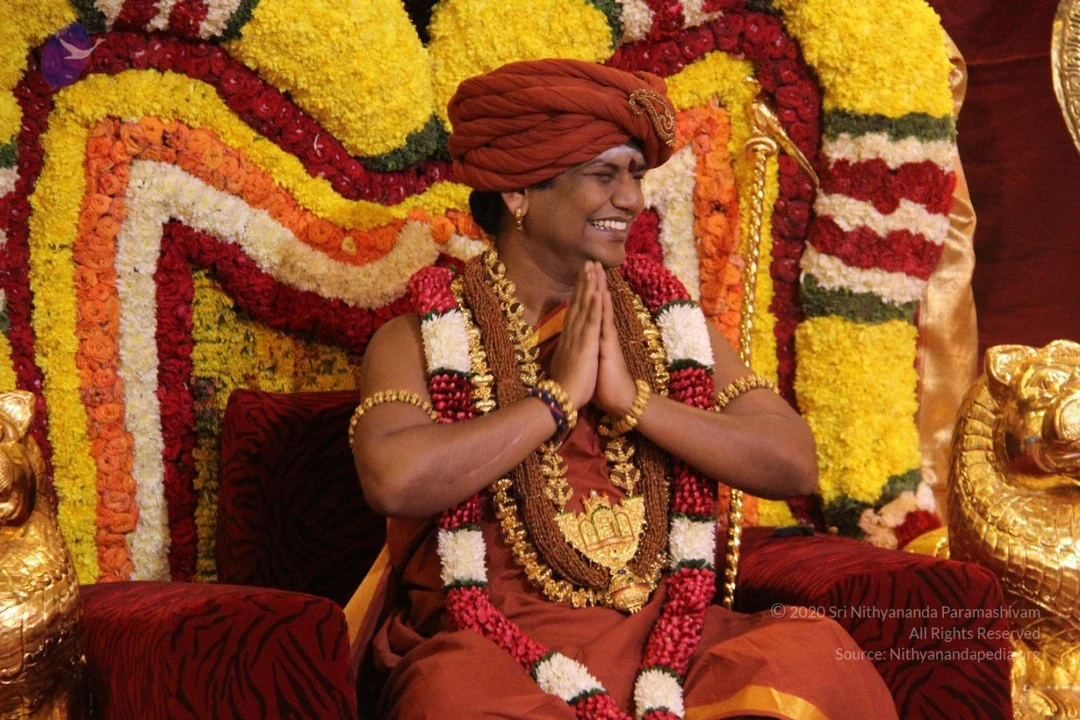
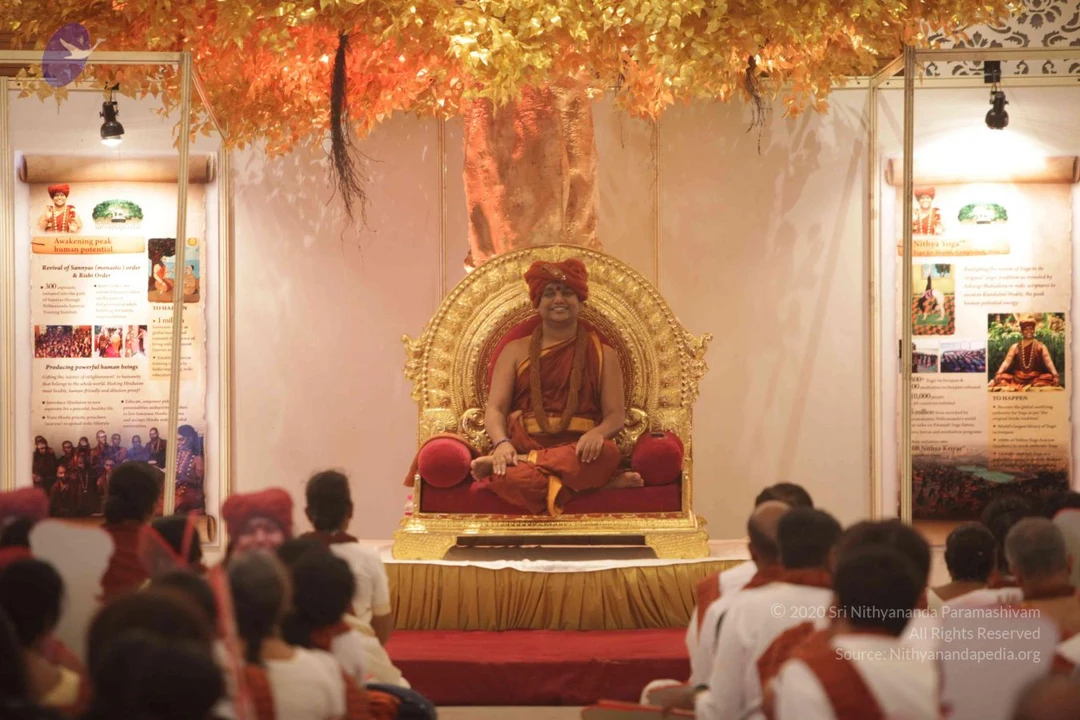
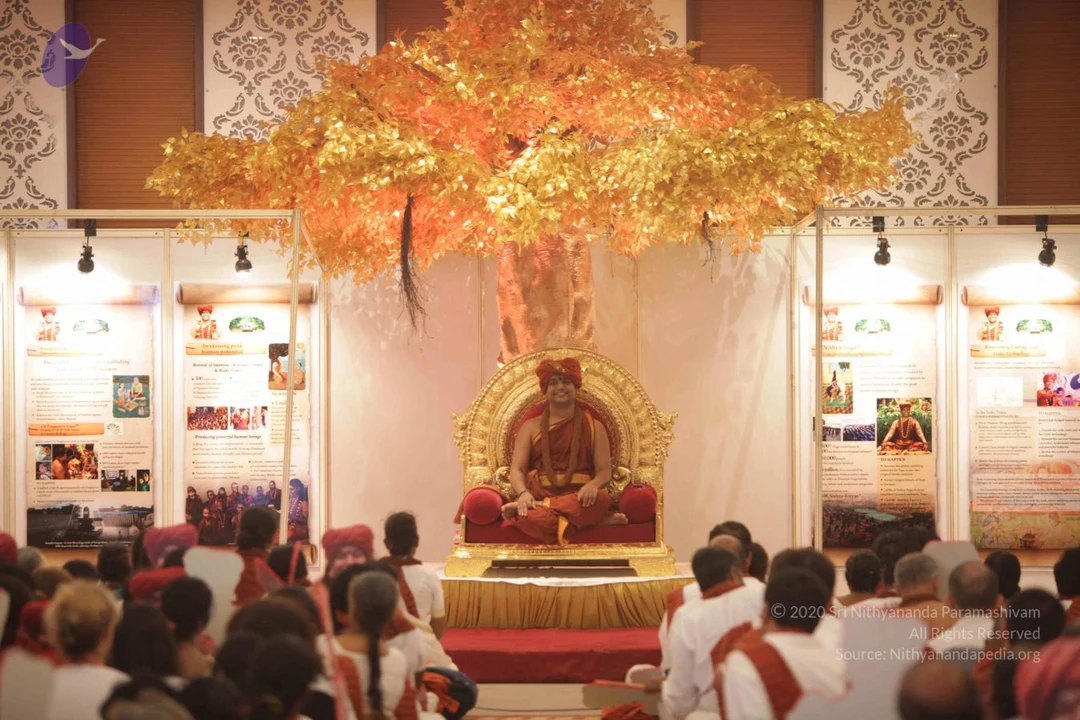
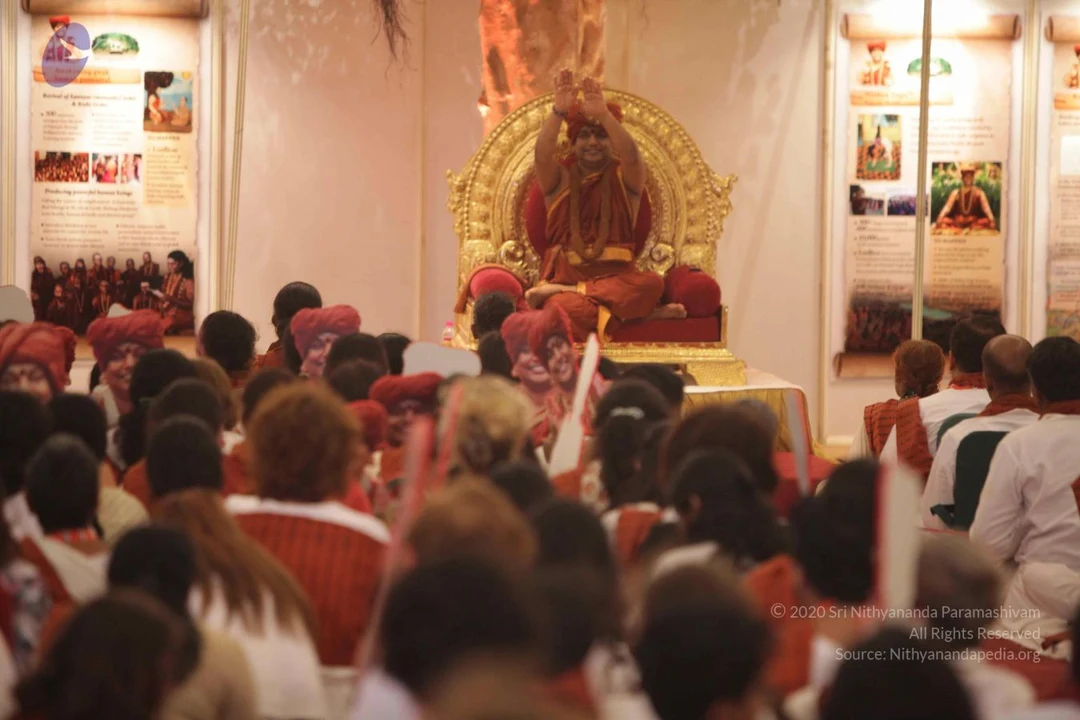
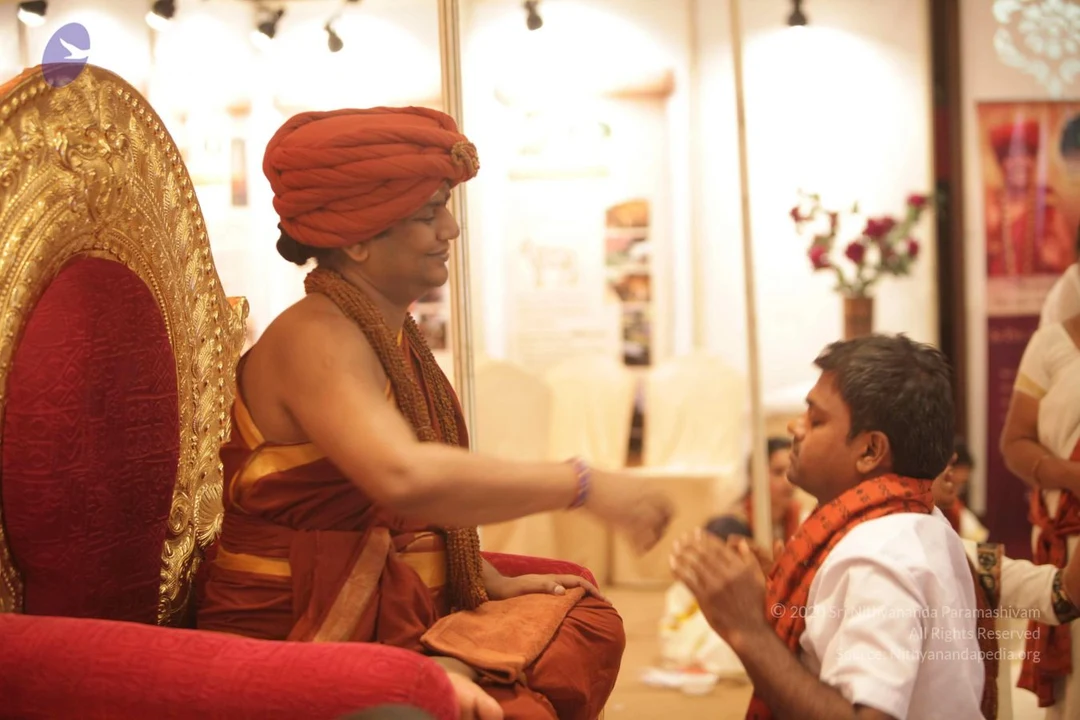
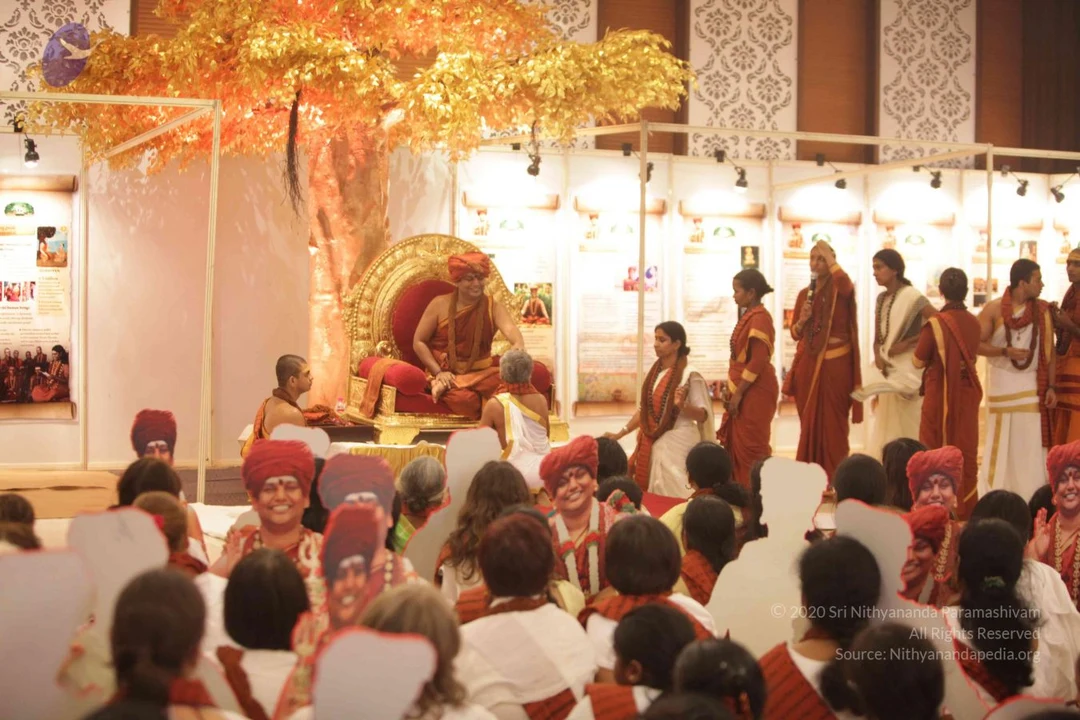
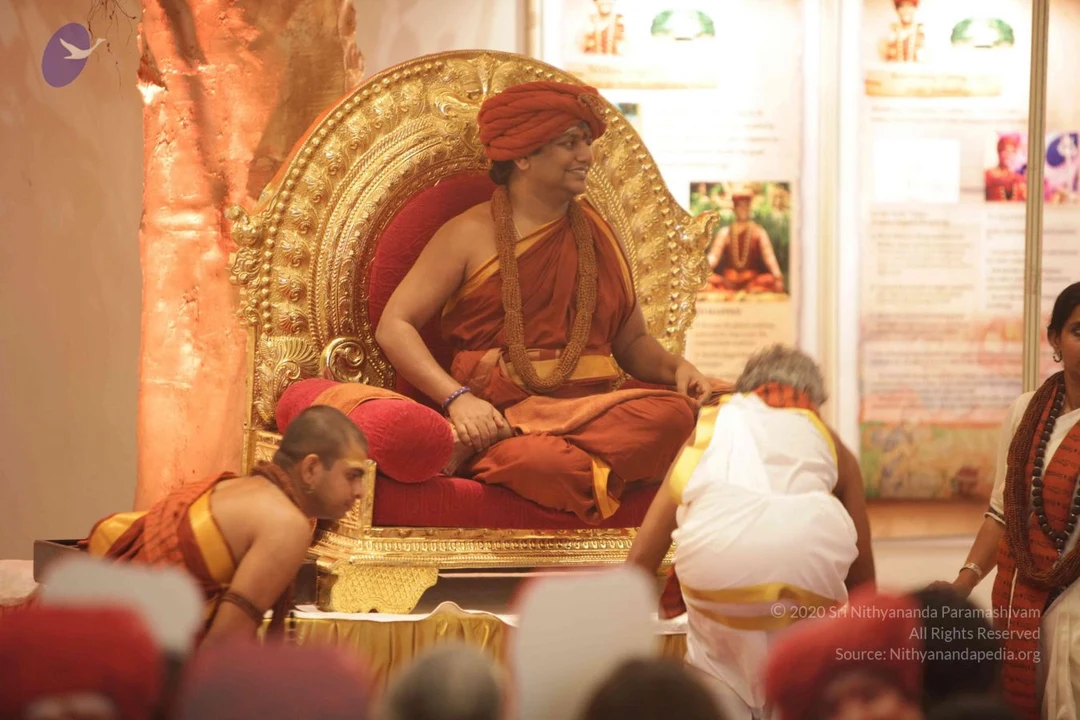
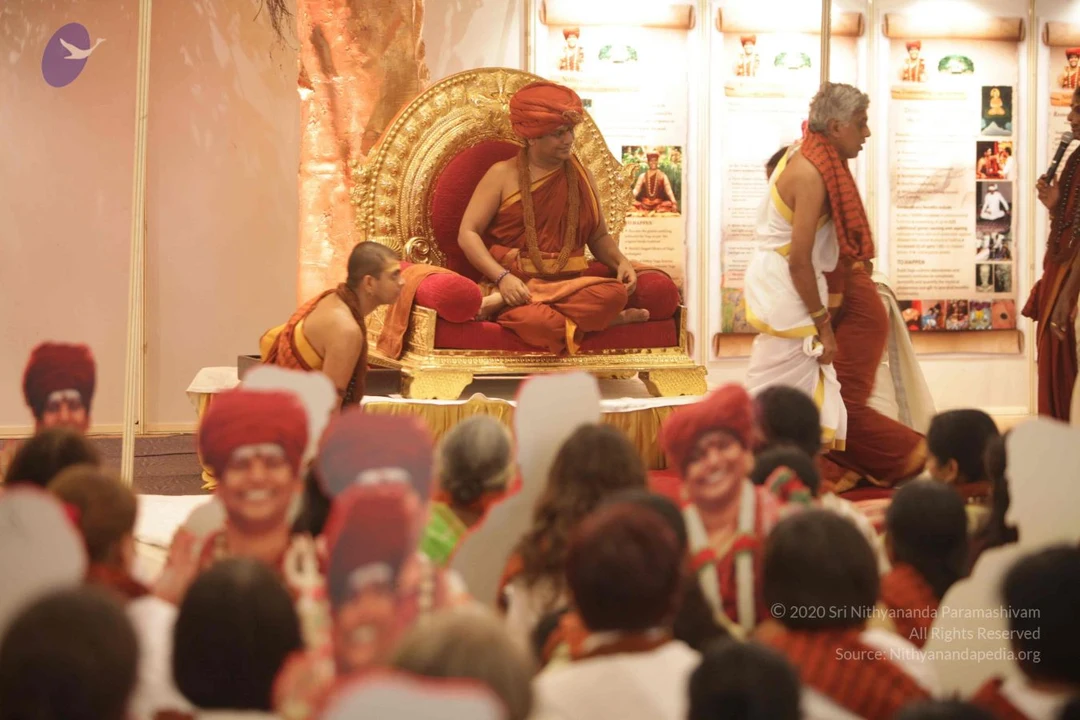
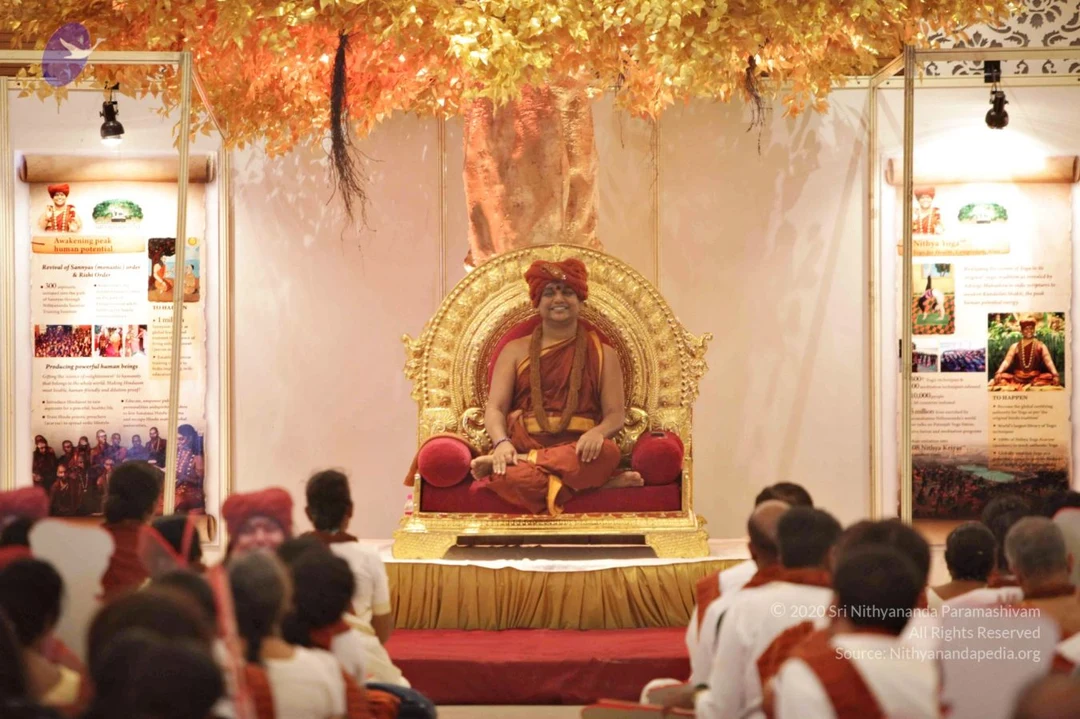
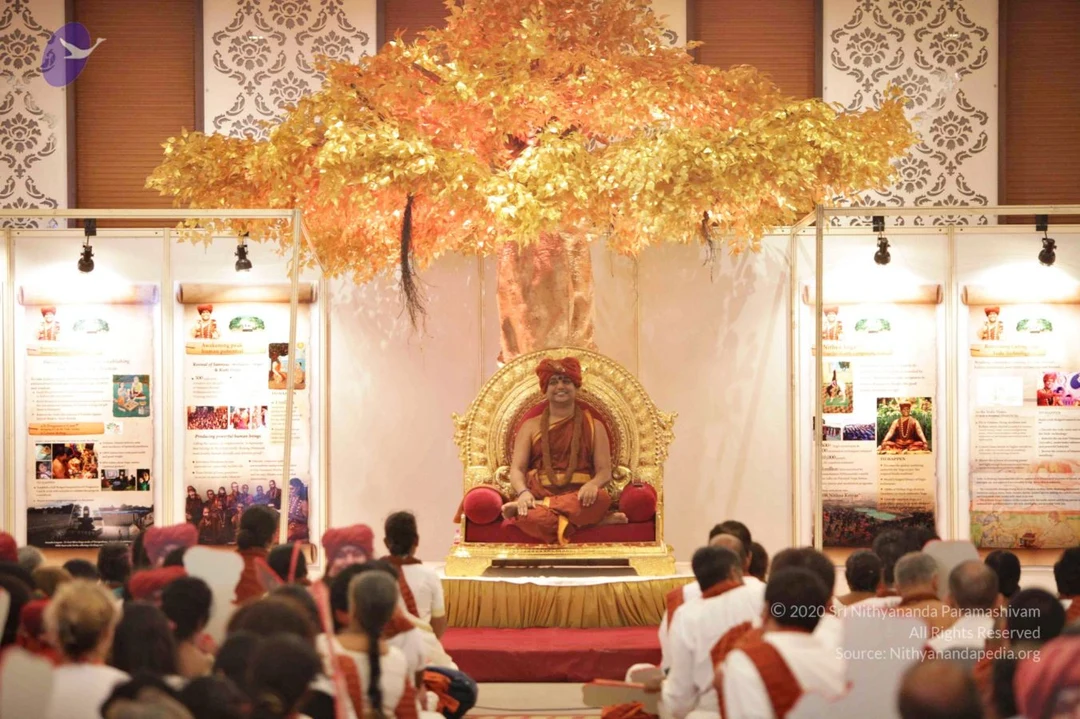
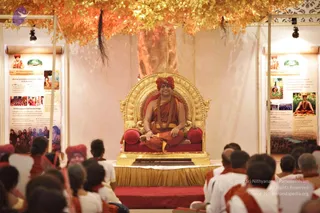
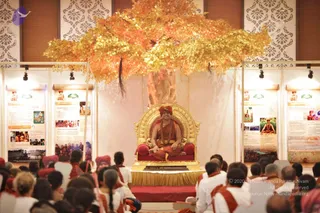
A seated figure in an orange-saffron robe with a matching orange turban sits on an ornate gold throne with red cushions, under a canopy of gold-orange artificial leaves. A gold garland hangs at the chest and a rudraksha-style mala is worn. Audience members sit in the foreground with their backs partly to the camera, some in white and orange-saffron clothing. Framed display panels with photographs and text flank the throne on both sides. Swamiji (probable): the seated figure wears saffron robes, an orange turban and a garland on a gold throne, consistent with the page's identification of the event.