Skip to content
Monday

20 April 2015

Nithyananda Times - 20th April, 2015

Dated photos
16
Source pages
1
Media
1
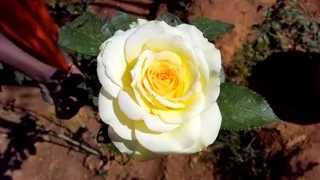
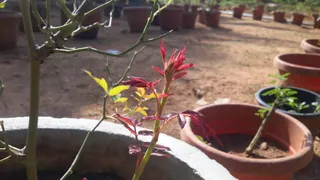
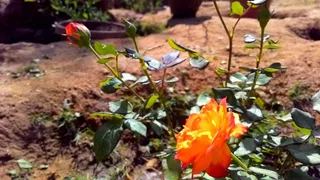
Close overhead photograph of a single cream-white rose in bloom, its outer petals pale ivory fading to soft yellow toward a bright golden-yellow centre. Green serrated leaves surround the flower on a reddish-brown earth ground. At the upper left, the edge of a dark orange-red fabric and a pale purple-grey sleeve or cloth appear. No people are visible, and no a person candidate is present in the scene.A close photograph of young rose plants in terracotta pots on a dry, sandy ground in a garden. In the foreground a fresh shoot bears new reddish-maroon leaves with serrated edges, alongside older green and yellow leaves on thin pale stems. A grey concrete planter rim sits at the lower left, and several empty clay pots line the path behind. No people are visible.Close-up photograph of an orange and red rose in bloom beside a red bud on a thin green stem, surrounded by dark green serrated leaves. The plants grow in reddish-brown earth with a clay pot and stone basin visible in the blurred background under bright sunlight. No people are visible, and the scene is a garden corner rather than a ritual or ashram event.

April 20 2015

Original wiki page
Contents

Title:

Nithyananda Times - 20th April, 2015

Link to video:

Photos From The Day:

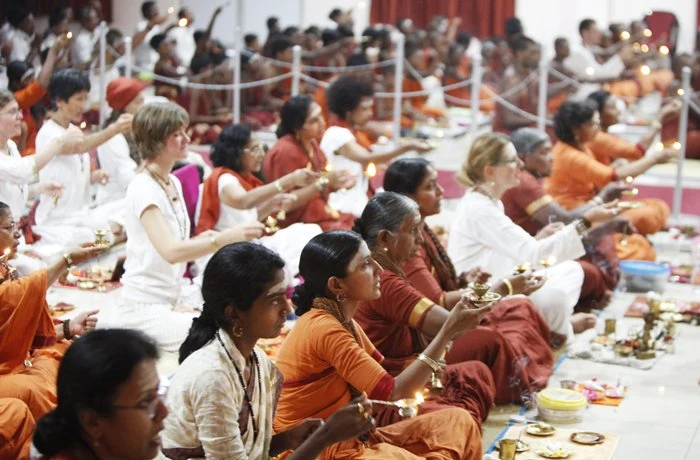
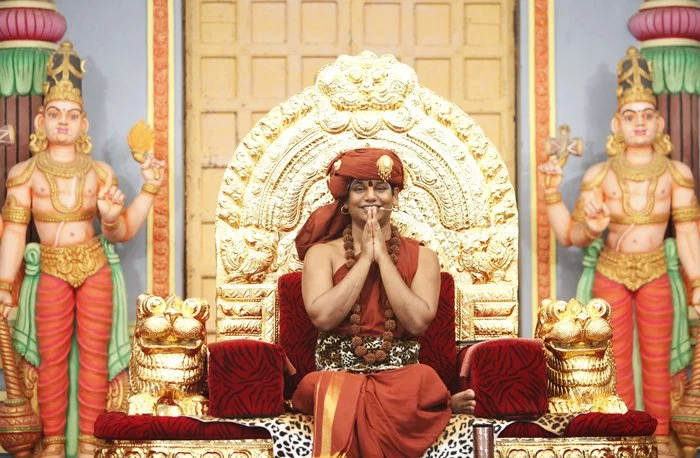
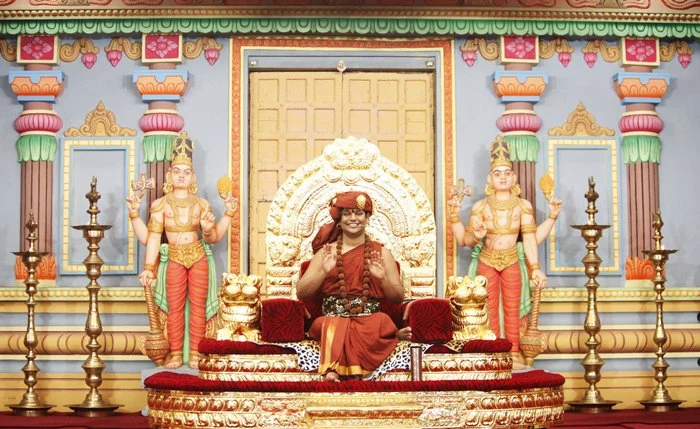
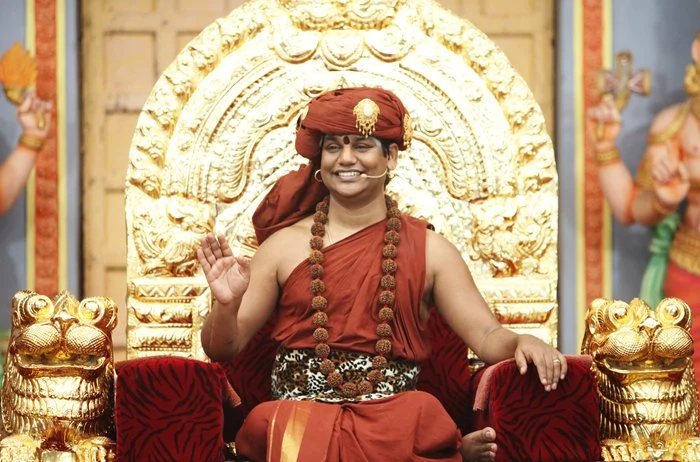
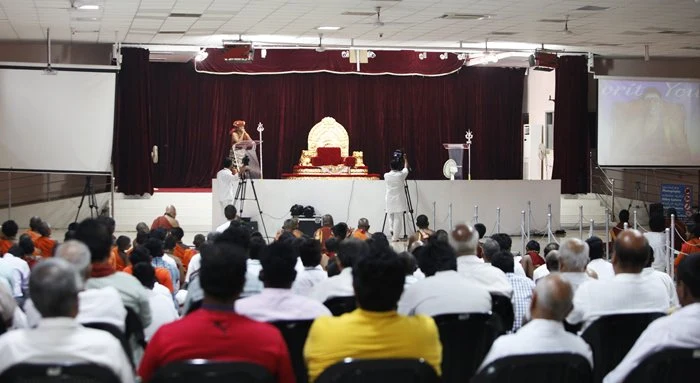
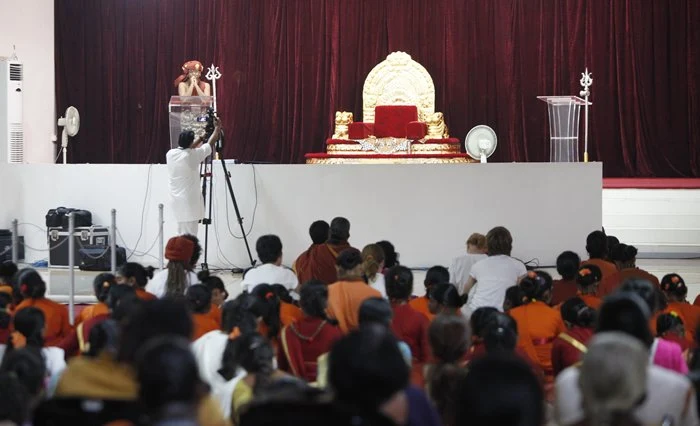
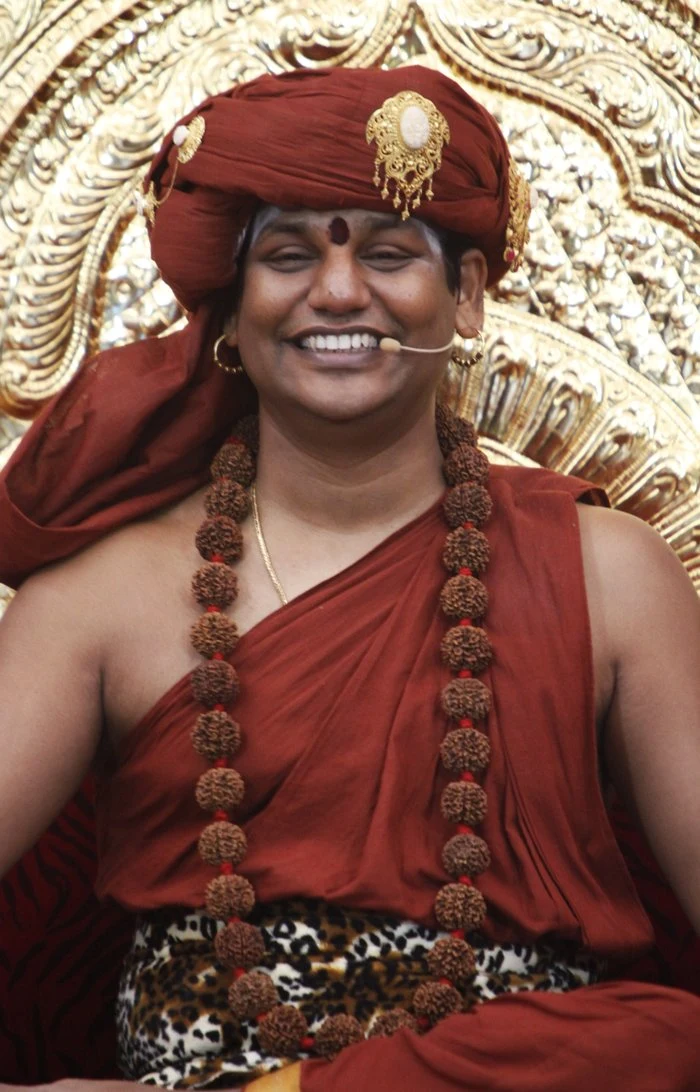
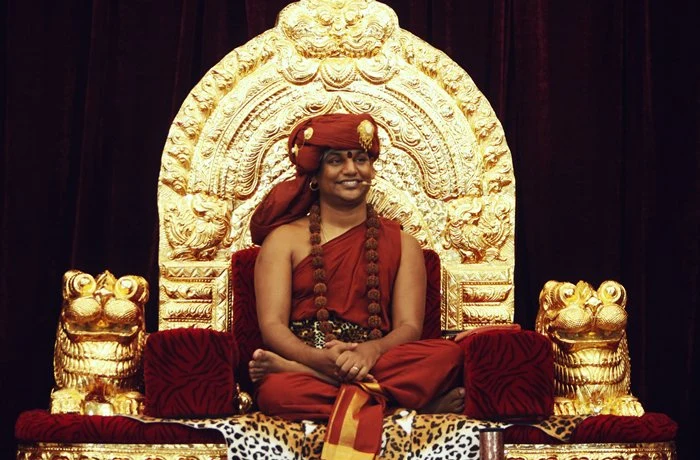
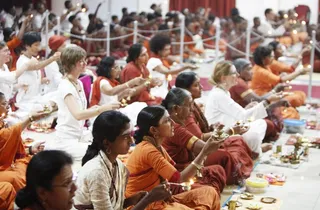
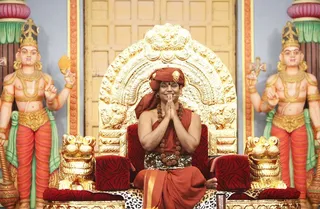
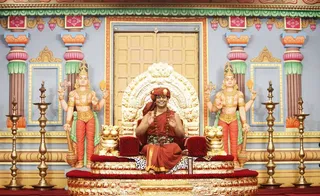
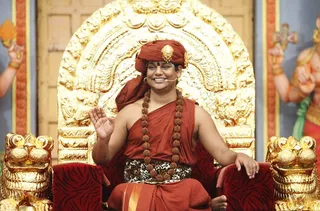
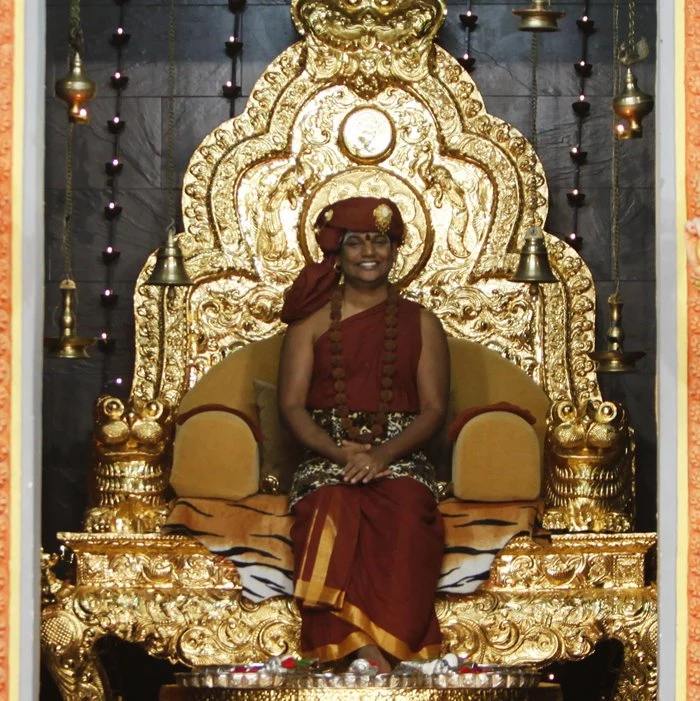
Paduka Puja And Nithya satsang
Researches

Title

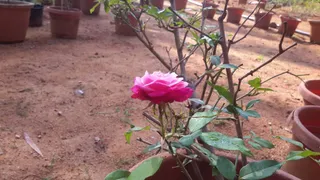
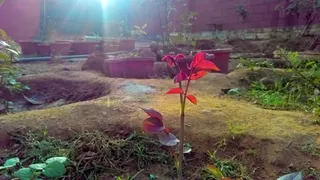
Incident of thornless rose plants in the Nithyananda GurukulSM garden

abstract

What is Nithyananda gurukul ?

"Gurukul is a place where the celebration begins with the right words in the blossoming minds creating a gateway of possibilities. Creating an enlightened civilization with the yogic body and Vedic mind.” ~ Paramahamsa Nithyananda

The NithyanandaGurukul is a mystical Vedic school established by HDH Bhagavan Sri Nithyananda Paramshivam. Here students live their highest potential and manifest various spiritual powers.

Why Should One Join Nithyananda Gurukul

“The current system of education established by Macaulay and Max Muller in India is the ‘non-involving narrative style’ of teaching. The original Indian education system was not about continuously giving words, ideas, concepts, theories or theologies. It was about awakening you to the right context – Enlightenment. The Indian Education System – the Gurukul - is more of a ‘transmission’ of the knowledge, rather than mere ‘transfer’ of knowledge. My Gurukul kids will not use their body as a ‘PC’ that merely processes information that is fed to it. They will function as the ‘internet’, accessing knowledge from the cosmic archives and having their own inventions and discoveries!" - Paramahamsa Nithyananda “Understand education means putting a set of ideas into your head and forcing you to conform to it. Pressurizing you to memorize it and forcibly making you vomit. In gurukul there is no 'education’, there are only initiations. Initiation means empowering you with powers and letting you play with it and letting you manifest your specialization and letting you grow and glow. There is only one thing SHAKTIPADA that's all. Constantly you are empowered, asked to explore.” ~ Paramahamsa Nithyananda

Overview of the research

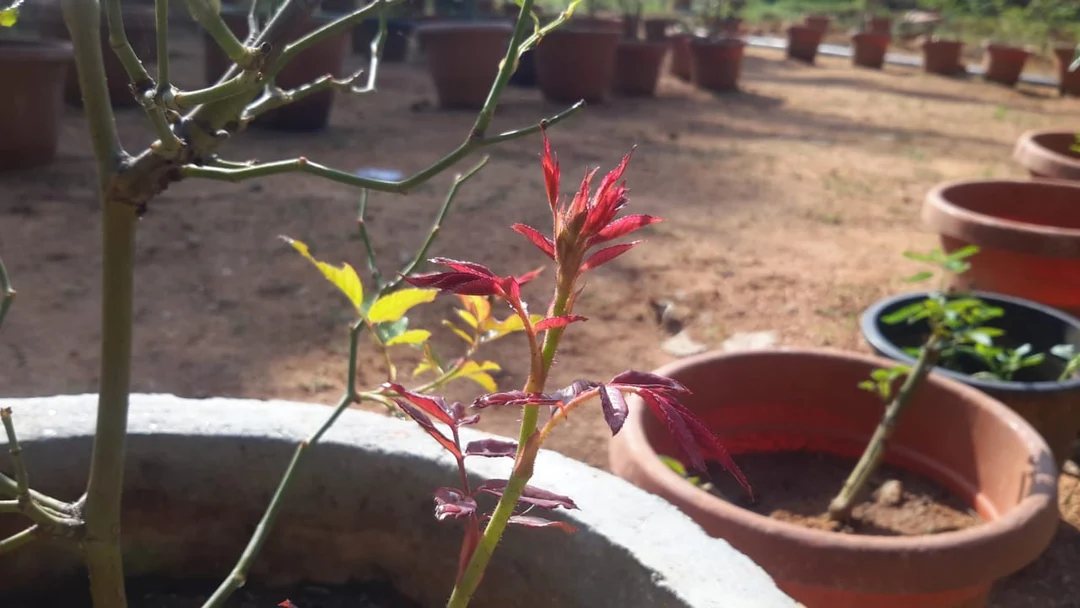
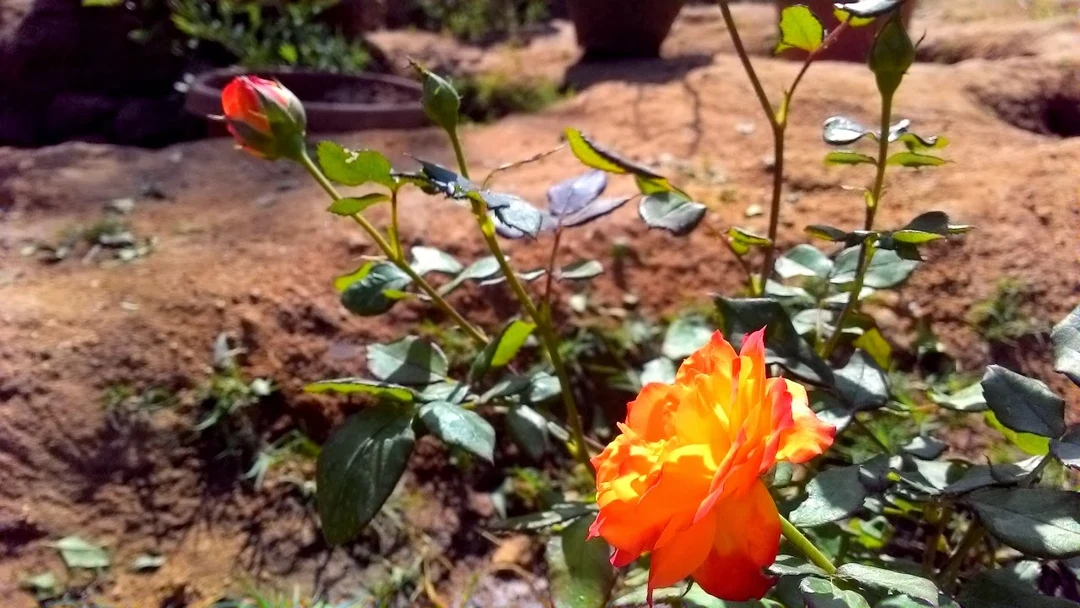
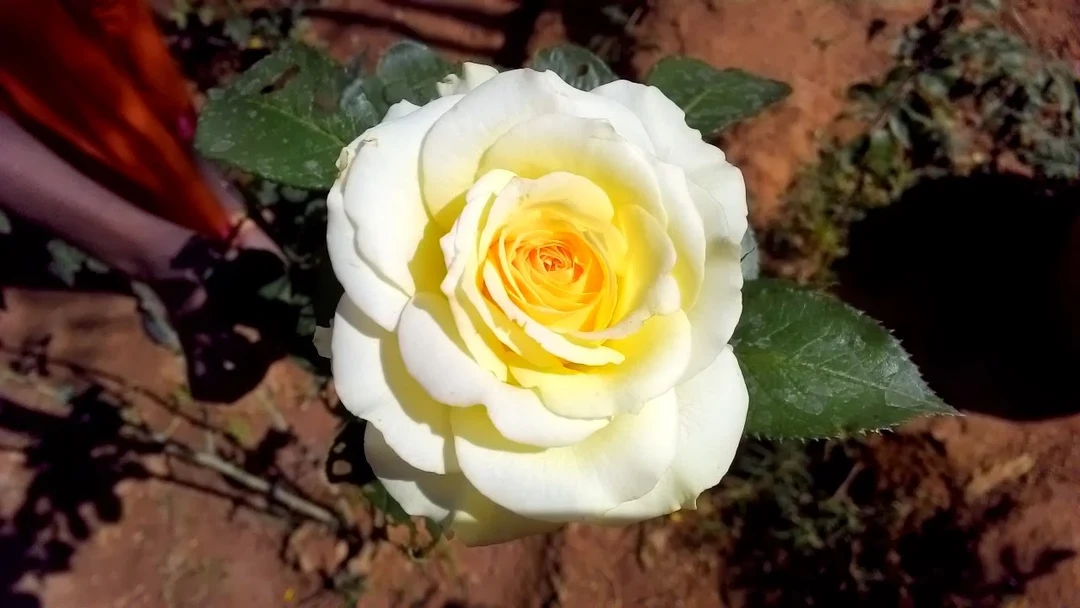
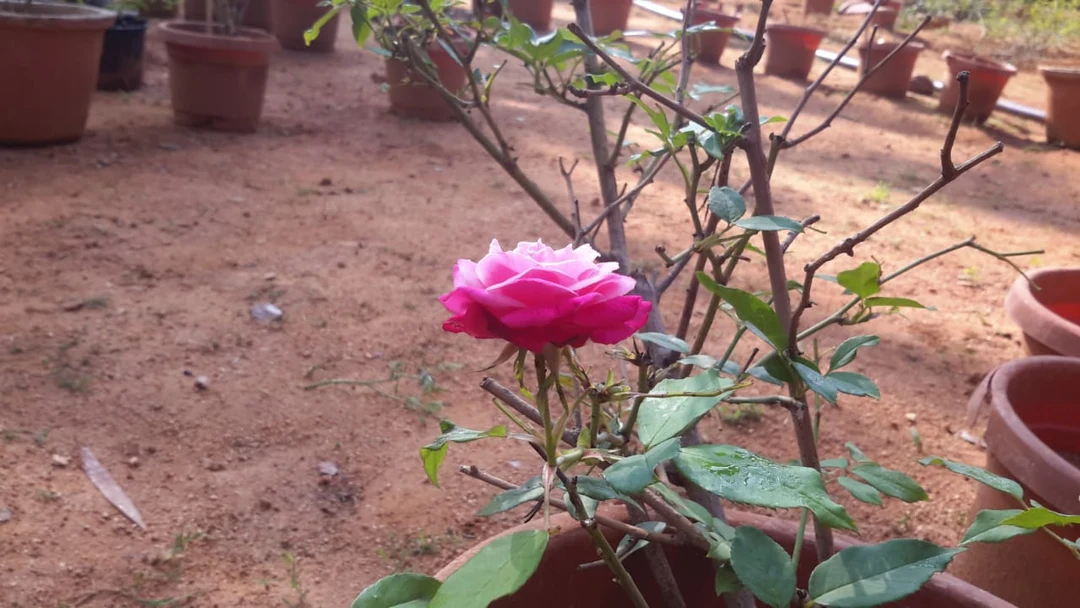
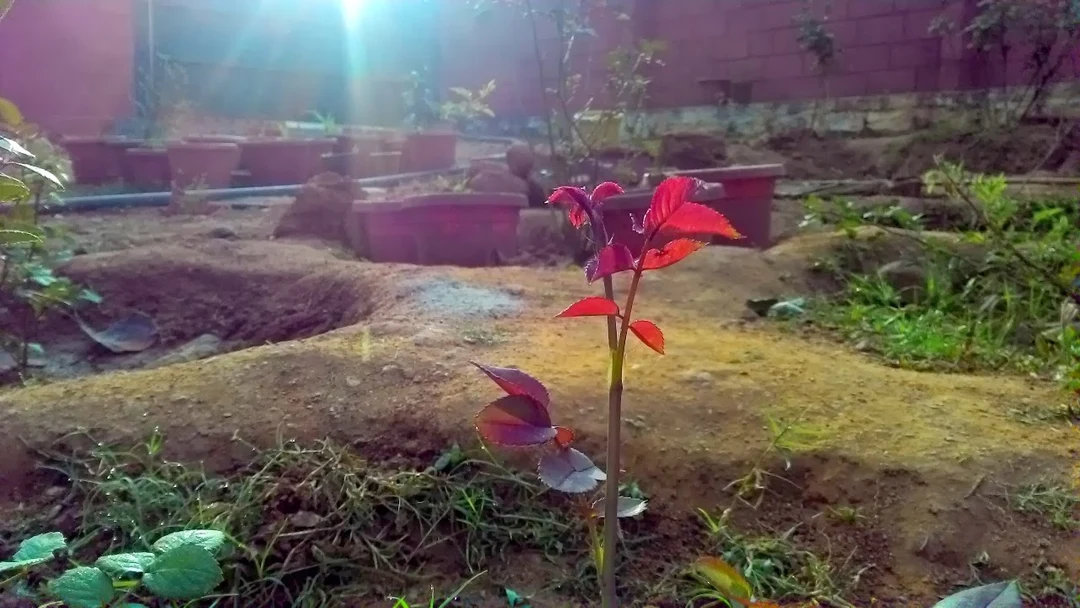
The students from the Nithyananda Gurukul were subjected to the research to Record the power manifestation of making the rose plants drop its thorns. Students sat with their rose for approximately 20-30 minutes per day and the majority of the plants had dropped their thorns

Objective

To record the power manifestation of making the rose plants drop its thorns by the students of the Nithyananda gurukul

Design By:

Debbie Chance PhD in Education School Administrator, Winston-Salem Forsyth County Schools North Carolina, USA

Study And analysis

Dropping thorns

A surprising incident that was brought to our notice was that the children’s garden of the Gurukul had dropped their thorns after being counselled by the students, and assured them that there was no danger to them, and no need to keep their thorns to defend themselves. I personally investigated this with my team, spending some time in the garden during the students’ counselling session.

Observation

Students sat with their rose for approximately 20-30 minutes per day. Some caressed the leaves, some sat quietly, some talked to each other, yet they were sitting casually... not praying, speaking to the plant or exhibiting any obvious behaviour... yet the majority of the plants had dropped their thorns

Images

https://nithyanandapedia.org/gproxy/1_8Yi14bUejkGcjXIIeLc9k3JP8LssZcX
https://nithyanandapedia.org/gproxy/1i-YkBP1GX7pf6s3uwkfeOqULDcIuGbbO
https://nithyanandapedia.org/gproxy/1-SkzEJAP6I_15TJn6rOW_3tHjp38iTpx
https://nithyanandapedia.org/gproxy/1PTAMkFN5PEITW9KDyCmIX69Wn3yn0bGC
https://nithyanandapedia.org/gproxy/1G2cl4Na-6u3KOgIUl9DaWCAoBbS5mooP

Photos from this day

View all 16 photos

Paduka Puja And Nithya satsang
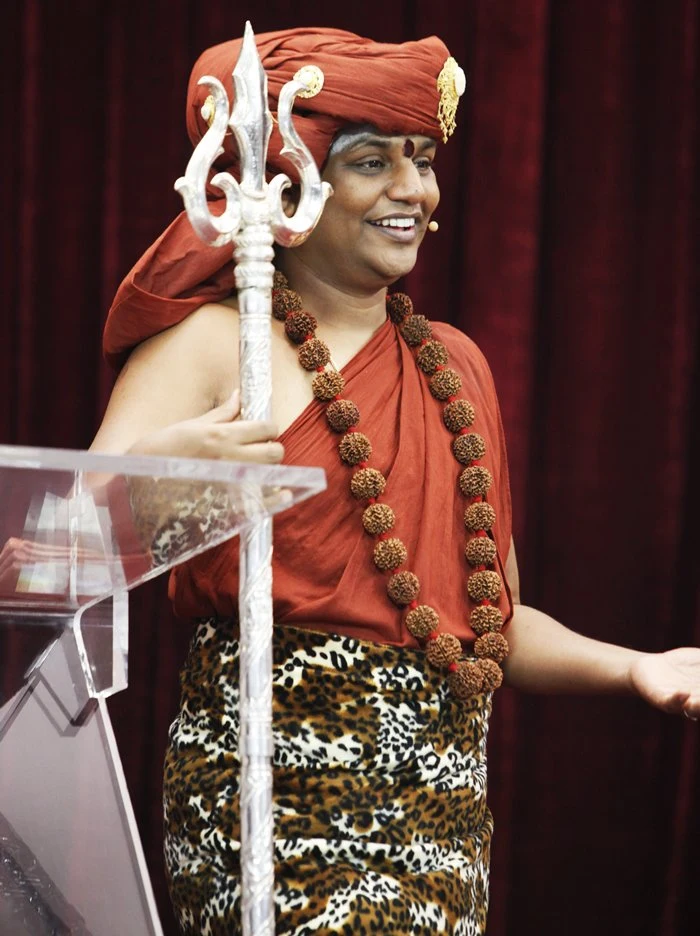
11 photosSource gallery
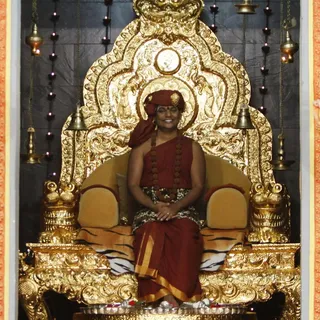
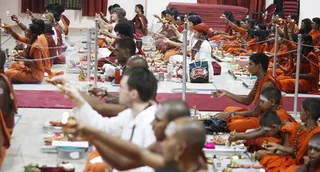
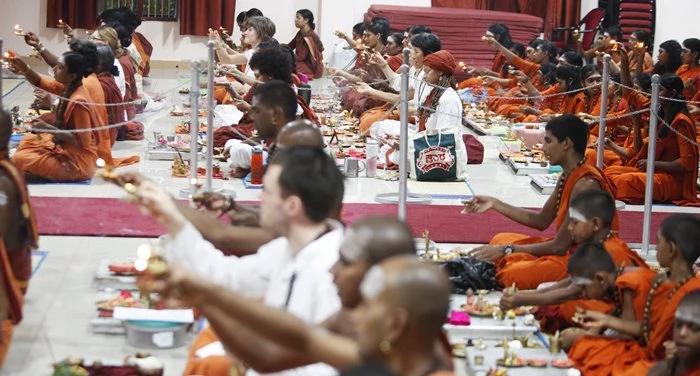
A seated figure sits on an ornate gold throne with carved lion-head arms and a tall gold back panel framed by hanging brass oil lamps and rudraksha malas against a dark stone wall. The seated person wears a maroon-red turban, a rust-red robe with gold border, a long rudraksha mala, and a leopard-print waist cloth, with bare feet resting on a striped tiger-skin cushion. Offerings of flowers lie at the base of the throne. The figure is a person by appearance: a turban, red-orange robe and rudraksha malas as cues, seated in a throne setting.A large photograph of a seated congregation in a hall with red carpeting and red curtains behind. Rows of devotees in saffron and orange robes, many with shaved heads, sit on the floor holding small oil lamps and raising them toward the front. Brass plates with offerings and small ritual items sit on the floor before them. Several men in white shirts sit in the foreground with lamps. A rope barrier runs between rows. The scene suggests a lamp-lit puja gathering.A large indoor congregation of devotees seated on the floor in rows, most holding small oil lamps or brass dishes up toward the front. Many women wear saffron and orange saris, some in white, with gold bangles and necklaces; a few men in white shirts are visible on the left. Brass plates and small lamps are set on a white floor cloth in front of them. Several people lift lamps with both hands. Some faces are partly hidden by others. The crowd is dense and extends beyond the frame.A seated figure in a red-orange turban and saffron robes sits on an ornate golden throne with a carved arch, palms pressed together in greeting and a smile. A rudraksha mala hangs around the neck and a red-and-cream cloth covers the lap, with a leopard-print seat cushion beneath. Two golden-skinned guardian figures in red dhotis and gold jewellery flank the throne, one holding a fan and the other a staff, and red cushioned armrests sit beside golden lion-like pedestals. The setting is a temple hall with a wooden door and painted pillars. a person is seated in the centre, identified by the turban, mala and throne cues.A seated man in saffron-orange robes and an orange turban sits on an ornate gold throne with red cushions, raising both hands in a blessing gesture. Flanking him are two large painted statues of multi-armed deities in gold and orange with crowns and jewelry, holding ceremonial objects. Brass oil lamps stand on either side, and a gold-and-red stepped dais with a gold-framed doorway forms the backdrop. Nothing printed is legible. The seated figure shows a long swept-back hair, a rudraksha mala and ornate gold waist ornaments, consistent with Swamiji (probable), seated in a satsang setting.A seated man in an ornate golden throne with carved gold arch and gilded lion-head armrests, wearing a saffron-orange turban with a gold ornament, saffron-orange shawl over the torso, a long rudraksha mala with a gold-tipped pendant, a patterned animal-print waistband, and bare feet. He smiles, raises one hand in blessing, and wears a small headset microphone. Behind him are painted deity figures with raised hands.

April 20 2015

5 photosView all
Close overhead photograph of a single cream-white rose in bloom, its outer petals pale ivory fading to soft yellow toward a bright golden-yellow centre. Green serrated leaves surround the flower on a reddish-brown earth ground. At the upper left, the edge of a dark orange-red fabric and a pale purple-grey sleeve or cloth appear. No people are visible, and no a person candidate is present in the scene.A close photograph of young rose plants in terracotta pots on a dry, sandy ground in a garden. In the foreground a fresh shoot bears new reddish-maroon leaves with serrated edges, alongside older green and yellow leaves on thin pale stems. A grey concrete planter rim sits at the lower left, and several empty clay pots line the path behind. No people are visible.Close-up photograph of an orange and red rose in bloom beside a red bud on a thin green stem, surrounded by dark green serrated leaves. The plants grow in reddish-brown earth with a clay pot and stone basin visible in the blurred background under bright sunlight. No people are visible, and the scene is a garden corner rather than a ritual or ashram event.A single pink rose blooms on a thin, thorny-looking stem growing from a terracotta pot in an outdoor garden. Its dark green leaves are wet with droplets. Behind it, many more clay pots sit on reddish-brown earth, with a few small pebbles scattered on the ground. No people are visible.A young rose plant with reddish-purple new leaves grows from disturbed brown soil in an outdoor garden. Clay pots and a few small shrubs sit behind it against a pinkish-red brick wall, with sunlight flaring at the top of the frame. Patches of grass and scattered dry leaves lie in the foreground. No people are visible.