Skip to content
Sunday

28 December 2014

Nithya Kirtans - Kailashicha Rana Sambo Hara Hara Bole Sankara

Dated photos
282
Source pages
1
Media
5
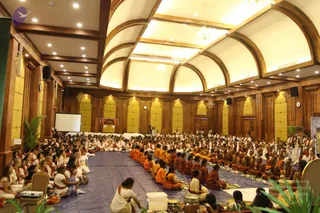
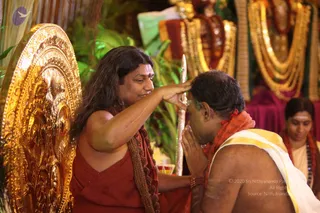
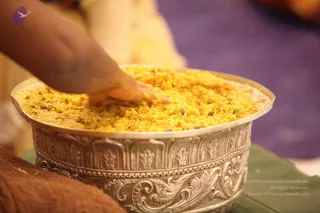
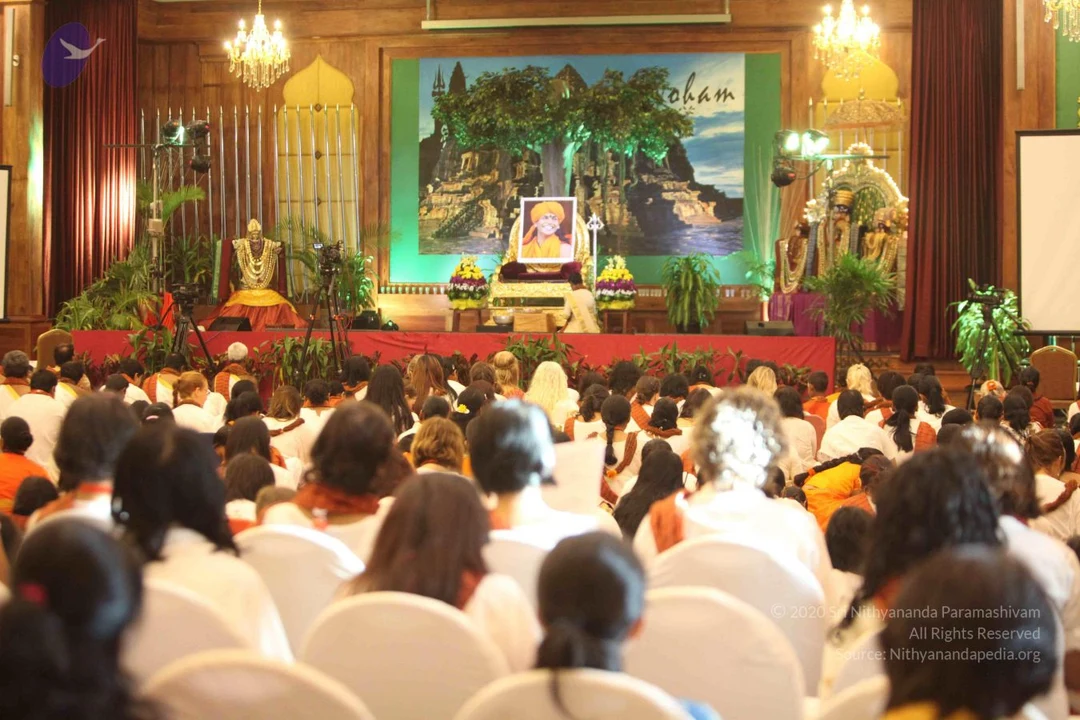
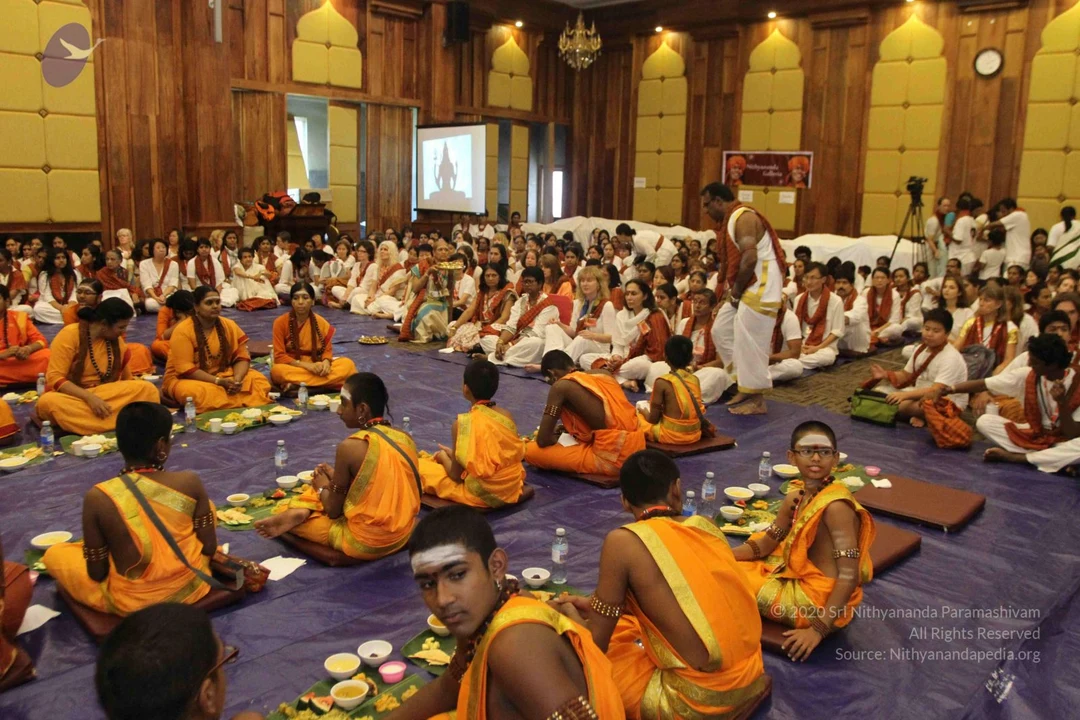
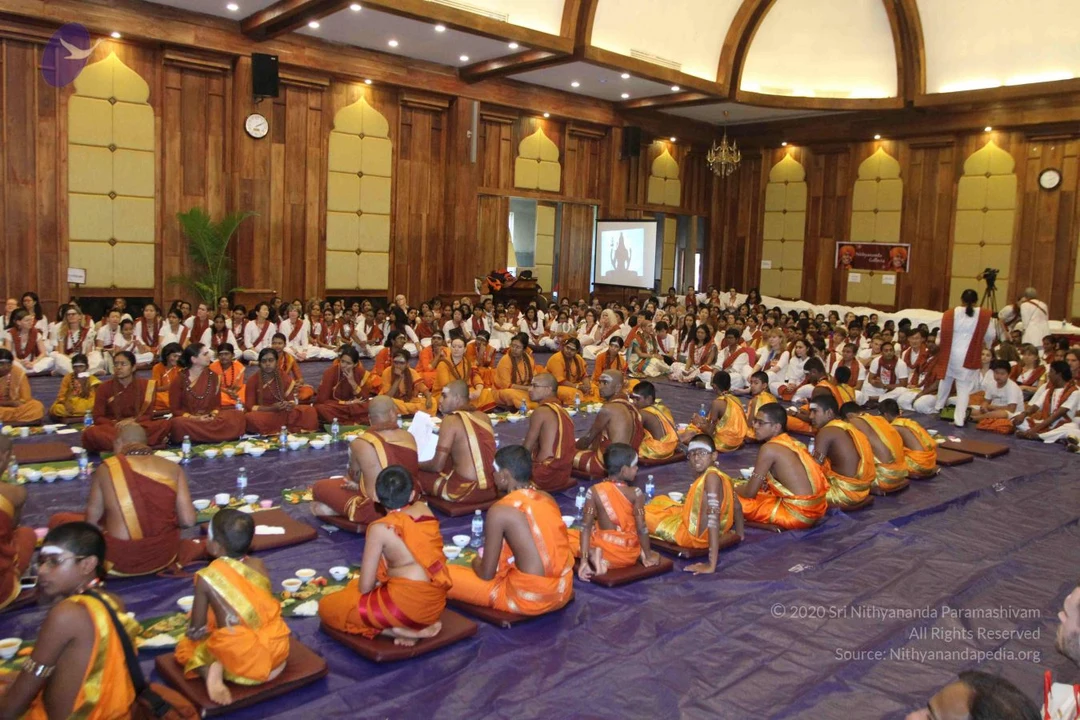
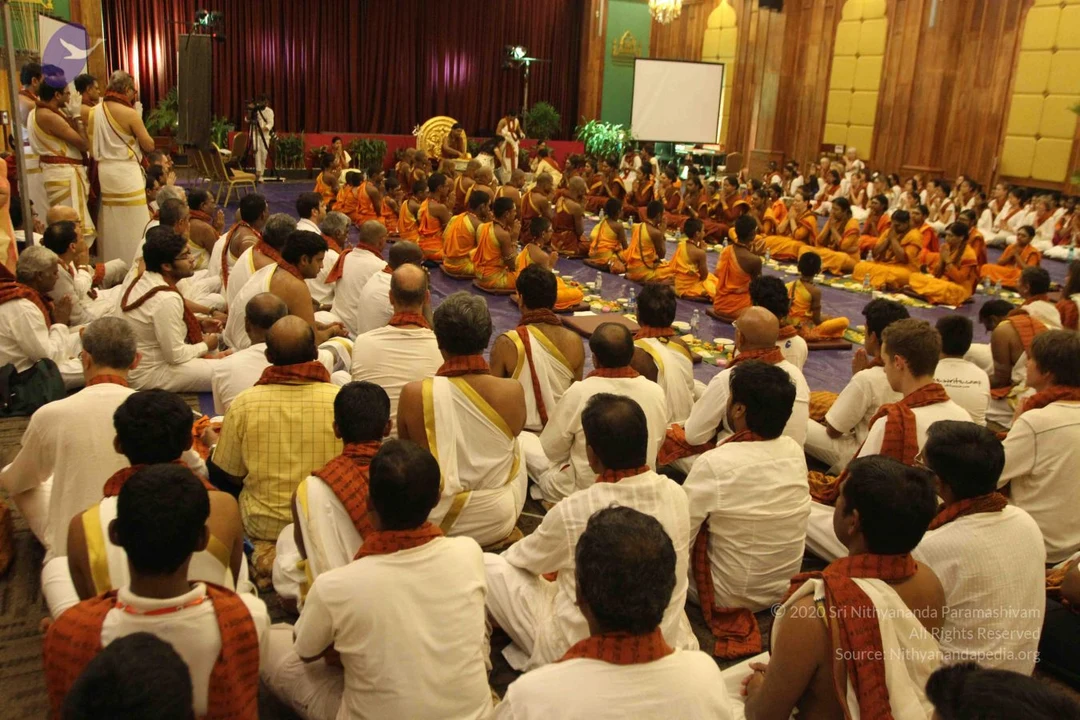
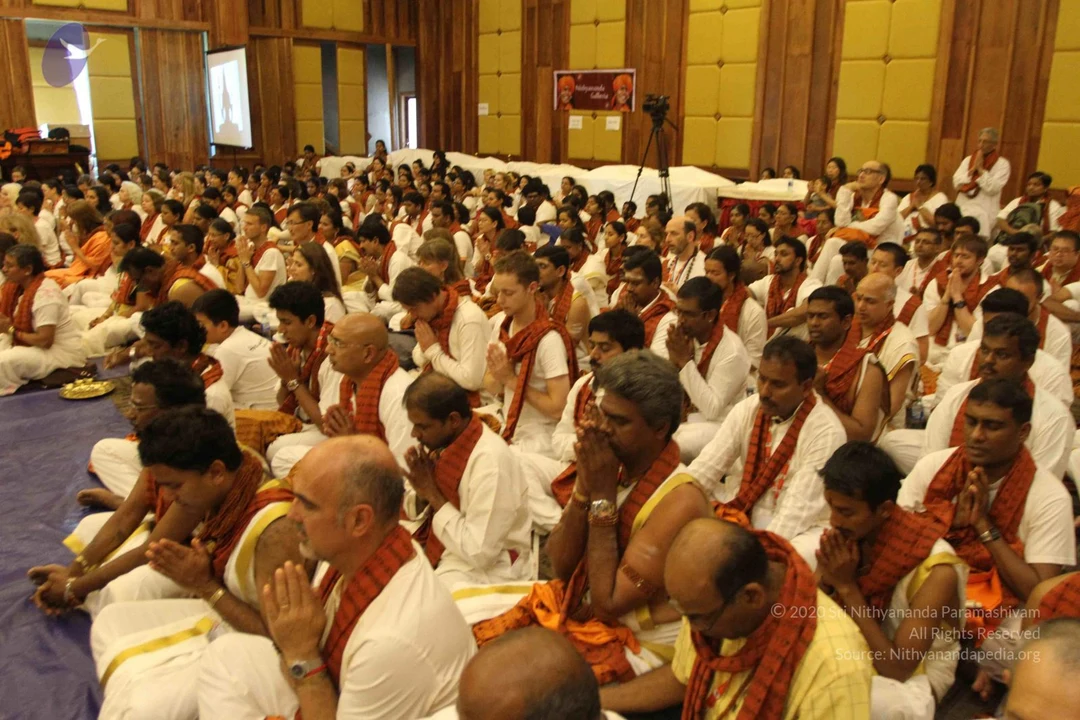
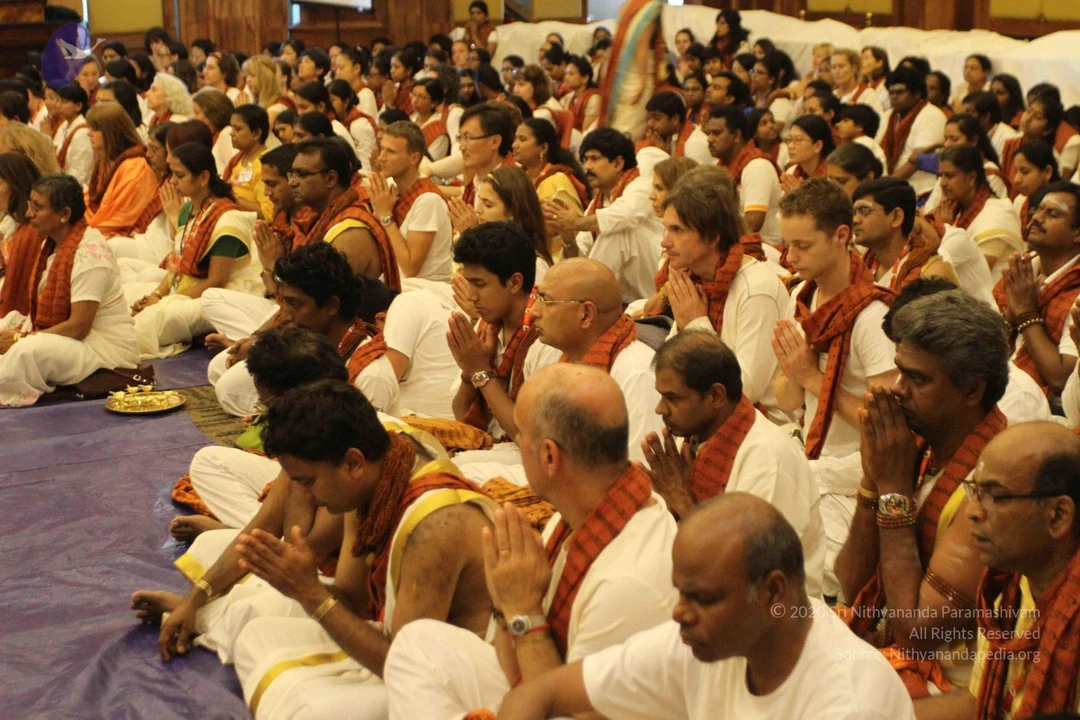
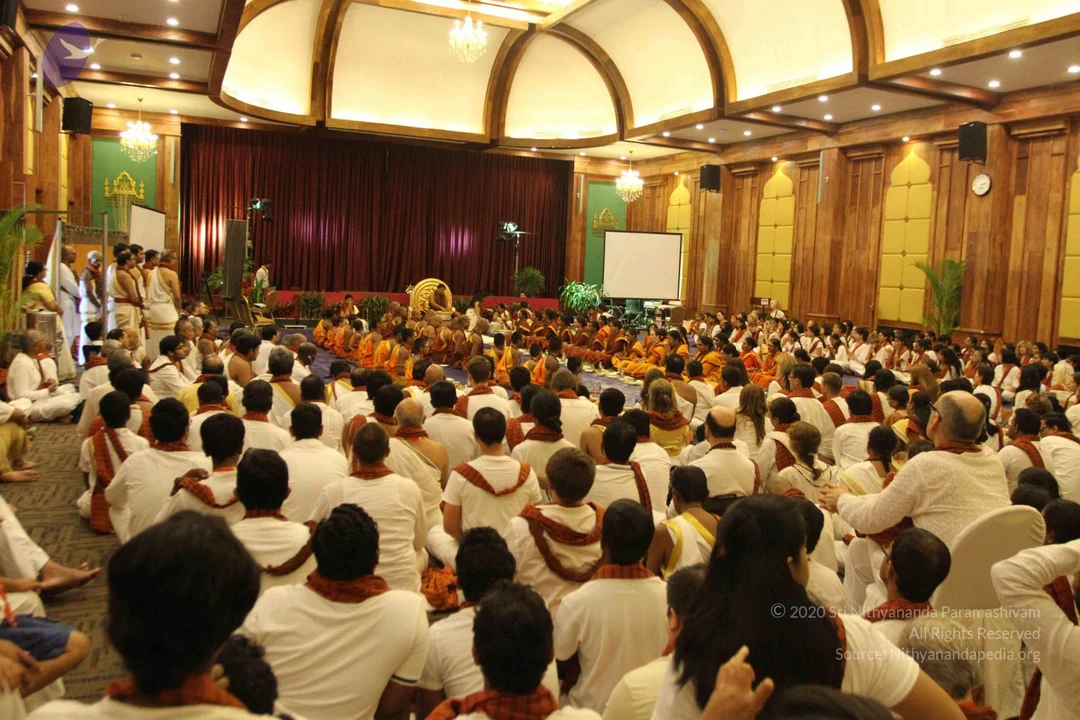
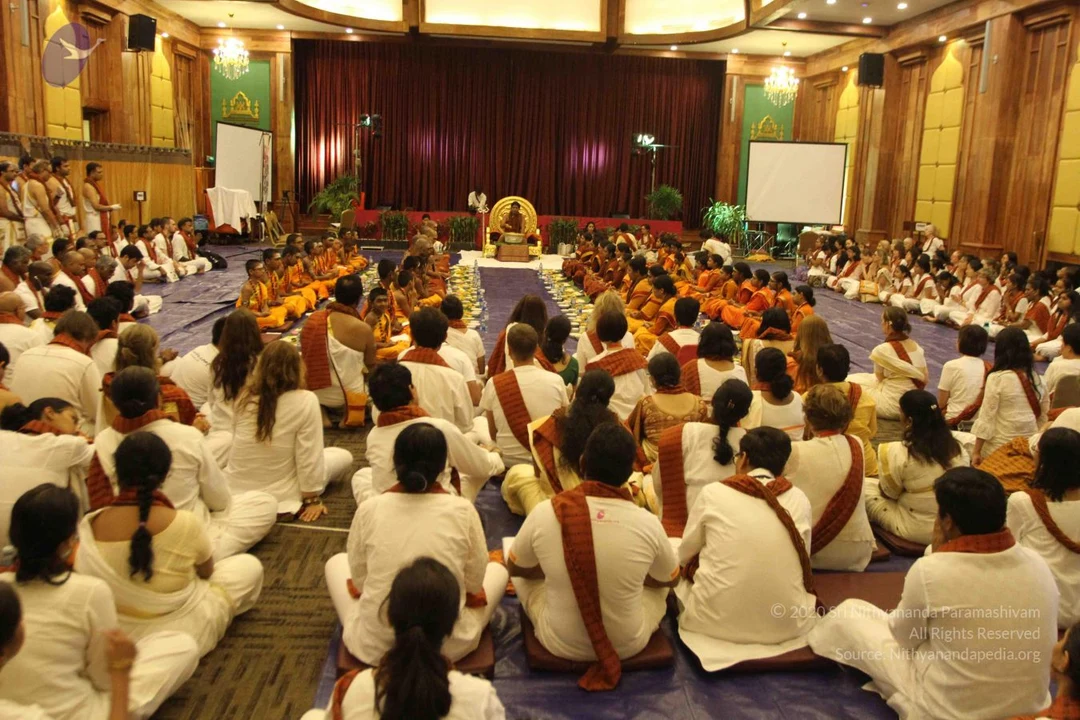
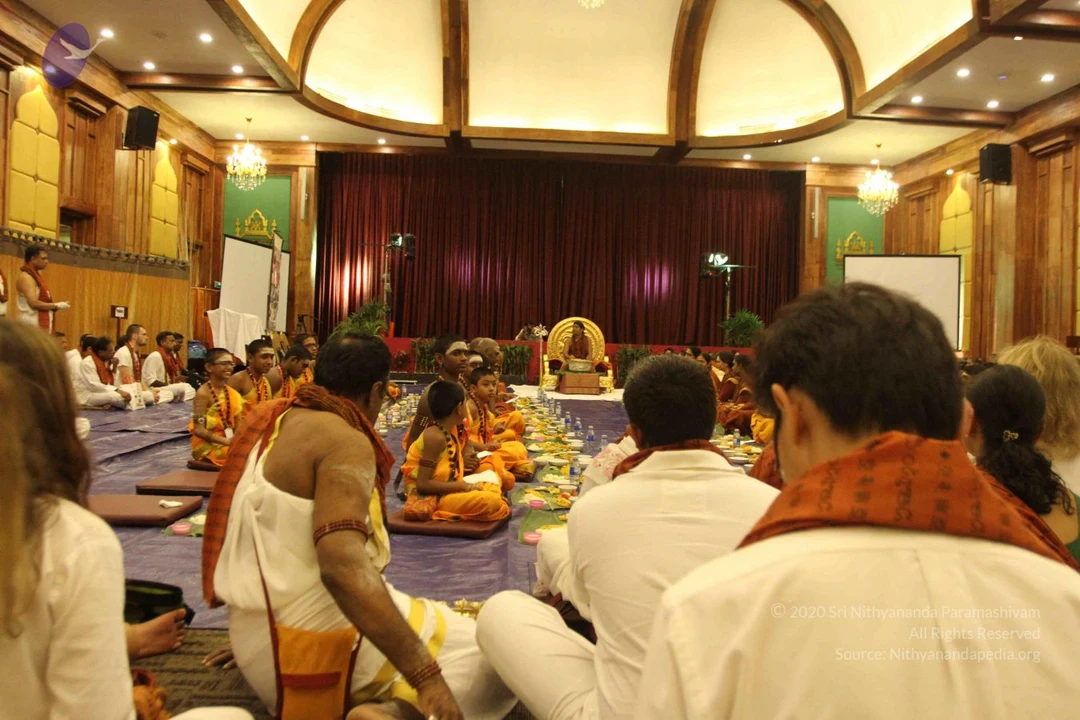
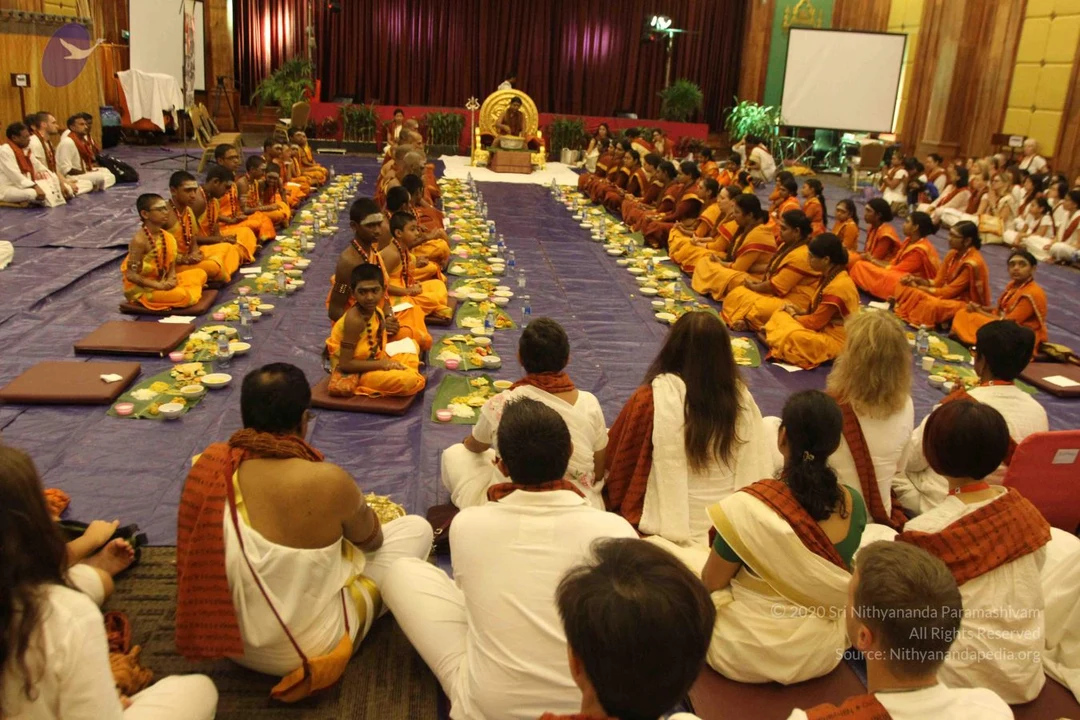
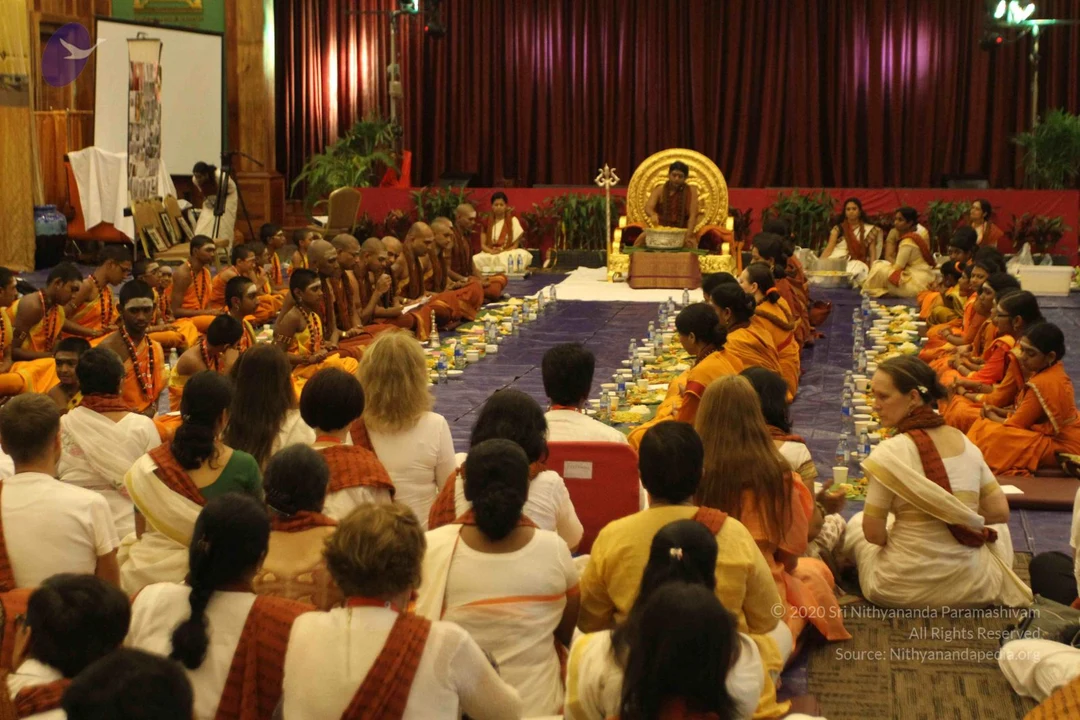
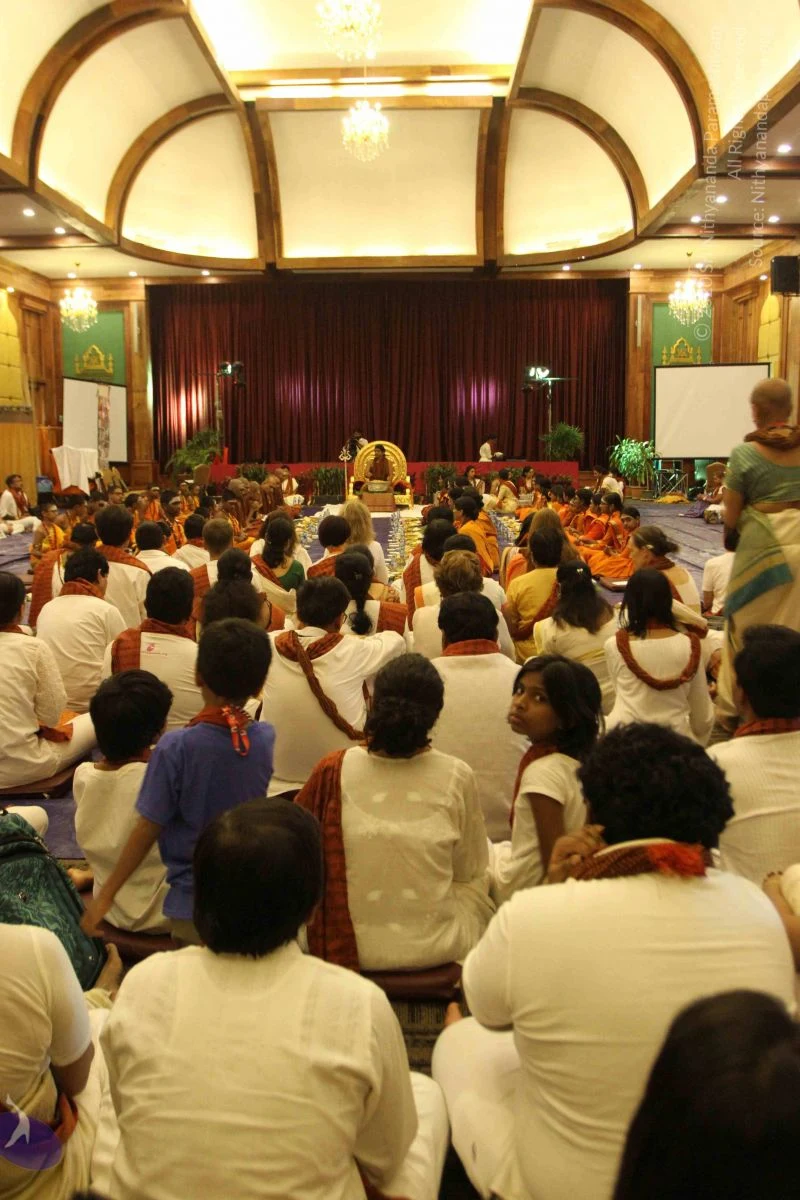
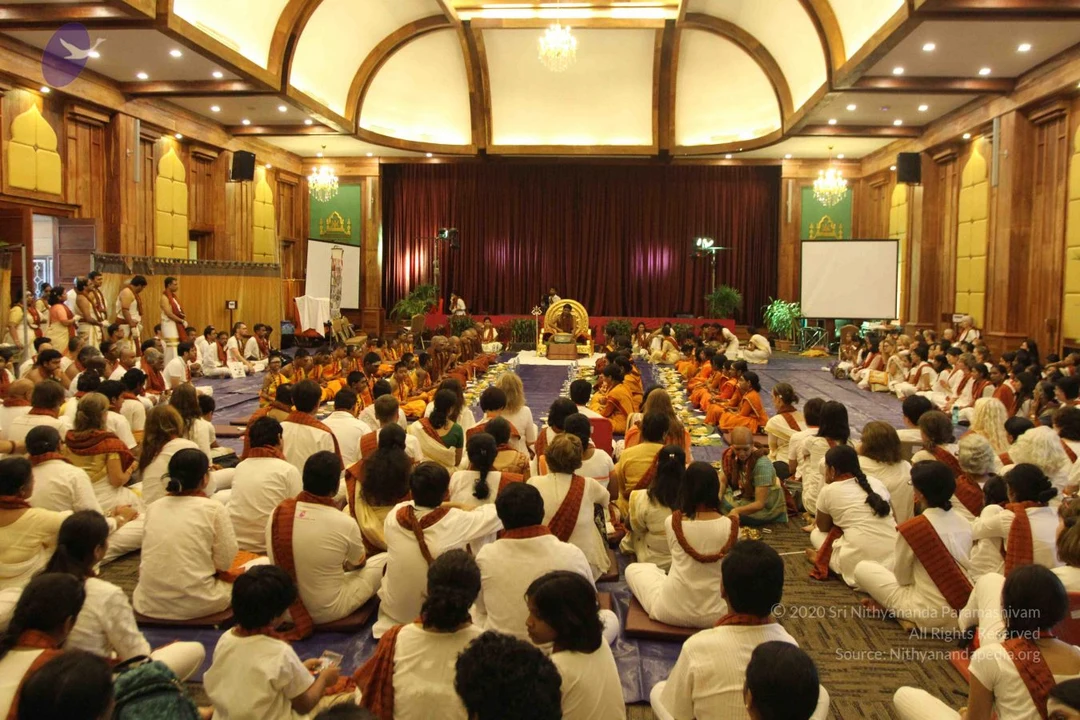
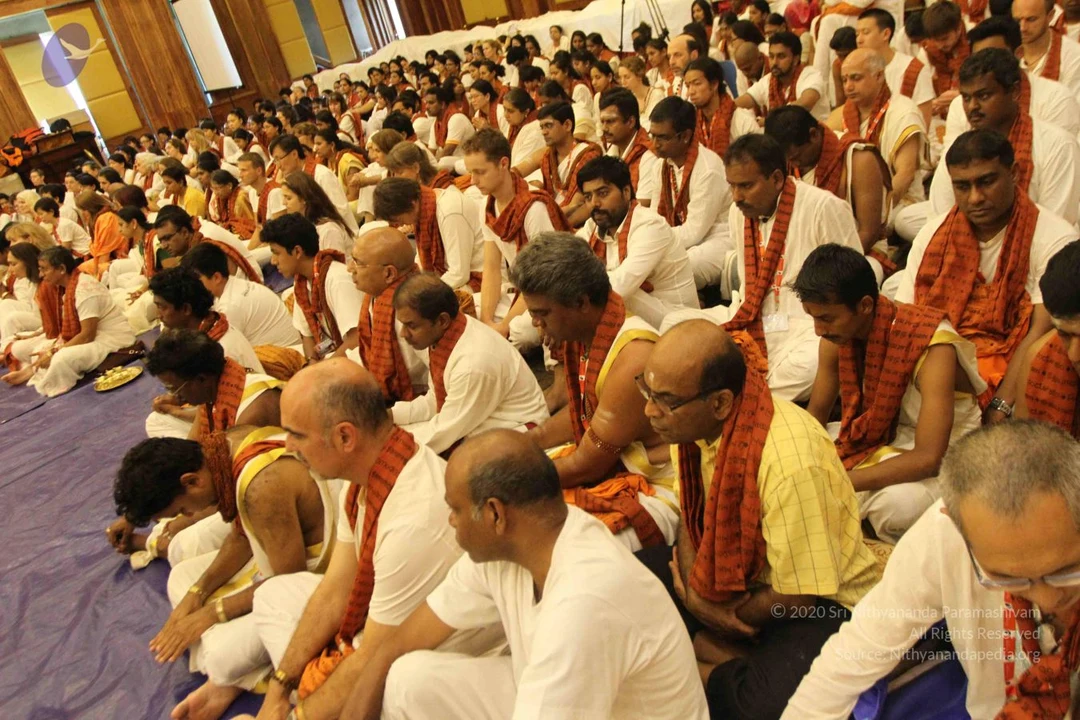
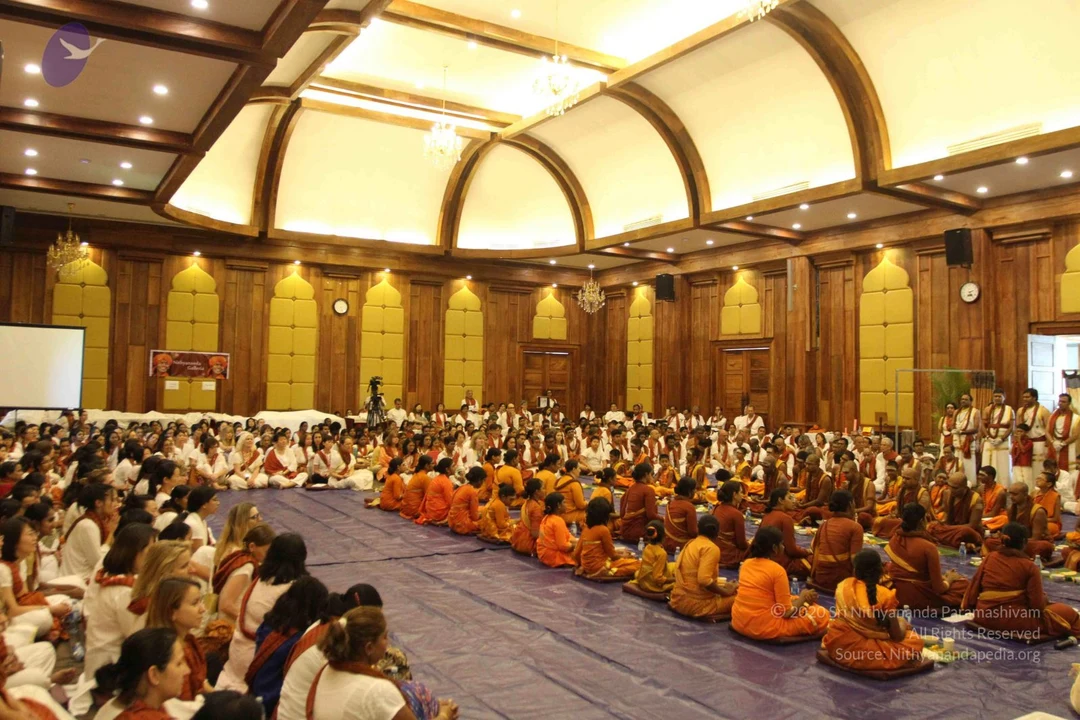
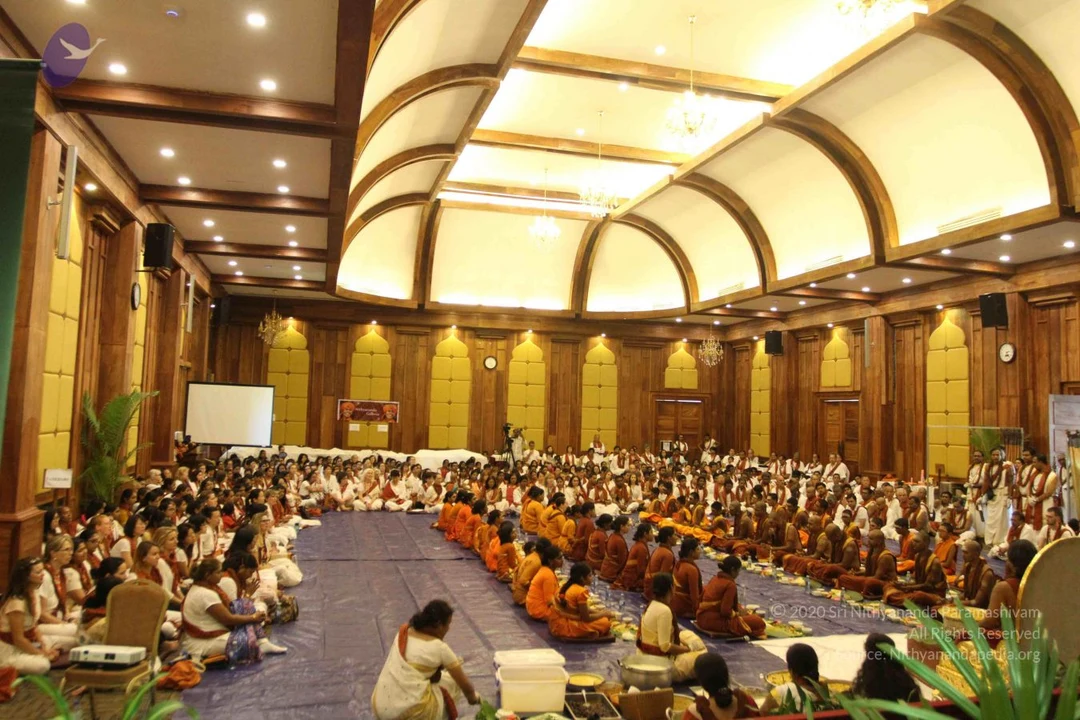
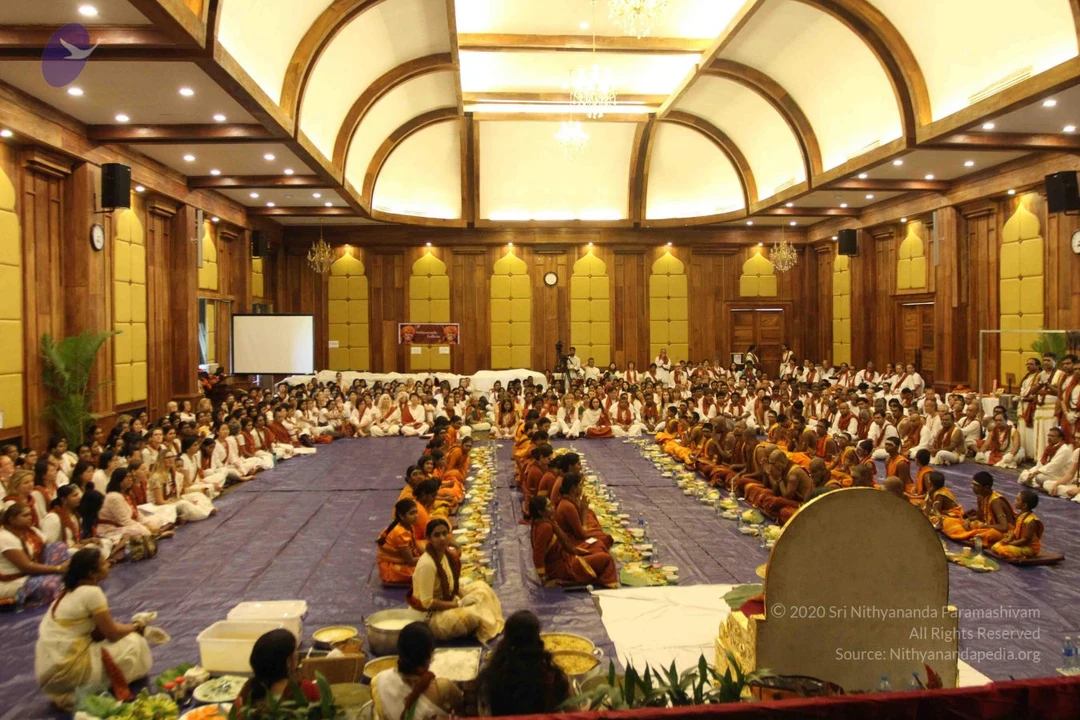
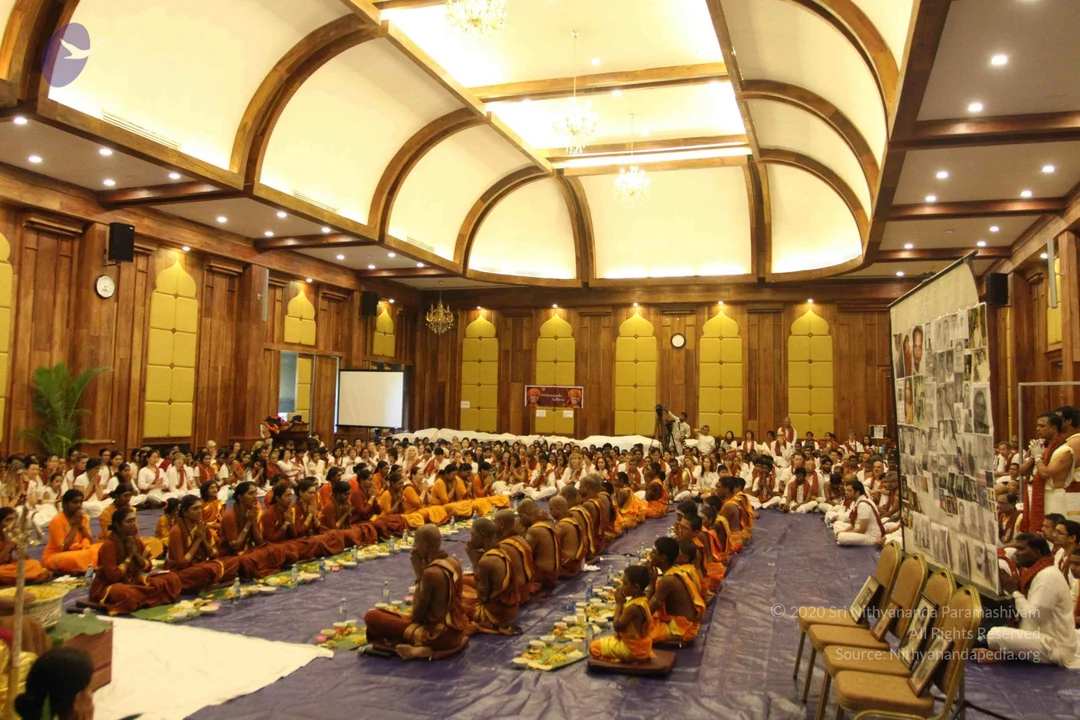
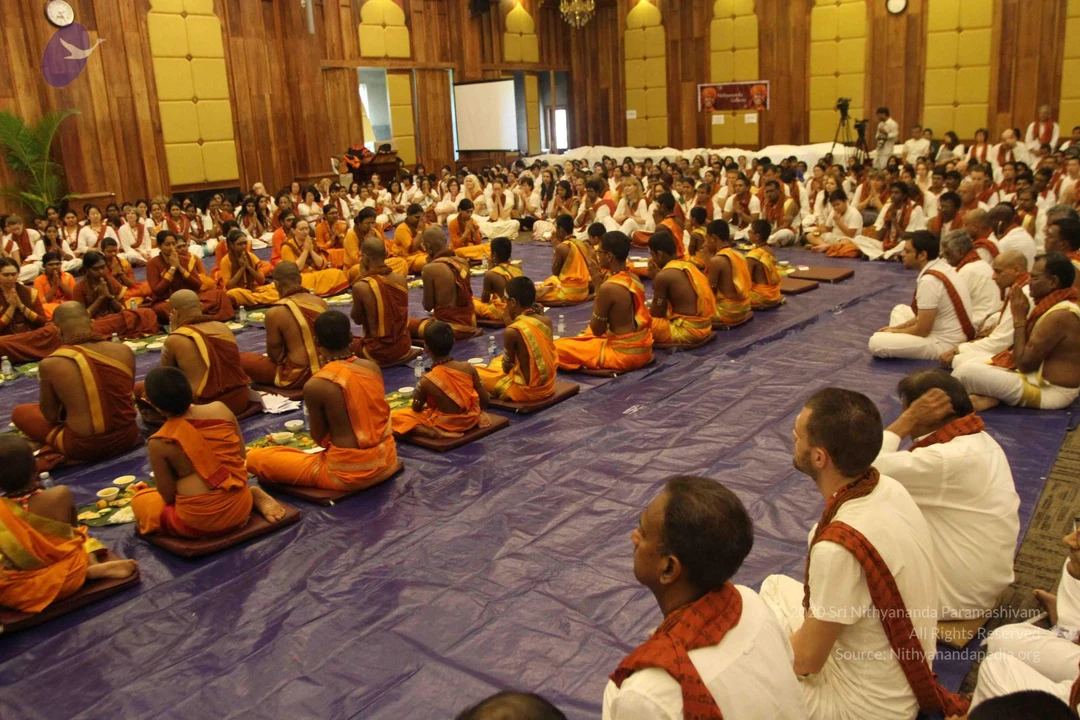
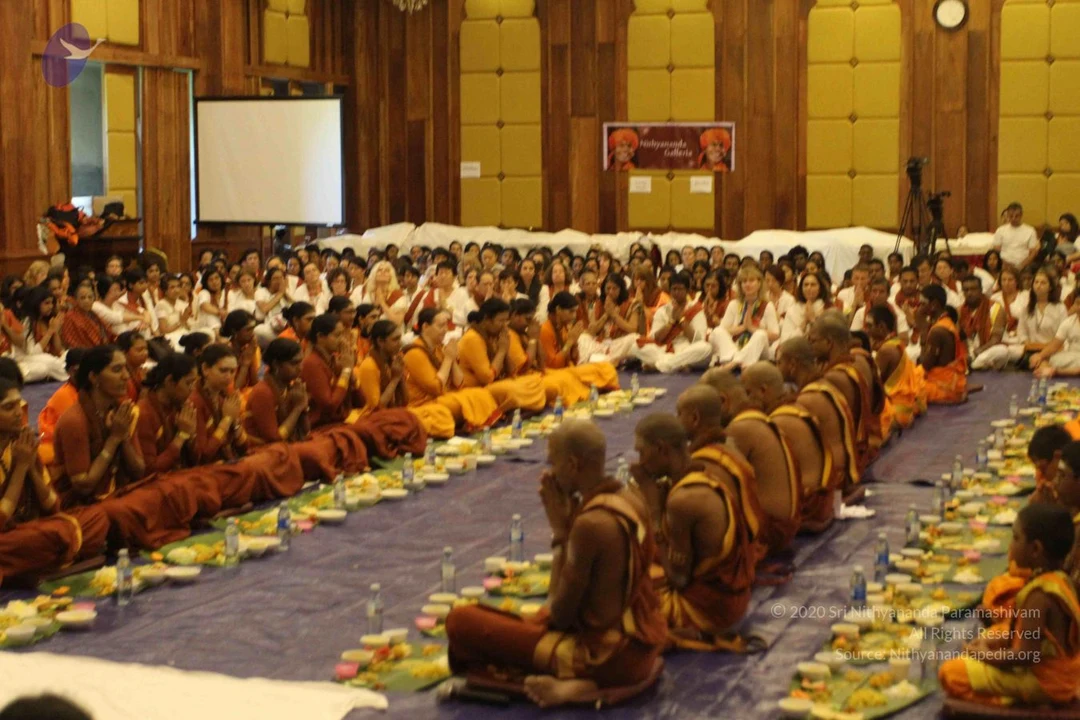
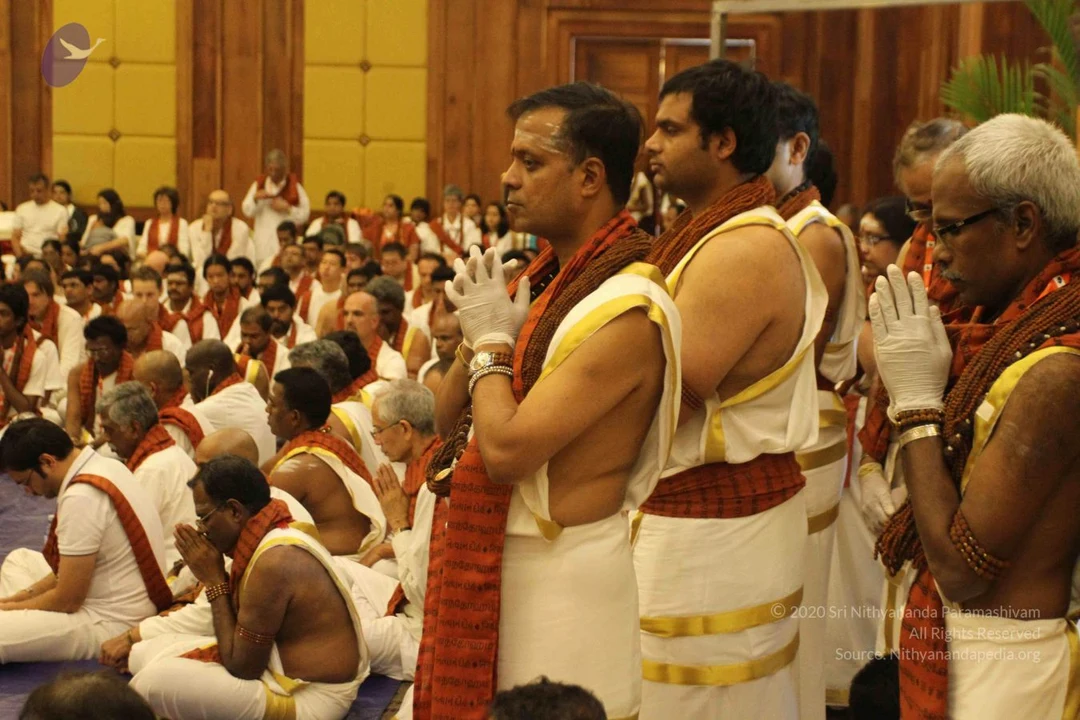
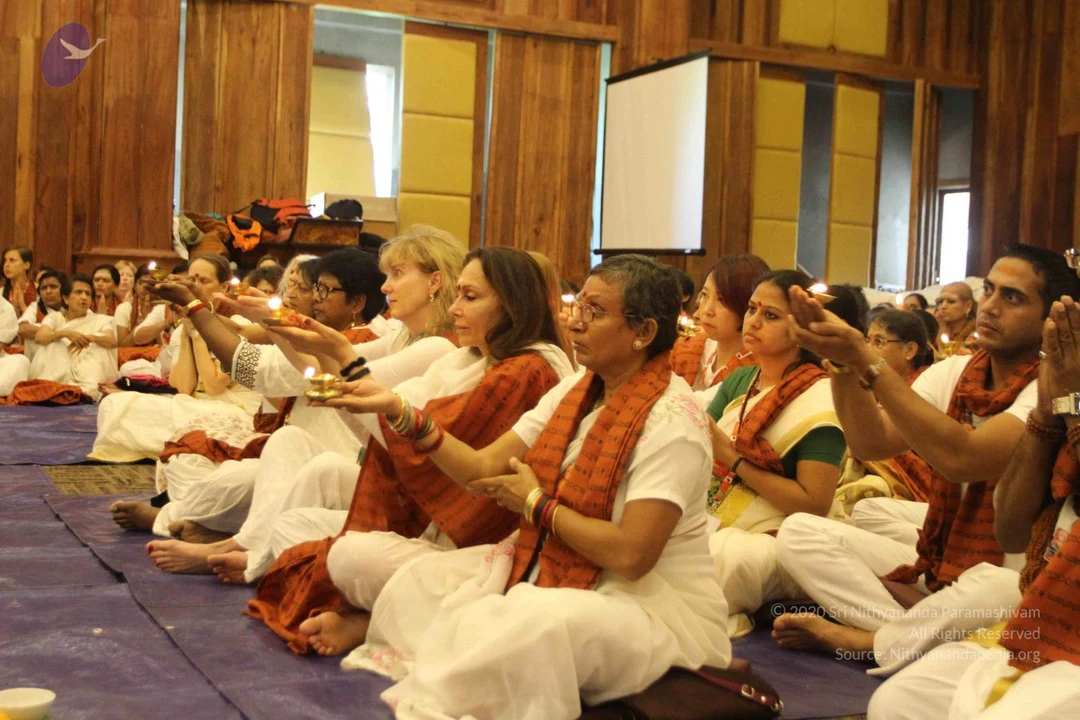
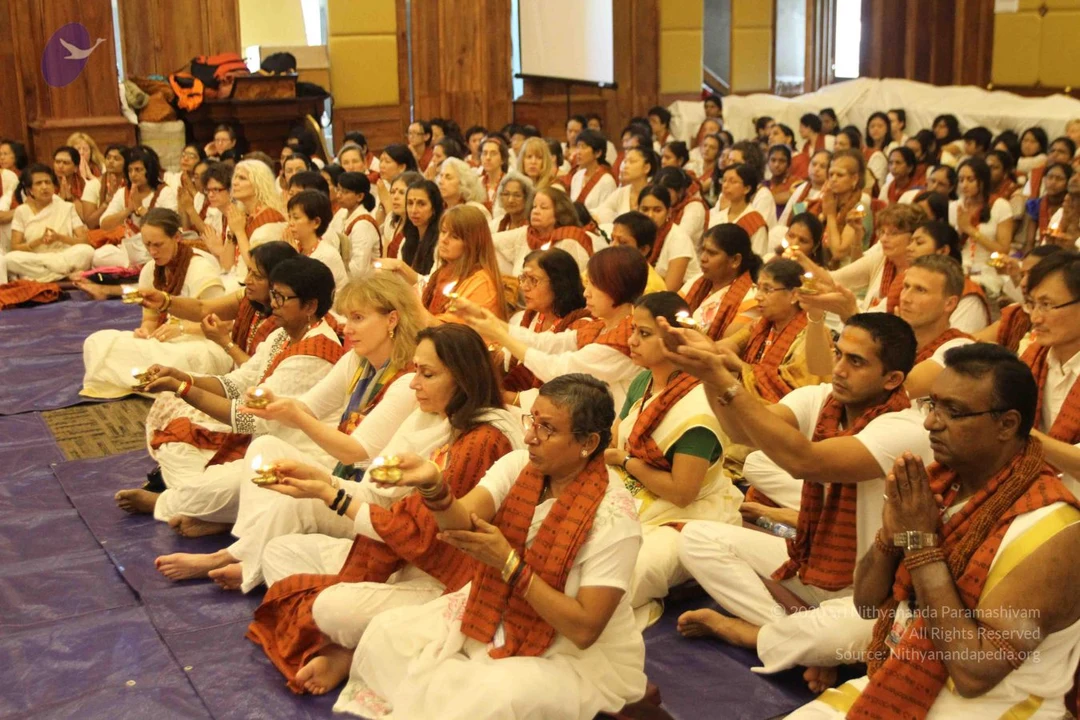
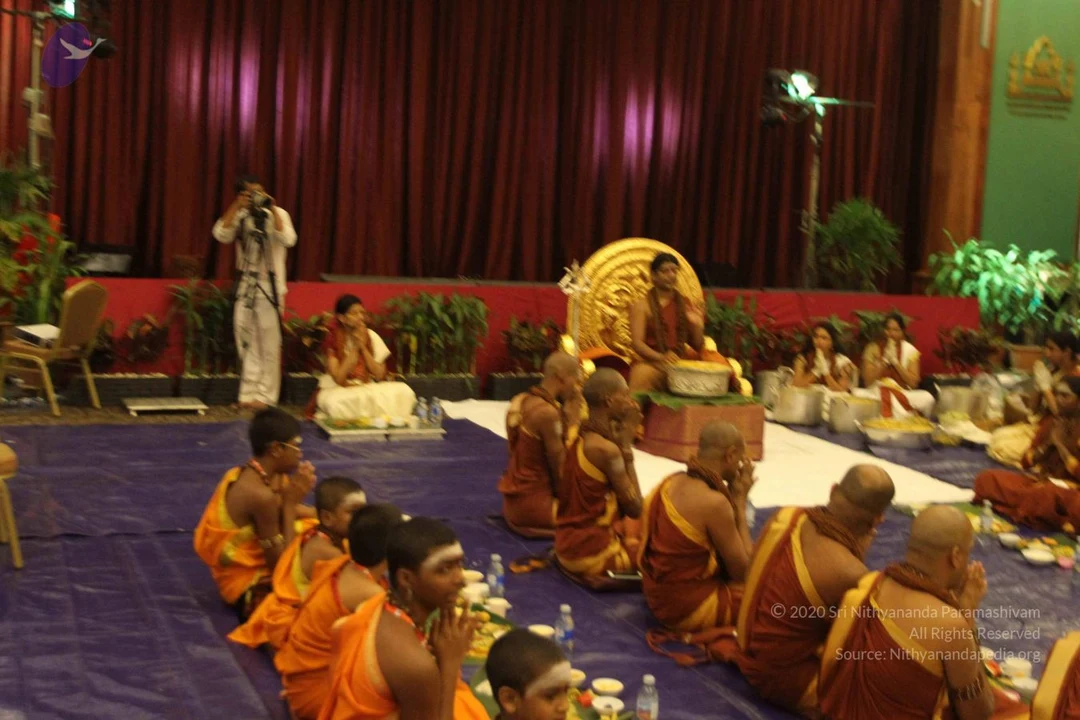
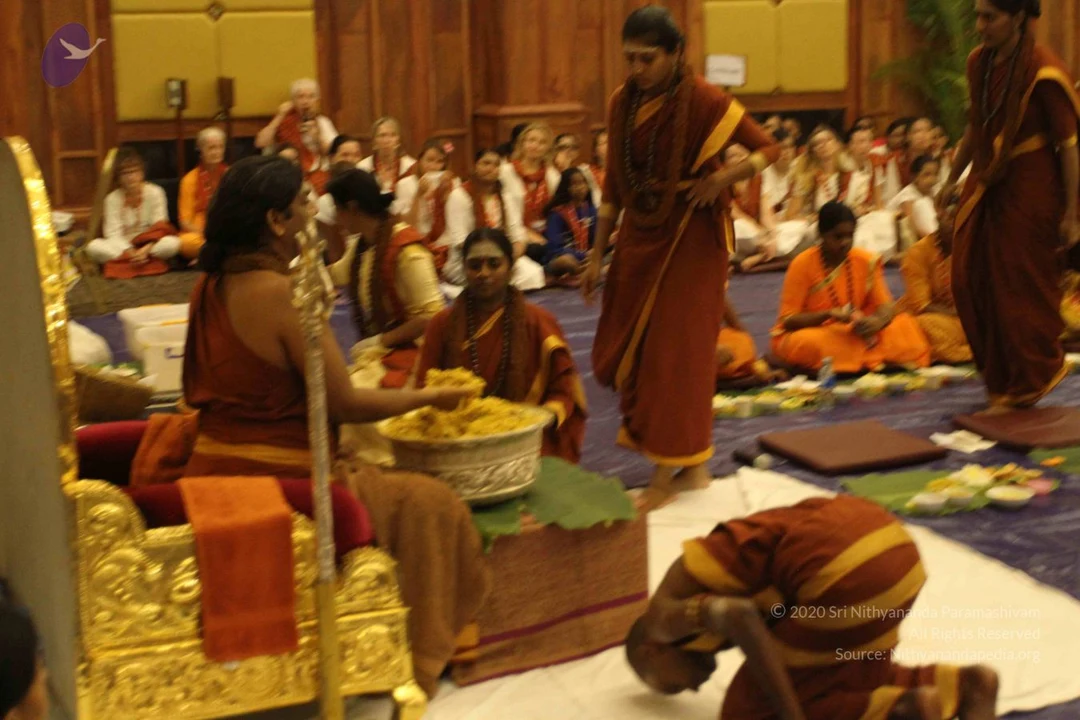
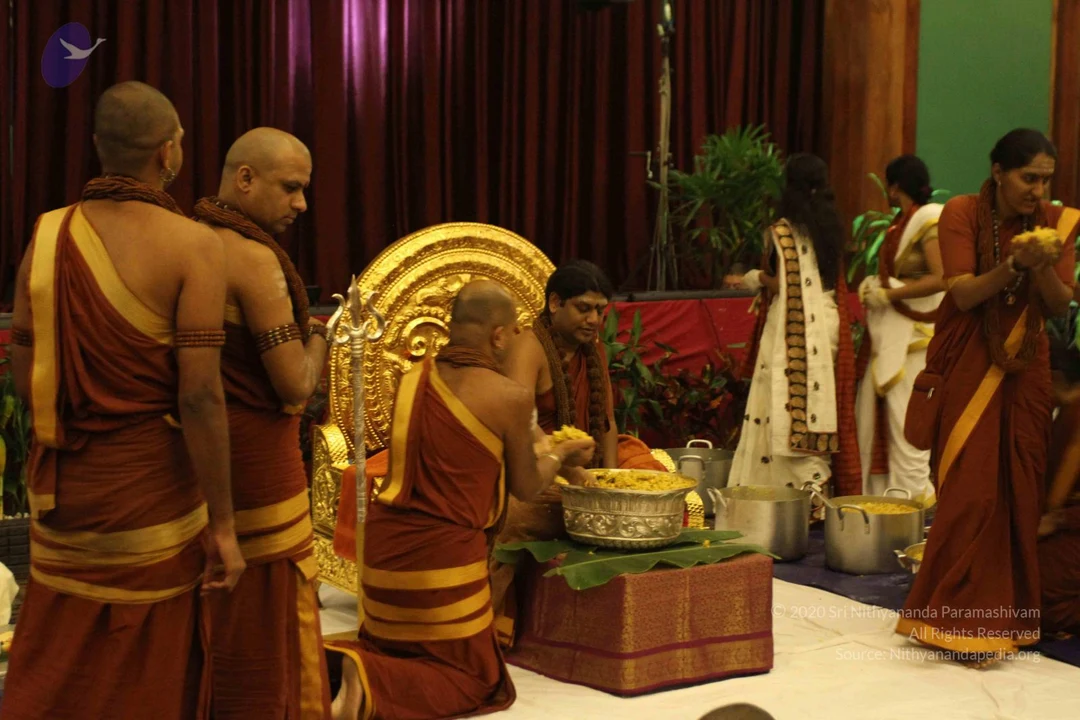
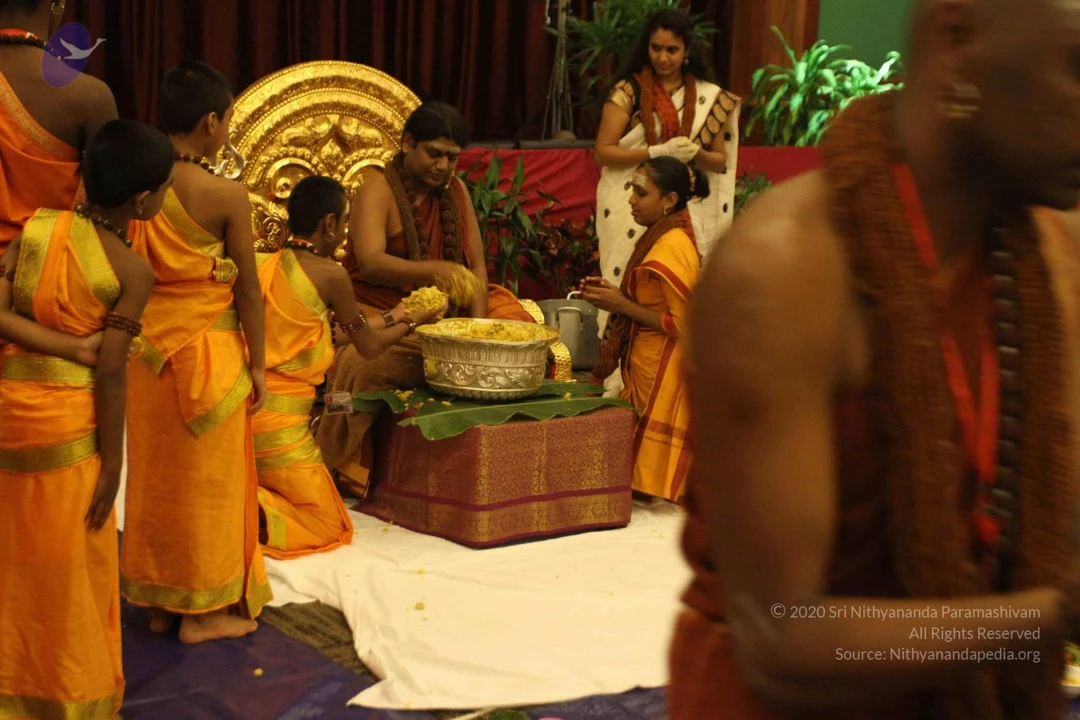
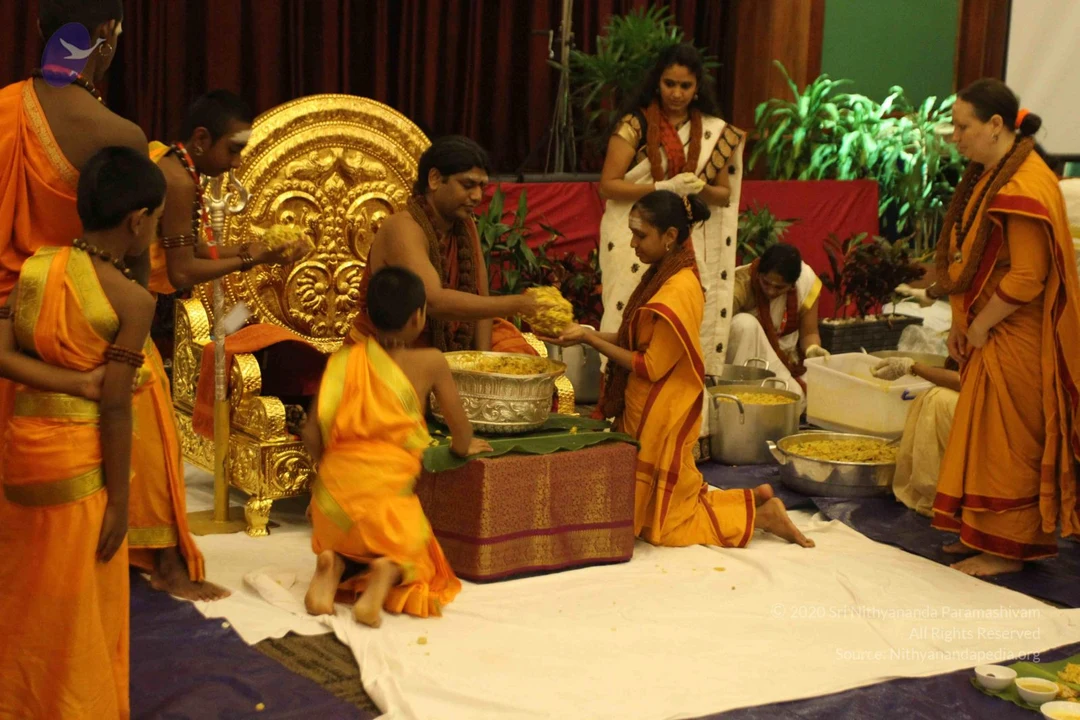
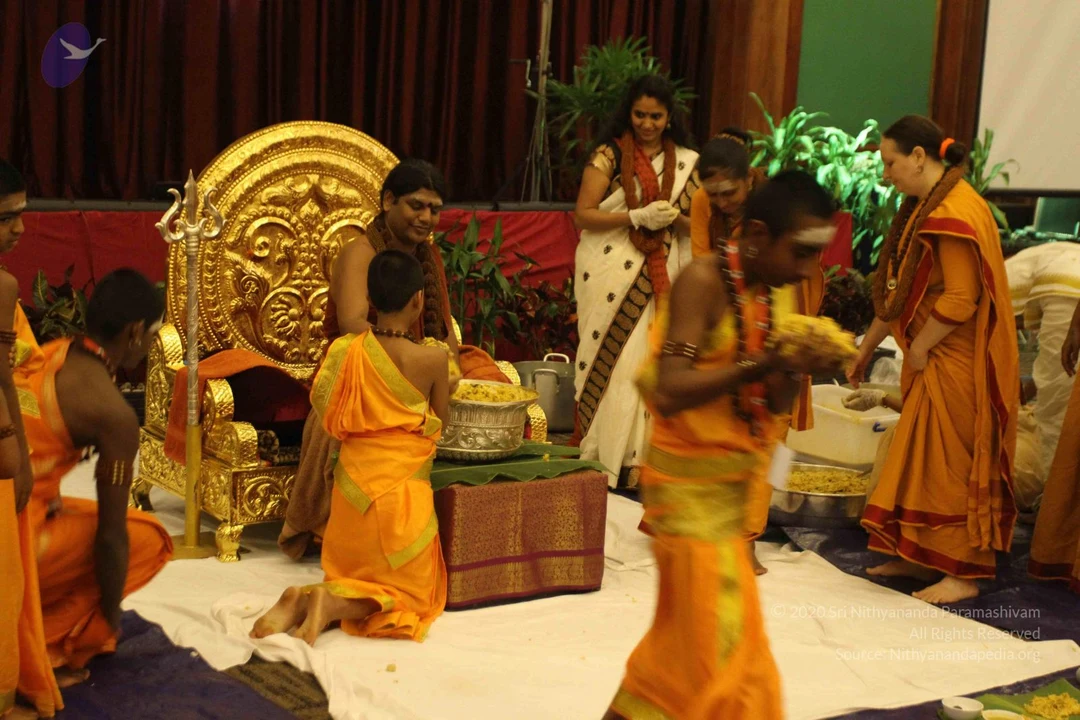
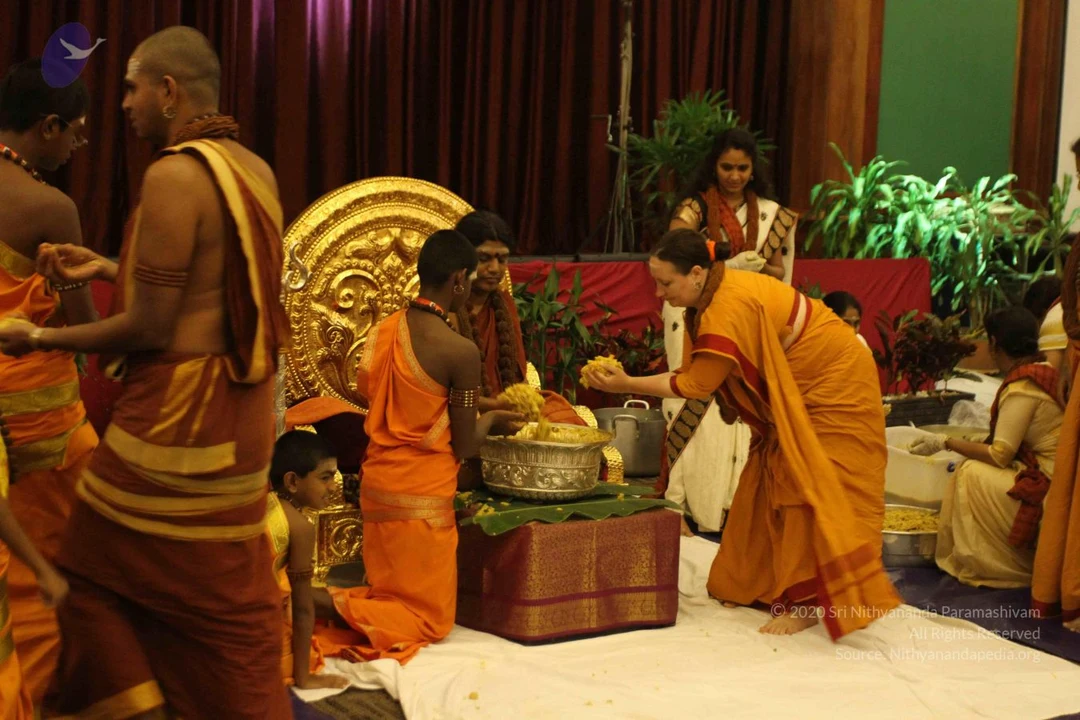
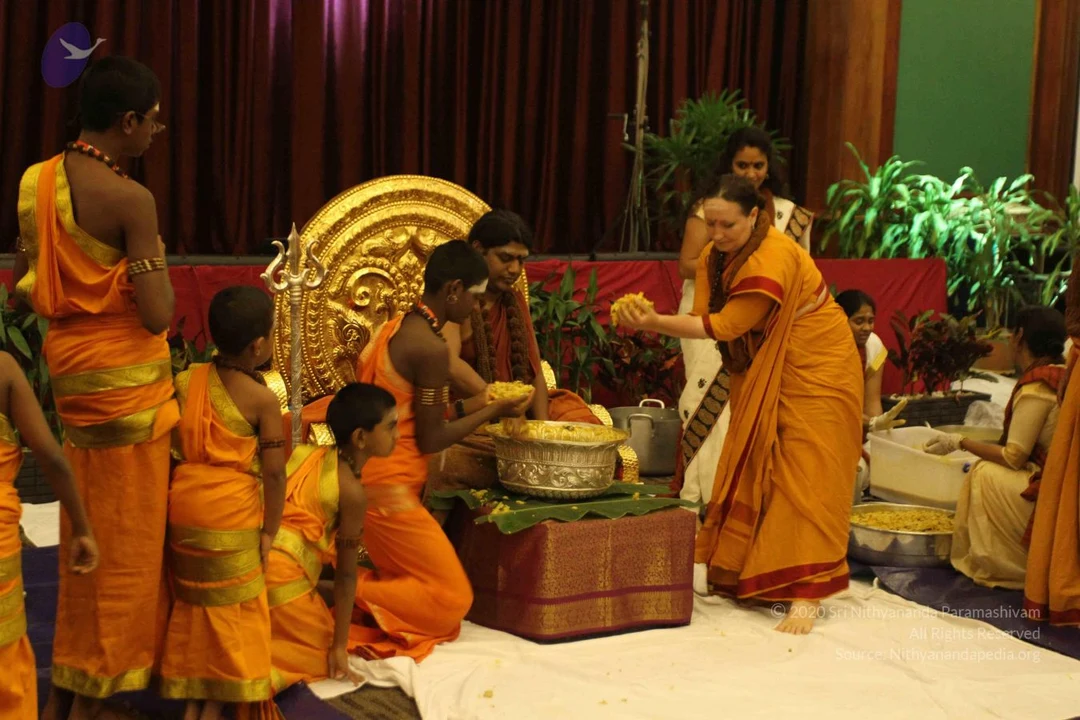
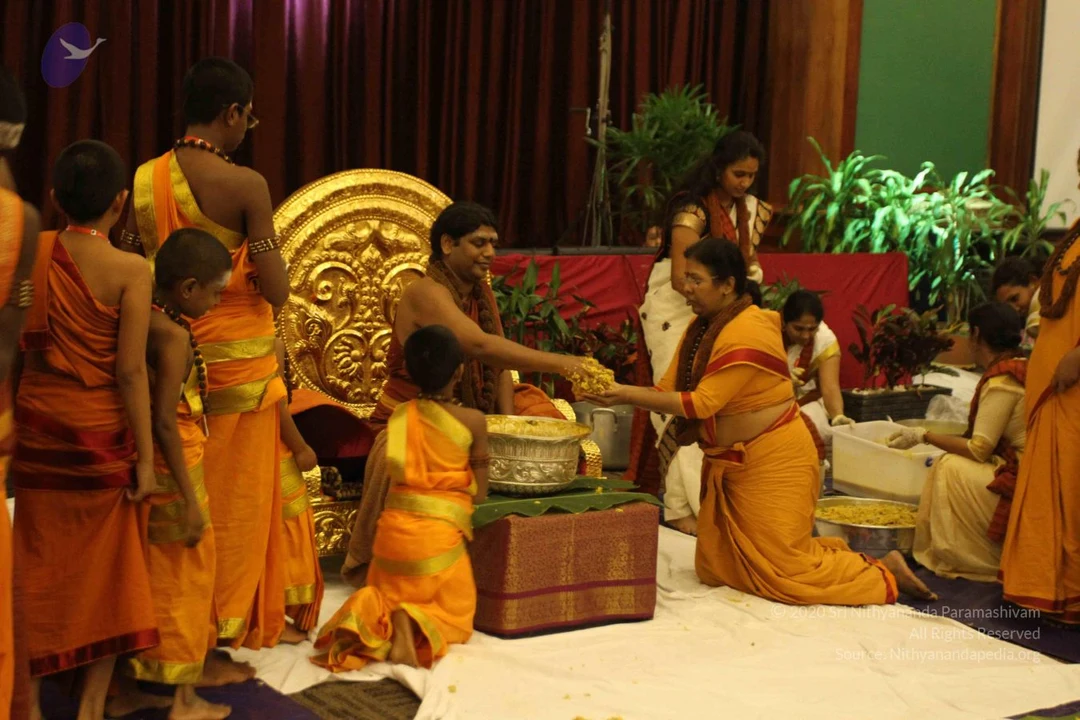
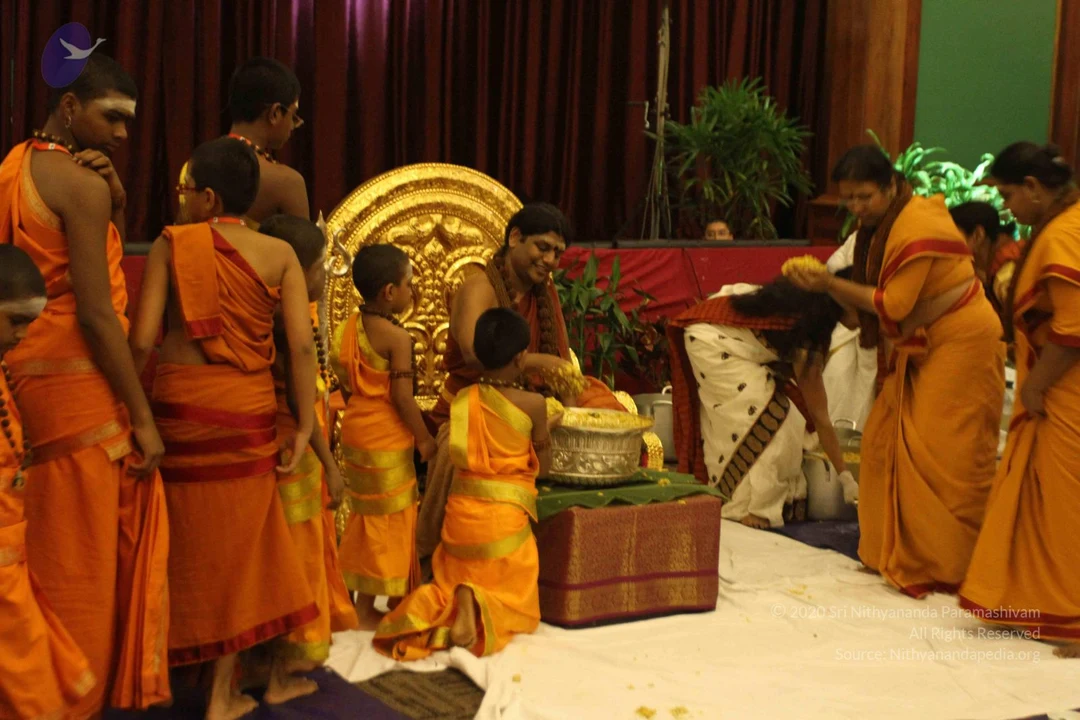
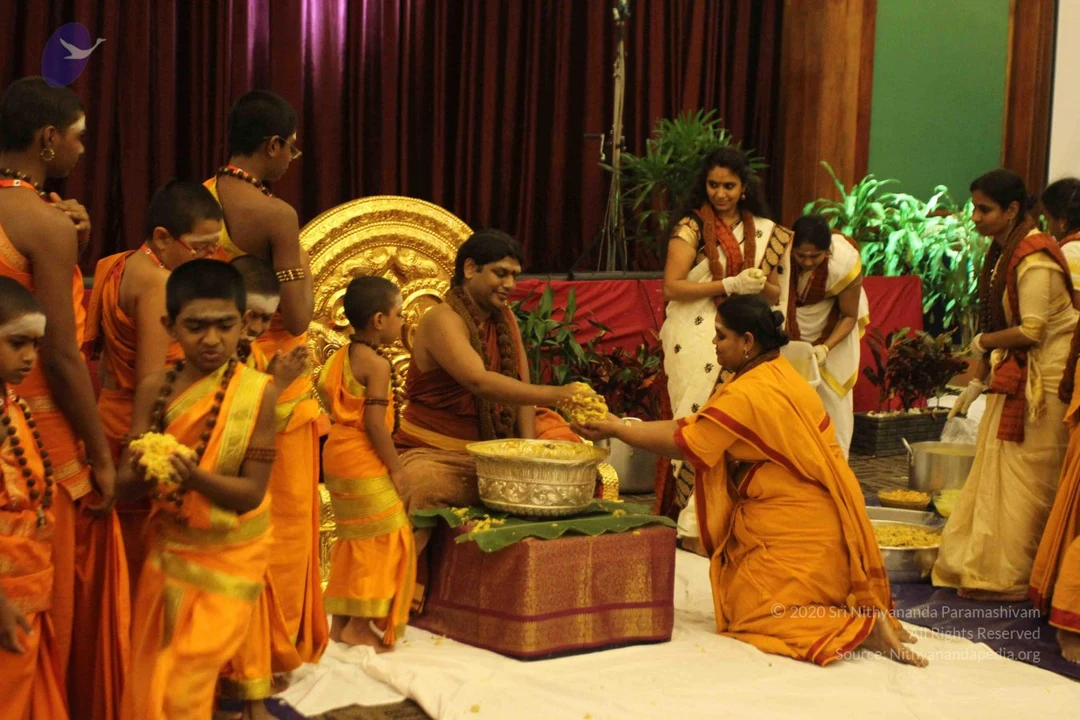
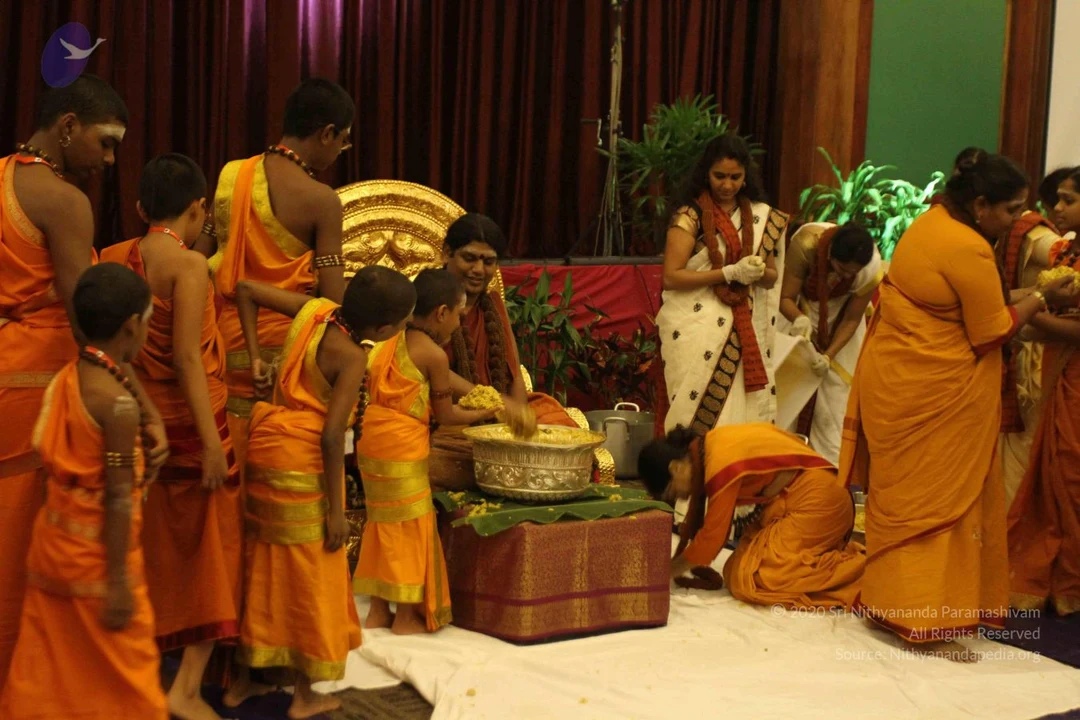
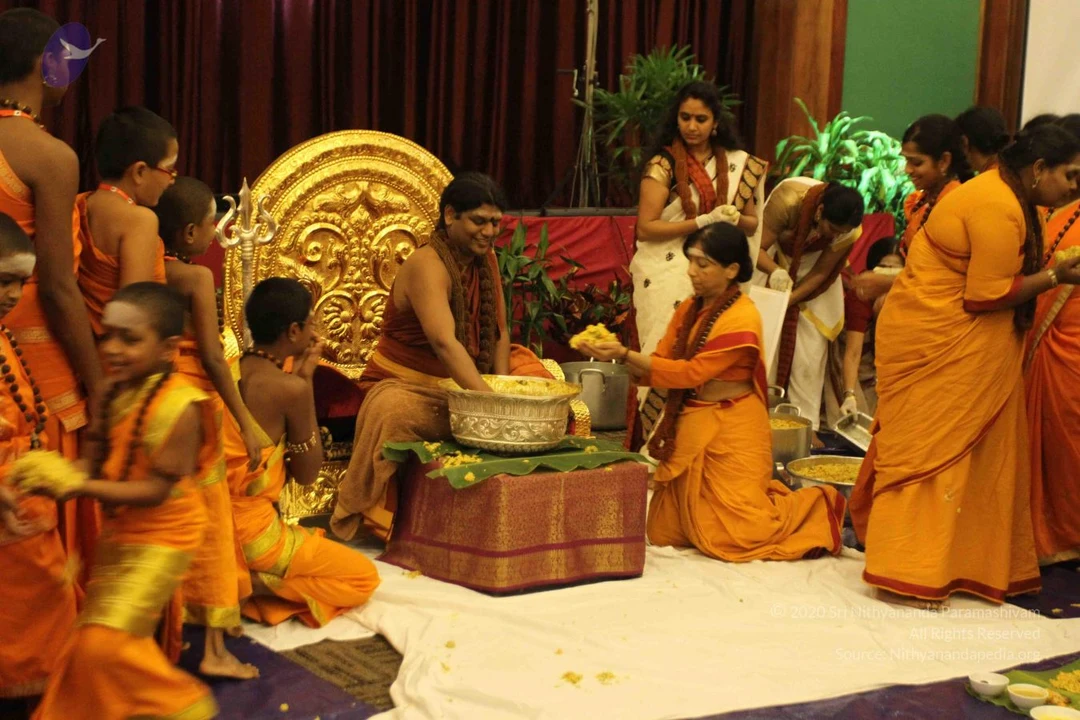
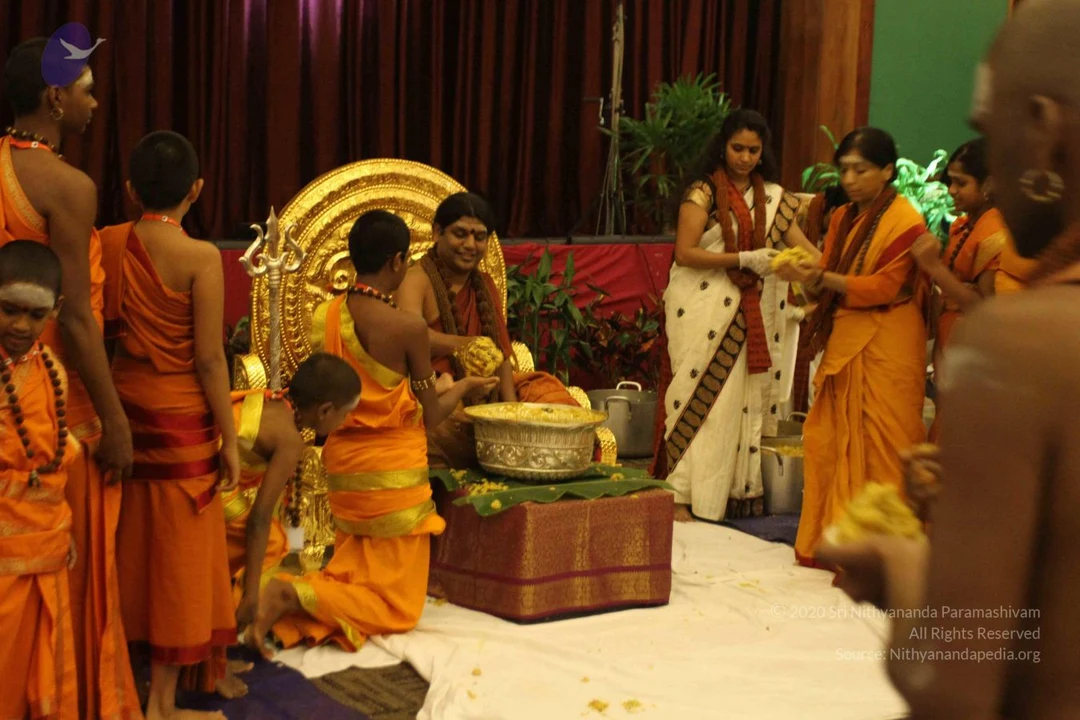
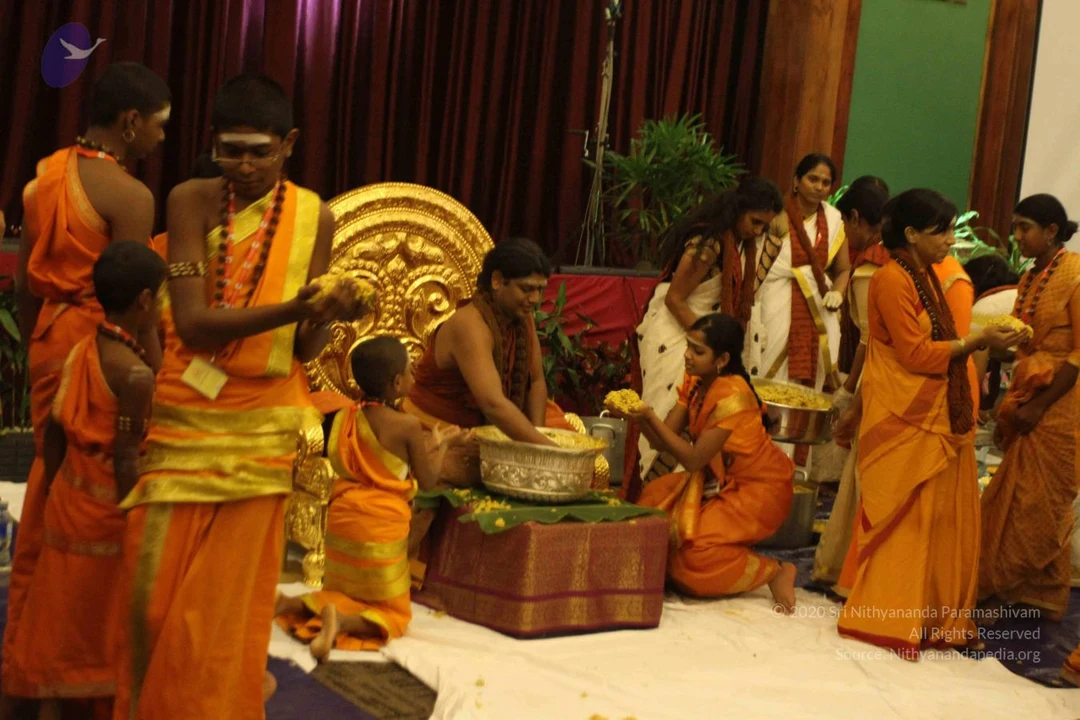
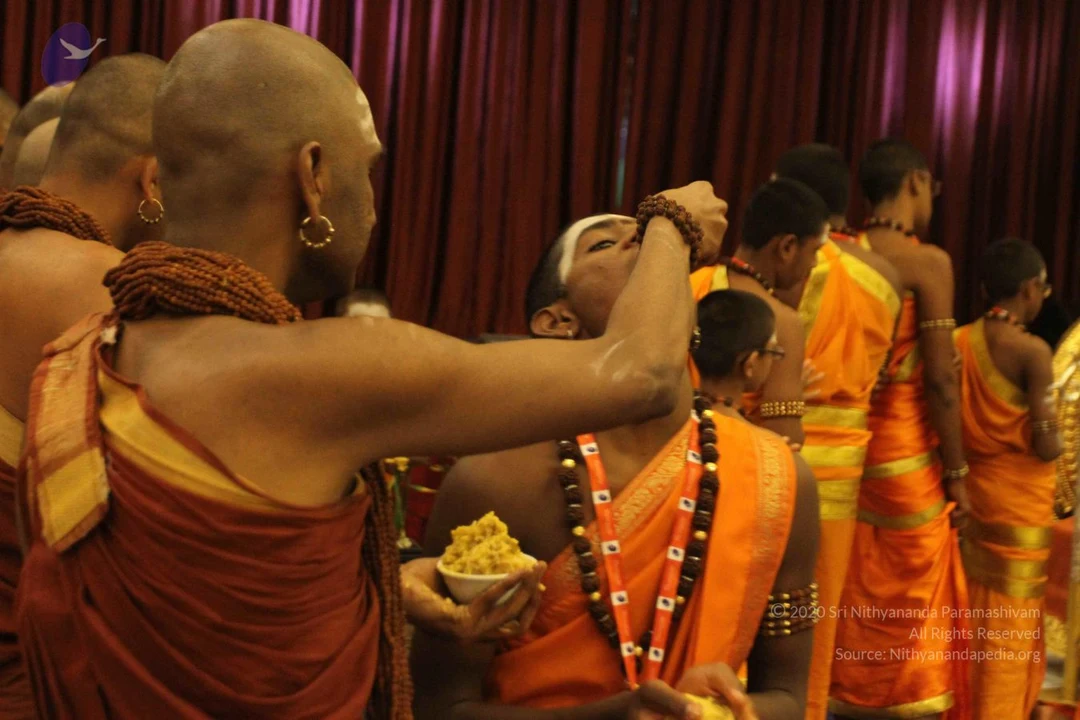
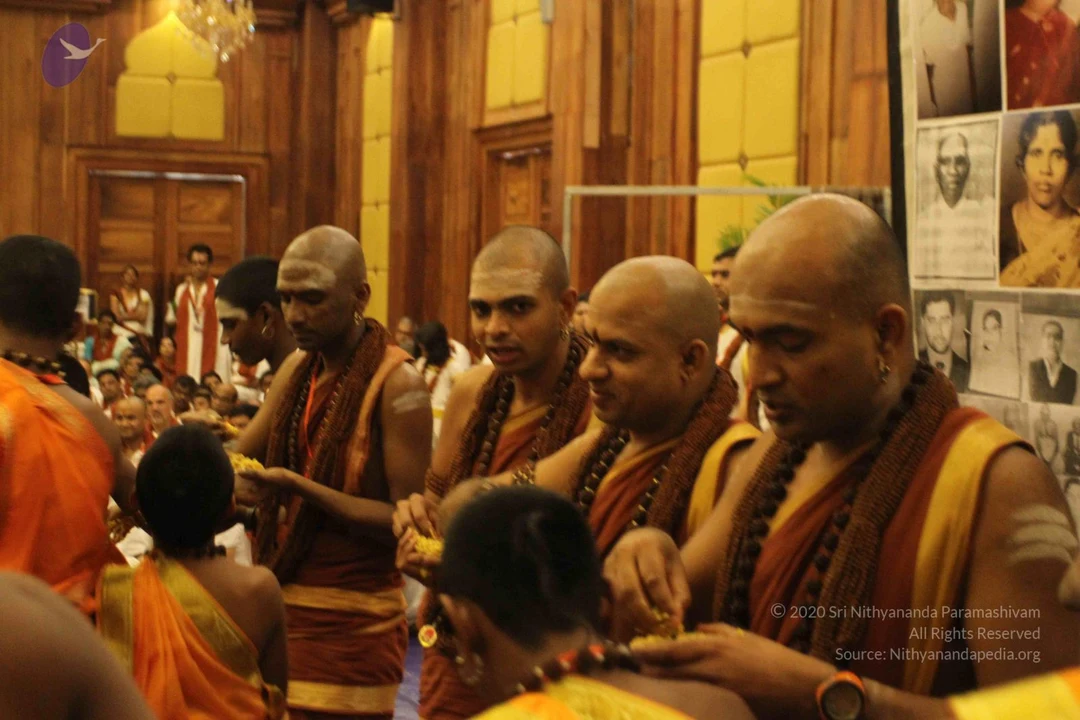
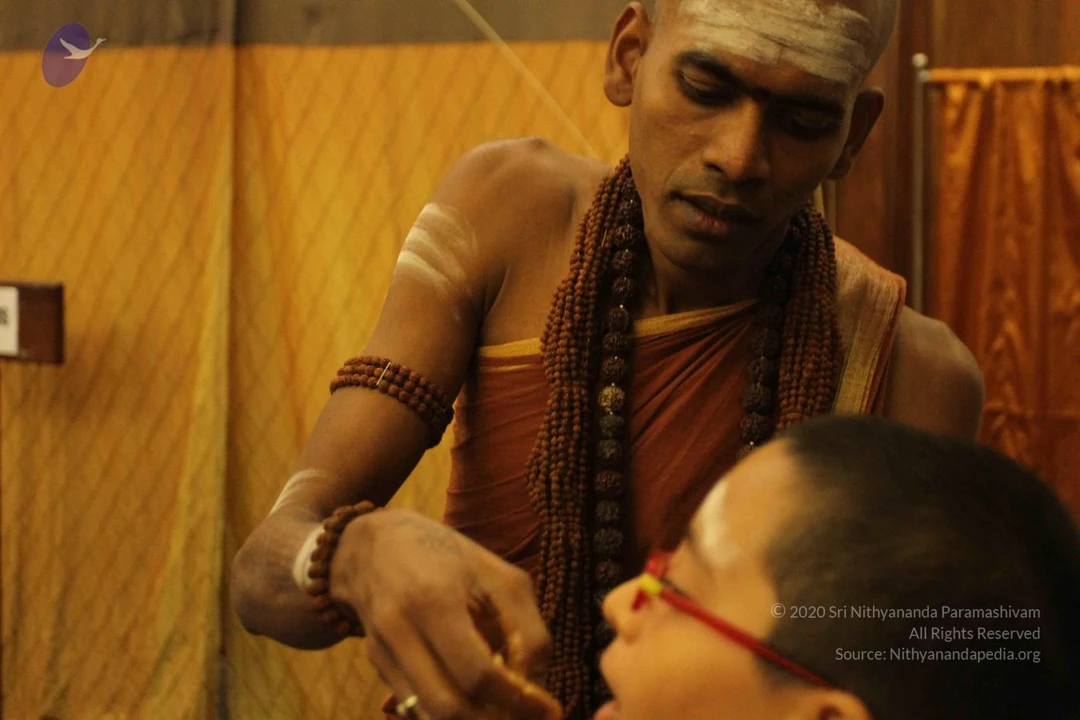
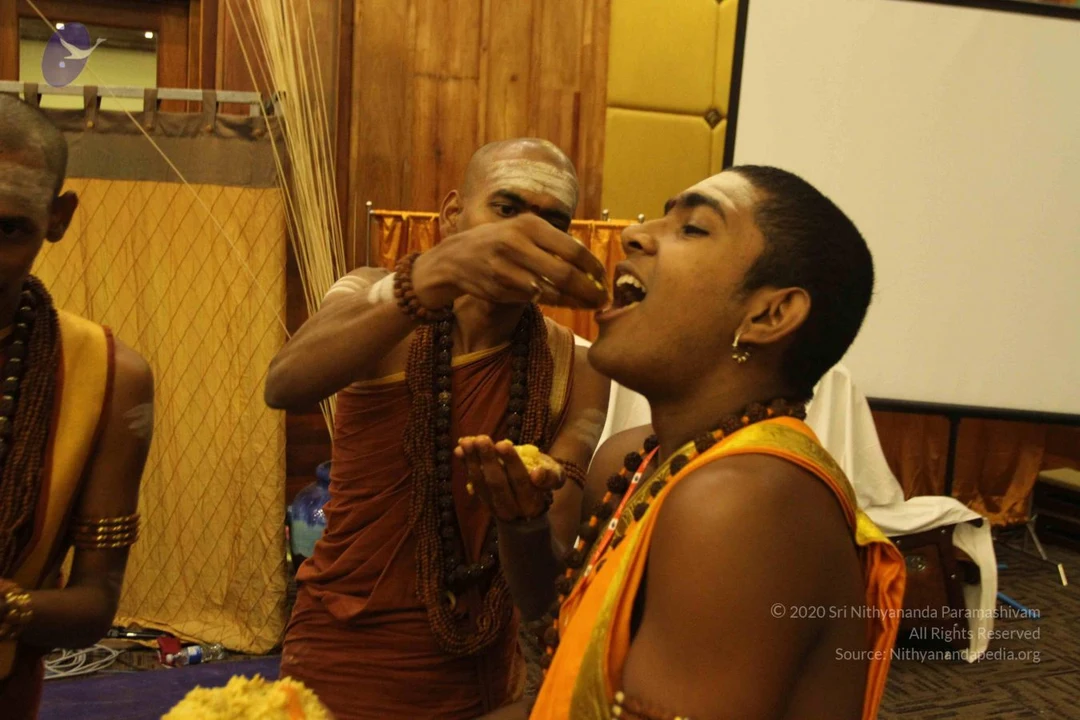
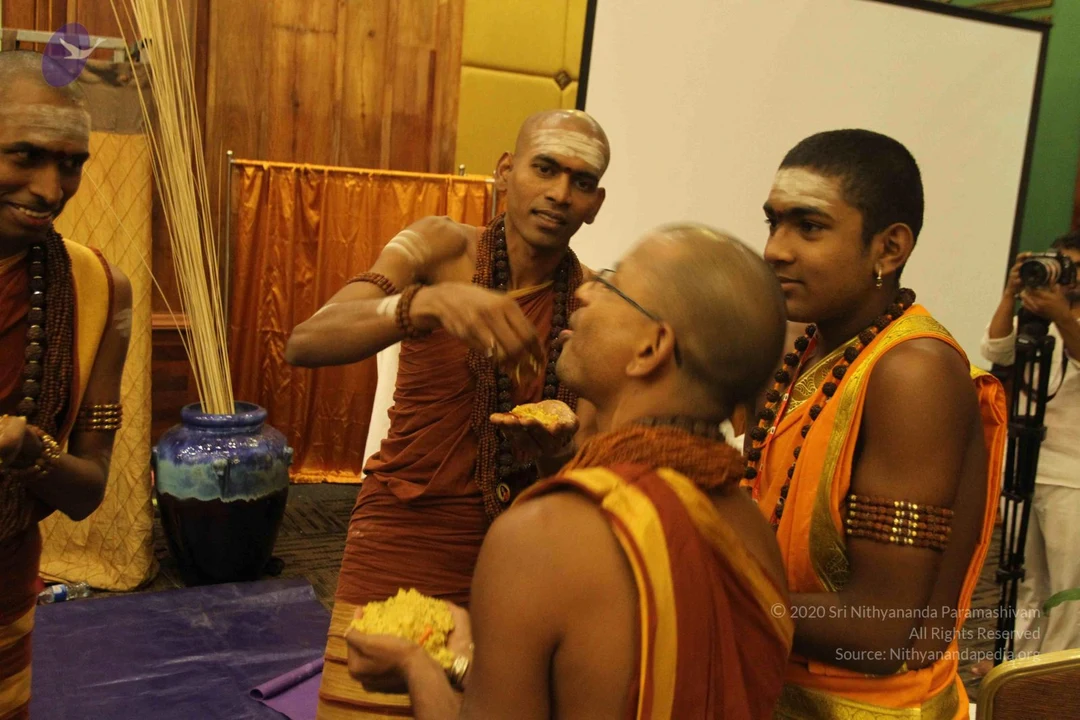
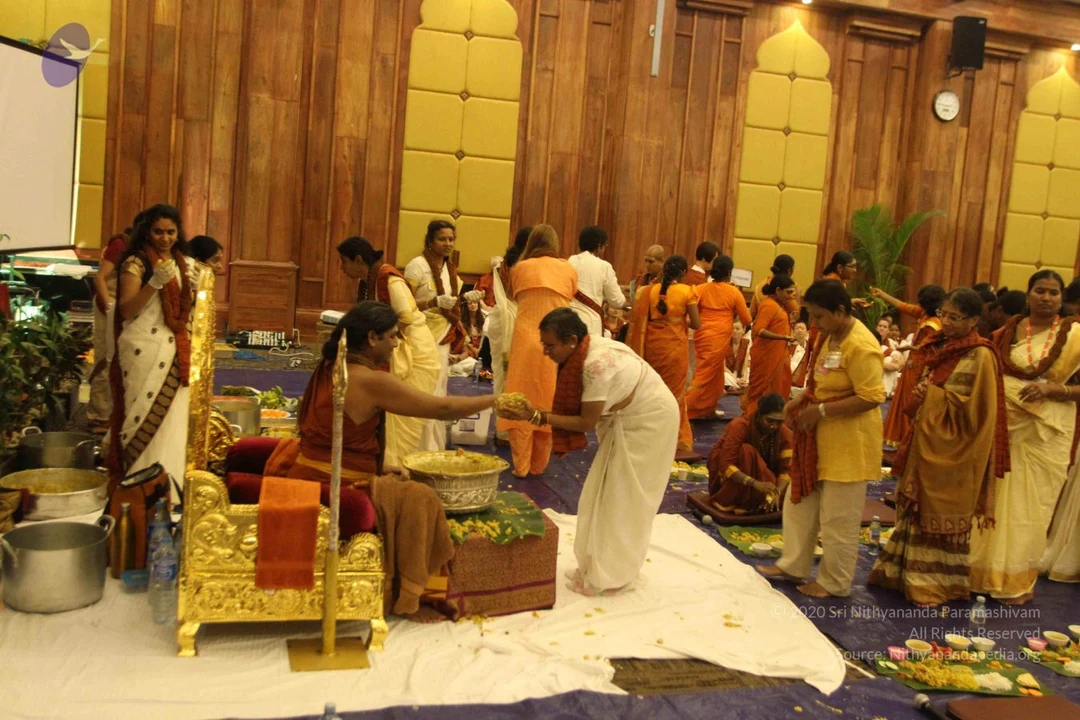
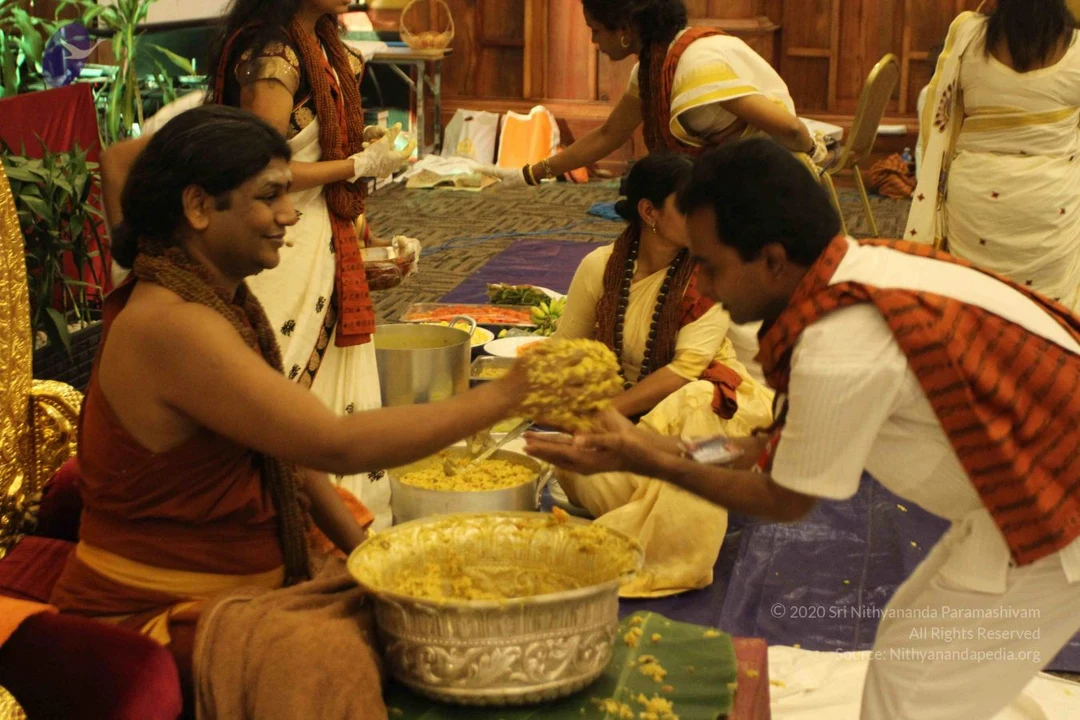
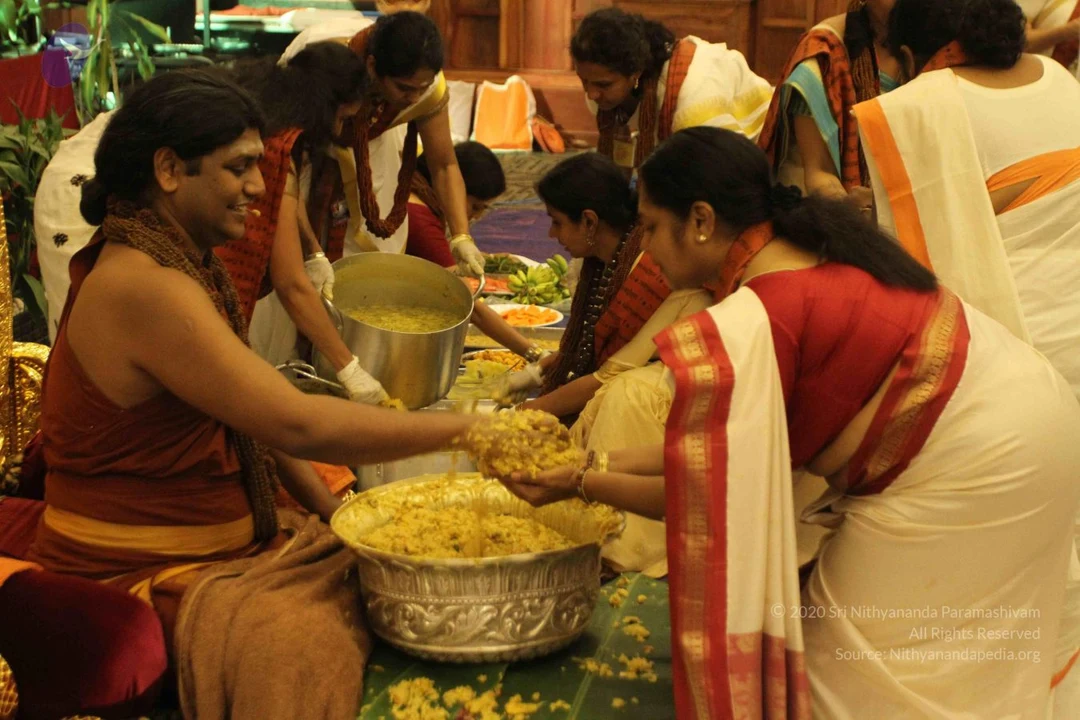
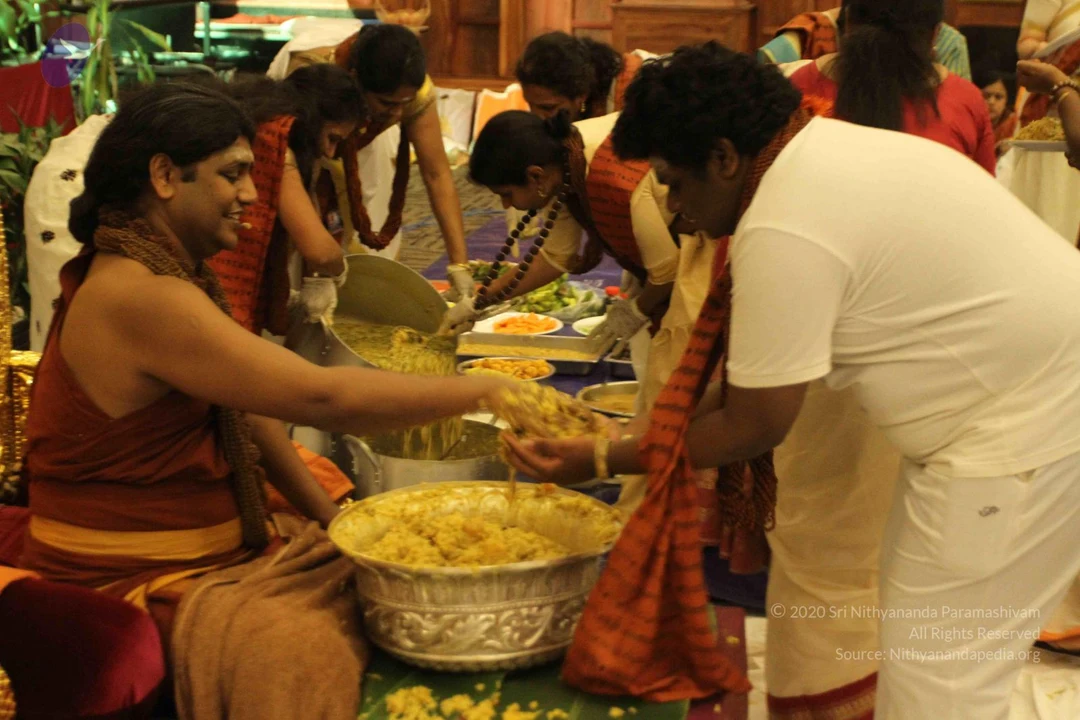
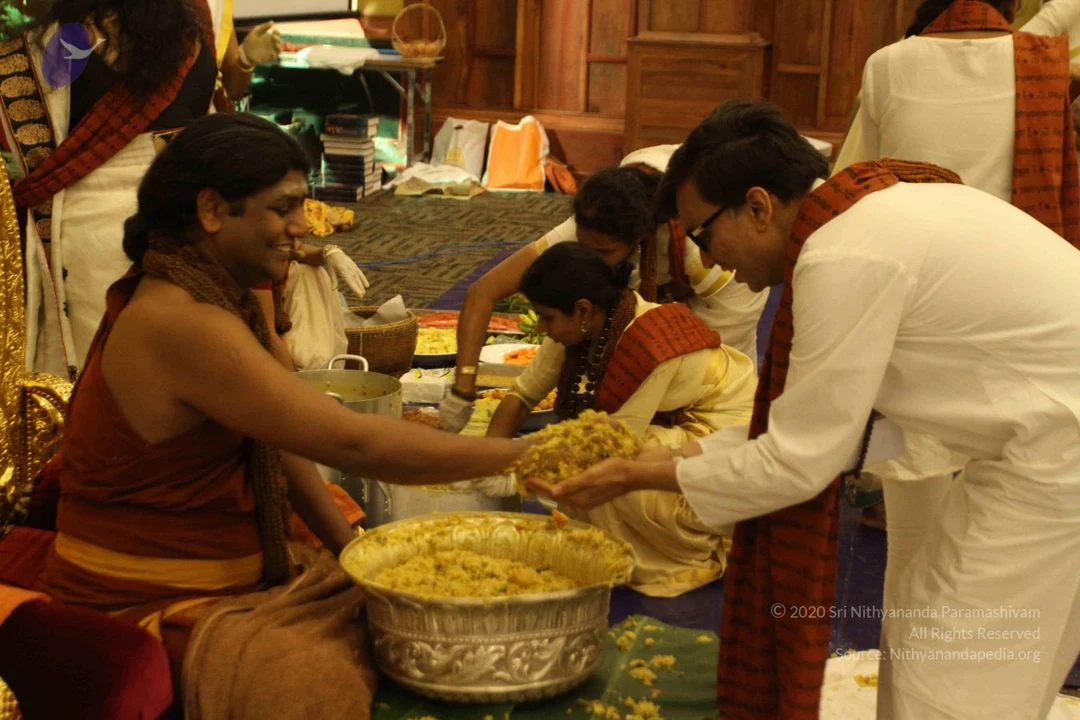
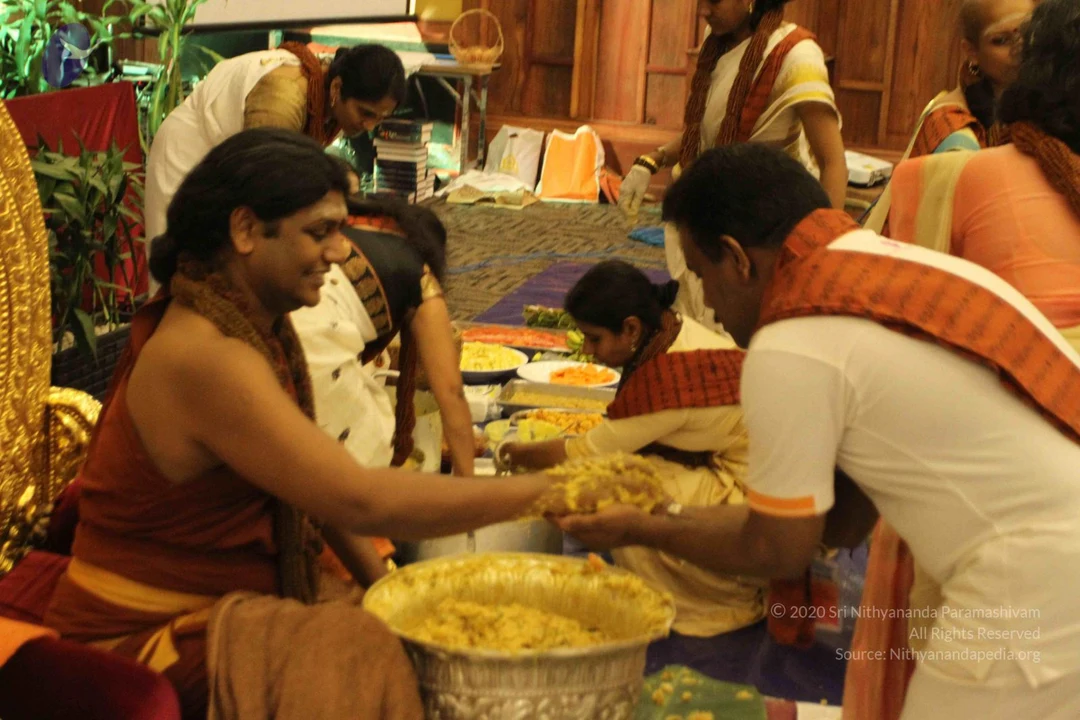
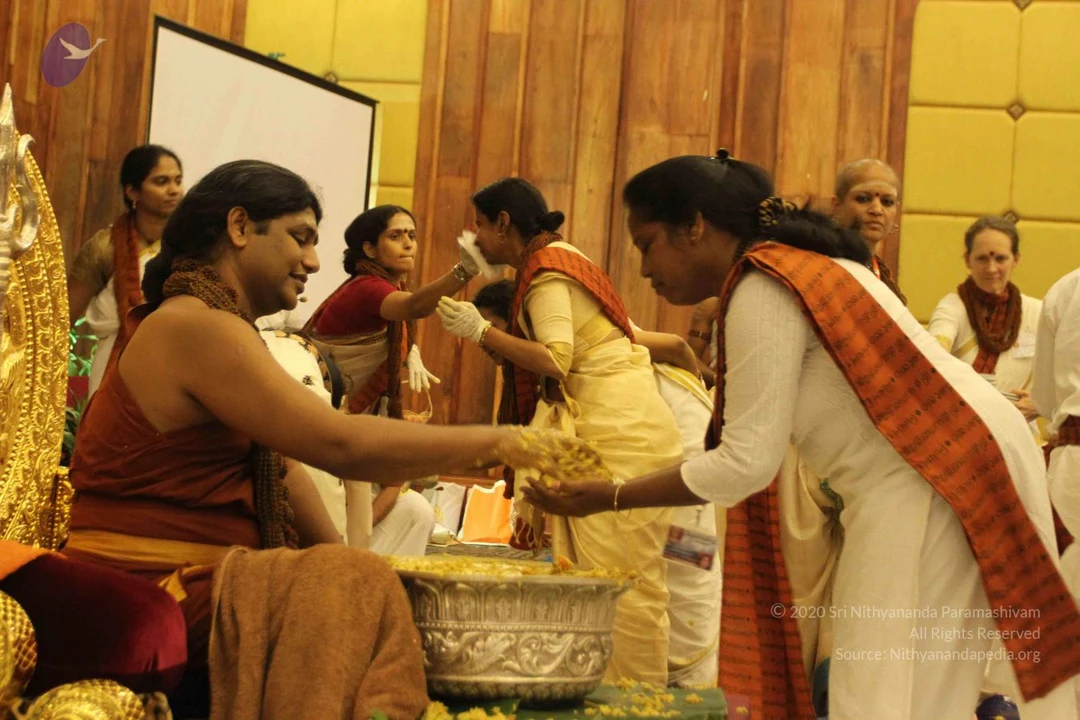
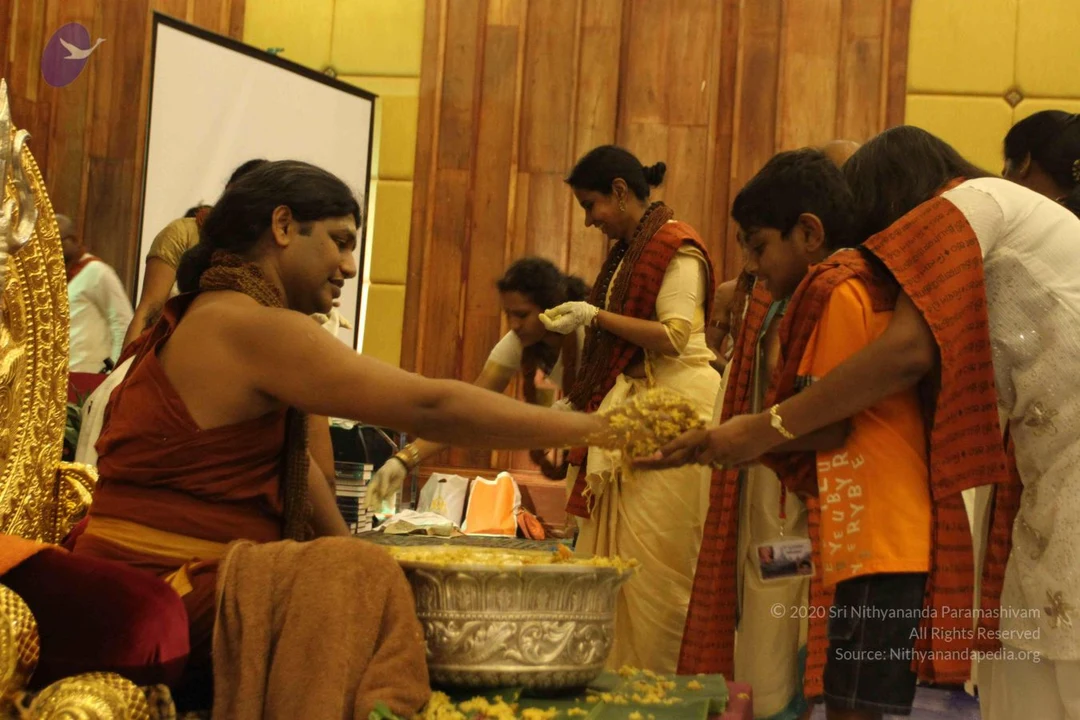
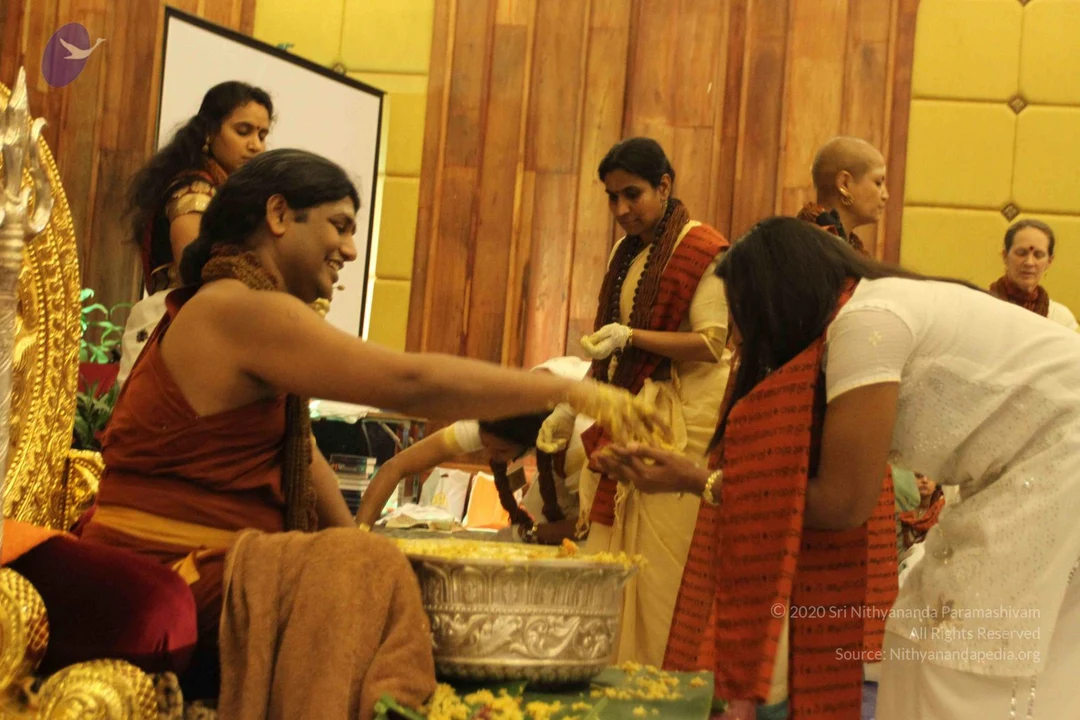
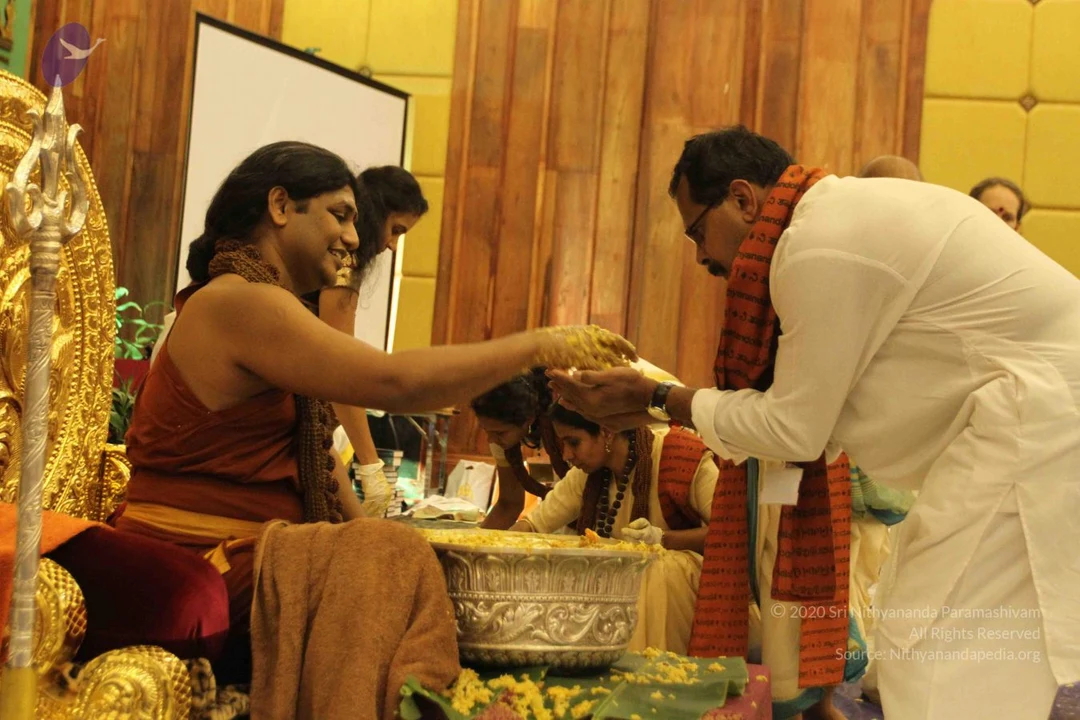
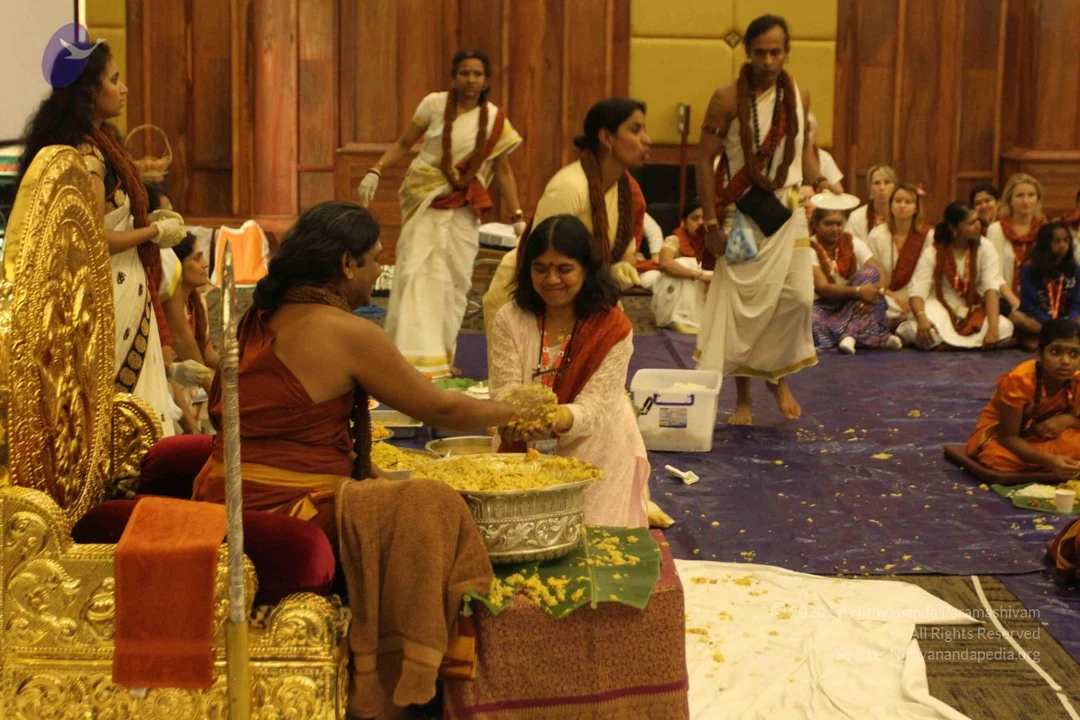
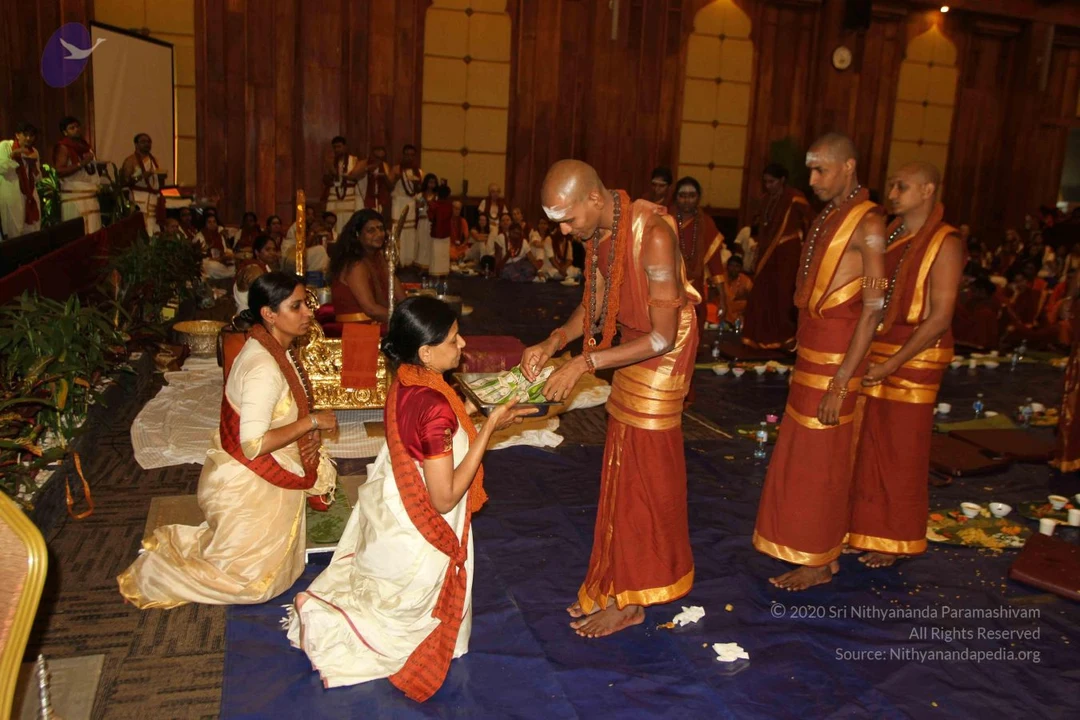
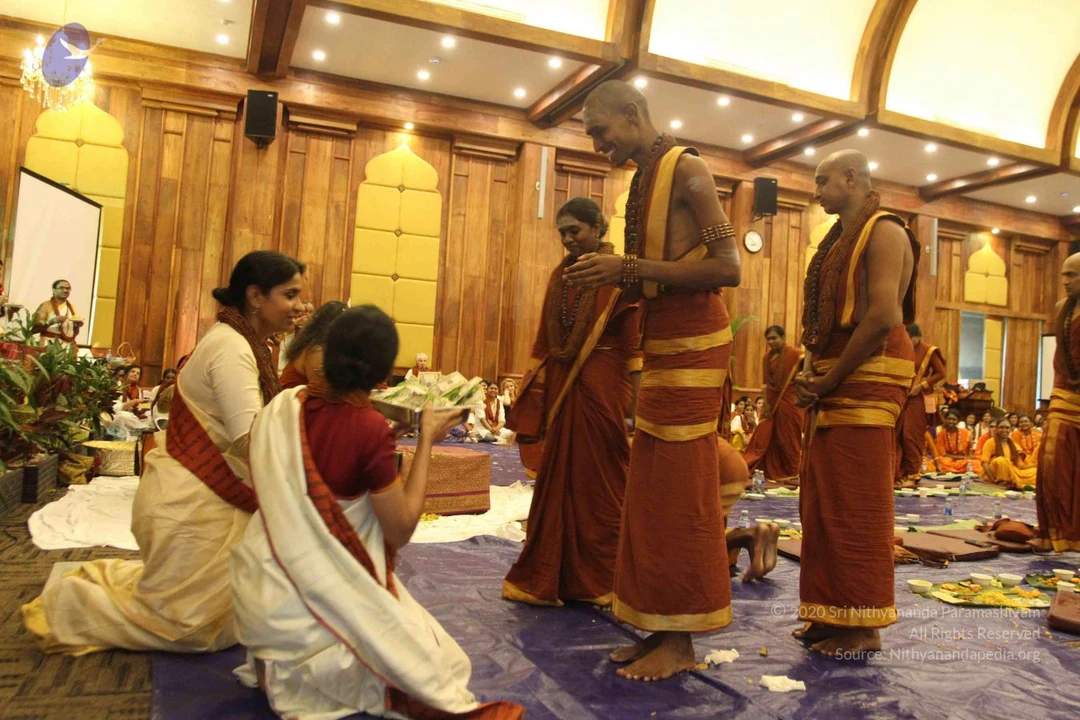
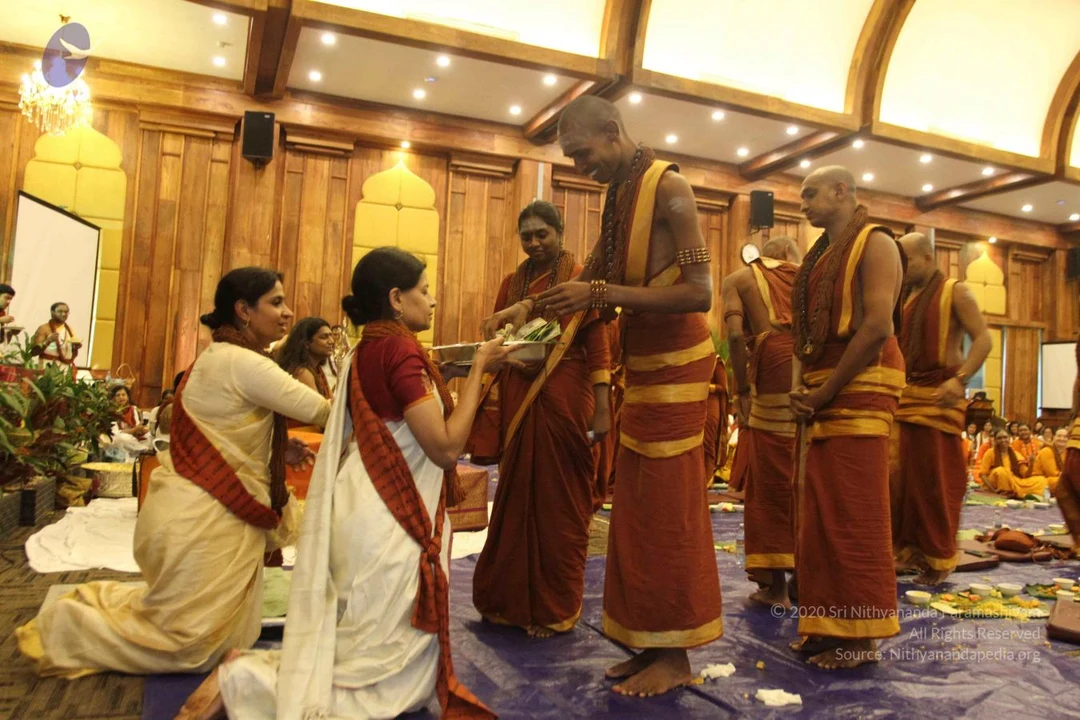
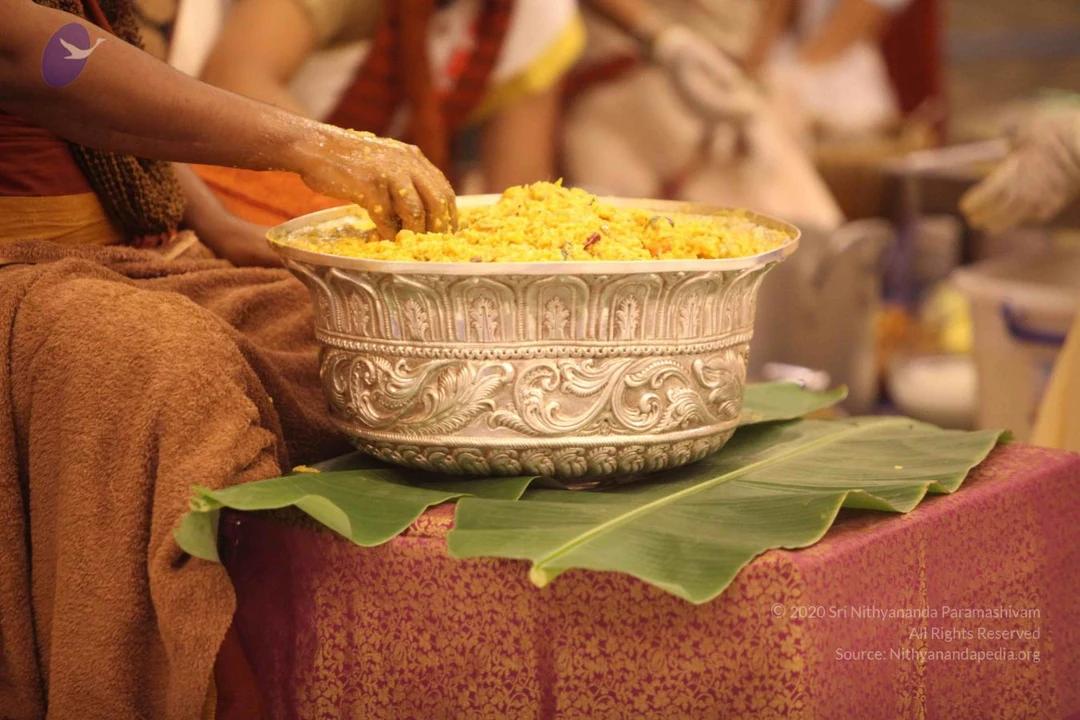
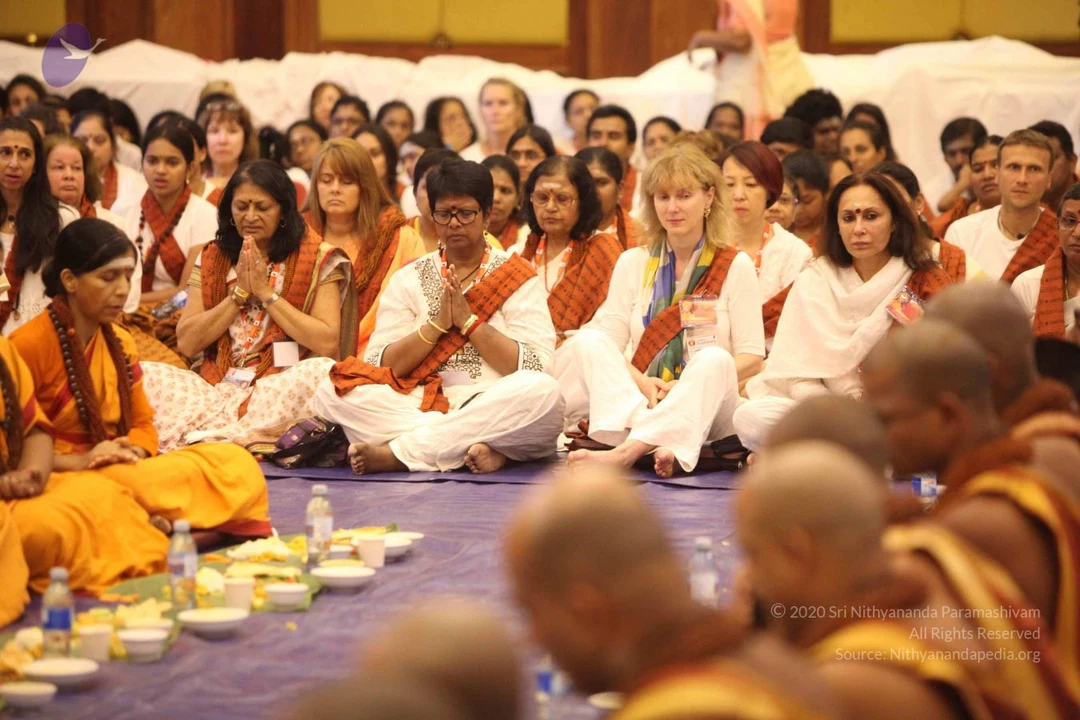
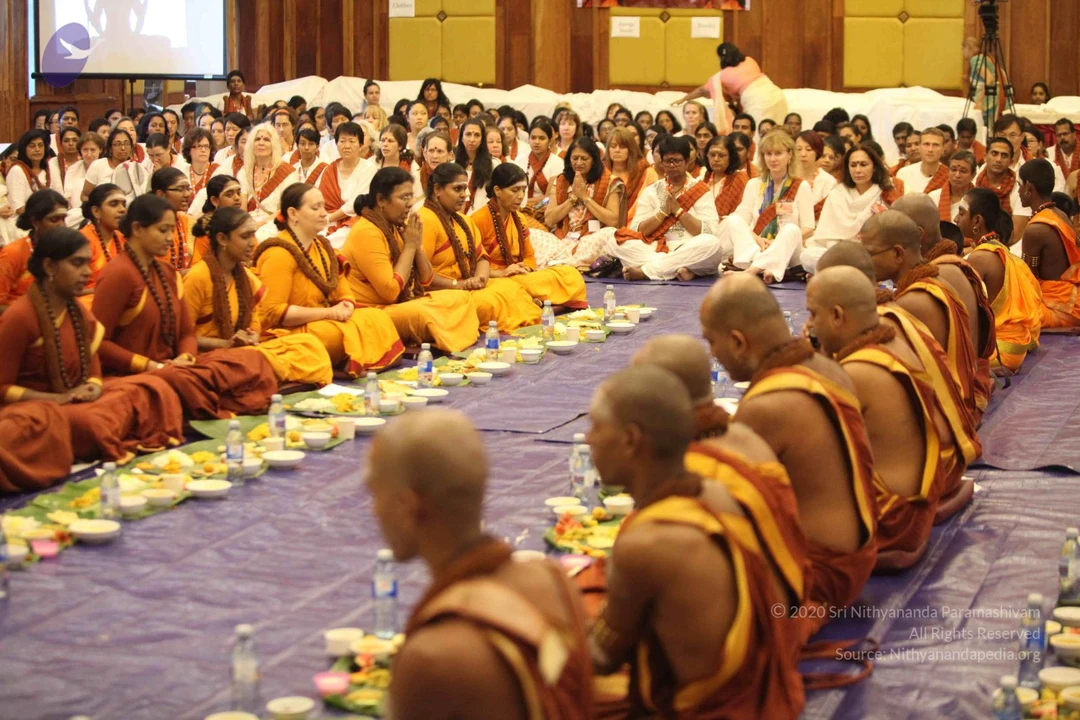
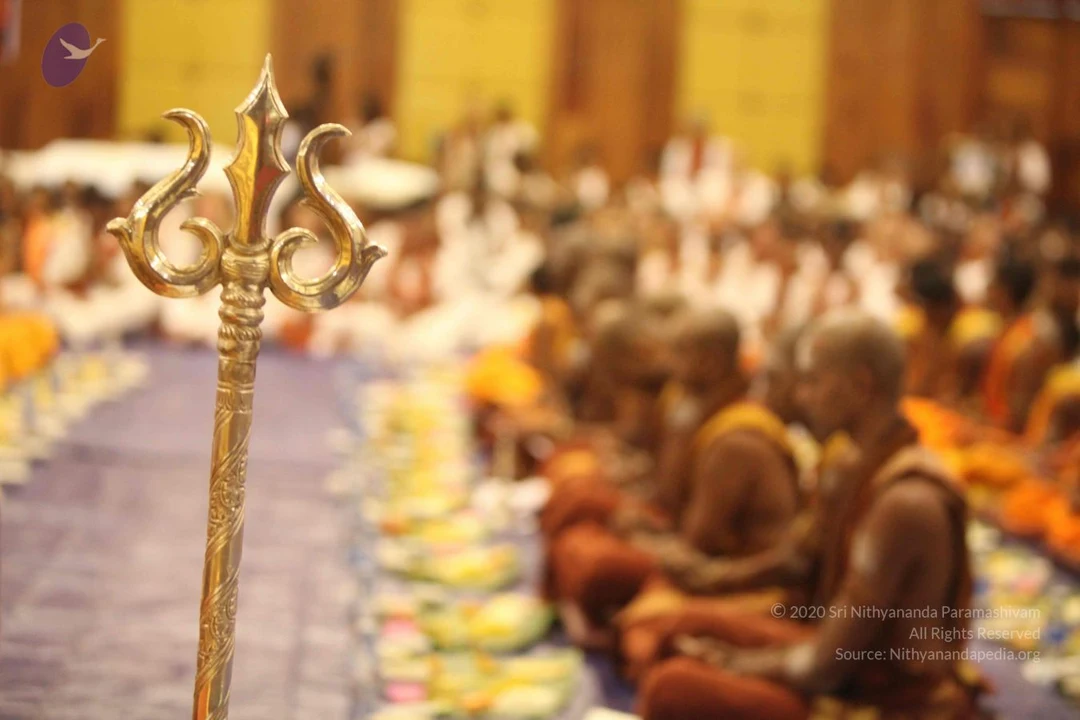
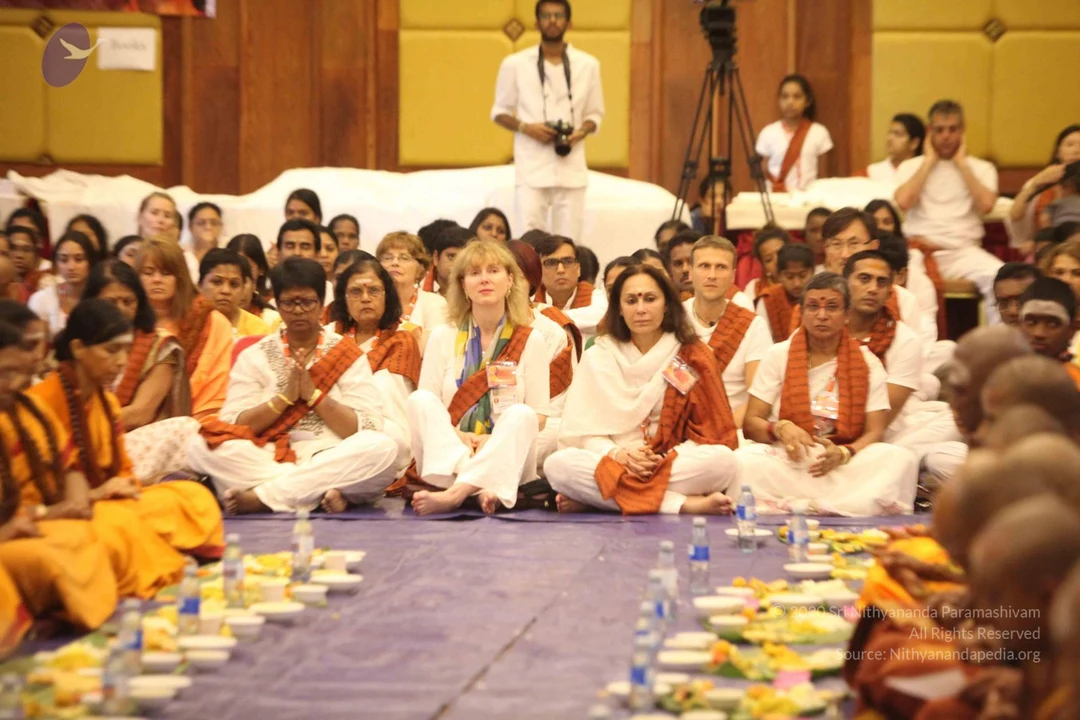
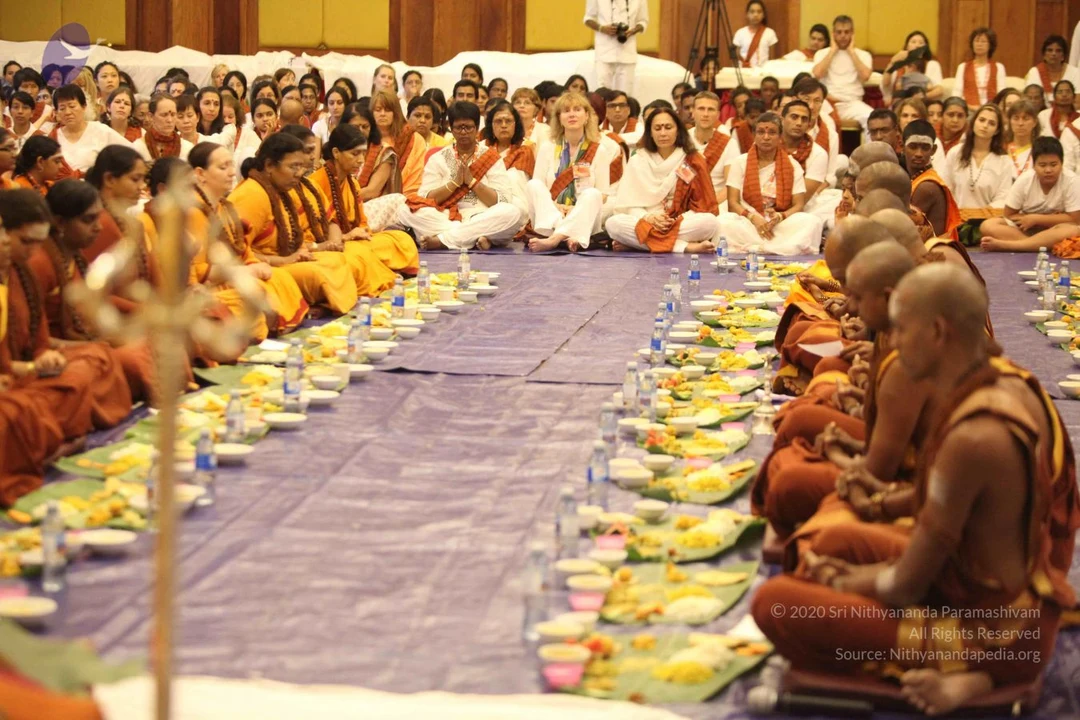
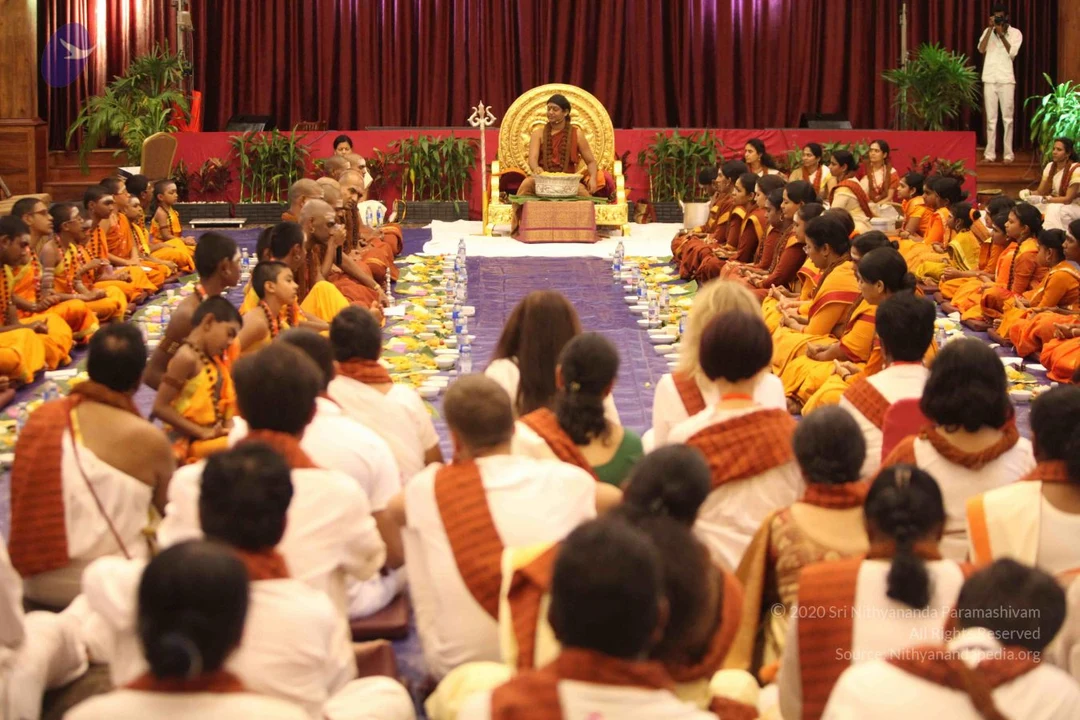
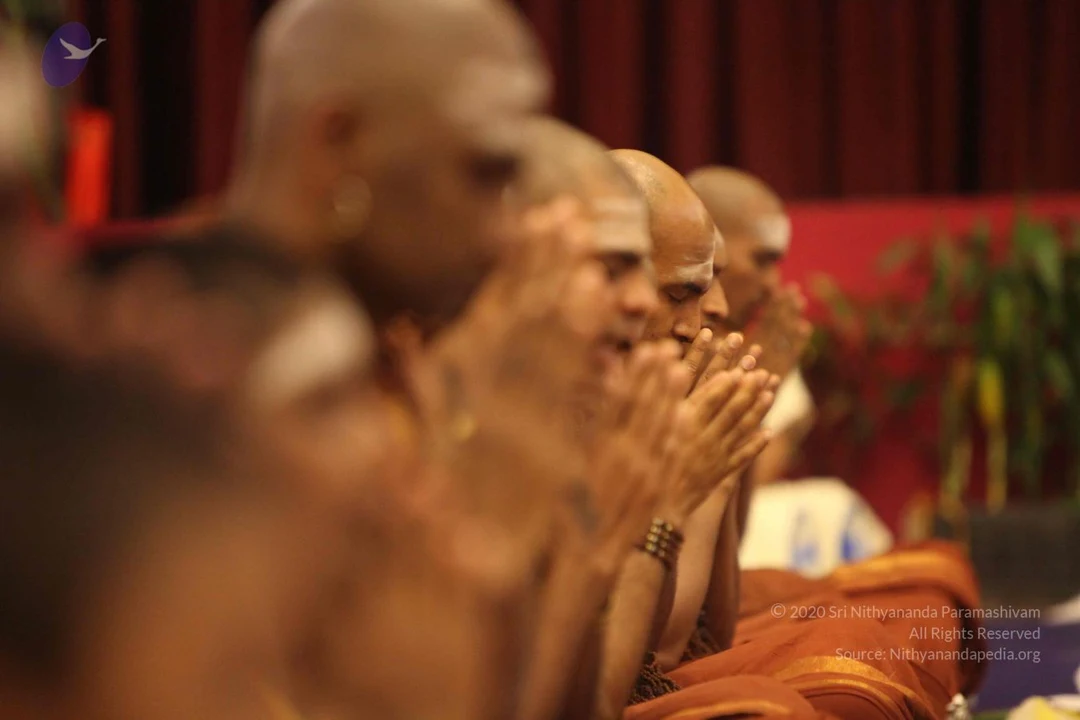
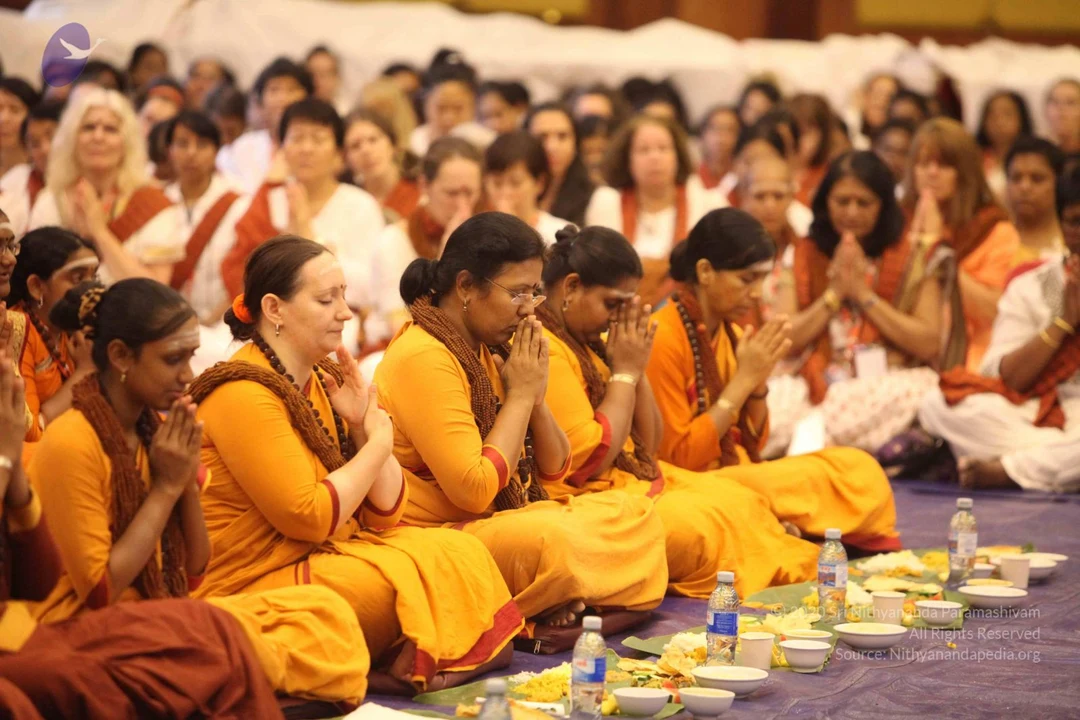
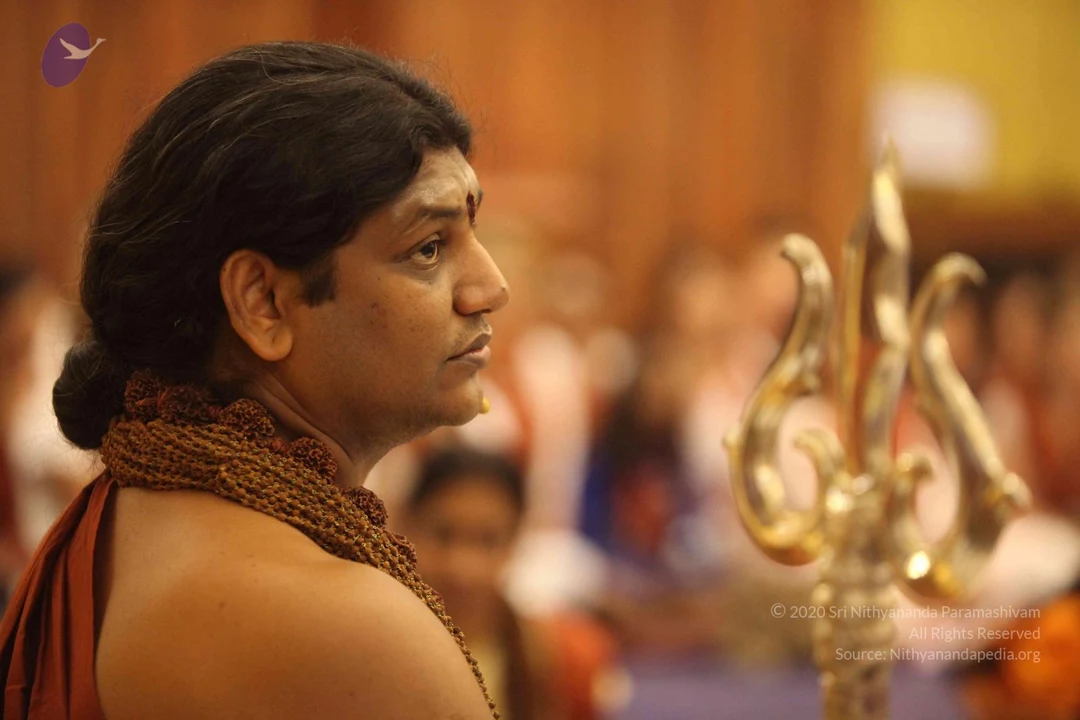
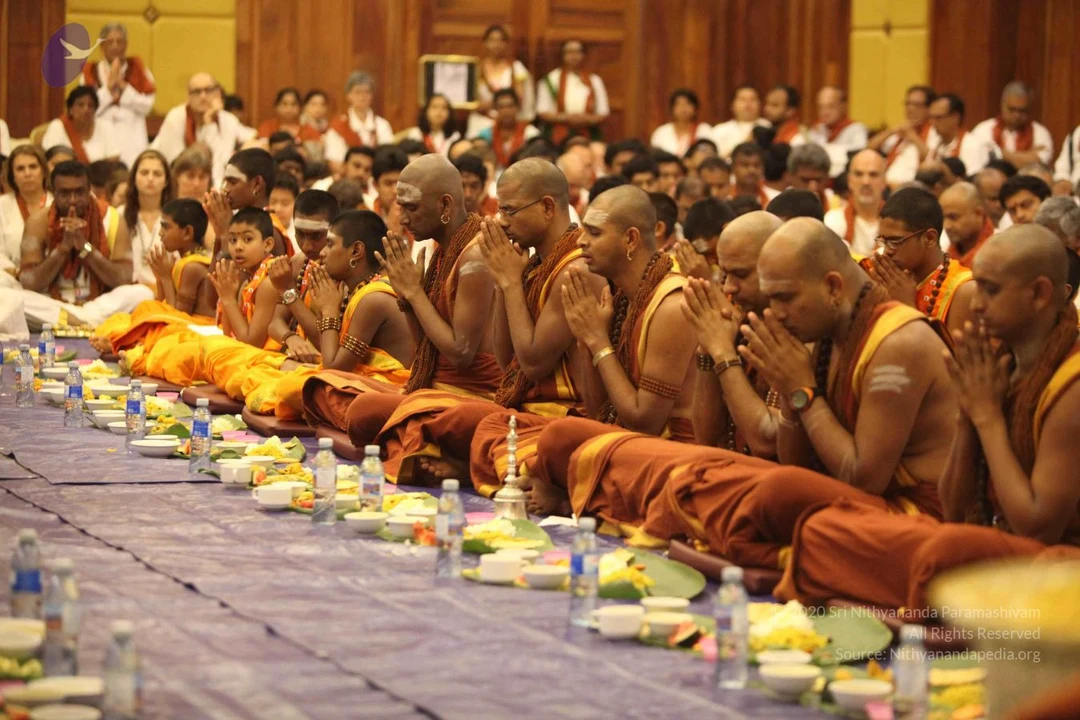
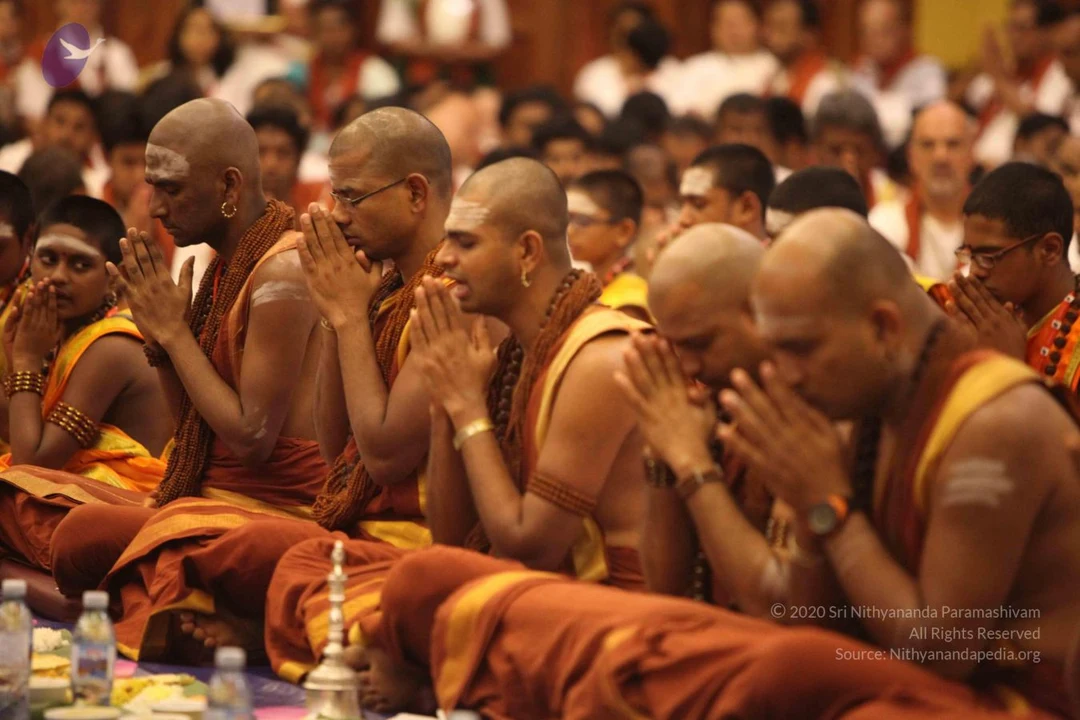
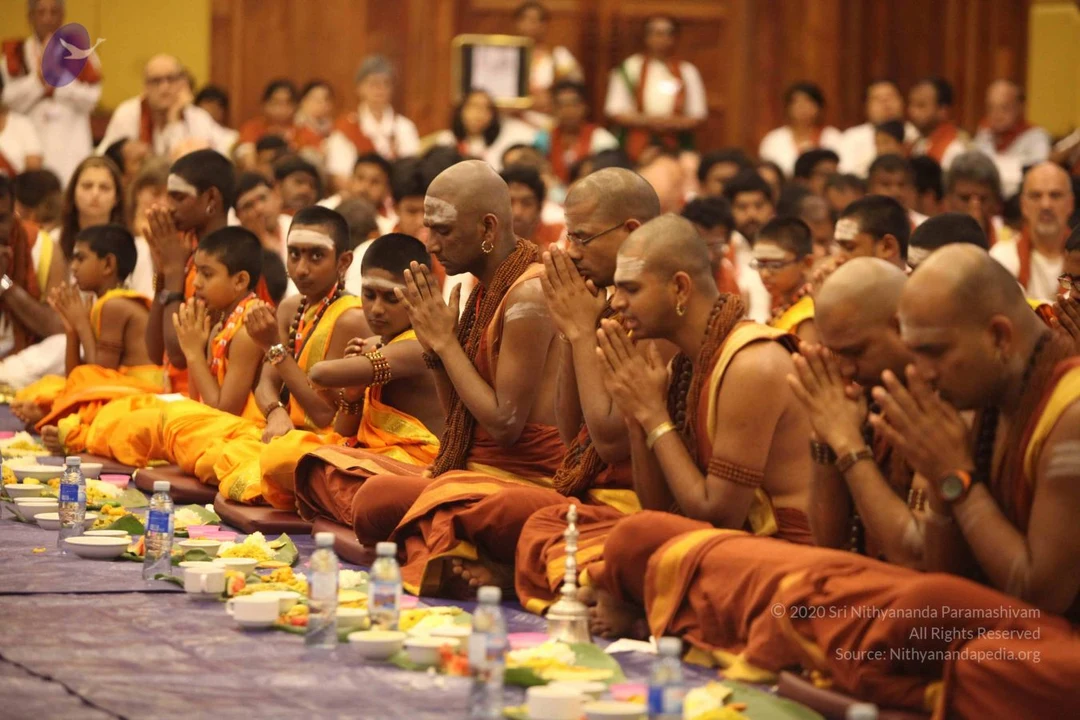
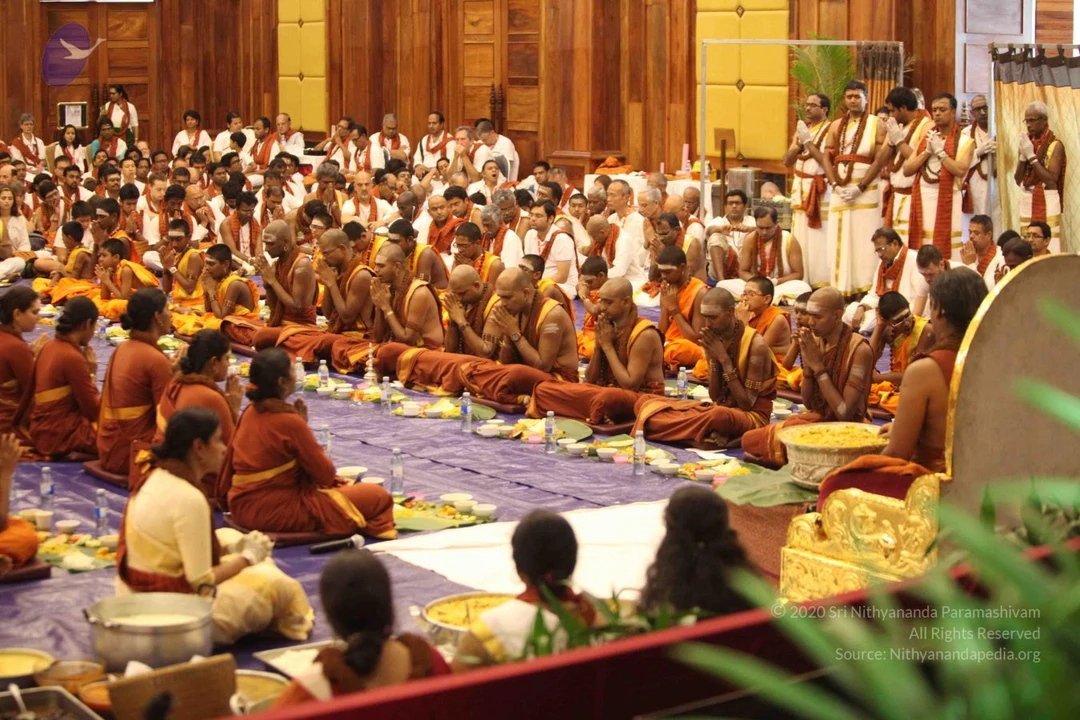
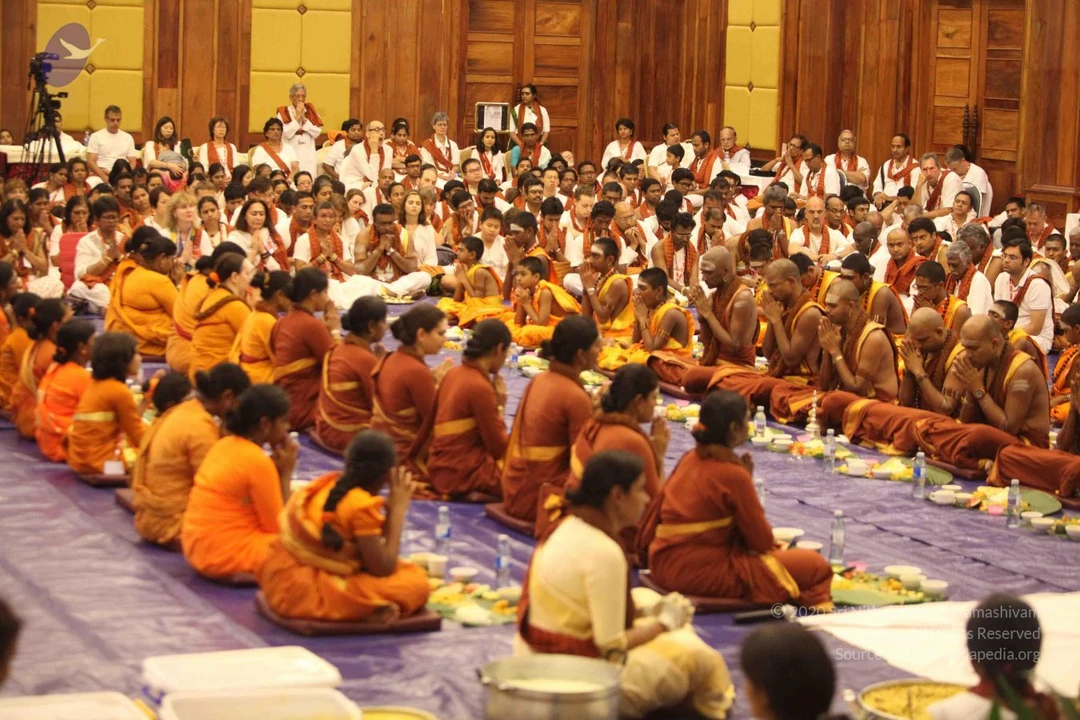
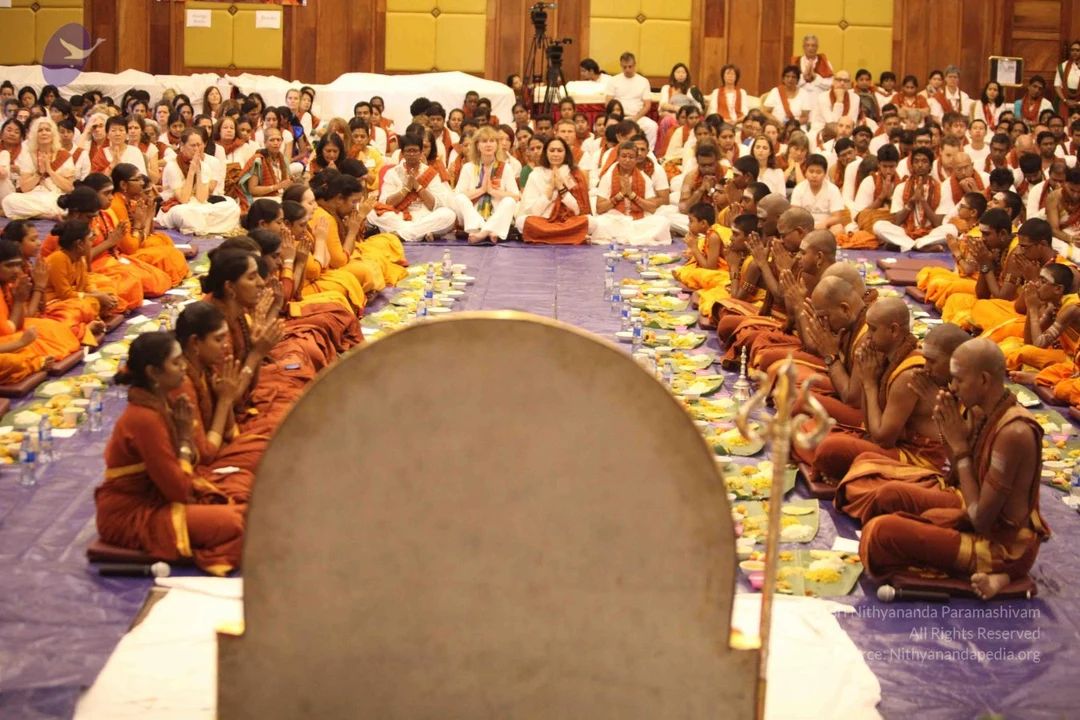
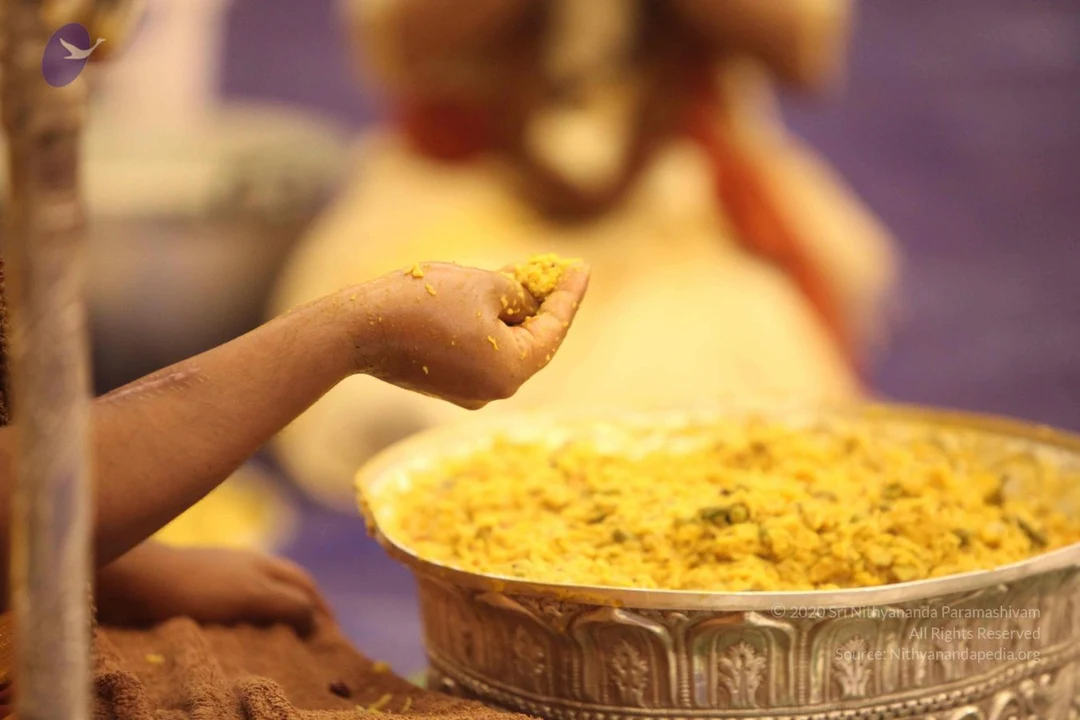
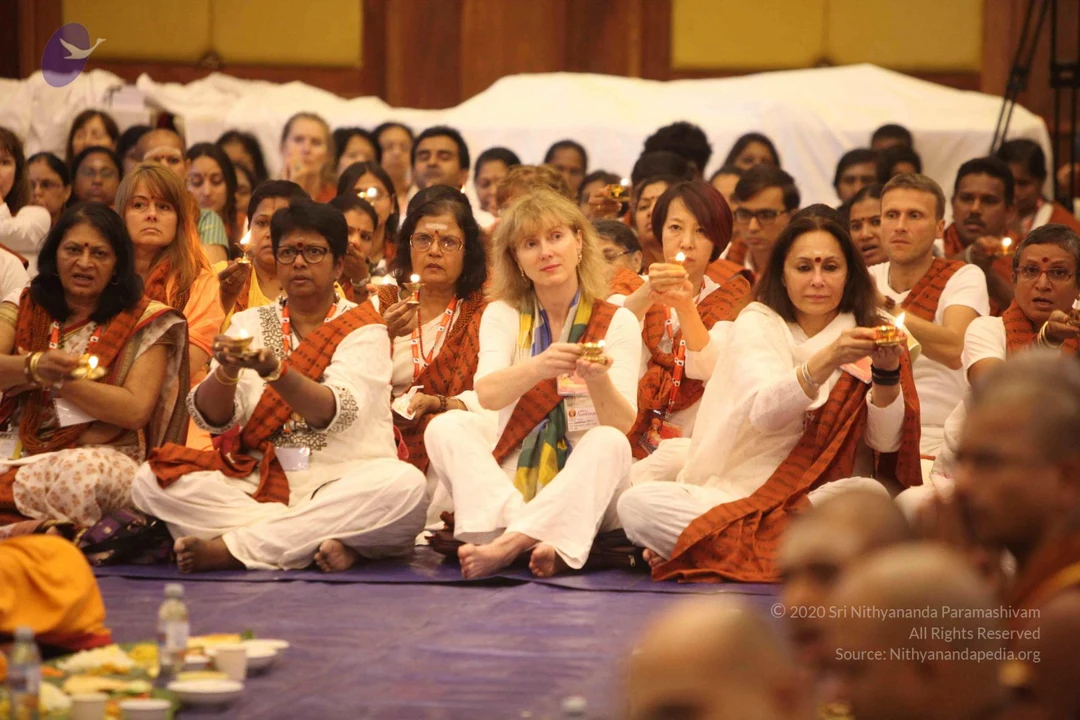
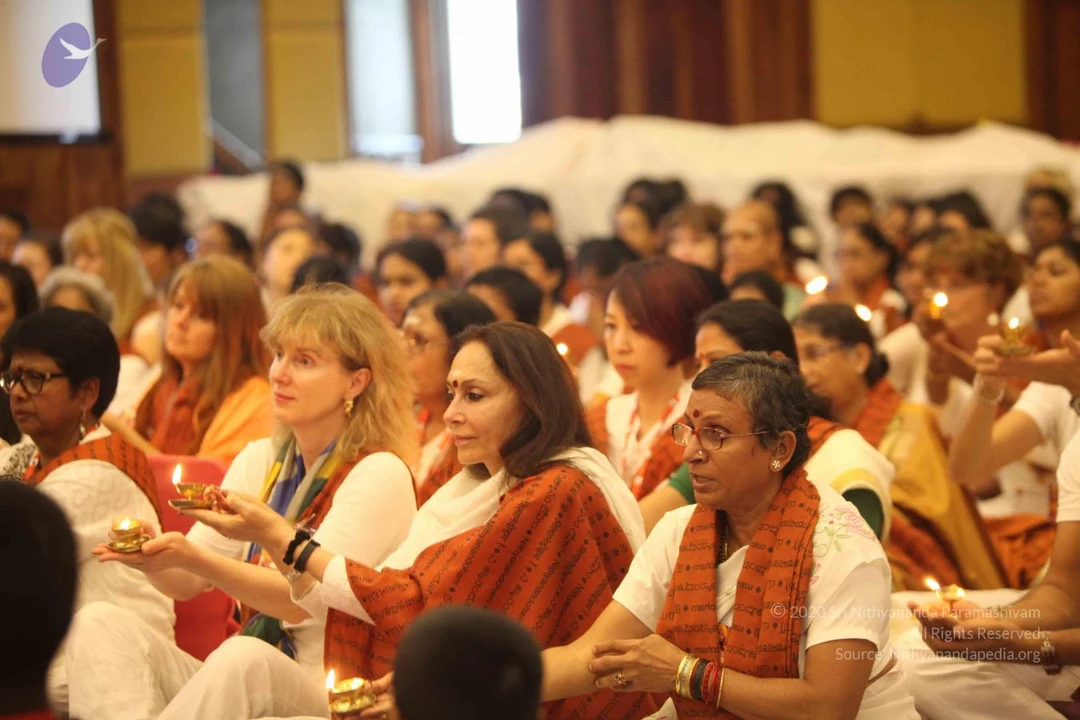
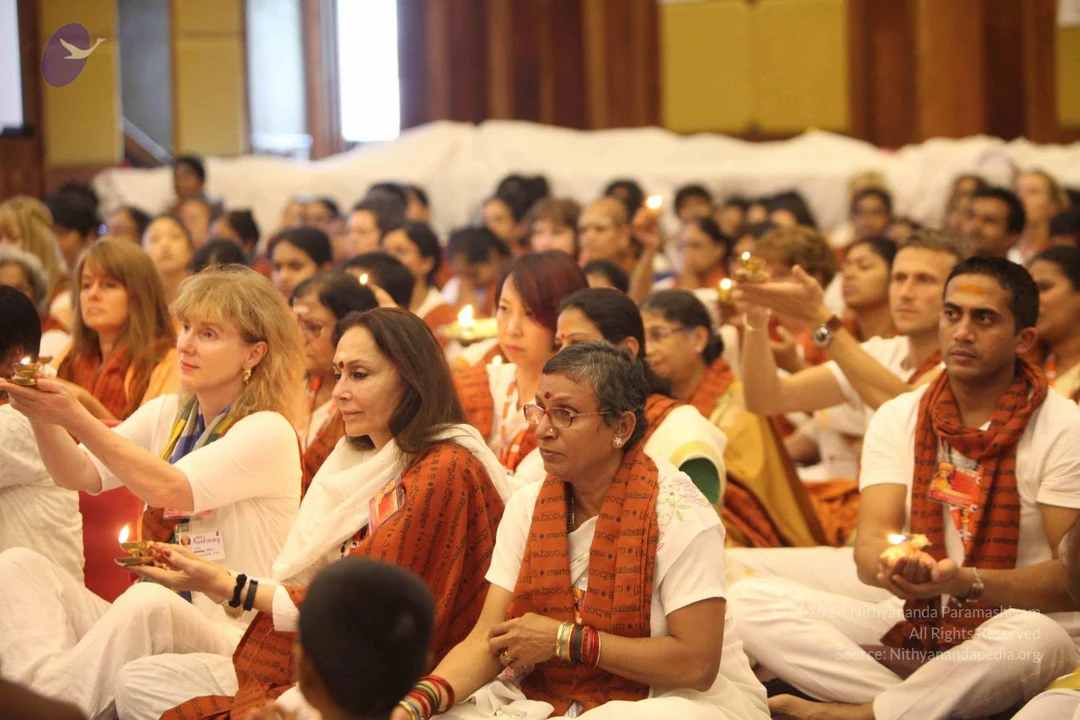
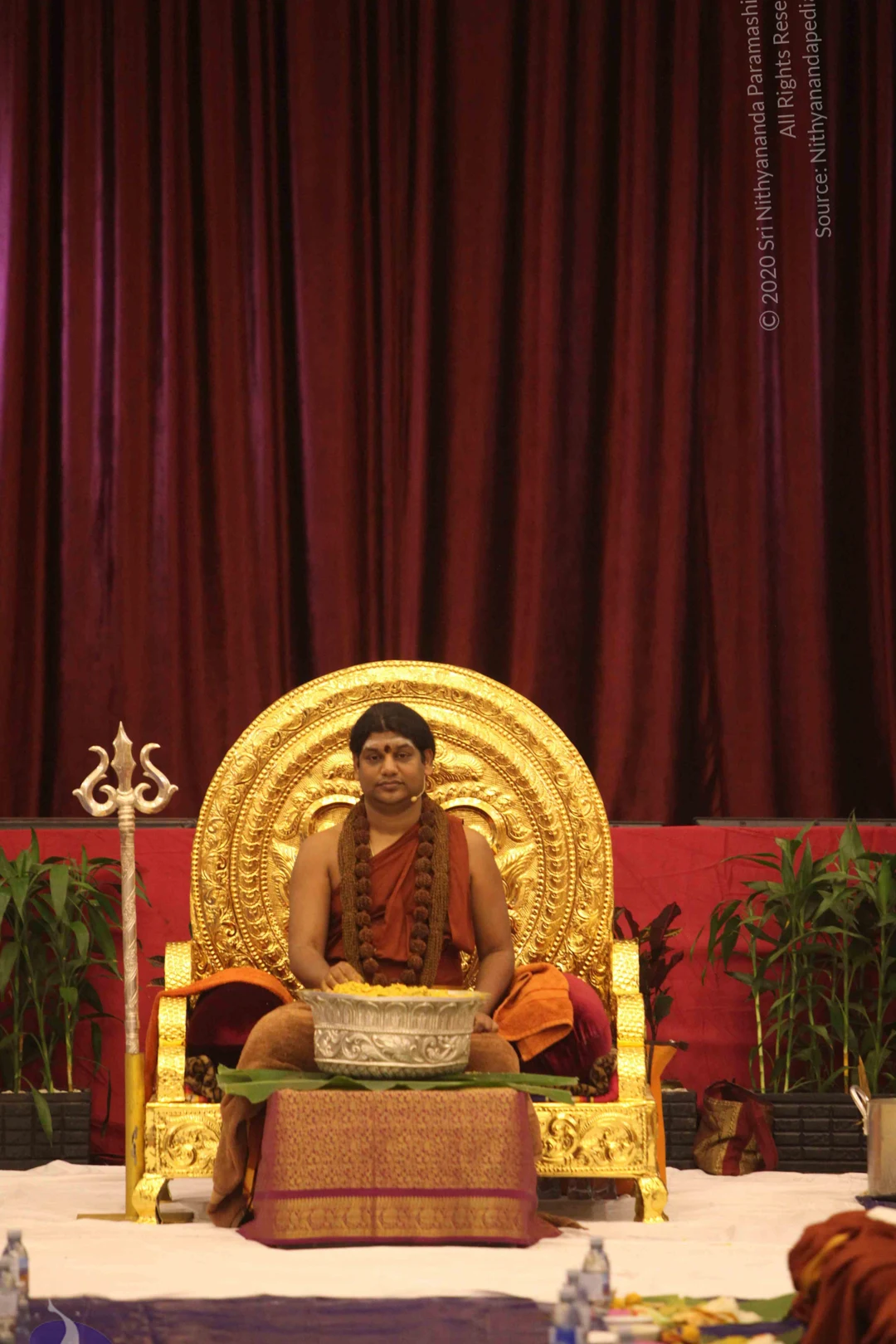
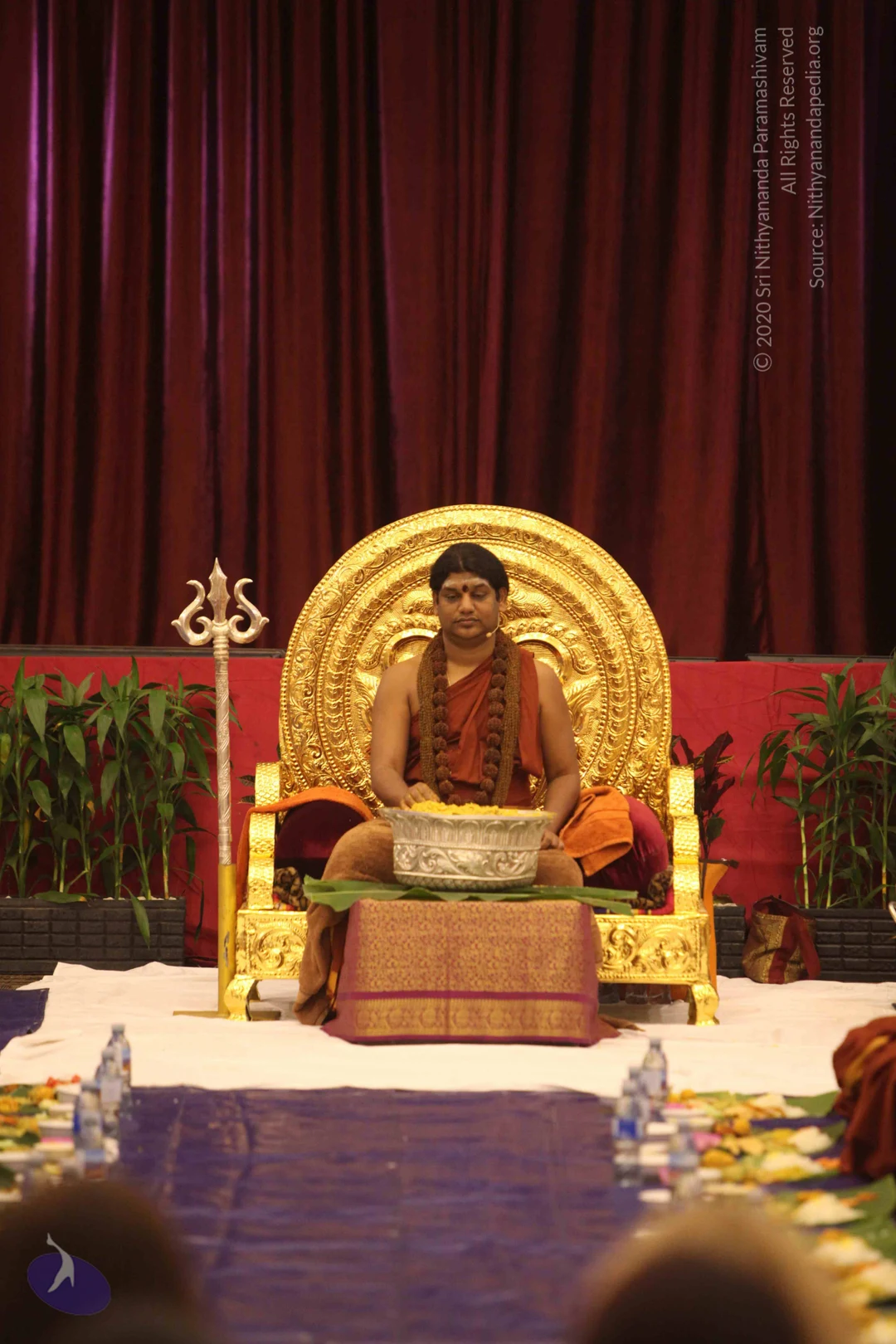
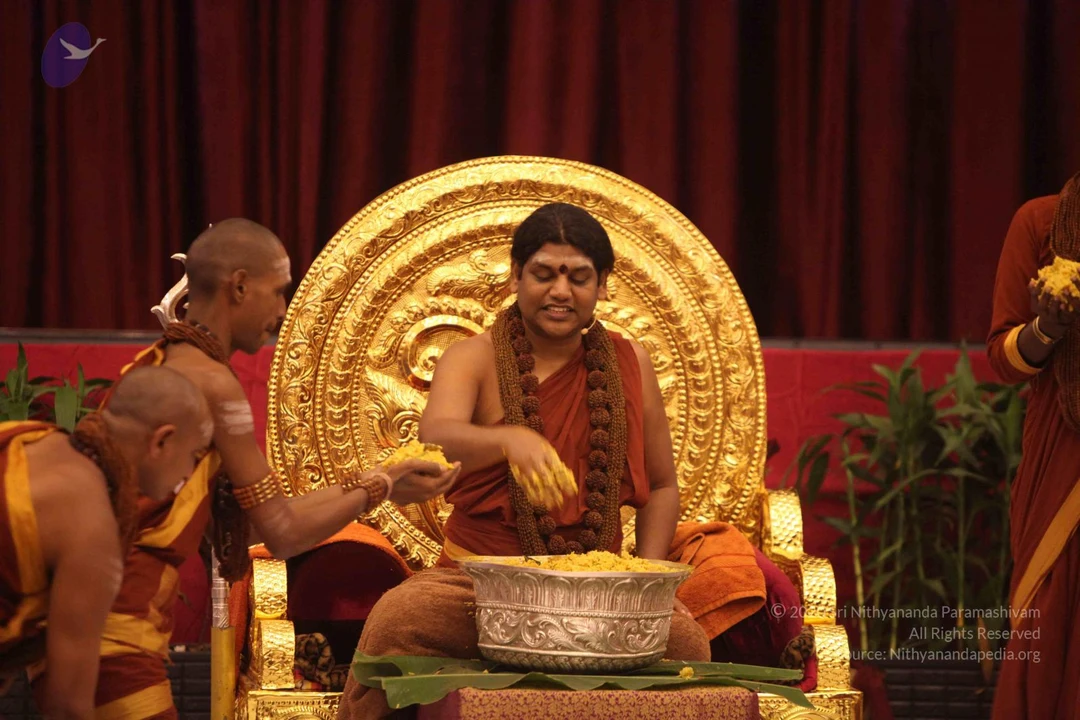
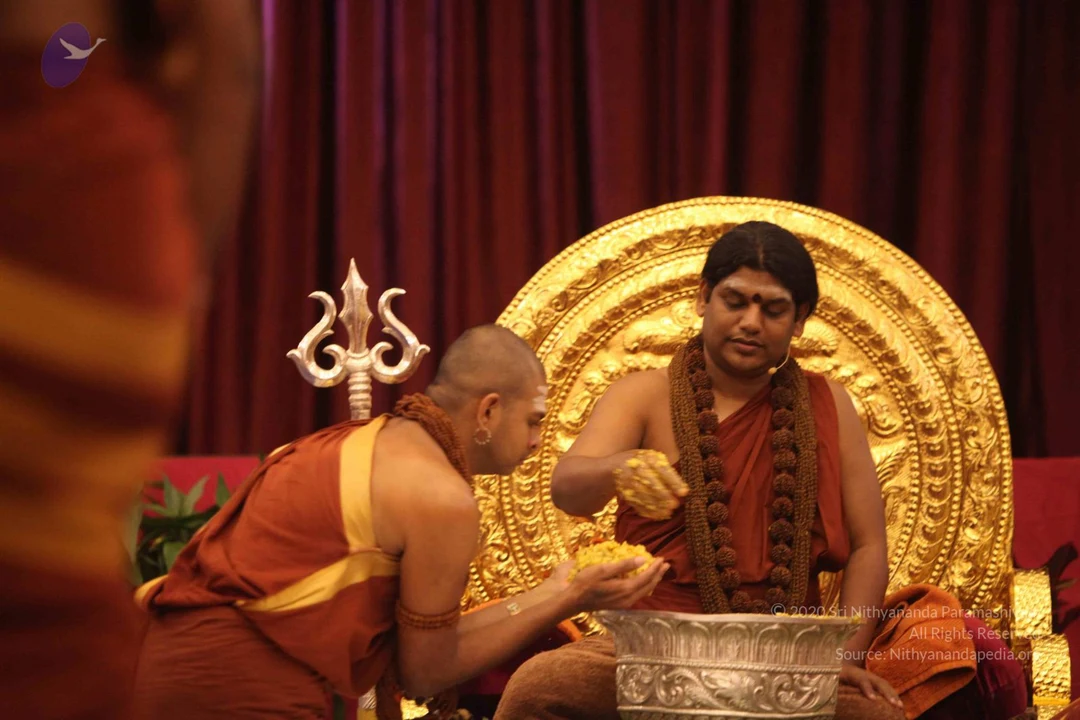
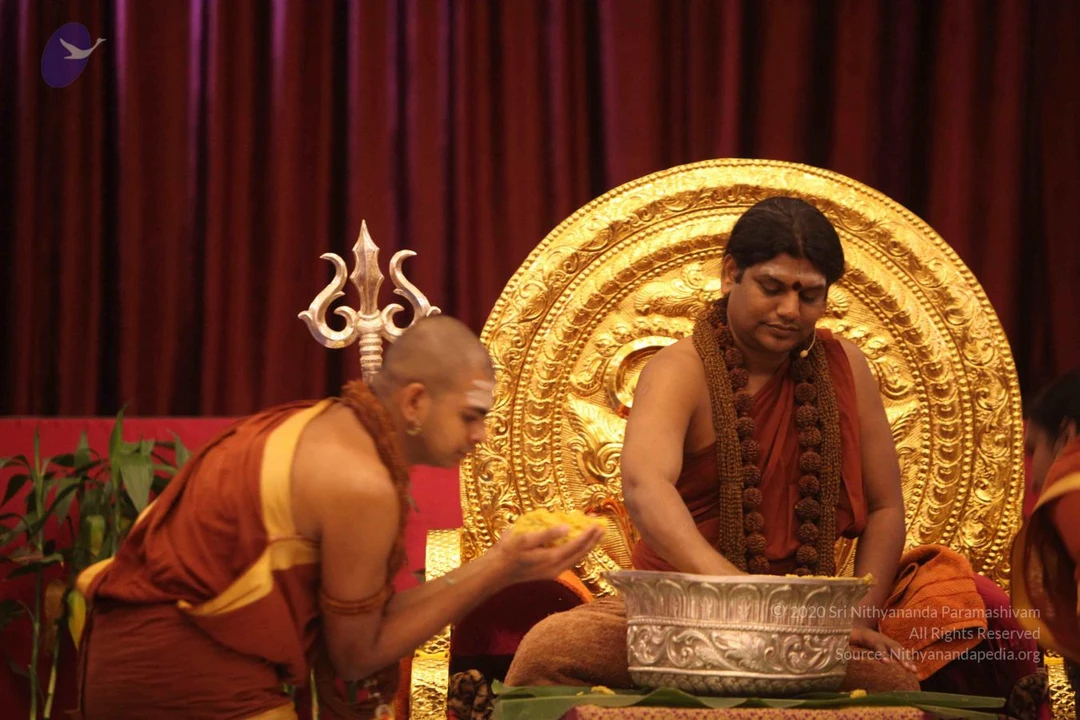
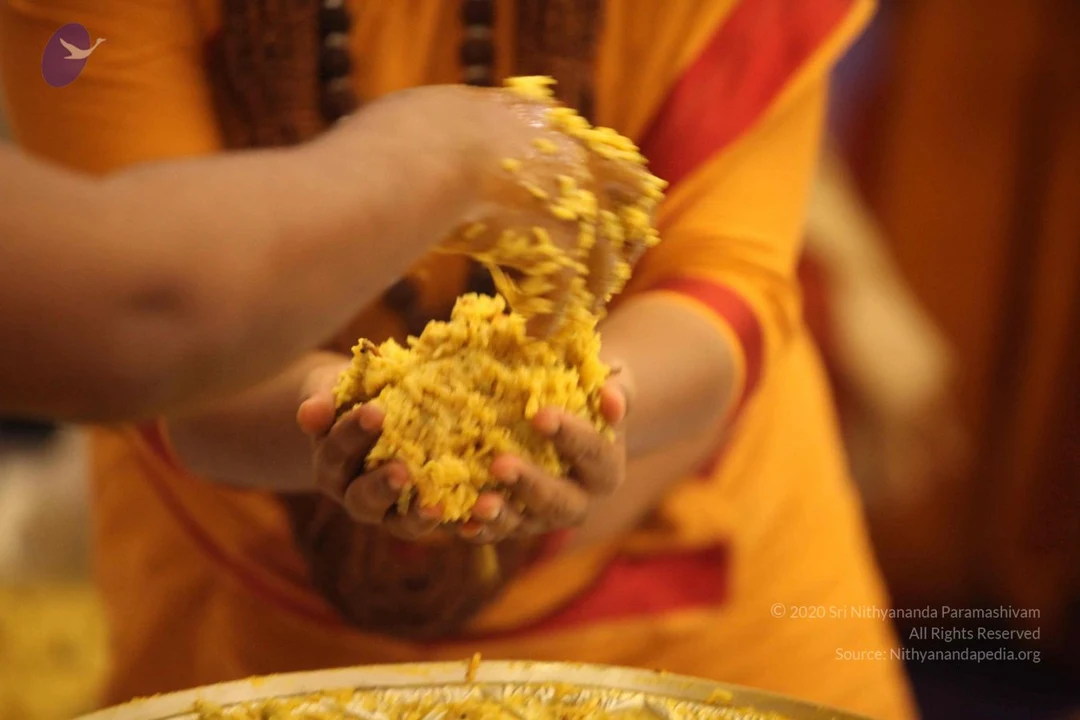
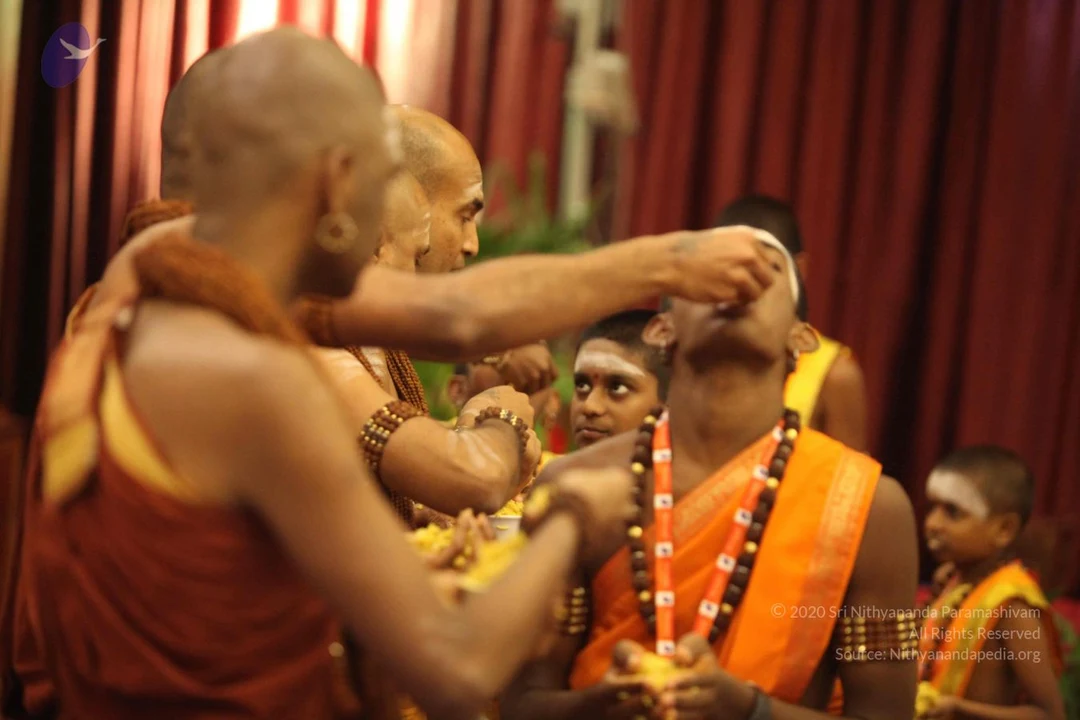
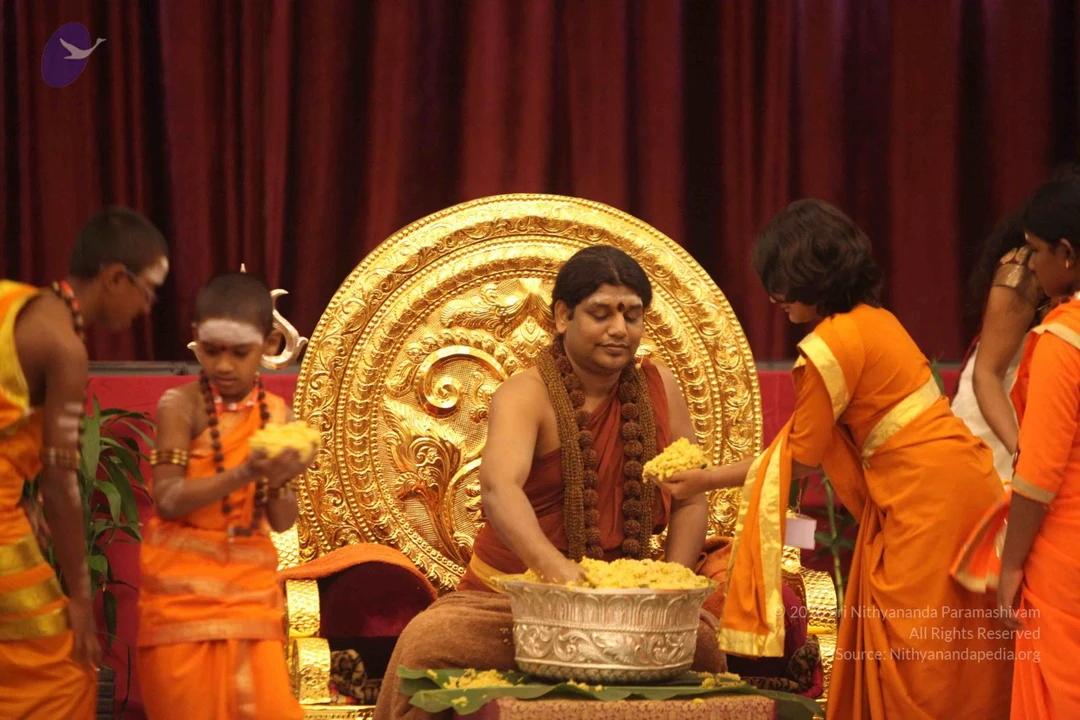
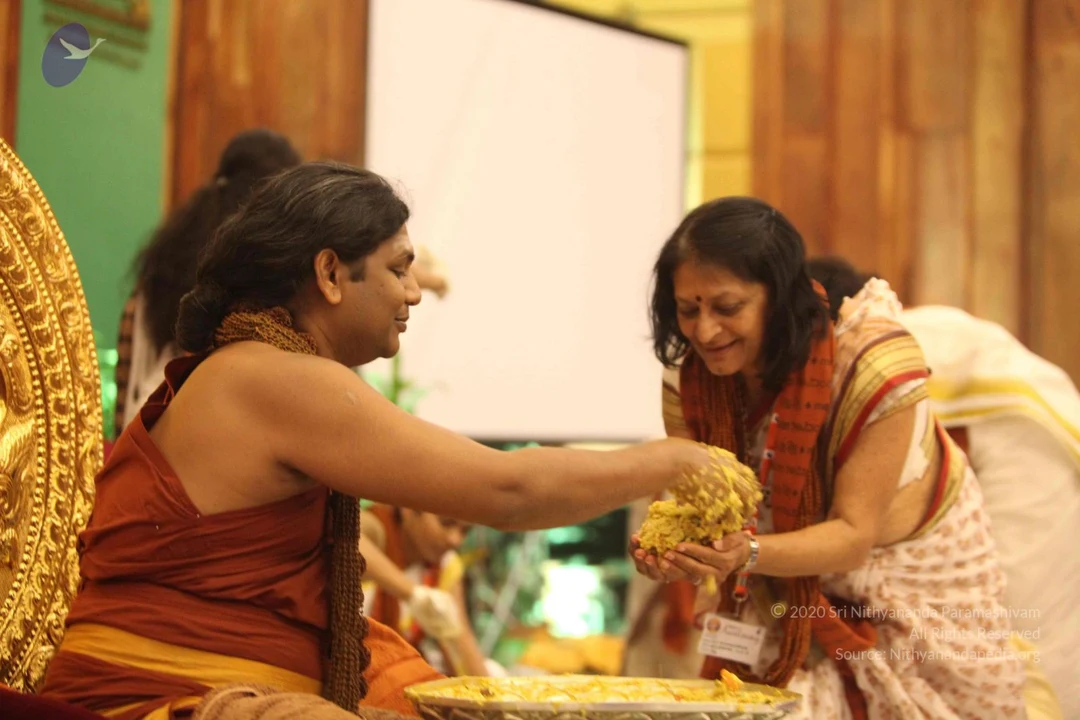
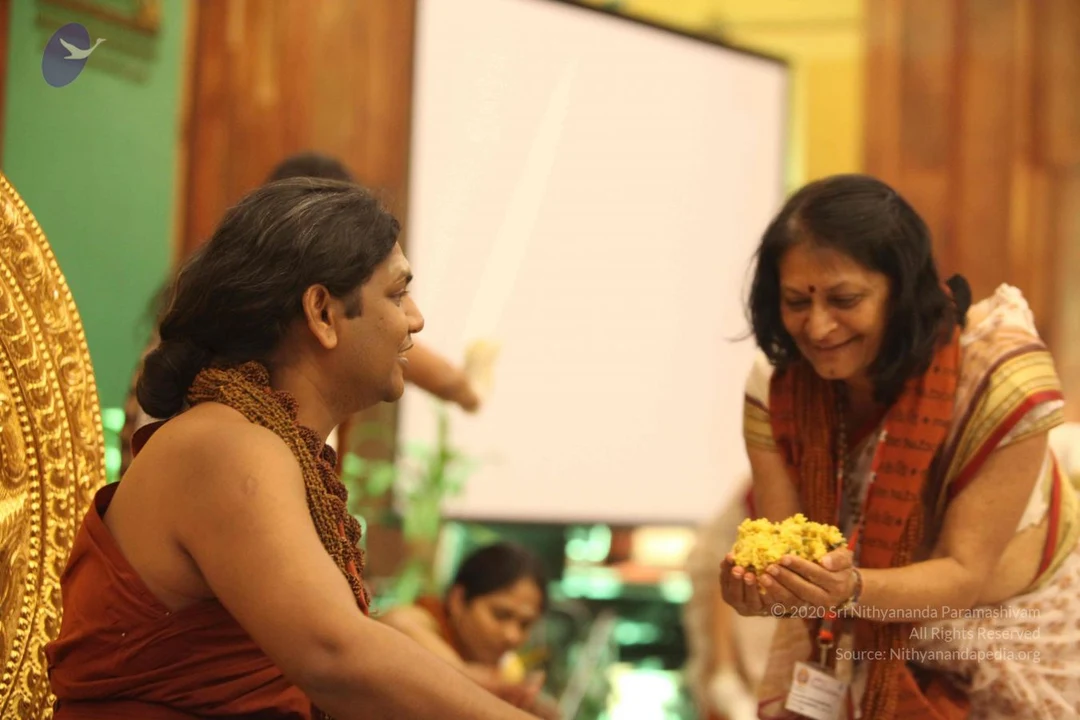
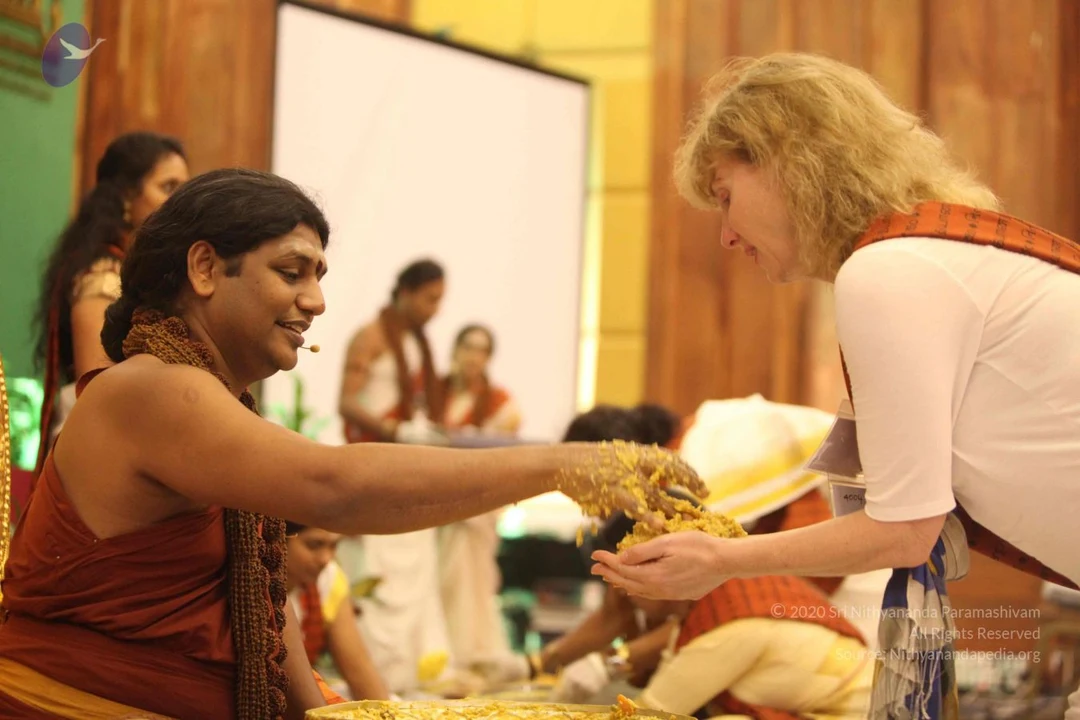
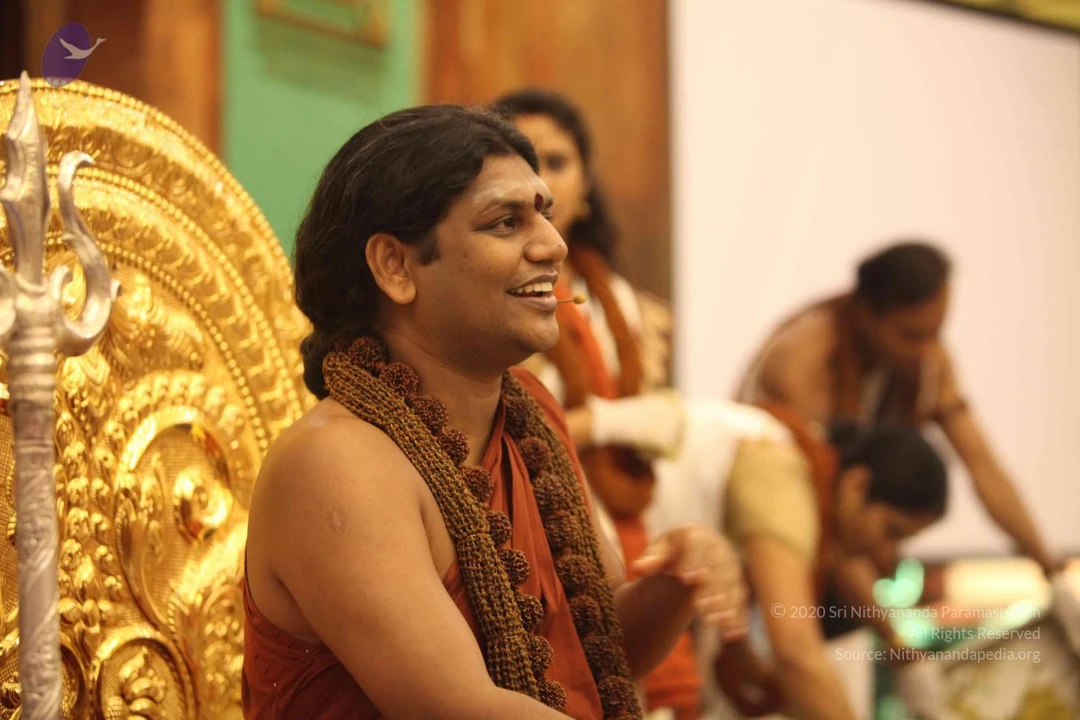
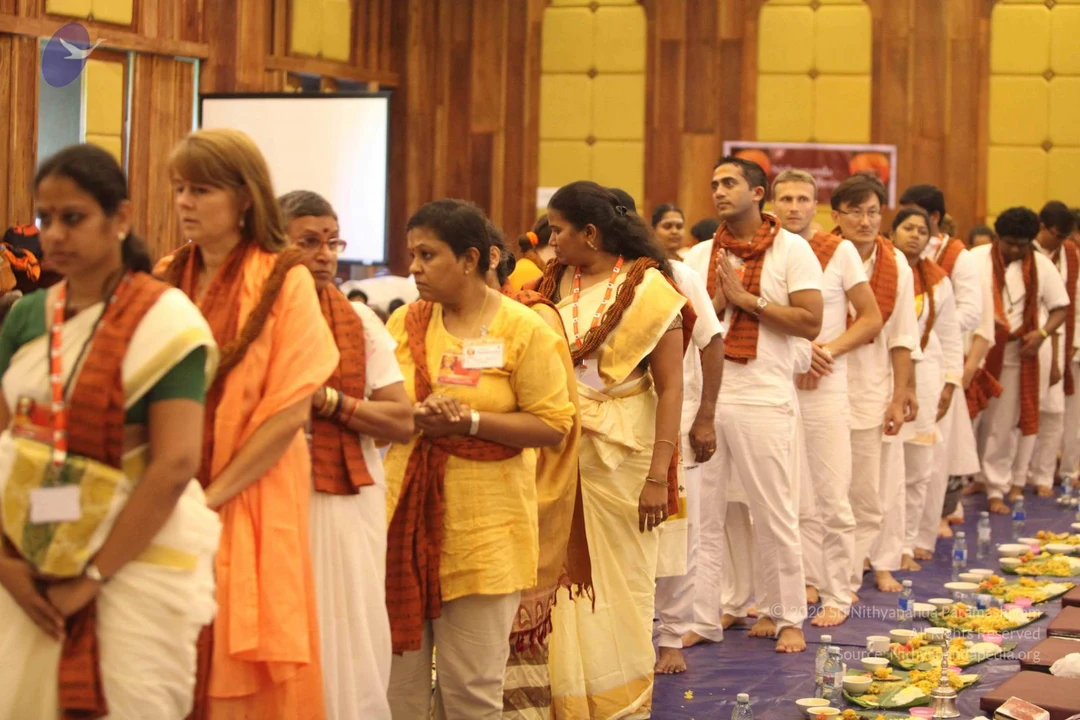
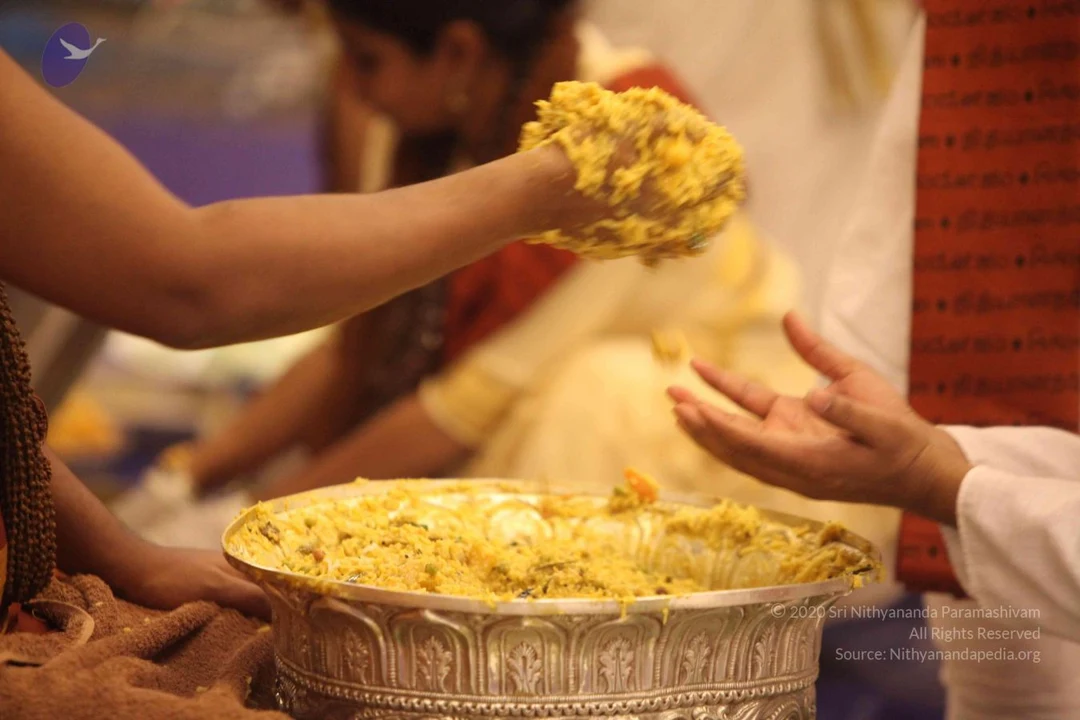
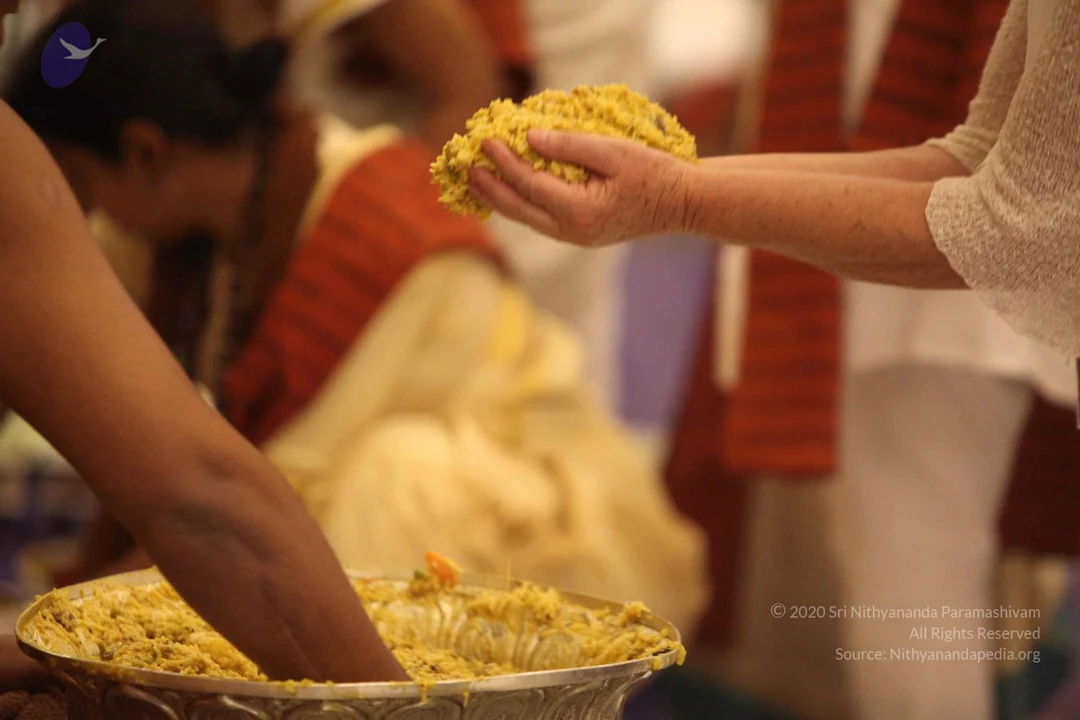
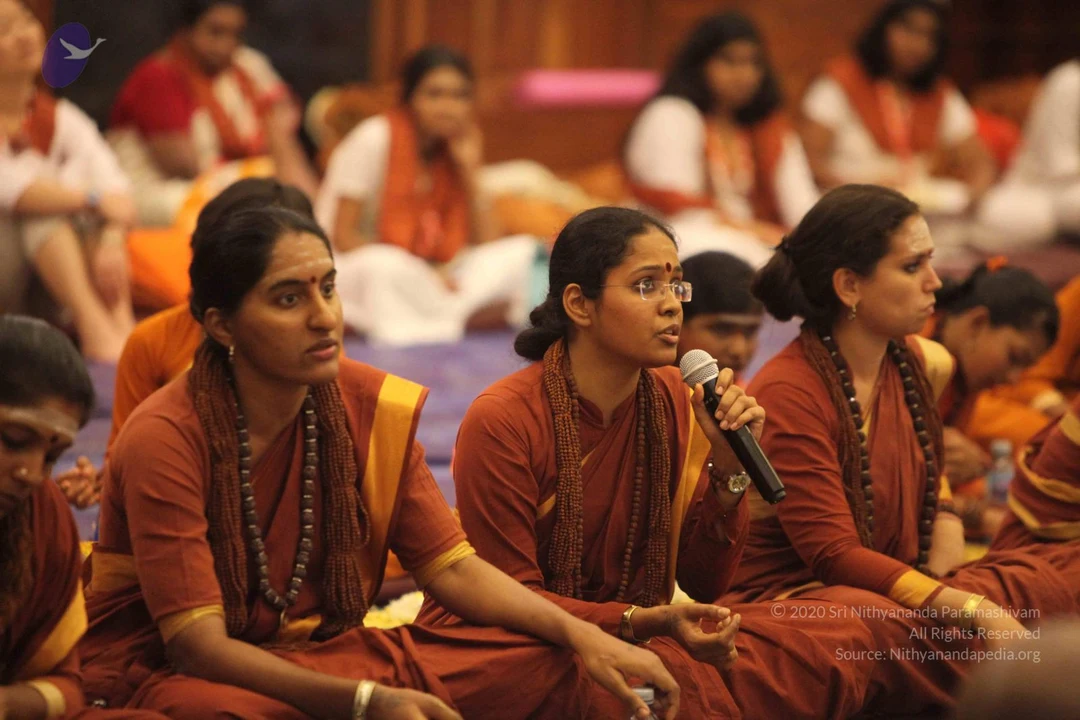
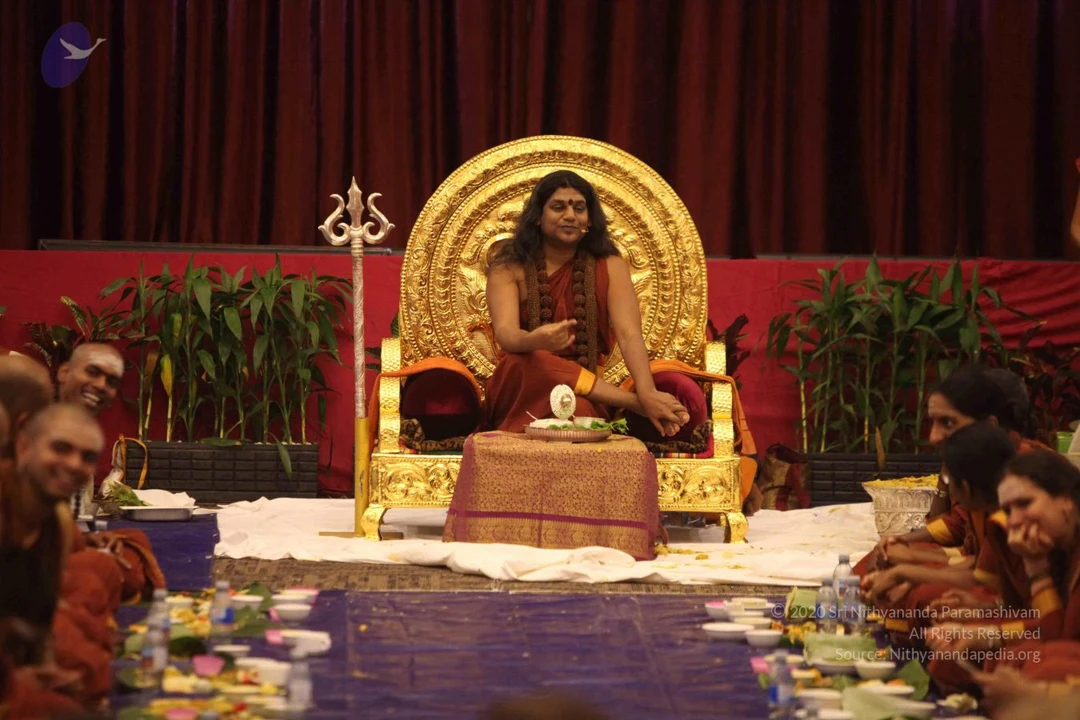
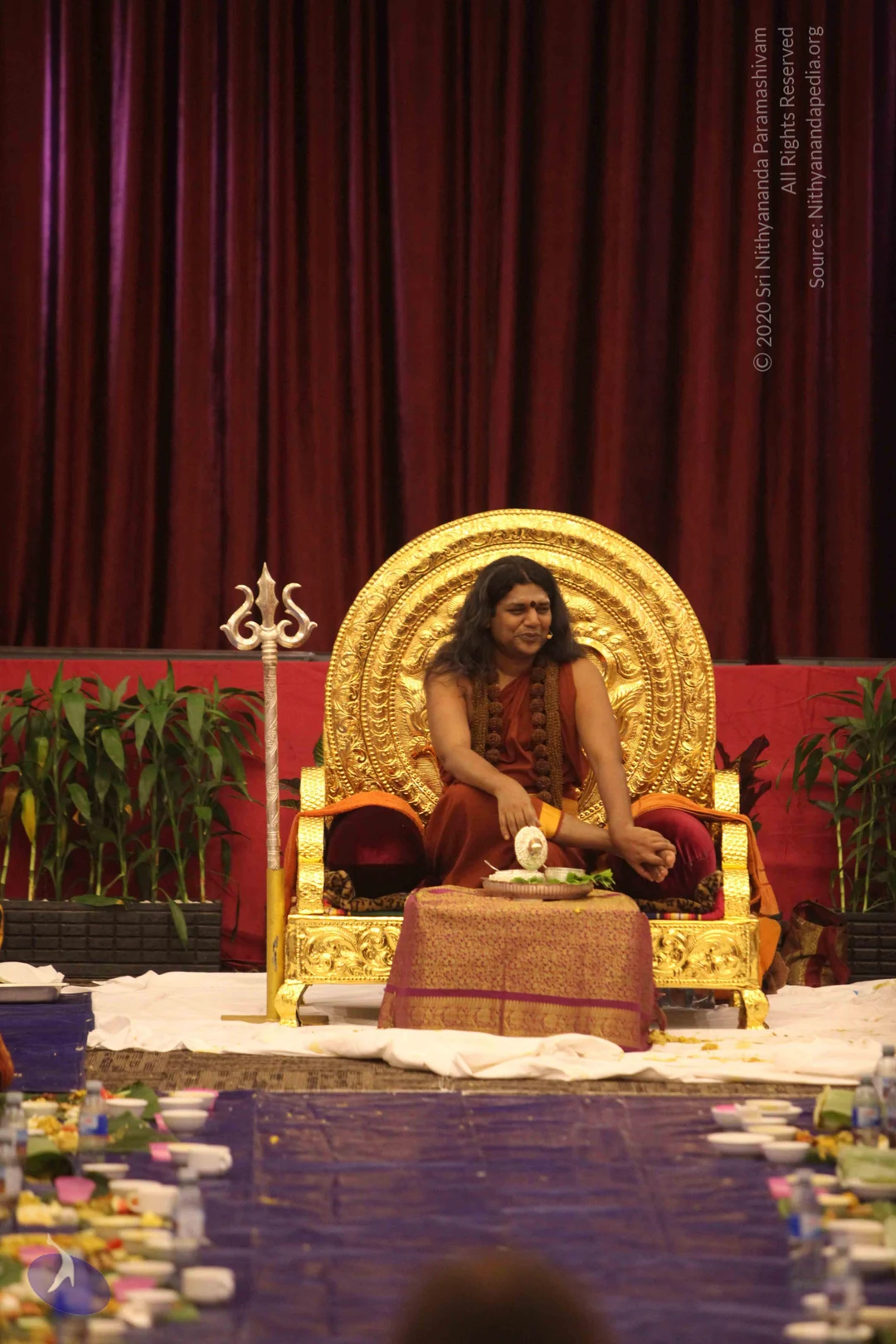
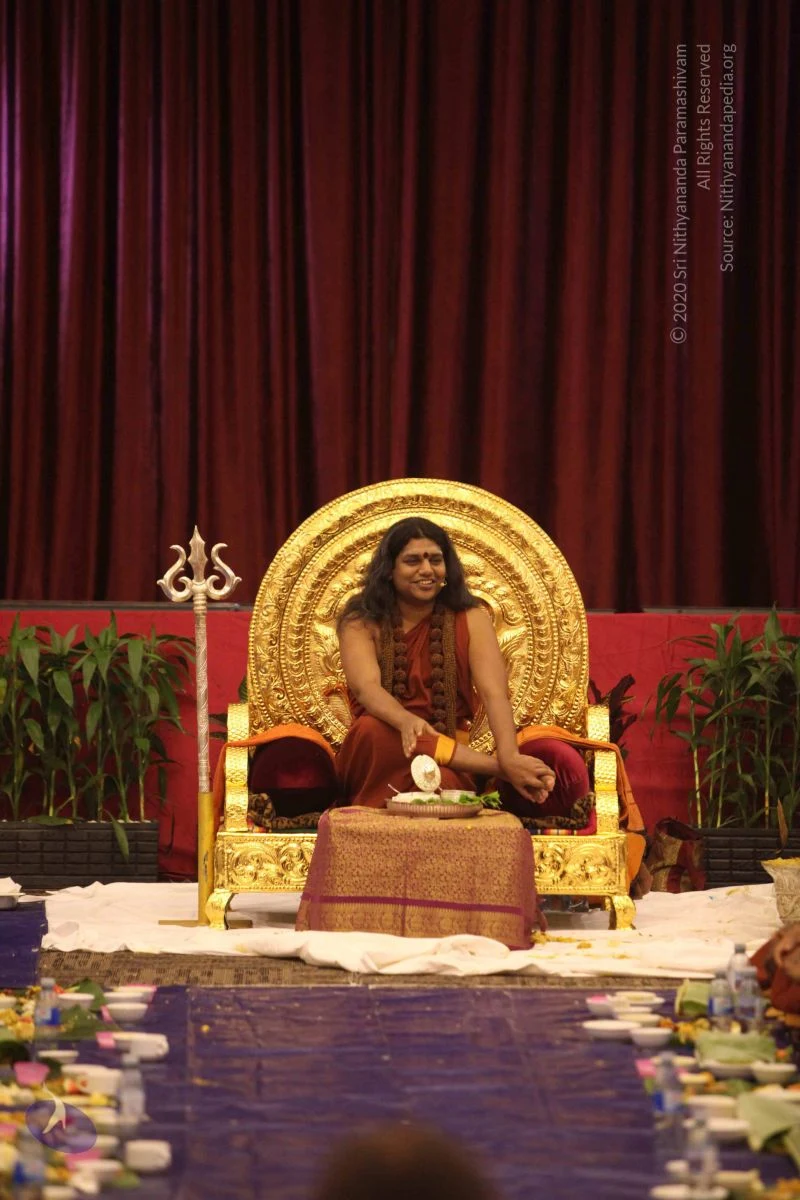
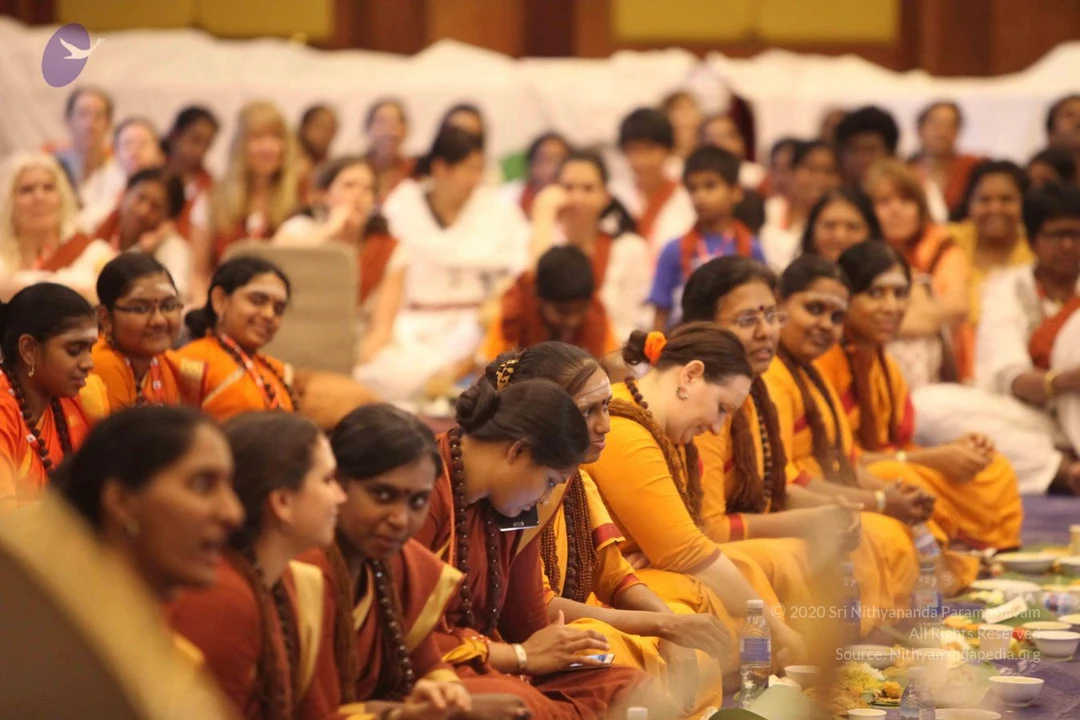
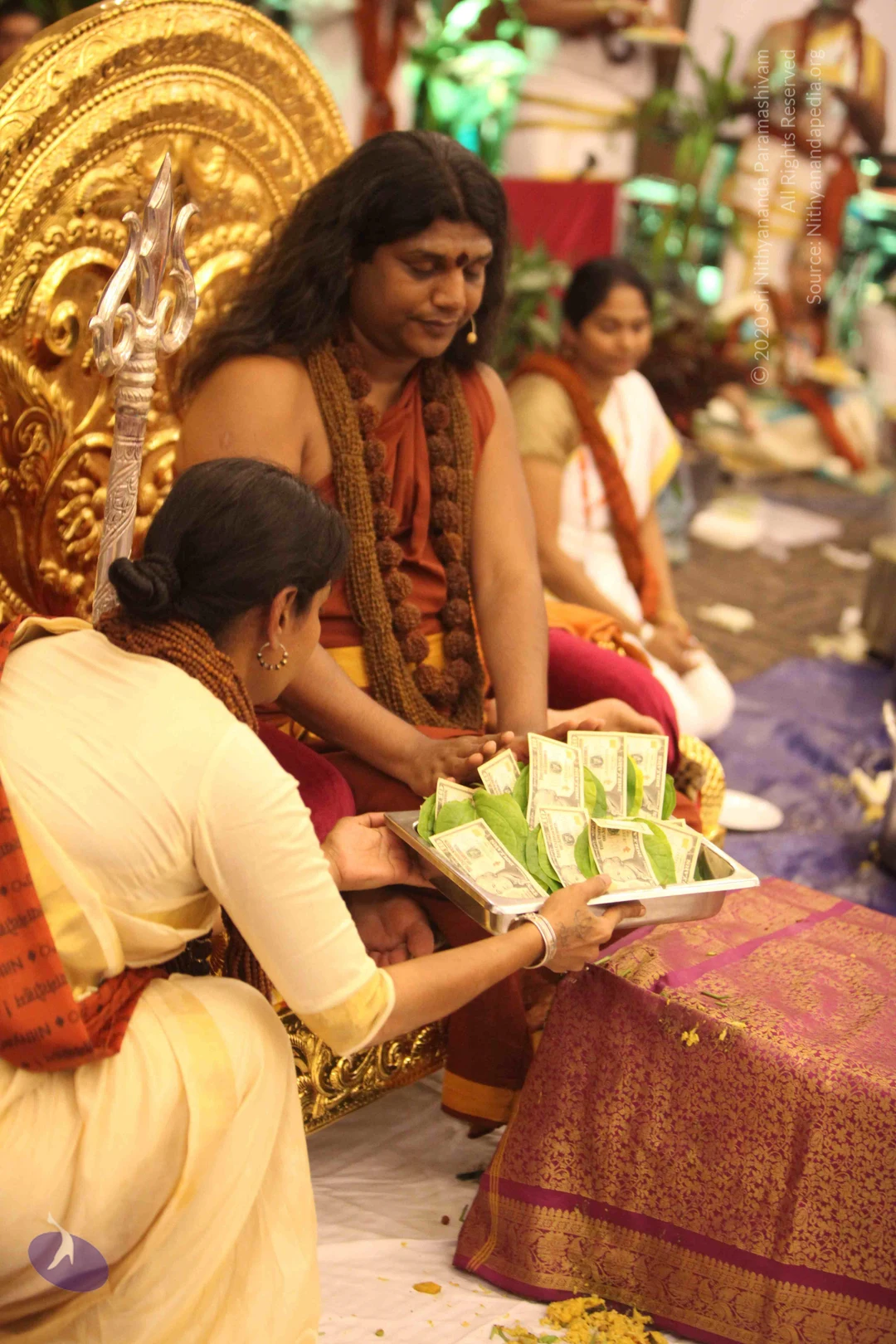
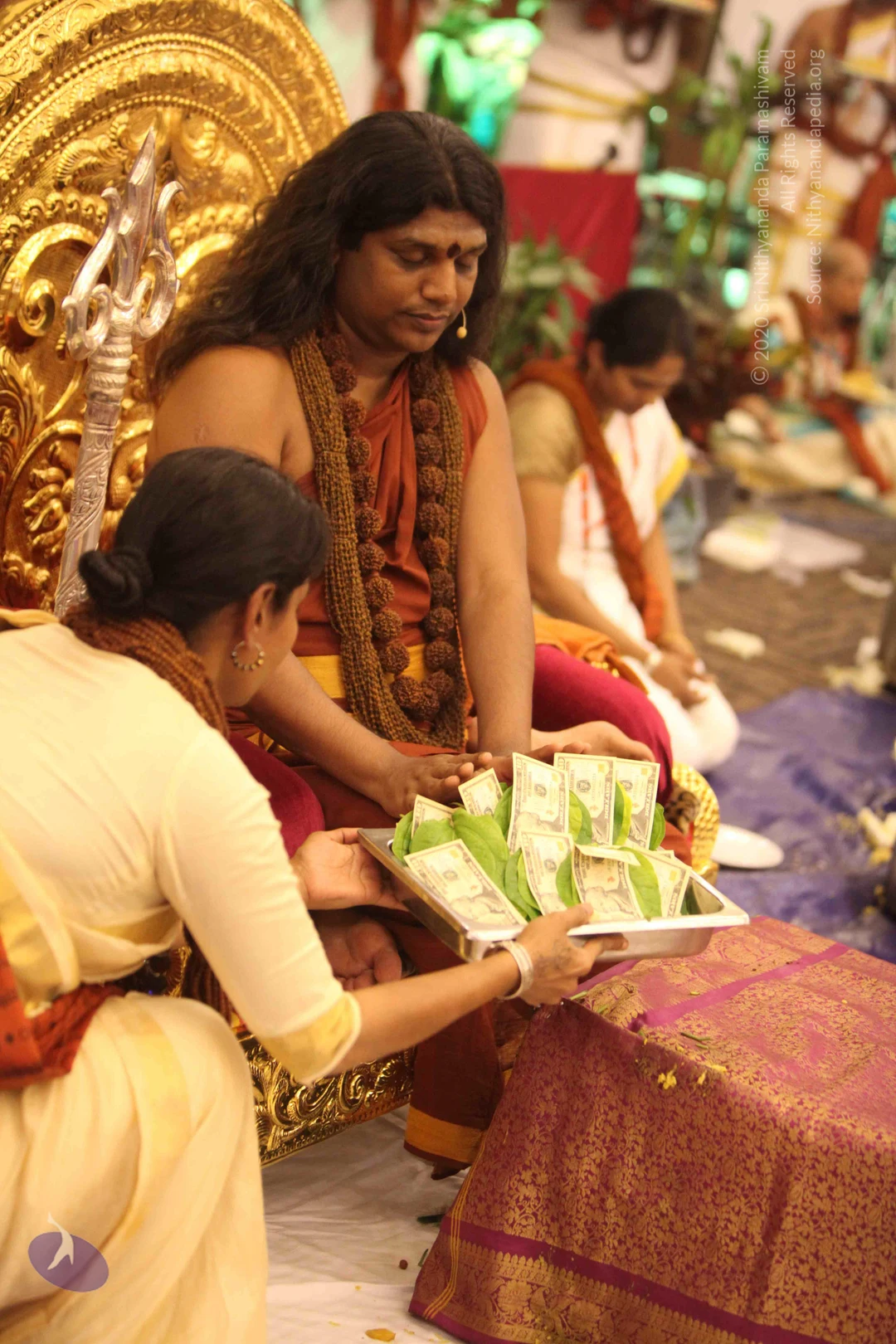
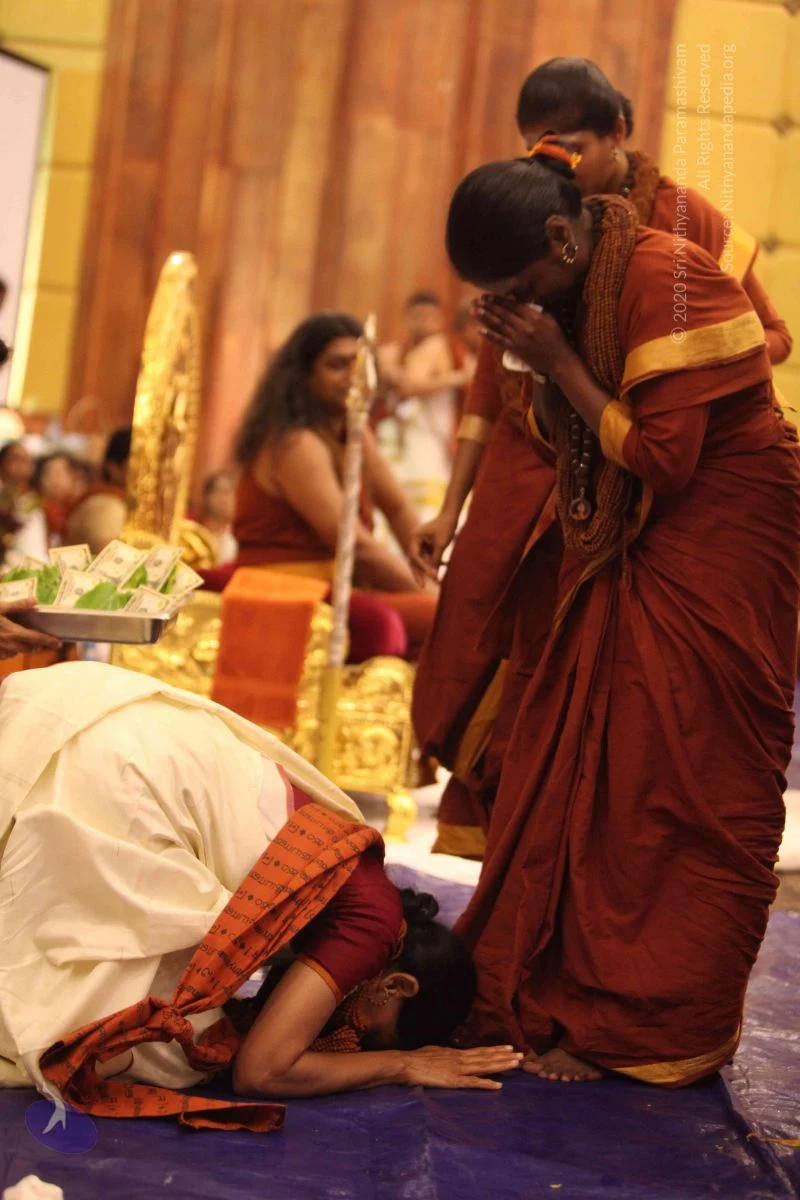
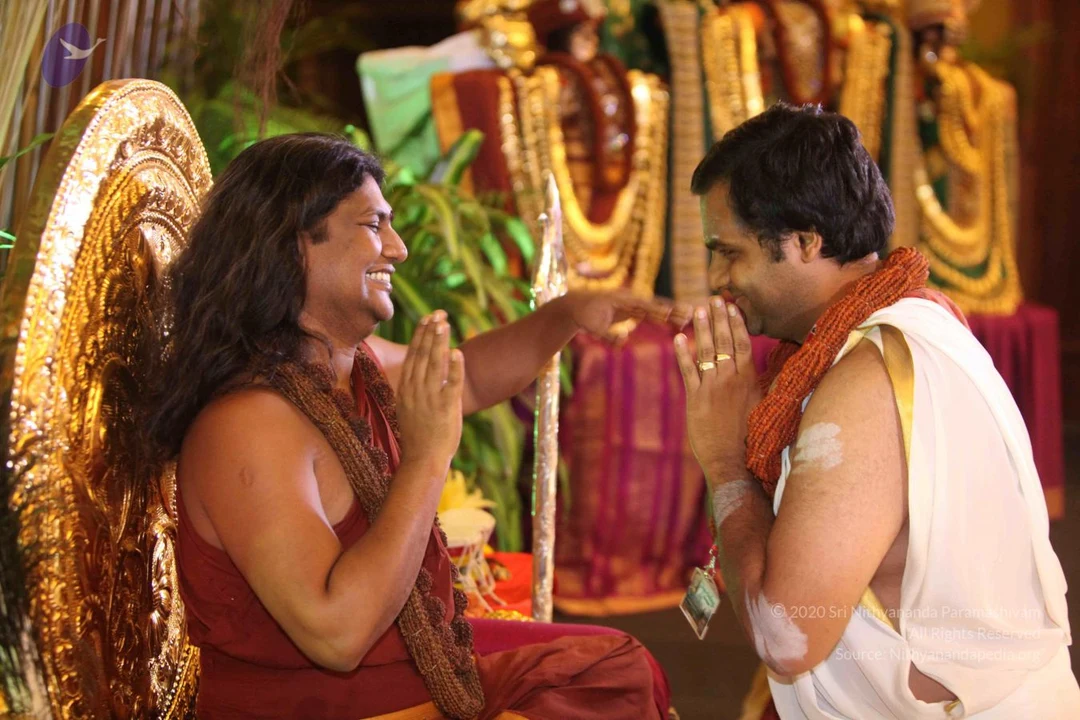
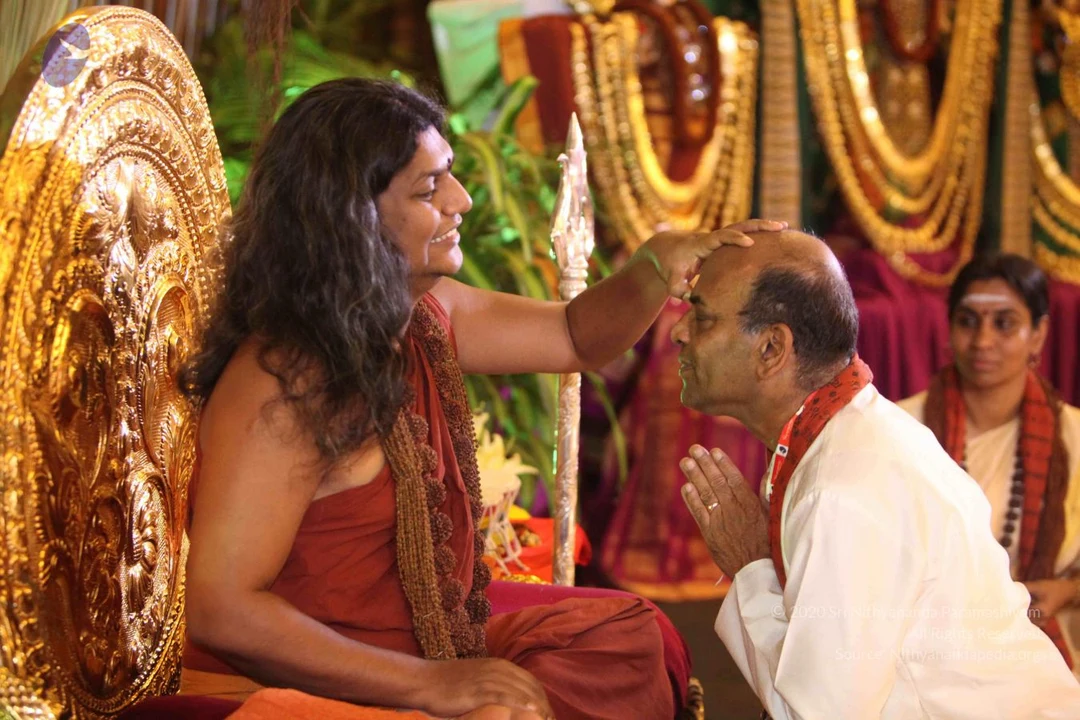
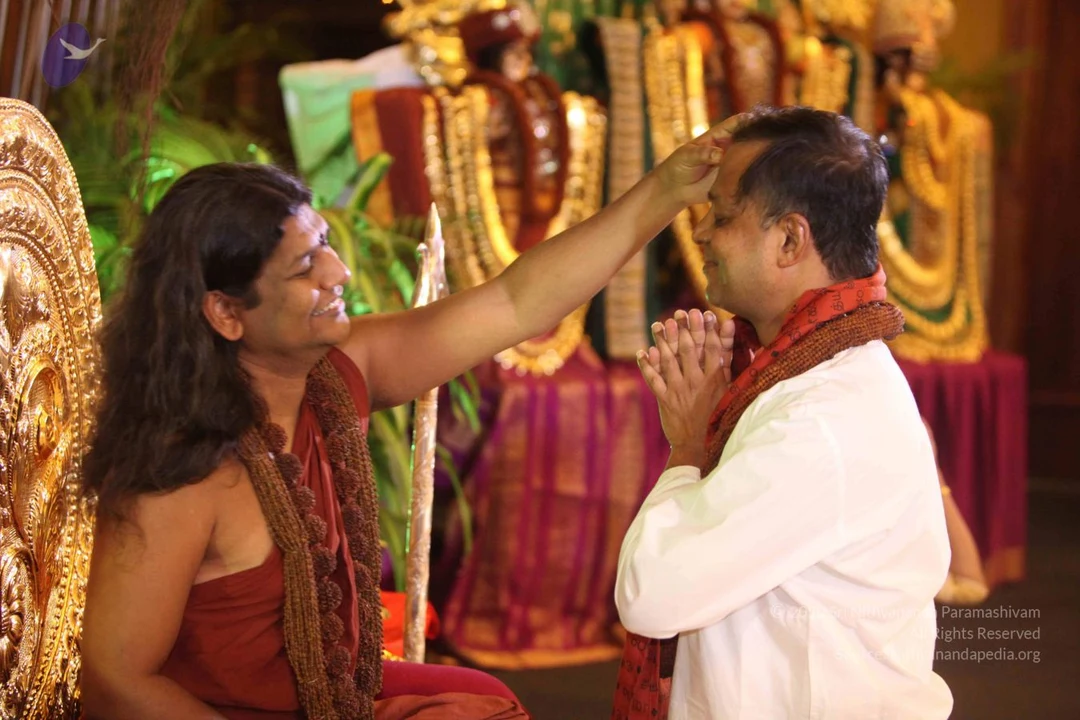
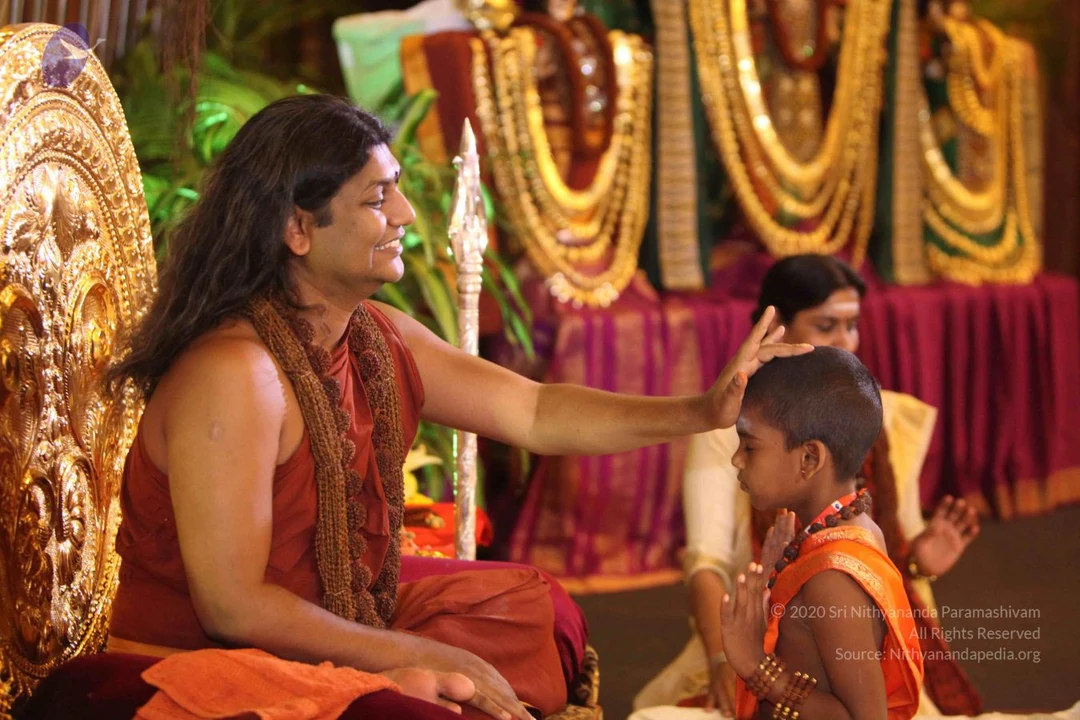
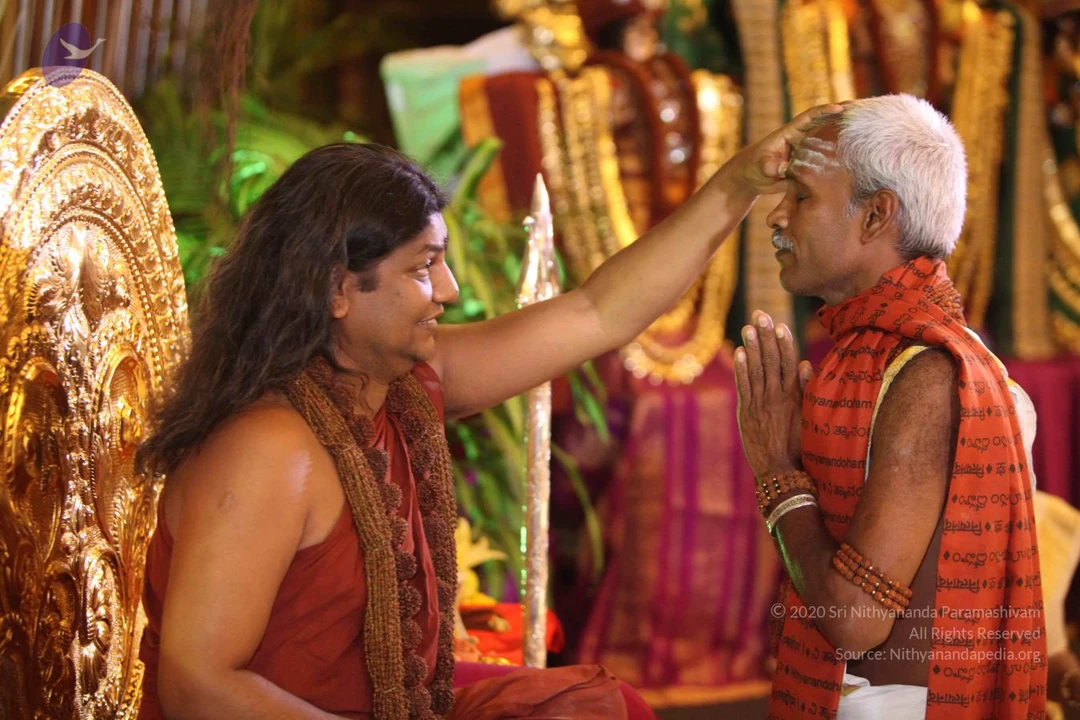
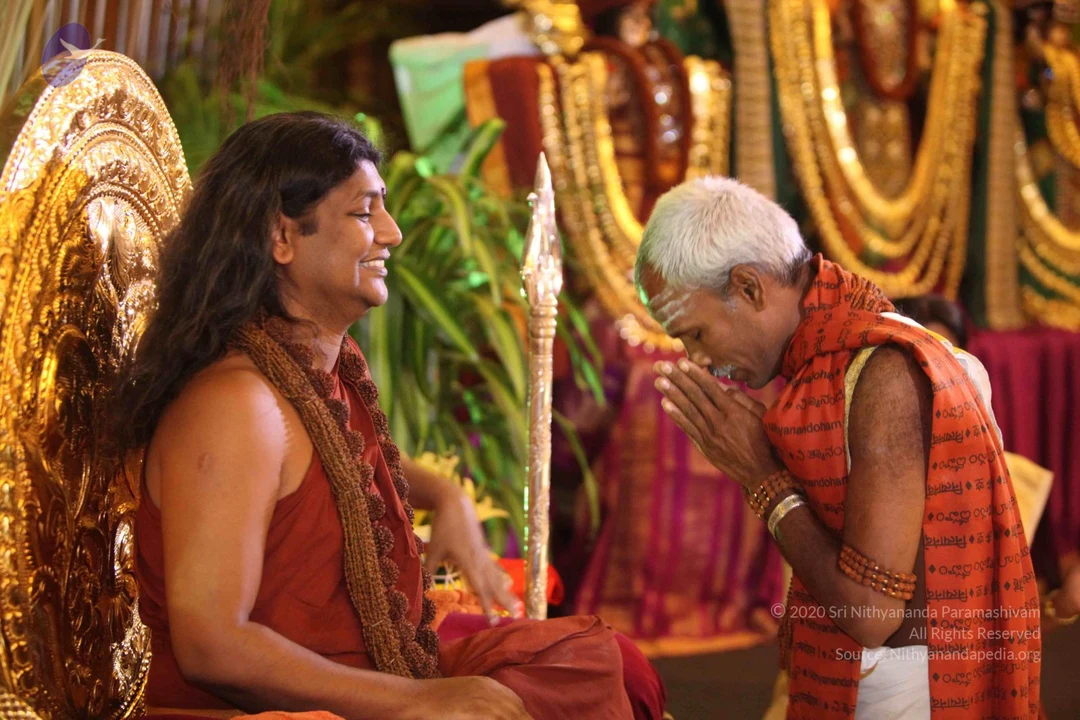
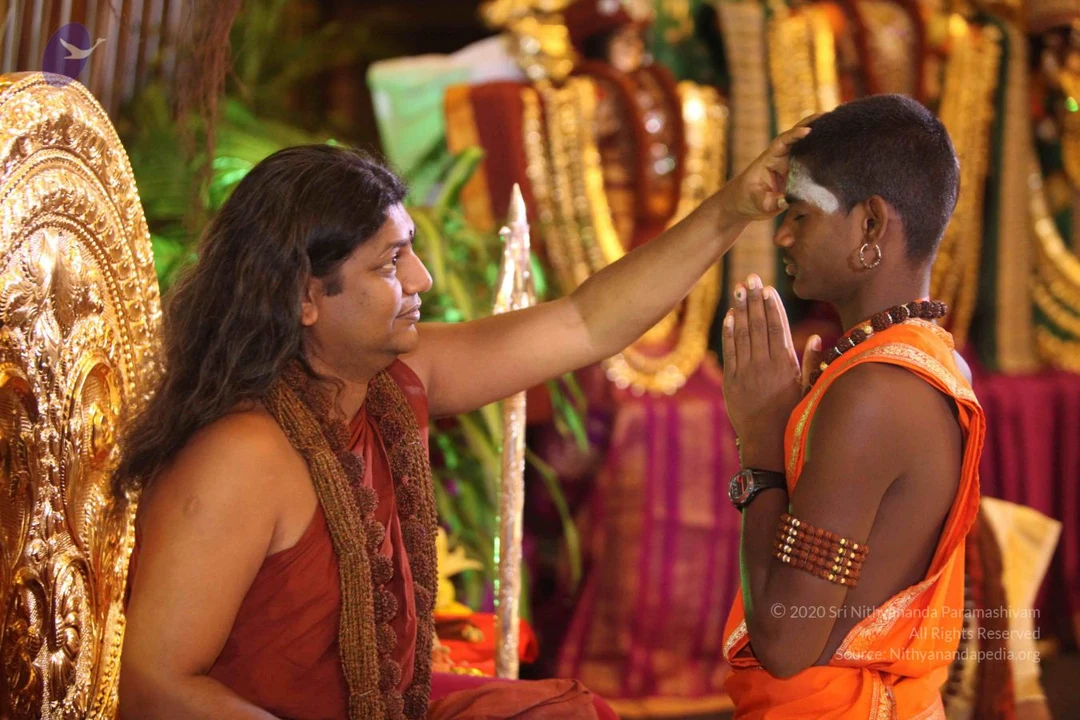
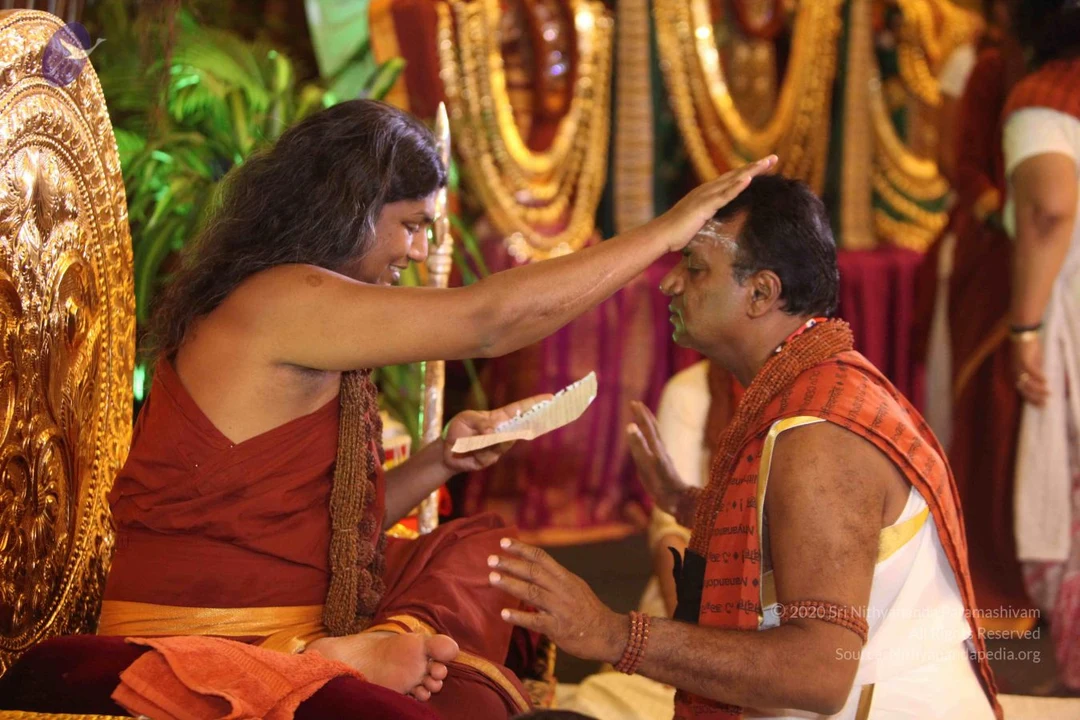
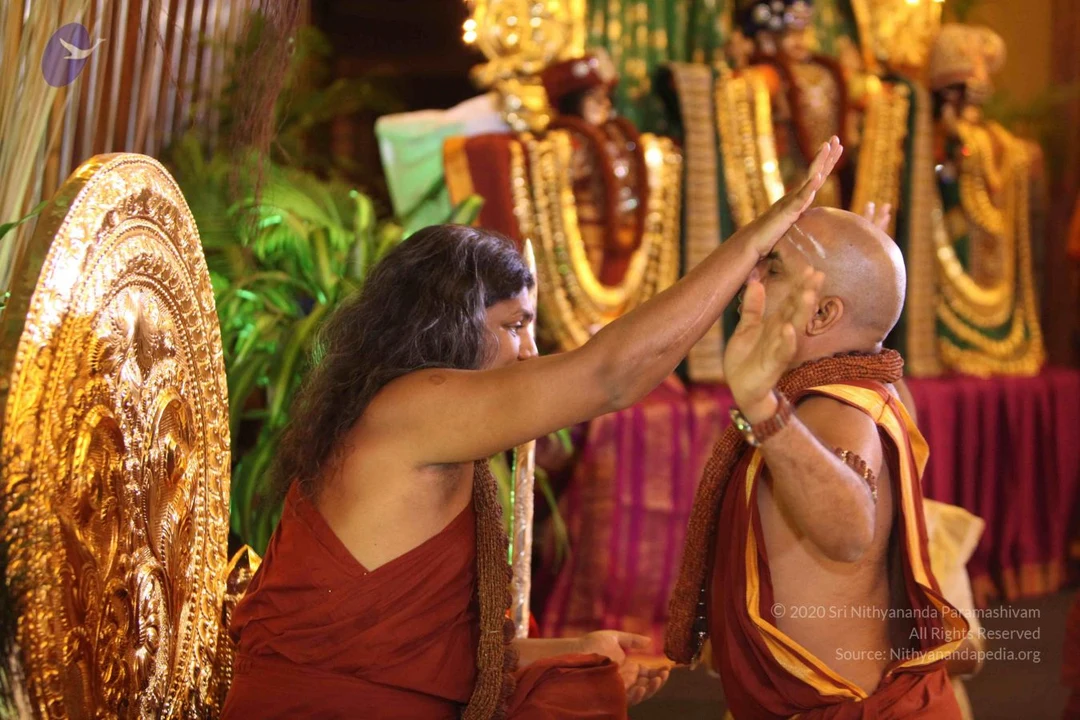
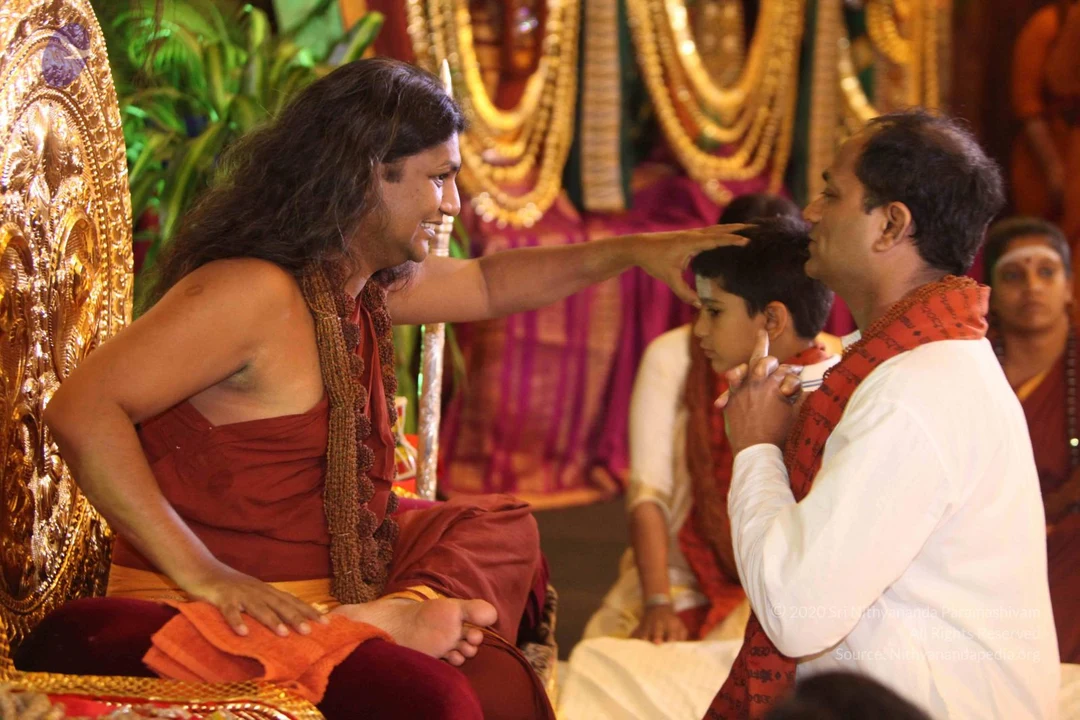
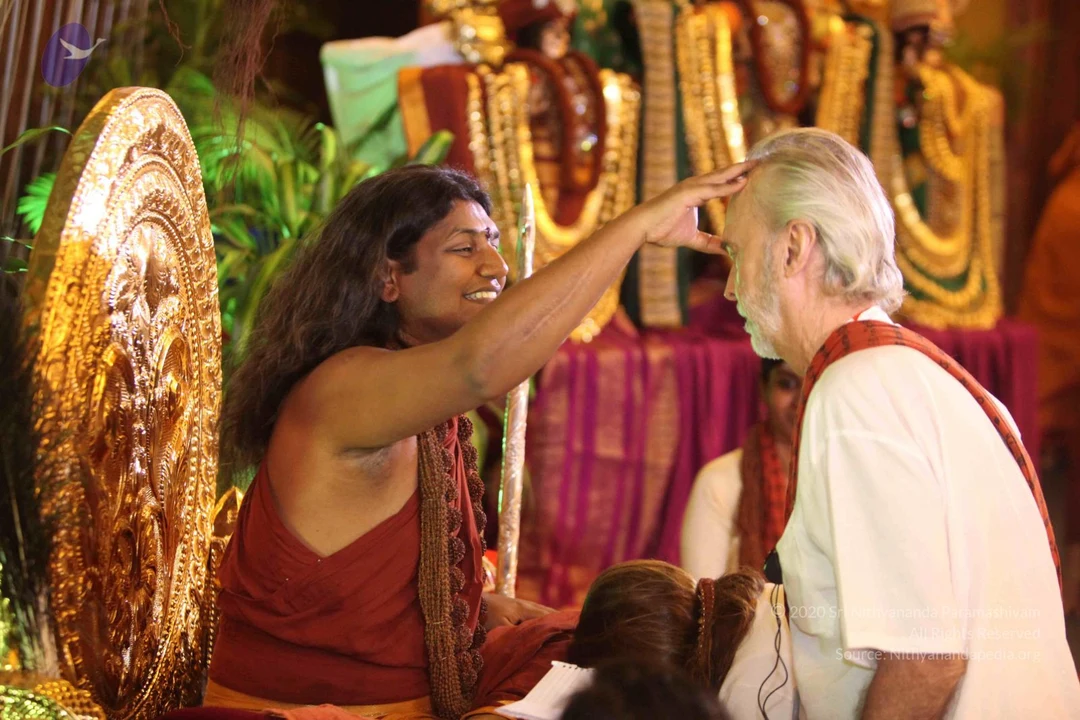
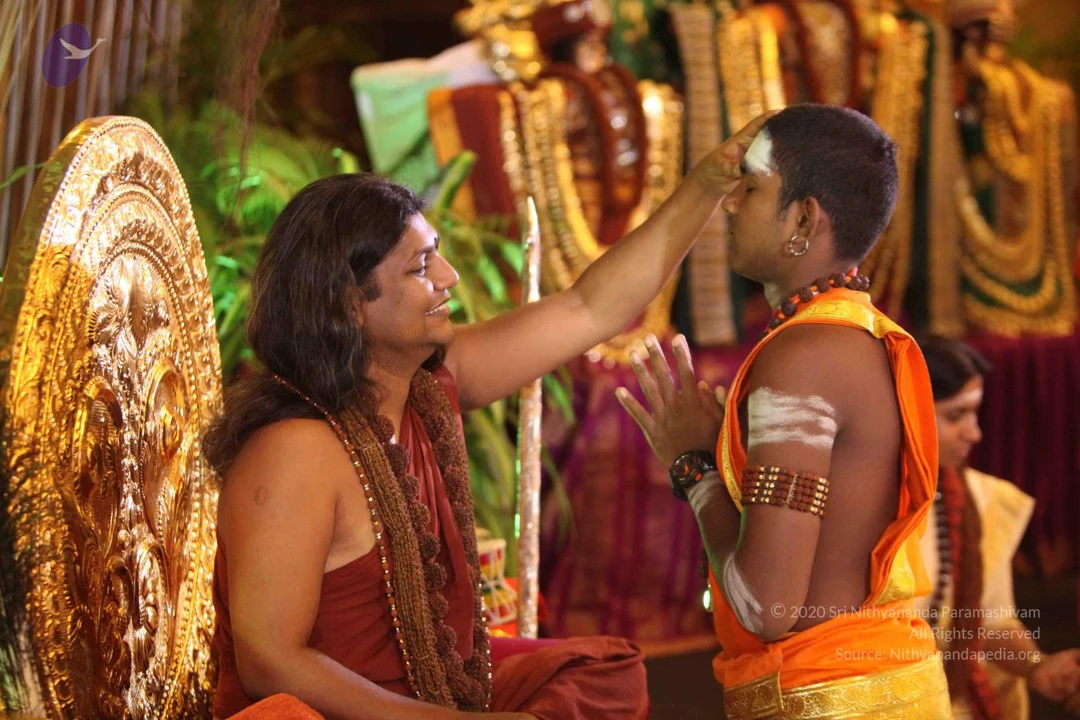
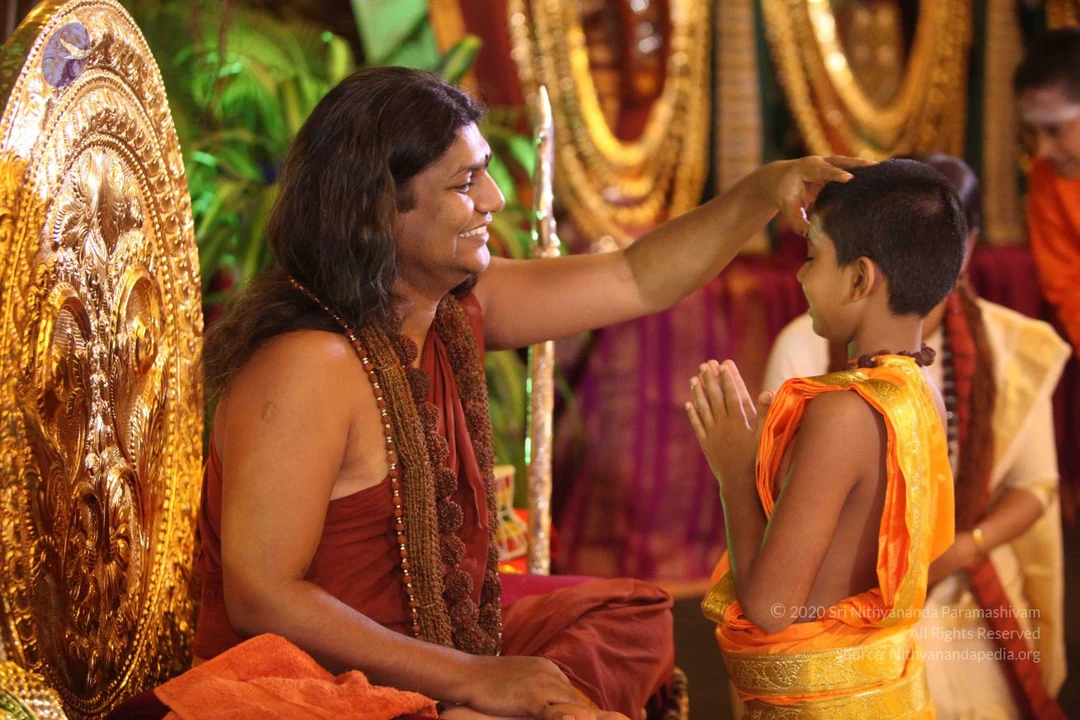
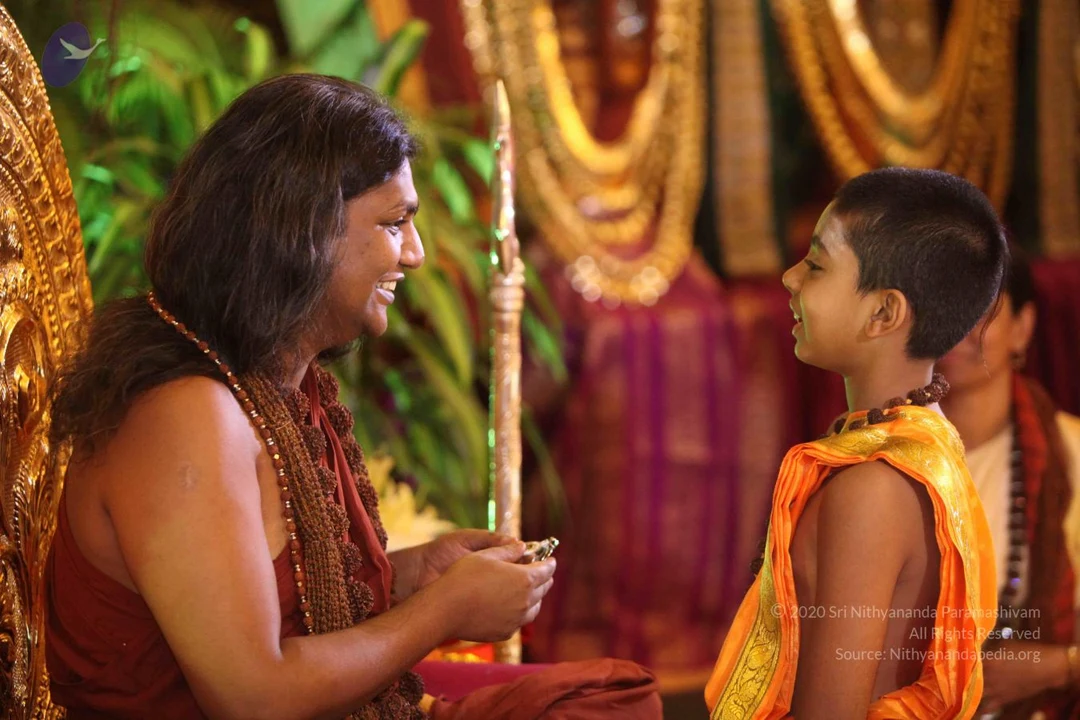
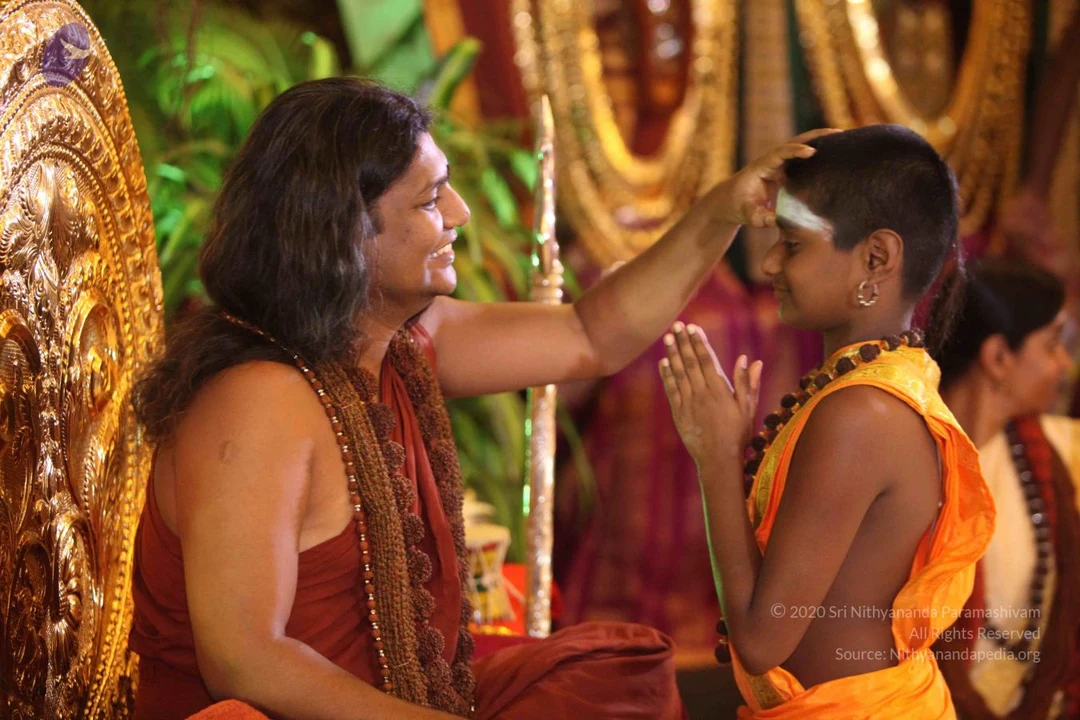
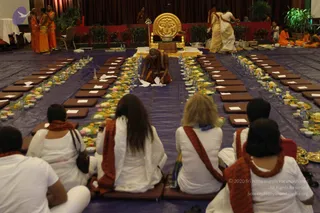
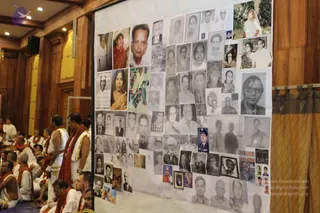
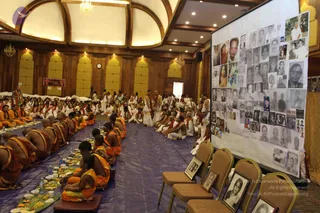
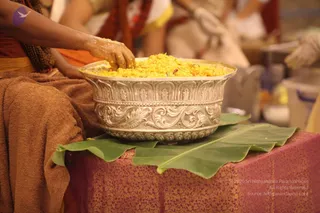
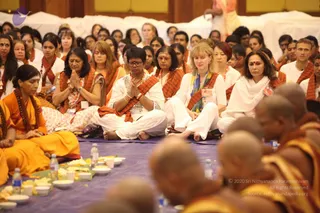
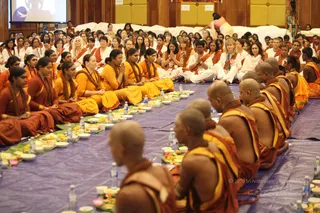
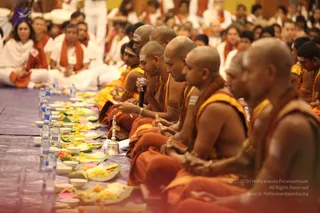
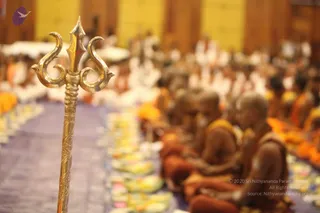
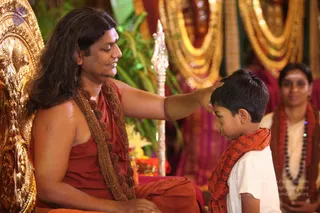
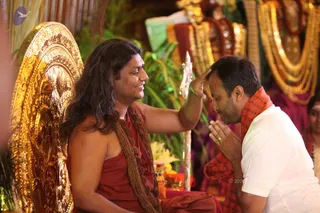
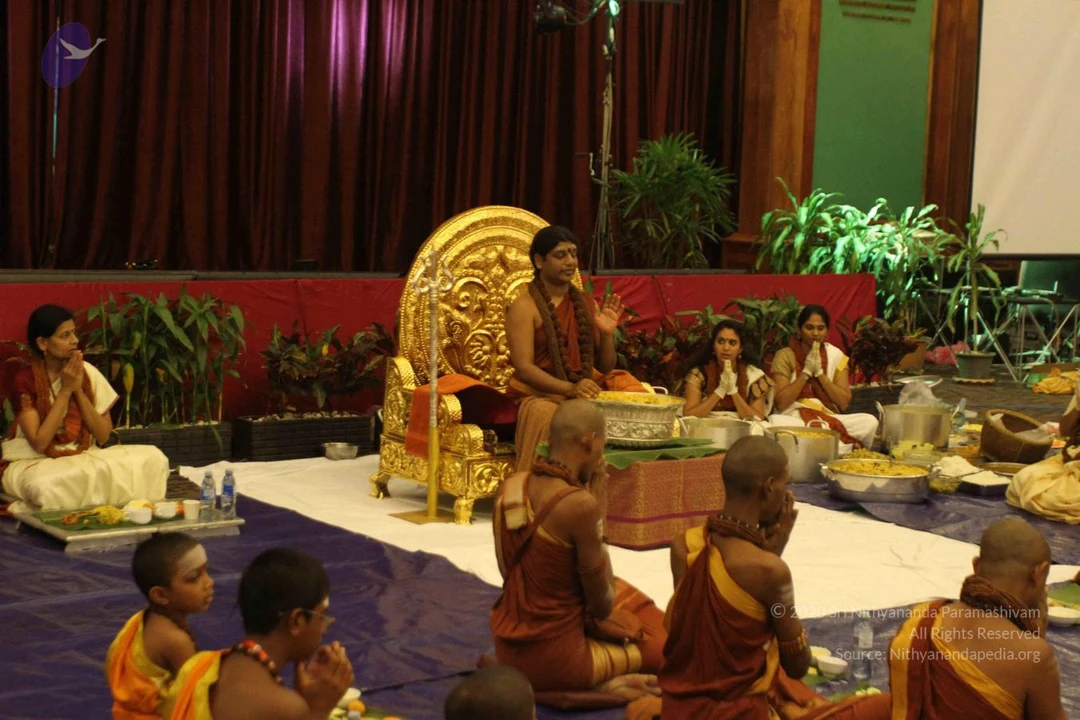
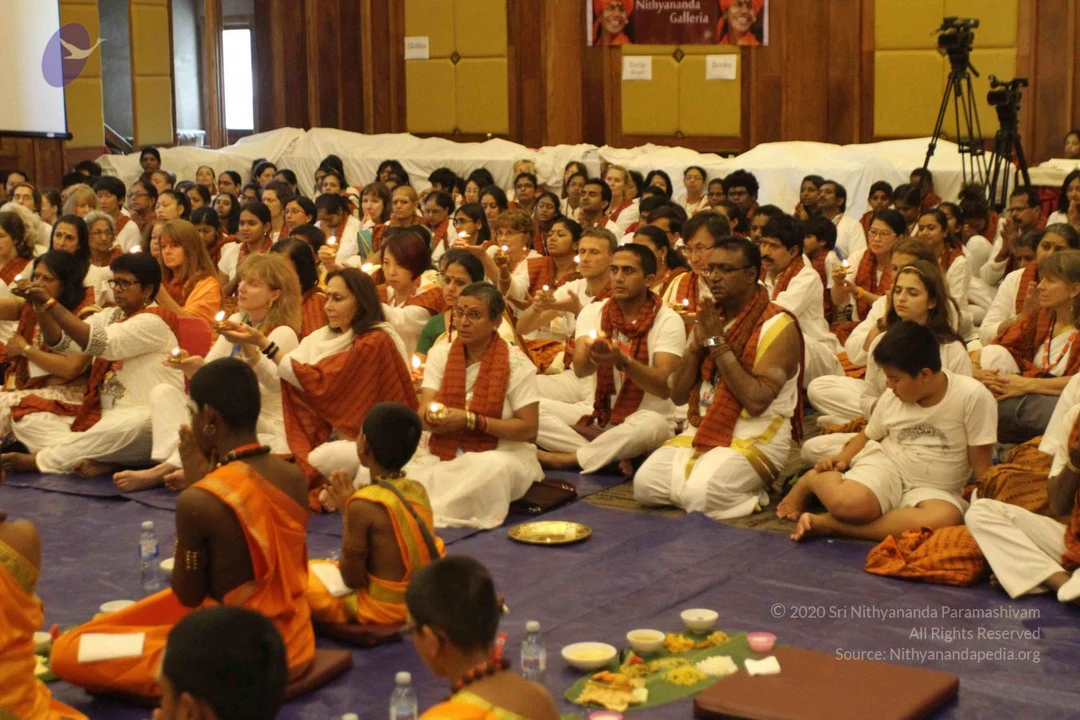
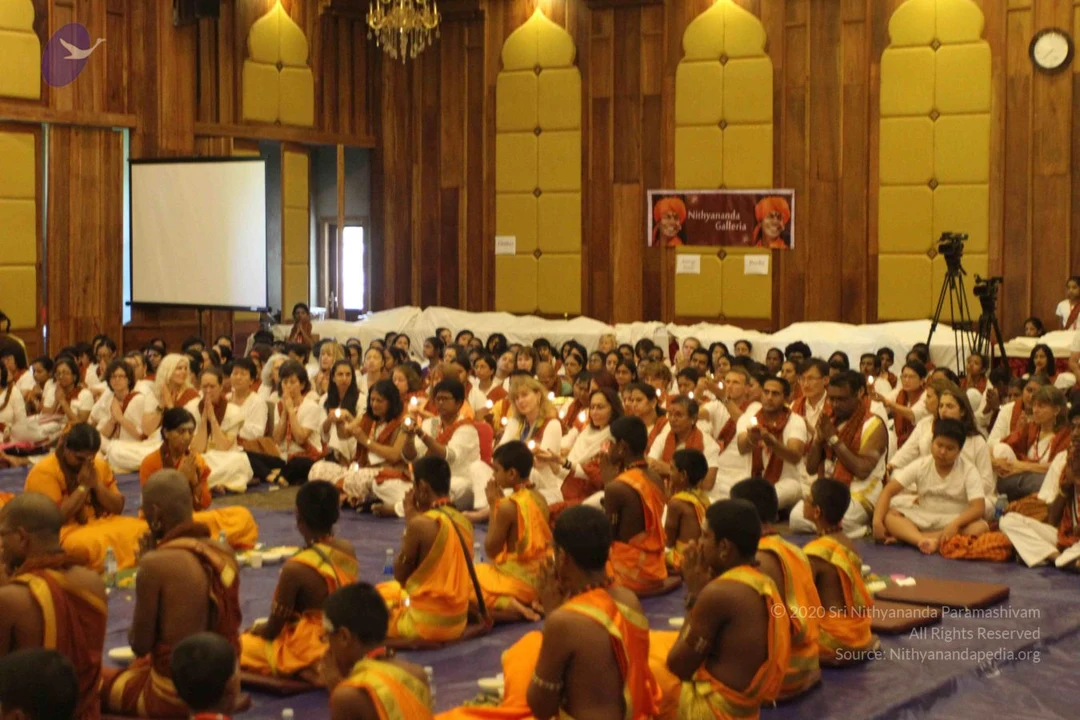
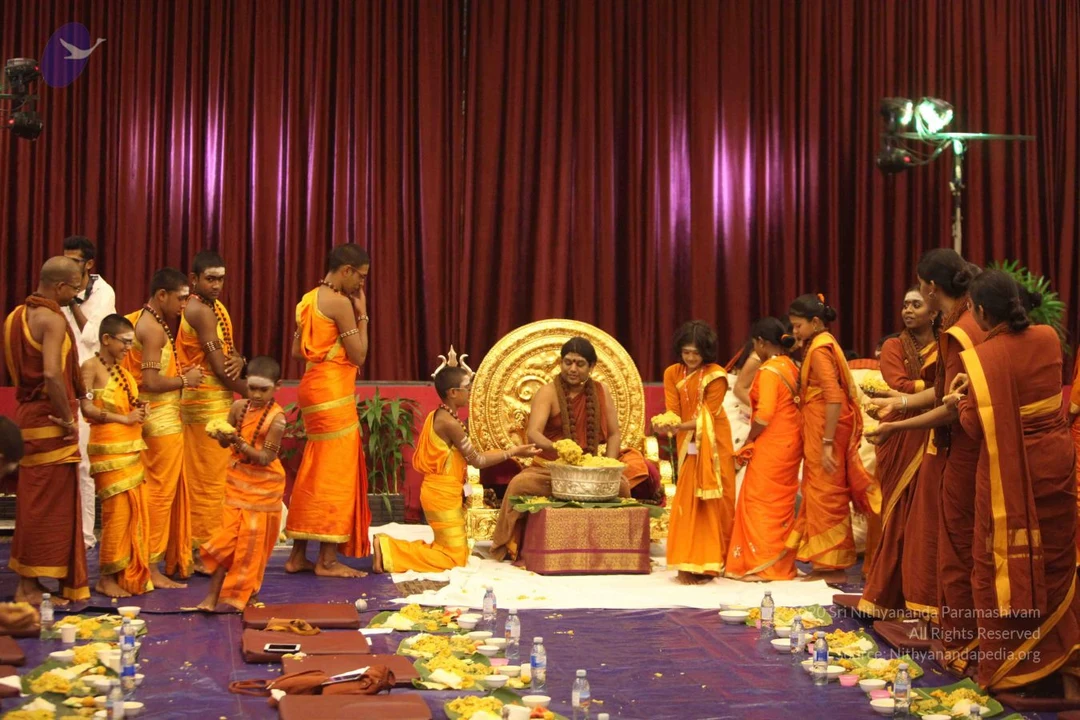
A large wood-panelled hall with arched ceilings, chandeliers and a projection screen at the far end. Hundreds of people sit on the floor in rows, dressed in white, and many others in saffron-orange robes sit in front of them on a long blue mat. Several devotees in white kneel or sit near the front, with brass plates, small containers and offerings set out before the seated groups. Staff in white stand along the side walls near the back of the hall. The scene suggests a gathered satsang or group puja session, shown in a wide view.A photograph of a ceremonial blessing inside a decorated temple setting. A long-haired figure in a saffron-orange robe with a brown rudraksha-style mala places a hand on the forehead of a bare-chested man kneeling with palms pressed together. The kneeling man wears a white dhoti with a gold border and an orange-red shawl. Behind them stands a large gold ornate backrest, and gold necklaces and garlands hang on a deity murti in the background. A second person in white and red stands at right. Swamiji (probable): the long-haired figure in orange robes with a mala and long hair matches the page's claim of Swamiji's presence, so this is an appearance-based candidate.Close-up photograph of an ornate silver bowl with repousse floral and scroll engraving, filled with a yellow-orange cooked preparation with green peas and whole spices. A hand, its wrist covered by a sleeve, is reaching into the bowl and scooping the food, which is set on a green banana leaf. A purple cloth and a brown shawl appear at the edges of the frame.

December 28 2014

Original wiki page
Contents

Title

Nithya Kirtans - Kailashicha Rana Sambo Hara Hara Bole Sankara

Description

Nithya Kirtans Sung in the presence of Paramahamsa Nithyananda on 28th December, 2014

Link to Video:

VideoAudio

Title

Nithya Kirtans - nithyanadham sachithanatham hara hara hara om mahadheva

Description

Nithya Kirtans Sung in the presence of Paramahamsa Nithyananda on 28th December, 2014

Link to Video:

Title

Nithya Kirtans - jaya guru omkara

Description

Nithya Kirtans Sung in the presence of Paramahamsa Nithyananda on 28th December, 2014

Link to Video:

Title

Nithya Kirtans - bhambham lahari shiva shiva lahari

Description

Nithya Kirtans Sung in the presence of Paramahamsa Nithyananda on 28th December, 2014

Link to Video:

Photos

Photos Of The Day:

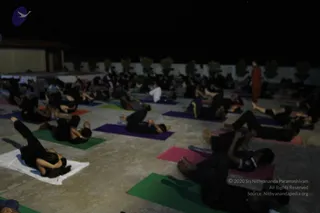
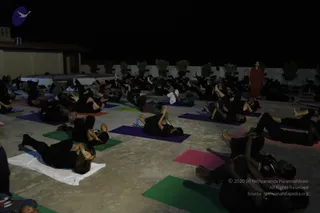
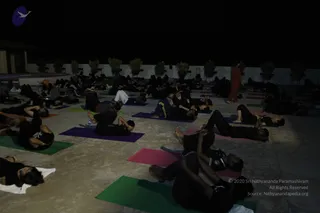
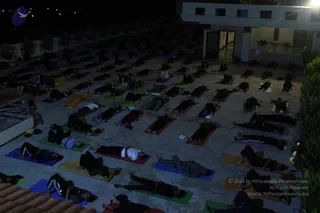
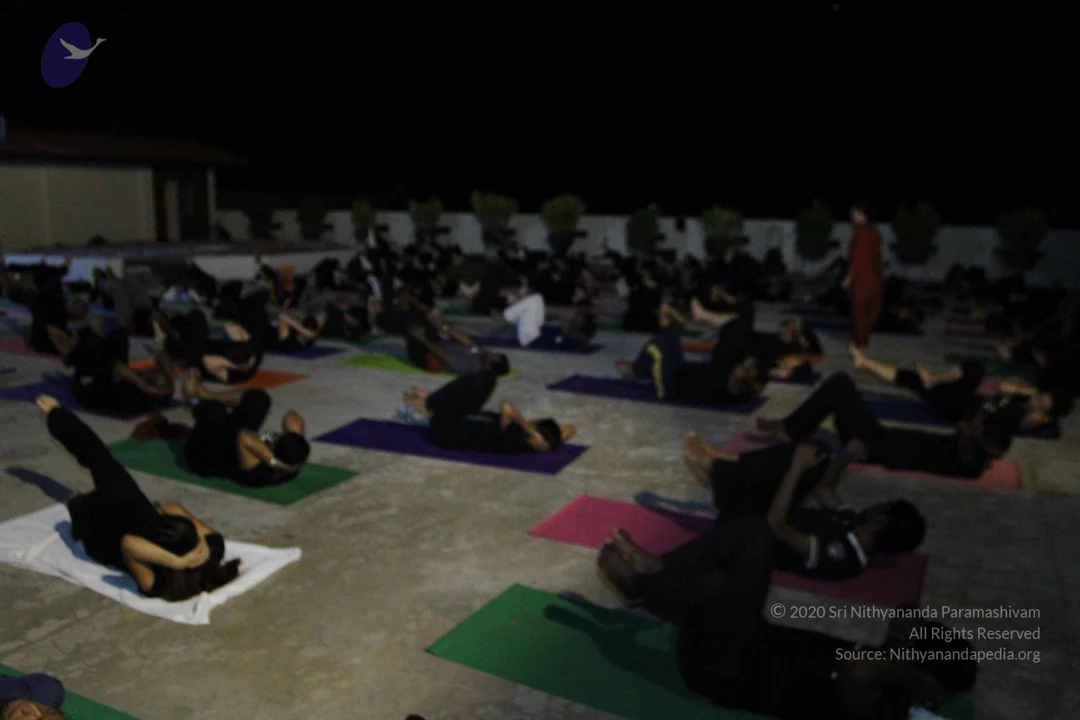
Morning-Yoga
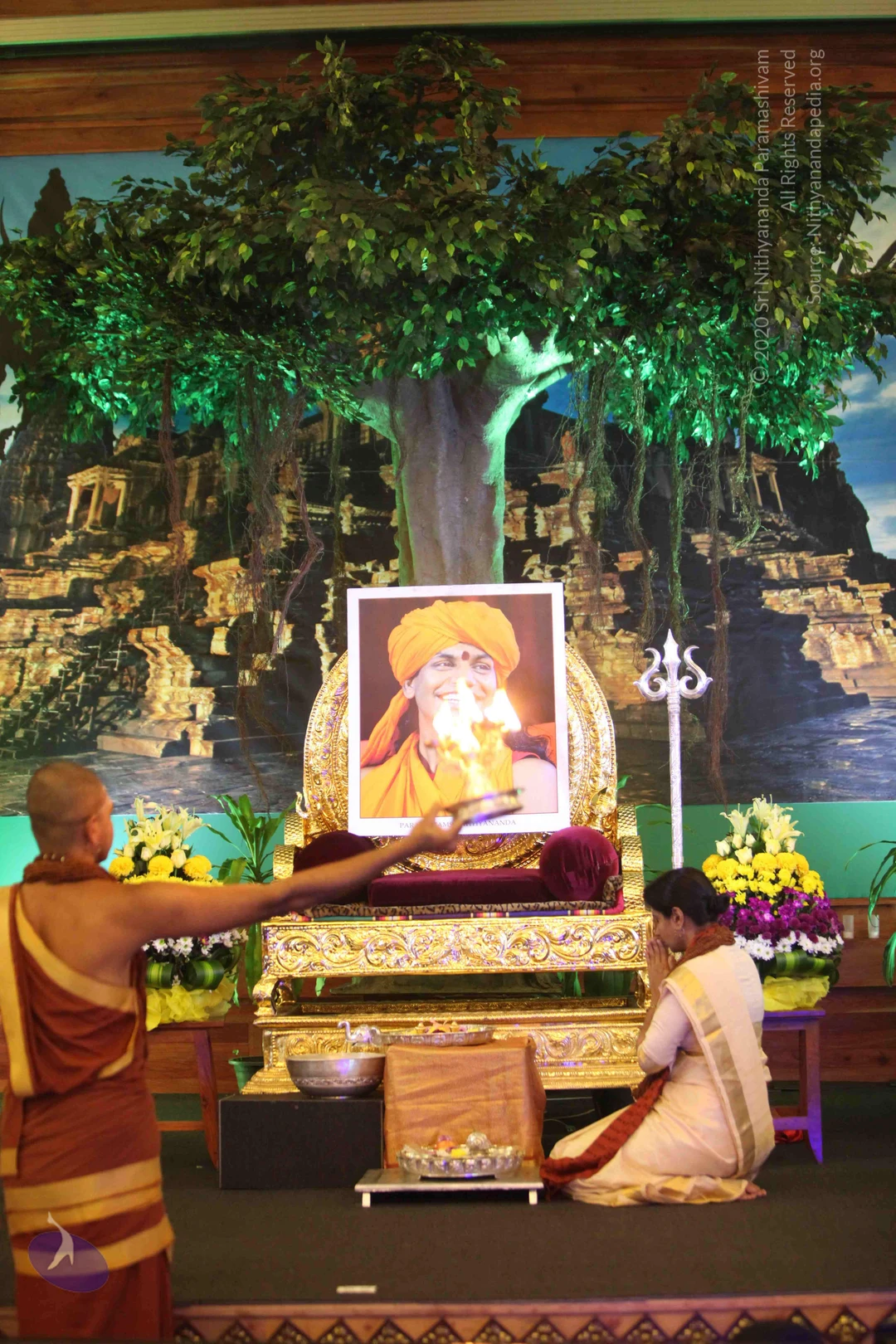
PadukaPuja
IAProcess
A-MaheshwaraPuja

B-MaheshwaraPuja

A-Darshan

Photos from this day

View all 282 photos

Morning-Yoga

10 photosSource gallery
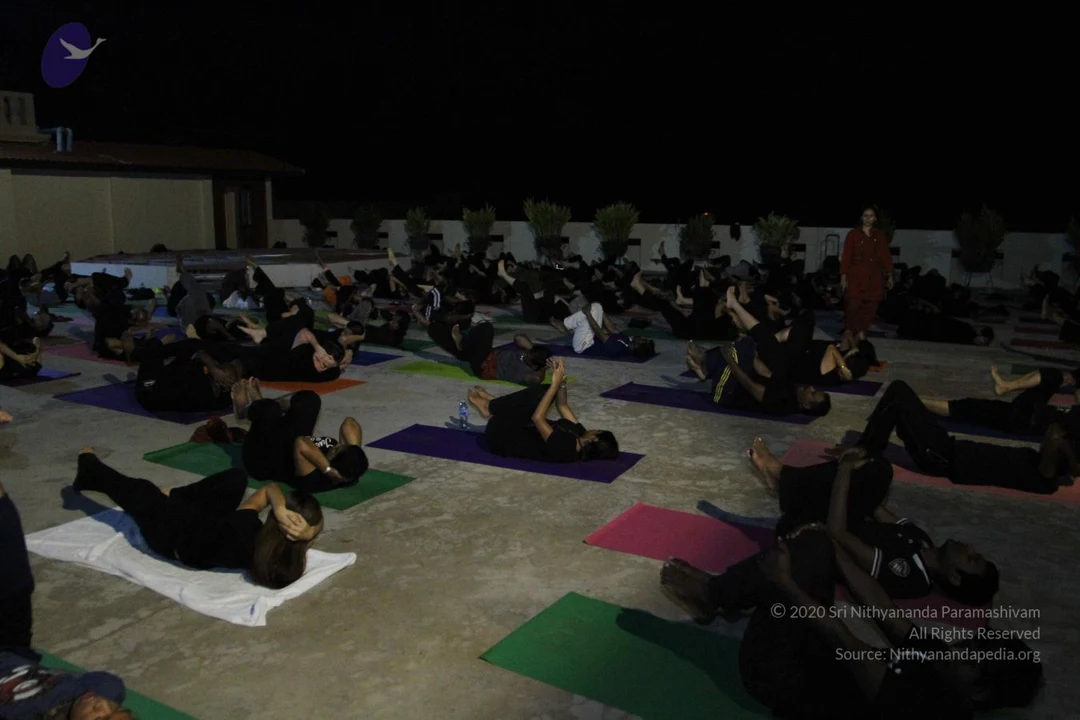
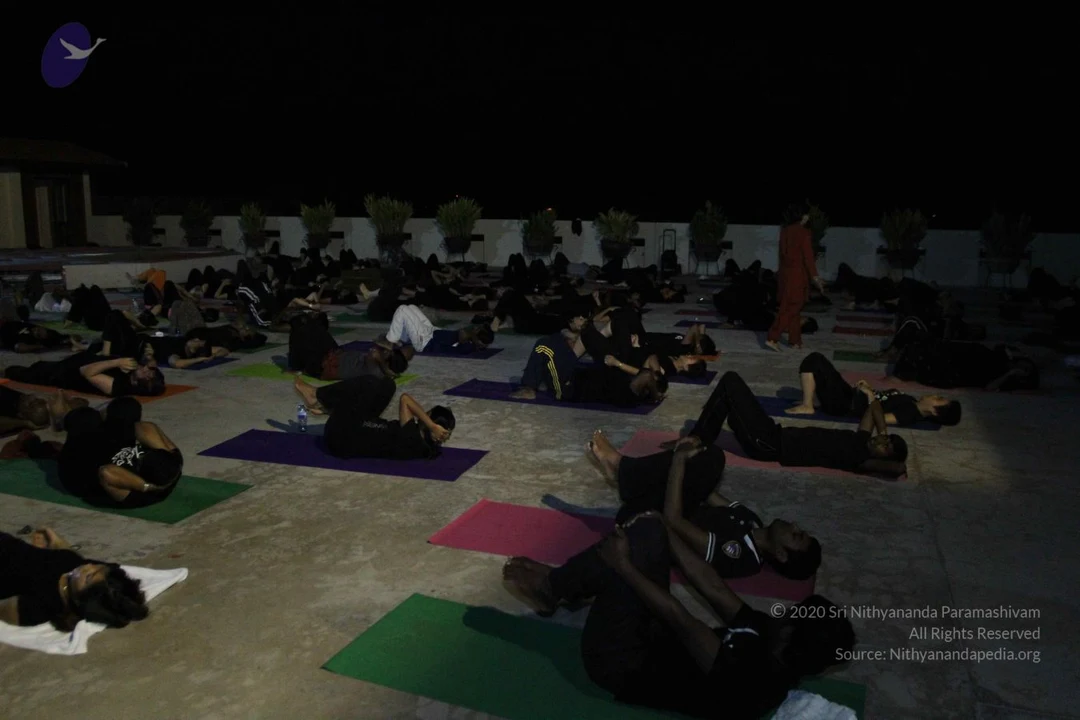
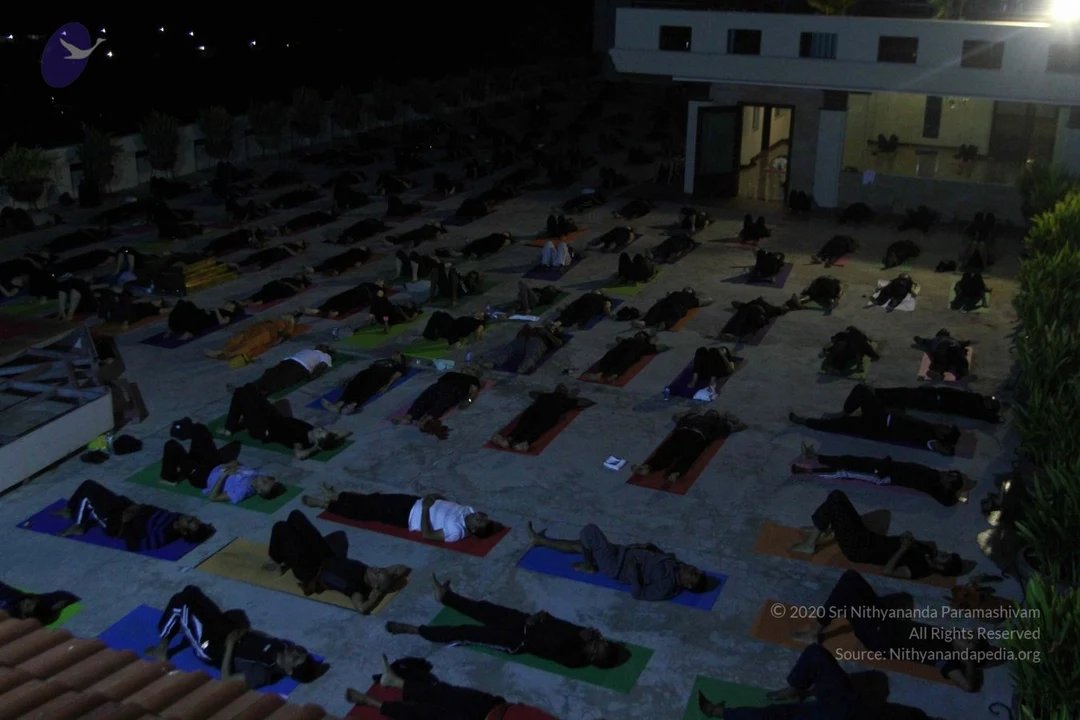
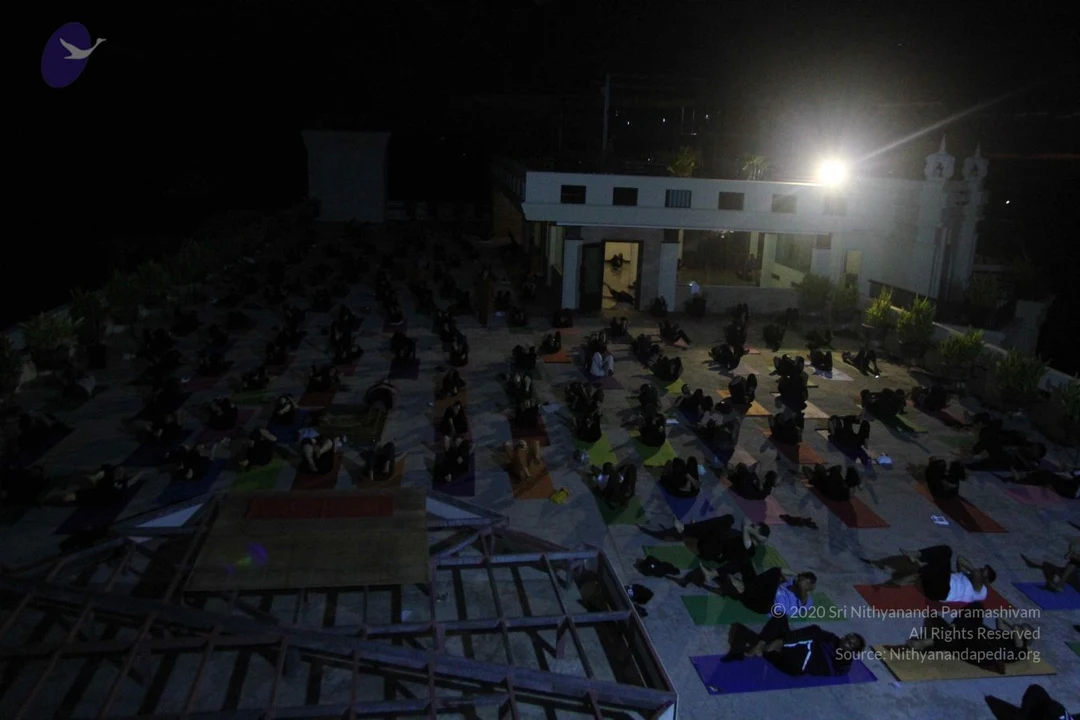
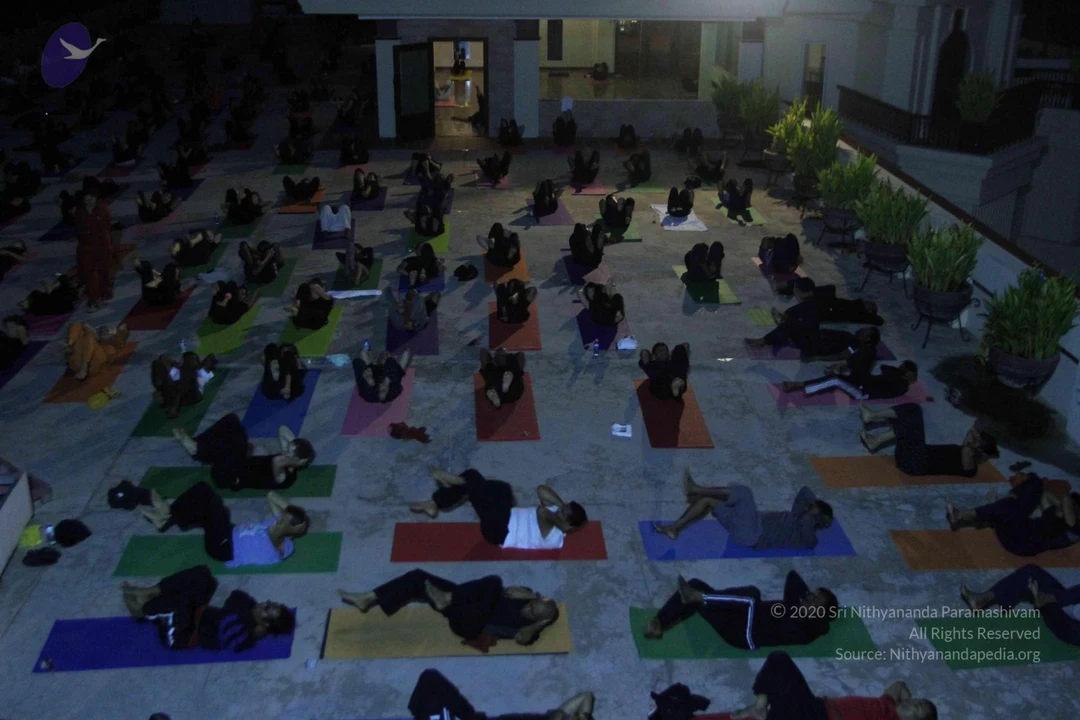
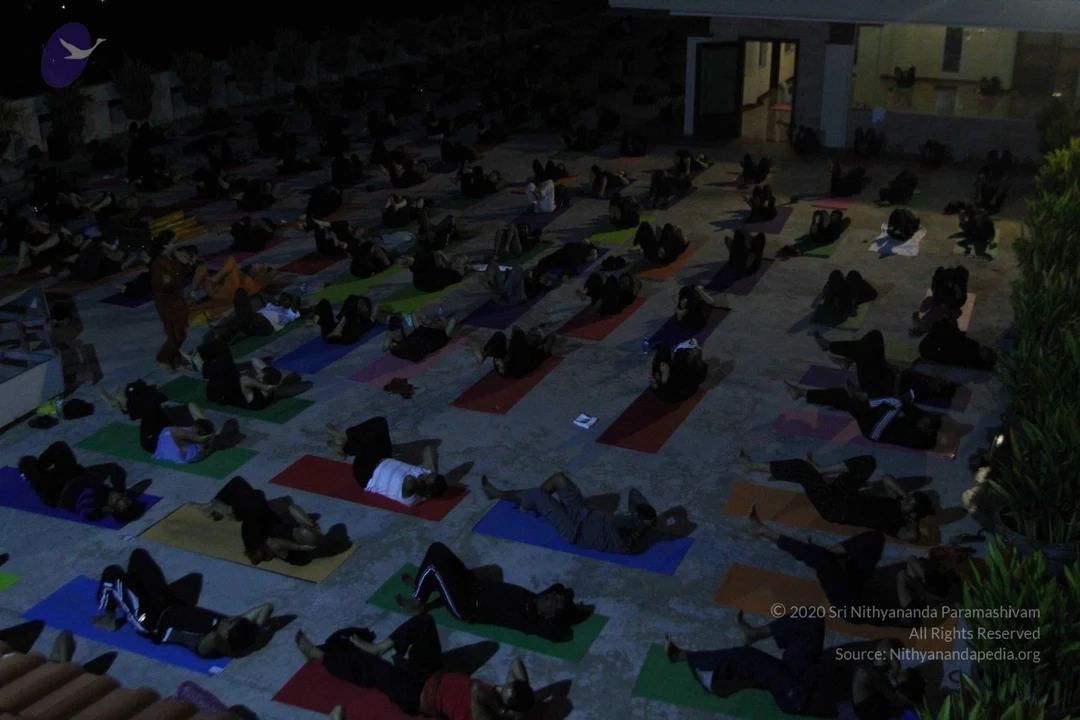
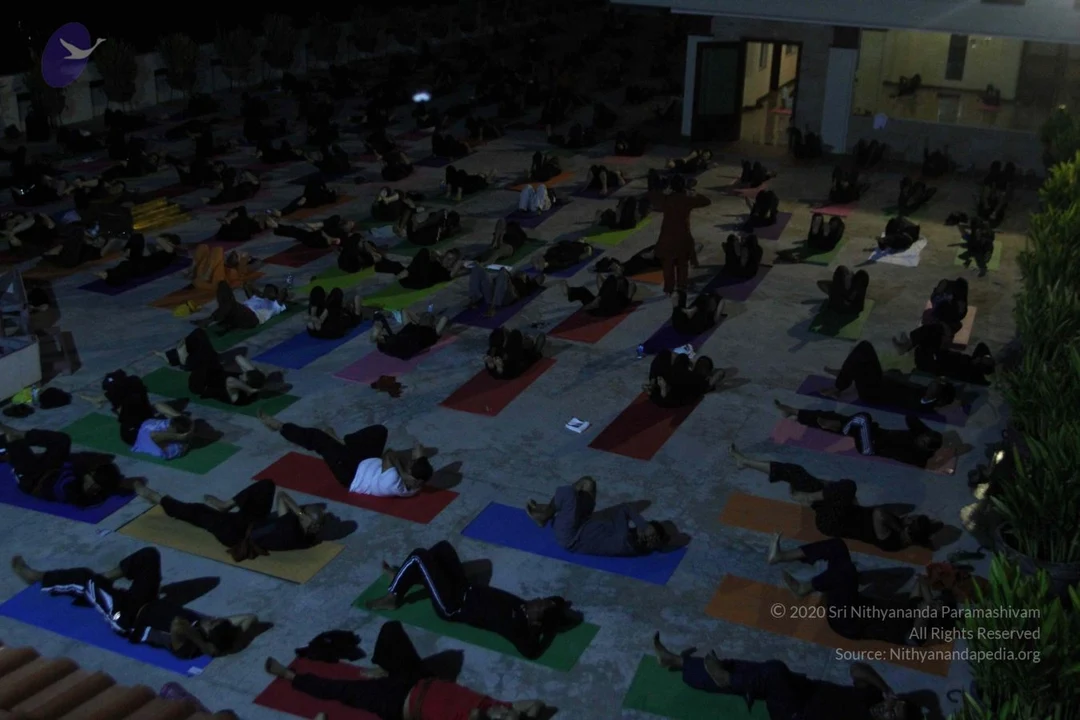
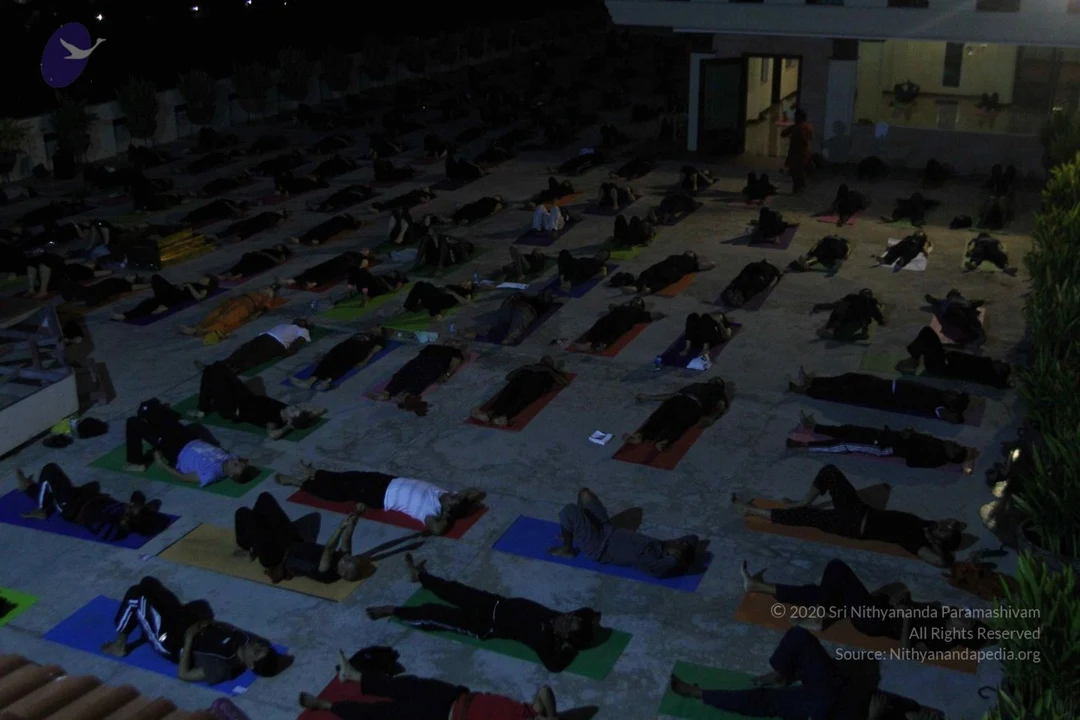
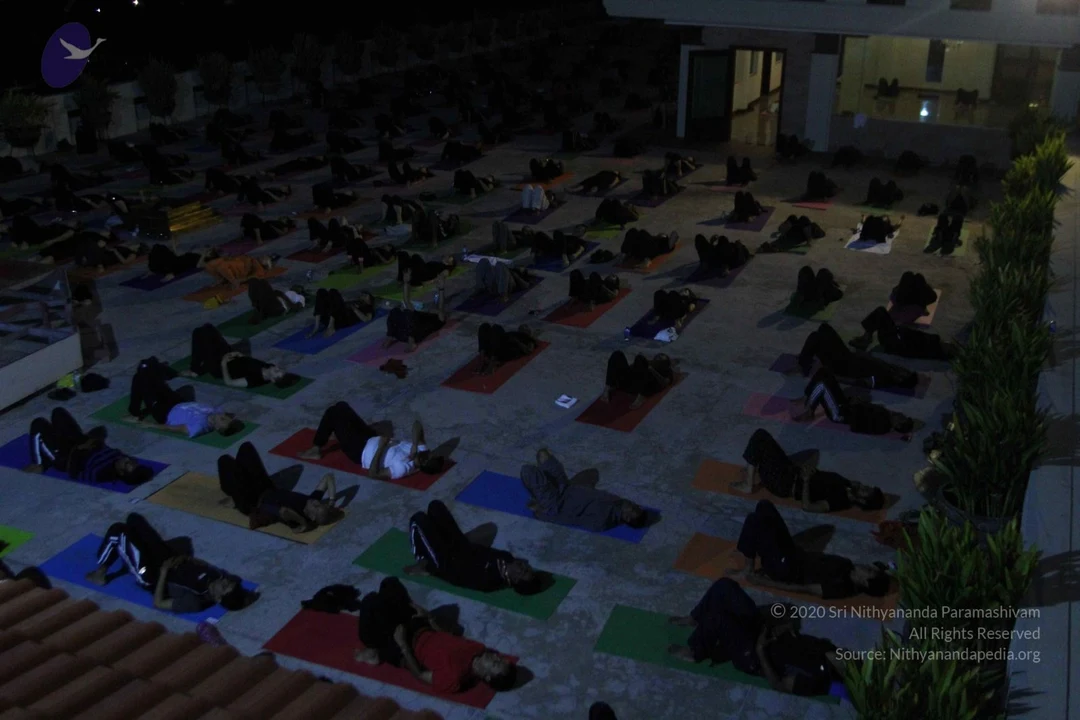
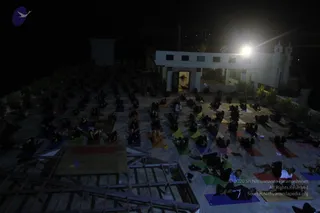
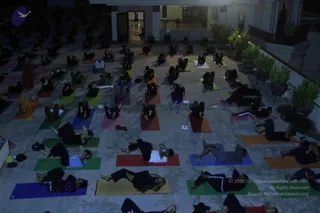
A large outdoor yoga session at night on a concrete courtyard. Many people in black clothing lie on coloured yoga mats (purple, green, pink, orange, white) performing reclining postures with legs raised and bodies folded, some with heads down. A standing figure in a rust-orange robe stands at the right near the back, apparently instructing. Low white boundary wall with potted shrubs and a small building appear at the left and back.Night-time outdoor yoga session on a flat concrete terrace. Many people in black clothing lie on coloured yoga mats (purple, green, pink, orange) in rows, performing reclining postures with legs raised and hands behind the head. A standing woman in a long red-brown outfit watches at the right edge near a low white wall lined with potted plants. A tiled pool or raised platform sits at left, and a few small bottles lie on the mats.Night-time outdoor yoga session on a flat paved terrace with many participants lying on coloured yoga mats, purple, green, pink and red, in black and dark clothing. Many people are in supine stretching or bridge-like poses with knees bent and arms overhead. A figure in a long orange-red robe walks among the mats on the right. Potted green plants line a white wall in the background, and a small building stands at left under a dark sky. No visible a person candidate can be confirmed among the participants.Night-time outdoor yoga session on a paved courtyard in front of a multi-storey building with lit glass doors. Many people lie prone on coloured yoga mats in rows, some in dark clothing and some in white, with their heads and arms extended in a relaxation posture. A few people are scattered among the rows and one figure stands at the lower left. Dim lights and a tree line frame the scene, with a partially visible rooftop at the lower edge. No identifiable central figure is clearly visible among the participants.Night photo from an elevated viewpoint of a large outdoor group yoga session on a paved terrace. Thick rows of practitioners sit and bend on coloured yoga mats, mostly in dark clothing, with a bright floodlight at upper right and a white ashram building with ornate towers behind them. Potted plants line the edges of the terrace.Early-morning yoga session in an open paved courtyard at night, with rows of practitioners on coloured yoga mats (purple, red, green, blue, orange) lying on their backs and performing stretches or leg raises. Most participants wear dark clothing. A few figures stand at the left edge, one in an orange robe. Potted plants line a white building with a lit doorway at the back.

PadukaPuja

14 photosSource gallery
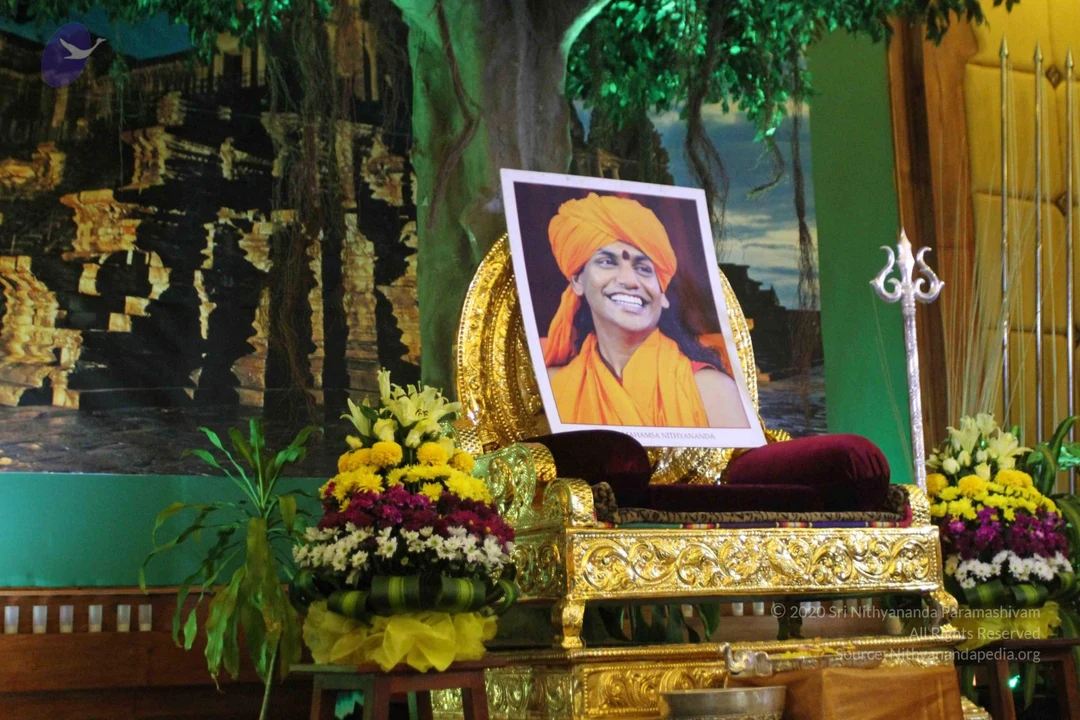
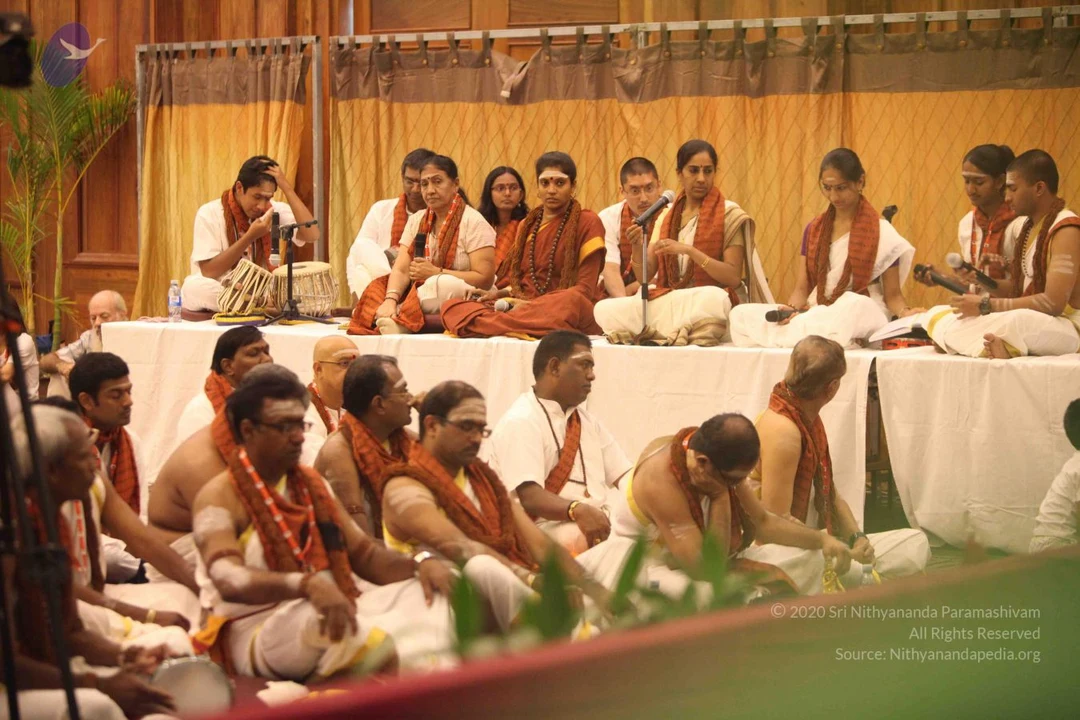
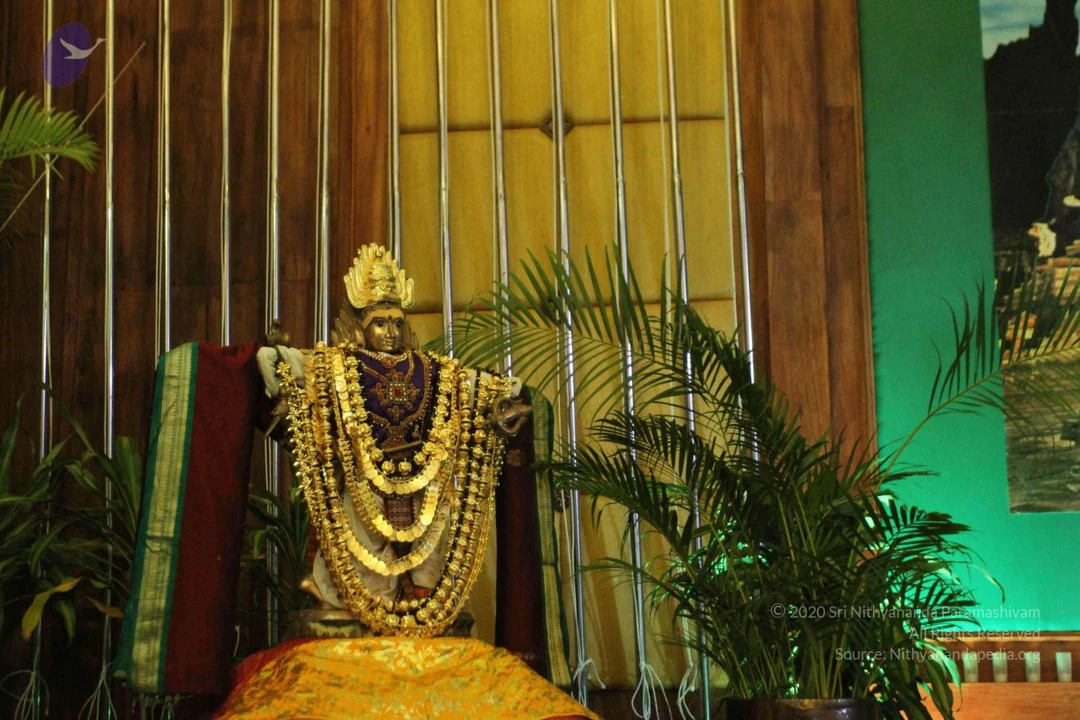
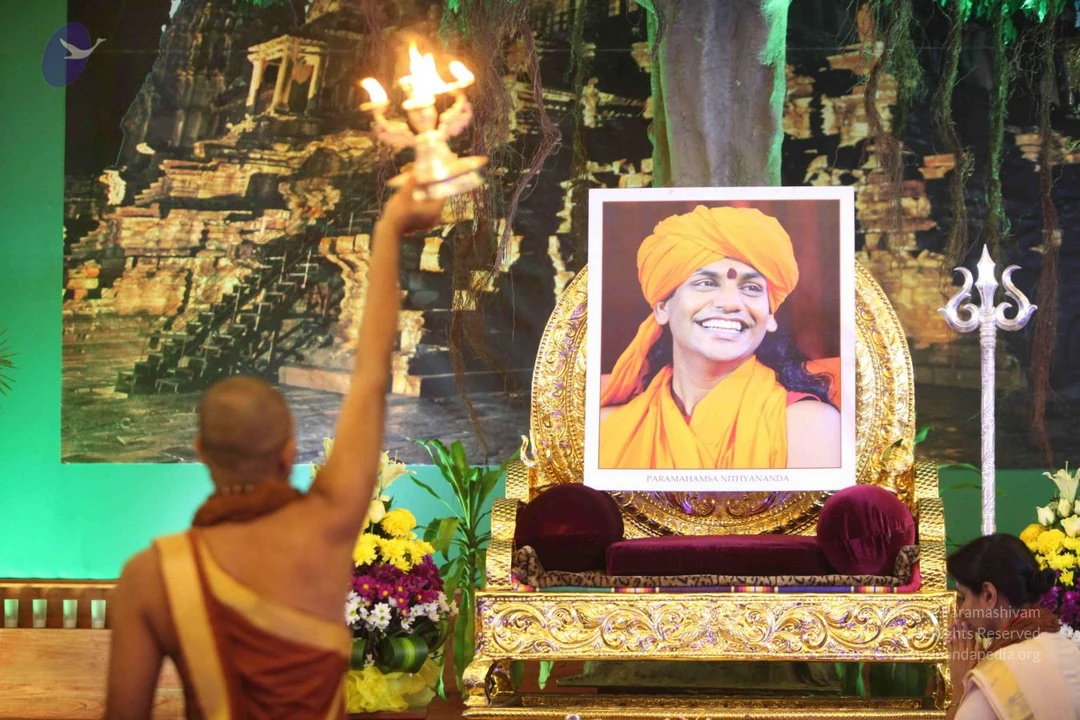
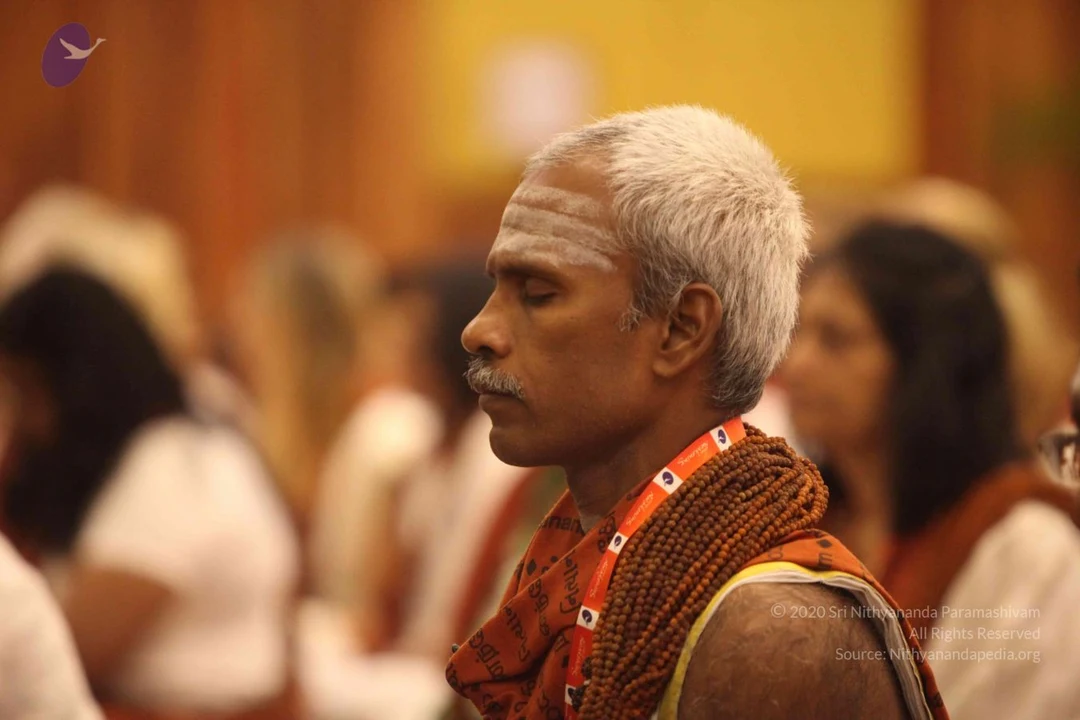
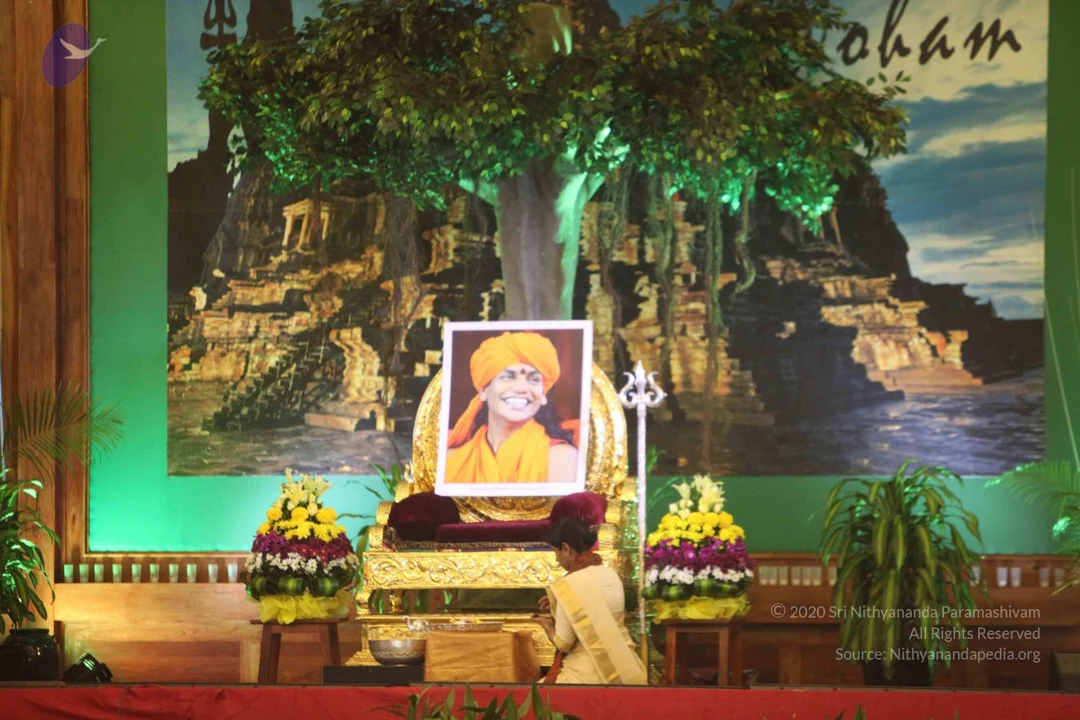
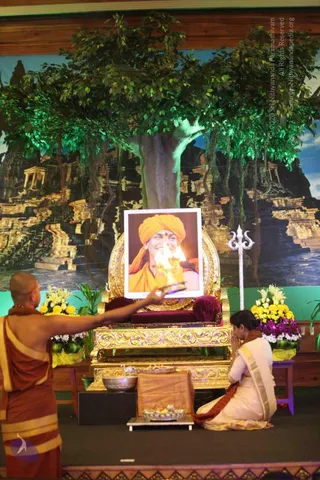
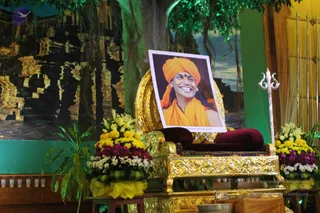
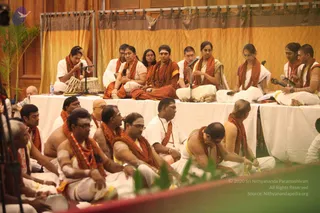
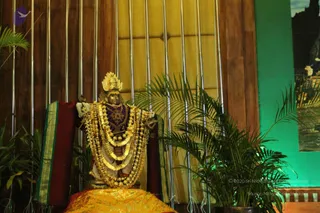
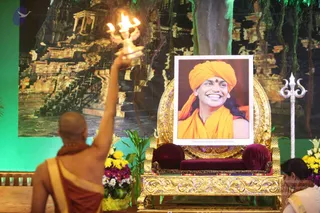
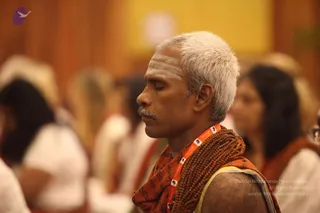
Photograph of a ritual before a gold ornate throne (peetha) on a stage, with a large framed portrait labelled "Paramahamsa Nithyananda" showing a smiling man in an orange turban and orange robe, with a red bindi. A priest in a rust-orange dhoti and shawl stands at left holding a plate of flaming camphor aarti toward the portrait. A woman in a white sari with a gold border kneels at right with her hands folded in prayer. Behind them a painted backdrop shows a stone temple and a large green artificial banyan tree; a silver trident stands at right, with yellow and white flower arrangements and silver bowls on the stage. The scene reads as aarti performed in front of the portrait on the throne.A gilded throne-like seat (peetha) with a plush maroon cushion sits empty on a stage, flanked by floral arrangements of yellow marigolds, white flowers and purple blooms. A framed portrait printed with a smiling man in an orange-saffron head wrap and orange robe is propped on the throne back, labelled as a portrait captioned "Paramahamsa Nithyananda". A silver trident stands at right, and a temple-ruin backdrop with green foliage completes the set. No physical people are visible in the scene.A group of devotees sits on a white-draped stage performing devotional music, with a tabla player at the far left in white and an orange-saffron shawl. Near the centre a figure in orange-saffron robes with a rudraksha mala and a sandalwood-marked forehead sits at a microphone; the figure's appearance is not clearly distinctive enough to confirm identity, so this is a priest or devotee singing. Around them women and men in white dhotis and orange-red shawls sing into microphones, while in the foreground men in white with orange shawls and forehead markings sit on the floor. Gold-yellow curtains and potted palms frame the stage.A golden deity murti stands on a raised seat draped in red and green-bordered cloth beneath a yellow silk cover. The figure wears a crown, heavy gold garlands and a purple chest ornament, set against wooden panelling with vertical metal rods and potted palms. A green backdrop with a framed picture is visible at the right edge. No physical people are present.A photograph of a puja before a gilded ornate throne with burgundy cushions, on which stands a framed portrait labelled "Paramahamsa Nithyananda" showing a smiling man in an orange turban and orange robe with a red bindi. A shaven-headed priest seen from behind in orange-brown robes raises a lit multi-flame oil lamp (aarti) toward the portrait. Yellow and white flowers and green foliage decorate the scene, a silver trident stands at right, and a backdrop shows a stone temple with hanging vines. A woman in white is partially visible at the lower right.A photograph of a shaved-headed man with short white-grey hair and white tilak markings on his forehead, eyes closed in meditation. He wears an orange-red shawl printed with dark script, a long rudraksha mala draped over his chest, and a red-and-white lanyard. Behind him, blurred figures in white and orange clothing sit in a hall with warm yellow walls. The man appears to be a devotee or priest, not clearly identifiable from appearance.

IAProcess
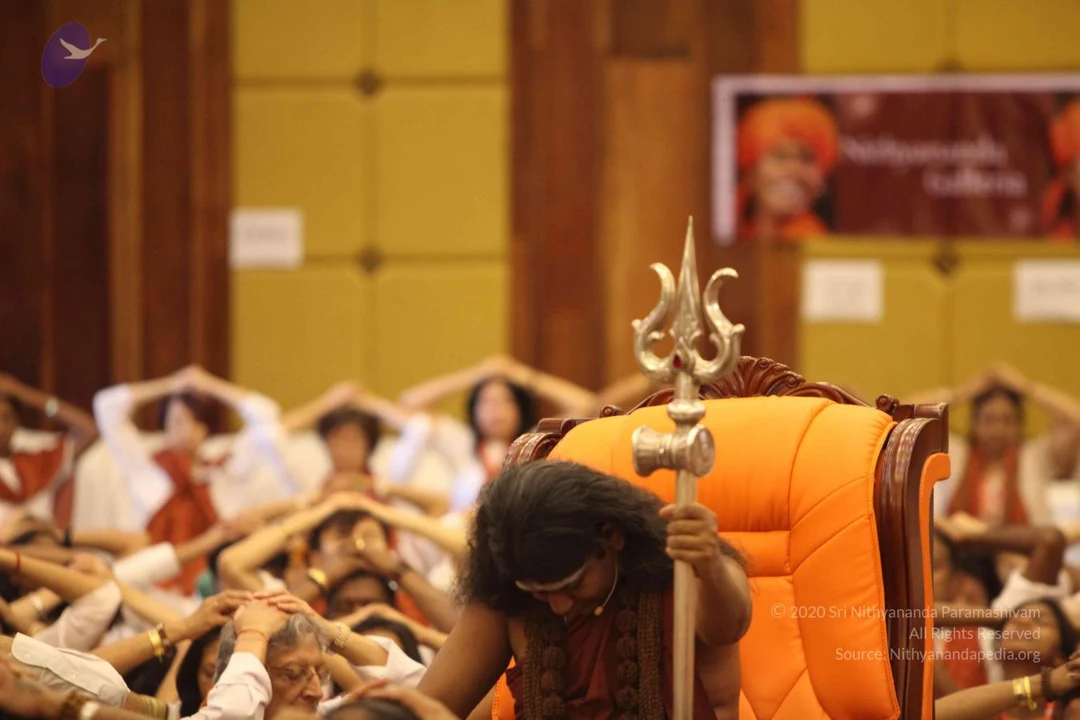
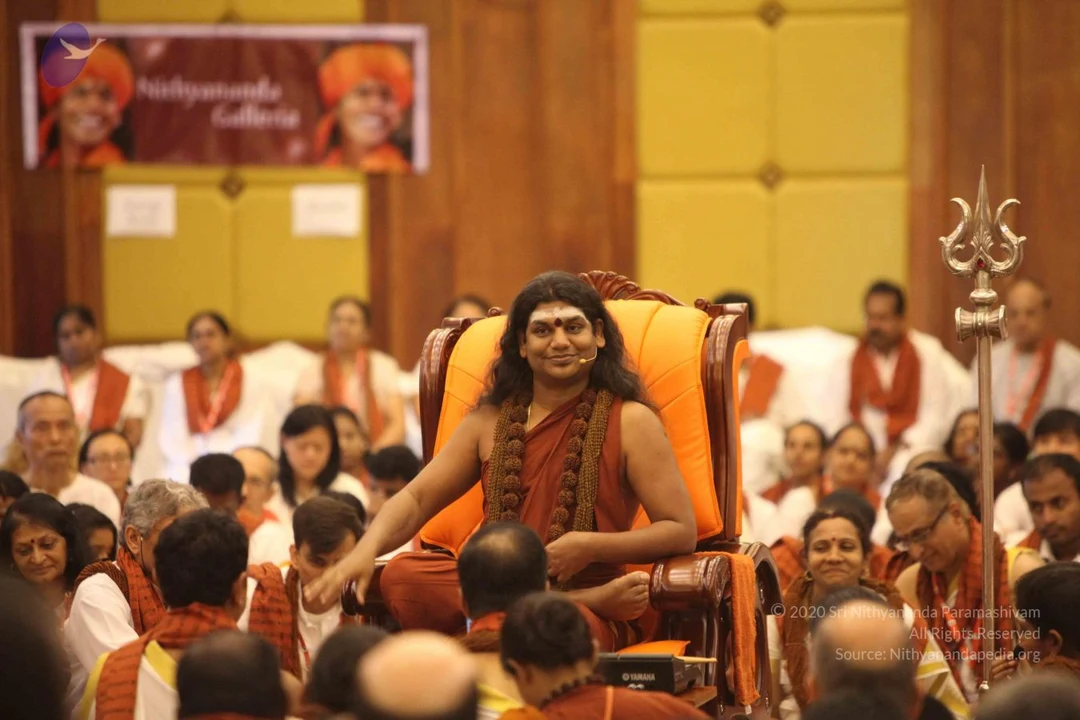
37 photosSource gallery
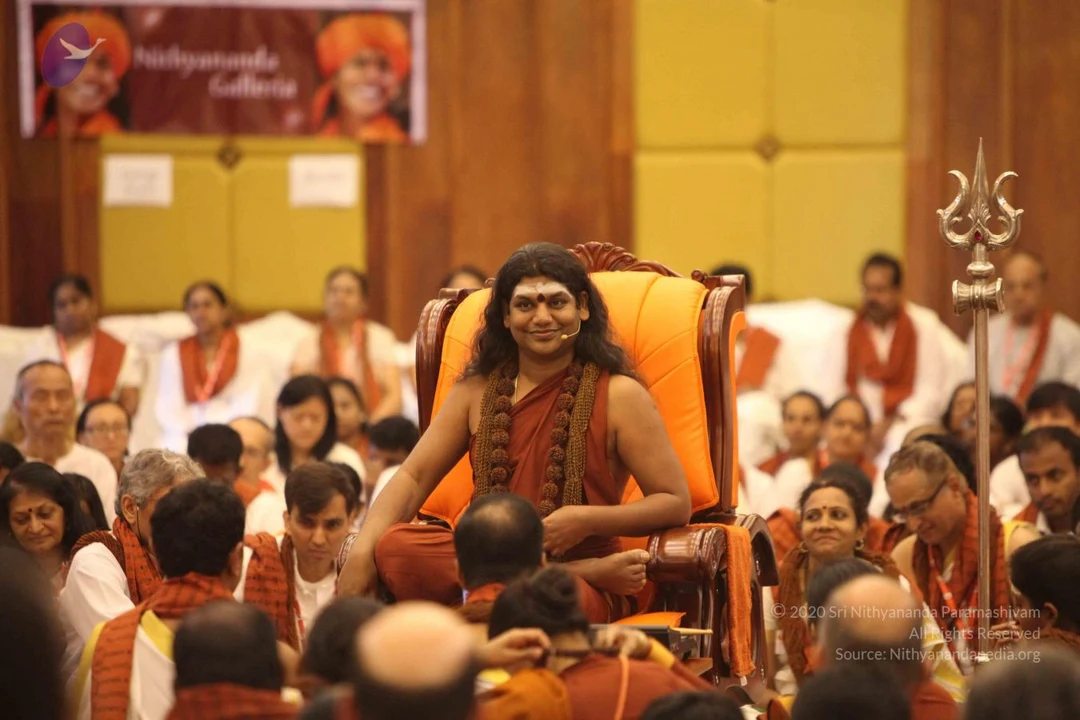
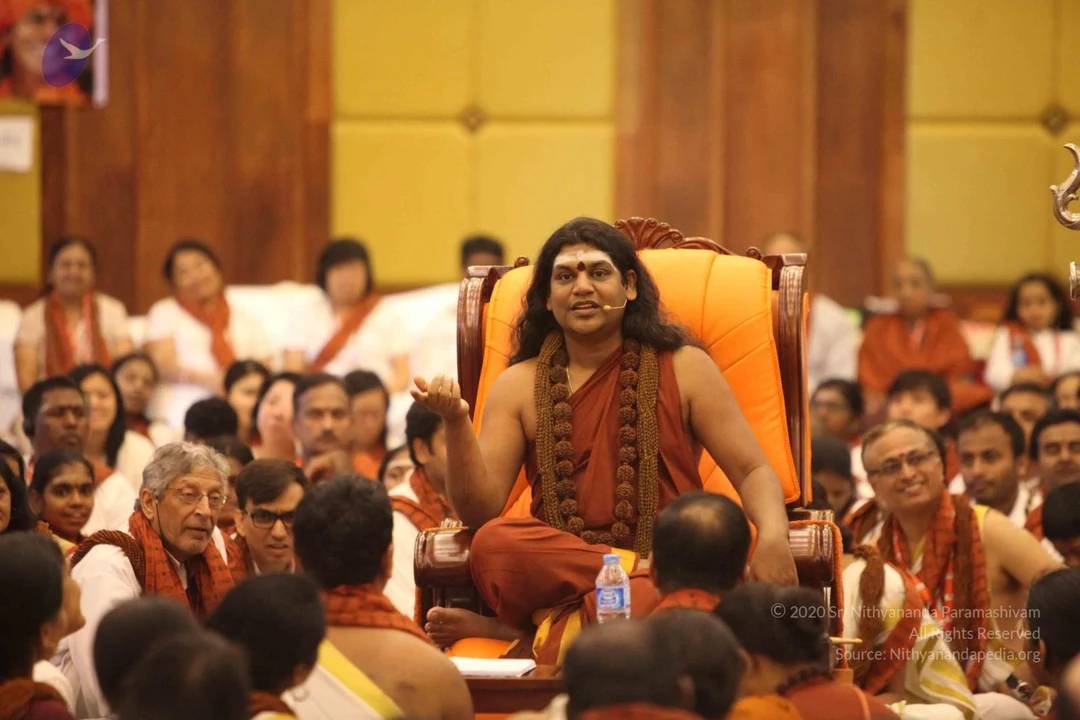
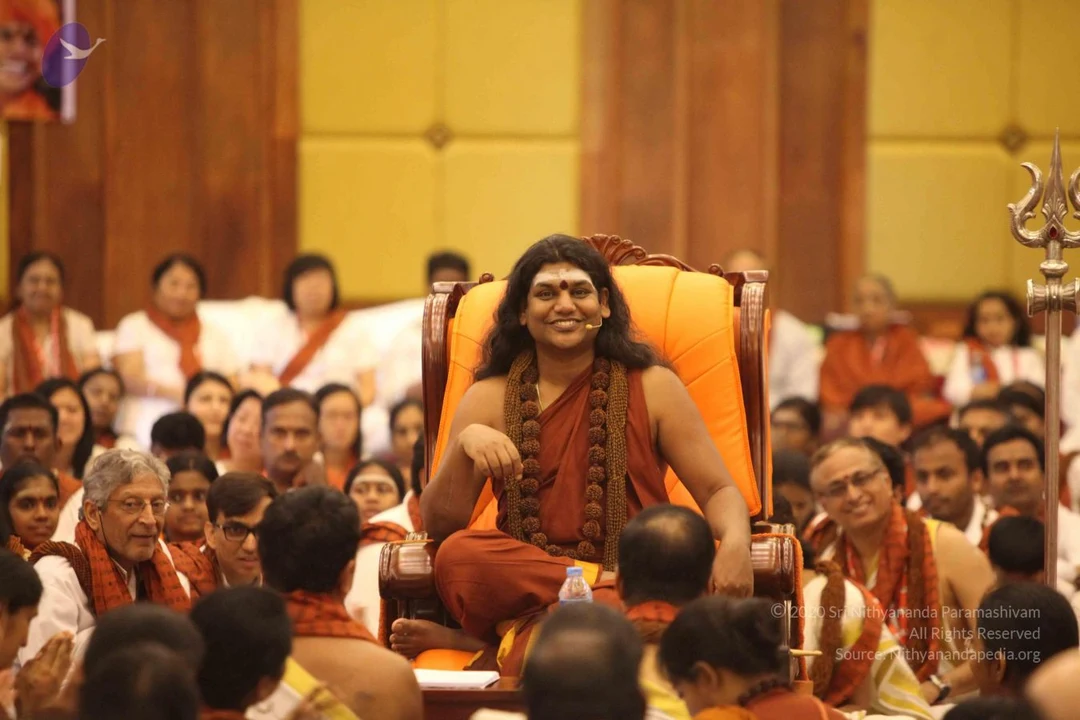
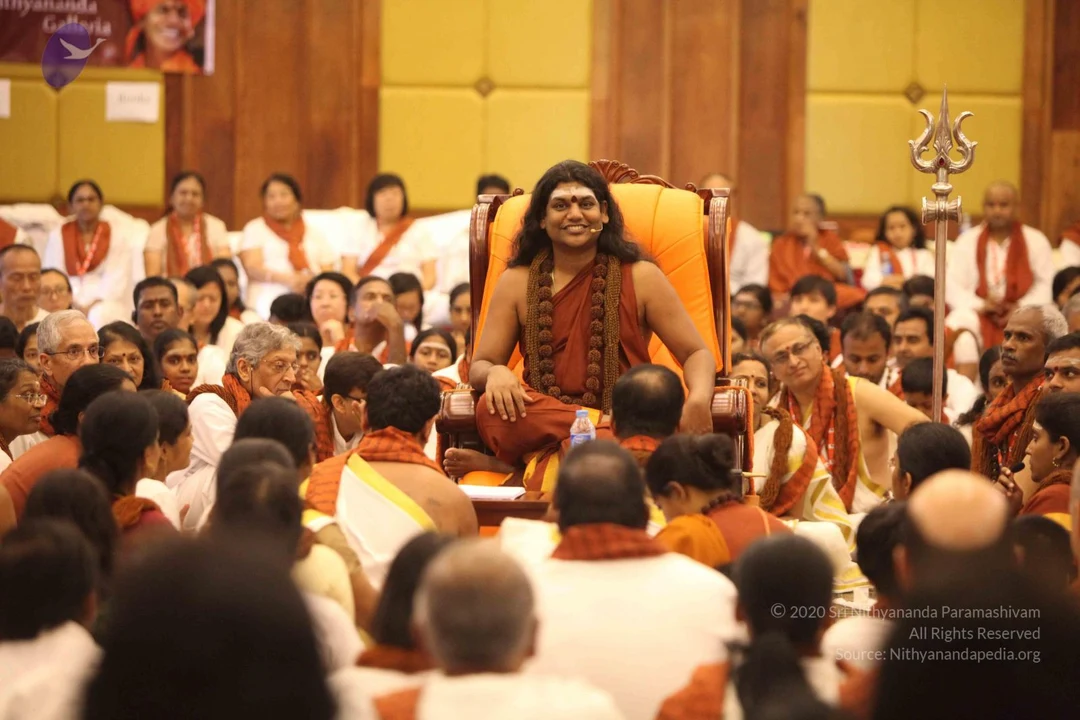
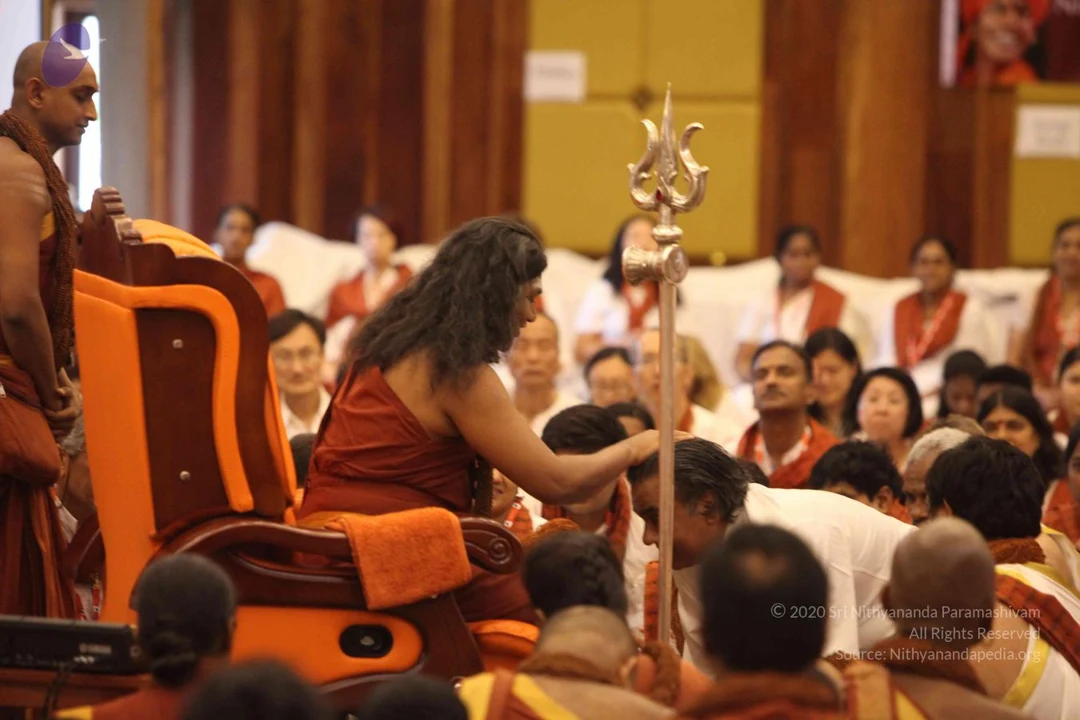
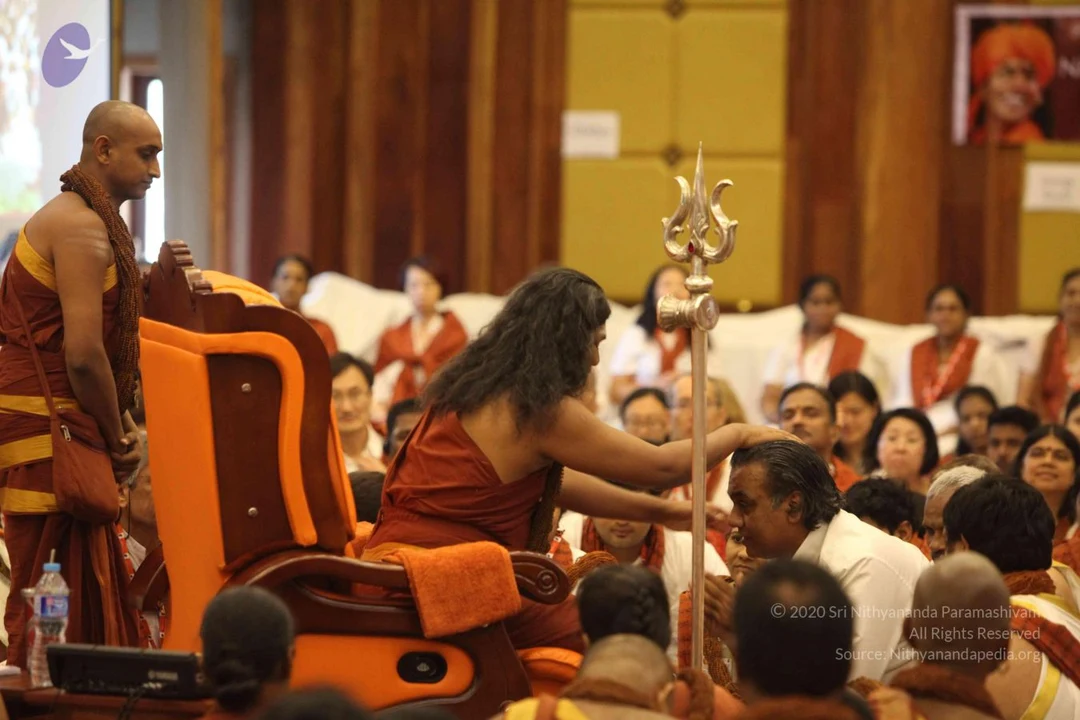
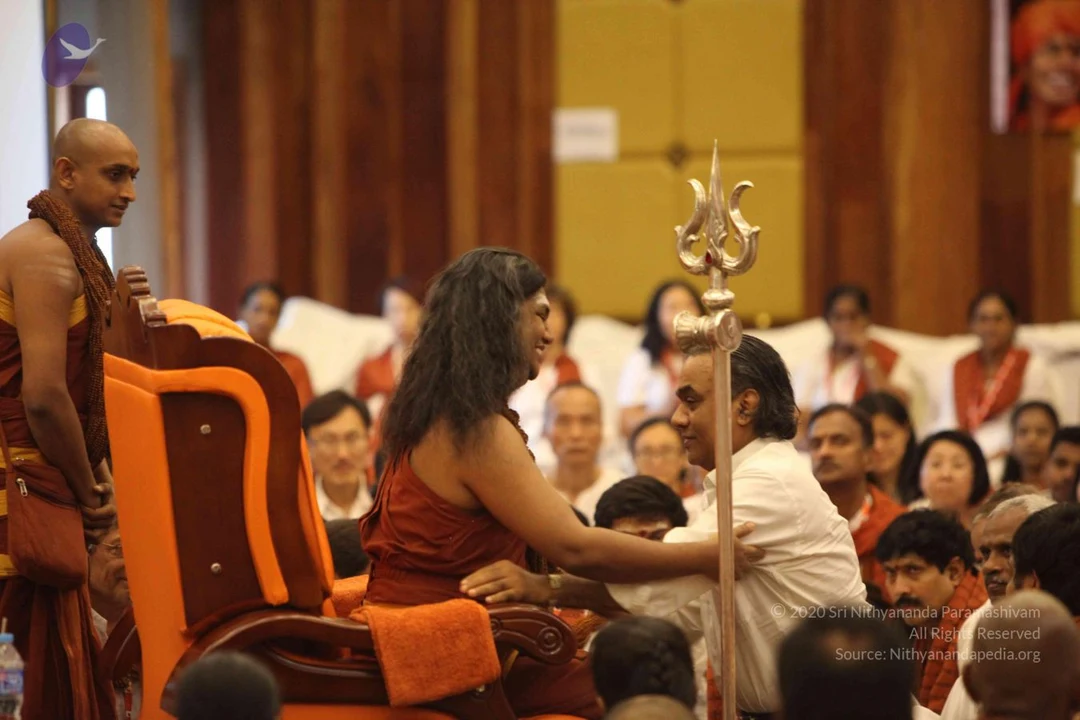
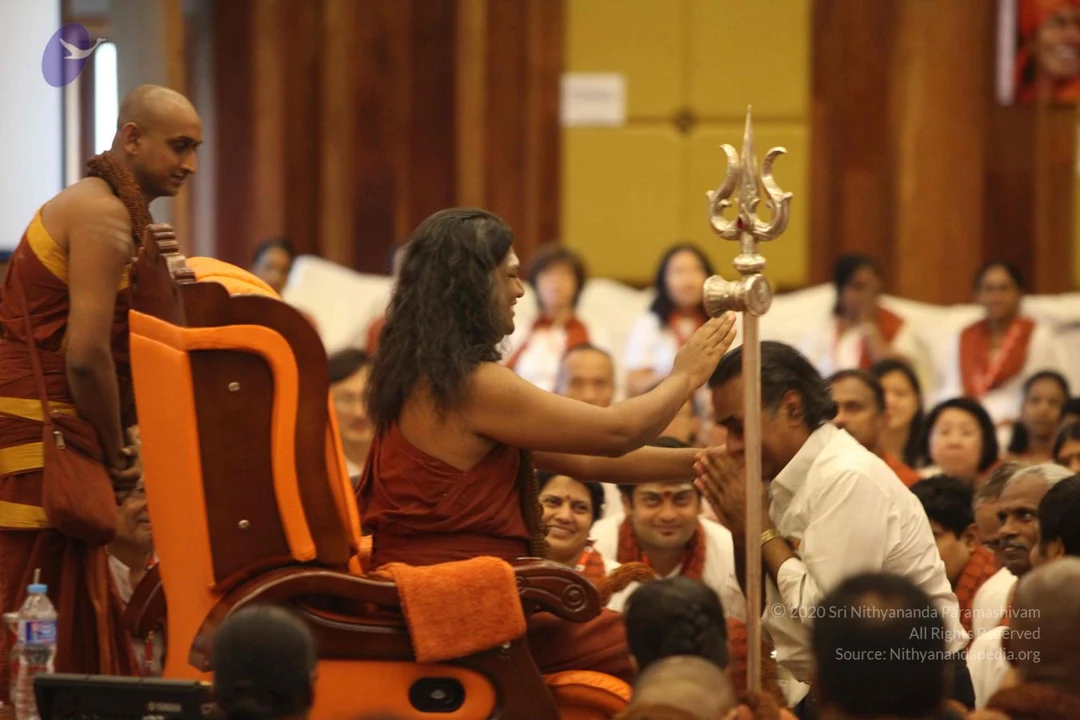
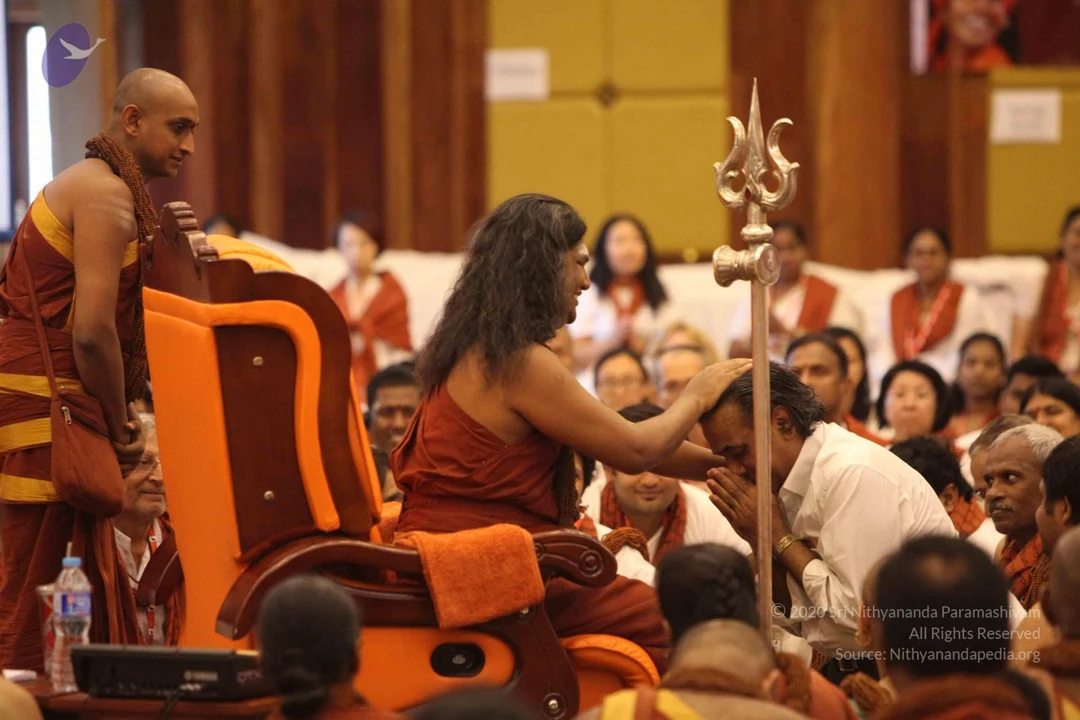
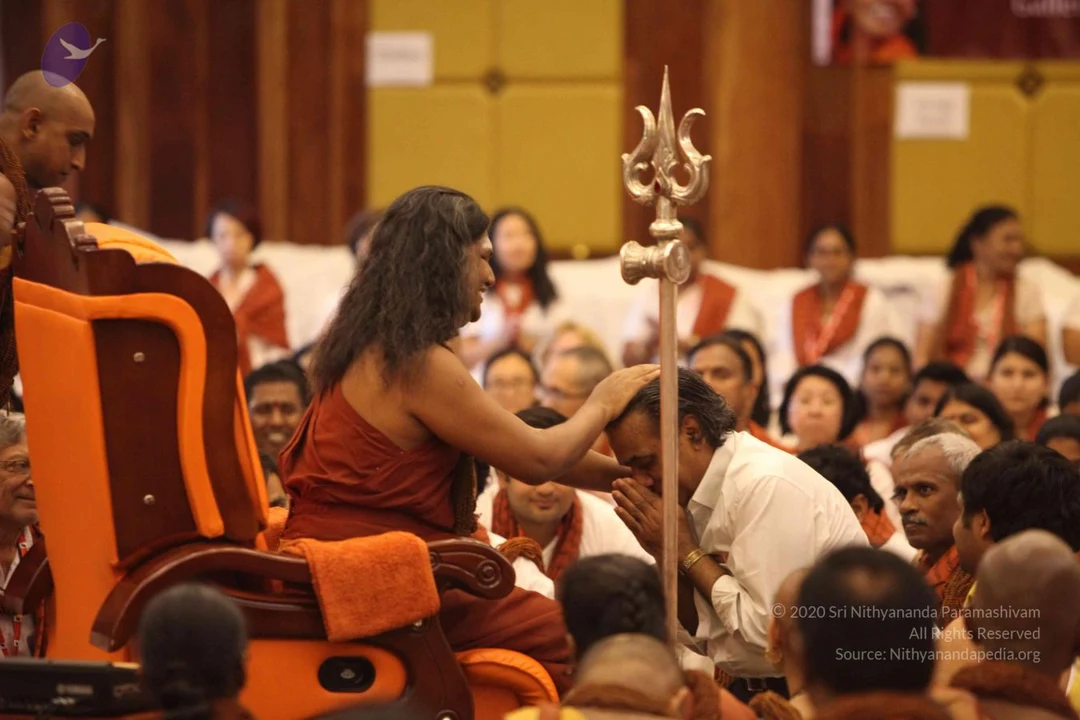
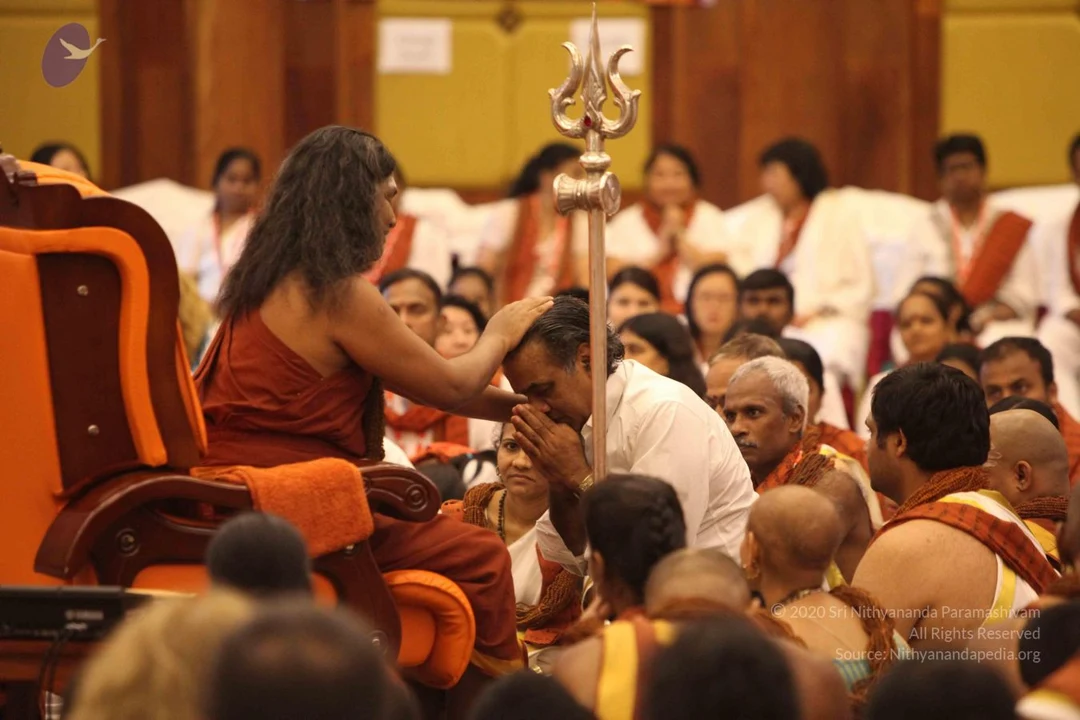
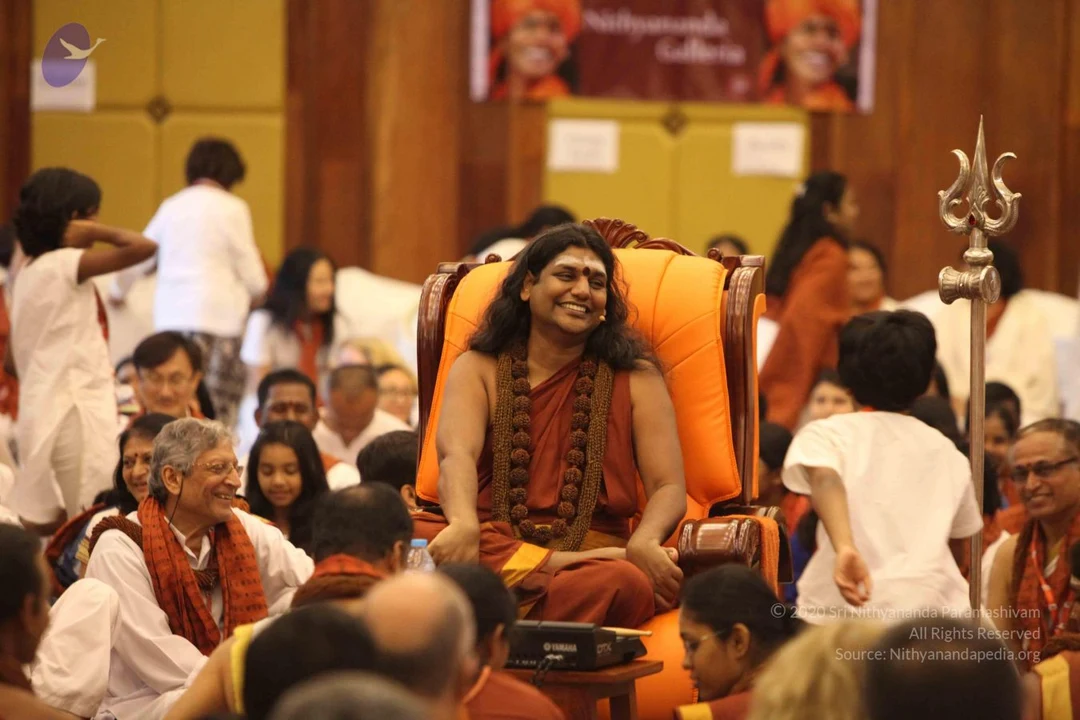
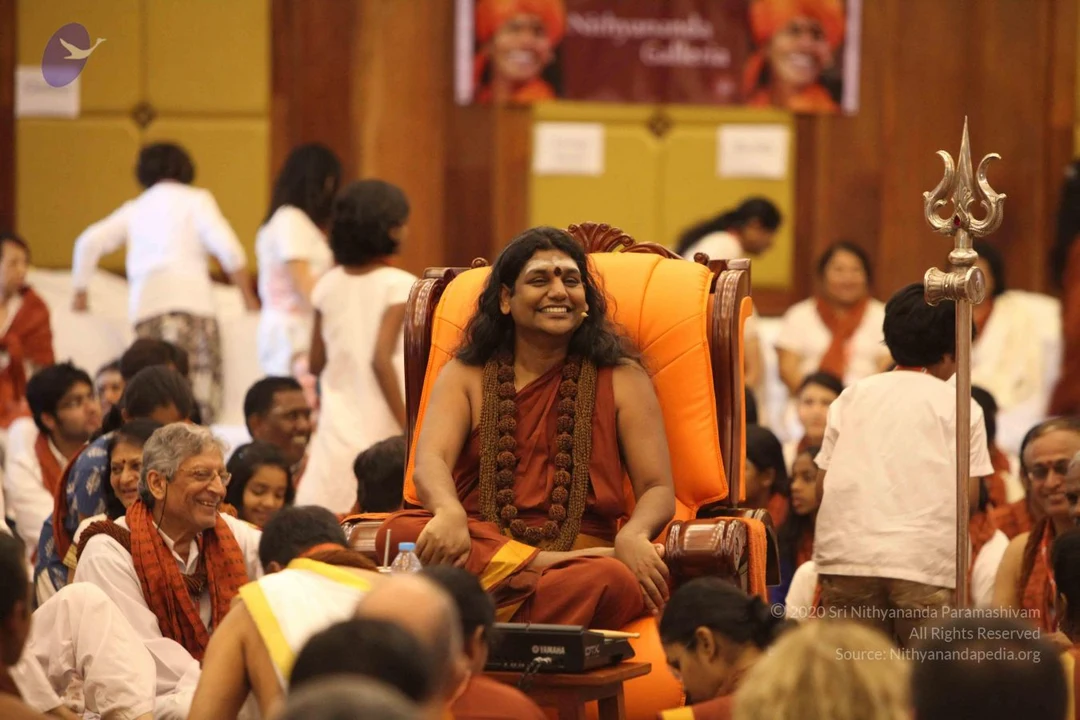
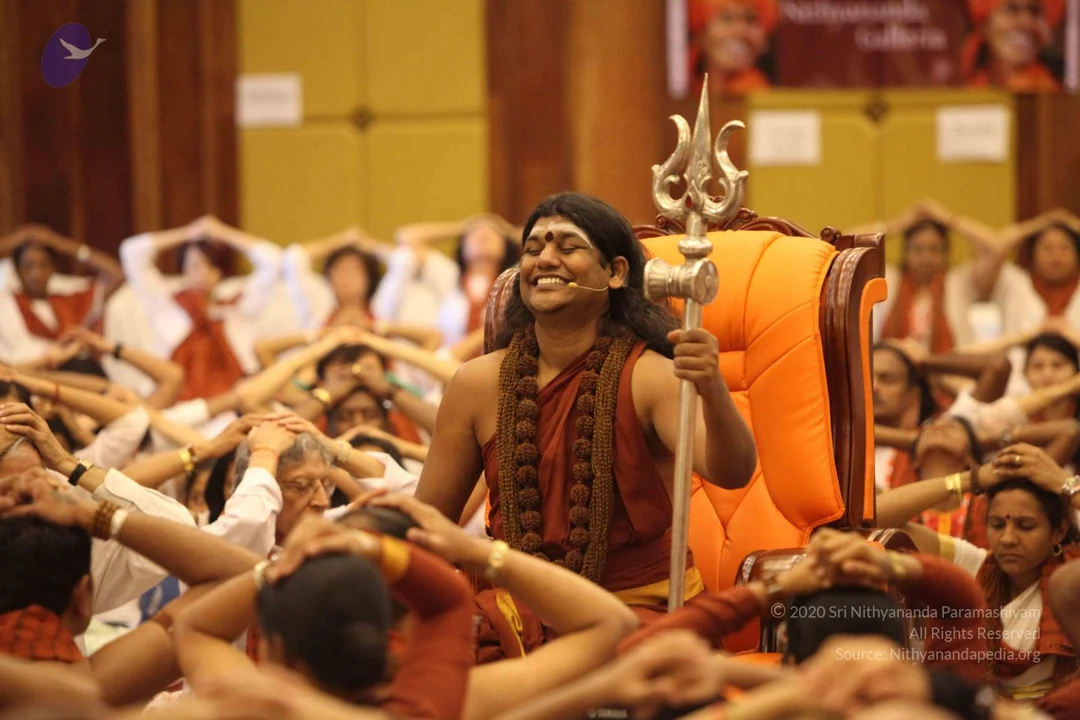
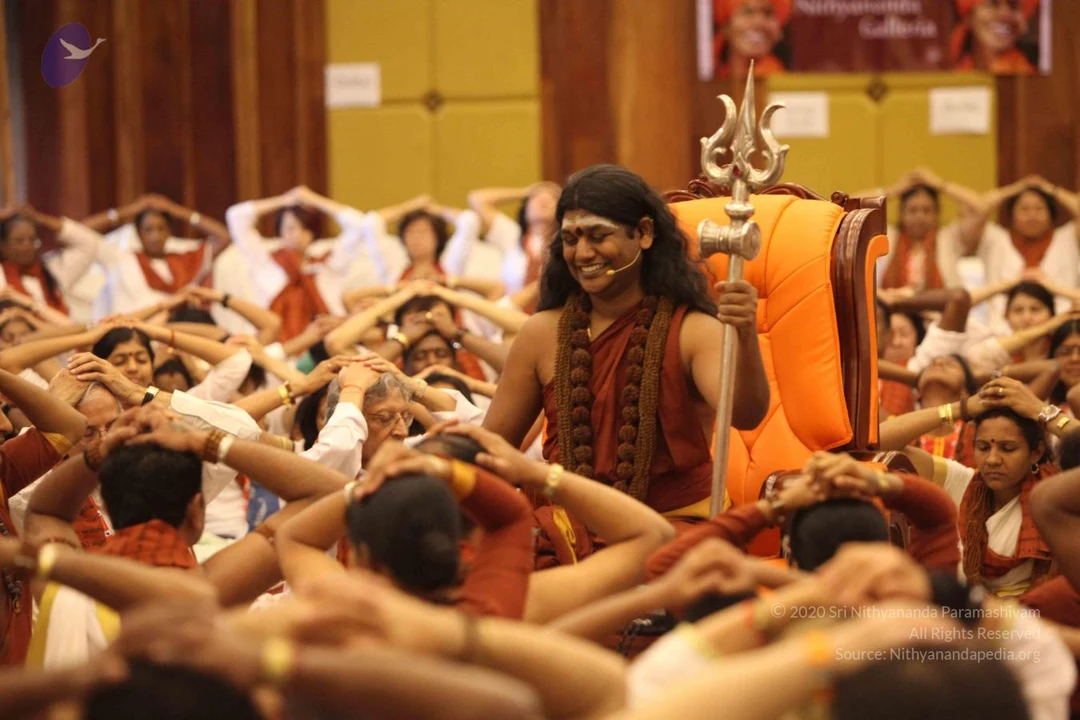
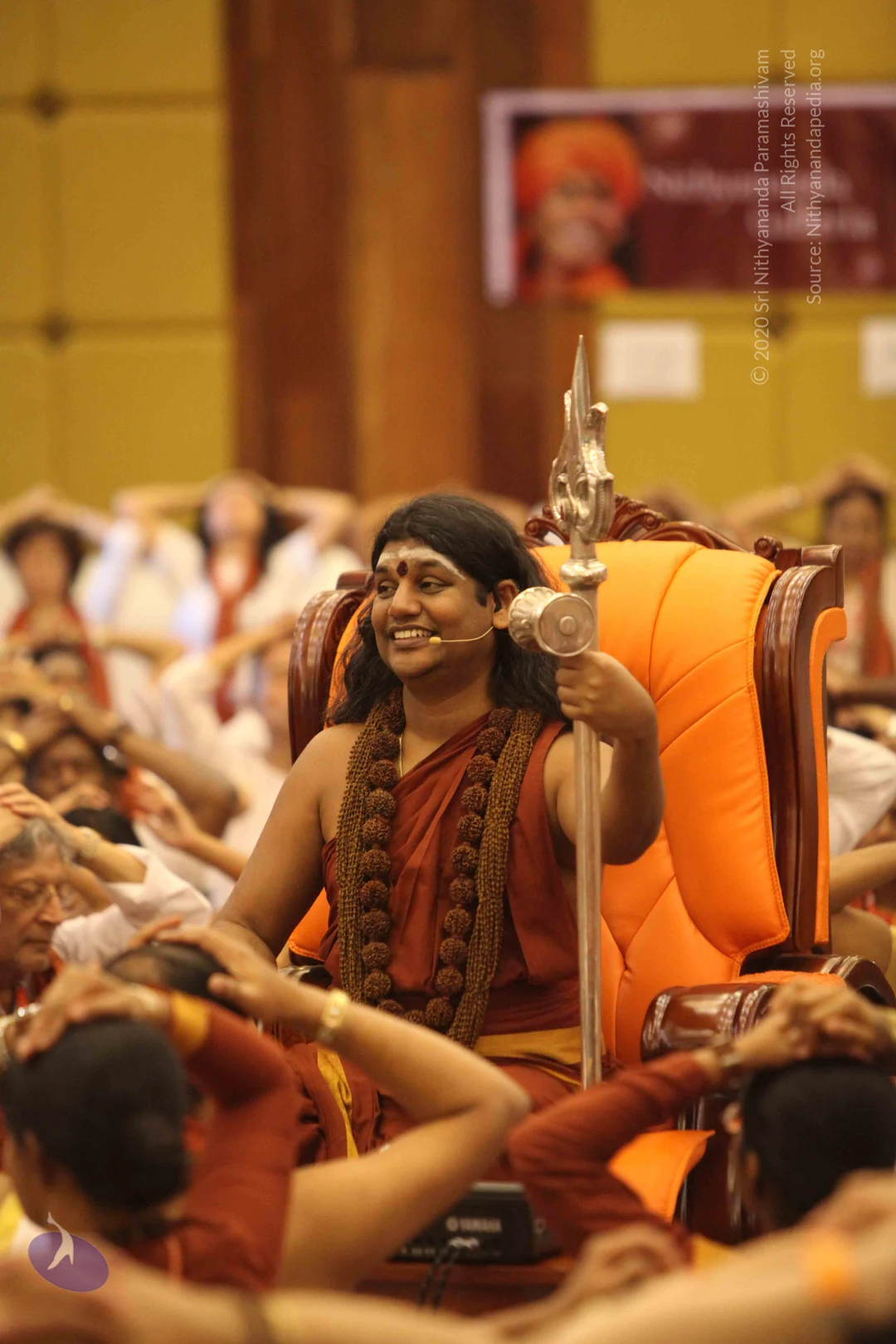
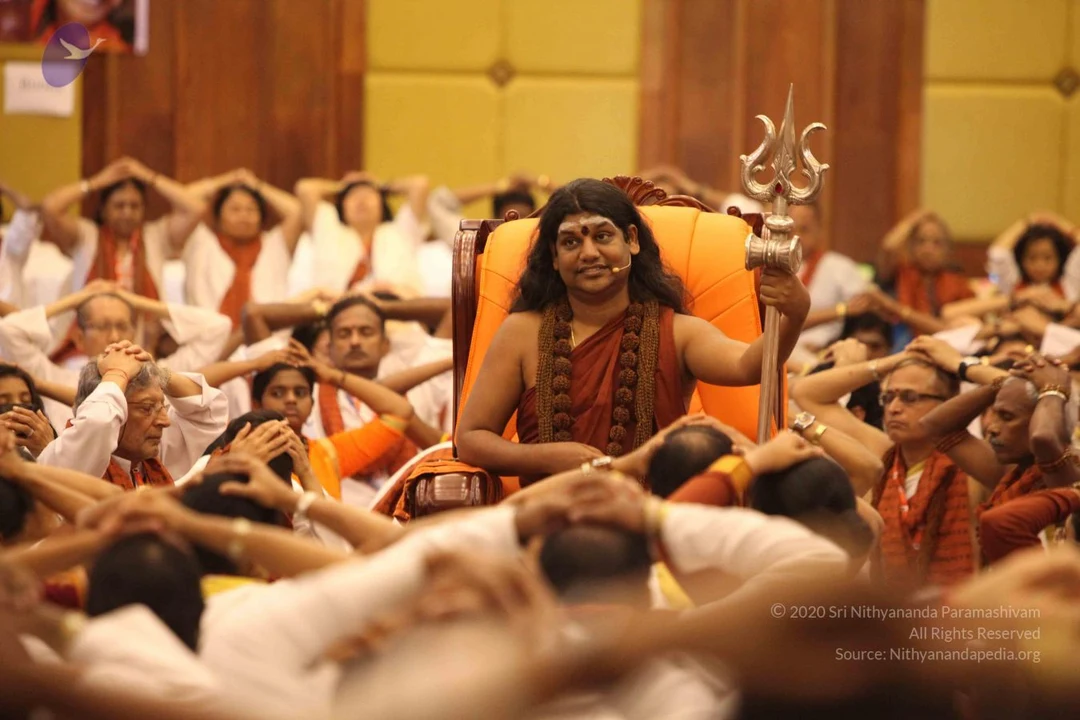
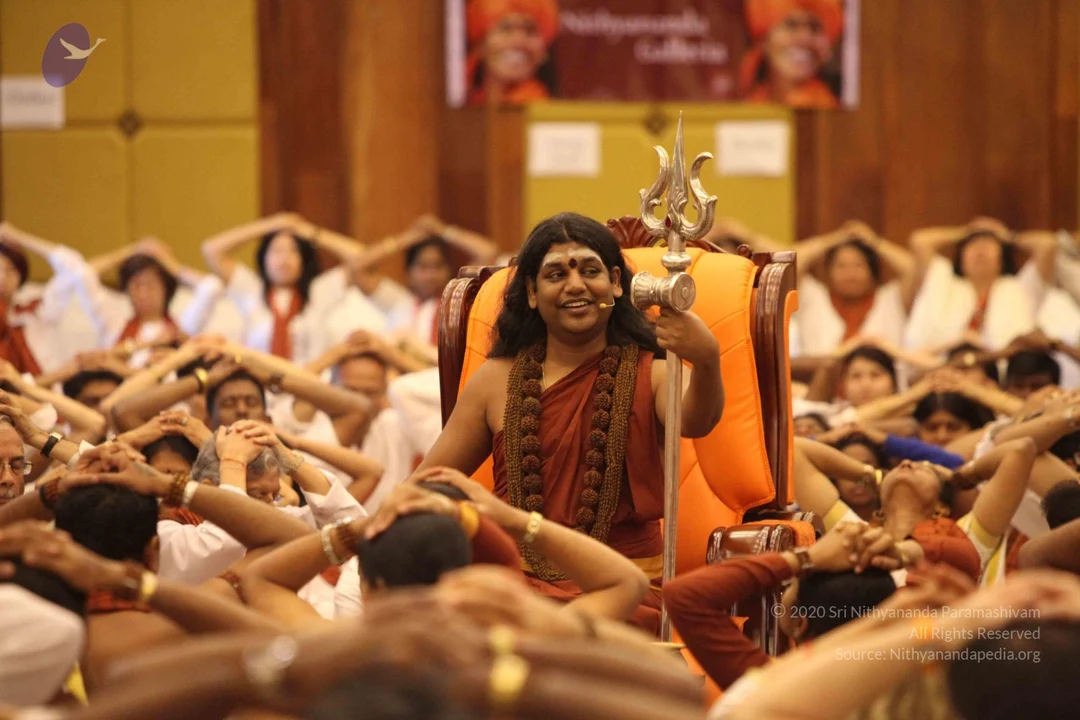
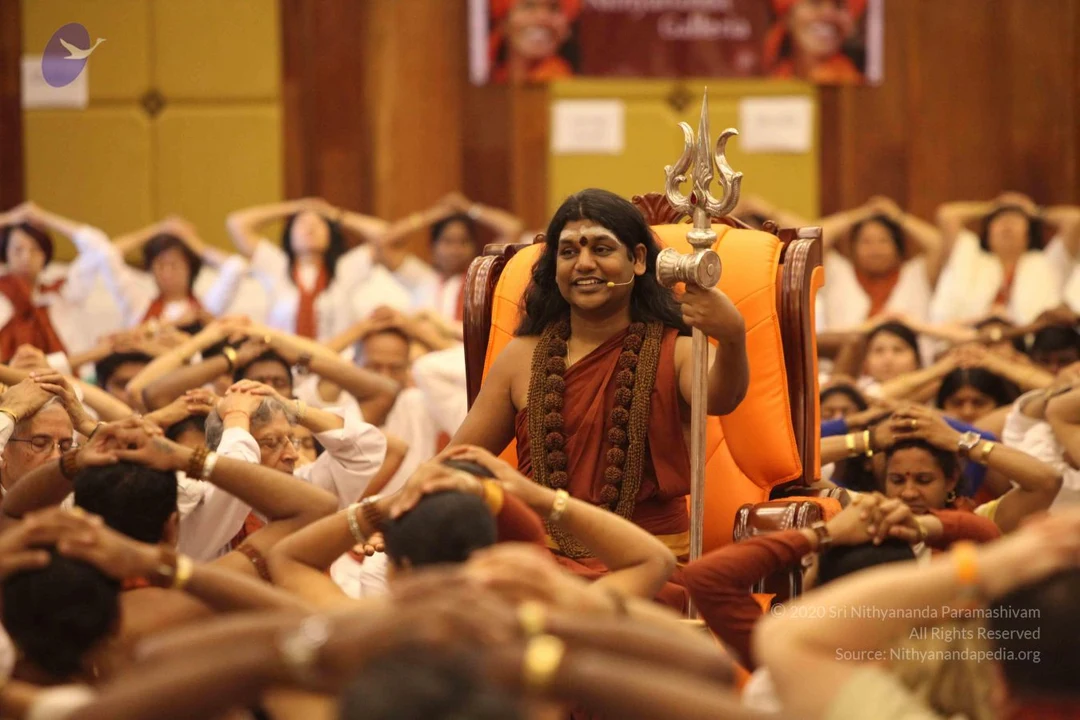
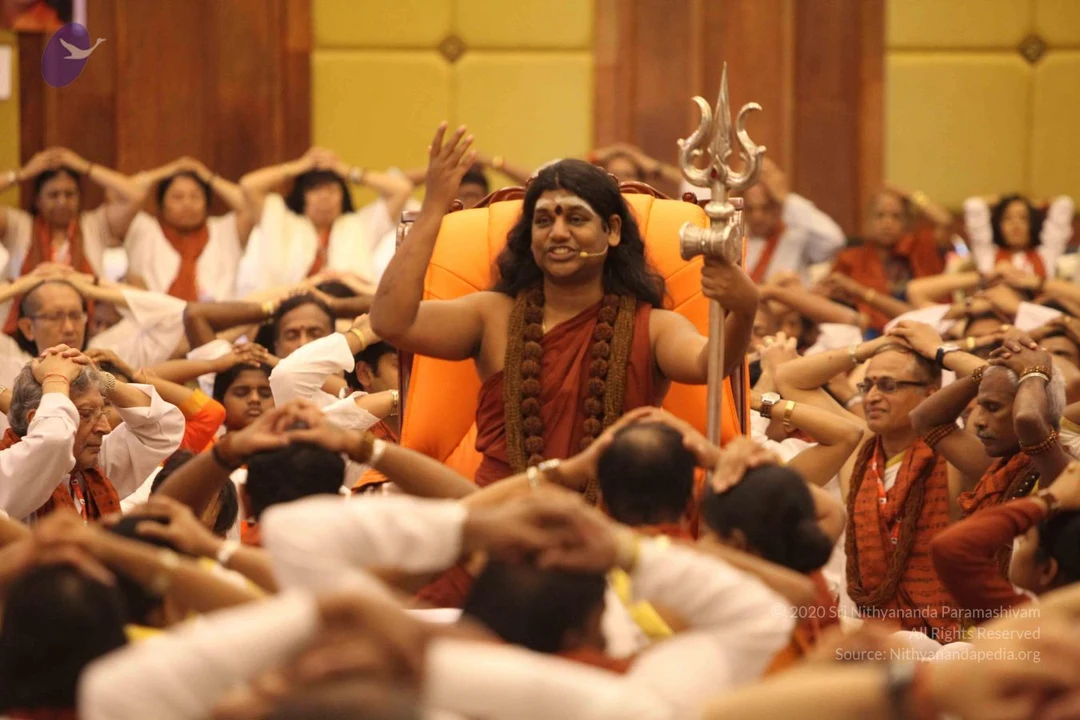
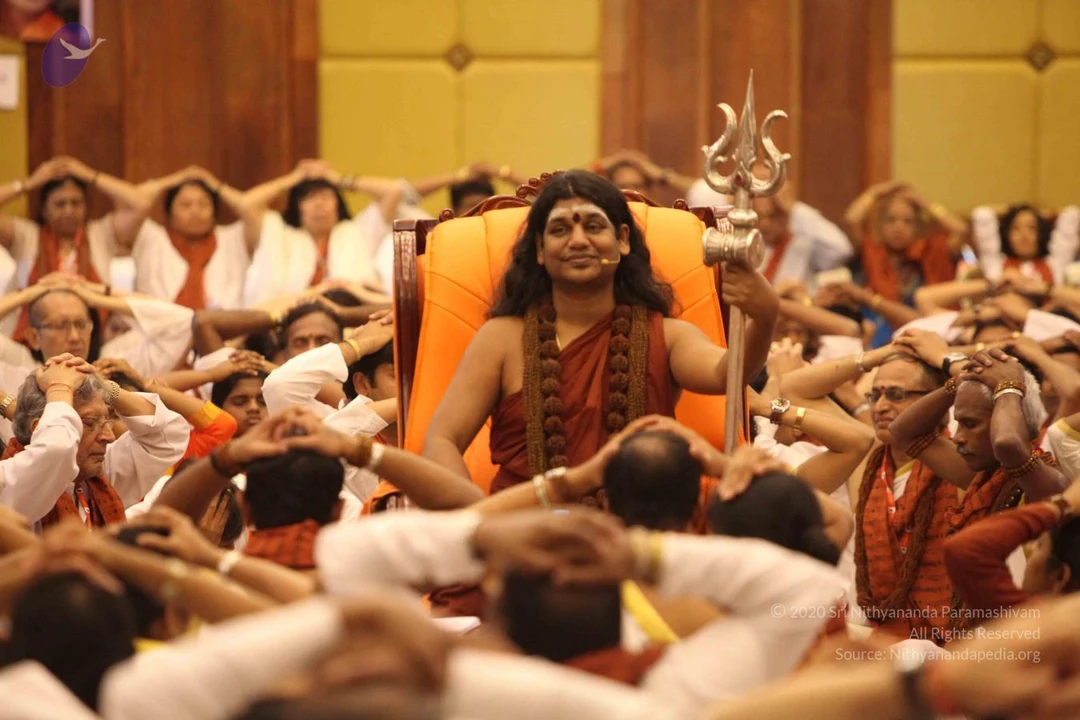
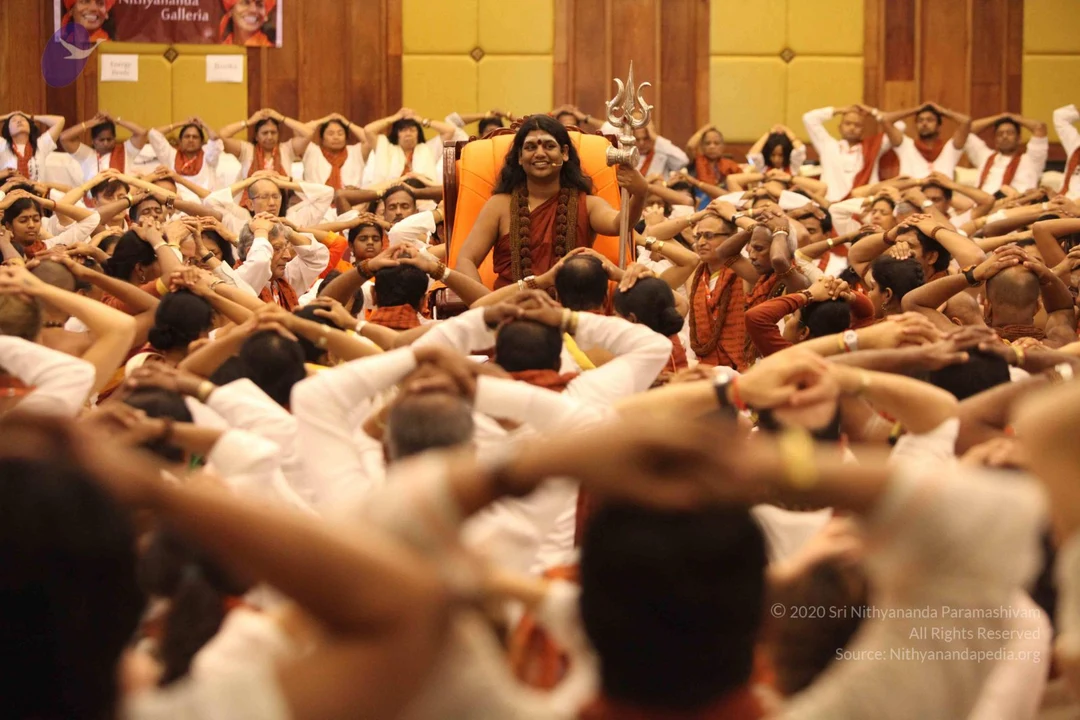
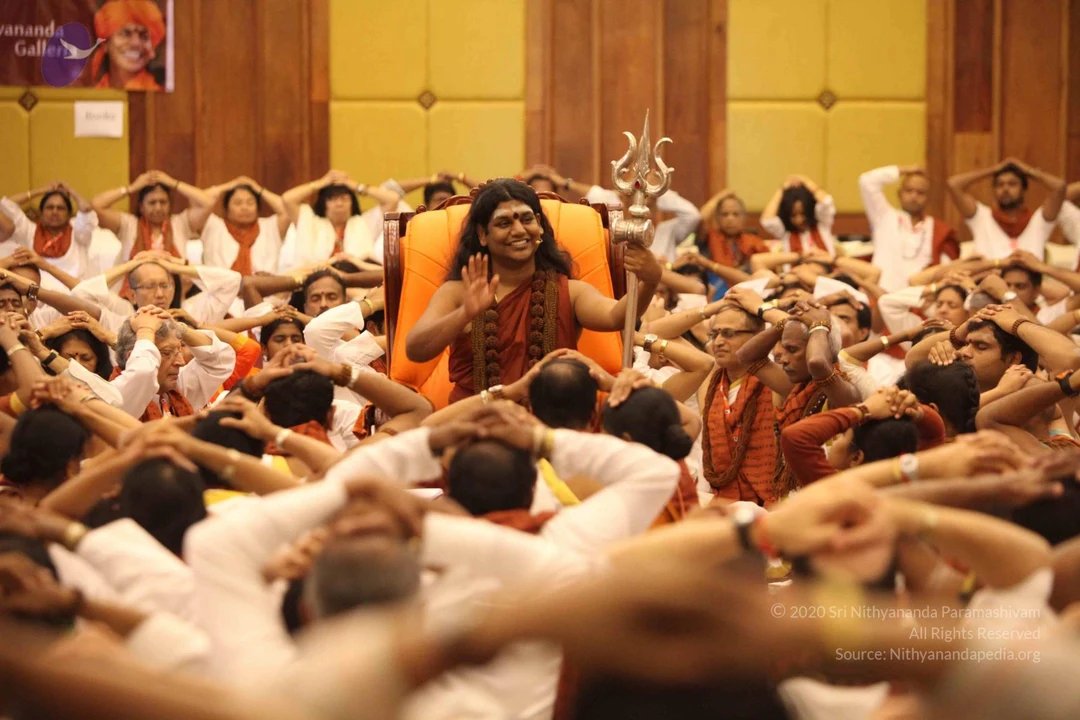
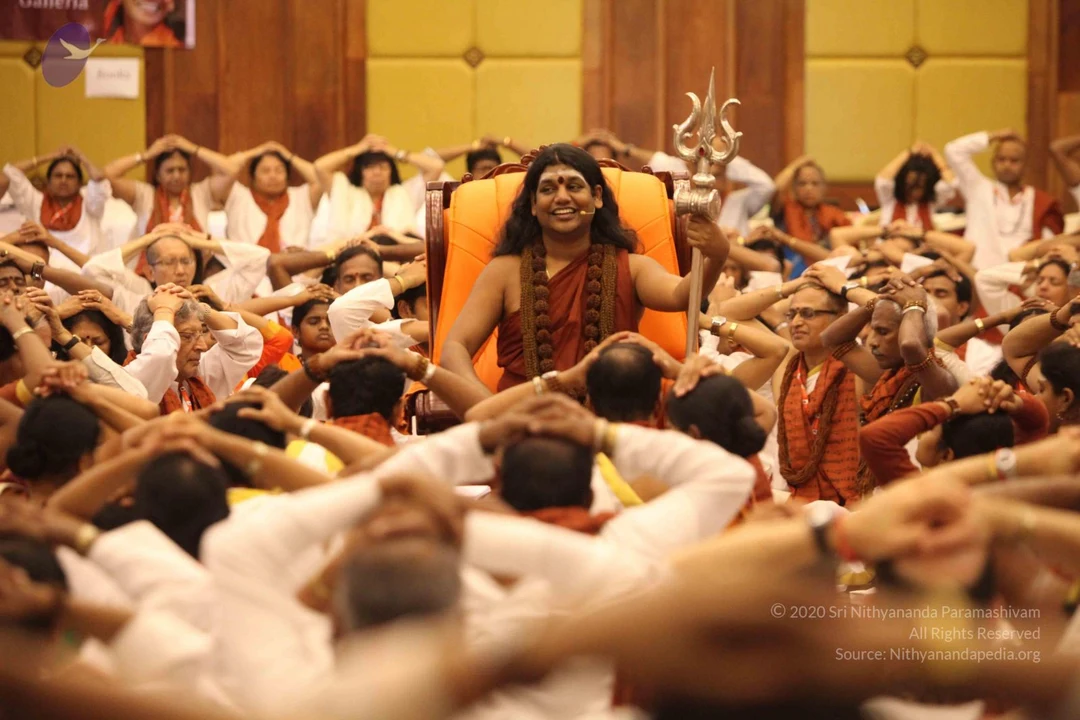
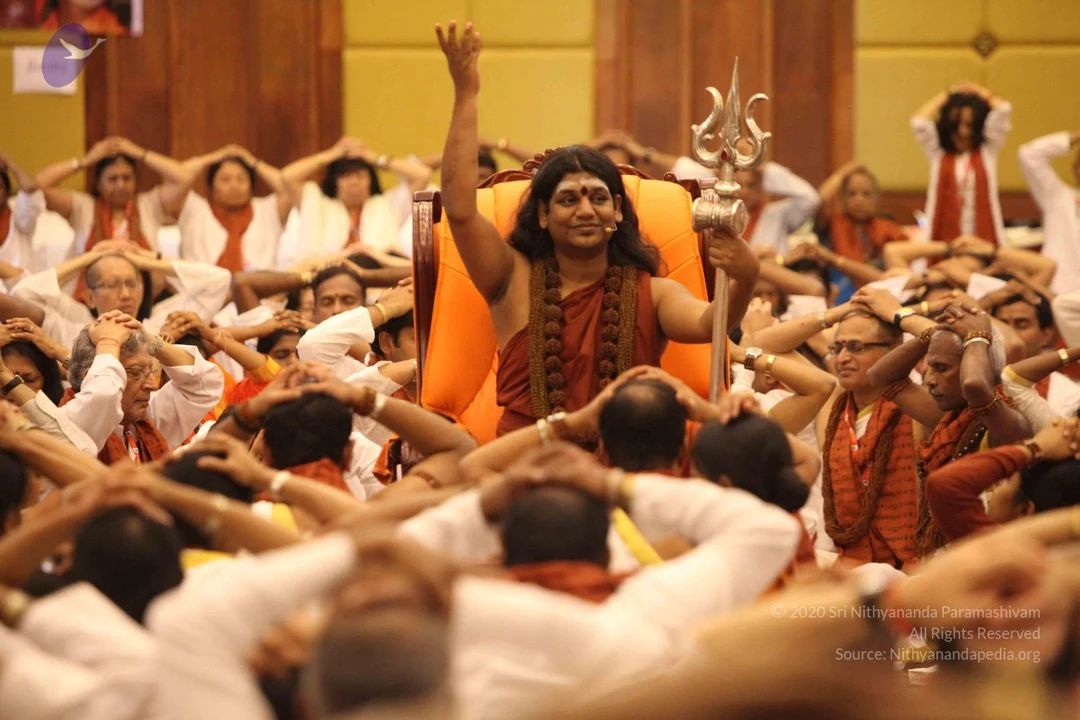
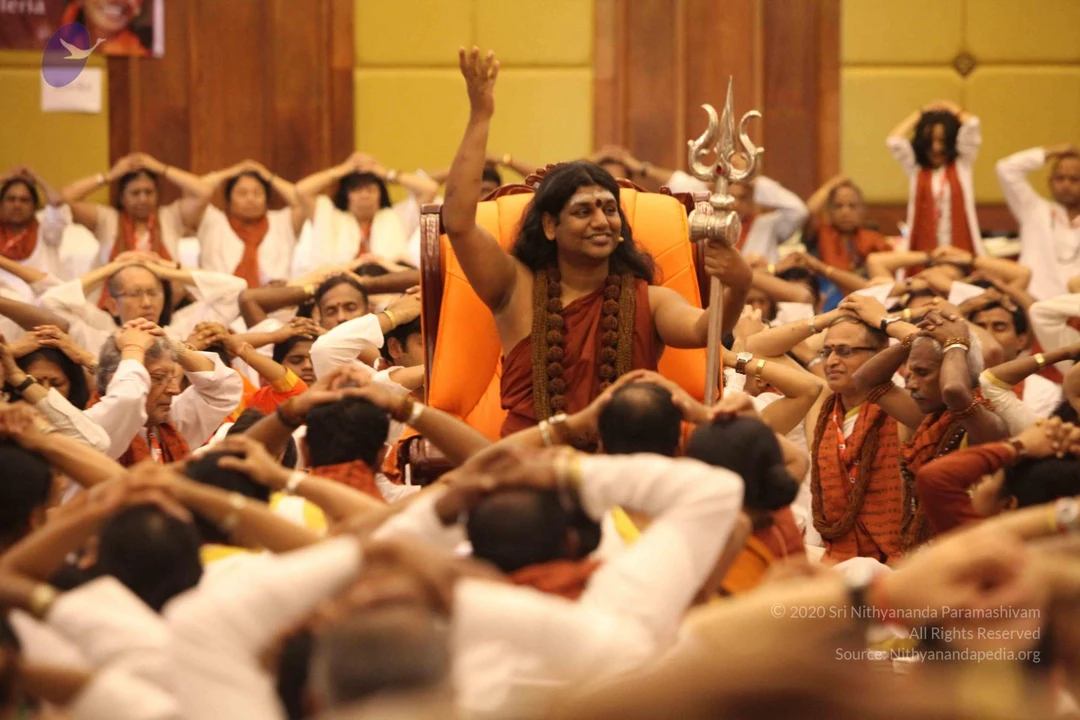
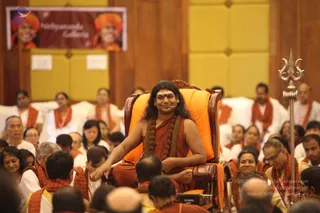
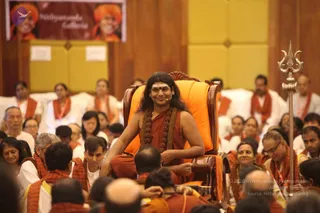
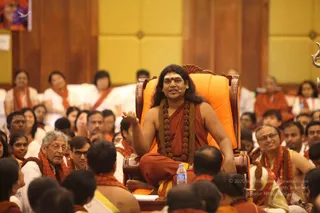
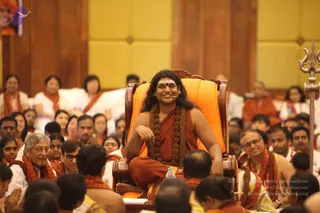
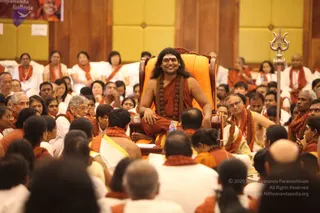
A seated man with long dark hair, bare-chested under a rust-orange wrap, wears a rudraksha mala and a tilak on his forehead and smiles while resting his hand on the arm of an ornate wooden throne with a bright orange cushion. Beside him stands a silver trident. Behind him is a wood-panelled hall with yellow padded walls, a banner reading Nithyananda Gallery, and a seated audience of devotees in white clothes with orange shawls, several with grey hair, and a man in glasses on the right. Swamiji (probable): the seated man shows long swept-back hair, a rudraksha mala and orange ceremonial dress, and is seated on the throne, which is the central subject of the scene.A seated figure in an ornate wooden chair with a bright orange cushion sits centrally in a large hall, wearing a rust-orange cloth wrap over bare shoulders, long dark hair swept back, a white tilak on the forehead, and a thick brown rudraksha mala draped across the chest. A tall silver trident stands at the right edge. Audience members in white and orange-red shawls sit on the floor in front of and around the chair, and a banner at top reads Nithyananda Gallery with portraits of smiling figures in orange headwear. Probable Swamiji (probable): the seated figure in the orange-cushioned chair with long hair and rudraksha mala.A photograph of a seated man with long dark hair, a red-orange robe and a dark rudraksha mala with a ceremonial gold ornament, seated on an orange-cushioned carved wooden throne. He has a tilamam mark on his forehead, a small microphone clipped near his face, and his raised right hand is gesturing as he speaks. Seated around him on the floor are rows of devotees in saffron and white clothing and orange shawls, with a water bottle near his feet. Yellow wood-panelled walls form the backdrop of a satsang hall.A seated man with long dark hair, a red-orange robe, a rudraksha mala and a small red forehead mark sits on an ornate wooden throne with a bright orange cushion, smiling broadly. Behind him a large audience in white and saffron-orange shawls sits on the floor and in rows, many with hands together. A silver trishul stands at the right edge, and a framed picture hangs in the upper left corner.A seated man with long dark hair wears a rust-orange robe and a beaded rudraksha-style mala necklace, sitting on an ornate wooden throne with a bright orange cushioned seat. A silver trishula stands at the right beside him. A large seated audience in white and orange-red shawls fills the hall in front of him, many with orange-red shawls; a framed banner with a photo appears at upper left. The man's identity is based only on appearance cues and is uncertain, so the a person field is set to unsure.A photograph of a seated figure in a rust-red robe on an ornate orange-and-brown throne, with long dark wavy hair falling past the shoulders. The seated figure extends a hand to touch the head of a kneeling man in a white shirt, while holding a silver trishul upright beside them. A bald attendant in orange-brown robes with a rudraksha-style mala stands at the left edge of the throne. Behind them, rows of seated devotees in white and red-orange shawls fill a hall with wooden panelling and a yellow wall, indicating darshan. A keyboard is visible at the lower left.

A-MaheshwaraPuja
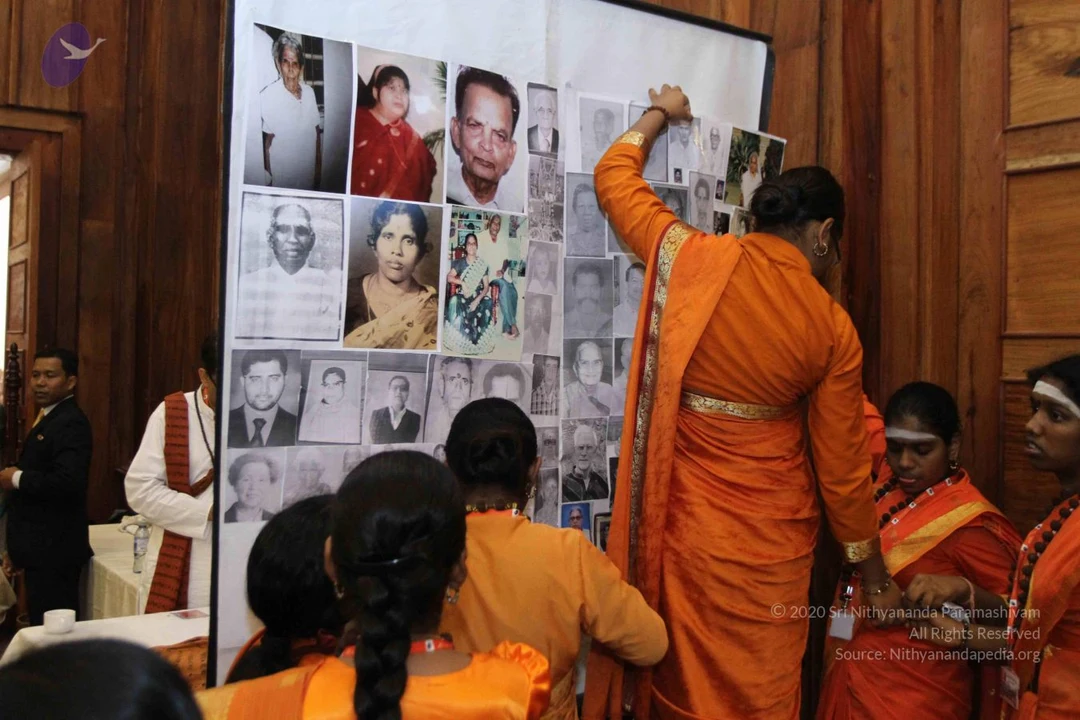
80 photosSource gallery
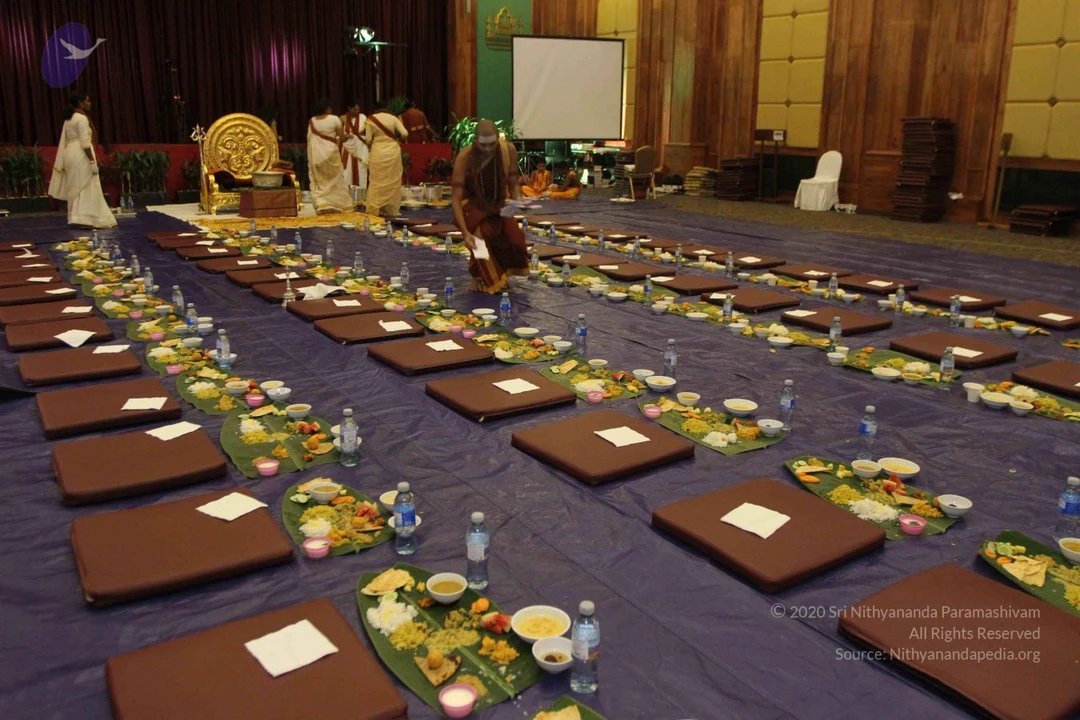
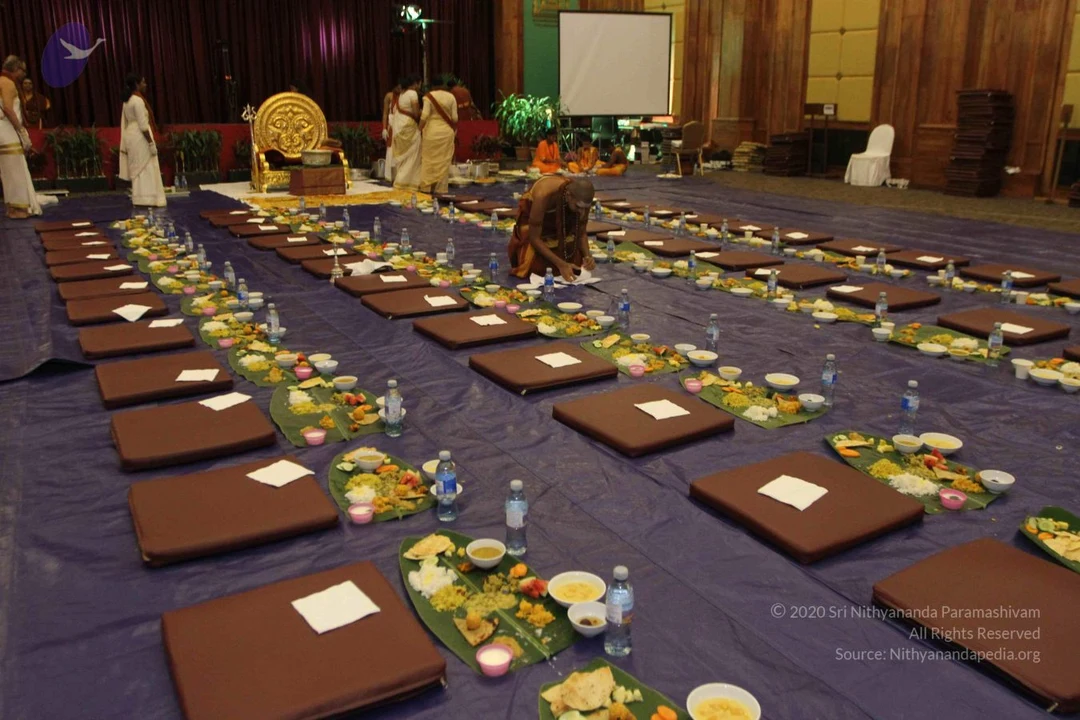
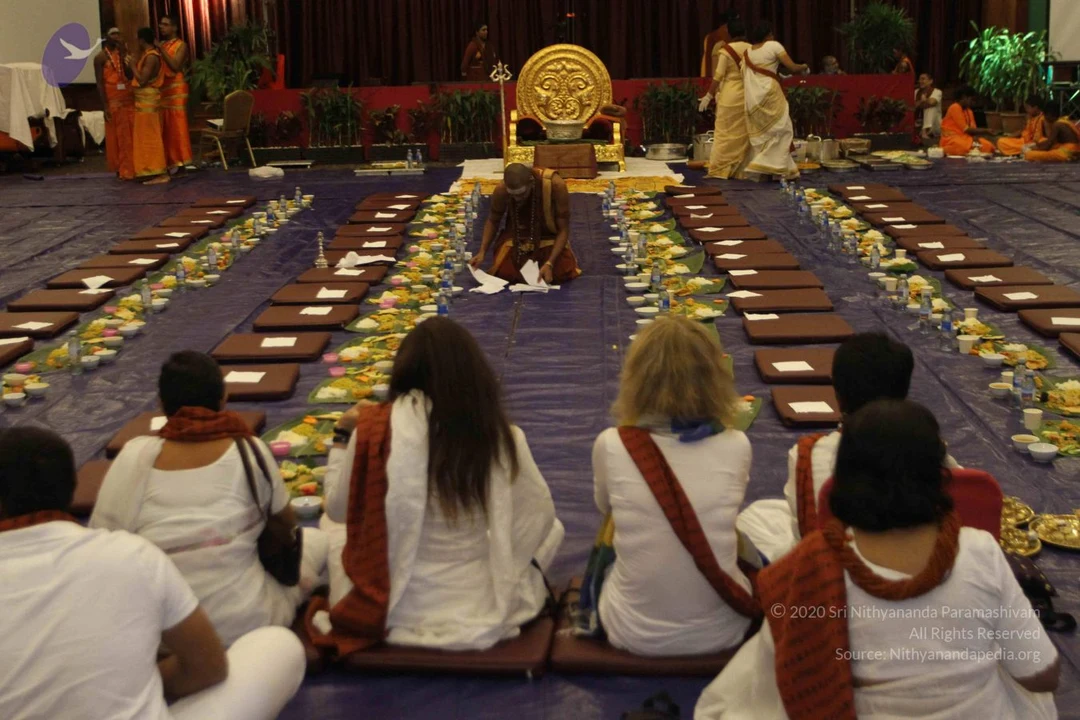
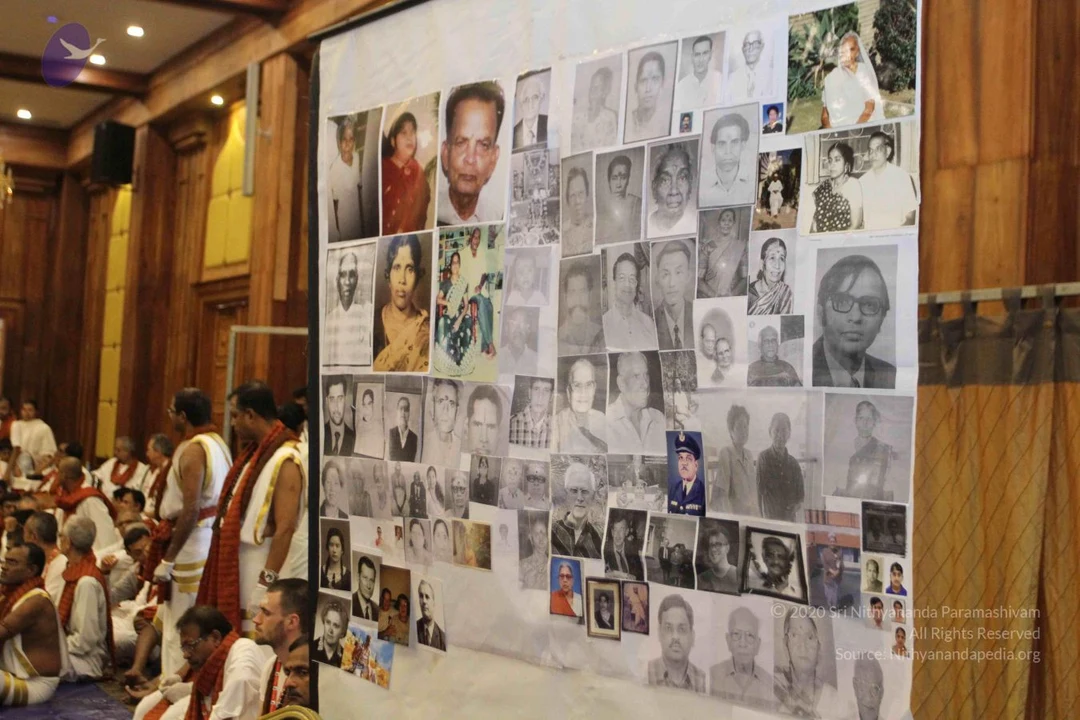
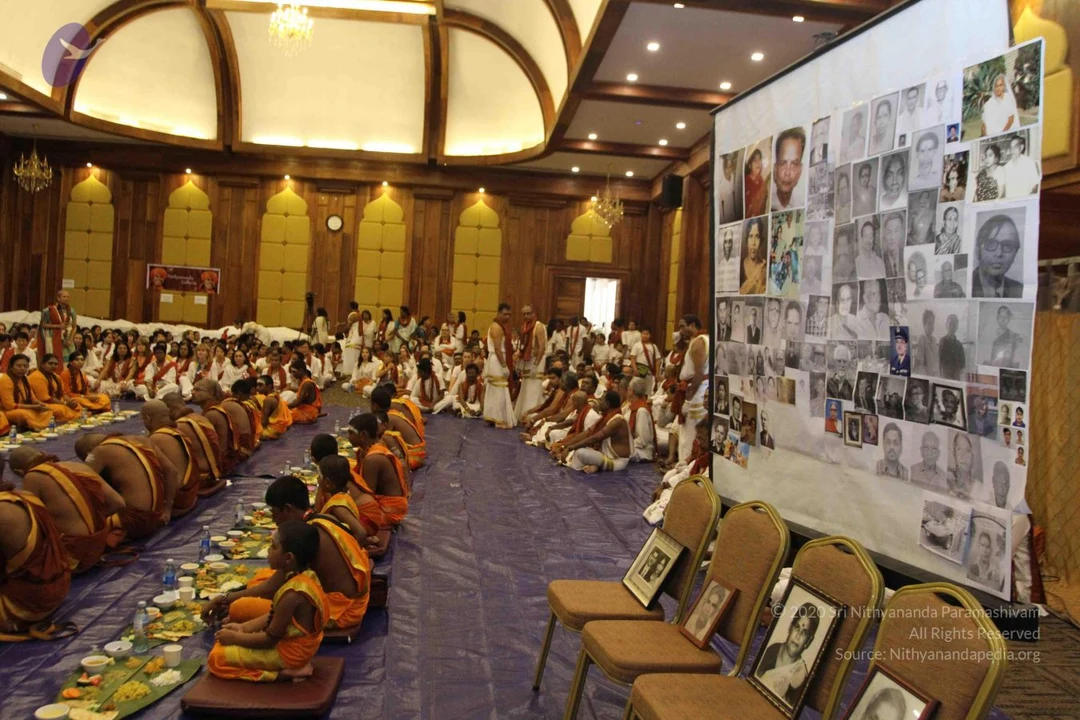
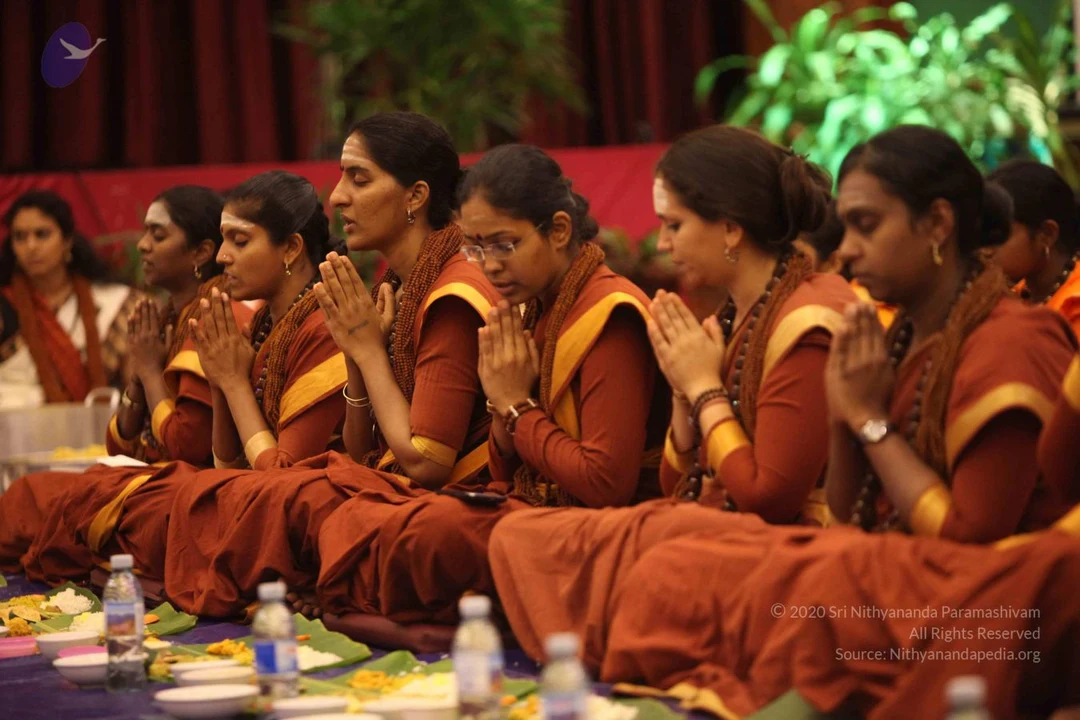
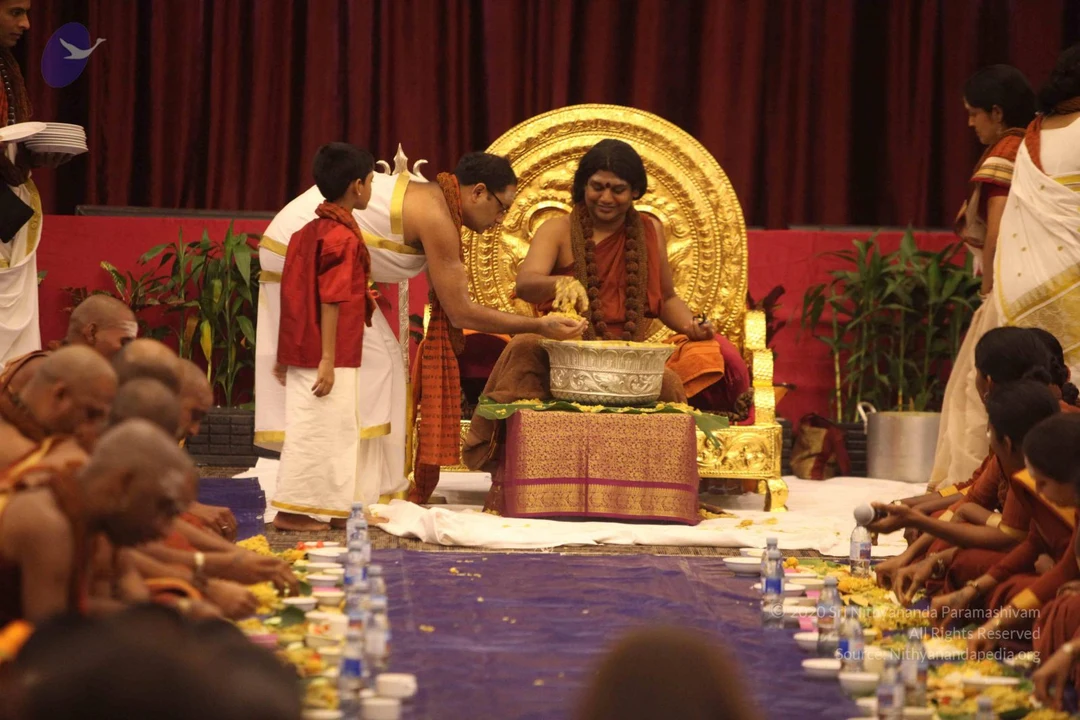
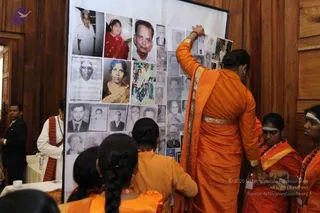
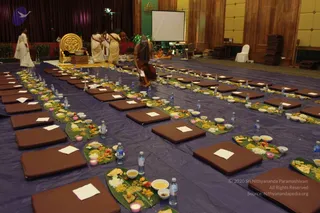
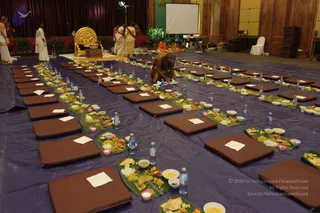
A photograph in a wood-panelled hall shows several women in saffron-orange sarees and orange garments with gold borders. A woman in the foreground, seen from behind with her hair in a bun, reaches up with her right arm to pin photographs onto a large white display board. The board is covered with rows of printed black-and-white and colour portrait photos of older people, many framed in small grids. Other devotees stand beside and in front of it; one nearby wears a white forehead mark, and a man in a dark suit and another in white with an orange shawl stand at a table to the left. Tables with white cloths and water bottles are visible. The printed portraits are unnamed in view. No one identifiable as a person is shown in appearance-based cues.A large hall prepared for a communal meal, with rows of brown floor cushions on a blue tarpaulin. Each cushion faces a banana leaf heaped with rice, yellow and orange dishes, sweets, chutneys and small steel bowls, with water bottles placed between them. At the far end a gold ornate throne stands on a raised platform before a red curtain. Several people in white and cream clothing move about near the throne, and a man in a reddish-brown robe bends over the leaves in the foreground. A projector screen and wooden panelling line the back wall.A large hall set for a communal meal, with rows of brown floor cushions on a blue cloth and banana leaves holding rice, curries, vegetables, papadam, sweets and small cups of sauce, with water bottles and tea lights between them. At the far end a gold ornate throne stands on a red-carpeted stage beside a potted plant, with a projection screen to the right. Several people in white dhotis and shawls move about the stage, and a man in an orange-brown robe bends low at the near end of the row, placing food. Two figures in orange robes sit near the back of the stage. The room has dark wooden panelling and hanging purple drapes.Photograph of a large hall set for a communal meal. Rows of banana leaves are laid across a blue tarp, each with yellow and white food, small bowls, water bottles and name cards on brown floor cushions. In the foreground, several devotees in white clothes with orange-red shawls sit with their backs to the camera. At the far end, a golden ornate throne stands on a raised platform with a trident beside it. A figure in orange-brown robes with a shaved head kneels on the floor near the leaves, arranging white paper. Several attendants in orange and white saris move around the stage and back area. The scene shows a seated feast or annadan with a ceremonial throne.A large hanging board covered with dozens of printed black-and-white and colour portrait photographs of older men and women, pinned densely in a grid, stands in a wood-panelled hall. In the left foreground, several men in white dhotis with red shawls sit on the floor in rows, while a standing man in white and red shawl stands near the board. Some seated figures wear white, and a few have shaved heads. The portraits appear to commemorate many individuals, and the scene suggests a memorial or honouring display during a gathering.A photograph of a large hall with a wooden-panelled, arched ceiling and warm lighting, where many people sit on a blue floor covering. Along the left, rows of monastic-looking participants in saffron and orange robes sit cross-legged before banana-leaf plates with food, water bottles and small bowls. Others in white ritual clothes stand and sit in the centre. On the right, a large screen displays a collage of black-and-white and colour portrait photographs of many people, with framed photos on the chairs in front. A small banner with an image hangs on the left wall.

B-MaheshwaraPuja
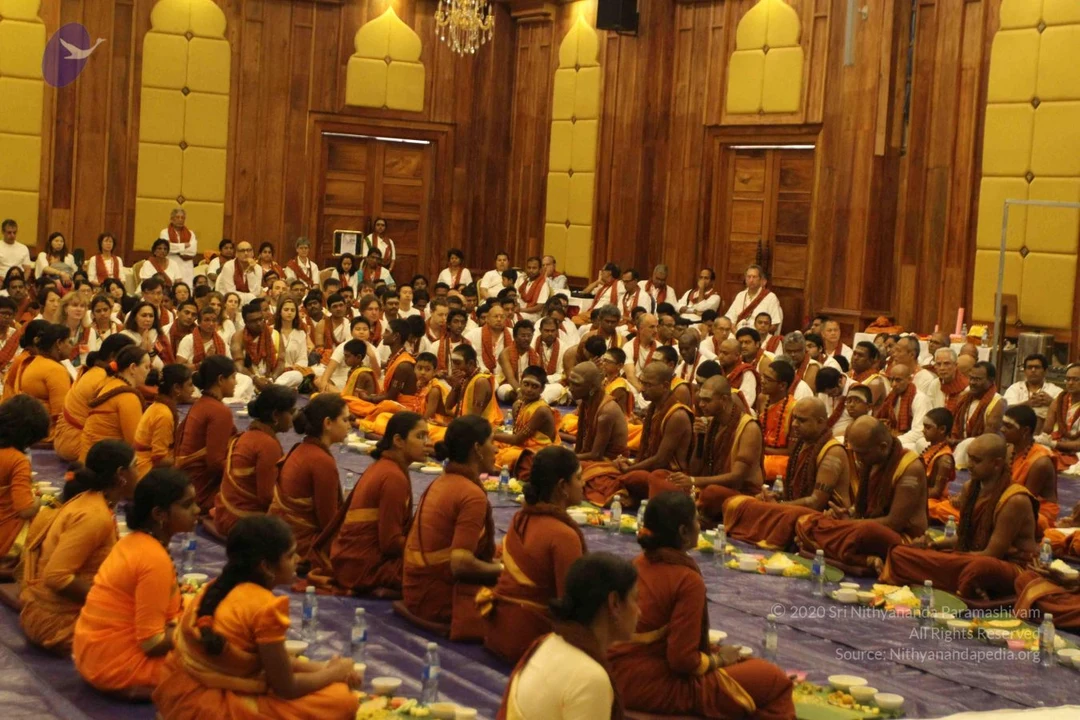
68 photosSource gallery
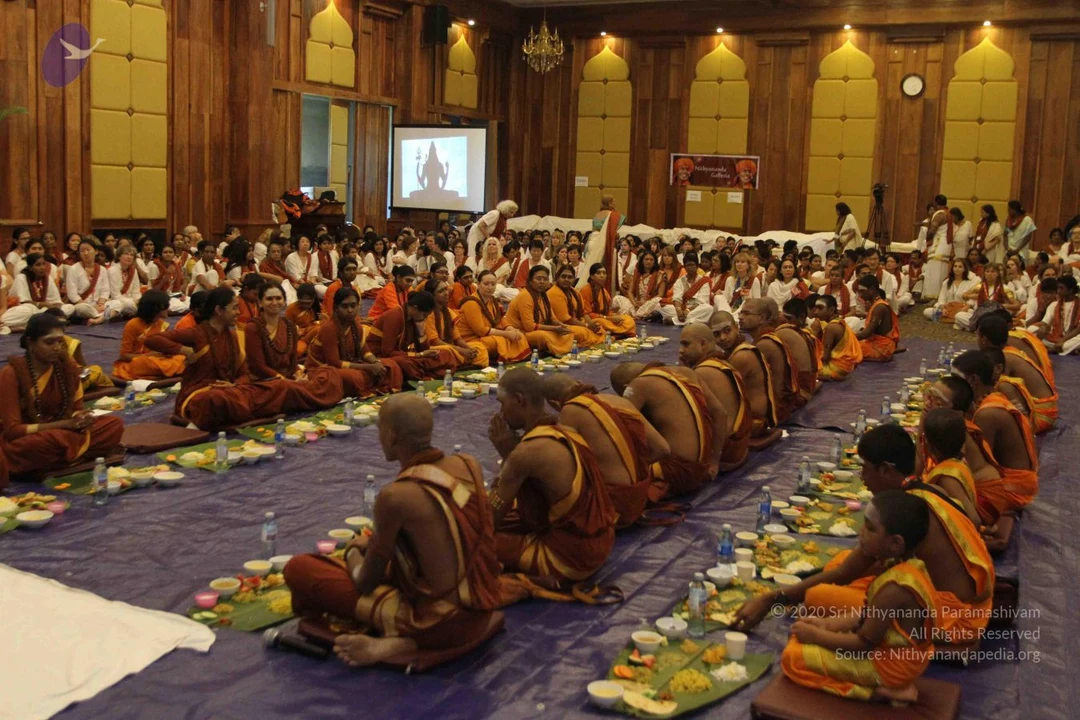
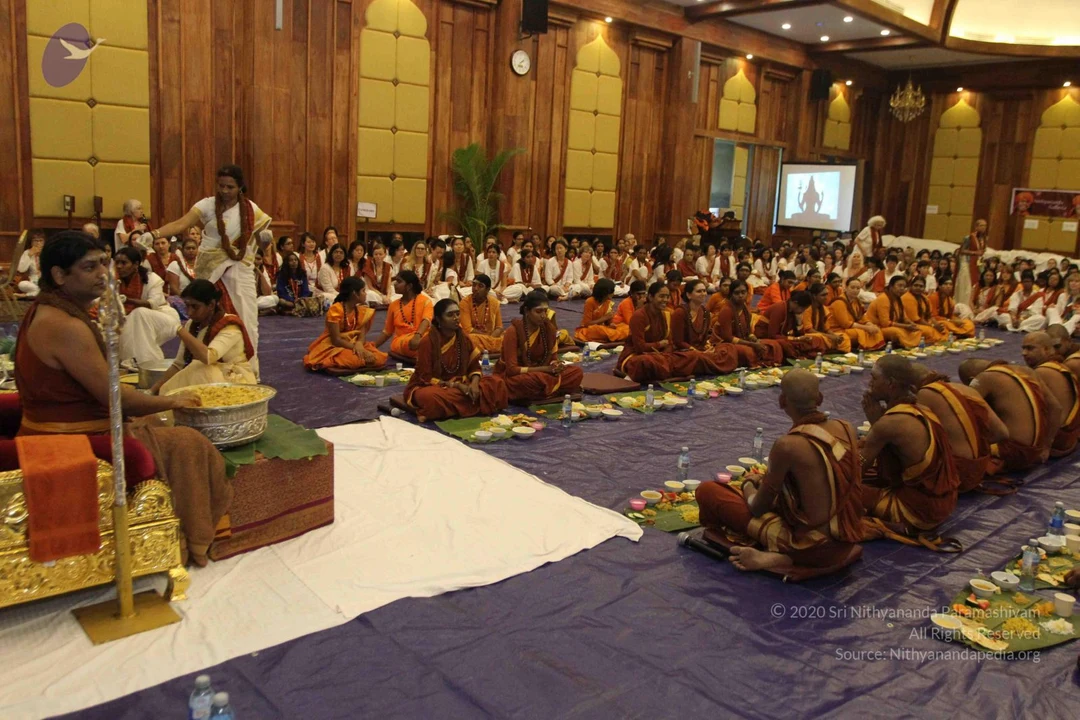
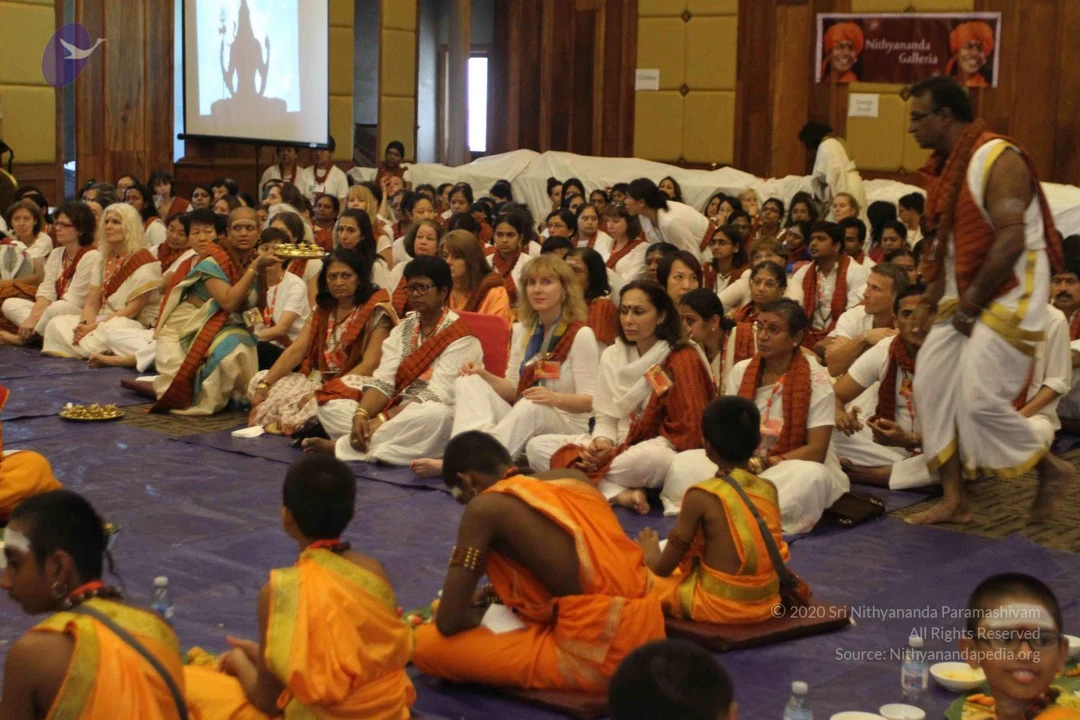
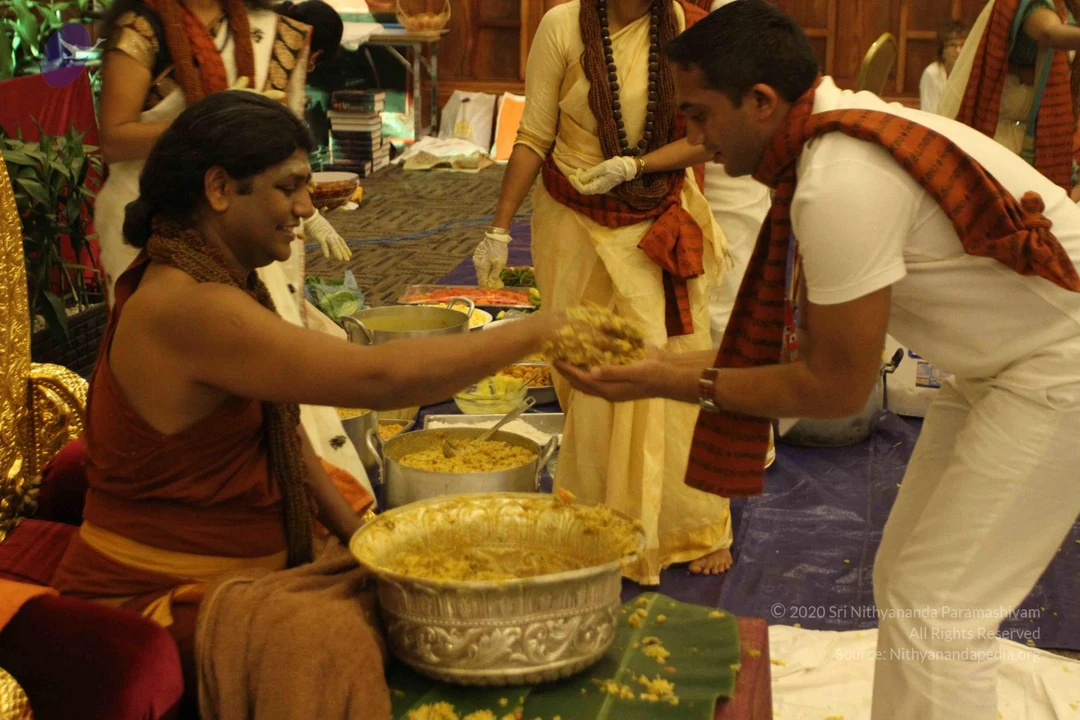
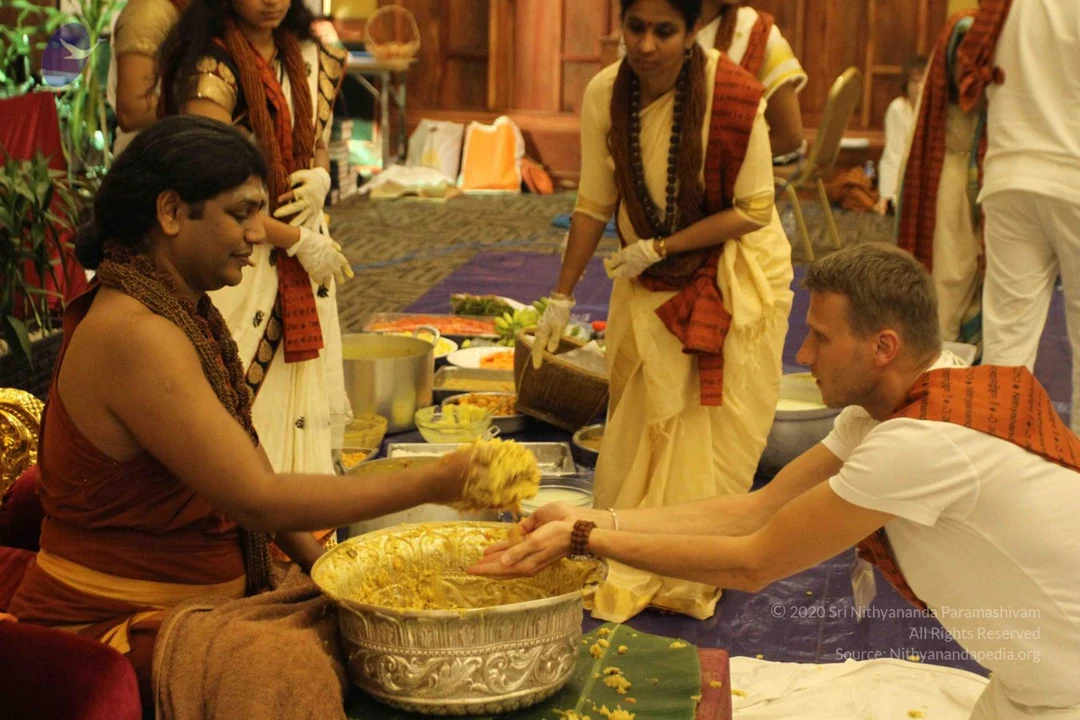
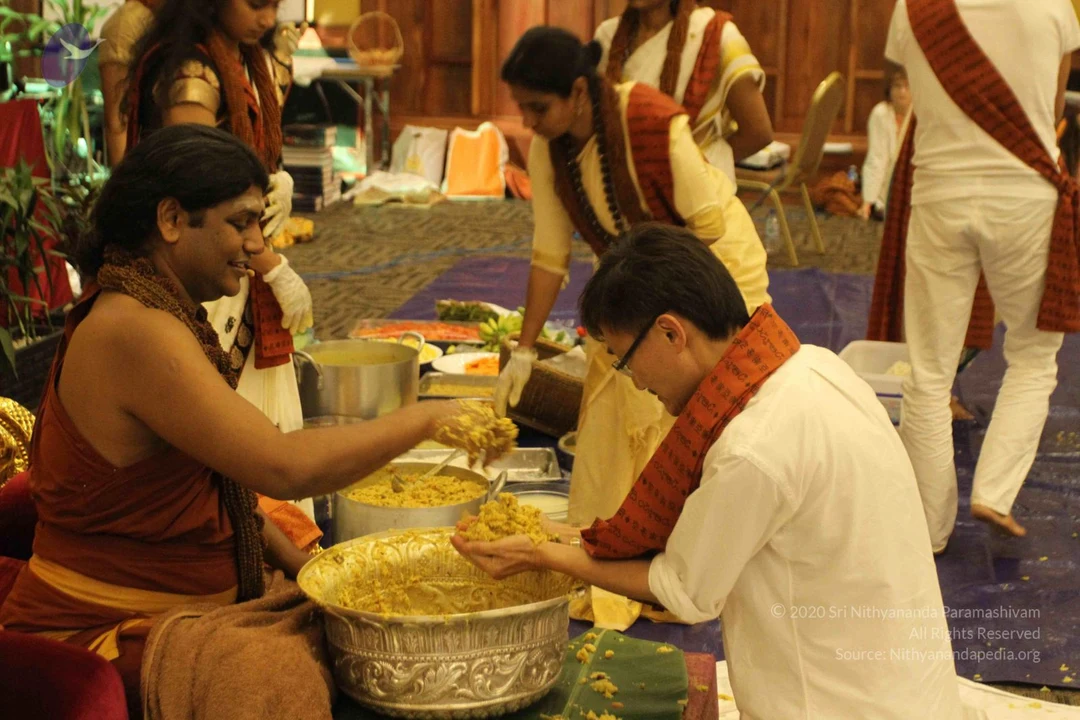
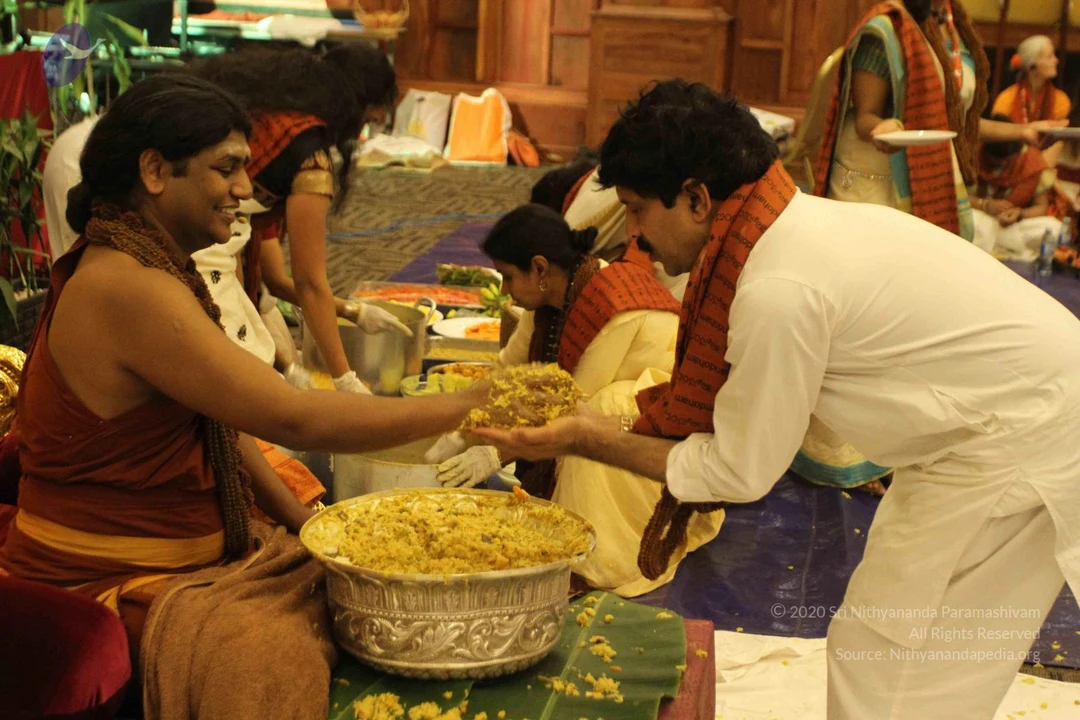
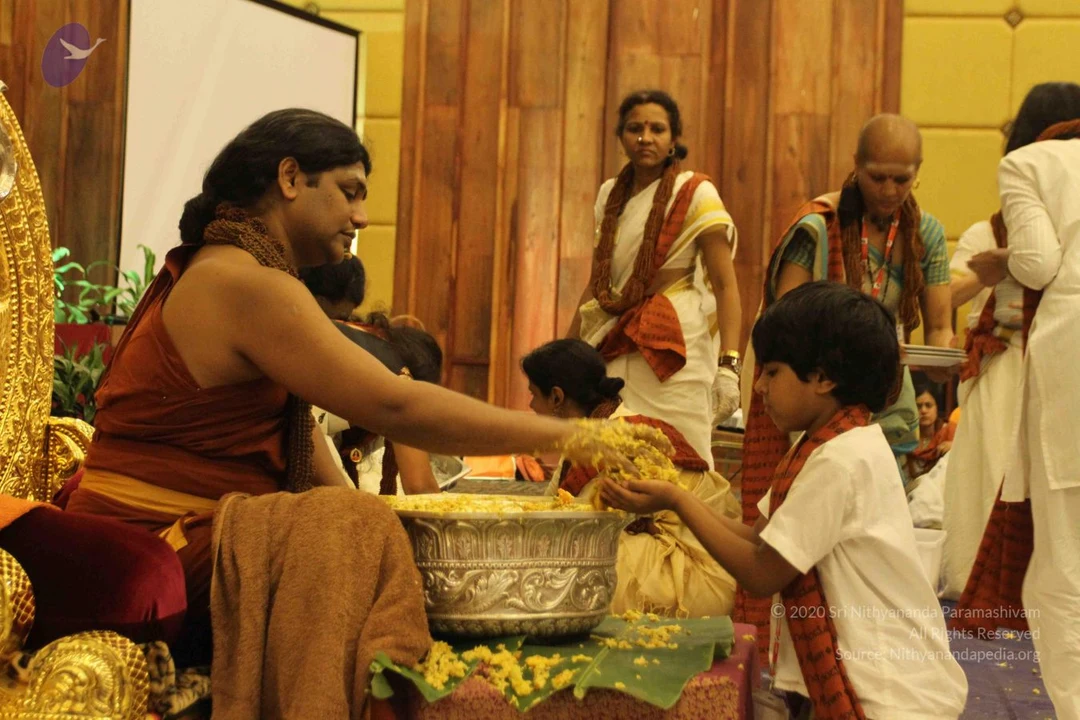
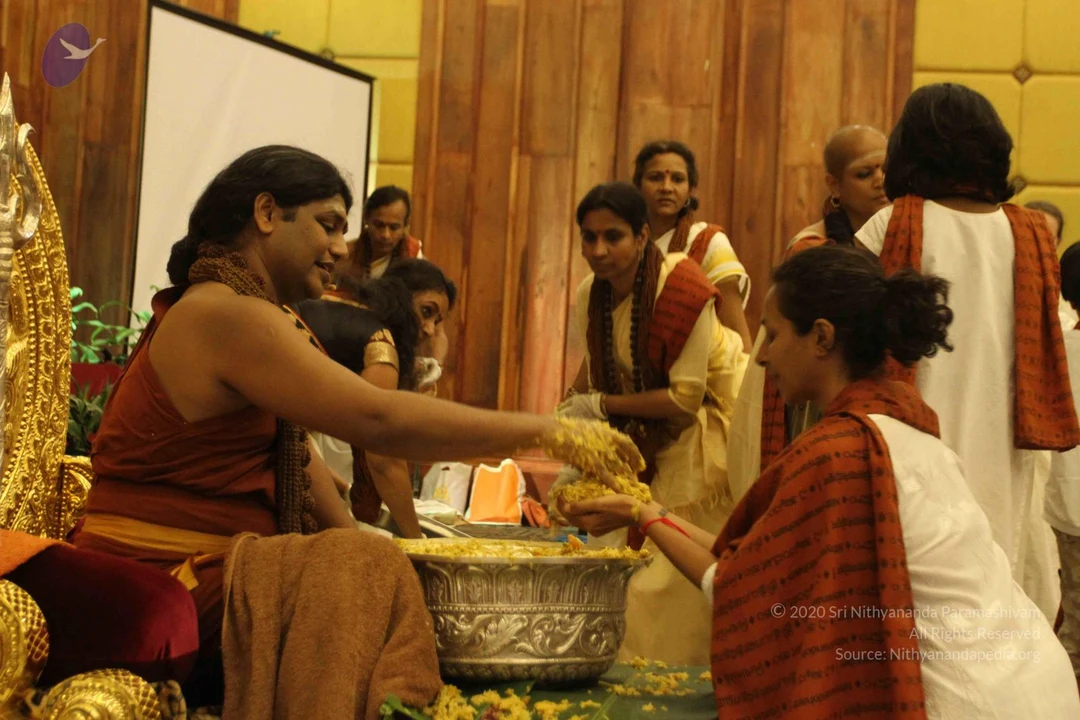
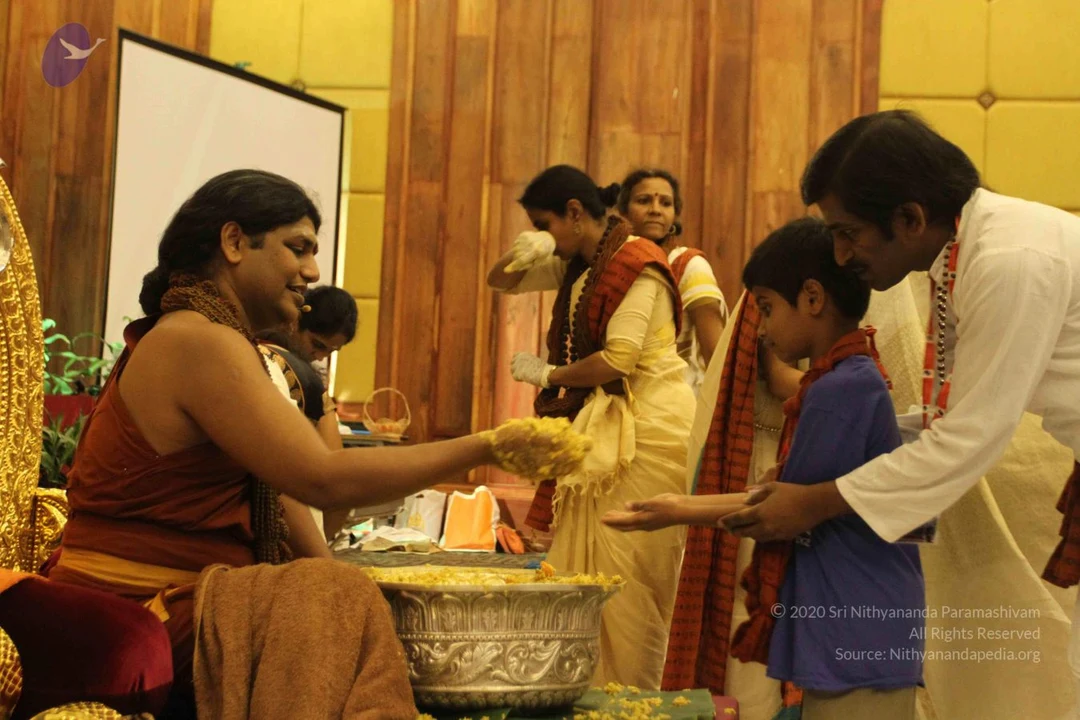
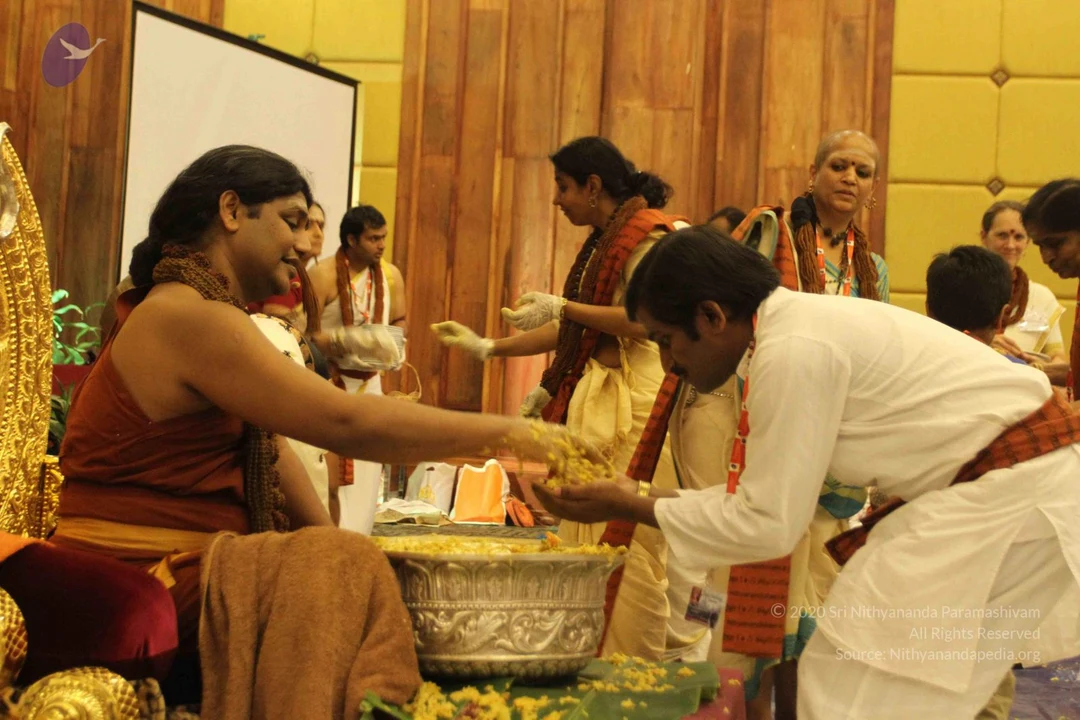
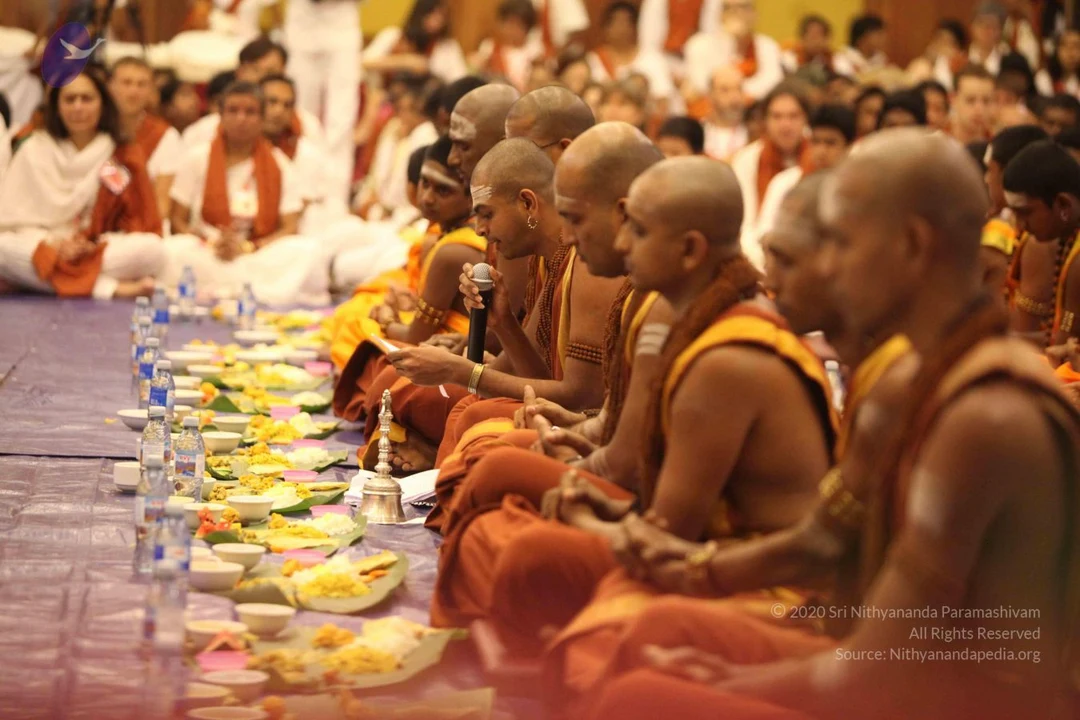
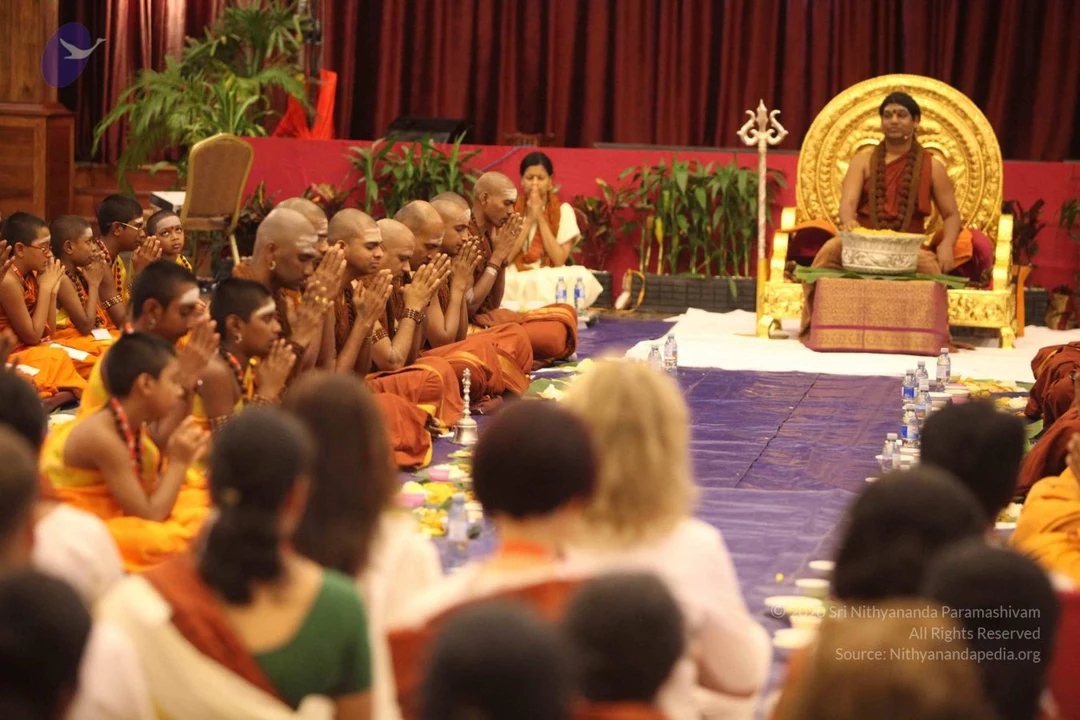
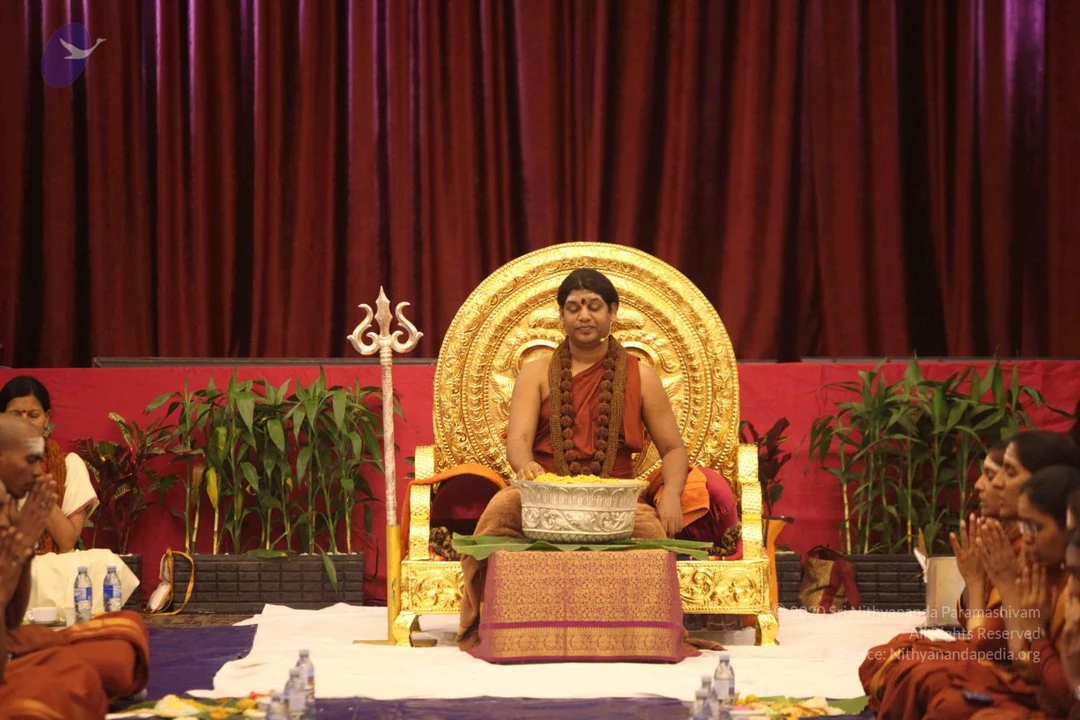
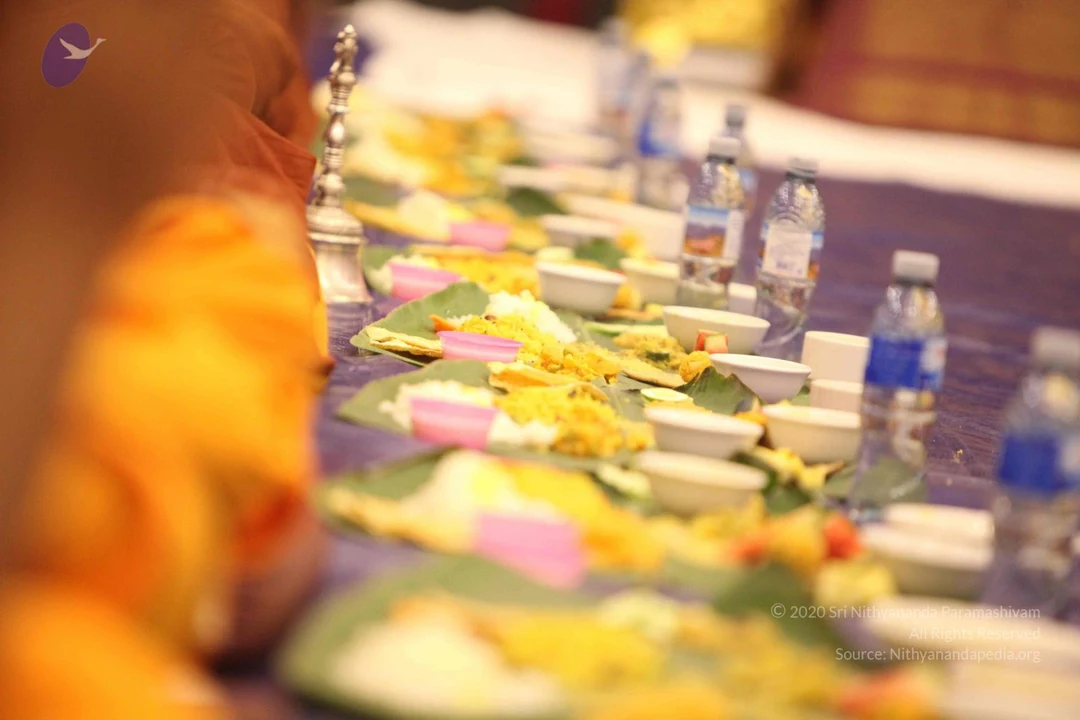
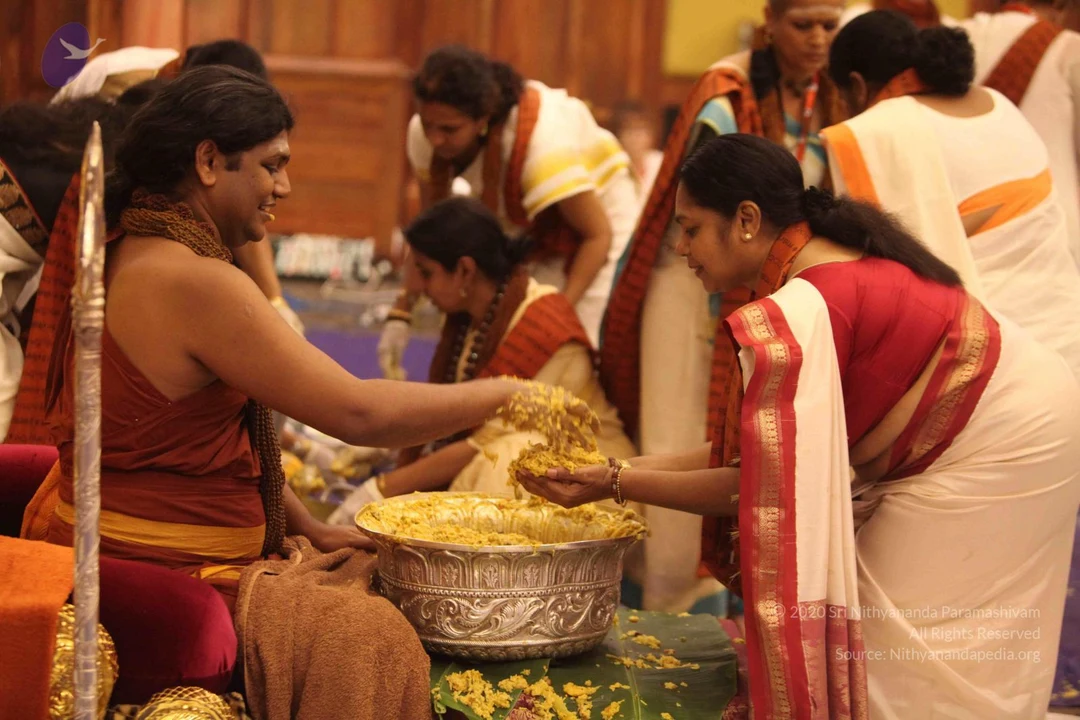
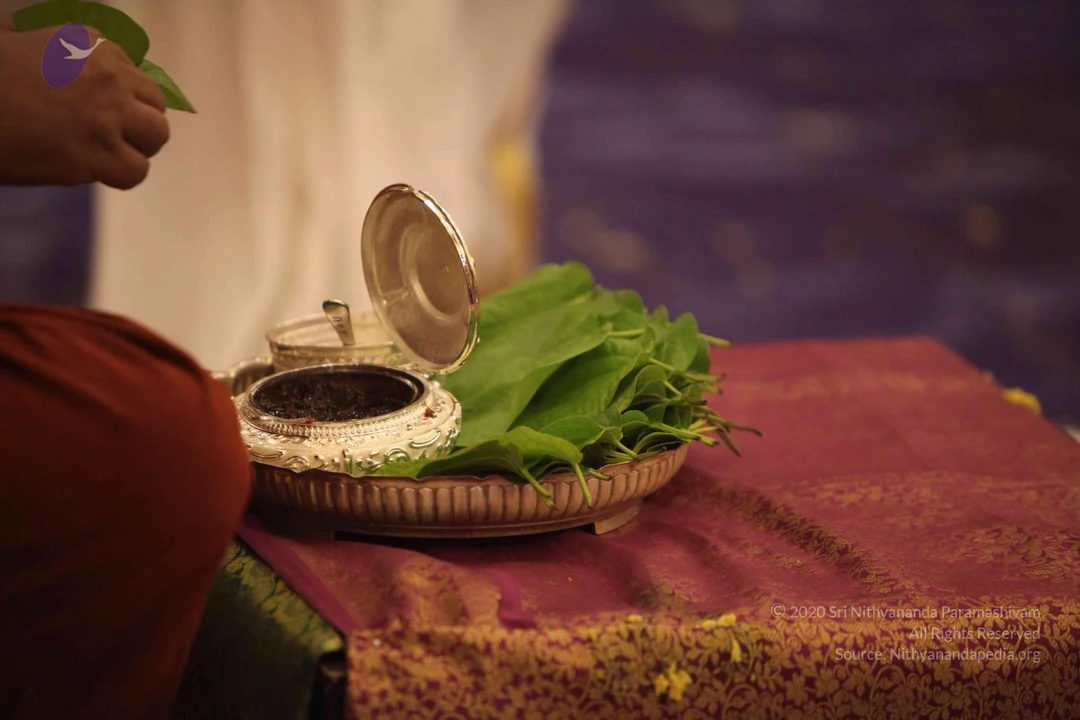
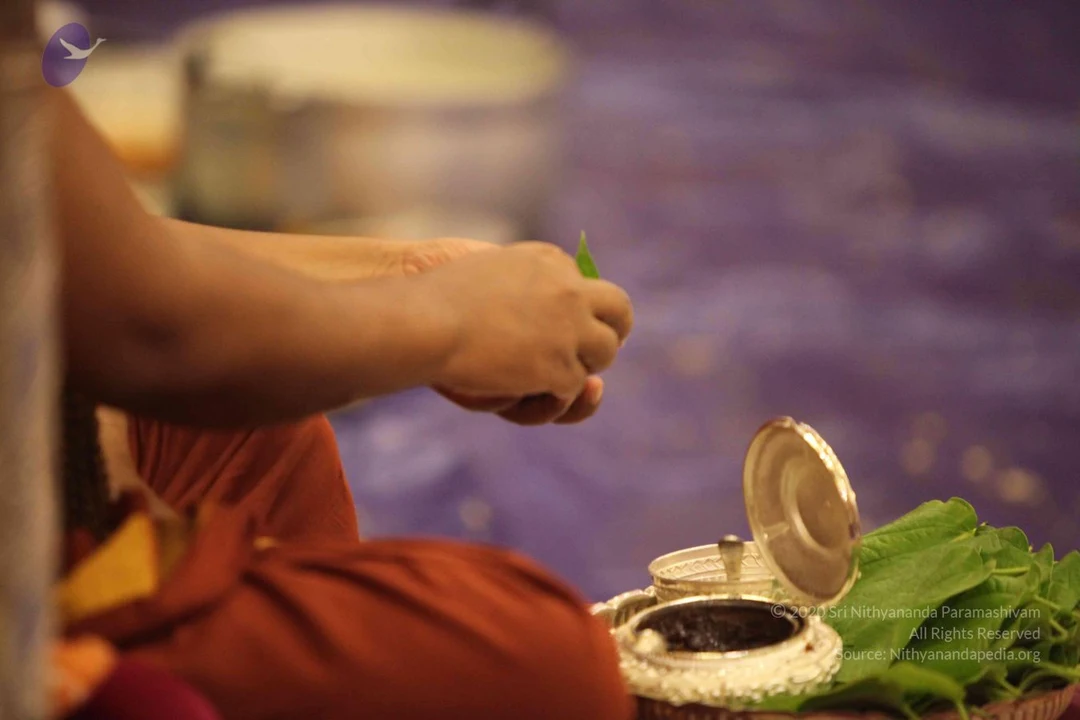
Close view of a worker's hands mixing yellow turmeric or kumkum-coloured powder in a large ornate silver bowl with repoussé floral and leaf engraving, placed on a banana leaf over a maroon and gold brocade cloth. A brown towel or shawl covers the lap of a seated person at left, and other participants in white and saffron clothing are blurred in the background. The setting suggests a ritual preparation, possibly abhishekam or puja material, but no deity or full scene is clearly visible.Close-up photograph of an ornate silver bowl with repousse floral and scroll engraving, filled with a yellow-orange cooked preparation with green peas and whole spices. A hand, its wrist covered by a sleeve, is reaching into the bowl and scooping the food, which is set on a green banana leaf. A purple cloth and a brown shawl appear at the edges of the frame.Seated devotees fill a large hall during a group ritual, many with palms pressed together in prayer. Women in white and orange-saffron shawls sit cross-legged on a blue mat, while monks in saffron robes are seen in the foreground with shaved heads. Brass and steel plates of fruit and food, small cups and water bottles sit on the mat in front. Behind the crowd, a white-draped stage area is visible. No identifiable leader is clearly visible at the front; the seated group dominates the frame.A large seated gathering in a hall with wood-panelled walls and a projector screen at the top left. In the foreground, rows of shaved-headed priests in saffron-orange robes and rudraksha malas sit on a blue mat facing a long line of banana-leaf plates holding fruit, sweets, bowls and water bottles, apparently for an offering. Behind them, dozens of women and men in orange and white saris, dhotis and kurtas sit with hands folded in namaskar, many wearing orange shawls and beaded necklaces. A woman in a pink top bends over at the back. No individual is clearly identifiable as a person from appearance in this image.A long row of seated sannyasis in saffron-orange robes sits cross-legged along a purple mat during a meal ritual. Several shaved-headed men wear white tilak marks on their foreheads, rudraksha malas and gold bangles. One holds a microphone and another holds a small bell. Before them lie rows of banana-leaf plates with rice, sweets, vegetables and small steel bowls, with water bottles along the edge. The scene suggests a satsang-style annadan or puja gathering.A photograph of a large seated gathering in a hall with yellow walls. In the foreground a golden trident (trishul) stands upright on a purple cloth, with its handle in sharp focus. Rows of seated people in saffron and orange robes sit along the cloth, with brass or silver plates of offerings set in front of them, possibly for a puja. The background is blurred, showing many more people in white and orange clothing.
A-Darshan
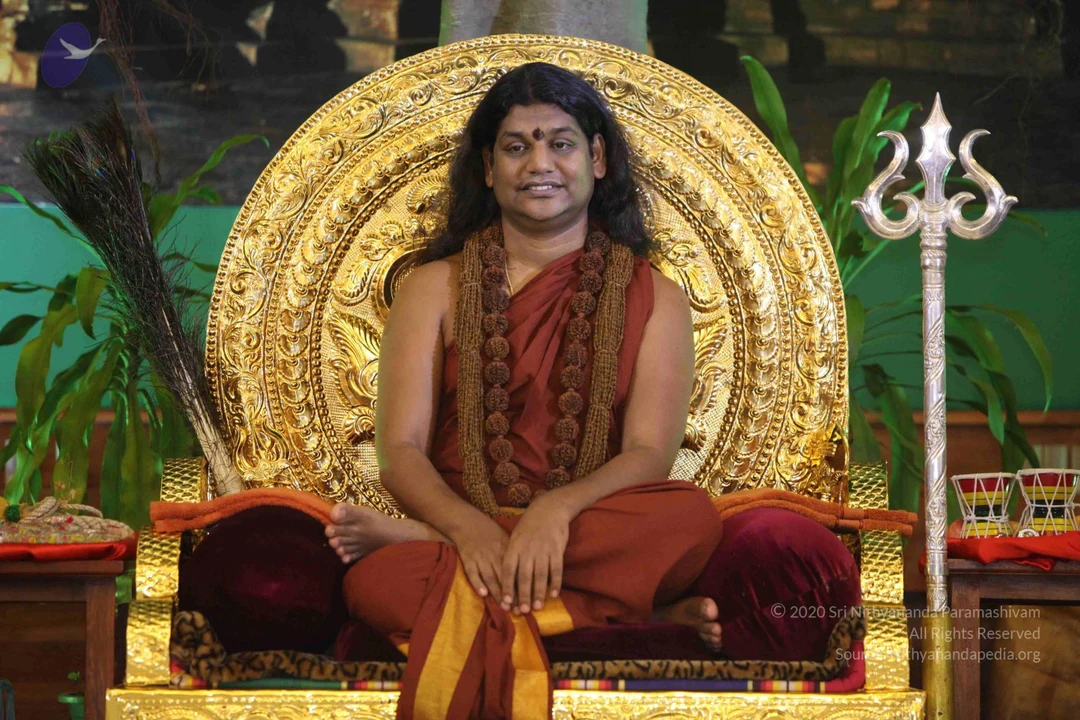
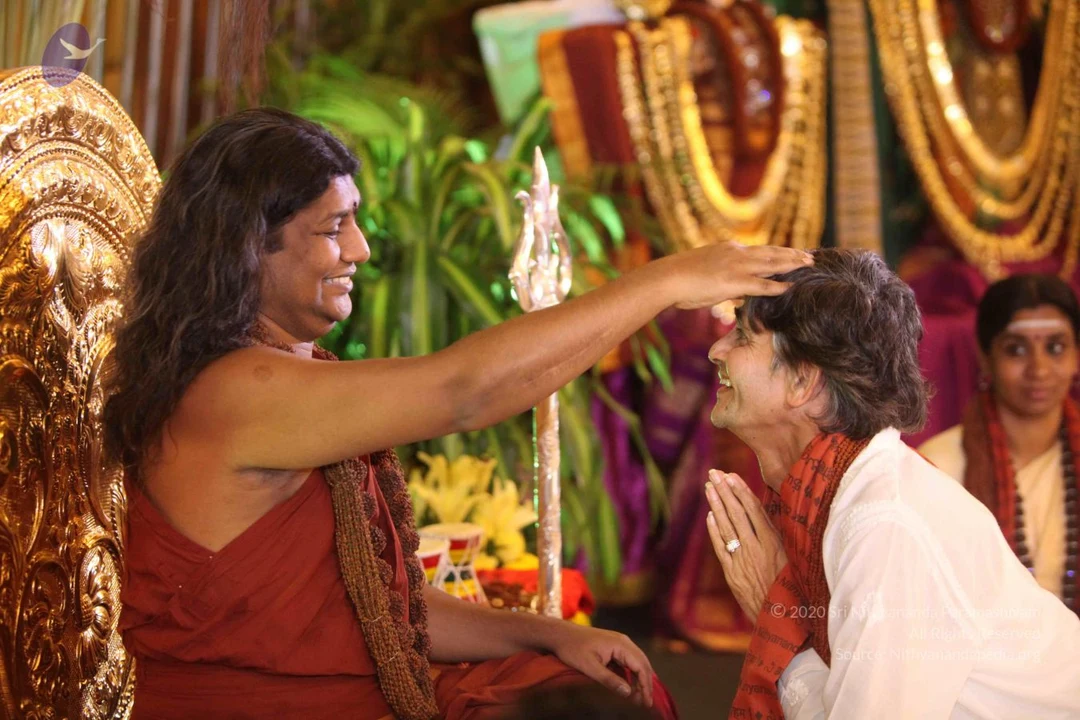
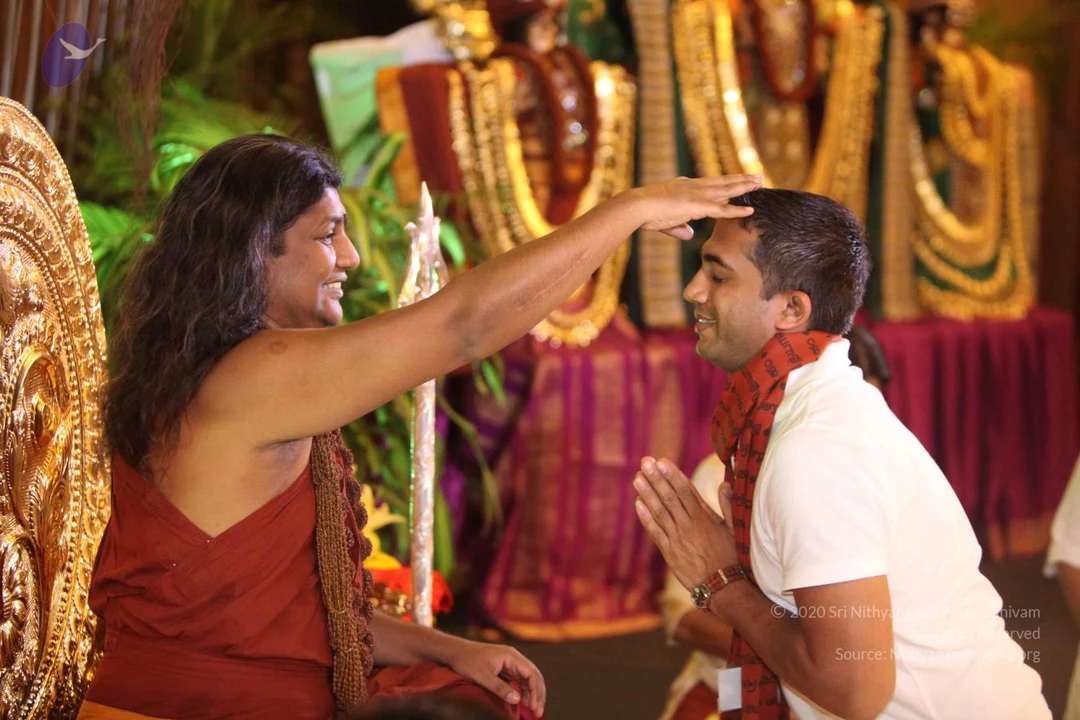
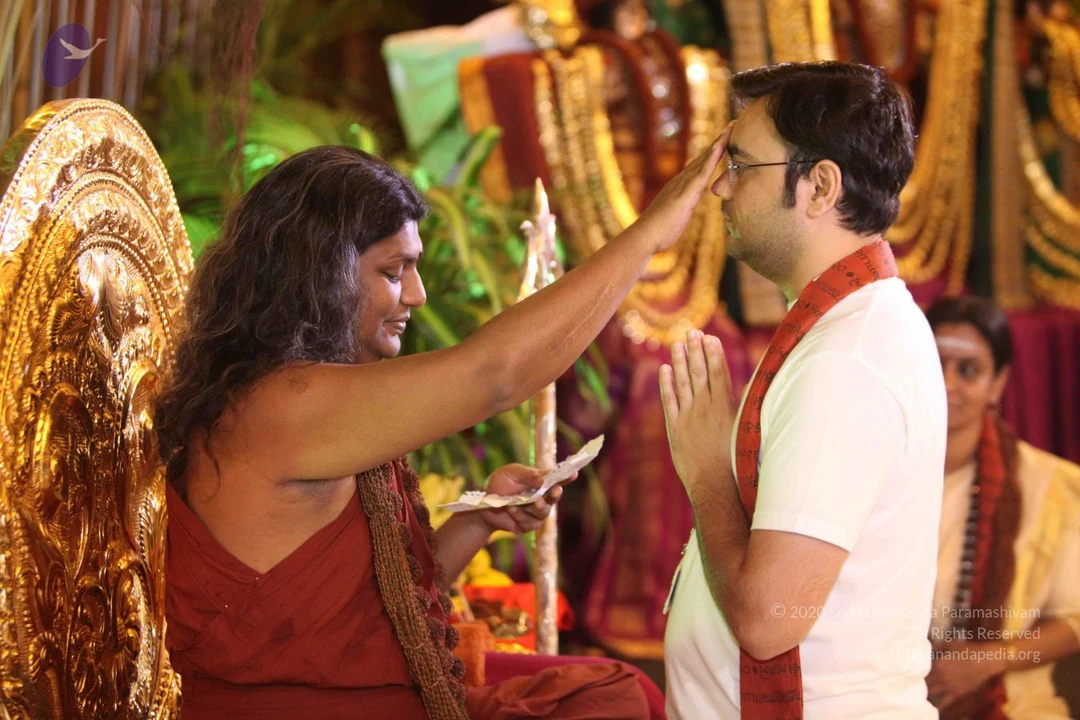
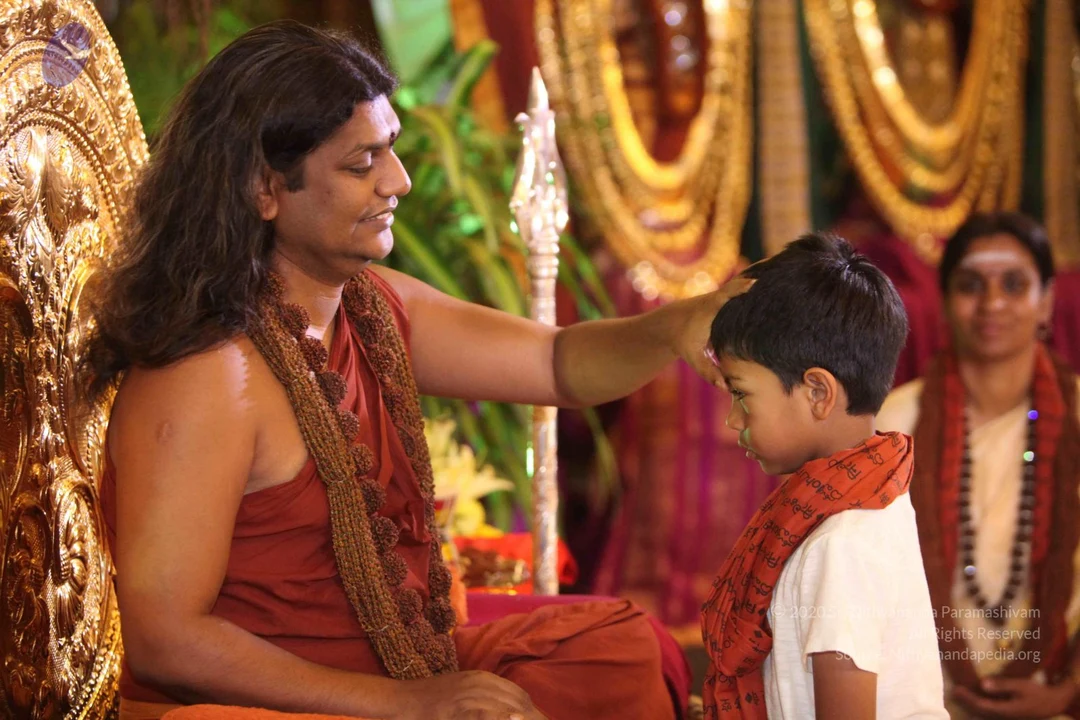
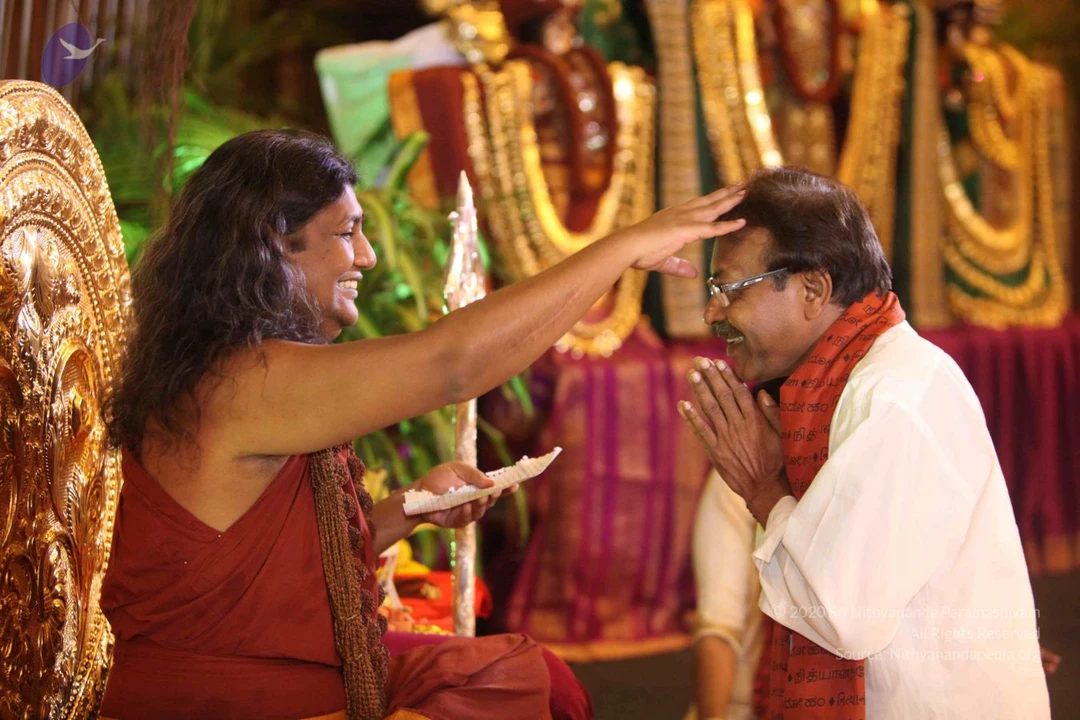
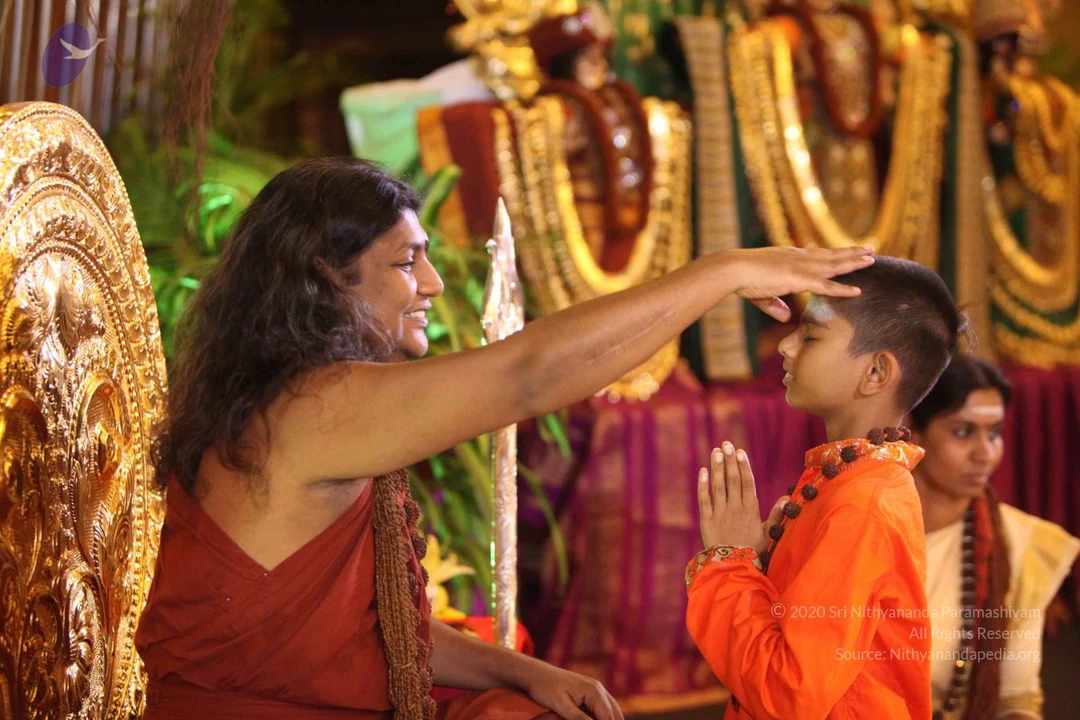
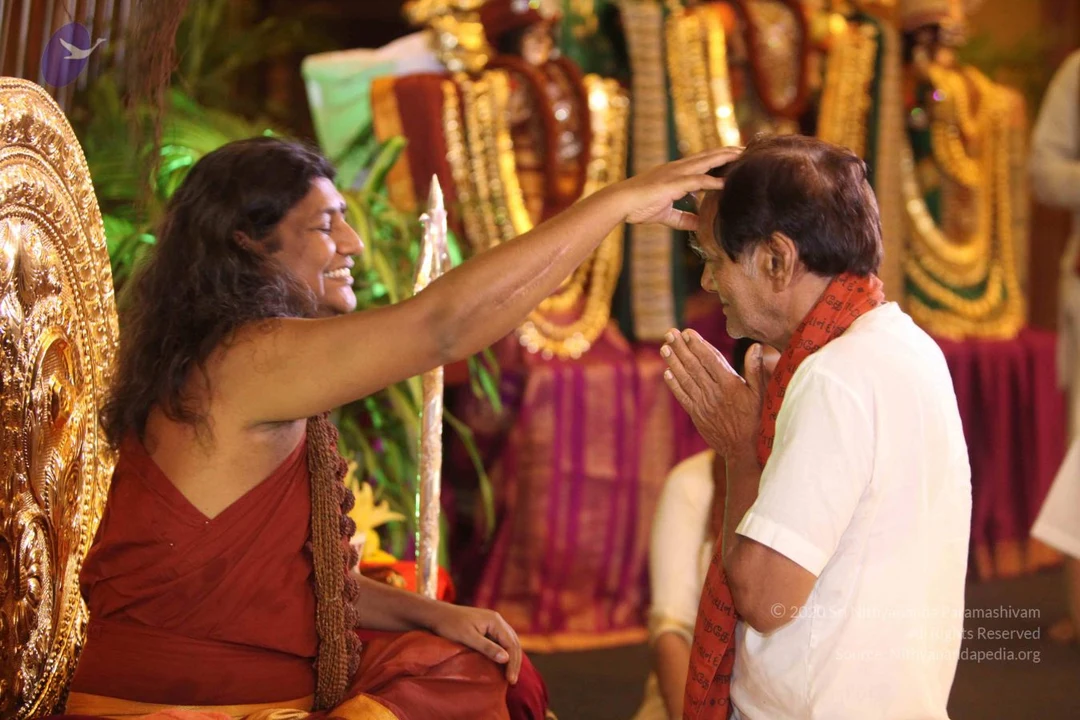
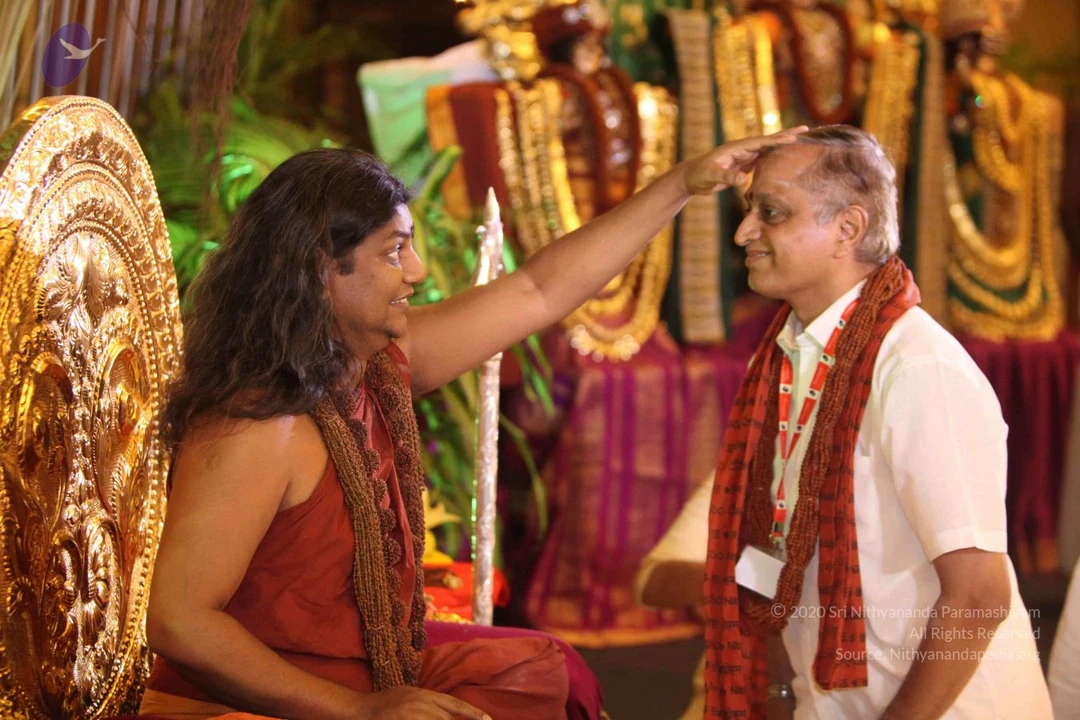
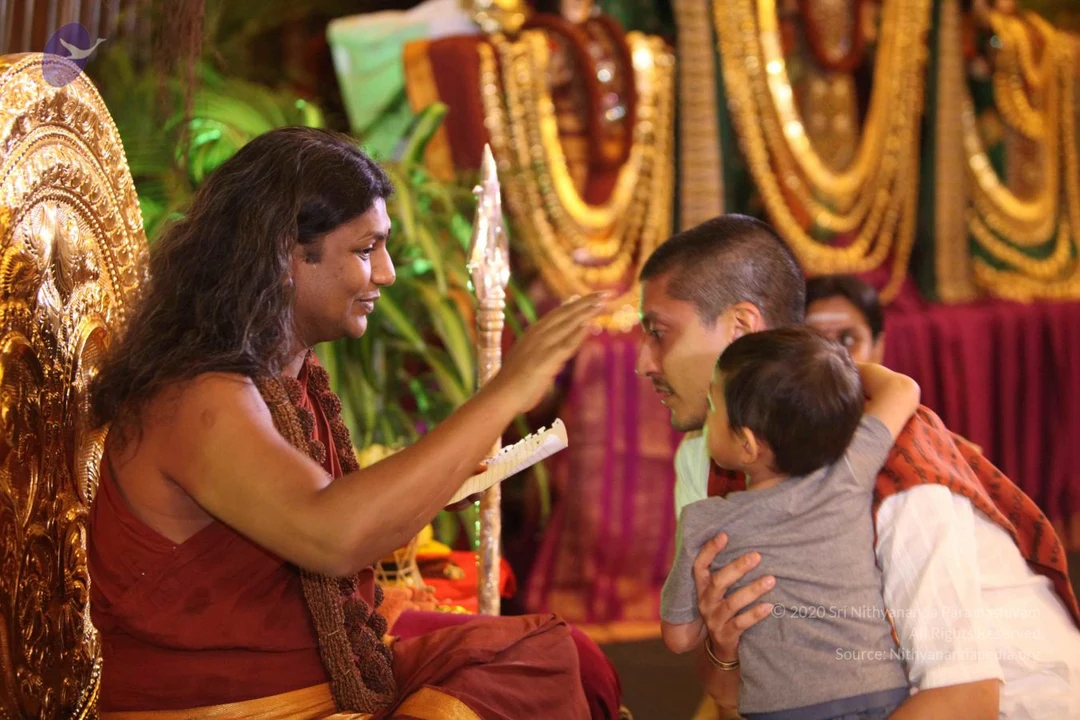
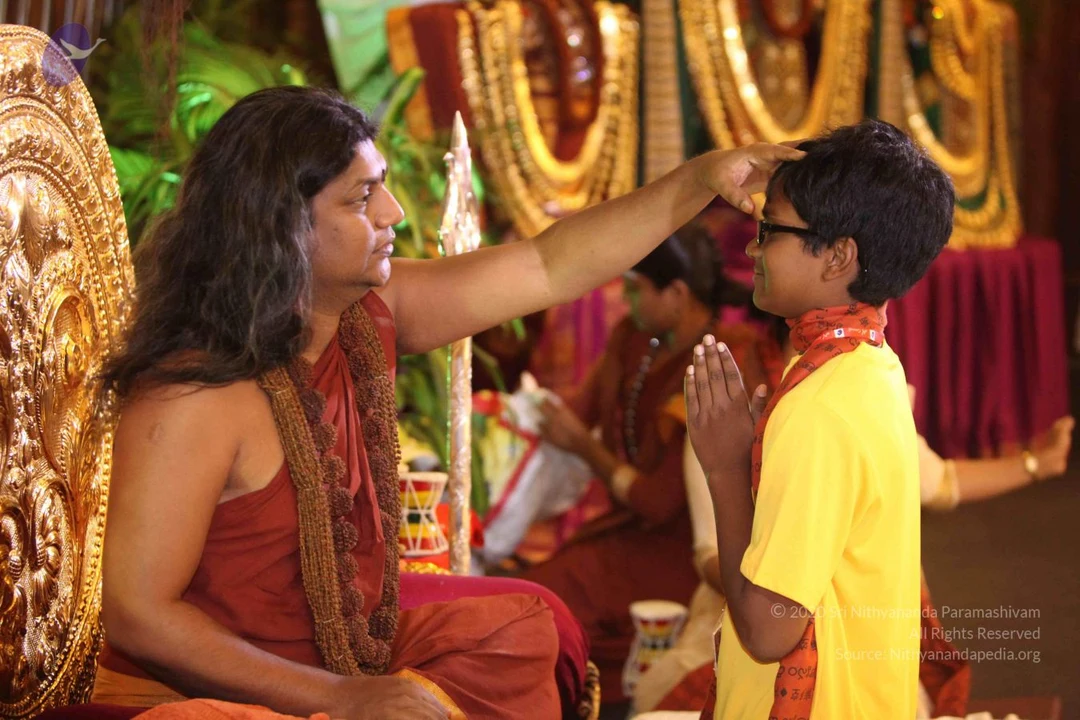
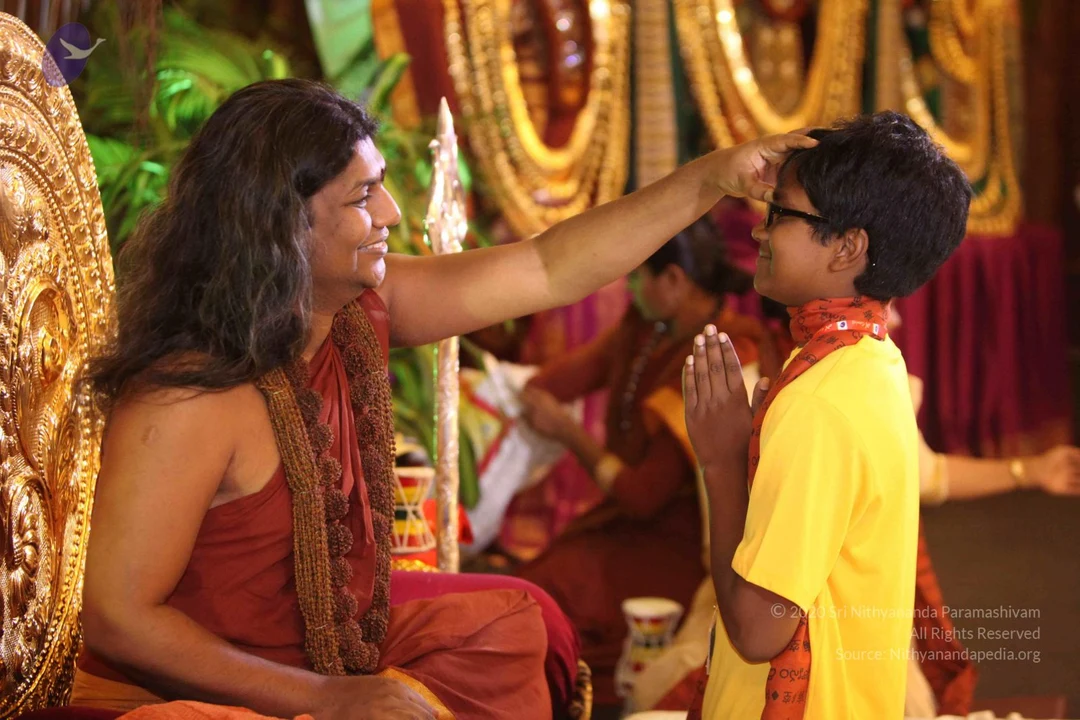
73 photosSource gallery
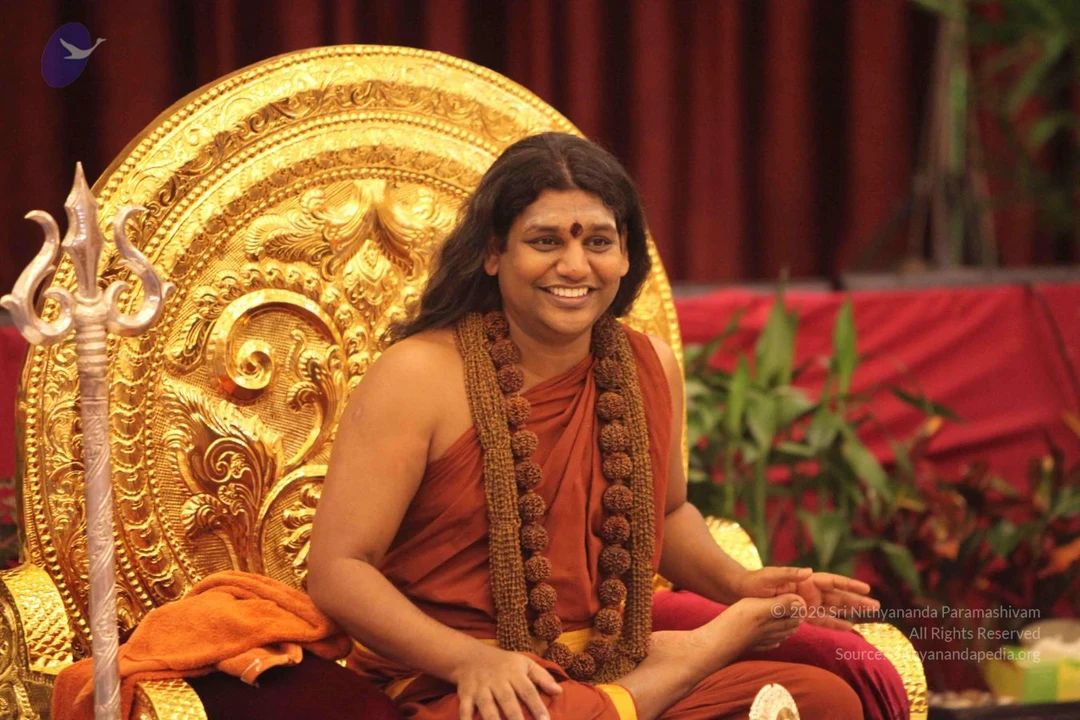
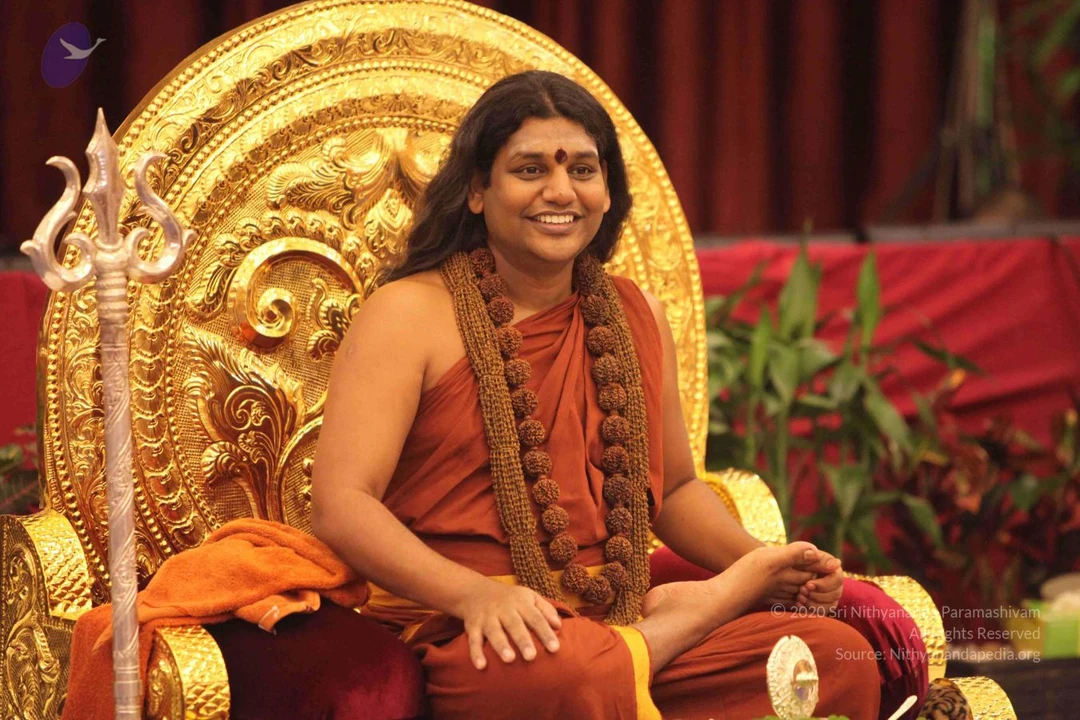
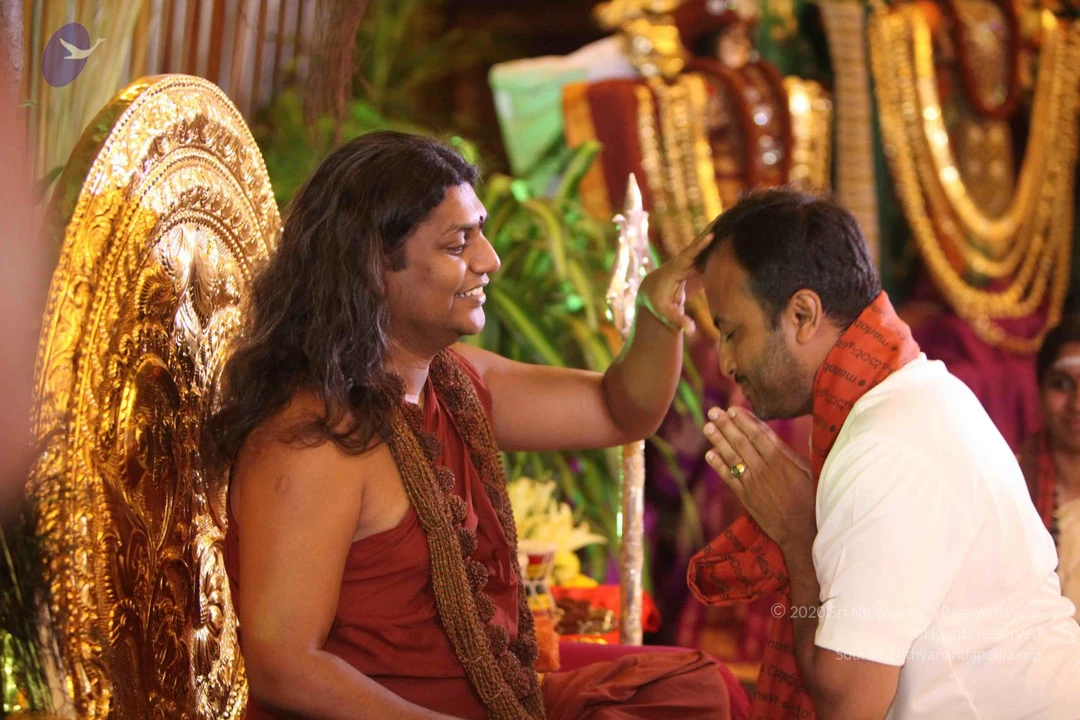
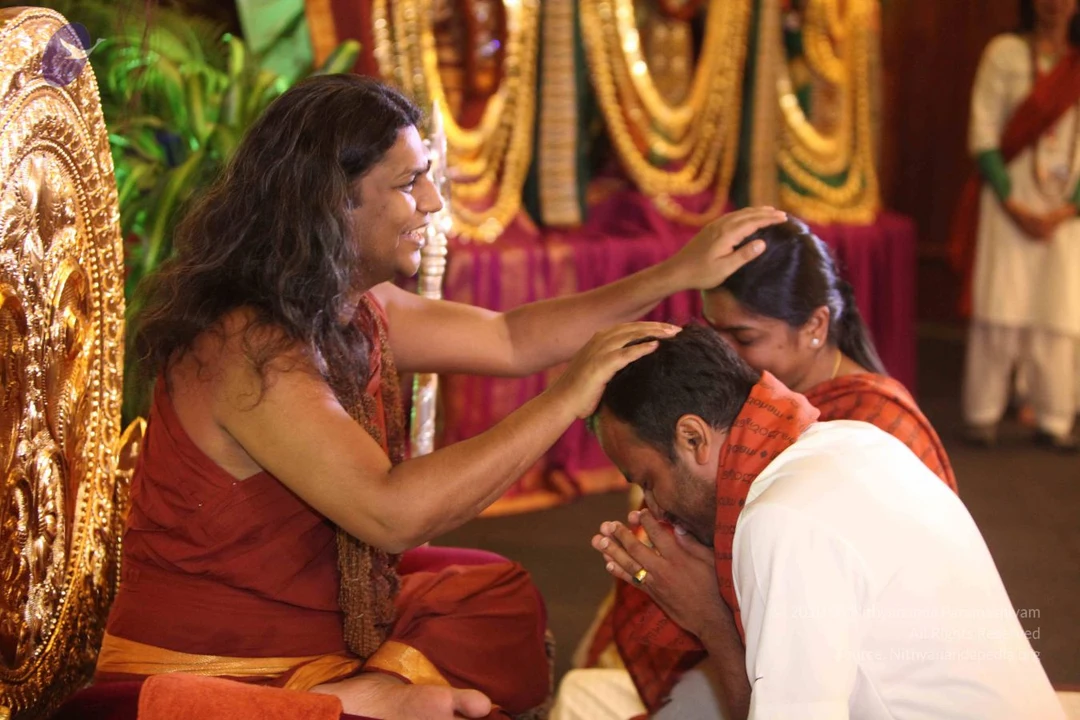
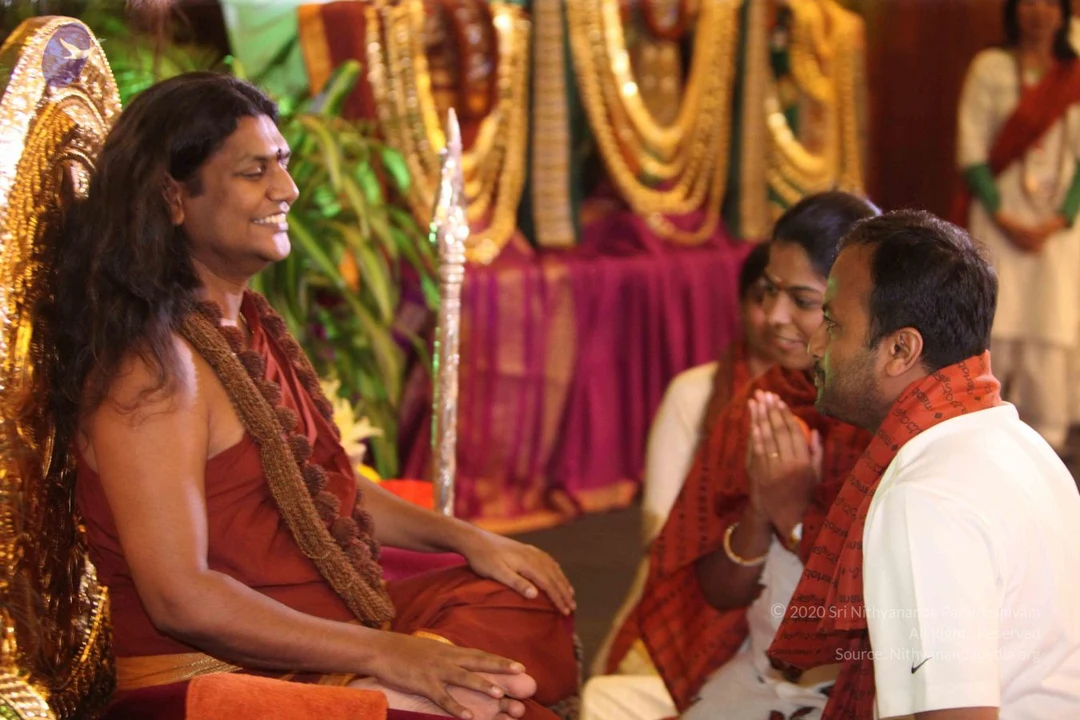
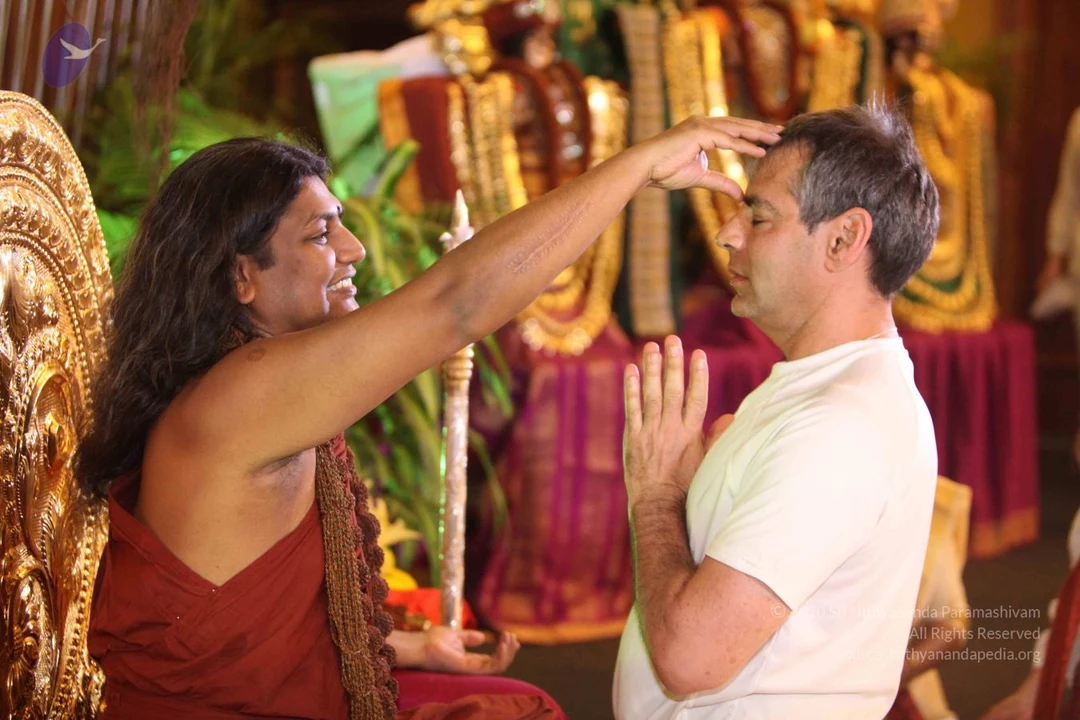
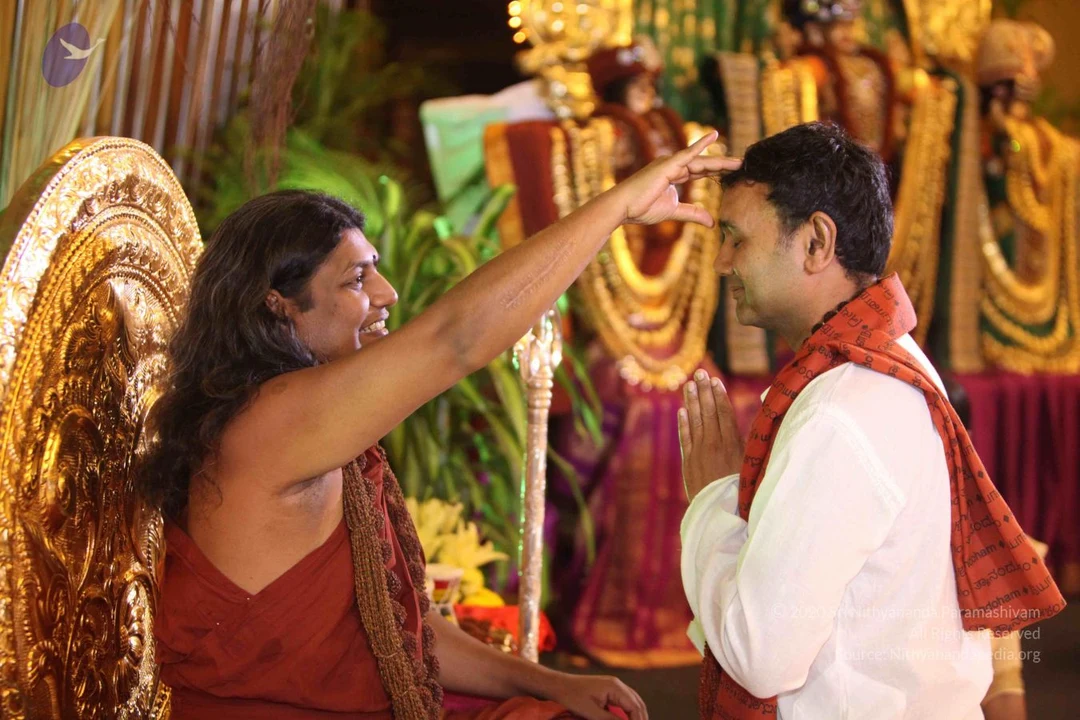
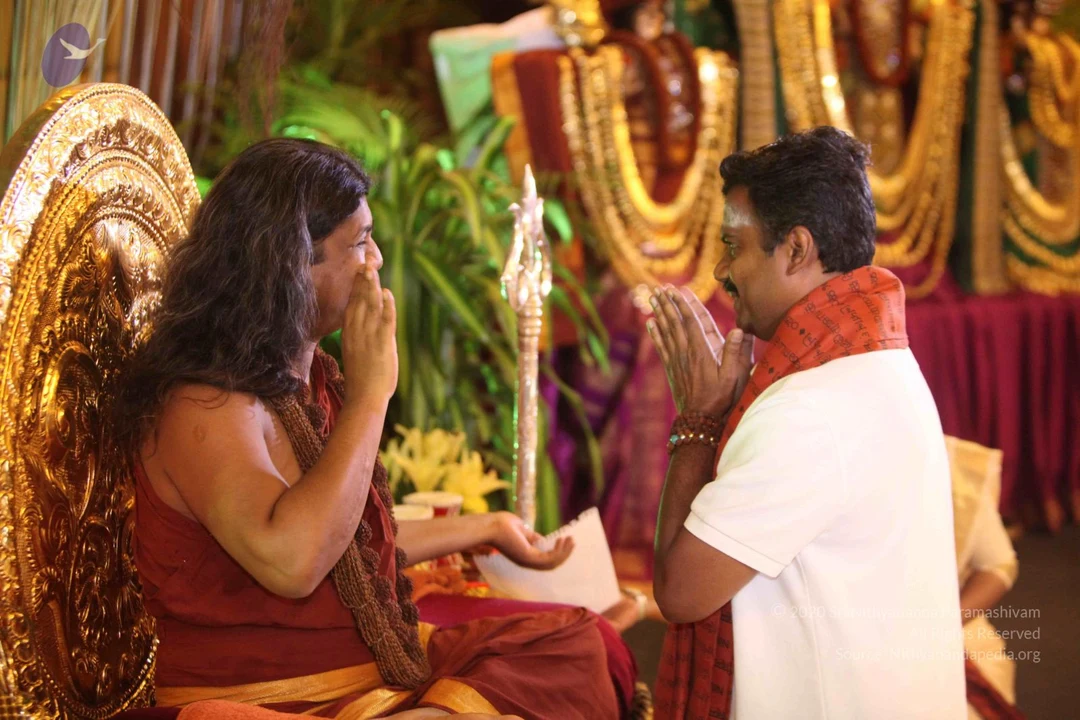
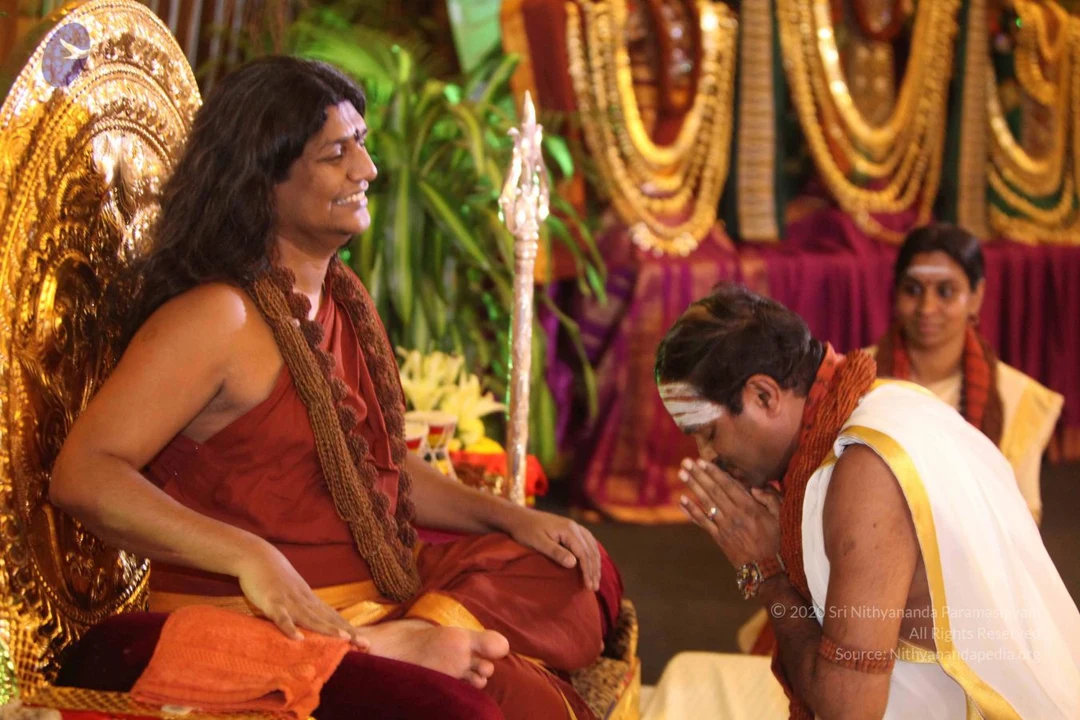
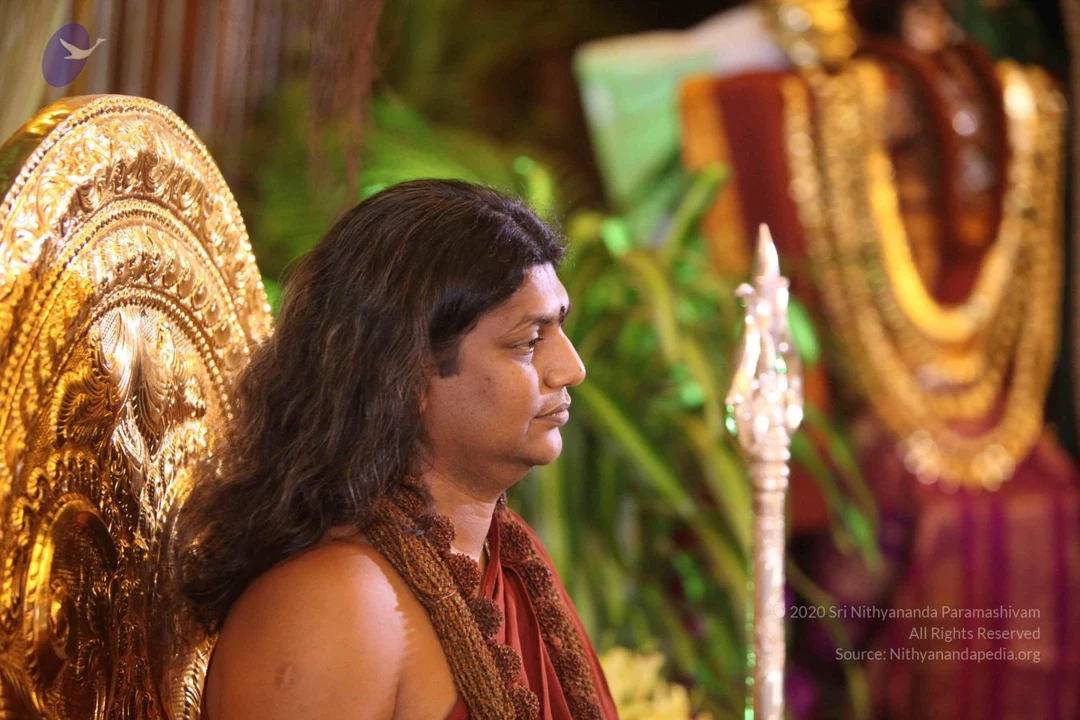
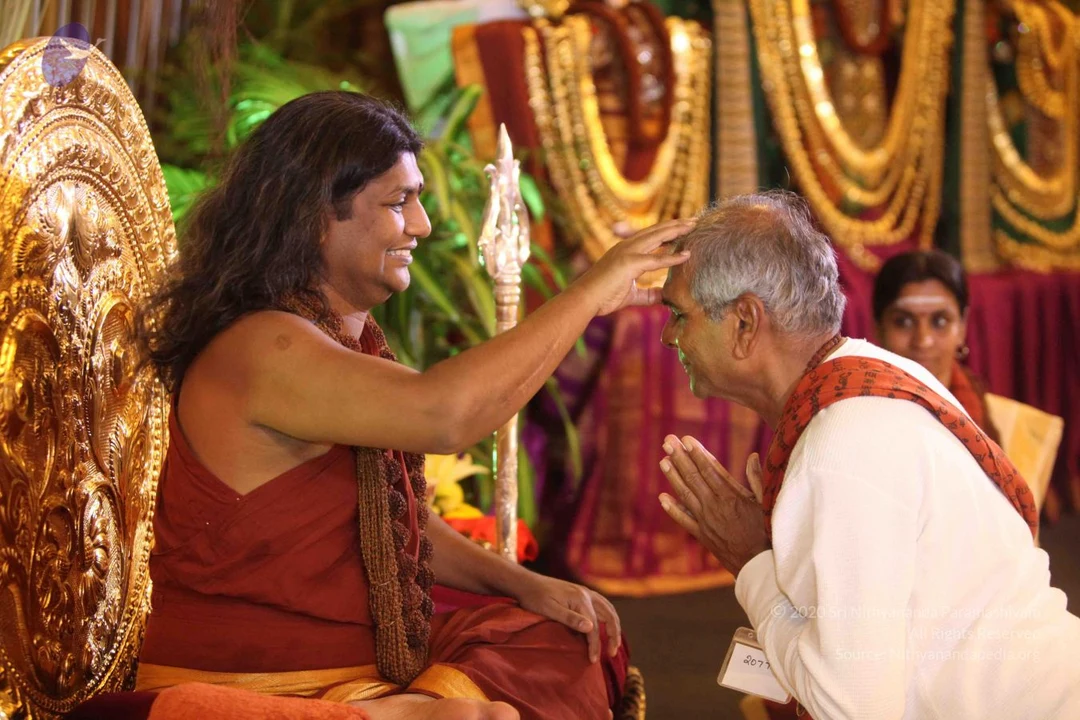
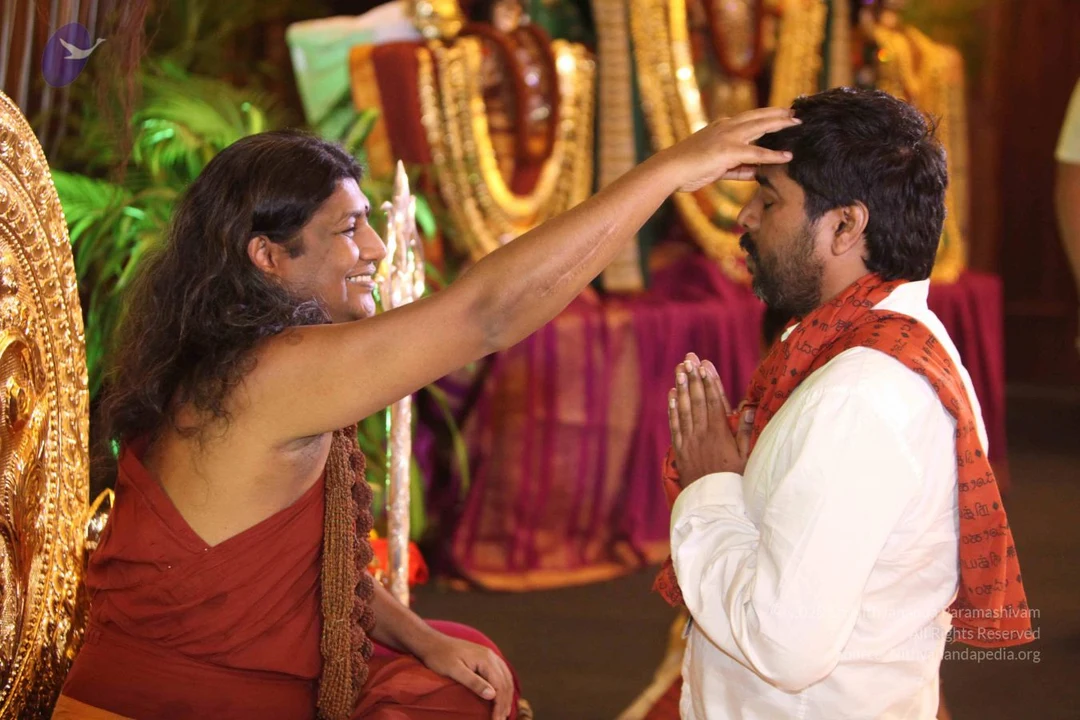
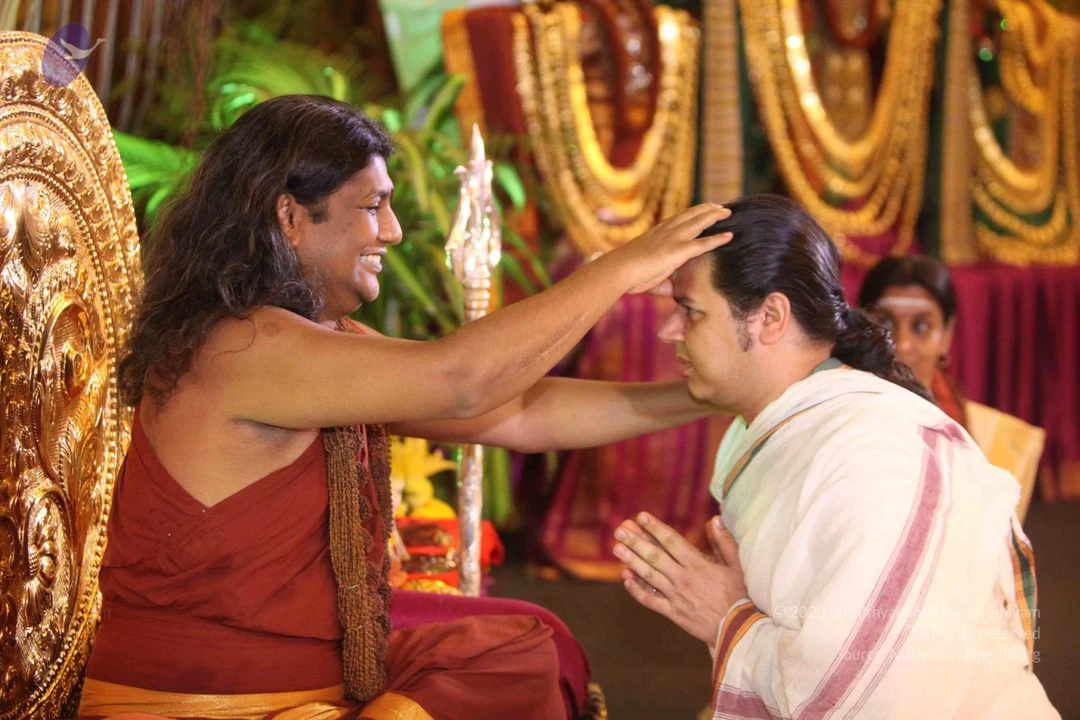
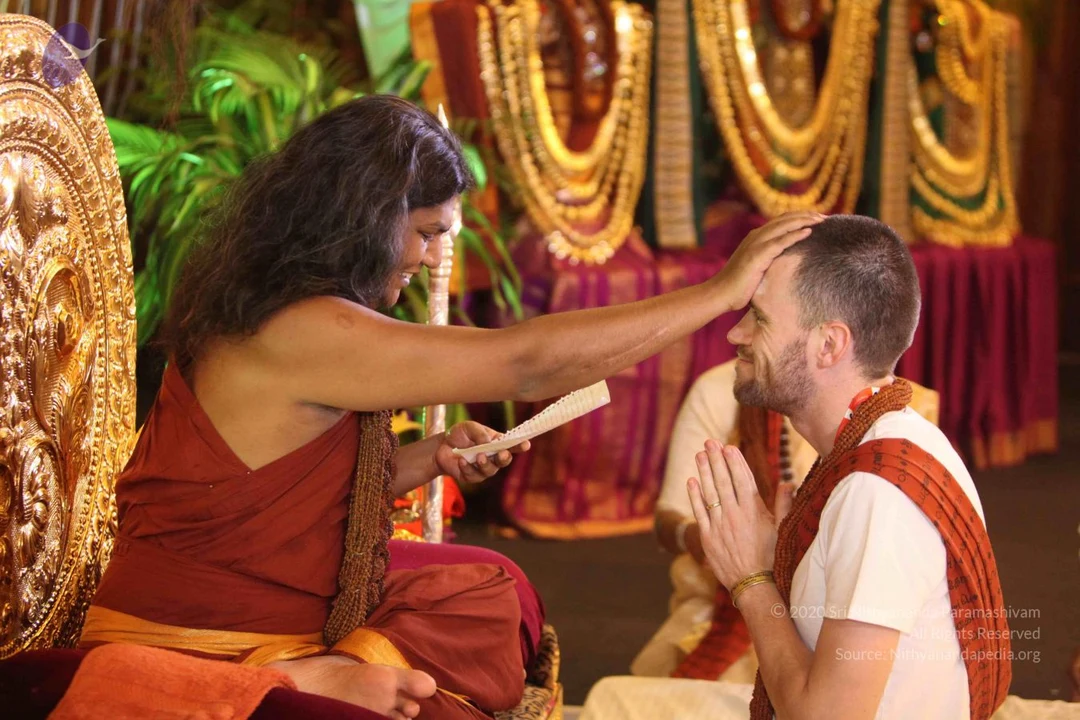
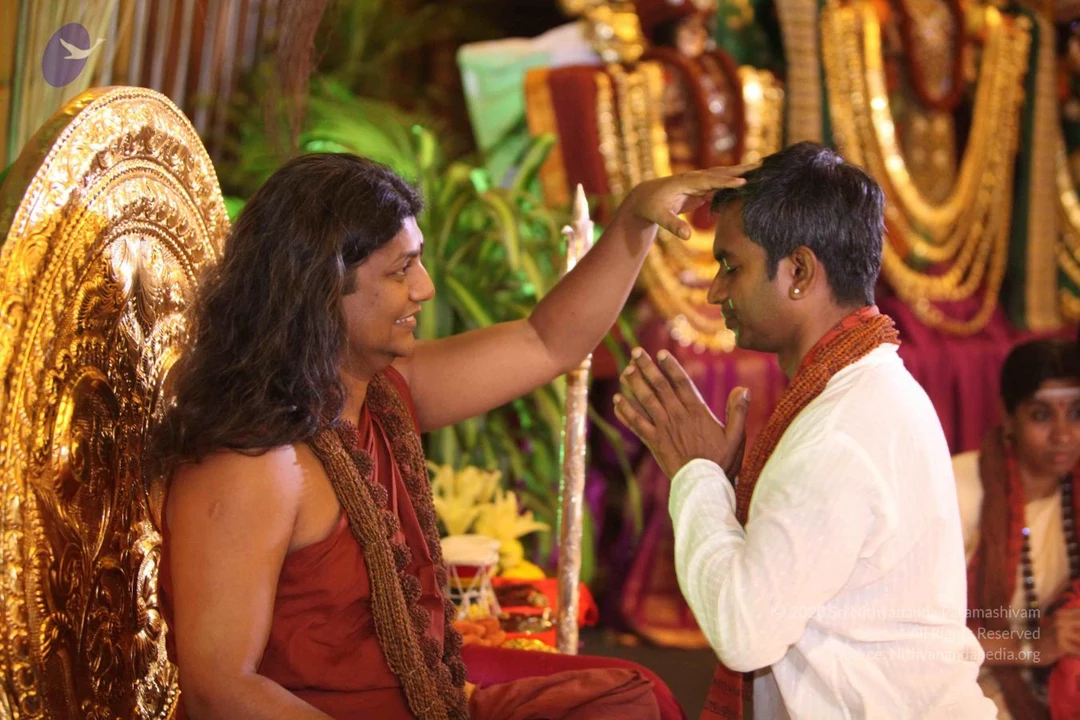
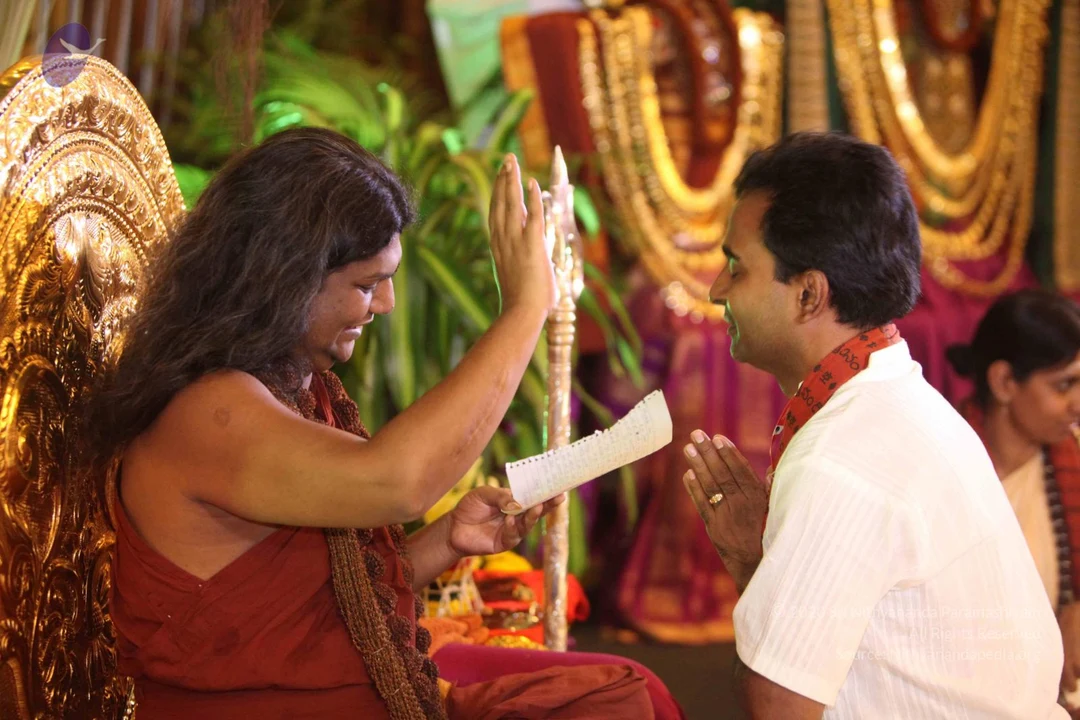
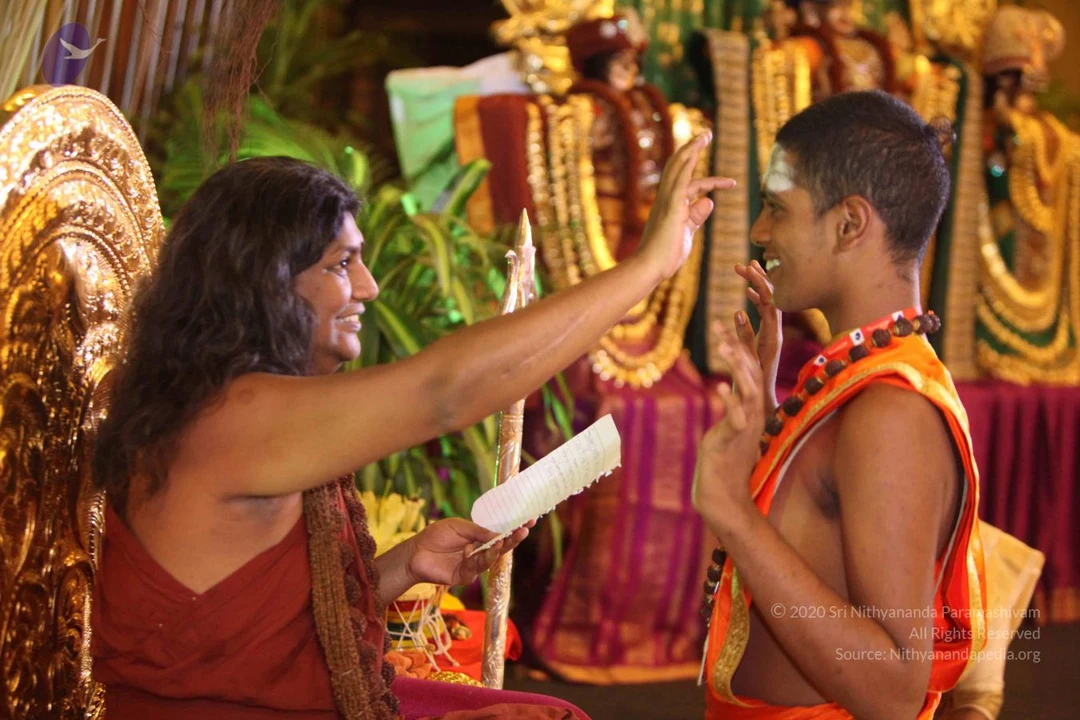
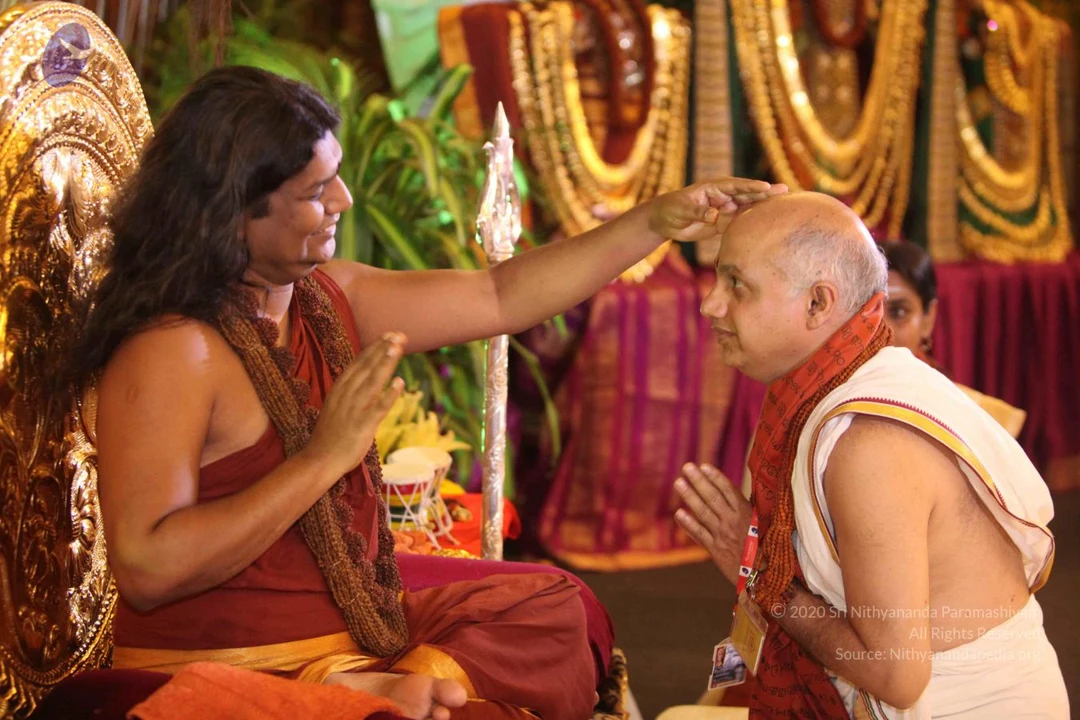
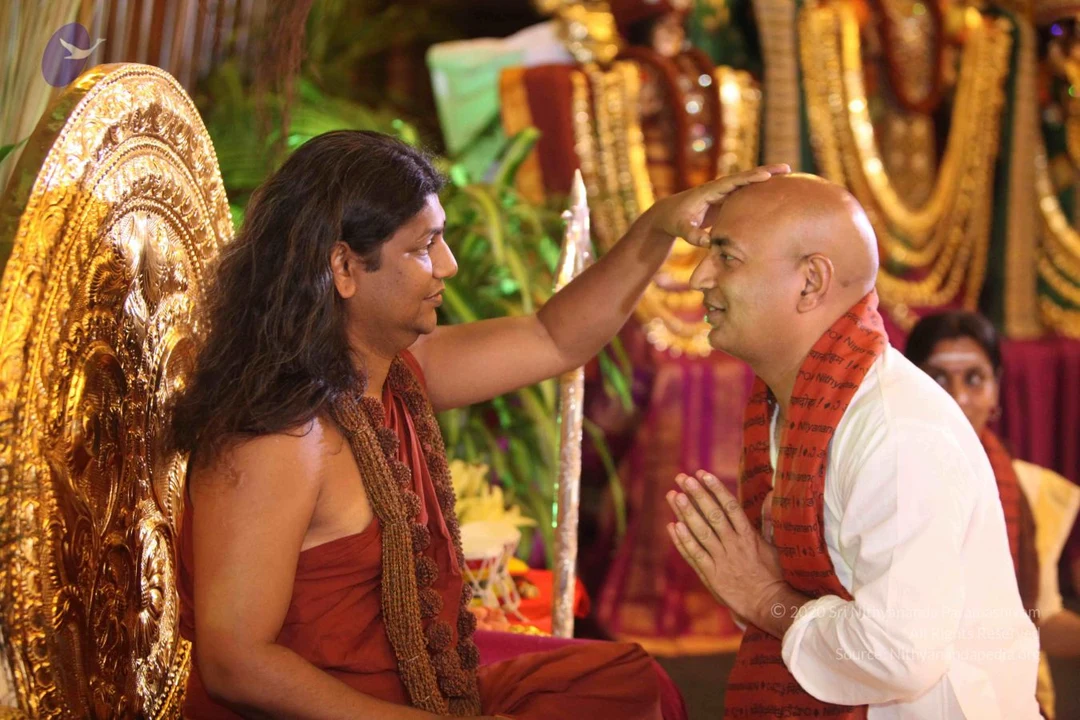
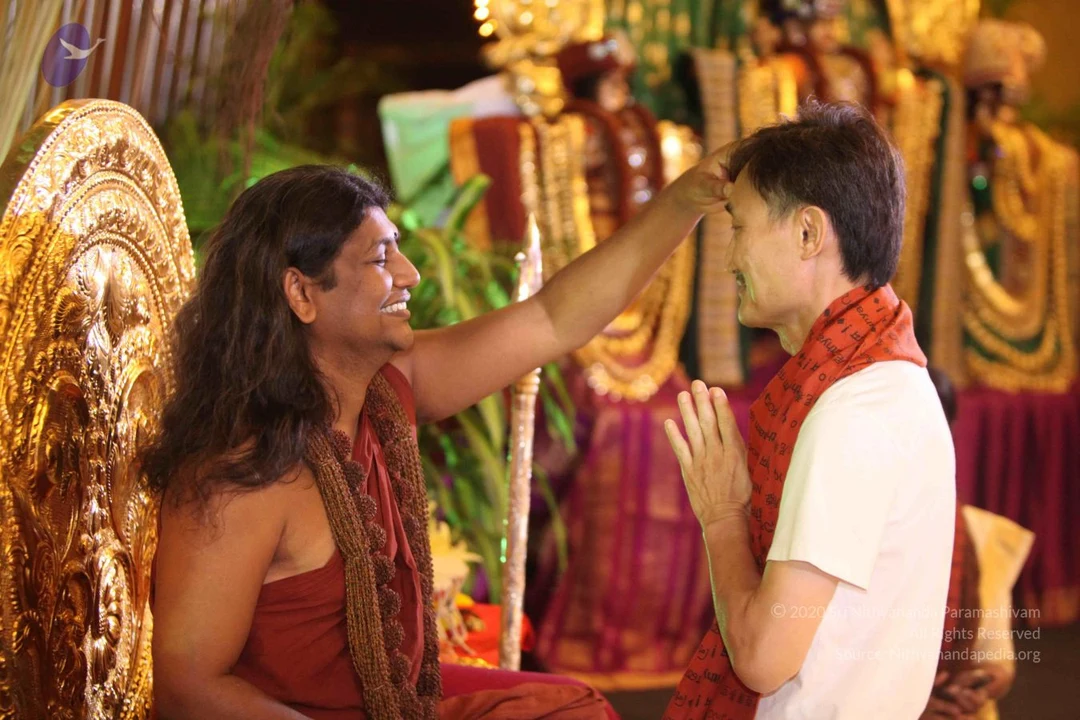
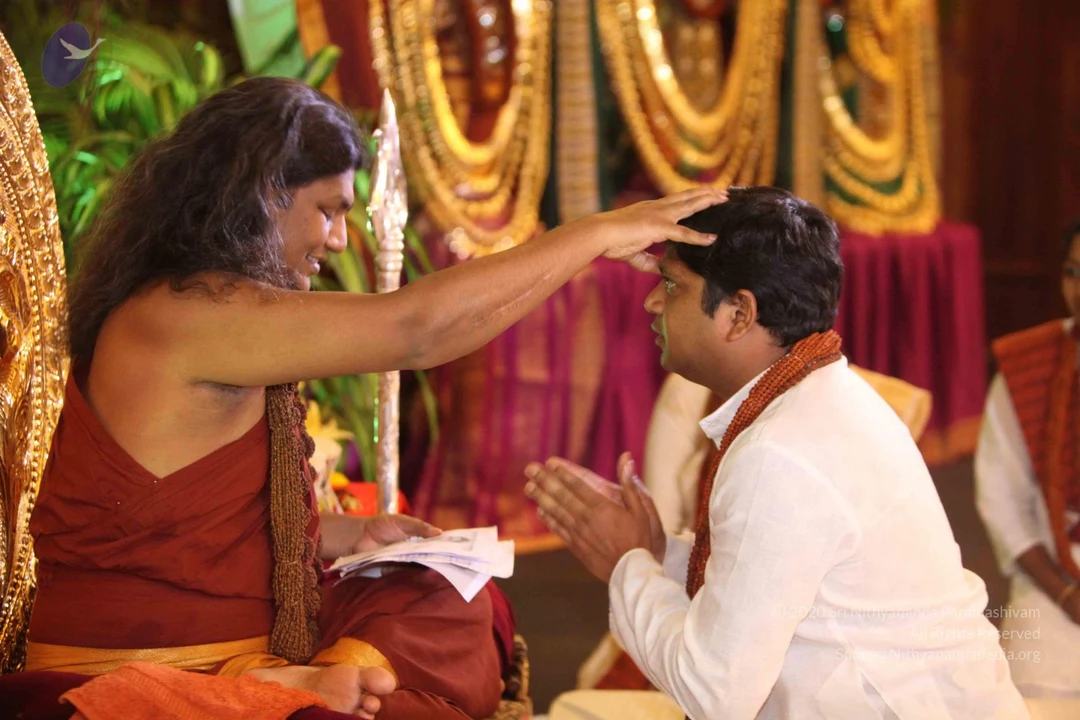
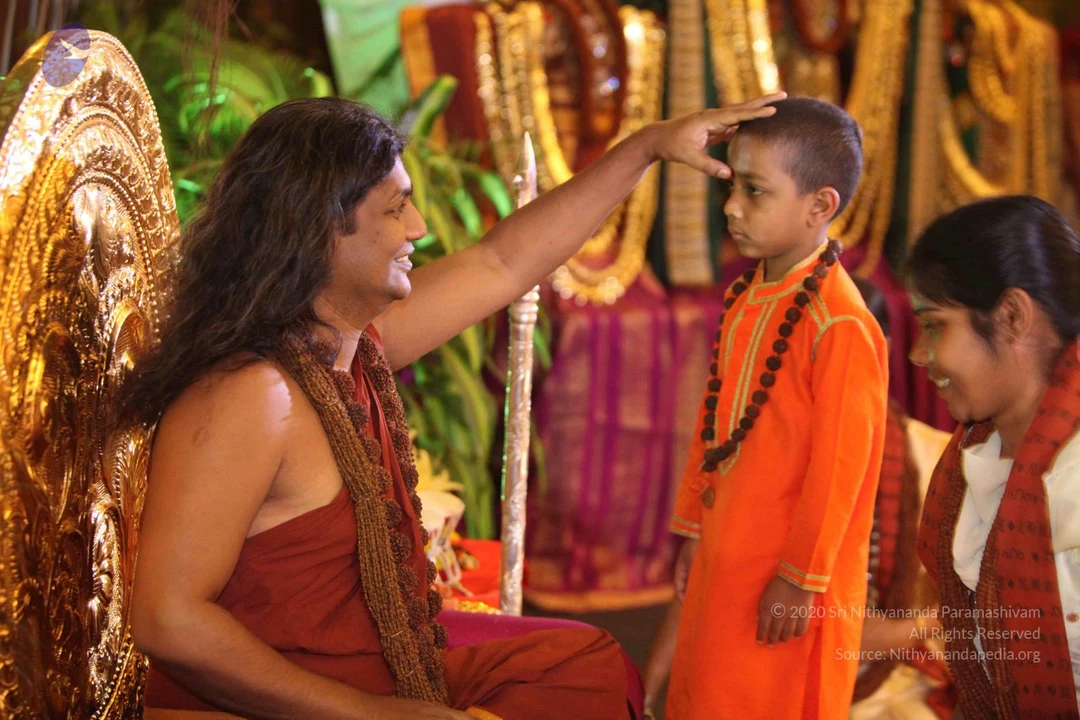
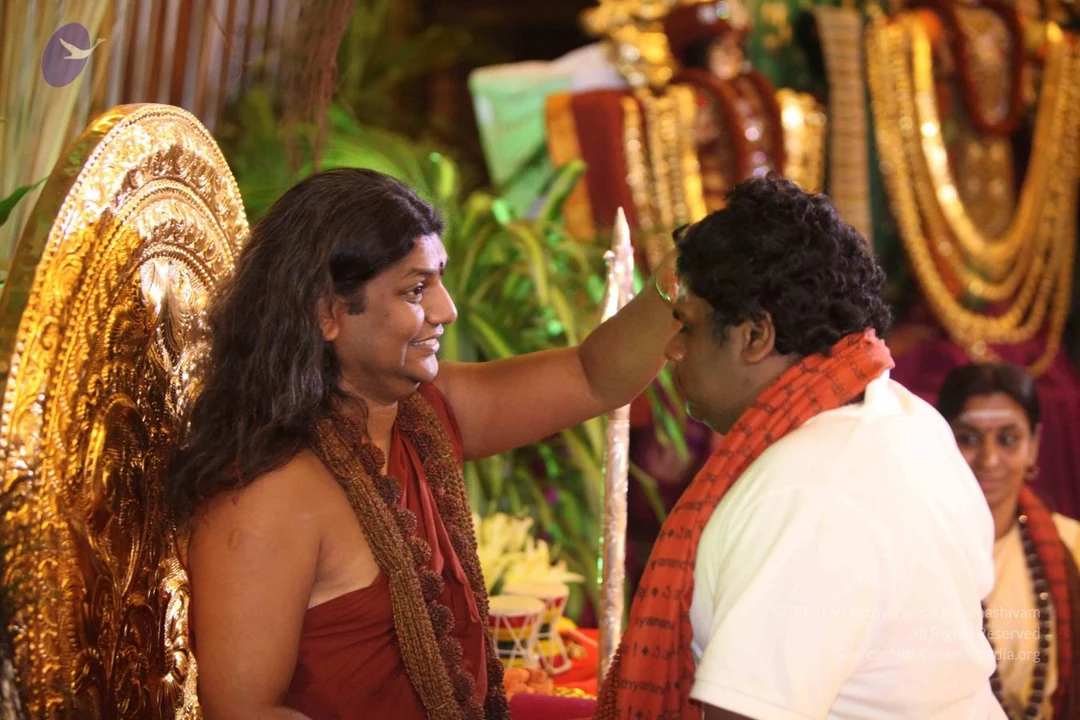
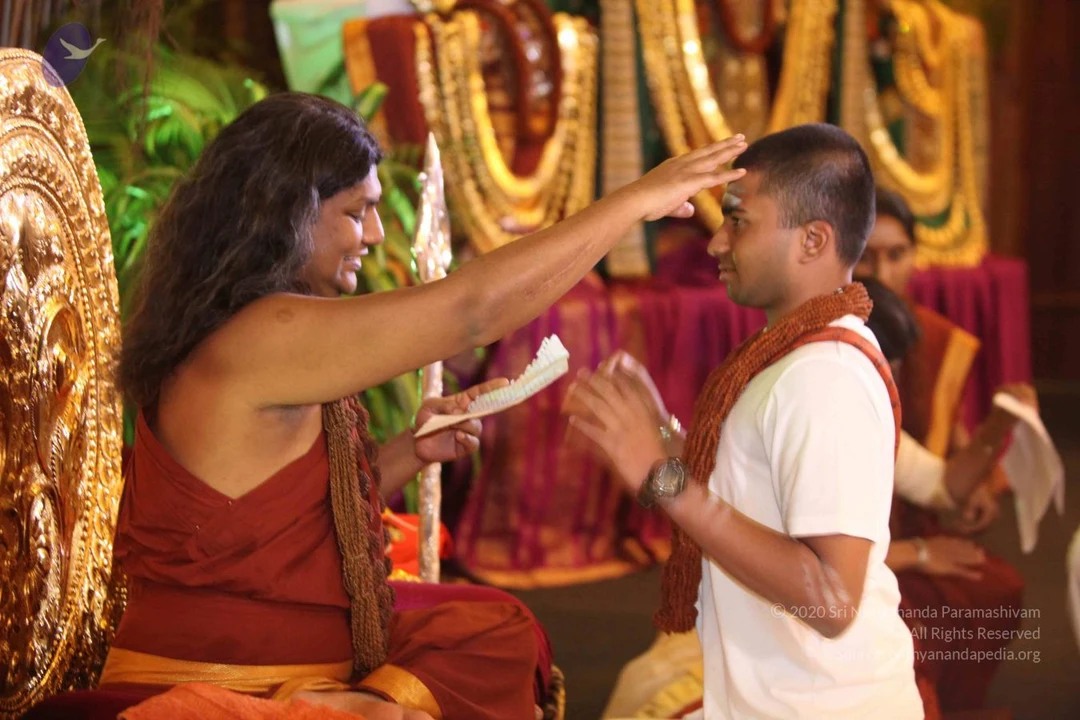
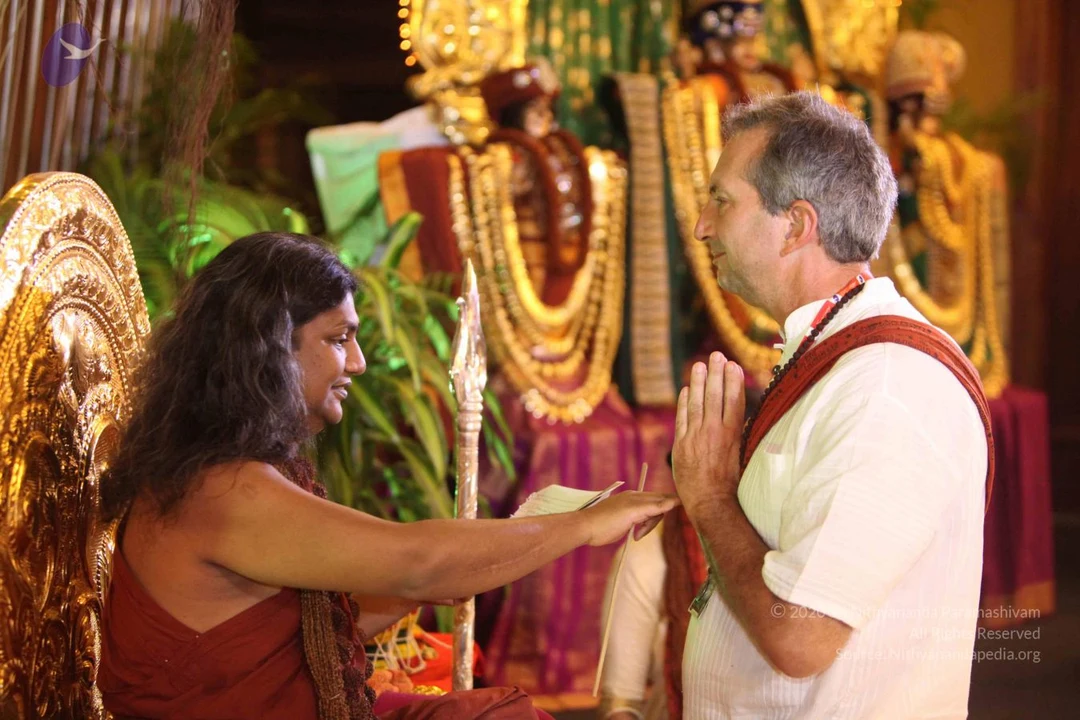
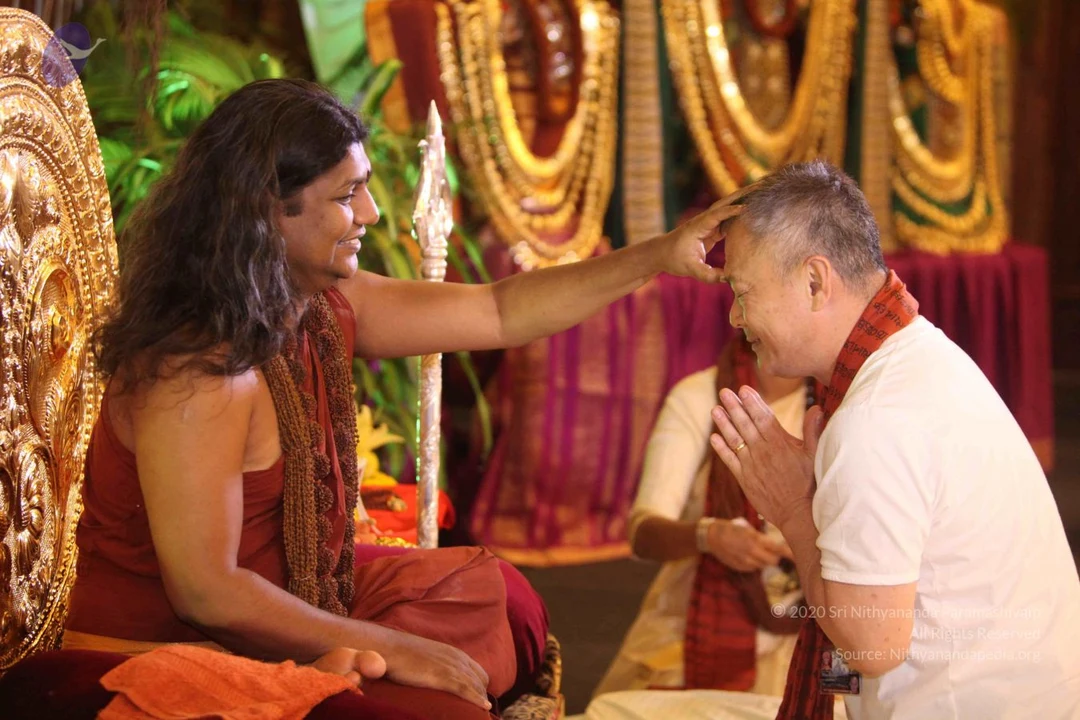
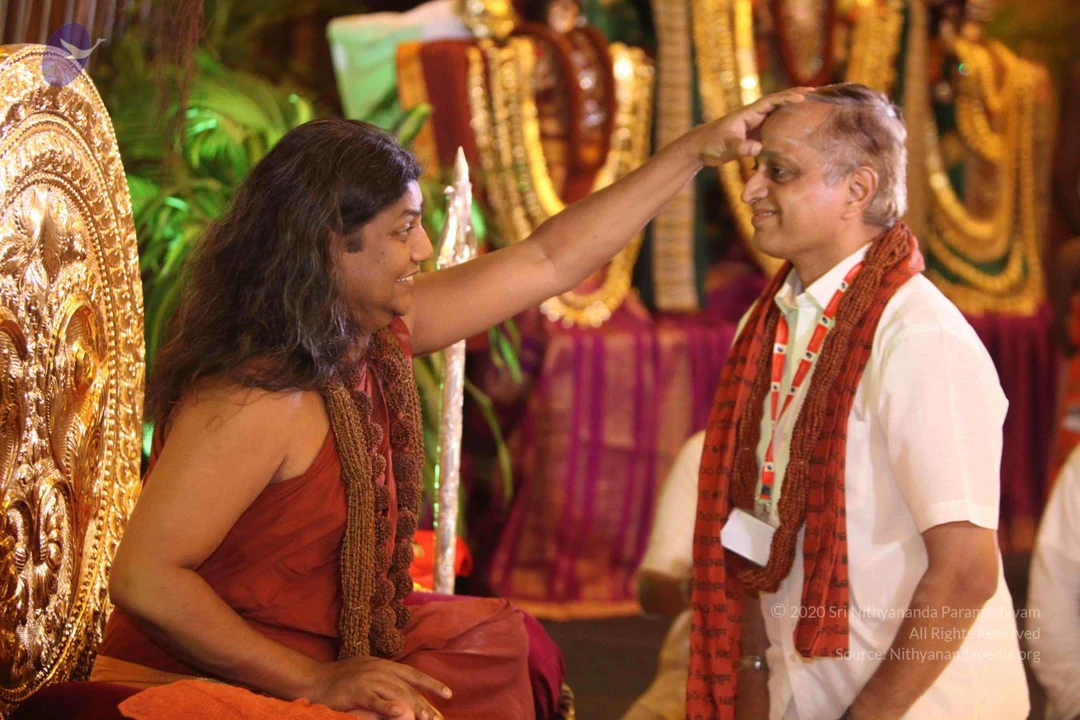
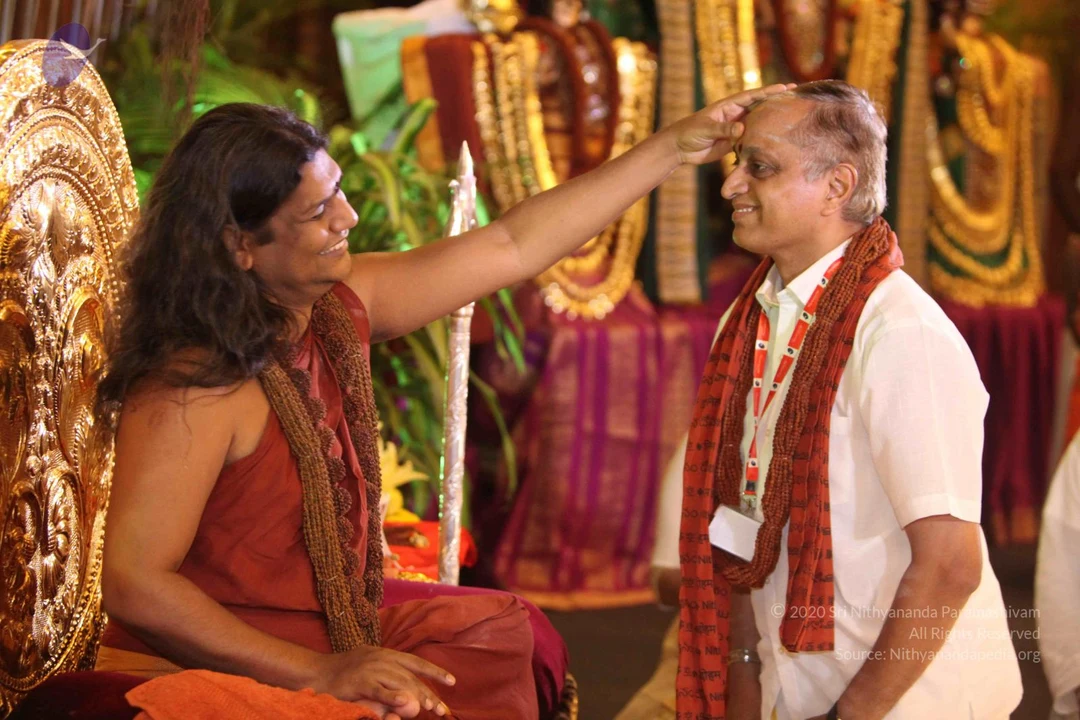
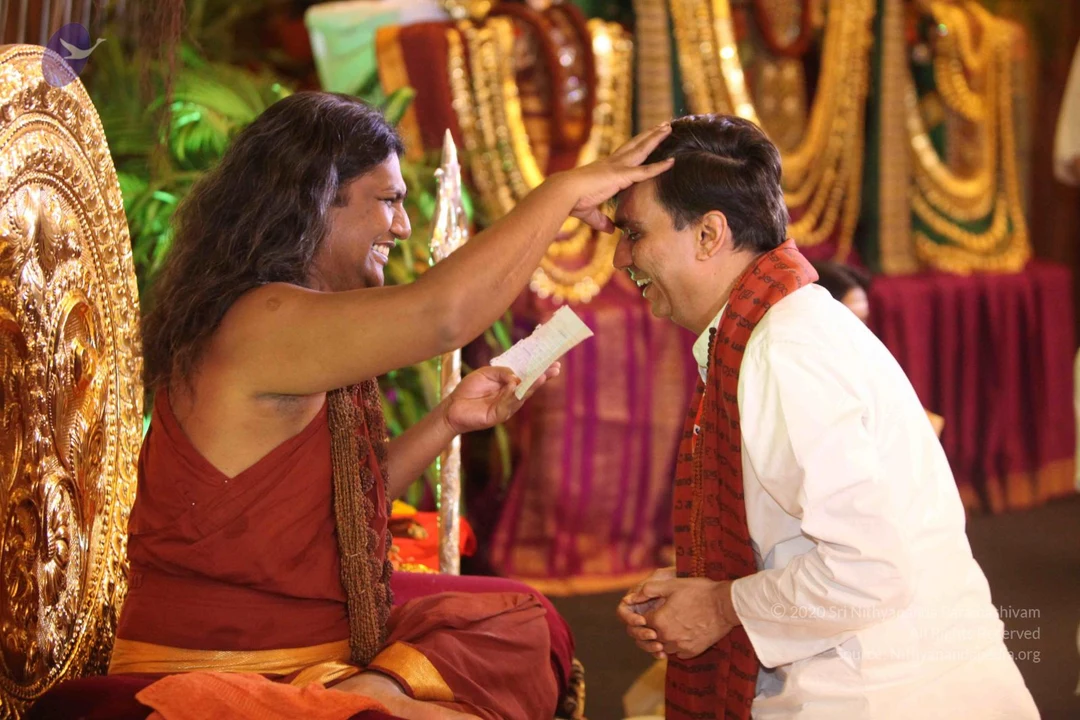
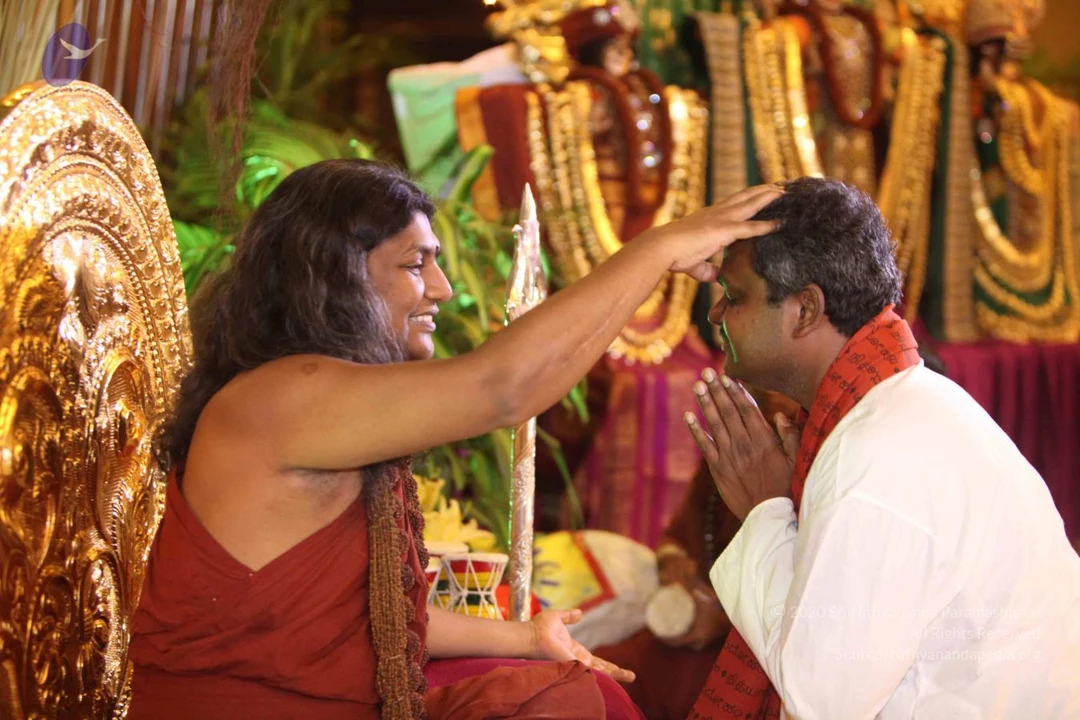
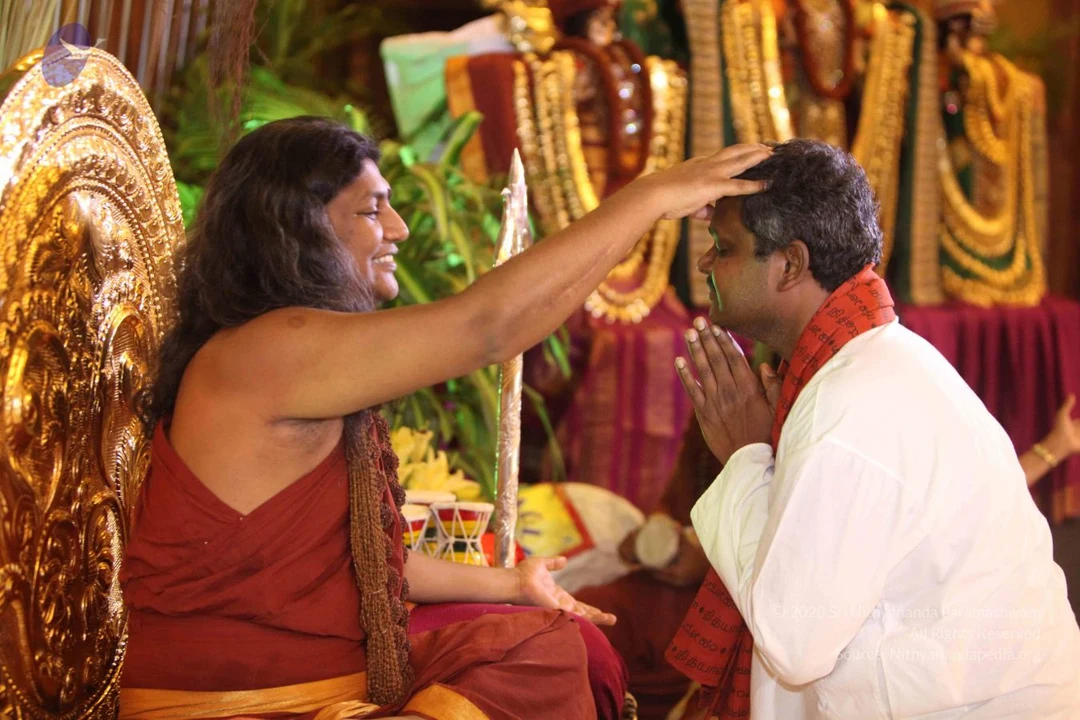
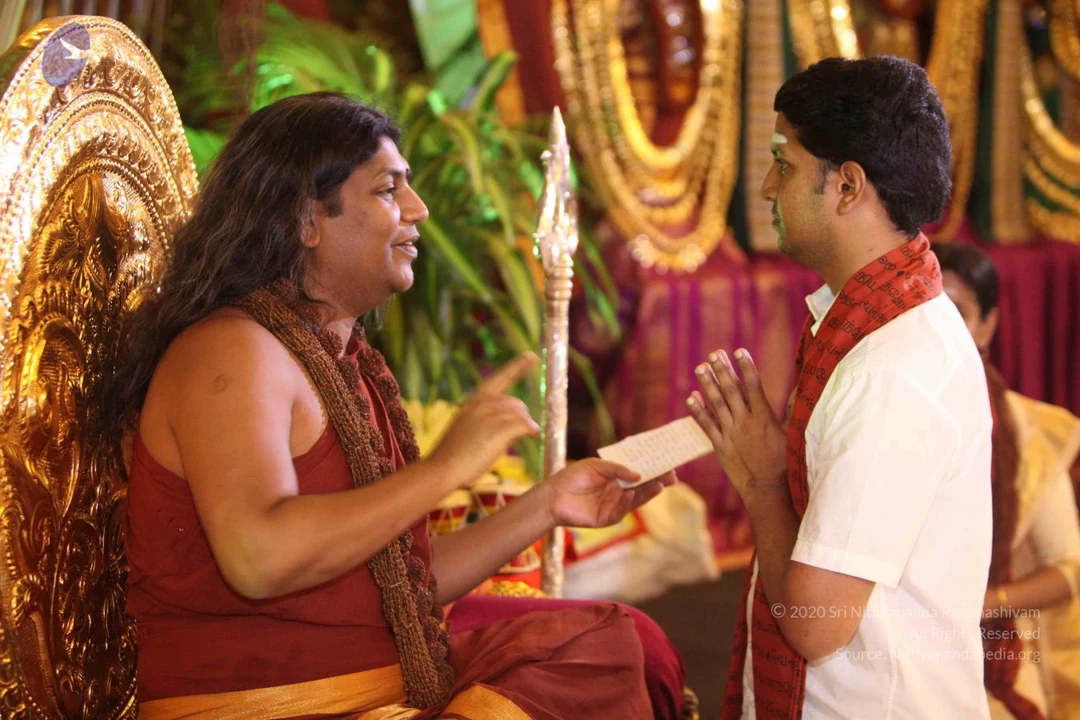
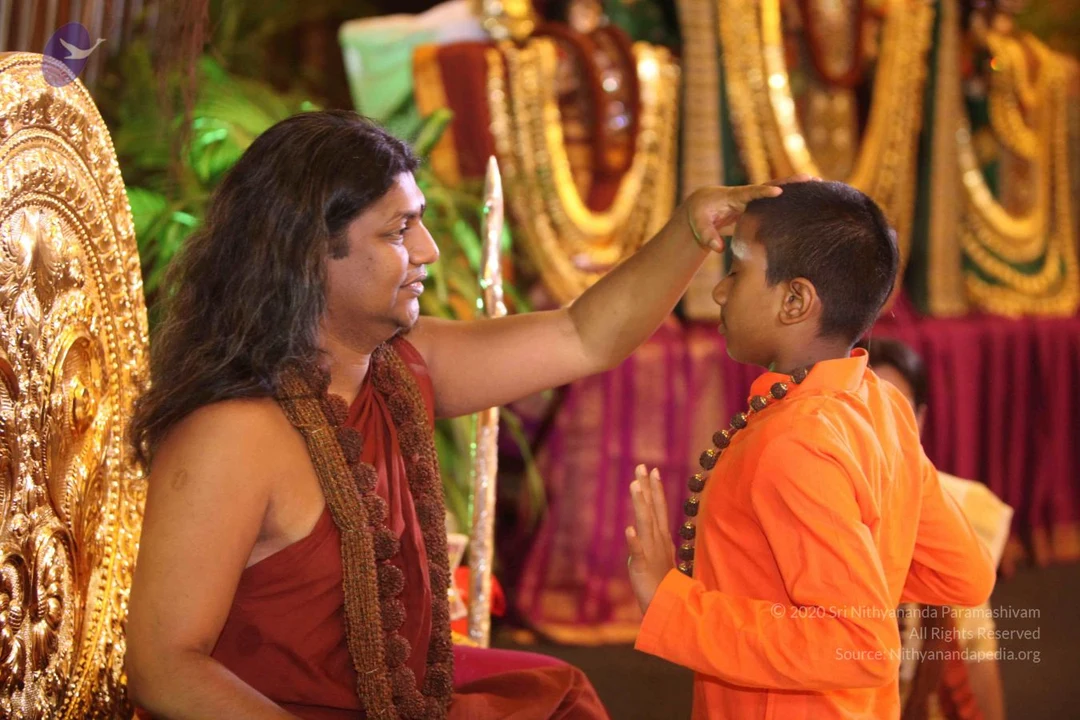
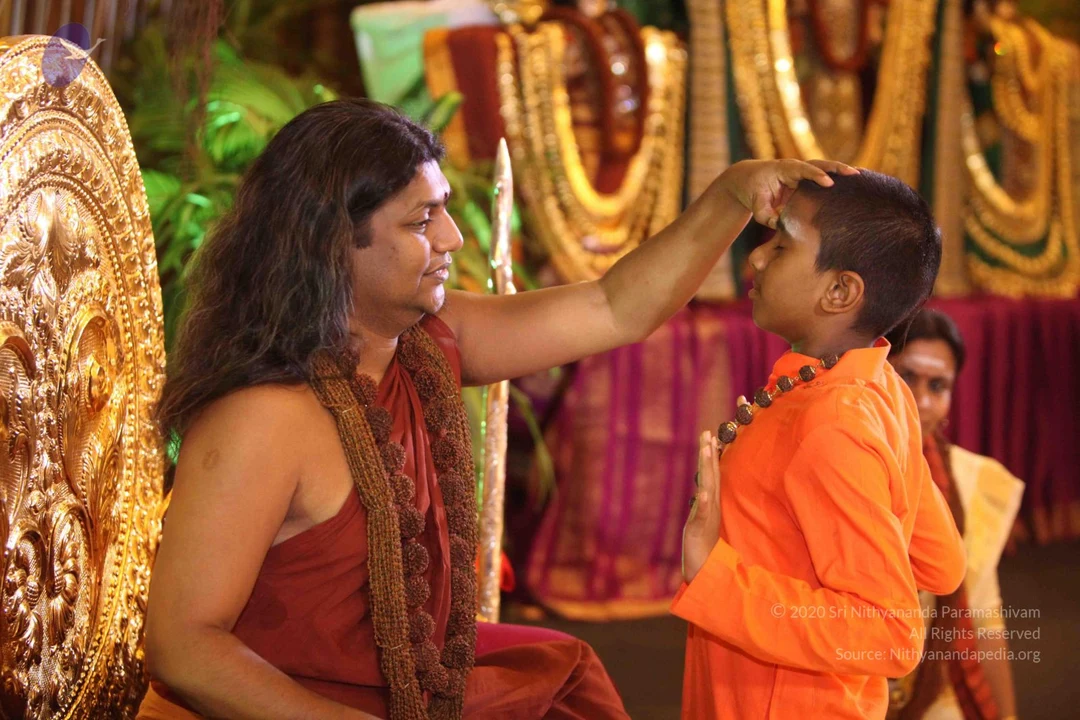
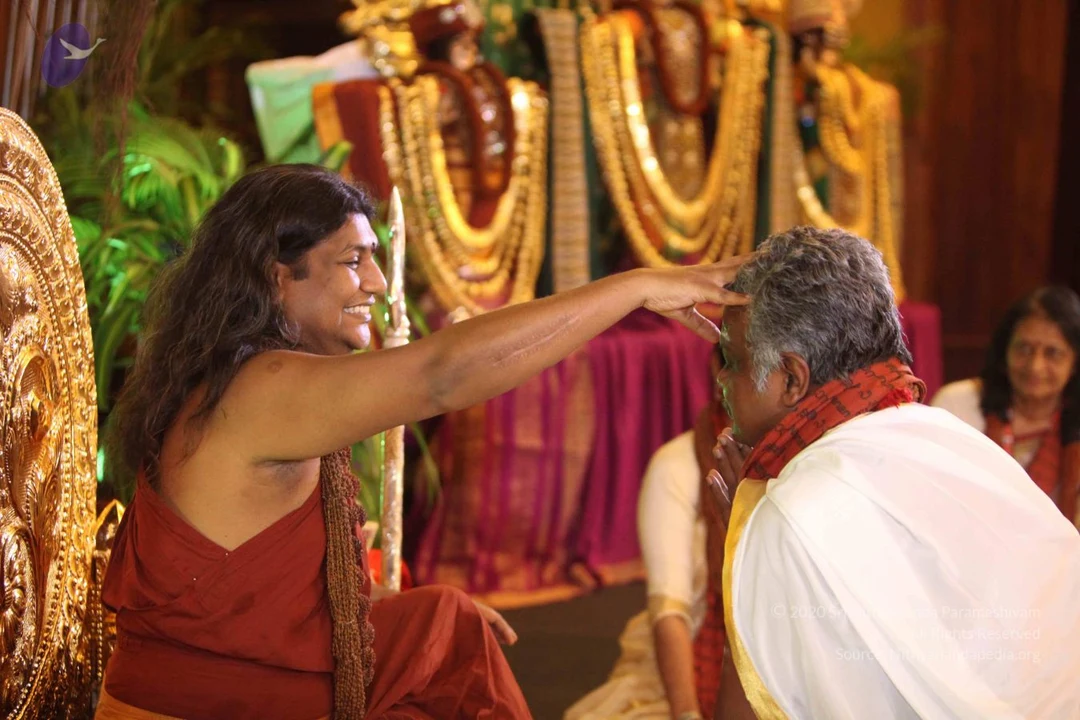
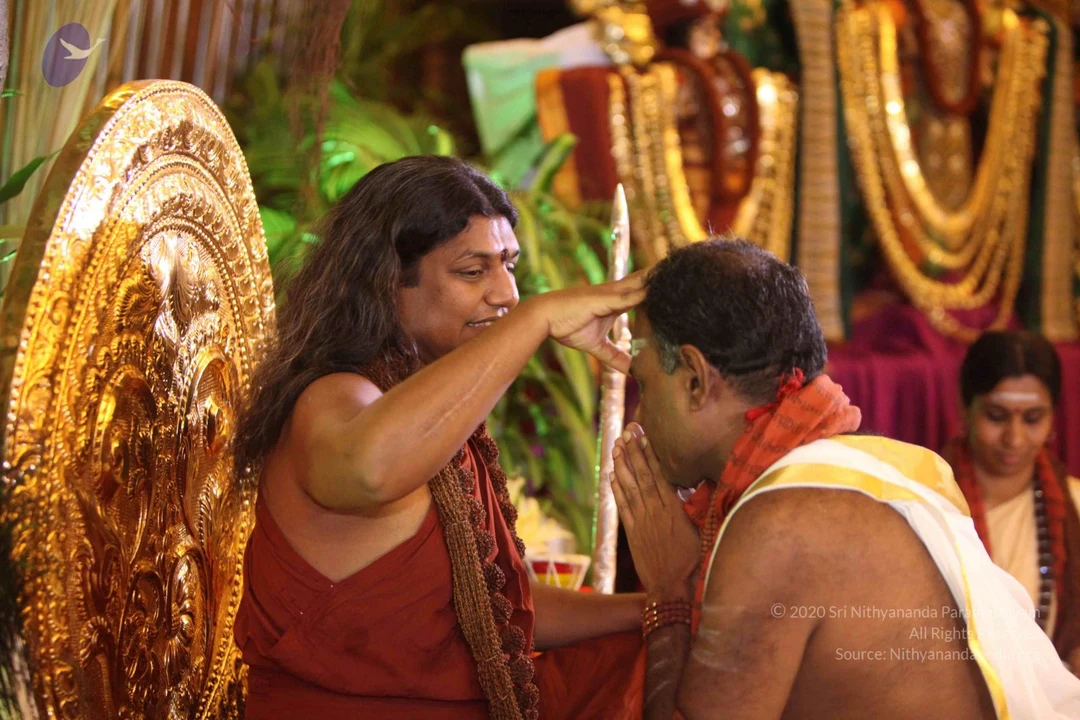
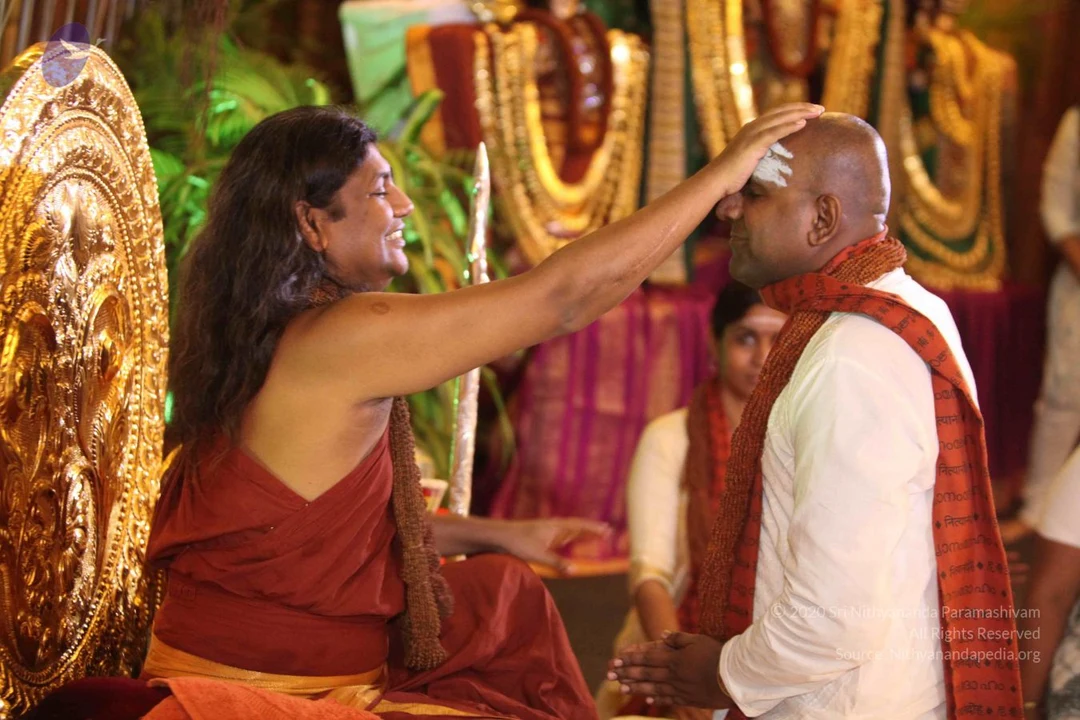
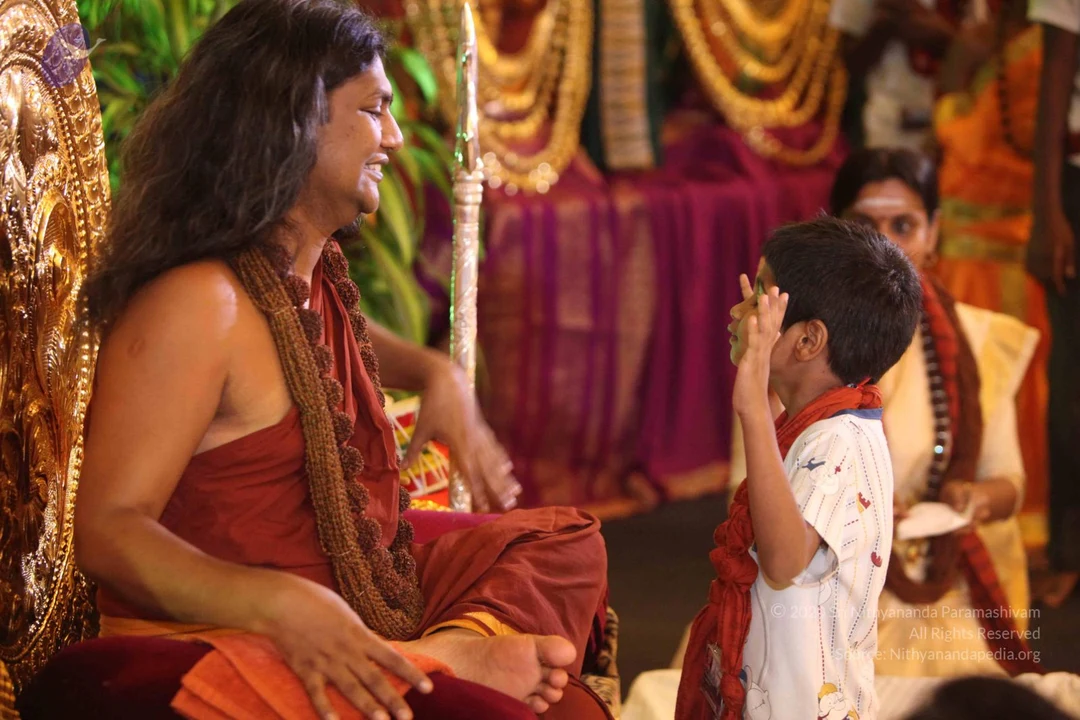
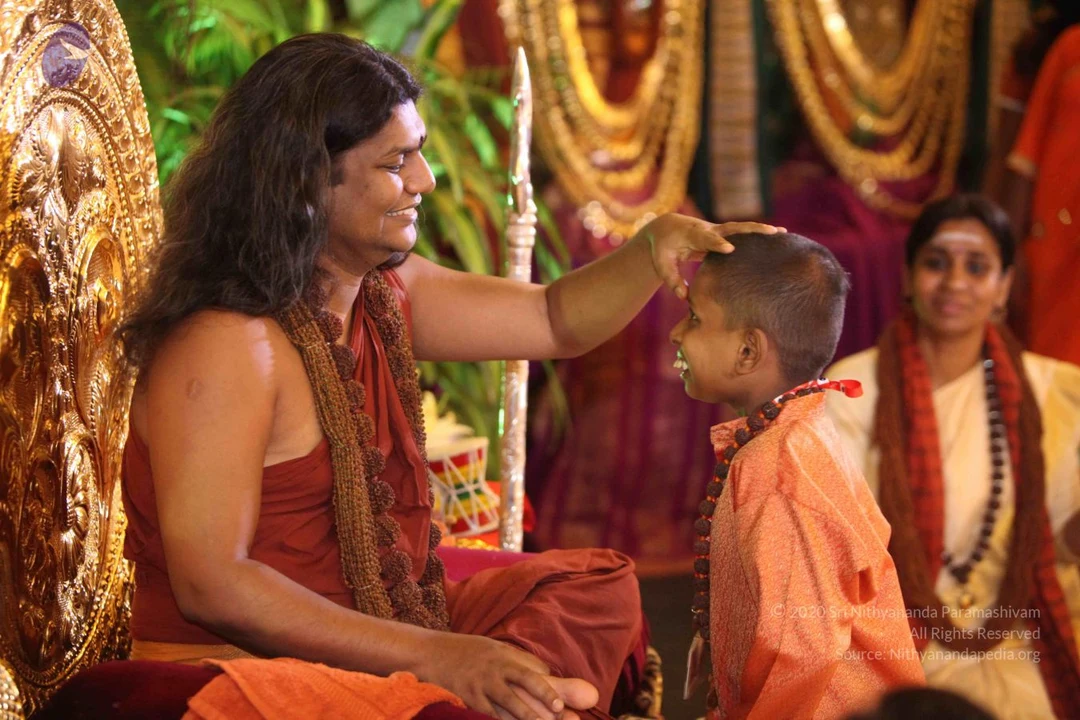
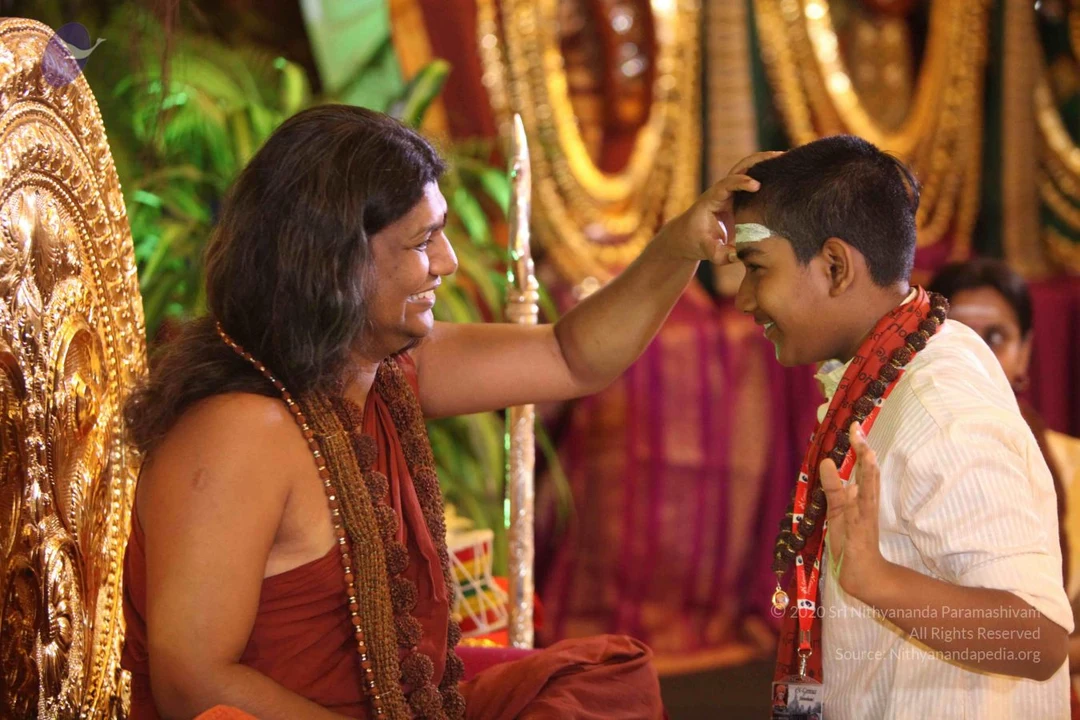
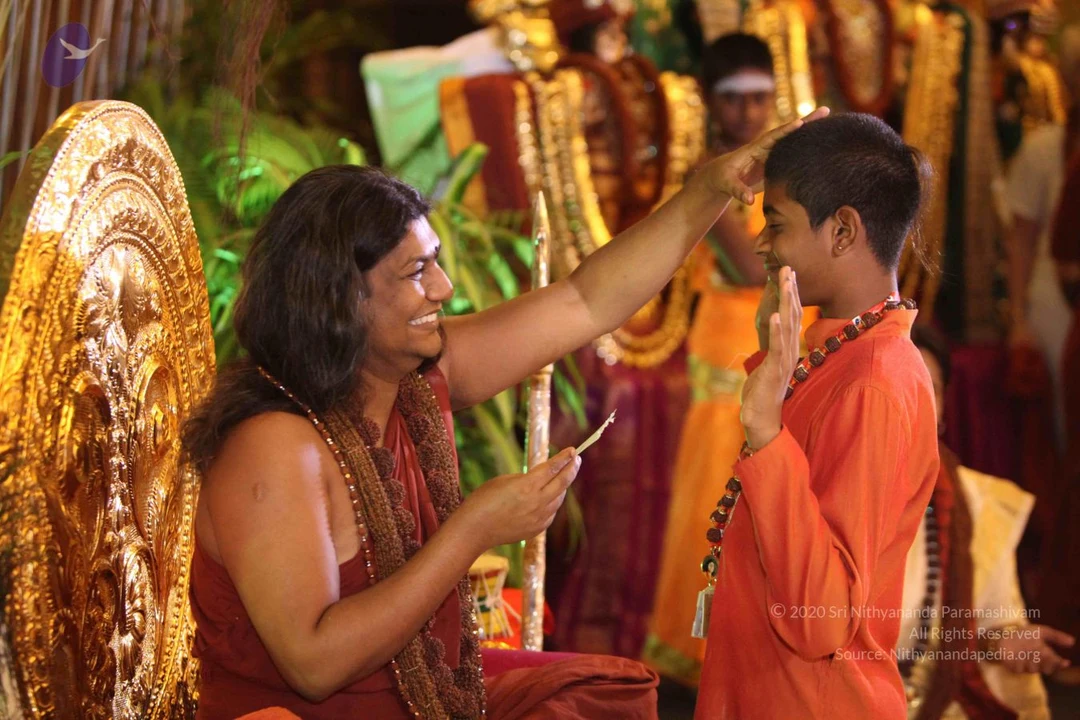
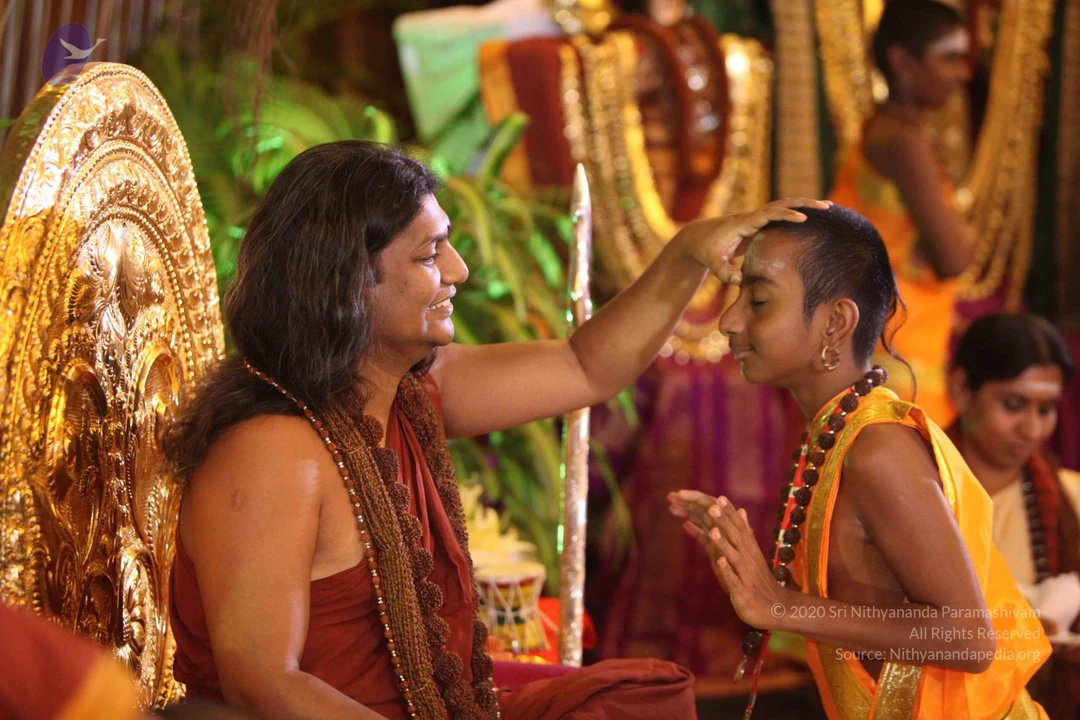
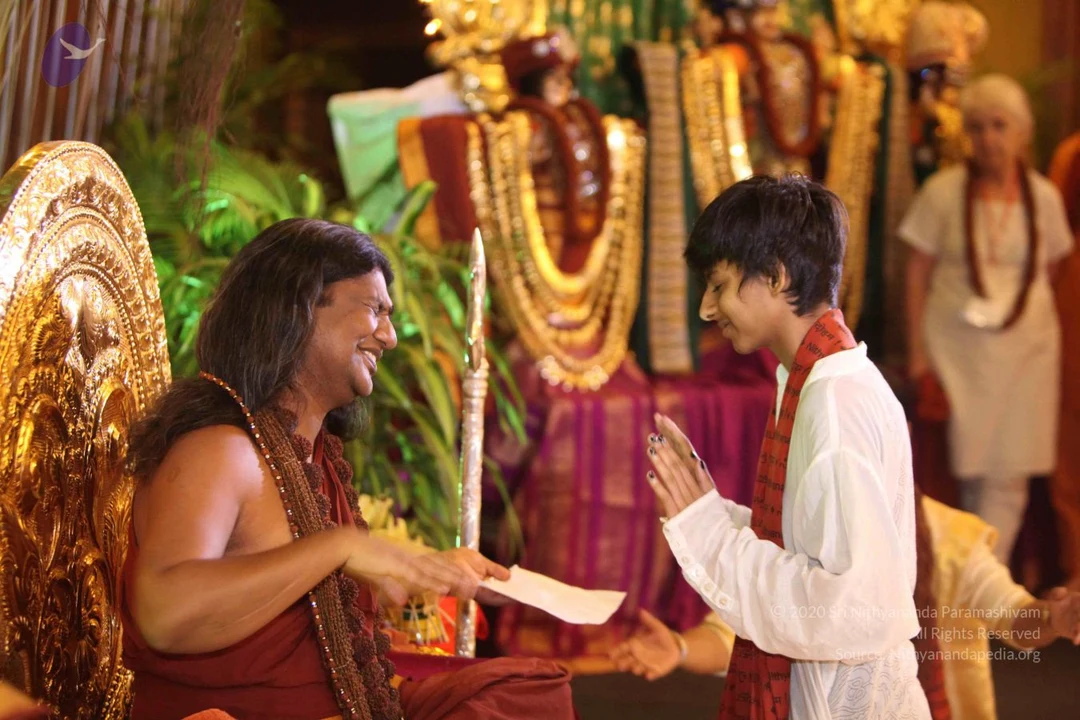
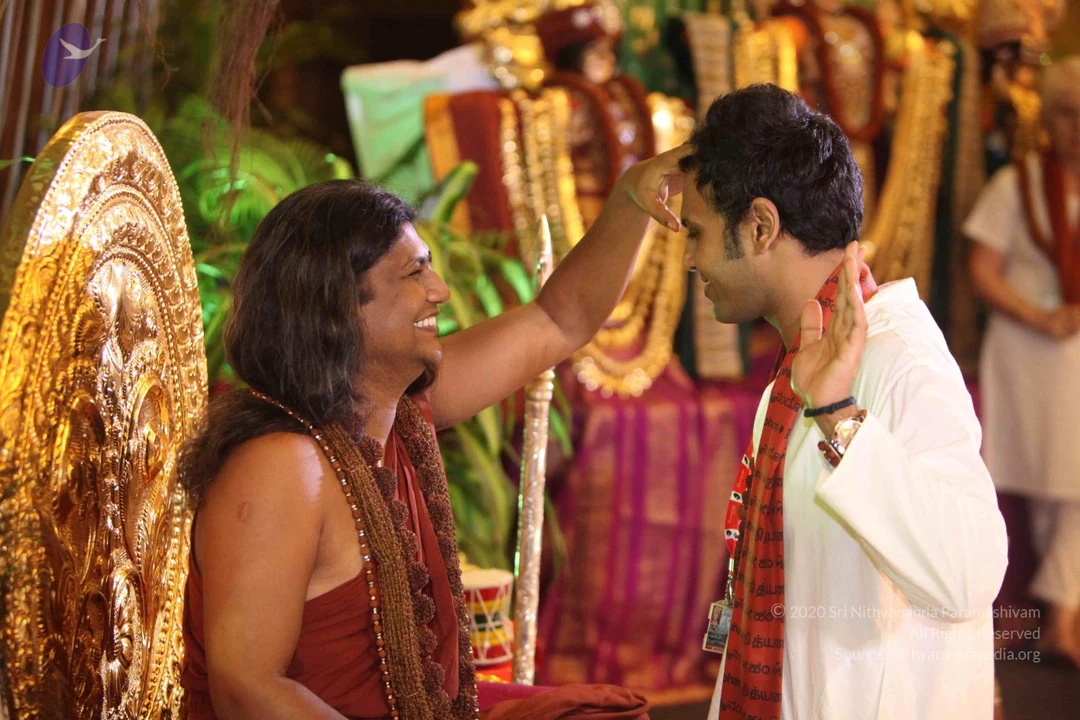
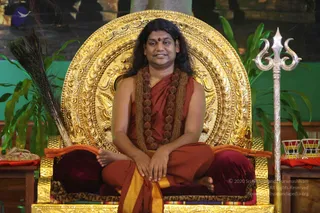
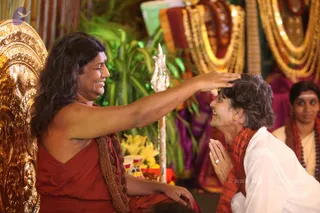
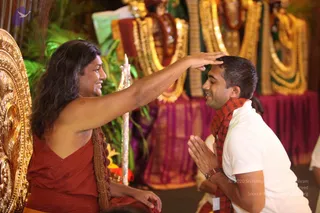
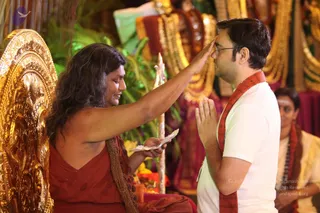
A seated man with long dark hair, a red bindi and a rudraksha mala in brown and red-brown beads sits cross-legged on an ornate gold throne with a large embossed backrest. He wears a rust-red garment with an orange-yellow border and a red-brown shawl. A silver trident stands to the right, a peacock-feather whisk leans at left, and a tray with brass cups sits on a side table covered in red cloth. Green plants fill the background. The man appears to be a person, identified by long swept hair, a rudraksha mala and saffron-toned clothing seated on a throne.A seated long-haired figure in a rust-red robe and rudraksha-style brown shawl places a hand on the head of a kneeling woman with grey hair, white top and red shawl, her palms pressed together in greeting. A silver trident stands between them. Behind the seated figure is a gold ornate throne, and on the right a woman in a white sari with a forehead mark watches. Behind them are gold garlands, green plants and yellow lilies in a decorated stage setting.A seated long-haired figure in a rust-orange robe and rudraksha-style beaded mala reaches out to place a palm on the head of a kneeling man in a white shirt with a red-and-white printed shawl, hands pressed together in namaste. Behind them, deity murti are draped in gold and yellow garlands and ornate red-and-gold cloth, with green foliage and a gold-embossed throne panel at left. The seated figure's appearance (long swept hair, saffron robe, beaded mala) matches the page's indication that a person was present, so this is a person blessing a devotee. Two people are visible, the blessing figure and the kneeling devotee.A seated figure in a red-orange robe with long, swept-back dark hair sits on an ornate gold throne-like chair and presses a hand to the forehead of a man in a white shirt with a red sacred shawl printed with text. The man stands with palms joined in anjali, eyes lowered, wearing glasses. Behind them are gold and red garlands and ornaments, green foliage and a wooden staff or ritual stick. The scene suggests a darshan blessing. A partially visible person with a forehead mark and red shawl stands at right. Swamiji (probable): the seated figure has long swept-back hair and red-orange robes with a shawl, presented as a blessing giver on a throne.A long-haired man in a rust-orange garment and a rudraksha mala sits on an ornate gold throne, placing his right hand on the head of a young boy in a white shirt and orange scarf printed with script. Behind them, gold garlands hang and a silver staff stands beside a bouquet of white flowers. A woman in a red-and-white sari with a bindi stands to the right, smiling. The setting is a temple-style darshan with decorative drapes and offerings.A seated figure with long, swept-back dark hair wears a rust-red wrap and a long brown rudraksha mala, sitting on an ornate gold throne-back. He places his right hand on the head of a kneeling man in a white shirt with a red-orange inscribed shawl, whose palms are pressed together in namaste. Behind them stand a silver trident-like staff, gold ceremonial necklaces, red garments, and green plants. The seated figure is an appearance-based a person, giving blessing to a devotee; the kneeling man is a devotee receiving darshan.