Skip to content
Wednesday

31 July 2013

Supreme Pontiff of Hinduism HDH Bhagavan Nithyananda Paramashivam

Dated photos
89
Source pages
1
Media
4
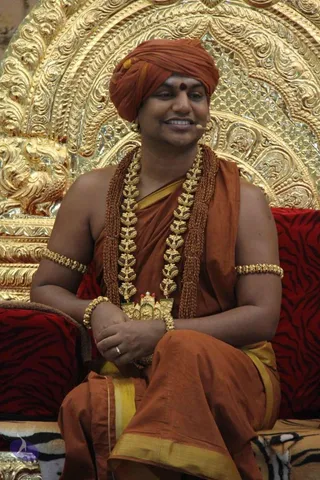
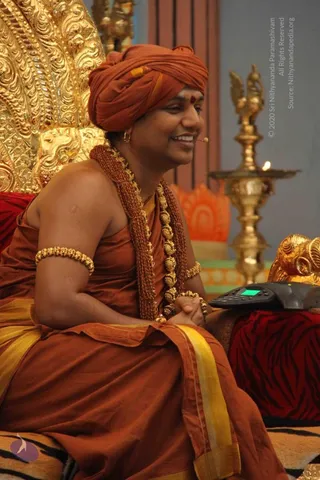
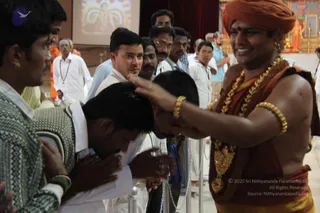
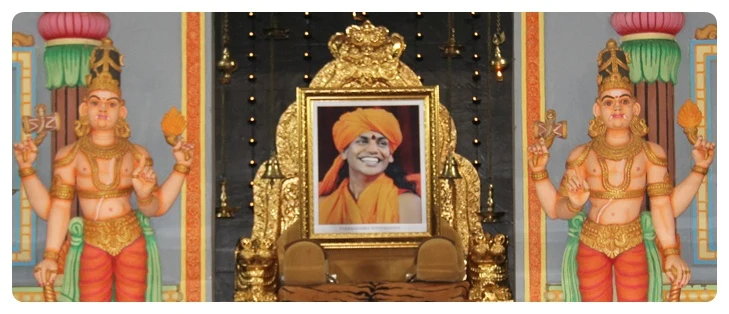
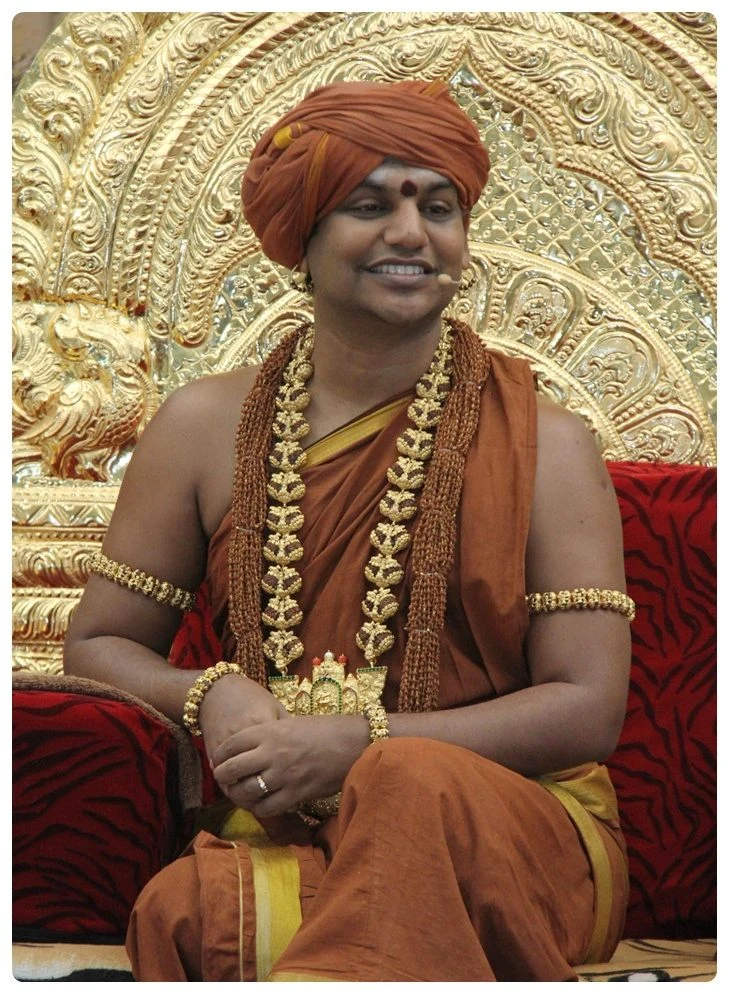
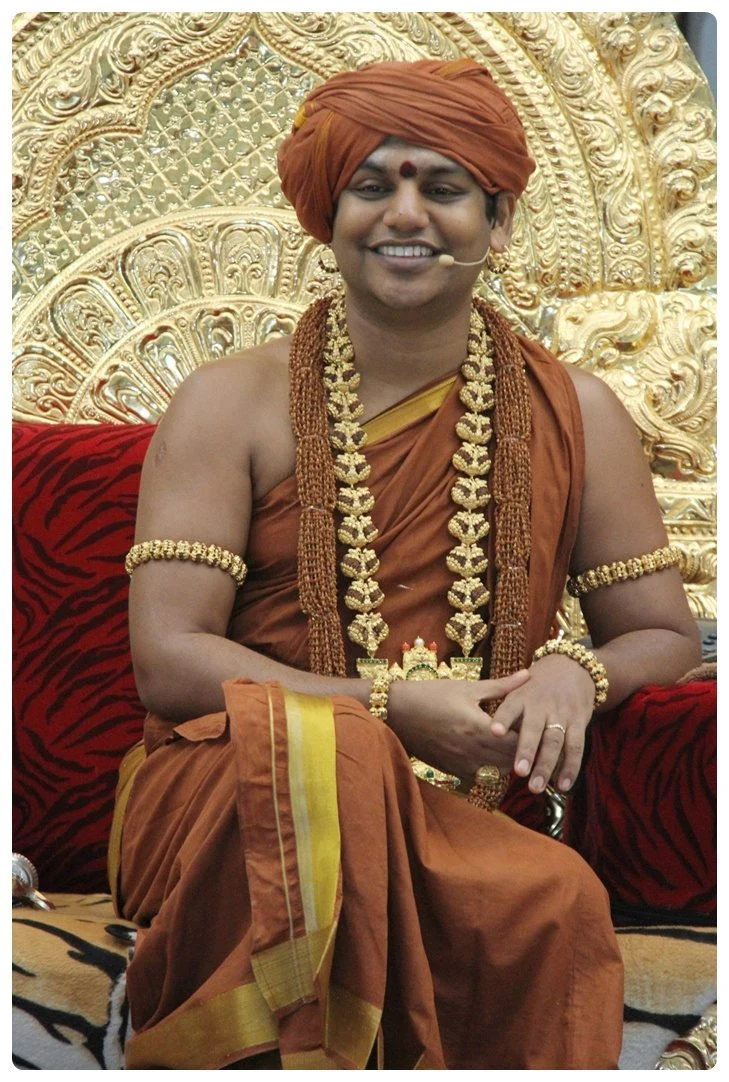
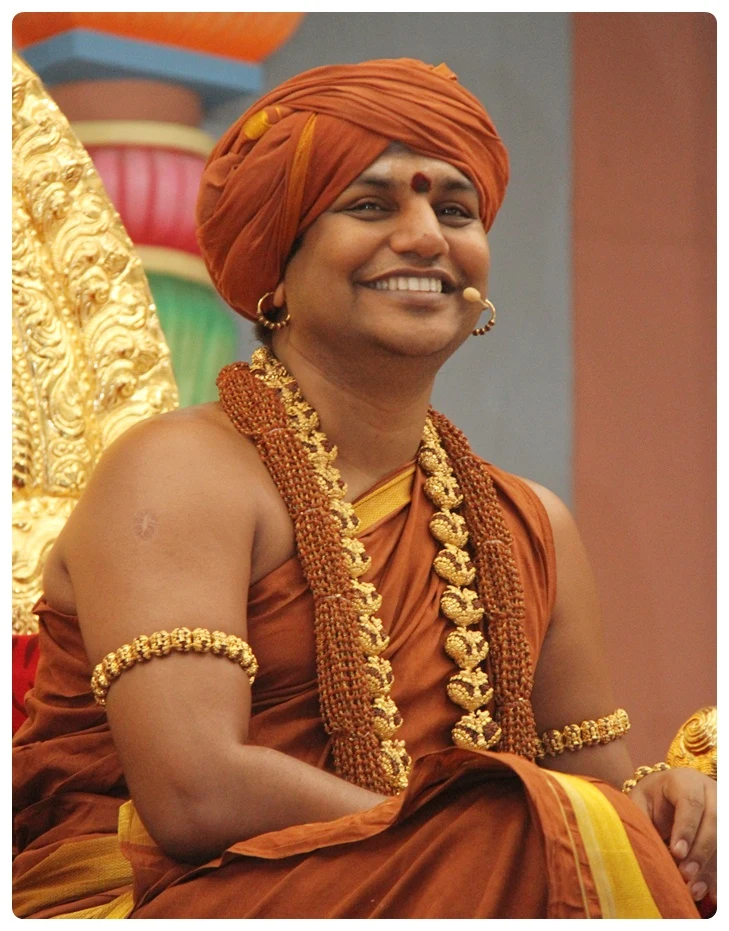
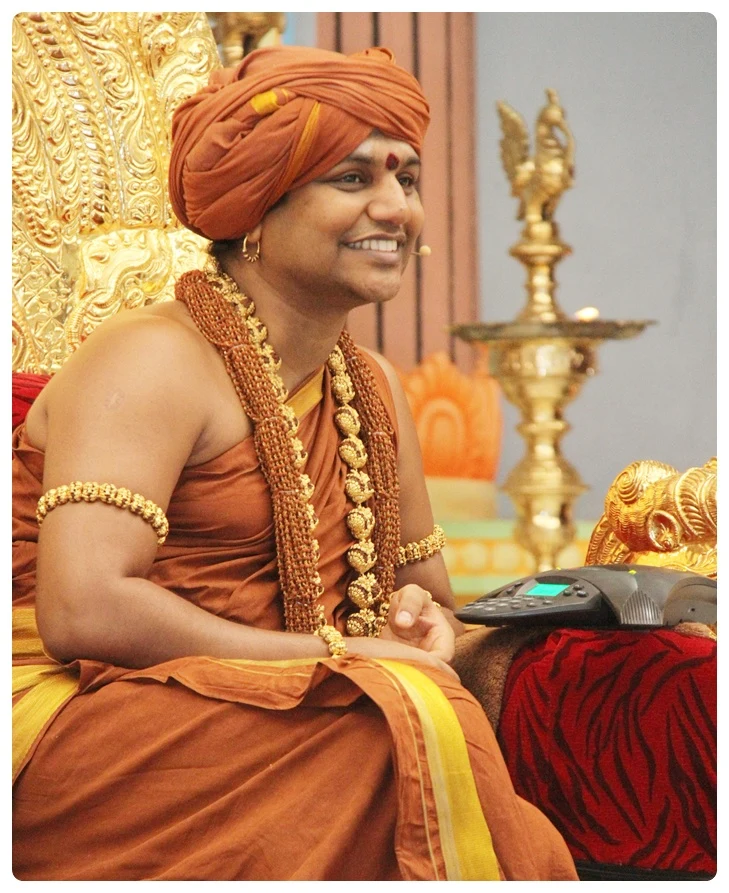
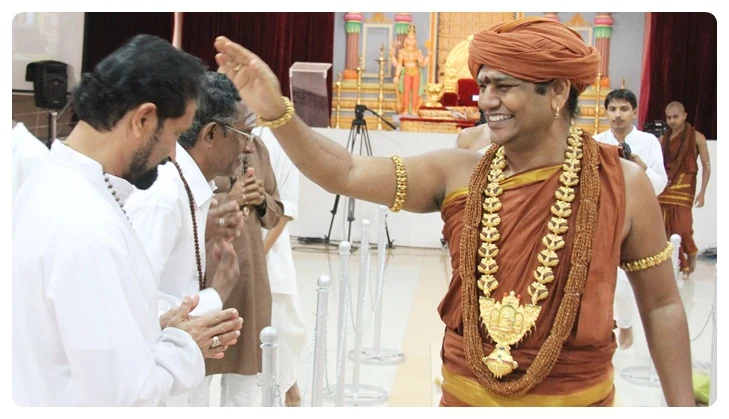
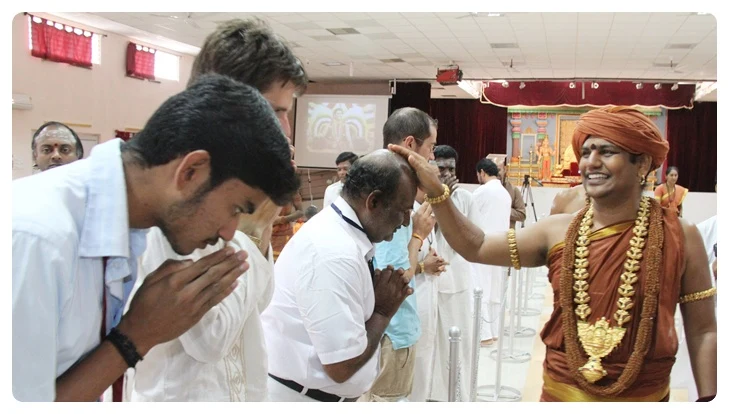
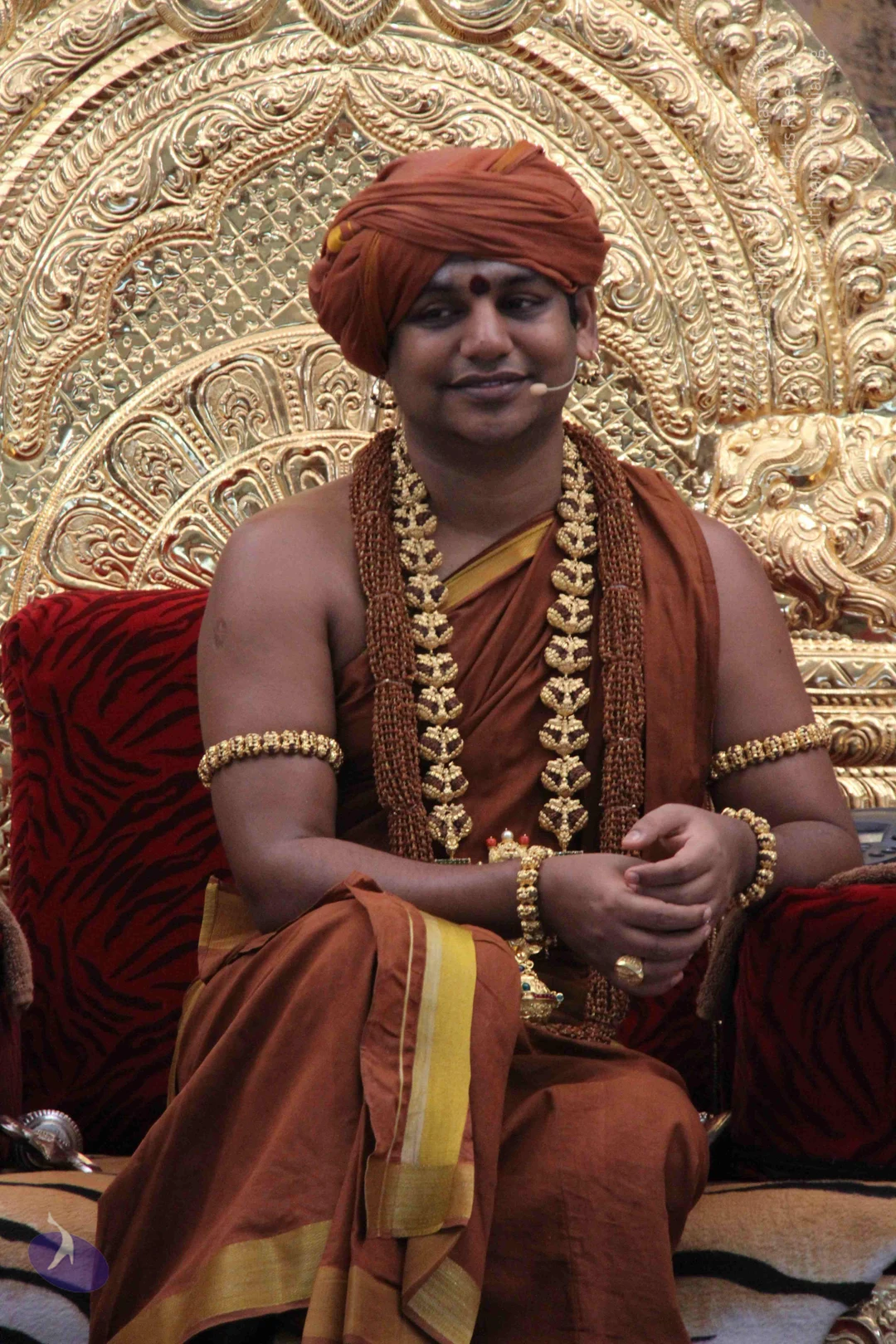
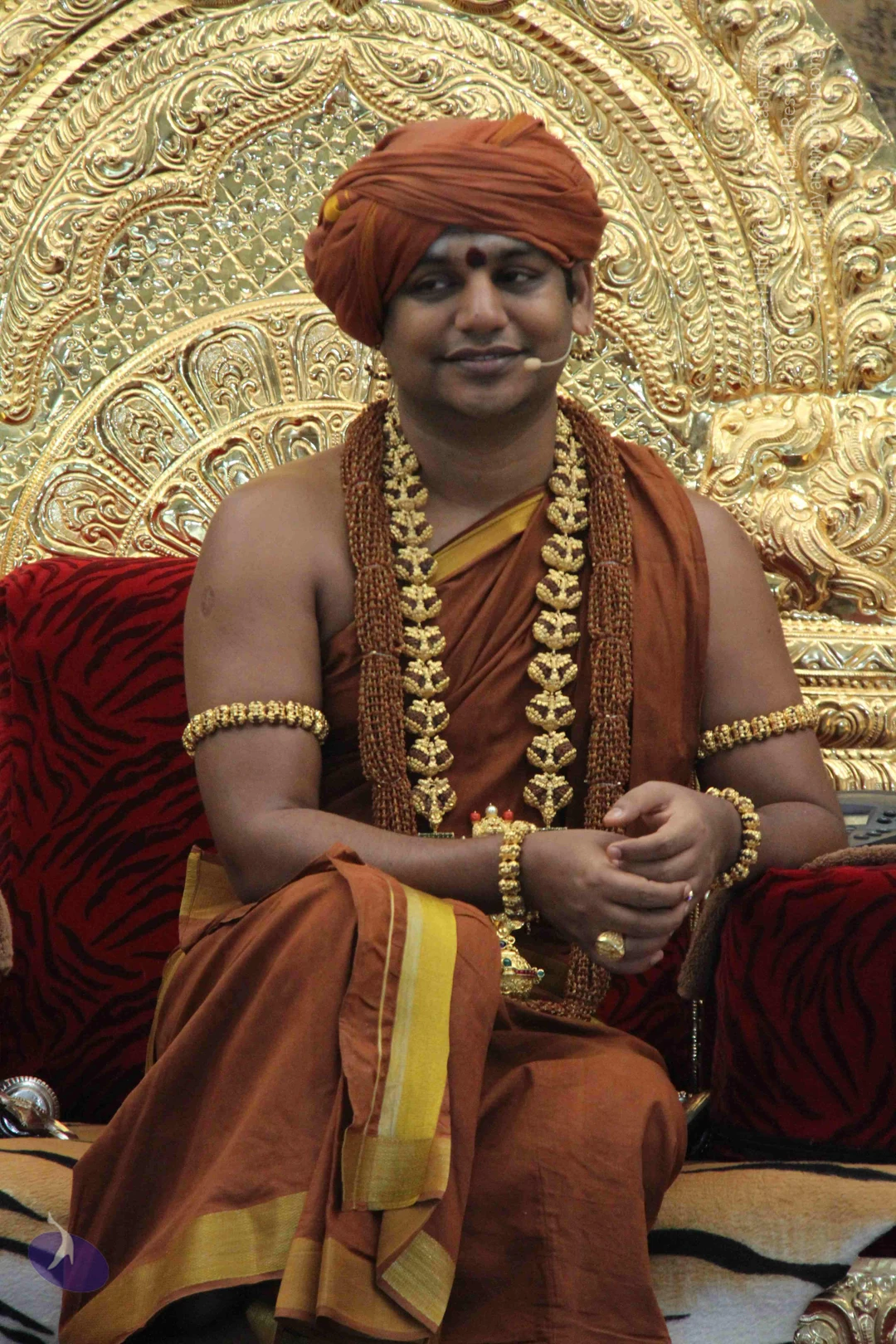
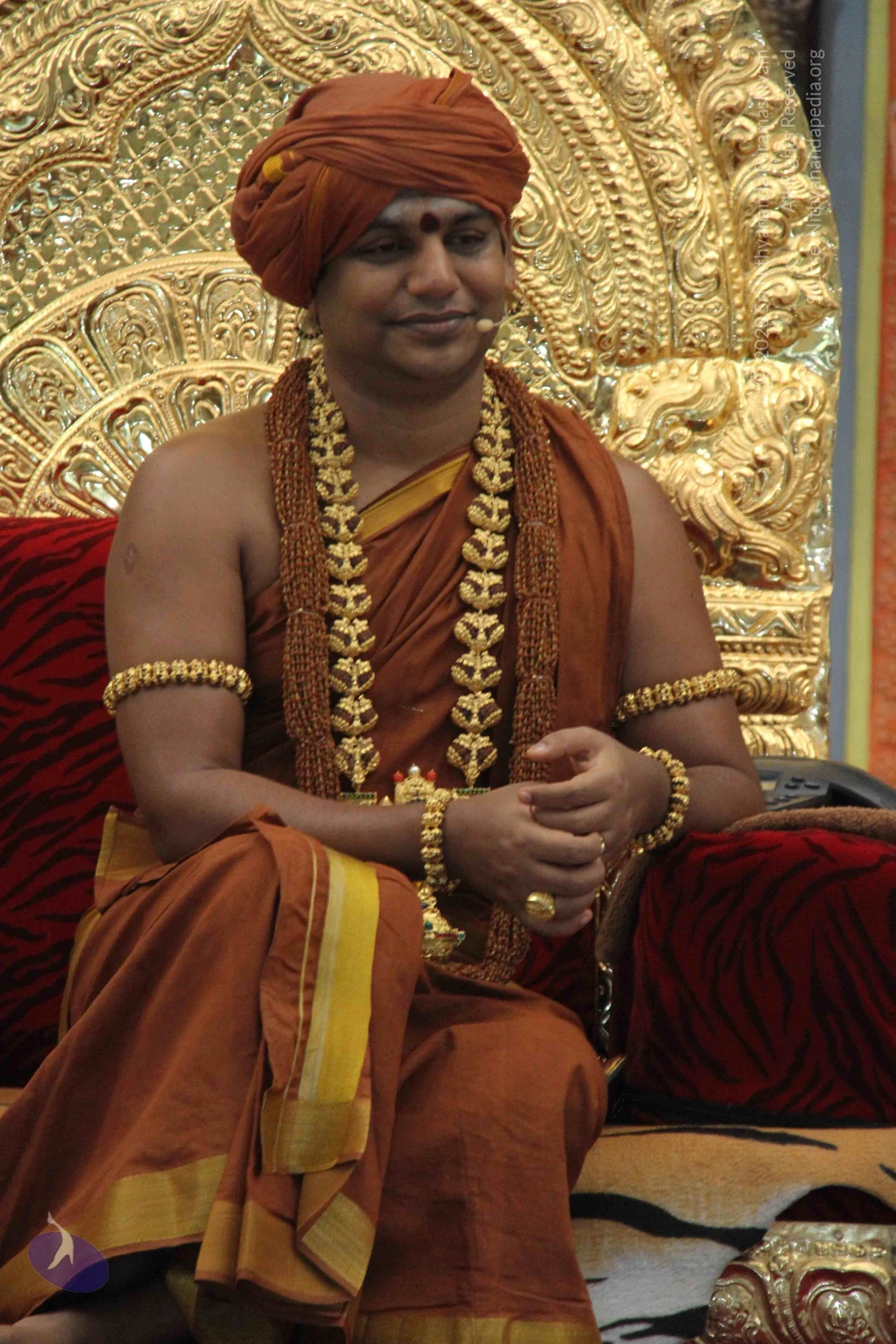
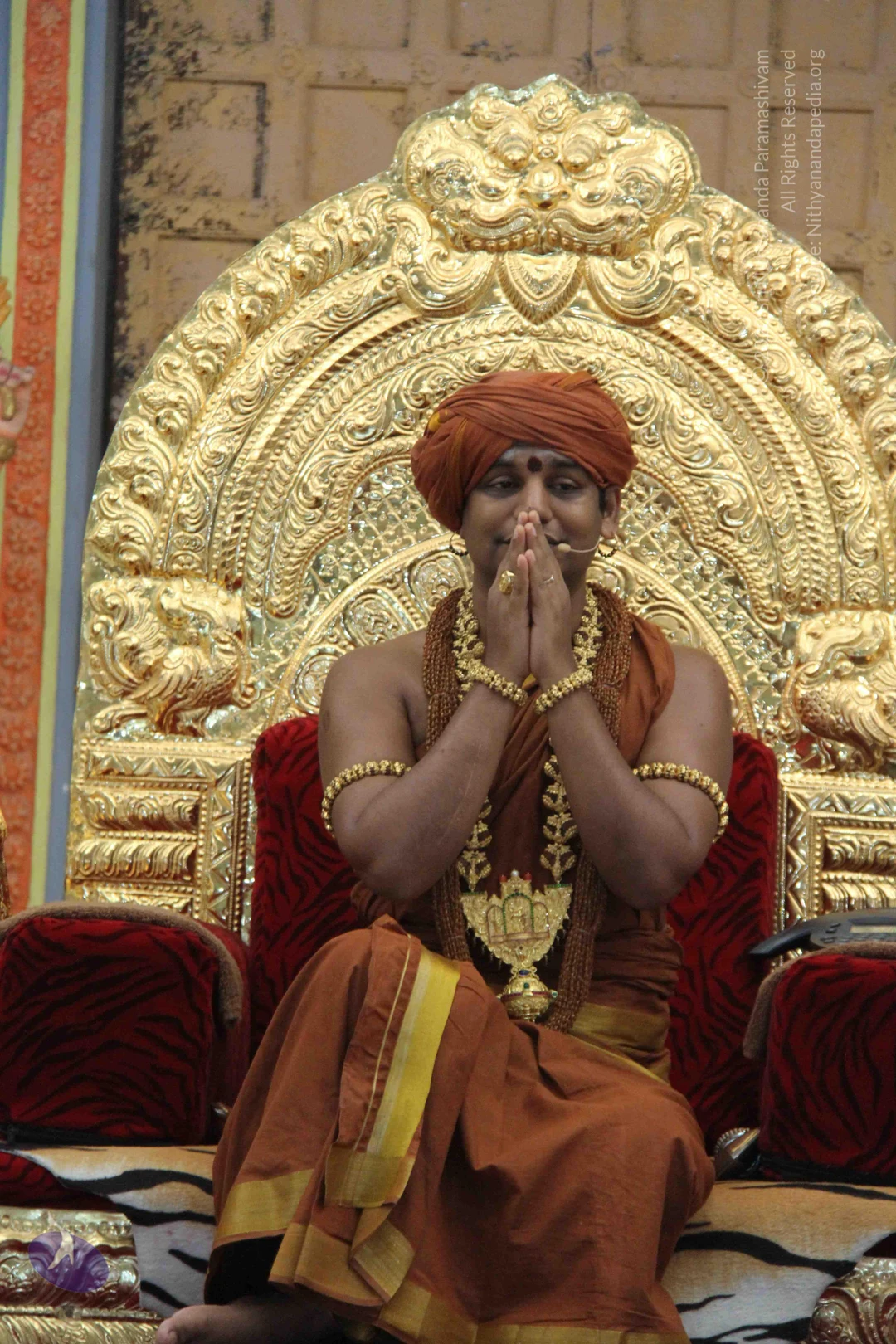
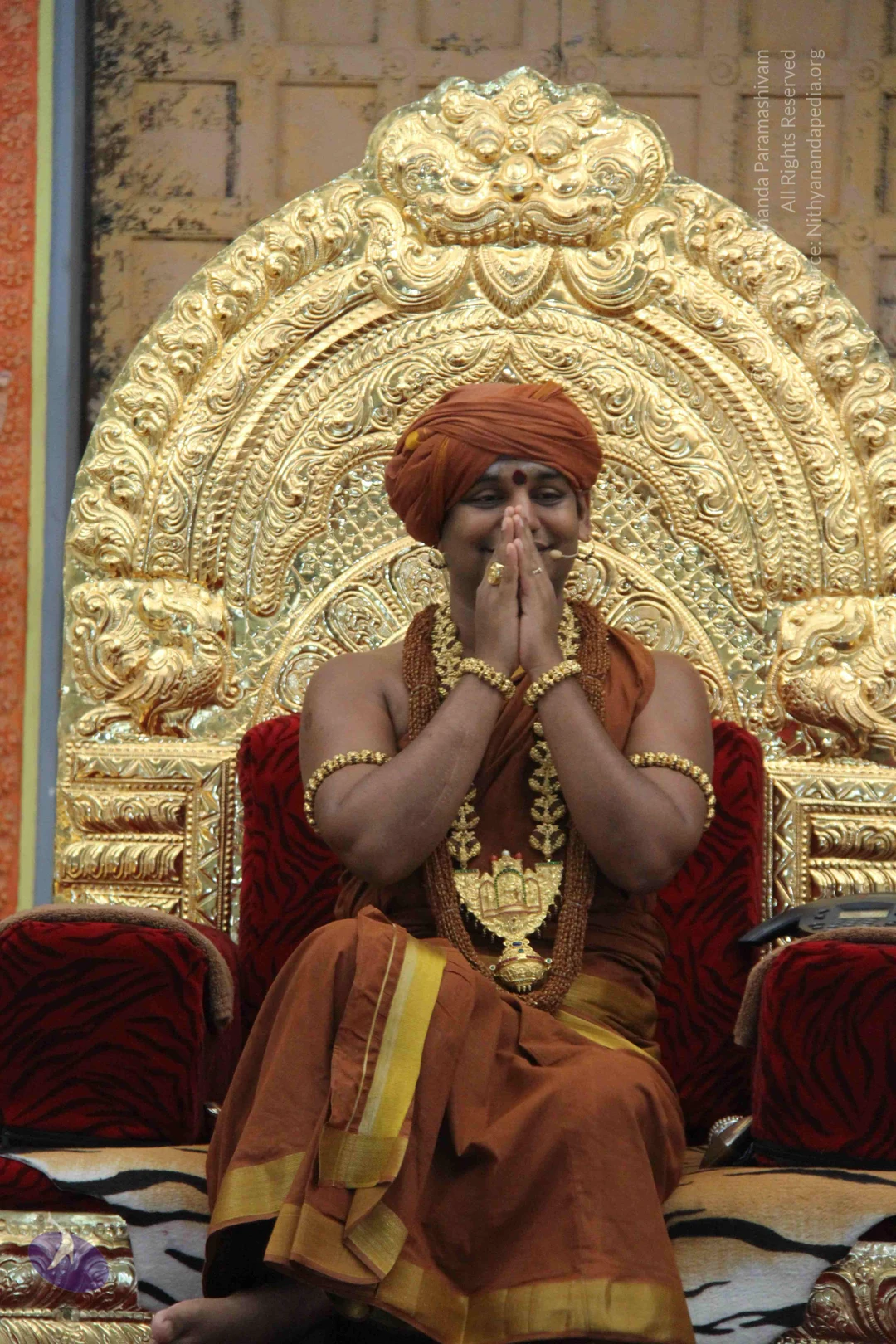
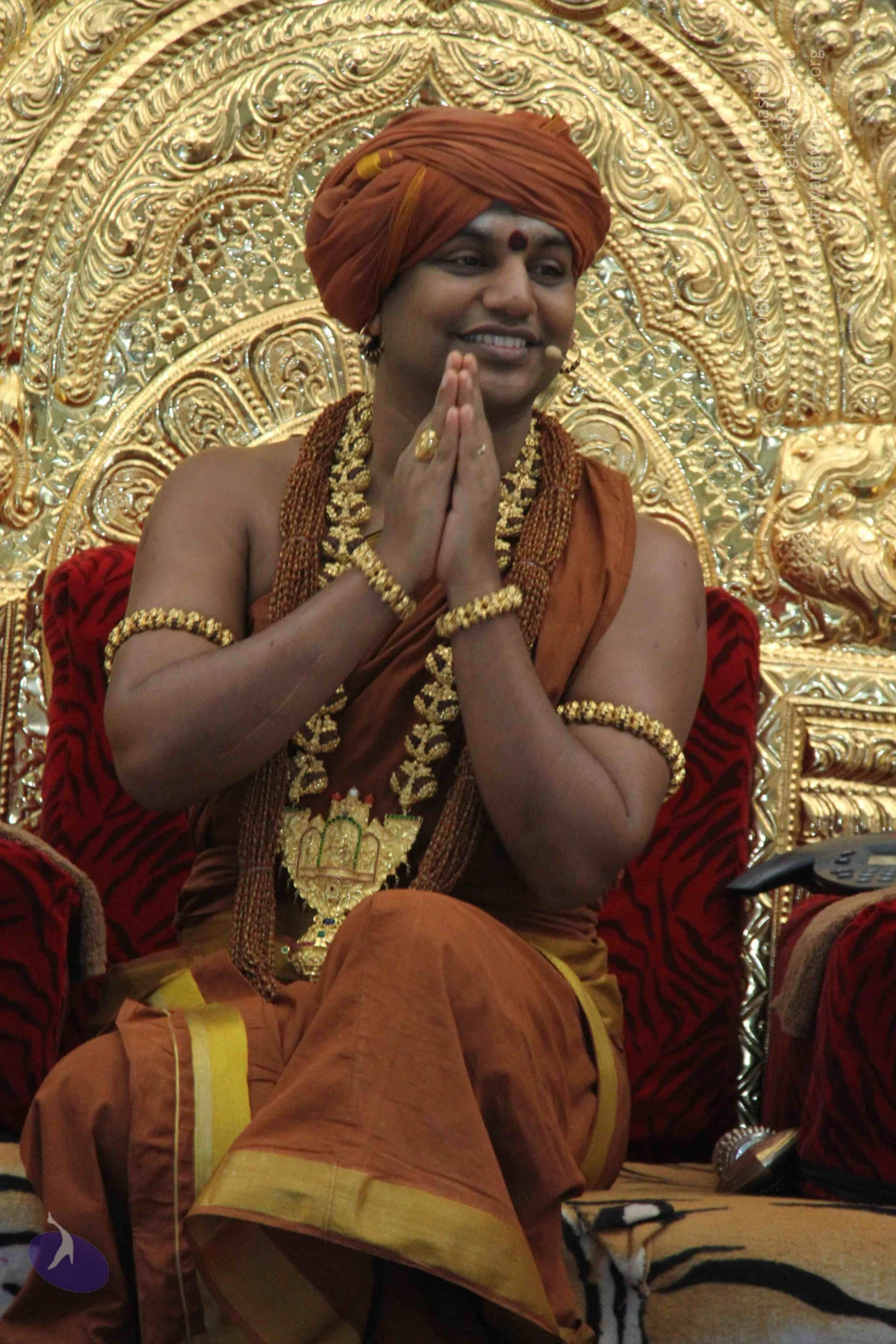
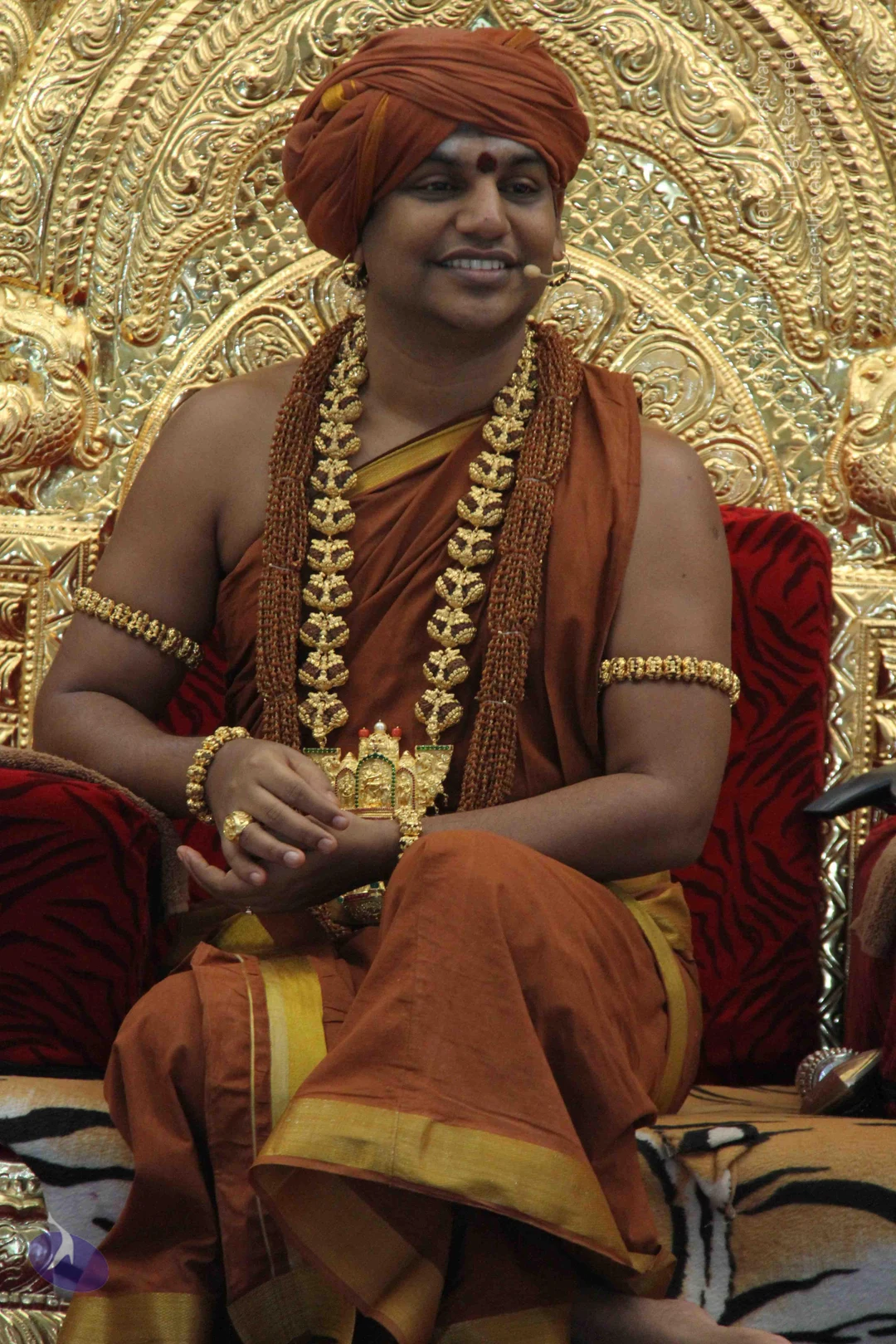
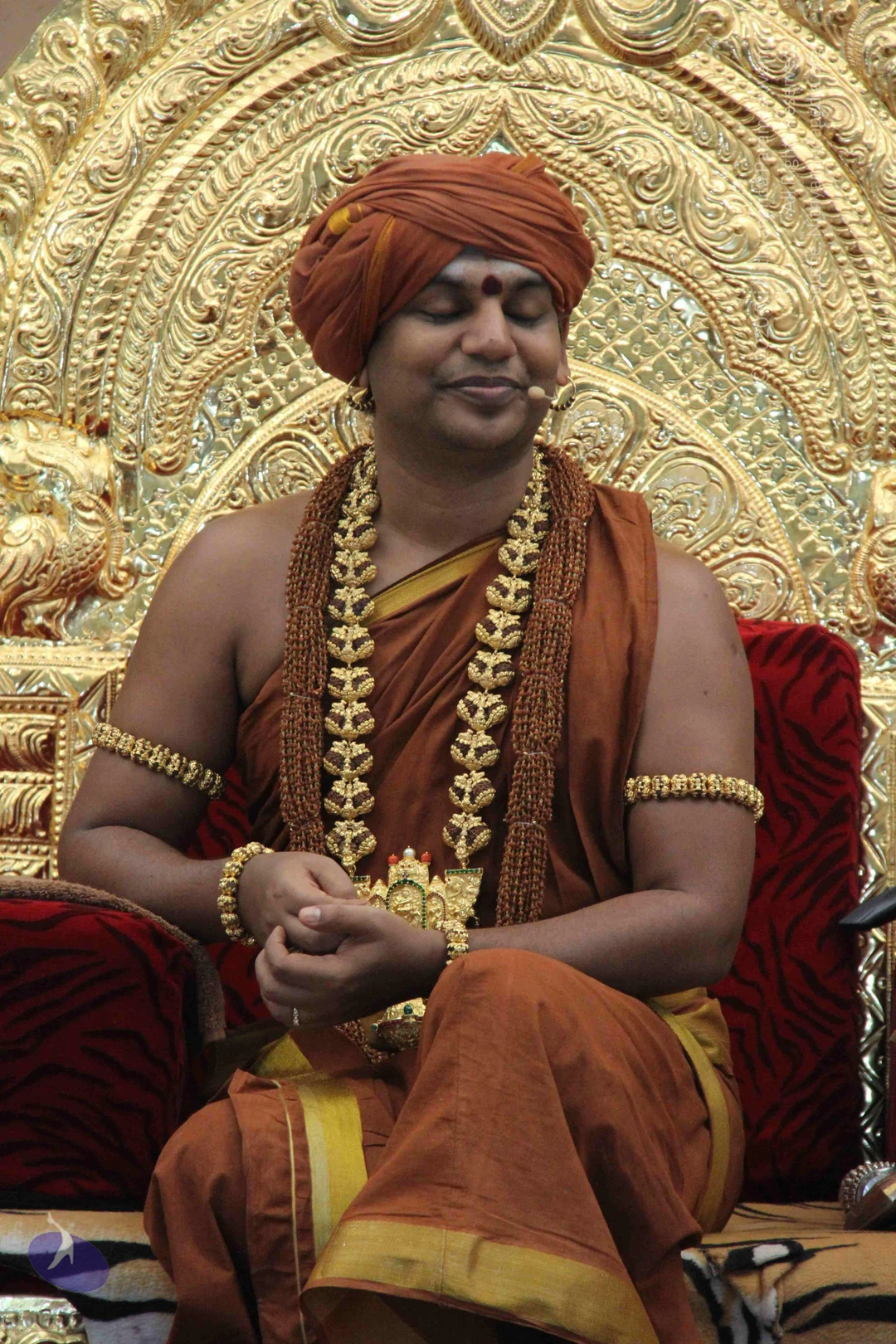
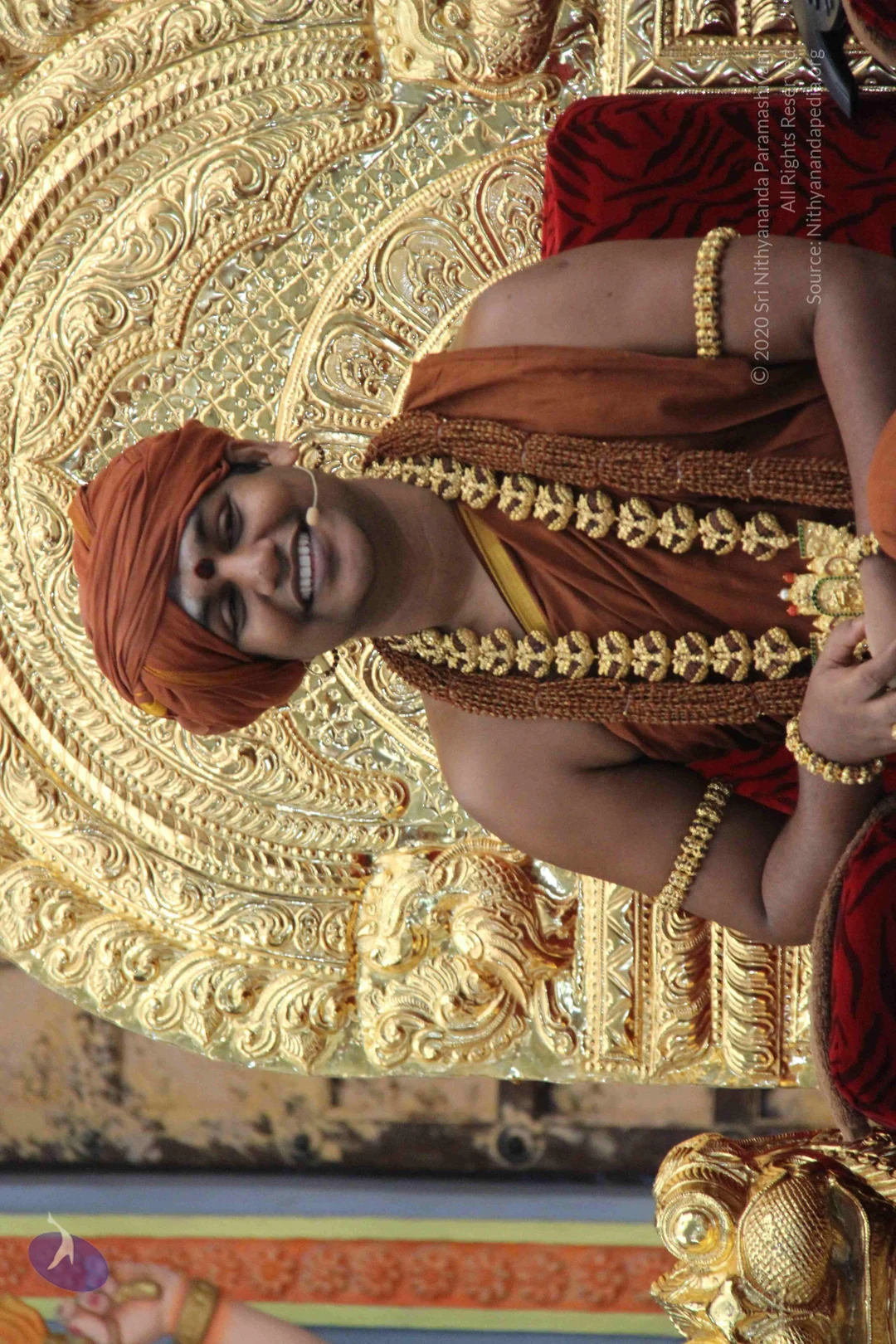
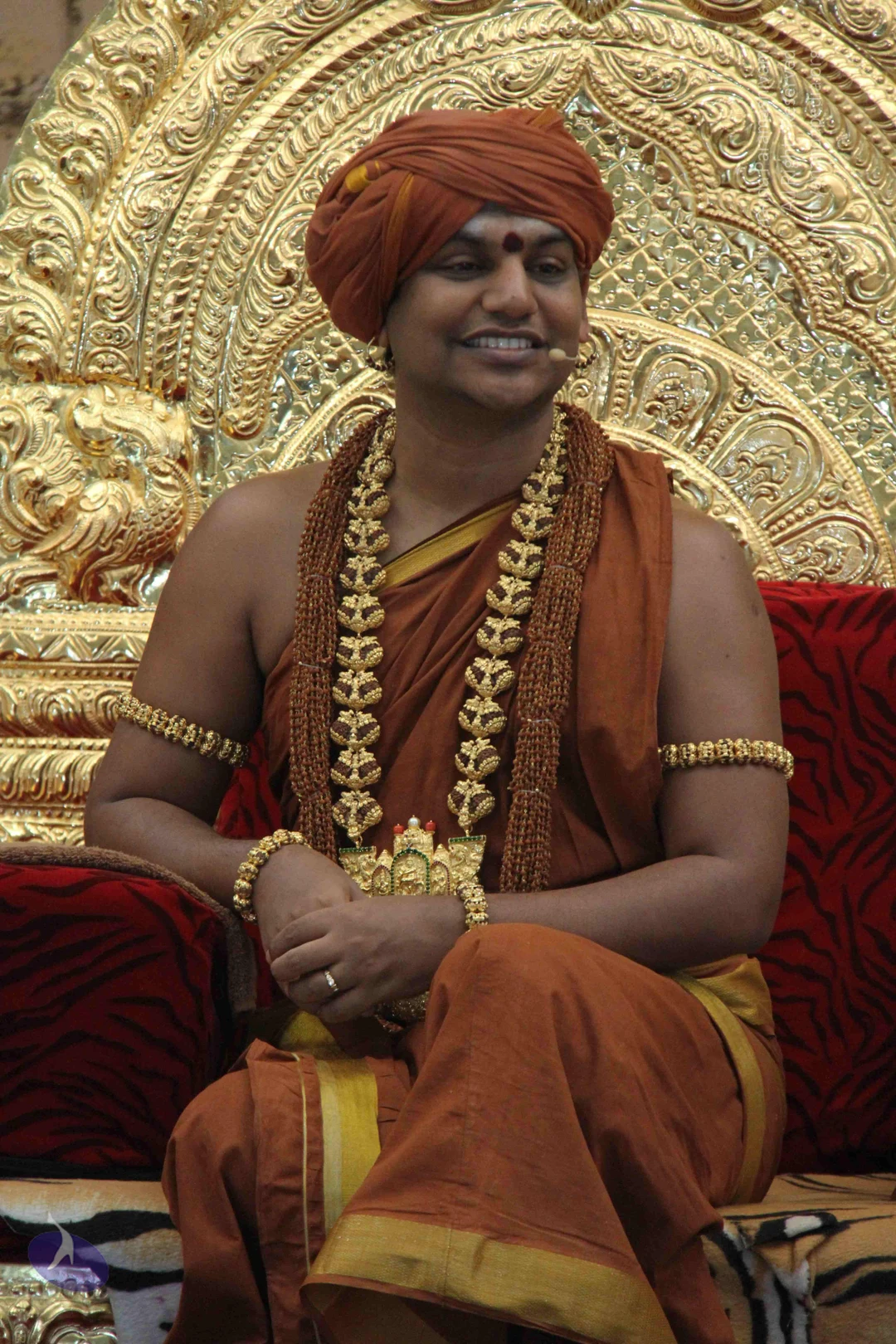
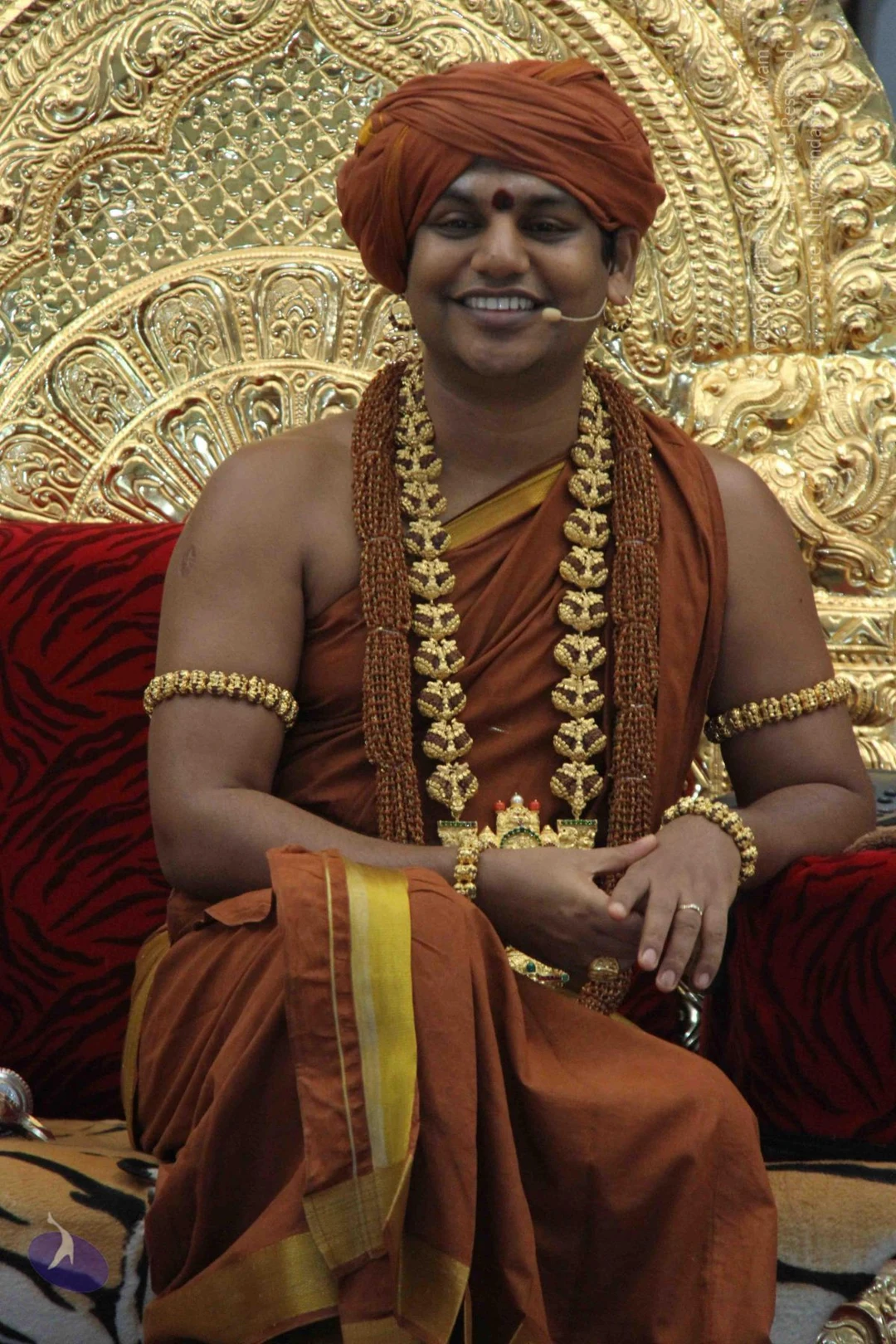
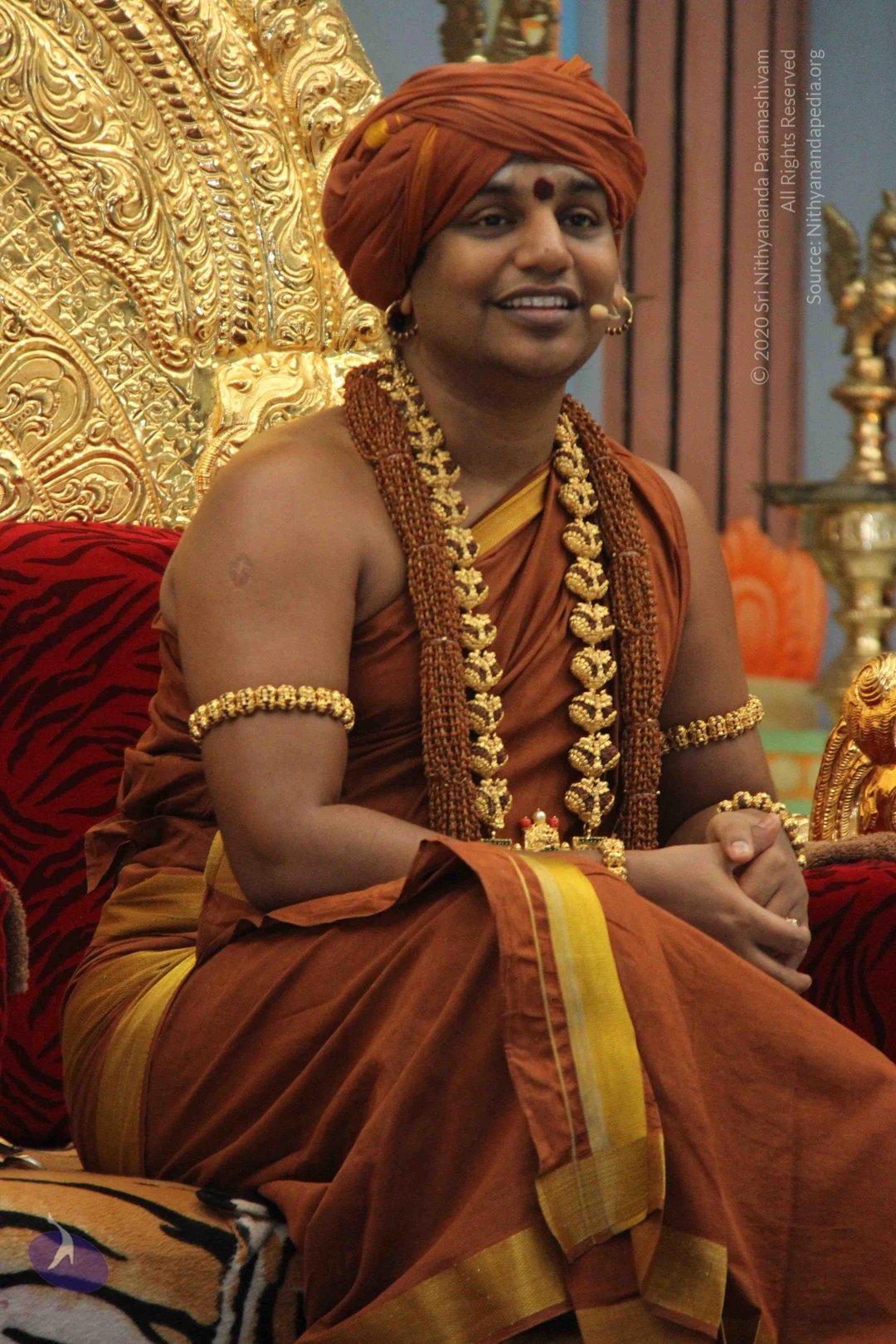
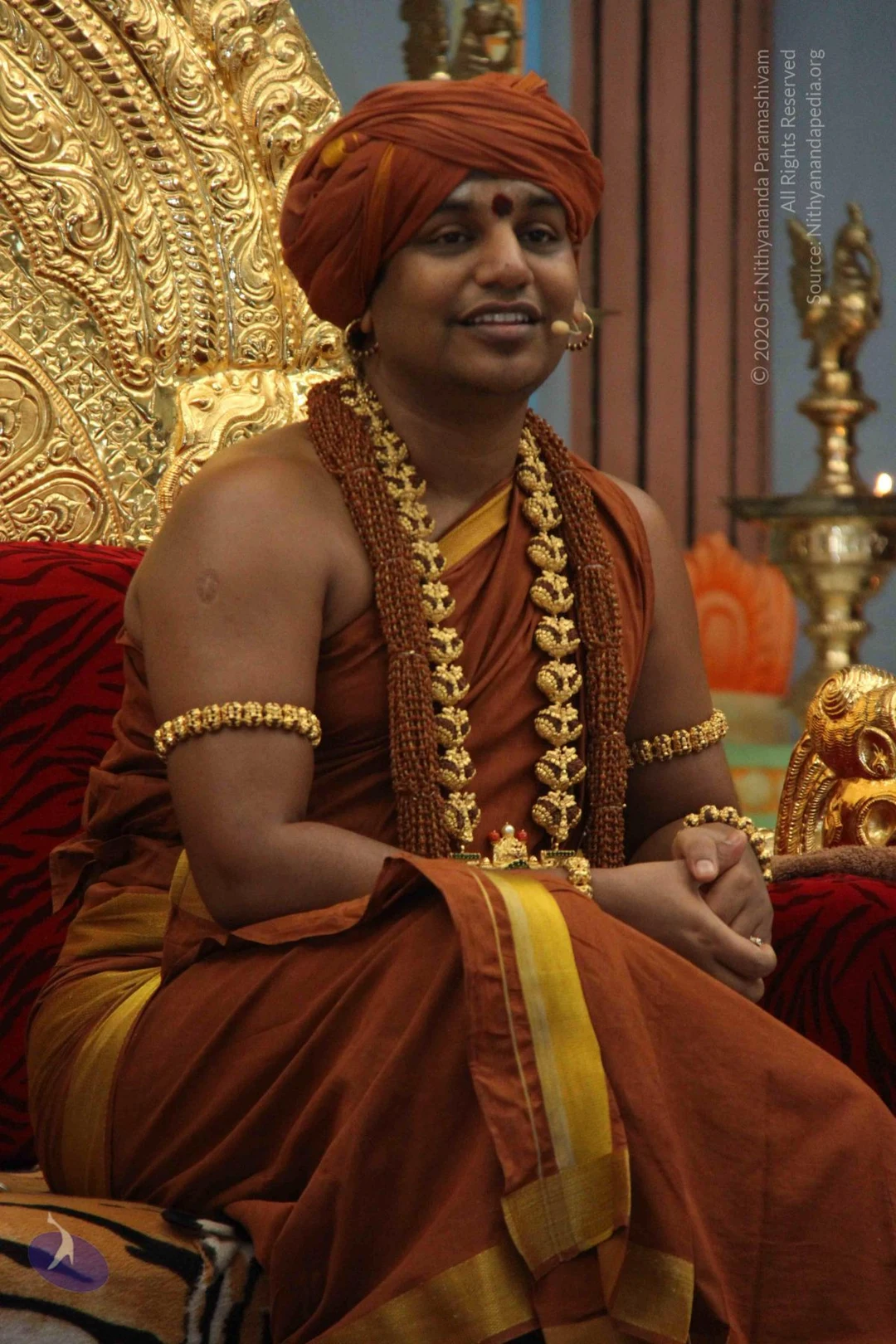
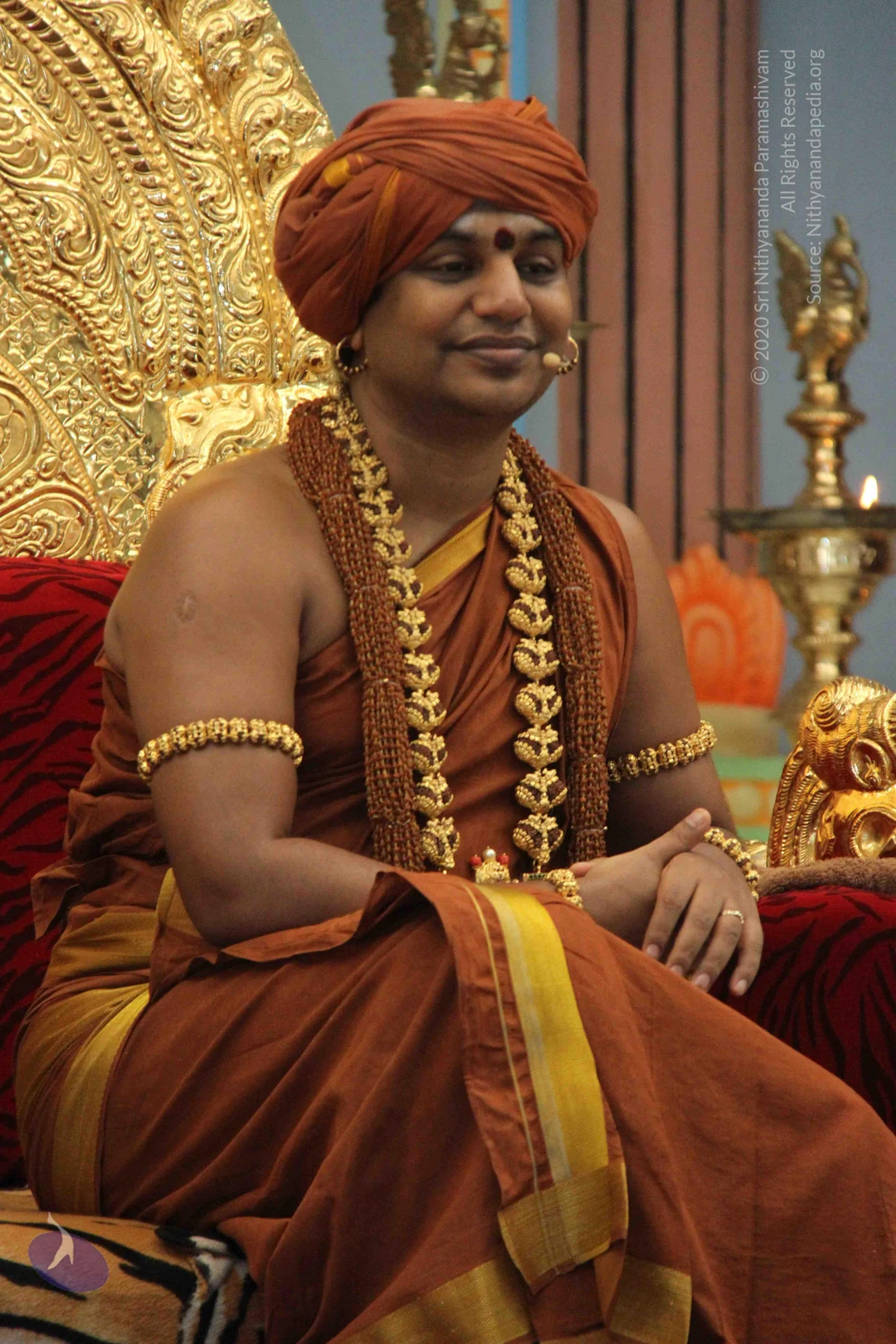
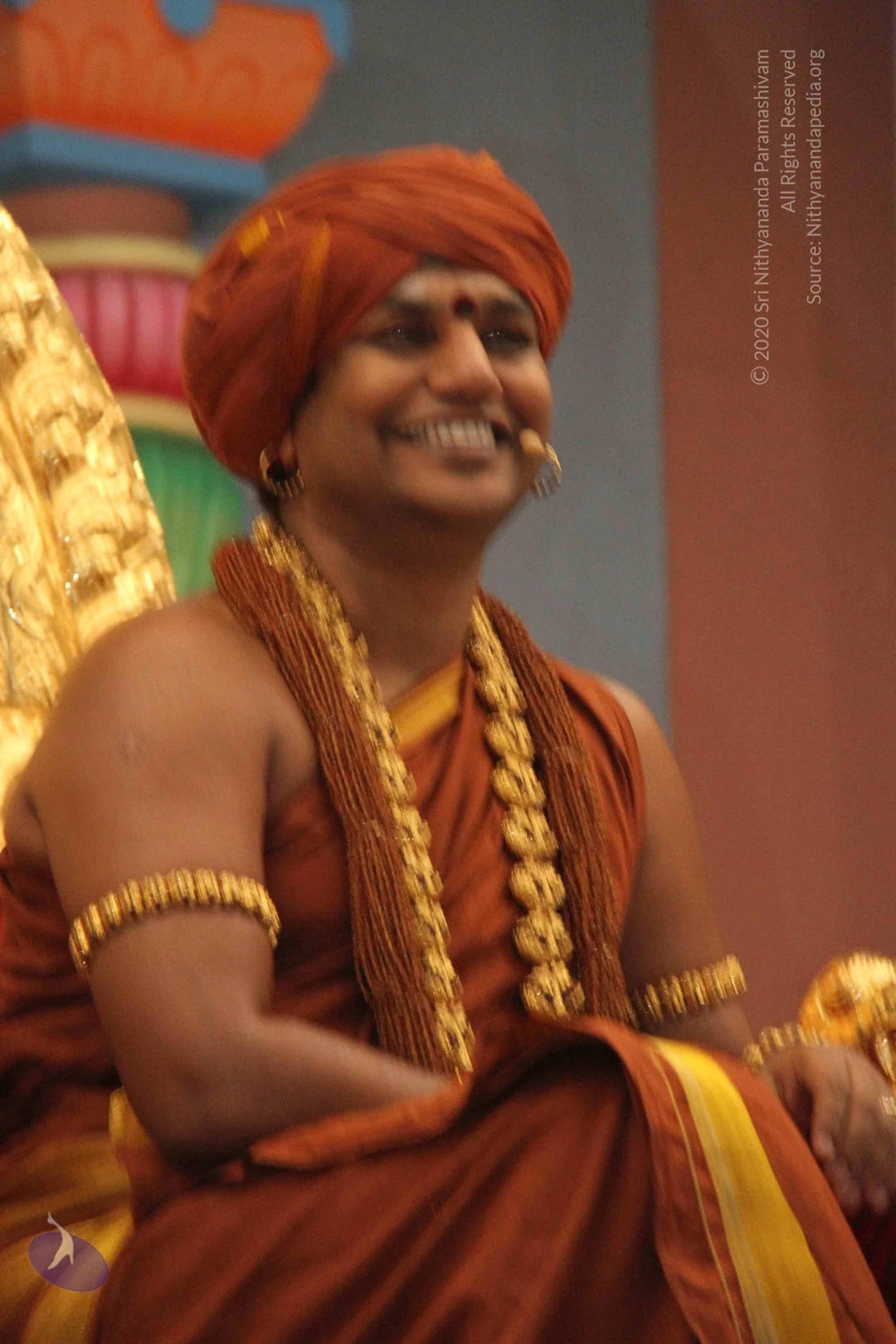
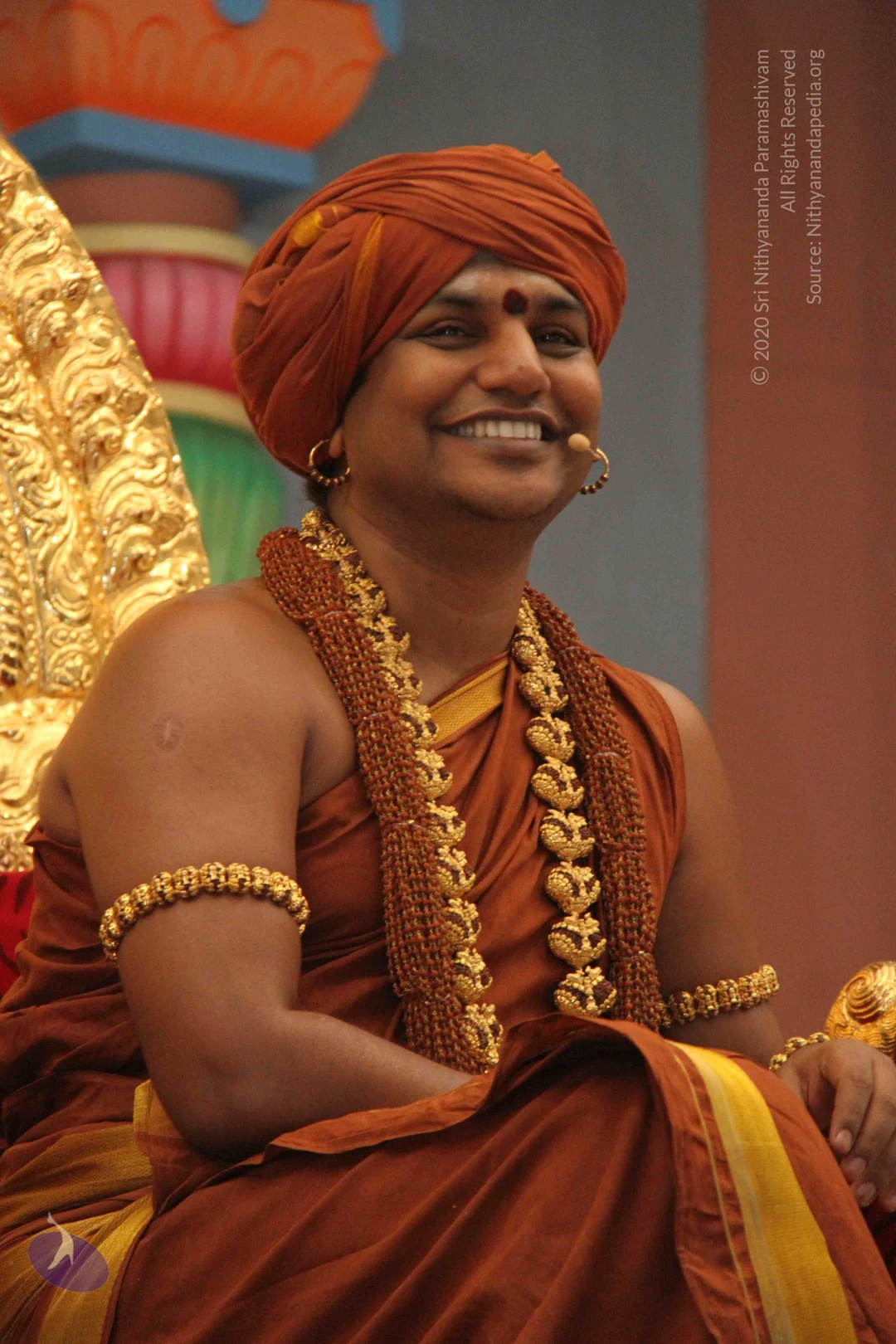
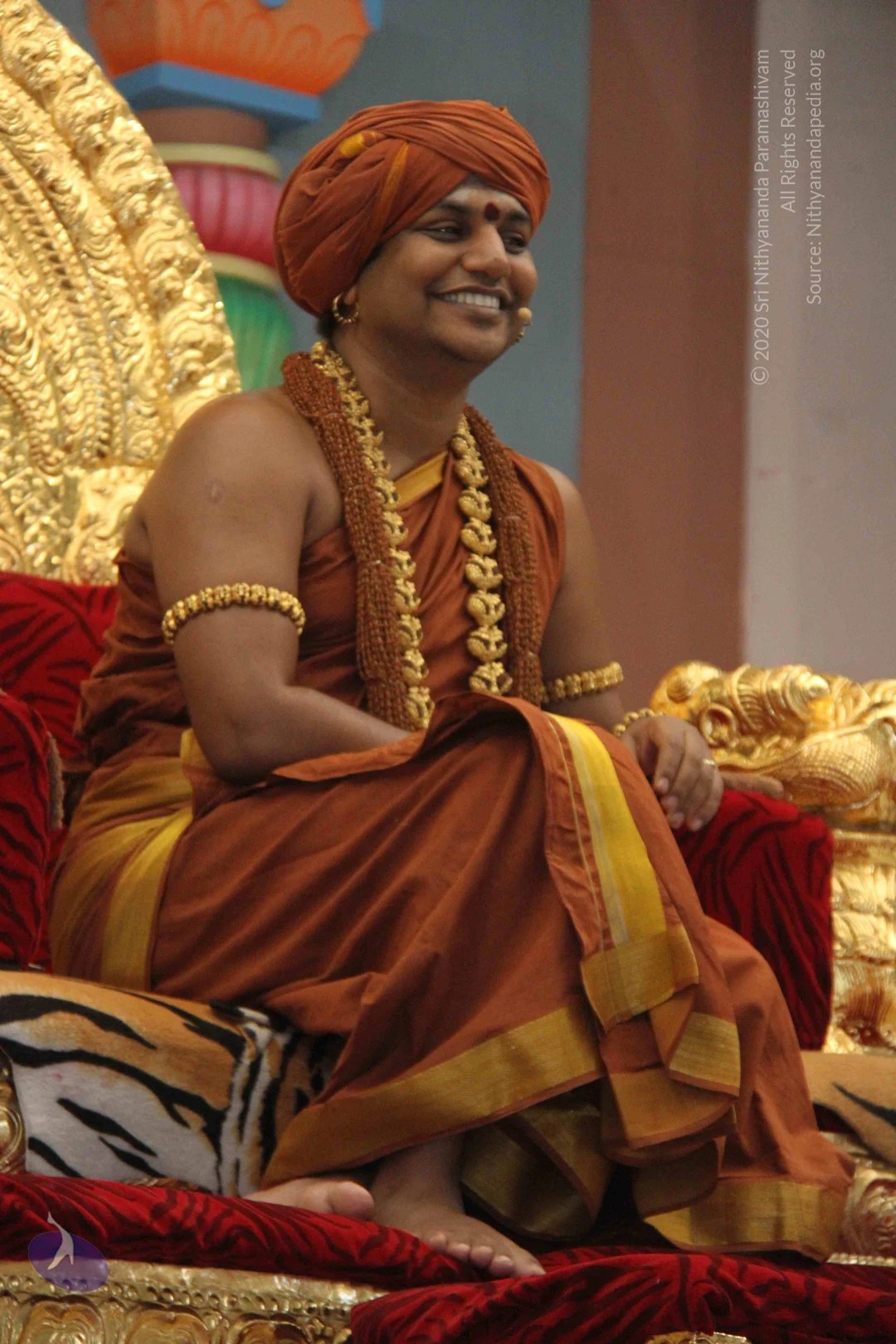
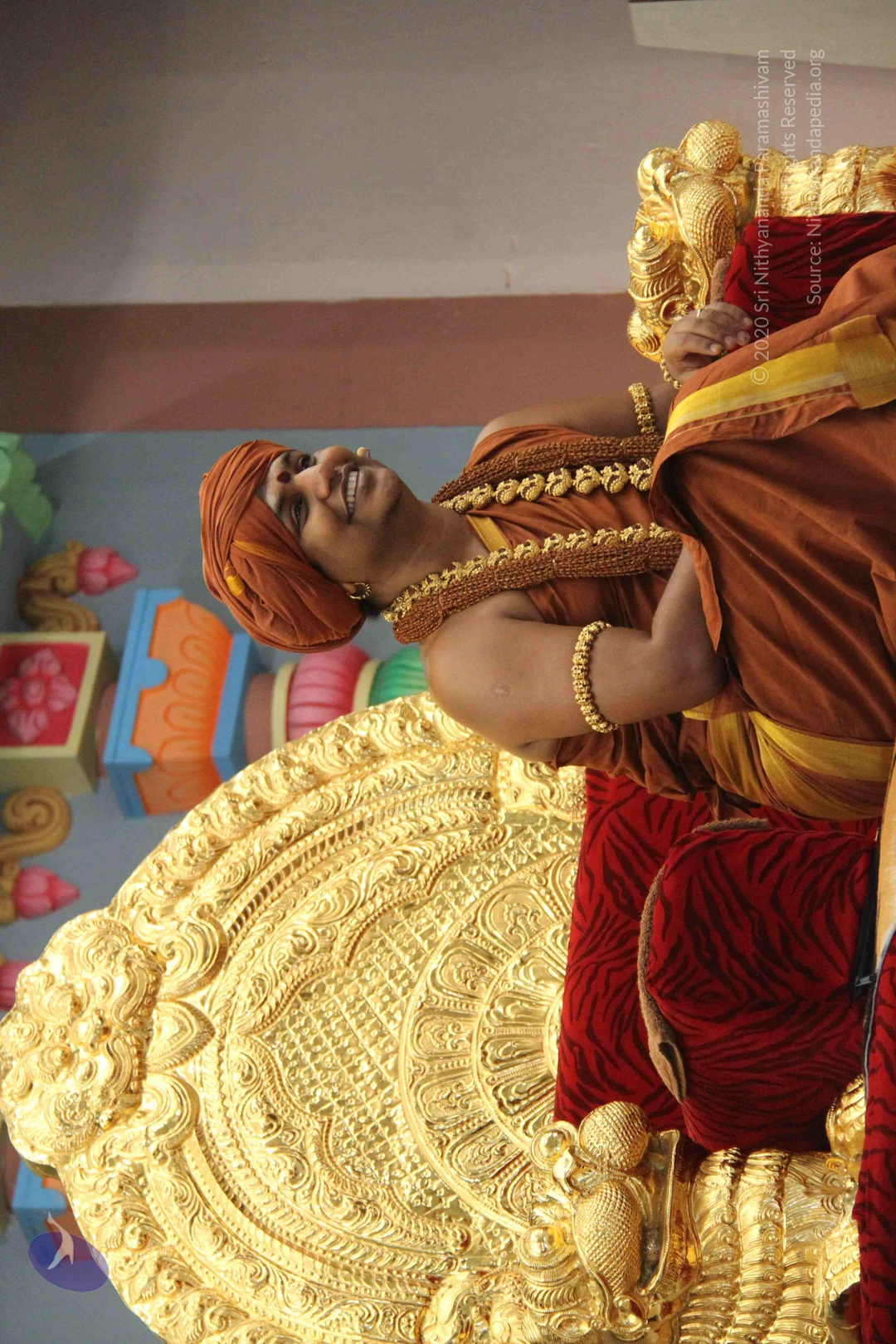
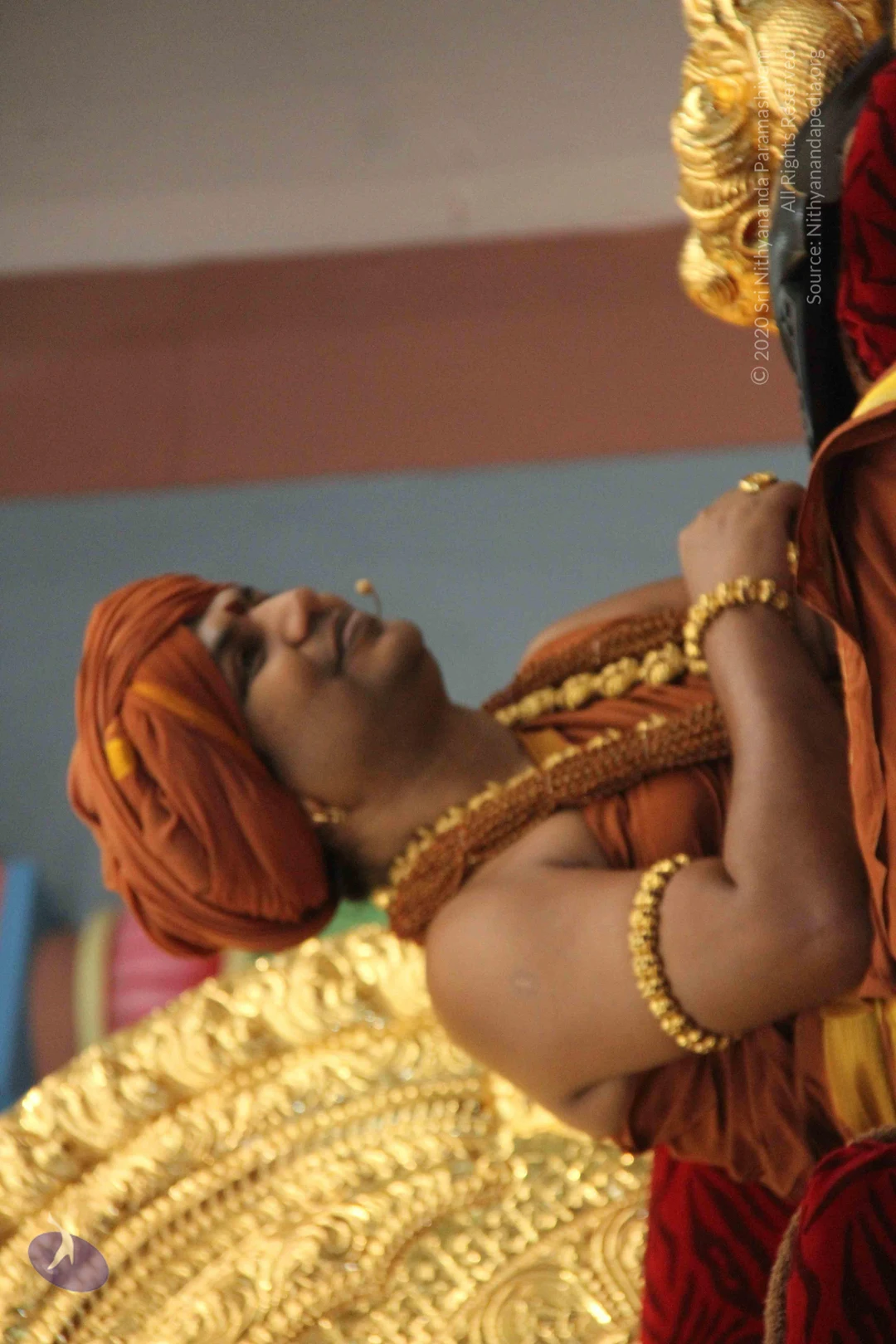
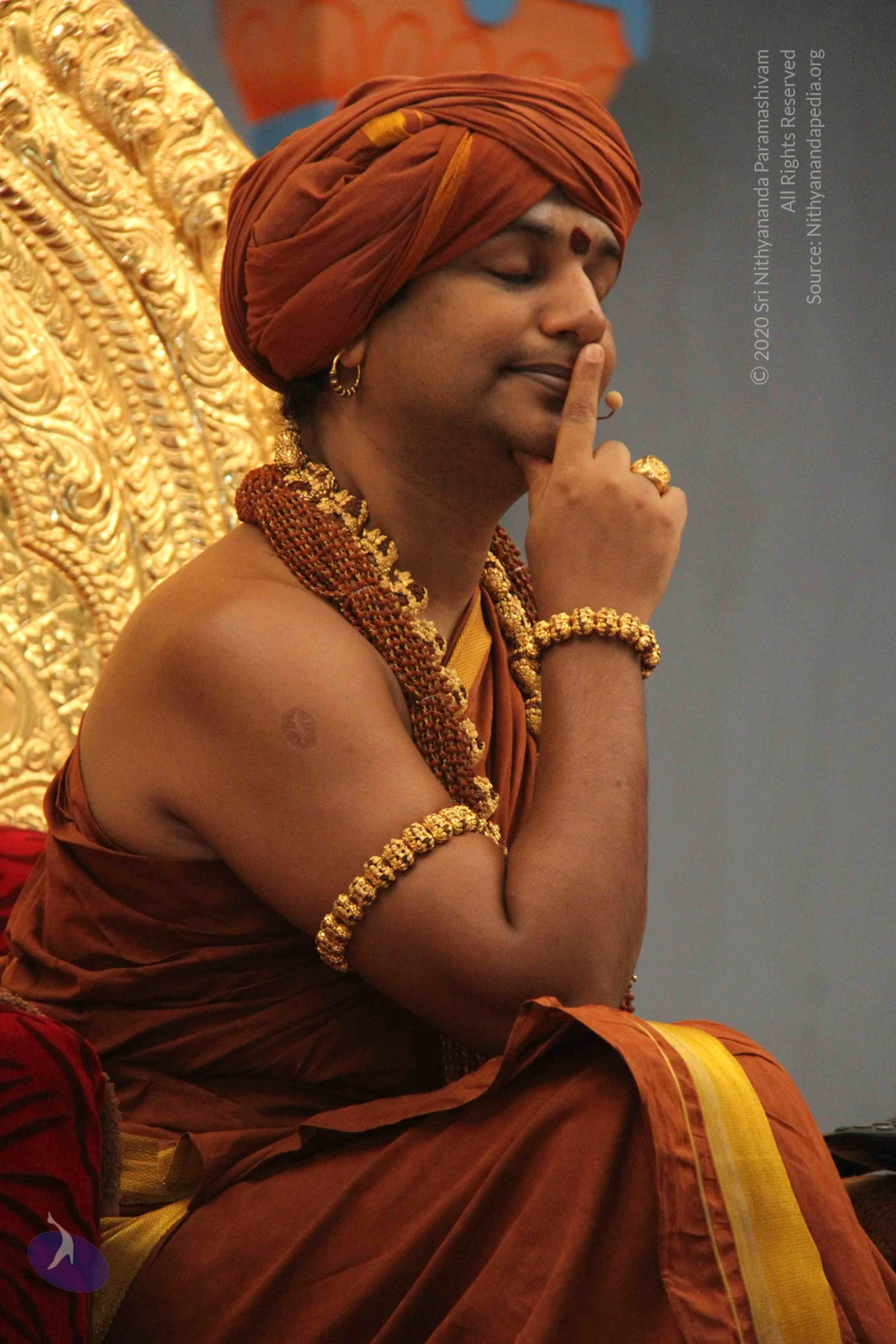
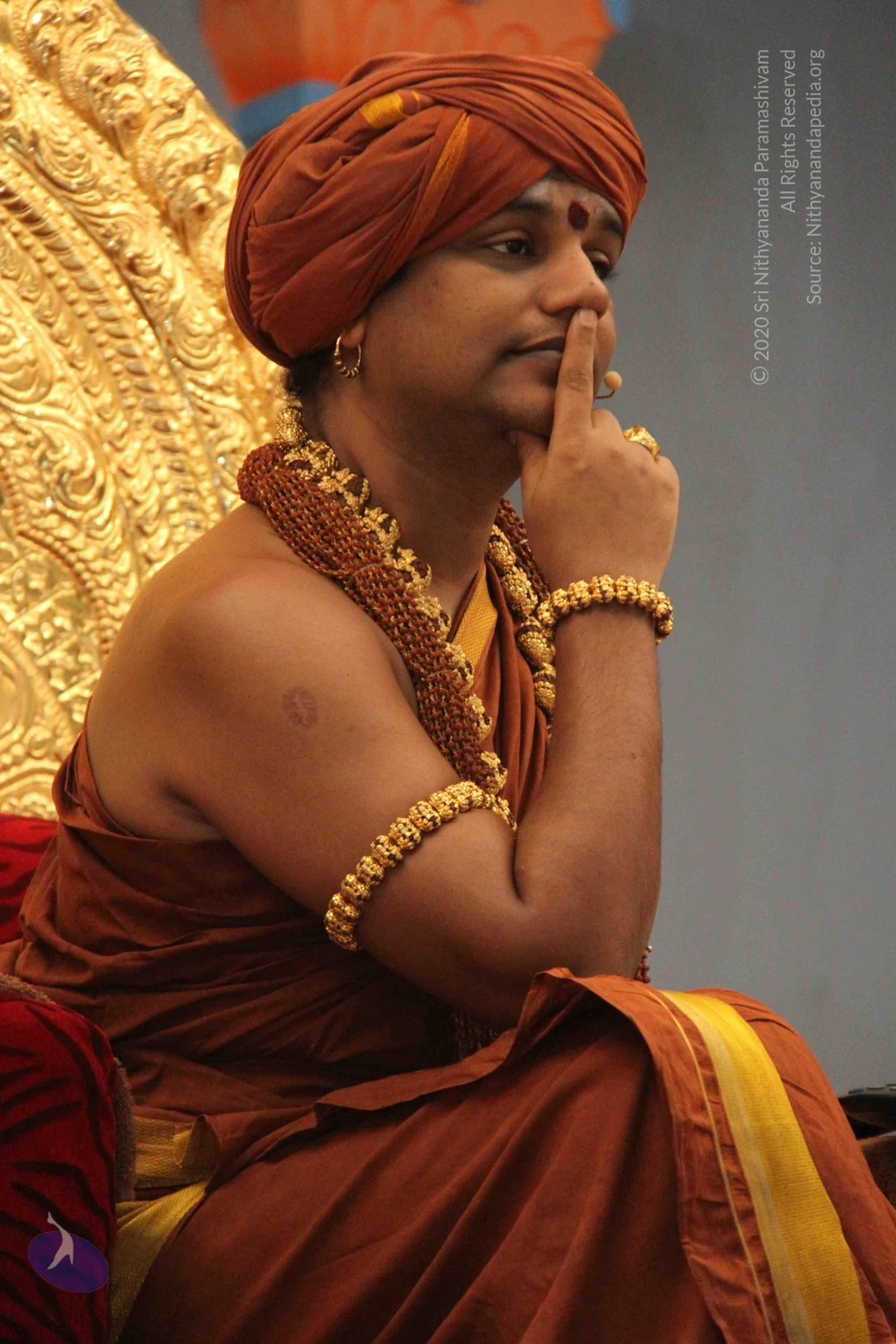
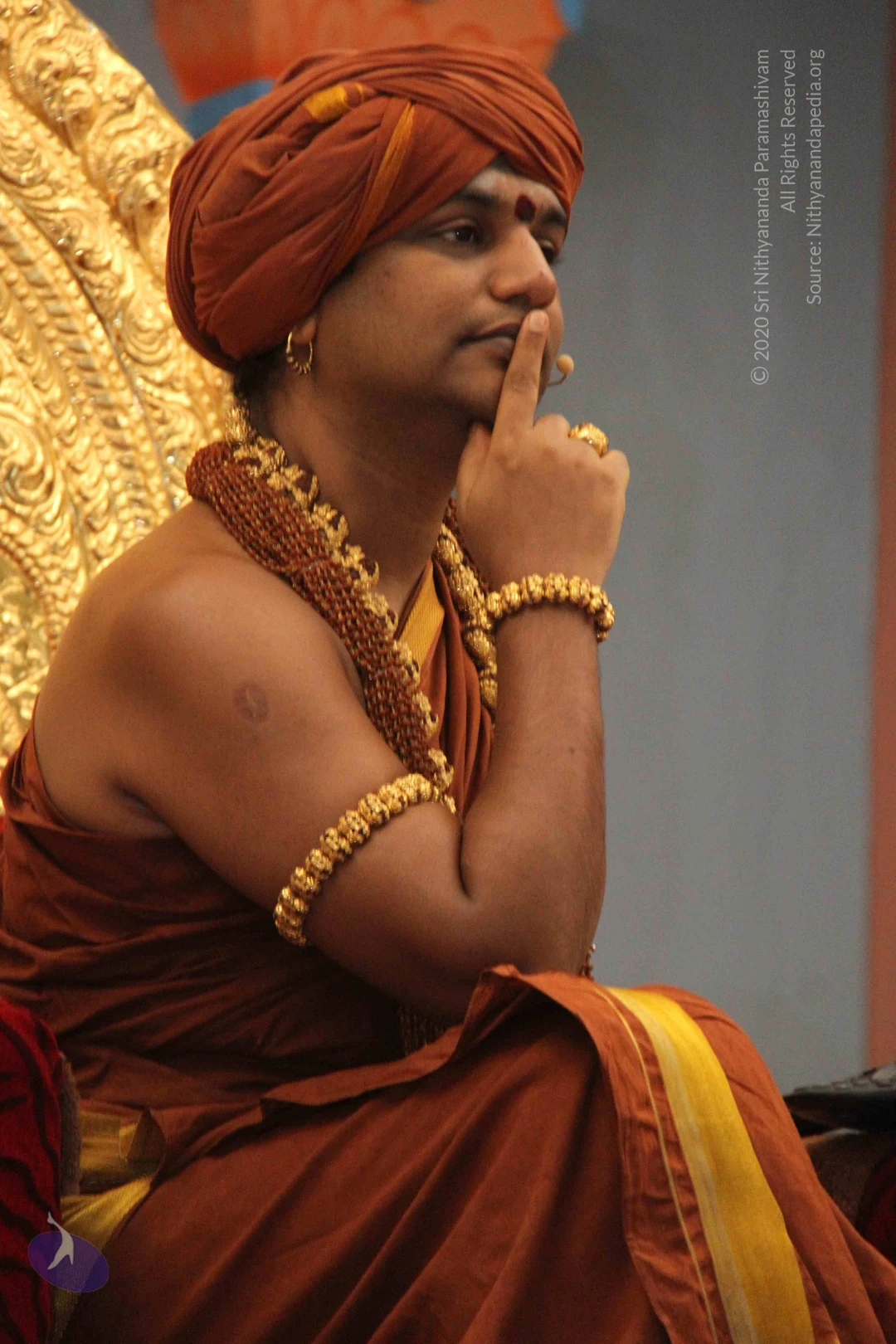
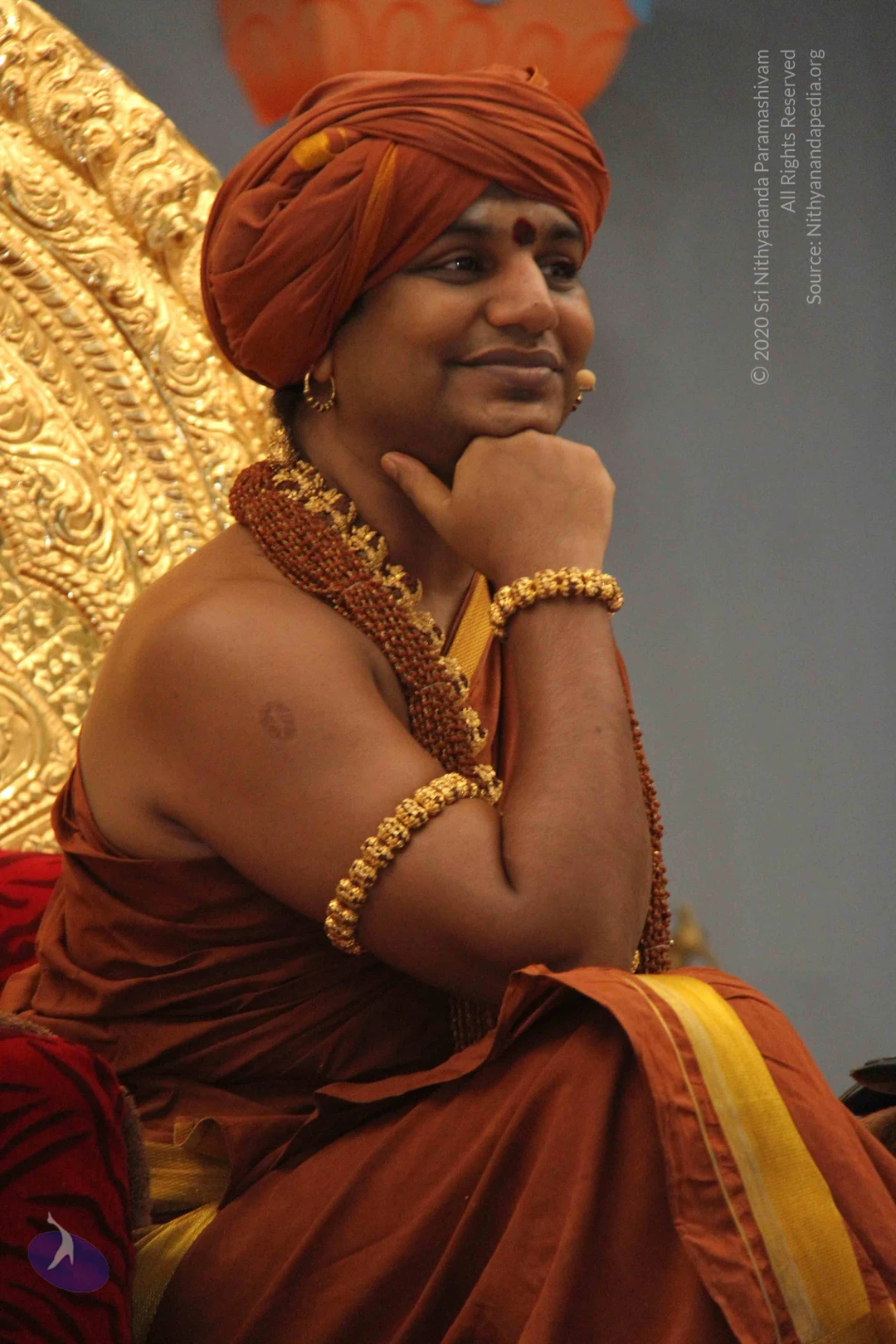
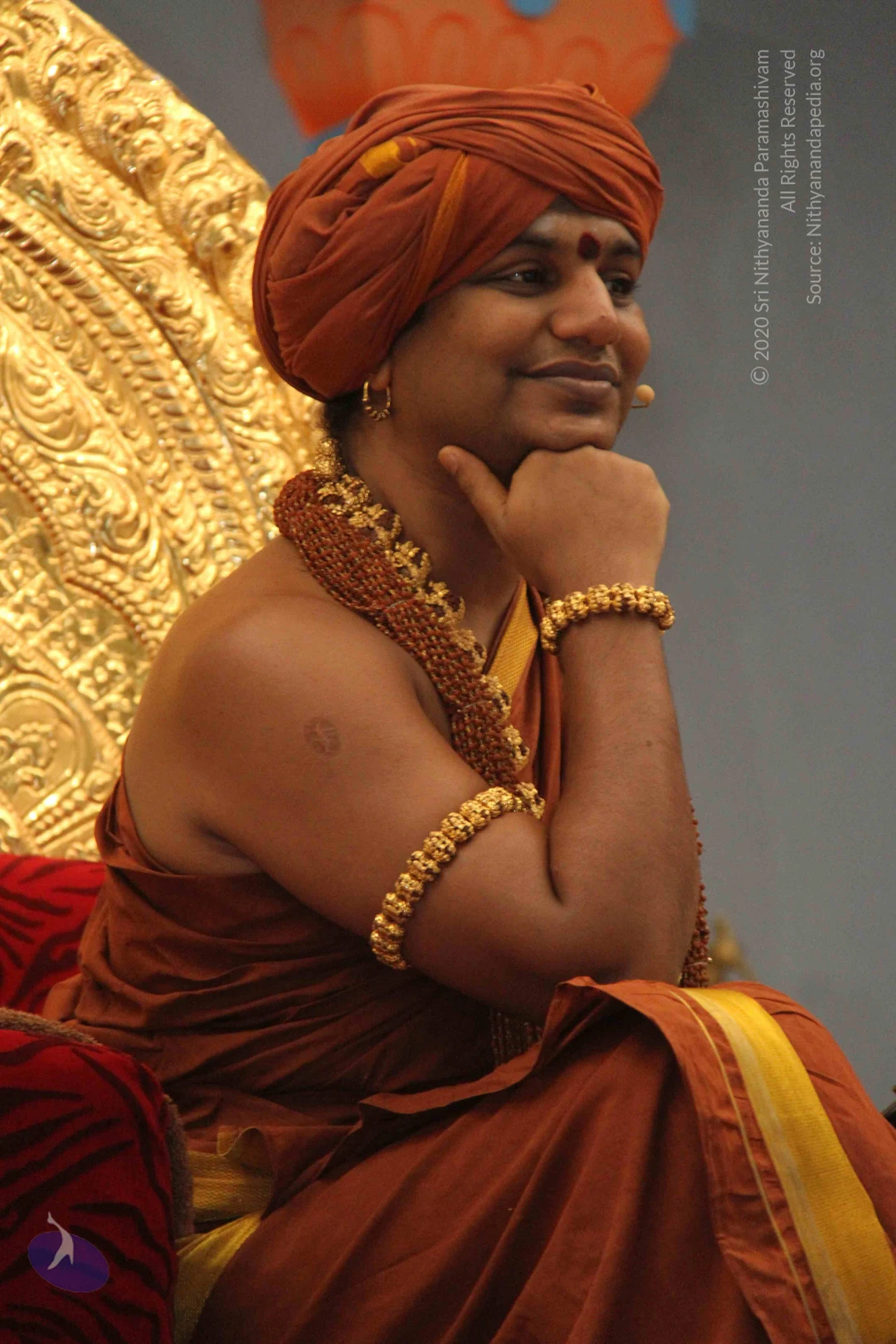
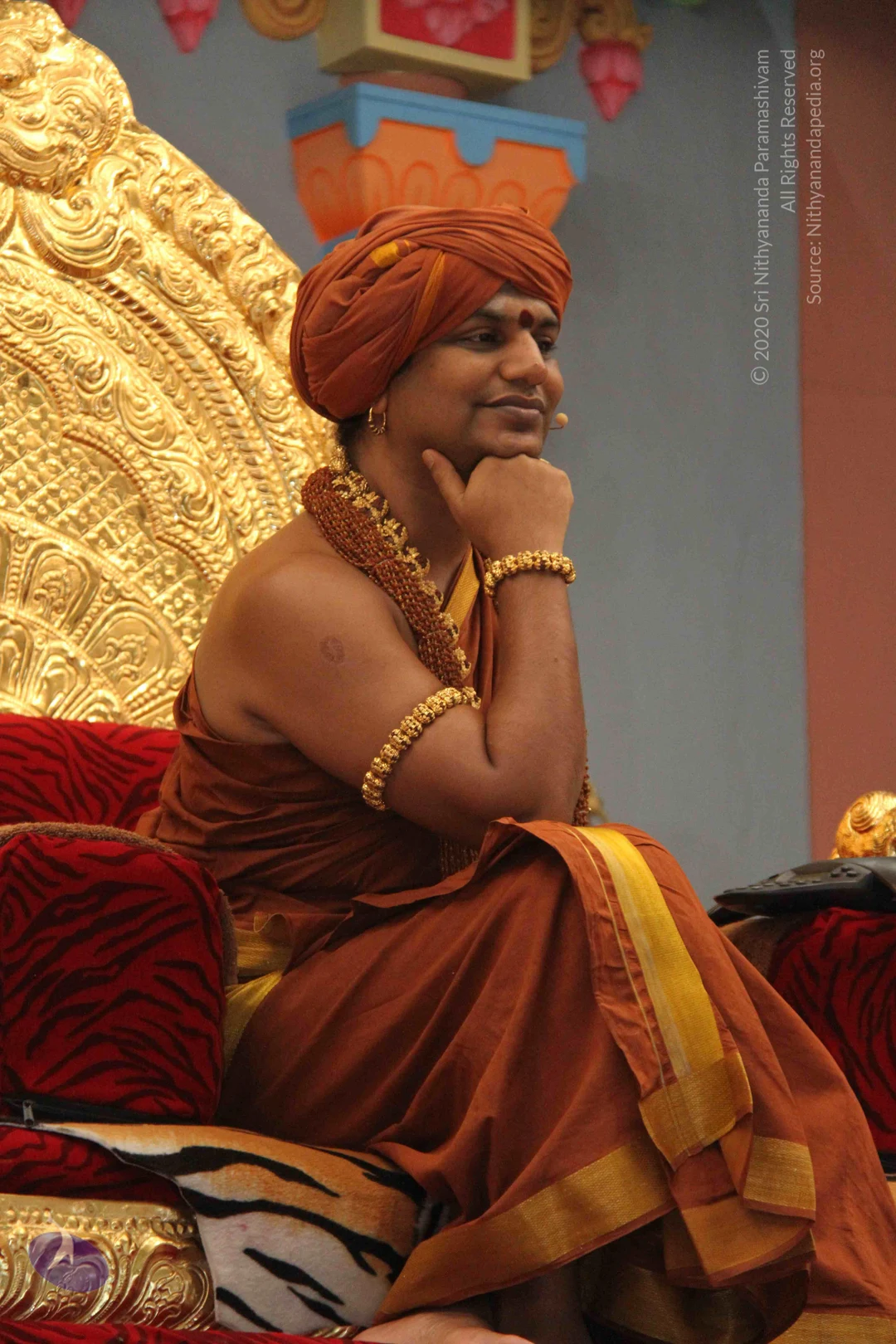
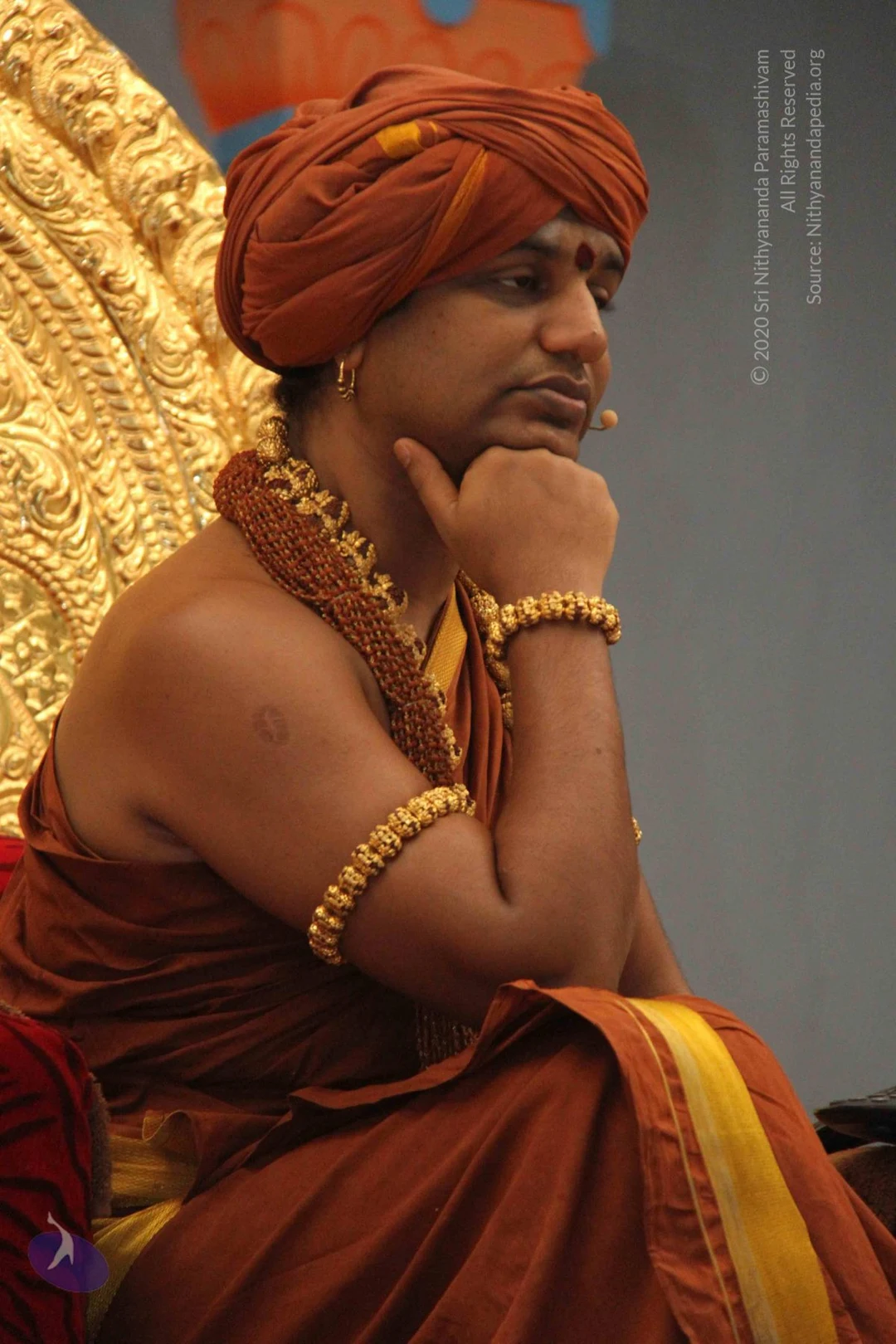
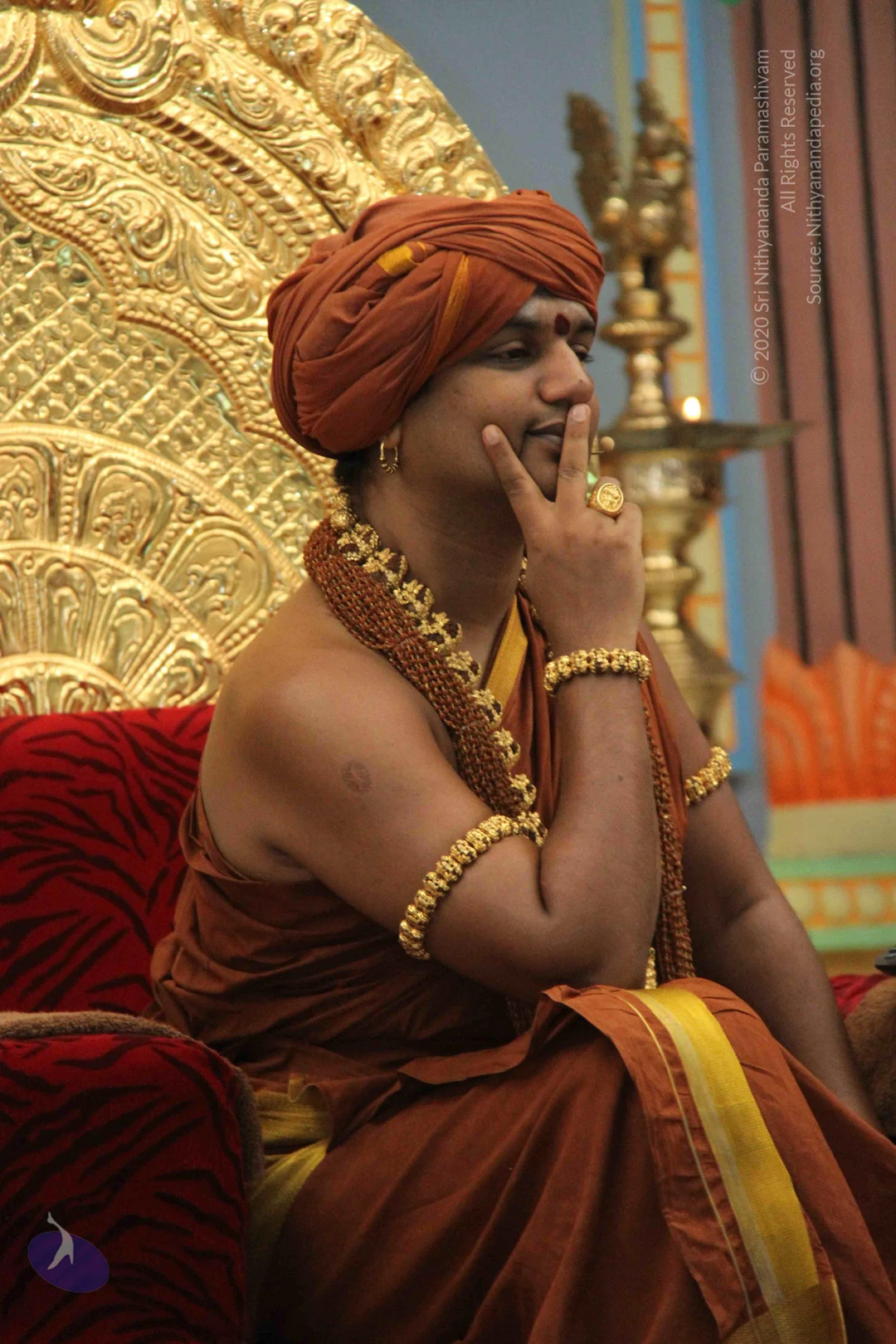
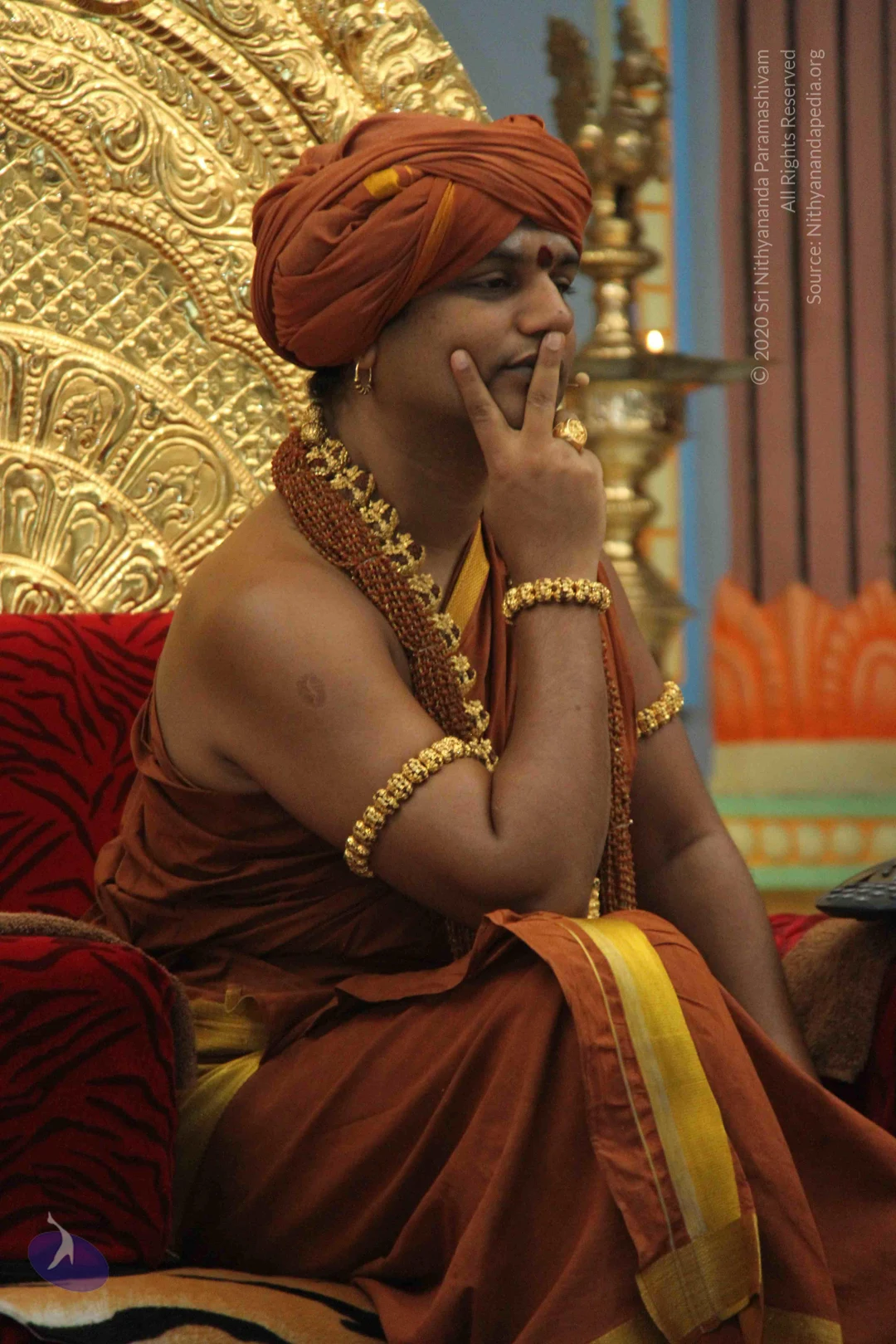
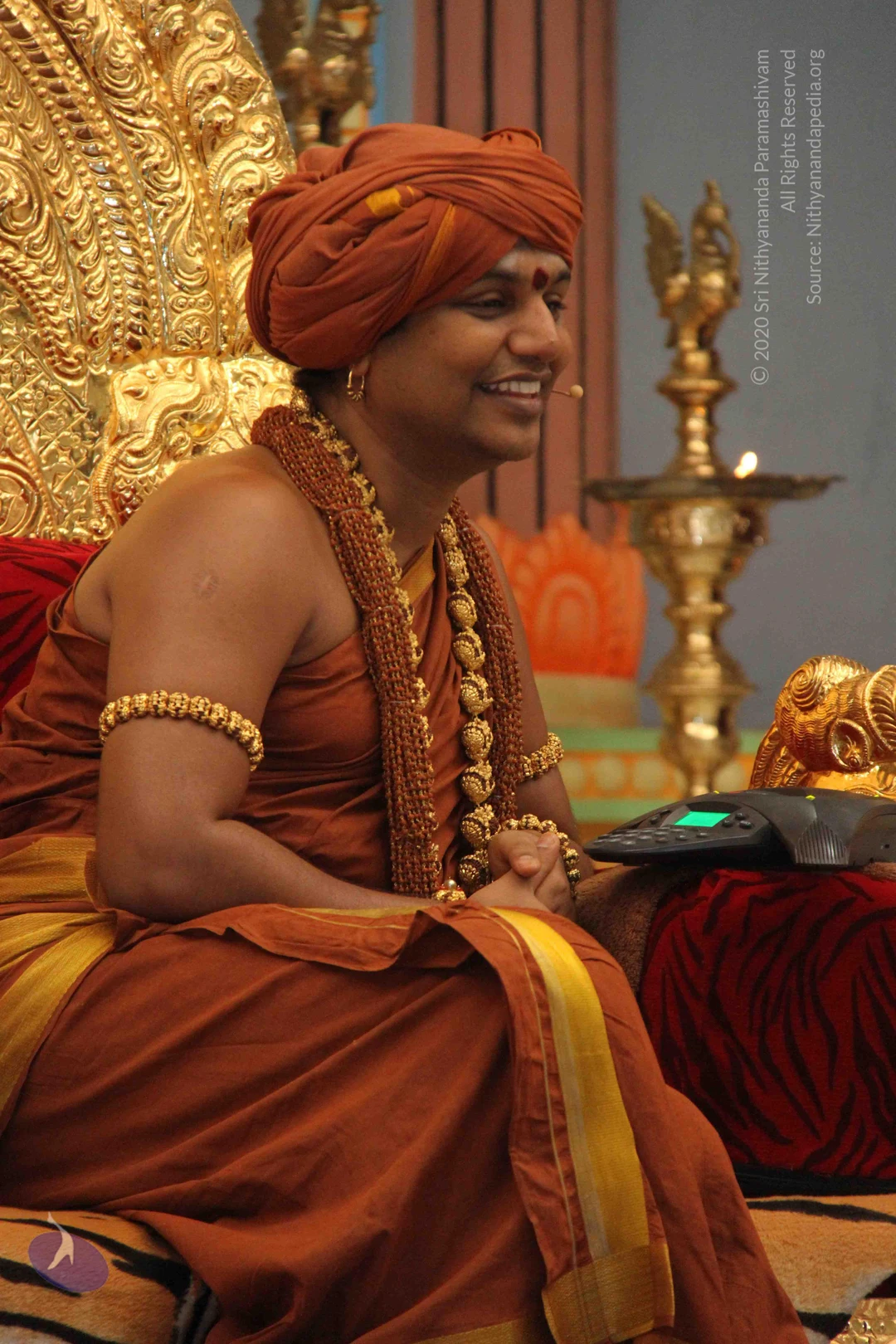
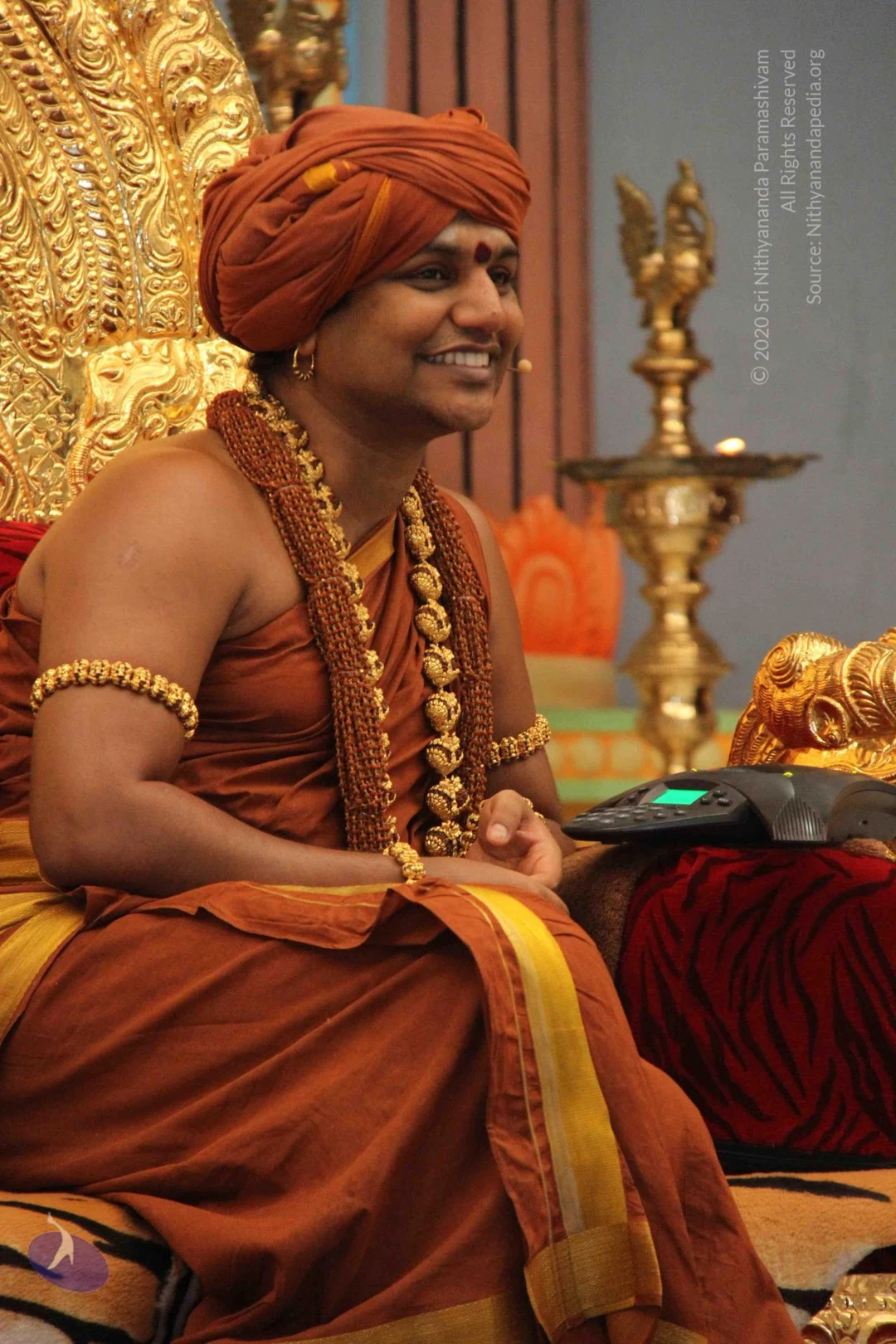
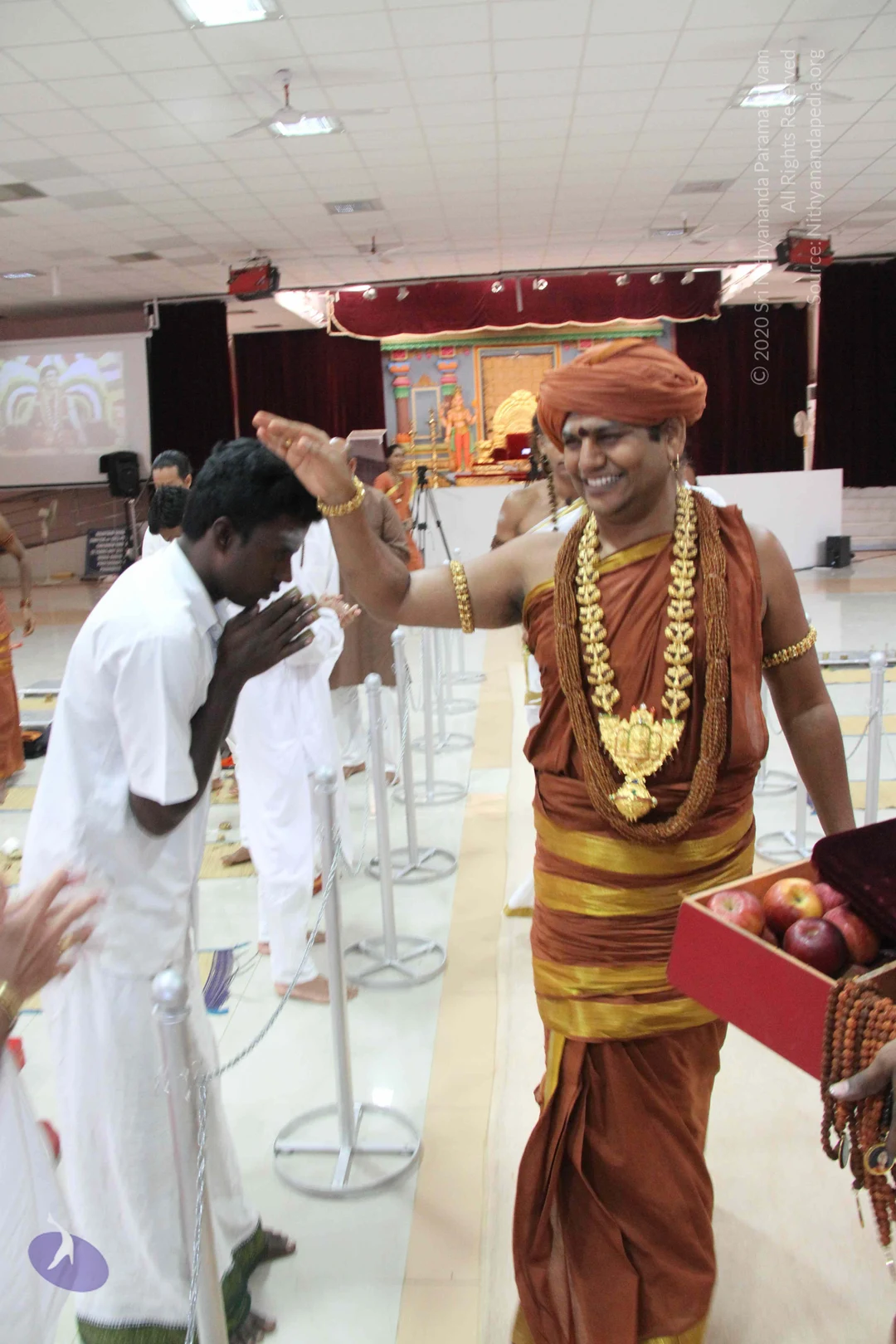
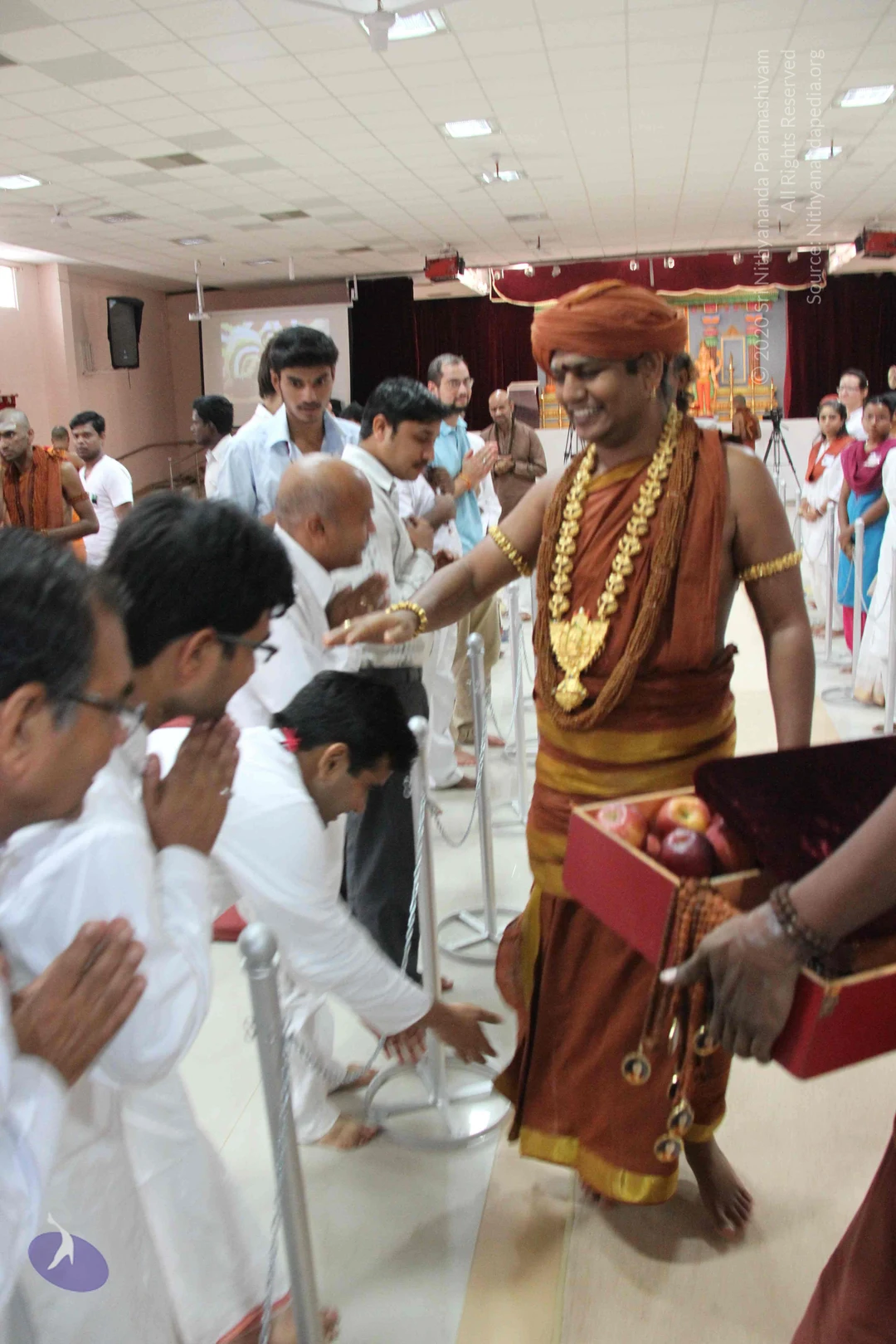
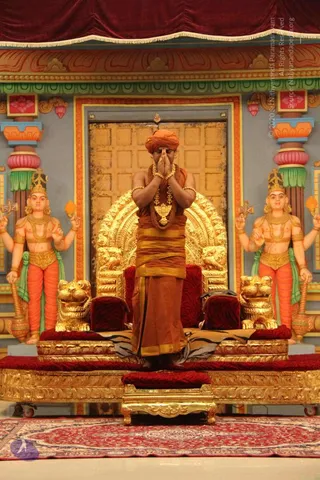
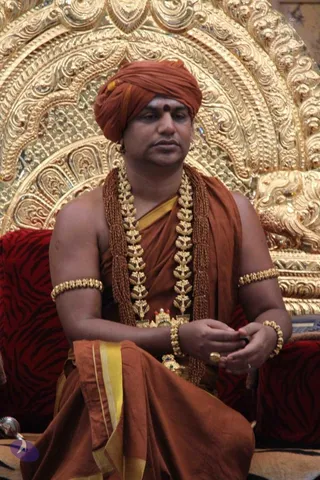
A seated man in an orange-saffron turban with a red dot on his forehead sits on a red and tiger-striped cushioned seat in front of an ornate gold repoussé throne backdrop. He wears a saffron shawl and orange dhoti with gold borders, a heavy gold necklace of large beaded pendants with rudraksha-style beads and a gold pendant, gold armlets and gold bangles, and a small headset microphone. He smiles with his hands folded in his lap. Swamiji (probable) appearance cues: saffron turban, rudraksha and gold necklaces, ornate clothing, seated on a ceremonial throne, visible during a satsang setting.A seated man in an orange-red turban and orange-red draped robe with a gold-bordered yellow edge sits on an ornate gold throne with carved gilded backrest. He wears a heavy gold-and-beaded necklace, gold armlets and bangles, and a small red tilak on his forehead, smiling as he speaks; a small headset microphone is visible near his face. Beside him are a gold lamp with a lit flame, a gilded ram-head ornament, a black conference phone on a red tiger-striped cushion, and a striped tiger-skin seat cover. Background shows an orange and green decorative panel. Swamiji (probable): long turban and saffron robes with ornate gold necklaces and armlets, seated on a gilded throne as a speaker.A photograph of a temple darshan line. A bare-chested man in an orange turban, rudraksha-style gold and beaded necklaces, gold armbands and an orange-brown dhoti-wrap stands on the right, smiling and placing his hand on the head of a man in white who bows forward. Behind the bowing man, several onlookers in white shirts and dhotis, one in a green-and-white sweater on the left, wait behind metal stanchions with chains. A projector screen and colourful deity murti paintings decorate the hall in the background.

July 31 2013

Original wiki page
Contents

Title:

Supreme Pontiff of Hinduism HDH Bhagavan Nithyananda Paramashivam

Description:

On this Day Supreme Pontiff of Hinduism HDH Bhagavan Nithyananda Paramashivam Delivered a Satsang Discourse under the title 'Don't act out of powerlessness' , while also during that day gave an Interview on Reflect Radio Talk (Los Angeles).

Link to Video

VideoAudio
VideoAudio

Photos From the Day

Photos Of The Day:

Padukapuja
Ashram-shots

Temple
Satsang
SarvaDarshan

LotusTV

Photos from this day

View all 89 photos

Photos From the Day

16 photosSource gallery
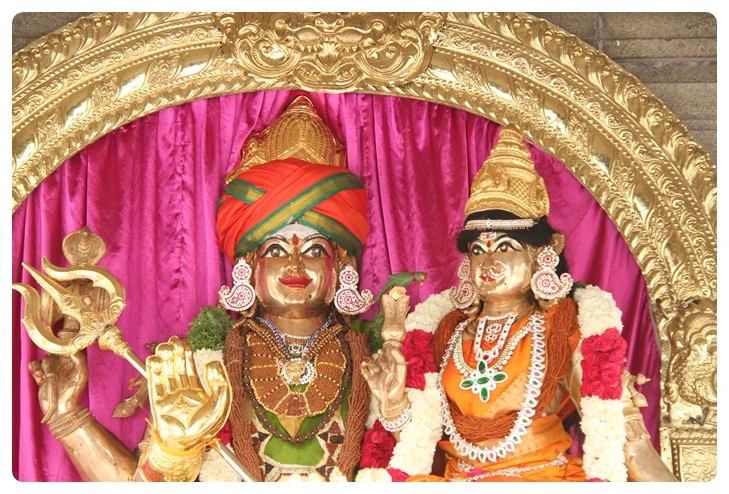
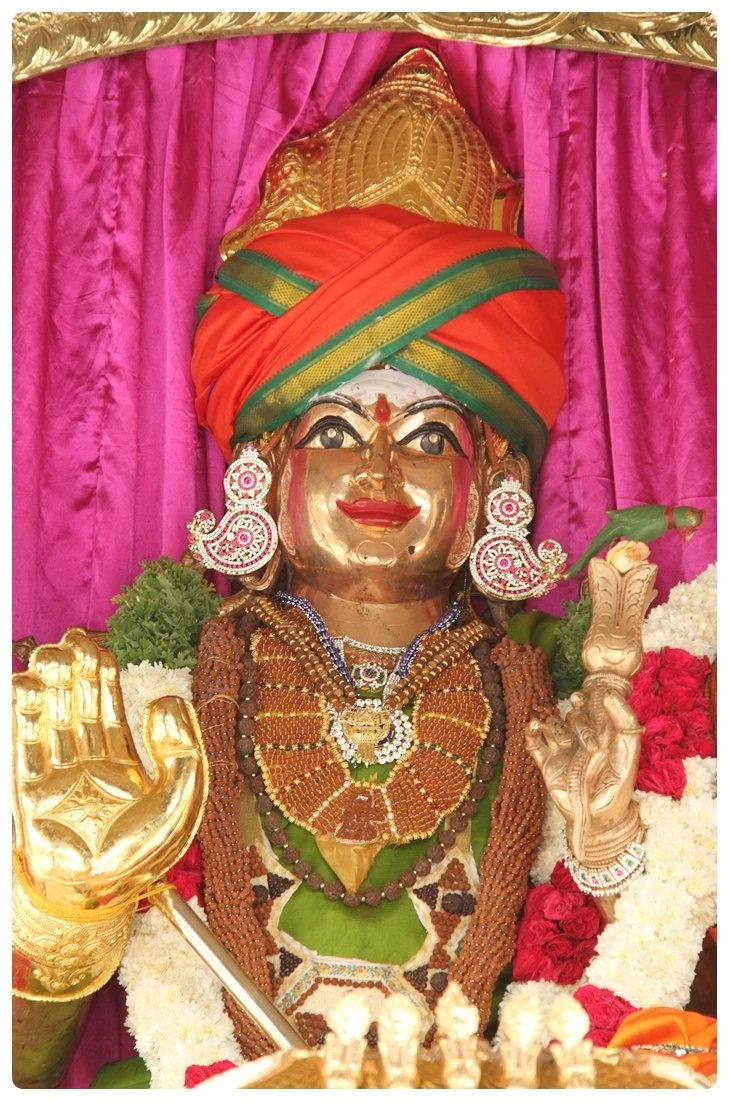
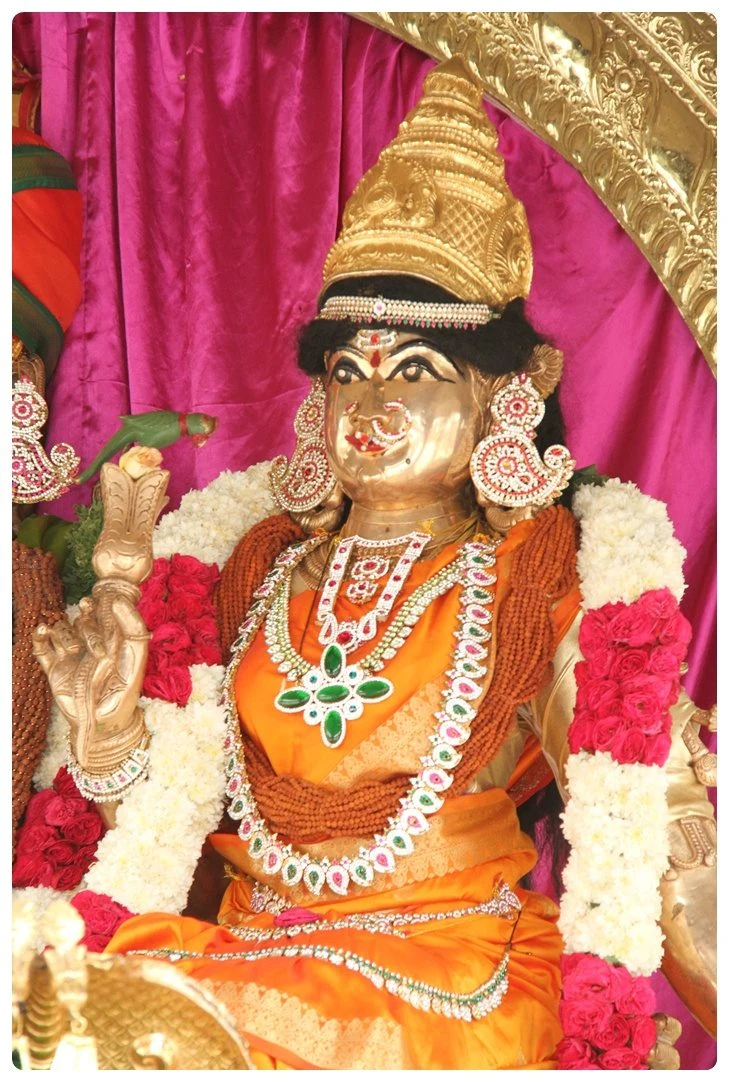
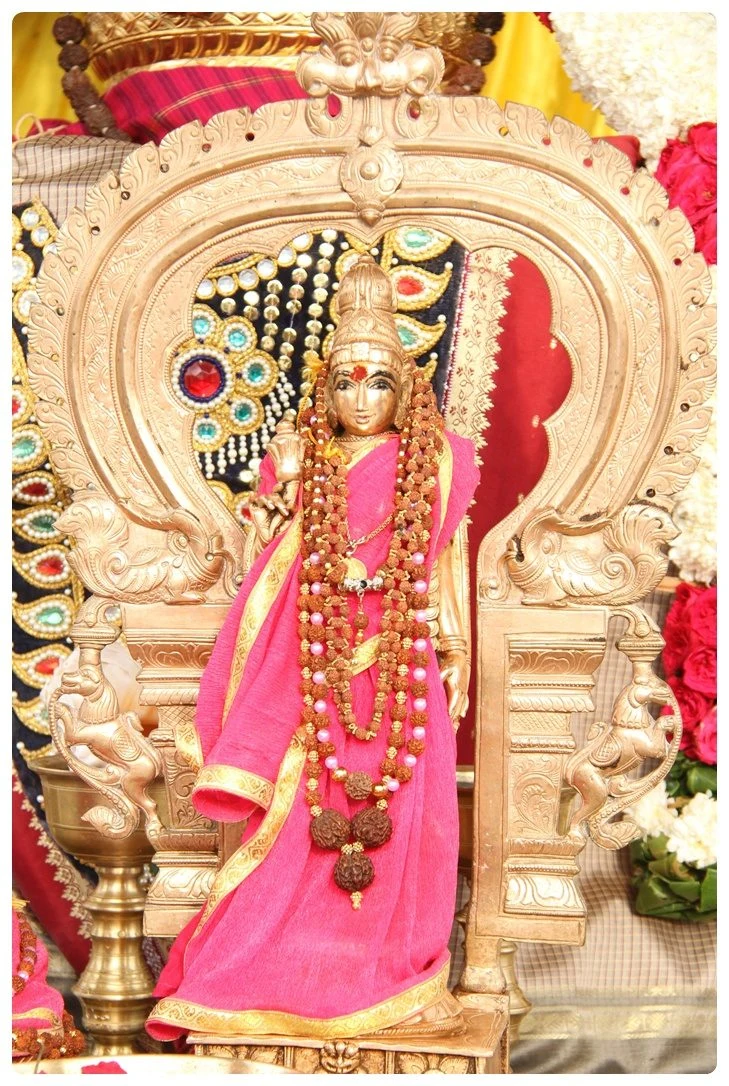
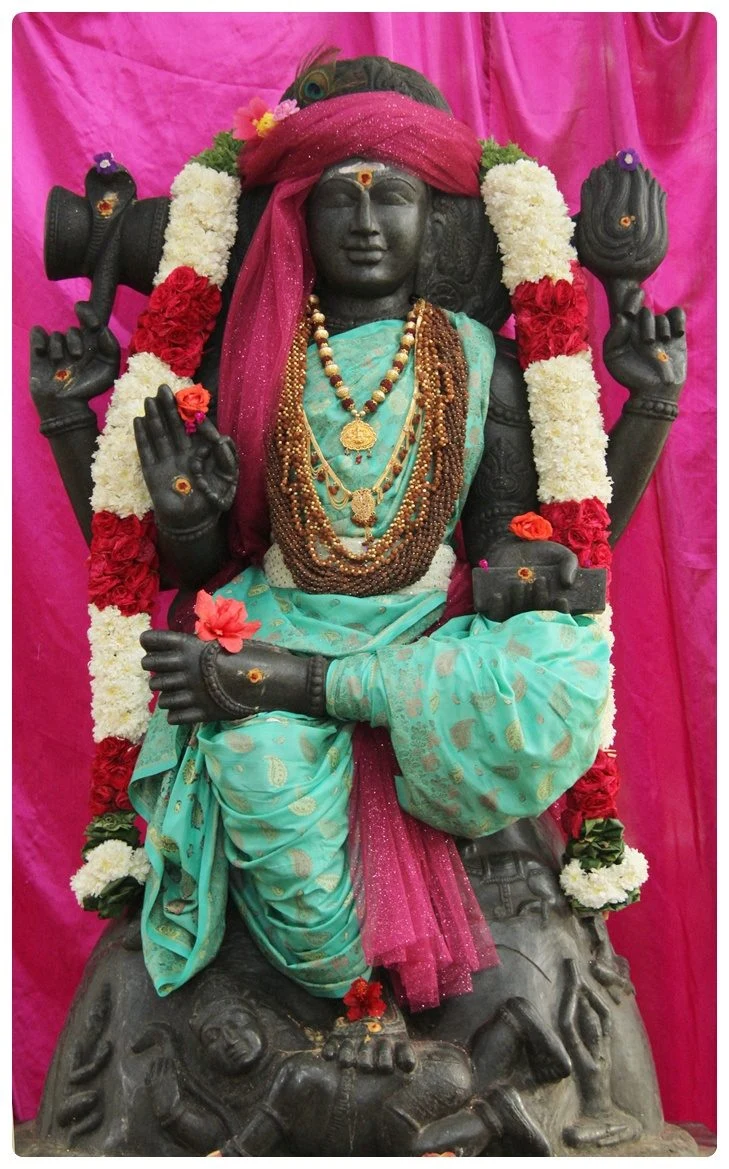
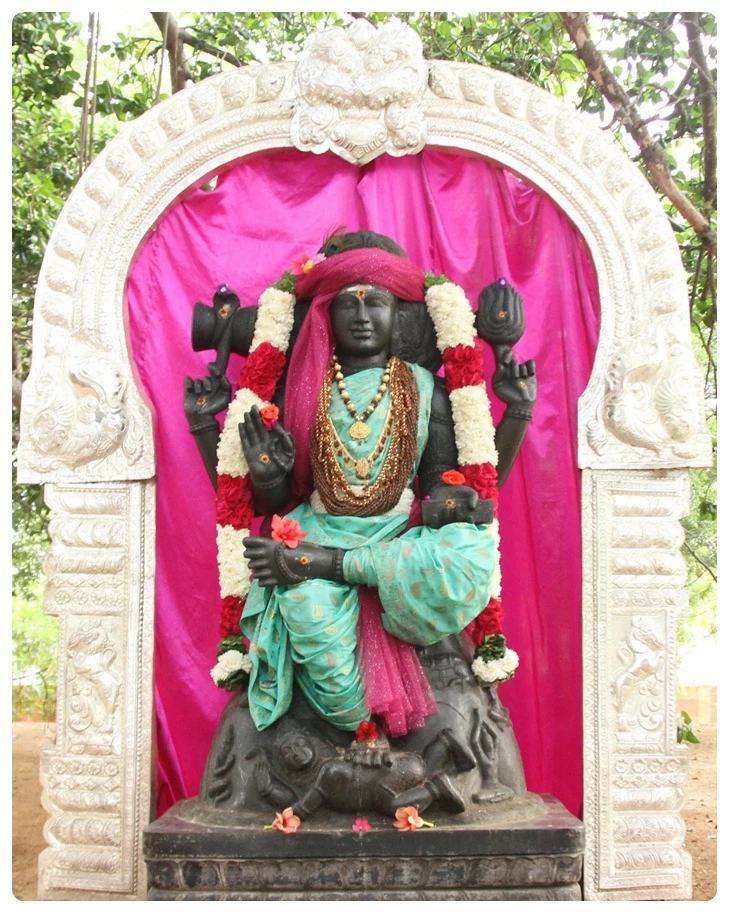
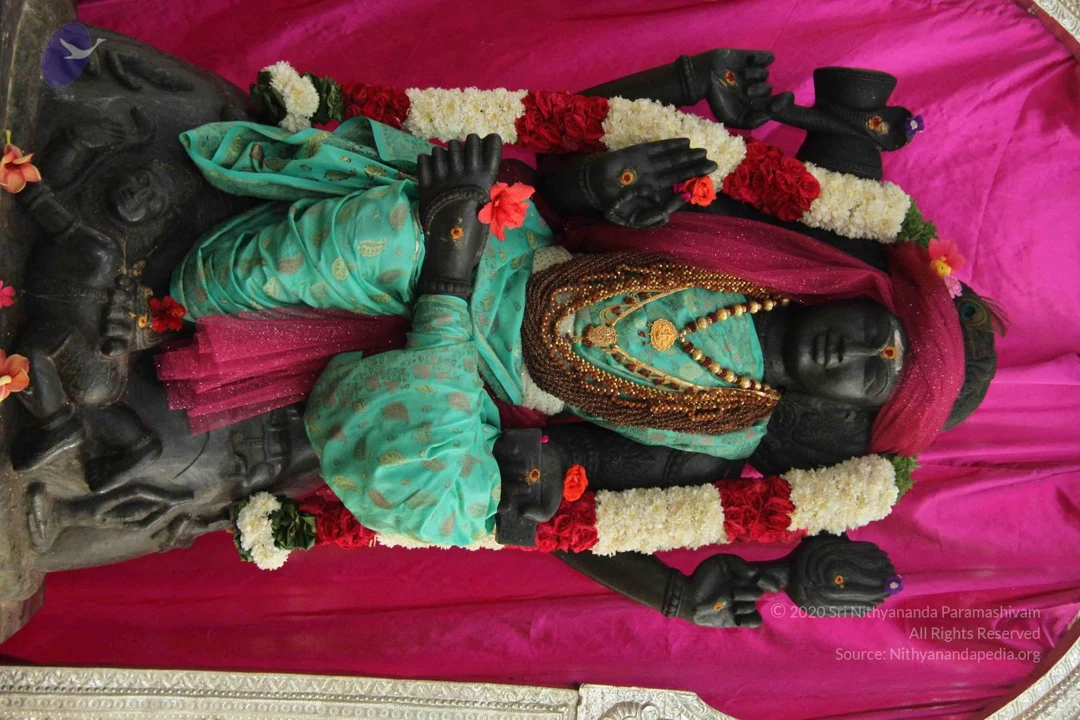
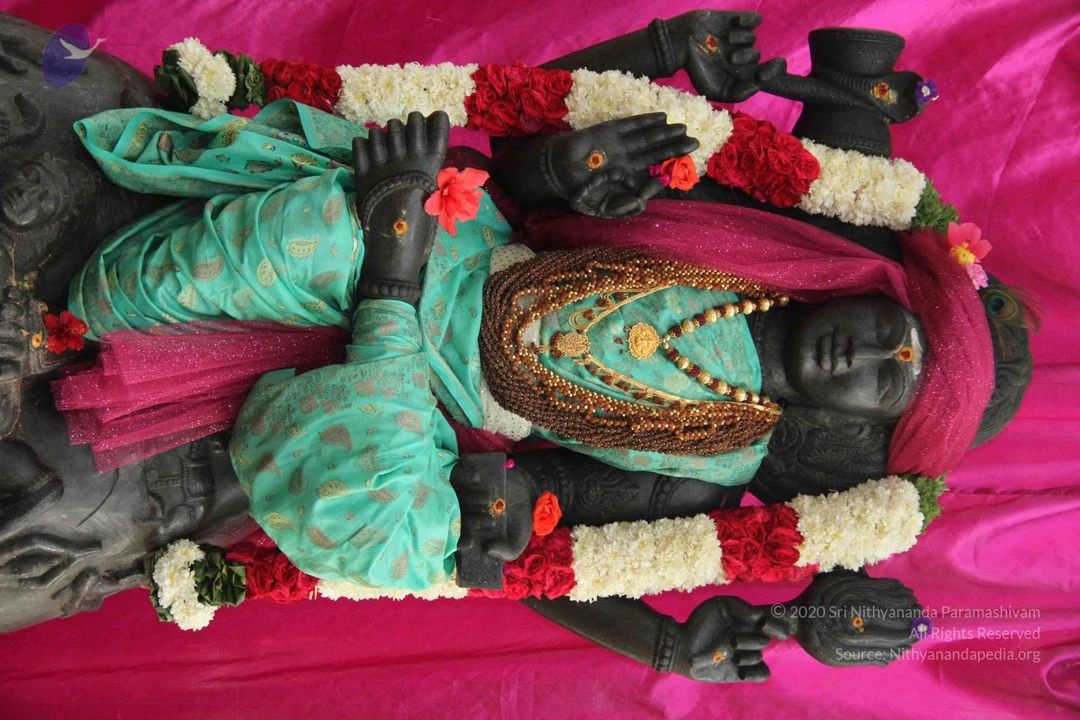
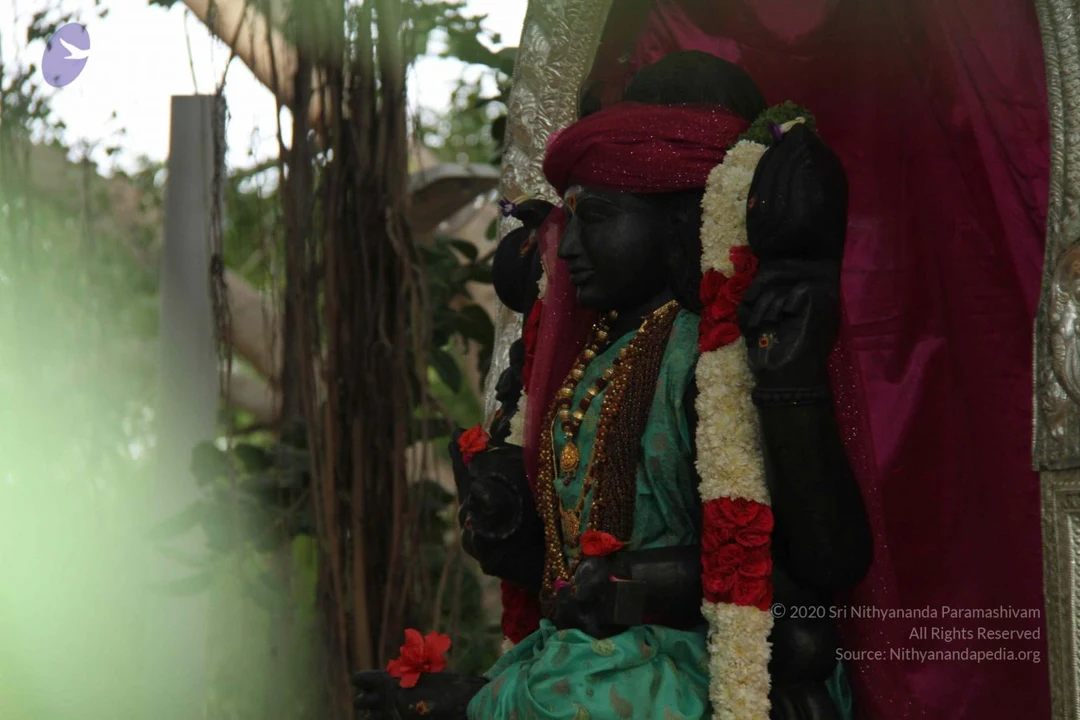
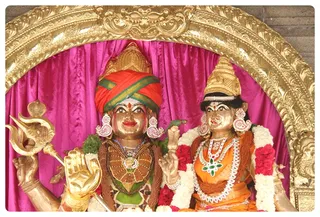
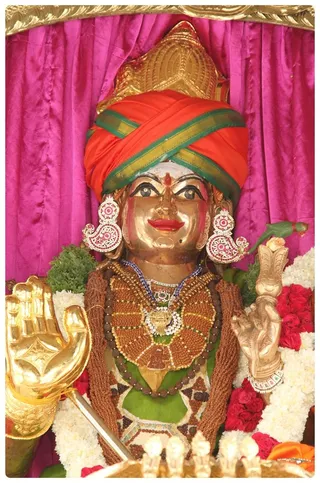
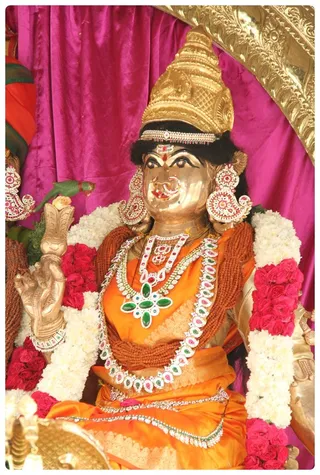
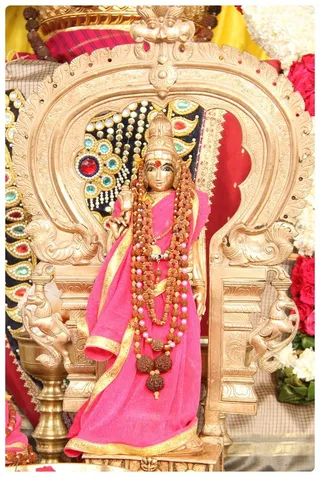
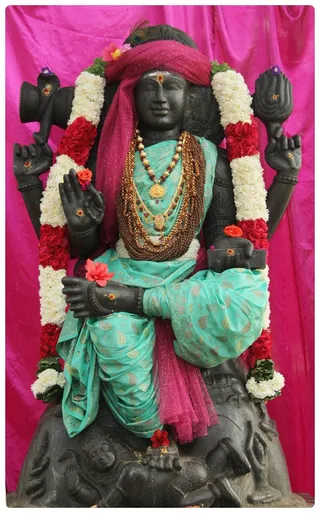
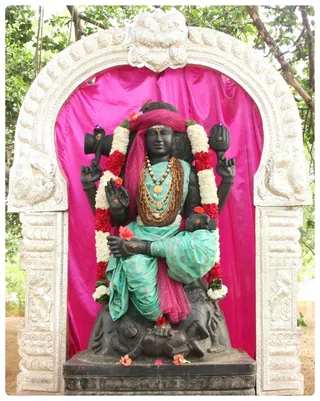
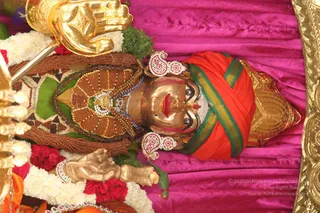
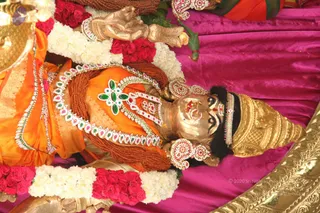
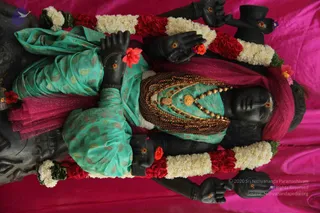
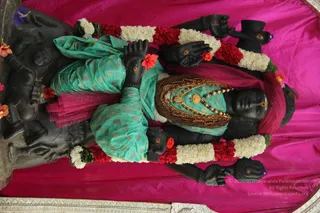
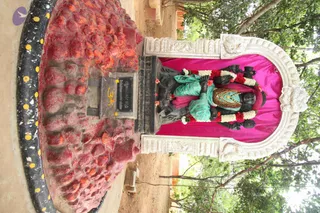
Two painted murti statues of deities stand in a gold-framed niche against a magenta velvet backdrop. The figure on the left wears an orange and green turban, a trident in its raised hand and a beaded necklace over a patterned garment. The figure on the right wears a tall golden crown, a white garland with red flowers, a green-and-white jewelled necklace and an orange garment. Both have large floral earrings and gold ornaments. No physical people are visible.A golden deity murti of a figure wearing a bright orange and green striped turban topped with a golden crown-like headpiece, set before a magenta satin curtain. Pink and white paisley-shaped earrings hang from the ears. The figure wears layered necklaces of gold, beads and rudraksha-like brown beads, a green garment, and holds a raised golden hand in abhaya-like gesture with a lotus-stem staff in the other. Fresh white jasmine garlands and red roses surround the murti, and a green parrot perches at the right shoulder. The image appears to be a decorated sculpture rather than a physical person.A gilded metal deity murti seated with a tall golden crown, dressed in an orange silk sari with a gold border and layered with jewelled necklaces, emerald-and-ruby pendants, and paisley-shaped ruby-and-emerald earrings. Its raised hand holds a golden lotus bud, and it is framed by white jasmine garlands and red rose garlands in front of a magenta draped cloth and gold ornamental arch. No physical people are visible.A golden statue of a deity murti stands on an ornate golden throne-like seat (peetha) with carved scrollwork and lion-like supports. The figure wears a pink sari with gold border, a red tilak on the forehead, and multiple strands of rudraksha beads with pink beads, plus a rudraksha mala with large beads hanging to the waist. The throne is backed by a dark cloth embellished with red and green jewel-like embroidery, flanked by white and pink flower garlands and a brass pot.A dark stone statue of a multi-armed deity seated on a rocky base in front of a bright pink draped backdrop. The figure wears a turquoise and gold patterned garment, a pink sheer shawl draped over the head and shoulders, and layered necklaces of brown and gold beads with a gold pendant. Garlands of red roses and white flowers hang across the shoulders, and a red flower rests in one hand. A red-and-white mark decorates the forehead. The hands hold ritual objects and show mudras, and the lower frame shows carved figures on the base. This is a statue, not a living person.A black stone statue of a four-armed deity seated on a pedestal within a white carved arch, set against a magenta cloth backdrop with trees behind. The murti wears a pink headcloth, a turquoise and gold draped garment, a gold necklace and a rudraksha-style bead mala, and is garlanded with white and red flower chains. Its hands hold ritual objects, and a small figure lies at its base beneath red and pink flowers. No living people are visible.

Padukapuja

5 photosSource gallery
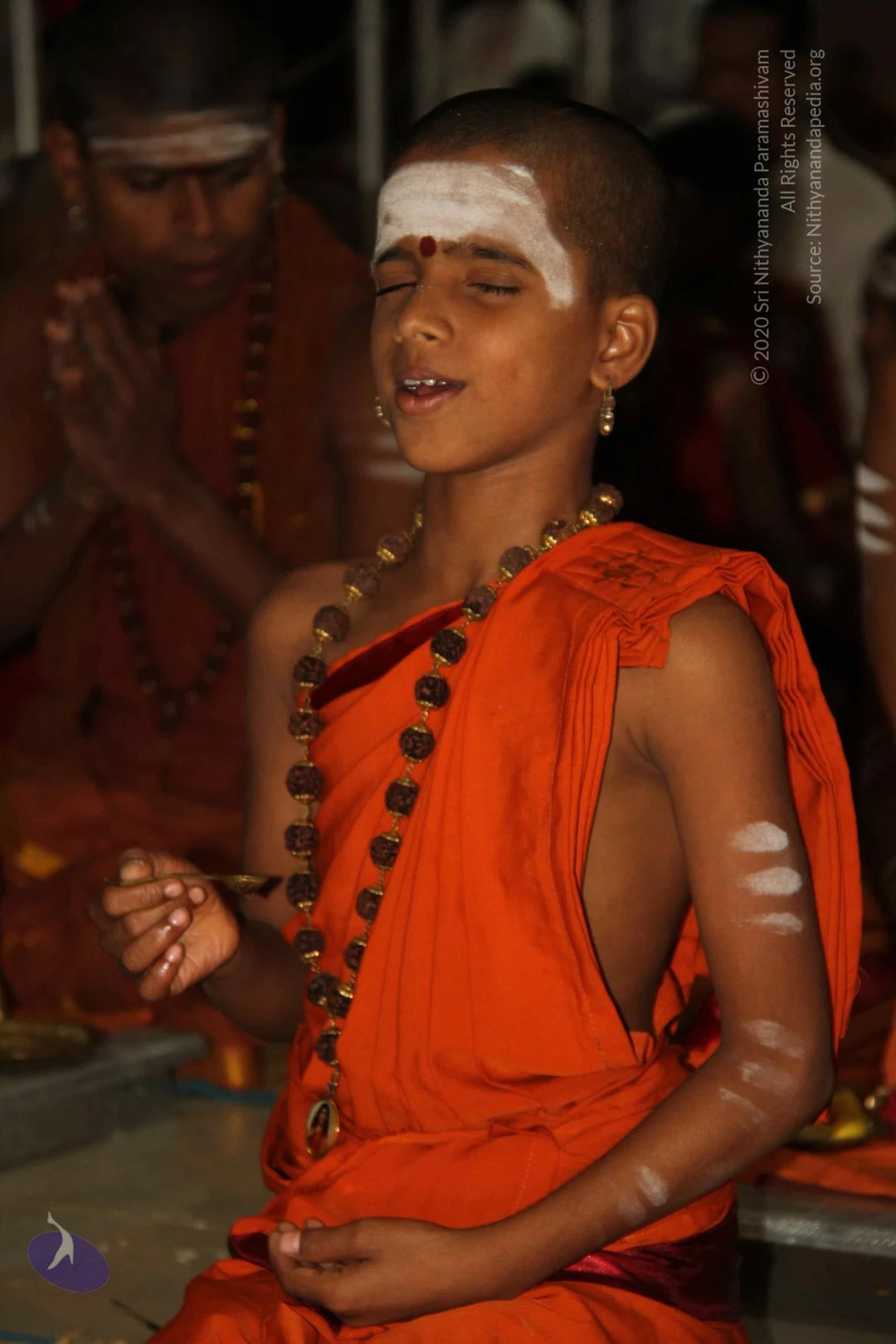
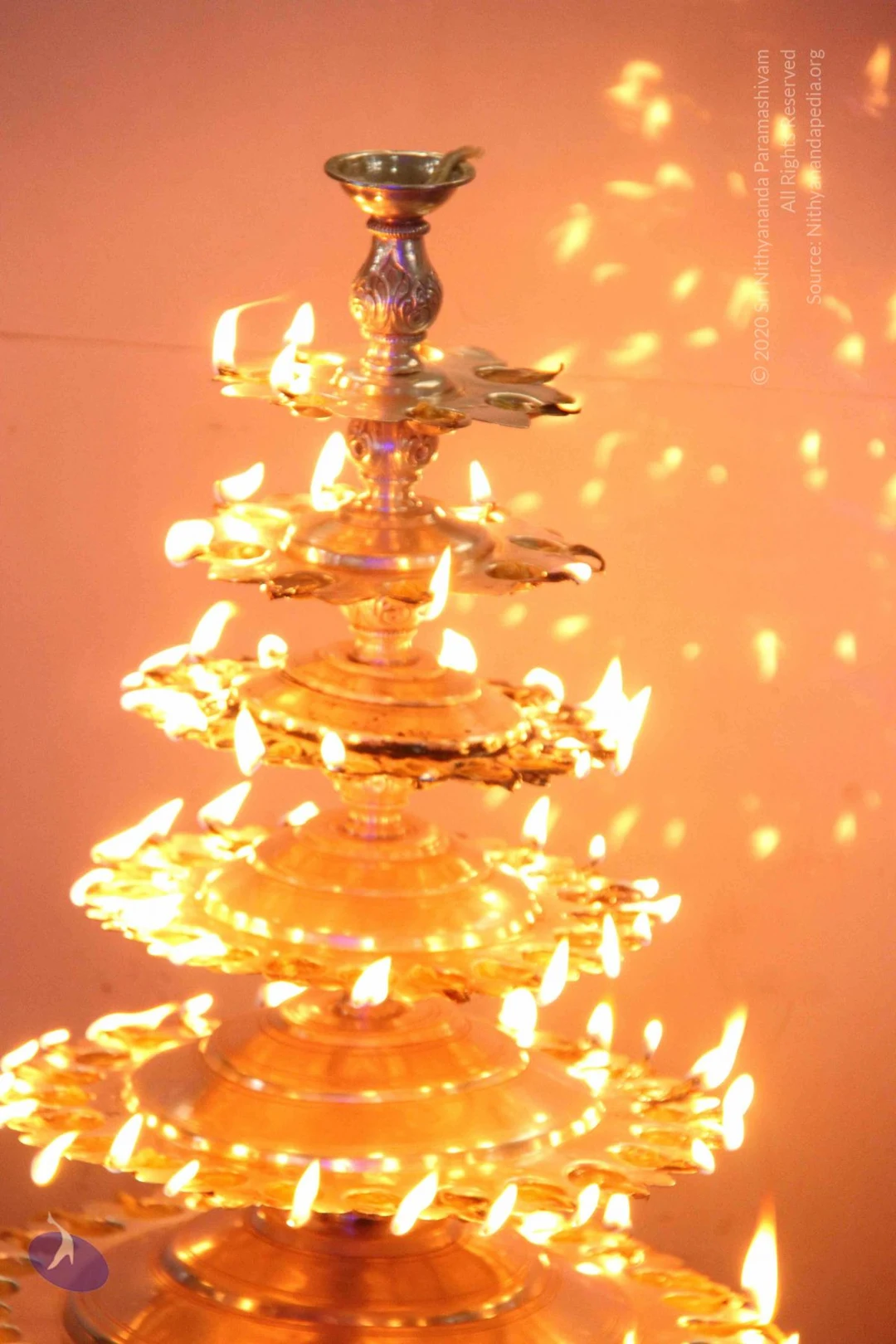
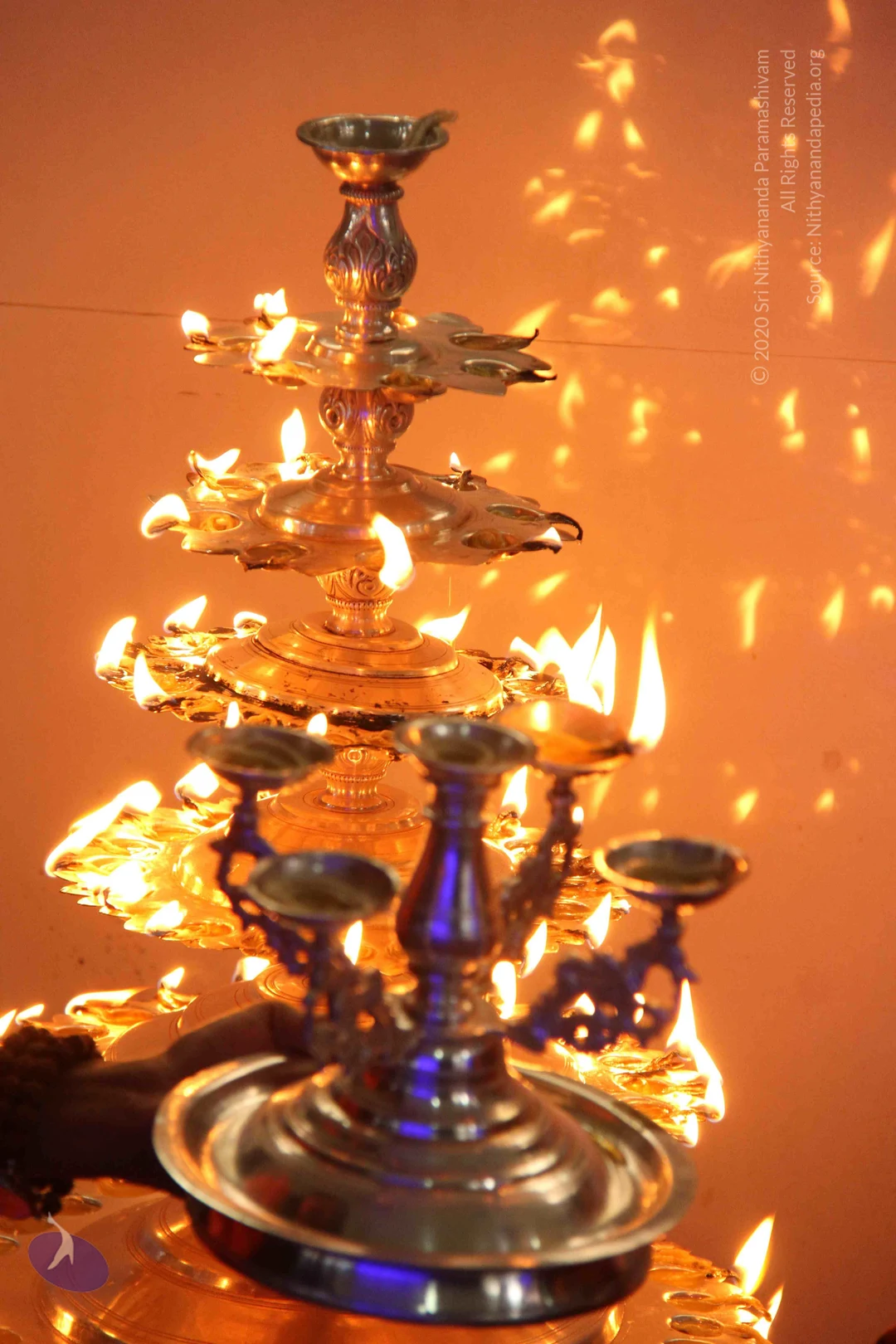
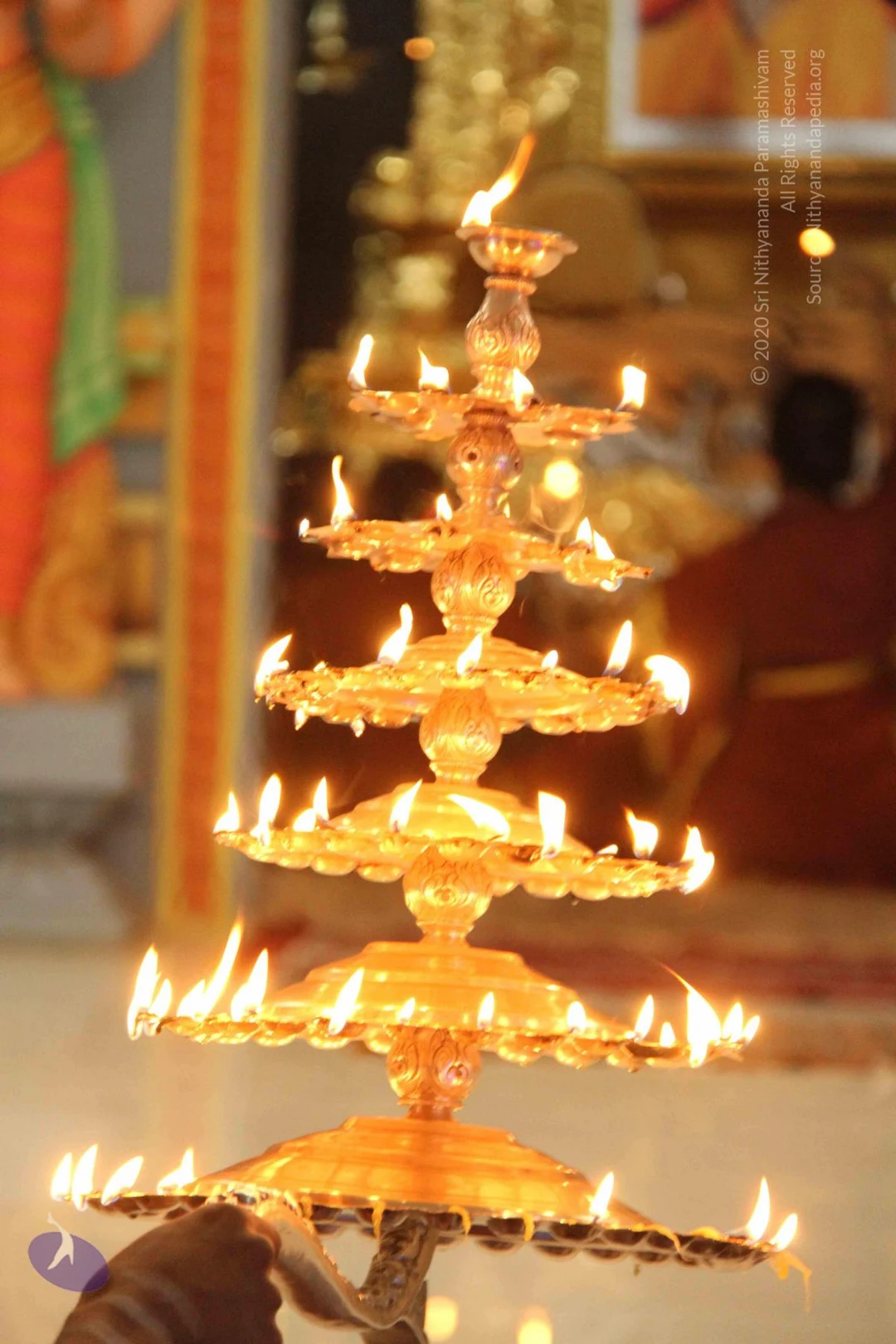
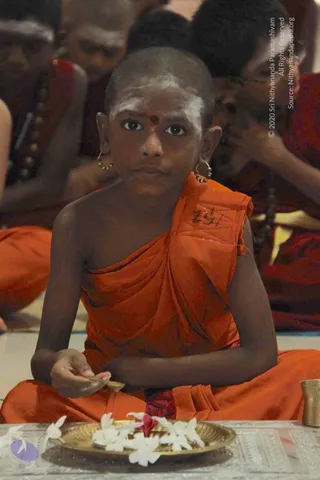
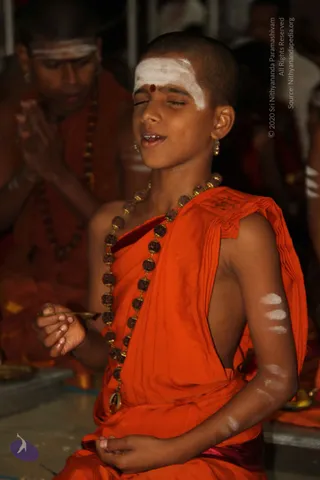
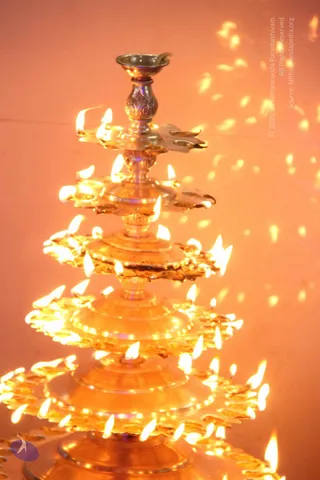
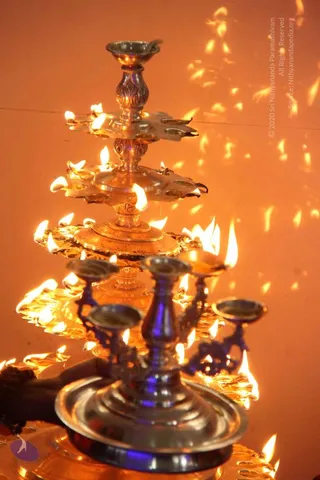
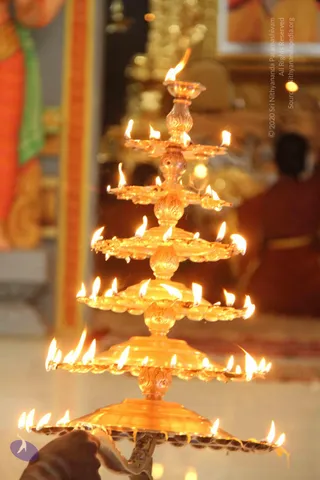
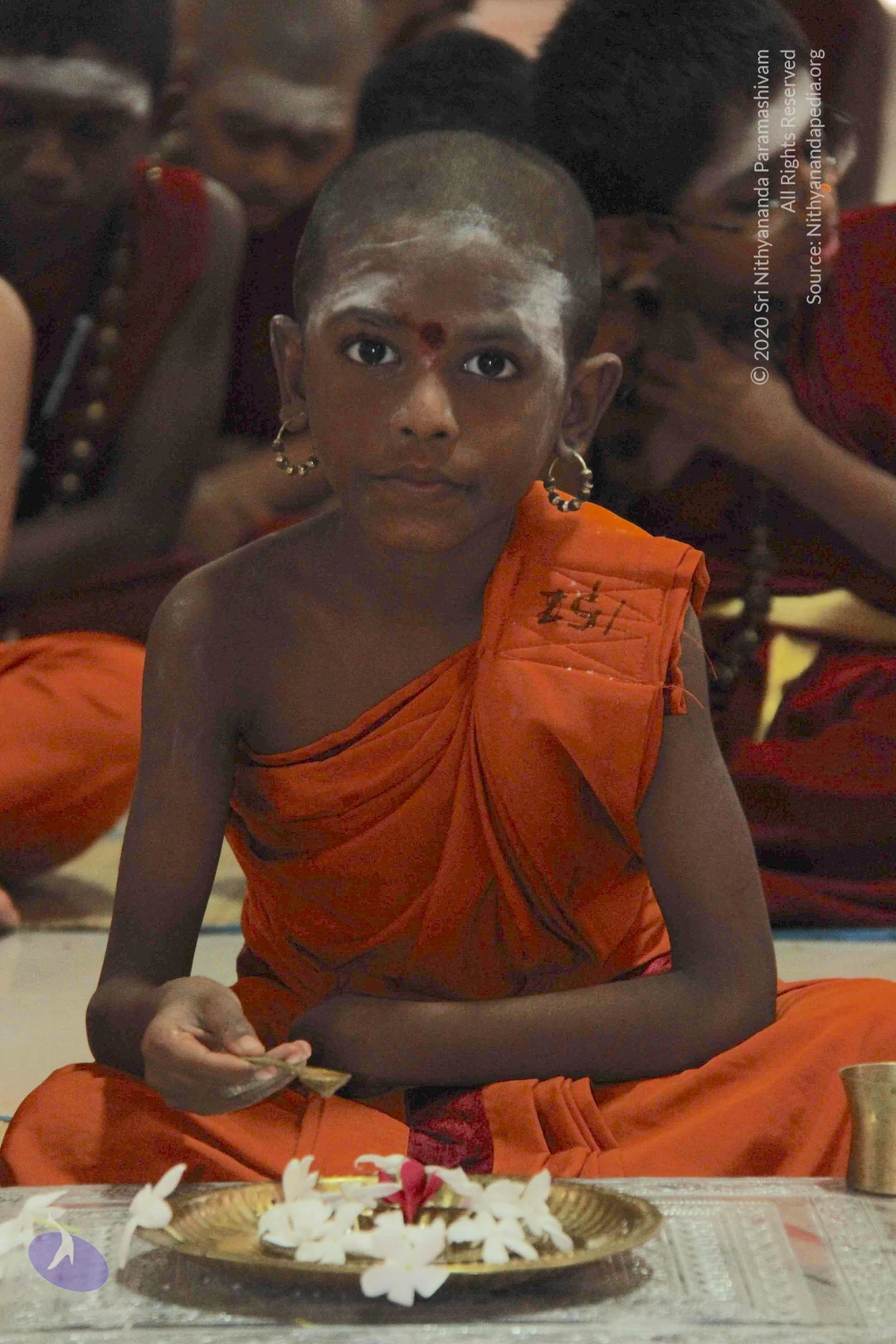
A photograph of a young shaven-headed boy seated cross-legged on a floor, wearing an orange-saffron cloth draped over his shoulder with a small embroidered emblem, a red tilak mark and white ash on his forehead, and small hoop earrings. He holds a small spoon-like implement over a brass plate filled with white flowers and a red petal. Behind him, several other people in orange and red robes sit in a row, slightly out of focus.A young boy with a shaved head sits with eyes closed and mouth slightly open in chanting, wearing an orange-saffron cloth draped over his shoulder and a long strand of rudraksha beads across his chest. A white vertical mark and red kumkum dot adorn his forehead, and white ash stripes mark his upper arm. He holds a small brass spoon in one hand and rests the other in his lap. Behind him, an older man in orange with rudraksha beads and white forehead marks sits with palms pressed together in prayer, and brass vessels are visible at the lower edge.A tiered brass lamp stand, a deepam-style arrangement with multiple rings of lit oil lamps rising from a wide base to a small cup at the top, flames flickering against a warm orange-pink backdrop with scattered light reflections. No people are visible; the scene is a close-up of ritual lamps.A photograph of a tiered brass aarti lamp with multiple flames burning on its stacked dishes and side cups, set against a warm orange wall with flickering light reflections. A partly visible hand holding a beaded rudraksha-style mala rests at the lower left edge of the frame. No people are clearly visible beyond the hand, and no figure is identifiable as a person in this image.A tiered brass aarti lamp with many lit oil lamps on multiple gold-toned plates is held aloft in the foreground, flames rising against a blurred temple interior. A partial hand grips the lamp's base at lower left. Behind it, an orange-clad figure and gilded decorations are out of focus, and a painted deity image edge appears at left. The scene suggests an aarti offering in a temple.

Ashram-shots

1 photoSource gallery
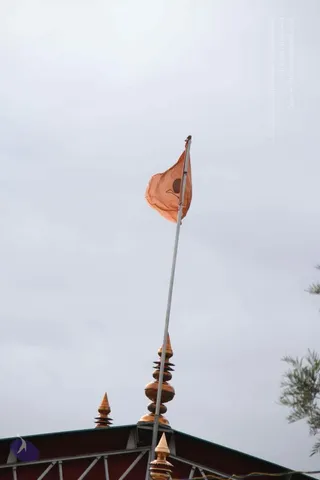
A saffron-orange flag with a dark circular emblem flutters from a tall metal pole against an overcast grey sky. Below, copper finials with tiered finials and a red roof edge with metal railing are visible at the top of a building, with a tree branch at the right edge. No people are visible in the scene.

Temple

12 photosSource gallery
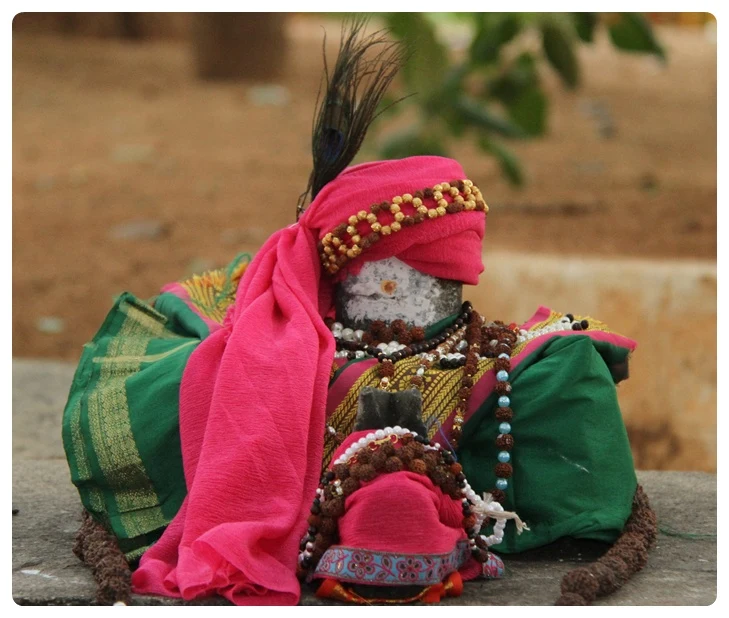
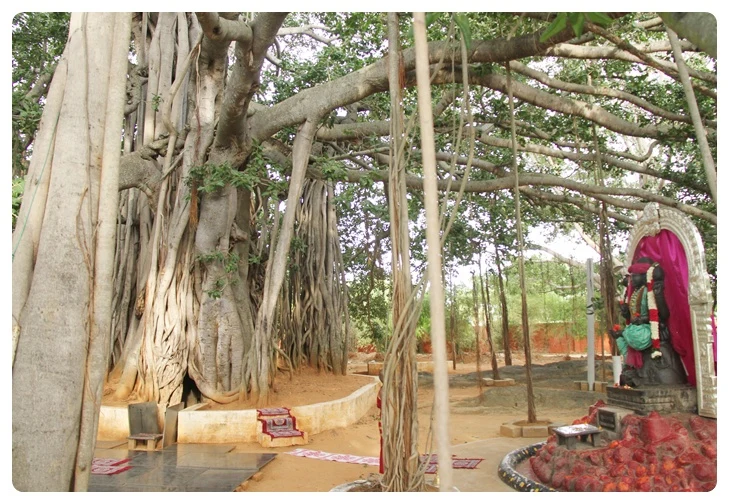
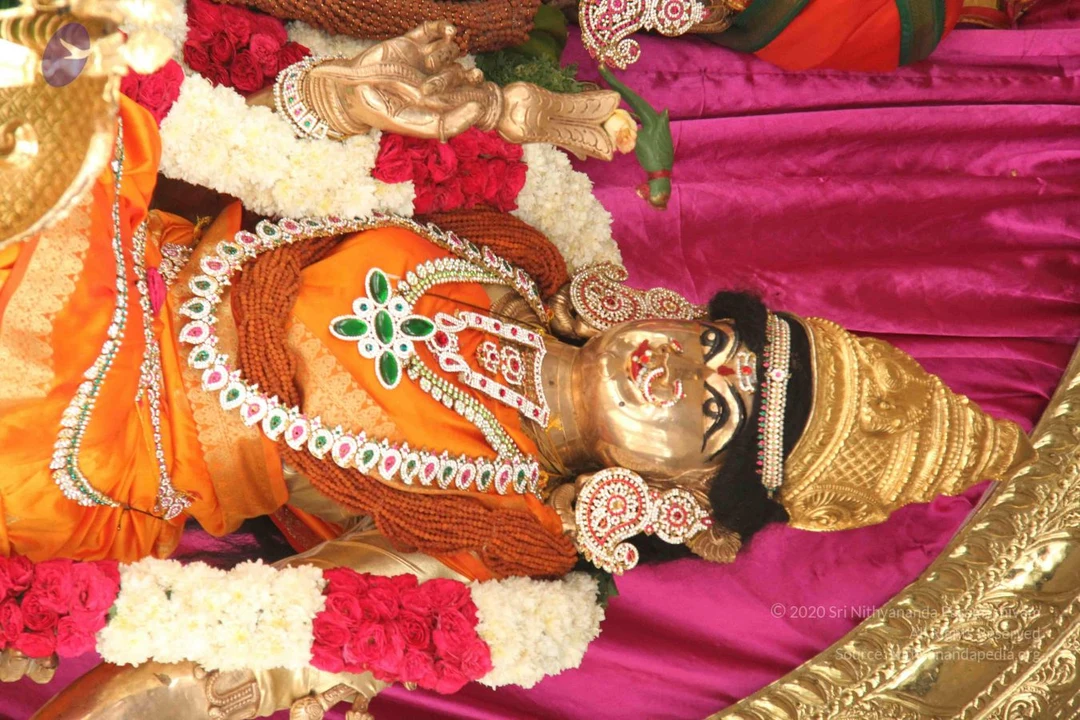
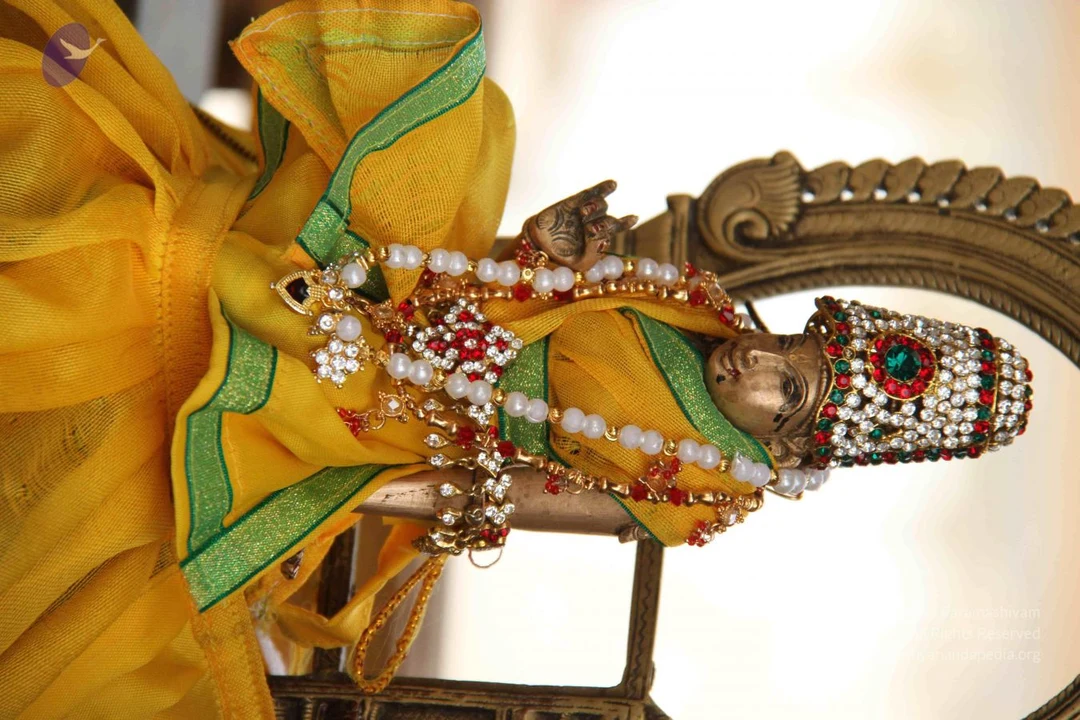
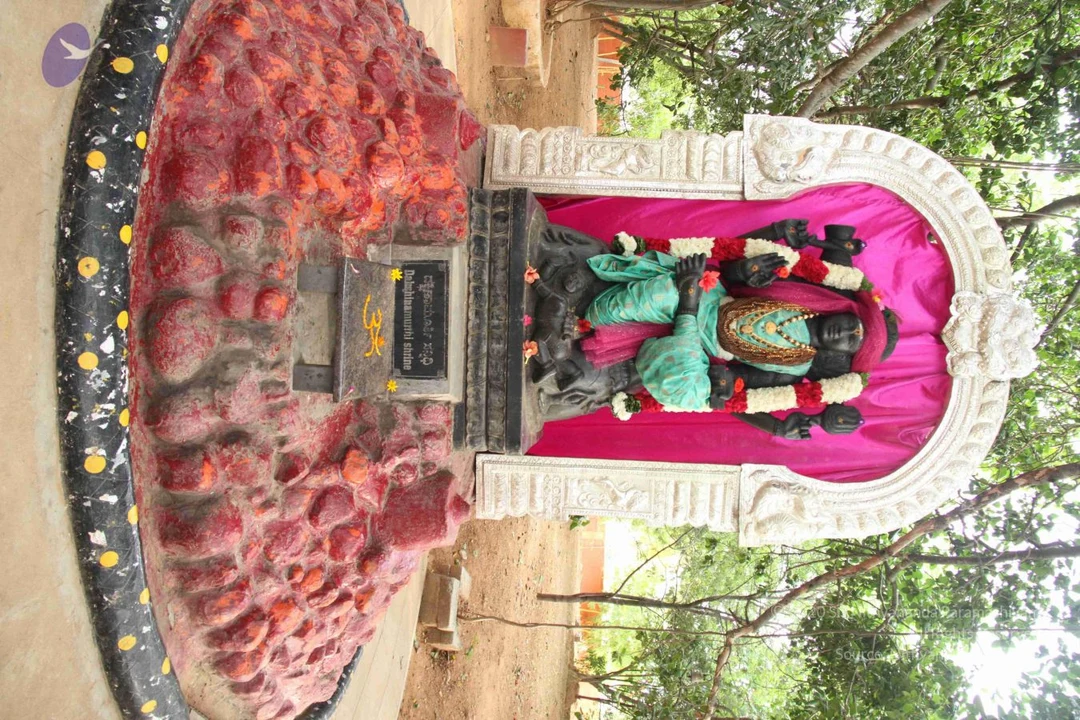
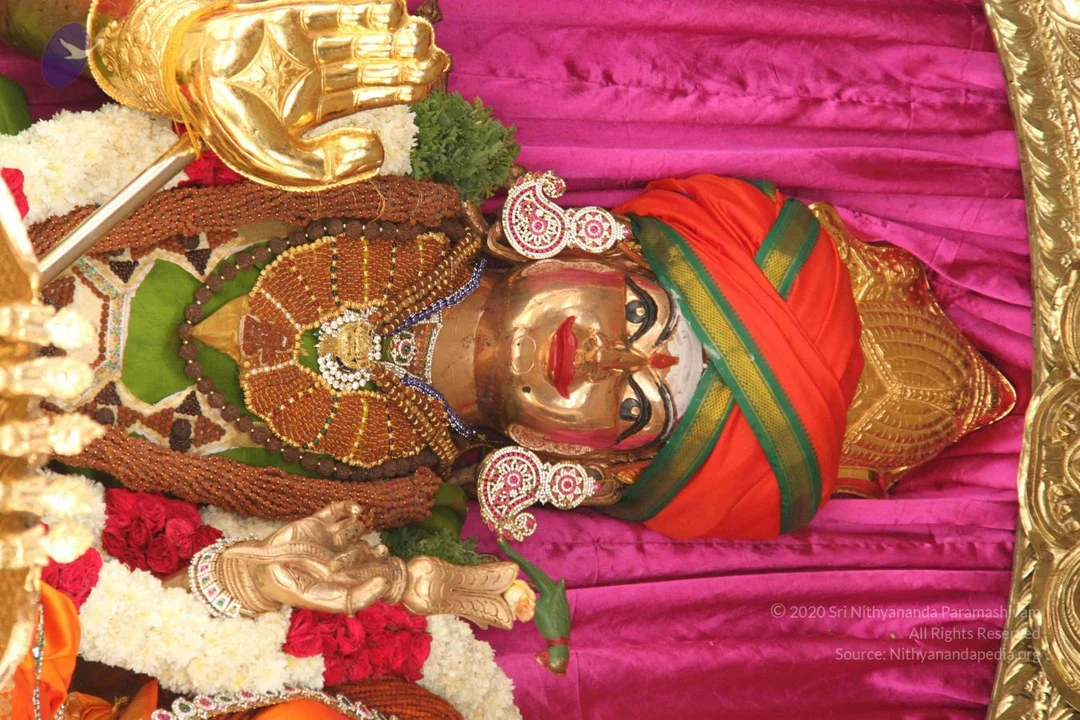
Close view of a copper-coloured deity murti in a frontal shrine setting, rotated sideways in the frame. The face has red lips, painted dark eyes and a red mark on the forehead, wearing a bright orange cloth wrapped as a turban with green and gold borders and paisley-shaped earrings. A large brown rudraksha-style necklace and layered beaded garlands cover the chest, with white and red flower garlands below. A golden hand holding a staff or mace rises at the upper left, and a gold-framed backdrop with magenta silk draping sits behind. No physical people are visible.A close view of a gilded metal murti of a deity draped in an orange silk garment, adorned with a rubies-and-emerald necklace, rudraksha-style beaded mala, ornate gold and jewelled earrings and a jewelled headpiece, with white and red rose garlands laid over the figure and a magenta cloth beneath. A small gold ritual vessel appears at the top left. The figure is a statue, not a person, and the scene contains no physical people.Close-up, sideways view of a small brass deity murti decorated for worship. The figure wears a yellow silk cloth with green borders draped over its body and a jeweled headpiece set with red, green and white stones. Strands of white pearls and red beads hang across the chest, with gold ornaments and a pendant. The murti sits against an ornate brass frame with a scrolled top edge, against a bright, soft background. No people are visible.A black stone deity murti, apparently a Shiva form, is dressed for worship on a bright magenta cloth. It wears a teal and gold patterned garment, a deep magenta sheer scarf, and a heavy layered brown beaded necklace with gold pendants. Red and white flower garlands drape across its shoulders and arms, with a red flower tucked near the hand. The image shows no people or visible ritual action beyond the decorated murti.A black stone deity murti is dressed in a turquoise silk sari with gold paisley motifs and a magenta sheer overlay, adorned with a gold beaded collar, white and red flower garlands, and a red flower. Its multiple arms are raised with ritual hand gestures, and a pink satin cloth covers the base. The image is seated against a carved black stone backdrop with figures, in a temple setting.A rotated photo of an outdoor shrine dedicated to Dakshinamurthy, a black stone murti of a seated teacher figure under a white arched stone frame with carved edges. The figure wears a turquoise garment, a gold-and-brown headdress, and garlands of white and red flowers, and it sits on a bright magenta cloth. A black plaque with white lettering and a small yellow trident mark sit beside the shrine. In front, a large heap of red-smeared stones or offerings fills a round black-and-white bordered platform. Green trees and foliage surround the shrine. No people are visible.

Satsang
43 photosSource gallery
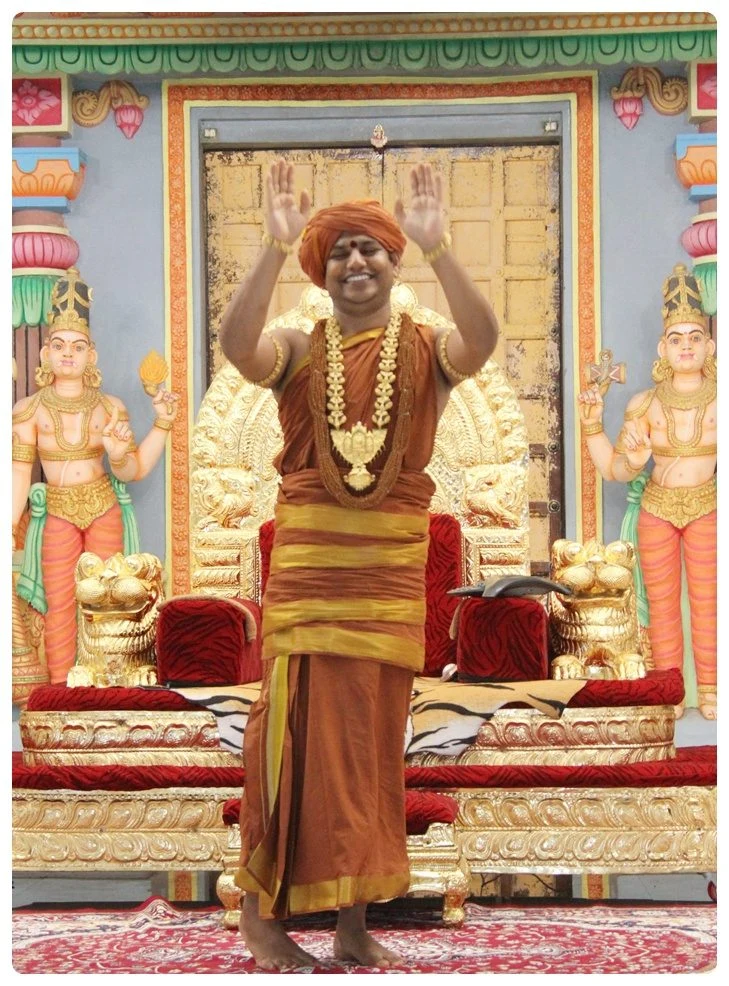
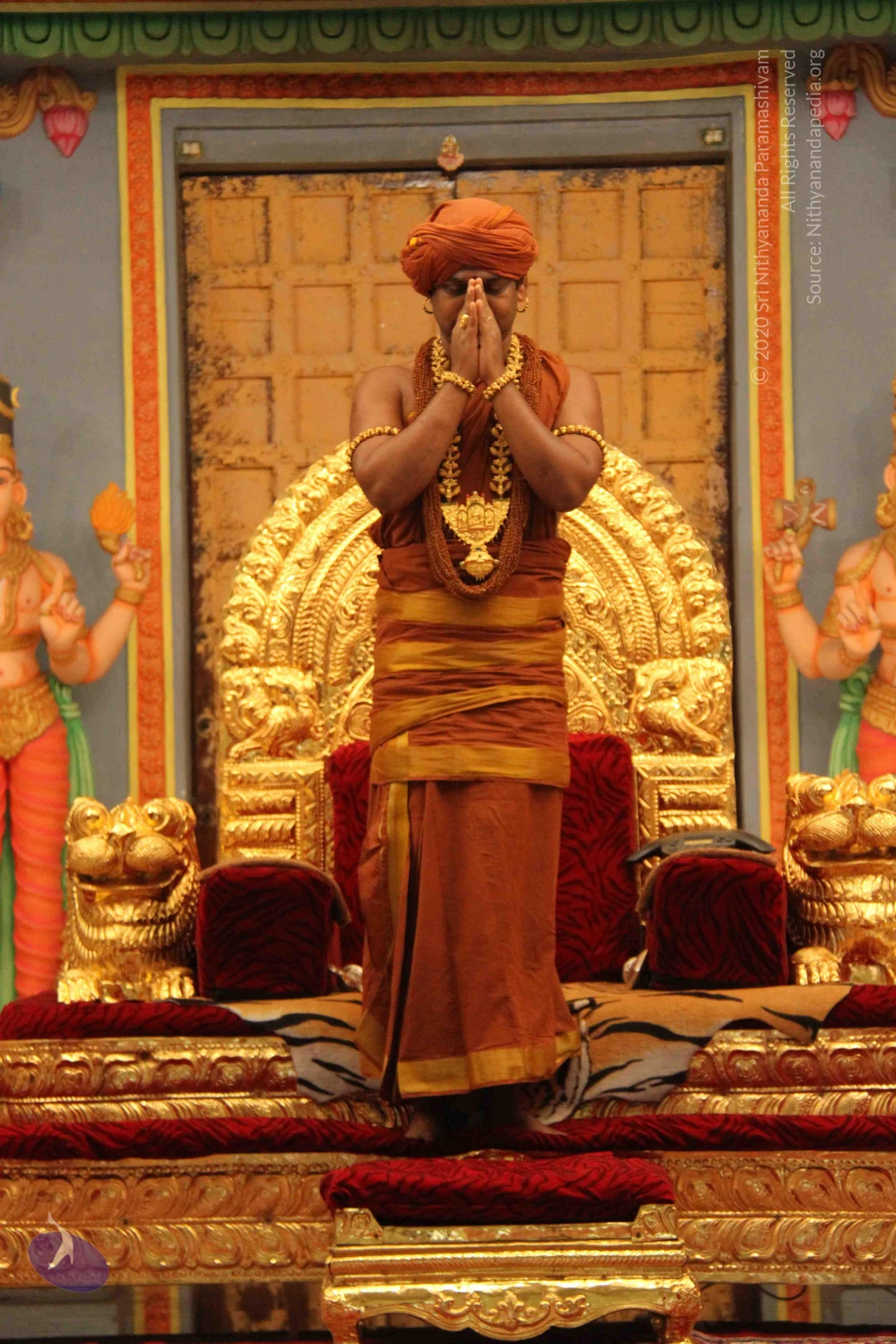
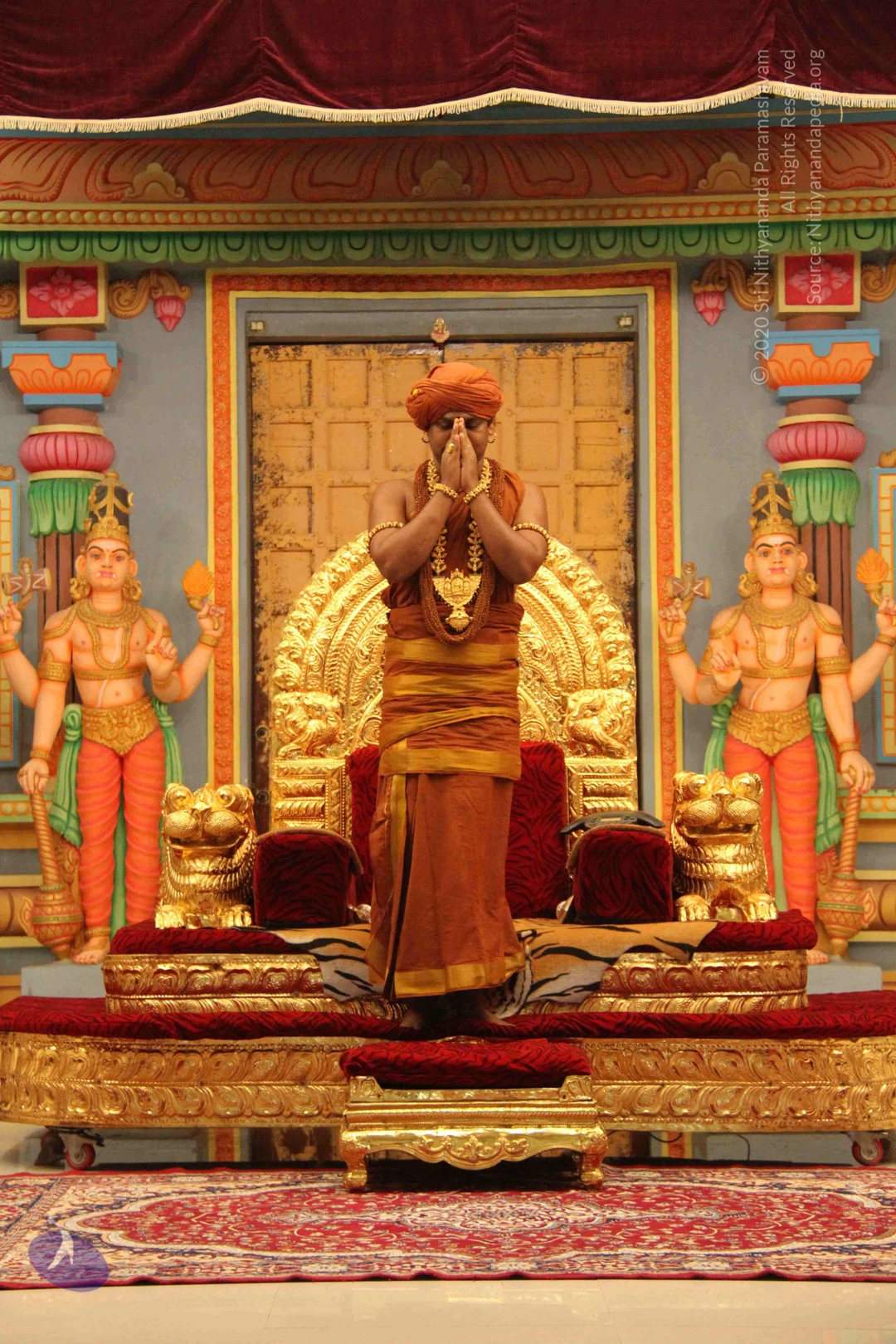
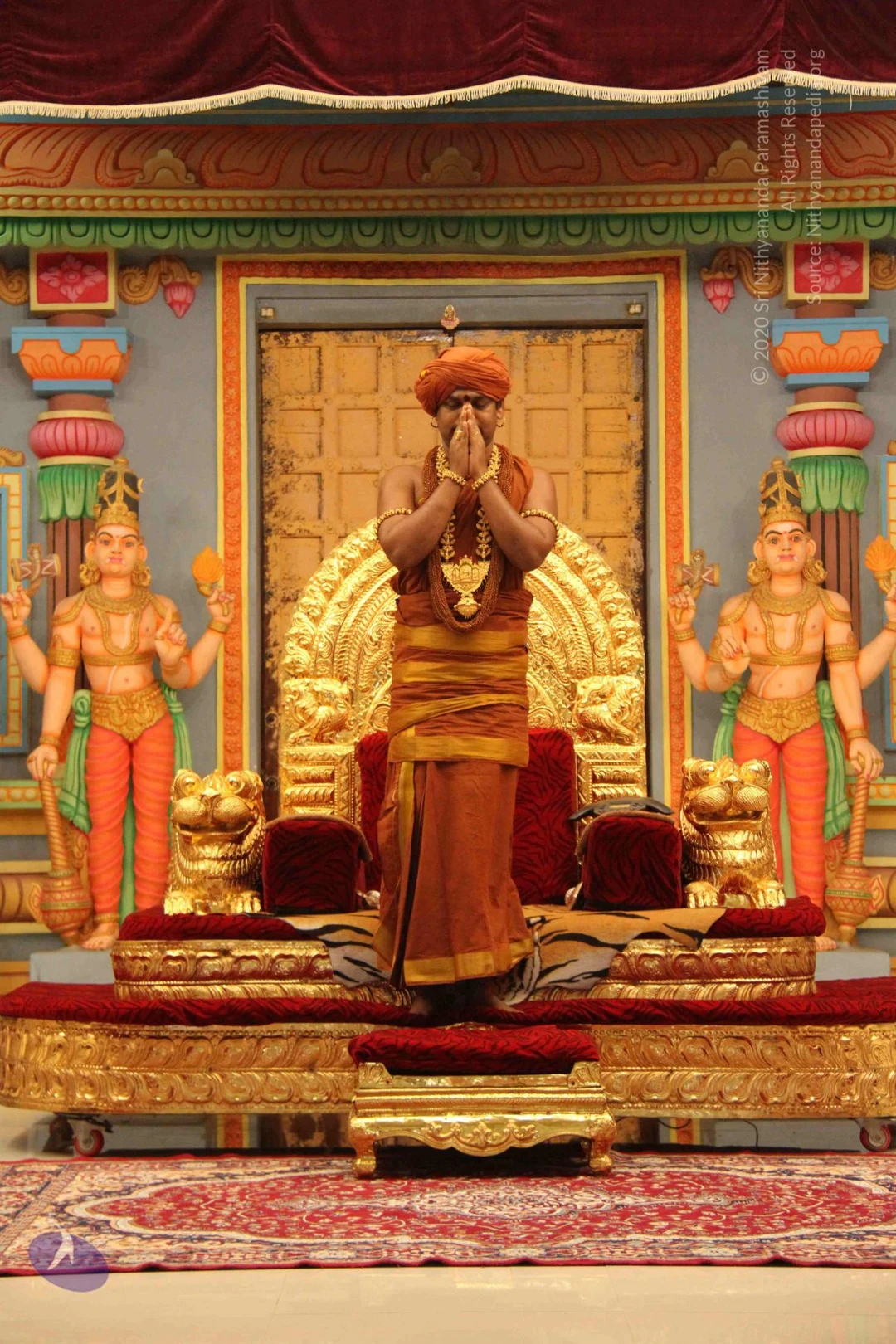
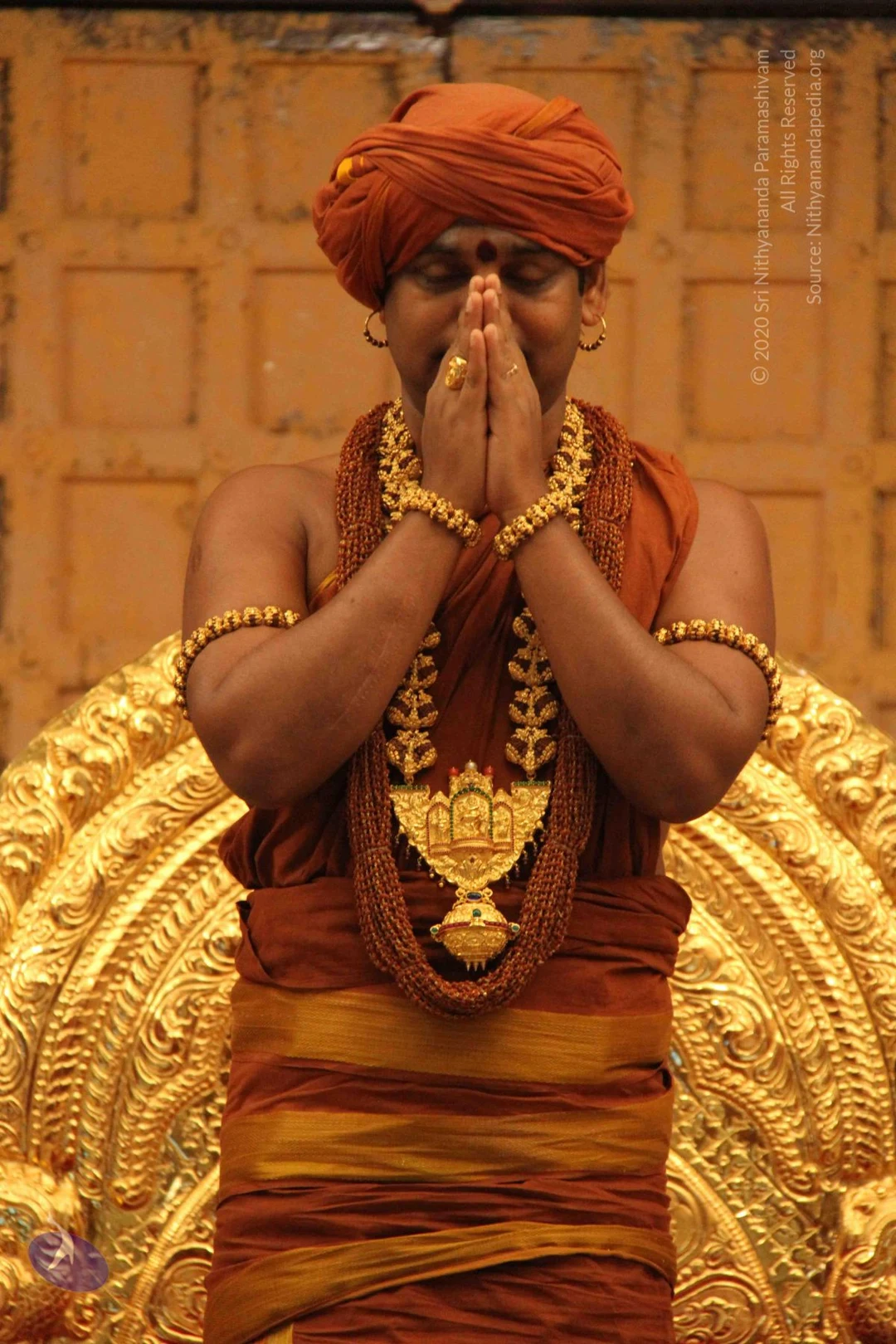
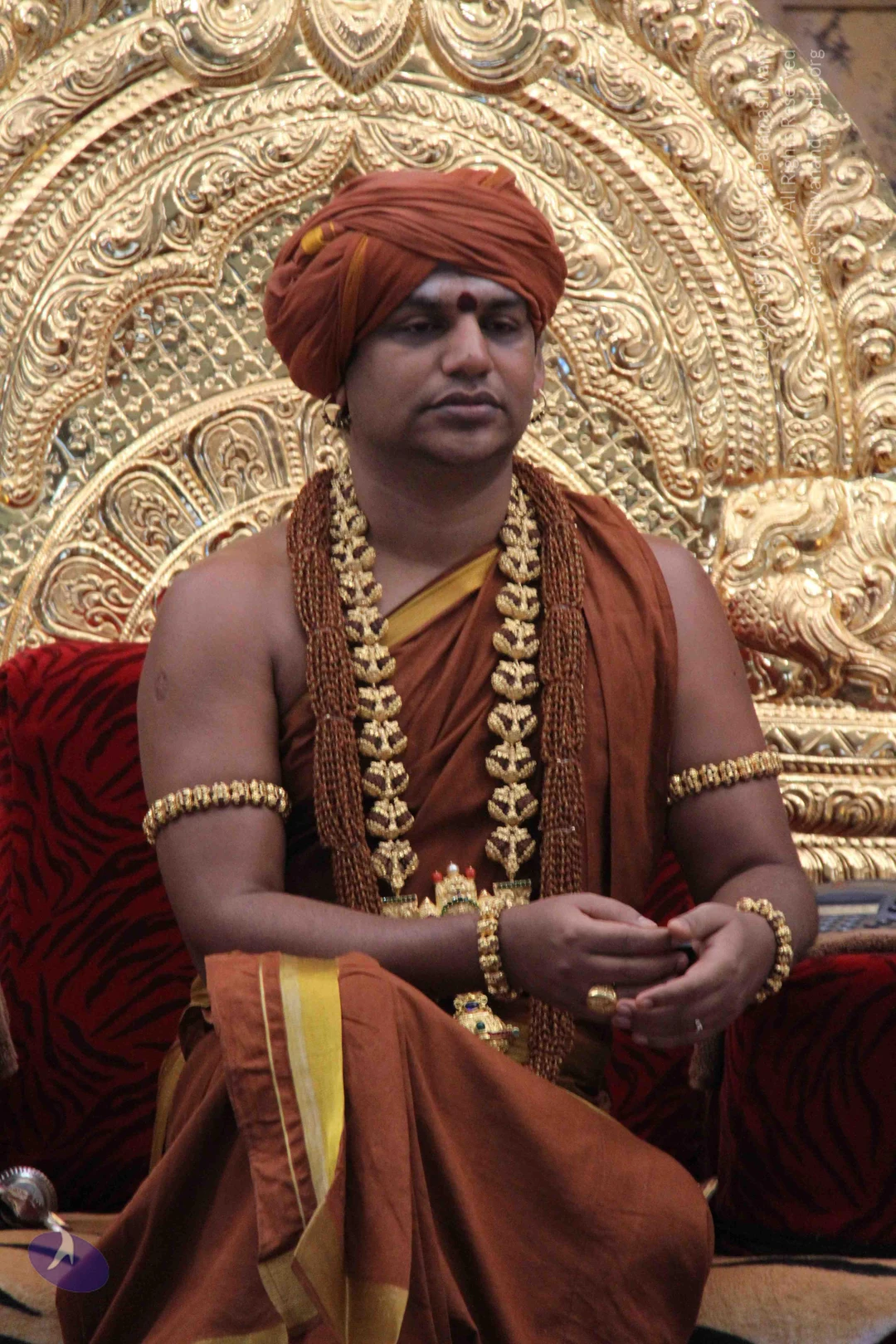
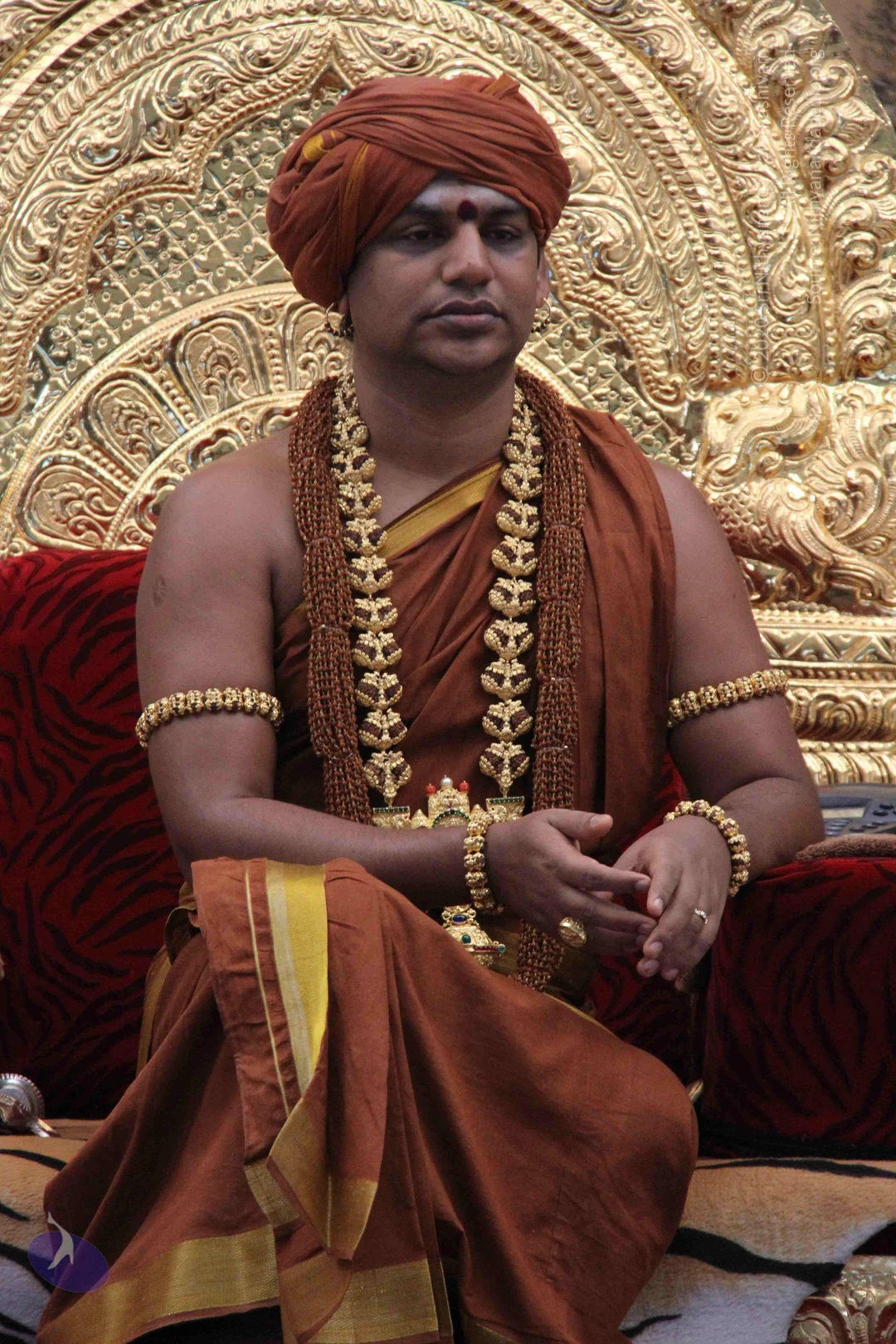
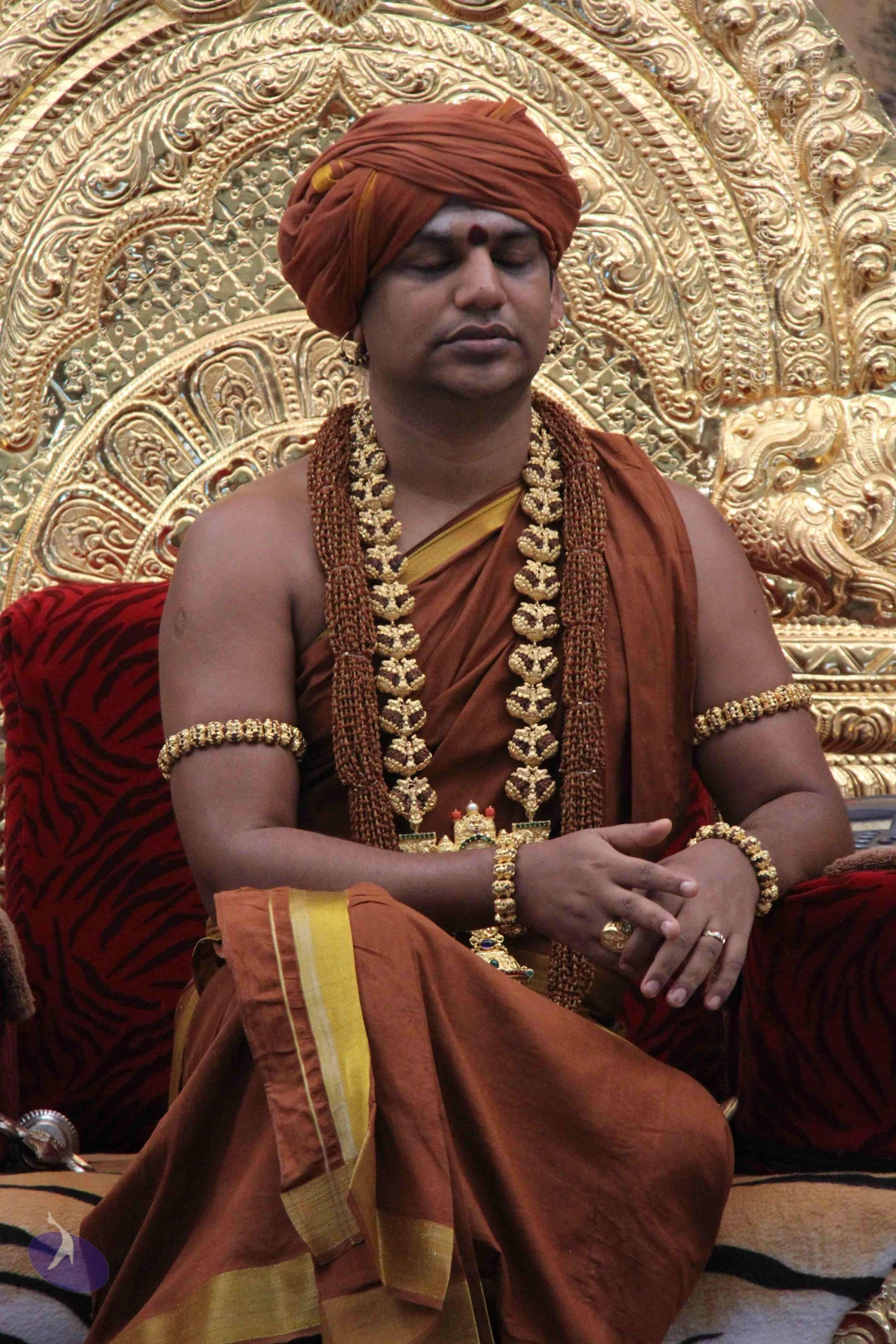
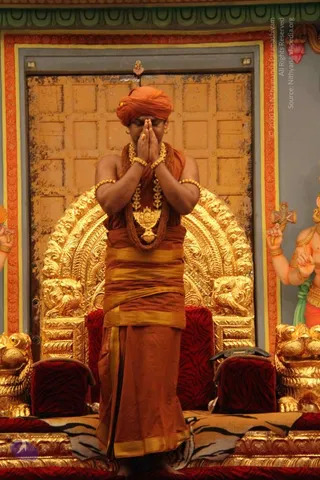
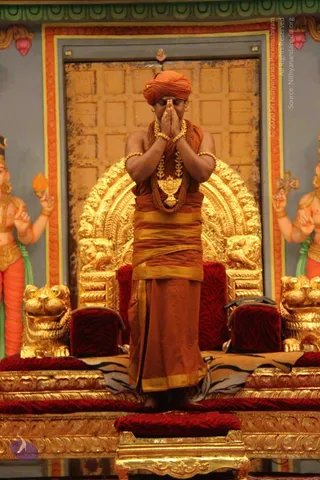
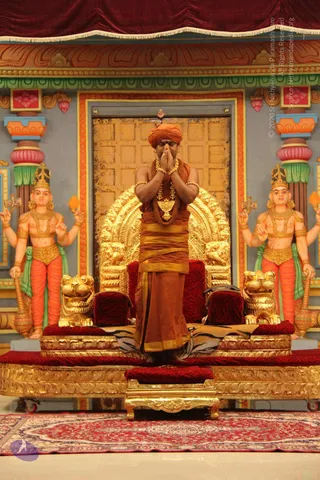
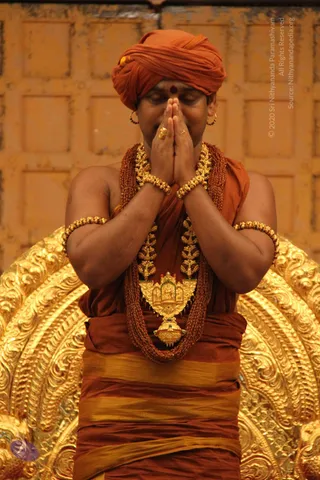
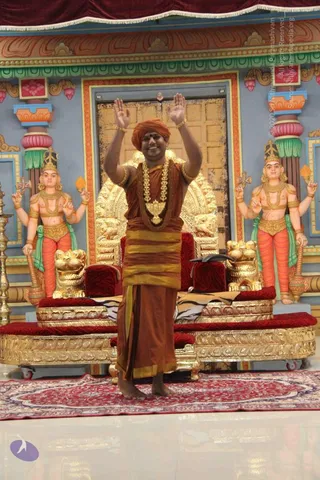
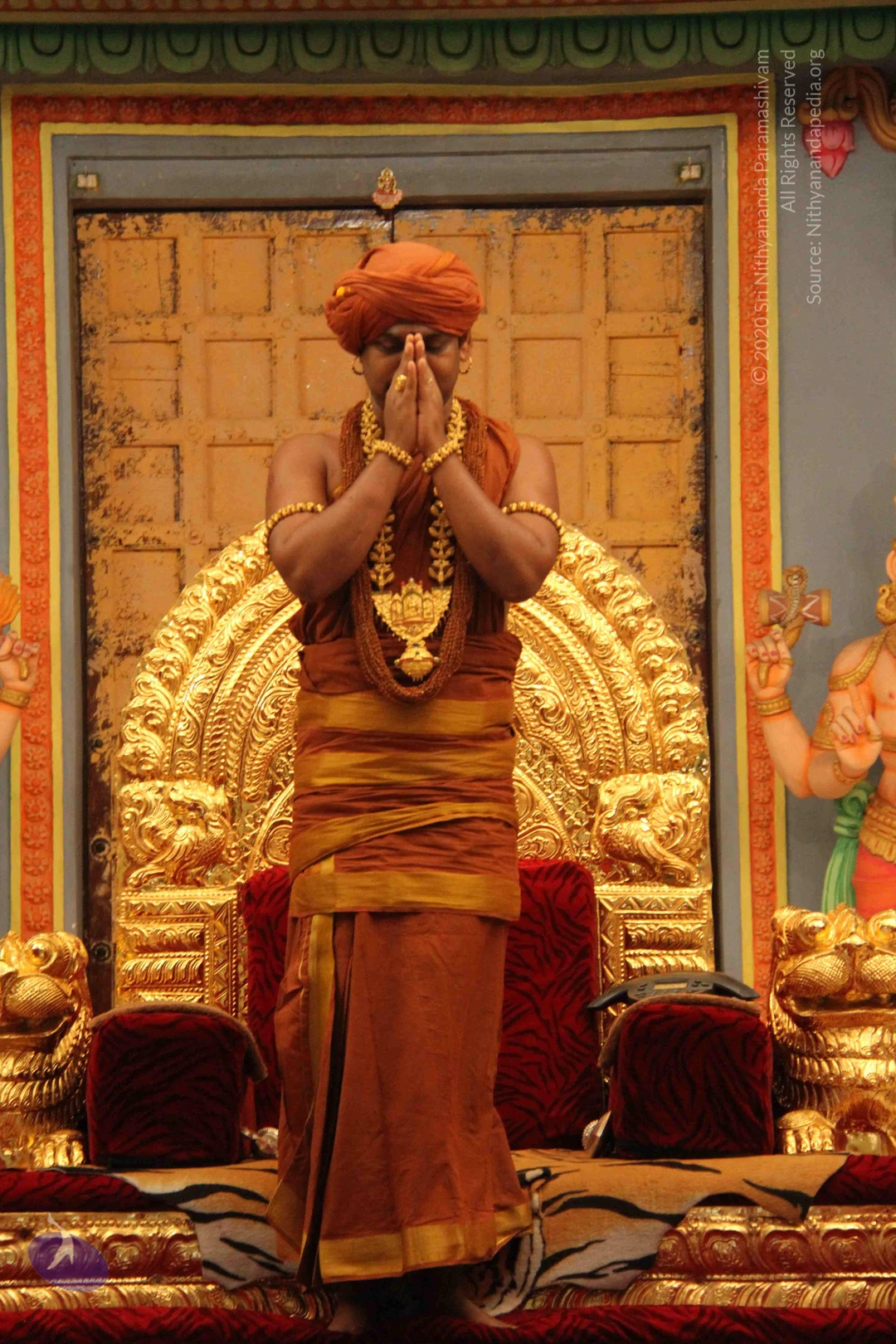
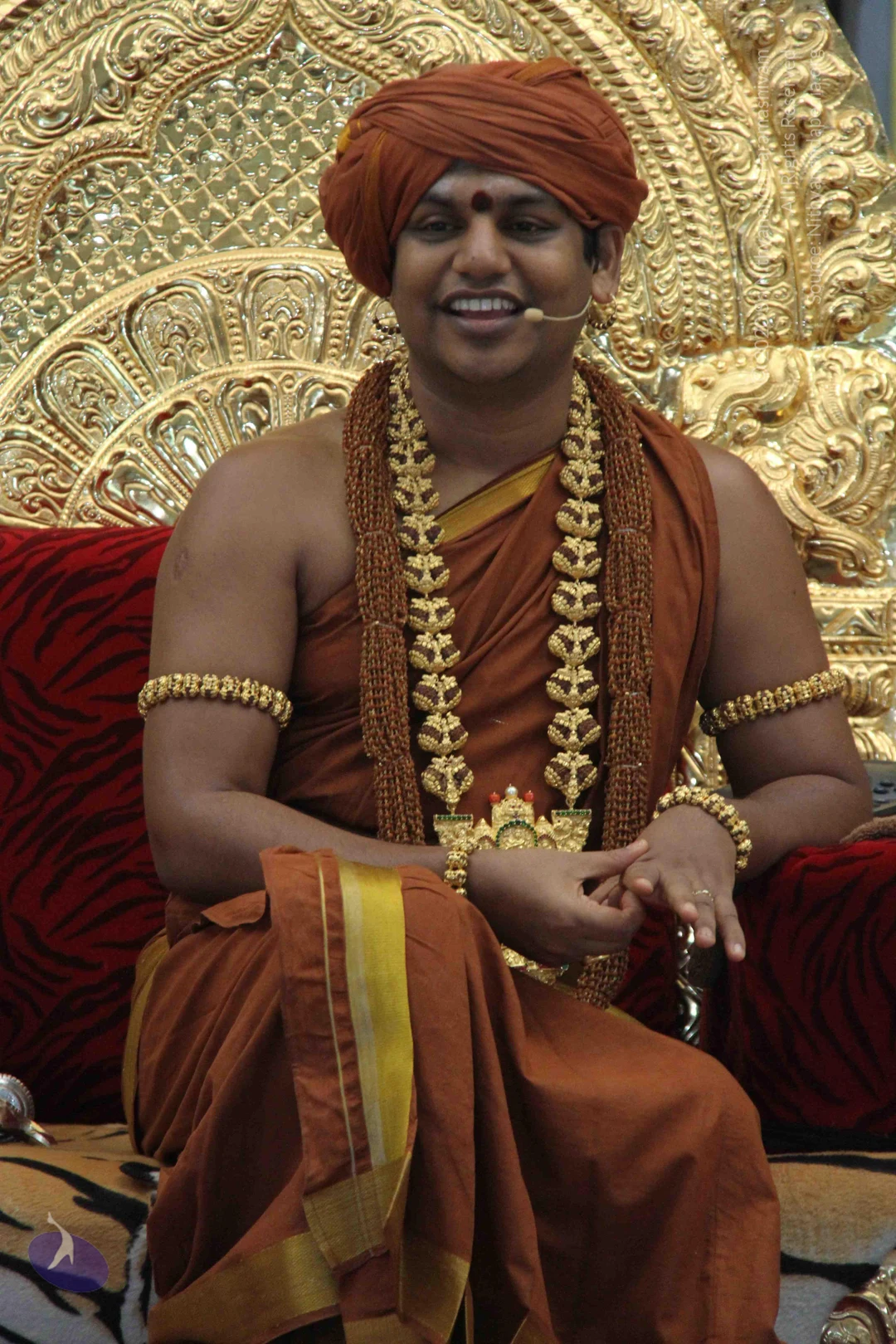
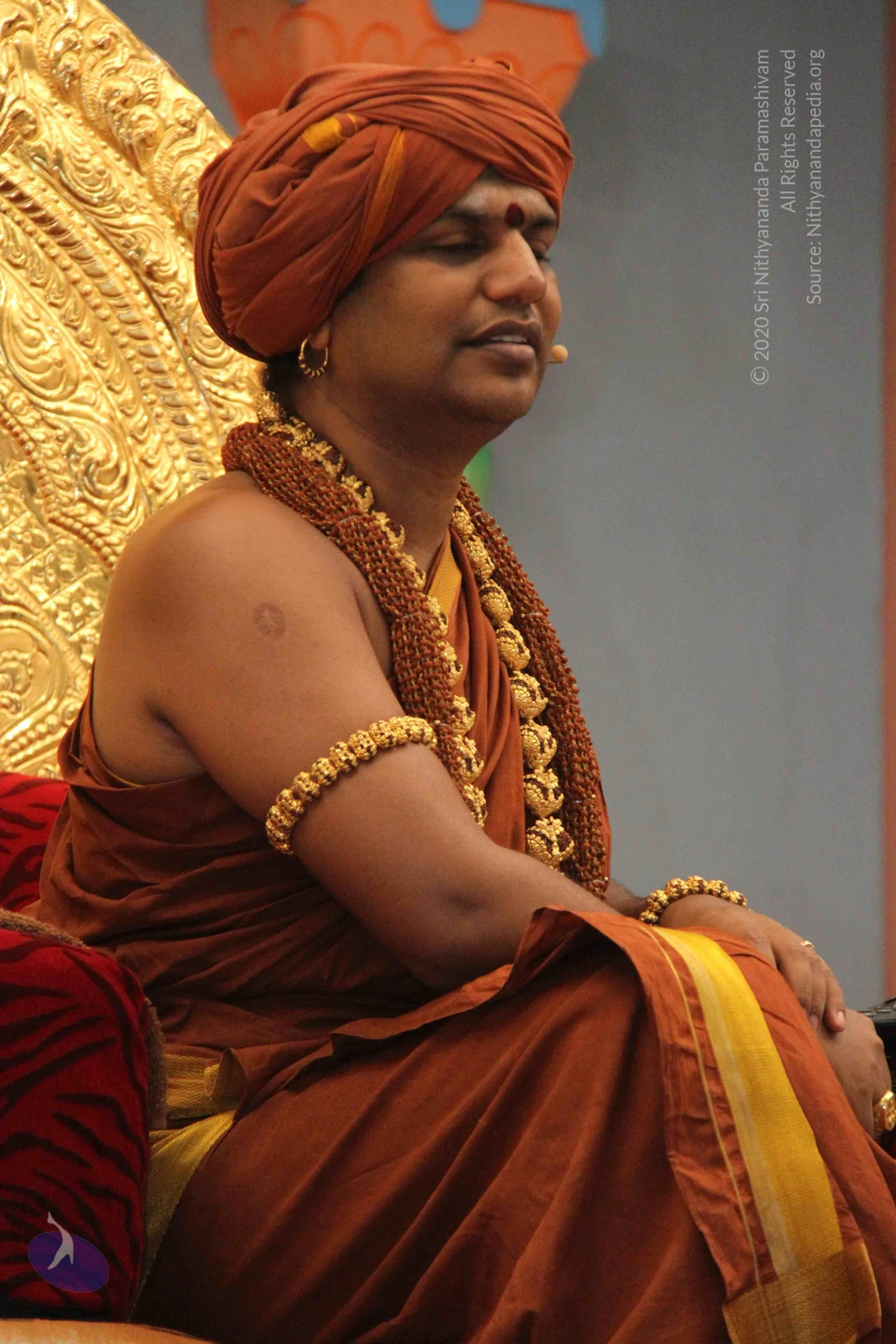
A person in a saffron-orange turban and bare-shouldered orange and gold garments stands with palms pressed together in anjali before a golden throne with lion-carved armrests and red tiger-striped cushions. A large carved golden door forms the backdrop, with painted deity murti figures at the edges. The figure wears layered rudraksha malas and a gold pendant necklace, gold bangles on the arms, and gold earrings. The setting resembles a temple or ceremonial hall.A photograph of a man standing in front of an ornate golden throne (peetha) with red velvet cushions and golden lion-head armrests, hands pressed together in anjali mudra at his chest. He wears an orange-saffron turban, a saffron upper cloth and dhoti with gold-bordered sash, a thick rudraksha-style mala with a large gold pendant, and gold bangles. Behind him is a carved golden wooden door and painted deity murti figures with multiple arms on either side. Swamiji (probable): saffron turban, saffron robes, rudraksha mala and gold ornaments, presented in a temple-throne setting as the central figure.A figure in an orange turban and orange-brown robes with a gold-banded wrap stands before a large gold throne backed by a gold door, hands pressed together in namaste with eyes closed. He wears layered rudraksha-style malas and a gold pendant necklace and gold bangles. Behind the throne stand two painted deity murti figures with multiple arms and crowns, flanking gilded lion-headed armrests. The throne is draped with a tiger-striped cloth and red cushions, set on a red carpeted dais in a richly painted temple hall with red velvet canopy.A man in an orange-red turban and saffron-orange dhoti with gold-bordered sash stands with palms pressed together in namaste before a gold throne with red velvet cushions and tiger-skin drape. He wears layered rudraksha malas and a gold pendant necklace with gold bangles. Two painted statues of multi-armed deities flank him, with gold lion heads on the throne arms. A gold-carved wooden door with red velvet canopy and ornate painted pillars forms the backdrop, and a red patterned carpet lies at the base. The figure's appearance matches the page's a person cues (orange turban, rudraksha malas, ornate gold jewellery) but identity is uncertain, so he is described as a person in front of a throne.A single person stands in front of an ornate gilded throne backdrop, hands pressed together in anjali mudra at the chest, eyes closed. He wears a rust-orange turban with a red bindi on the forehead, gold hoop earrings, a multi-strand rudraksha-style mala with a large gold pendant depicting a temple-shaped motif, gold bangles on wrists and upper arms, and an orange-brown dhoti-style garment with a gold-bordered sash at the waist. Behind him, a carved gold peetha or throne arch fills the frame, with a wooden panelled wall above. The image reads as a satsang or darshan greeting, and the person shows the appearance-based cues of a probable Swamiji (distinctive ornate jewellery, orange turban and ceremonial dress), though the face is not clearly visible.A seated man in saffron-orange attire sits before an ornate gilded throne backrest with repoussé floral and scrollwork patterns. He wears an orange turban with a small red tilak on his forehead, a layered gold and beaded necklace with a gem-set pendant, gold armlets, gold bangles and a ring. He wears an orange upper cloth over bare shoulders with a yellow border, and his hands rest together in his lap. A red and black striped cushion lies beside him. Swamiji (probable) is shown here as the seated figure, with cues of saffron clothing, turban and ceremonial gold ornaments, seated in a ritual-style setting.
SarvaDarshan

8 photosSource gallery
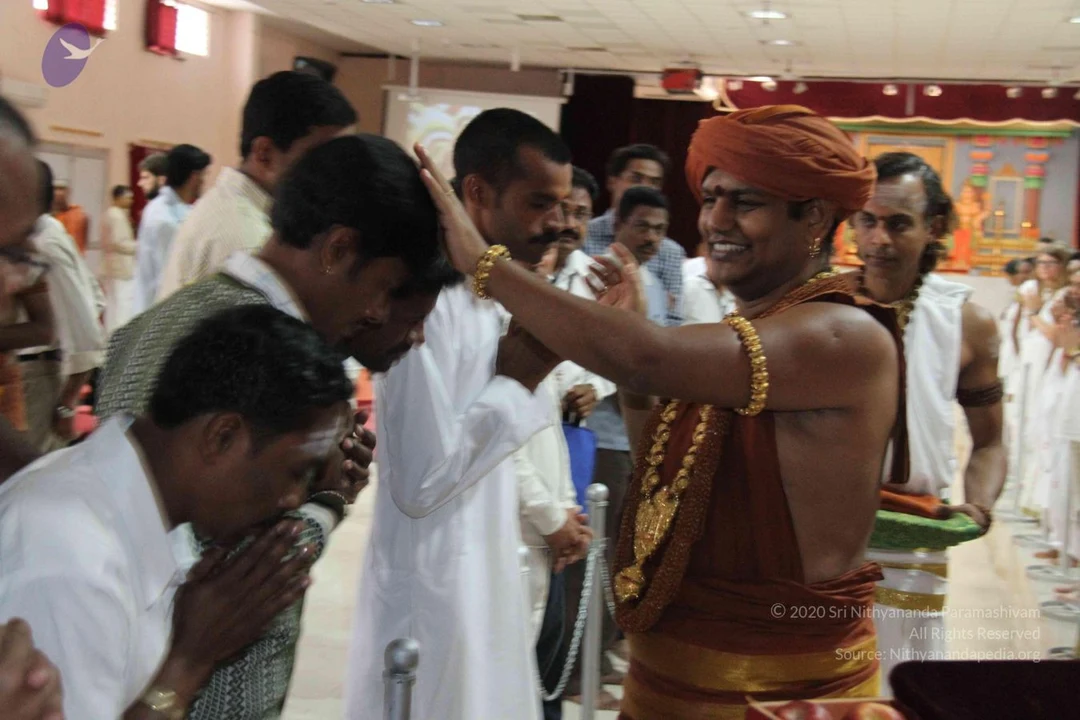
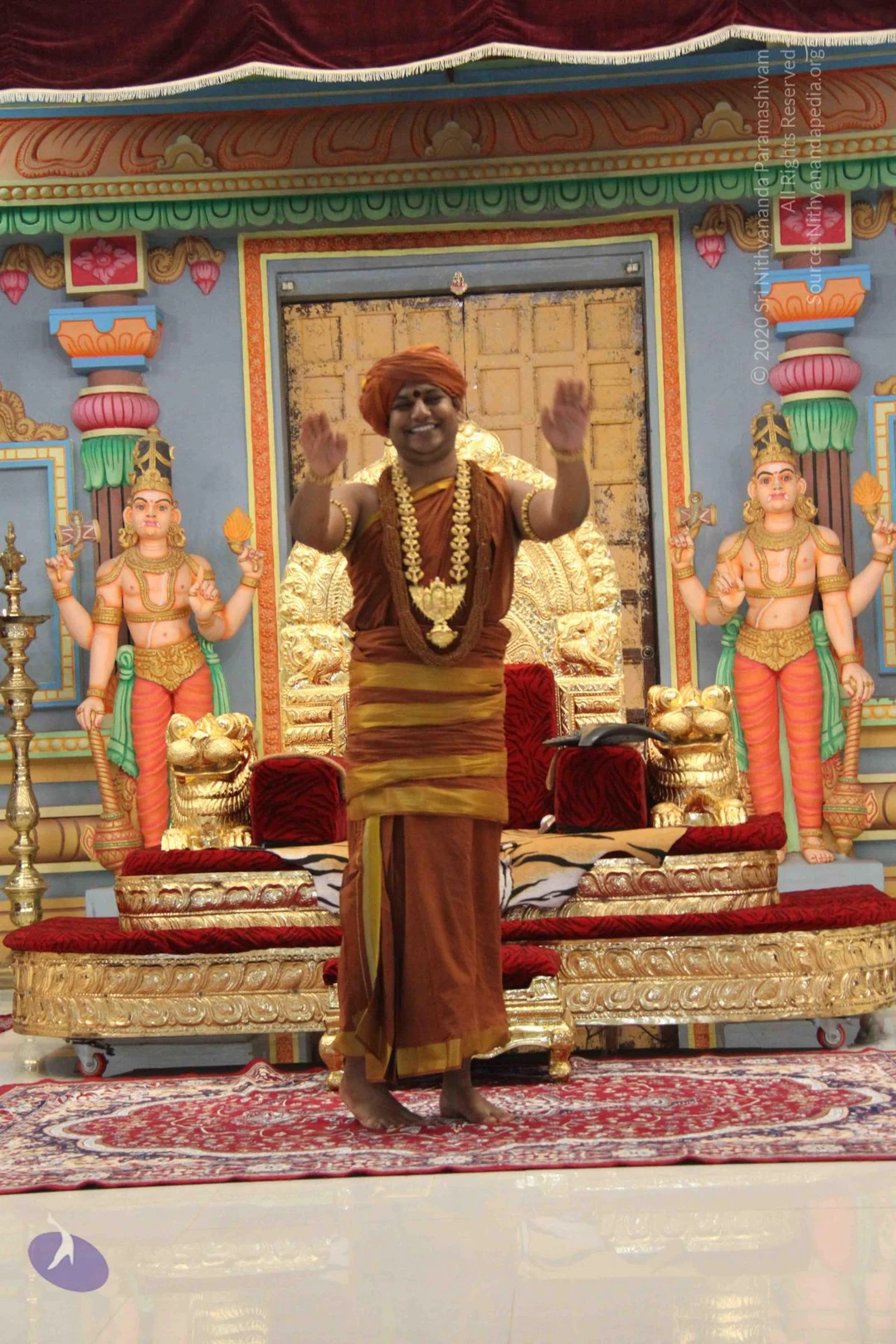
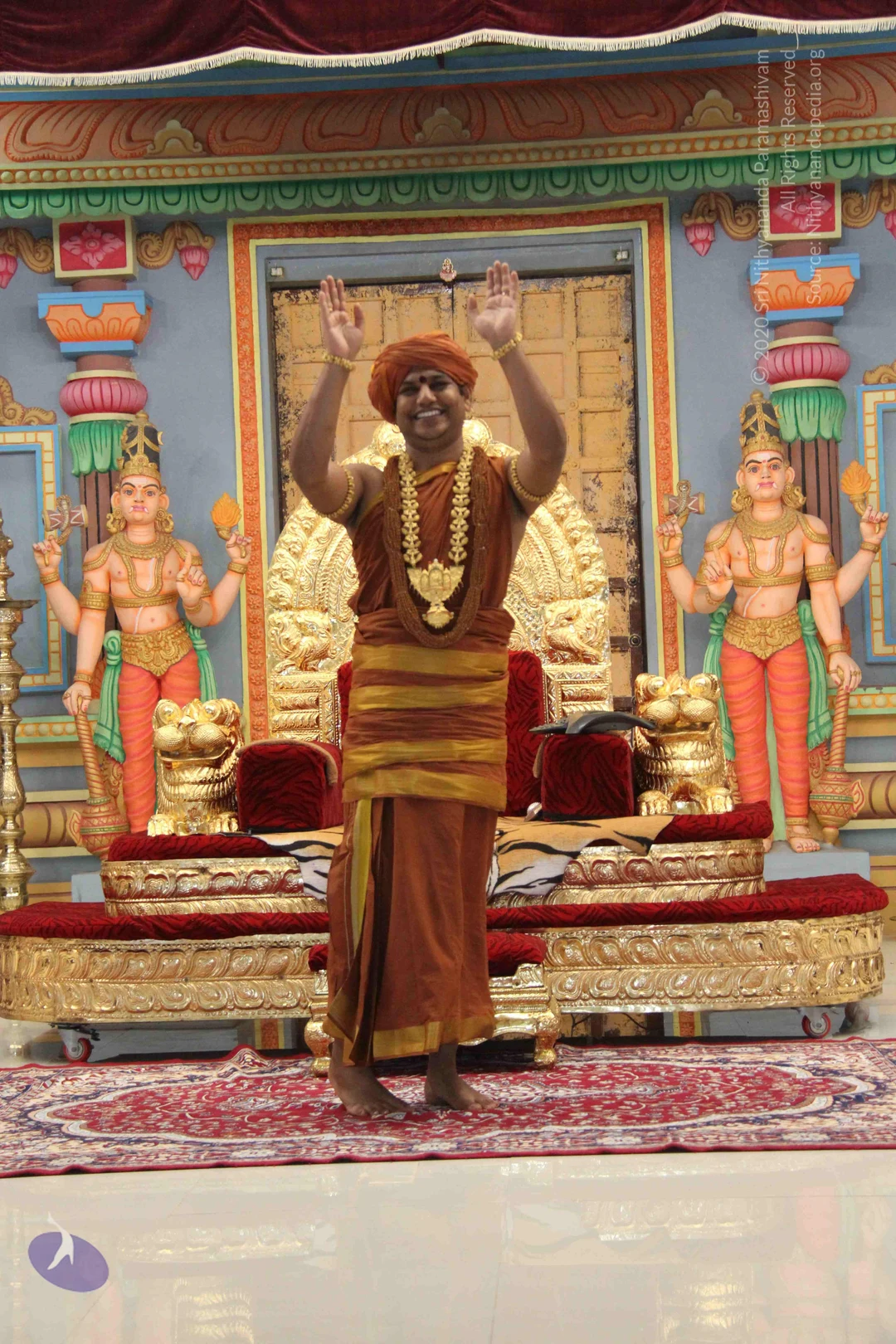
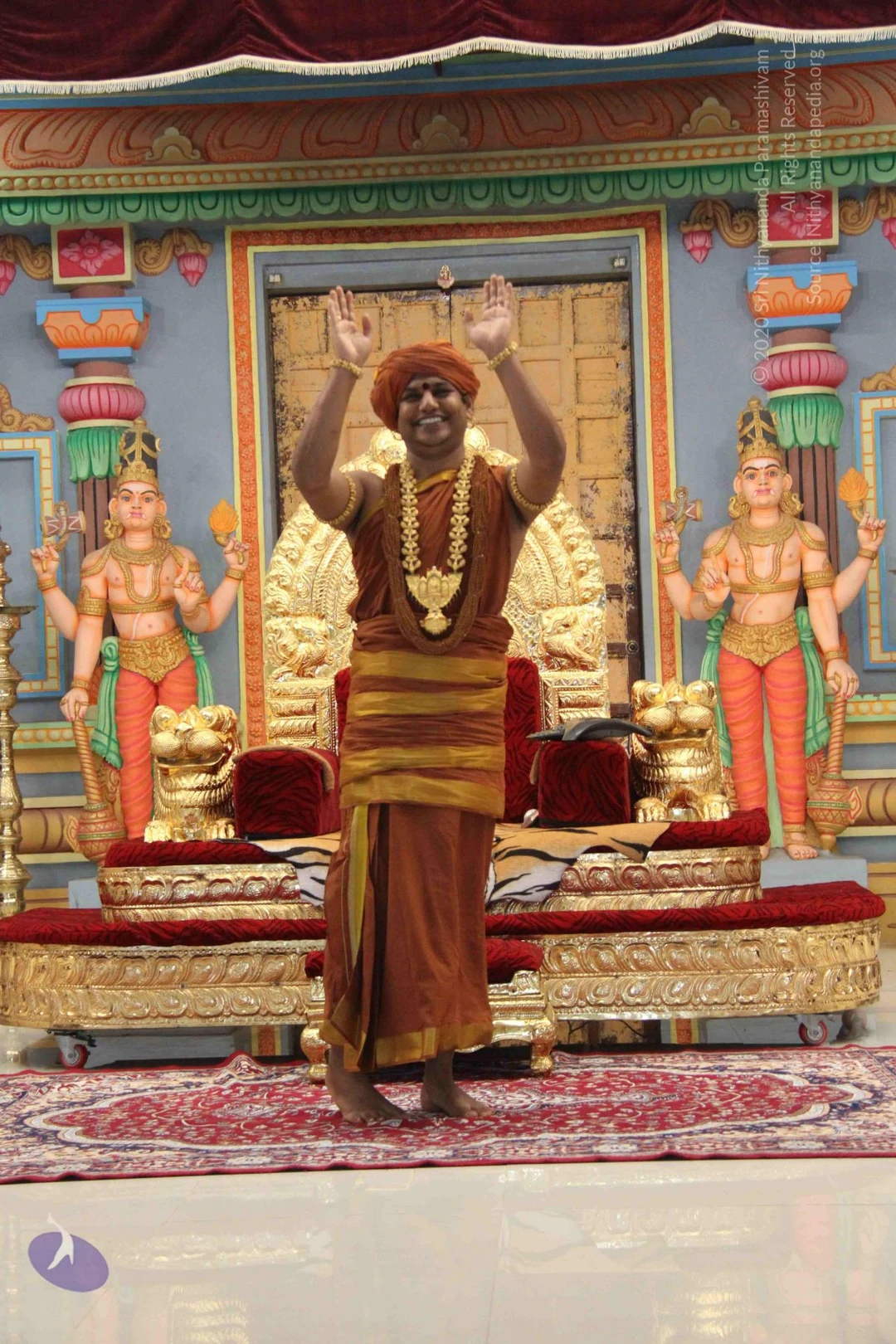
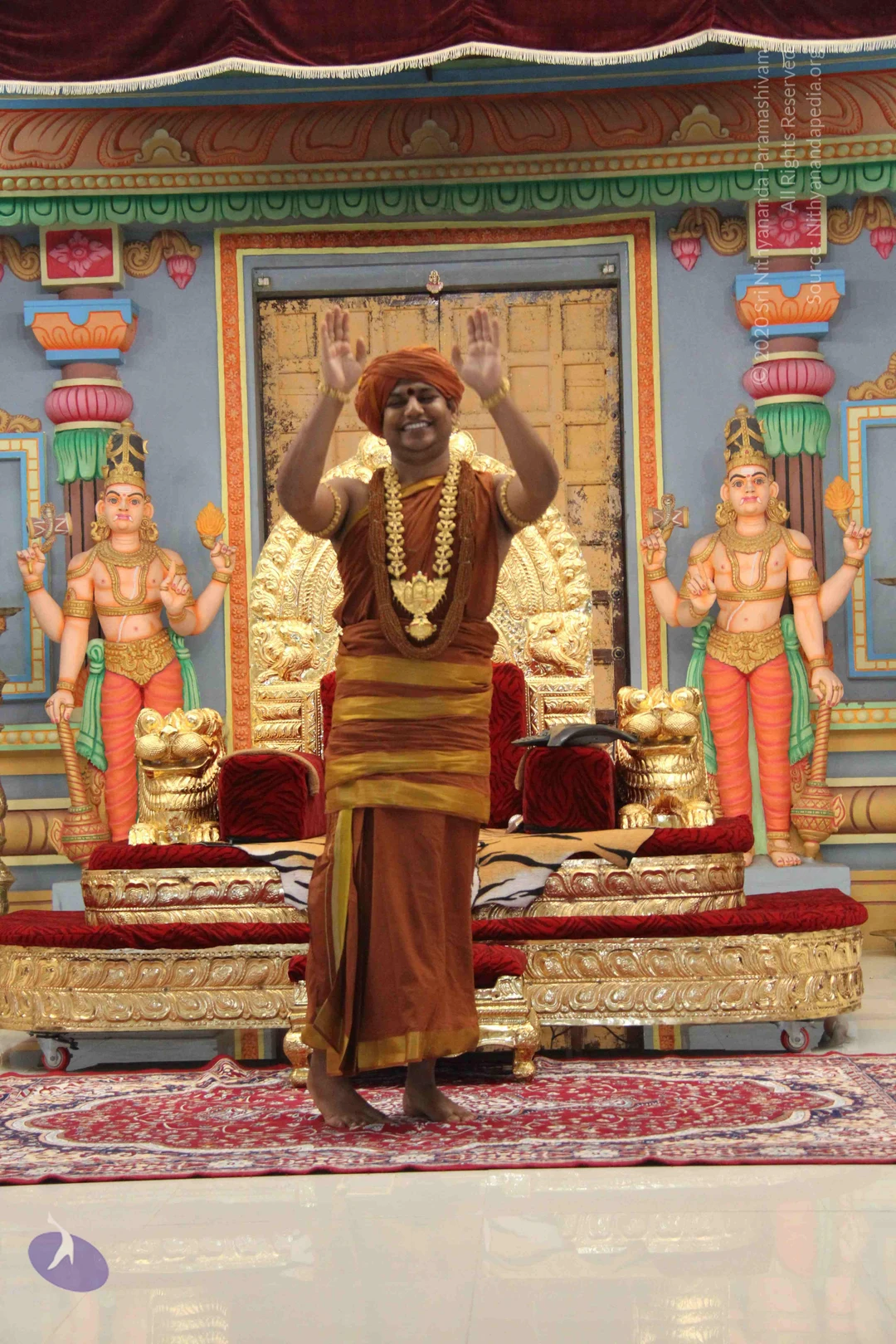
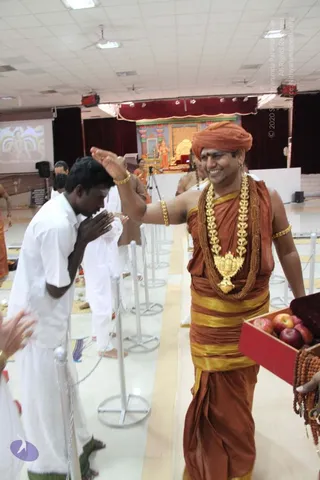
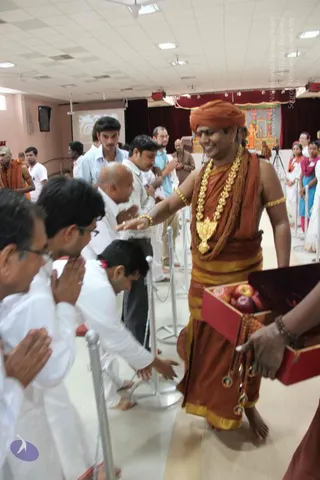
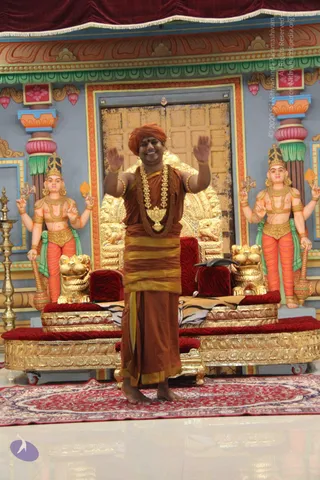
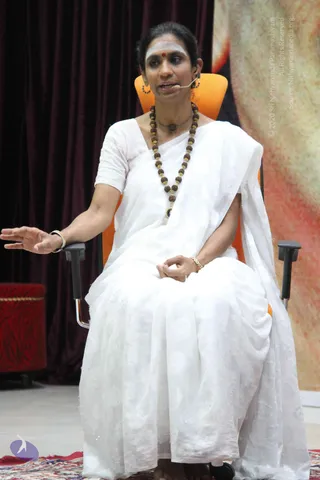
A smiling man in an orange-saffron turban, orange dhoti with gold-bordered wrap, rudraksha mala and a heavy gold ceremonial necklace stands in a hall, raising one hand in blessing toward a kneeling devotee in white dhoti and shirt who bows with palms pressed together. A red box of apples and rudraksha malas is held nearby. Behind, a stage with a deity murti and ornate backdrop, a projector screen and other saffron-clad attendees and devotees fill the hall.Photo of a devotional event in a hall with a white ceiling and a stage backdrop of red curtains and a decorated shrine. A smiling man in an orange-red turban and orange-red dhoti with a yellow border wears a heavy gold necklace with a pendant, gold armlets and bangles, and a rudraksha mala. He extends his arm toward a row of devotees in white clothes who are bowing, folding their hands in namaskar or touching the floor, with a bald man in white in front. A red velvet box of apples is held in the foreground by another person. a person appears as this man in orange-red ceremonial dress with gold ornaments and a rudraksha mala; he is shown in_person, and the devotees bowing around him are in white clothing.A photograph of a temple darshan line. A bare-chested man in an orange turban, rudraksha-style gold and beaded necklaces, gold armbands and an orange-brown dhoti-wrap stands on the right, smiling and placing his hand on the head of a man in white who bows forward. Behind the bowing man, several onlookers in white shirts and dhotis, one in a green-and-white sweater on the left, wait behind metal stanchions with chains. A projector screen and colourful deity murti paintings decorate the hall in the background.Indoor darshan scene in a hall with white walls and a red curtain. A man in an orange turban, orange-and-gold cloth and a gold chain necklace with a pendant blesses a kneeling devotee by placing his palm on the devotee's head. The devotee wears a white shirt and grey-green patterned shawl, hands pressed together in prayer. Other devotees in white kneel or stand nearby, and a shrine with a deity murti and colourful decorations is visible at the back. Several standing people in white and light shirts line the room. a person cues are present on the man in the orange turban: ornate gold chain and orange ceremonial dress, though the appearance is only suggestive.A photograph of a man standing barefoot on a red patterned rug in front of an ornate golden throne with red velvet cushions and golden lion-head armrests. He wears an orange-brown turban with a red bindi, a rust-orange cloth wrapped over one shoulder with a gold-toned sash at the waist, a thick rudraksha mala and a gold ceremonial necklace with a pendant, and gold bangles. He raises both hands palms-forward in a joyful, welcoming gesture. Behind him, two painted deity murti figures with multiple arms and crowns stand on either side of a golden doorway, flanked by painted pink and green columns. A brass lamp stands at the left edge. a person is a person with long hair in a crown-like ornamented setting, wearing saffron clothing and rudraksha malas with a gold necklace, and is presented as the central figure leading the ritual setting.A barefoot man in a rust-orange turban and orange-brown dhoti-style garment with gold-edged band stands on a red patterned rug, arms raised in welcome, smiling. He wears a gold ceremonial necklace with a central gold pendant and a rudraksha-style mala, plus gold bangles. Behind him is a golden throne with red cushions and lion-head armrests, draped with a tiger-striped cloth. Flanking the throne are painted and gilded multi-armed deity murti figures holding weapons and lamps, set against blue-and-pink temple architecture with a gilded door. A brass oil lamp stands at left.

LotusTV

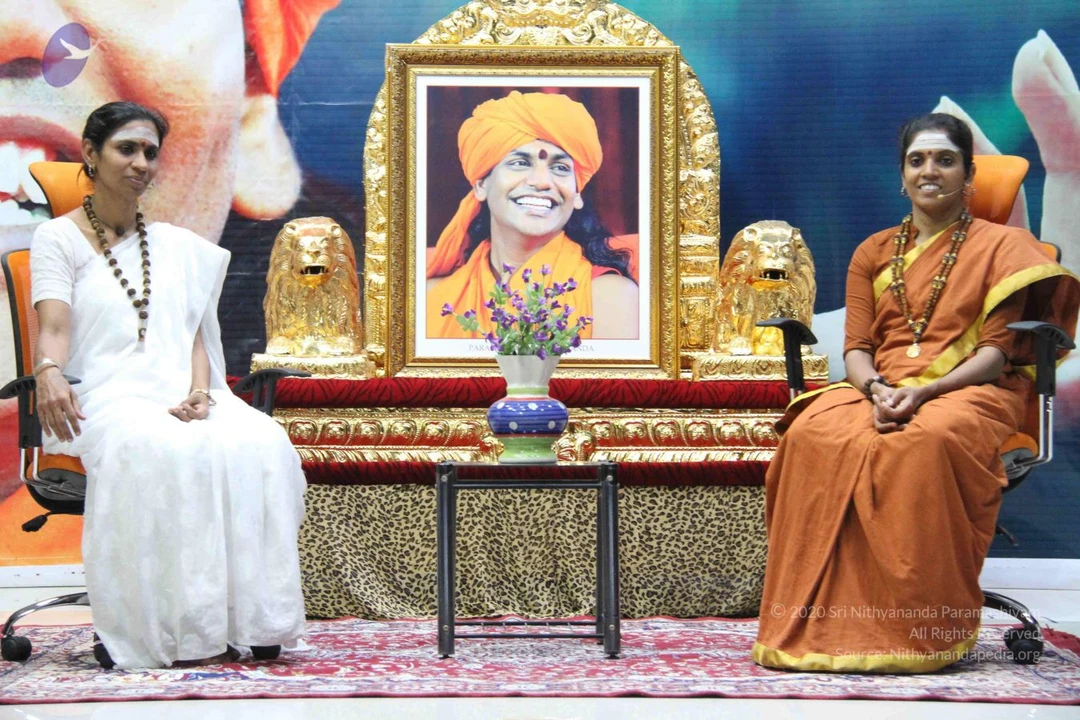
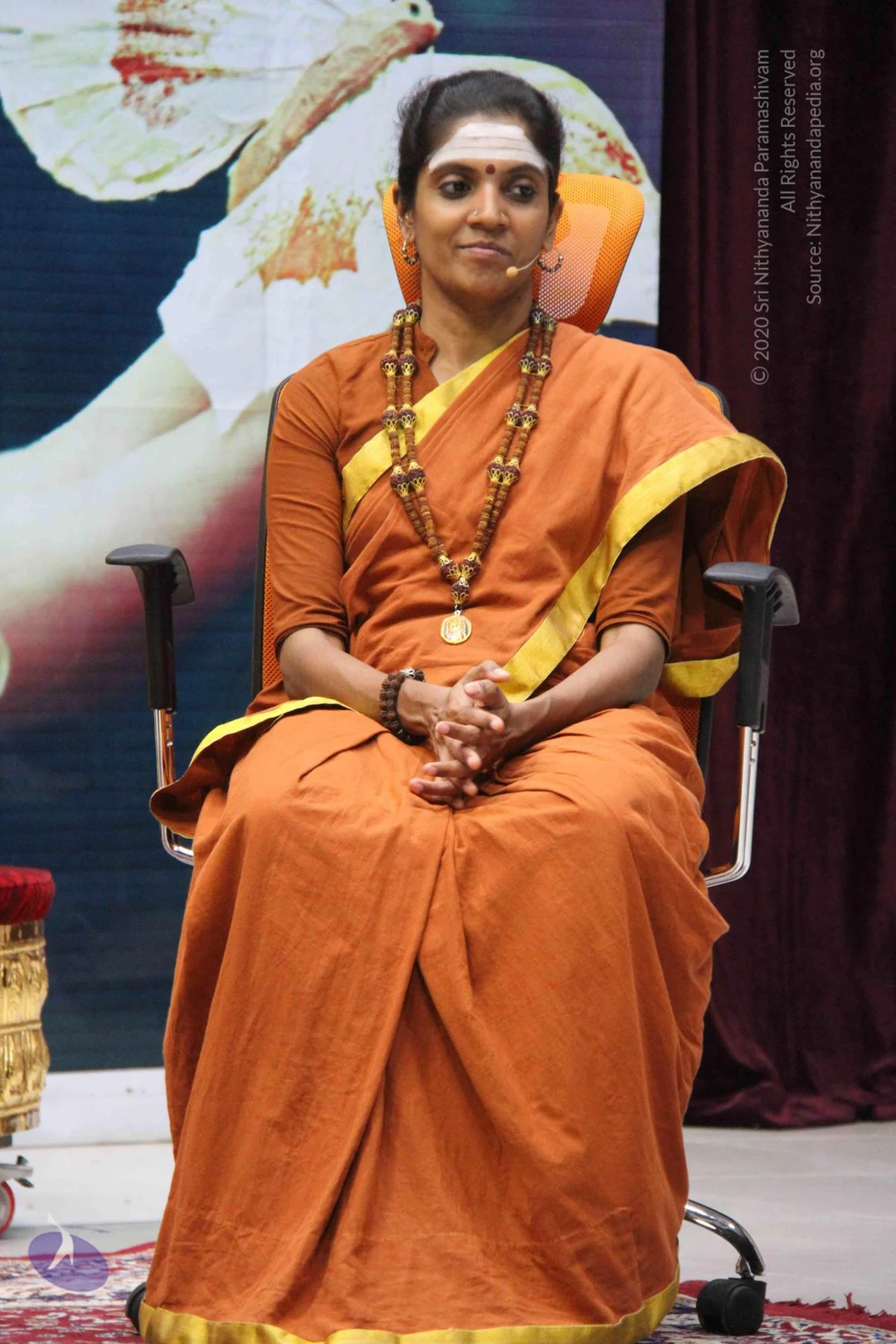
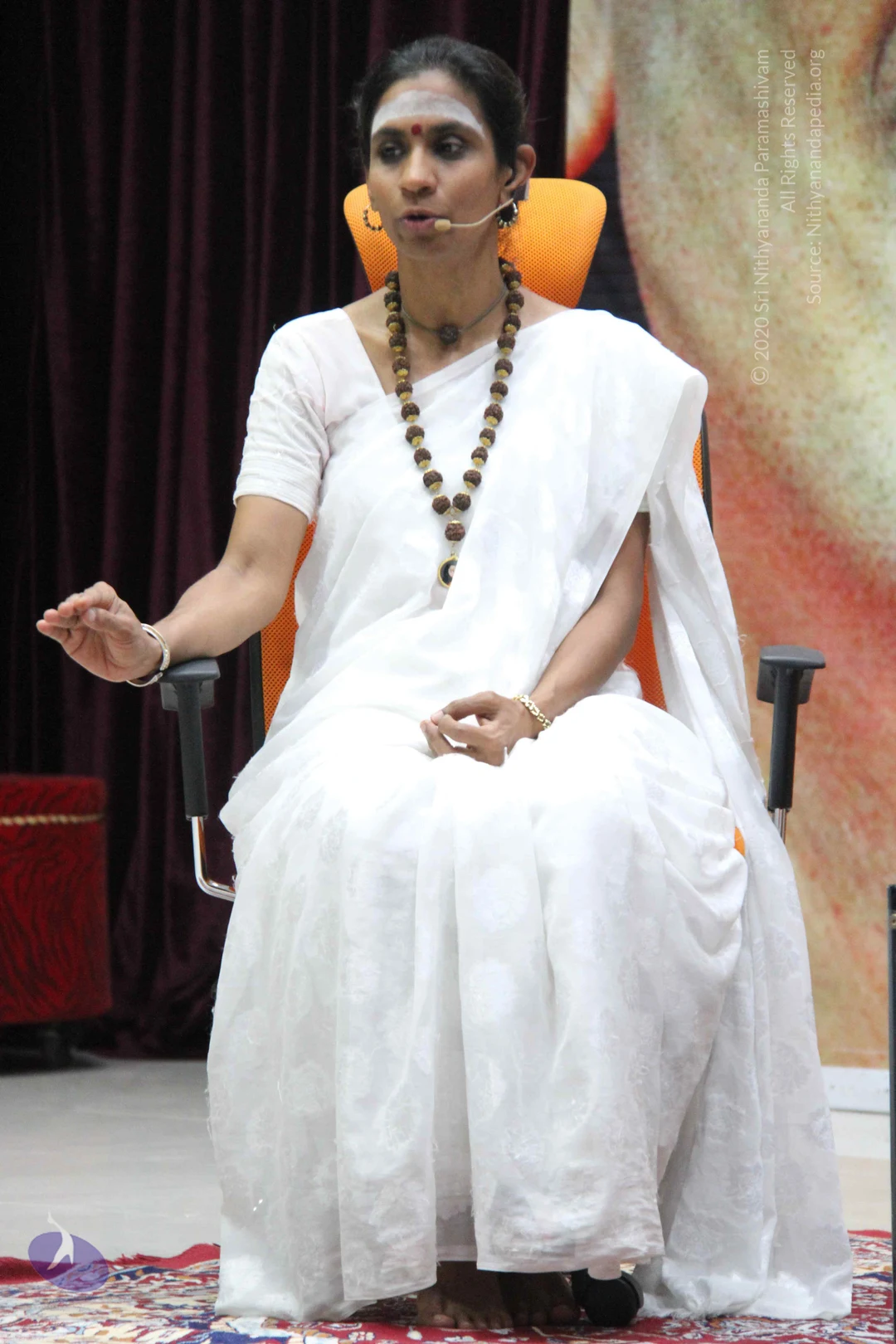
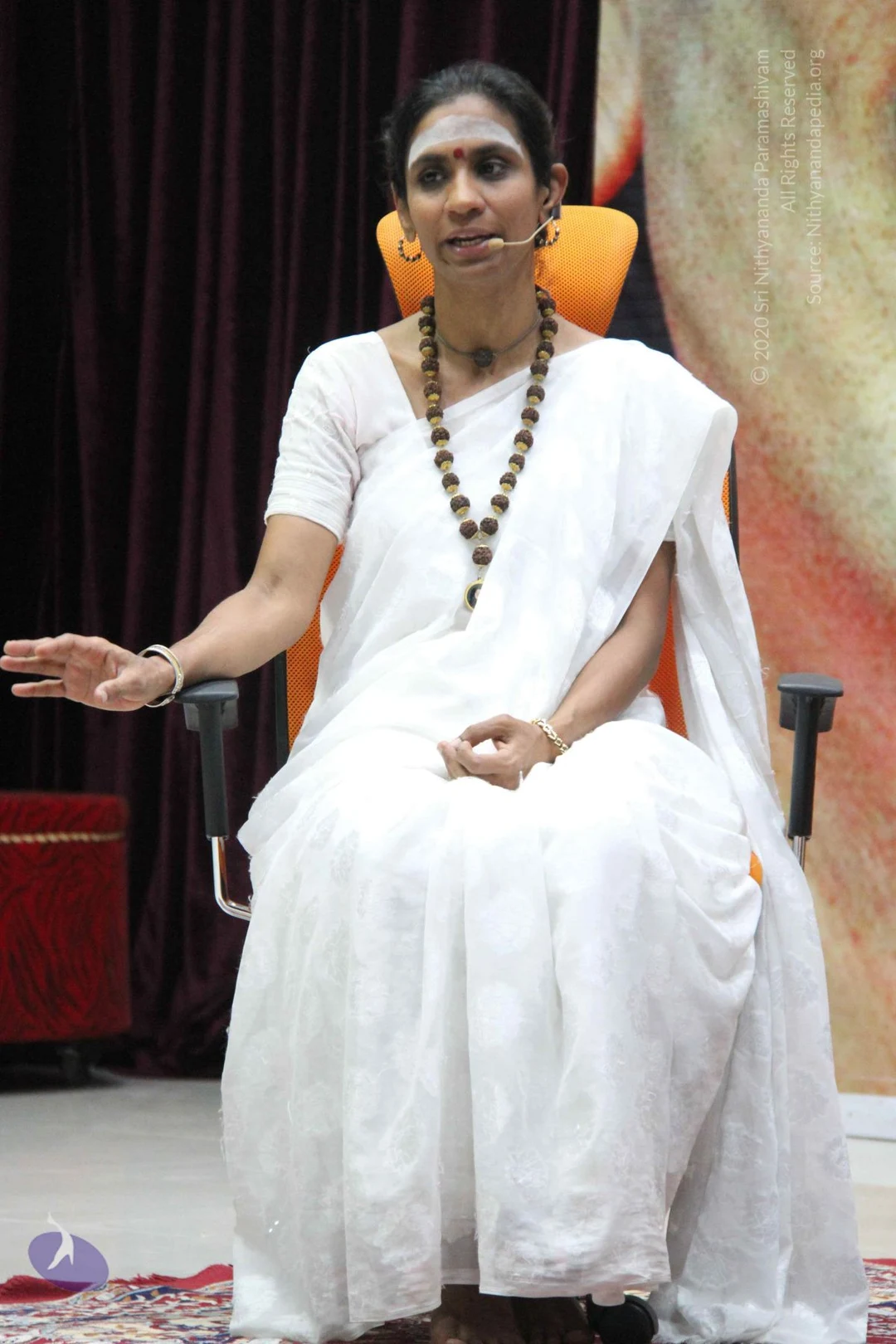
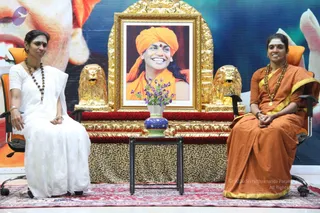
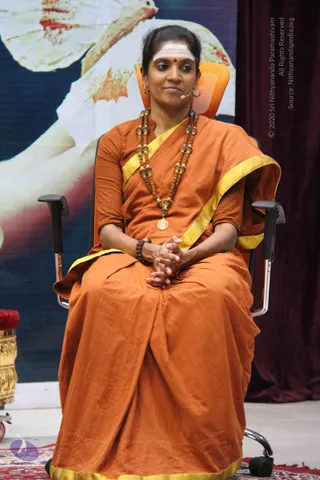
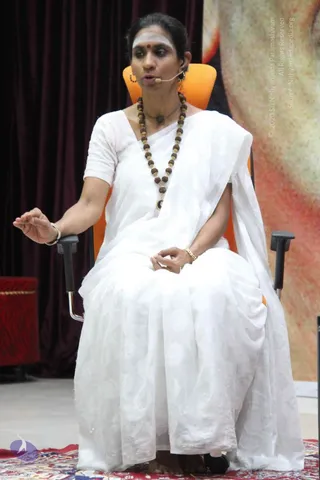
4 photosSource gallery
A photograph of an interview or talk set in a stage with a gold ornate frame holding a framed portrait labelled "PARAMAHAMSA NITHYANANDA" with a smiling man in saffron turban and saffron robe. Two golden lion sculptures flank the frame on a red cushioned dais with a leopard-print skirt, a blue and white vase of purple flowers in front. Two women sit in orange chairs on a red rug: on the left, a woman in a white sari with a rudraksha mala and vibhuti on her forehead; on the right, a woman in an orange sari with gold border, a rudraksha mala, and a headset microphone, hands folded. Two people are visible.A woman seated in an orange office chair on a stage, wearing an orange sari with a yellow border and a rudraksha mala with gold-capped beads and a gold pendant. She has a white forehead mark with a red dot, a small lapel microphone clipped to her collar, and her hands are clasped in her lap. Behind her is a large backdrop showing a white-and-red bird design, a red-patterned cushion sits at the left edge, and a maroon curtain hangs at the right. The woman is a presenter-style figure on stage, with no visible name or caption tied to her in the frame.A woman seated in an orange mesh chair on a red patterned rug, speaking into a headset microphone during a satsang. She wears a white saree with a white blouse, a long rudraksha mala with a small dark pendant, gold bangles and a red bindi above a white forehead marking. Her right hand is raised in a gesture while her left rests in her lap. Behind her hangs a large printed portrait and dark maroon drapes. The wall fabric and portrait are not clearly labelled with a name in the visible frame.A woman seated on an orange-cushioned chair speaks into a headset microphone during a satsang-style talk. She wears a white sari and white blouse, a long rudraksha mala with a pendant, hoop earrings and gold bangles, and has white forehead markings with a red bindi. Her right hand is extended outward while her left rests in her lap. Behind her hang dark maroon drapes and a large partially visible painting in warm orange tones; a red patterned stool and a rug sit at the lower edge. a person appearance is not established, so she is described by role as a speaker.