Skip to content
Sunday

14 July 2013

THE SUPREME PONTIFF OF HINDUISM BHAGAWAN SRI NITHYANANDA PARAMASHIVAM

Dated photos
637
Source pages
1
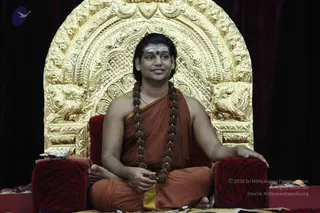
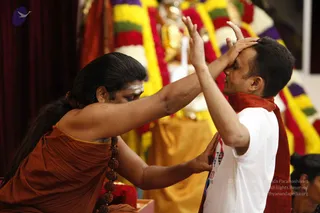
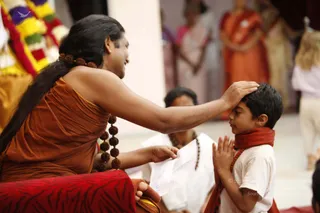
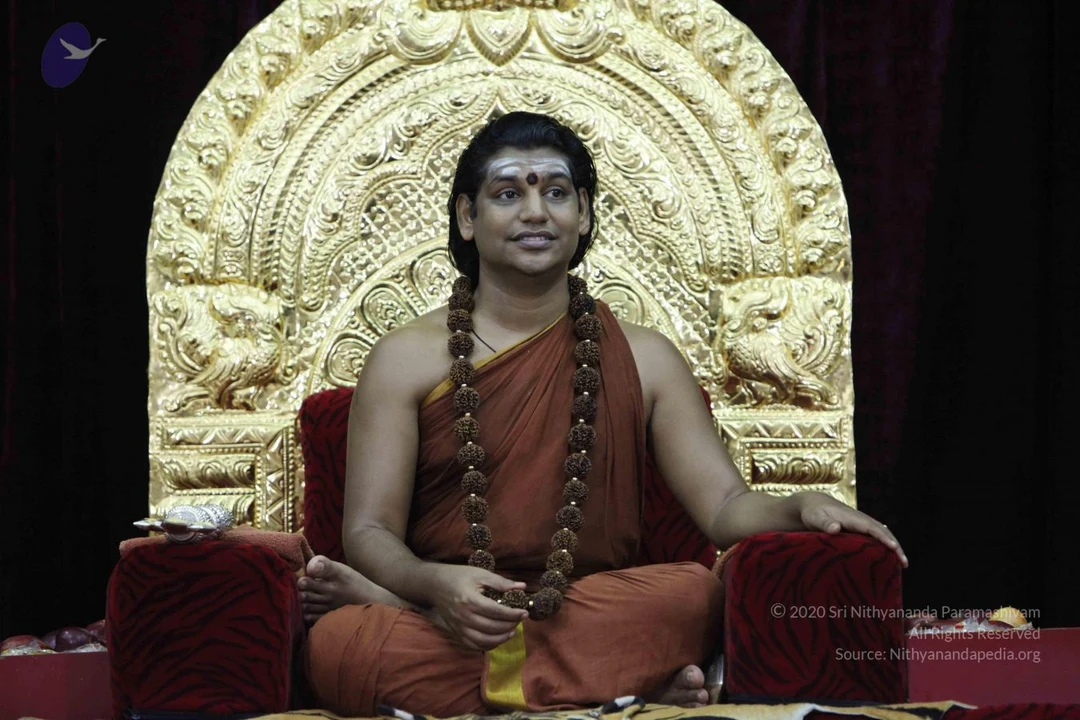
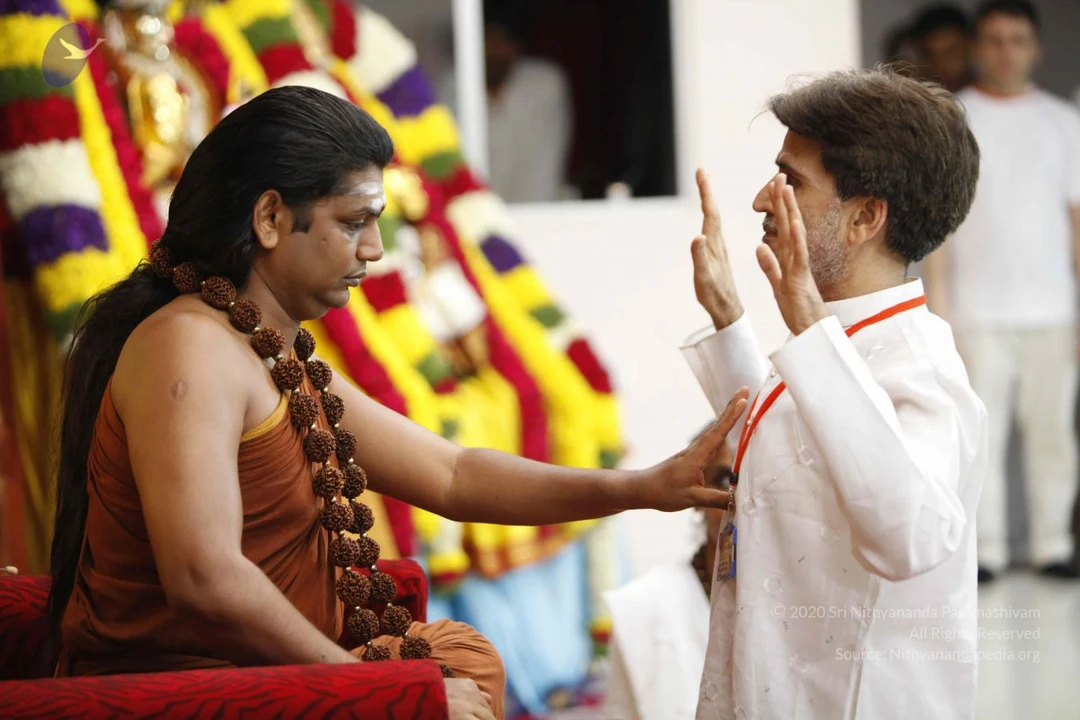
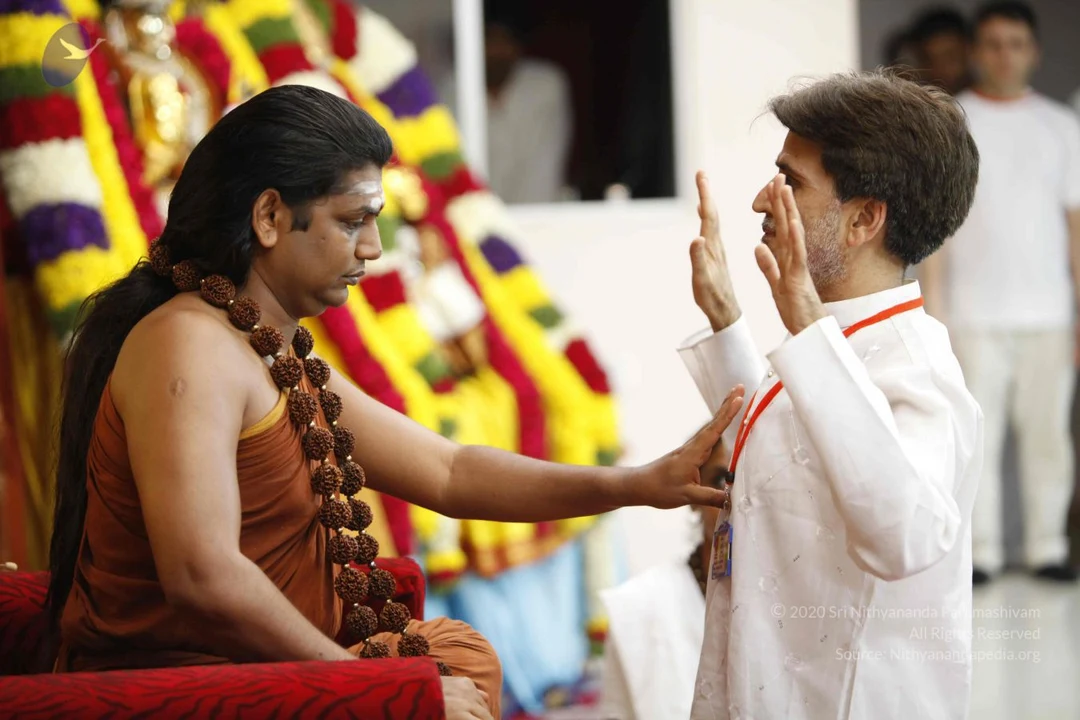
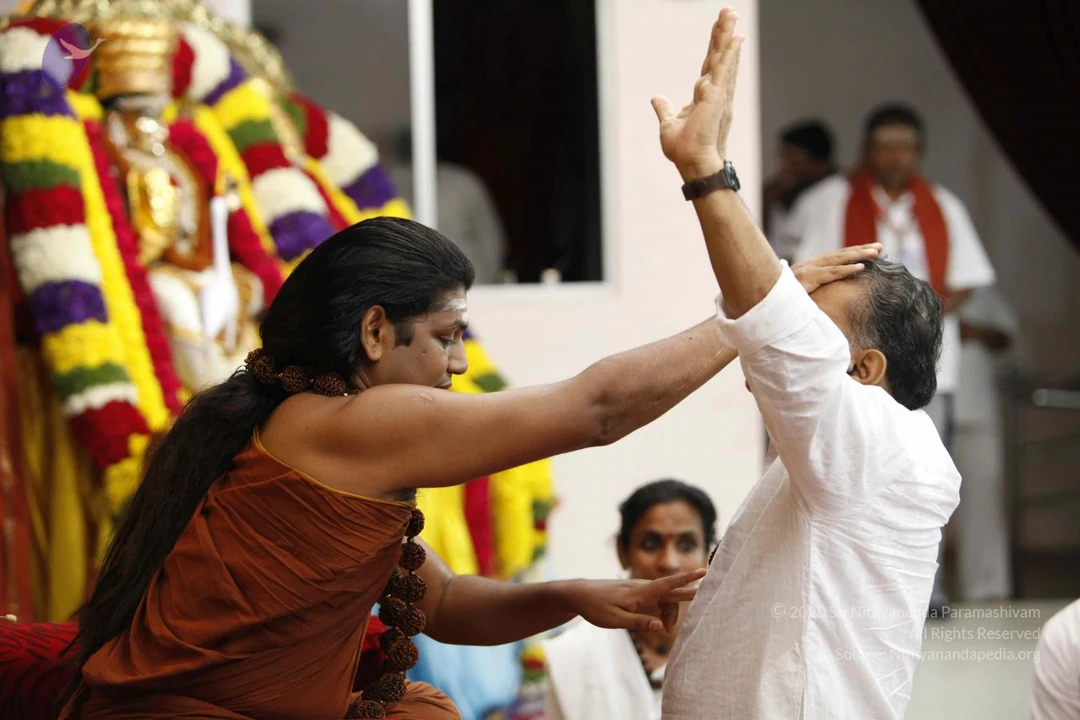
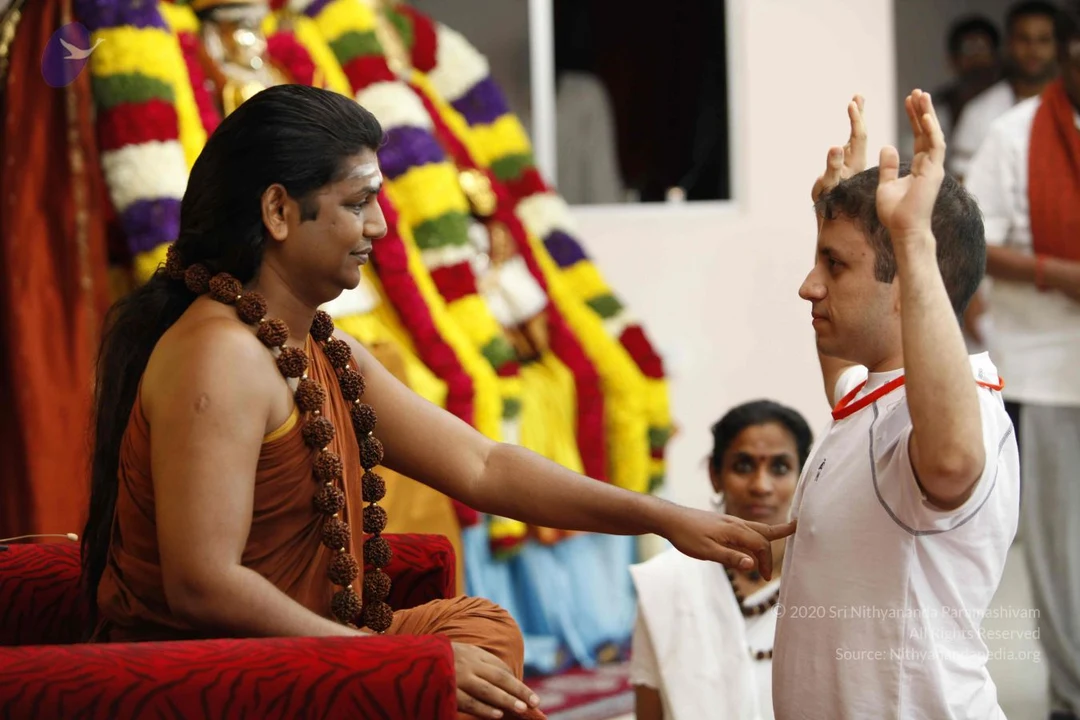
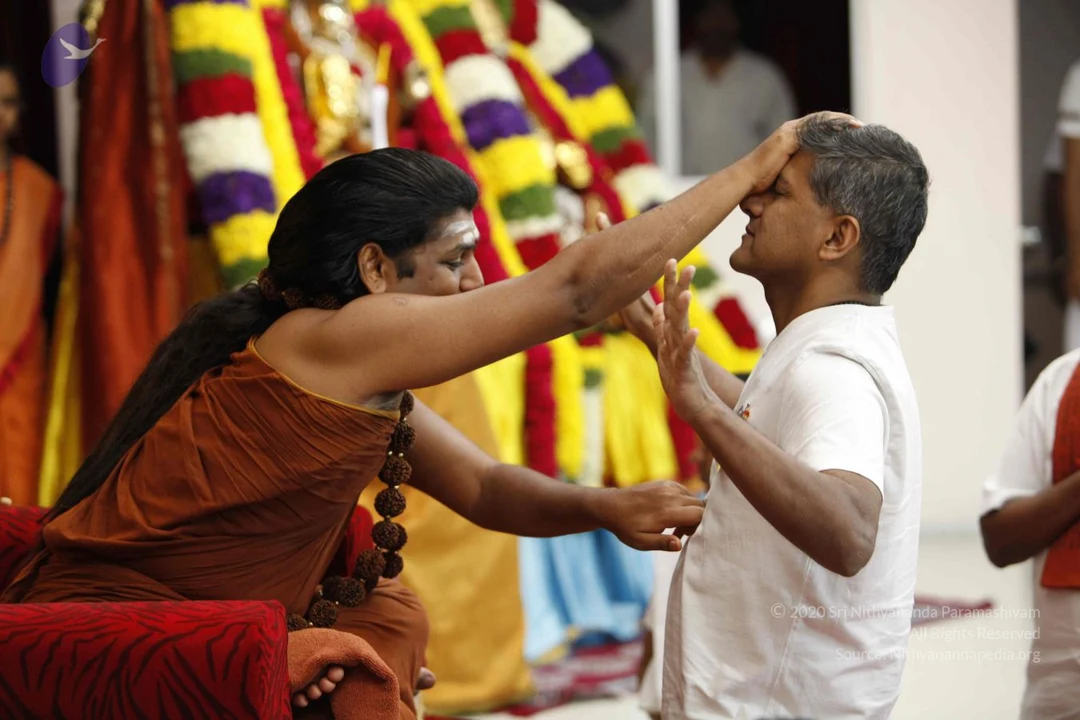
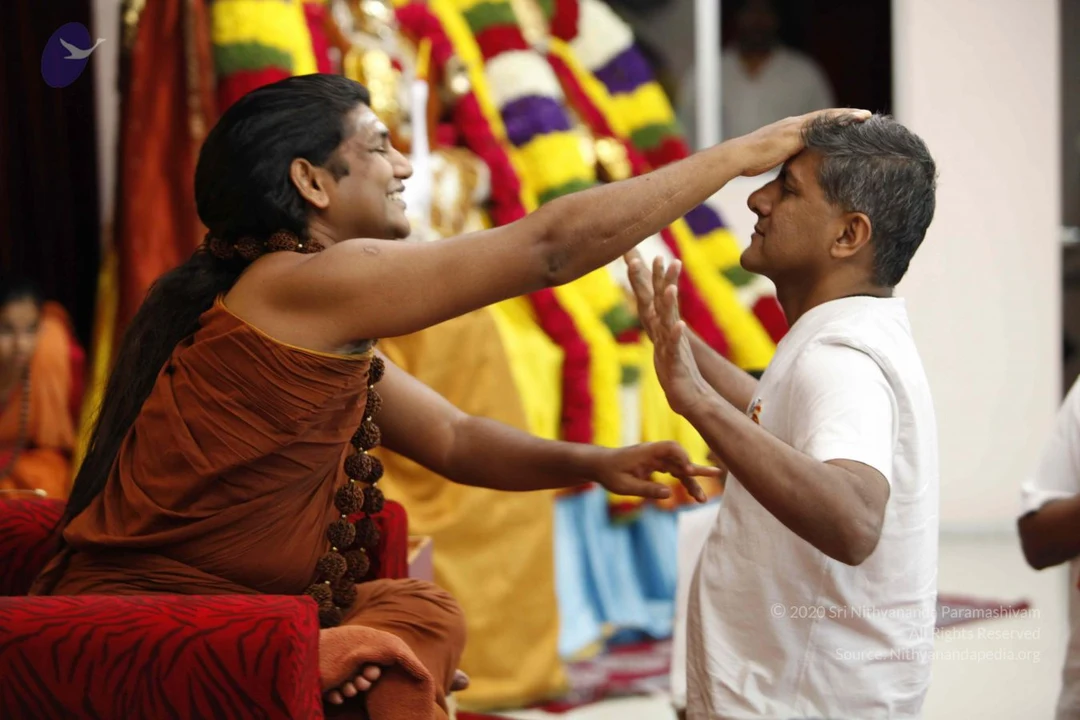
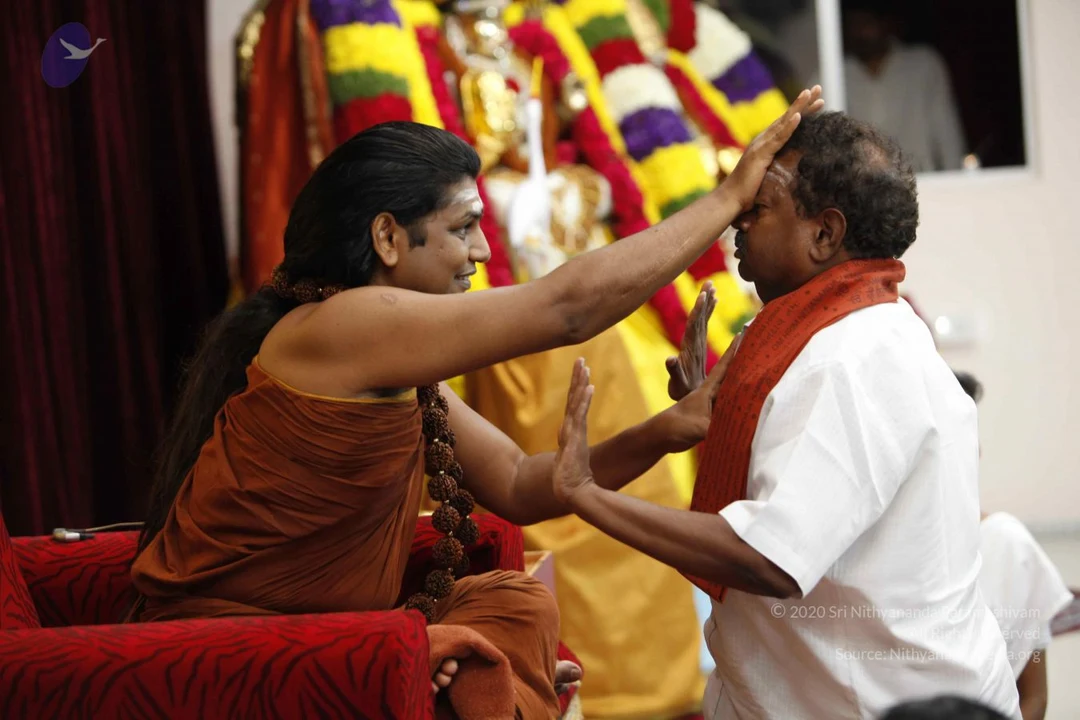
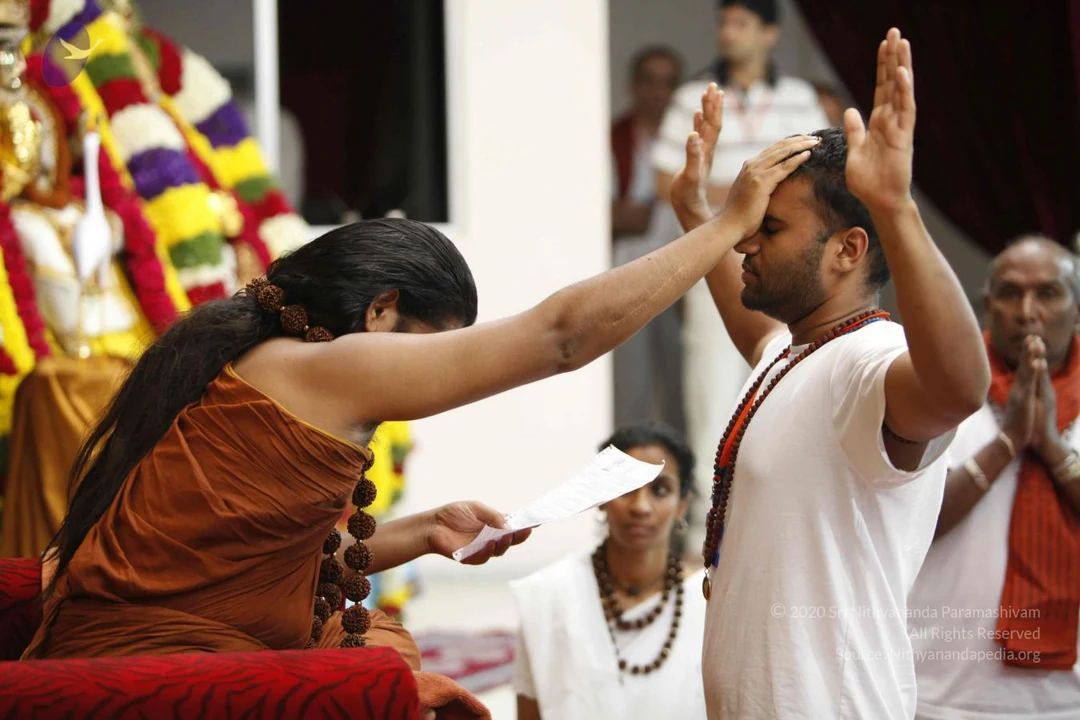
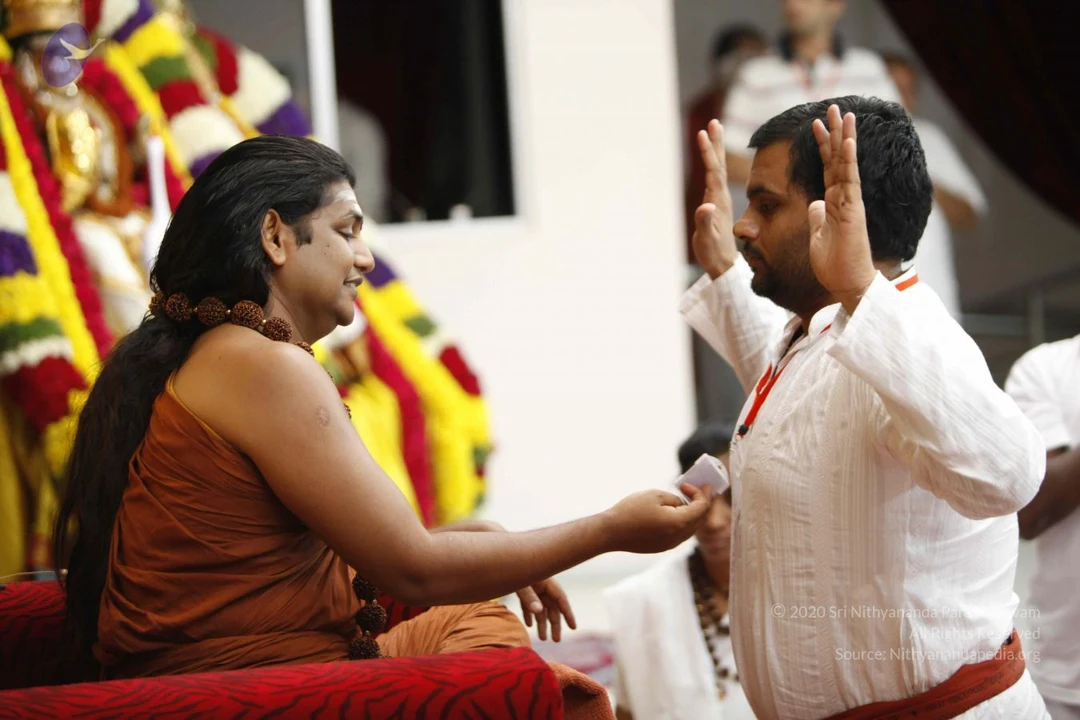
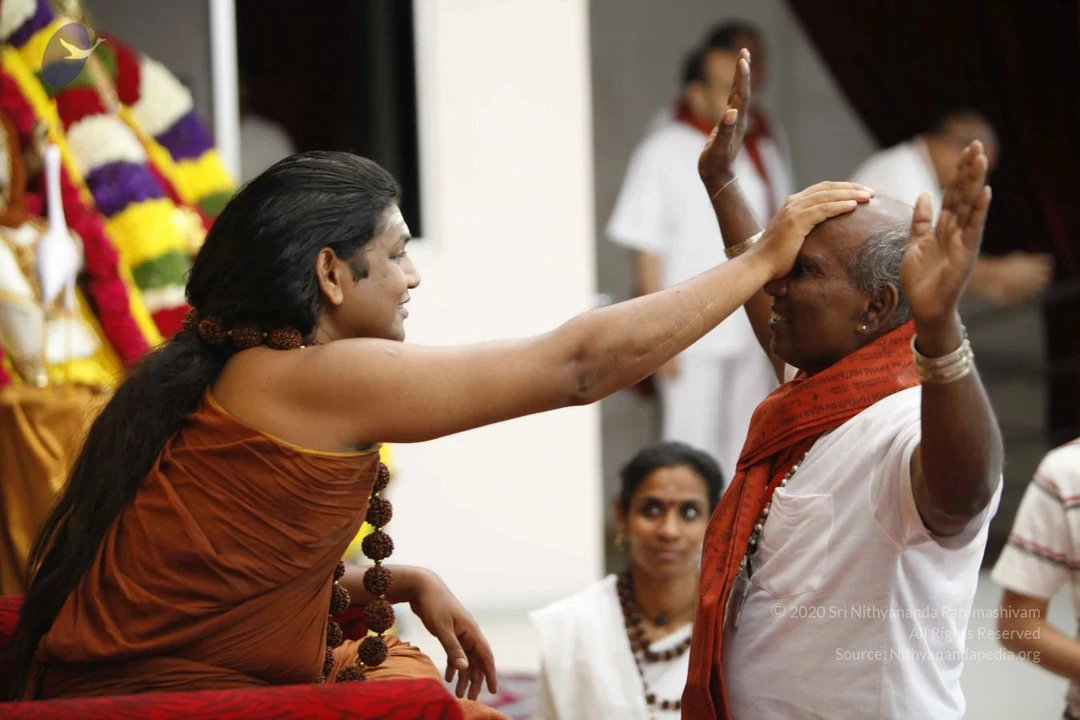
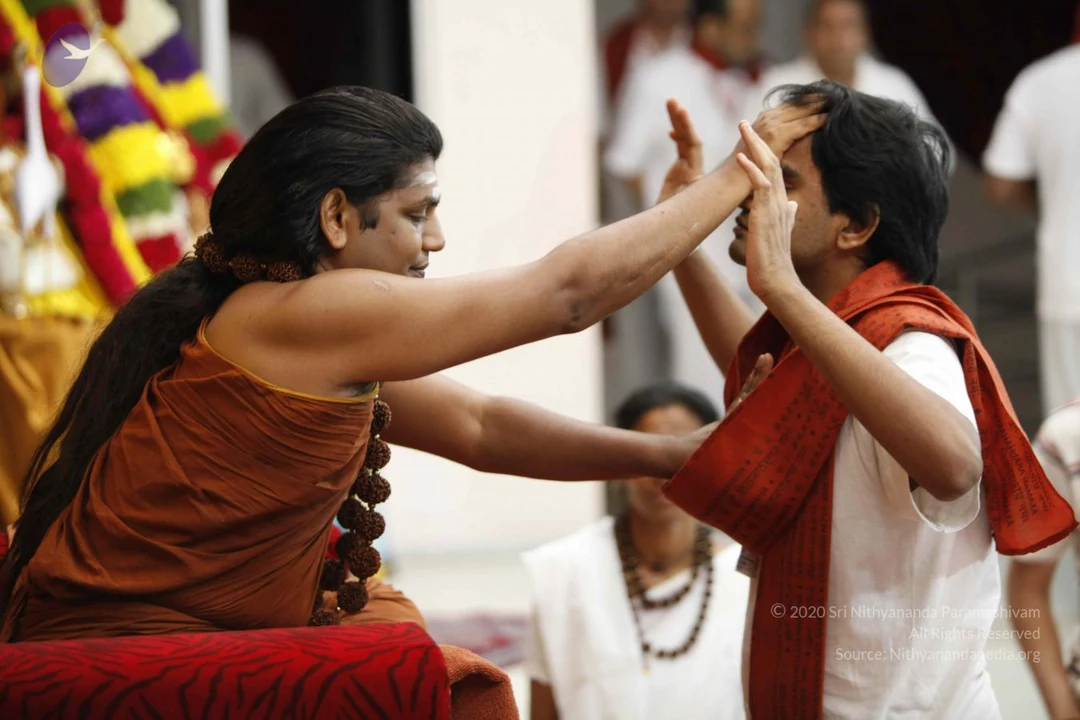
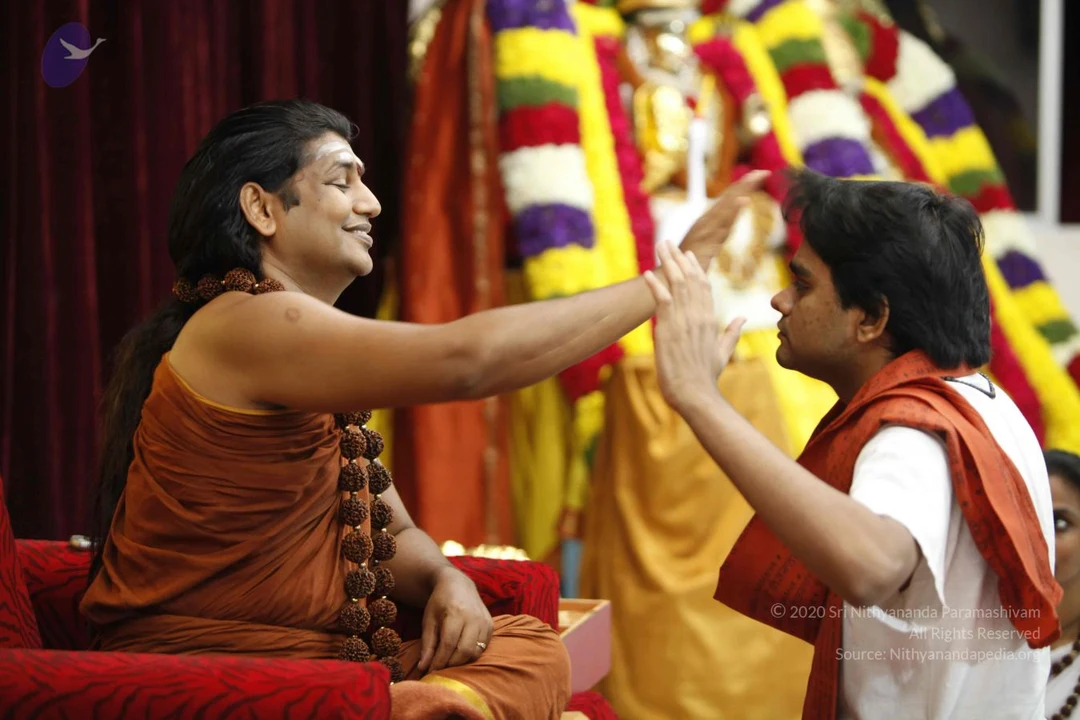
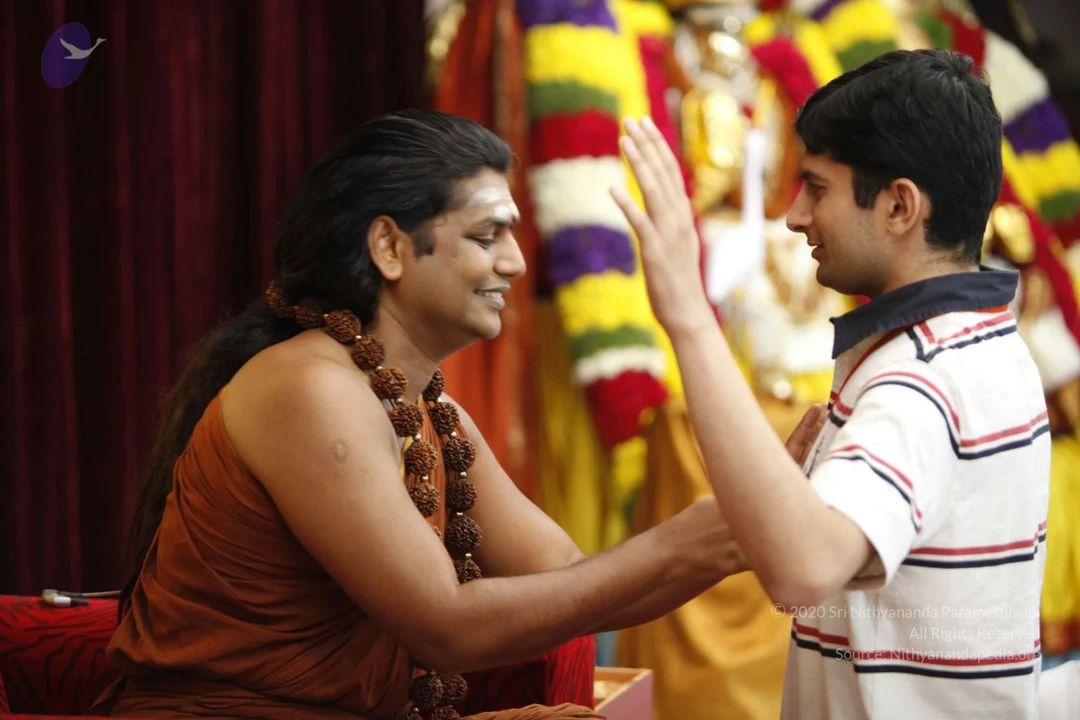
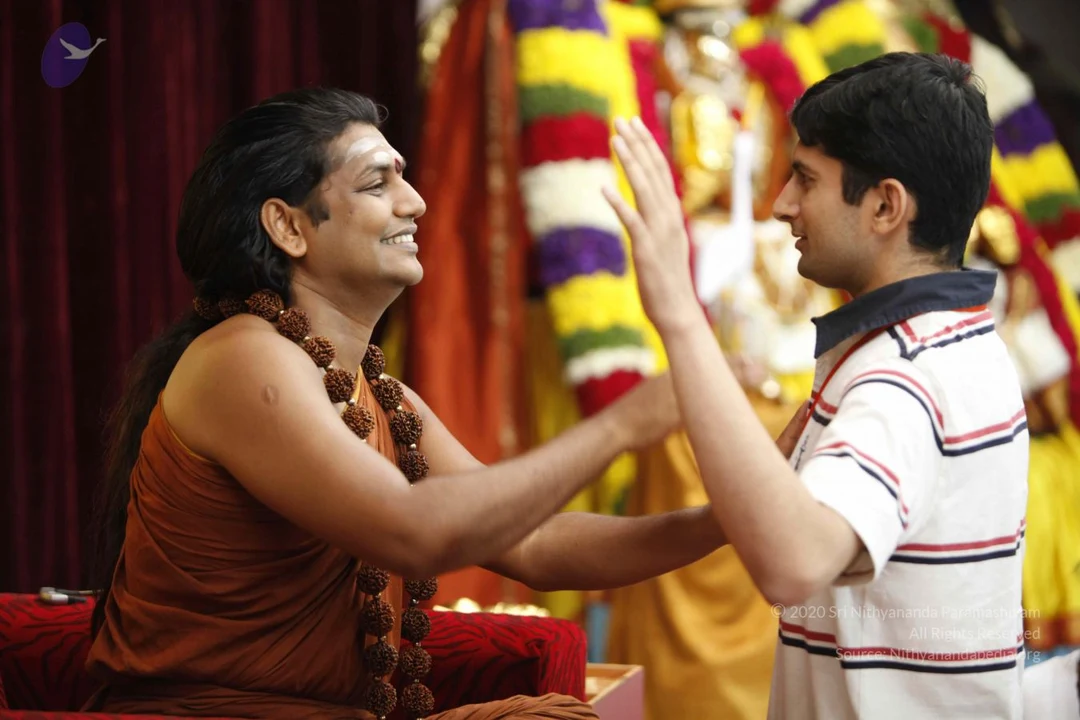
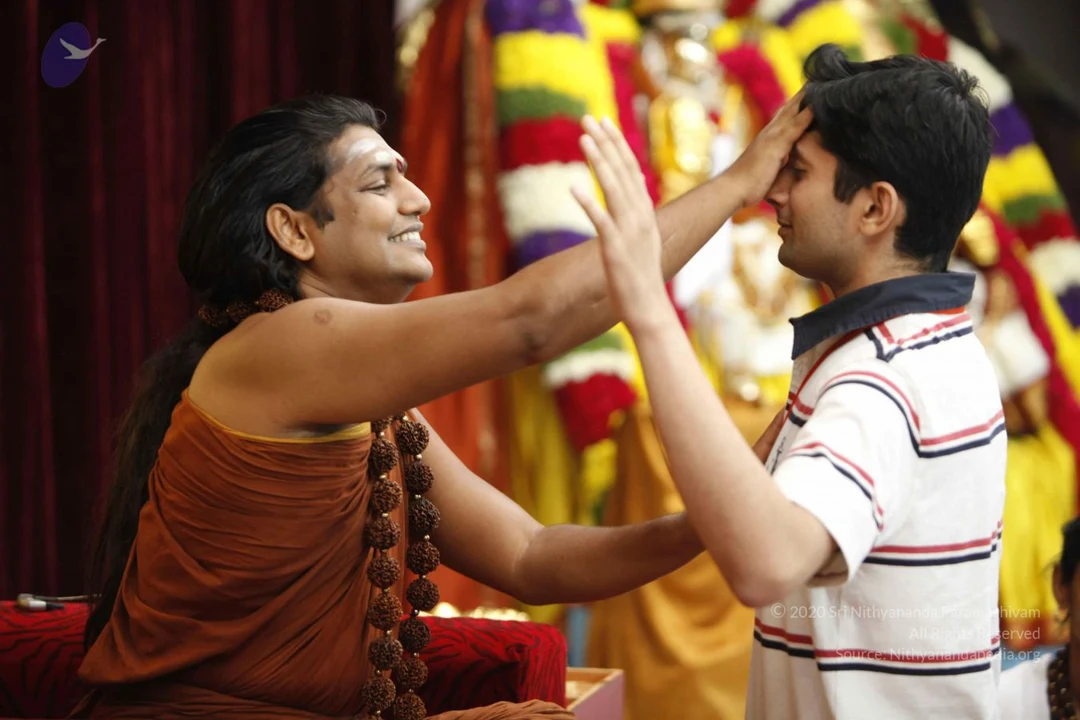
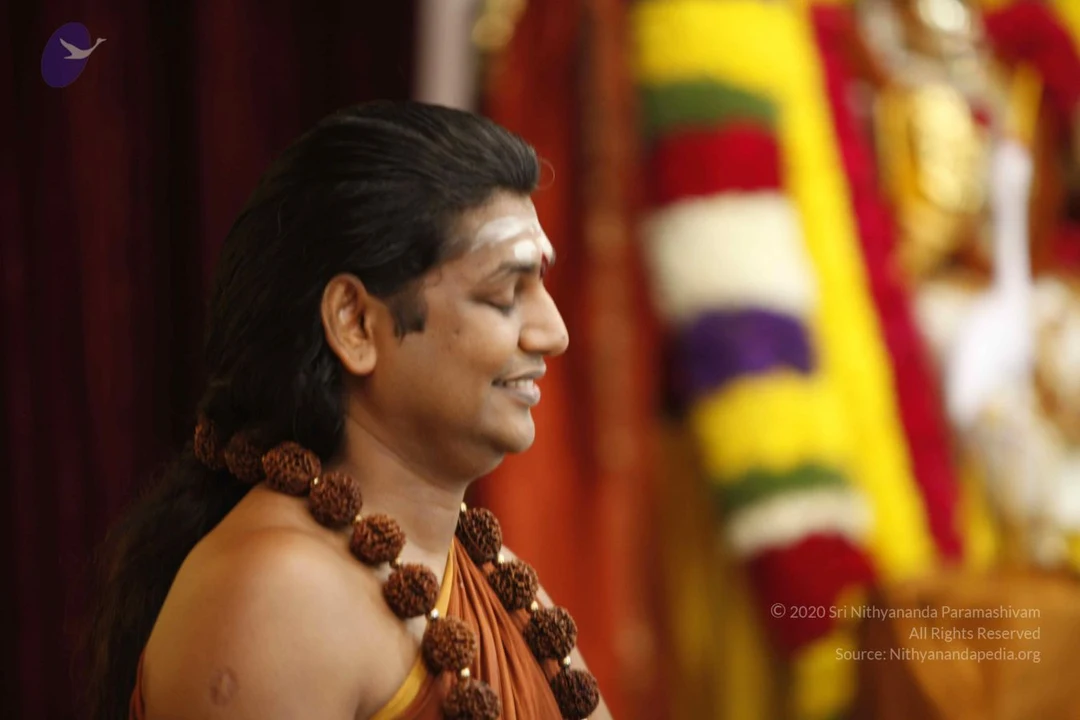
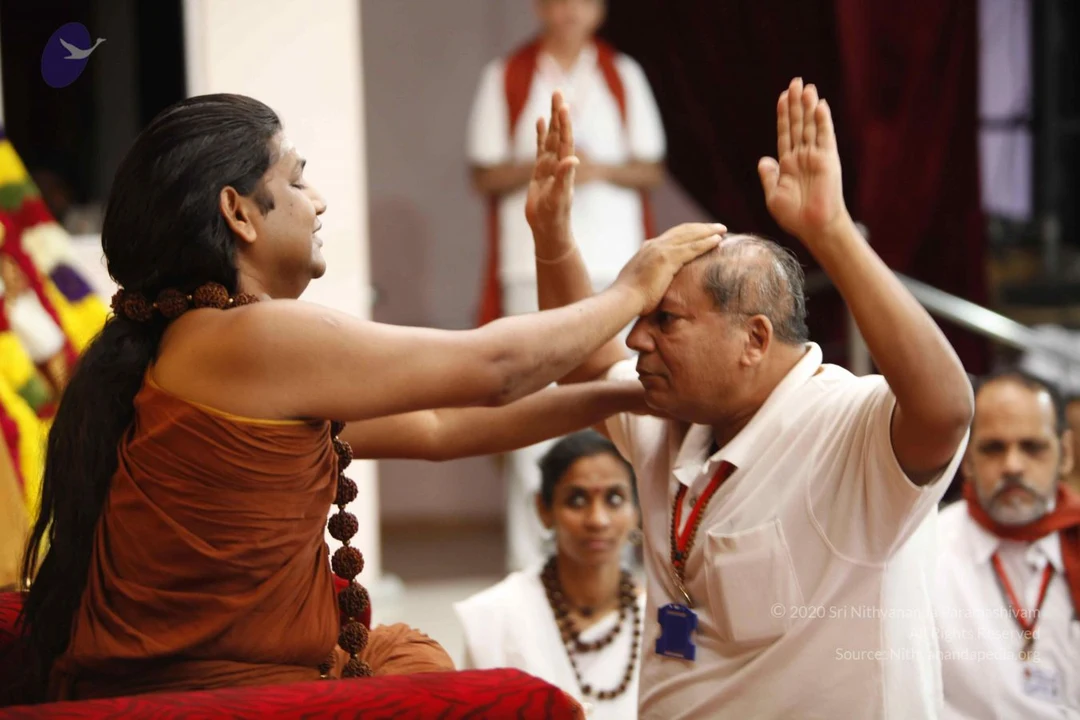
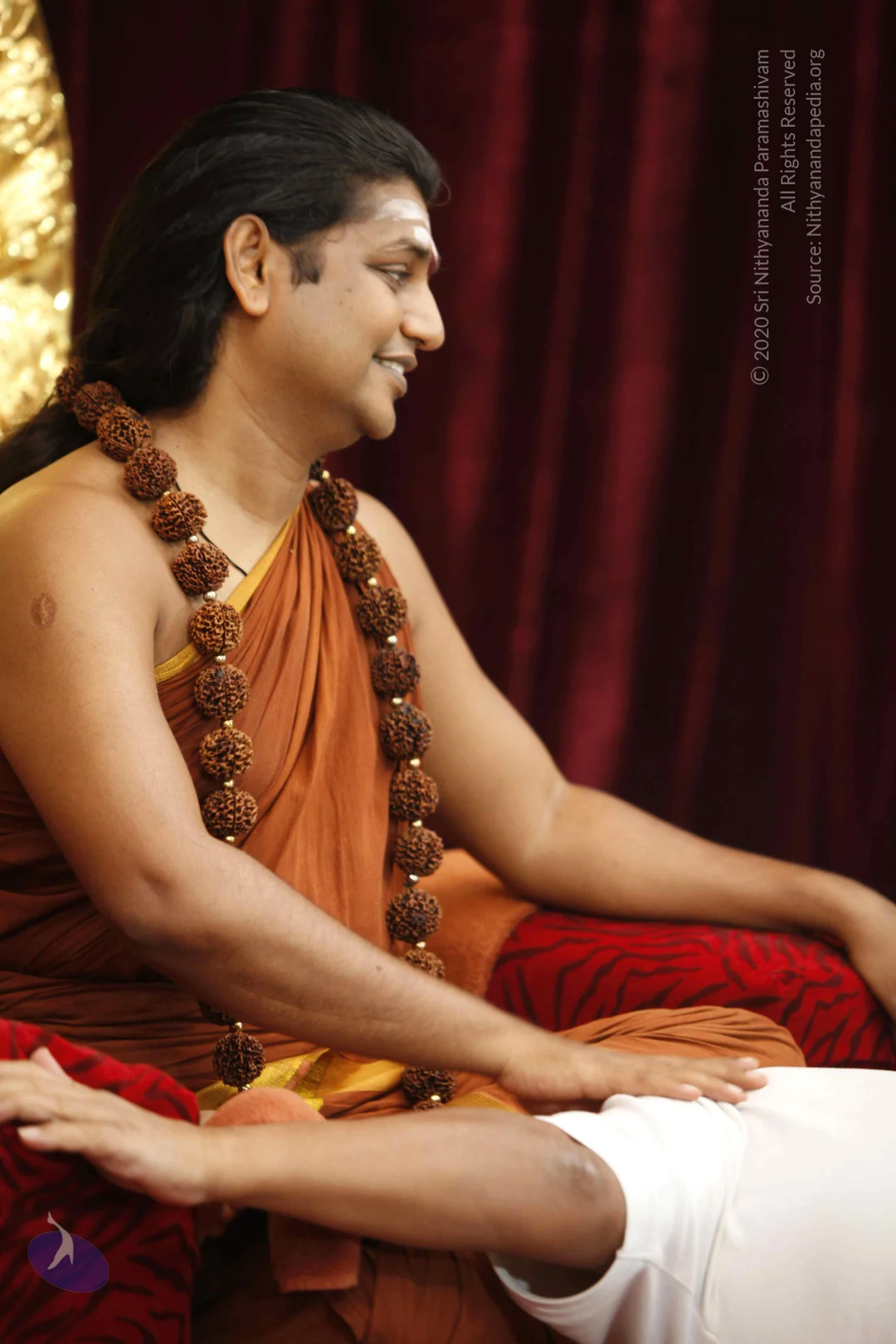
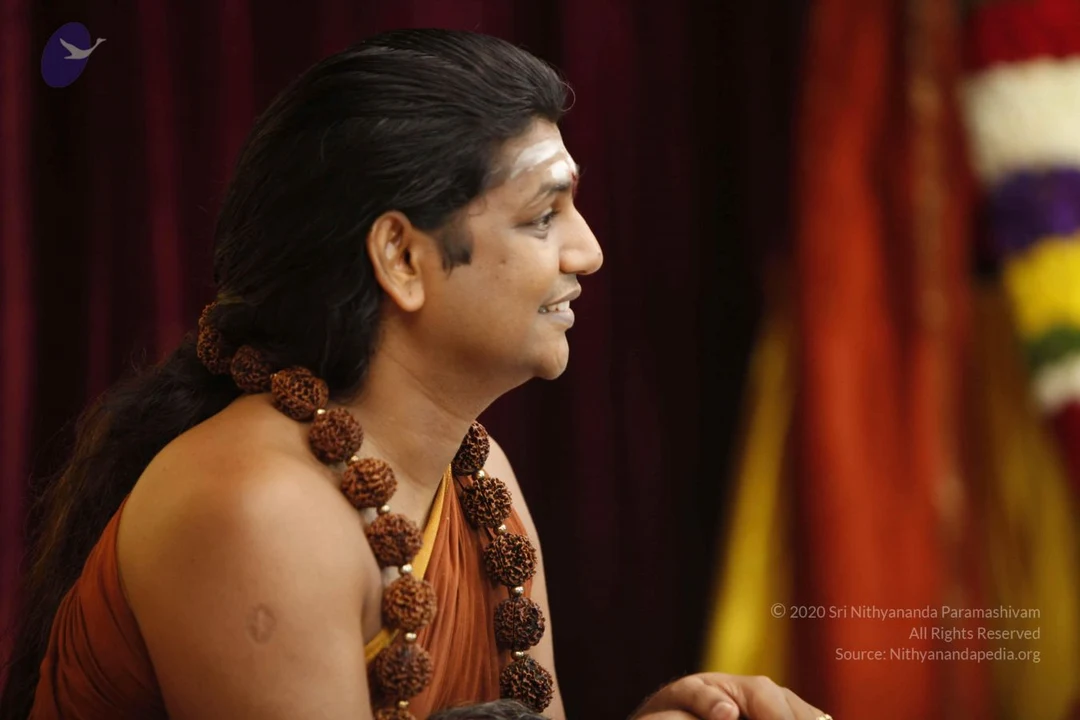
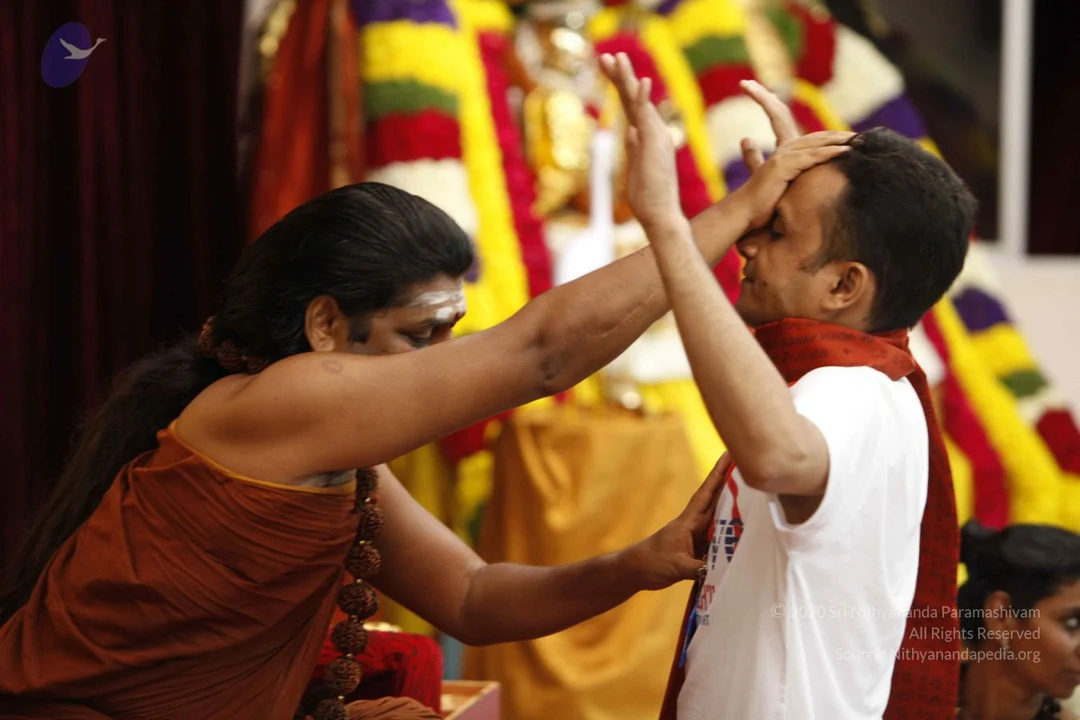
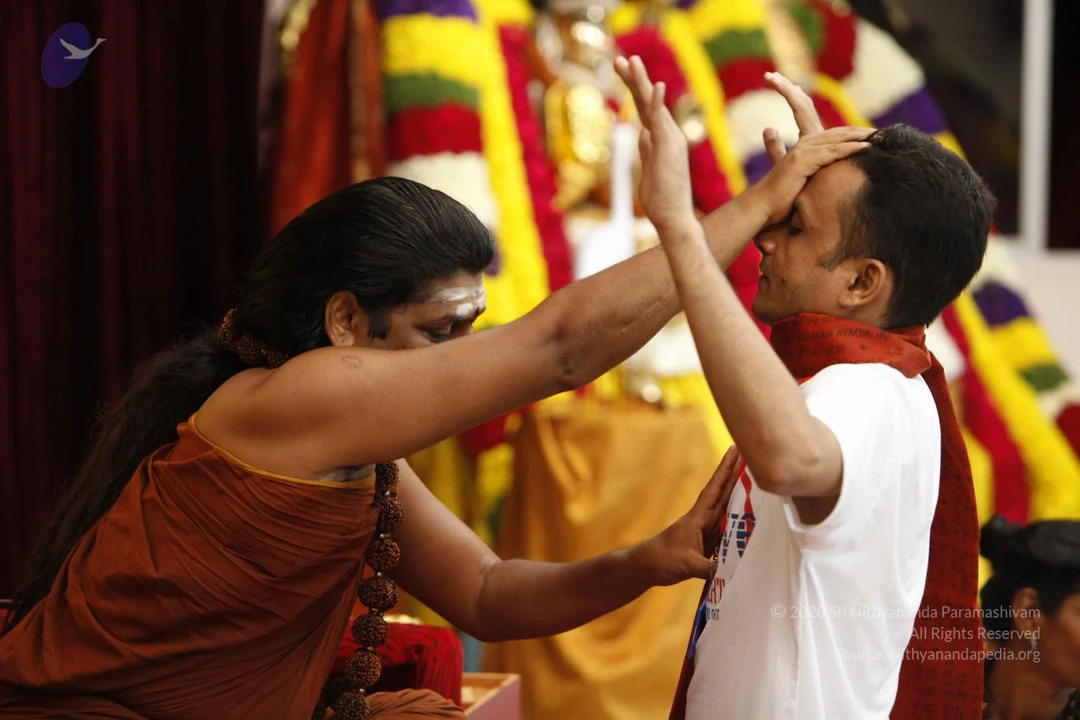
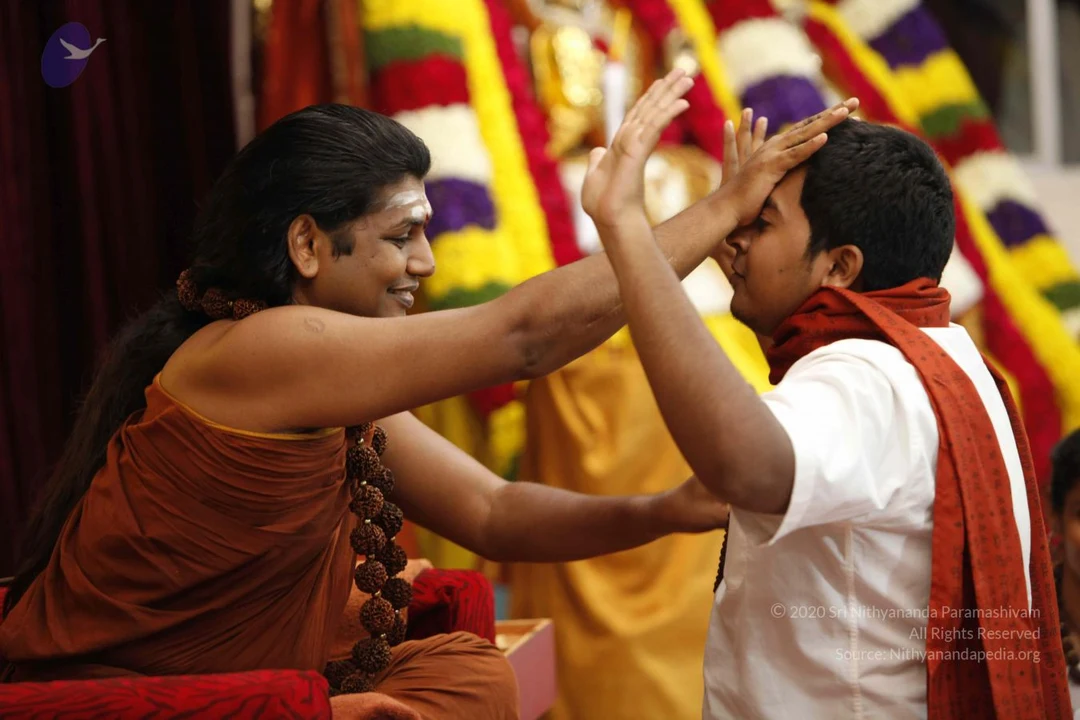
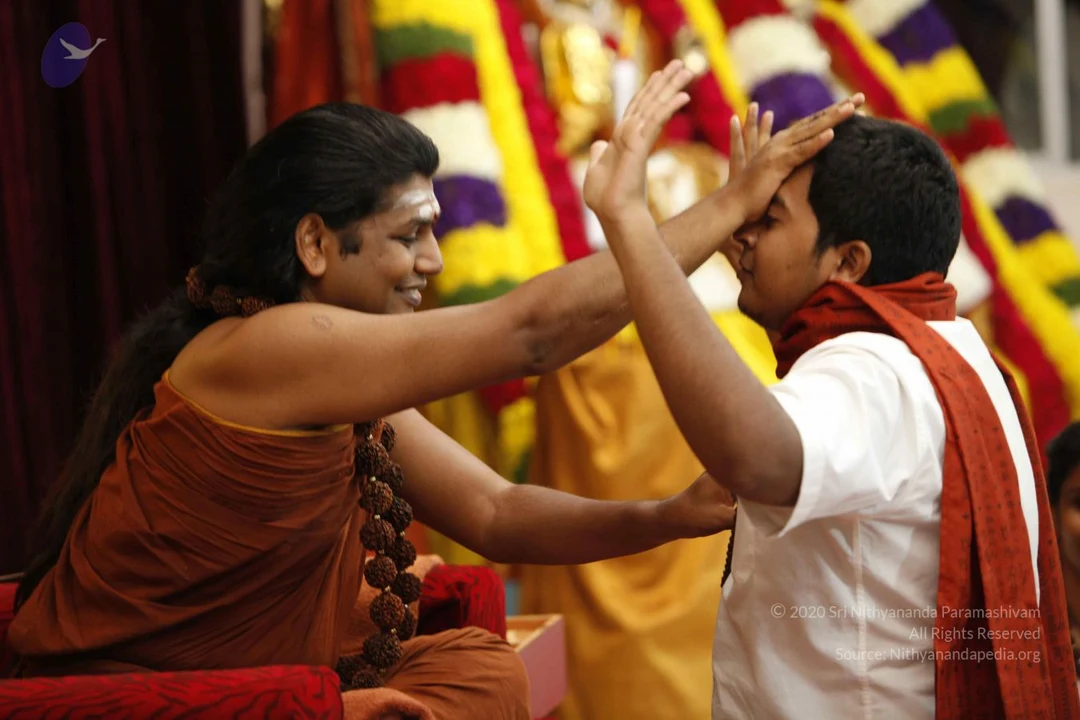
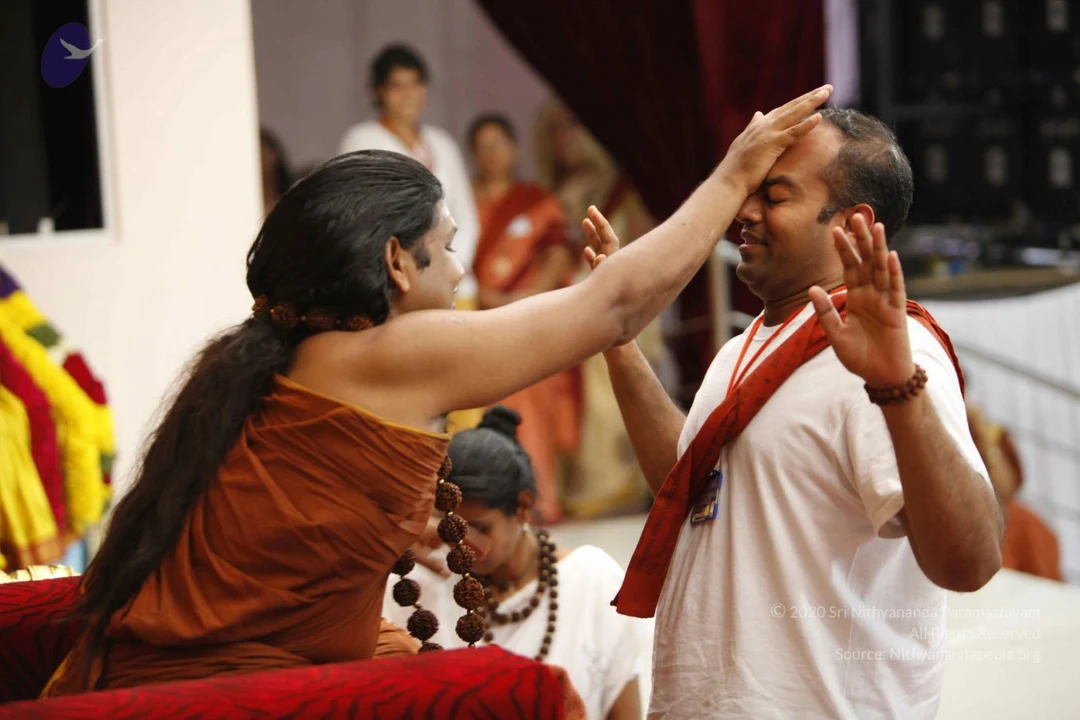
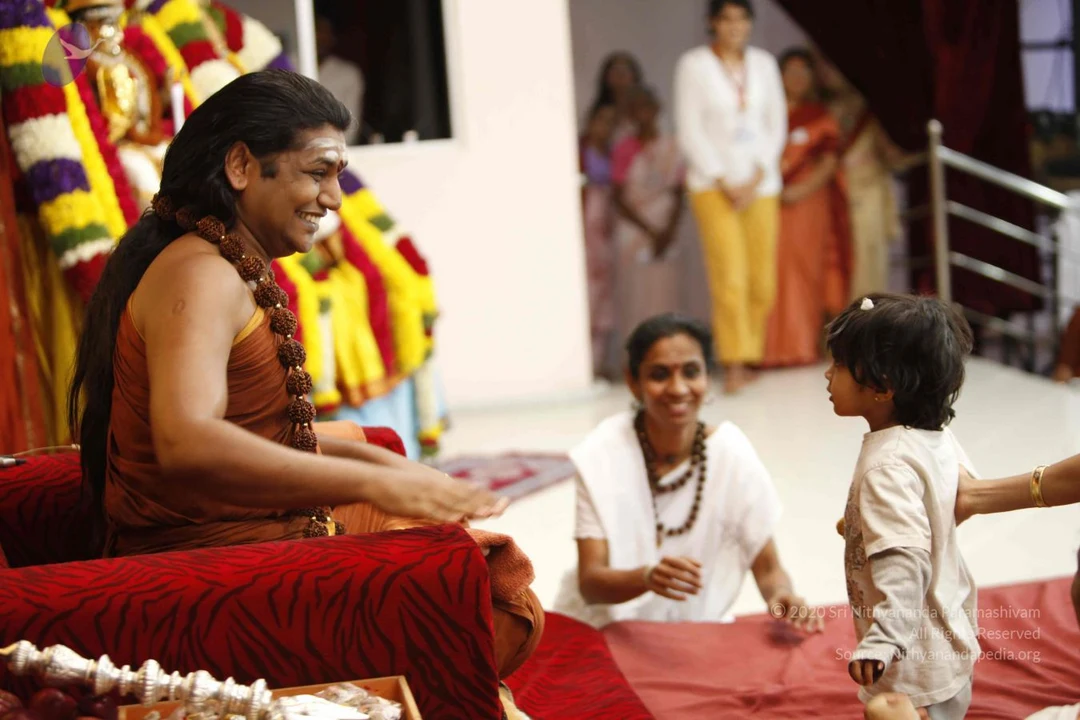
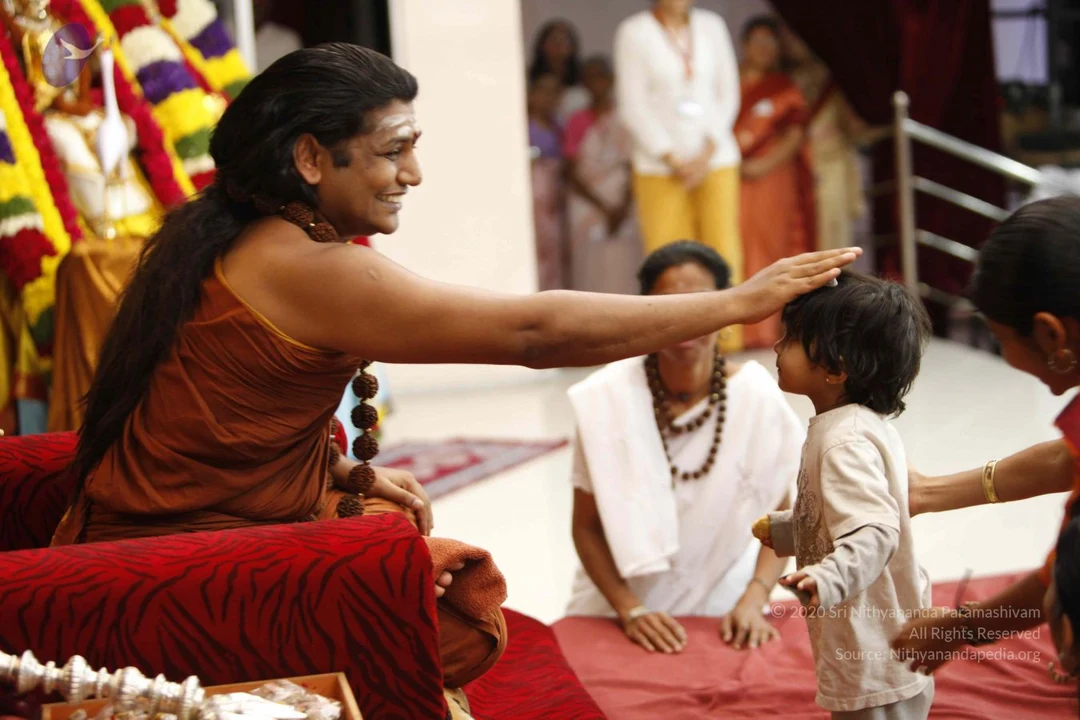
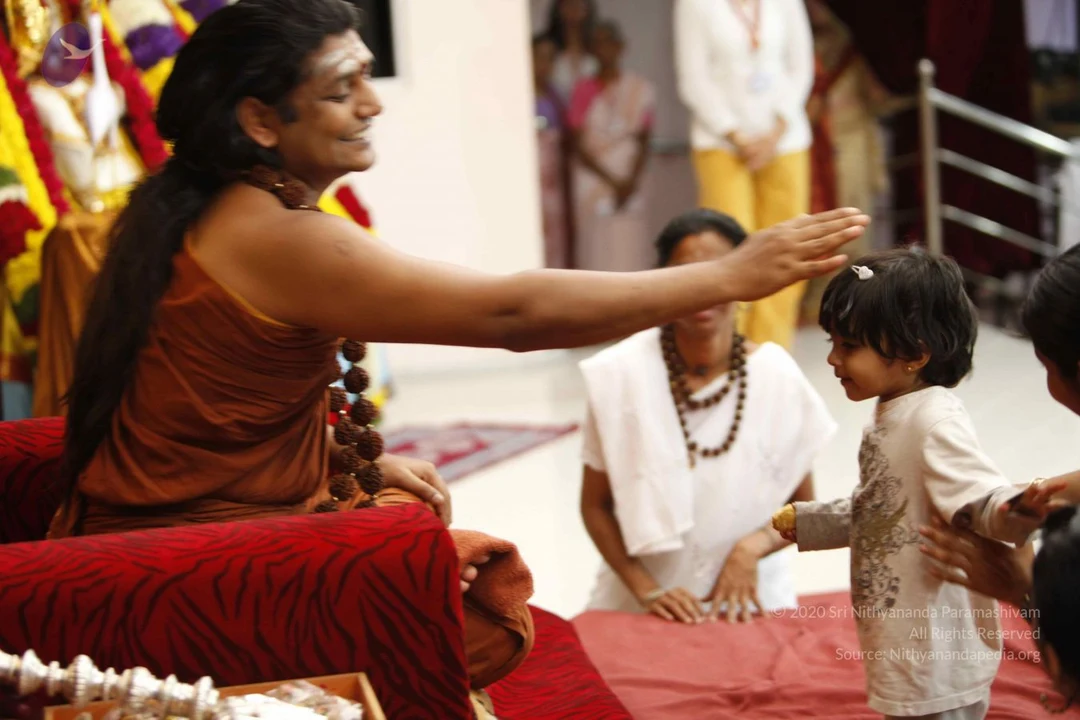
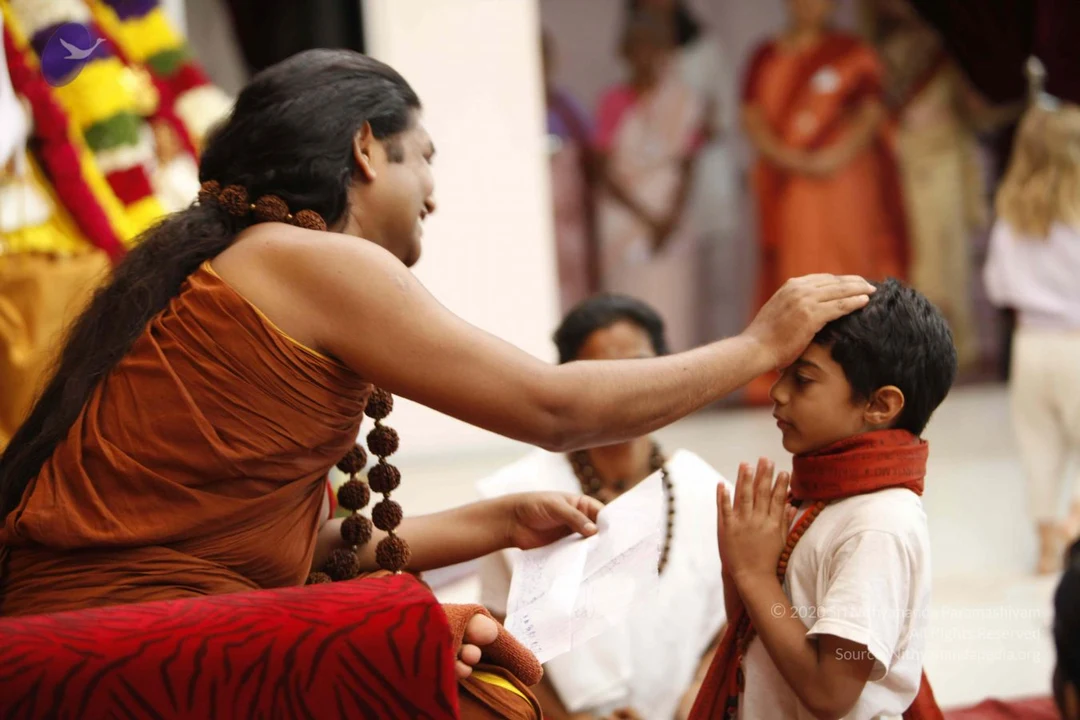
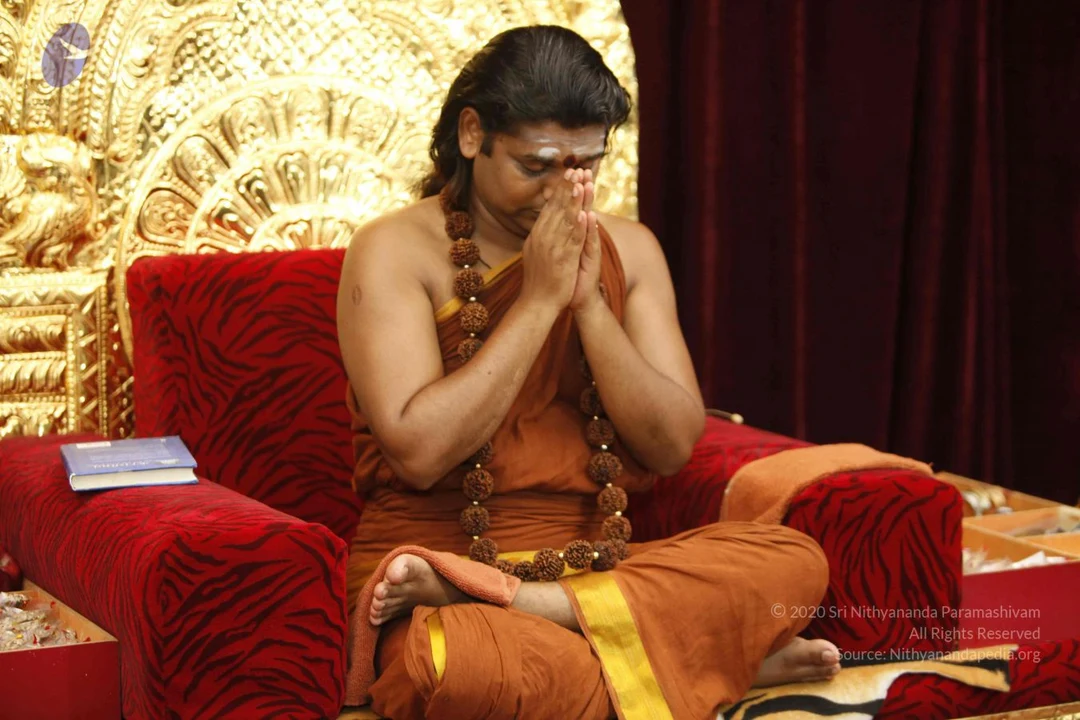
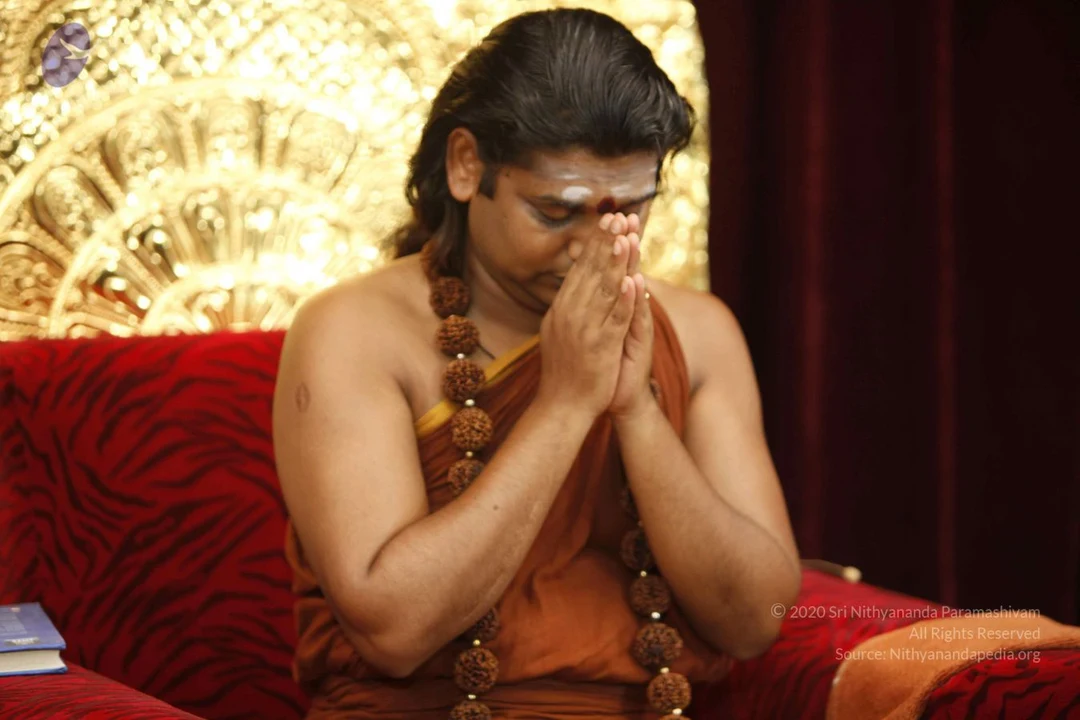
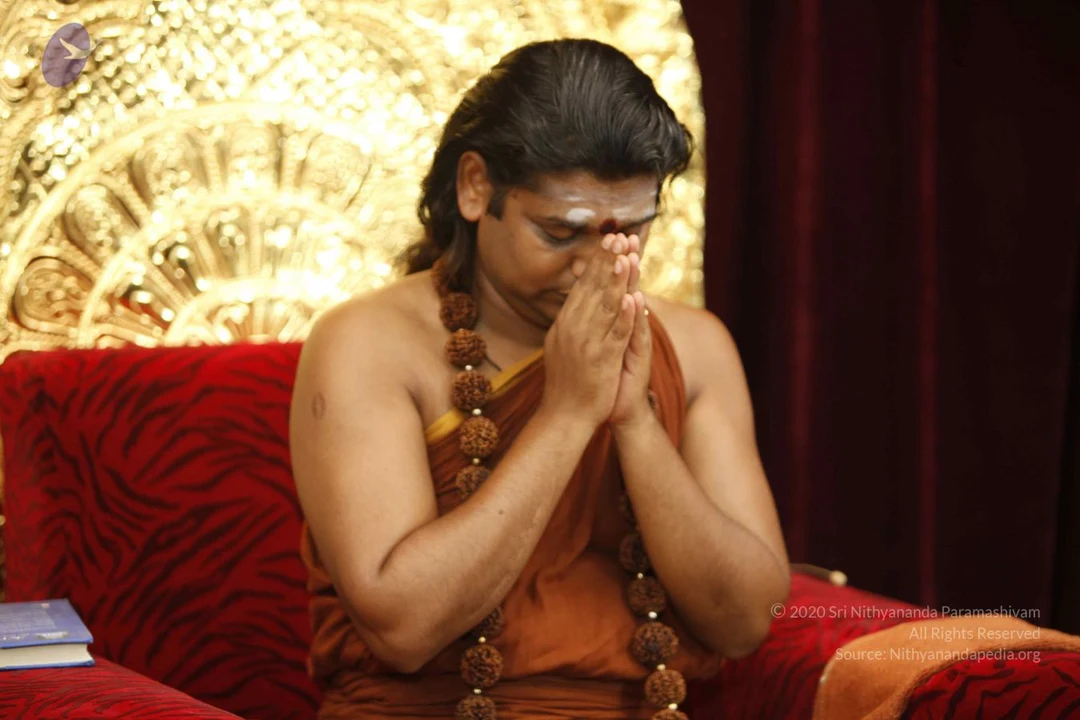
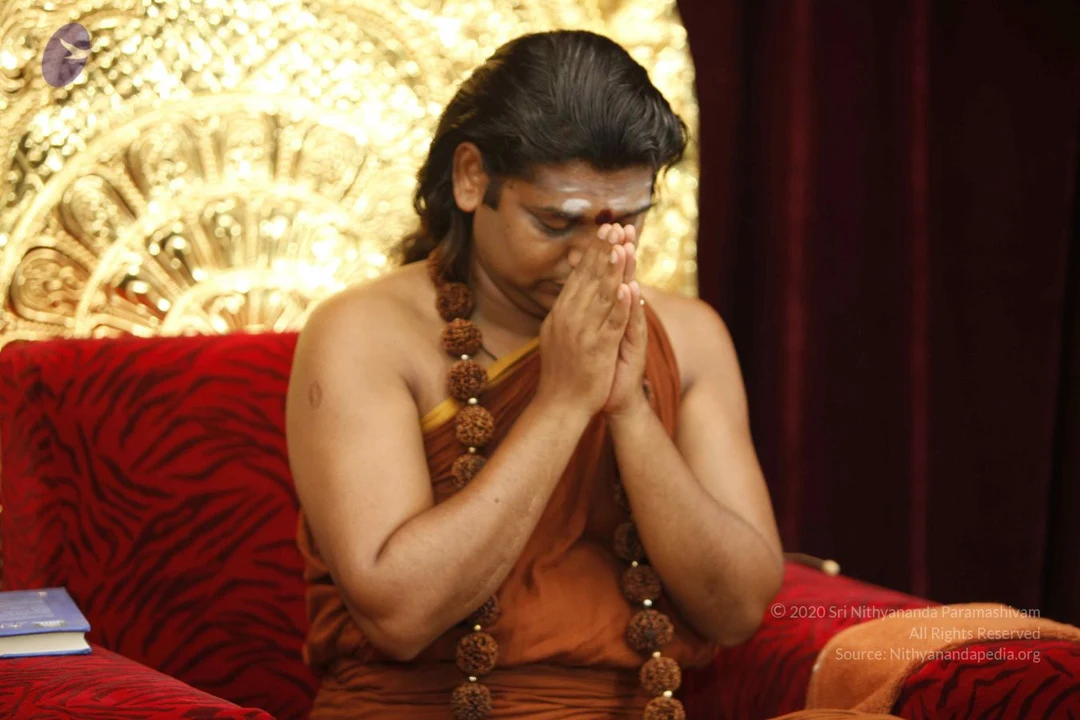
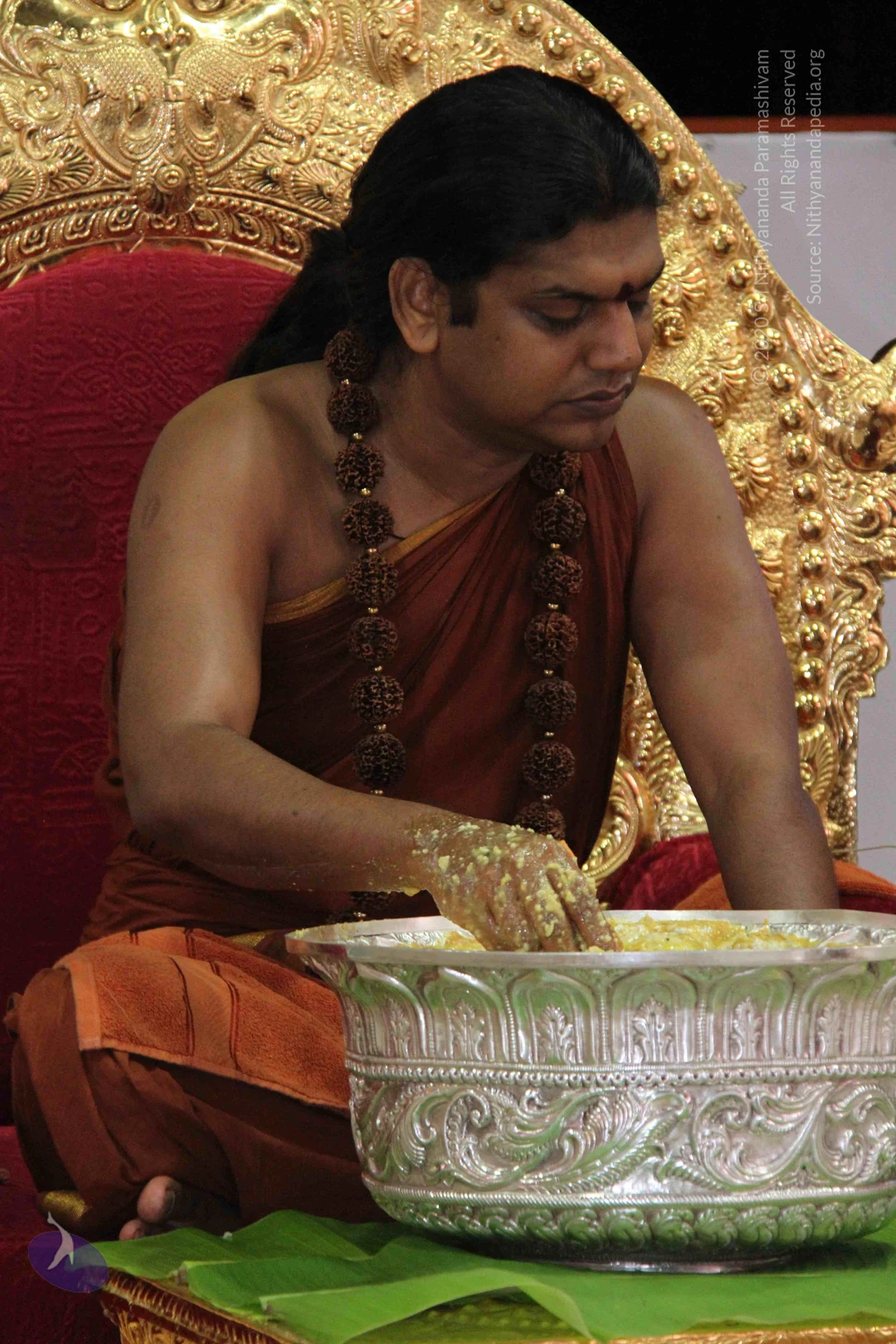
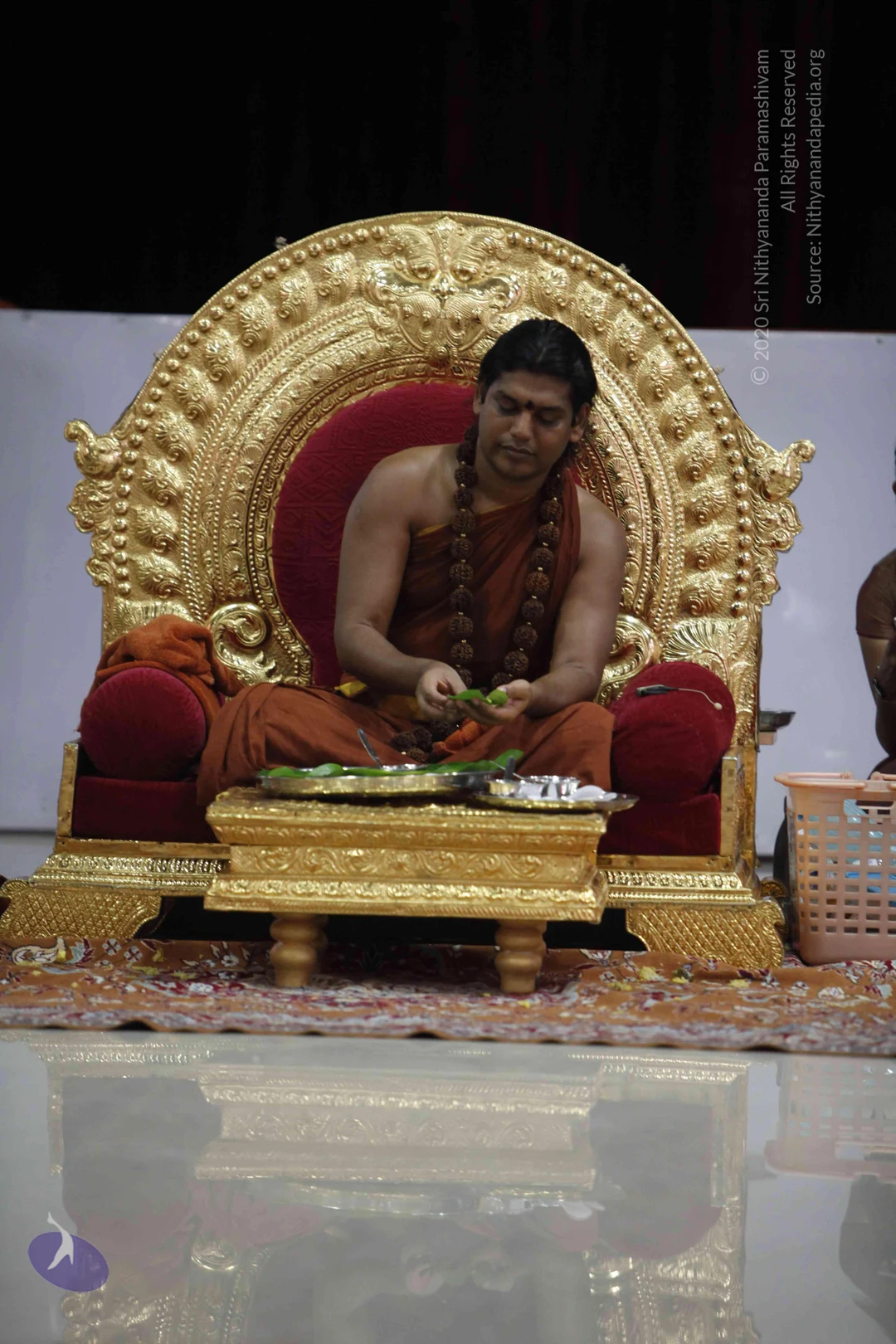
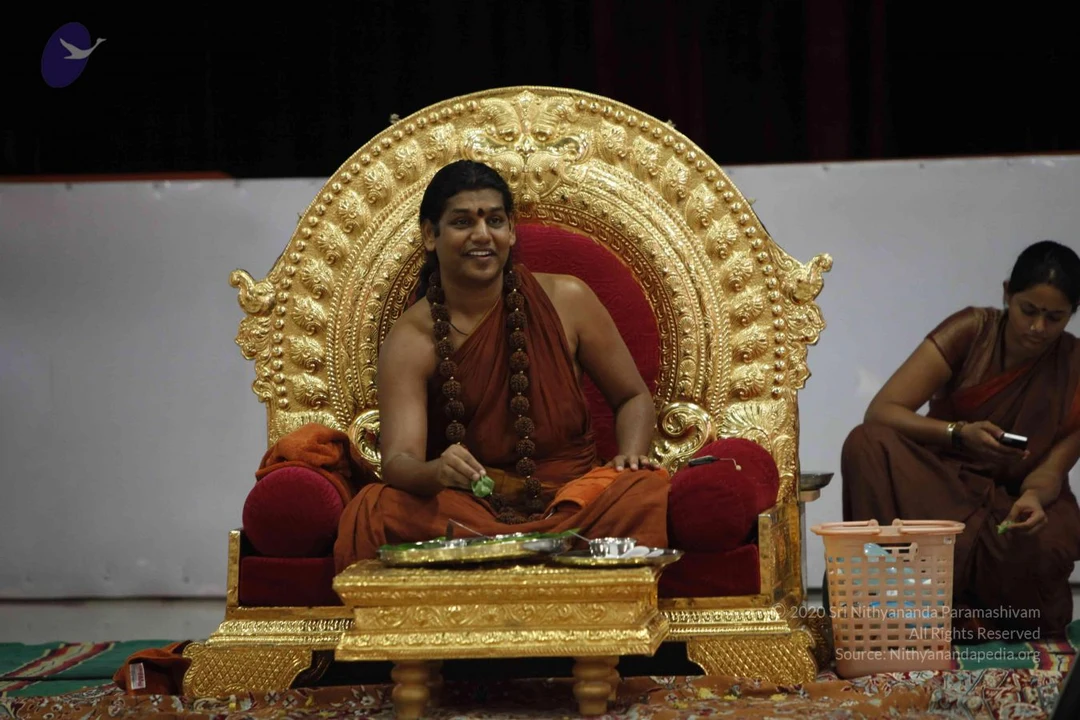
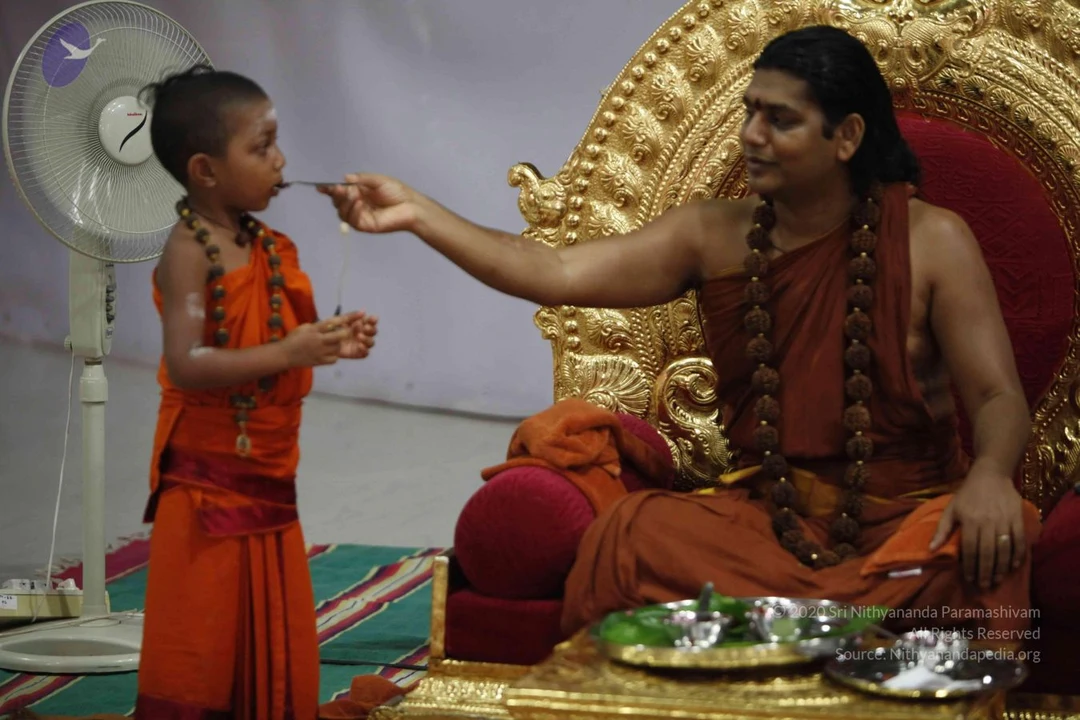
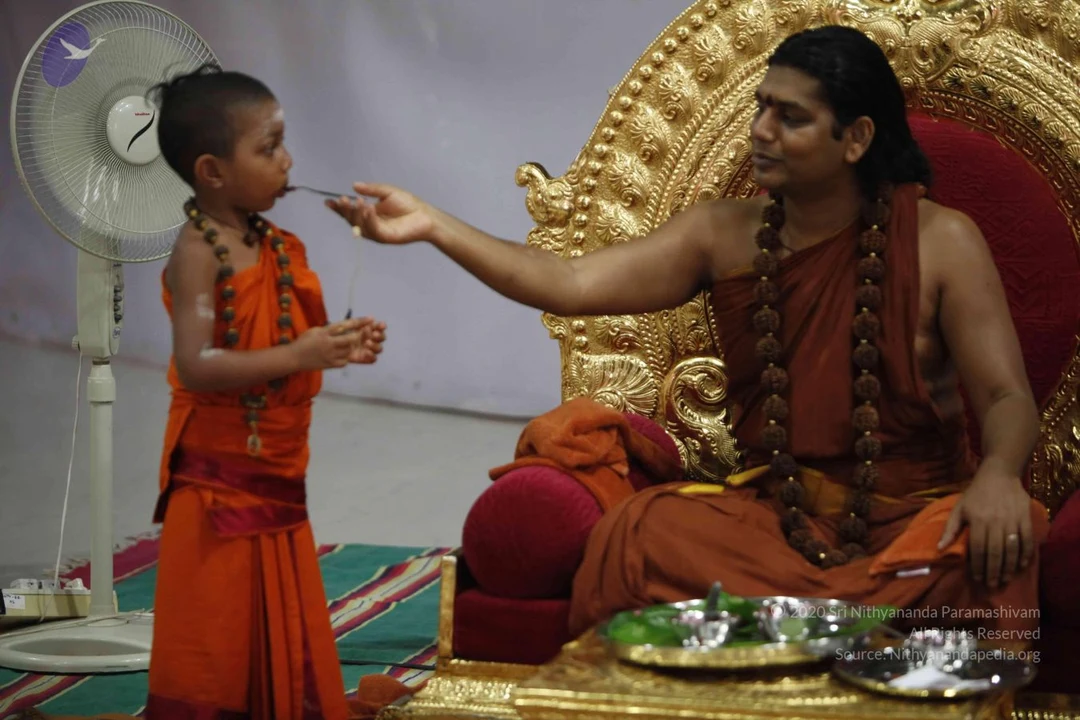
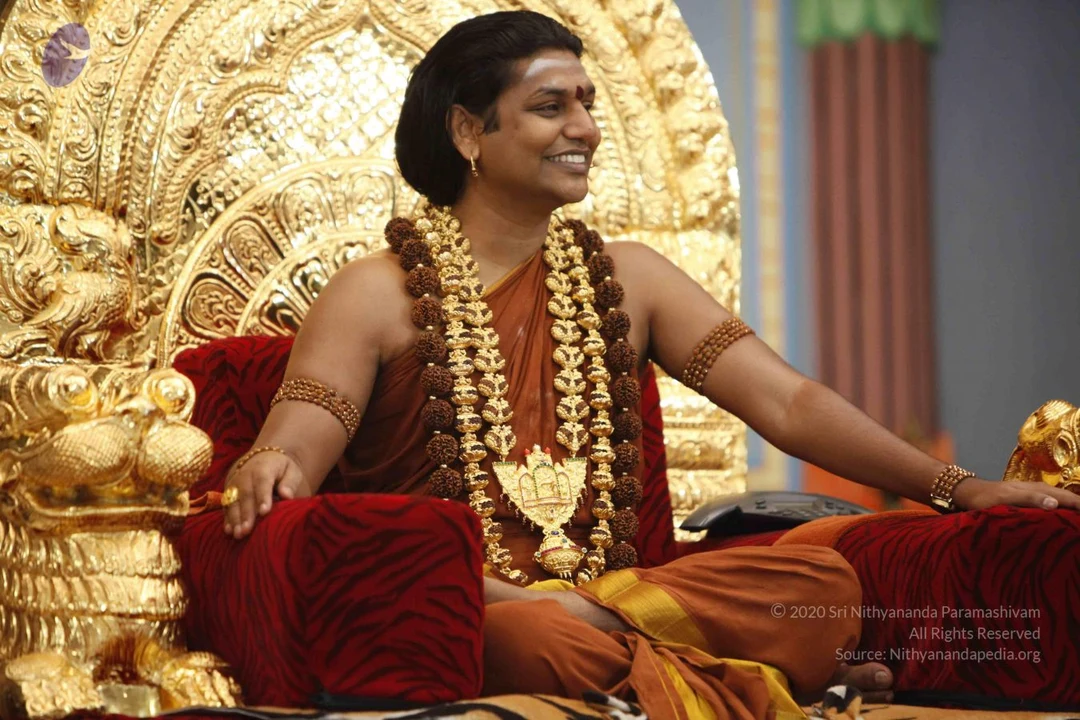
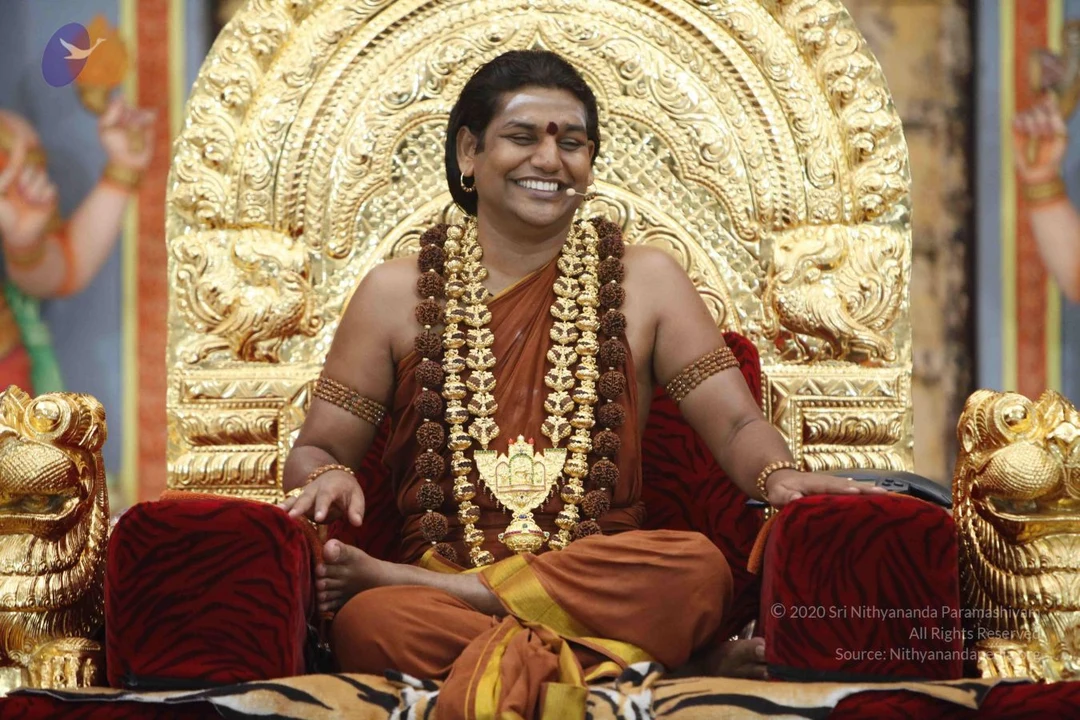
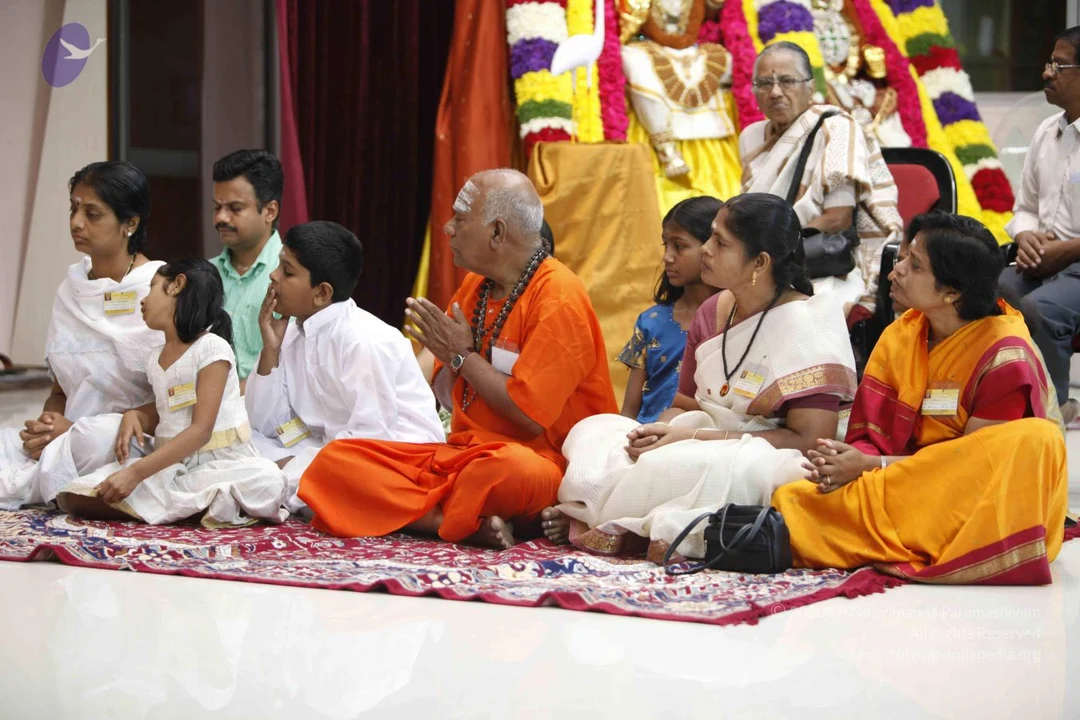
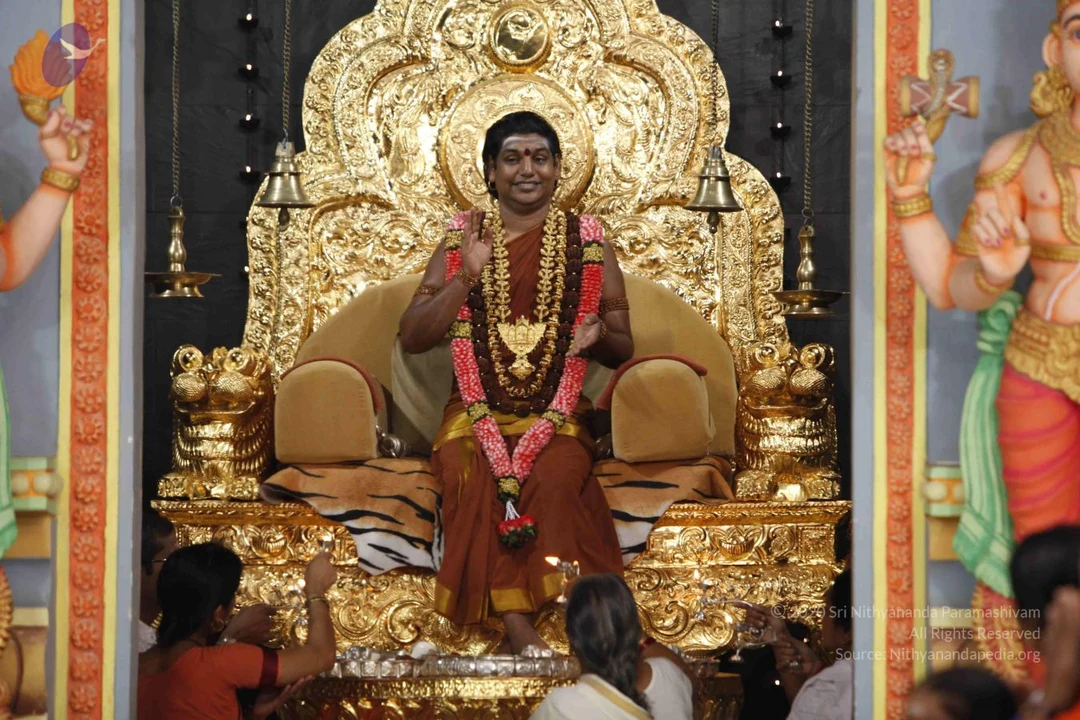
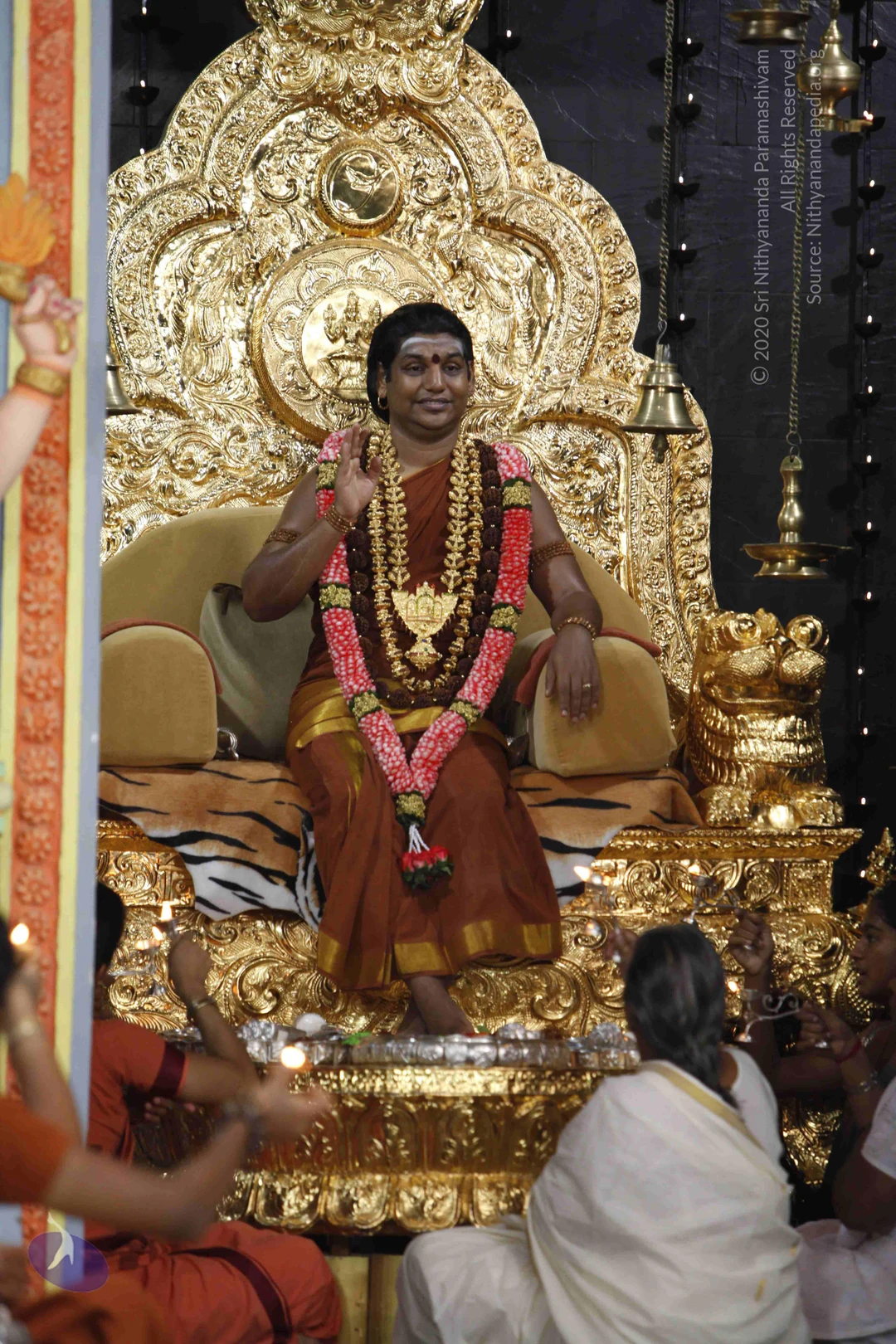
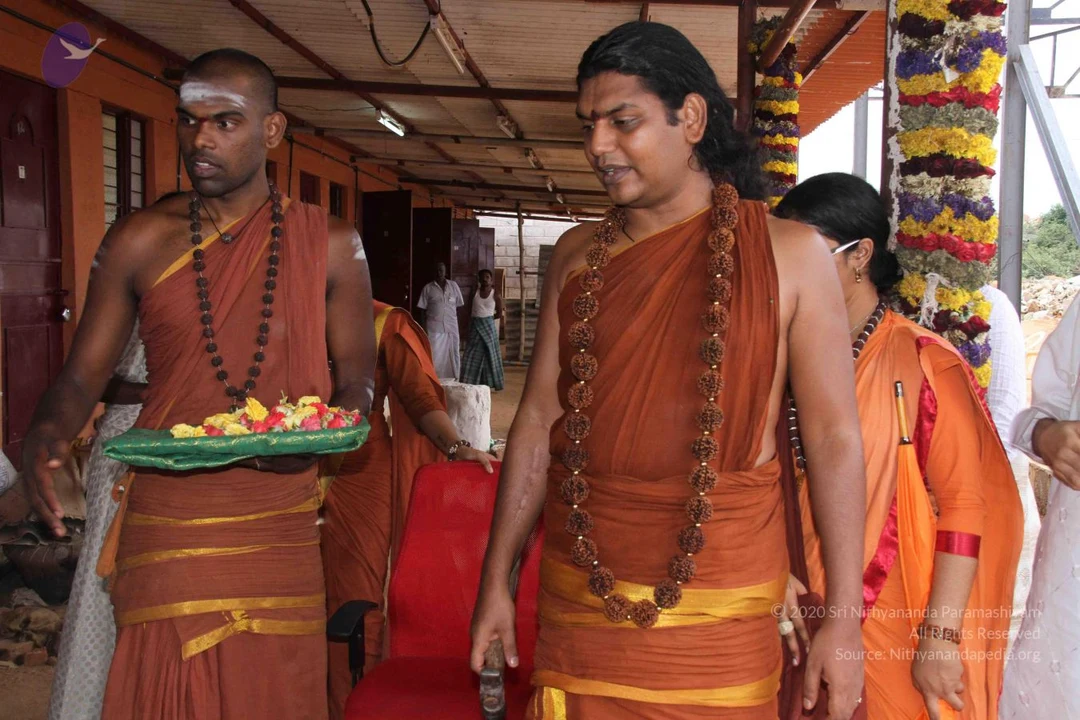
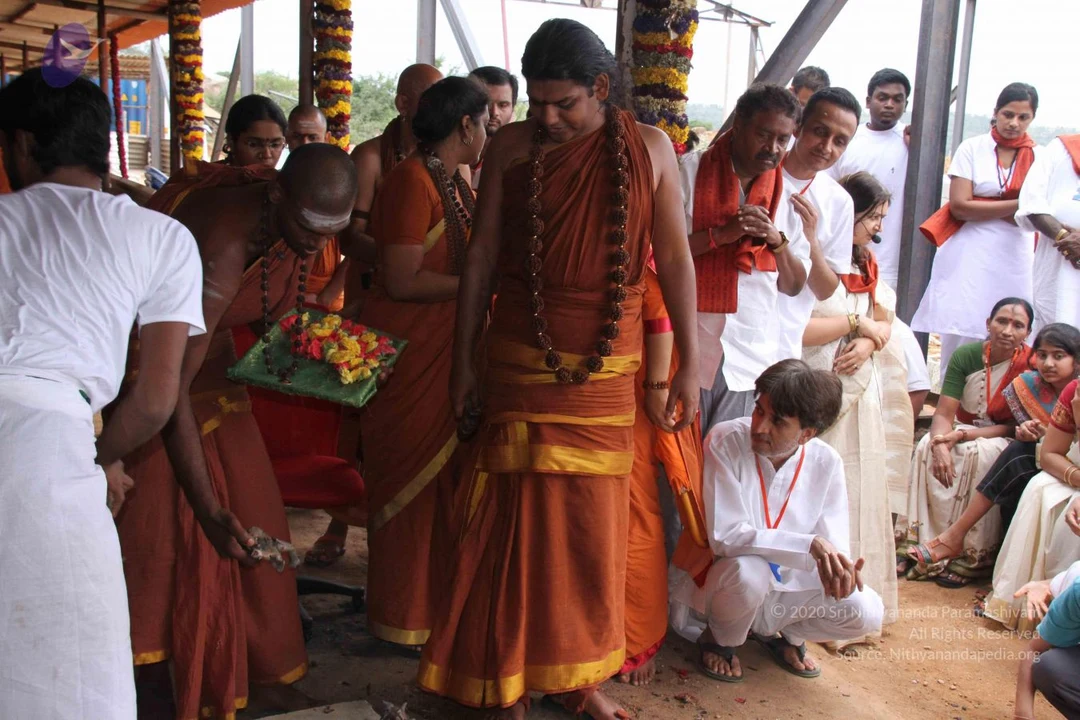
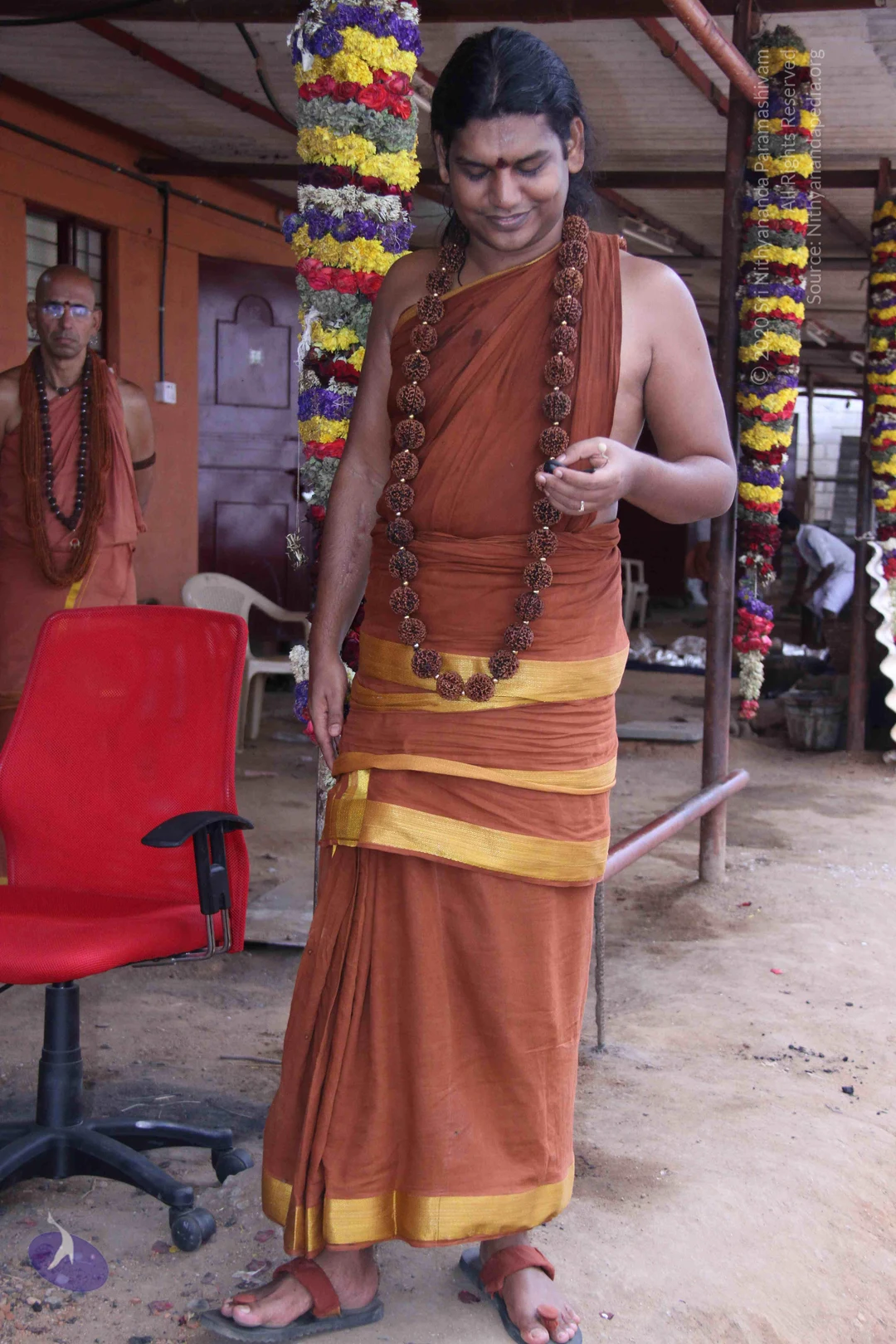
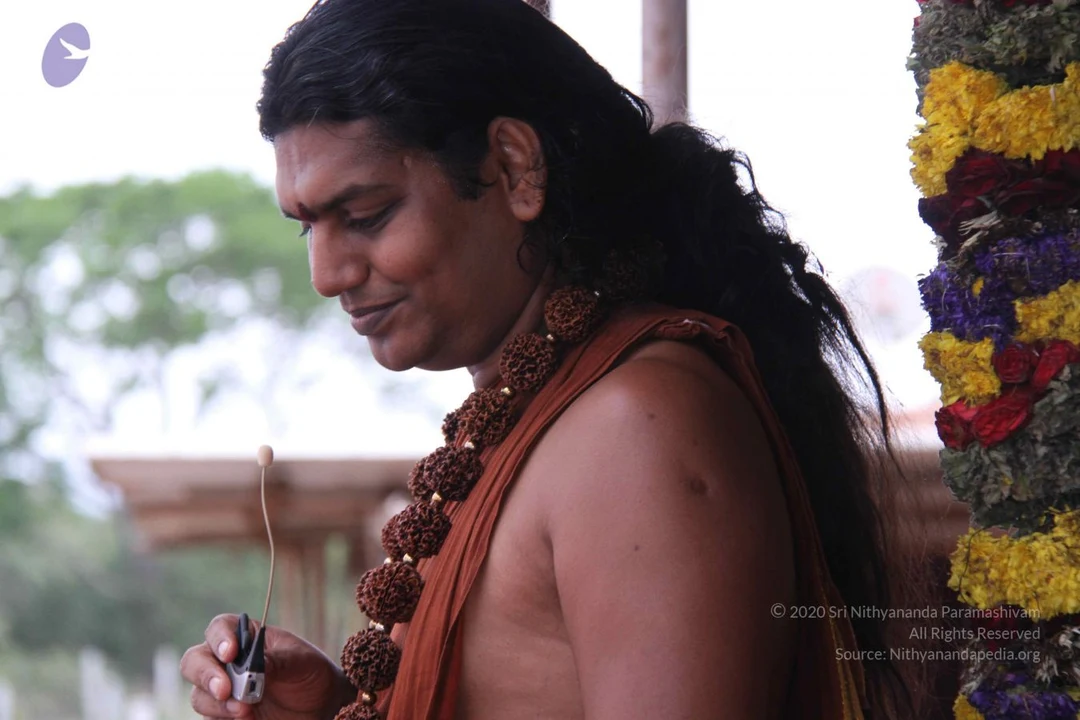
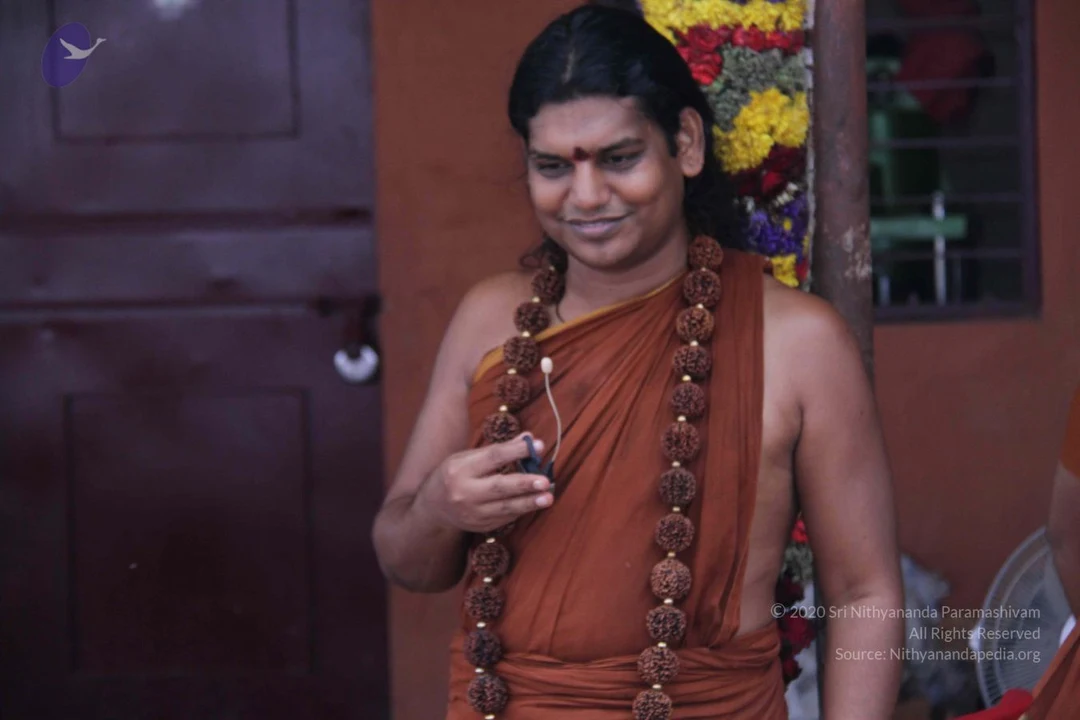
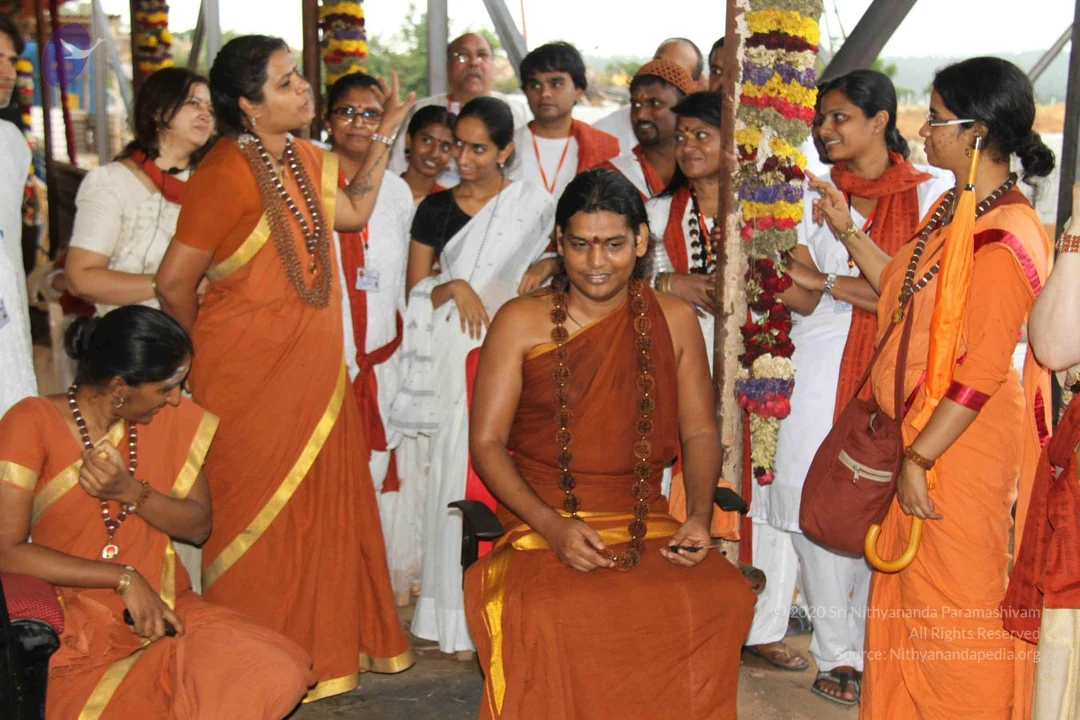
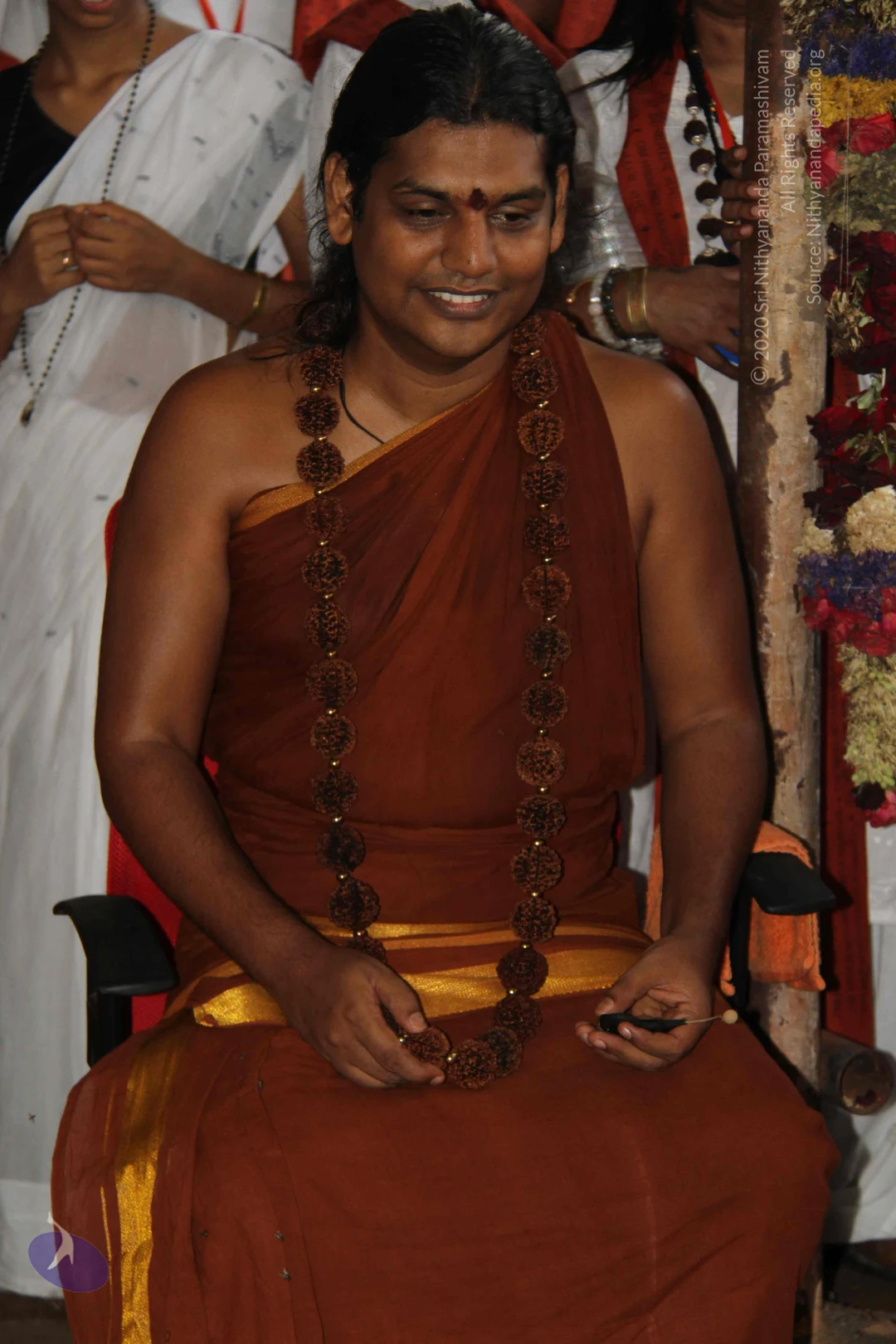
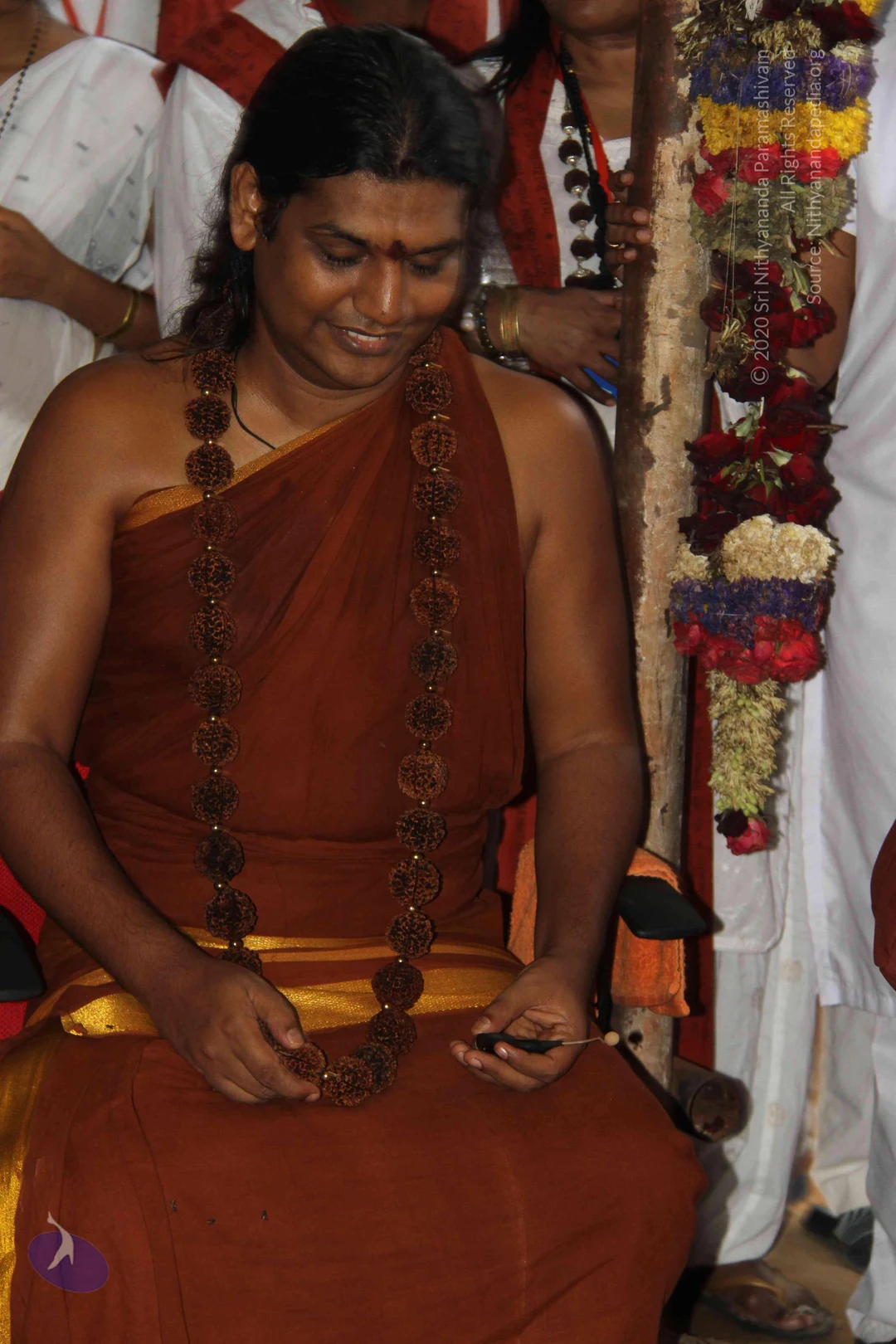
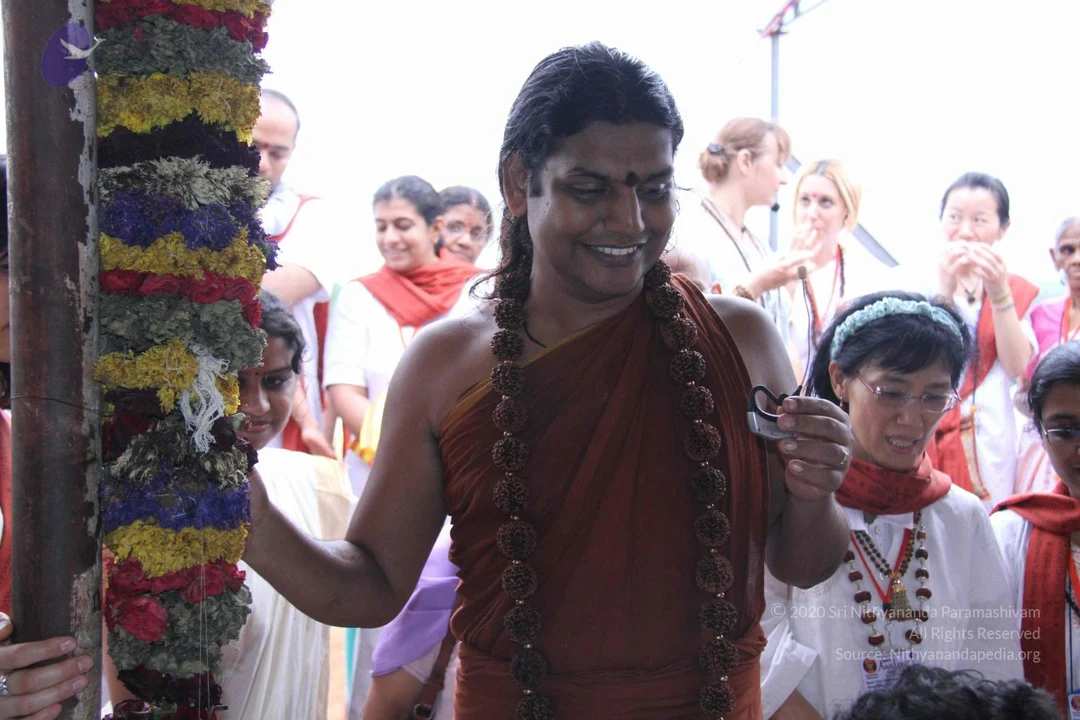
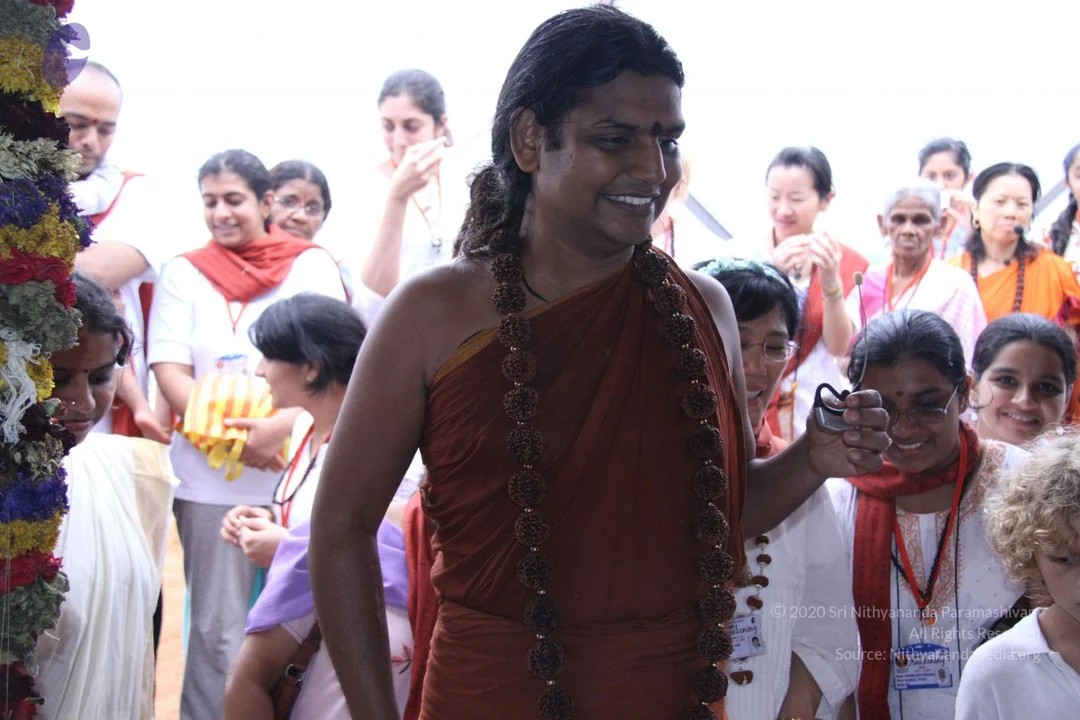
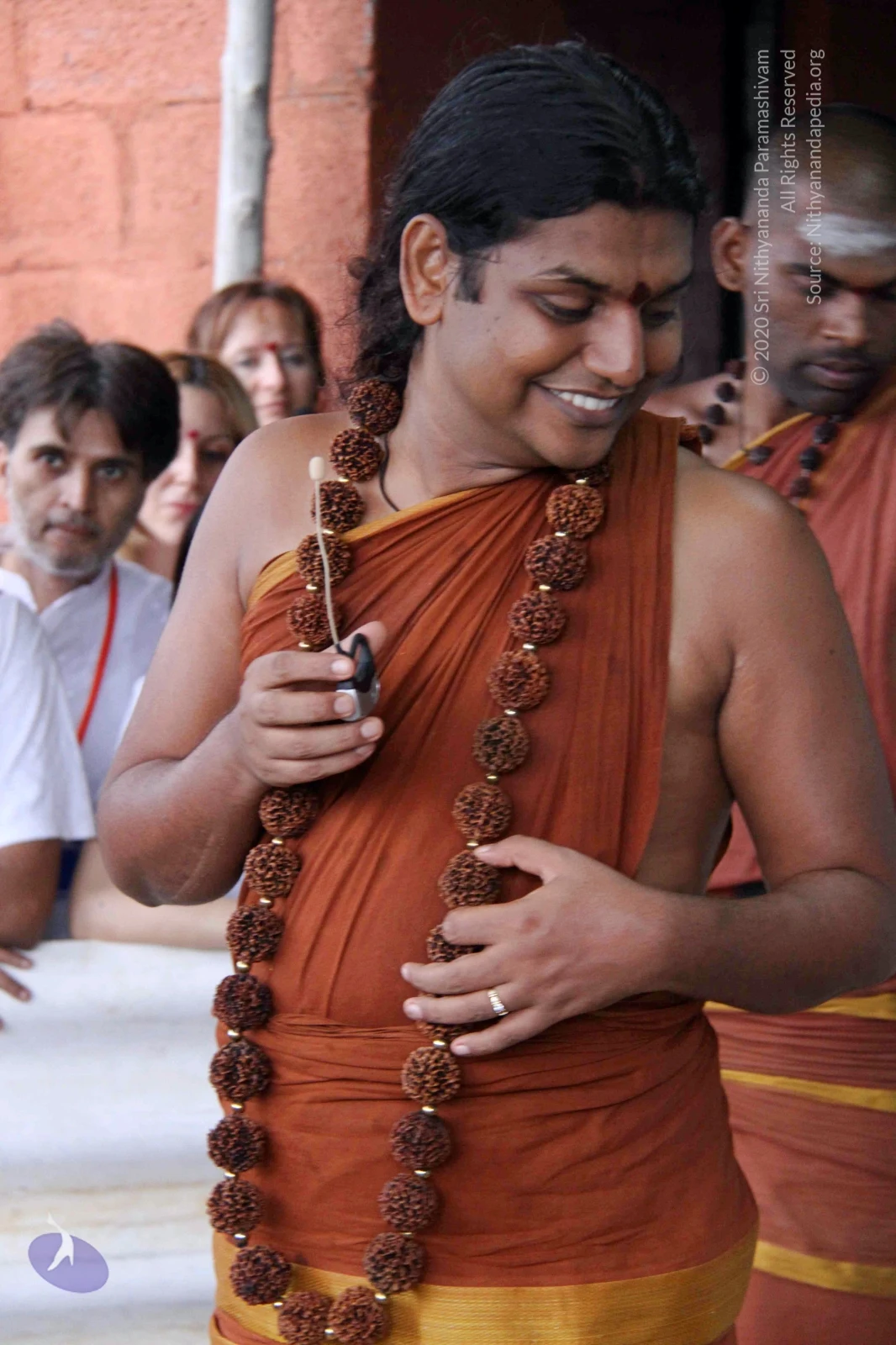
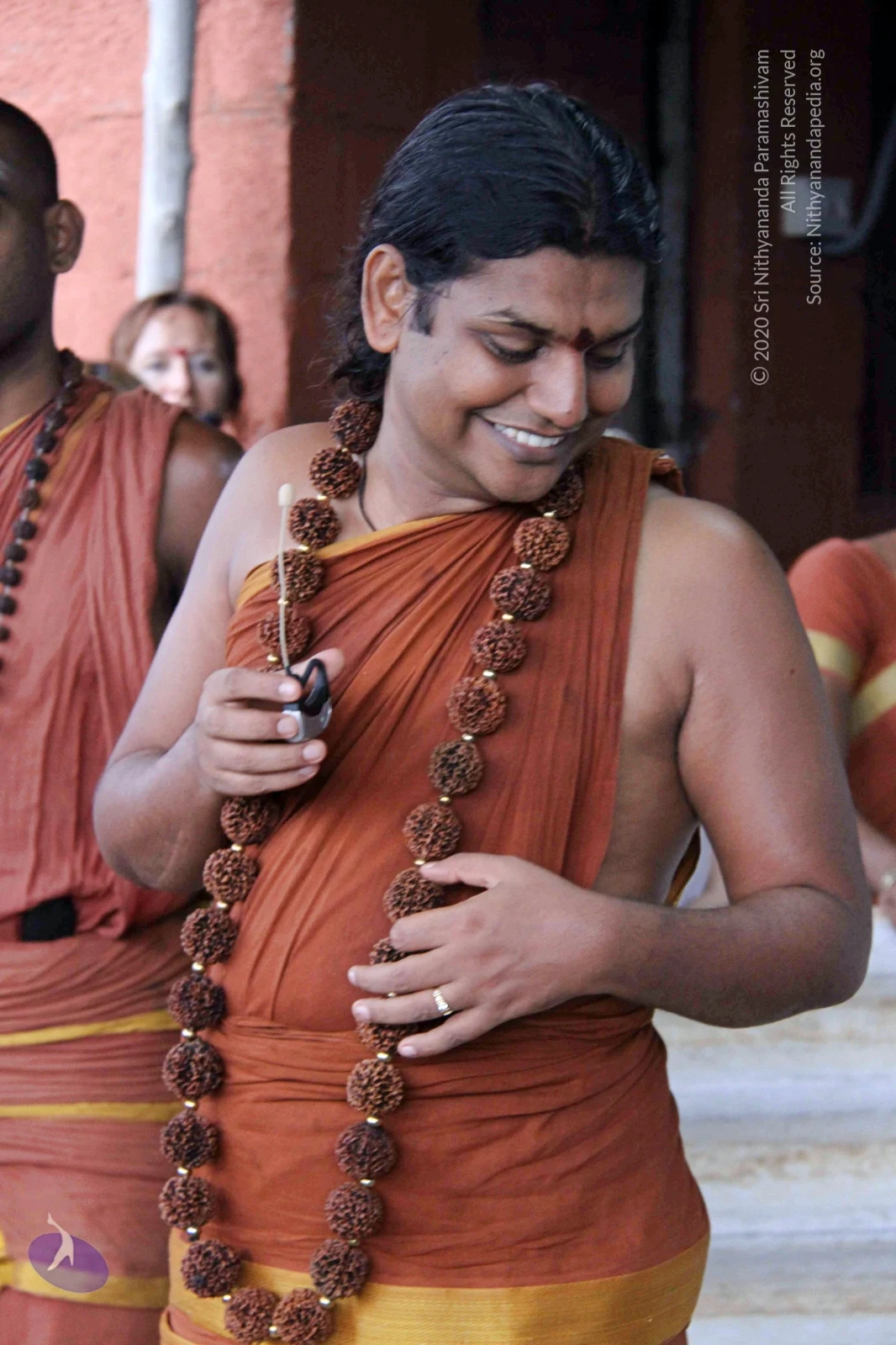
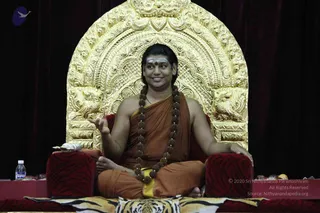
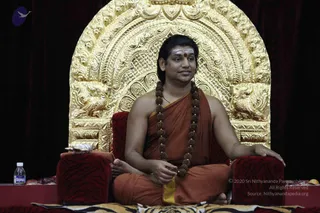
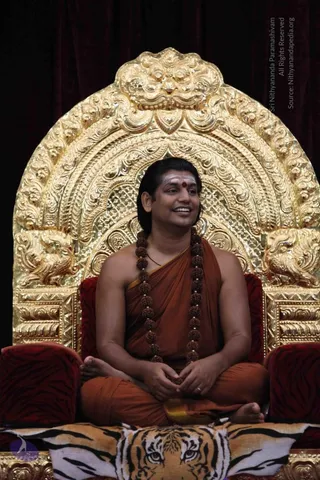
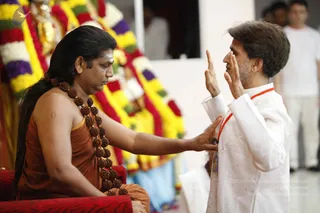
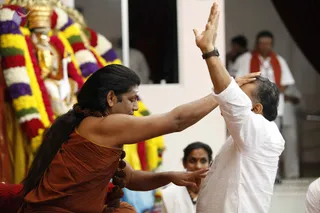
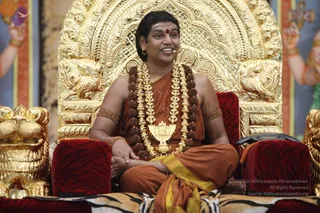
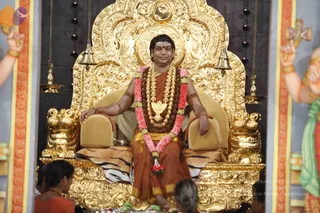
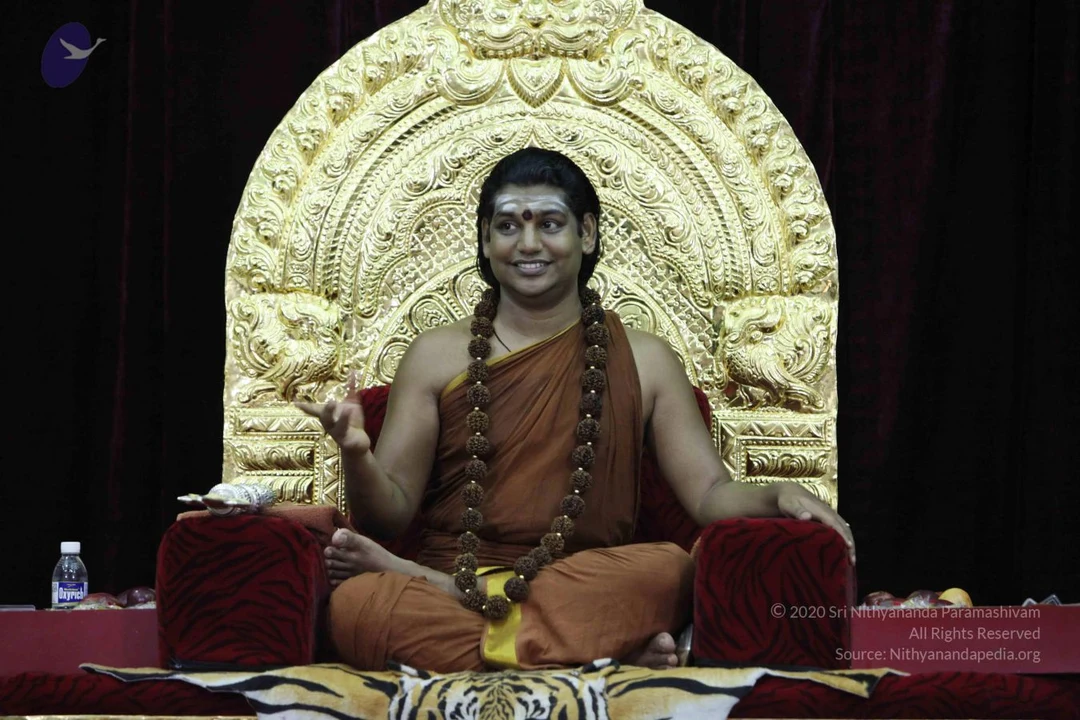
A man sits cross-legged on a red velvet-upholstered seat in front of an ornate gold throne with carved lion-like figures and scrollwork. He is bare-chested apart from a saffron-orange cloth draped over his shoulders, with a yellow edging, and wears a long rudraksha mala of brown beads with a dark bead at the front. He has long dark hair swept back, a red bindi and white horizontal tilak on his forehead, and holds a mala in one hand while the other rests on the armrest. A small silver plate with offerings sits at left, and a dark red curtain forms the background.A photograph of a long-haired figure in saffron-orange robes and a rudraksha mala with white vibhuti markings on the forehead, leaning forward and placing both palms on the head of a seated man in a white t-shirt and a red-orange shawl. Behind them stand garlands of yellow, green, red and purple flowers and a golden-yellow cloth. a person: the saffron robe, long swept-back hair, rudraksha mala and ornate setting match the page's attribution, though the face is not used for identification.A photograph of a seated figure in an orange-saffron robe with long dark hair swept back and a rudraksha mala around the neck, placing a hand on the head of a young boy with his palms pressed together in namaste. The boy wears a white shirt, a red-orange cloth around the neck and a red-beaded mala. Behind them, a woman in a white garment with a rudraksha mala sits, and people in orange and red saris stand in the background near a colourful floral garland display. The setting appears to be a hall with a red cushioned seat.

July 14 2013

Original wiki page
Contents

Title:

THE SUPREME PONTIFF OF HINDUISM BHAGAWAN SRI NITHYANANDA PARAMASHIVAM

Photos Of The Day:

CROWD
IA DARSHAN
LEELA ALANKAR

MAHESHWARA POOJA

NITHYA SATSANG

Pada Puja

SACRED ARTS PHOTOS

TEMPLE

YOGA IA

1-Sacred-Arts

2-Leela-Alankar

_MG_5588_CMP_WM

Photos from this day

View all 637 photos

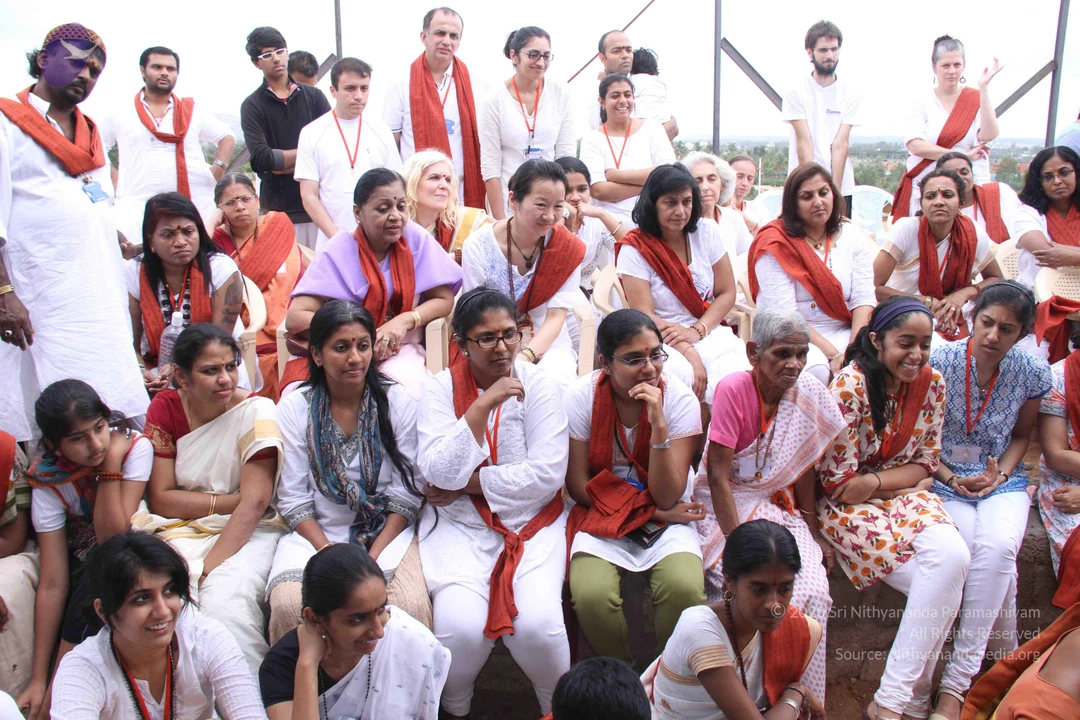
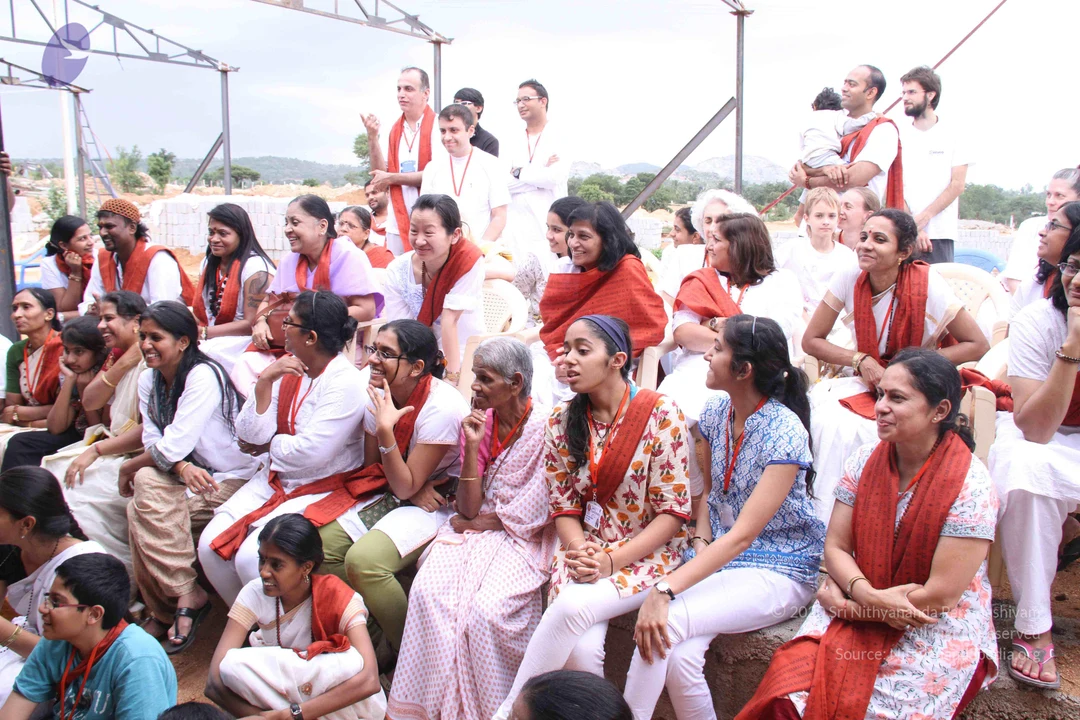
CROWD

17 photosSource gallery
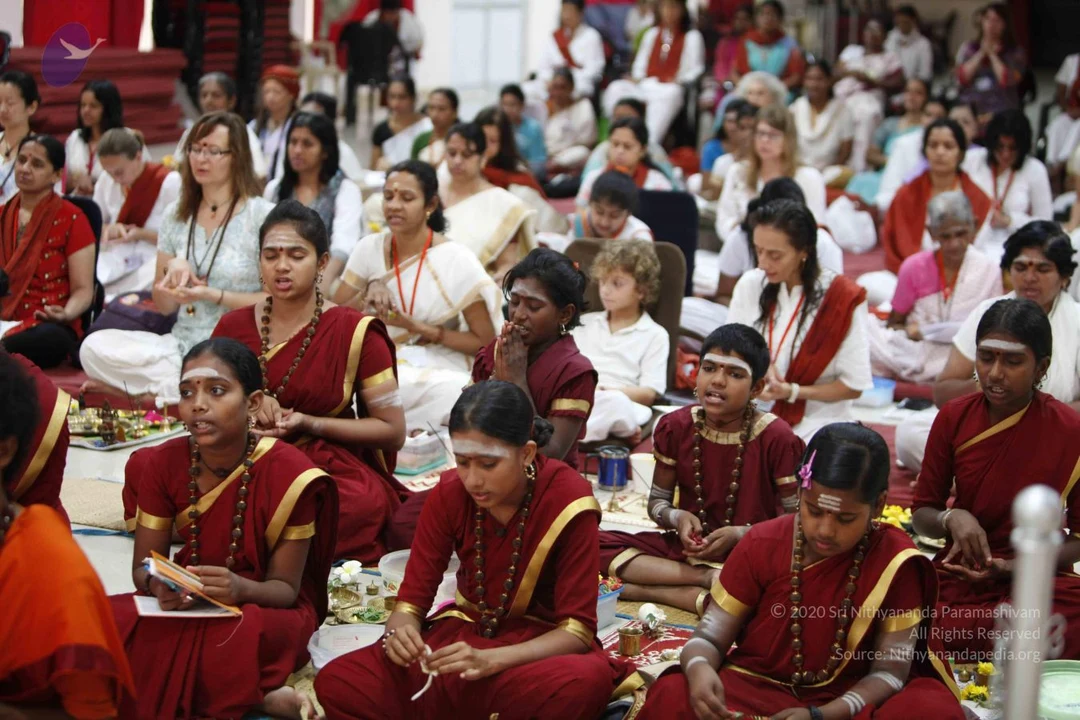
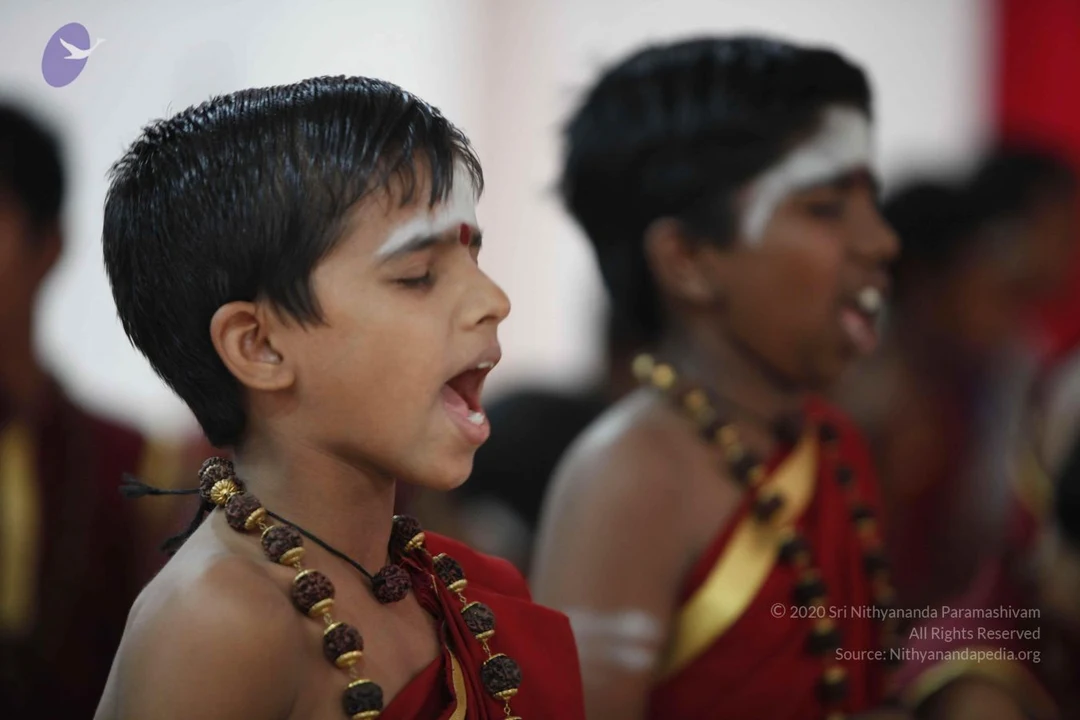
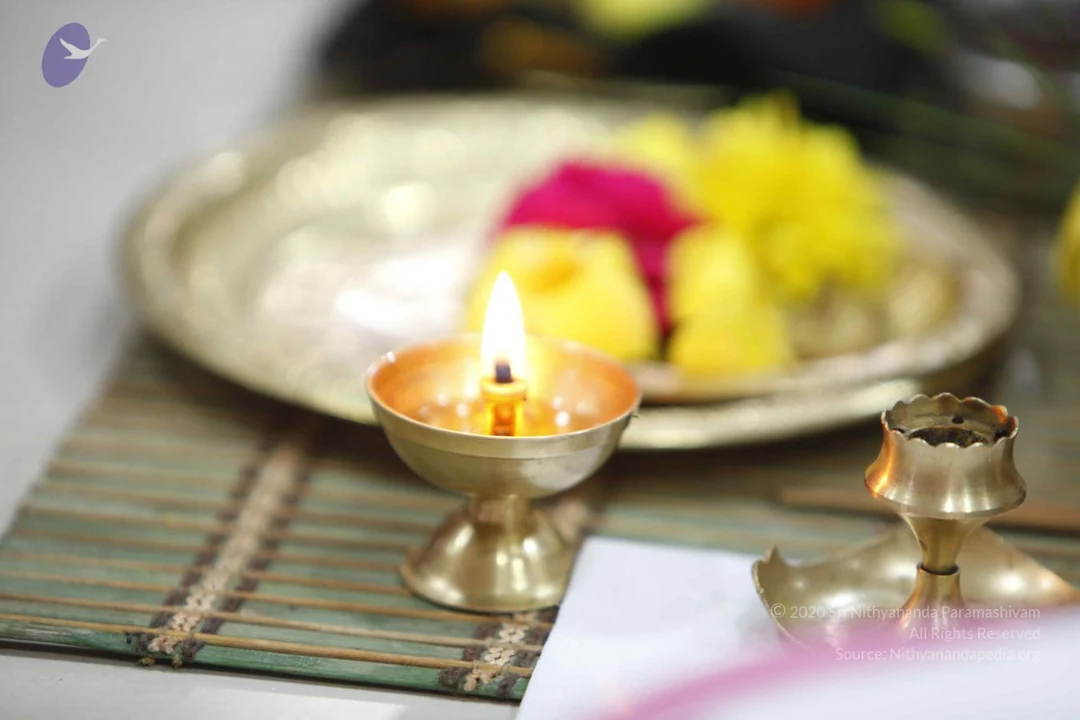
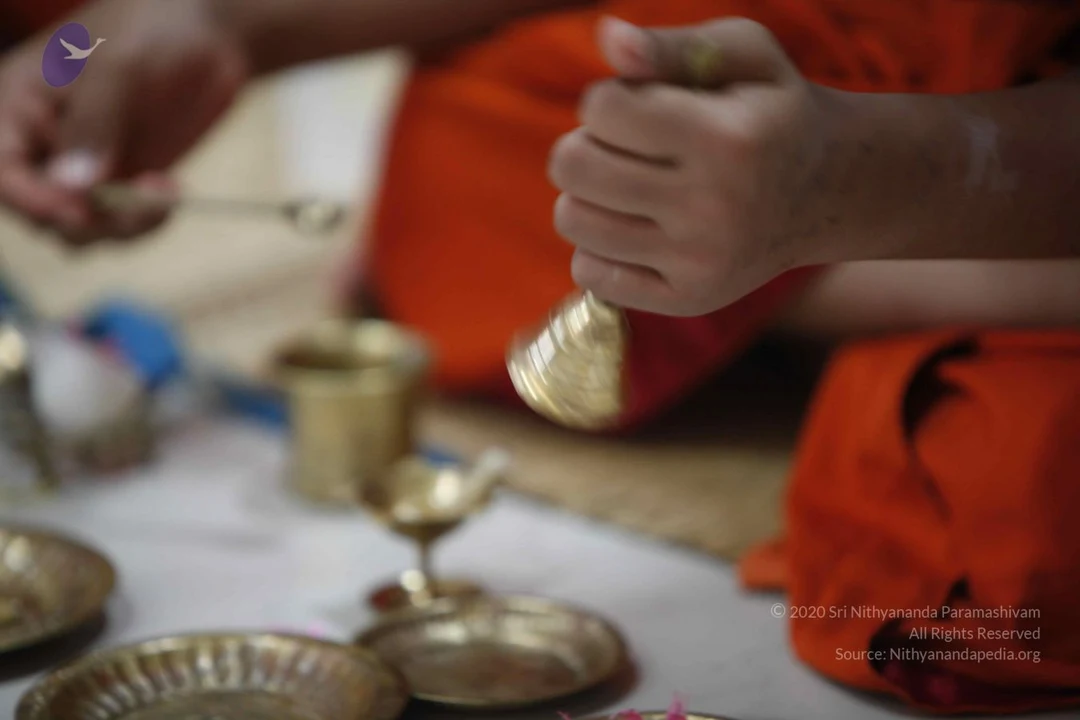
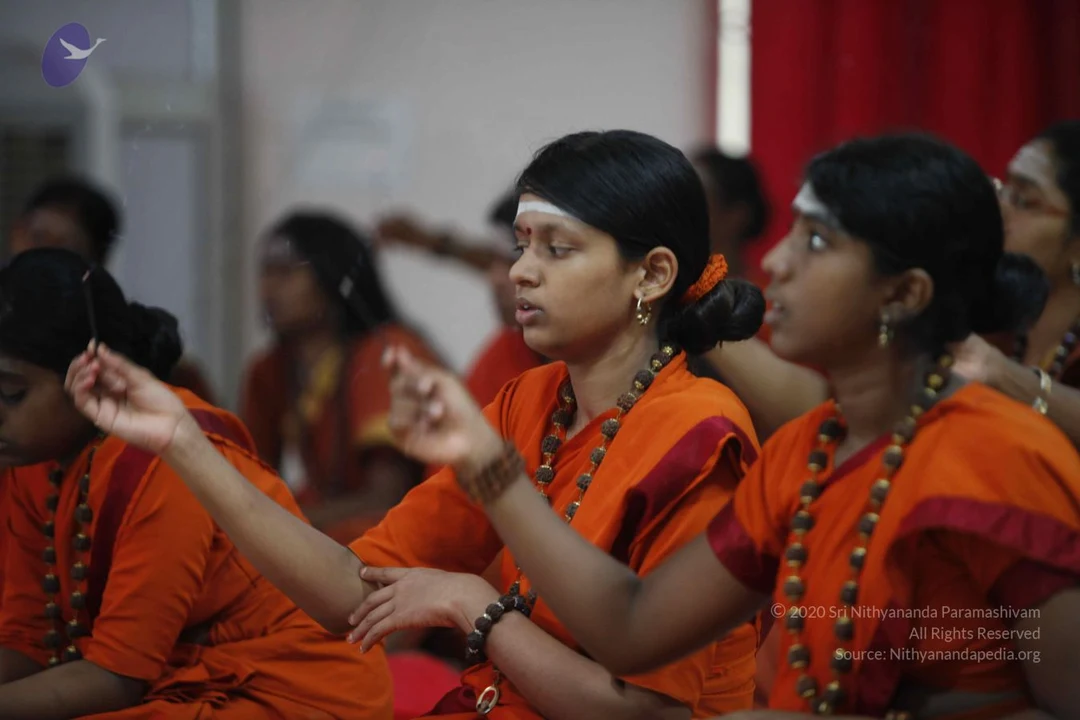
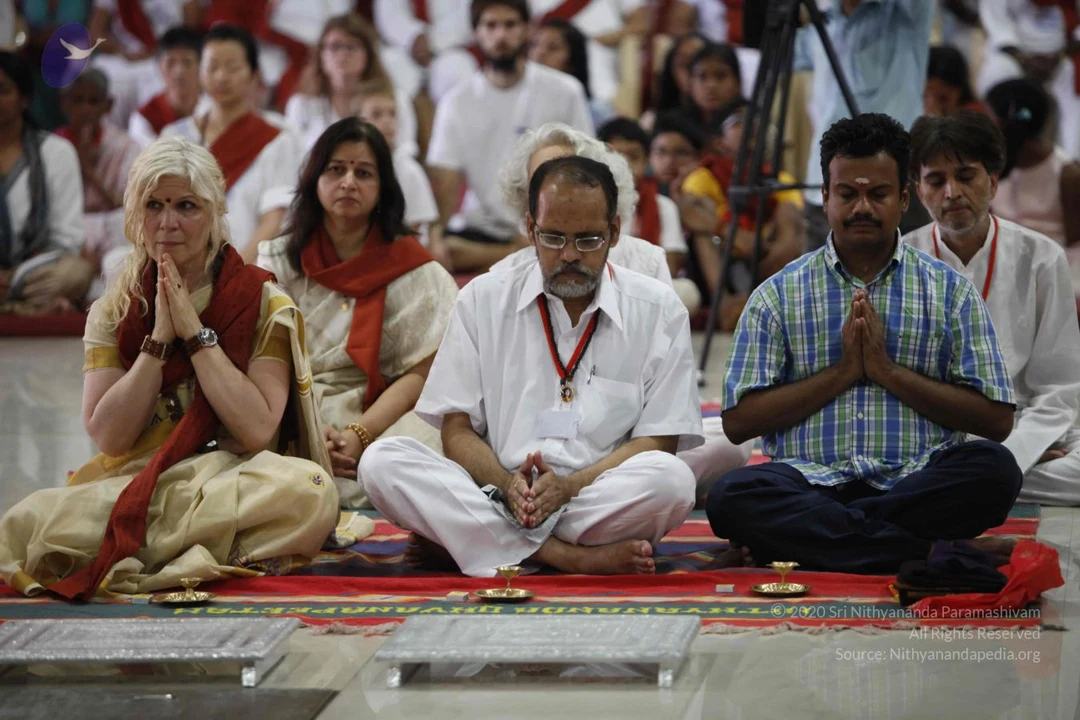
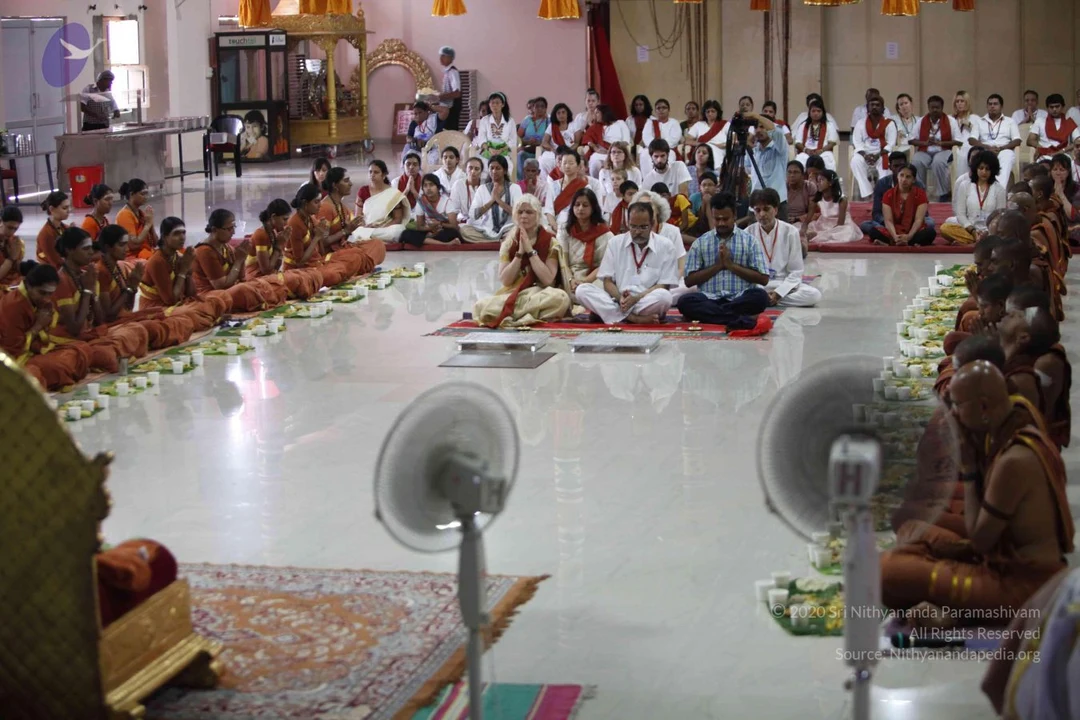
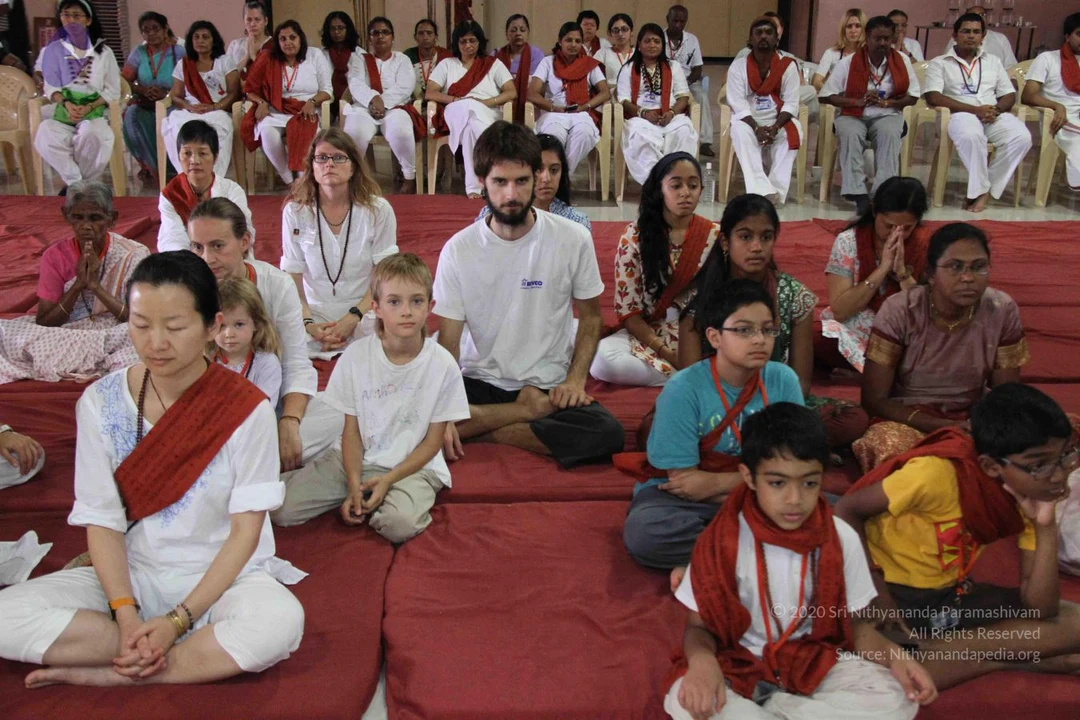
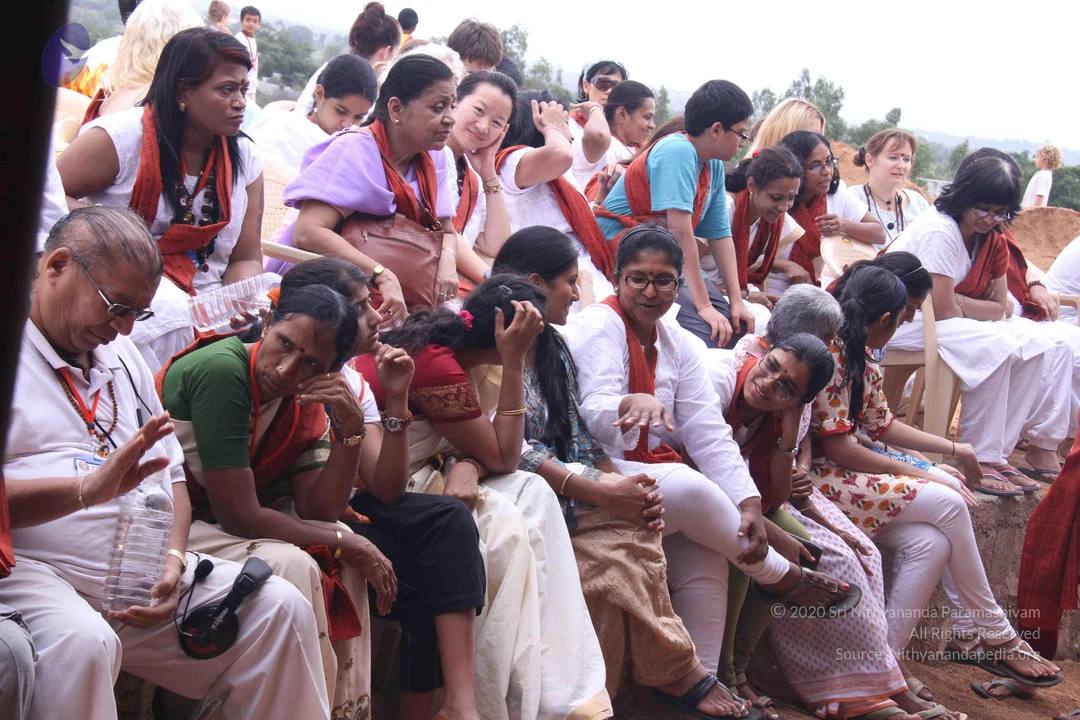
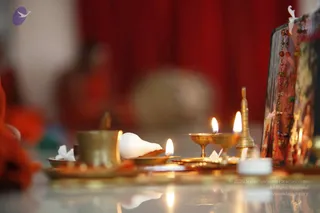
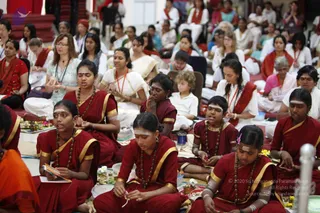
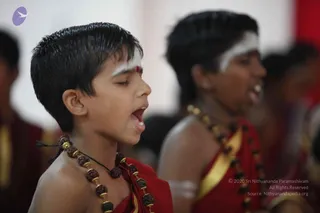
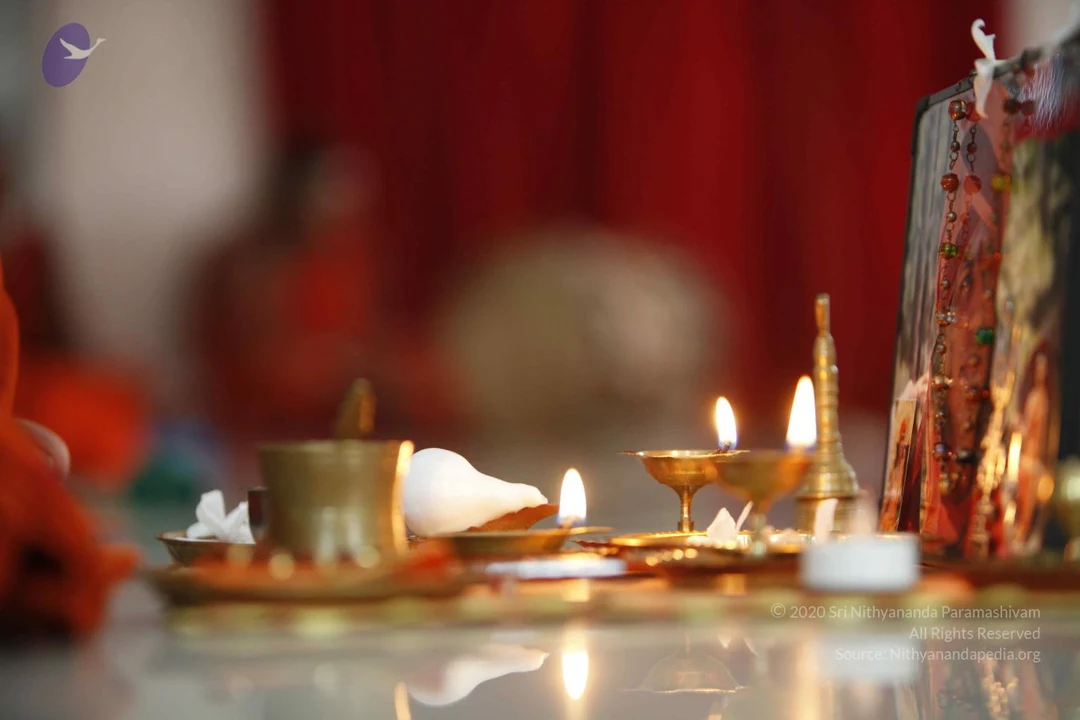
Close-up photograph of a puja setup on a reflective white surface in front of a red drape. Brass oil lamps with lit wicks and a brass kalasha-style vessel sit beside a white conch shell with white cloth. On the right, a framed image hangs with a strand of red and multicoloured beaded mala draped over it. A blurred orange-robed figure is visible at the left edge, partly out of focus, and no face is shown. Shallow focus emphasises the lamps and ritual objects.A large seated congregation fills a hall during a ritual. In the foreground, several young women and a boy wear maroon and gold saris and have white and red forehead markings and rudraksha malas; some hold small objects and offering items on the floor, with brass vessels, flowers and a lamp before them. Behind them, many devotees in white and red garments sit on mats and cushions, some with hands folded in prayer. The ritual setting suggests a puja with offerings. a person's presence is not clearly visible in this frame.Close photo of two young boys chanting or singing with mouths open in a temple setting. The boy in front wears a red cloth draped over his shoulder, a dark rudraksha mala with gold spacers, white vibhuti lines on his forehead and a red kumkum dot. Behind him a second boy in a red cloth with a gold sash and similar rudraksha beads also has white forehead markings. Other blurred figures in red fill the background against a pale wall.Close-up photo of a lit brass oil lamp (diya) with a flame on a woven green bamboo mat, with a brass tray of yellow and pink flowers blurred in the background. A brass candle stand with a lotus-shaped top sits at right. No people are visible.Close view of a ritual being performed on a white cloth: a person in orange robes holds a polished brass bell-shaped vessel with one hand while the other hand, partly visible at upper left, holds a small spoon-like implement. Brass plates, a brass cup and a small brass stemmed vessel sit on the cloth, with scattered pink flower petals beside them. The background is softly blurred.Several young women in saffron-orange sari-style robes with rudraksha mala necklaces sit close together during a seated ritual. Their foreheads bear white and red tilaka marks, and their hair is pinned into buns with orange flowers. The central woman has her hands raised near her chest while the women to either side make hand gestures, and a red curtain hangs in the background. Other participants are blurred behind them.

IA DARSHAN
37 photosSource gallery
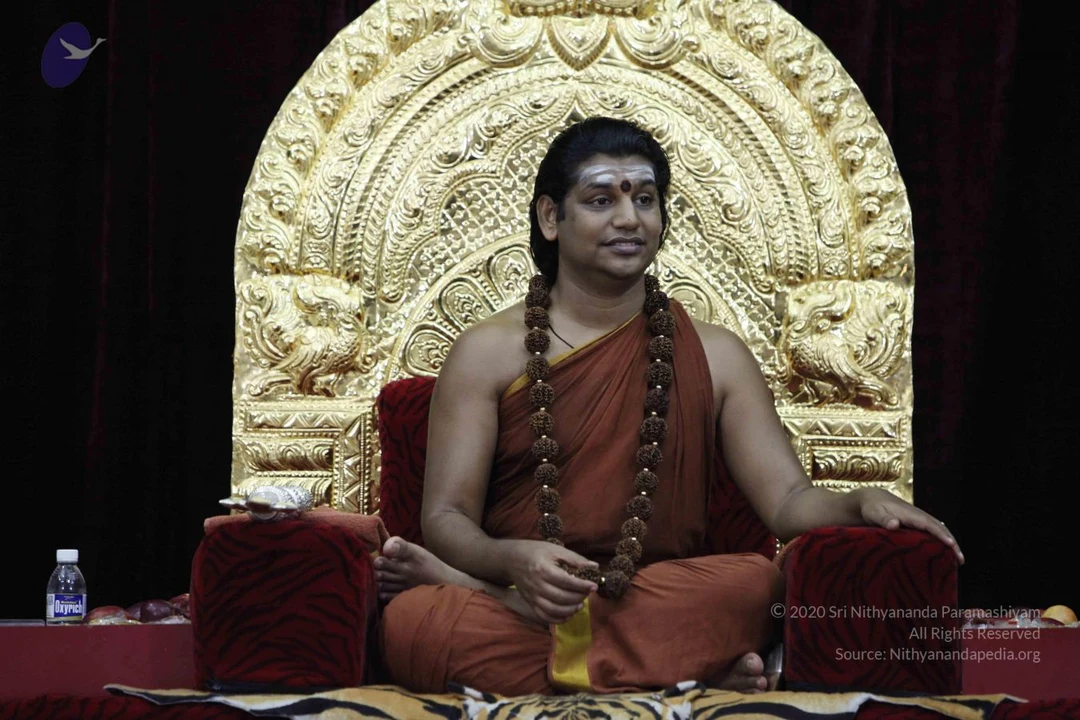
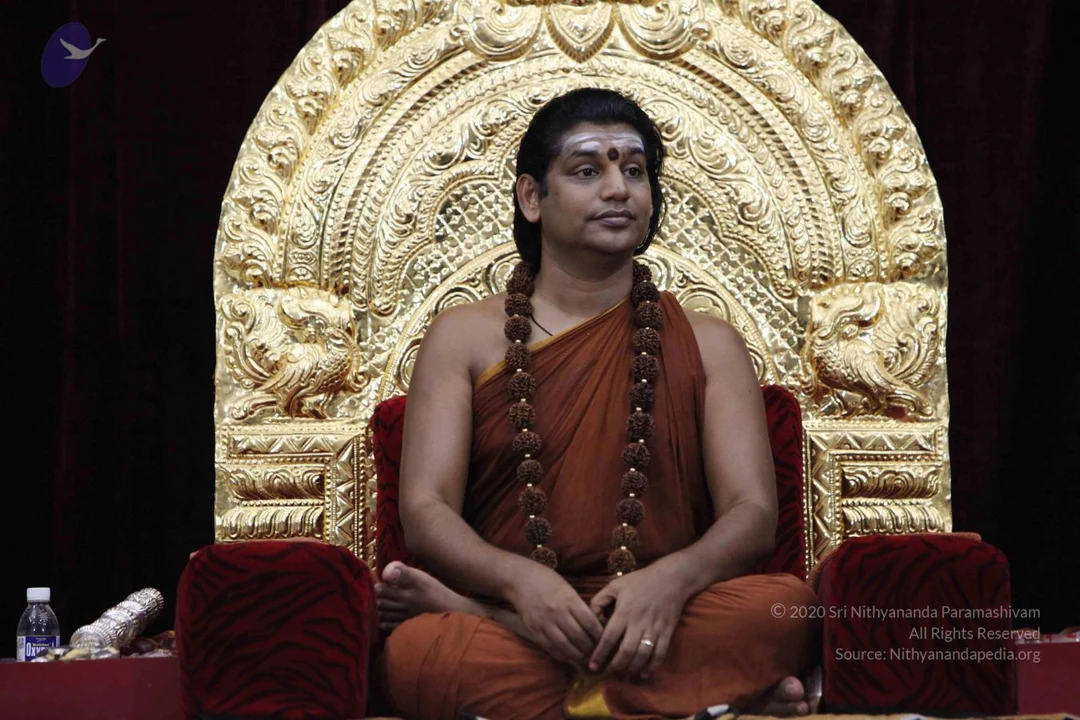
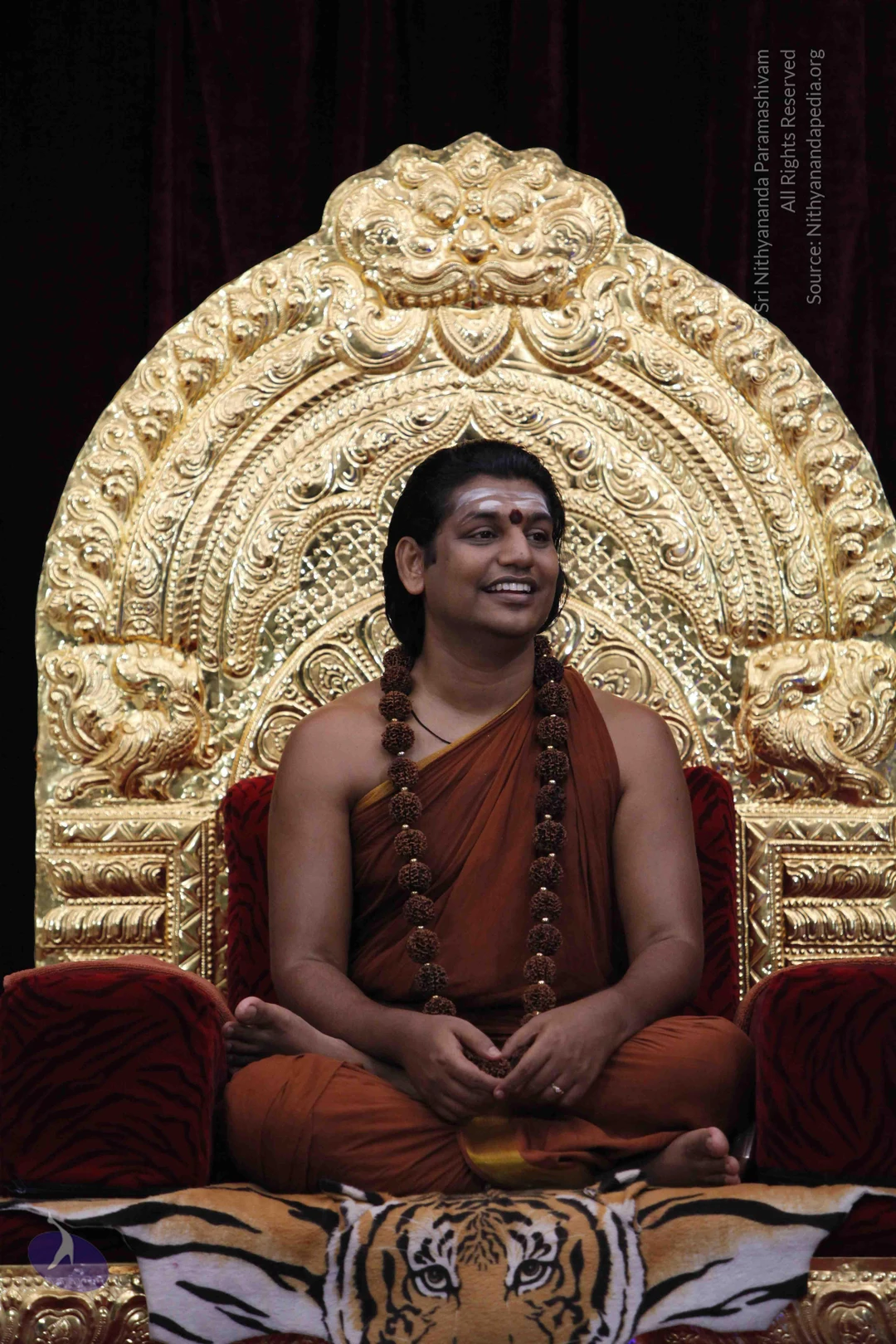
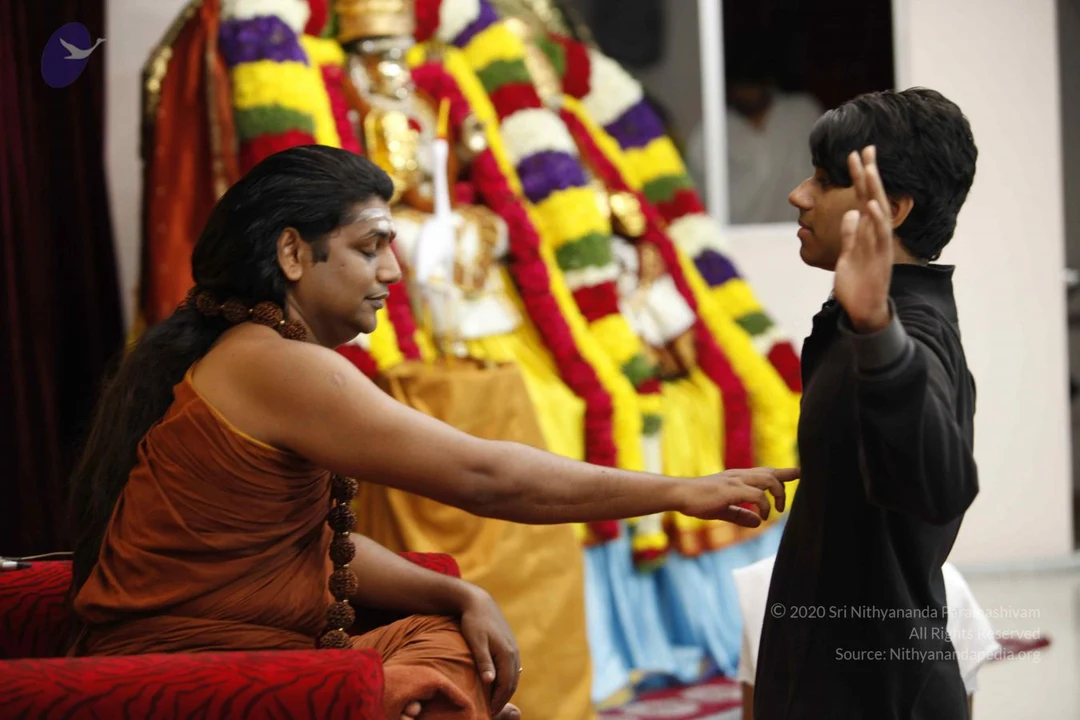
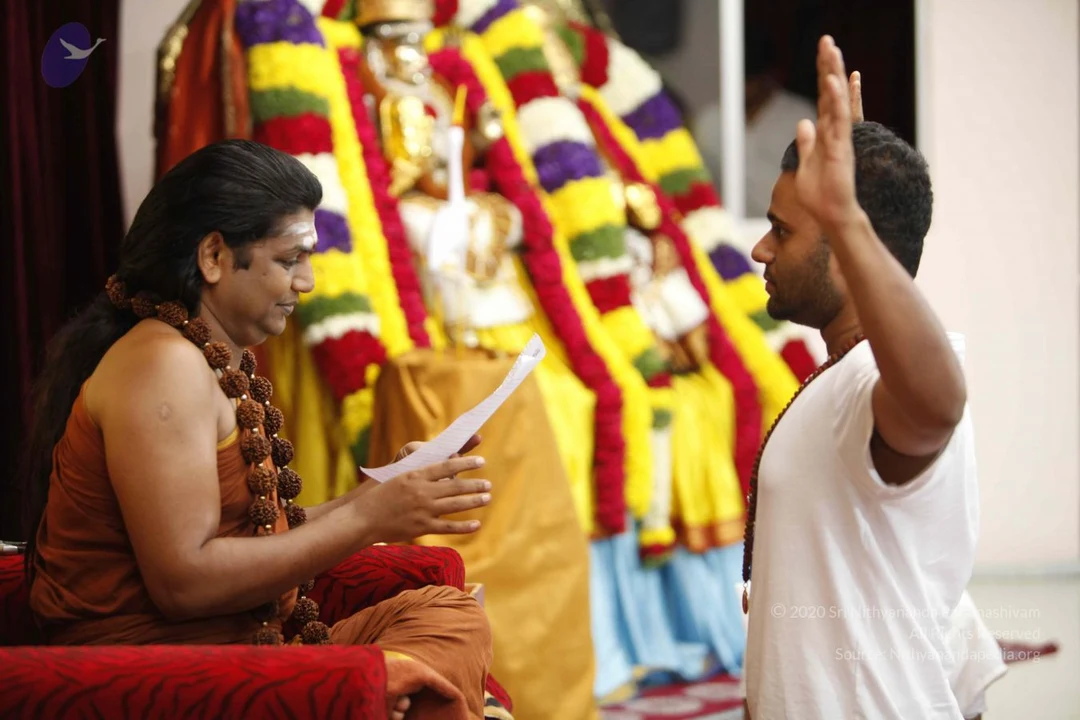
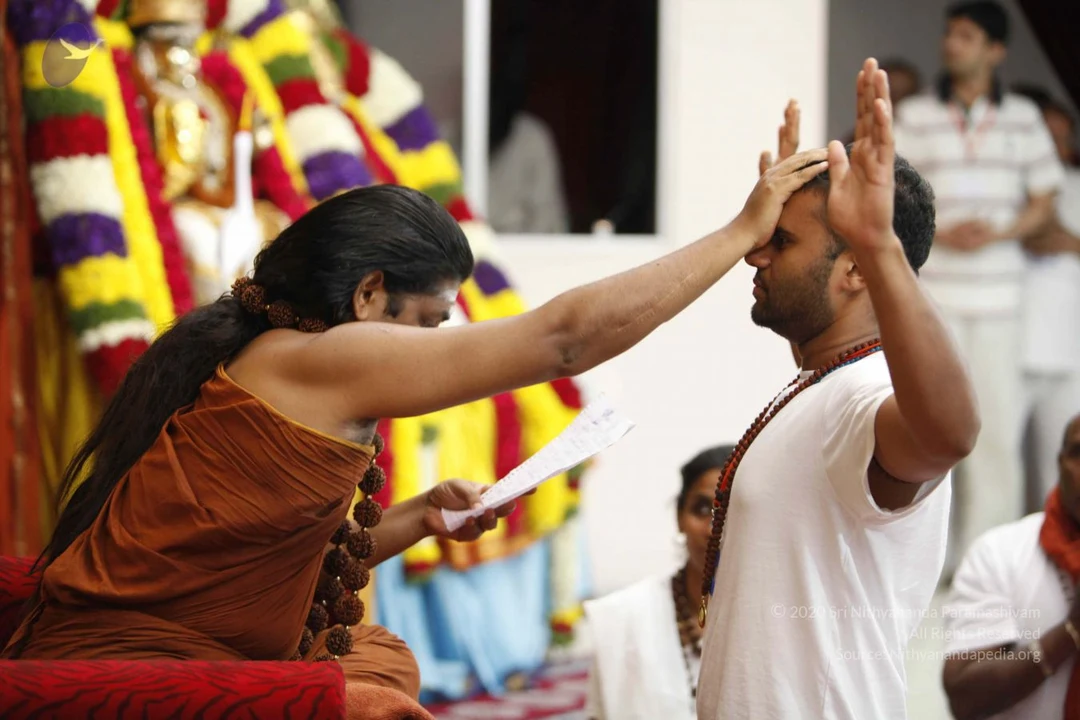
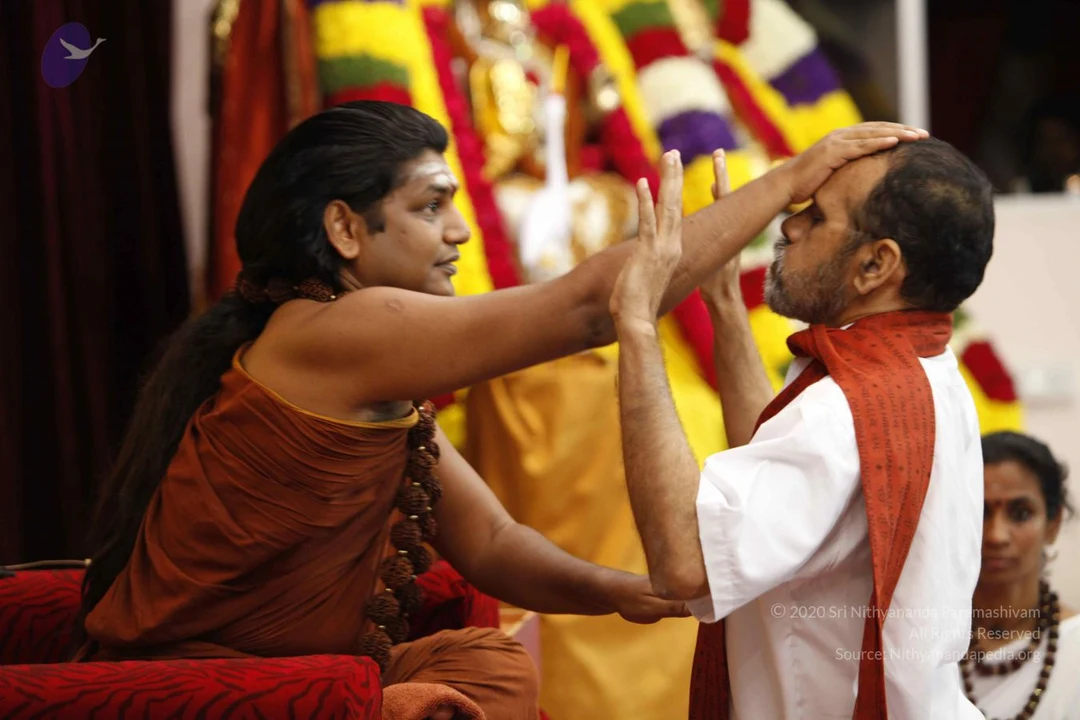
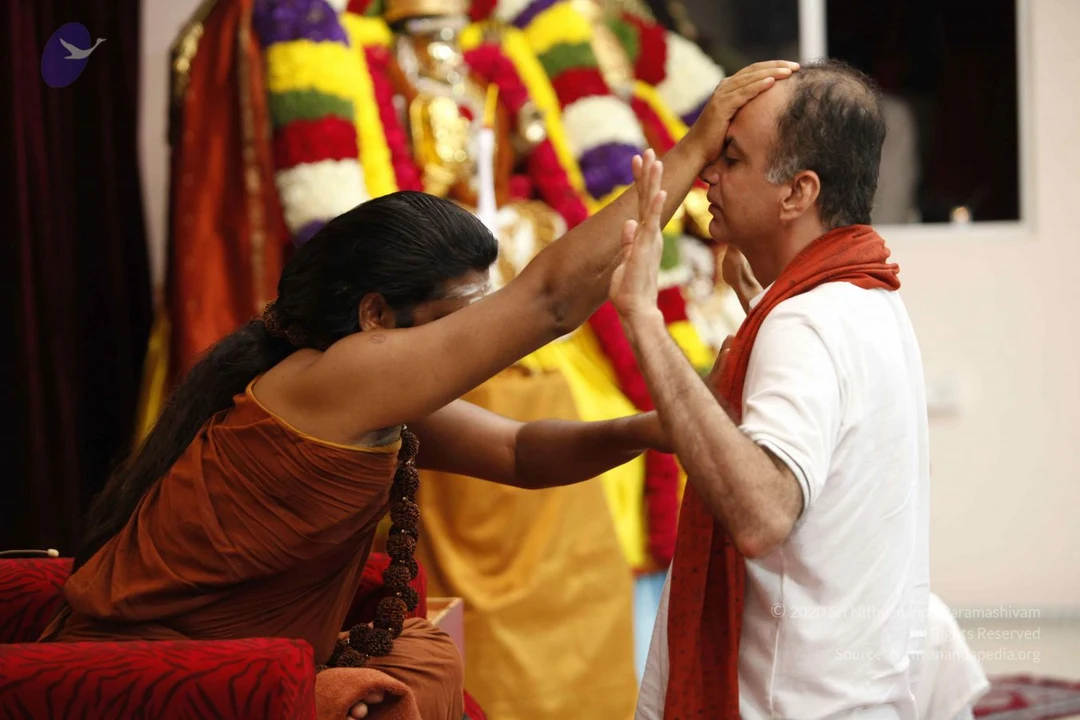
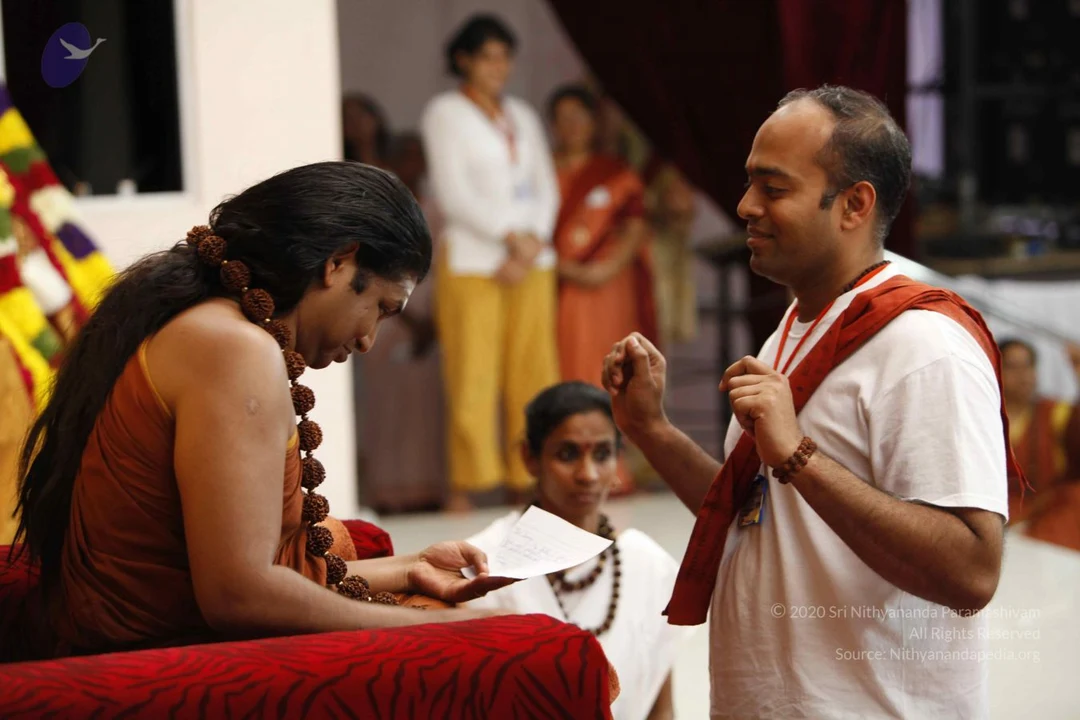
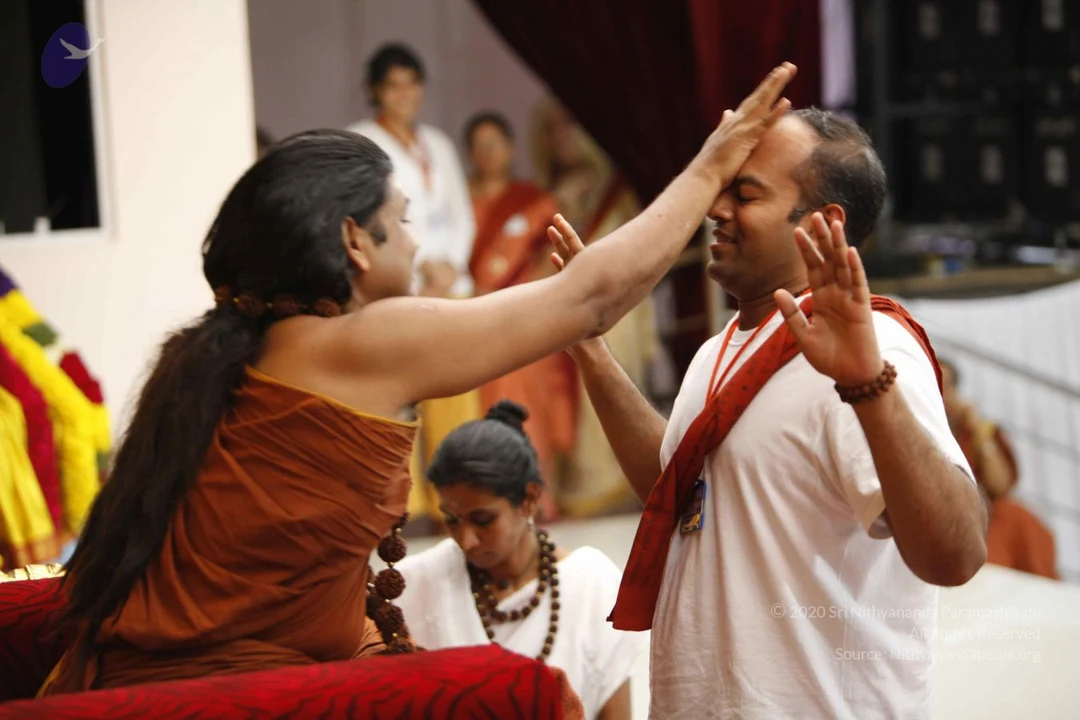
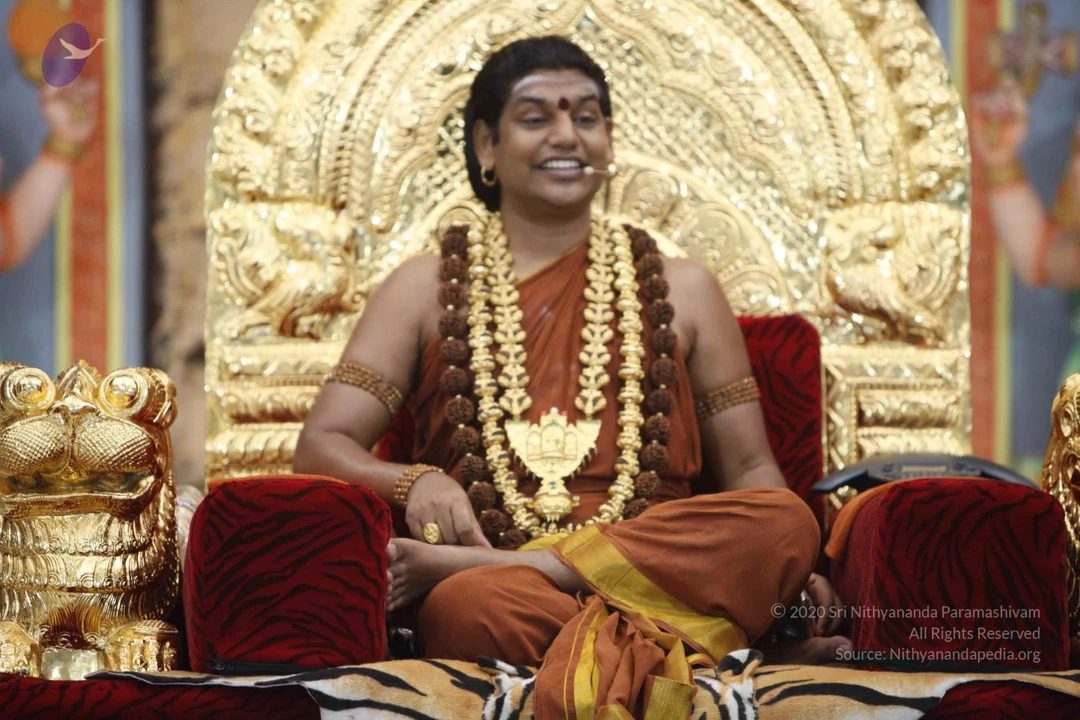
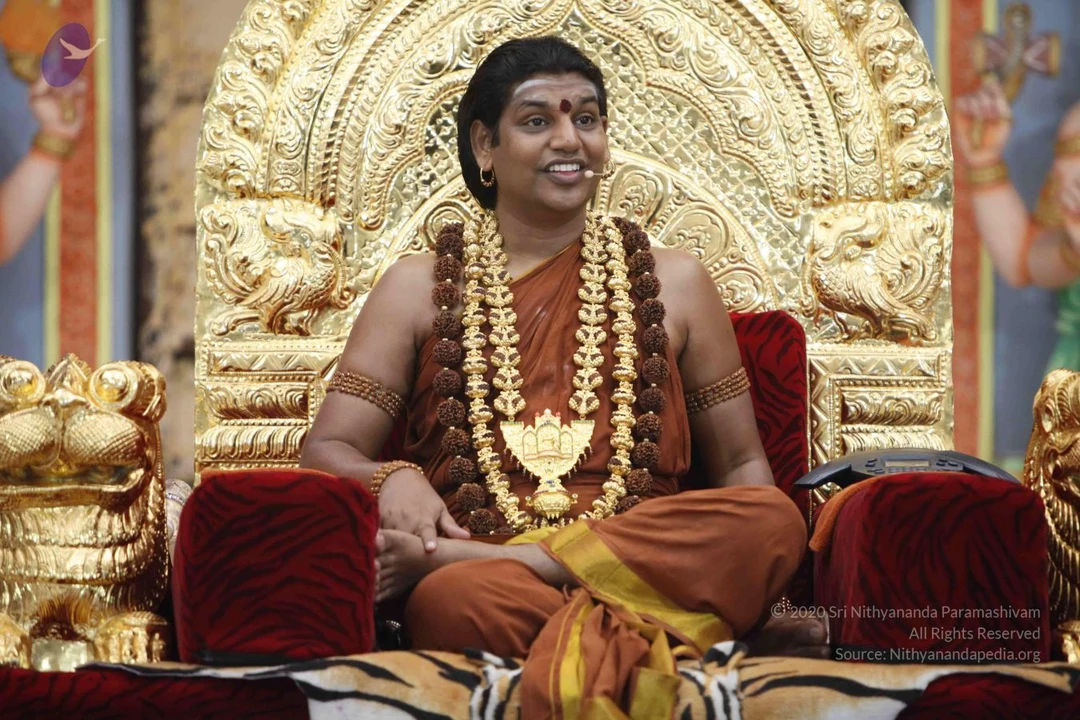
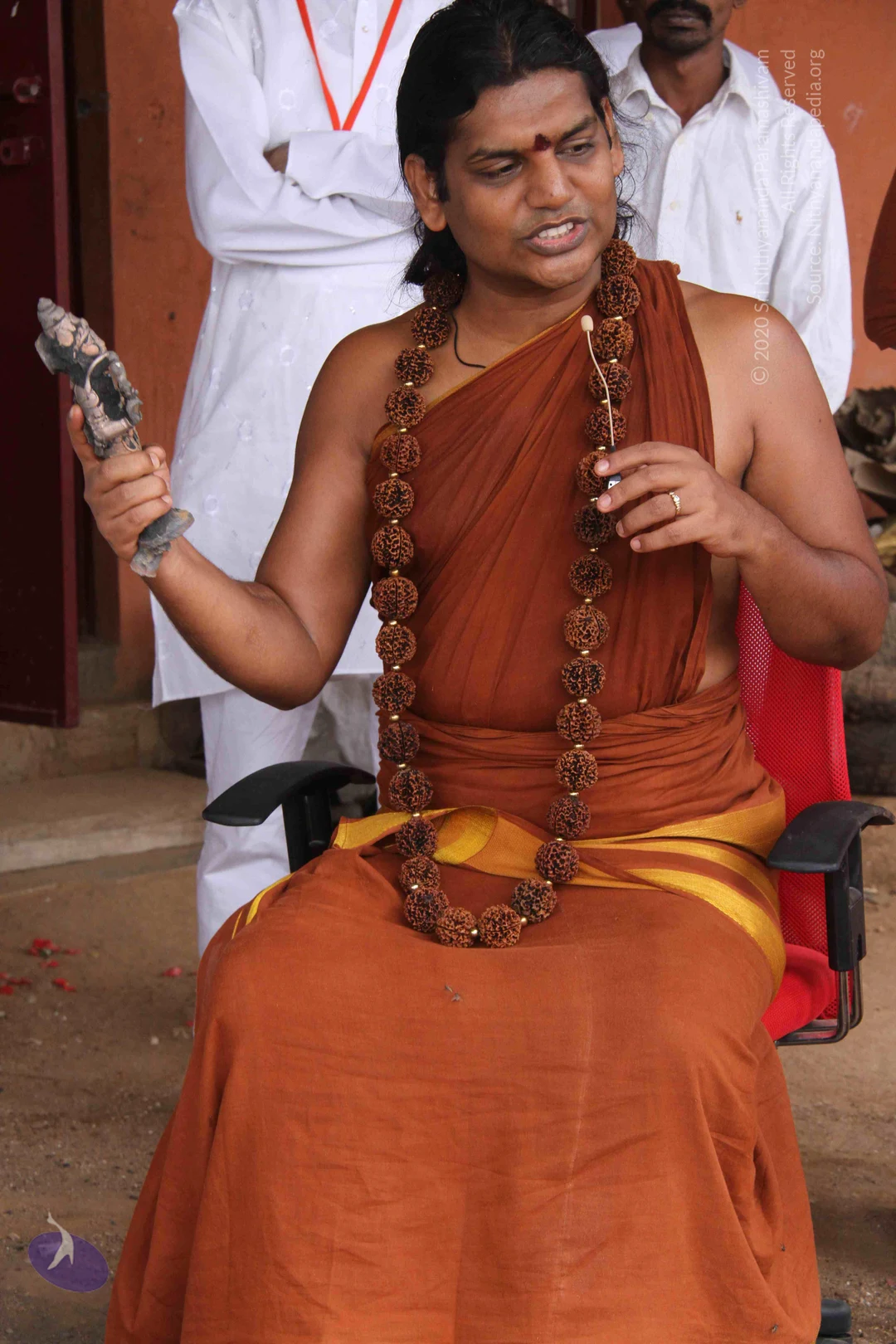
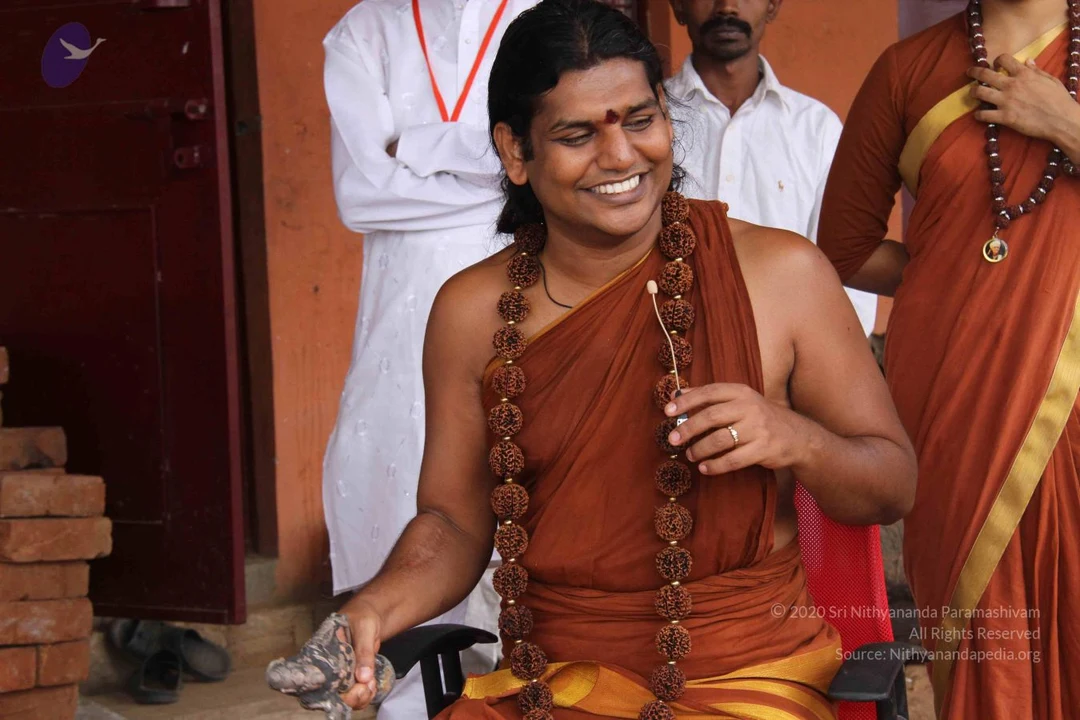
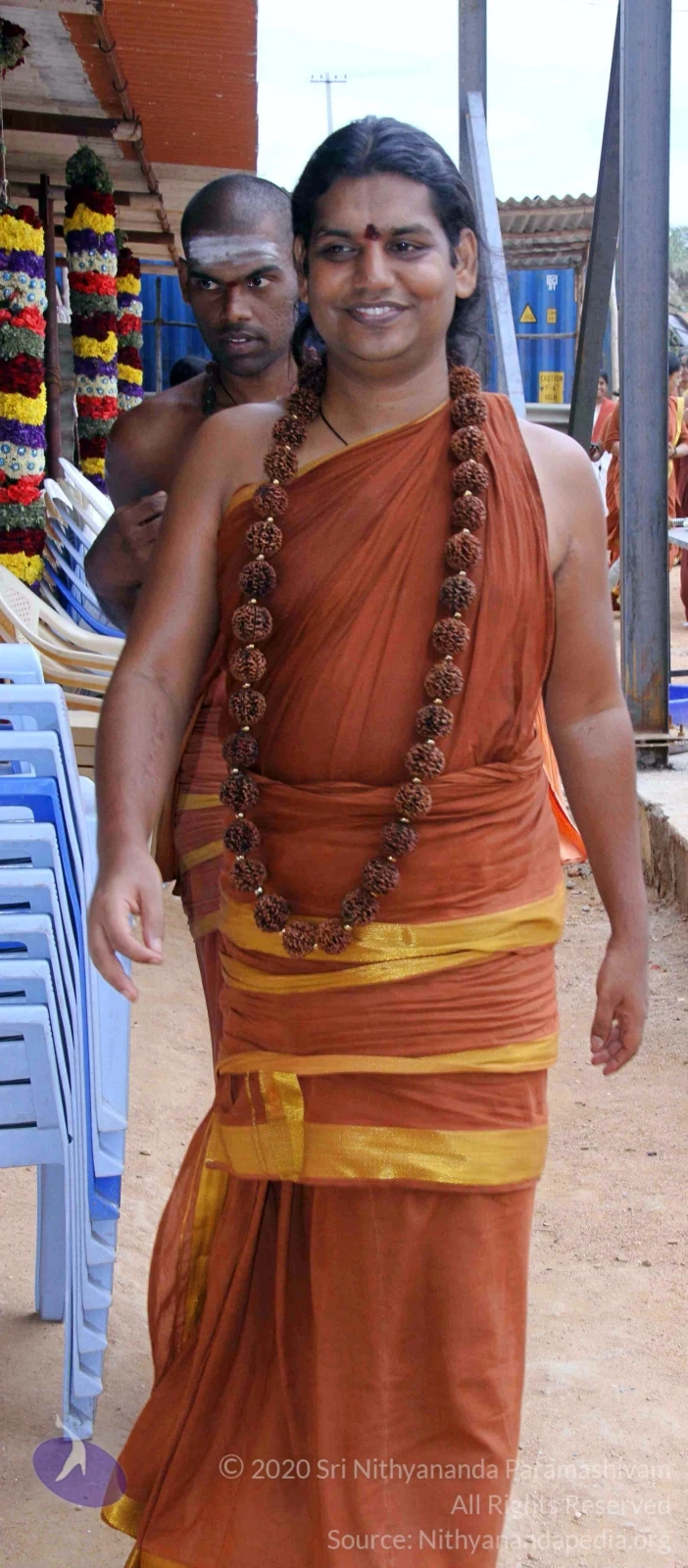
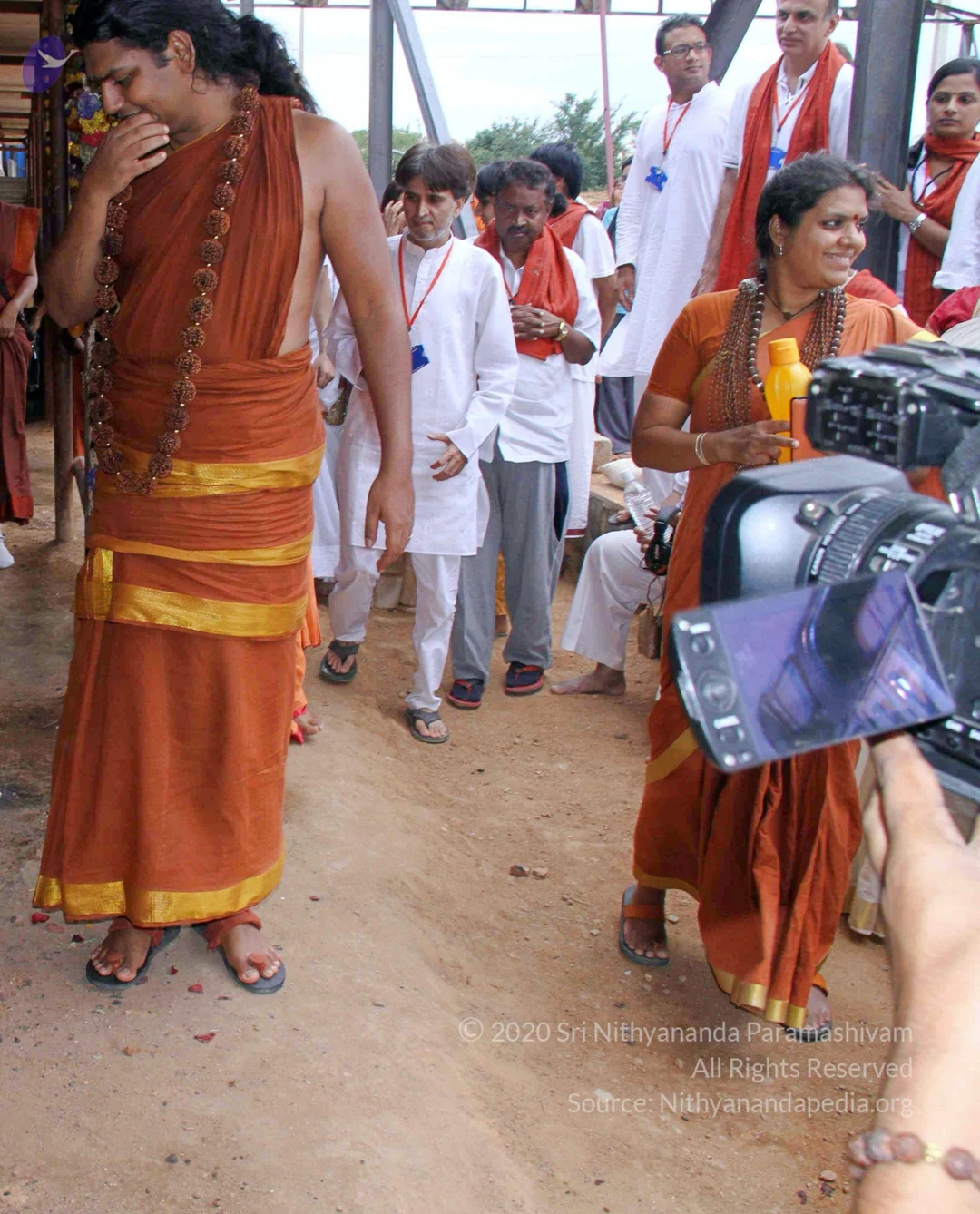
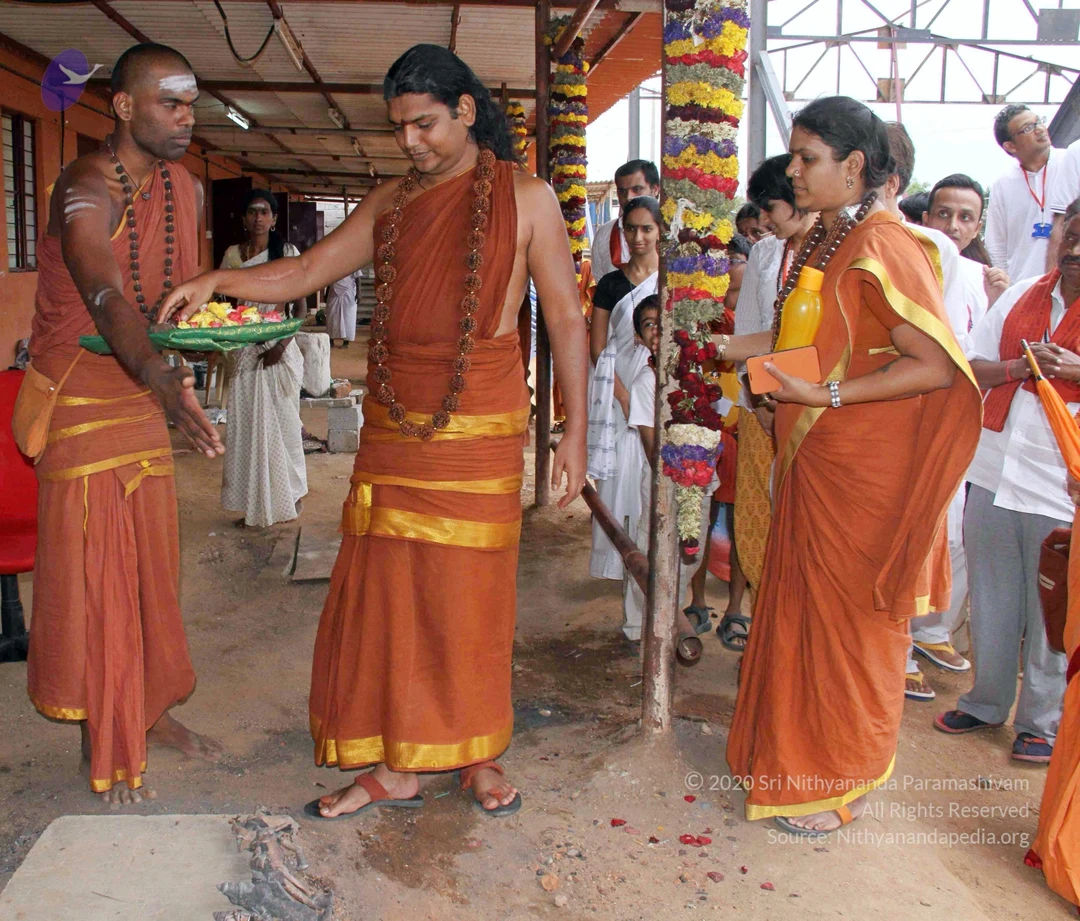
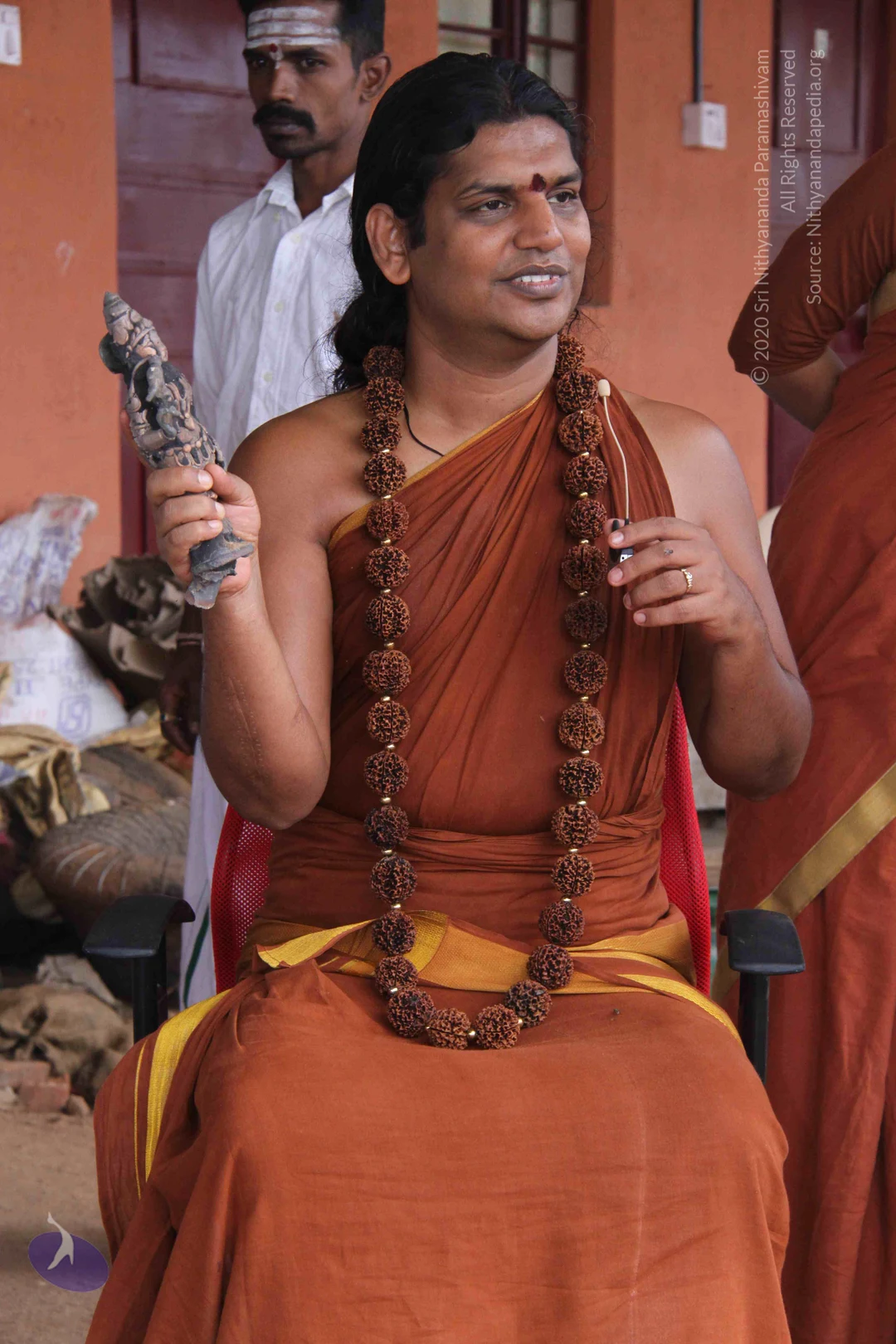
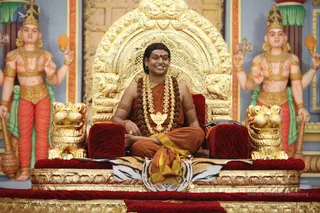
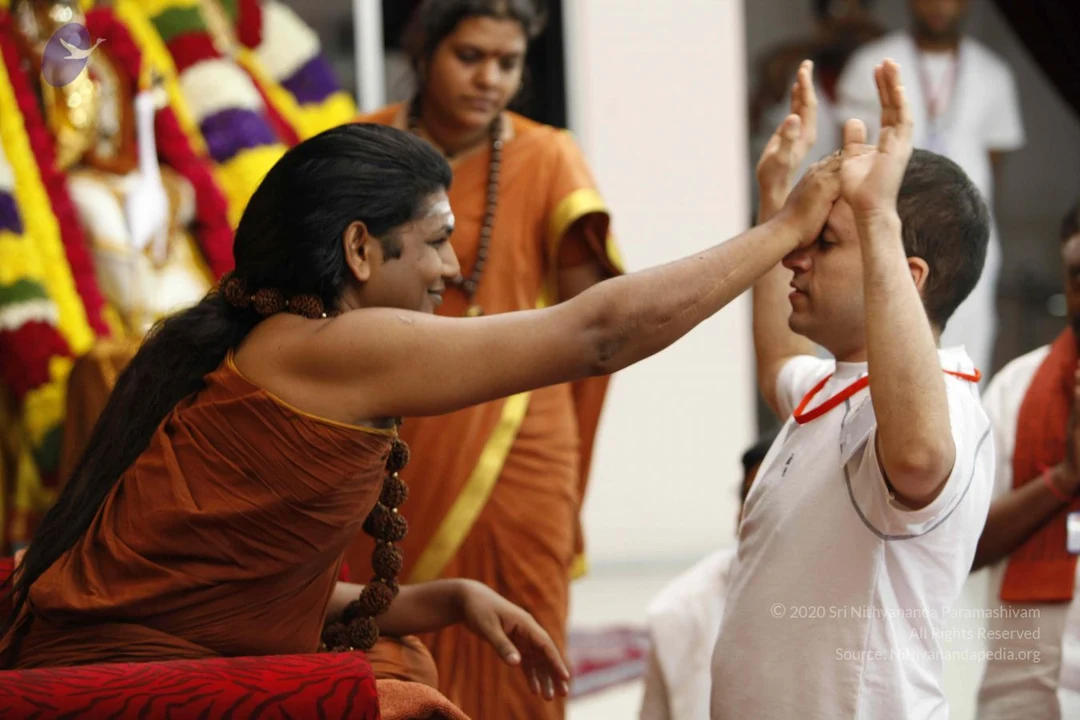
A man seated cross-legged on an ornate golden throne with carved arched backrest and lion figures, against dark red drapery. He wears an orange-saffron cloth draped over his body, a long rudraksha mala of brown beads, a white and red forehead marking, and has his long hair swept back. He gestures with one hand while smiling, with a bottle of water and fruit on a red-draped platform. Swamiji (probable): the description cues are his long swept-back hair, saffron clothing and rudraksha mala seated on a throne.A man sits cross-legged on a red velvet-upholstered seat in front of an ornate gold throne with carved lion-like figures and scrollwork. He is bare-chested apart from a saffron-orange cloth draped over his shoulders, with a yellow edging, and wears a long rudraksha mala of brown beads with a dark bead at the front. He has long dark hair swept back, a red bindi and white horizontal tilak on his forehead, and holds a mala in one hand while the other rests on the armrest. A small silver plate with offerings sits at left, and a dark red curtain forms the background.A seated man in orange-saffron robes sits cross-legged on a red velvet-upholstered throne before an ornate gold arched backdrop carved with lion figures. He wears a long mala of large rudraksha beads across his chest, a white tripundra and red bindi on his forehead, and a yellow sash. His right hand rests on the armrest while his left hand holds a bead strand. A striped tiger-print cloth covers the dais, with a water bottle and fruit at the side and a dark red curtain behind. Probable Swamiji (probable) seated on the throne, with long swept-back hair, saffron robes and rudraksha mala cues. No other people are visible.A seated man in saffron-orange robes sits cross-legged on an ornate gold-leaf throne with a carved arched back and lion-head motifs, upholstered in red tiger-striped fabric. He has long swept-back dark hair, a red bindi and white vibhuti lines on his forehead, and wears a long rudraksha mala of brown beads over his bare shoulder. His hands rest together in his lap and he smiles while looking off to one side. A tiger-face rug lies draped over the base of the throne. Appearance-based cues (long swept-back hair, saffron robes, rudraksha mala, throne) suggest Swamiji (probable), with identity uncertain.A seated saffron-robed figure with long dark hair tied back, a horizontal white forehead mark, and a long rudraksha mala draped over the chest sits on a red cushioned seat and extends a hand toward a standing man in a white kurta with a red cord around his neck. The standing man, with his palms raised toward the seated figure, appears to be receiving a blessing or sacred gesture in front of a backdrop of yellow, red, purple and green floral garlands and a gold-coloured deity murti. A second man in white stands at the right edge, and a partially visible person in white is at the bottom of the frame.A photograph of a long-haired figure in a saffron-orange robe and a rudraksha mala, seated and reaching forward to place a hand on the head of a man in a white shirt and white trousers, who bows with his arm raised. Behind them, a deity murti is decorated with colourful garlands in yellow, red, purple and green, and a woman in white stands nearby. Another man in white with a red shawl stands in the background. The figure in saffron appears to be Swamiji (probable), based on the long swept-back hair, saffron robe and rudraksha mala. The scene suggests a blessing or padapuja-style ritual.

LEELA ALANKAR
4 photosSource gallery
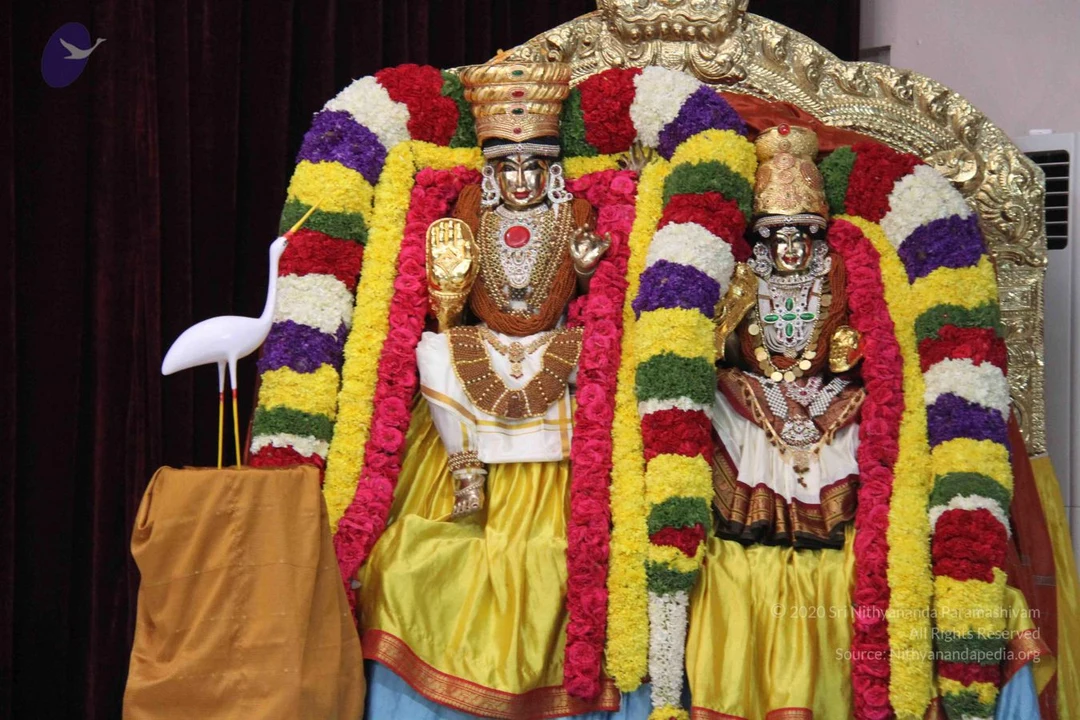
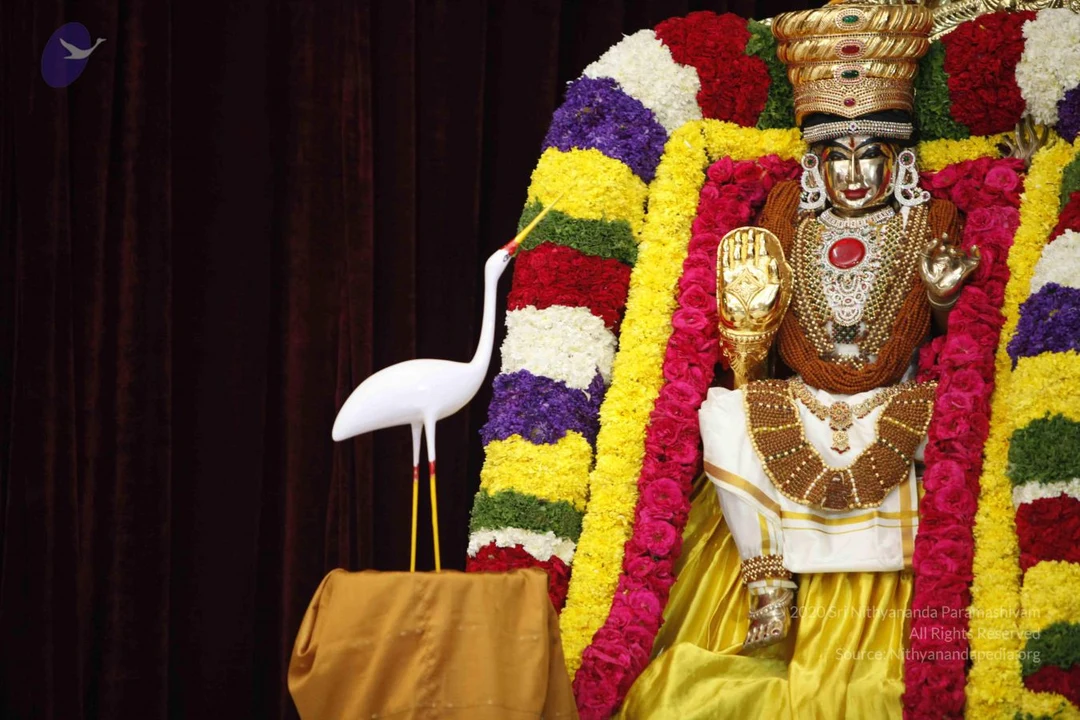
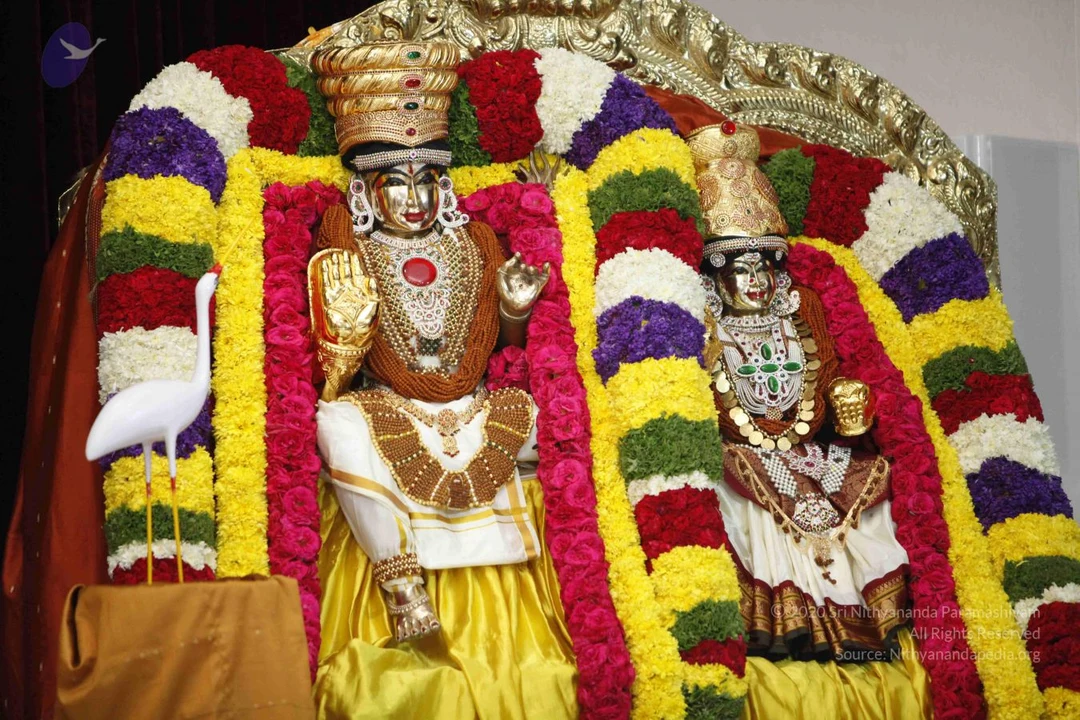
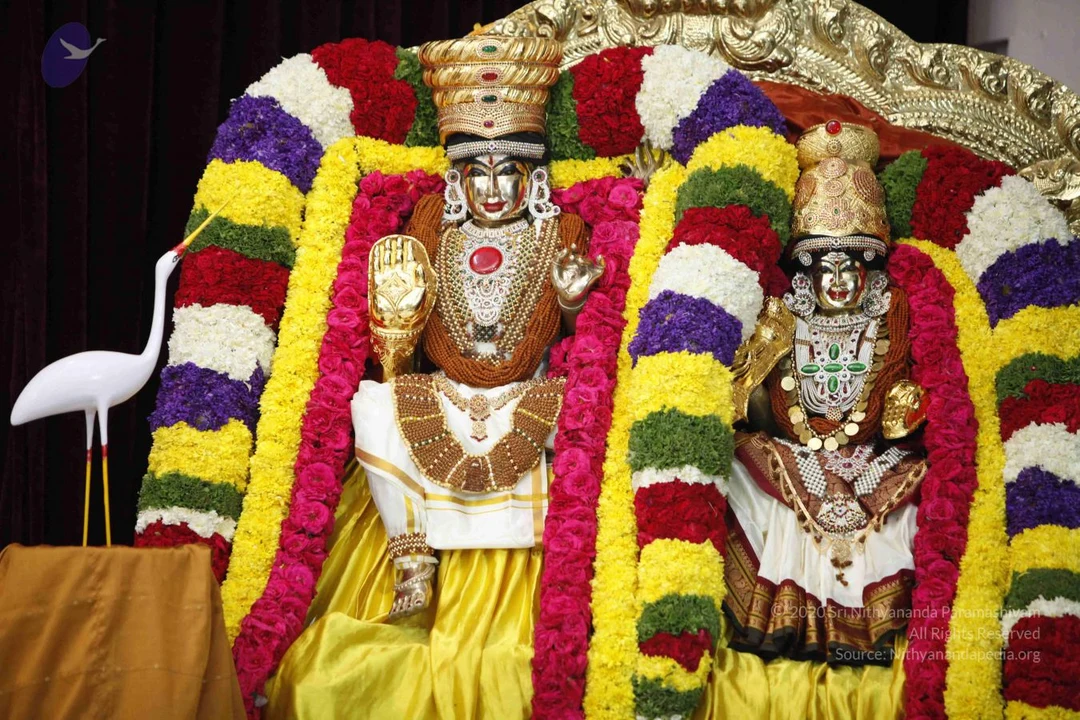
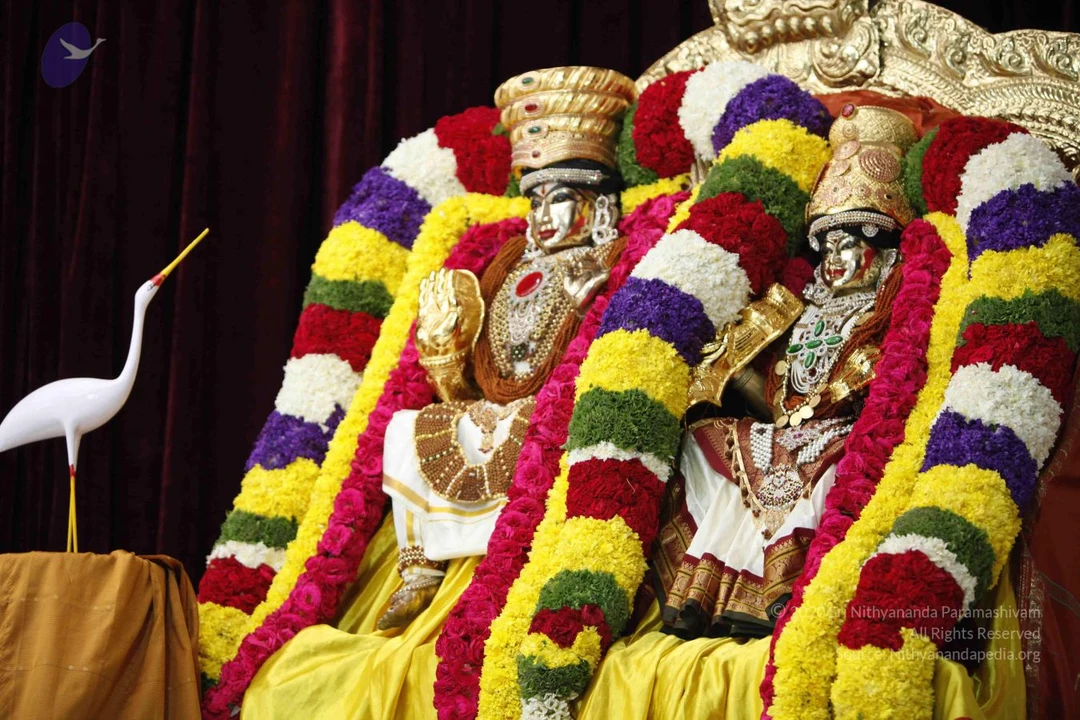
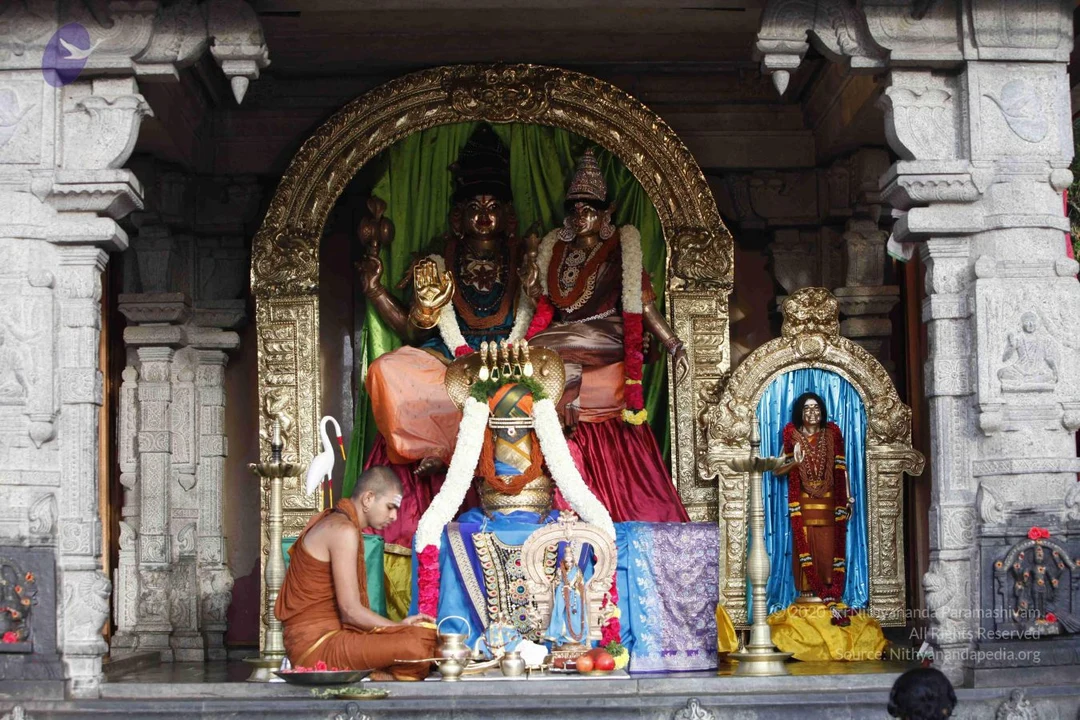
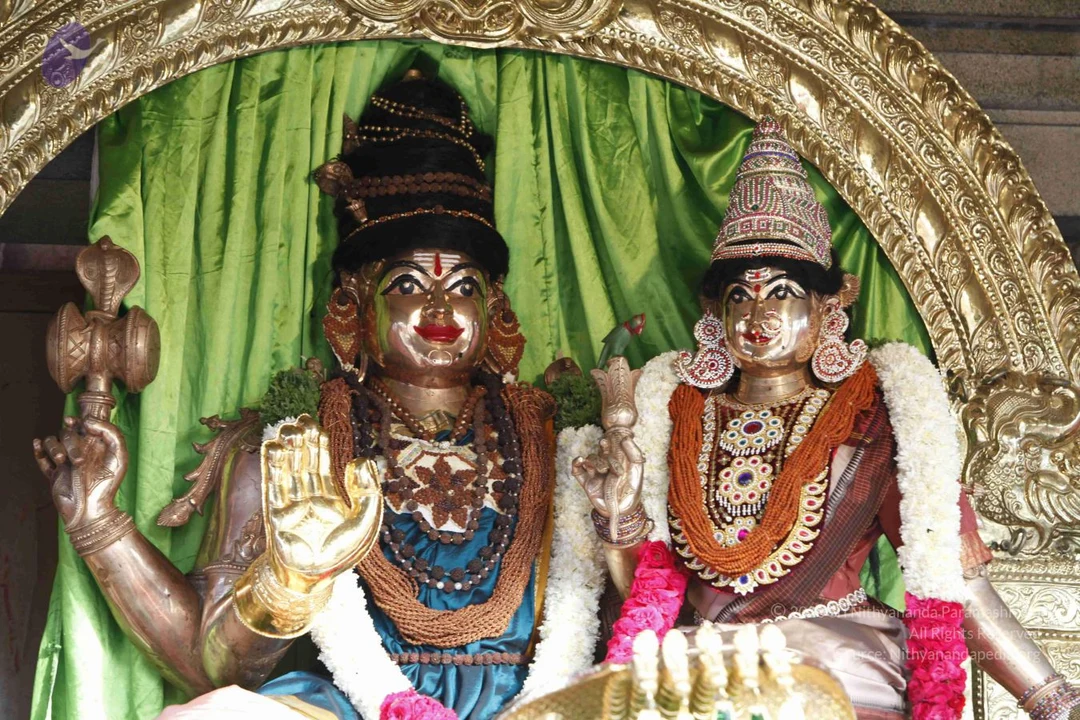
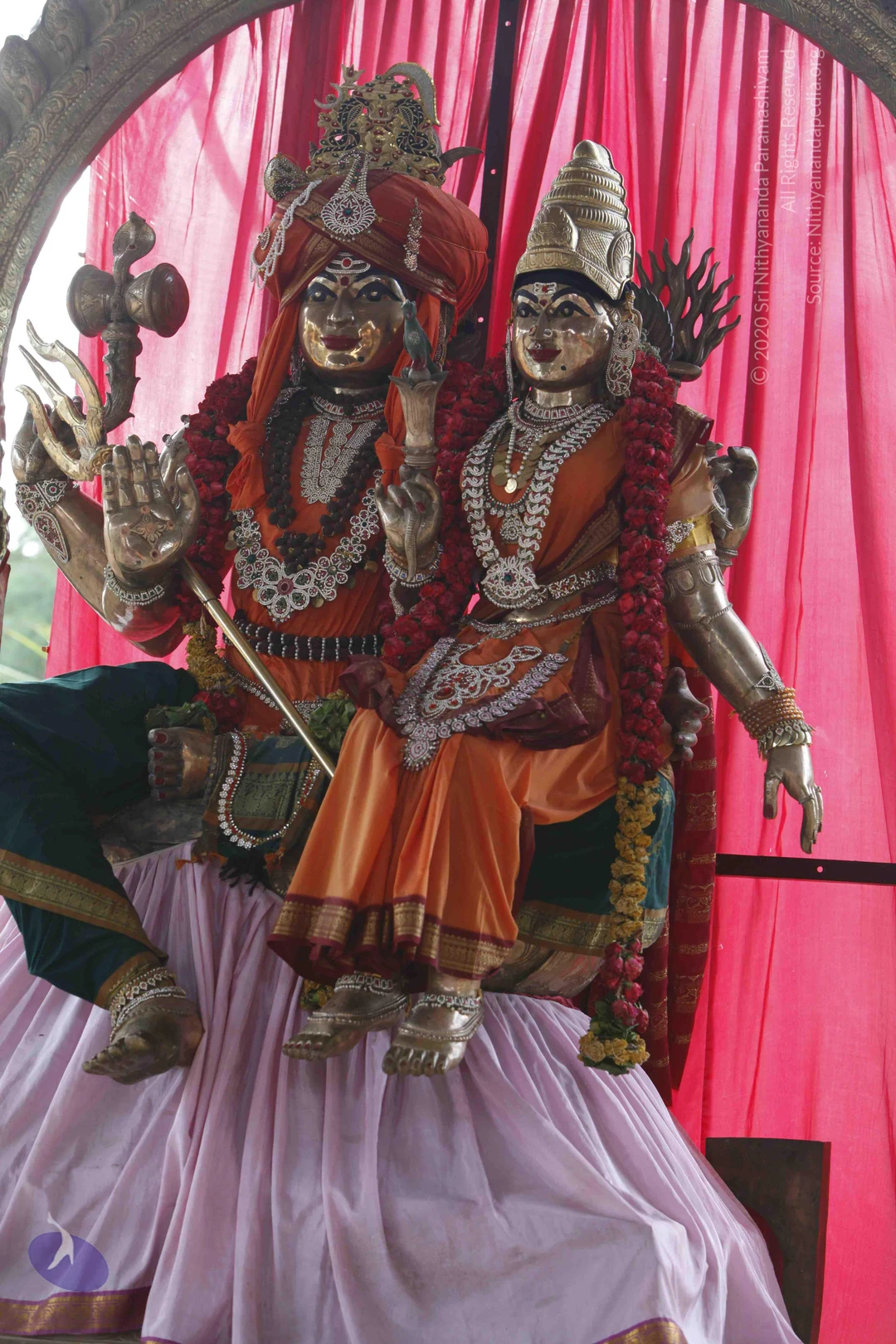
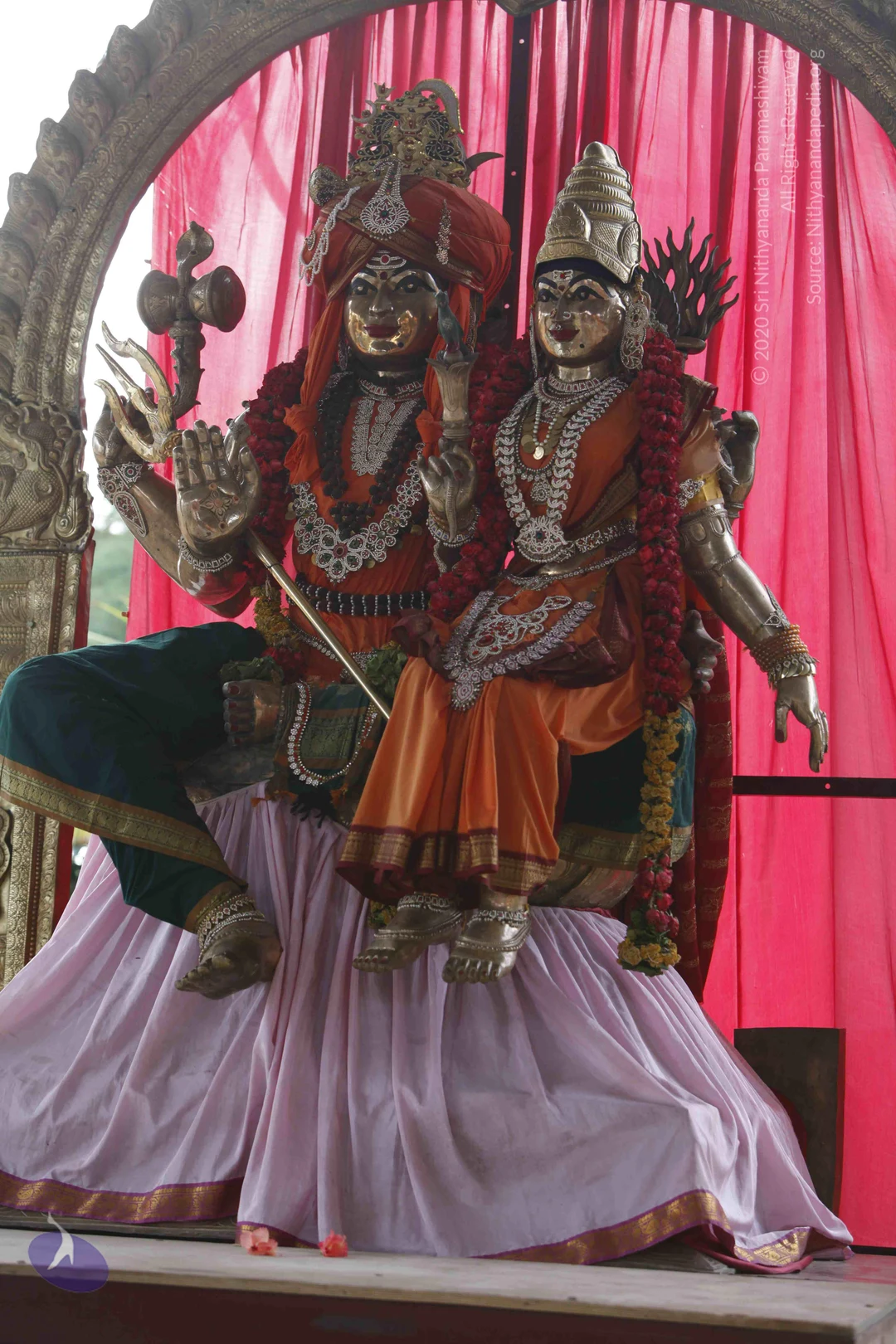
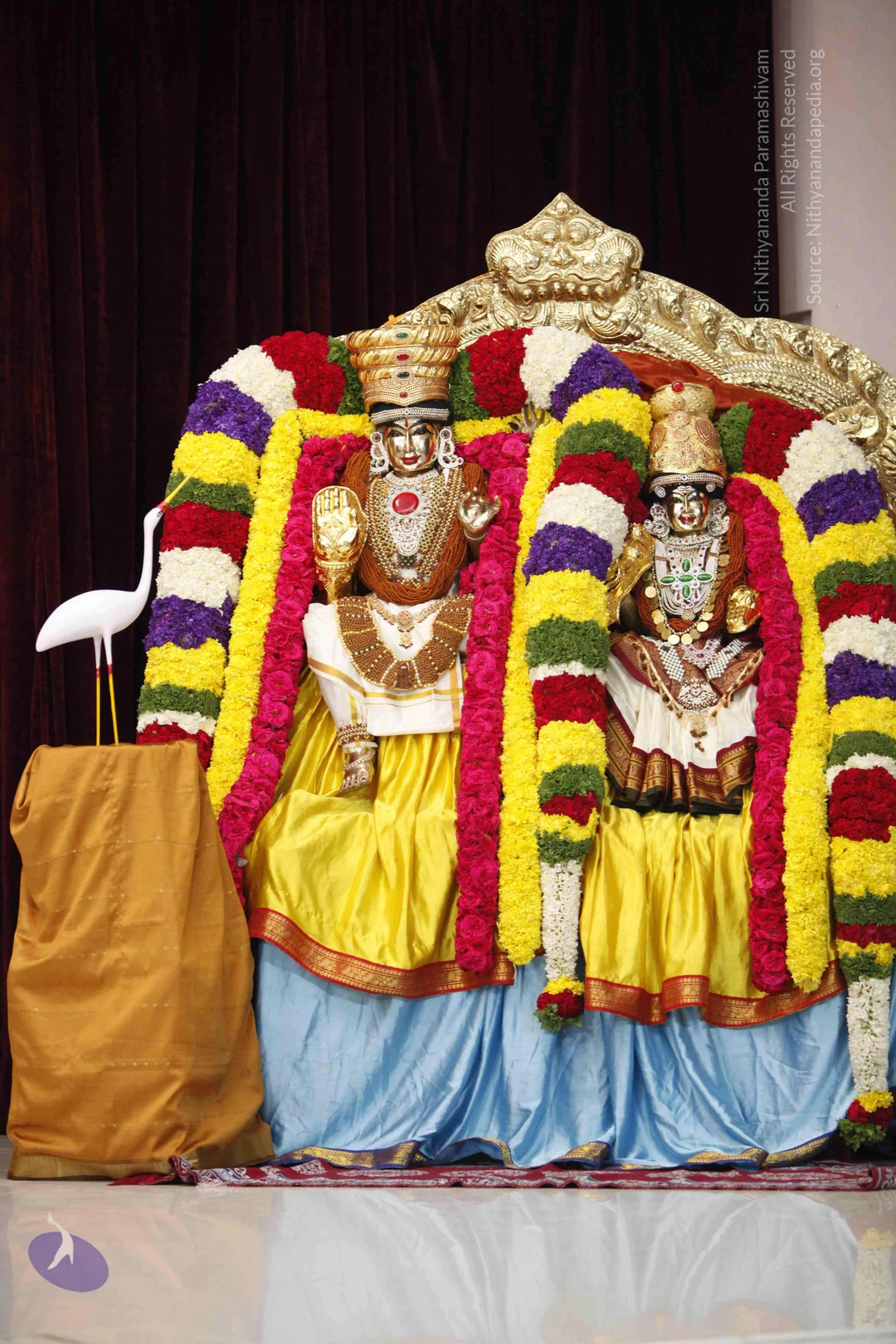
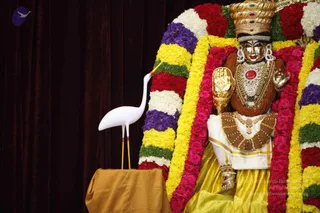
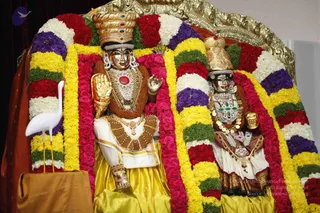
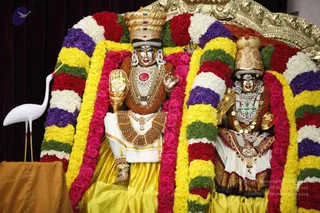
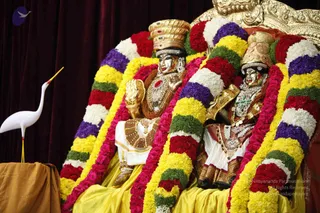
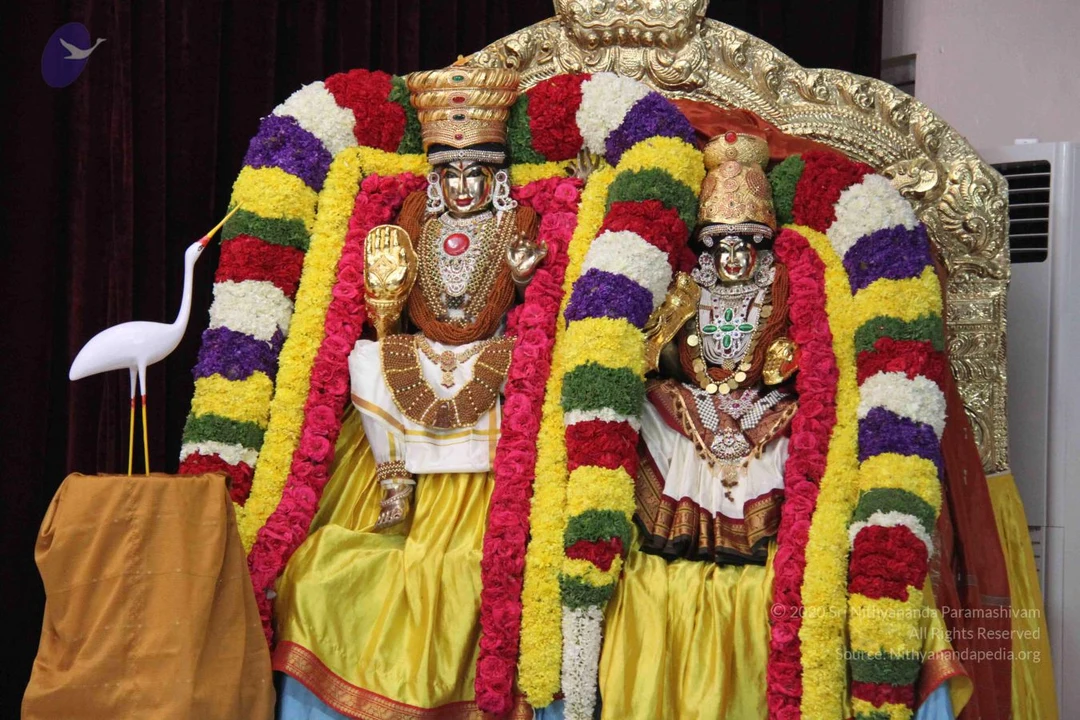
A golden deity murti is decorated for alankar with a tall jeweled crown, a red gemstone pendant and layered gold necklaces, seated on a yellow silk cloth. Thick garlands of yellow, white, red, pink and purple flowers frame the figure against dark maroon drapery. A white crane figure with red legs stands on a gold-draped stand at left. The deity's hands are raised in gold-tipped mudras. No physical people are visible.Two metallic deity murti figures are seated side by side on a golden peetha, richly decorated for a leela alankar. The figure on the left wears a tall gold crown set with red and green stones, a gold-and-white garment with gold bands, layered gold necklaces and a gold arm ornament, and raises one hand in abhaya gesture. The figure on the right wears a gold crown, a white and gold-patterned dress and necklaces with green stones. Both are framed by thick garlands in purple, yellow, green, red, white and pink flowers, with a white stork figure and a gold arched backdrop behind them. No people are visible.Two gilded deity murtis of Shiva and Parvati are seated side by side in a richly decorated alcove framed with garlands of yellow, white, purple, red and pink flowers. The figure on the left wears a tall gold crown set with red and green stones, a red central stone necklace, layered pearl and gold jewellery, a rudraksha-style brown bead garland and a white and gold dhoti over a yellow silk skirt. The figure on the right wears a gold crown, green stone necklaces, and a brown and gold sari-style garment. A white crane figurine stands on a gold cloth at the left edge. This is a leela alankar style decoration of the murtis, with no people visible.Two ornate metal murtis of a divine couple sit side by side on a golden throne, draped in dense garlands of yellow, red, purple, green and white flowers. The figure on the left wears a gold crown set with red and green stones, a red central pendant and layered beaded necklaces, and holds a golden hand gesture. The figure on the right wears a gold crown, green stone jewellery and a patterned red and gold garment over a white dhoti. A white crane statue stands to the left against a dark red velvet curtain, and a gold cloth covers the base. No physical people are visible.

MAHESHWARA POOJA
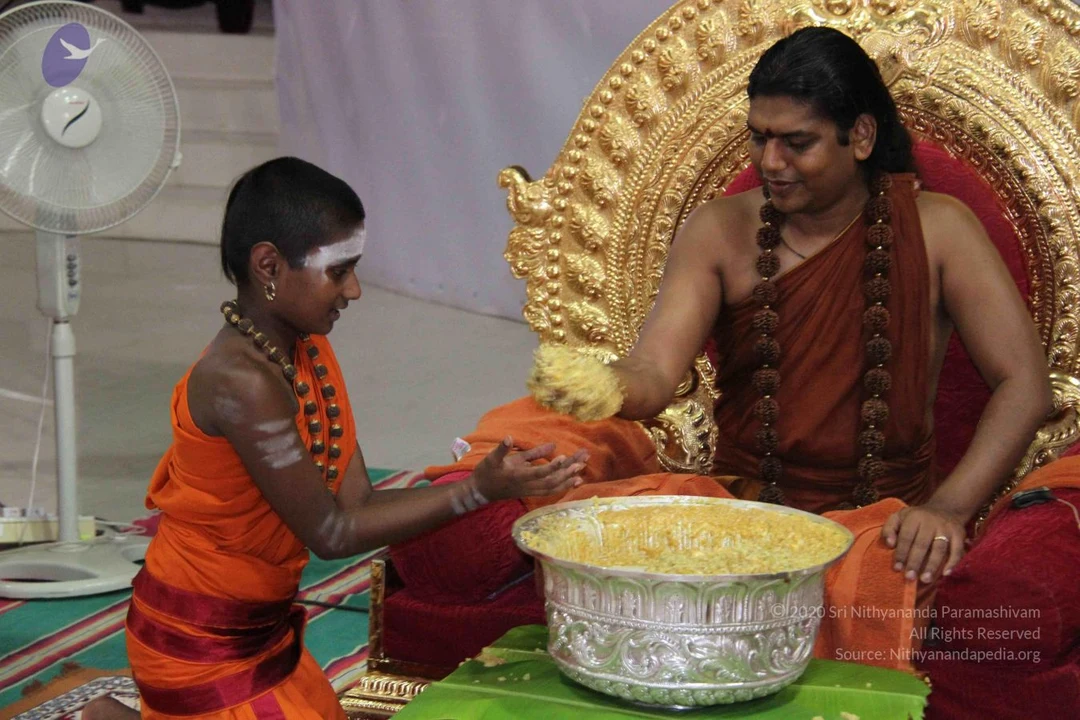
148 photosSource gallery
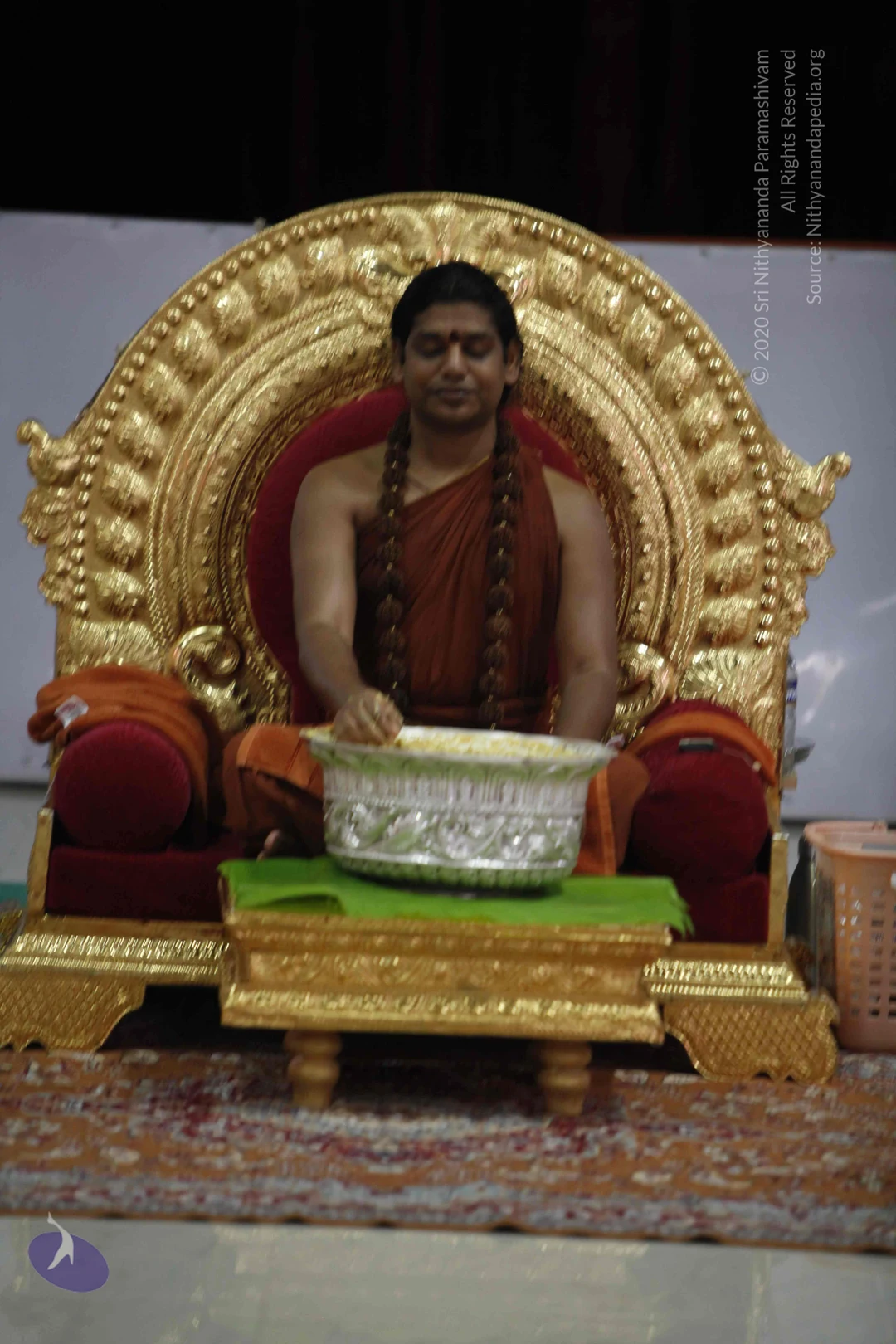
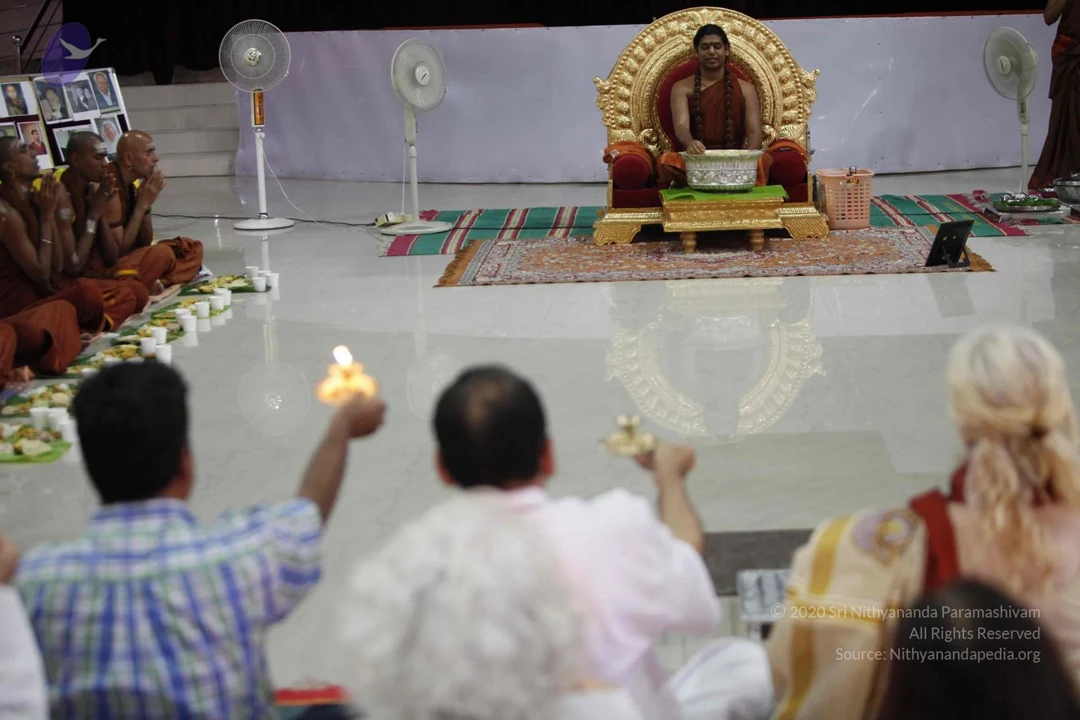
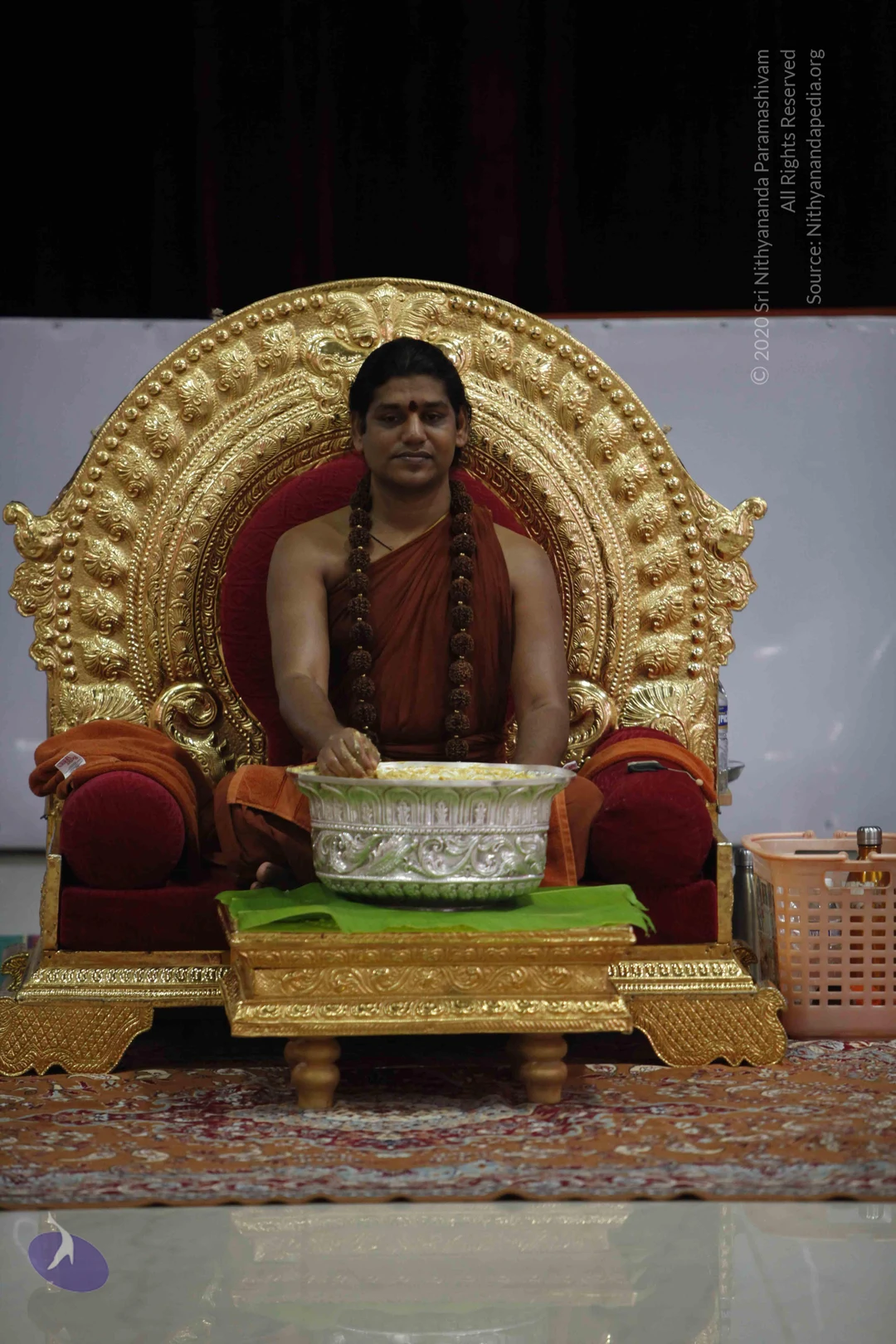
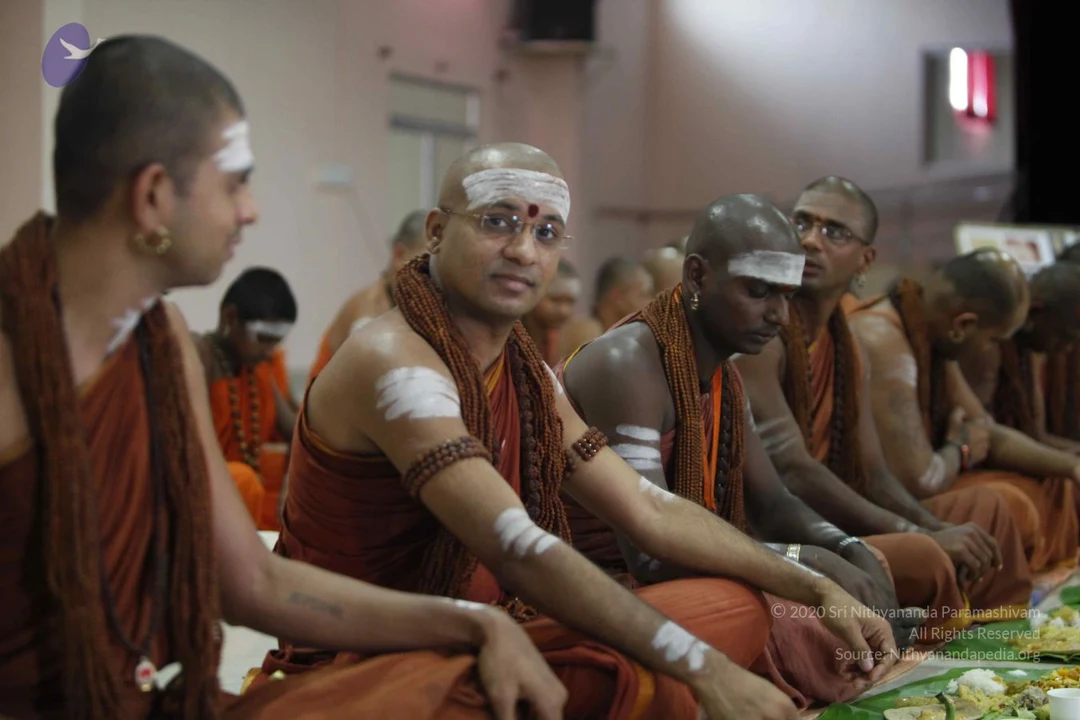
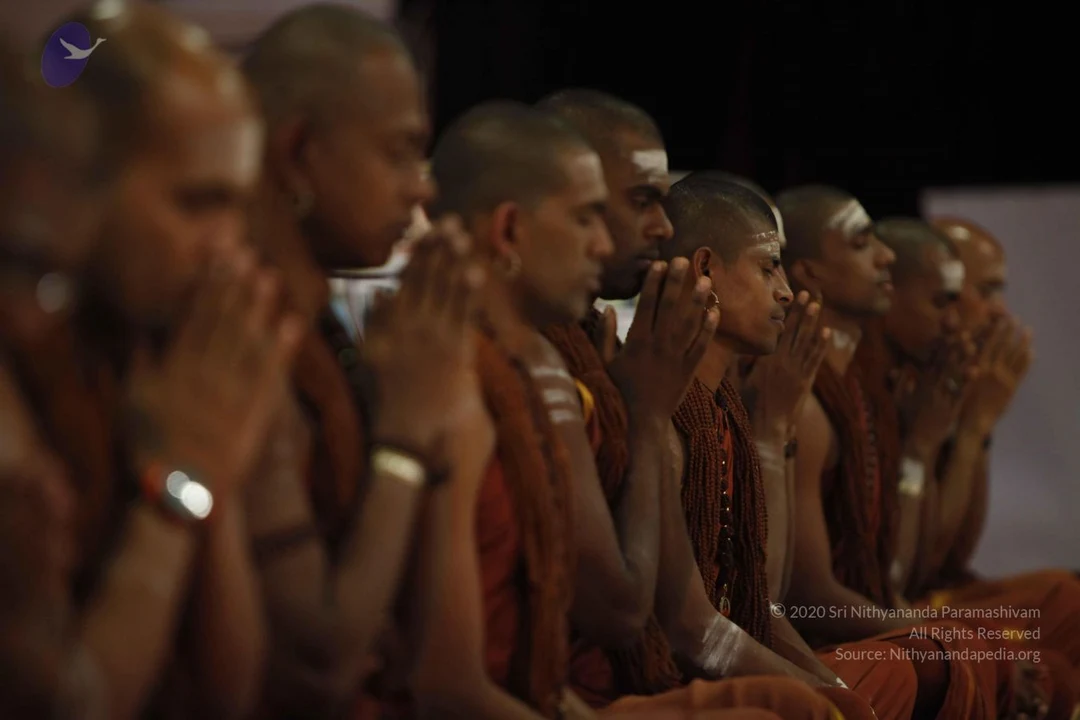
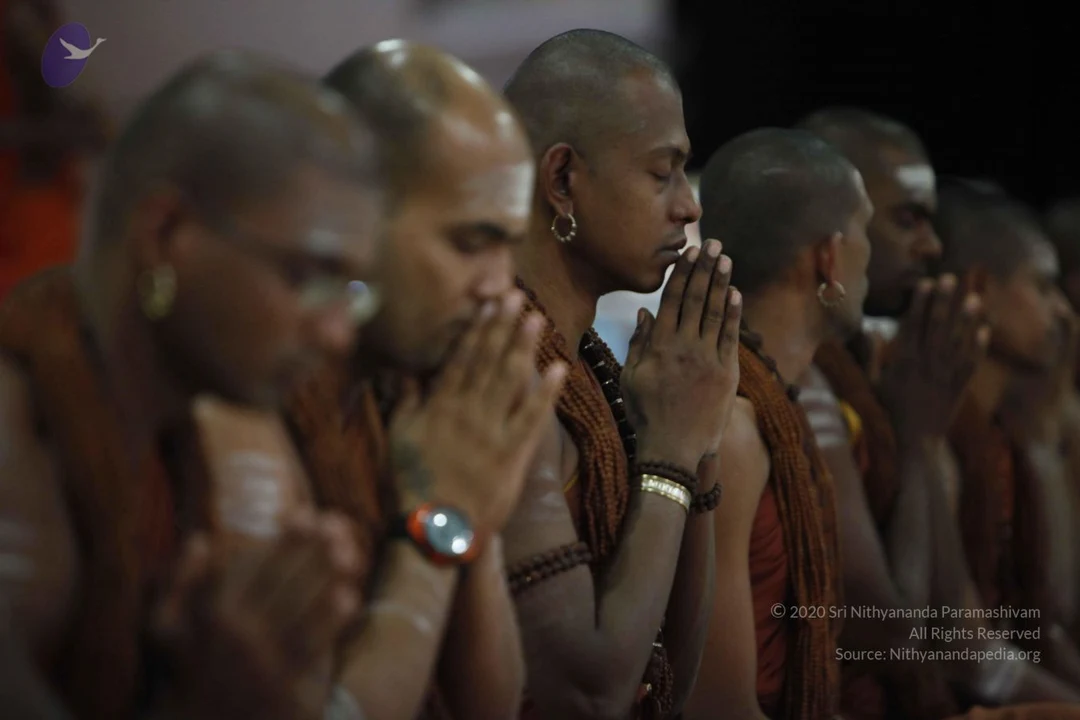
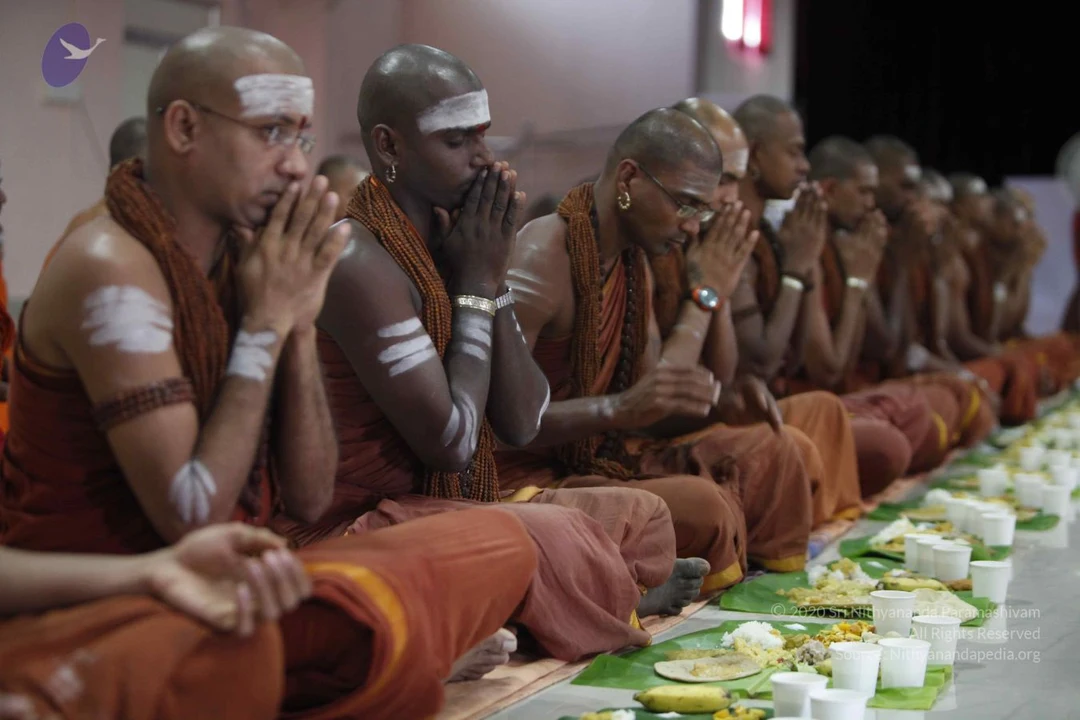
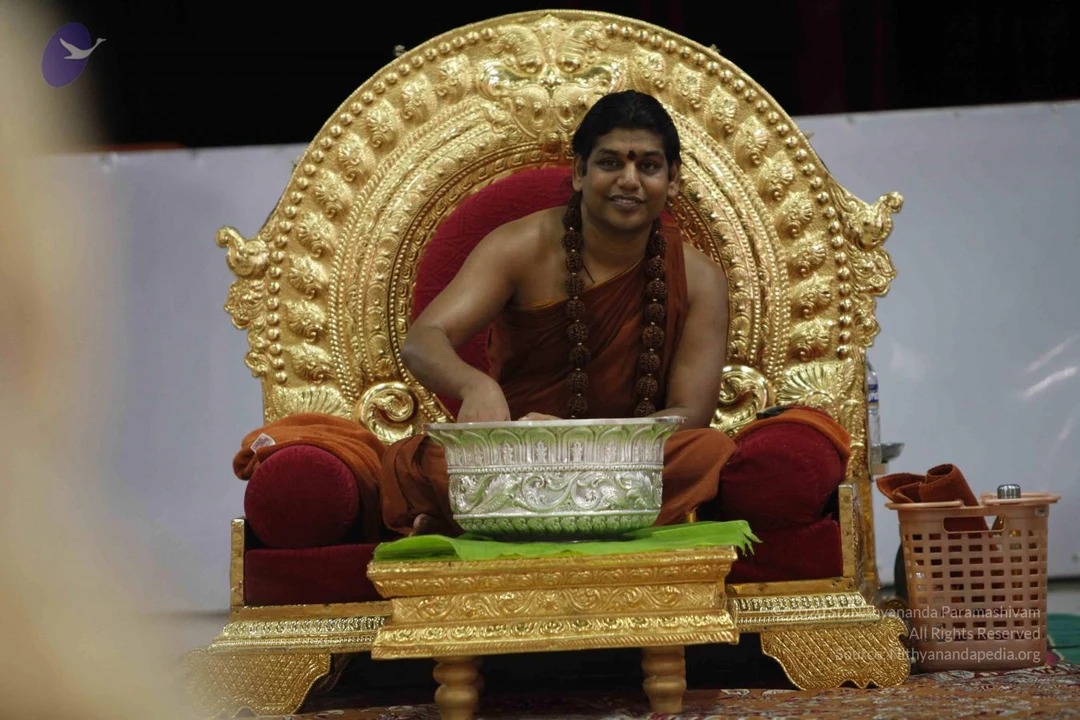
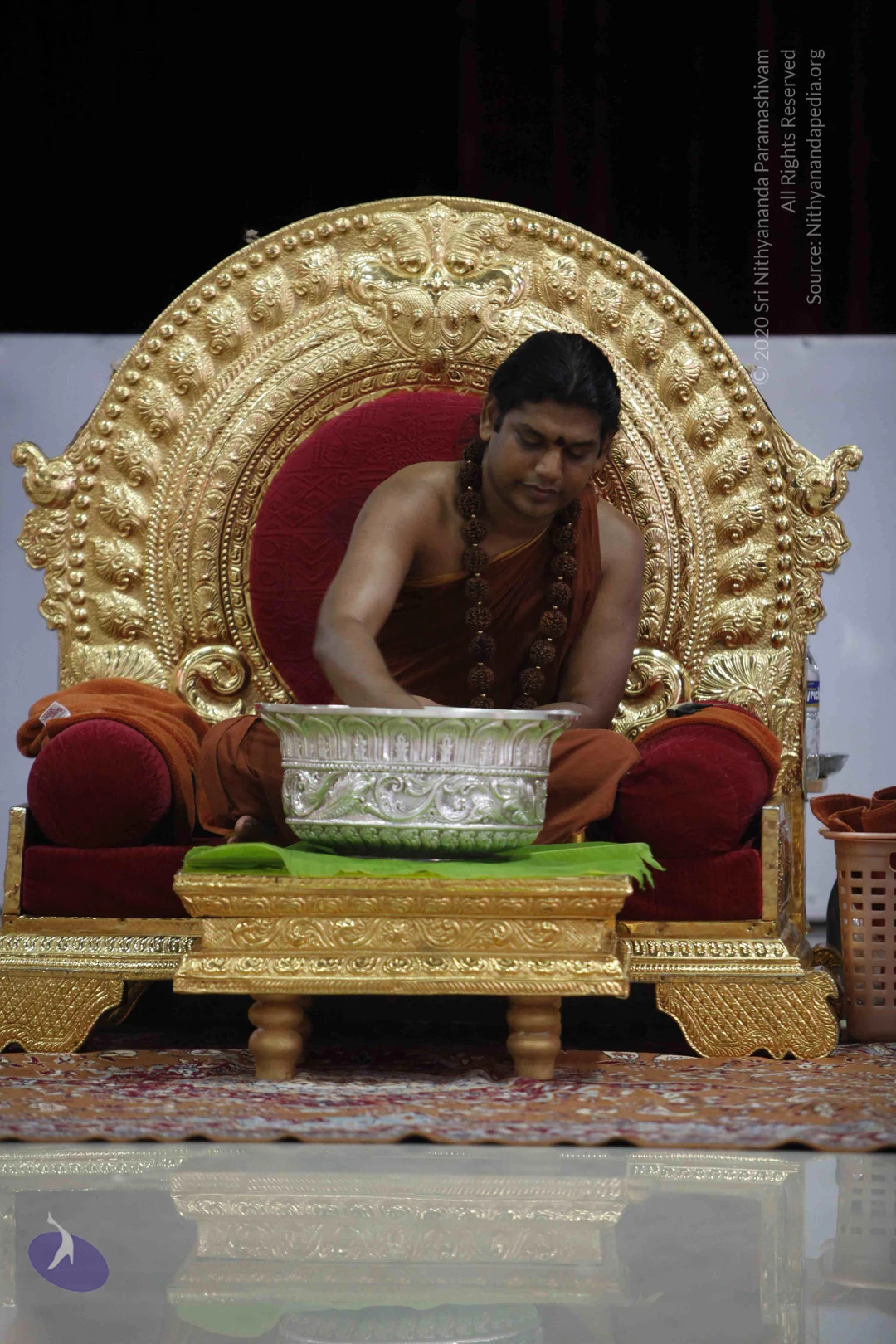
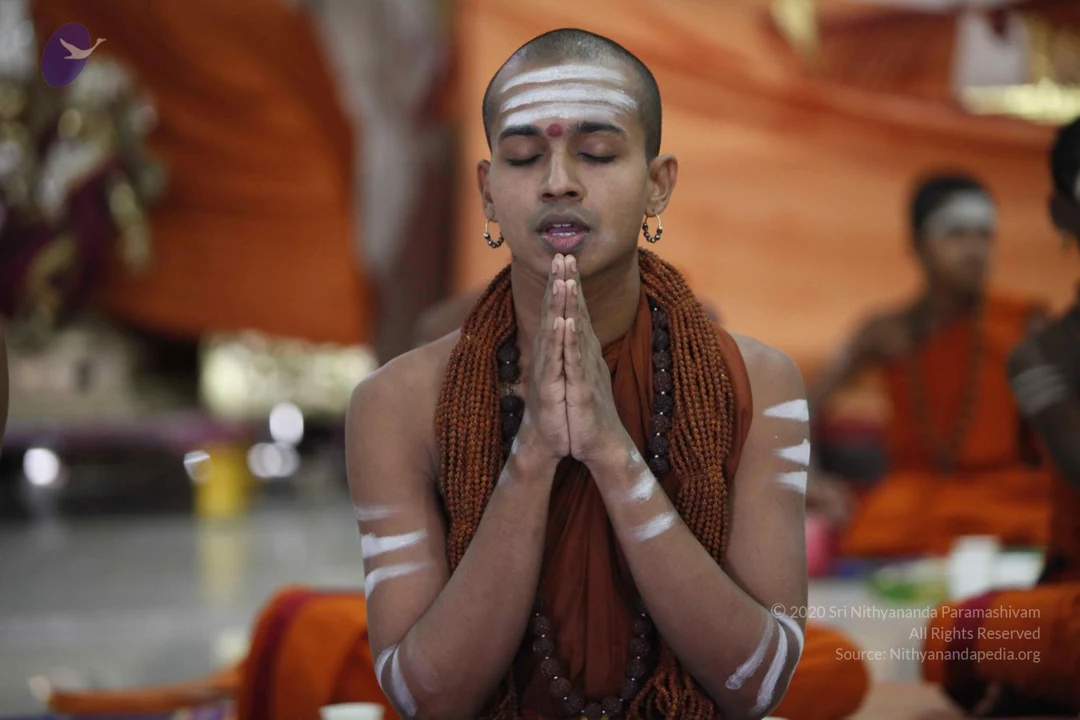
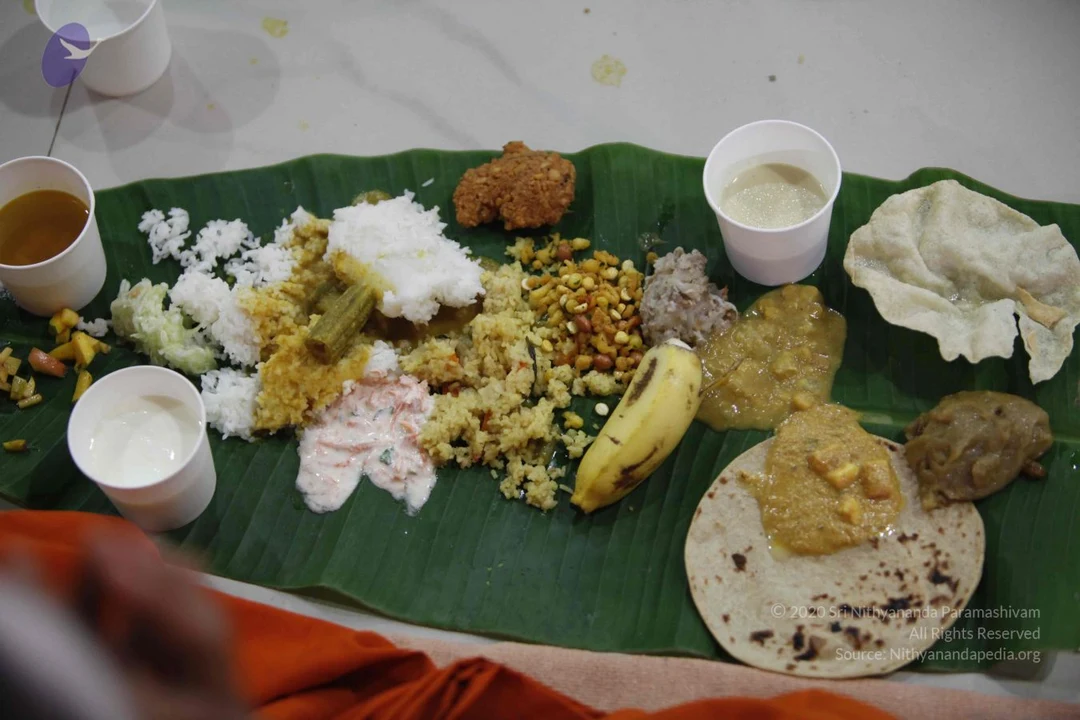
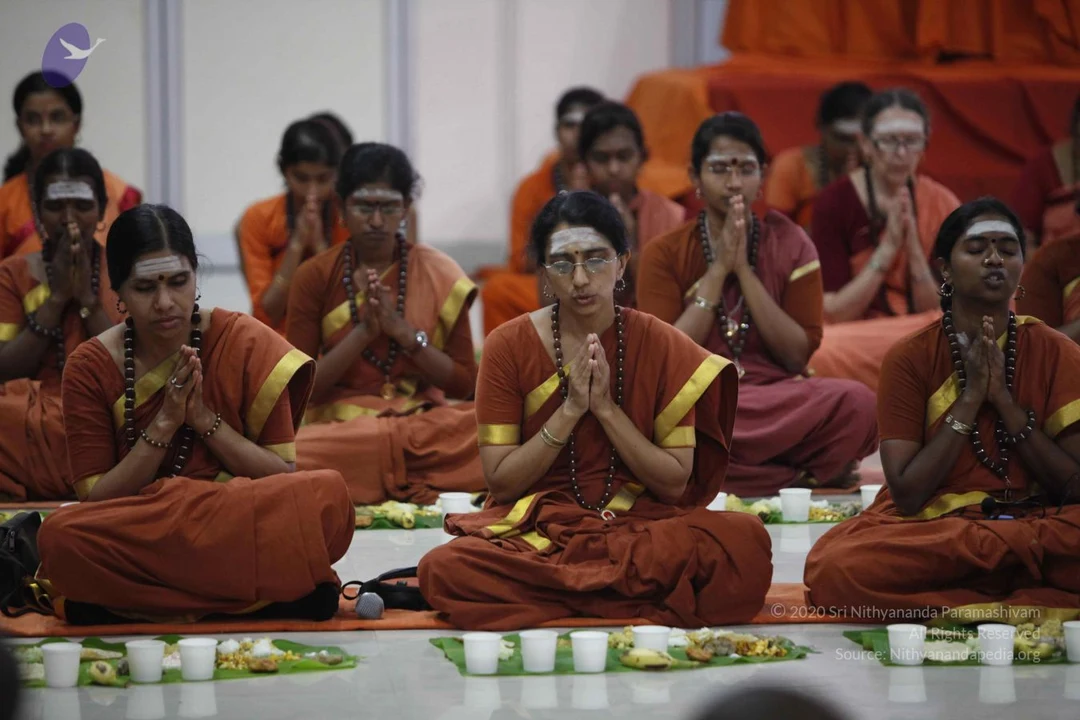
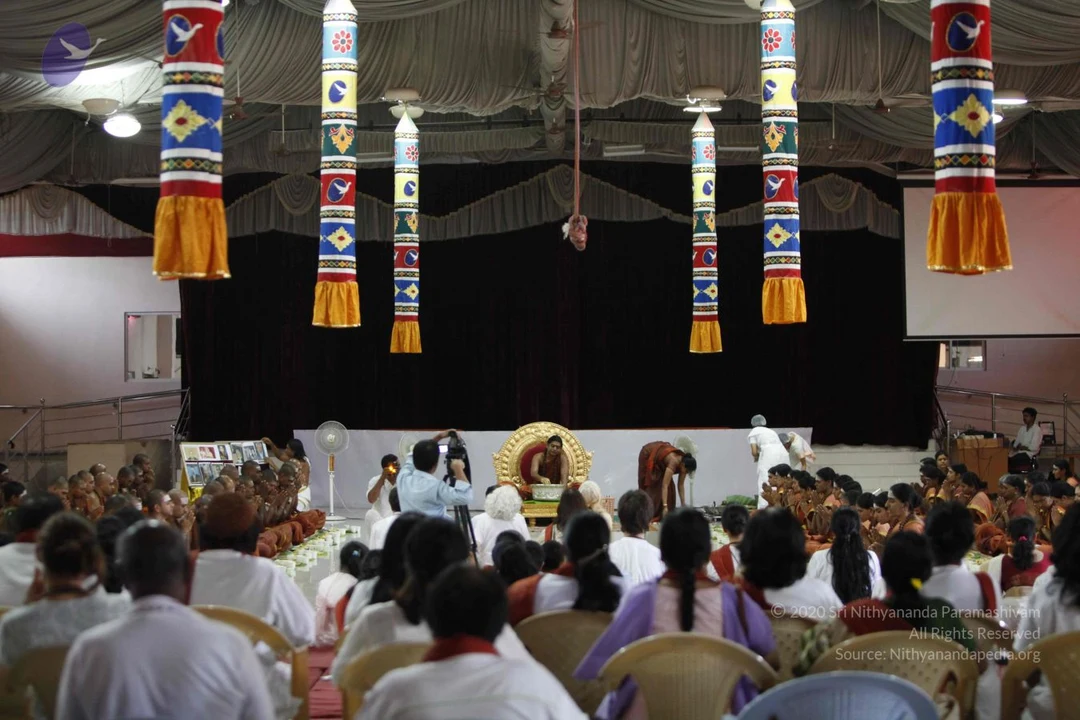
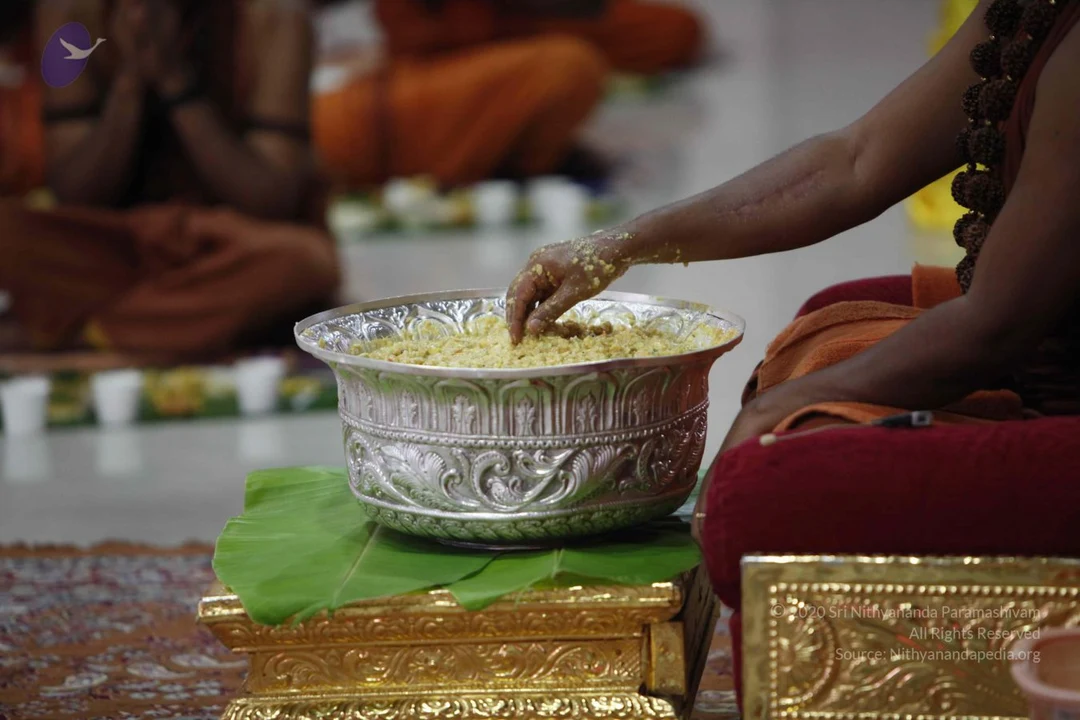
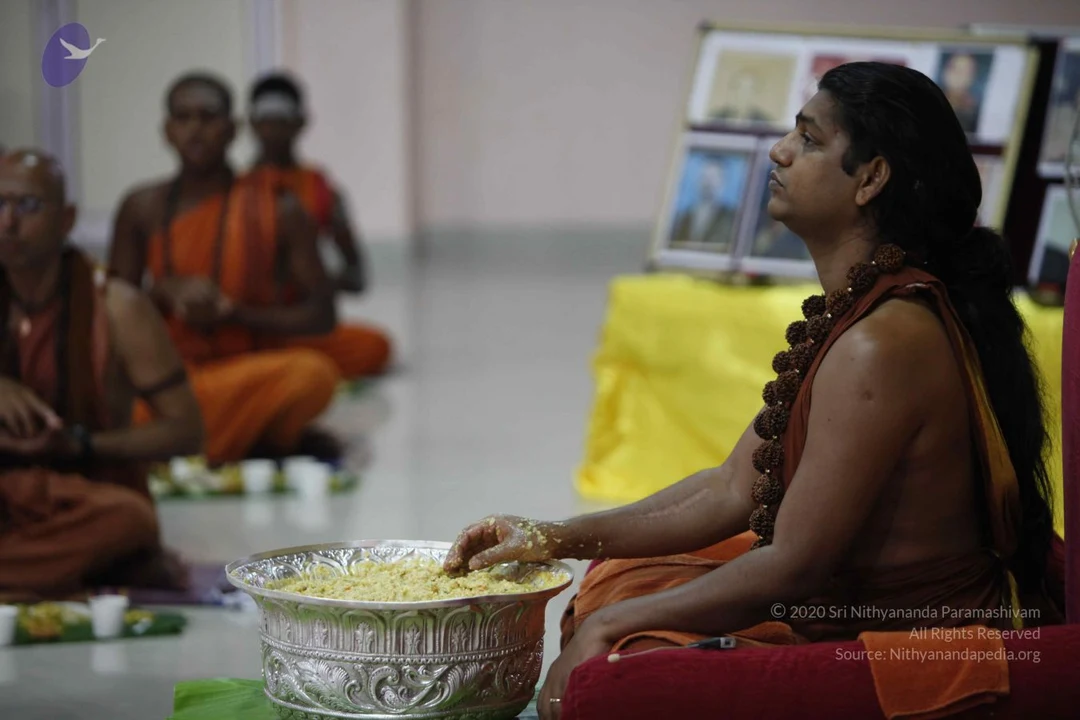
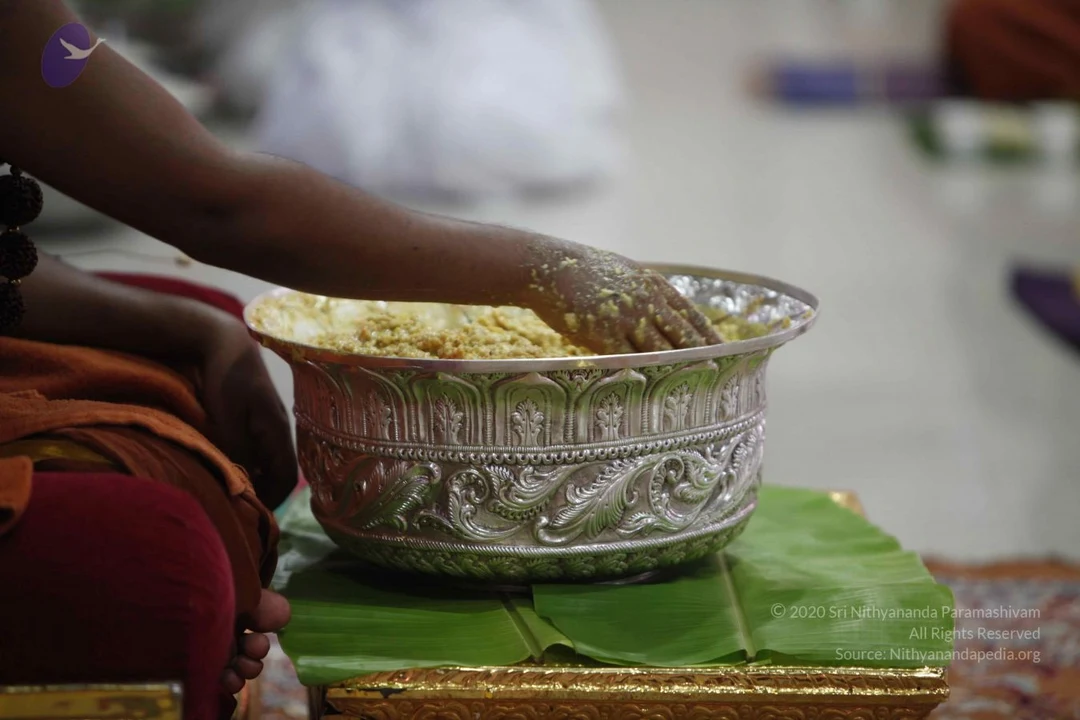
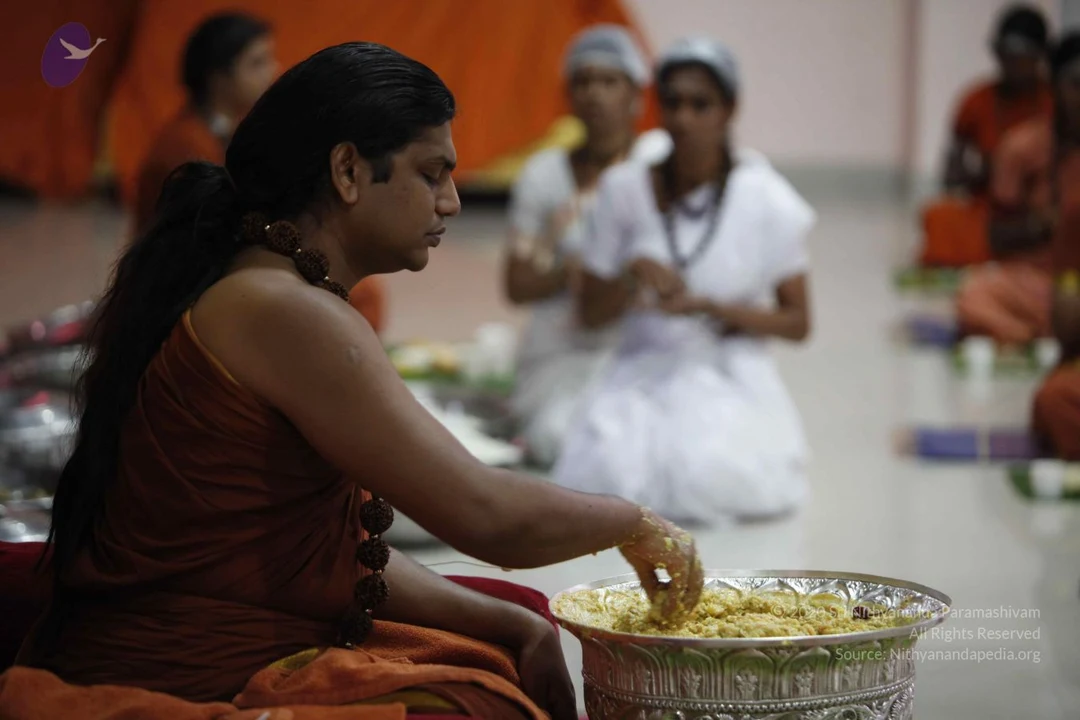
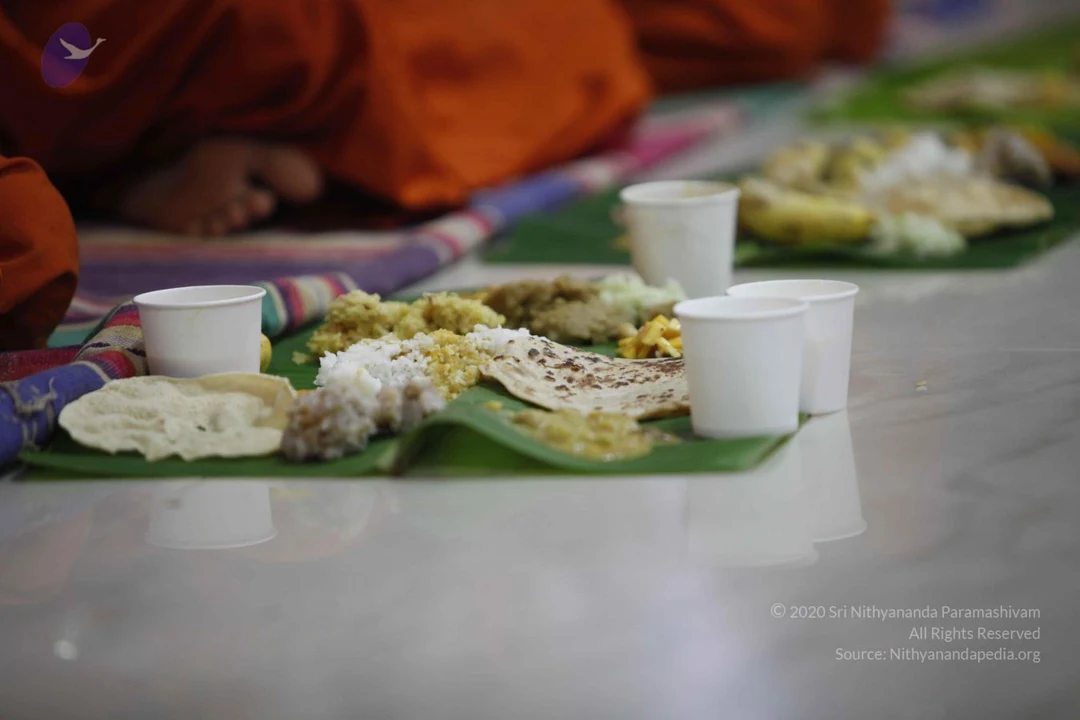
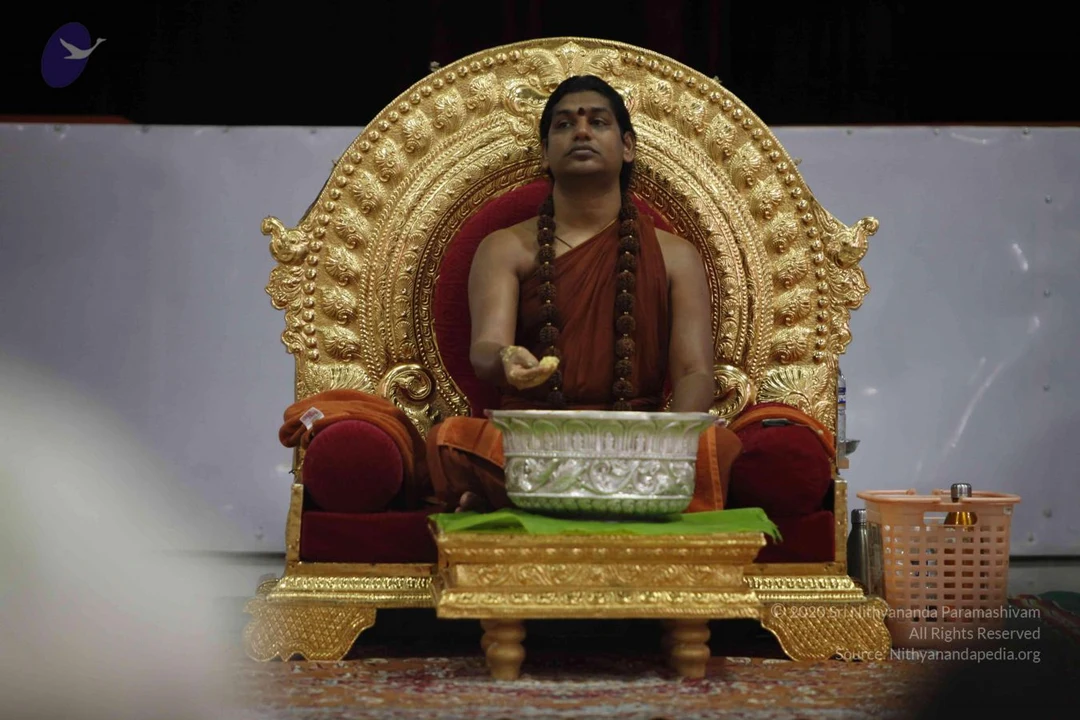
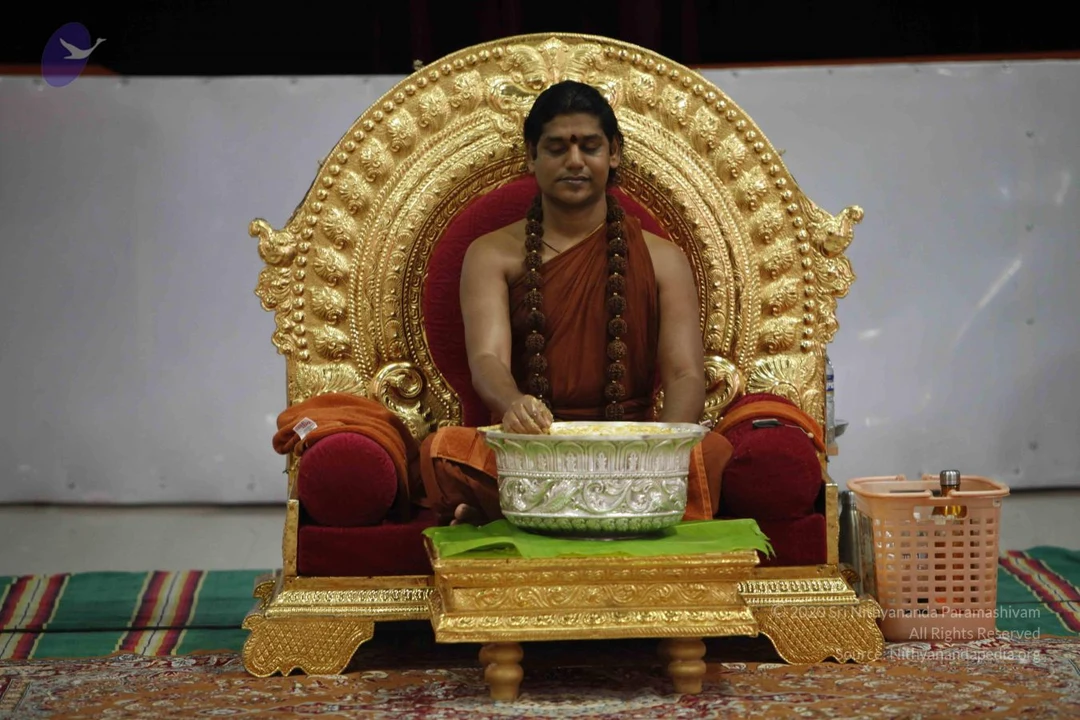
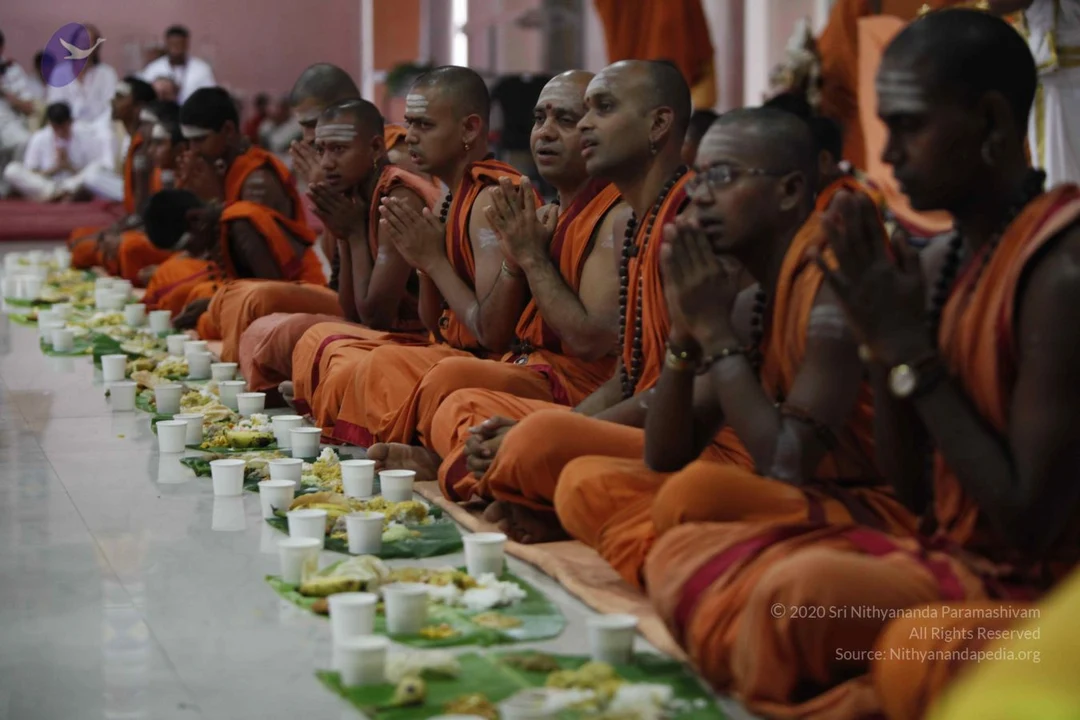
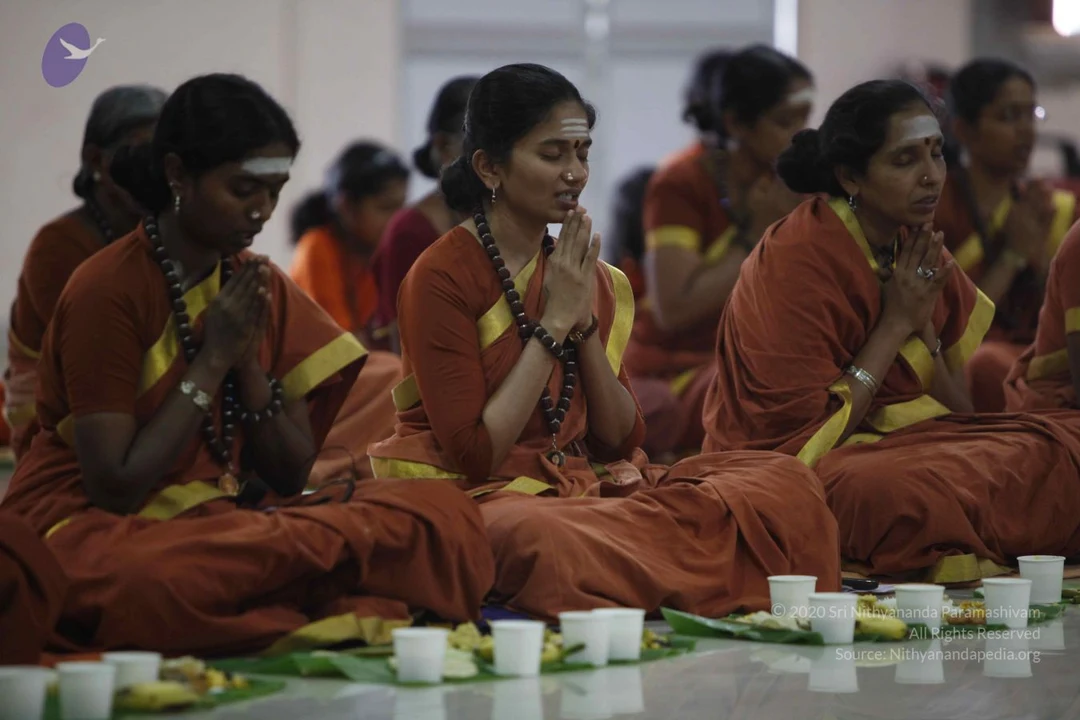
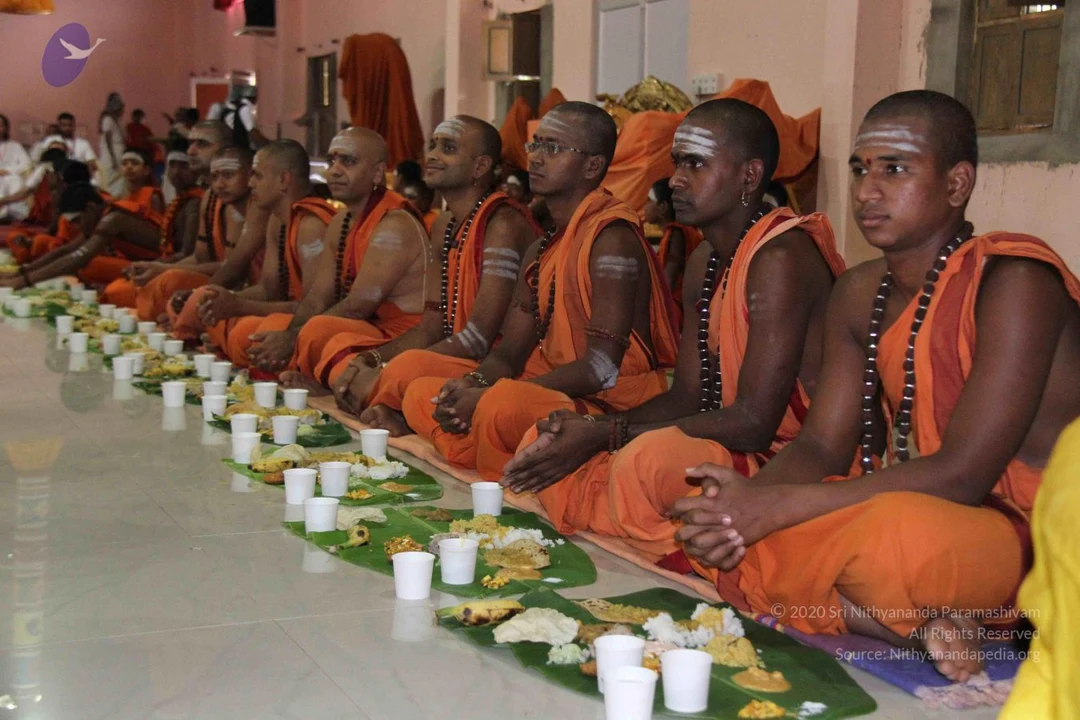
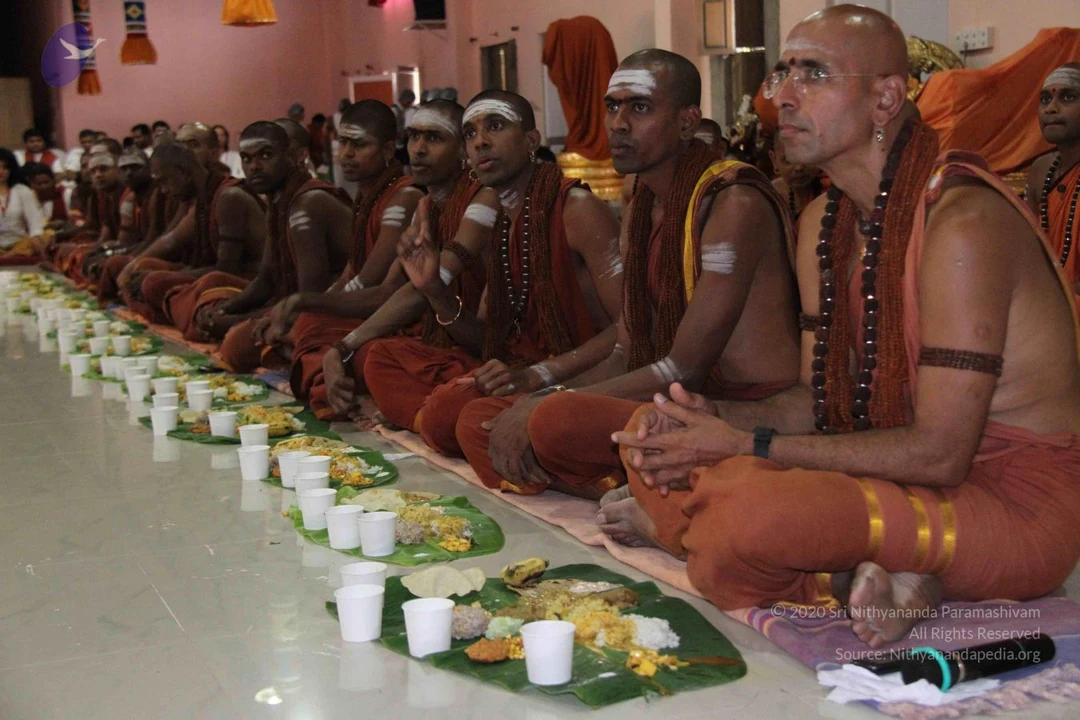
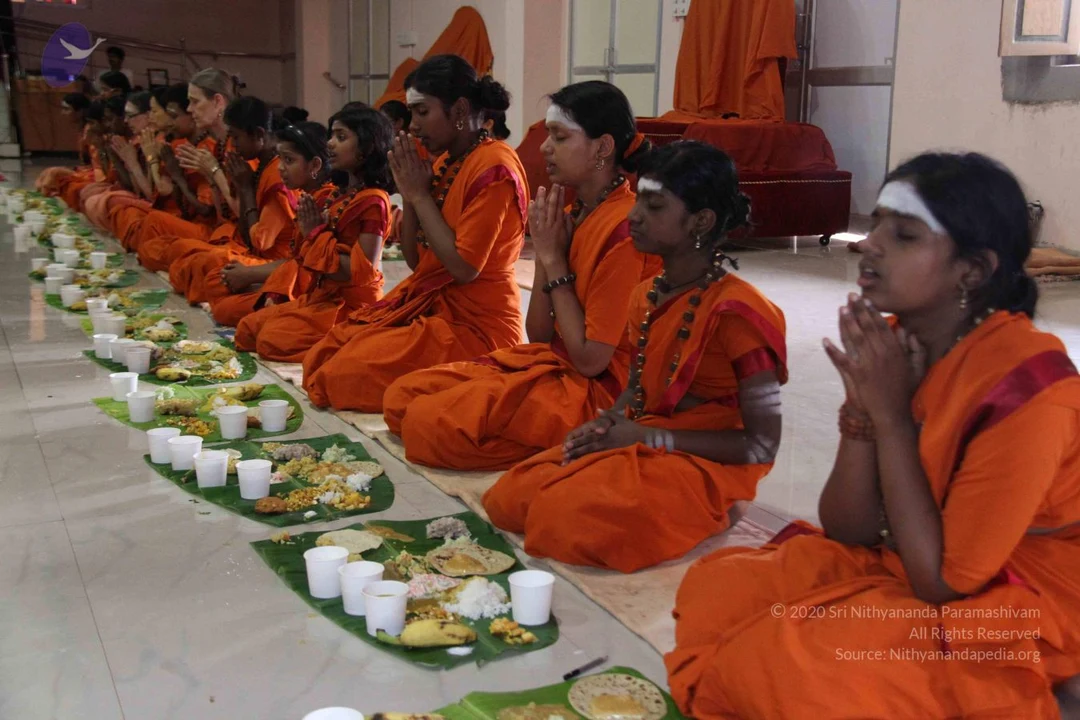
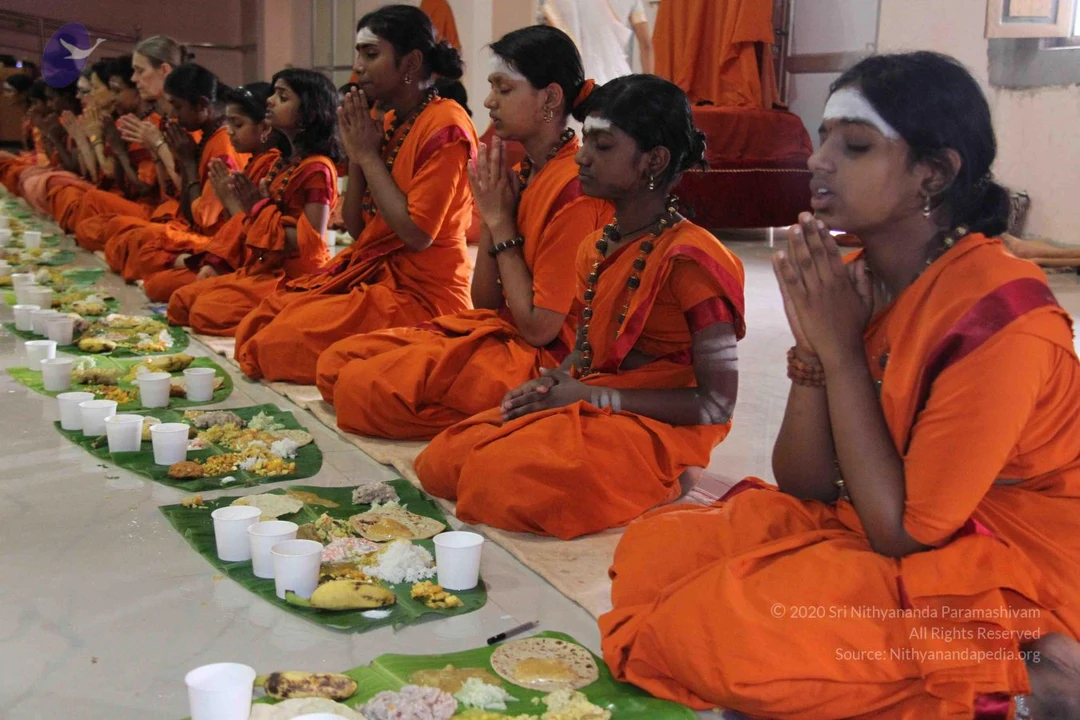
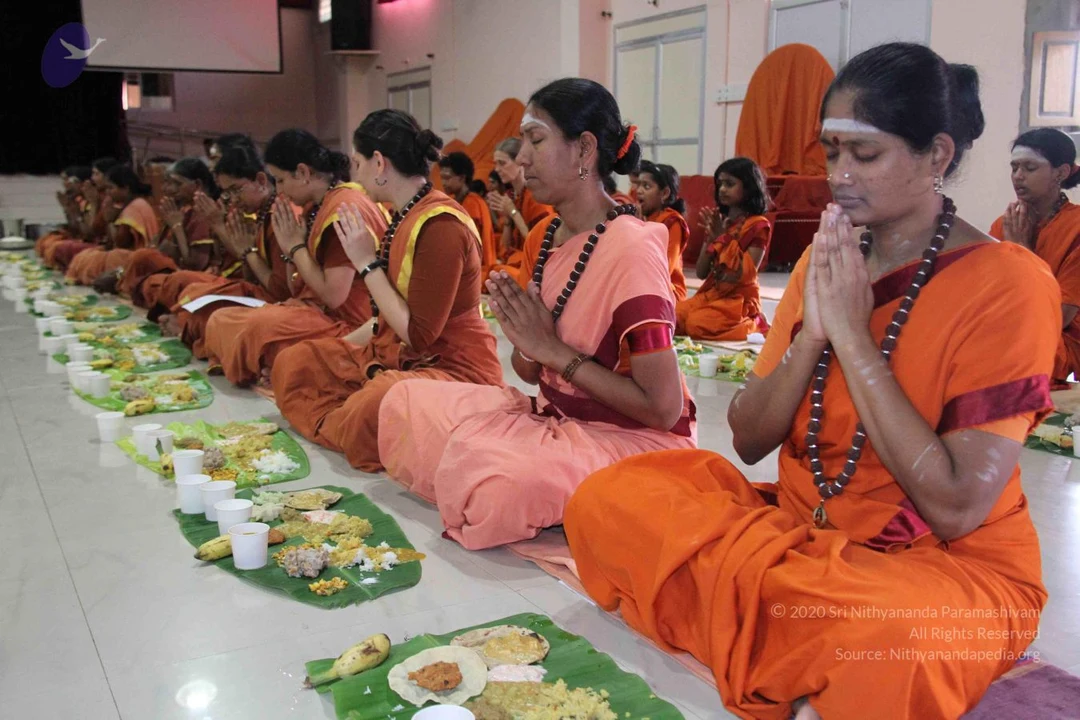
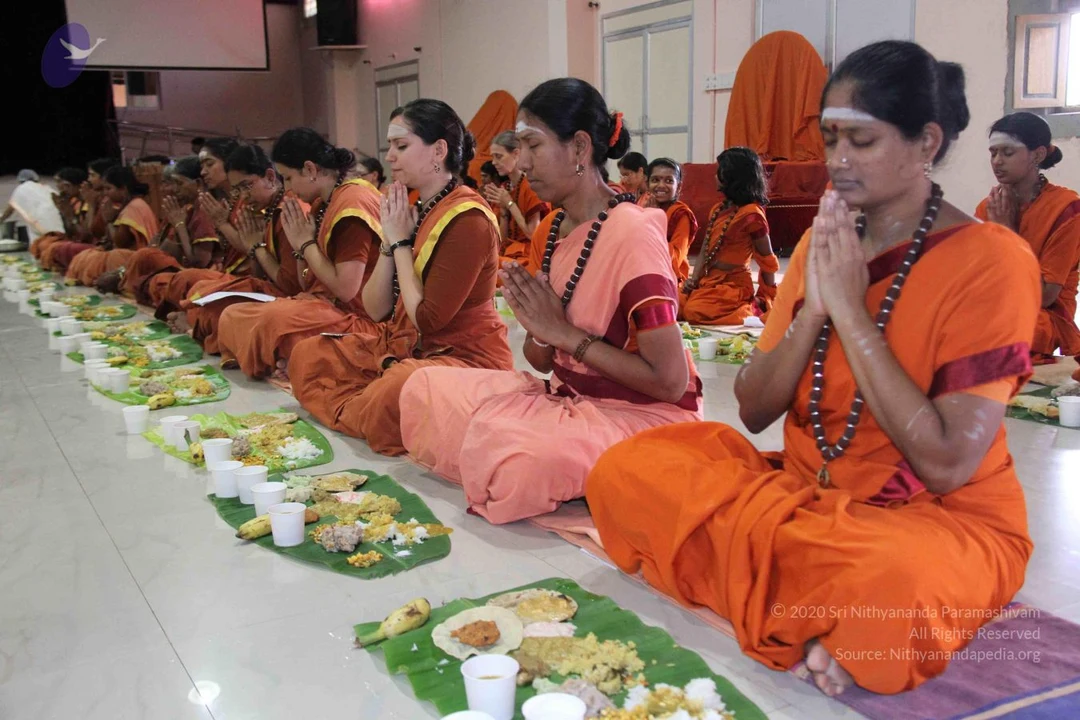
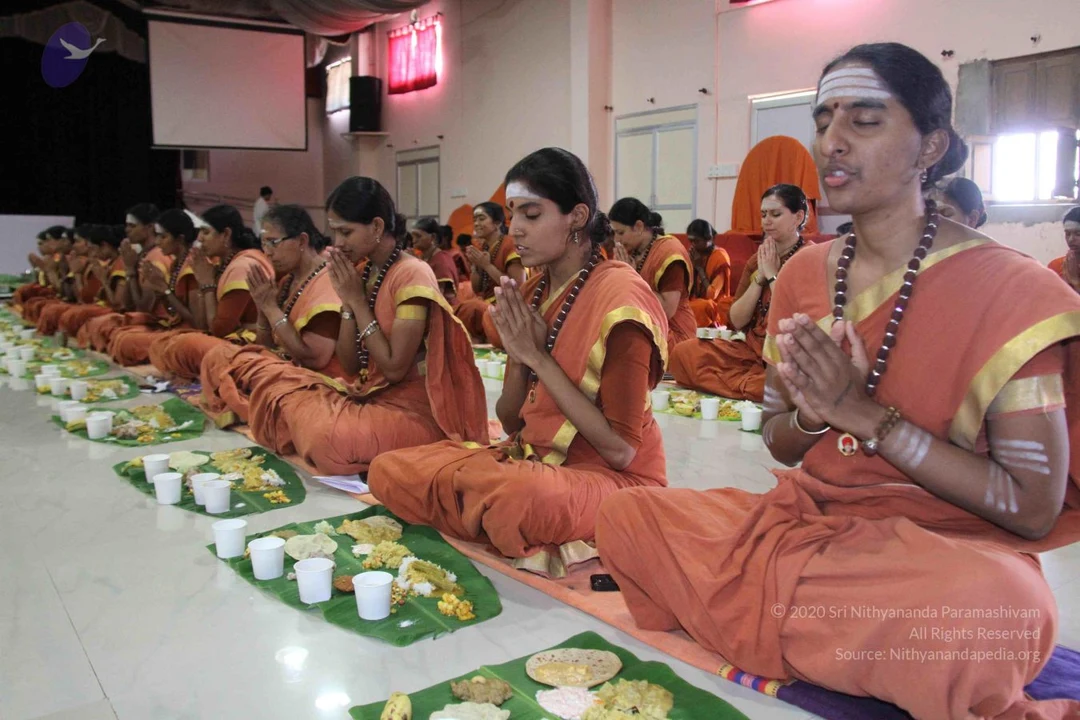
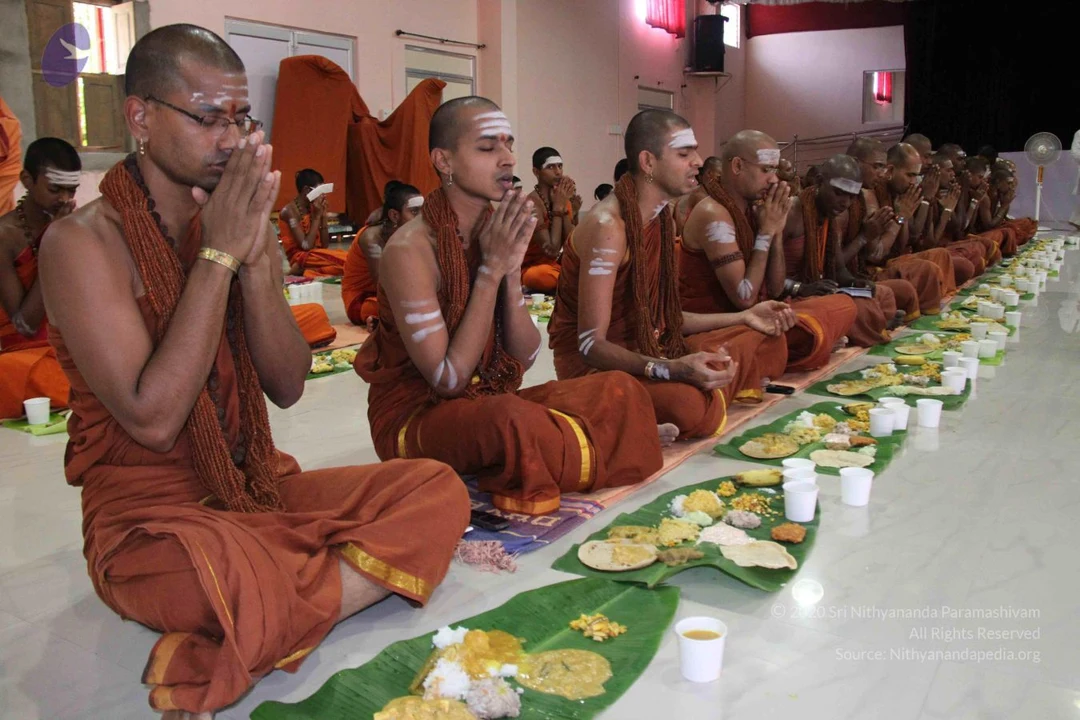
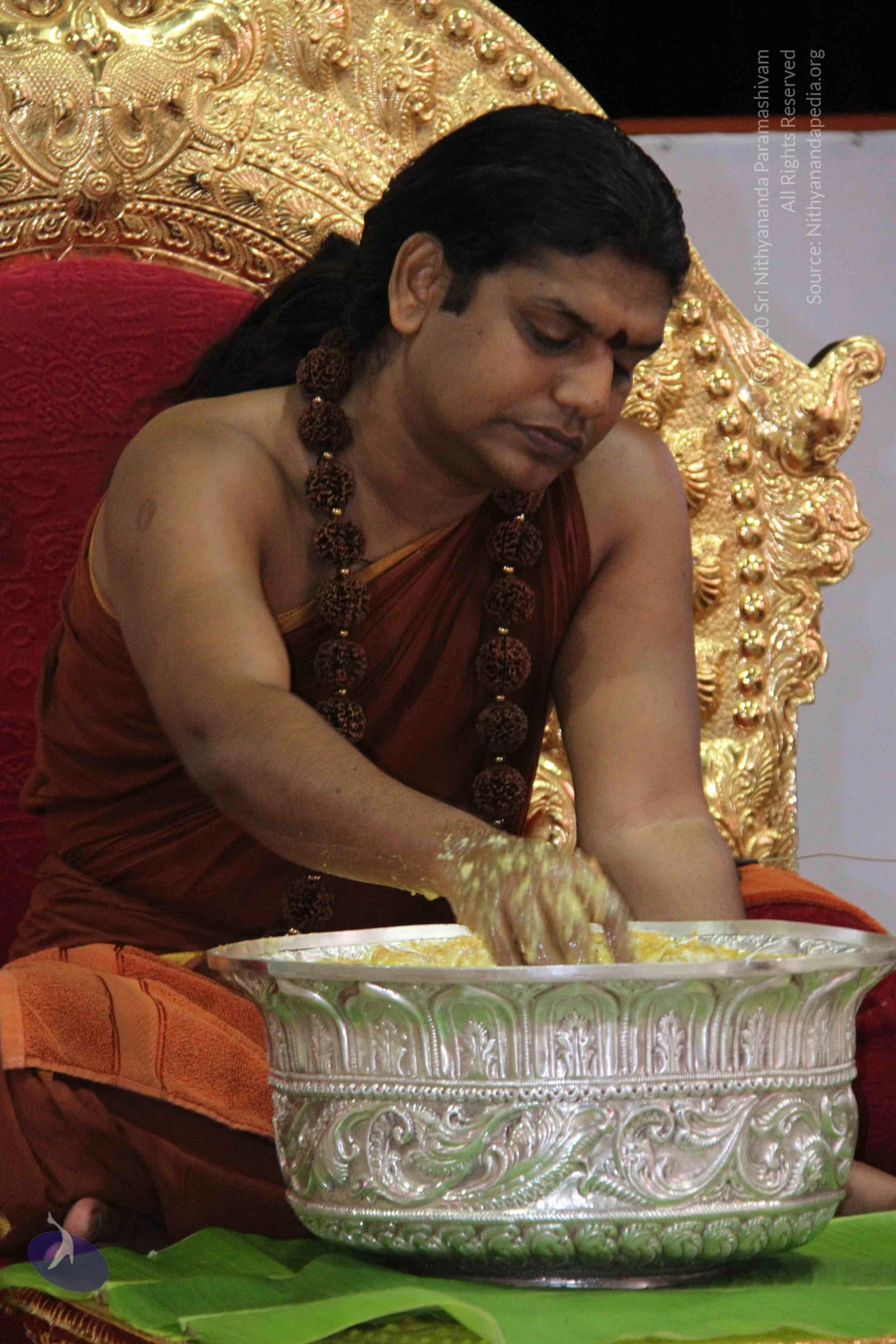
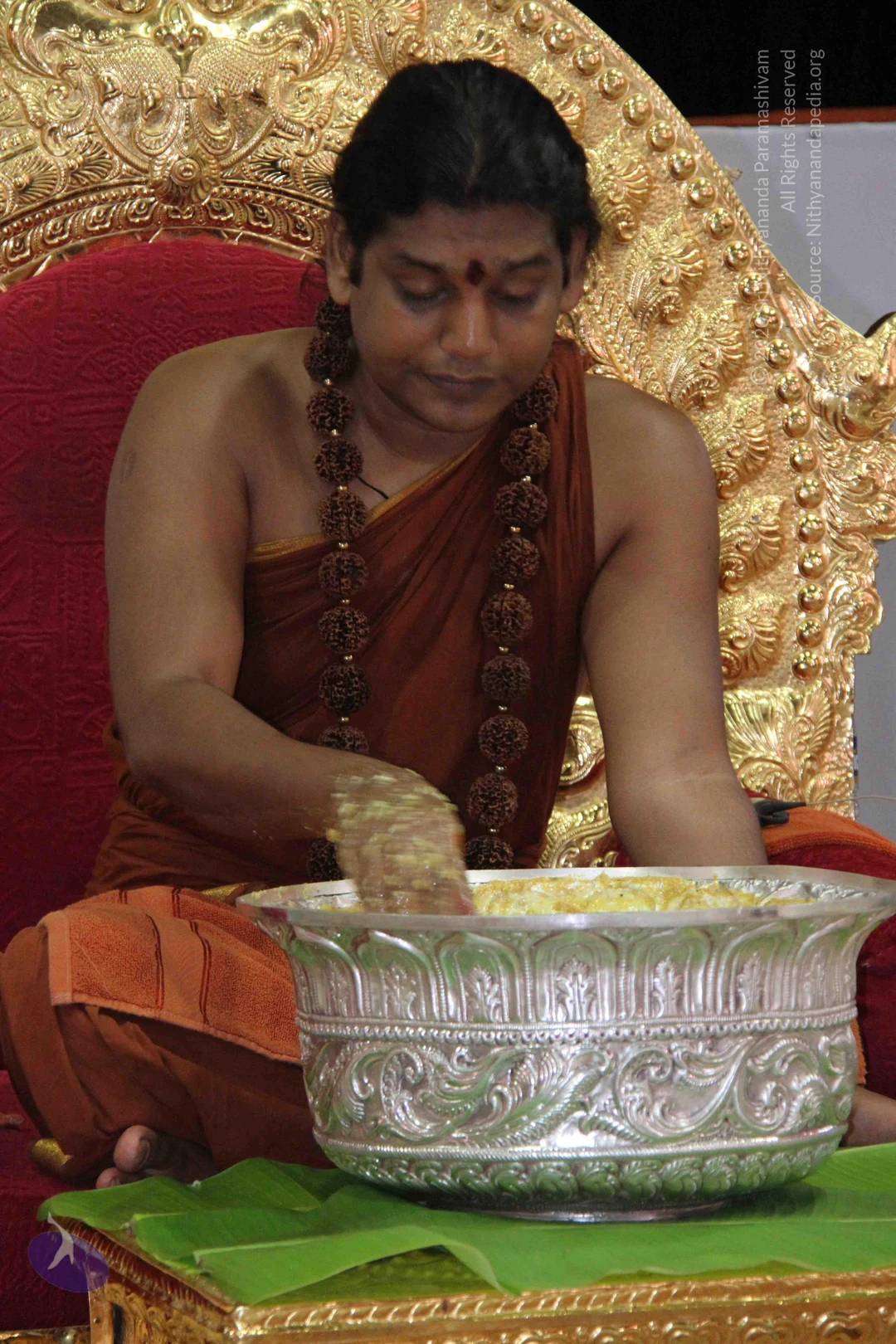
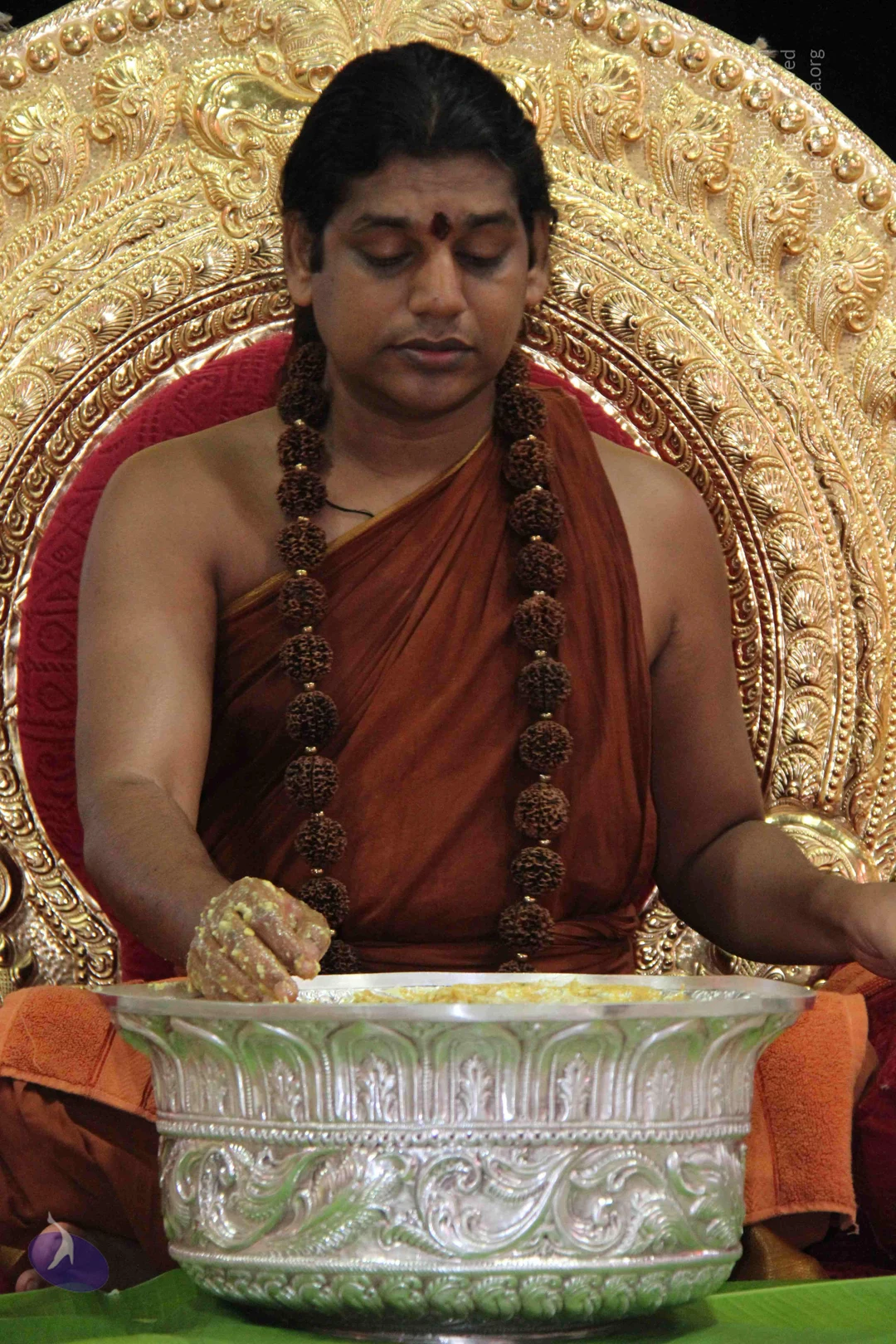
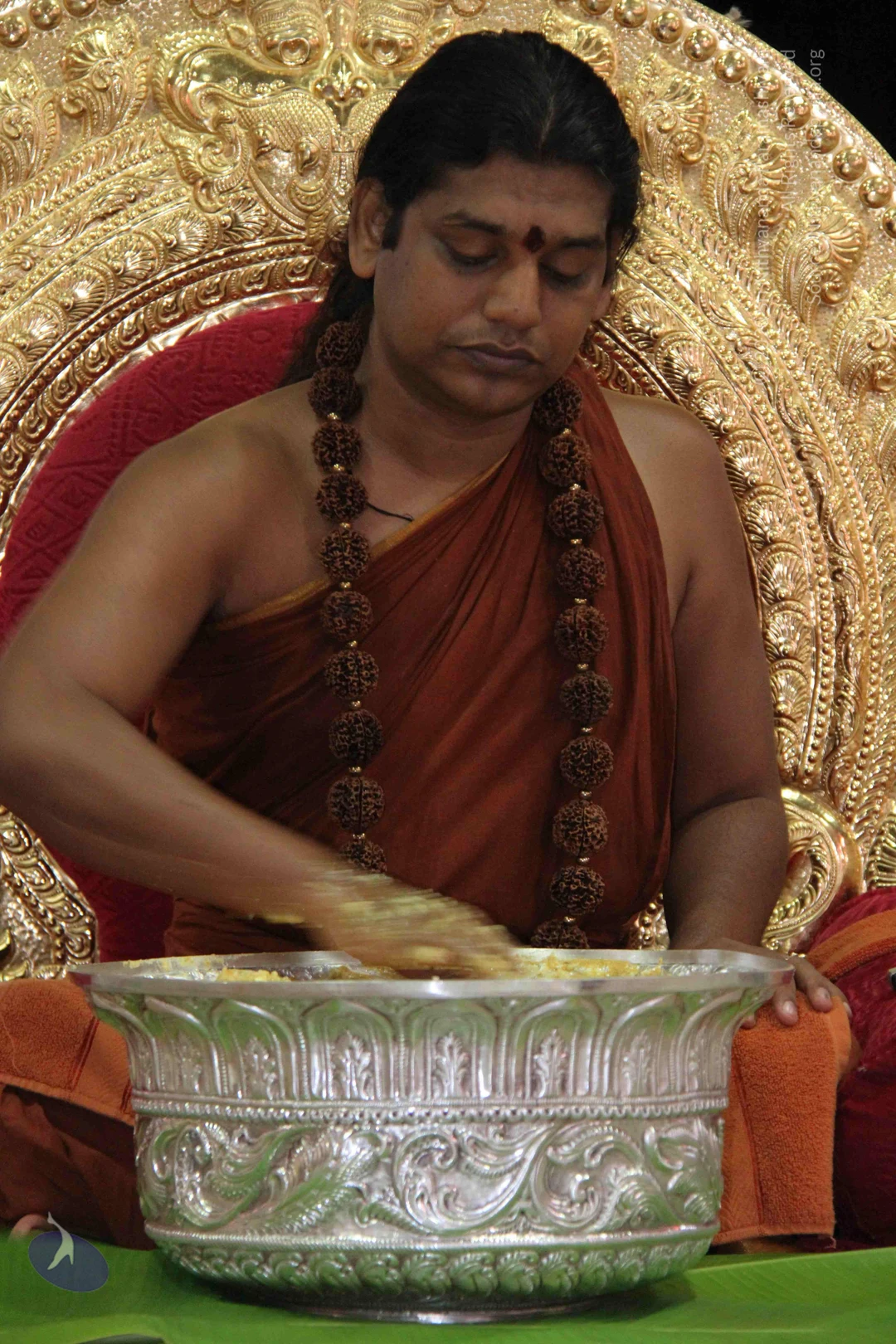
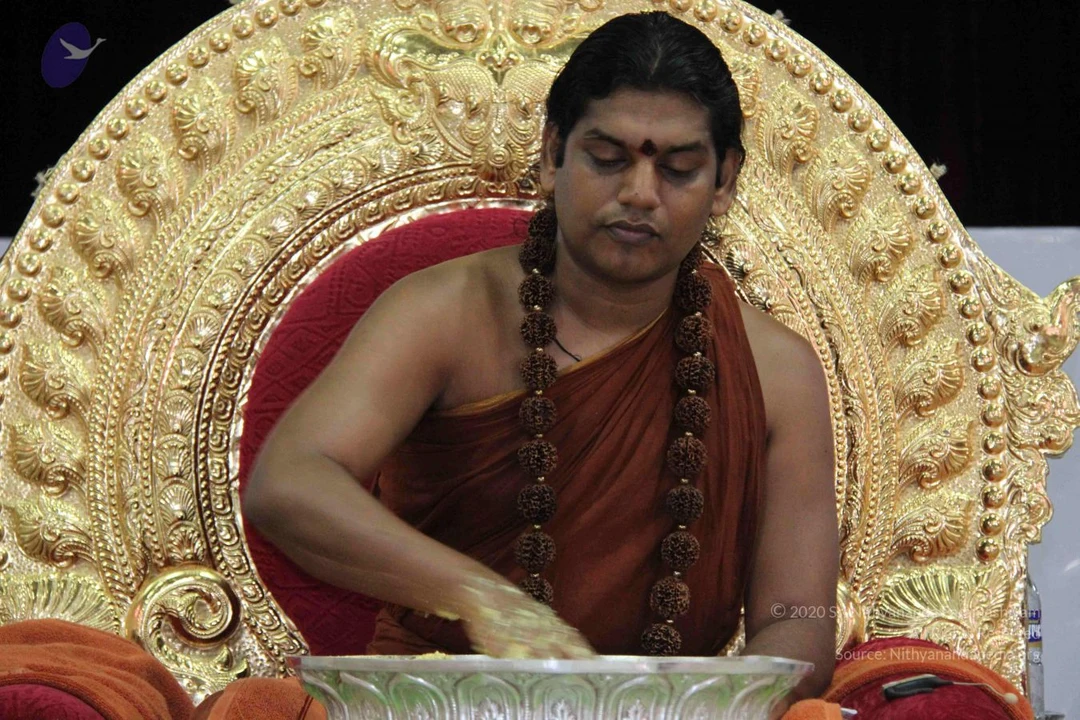
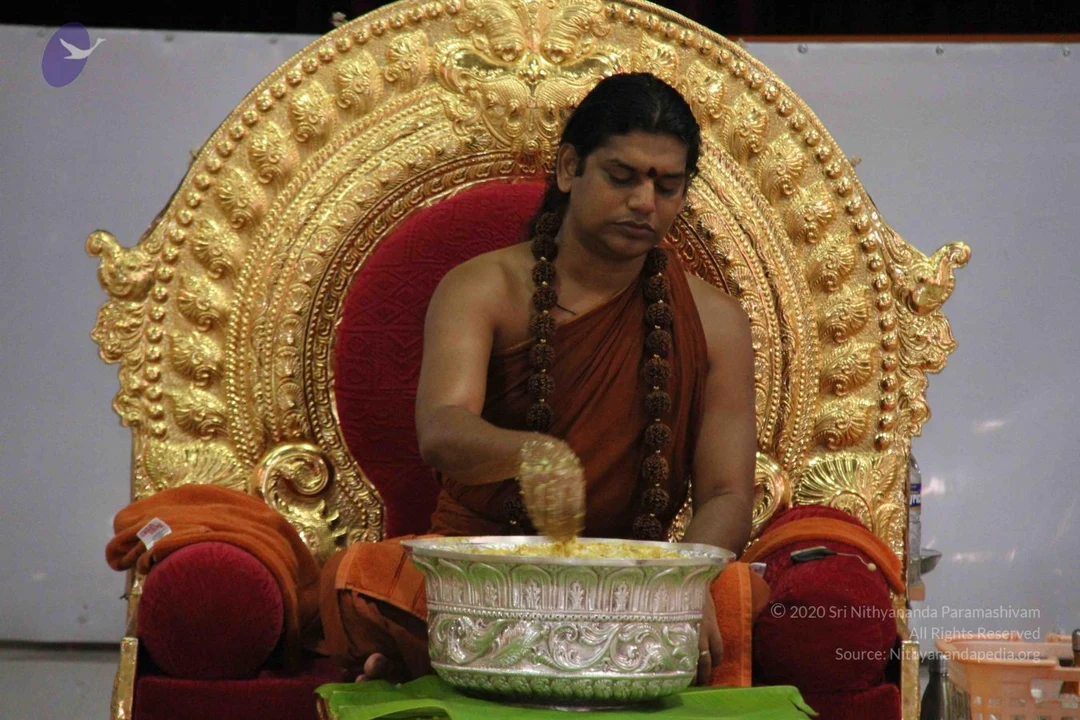
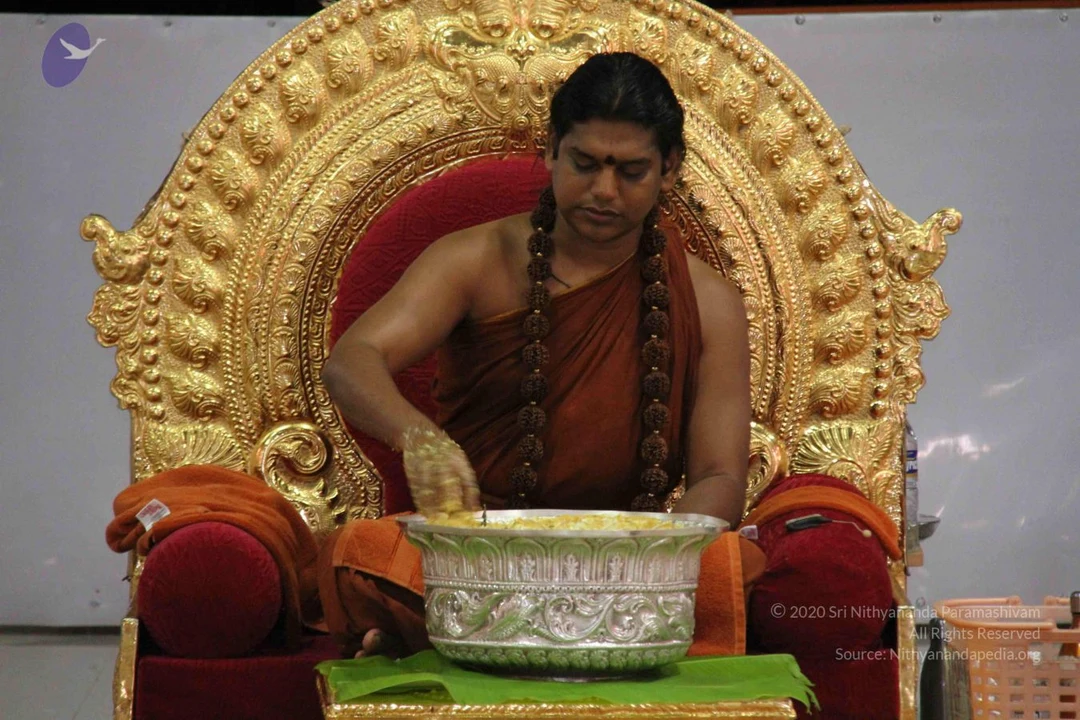
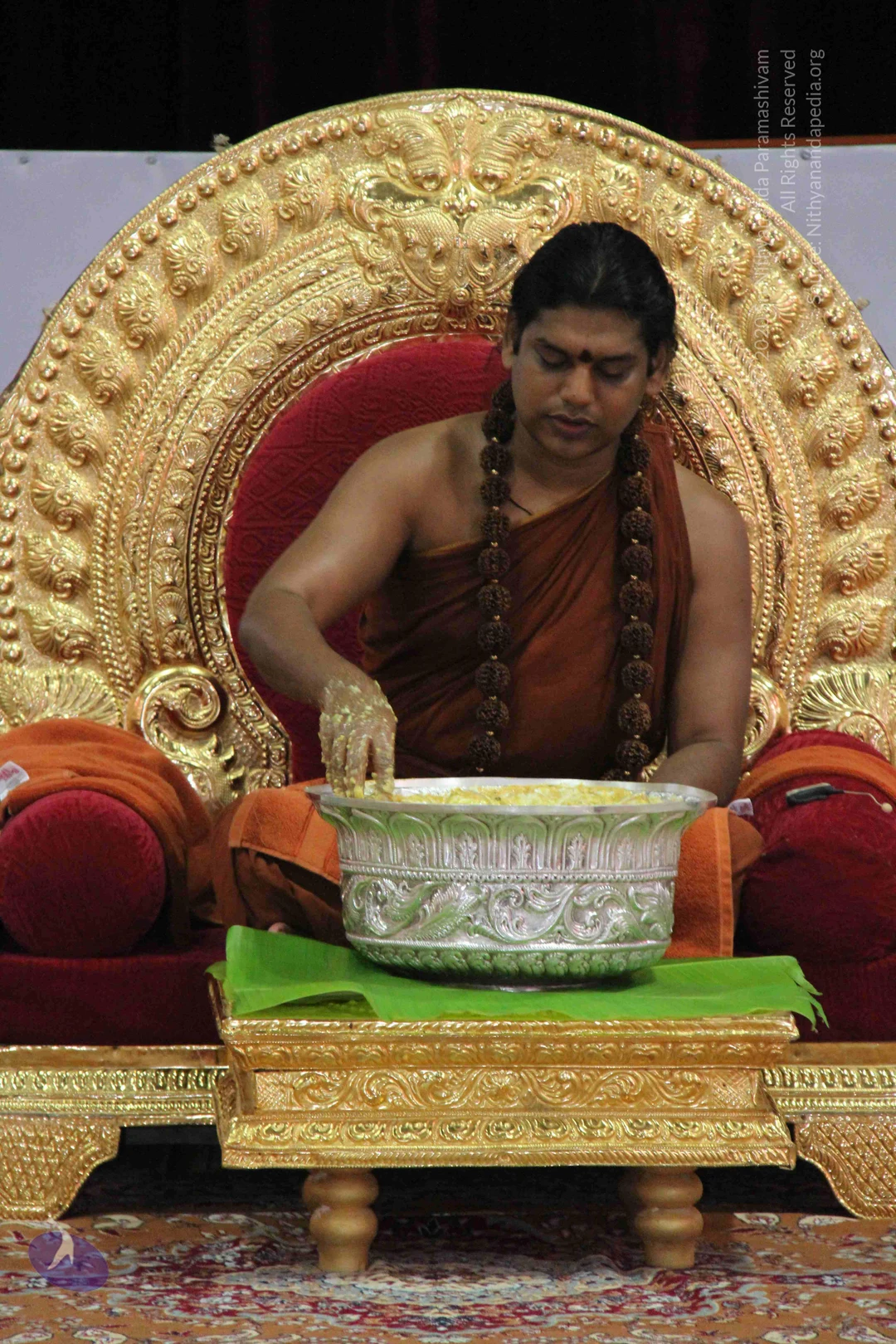
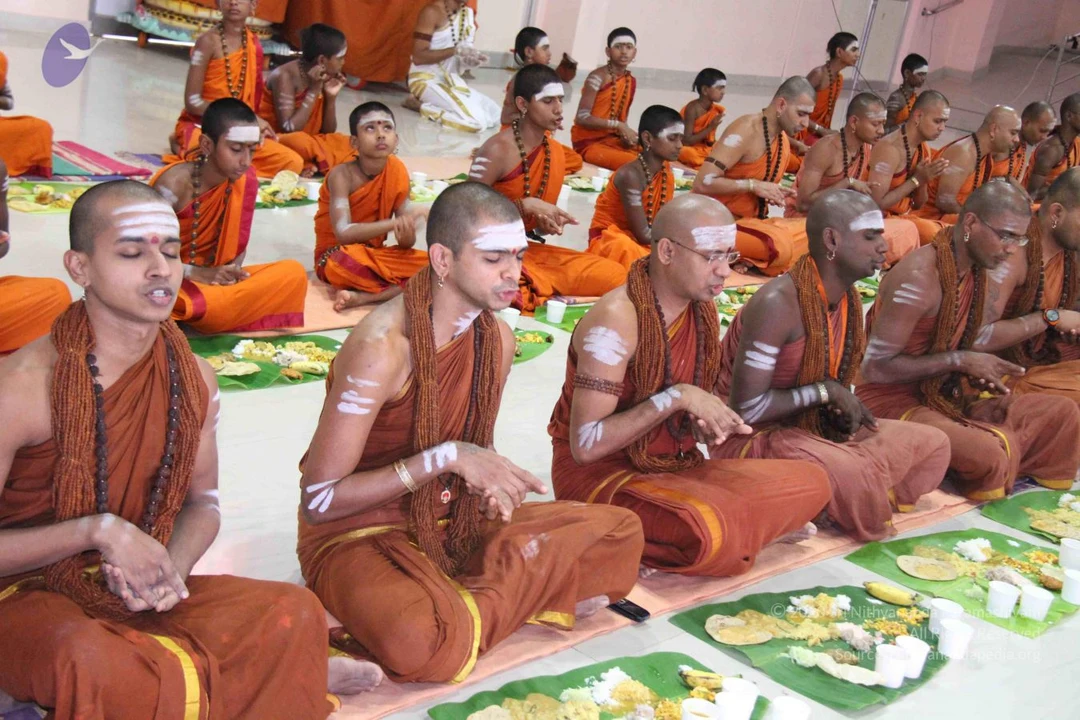
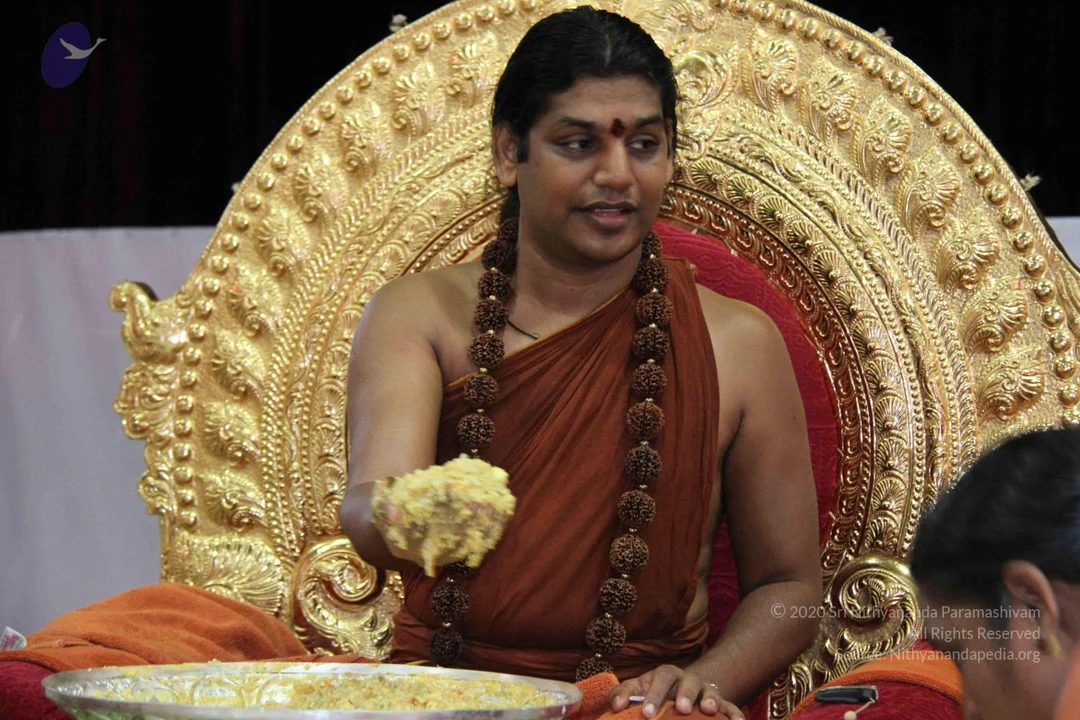
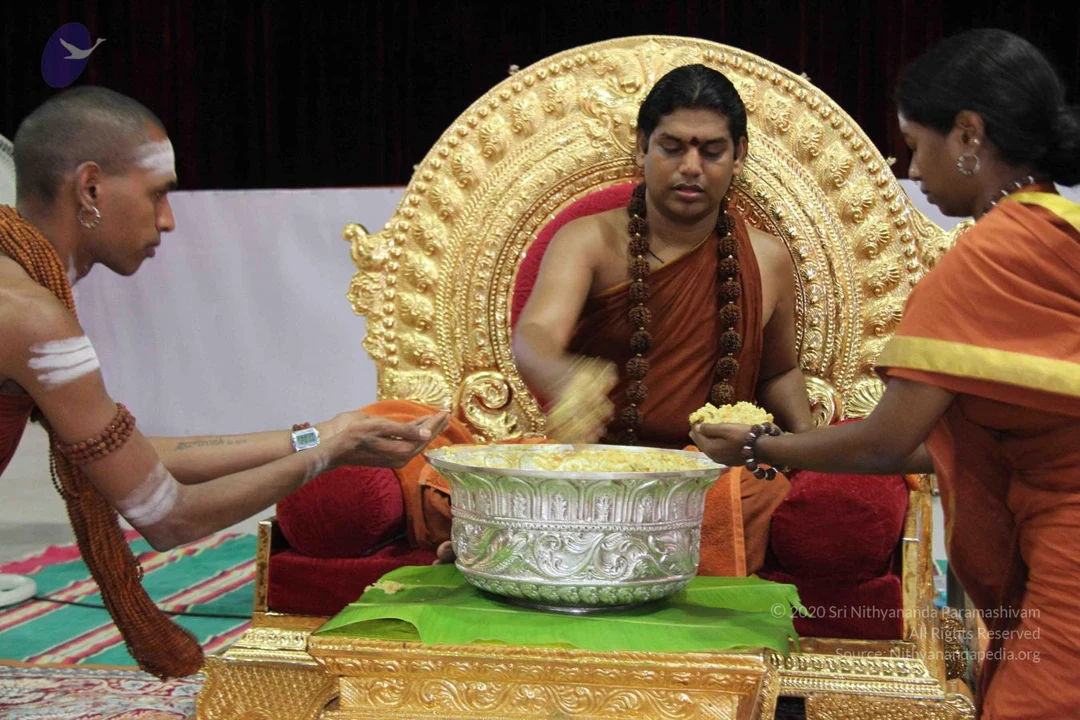
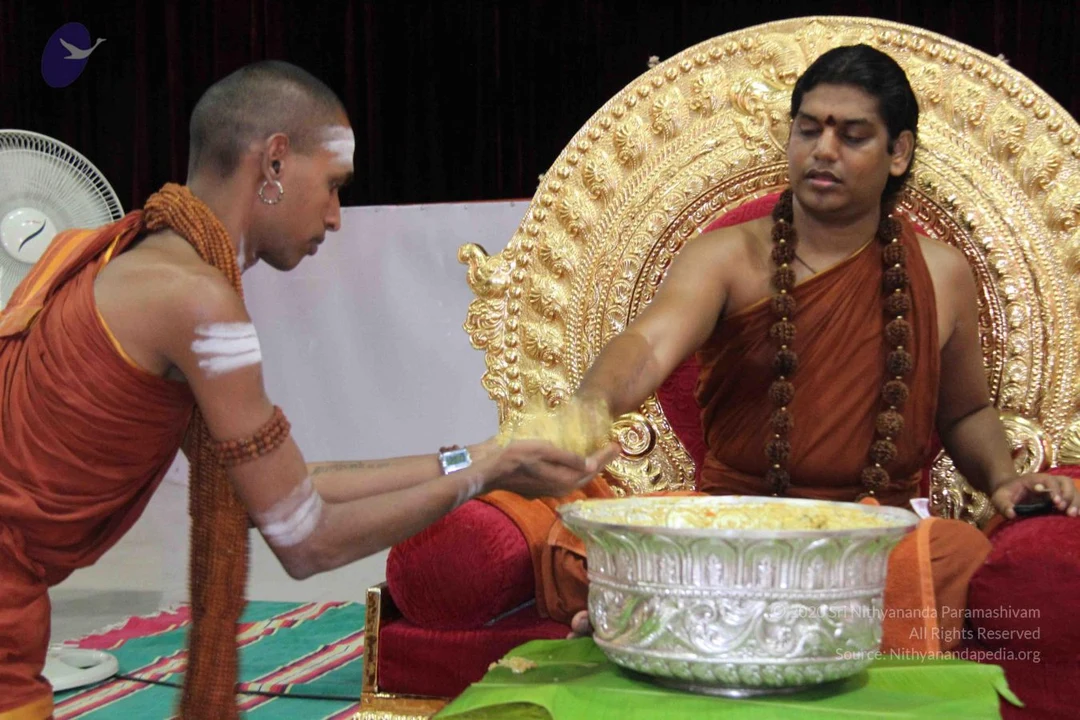
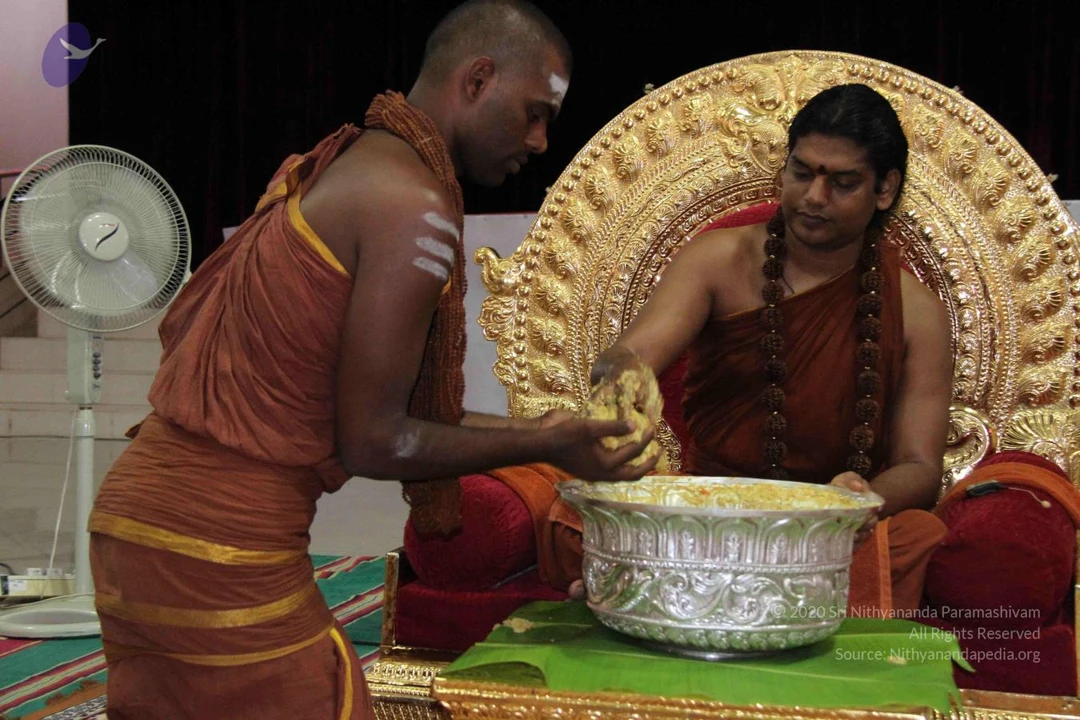
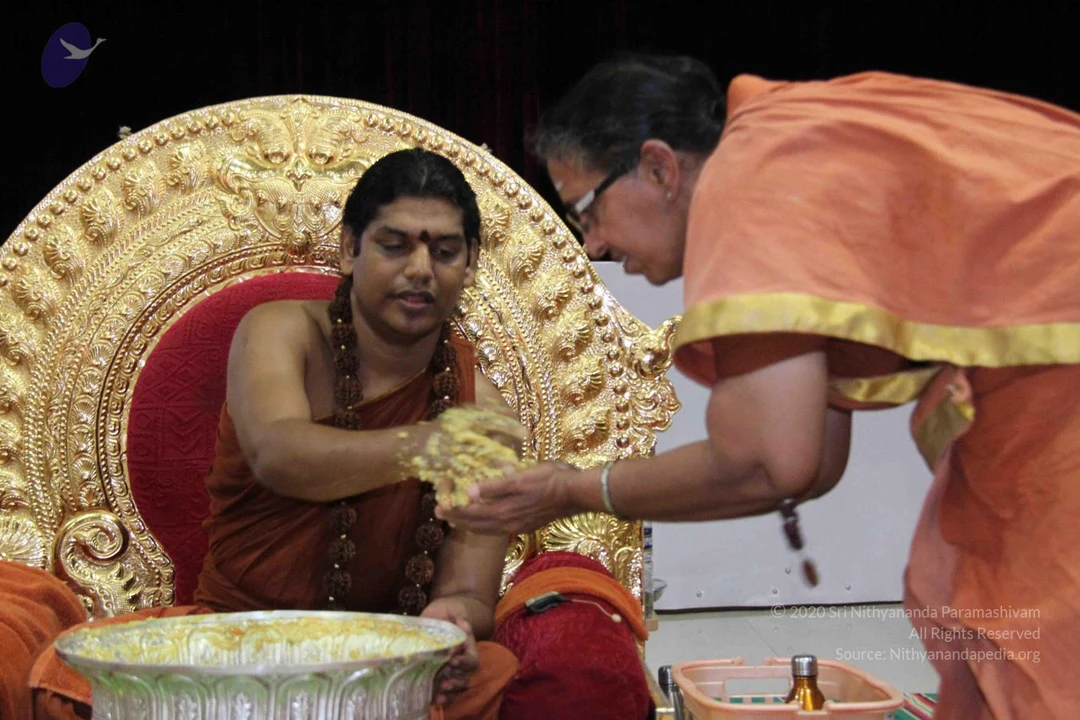
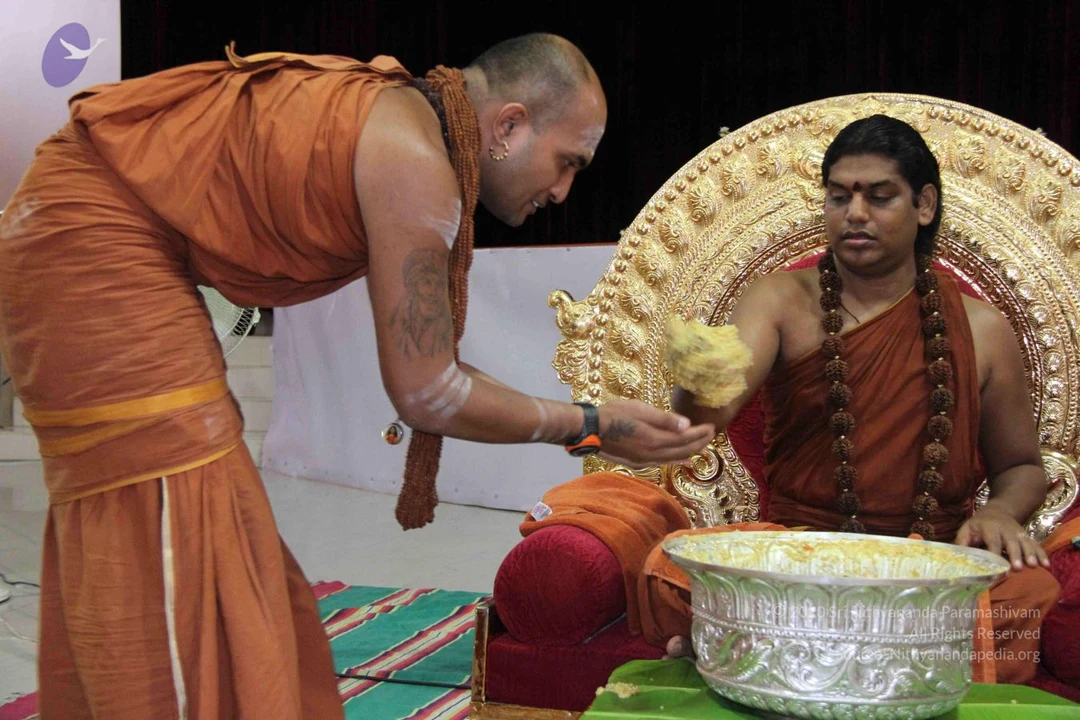
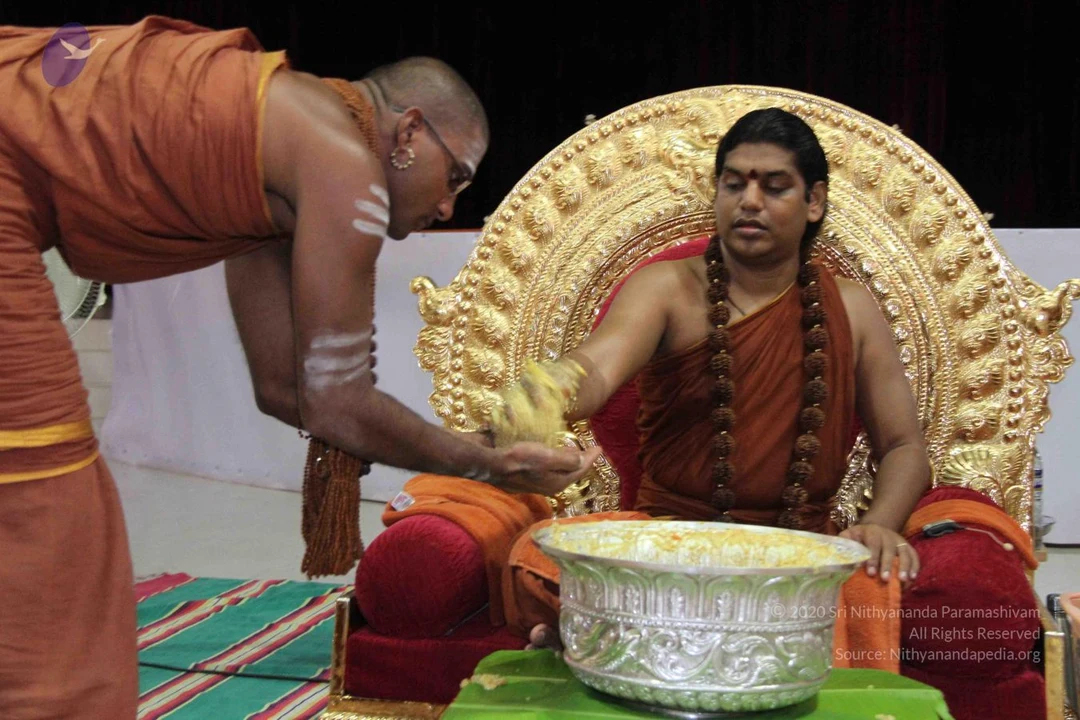
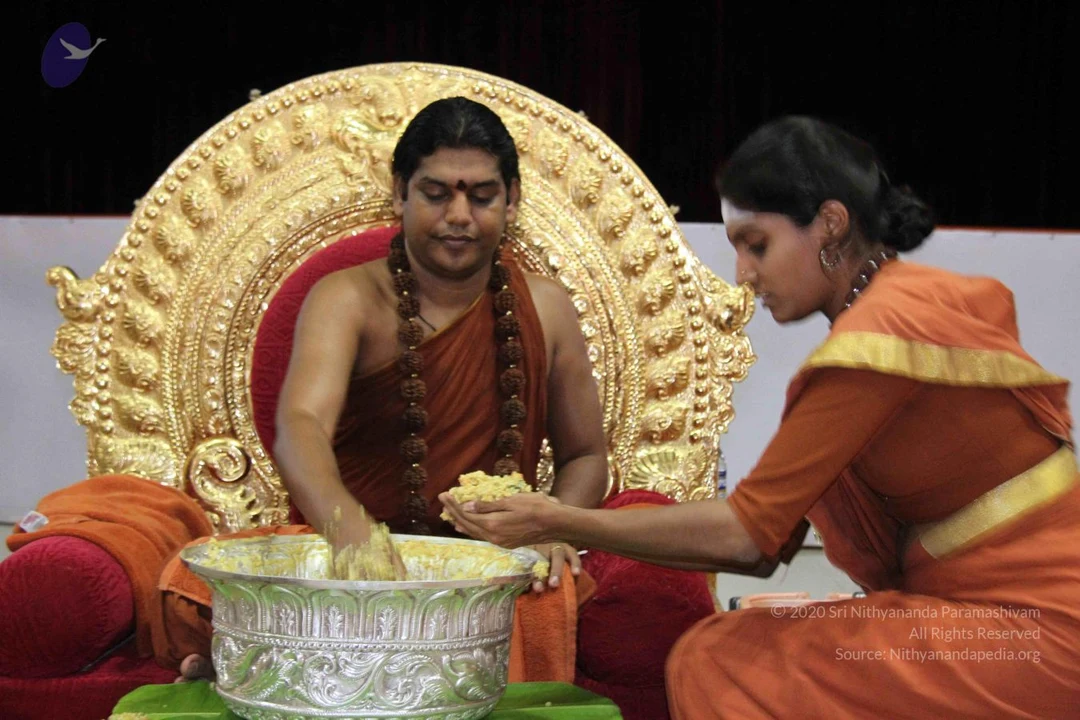
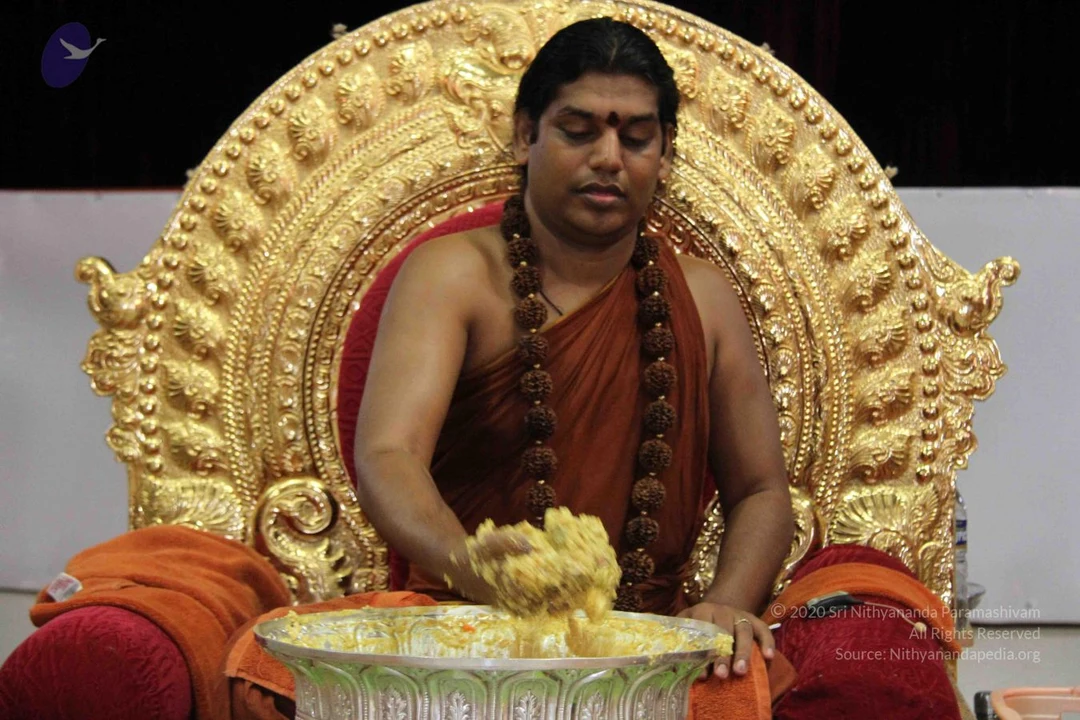
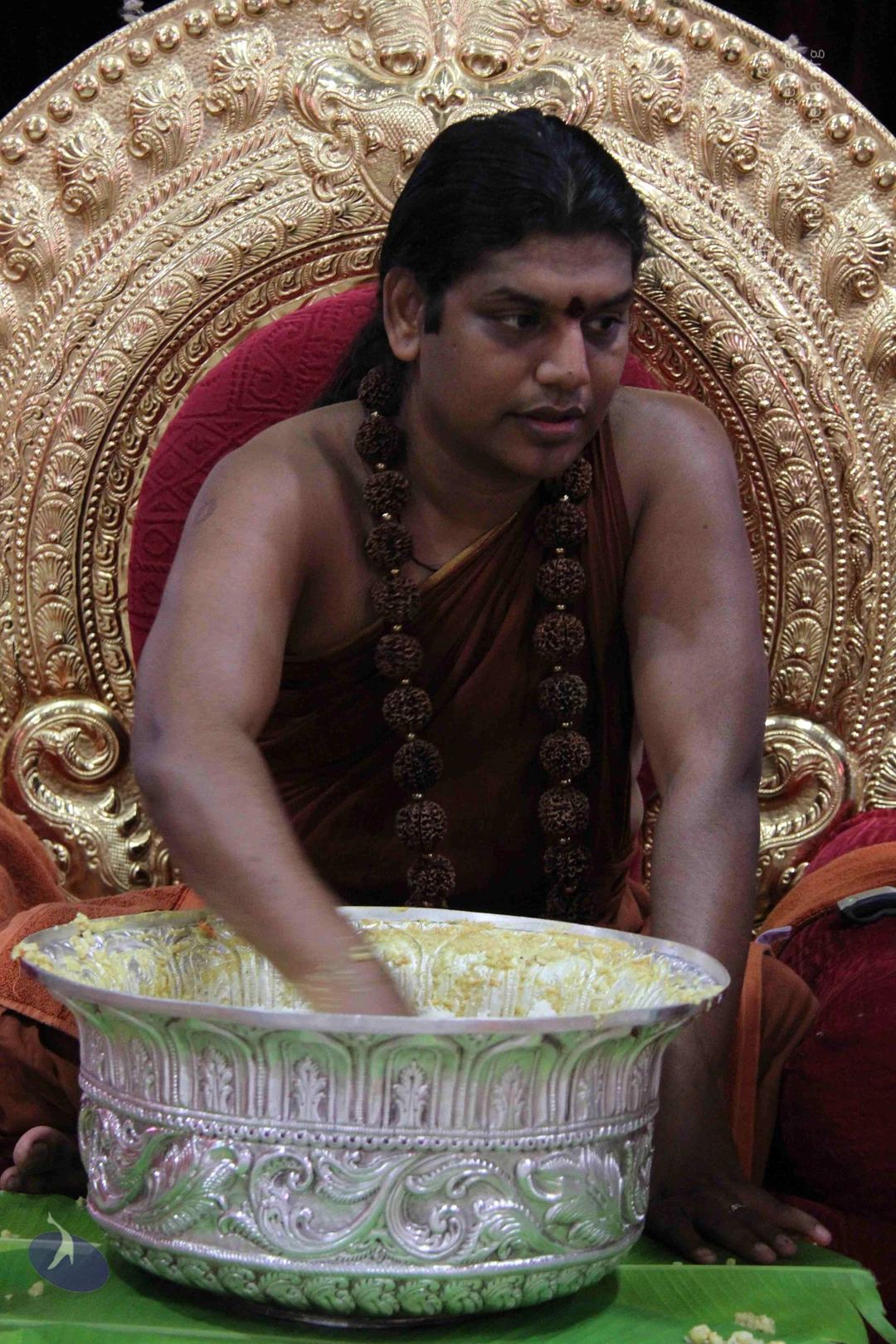
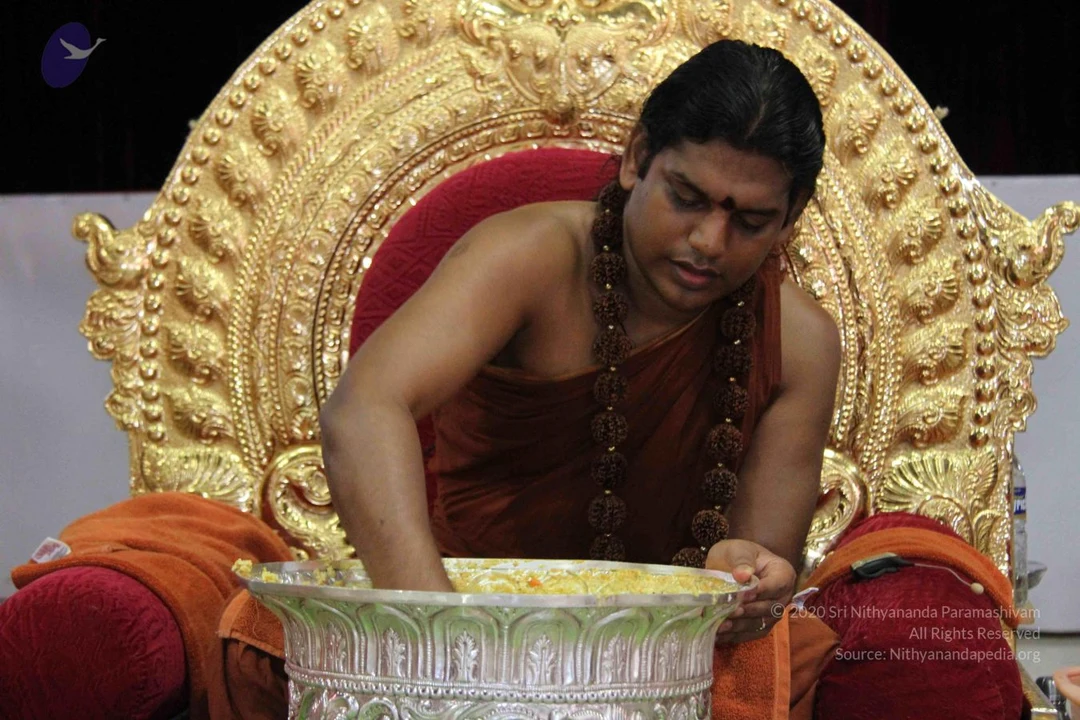
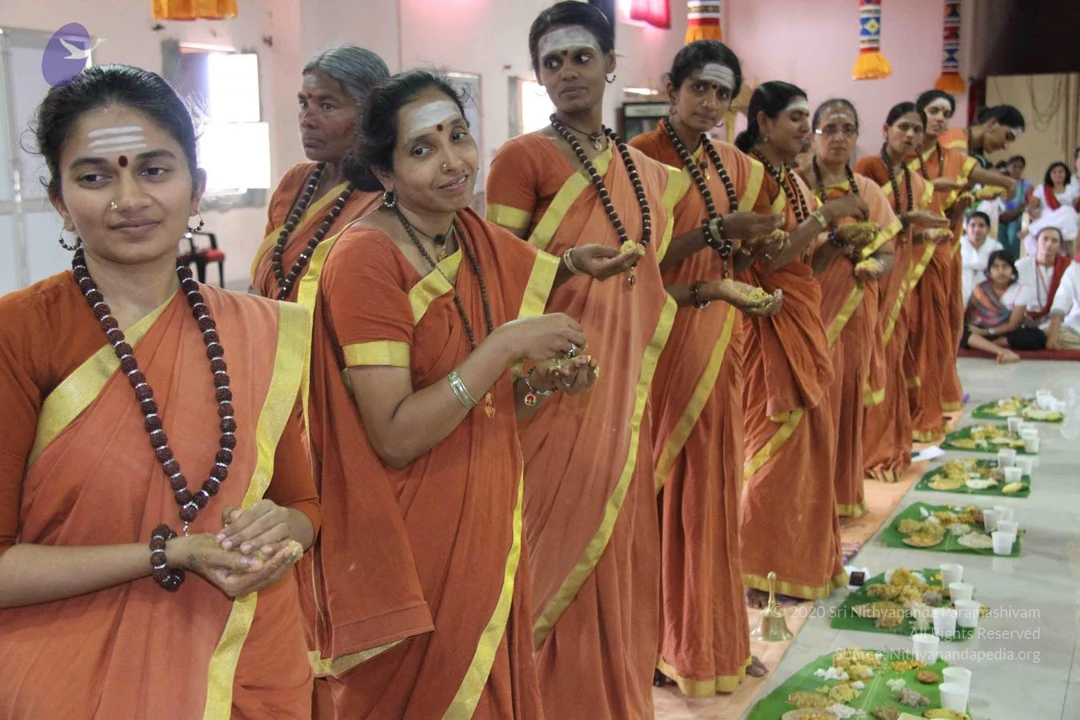
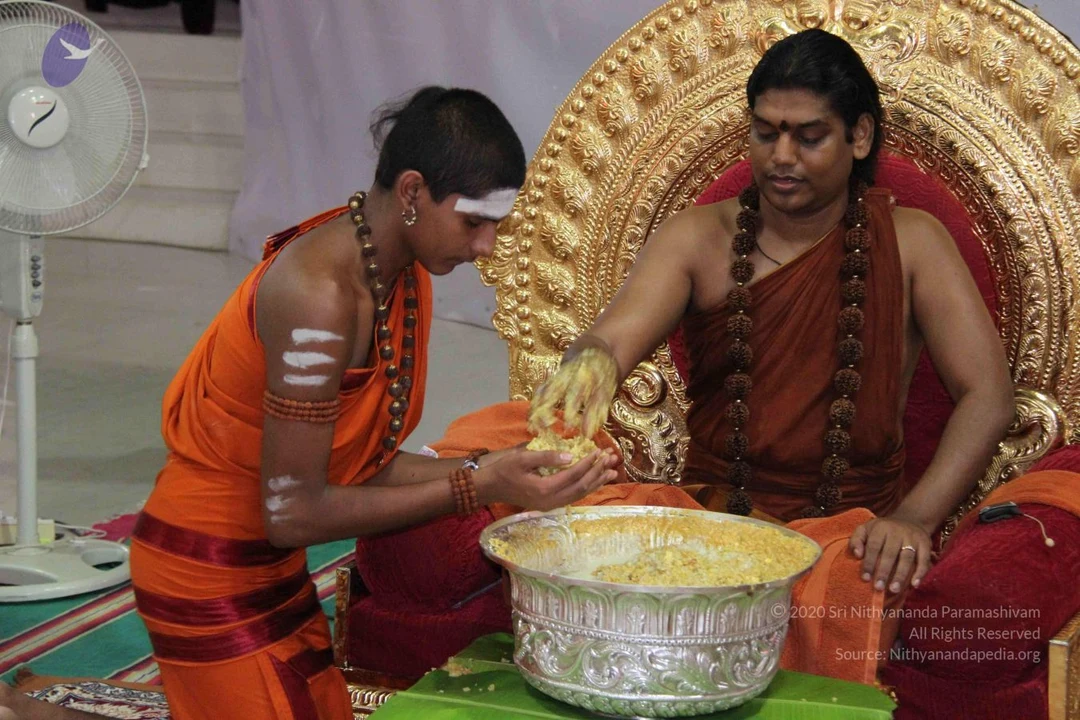
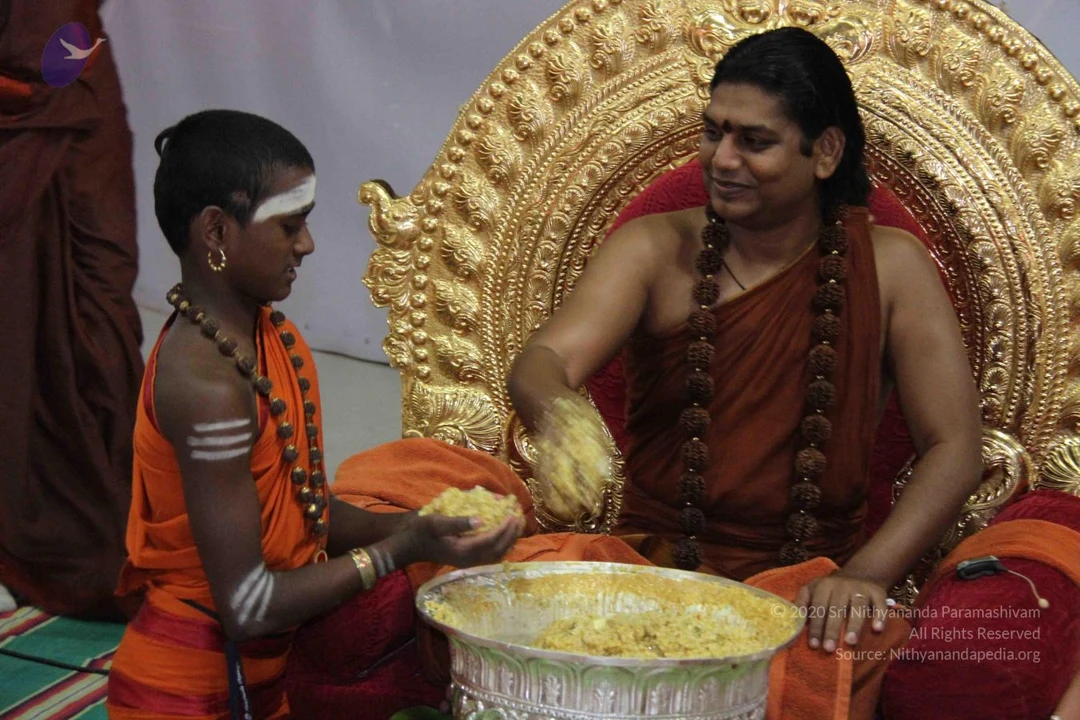
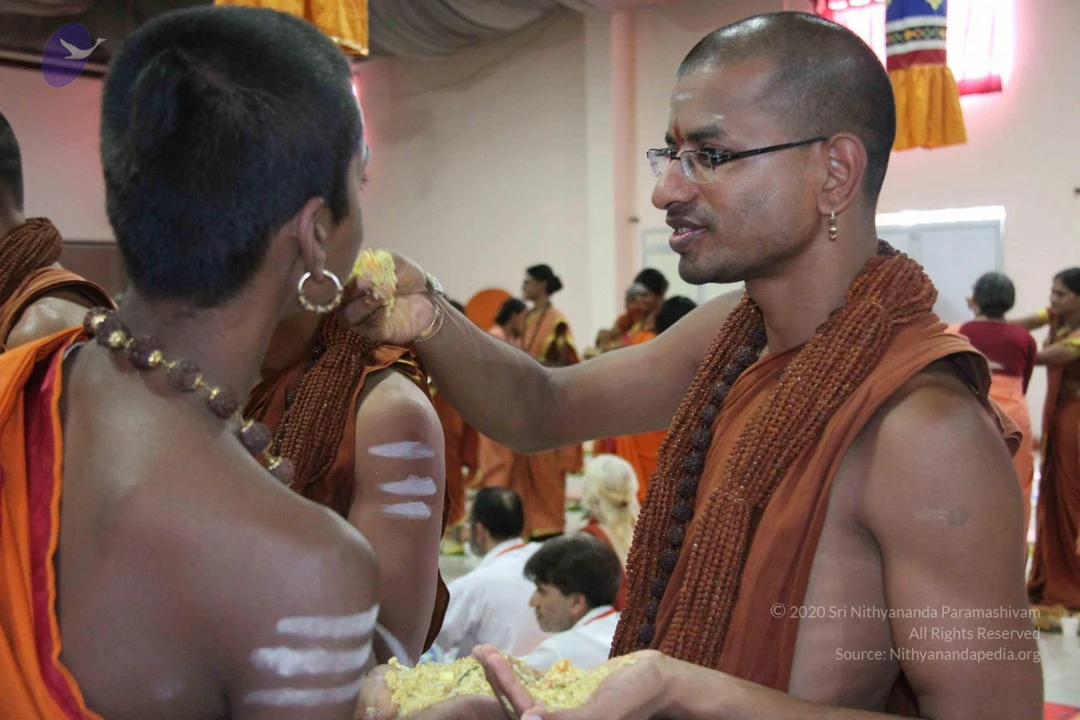
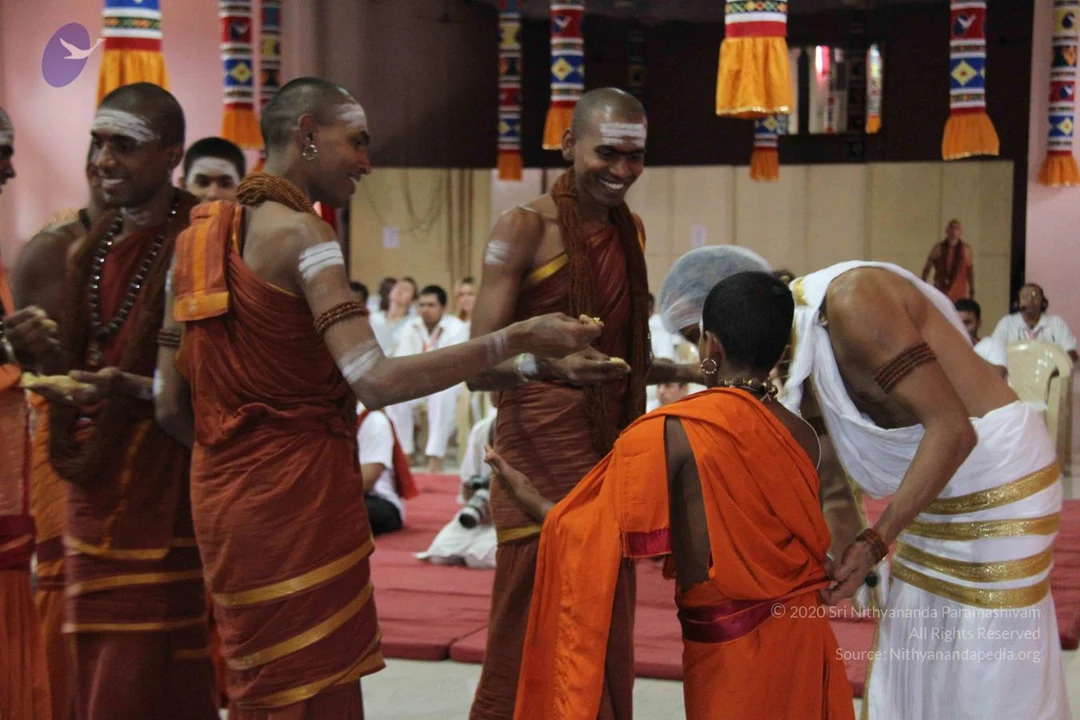
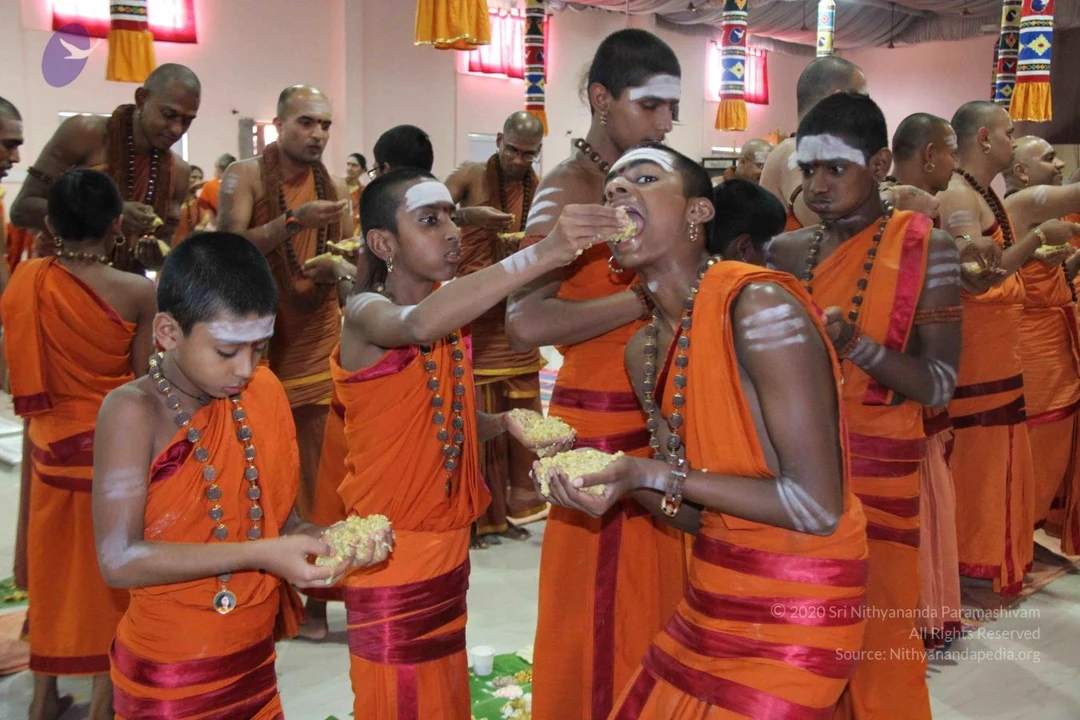
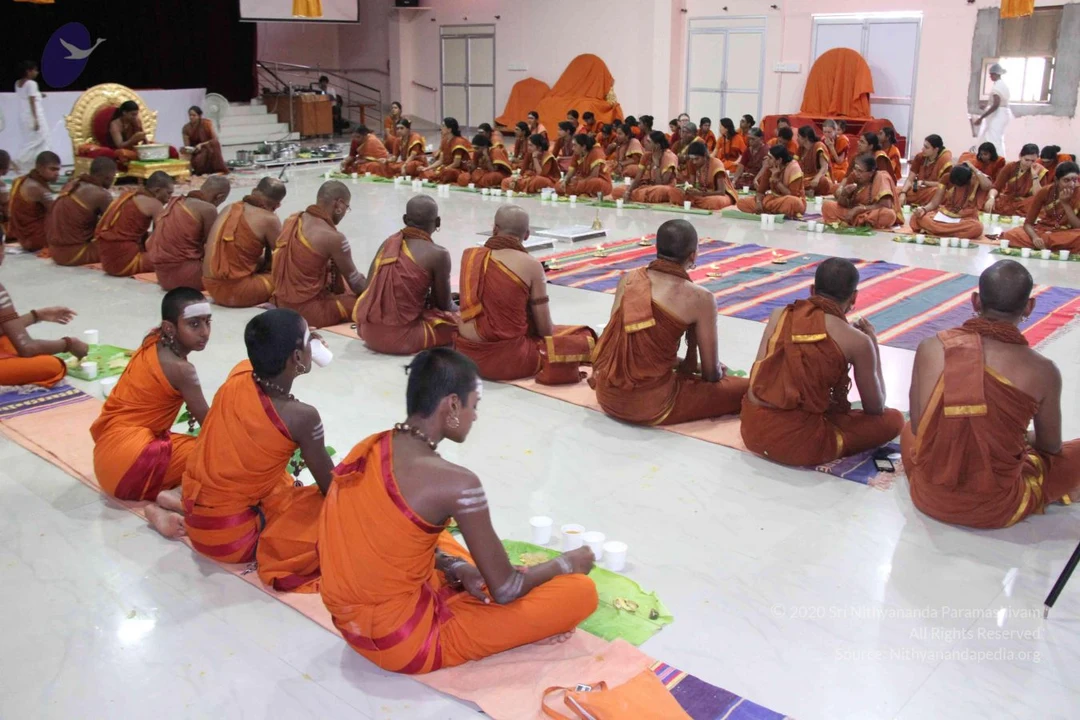
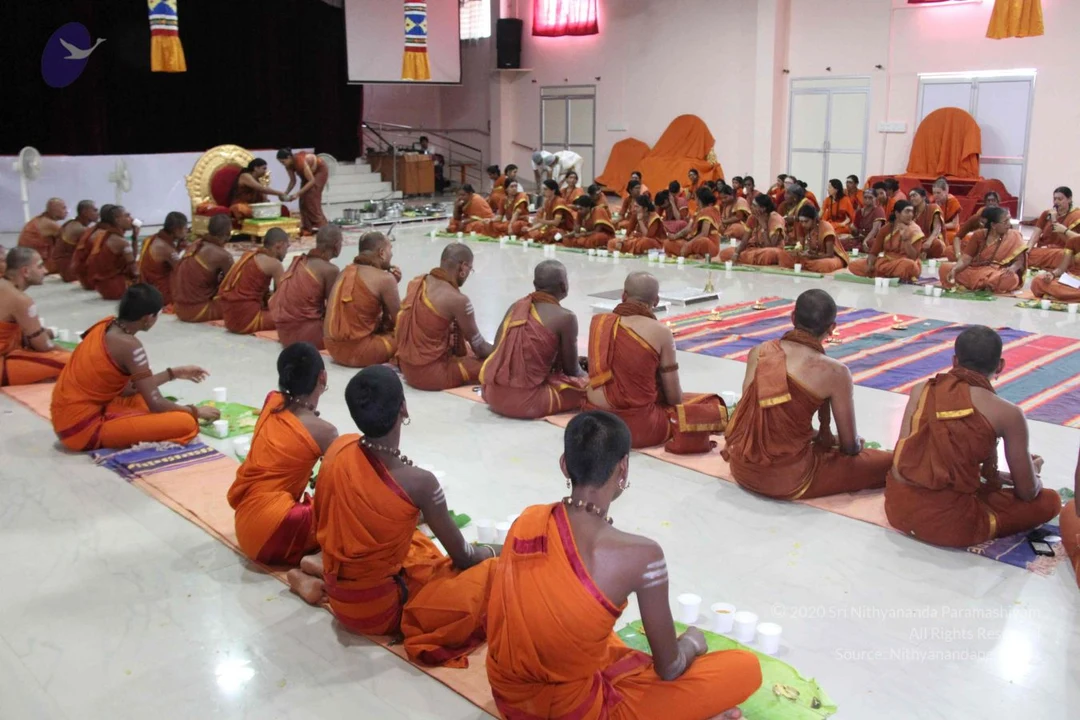
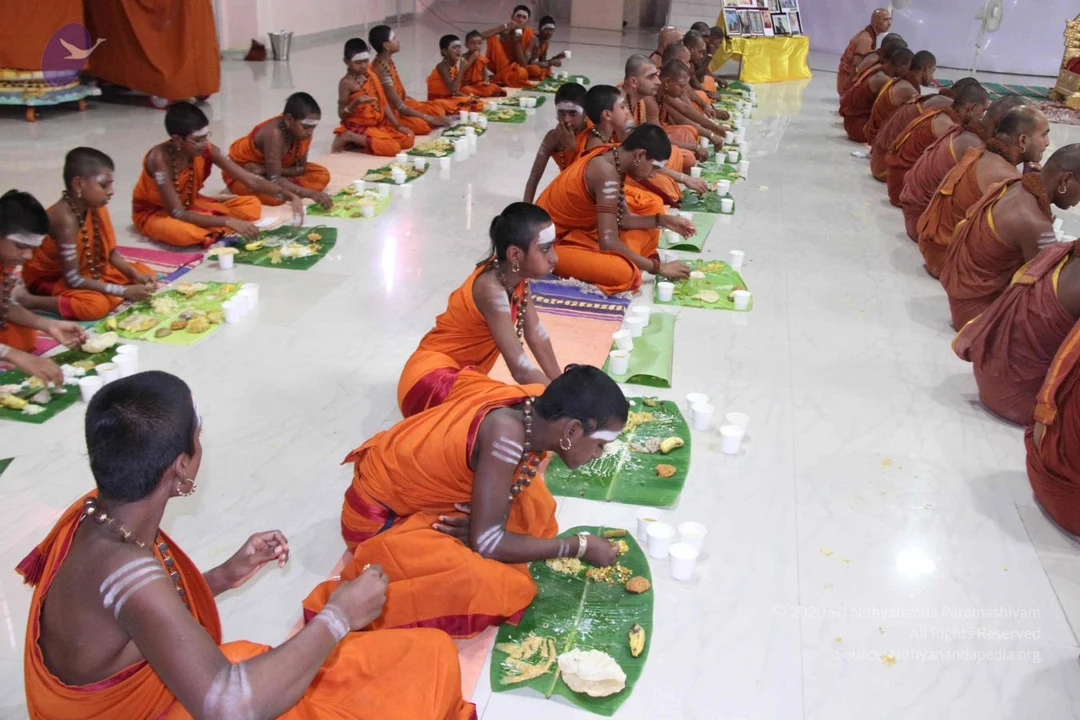
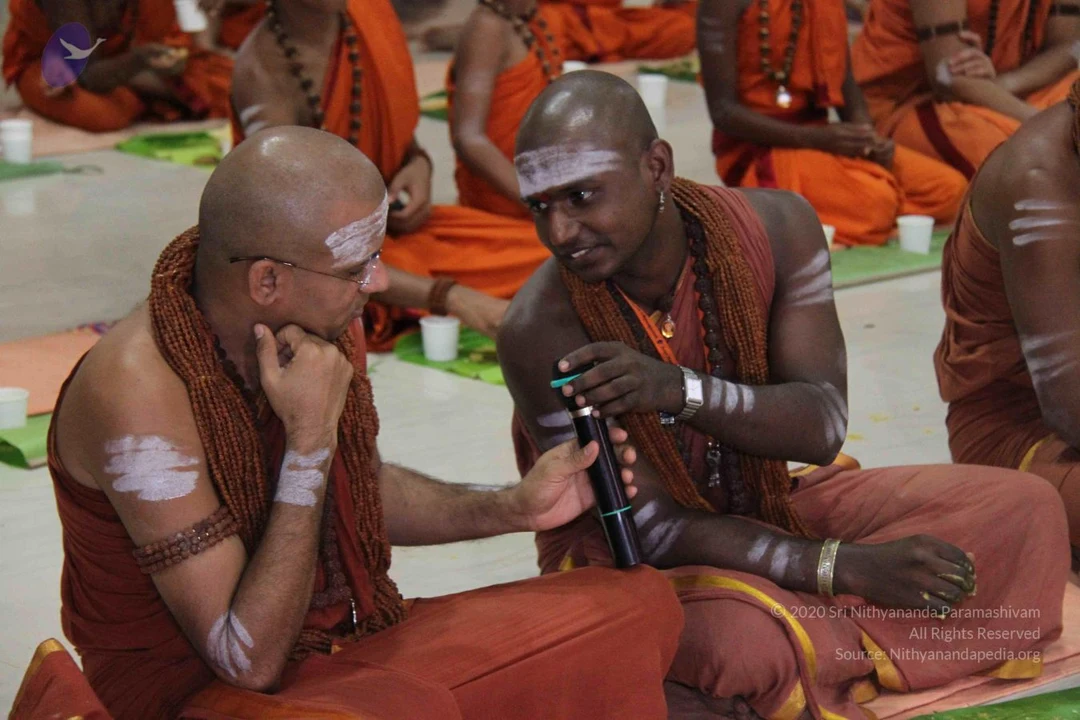
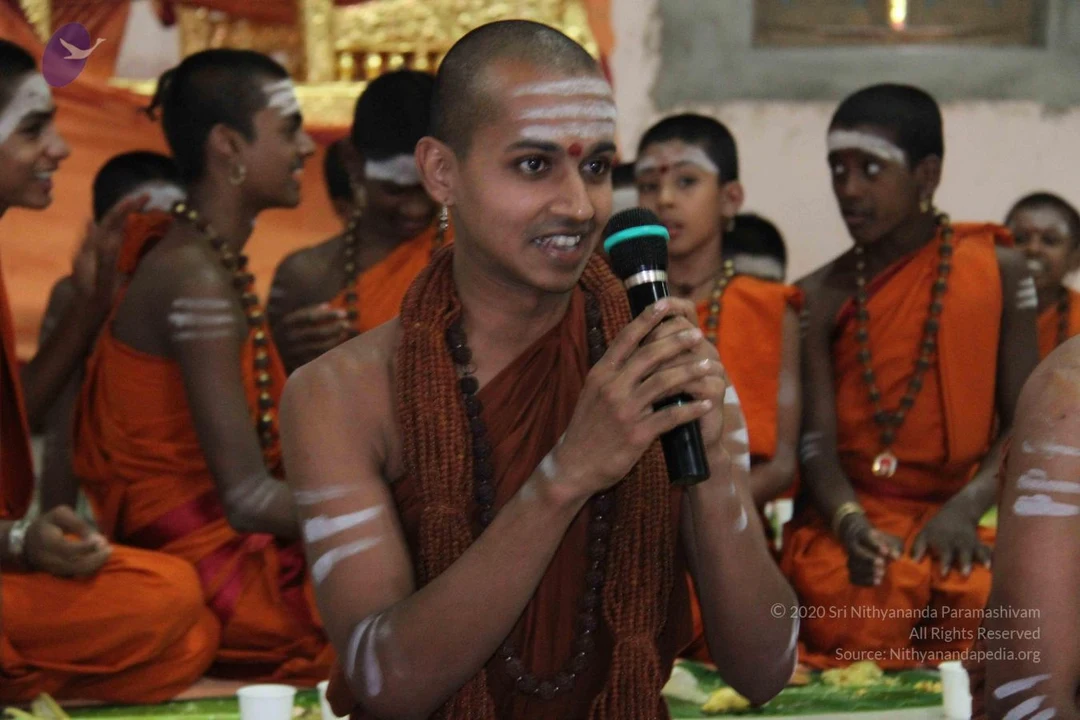
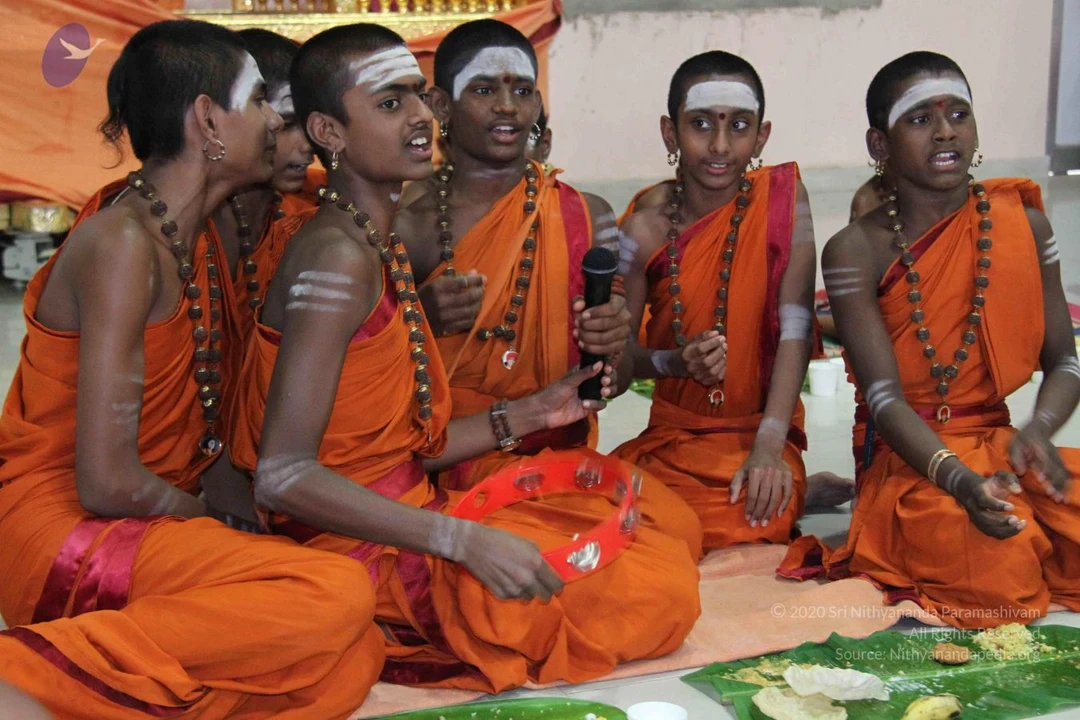
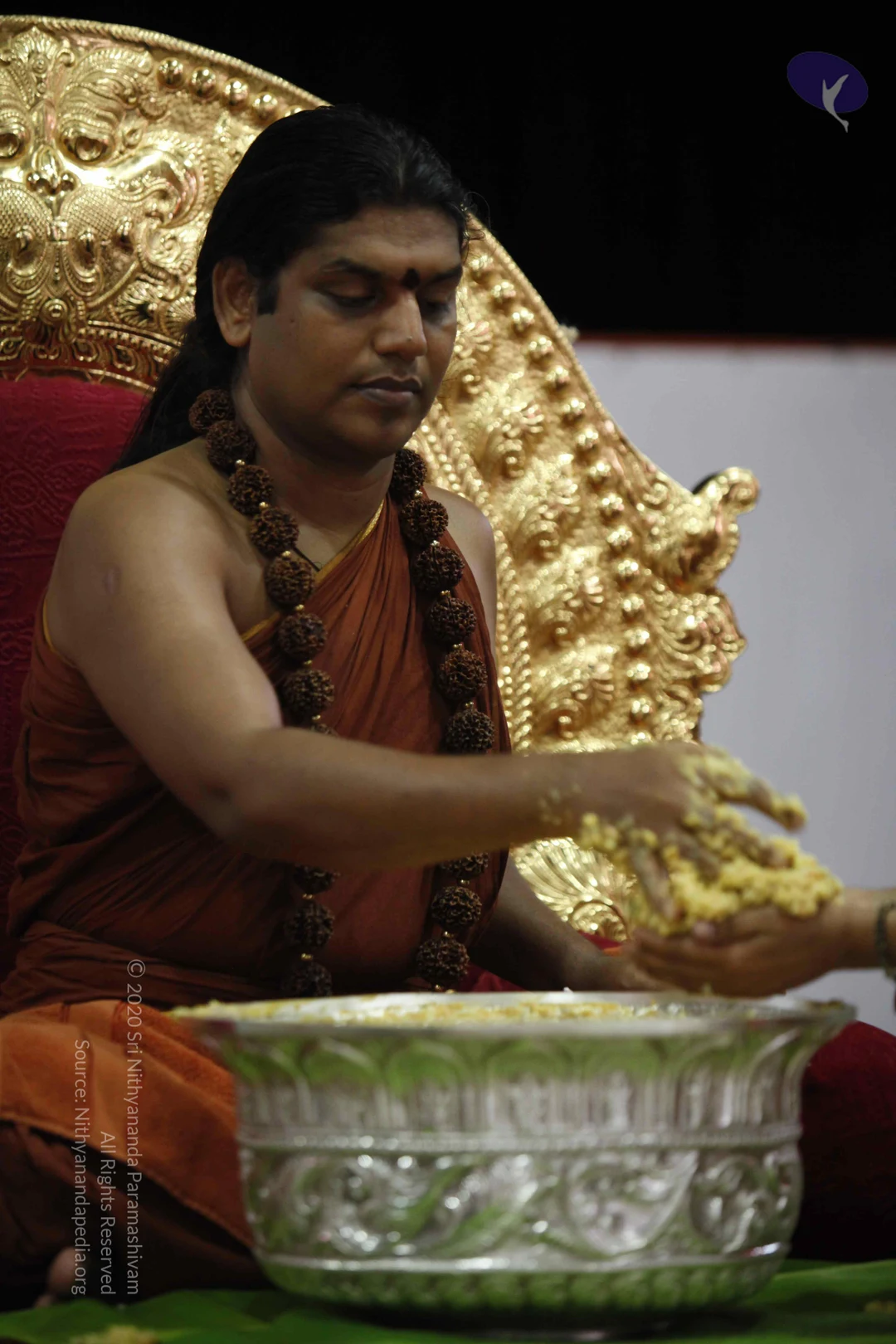
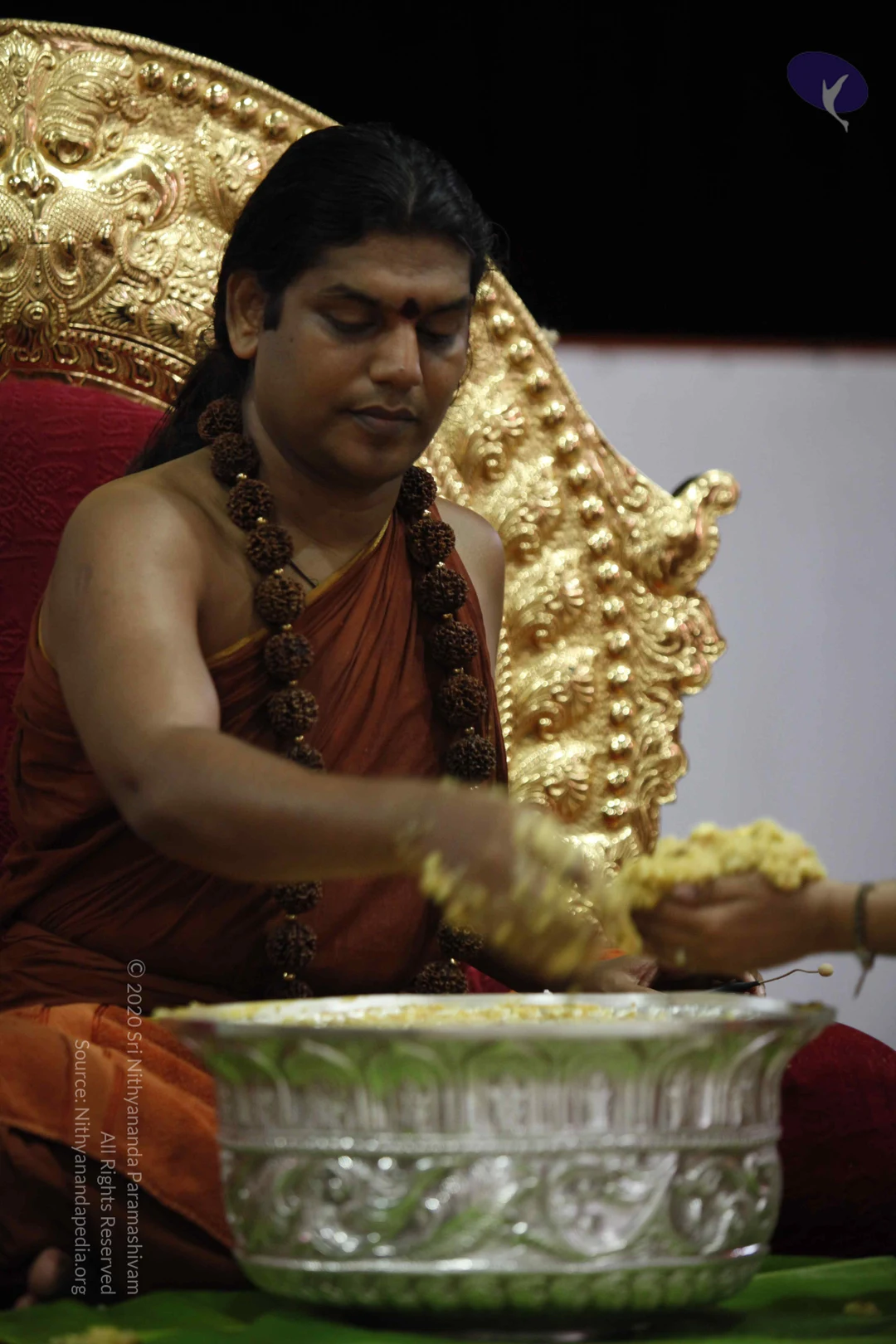
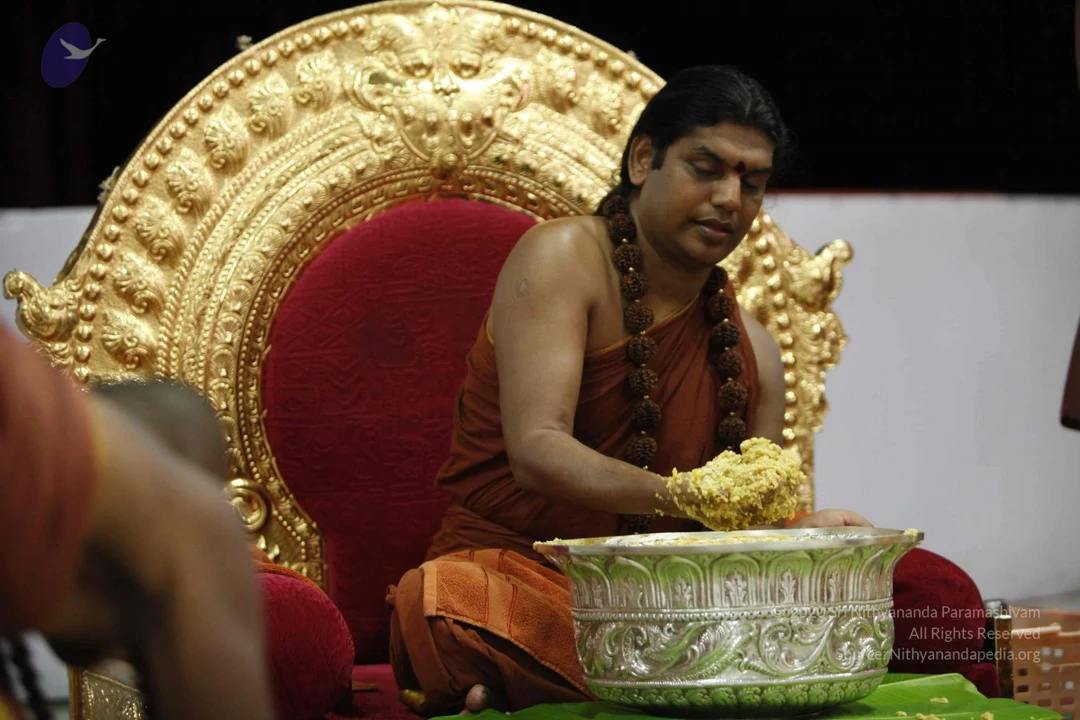
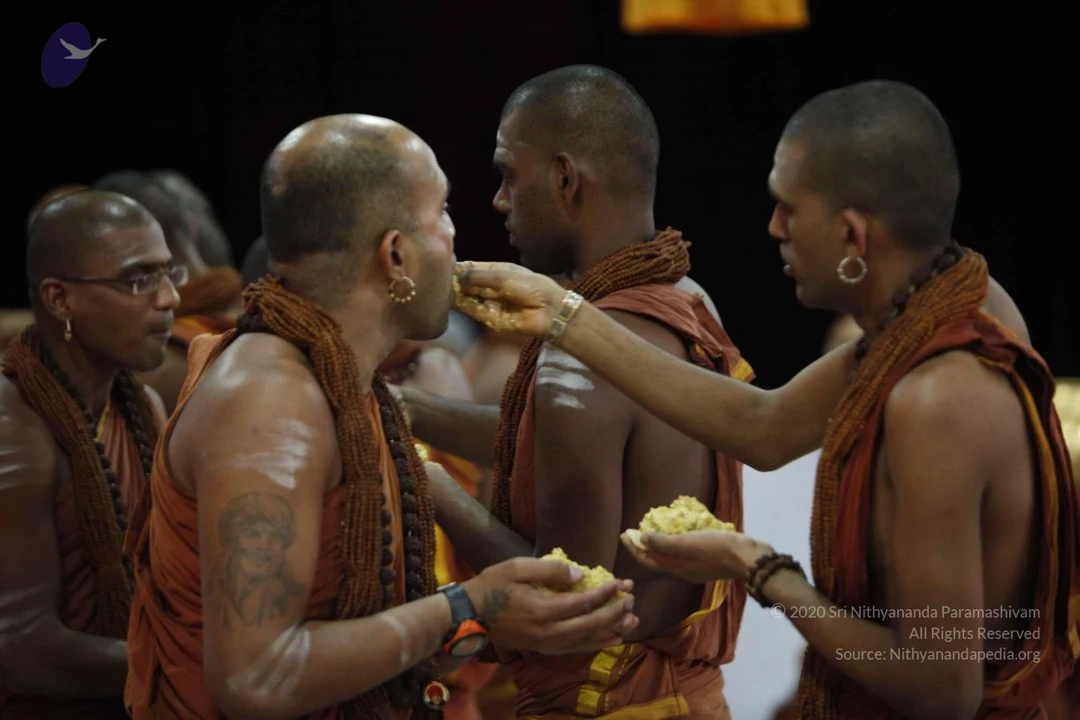
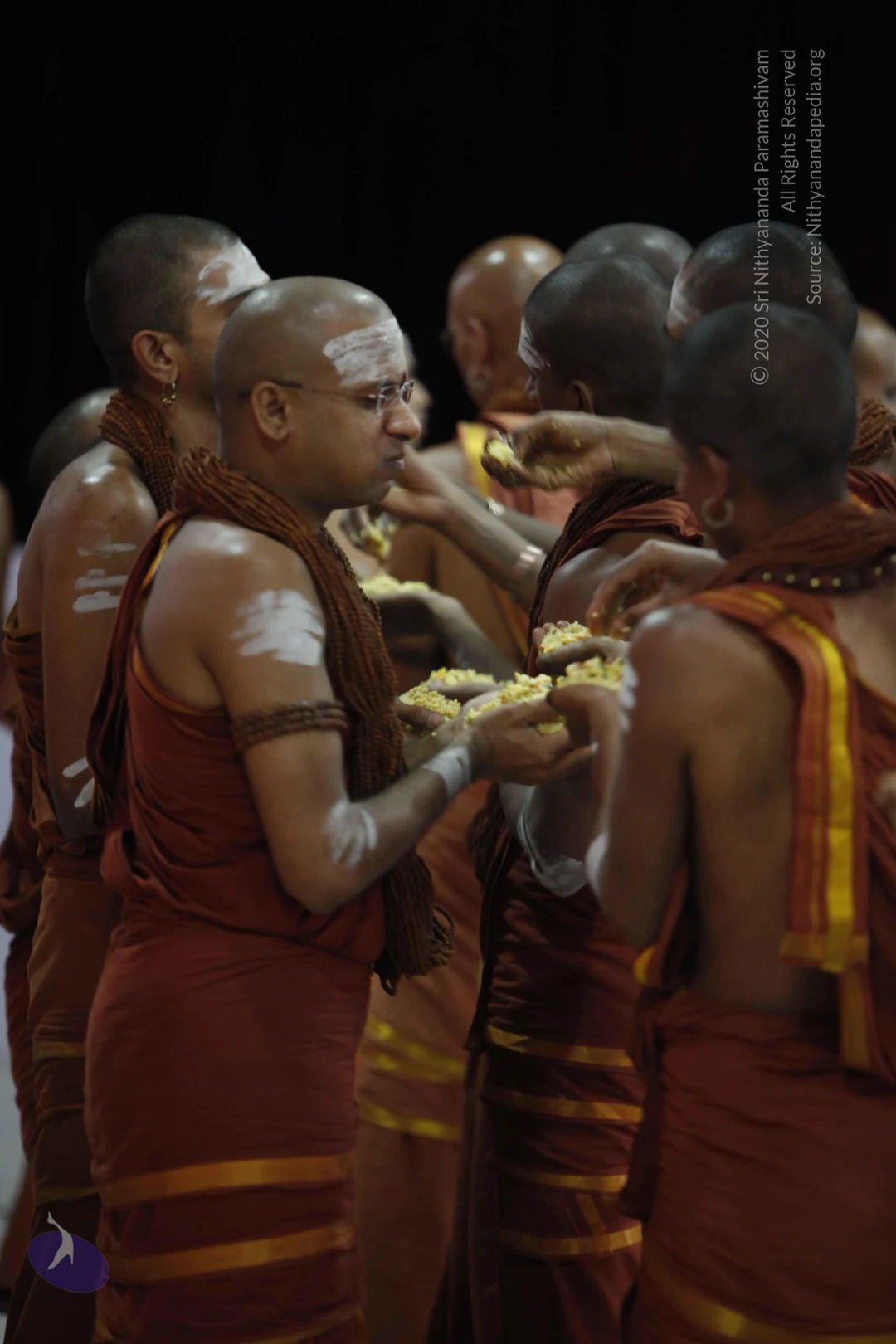
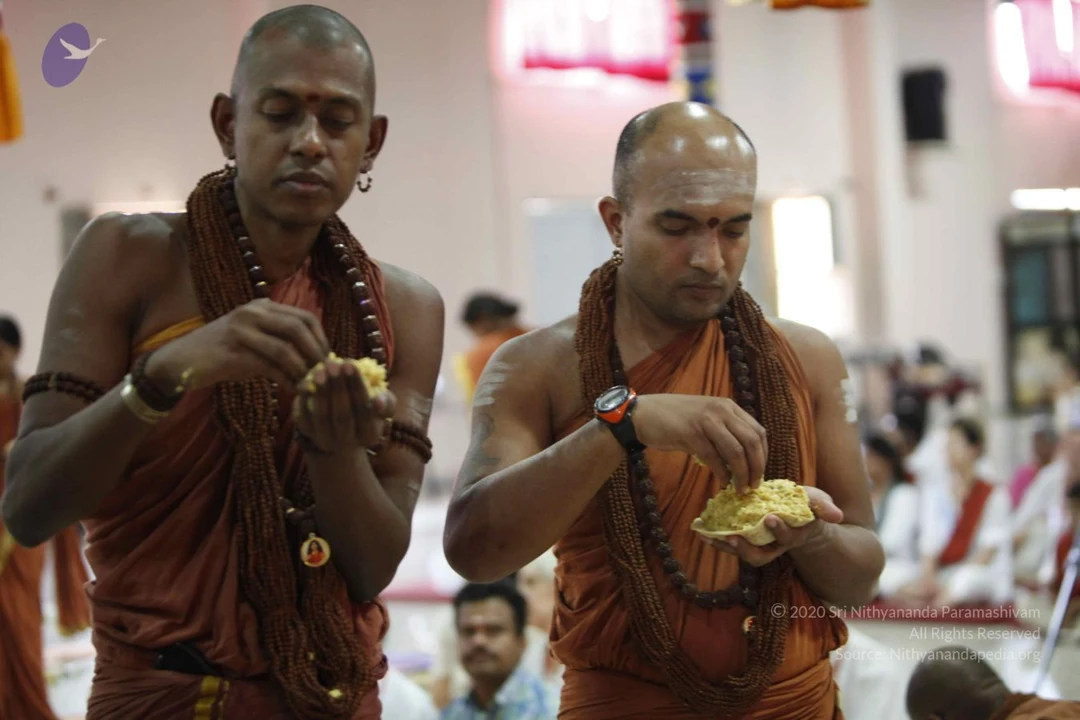
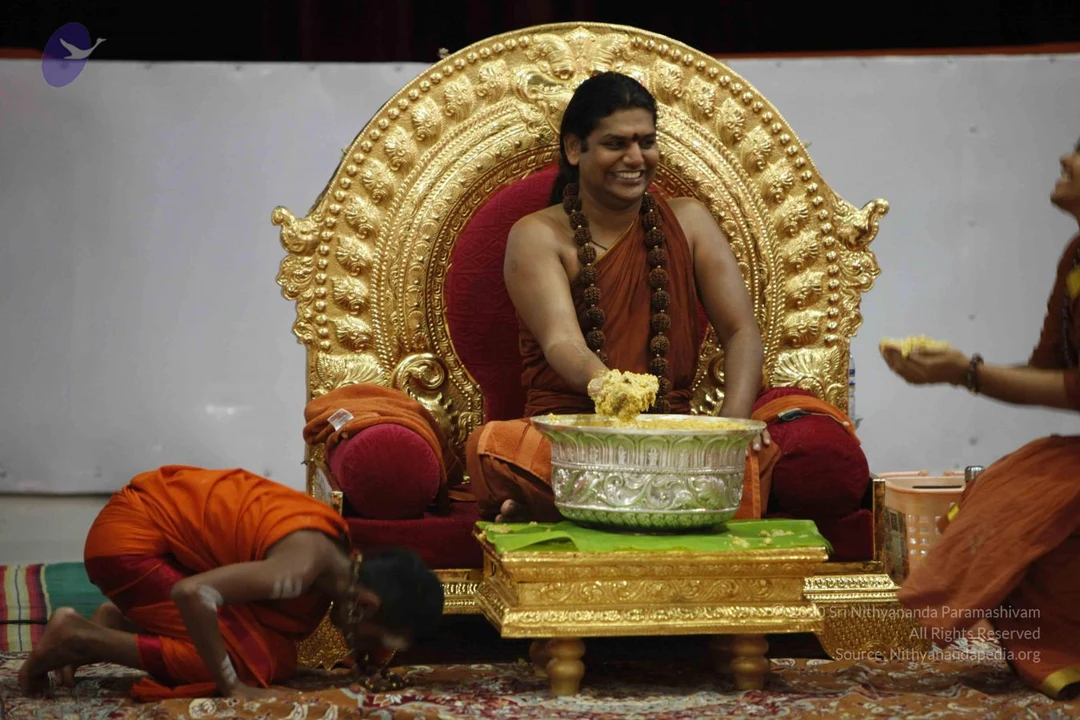
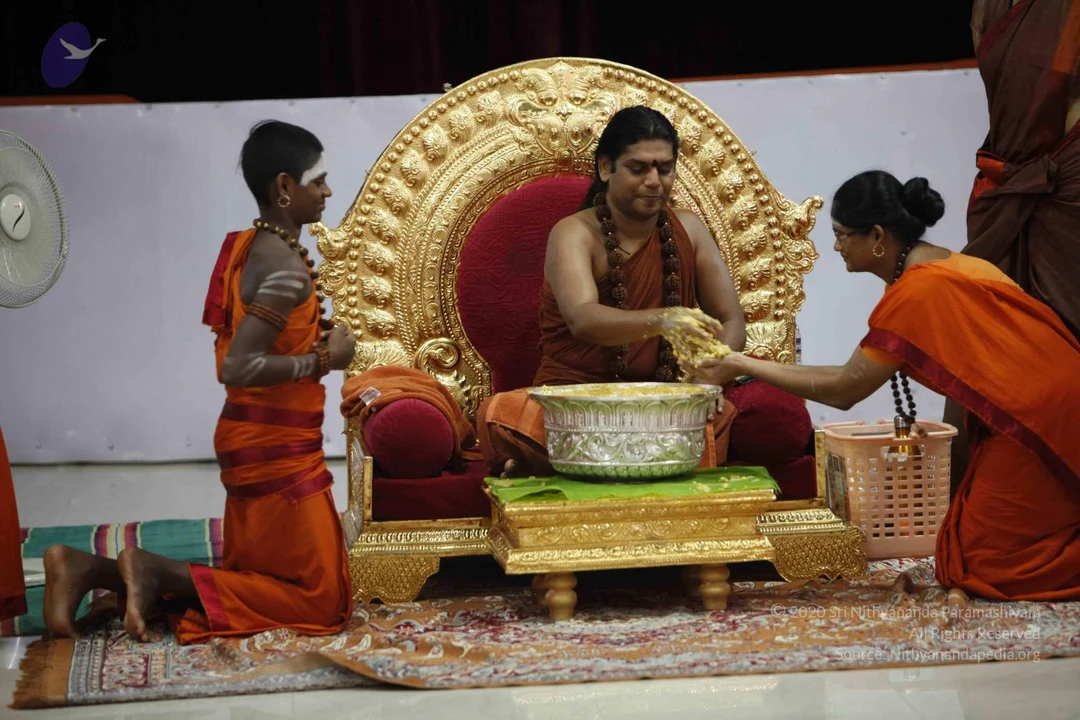
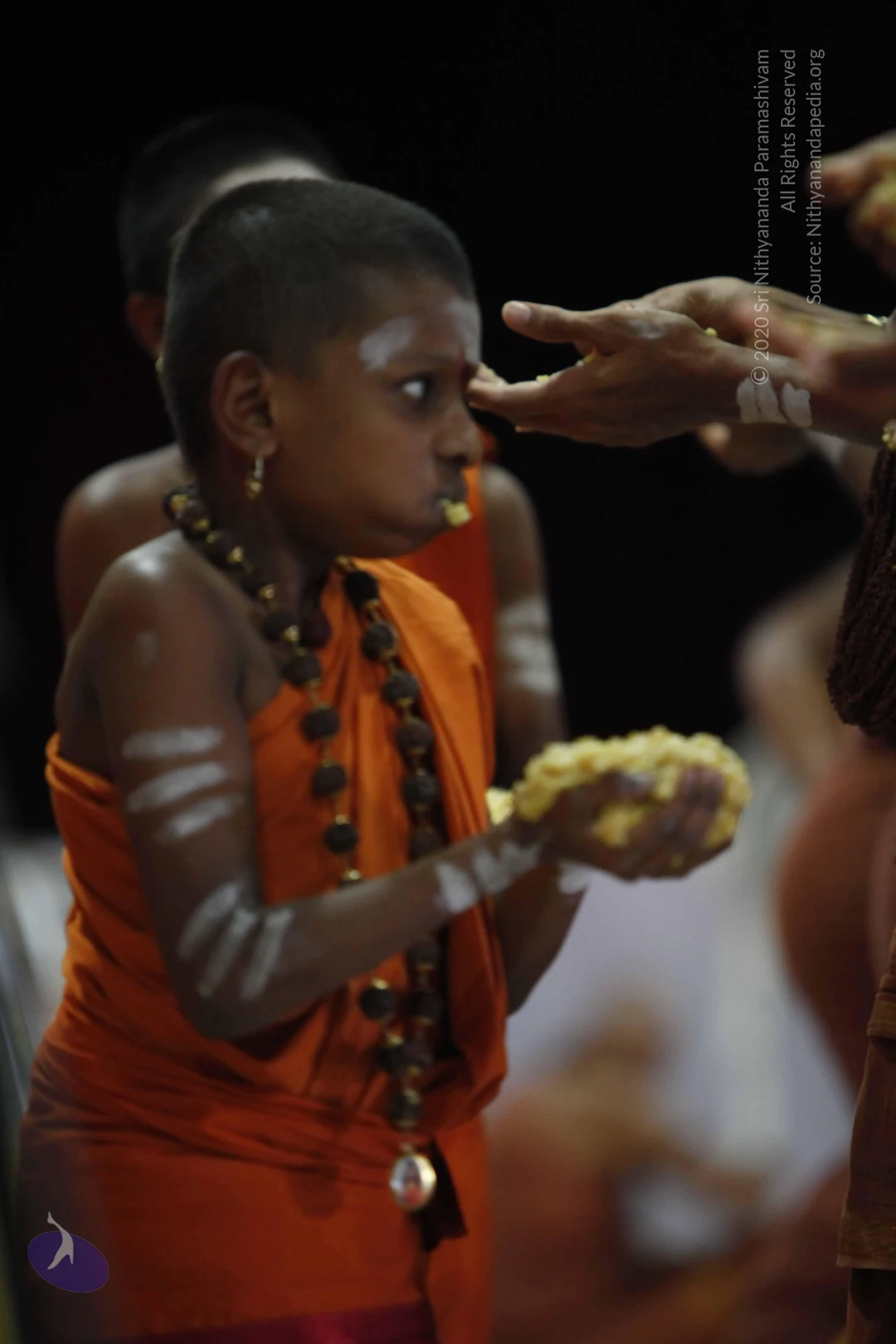
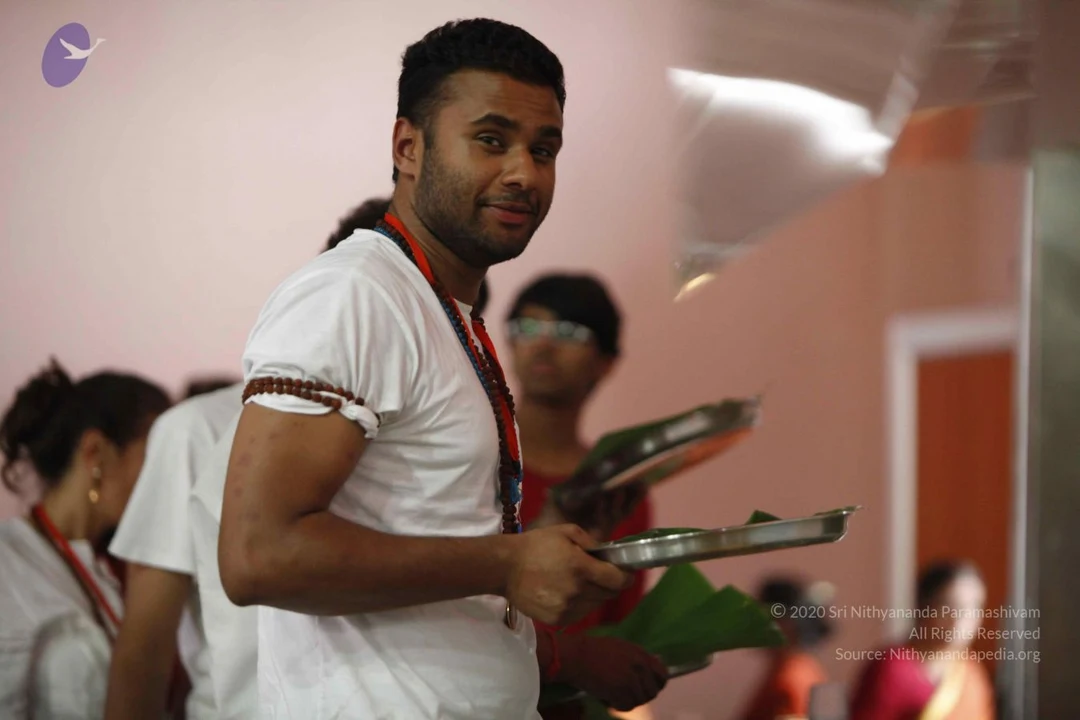
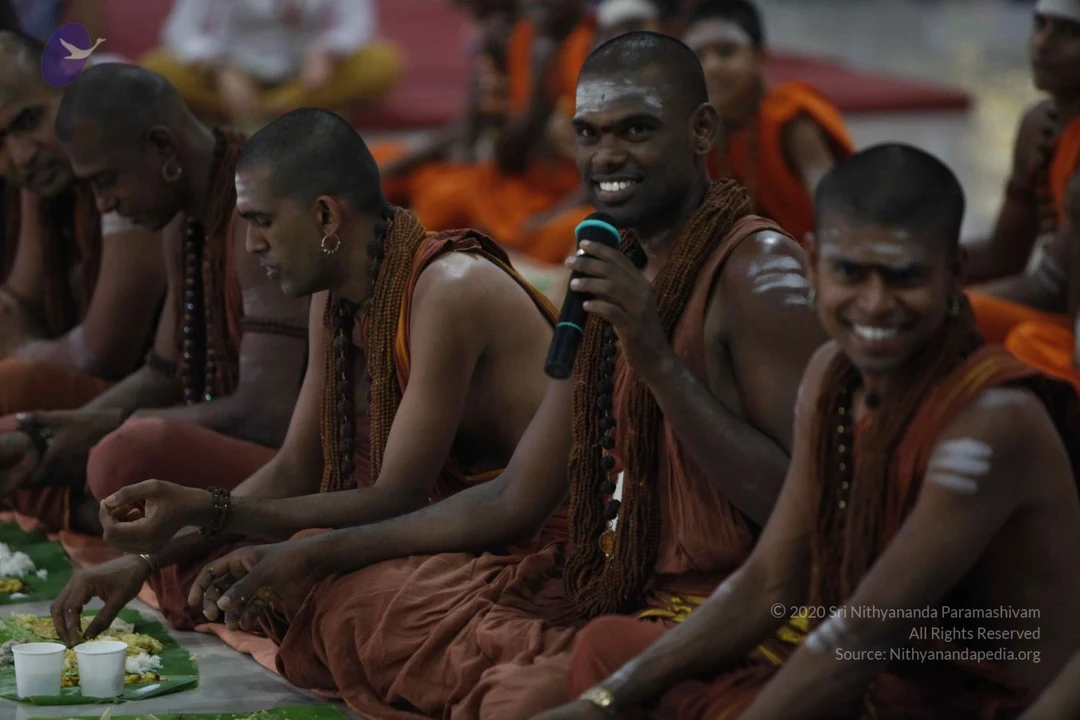
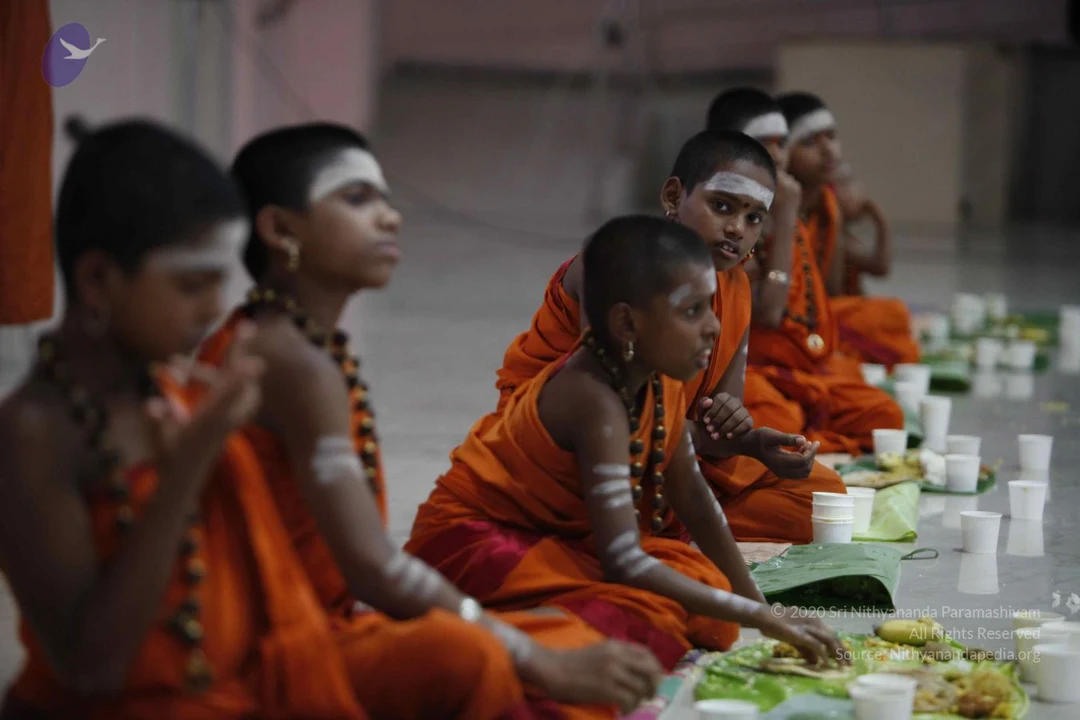
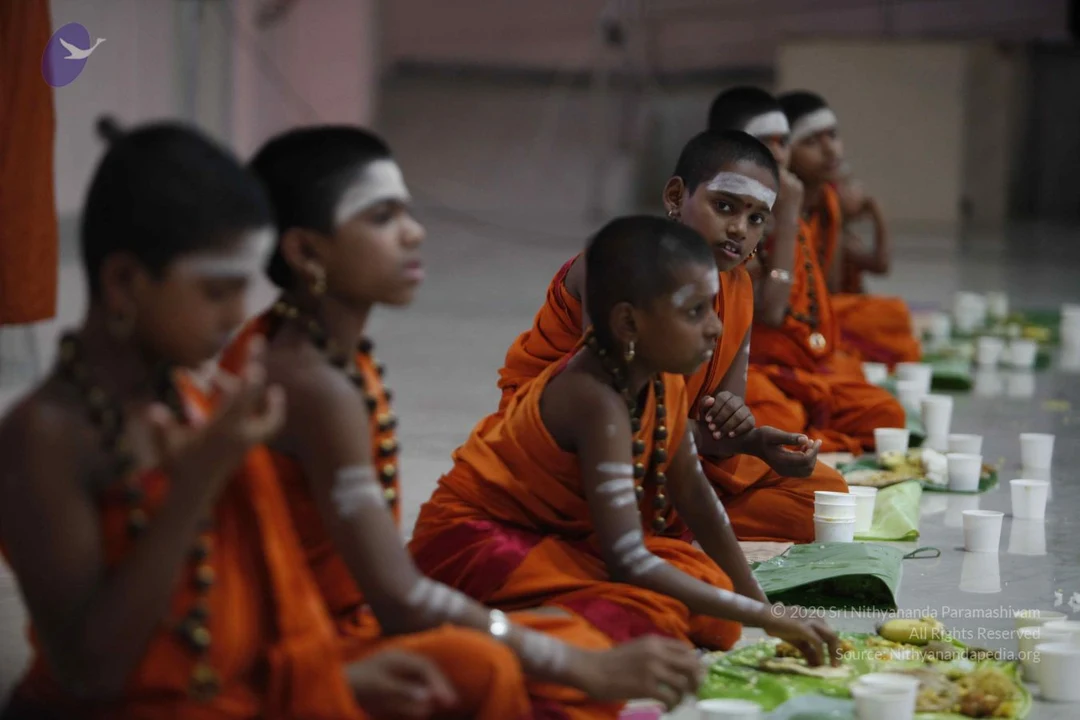
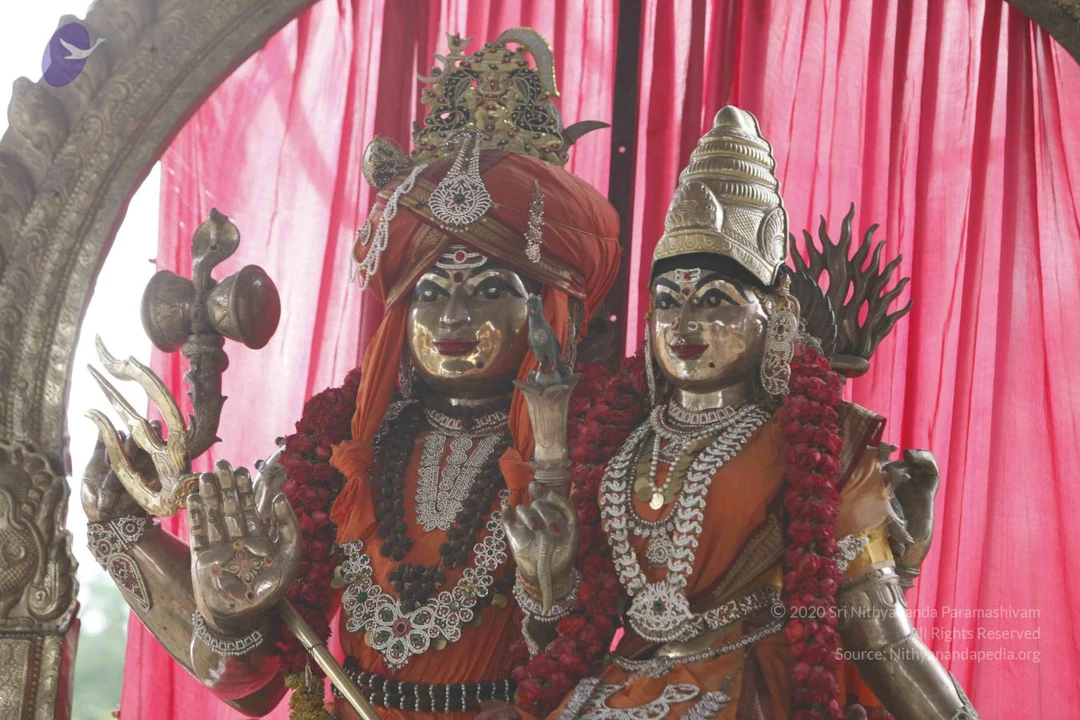
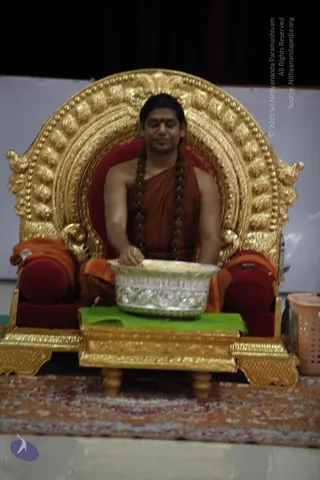
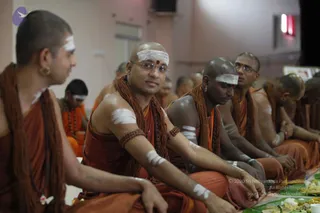
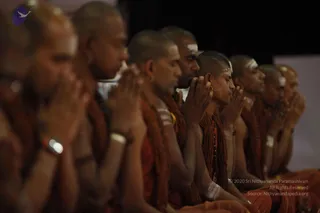
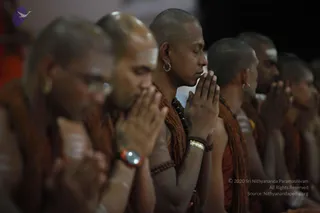
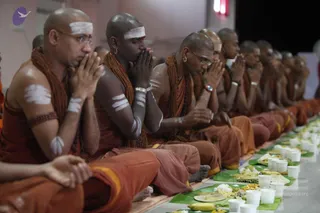
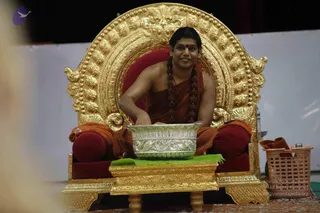
A photograph of a seated man on an ornate gilded throne with a large arched backrest and red cushions. He wears an orange-red shawl over bare shoulders, has long braided hair falling to his chest with rudraksha beads, and a red tilak on his forehead. His eyes are closed and he rests his hand in a silver-rimmed bowl filled with yellow flowers set on a green cloth atop a gilded stand. The setting appears to be a hall with a white wall behind. Shown as a person by appearance cues: long braided hair, rudraksha malas and saffron-orange clothing on the throne.A seated row of saffron-robed sannyasis, most with shaved heads and white vibhuti horizontal lines on their foreheads and arms, sits on a floor before a banana-leaf meal of rice and curries. The man at centre wears round glasses, a red bindi, rudraksha mala and a wrist mala, and looks toward the camera. Others in orange and ochre cloth wear rudraksha malas and ornaments. The room has pale pink walls.A row of shaved-headed men in saffron-orange robes sit in profile with palms pressed together in anjali mudra, eyes closed in prayer. Several wear white vertical tilak marks on their foreheads and white marks on their arms, and some have rudraksha-style beaded necklaces. The background is dark, and the sitters are in sharp focus in the foreground while the figures further along blur softly. The scene suggests a group puja or satsang with devotees seated in a line.A photograph of a row of shaved-headed men in saffron-orange robes seated closely together, hands pressed in anjali mudra at their chests with eyes closed in prayer. Several wear white horizontal tilak marks on their foreheads and rudraksha beads on their wrists, and some have small earrings. Their saffron-orange shawls drape over bare shoulders, and one man wears a silver bracelet and a red digital watch. The background is dark, and the foreground figures are blurred, with the central man in focus.A row of seated men in saffron-orange robes with hands pressed together in namaste during a meal offering. Several have white horizontal tilak stripes on their foreheads and white markings on their arms and shoulders. Some wear rudraksha-style beaded necklaces and small earrings, and one wears glasses. In front of them lie banana leaves heaped with rice, vegetables, bananas and flatbread, with rows of white paper cups beside them. The setting appears to be a hall with white walls and a red light fixture above. Several more seated devotees extend down the right side of the frame.A seated man on an ornate gold-and-red throne with a carved gold arched backrest, dressed in saffron-orange cloth draped over bare shoulders, with a long rudraksha mala hanging to his waist and a red bindi on his forehead. He rests his hands on a large silver-toned bowl set on a green cloth atop a gold-carved stool, with a woven pink basket and a water bottle to the right. The setting appears to be a hall with white and dark drapes behind.
NITHYA SATSANG
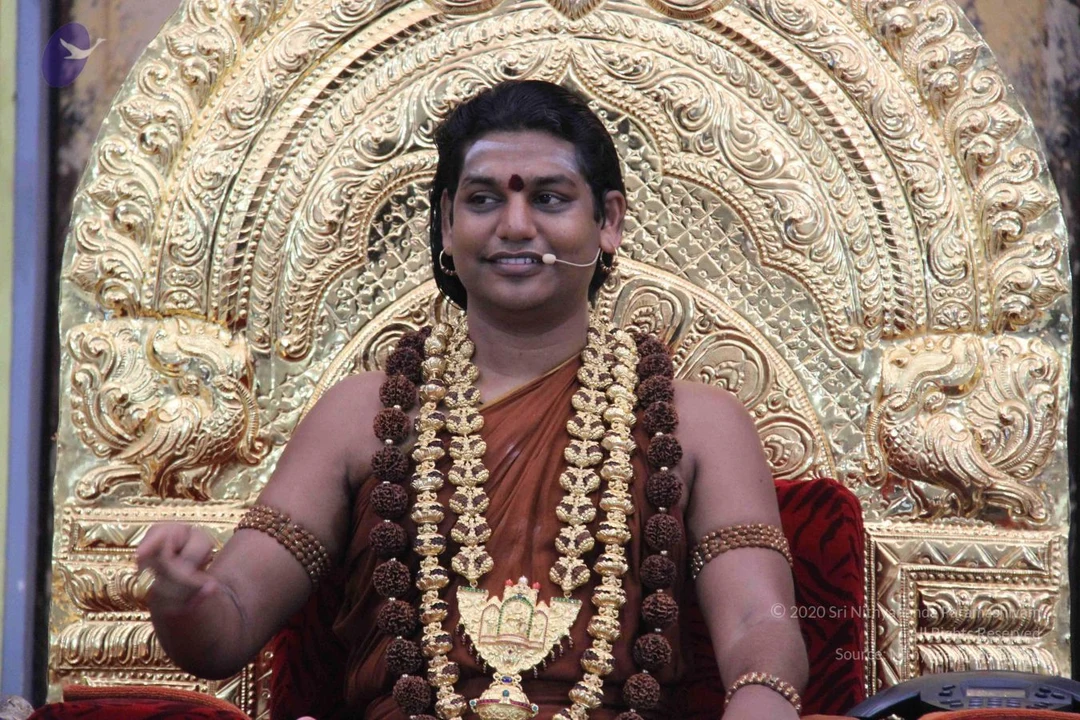
9 photosSource gallery
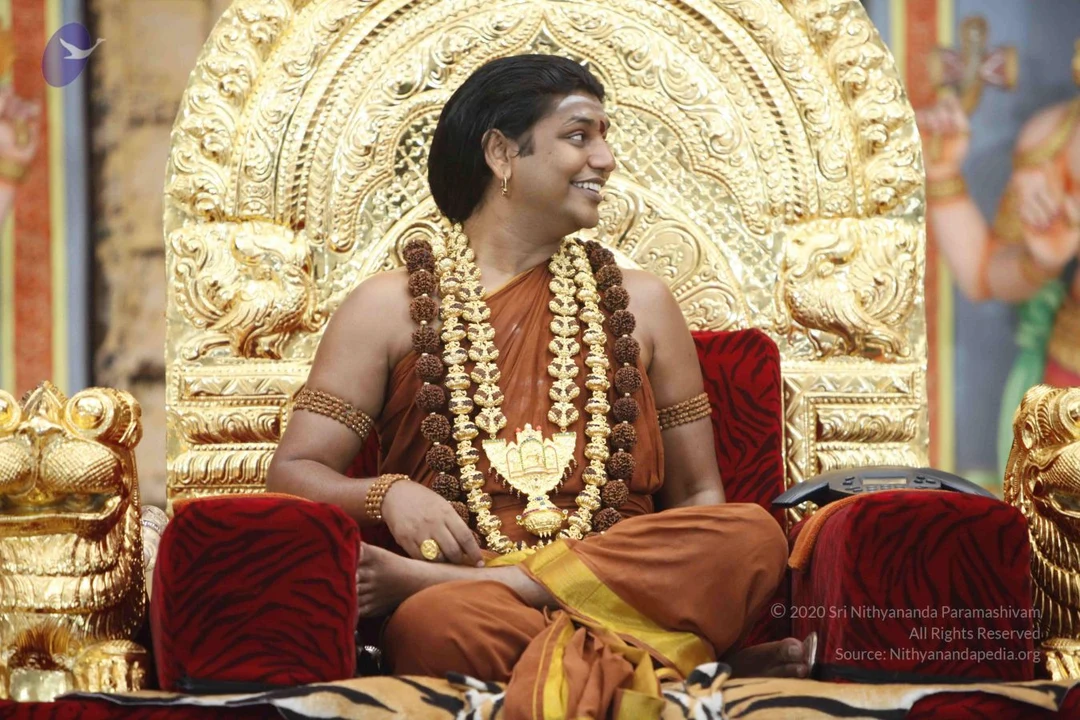
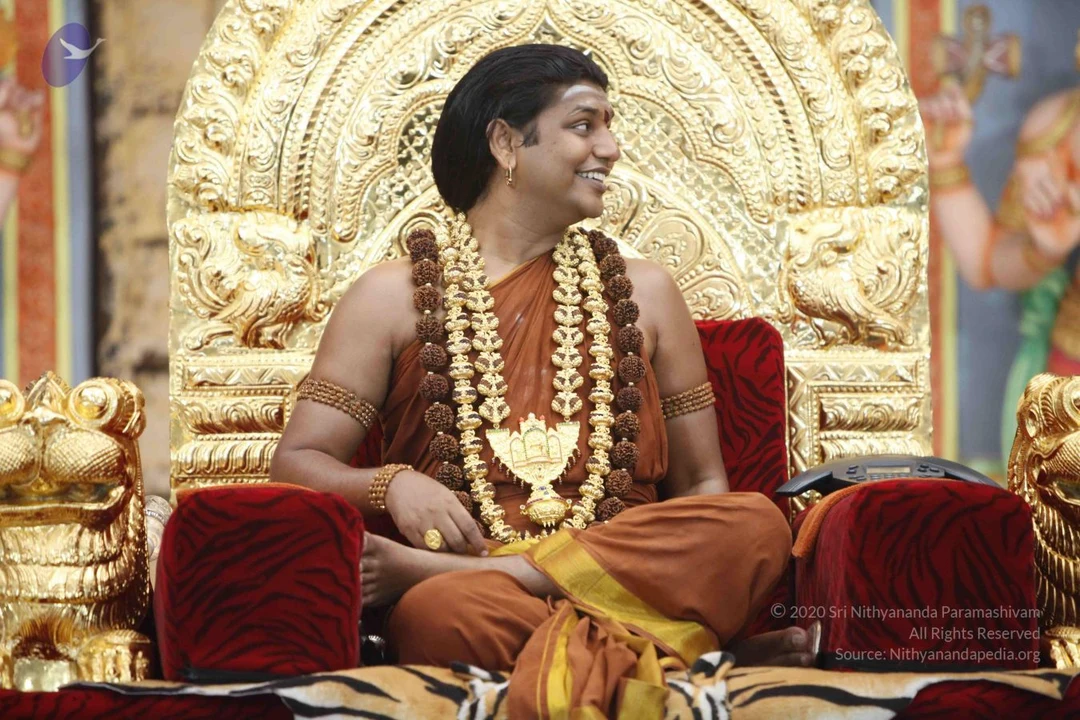
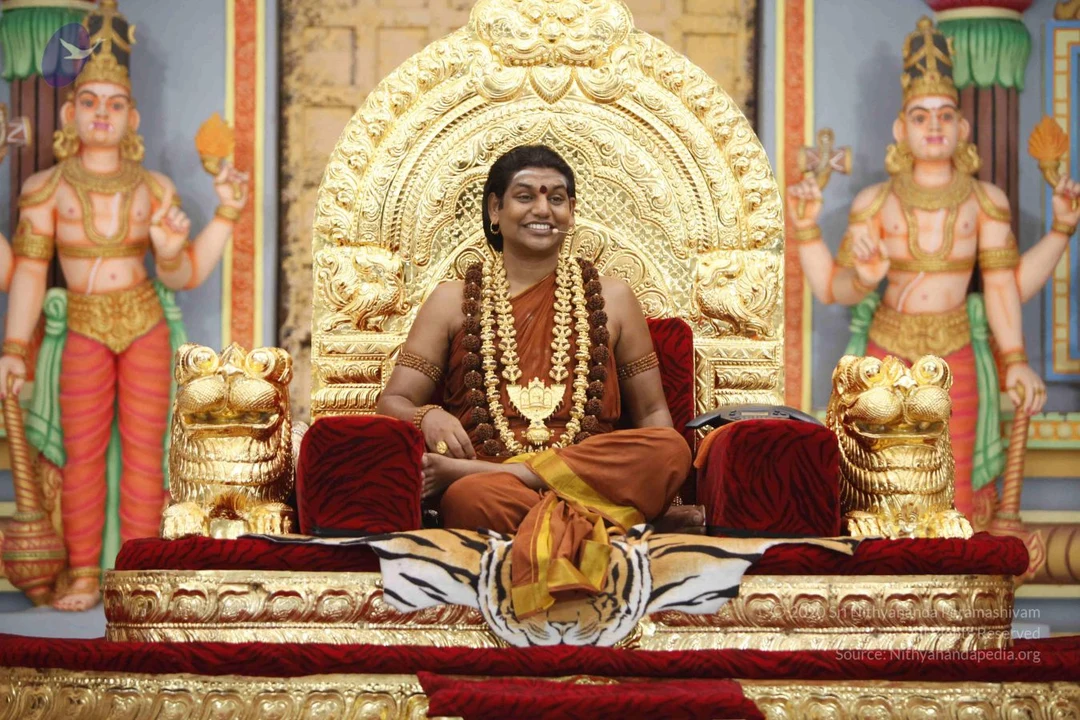
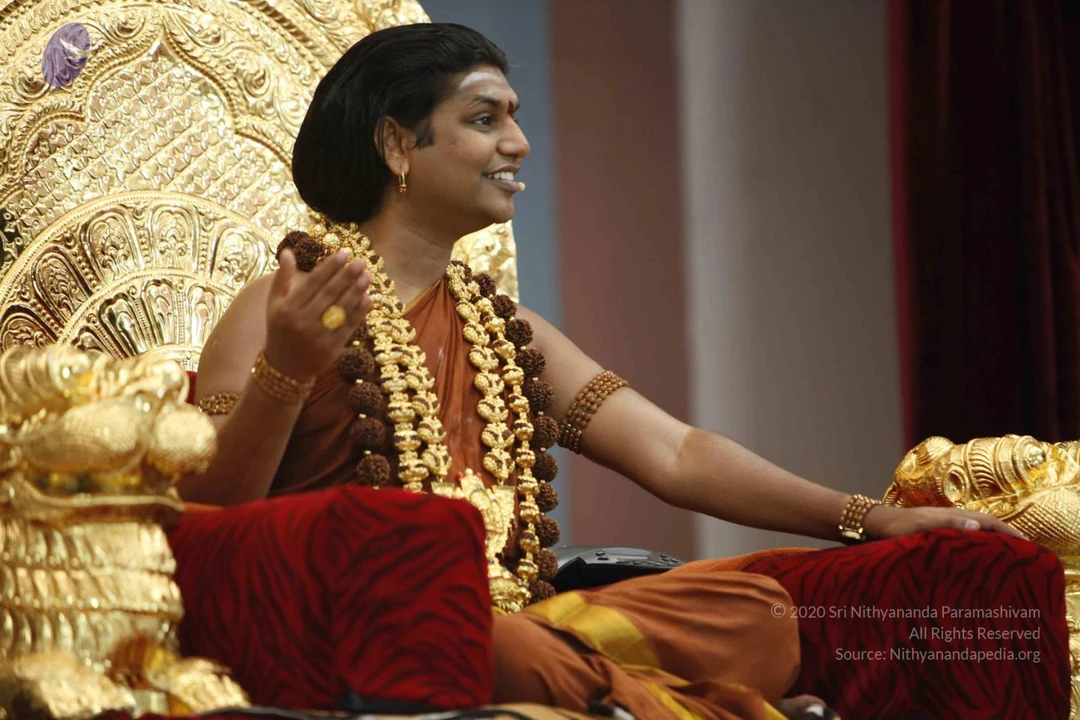
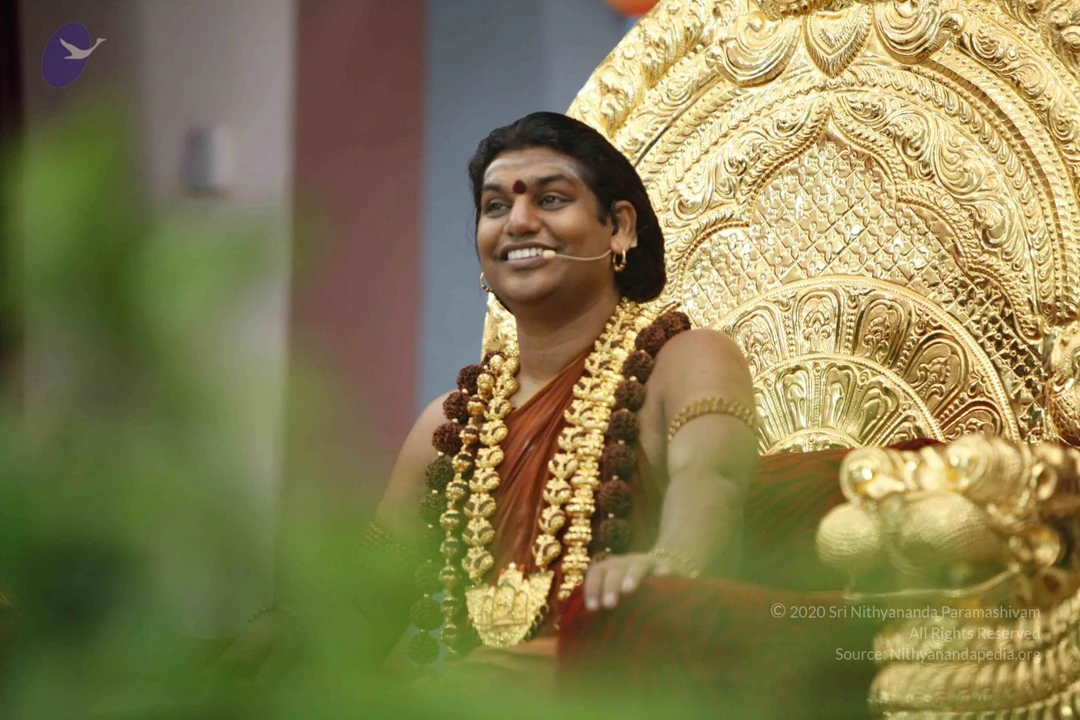
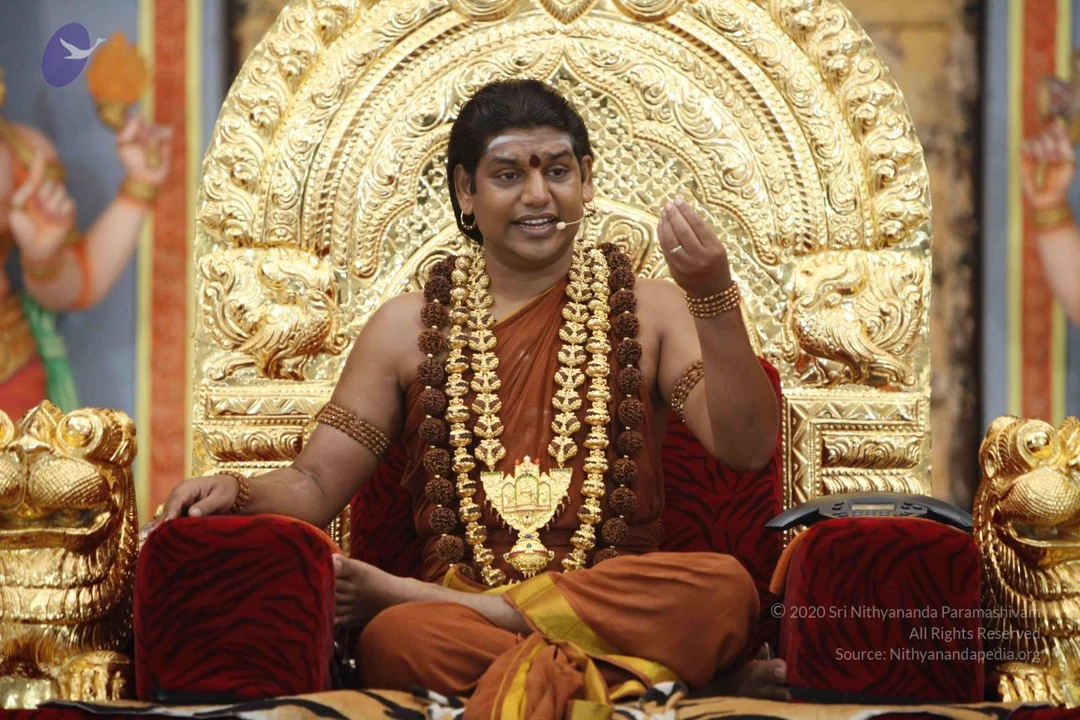
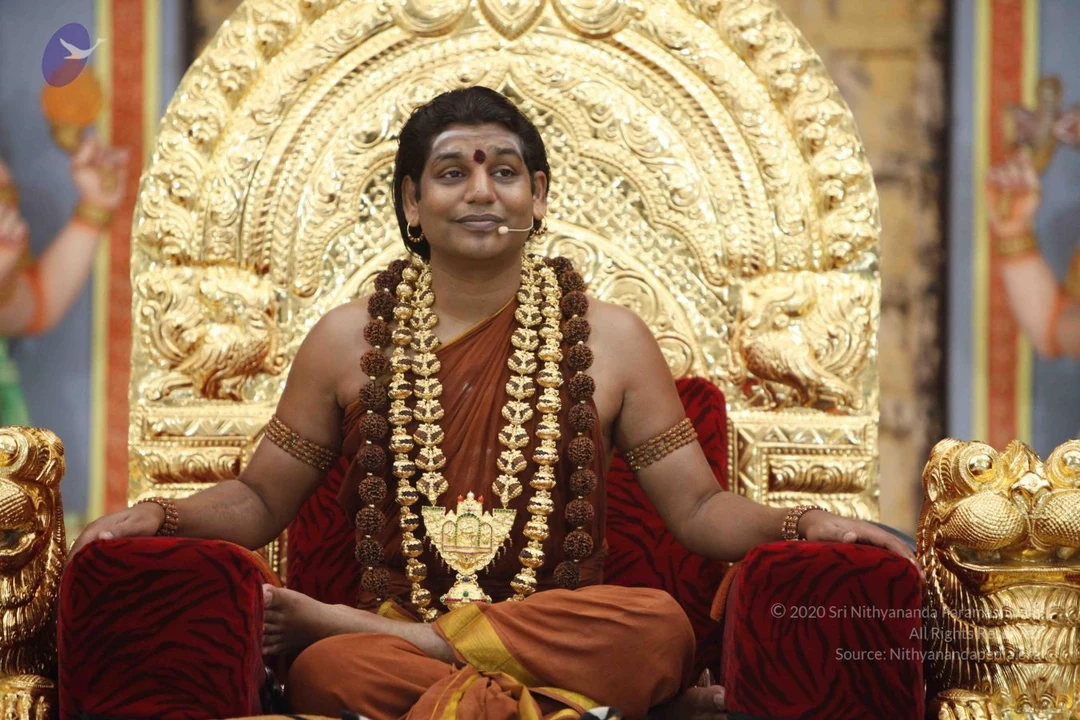
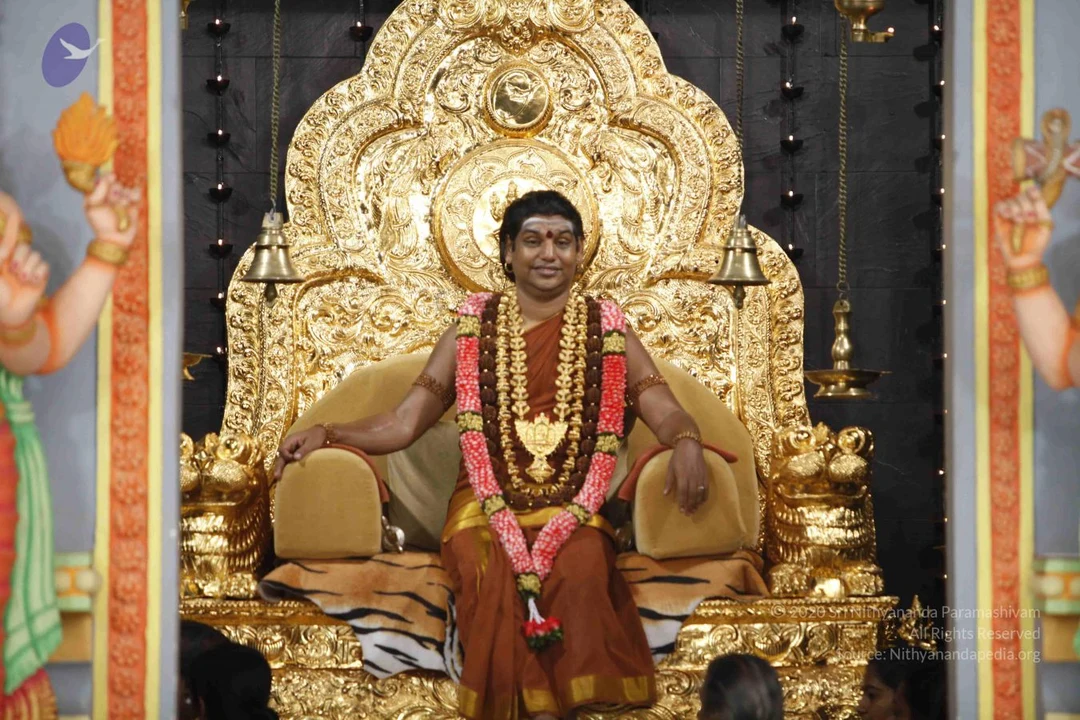
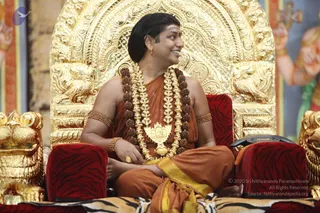
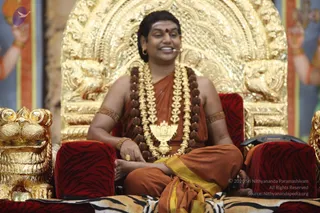
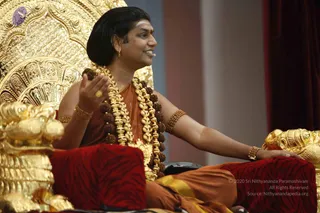
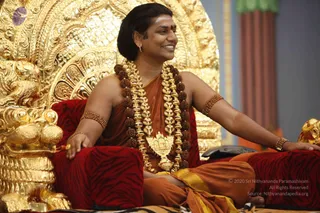
A seated man in saffron-orange clothing sits cross-legged on an ornate golden throne with red tiger-striped cushions and gold lion-head armrests. He wears a rudraksha mala with a gold-leaf necklace and a large gold pendant, gold armbands and bangles, and a red bindi. He gazes to his left and smiles. A tiger-striped cloth lies beneath him, and carved golden panels and a painted deity mural stand behind the throne. Appearance-based label: a person, seated in person on the throne.A seated man in saffron-orange robes and a gold-bordered orange dhoti sits cross-legged on a red and black tiger-striped cushion before an ornate gold throne with carved lion figures. He wears multiple strands of rudraksha beads, a heavy gold necklace with a central pendant, gold bangles and a gold ring, and a small red bindi on his forehead. A small microphone is clipped near his face as he smiles and speaks. Gold lion sculptures flank the throne and a gold arch rises behind him. a person seated in discourse, identified by rudraksha malas, ceremonial gold necklace and saffron robes.A photograph of a seated man on an ornate golden throne with lion-carved armrests and a tiger-striped cloth draped over the base. He wears an orange-brown robe, a long gold and rudraksha garland with a gold pendant, gold armbands and a red bindi, and sits in a cross-legged posture while speaking into a head microphone. Gold-carved panels and painted deity figures with bangles are visible behind him. Per the page, this is Swamiji, a probable depiction of Swamiji in person based on his swept-back hair, orange robes, rudraksha mala and gold necklaces.A seated man sits cross-legged on an ornate golden throne with lion-head armrests and a golden arched backrest, draped in red velvet cushions and a striped tiger-skin cloth. He wears an orange-saffron dhoti and shawl, multiple rudraksha malas, a heavy gold necklace with a central pendant, gold armbands and bangles, and a red tilak on his forehead; he smiles and has a small microphone at his face. Flanking the throne are large painted statues of deities with multiple arms, crowns, gold jewellery and green sashes, in a temple-like hall with blue and red decorative panels.A man seated on an ornate gold throne with a carved gold canopy and gold lion-head armrests, wearing a saffron-orange robe and a long rudraksha mala with gold beads and a ceremonial gold necklace. He has long swept-back dark hair, a white tilak on his forehead, gold earrings and gold bangles, and sits with red zebra-striped cushions. He smiles and gestures with his right hand while speaking, his left arm resting on the throne. a person is seated as a speaker in the satsang setting.A seated man in saffron-orange draped clothing sits on a red cushioned seat before an ornate gold throne with carved lion-like arm supports and a large gold arched backrest. He wears long strands of rudraksha beads alternating with gold ornaments, a gold pendant, and beaded gold armlets, with a tilak on his forehead and long swept-back hair. He smiles and gestures outward with his right arm. Swamiji (probable): the saffron clothing, rudraksha malas, gold necklaces and long hair are the qualifying cues. Background shows a red-and-green draped curtain and a blue-grey wall.

Pada Puja
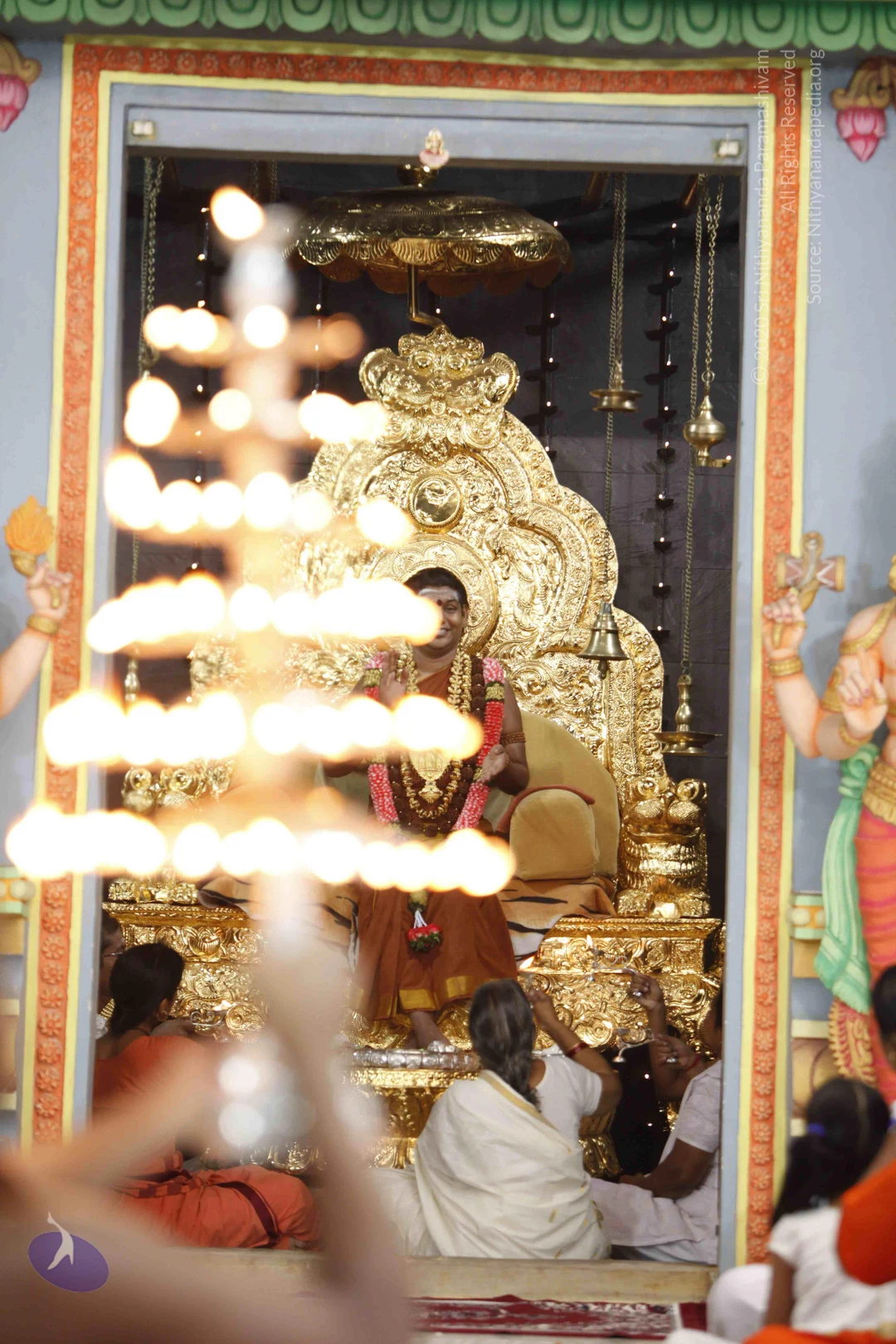
21 photosSource gallery
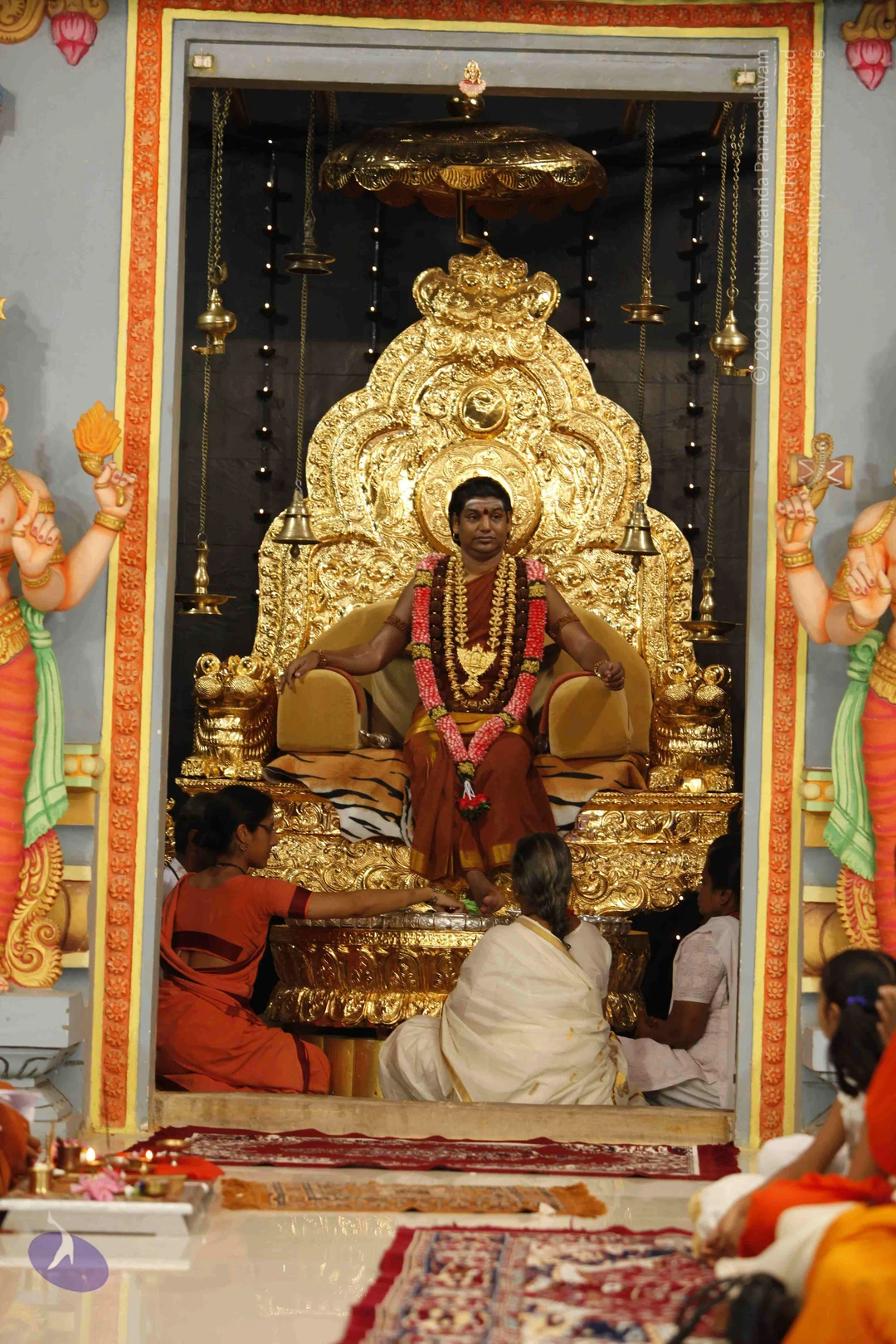
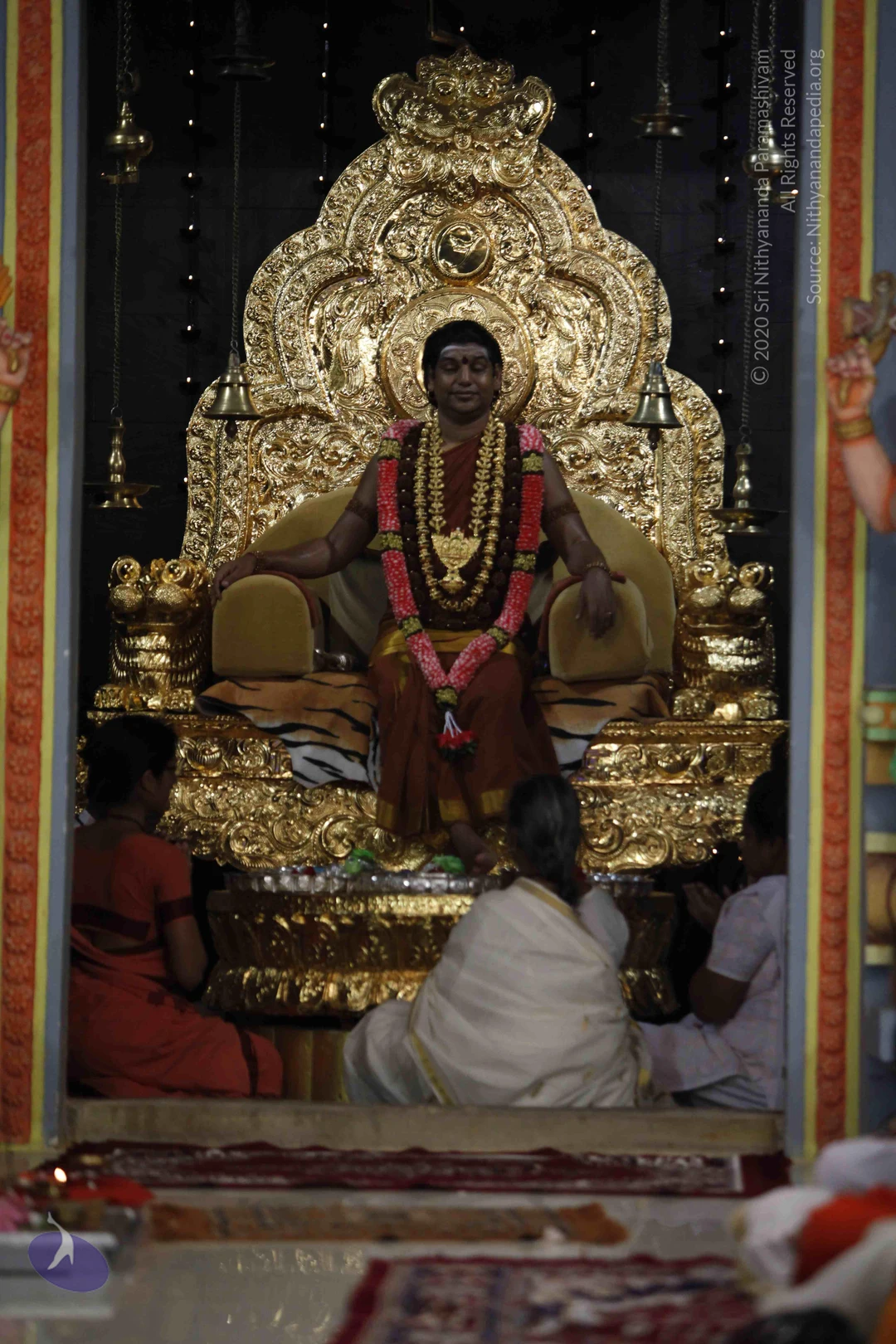
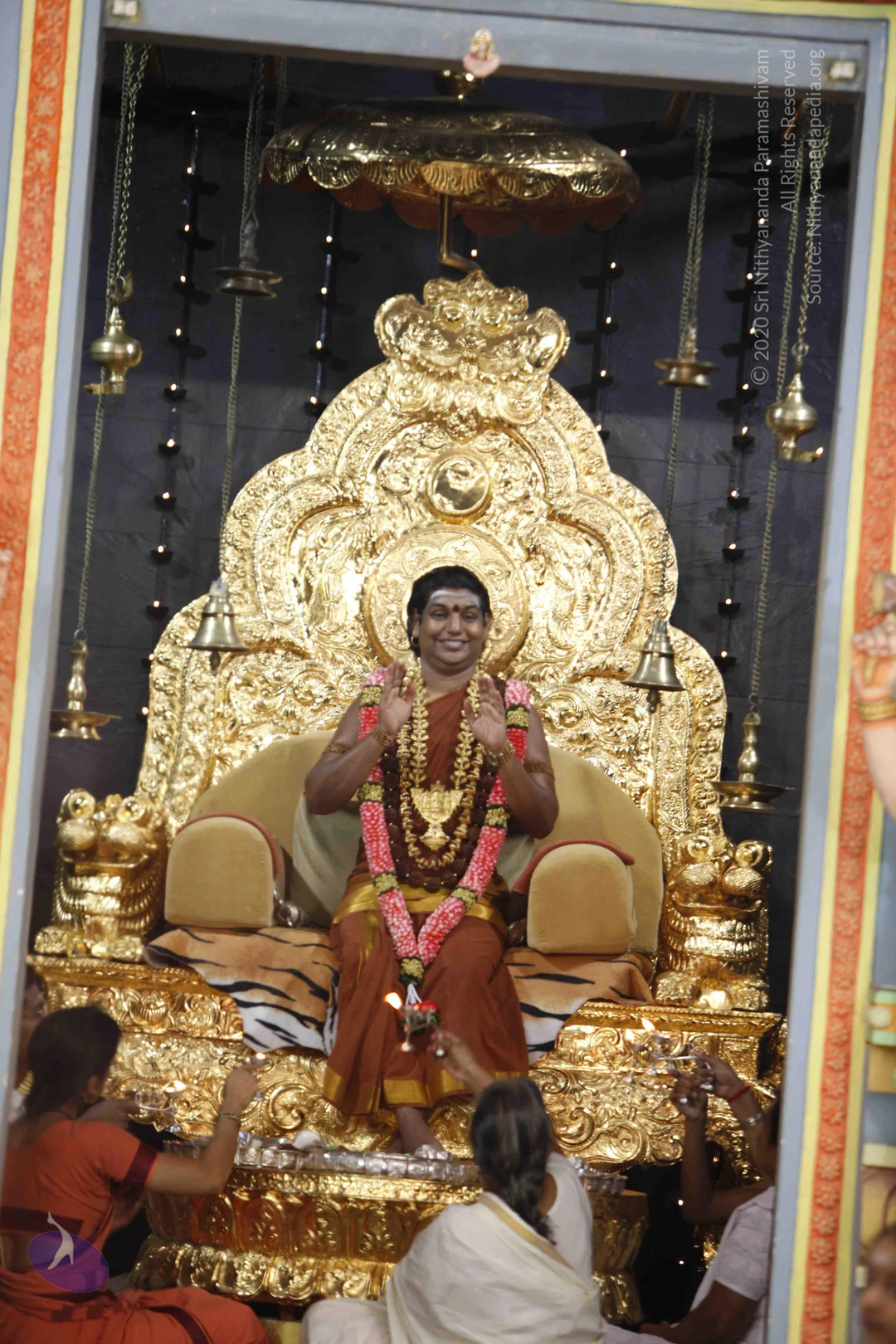
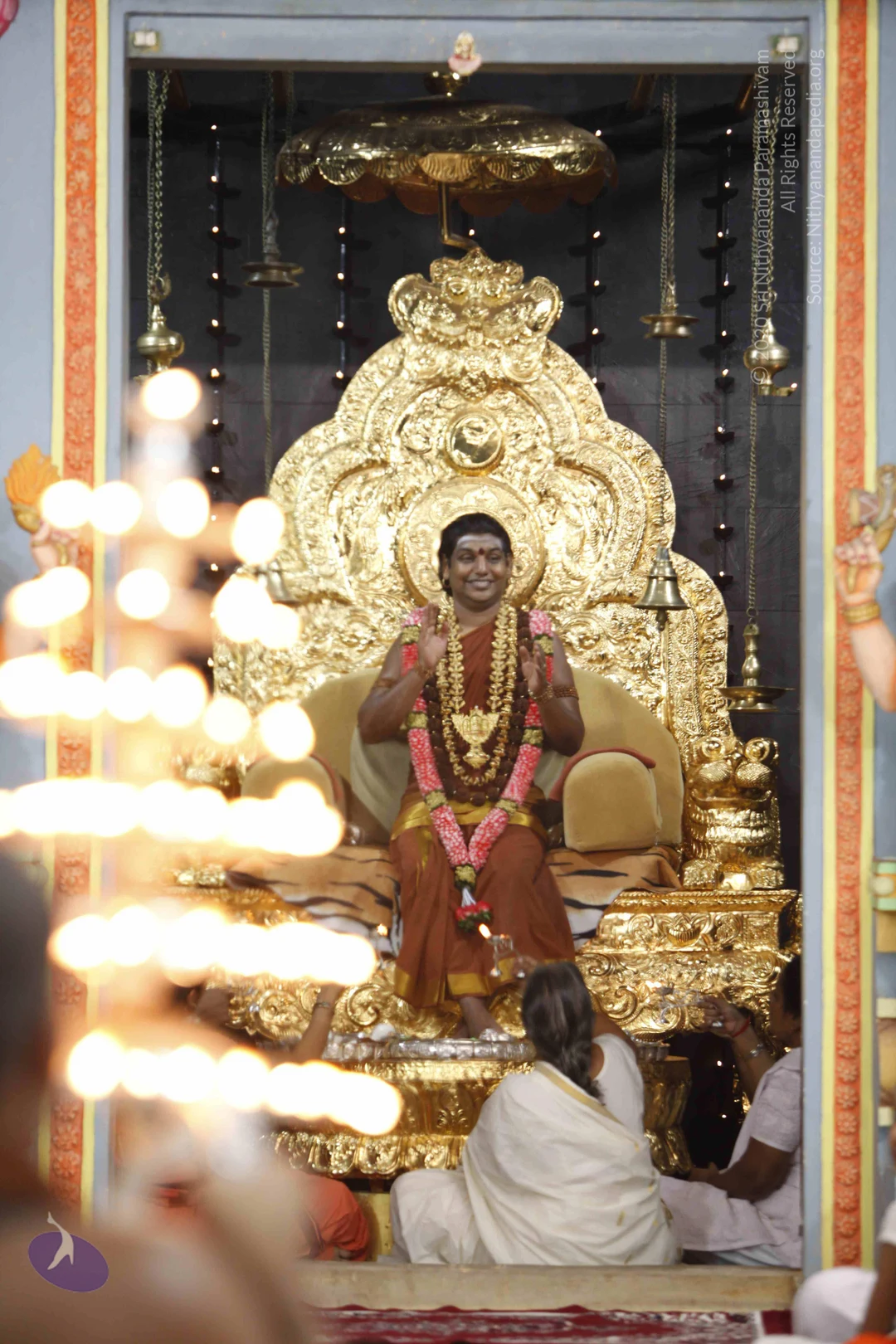
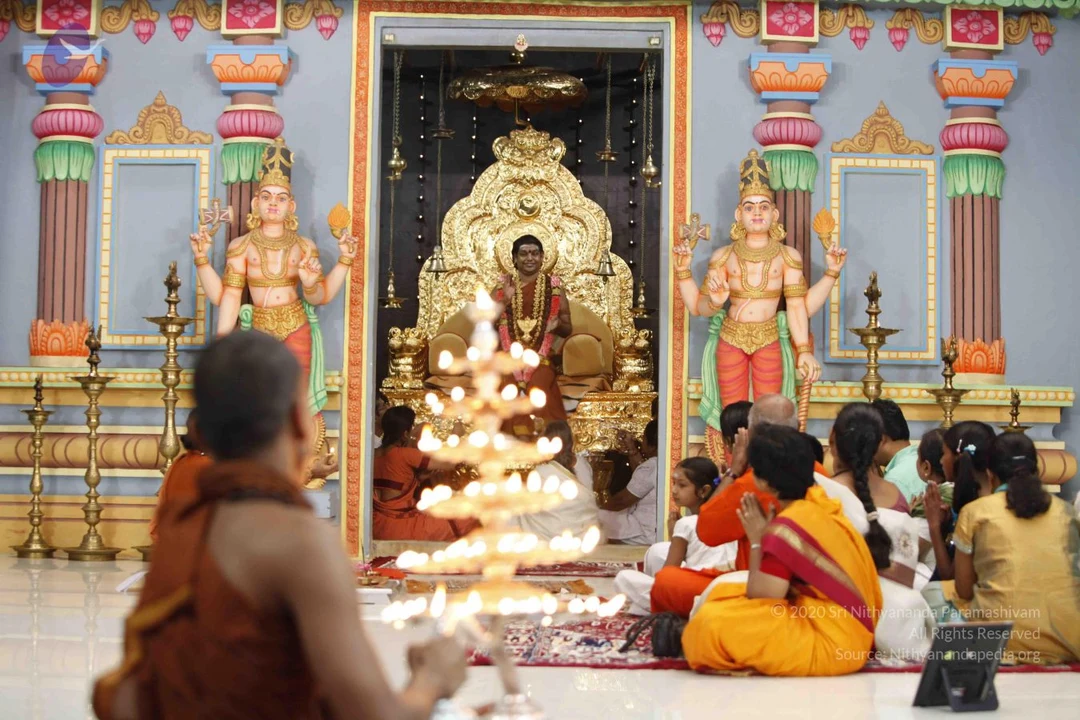
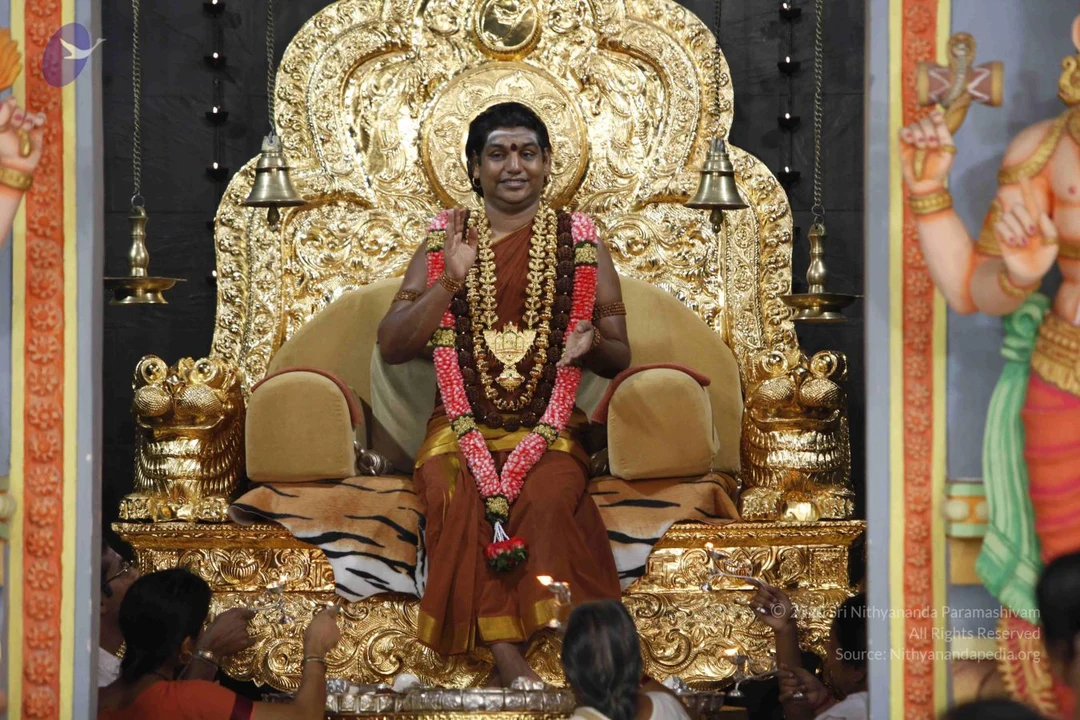
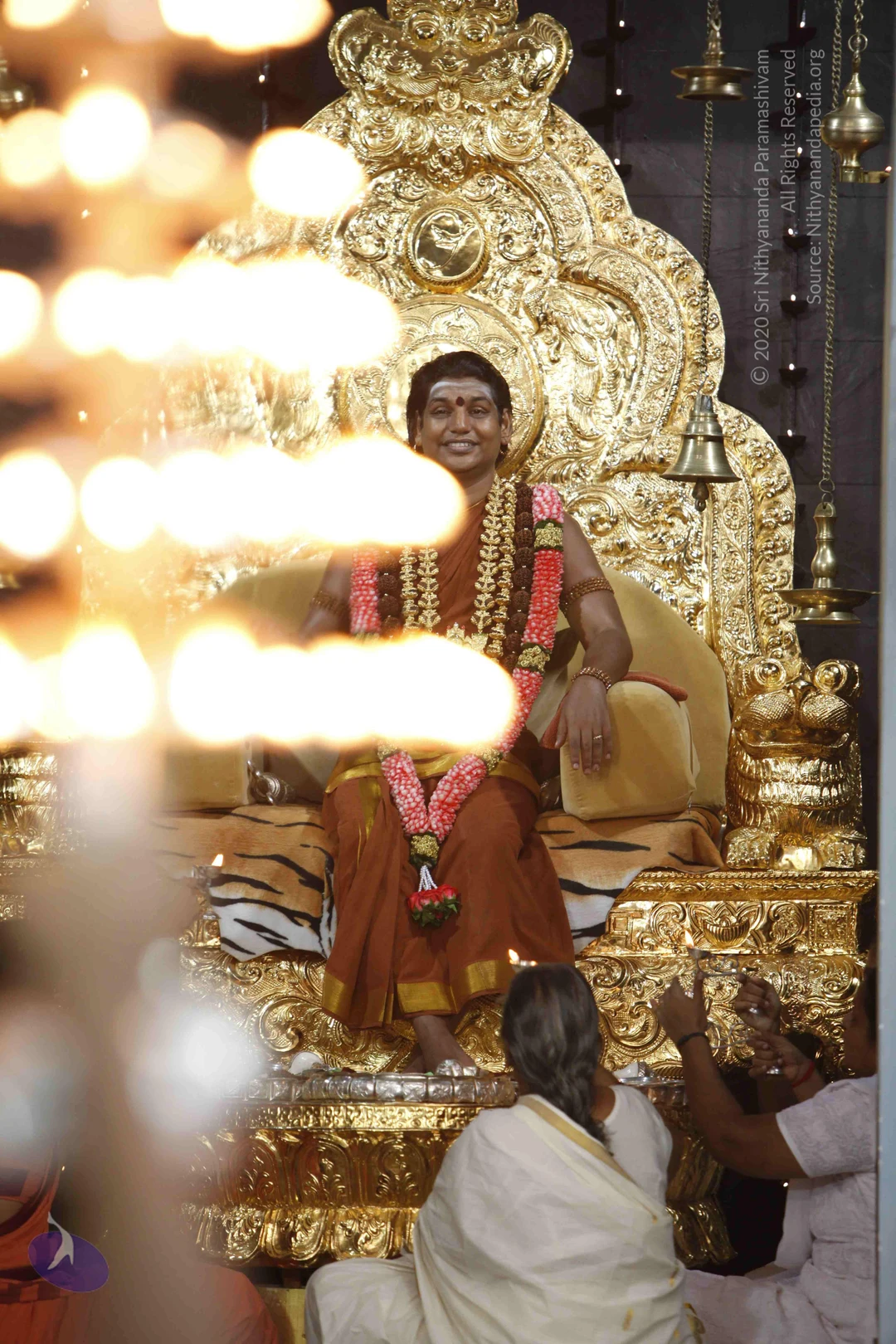
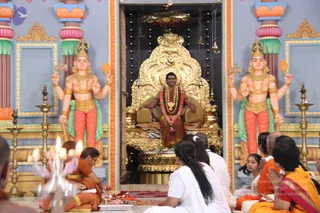
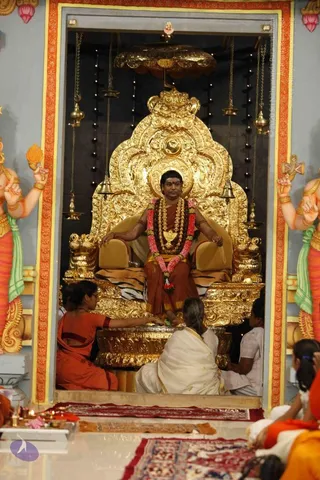
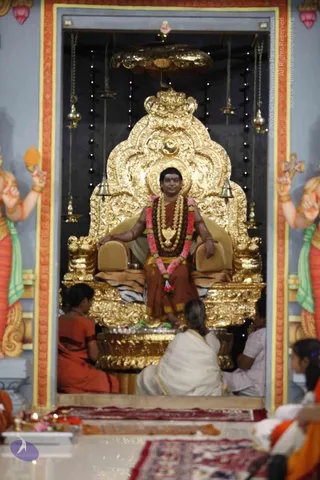
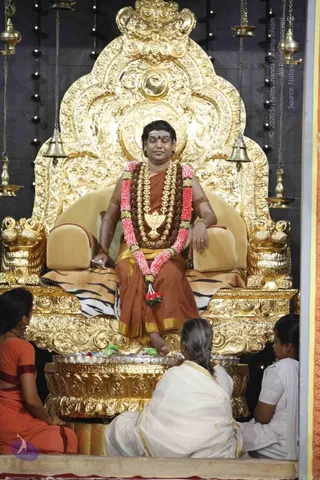
A seated man in a golden ornate throne sits in the centre of a temple sanctum doorway, wearing an orange-red dhoti and a long multi-strand garland of red and white flowers, with a gold pendant around his neck. Two tall painted dvarapala guardian figures with multiple arms stand on either side in pink and green garments with gold jewellery. Devotees in white and saffron-orange robes sit on the floor in front, some holding flaming oil lamps and brass pooja items, with gold oil lamps (deepa stands) flanking the scene. a person: the seated figure is recognizable by the central throne position, orange garments and garland, though his face is not clearly distinctive. The setting suggests a pada puja or satsang in a temple hall.A seated man sits on an ornate gilded throne with a tiger-skin cushion beneath a golden canopy, framed by painted carved doorway pillars with two multi-armed deity figures. He wears a rust-red garment, a multi-strand rudraksha mala, a red-and-white flower garland, and a heavy gold necklace. Two women sit in front: one in a red-orange sari and one in white, both attending to his feet on a silver tray. Brass oil lamps hang from the canopy chains and burn on a low table at lower left. a person is shown in the throne area as the seated figure with rudraksha mala, gold necklace and rust-red robe; the women are devotees performing padapuja. Several people in orange and white sit along the lower right edge.A photograph inside a temple shrine of a seated figure on an ornate gold throne with a carved gold backrest and a golden crown-like top. The seated figure wears a red-brown robe, a gold necklace, and a thick garland of red and pink flowers over rudraksha beads, with a tilak on the forehead. A tiger-skin cloth covers the throne seat. Below, a kneeling woman in a white garment with a gold border sits with her back to the camera, and two other seated devotees, one in orange and one in white, flank the scene. Brass lamps and bells hang from the shrine ceiling, and a small oil lamp flame is visible at the lower left.A photograph of a man seated on an ornate gold throne with a tiger-skin cloth, in a shrine-like niche flanked by painted deity murti with raised hands. He wears a rust-orange dhoti and shawl, a multi-strand rudraksha mala, a long gold necklace, and a pink and white flower garland. Below, a woman in a white sari sits with hands together before the throne, and other devotees in orange and white sit to the sides. Brass lamps hang from the canopy and oil lamps glow on the floor, with red carpets in the foreground. Appearance-based candidate, consistent with a person: long-presentation cues include the rudraksha mala, ceremonial gold necklace and flower garland; the seated figure is on a throne before devotees. Visible people: seated man, woman in white, and three partially visible devotees.A seated man in saffron-orange robes sits on an ornate gold throne with carved lion-head arms and a tiger-striped cushion. He wears a long garland of pink and white flowers, a rudraksha mala and a large gold pendant necklace, with a red-and-white flower bunch hanging at the front. Gold bells and hanging brass lamps flank the throne, and a painted figure with raised hands stands on the left edge. Two devotees in the lower foreground, one in orange, sit on the floor facing the throne. Swamiji (probable): long dark hair with a rudraksha mala and gold necklace, seated on a throne in saffron robes.Photo of a man seated on an ornate gold throne with carved gold backrest, a gilded peetha and tiger-striped cloth draped over the seat, with brass oil lamps hanging on chains behind. He wears a rust-orange dhoti with gold border, a saffron-orange shawl, a thick white and pink flower garland, multiple rudraksha malas and a gold ceremonial pendant necklace, with a red bindi on his forehead and eyes closed. Two women in white and orange saris sit at the base of the throne before a gilded tray holding offerings, one of them seated at the foot of the throne. Appearance-based label: a person, based on the saffron-orange clothing, rudraksha malas, ceremonial gold necklace and flower garland.

SACRED ARTS PHOTOS
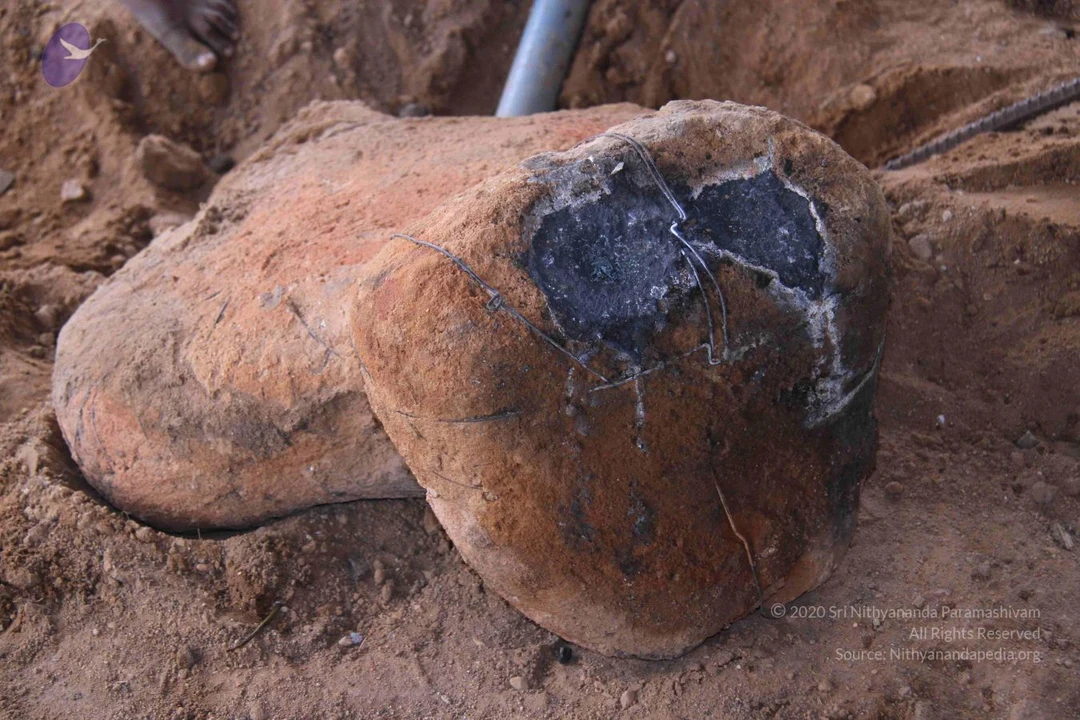
231 photosSource gallery
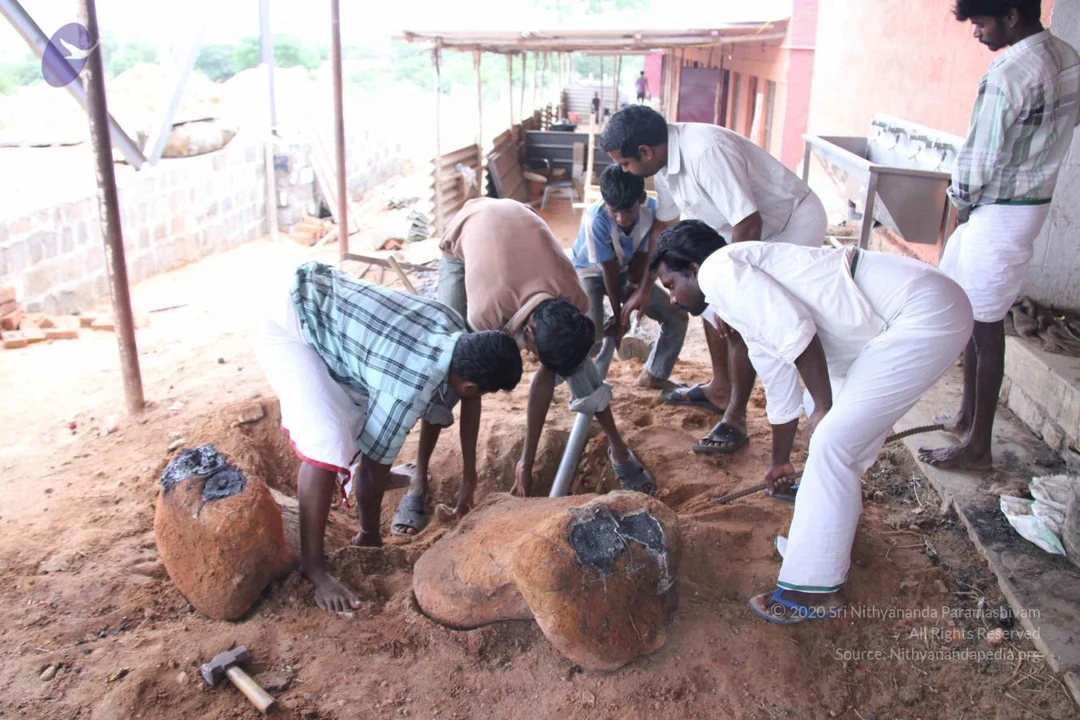
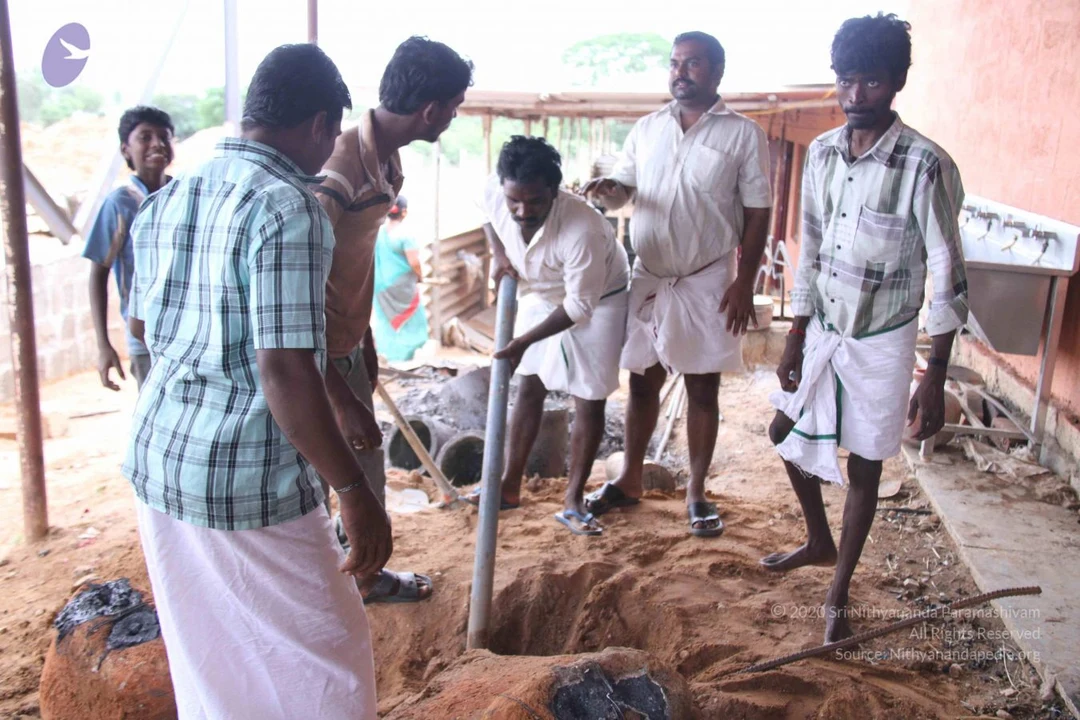
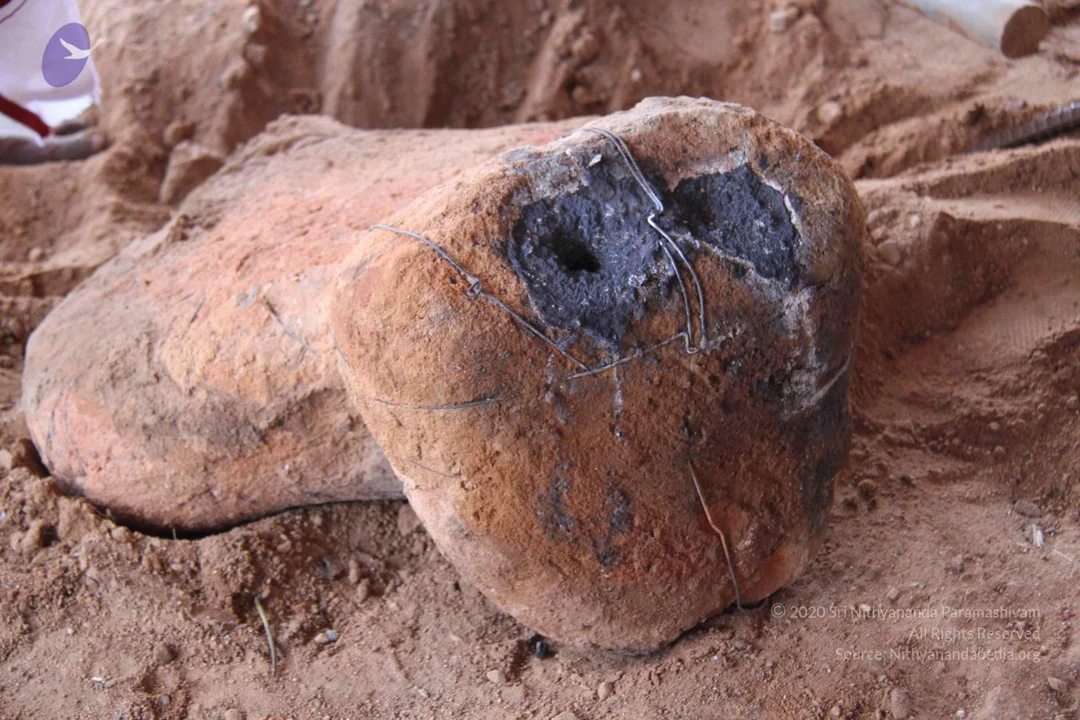
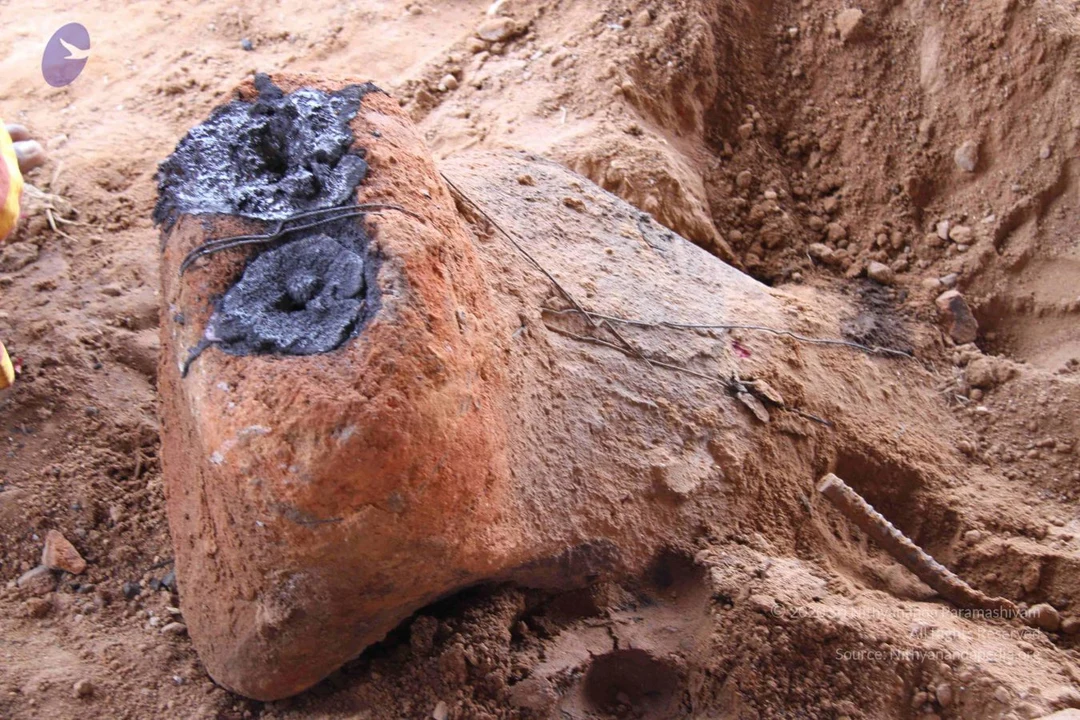
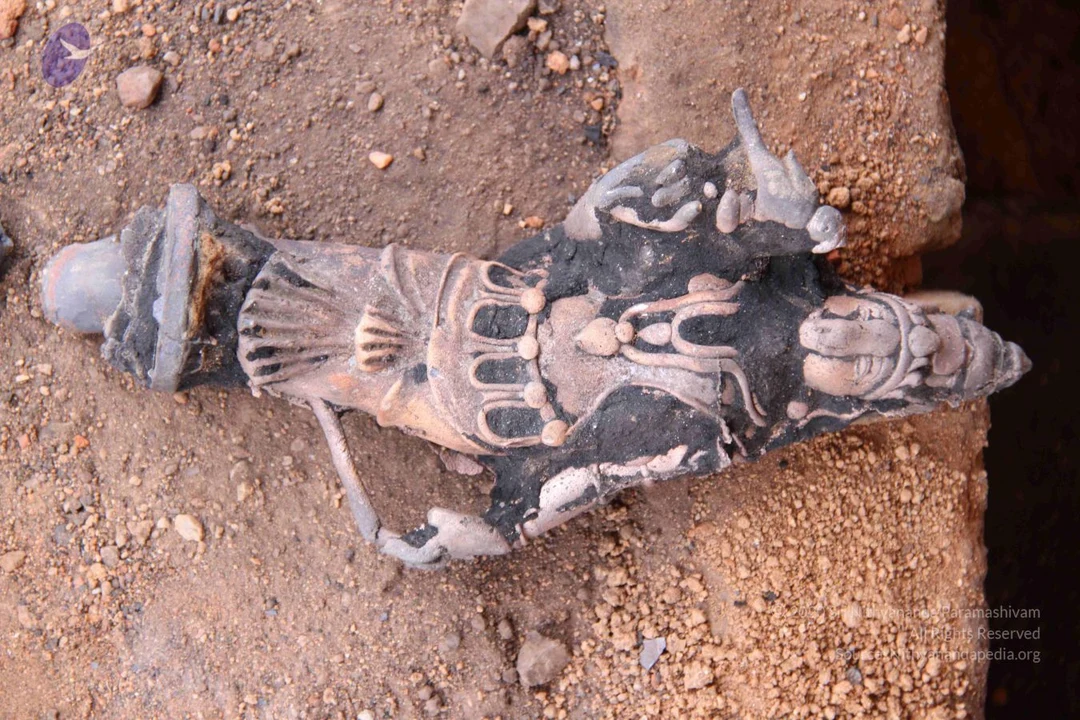
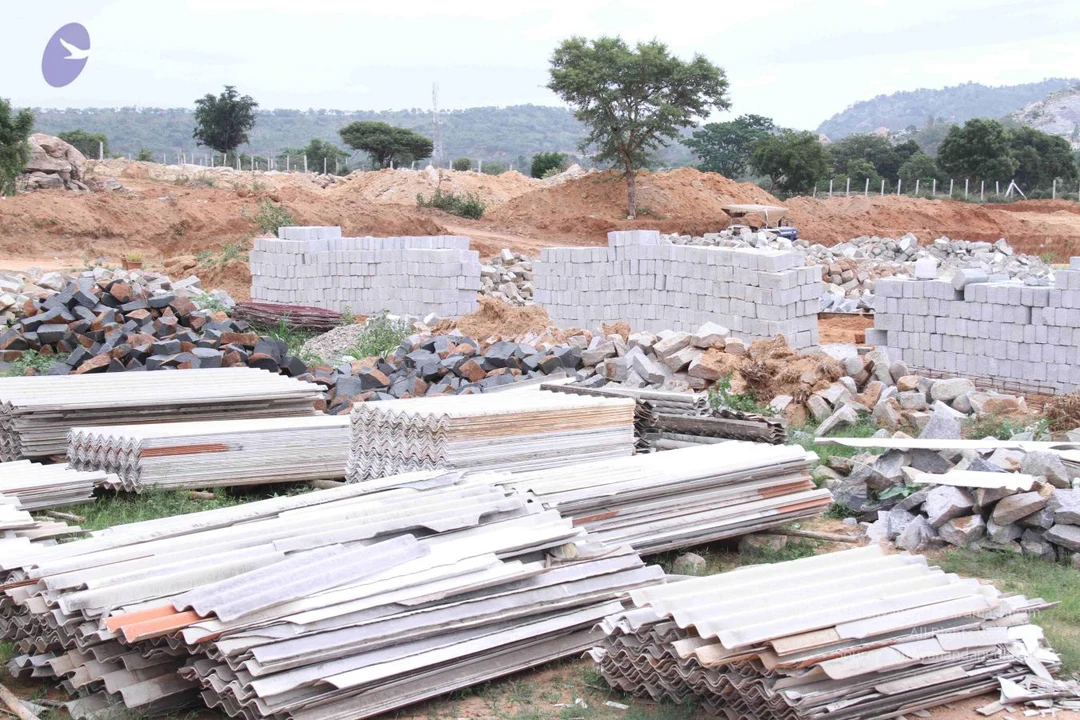
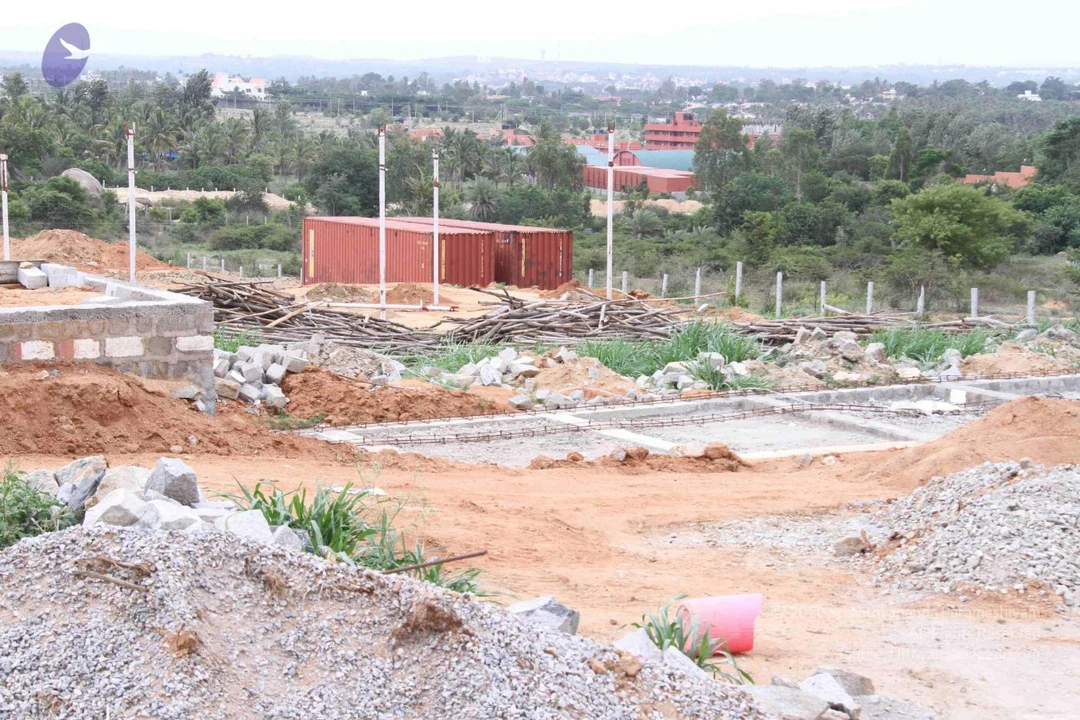
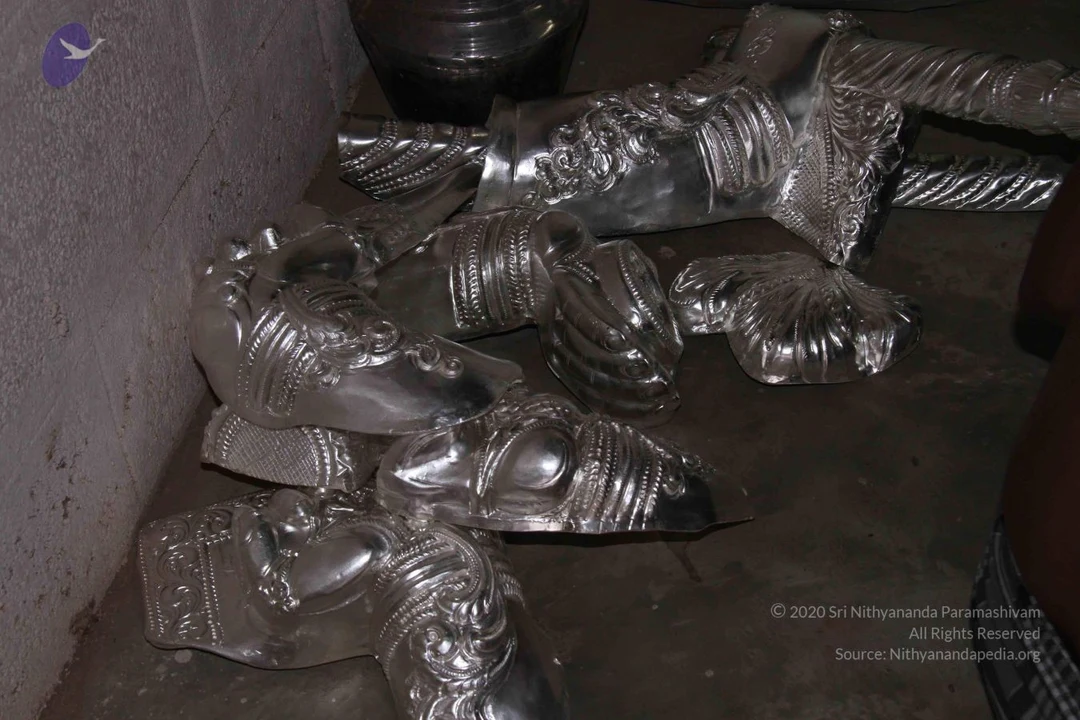
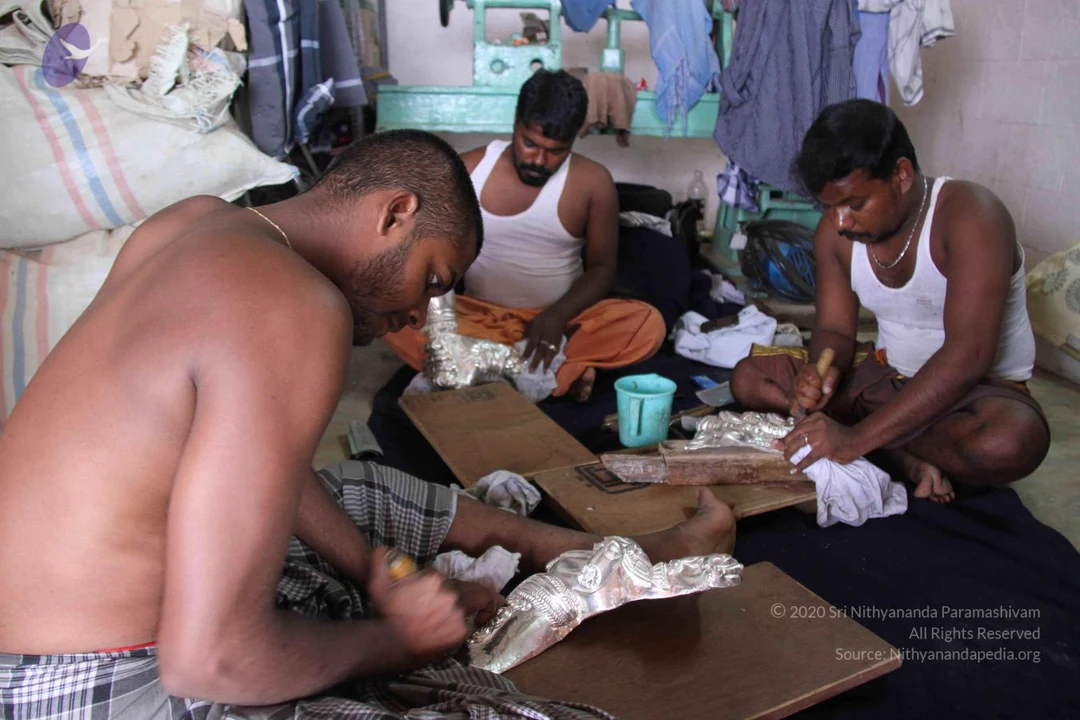
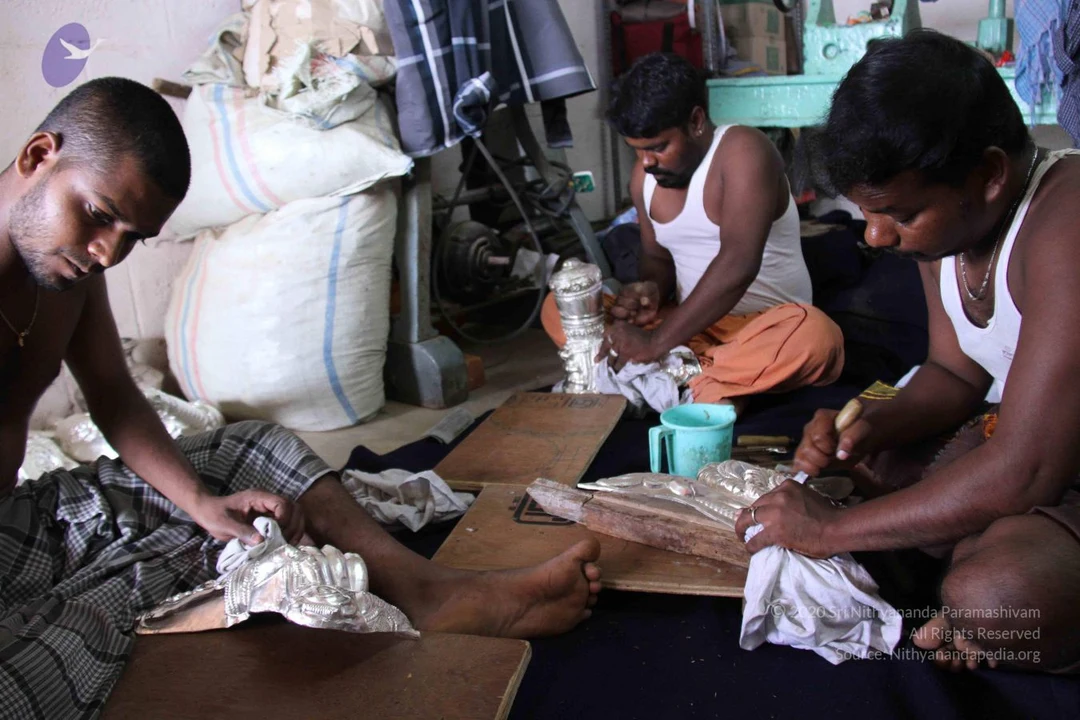
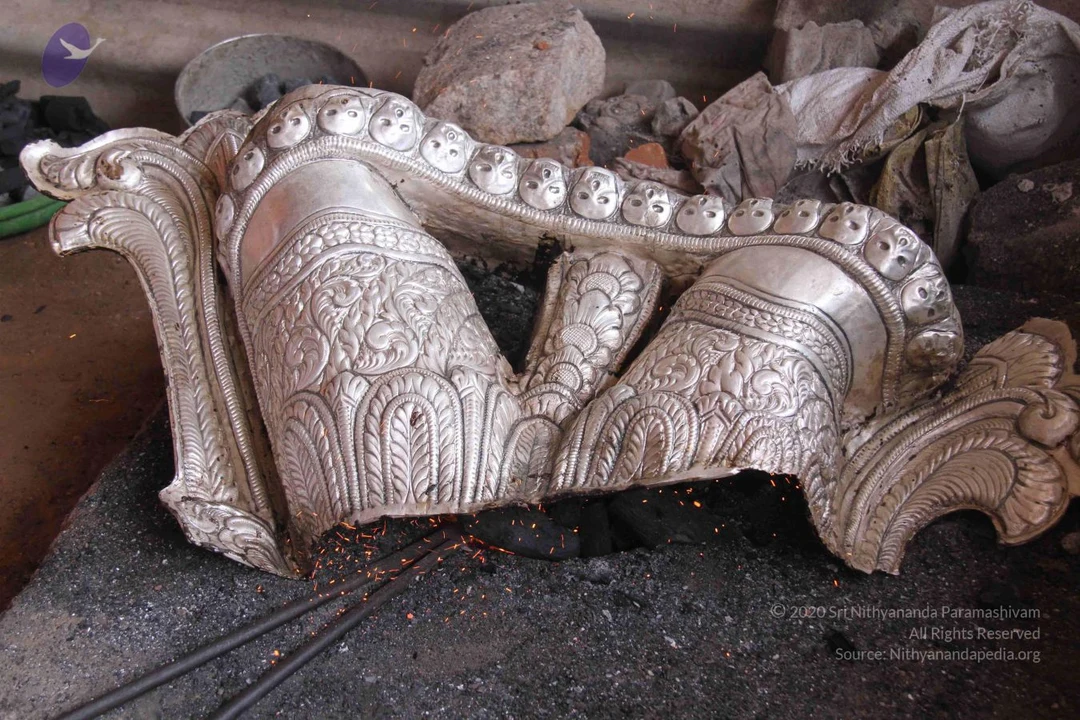
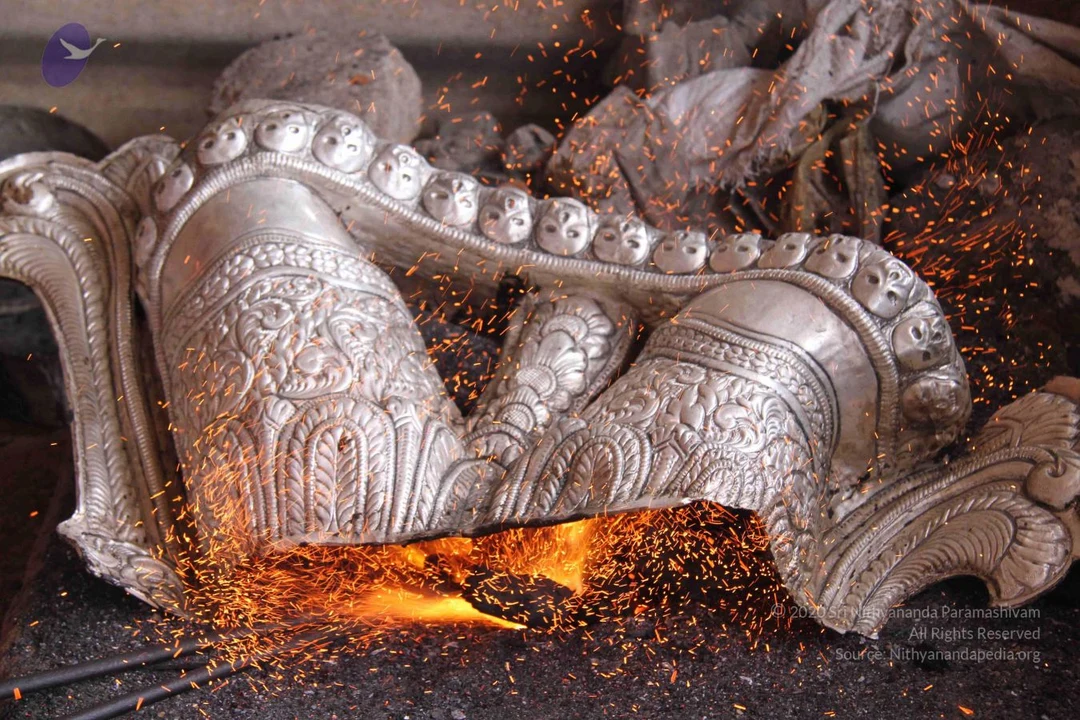
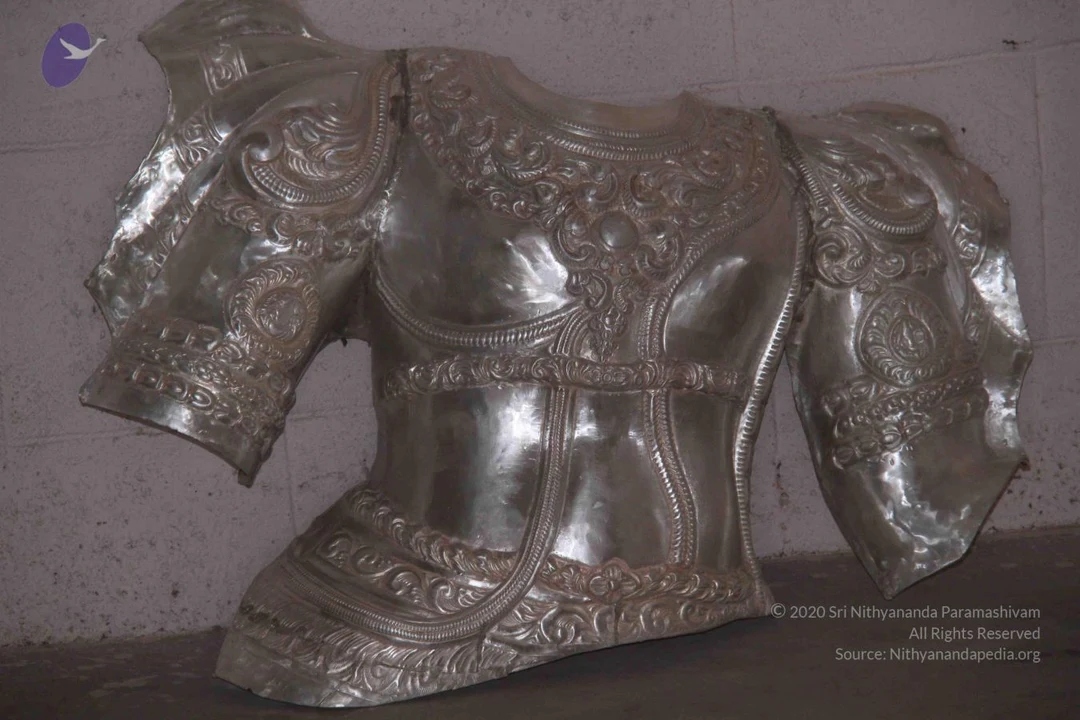
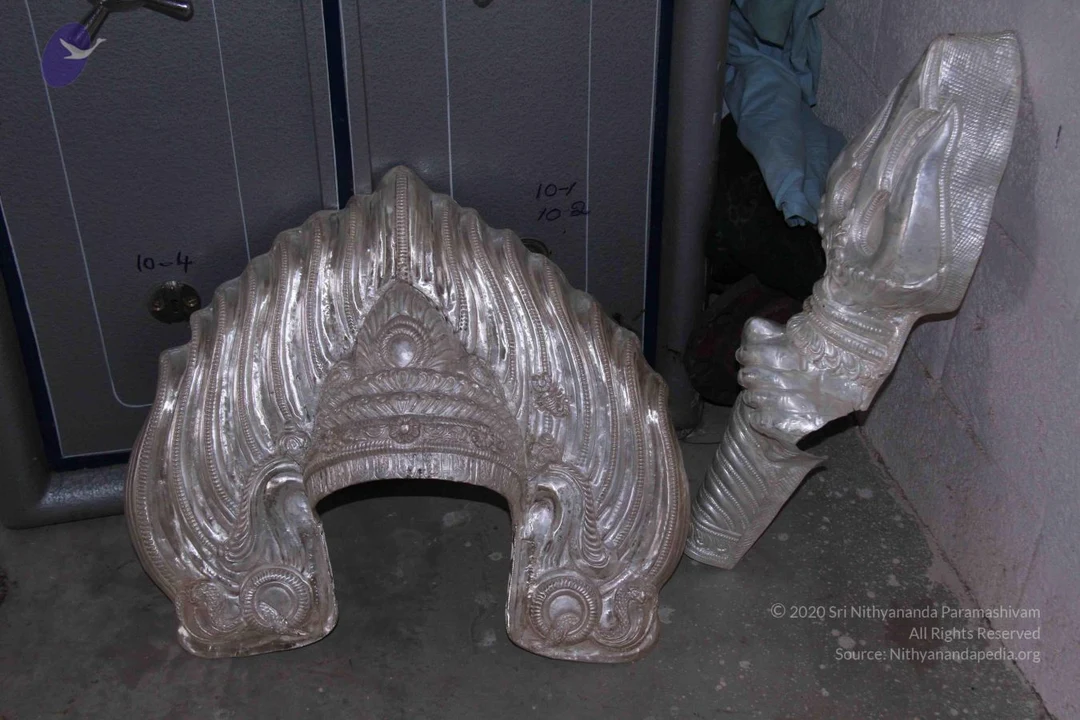
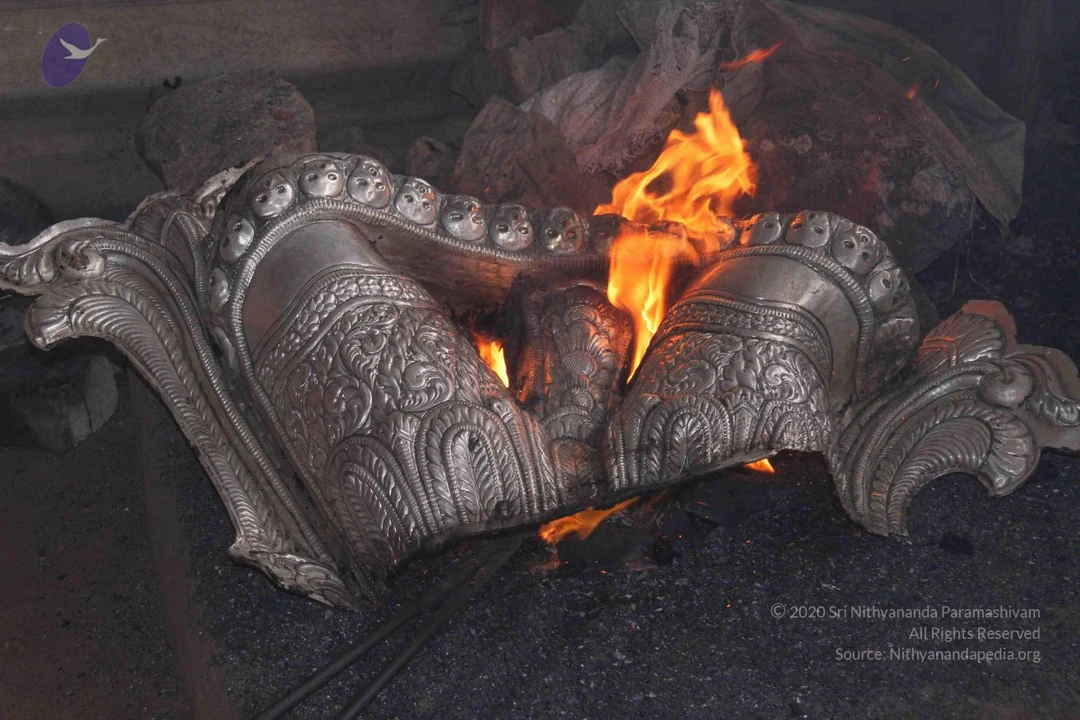
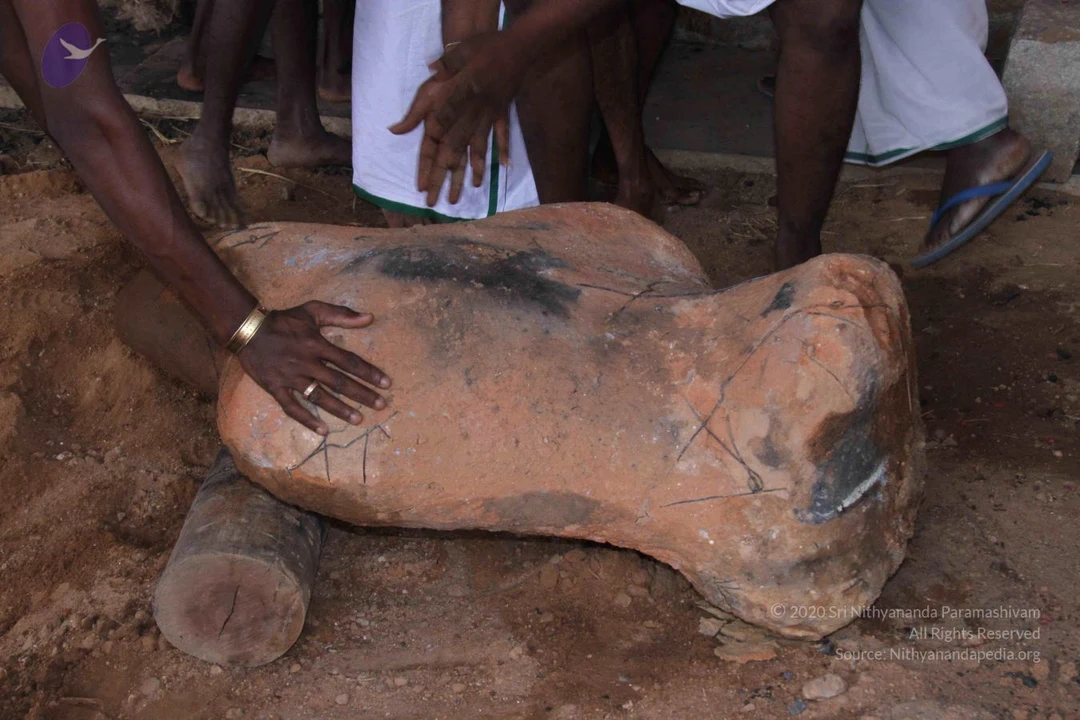
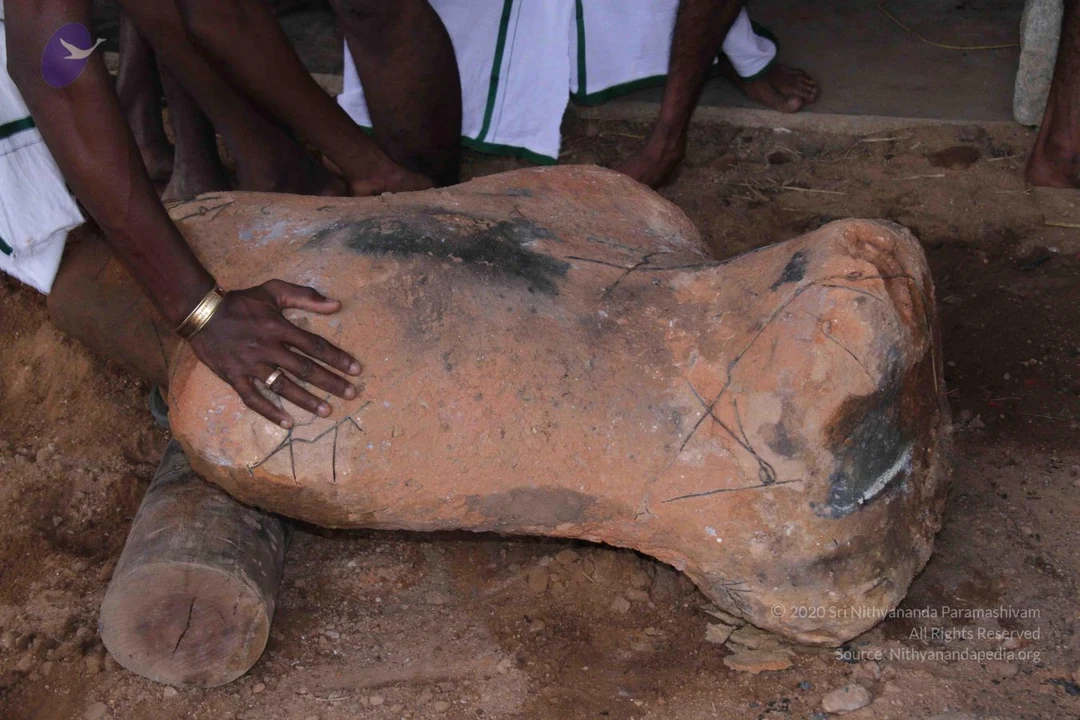
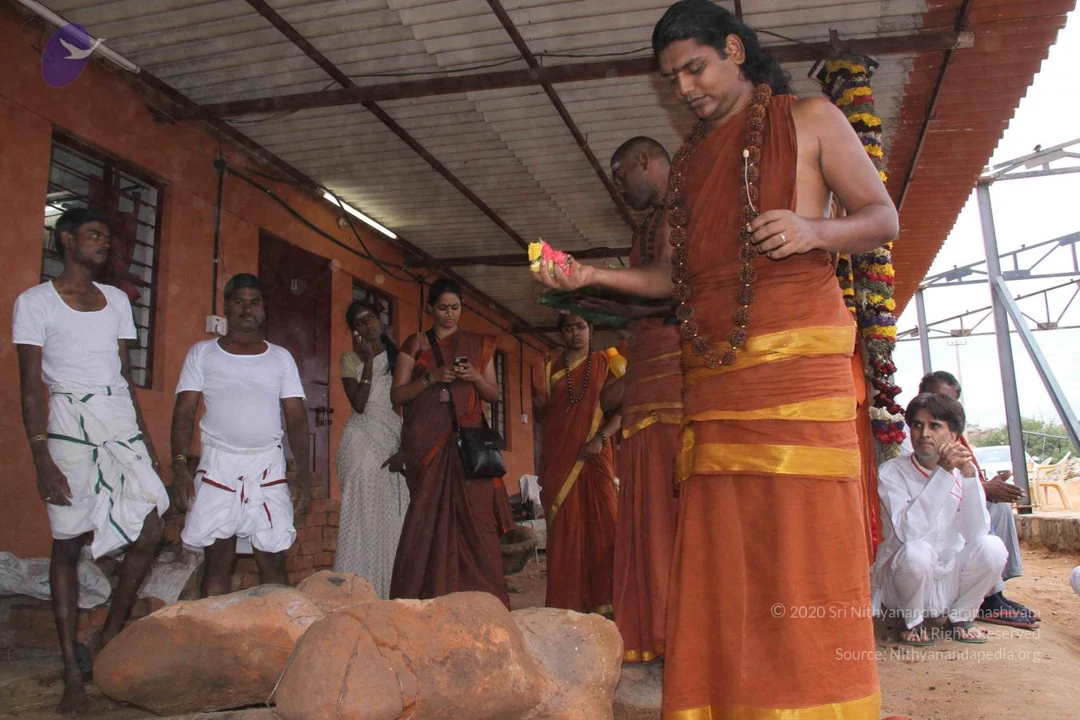
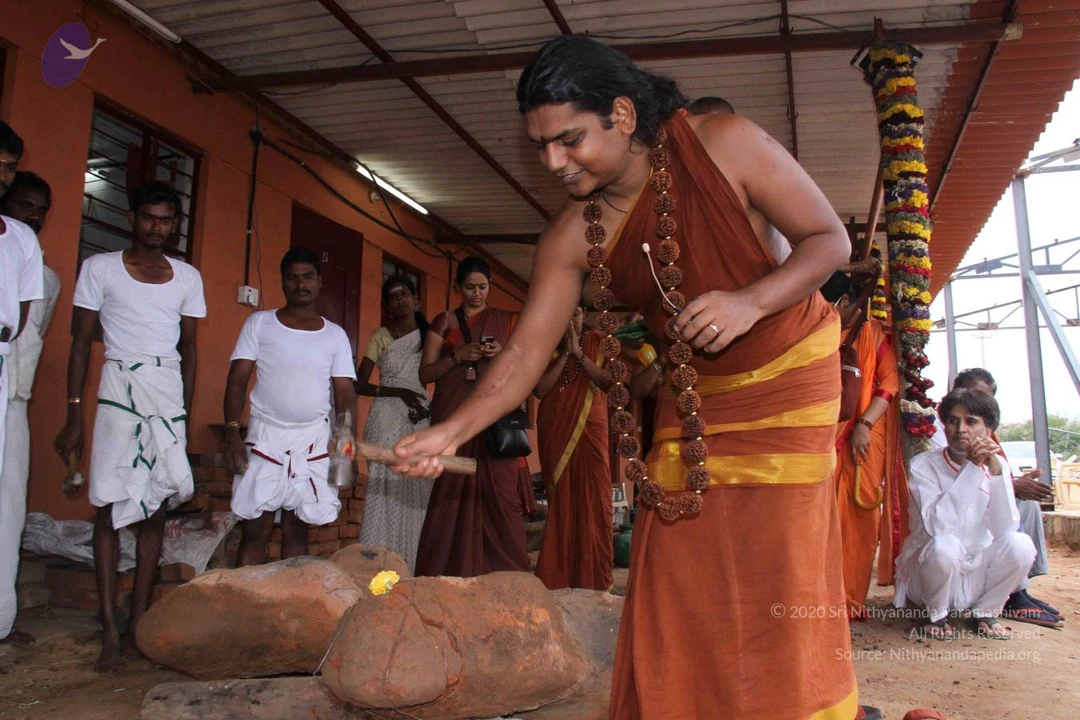
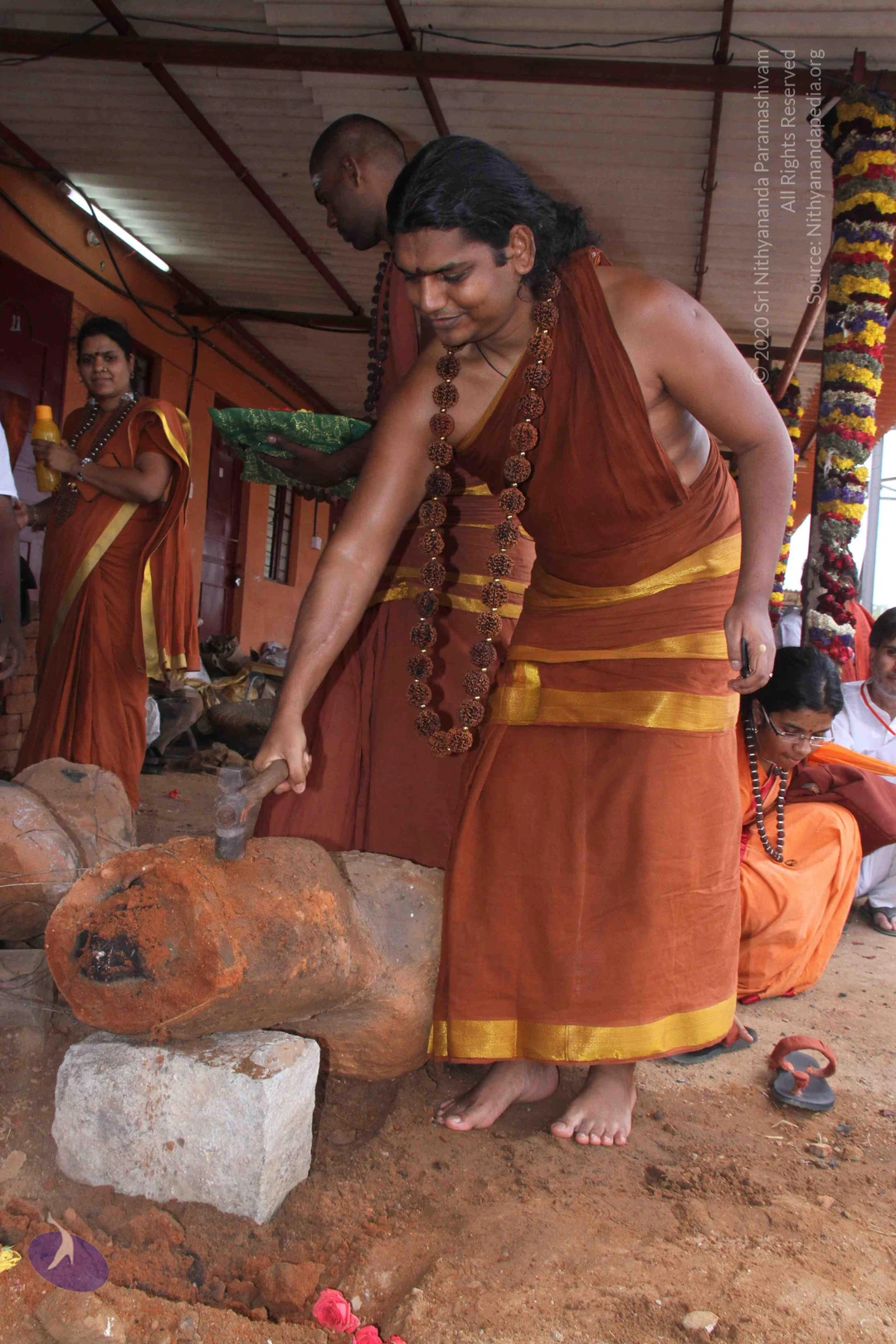
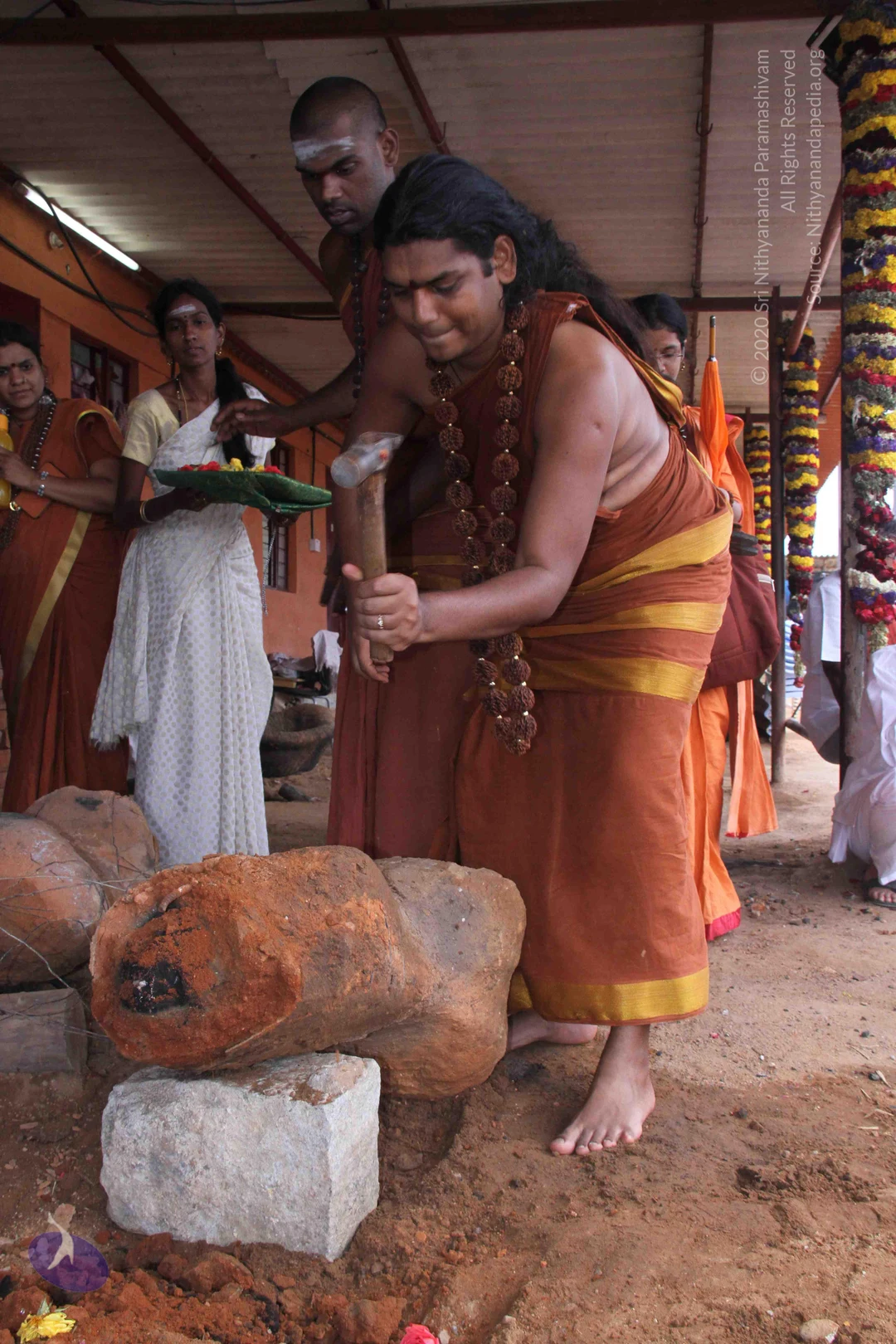
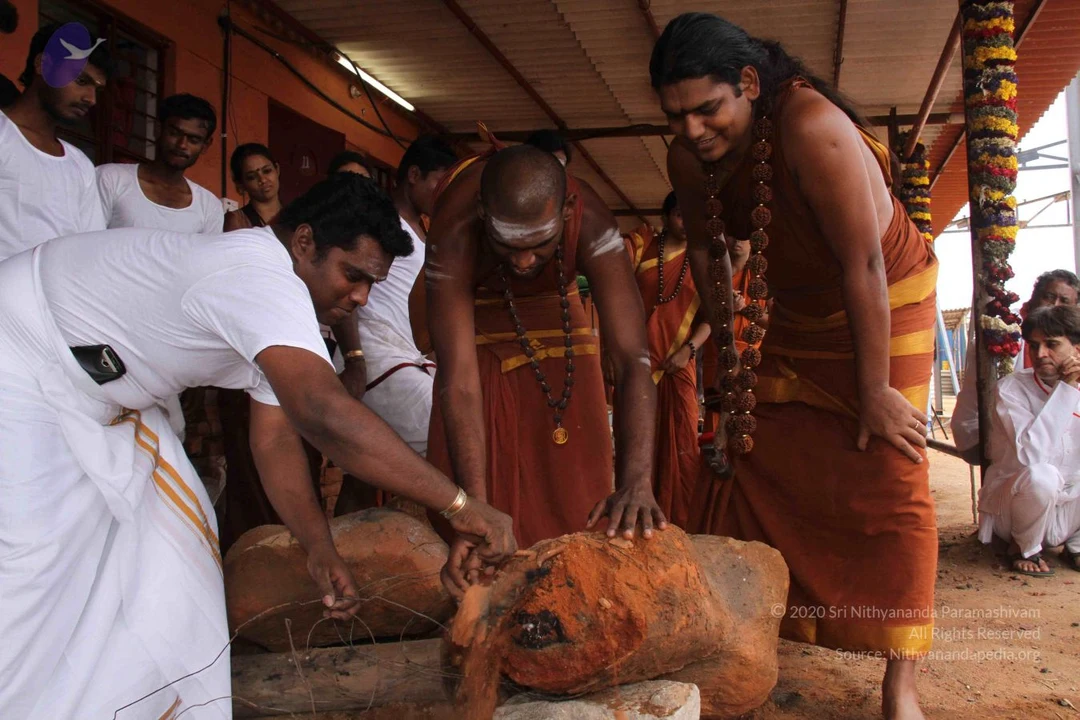
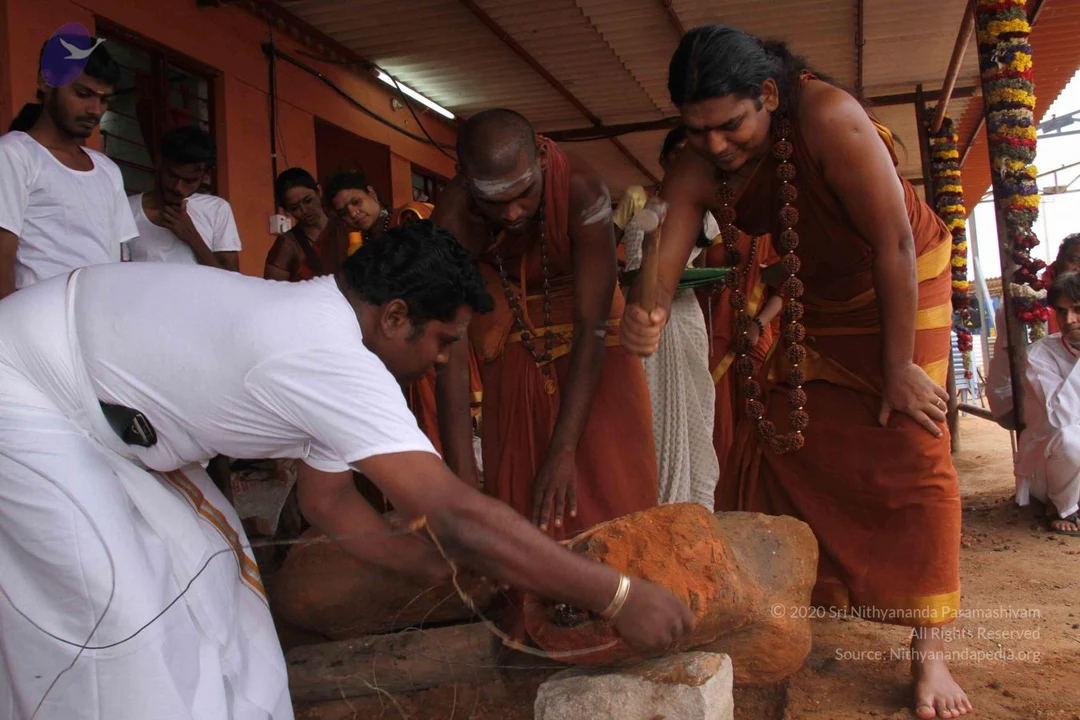
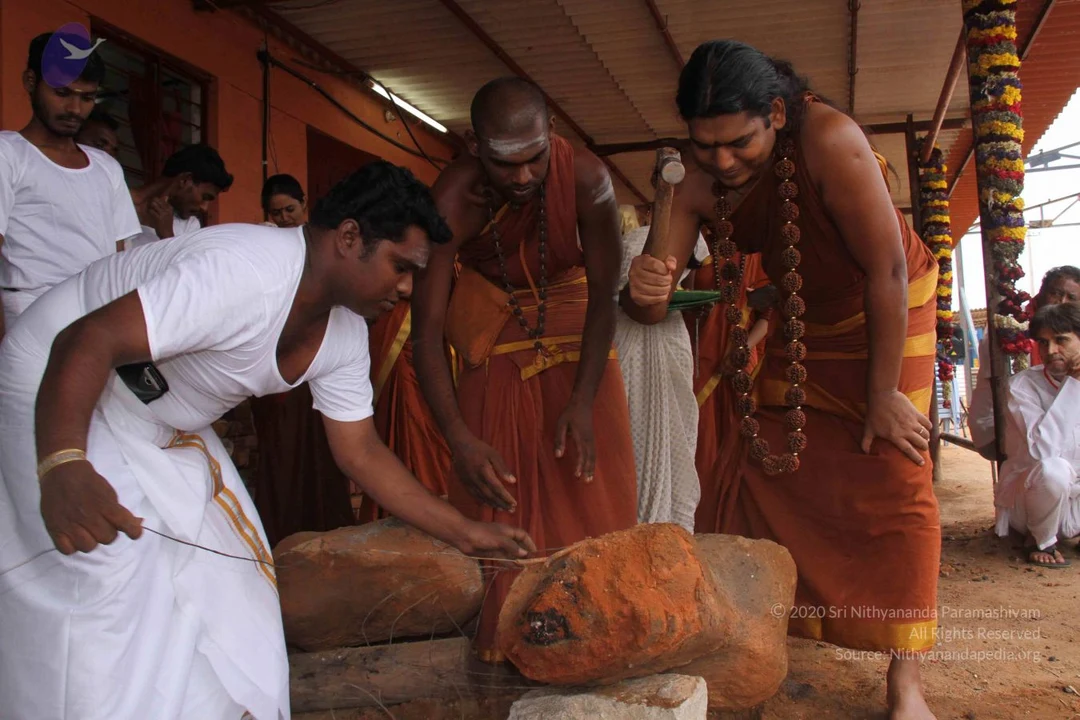
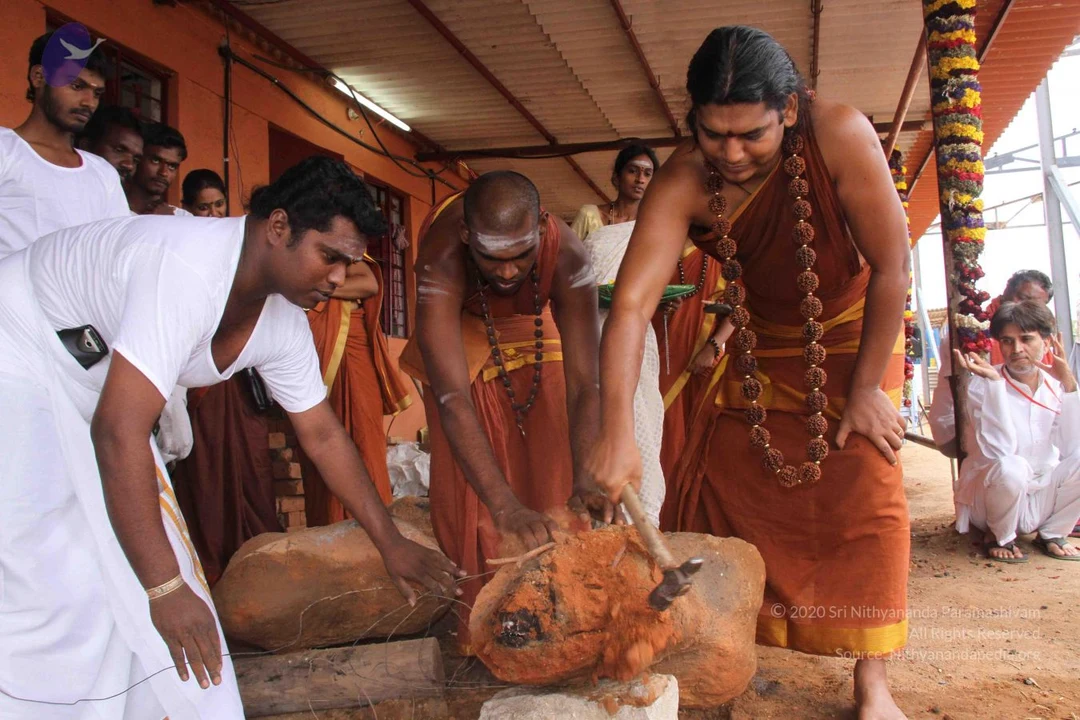
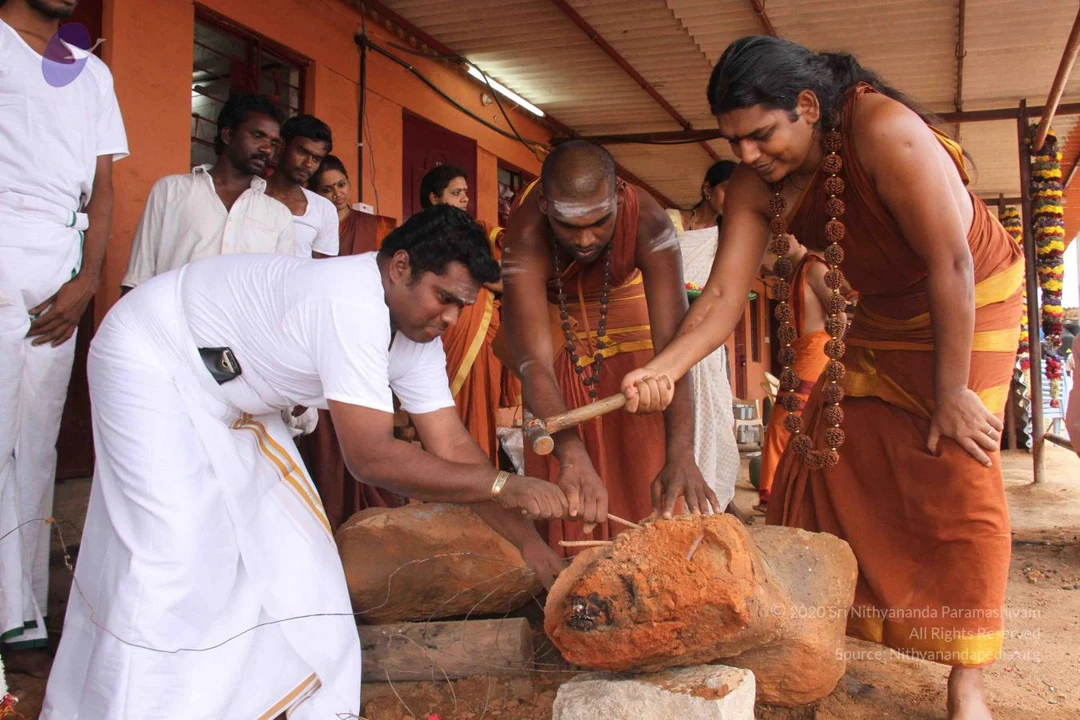
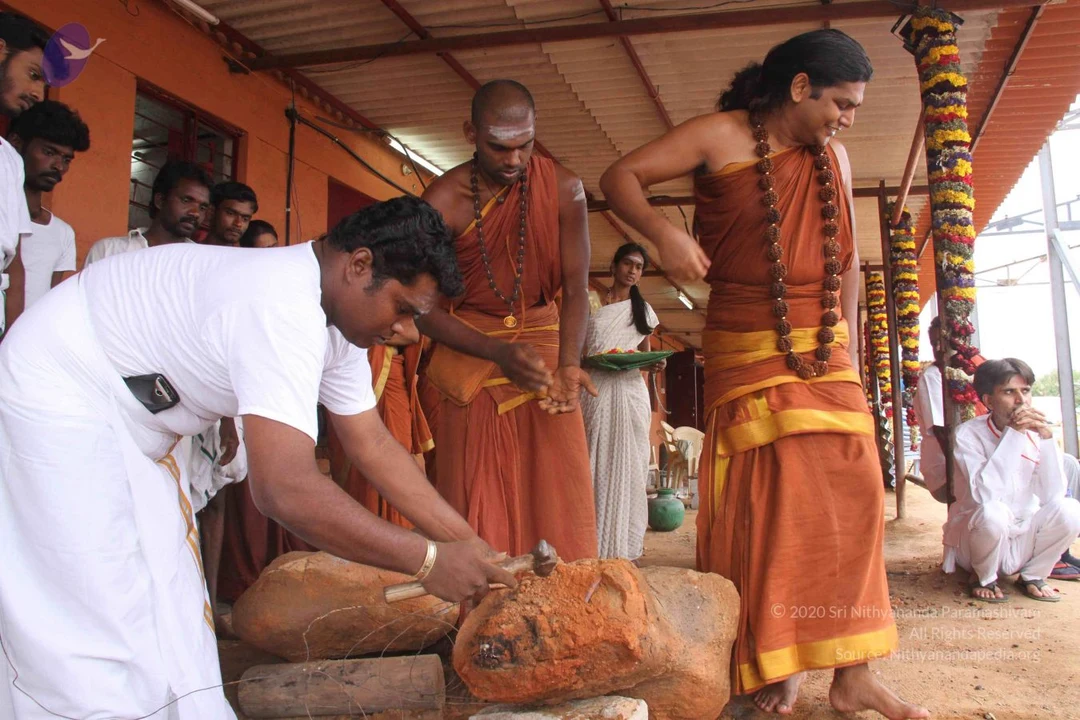
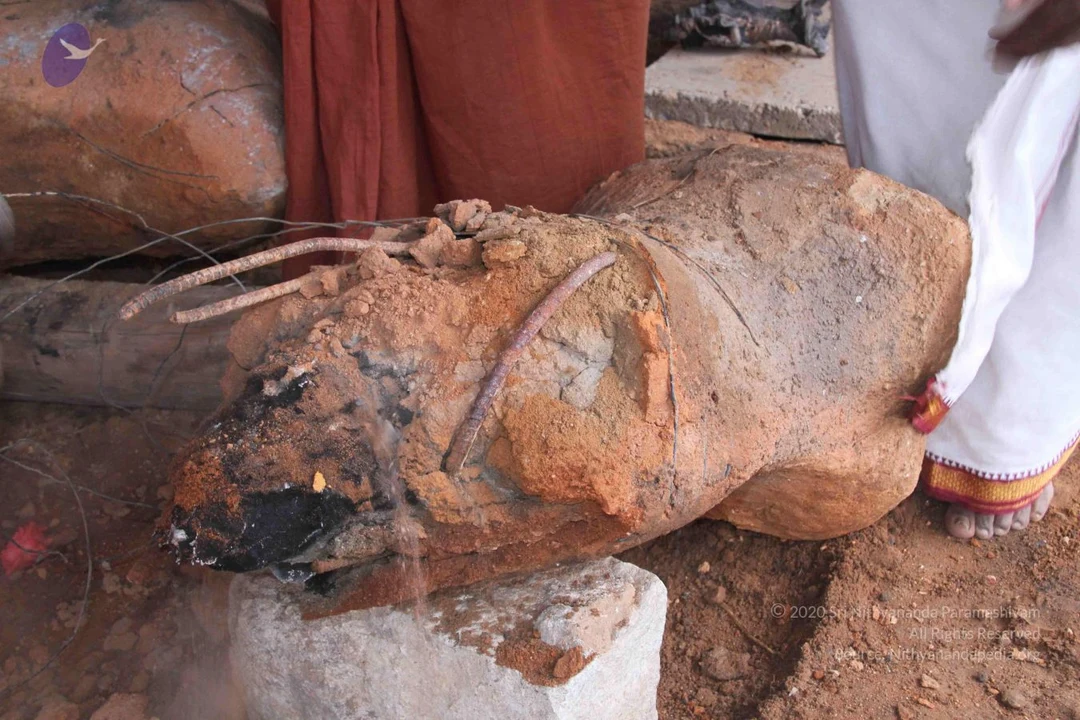
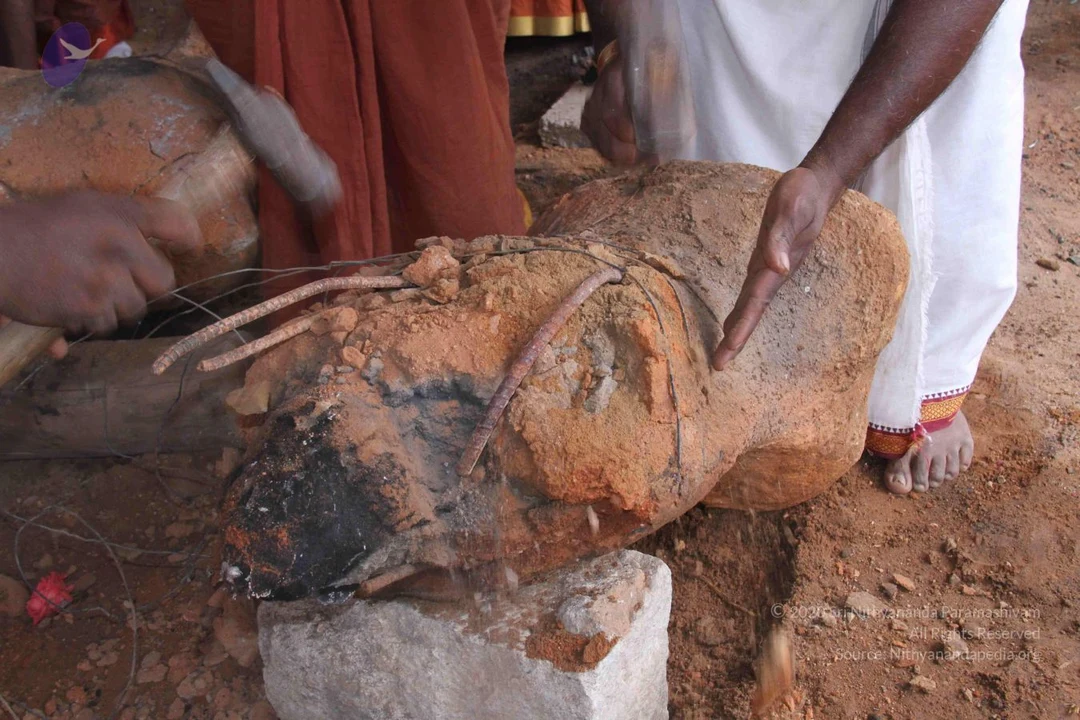
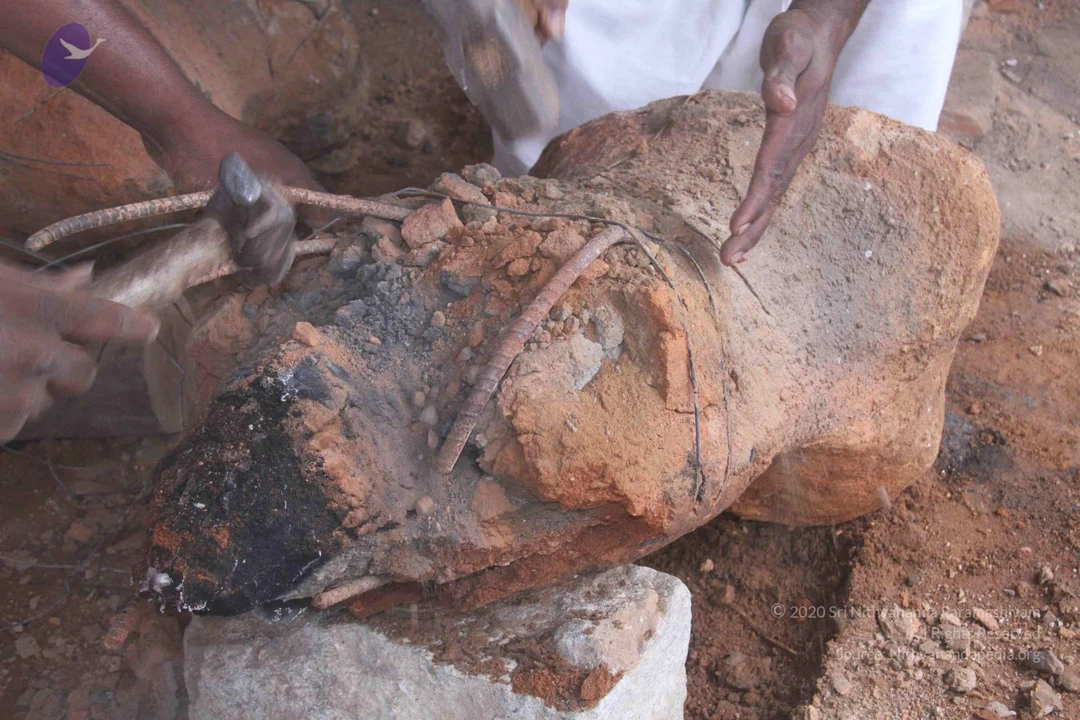
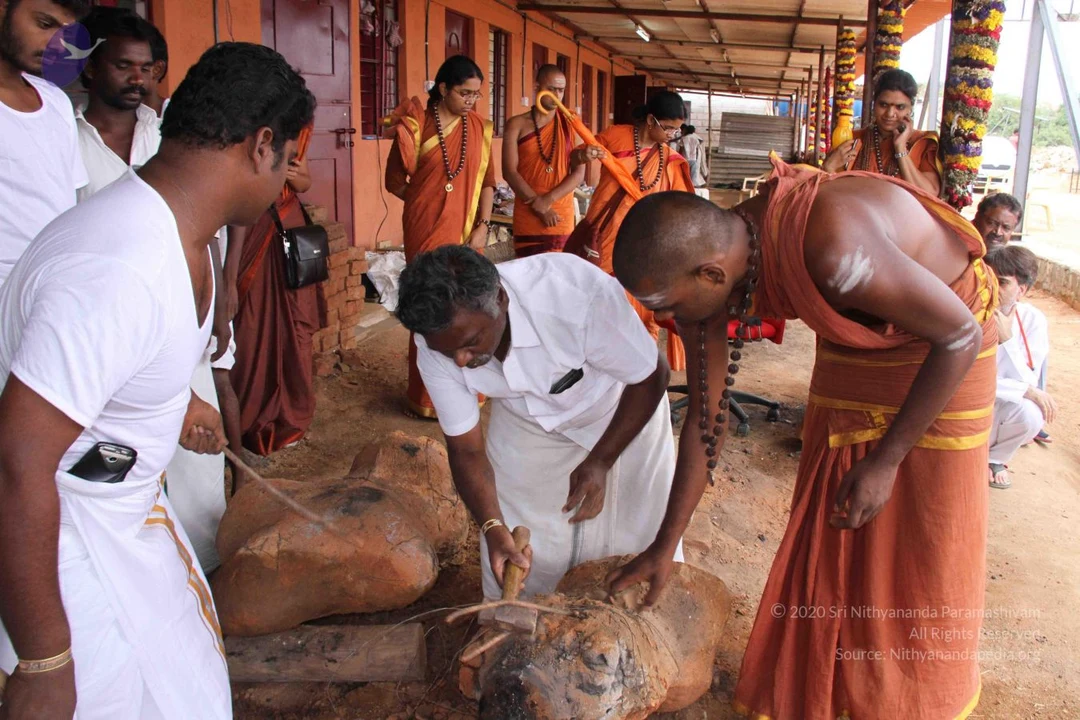
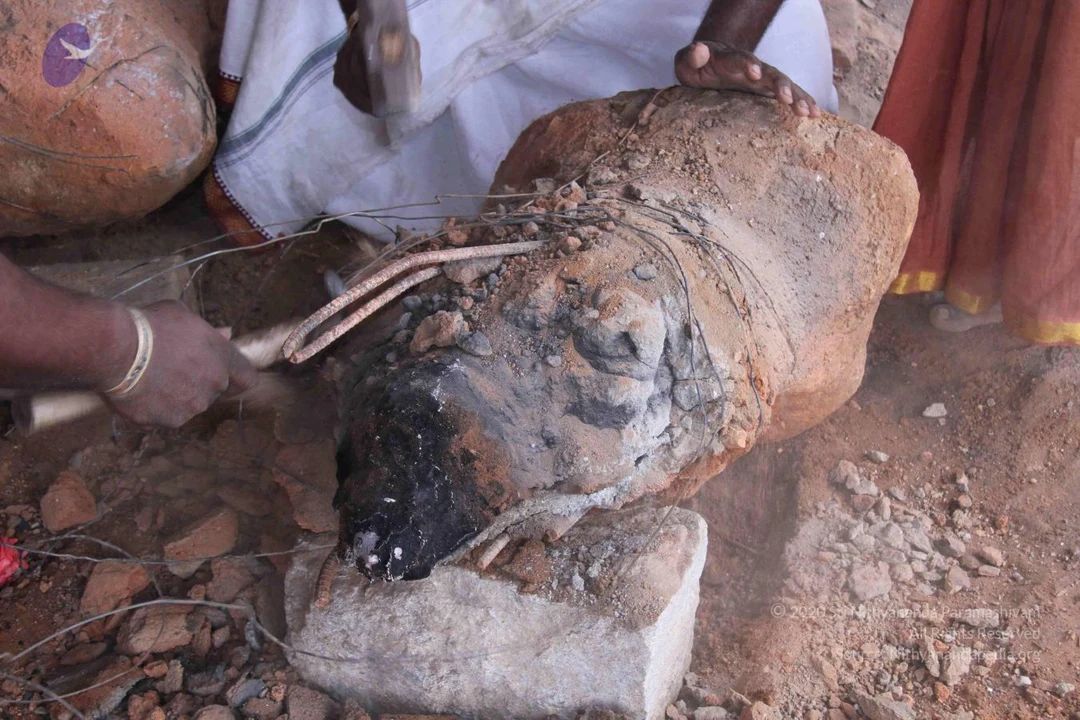
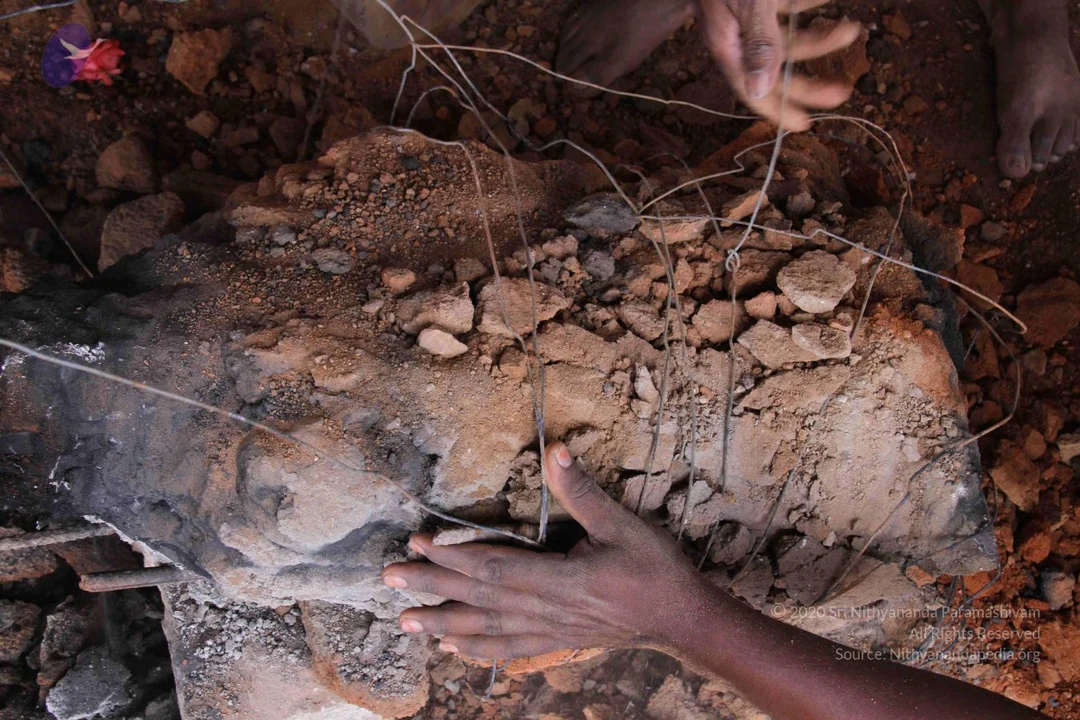
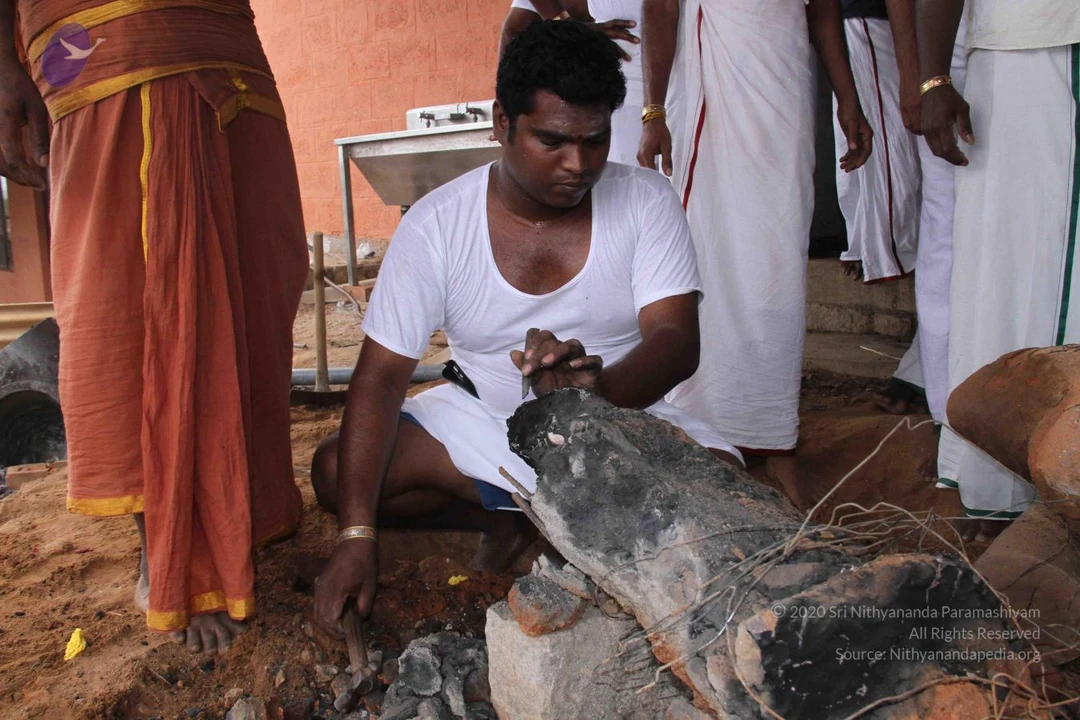
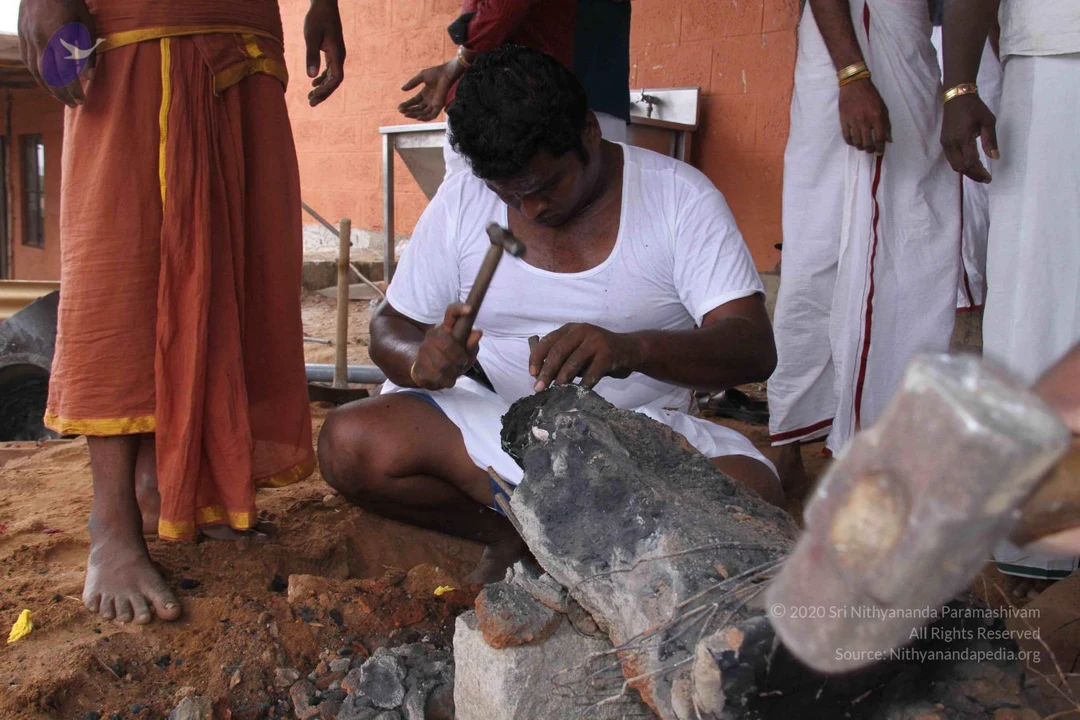
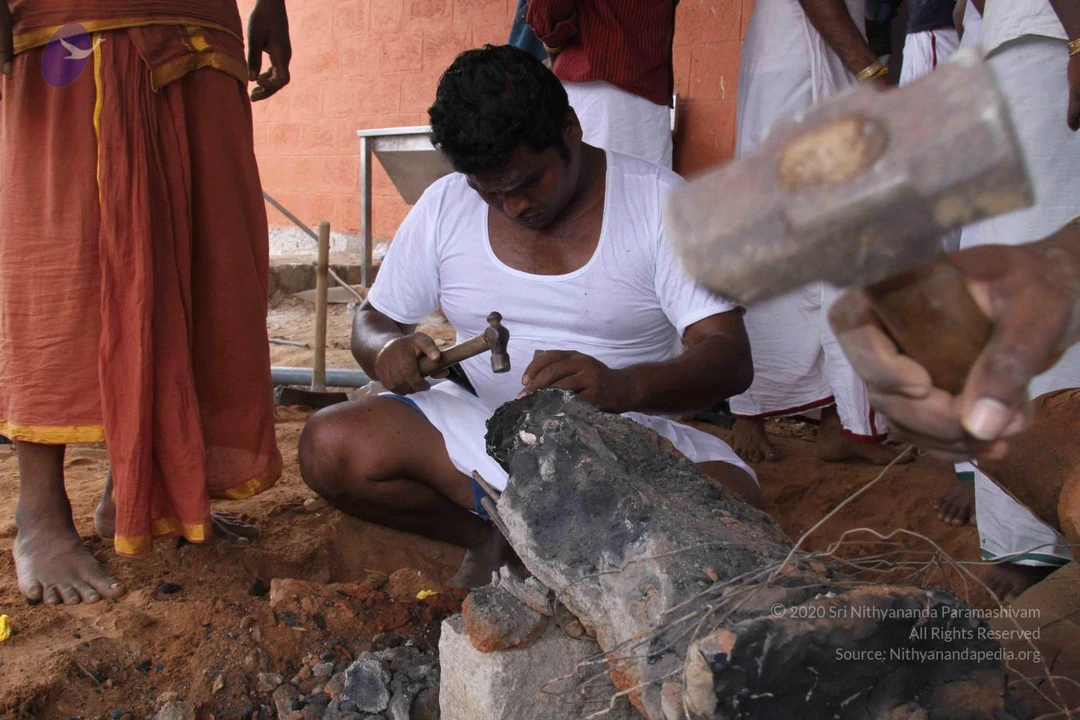
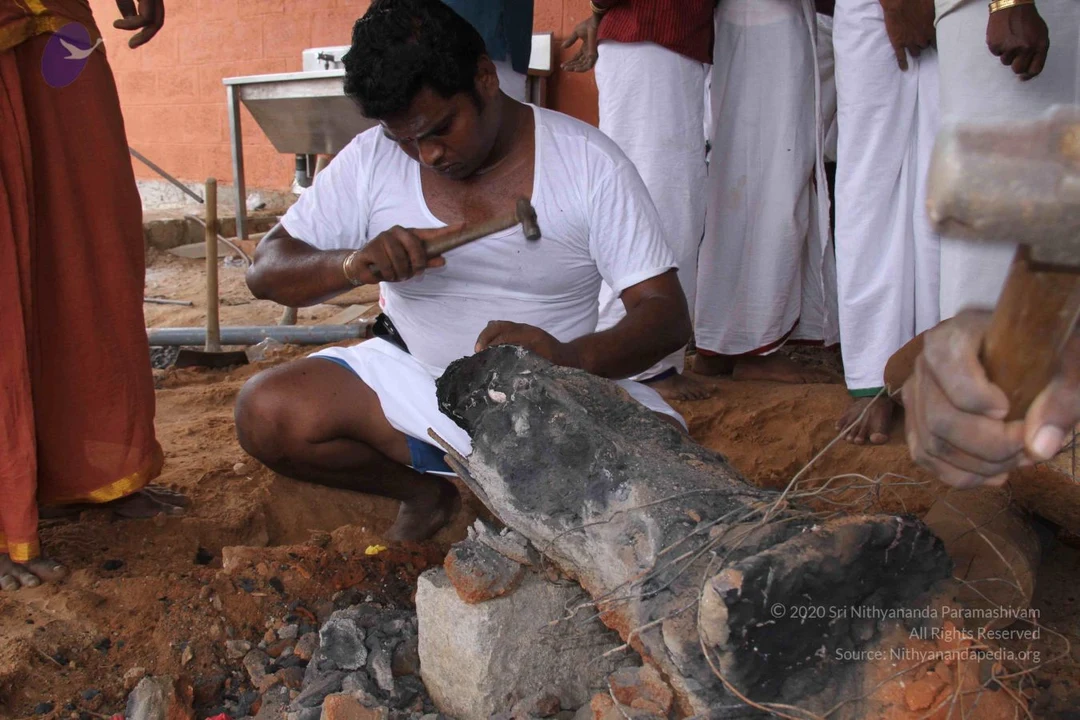
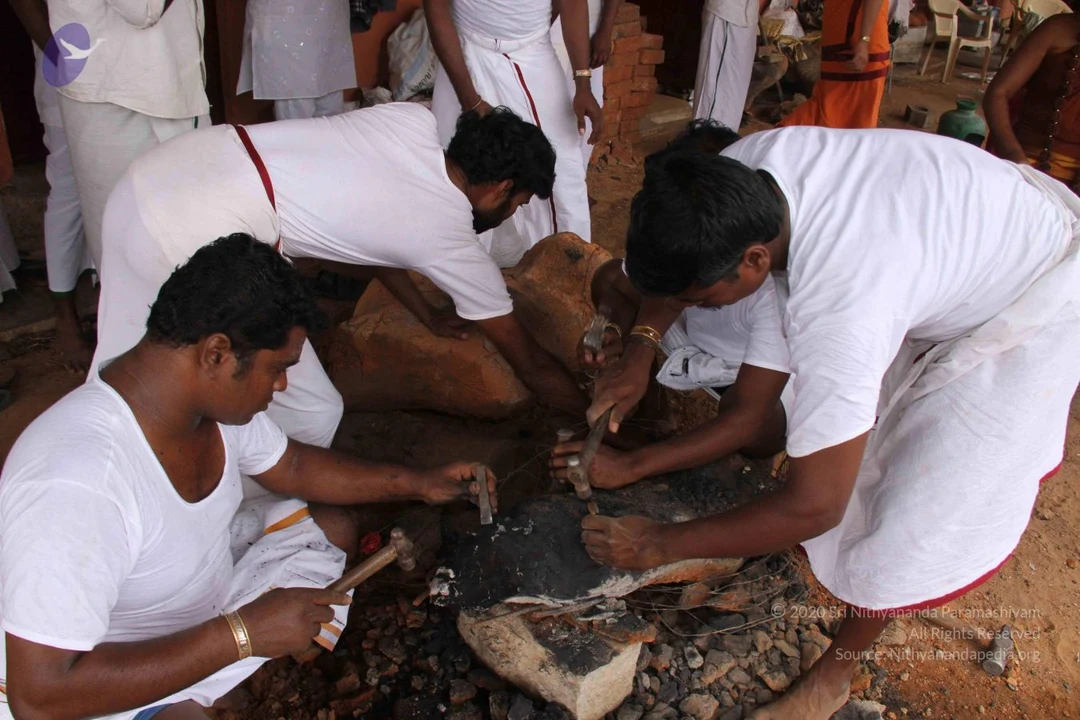
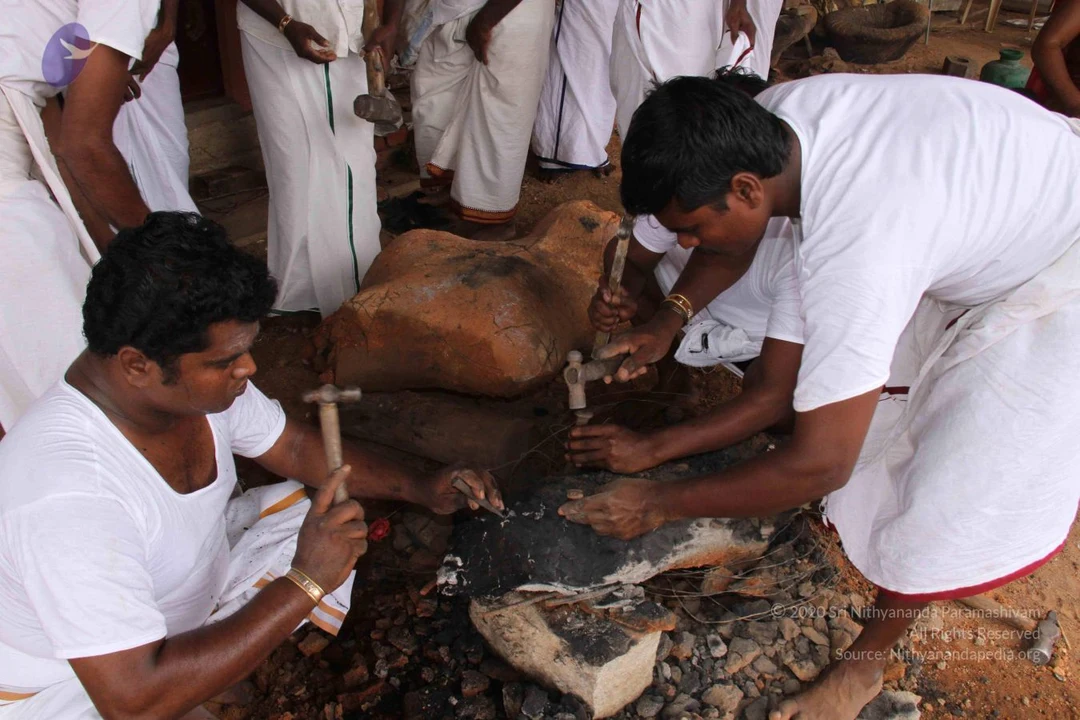
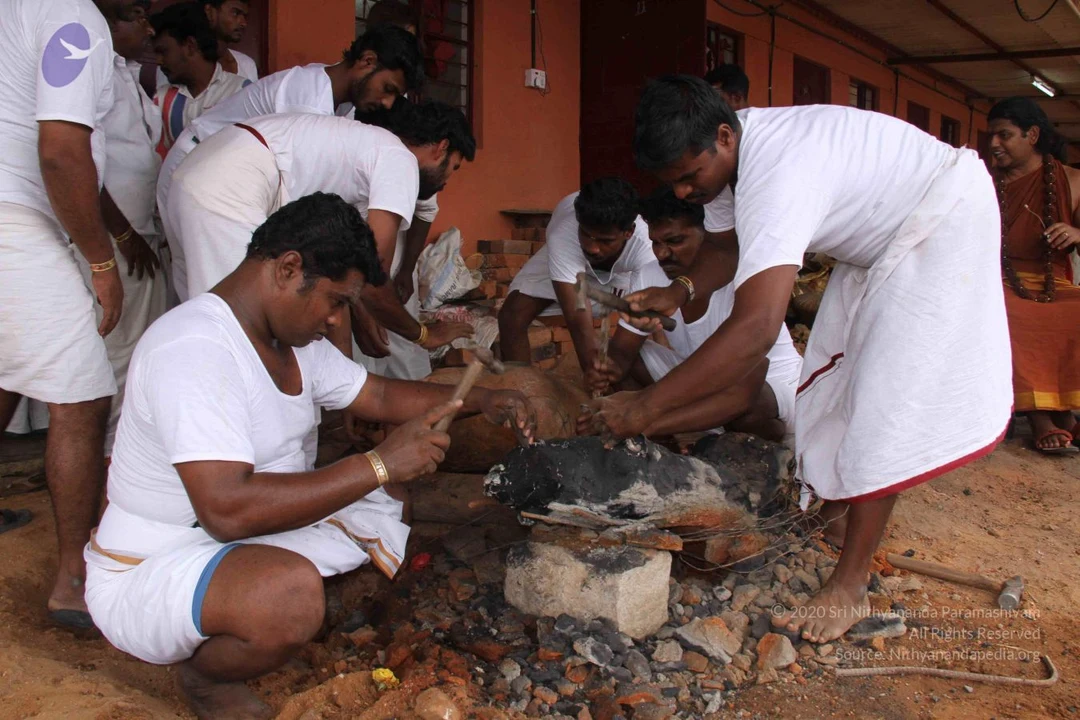
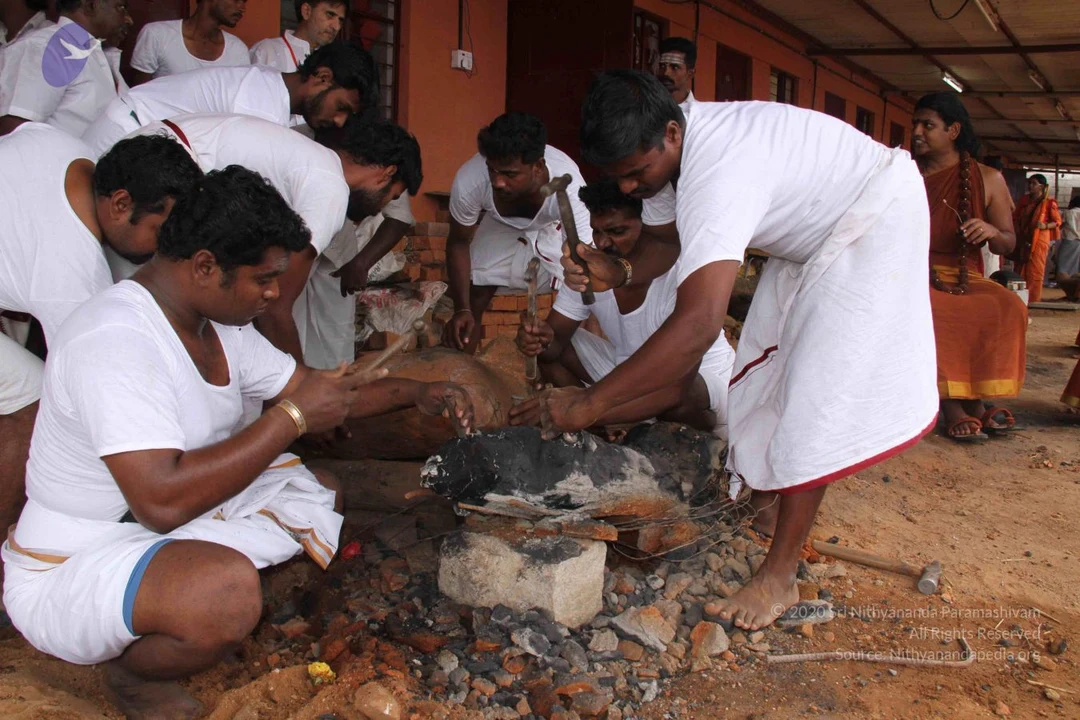
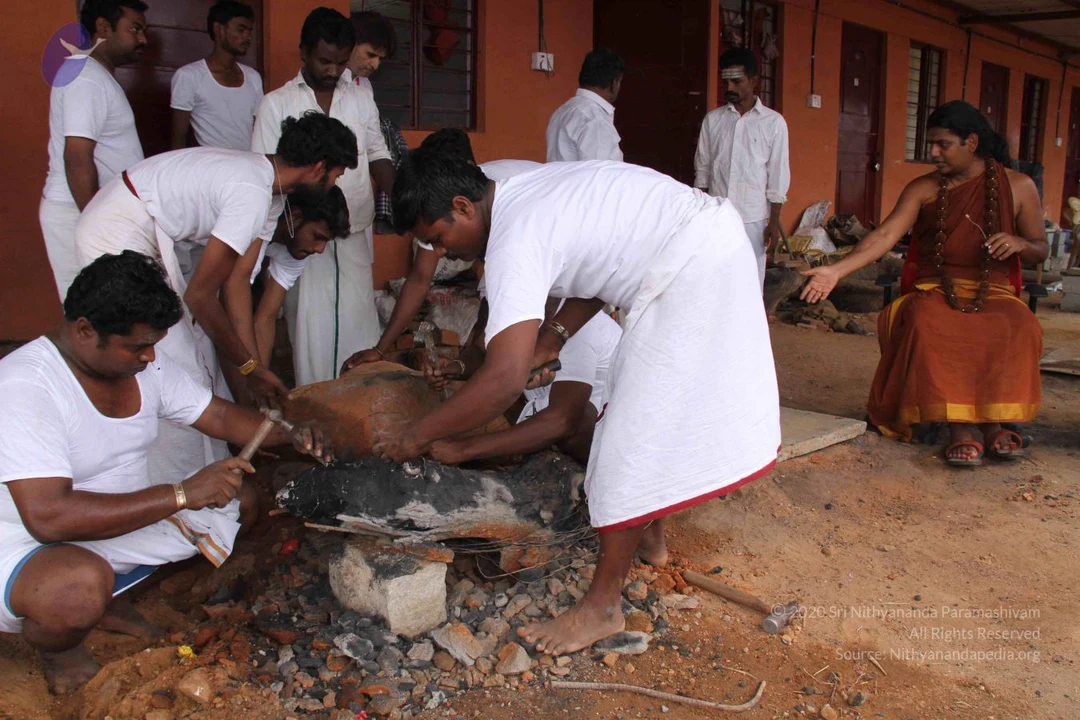
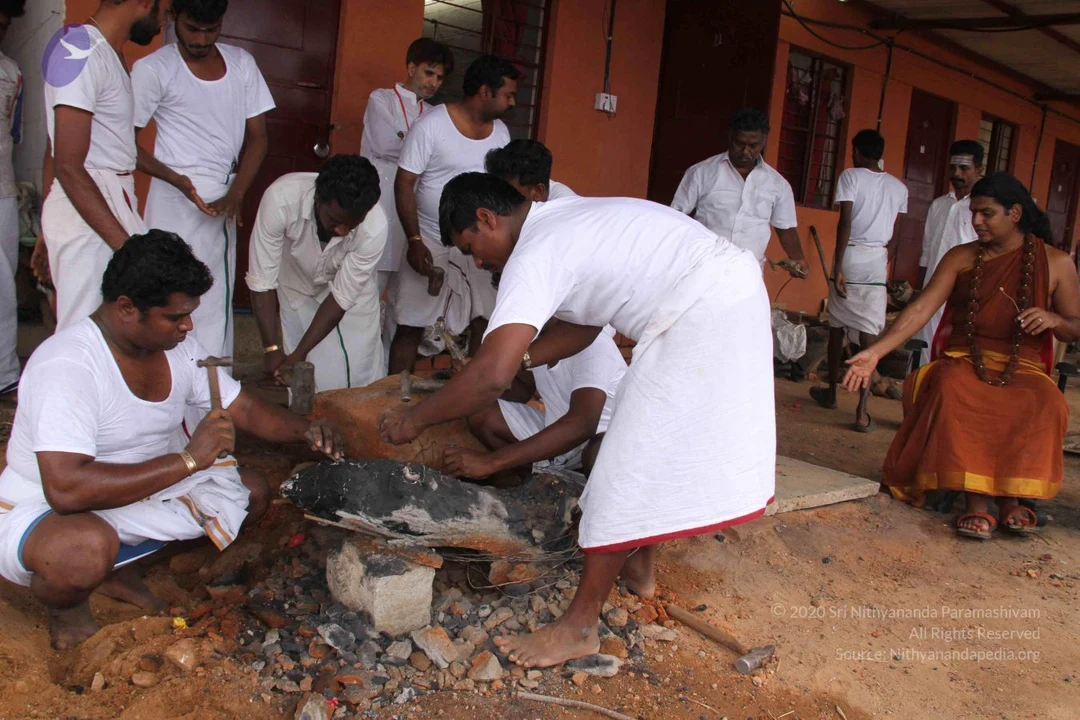
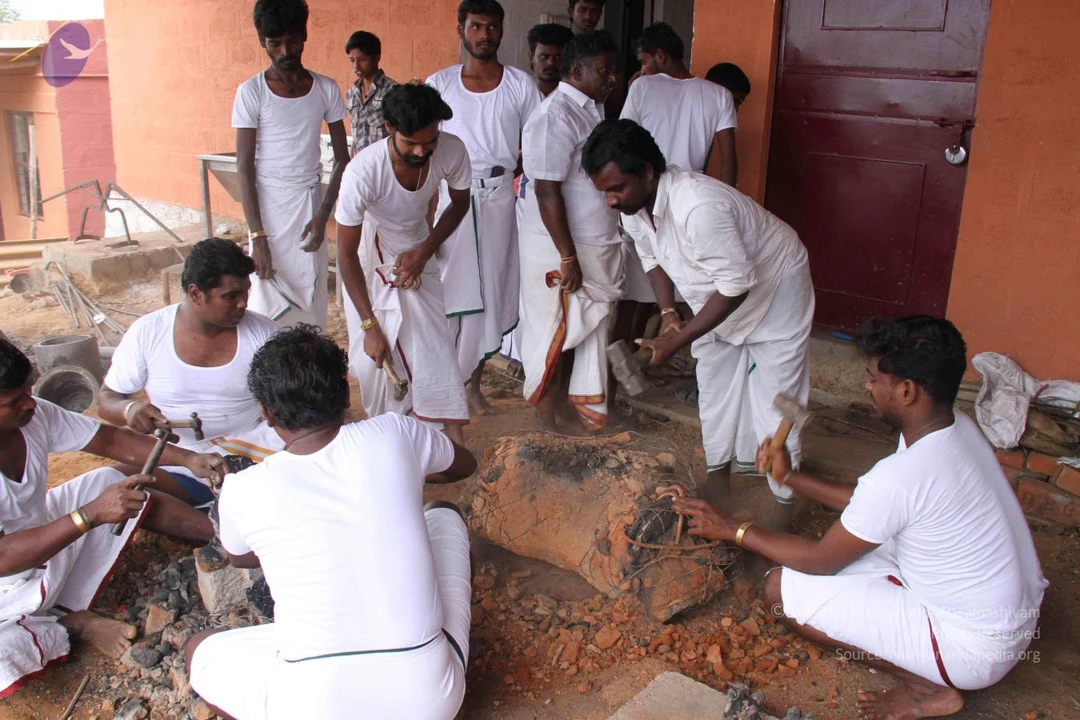
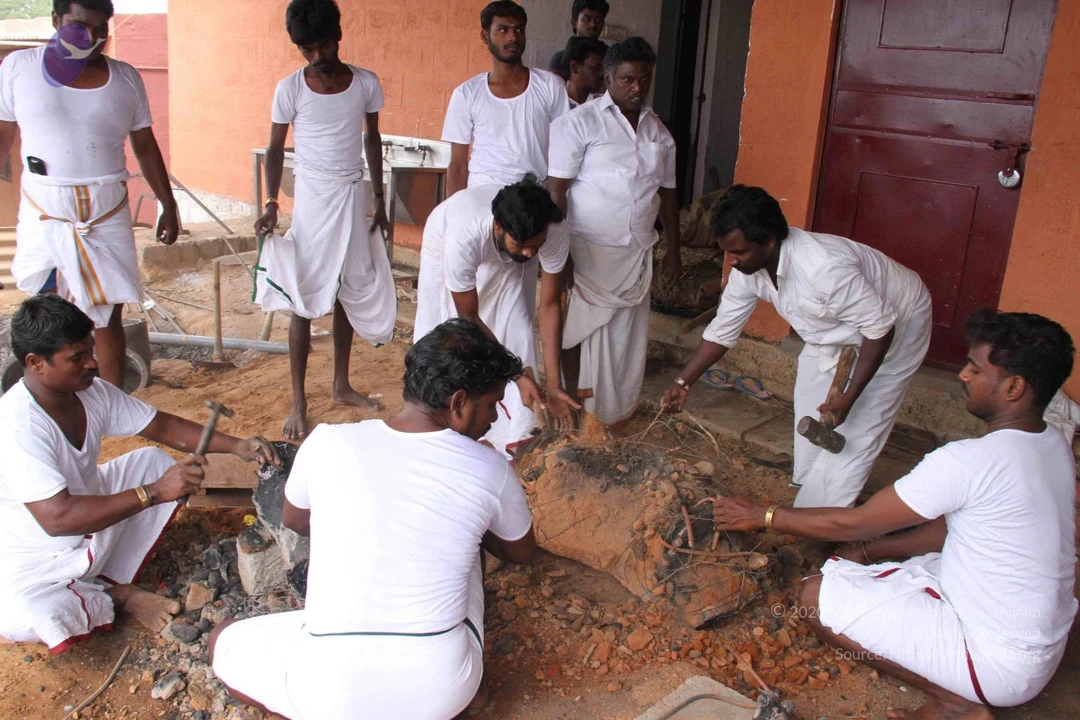
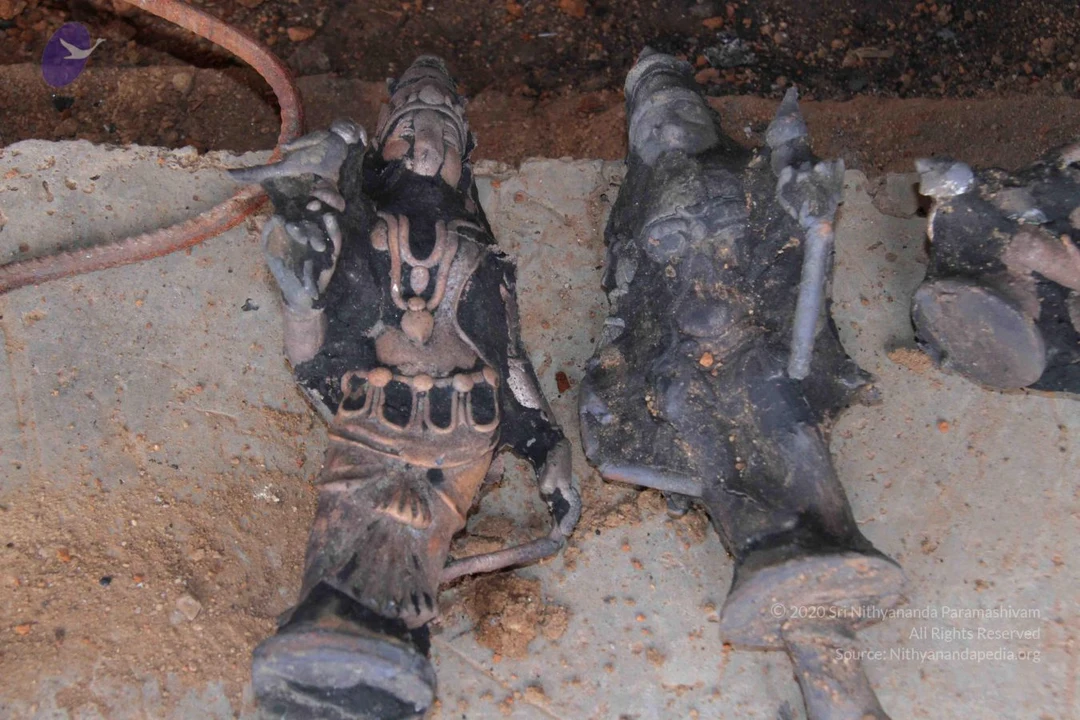
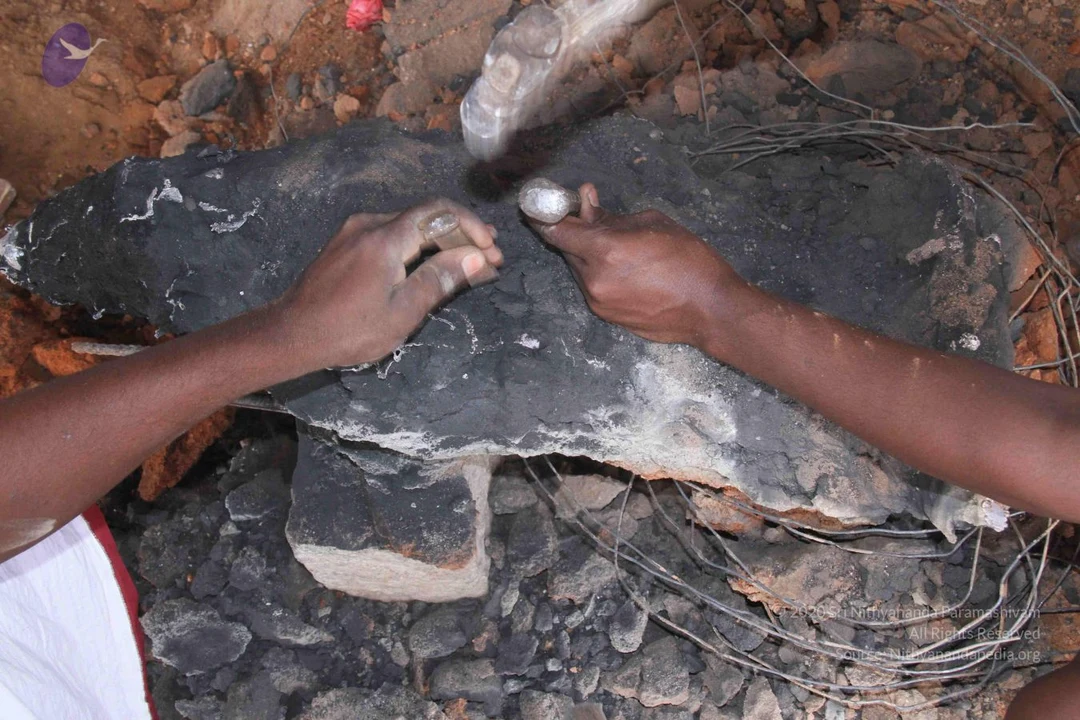
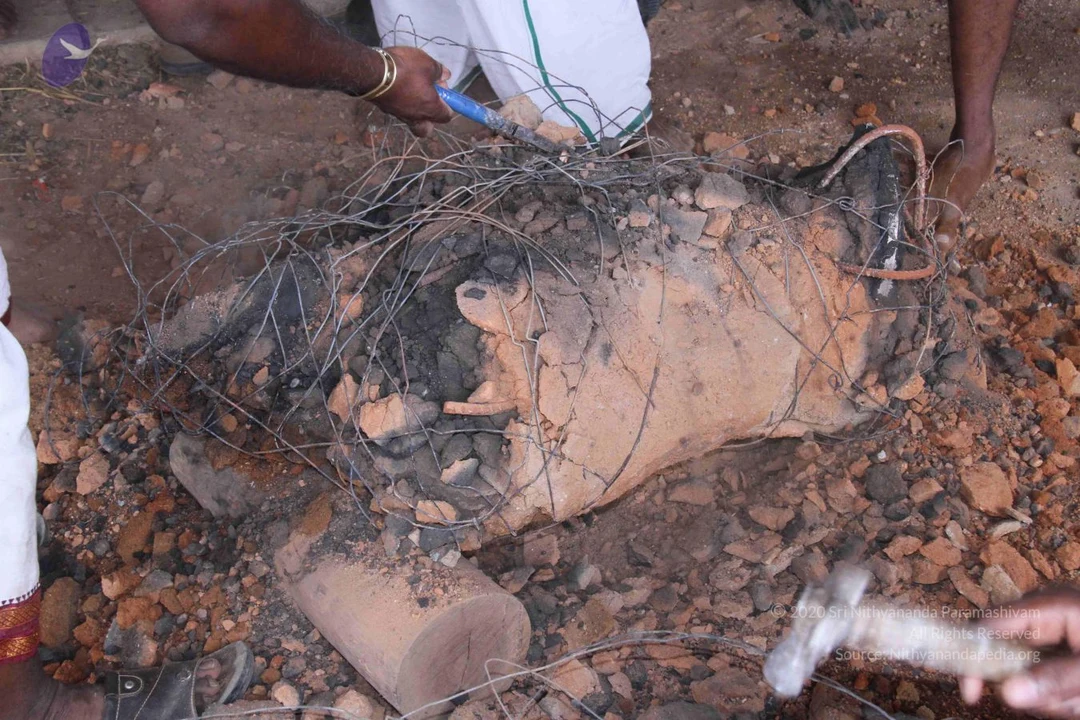
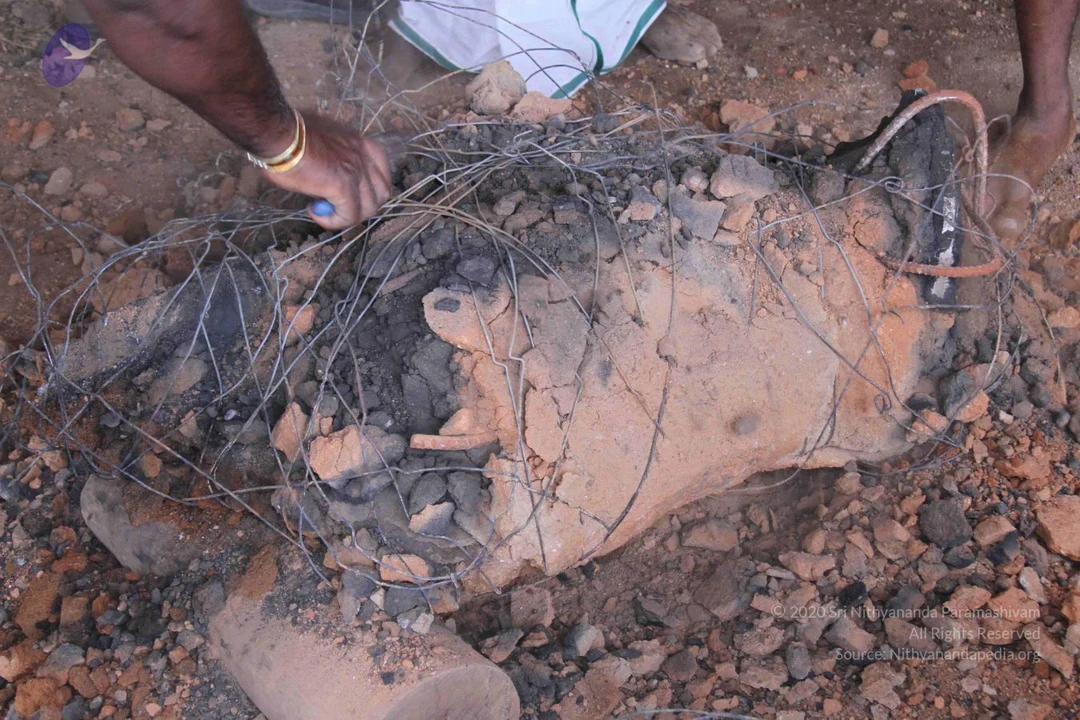
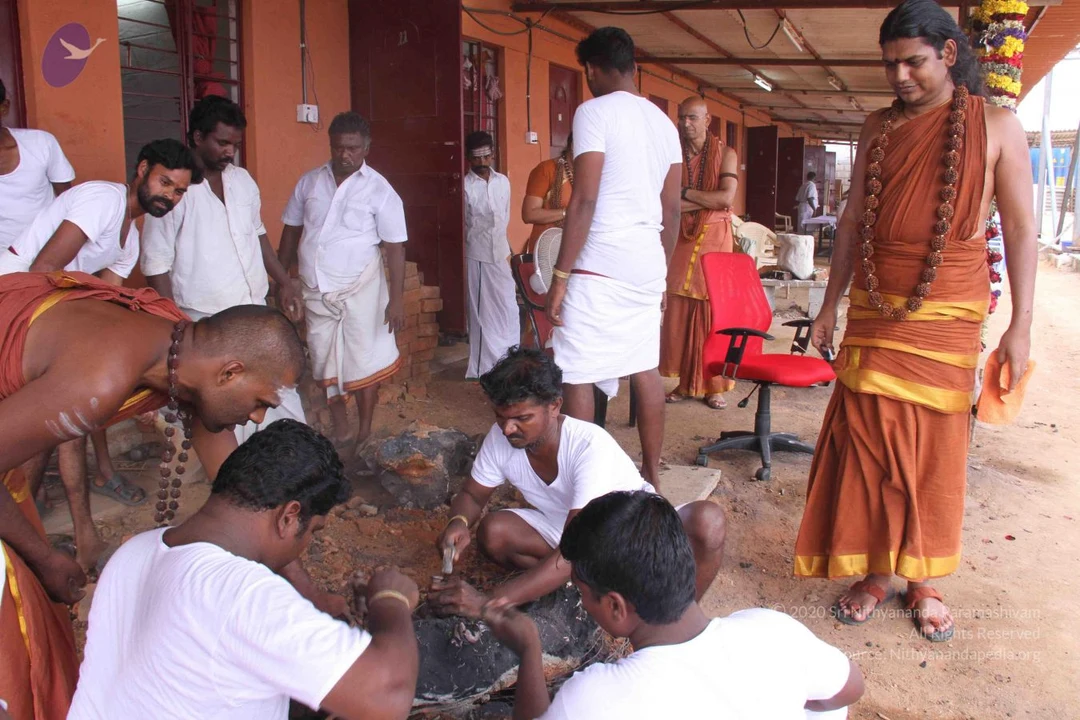
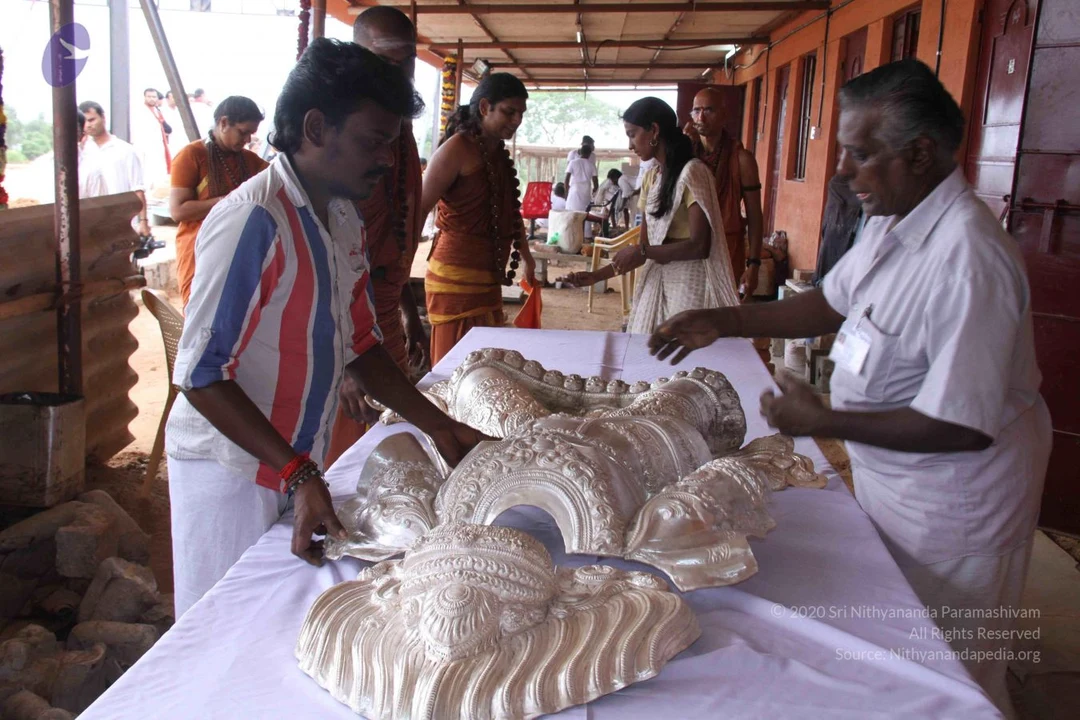
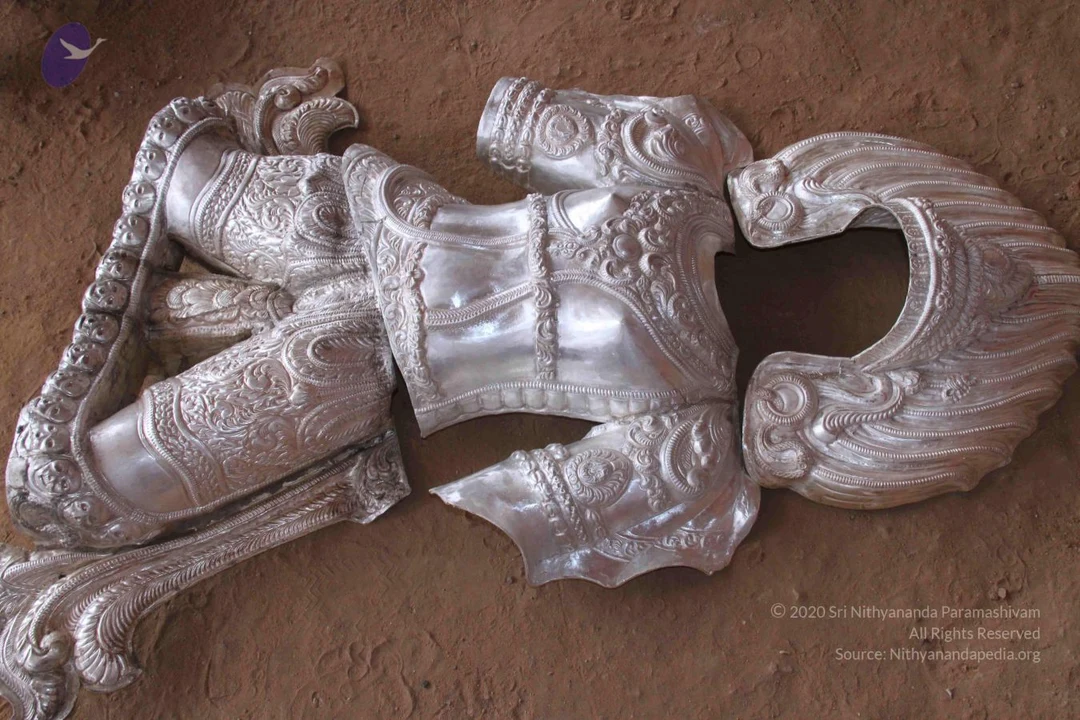
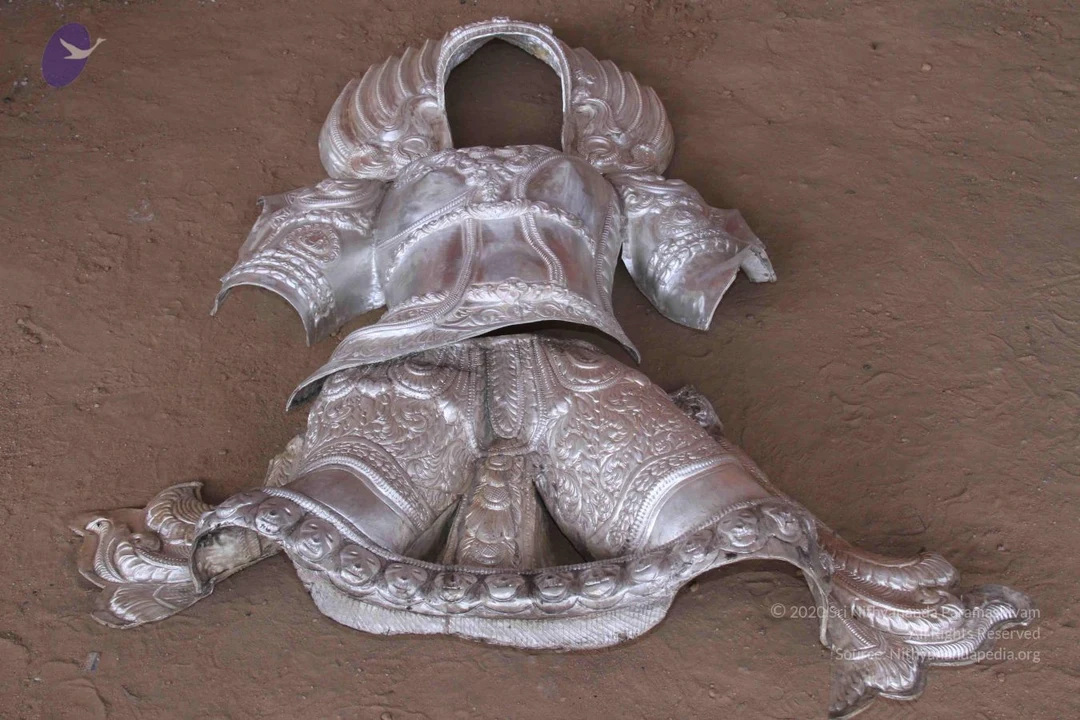
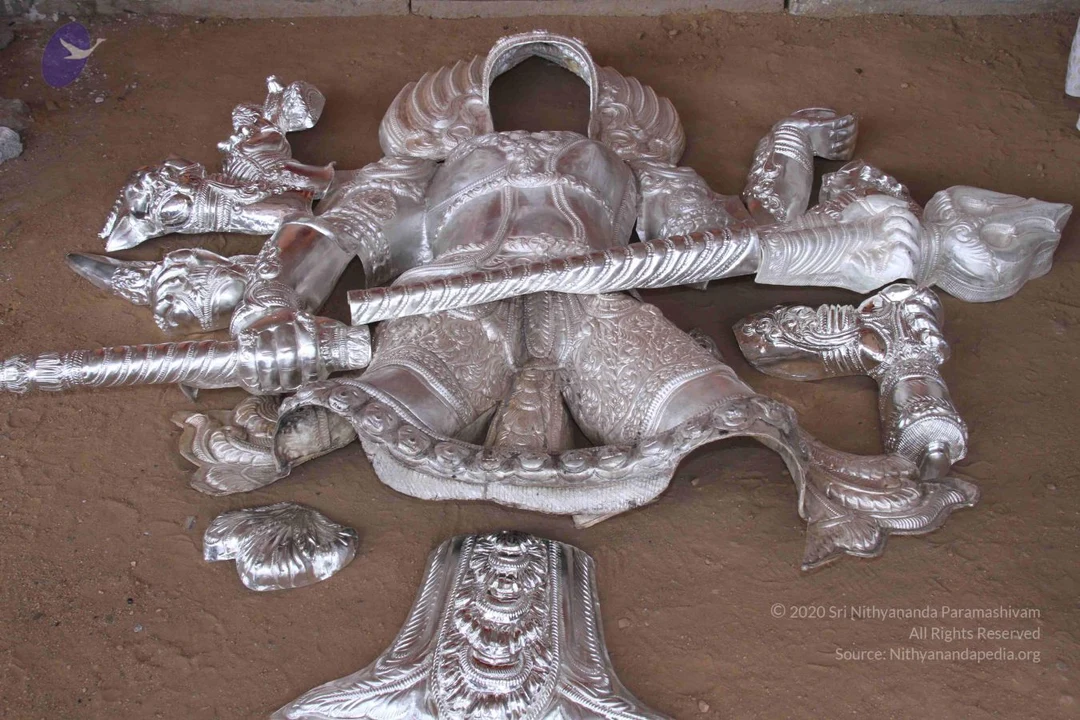
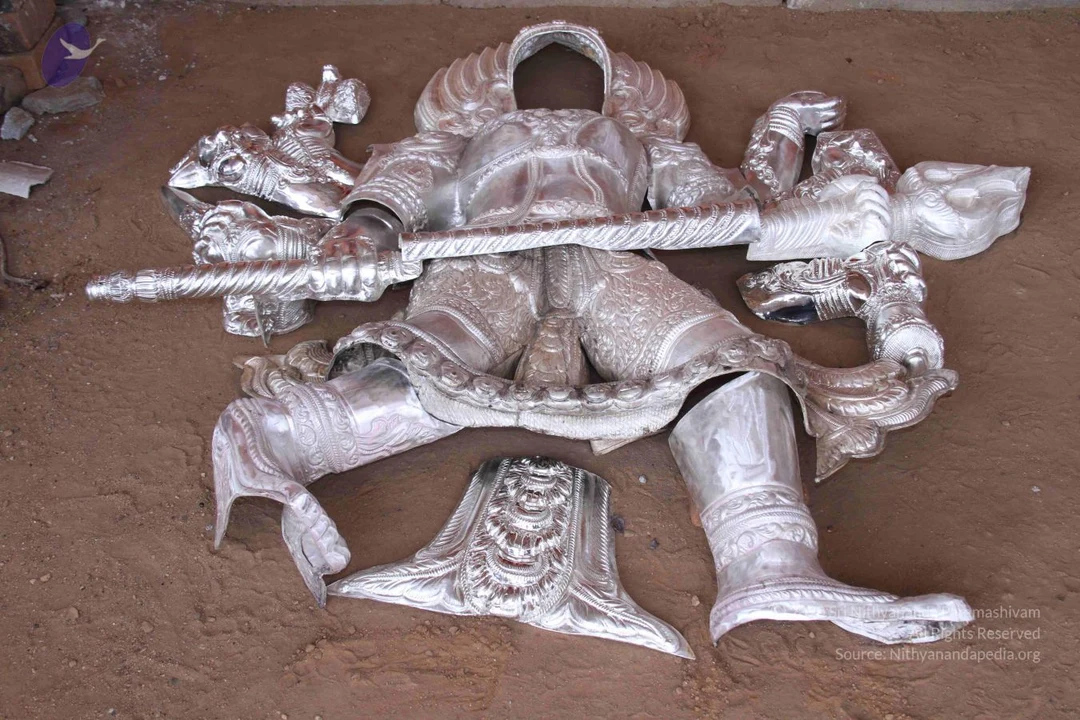
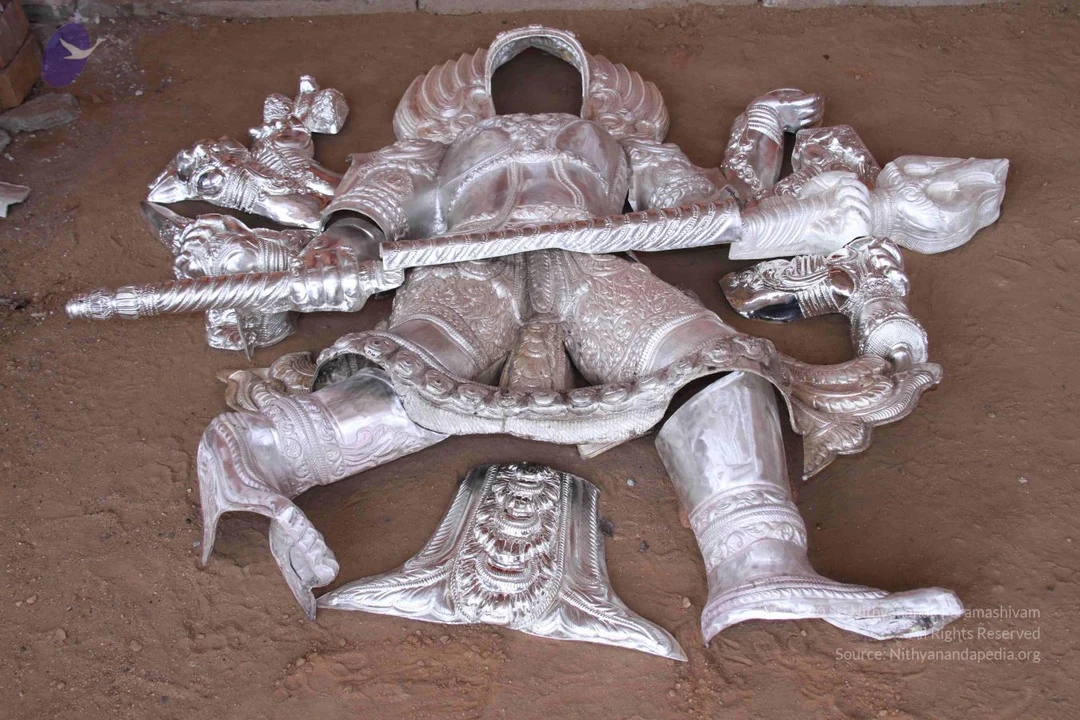
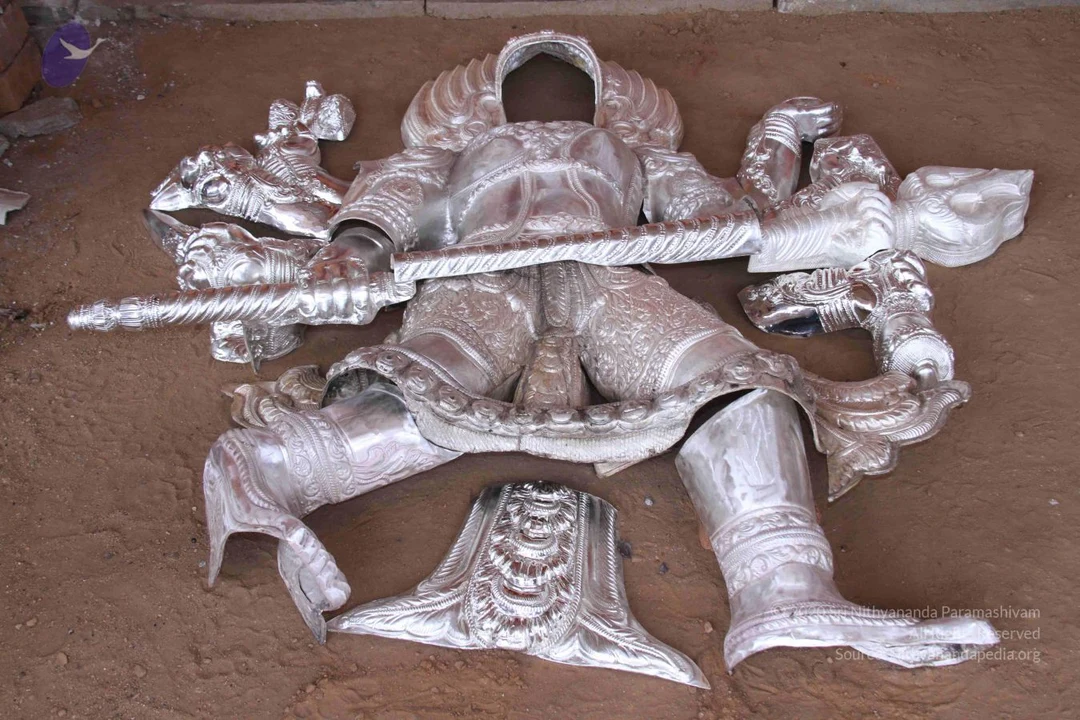
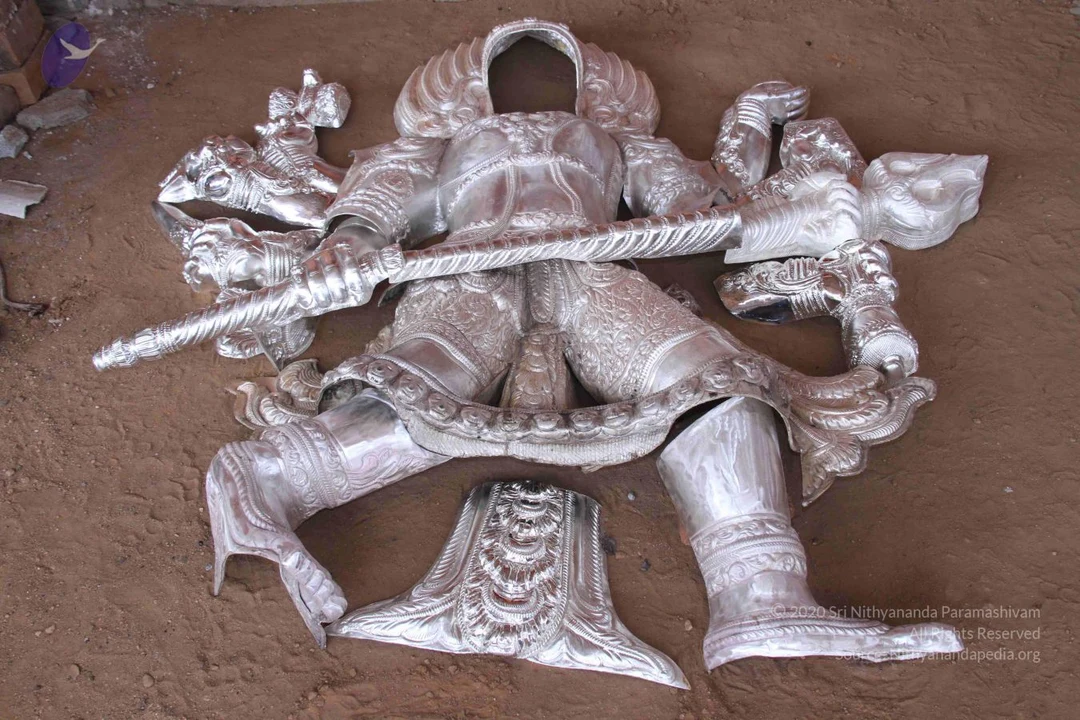
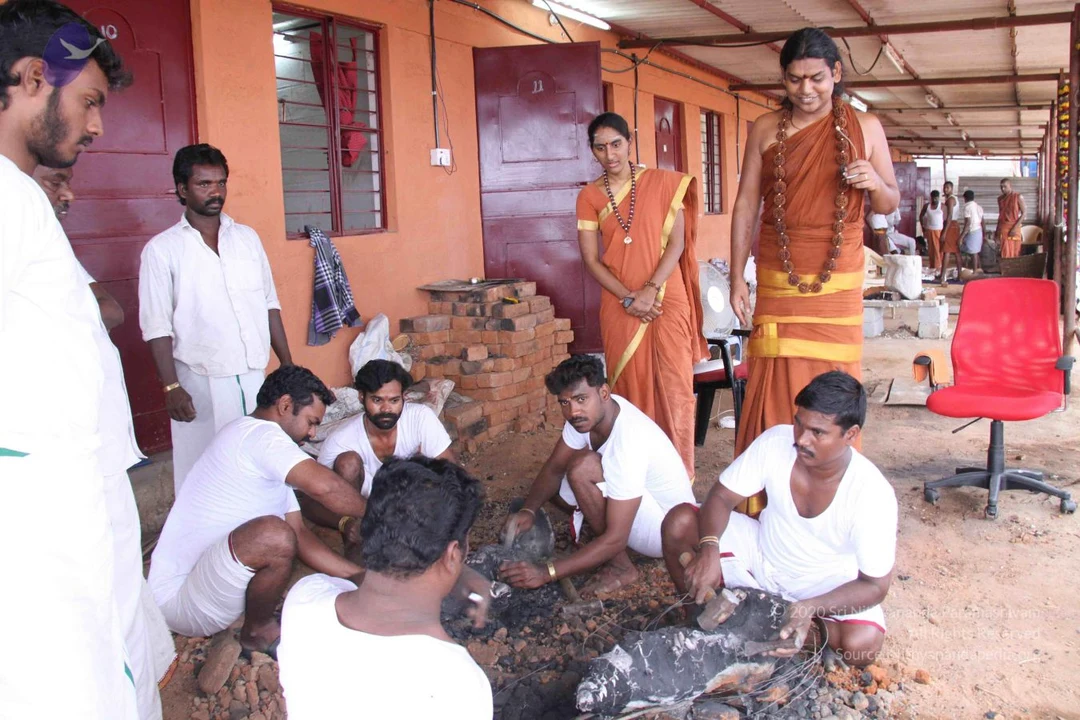
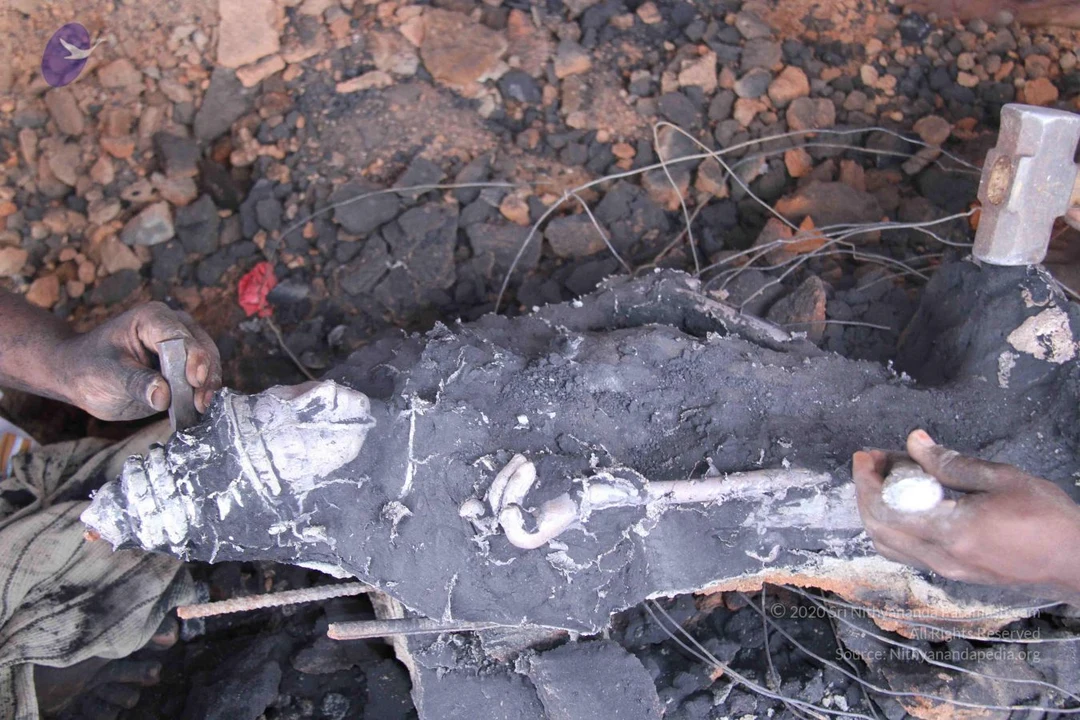
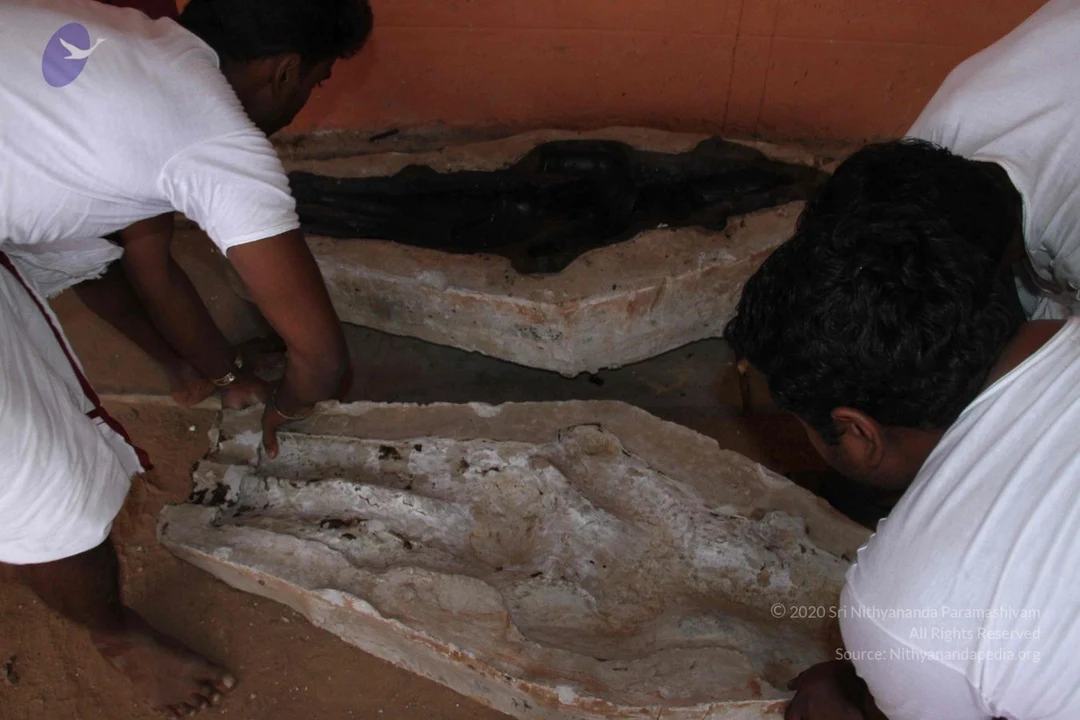
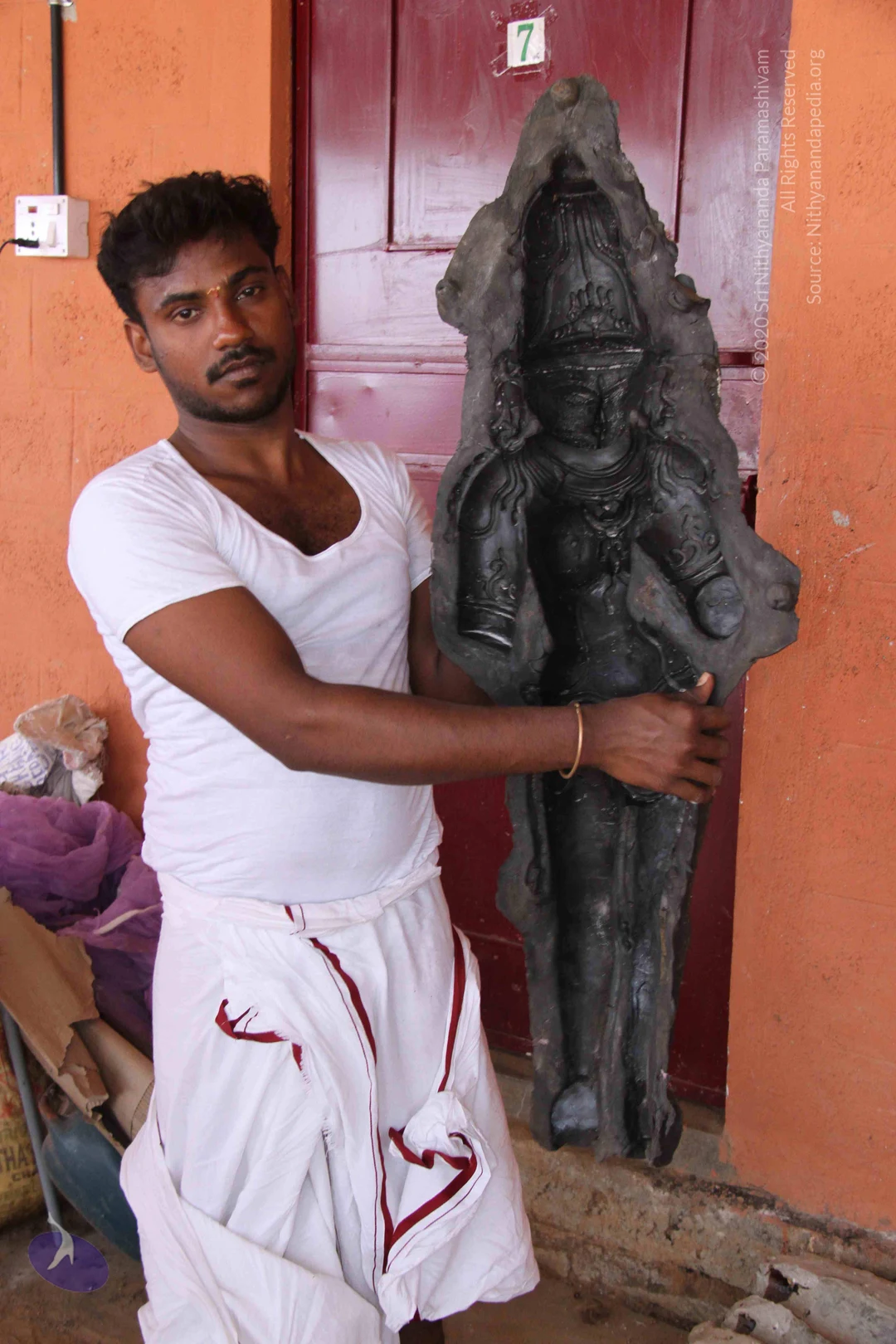
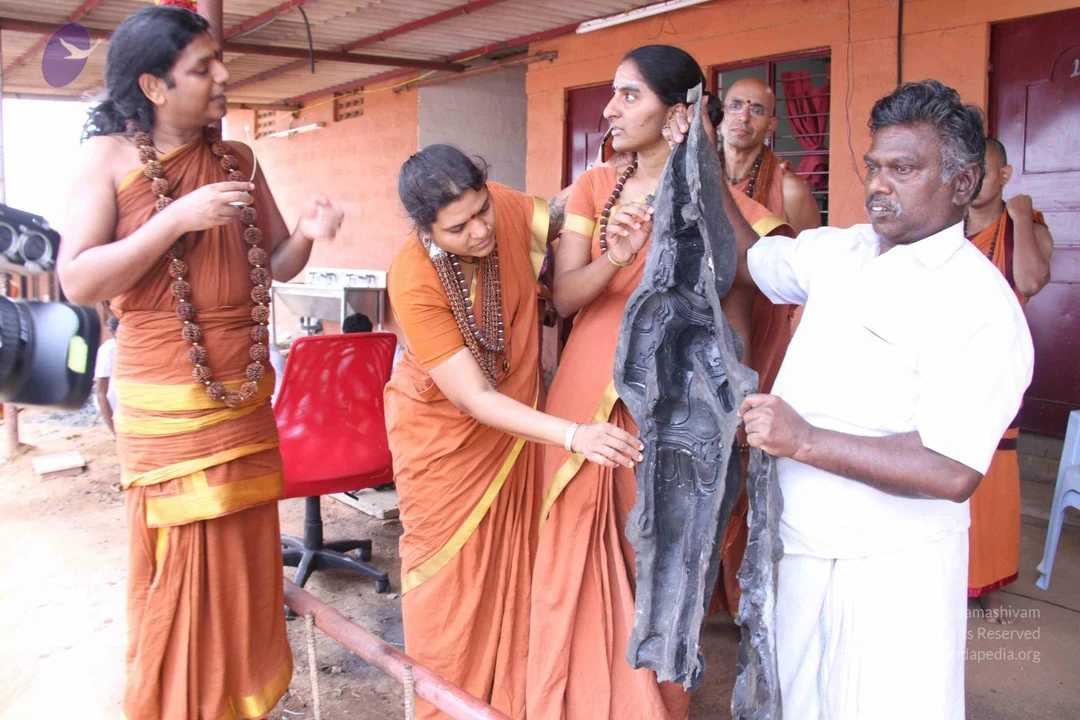
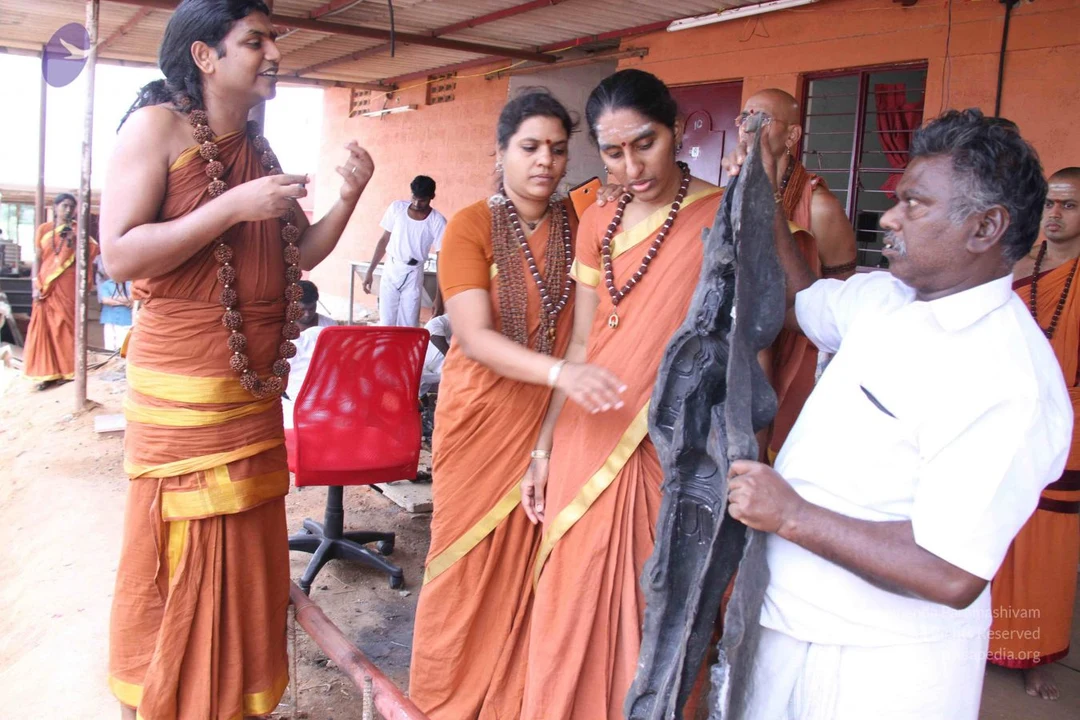
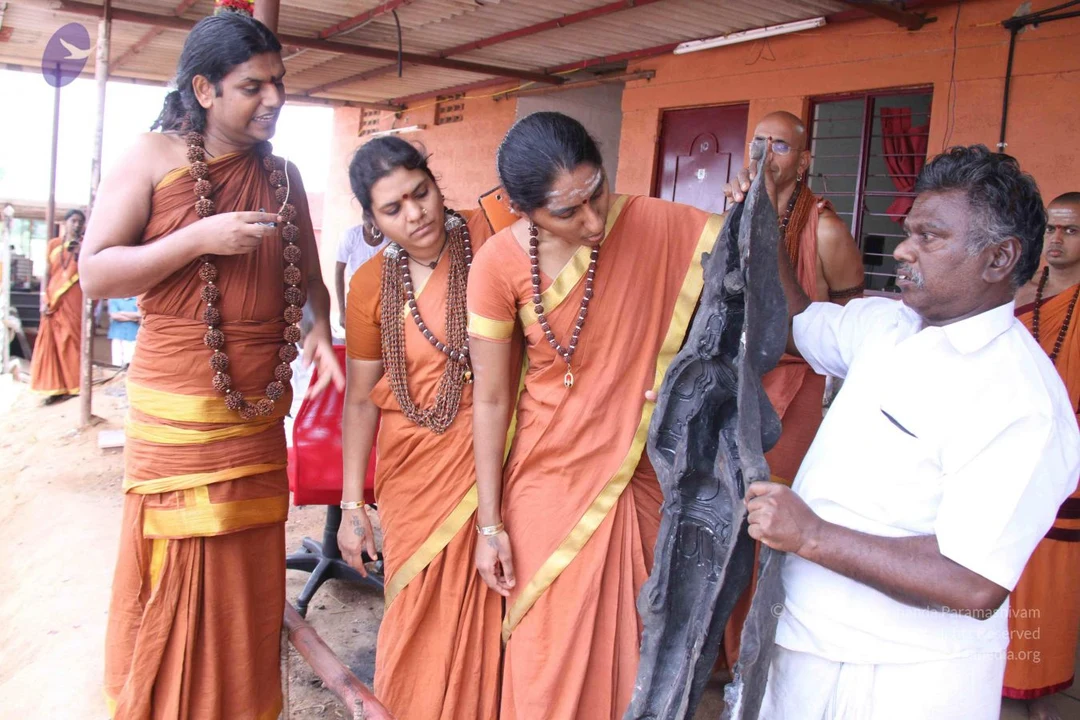
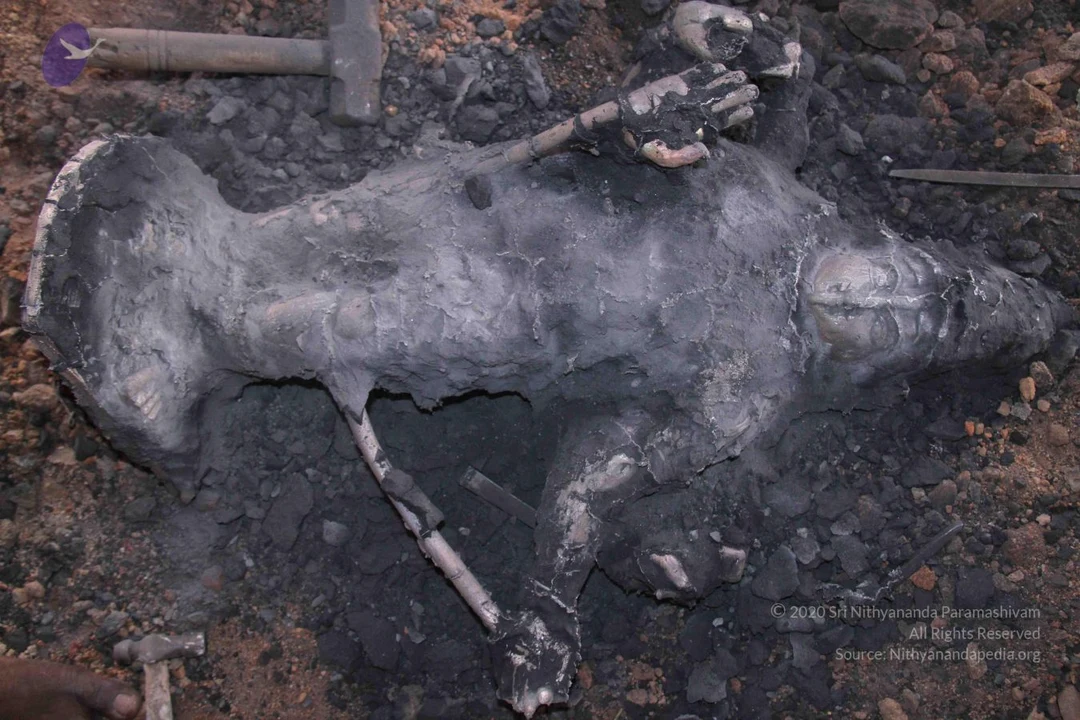
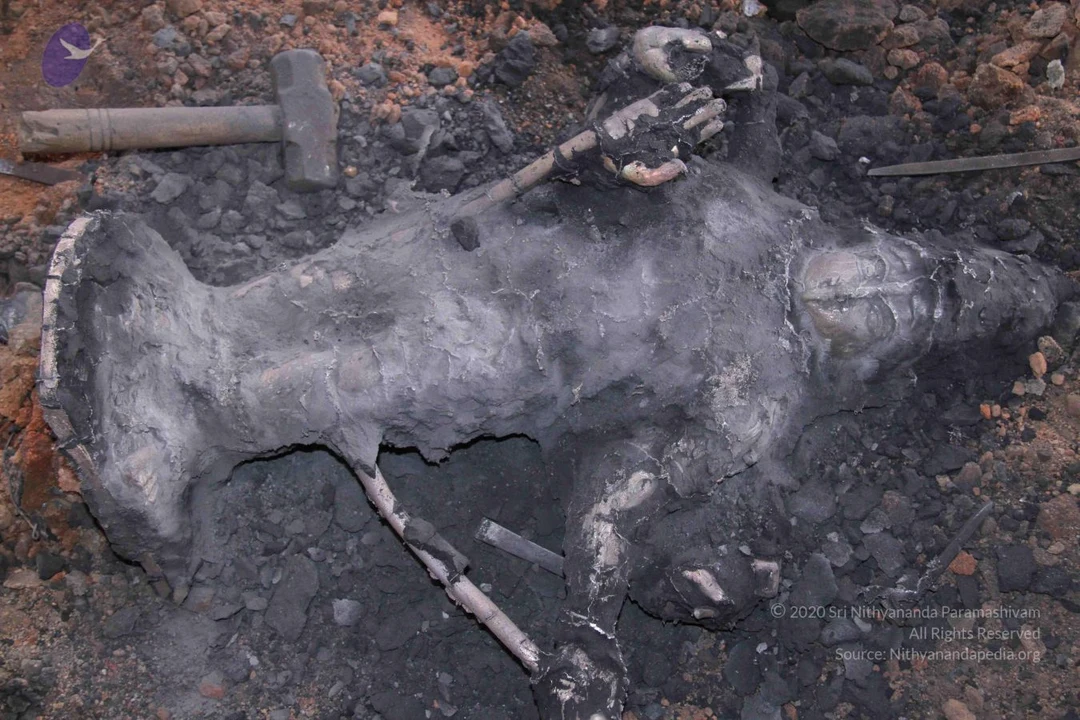
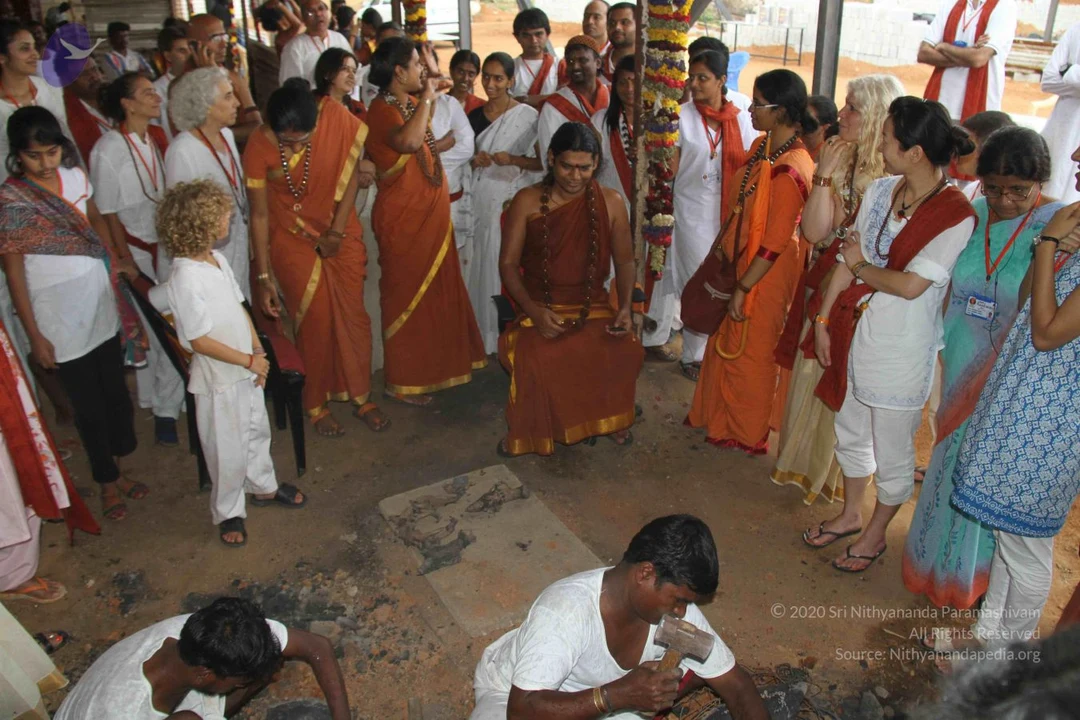
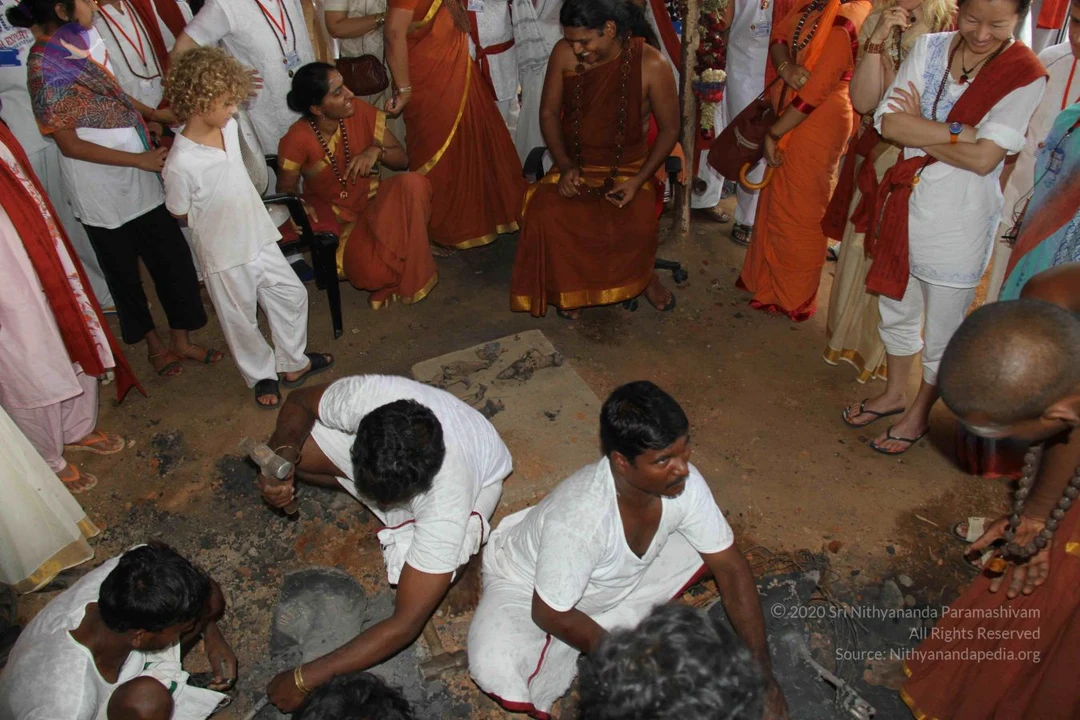
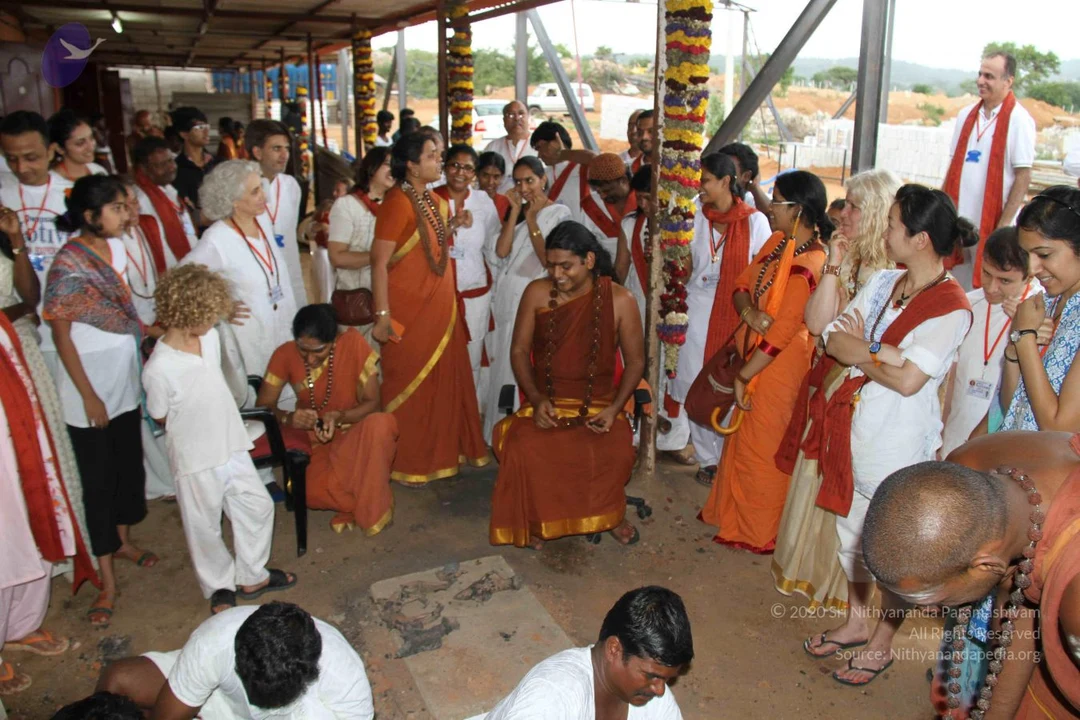
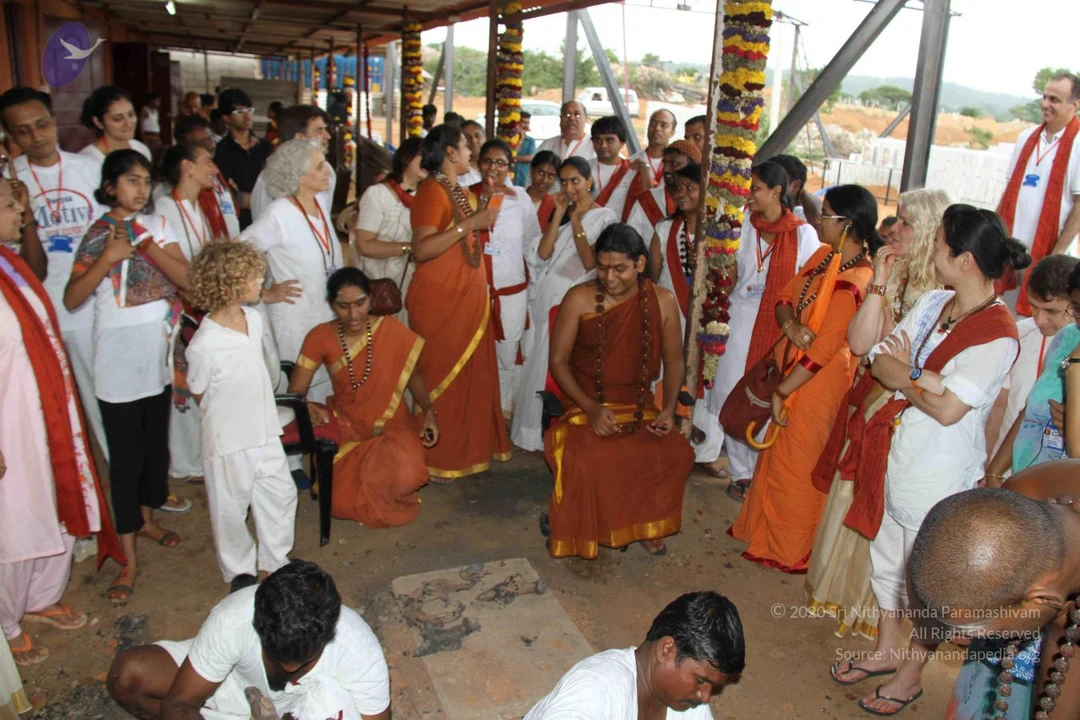
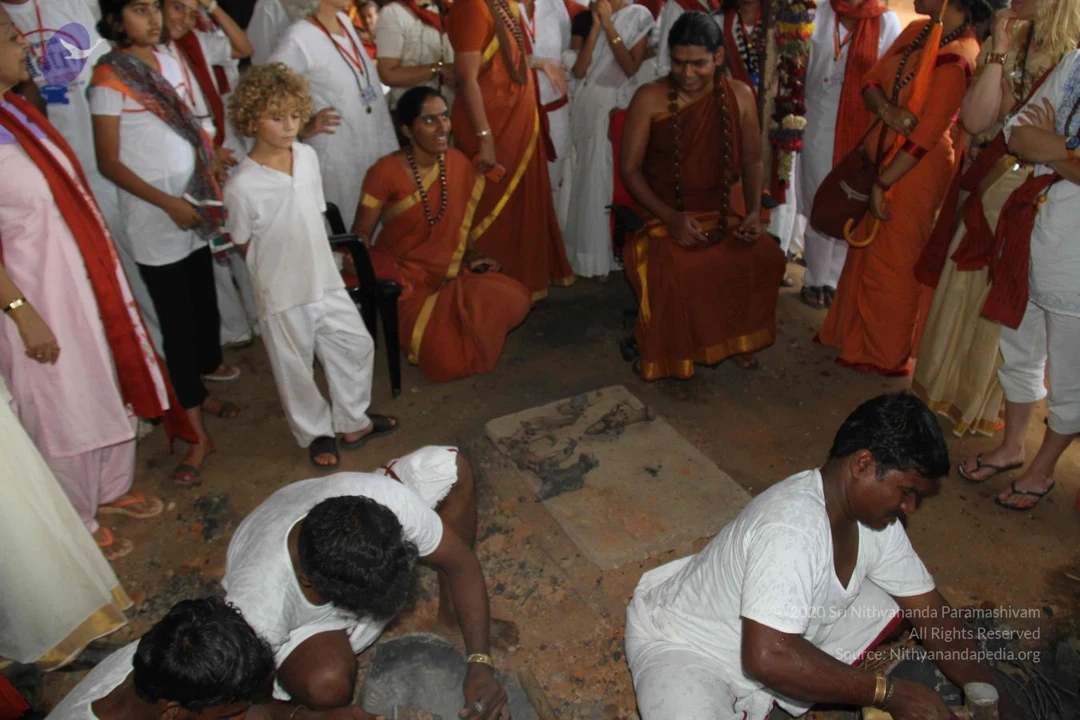
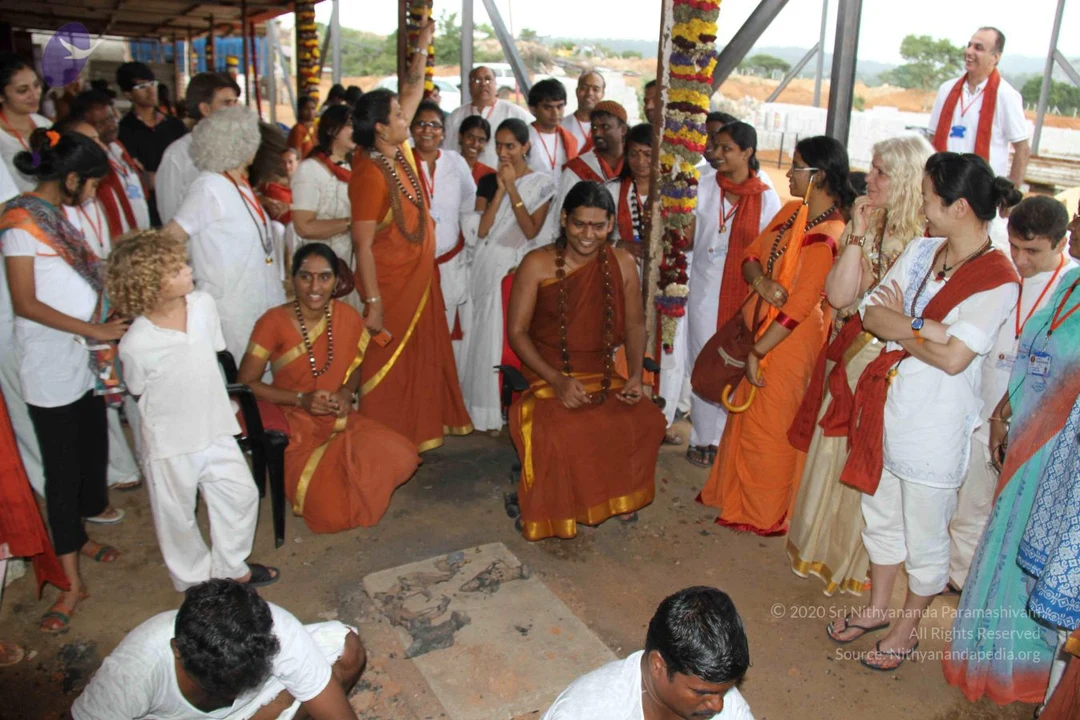
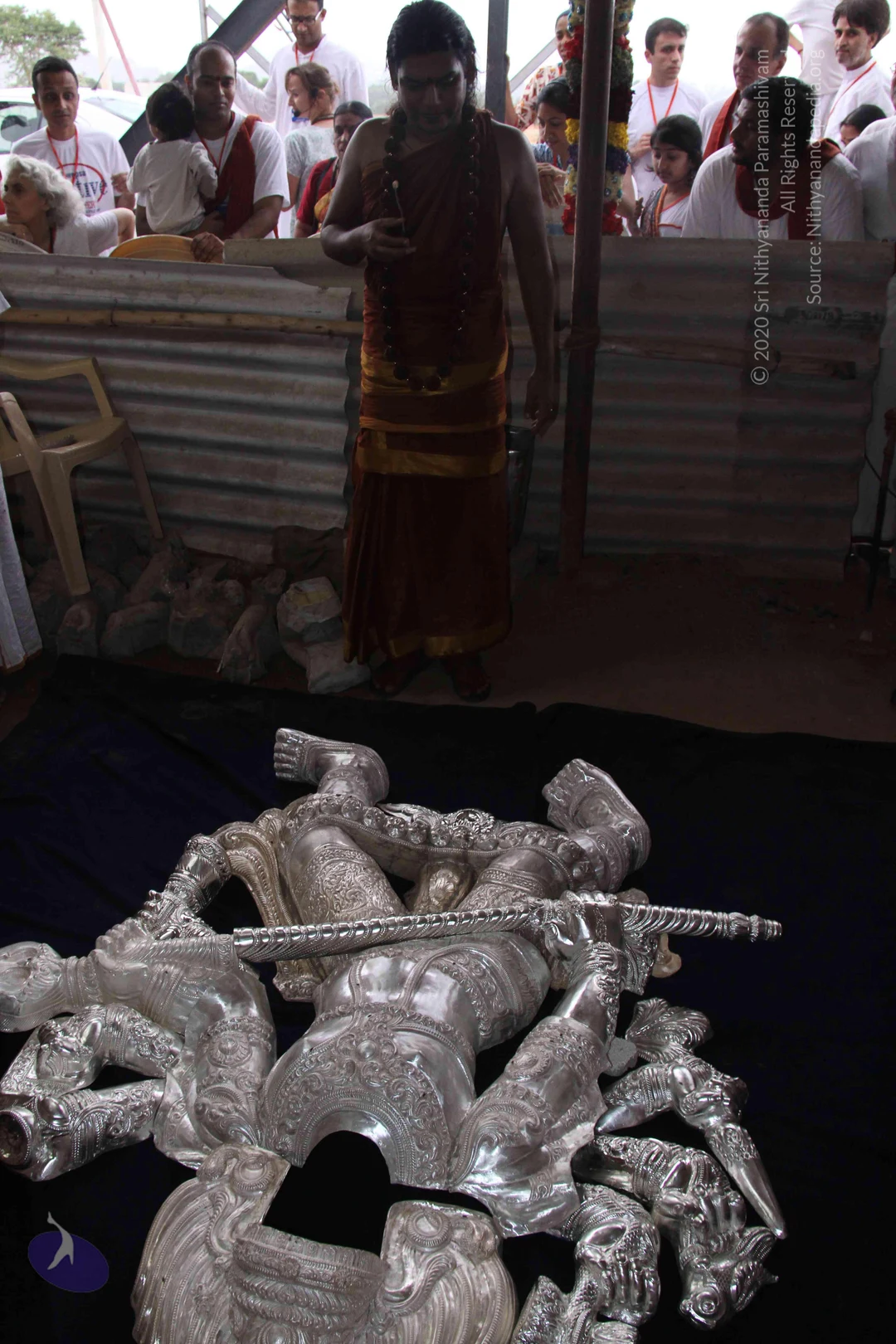
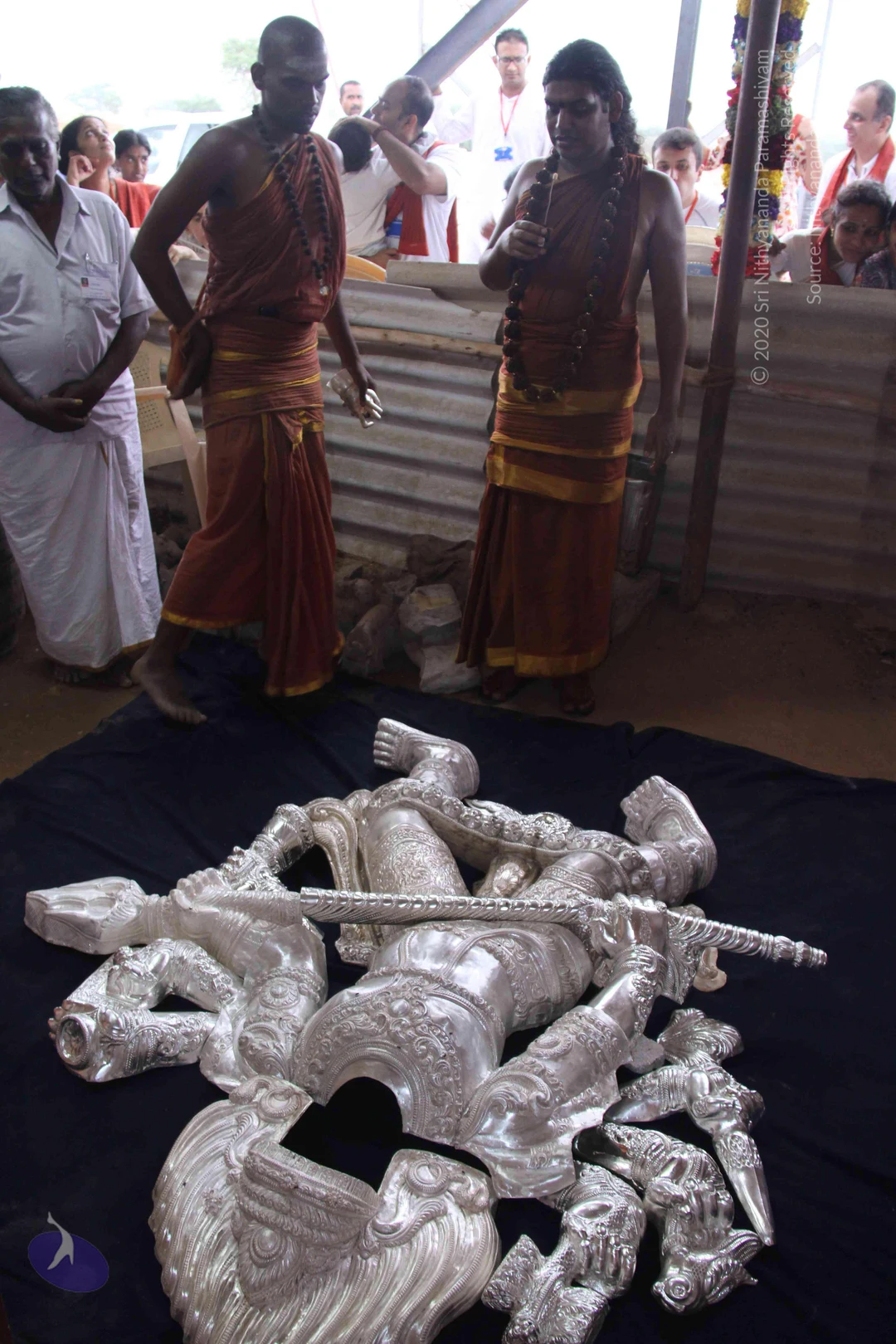
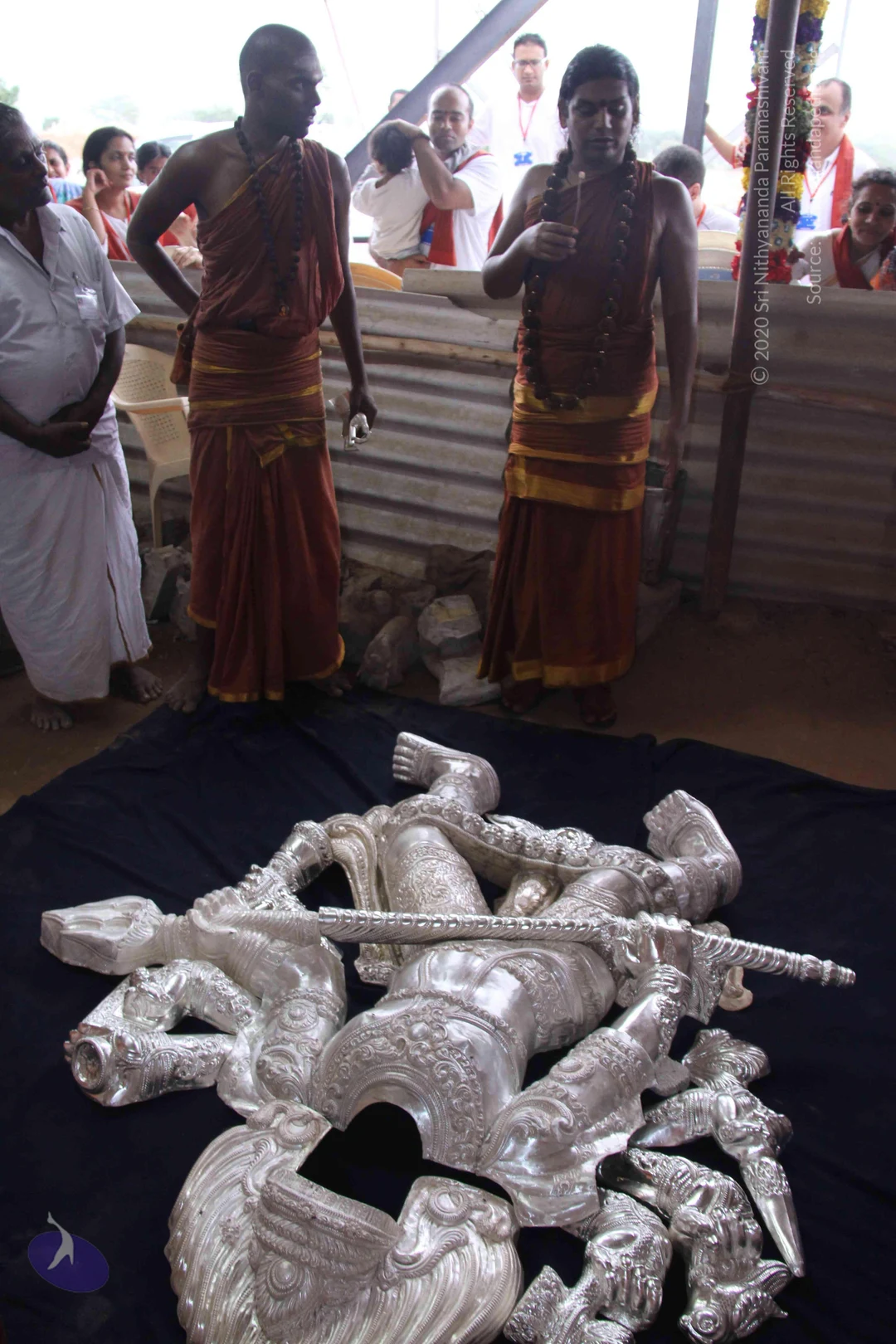
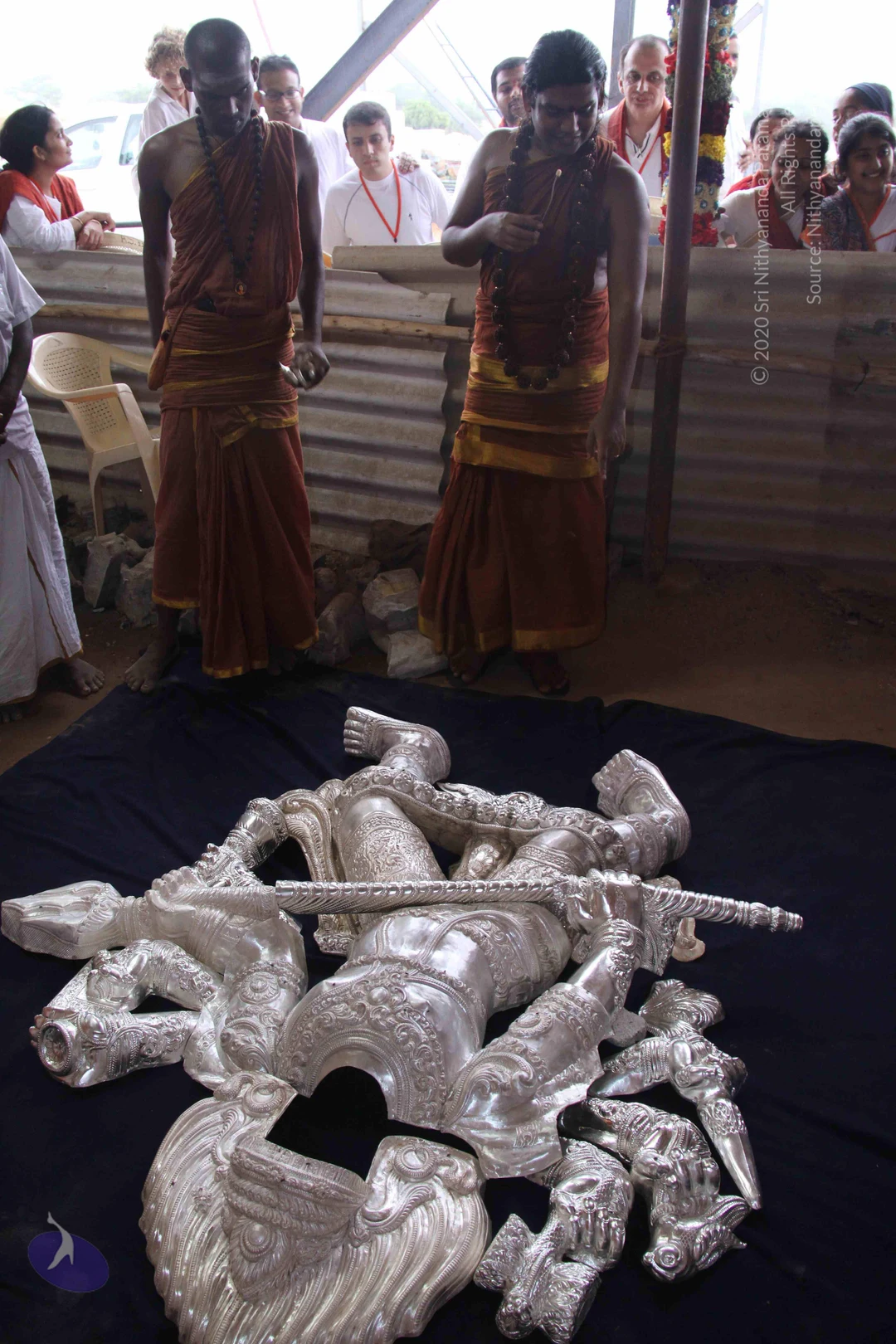
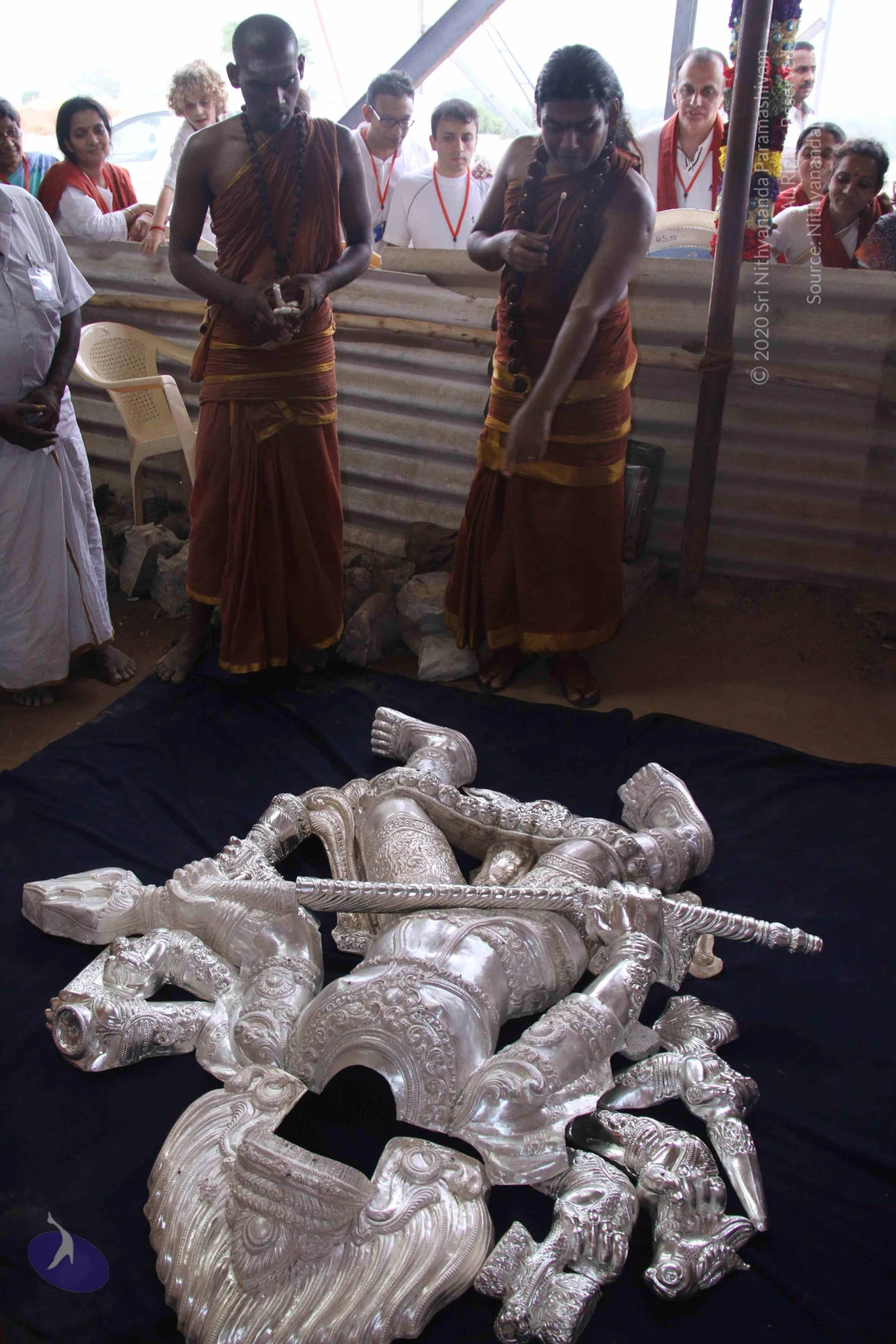
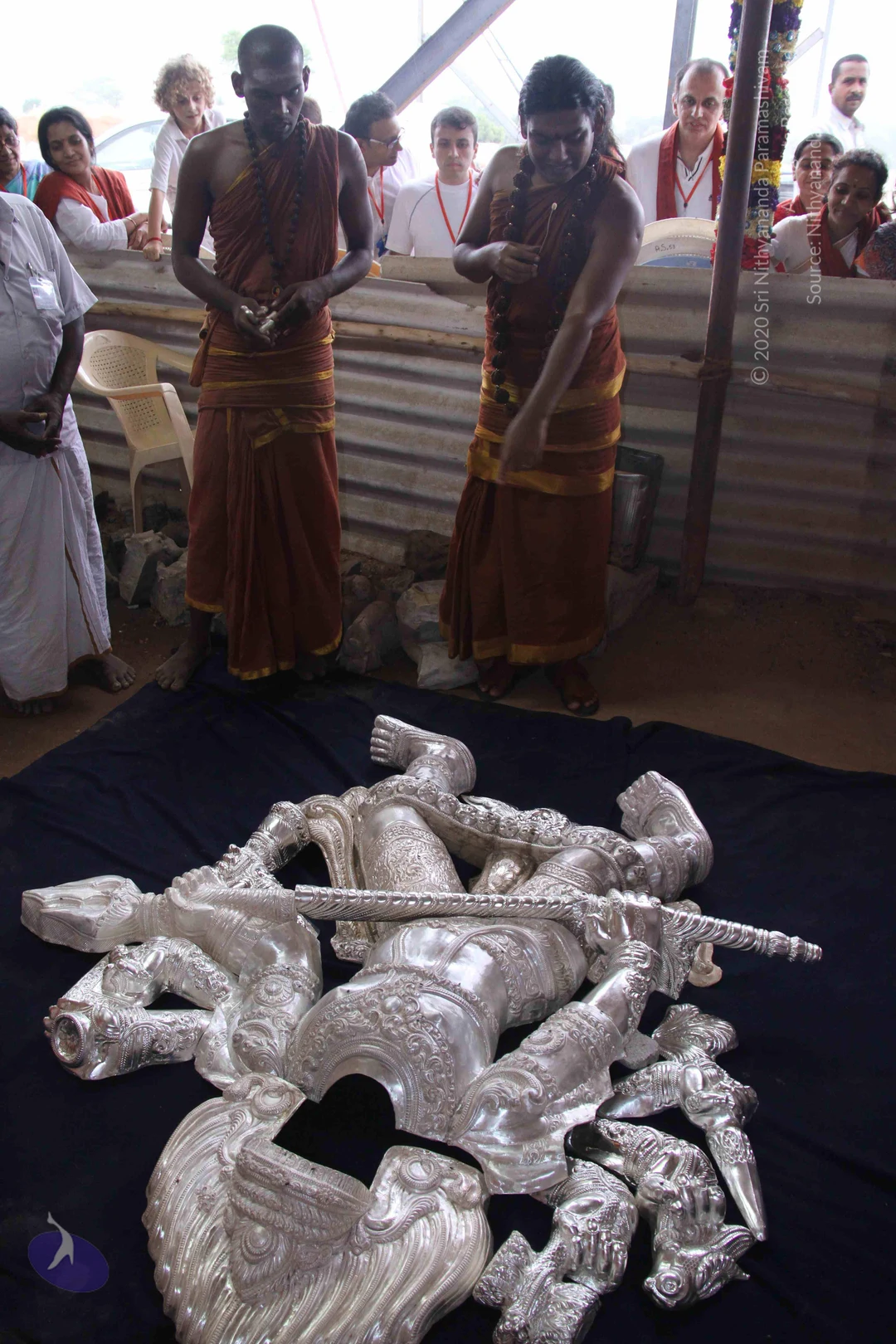
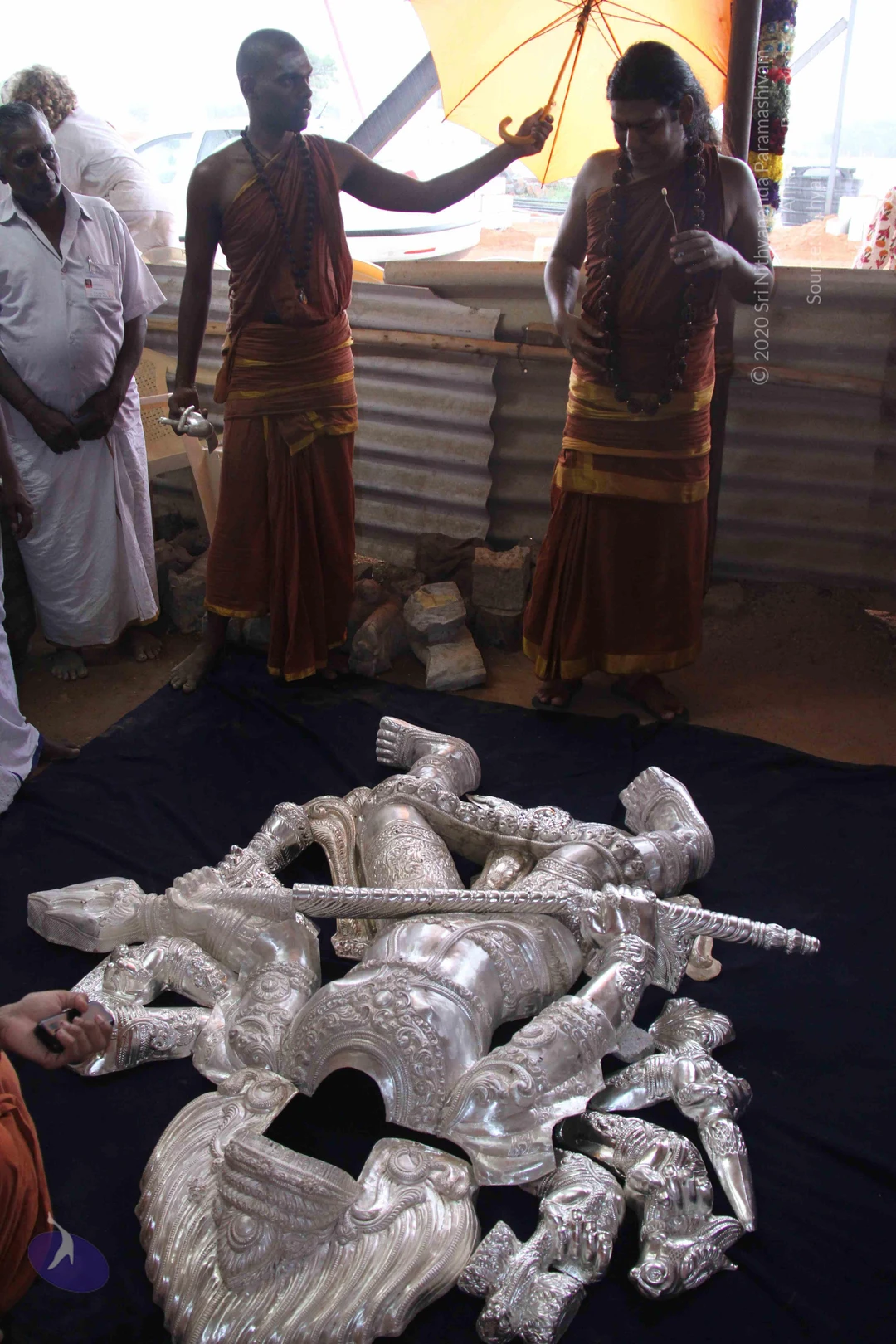
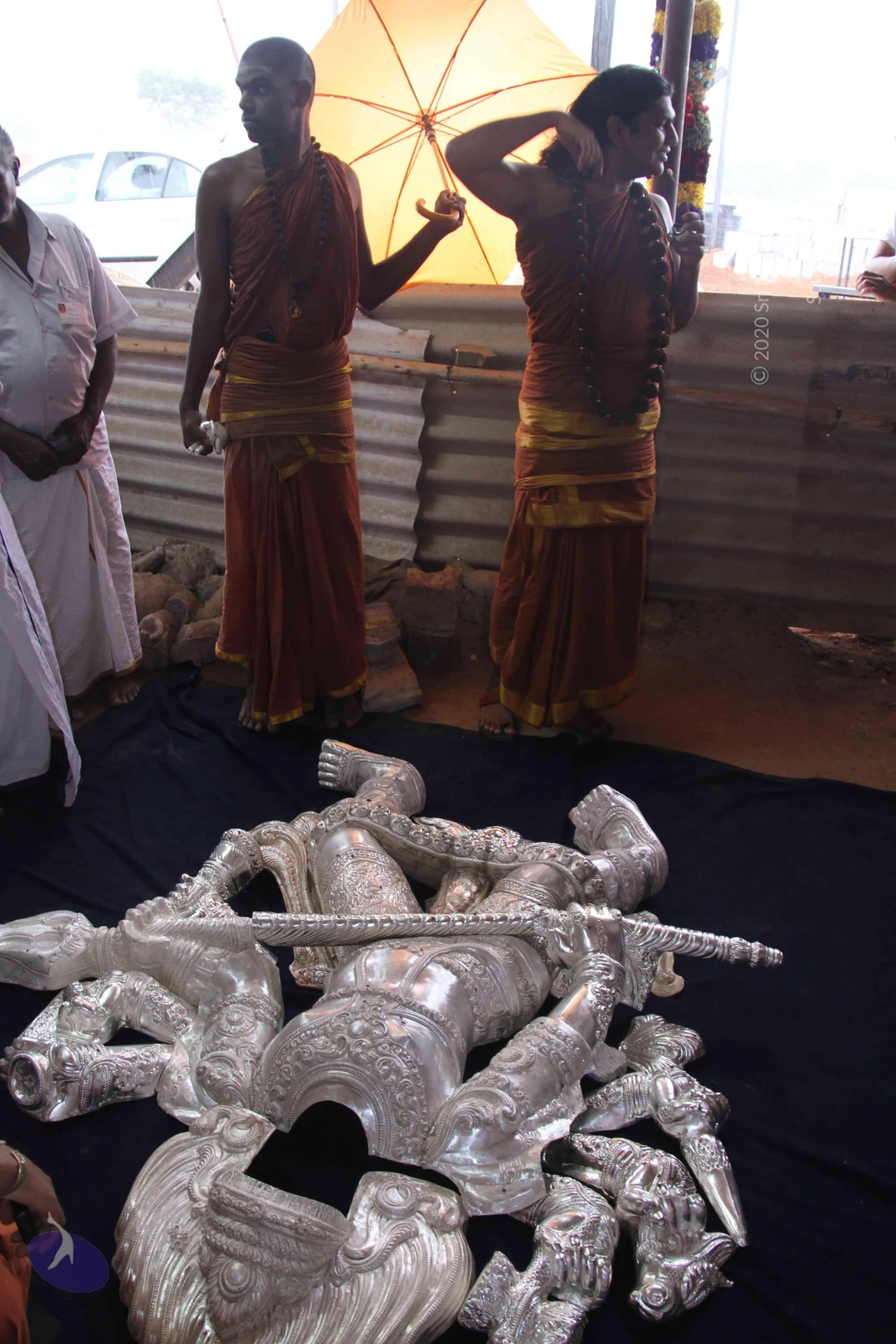
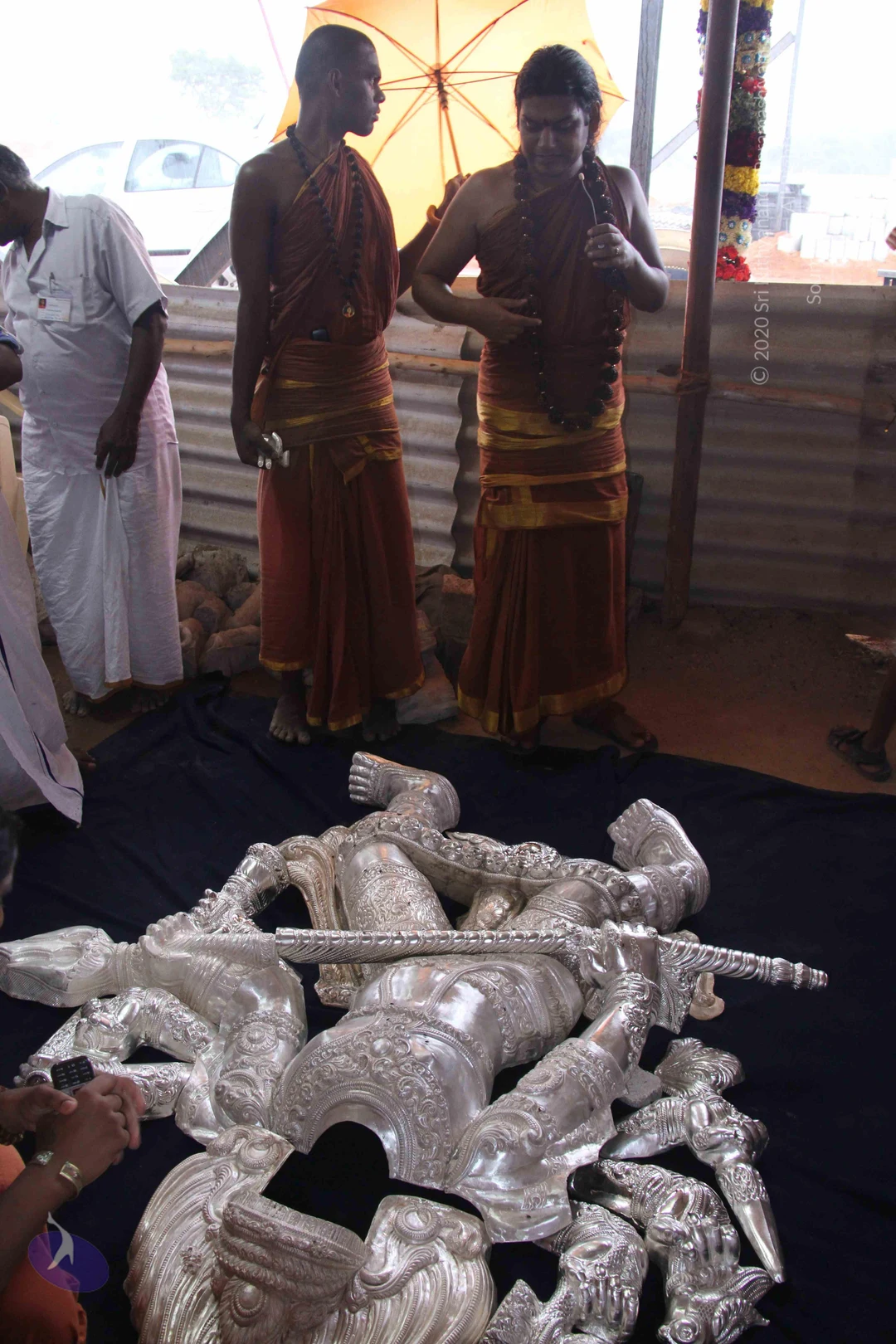
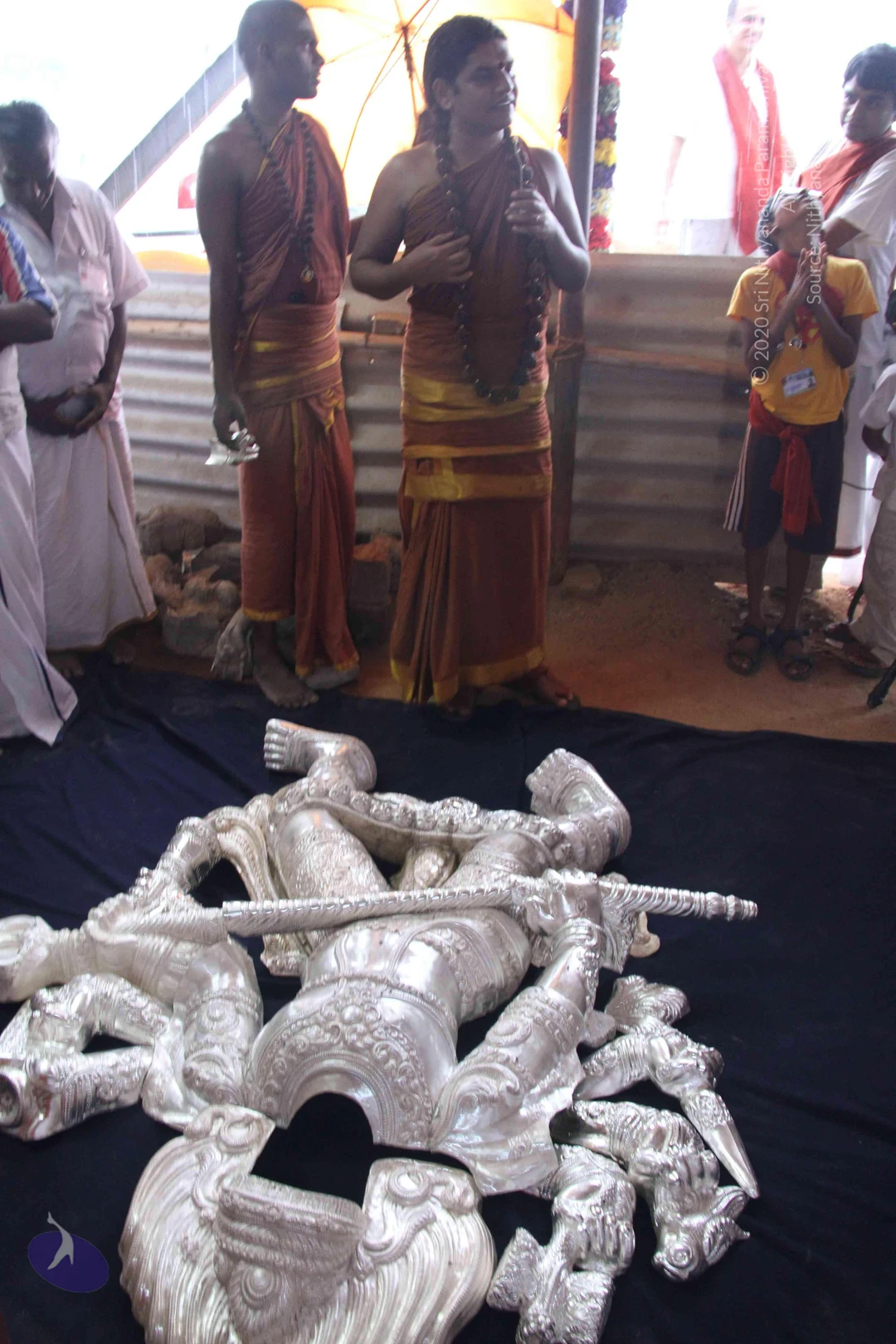
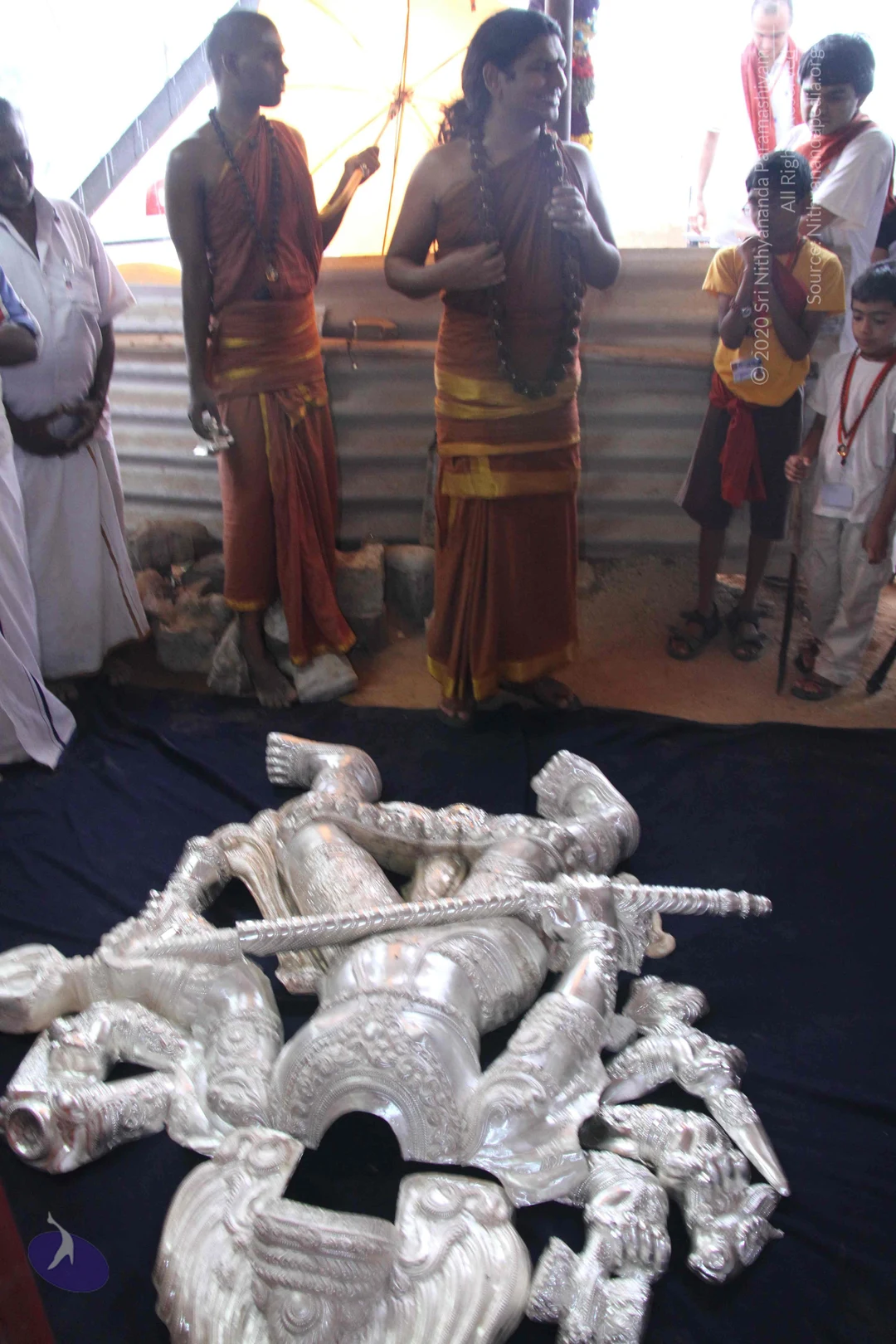
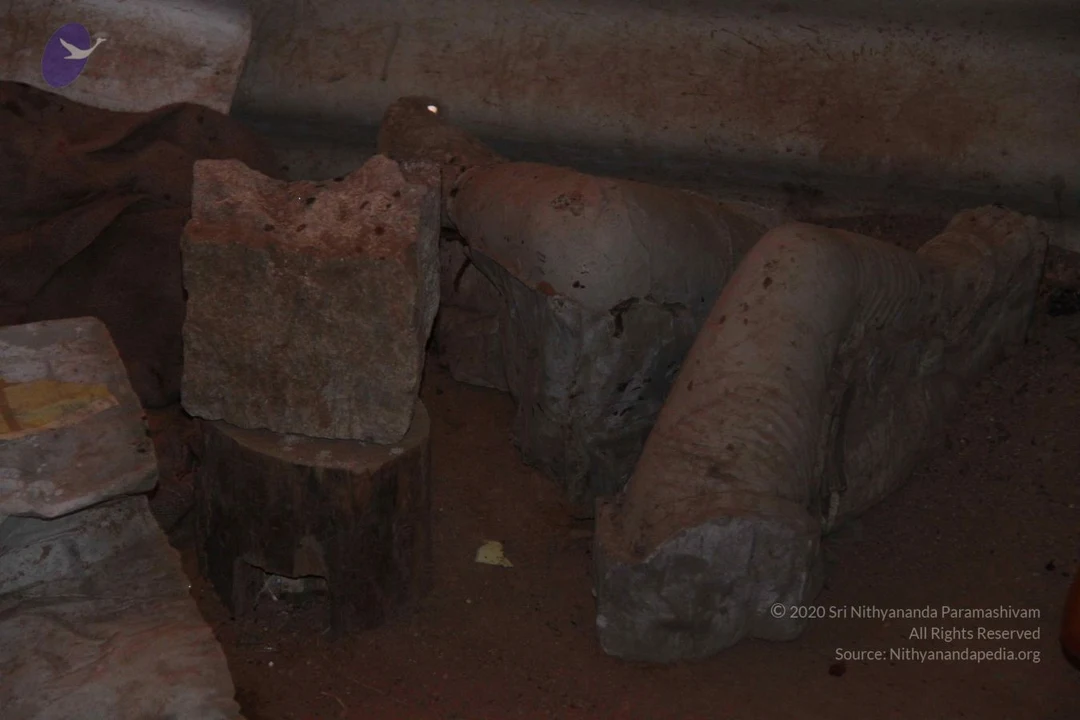
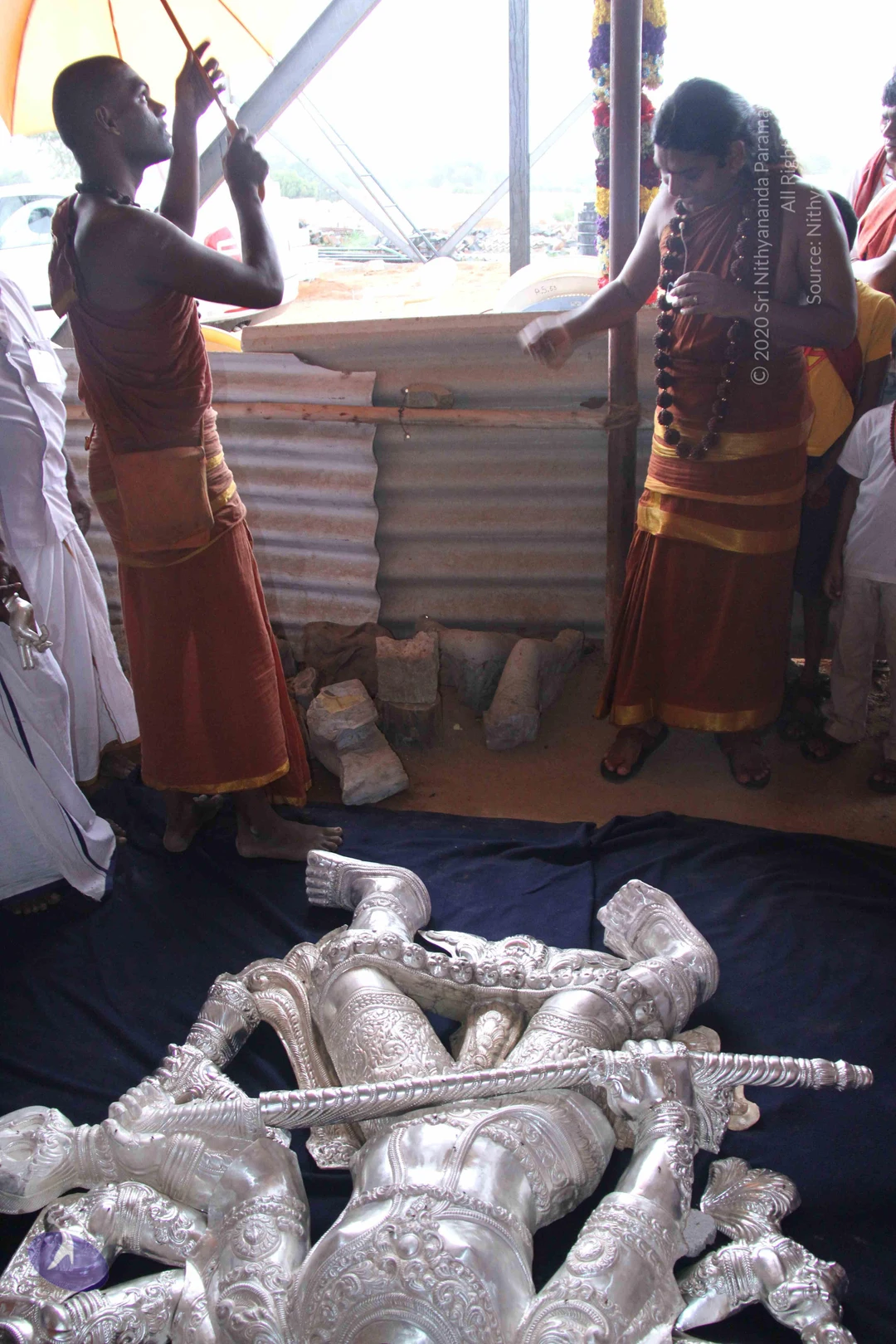
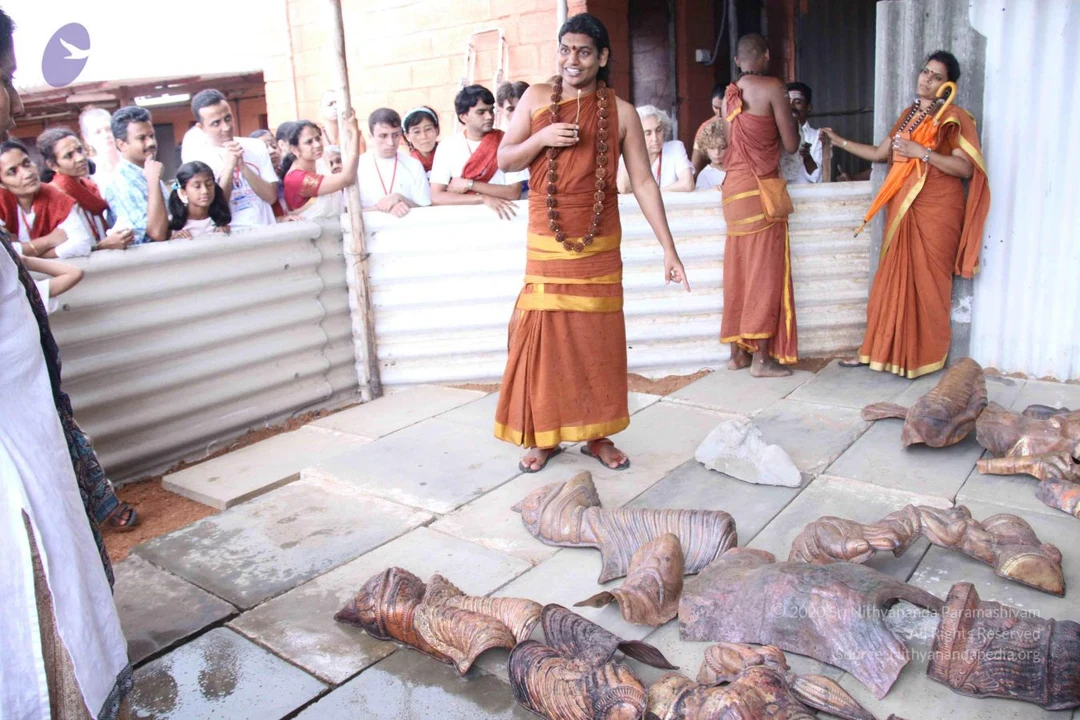
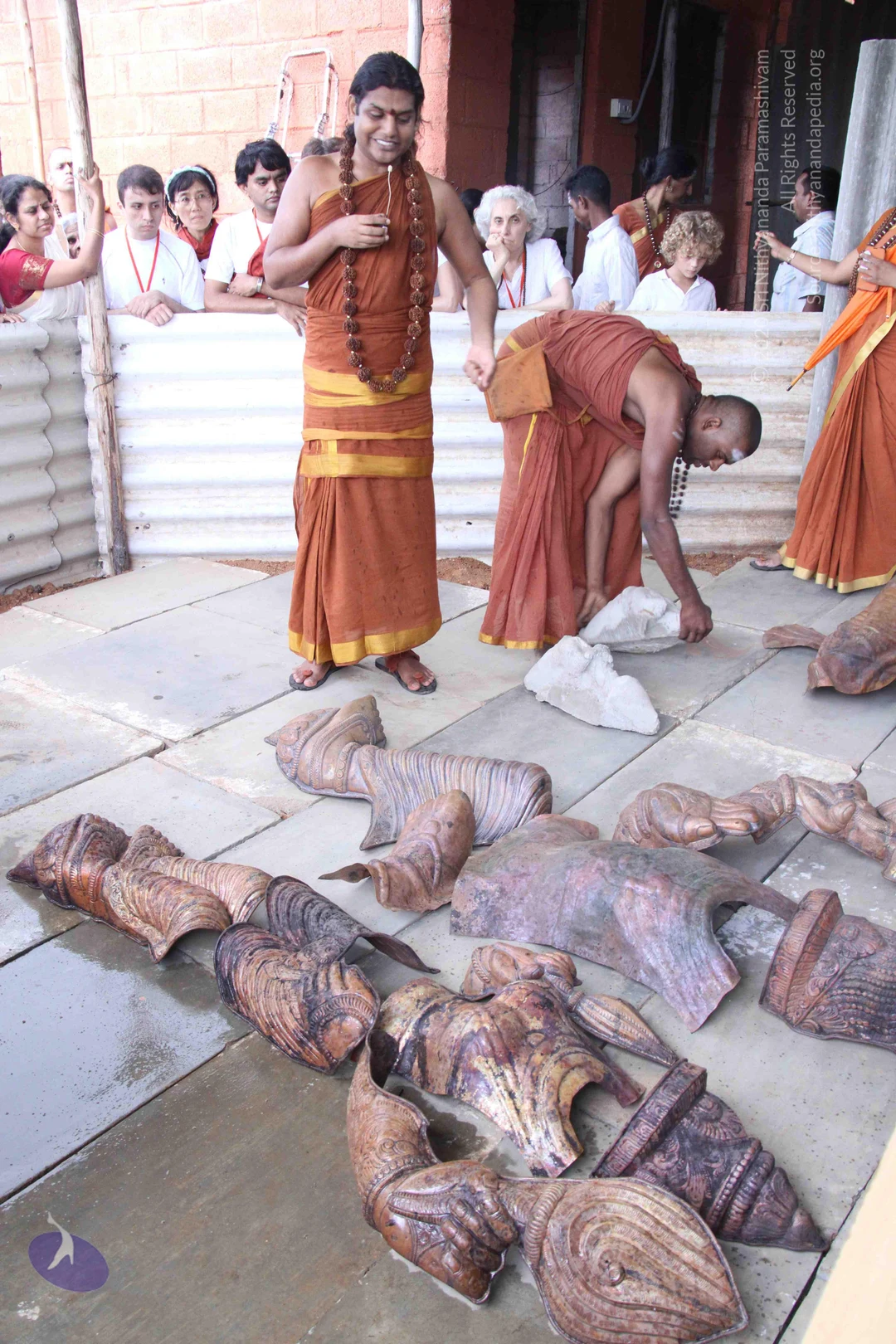
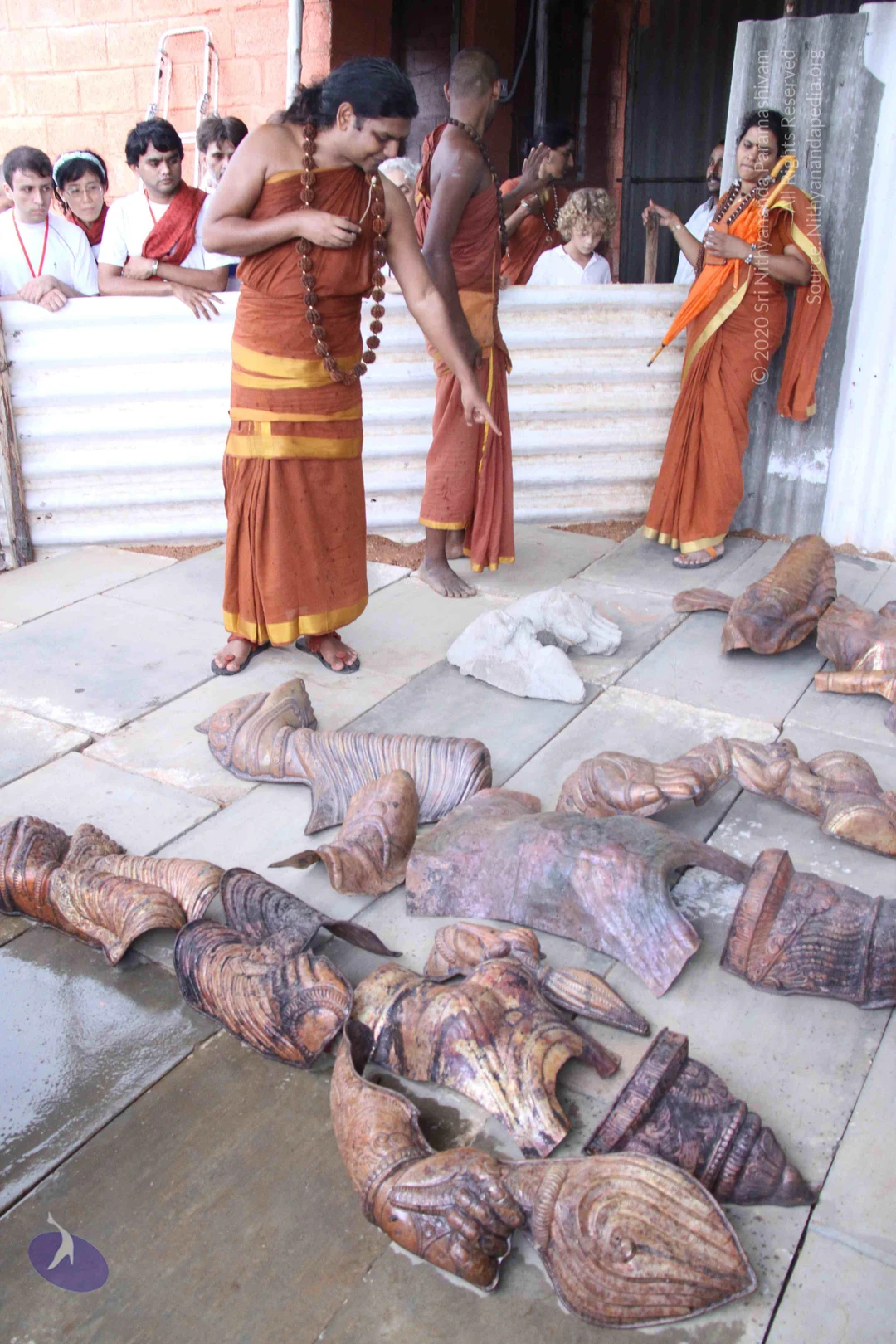
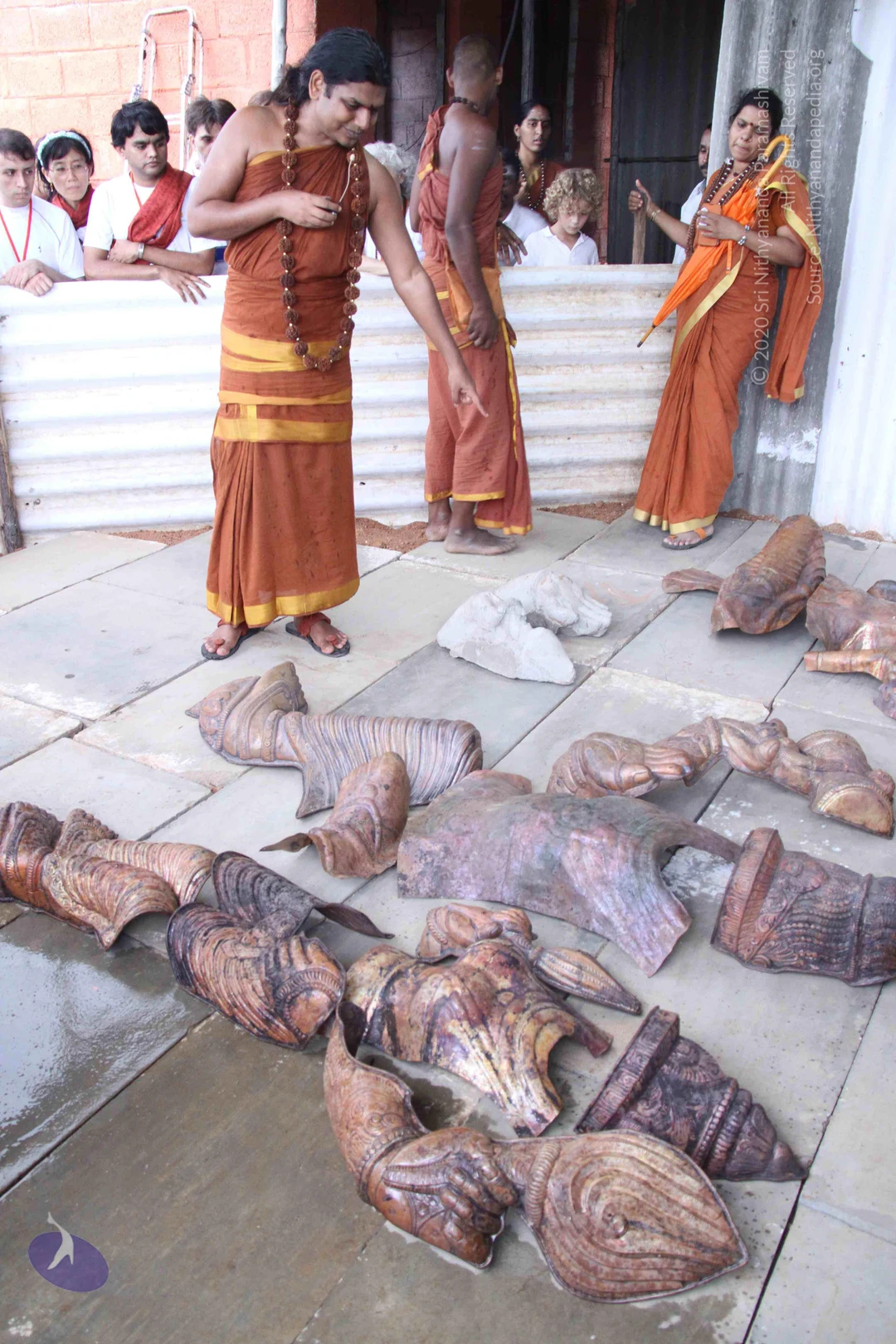
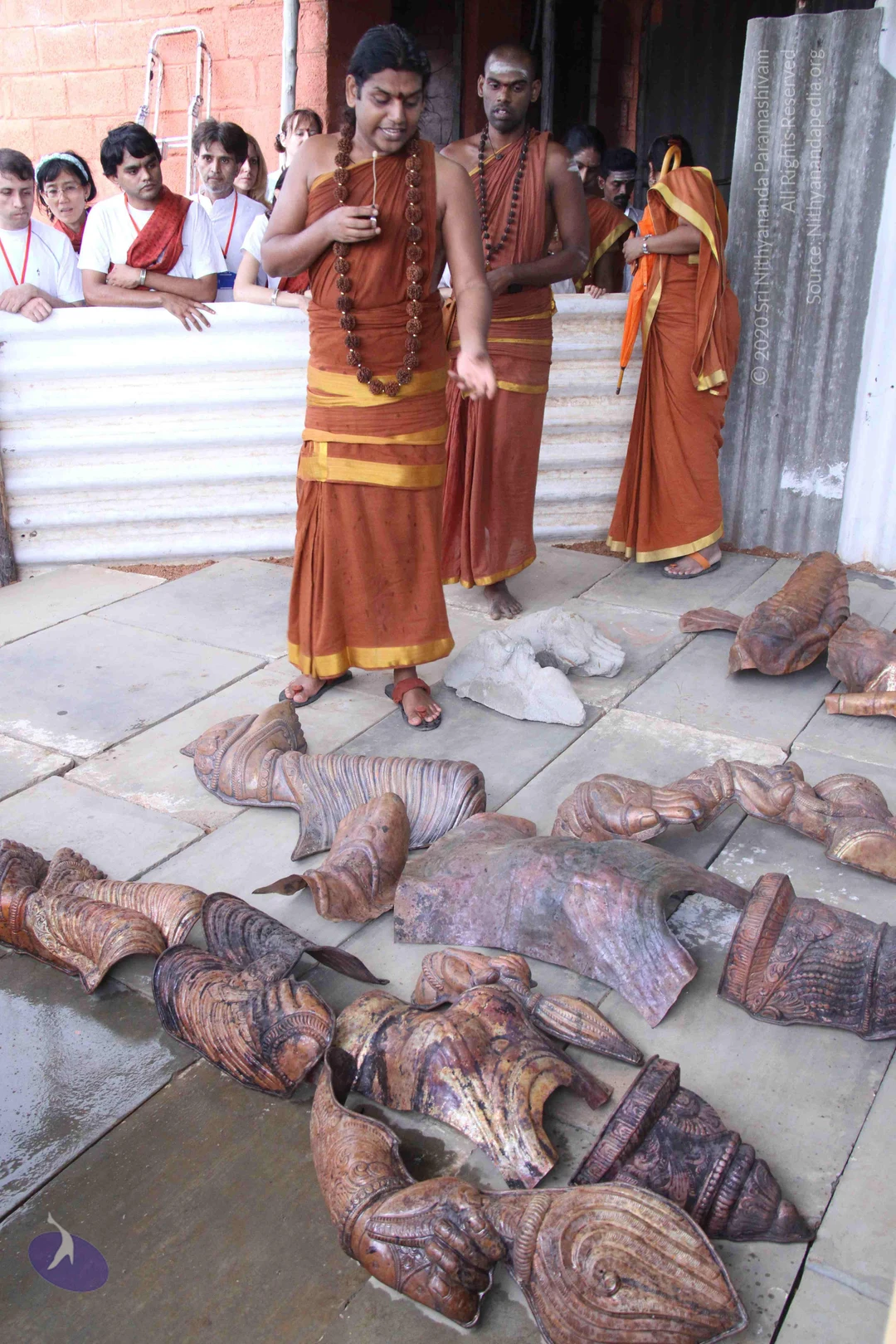
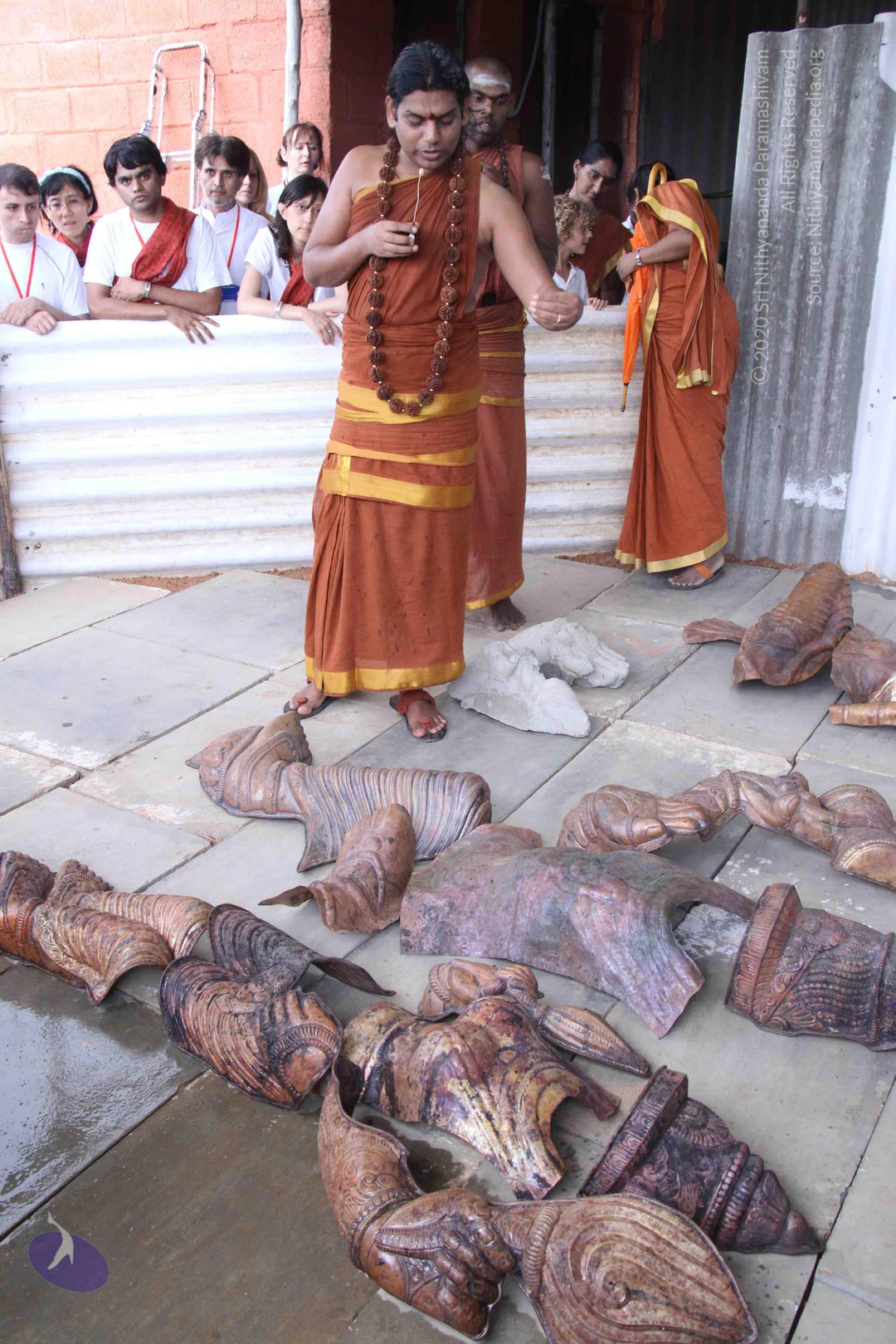
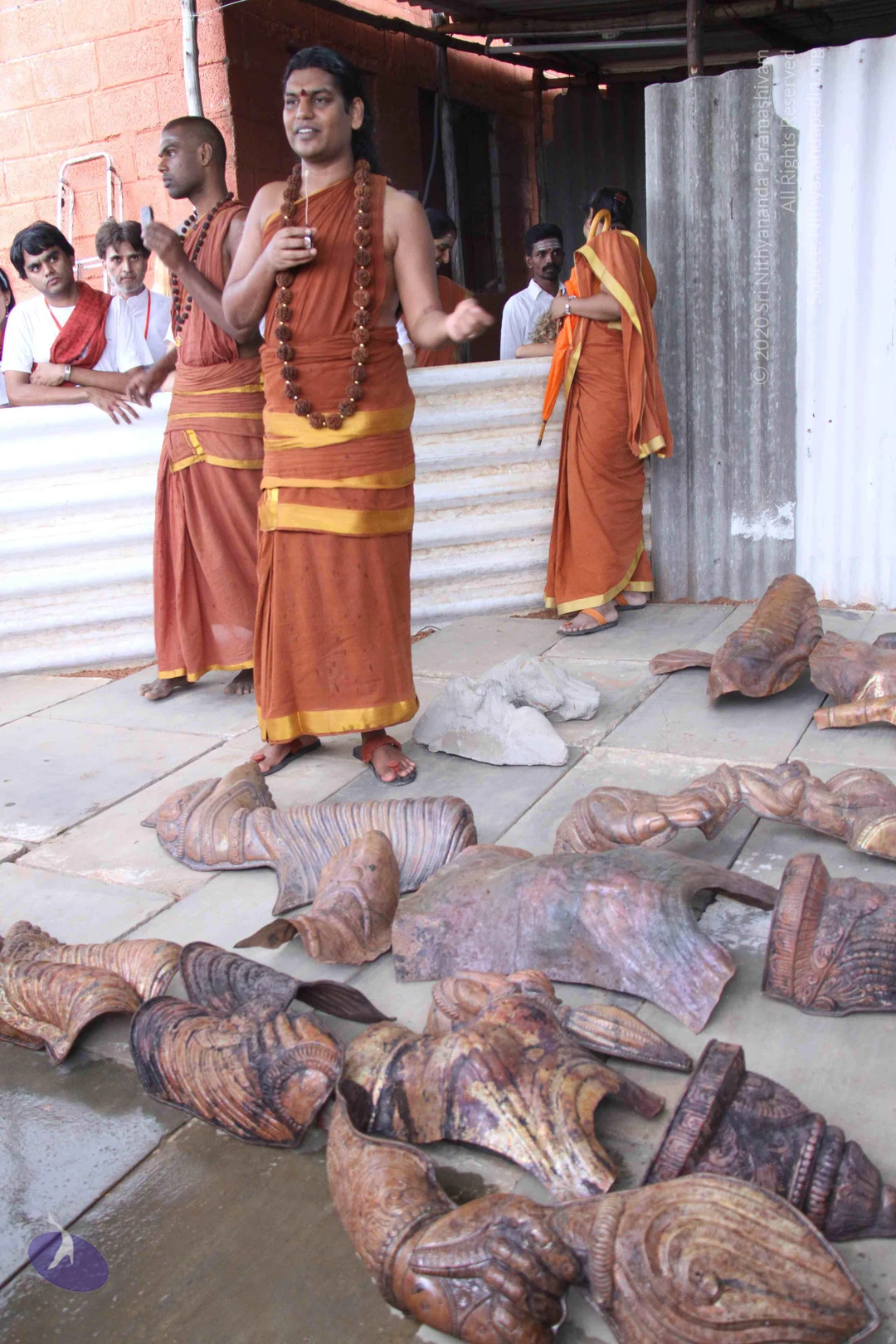
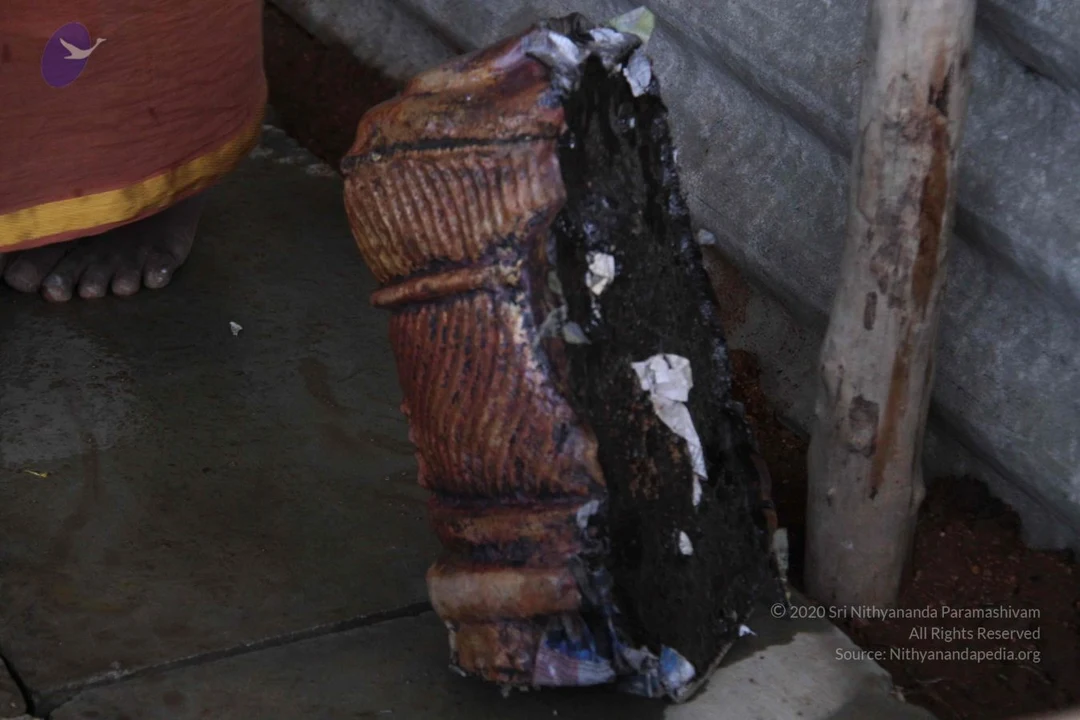
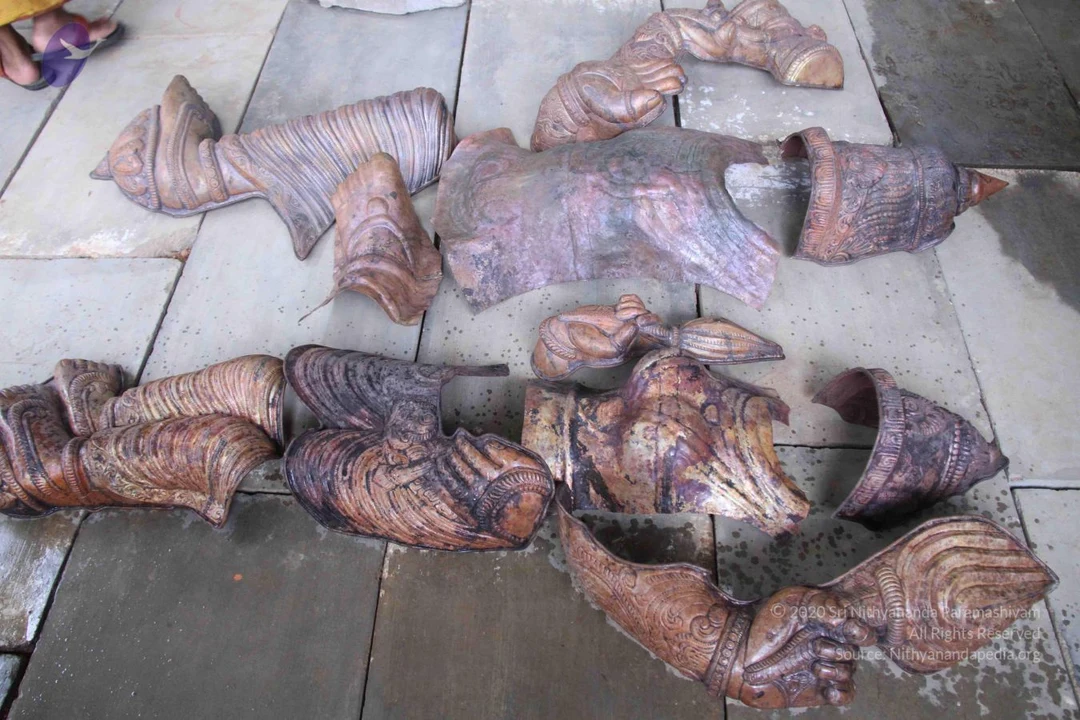
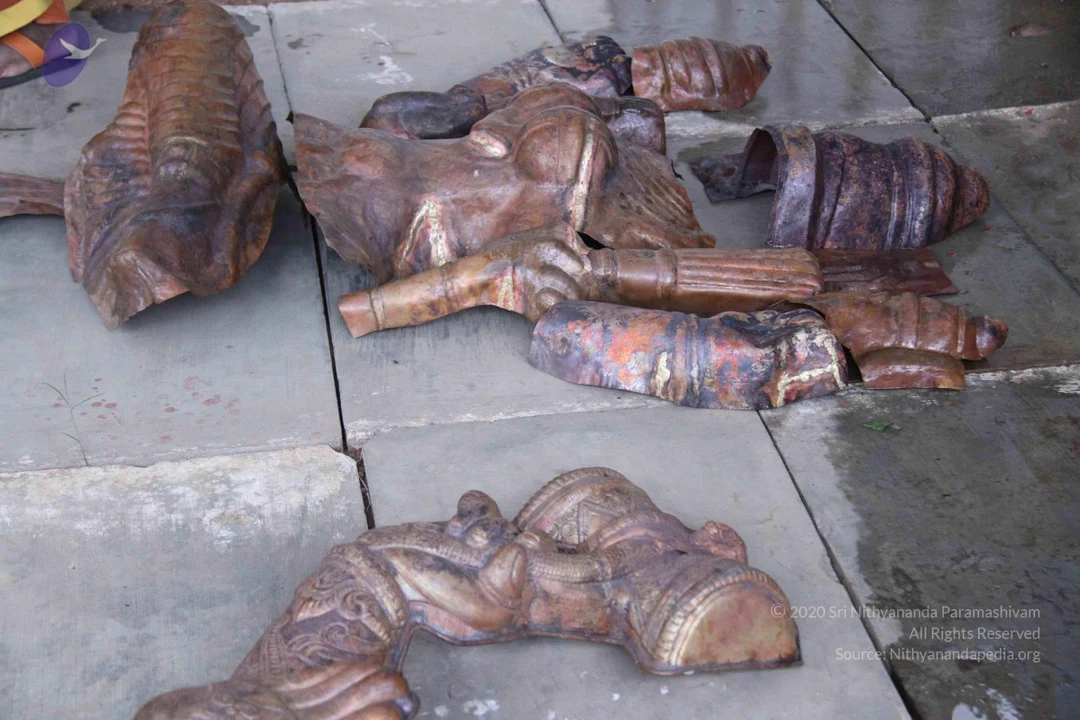
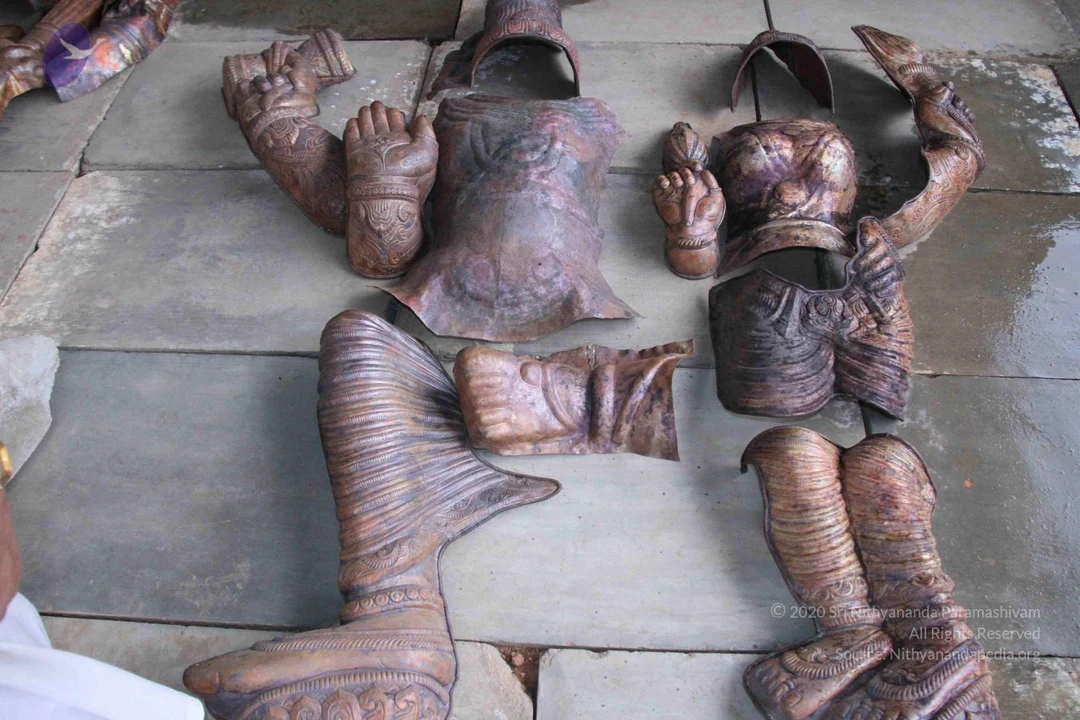
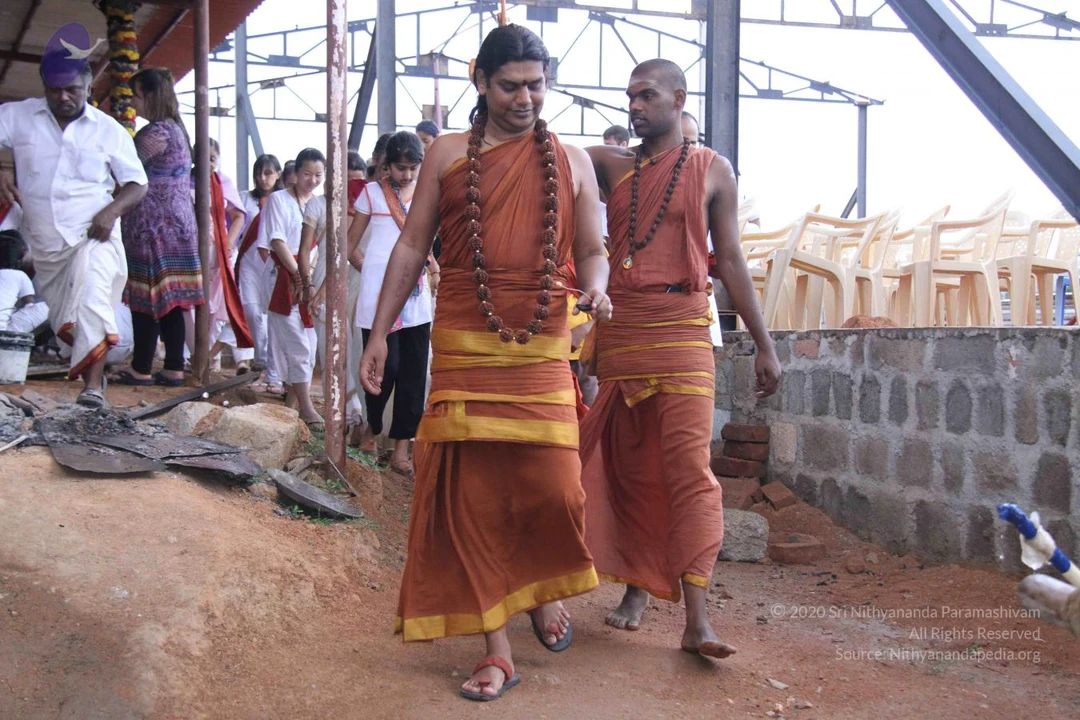
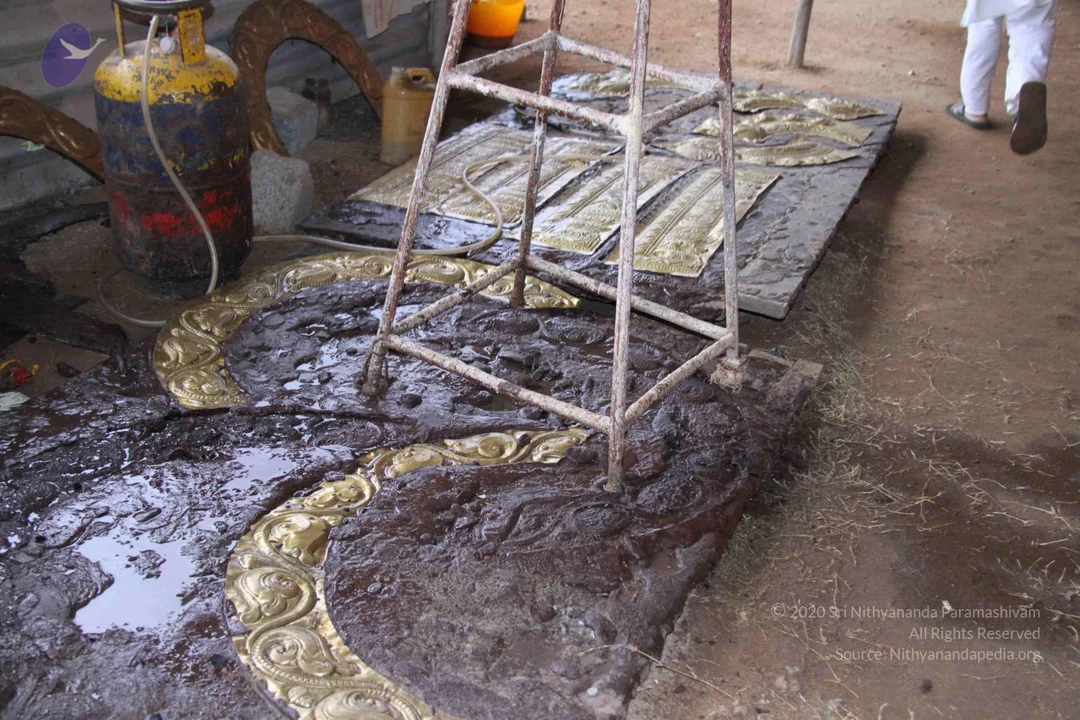
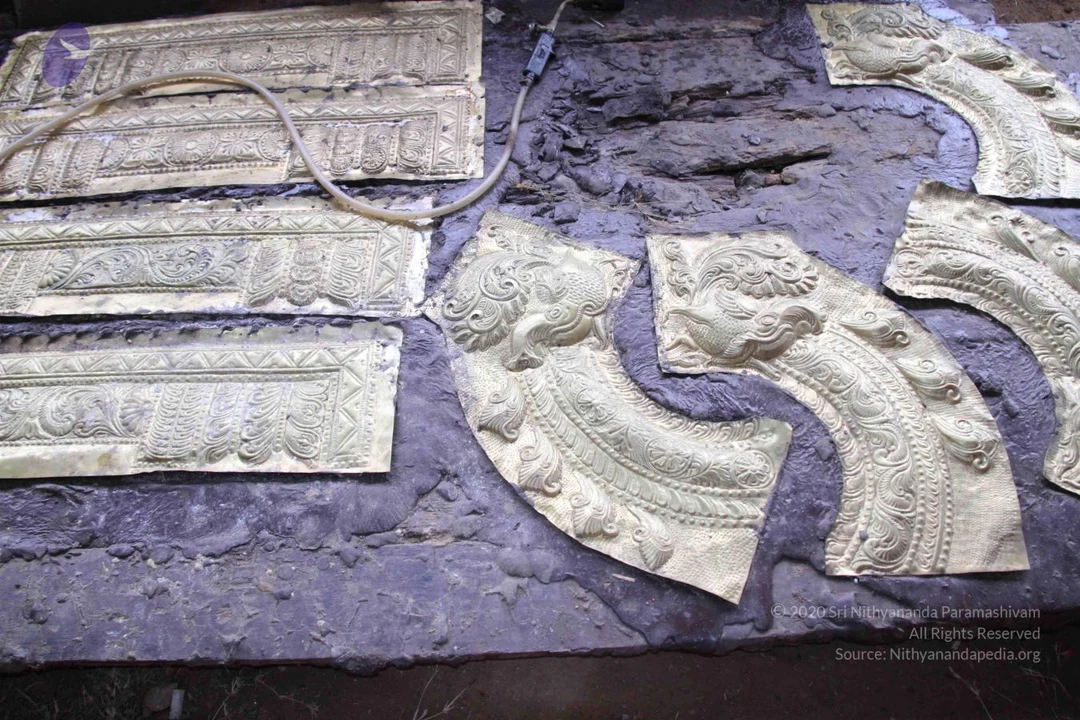
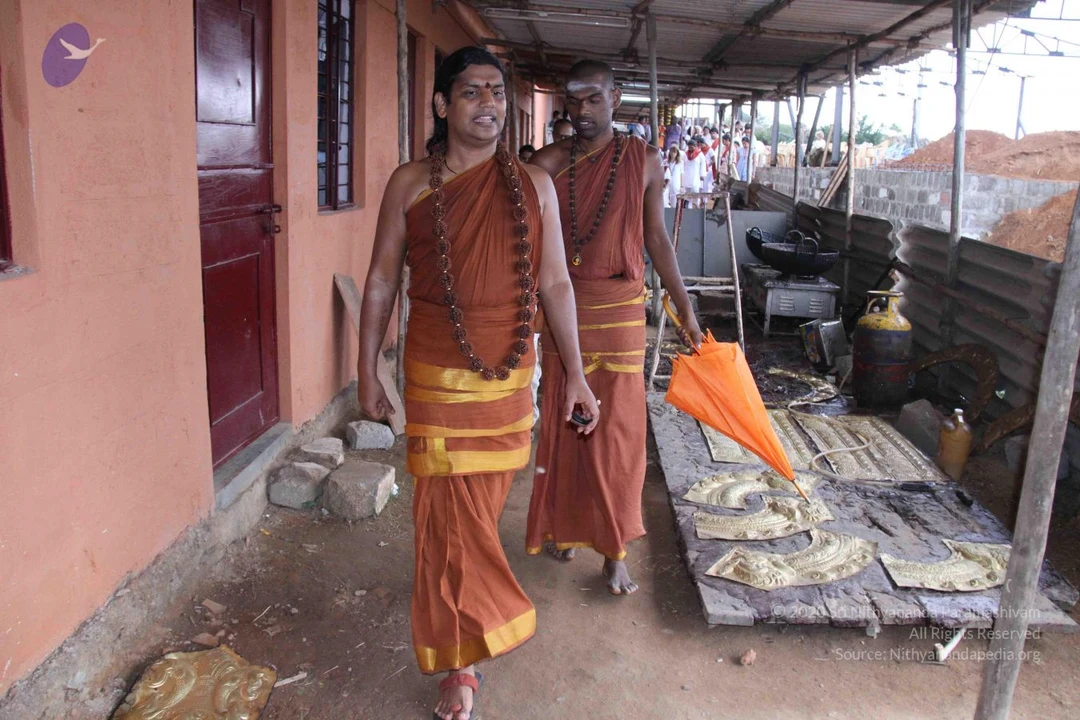
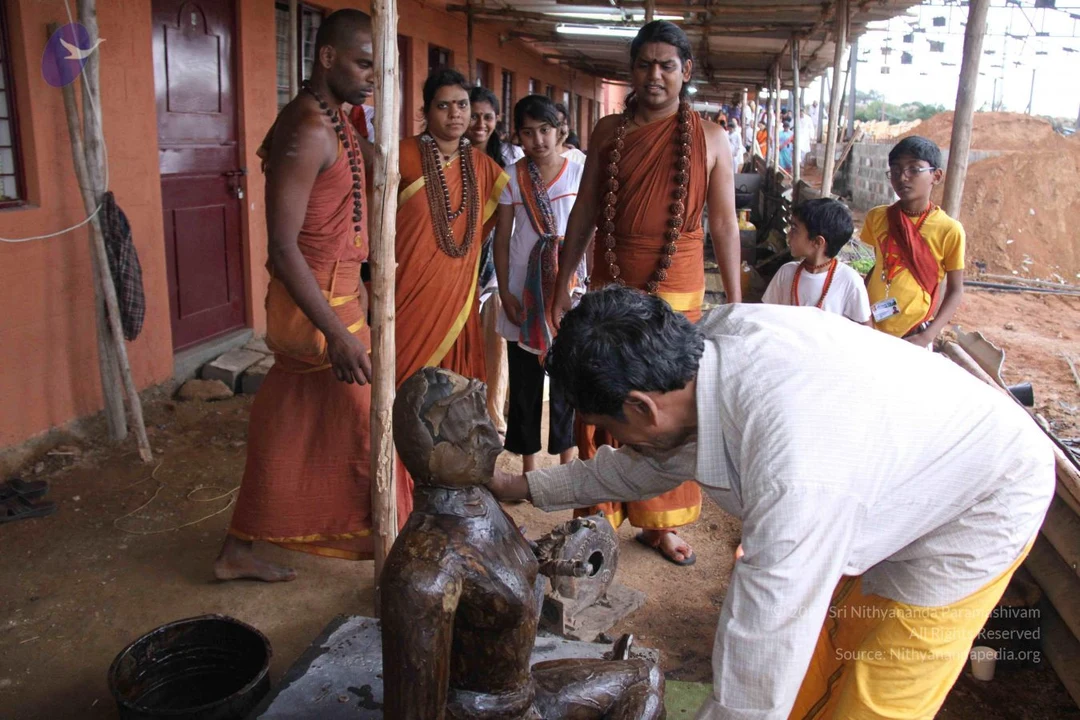
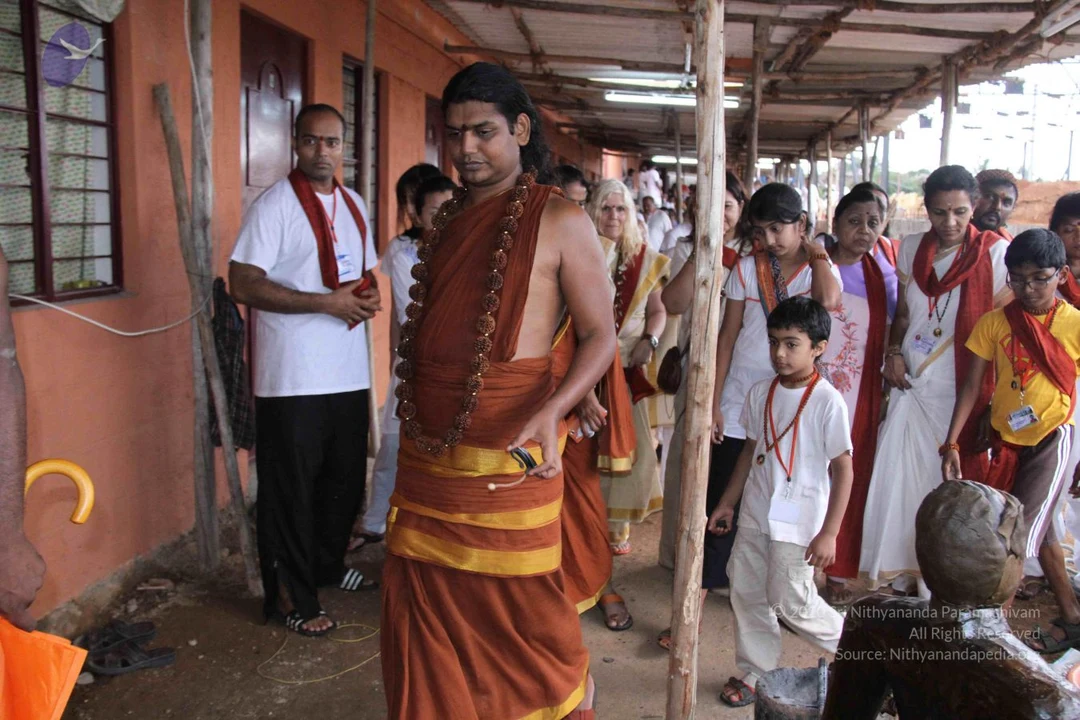
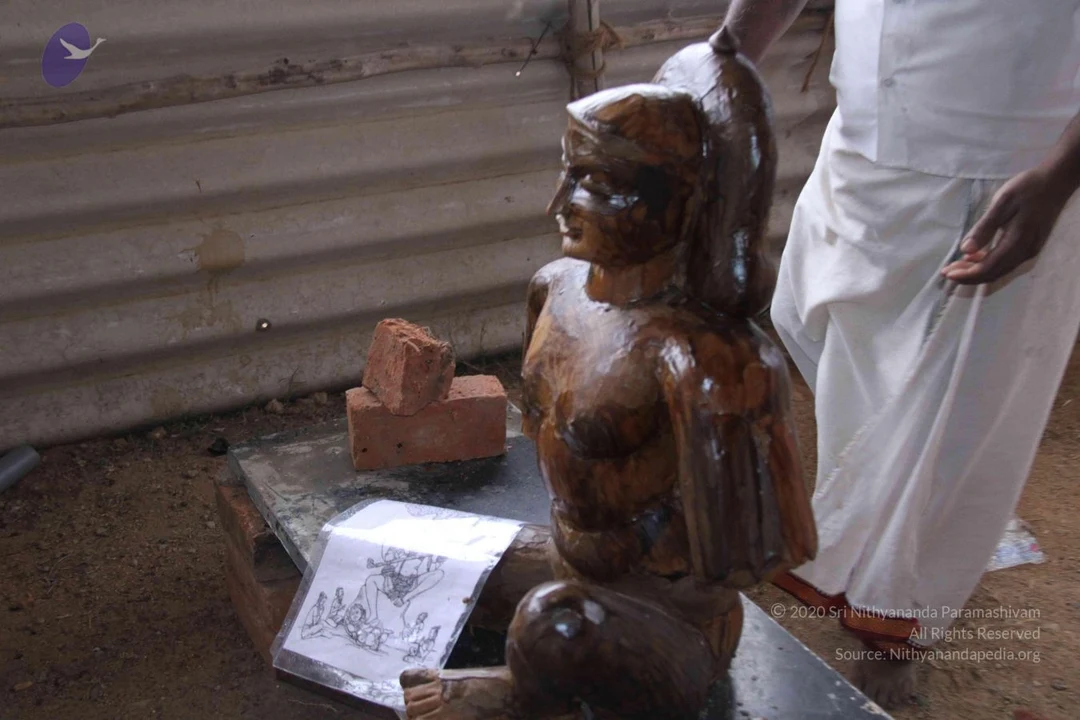
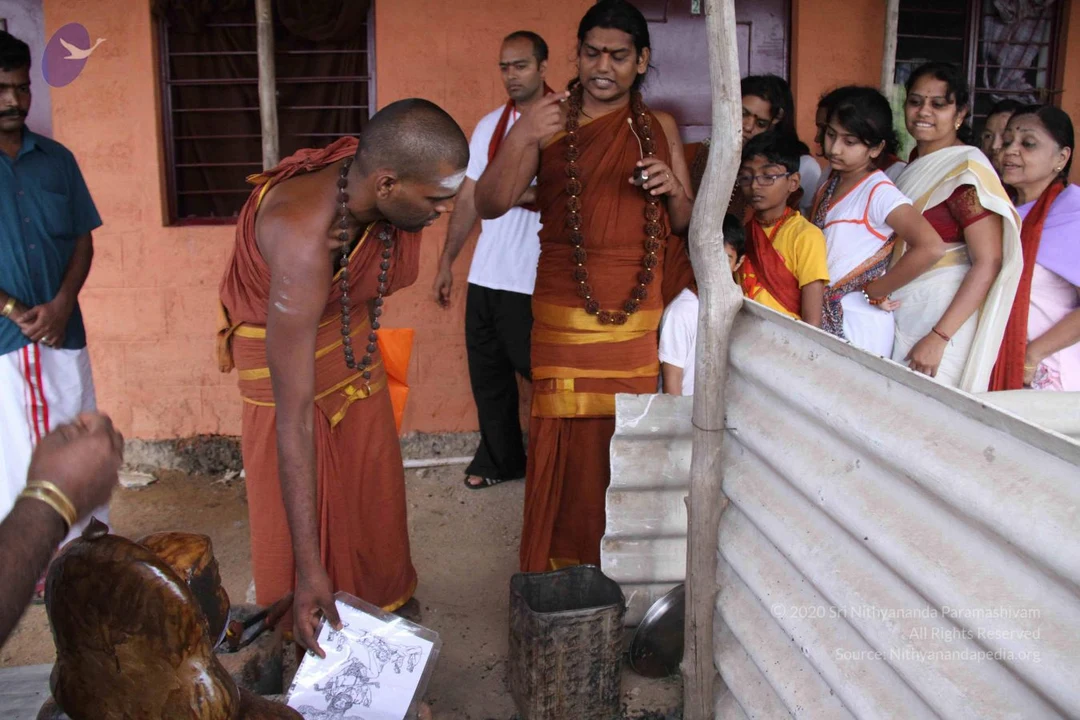
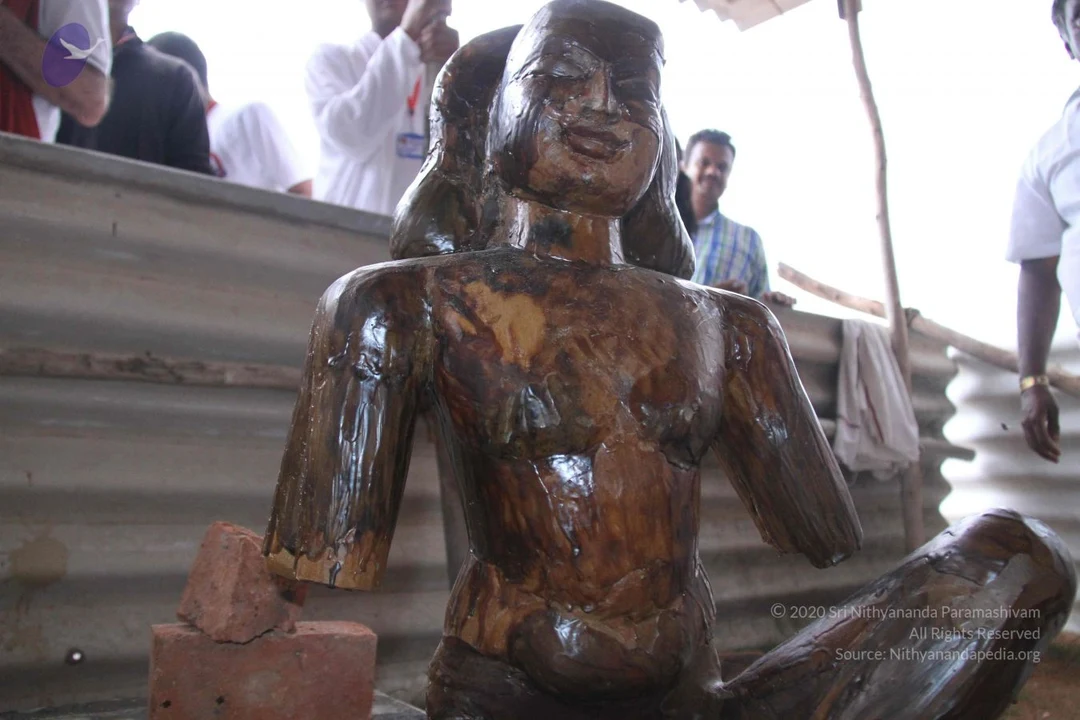
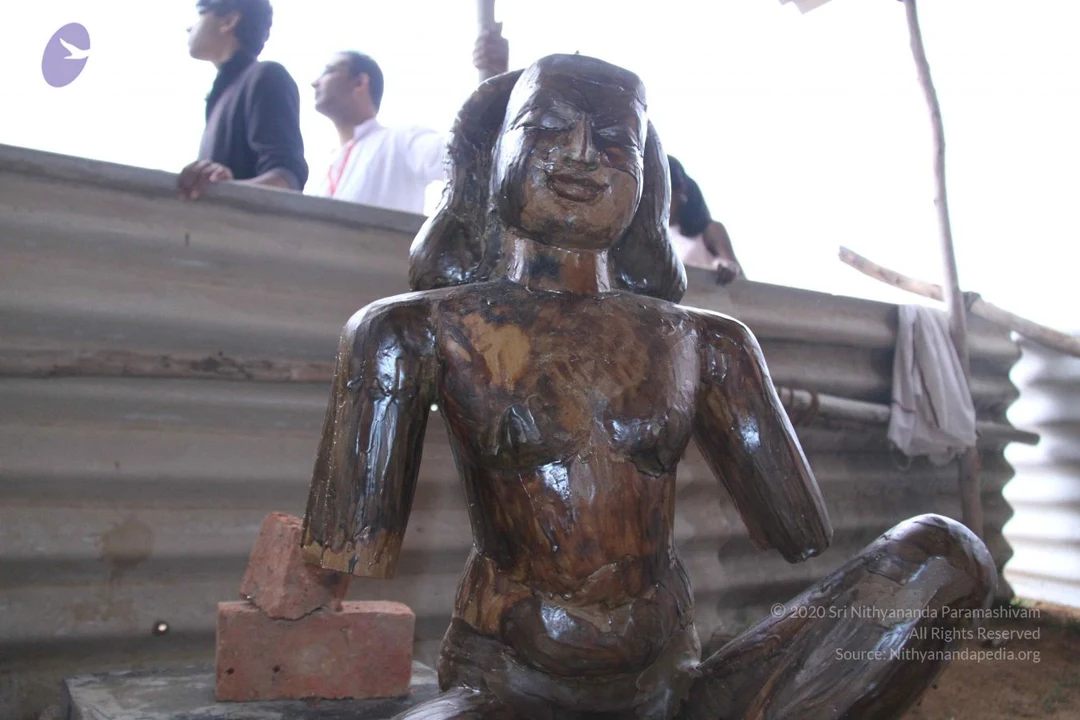
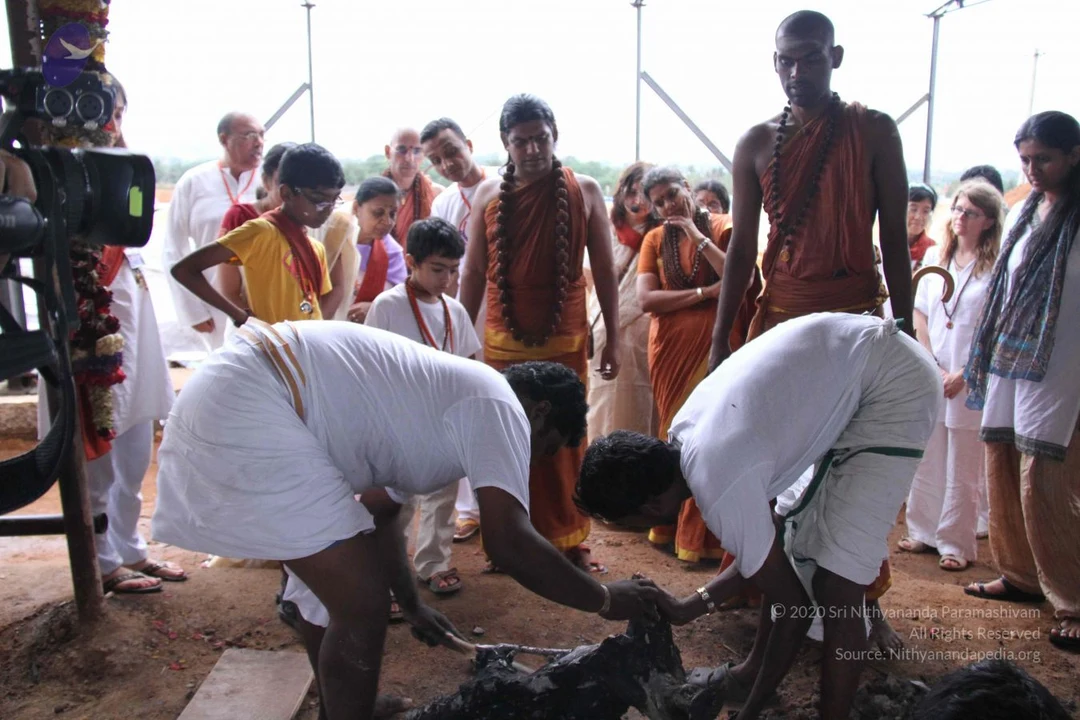
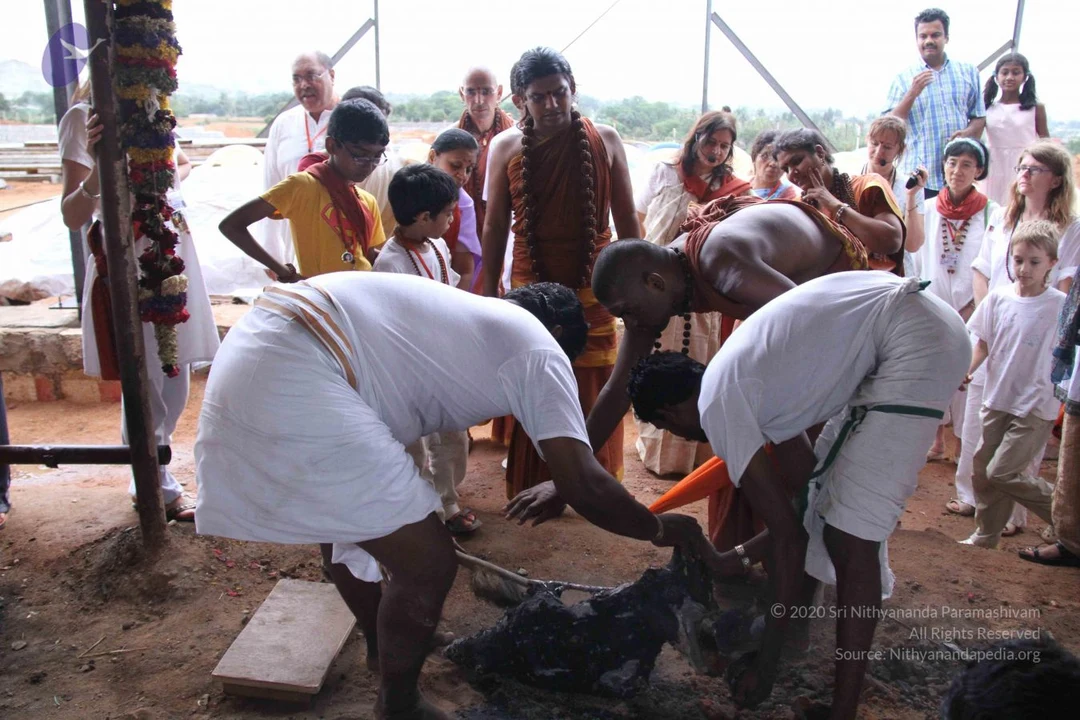
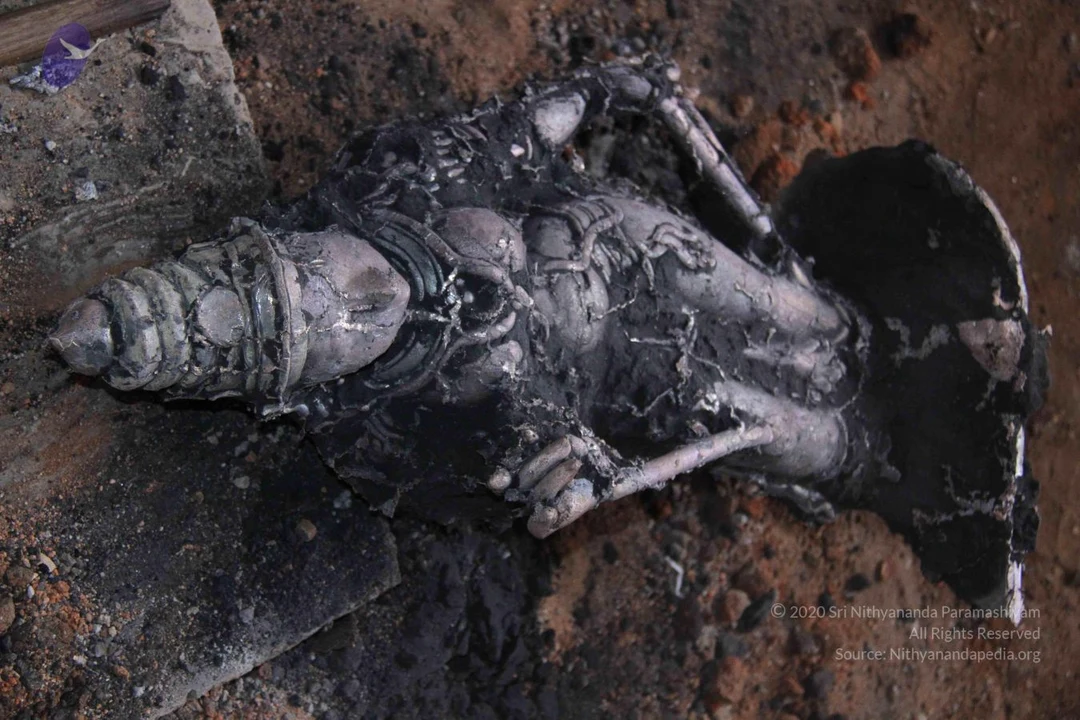
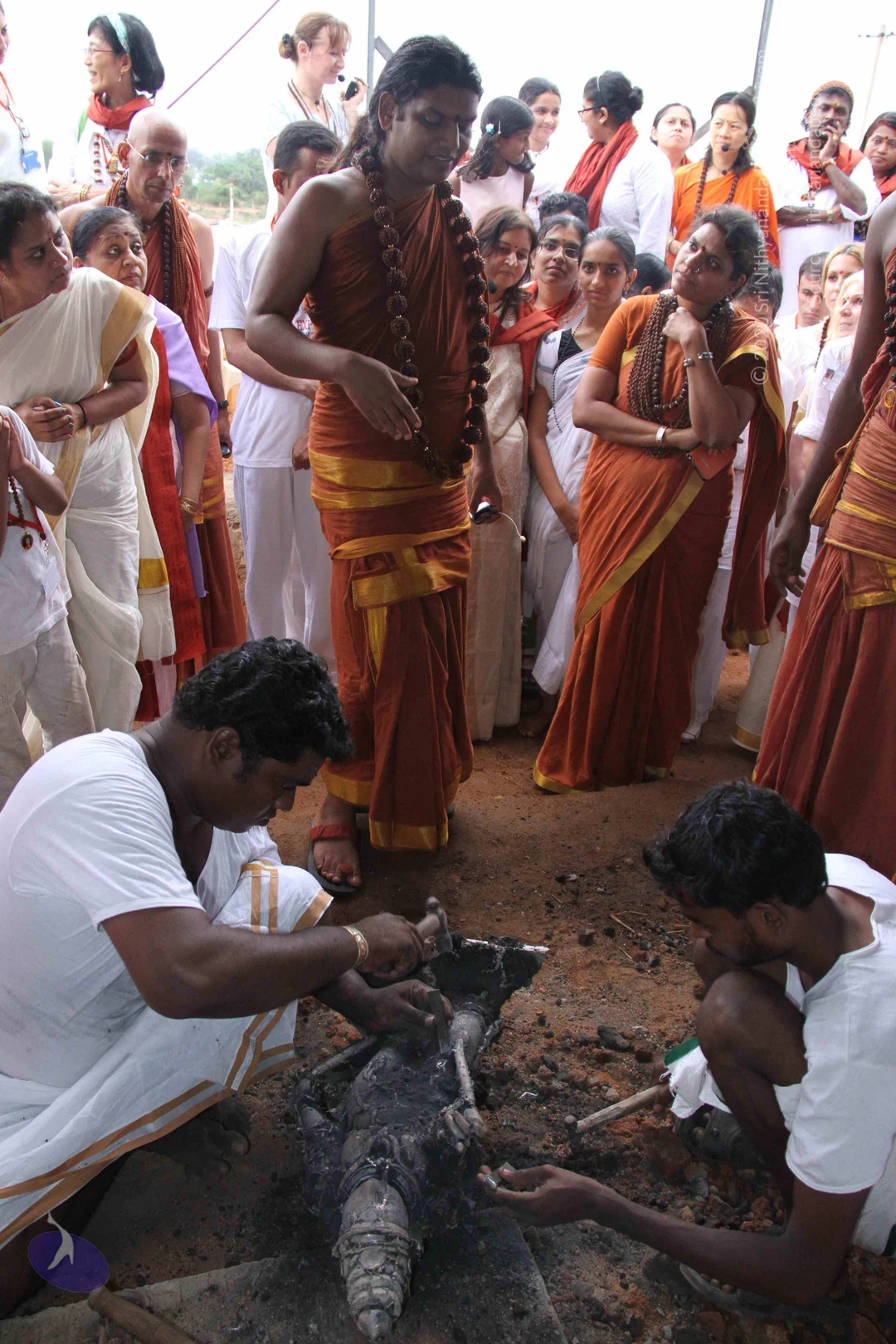
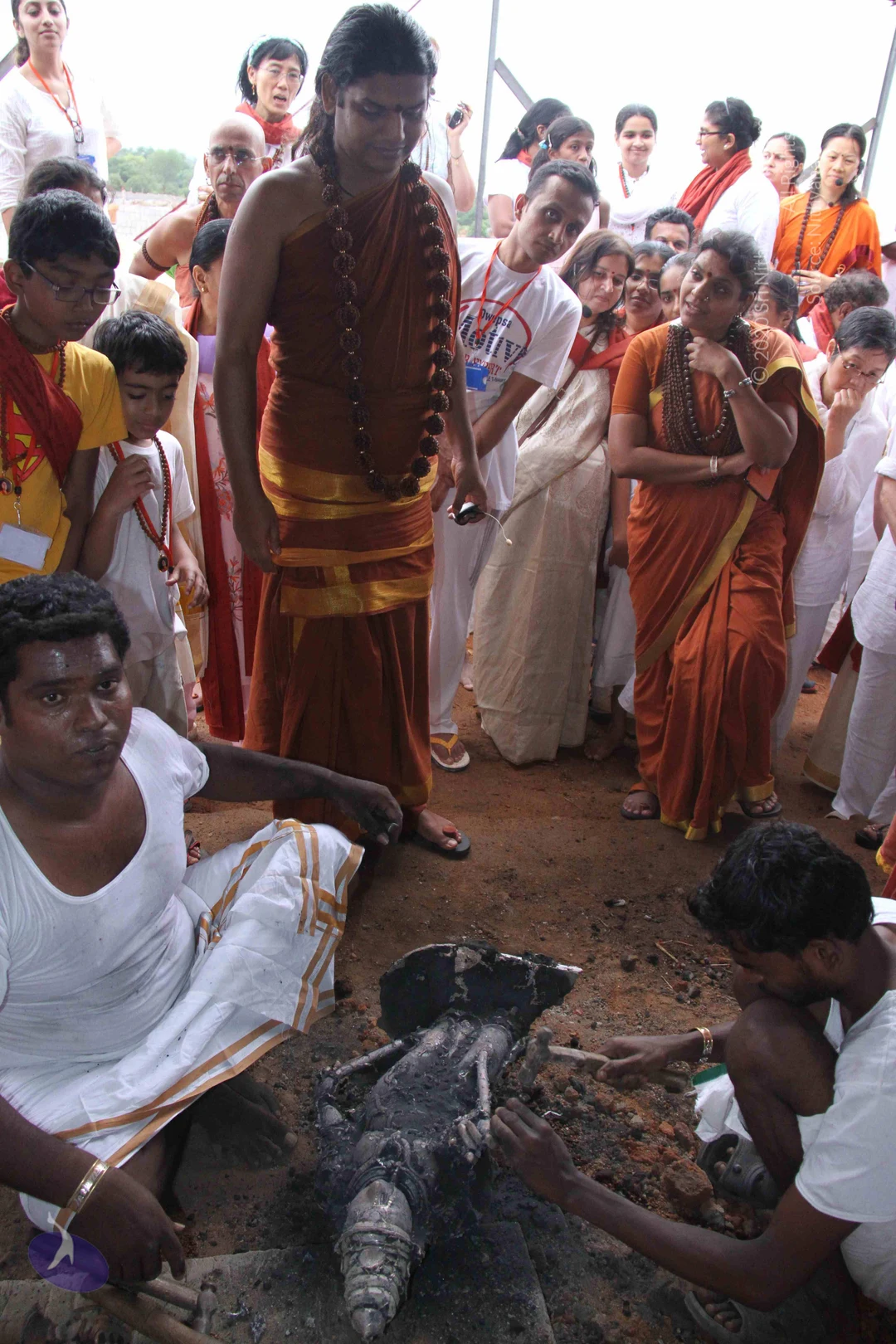
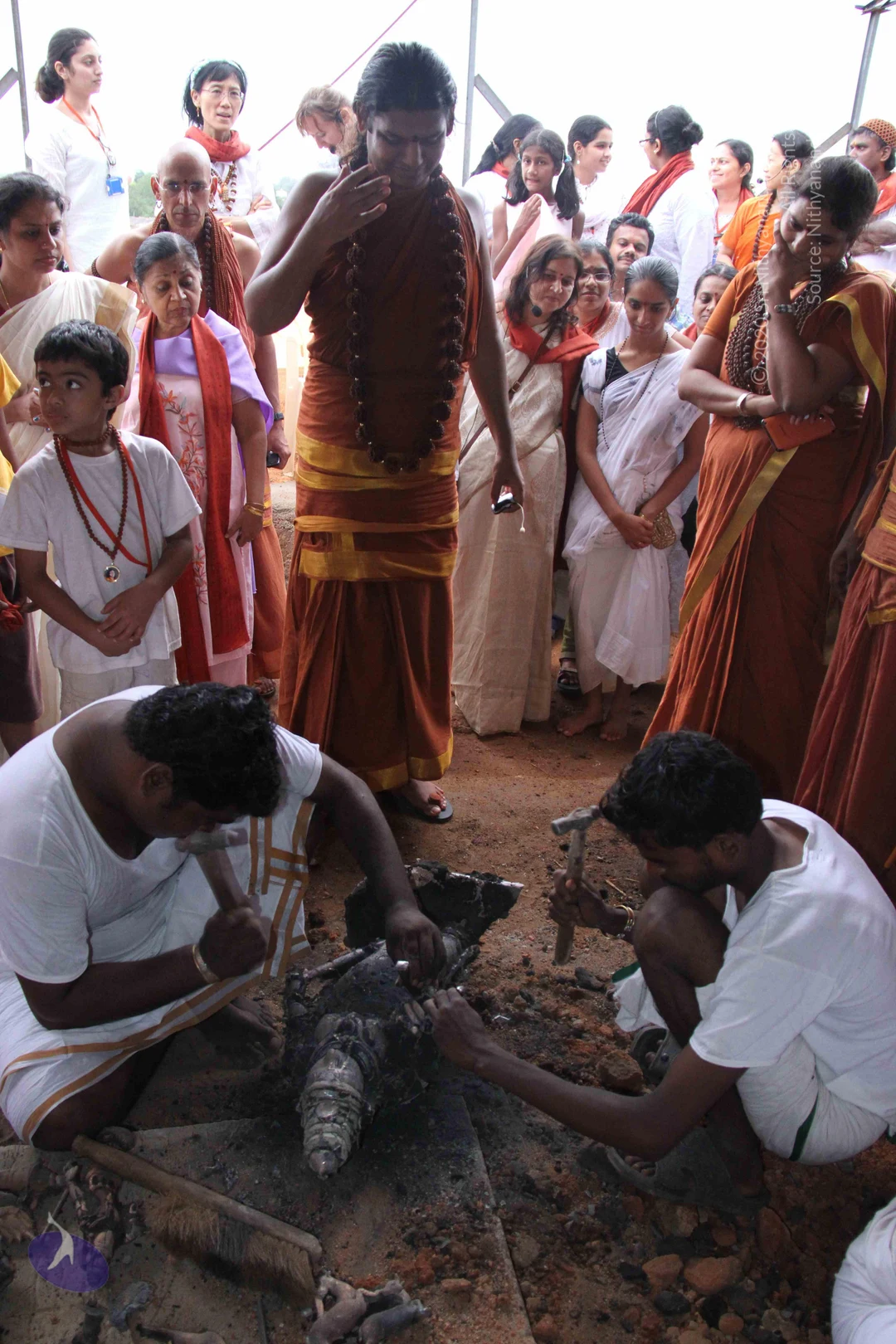
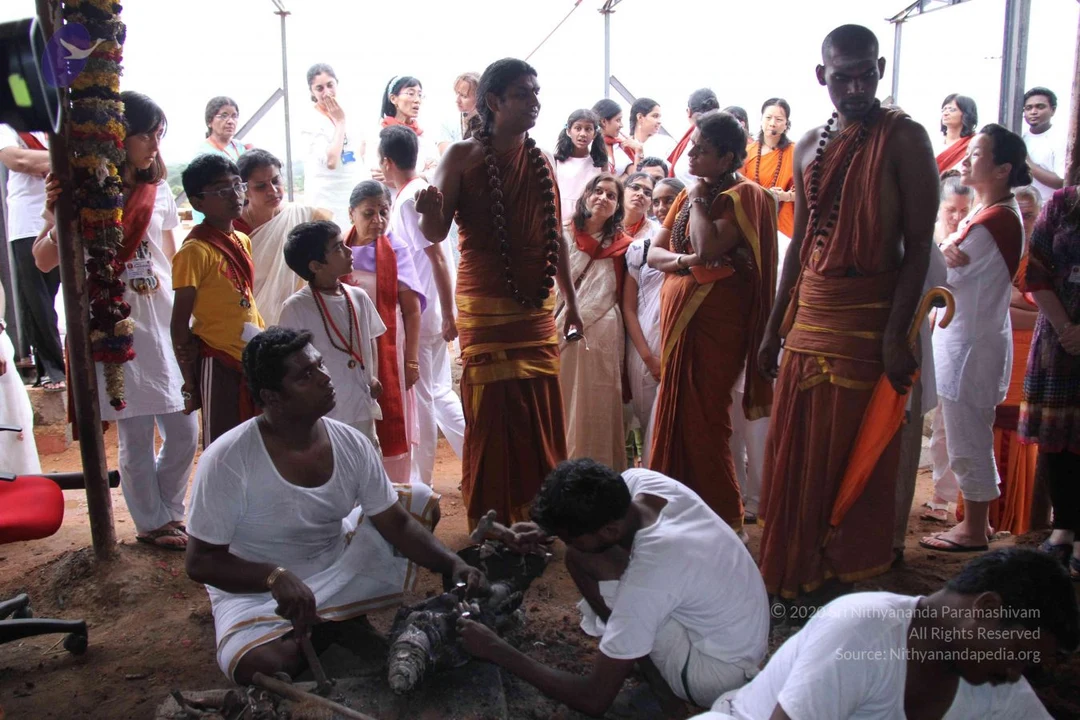
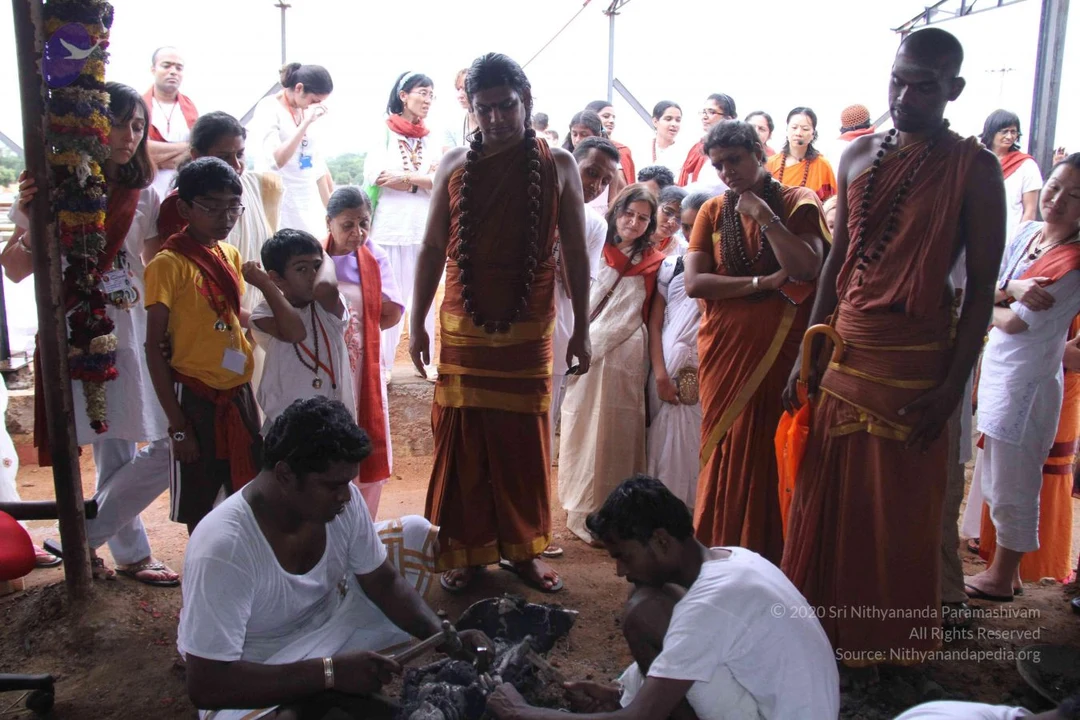
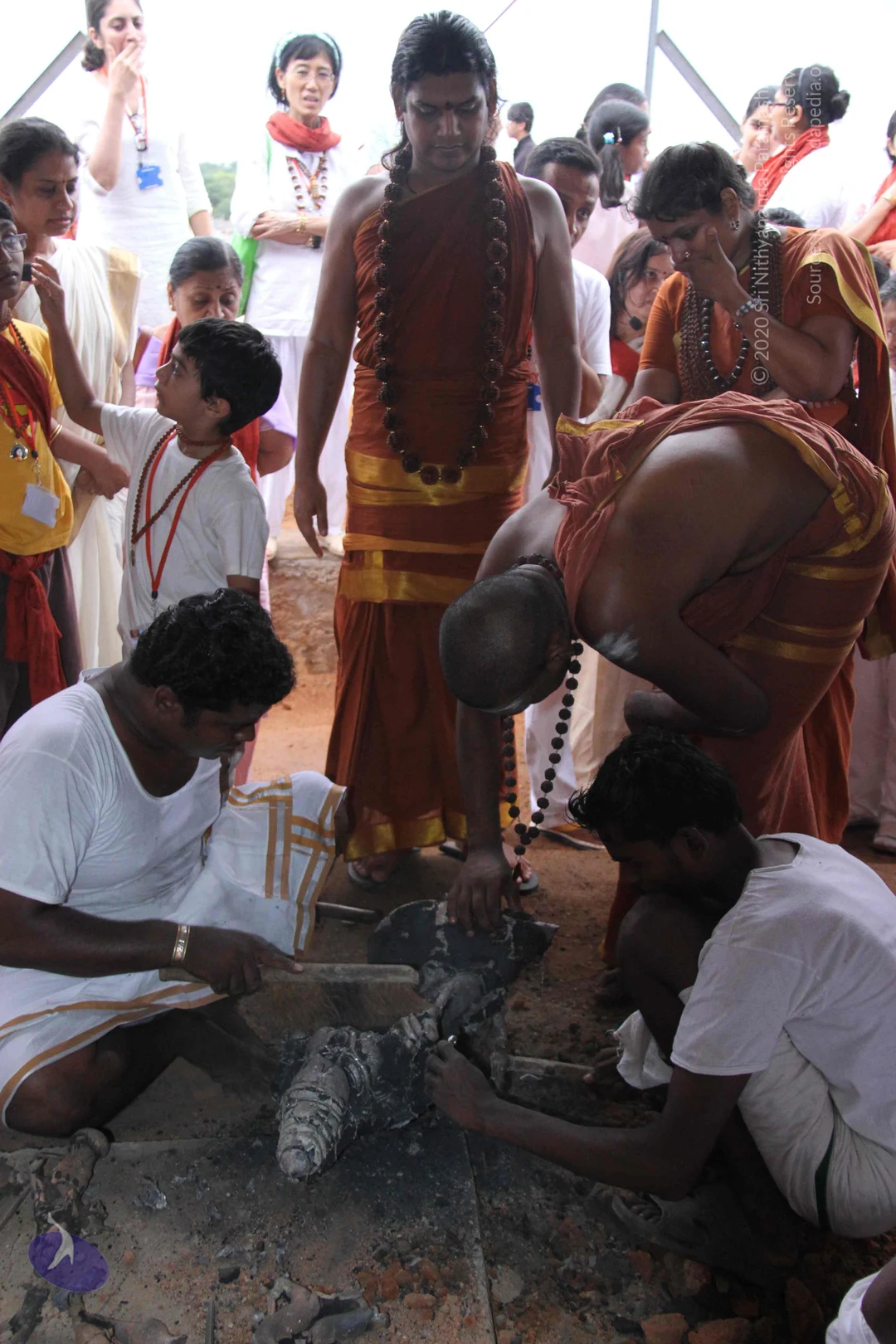
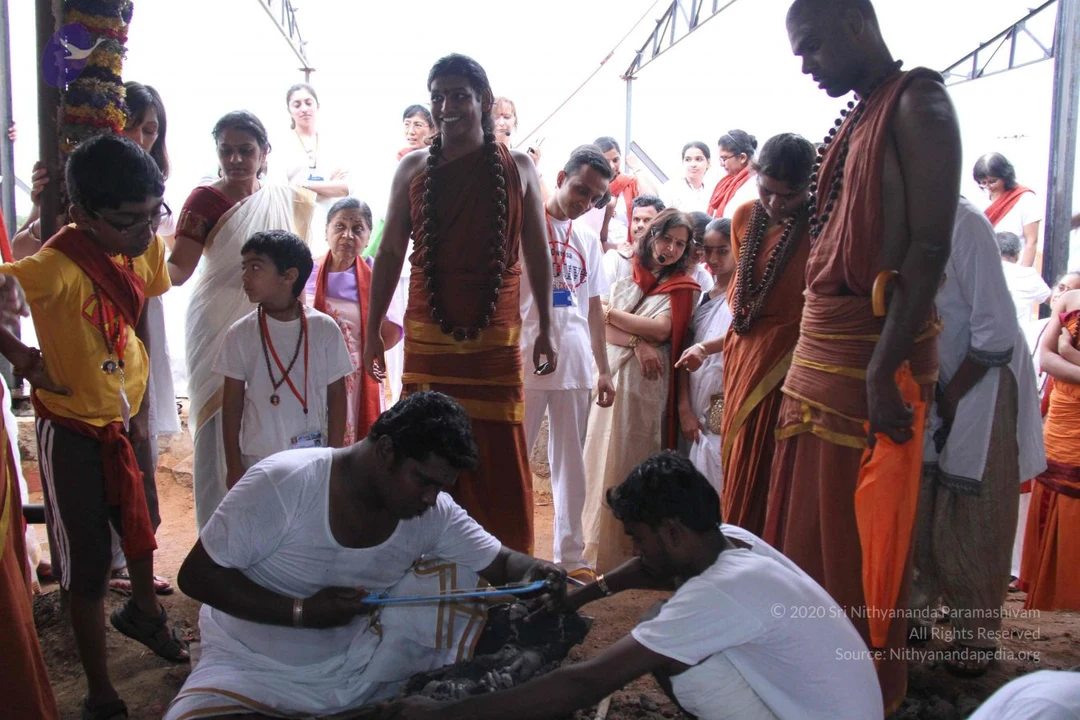
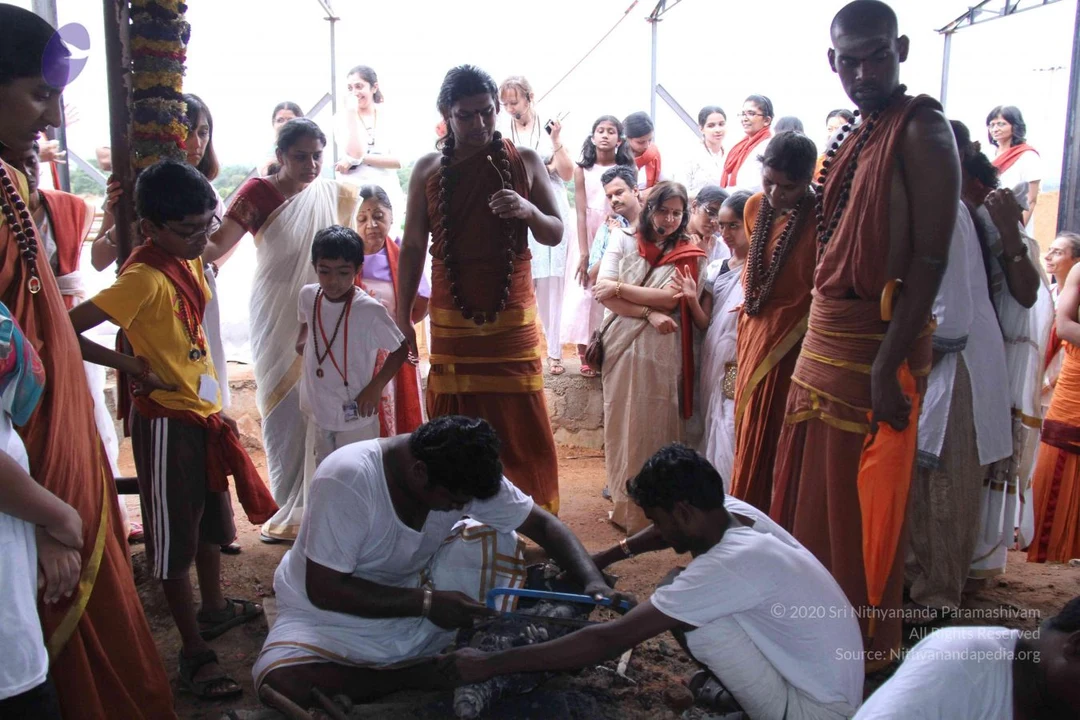
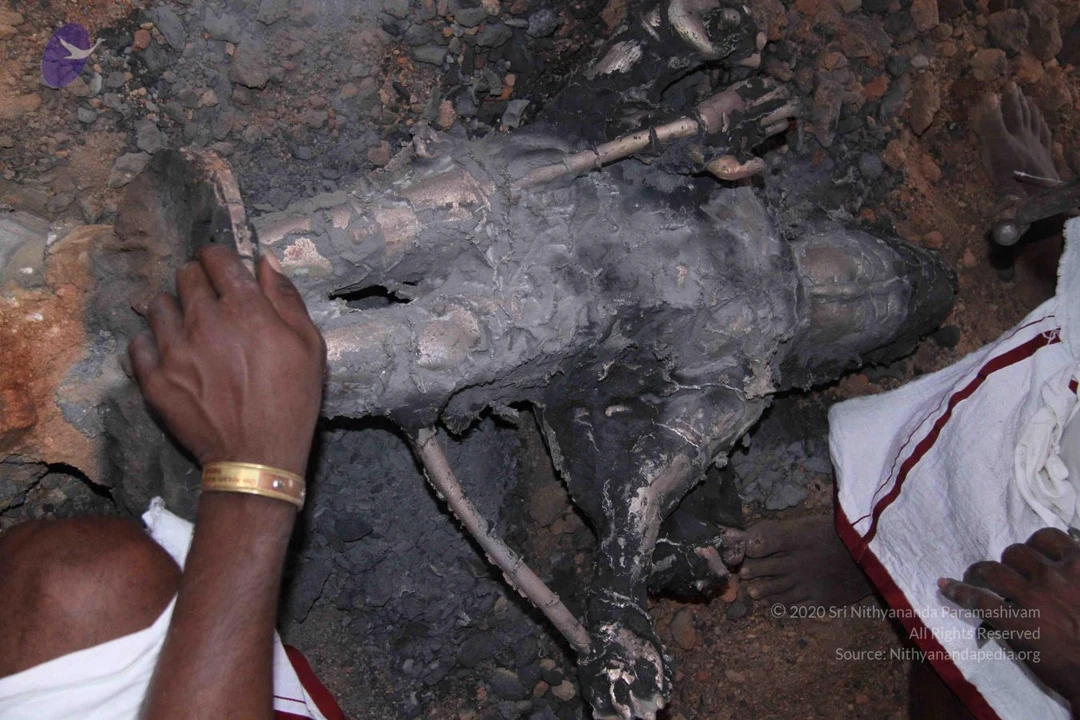
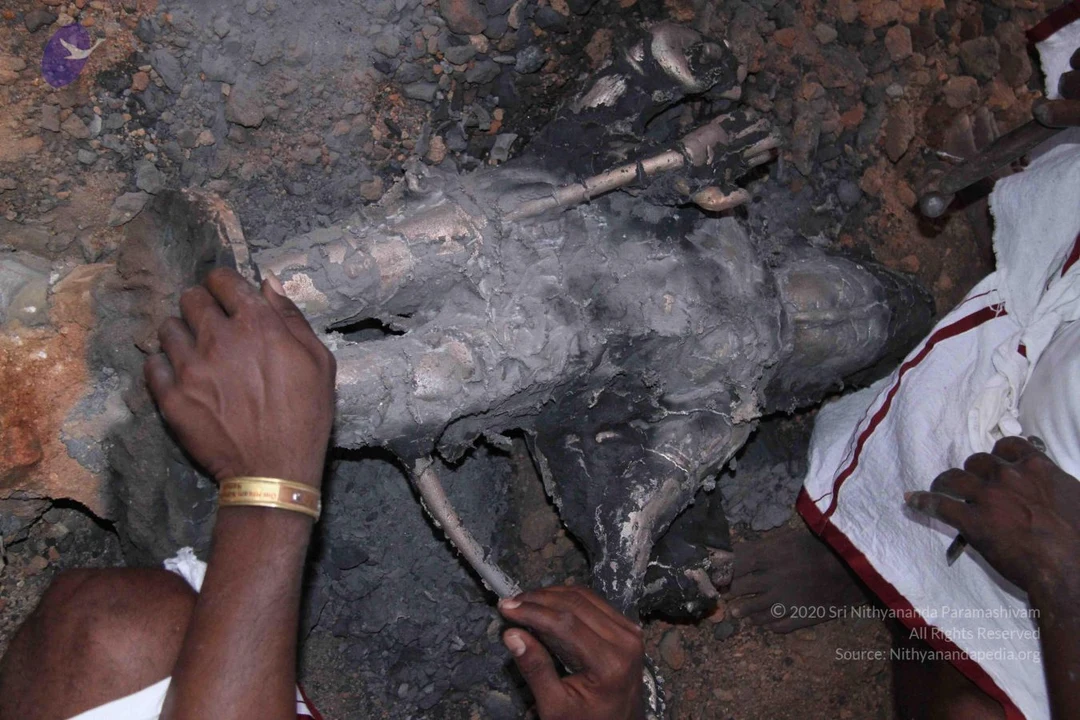
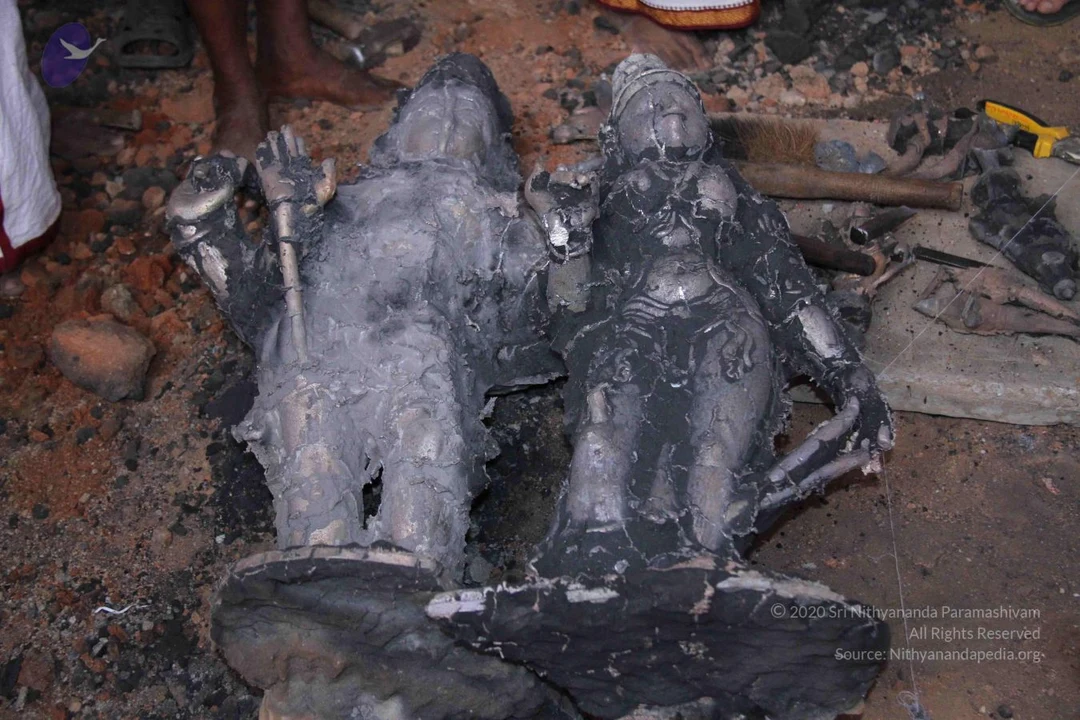
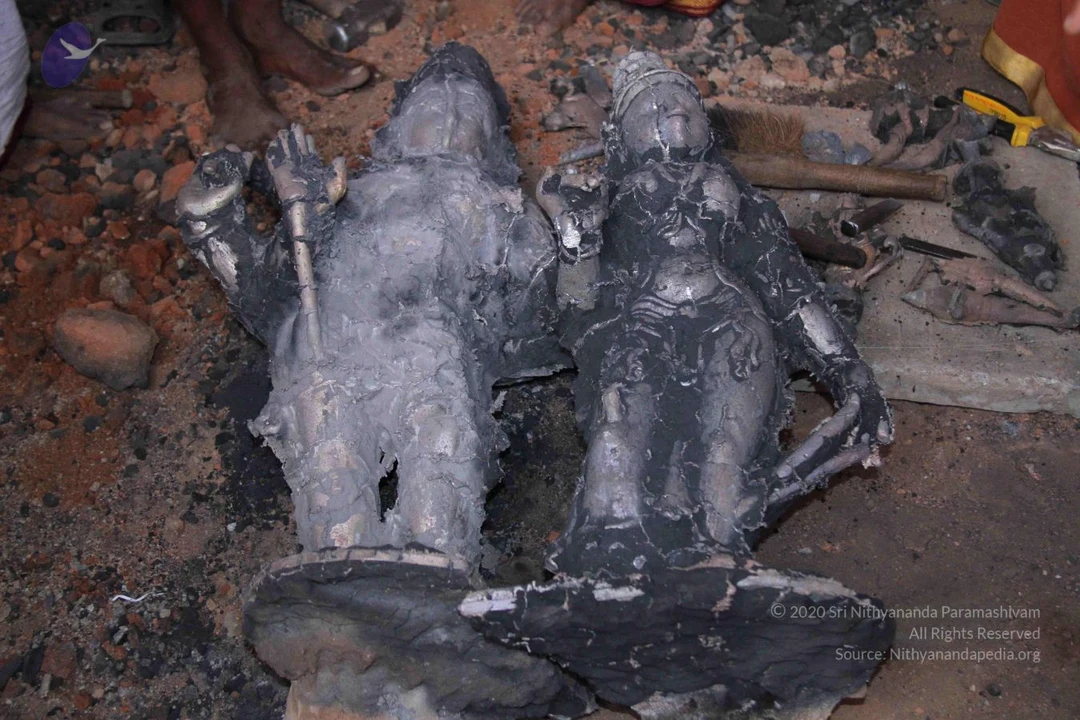
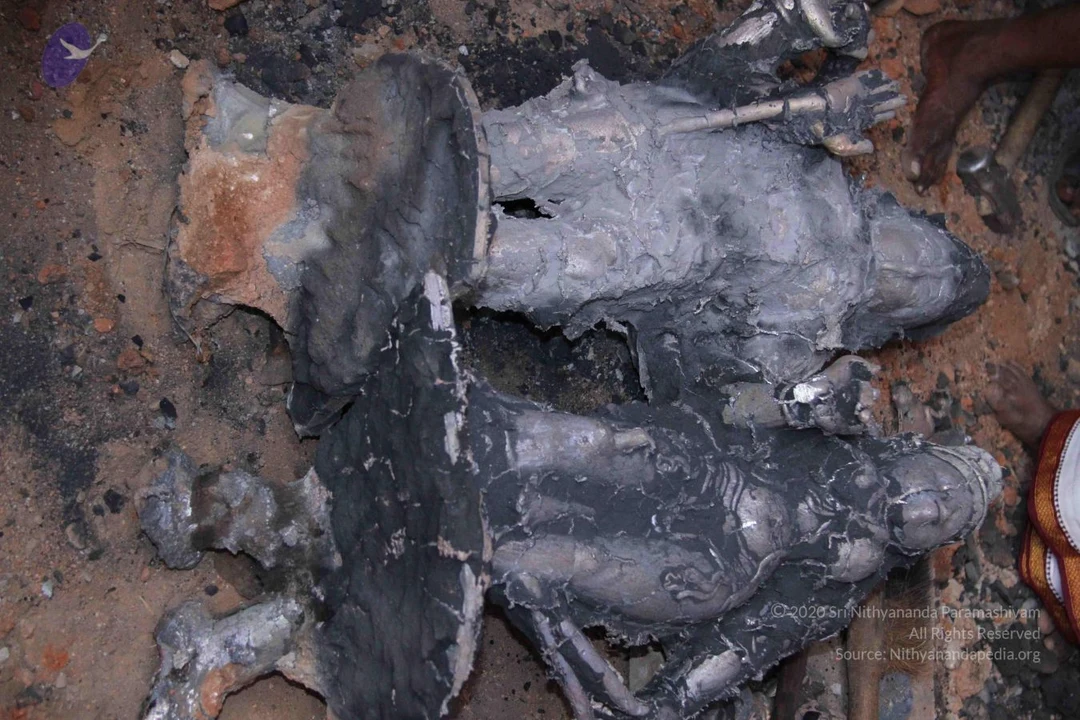
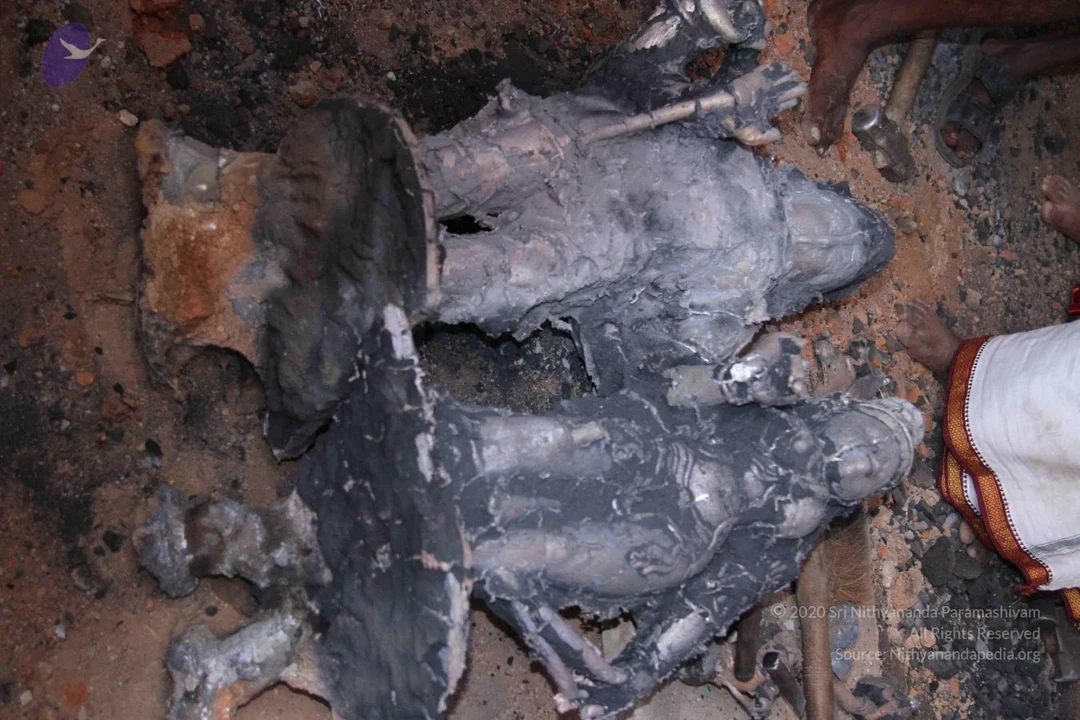
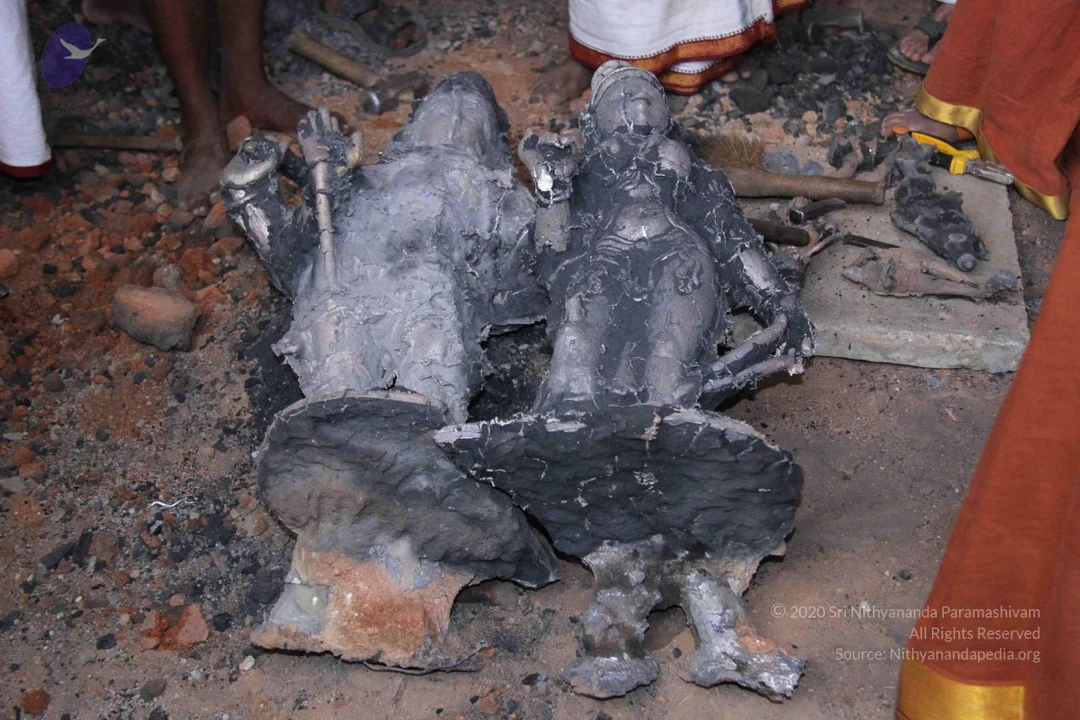
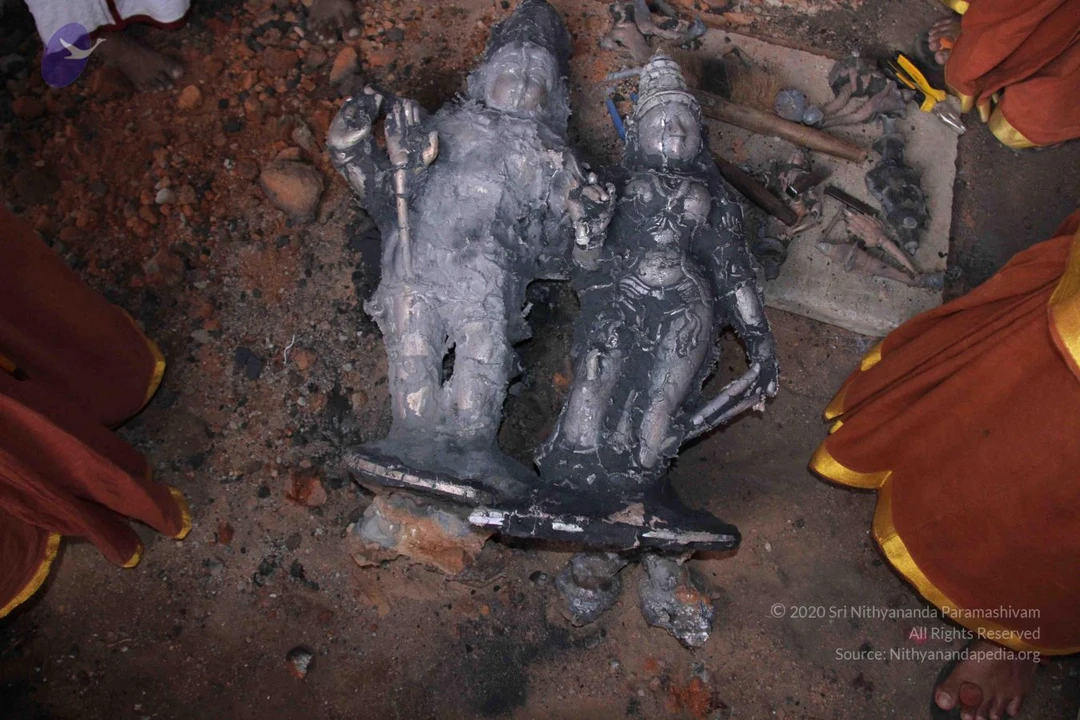
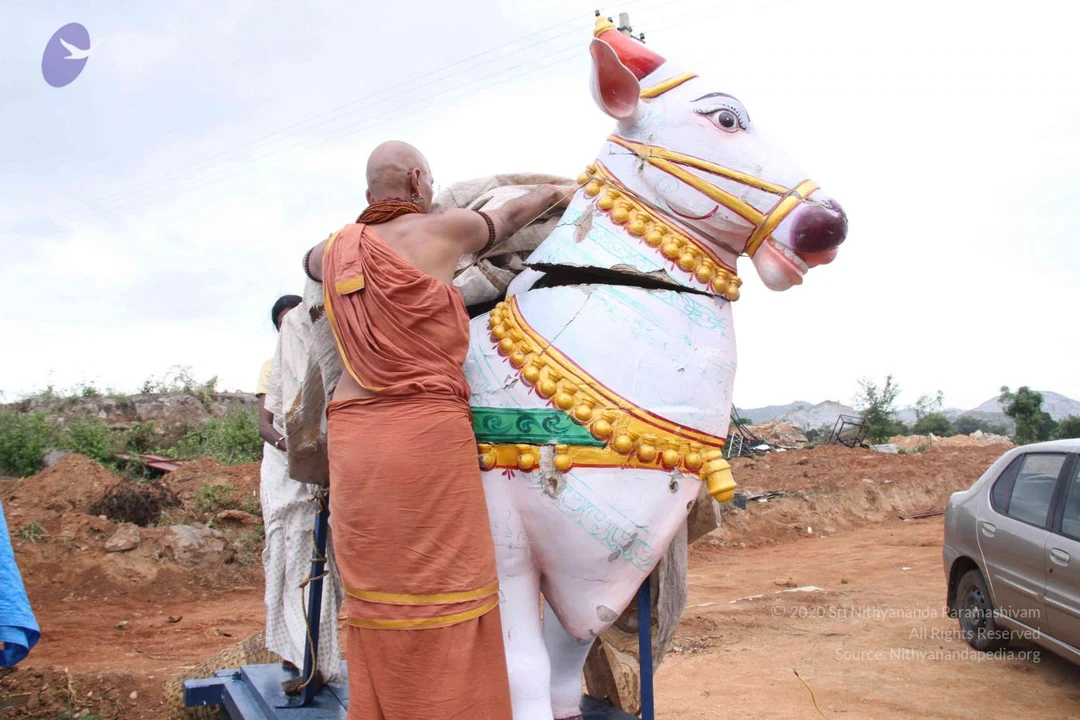
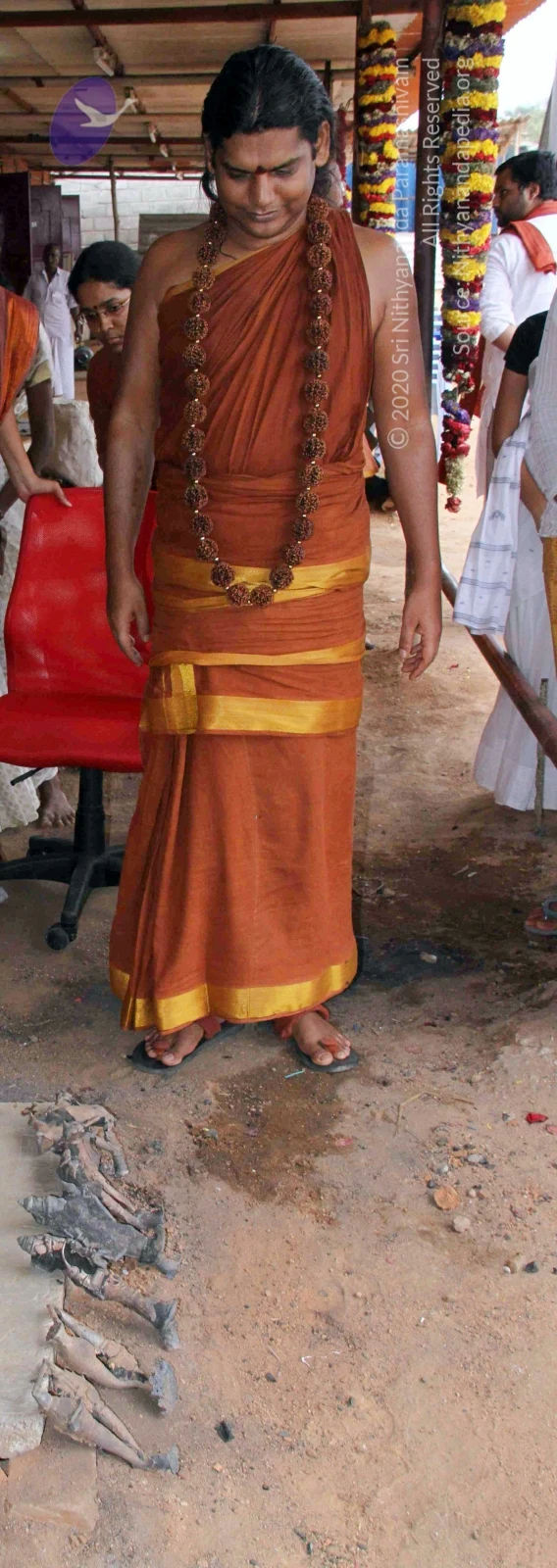
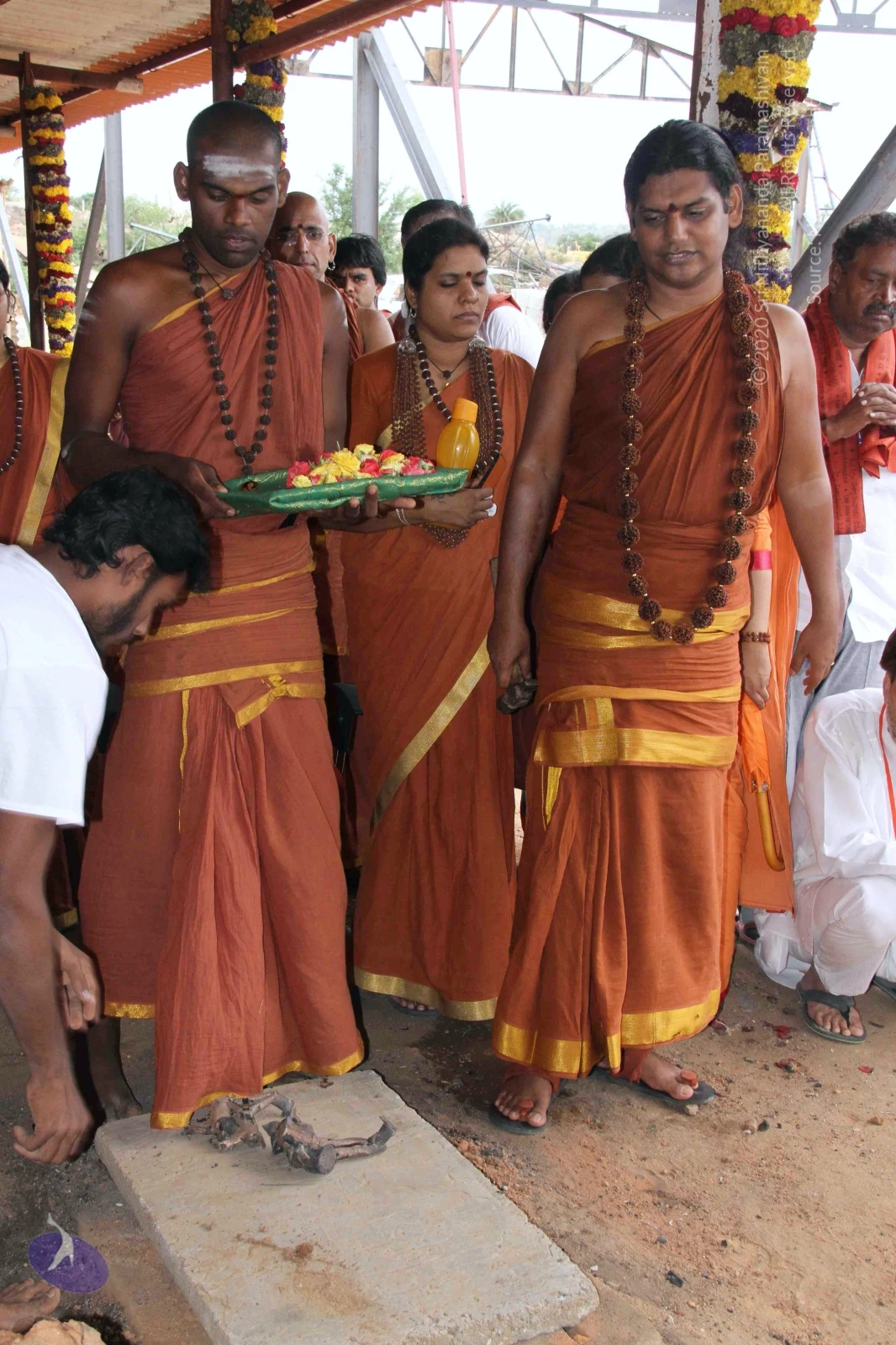
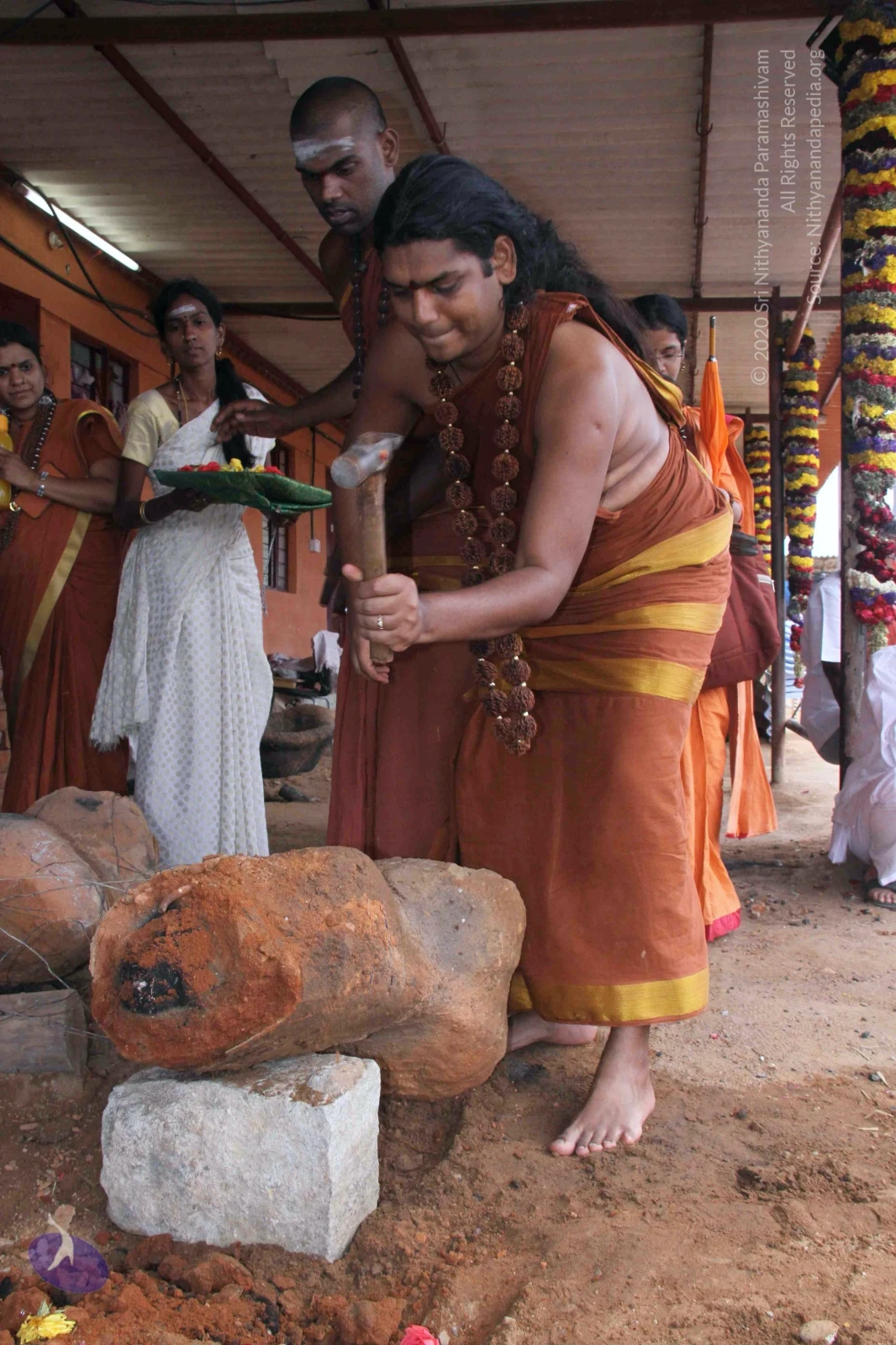
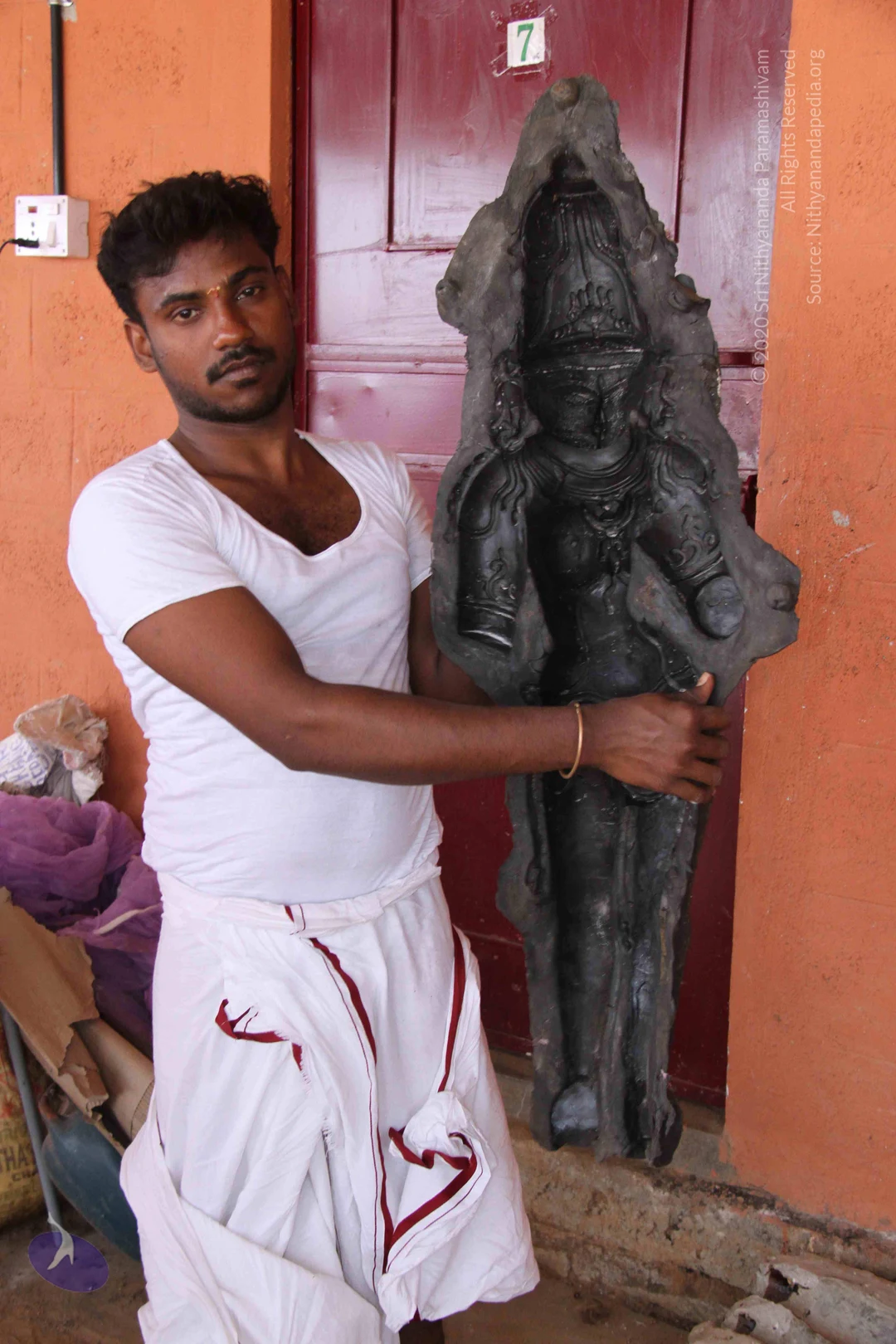
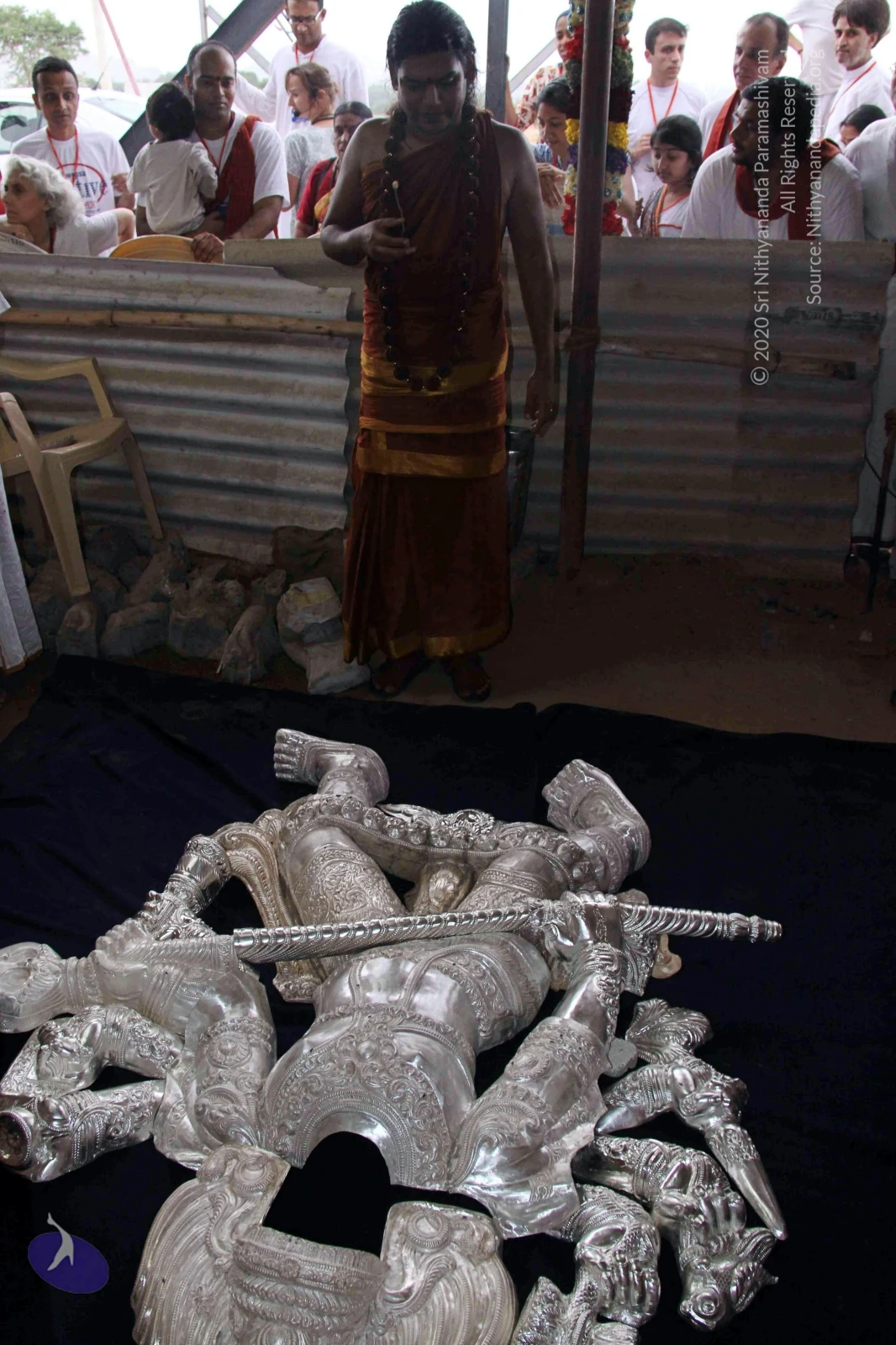
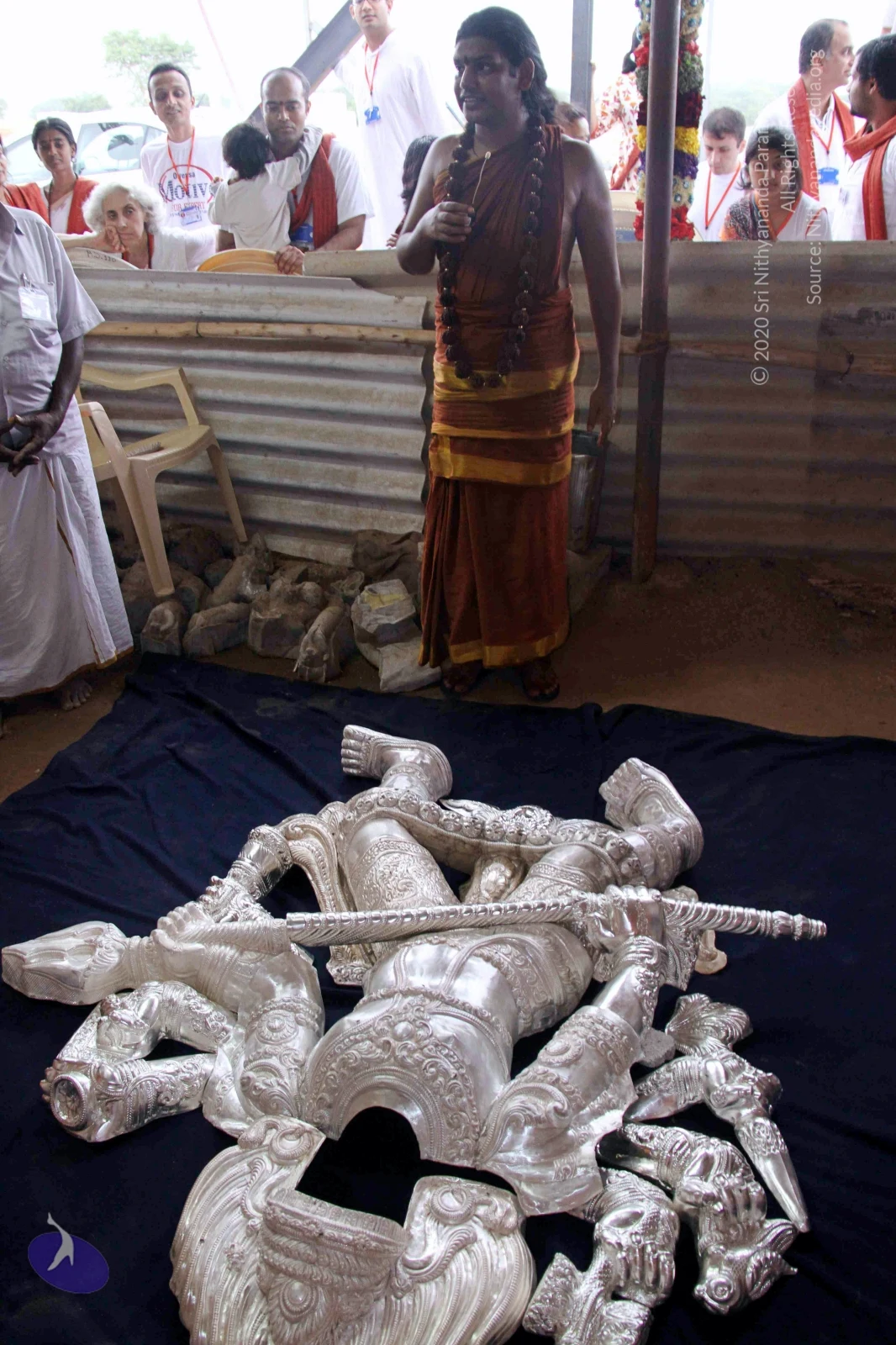
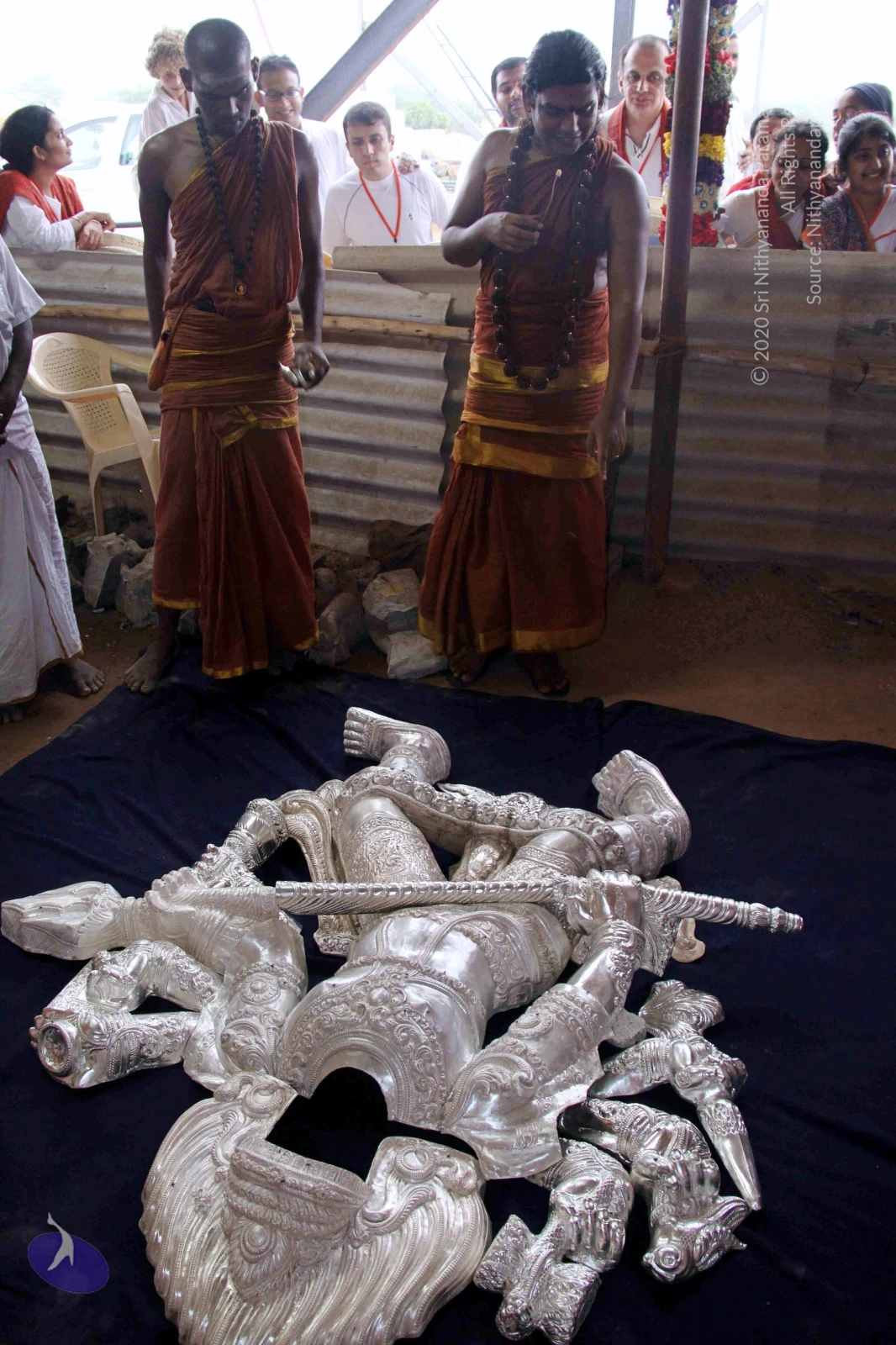
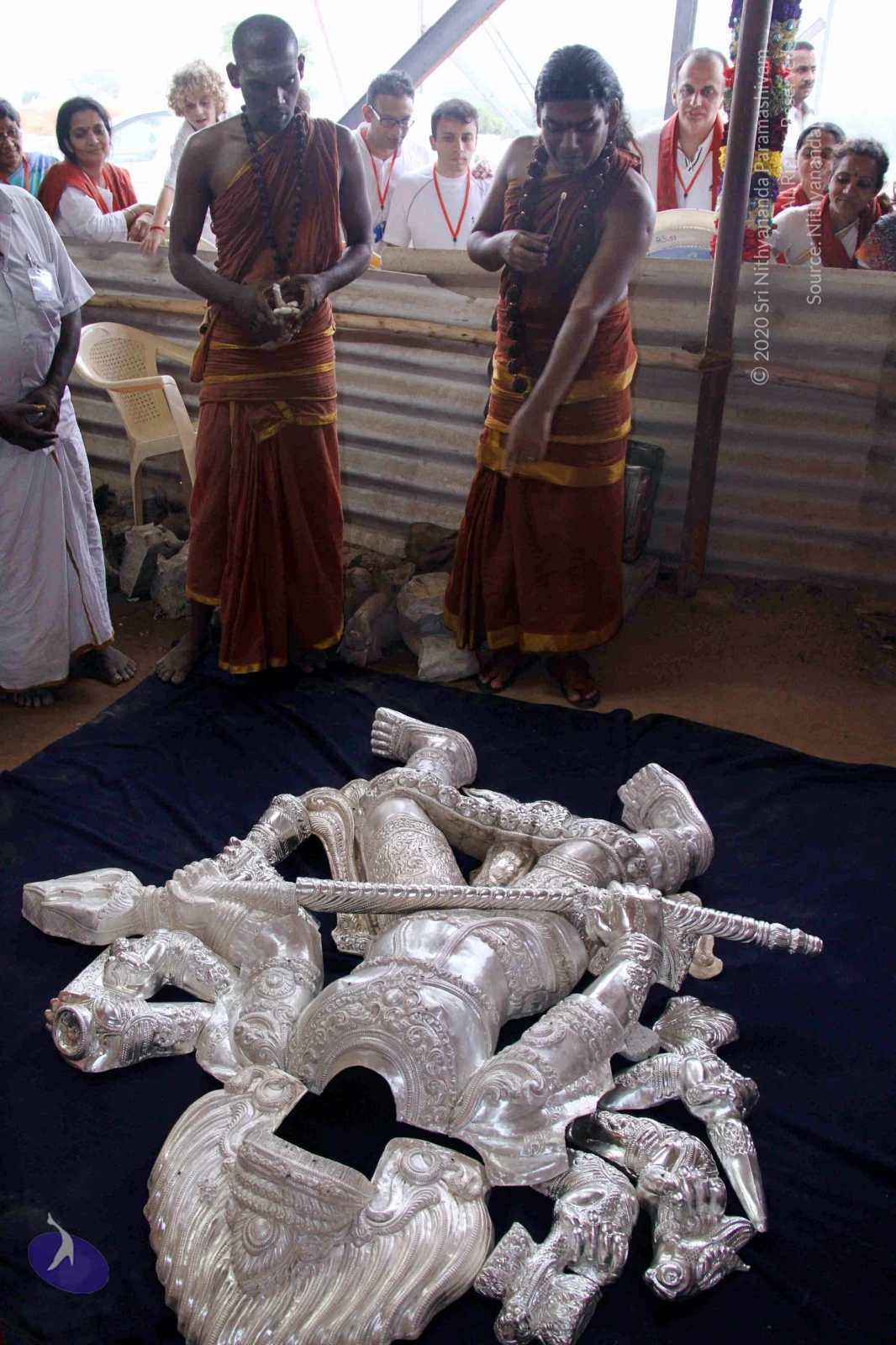
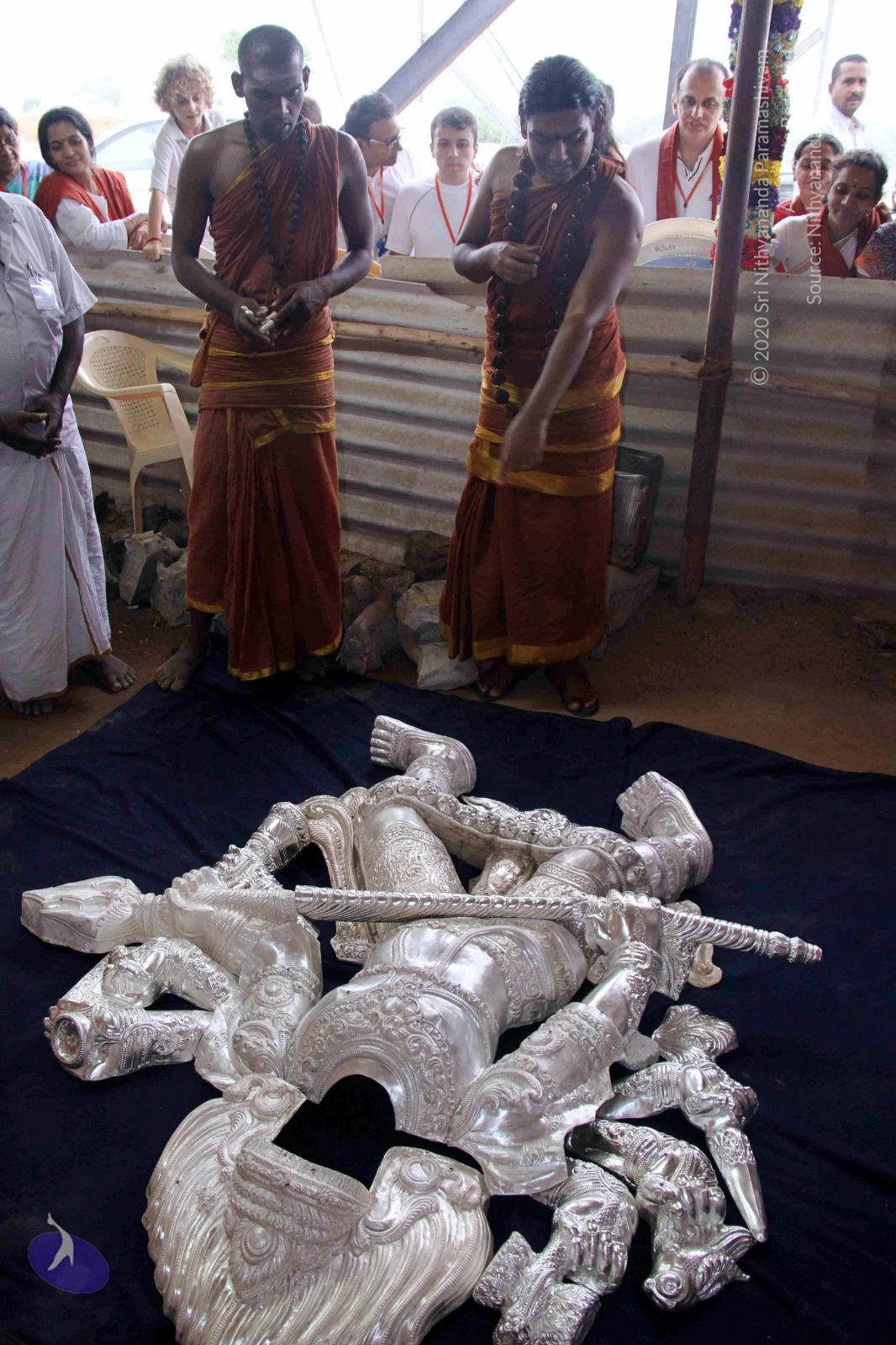
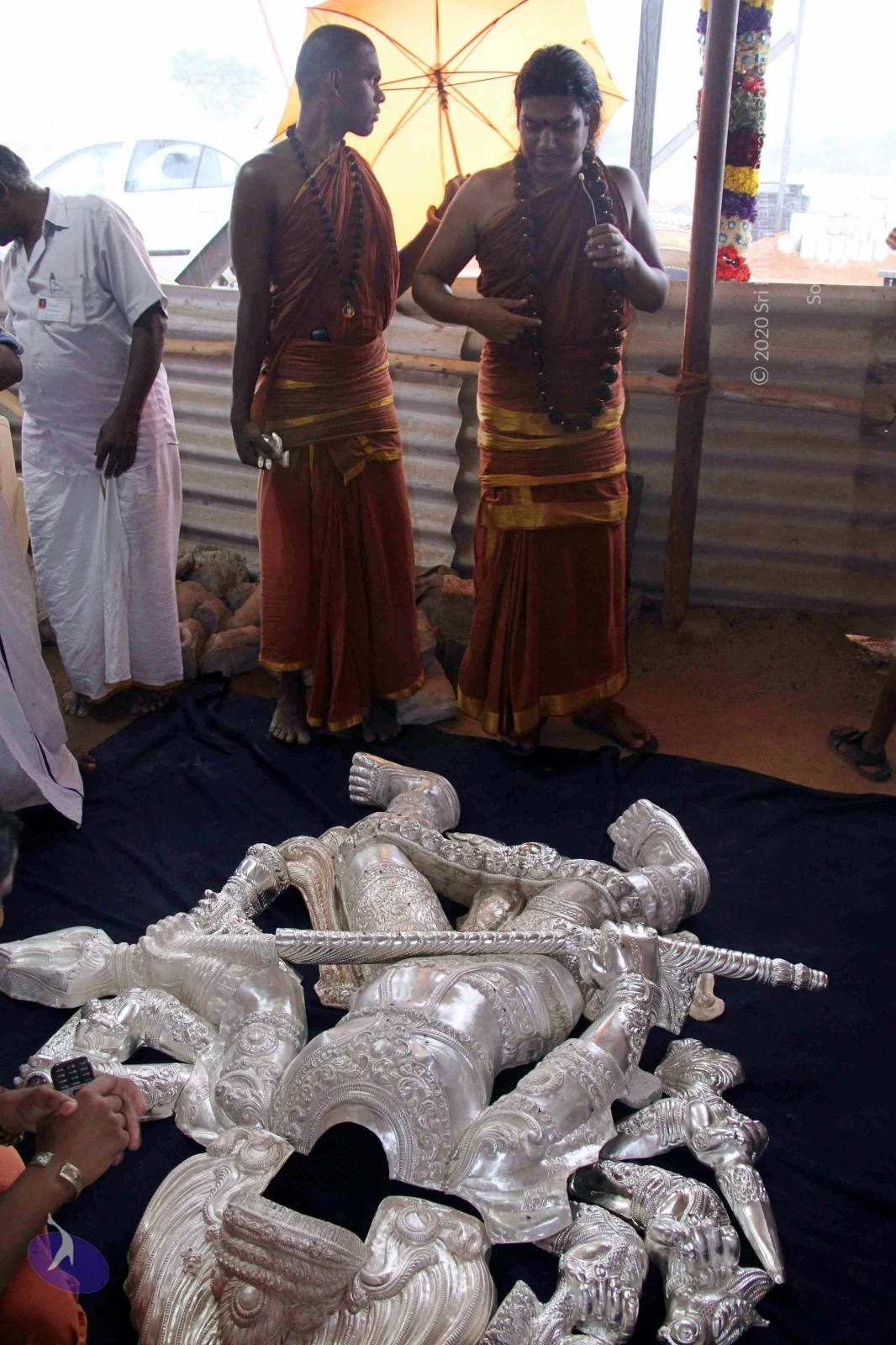
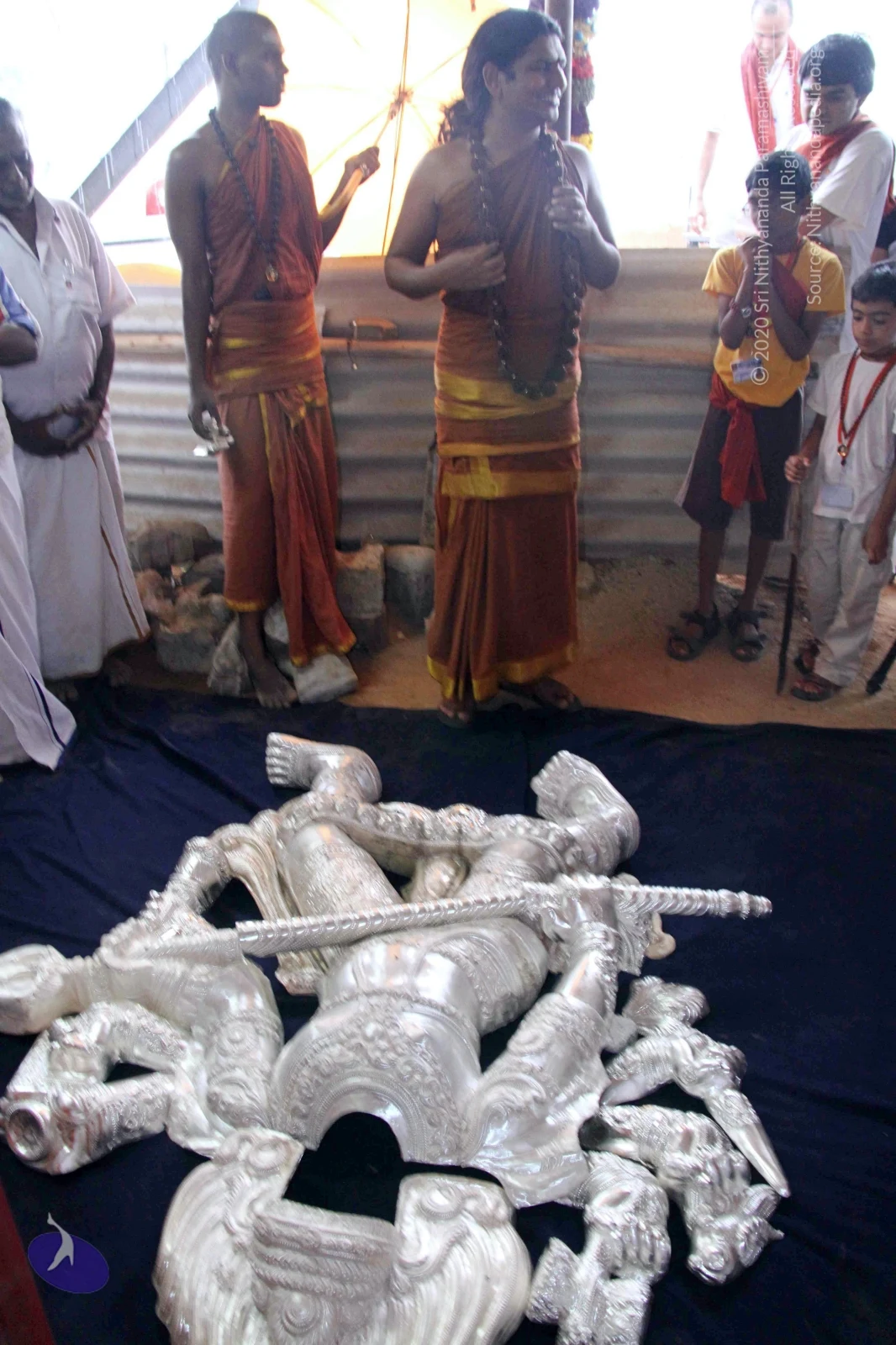
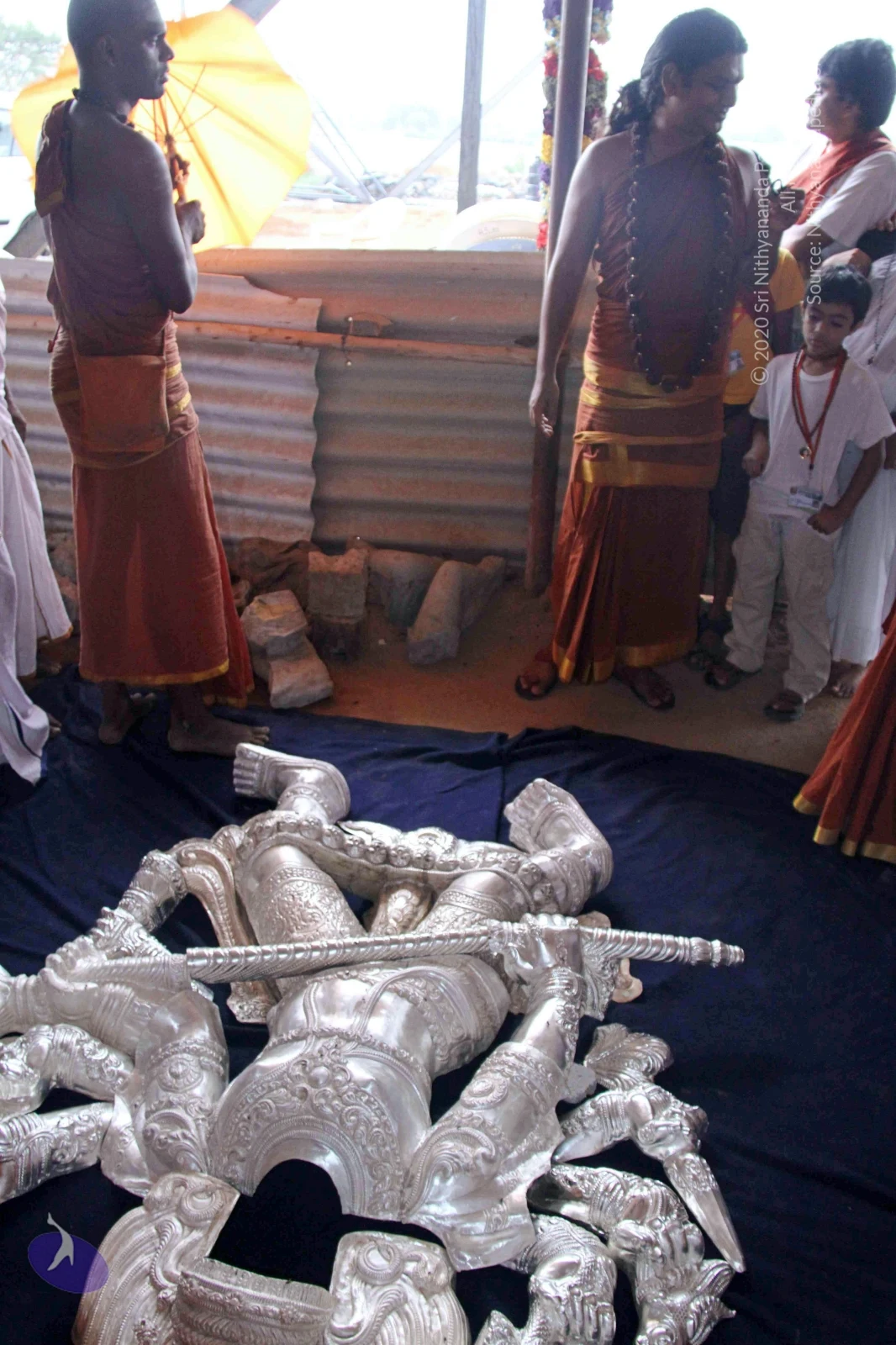
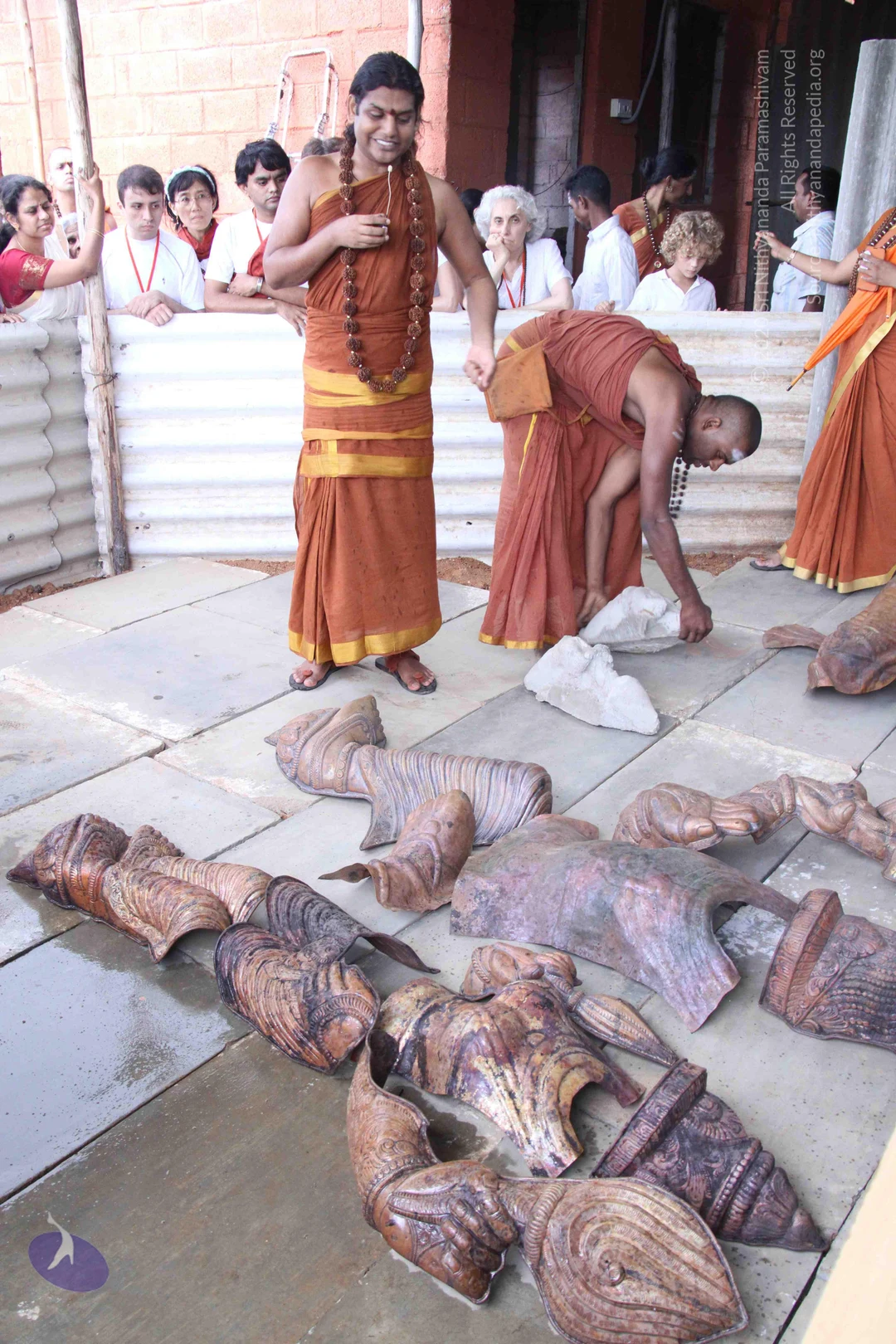
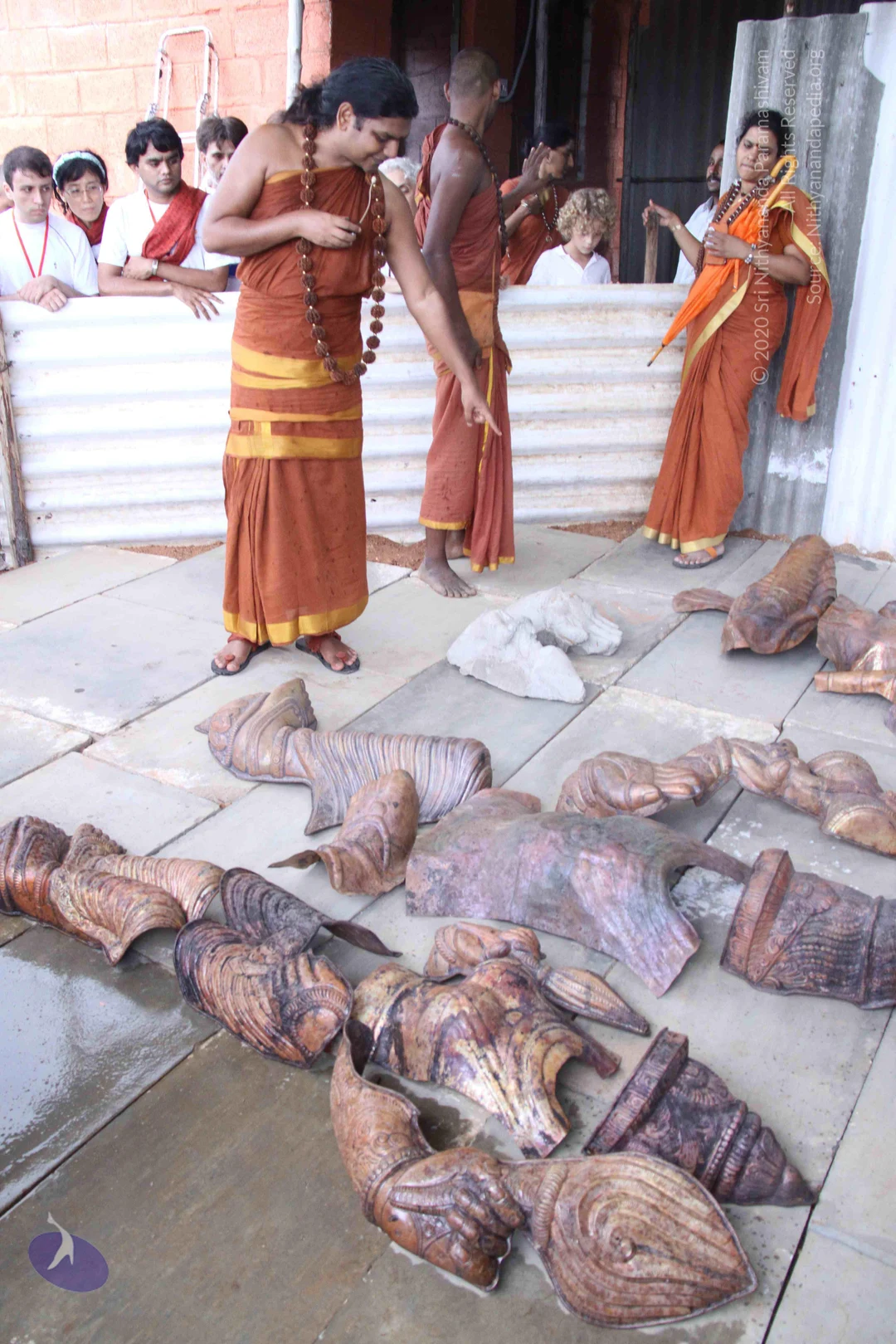
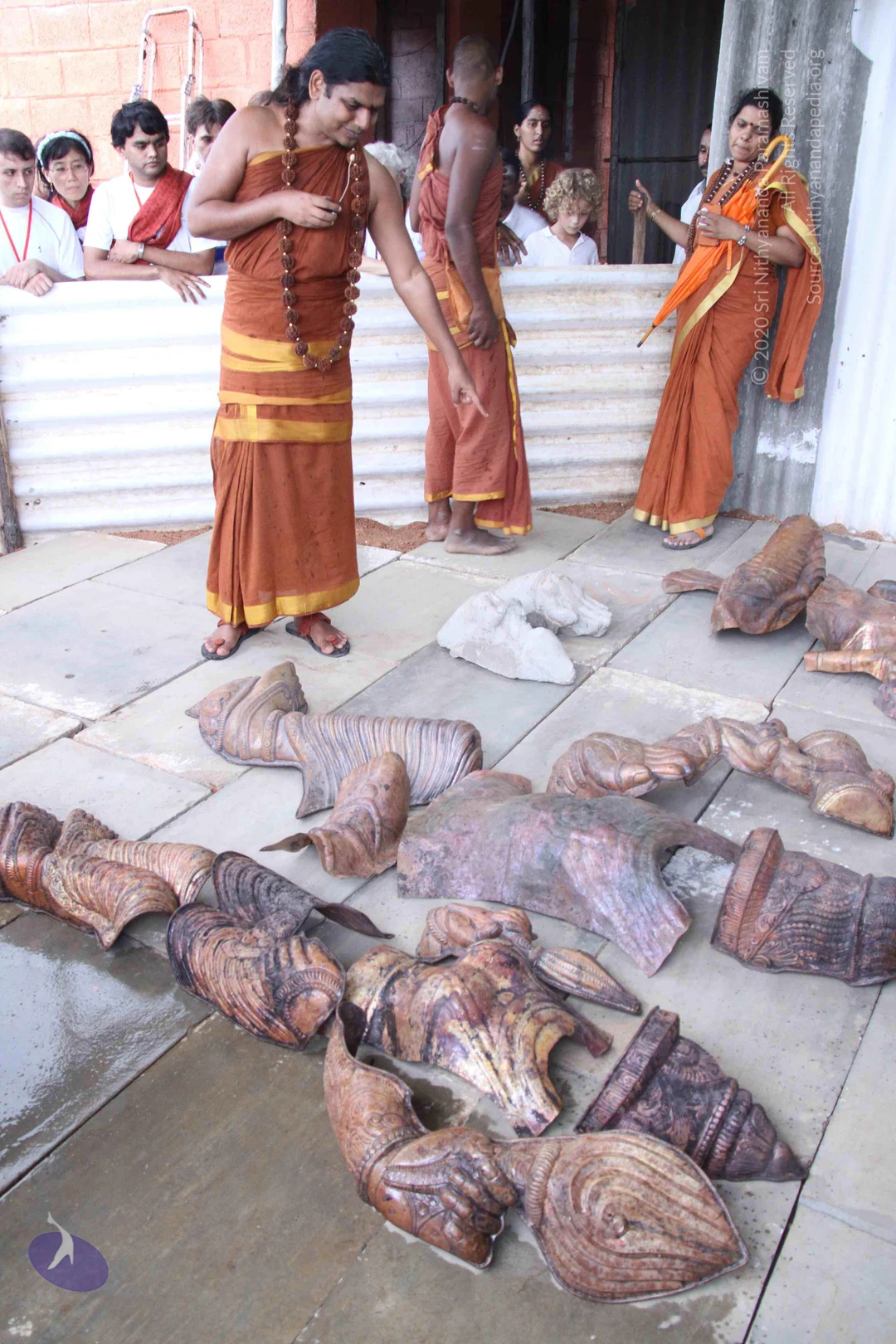
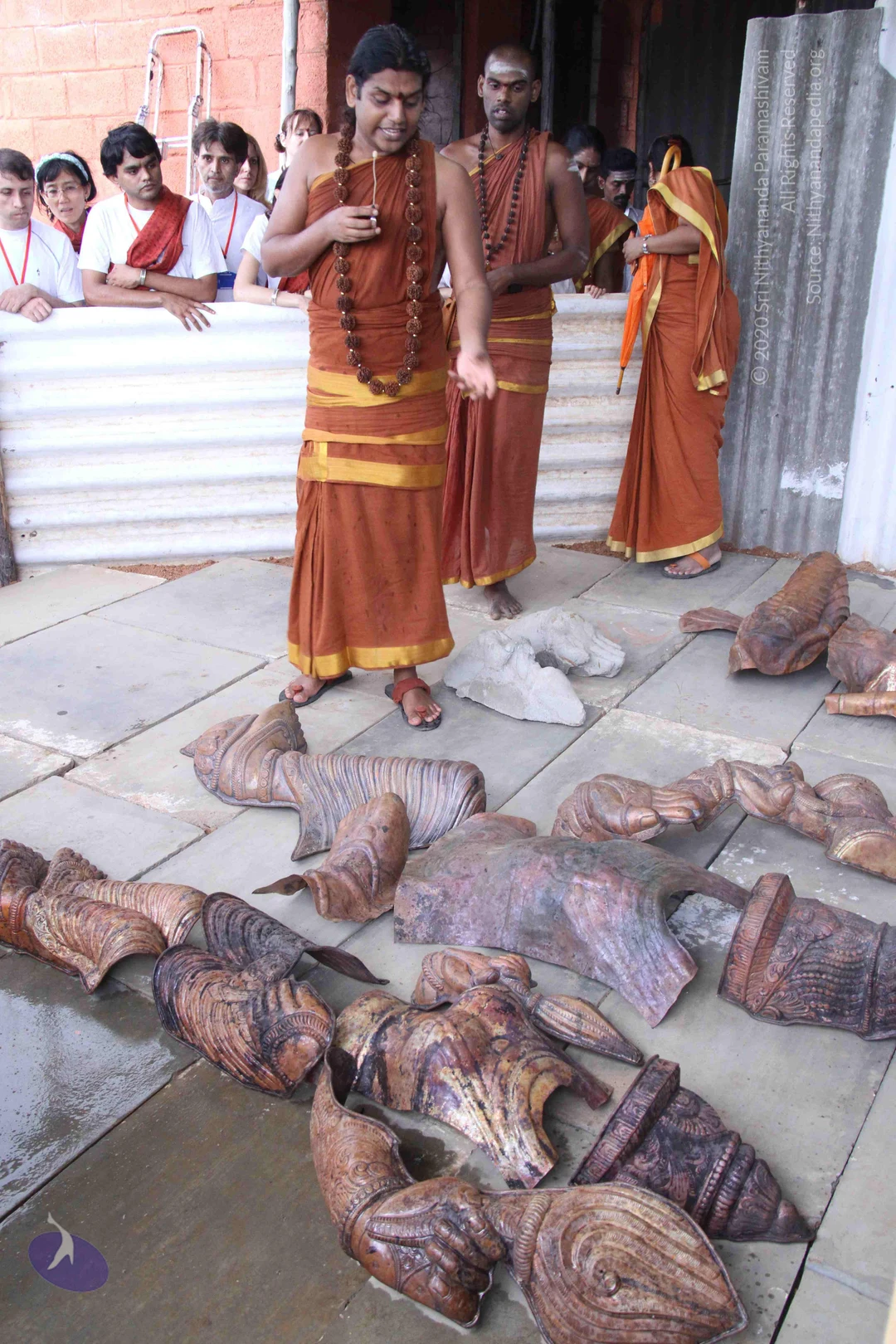
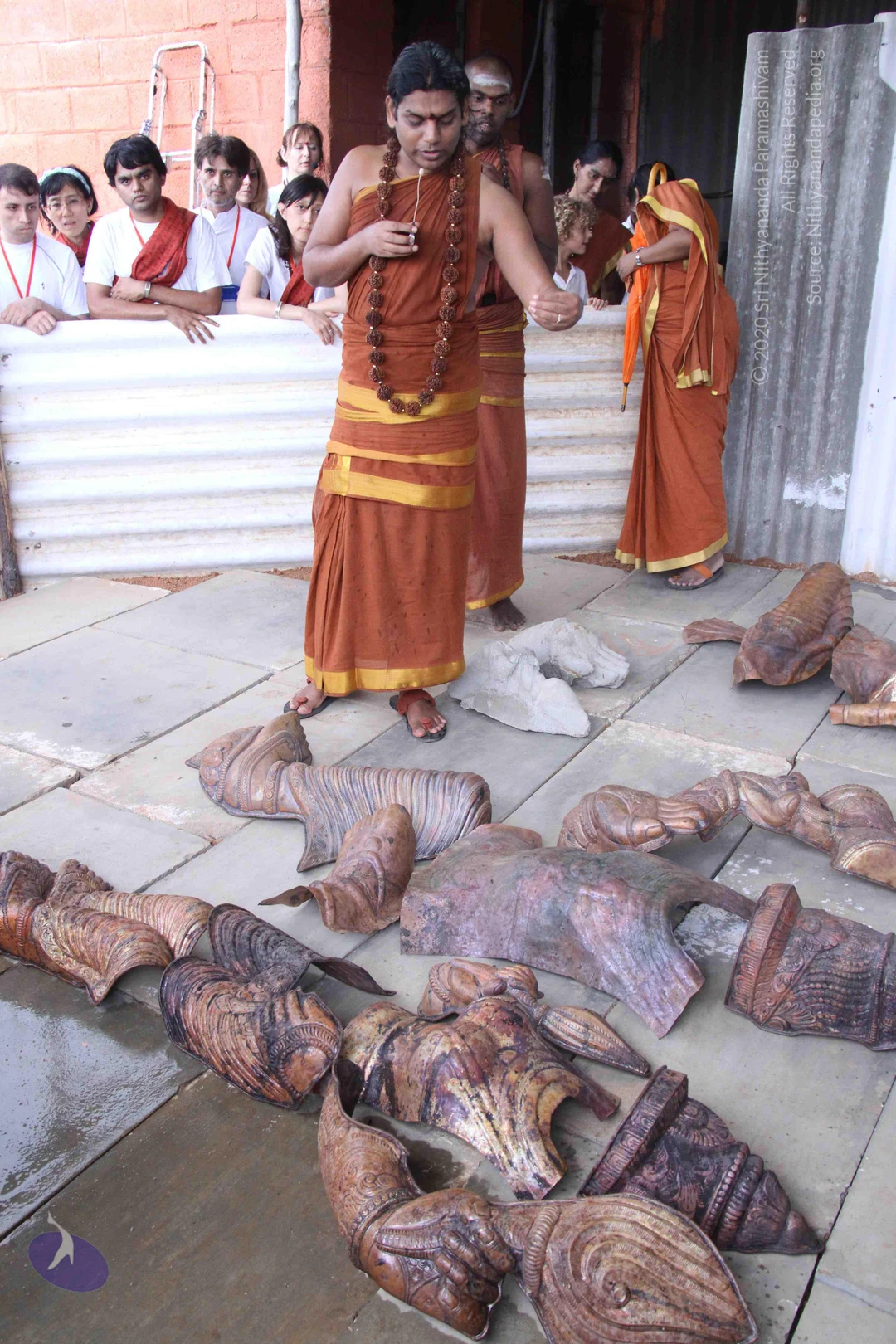
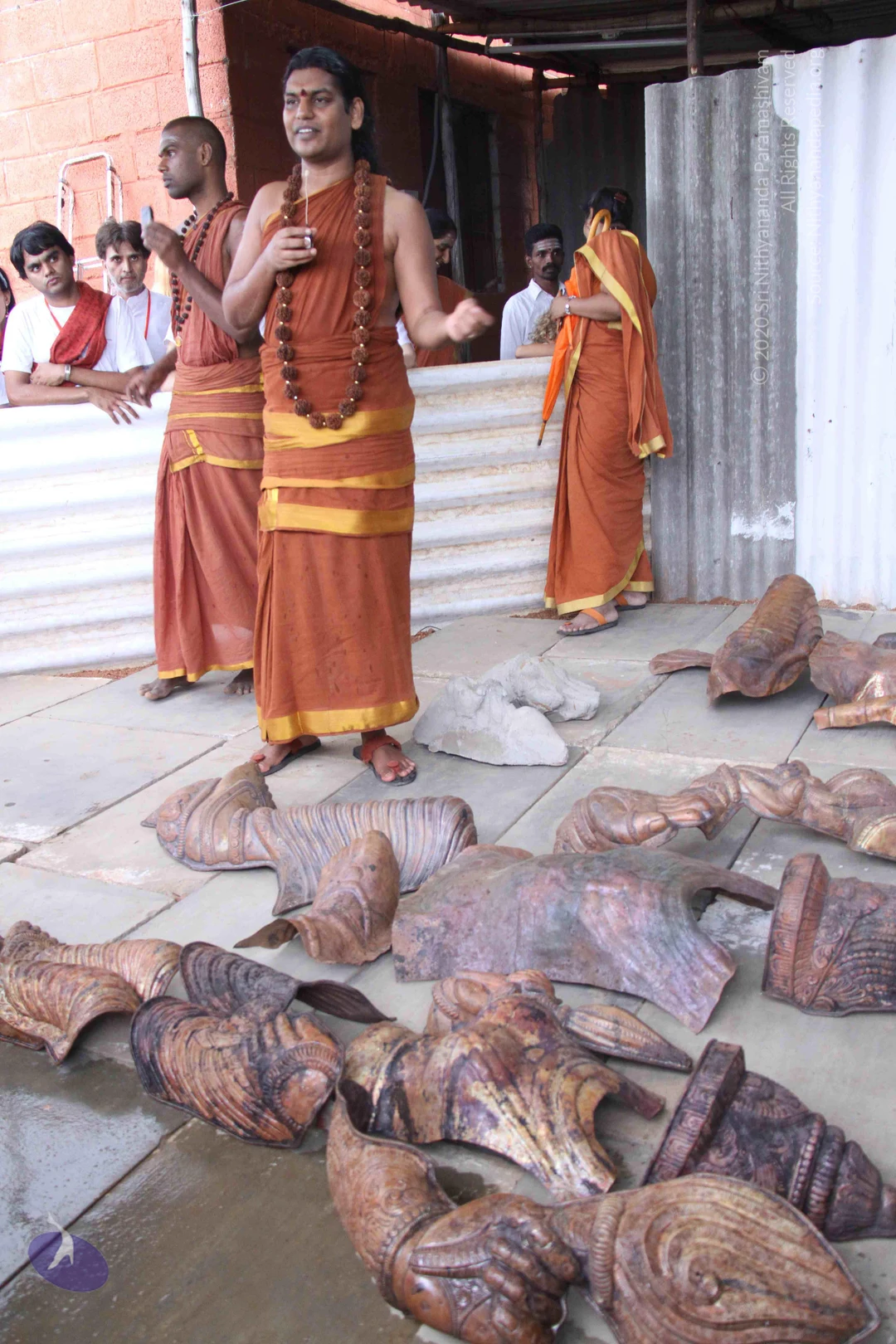
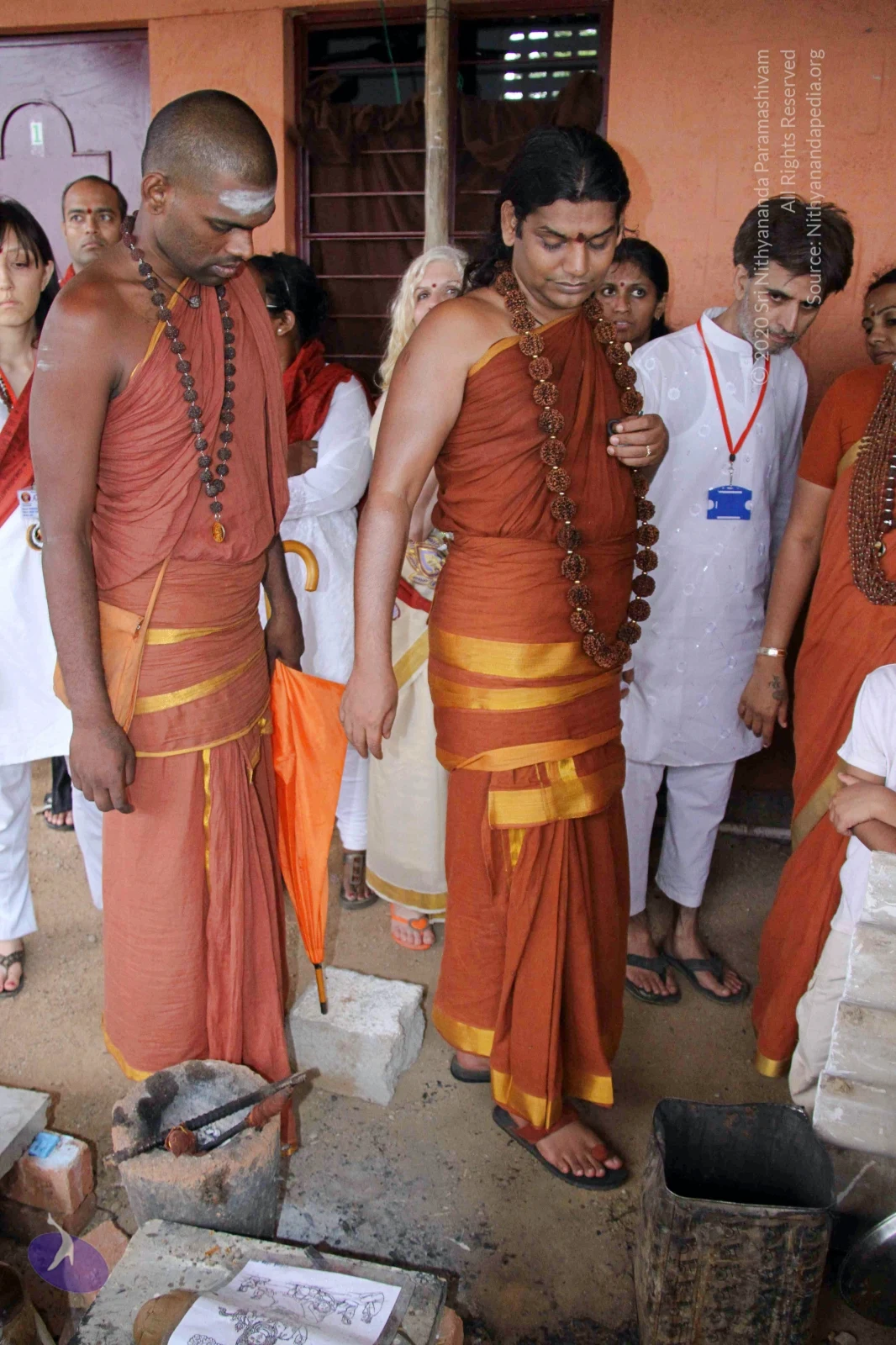
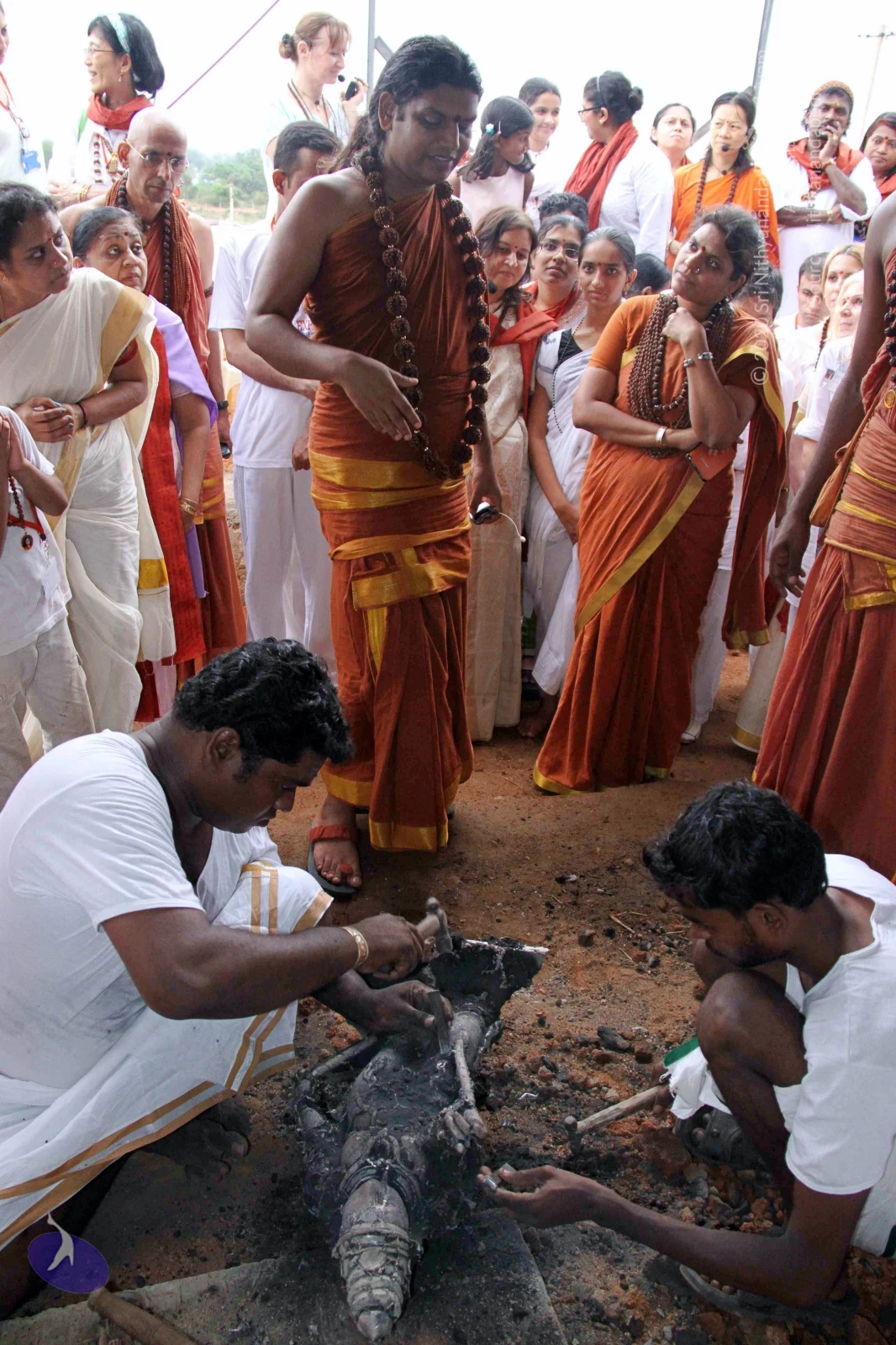
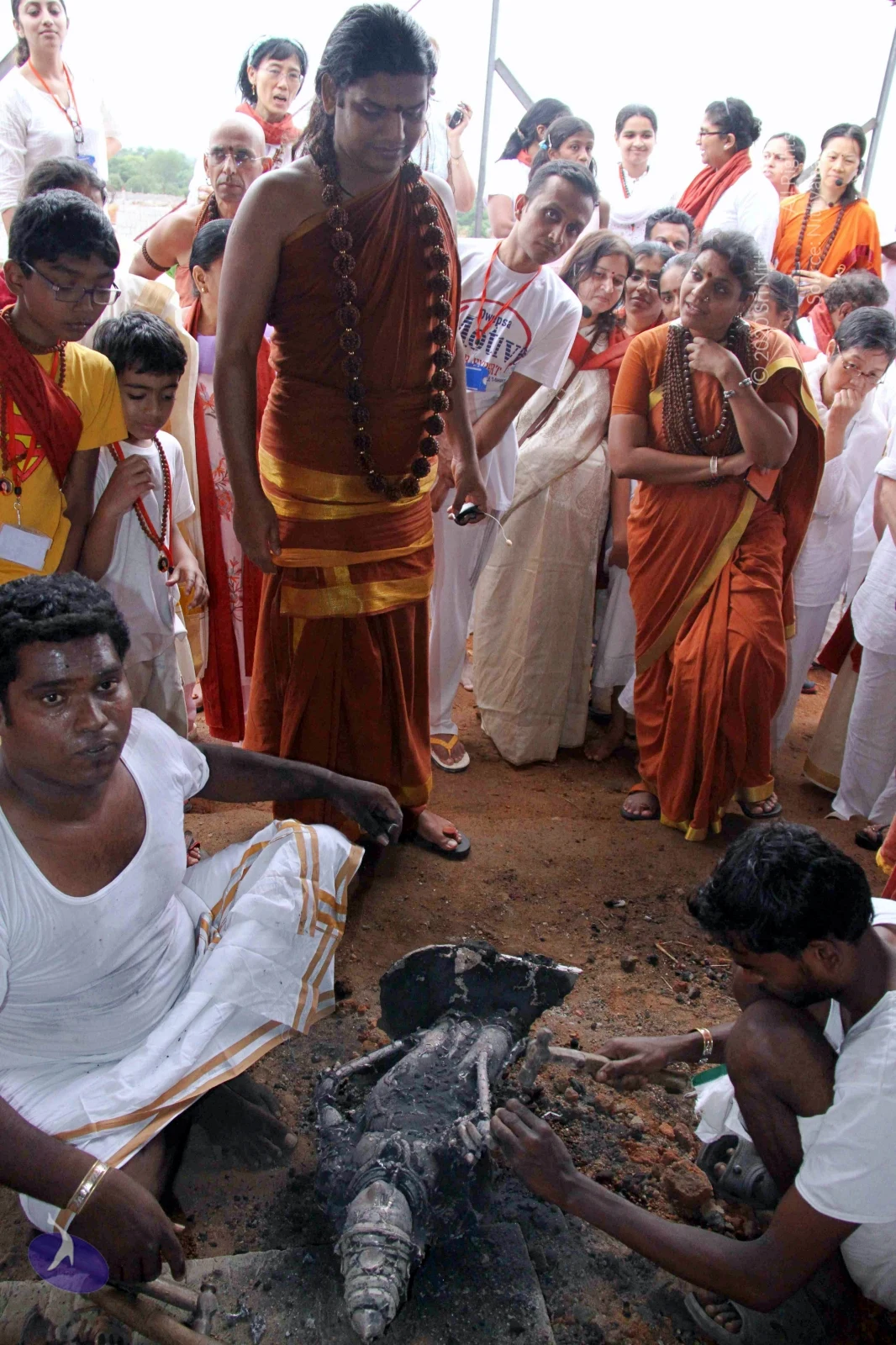
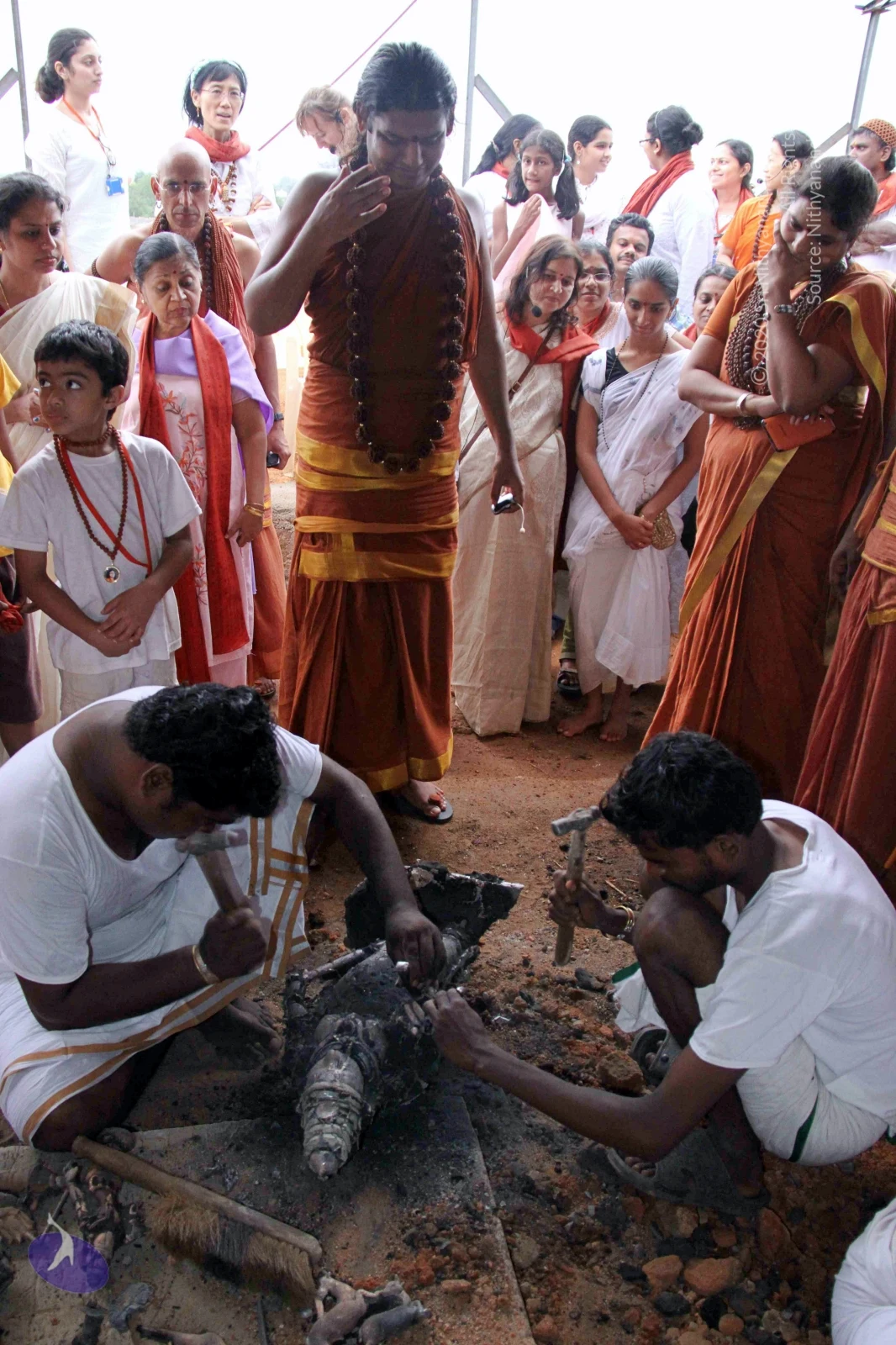
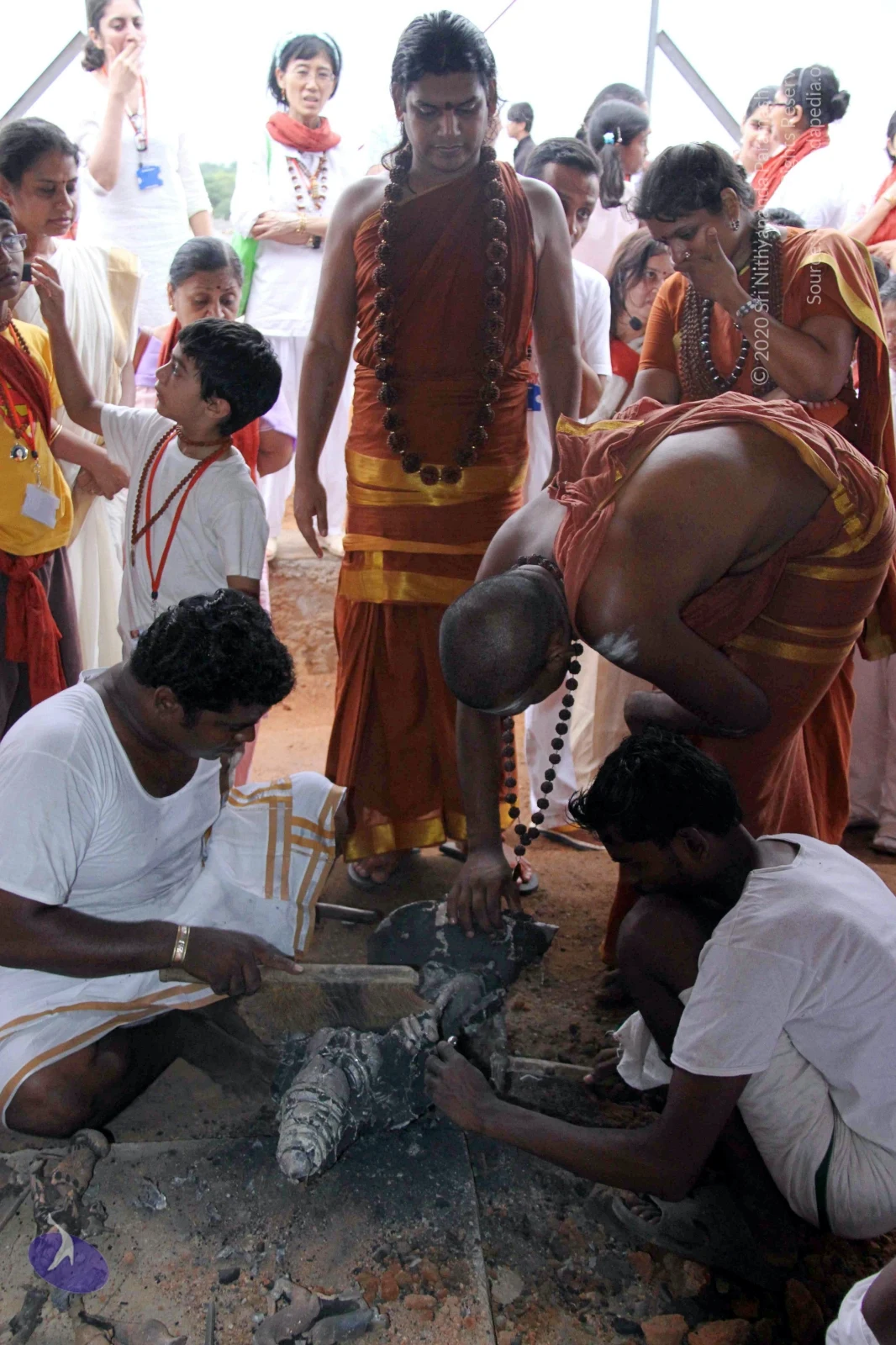
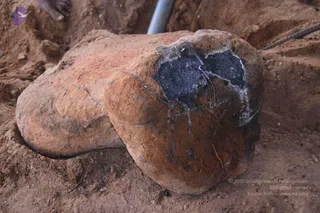
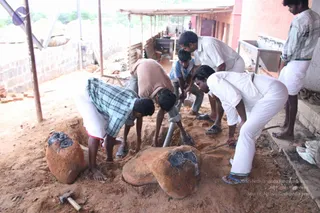
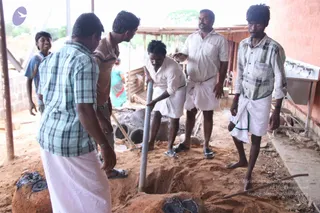
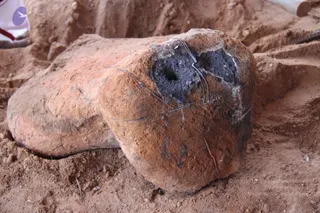
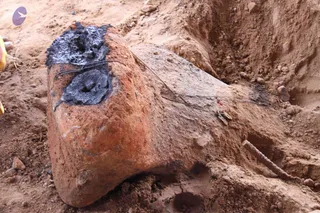
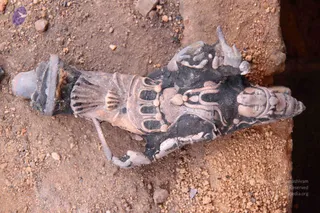
A large weathered stone sculpture lies partly excavated in reddish-brown soil. It appears to be a broken or unearthed carved stone object, with a dark, smooth patch and wire tied around its surface. A bare foot is visible at the top left edge and a metal pipe runs along the top of the frame. The scene looks like an archaeological or site-clearing excavation. No people are clearly visible apart from the partial foot.Five men work in a dusty open-sided shed digging around large rounded orange-brown stones half-buried in red soil. Two men in white dhotis and sleeveless shirts crouch and lever a metal bar into the ground, while a man in a checked shirt and white lungi bends over the nearest stone. A boy in a blue shirt and a man in a brown shirt also help, and a hammer lies in the foreground beside a rope. Brick walls, metal poles and a wash-basin counter surround the work area. No ritual is visible; the scene shows manual labour on a construction site.Several men work outdoors at a dug pit in sandy ground beside a partly built open-sided structure with a pale wall and a steel sink unit on the right. A man in a white dhoti and white shirt stoops to hold a long metal pipe over the hole, while others in checked shirts, a brown shirt and white dhotis stand around watching. Two large dark clay pots lie partly buried nearby, and a boy stands at the left edge. No deity, throne or swami is visible in the scene.Close view of a large weathered reddish-brown stone object partly buried in loose tan-brown earth. The rough rounded stone has a dark, blackened, pitted patch on its upper surface, with thin wire or metal strands wrapped and running across it. Another stone shape lies beside it, with sand and soil around both. No people are visible.Close-up photograph of a large weathered reddish-brown clay or terracotta object half-buried in loose reddish soil at an excavation site. The object has two dark, blackened hollow openings on its top surface, with thin wire or string threaded around it. A rusted metal rod lies in the dirt at right, and small stones and loose earth surround the find. No people are visible in the frame apart from a partial yellow sleeve at the far left edge.Close overhead photo of a weathered, partly broken clay figurine lying on coarse reddish-brown soil with small pebbles and grit. The figurine shows a seated or reclining form with a band of beaded ornamentation across the chest, a raised arm, and a sculpted face on the right end, with blackened, sooty patches on its surface. No people are visible; the object appears to be an excavated or found terracotta-style deity murti fragment.

TEMPLE
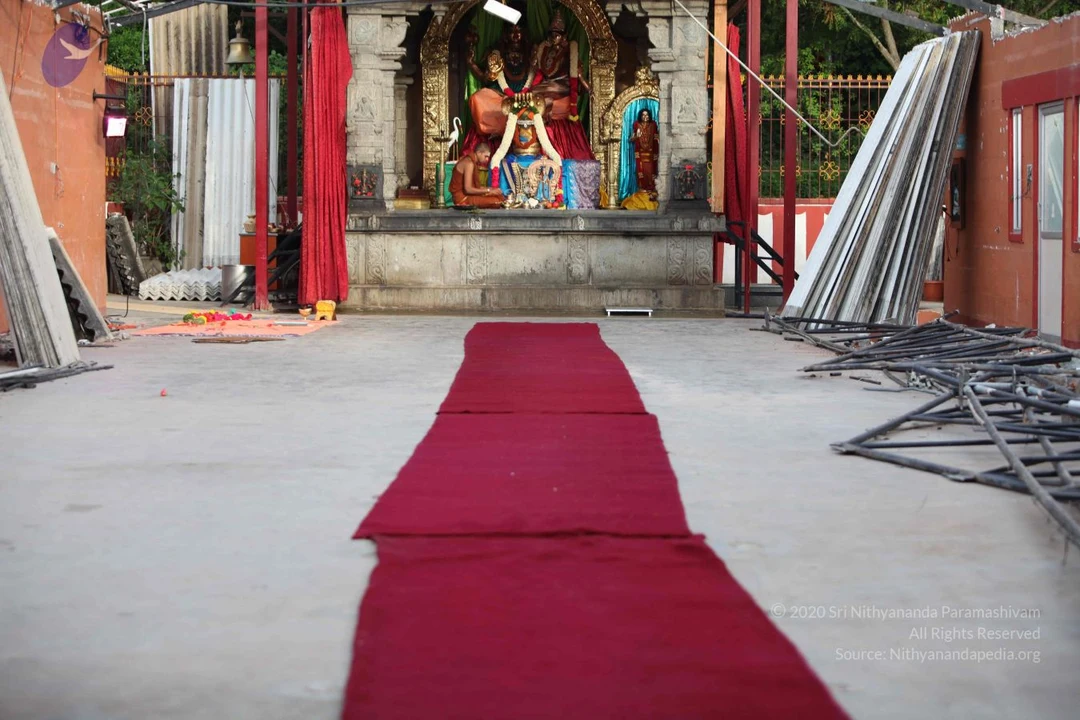
26 photosSource gallery
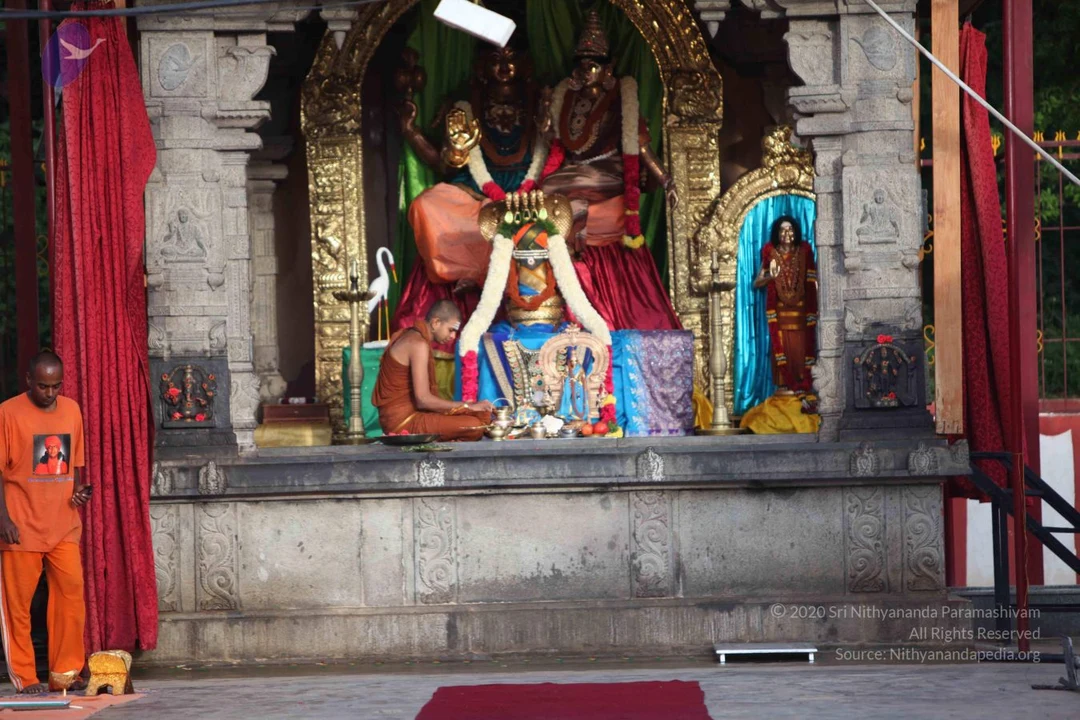
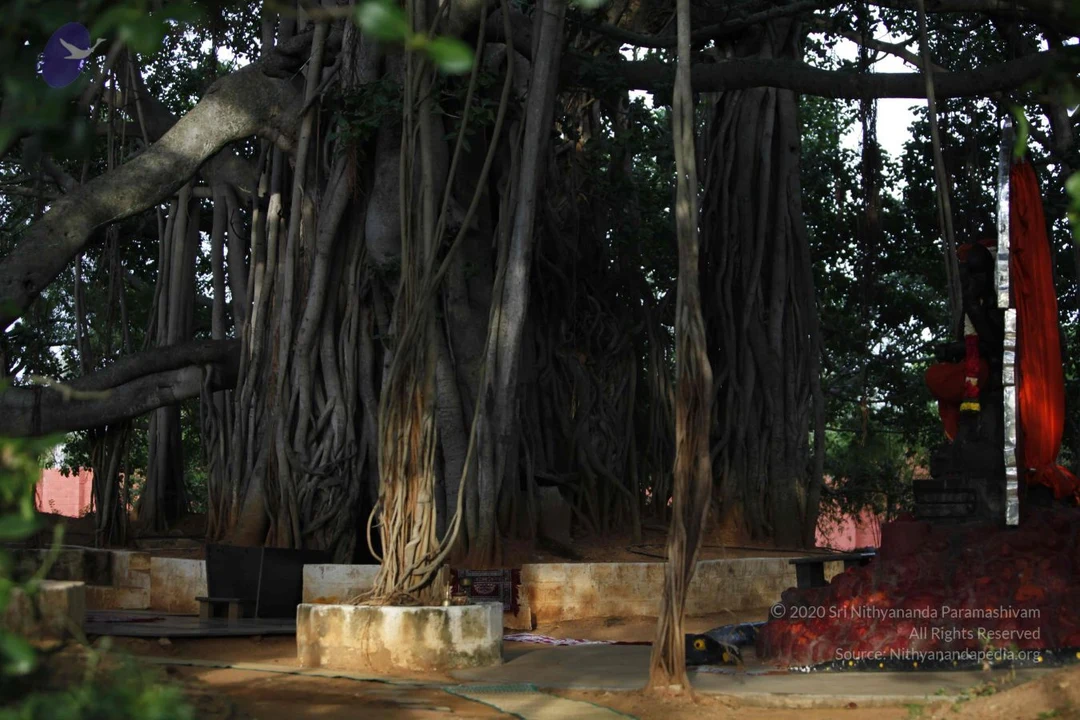
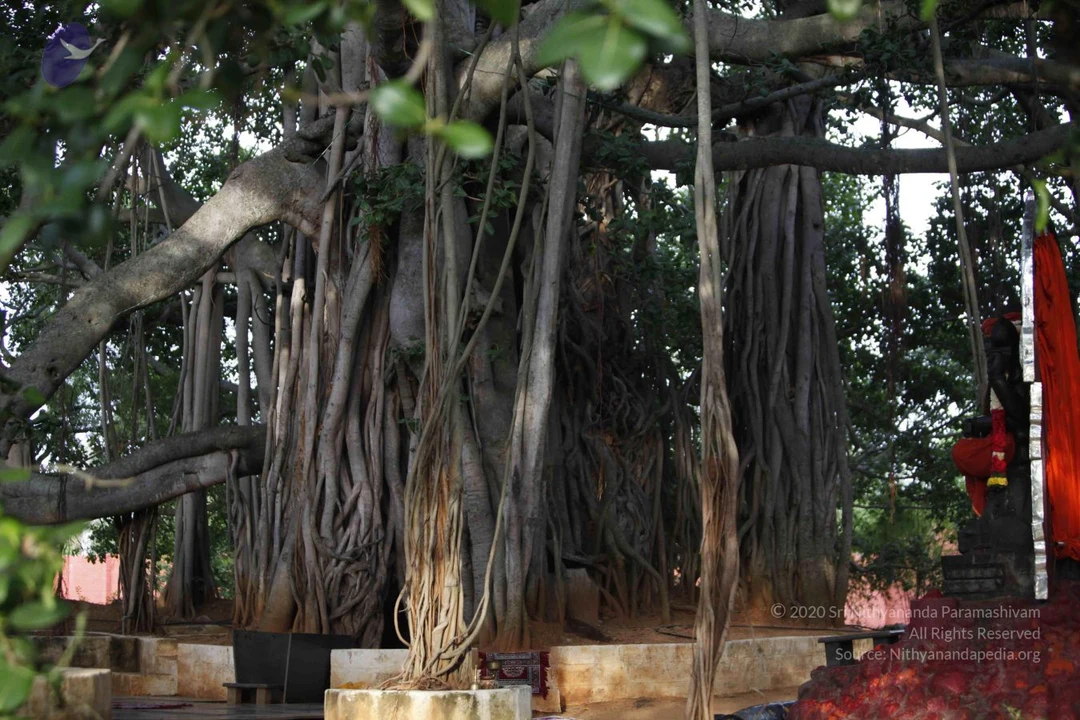
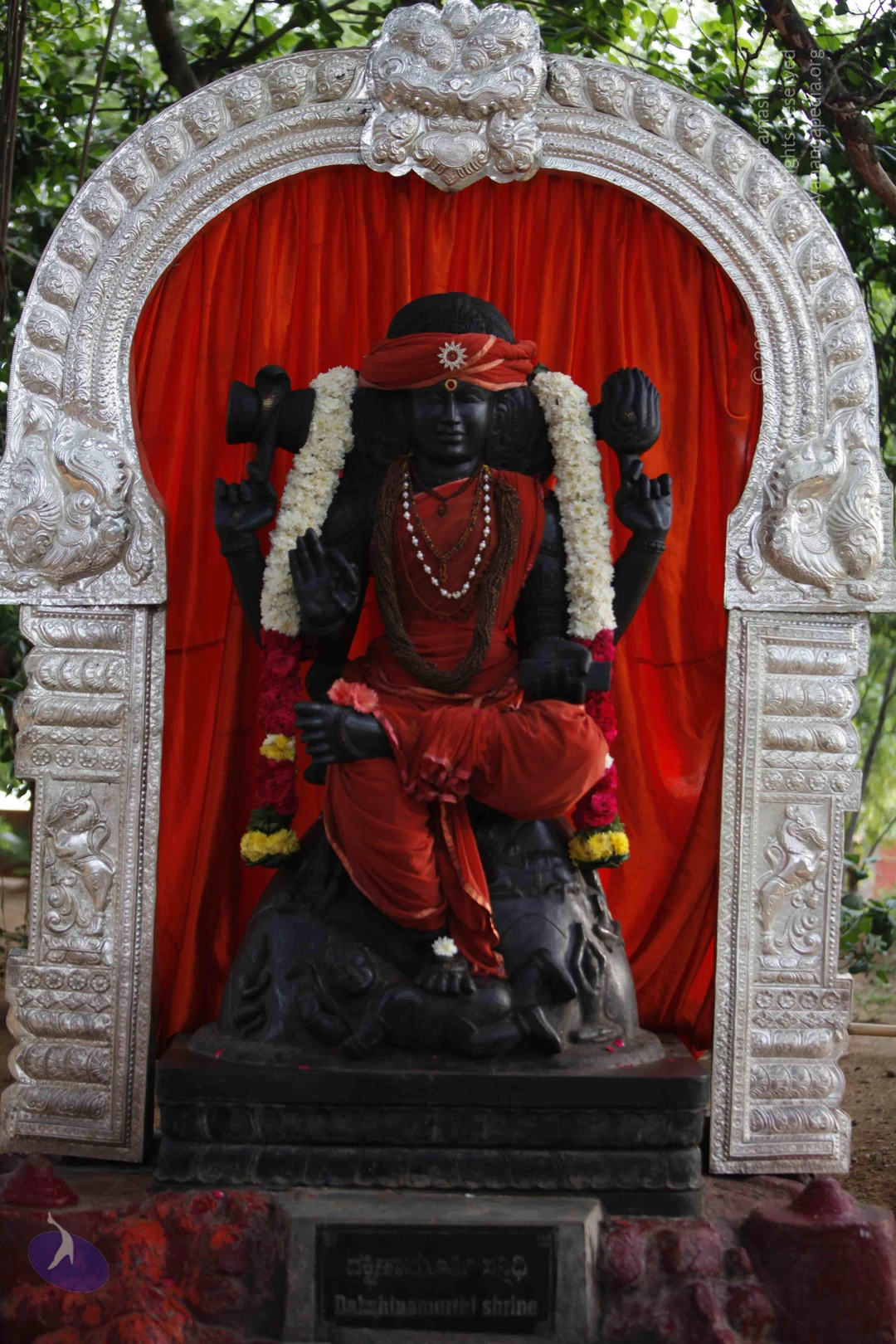
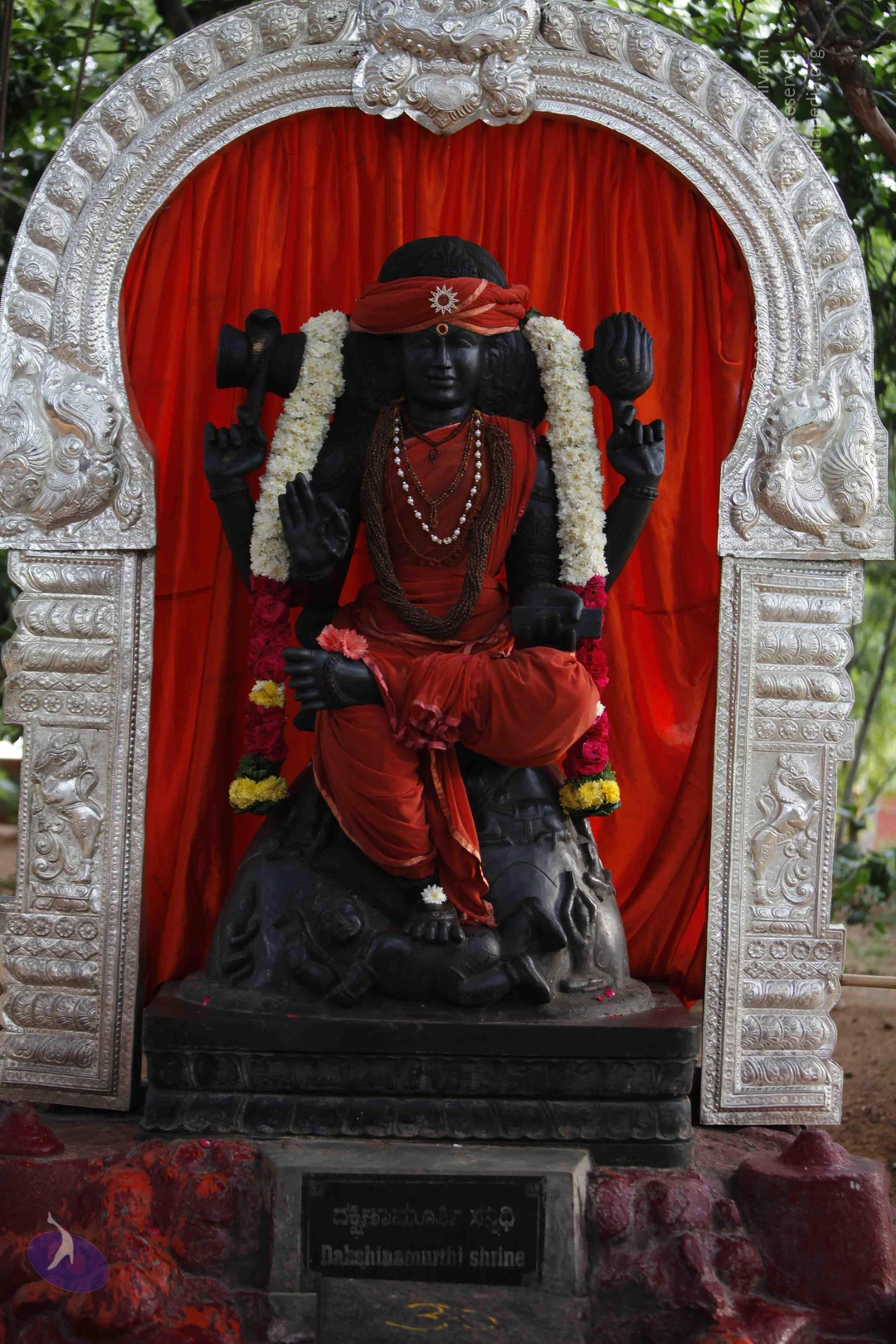
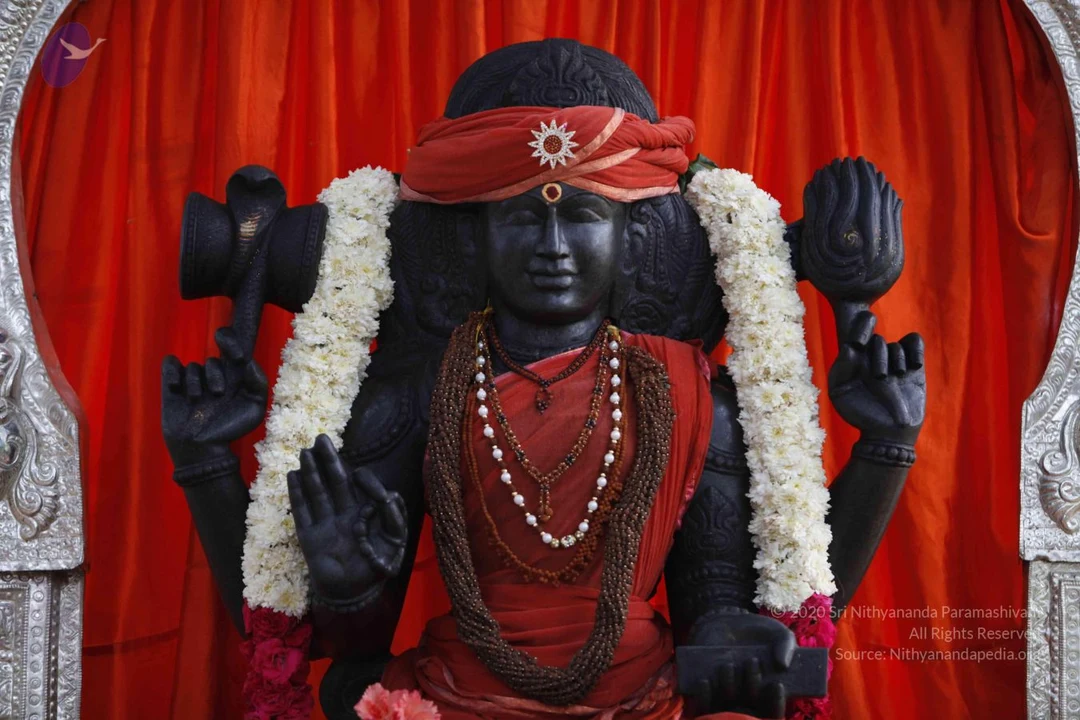
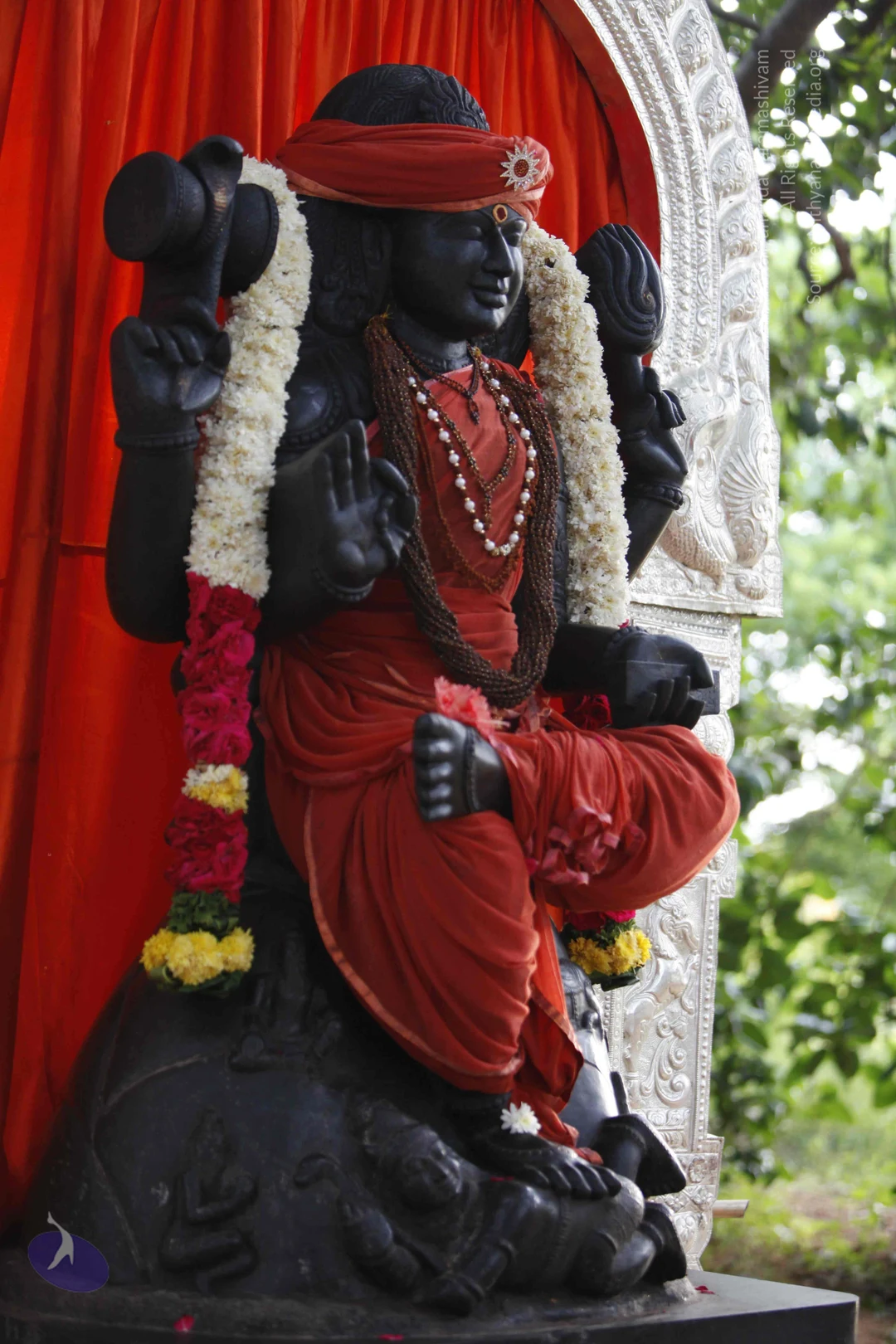
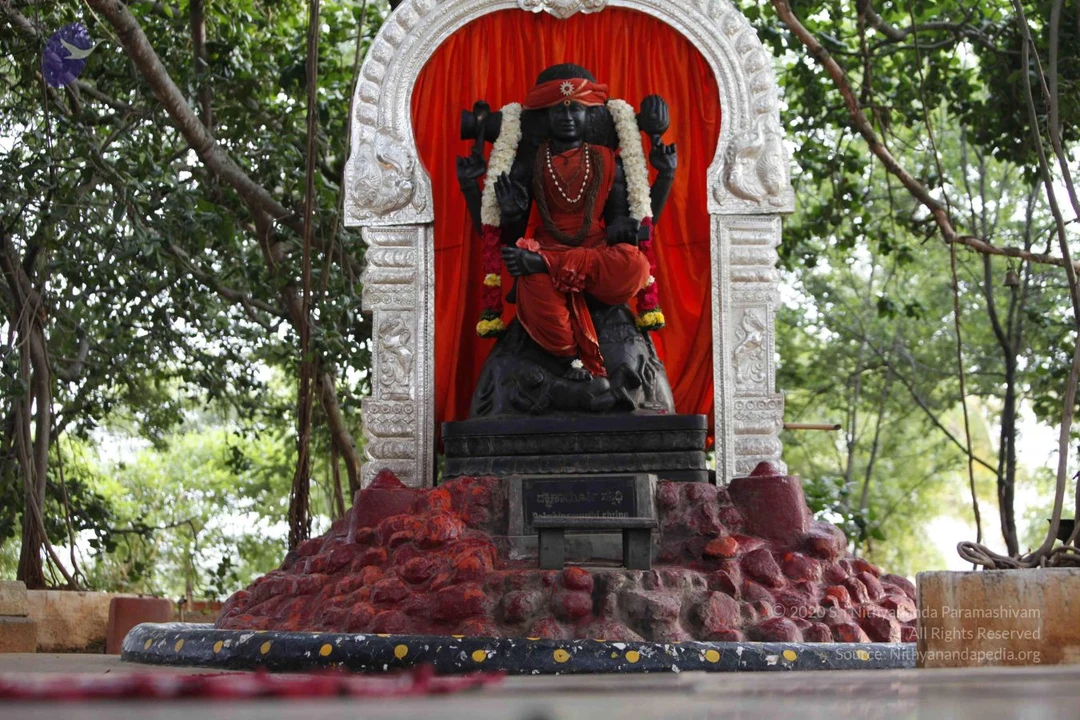
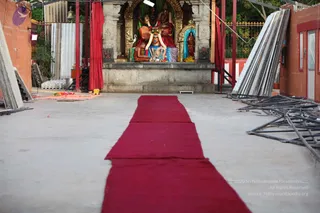
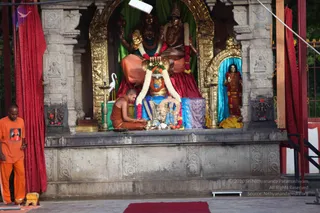
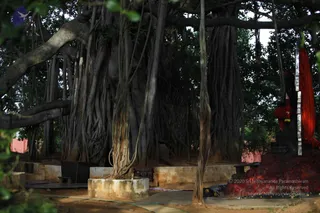
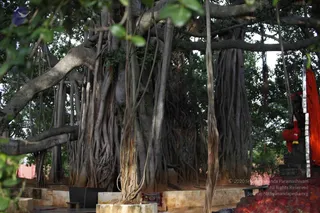
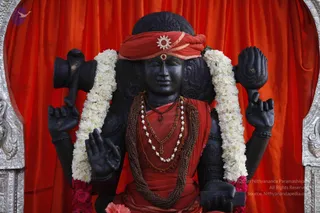
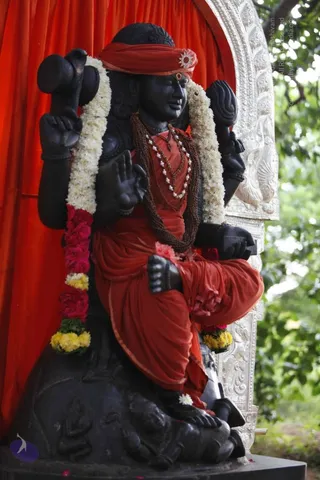
A photograph of an open courtyard with a long red runner laid across the concrete floor leading toward a shrine. At the back, a stone shrine holds a deity murti with a red cloth backdrop, garlands and offerings, and a small figure of a person bending over the shrine base in front of it. Stacked metal sheets and scaffold poles lie along the sides, and a small orange cloth with flowers sits on the left. A standing figure in blue and gold stands to the right of the shrine. The scene looks like preparation before an event.A temple shrine with a grey stone base and gold-framed niches holds a large deity murti of Shiva and Parvati seated behind a central lingam decorated with white and red garlands. A shaved-headed priest in an orange robe kneels at the front of the platform, tending brass lamps and offerings. To the left, a man in an orange t-shirt with a printed portrait stands near a red curtain, and a small figure of a bull sits on the floor. A red mat lies on the ground in front, and a niche on the right holds a standing figure in red and gold.An outdoor photograph of a large ancient banyan tree with many thick hanging aerial roots and sprawling branches forming a shaded canopy. At the base of the tree stand a whitewashed circular platform and a low concrete step. On the right, a dark stone deity murti or shrine is draped in a red cloth and set on a red-painted base with a red garland, beside a tall dark stone pillar. The ground is bare earth with a paved path. No people are visible in the scene.A large, ancient banyan tree dominates the scene, its thick trunk and many hanging aerial roots forming a dense canopy. Beneath it sits a raised stone platform with small benches and a square offering stand. At the right edge, a deity murti stands draped in a bright orange-red cloth with red flowers and a garland. The area is shaded and no people are visible.A dark stone murti of a four-armed deity stands against a vivid orange-red drape. The figure wears a red turban with a white sunburst emblem and a red bindi, a rudraksha mala and white pearl necklaces, and a red-orange cloth draped over the body. White jasmine garlands with pink flowers hang from the shoulders, and the arms hold ritual objects. Pink and orange flowers sit at the base, and a silver-framed niche surrounds the figure.A dark stone murti of a multi-armed deity seated on a dark pedestal carved with small figures, set against a bright red-orange draped backdrop and a silver-toned arched frame with floral relief. The figure wears a red turban with a sun-like ornament, a red-orange dhoti-style garment, layered brown and white beaded necklaces, and white and pink-red garlands draped over the shoulders. One hand is raised in abhaya mudra, and the lower hand rests on the knee. Green foliage fills the background. No physical people are visible; the figure is a statue, so the a person field is depiction only if a candidate is present, and here it is none.

YOGA IA
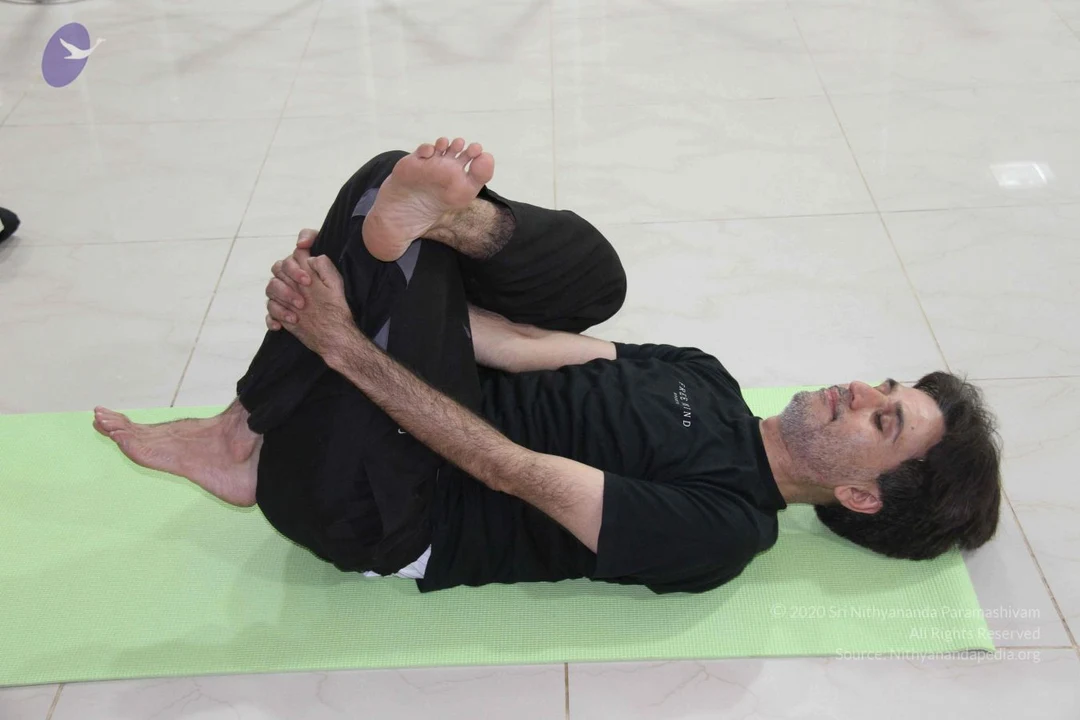
7 photosSource gallery
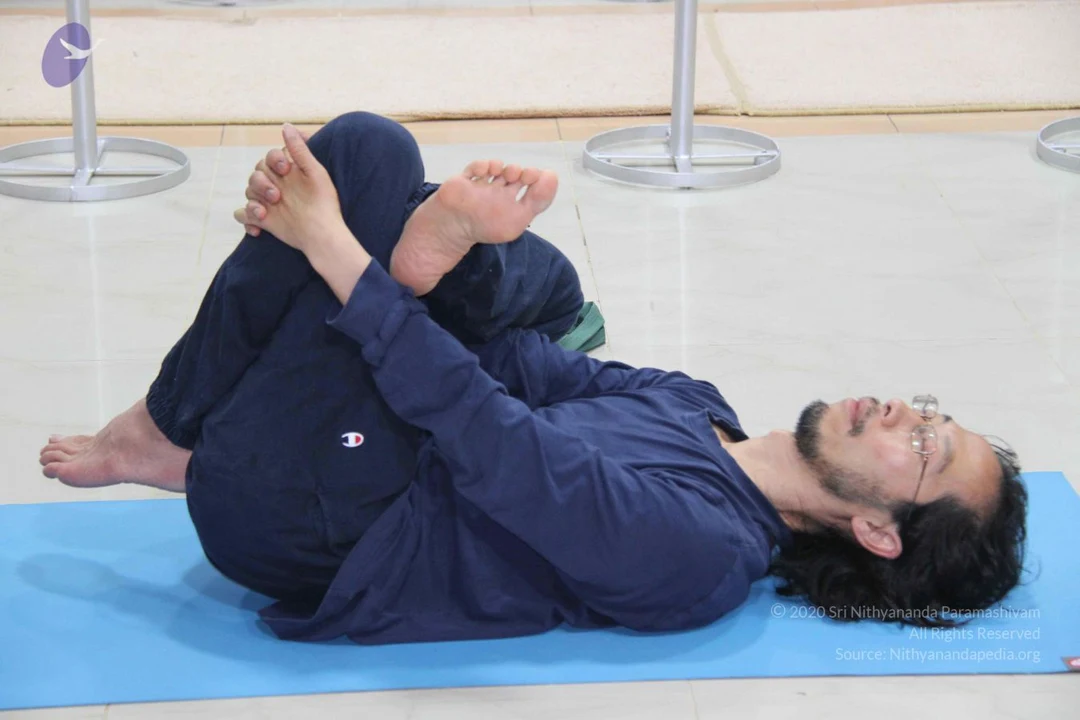
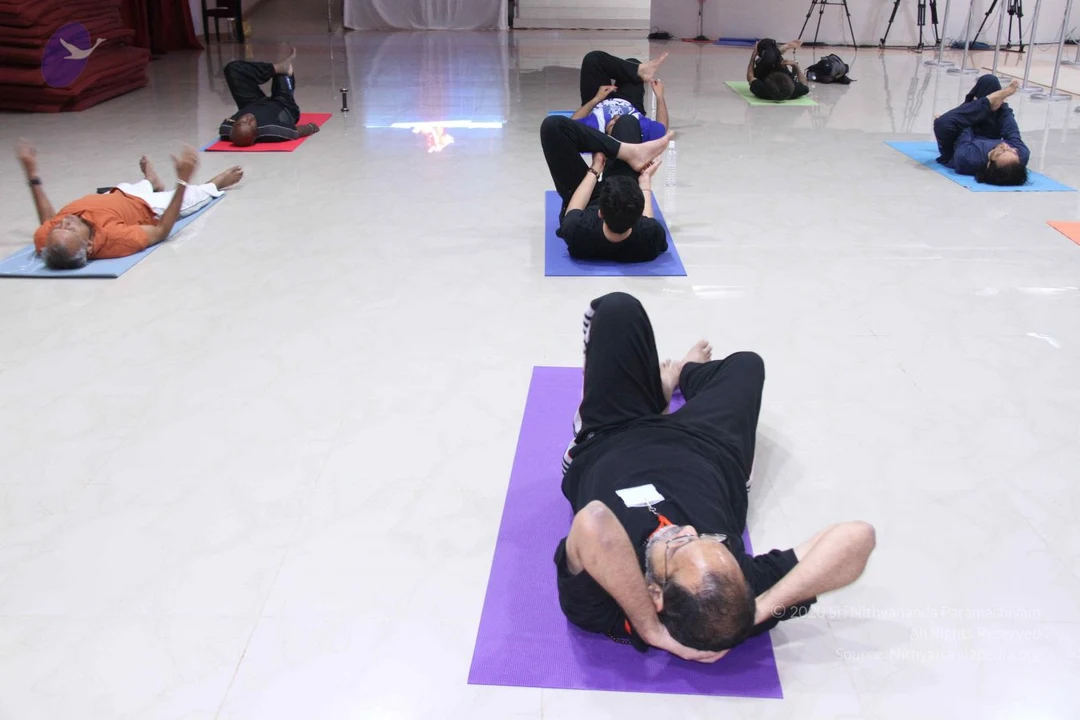
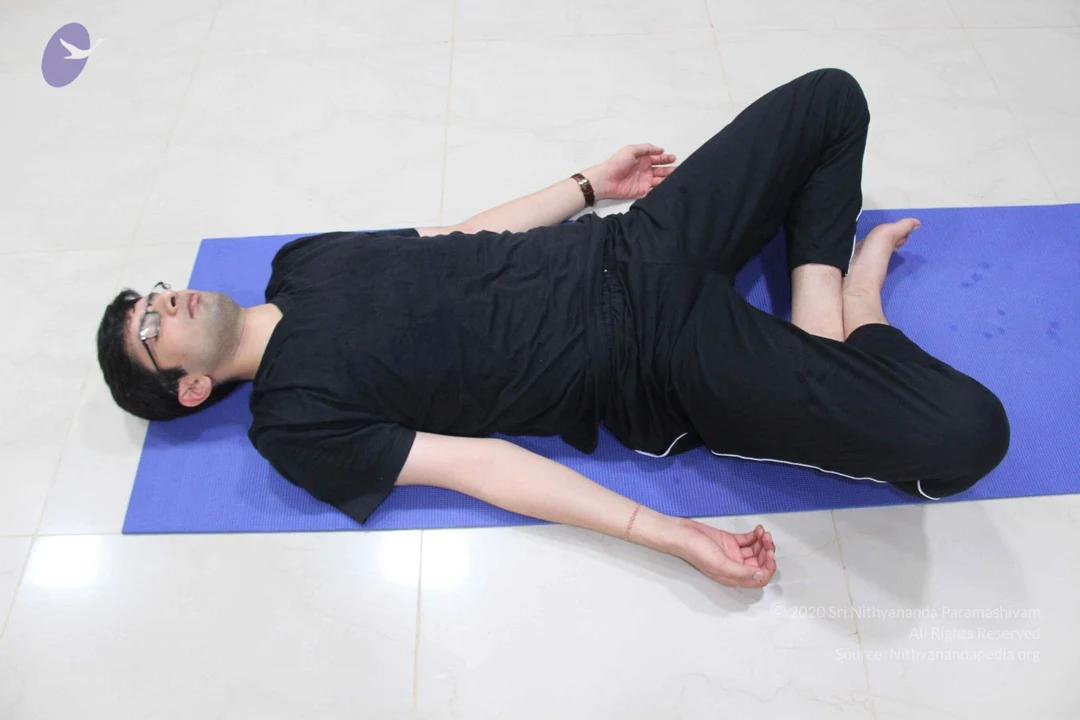
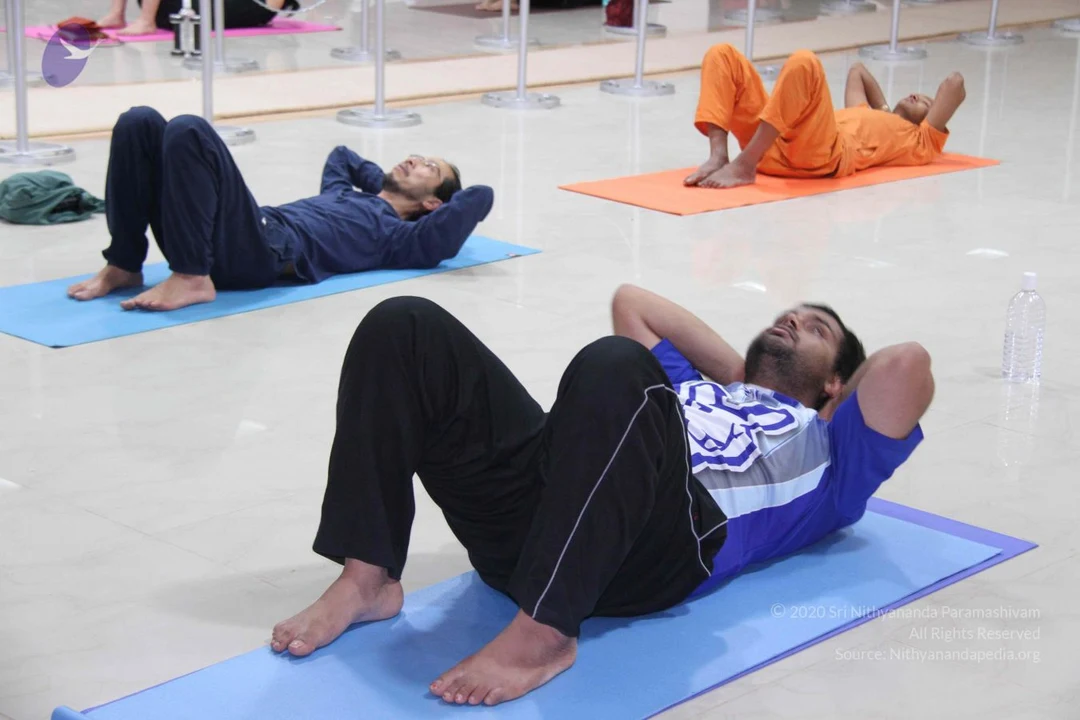
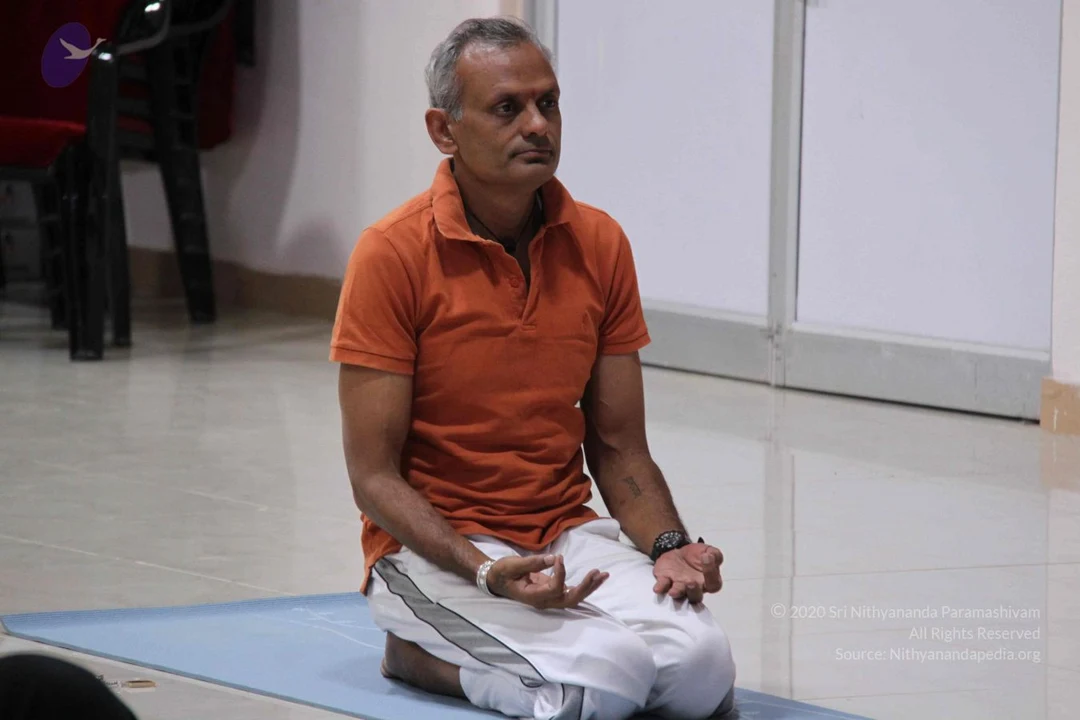
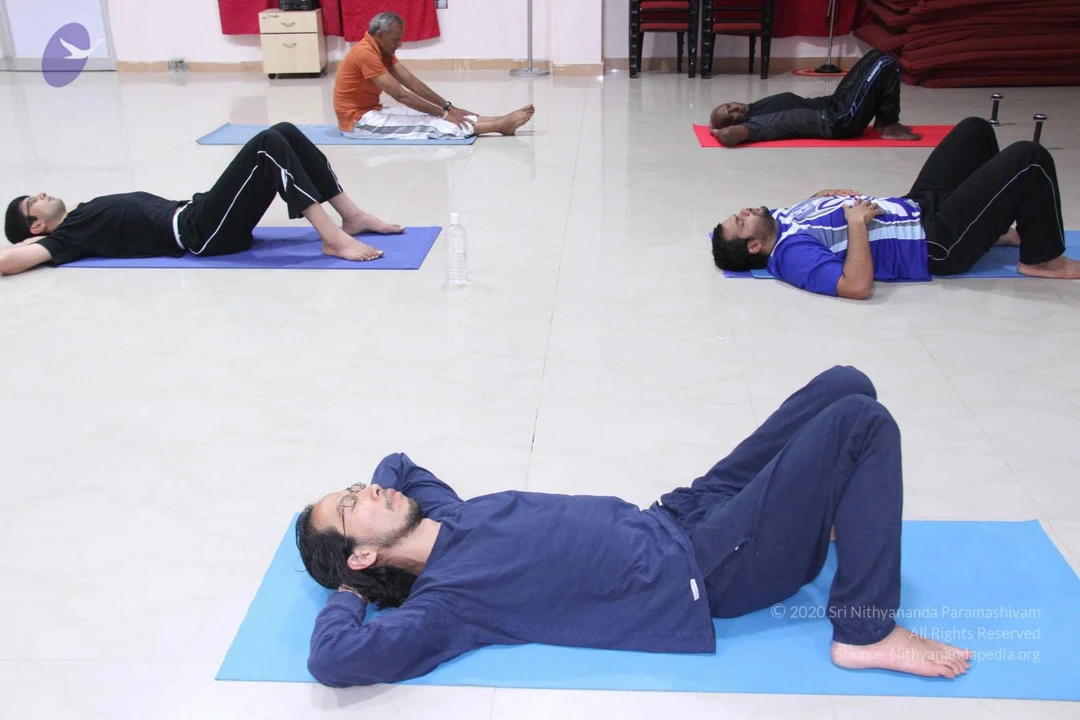
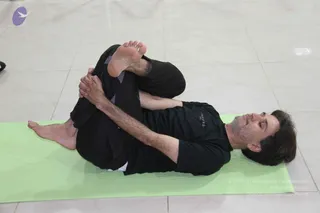
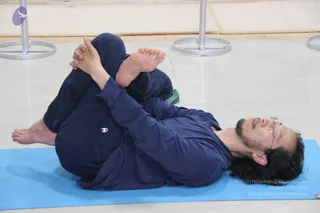
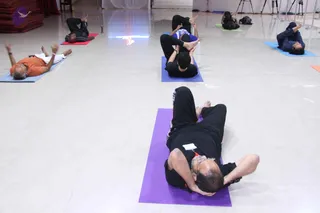
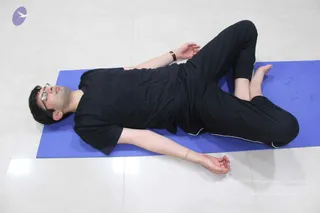
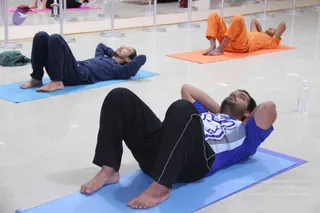
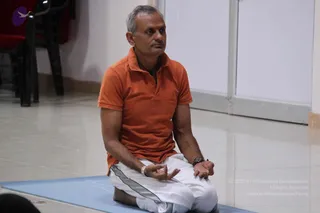
A man in a black short-sleeved t-shirt and black pants lies on his back on a light green yoga mat on a pale tiled floor, performing a supine stretch with one knee drawn toward his chest and his foot raised, both hands clasped around the shin. His eyes are closed and his face is calm. The white-tiled room is bare apart from the mat. The photo is from an archive and carries a faint copyright overlay in the lower right.A man lies on his back on a light blue yoga mat on a cream tiled floor, performing a supine stretch by holding both bare feet with his hands while his knees are drawn toward his chest. He wears a navy blue long-sleeved top and matching navy trousers, with small wire-framed glasses and long dark hair with a short beard. Metal stanchion bases are visible in the background, and the figure appears to be a practitioner of yoga posture practice. Only one person is present.Several people lie on coloured yoga mats on a glossy white tiled floor, practising supine yoga postures. In the foreground, a man in a black t-shirt and black track pants lies on a purple mat with his hands behind his head and legs raised. Behind him, others in black, blue and orange clothing stretch on red, blue and green mats, some with legs lifted overhead. Camera tripods stand in the background near a white curtain and red stacked cushions.A man lies supine on a blue yoga mat on a white tiled floor, performing a relaxation pose with his arms extended outward and palms open. He wears a black short-sleeved t-shirt, black track pants with white piping, thin-rimmed glasses and a brown wristwatch, and his legs are bent with one knee raised. The photo is taken from above, showing a yoga or meditation practice in a plain studio setting.Photo of a yoga session in a bright white-tiled hall with mirrored walls and chrome stanchions. Several practitioners lie on their backs on yoga mats doing abdominal exercises with hands behind their heads. In the foreground a bearded man in a blue and white athletic top and black trousers lies on a blue mat, knees bent. Behind him a man in navy clothes lies on a blue mat, and at right a man in orange clothes lies on an orange mat with legs extended. A clear plastic water bottle stands on the floor at right. No a person candidate is visible.A man sits cross-legged on a pale blue mat on a glossy white tiled floor, in a meditation pose with hands in a mudra resting on his knees. He wears a short-sleeved orange polo shirt and white trousers with grey side stripes, a wristwatch and a bangle. Behind him are white walls, a glass door and stacked black chairs with red seat backs.