Skip to content
Wednesday

29 August 2012

Dated photos
135
Source pages
1
Media
2
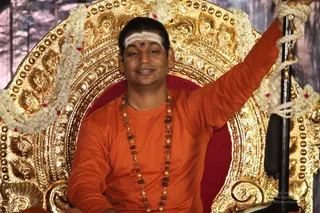
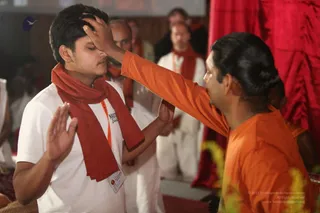
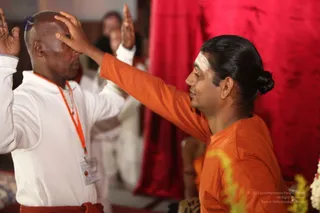
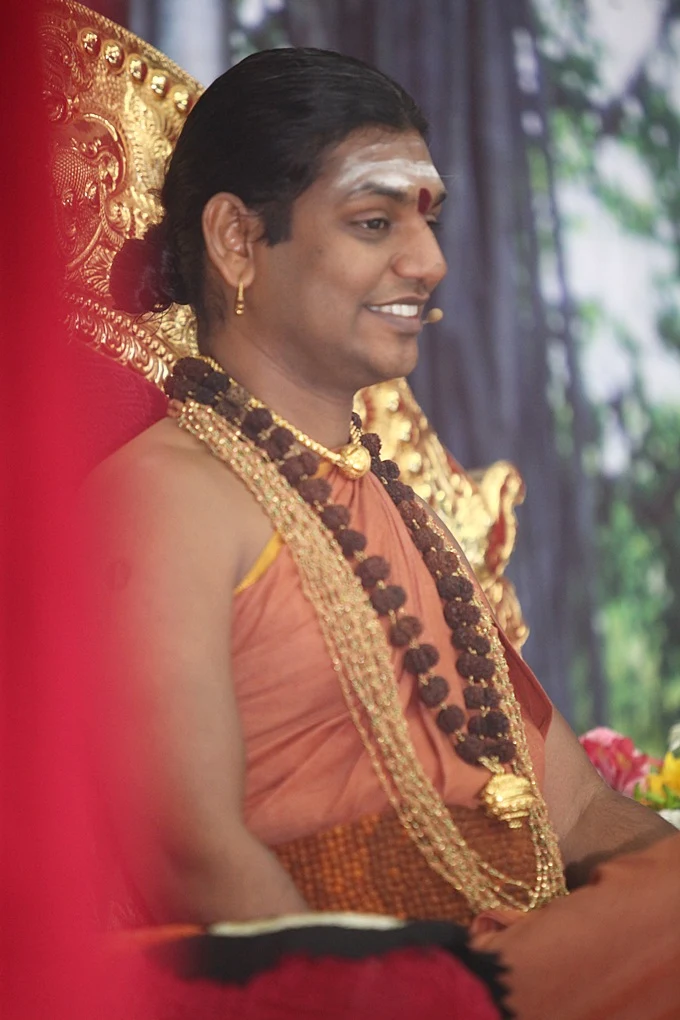
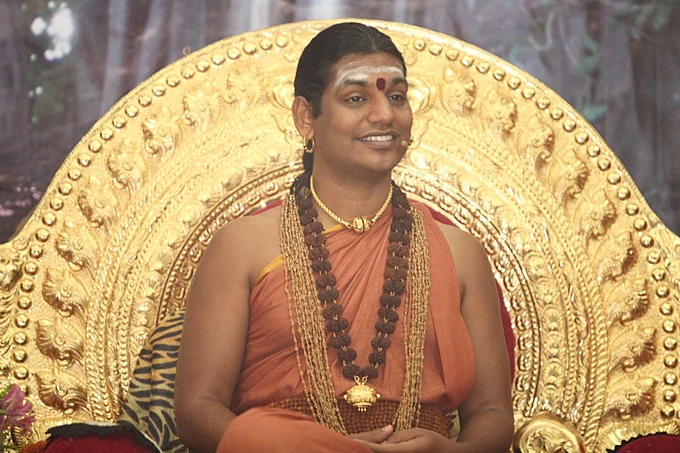
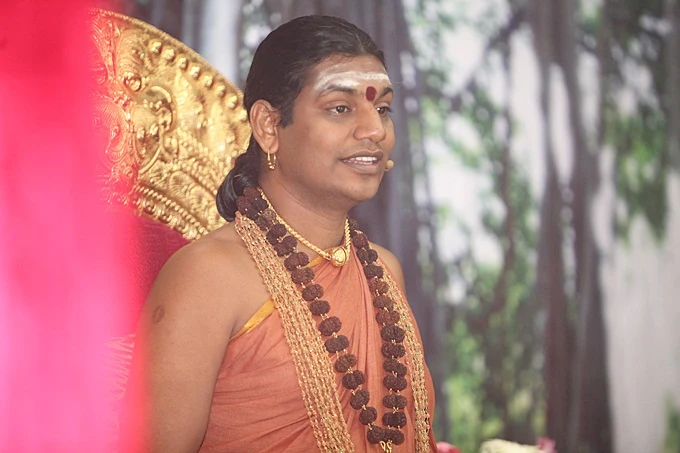
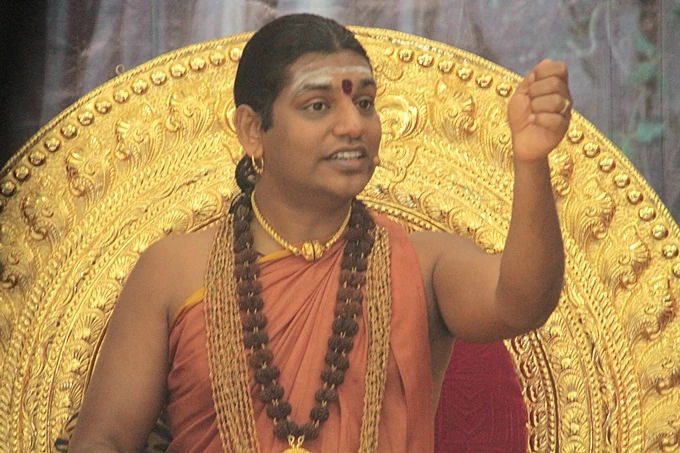
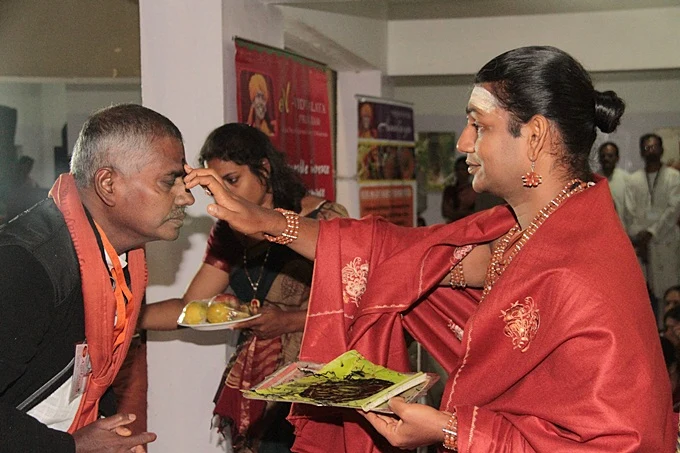
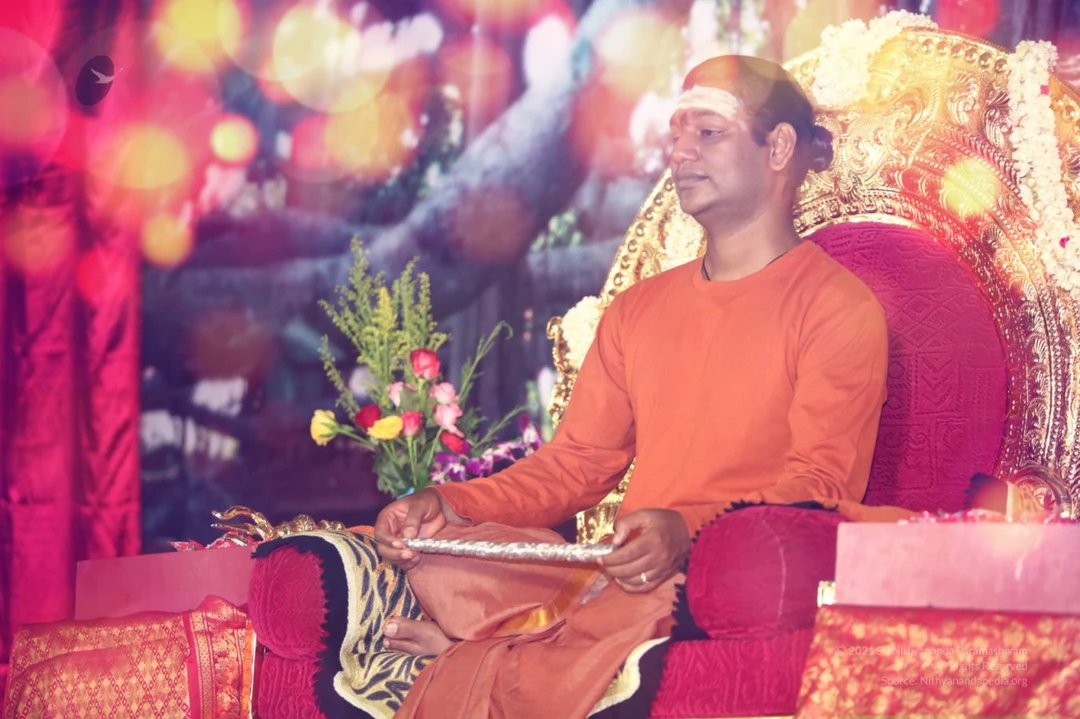
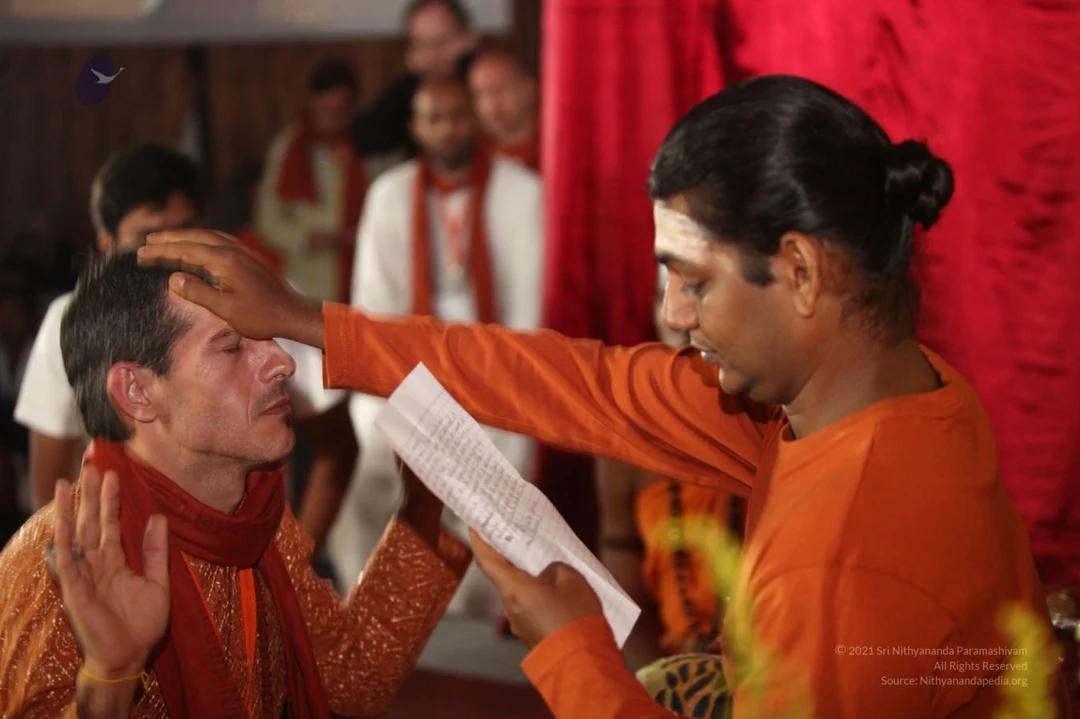
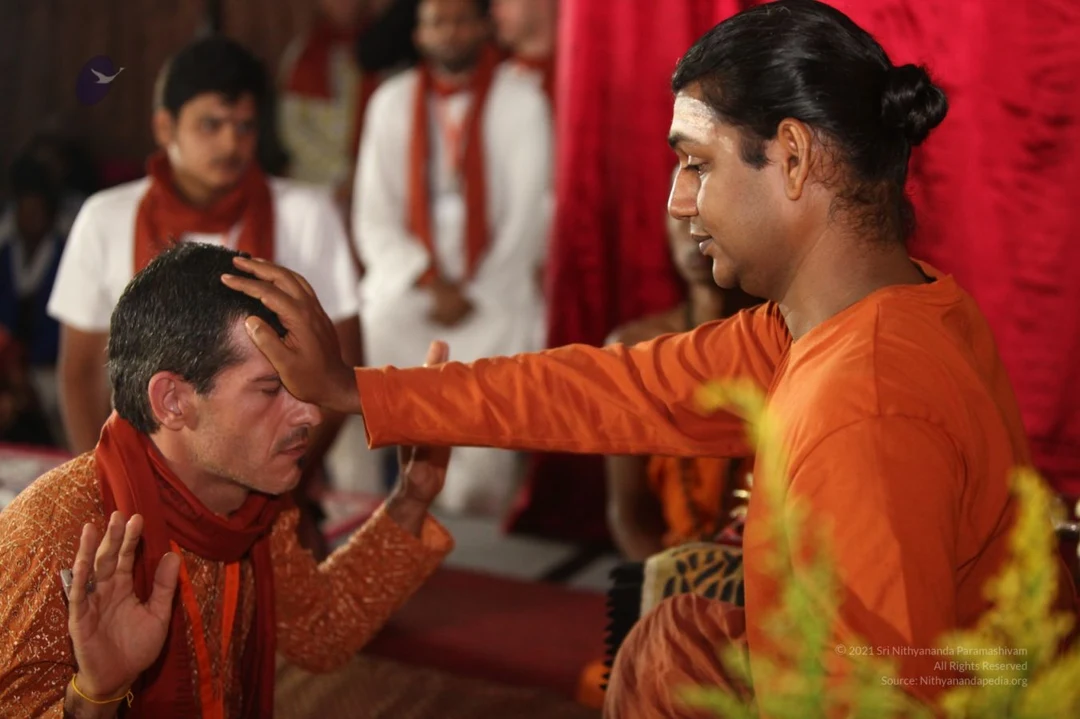
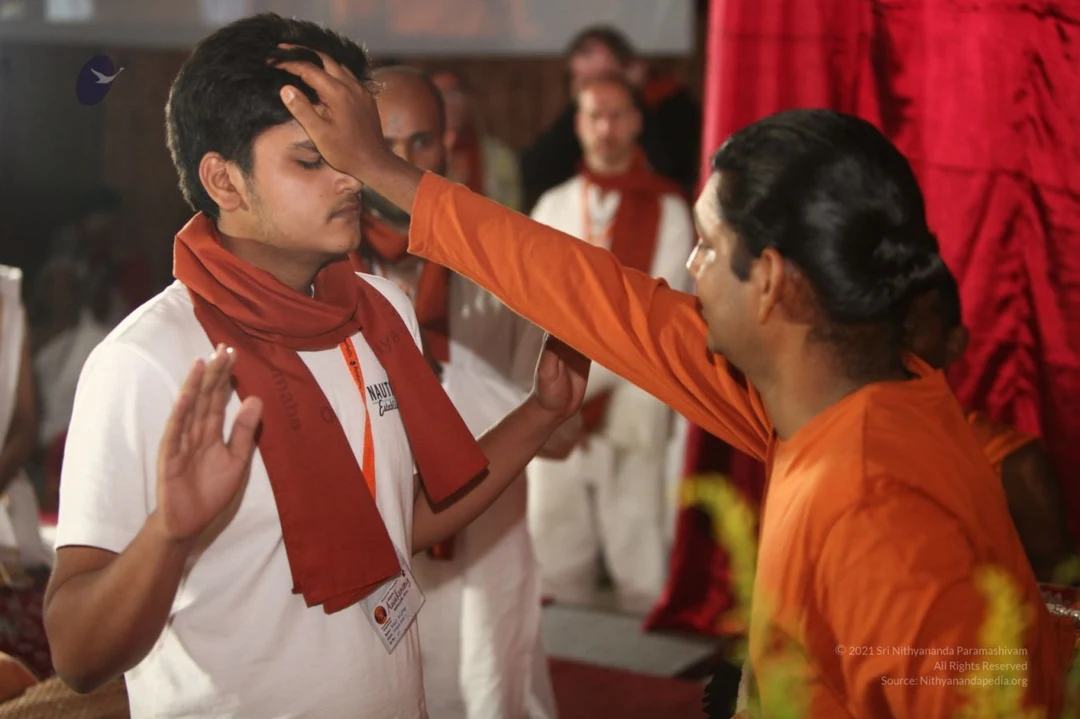
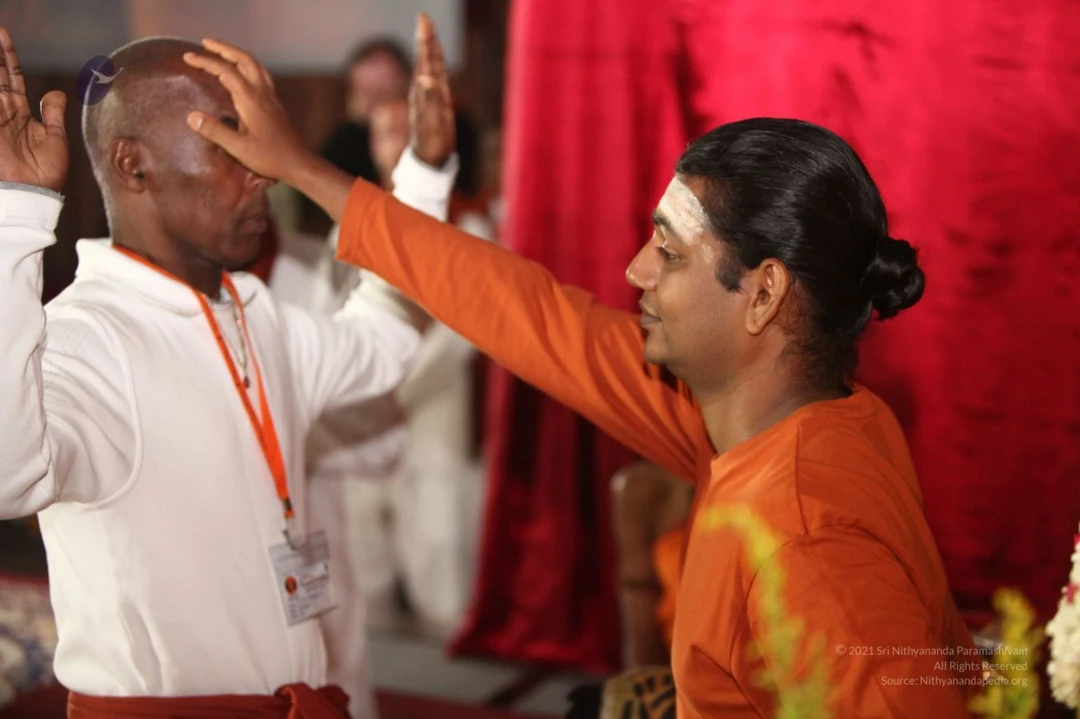
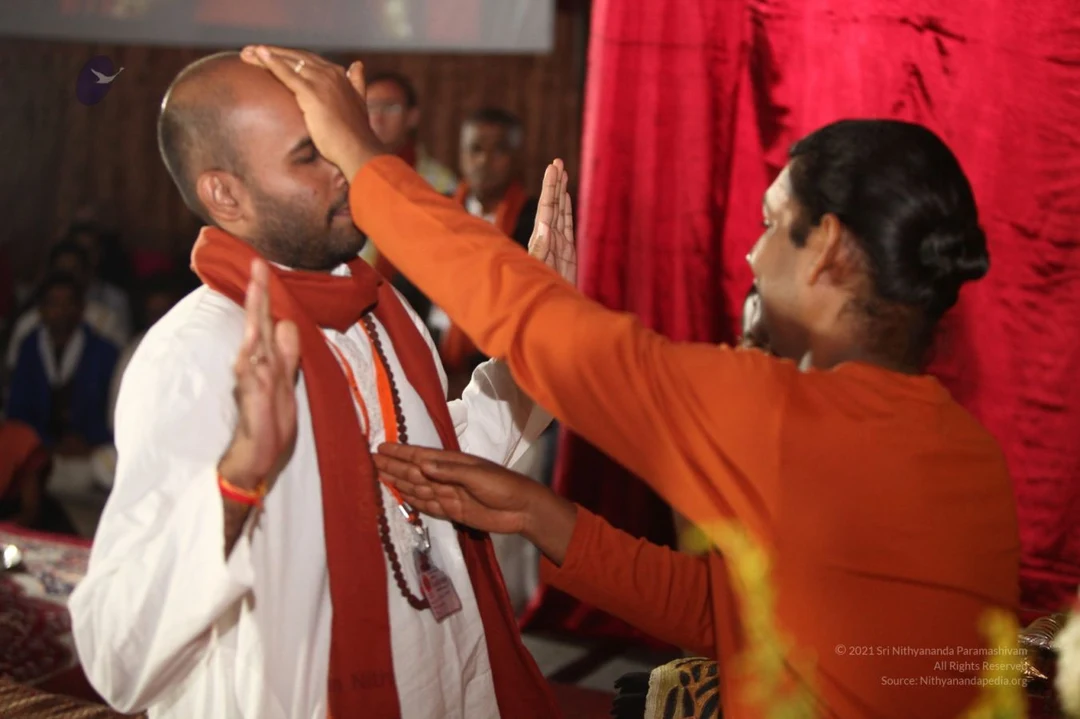
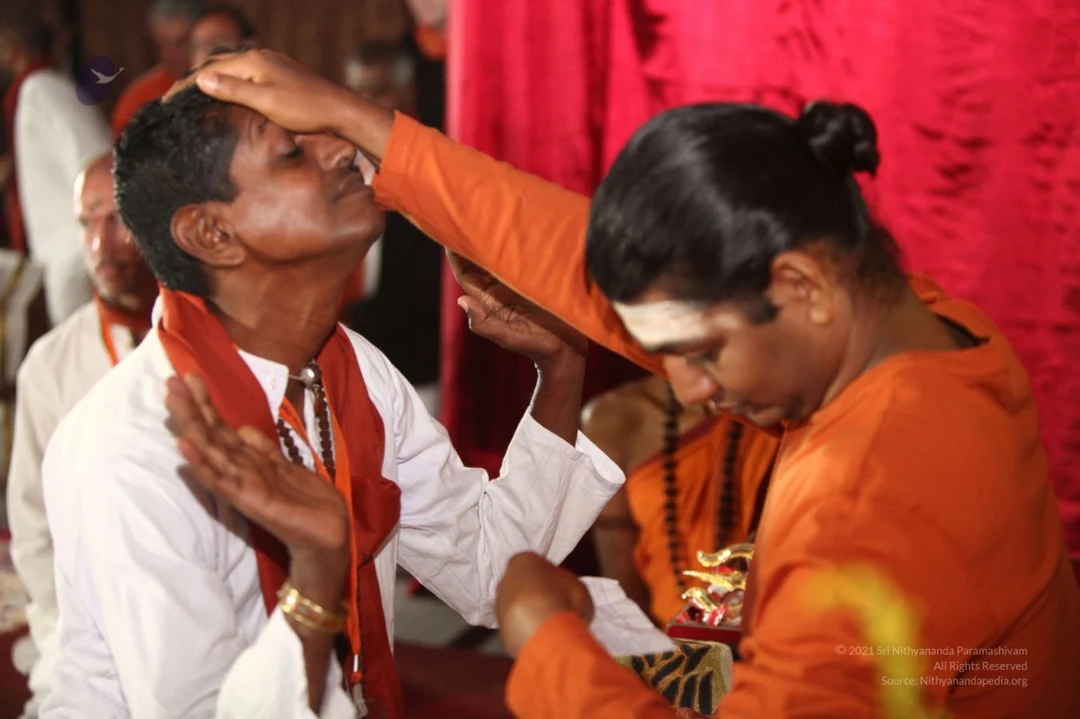
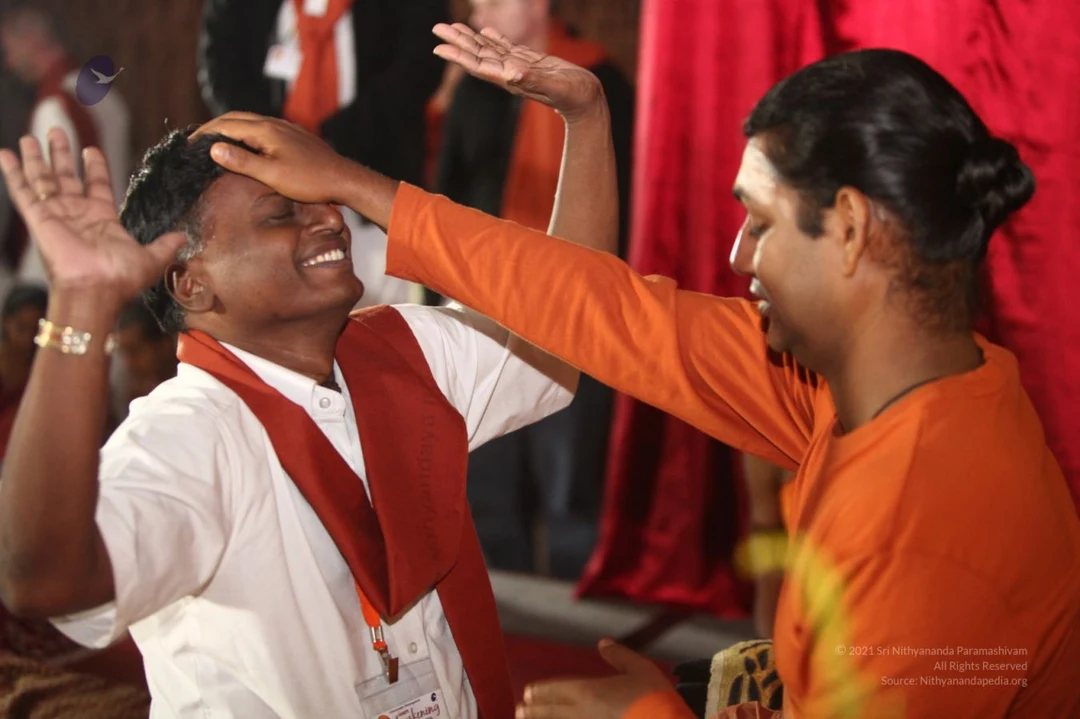
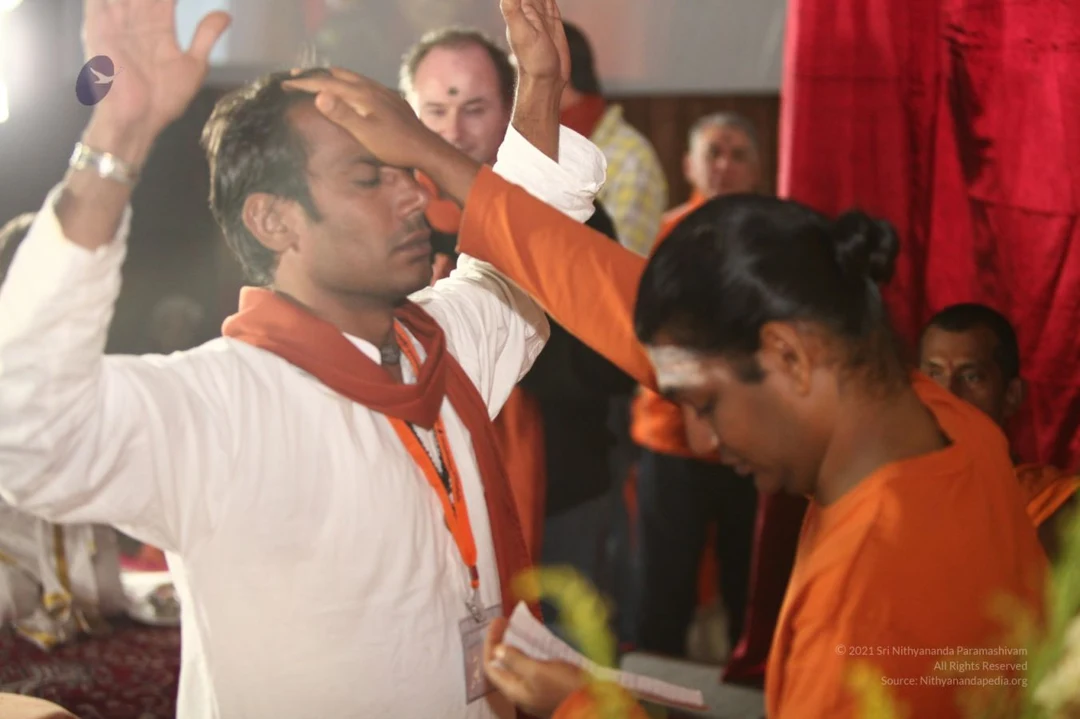
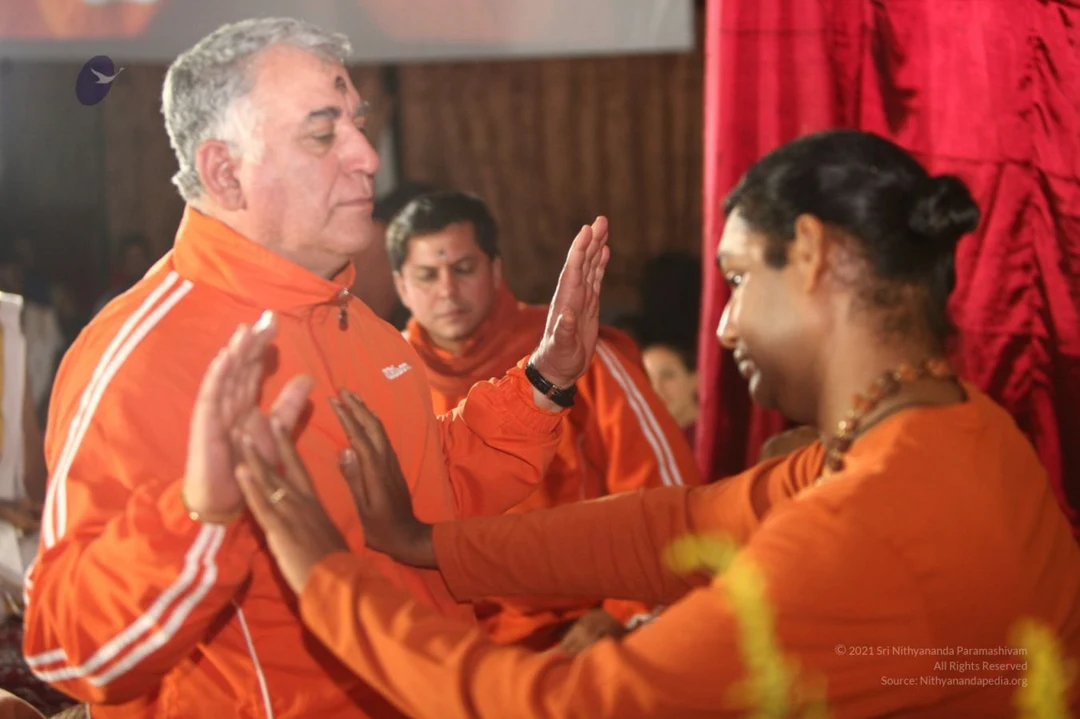
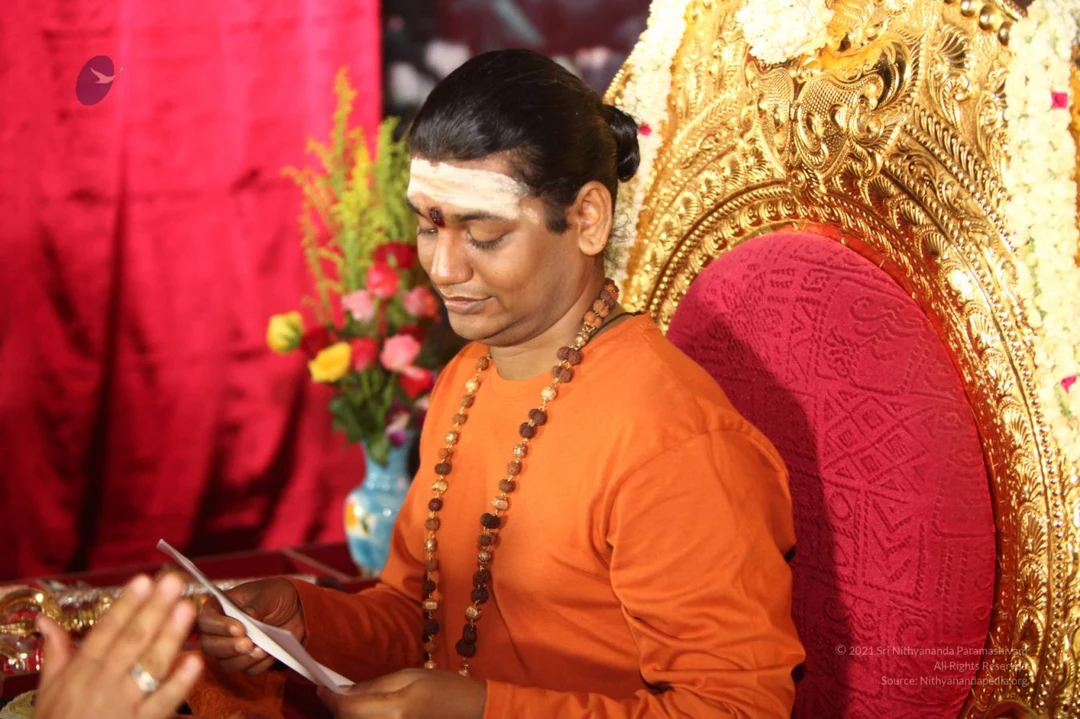
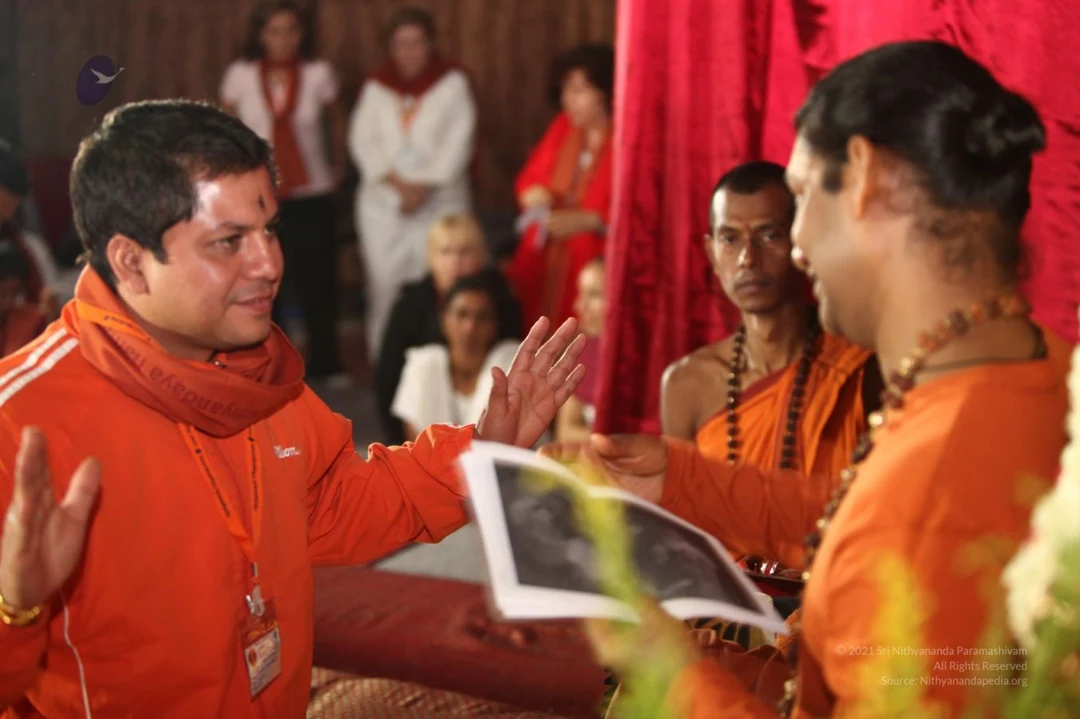
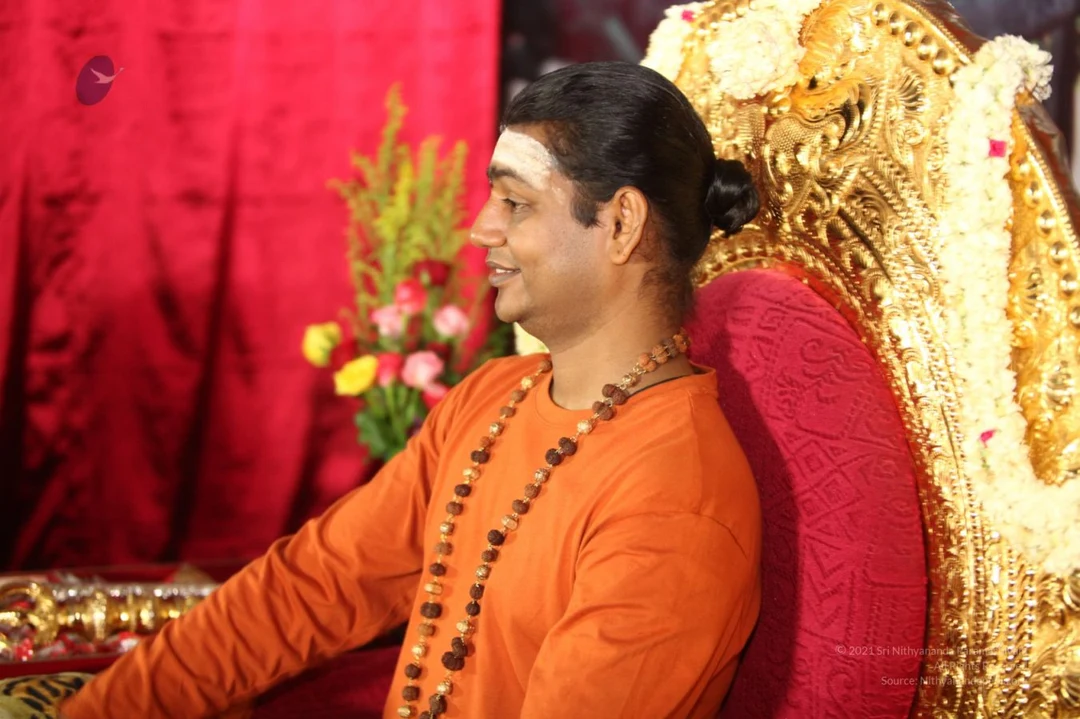
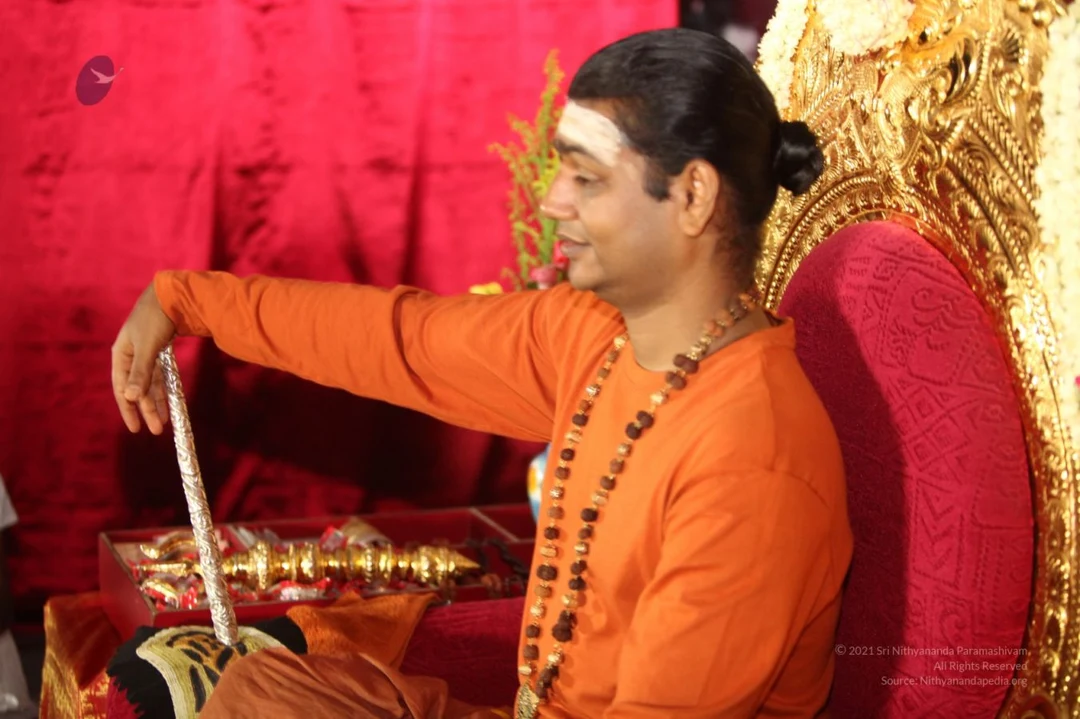
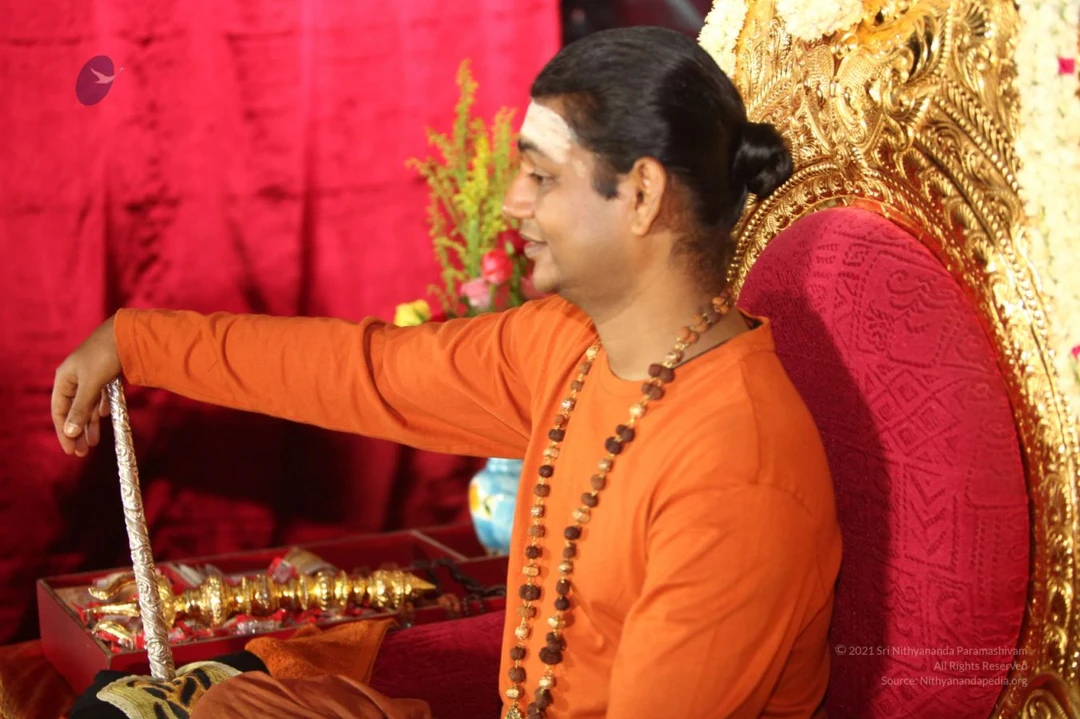
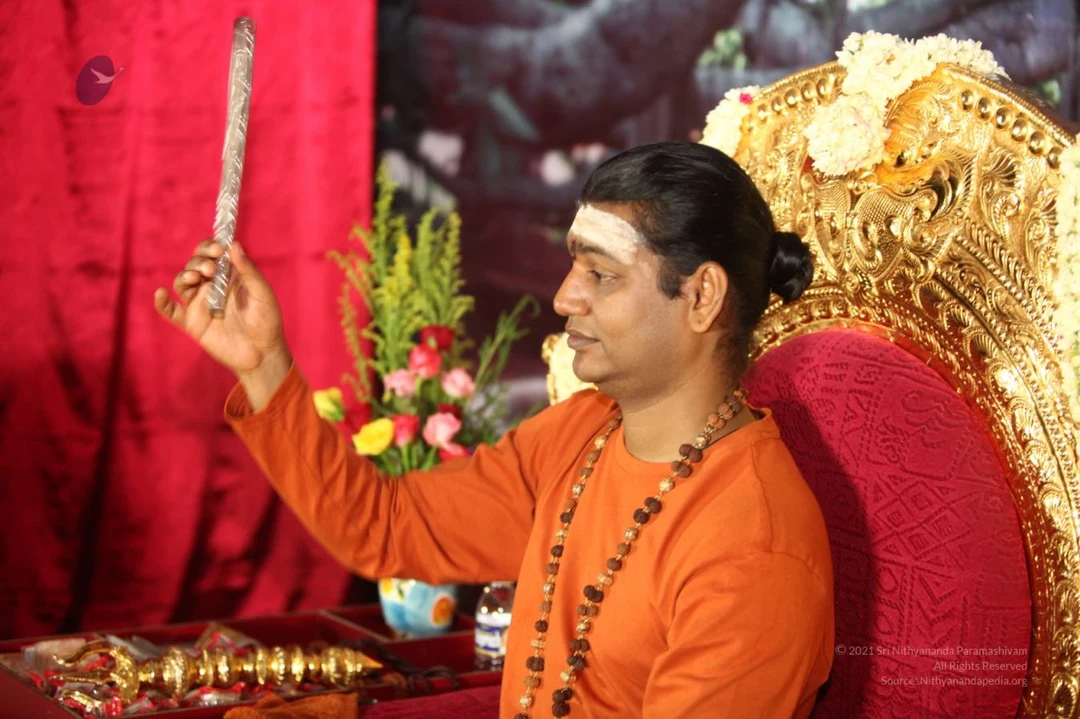
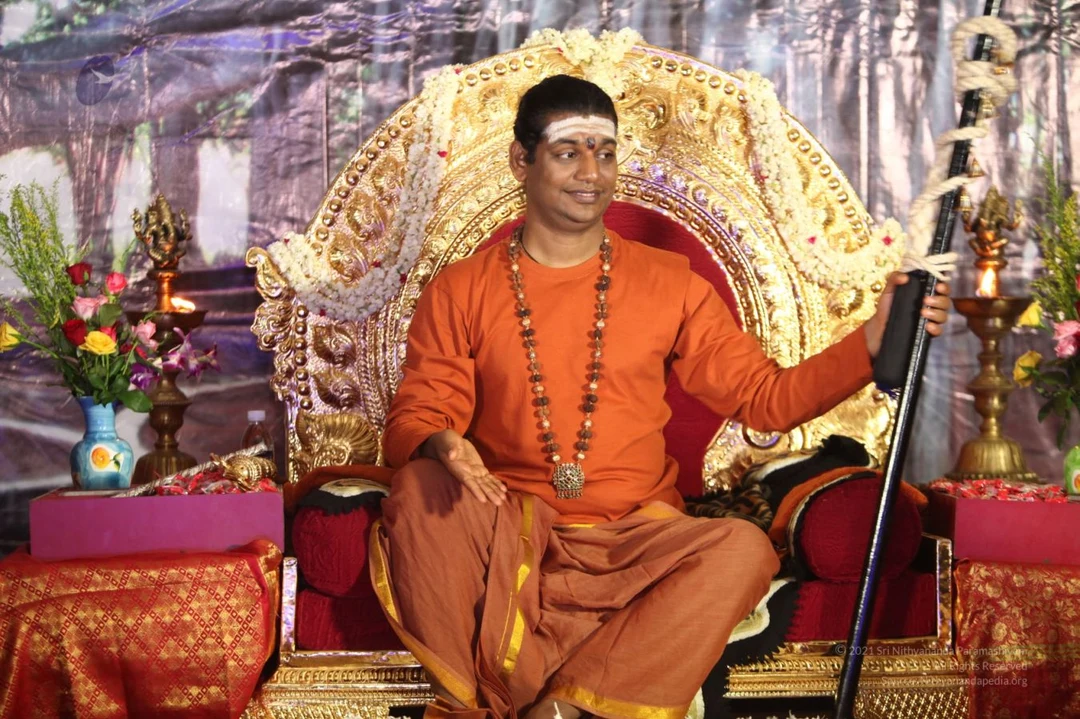
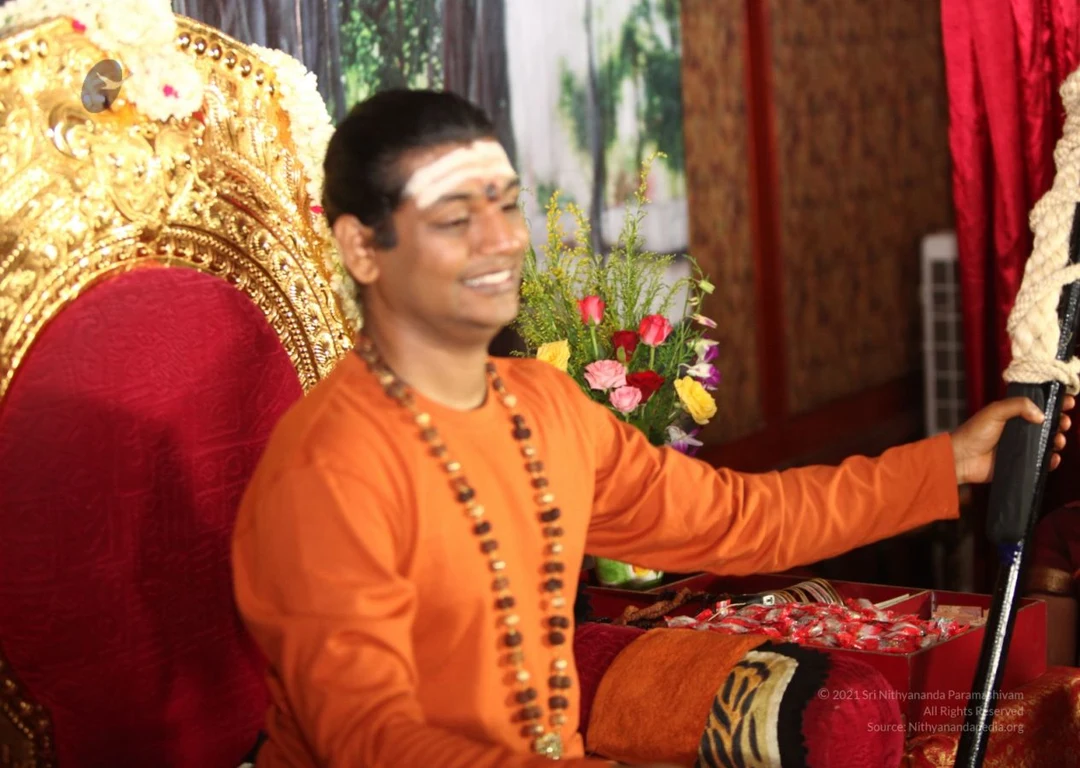
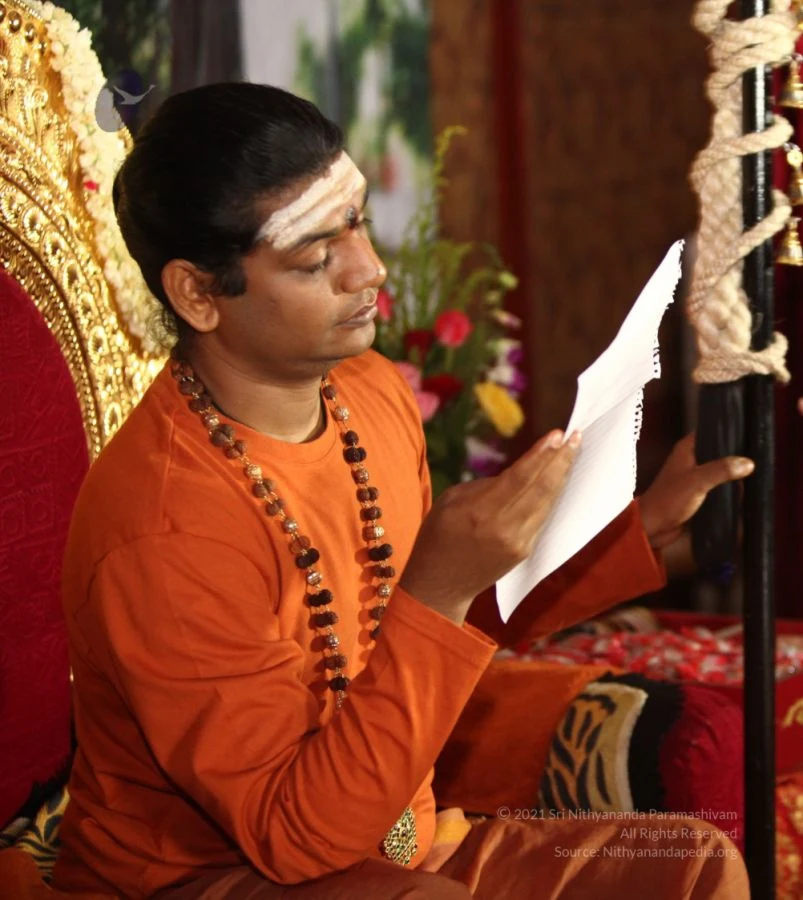
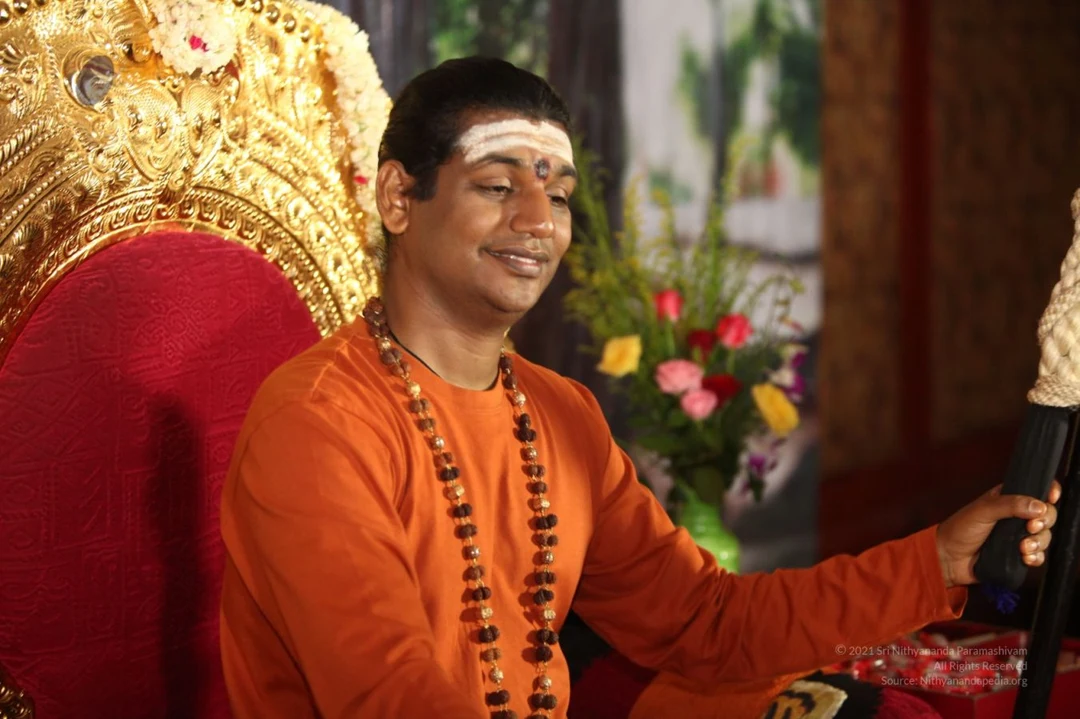
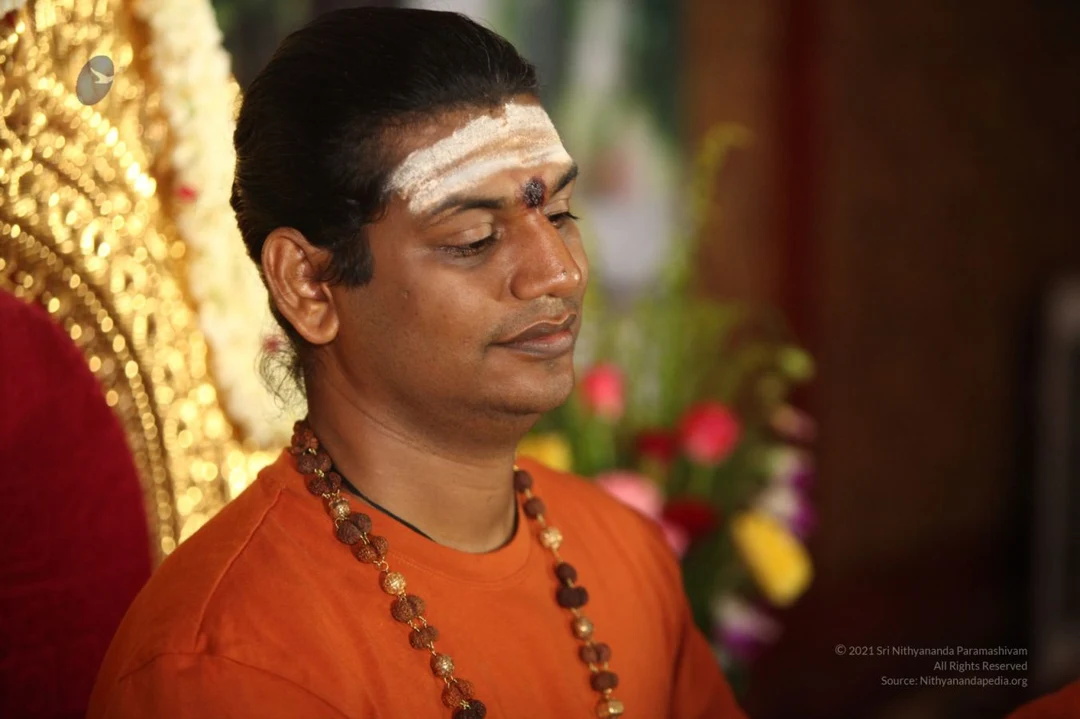
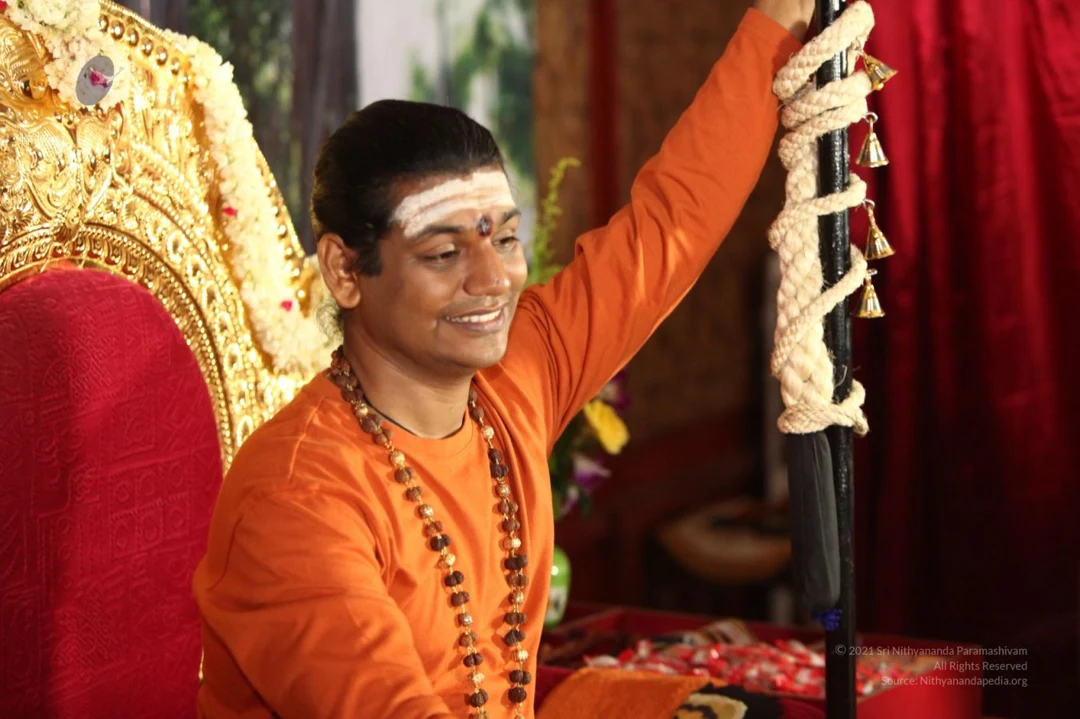
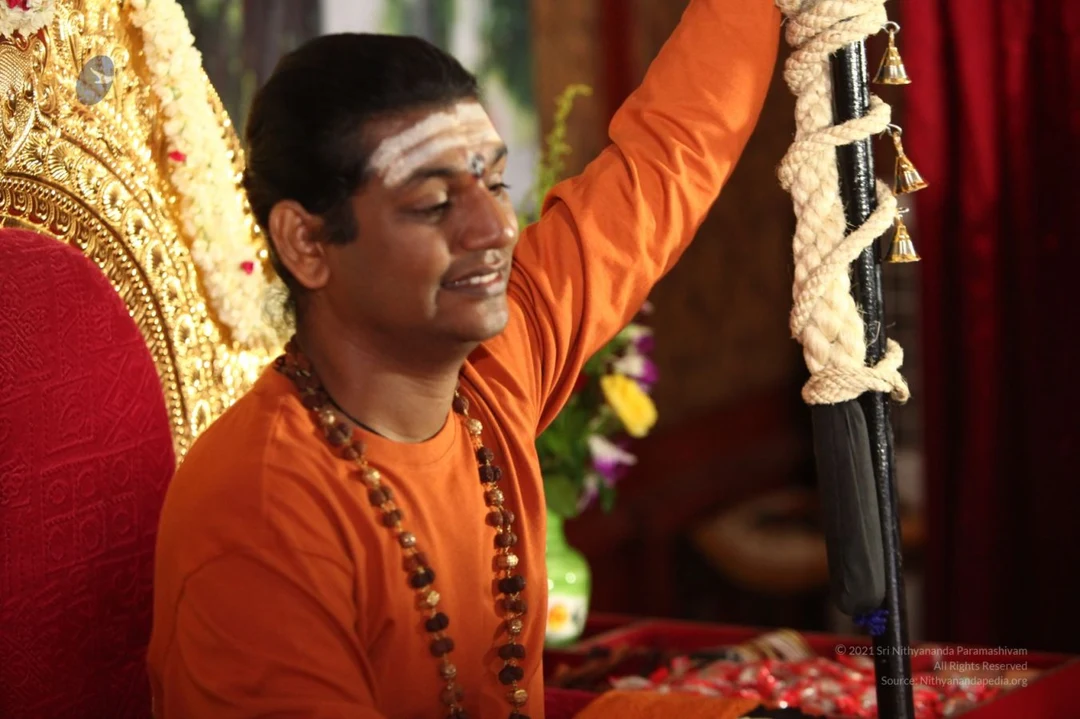
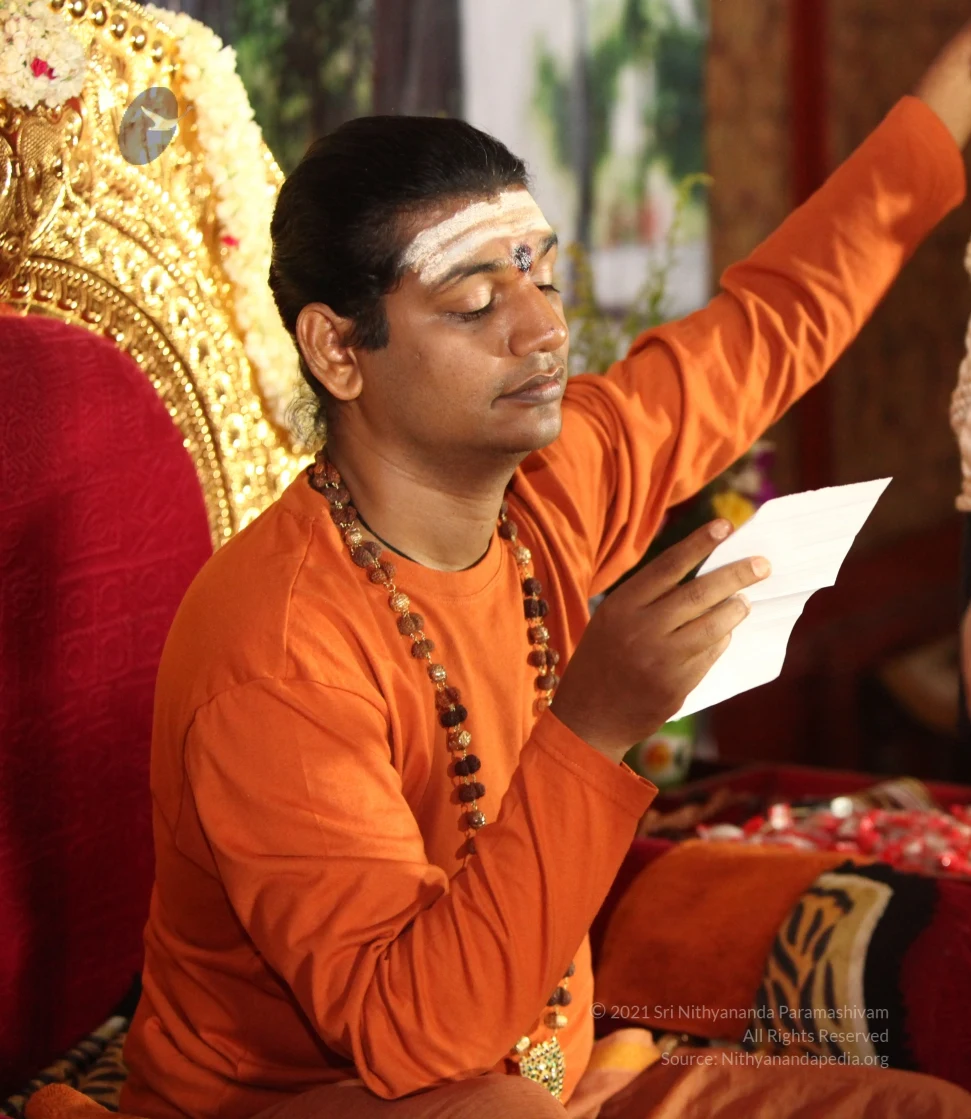
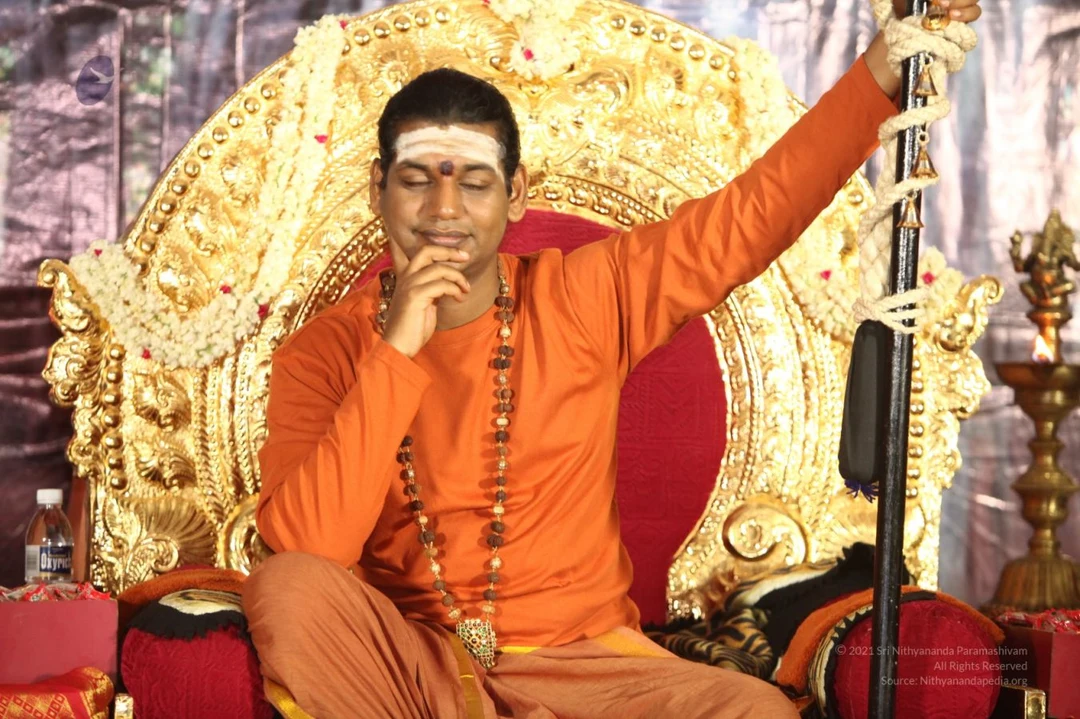
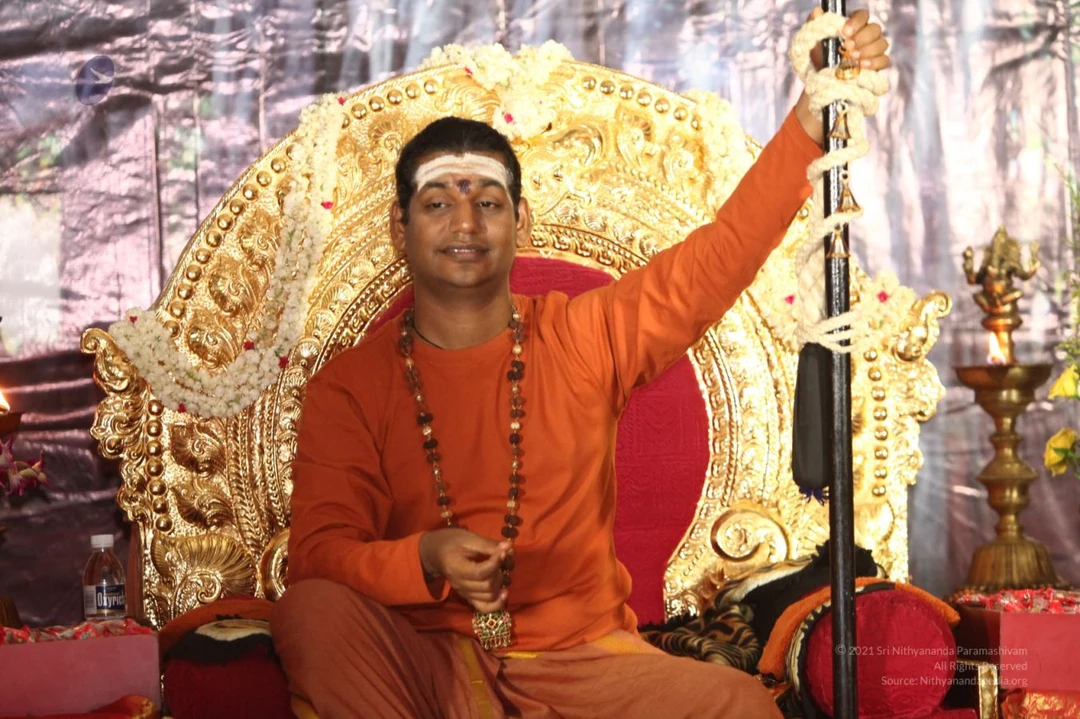
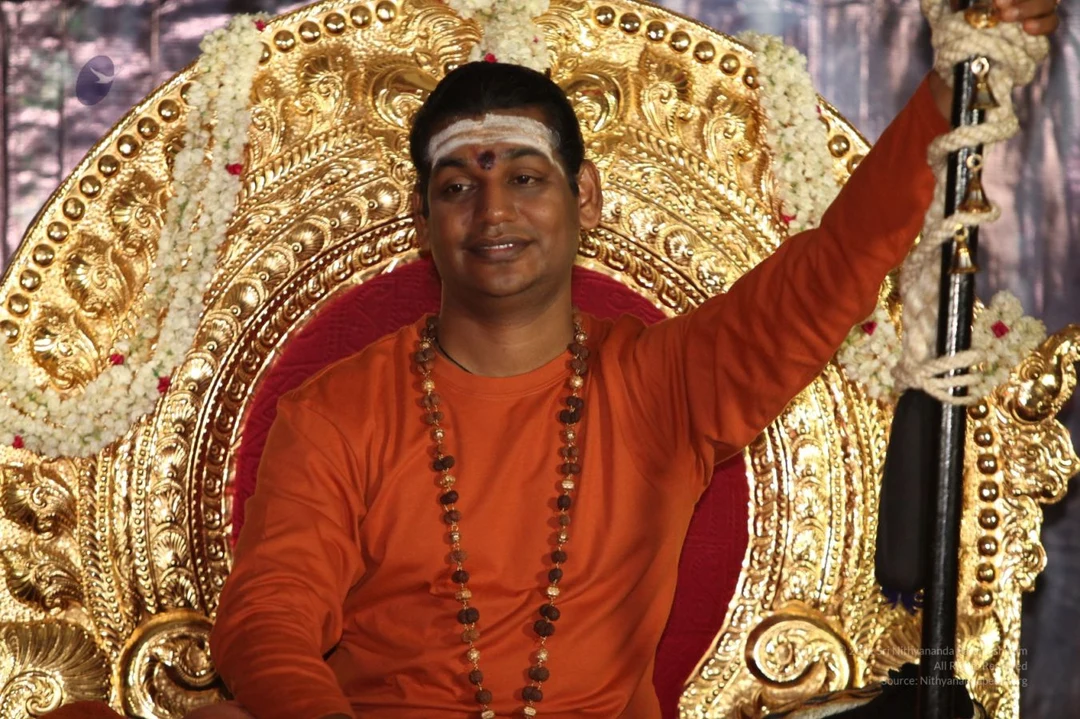
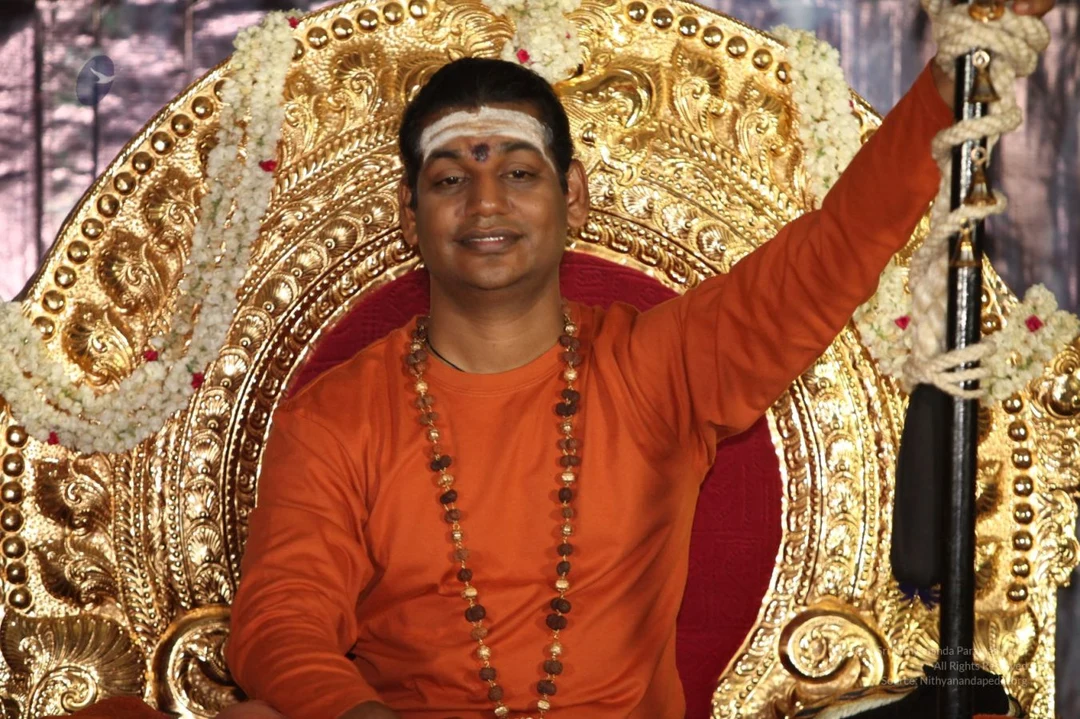
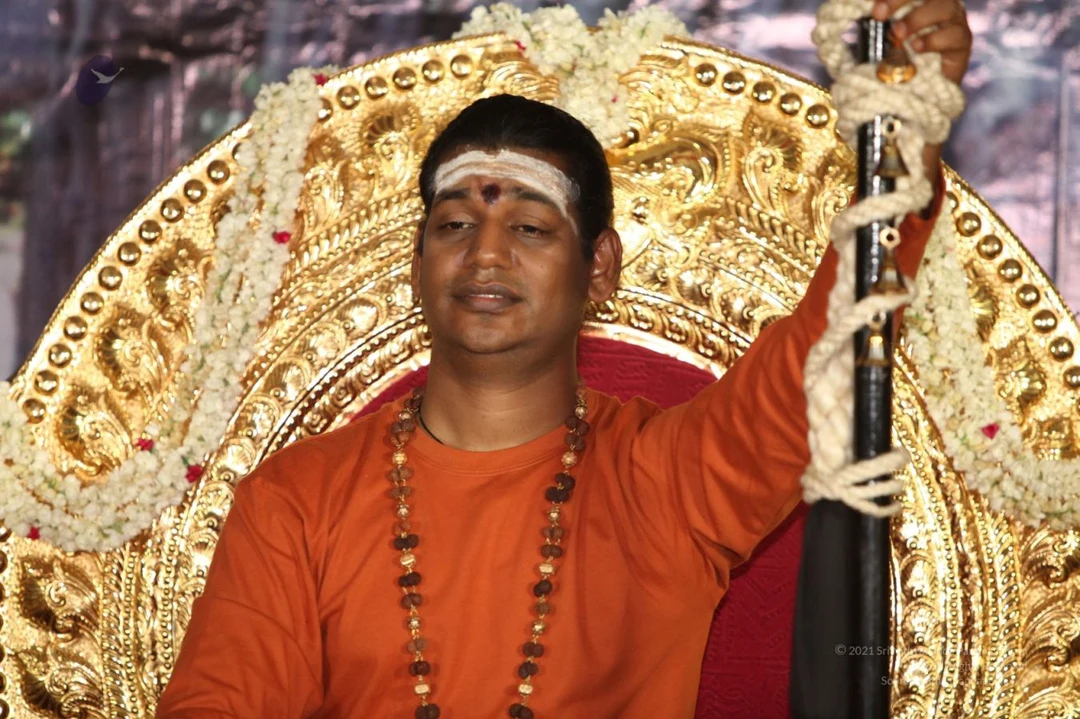
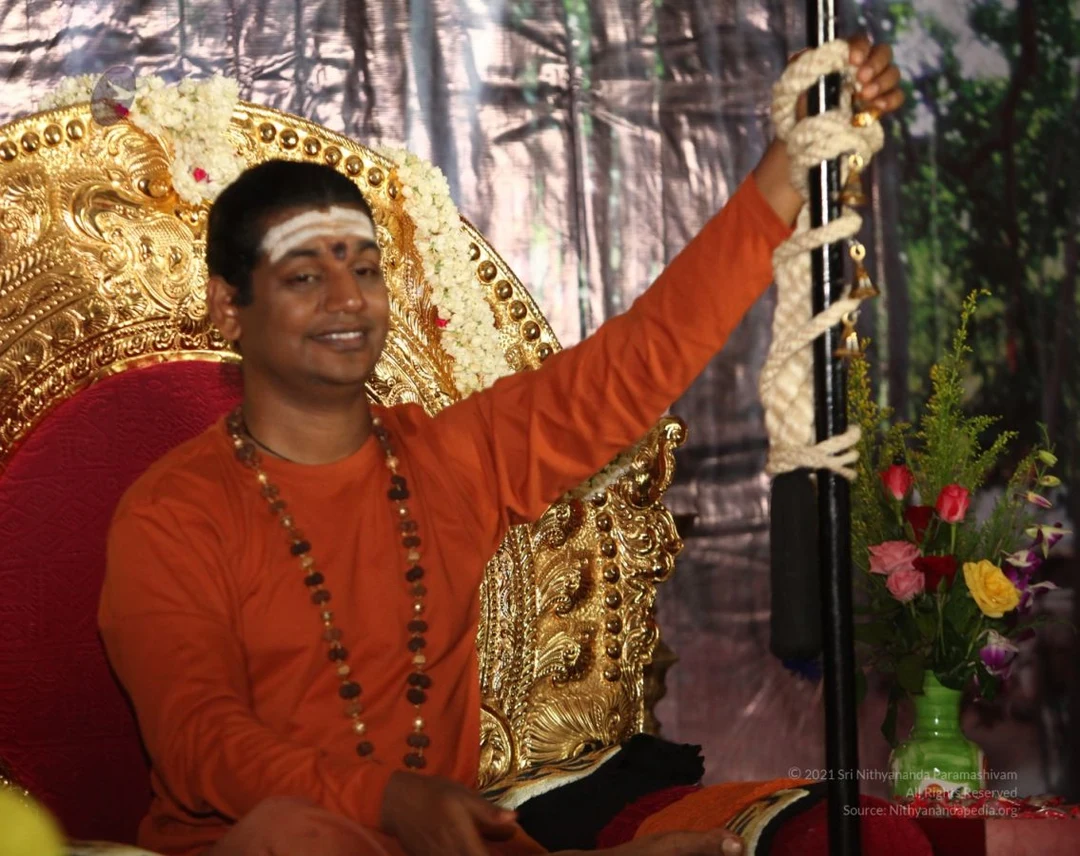
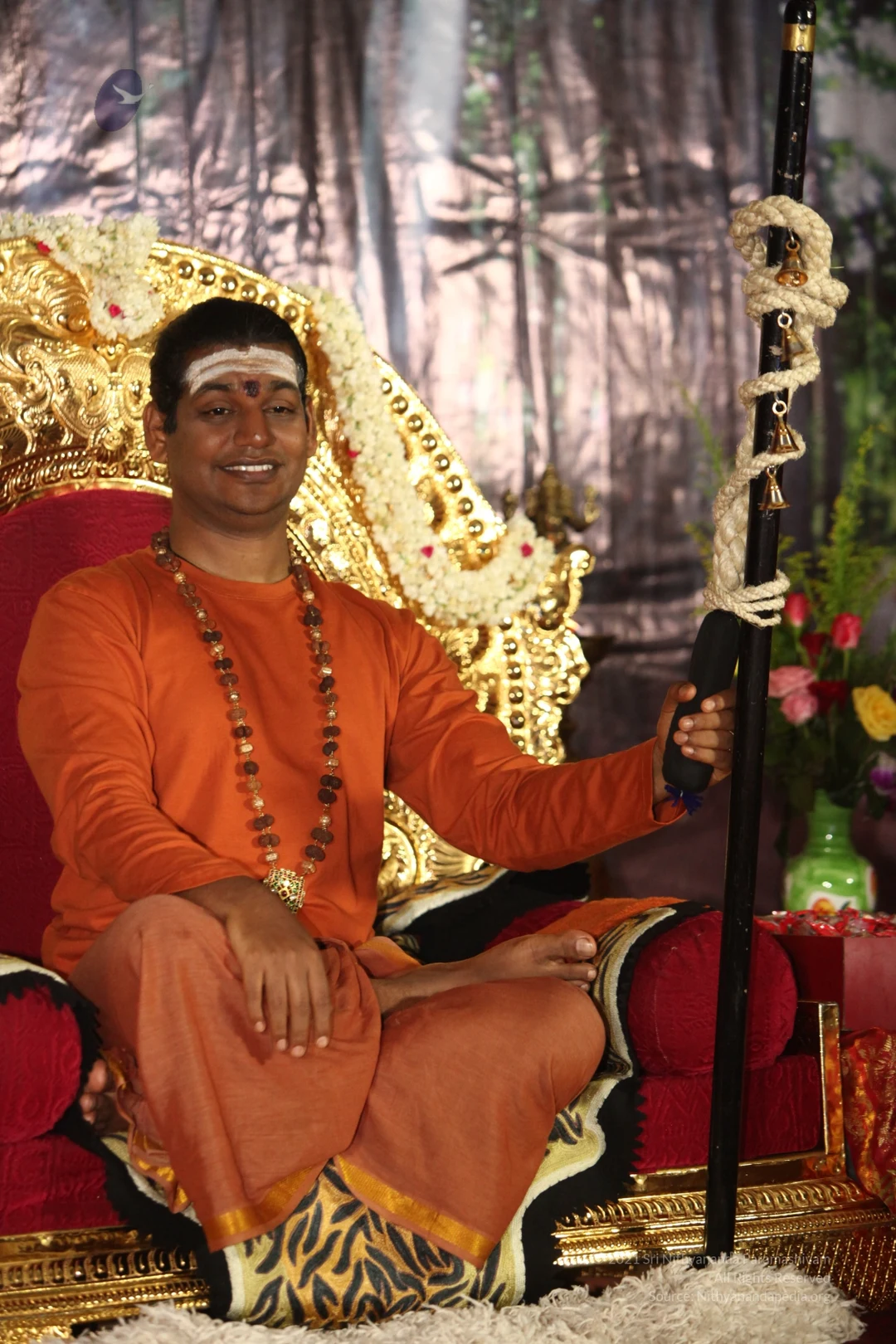
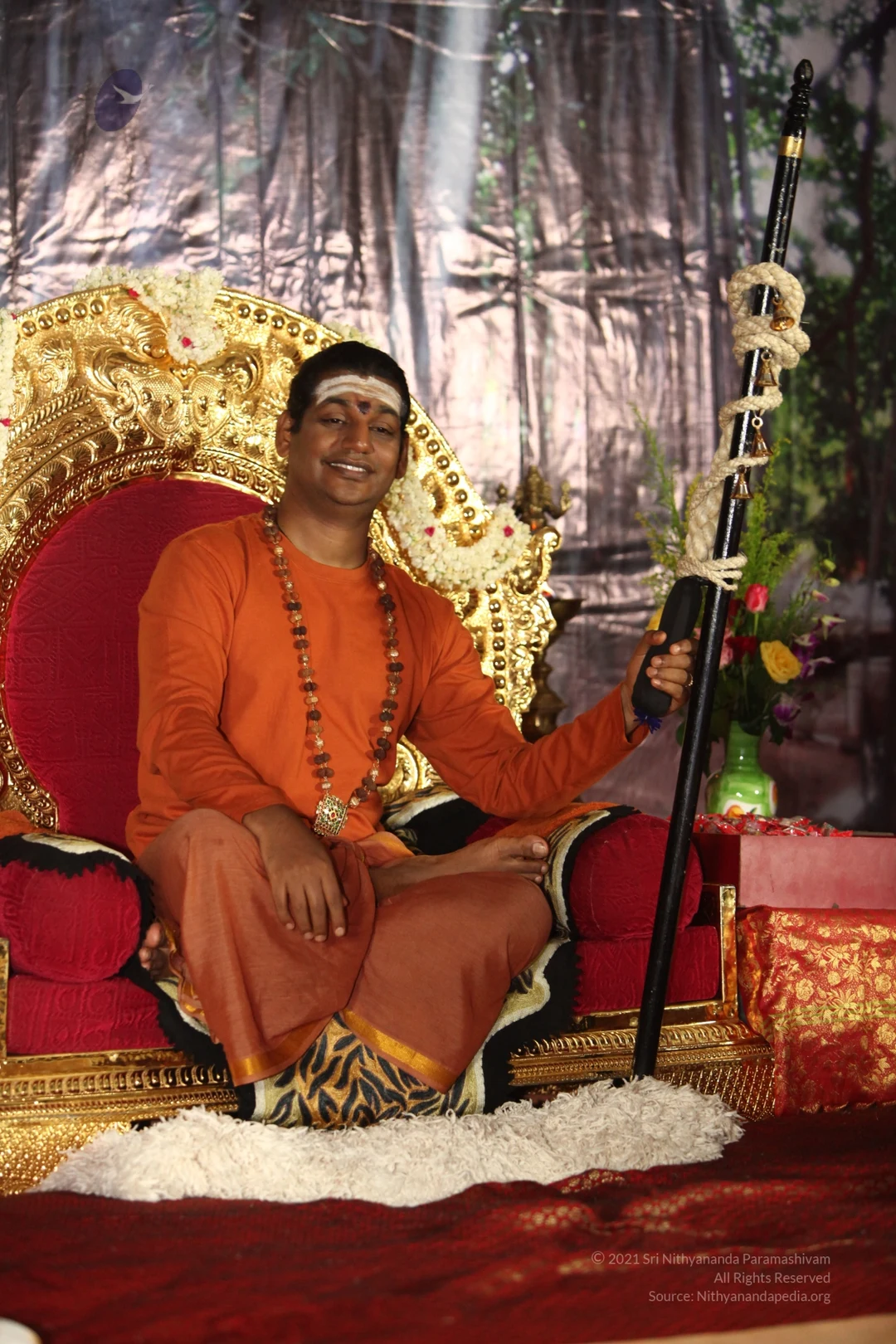
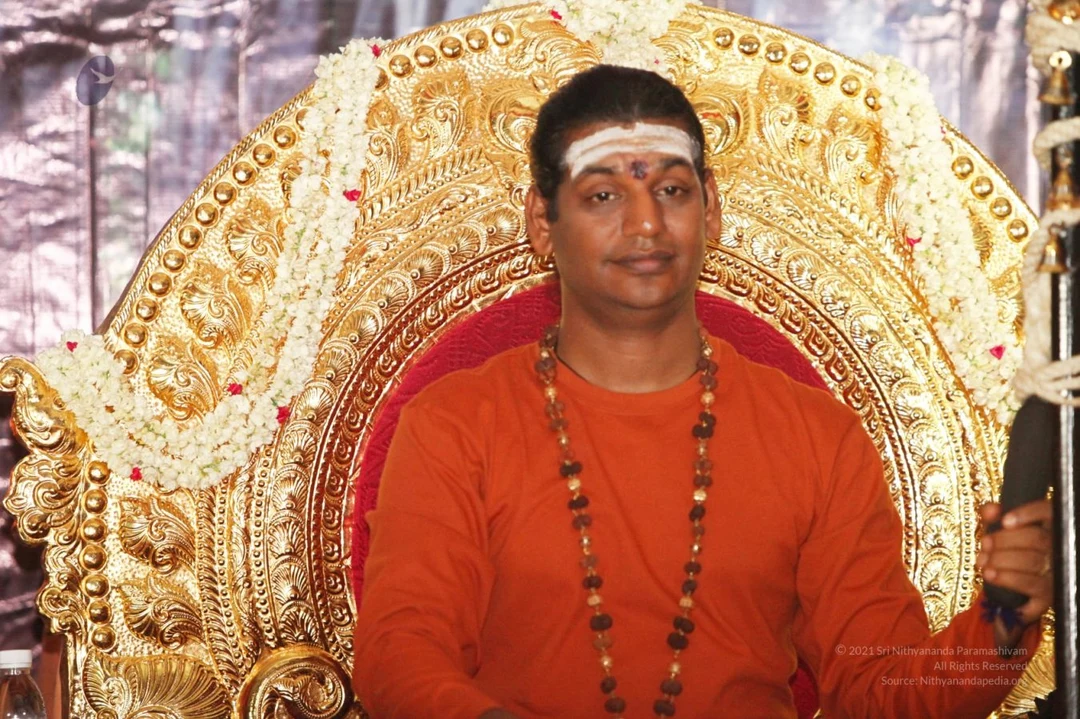
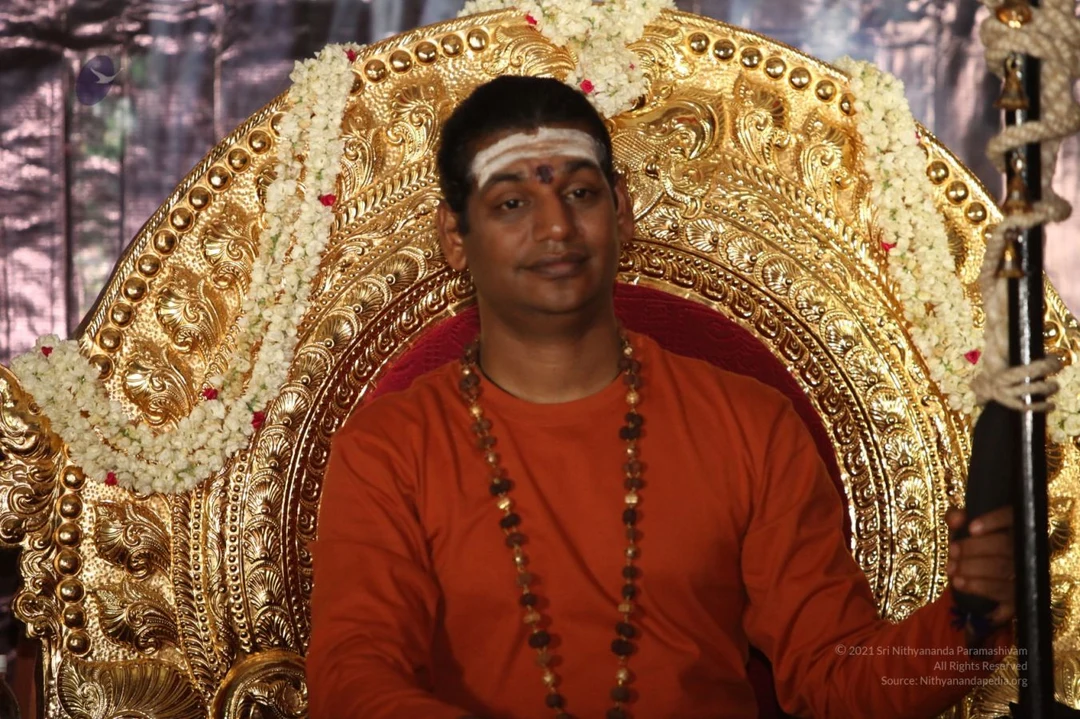
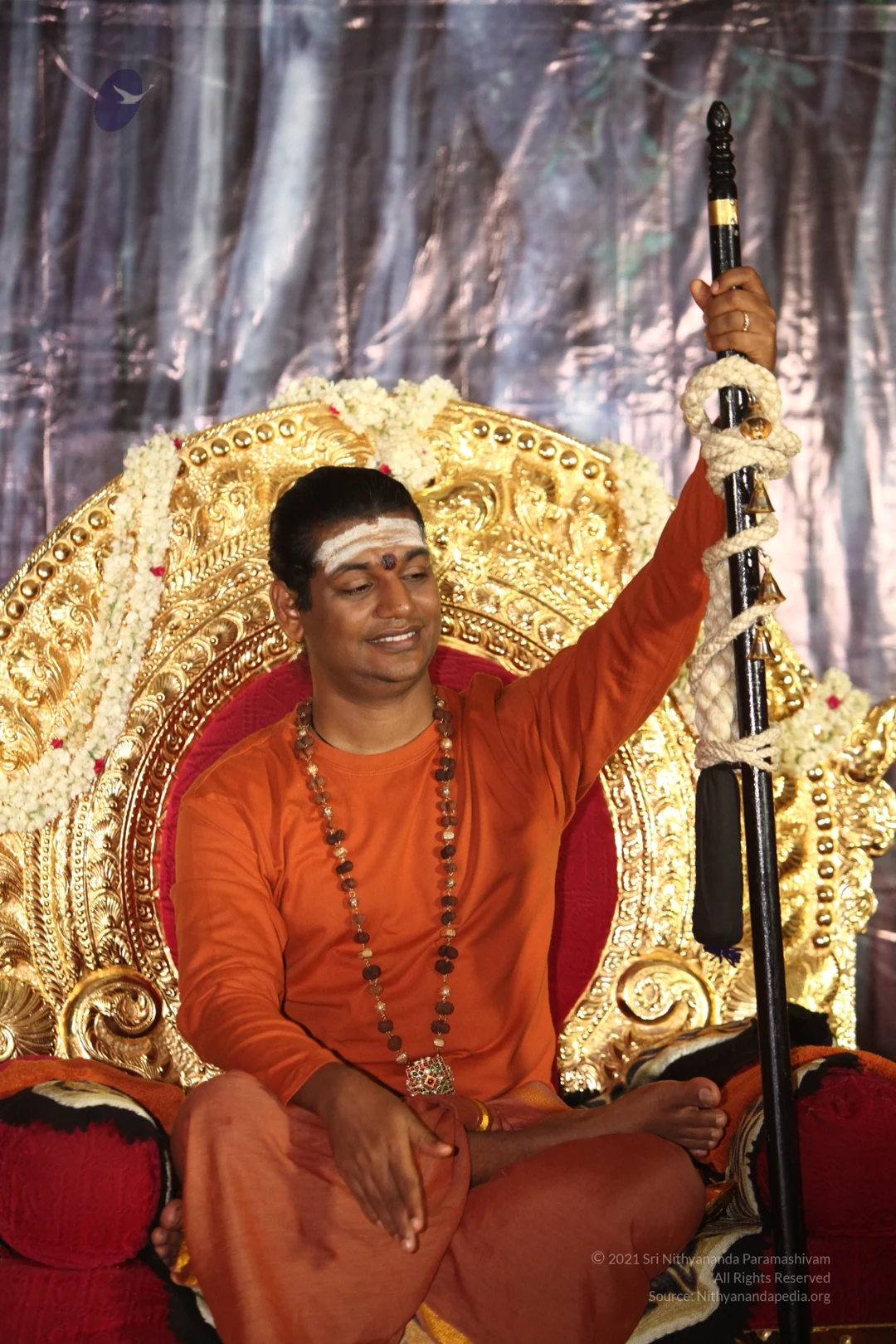
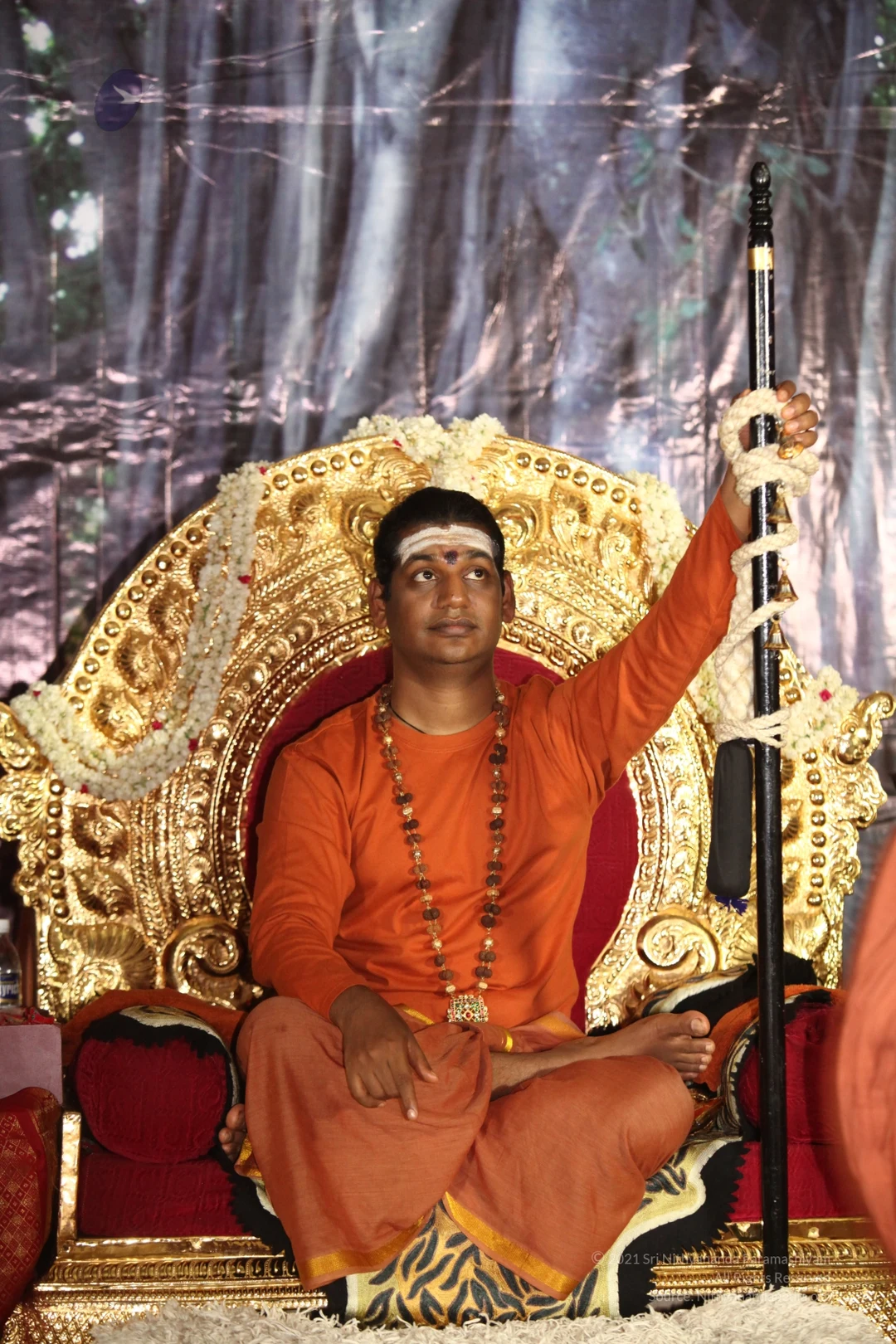
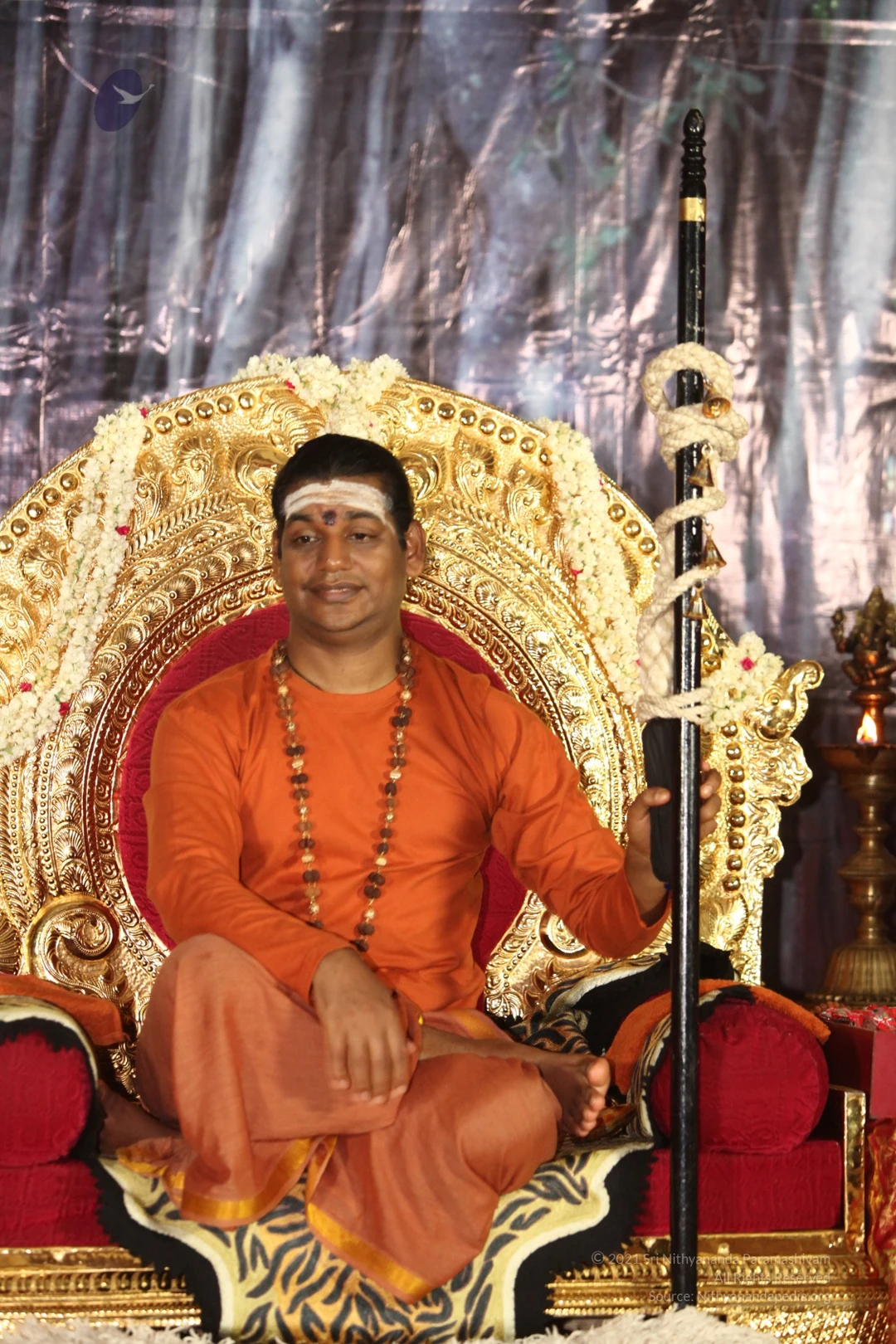
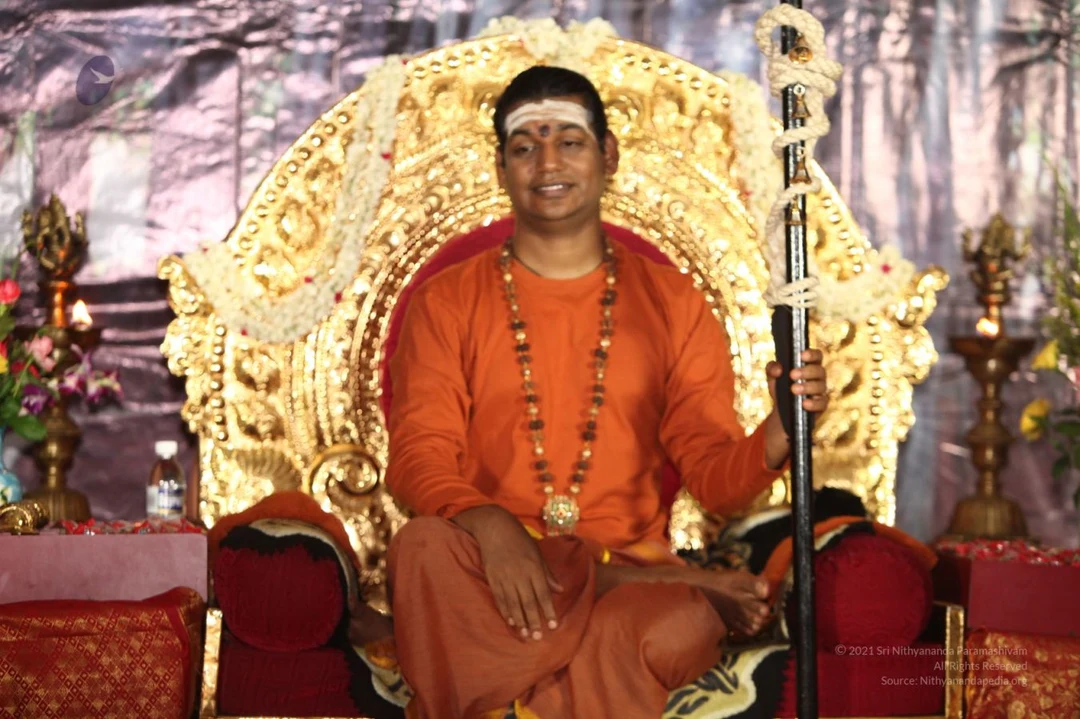
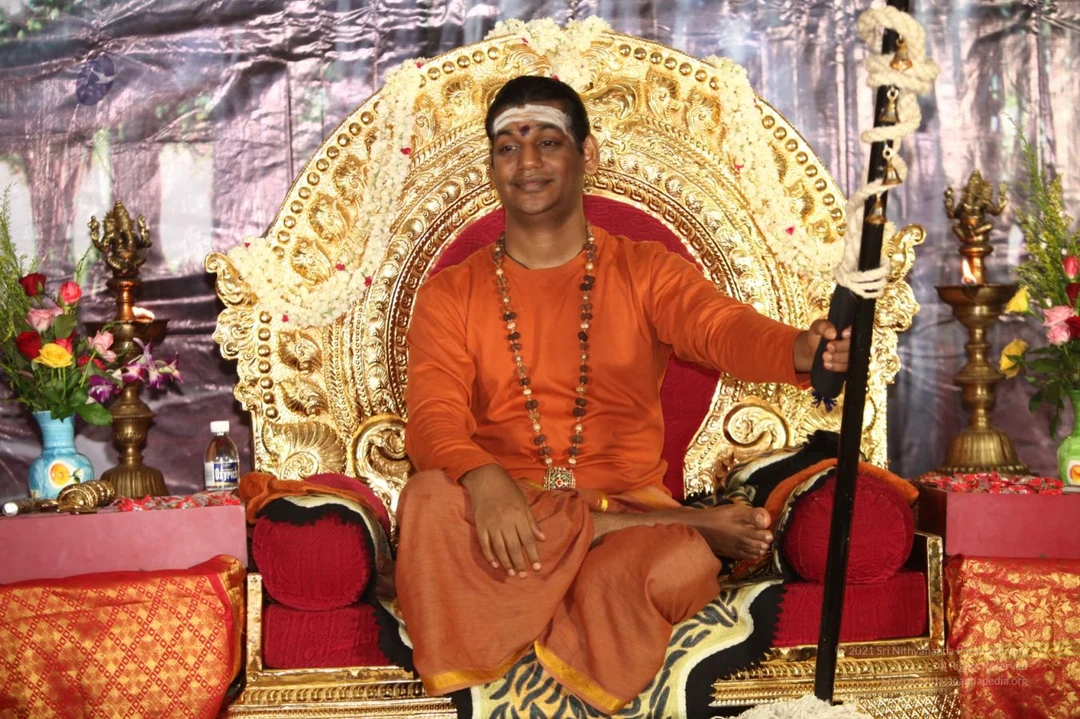
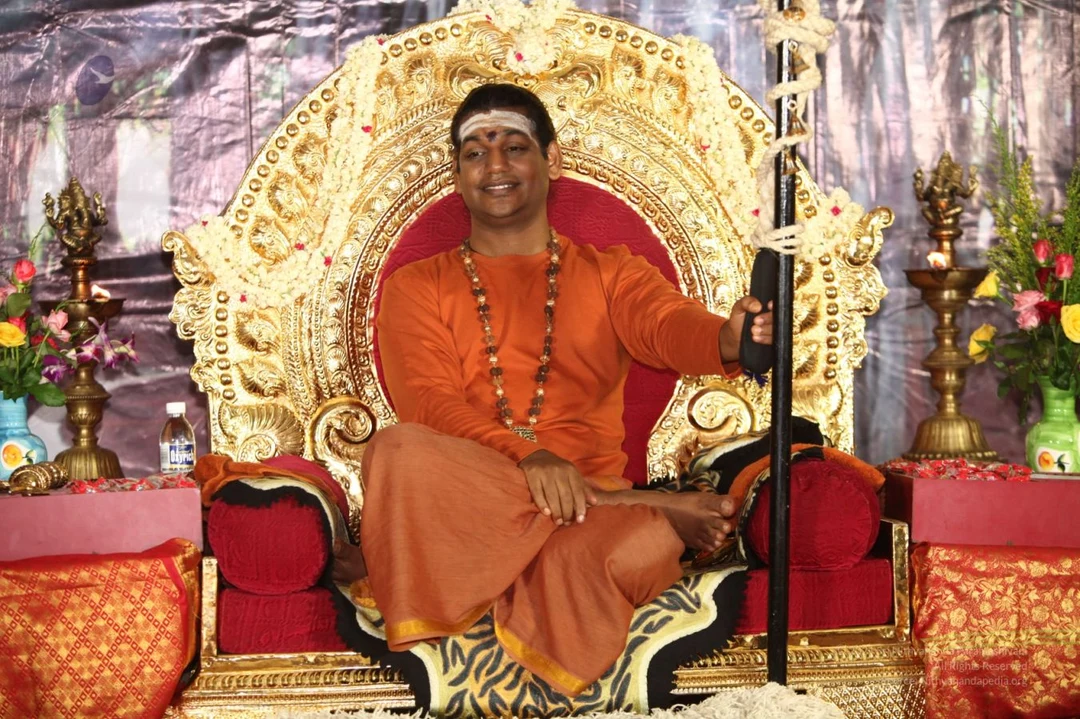
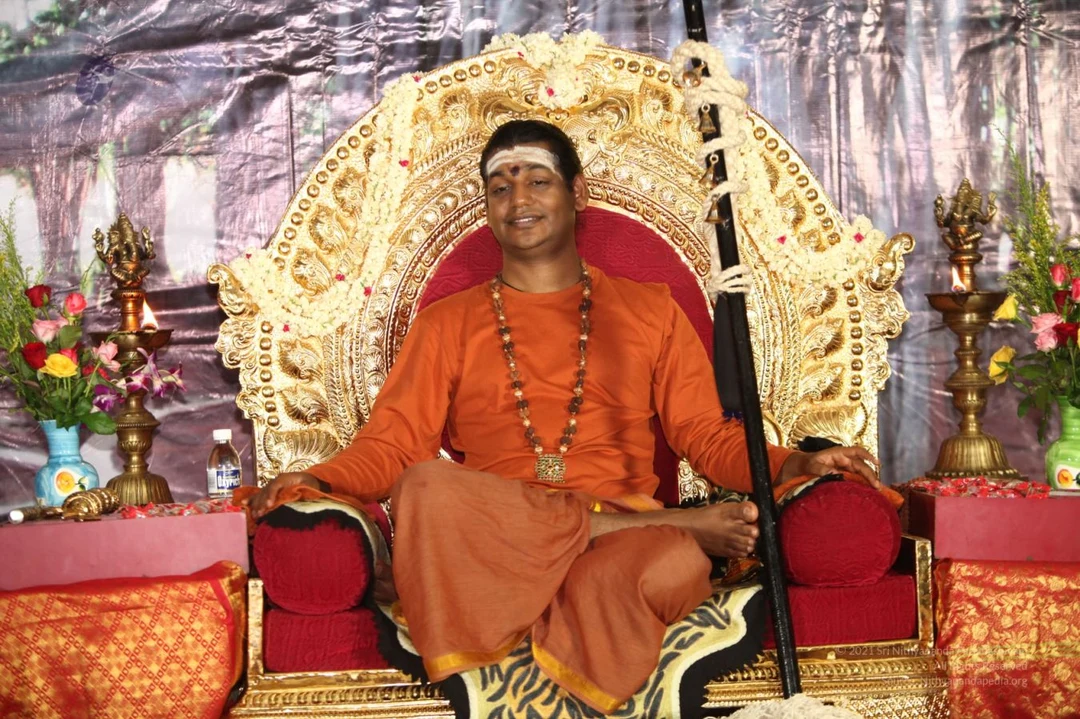
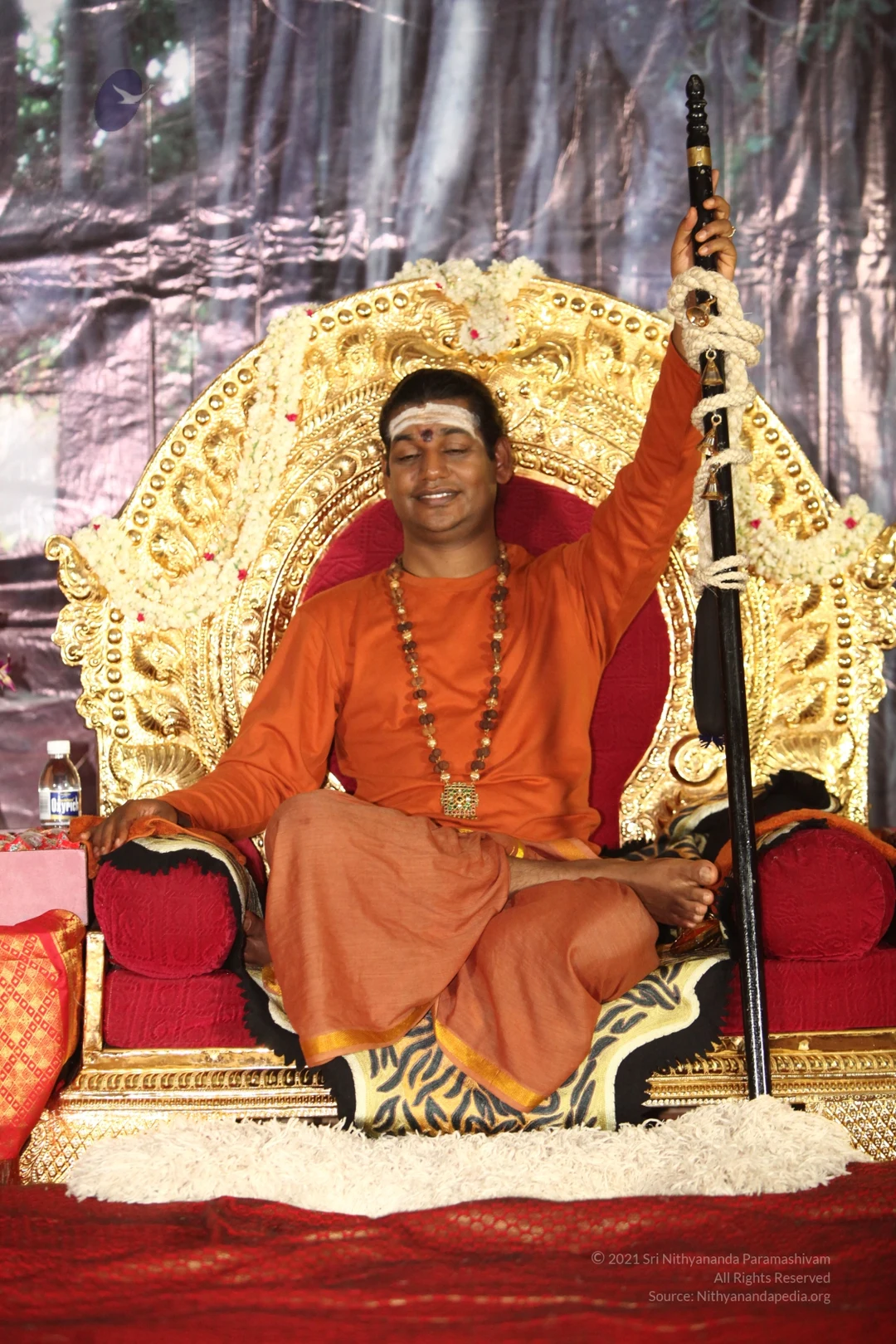
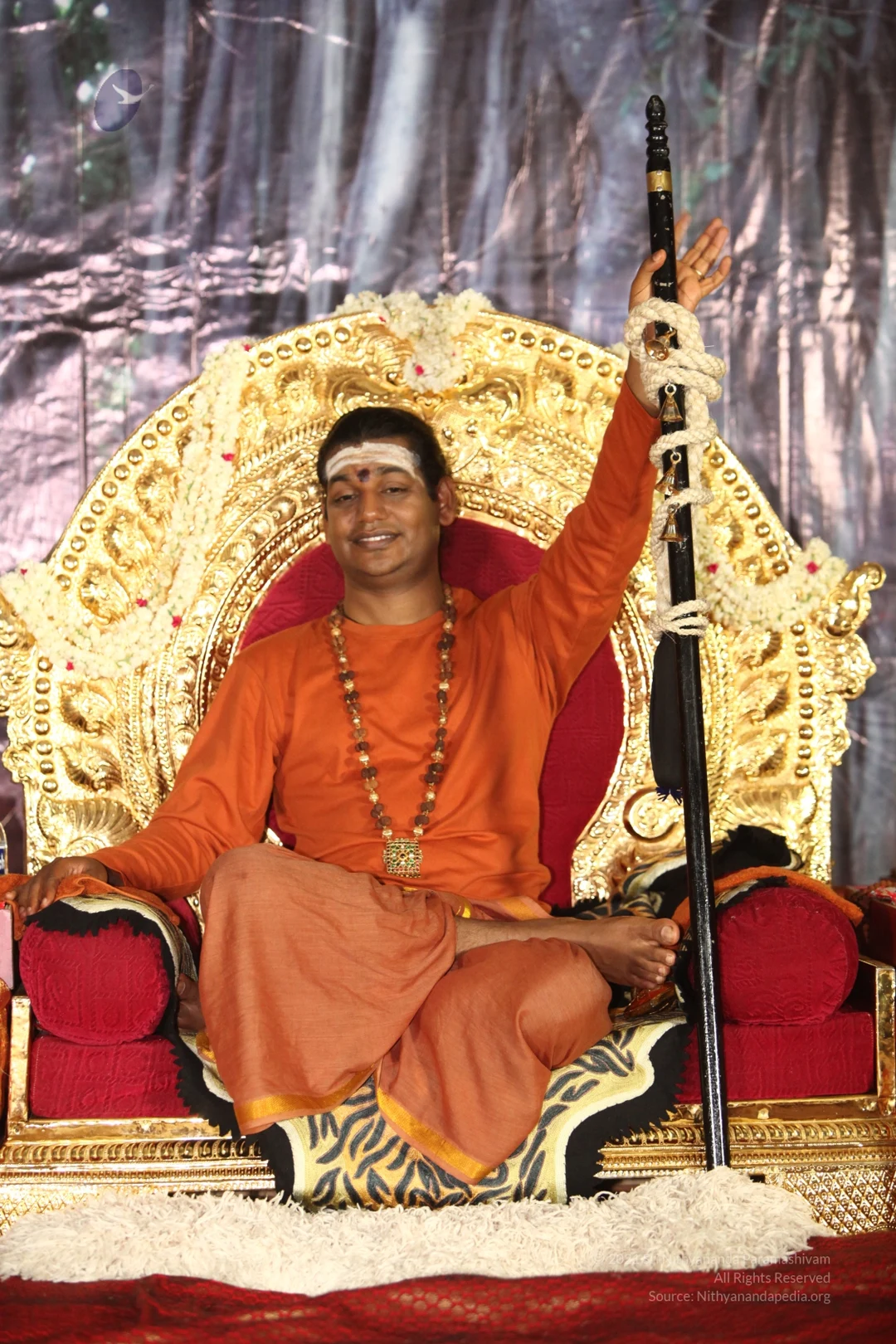
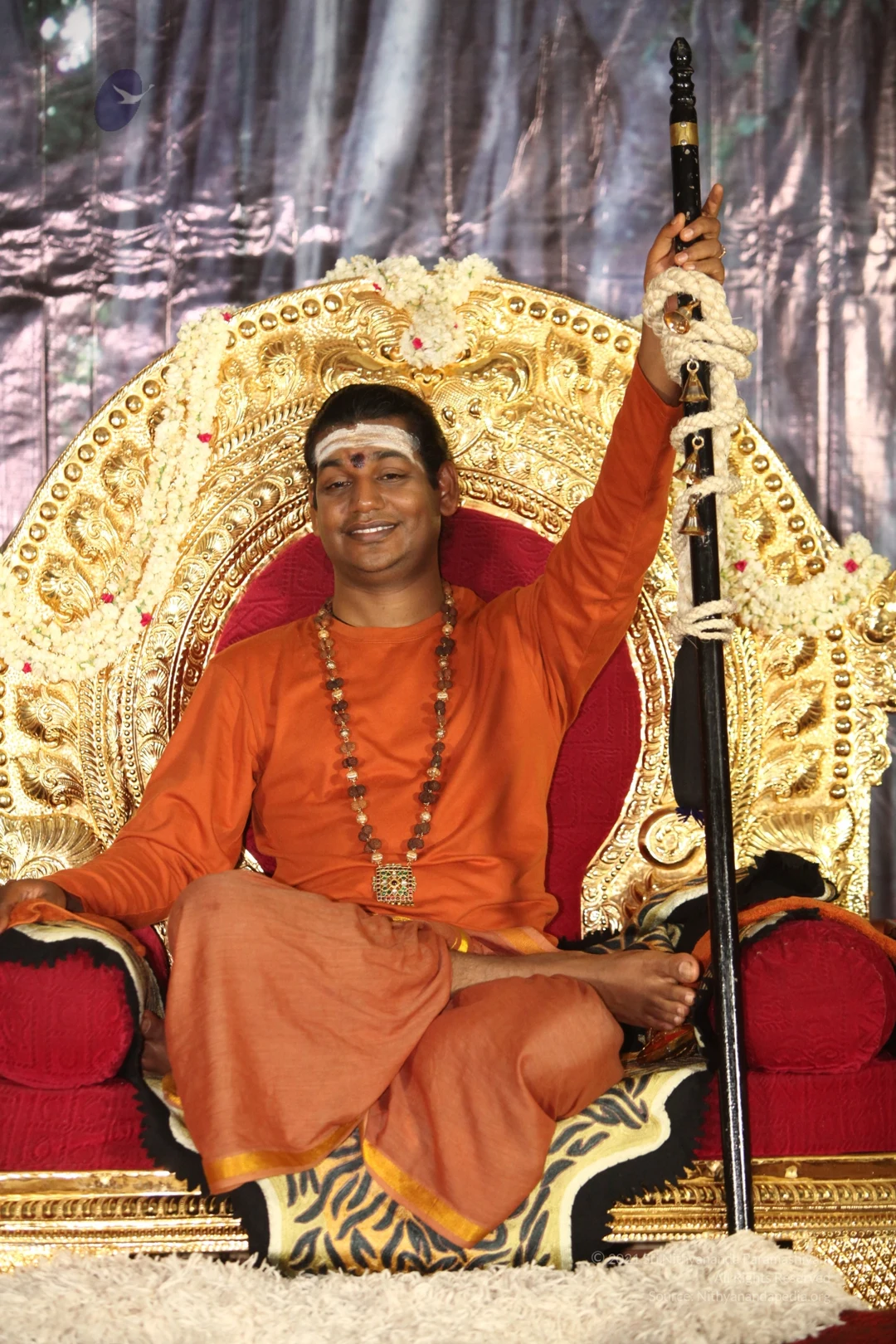
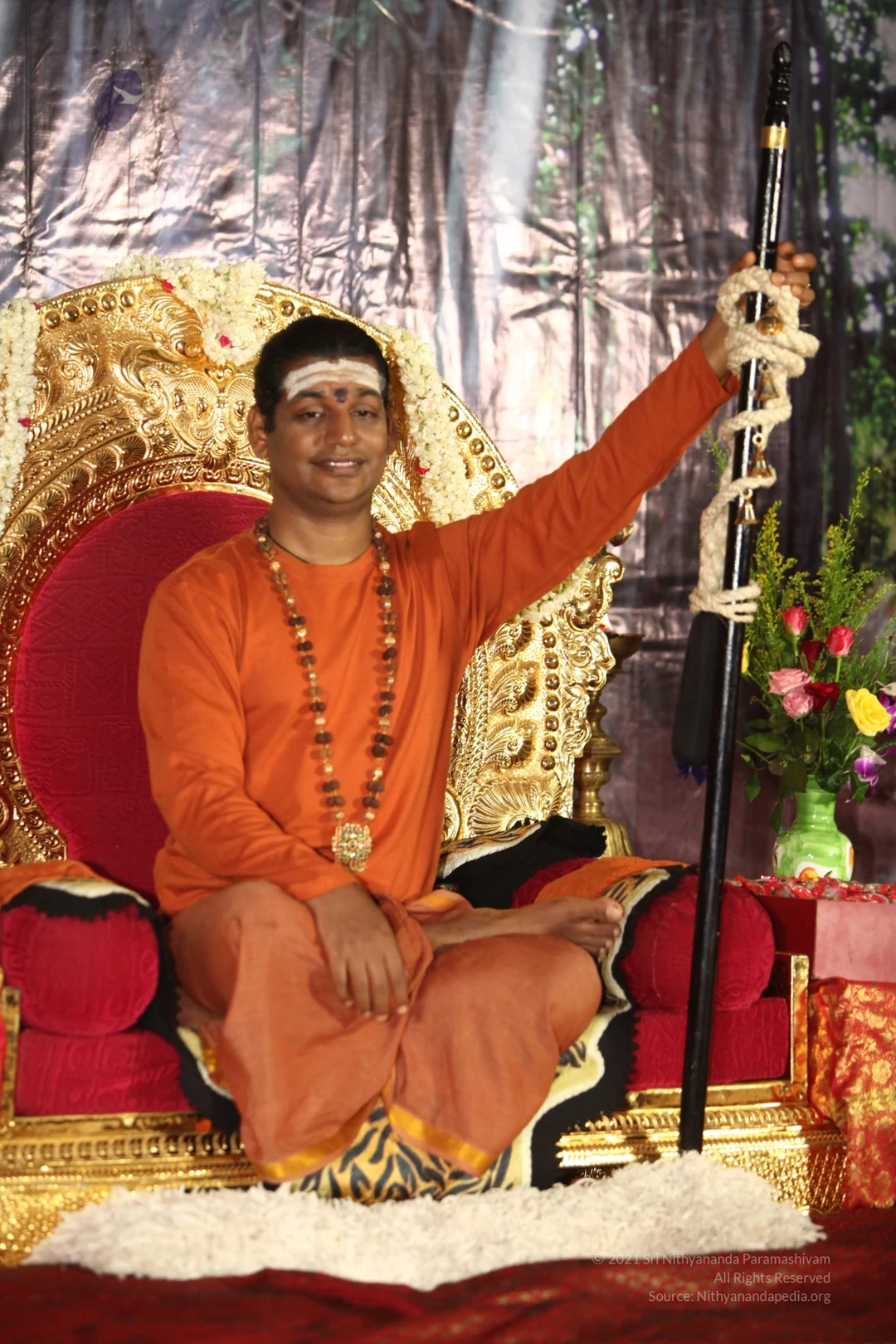
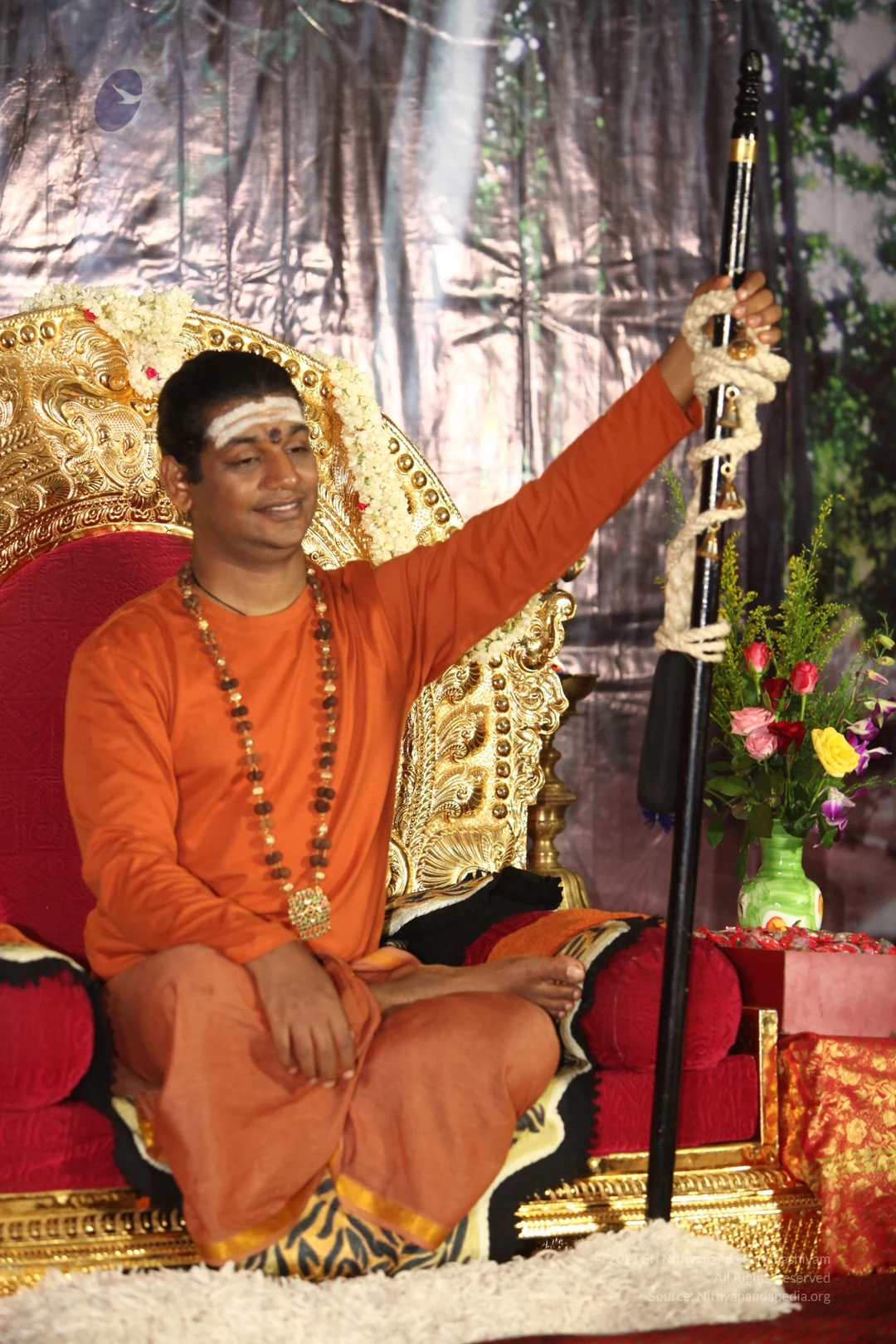
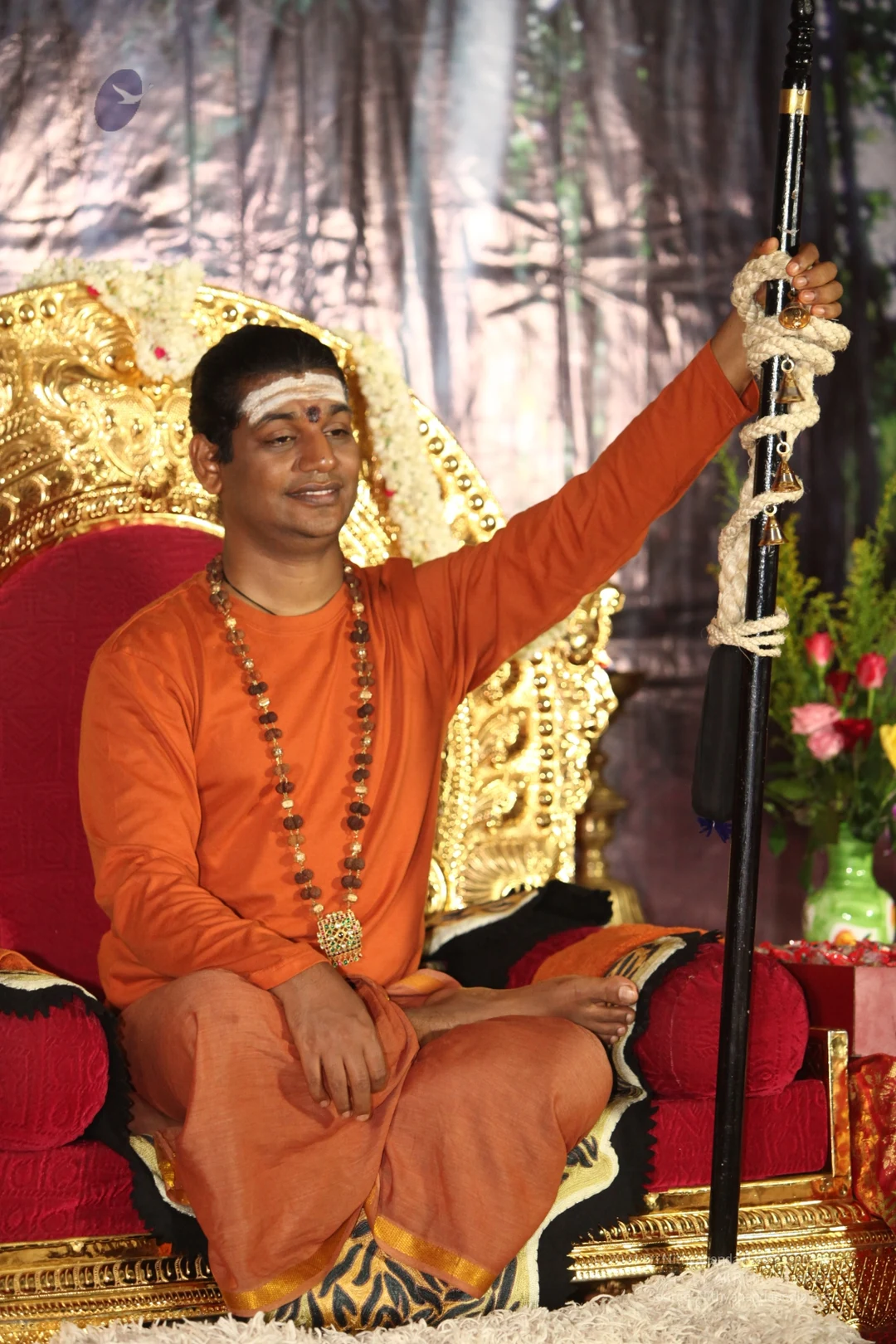
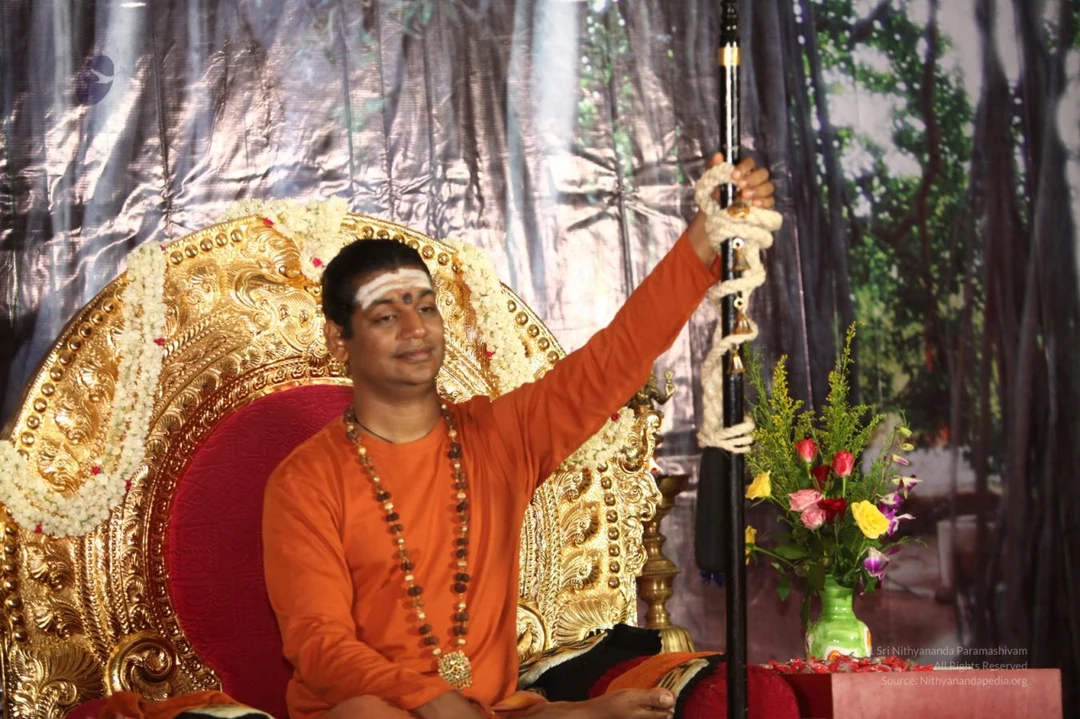
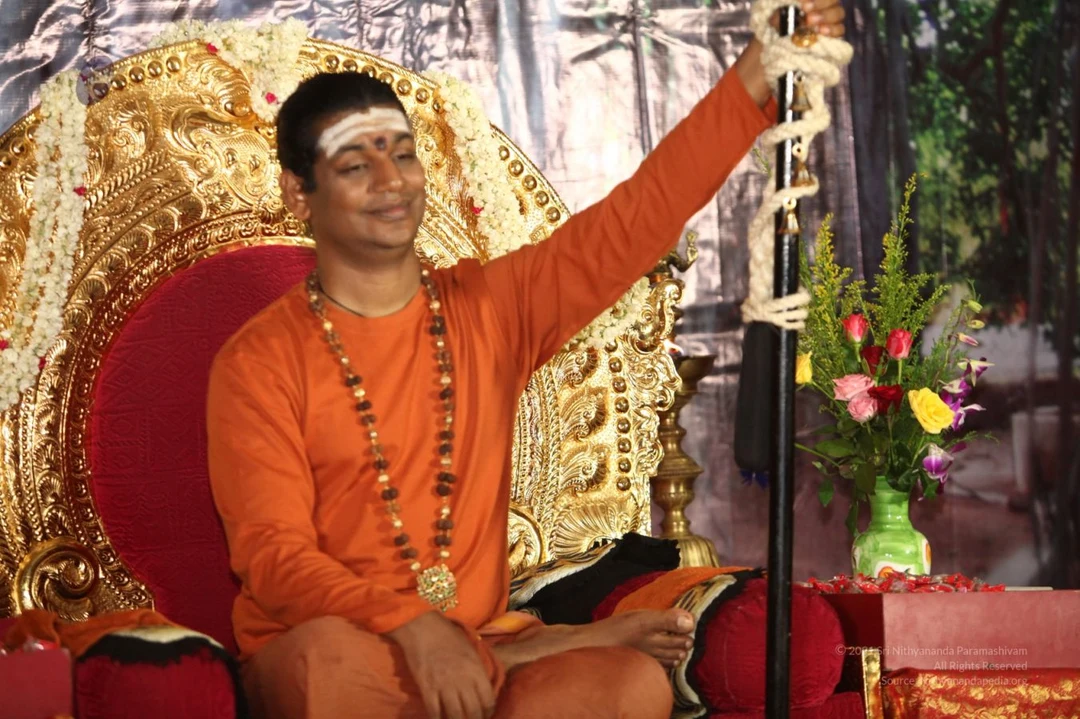
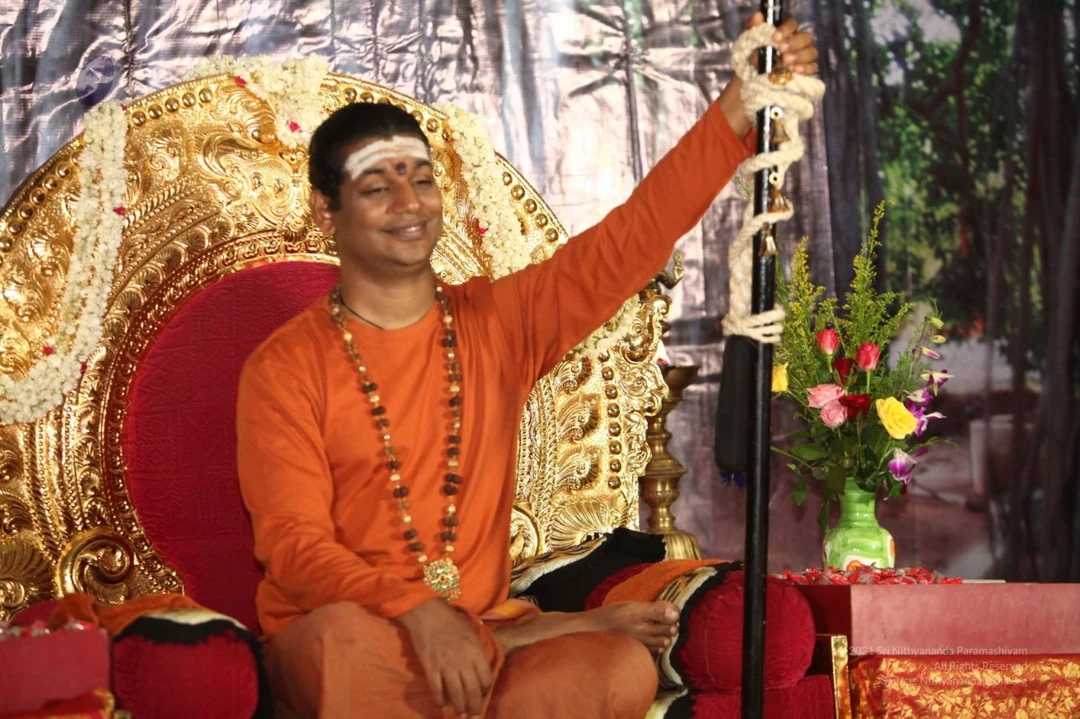
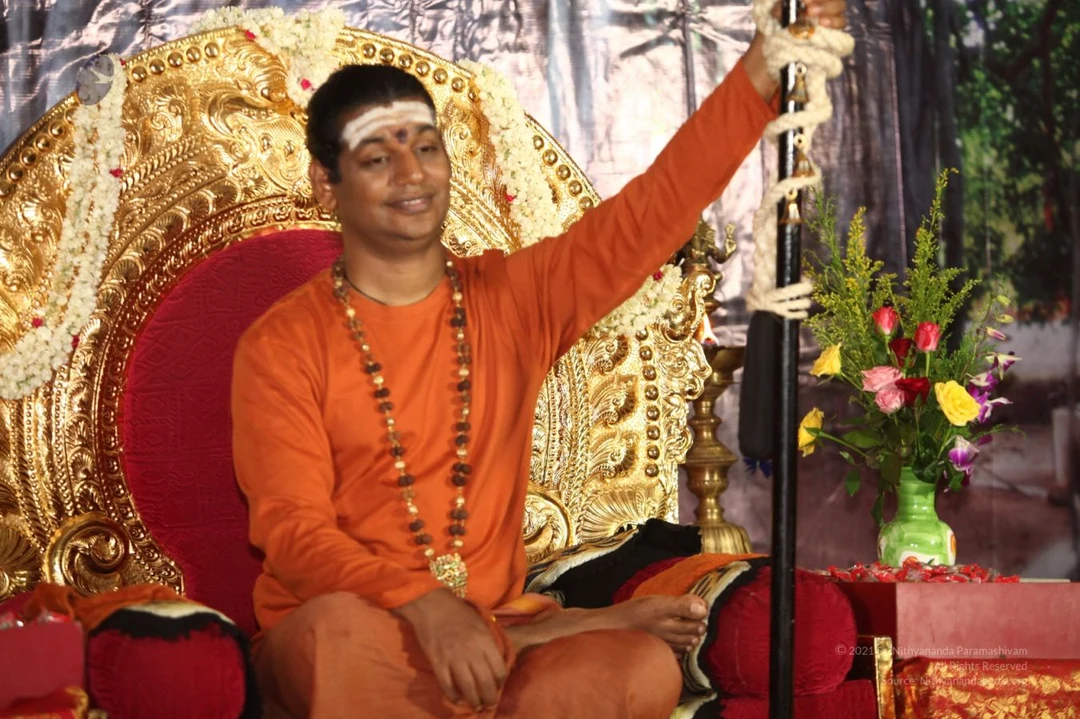
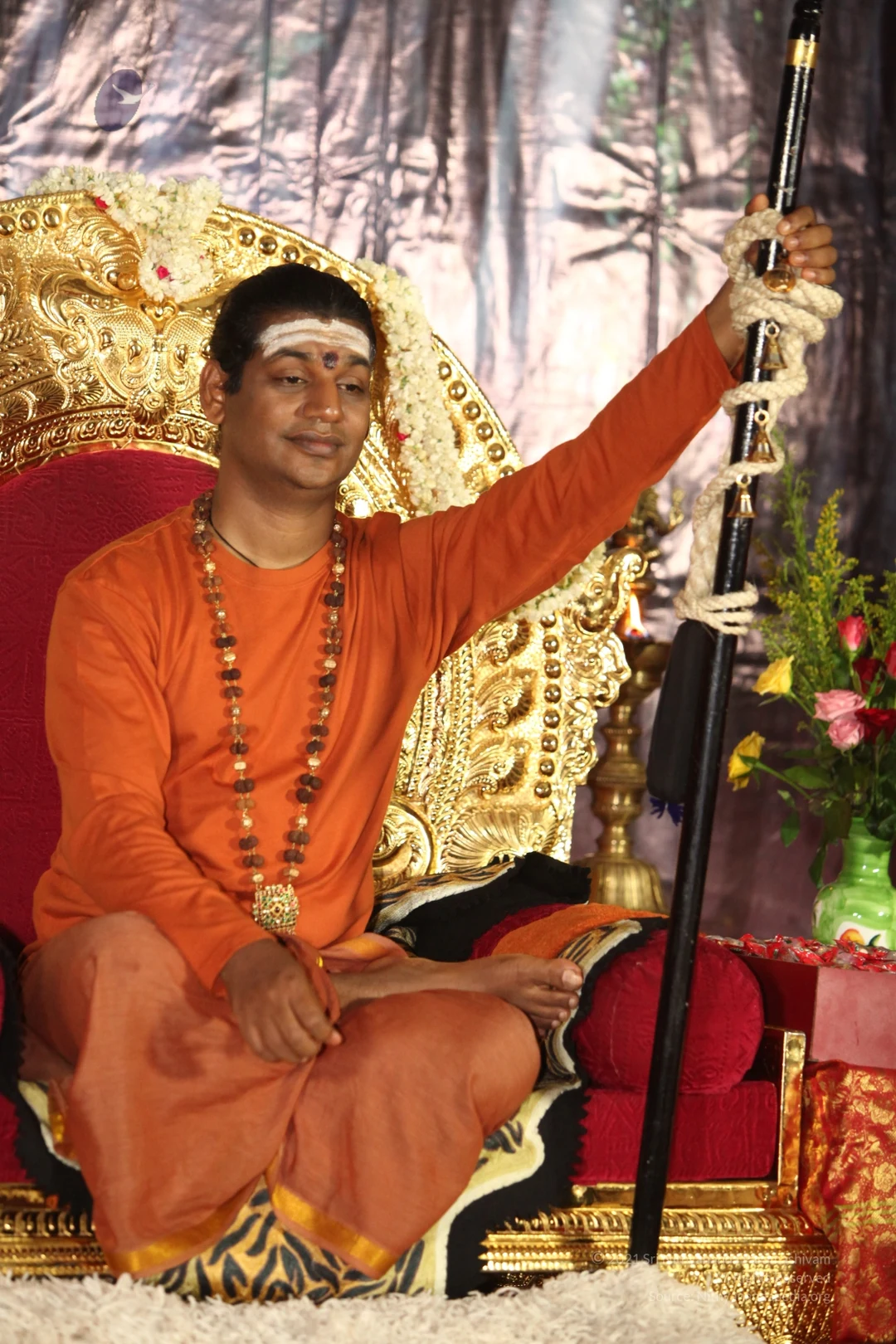
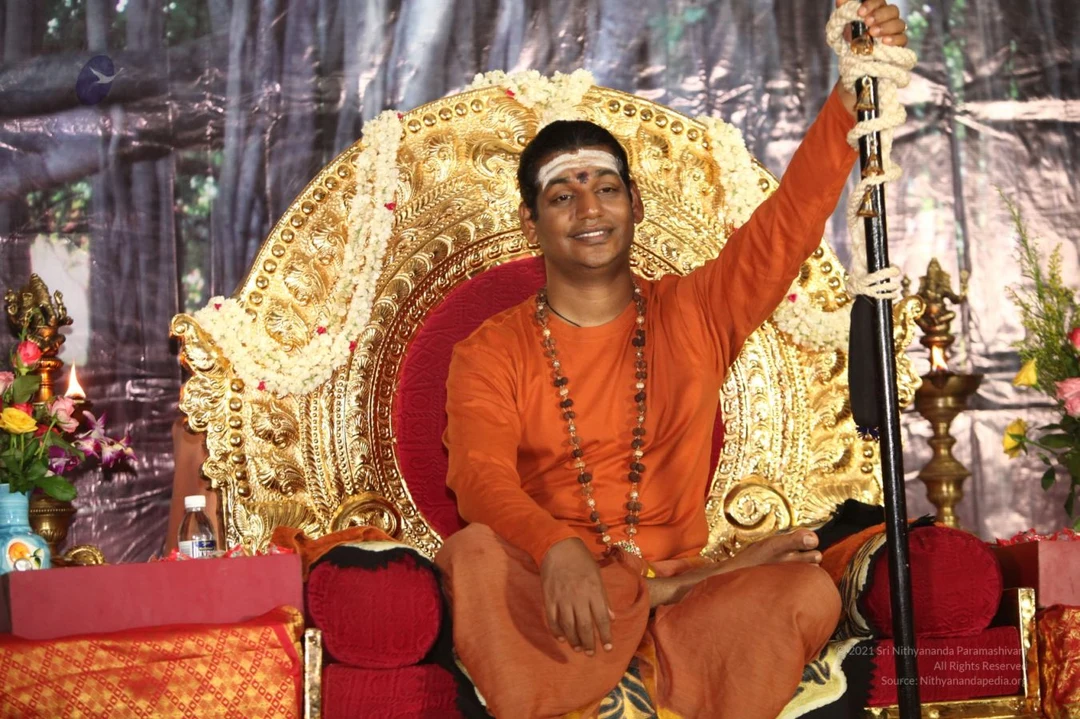
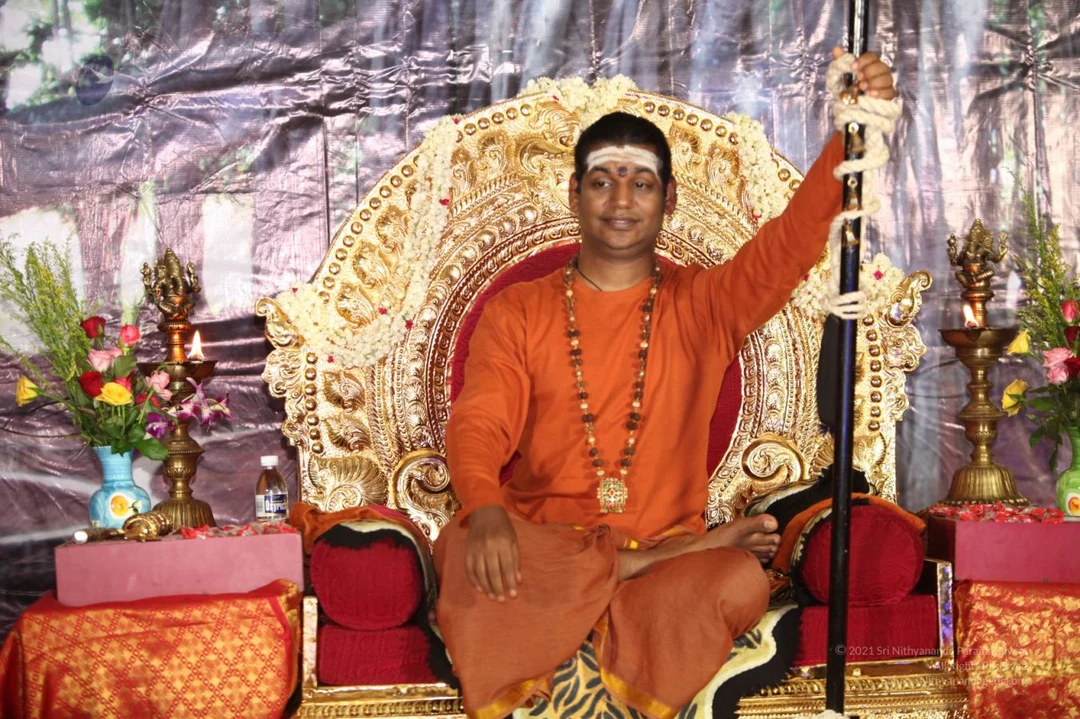
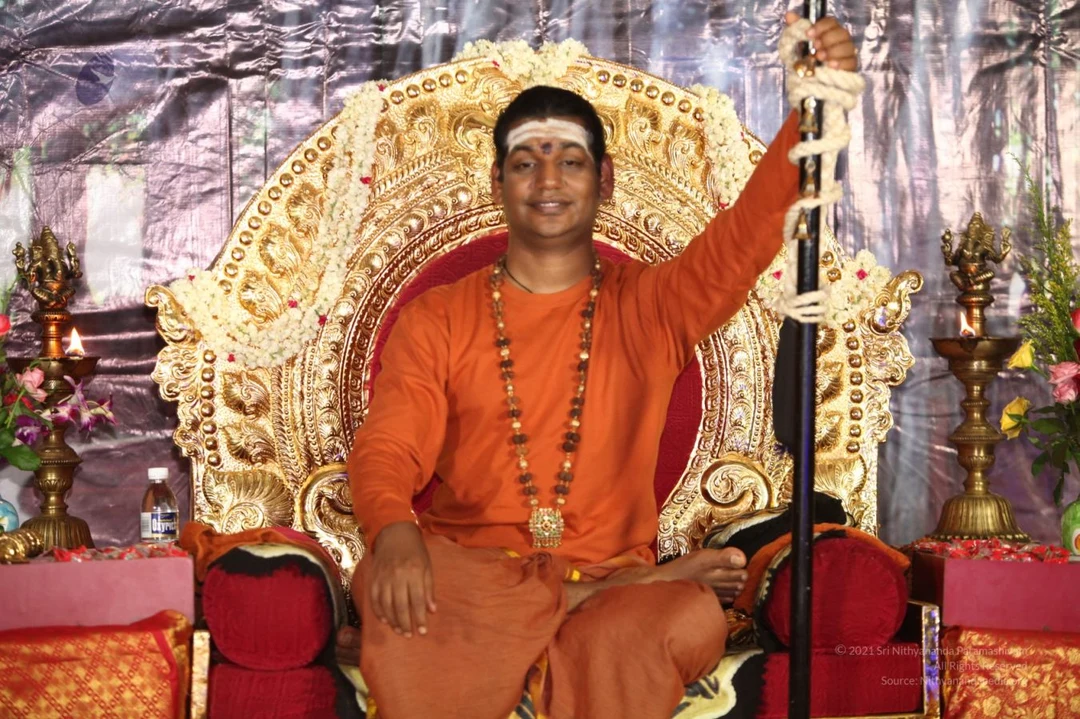
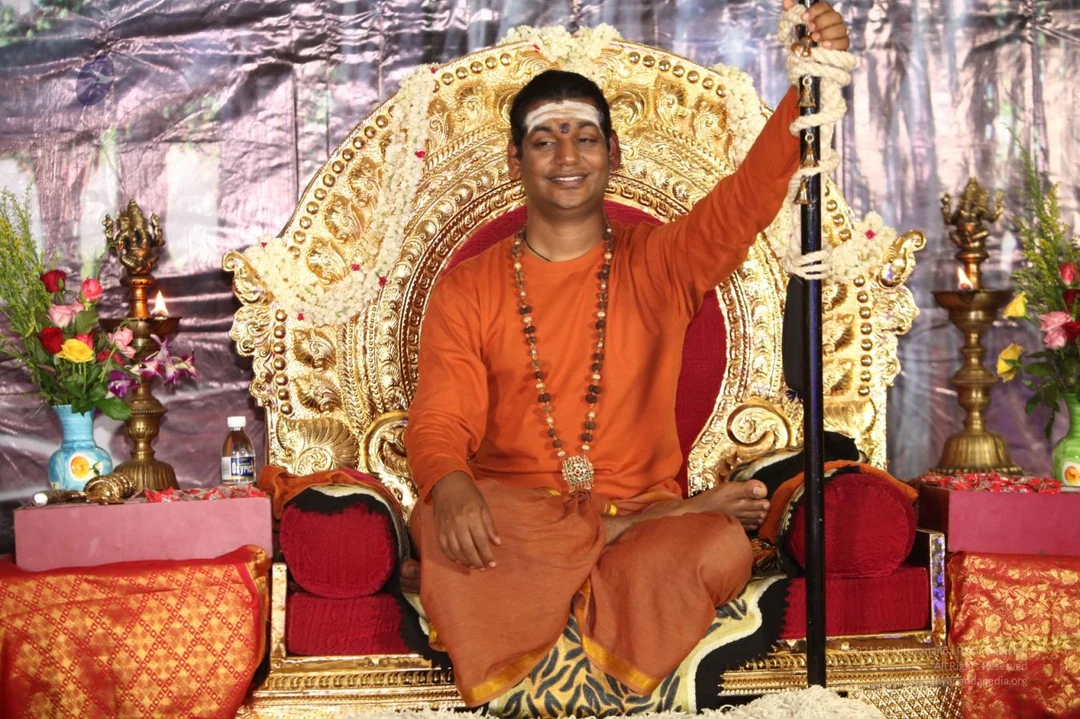
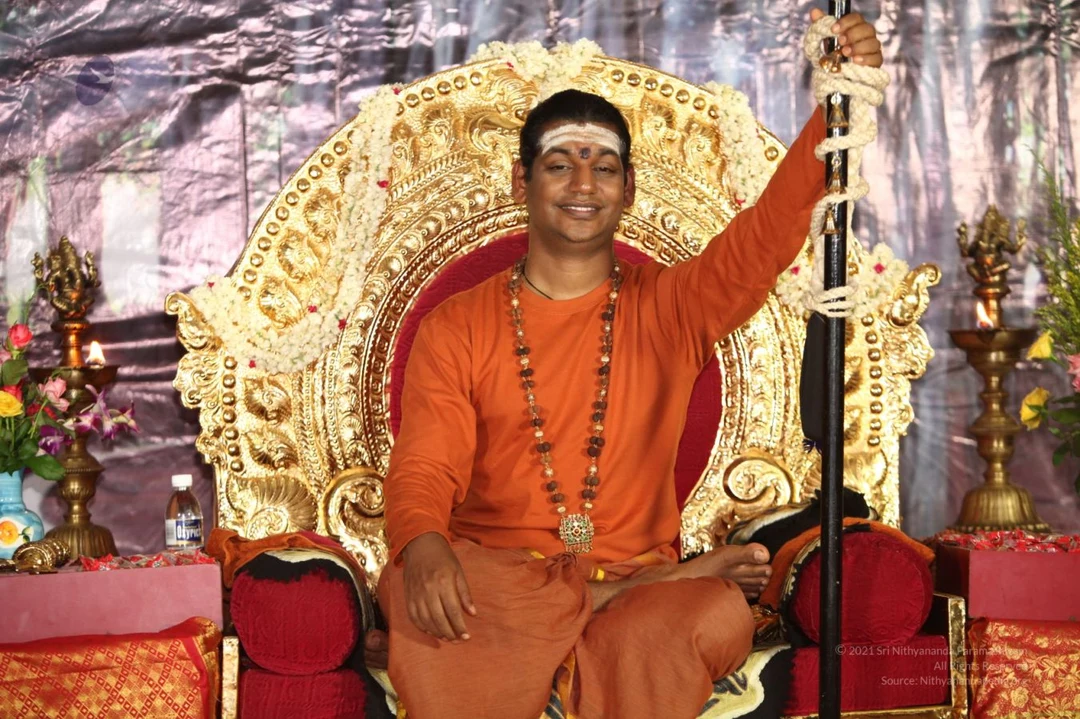
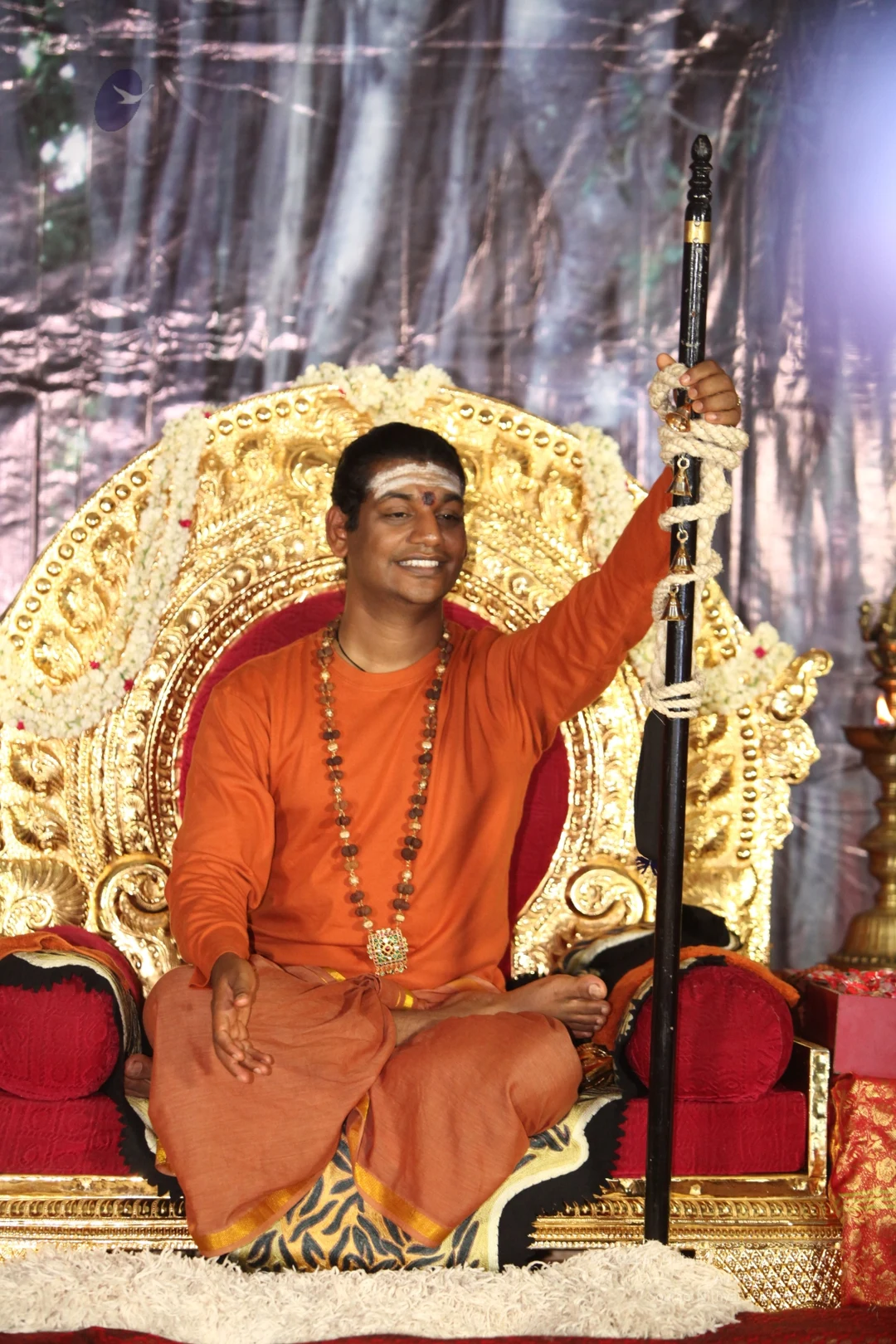
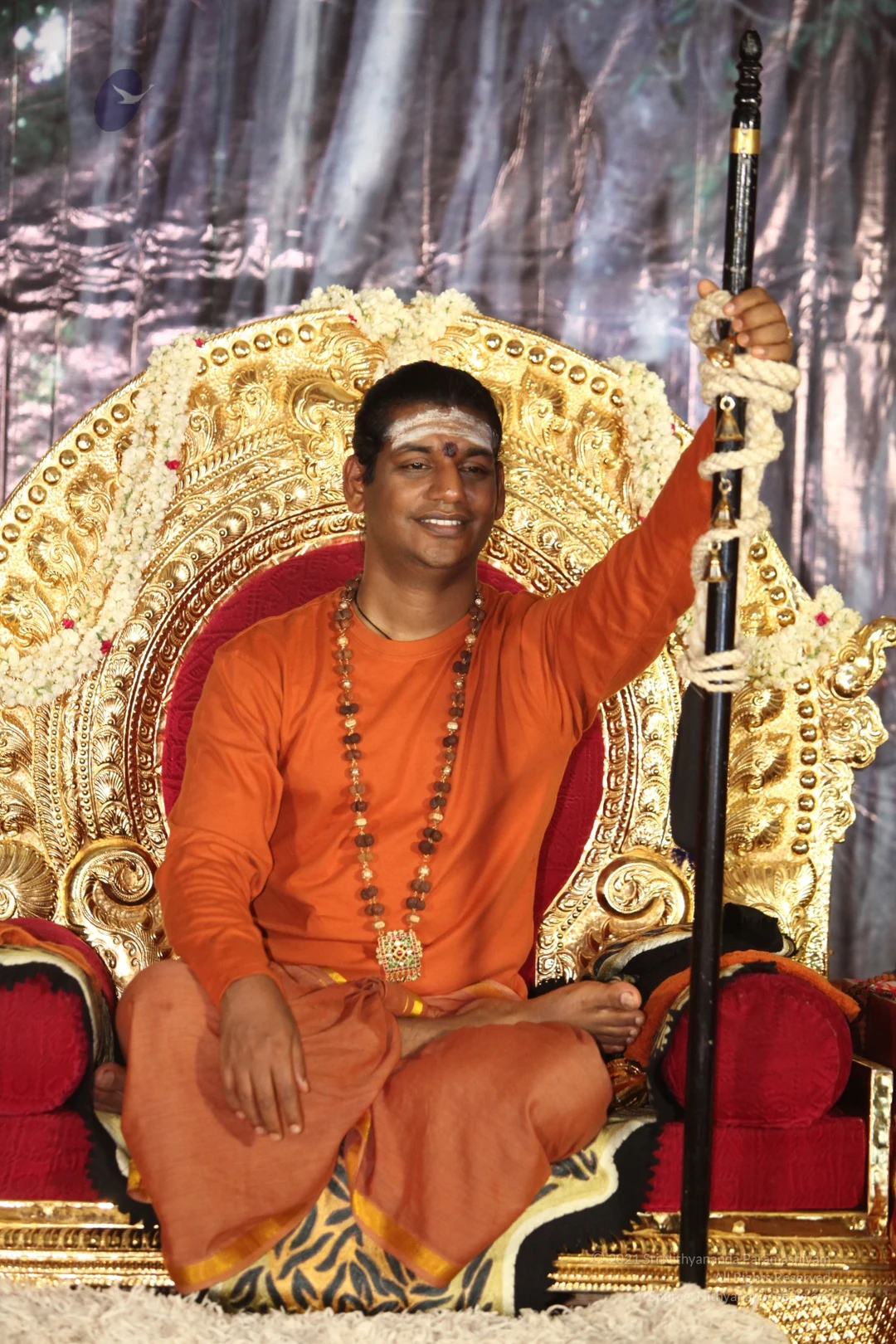
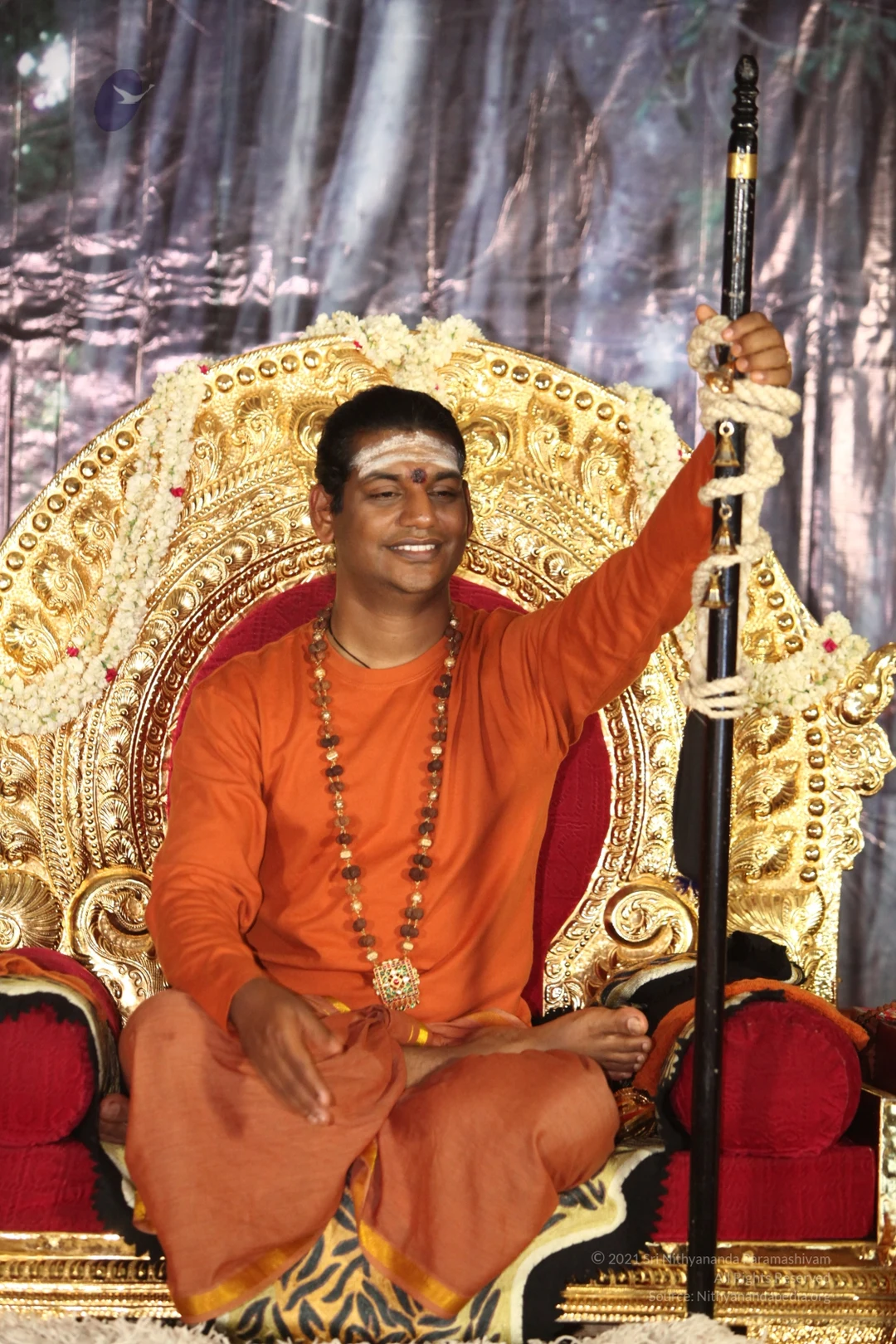
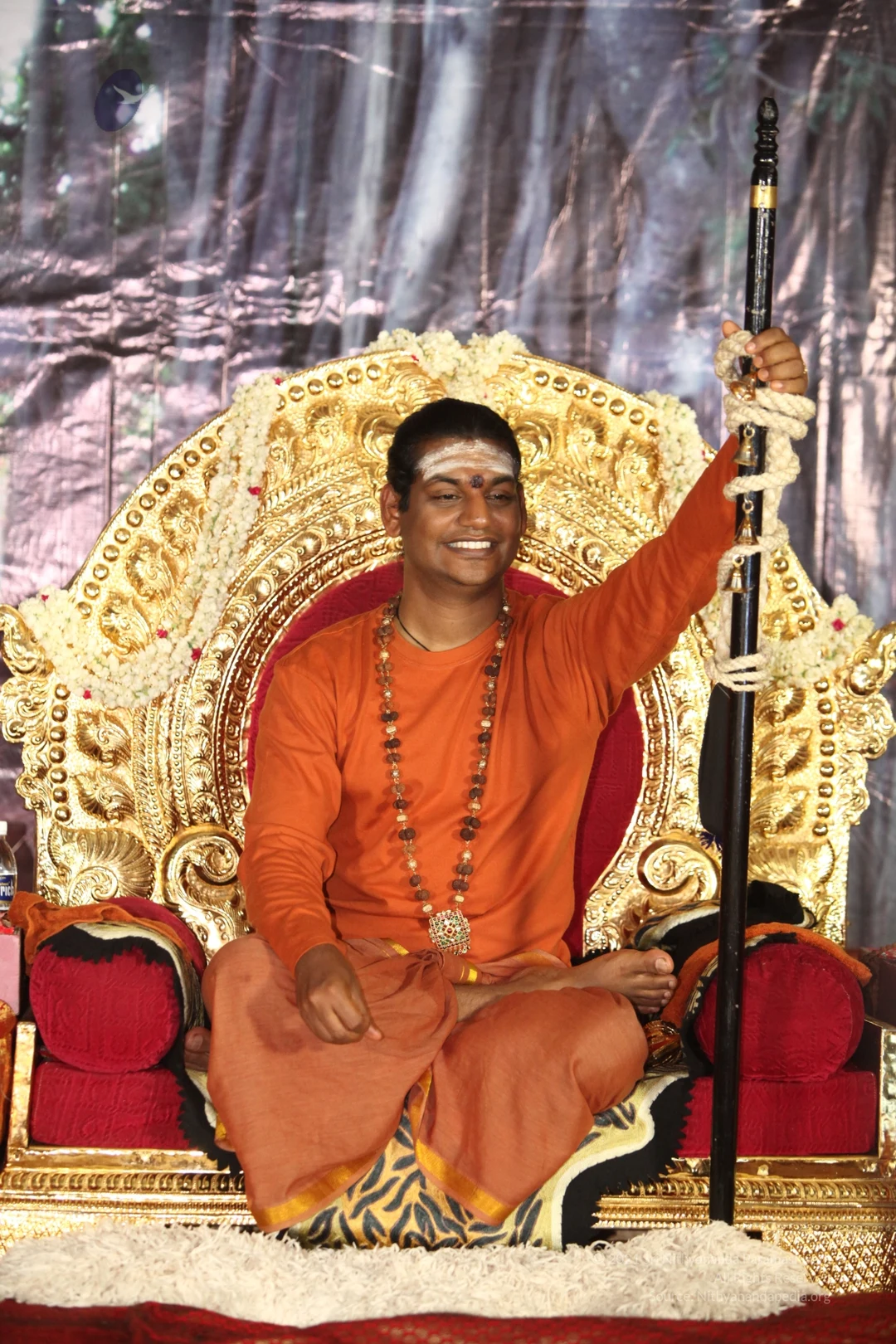
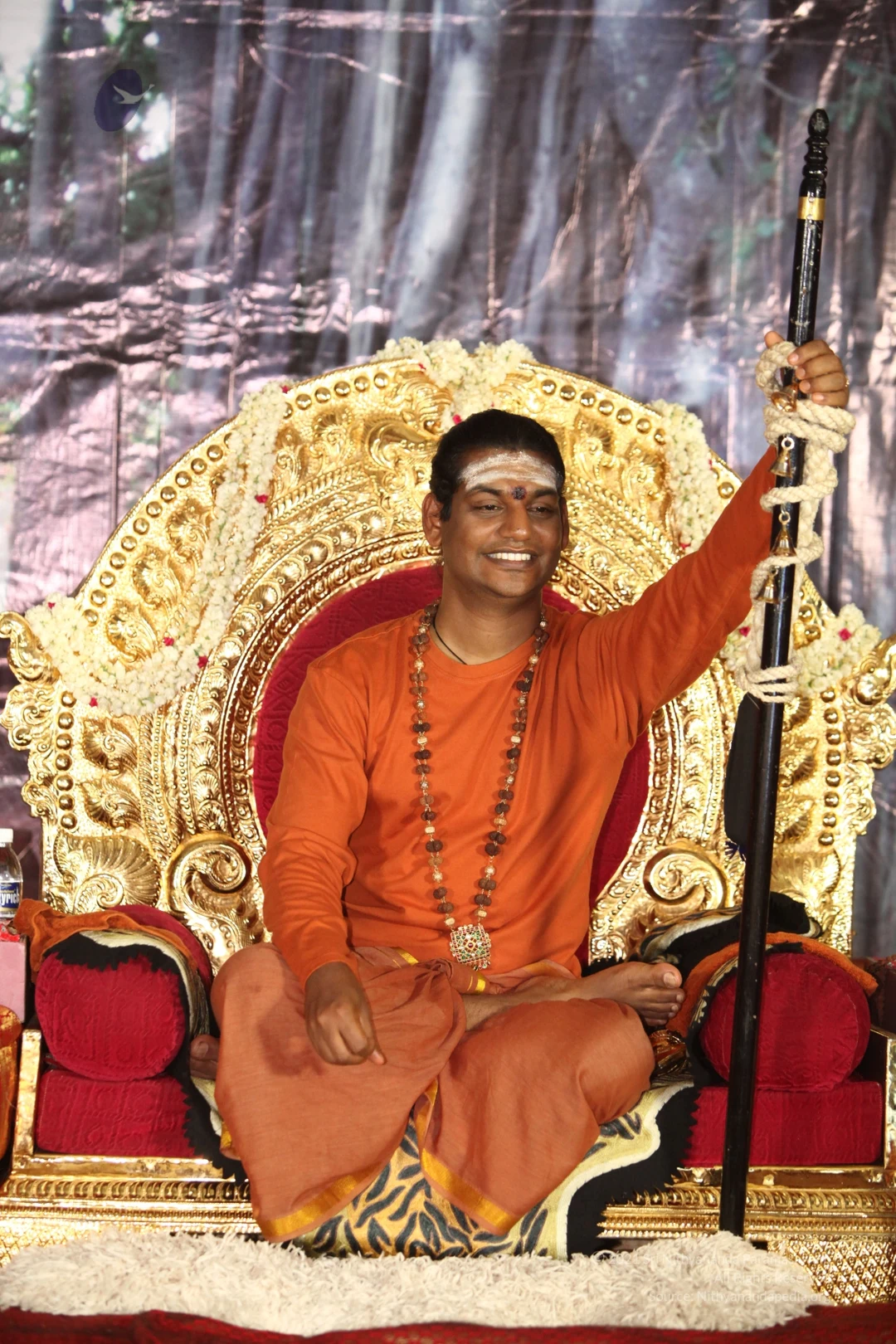
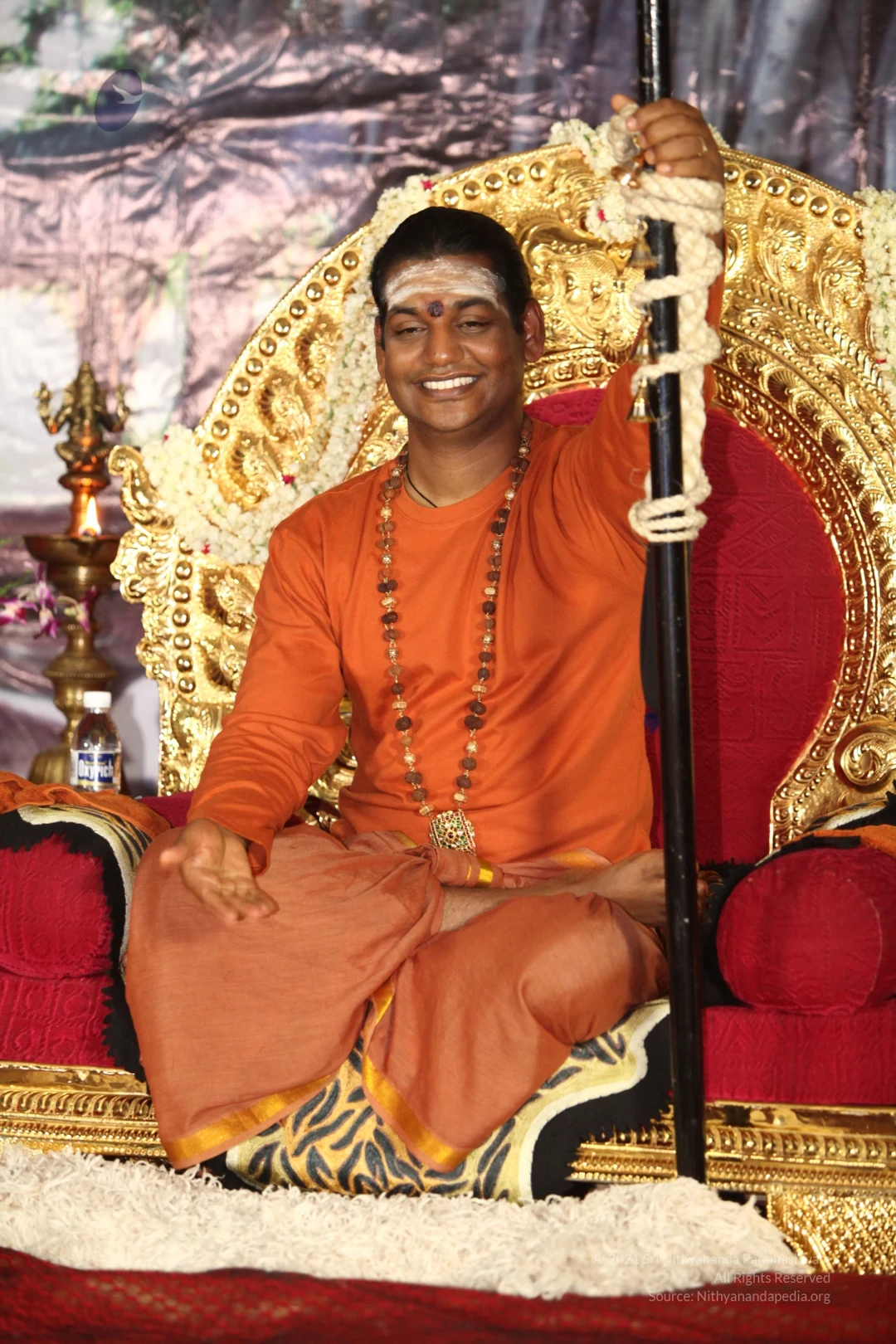
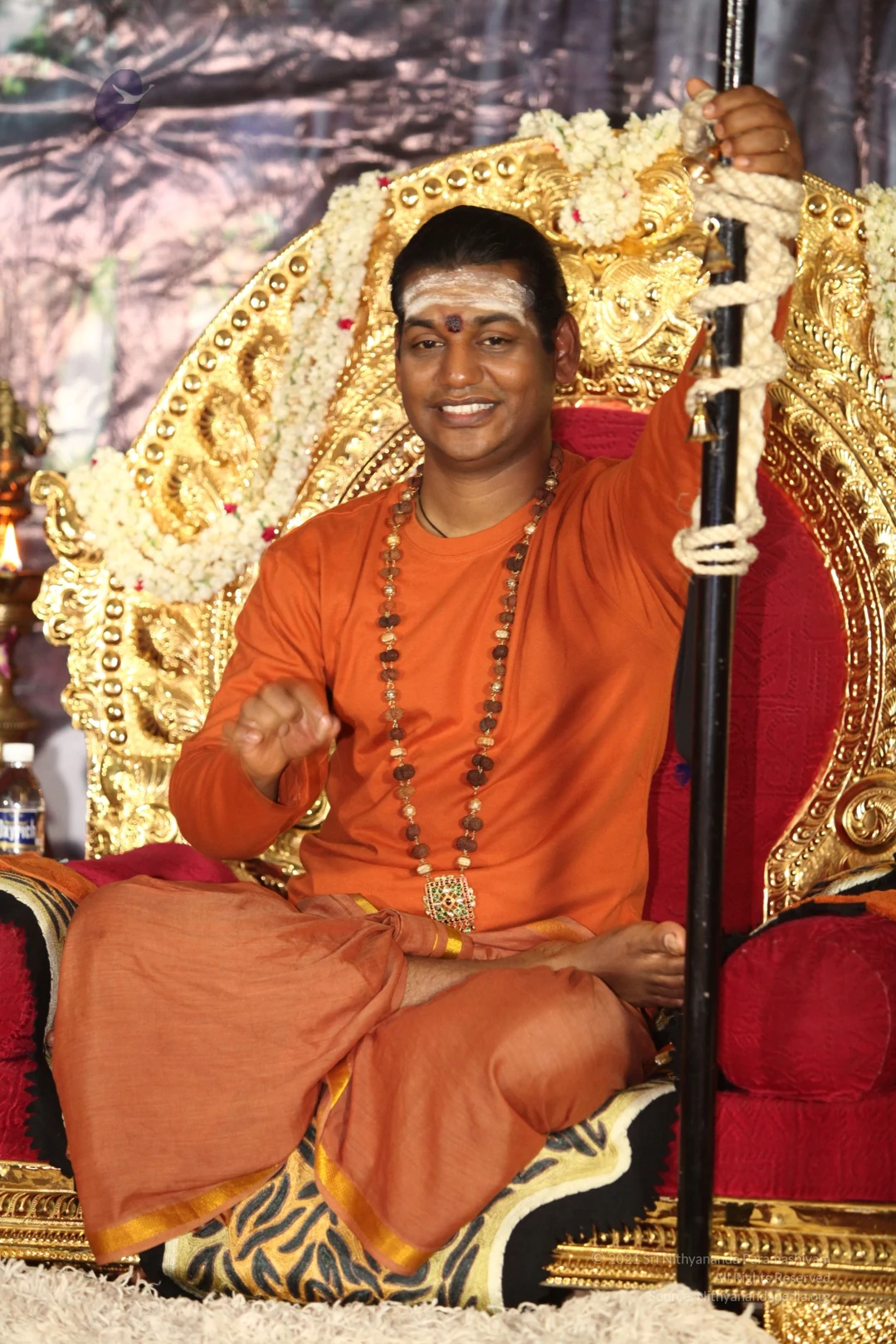
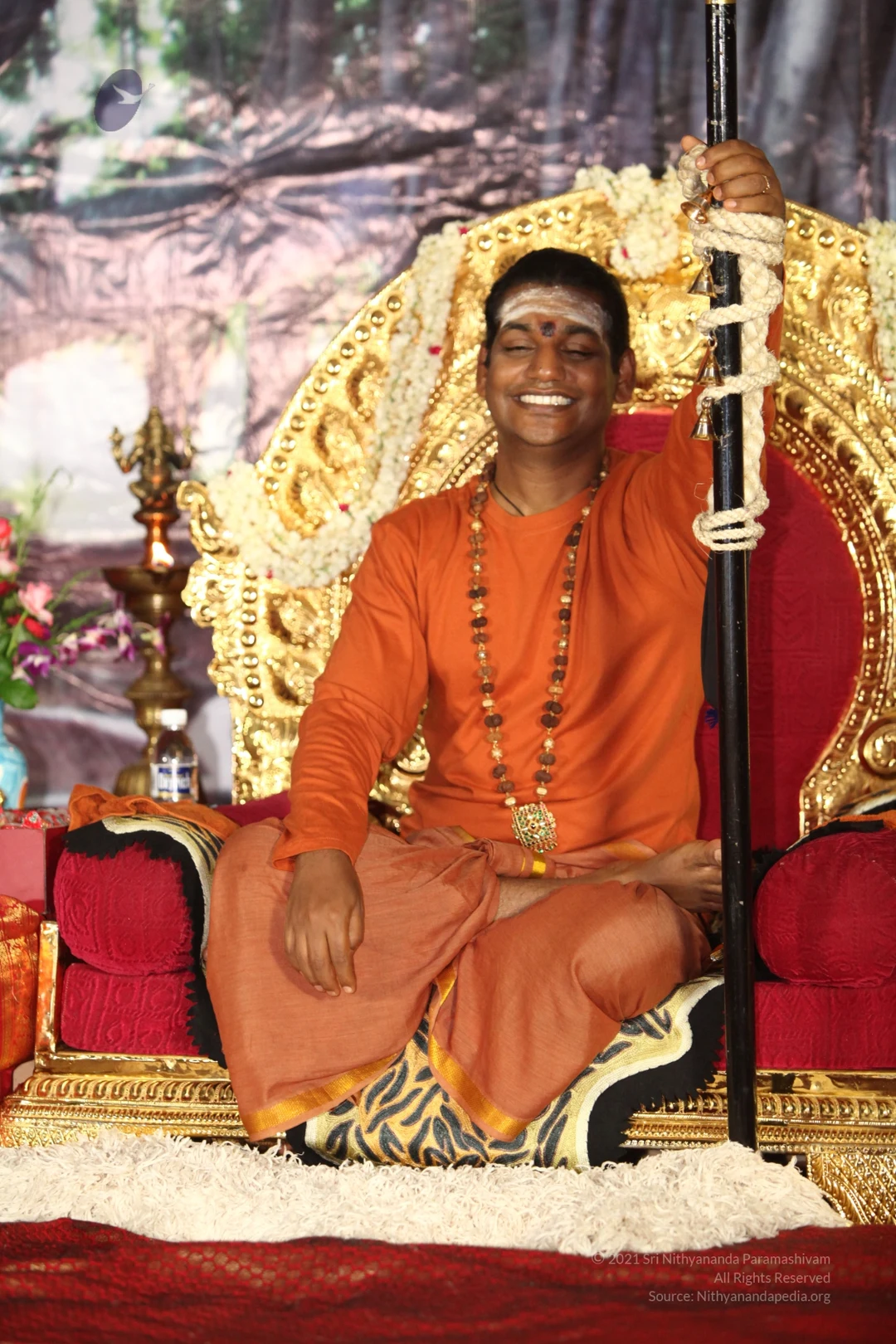
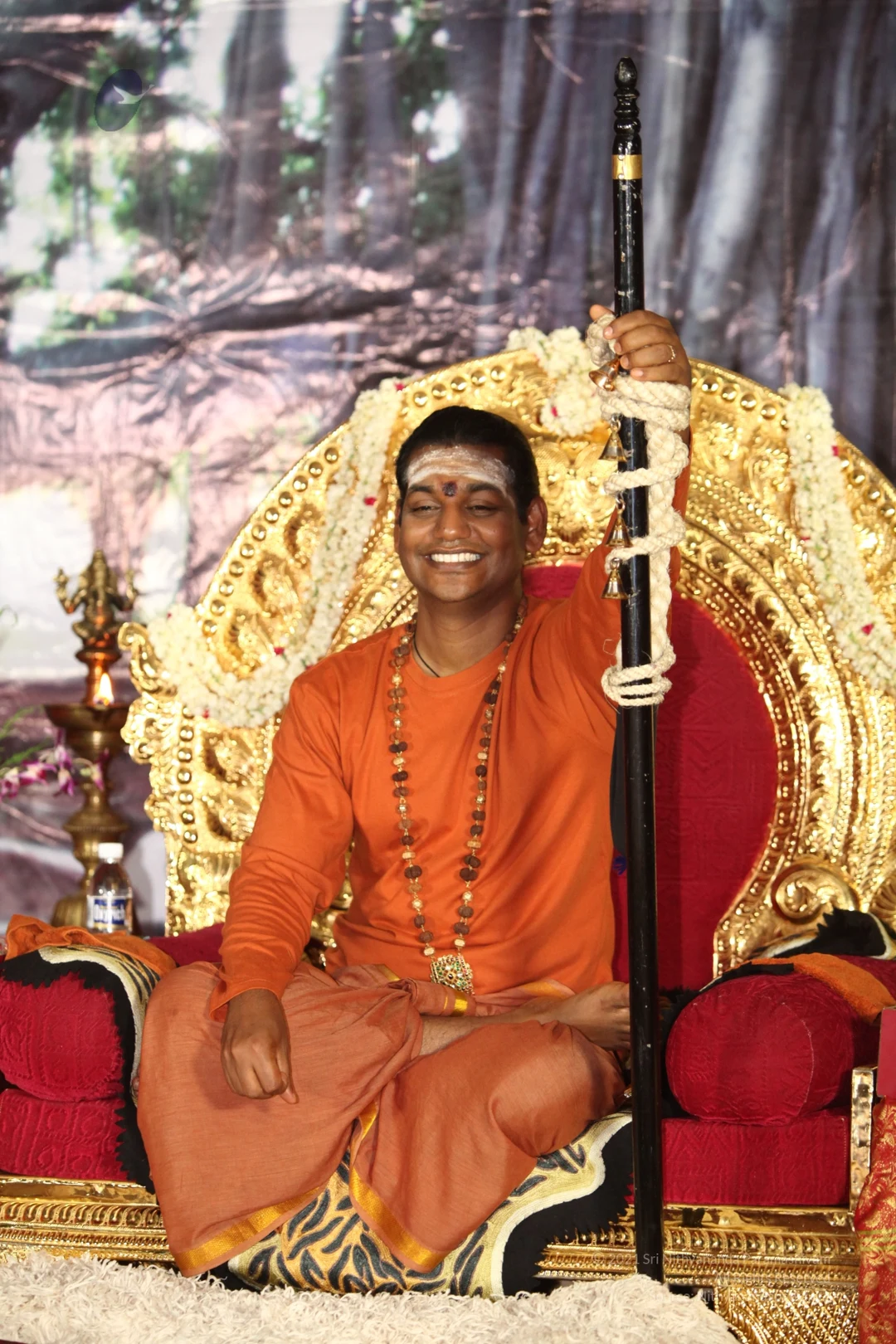
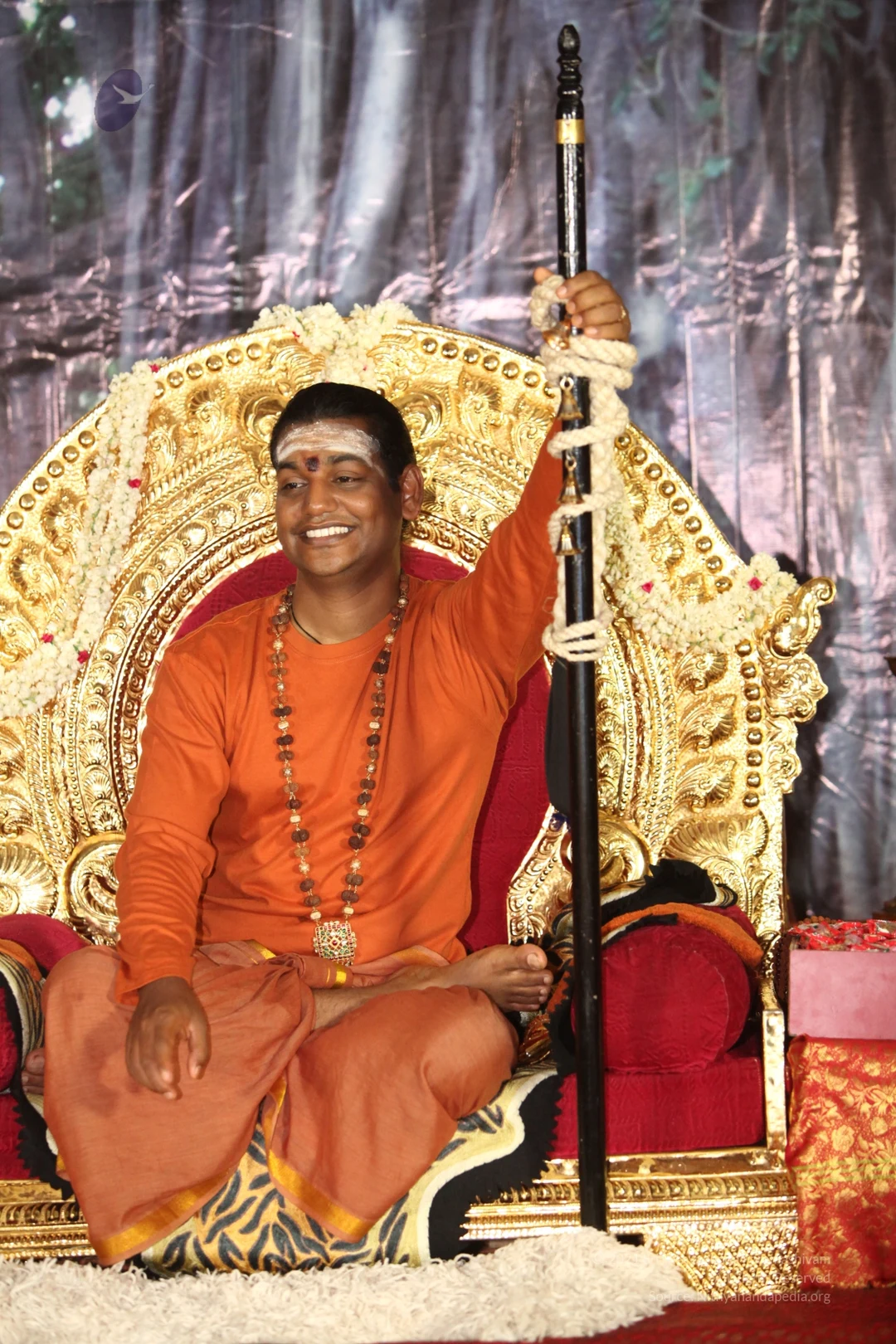
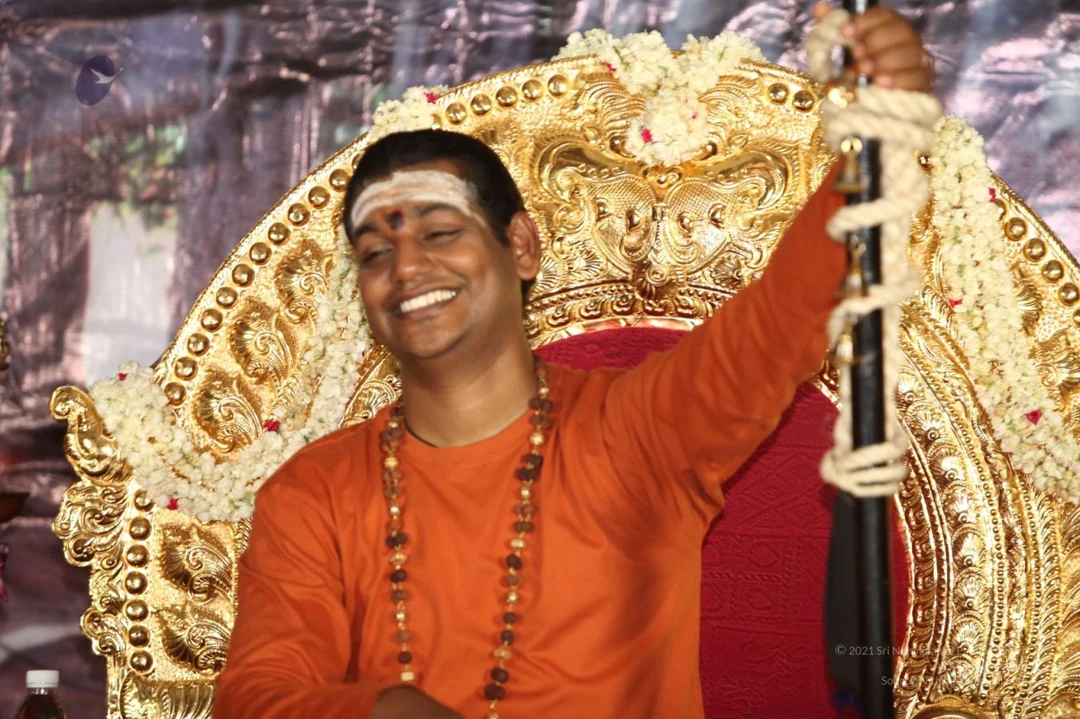
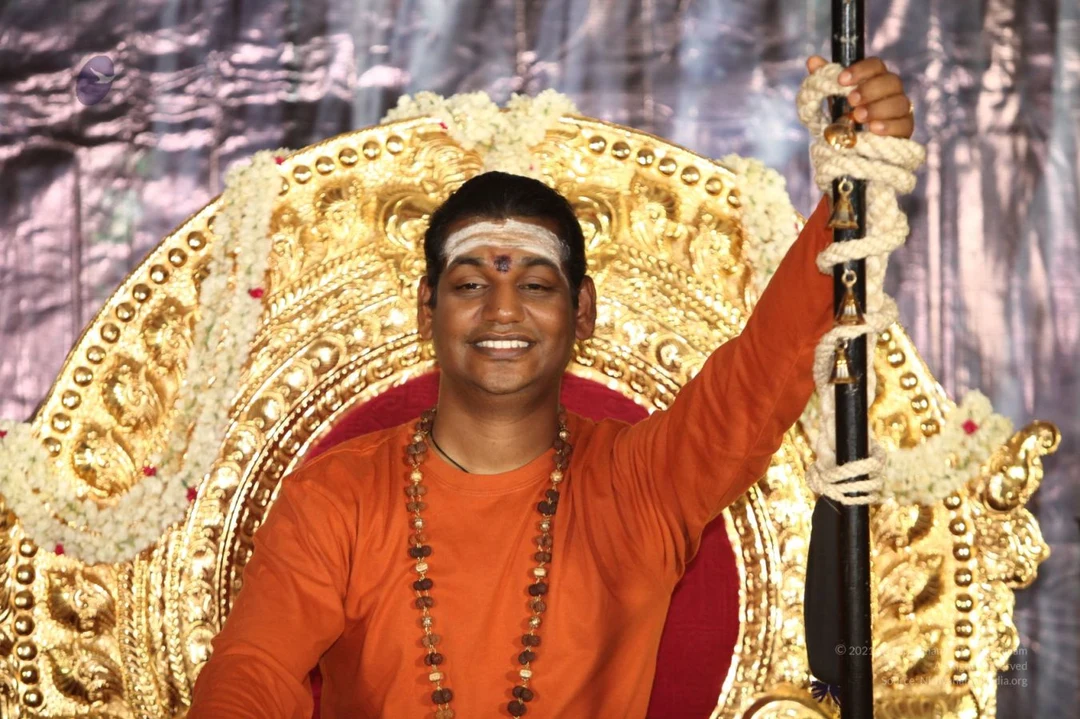
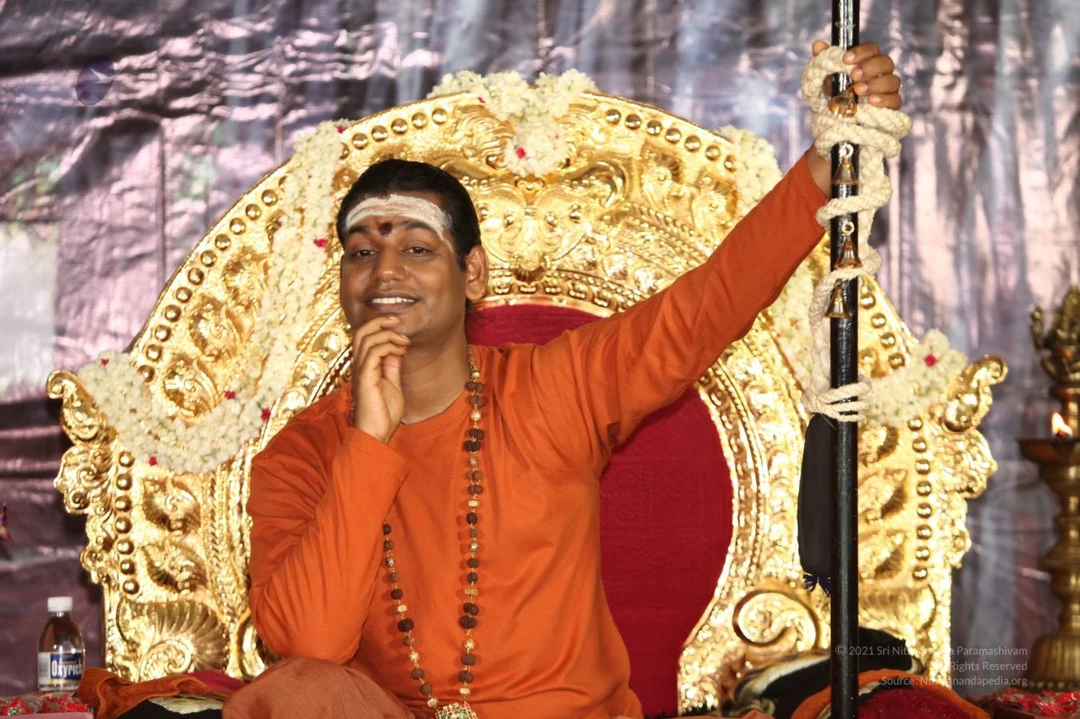
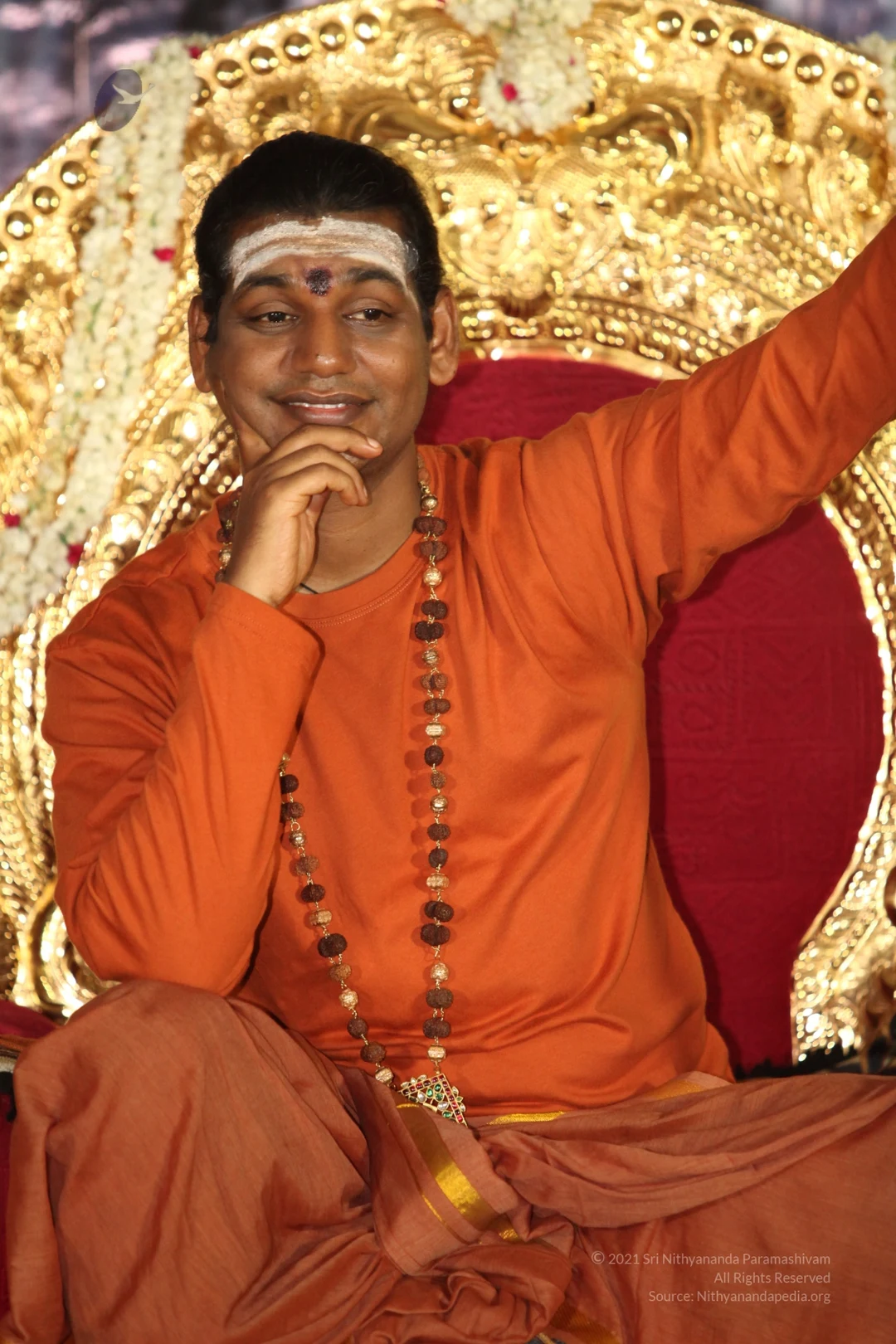
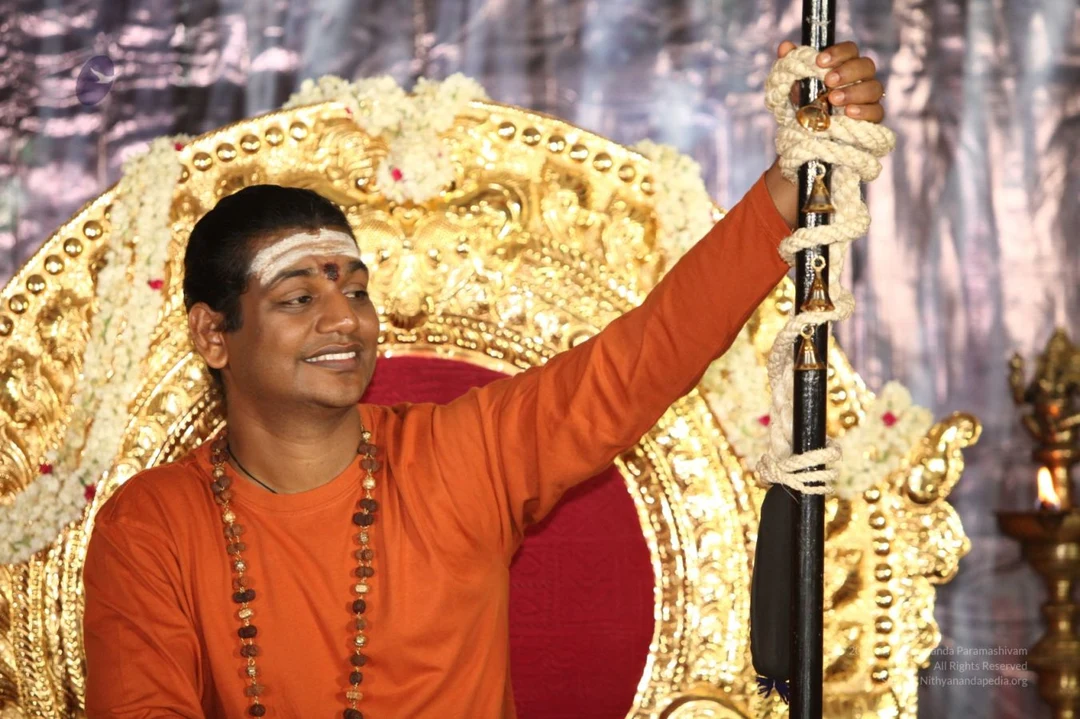
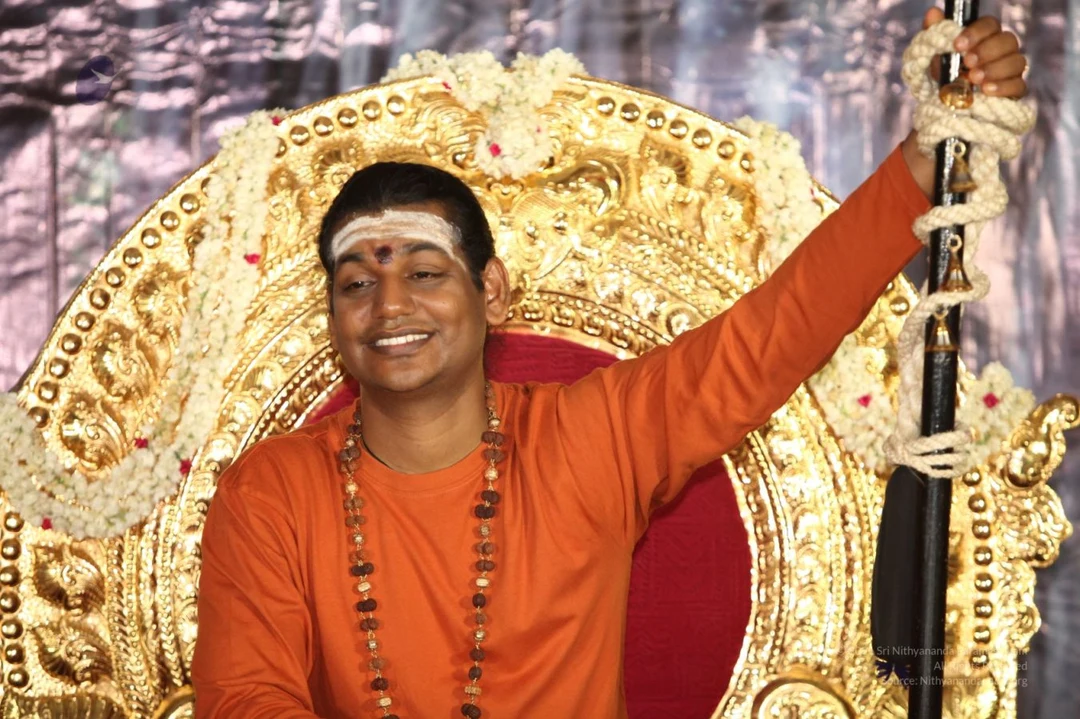
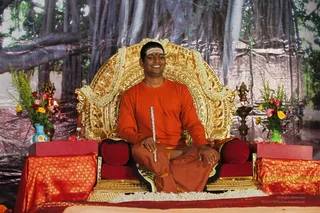
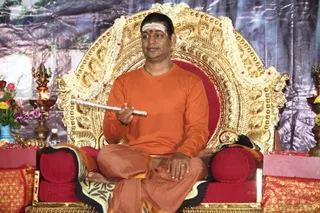
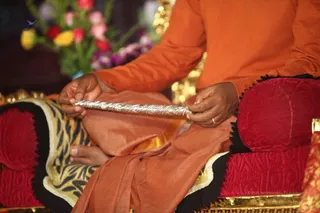
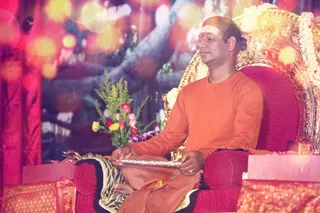
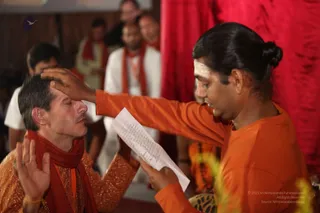
A man seated on an ornate gold throne with a red cushioned seat and carved gold scrollwork, decorated with white jasmine garlands with red flowers. He wears an orange-saffron top, a long multi-strand rudraksha mala with a golden clasp, and a white horizontal tilak with a red dot on his forehead. His right arm is raised upward, holding a black staff wrapped with white cord and small bells, and he is smiling toward the audience. a person based on the saffron clothing, rudraksha mala, and forehead markings in a seated teaching setting; the page indicates he was present at this event.A photograph of a darshan blessing. A young man in a white t-shirt with a rust-red scarf draped over his shoulders stands with eyes closed and one palm raised. A man in an orange-saffron robe with his hair tied back at the nape places his right hand on the young man's forehead. Behind them, several men in white clothes wear rust-red scarves, and a red curtain hangs at the right.A photograph of a darshan moment: a man in an orange top with a white tilak on his forehead and hair tied in a bun reaches forward with both hands to bless a shaven-headed man in a white top with an orange lanyard and a conference badge. The blessed man's eyes are closed and his hands are raised. Behind them a red curtain hangs and other people in white stand out of focus. Orange and red dominate the scene. The orange-clad figure's appearance is consistent with the page's a person reference, but the cues are limited to clothing, a tilak and hair; identity remains uncertain.

August 29 2012

Original wiki page
Contents

Title

Raise Yourself by Yourself

Description

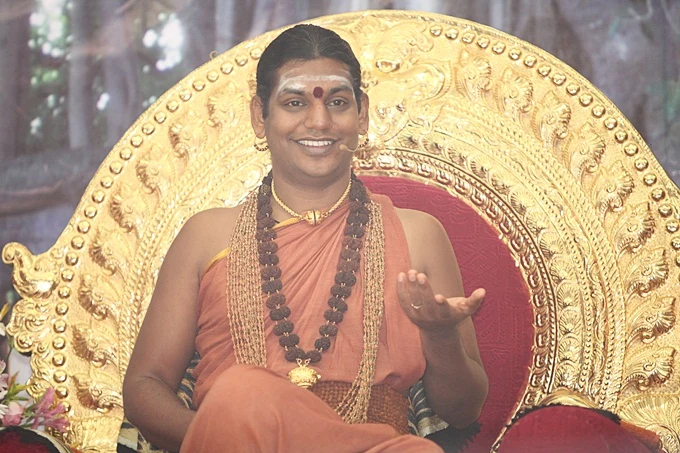
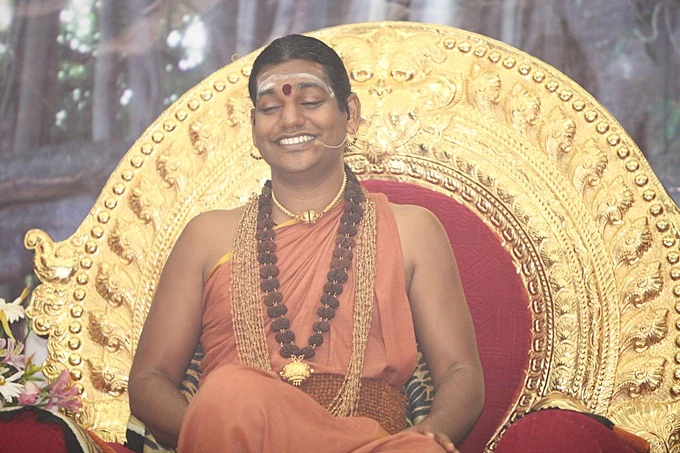
In 29th August 2012 Morning talk on Bhagavad Gita, chapter 6, verse 5, Paramahamsa Nithyananda (Swamiji) decodes his favourite verse. This one verse stands alone as the crown of Sri Krishna's teachings. The sacred secret of this verse is that we alone have the sovereign power to raise ourselves to enlightenment or to hold ourselves back from spiritual evolution. Going forward even during moments of doubt and depression is atma bhakti: devotion to our higher intelligence. We become our own guiding light, building our lives on spontaneous inspiration.

Bhagavad Gita (Song of God) is a timeless treatise on the essence of living enlightenment. The Gita was imparted by the enlightened Hindu incarnation Sri Krishna to the warrior-prince Arjuna over 5000 years ago. Amazingly, the spiritual wisdom and life solutions offered in the Gita are so universal and current that even today it is used as a personal transformation guide

Video Link

VideoAudio

Photos From The Day:
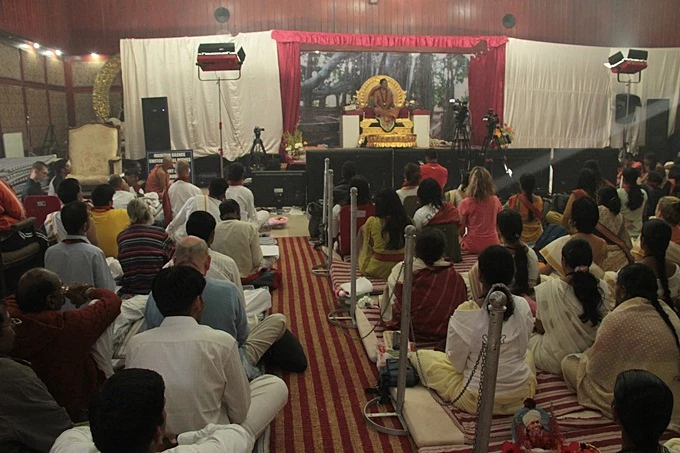
Darshan

Photos from this day

View all 135 photos

Photos From The Day:
36 photosSource gallery
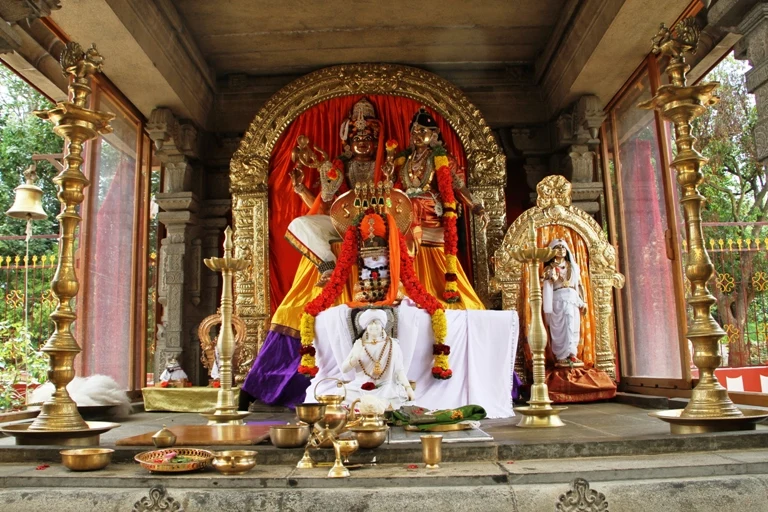
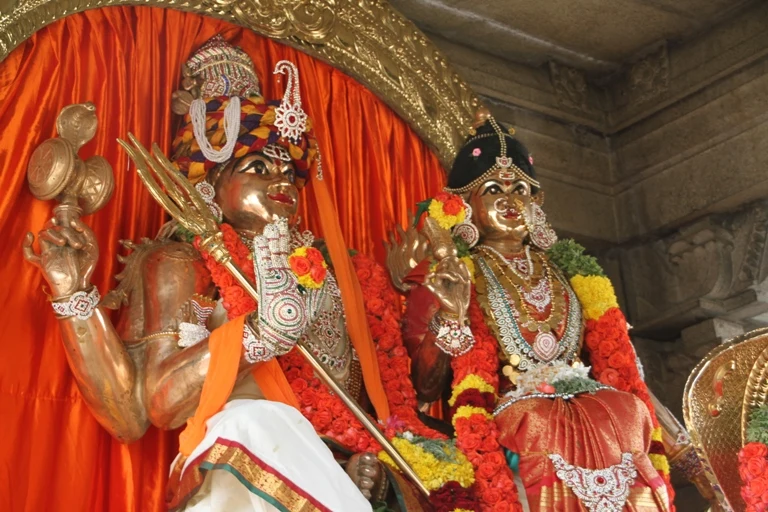
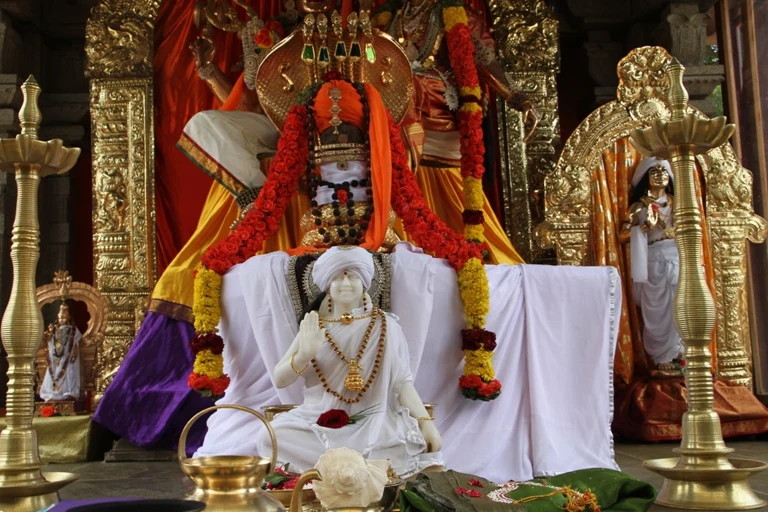
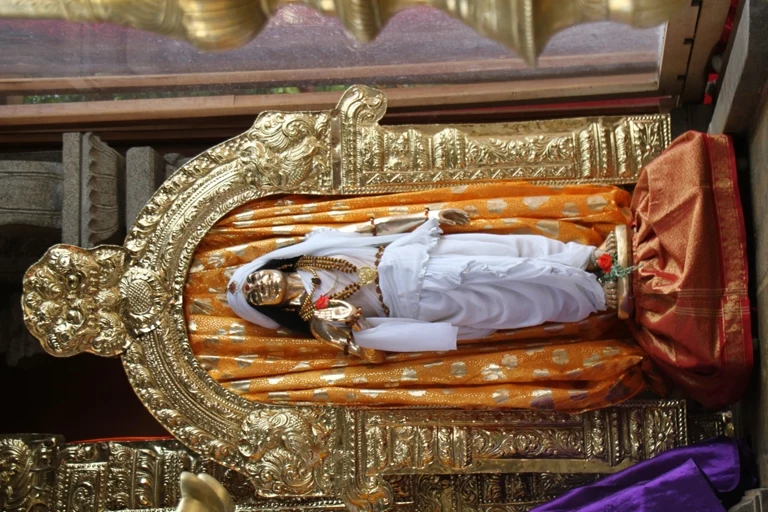
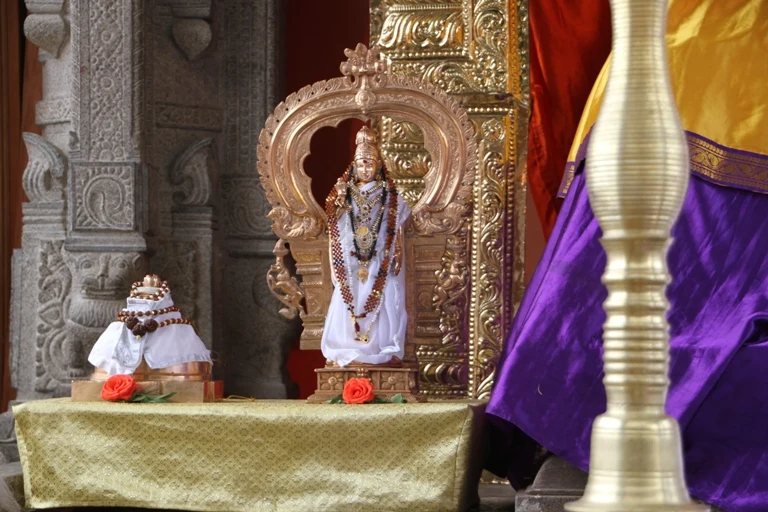
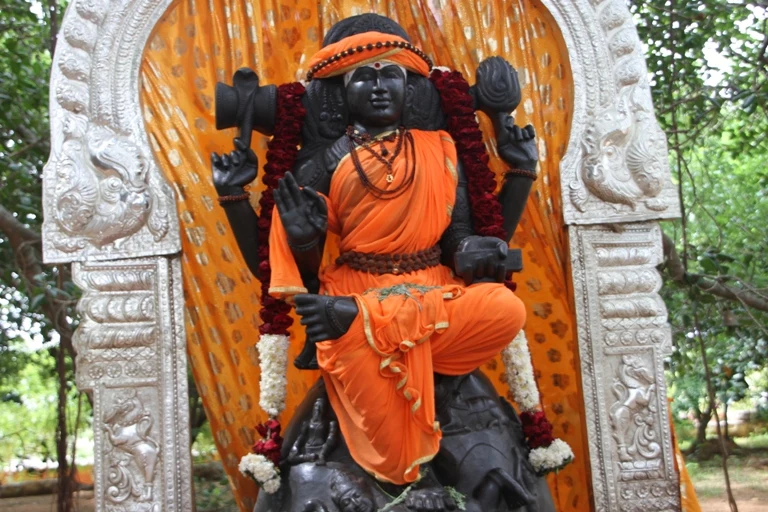
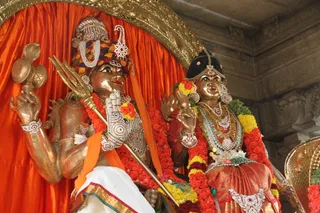
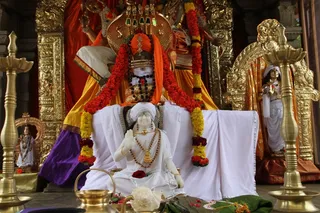
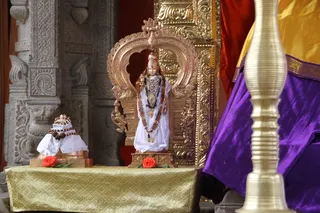
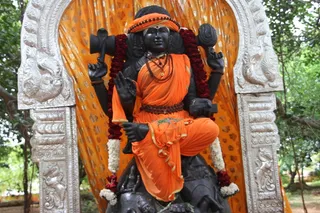
Photograph of a shrine niche in a temple setting, framed by tall brass oil lamps with lit wicks and a hanging brass bell at left. Inside an ornate gilded arch with a red curtain stands a deity murti with a tall crown and orange-yellow garments, garlanded with marigold strands; a second murti in yellow and purple garments stands beside it. Before the shrine sit a white-draped platform, brass bowls, a plate of offerings and a brass lamp; a small white-robed figure stands at right. No living people are visible.Photograph of two golden-bronze deity murtis on a temple altar before an orange draped backdrop with a gilded arch. The figure on the left holds a trident and a small drum-like instrument, wears a striped turban-style crown, and has a white dhoti with gold border. The figure on the right wears a black crown, ornate gold jewellery and a red and gold garment. Both are adorned with thick garlands of red roses and yellow marigolds, and ornate silver and gold ornaments decorate their arms and necks. No physical people are visible.A photograph of a temple shrine with a large deity murti dressed in orange and yellow cloth, a tall crown, and long garlands of red and yellow flowers. In front, a white marble sculpture of a seated sage-like figure wears a white turban, gold necklaces and a rudraksha-style mala, with a red flower offered at its feet. Ornate gold framing surrounds the shrine, with tall brass oil lamps on either side, a brass vessel and offerings of flowers and cloth in the foreground. Two small figures stand in the background. No living people are visible, so the figures are statues or depictions.A golden ornate palanquin or ratha-like throne with carved gold filigree and an orange-and-gold brocade cushion holds a dark-skinned murti of a deity in white dhoti-style cloth adorned with gold ornaments, garlands and a red flower. The idol lies reclined on the cushion beside a red and gold drape, with gold metalwork and a purple cloth visible at the bottom edge. No physical people are visible.A photograph of a temple shrine with an ornate golden arched backdrop. A small white-clad murti stands in the centre, adorned with rudraksha malas, beads and a gold necklace, flanked by red roses placed on a gold-embroidered table cloth. A second white-draped figure sits or rests on a smaller platform at left. Behind them hangs a purple and gold silk cloth, and a brass pillar stands in the right foreground. No physical people are visible.A dark stone statue of a seated deity figure with multiple arms, wearing a saffron-orange dhoti-style garment with gold edging and an orange head wrap. It holds ritual objects in its raised hands and wears a rudraksha mala and ceremonial necklace. Red and white flower garlands drape over its shoulders and arms. It sits on a dark pedestal before a silver-framed arched niche backed by a gold-and-orange draped cloth, with green trees in the background. No living people are visible in the frame.

Darshan
99 photosSource gallery
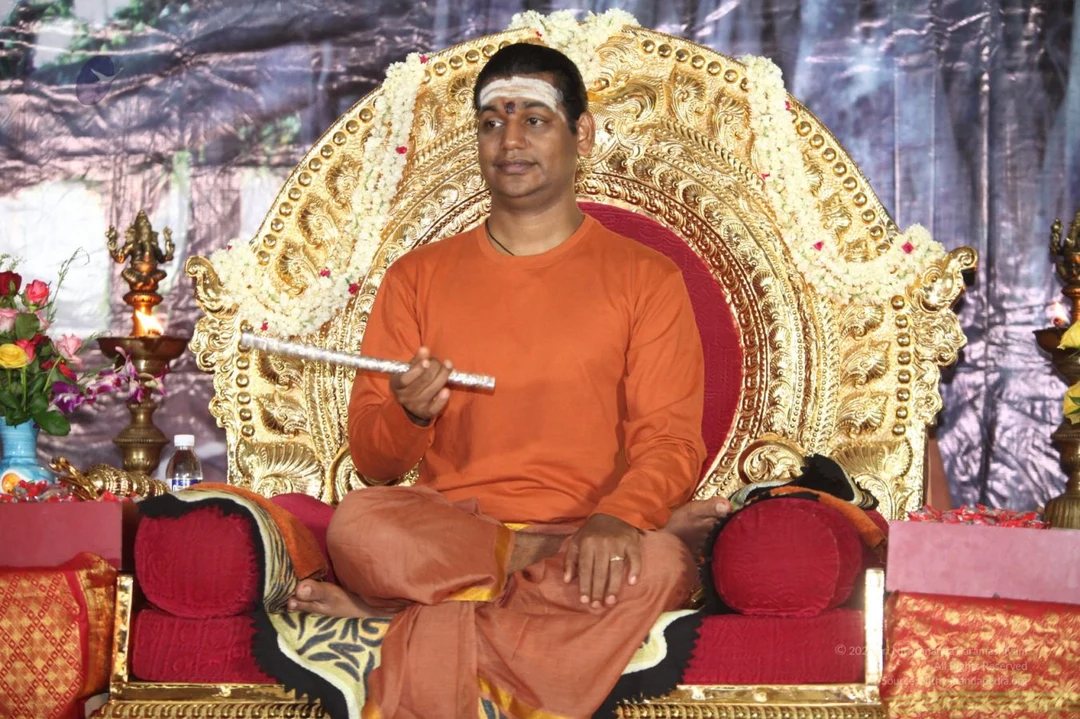
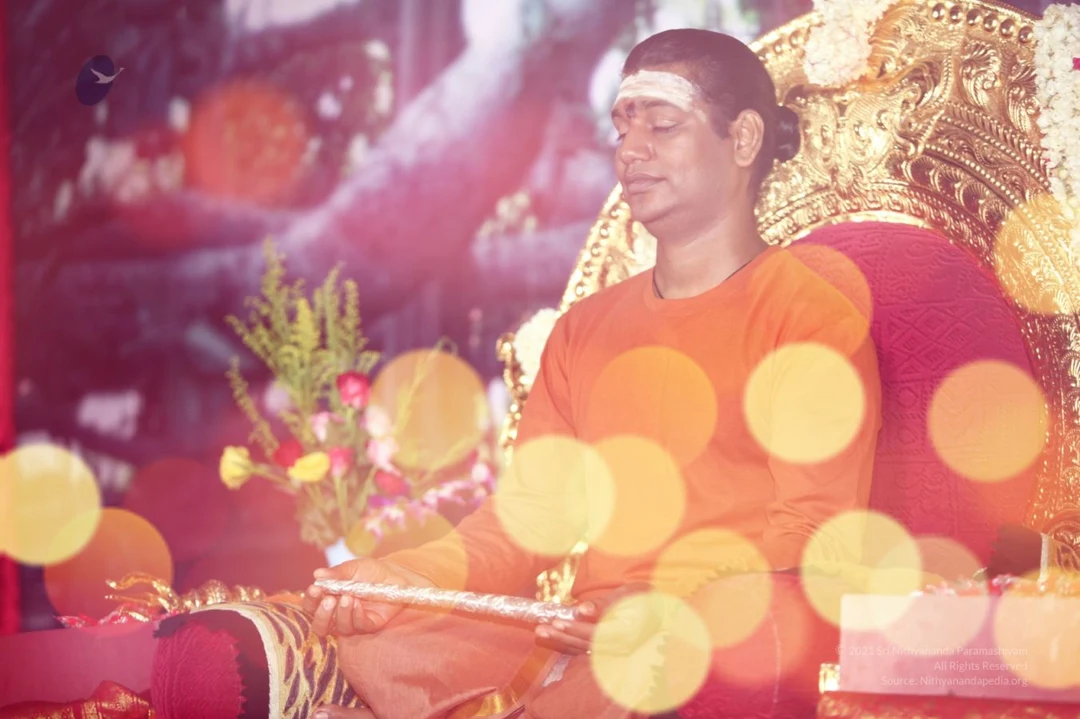
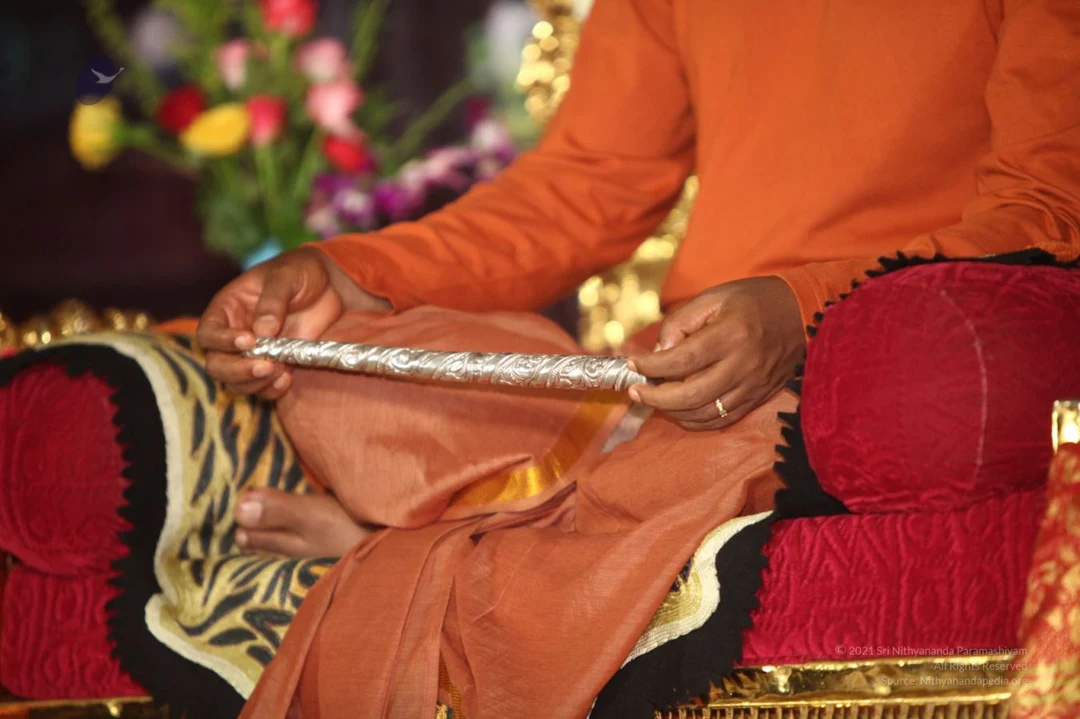
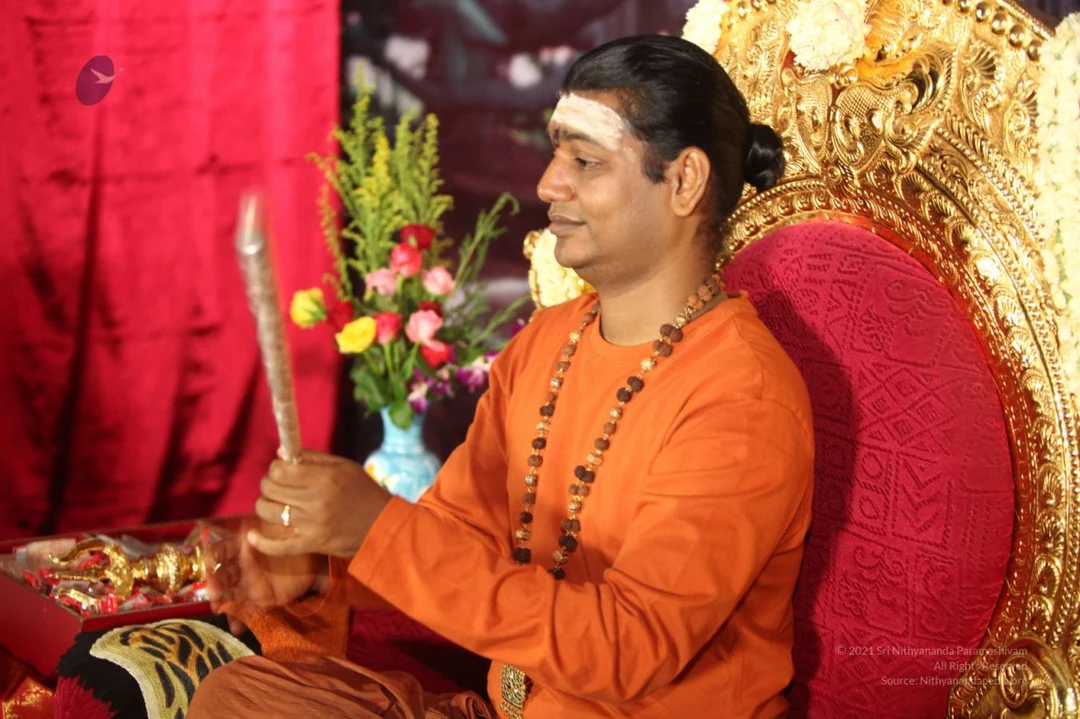
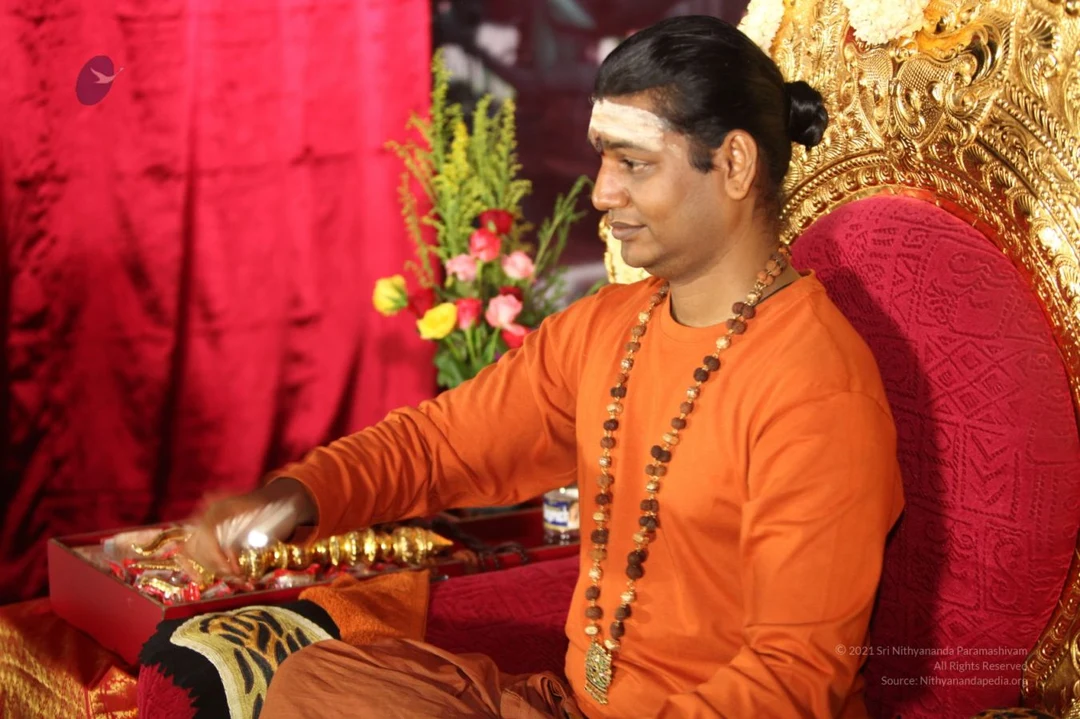
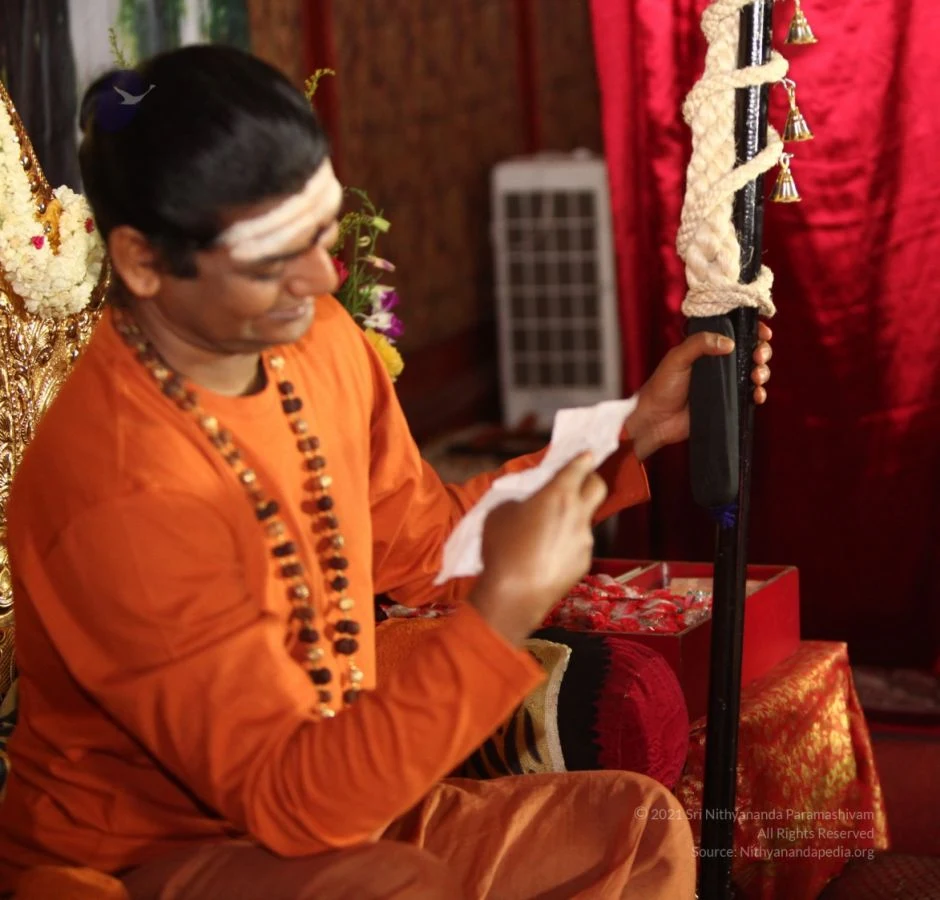
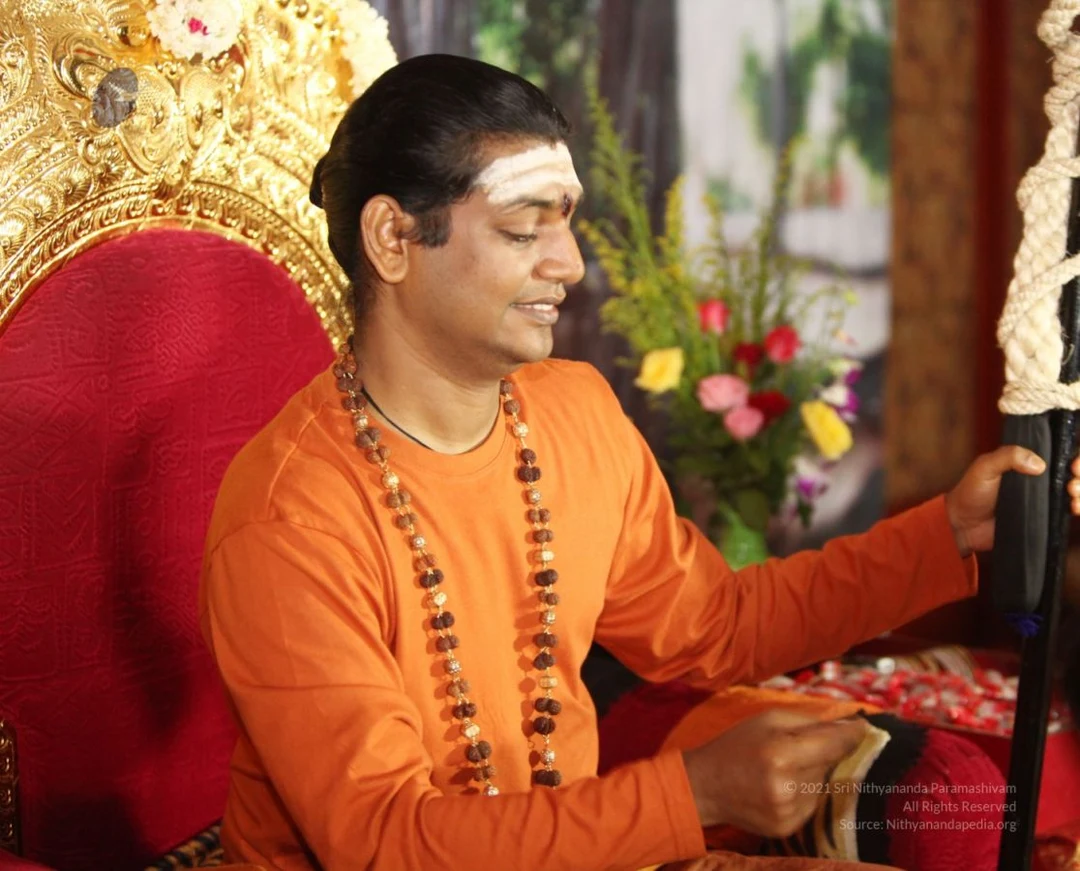
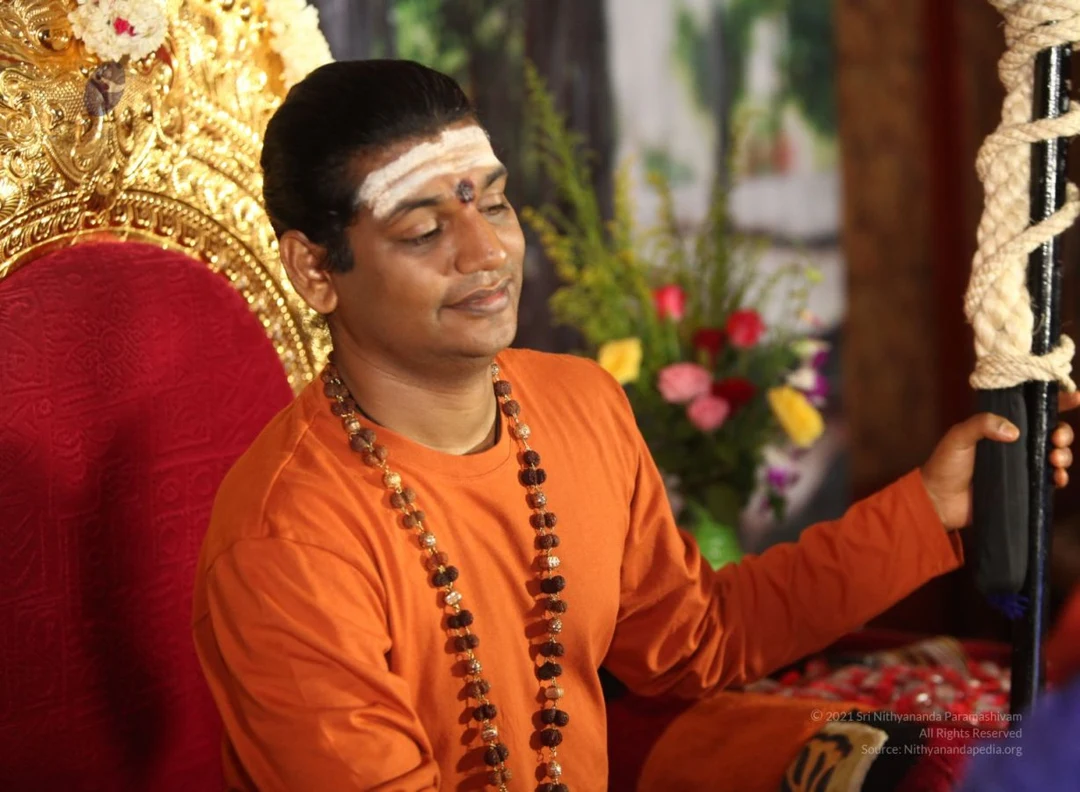
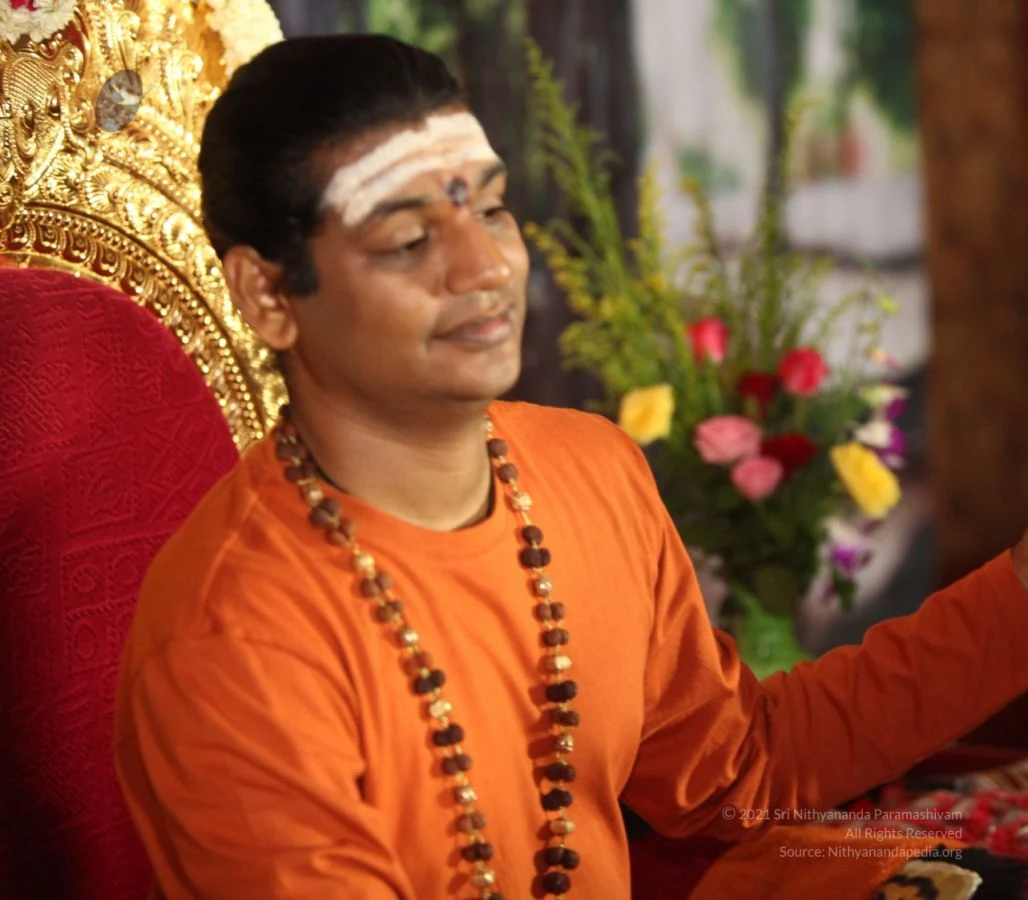
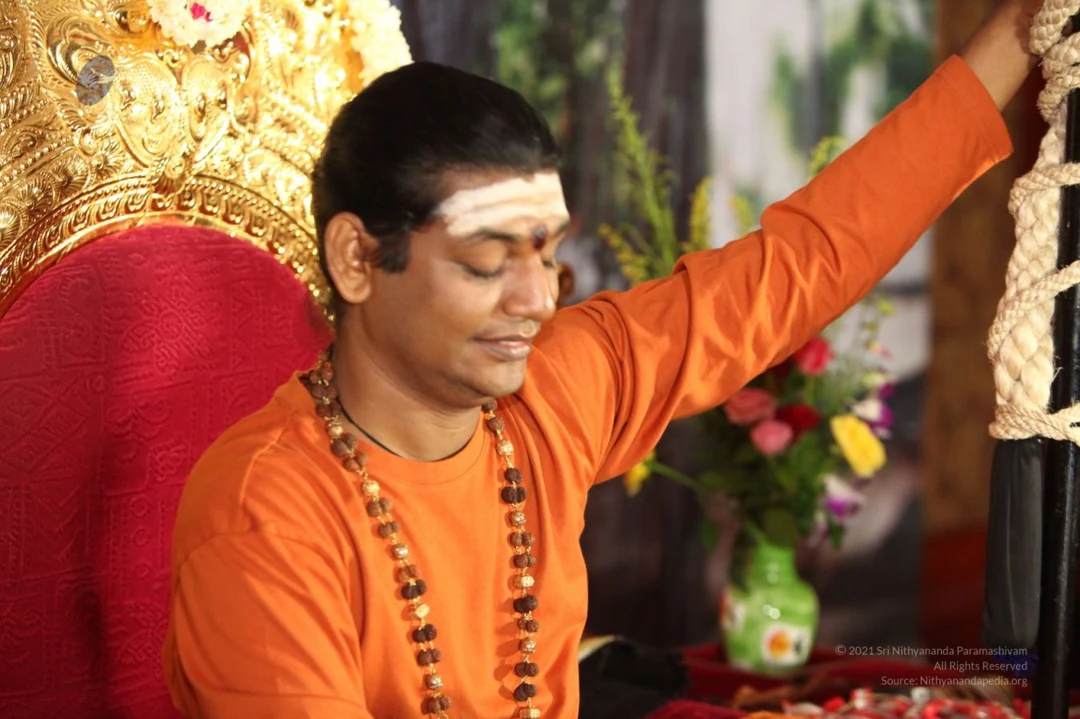
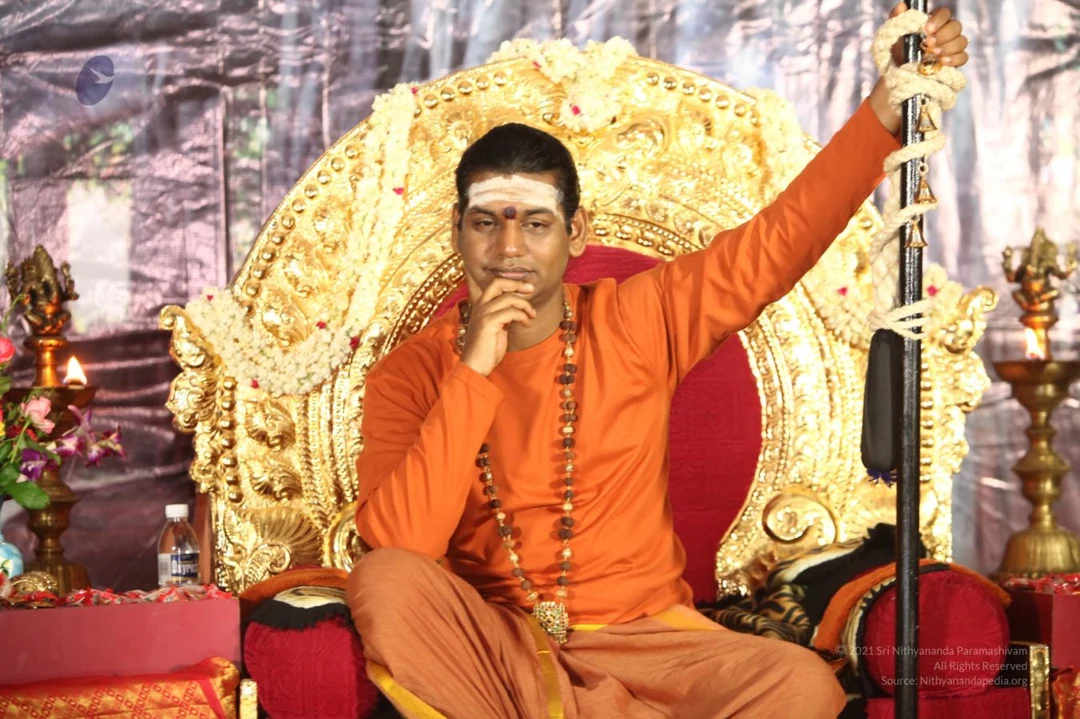
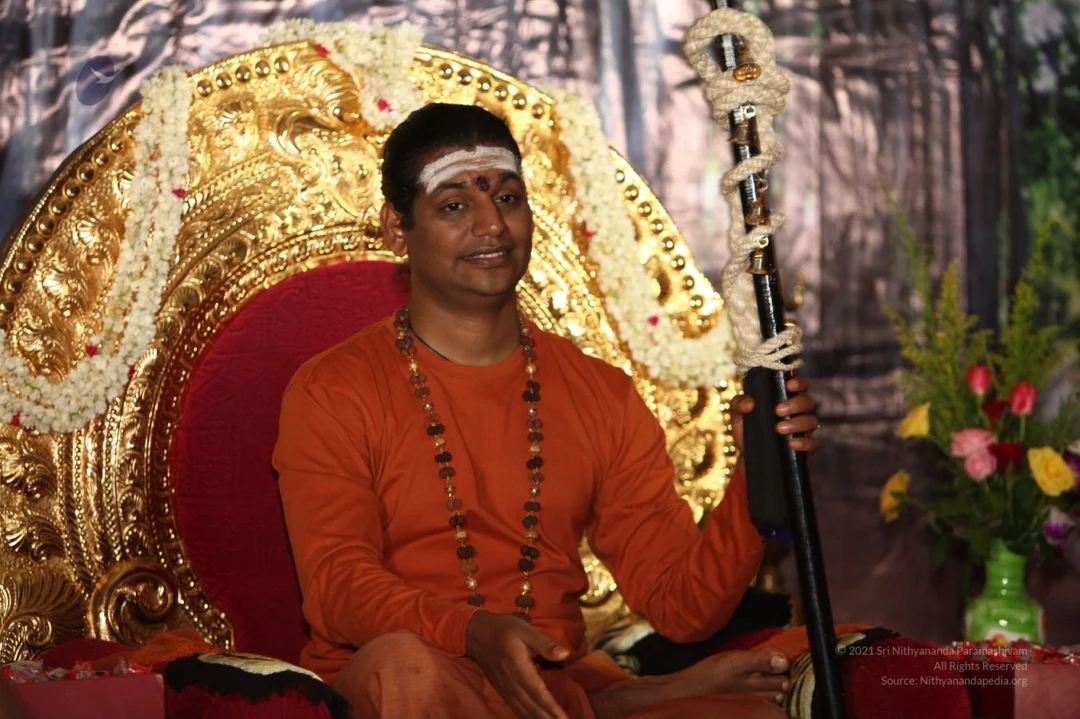
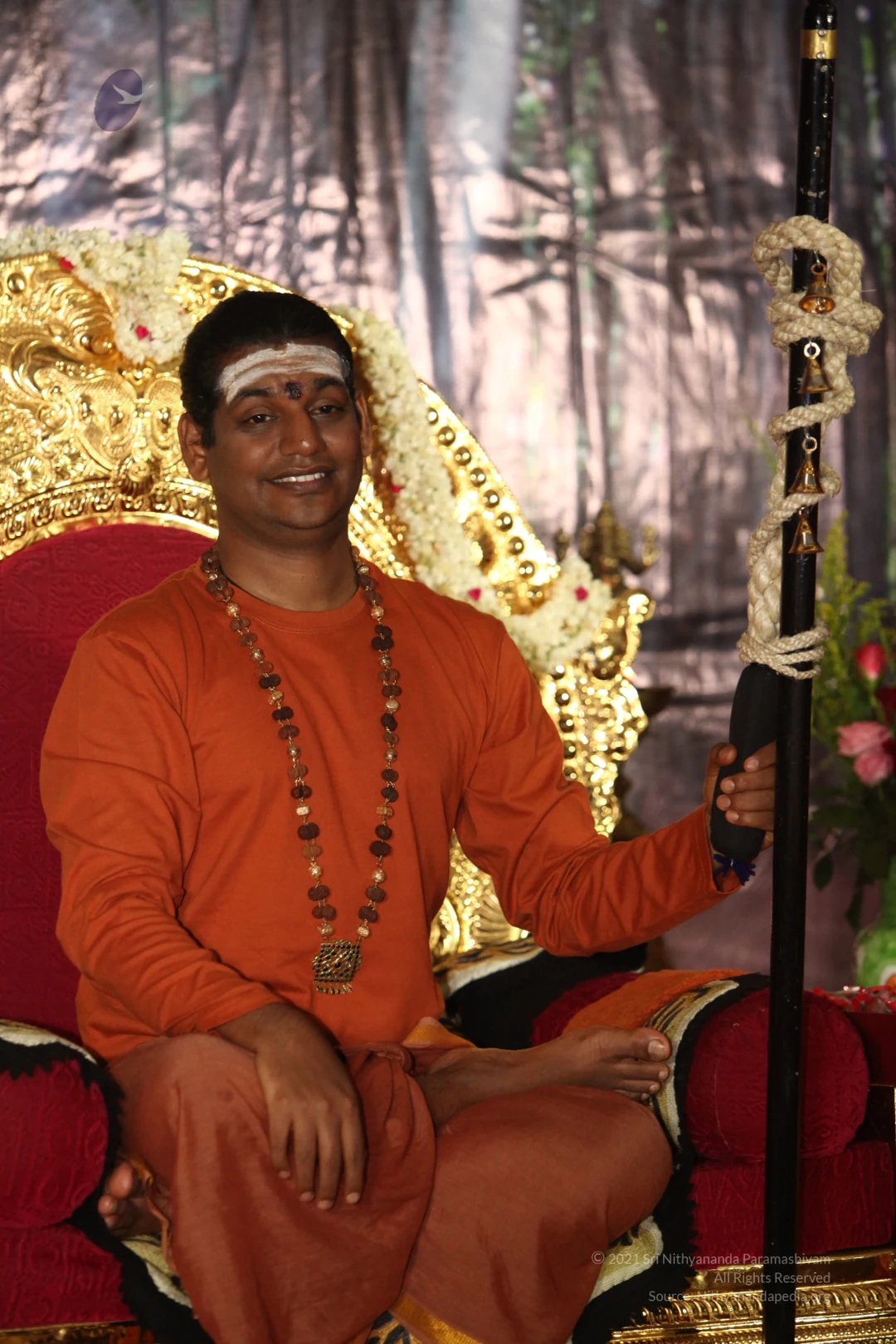
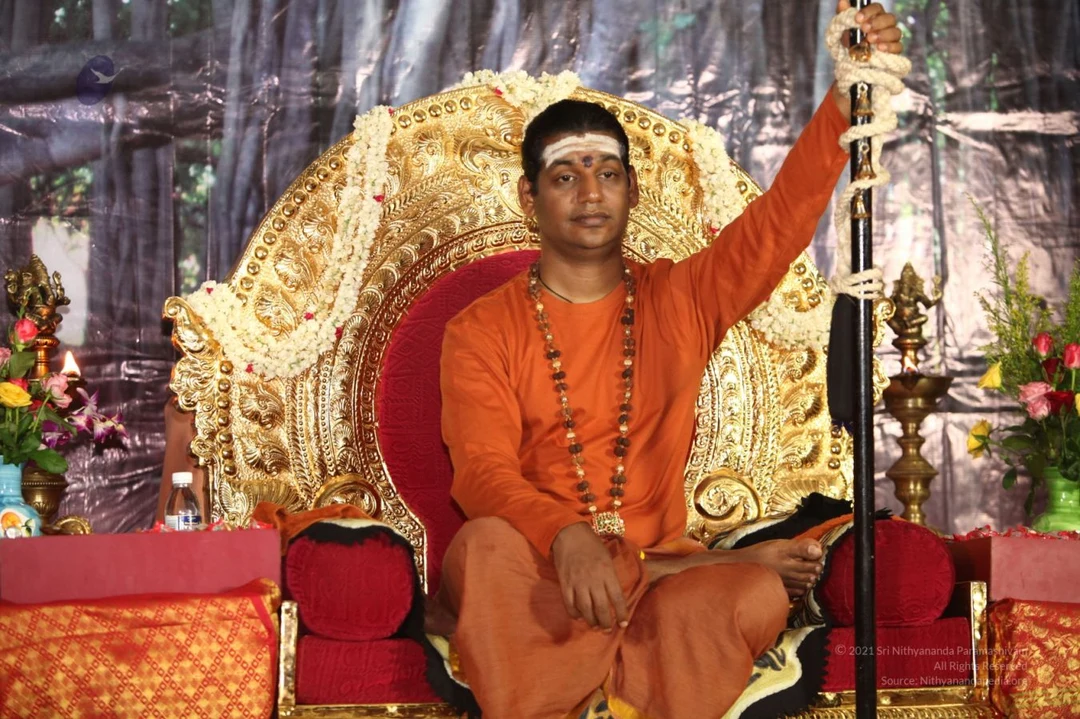
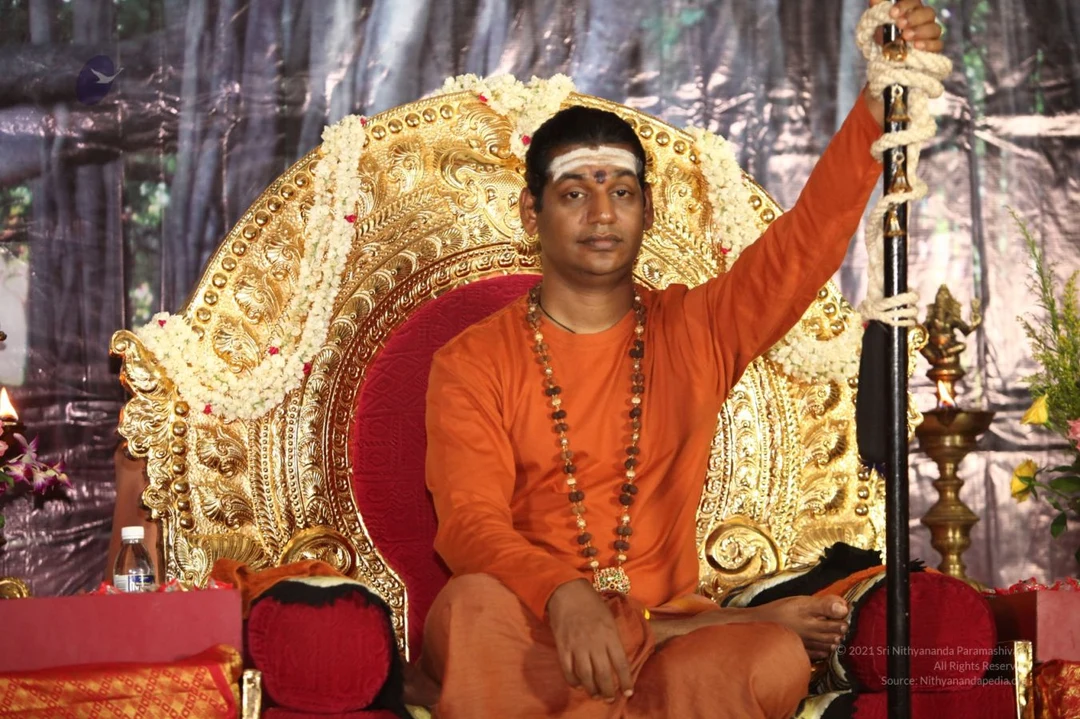
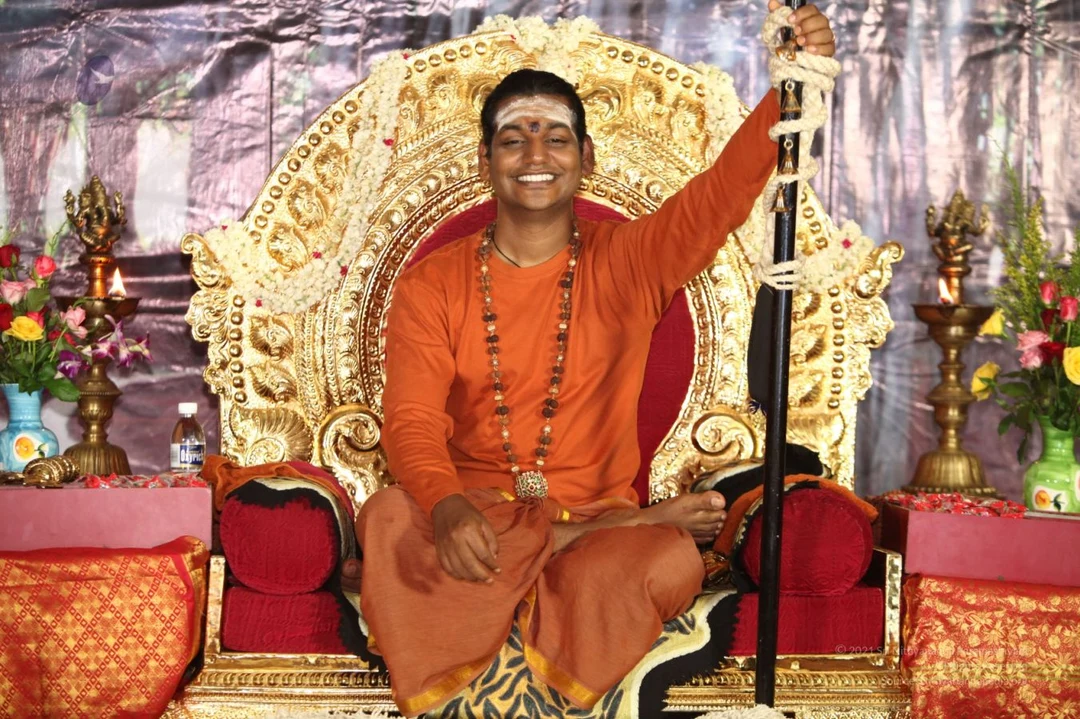
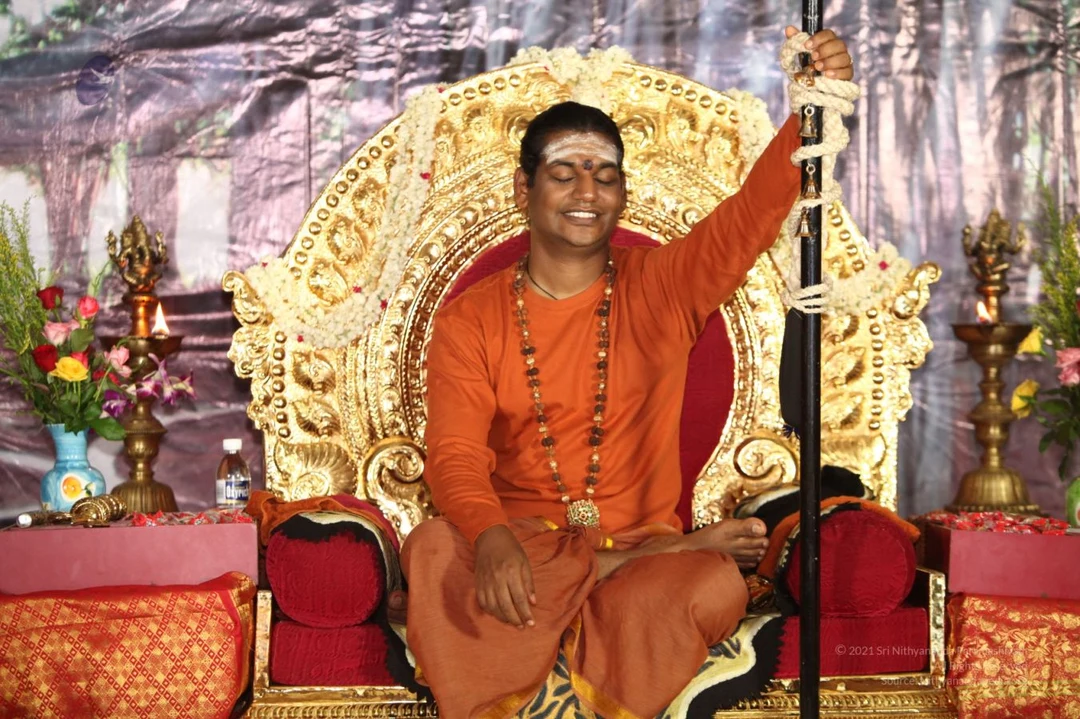
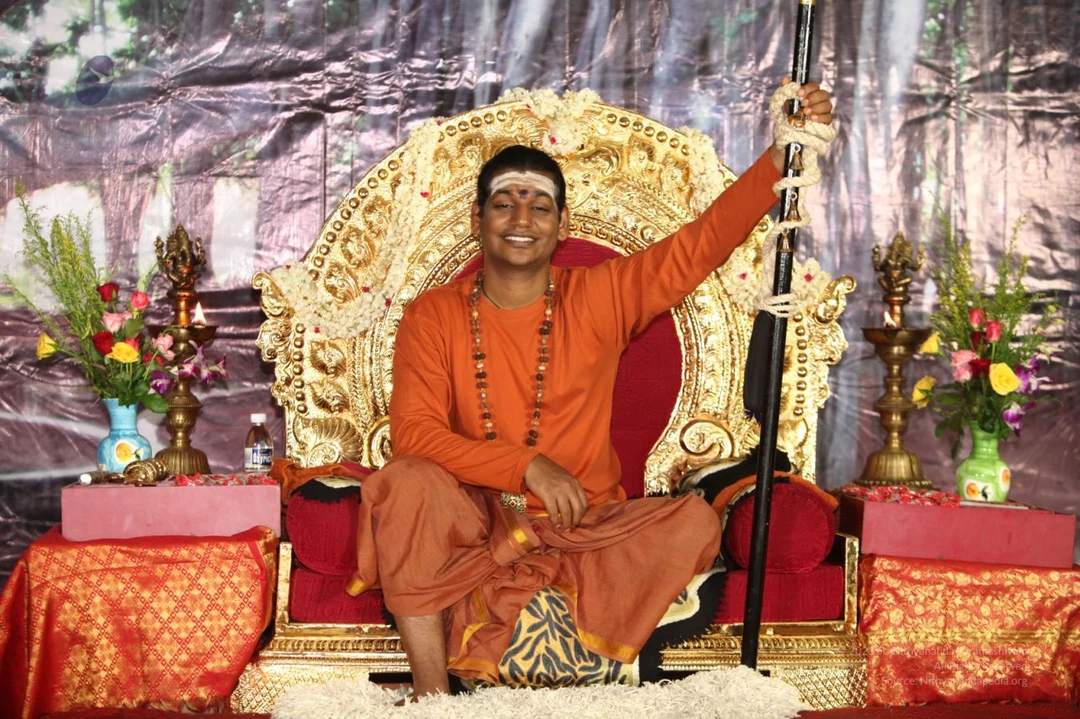
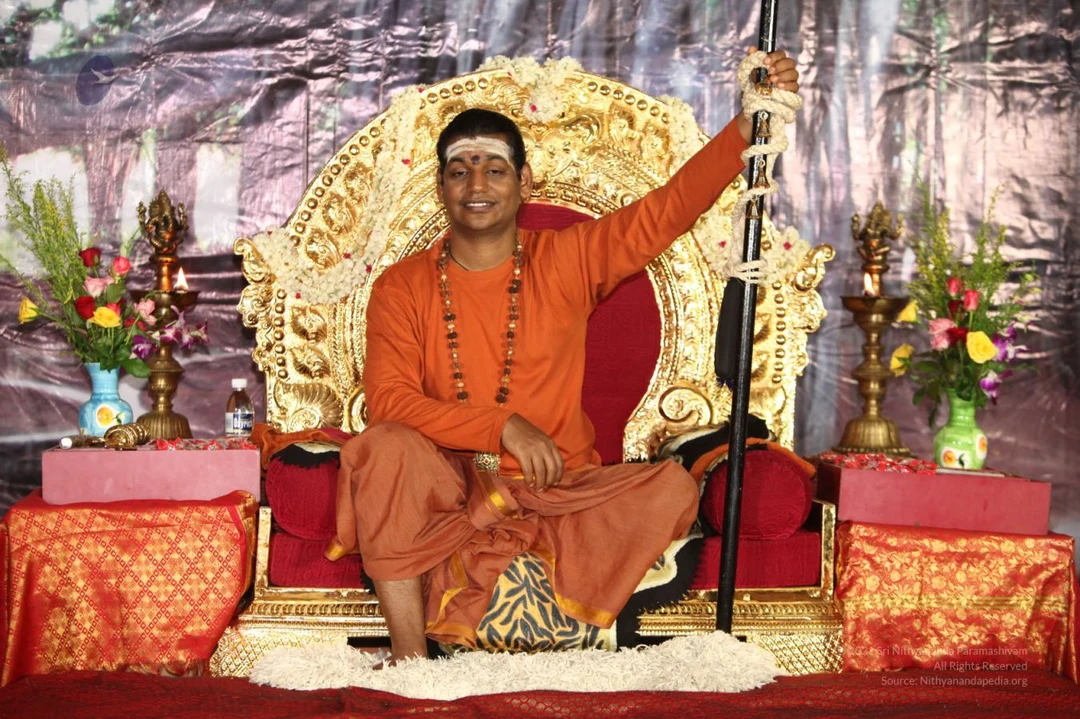
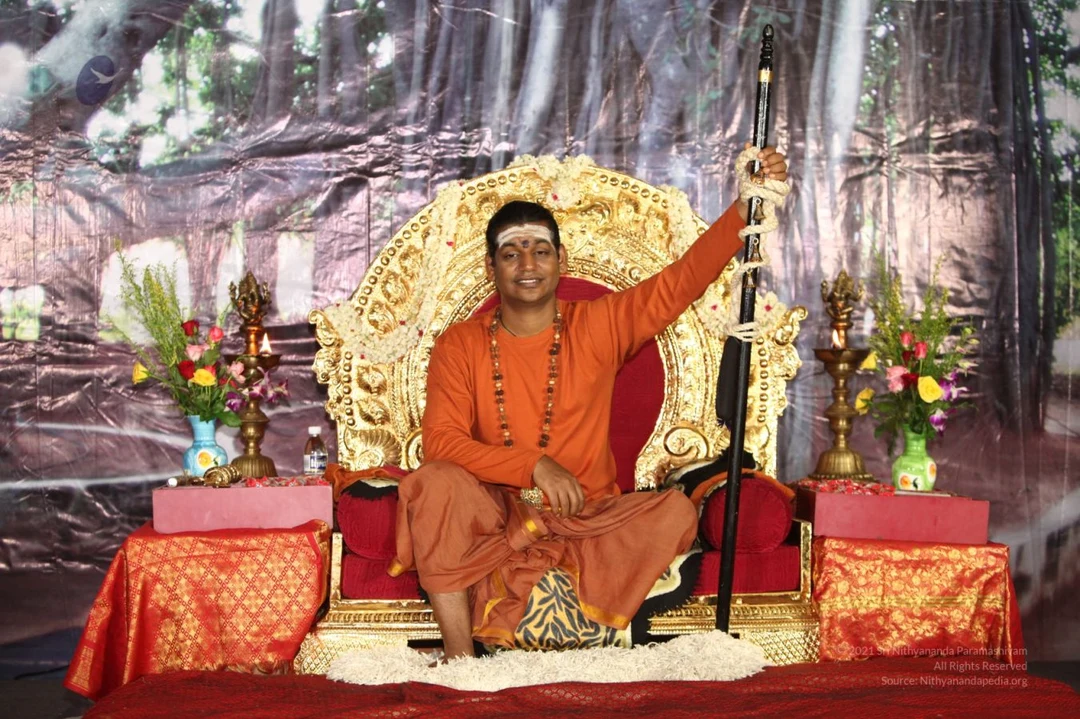
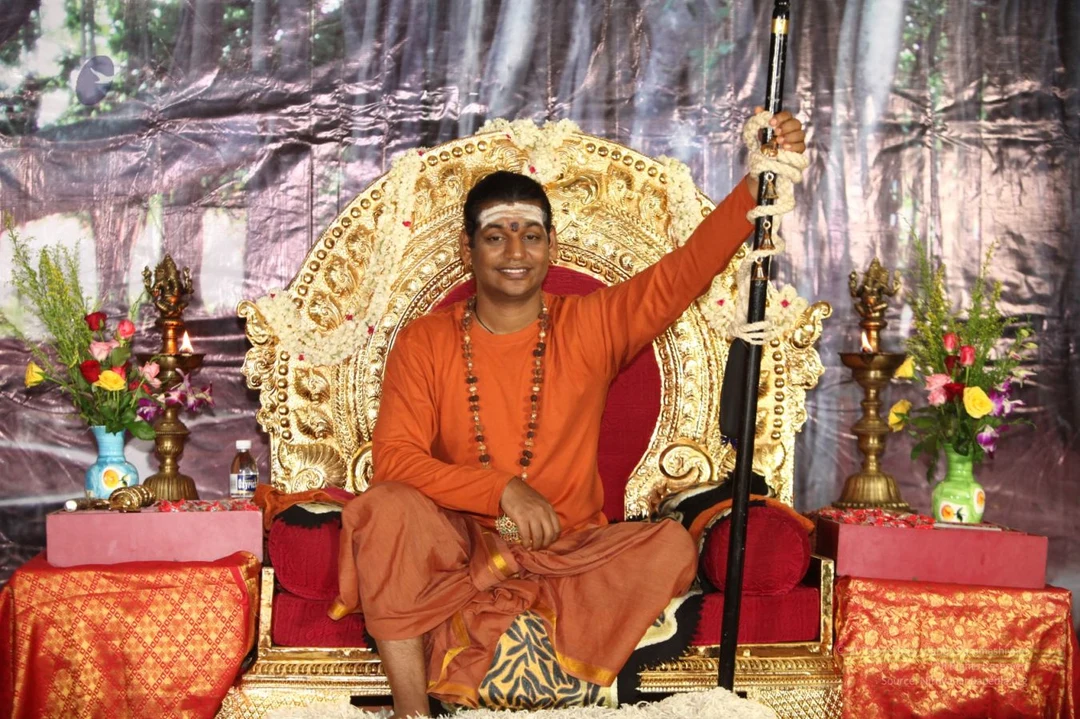
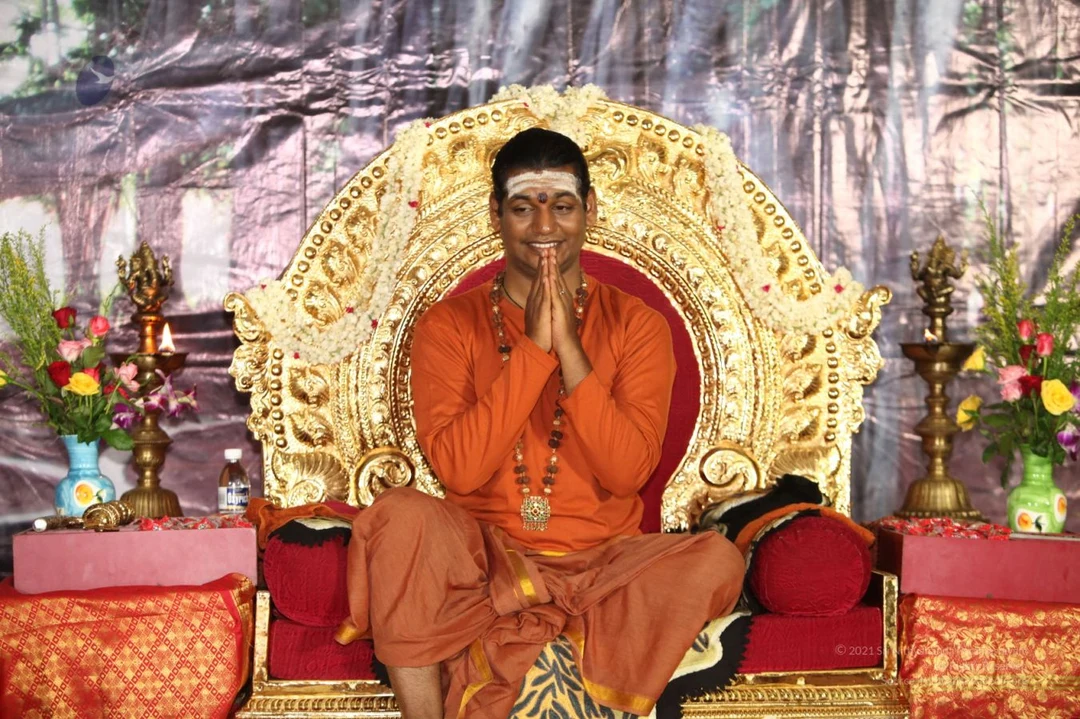
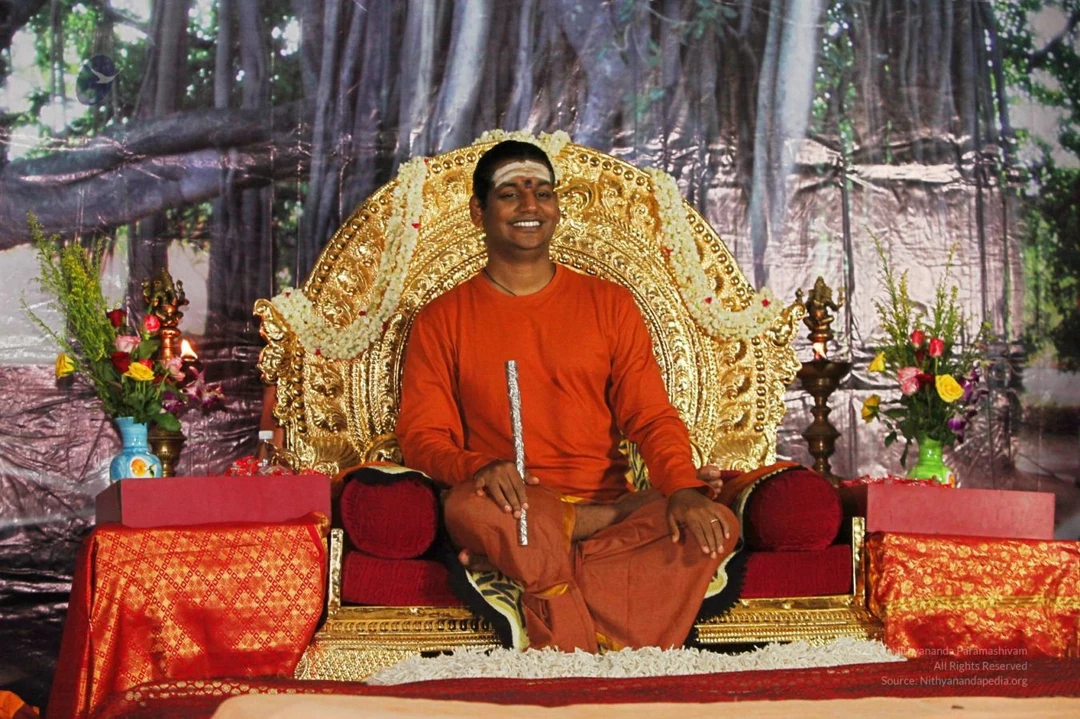
A smiling man sits cross-legged on an ornate gold throne with a carved, arched back draped with white and yellow flower garlands. He wears an orange-saffron long-sleeved top and matching dhoti, a white tilak with red centre on his forehead, and a thin neck chain. He holds a silver rod across his lap. Flanking him are red-and-gold brocade cushions and cloths, red boxes, vases of roses and yellow flowers, and brass oil lamps. The backdrop is a painted banyan tree scene. a person: the saffron clothing, ornate throne and garland cues match the page's a person reference, though the appearance is only a candidate.A man seated cross-legged on an ornate gold throne with red cushions and a red-and-black embroidered footrest, garlanded with white jasmine. He wears an orange long-sleeved top, orange-and-gold dhoti, a white vertical tilak on his forehead with a red dot, and a rudraksha-style cord at his neck. He holds a silver rod or wand in one hand. Flanking him are brass oil lamps with lit flames, a brass Ganesha figure, and vases of red and pink flowers. The backdrop is a painted forest scene with draped fabric. a person seated in a darshan setting, presenting his teaching.A seated man in an orange robe sits with eyes closed on a golden, ornately carved throne with a red cushioned back. He wears a white forehead band with a red tilak, a black cord around his neck, and holds a long golden rod across his lap in both hands. Behind him are white flower garlands on the throne and a vase of pink and yellow flowers. Warm orange and pink bokeh light overlays the scene. a person: the seated figure has a swept-back hairstyle, saffron-orange robe and a ceremonial throne, consistent with the page's a person reference. The photo is watermarked on its lower right with the archive notice, which is omitted from the text list.Close-up photograph of a seated person in an orange-saffron kurta and matching orange-brown shawl, lap draped with the fabric. Both hands, one with a ring on its finger, hold a long silver rod with engraved floral scrollwork across the lap. The seat is a deep red cushioned chair trimmed with black and gold patterned fabric and gold-leaf edging. Blurred pink, red and yellow flowers and gold decor fill the background. Only the hands, lap and seat are visible, with the bare feet at the lower left.A man in an orange robe and orange shirt sits cross-legged on an ornate golden throne with red cushions and a red-and-gold patterned seat cover. He has a white tilak on his forehead and a thin dark cord at his neck, and holds a long silver rod across his lap. A vase of pink, yellow and purple flowers stands beside the throne, with a blurred backdrop of red drapery, a tree-trunk motif and warm bokeh lights. Garlands of white flowers hang from the throne's back. The appearance and throne setting are consistent with the page's a person reference, so the seated figure is an appearance-based a person on a throne, a darshan setting.A darshan moment in which a man in orange-and-gold embroidered kurta and a red-orange shawl kneels with eyes closed and palm raised, while a figure in an orange robe with a white forehead mark and hair in a bun rests a hand on his forehead and holds a folded white paper with handwritten text. Behind them, several people in white and orange-red shawls stand near a red drape.