Skip to content
Thursday

28 June 2012

THE SUPREME PONTIFF OF HINDUISM, BHAGAVAN NITHYANANDA PARAMASHIVAM

Dated photos
103
Source pages
1
Media
6
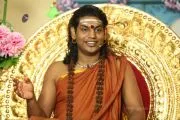
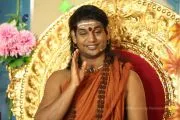
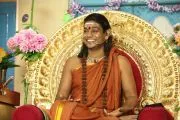
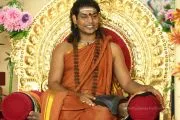
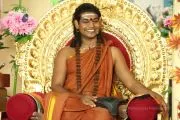
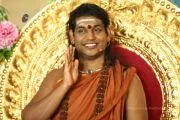
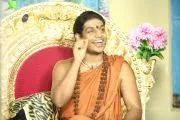
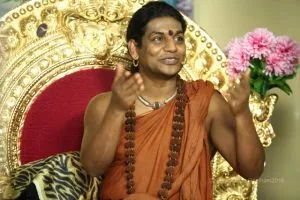
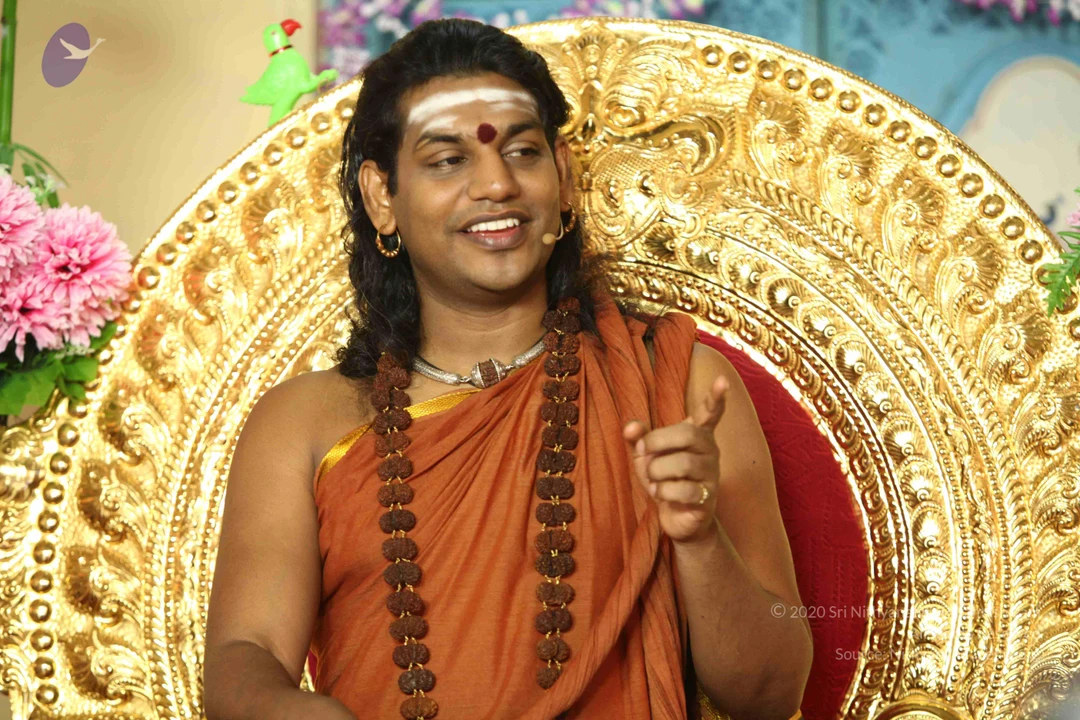
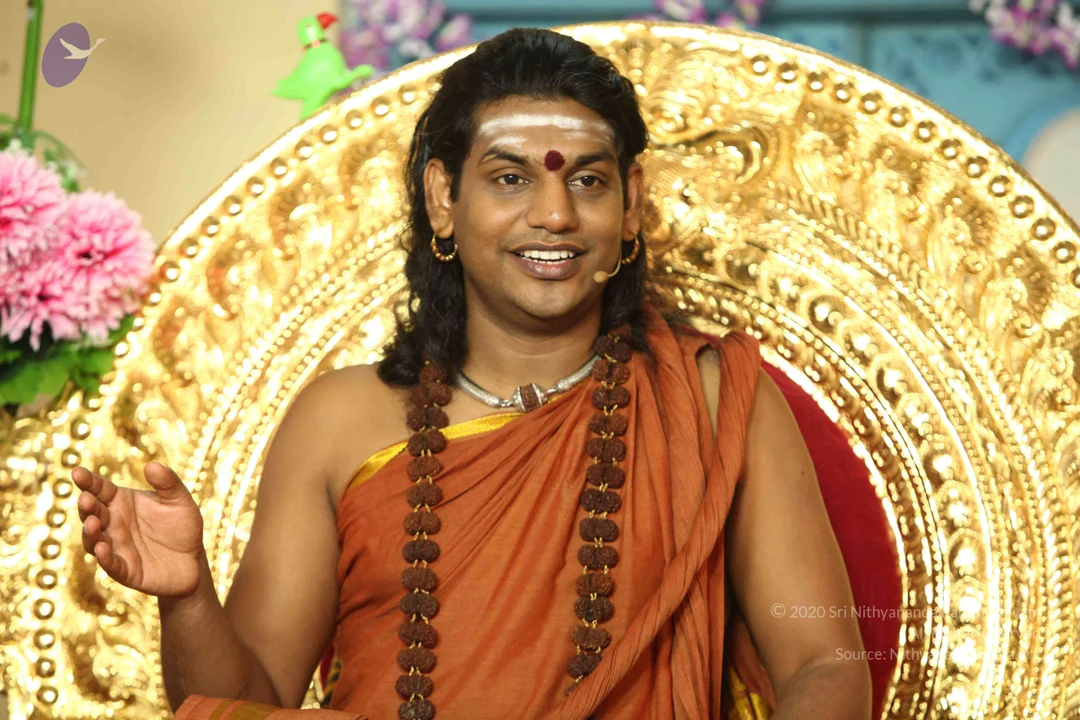
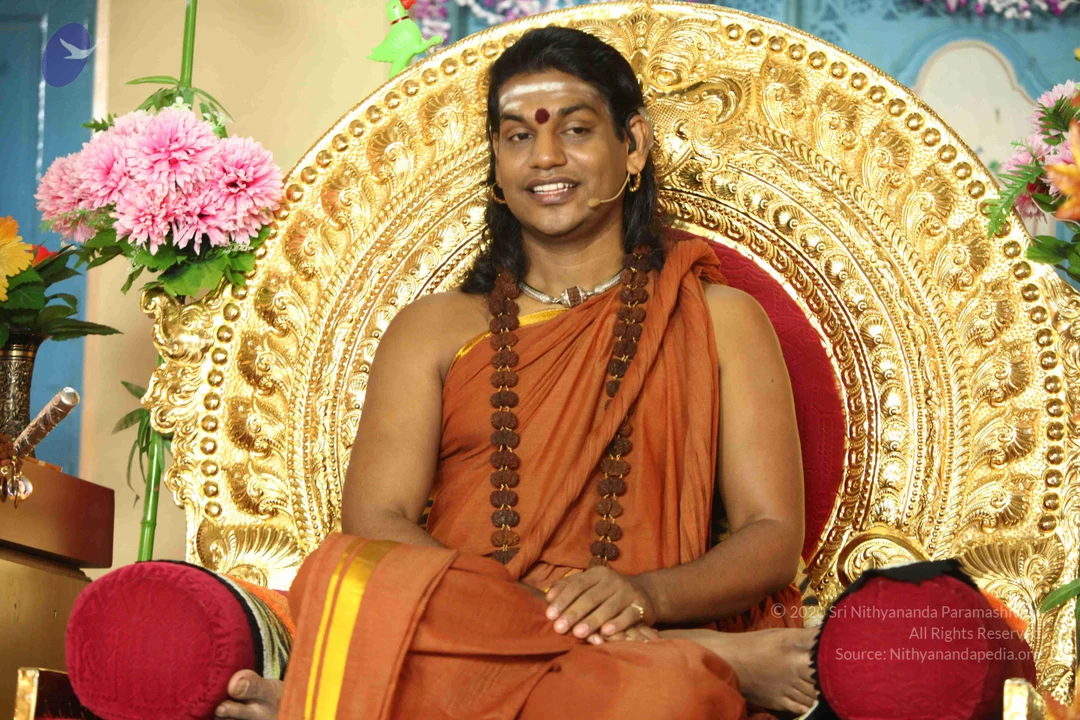
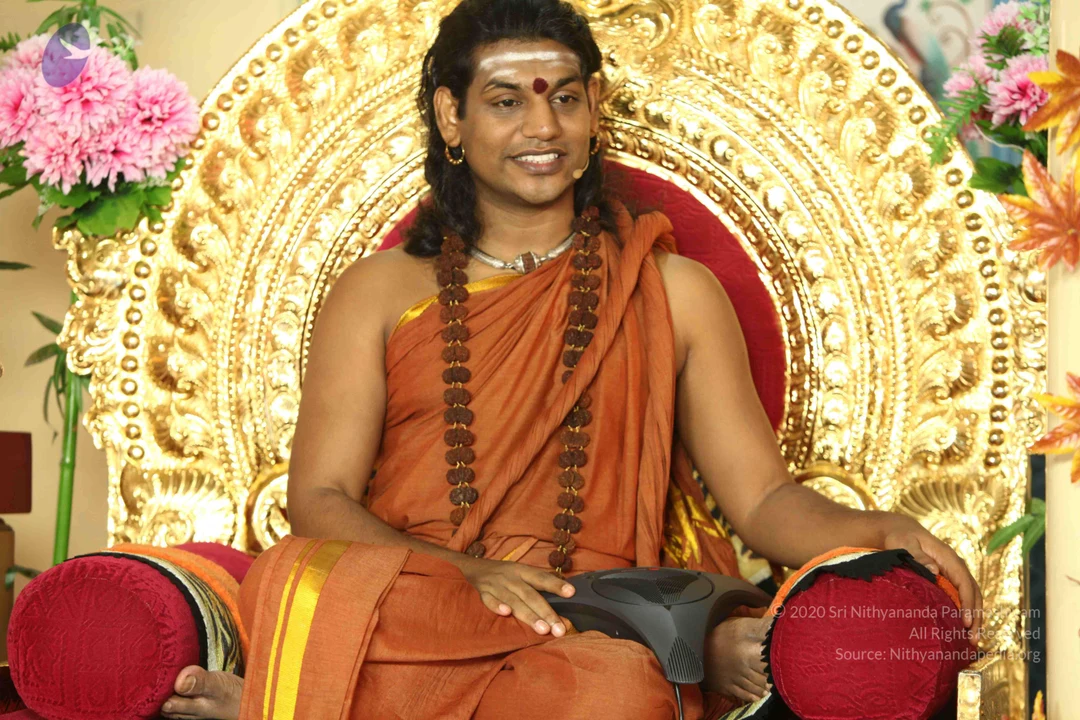
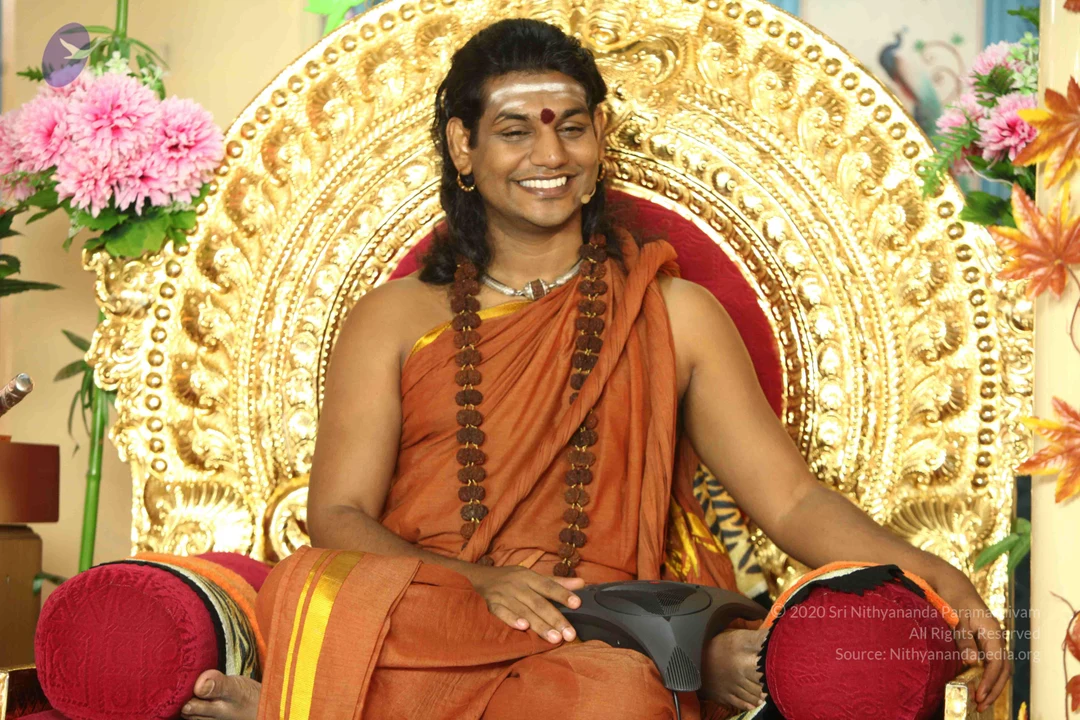
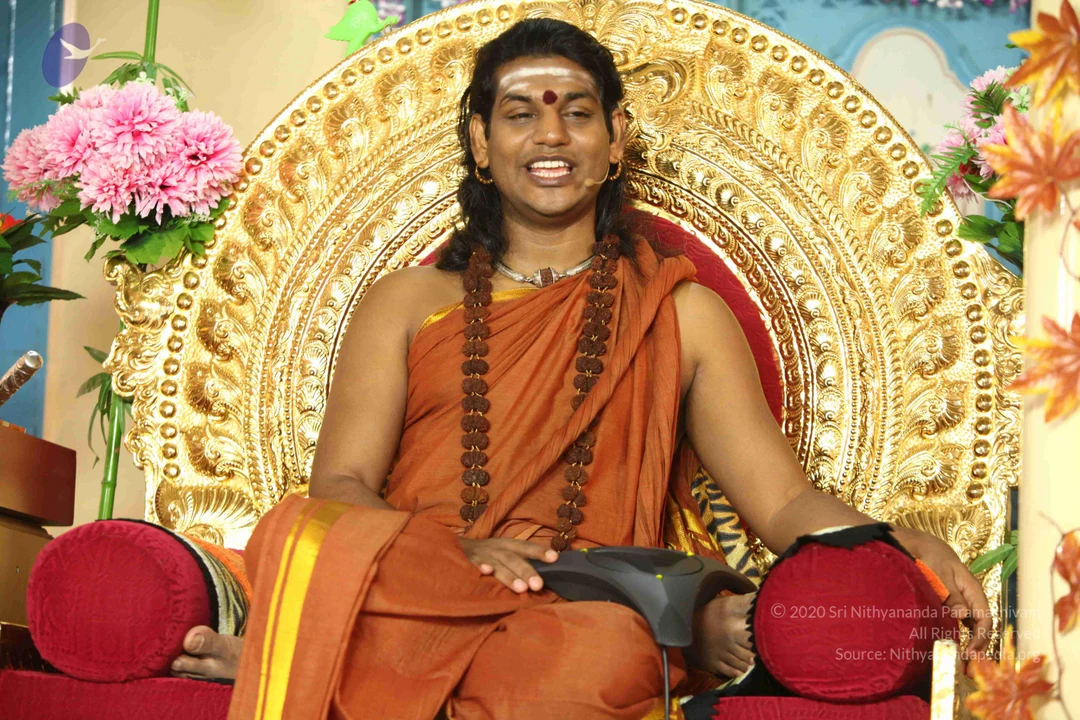
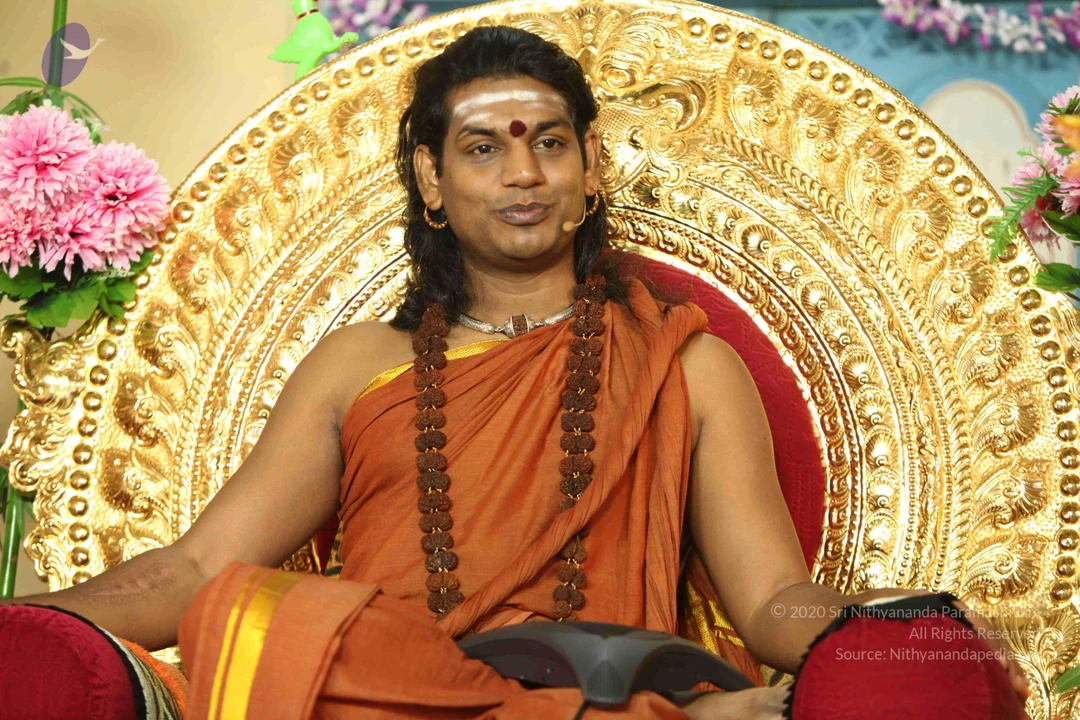
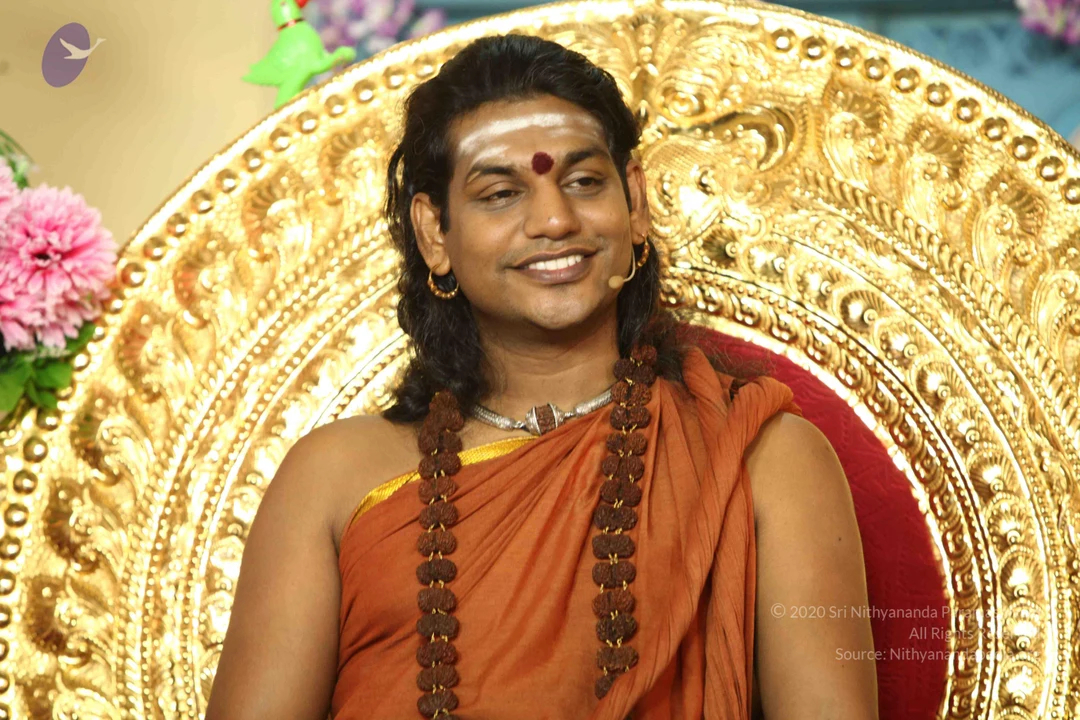
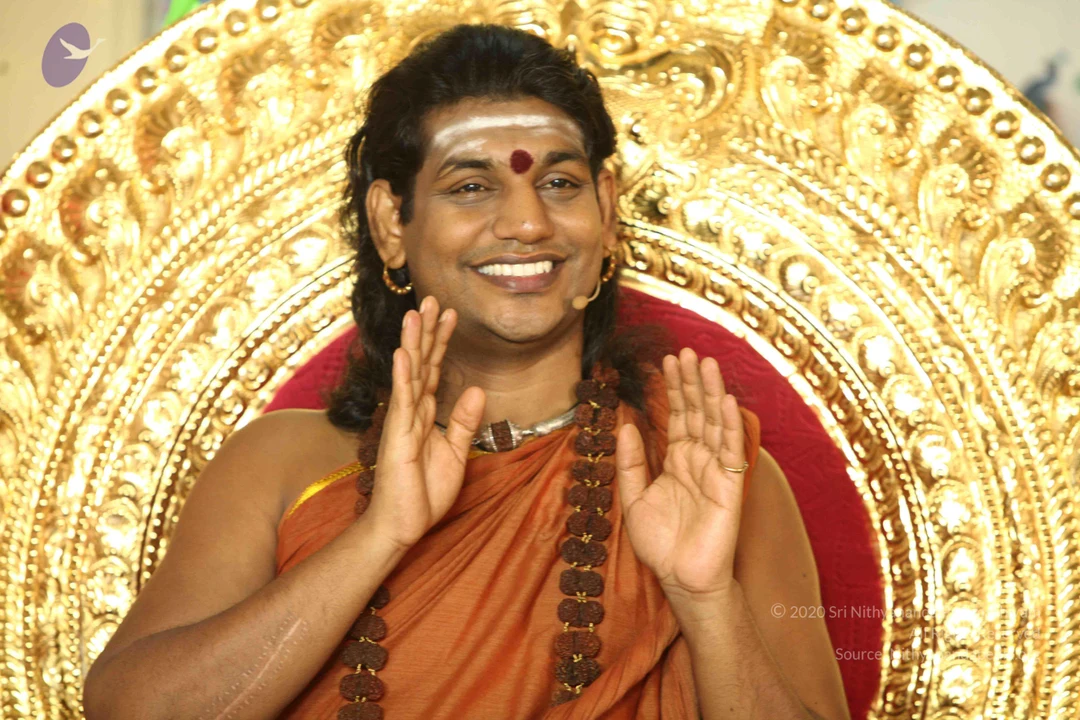
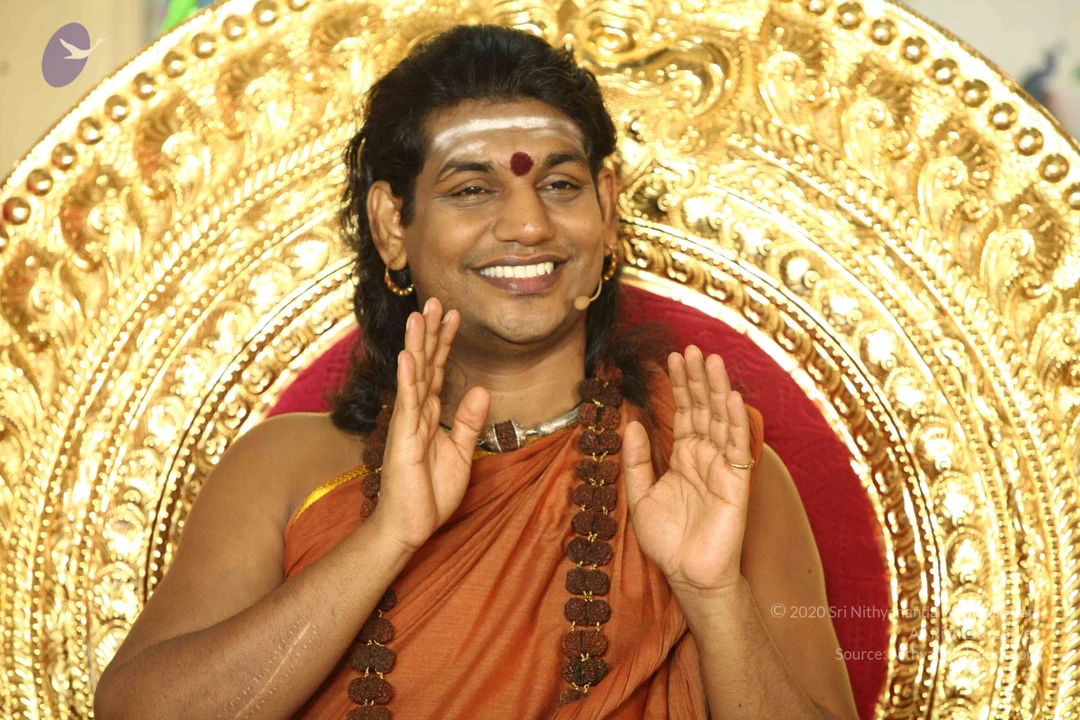
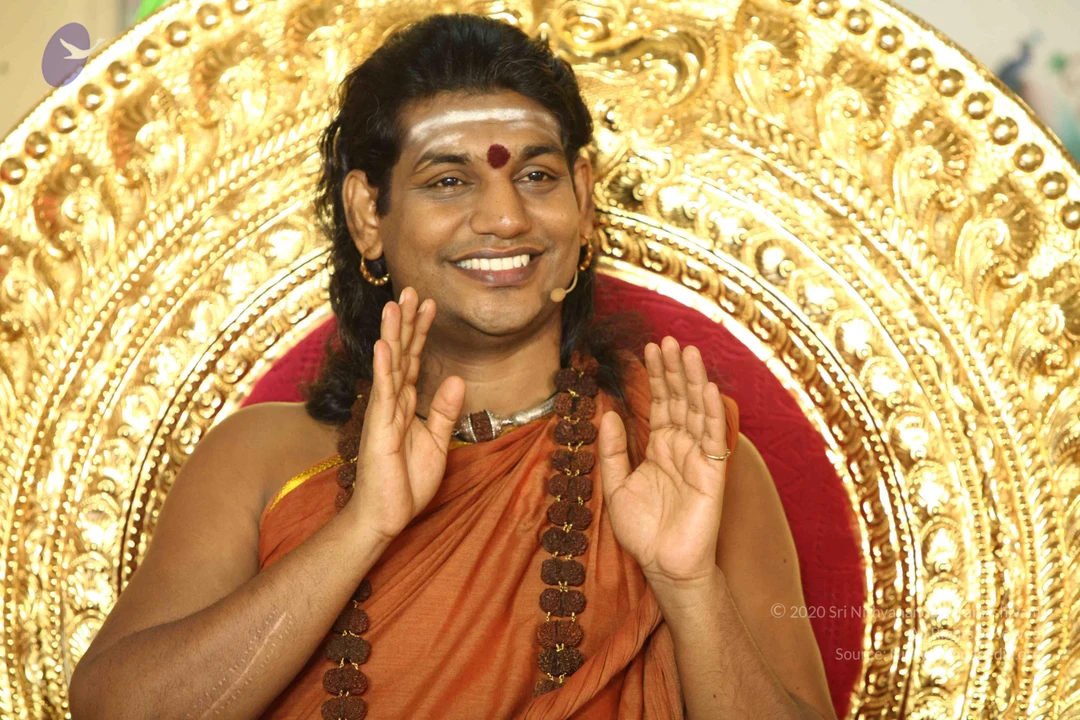
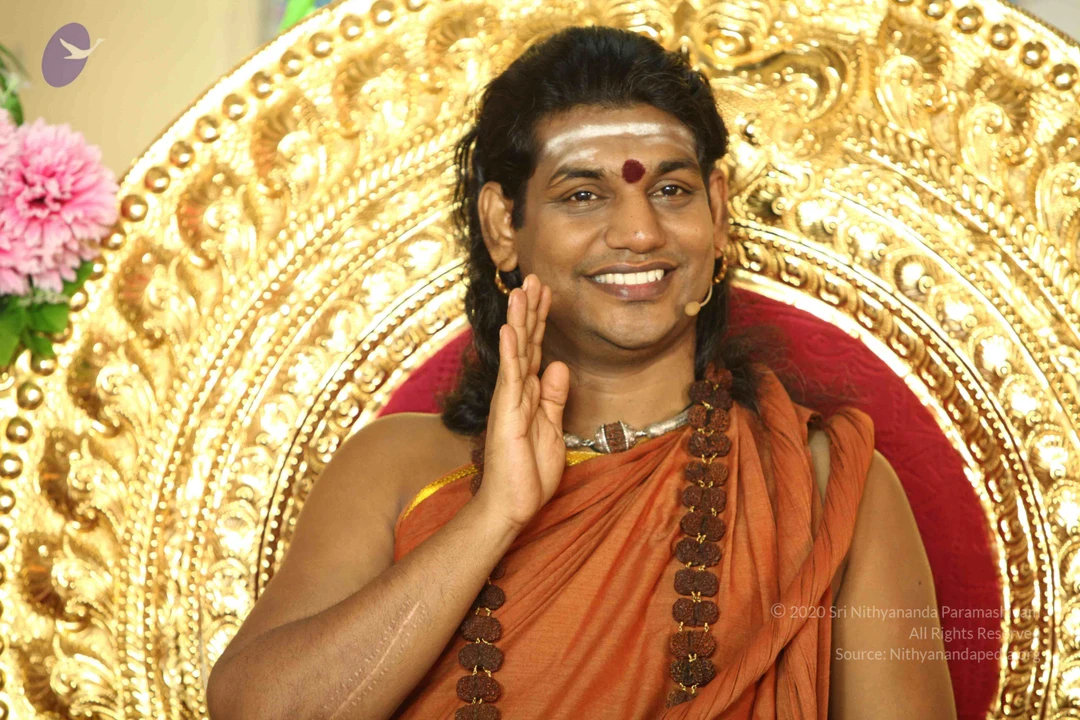
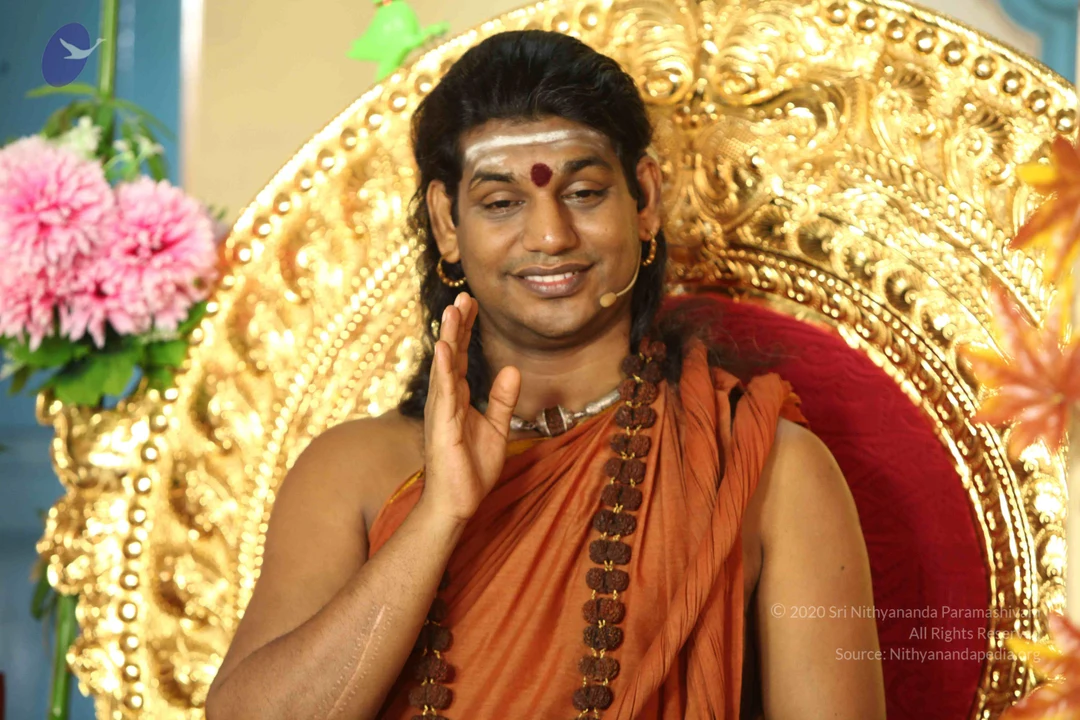
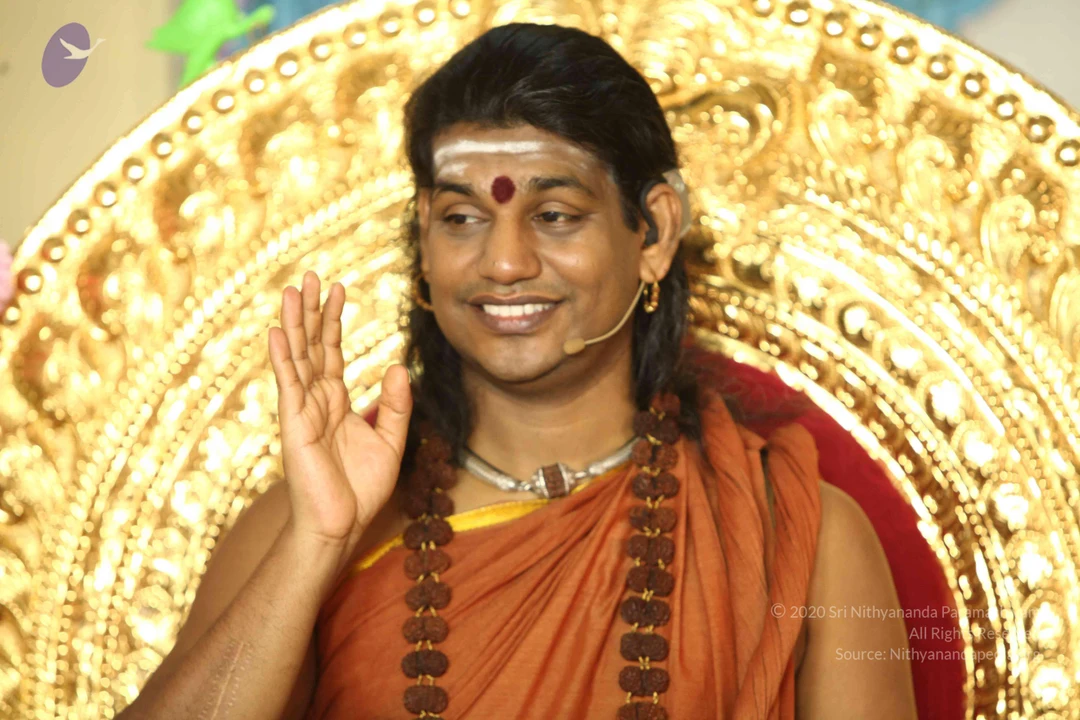
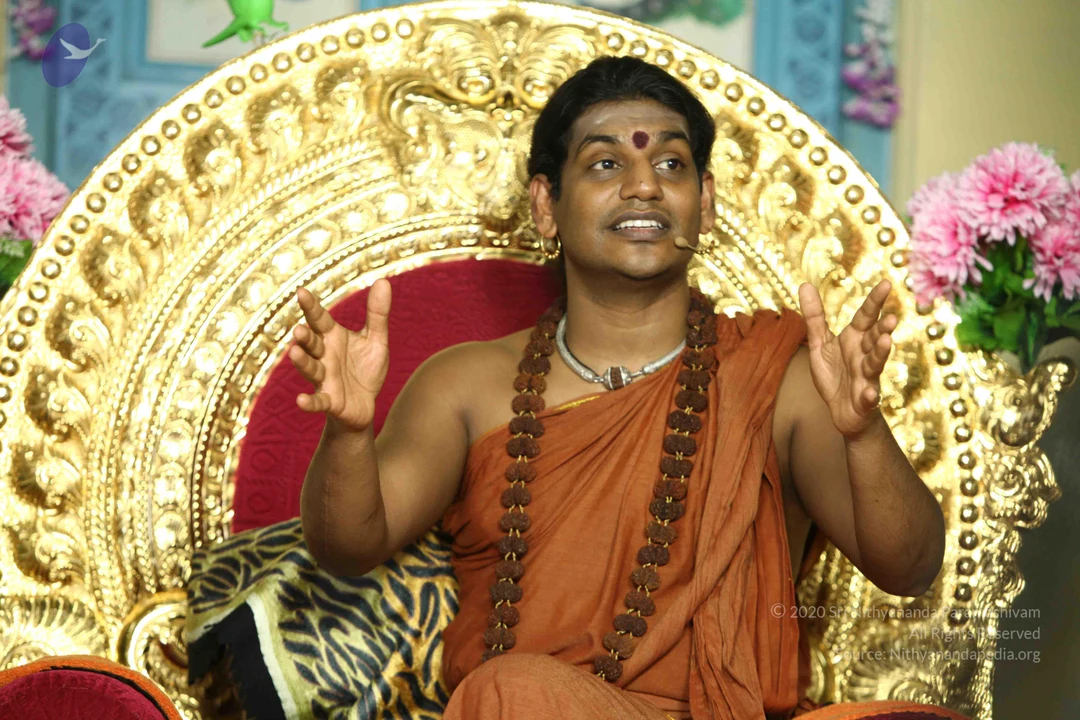
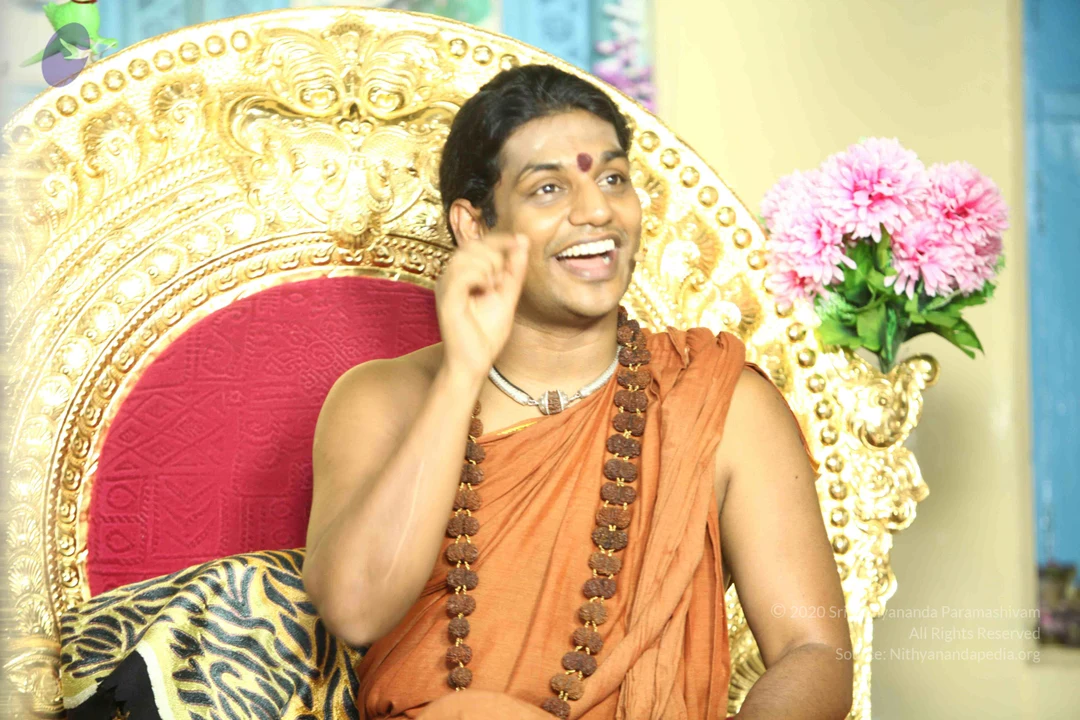
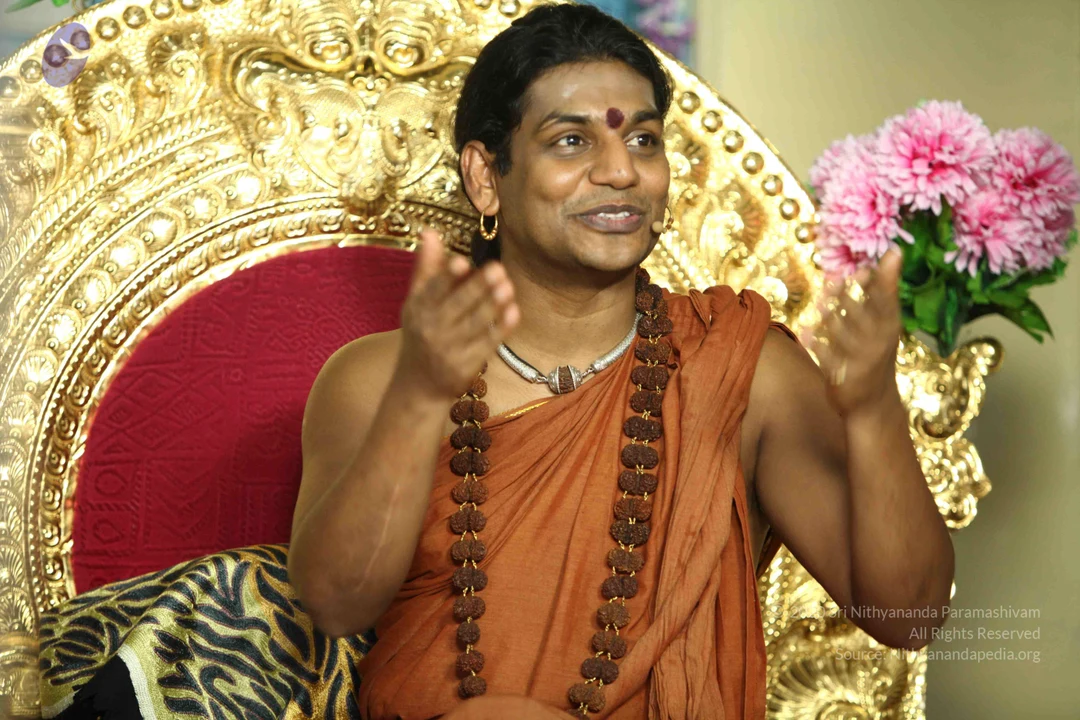
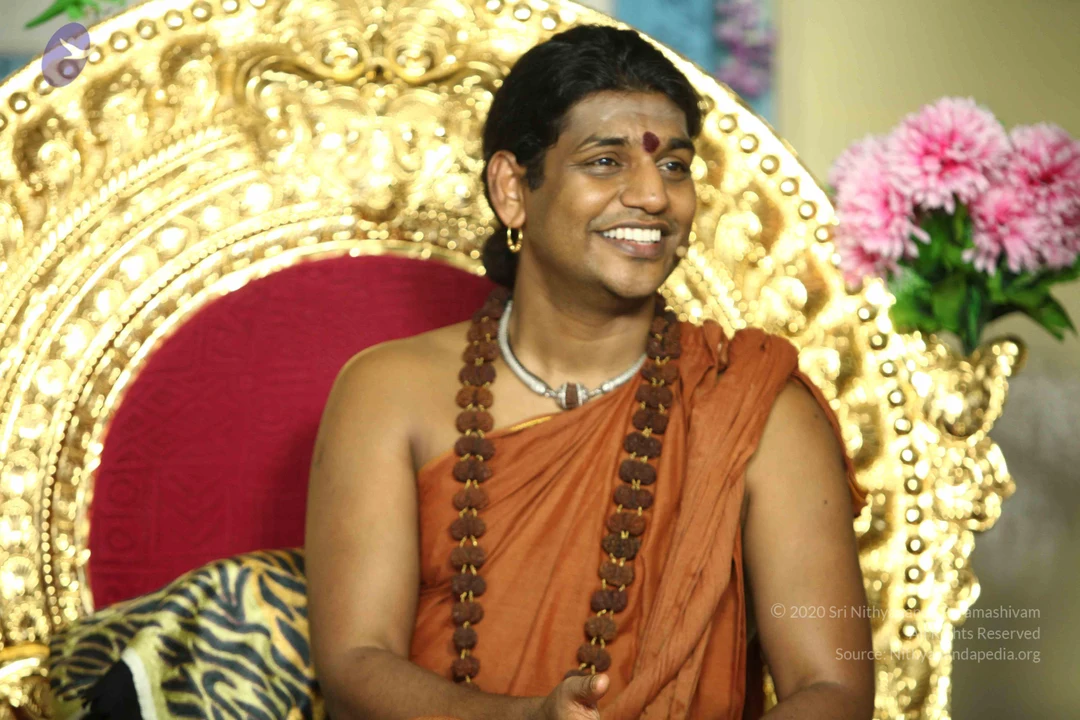
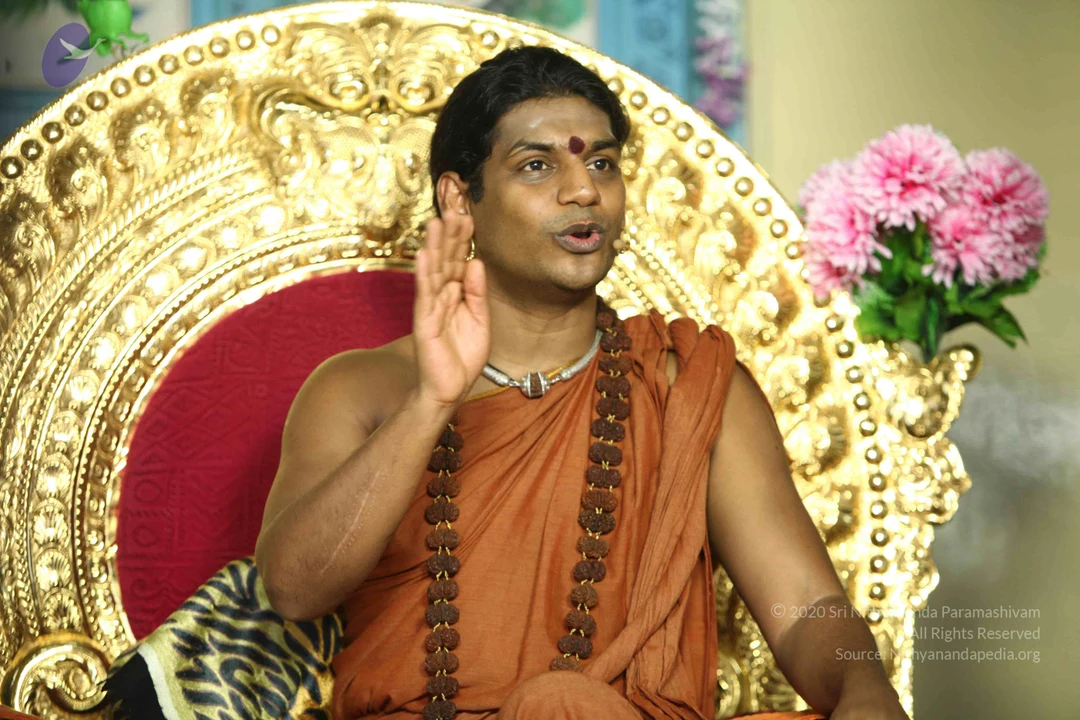
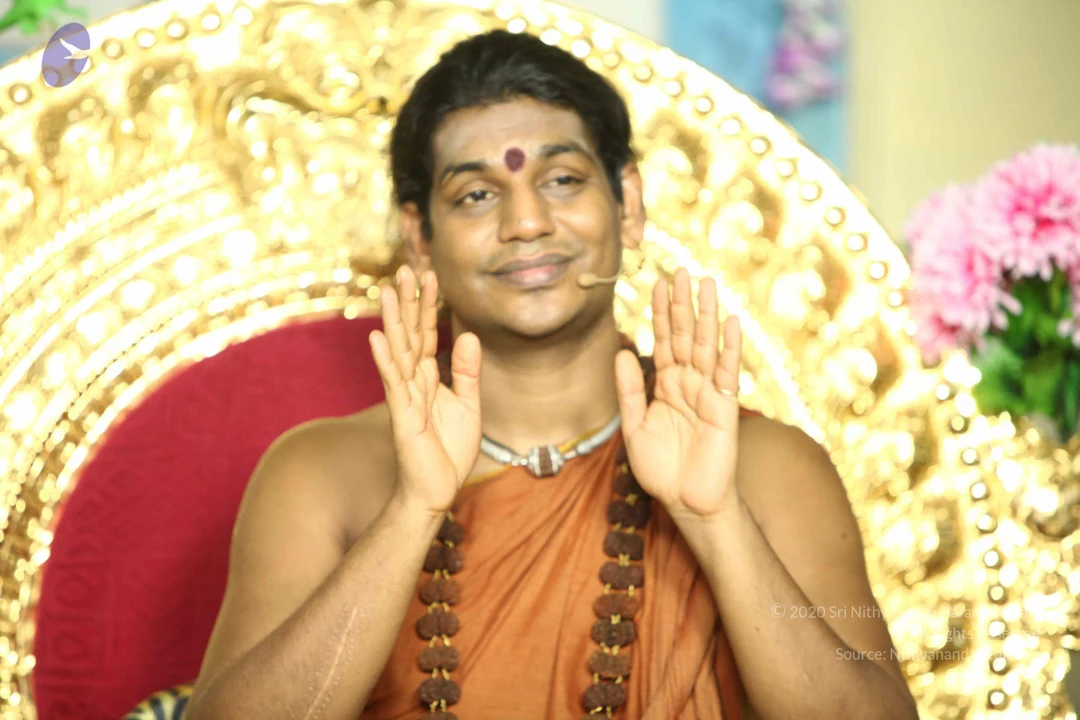
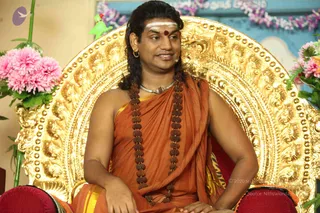
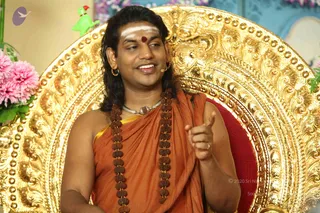
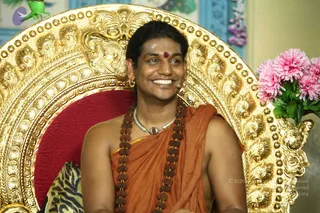
A man with long swept-back dark hair sits before an ornate golden throne-like backdrop with a carved gold arch. He wears an orange-saffron robe and a rudraksha mala, and his right hand is raised in a gesture while his left hand rests in his lap. The setting appears to be a satsang stage with a decorative golden canopy behind him. a person, seated on the stage with saffron robes and a rudraksha mala, appears to be presenting a discourse.A still frame from a video shows a man in orange-saffron robes seated on an ornate gold-and-red throne-like chair in front of a warm, golden-toned backdrop. He has long dark hair swept back and wears a light orange shawl over his saffron garment. He raises his right hand in a gesturing pose while speaking, with his left hand resting near his chest. The setting suggests a satsang discourse. Swamiji (probable) is shown in an appearance-based match: long swept-back hair, saffron clothing and a shawl, seated on a decorated throne as a discourse speaker.

June 28 2012

Original wiki page
Contents

Title

THE SUPREME PONTIFF OF HINDUISM, BHAGAVAN NITHYANANDA PARAMASHIVAM

Narration

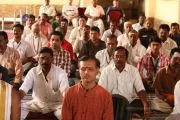
On this day, in the Presidential Address - Nithyananda Satsaang titled "Why High Achiever's are more Healthy", the Supreme Pontiff of Hinduism, Bhagavan Nithyananda Paramashivam expounded on Bhagavad Gita, Chapter 5, Verse 11, and revealed the sacred secret of how to avoid creating more karma for ourselves. The responsible performance of intense action awakens a level of prana -- life force -- in us that prevents the development of patterned behavior. It is our patterns -- our habitual unconscious actions -- that constitute our karmas. They require an ambiance of laziness to take root in our lives, so when we exercise action with awareness and responsibility and perform to our greatest potential, we destroy their habitat. We clear the way to our spiritual freedom.

The Supreme Pontiff also gives credit to Zen monasteries for keeping the Enlightenment Science alive. Generalization in any level is crime. Great credit to Buddhist monasteries for being a powerful ambience to keep the science of enlightenment alive. Zen monasteries do not allow laziness to settle in them. The monuments they created shows they were never lazy. In Zen monasteries even Pontiffs - Heads of the monasteries will not be eating If they are not working. The day they can't work they will not eat so that in few days they will leave the body. Ambience of laziness leads to cunningness where all sorts of patterns grow.

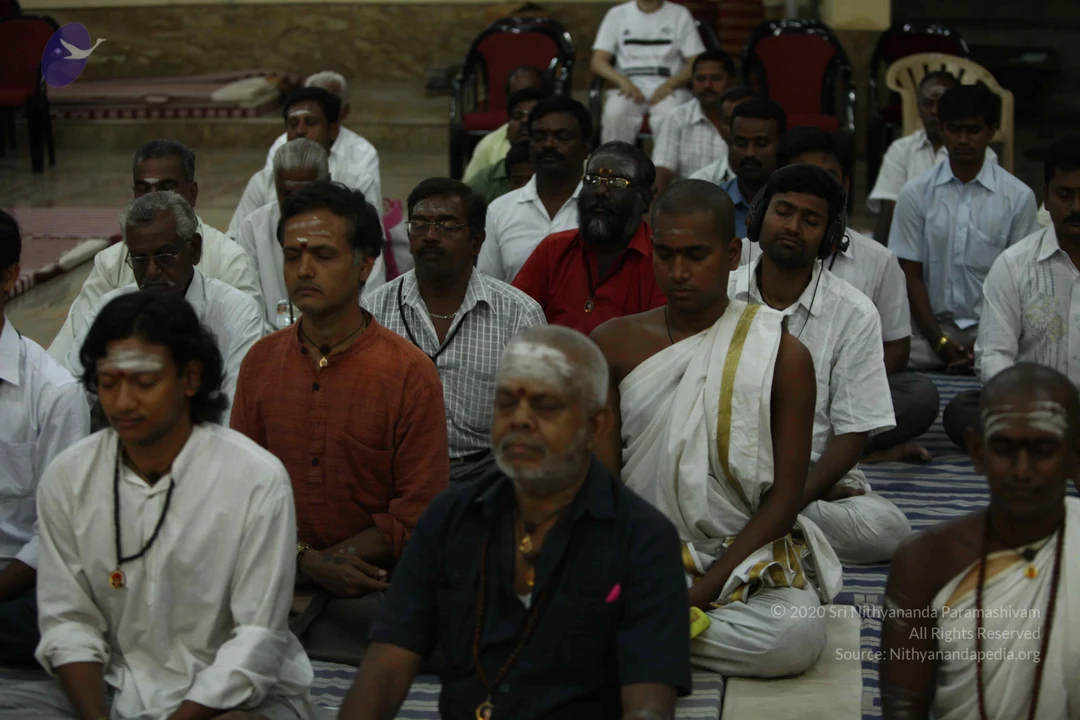
In a transformative mutation process, the Supreme Pontiff introduced devotees, disciples, delegates and diplomats of KAILASA to nirahara samyama, a yogic meditation for freedom from hunger and thirst. Within each human being lies the collective memory of the cosmos. Anything that has occurred in the universe is part of our potential. Because we carry the bio-memories of fish and birds, we also have the potential to swim and fly. Nirahara samyama awakens our capability for absorbing all the nourishment we need from the air and light around us. Photosynthesis is only part of this process. Most of our energy comes from prana, the life force that infuses our surroundings, even the apparently "empty" space. As we learn to draw in our sustenance without consuming anything from outside, we release thousands of beliefs, ideas and engrams attached to eating and food. That is the true purpose of this yoga practice: to re-program our bio-memory and cleanse our inner space.

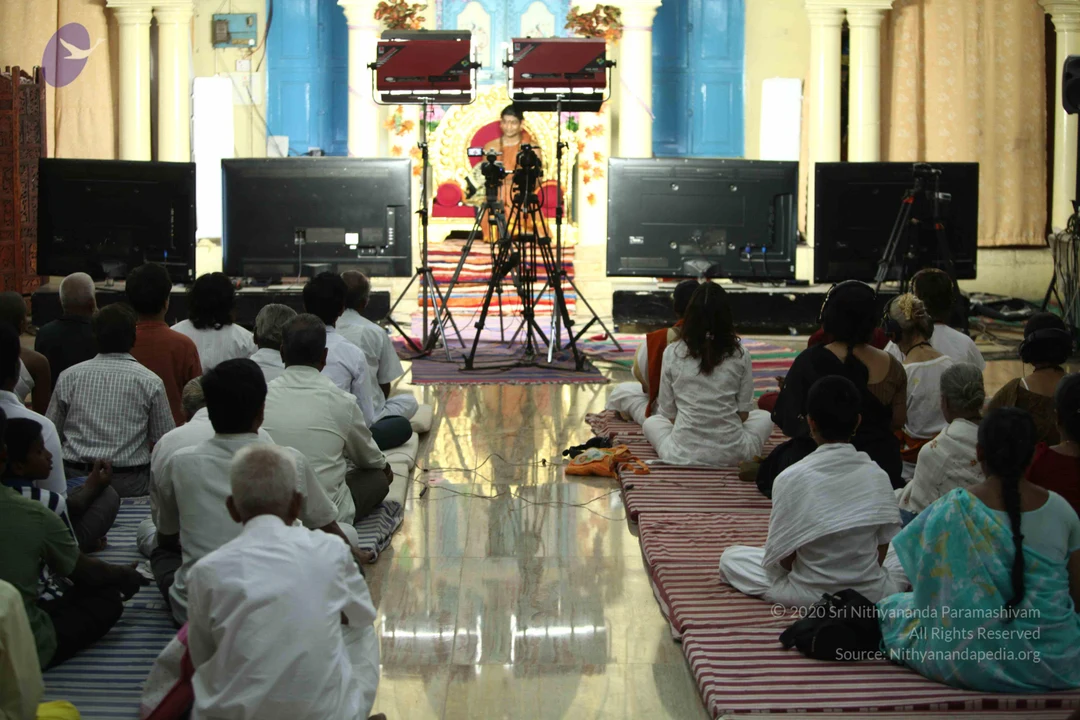
This day's Presidential Address and superconscious mutation process was presided by the Supreme Pontiff of Hinduism, Bhagavan Nithyananda Paramashivam on 28th June, 2012 from Madurai Adheenam, Madurai, India..

Title

Why high achievers are more healthy

Description

TALKS FROM MORNING SATSANG ON JUNE 28 2012 AT MADURAI ADHEENAM, INDIA
In this morning's talk on Bhagavad Gita, Chapter 5, Verse 11, Paramahamsa Nithyananda (Swamiji) reveals the sacred secret of how to avoid creating more karma for ourselves. The responsible performance of intense action awakens a level of prana -- life force -- in us that prevents the development of patterned behaviour. It is our patterns -- our habitual unconscious actions -- that constitute our karmas. They require an ambiance of laziness to take root in our lives, so when we exercise action with awareness and responsibility and perform to our greatest potential, we destroy their habitat. We clear the way to our spiritual freedom.

VideoAudio

Title

NITHYANANDA IN PRAISE OF BUDDHIST TRADITION

Description

Credit to Zen monasteries For Keeping the Enlightenment Science alive. Generalisation in Any Level is Crime. Great Credit to Buddhist Monasteries for Being a Powerfull ambience to Keep the Science of Enlightenment alive. Zen Monasteries Do not allow Layziness to Settle in them. The Monuments they created shows they were never Lazy. In Zen Monasteries even Pontiffs Heads of the Monasteries will not be eating If they are not Working. the Day They can't work they will not eat so that in few days they will leave the body.Ambience of Laziness Leads to Cunningness where all sorts of Patterns grow.

VideoAudio

Title

Introduction to Hunger Free Meditation

Description

Paramahamsa Nithyananda introduces devotees to nirahara samyama, a yogic meditation for freedom from hunger and thirst. Within each human being lies the collective memory of the cosmos. Anything that has occurred in the universe is part of our potential. Because we carry the bio-memories of fish and birds, we also have the potential to swim and fly. Nirahara samyama awakens our capability for absorbing all the nourishment we need from the air and light around us. Photosynthesis is only part of this process. Most of our energy comes from prana, the life force that infuses our surroundings, even the apparently "empty" space. As we learn to draw in our sustenance without consuming anything from outside, we release thousands of beliefs, ideas and engrams attached to eating and food. That is the true purpose of this yoga practice: to re-program our bio-memory and cleanse our inner space.

VideoAudio

Photos

Photos Of The Day:

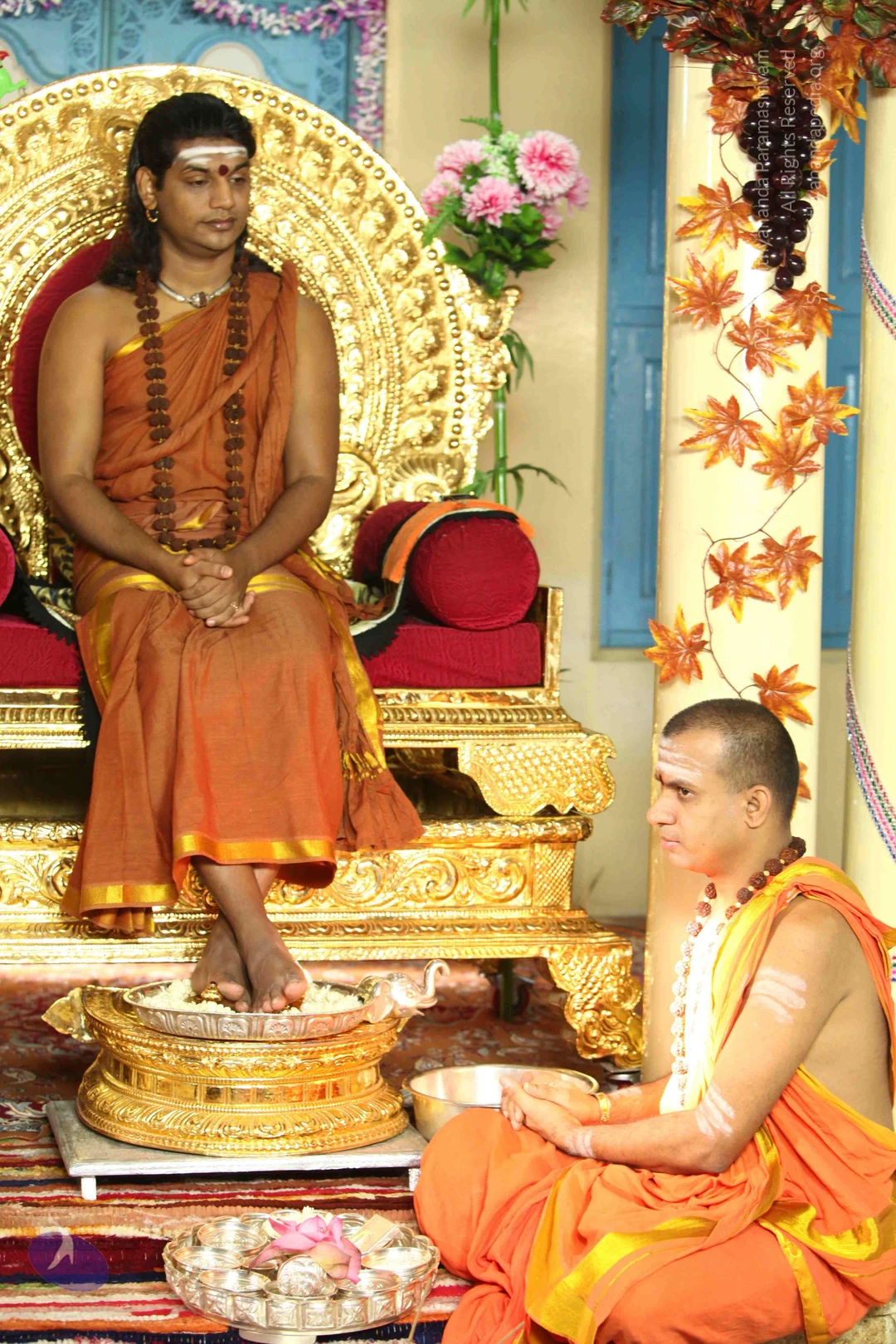
01-PADA-PUJA
02-MORNING-SATSANG
03-SARVA-DARSHAN

04-EVENING-SATSANG

Photos from this day

View all 103 photos

Photos

39 photosSource gallery
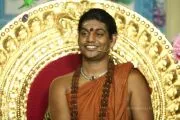
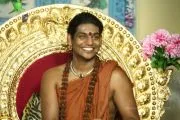
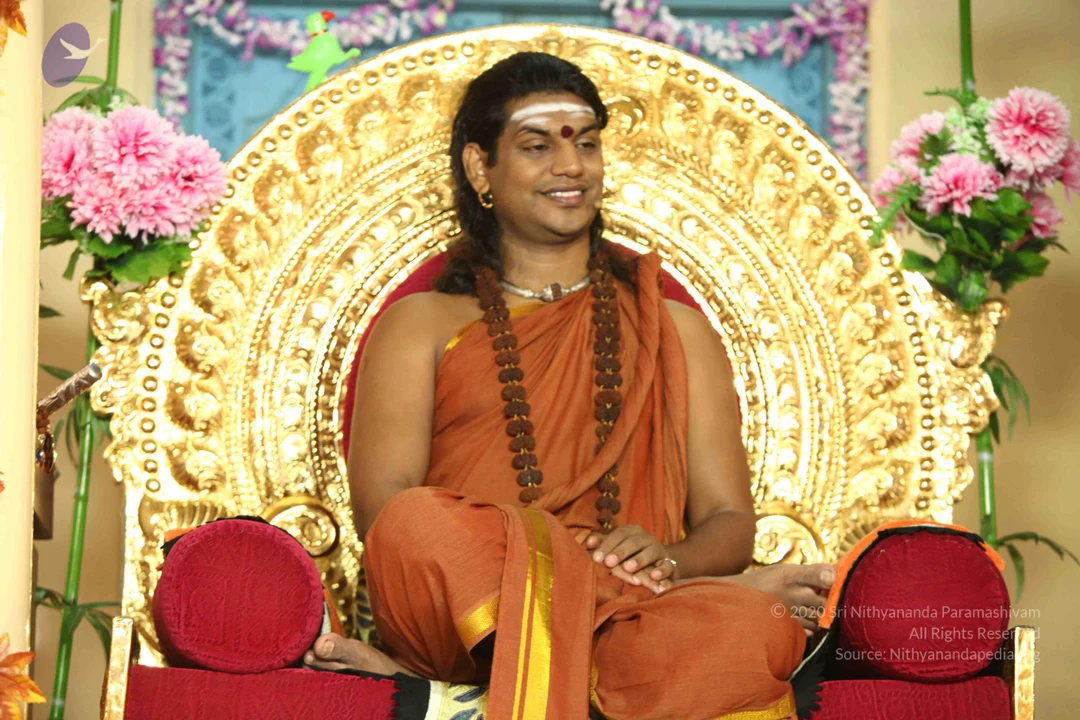
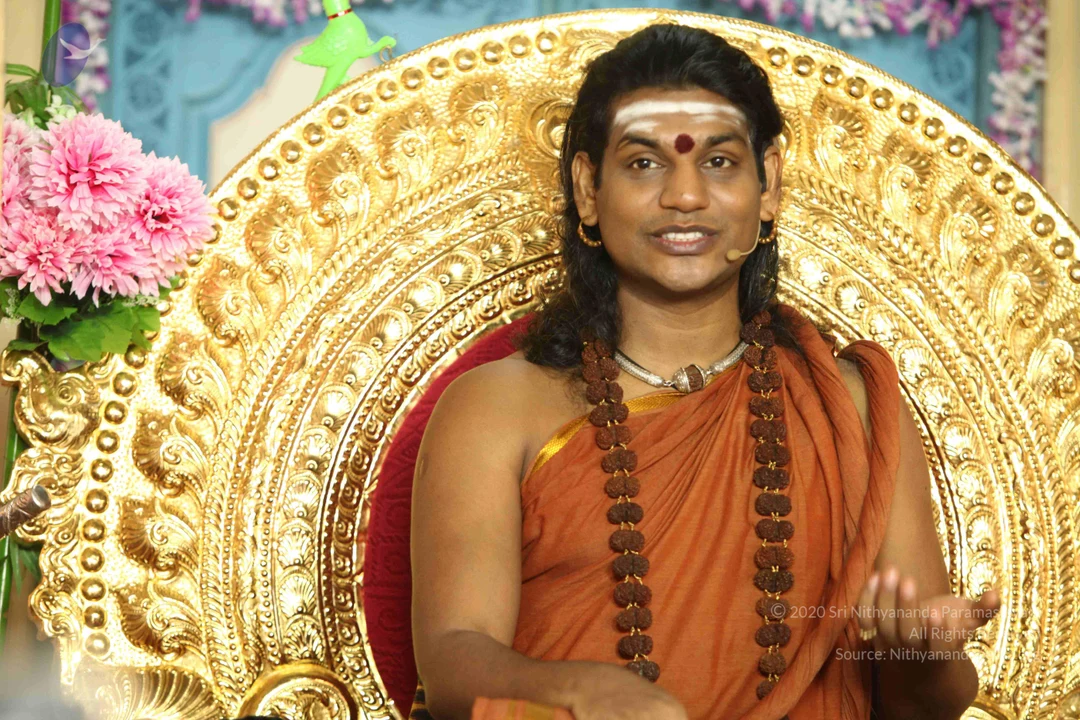
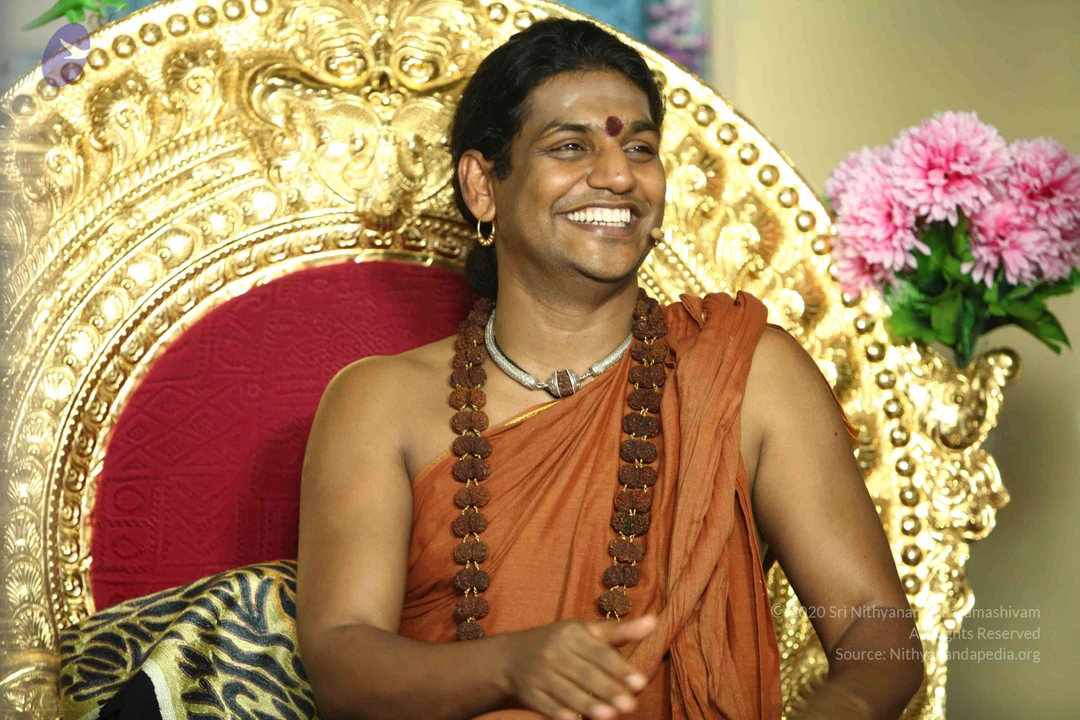
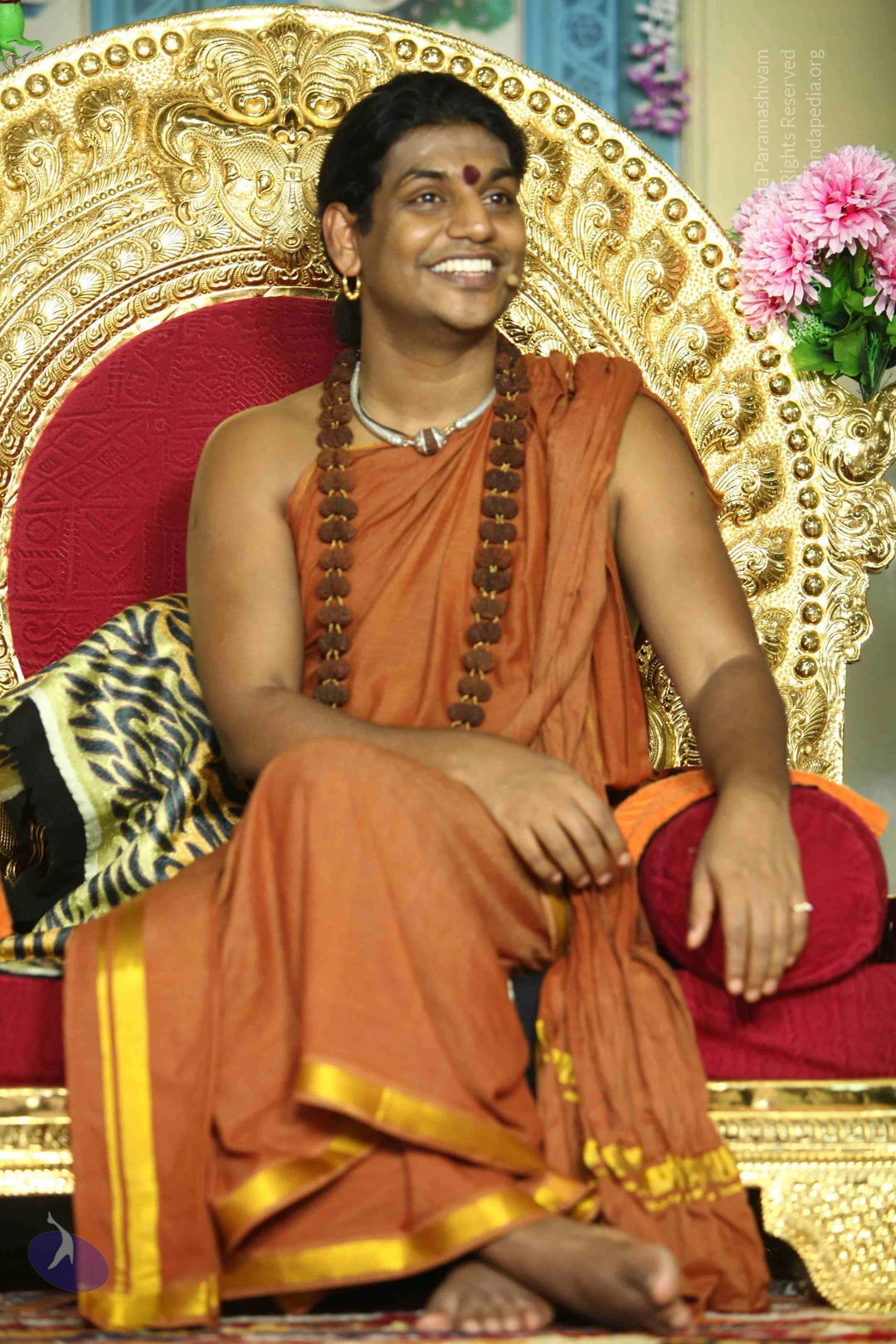
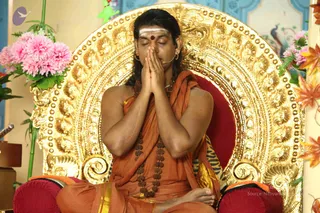
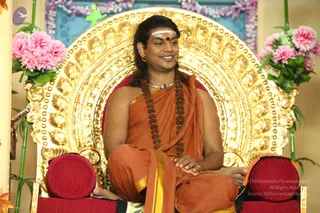
A photograph of a man seated on an ornate gold and red throne in a decorated hall, hands pressed together in namaskar. He wears saffron-orange robes, a shawl over the shoulders, a rudraksha mala, and a forehead tilak, with long hair swept back. Behind him are pink and white flowers and a gold-framed backdrop. Appearance-based candidate: a person, seated as the speaker on the peetha.A seated man in an orange-saffron dhoti and shawl sits on an ornate gold throne with red cushioning, smiling, hands resting on his lap. He wears a red bindi on his forehead, a long rudraksha mala draped across his chest, and a thin microphone headset near his face. Behind him are pink flowers and a patterned blue-and-white cloth draped over the throne's edge. Swamiji (probable): long dark hair, saffron clothing, rudraksha malas and a gold-accented throne match the page's description of a discourse by Nithyananda Paramashivam.

01-PADA-PUJA

5 photosSource gallery
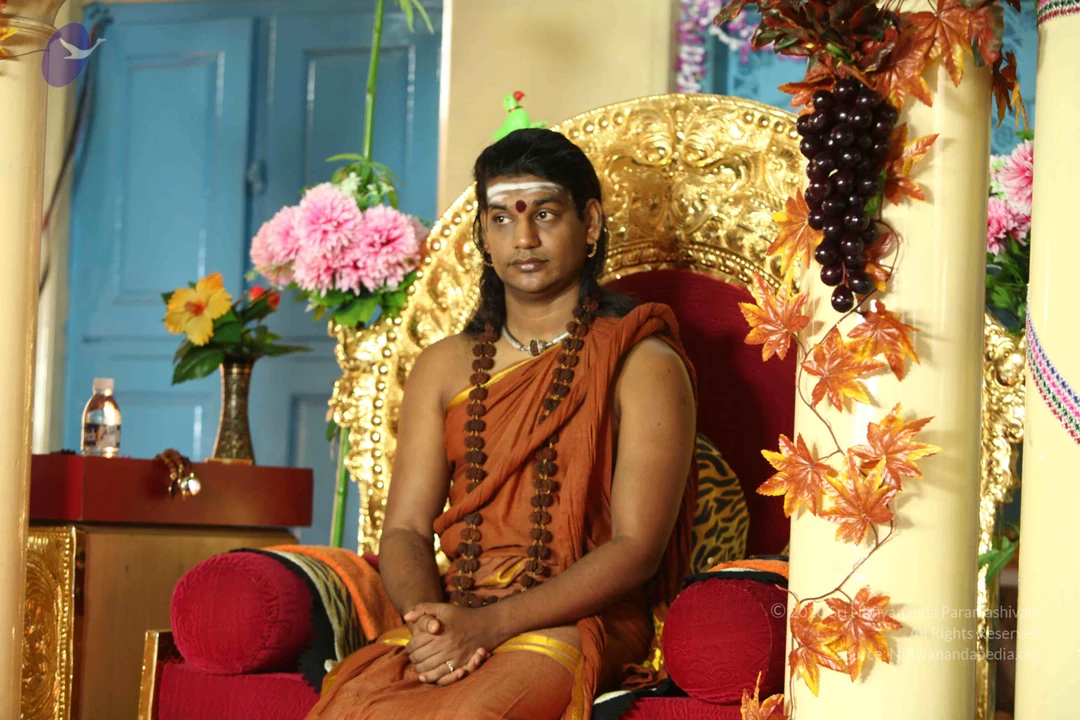
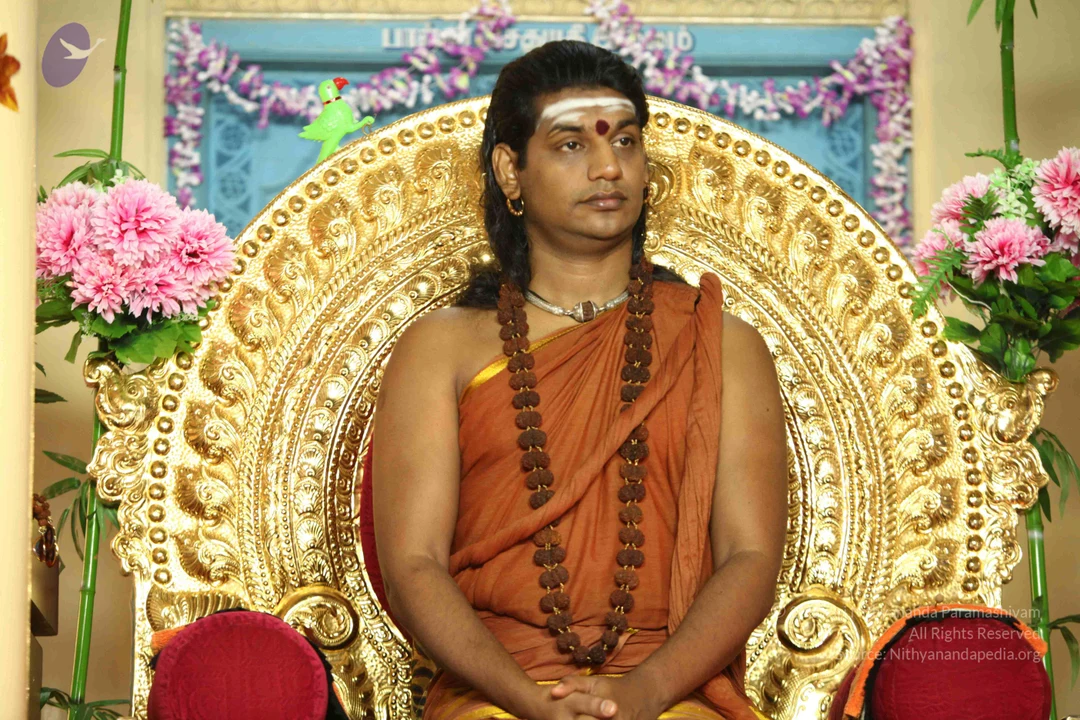
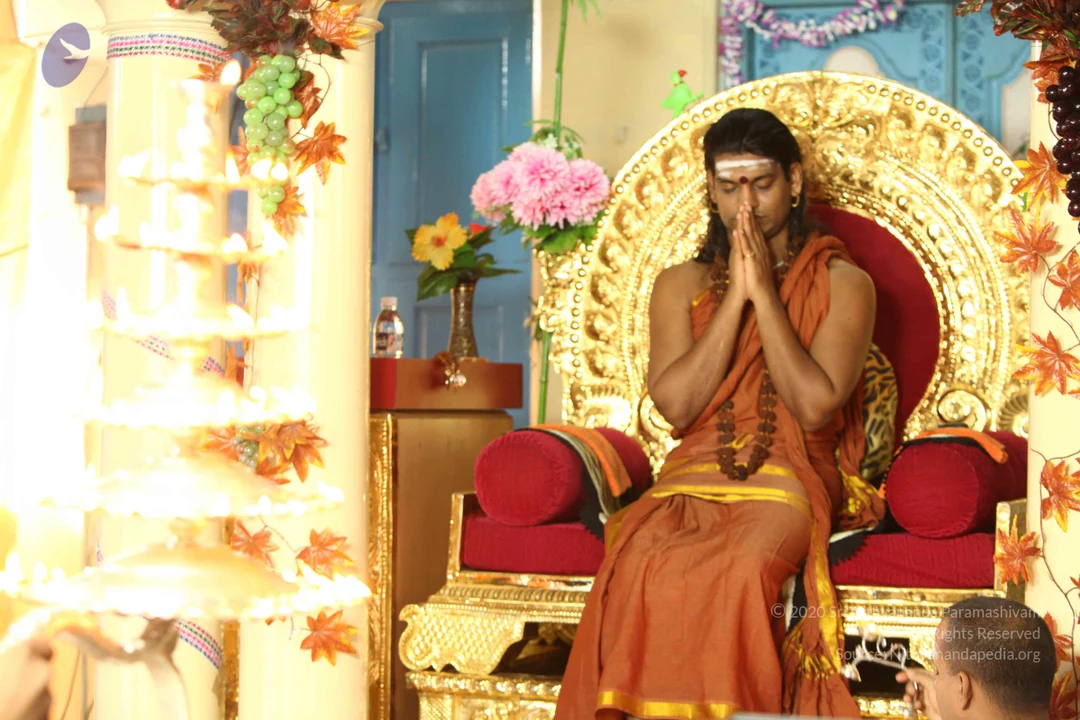
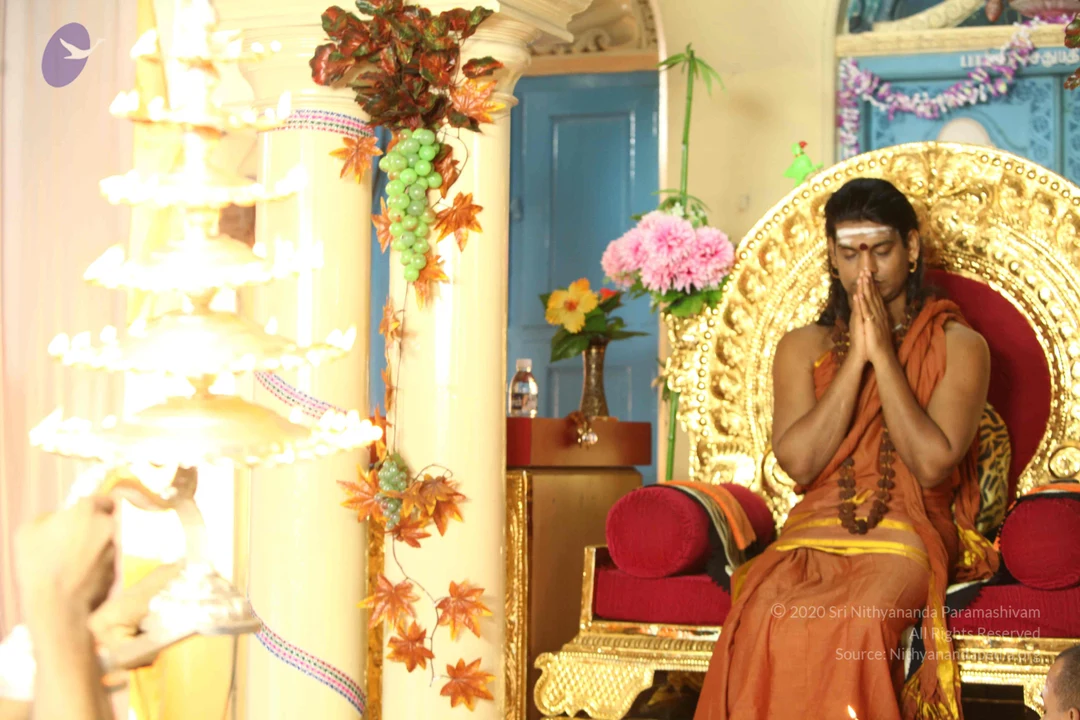
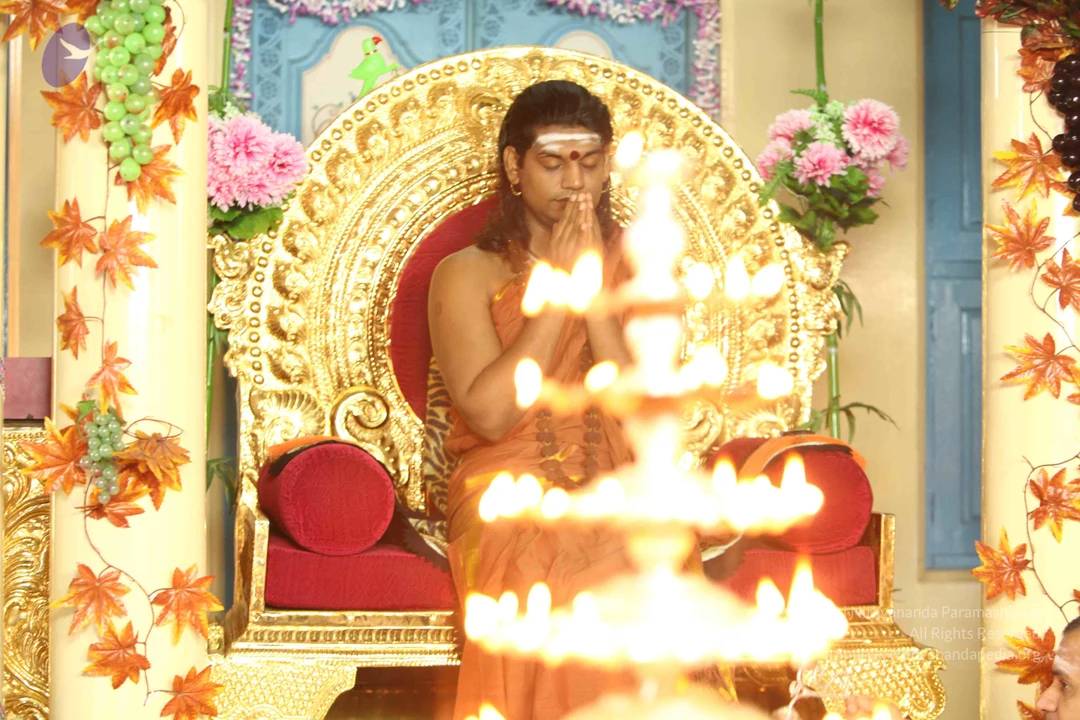
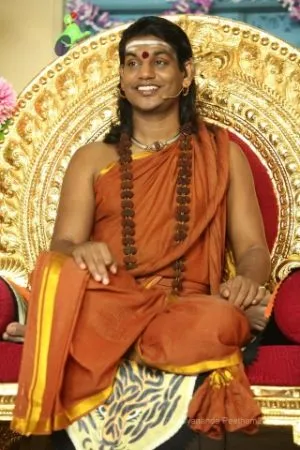
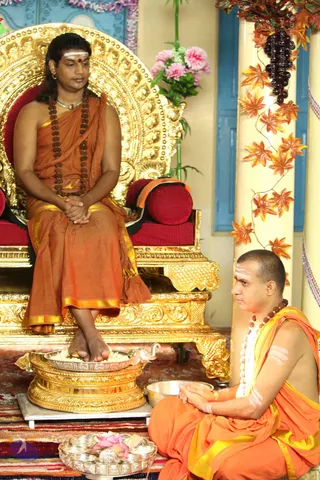
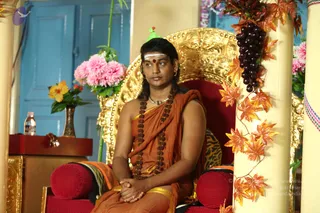
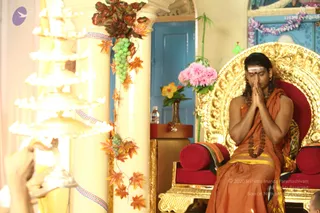
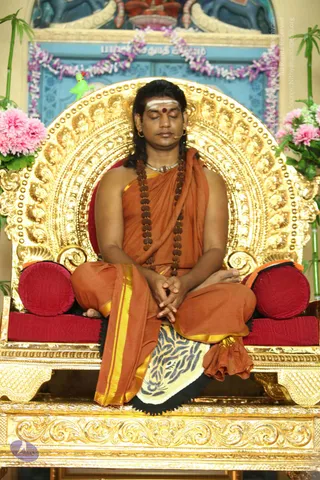
A man seated on an ornate gold throne with red velvet cushions, hands clasped in his lap, gazing to the side. He wears an orange saffron wrap, a long rudraksha mala down to his waist, a white tilak with a red bindi on his forehead, and a silver necklace. Behind him are pink dahlias, a yellow flower in a vase, a bottle of water, and autumn-leaf and grape garlands decorating a pillar.A seated man in an orange-saffron cloth wrap sits on an ornate gold throne with a richly carved, rounded backrest and red cushions. He wears a long rudraksha mala of brown beads, a silver chain, gold hoop earrings, and a white vibhuti band with a red kumkum dot on his forehead. His hands rest folded in his lap. Behind him are pink flowers in arrangements on both sides, green bamboo stalks, and a blue panel with a garland. A small green toy parrot figure sits above the throne. The man is a probable Swamiji by appearance cues: long swept-back hair, saffron clothing, rudraksha mala and ceremonial ornaments. He is seated in the throne as the presiding speaker at the satsang.A seated man in saffron-orange robes sits on an ornate gold-and-red throne with hands pressed together in namaste at chest level. He has a white tilak mark on his forehead, long dark hair, and a rudraksha mala draped over his chest. Behind him a blue door, a vase of pink dahlias and yellow flowers, a glass water bottle, and a green grape cluster with autumn leaves decorate the setting. To the left, a tiered cascade of lit oil lamps glows against a cream pillar. A partially visible hand holds a phone at the lower left edge. a person: the seated figure has long swept-back hair, saffron robes, and a rudraksha mala, placed on the throne as the honoured speaker.

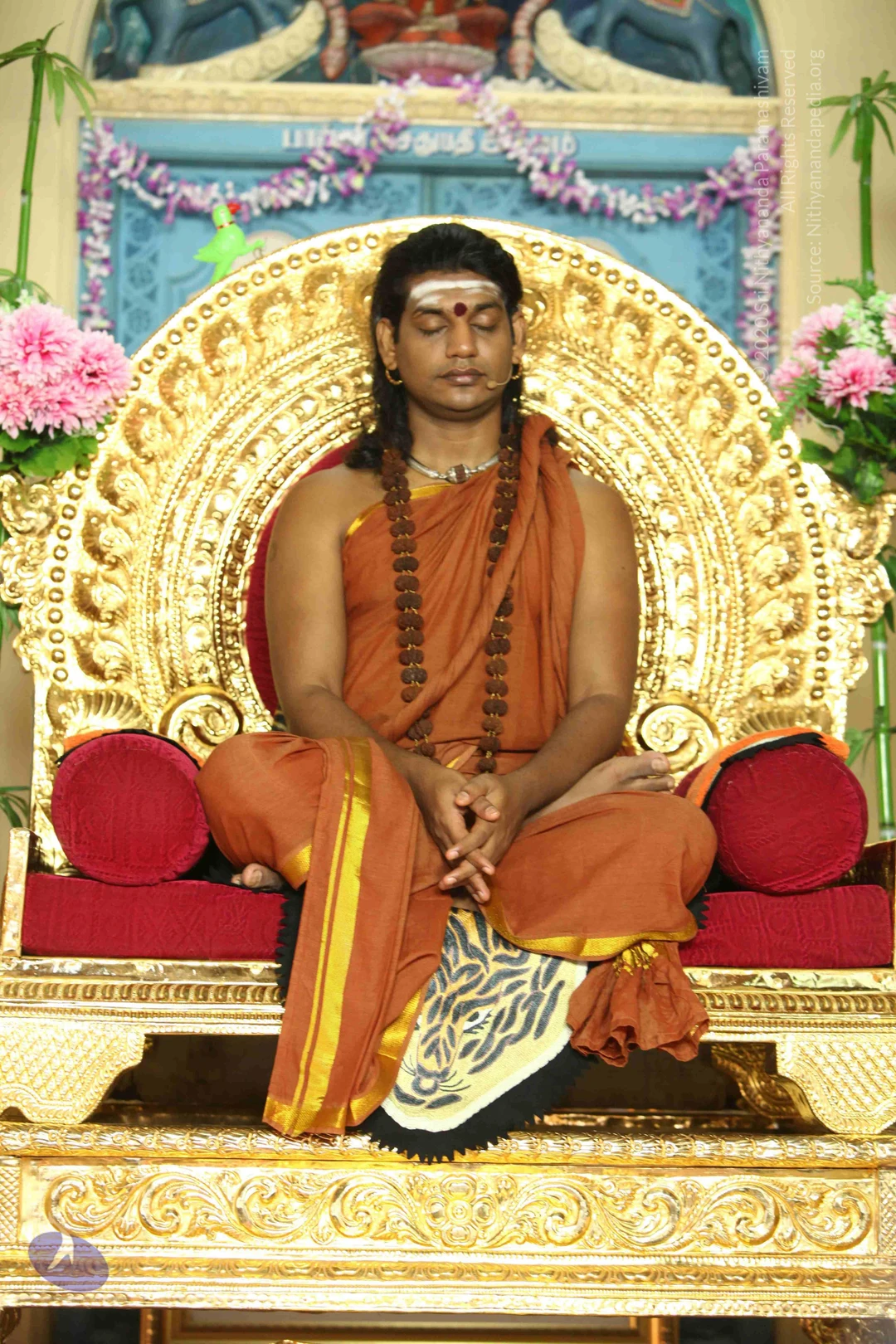
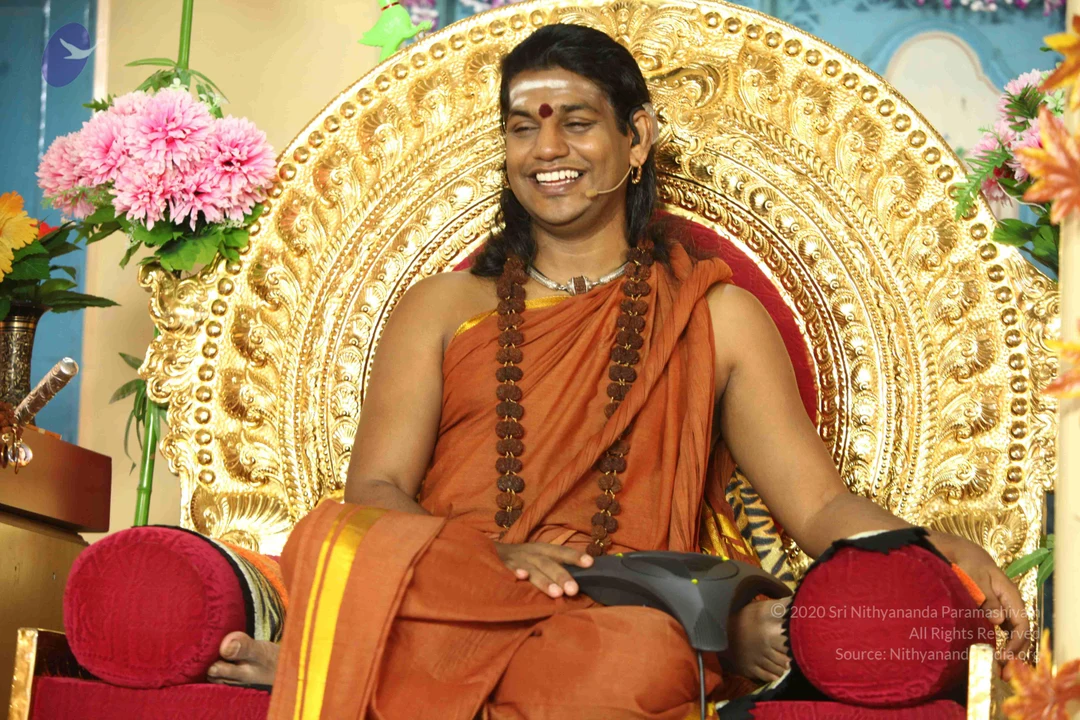
02-MORNING-SATSANG
21 photosSource gallery
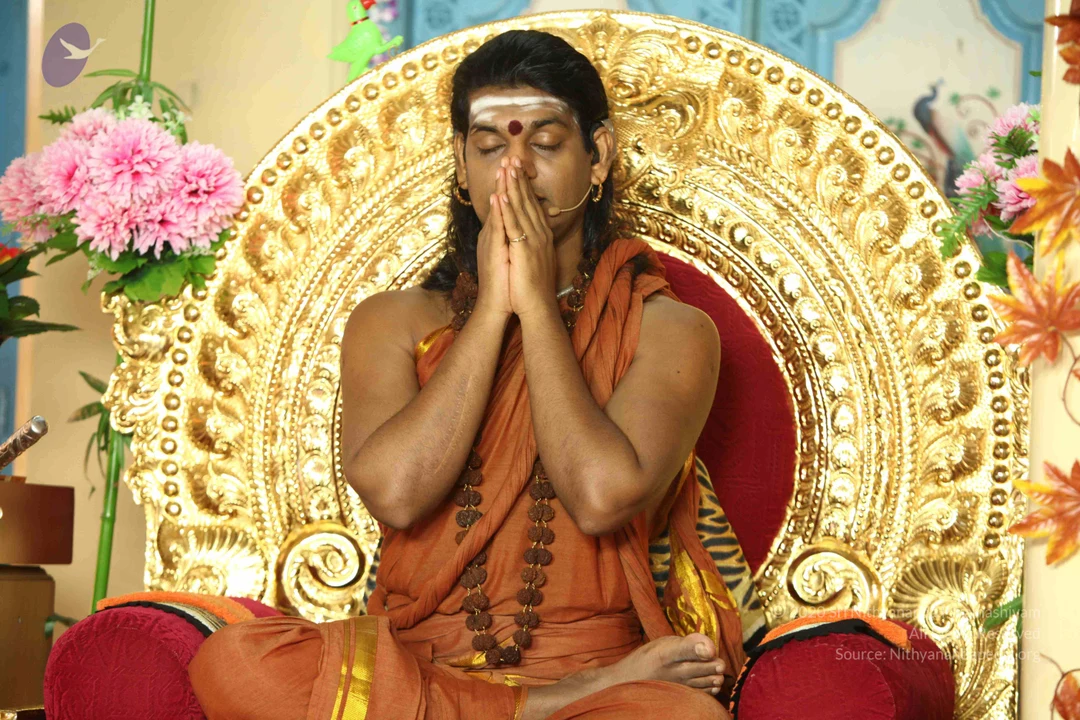
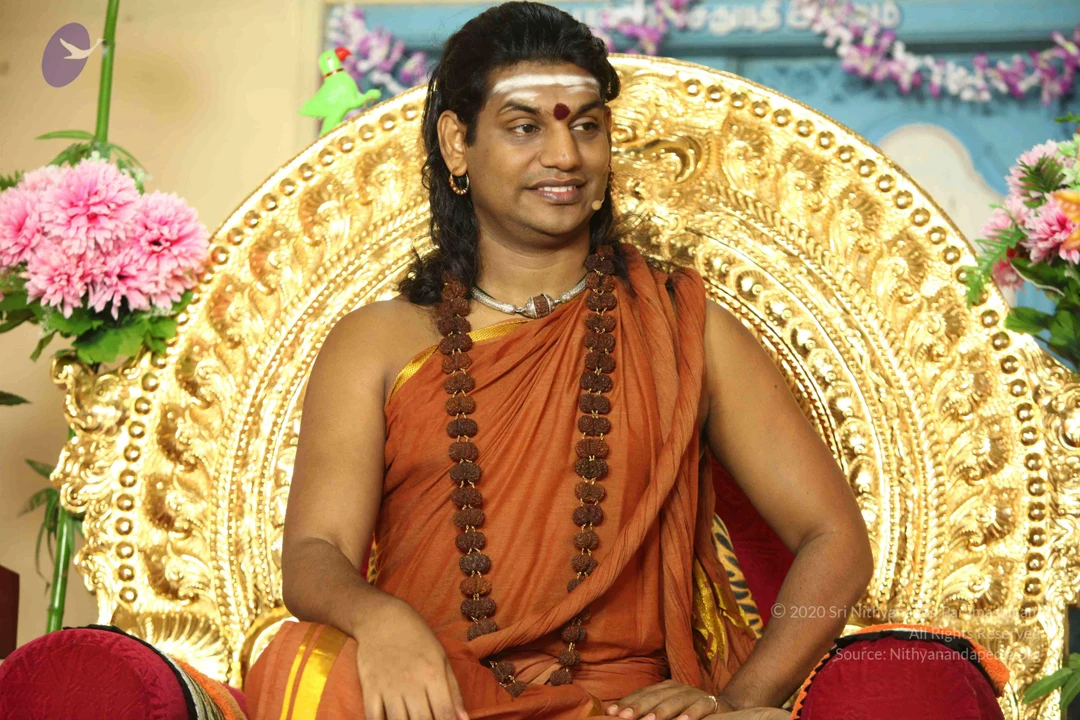
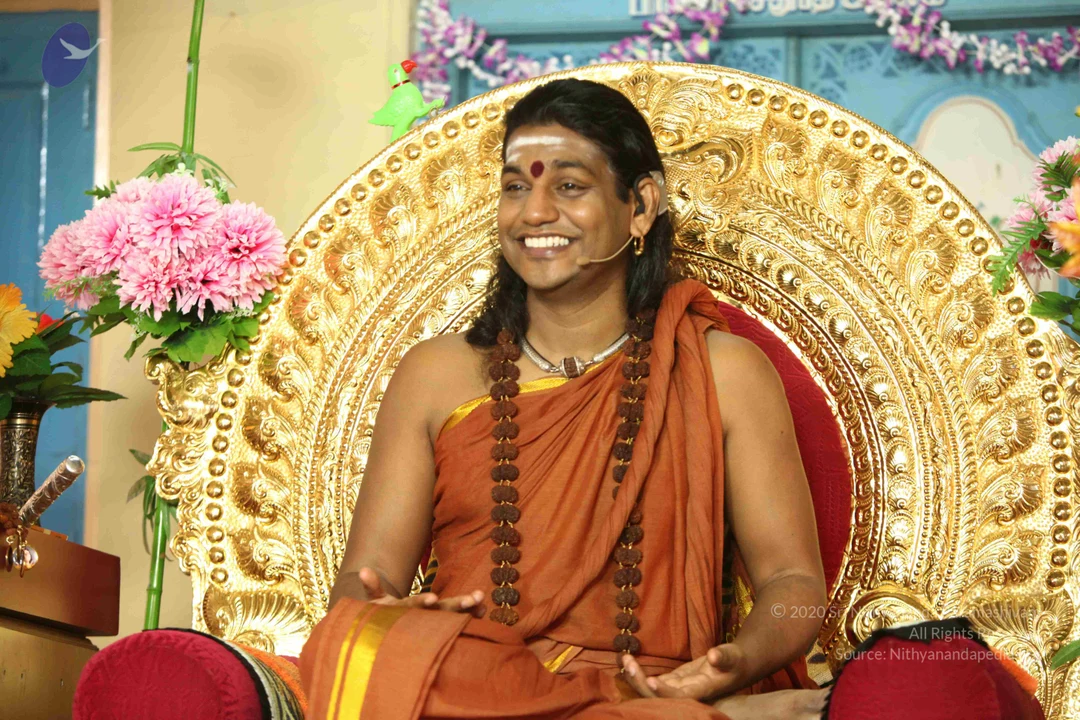
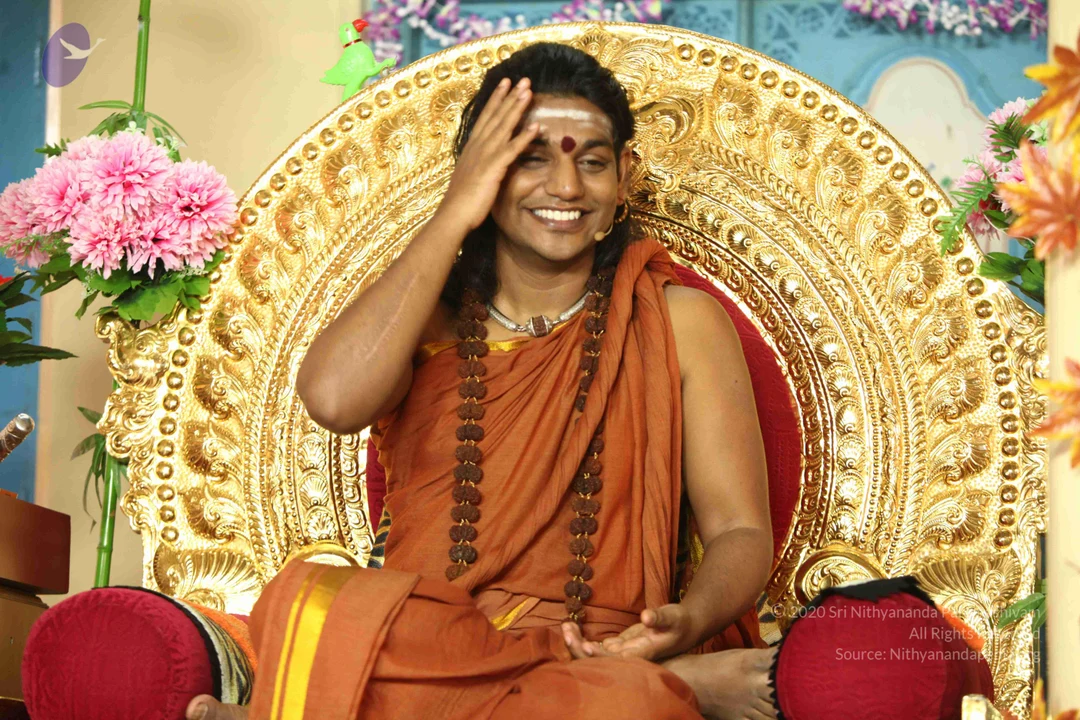
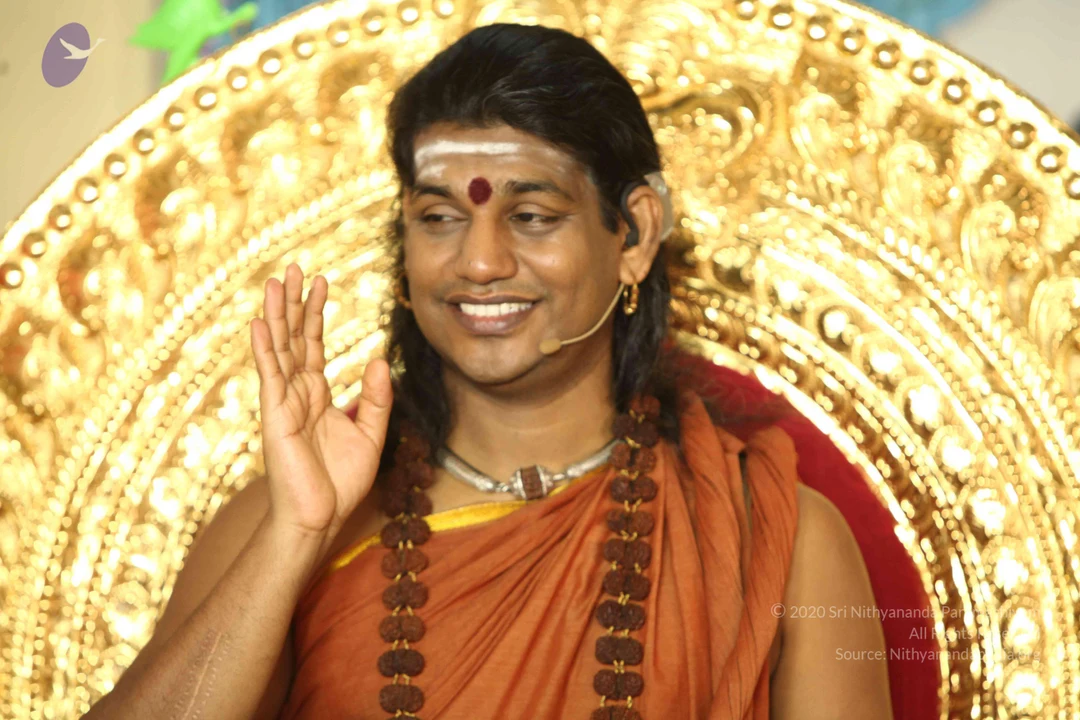
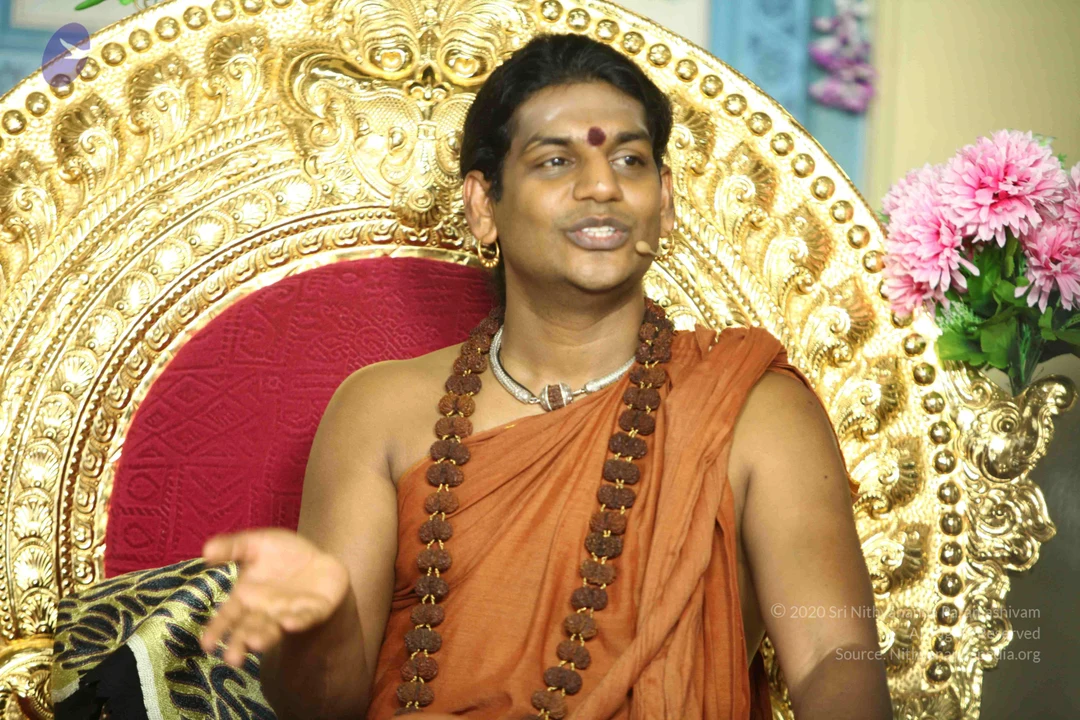
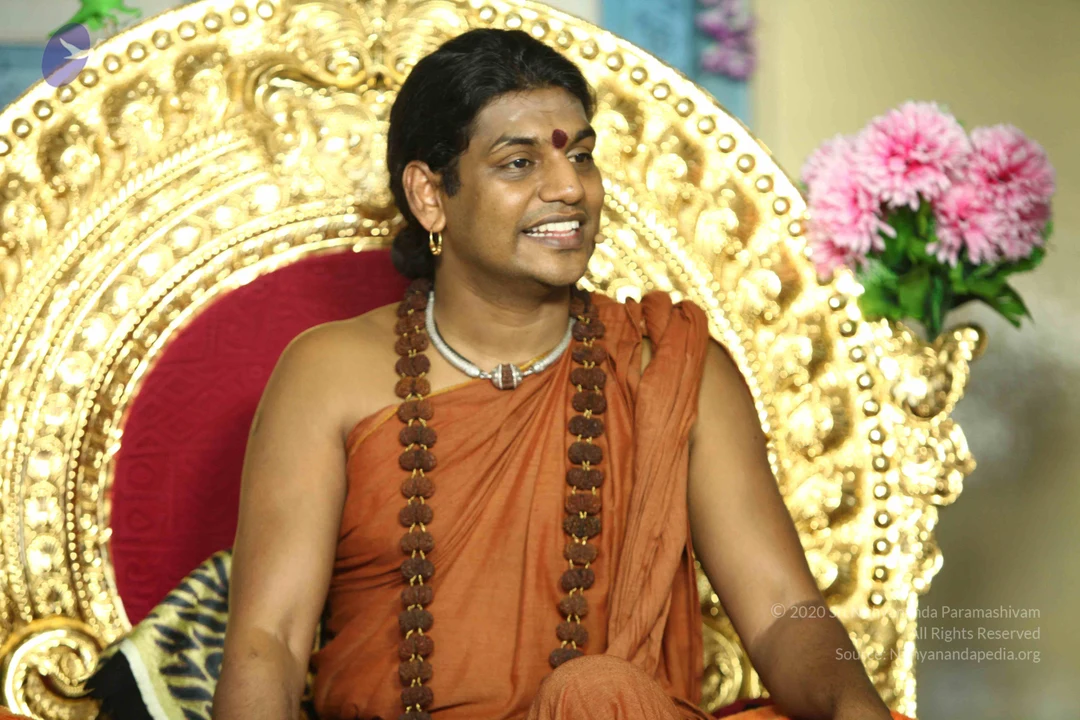
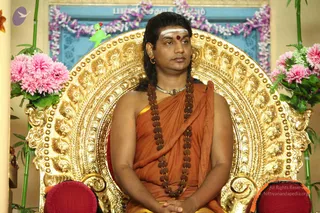
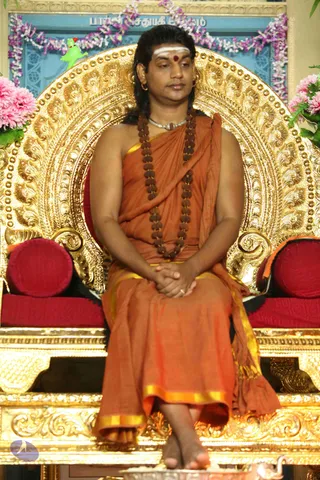
A man seated cross-legged on an ornate golden throne with a red cushioned seat, eyes closed and palms pressed together in namaskar. He wears an orange-saffron shawl over his shoulders and torso, orange dhoti with gold border, a long rudraksha mala, and a white vertical tilak with a red bindi. Pink chrysanthemum-like flowers and green foliage stand at left, with autumn leaves at right and a peacock painting on the blue backdrop behind.A man with long swept-back dark hair sits cross-legged on an ornate gold throne with a large carved circular backrest, wearing an orange-saffron cloth draped over his shoulders with a gold-bordered dhoti. He wears a long necklace of rudraksha beads and a ceremonial gold necklace, a white horizontal tilak with a red dot on his forehead, and a small earring. His hands rest in his lap and he smiles toward the side. Red cushioned armrests flank the throne, and pink chrysanthemums in vases stand on both sides against a backdrop of purple garlands.A man with swept-back long dark hair sits on an ornate gold throne with a rounded, beaded and floral-carved backrest. He wears an orange-saffron cloth draped over his shoulders with a gold-bordered edge, a long rudraksha mala of brown beads, a silver necklace, and a white vertical tilak with a red dot on his forehead. He sits on red cushions with a trace of a striped fabric, speaking and looking to his right. Pink chrysanthemum-style flowers and green foliage frame the throne, with a blue and white floral backdrop behind. Several cues match the appearance of a person, seated as the speaker in a satsang setting.A man seated on an ornate gold throne with a red cushion, gesturing with his right hand while speaking and smiling. He wears an orange-saffron shawl over his shoulder, a long rudraksha mala, a silver necklace, gold hoop earrings, and a white tilak with a red dot on his forehead. Pink flowers and a green decorative bird appear at the left edge, with a blue-and-pink backdrop behind the throne. Appearance-based label: a person, seated on a throne in saffron robes with rudraksha mala and ornate gold necklace, speaking to an audience.

03-SARVA-DARSHAN
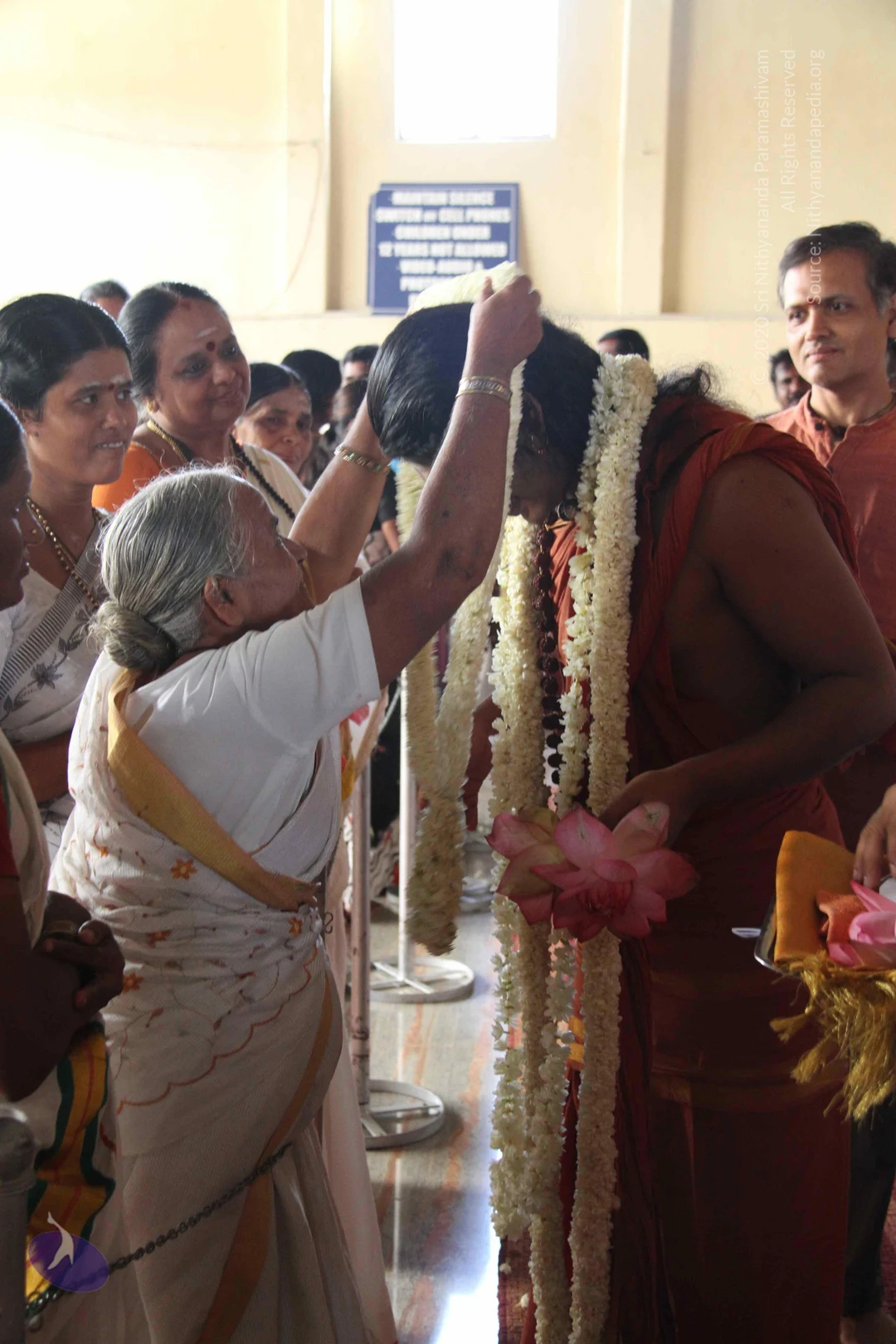
3 photosSource gallery
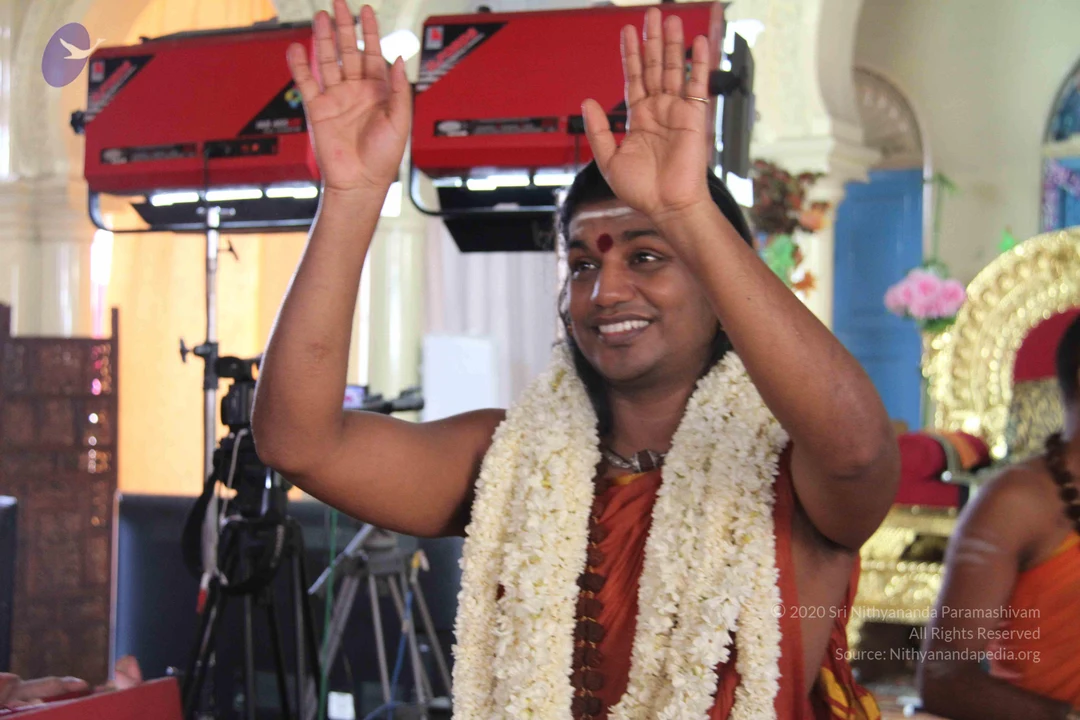
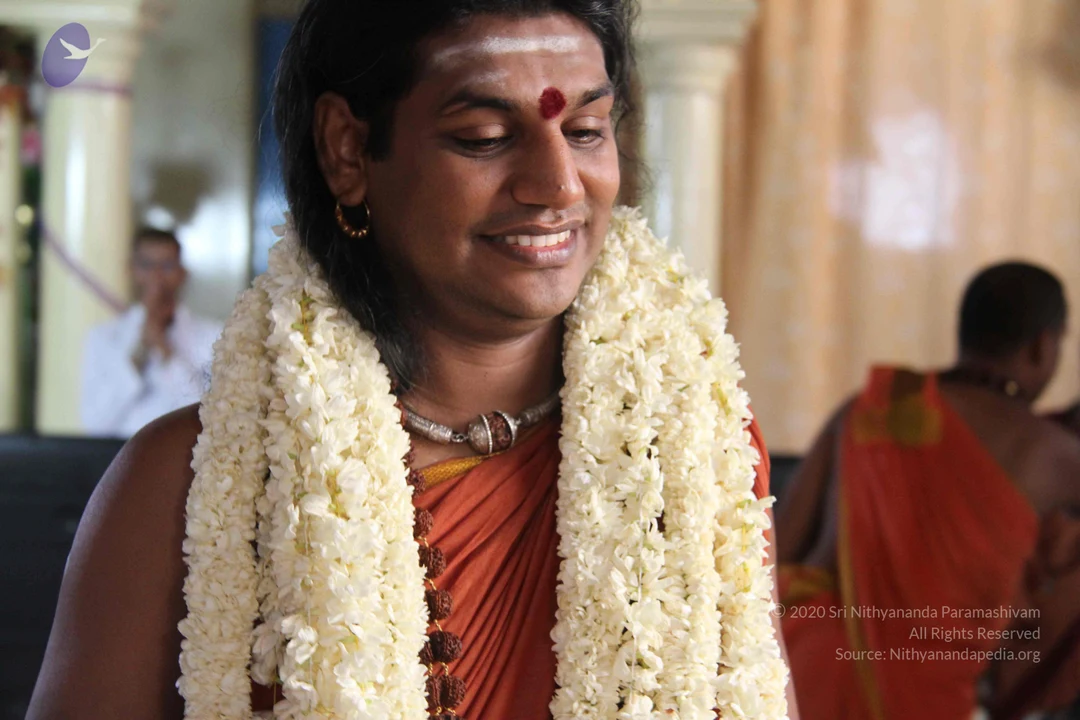
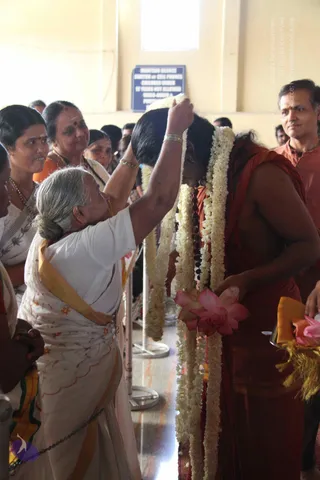
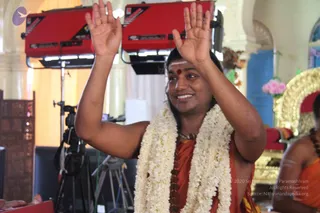
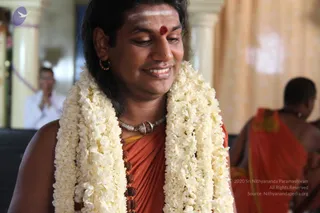
A smiling man in a saffron-orange garment with a white jasmine garland around his neck raises both palms overhead beside a rudraksha mala and red bindi on his forehead with white vertical tilak. Behind him red studio lights on stands, a camera on a tripod, a gilded throne with red cushions and pink flowers appear in a temple-like hall. A second person in orange clothing sits at the right edge. The setting suggests a satsang discourse being filmed. a person is shown with long hair, a rudraksha mala and saffron garments, though the face is not used for identification.A smiling man with long dark hair, white vibhuti on his forehead and a red kumkum dot, stands in a temple setting wearing a thick white jasmine garland over orange-saffron robes, a silver pendant necklace and a rudraksha mala. A small gold hoop earring is visible. Behind him, a figure in white stands with hands together near a pillar, and on the right a bare-chested man in orange cloth is partly visible. a person by visible cues of long swept hair, saffron robes, rudraksha mala and ceremonial garland, shown as a devotee-receiving-honour scene at a satsang setting.

04-EVENING-SATSANG
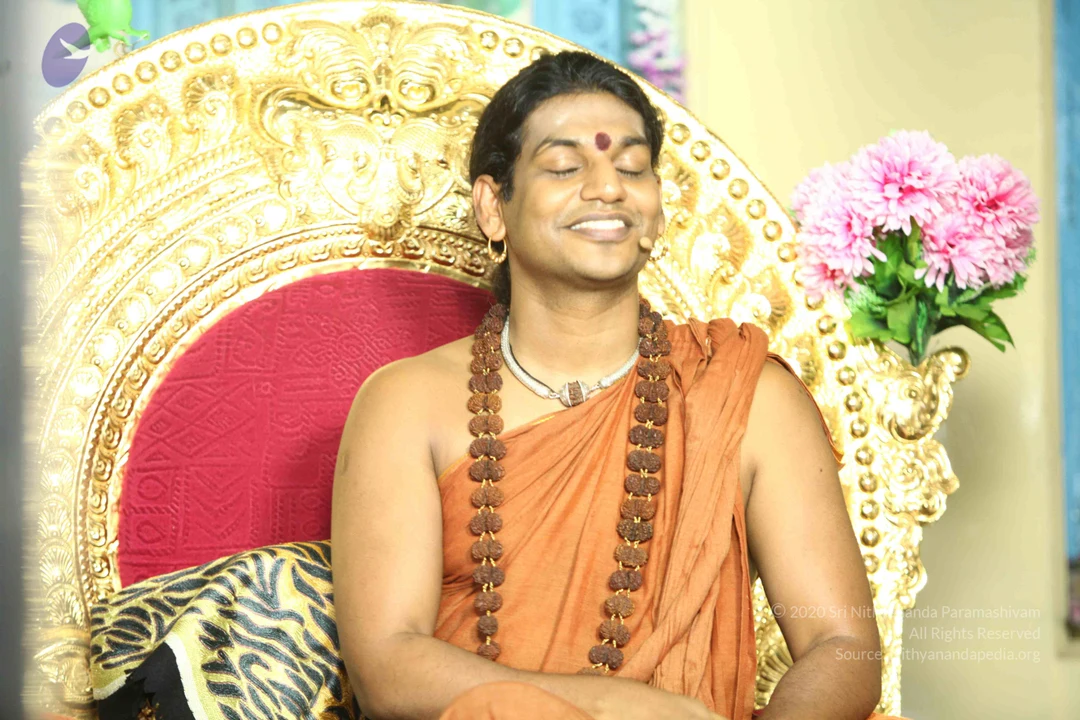
35 photosSource gallery
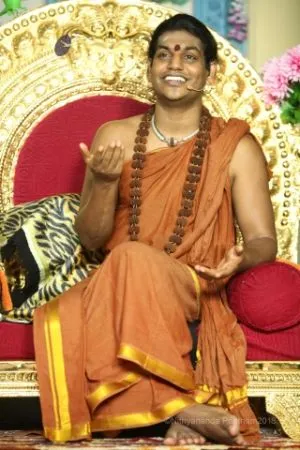
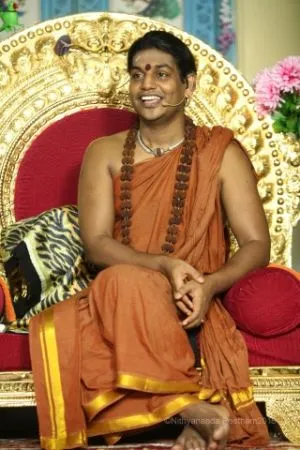
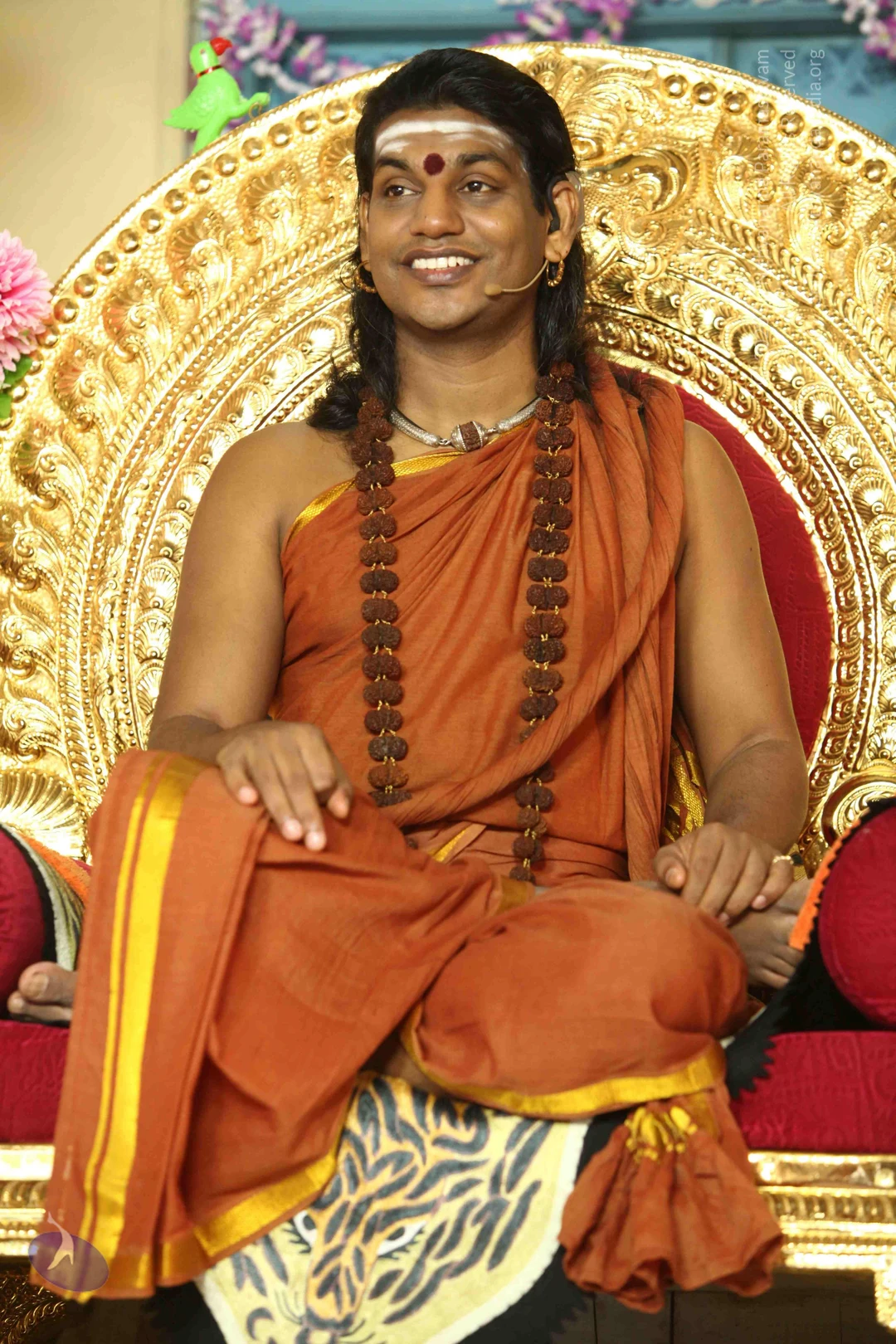
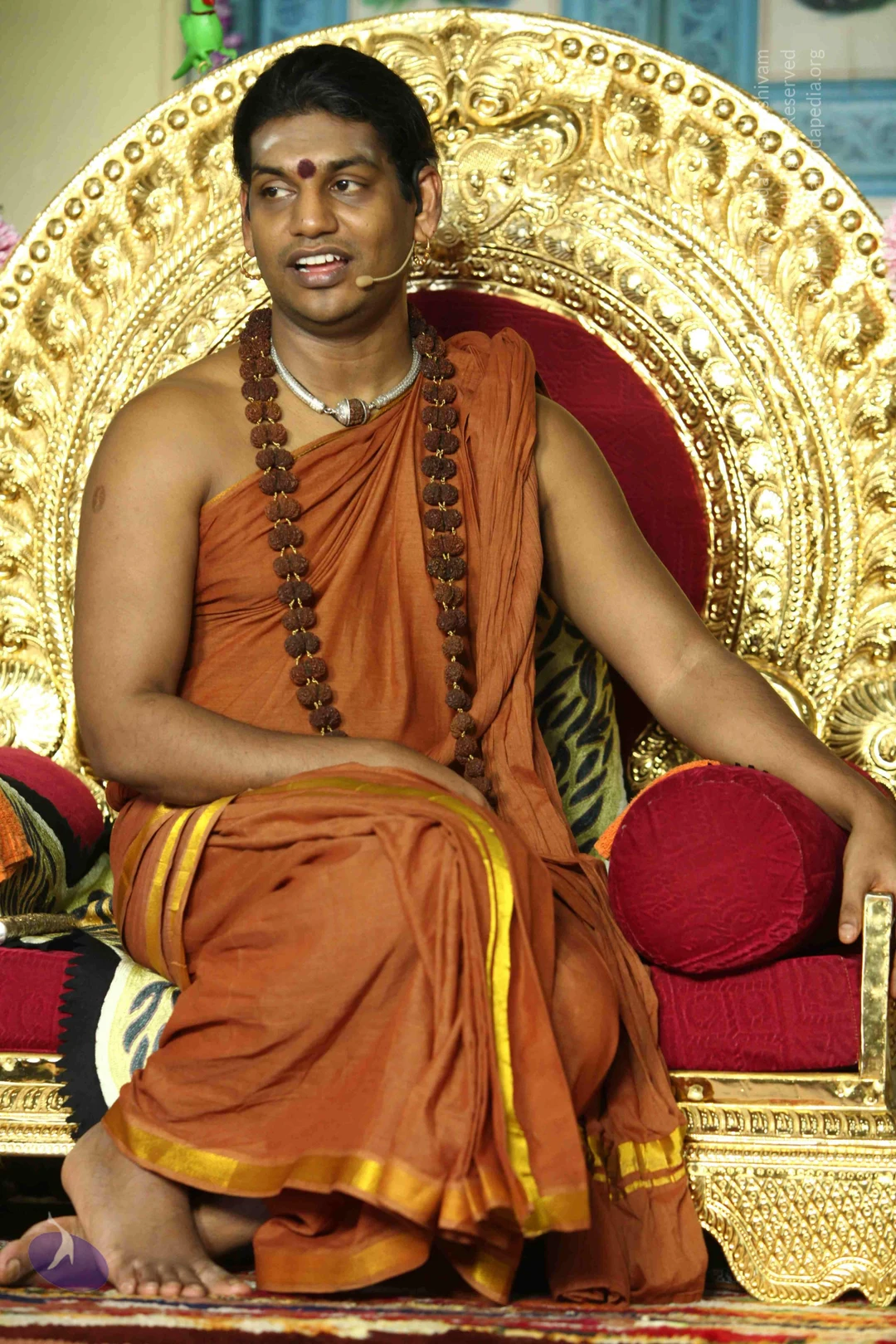
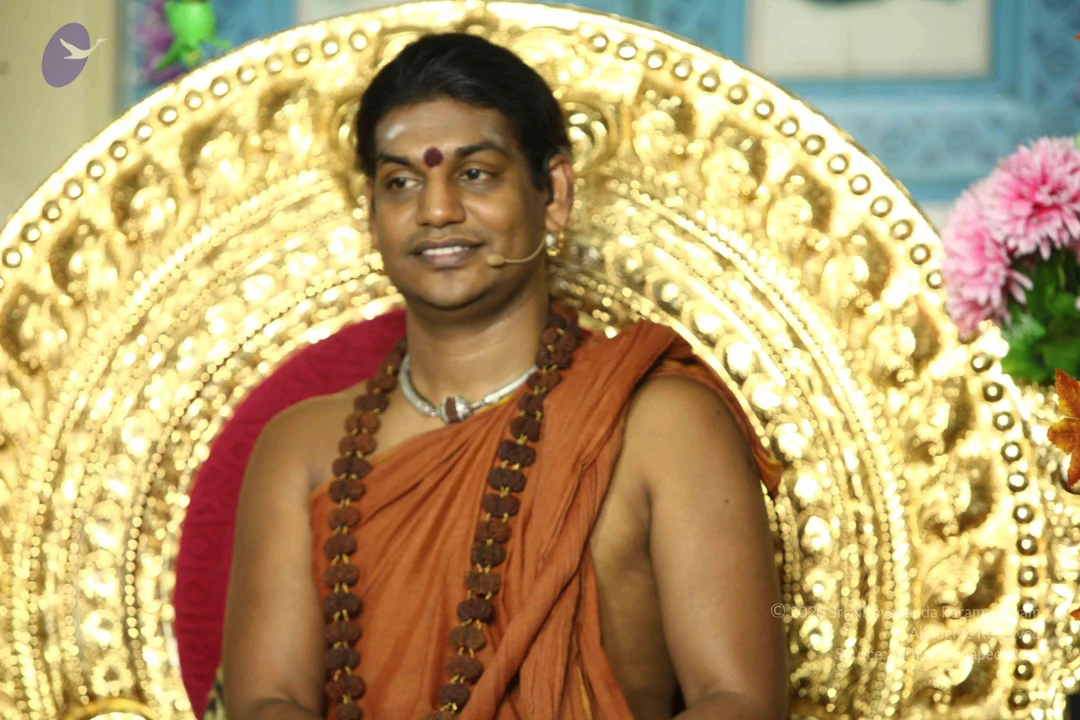
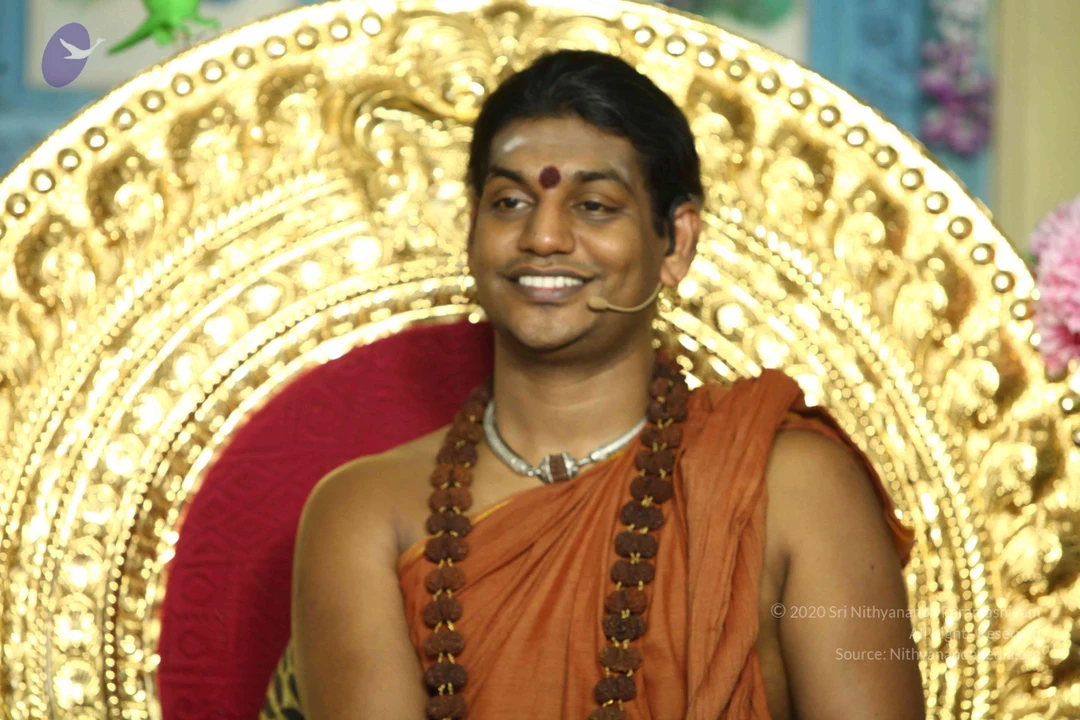
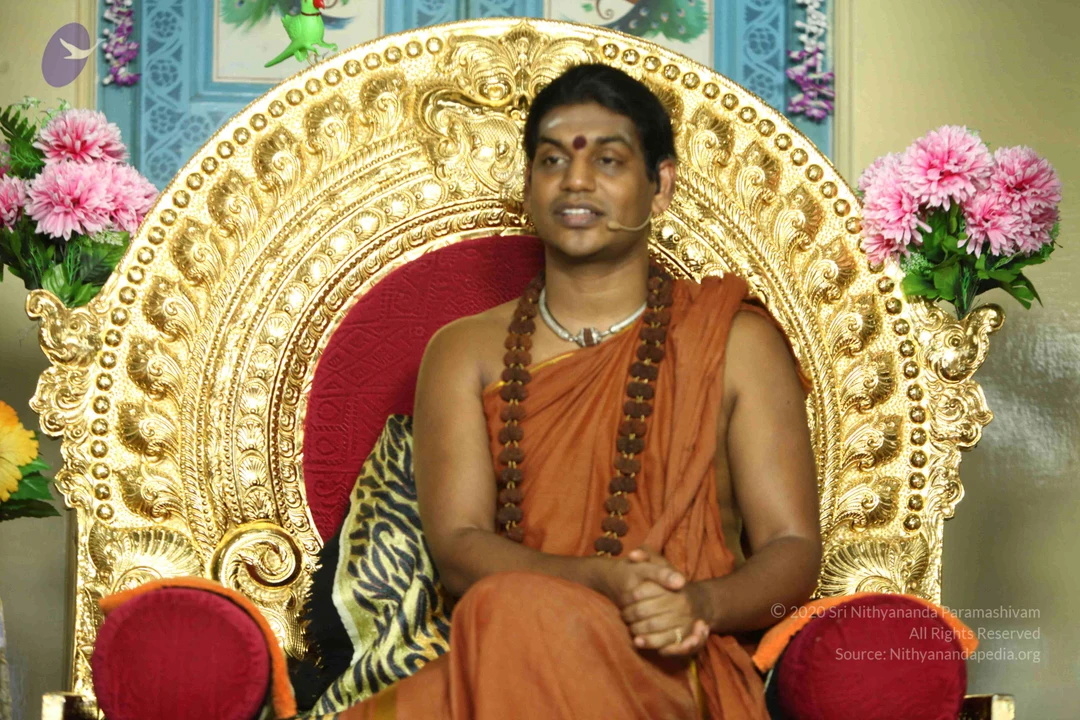
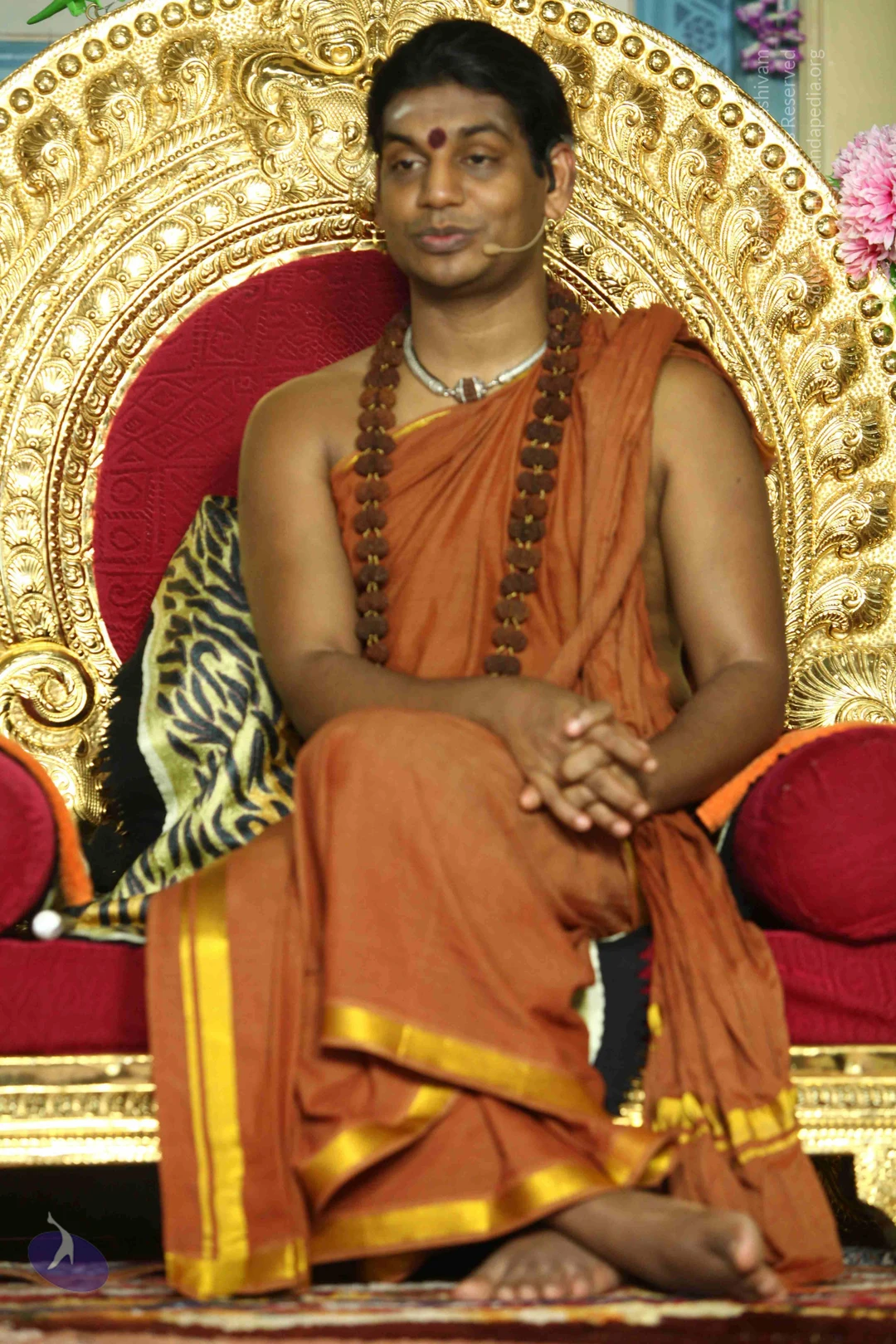
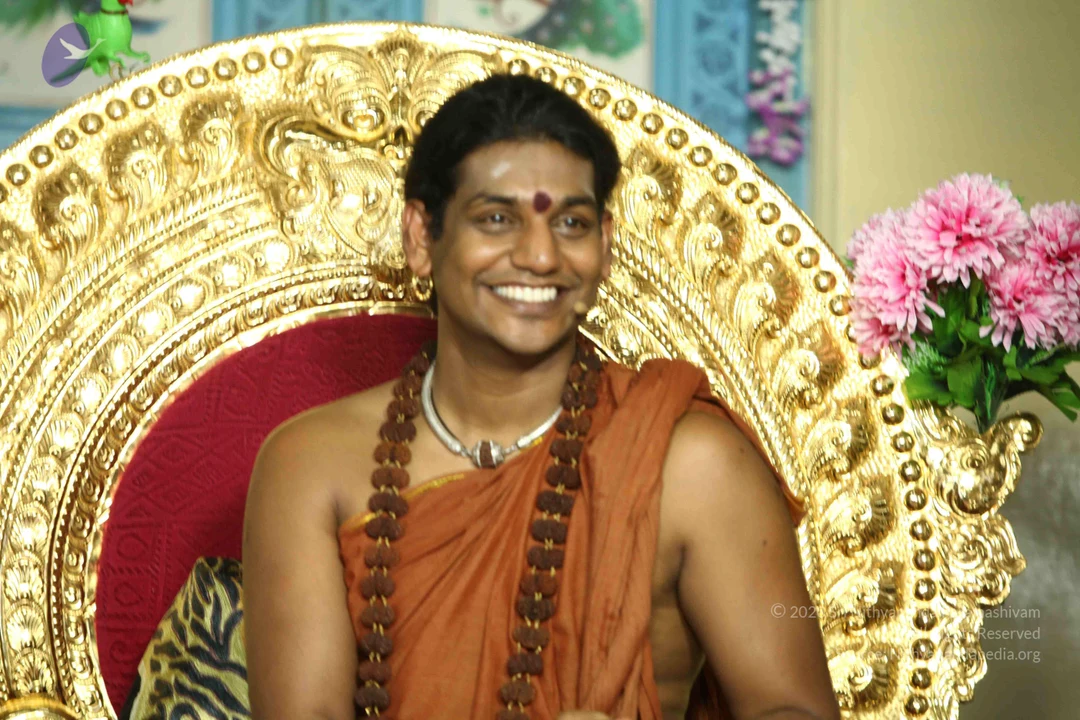
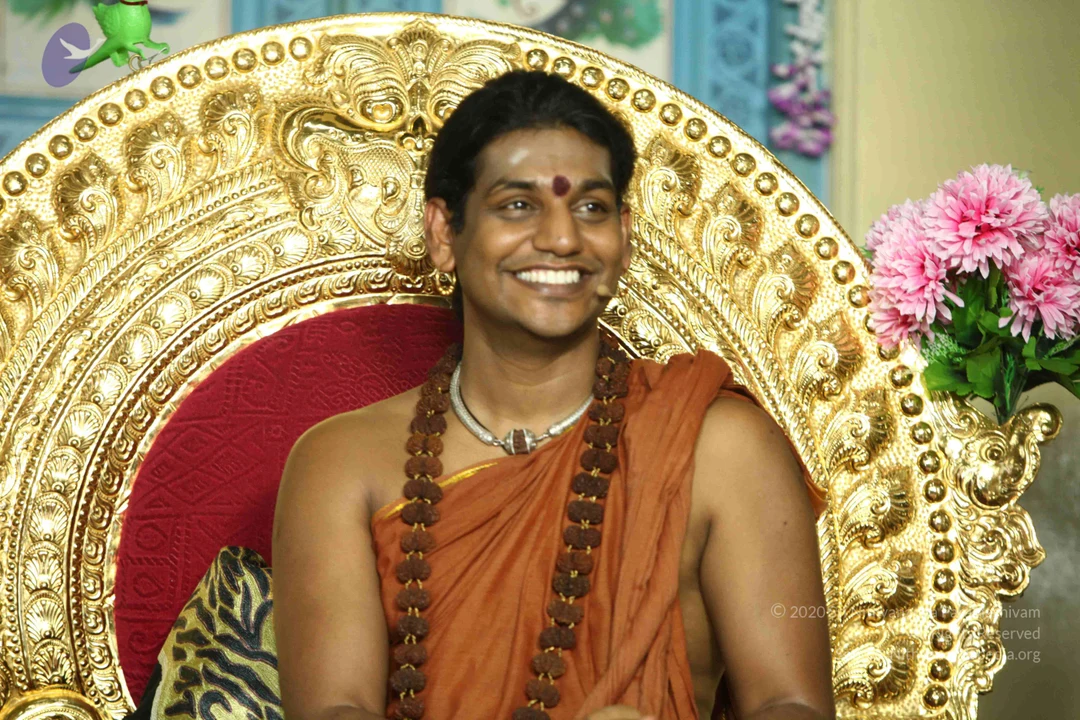
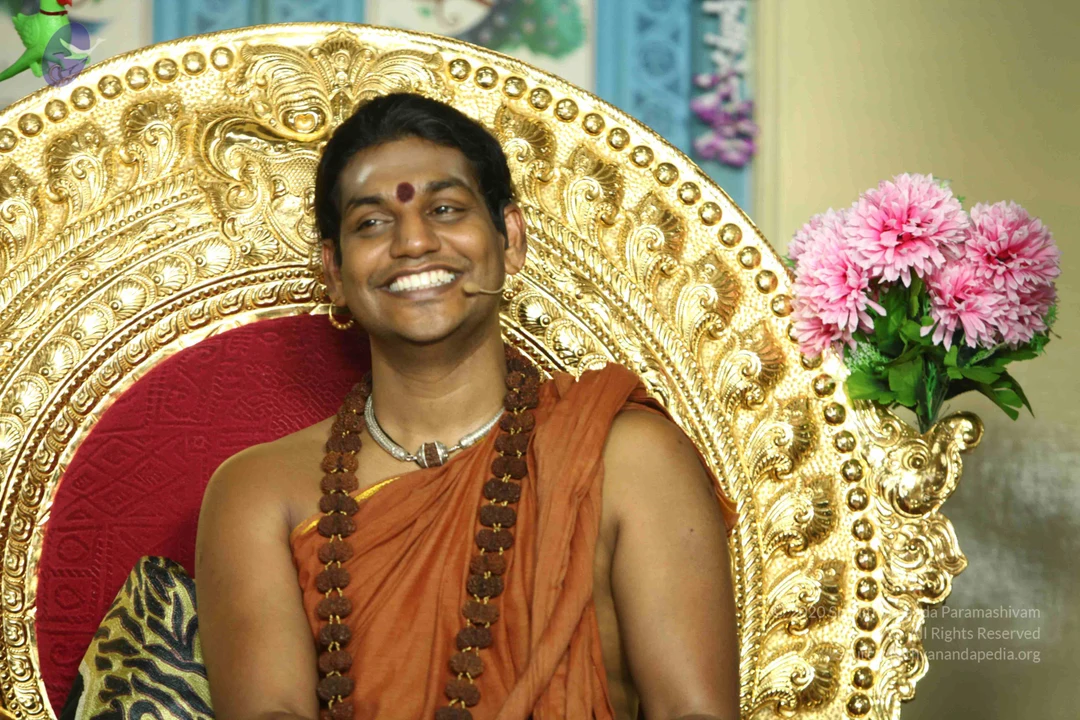
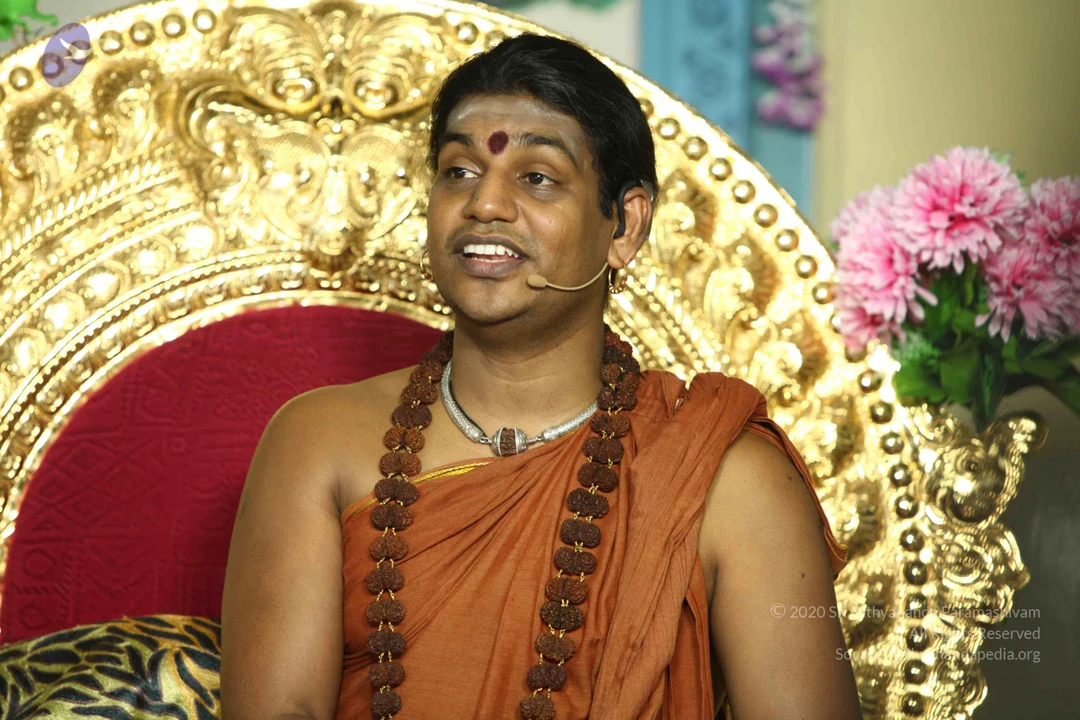
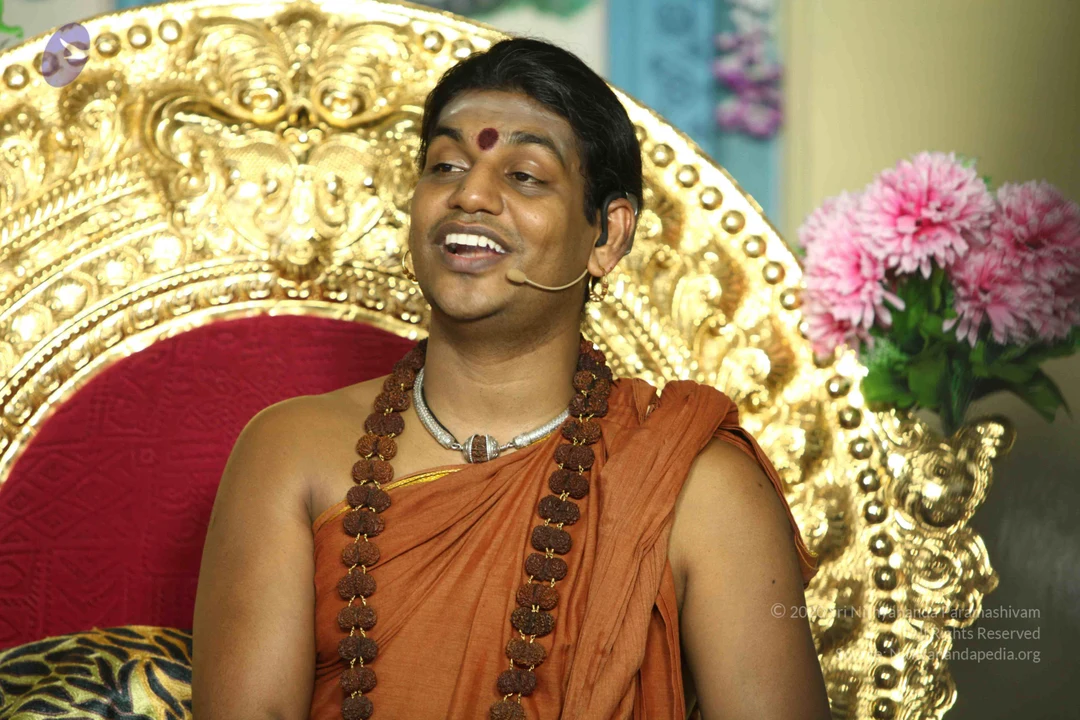
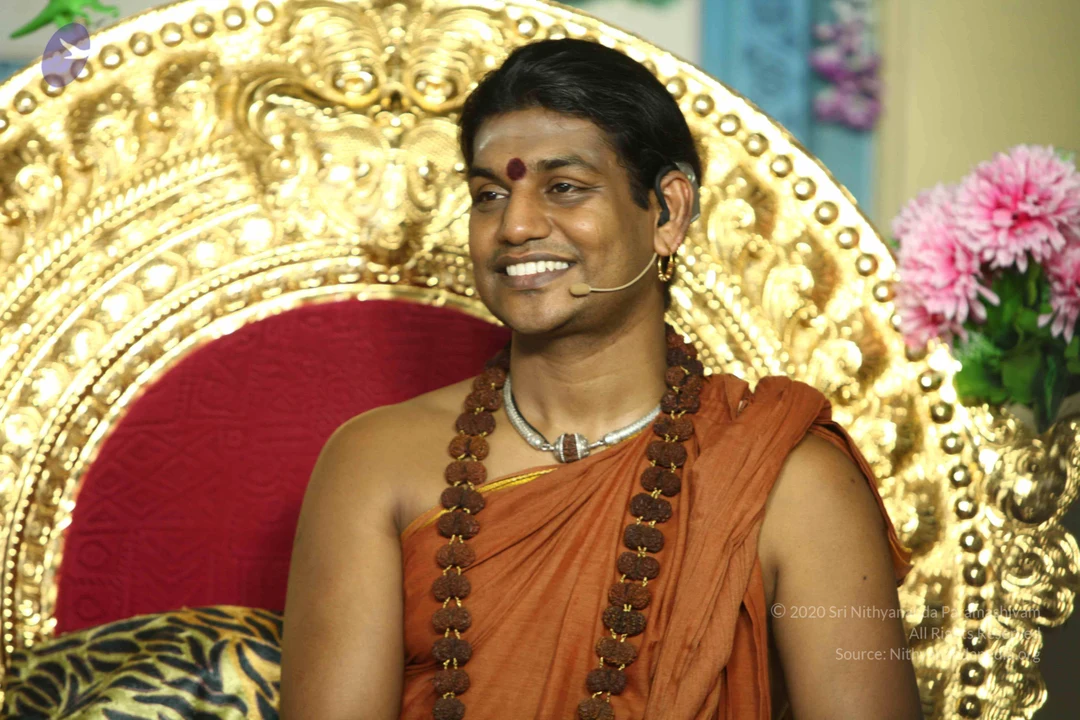
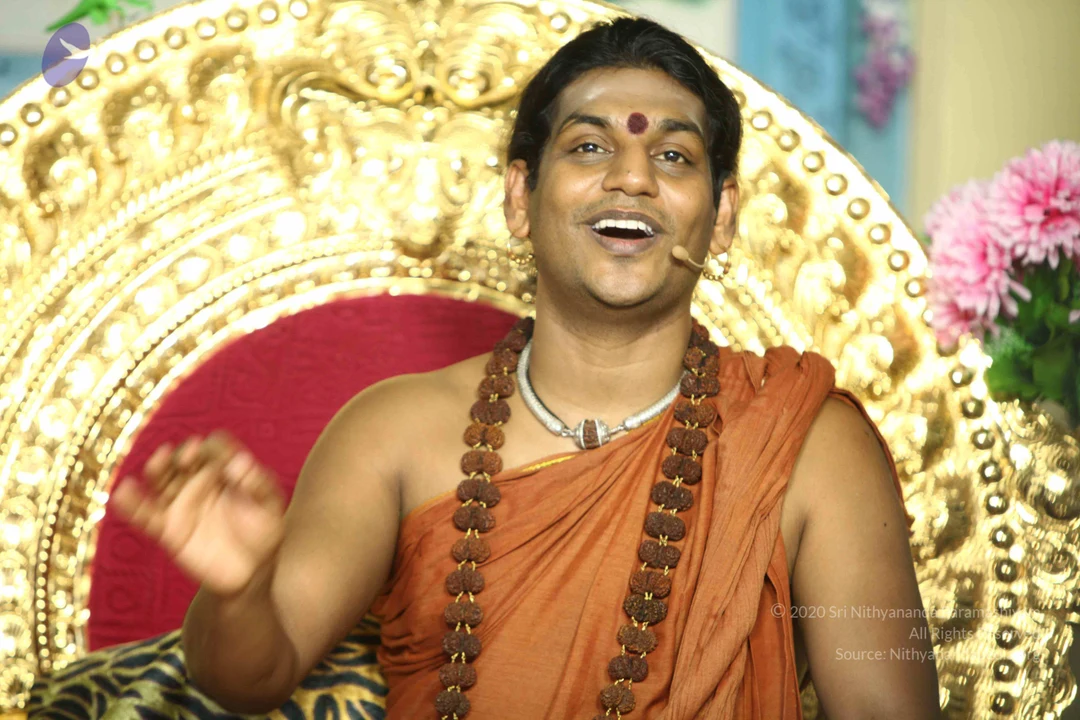
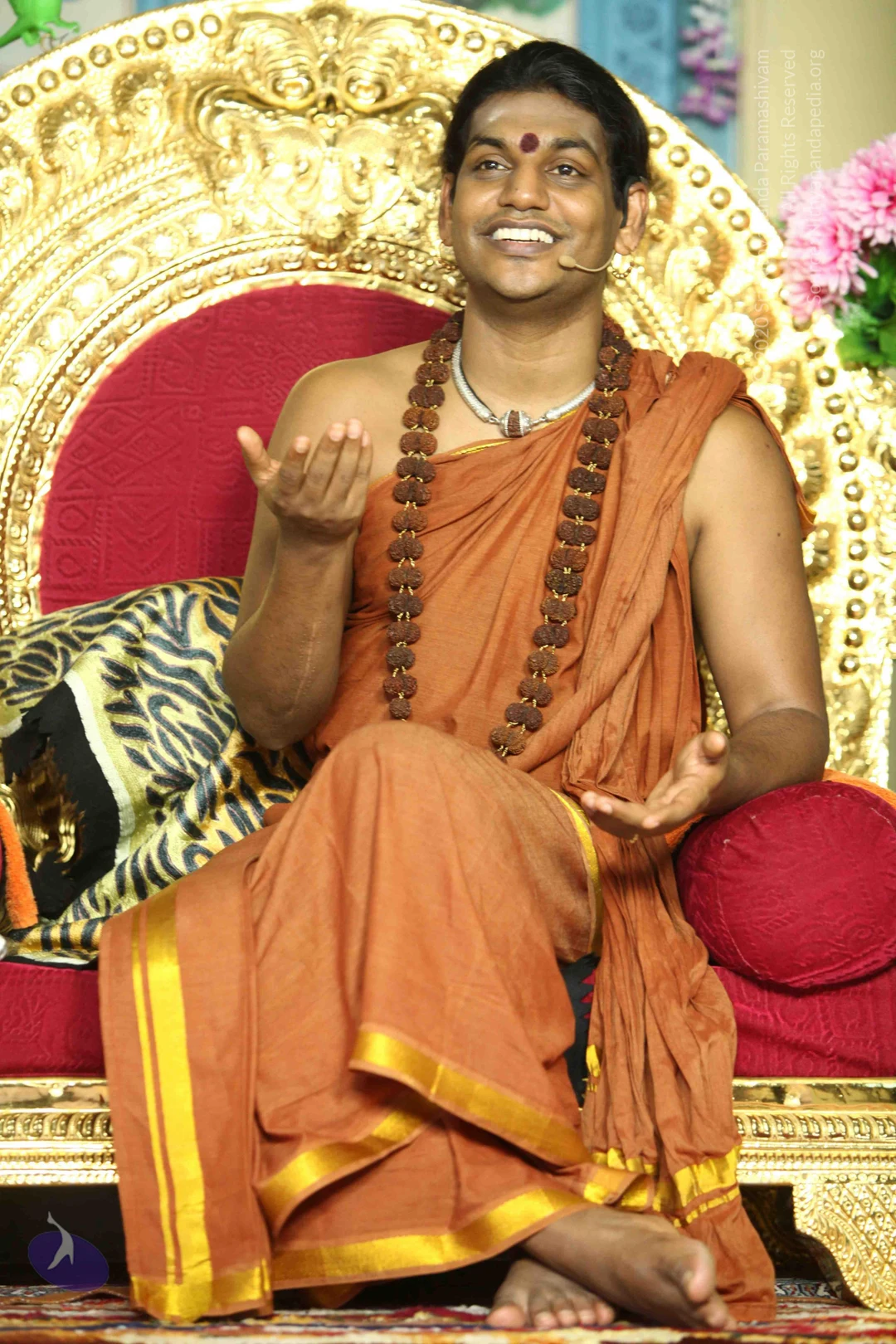
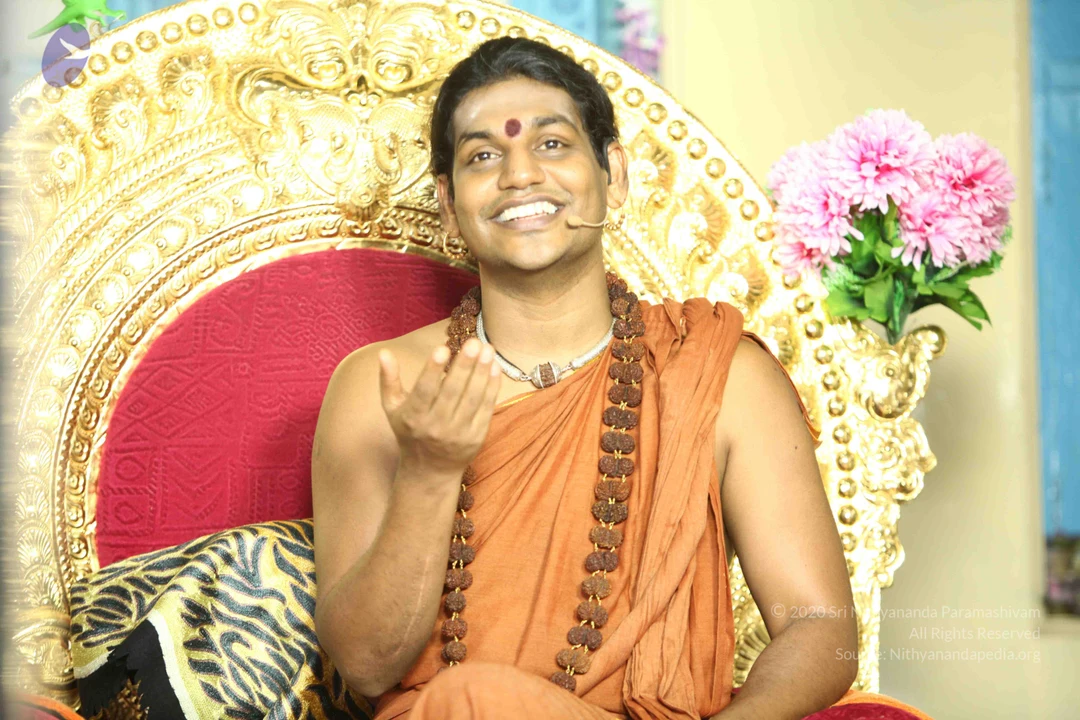
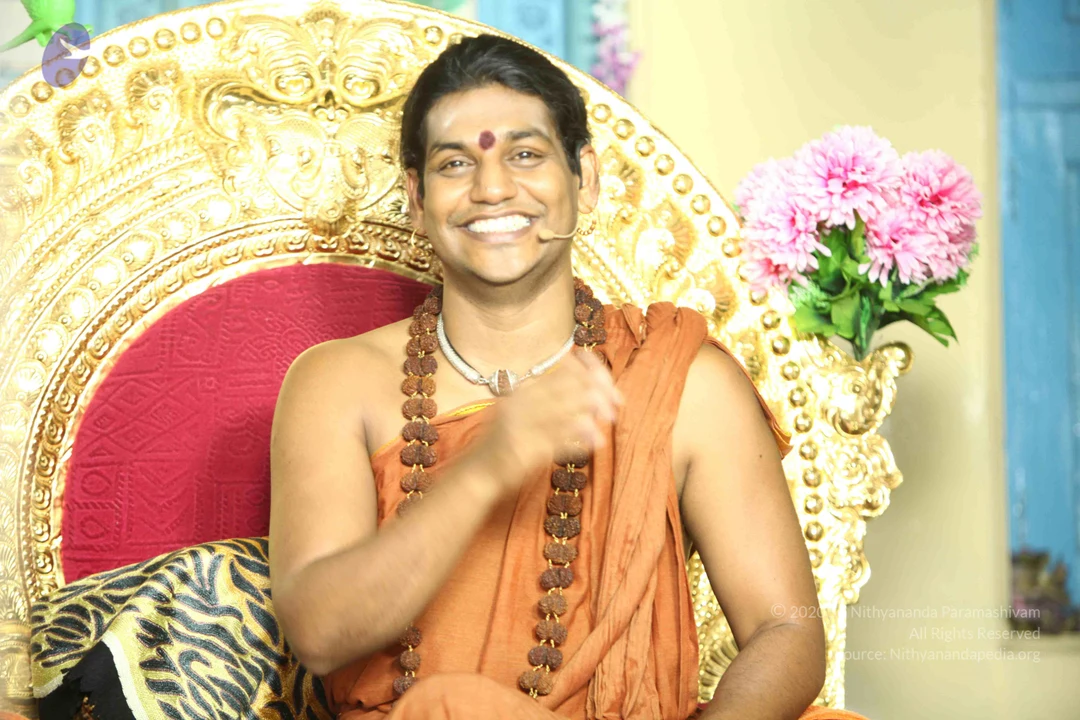
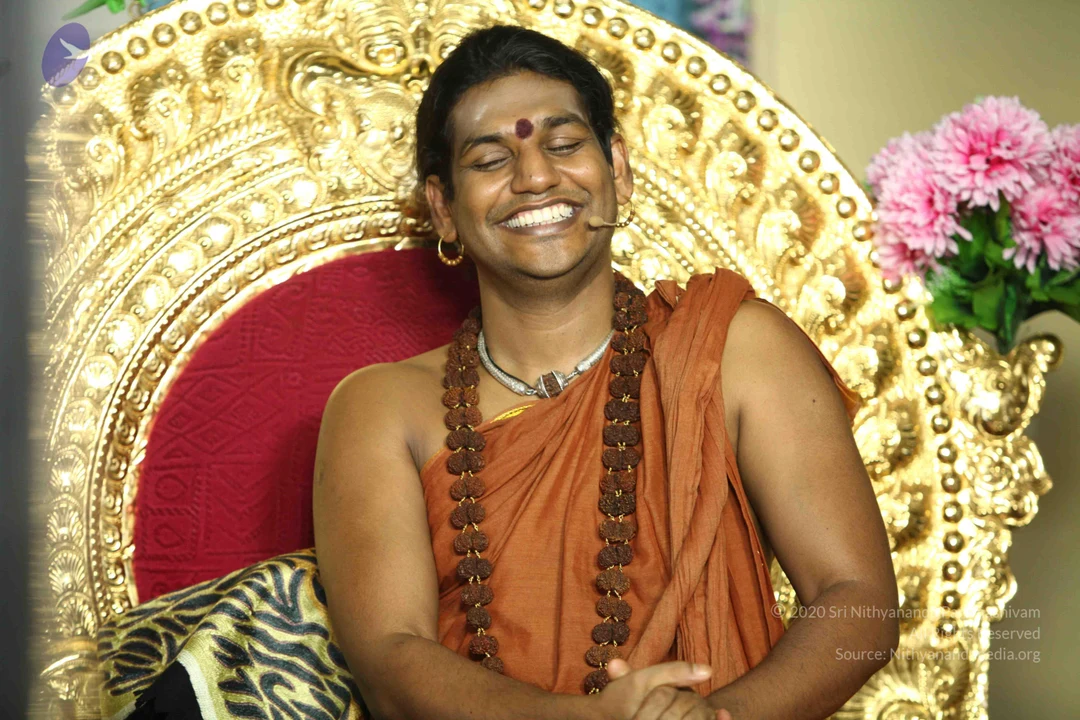
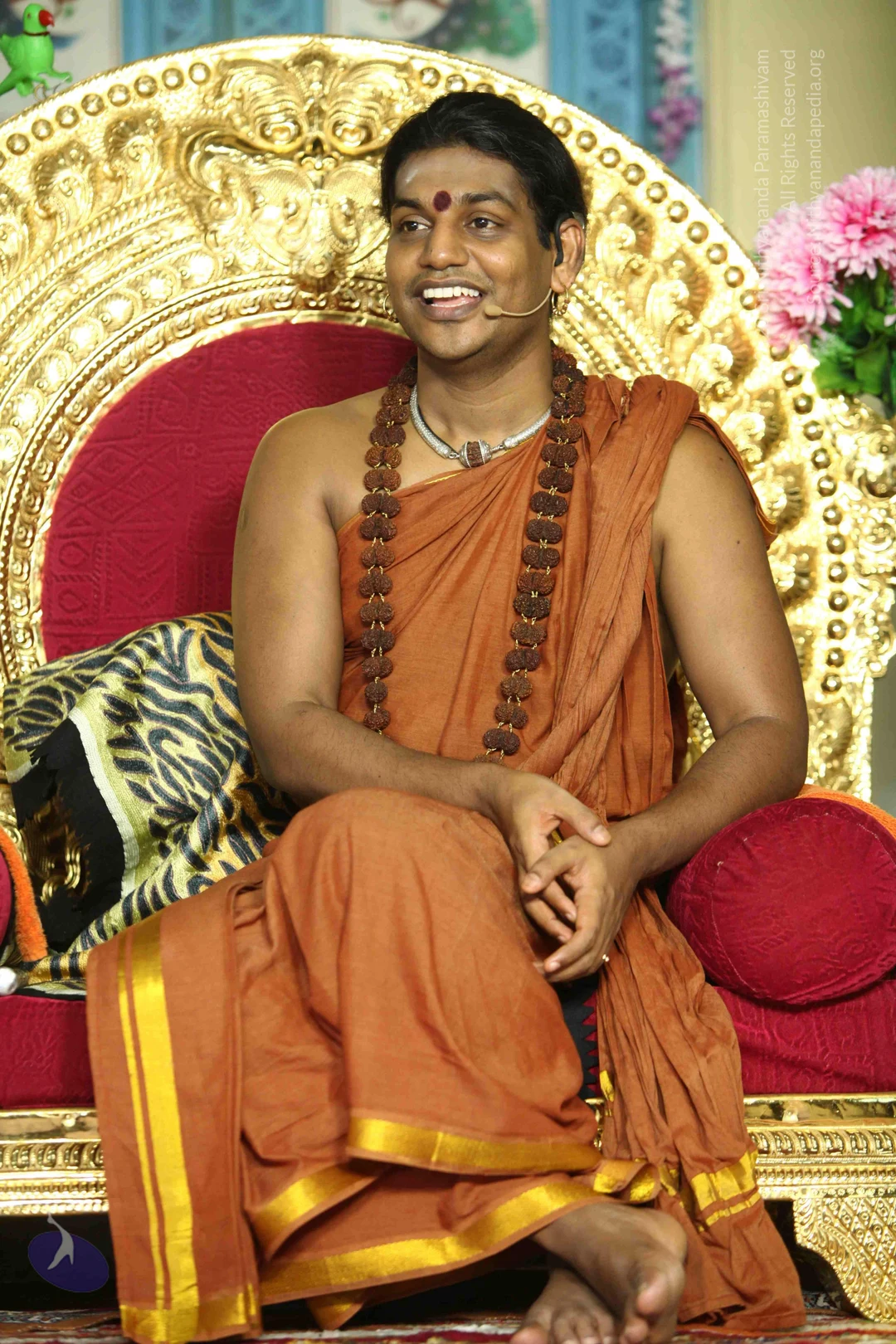
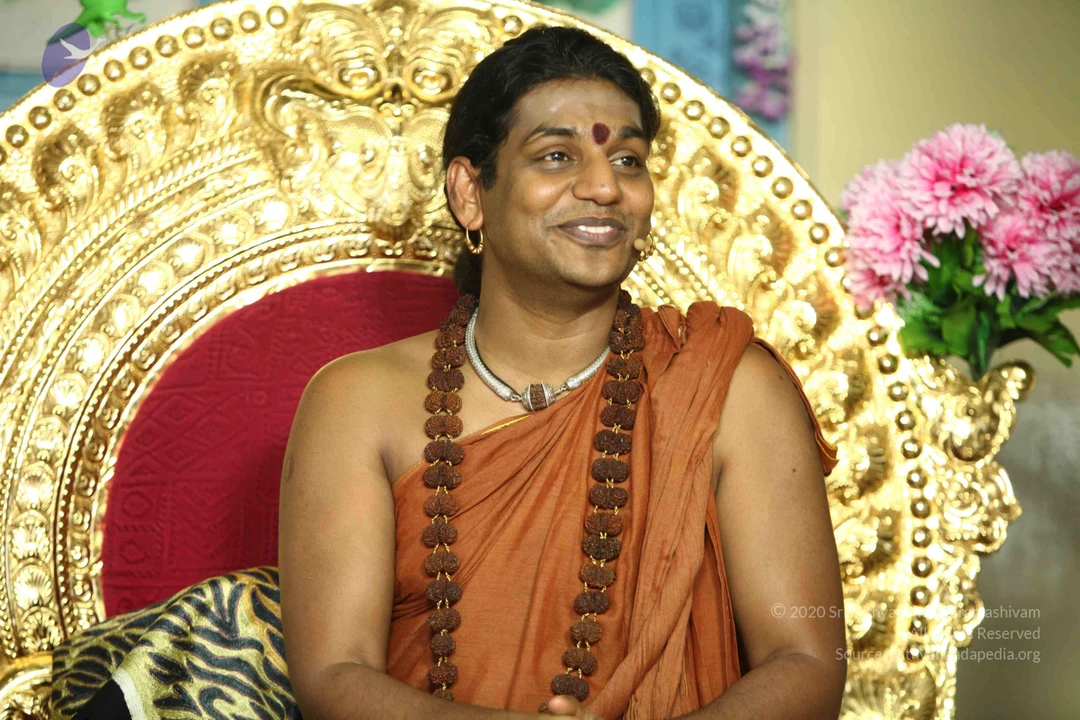
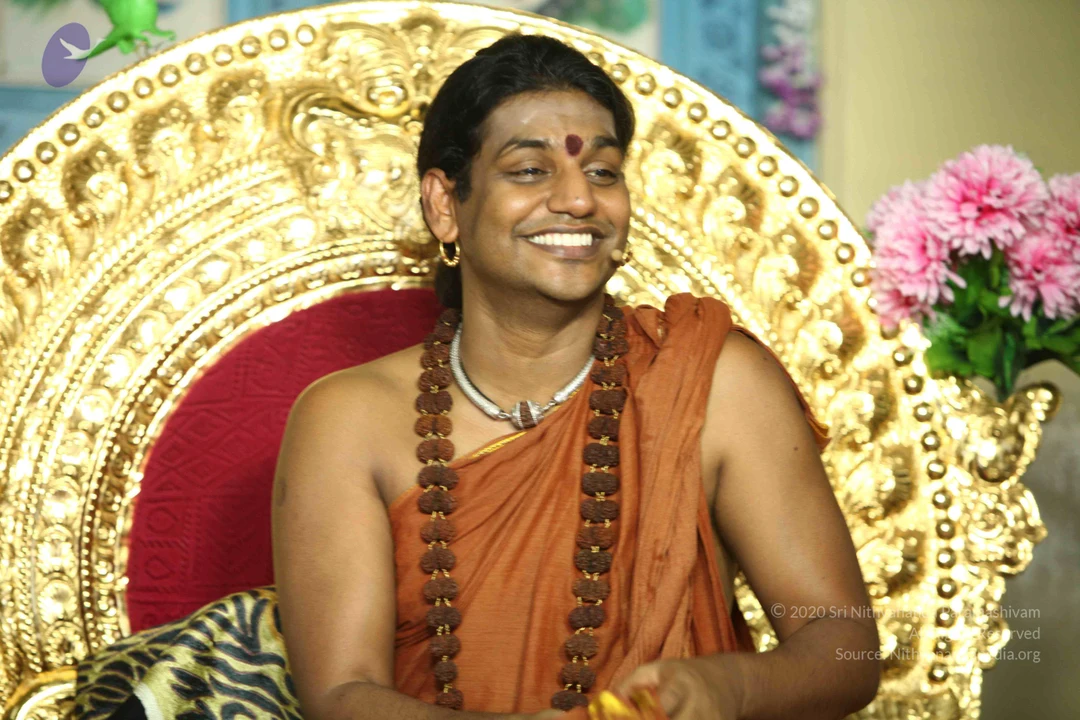
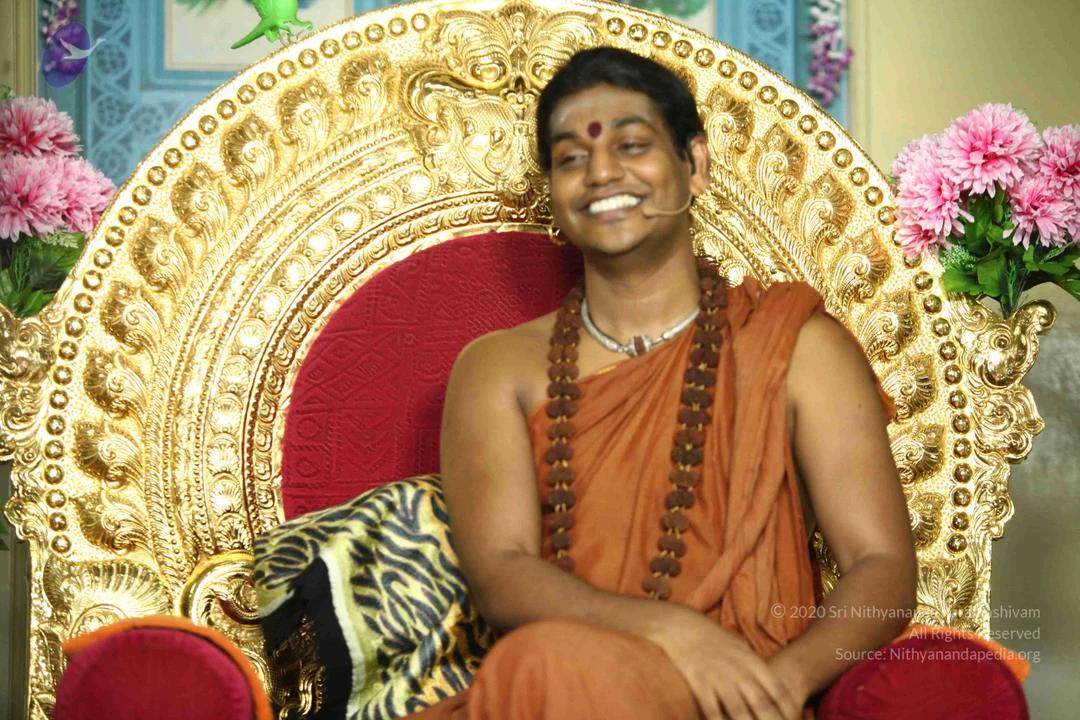
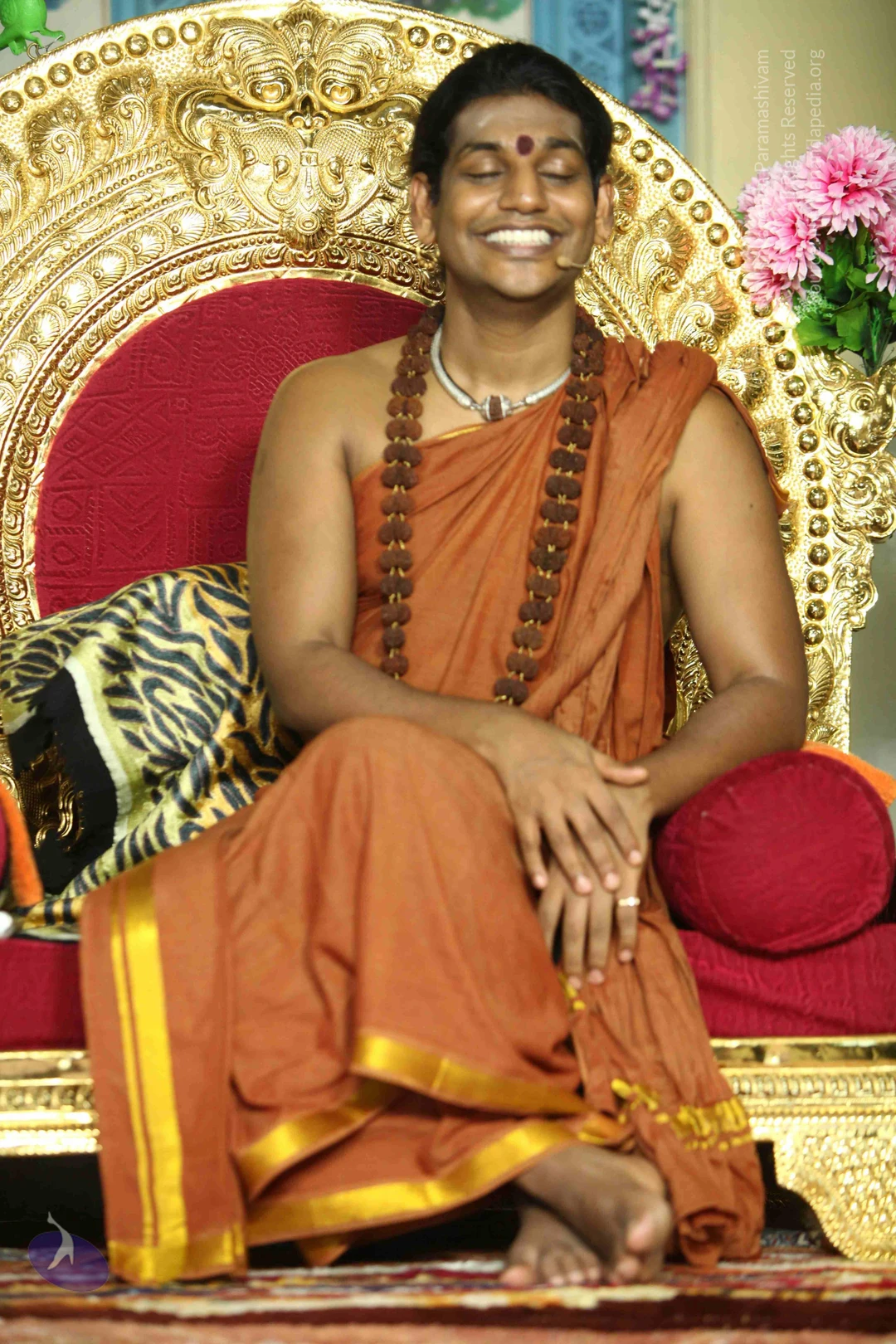
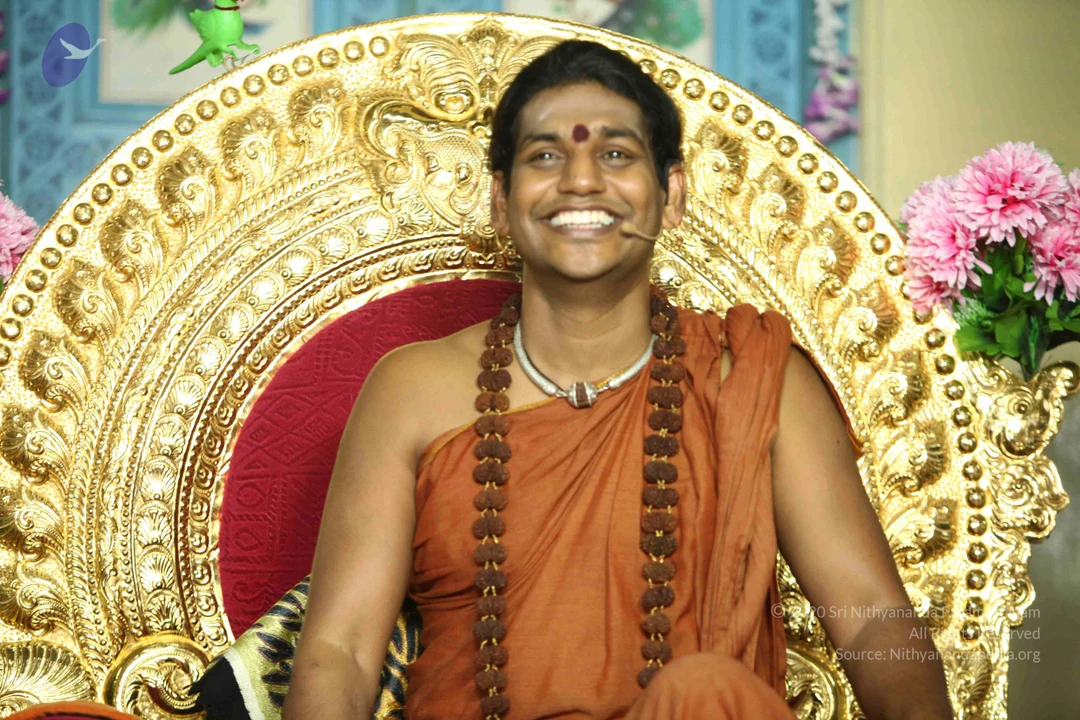
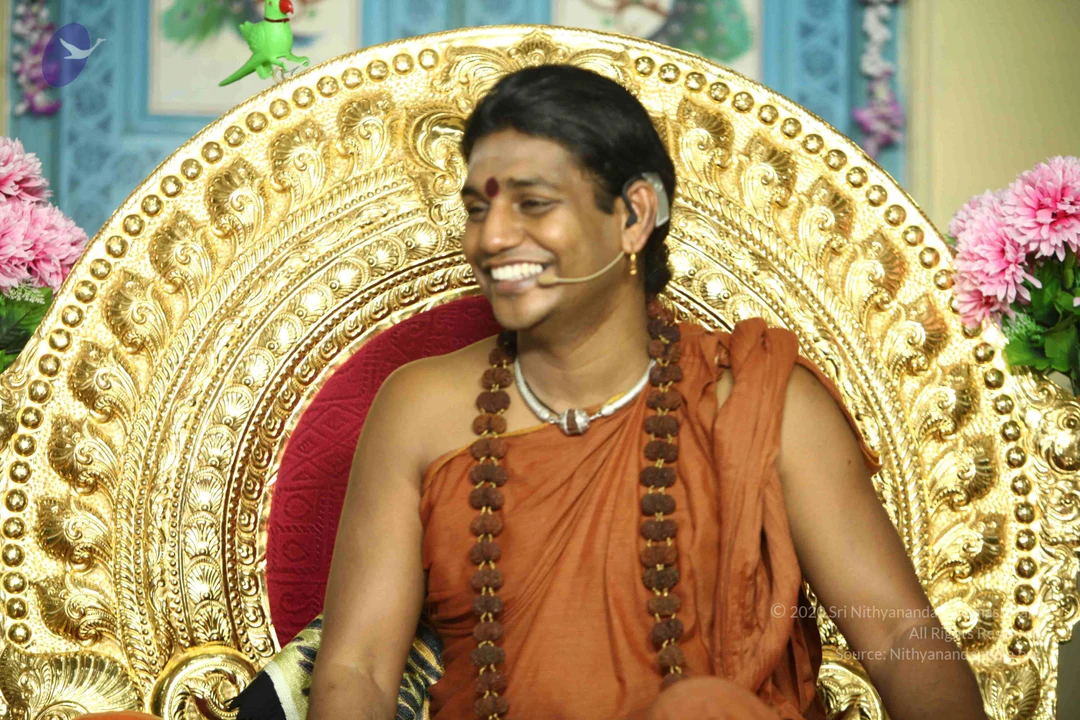
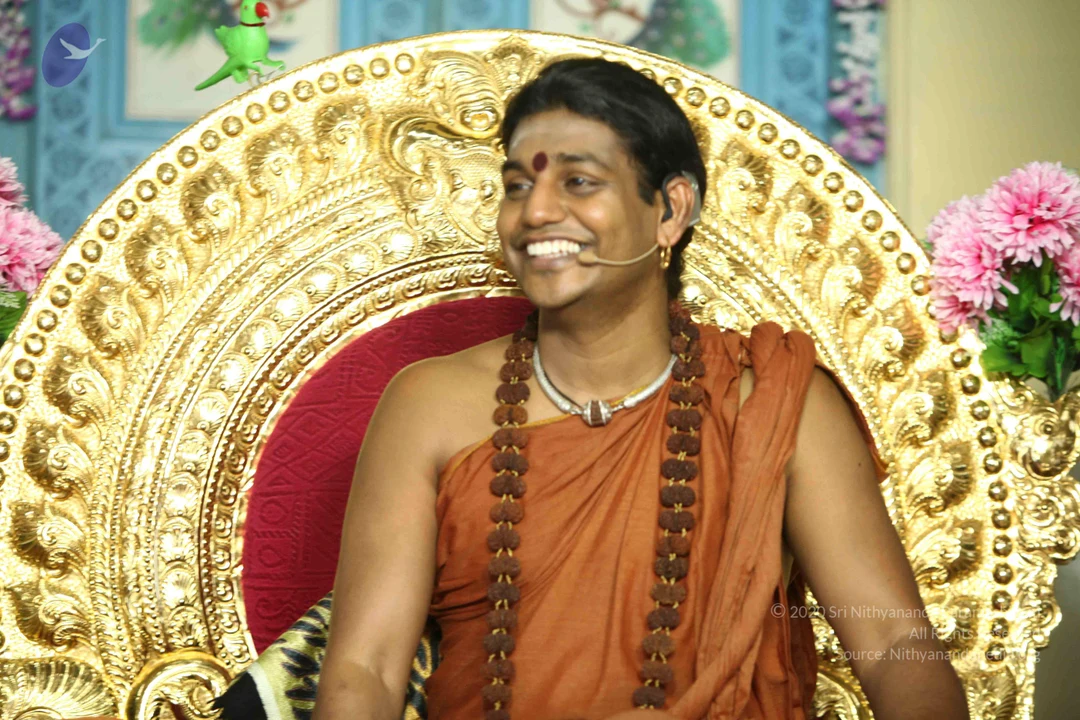
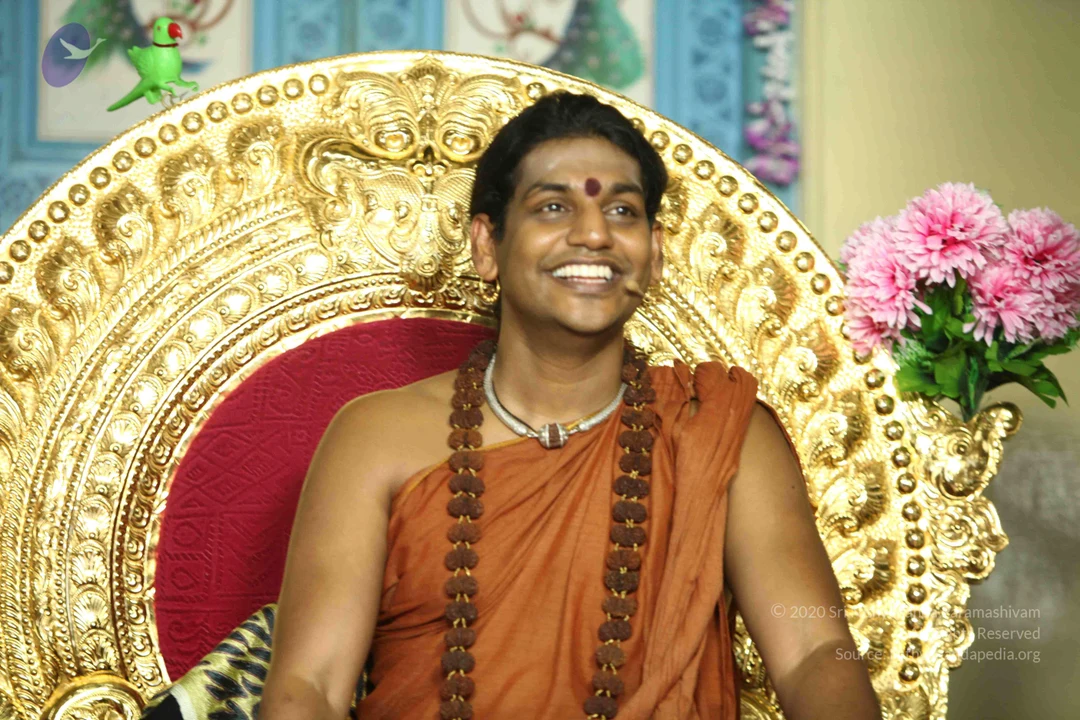
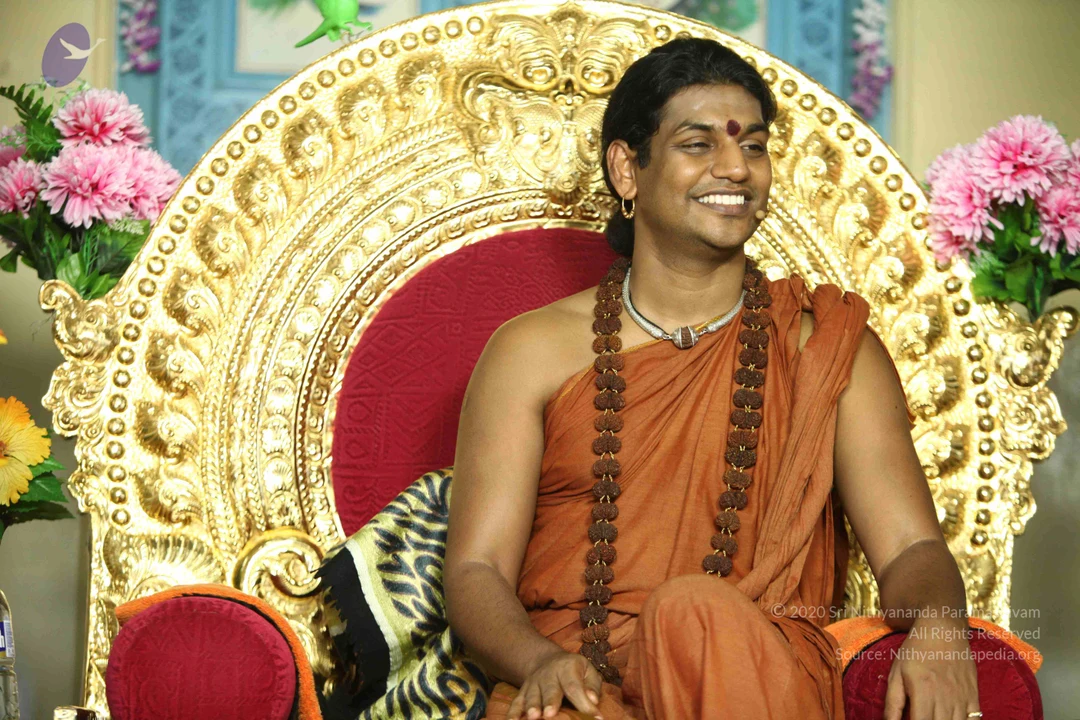
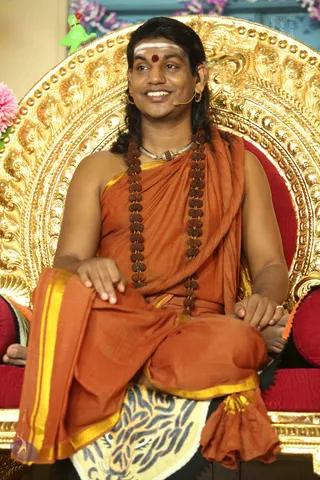
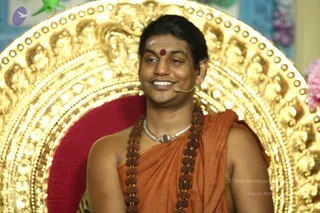
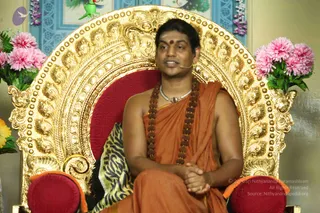
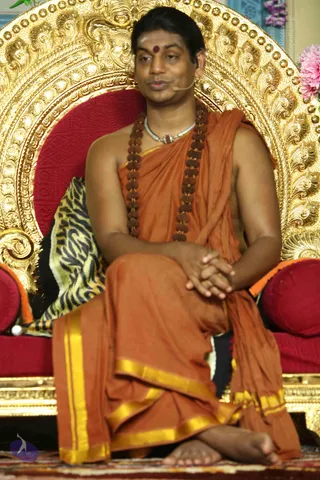
A man sits on an ornate gold throne with a red cushioned seat and red bolster, speaking into a small headset microphone during a satsang. He wears a saffron-orange shawl draped over his shoulder and a saffron dhoti with gold borders, along with a long mala of dark rudraksha beads and a silver necklace, and a red bindi on his forehead. He has a relaxed, forward-facing posture, with bare feet resting on a patterned mat. Behind him is a gilded arch carved with floral motifs.A seated man in an ornate golden throne with a circular gilded backrest, wearing an orange-saffron shawl draped over his shoulders and bare upper body, multiple long rudraksha mala necklaces in brown beads, a silver-toned ceremonial necklace, and a red bindi on his forehead. He wears a small clip-on microphone and speaks while smiling. Behind him is a red cushion, and pink flowers appear at the right edge against a blue backdrop.A smiling man with short dark hair sits on an ornate gold throne with a red cushion behind him. He wears an orange-saffron shawl draped over bare shoulders, a long rudraksha mala of brown beads, and a silver ceremonial necklace. A red kumkum dot marks his forehead, and a small clip-on microphone is attached near his ear. Behind him are blue and pink decorative panels with flowers. Appearance cues include the saffron shawl, rudraksha mala and ceremonial necklace on a throne, consistent with the page's a person Satsang label, so this is a person seated in person at a satsang.A man seated on an ornate gilded throne with a red cushioned back and a striped patterned cushion, speaking into a lapel microphone during a satsang. He wears a saffron-orange garment draped over his shoulders and a rudraksha mala around his neck, with a silver necklace and a red bindi on his forehead. His hands are clasped in his lap. Pink chrysanthemum-style flowers flank the throne, and a blue wall behind him shows a painted parrot and purple garlands. The appearance-based candidate matches the a person cues of saffron clothing, a rudraksha mala and a ceremonial silver necklace, so this is a person presiding as speaker.A seated man in orange saffron robes sits on an ornate gold-carved throne with red cushions and a zebra-striped pillow behind him. He wears long rudraksha mala beads and a silver necklace, a red bindi on his forehead, and a small headset microphone. His hands are clasped in his lap and his bare feet rest on a patterned rug. Pink flowers appear at the upper right. The figure matches the appearance cues of the a person candidate, with rudraksha malas, saffron clothing and a throne, so the identification is probable.A smiling man sits on an ornate gold throne with a red cushion, wearing an orange-saffron shawl draped over bare shoulders, a long rudraksha mala with large brown beads, a silver necklace, and a red bindi on his forehead. A pink flower arrangement stands to the right and a small lapel microphone is visible near his collar.