Skip to content
Thursday

12 January 2012

THE SUPREME PONTIFF OF HINDUISM HDH BHAGAVAN NITHYANANDA PARAMASHIVAM

Dated photos
22
Source pages
1
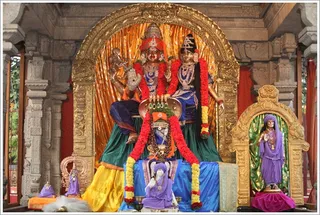
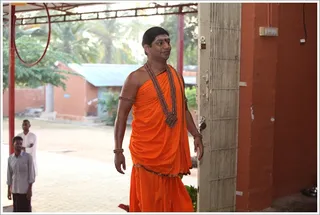
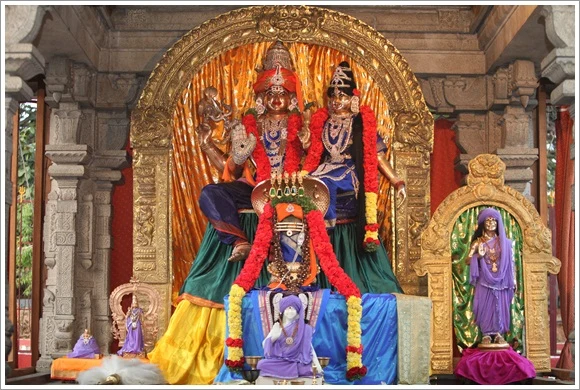
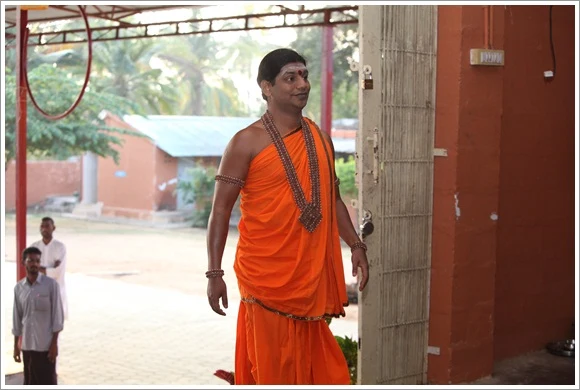
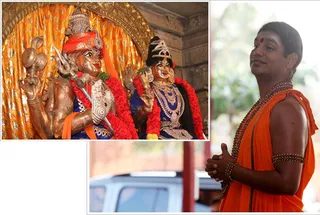
A photograph of an ornate temple shrine with a gilded arched frame and gold draping behind it. Central deity murti figures are adorned with red and yellow marigold garlands, including a Shiva-form figure with a crescent and matted hair and a consort figure in green and blue garments. A small figure in purple robes stands at the lower right of the shrine and another purple-robed figure sits at the base in front of a shiva lingam with a silver and orange adornment. No physical people are visible; the figures are statues and murtis. Pillars and carved stone surround the shrine.A photograph of a man in saffron-orange robes walking through a covered red-walled walkway at an ashram-like compound. He wears a rudraksha mala necklace, a bracelet on his arm, and a red tilak mark on his forehead, with short dark hair. Two men in plain white shirts stand in the background at left near a red pillar, and a tiled roof and greenery are visible outside.

January 12 2012

Original wiki page
Contents

Title

THE SUPREME PONTIFF OF HINDUISM HDH BHAGAVAN NITHYANANDA PARAMASHIVAM

Photos

Photos from this day

View all 22 photos
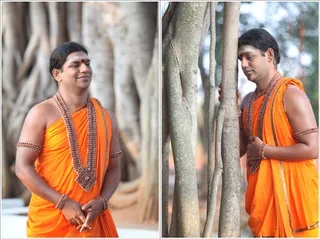
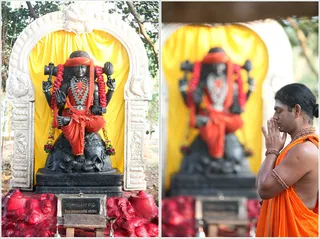
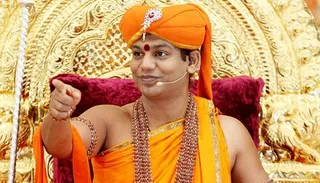
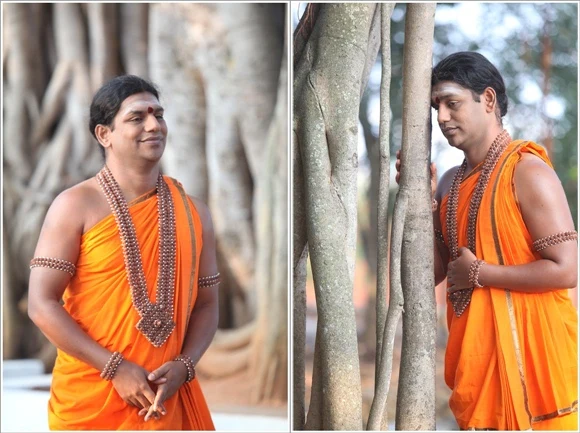
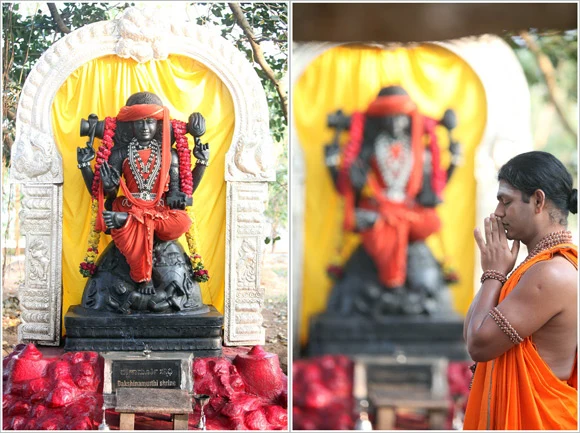
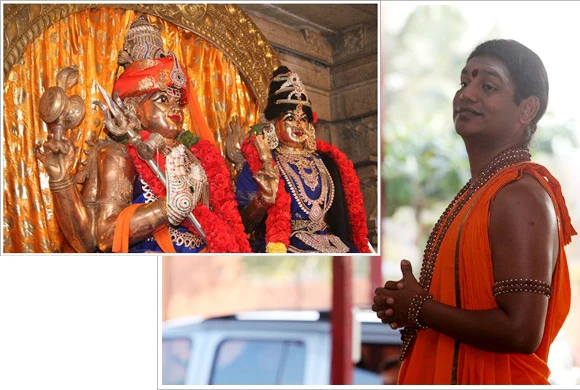
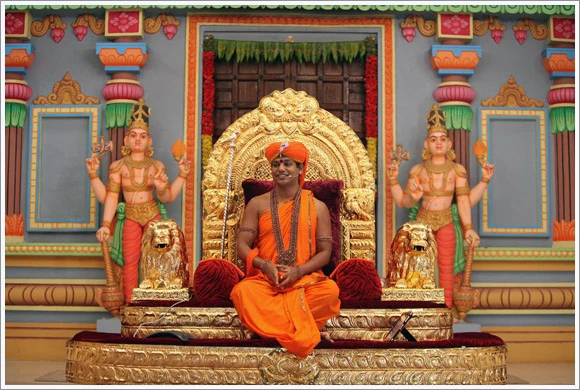
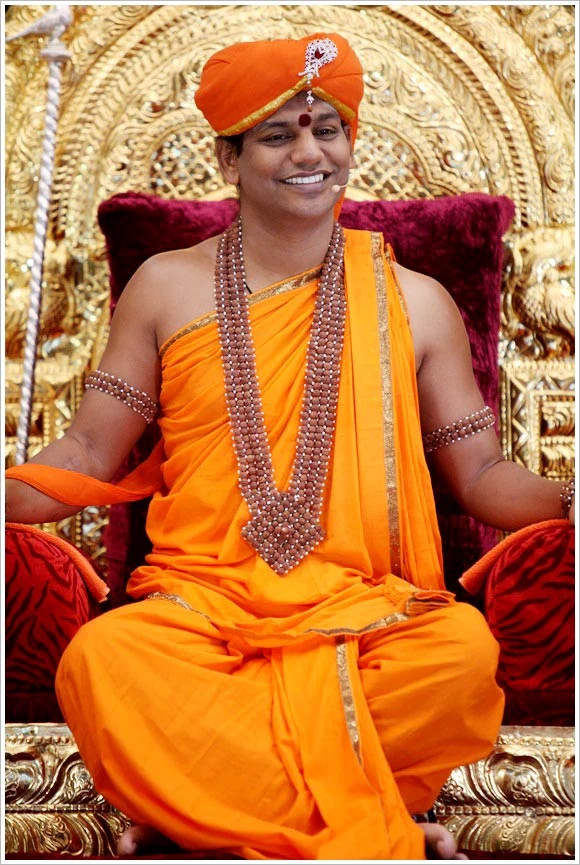
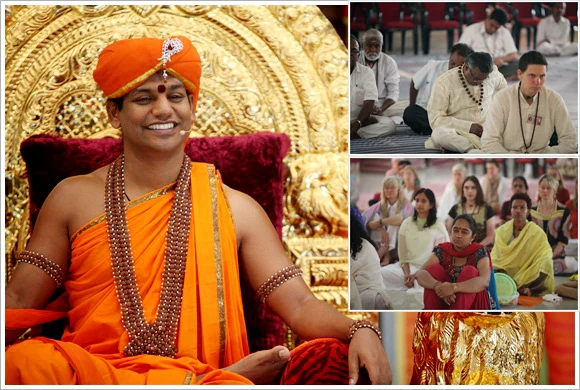
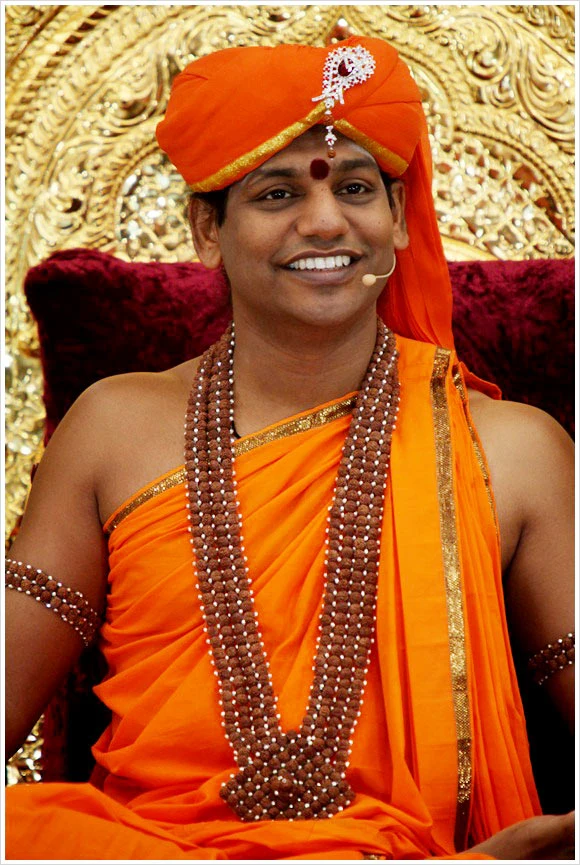
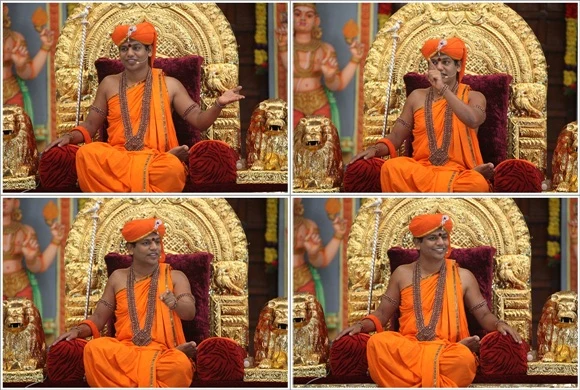
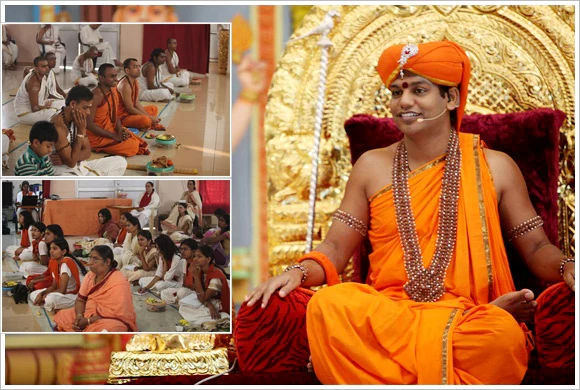
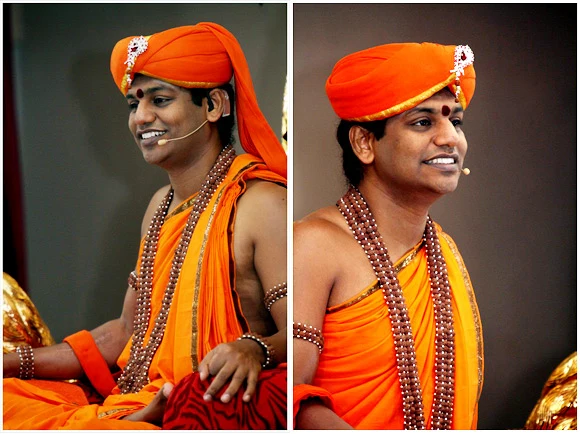
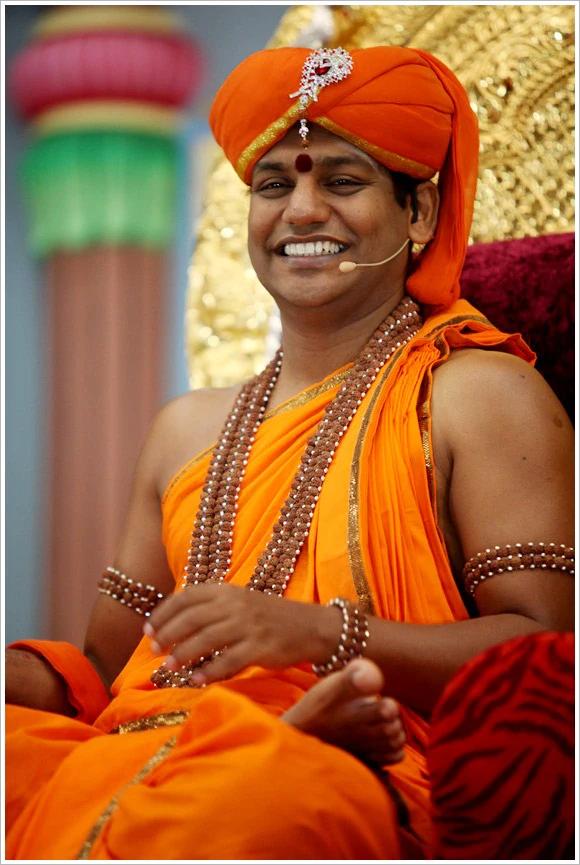
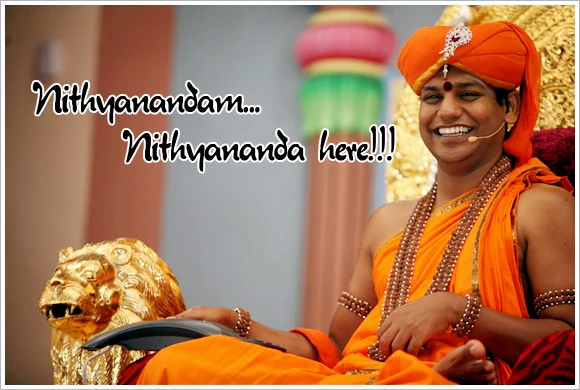
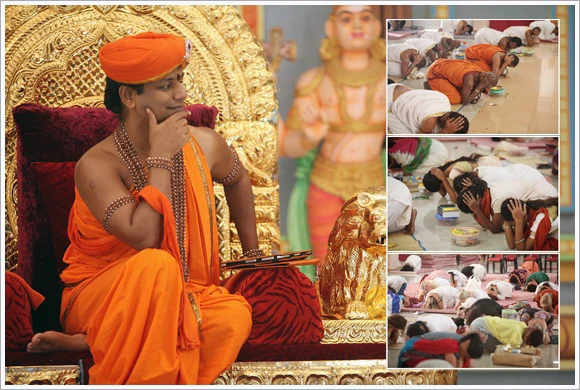
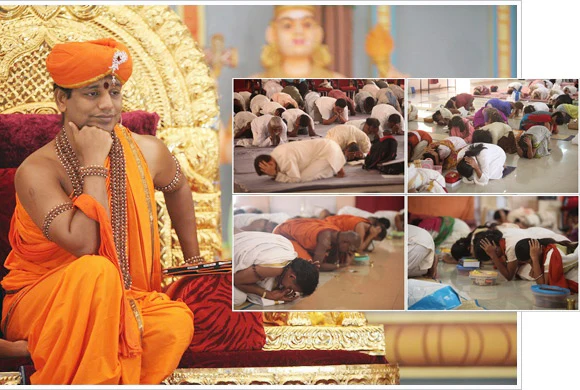
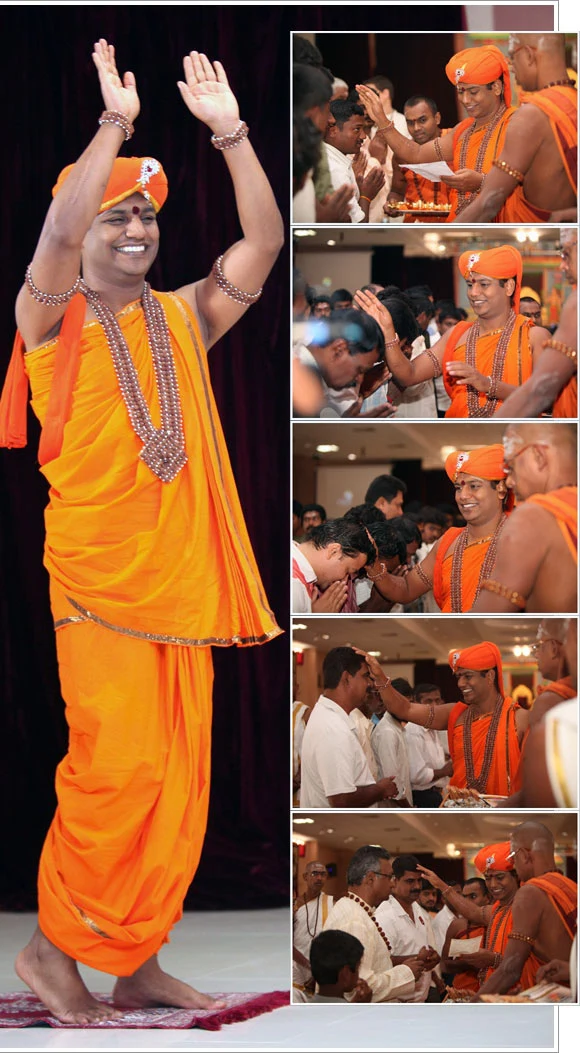
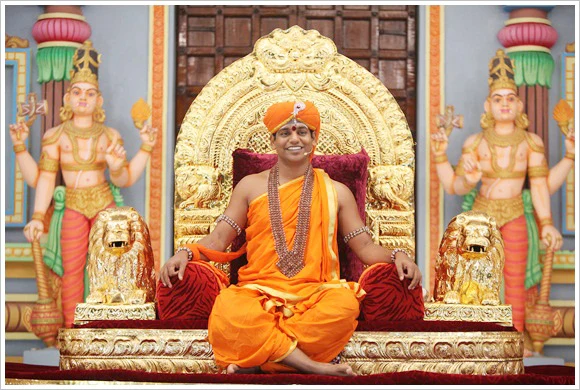
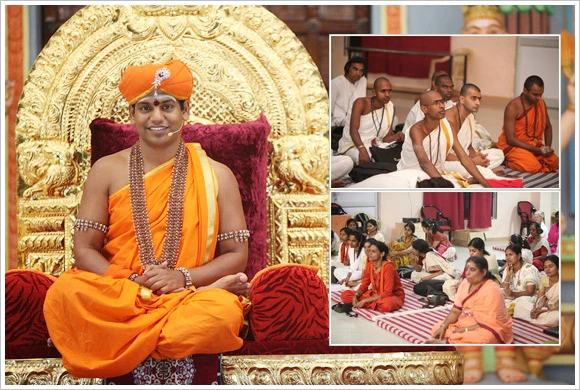
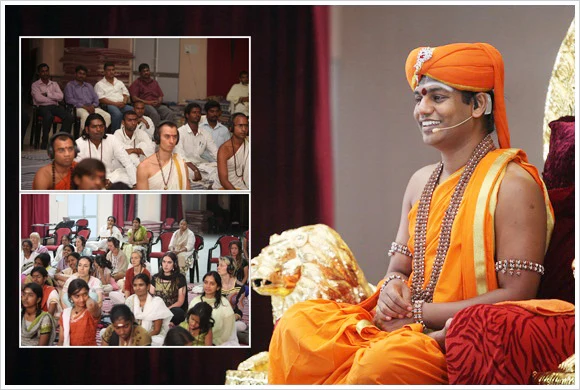
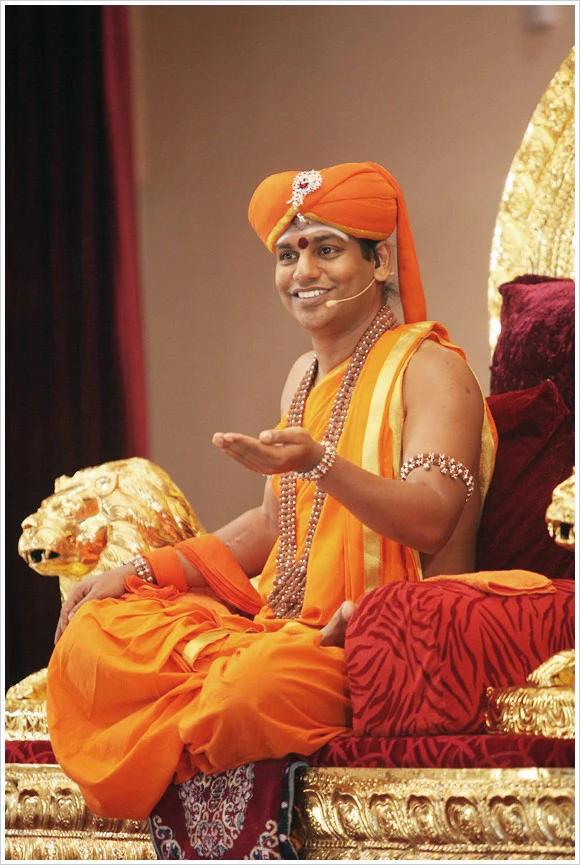
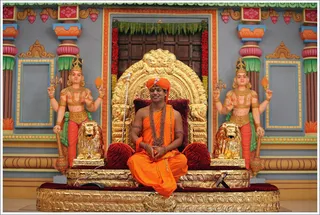
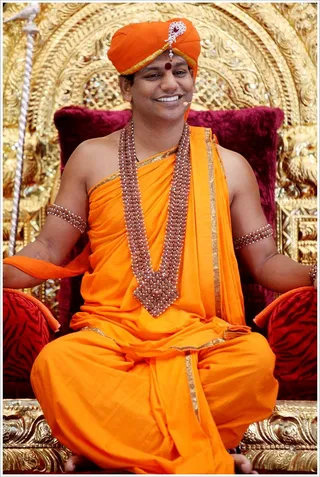
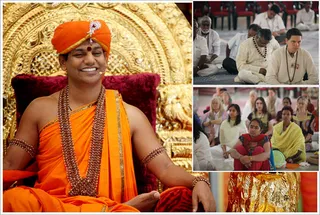
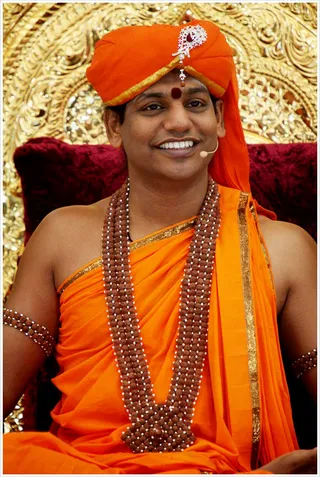
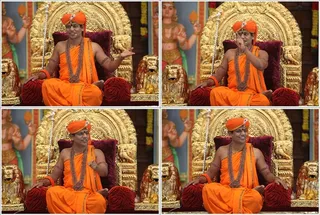
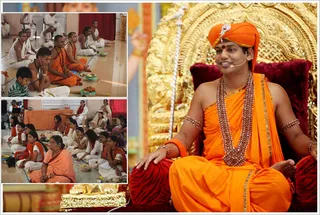
A photograph of an ornate temple shrine with a gilded arched frame and gold draping behind it. Central deity murti figures are adorned with red and yellow marigold garlands, including a Shiva-form figure with a crescent and matted hair and a consort figure in green and blue garments. A small figure in purple robes stands at the lower right of the shrine and another purple-robed figure sits at the base in front of a shiva lingam with a silver and orange adornment. No physical people are visible; the figures are statues and murtis. Pillars and carved stone surround the shrine.A photograph of a man in saffron-orange robes walking through a covered red-walled walkway at an ashram-like compound. He wears a rudraksha mala necklace, a bracelet on his arm, and a red tilak mark on his forehead, with short dark hair. Two men in plain white shirts stand in the background at left near a red pillar, and a tiled roof and greenery are visible outside.A two-panel photo collage of a man in saffron-orange robes wearing a long multi-strand rudraksha mala and matching rudraksha armlets and bracelets. In the left panel he stands before a large banyan tree with aerial roots, hands clasped at his waist, smiling. In the right panel he leans against a banyan trunk with his head bowed, looking downward. Both panels show the same outdoor setting with bare-shouldered draped saffron cloth. The collage is graphic, and the person shown is a single physical individual. The a person appearance cues of saffron robes and rudraksha malas are present, but the identification remains uncertain.A two-panel photo collage. The left panel shows a black stone deity murti dressed in an orange-red cloth, adorned with a rudraksha-style necklace and red-and-green garlands, seated in a white arched niche backed by yellow drapery, with red flower offerings below and a small nameplate on the base. The right panel shows a close-up of a man with long dark hair, bare-chested and wearing an orange-saffron cloth over his shoulder, beaded red and rudraksha-style necklaces and bracelets, his palms pressed together in namaskar before the same yellow-backed shrine. He appears to be a devotee at the shrine, and his appearance is not clearly that of the candidate.A collage of two photographs. The left panel shows two ornately decorated deity murtis, one with a trident and a red crown and the other with a jeweled crown, both draped in red and white flower garlands and gold-and-jewel ornaments against a gold curtain. The right panel shows a man in an orange-saffron robe with dark rudraksha malas around his neck and arm, a red tilak on his forehead, and his hands held in anjali mudra, standing outdoors near a parked vehicle. The collage is a graphic with no physical people as subjects of the arrangement; the one standing man is a real person.A seated man in saffron-orange robes sits on an ornate golden throne with red cushions, framed by two painted deity statues with four arms and golden lion sculptures at their feet. He wears an orange turban, a rudraksha mala and a heavy ceremonial gold necklace, and his hands rest in his lap. The colourful temple-style backdrop features a decorated arch, a dark wooden door and garlands. A probable Swamiji is seated on the throne; the figure's distinctive orange turban, ornate gold necklace and saffron robes match the cues for that identity, but the image alone does not confirm it.A seated figure in saffron-orange robes sits cross-legged on an ornate golden throne with carved lion and floral detailing and a deep red velvet cushion behind. He wears an orange turban with a jewelled ornament, a multi-strand rudraksha mala across his chest, beaded armbands, and a small red bindi, and smiles while holding his arms outstretched. A small headset microphone is visible near his face. Swamiji (probable): the saffron turban, rudraksha mala and ornate ceremonial throne setting match the appearance cues the page associates with him, so this is an appearance-based candidate for an in-person presence.A multi-panel collage of photographs. The large left panel shows a smiling man in an orange turban with a jewelled ornament, wearing orange robes, multiple rudraksha malas, bead armlets, seated on an ornate gold throne with a red cushion. The upper right panel shows seated devotees in white and cream clothes on a floor, one man in white with rudraksha mala beside others. The lower right panel shows a seated crowd of women in saris, including one in red and one in yellow-green, facing forward. The bottom right strip shows a glimpse of gold fabric with orange and red tones. The collage has no physical people in the composite itself.Photograph of a smiling man seated on an ornate golden throne with a red cushioned backrest. He wears an orange saffron turban with a white jeweled brooch and a red bindi, an orange saffron cloth draped over his bare shoulders with gold border trim, a multi-strand rudraksha mala necklace, and beaded armbands. A small headset microphone is attached near his face.A four-panel graphic collage of a seated man in saffron-orange robes, orange turban and rudraksha malas on a golden throne with carved lion armrests and red-and-maroon cushions. He holds a ceremonial staff in several panels, gestures with raised hands, and speaks into a microphone in one panel. Painted deity figures and garlands appear in the background. The panels show a distinctive presentation with orange turban, saffron robes, layered rudraksha necklaces and a gold-trimmed throne, matching the page's Swamiji reference as a probable identification by appearance.A multi-panel collage of photographs. The large right panel shows a man seated cross-legged on a gold ornate throne with red cushions, wearing a saffron-orange turban and robe, a long rudraksha mala necklace, bangles and a white tilak, smiling and gesturing with his hands. Smaller left panels show seated devotees in white and saffron clothing during a ritual with brass plates and offerings, and a bottom strip shows an ornate gold altar. Because the page flags Swamiji at this event and the throne-seated figure wears saffron clothing with rudraksha malas and a turban, he is a probable Swamiji candidate; the appearance cues are distinctive but the face is not used for identification.