Skip to content
Thursday

3 November 2011

THE SUPREME PONTIFF OF HINDUISM HDH BHAGAVAN NITHYANANDA PARAMASHIVAM

Dated photos
293
Source pages
1
Media
1
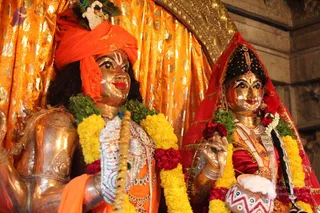
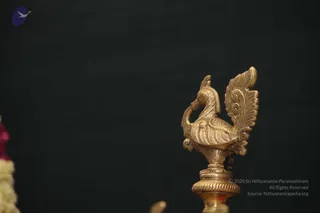
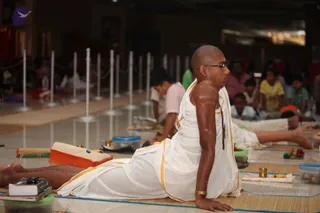
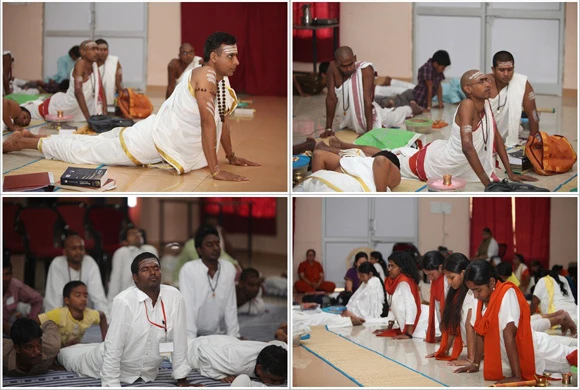
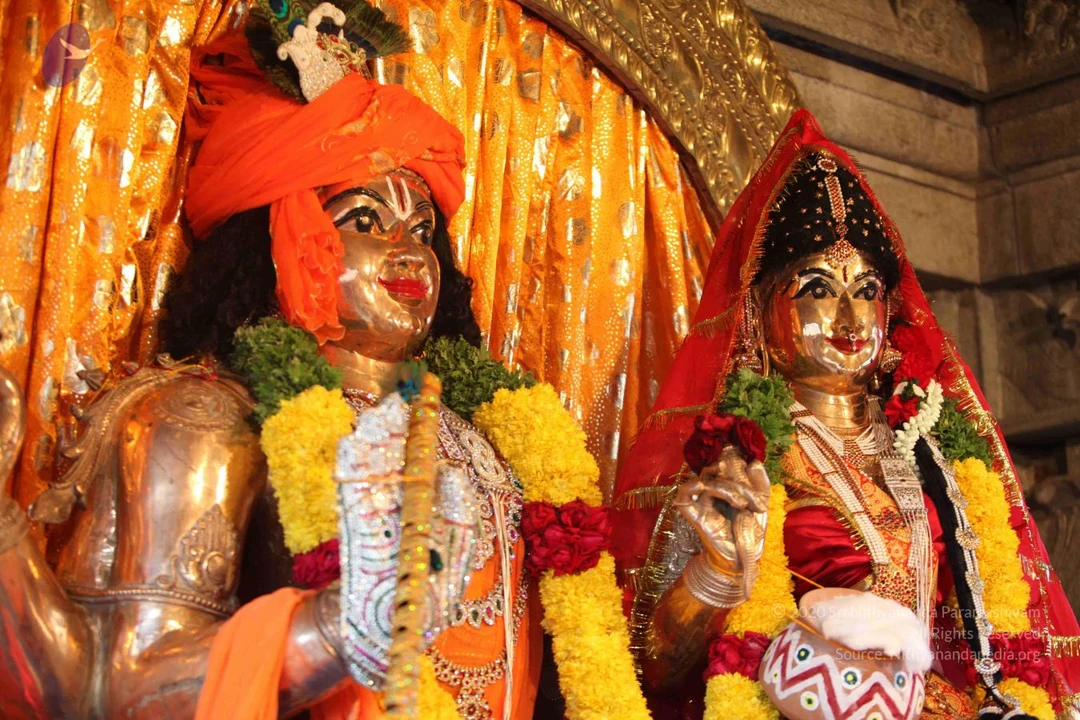
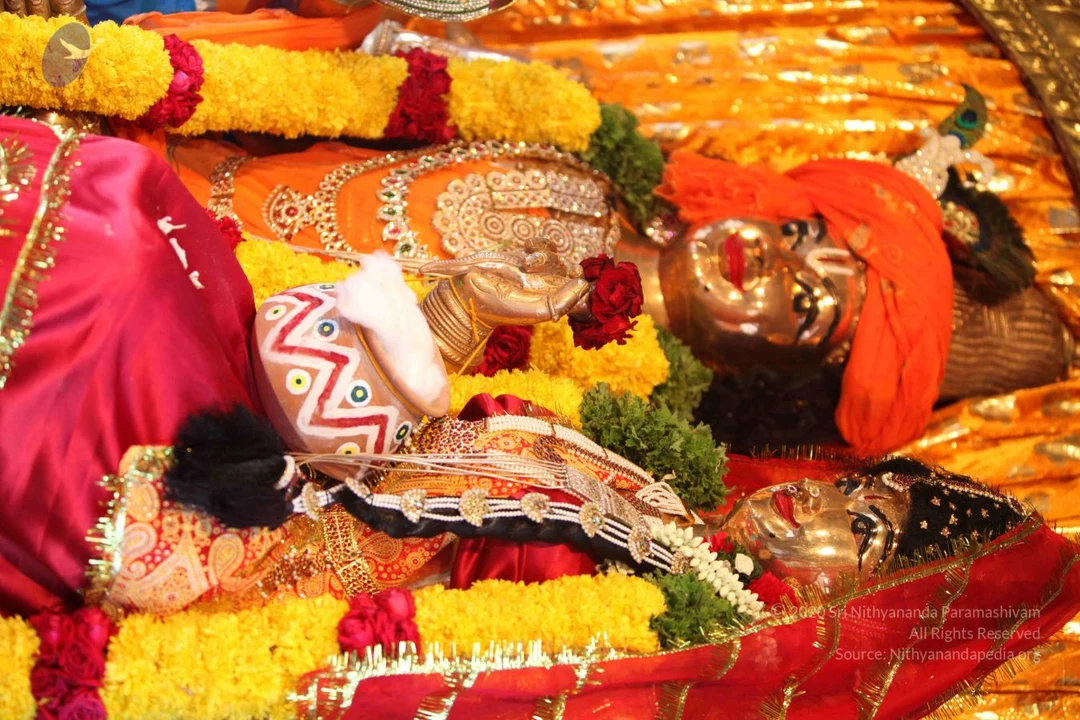
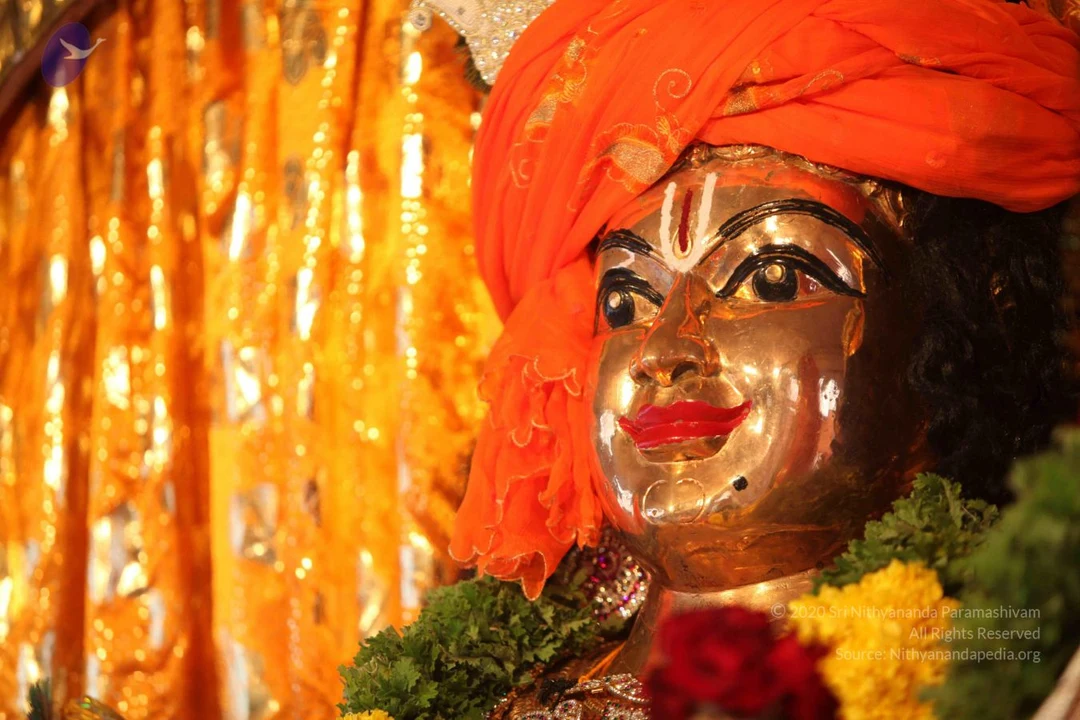
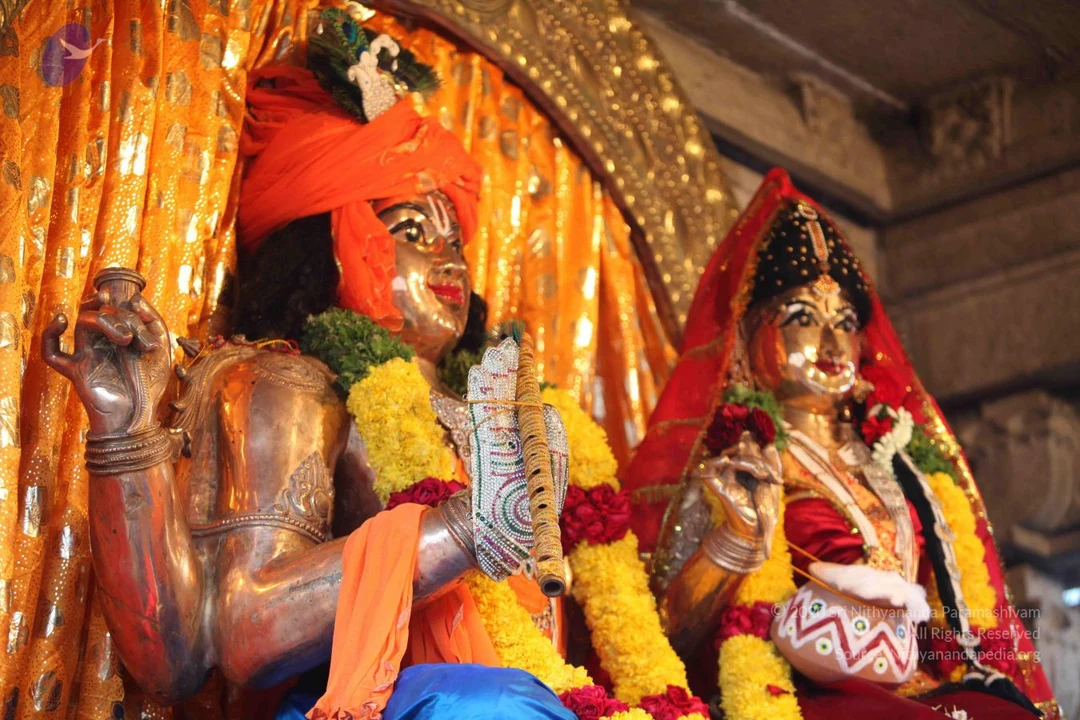
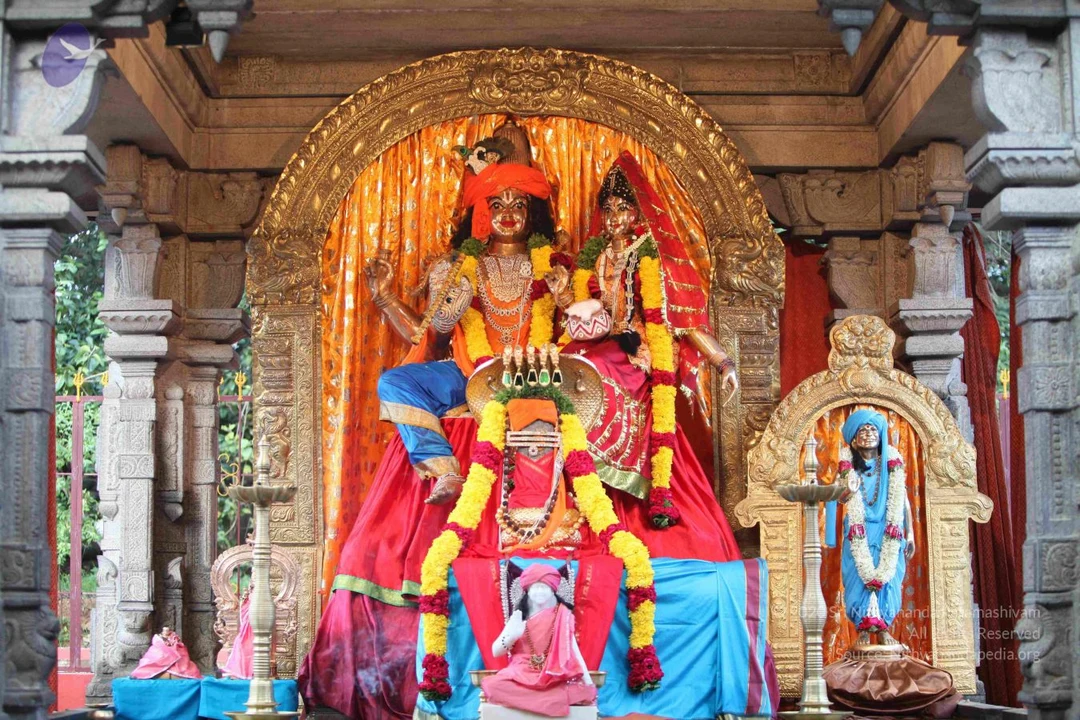
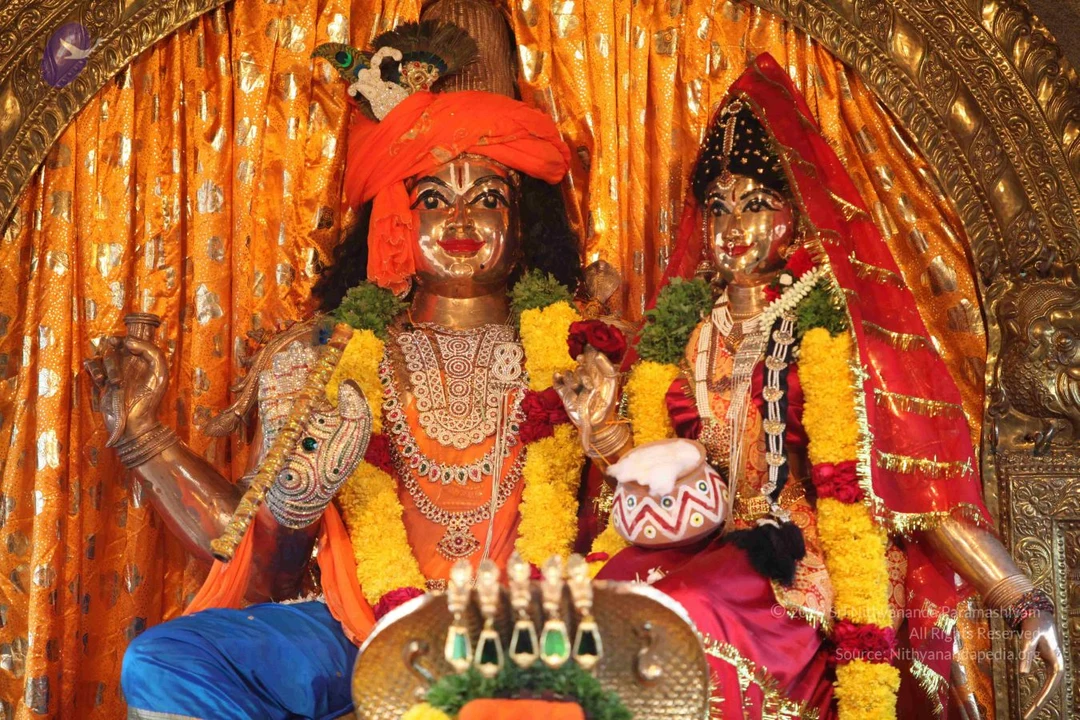
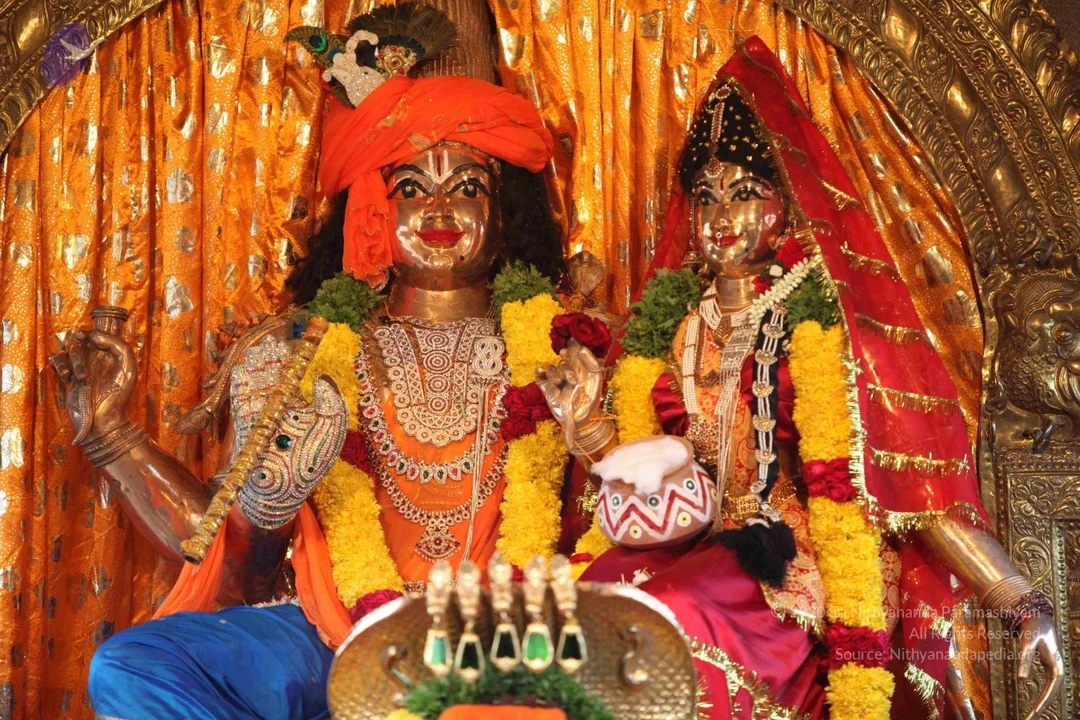
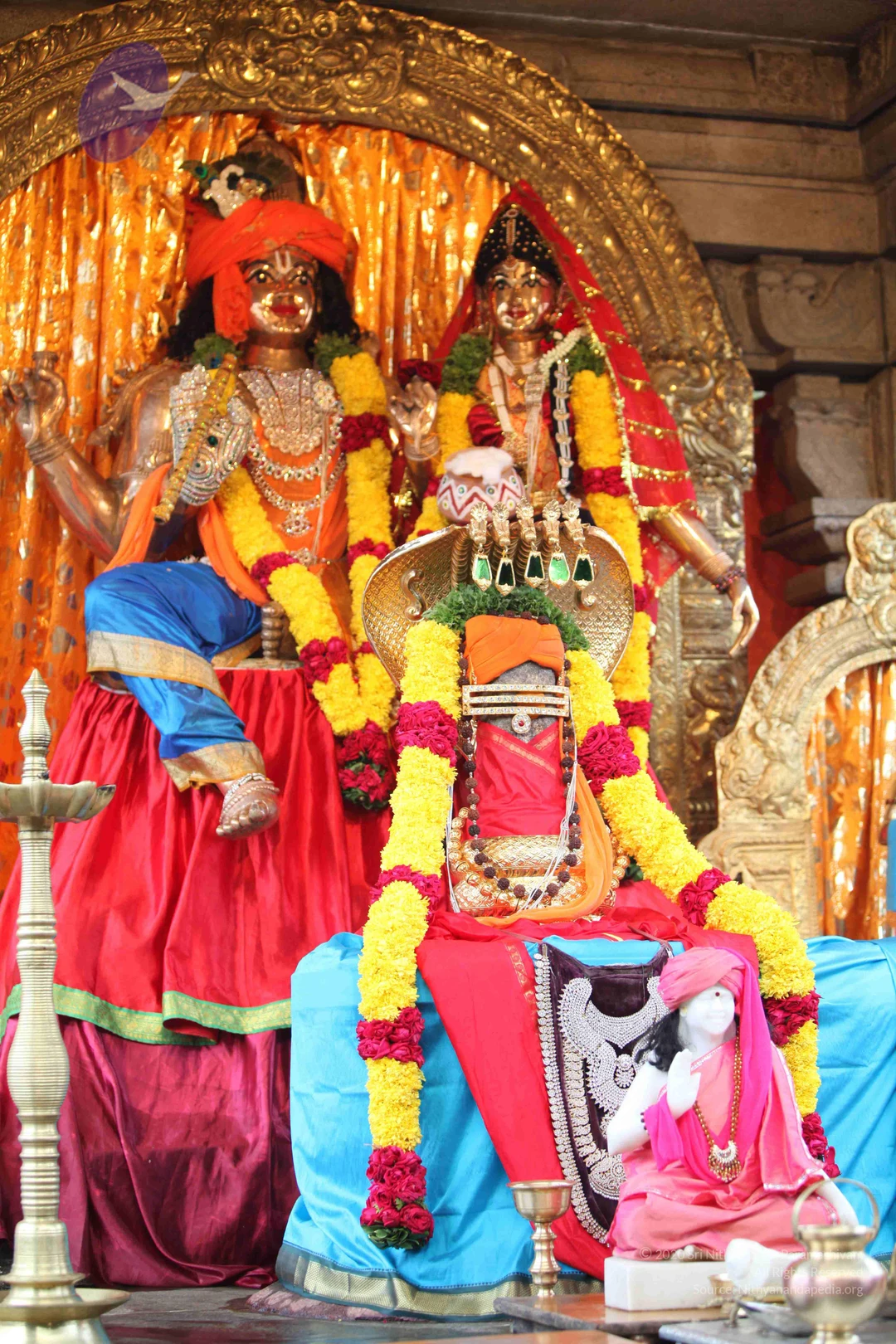
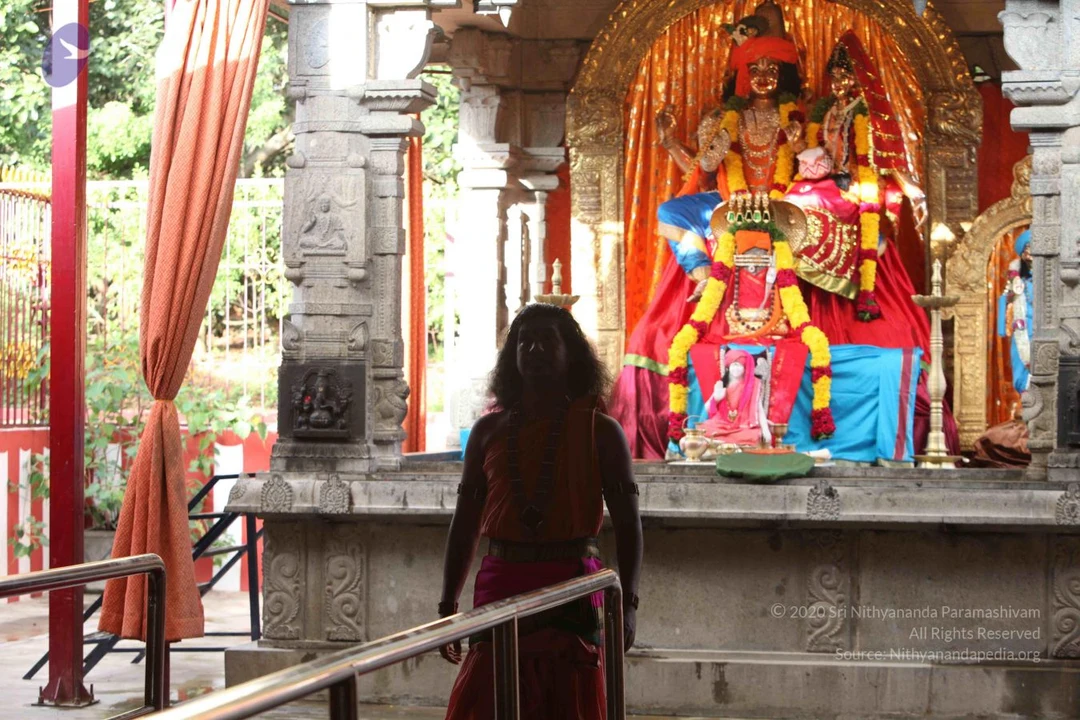
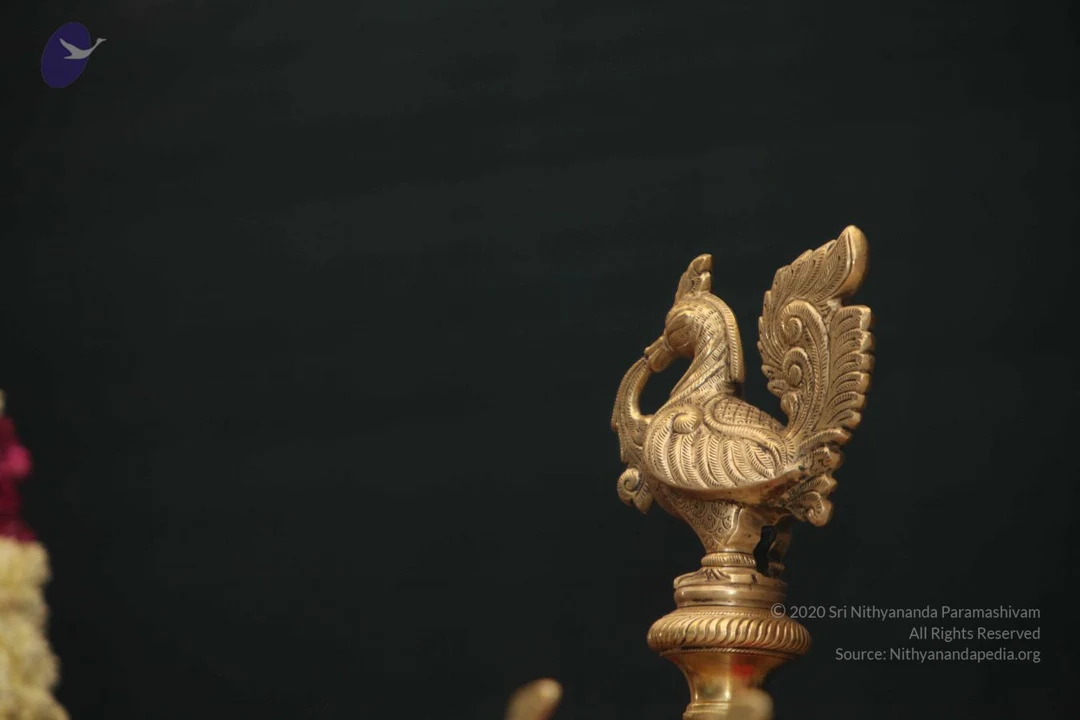
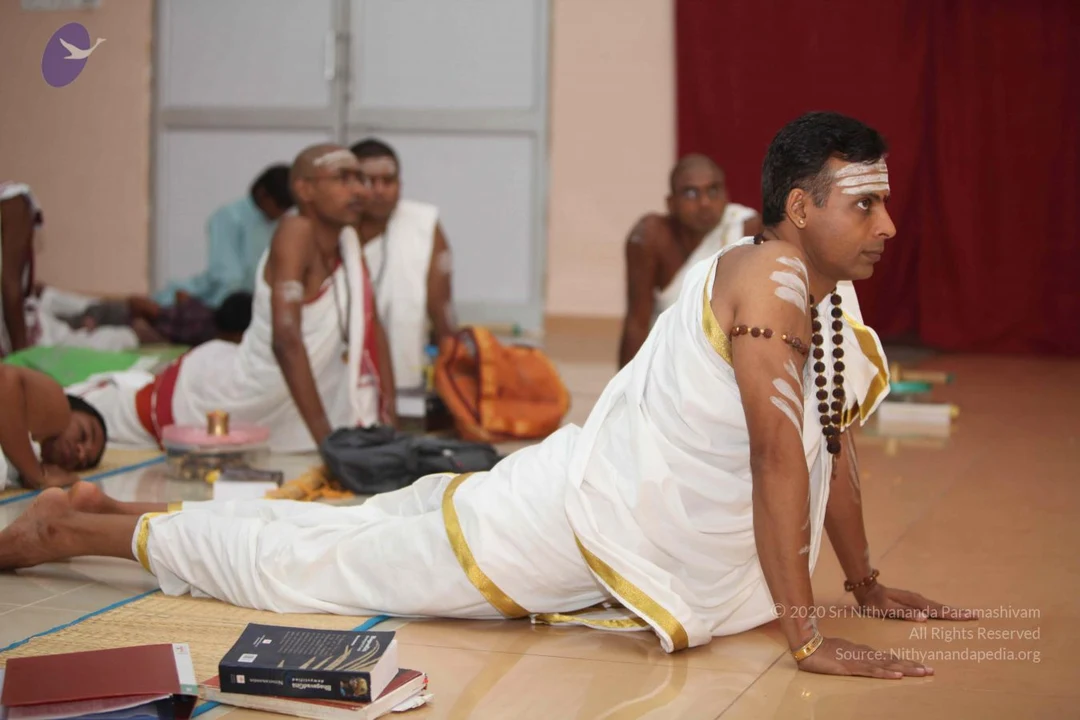
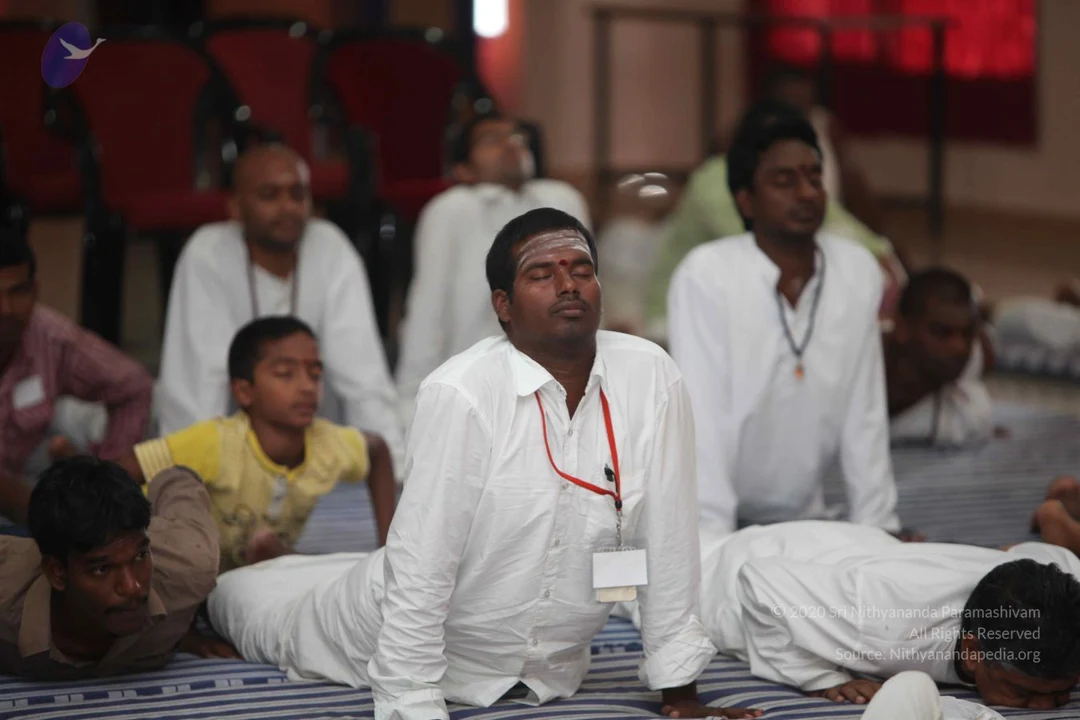
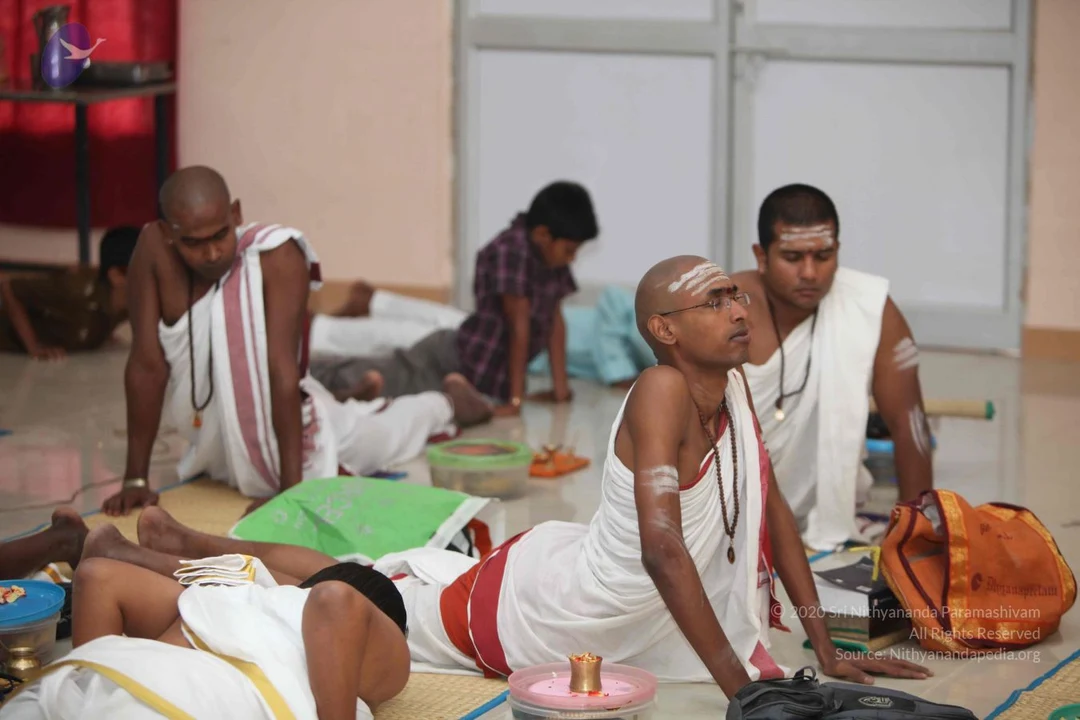
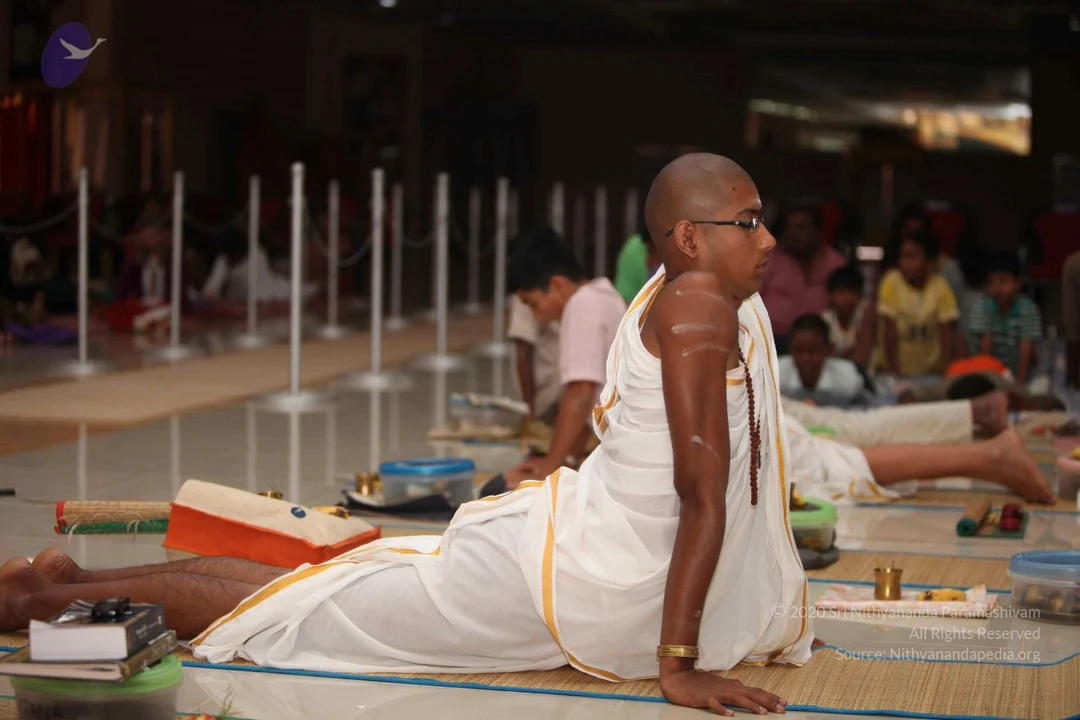
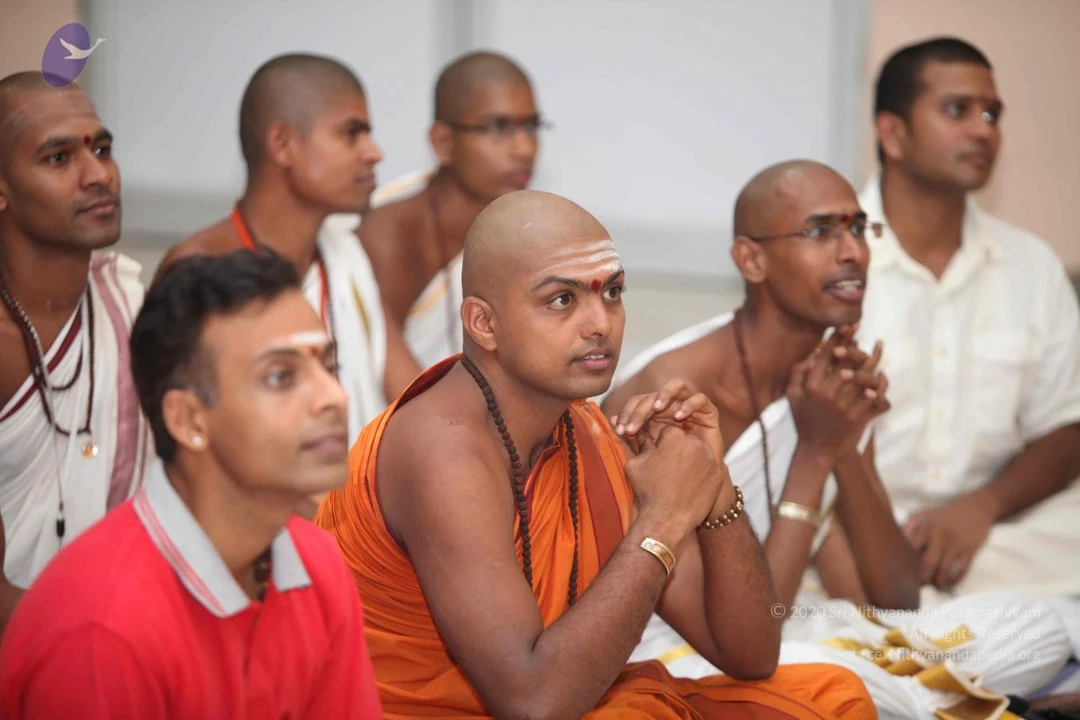
Two gilded murti statues stand before a shimmering gold brocade backdrop in a temple setting. The figure on the left wears an orange turban topped with a peacock feather ornament, a silver-embellished armour-style chest piece, a jewelled white and orange garment, and a long dark wig, holding a ceremonial staff. Beside him, a female deity murti wears a red veil, a red blouse, layered gold necklaces and a jewelled headpiece, holding a small ceremonial vessel with red and white patterning. Both are garlanded with yellow marigolds and red roses, with green leaf garlands. The statues are deity murtis, not living people, and no physical people are visible.A close-up photograph of an ornate brass oil lamp with a swan-shaped top, its wings spread upward and fine engraved feather detailing. The lamp sits on a fluted pedestal base against a dark plain background. At the left edge, a red and white flower garland is partly visible. No people are shown.A shaved-headed young man in a white dhoti and white shawl with gold borders sits on a mat in a yoga pose, torso twisted to the side, wearing thin glasses and a bangle on the wrist, with a rudraksha mala hanging from his neck. Ash or sandal marks are visible on his arm and back. Around him, other people lie or sit on mats in a large hall with white stanchions, with a small brass vessel, a water bottle and books placed on the mats. Some of the people behind him wear white and yellow clothing. The setting appears to be a meditation or yoga practice session in an ashram hall.

November 03 2011

Original wiki page

Photos from this day

View all 293 photos

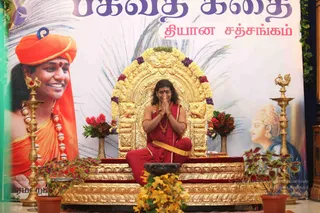
Temple Visit | Paduka Puja | Bhagavad Gita Satsang (English & Tamil) – 03 November 2011
17 photosSource gallery
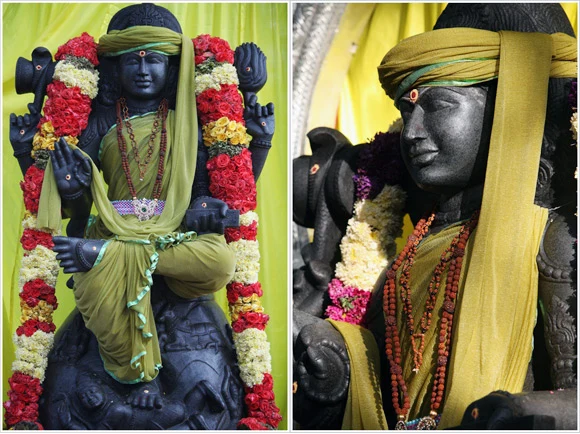
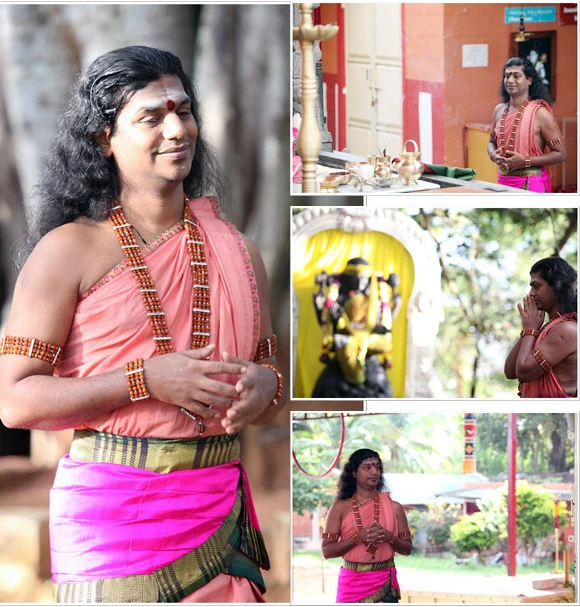
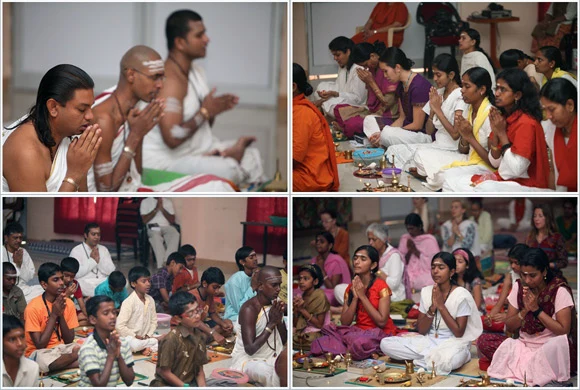
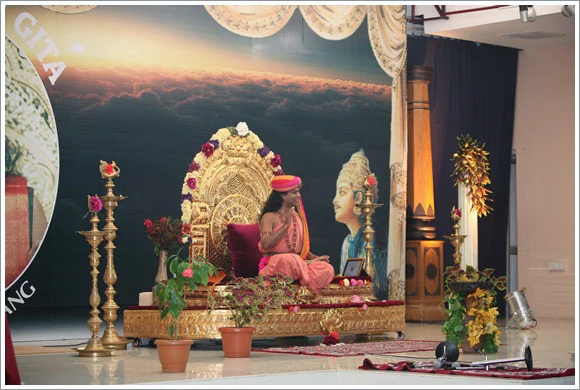
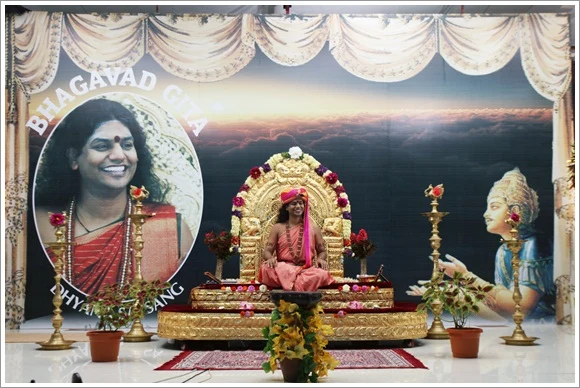
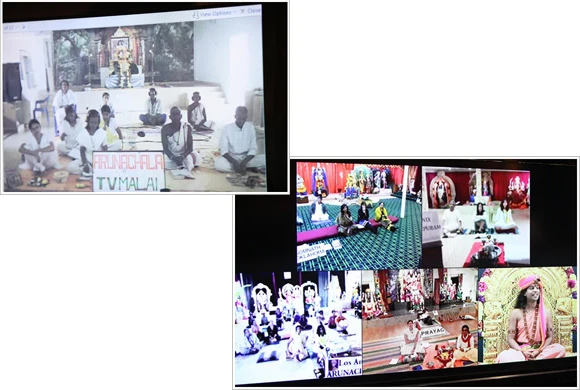
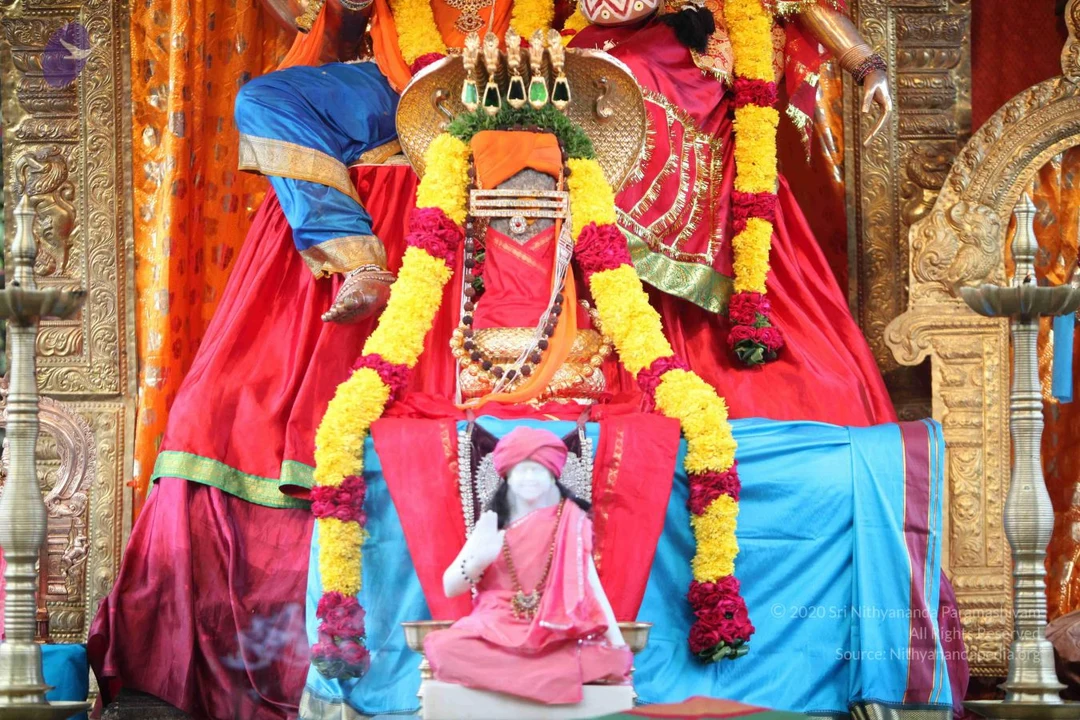
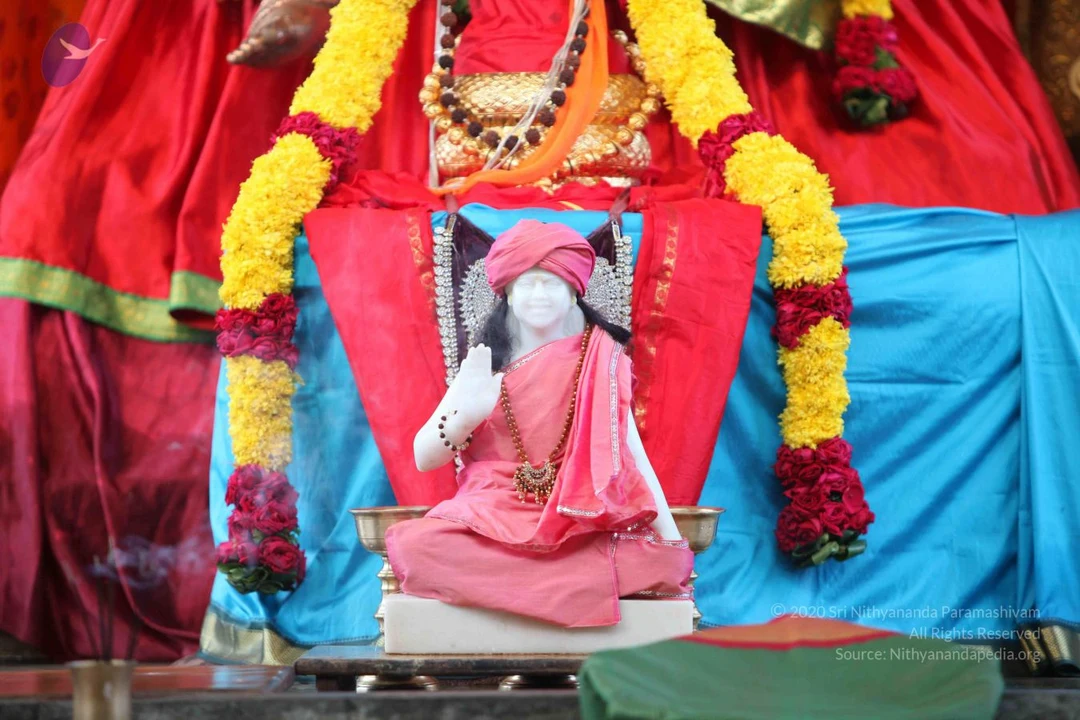
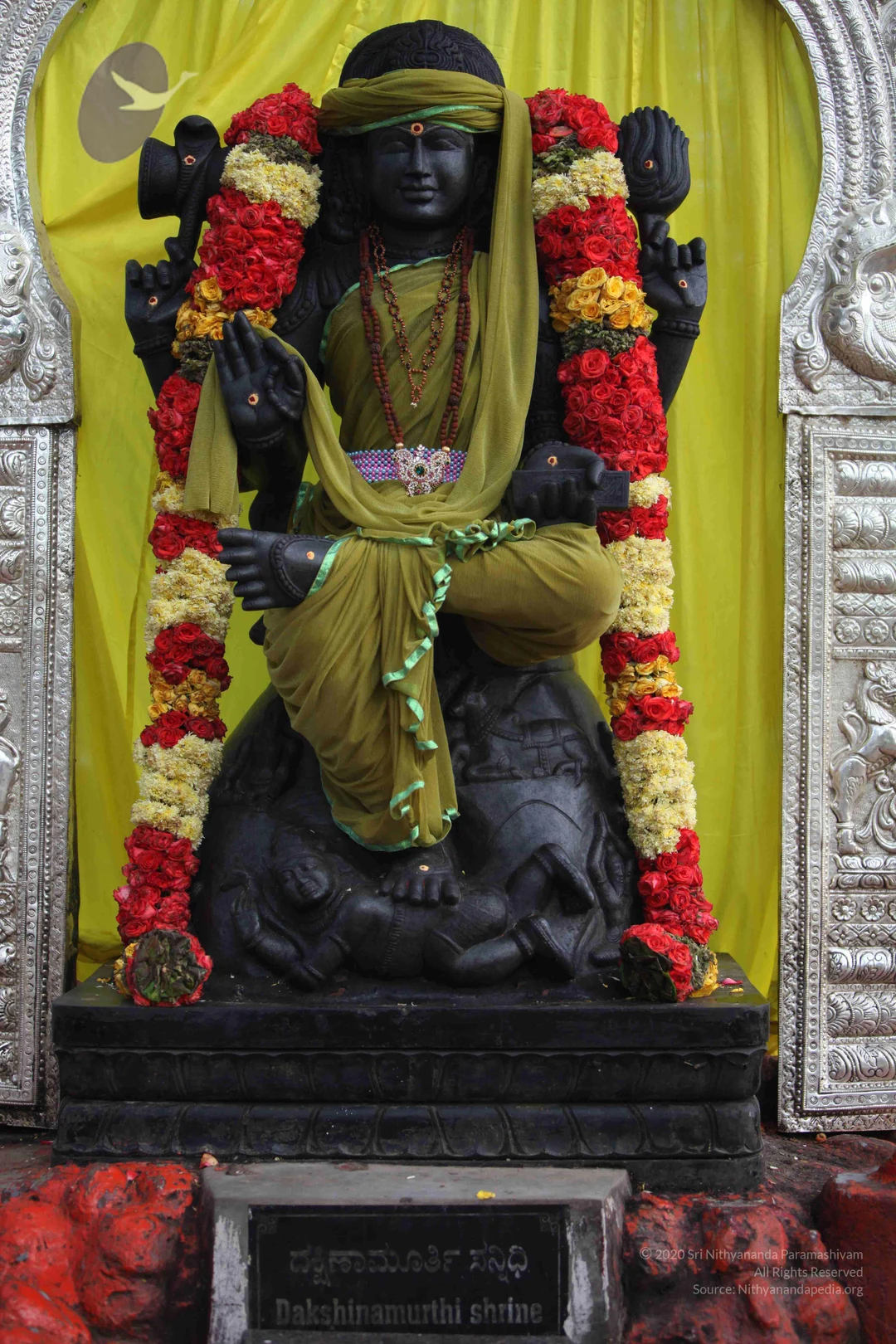
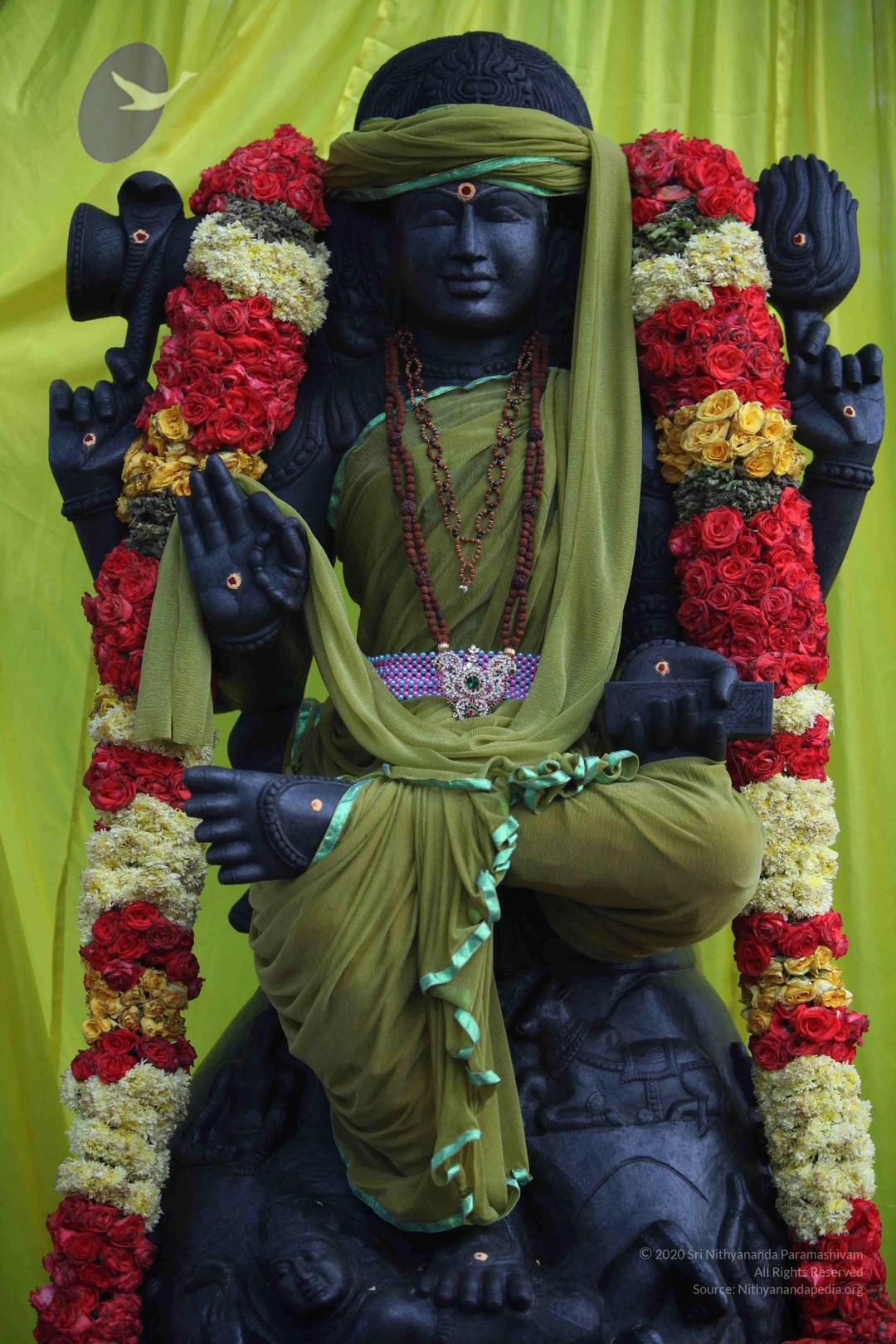
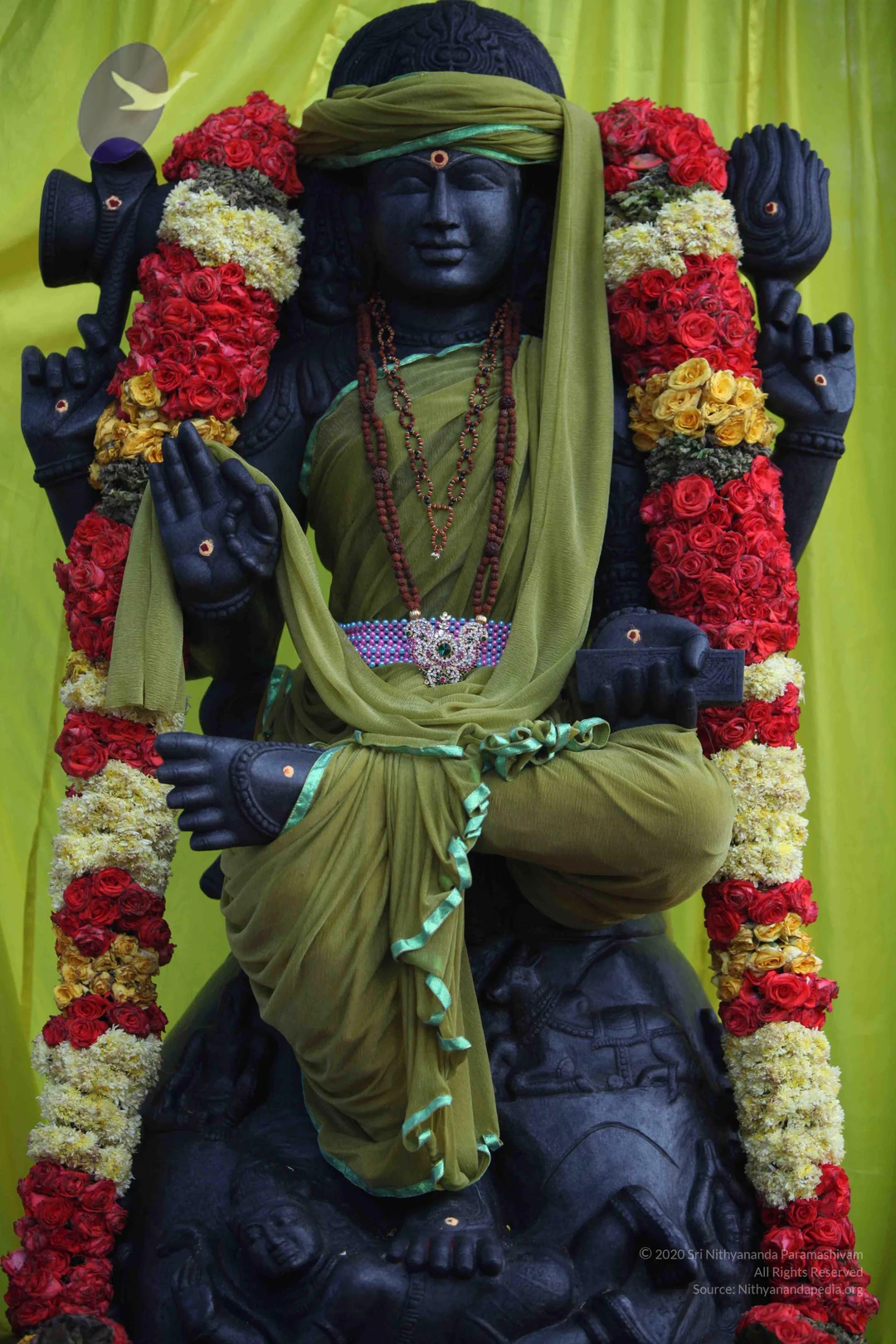
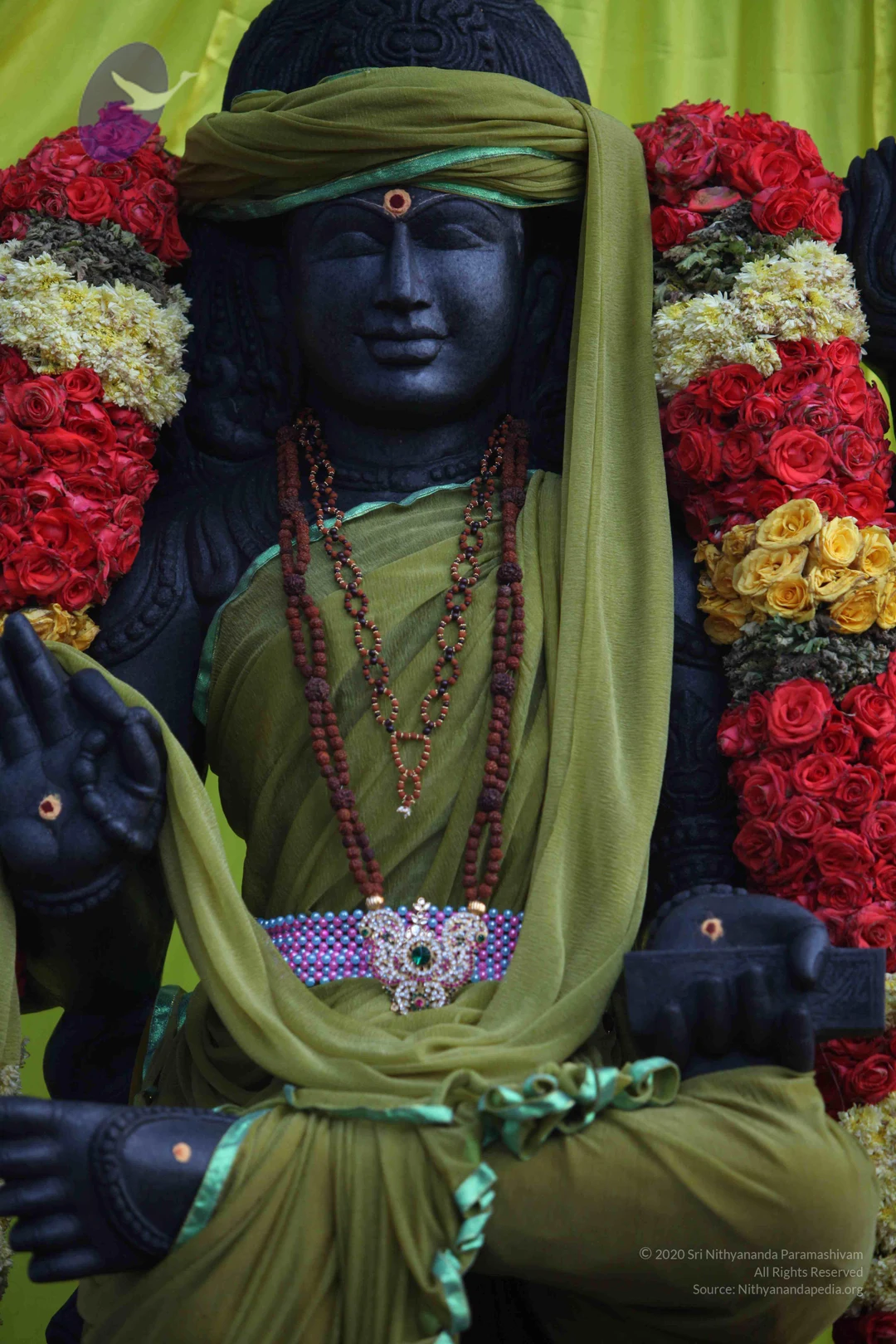
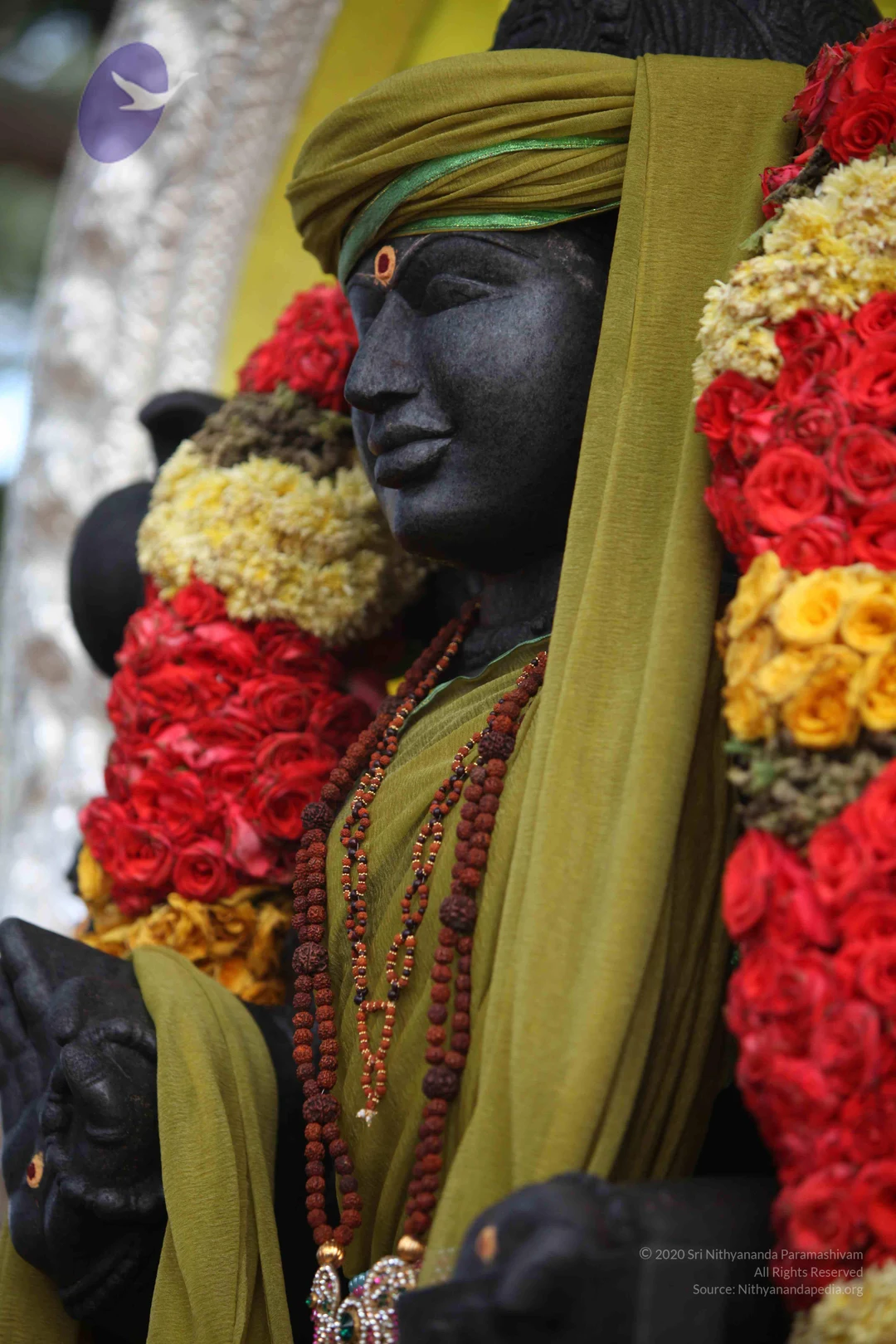
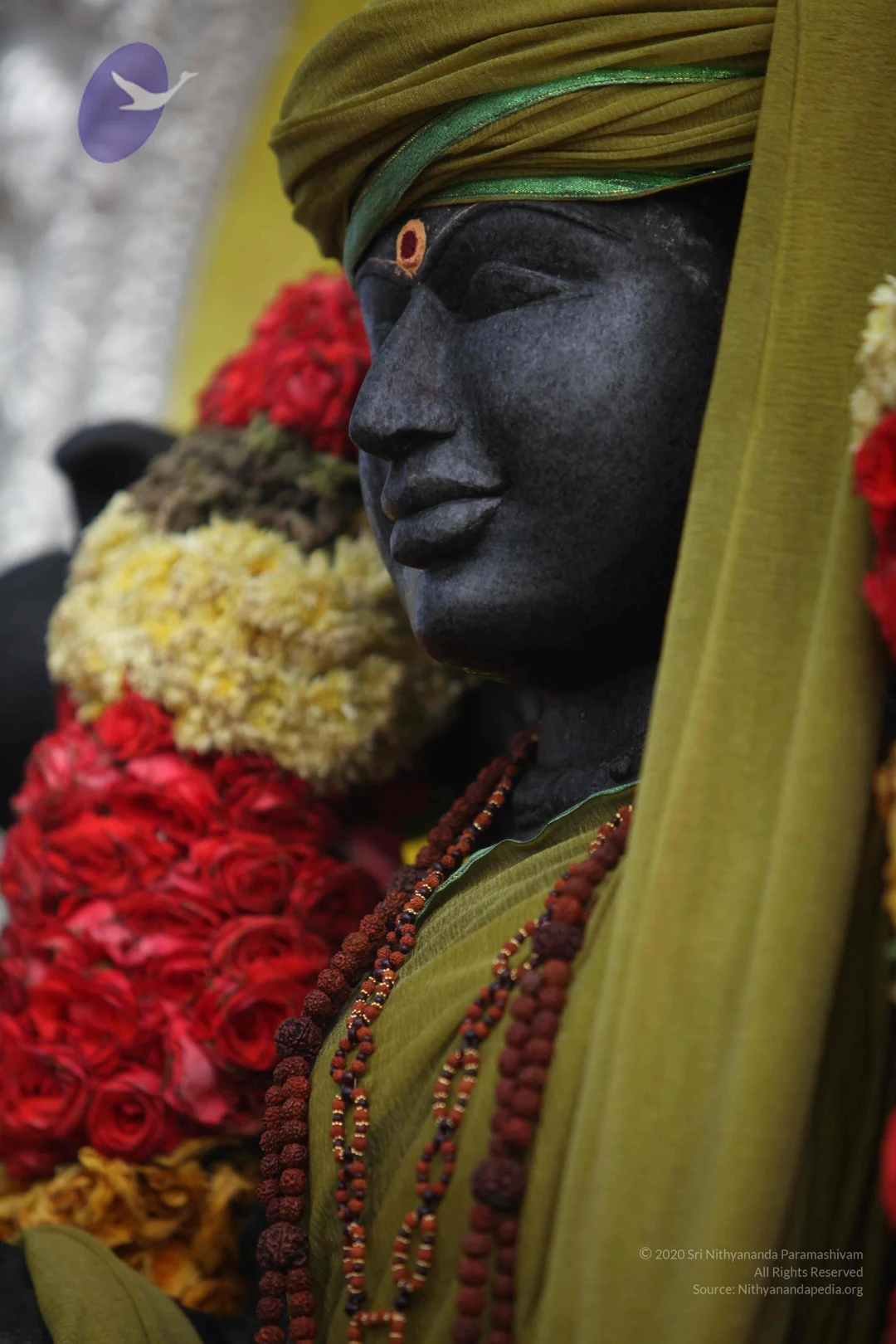
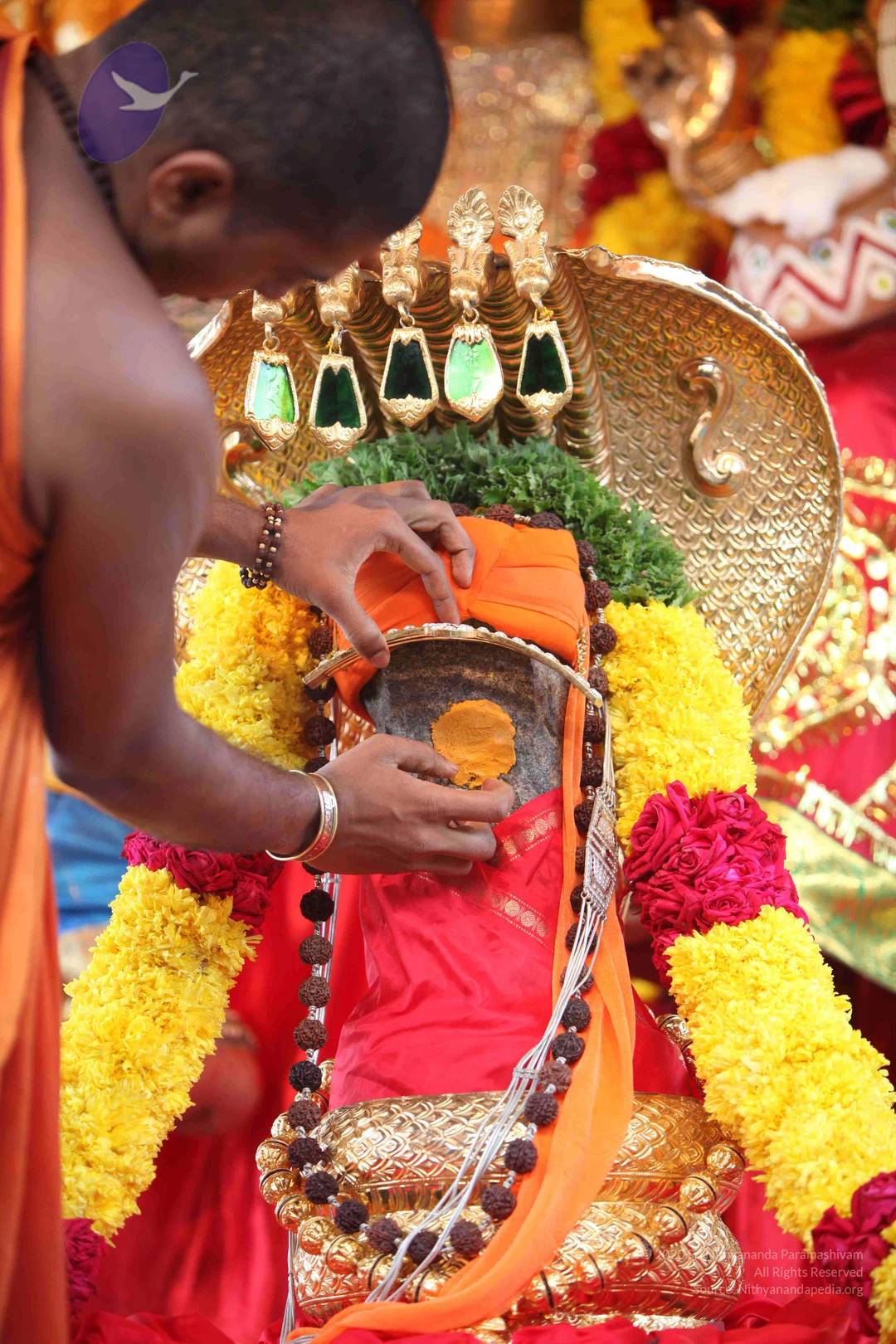
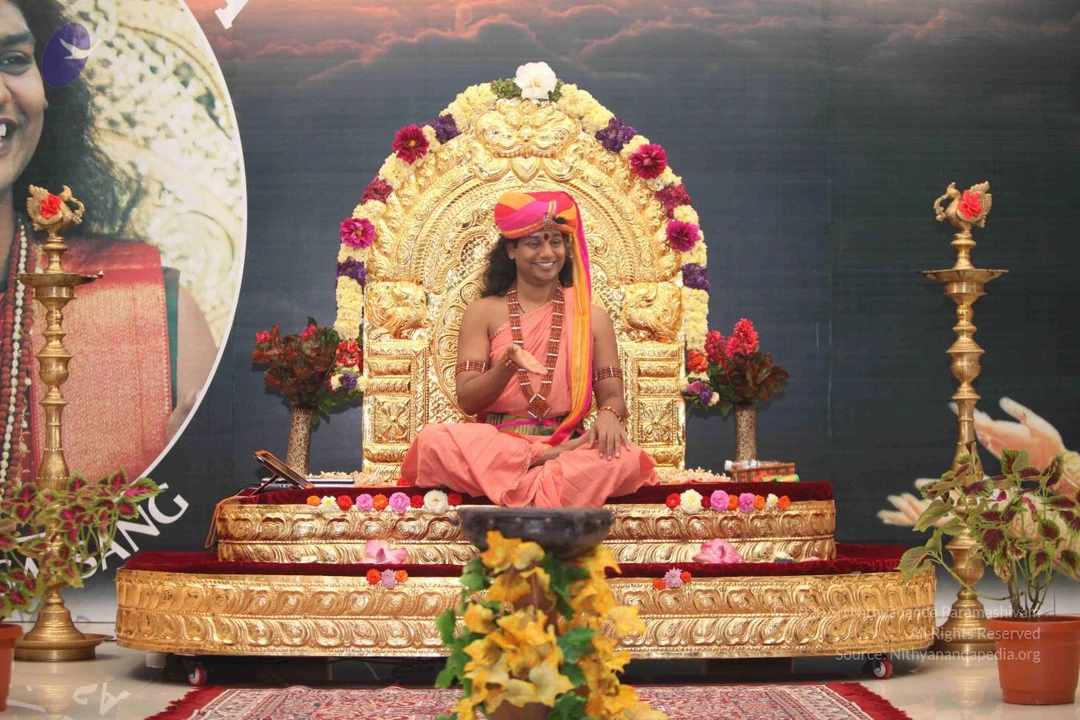
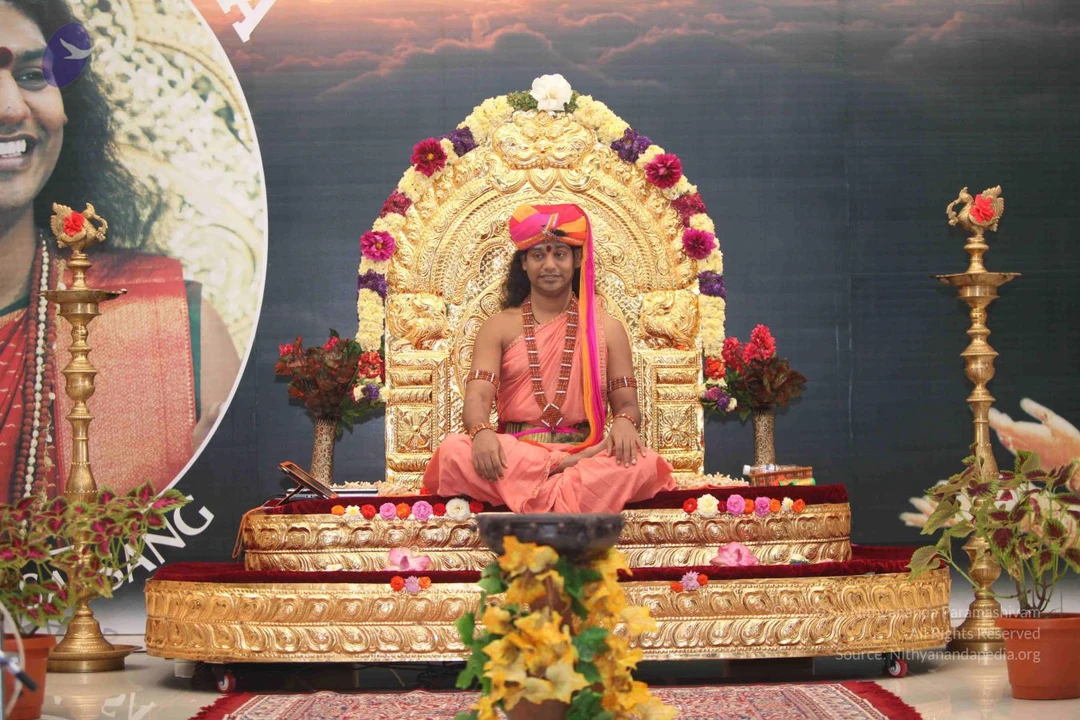
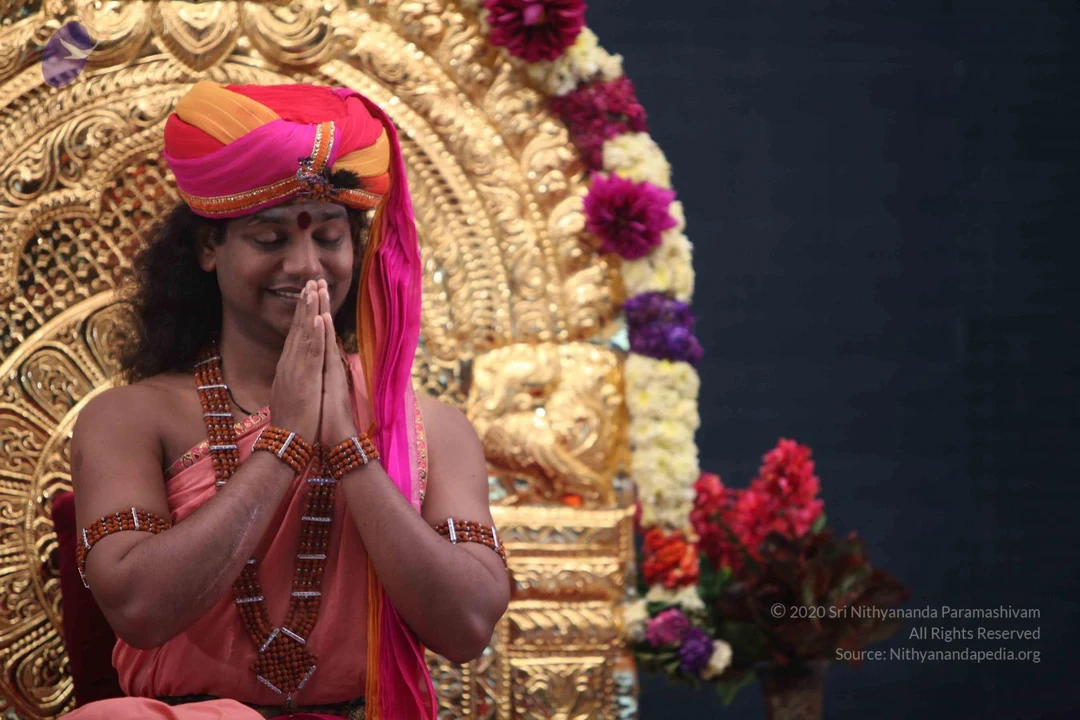
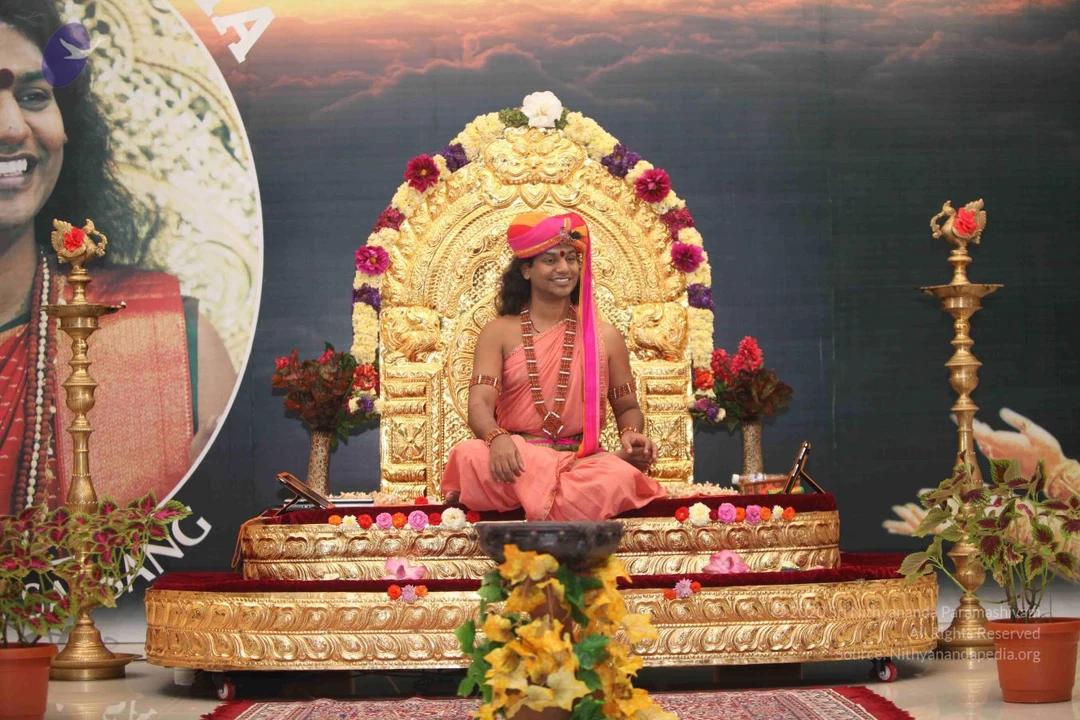
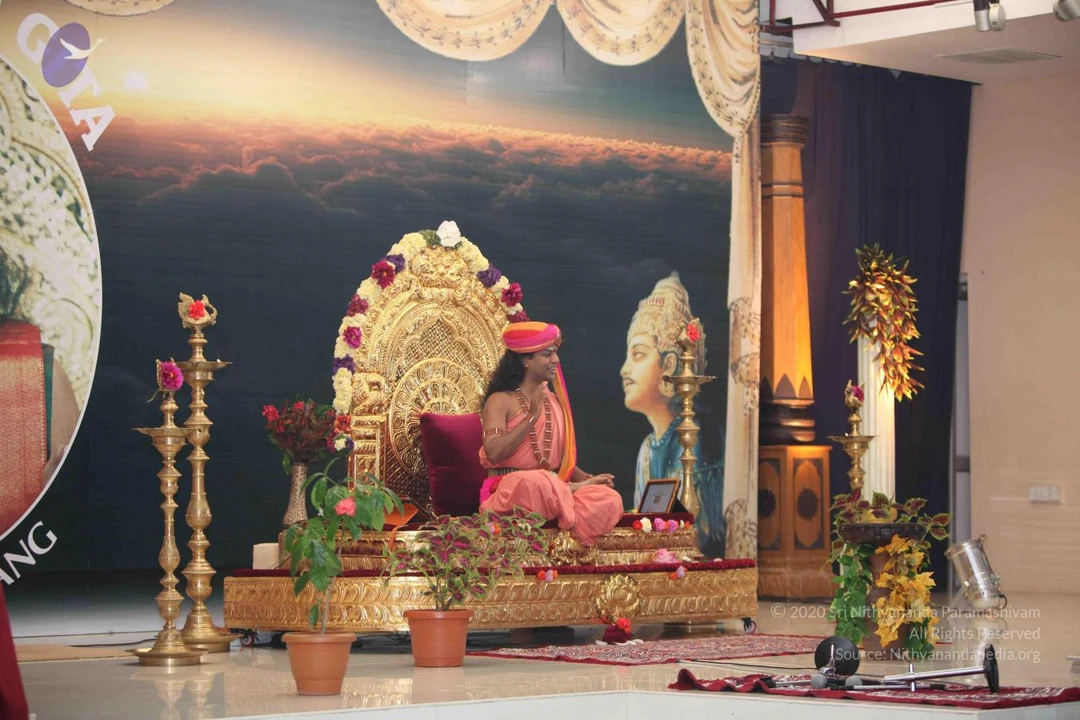
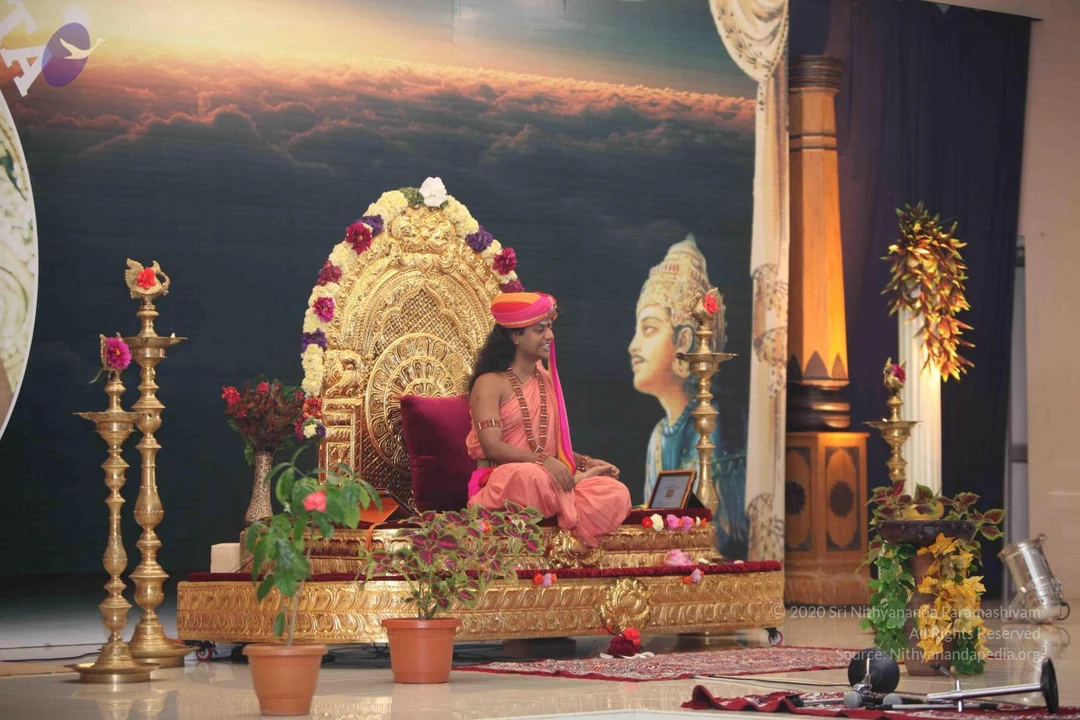
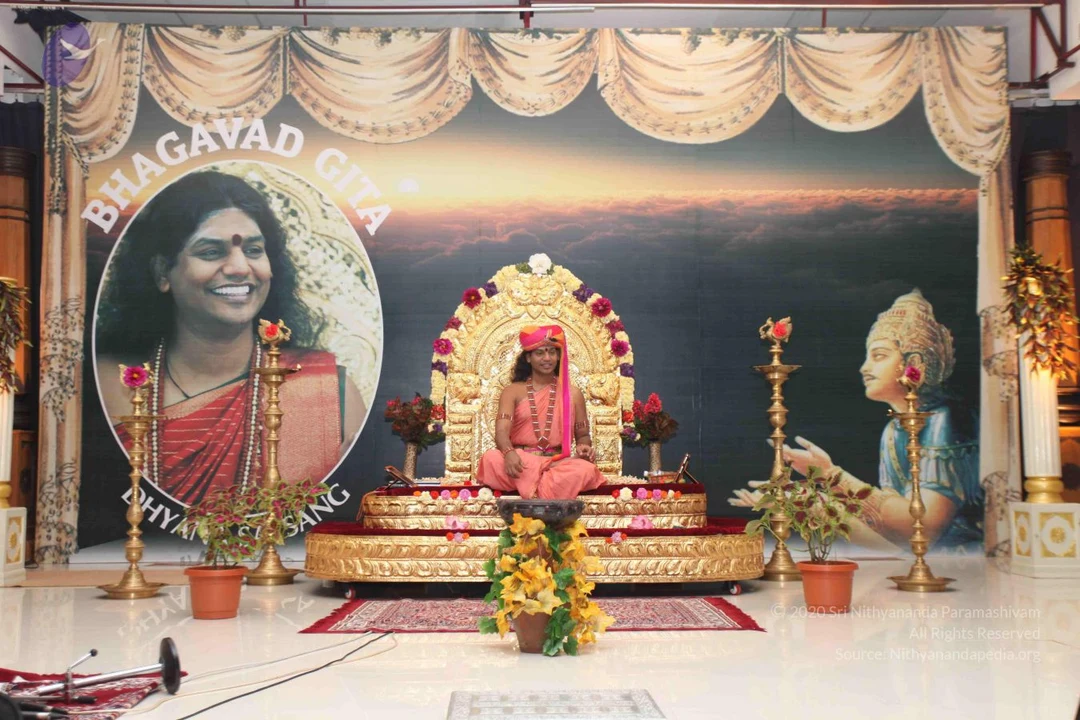
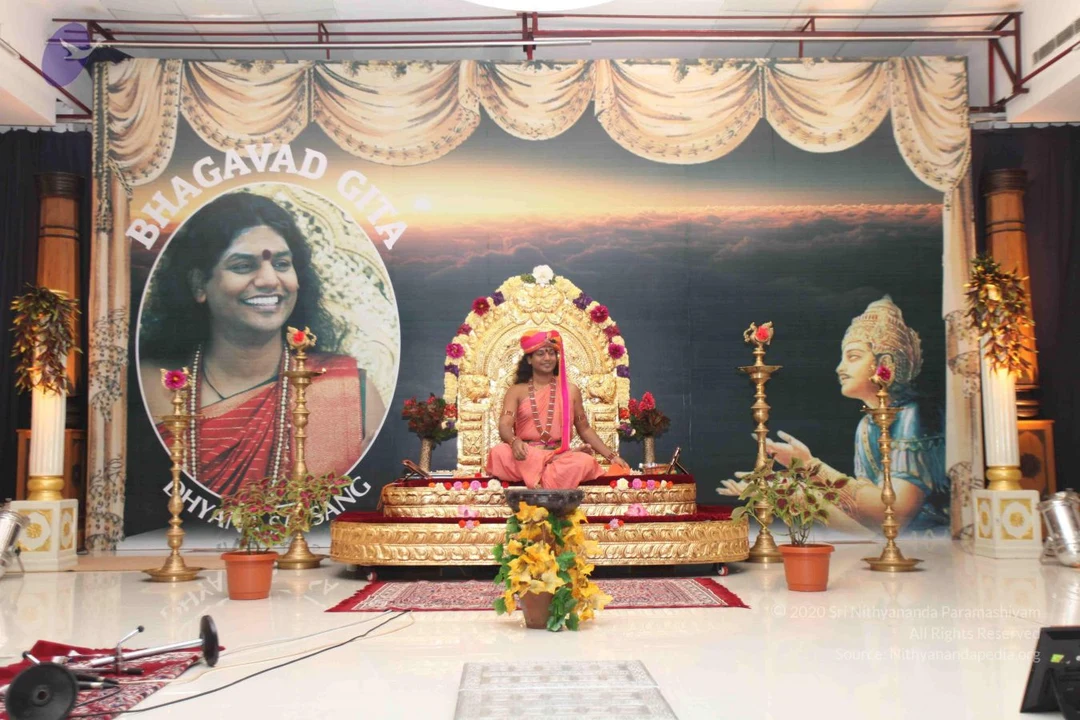
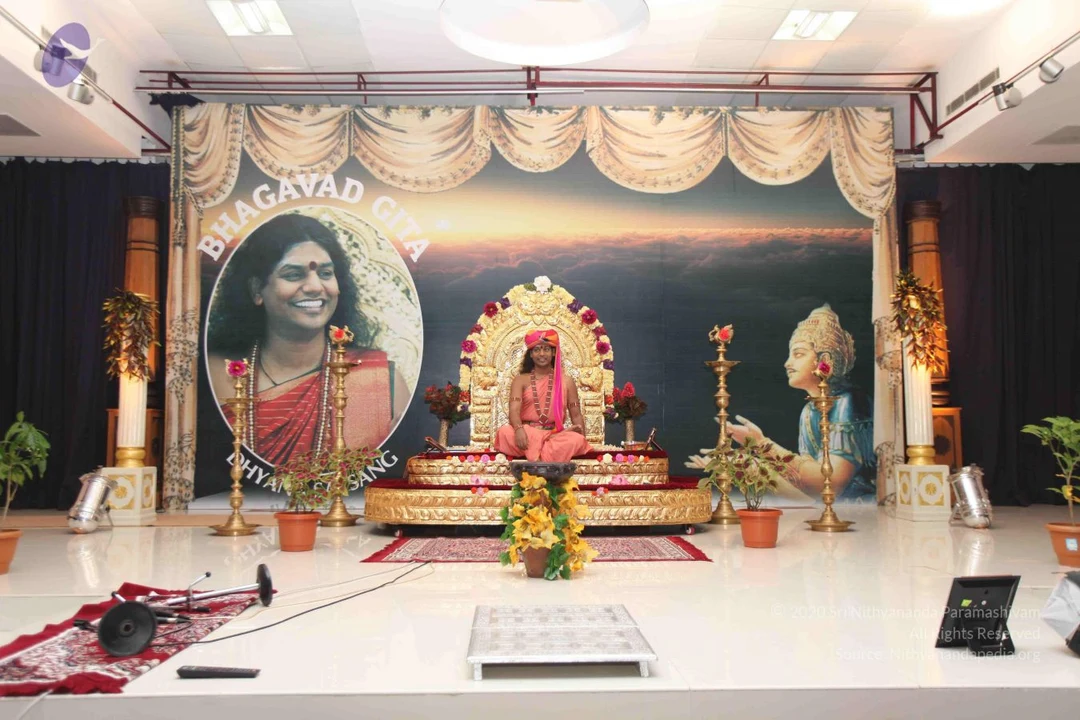
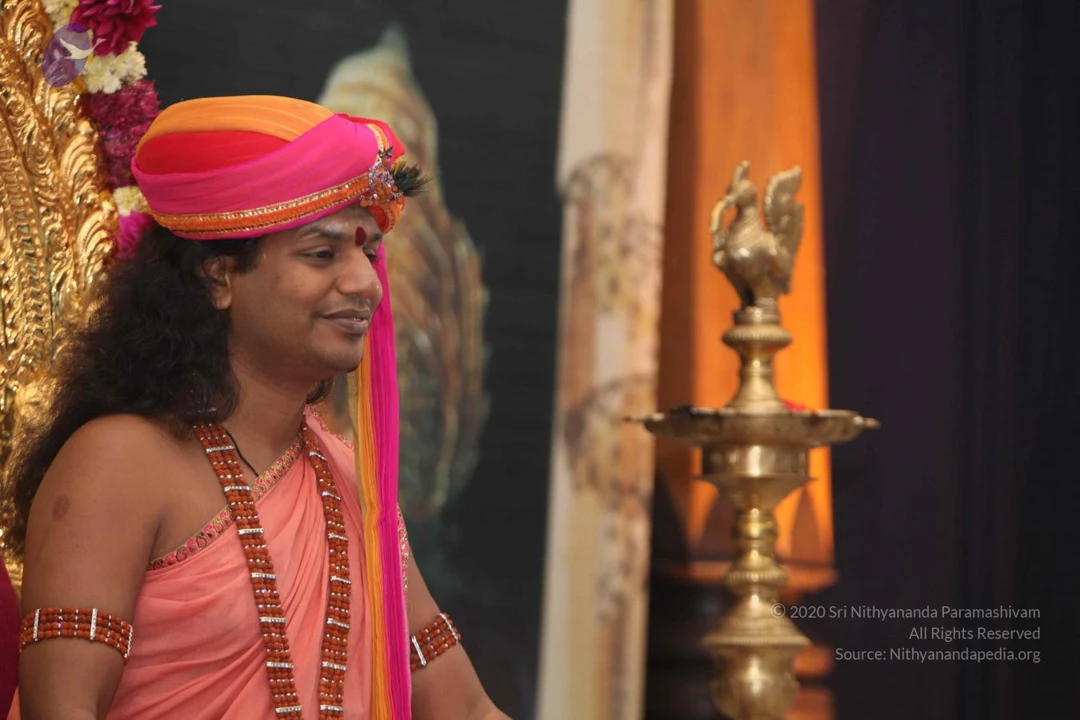
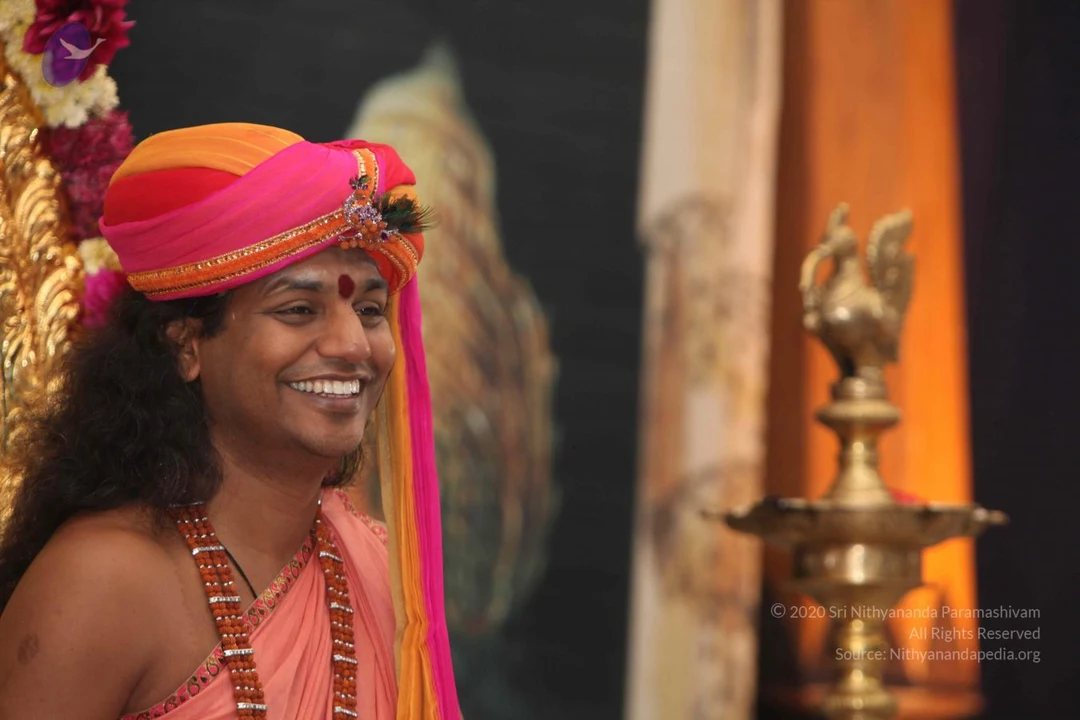
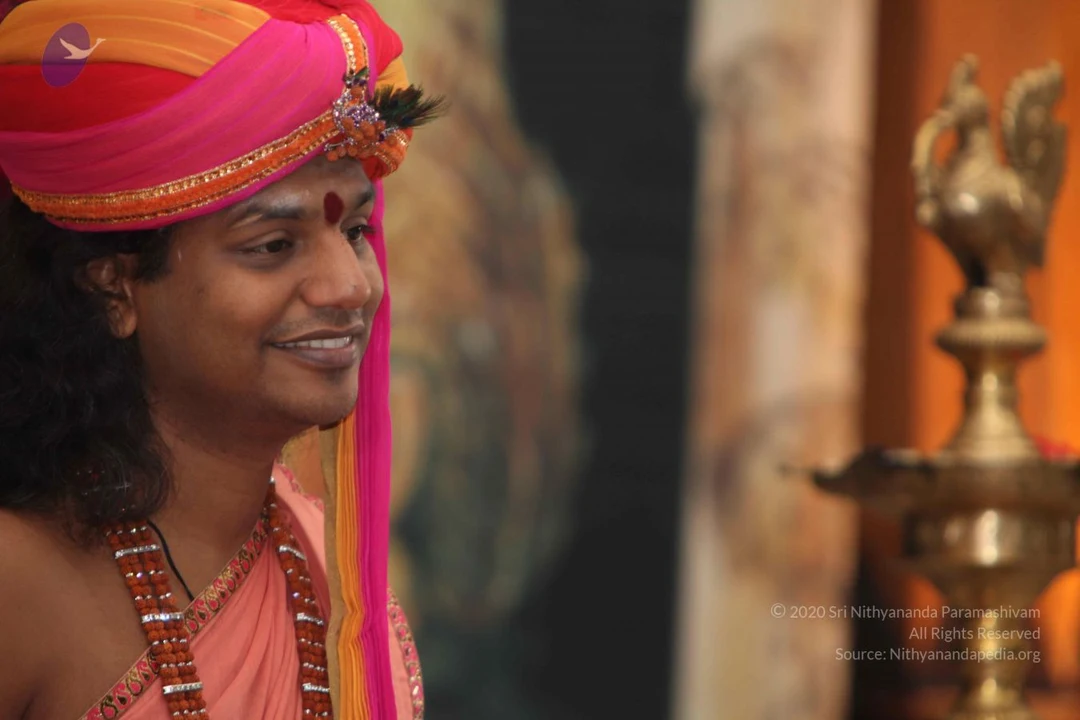
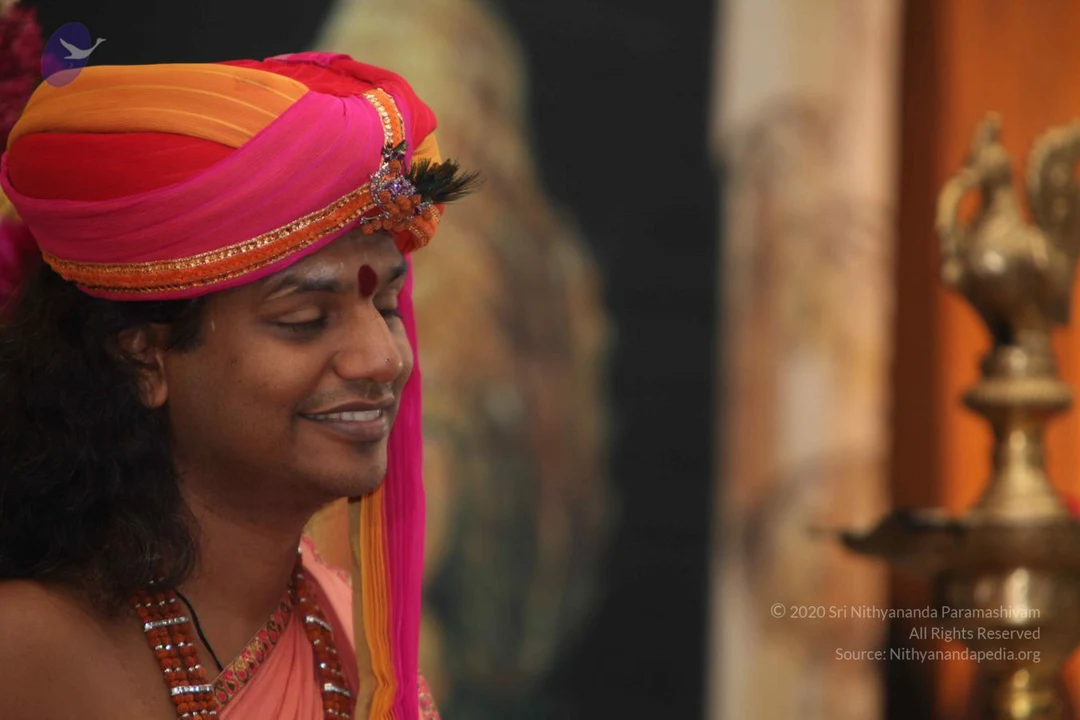
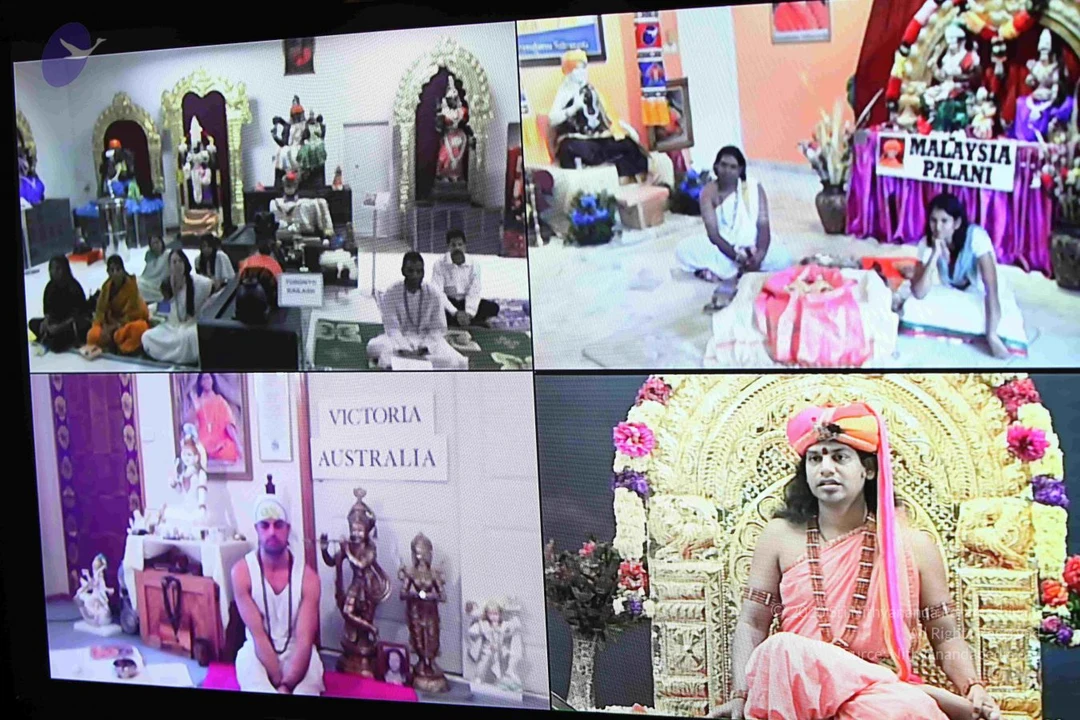
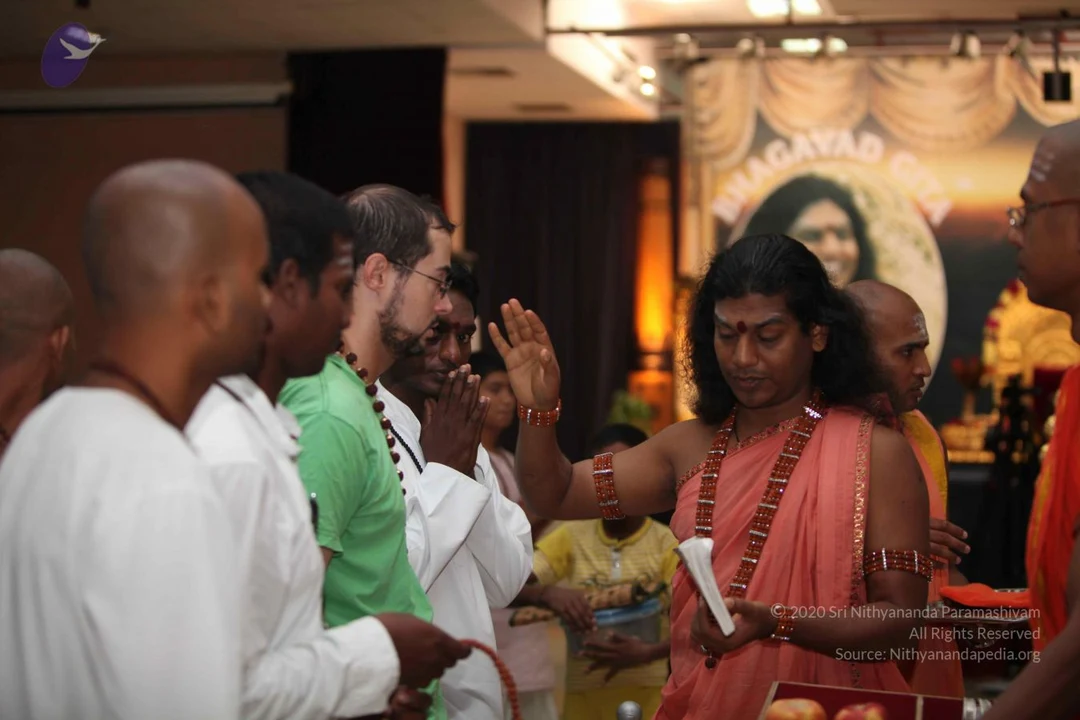
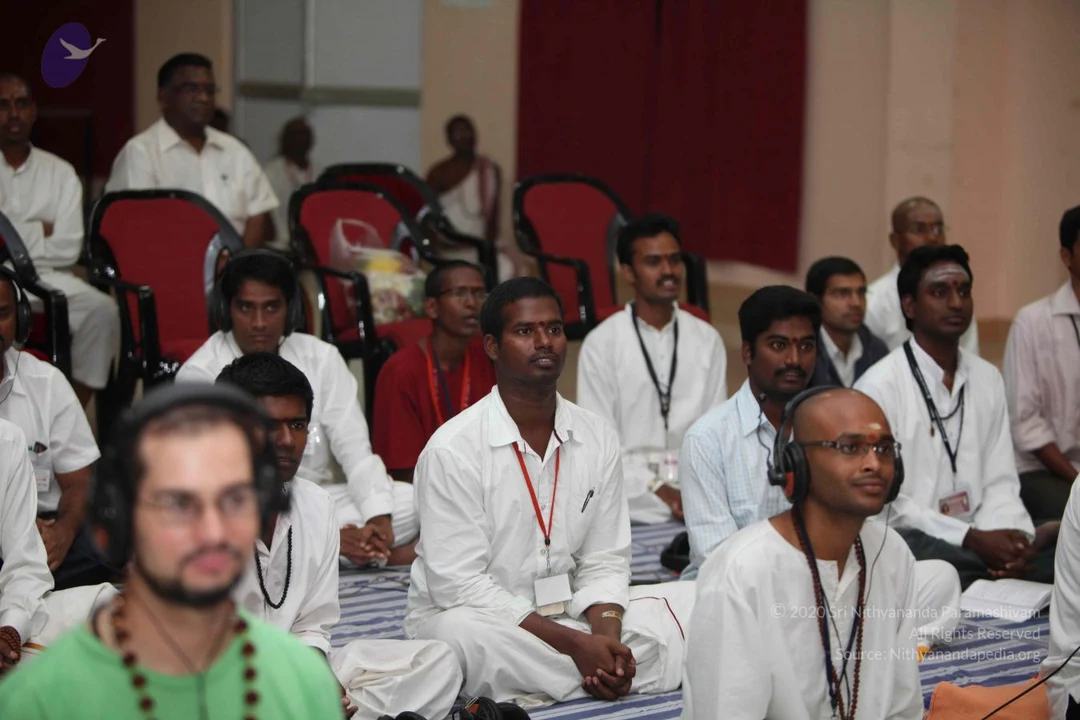
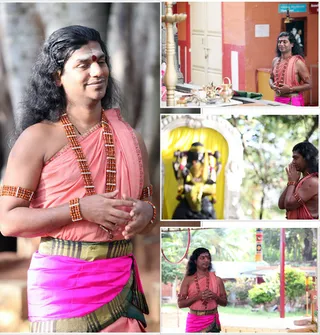
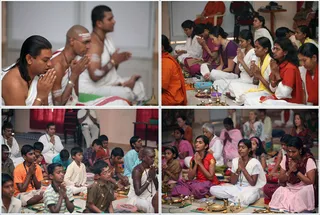
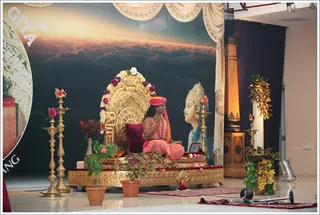
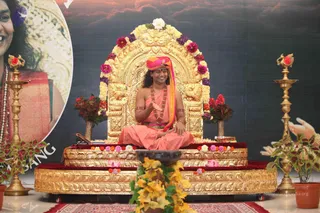
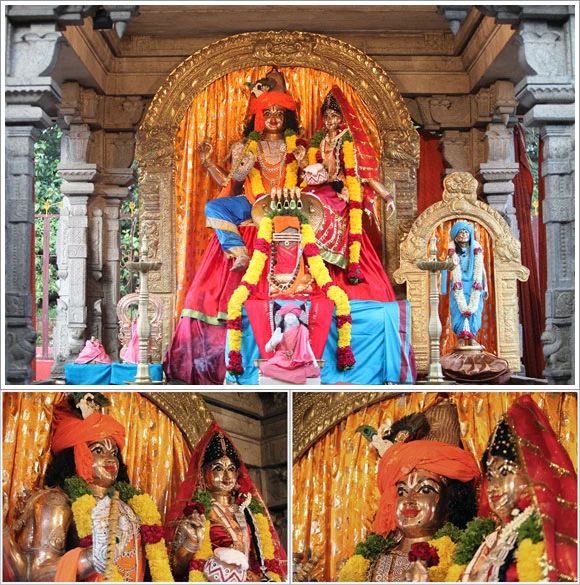
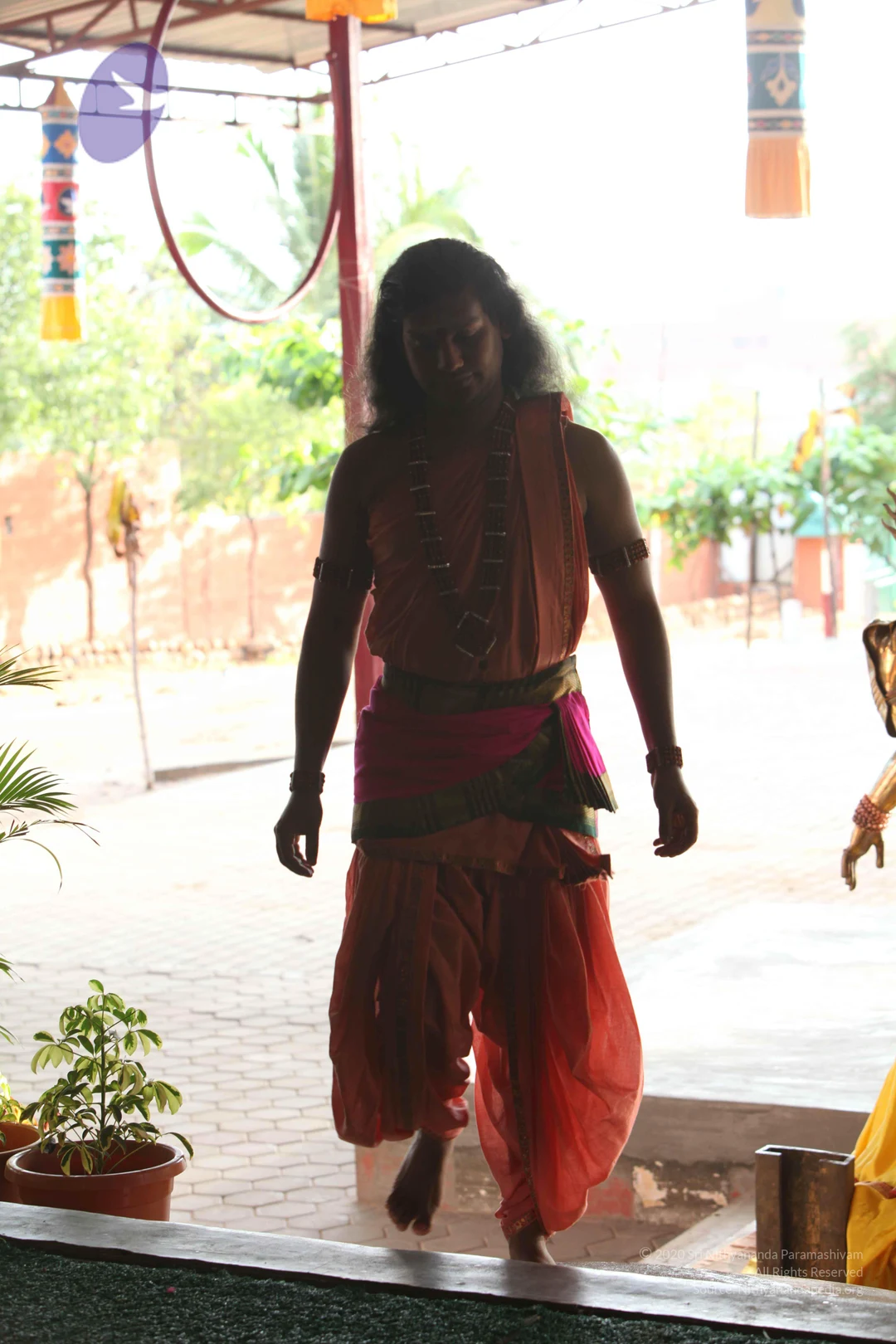
A three-panel collage of a temple shrine with golden and orange curtains and carved stone pillars. The main upper panel shows a deity murti group seated on a red and pink cushioned seat, with yellow and orange marigold garlands draped over their shoulders and a large floral garland across the front; a standing blue figure with a garland stands at the right, and a kalasha-style lamp stand sits nearby. The two lower panels are close-ups of the same metal or painted murtis, showing faces, orange turbans, red headdresses, gold ornaments and marigold garlands. No physical people are visible.A two-panel collage of dark stone statues of a seated deity figure, dressed in olive-green draped cloth with a matching turban-like headwrap. Left panel: a full-length seated figure with arms raised in mudra, draped in red and white floral garlands with a rudraksha mala and a silver waist belt, seated on a dark stone base. Right panel: a close-up of the statue's face showing a tilak mark, rudraksha malas and a flower garland, with a yellow backdrop. Statues only; no physical people are visible.A multi-panel collage graphic of a long-haired man in a salmon-pink upper cloth and magenta-and-gold striped lower cloth, wearing layered rudraksha malas and matching beaded armlets. The large left panel shows him smiling with palms pressed together and a red bindi on his forehead, outdoors among trees. Smaller panels show him at a temple with brass oil lamps and kalasha pots on a table, standing with folded hands before a gold-and-black deity murti under a yellow canopy, and standing outdoors in front of a tiled area with a red-and-white pillar. The collage shows pictured activities; no physical people beyond the depicted man are present in the image frame itself.A seated figure on an ornate gilded throne with a large golden floral-patterned backrest. The person wears a pink and orange turban with a crest ornament, a pink-orange shawl draped over the shoulders, a rudraksha mala necklace with large beads, and beaded bracelets on the upper arms and wrists. A red bindi marks the forehead. Behind the throne stands a garland of pink, magenta and purple flowers and a vase of red and orange flowers on the right. The person is smiling, looking off to the side. Appearance-based candidate, probable Swamiji, seated on the throne with a turban, rudraksha mala and ornate ceremonial adornments.A four-panel collage of seated devotees with palms pressed together in namaste during a devotional gathering. Top left, three men in white dhotis with shaved heads and white marks on their foreheads sit with eyes closed. Top right, women in saris in purple, red, orange and white sit before brass lamps and thalis. Bottom left, a crowd of men and boys in white and colourful shirts sits on a mat with brass vessels. Bottom right, women in pink, red and white saris sit with hands folded before brass puja items. No single person is identifiable as a person from appearance, so the a person field is unsure.A seated figure in saffron-orange robes and an orange turban-style head covering sits cross-legged on an ornate golden throne with a gold floral backrest decorated with red roses and white flowers. Behind the throne a painted backdrop shows a sunset sky above clouds, and a large painted image of a deity with a tall crown stands to the right. Brass oil lamps, potted plants, and flower arrangements surround the dais on a red-carpeted stage. Partial lettering reading 'GITA' and 'SATSANG' appears on a banner at the left edge. The figure appears to be a probable Swamiji by visible cues of saffron robes, turban, and the throne setting, seated as a speaker at a Bhagavad Gita satsang.

Temple
61 photosSource gallery
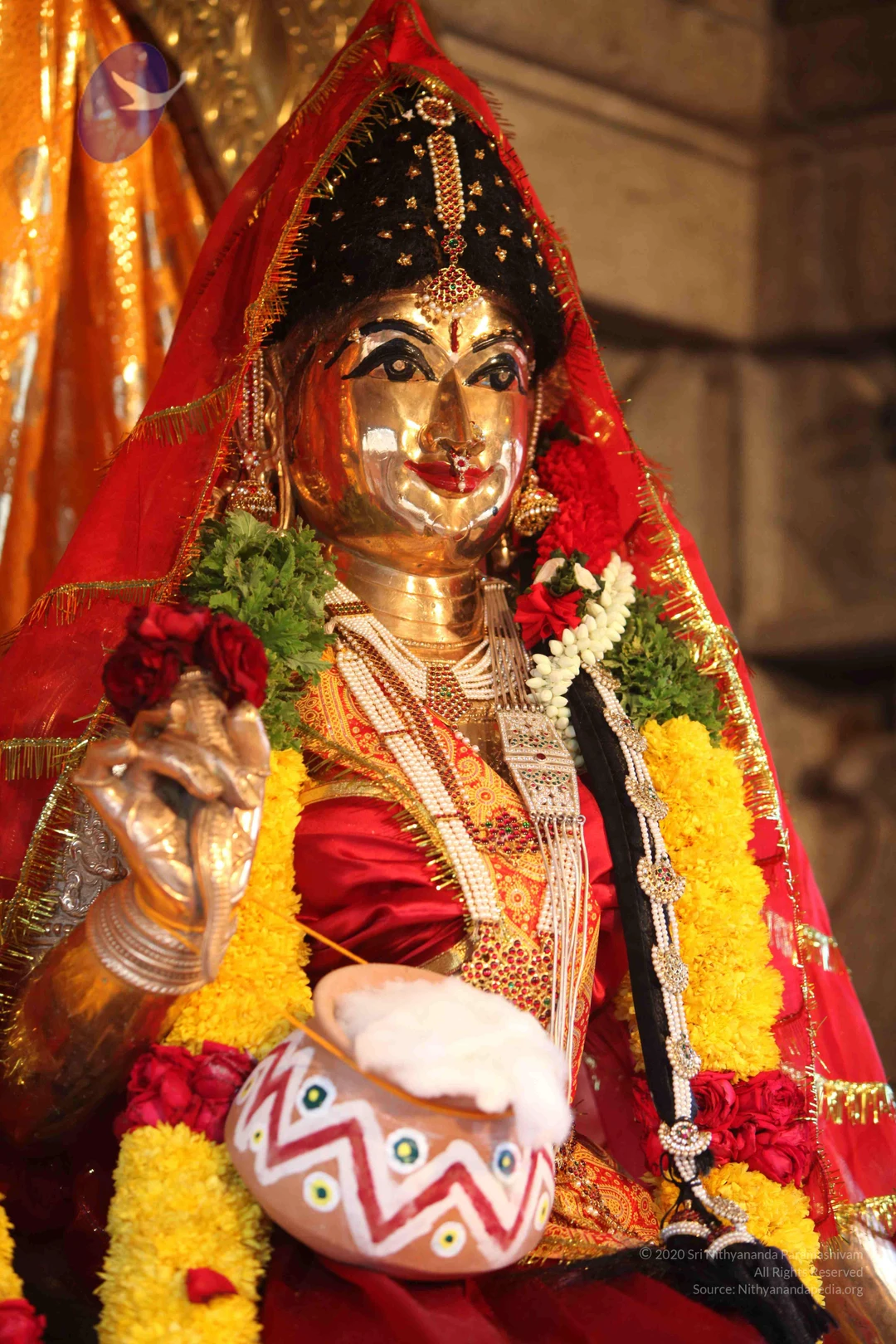
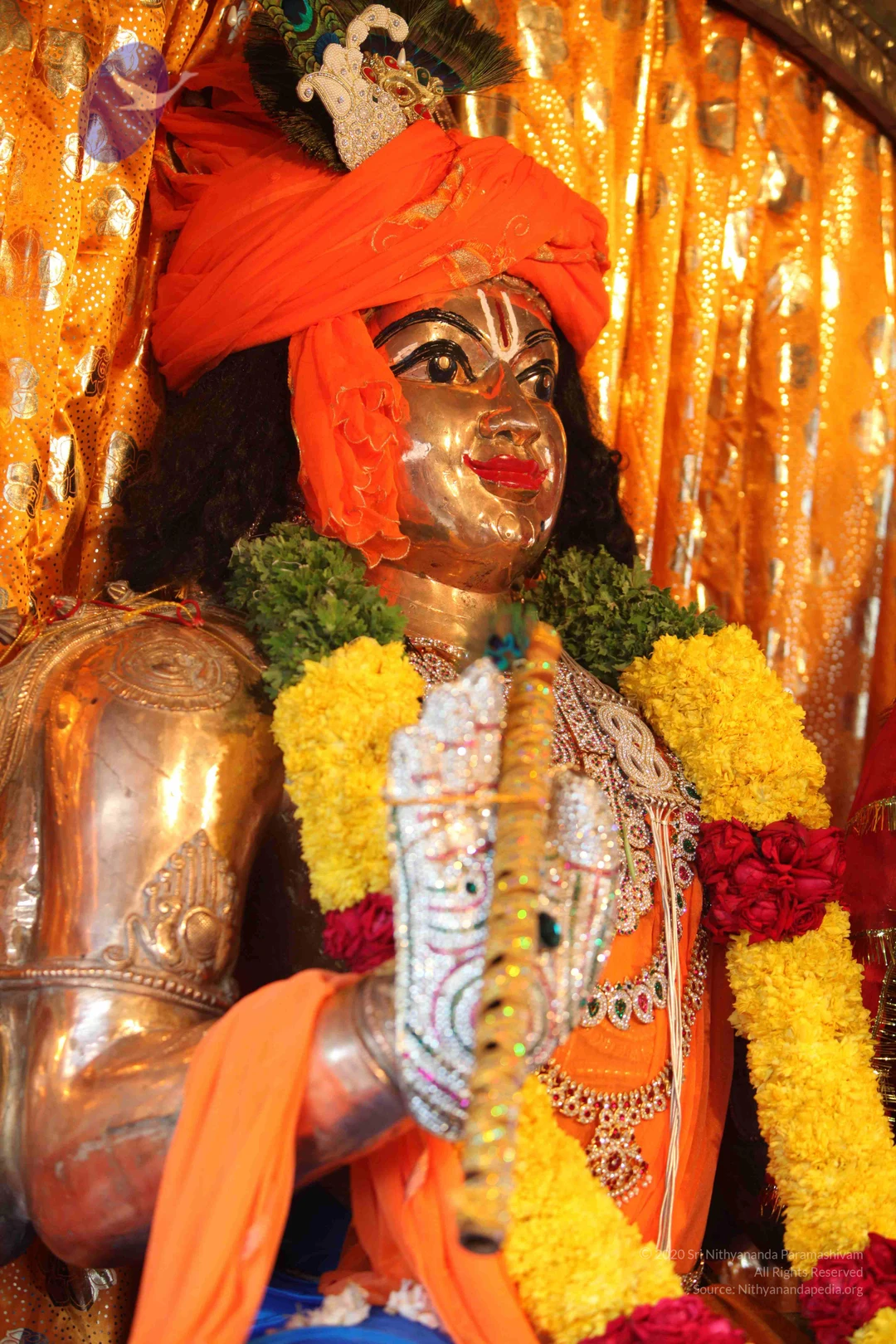
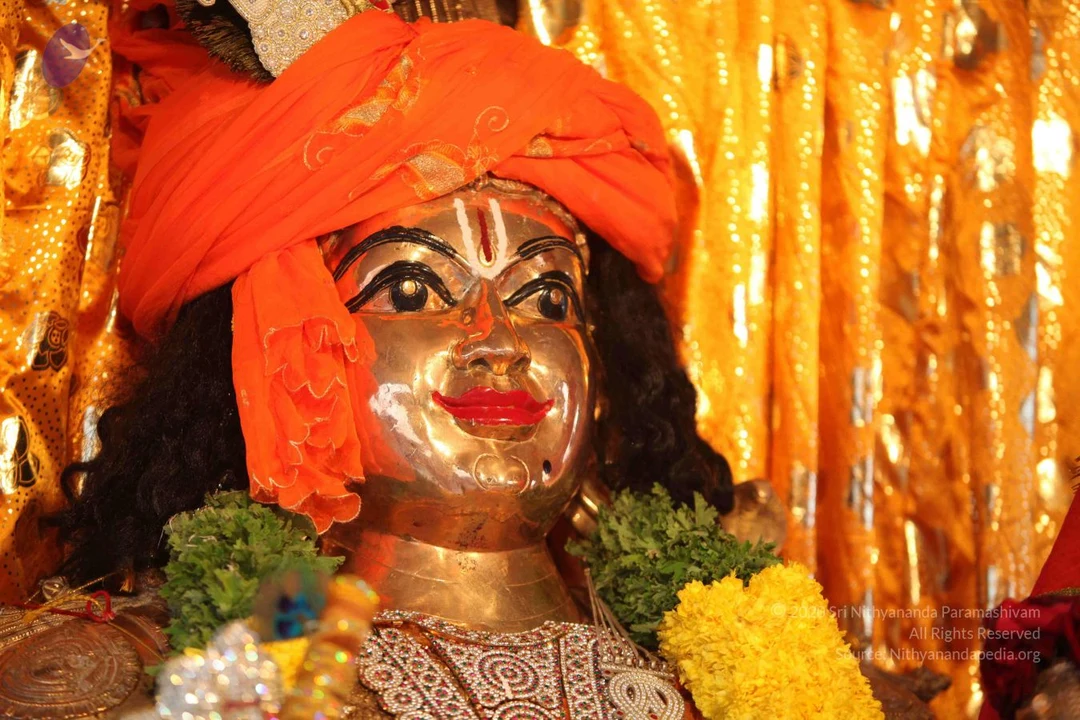
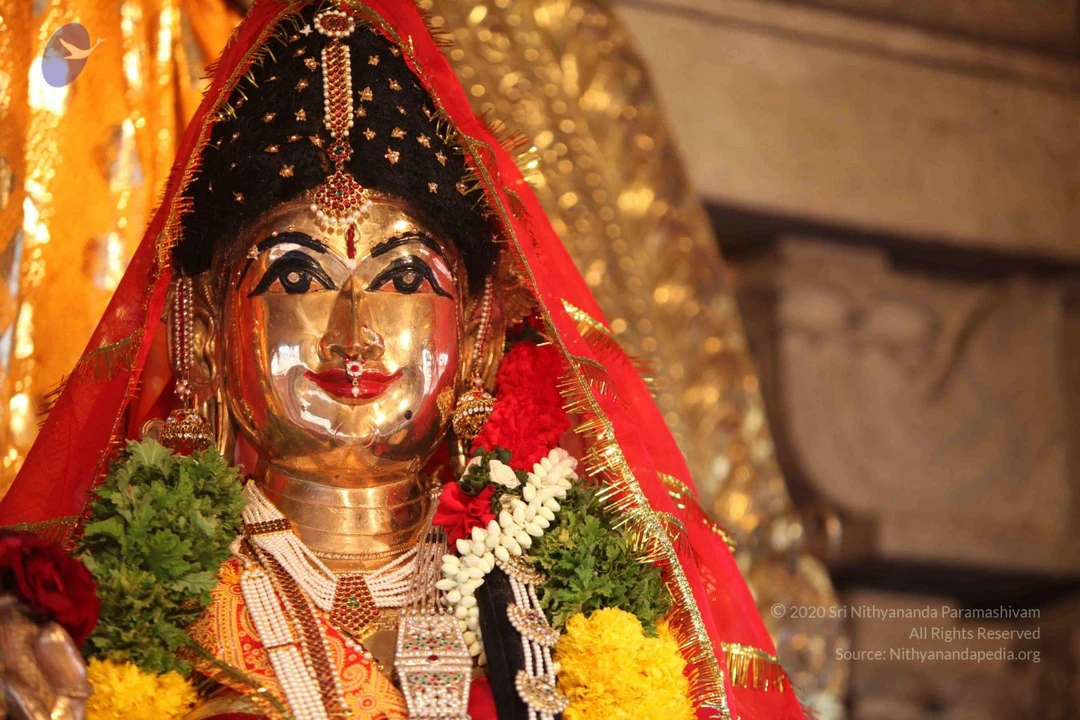
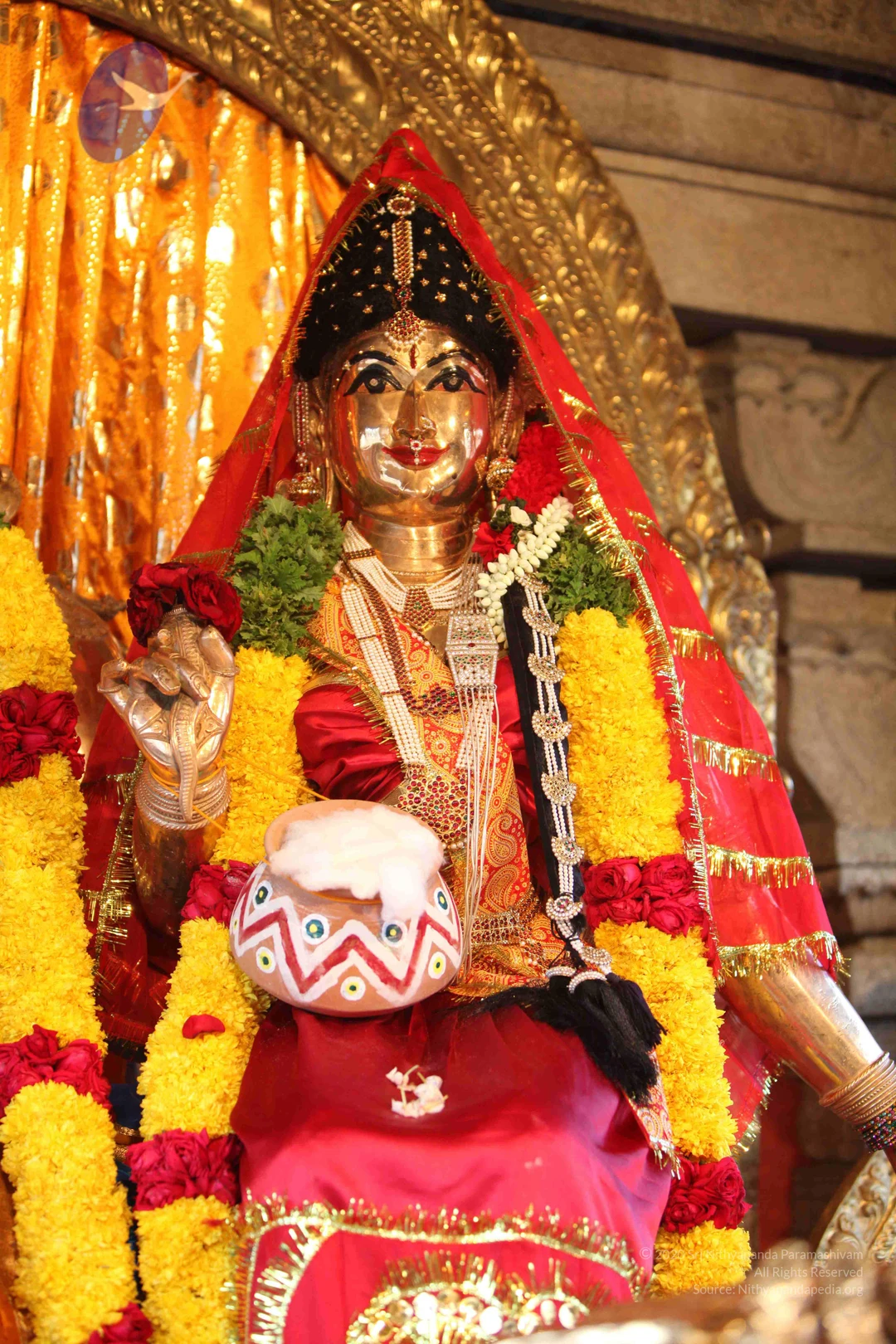
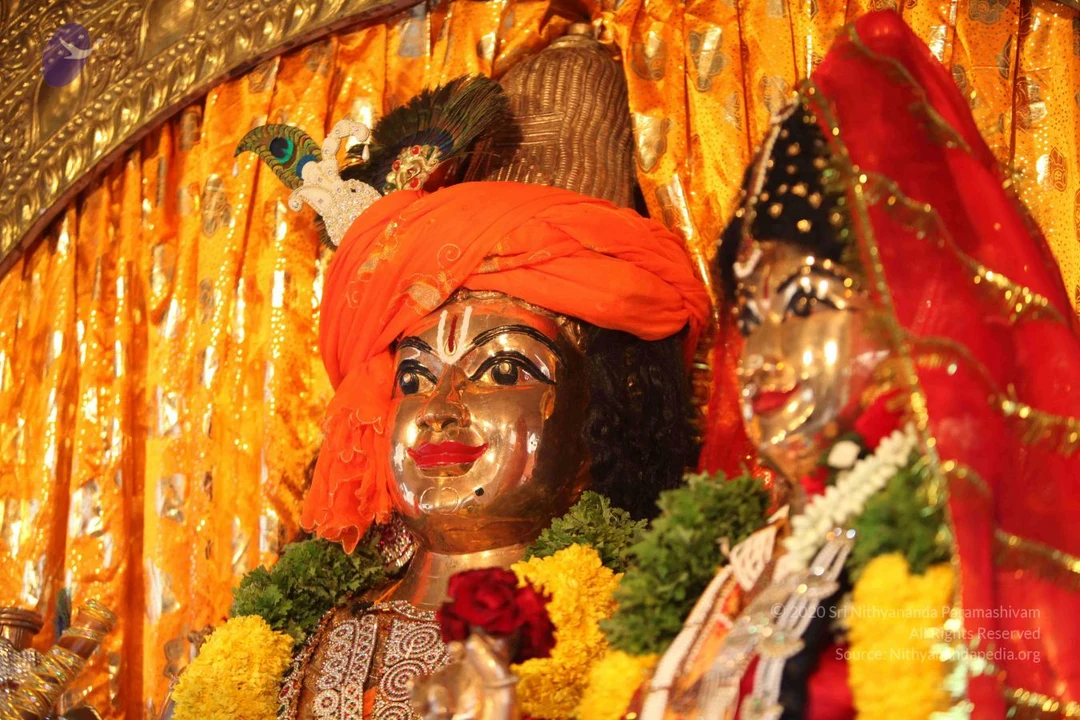
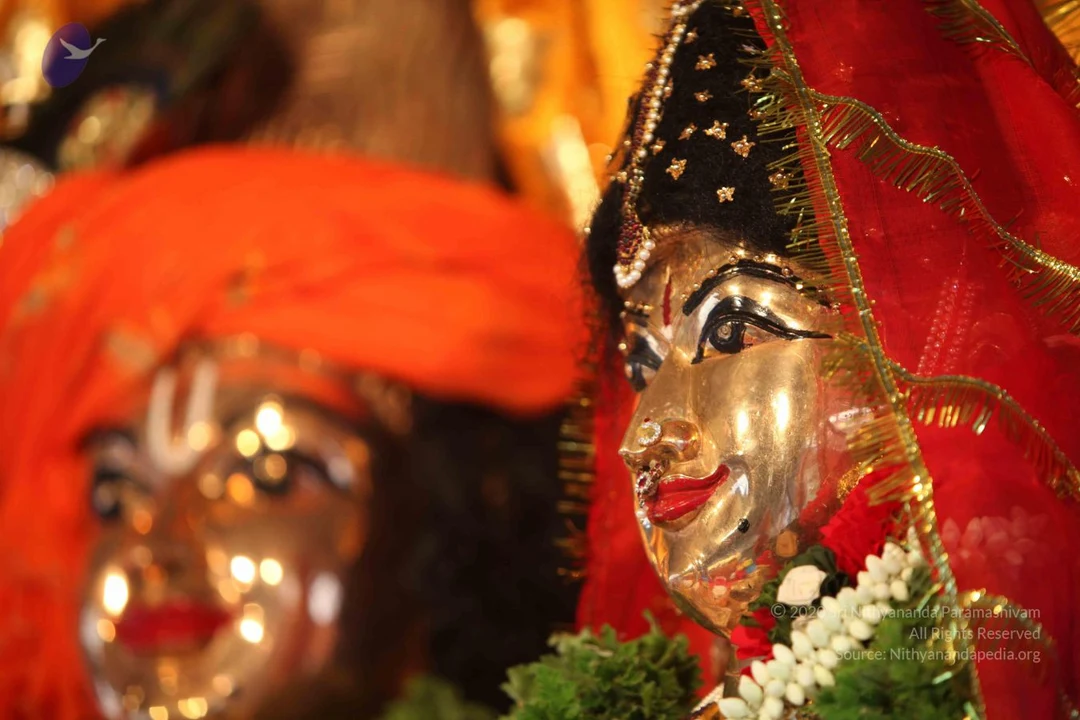
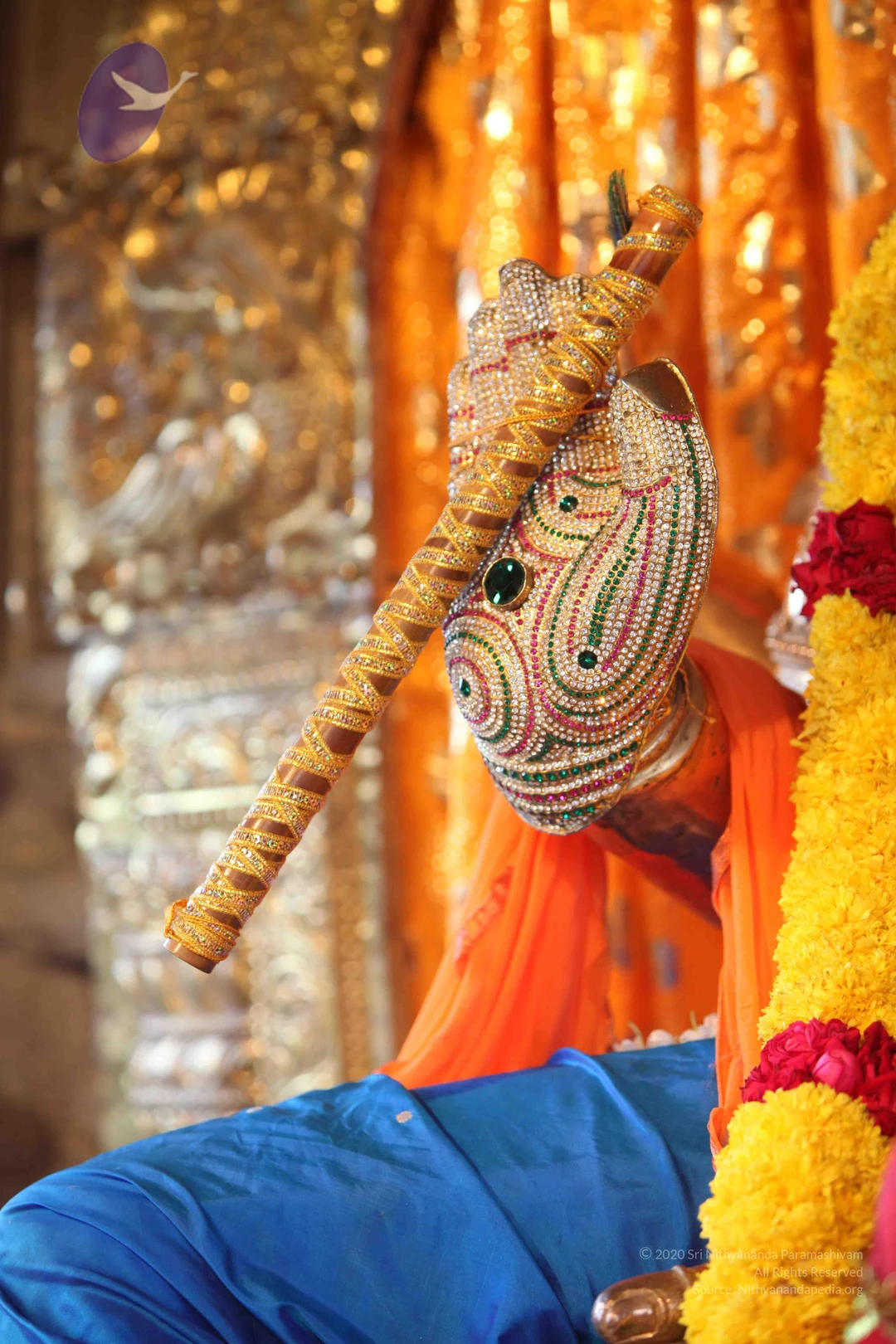
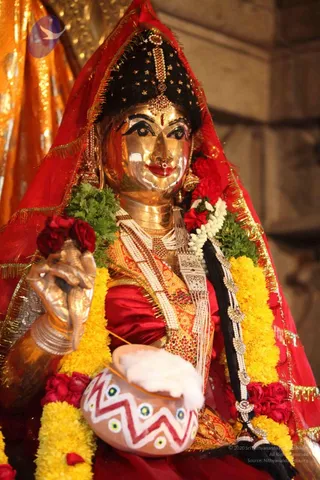
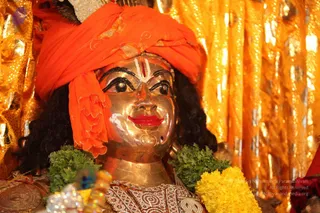
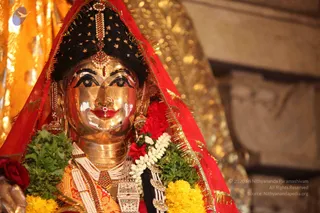
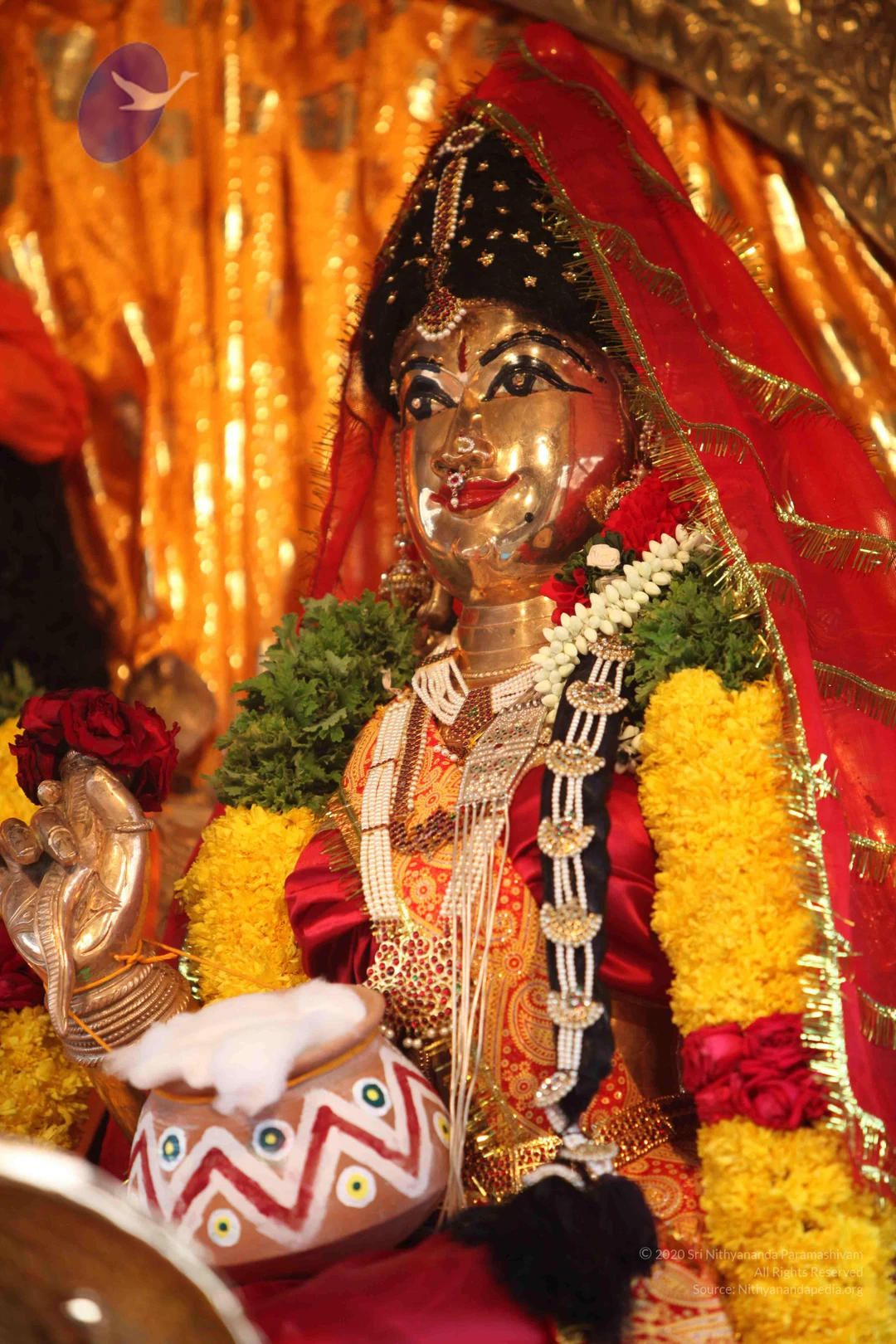
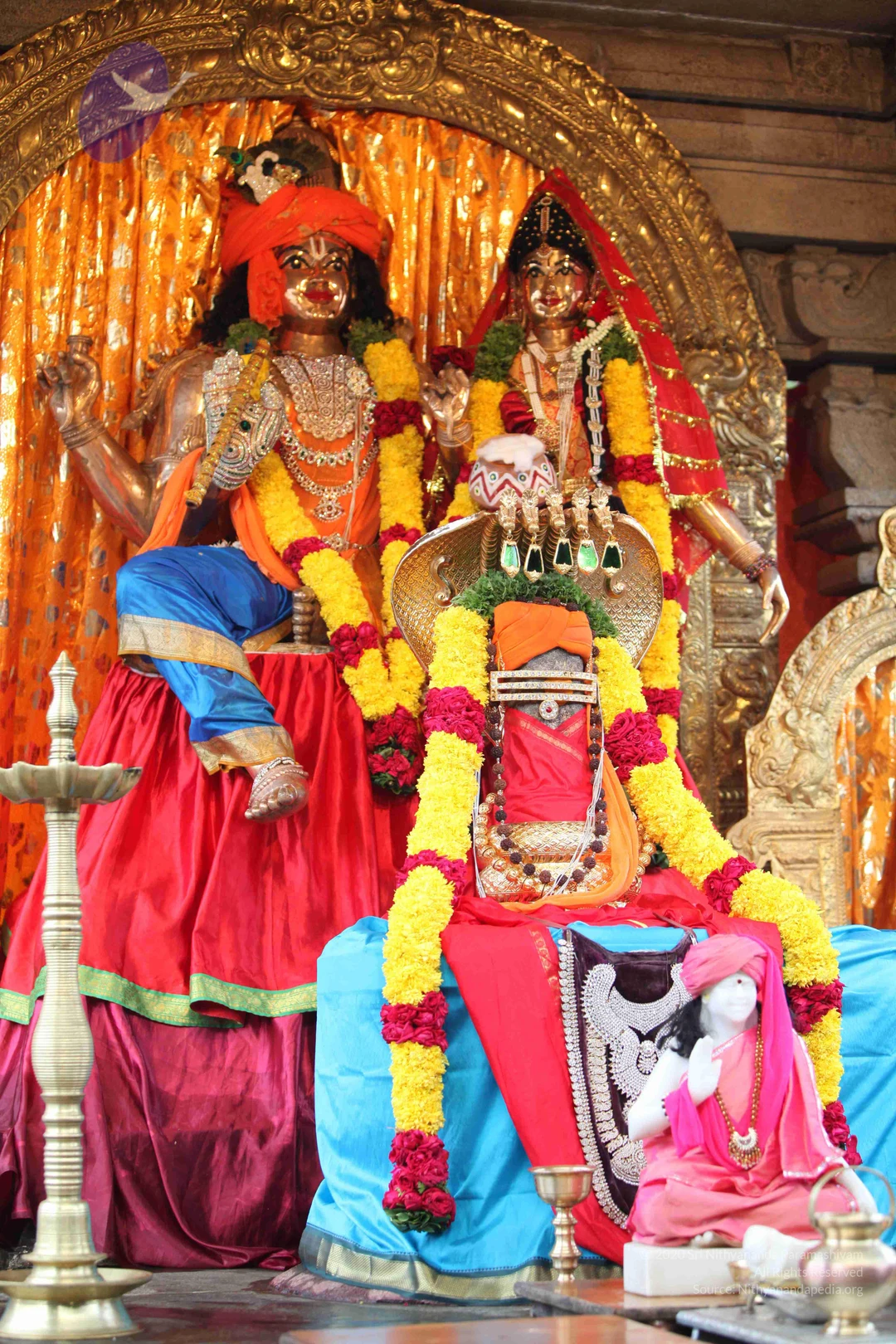
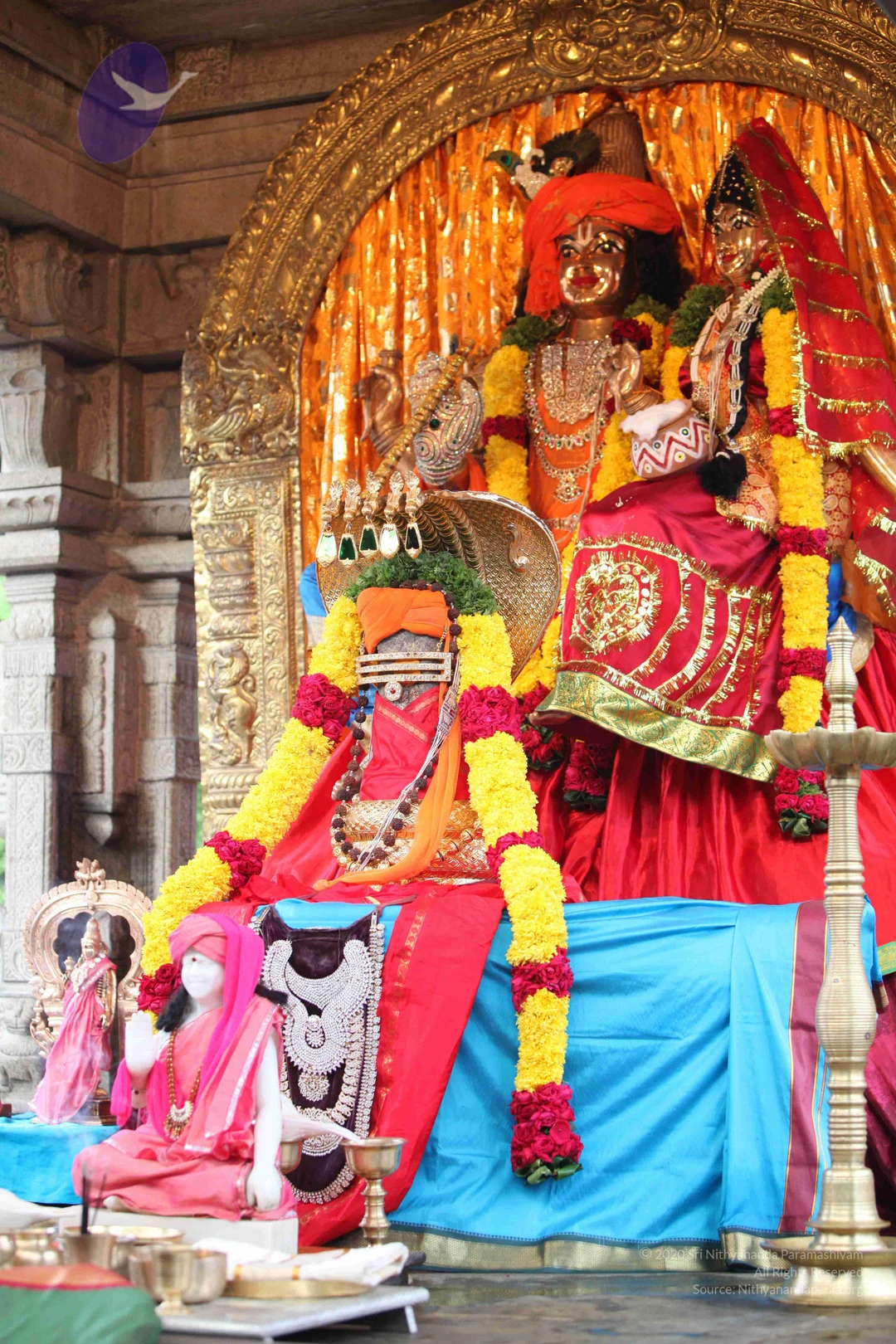
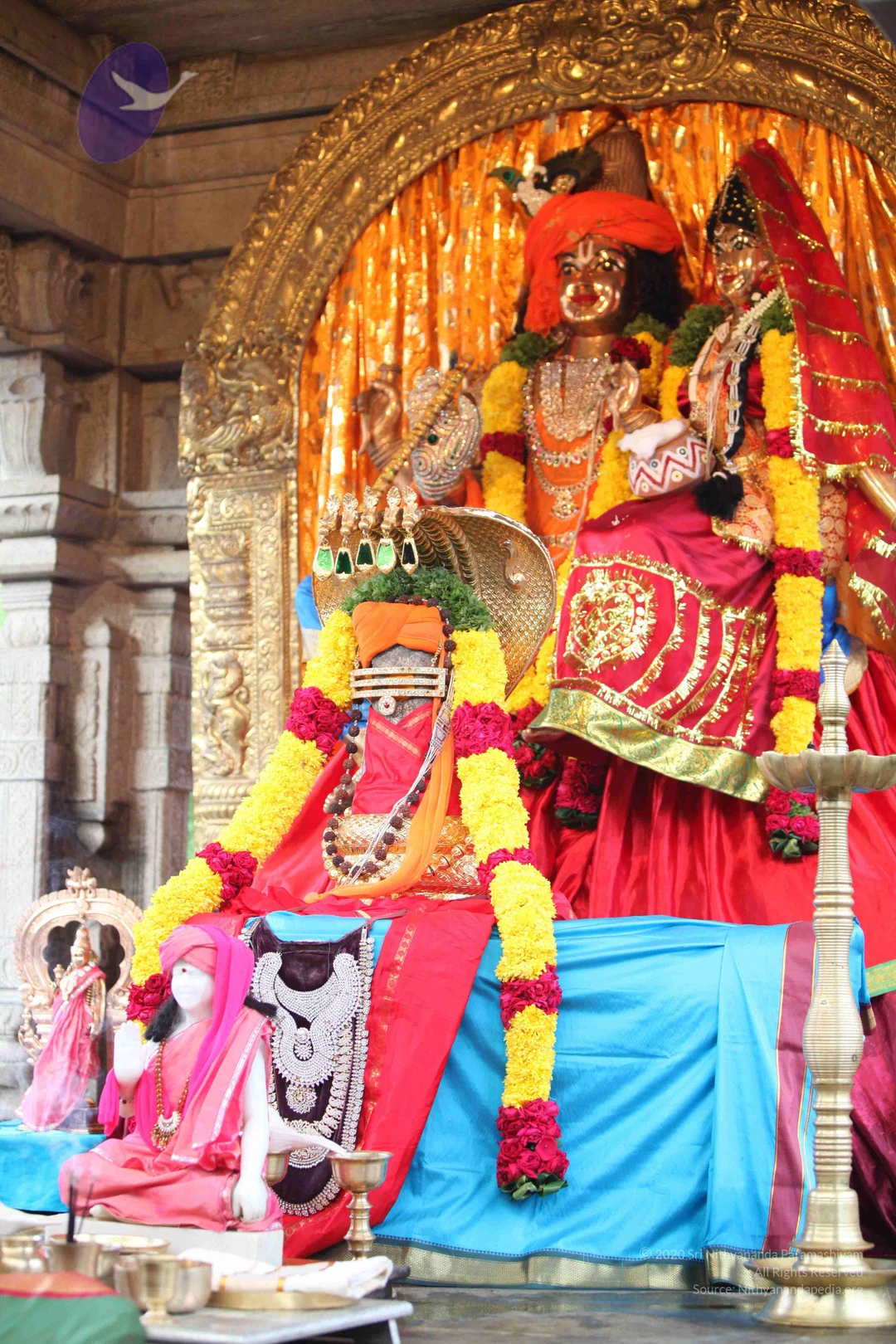
A gilded metal deity murti of a goddess, shown seated and draped in a red sari and red veil with gold border. She wears a jeweled black hair crown, pearl necklaces, a gold waist ornament and a red bindi. Yellow marigold garlands and a white jasmine garland drape her shoulders, with red roses at her arm and lap. She holds red roses in one hand and rests the other on a painted clay pot with red zigzag lines and white dots, topped with cotton. Orange cloth hangs behind her and a stone wall is visible at right.A close view of a golden metal murti of Krishna with a flute, dressed in an orange turban topped with a peacock feather and jewelled crown ornament. The figure wears an orange garment with gold and red-stone jewellery, a silver-embossed armour-like shoulder plate, and garlands of yellow marigolds, red roses and green leaves. The murti stands before a shimmering gold-and-orange draped backdrop. No physical people are visible; the figure is a statue, so no a person candidate is present.Two gilded murti statues stand before a shimmering gold brocade backdrop in a temple setting. The figure on the left wears an orange turban topped with a peacock feather ornament, a silver-embellished armour-style chest piece, a jewelled white and orange garment, and a long dark wig, holding a ceremonial staff. Beside him, a female deity murti wears a red veil, a red blouse, layered gold necklaces and a jewelled headpiece, holding a small ceremonial vessel with red and white patterning. Both are garlanded with yellow marigolds and red roses, with green leaf garlands. The statues are deity murtis, not living people, and no physical people are visible.A close-up photograph of a gilded metal murti, a sculpted face with black painted eyebrows and eyes, red lips, and a vertical white and red tilak on the forehead. It wears an orange-red turban with gold embroidery and a jewelled crown above it, with dark curly hair falling at the sides. Green leaves and a garland of yellow marigolds lie at its neck and a bejewelled collar sits below. Behind it hangs shimmering gold and yellow fabric. The murti is a statue, not a physical person, and no identifiable person is shown.Close photograph of a golden deity murti of a goddess with a polished gold face, arched black hair decorated with a jewelled headpiece and tikka, and red-painted eyes and lips. A red silk veil drapes over the head and shoulders, edged with gold fringe. She wears layered pearl and gold necklaces, green leaf garlands, white jasmine strands, red flowers and yellow marigold garlands. Gold and orange textiles fill the blurred background beside a carved stone pillar.A metal murti of Krishna, gleaming gold-toned, adorned with an orange turban topped by a peacock feather and jewelled crown ornament, a vertical tilak on the forehead, and dark curled hair. The figure wears an orange garment, a heavy jewelled necklace set with red, green and white stones, and a silver-toned arm ornament. Its right hand holds a bamboo flute decorated with gems. Yellow marigold garlands and red rose garlands drape the figure, with green leaves at the shoulders. Behind it hangs shimmering gold and yellow cloth. A blue cloth covers the lower body. No people are visible.
BGSatsang

138 photosSource gallery
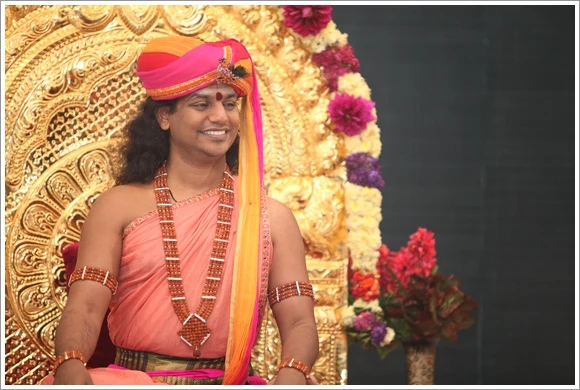
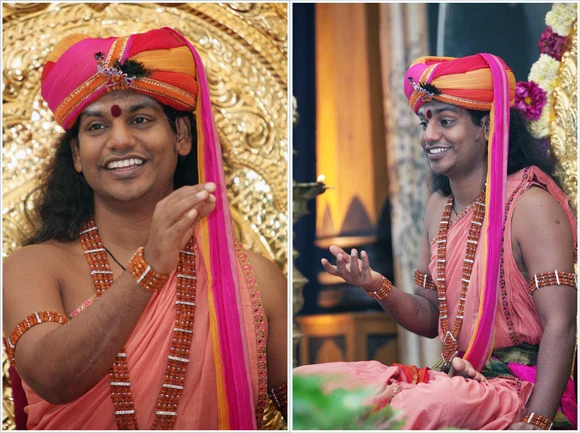
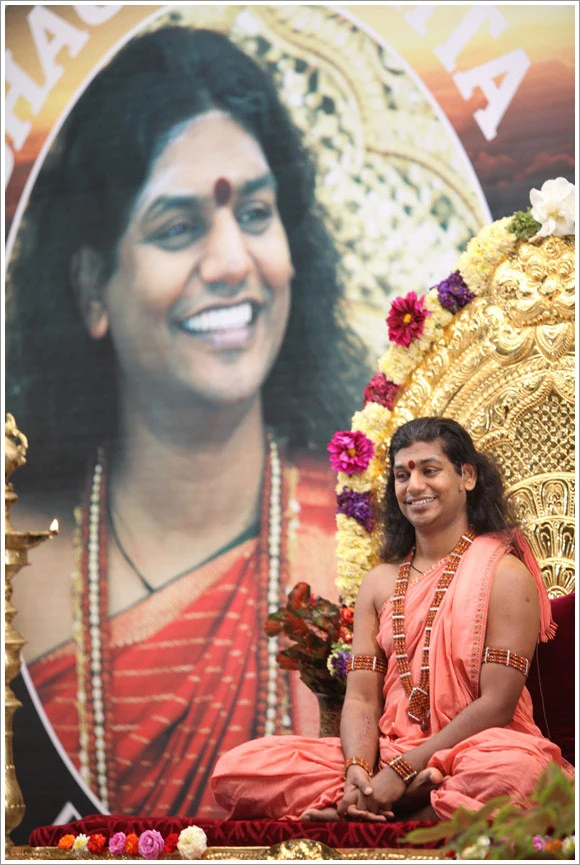
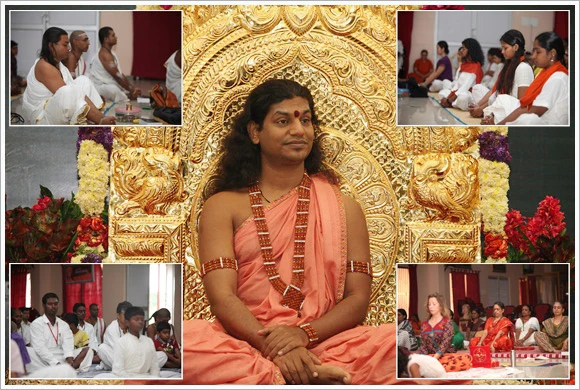
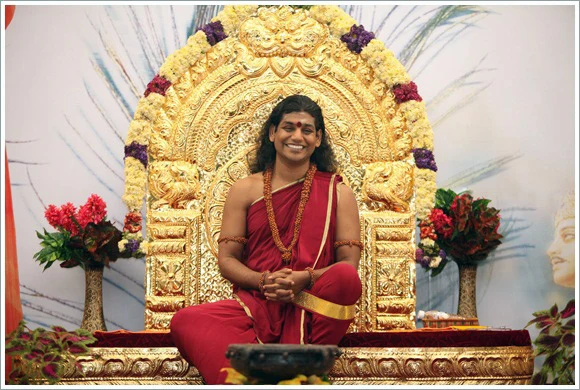
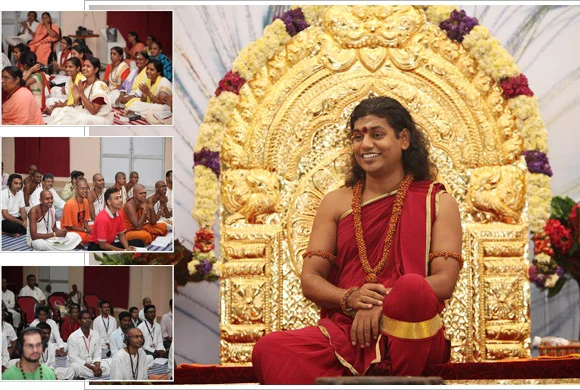
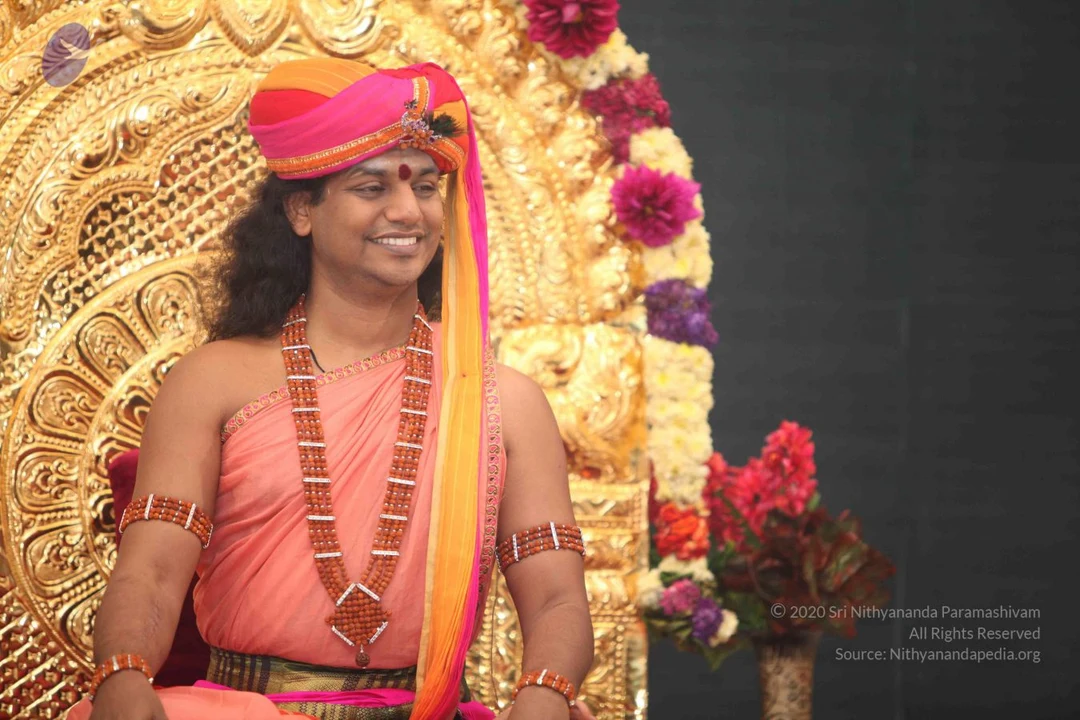
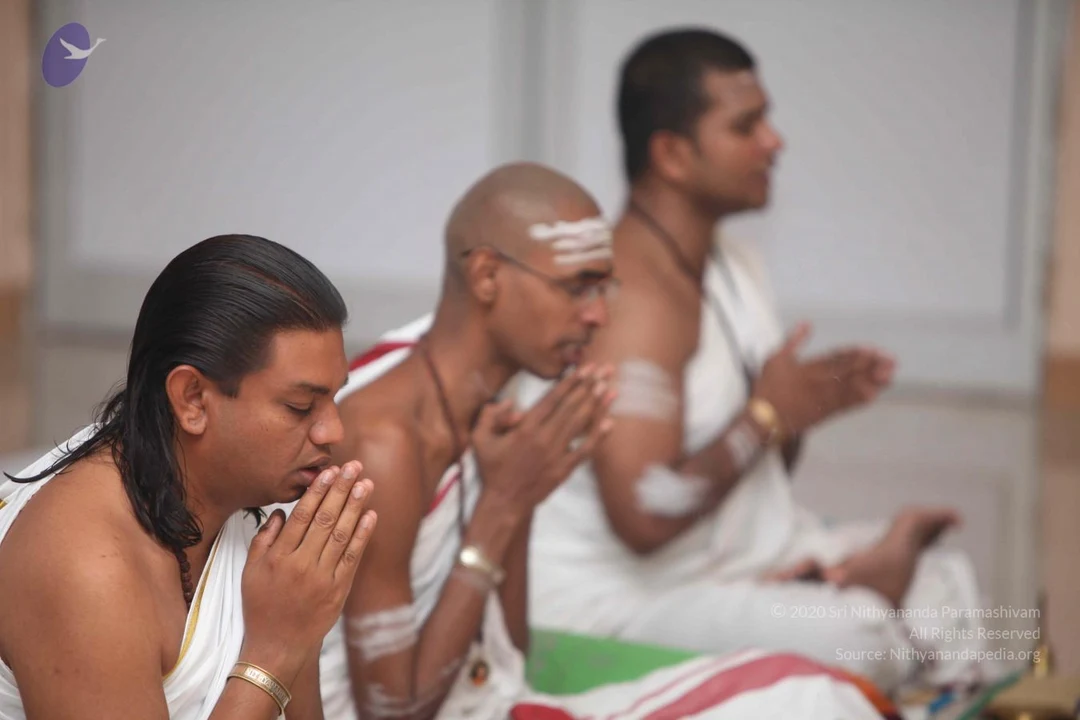
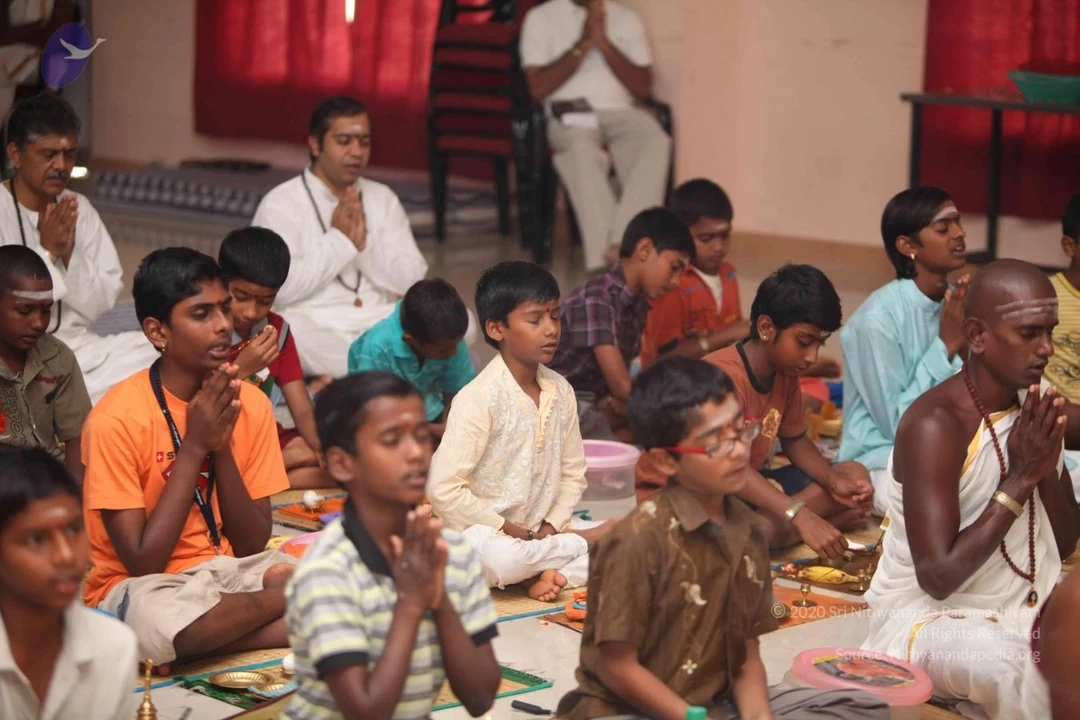
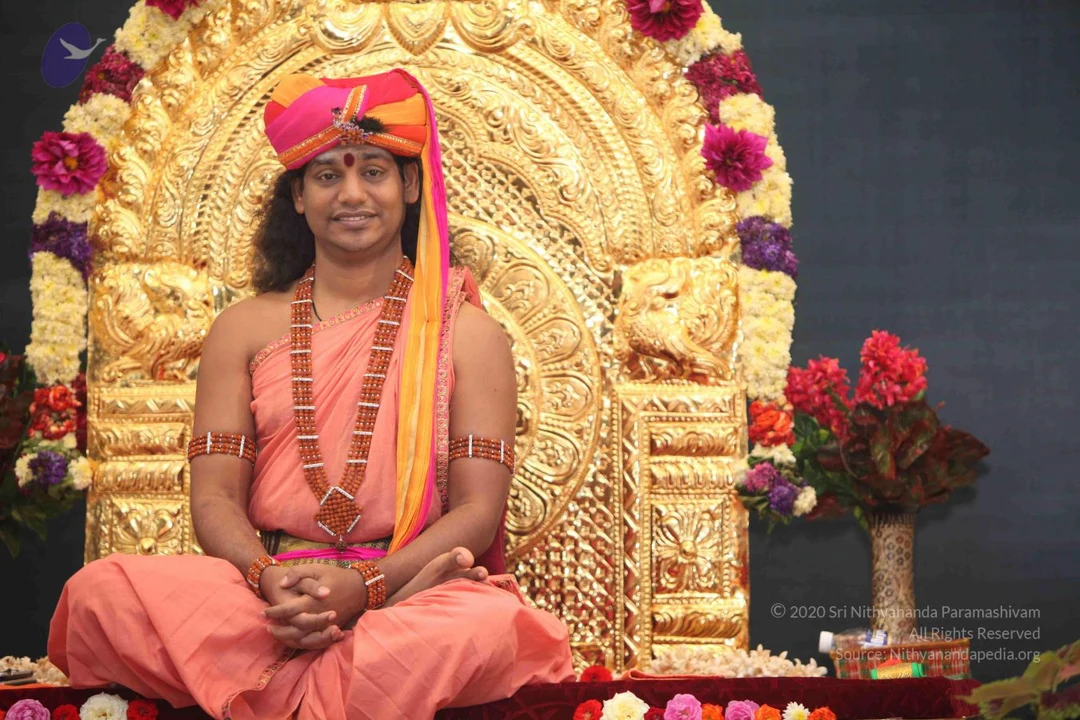
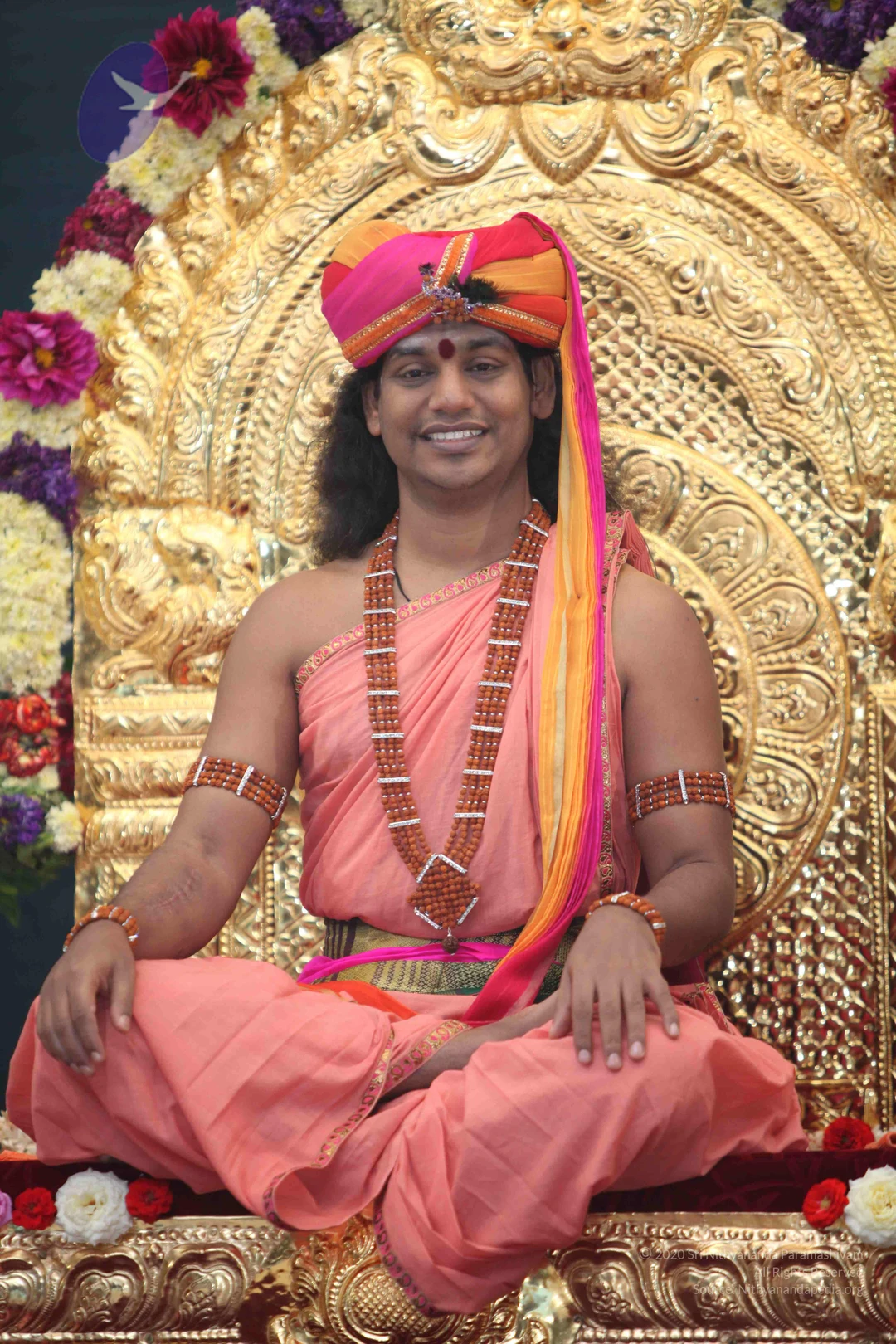
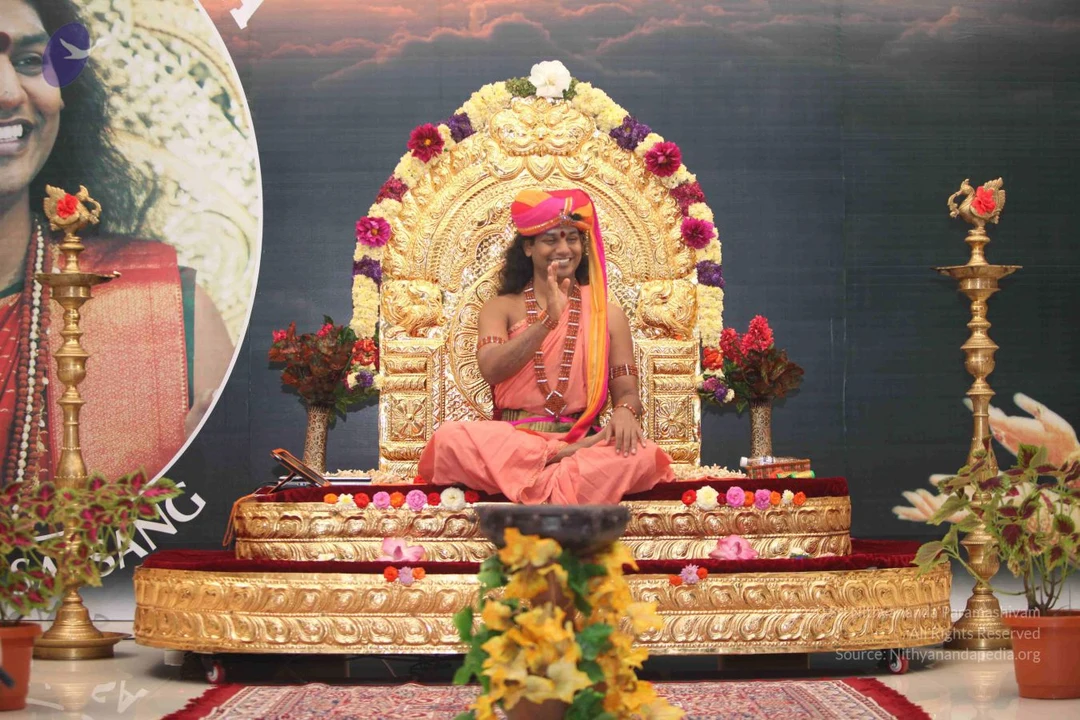
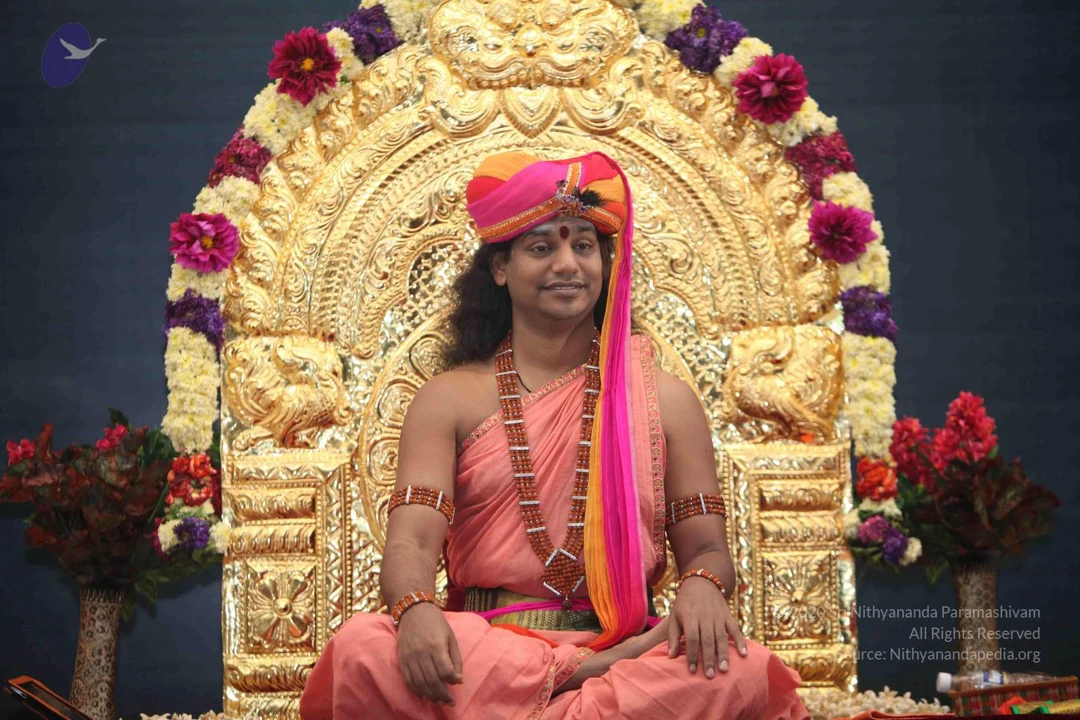
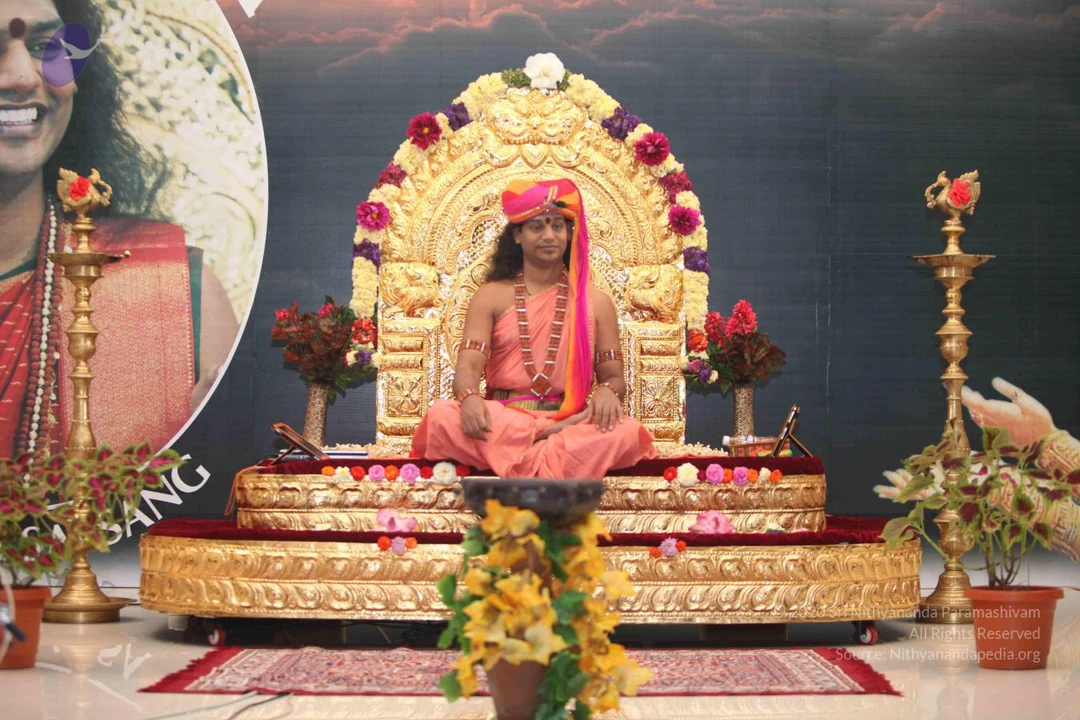
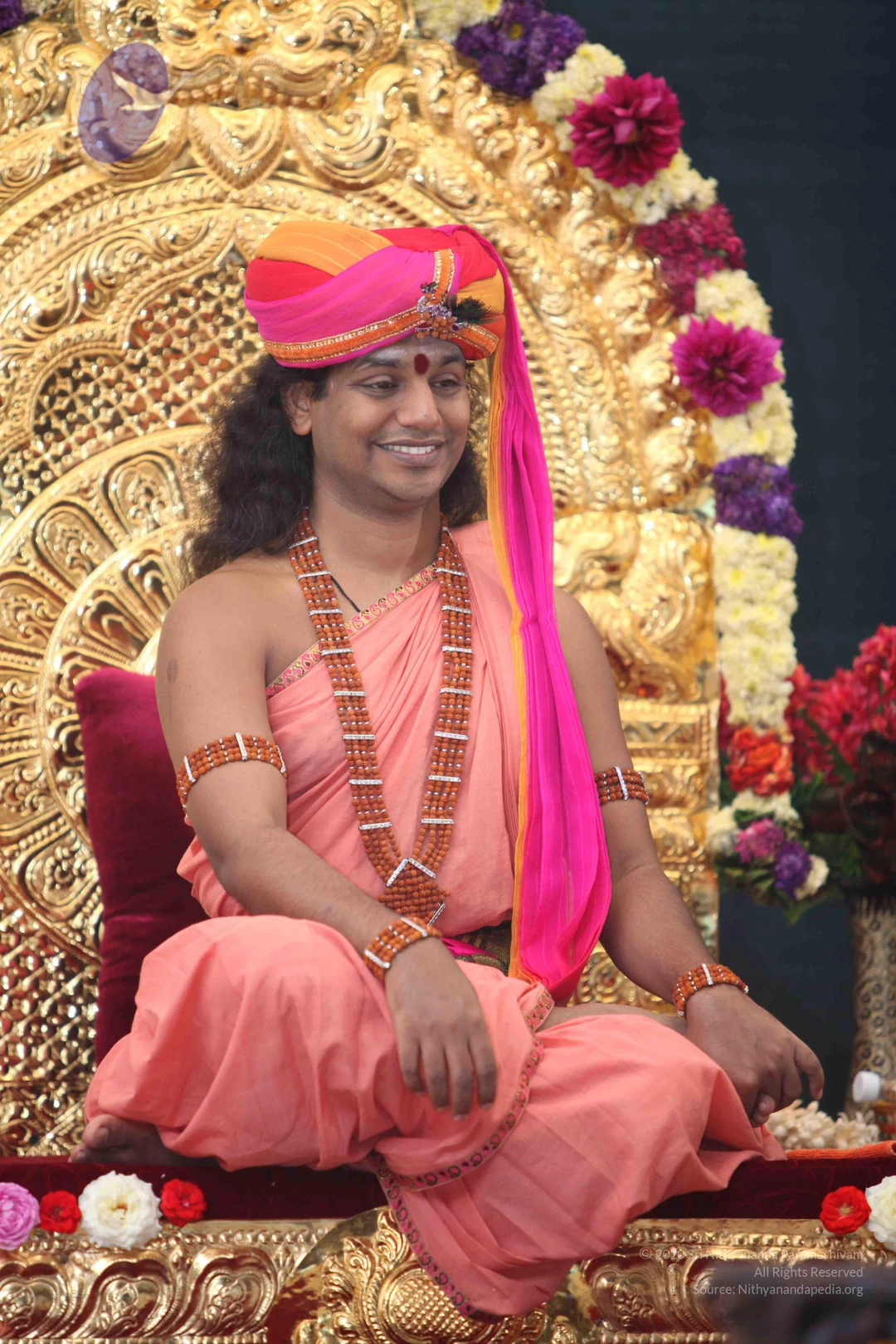
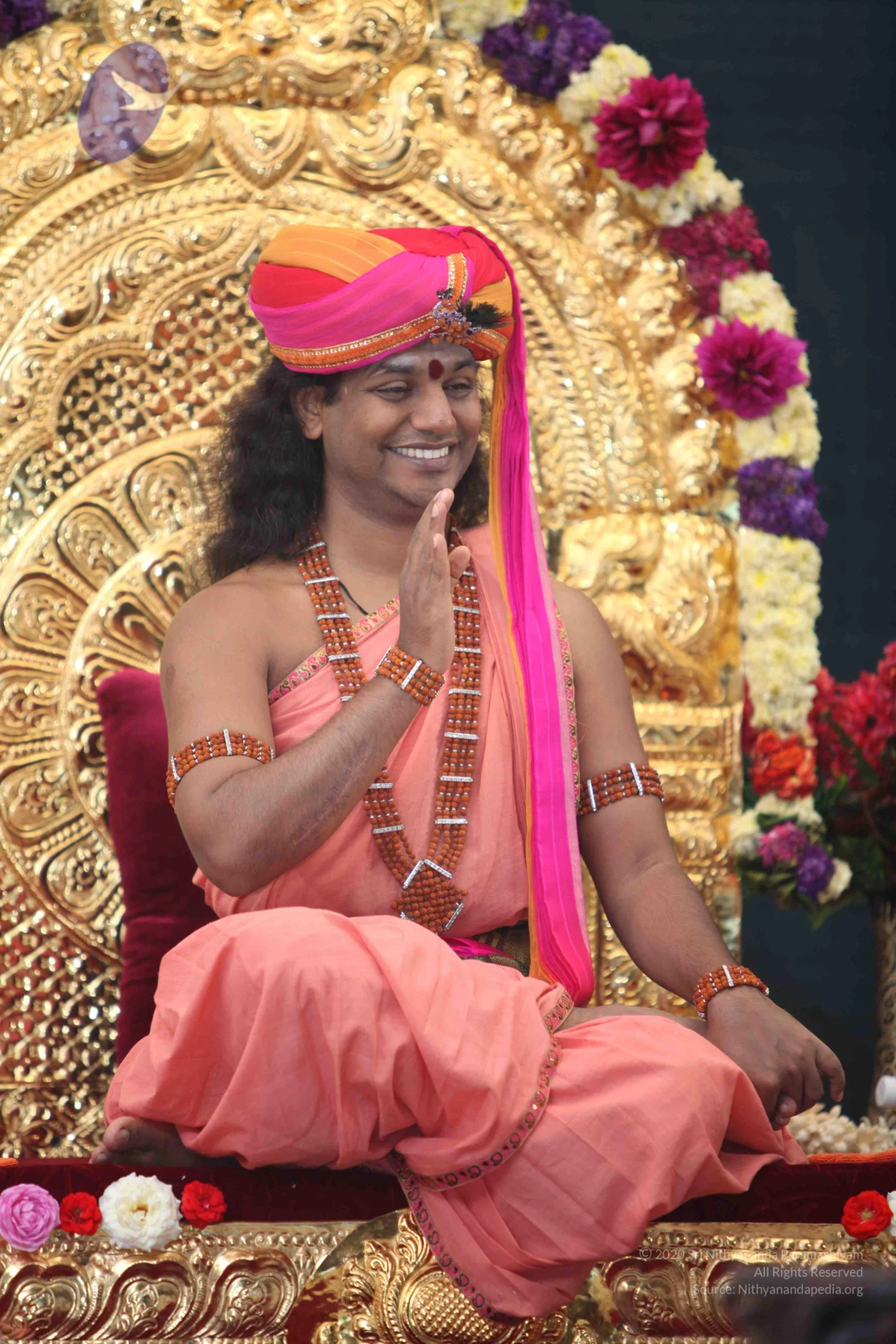
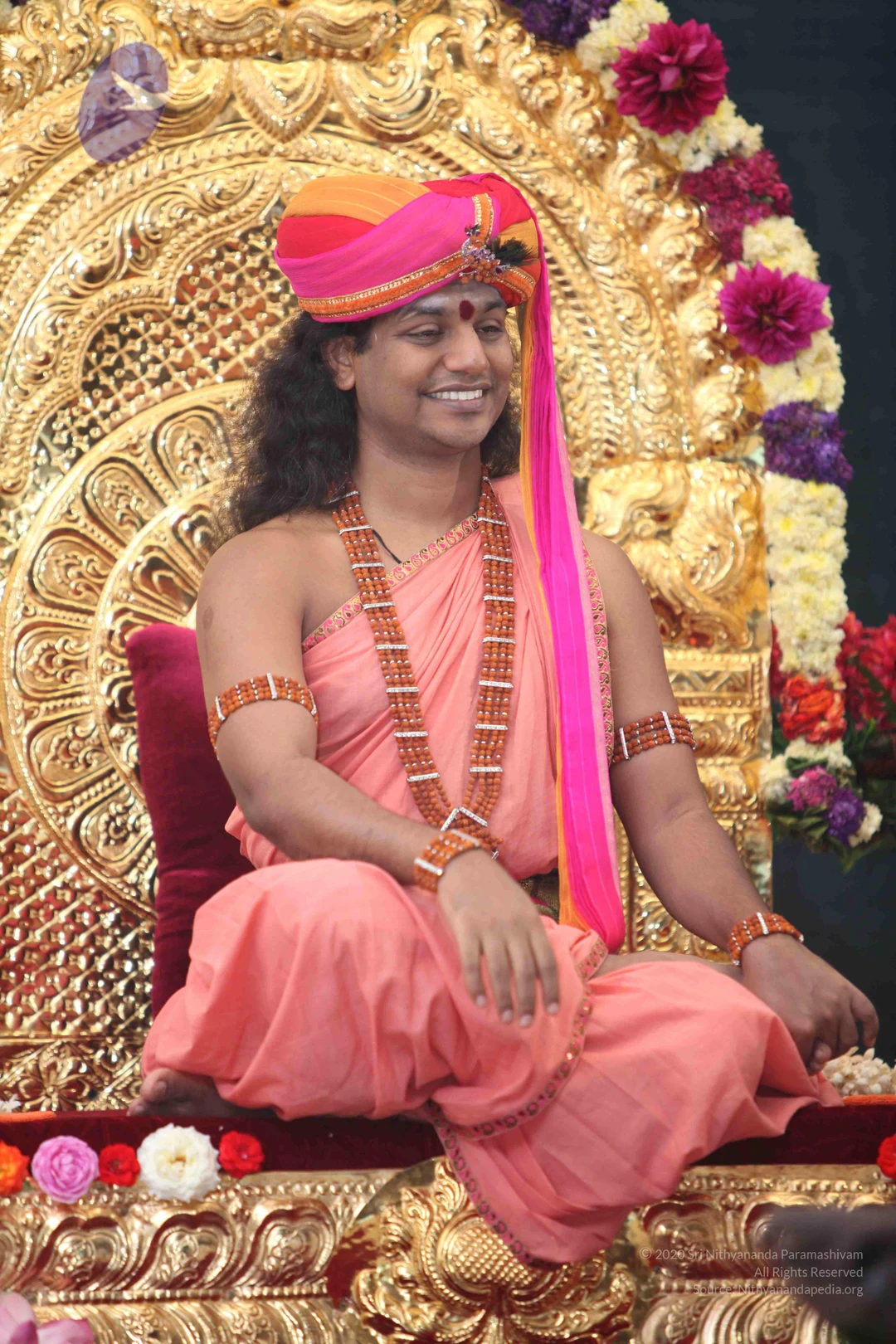
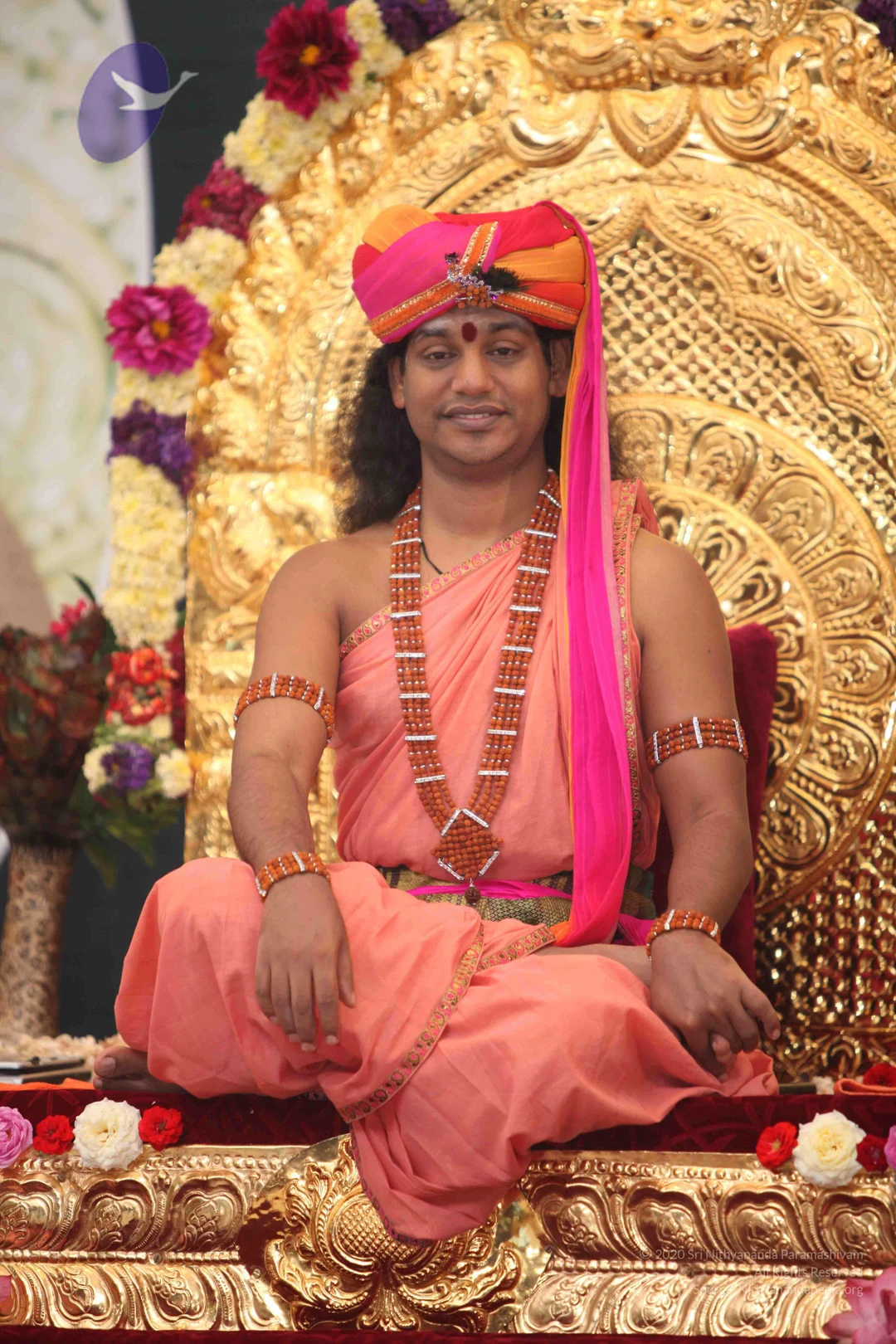
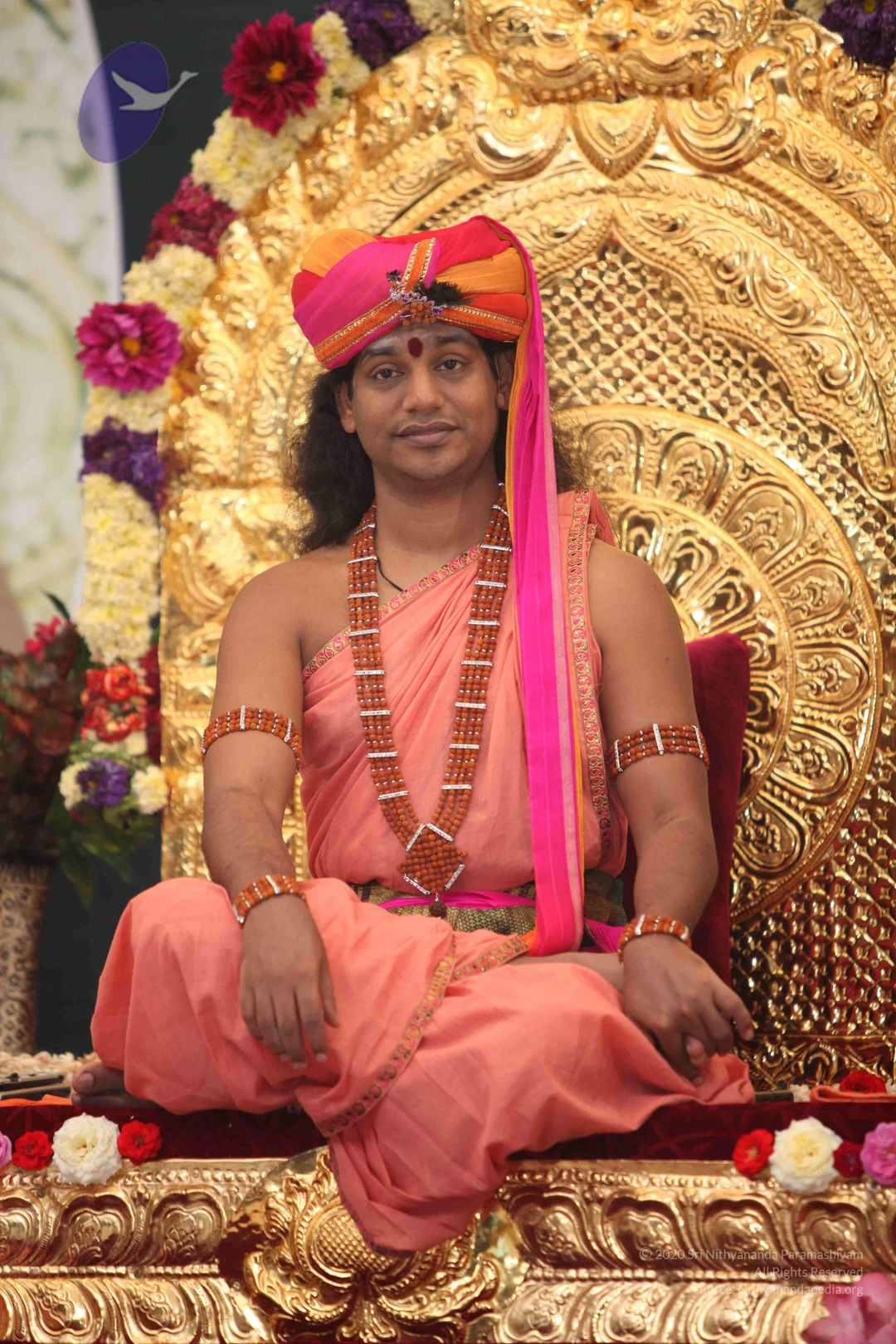
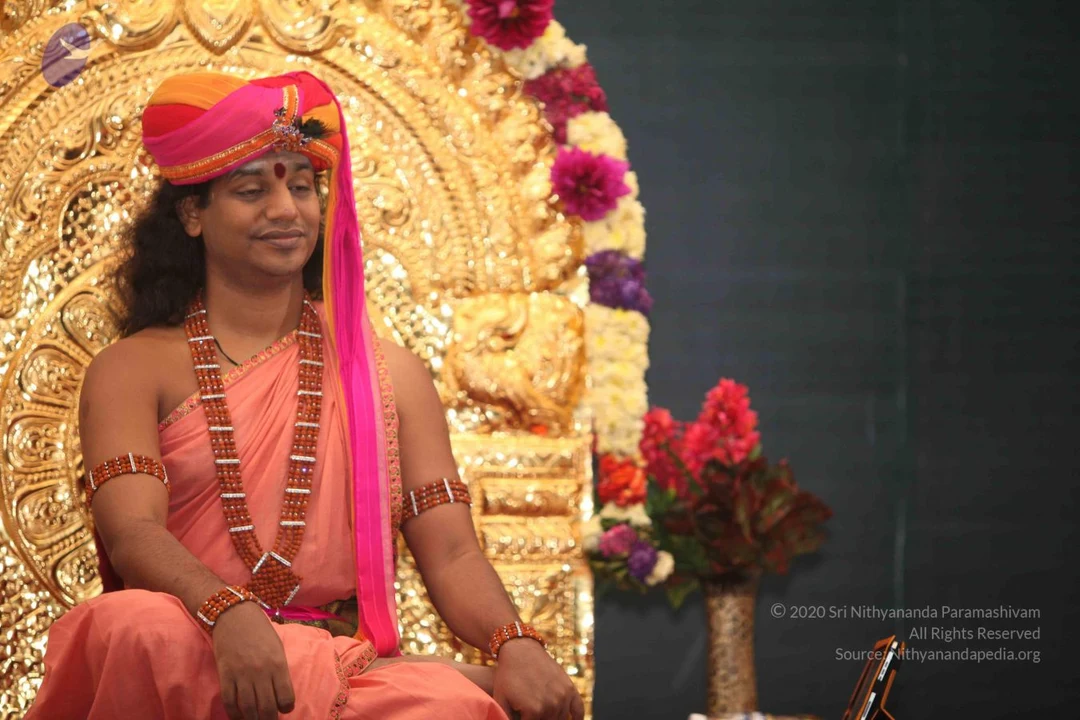
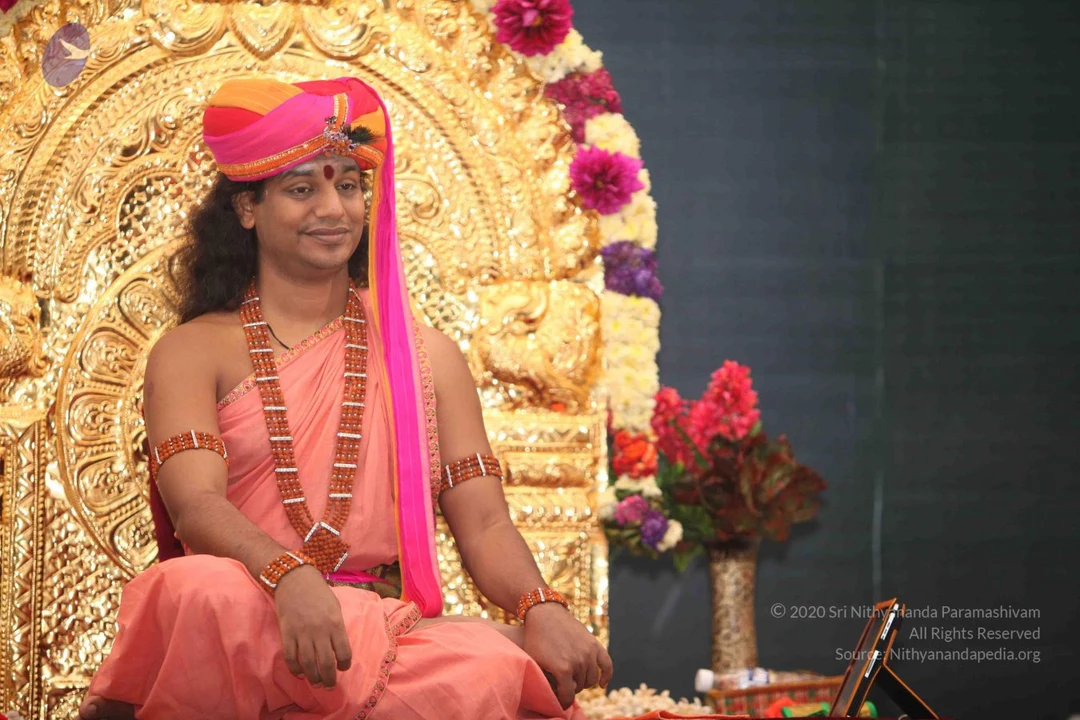
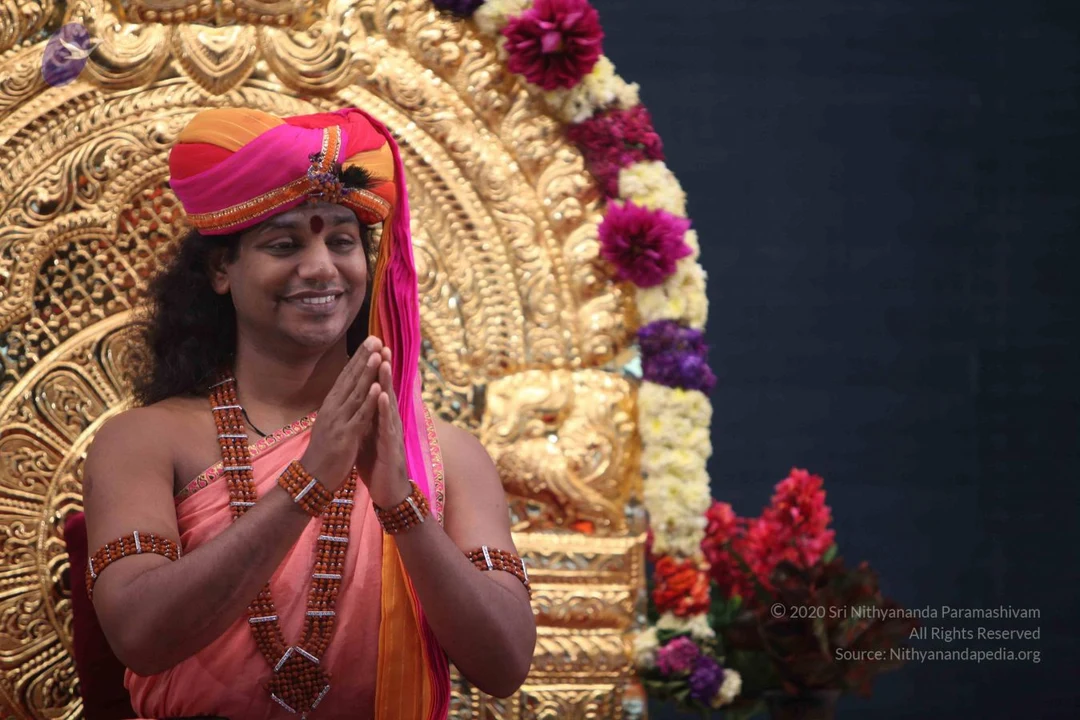
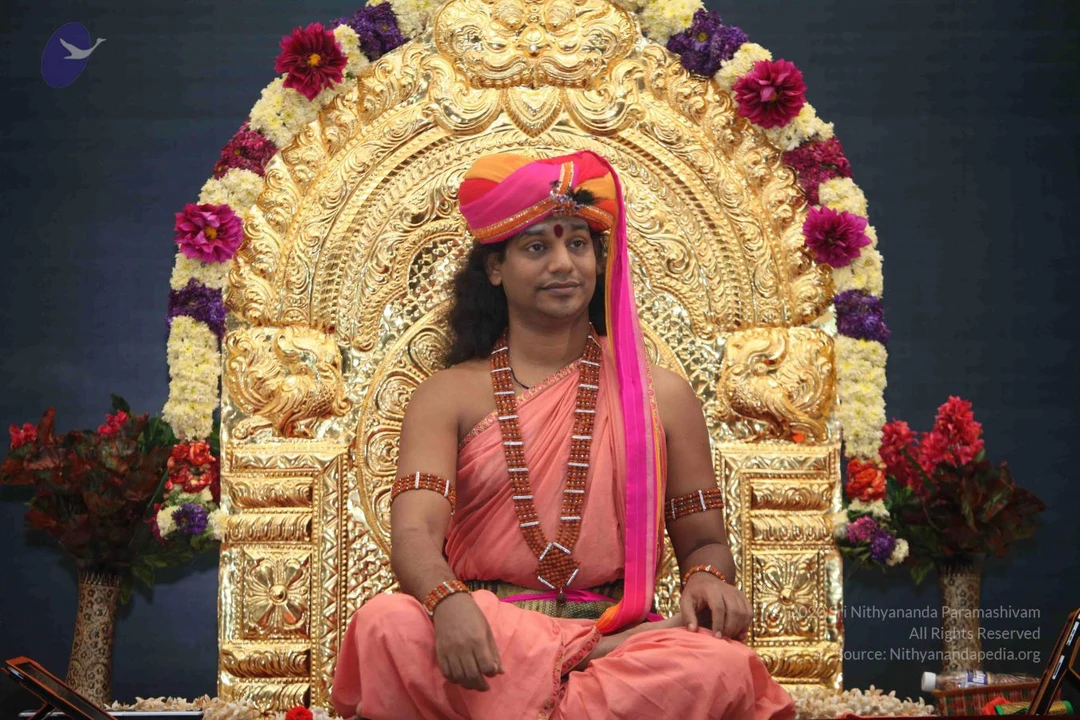
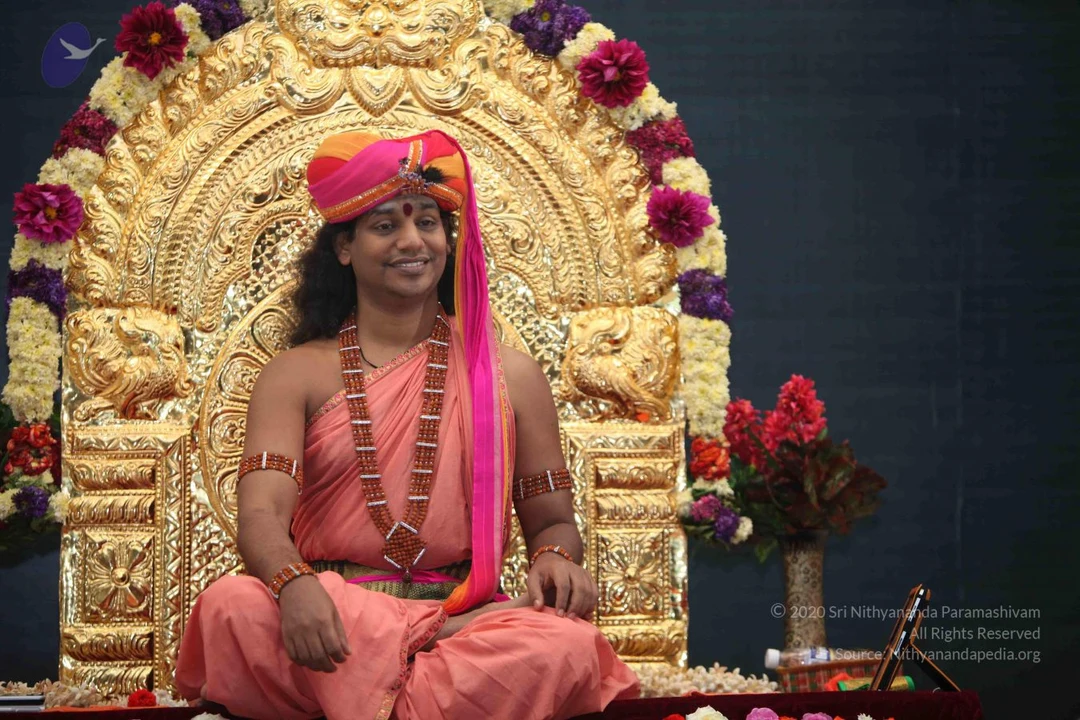
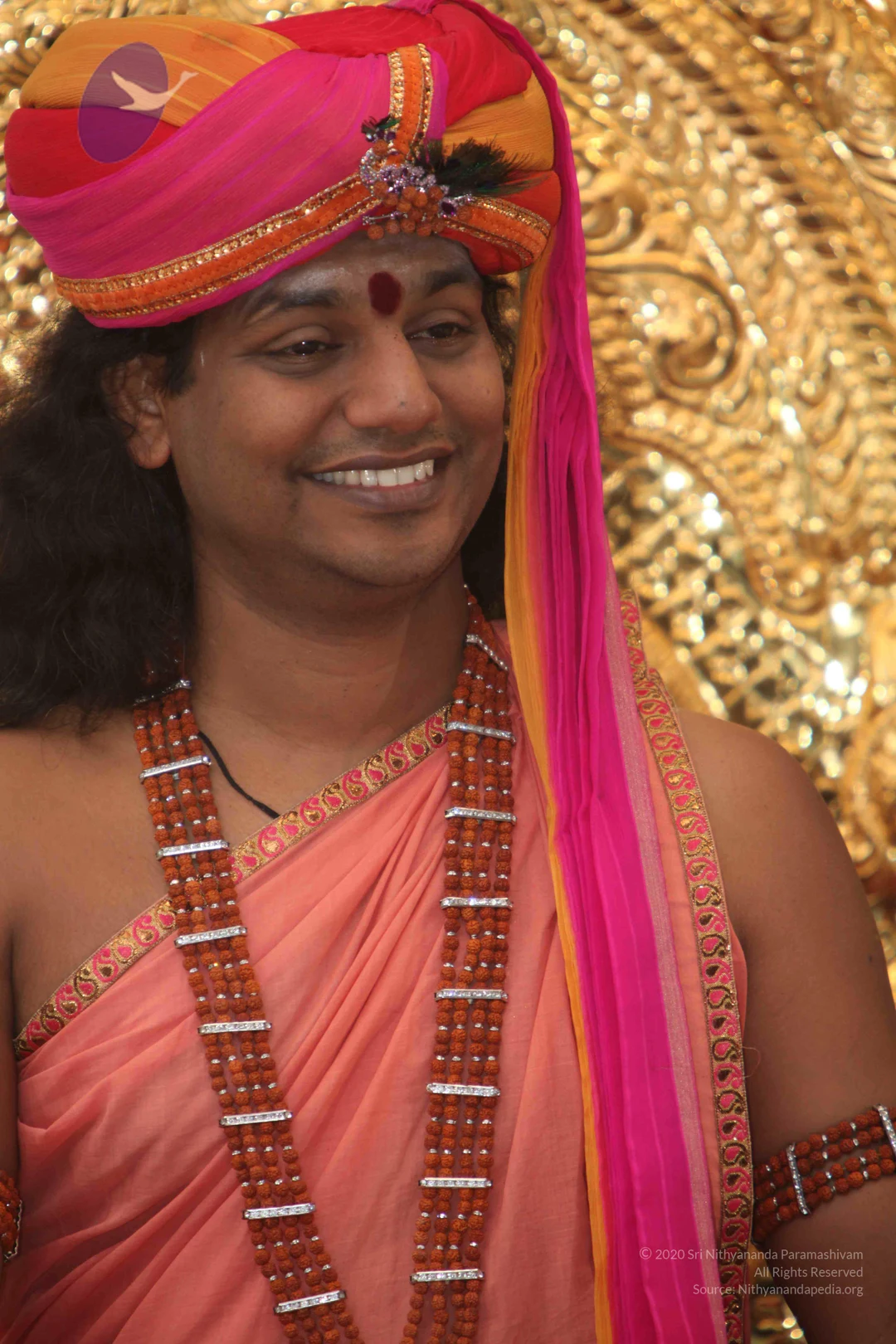
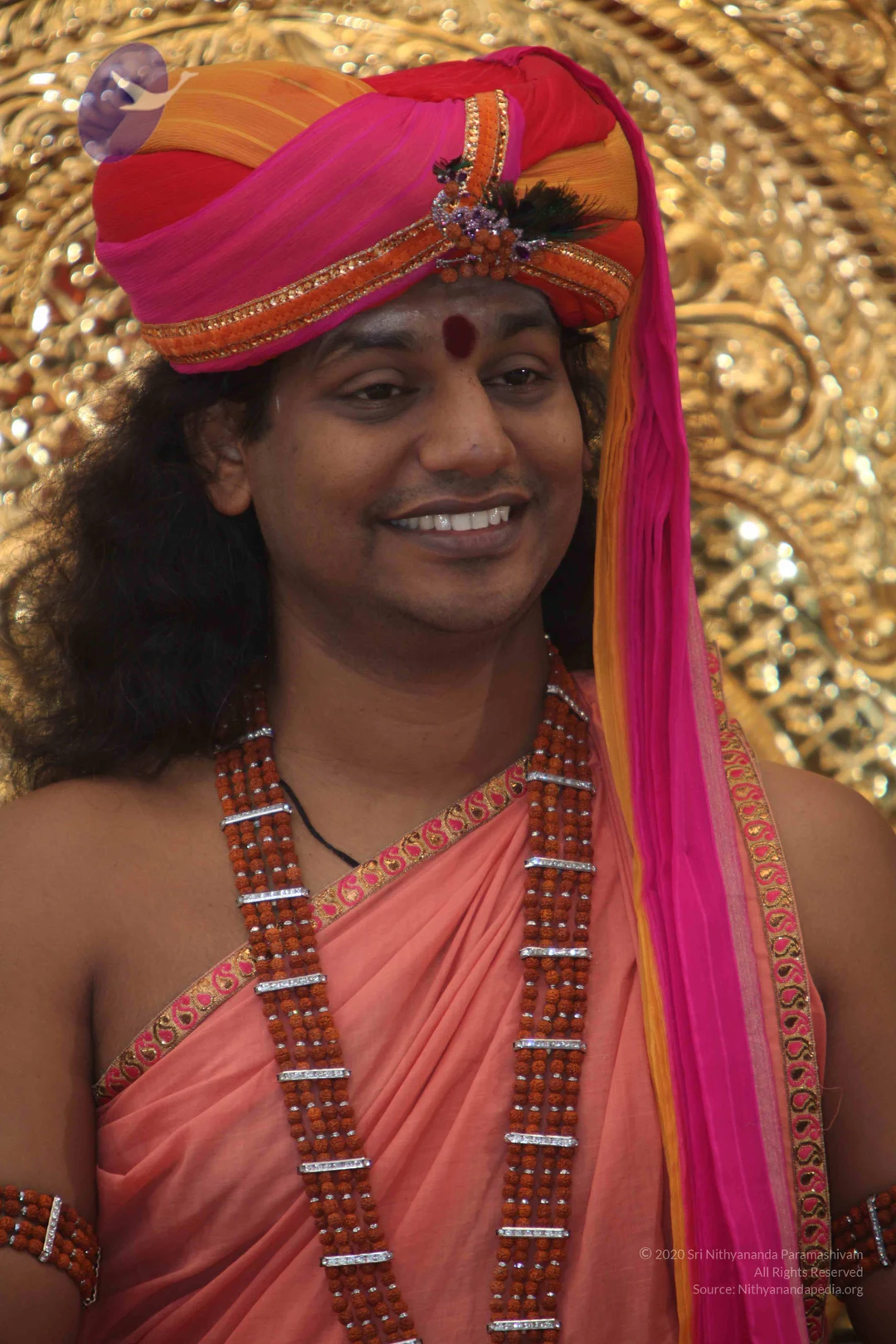
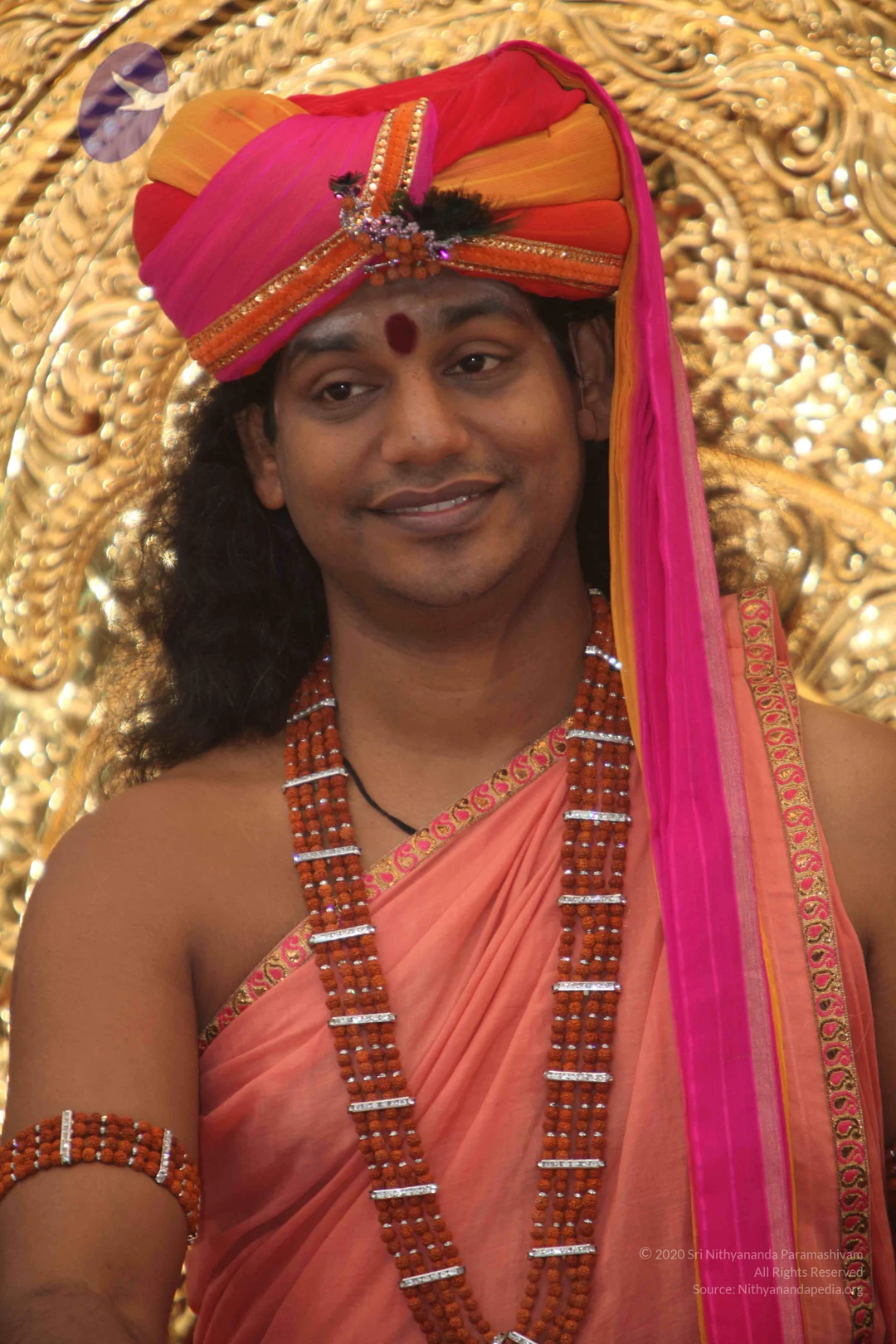
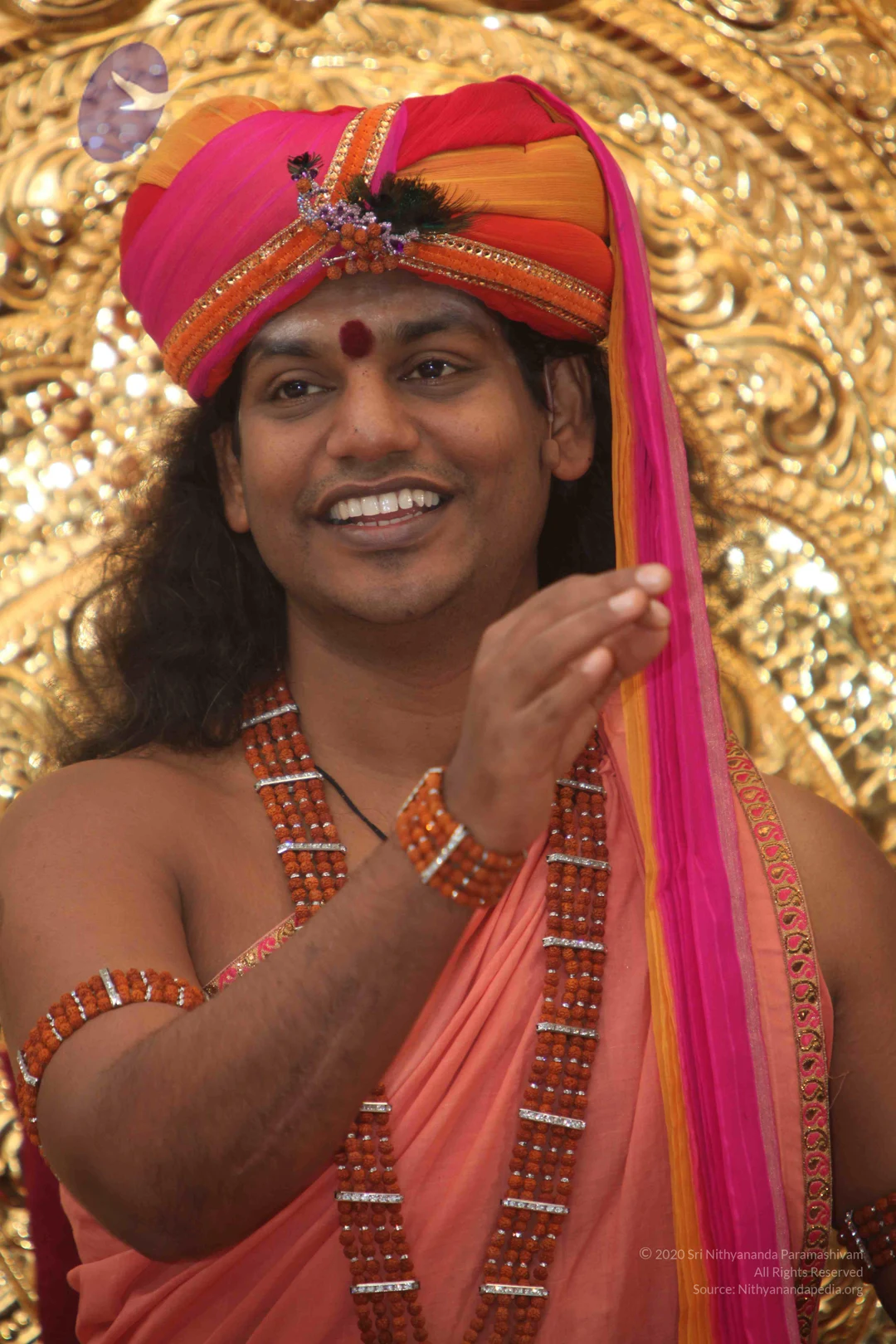
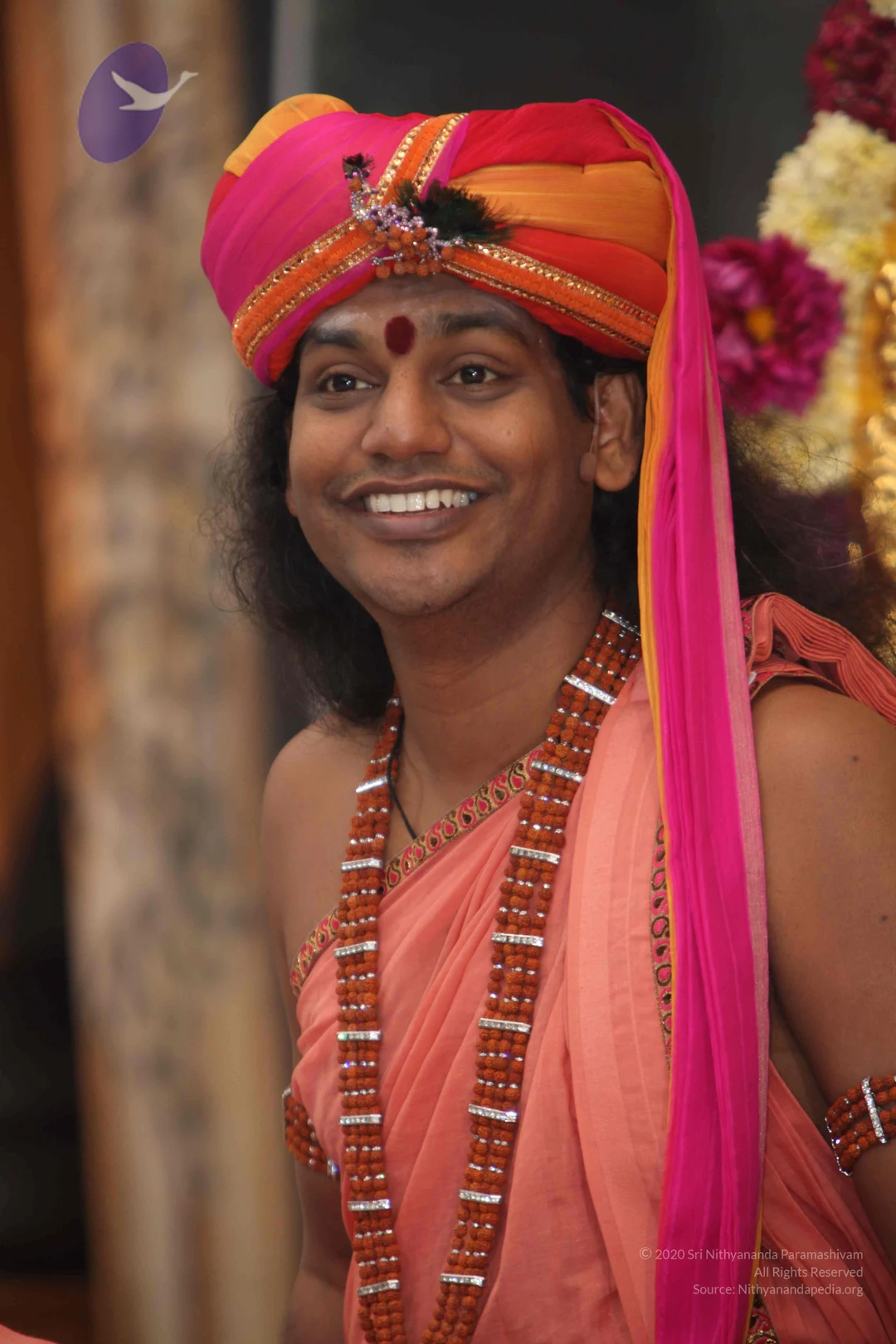
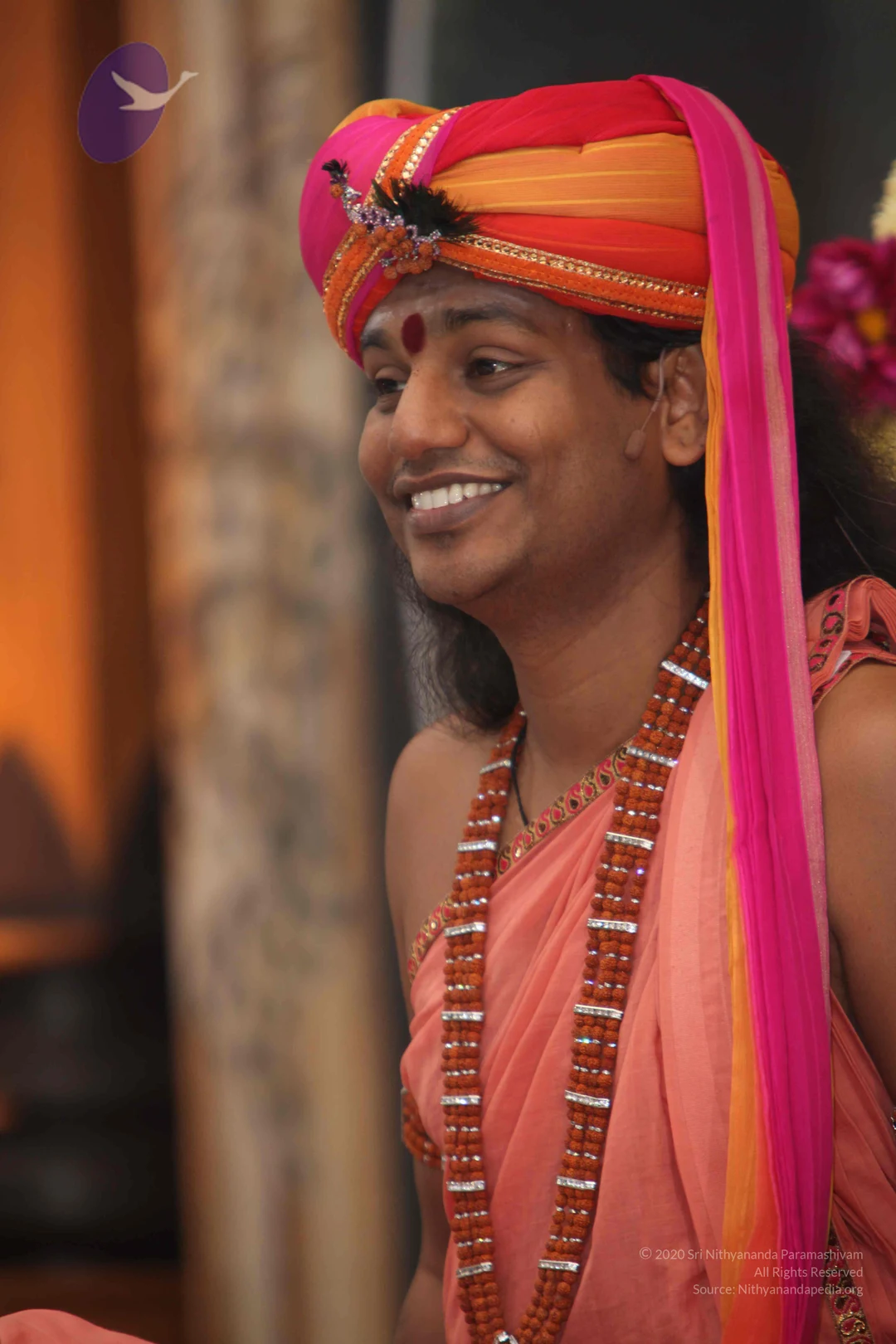
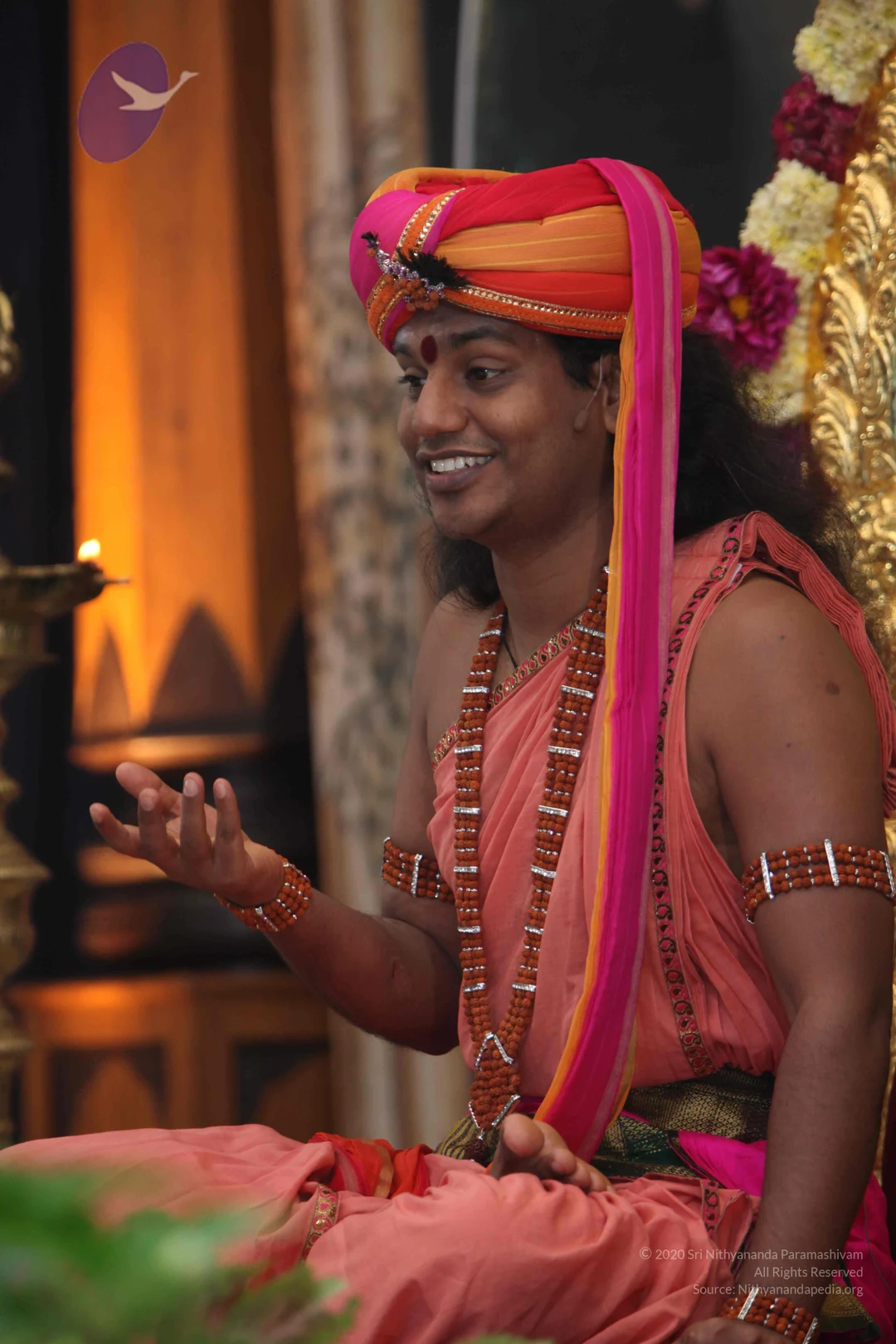
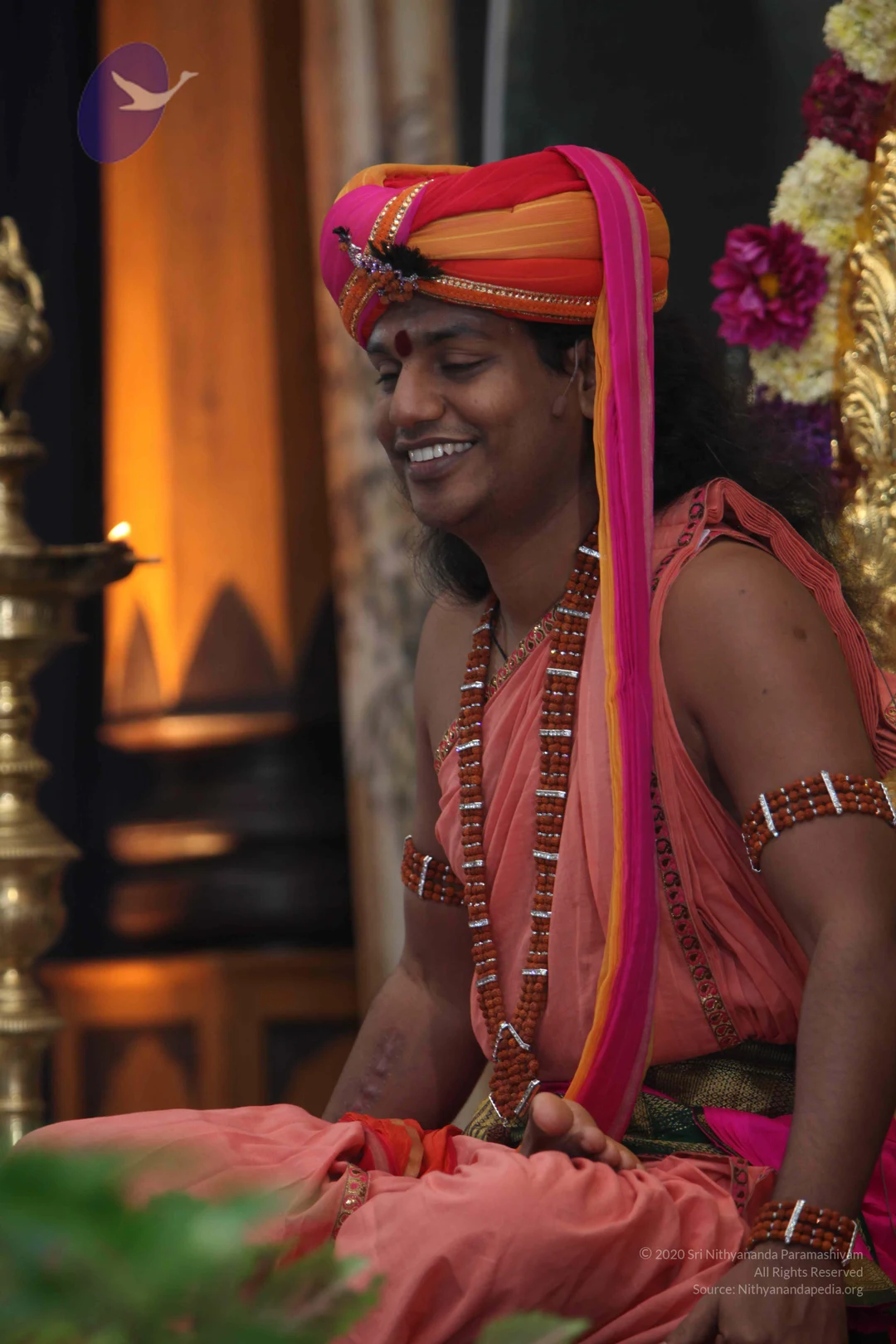
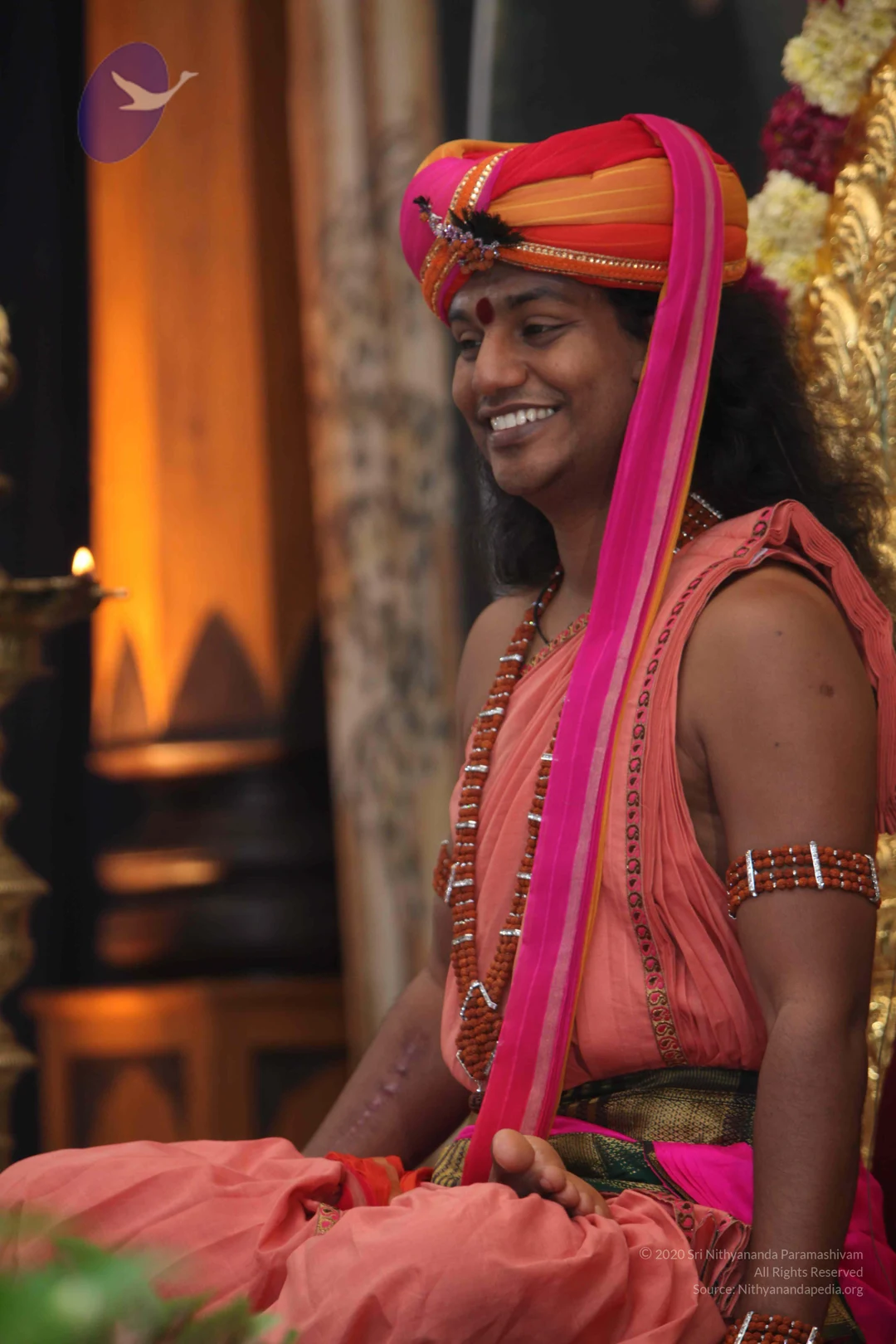
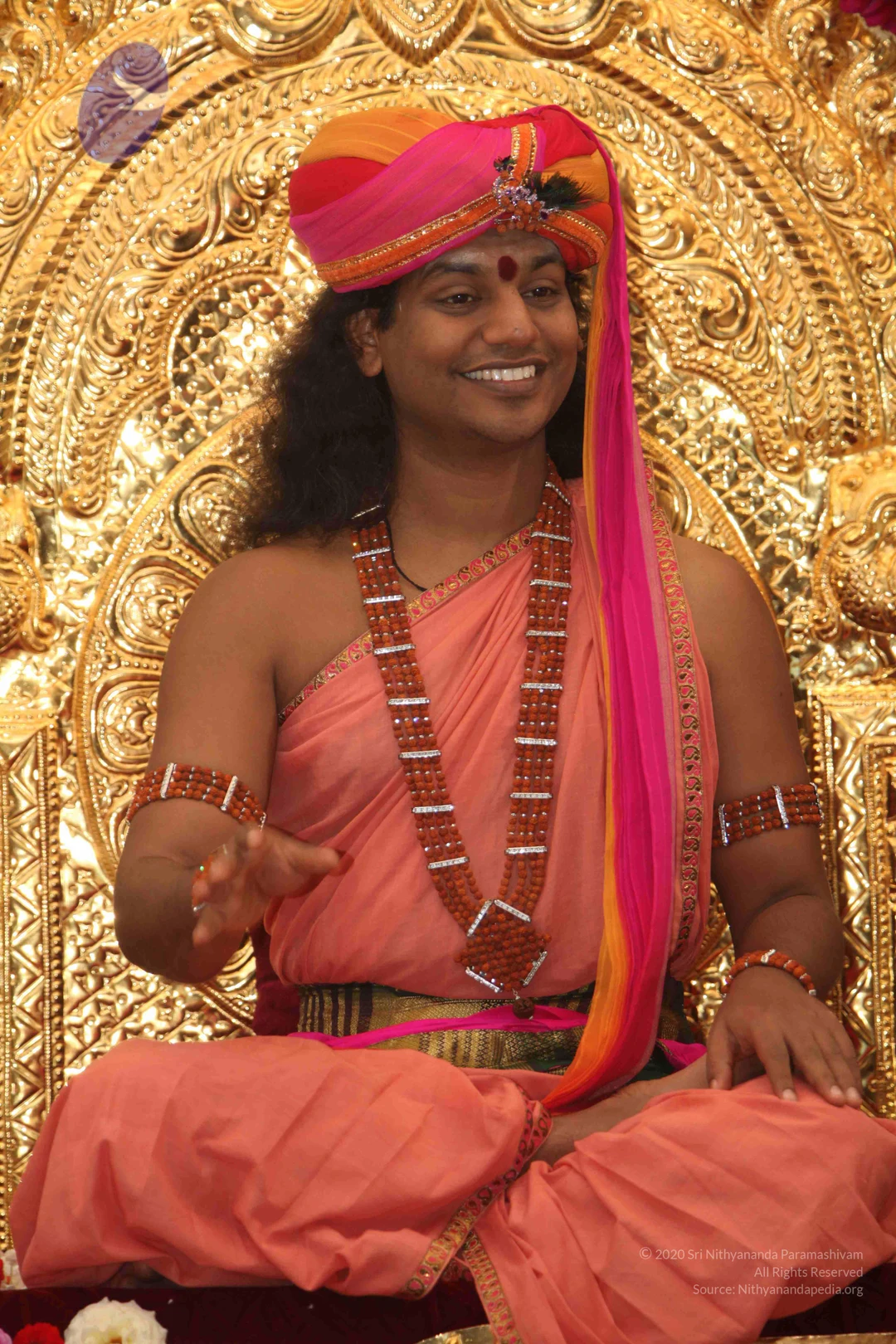
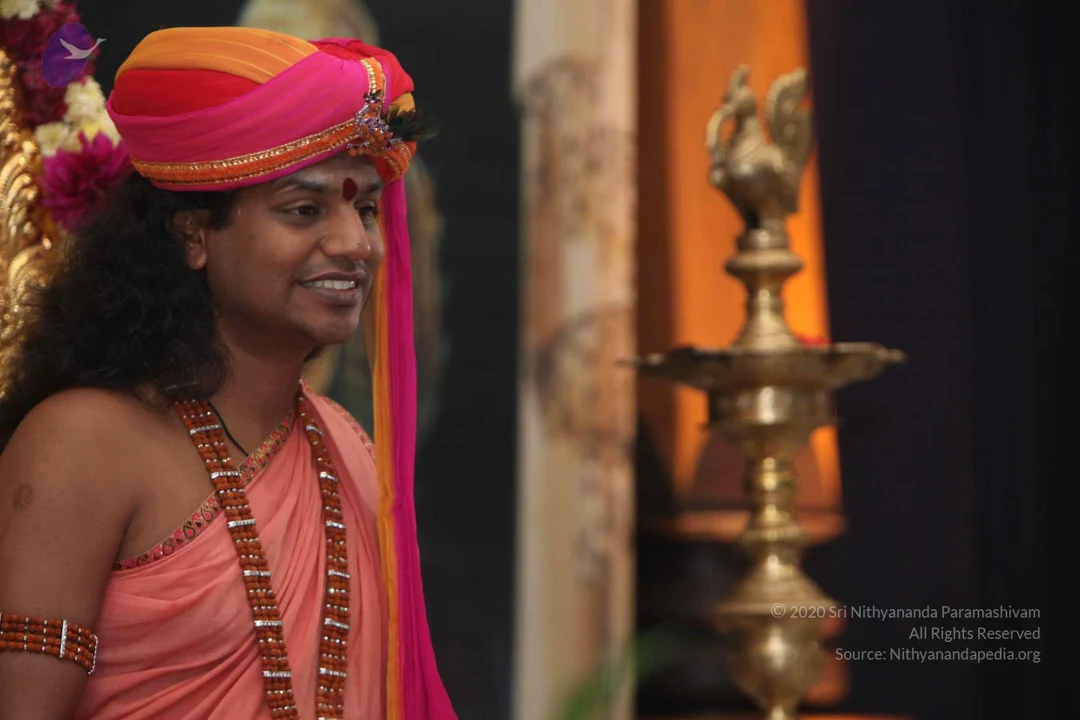
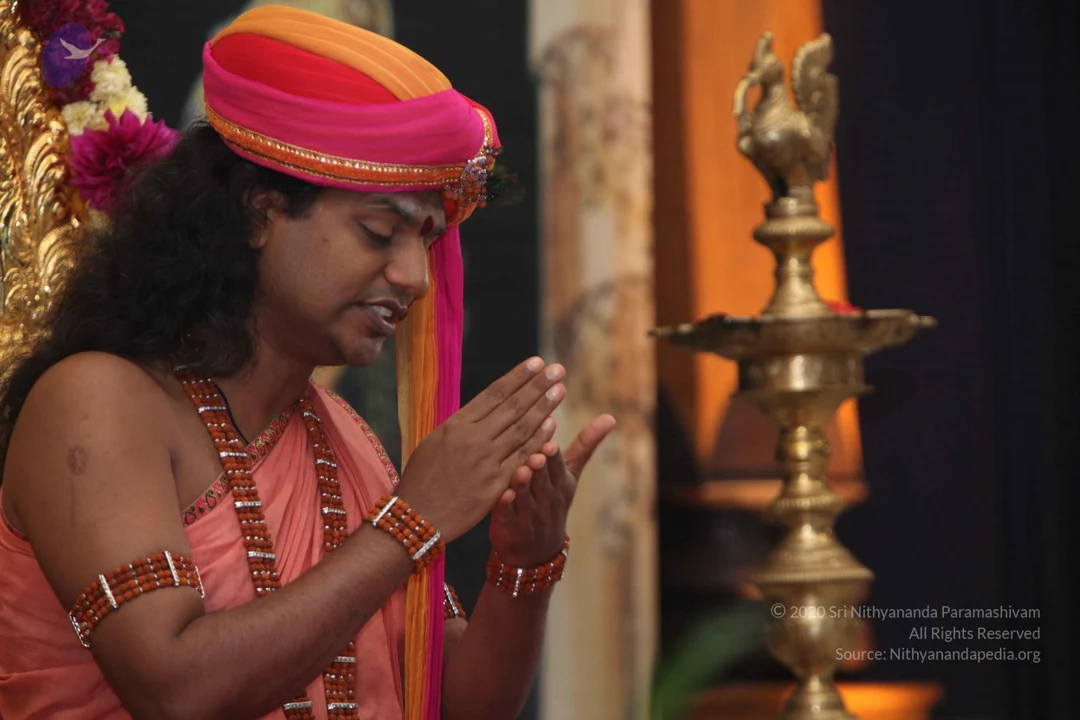
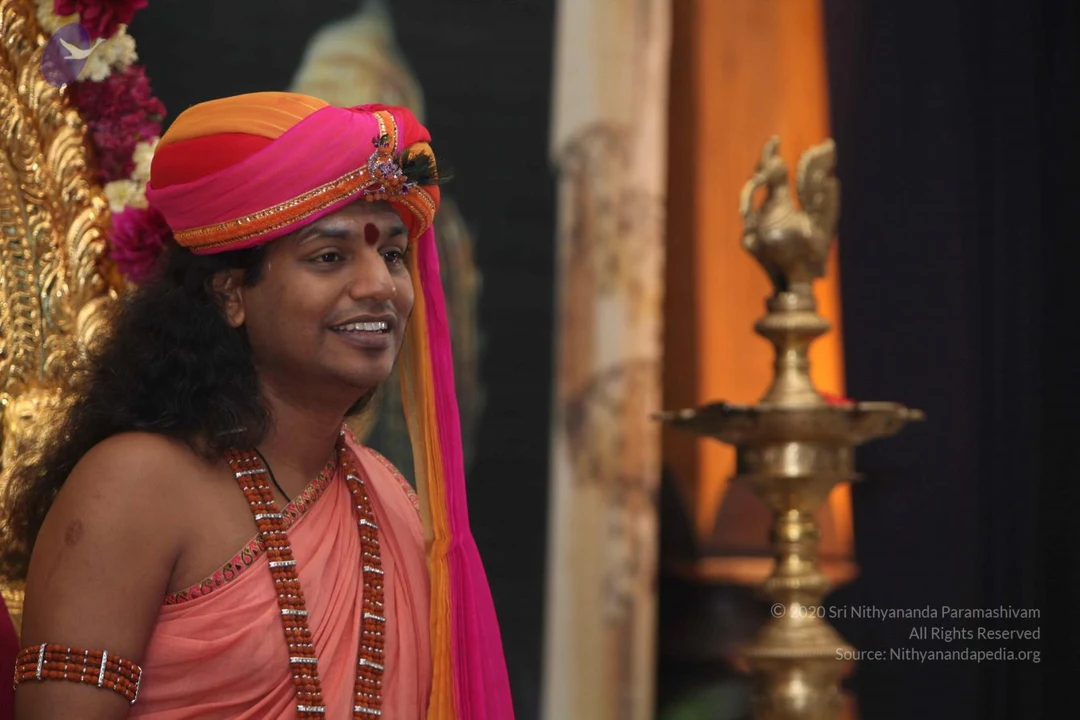
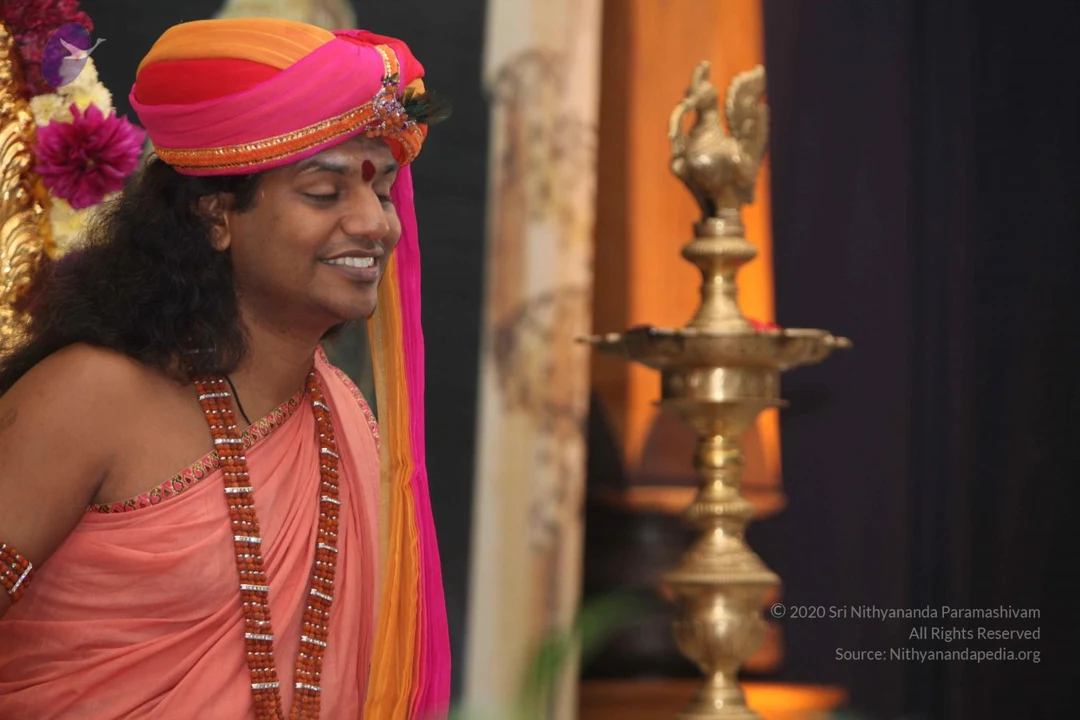
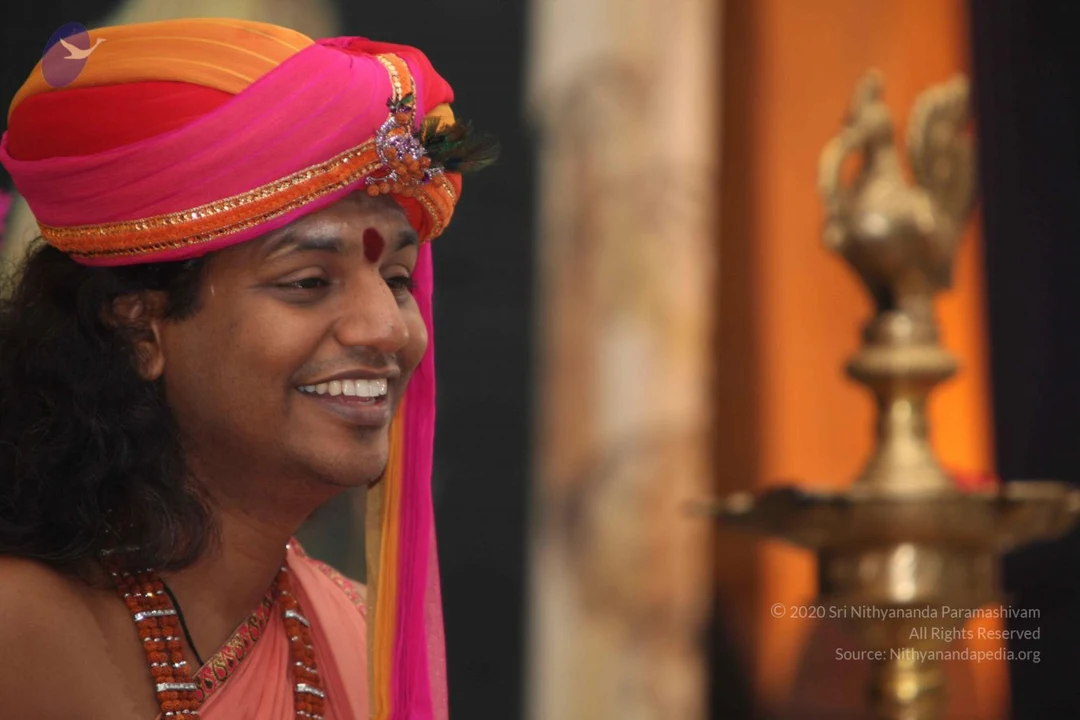
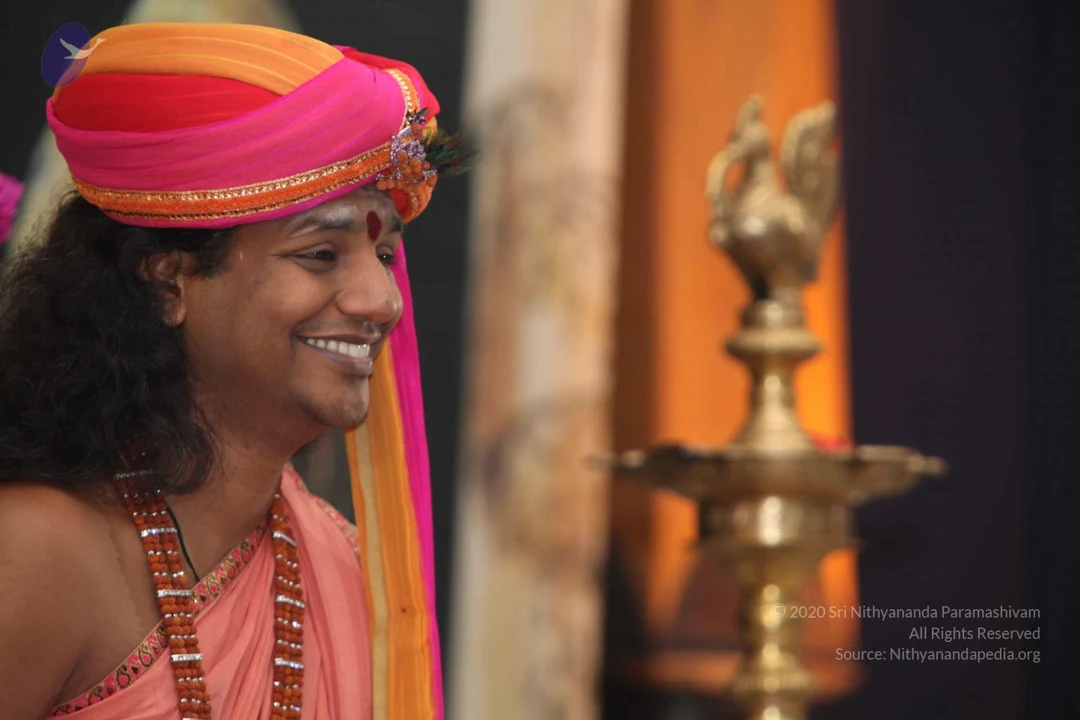
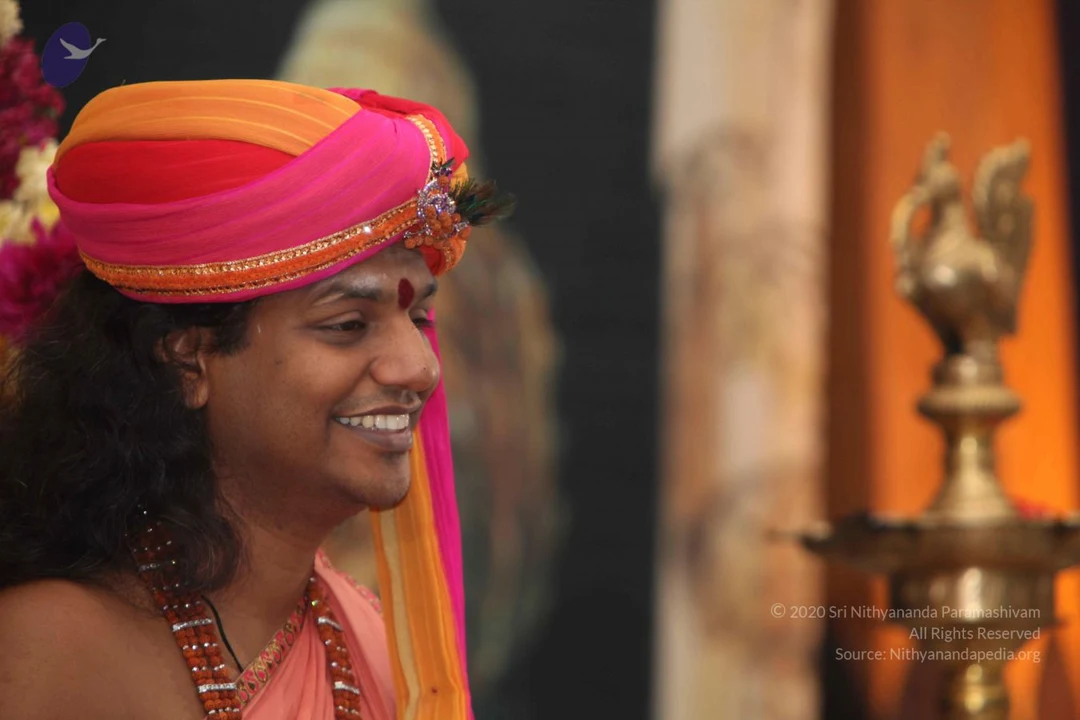
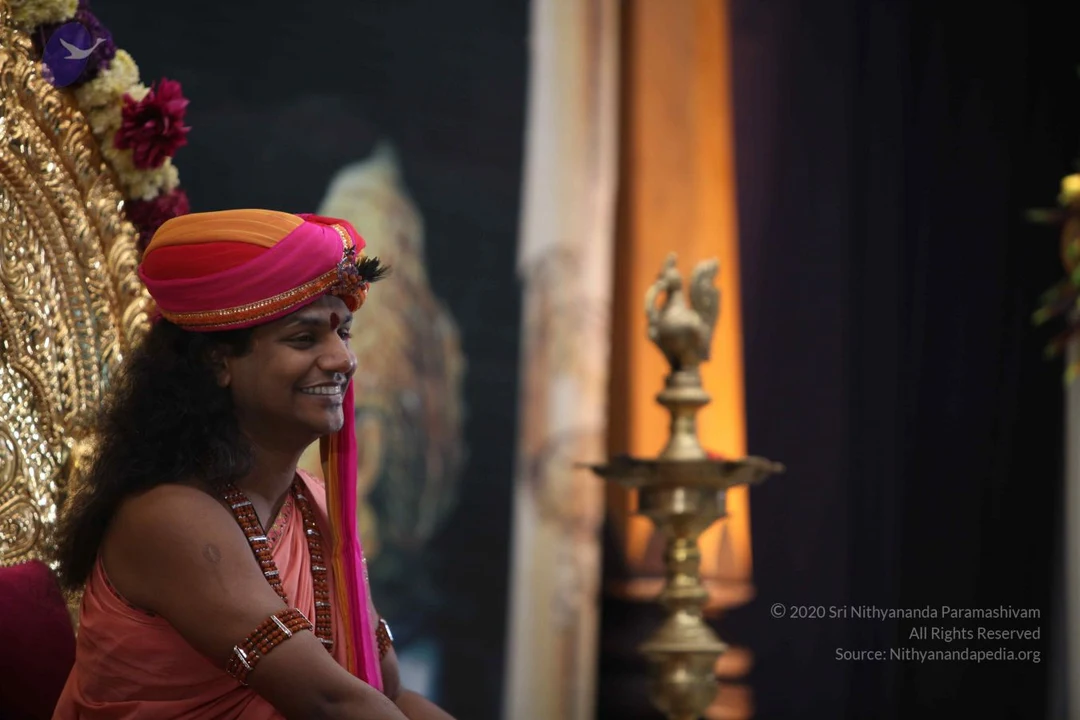
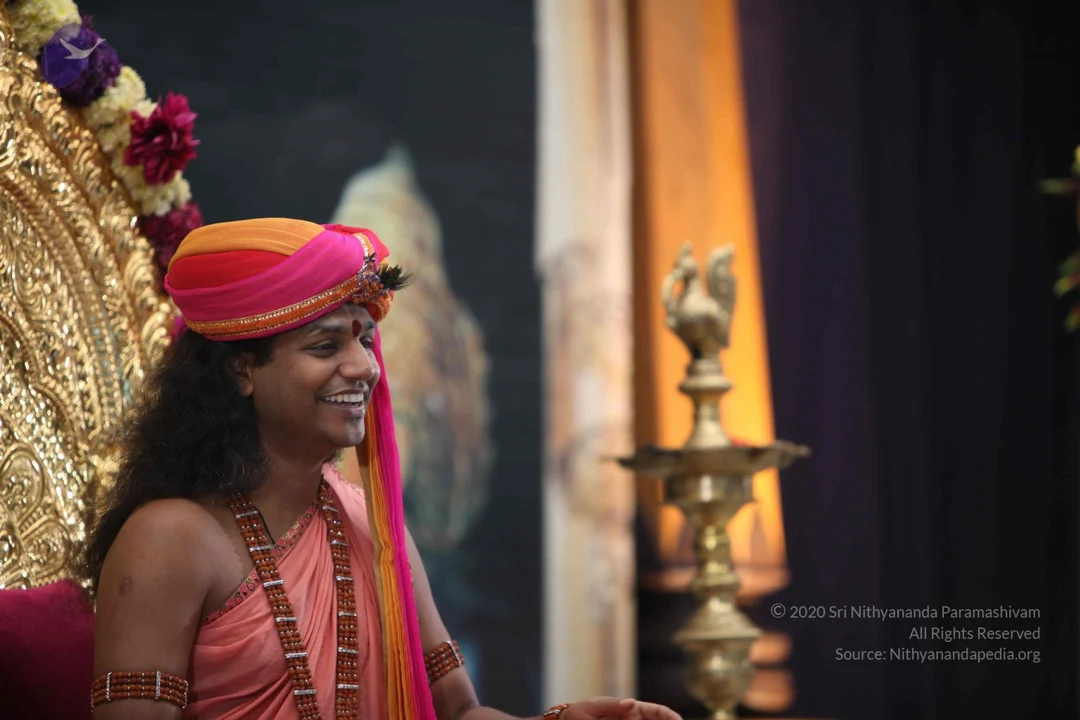
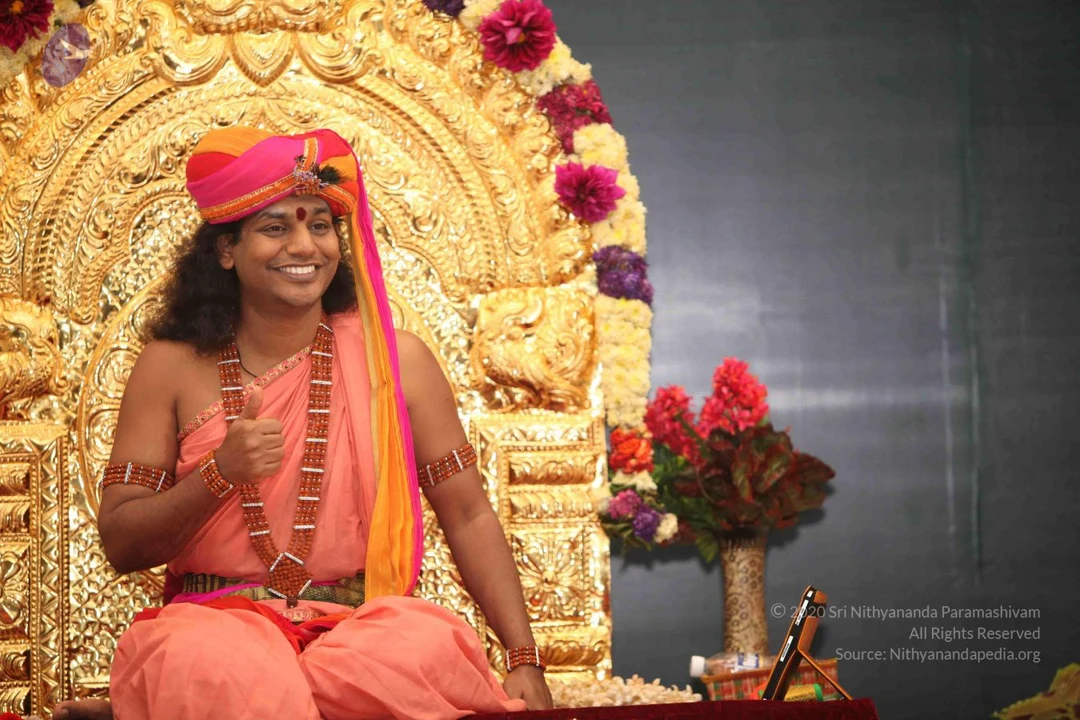
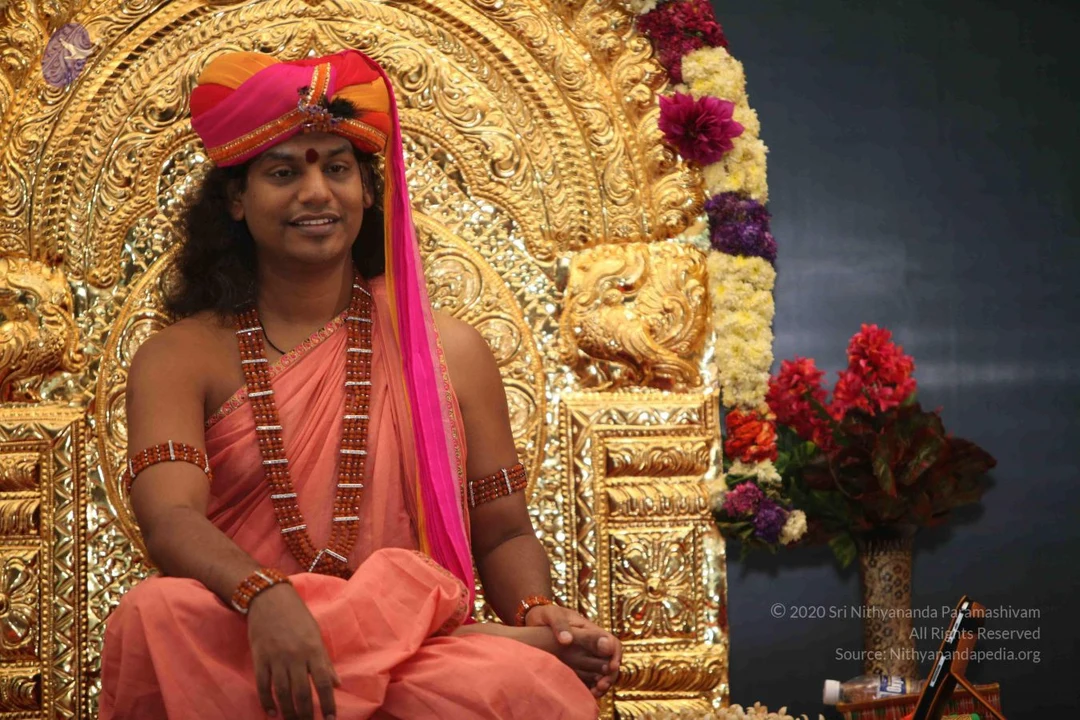
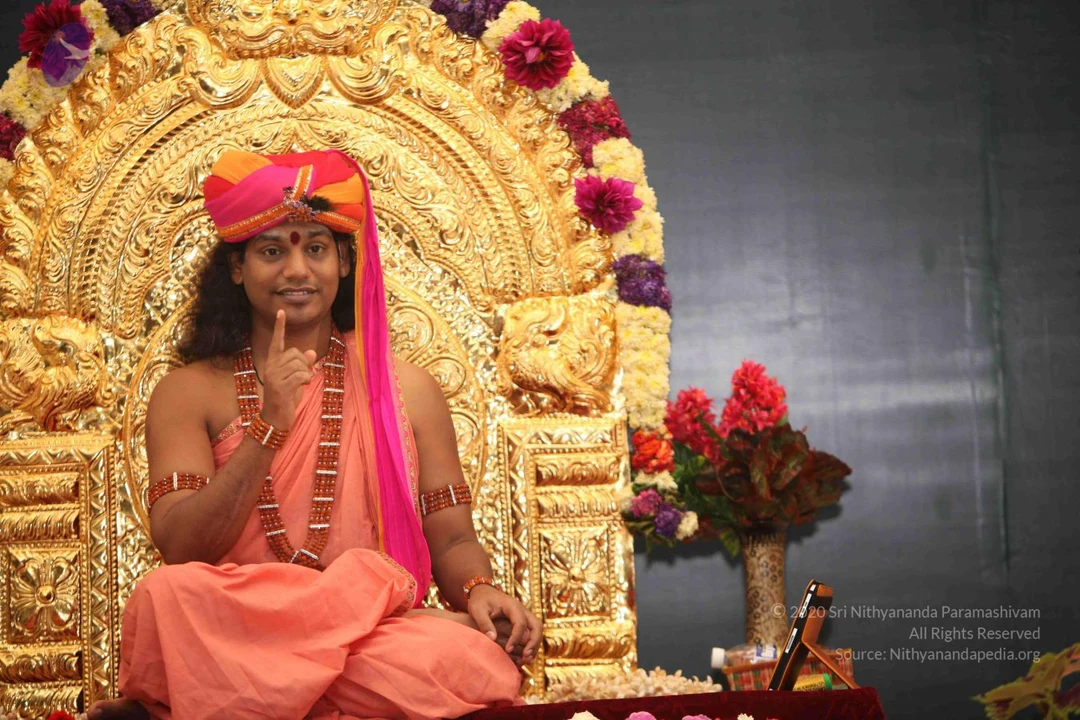
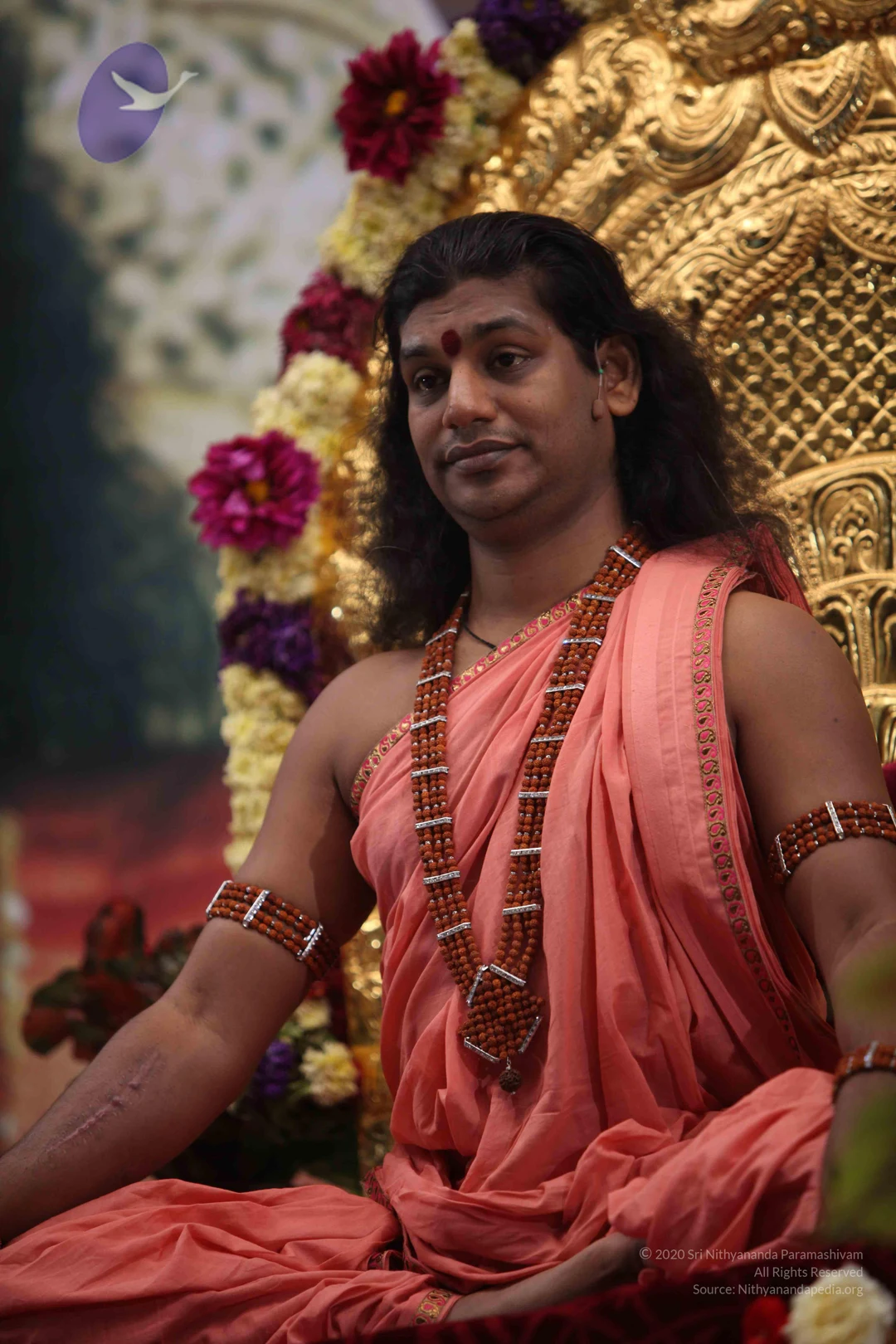
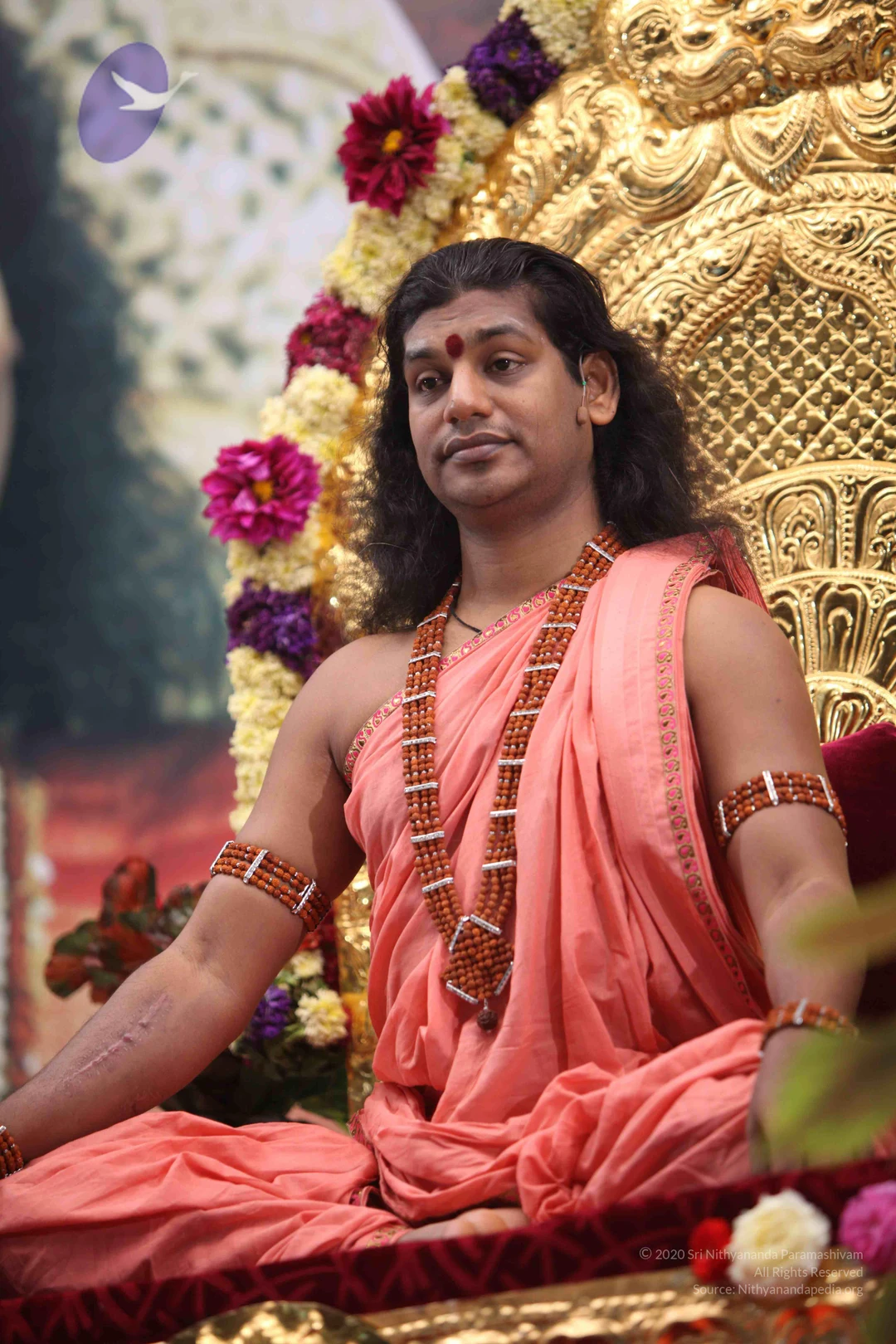
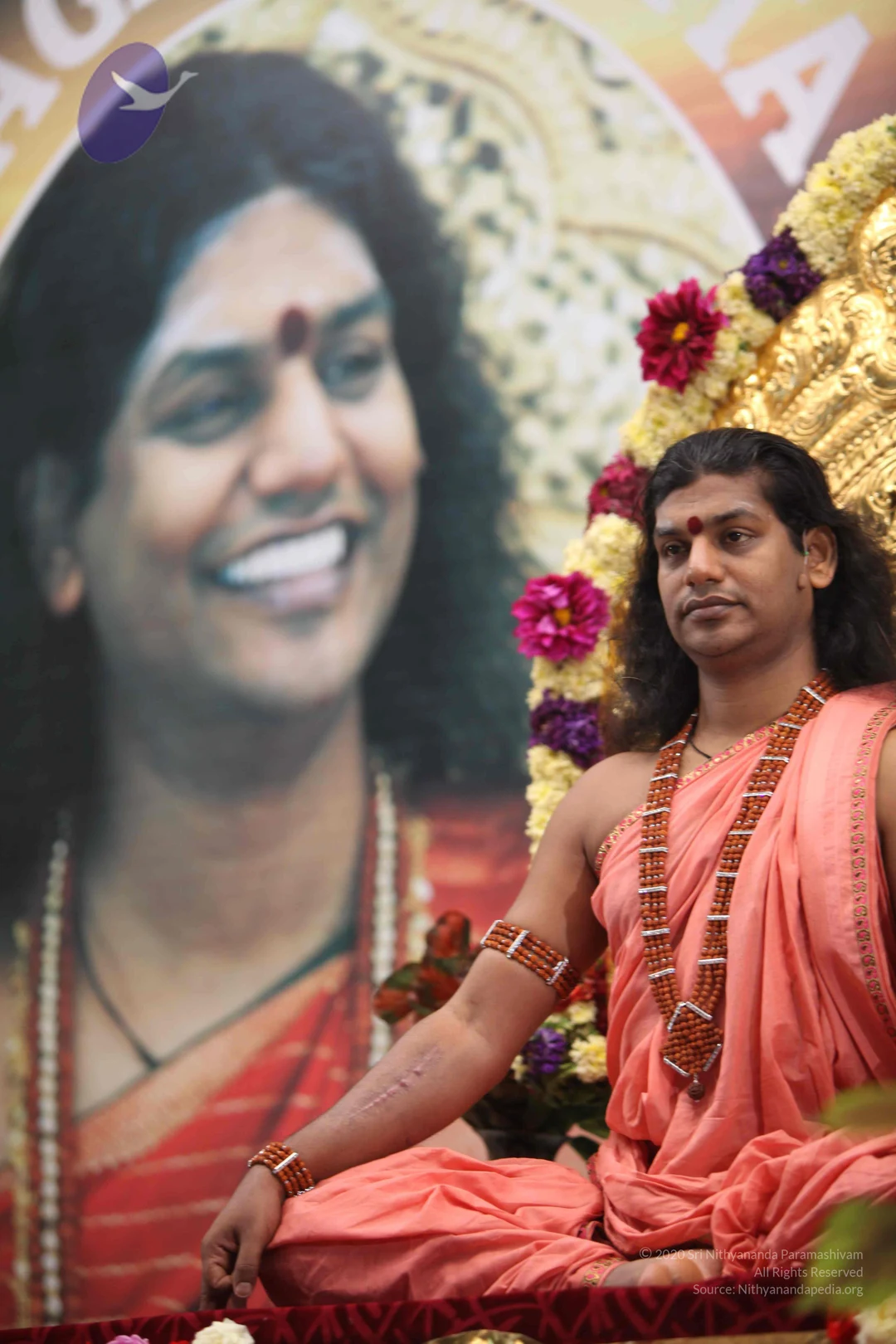
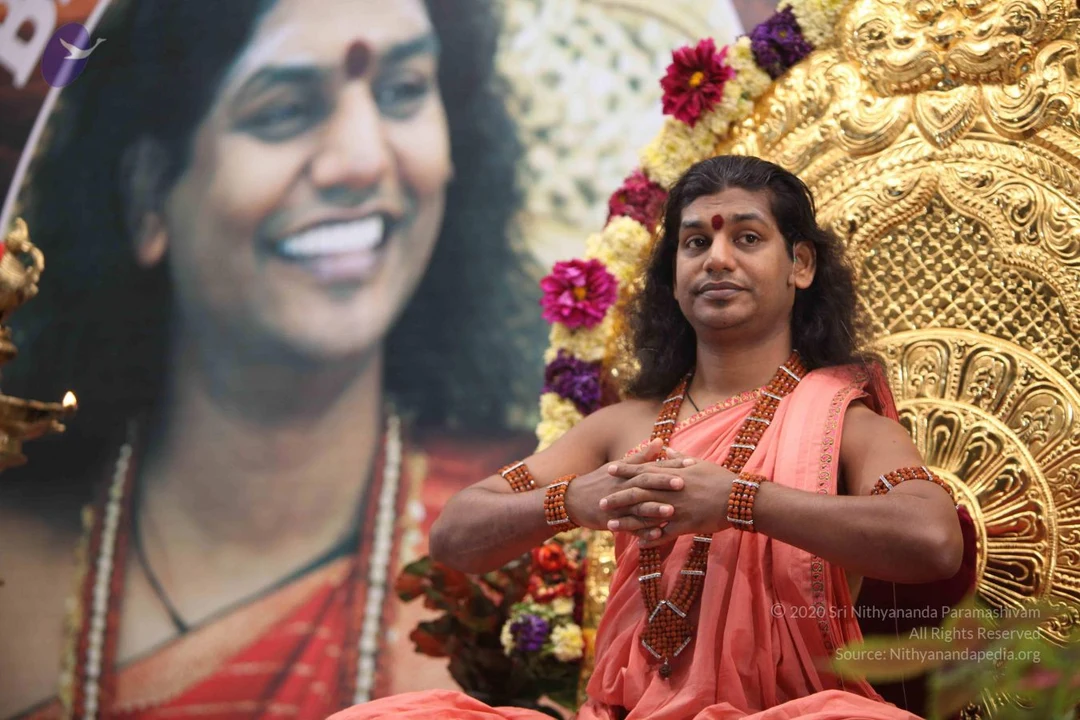
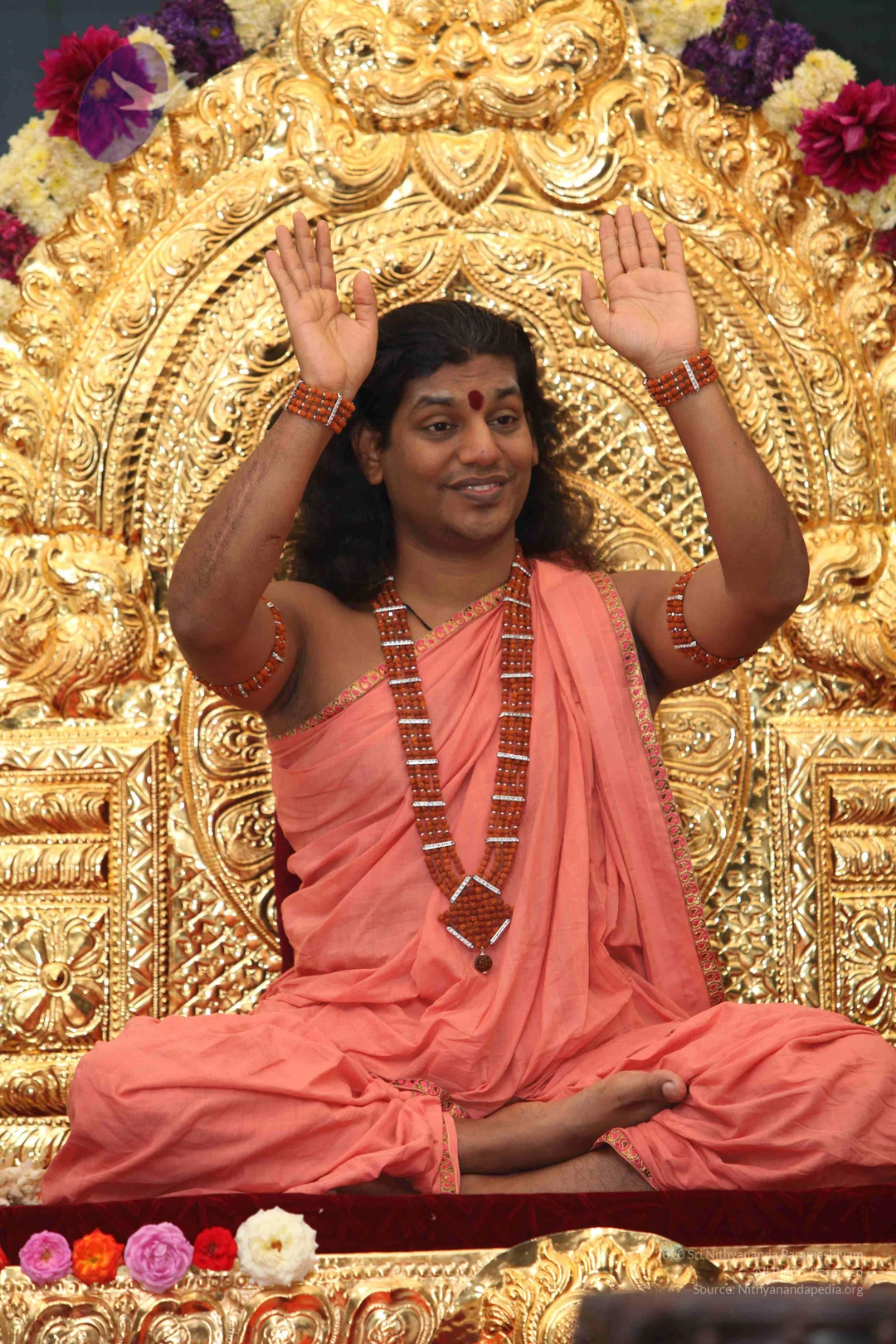
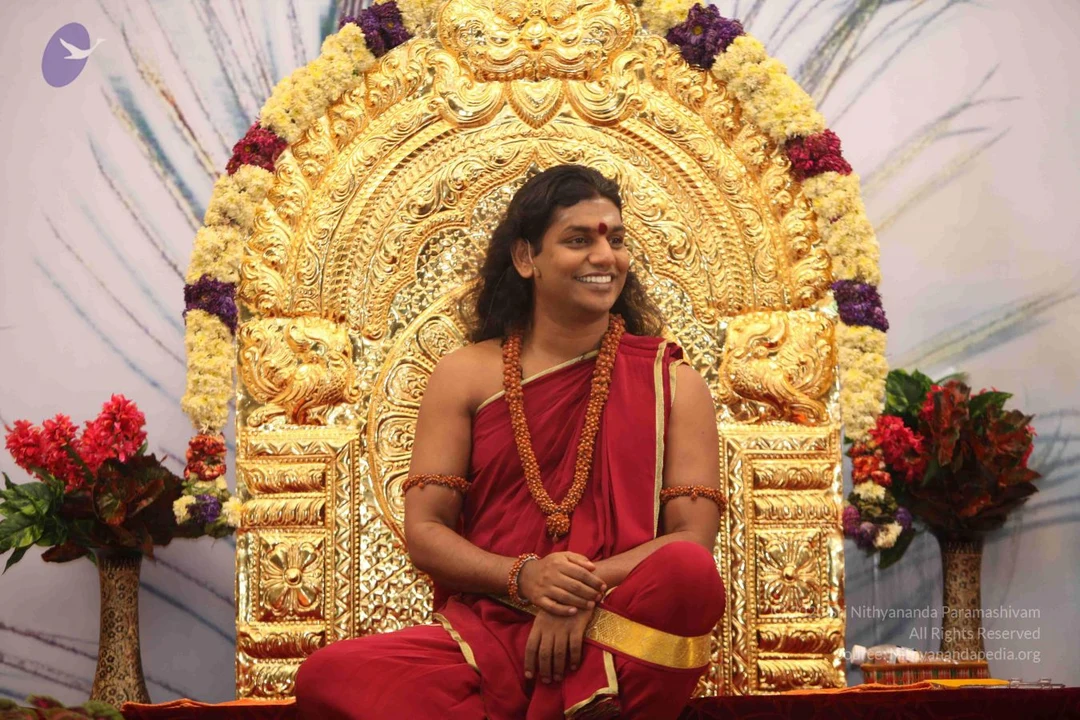
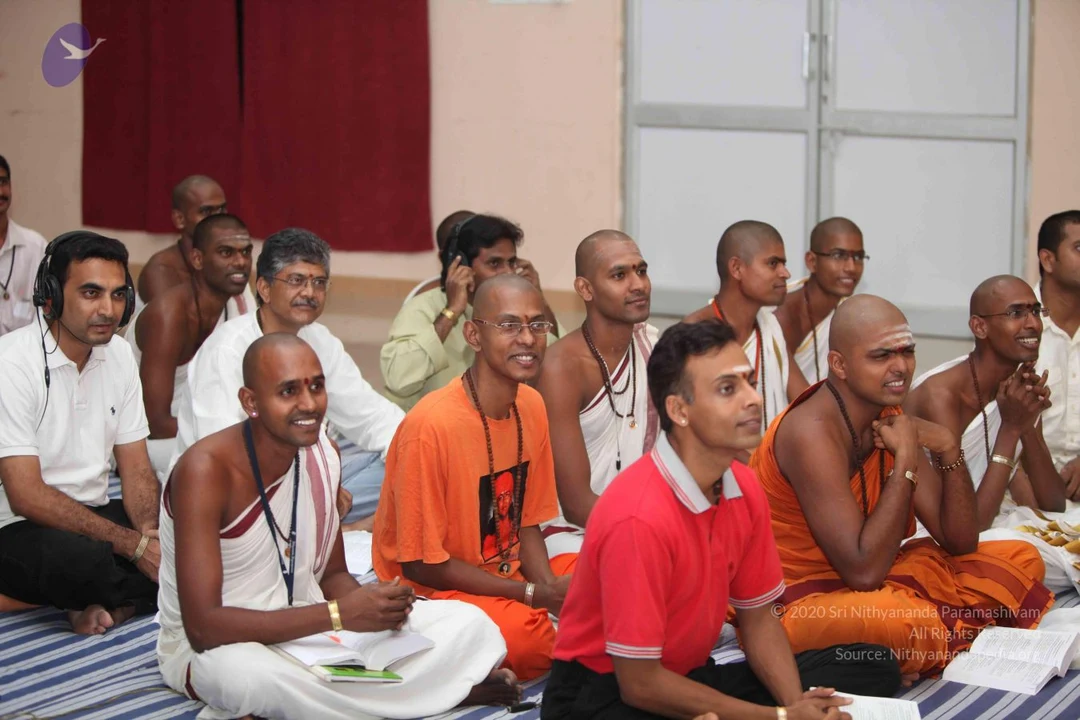
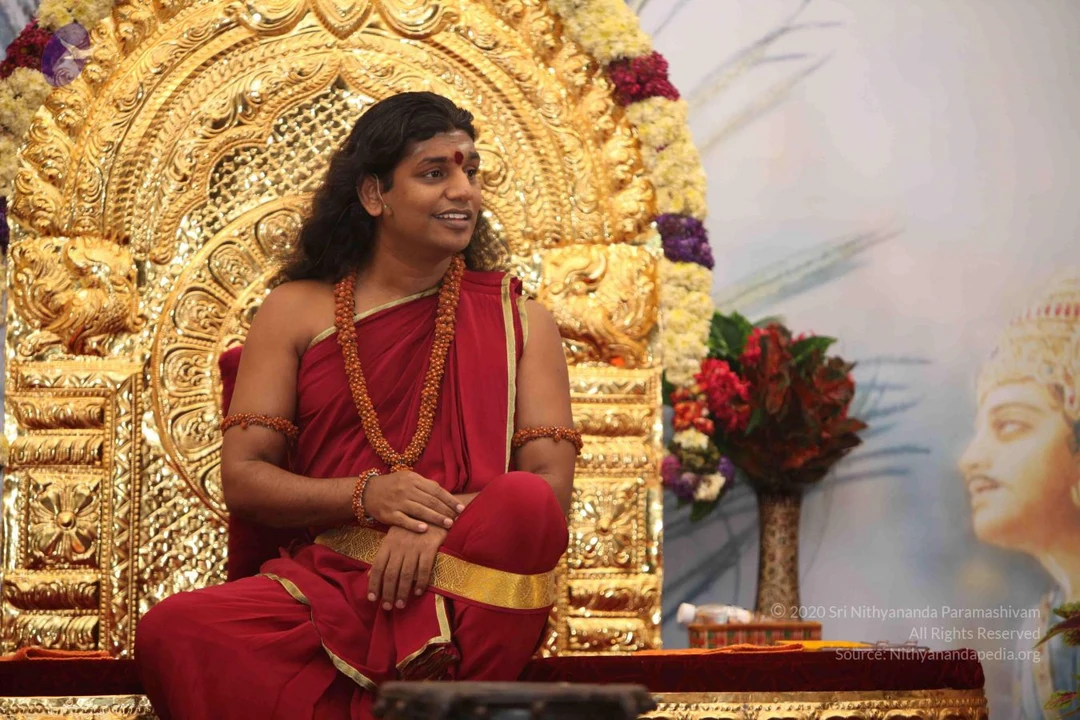
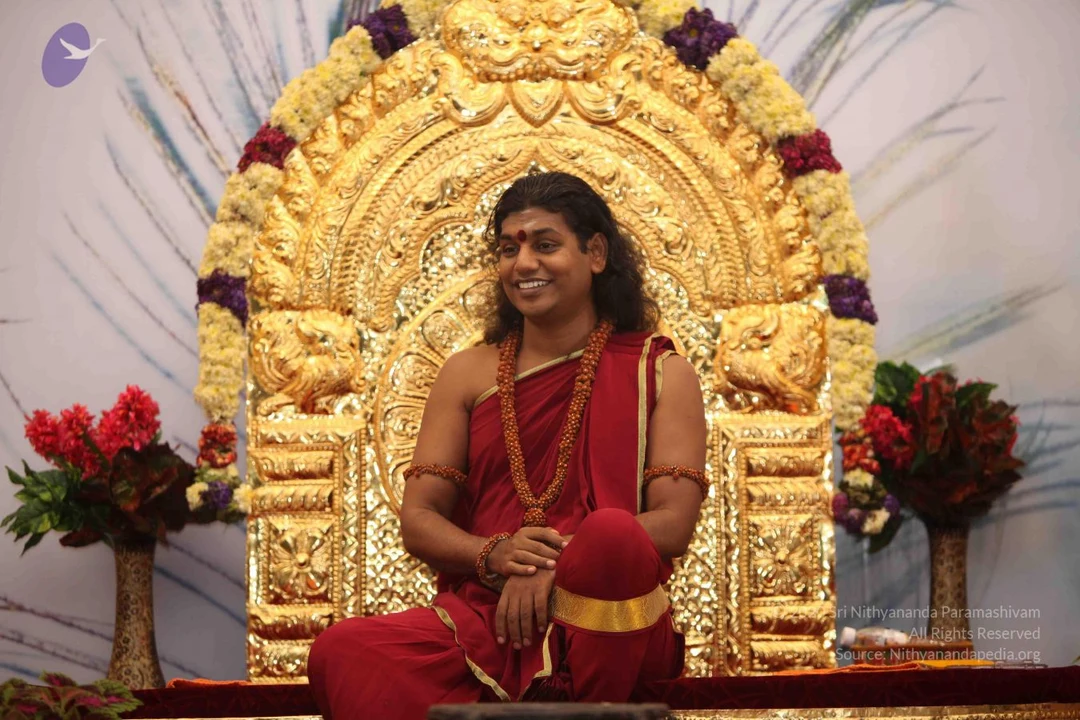
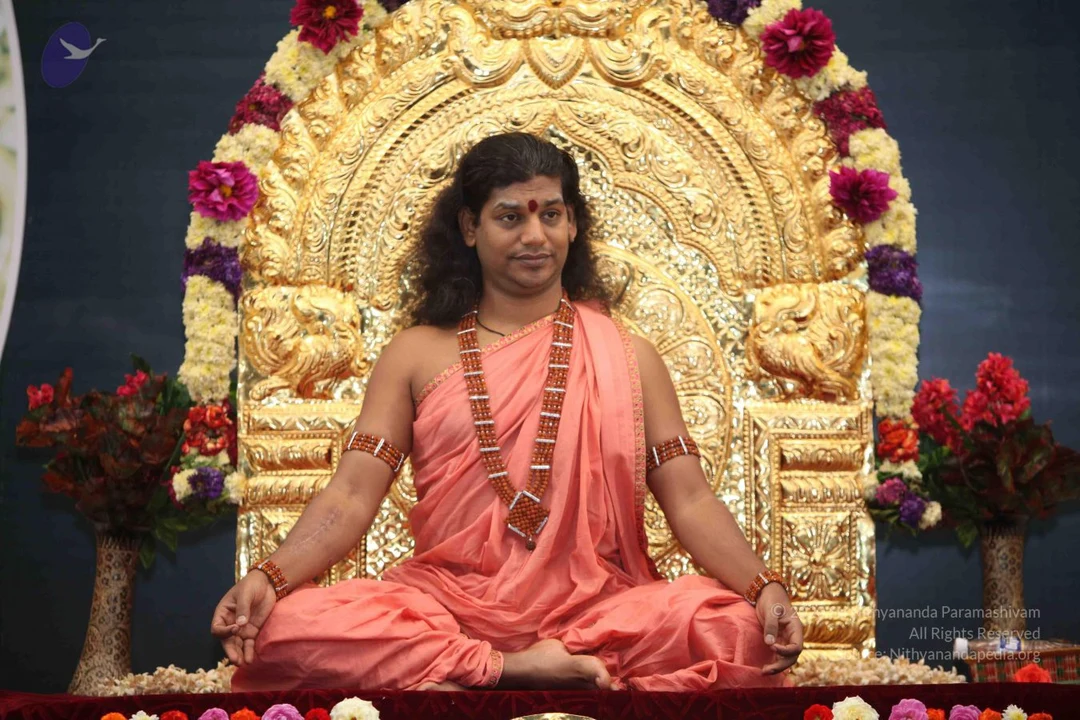
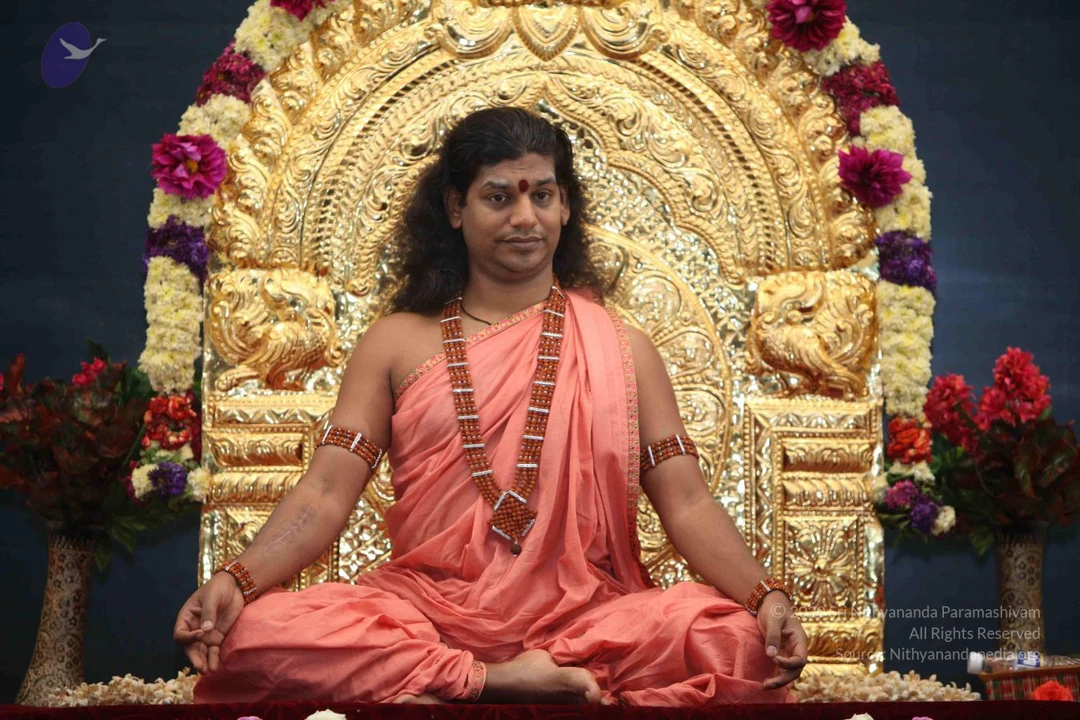
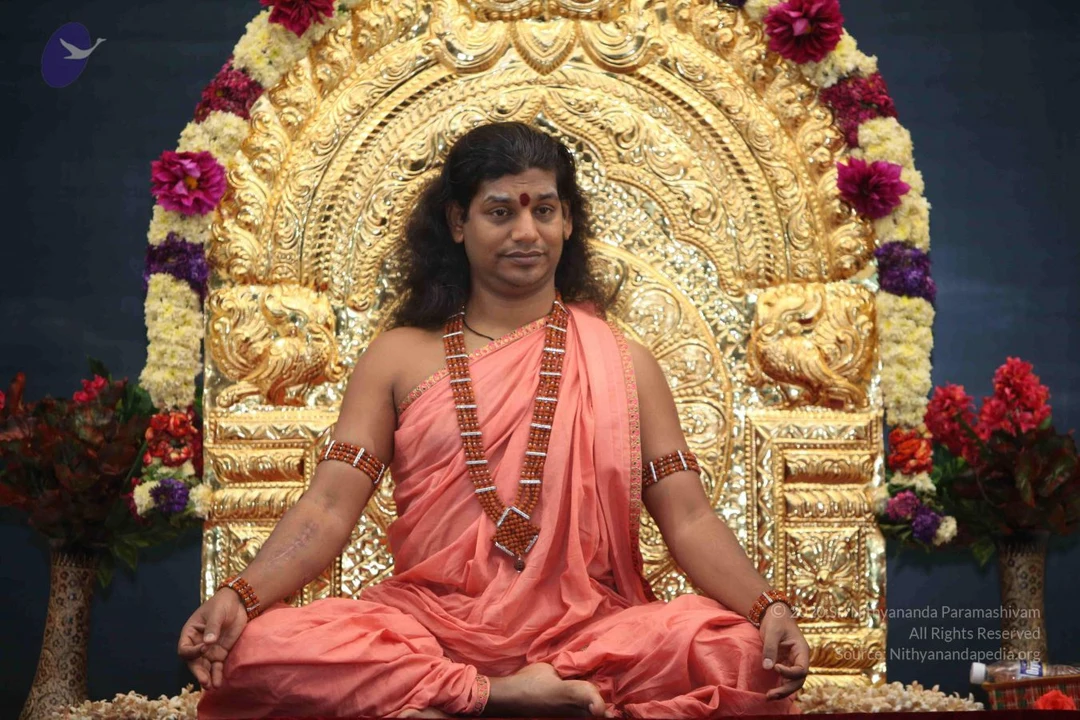
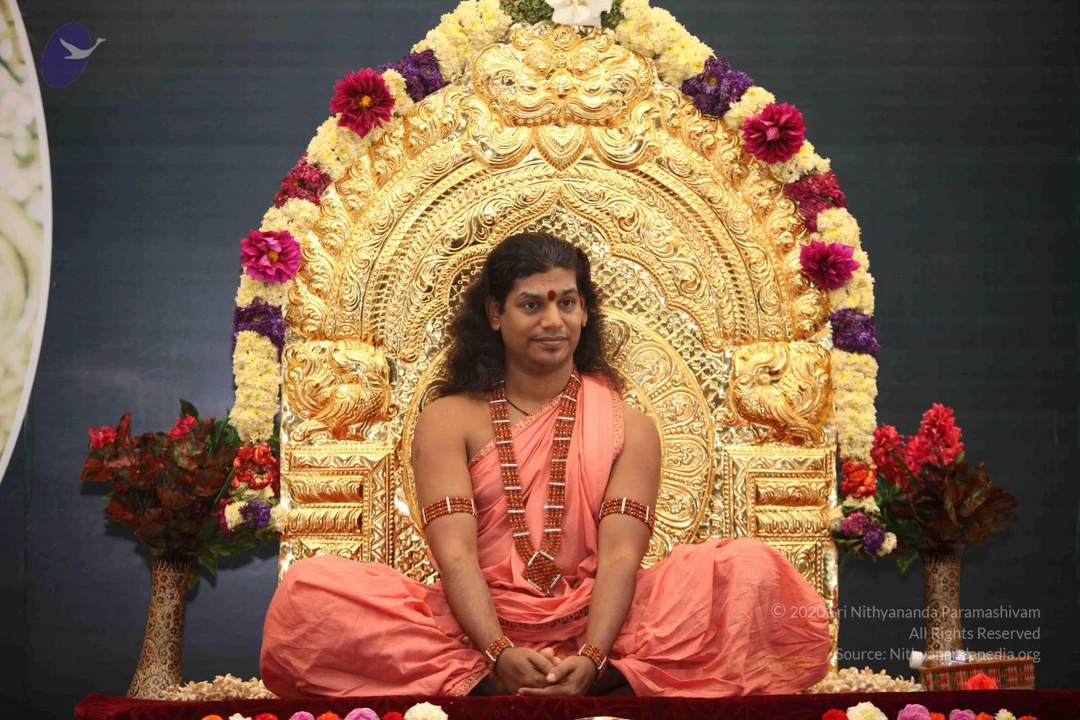
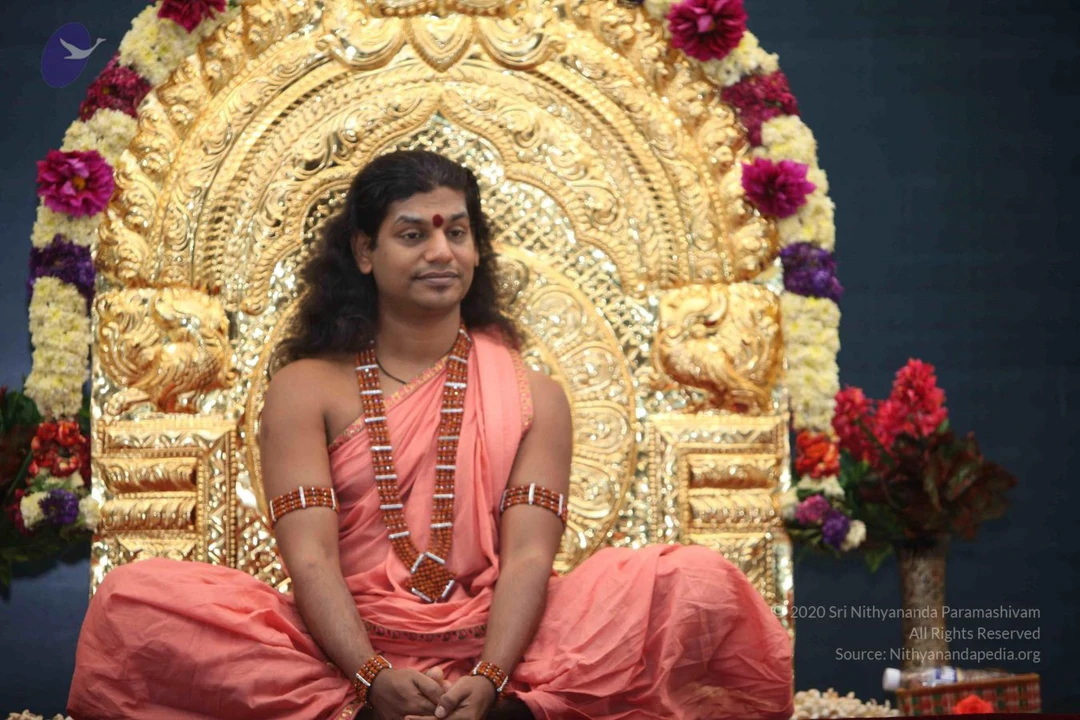
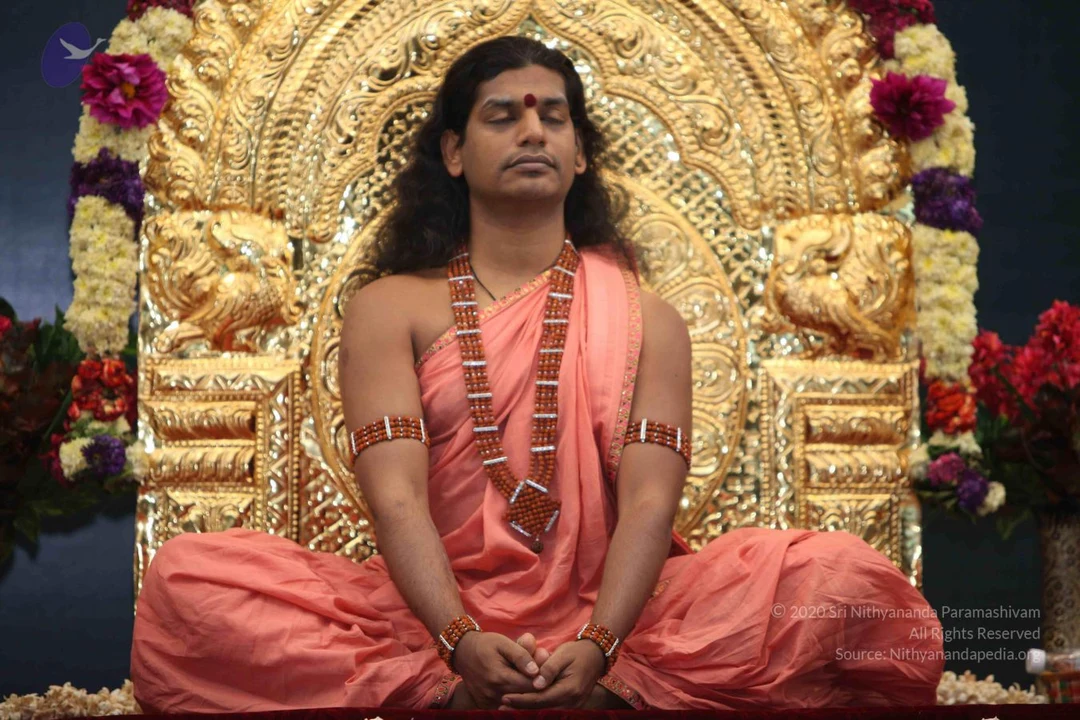
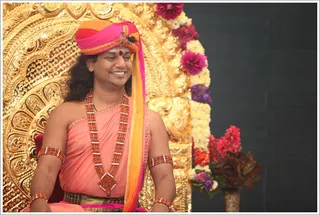
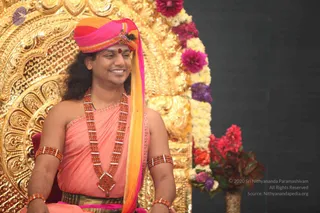
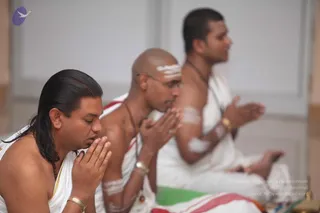
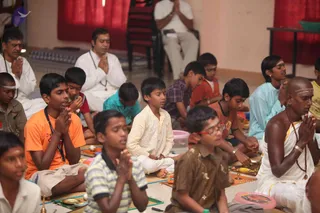
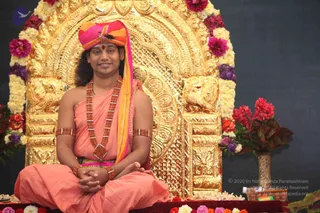
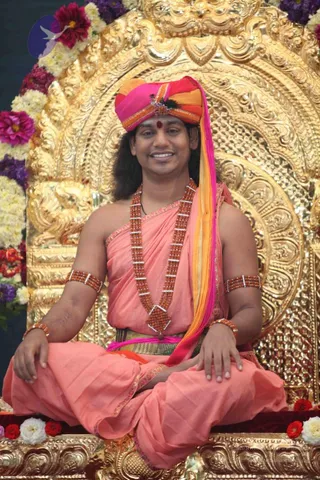
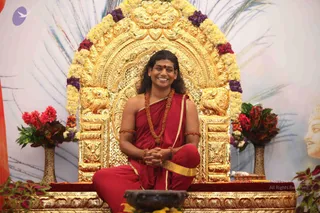
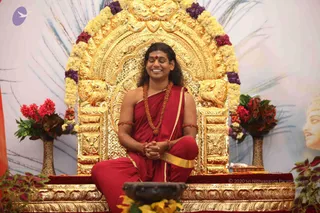
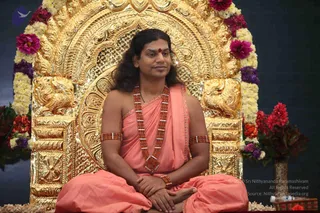
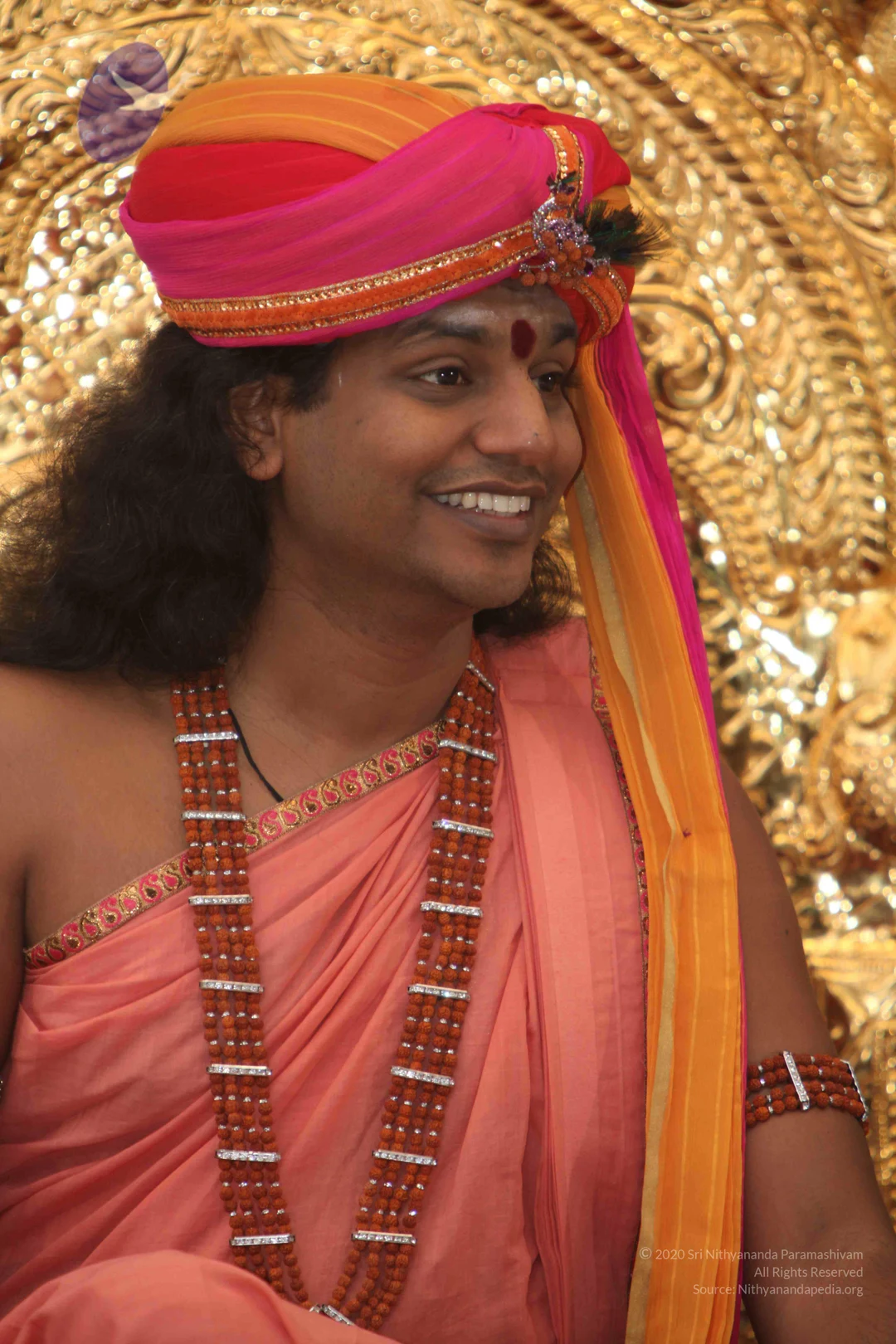
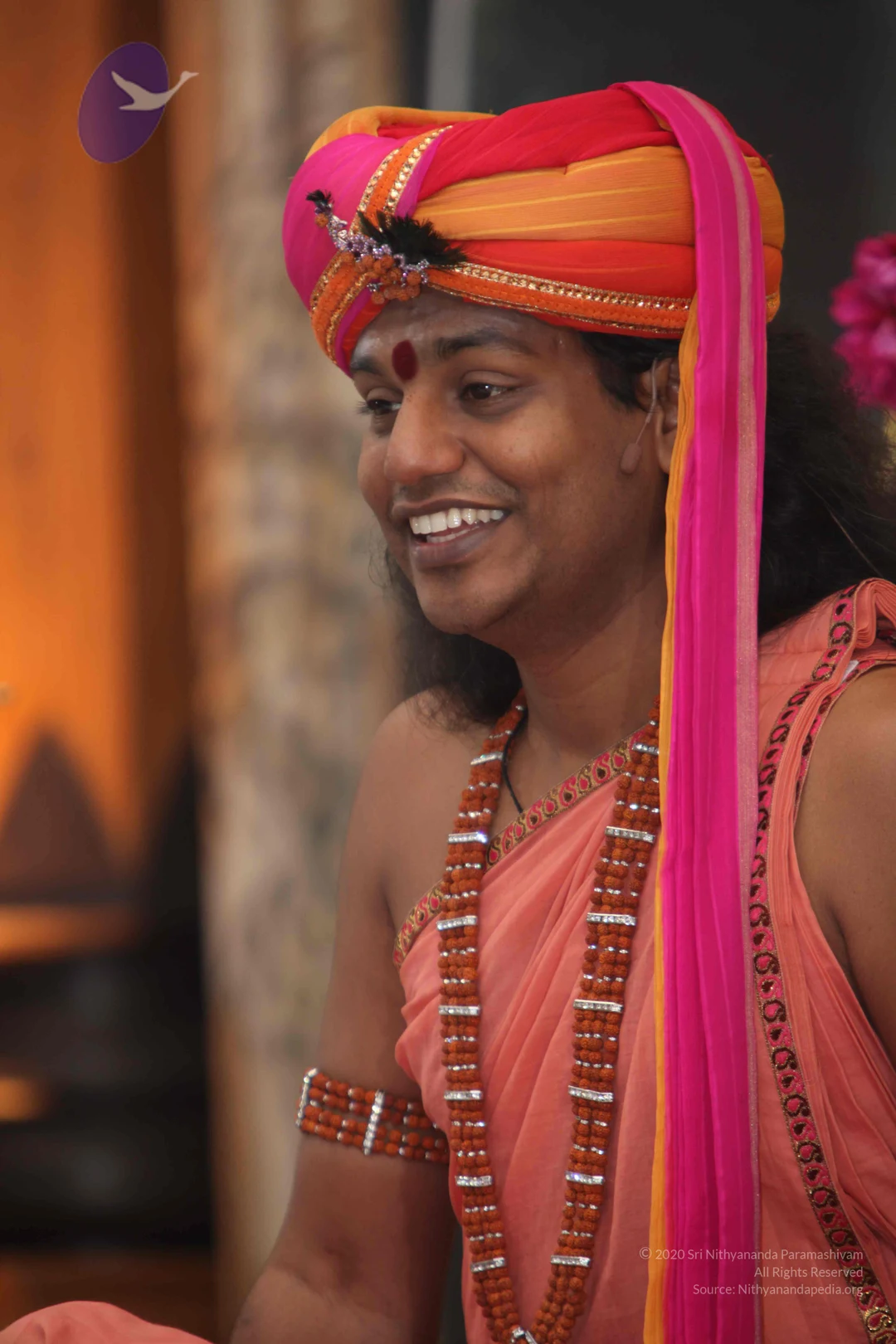
A photograph of a smiling man seated before an ornate gilded throne with a large repoussé backrest. He wears a pink and orange turban with a long swept-back fabric end, a salmon-pink shawl draped over one shoulder, a rudraksha mala with a central pendant, and beaded rudraksha armbands. A red bindi marks his forehead. Behind him stand a garland of white and pink flowers and a floral arrangement in red, pink and purple blooms against a dark wall. Swamiji (probable): the swept-back hair, turban, saffron-toned ornate clothing, rudraksha mala and throne setting are visible cues of a seated guru figure, so he is presented as a candidate in person.Three men sit in a row in white dhotis with bare upper bodies, hands pressed together in anjali mudra during prayer. The man on the left has long slicked-back hair and eyes closed, wearing a gold bracelet. The middle man has a shaved head with white tripundra vibhuti lines on his forehead and white paste bands on his arms, holding his palms together. The man on the right, partly blurred, has white markings on his arms and a gold bracelet, with hands raised in prayer. The setting is a plain pale wall. No a person candidate is distinctively identifiable by the visible cues.A photograph of a seated group during a puja or satsang in a hall with red curtains. Many boys and young men sit cross-legged on mats with hands folded in prayer (anjali mudra). A bald man in a white dhoti and gold bangle, wearing a rudraksha mala, sits at right with hands joined. Behind the boys, two older men in white kurta-style clothing with mala necklaces sit with palms pressed together. Brass puja plates and small oil lamps sit on the floor before the group. A white-shirted man stands near a chair at the back.A seated man in a peach-coloured dhoti and shawl sits cross-legged before an ornate gold throne with carved lion heads and a gold arched backdrop. He wears a pink, orange and yellow turban with a red tilak on his forehead, a long rudraksha mala with a gold-toned pendant around his neck, and matching beaded armlets and wrist bands. His hands rest folded in his lap, and he smiles calmly. The throne is framed by garlands of white, pink and purple flowers, and a vase of red and maroon blooms stands to the right. Appearance-based label: a person, seated in the peetha throne.A man seated cross-legged on an ornate gilded throne with repoussé floral and scrollwork carving, framed by fresh flowers in red, pink, purple and white. He wears a multicoloured pink, orange and yellow turban with a jewelled ornament, a rust-orange draped garment with gold border and a green and pink waist sash, and several rows of rudraksha beads as a long mala, armlets and wrist bracelets. He has a red bindi on his forehead, long dark hair, and smiles with hands resting on his knees. a person, identified by the saffron-toned ceremonial clothing, rudraksha malas and long swept hair on a throne; appearance-based label only.A seated figure in an orange-saffron dhoti and shawl with a pink, orange and yellow turban and a rudraksha mala sits cross-legged on an ornate gold throne-platform with a golden arched backrest draped in white and purple-pink flower garlands. Potted coleus plants and brass oil lamps stand on either side, with a flower-decorated kalasha in the foreground and an event backdrop behind. The turbaned figure with long swept-back hair and gold armlets appears to be Swamiji (probable), in a discourse setting. A framed photo of a smiling woman in orange appears at the left edge.

BGSatsang-Tamil

60 photosSource gallery
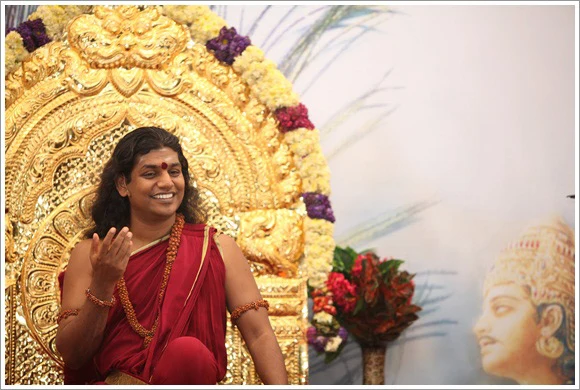
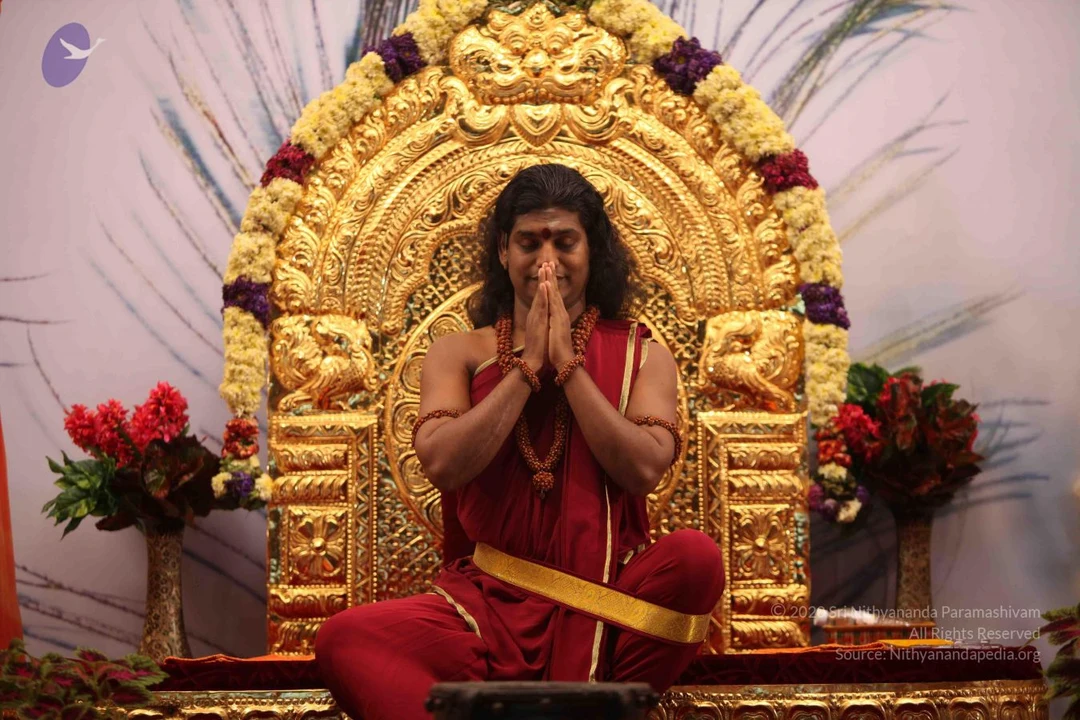
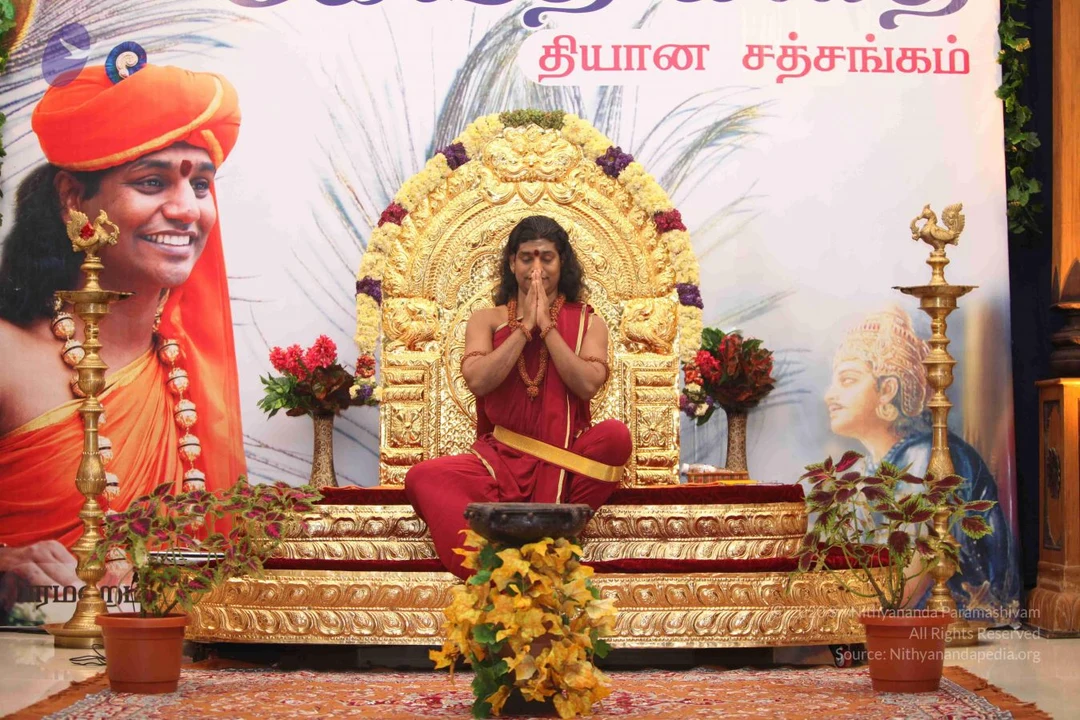
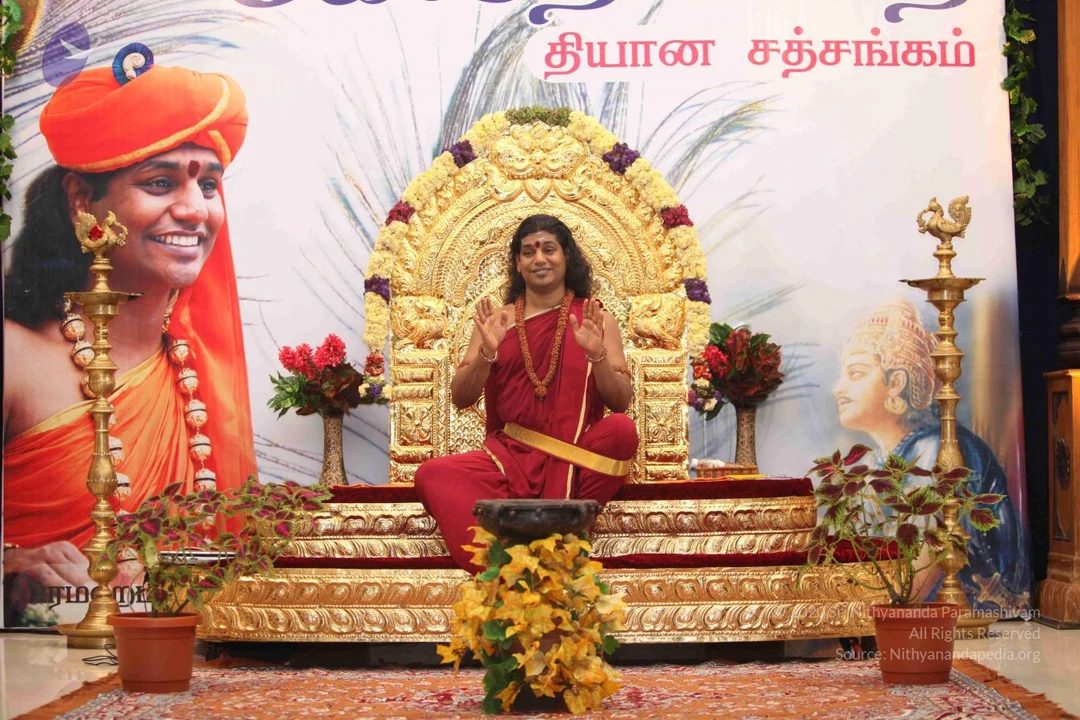
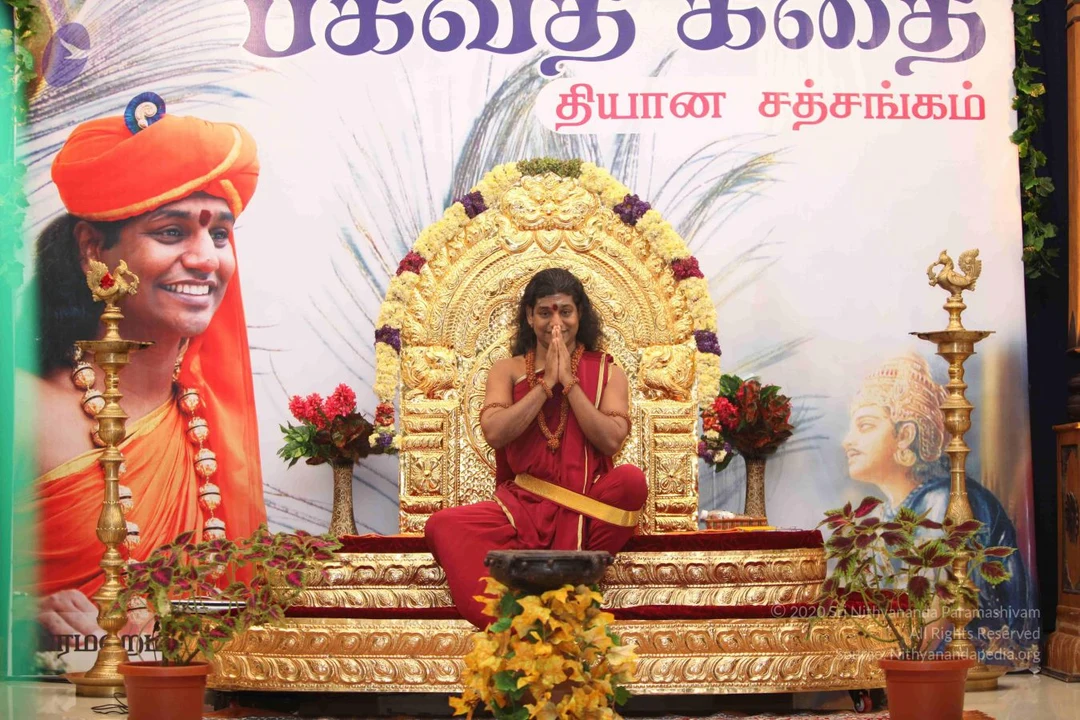
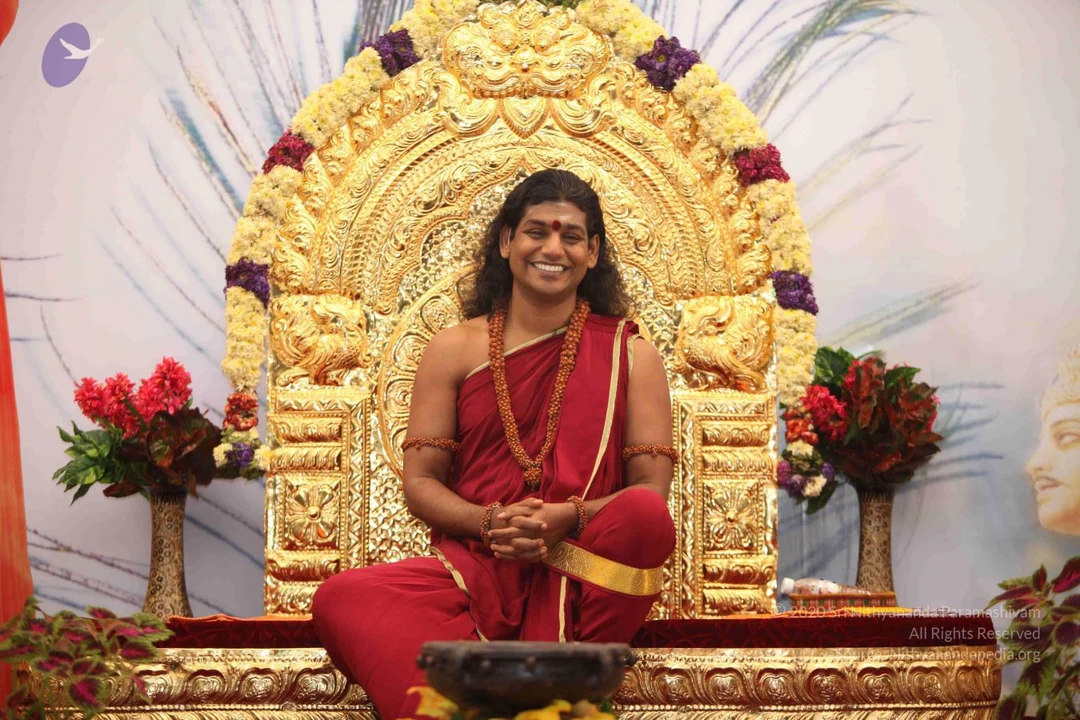
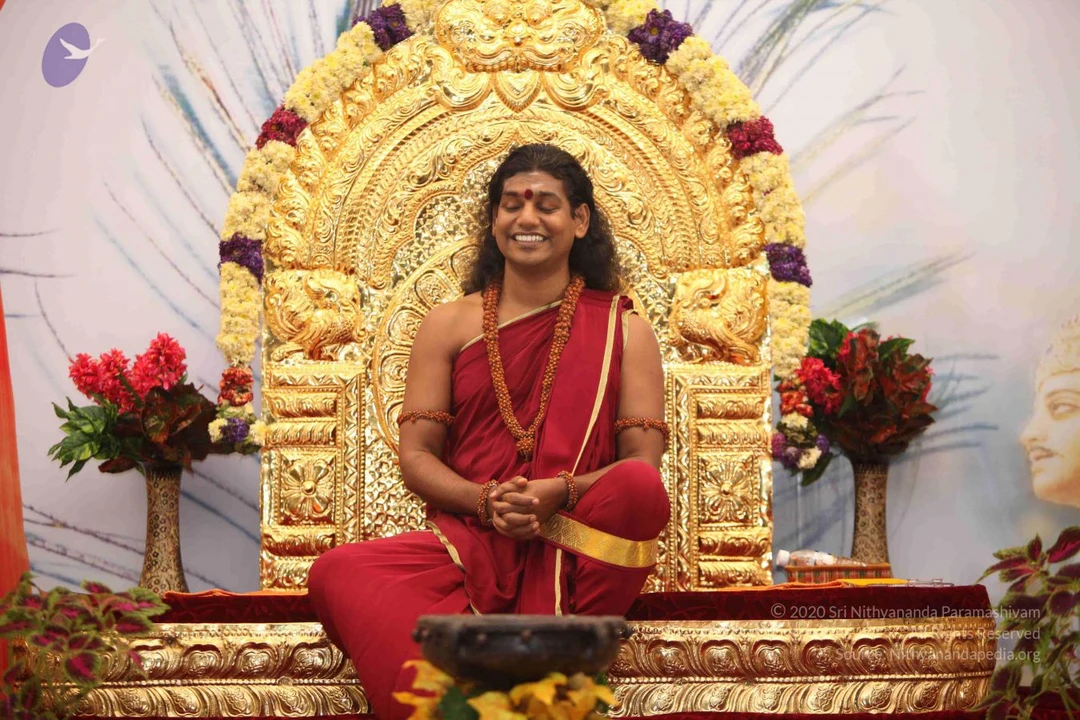
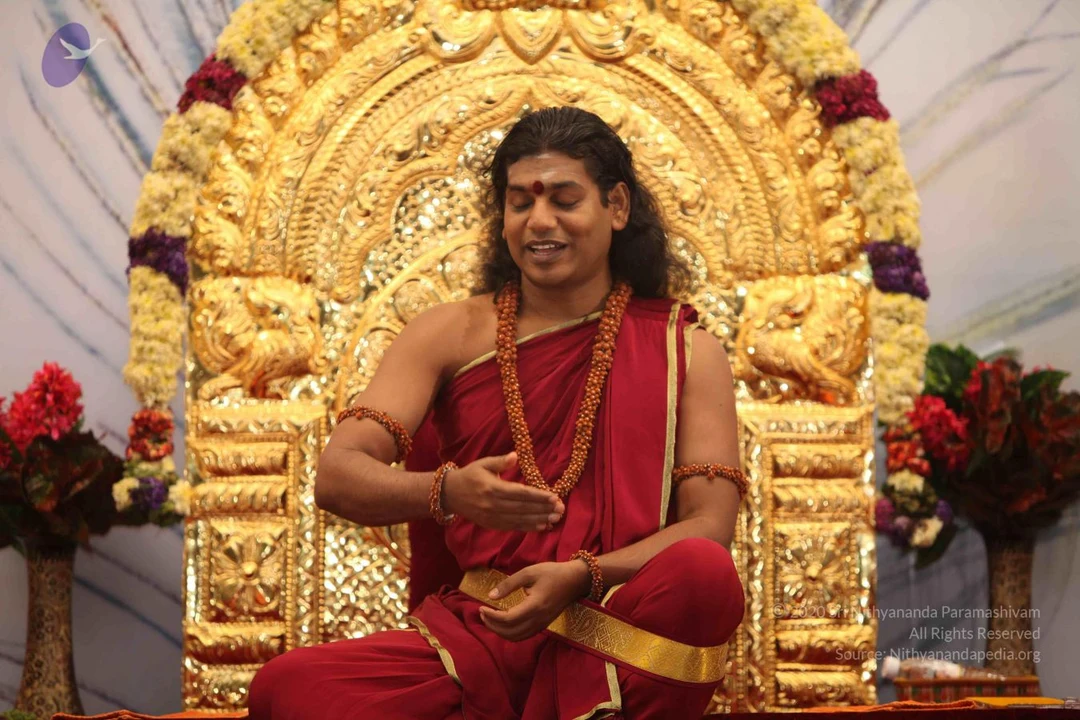
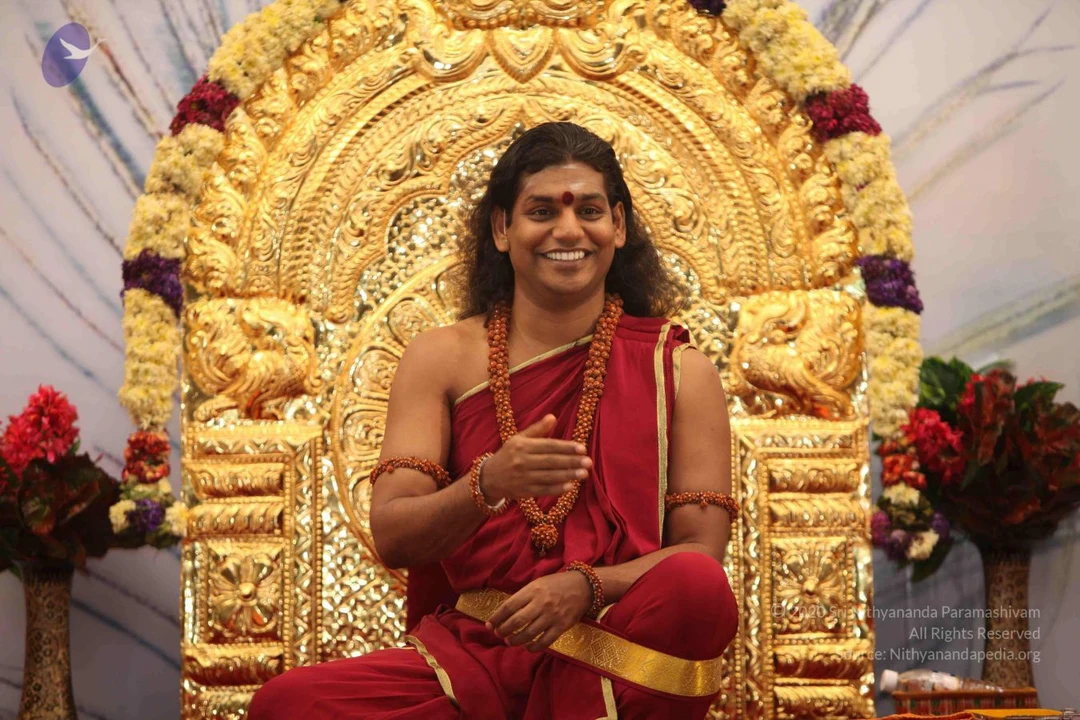
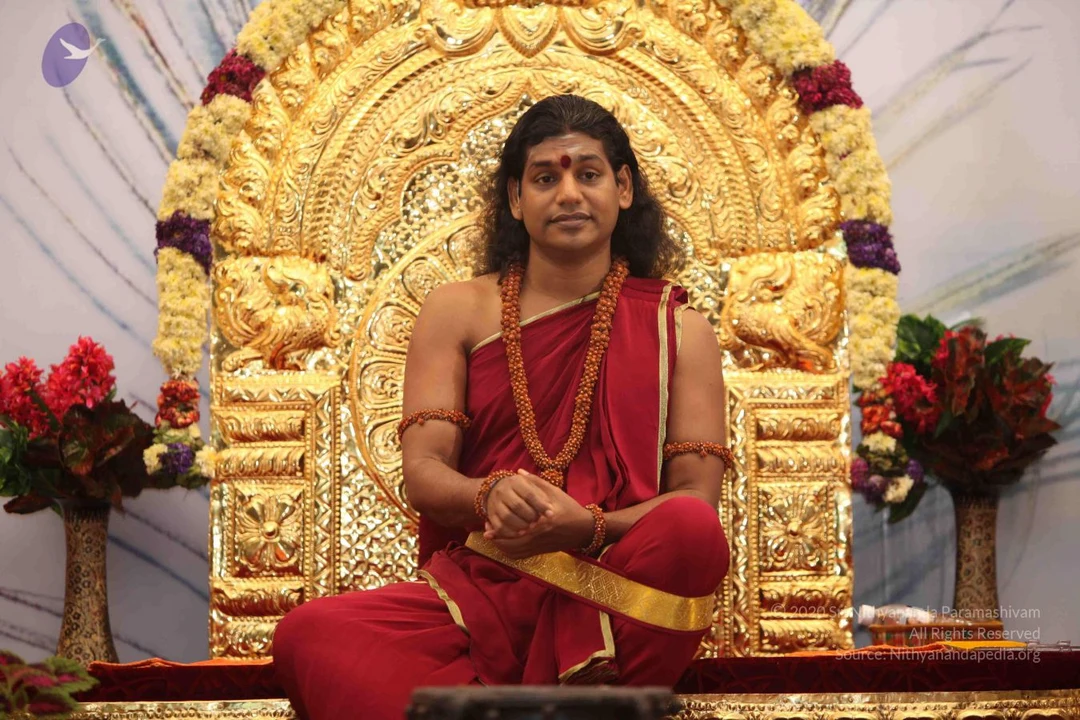
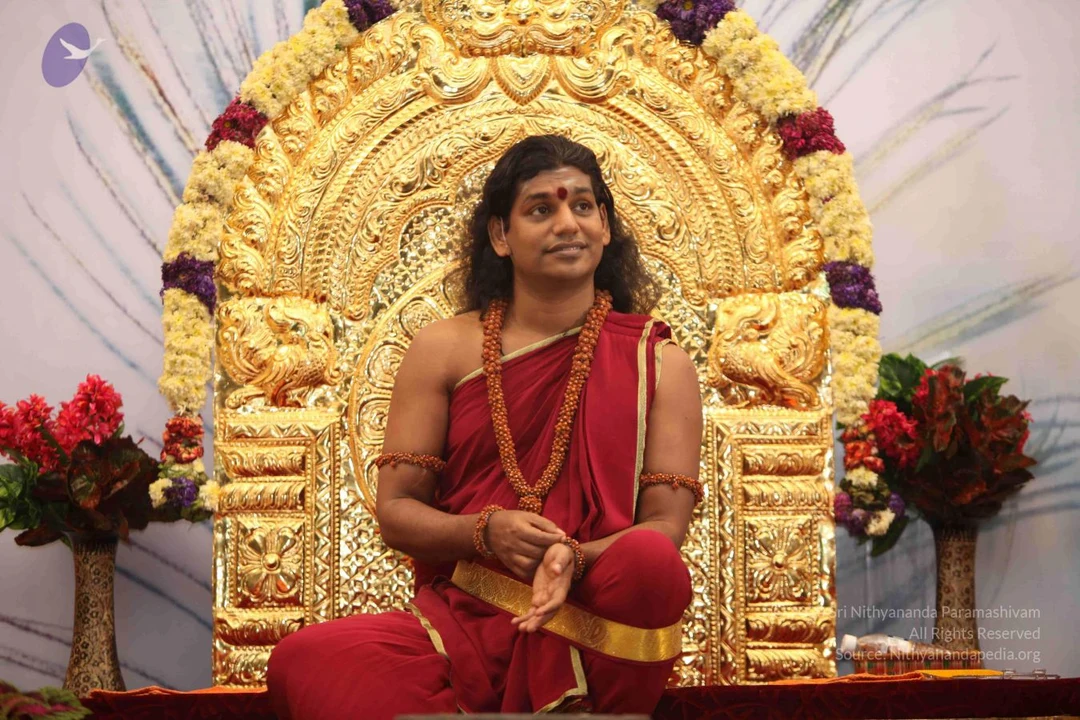
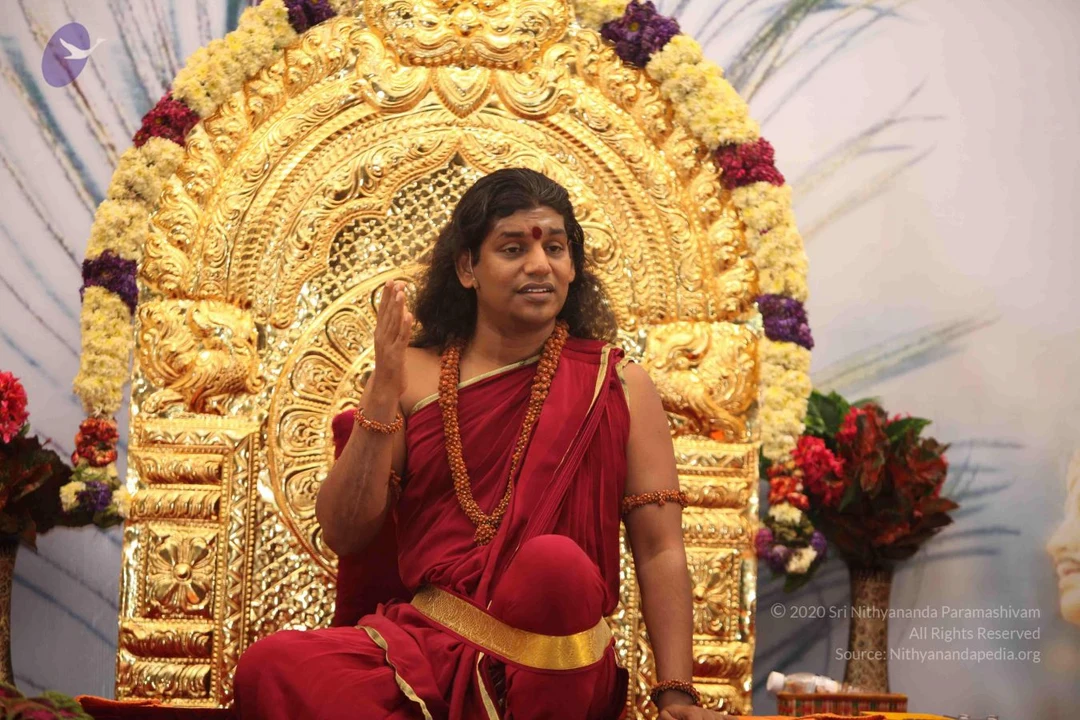
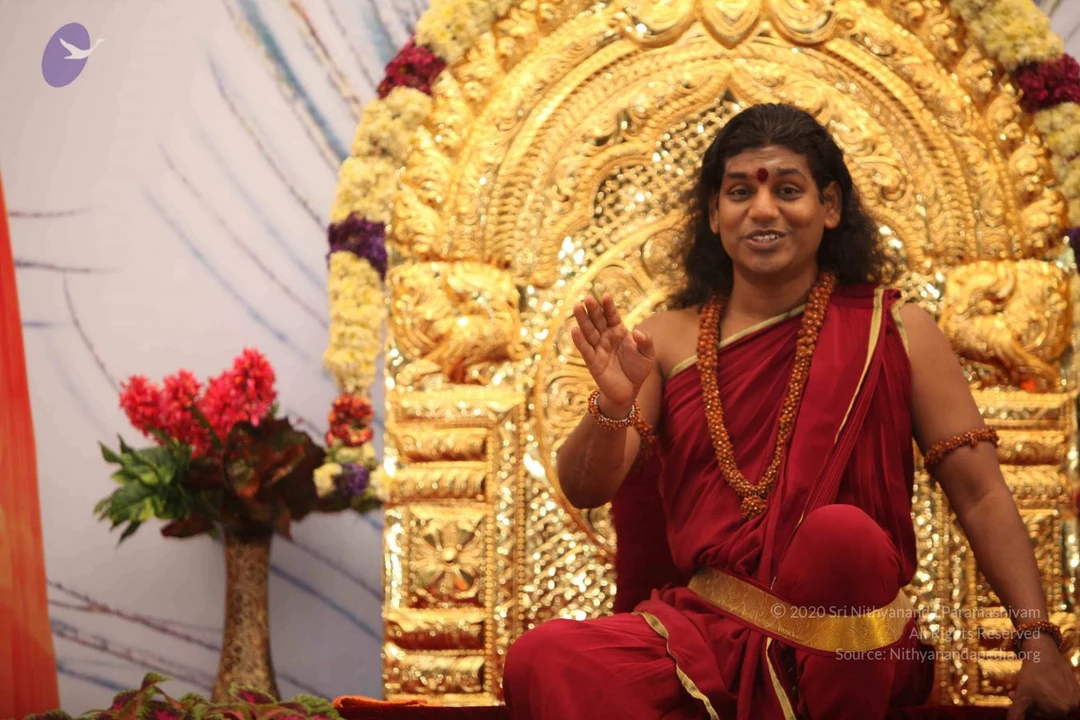
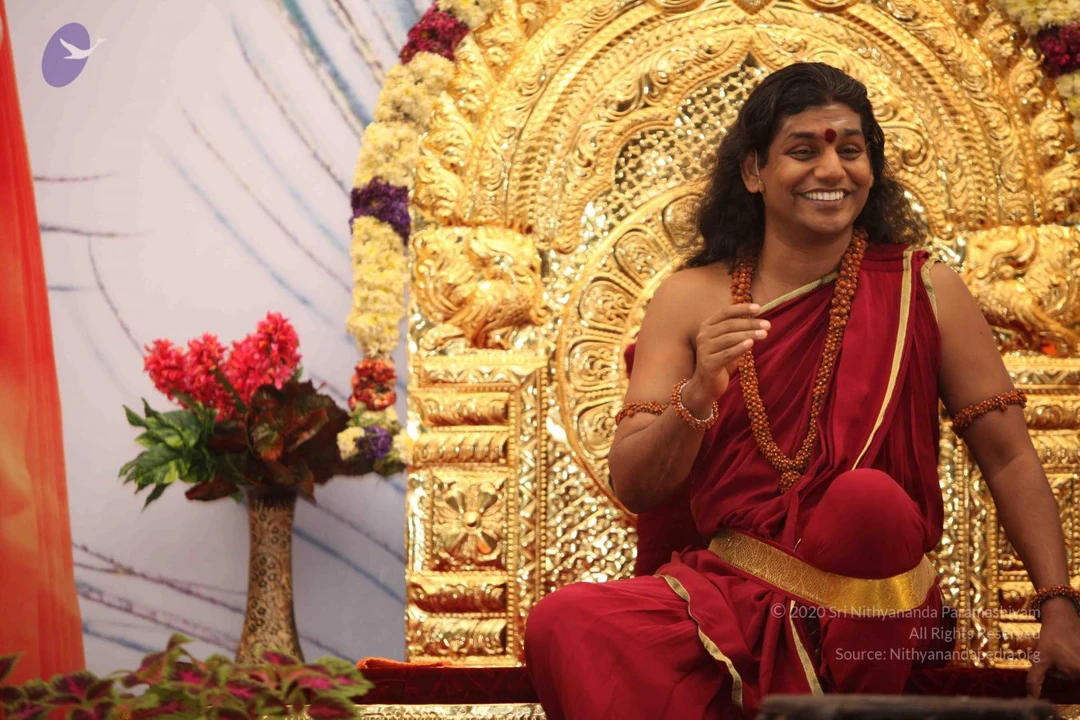
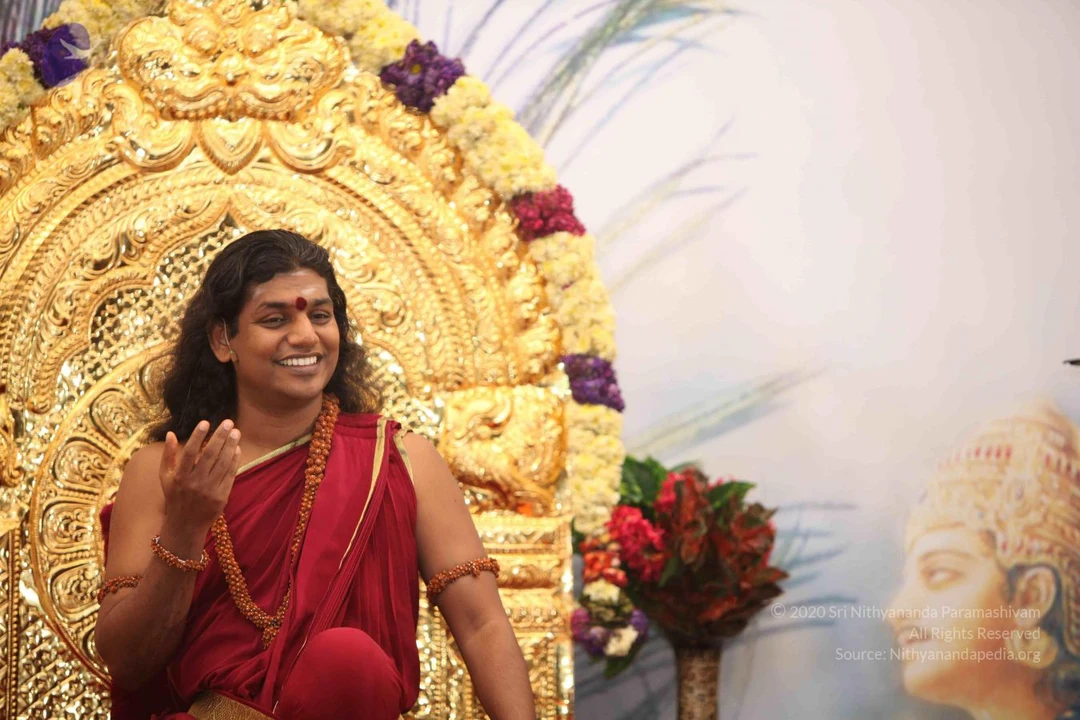
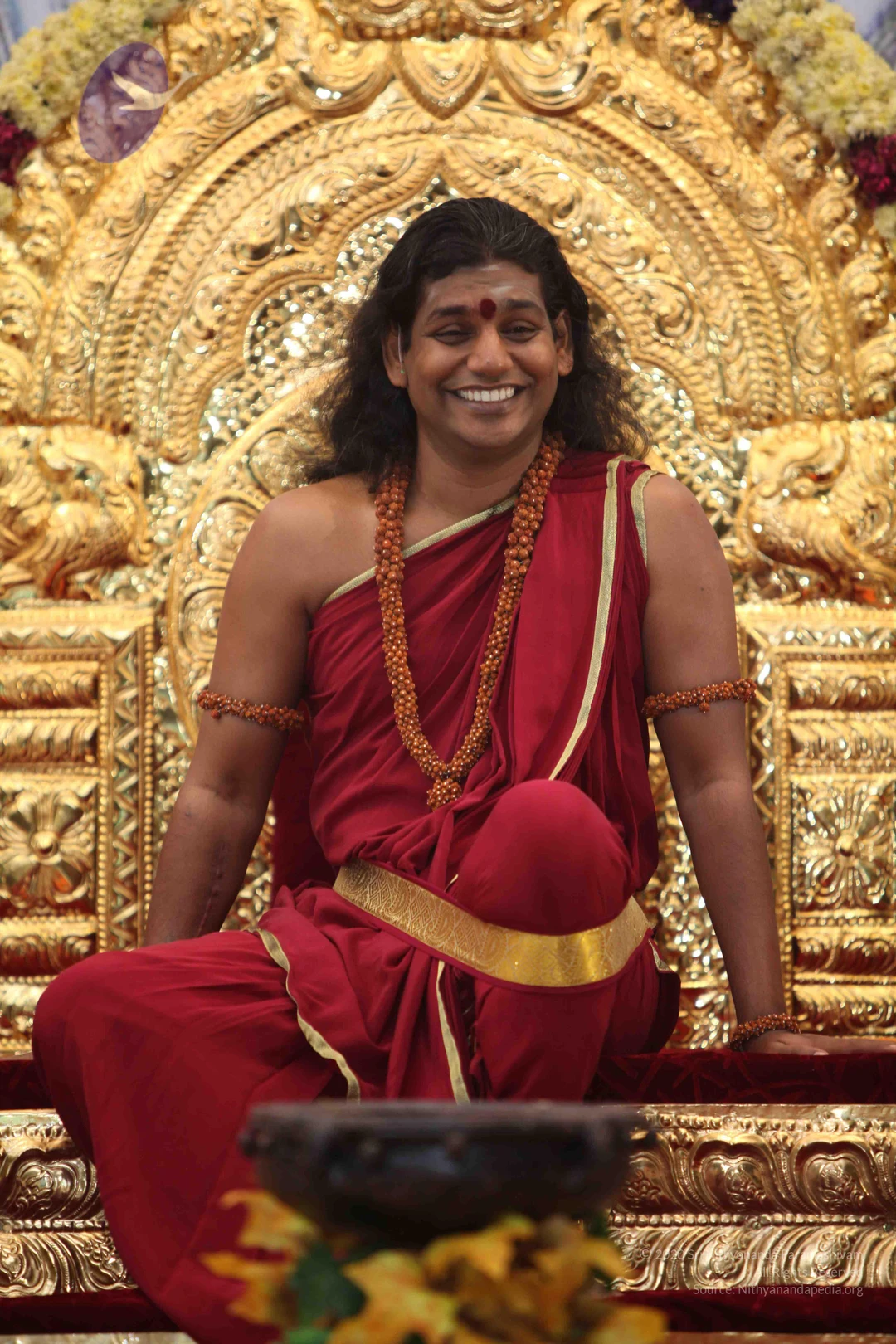
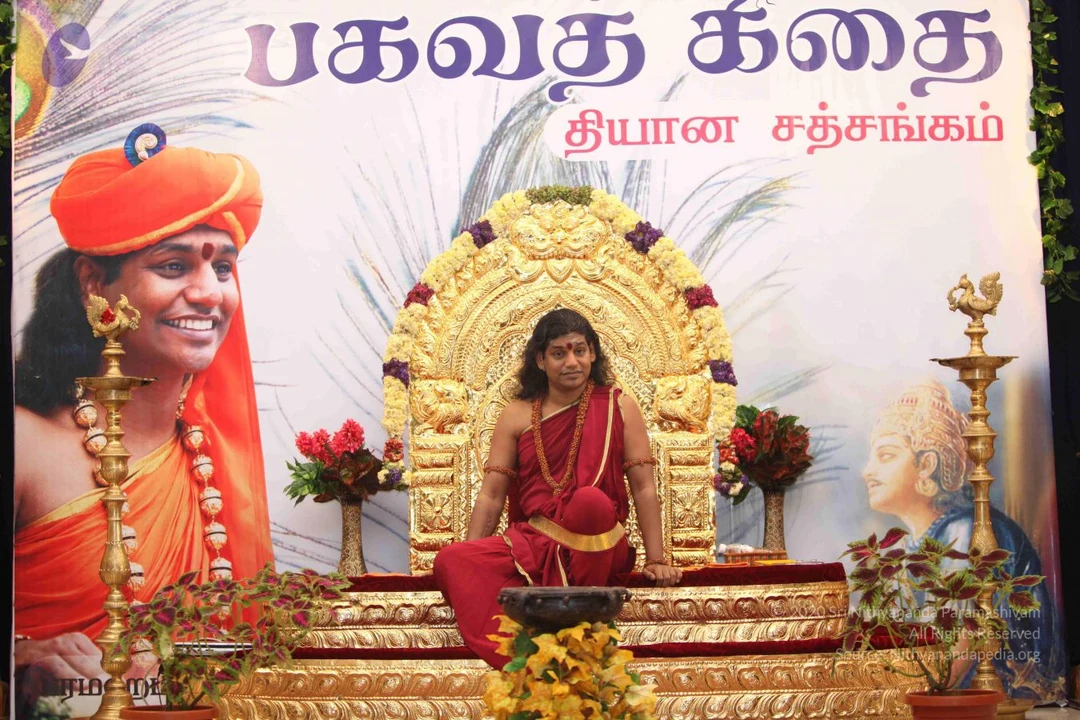
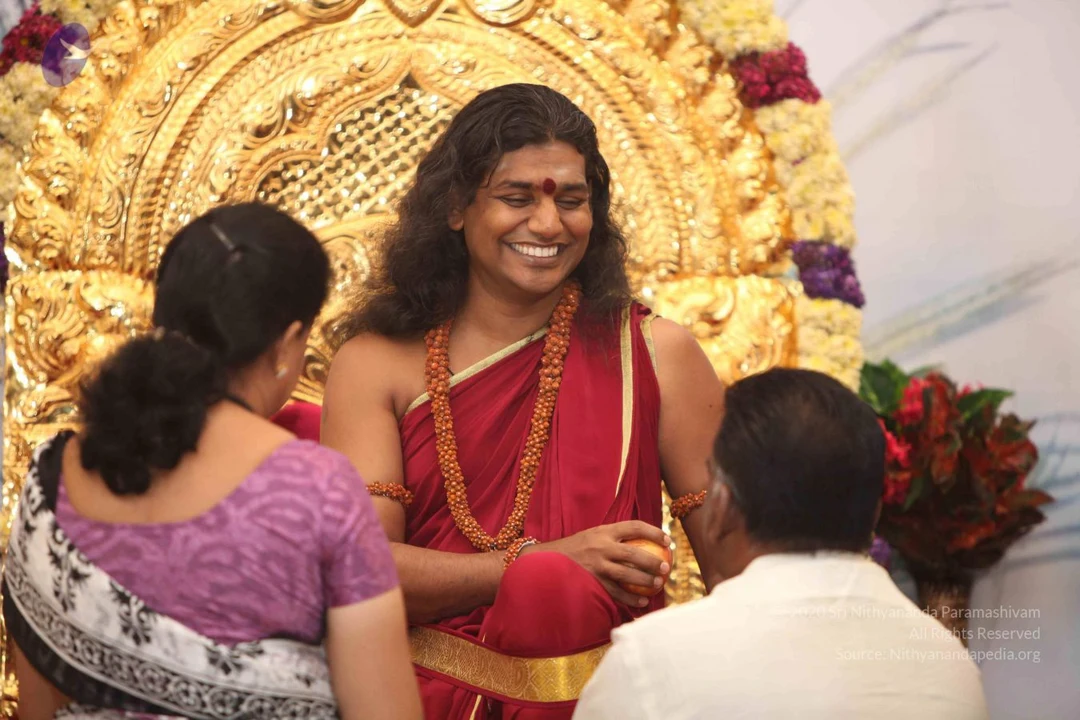
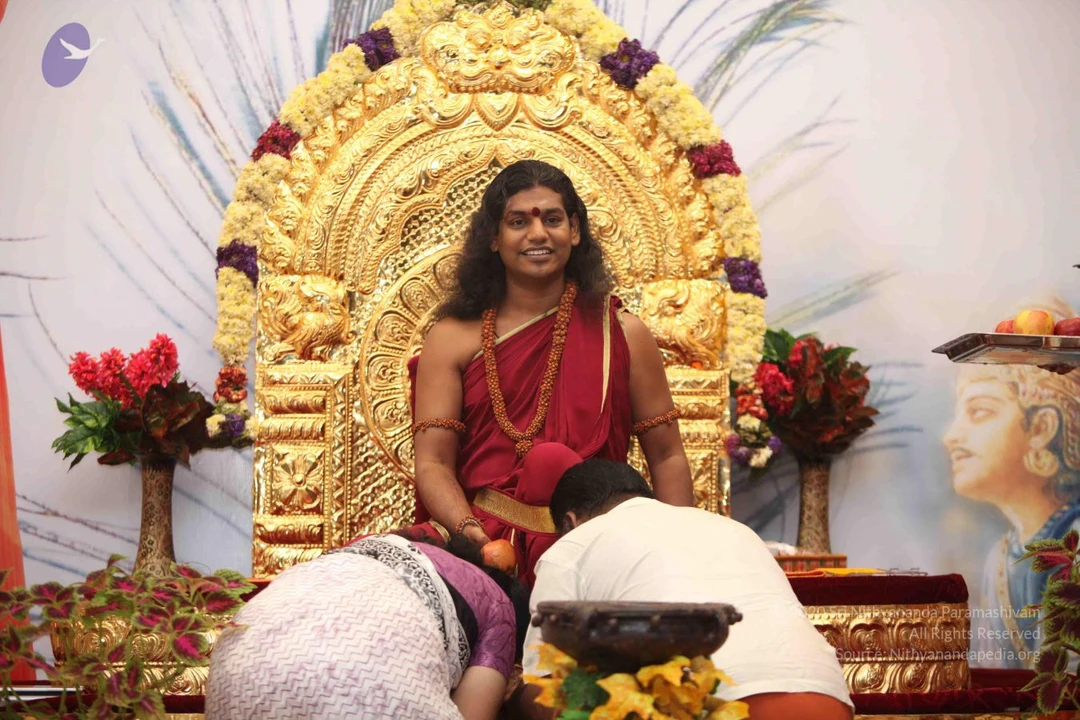
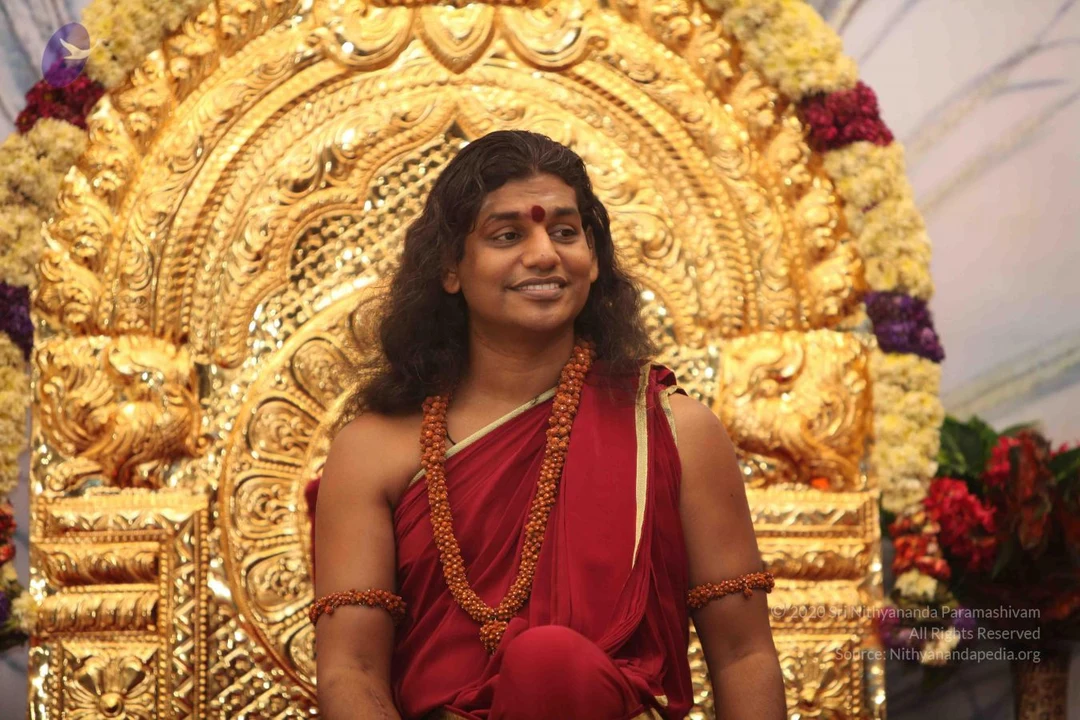
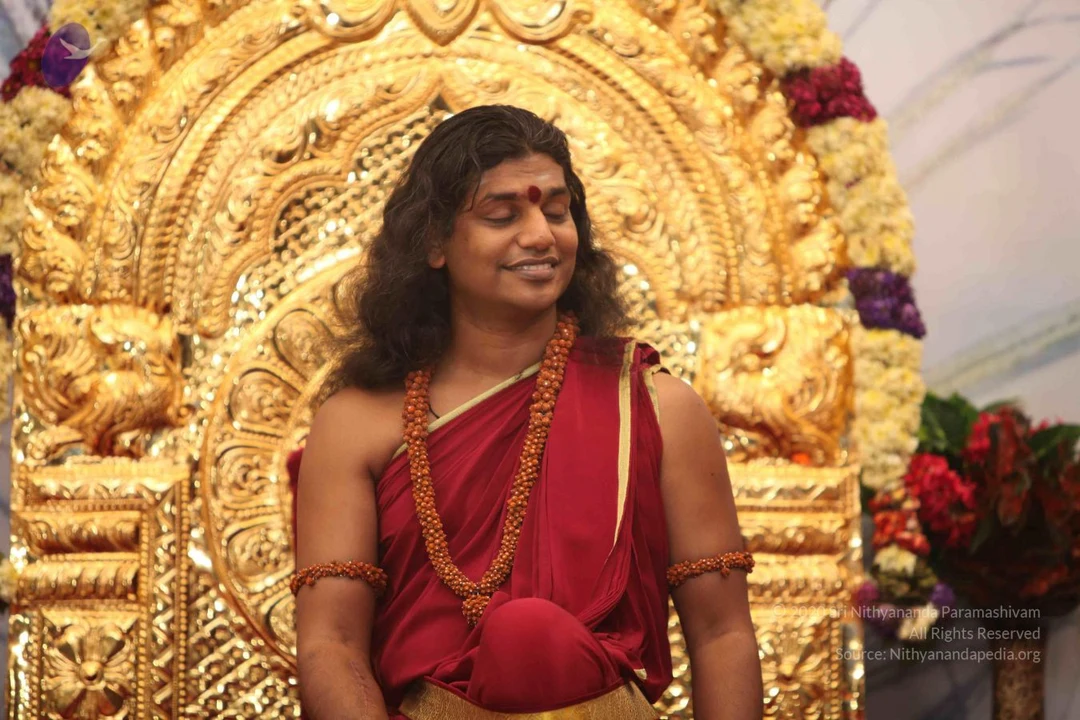
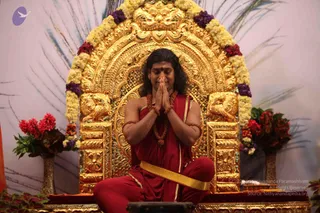
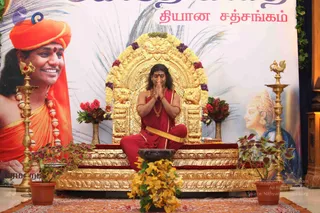
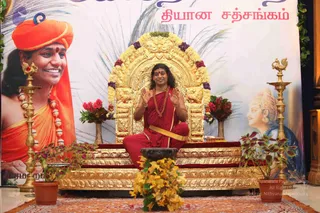
A seated man in red sannyasi-style robes with a gold waist sash sits in a padmasana-like pose before an ornate gold throne (peetha) framed by a floral arch of yellow and purple flowers. He wears rudraksha malas around his neck and wrists, a red bindi on his forehead, and presses his palms together in namaskar with eyes closed. Red and purple flowering plants flank the throne, with a decorative feathered backdrop behind. The figure has long, swept-back hair and matches the Swamiji (probable) cues of rudraksha malas, a crown-style throne setting and saffron-red clothing, appearing in person at the event.A man with long dark hair and a red tilak sits cross-legged on an ornate gold throne with his palms pressed together in namaste. He wears a red robe with a yellow sash and a rudraksha mala. Behind him a large gold throne back is decorated with yellow and purple flowers, with red floral arrangements at each side. Brass oil lamps stand on both sides and a dark bowl of flowers sits in front. The backdrop shows a smiling man in orange clothing with a saffron turban and a large orange-and-white bead necklace, plus a painted deity figure in blue and gold on the right. The banner reads 'Dhyana Satsangam' in red Tamil text.A seated figure in red robes sits cross-legged on an ornate gold throne with a floral garland arch, hands raised in a blessing gesture. A red-and-gold sash crosses the robes and a rudraksha-style bead mala hangs at the neck. Potted coleus plants flank the throne, with brass lamps topped by bird finials and a brass bowl of yellow flowers in front. Behind is a large banner with a smiling figure in orange turban and saffron robes wearing beaded necklaces, a Tamil heading reading dhyana satsangam, and a painted figure of a deity on the right. The setting resembles a satsang hall.A seated man in red robes sits cross-legged on an ornate gold throne decorated with a garland of yellow and purple flowers, hands pressed together in namaskar with eyes closed. He wears a red-orange cloth belt, rudraksha-style beaded necklaces and a red tilak on his forehead. Two brass oil lamps with rooster-topped finials flank the throne, potted plants sit at its base, and a backdrop shows a painted portrait labelled with Tamil text and a smiling figure in orange turban and saffron robes. The setting appears to be a Tamil satsang session. a person: the seated figure in red with long hair, rudraksha malas and a gold-bordered throne matches the page's reference to a person at this event, so his presence is.A smiling man with long dark hair and a red bindi sits cross-legged on an ornate gold throne with a arched backrest decorated with gold relief and garlands of yellow, white and purple flowers. He wears a red robe with a gold border, a red shawl over one shoulder, a beaded rudraksha mala, and red-beaded bracelets on his wrists and upper arms, with hands clasped in his lap. Red and burgundy flowers in brass vases flank the throne, and a brass bowl sits in front. The backdrop is a pale painted wall with palm-like fronds, and a partially visible painted image of a deity appears at the right edge.A seated man with long dark hair and a red bindi sits eyes closed and smiling on an ornate golden throne (peetha) with carved lion-head arms, arched back framed by garlands of yellow, white and purple flowers. He wears a red saffron-style robe with a gold-bordered cloth, a rudraksha mala necklace, and red beaded bracelets, hands joined in his lap in a meditative pose. Potted red and yellow flowers flank the throne, a brass bowl sits in front, and a painted backdrop shows a golden figure at right. a person is the seated figure, identified by long swept hair, rudraksha mala, ornate red robe and throne cues.

Nithya-kriya

15 photosSource gallery
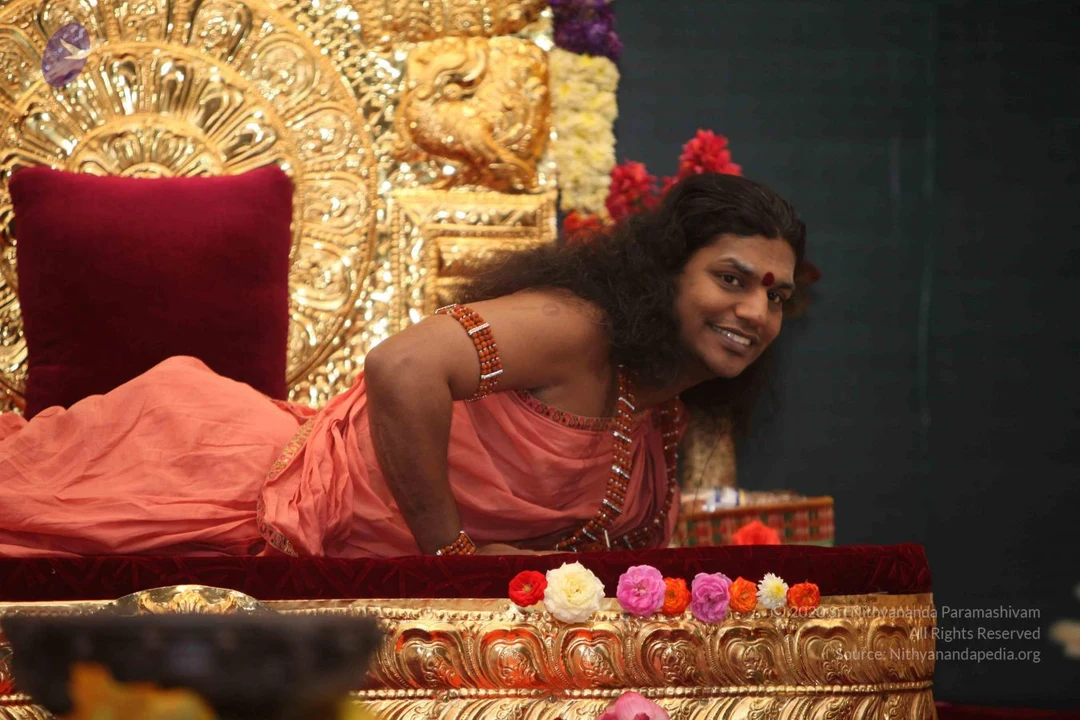
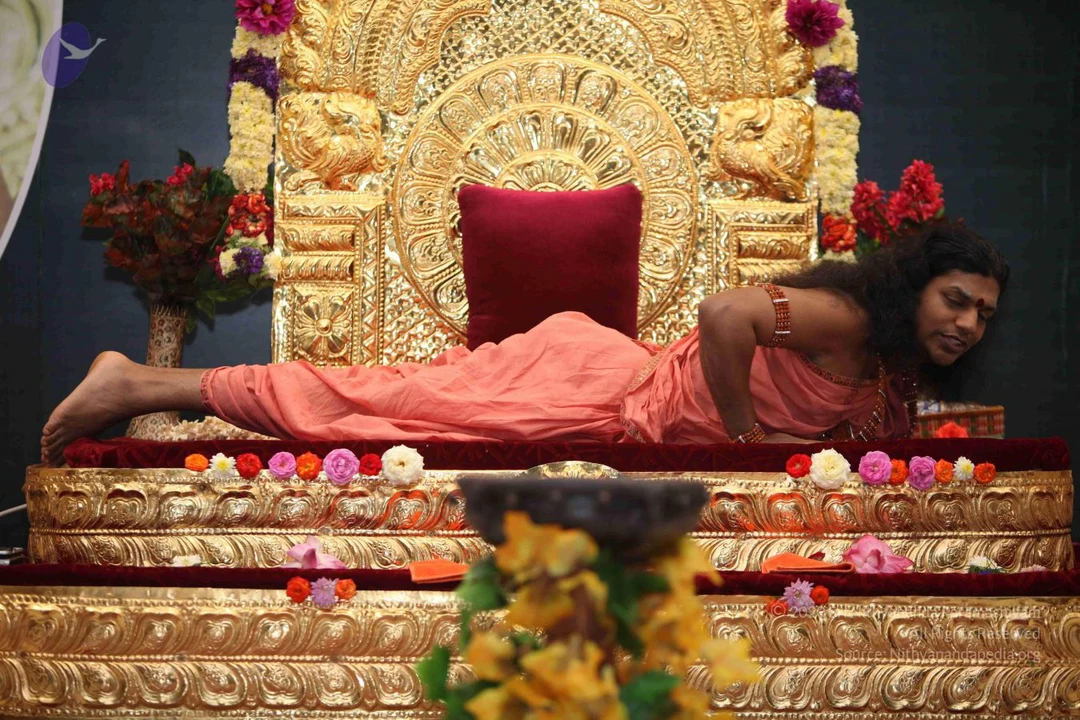
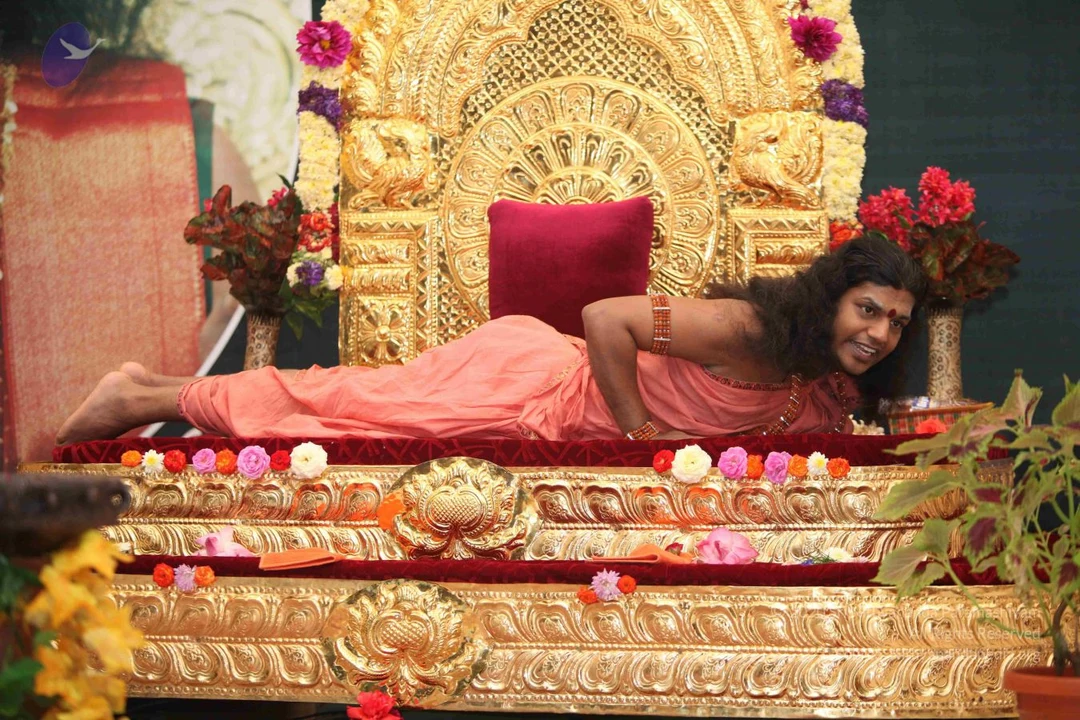
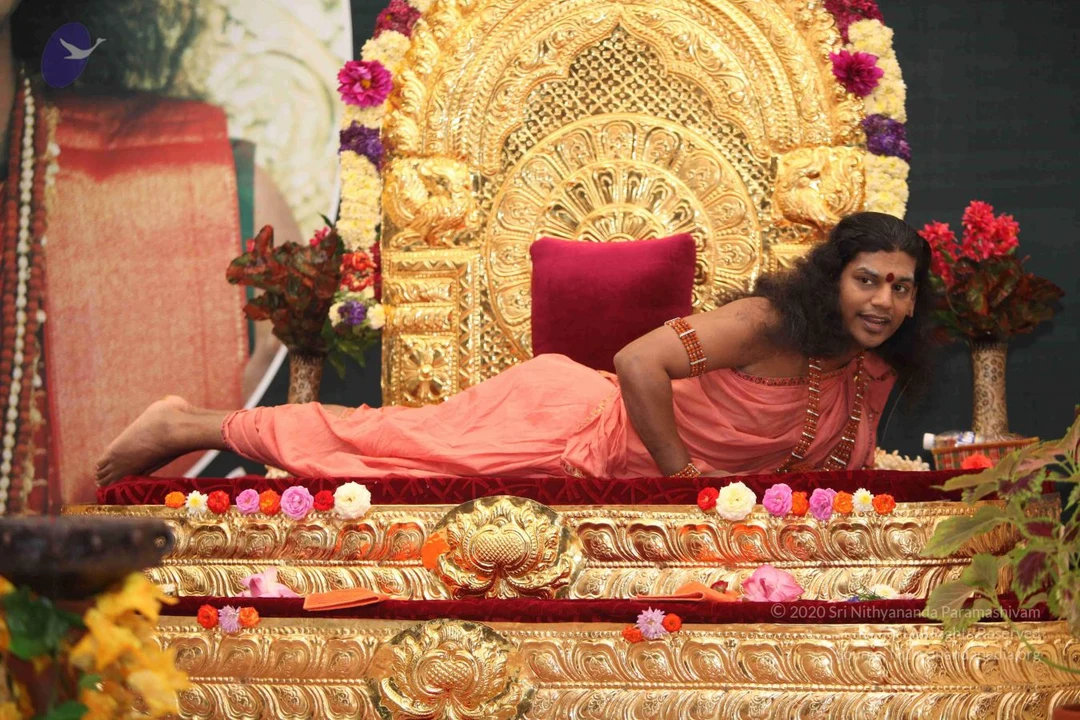
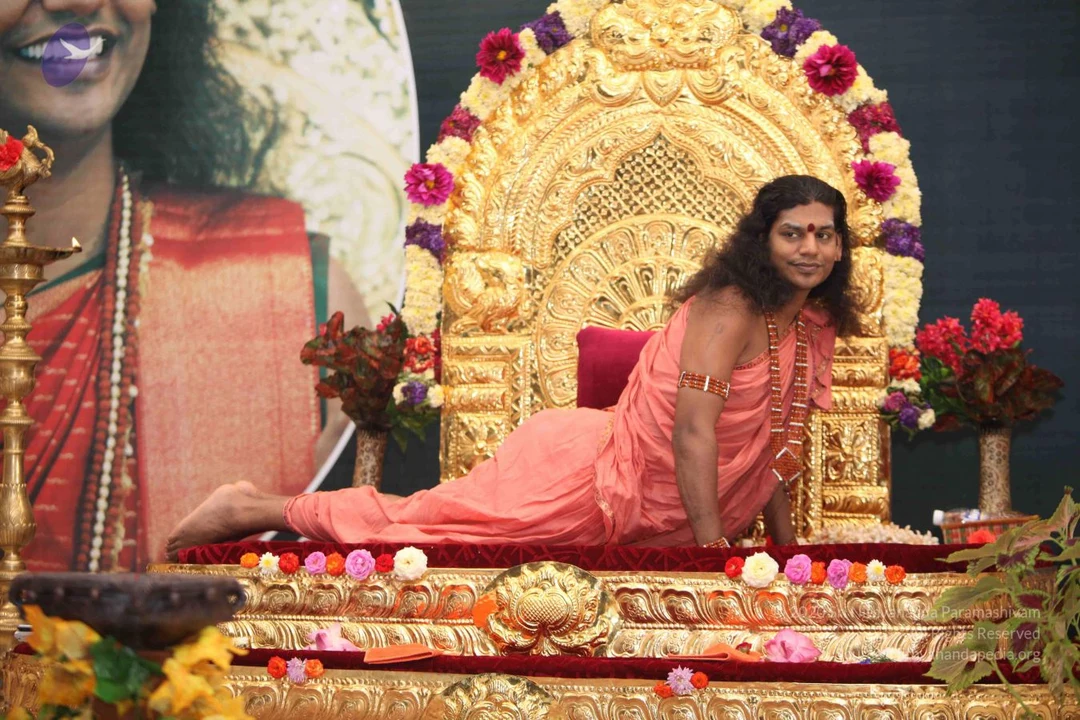
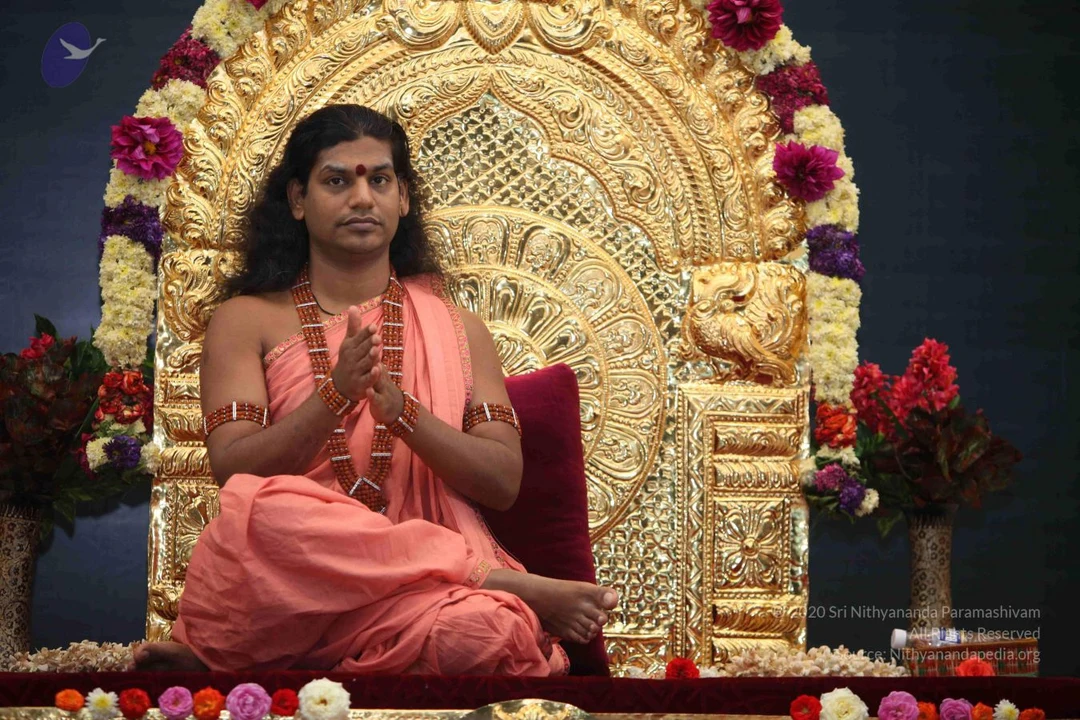
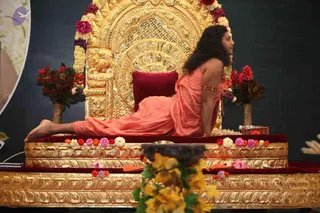
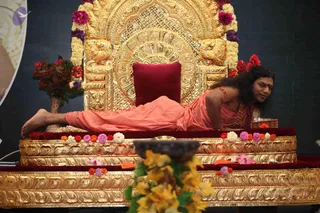
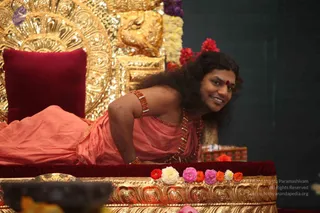
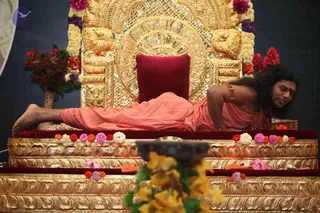
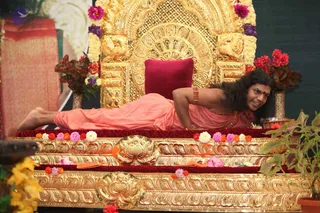
A seated man in saffron-orange clothing sits cross-legged on an ornate golden throne with an arched back carved in floral and scroll patterns. He wears a saffron wrap draped over one shoulder, a long rudraksha mala with a central pendant, and matching beaded armbands, with a red bindi on his forehead. Pink, magenta and white flower garlands frame the throne, and a bottle and small tray sit at the lower right. Behind him is a dark blue backdrop.A long-haired man in a salmon-pink robe reclines on his side on an ornate gold throne with a deep red velvet cushion. The gold throne has a large carved arched backrest with repeating floral and scroll patterns, framed by garlands of magenta, white and purple flowers. Red and pink flower petals and marigold-orange blossoms cover the platform, and a copper bowl with yellow flowers sits in the foreground. A gold armlet is visible on his upper arm. Dark green backdrop. Watermarked archive photo of a satsang-style event.A long-haired man in a salmon-pink dhoti and matching shawl lies prone on a gold-leafed raised dais in front of an ornate gilded throne with lion-head finials and a deep red cushion. Garlands of white, pink and orange flowers hang along the throne and dais. A small red bindi is visible on his forehead, and a copper rudraksha-style necklace is at his neck. Flower petals and a brass lamp stand in the foreground. The wording on the banner at left is not legible enough to read.A man with long dark swept-back hair and a red bindi leans forward over a gold-ornate throne on a red velvet-covered dais, smiling toward the camera. He wears a saffron-orange draped robe, rudraksha beads on his arms and a rudraksha mala around his neck. Behind him is a gold ornamented back with a red cushion and garlands of red and white flowers. The dais front is decorated with gold relief and a row of multicolored marigold and rose blooms. A distinctive appearance-based candidate for Swamiji is present with long hair, rudraksha malas and saffron clothing, so the label is probable.A photograph of a person lying prone on a tiered golden throne platform, head resting on a forearm, body draped in a salmon-pink cloth with long dark hair falling back. A large golden ornate throne backrest with lion-like carvings and a central lotus-style medallion stands behind, with a deep red velvet cushion on the seat. The platform is decorated with garlands and loose flowers in orange, pink, white and yellow, and a brass oil lamp is in the foreground. The person wears gold bangles and a red forehead mark. The setting looks like a temple or ashram hall with a dark backdrop. a person: long swept-back hair and saffron-pink ornate clothing on a golden throne, with the page indicating this event.A photograph of a man with long, swept-back dark hair lying prone across an ornate golden throne with a deep red velvet cushion behind it. He wears a salmon-pink flowing robe, a gold armband and a beaded necklace, with a red tilak on his forehead. The golden throne has carved lion-like side motifs and a radiating sunburst back, decorated with garlands of orange, pink, purple and white flowers. Potted plants with red and purple leaves flank the dais, and a red and gold cloth hangs in the background. Appearance-based probable Swamiji (probable) with long swept-back hair, ornate clothing, beaded necklace and gold armband, reclining on the throne.
Bidadi

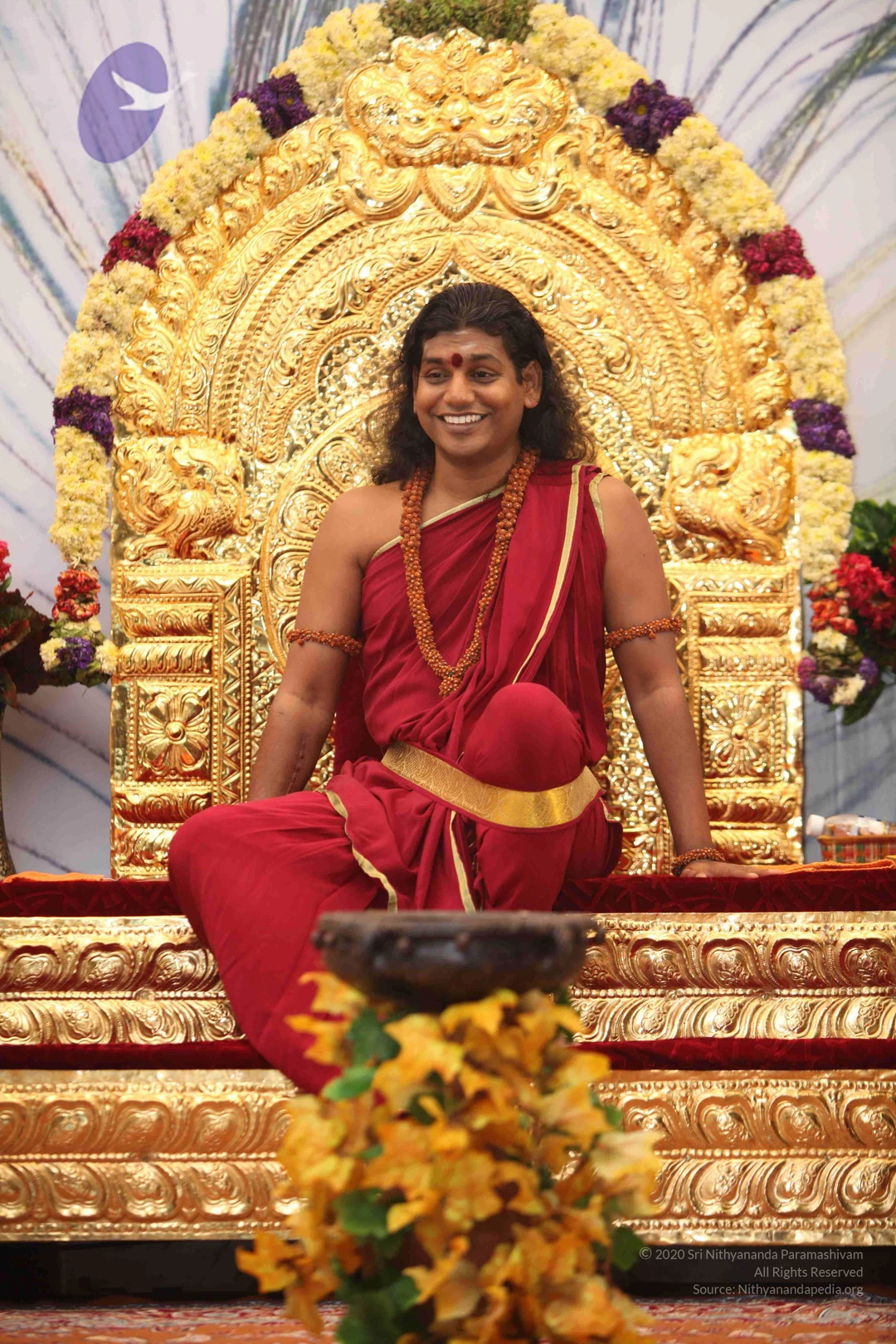
2 photosSource gallery
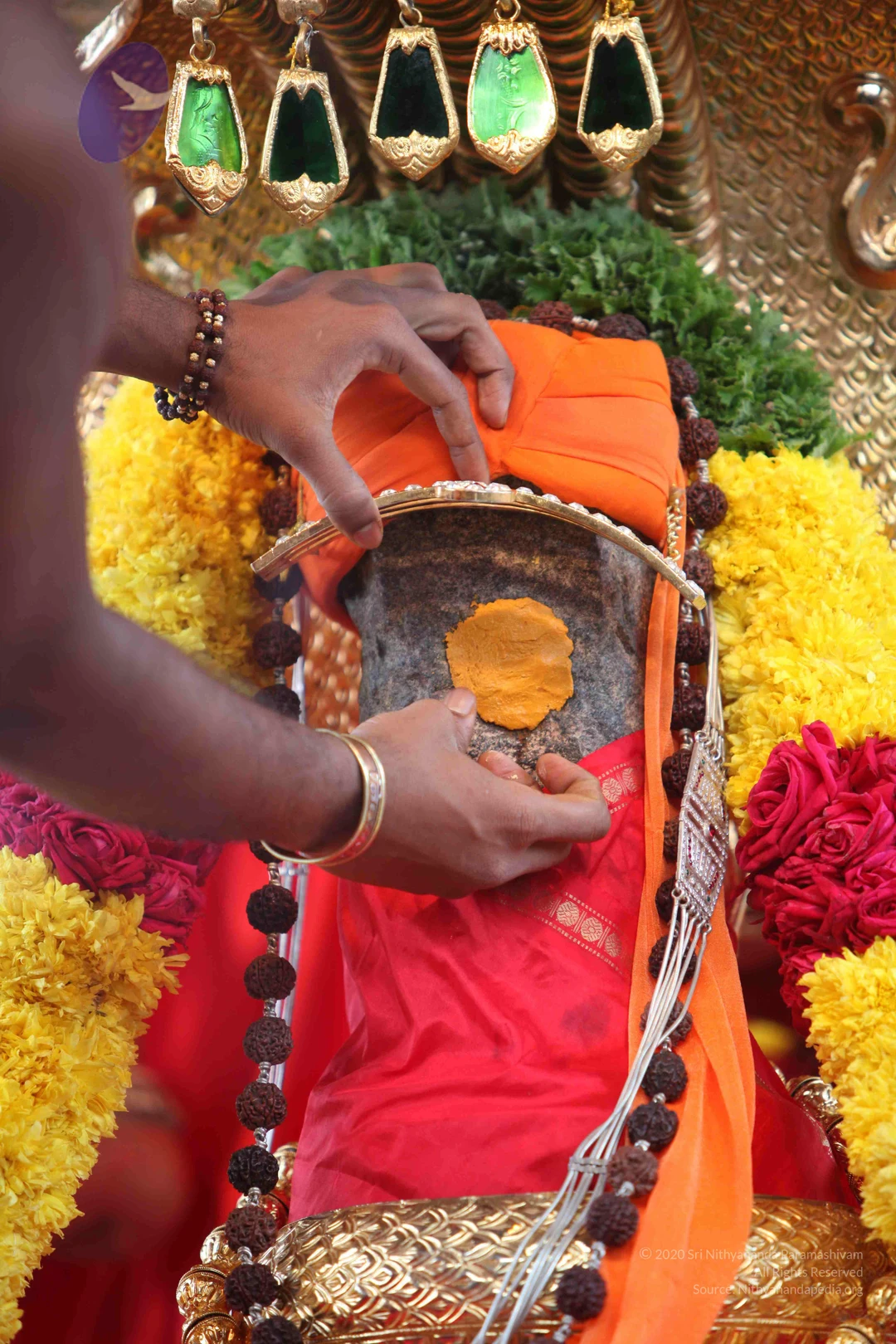
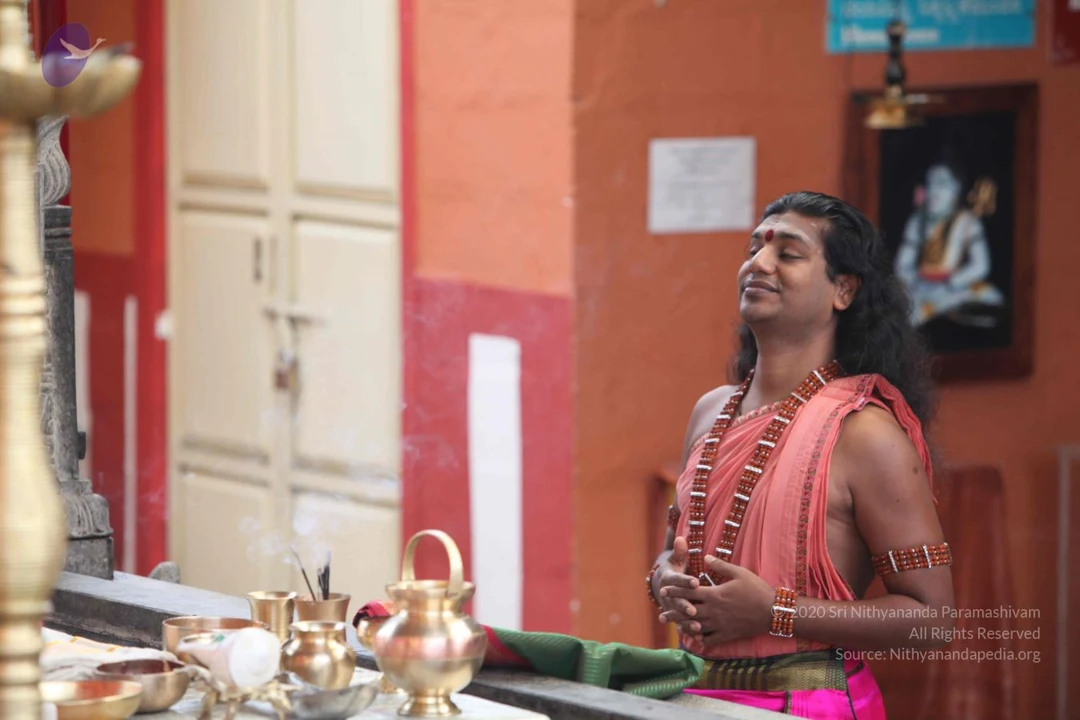
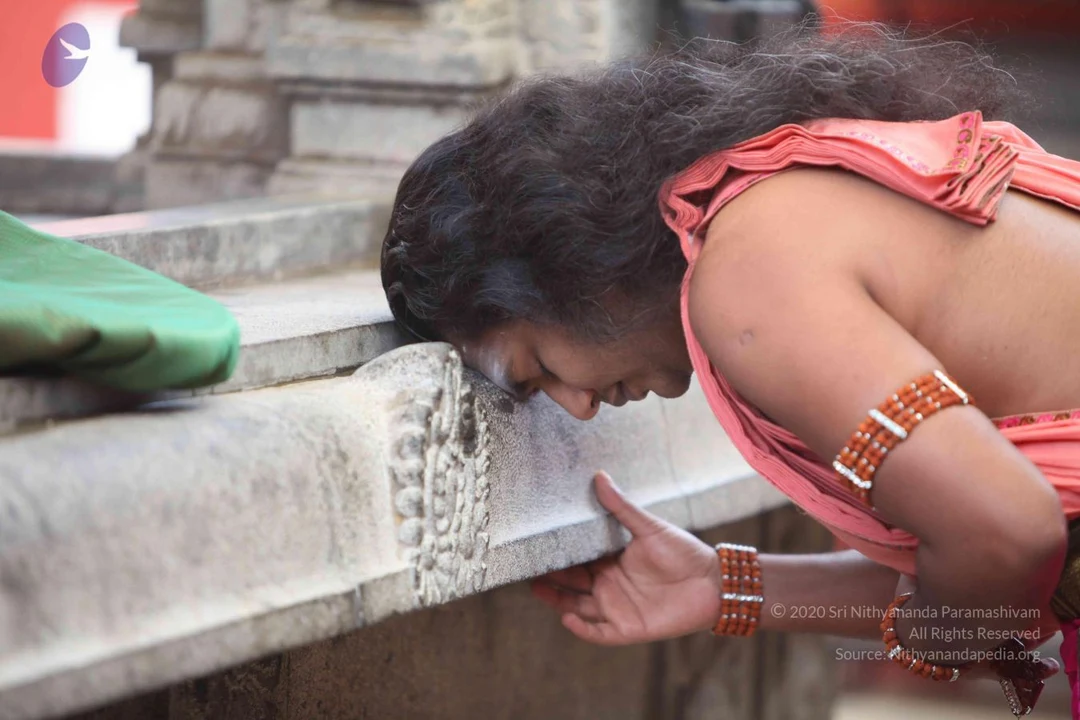
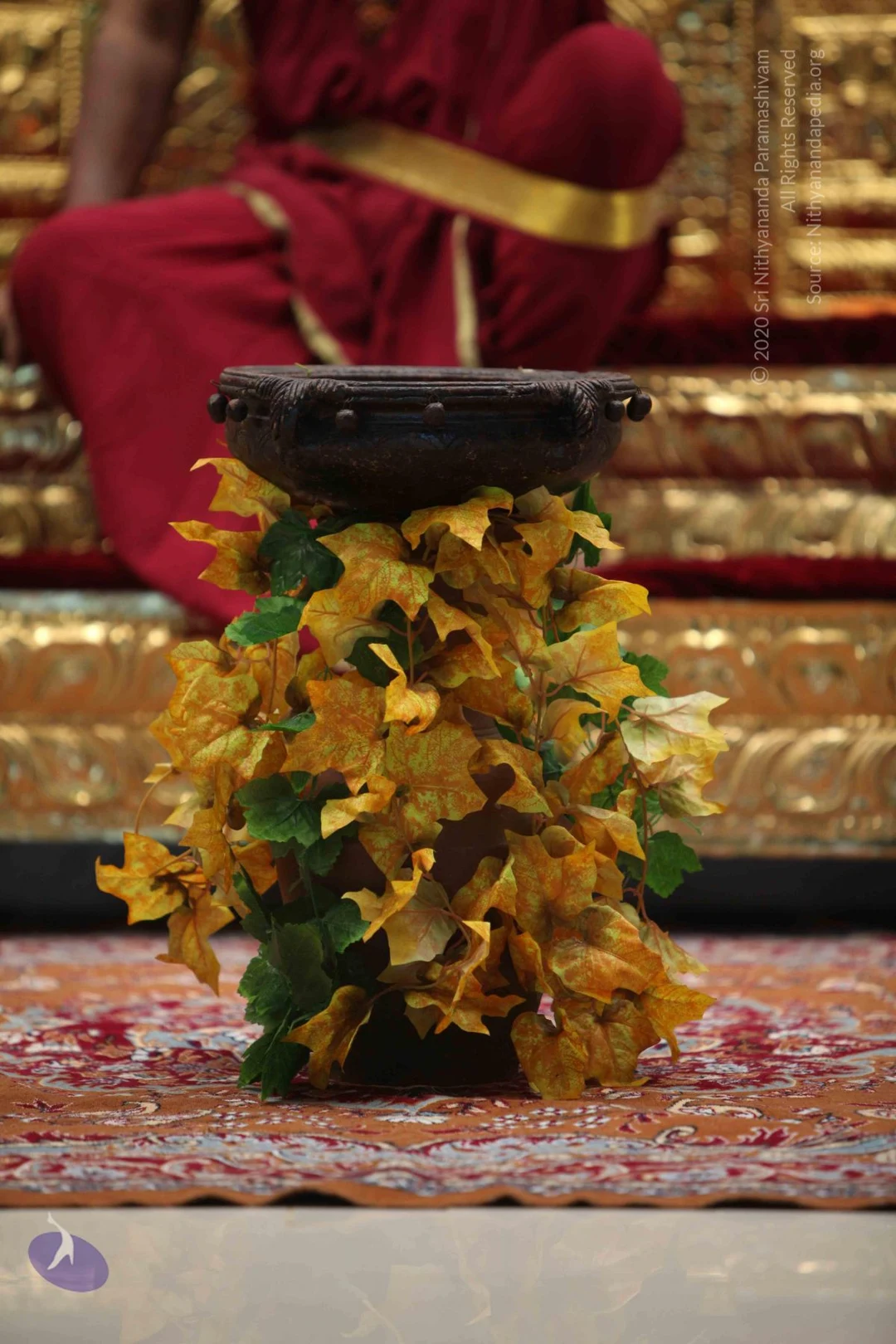
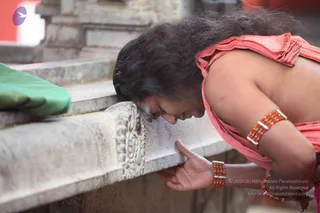
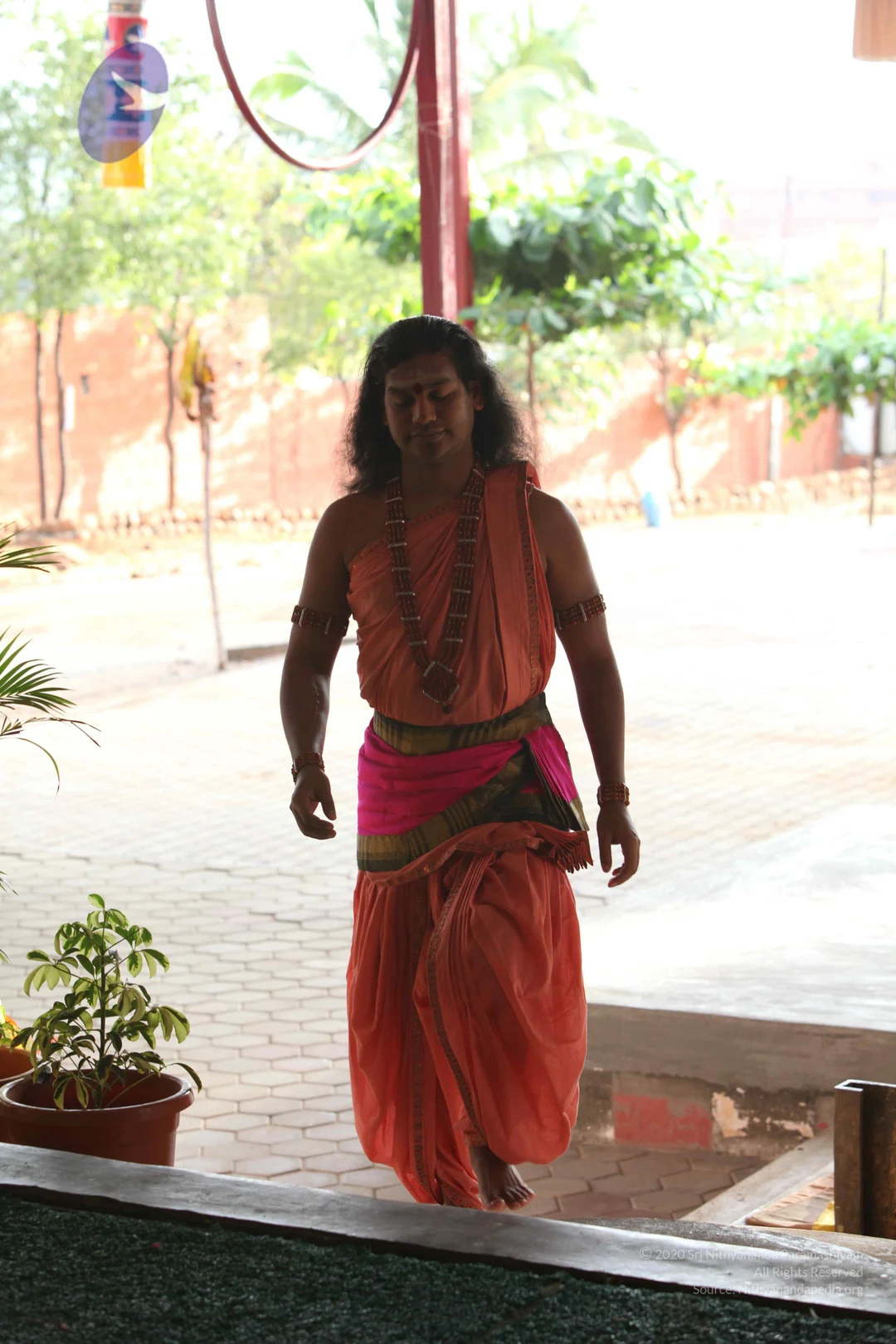
A photograph of a devotee bowing low with forehead pressed to a carved grey stone ledge. The person has long dark hair falling forward and wears a pink sleeveless garment with a pink sash, plus multiple beaded orange-red rudraksha-style bracelets on the wrists and arm. Their outstretched hand rests on the stone, and a green cloth lies at the left edge. Red walls and a stone pillar are visible in the background. a person is not clearly visible in this image.A dark bronze kalasha-style bowl with raised studs rests atop a pedestal wrapped in artificial yellow-green autumn leaves and green foliage, set on an ornate red and orange patterned carpet. Behind it, a seated figure in a deep red garment with a gold border sits against a gold-ornamented throne. The scene appears to be a temple setting with the decorated vessel as the central object.