Skip to content
Friday

7 October 2011

THE SUPREME PONTIFF OF HINDUISM HDH BHAGAVAN SRI NITHYANANDA PARAMASHIVAM

Dated photos
644
Source pages
1
Media
2
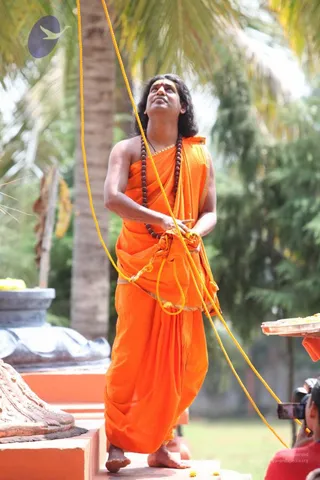
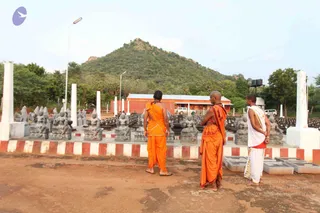
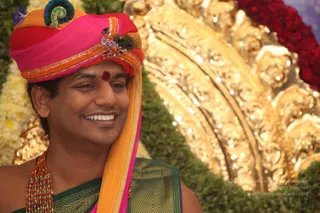
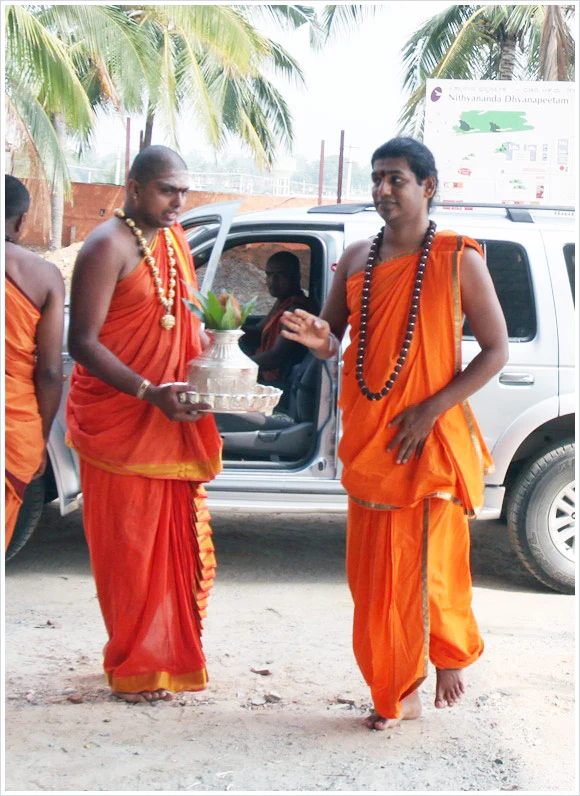
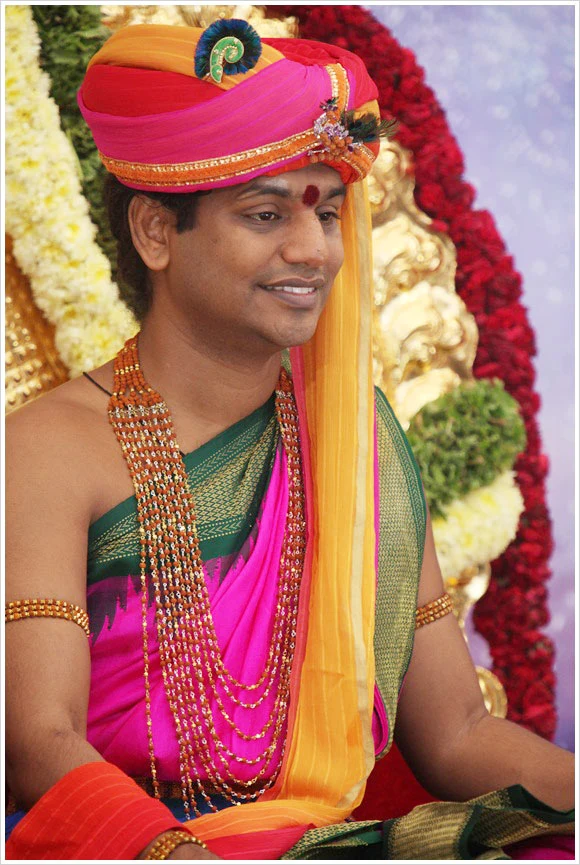
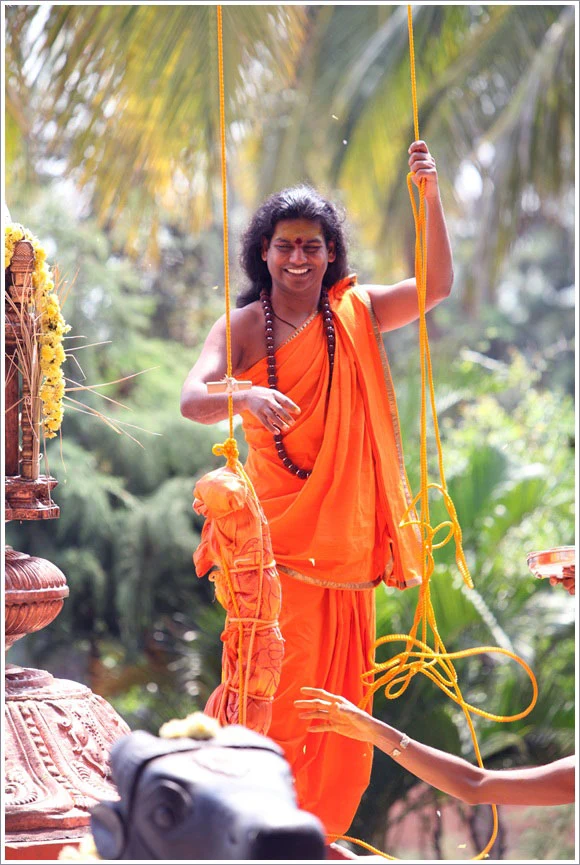
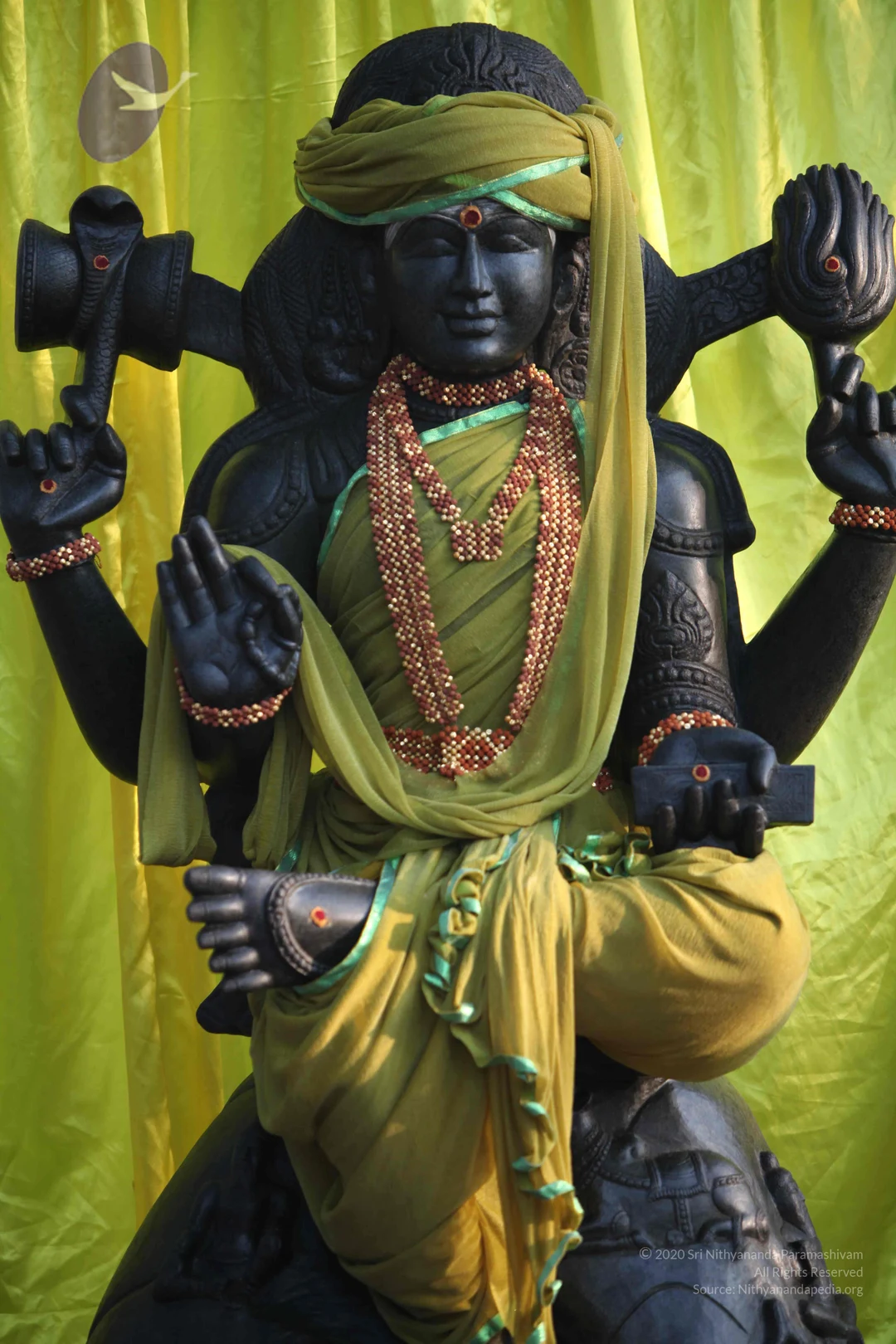
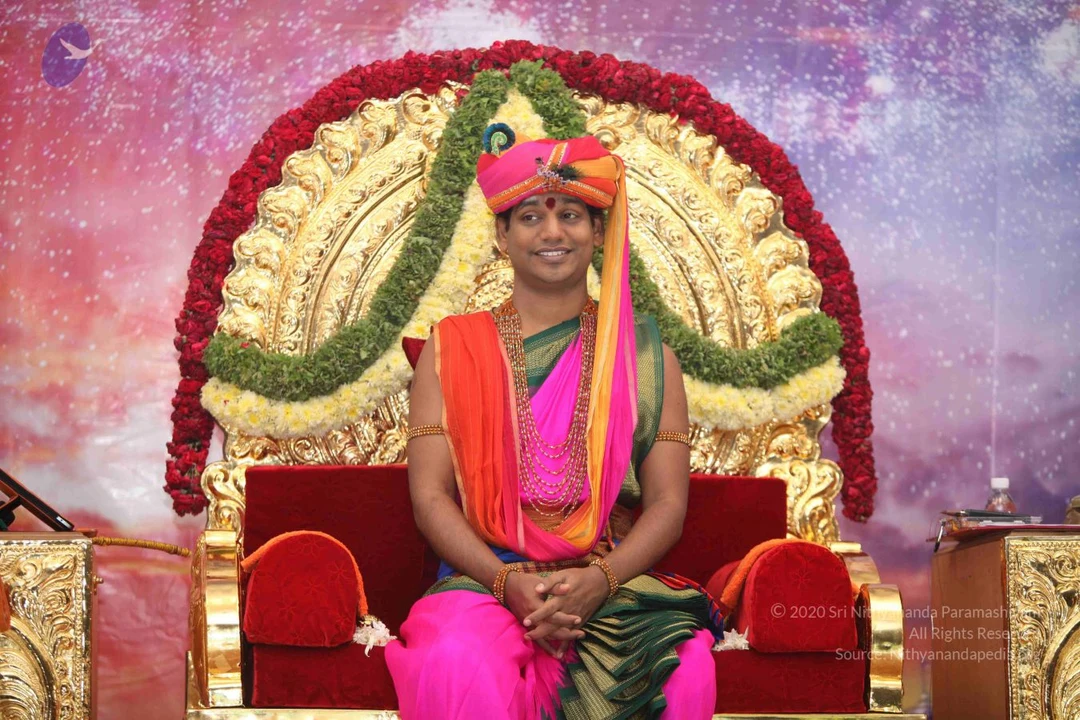
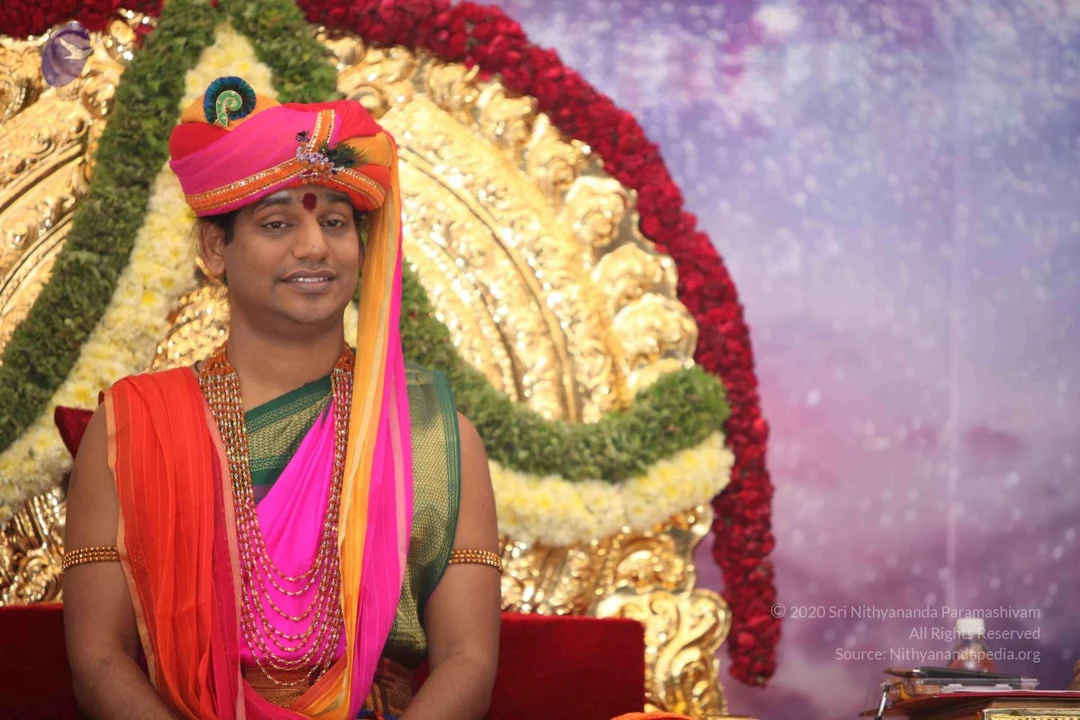
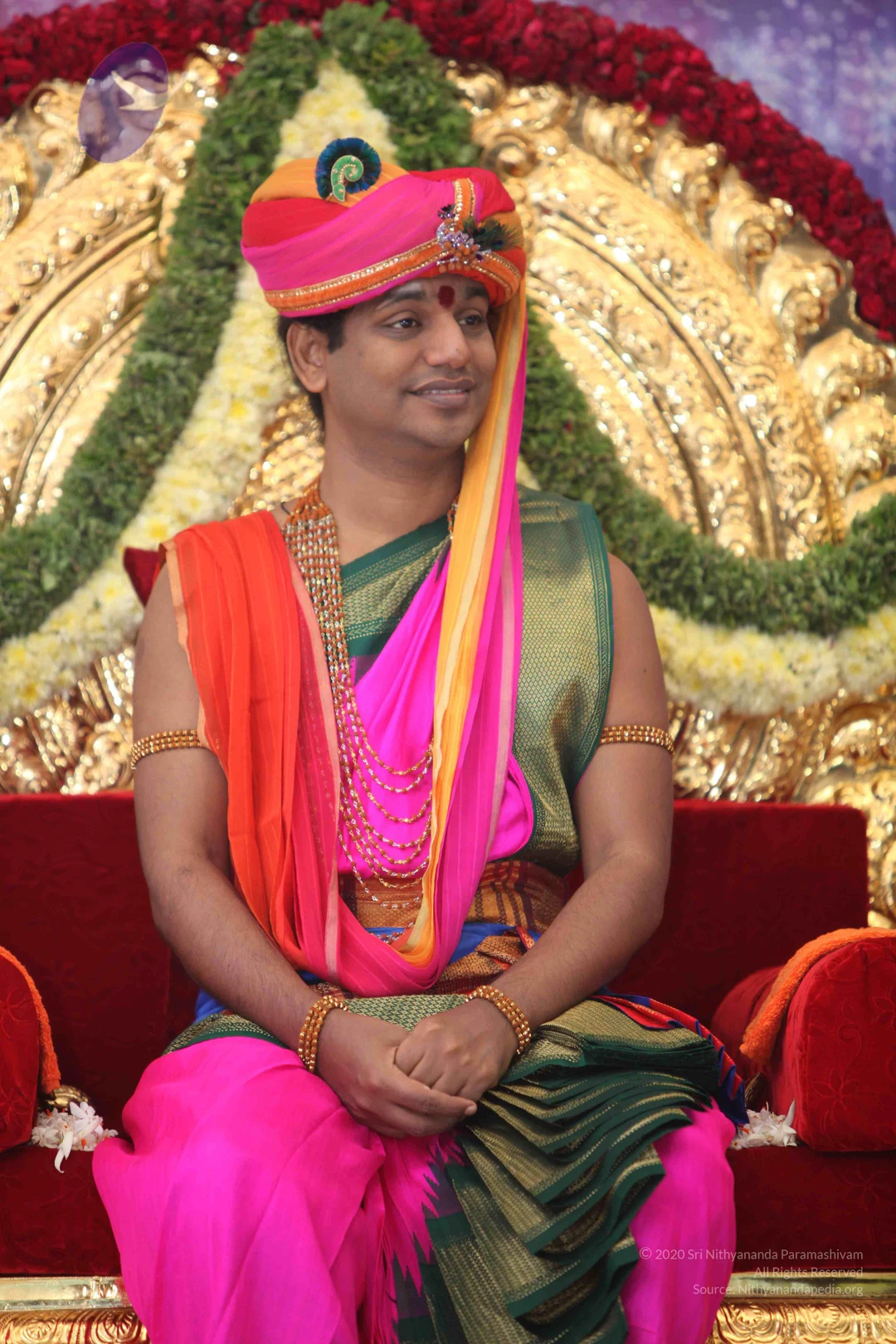
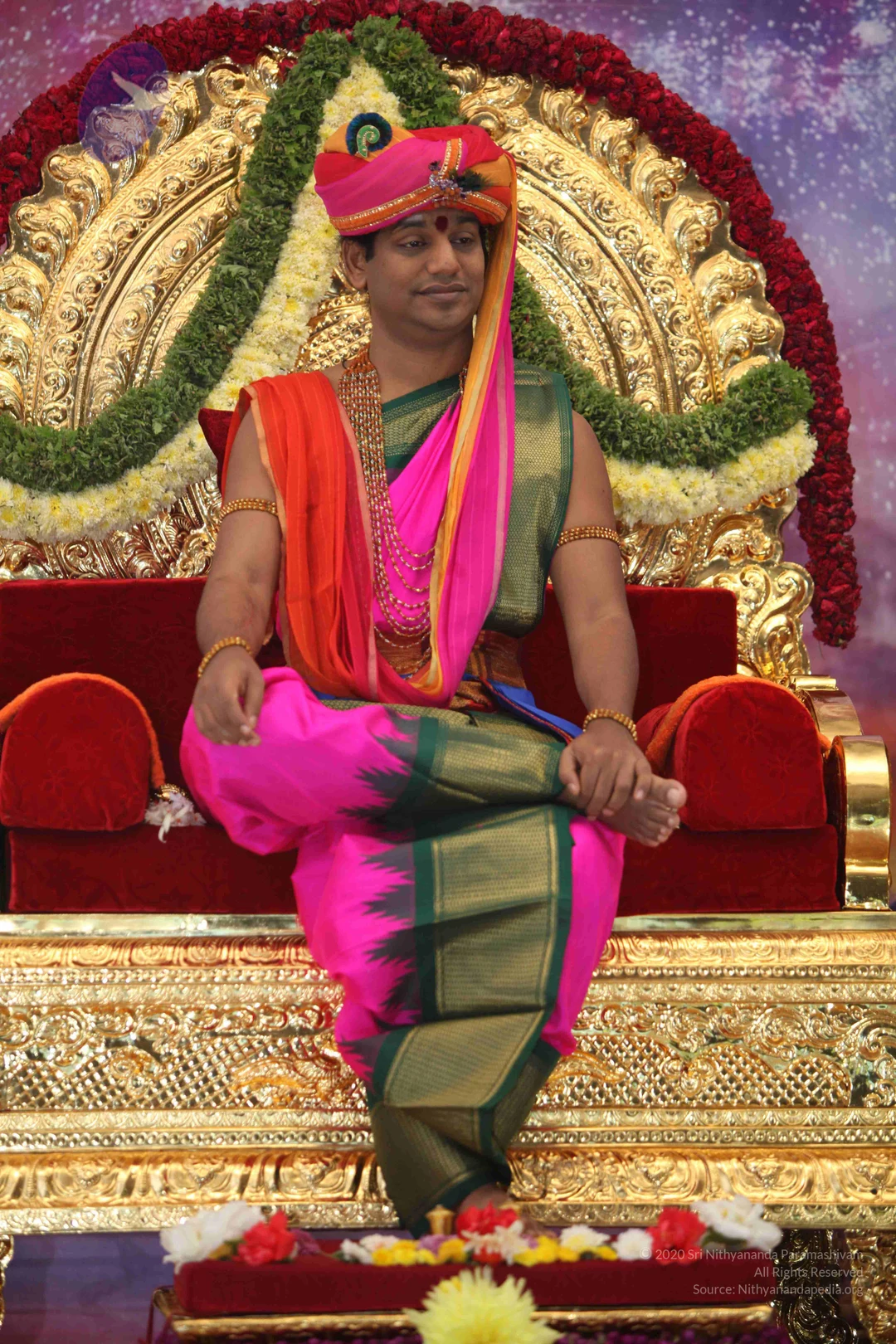
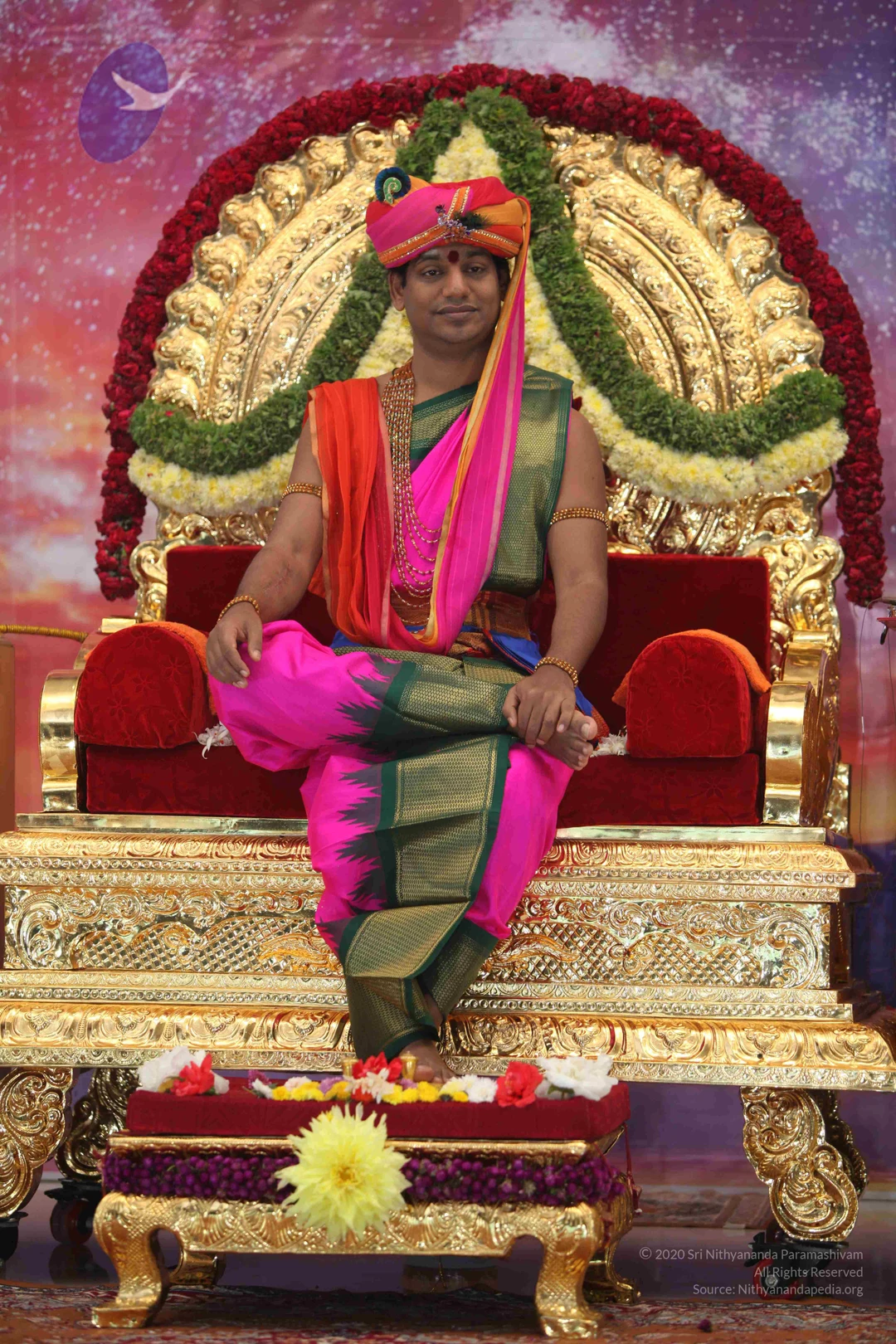
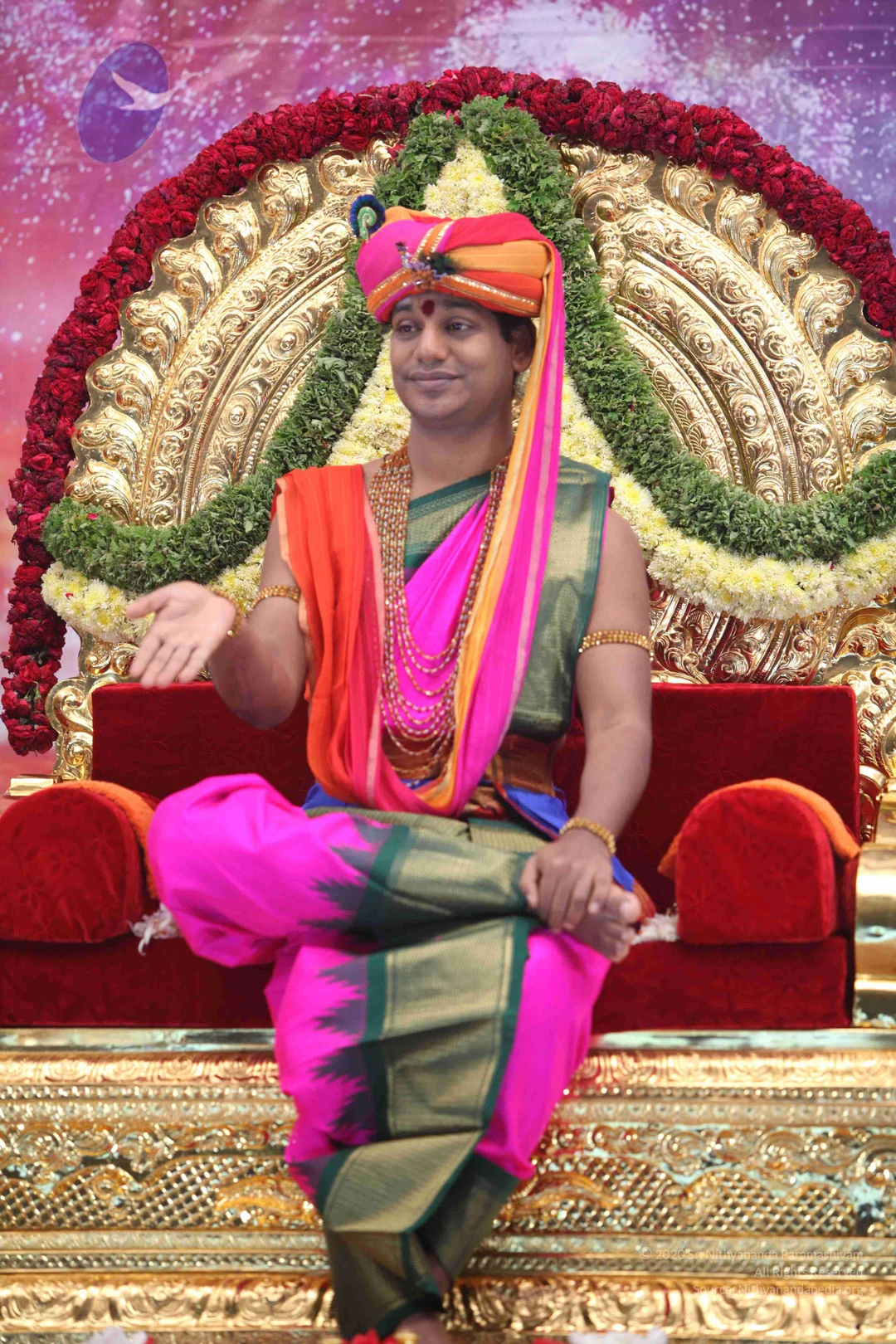
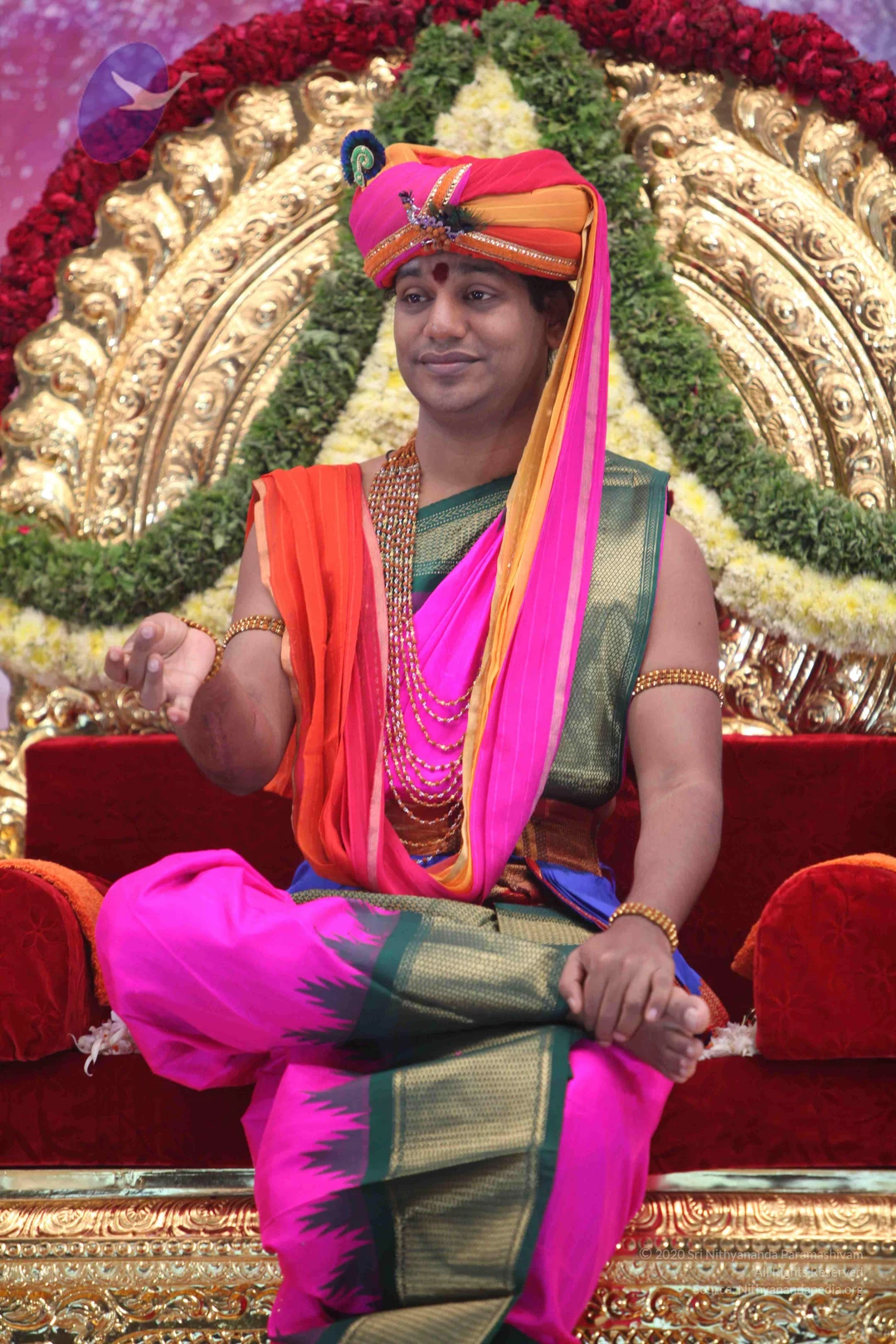
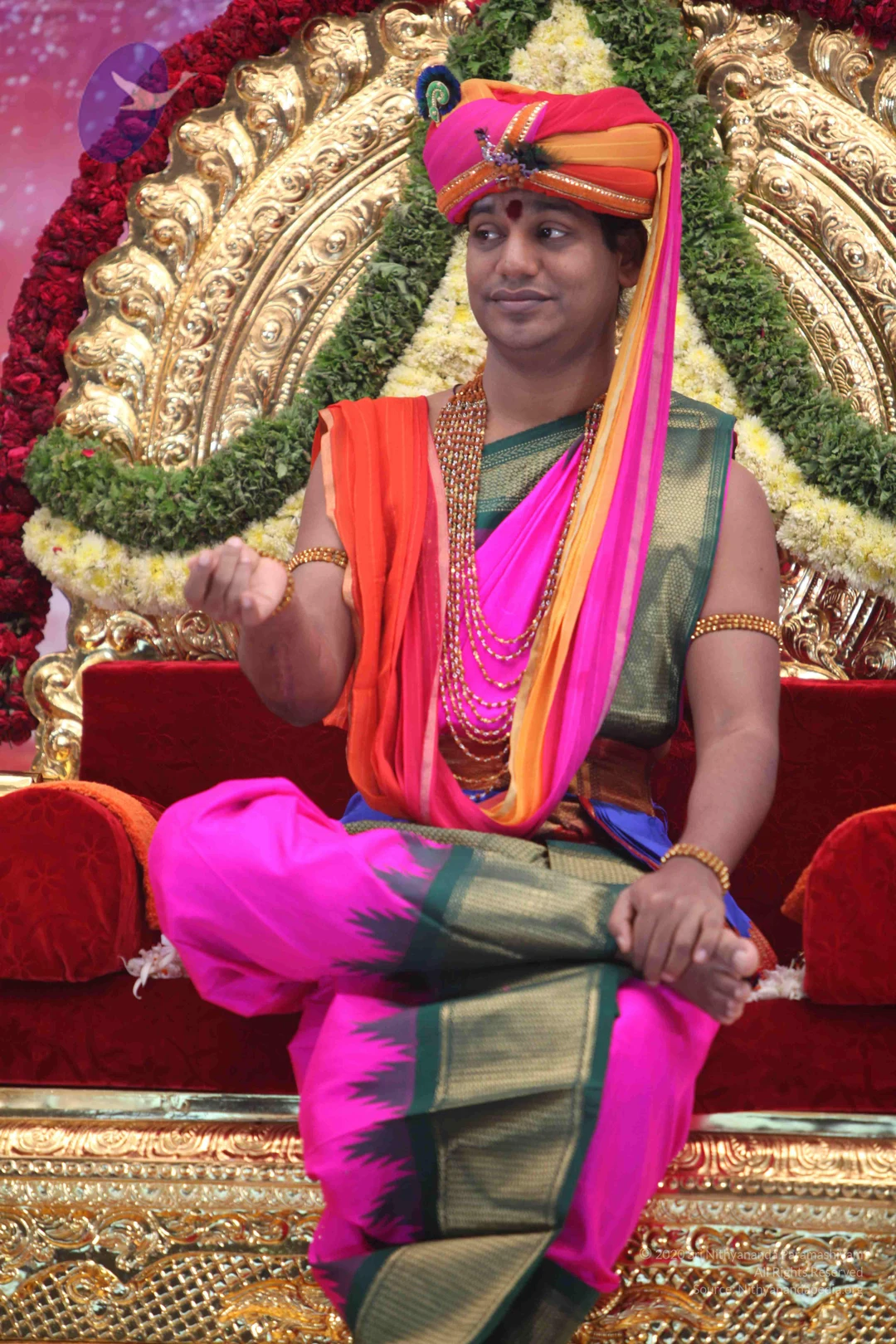
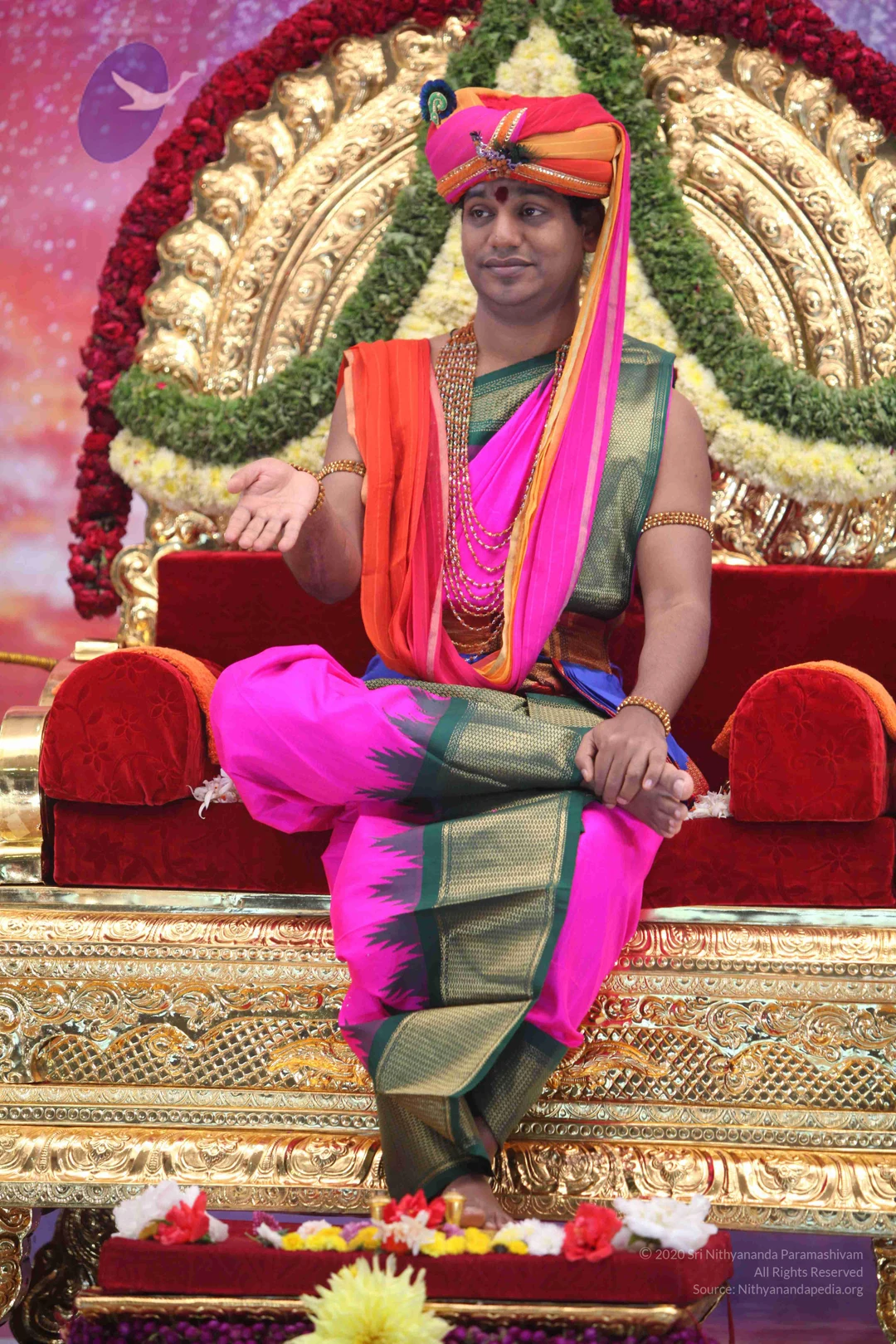
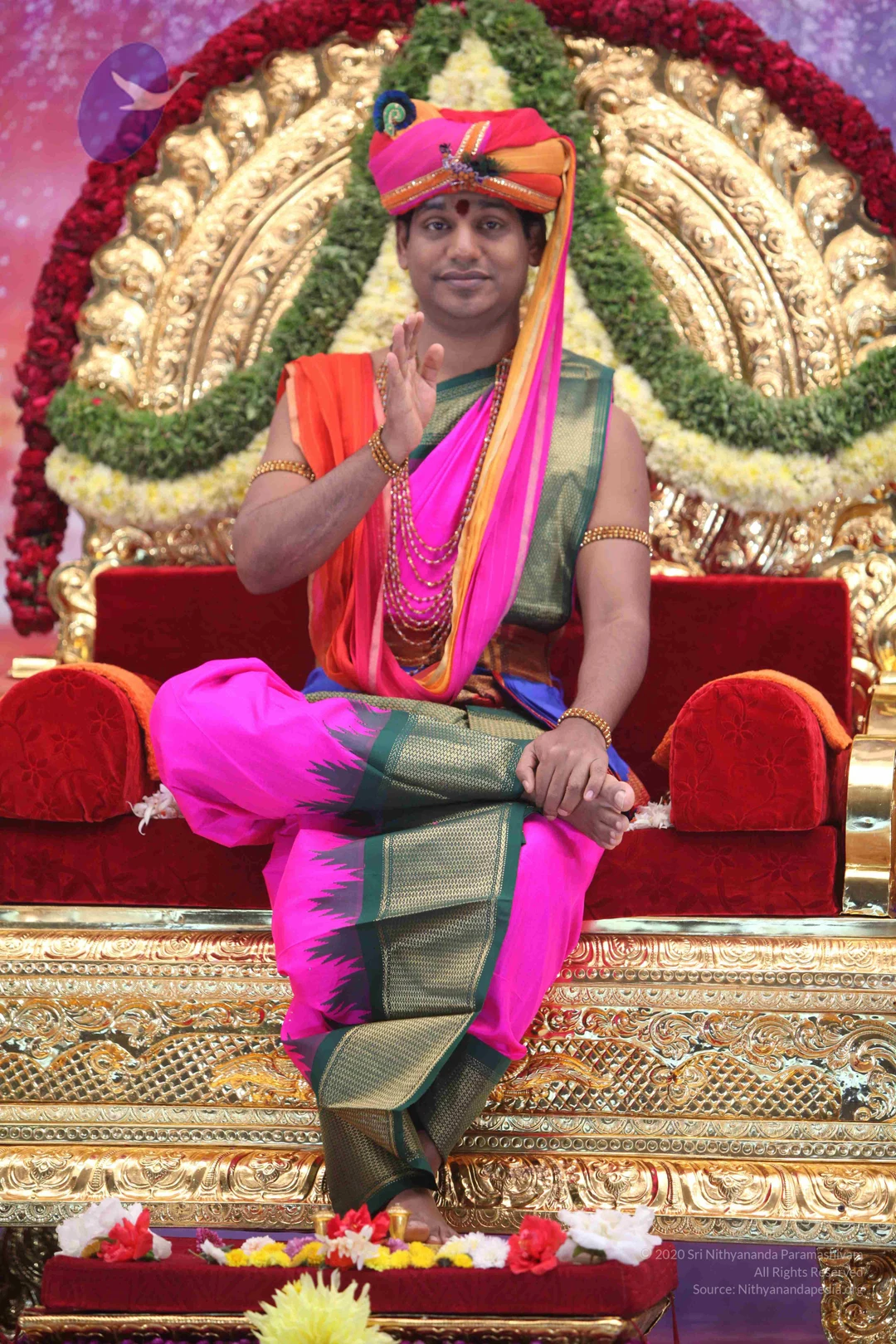
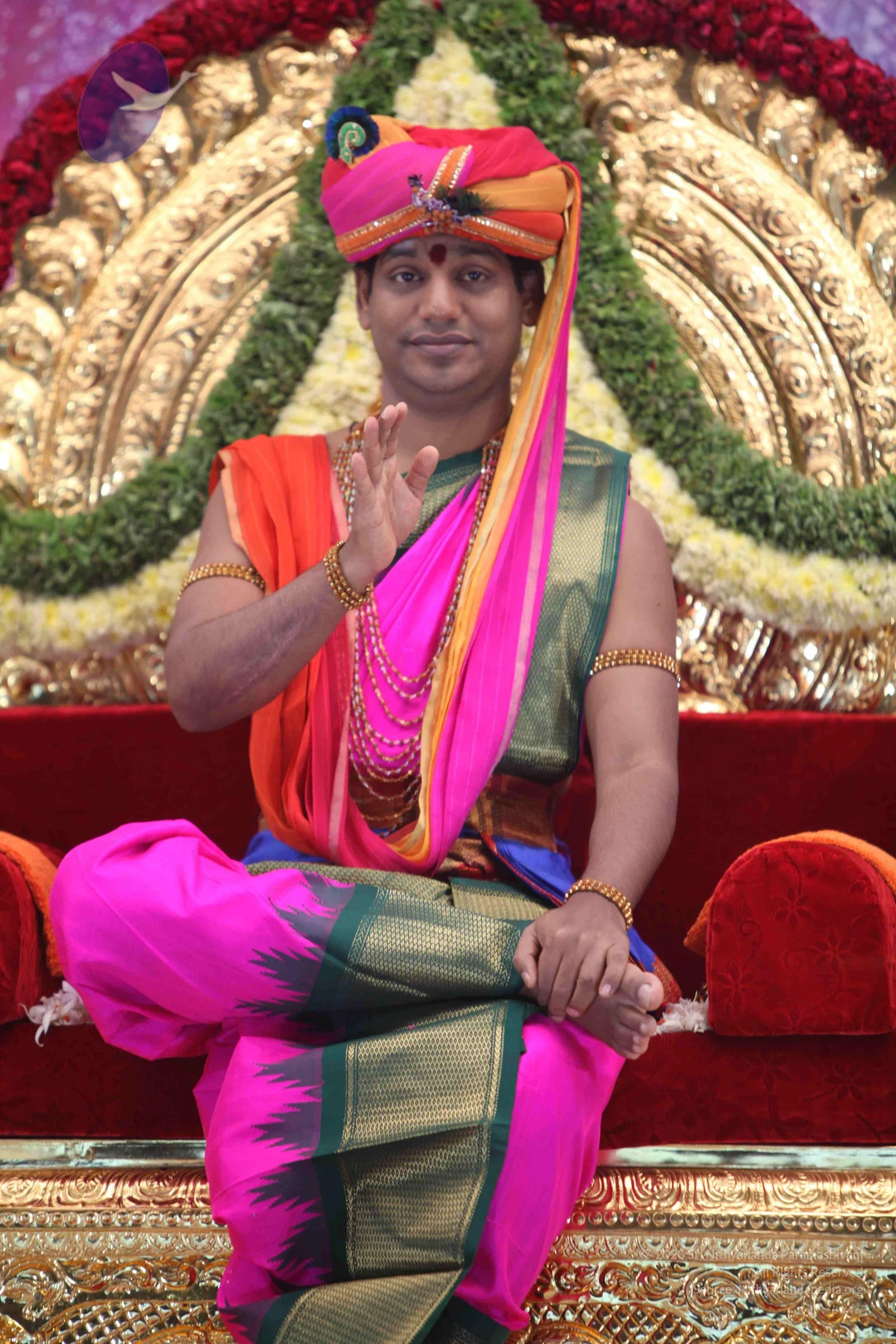
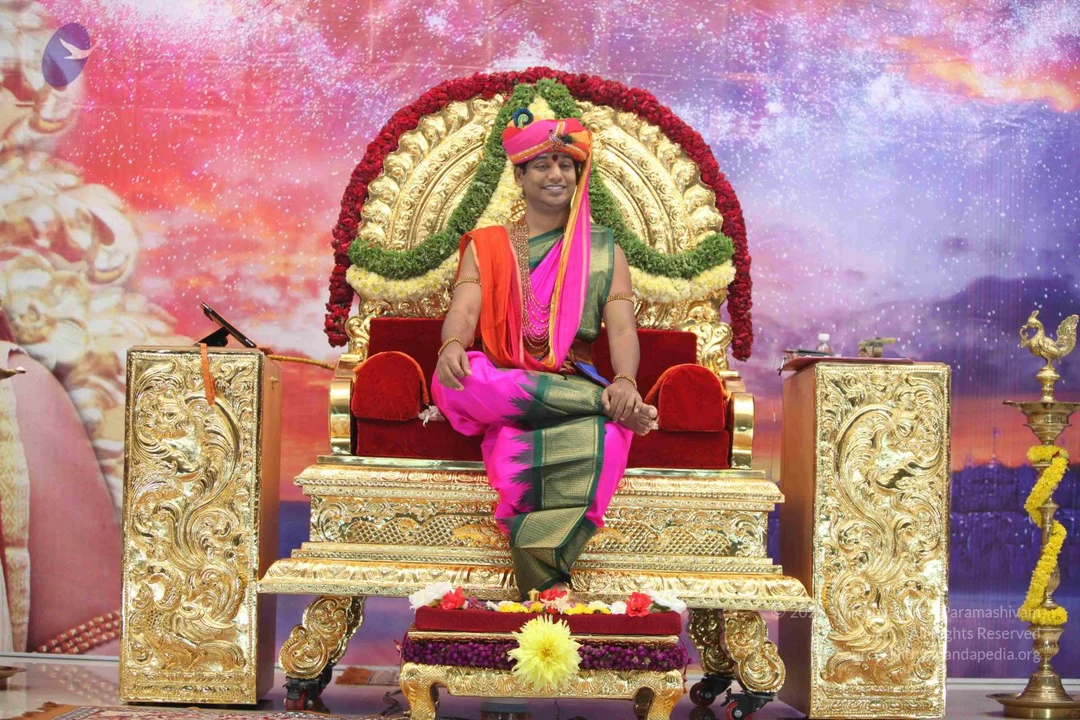
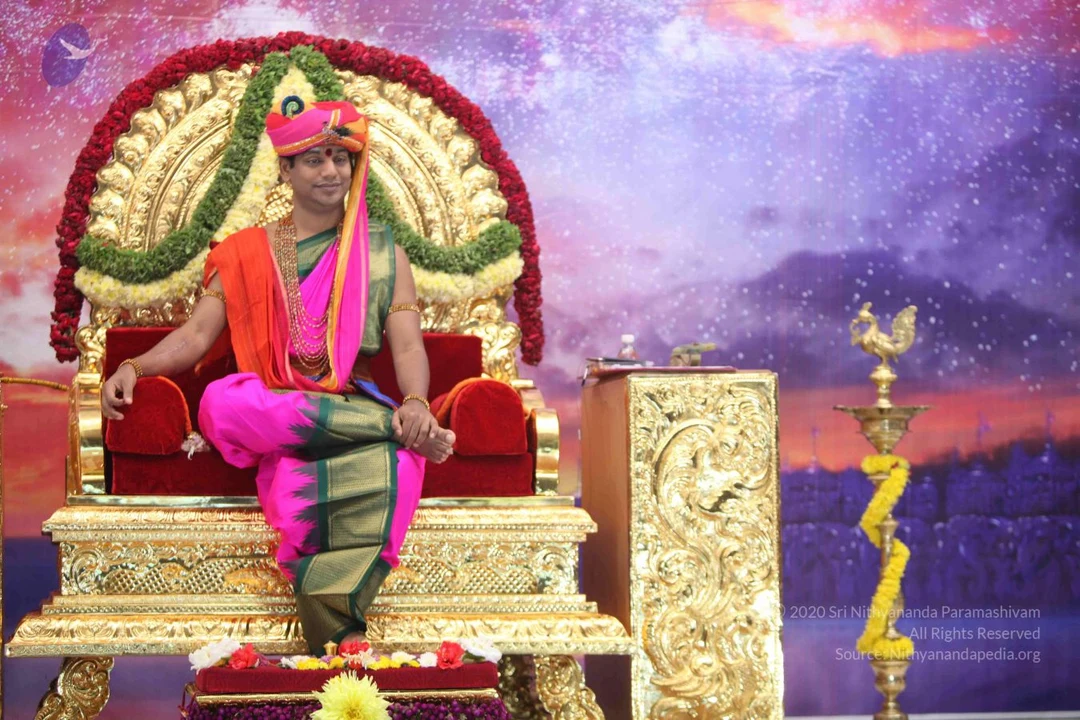
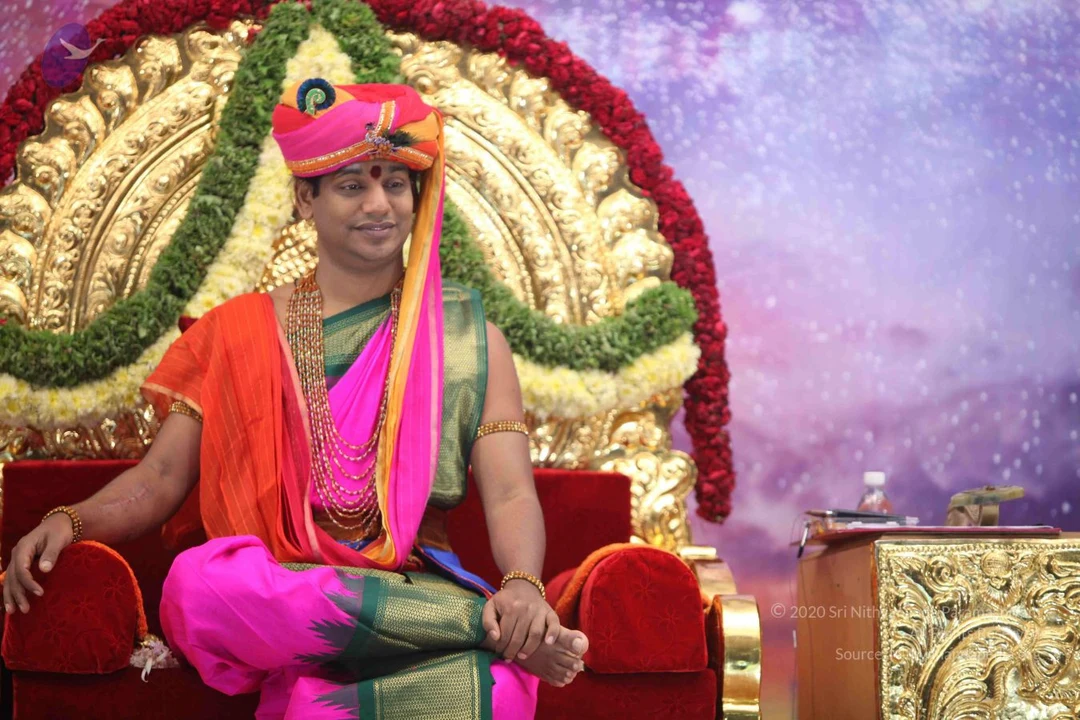
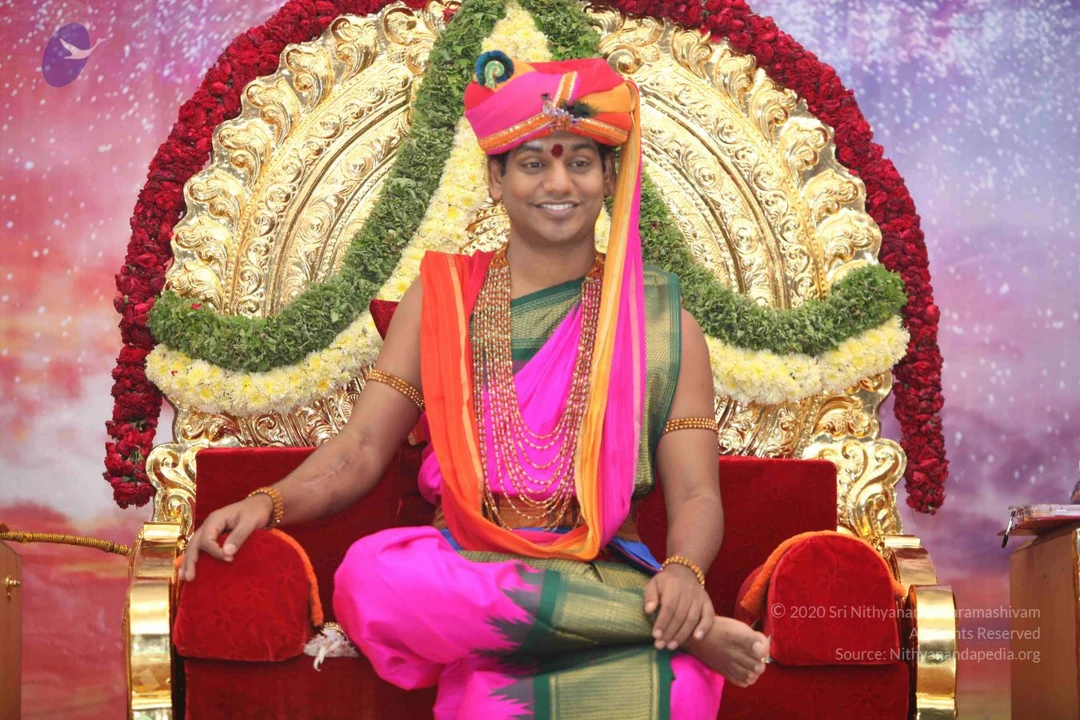
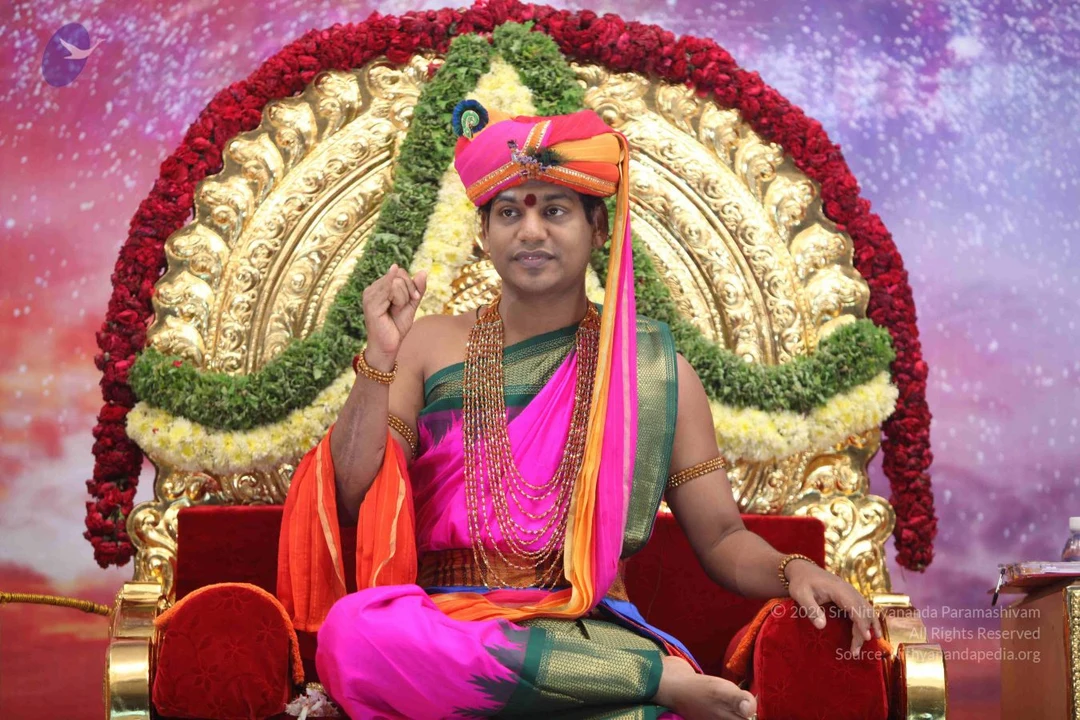
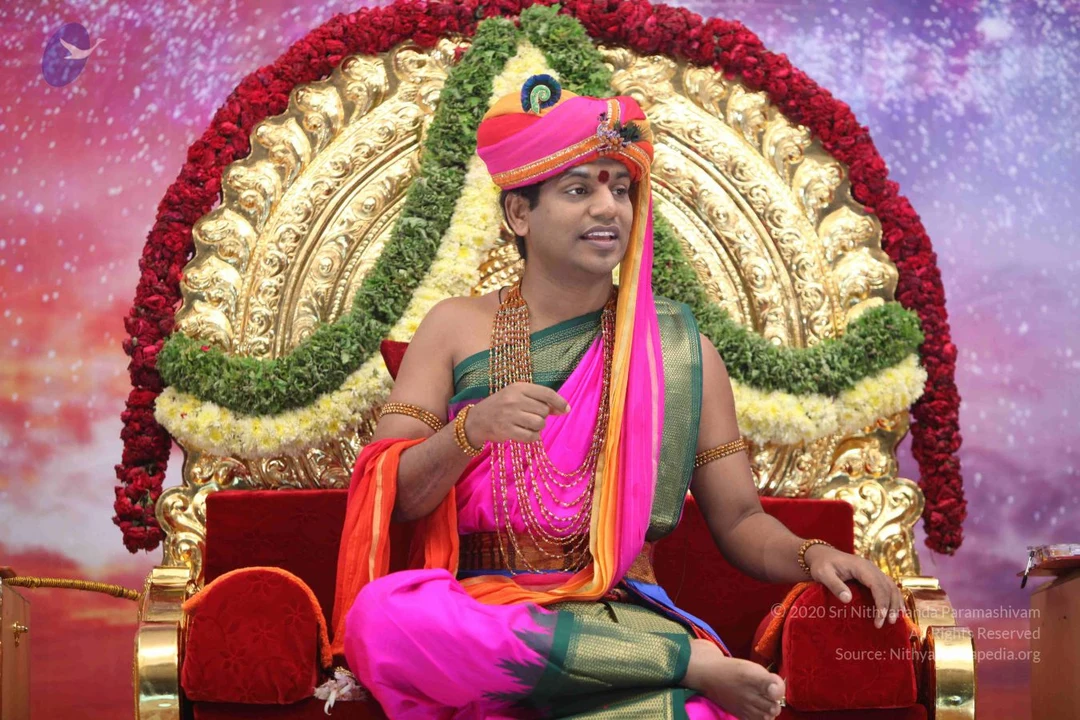
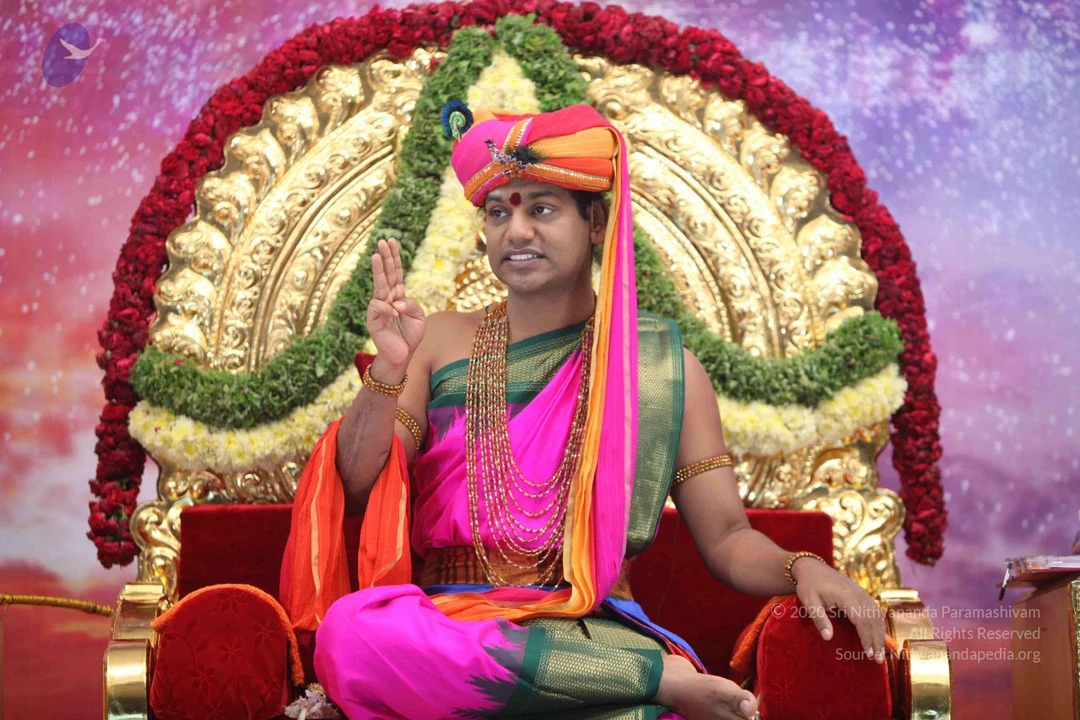
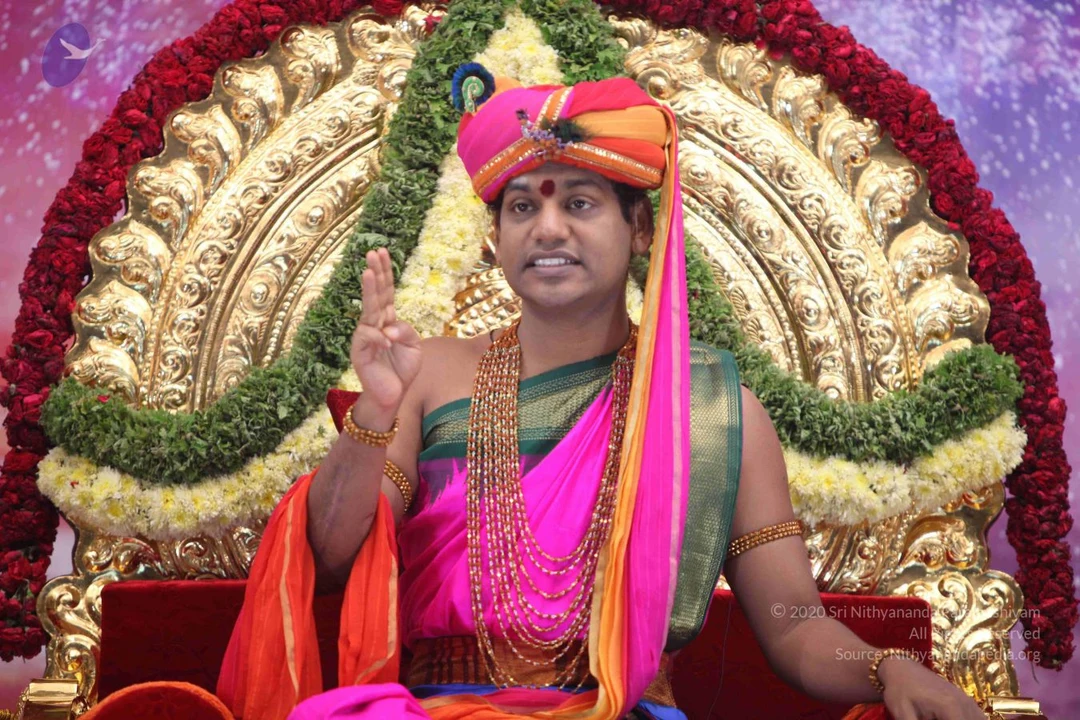
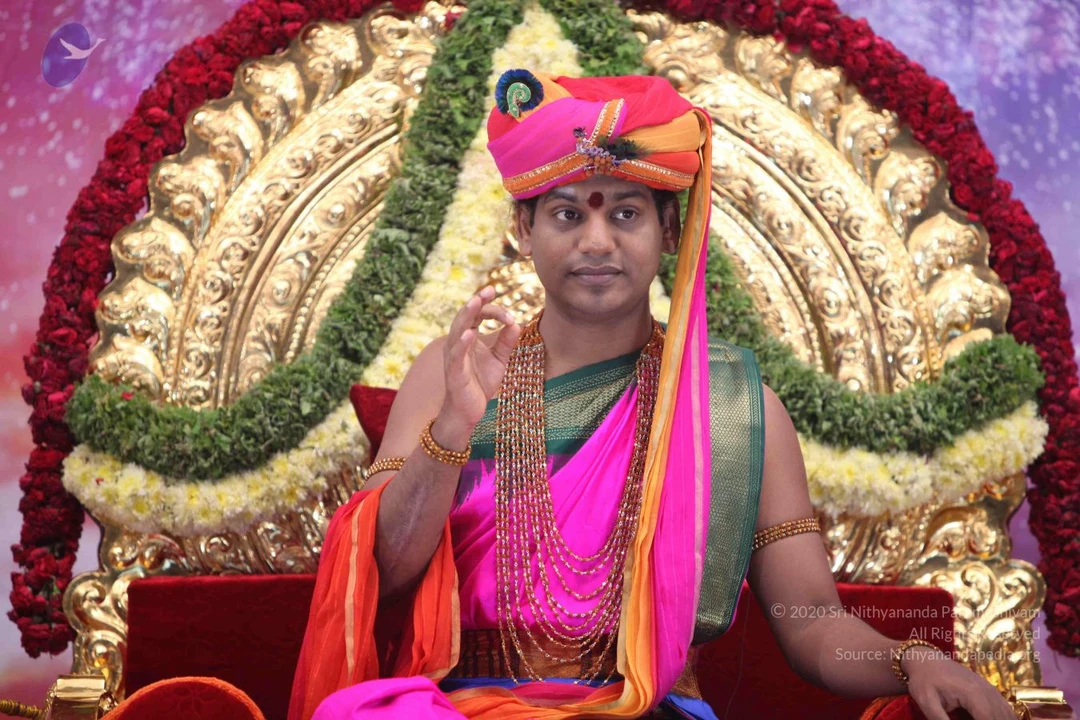
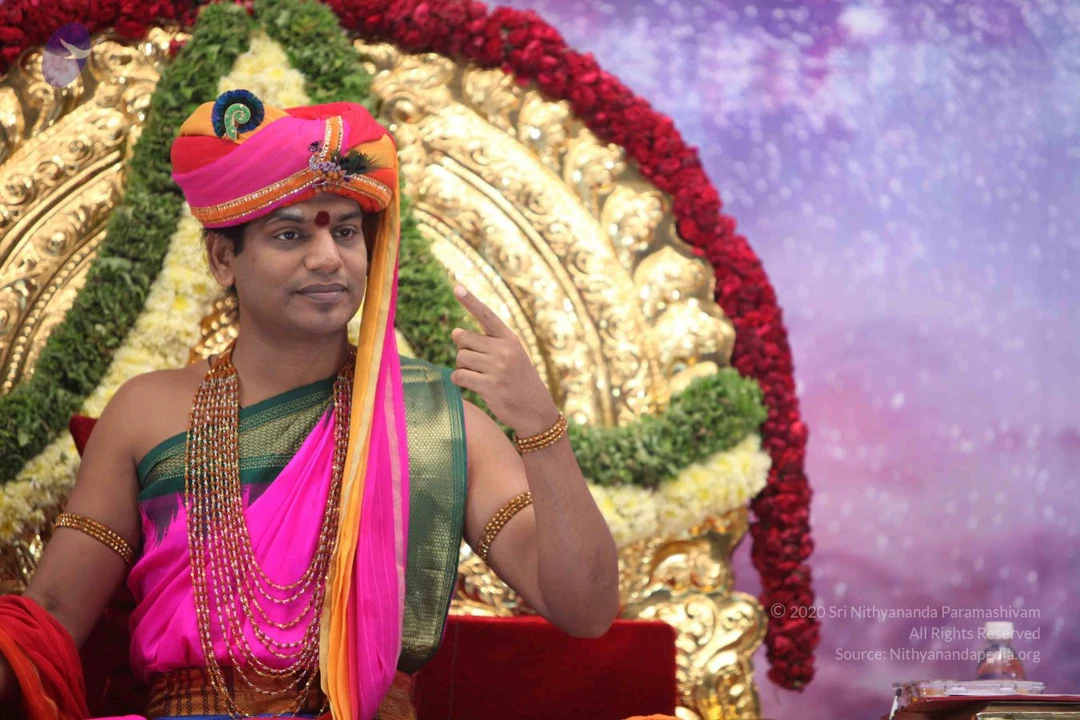
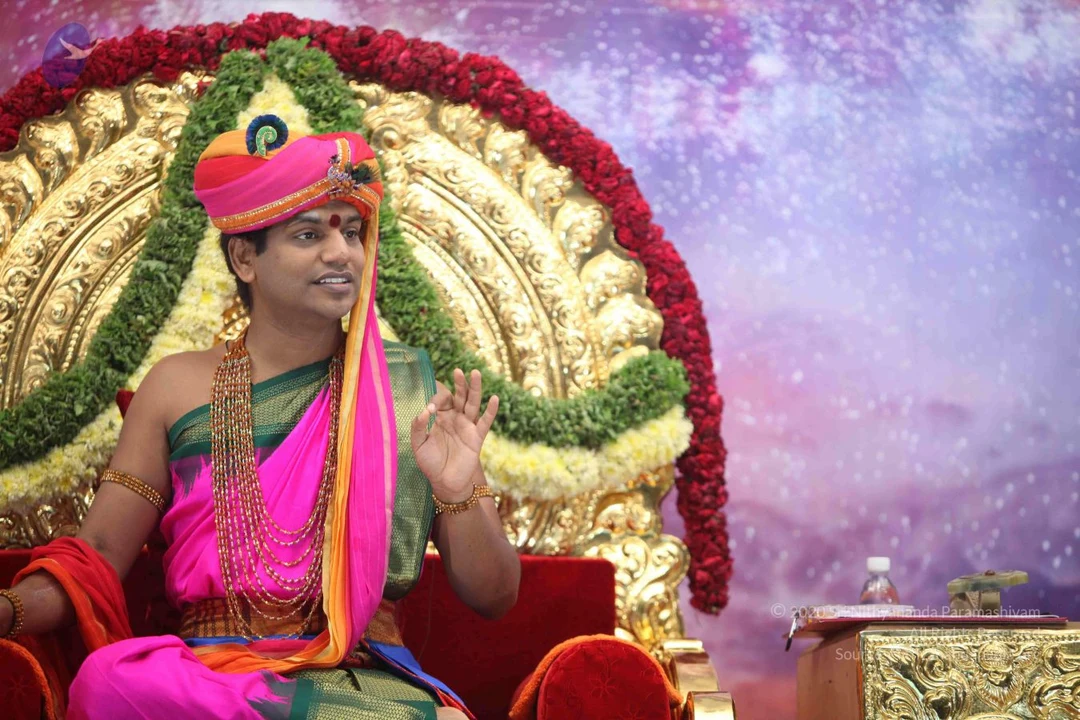
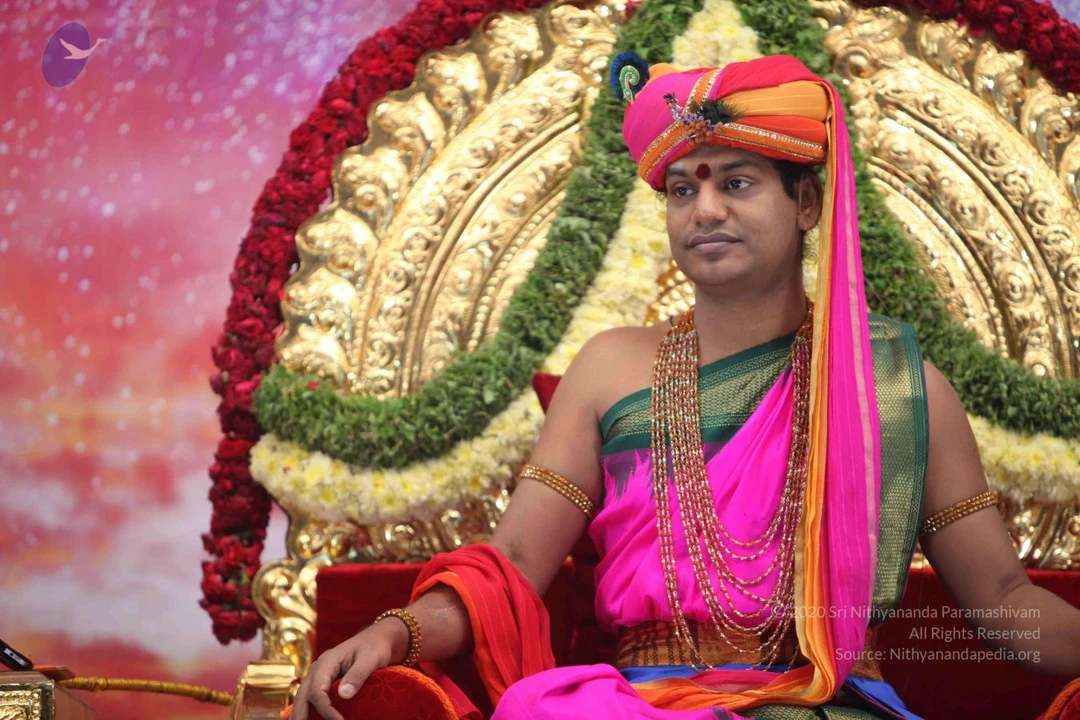
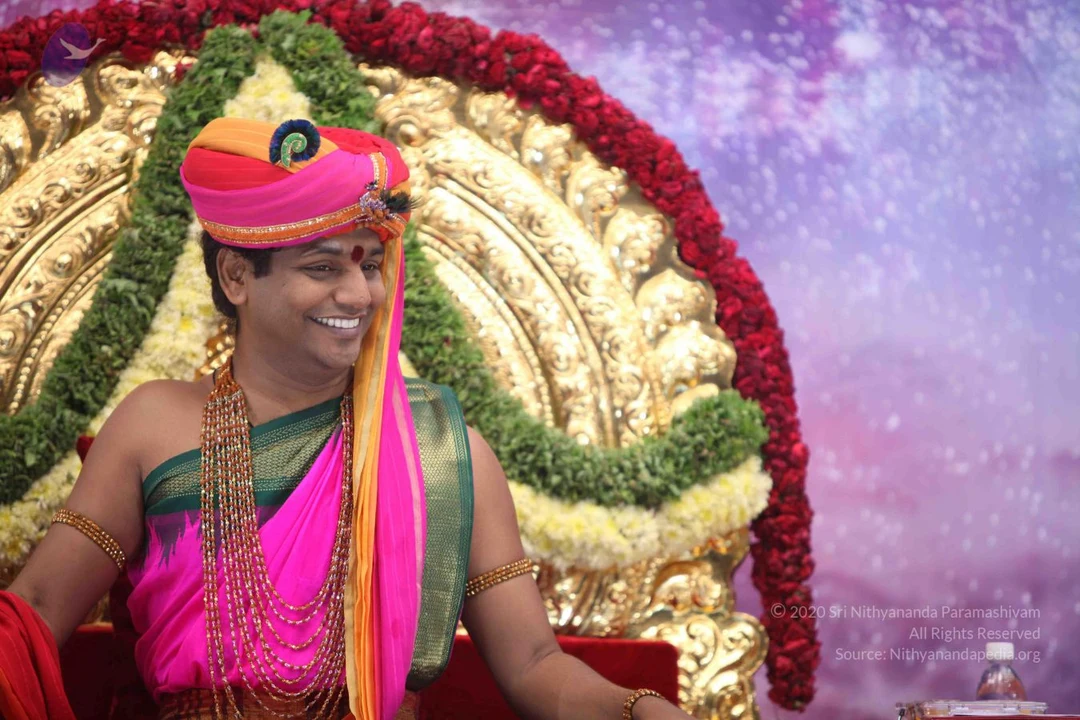
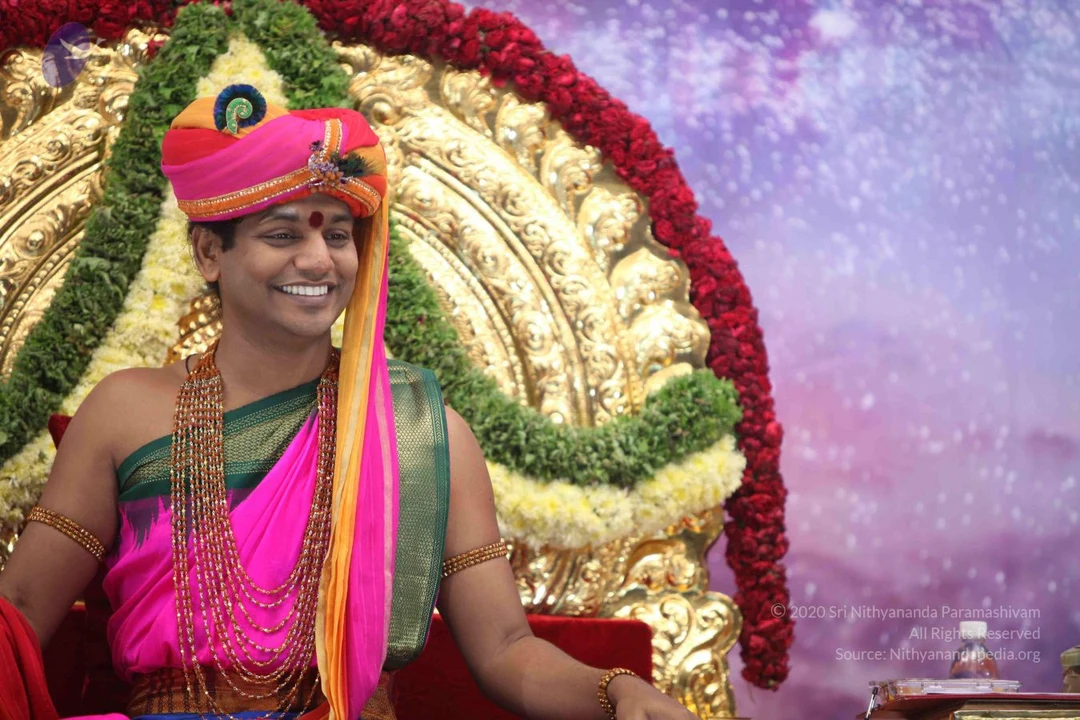
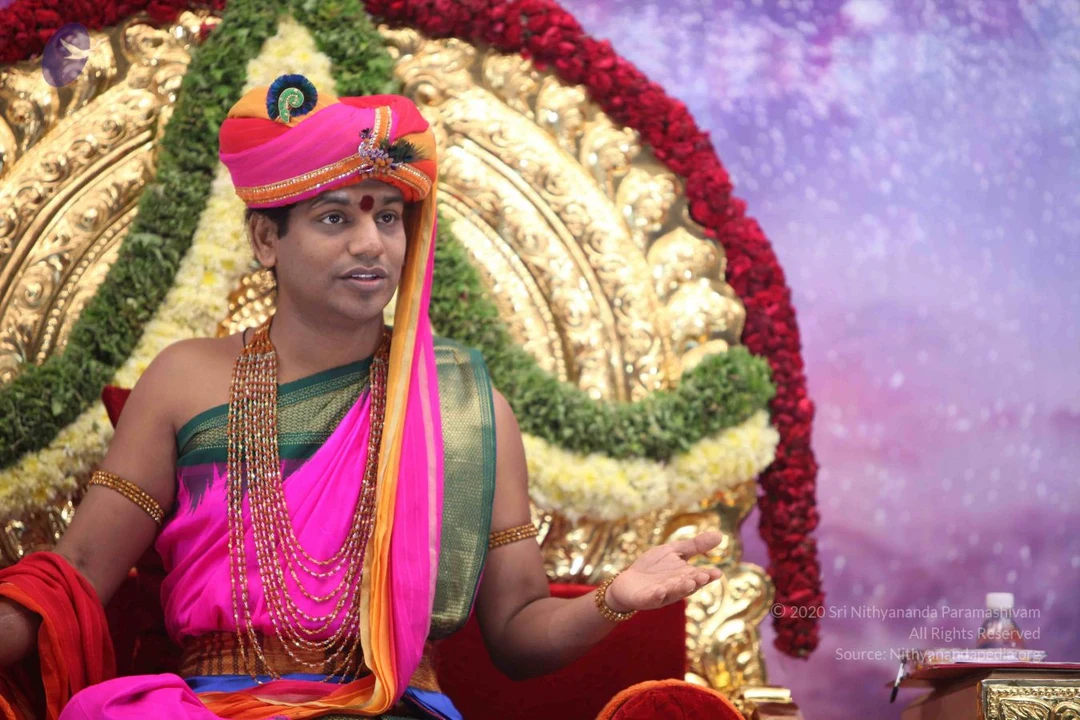
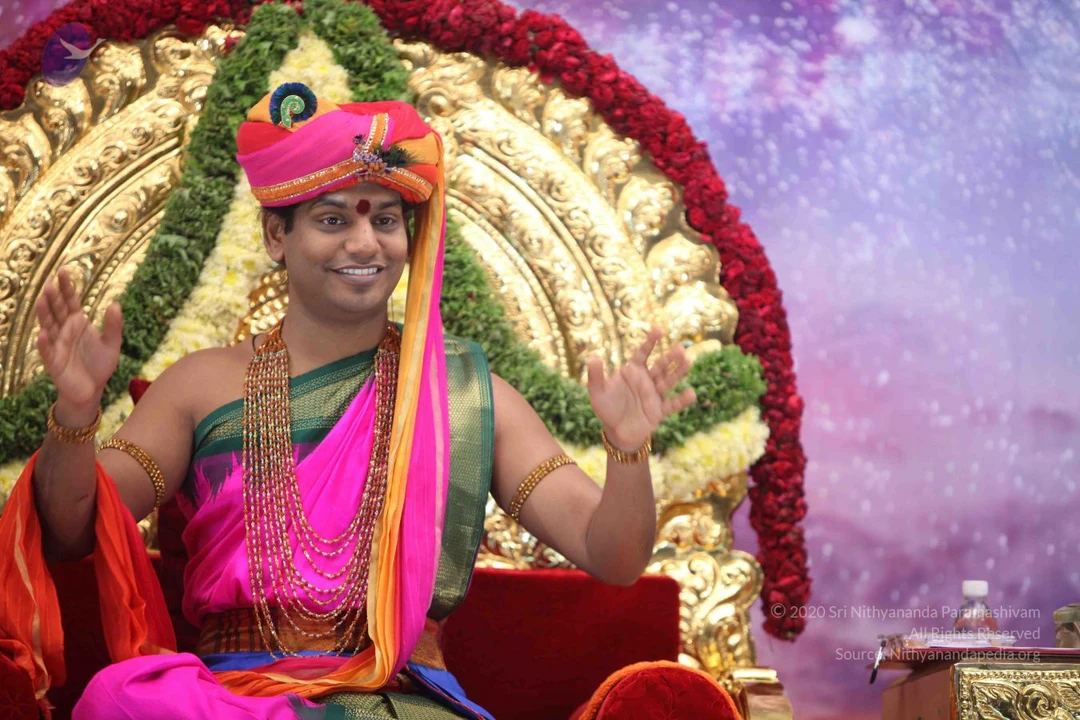
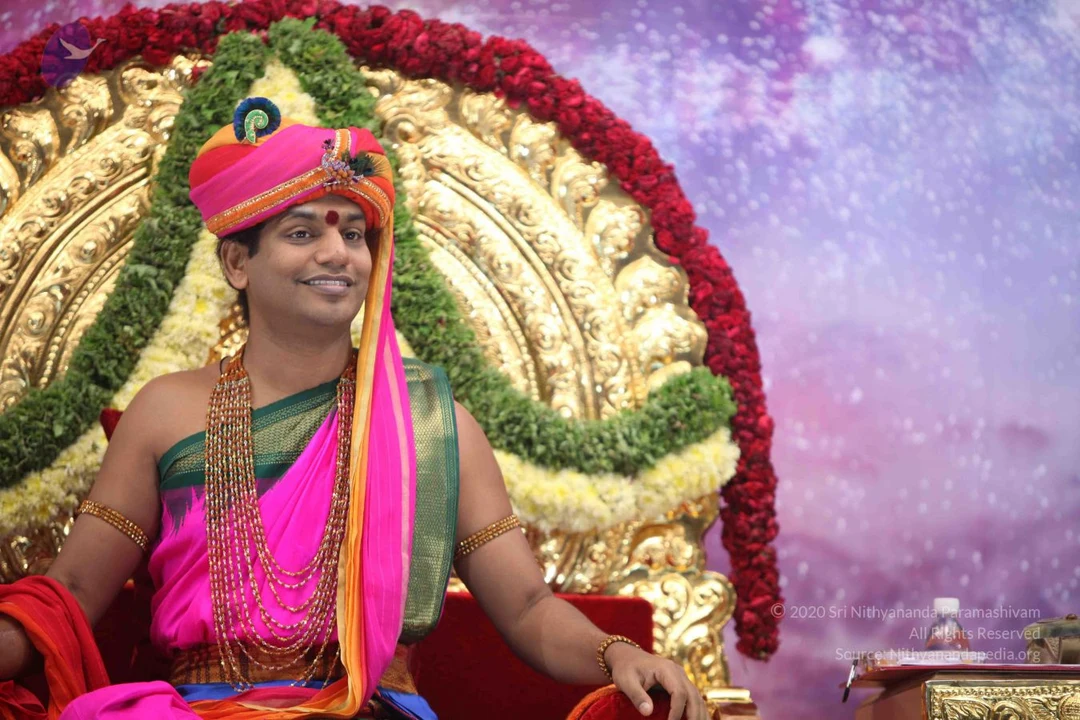
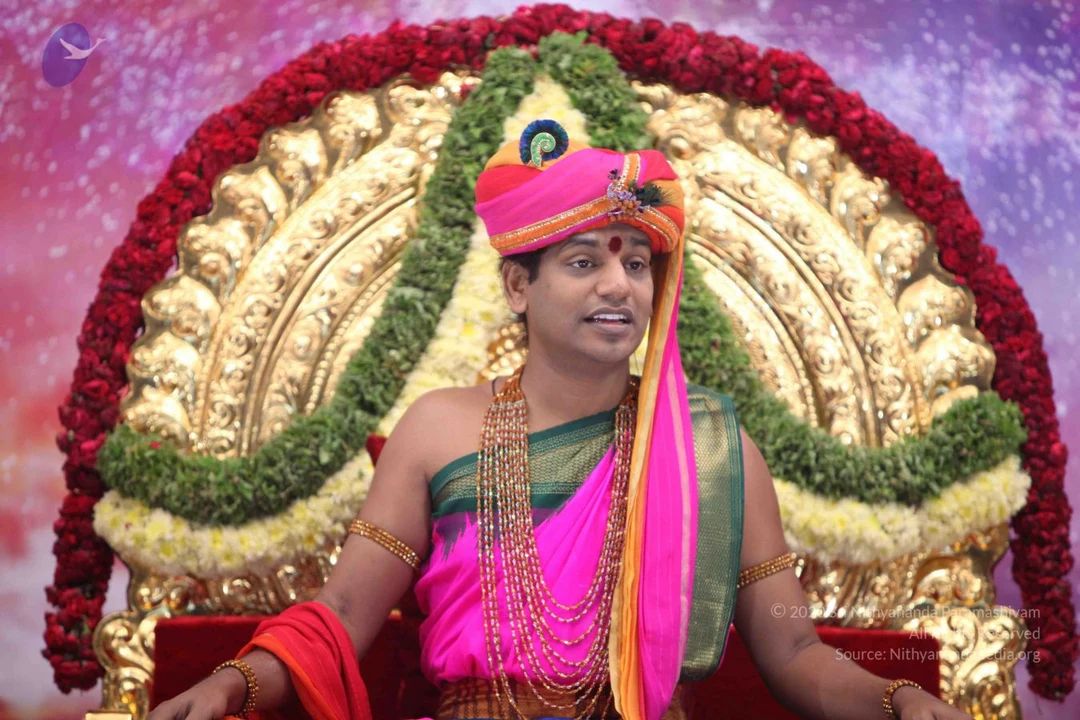
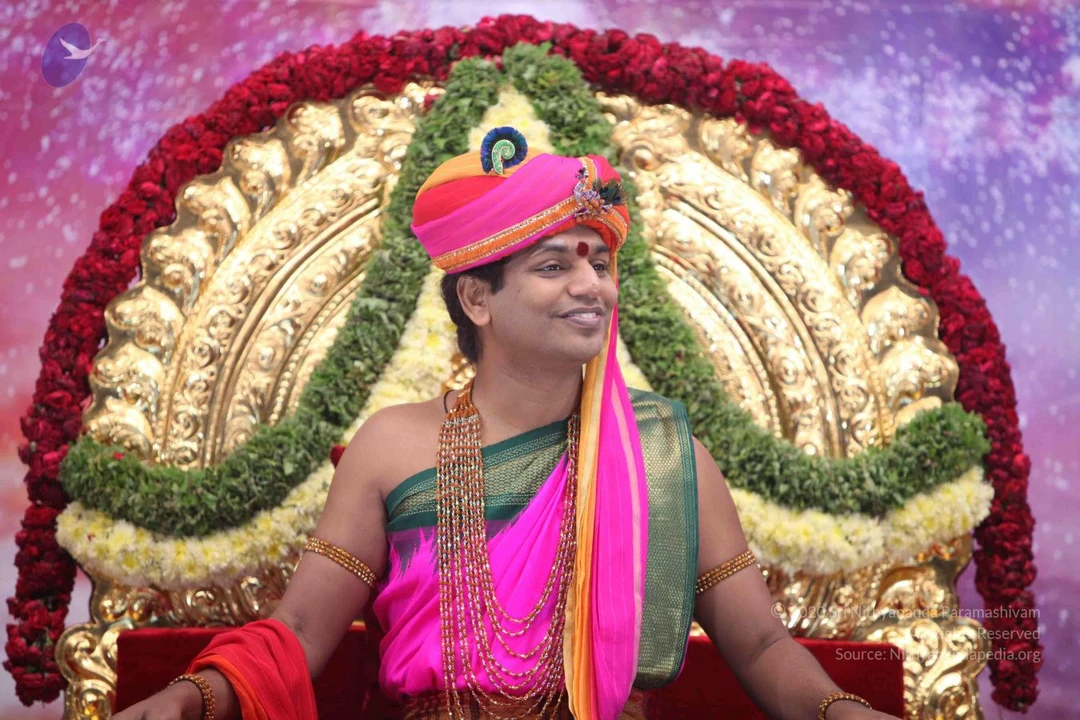
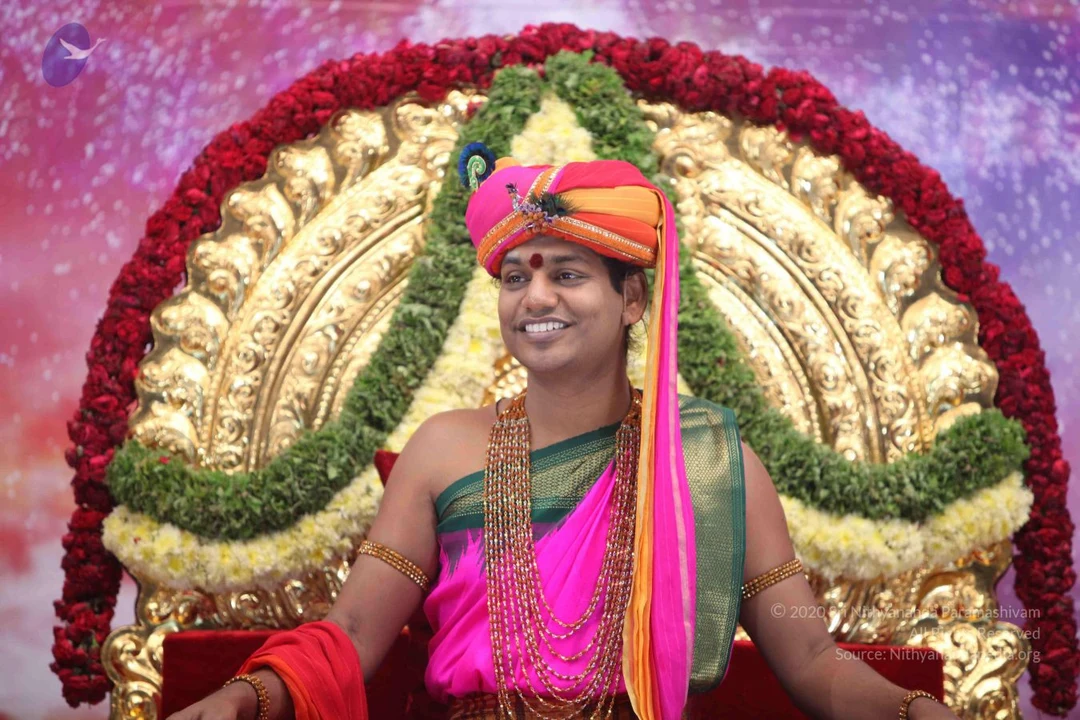
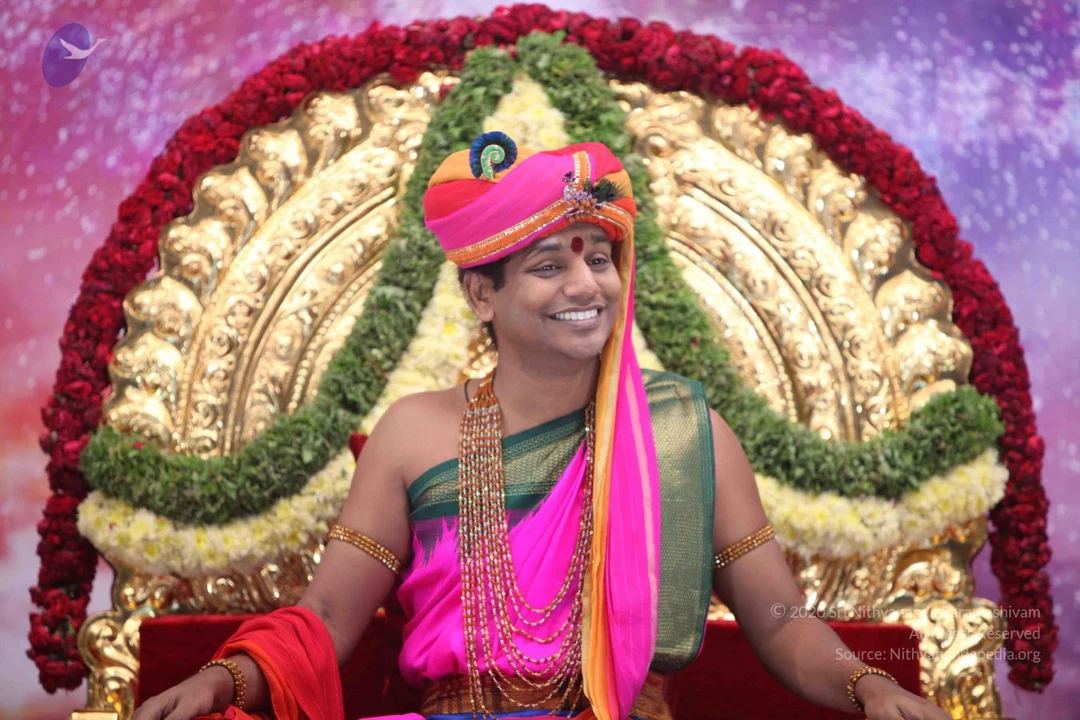
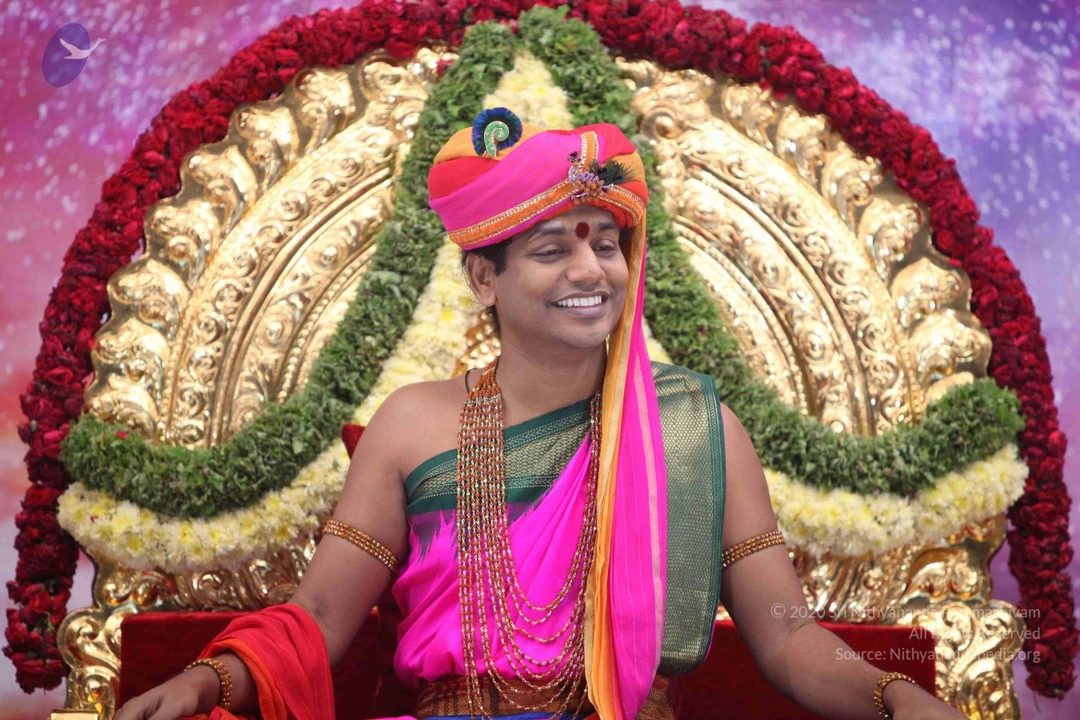
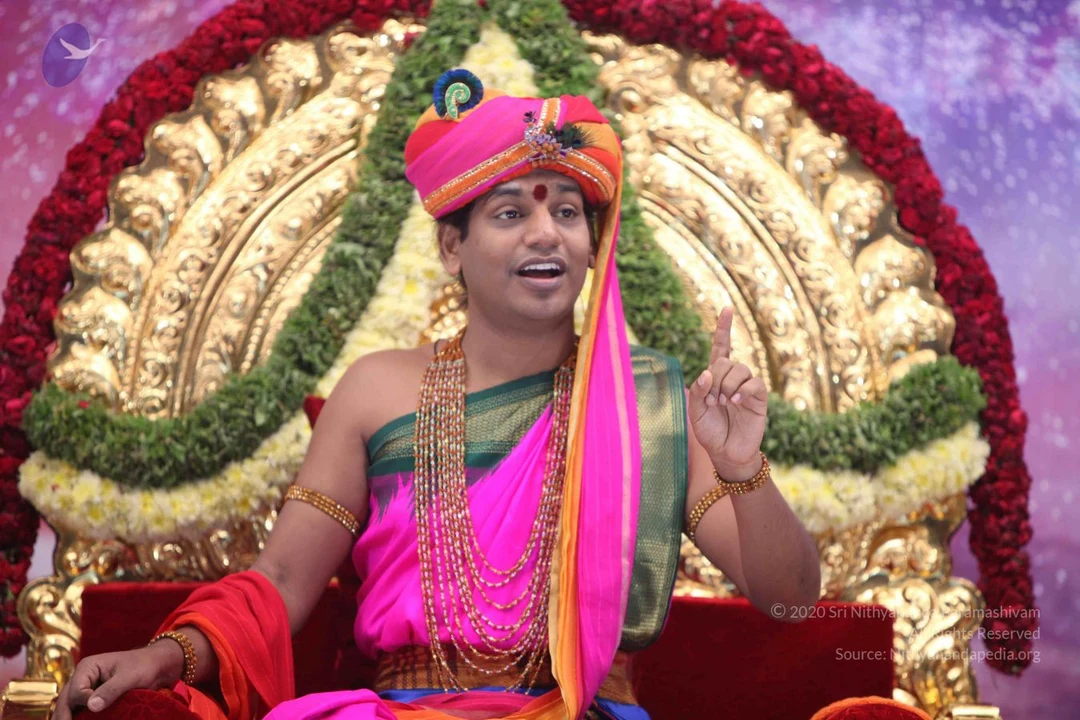
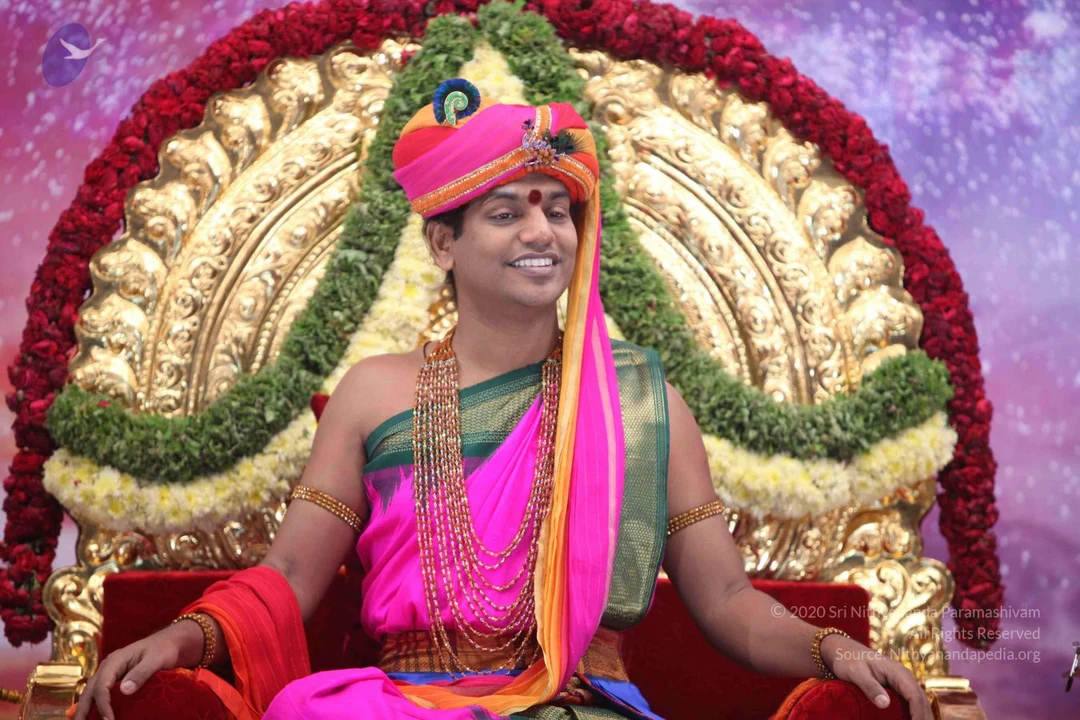
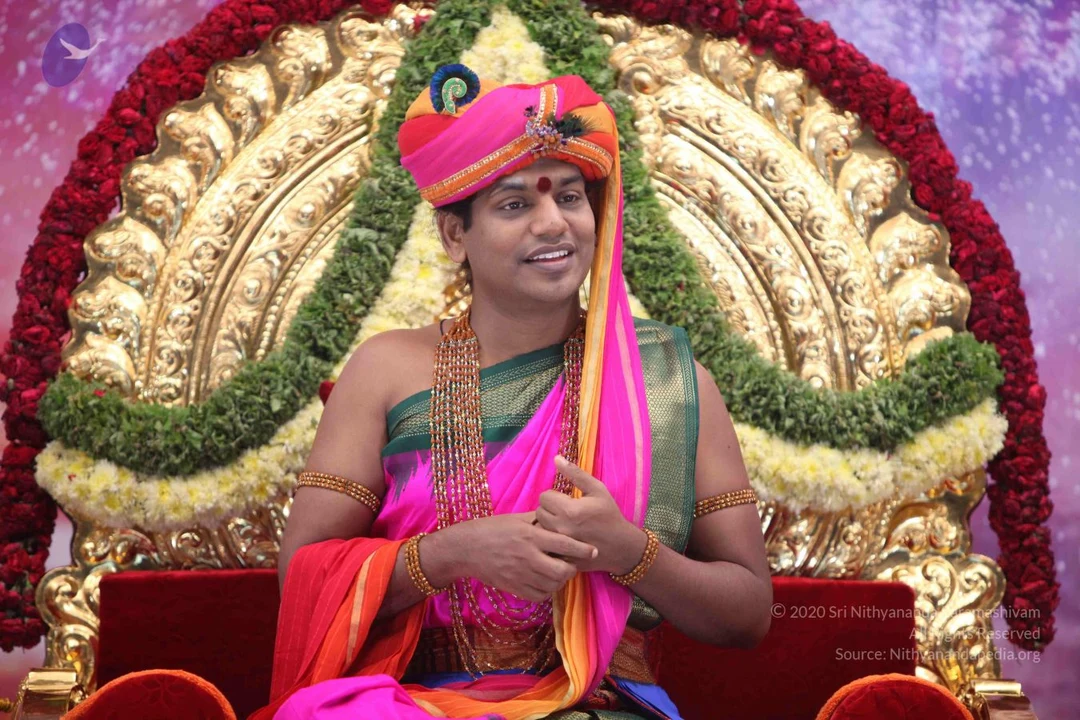
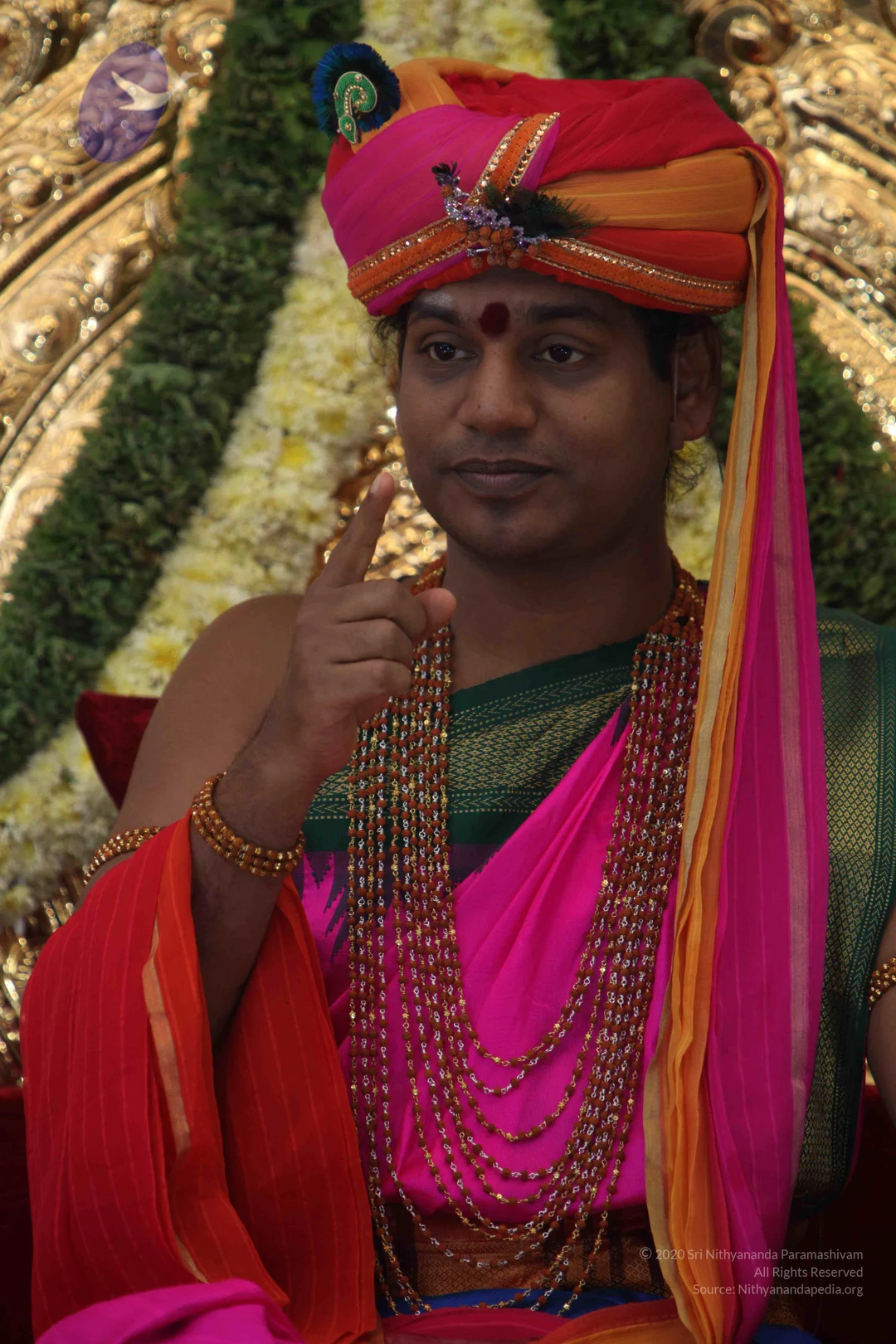
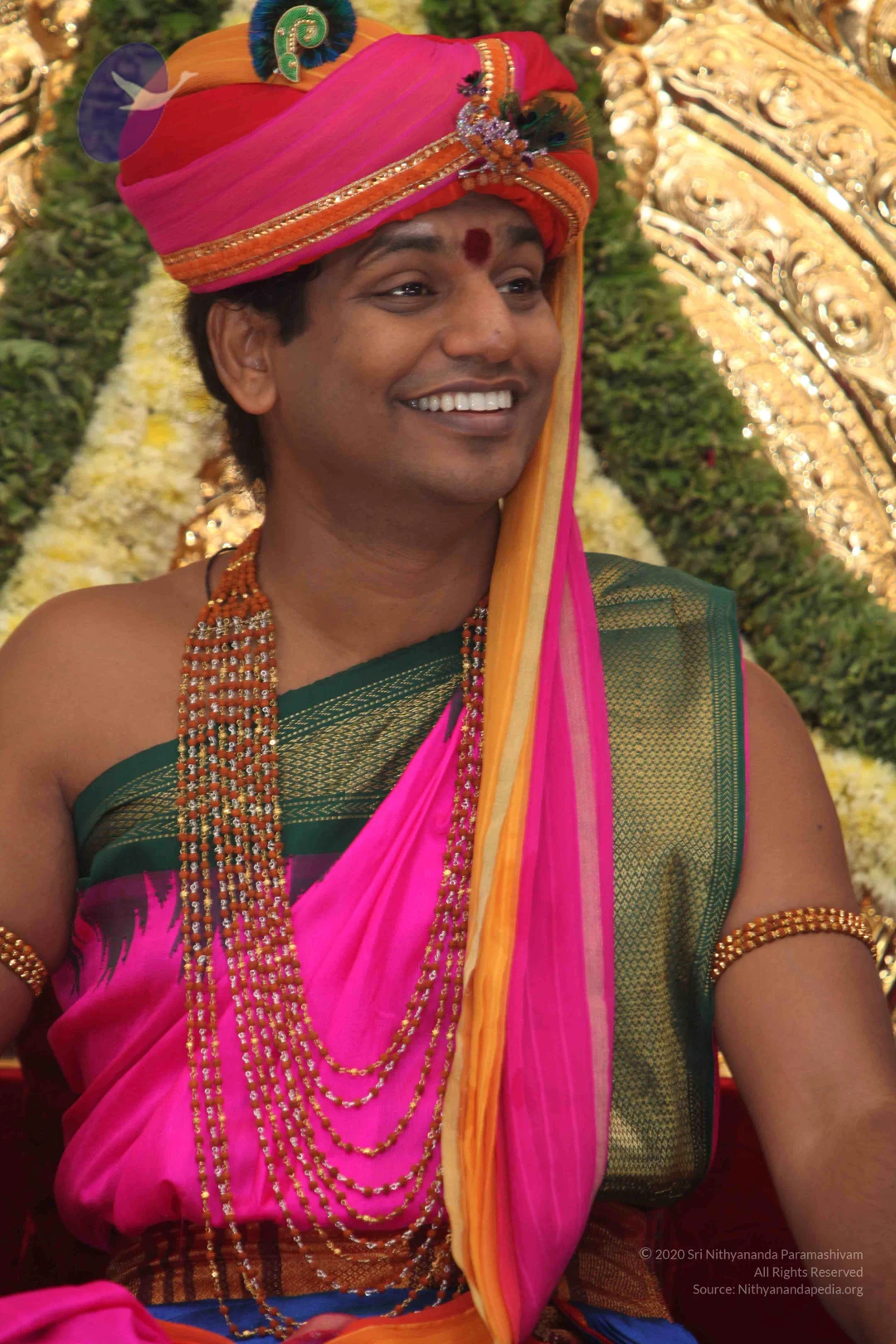
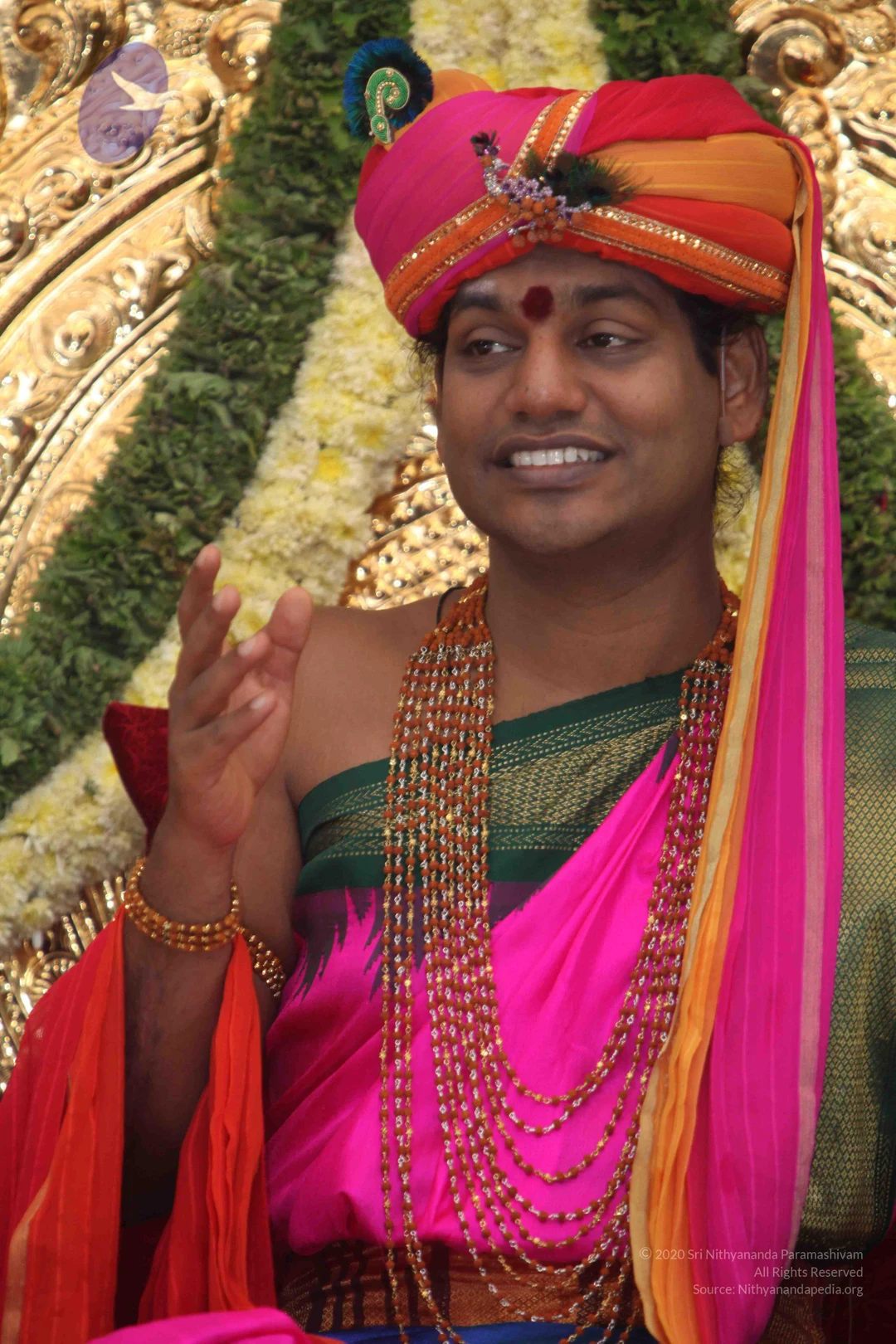
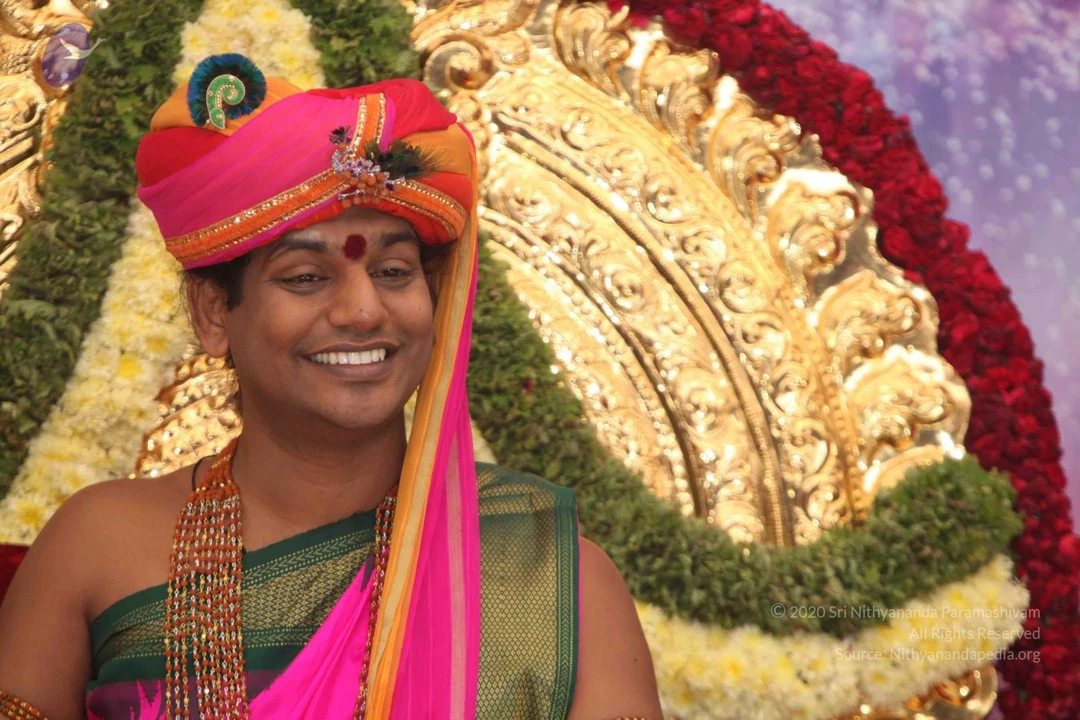
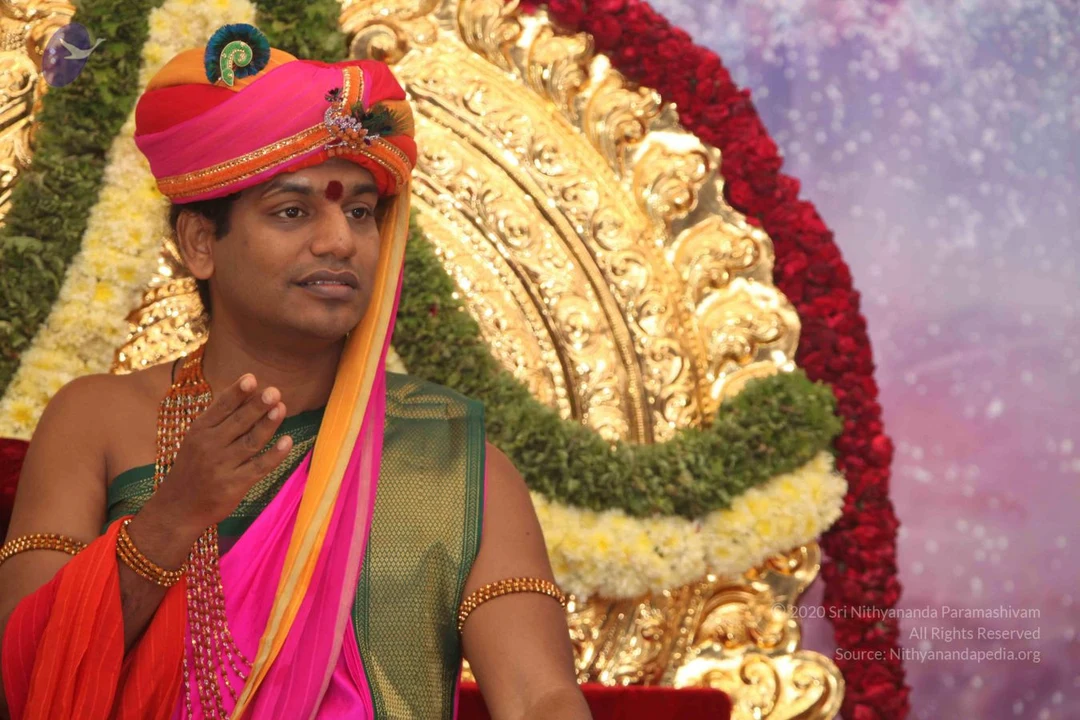
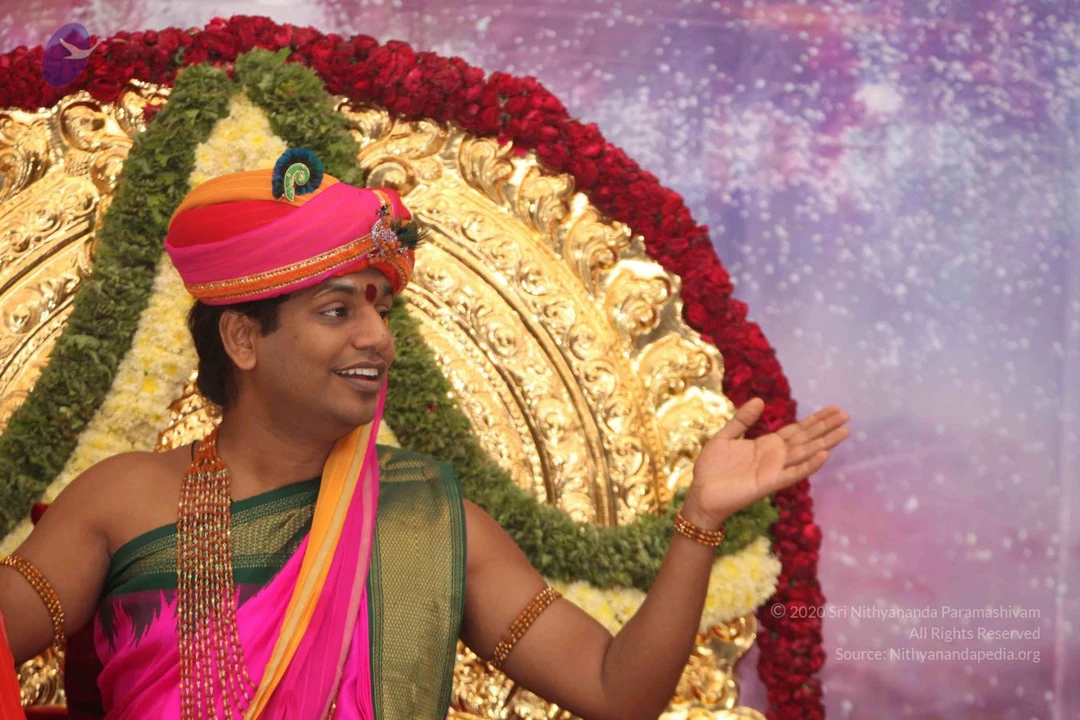
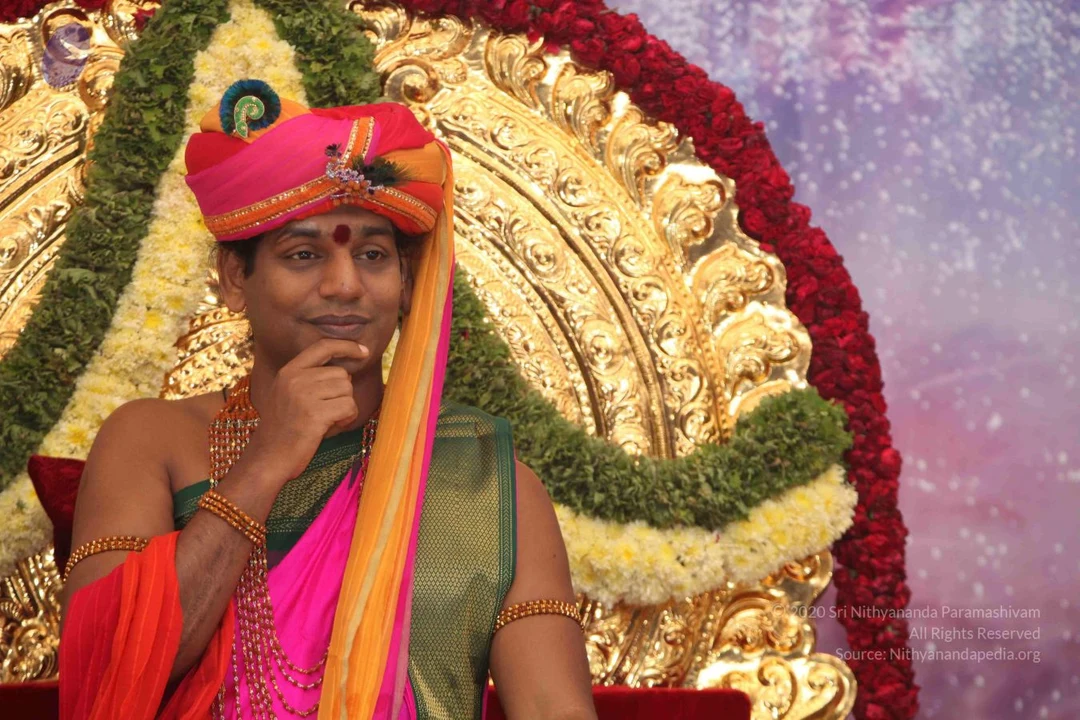
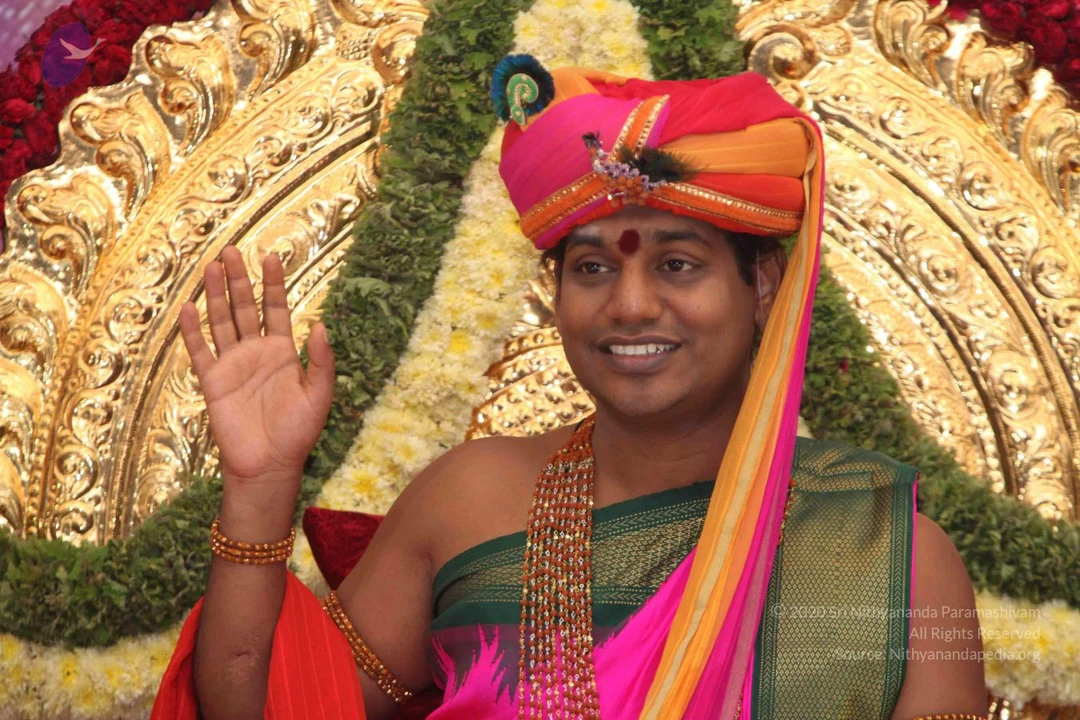
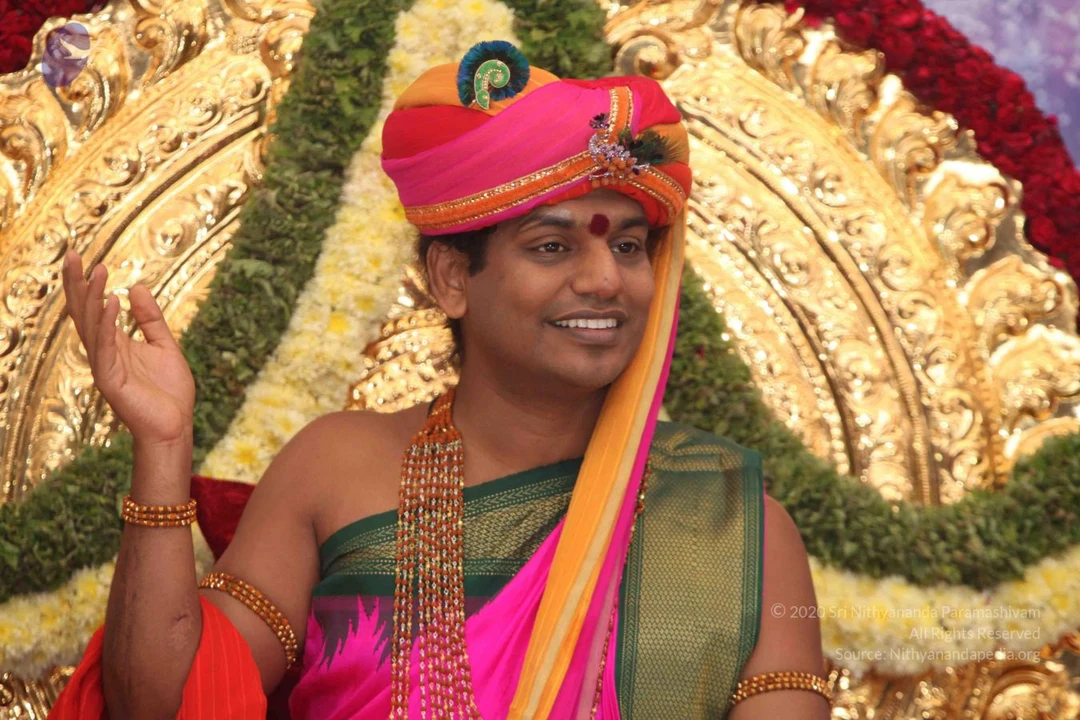
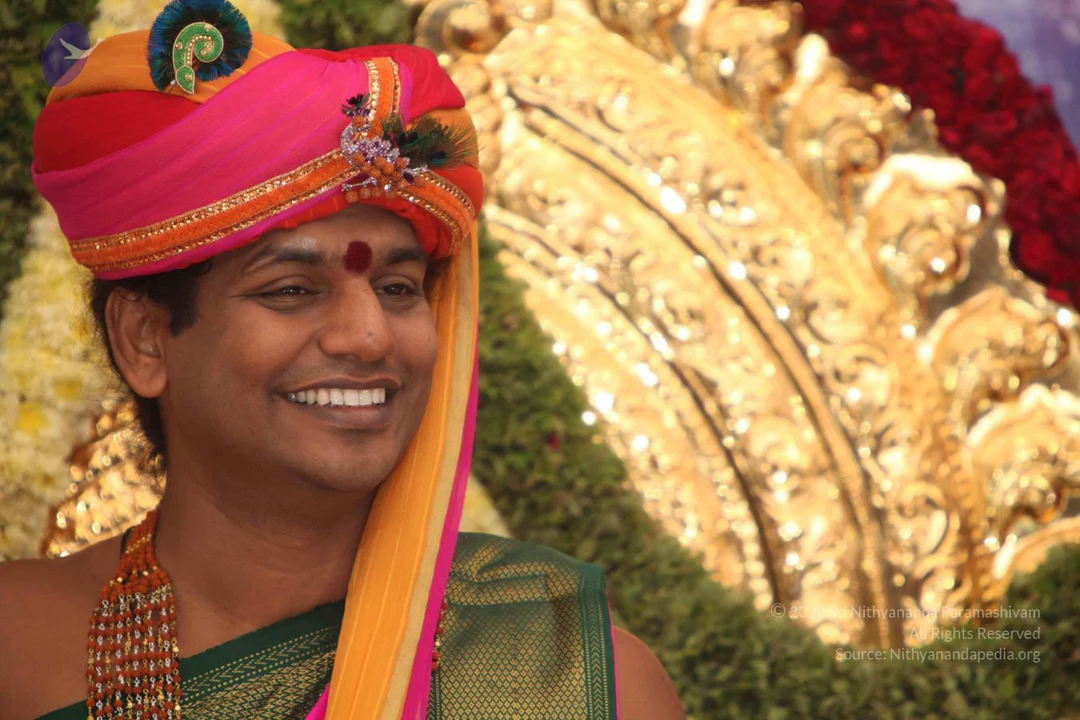
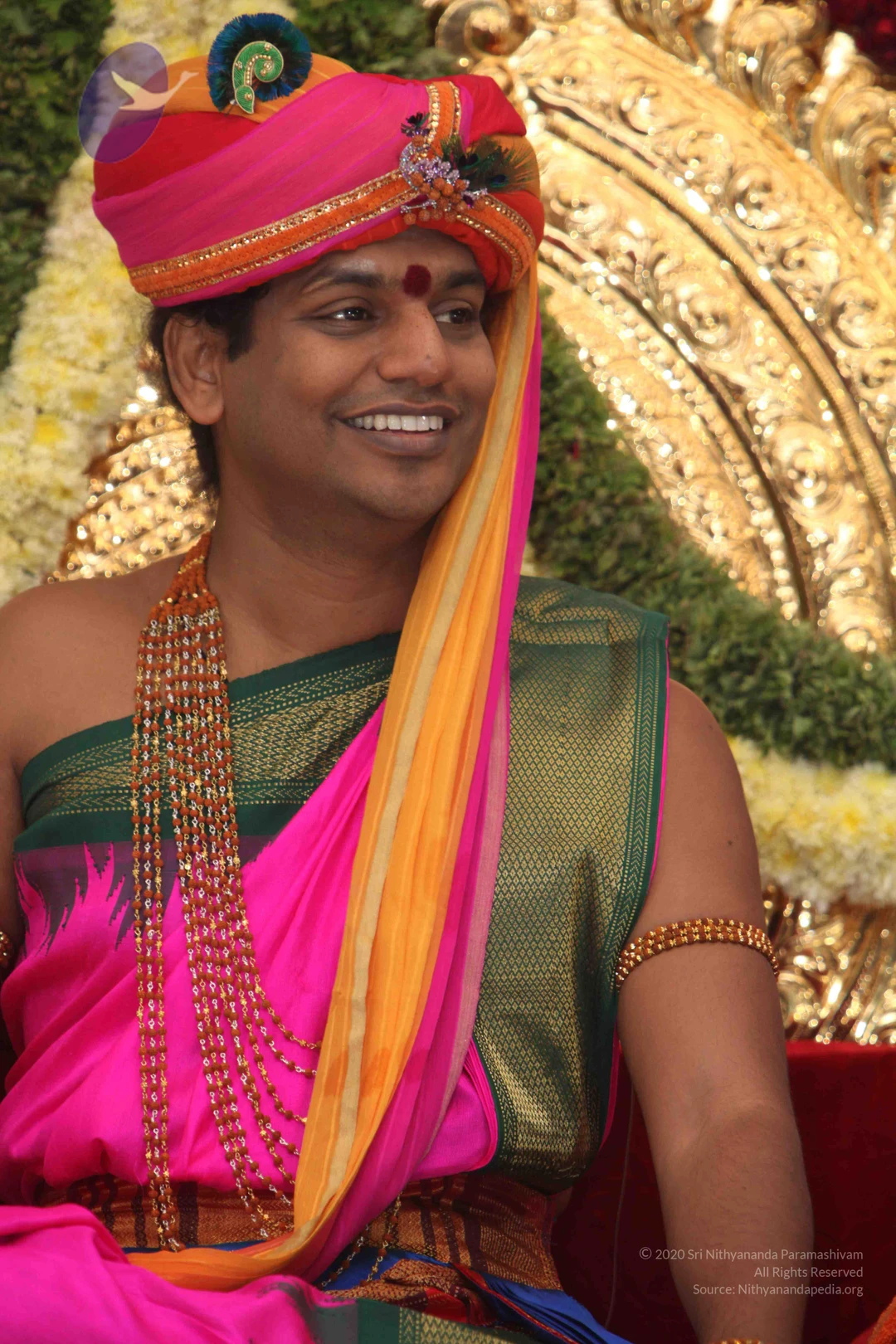
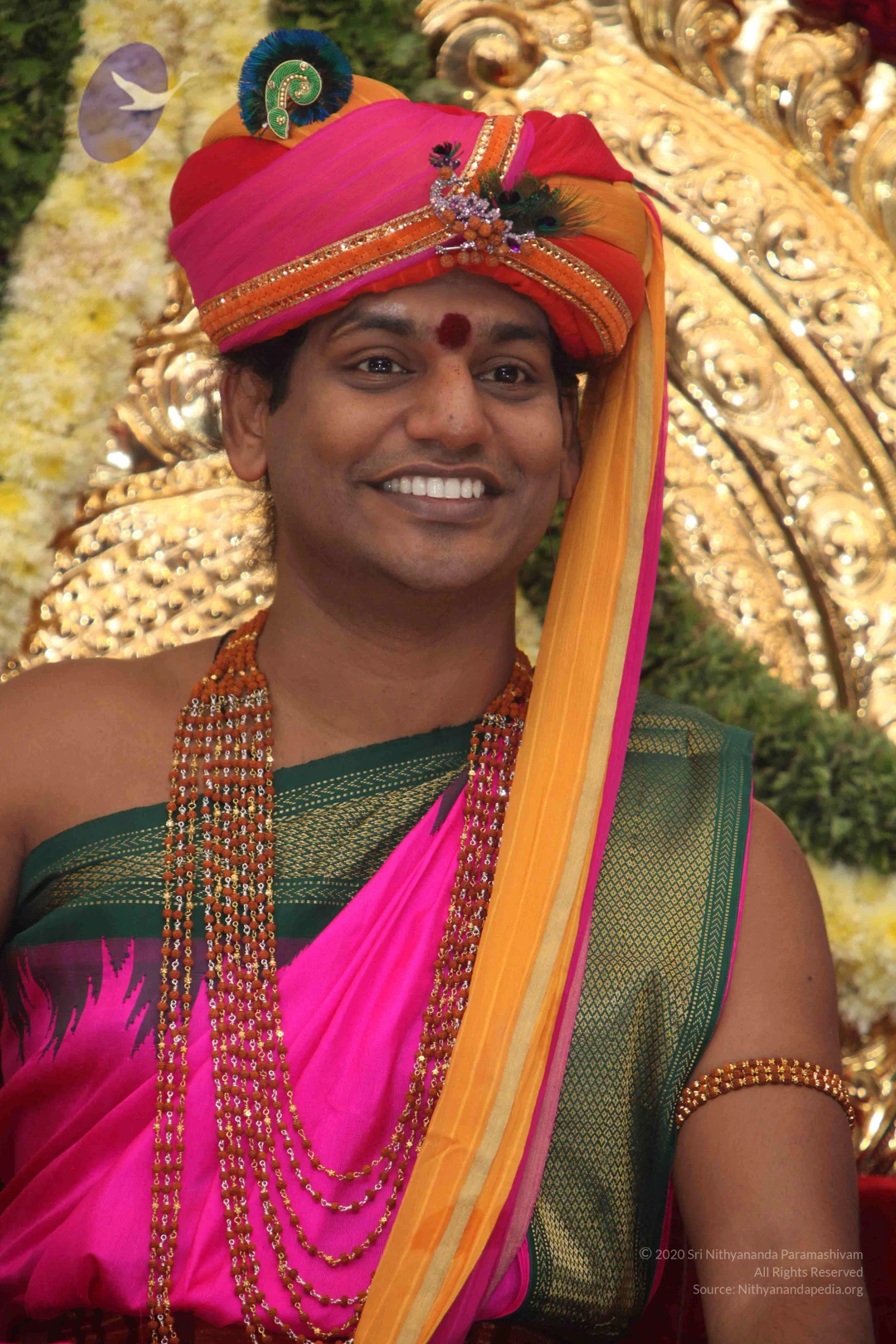
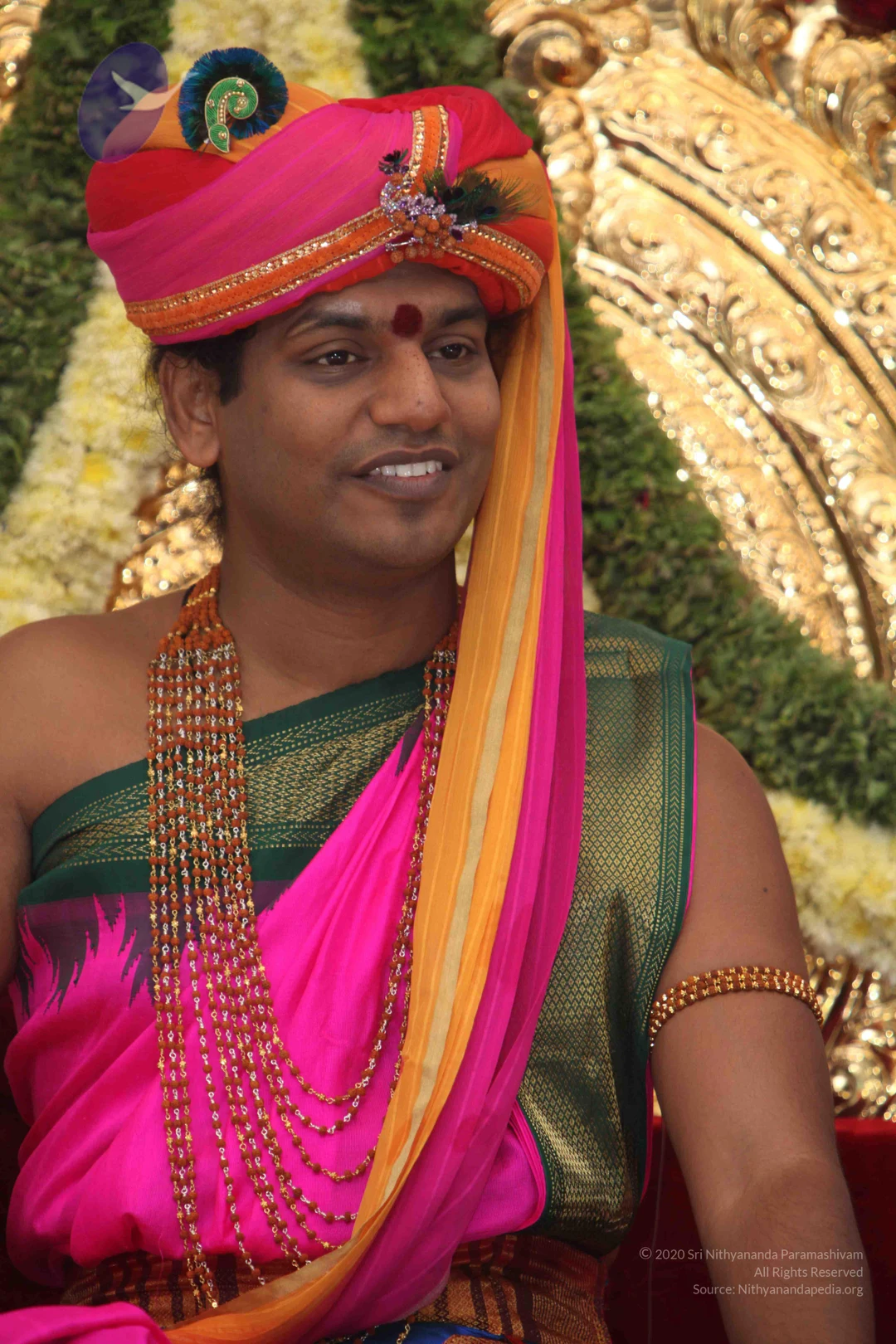
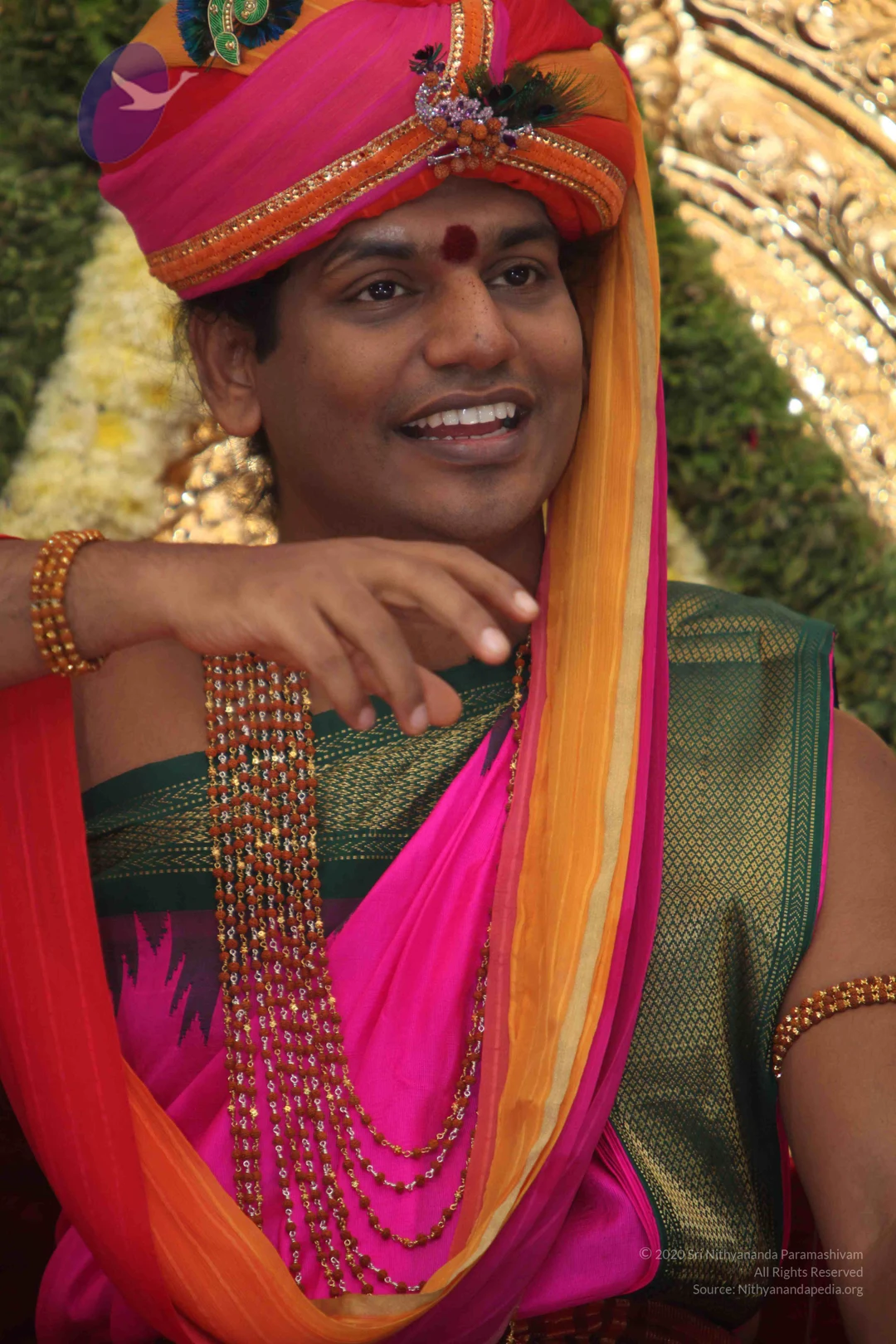
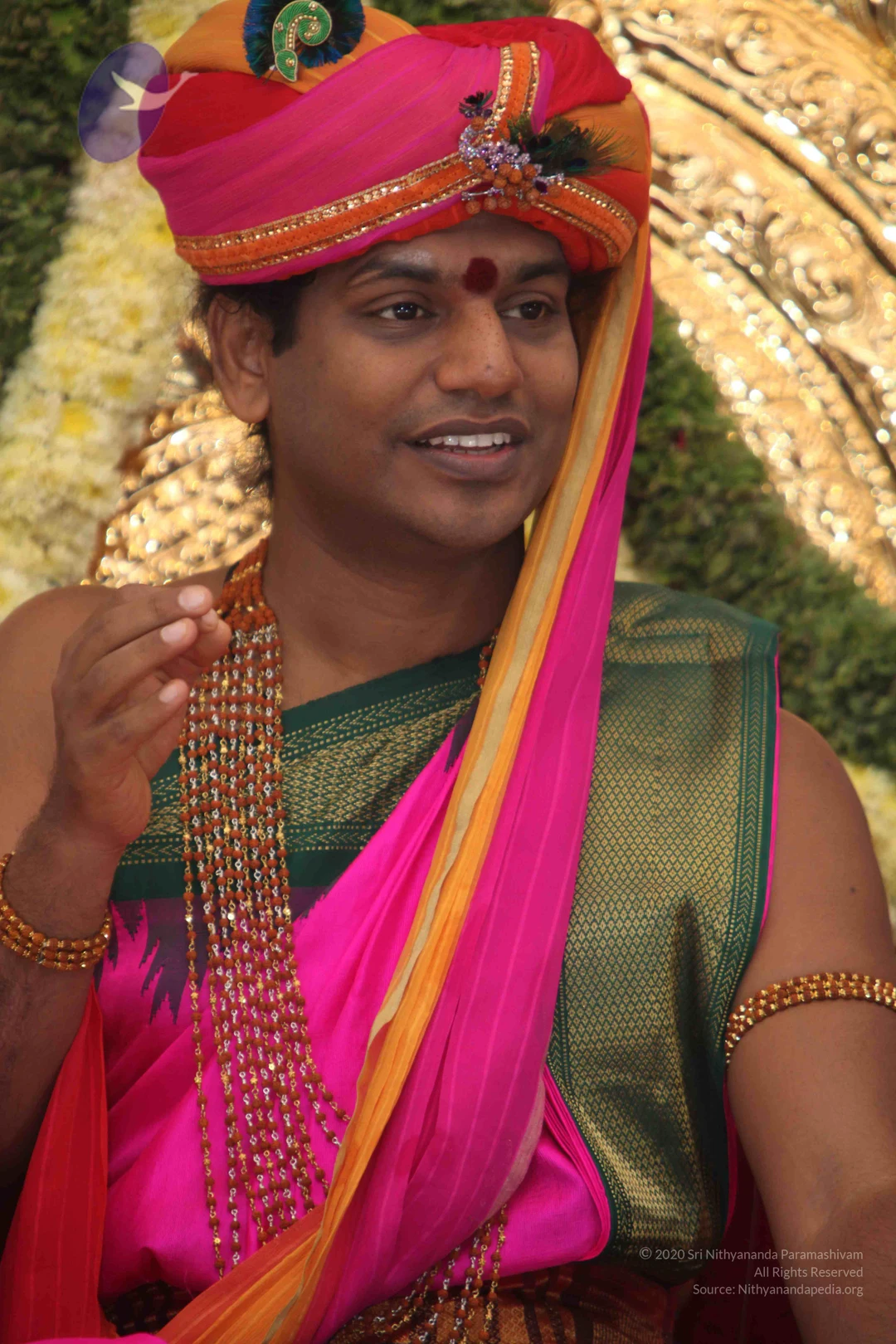
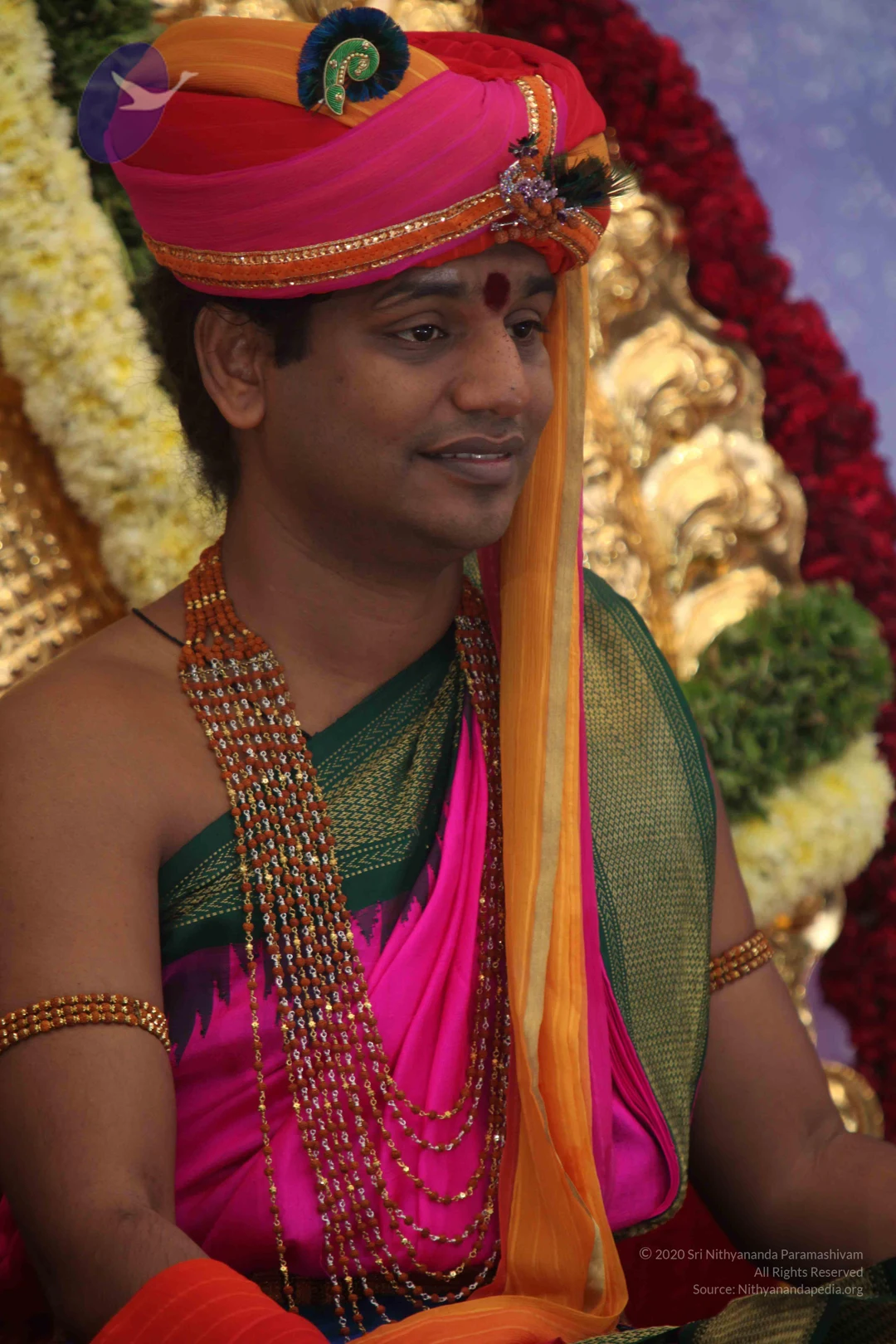
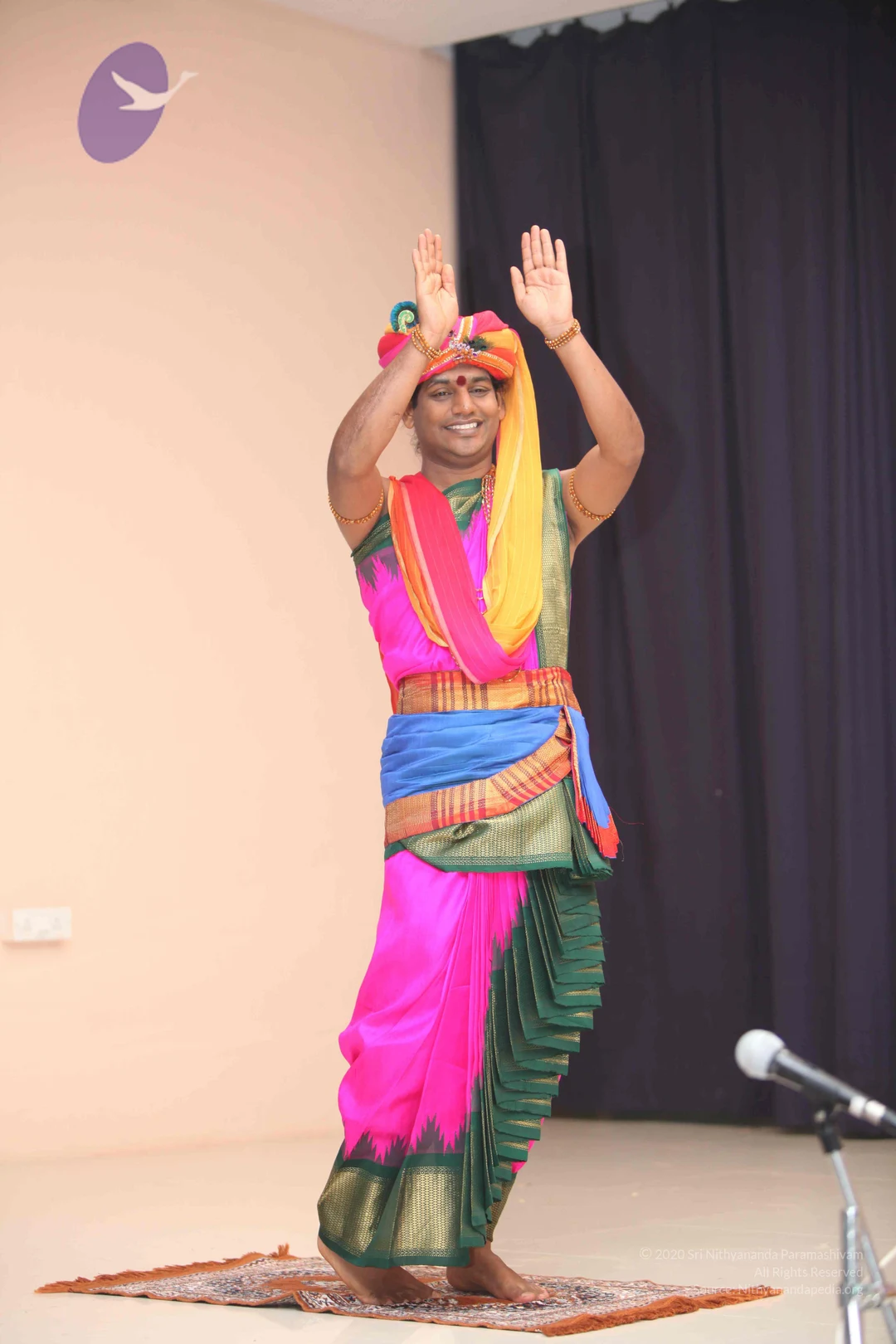
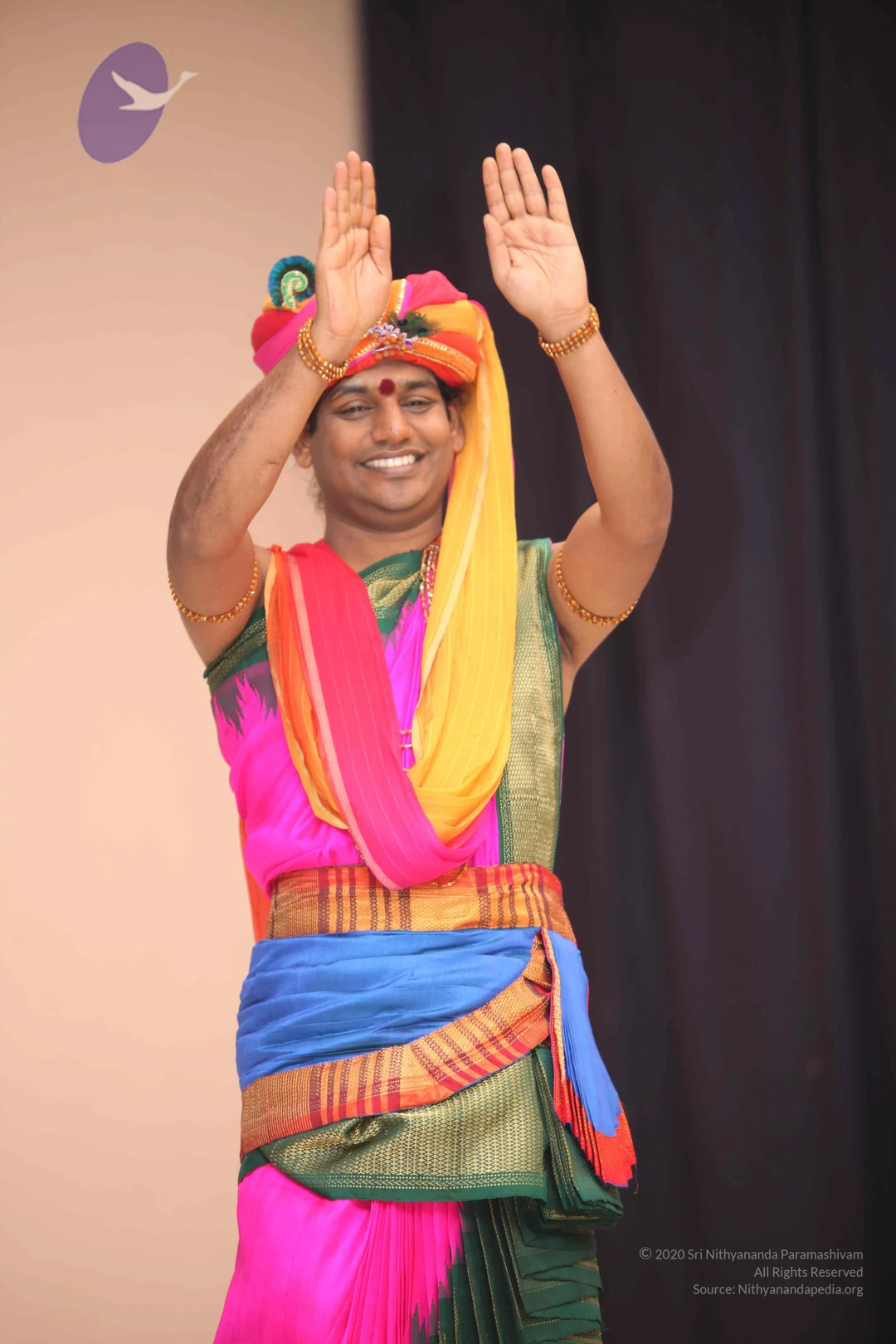
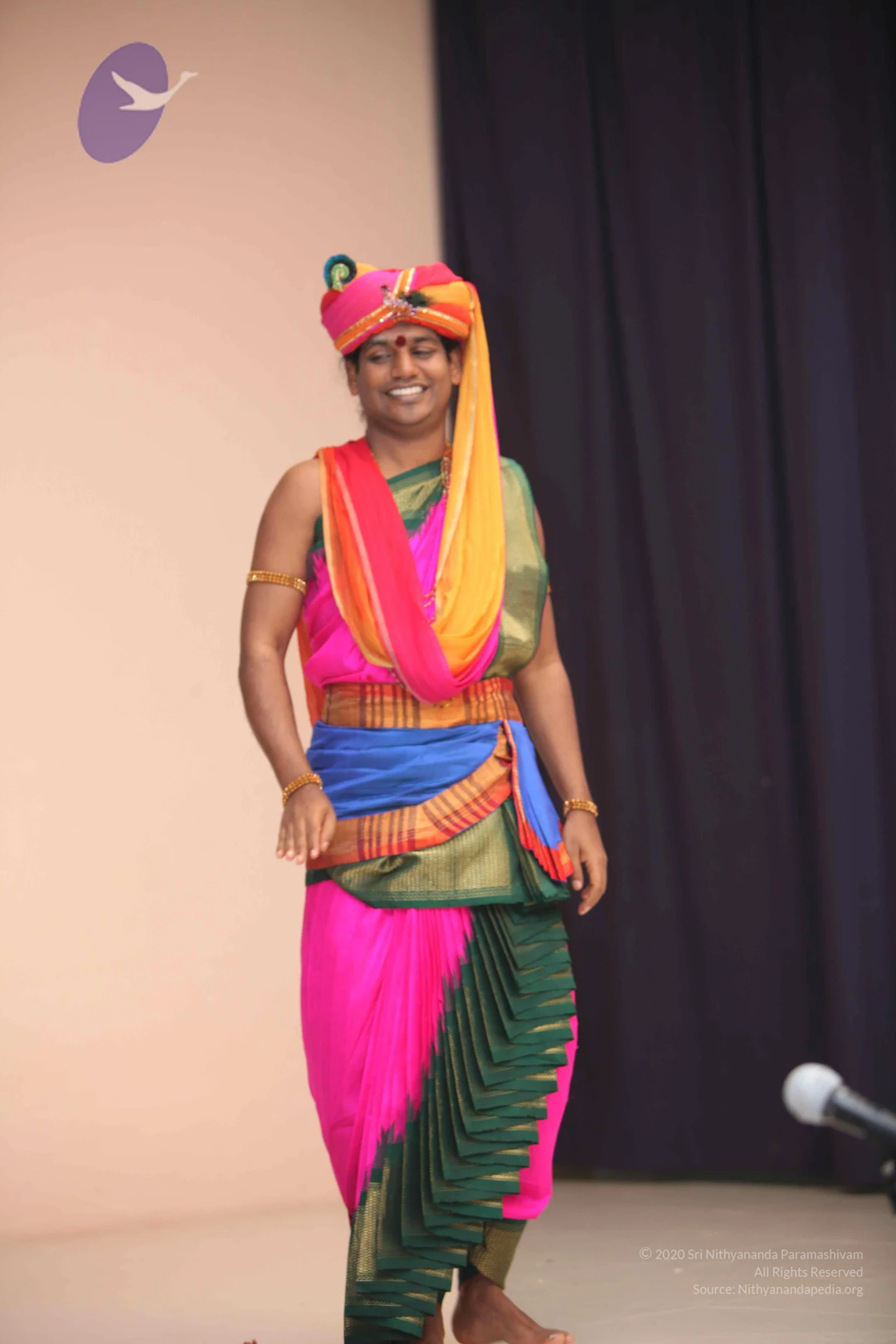
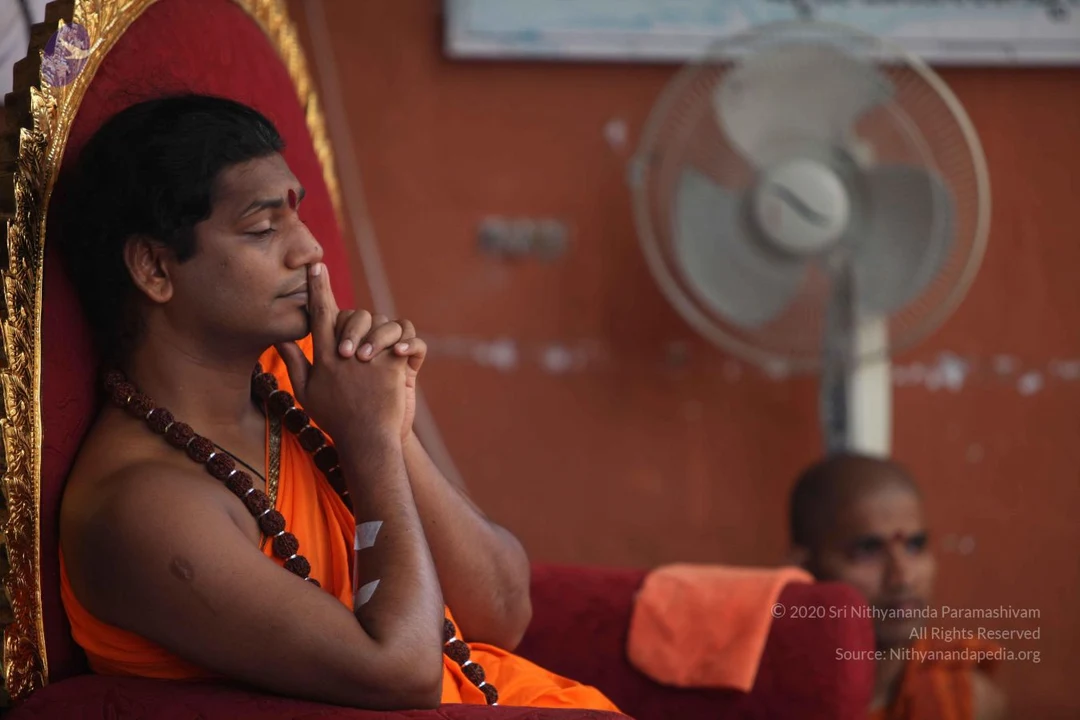
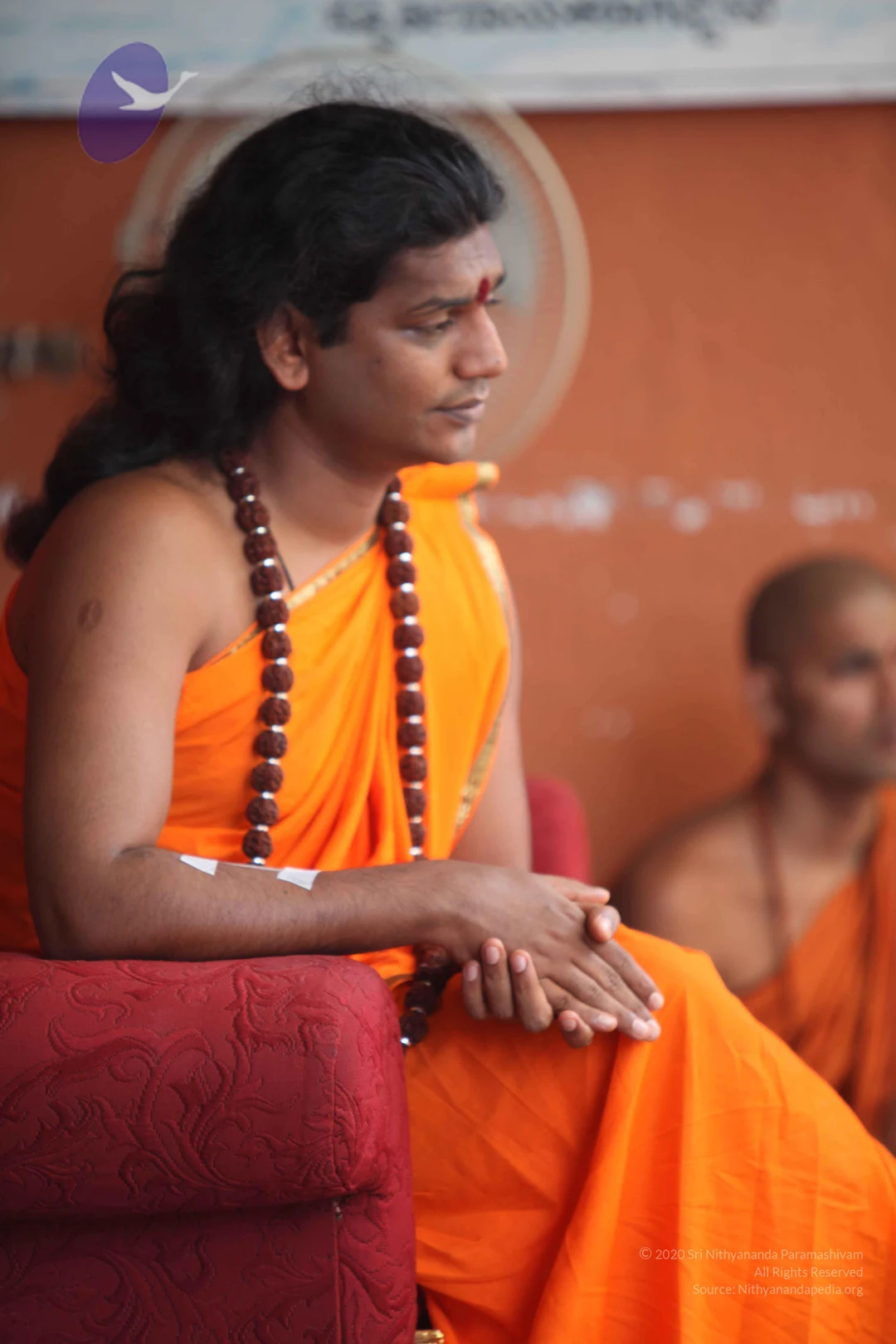
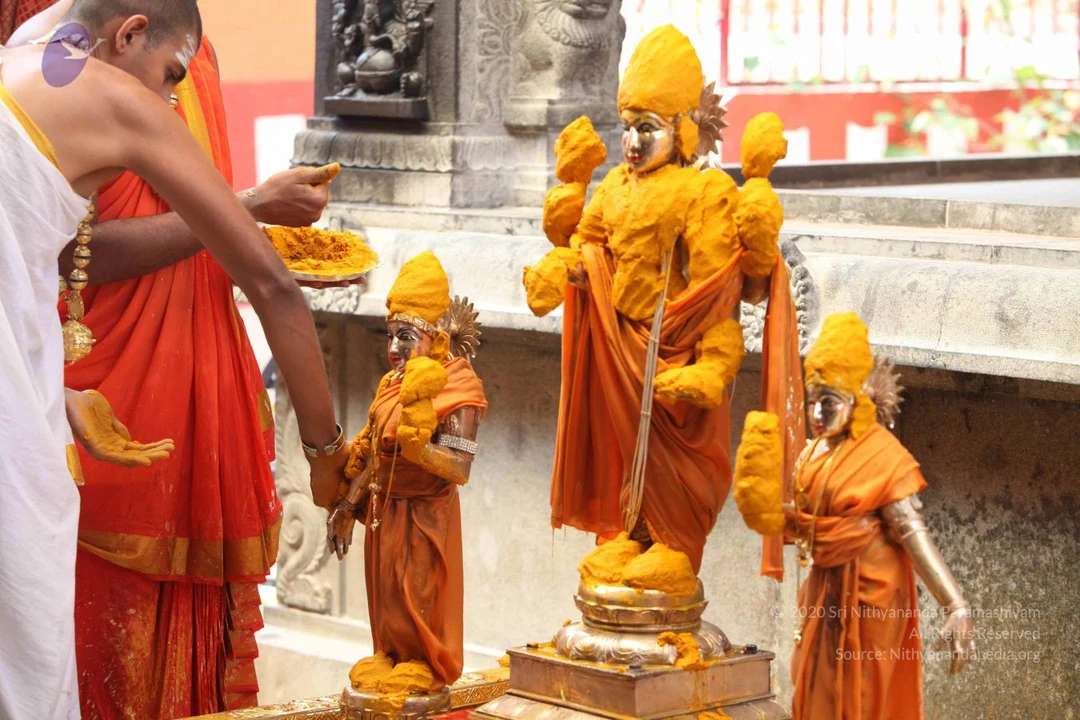
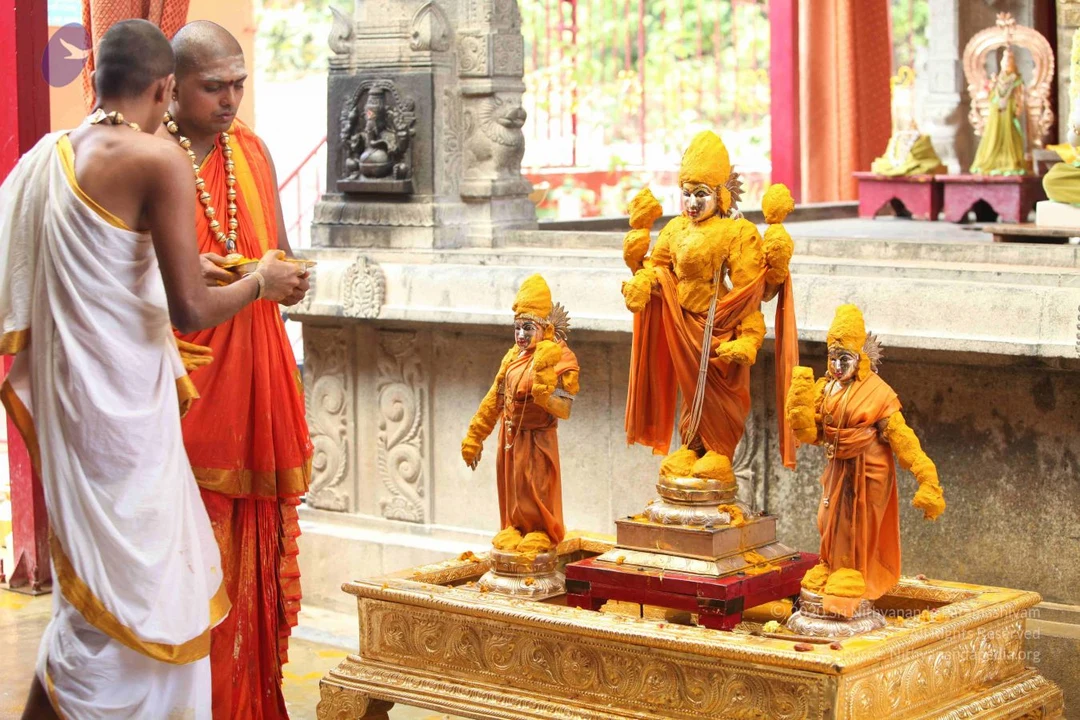
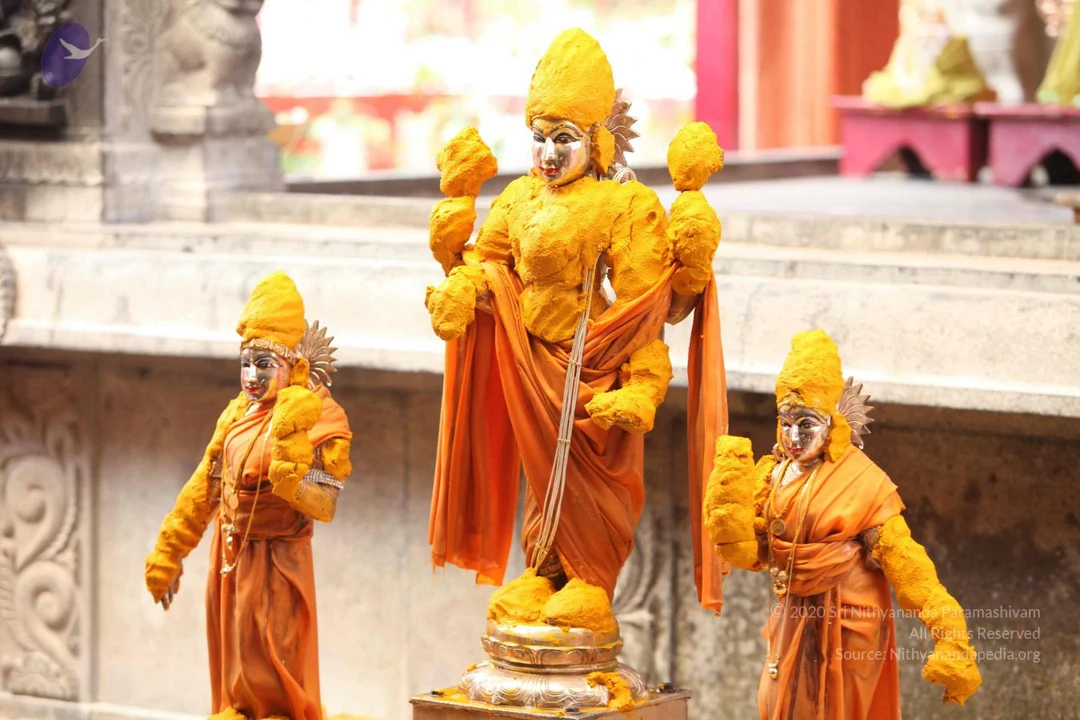
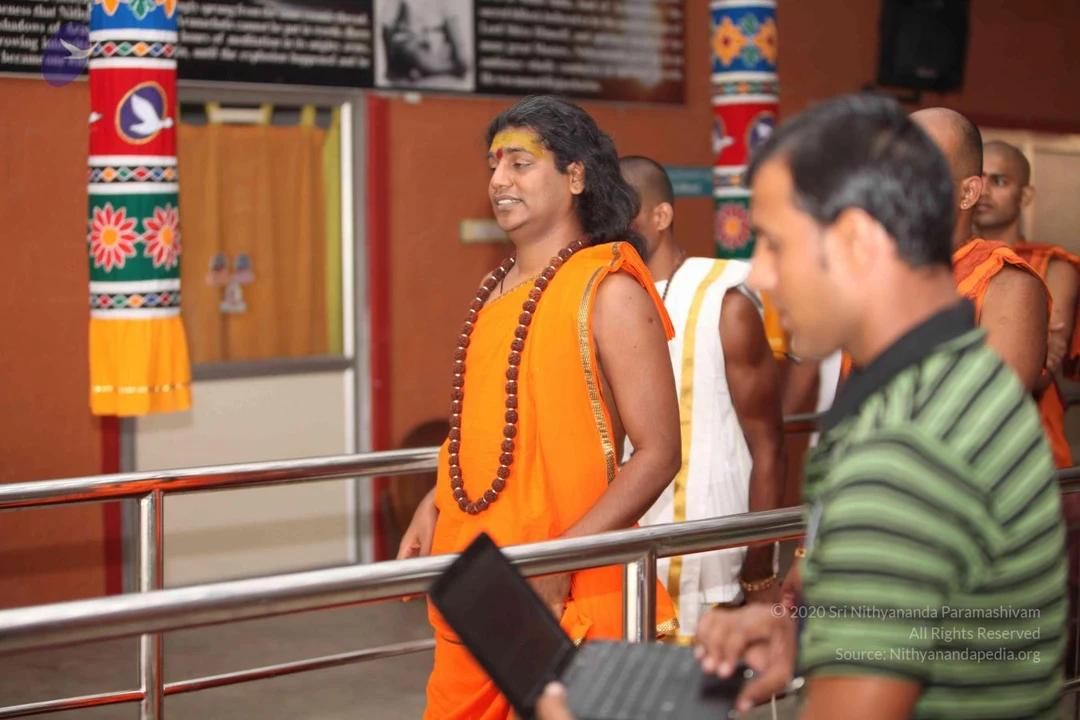
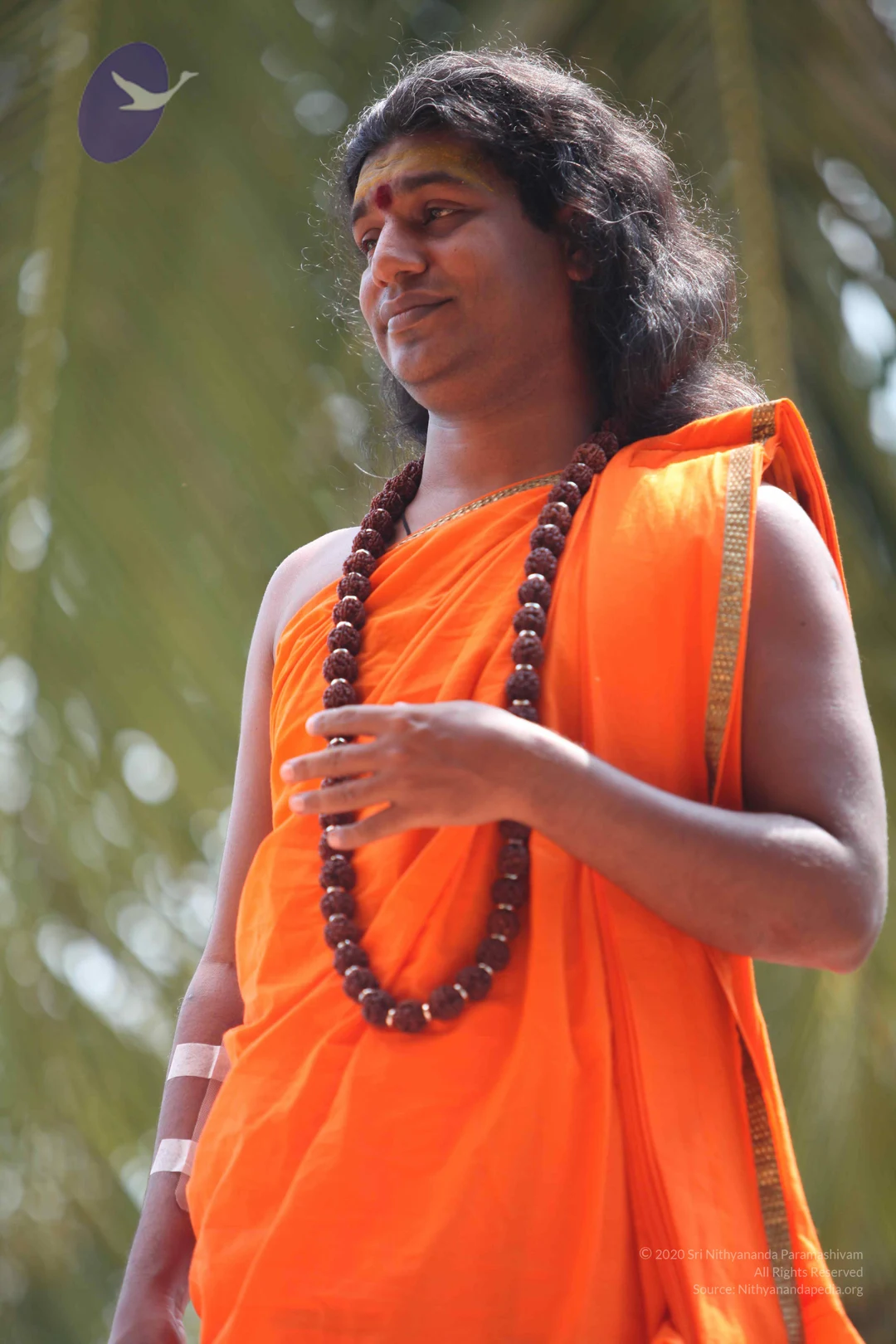
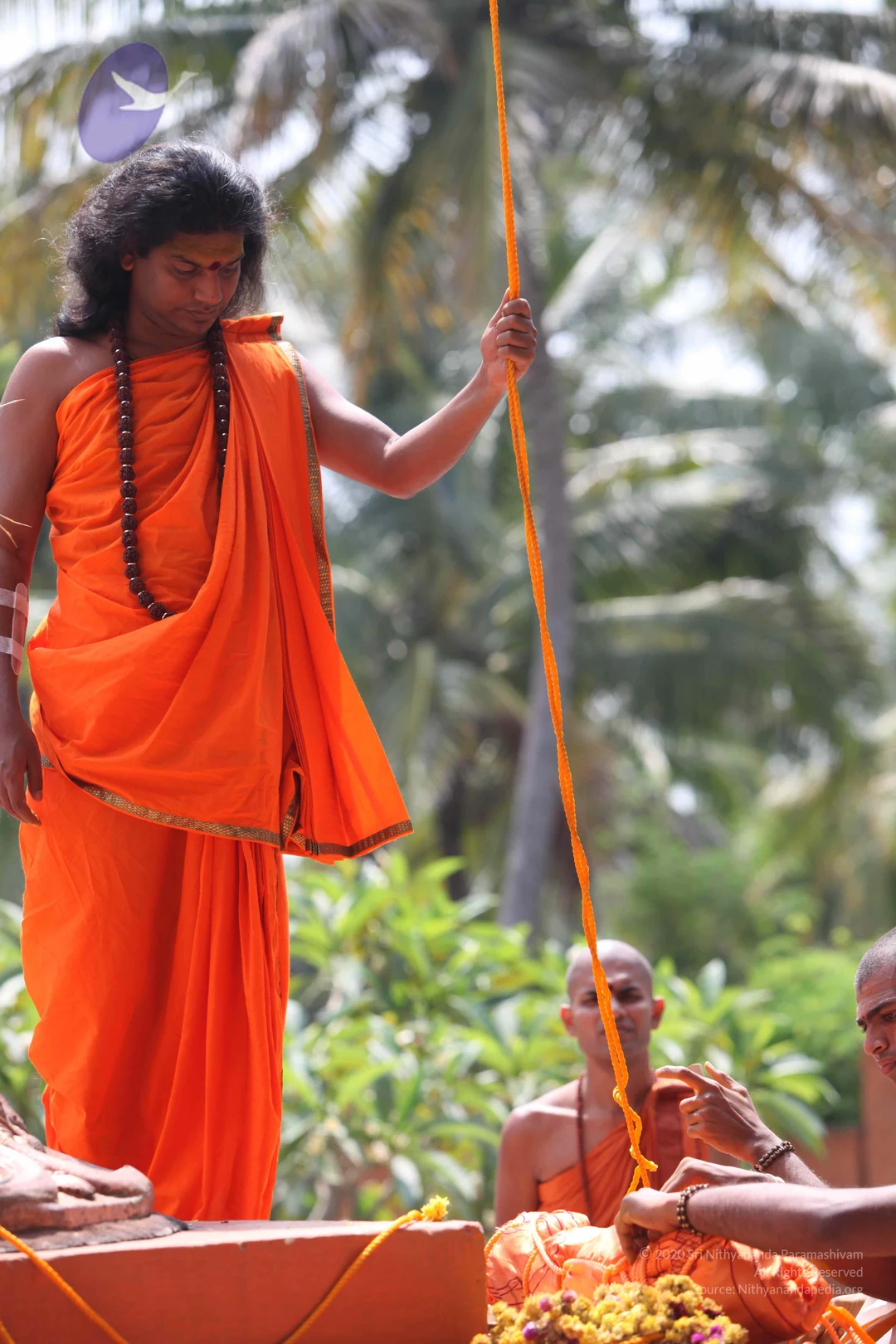
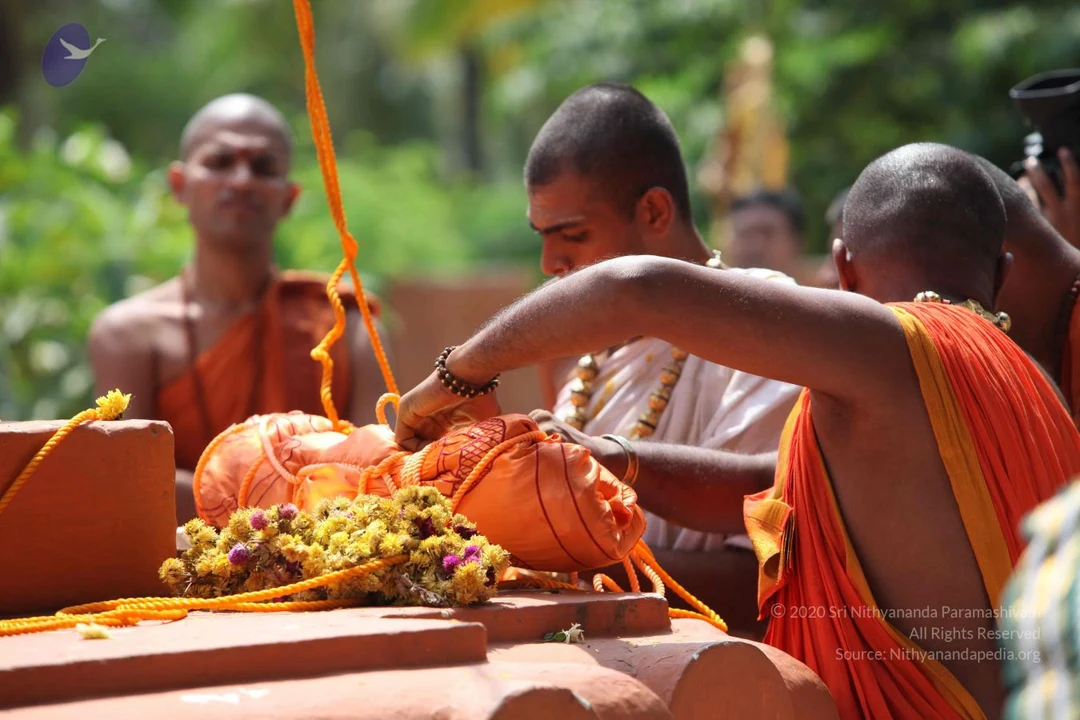
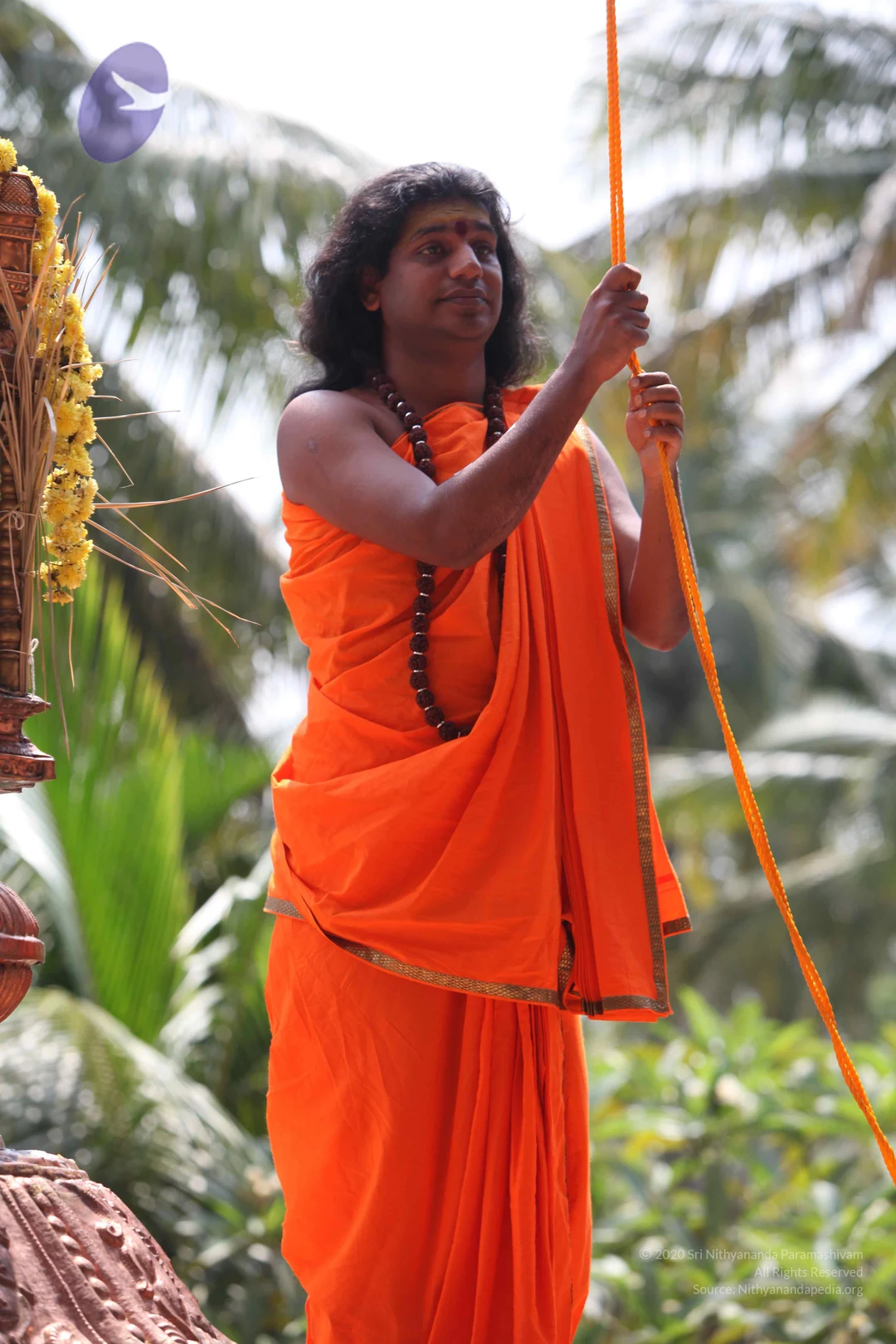
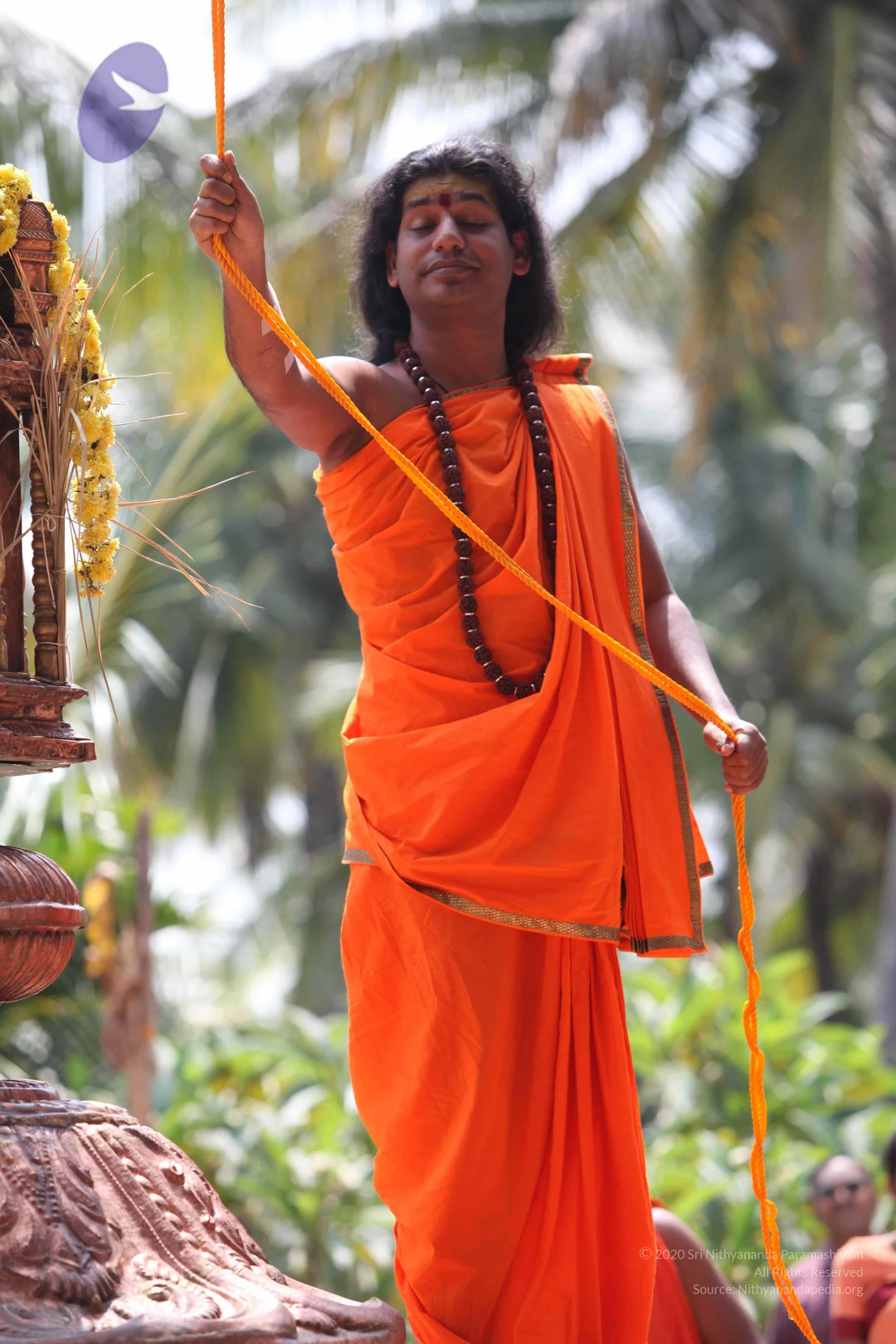
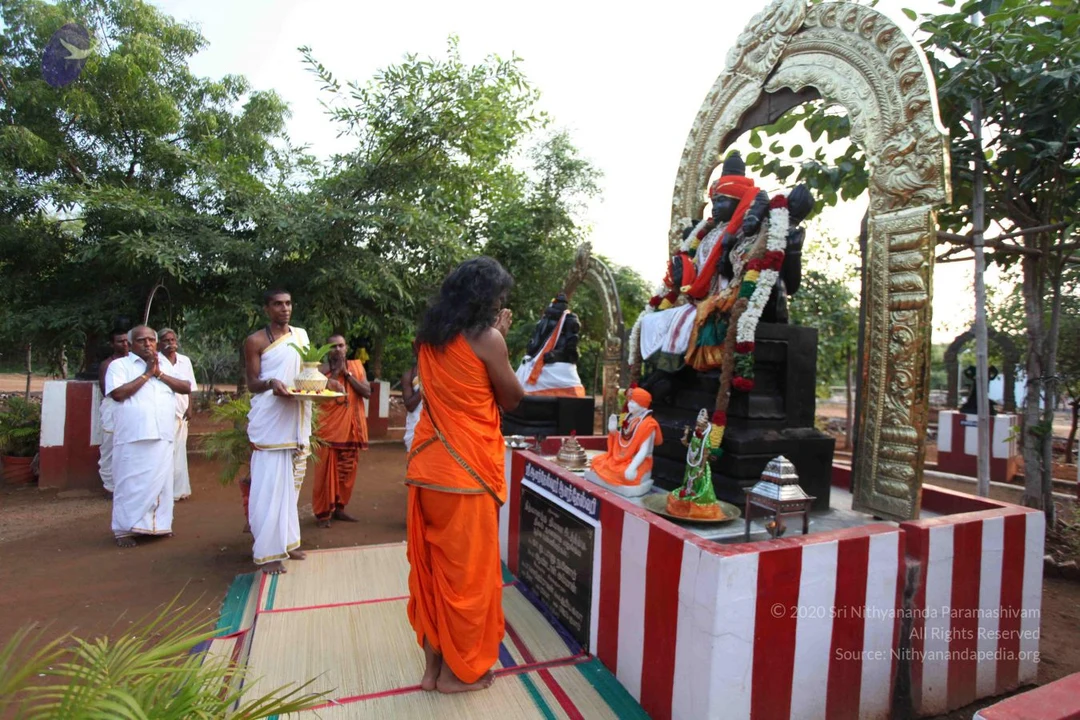
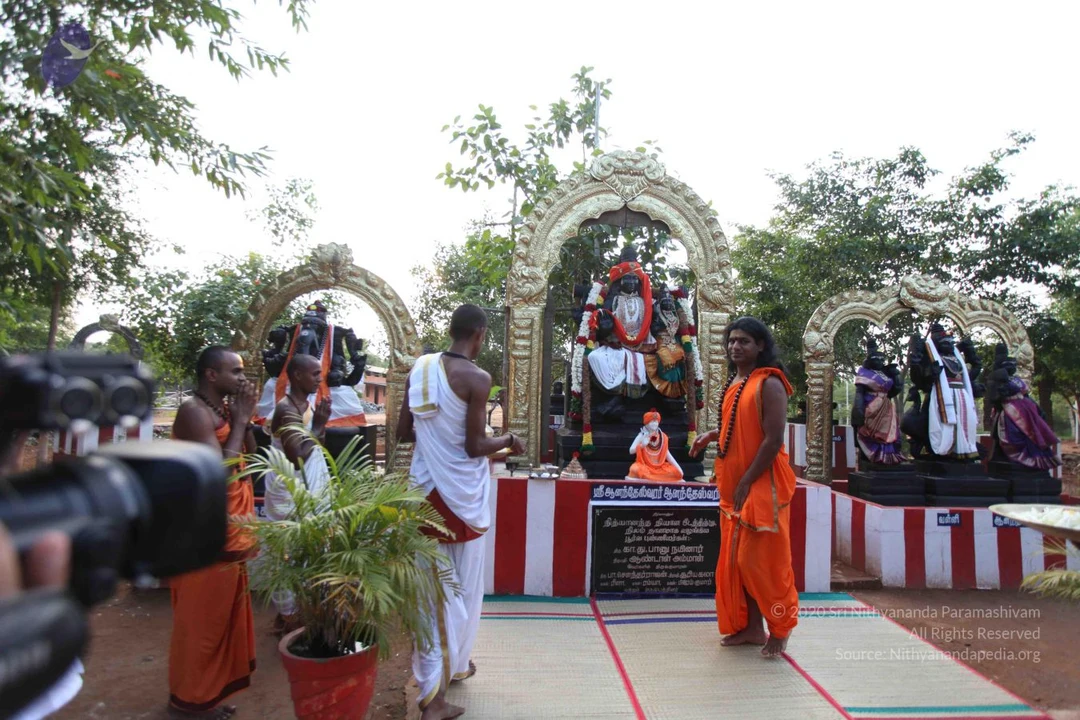
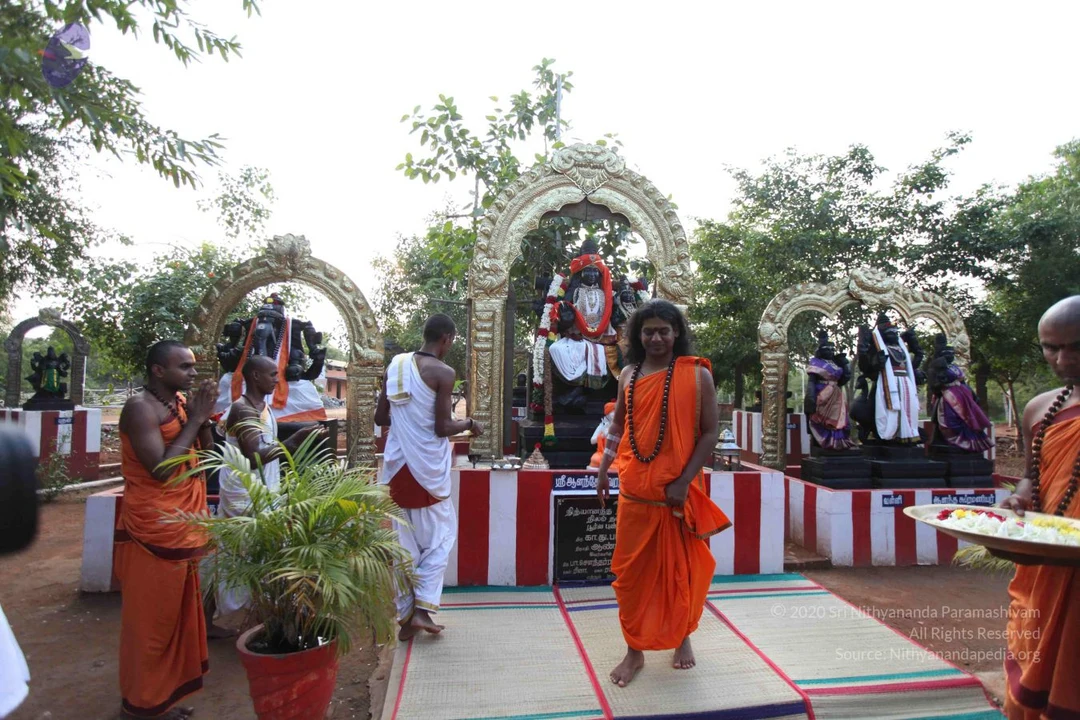
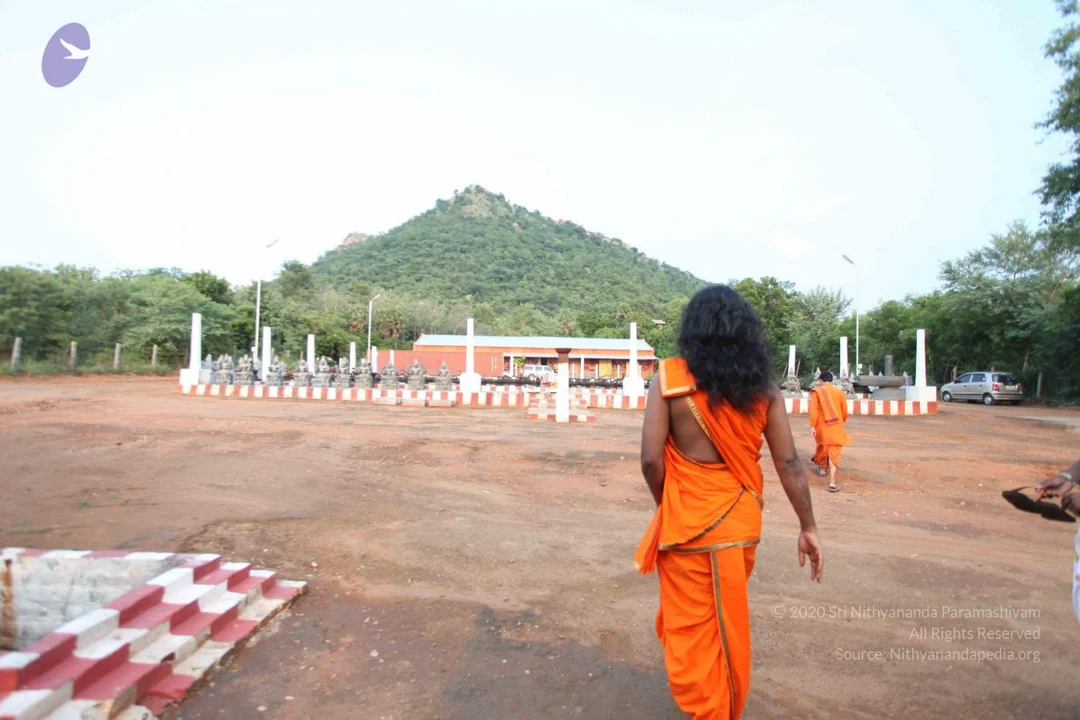
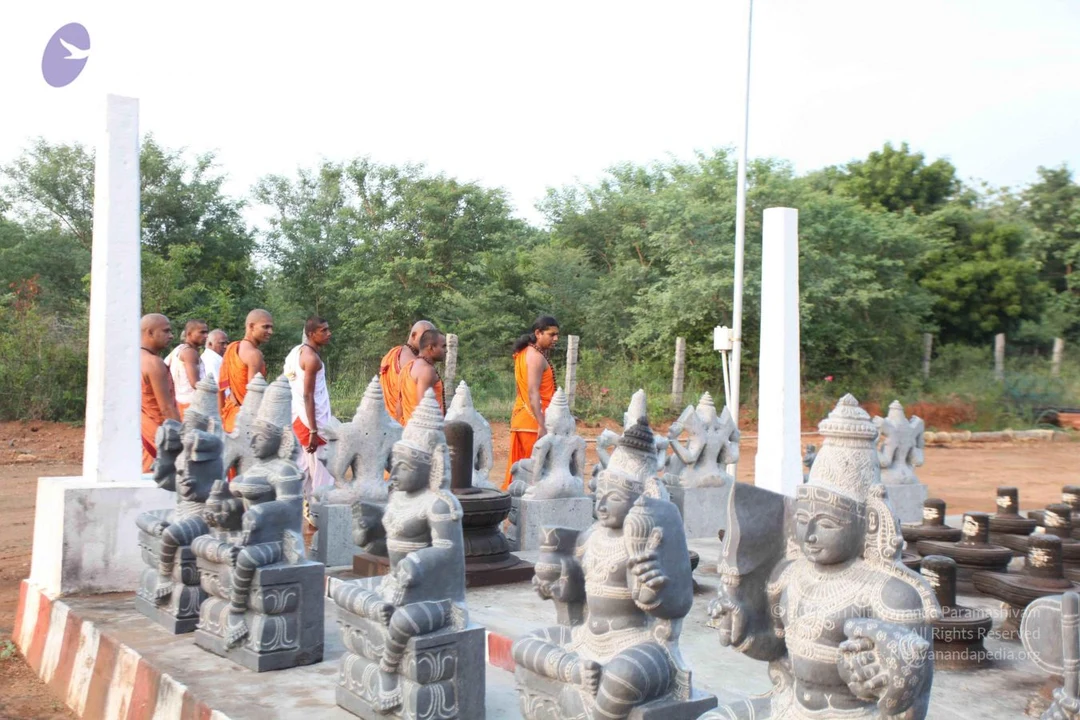
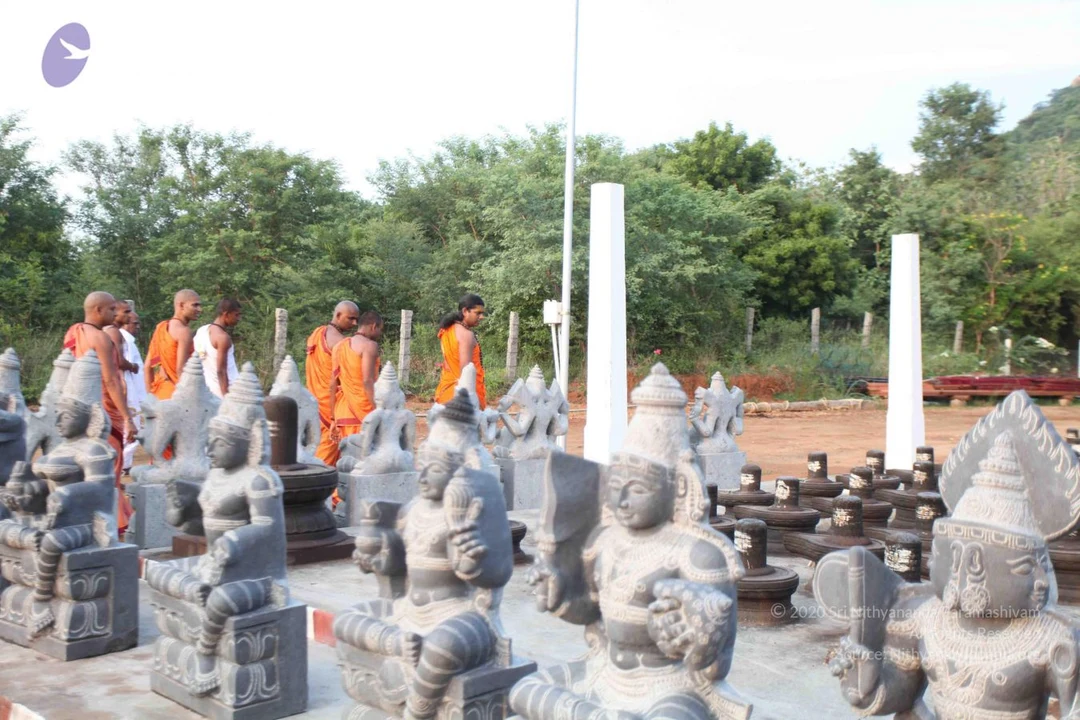
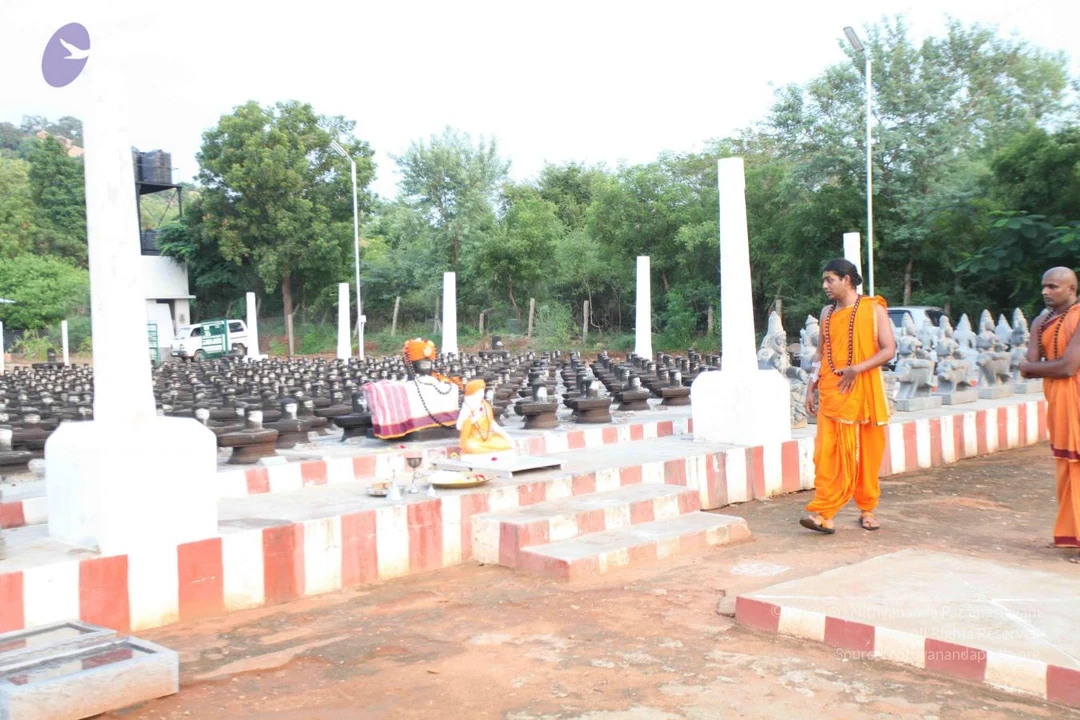
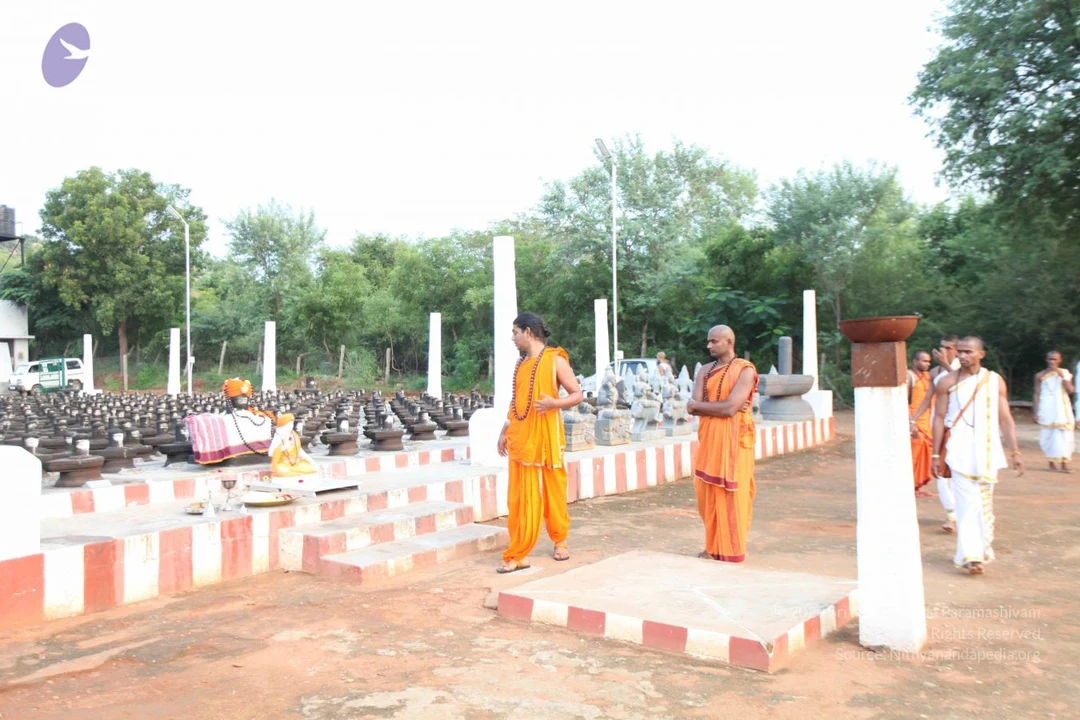
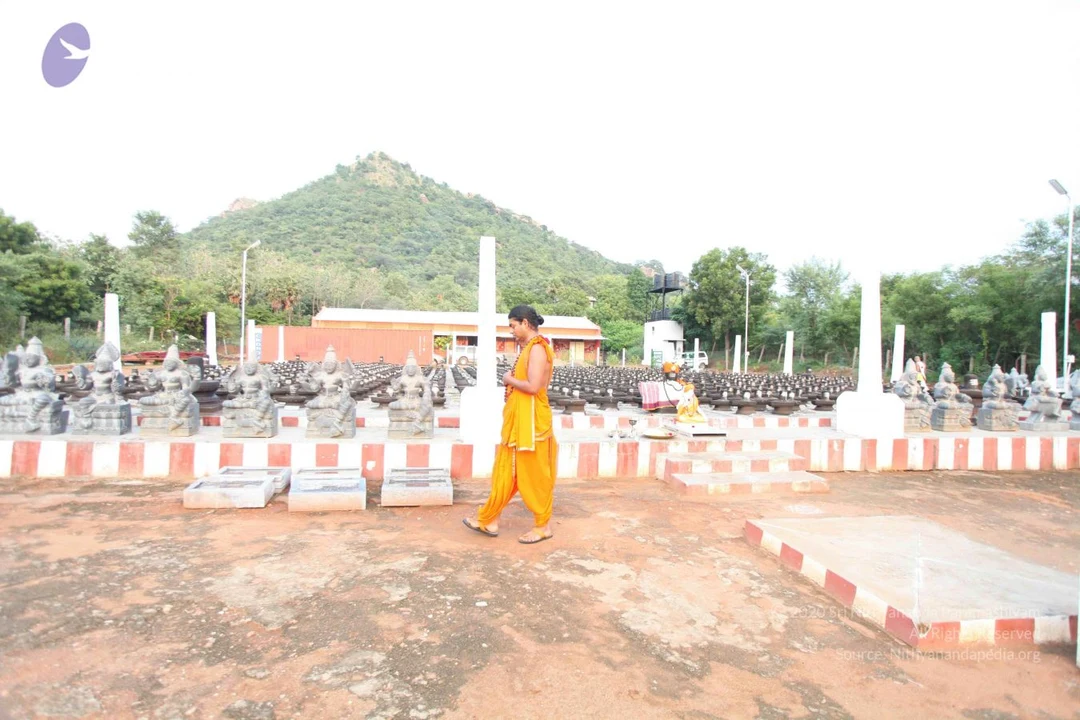
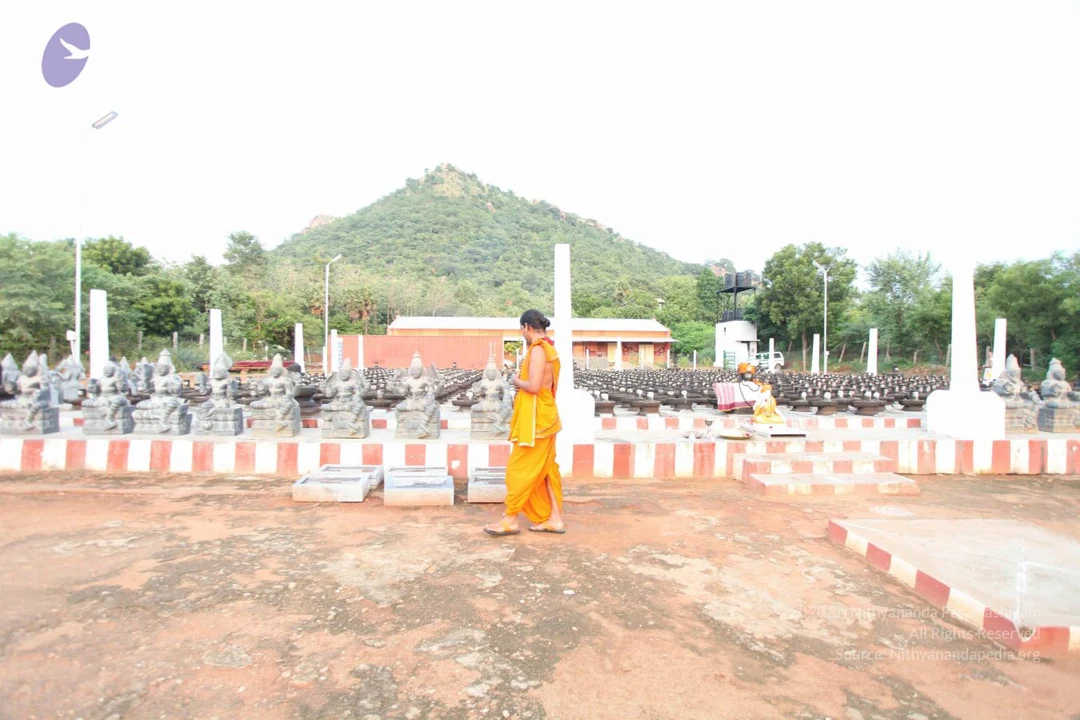
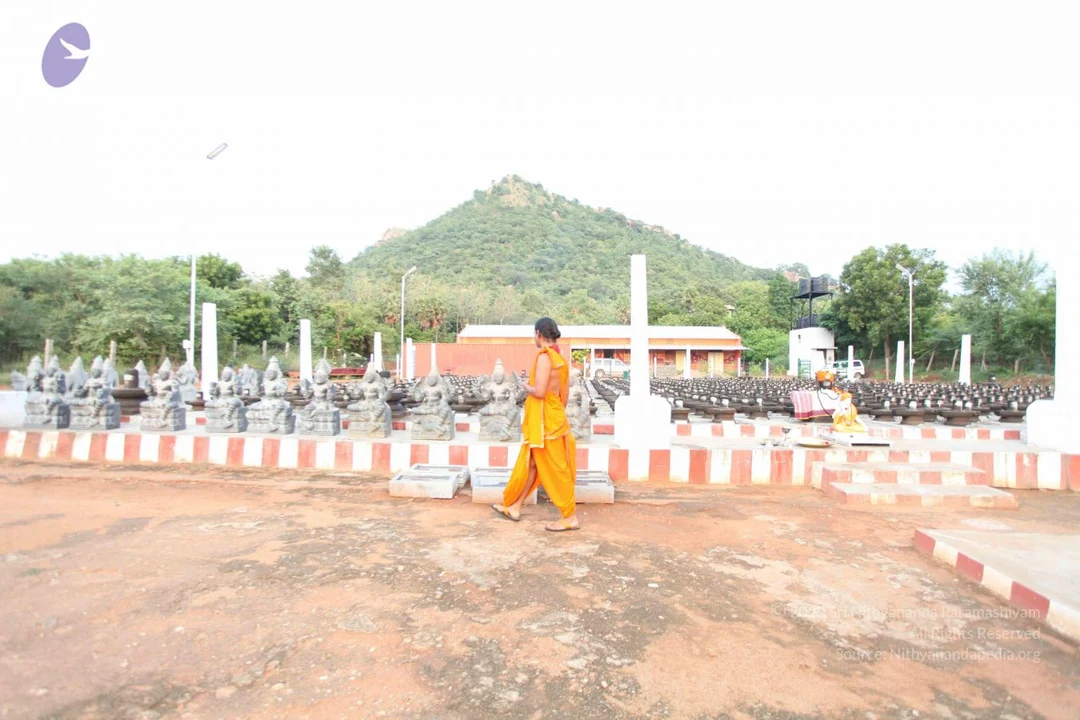
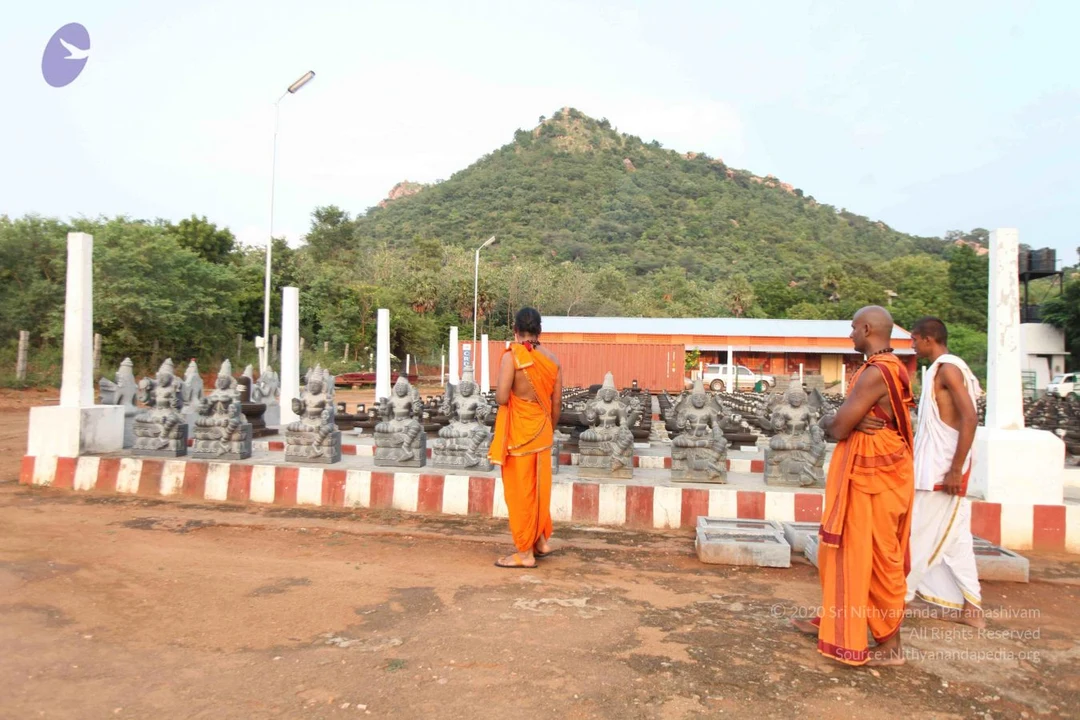
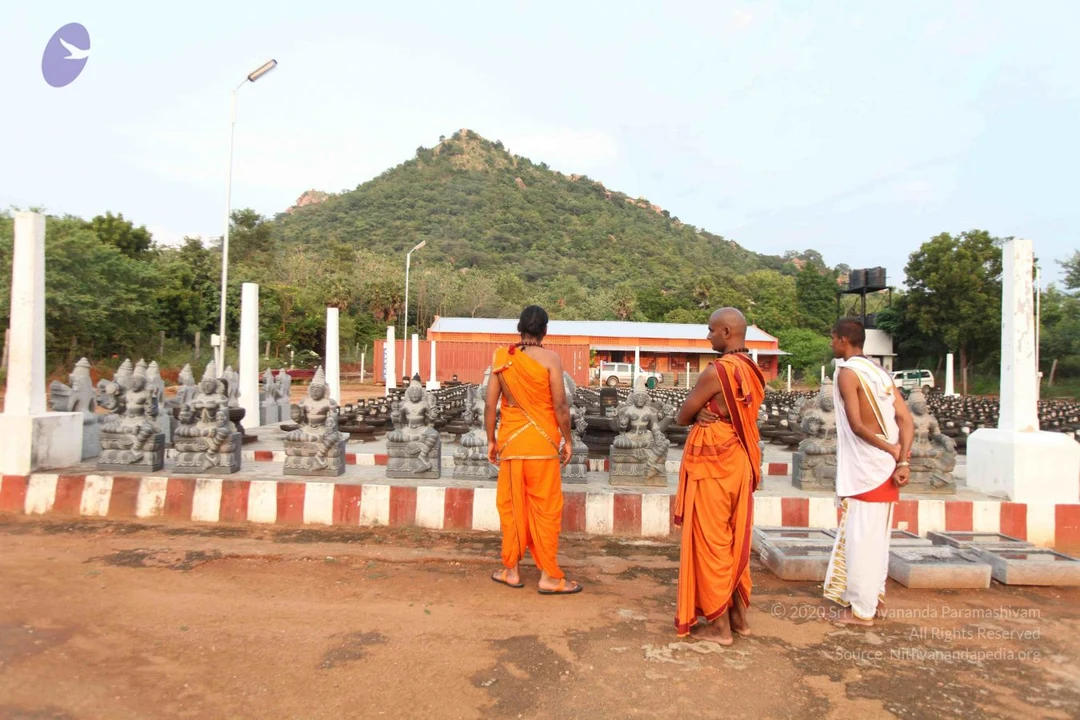
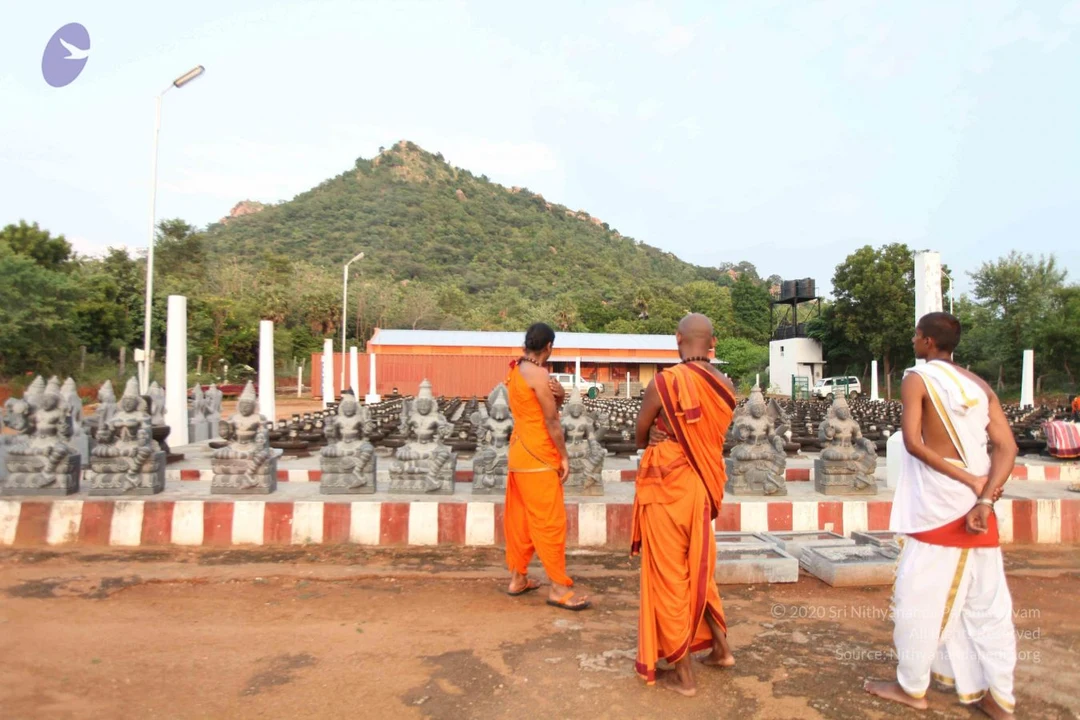
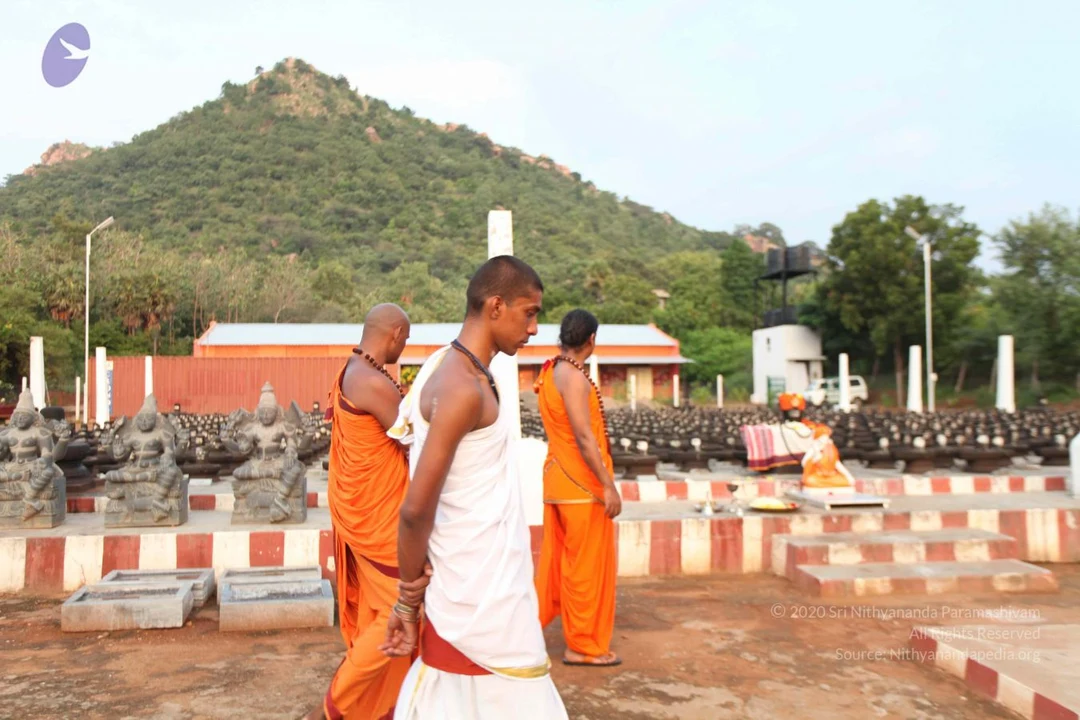
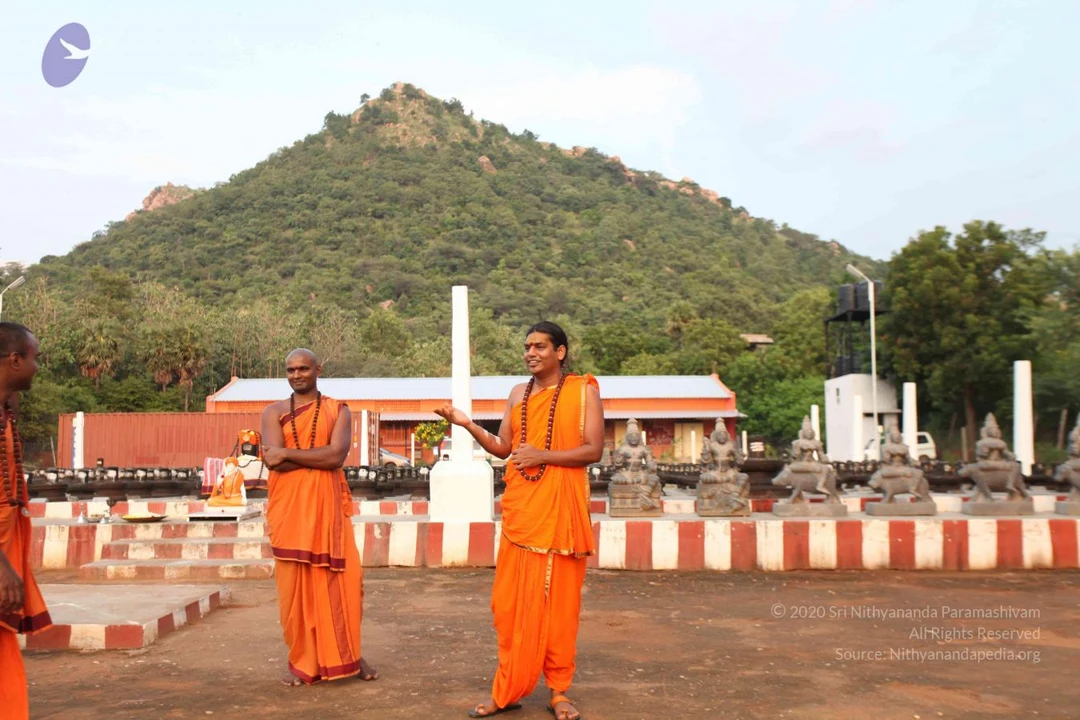
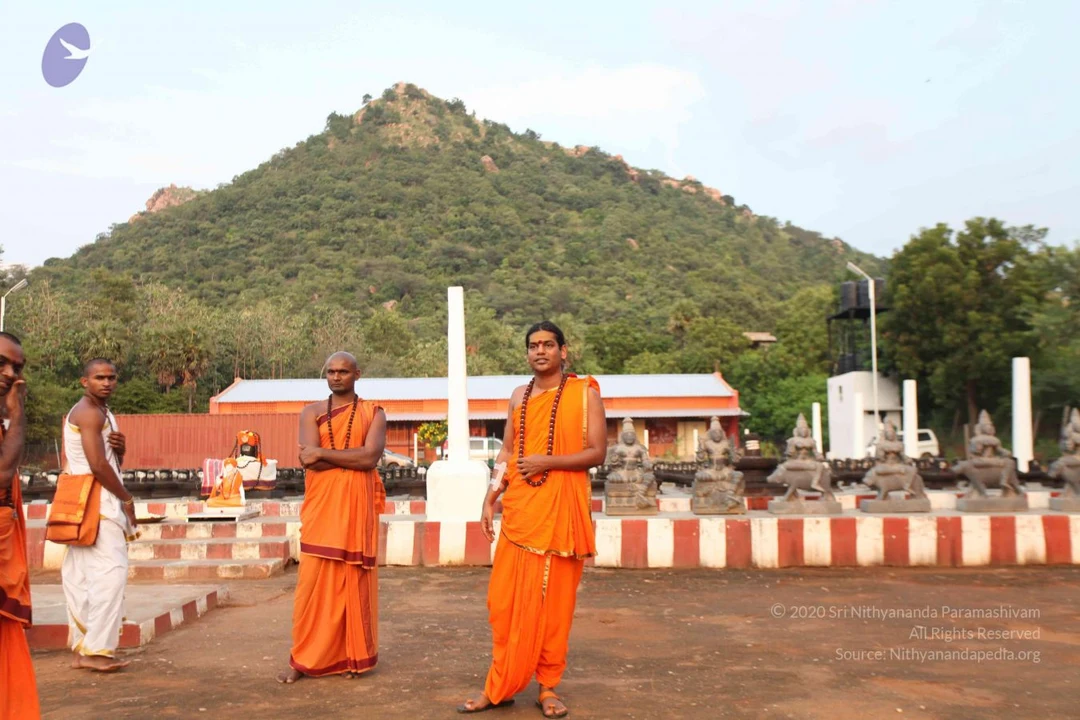
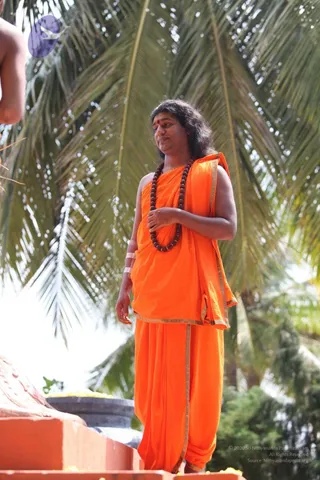
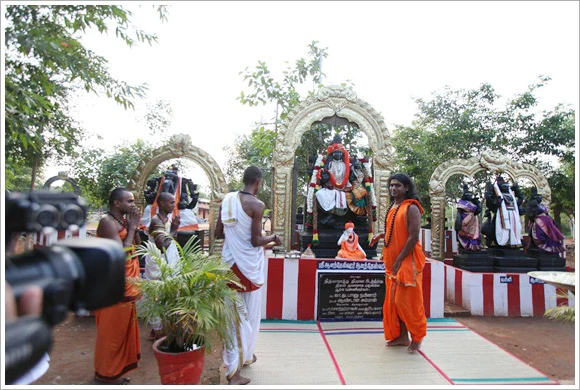
A man in a saffron-orange dhoti and shawl with gold-edged border stands barefoot on a stone step outdoors beside a palm tree. He wears a long rudraksha mala, has a red tilak on his forehead and long dark hair, and looks upward while gathering a bundle of orange cloth tied with yellow cord. Yellow cords run diagonally across the frame. Behind him are a grey stone pedestal with yellow flowers and a tray of offerings held by a person at right. A photographer in red clothing is partly visible at the lower right.Outdoor photo at a stone-carving yard with rows of grey granite deity statues seated on a paved platform edged with red and white striped kerbs. Three people stand with their backs to the camera: two monks in saffron-orange robes, one with long hair tied up and one shaven-headed, and a young man in white dhoti and shawl with a red waistband. Behind them a rocky green hill rises, with an orange-roofed shed and white pillars beside the path.Close photo of a smiling man wearing a layered pink, red and orange turban decorated with a peacock-feather ornament and sparkling jewelled clasp, with a red tilak on his forehead. Around his neck is an orange beaded mala and he wears a green and gold bordered garment with a draped orange-and-pink shawl over one shoulder. Behind him stands an ornate gold deity-like peetha or throne backdrop framed by red roses and white flowers.

October 07 2011

Original wiki page
Contents

Title:

THE SUPREME PONTIFF OF HINDUISM HDH BHAGAVAN SRI NITHYANANDA PARAMASHIVAM

Link to Video:

VideoAudio

Transcript:

Bhagavad Gita

Why we repeat our mistakes

DATE: Day 42: Oct 7th 2011

You need to know some of the deeper secrets about samskara. A samskara can be suspended temporarily if the people related are not any more part of your life. For example; you are having certain fear about somebody, you are having lust engram about somebody, you are having jealousy engram about somebody, you feel jealousy towards somebody, you feel lustful towards somebody, you feel angry towards somebody; if those persons are not seen by you, they are not any more part of your life, there is no communication ……ends abruptly…………...

These are the three moments three ways life can be infused into engraved memory. Please understand your whole life is nothing but your engrams. You wake up as you are programmed, you brush your teeth as you are programmed, you take bath as you are programmed, you have your food as you are programmed, you do all your day to day activities as you are programmed, you go back to bed as you are programmed. Your programming can become alive with three things. As I said if you are acting on the programming, for example addiction to coffee, alcohol, smoking; if you are again and again acting on it, that engram will become alive strong in your life.

Acting on the same memory can strengthen your engram - bring life to your engram or the same person’s time place, that can bring life to your engram. For example; you are jealous of somebody, you have lust for somebody, your anger for somebody; usually you will have all the three with your spouse. That is why that relationship is too strong to be broken or to be lived with. You have these engrams with somebody…. you are not acting upon it, you are just sitting, but that person is crossing your life, your breathing space; immediately those engrams in you will become alive. The pattern in you will become alive. Life will be infused into those patterns.

Third; during the leaving the body all the engrams will become alive. Here Bhagavan is using the second technique second secret. First he warned Arjuna ‘ehh people will continue to talk about you in an ill way’ kathayishyanti. I think Arjuna is too much in delusion even that kathayishyanti is not working. Now Bhagavan is making it more visual. He is describing ehh all these Maharathas; Maharatha means mainly Karna. Karna is the direct enemy of Arjuna. Arjuna cherishes strong enmity, jealous towards Karna. Just the memory of that person can awaken all the engrams related to that person. Bhagavan is trying to bring Karna to the memory of Arjuna saying ‘ehh all these days you were always winning Karna…..’ because of whom….. Bhagawan!!

This Bhagawan who cheated, conspired, did all cheap things to make Arjuna win just because this fellow is a devotee. What to do? Bhagavan has done everything possible. He has done the highest act of giving enlightenment to the lowest act of cheating people for the sake of his devotees. Devotion is almost like emotional blackmail to Bhagavan. If you just have that you can get anything you want. That feeling connection is so powerful.

I tell you... I can tell you from my experience. I will do anything for the people who have feeling connection for me….. who have feeling connection with me I will do anything. Bhagavan has gone to any.... I can say the lowest possible levels. As I was describing the other day to kill the Jayadratha he covers the sun. To kill Bheeshma he brings Shikandi in the front. To kill Drona he tells a lie. He creates a beautiful conspiracy and he lies literally and not only that, he lies through a proper person who will be trusted.

He calls Yudhistra and says ‘ehh everybody trusts you will not lie. You tell what I am saying’.

Yudhistra says ‘No I will not tell a lie’.

He says ‘ehhh you tell Ashwathama ada kunjanaha - elephant named Ashwathama died. Ashwathama the elephant died’.

This fellow says ‘no, no, no it is a lie. Drona will understand Ashwathama is dead and he will not fight, he will stop fighting. I don’t want to tell a lie’.

Then Bhagawan says ‘ehhh technically you will be right. I will kill a elephant named Ashwathama’. He catches the elephant names it Ashwathama and kills it. Now tells Yudhistra ‘ahhh come on, you go and tell’. It is technically right but dharmically wrong. Vyasa describes, whatever is said and done it may be technically right but as consciously it is wrong the Dharmaraja’s chariot always used to be two feet above the ground level. It fell one feet down! Yudhistra lost his grace by that one lie.

He has done every cheap possible things; sometimes I feel much more than Indian politicians for the sake of disciples. Please understand but till the end he has not done even one small wrong or so called wrong for himself. No. After the war he could have become king! Who is going to ask him? He did not get coronated. All the pancha pandavas would have served his feet if he wants. NO. That is Krishna.

Photos:
Photos Of The Day:

TEMPLE

BHAGAVAD-GITA-SATSANG

SARVA-DARSHAN

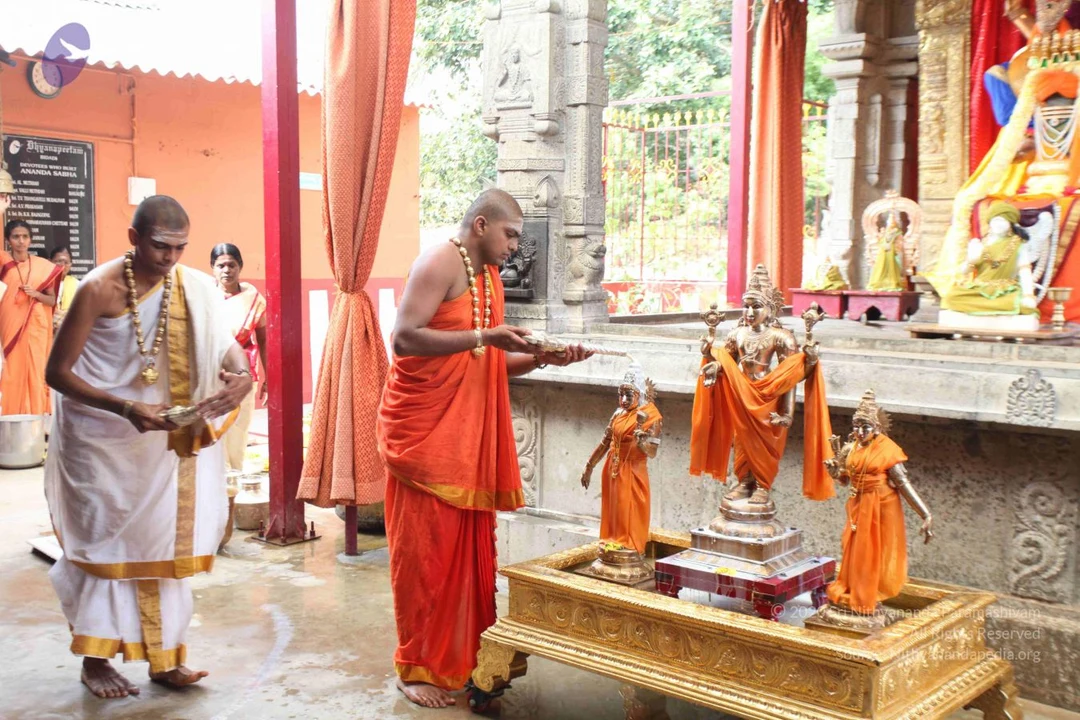
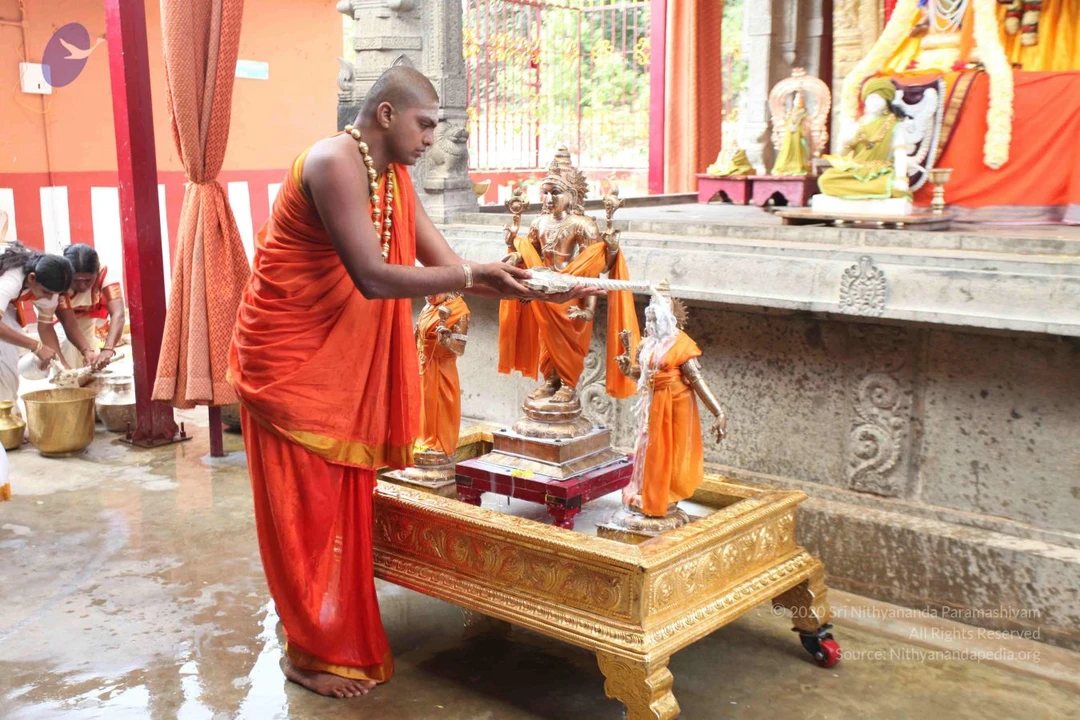
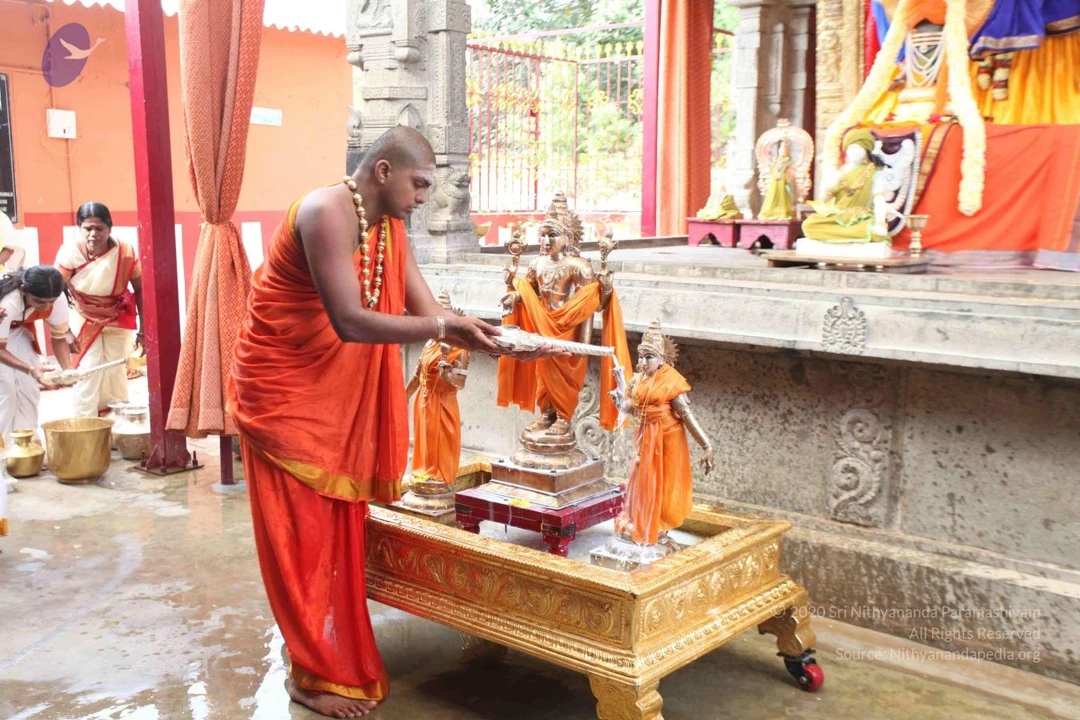
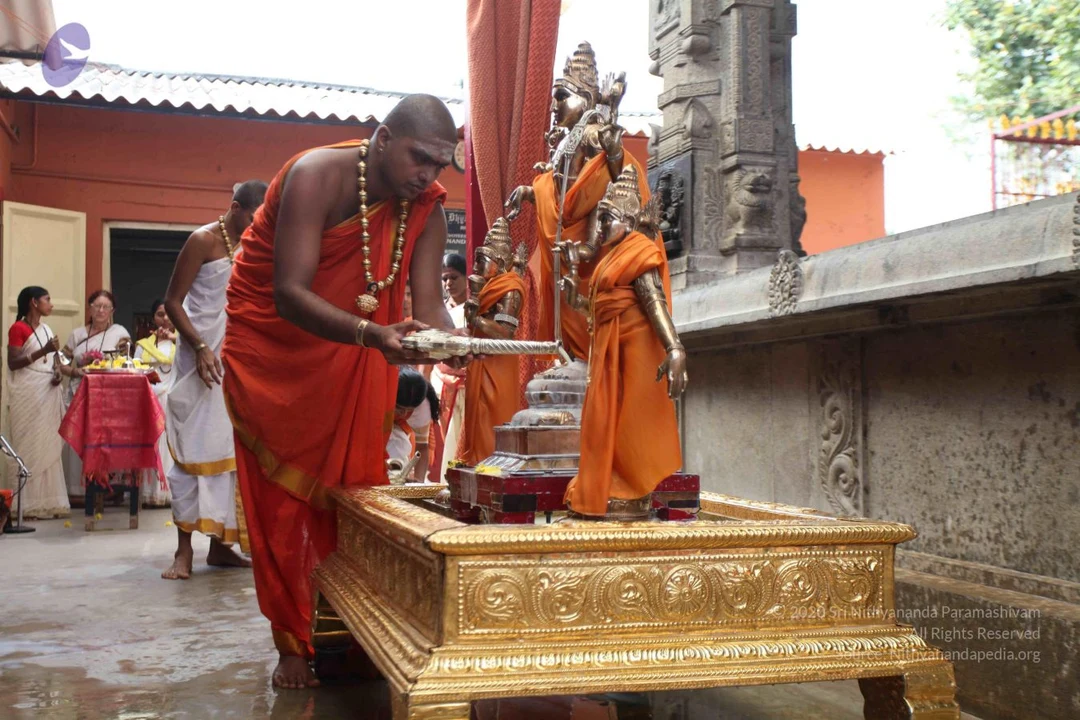
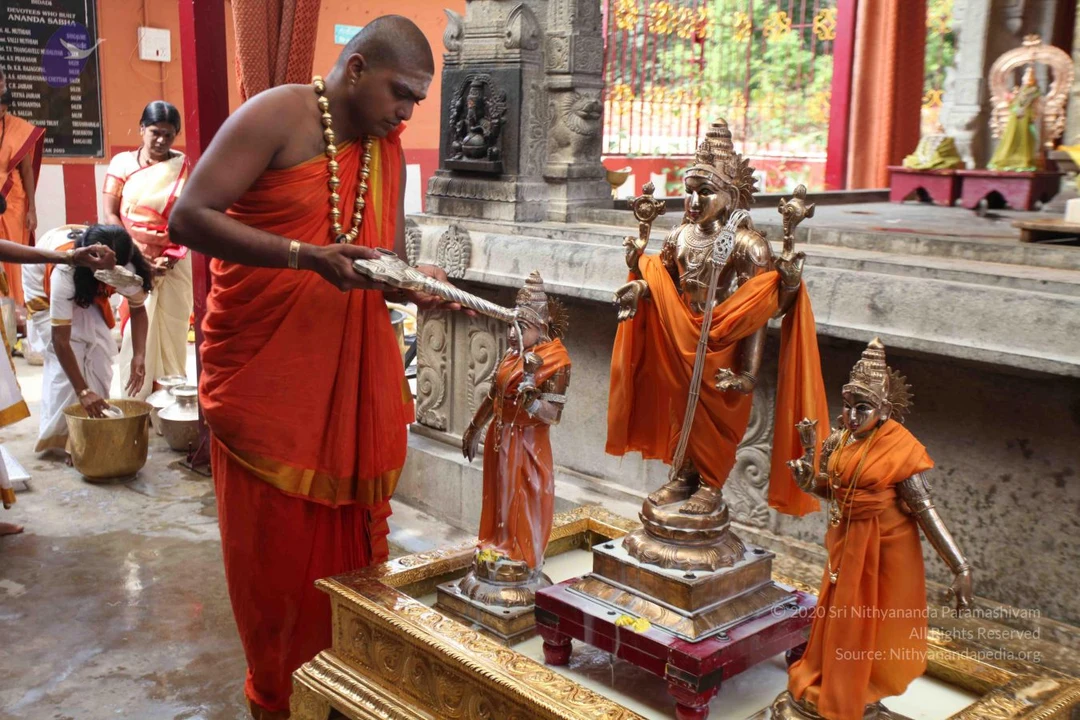
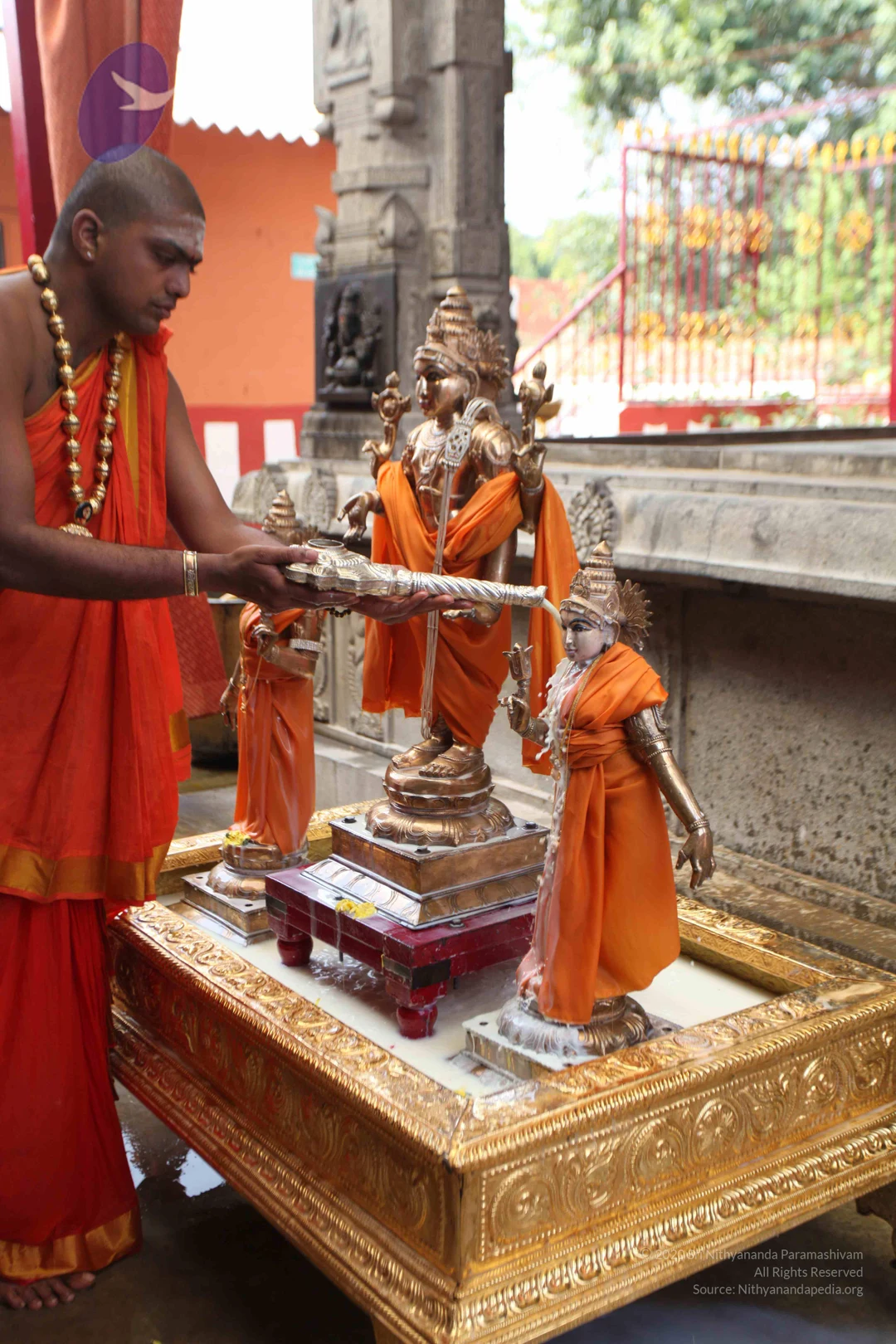
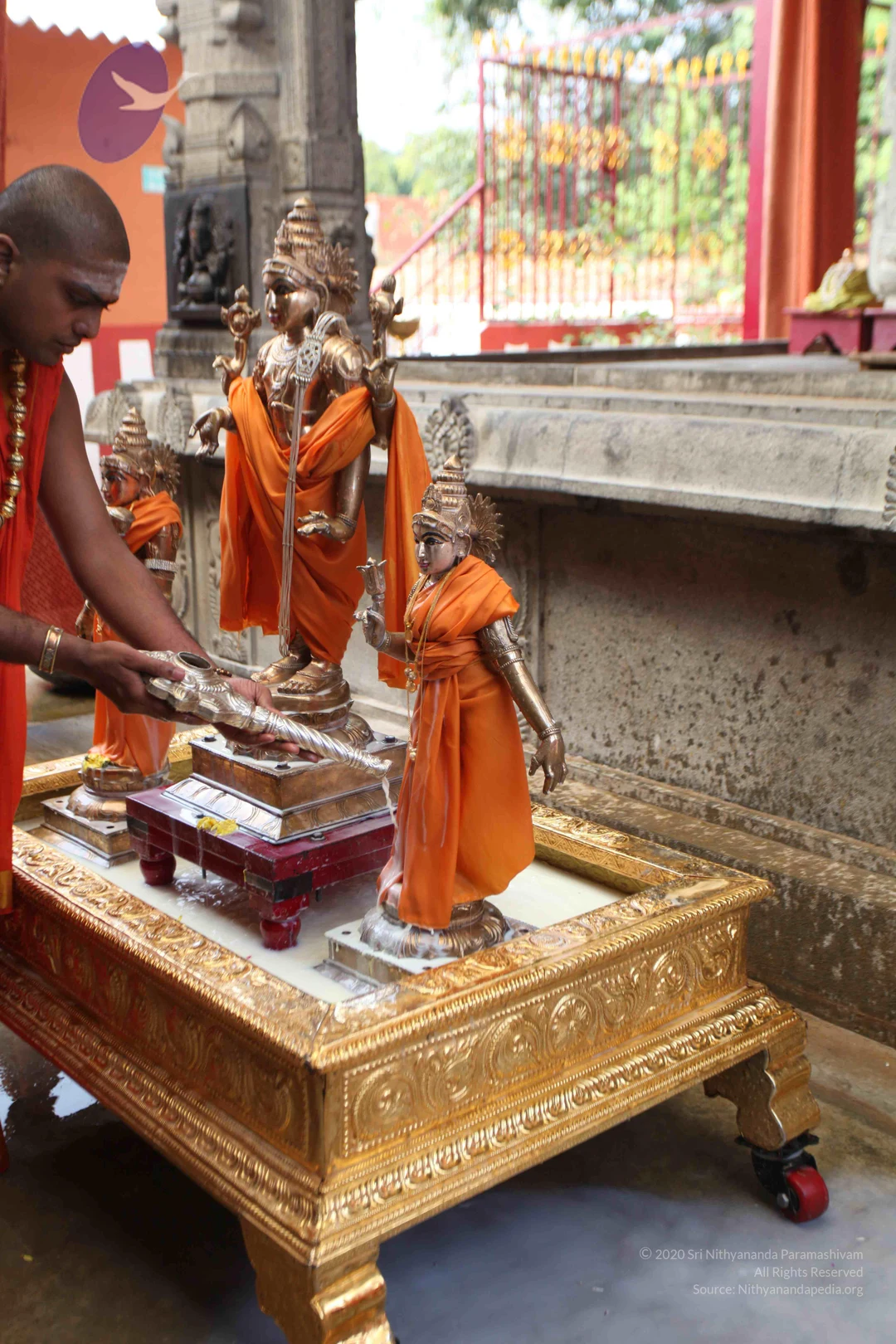
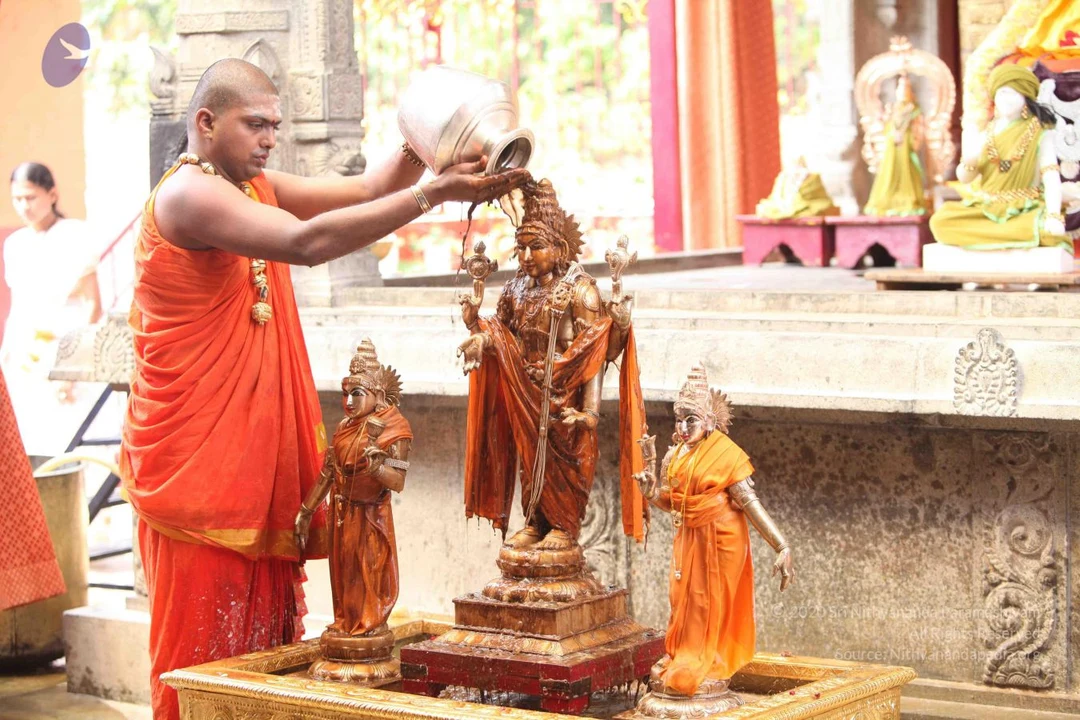
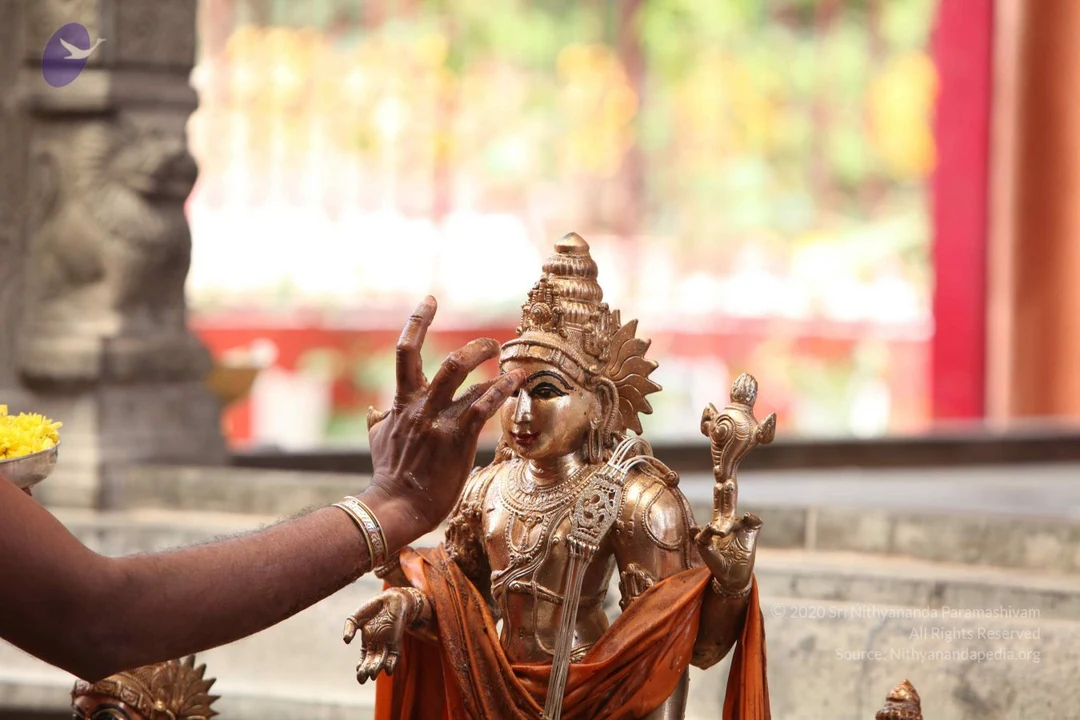
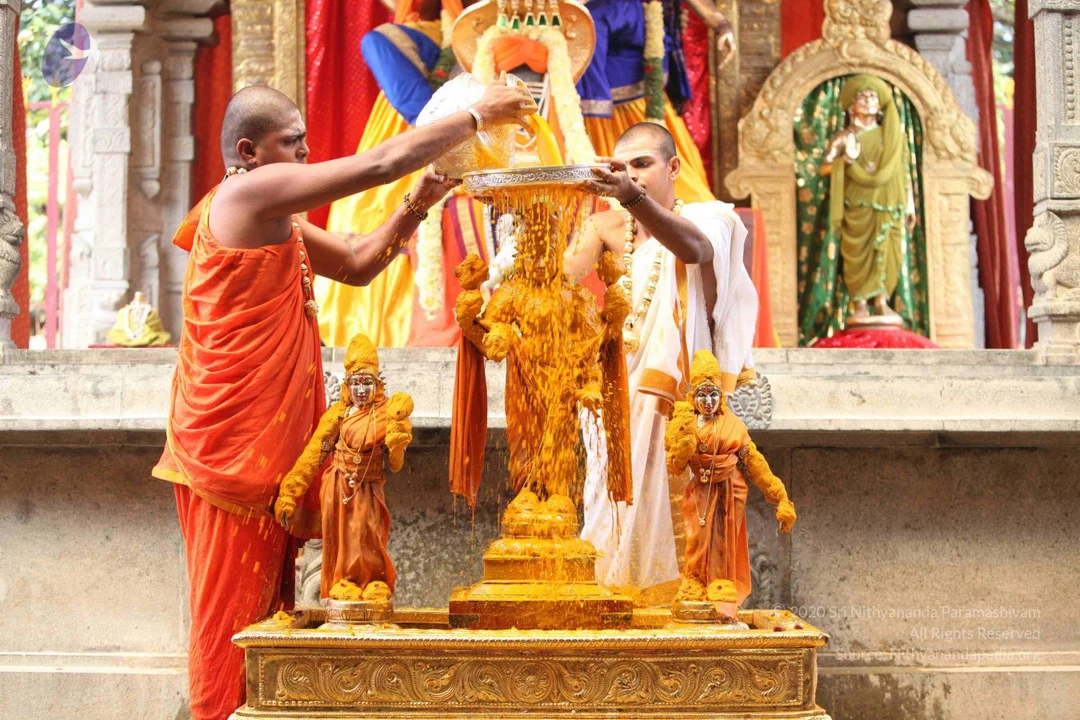
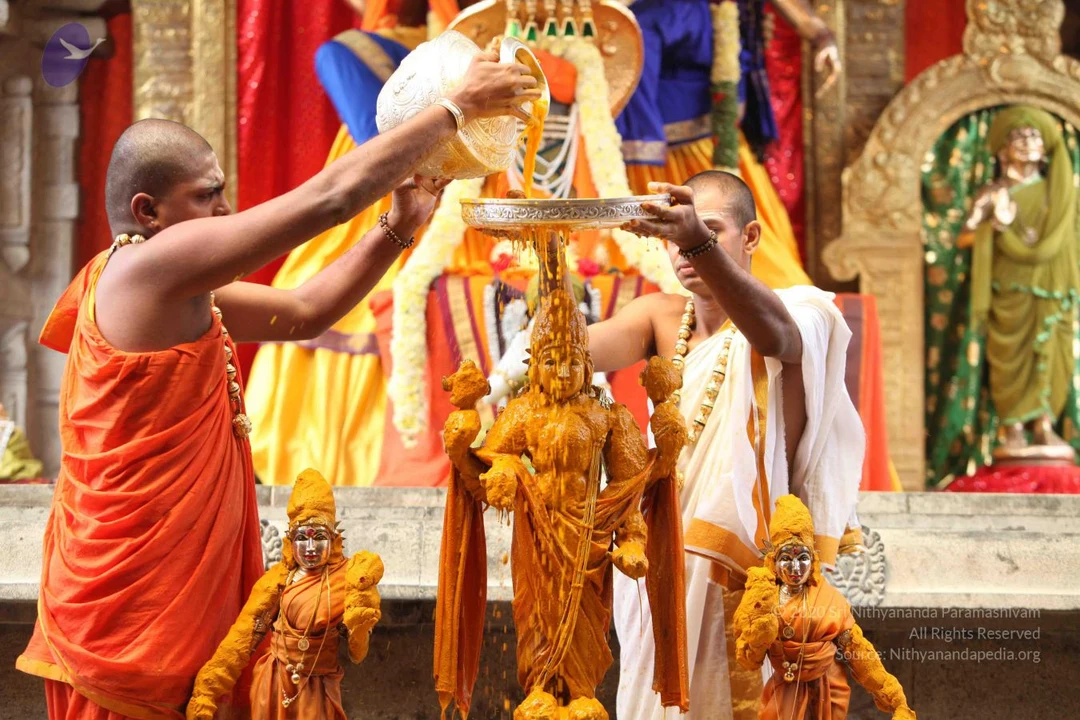
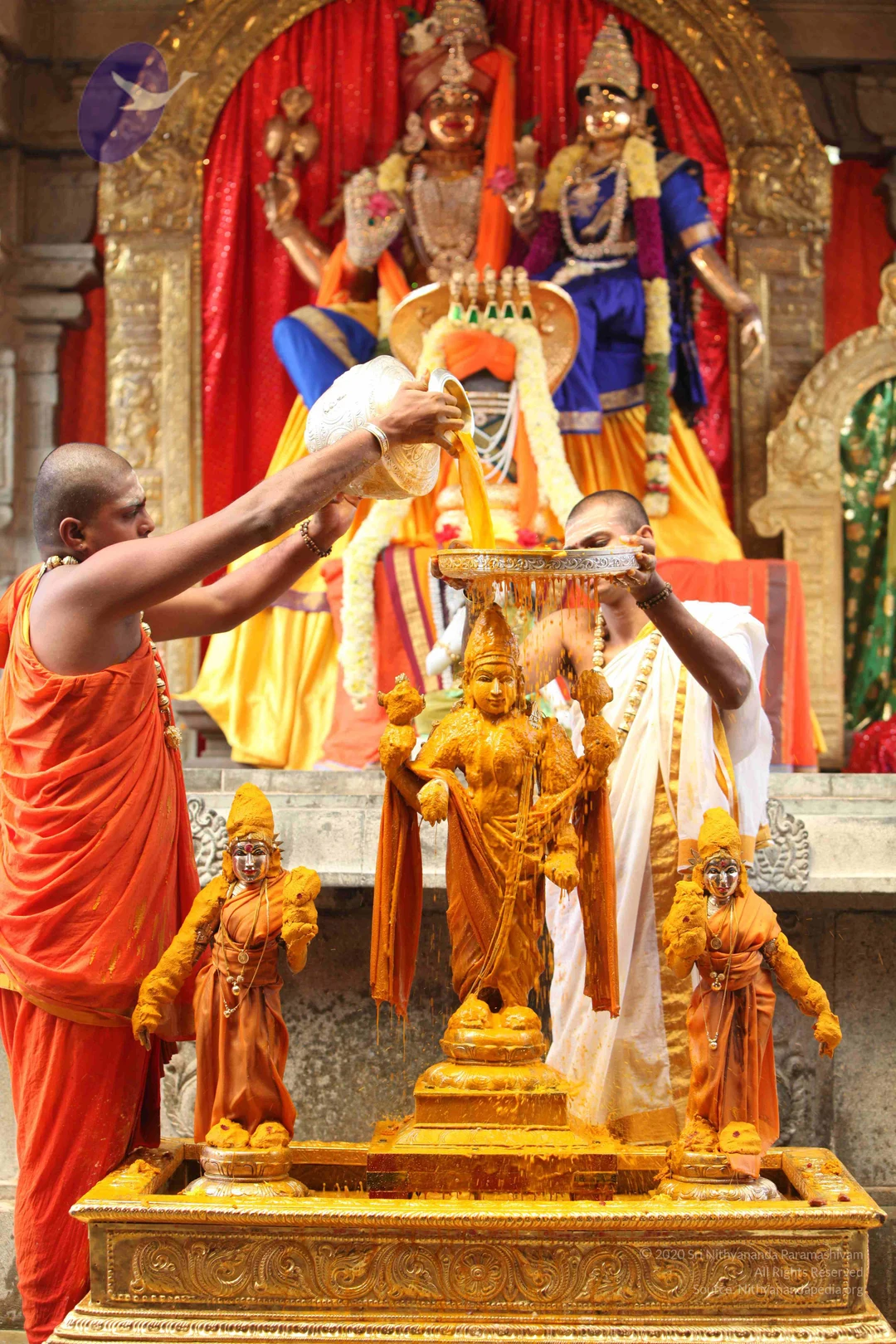
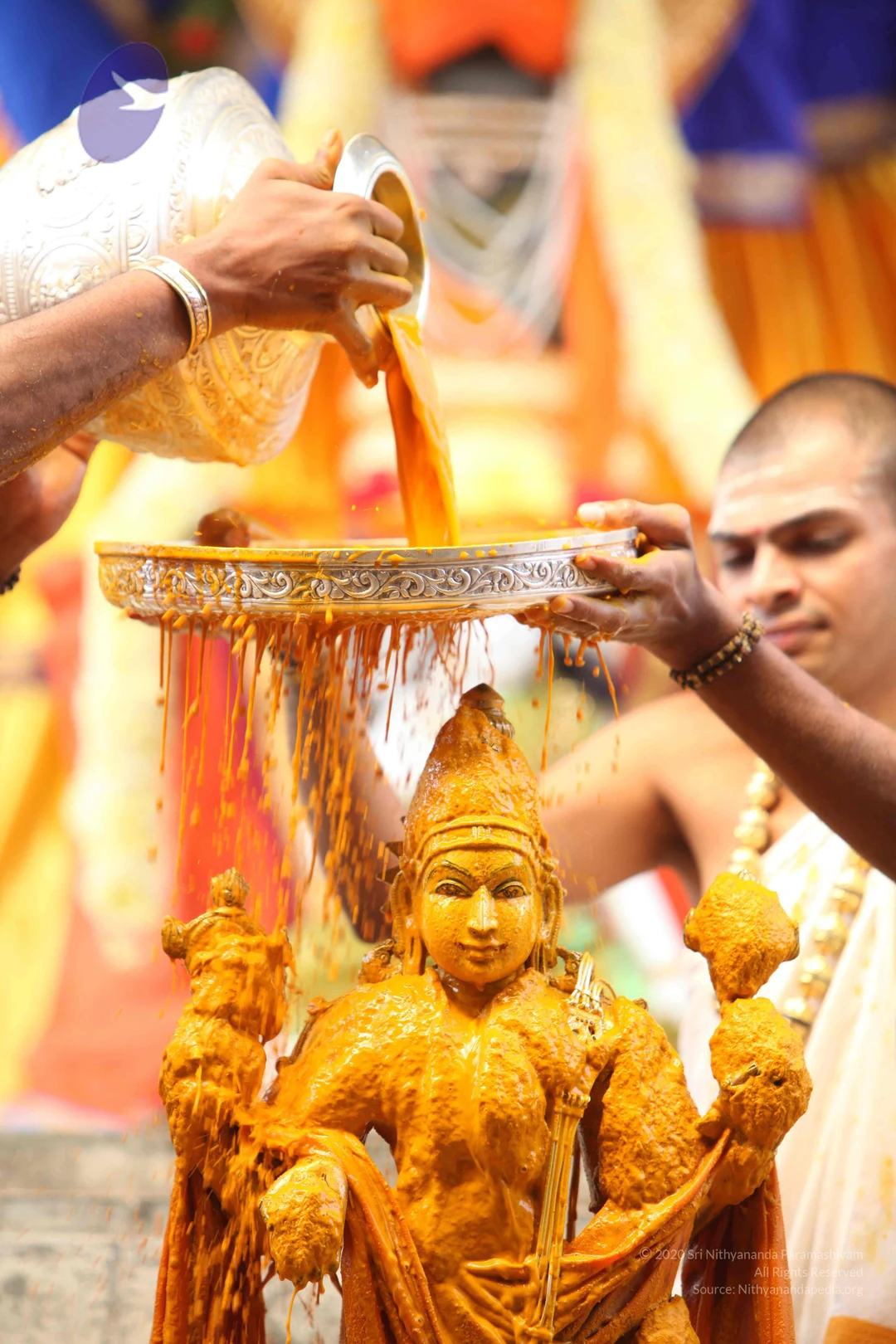
ABHISHEKAM

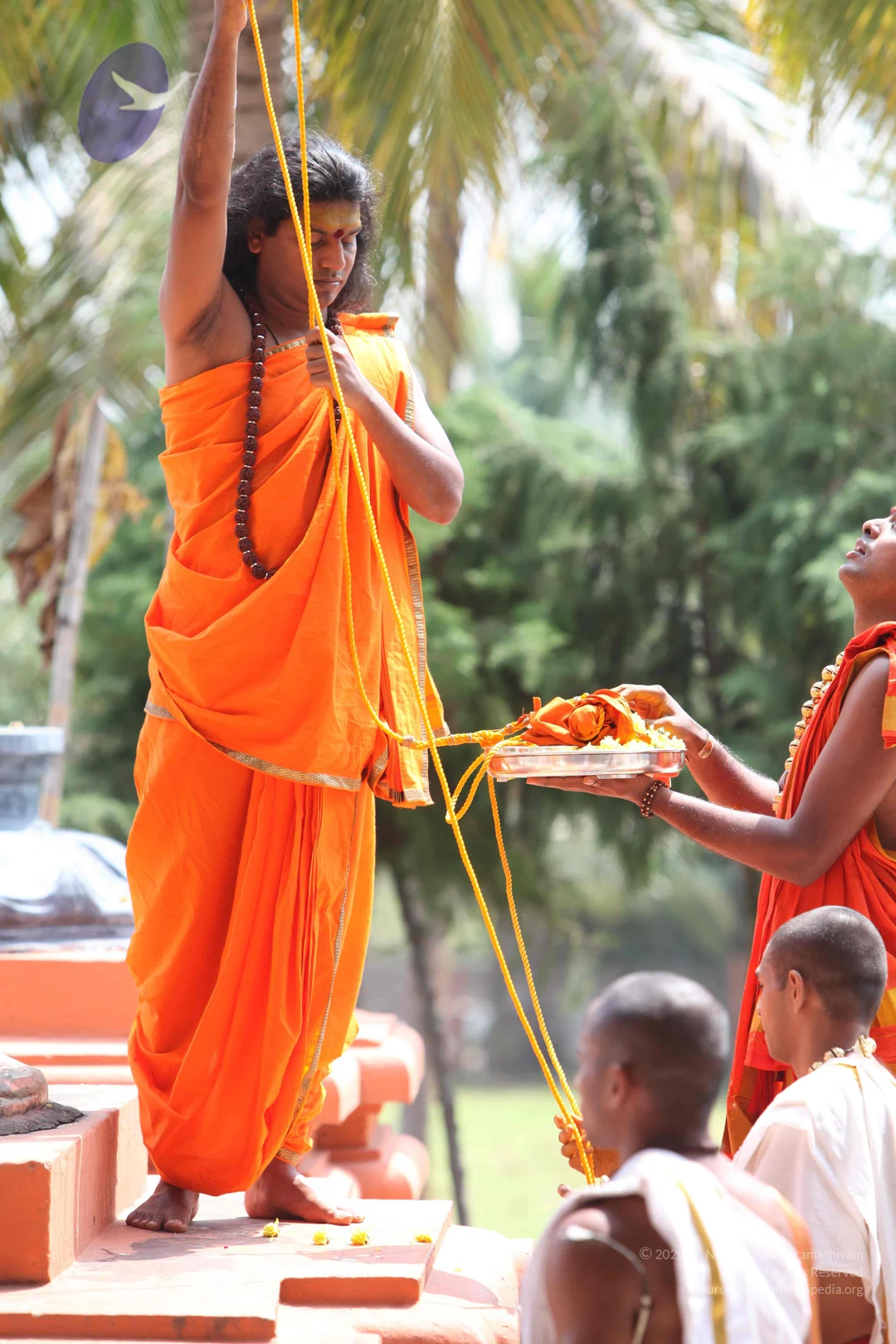
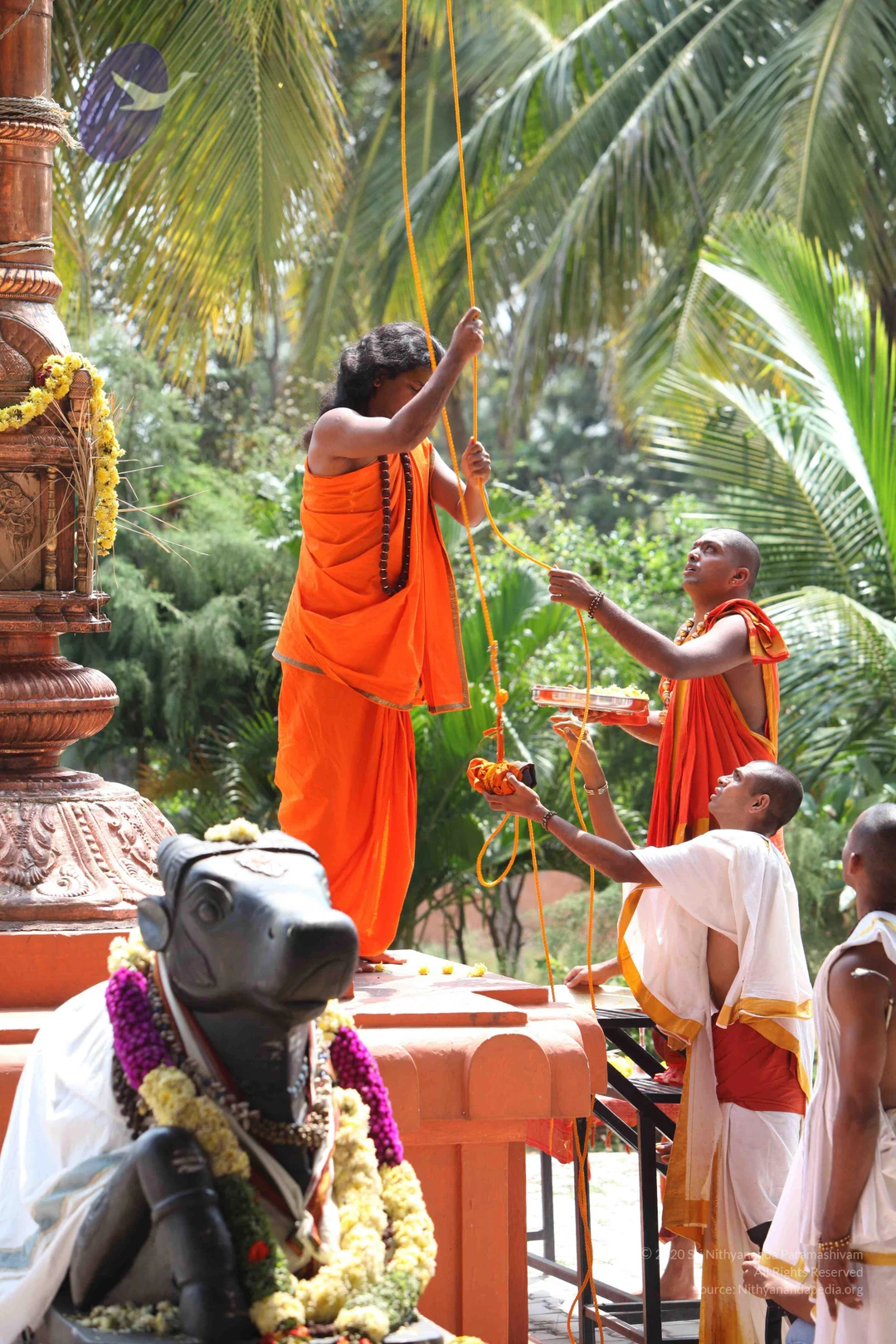
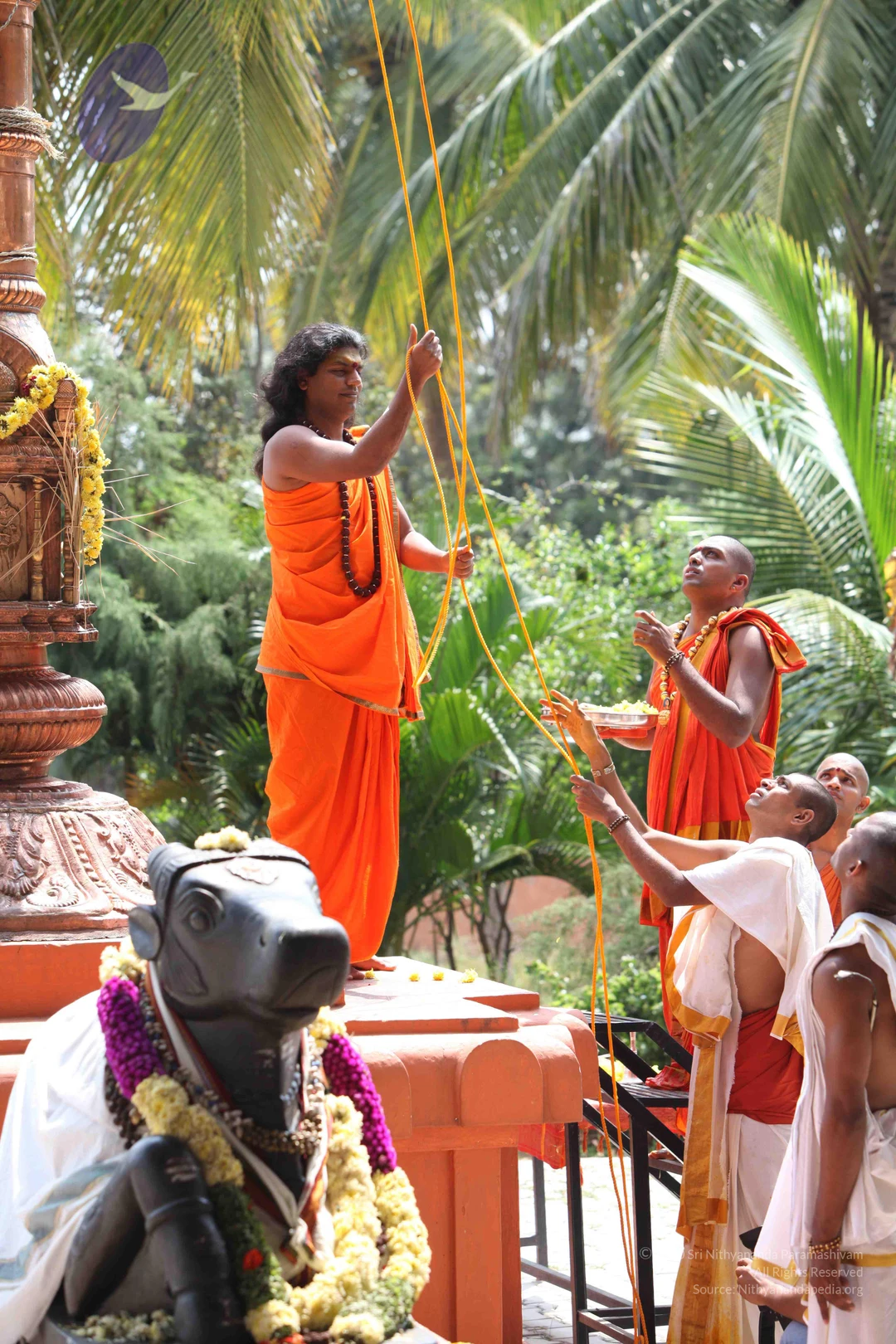
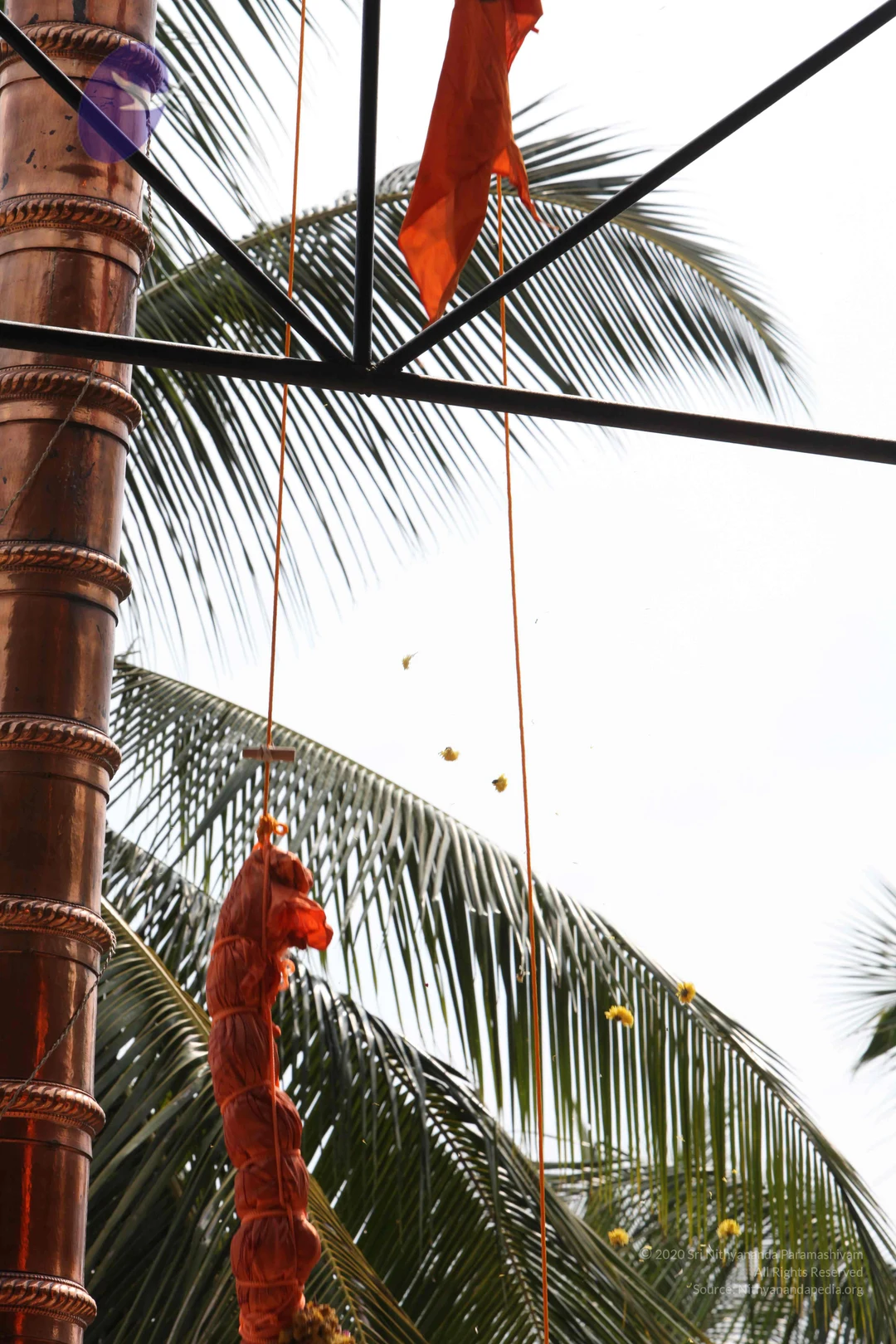
DWAJAROHANAM

HDH-REACHES-TIRUVANNAMALAI

TIRUKOVILUR-ARAGANDANALLUR-TEMPLE-VISIT

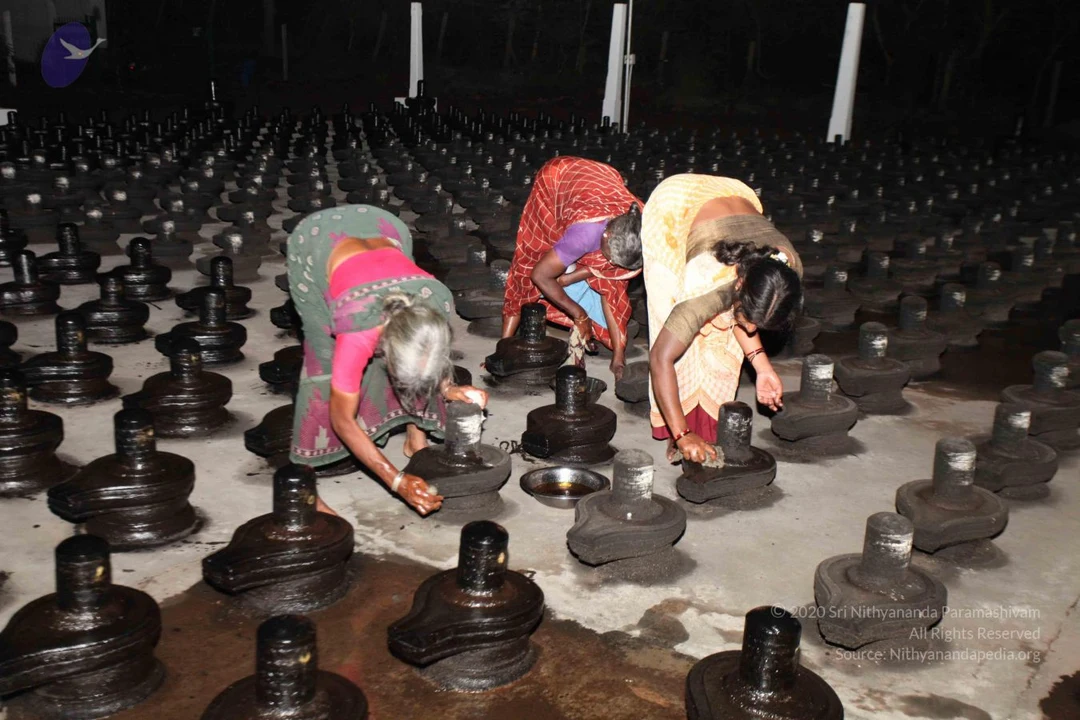
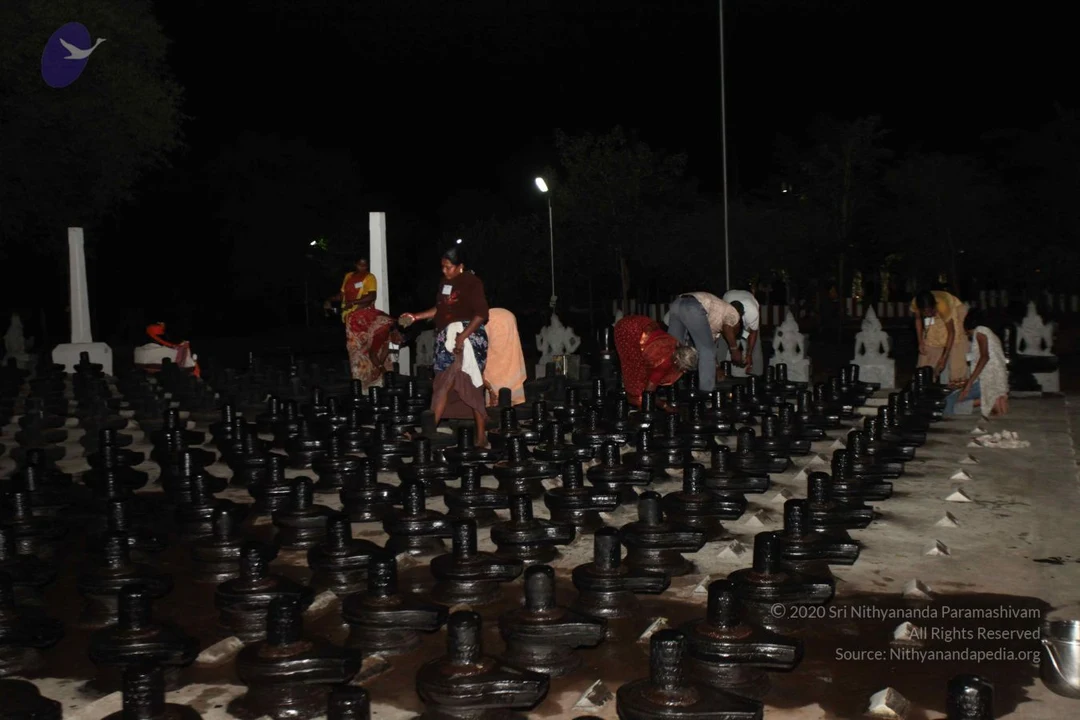
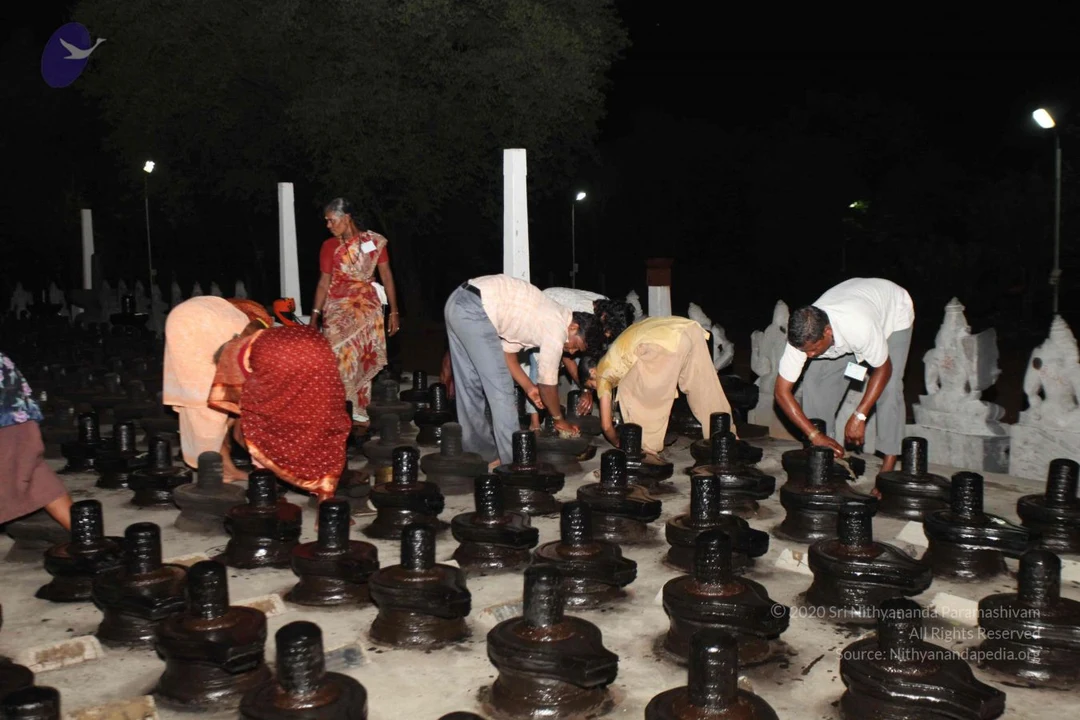
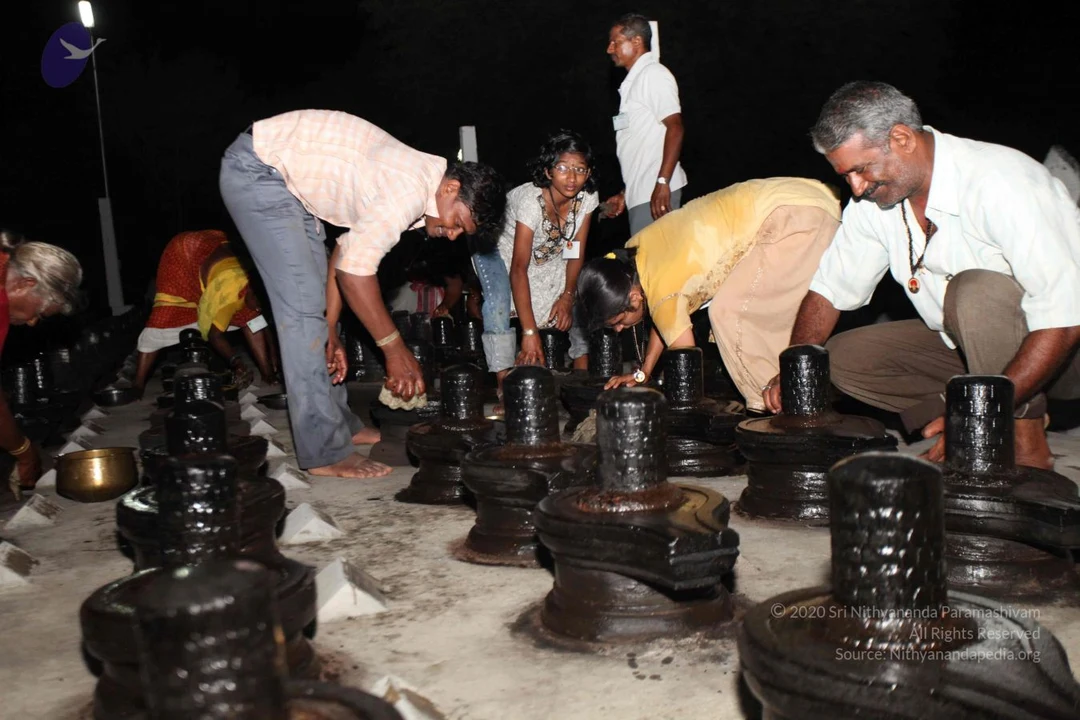
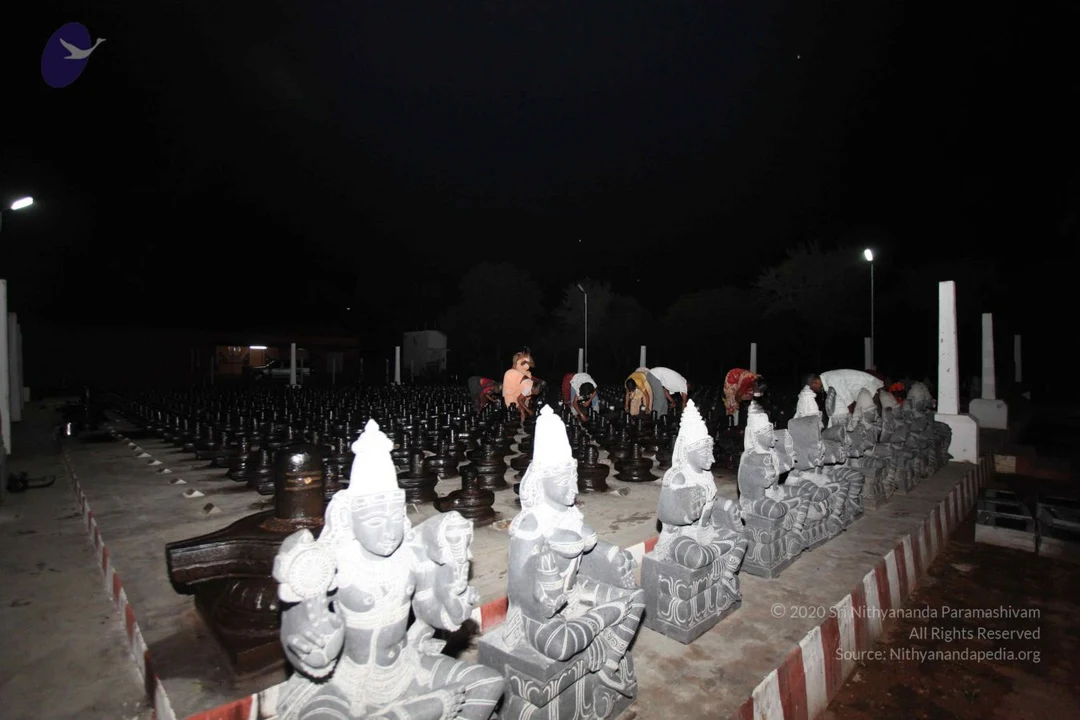
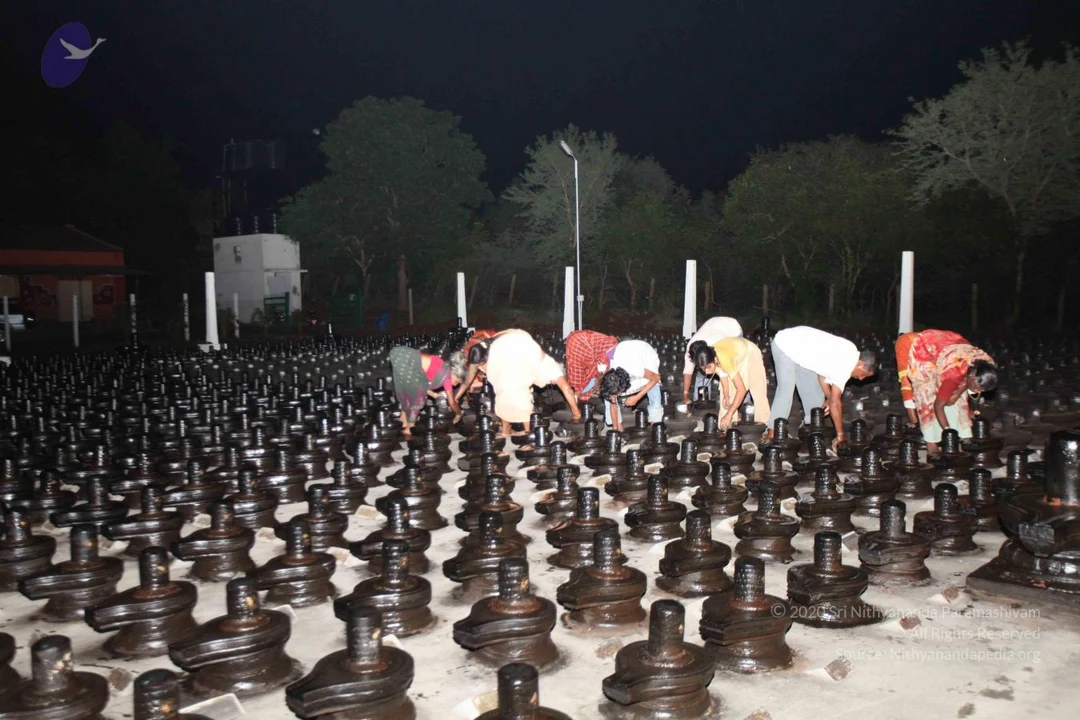
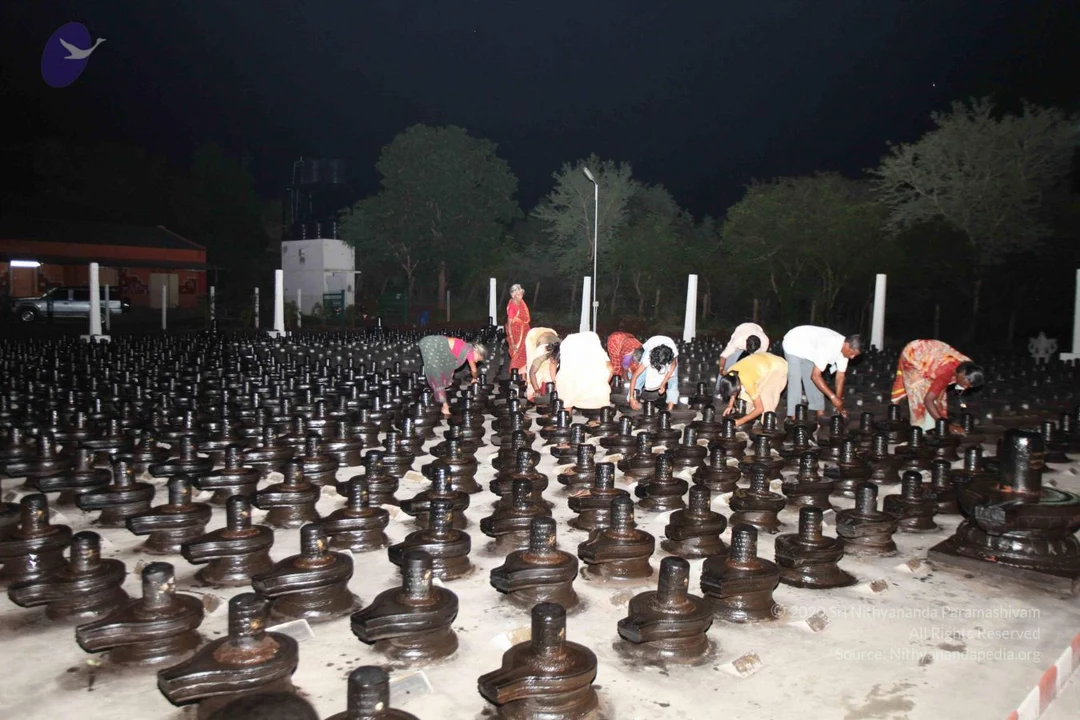
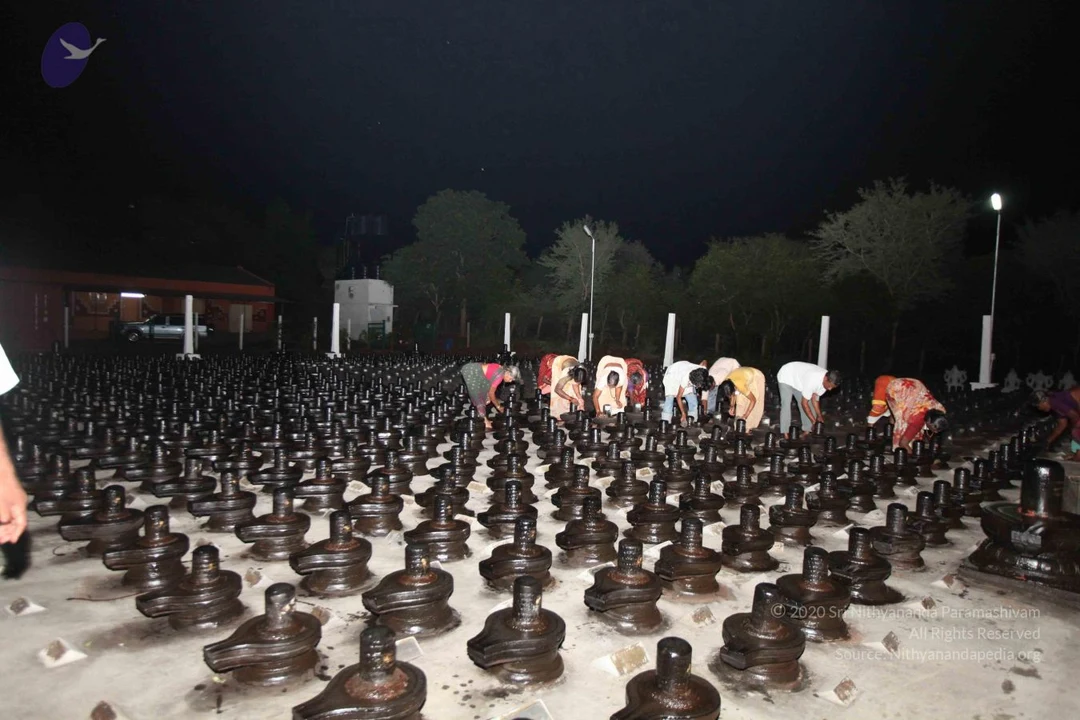
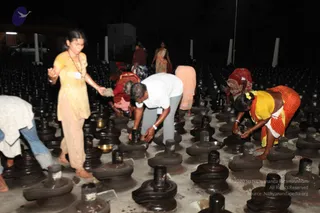
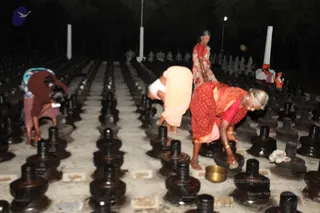
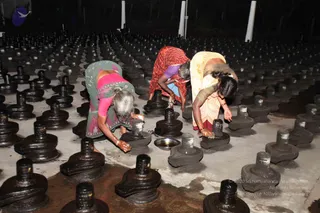
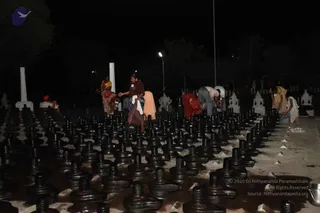
CLEANING-THE-SHIVA-LINGAMS-IN-TIRUVANNAMALAI

VILAKKU-POOJA-IN-OHIO-NITHYANANDA-DHYANAPEETAM

VIPS-VISIT-HDH

Photos from this day

View all 644 photos

TEMPLE

28 photosSource gallery
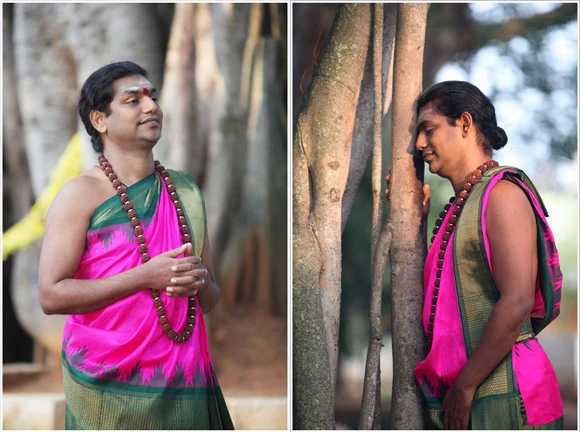
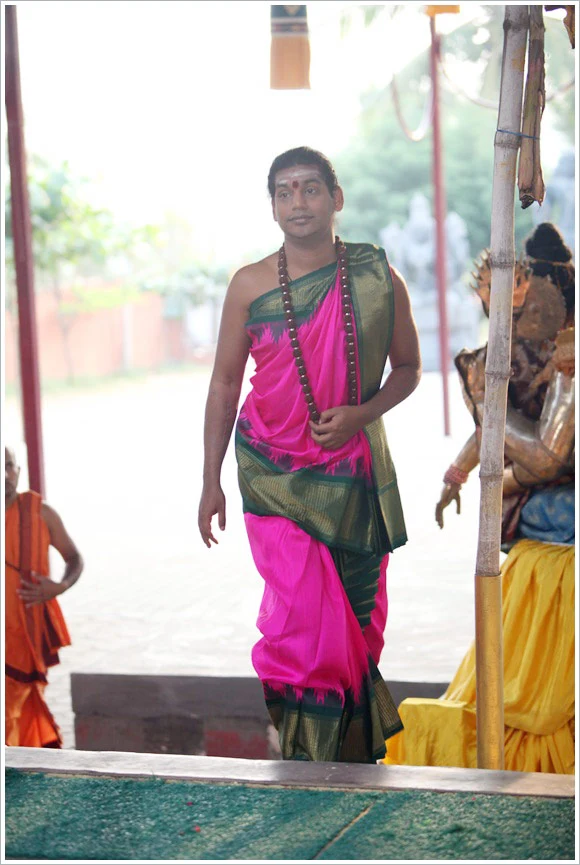
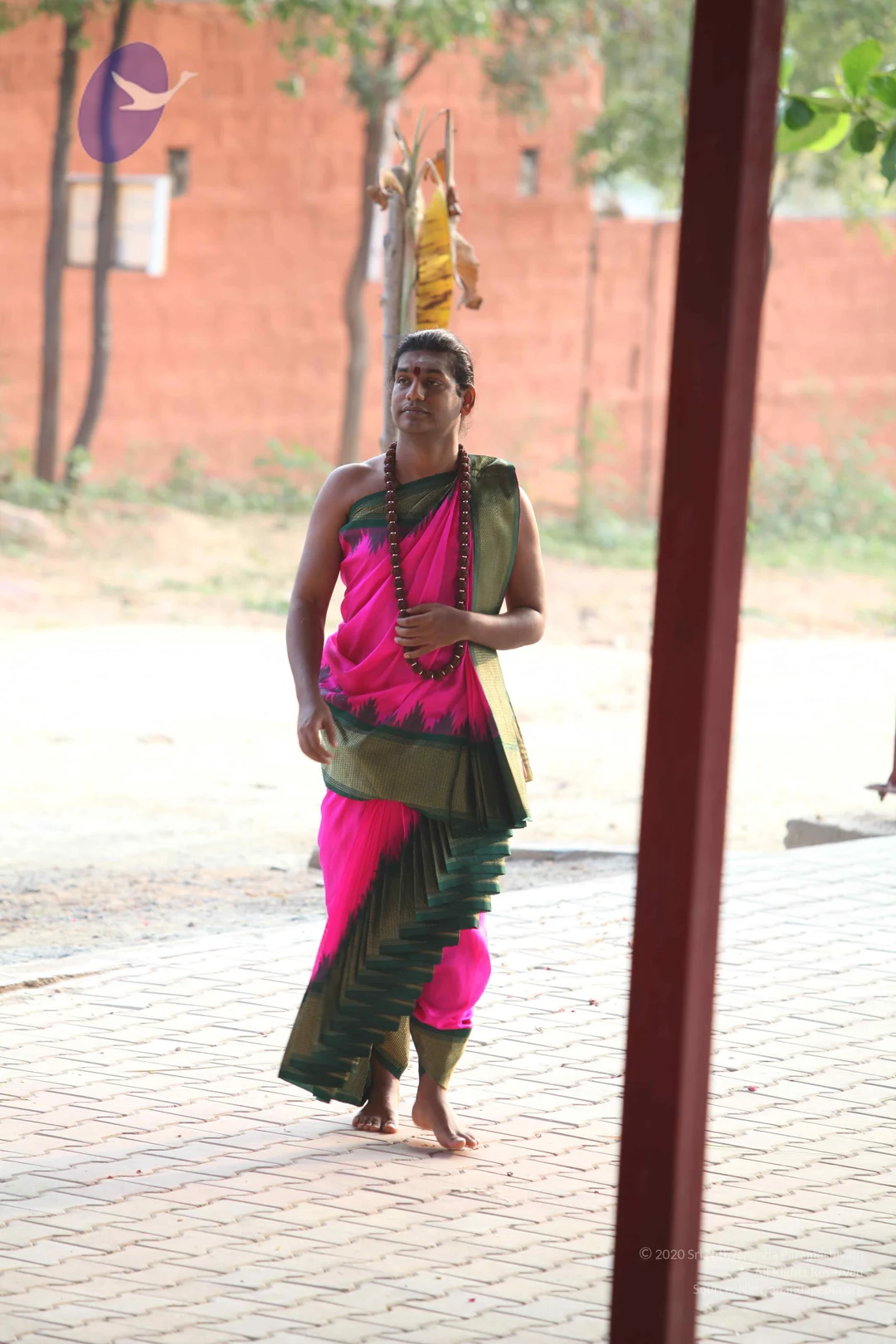
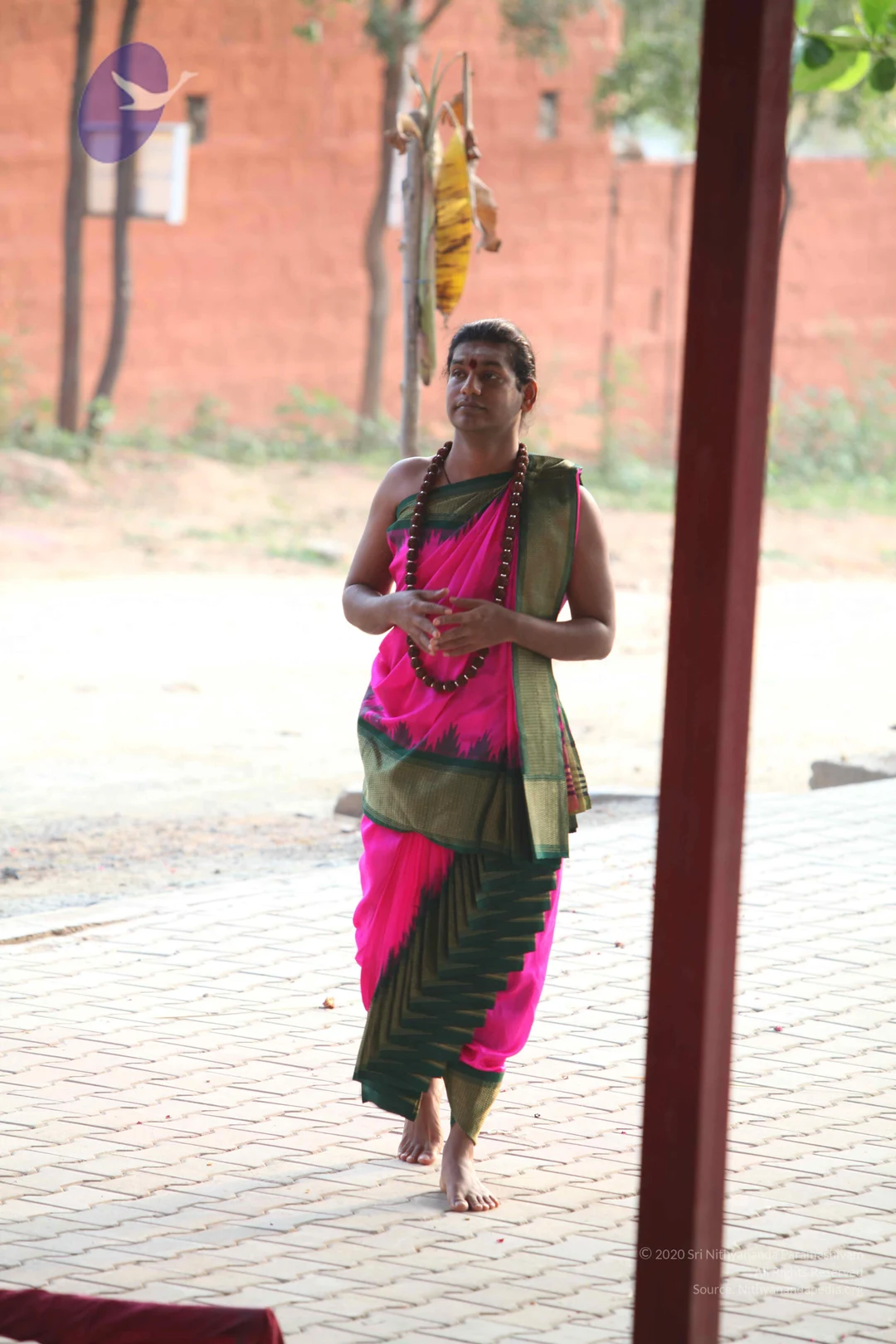
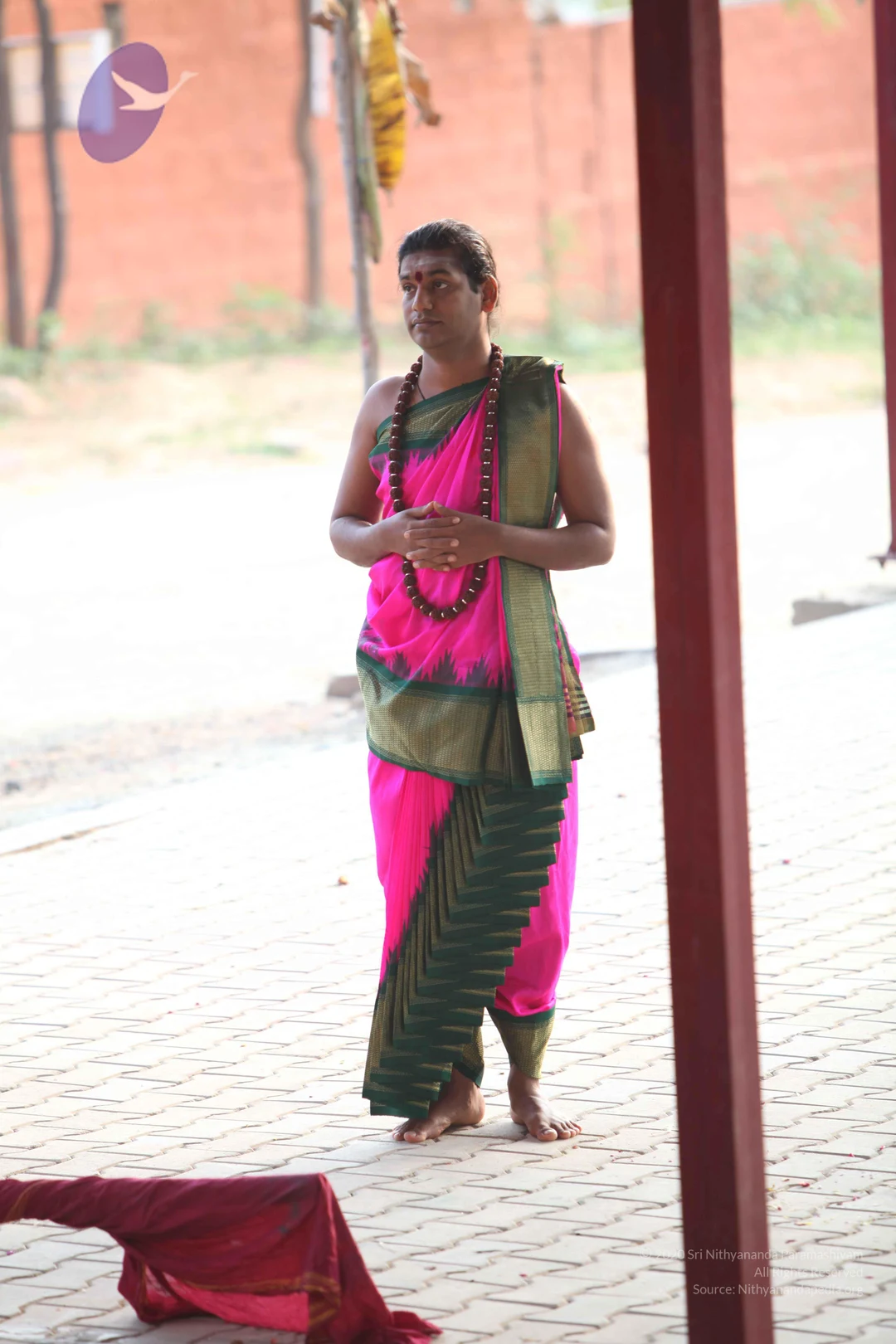
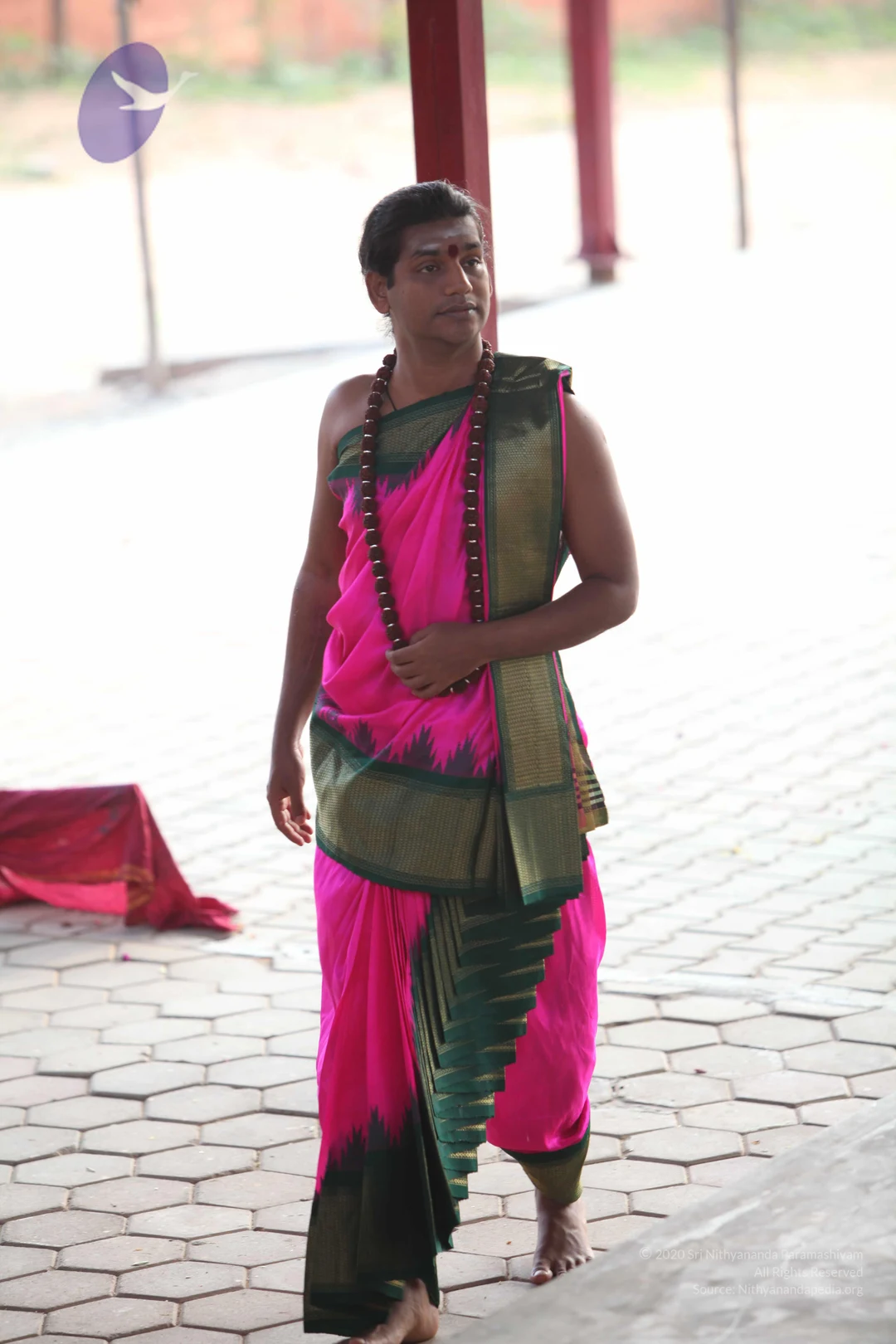
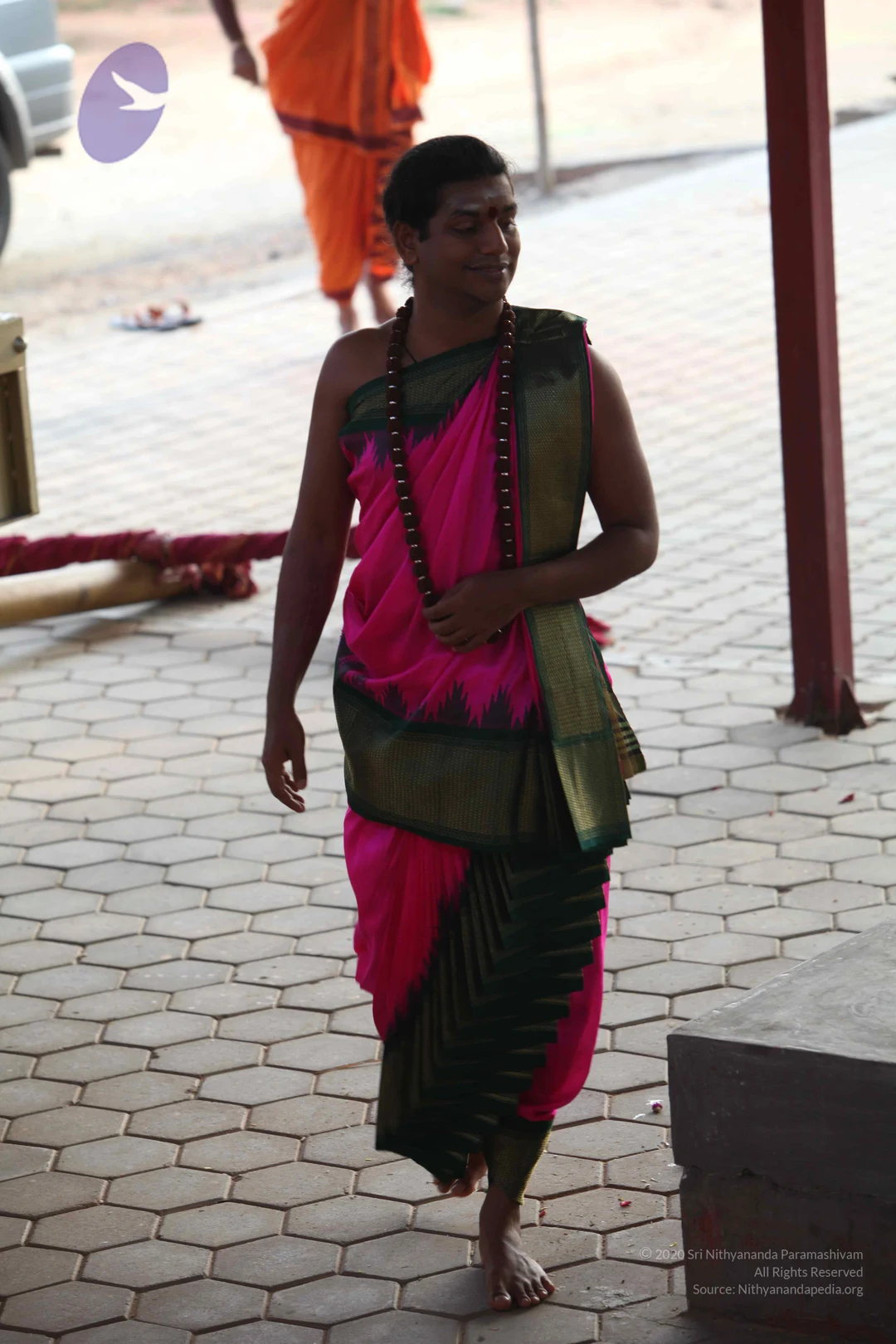
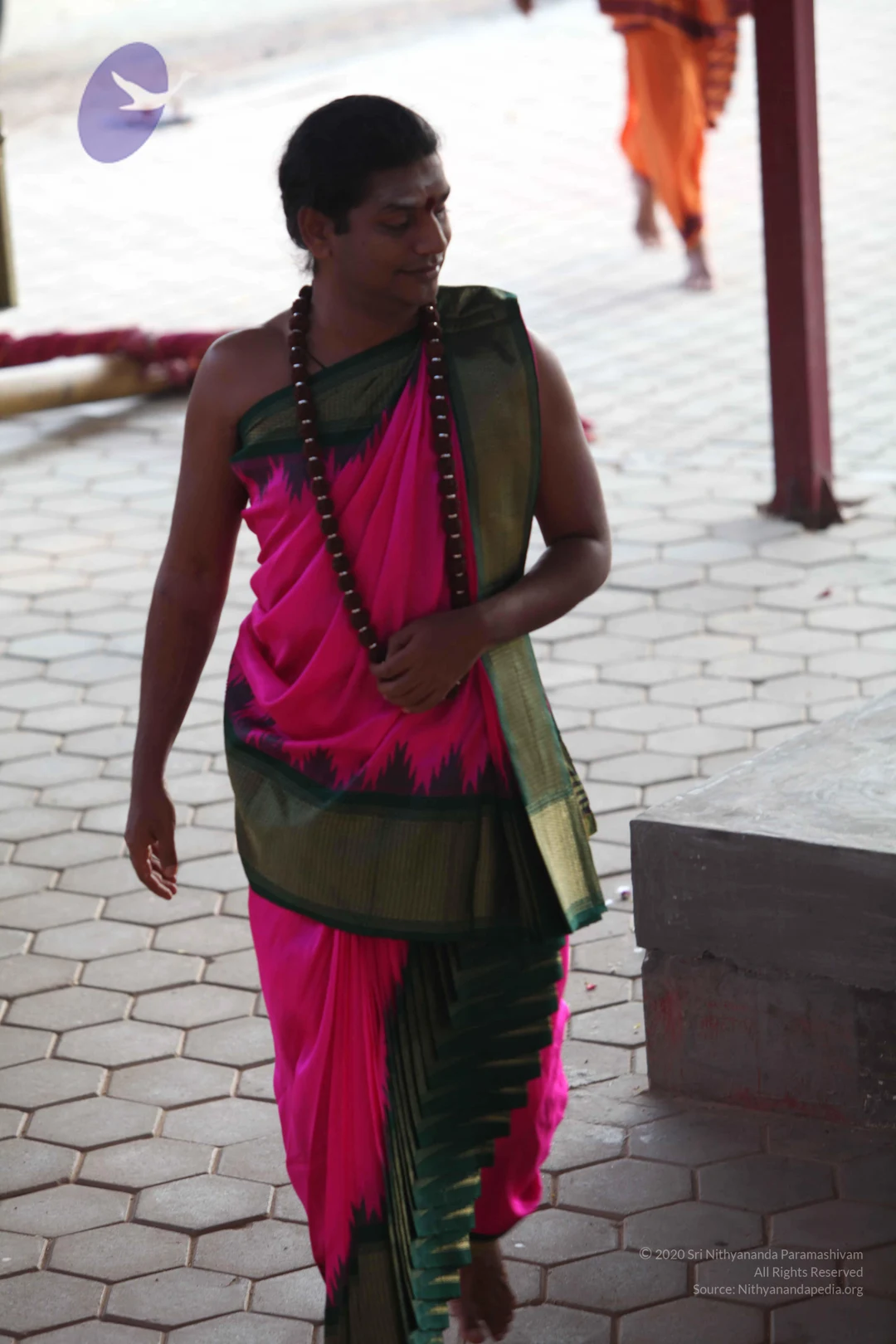
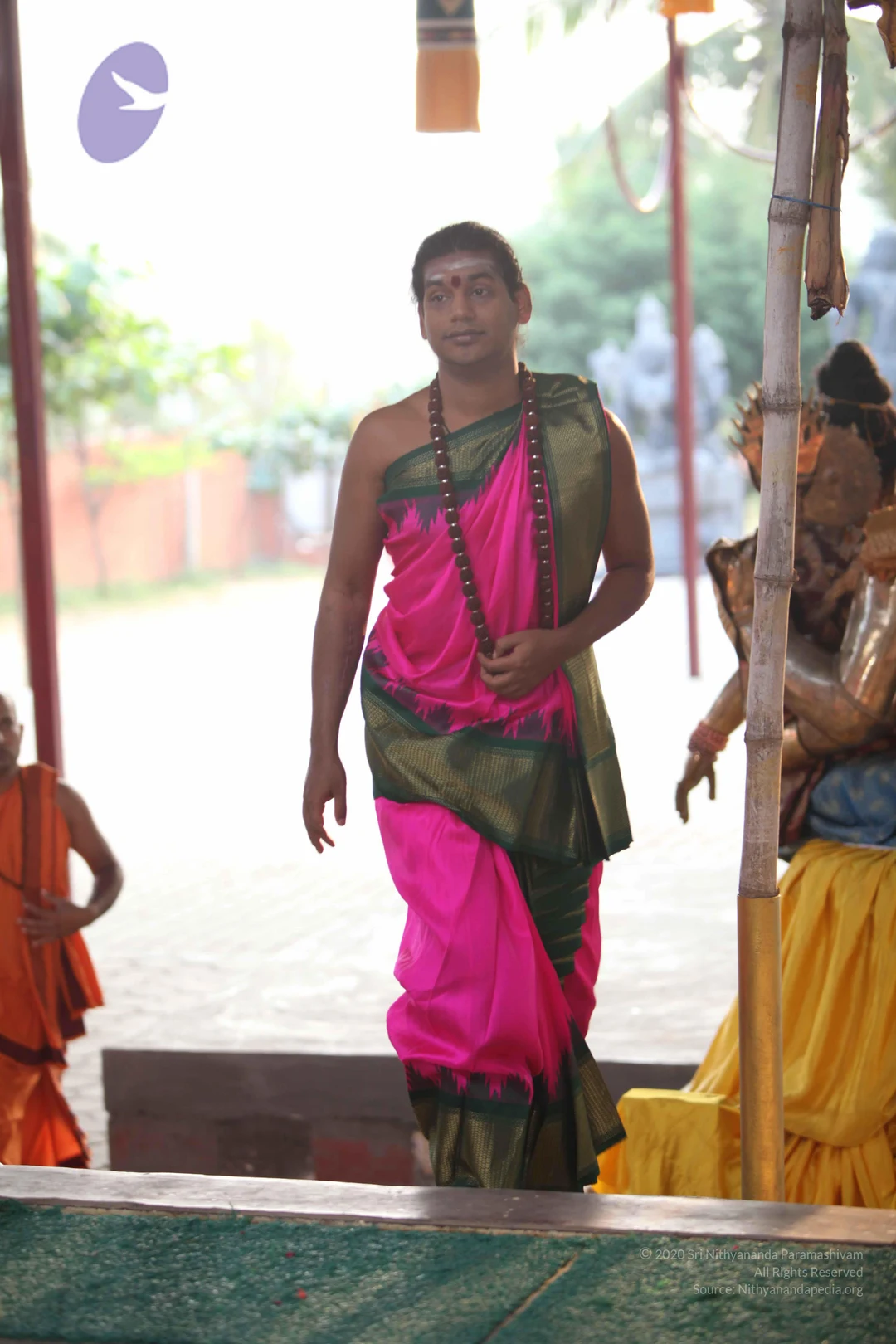
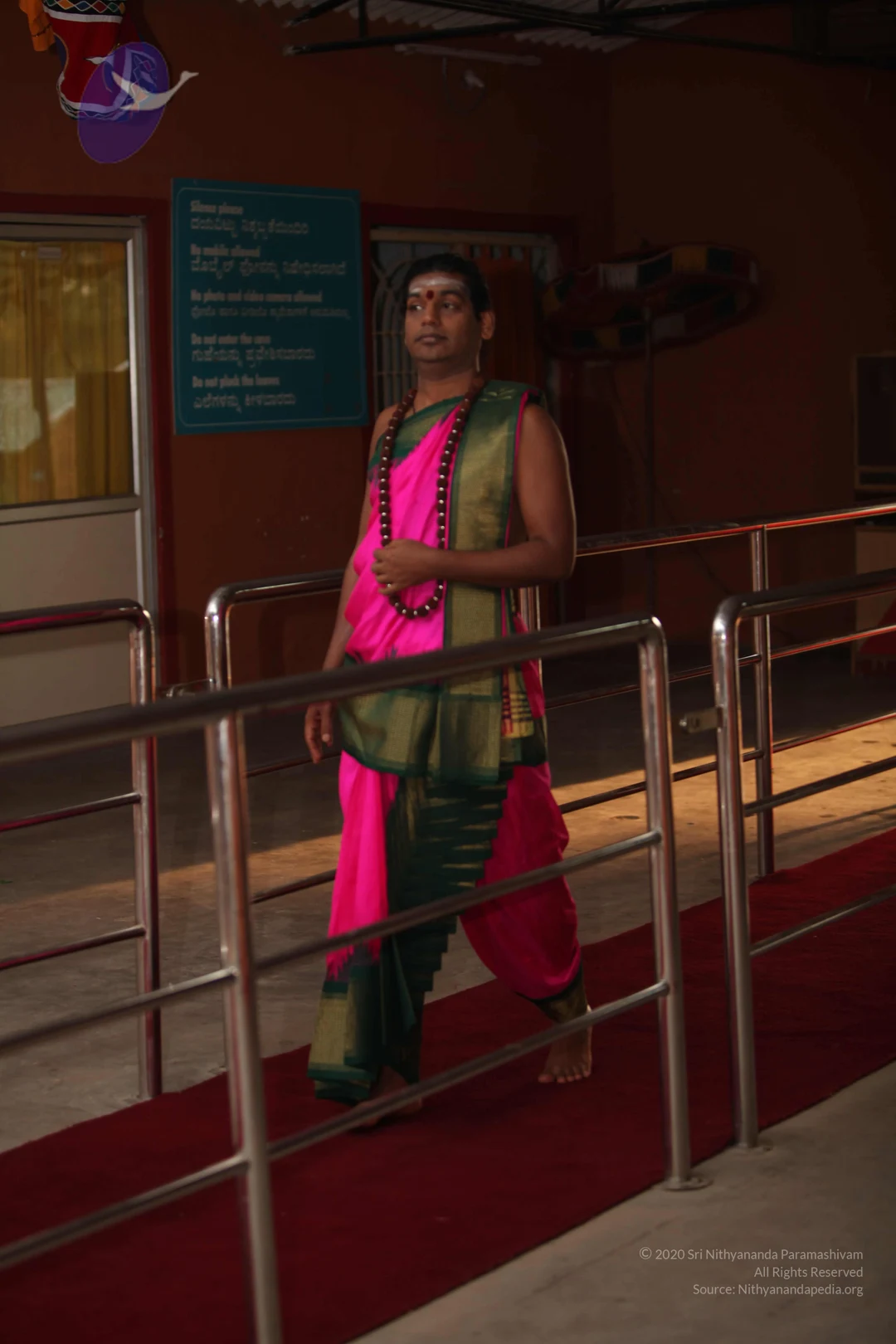
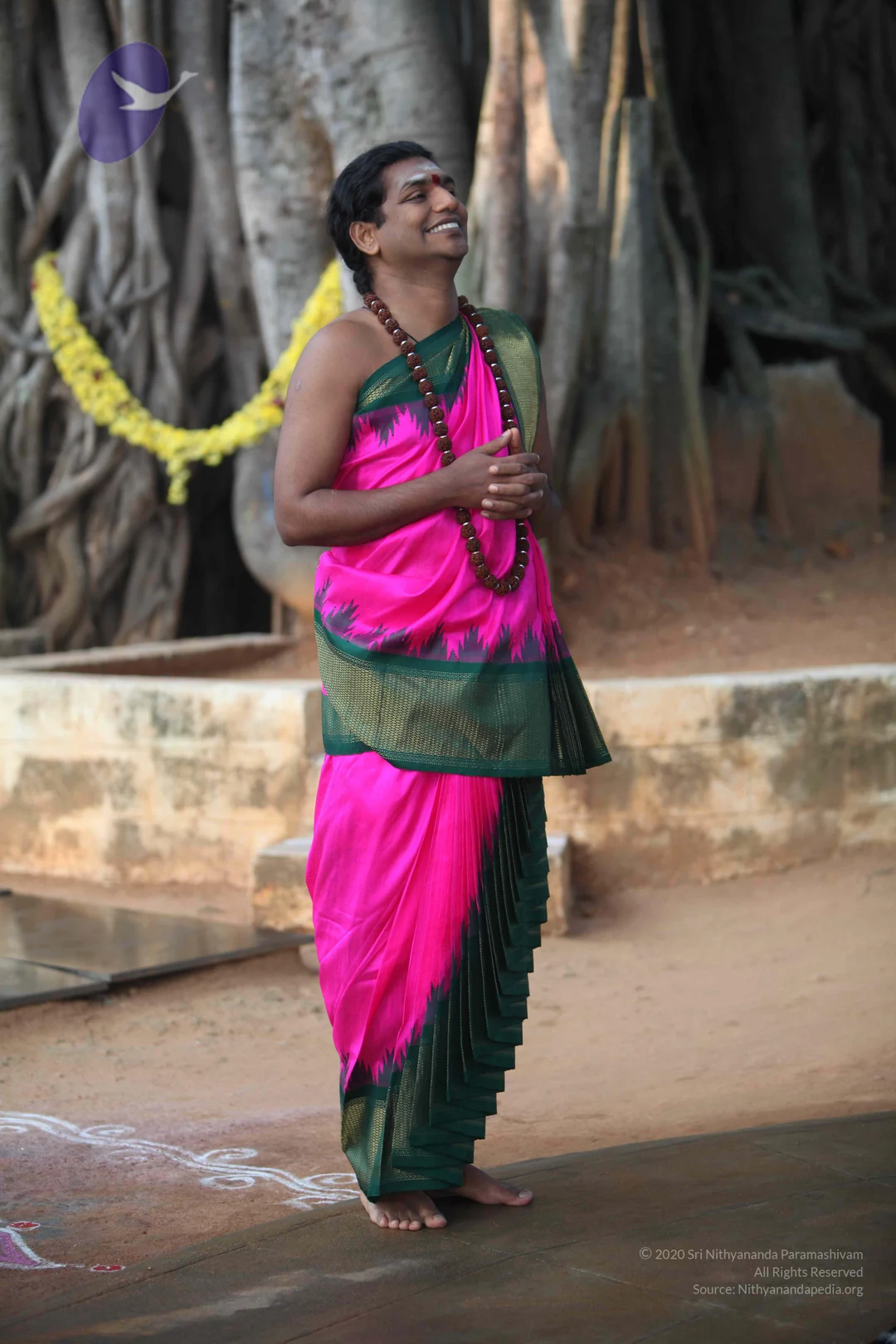
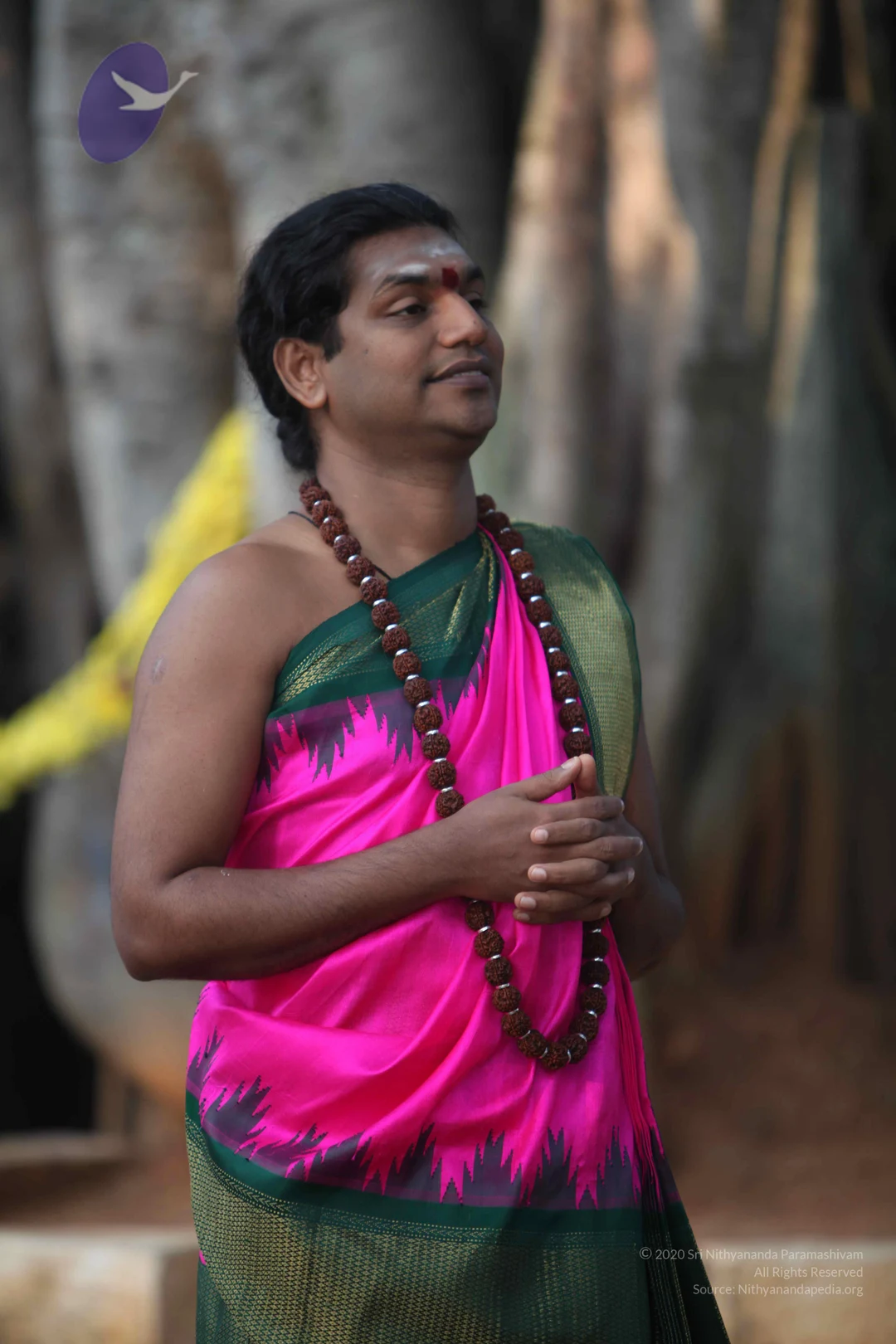
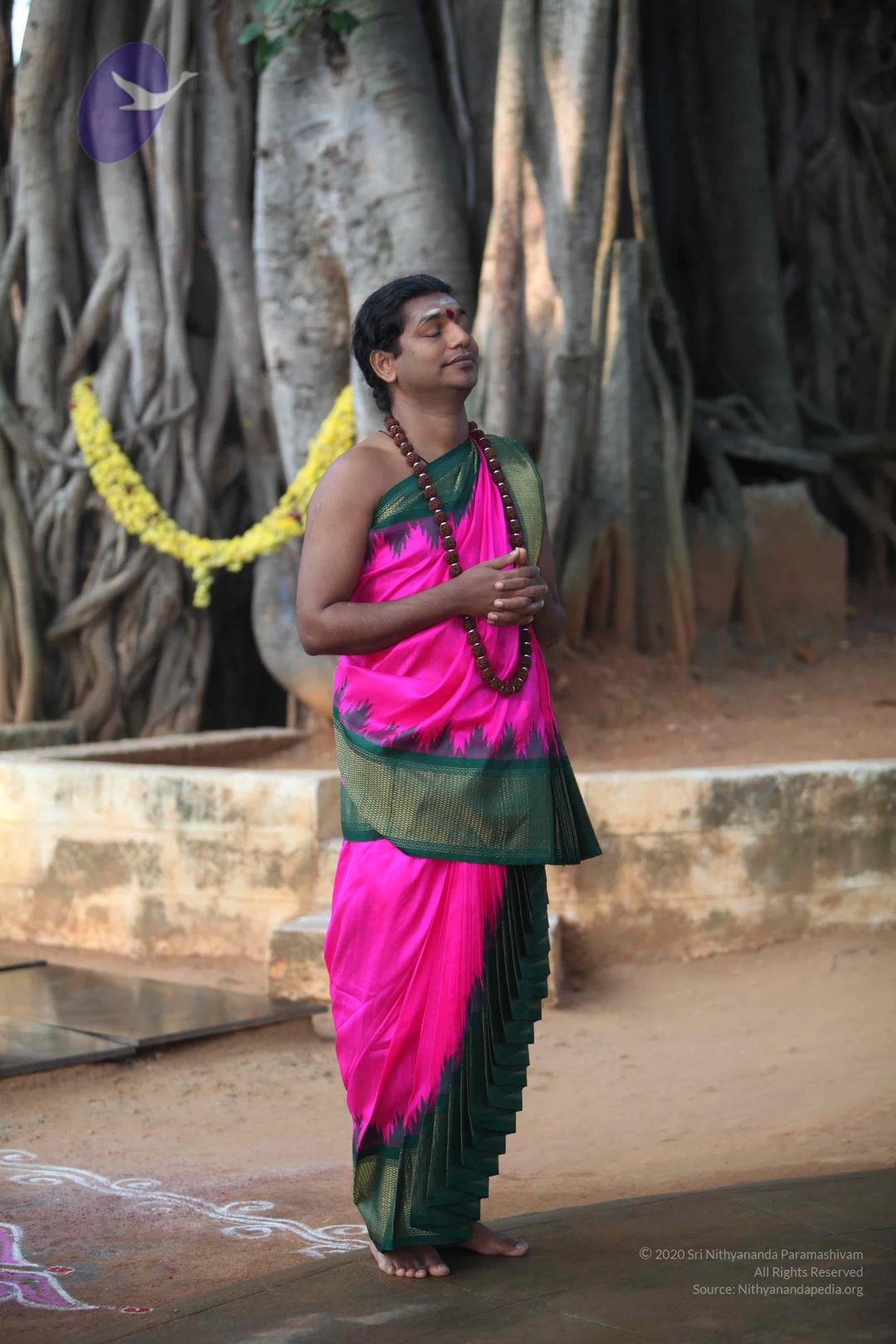
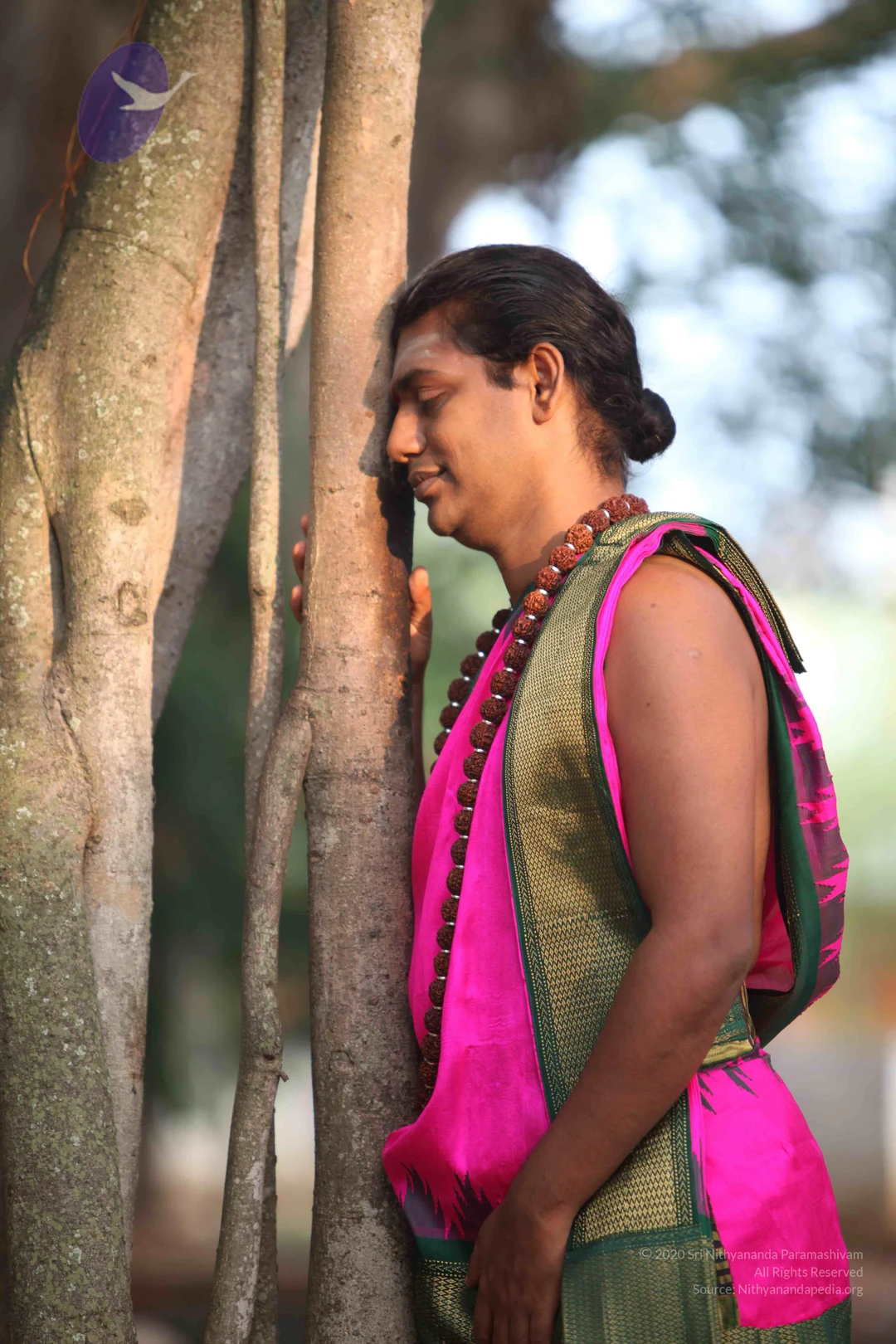
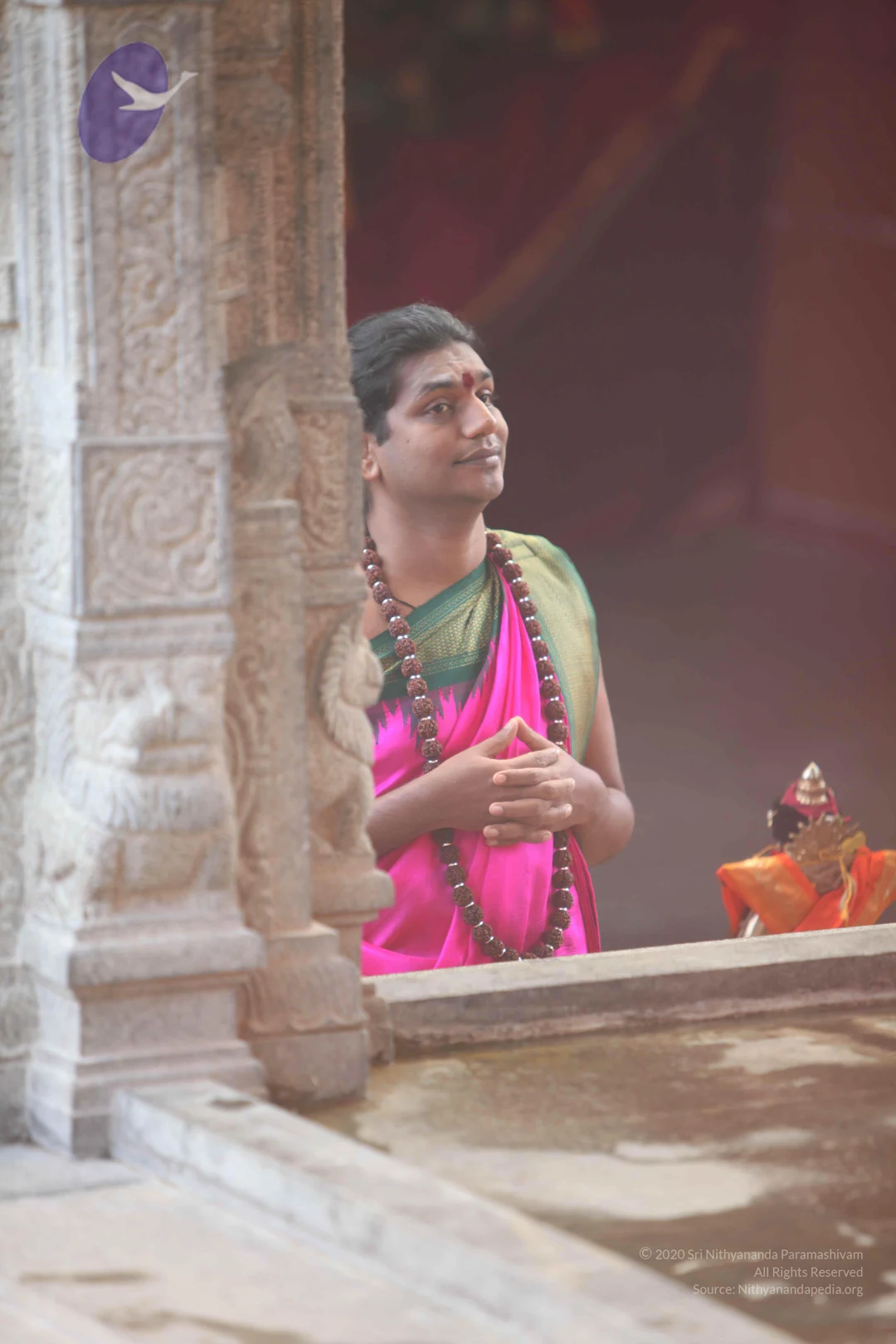
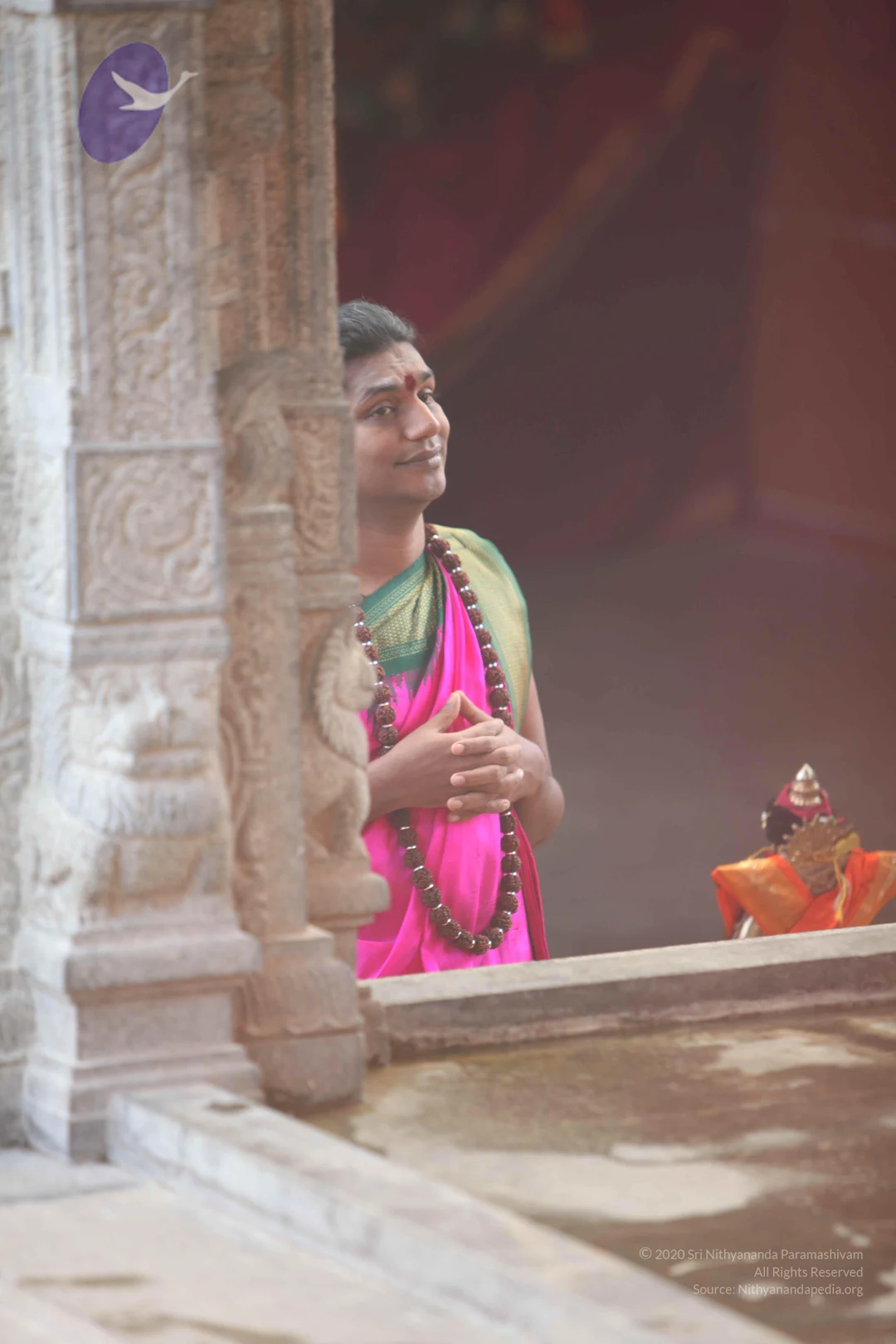
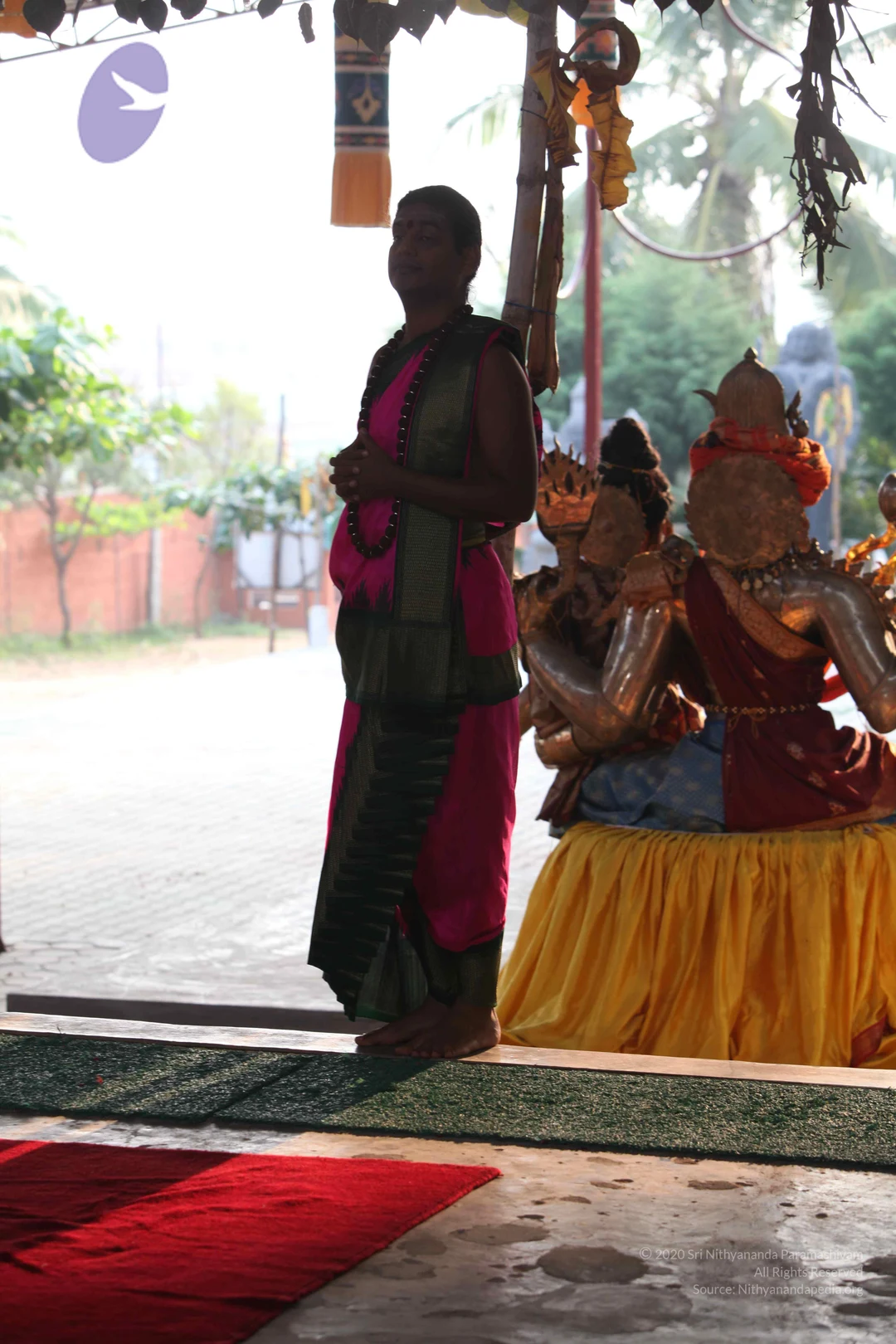
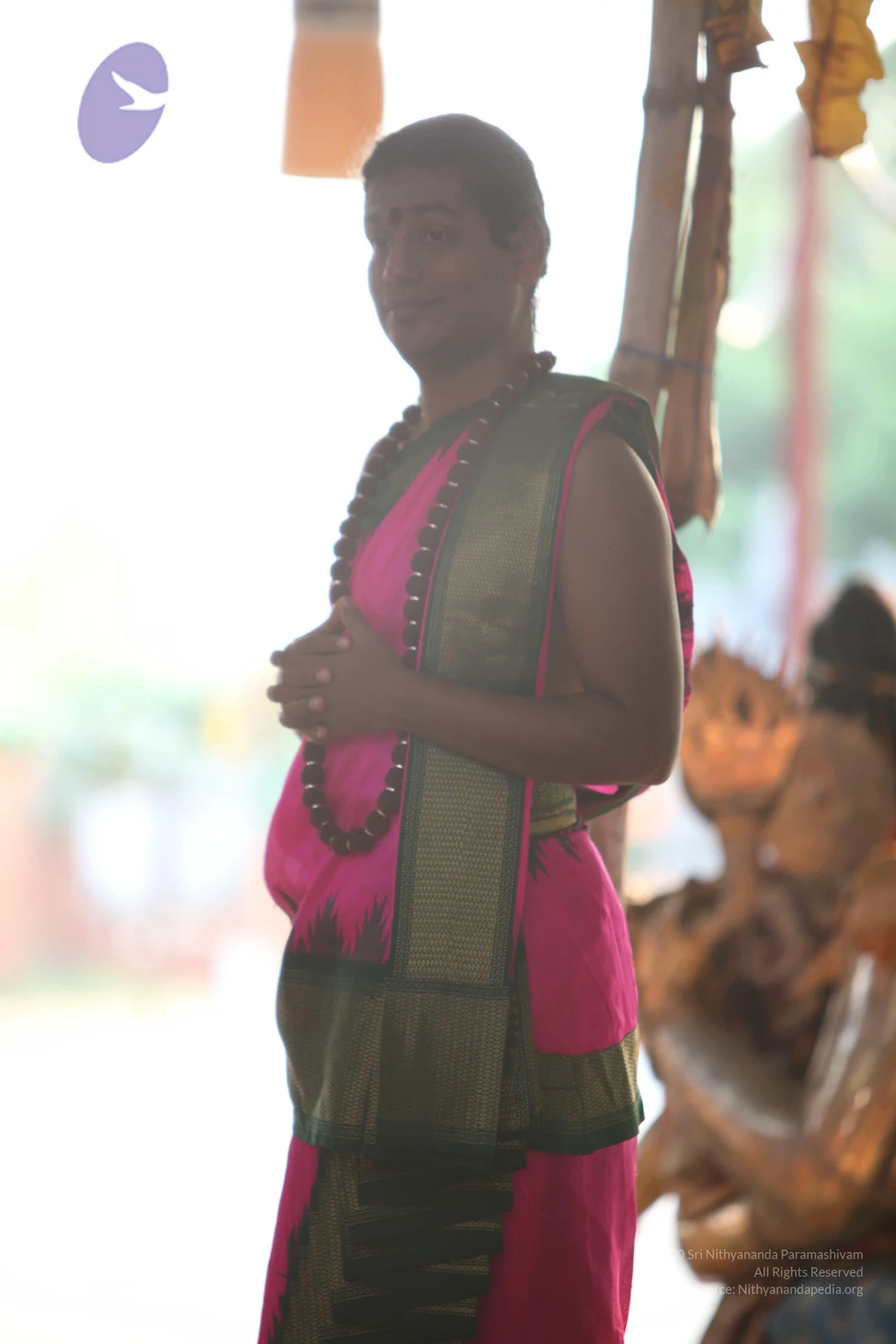
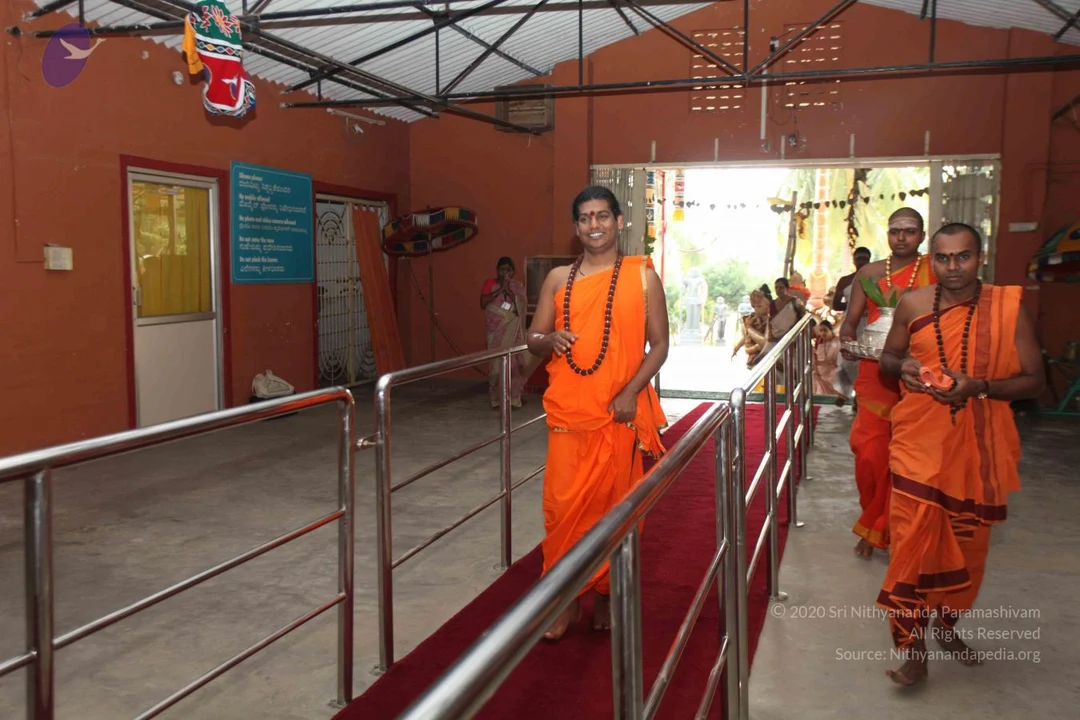
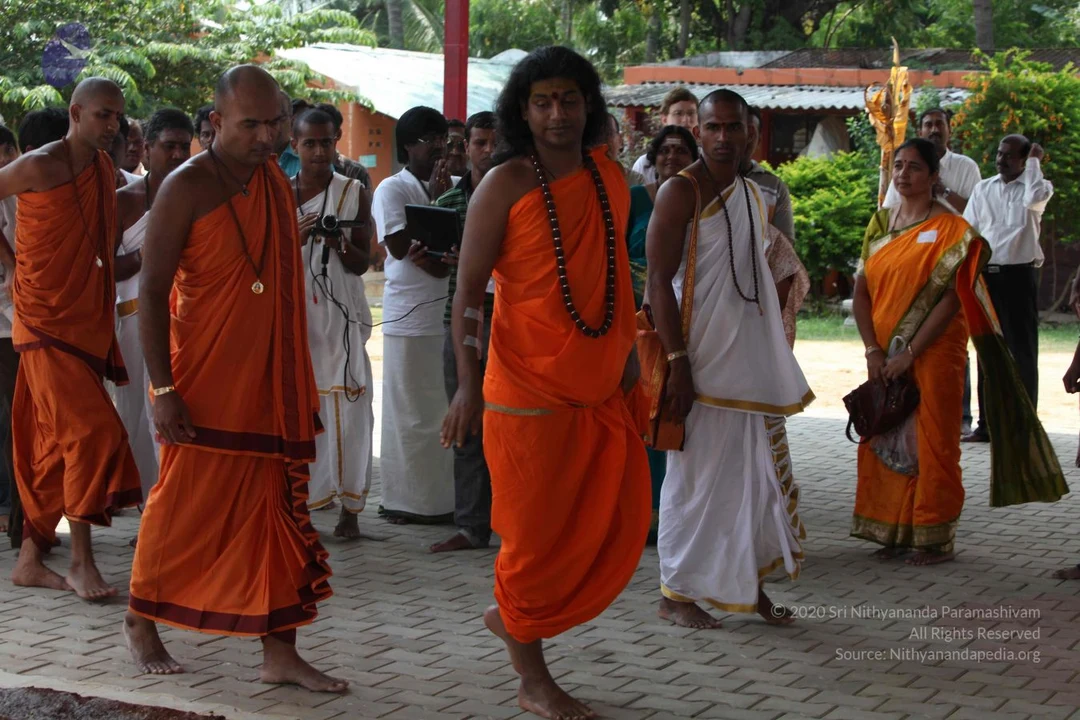
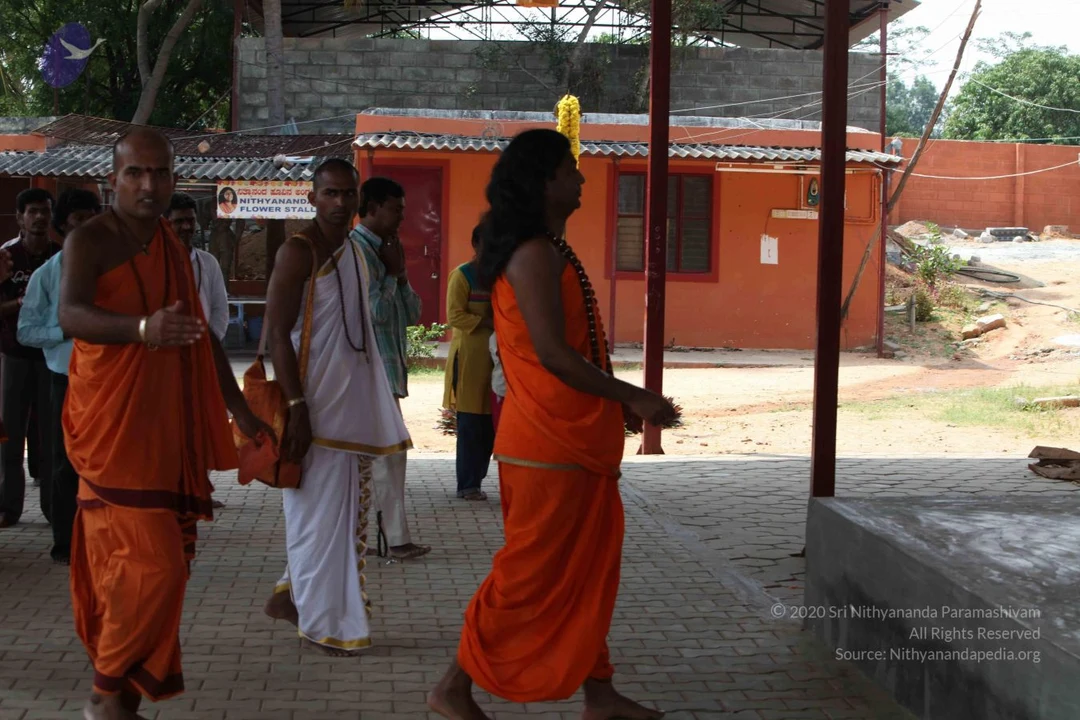
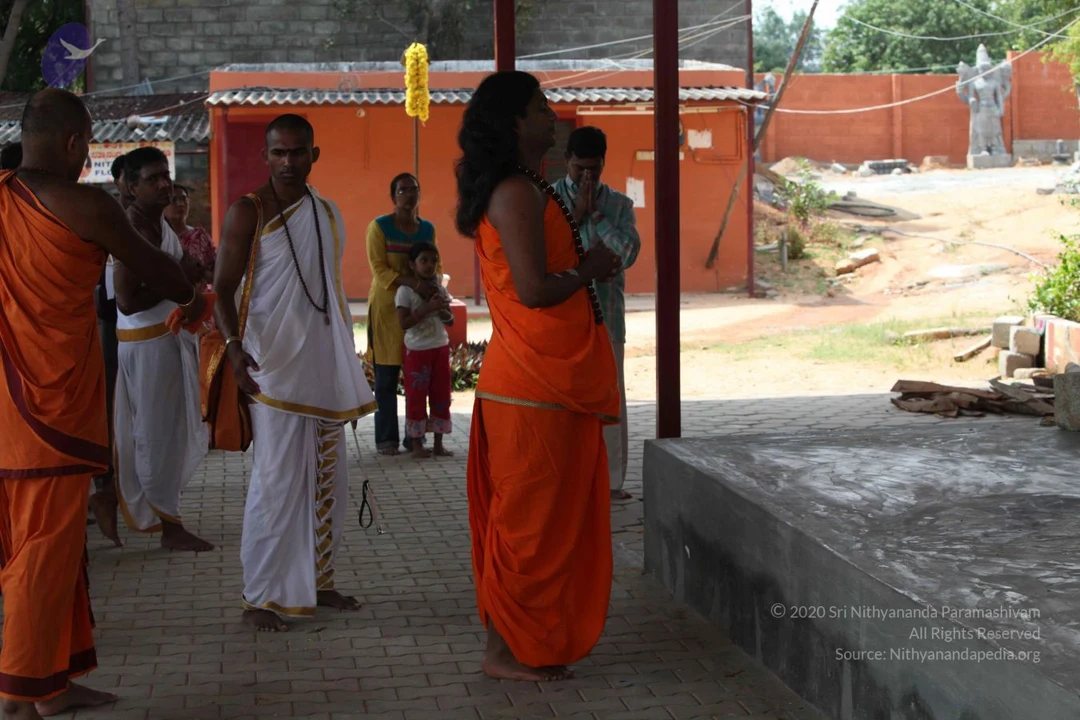
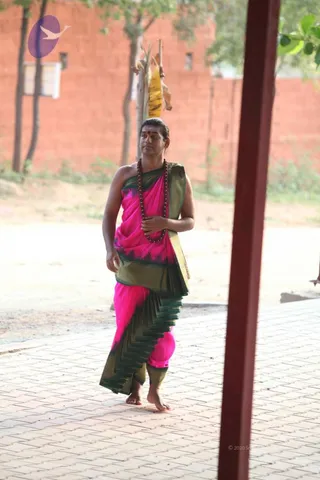
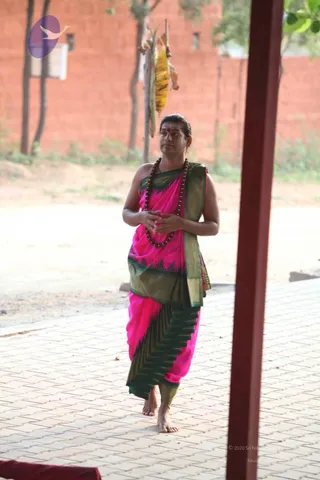
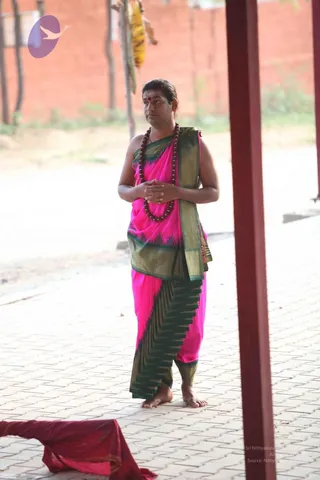
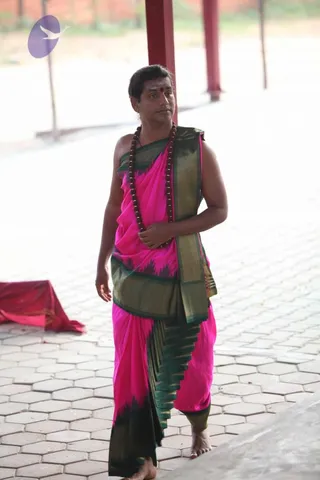
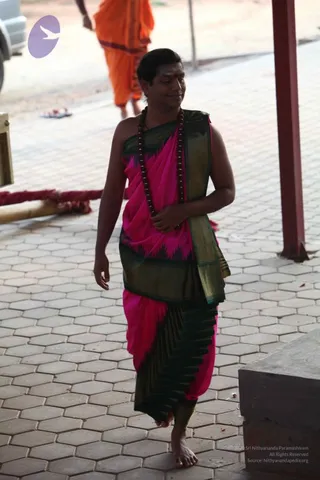
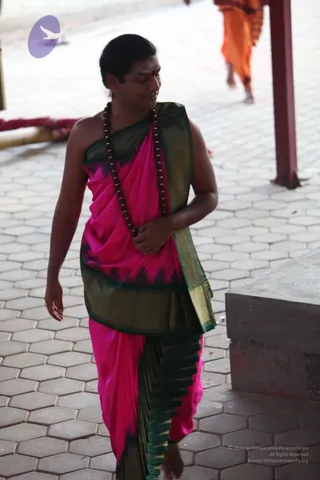
A man walks barefoot on a paved brick walkway under a covered porch, past a red brick wall and green trees. He wears a hot pink and dark green silk garment draped over one shoulder and wrapped around the body, with a gold-edged green border, and a dark rudraksha mala around his neck. He has a red tilak on his forehead and his hair is swept back. A red pillar frames the right side of the image. ) but no clear crown, long hair, or ceremonial gold necklace, so identity remains uncertain.A barefoot person walks across a paved brick courtyard beside a red-pillared open hall, hands folded at the waist. They wear a hot pink sari with a dark green and gold woven border and a rudraksha mala around the neck, with a red kumkum mark on the forehead. Behind them stand a red brick wall, a dry banana plant and a small tree. A faint purple logo and a copyright line appear in the corners.A standing man with hair swept back wears a bright pink and green zari-bordered silk garment draped as a dhoti-style wrap with a shawl over one shoulder, and a dark red-brown rudraksha mala around his neck. He has a red tilak on his forehead, his hands are clasped in front of his chest in a respectful greeting, and he stands barefoot on a paved floor under a covered open hall with a red pillar at right. A red cloth lies on the floor at lower left.A barefoot man walks across a hexagonal paver courtyard under a covered pavilion with red pillars. He wears a magenta silk sari with a green and gold zari border draped over his left shoulder and wrapped around his body, bare-shouldered on one side. A long string of dark rudraksha beads hangs across his chest, and a small red bindi marks his forehead. His hands are held near his waist and he gazes ahead. A red cloth lies on the ground at left. The scene appears to be a photo taken at an ashram-style outdoor space.A barefoot man walks across a hexagonal paved courtyard, wearing a magenta and dark green silk sari draped in the Tamil style with a wide gold-zari border, and a rudraksha mala of dark beads around his neck. A red vibhuti or kumkum mark is visible on his forehead. Behind him, a second person in orange robes walks in the background, and a red-wrapped pole lies on the left beside a white vehicle. Red and white pillars frame the covered walkway.A barefoot person walks across a hexagonal paved courtyard under a covered walkway with a red pillar. They wear a magenta and dark green silk sari draped over one shoulder, with a gold-striped green border, and a long brown rudraksha mala around the neck. A small red tilak mark is on the forehead. Another person in orange robes walks in the background at the top of the frame.

BHAGAVAD-GITA-SATSANG

76 photosSource gallery
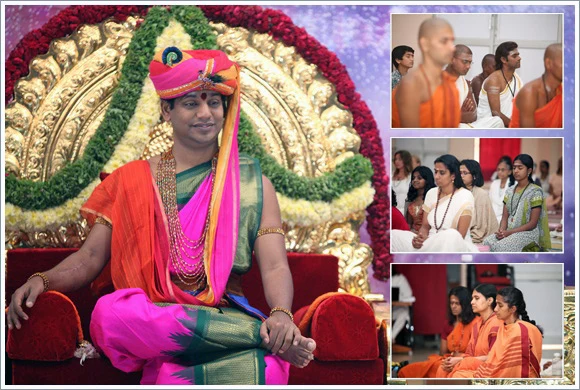
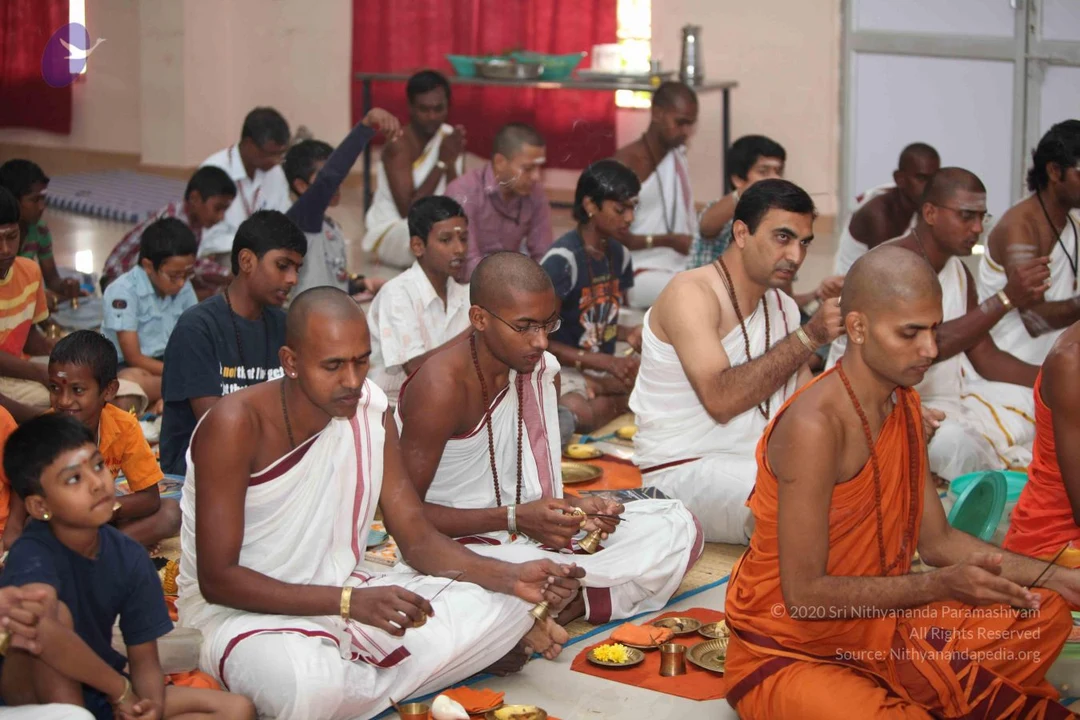
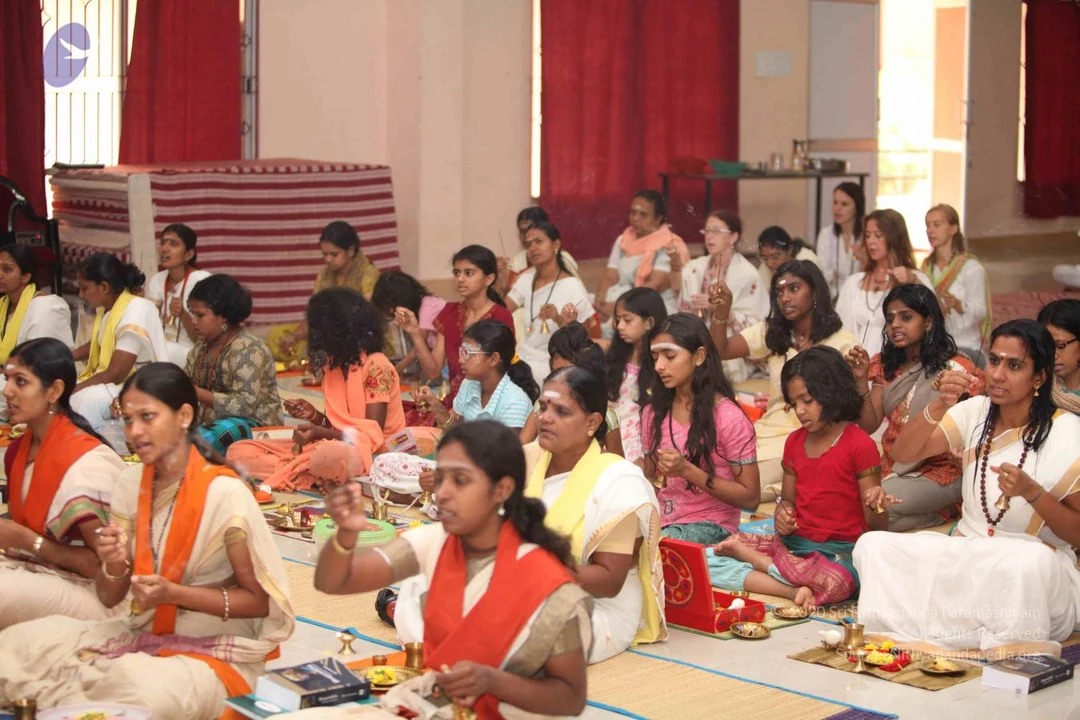
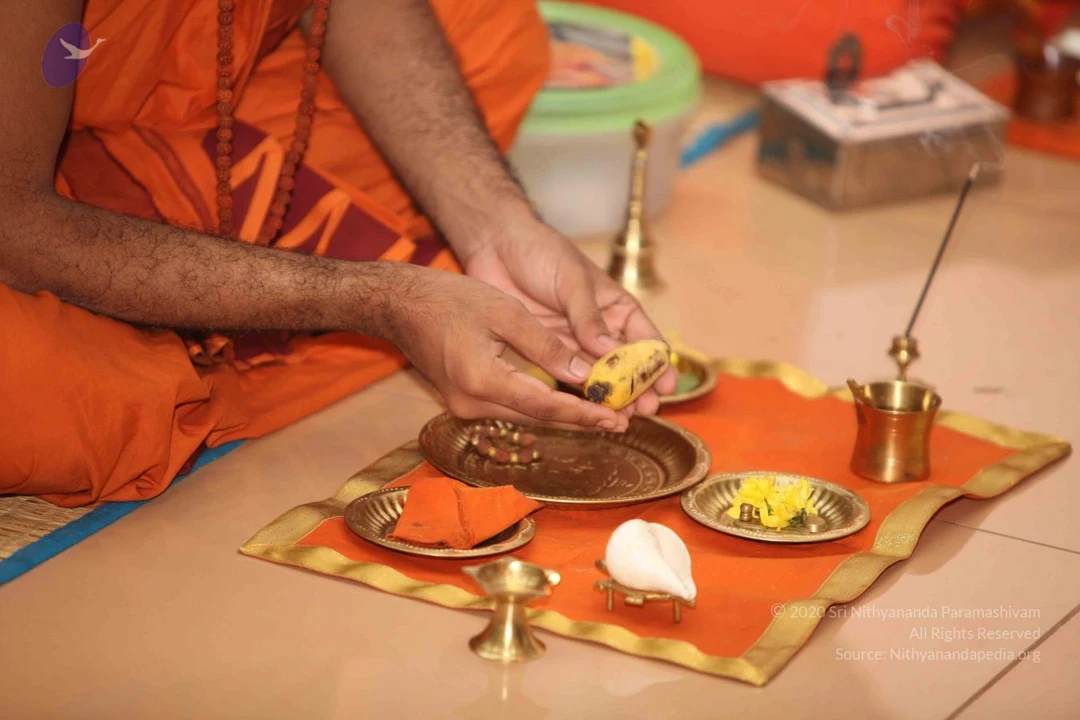
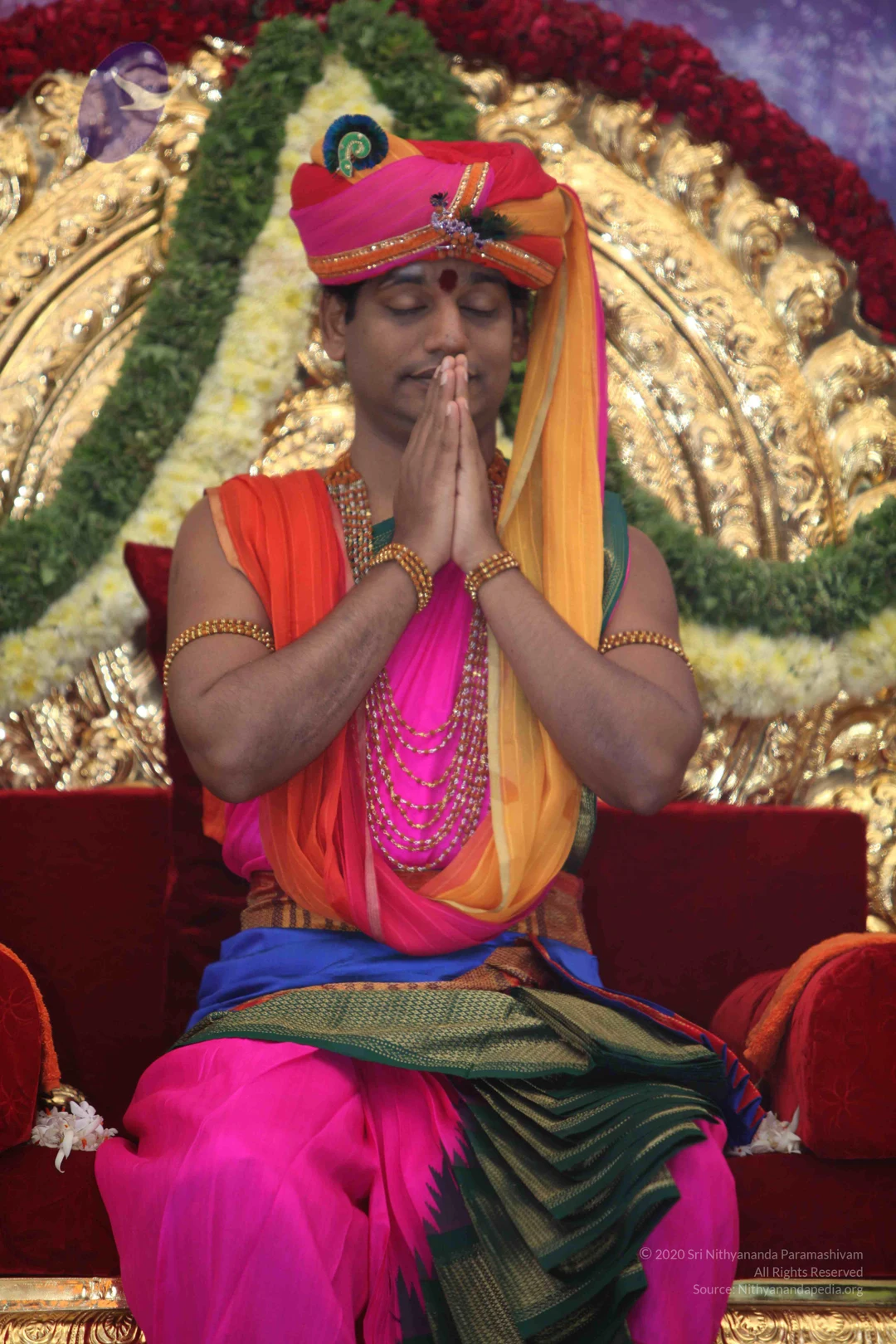
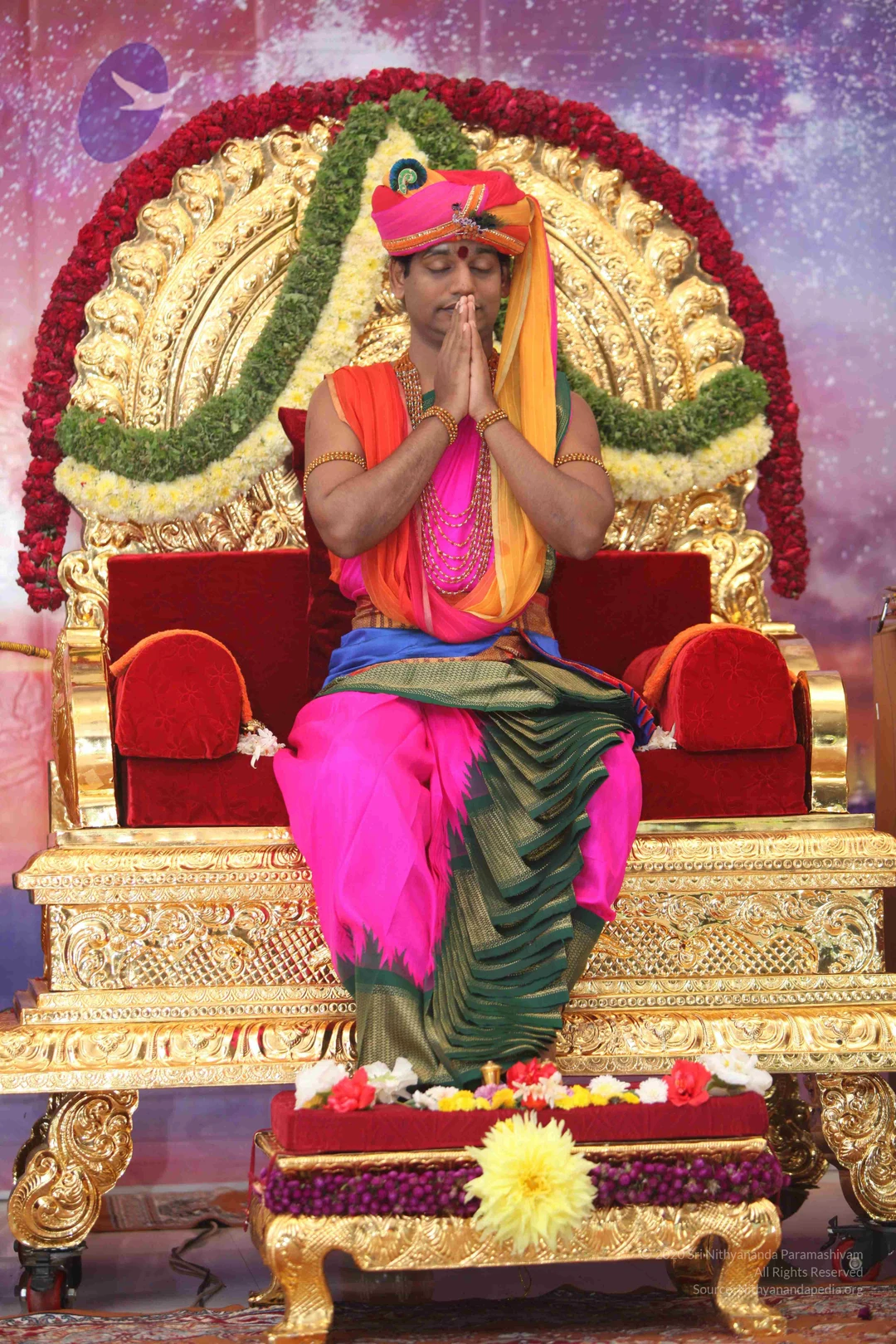
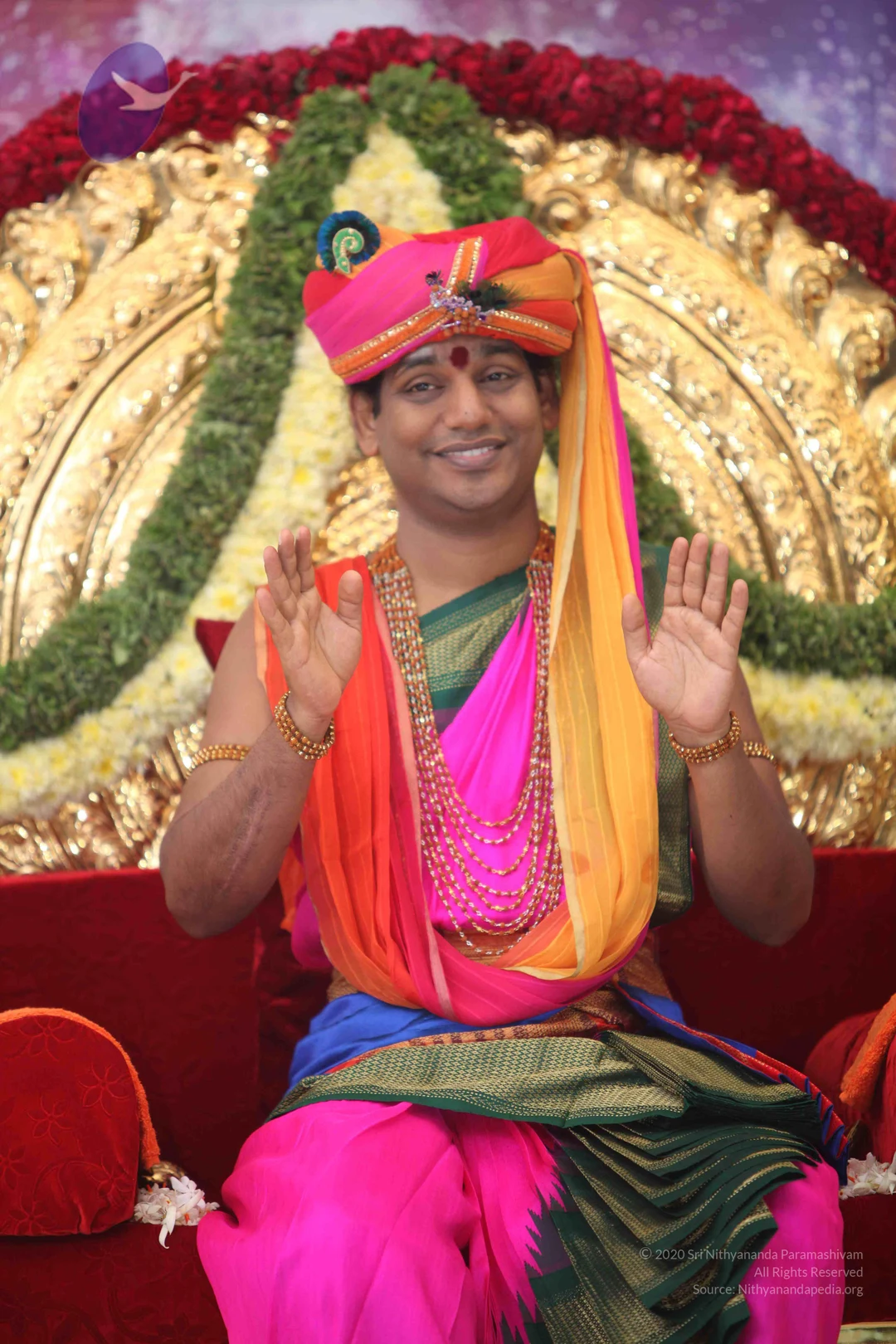
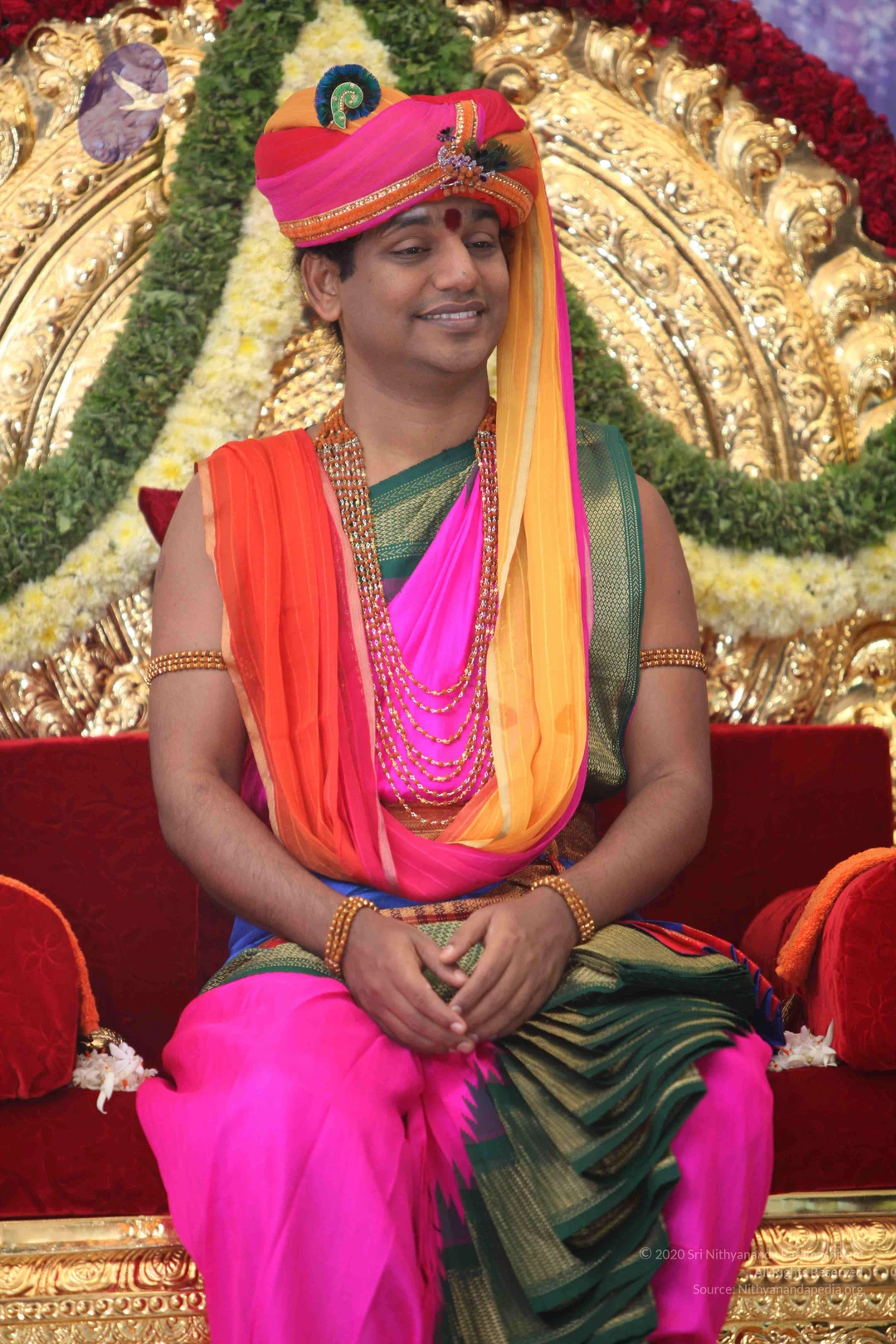
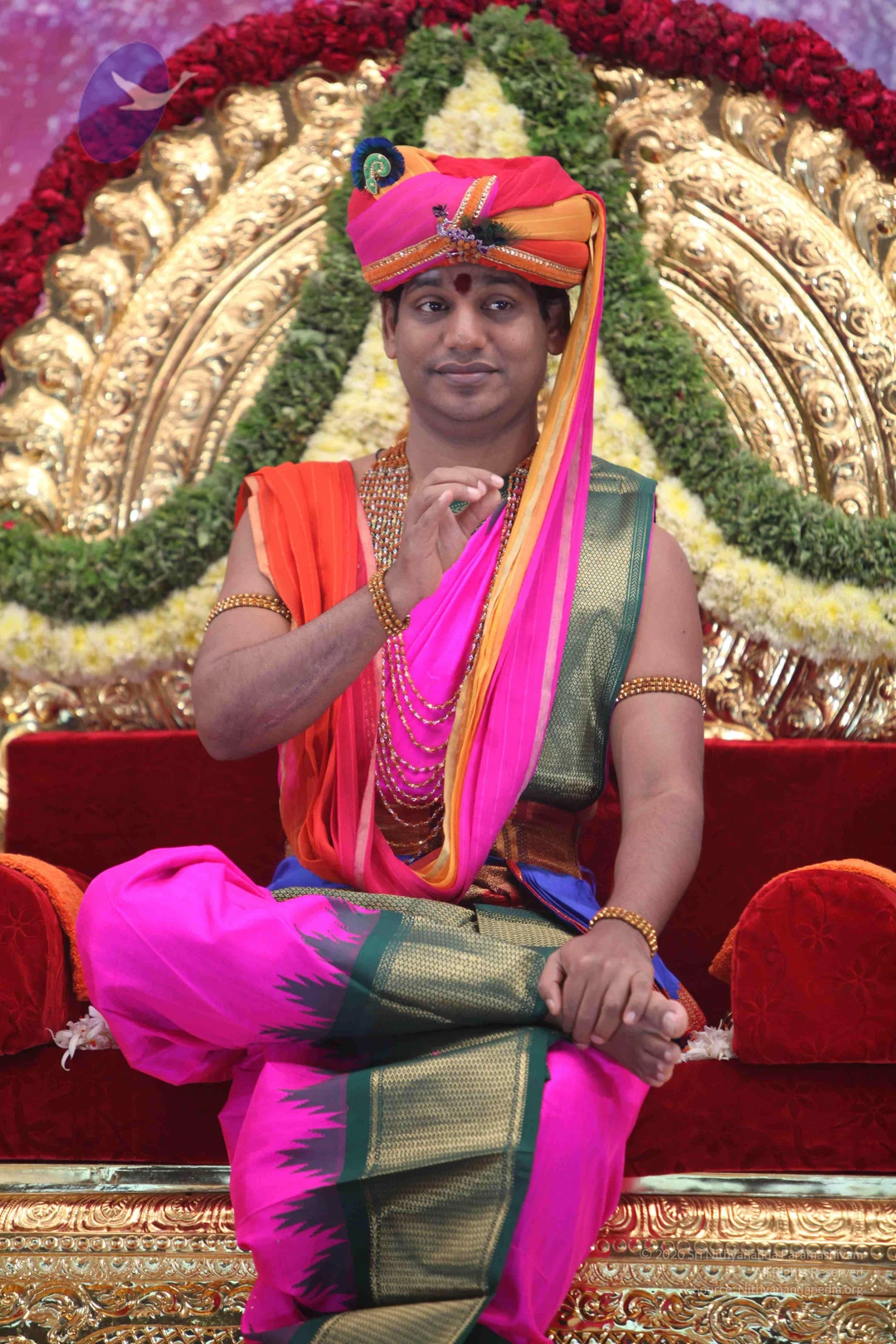
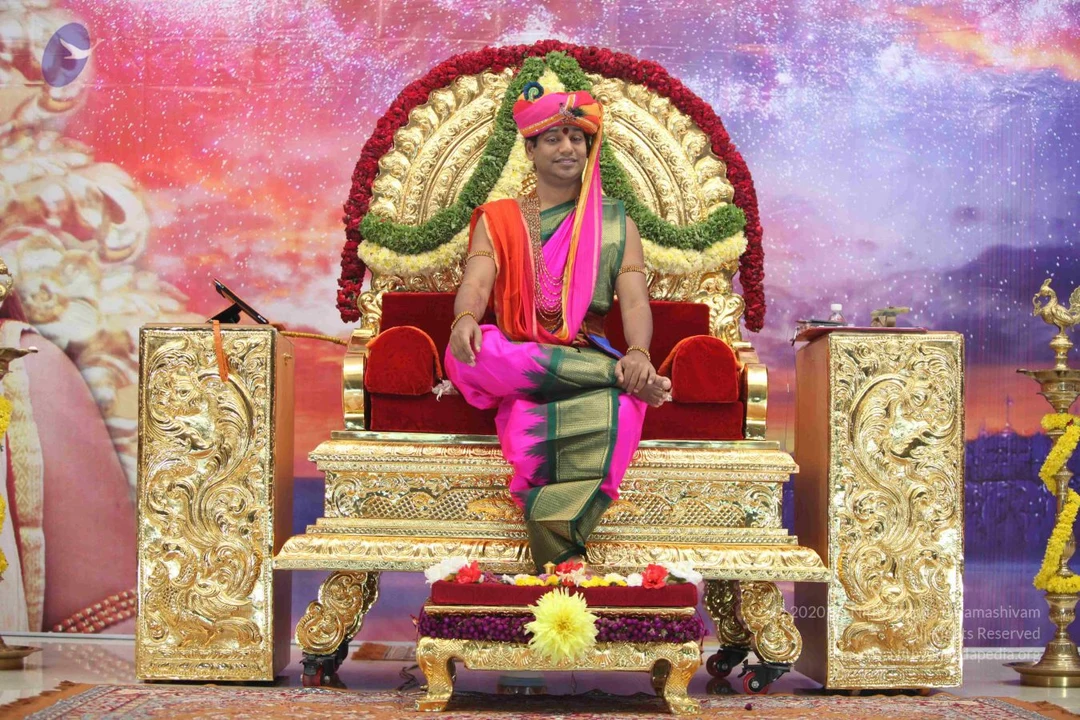
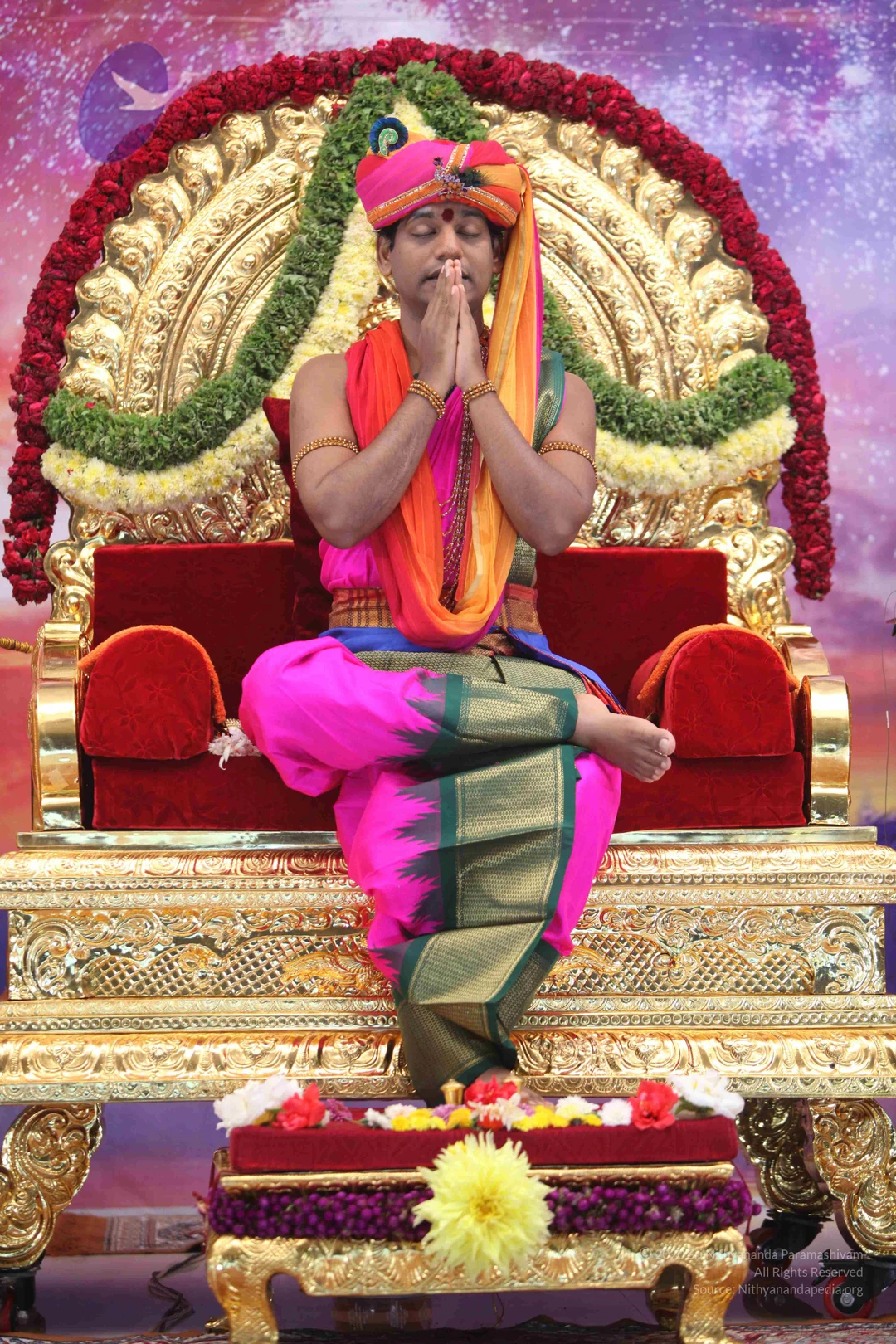
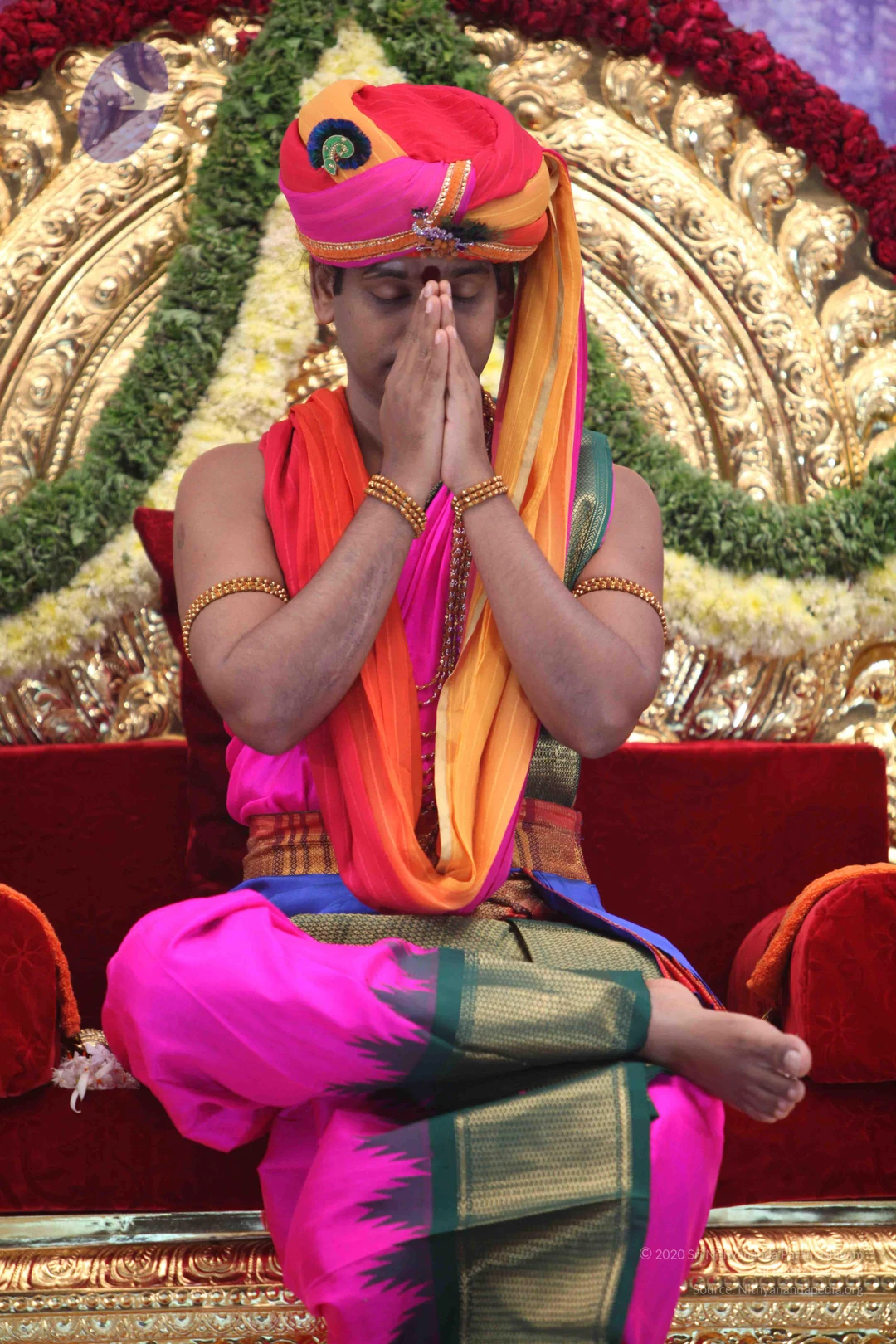
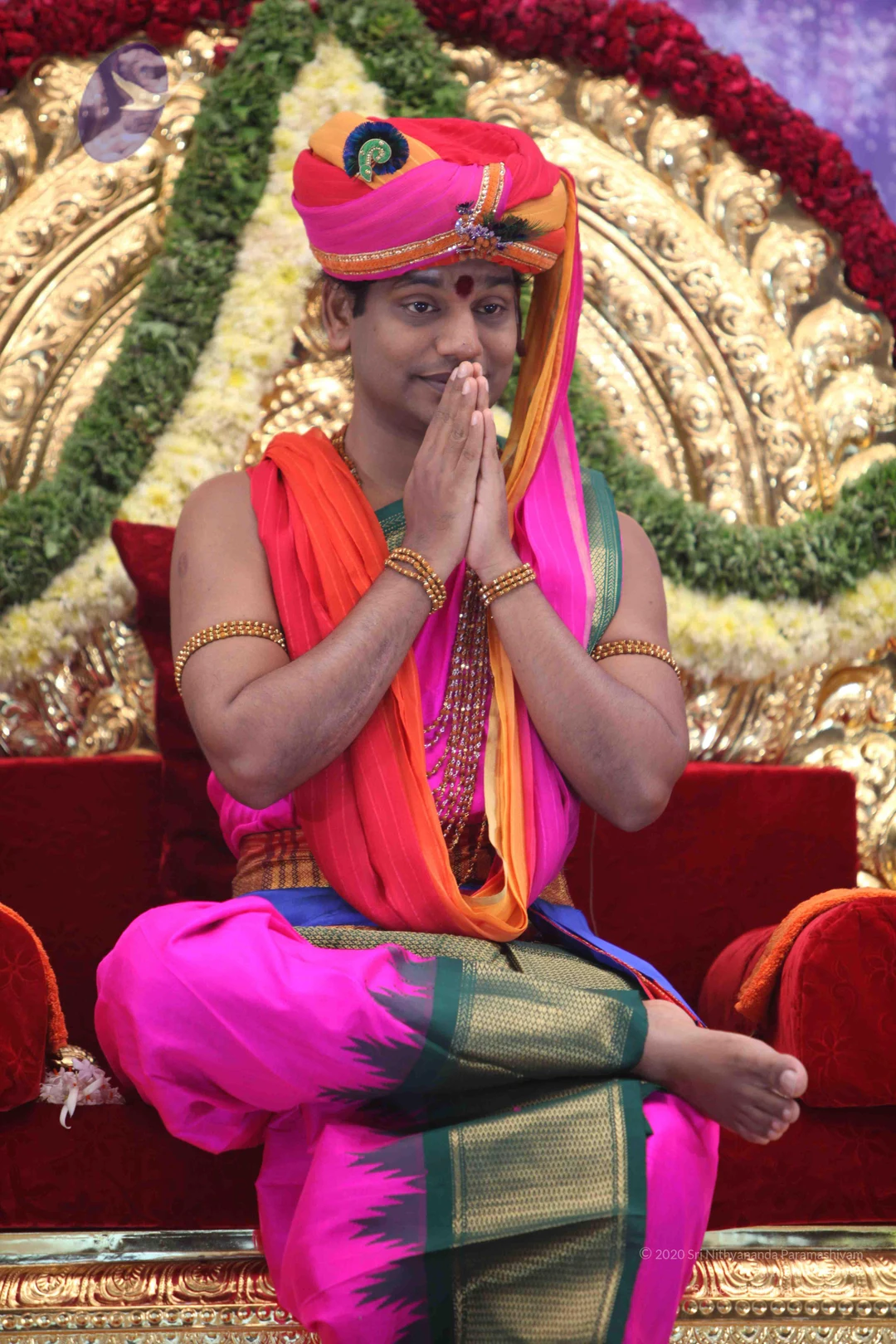
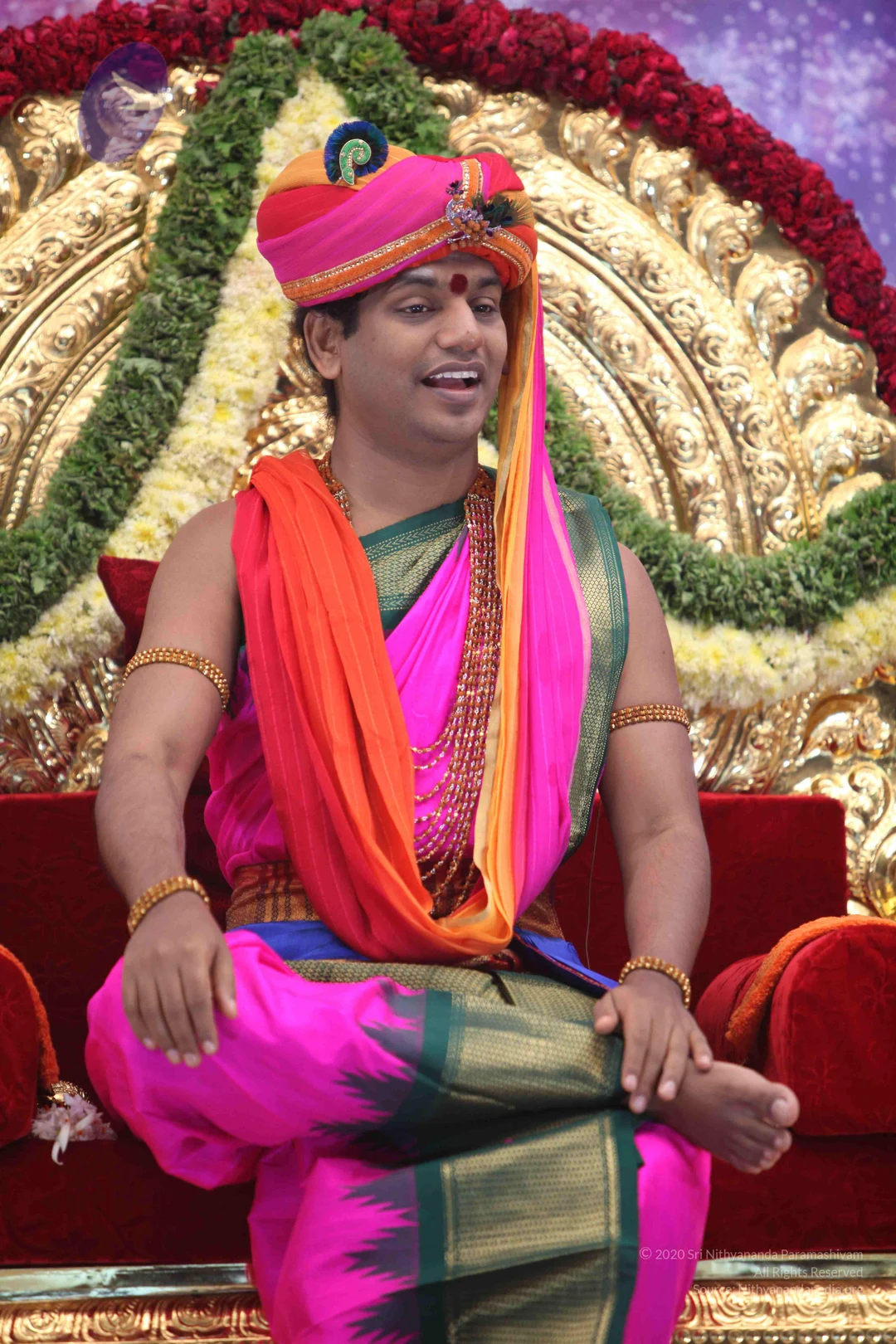
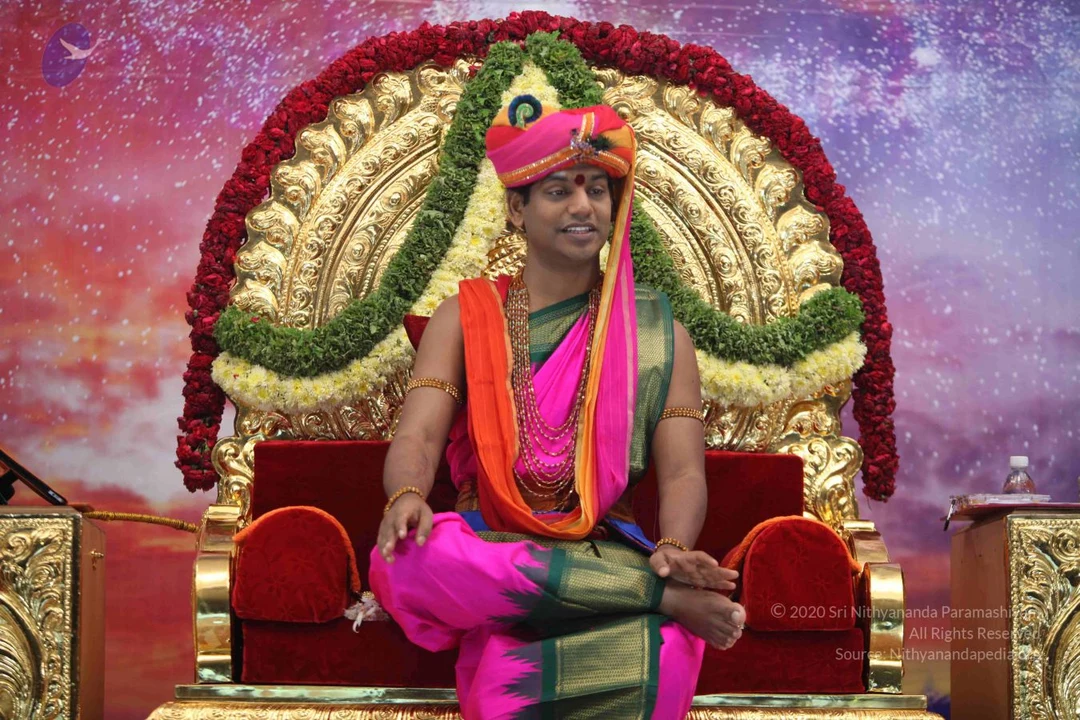
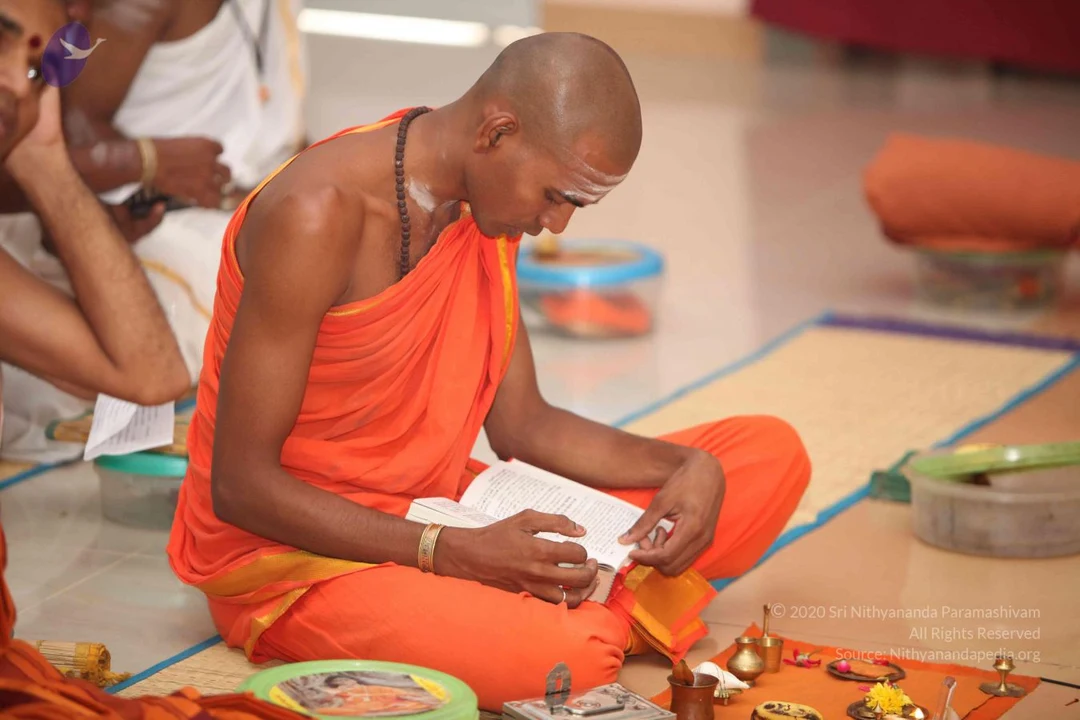
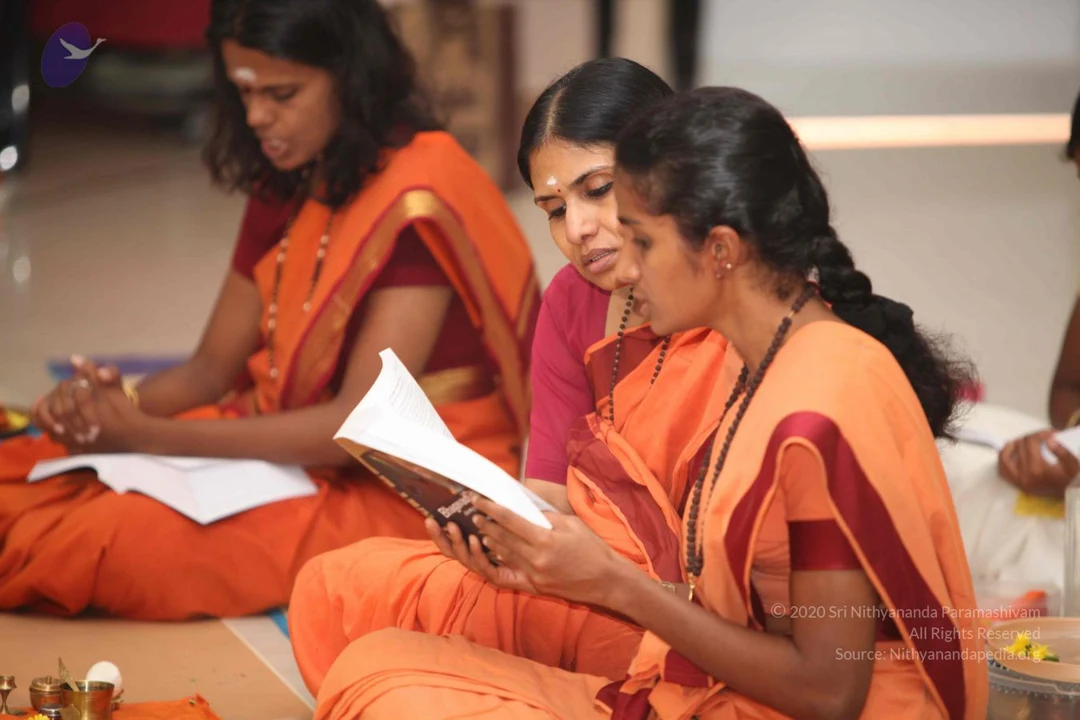
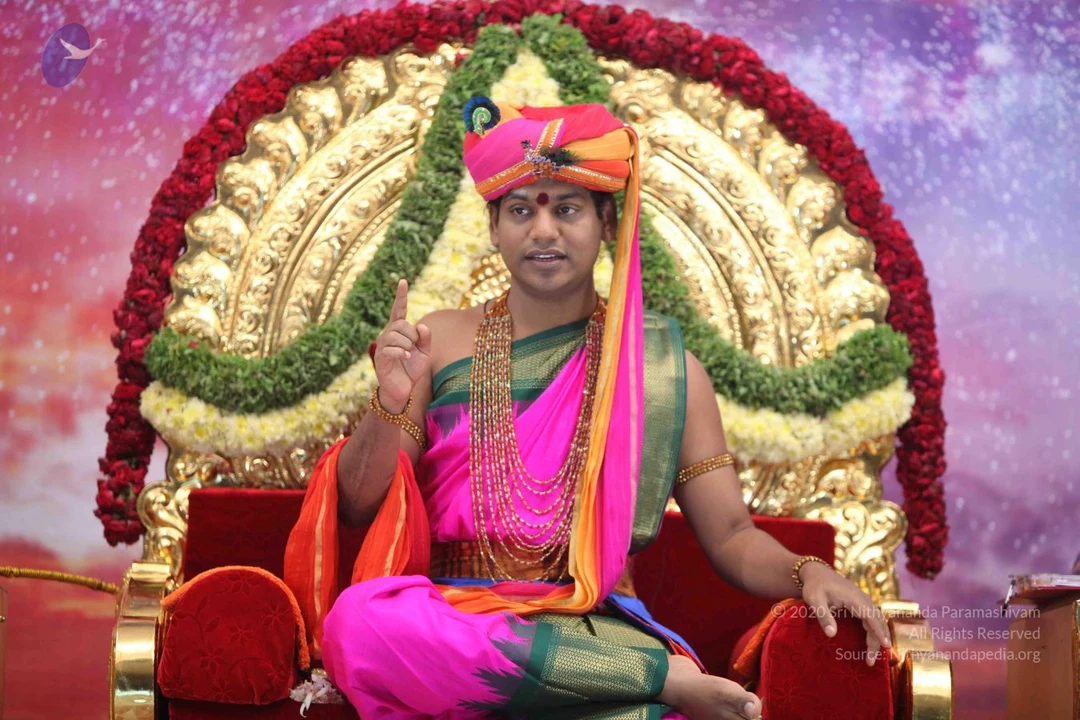
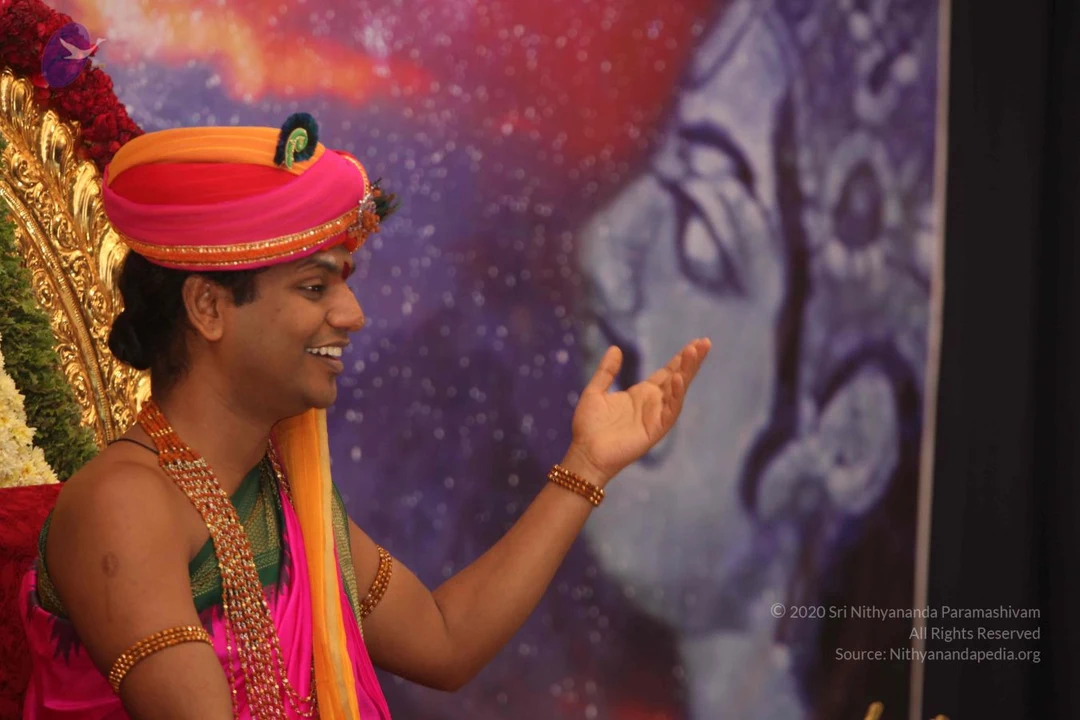
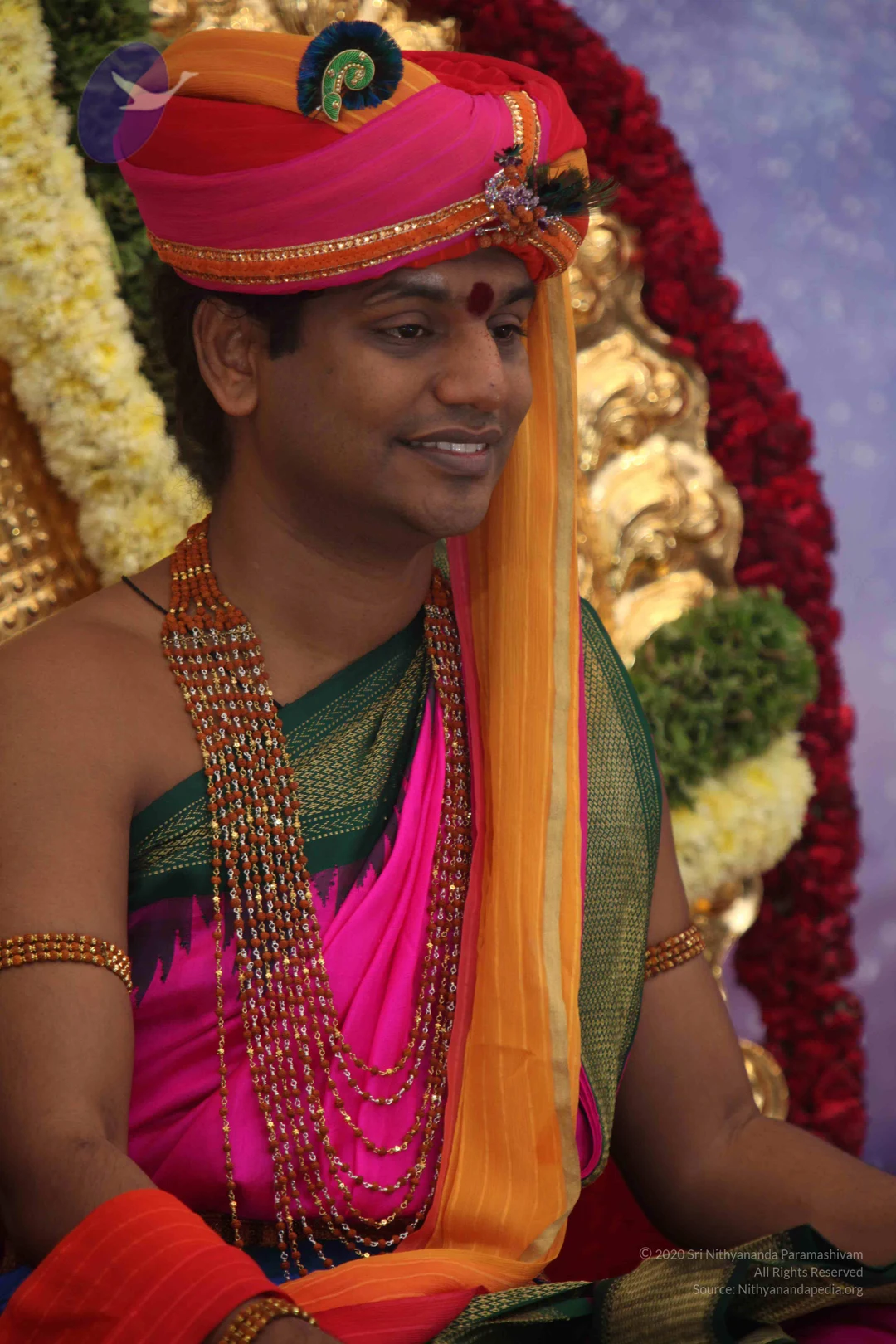
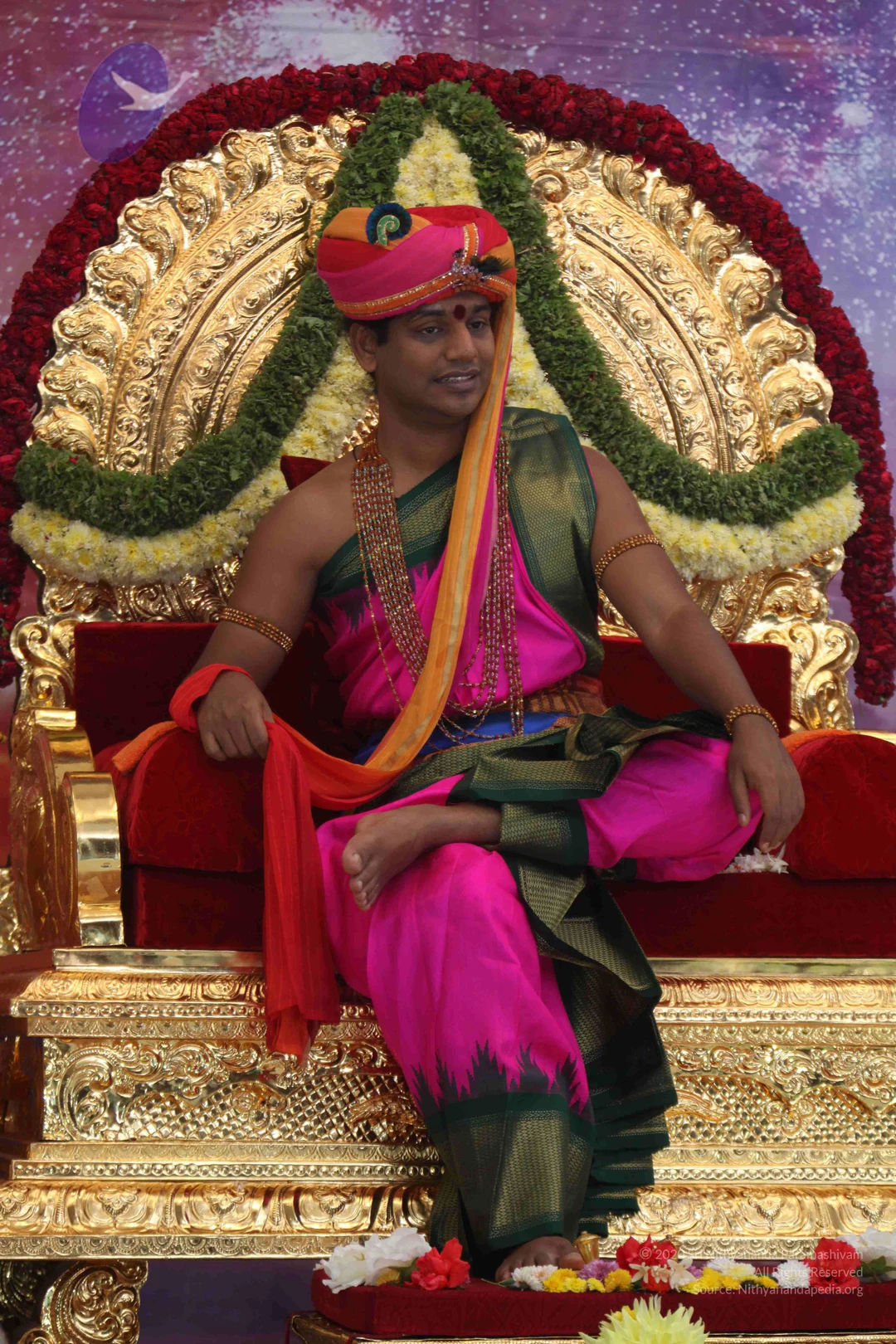
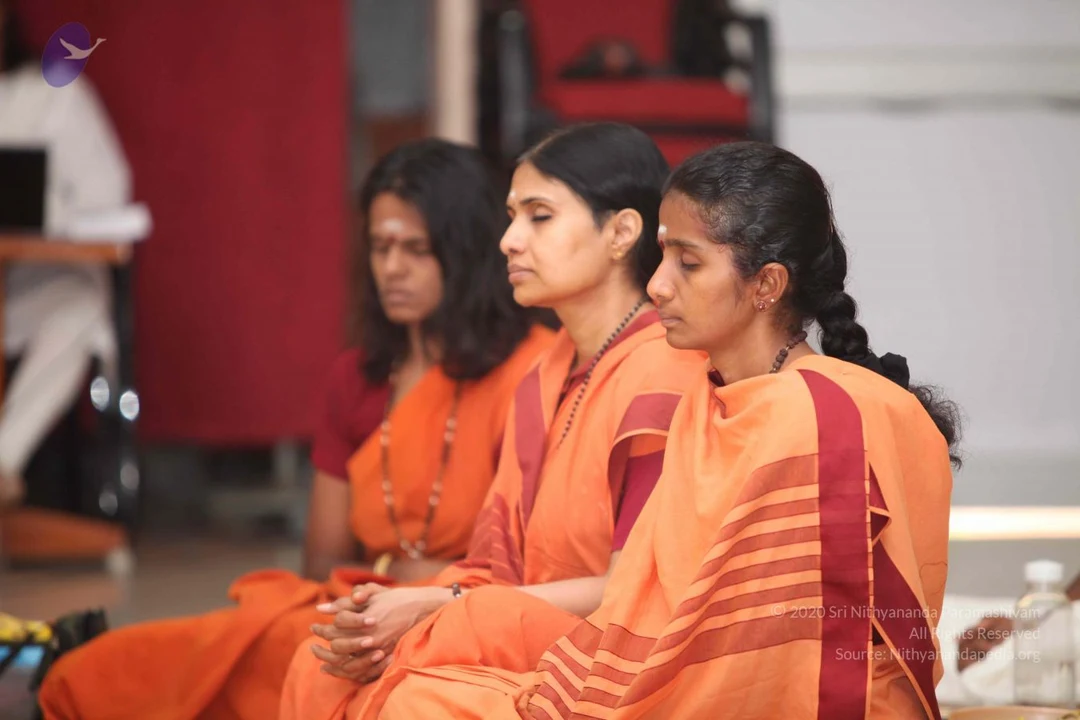
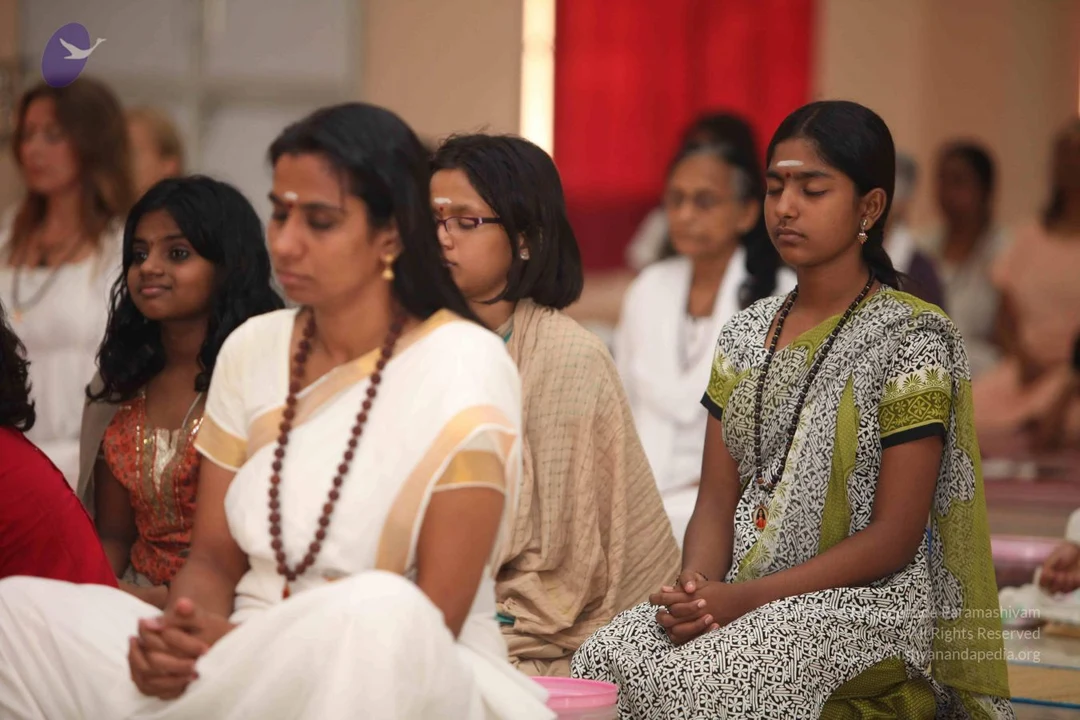
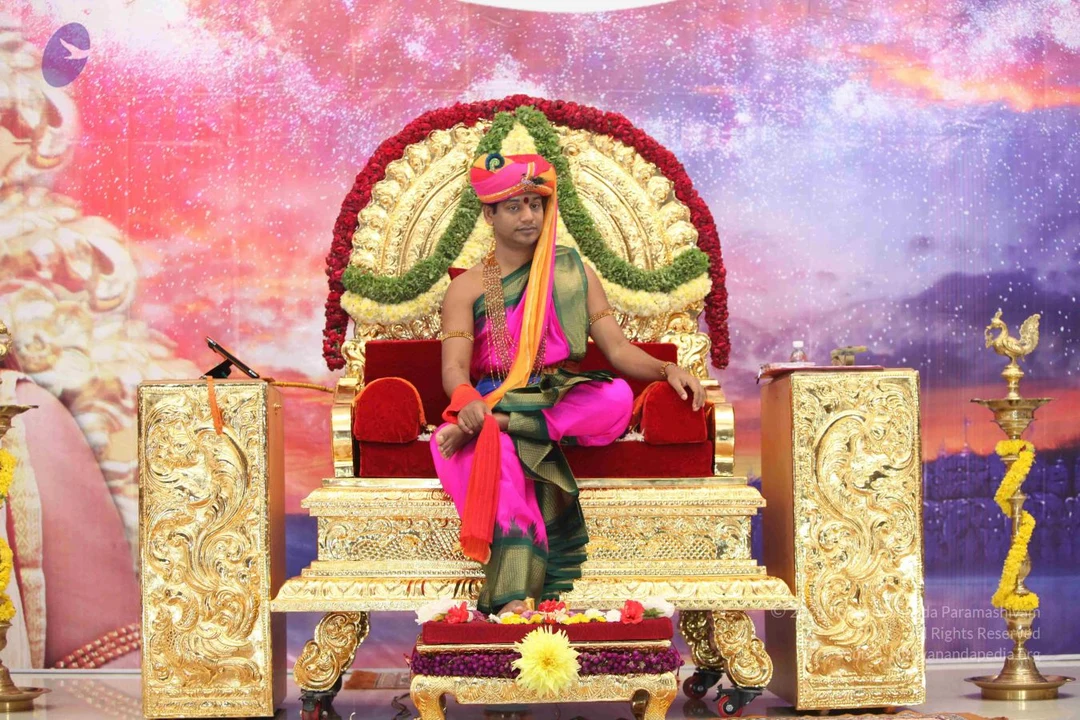
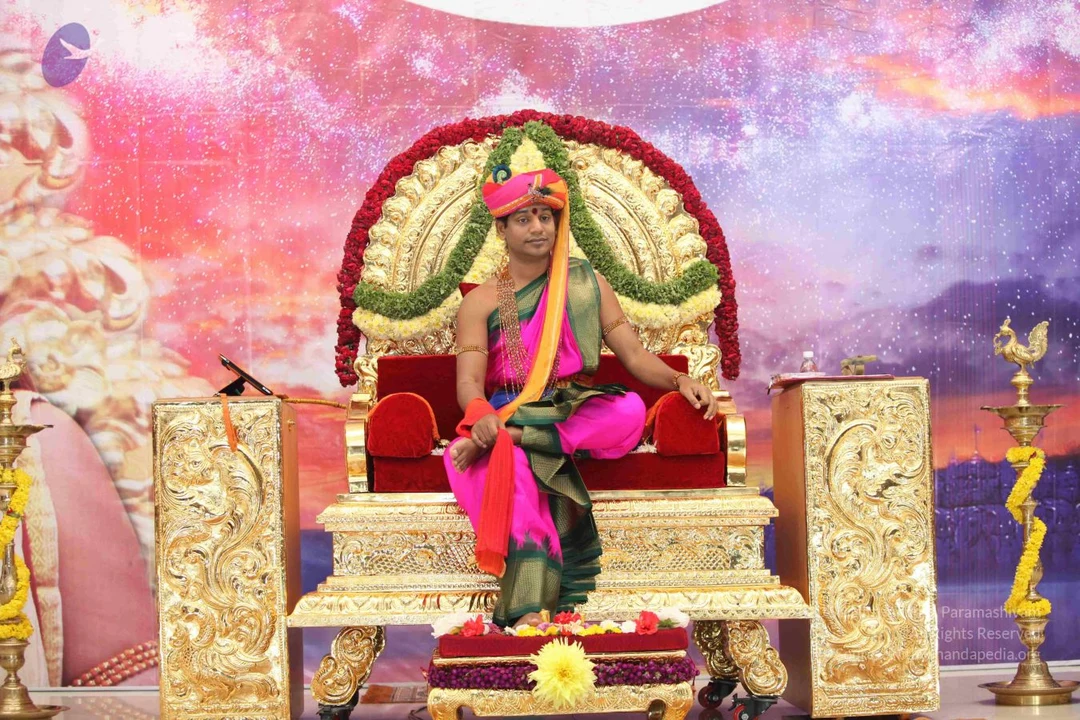
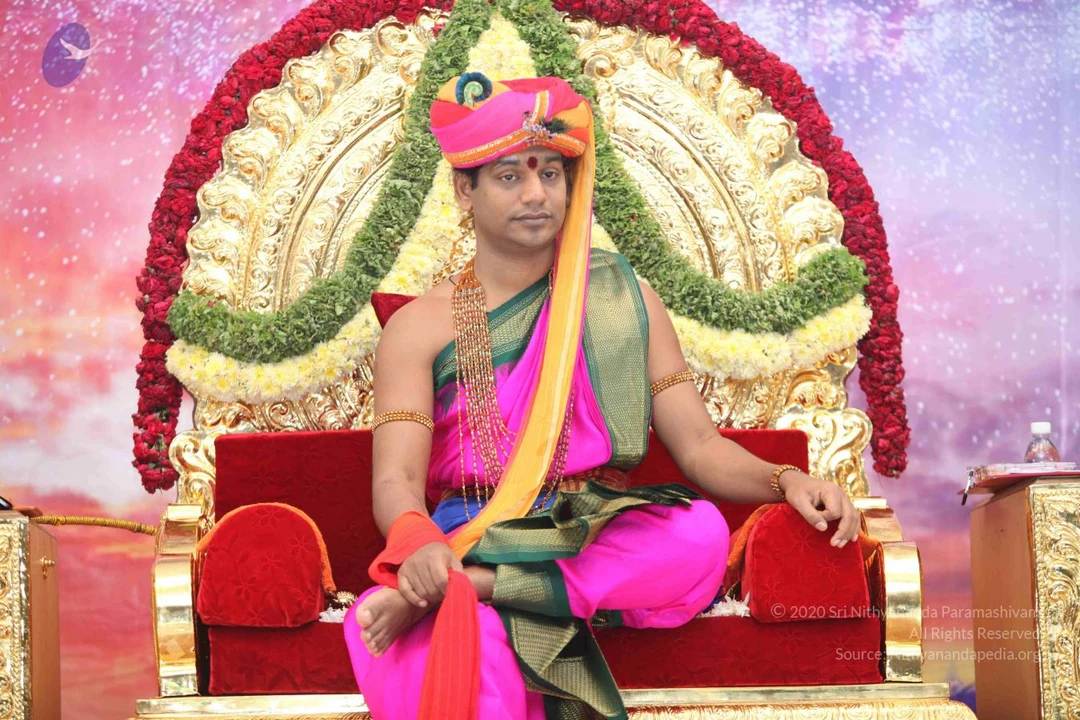
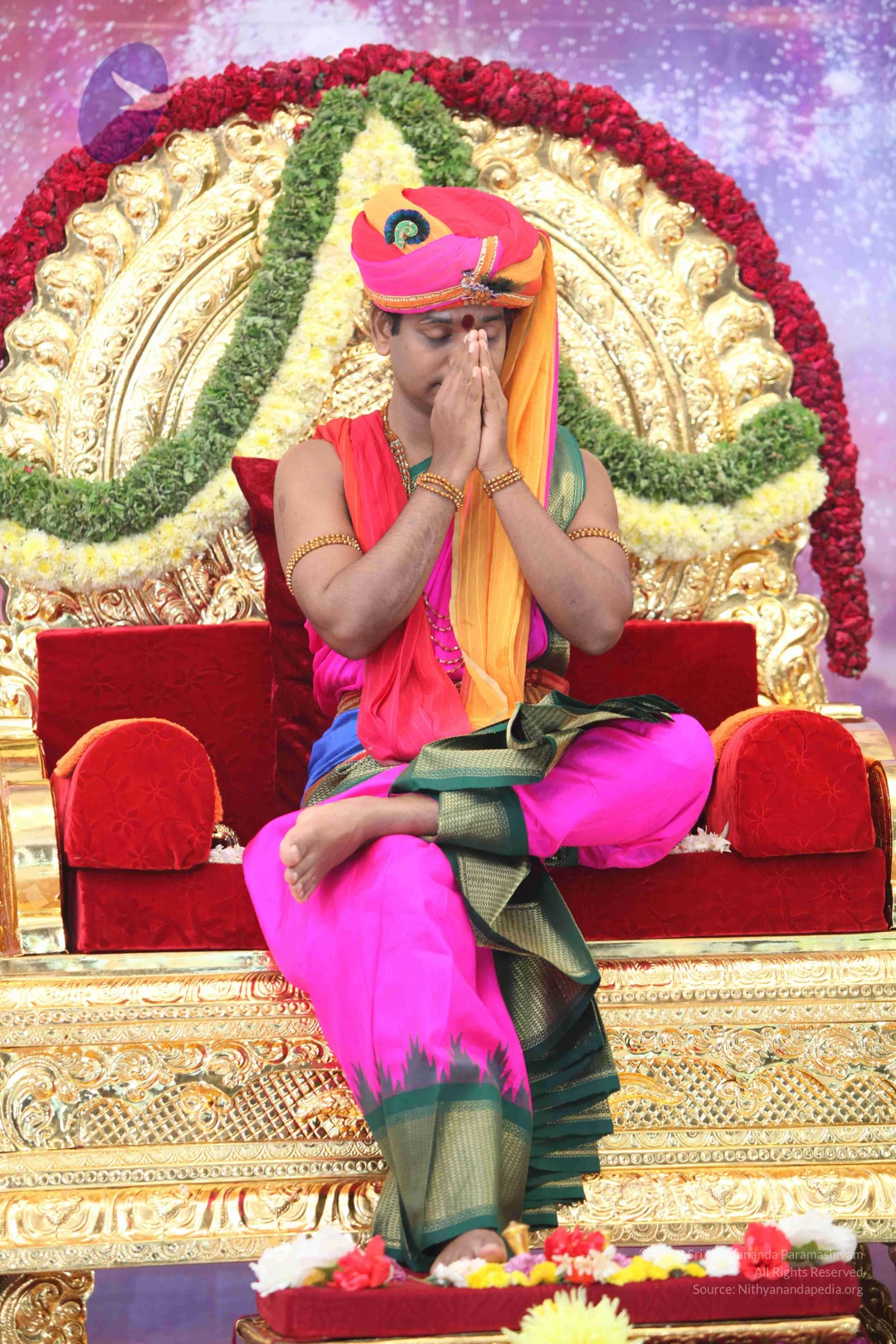
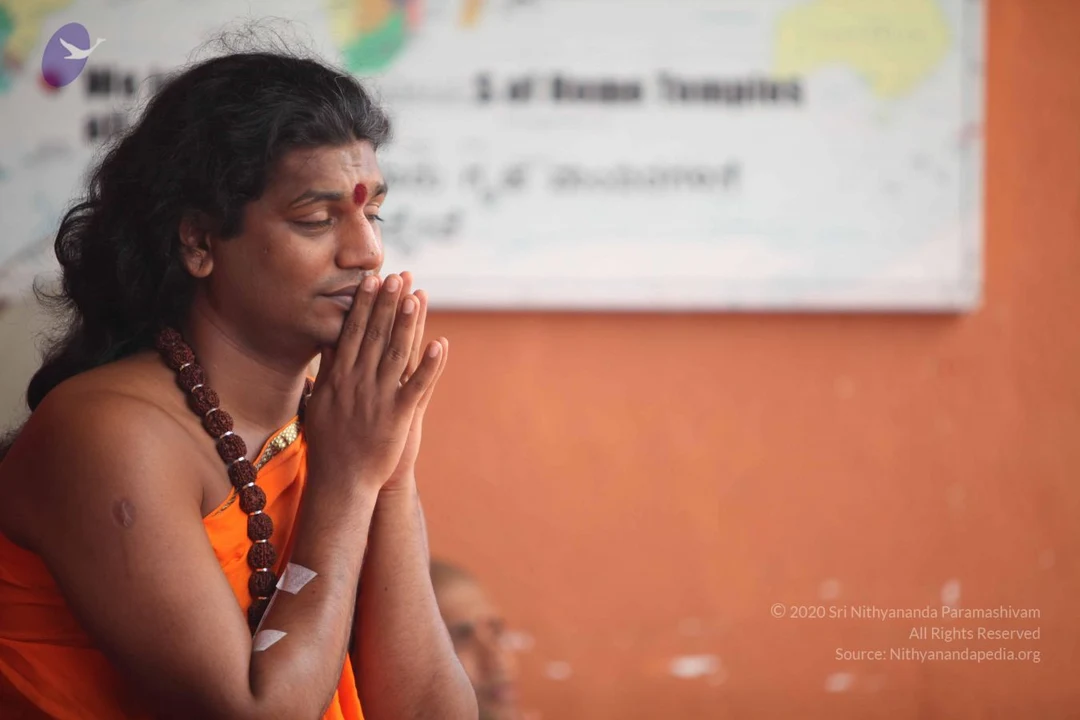
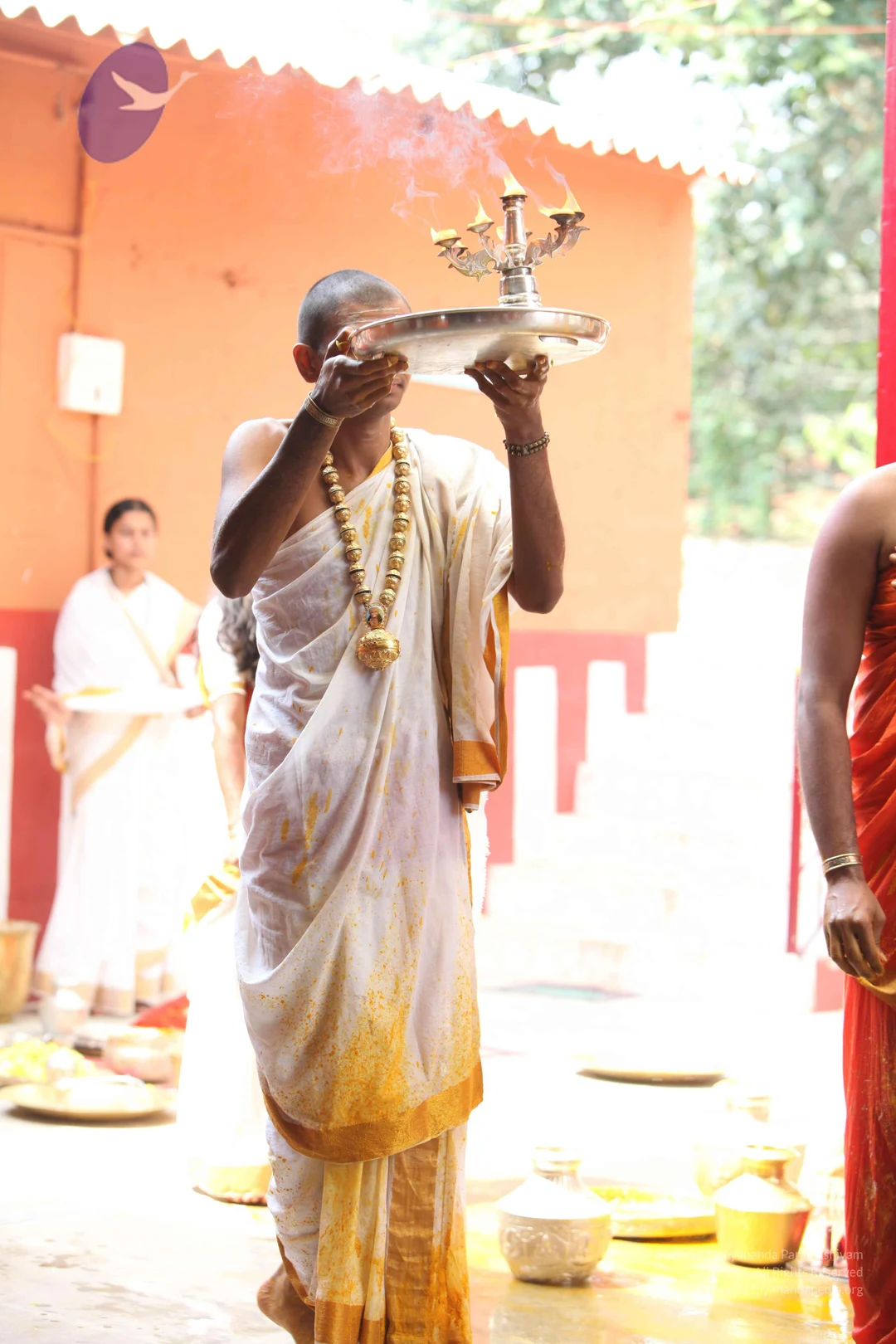
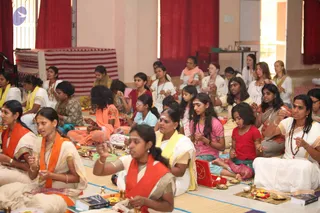
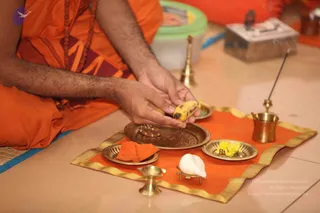
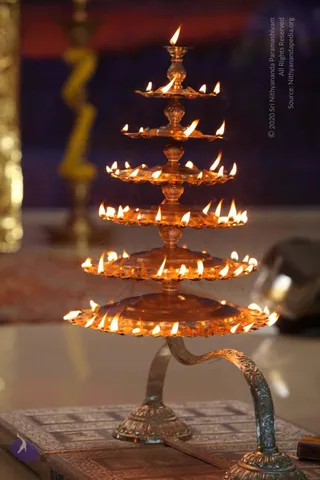
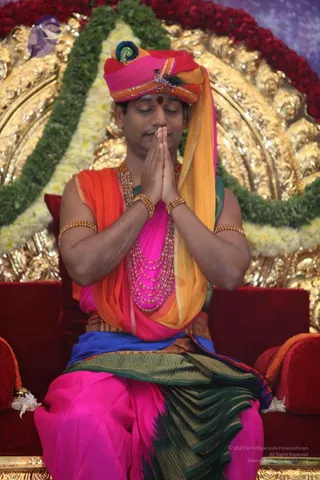
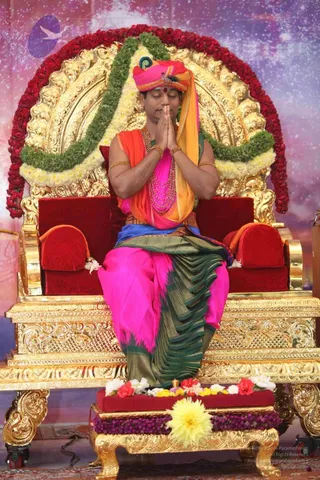
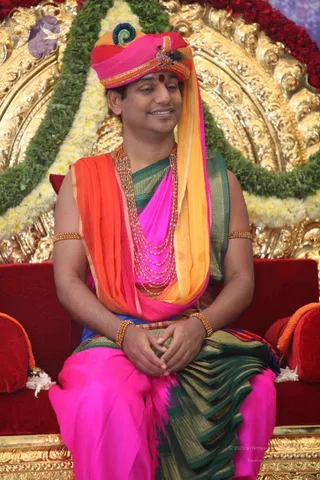
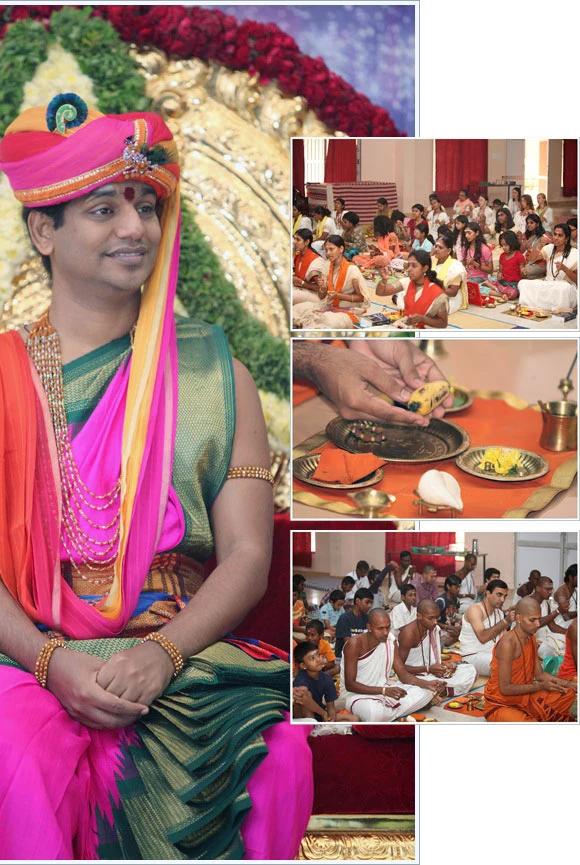
A photograph of a large group of women and girls seated on the floor of a bright hall with red curtains and a red-and-white striped mat along the back wall. Many wear white or cream saris with orange, yellow or red borders and orange shawls, and several have vertical sandalwood or kumkum marks on their foreheads. Some hold incense sticks or small brass items, and brass lamps, flower-and-fruit offerings on leaf plates, and small books sit on the floor in front of them. A rudraksha mala is visible on one woman at right. No central figure resembling a person is visible; the scene shows only devotees.A photograph of a priest seated cross-legged on the floor in an orange robe, with rudraksha beads around his neck. Only his arms and torso are visible. He holds a ripe yellow banana over a brass puja thali on an orange cloth with gold border. The thali holds rudraksha beads, a small brass cup, and a conch shell on a stand, with a brass oil lamp in the foreground and a brass incense stick holder with a lit incense stick nearby. Yellow flowers sit on a small brass plate. Behind him are a brass bell, a plastic container, and a small box. This shows a puja offering in progress, with one physical person visible.A tiered brass oil lamp stand (deepam) with six or more rising tiers, each holding many lit wick lamps with flames, set on an ornate curved brass base atop a carved wooden surface. A small matchbox sits at the lower right. The blurred background shows a warm red and dark blue wall with a gold ornamental pillar and another brass lamp stand. No people are visible; the scene is a ritual lamp display.A seated man in a multicoloured ceremonial outfit sits with palms pressed together in anjali mudra and eyes closed. He wears a pink, red and orange turban with a peacock-feather ornament at the front, a red bindi, layered beaded necklaces, gold bangles and armlets, an orange and yellow shawl draped over one shoulder, a pink and blue dhoti-style garment and a green zari-bordered cloth. He sits on red velvet cushions in front of an ornate gold throne-like backdrop decorated with green foliage strands and white and yellow flower garlands.A man seated on an ornate gold throne with red velvet cushions, decorated with red rose and green-and-white flower garlands, hands pressed in namaste at chest, eyes closed. He wears a pink and orange turban with a peacock-eye ornament, a red bindi, an orange and pink shawl over the shoulders, multiple strands of pink-red beads, gold armlets and bangles, pink silk trousers with a green and gold bordered dhoti drape. Flowers lie at the foot of the throne on a red cushioned footrest with a yellow dahlia. A pink and purple sky backdrop. Probable Swamiji seated in satsang or darshan posture, with orange and pink clothing, multiple beaded malas and turban cues.A seated man in a colourful ceremonial outfit sits on a red velvet throne against an ornate gold-carved backdrop decorated with garlands of white and yellow flowers and green leaves. He wears a red, orange and pink turban with a green peacock-feather ornament and a jewelled brooch, an orange and pink shawl draped over one shoulder, a green and gold brocade blouse, and a bright magenta dhoti. Multiple strands of gold and beaded necklaces hang on his chest, with gold bangles on his wrists and upper arms. He has a red bindi on his forehead, smiles softly, and rests his hands clasped in his lap. Pieces of white flowers lie on the red cushions around him.

SARVA-DARSHAN

11 photosSource gallery
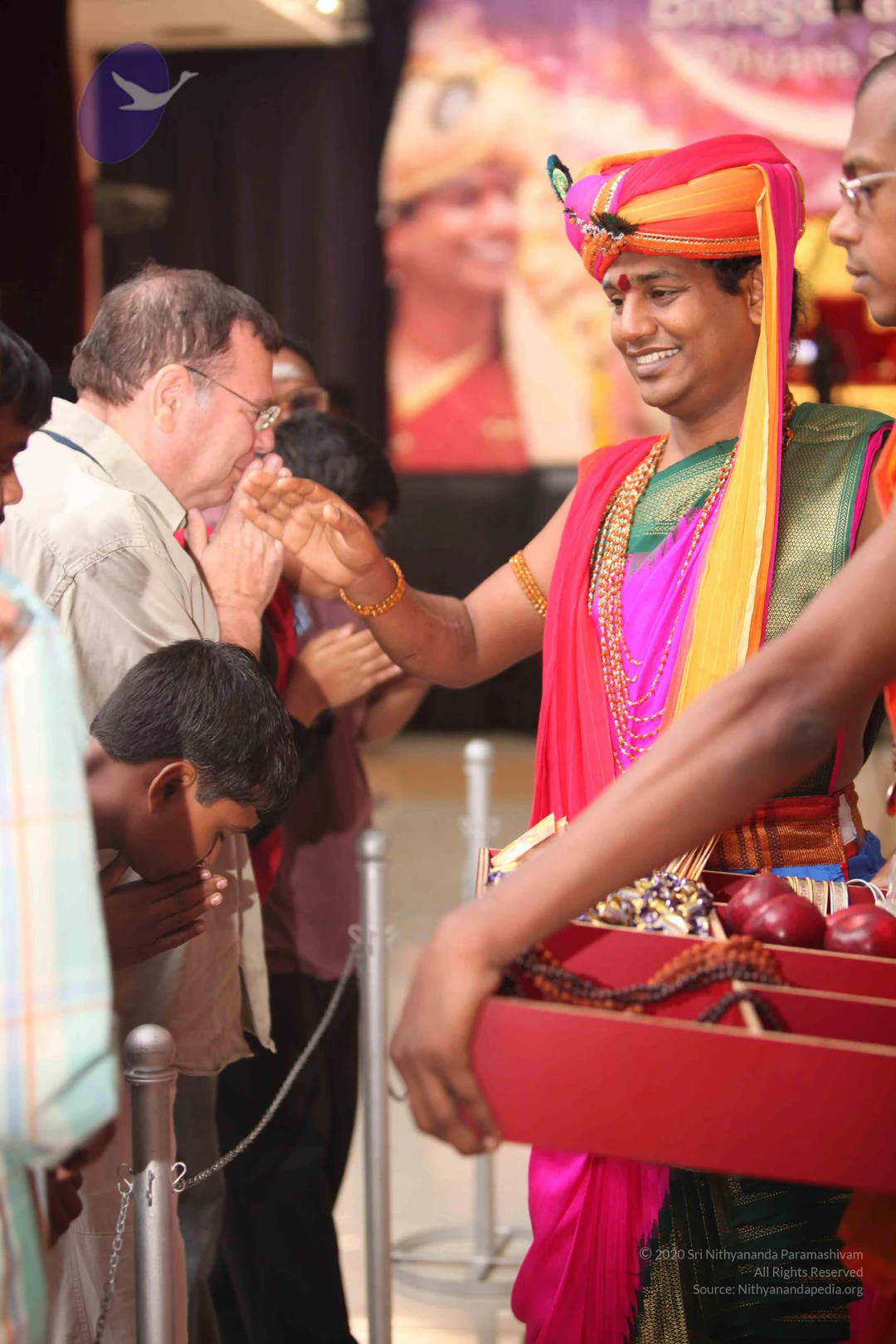
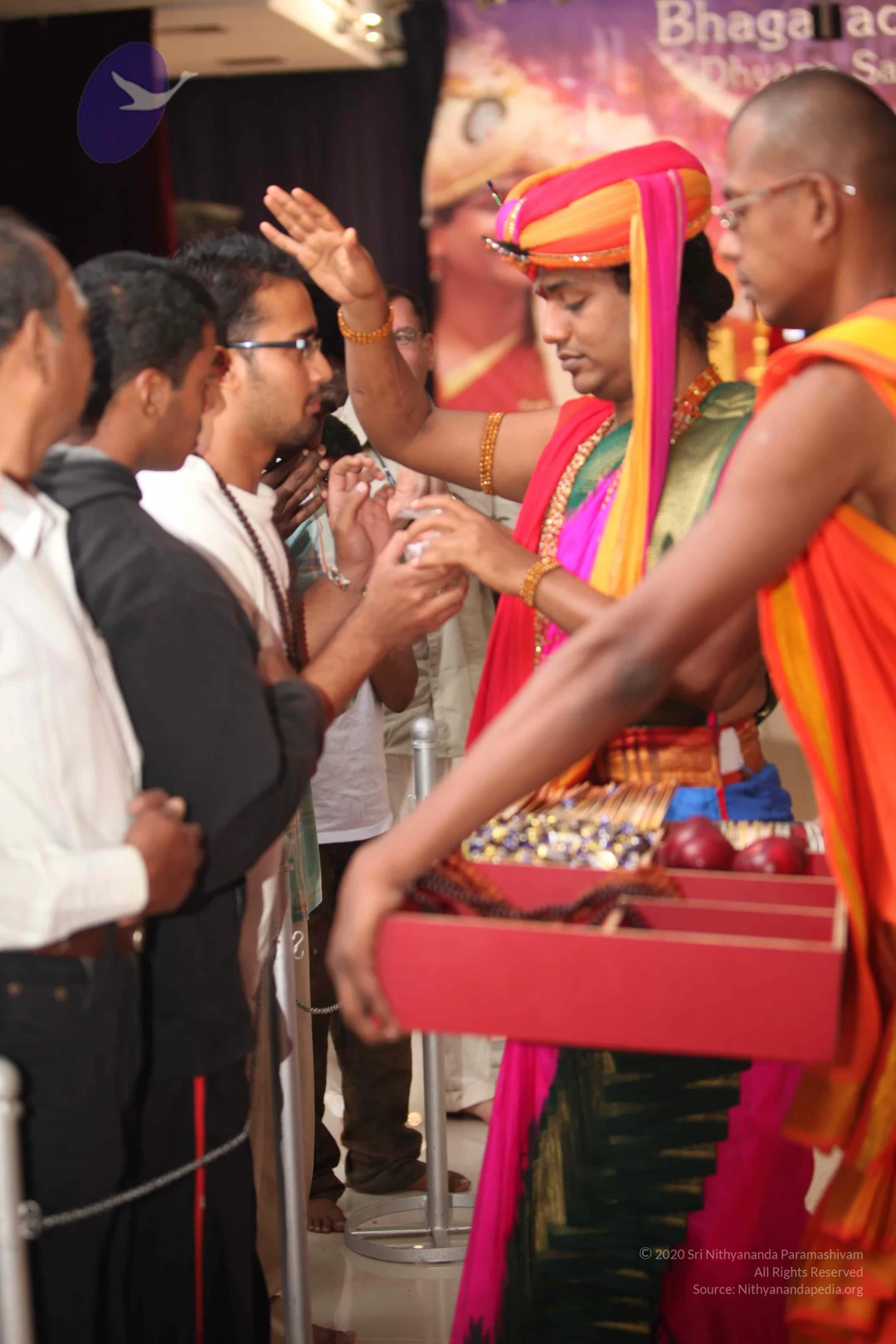
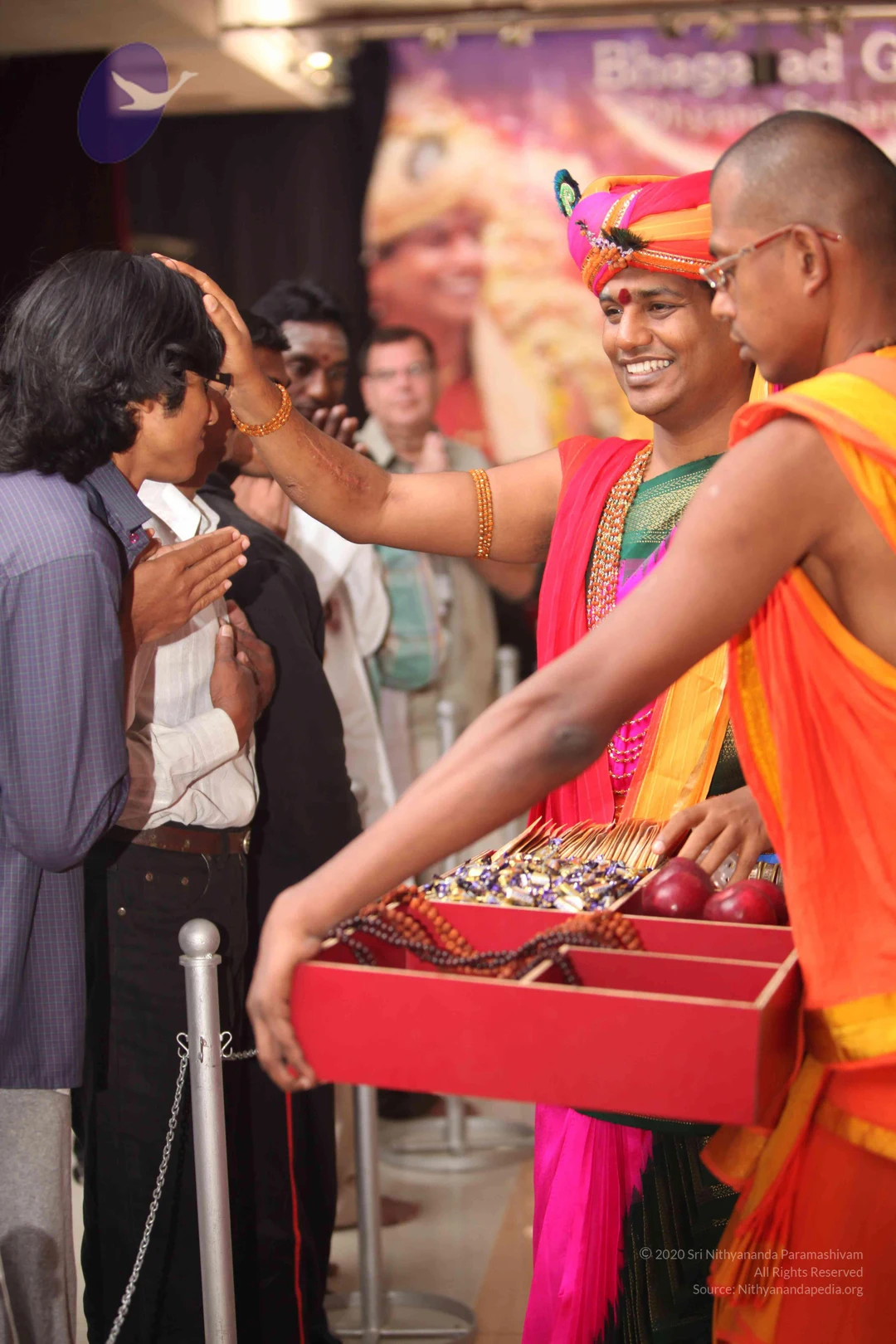
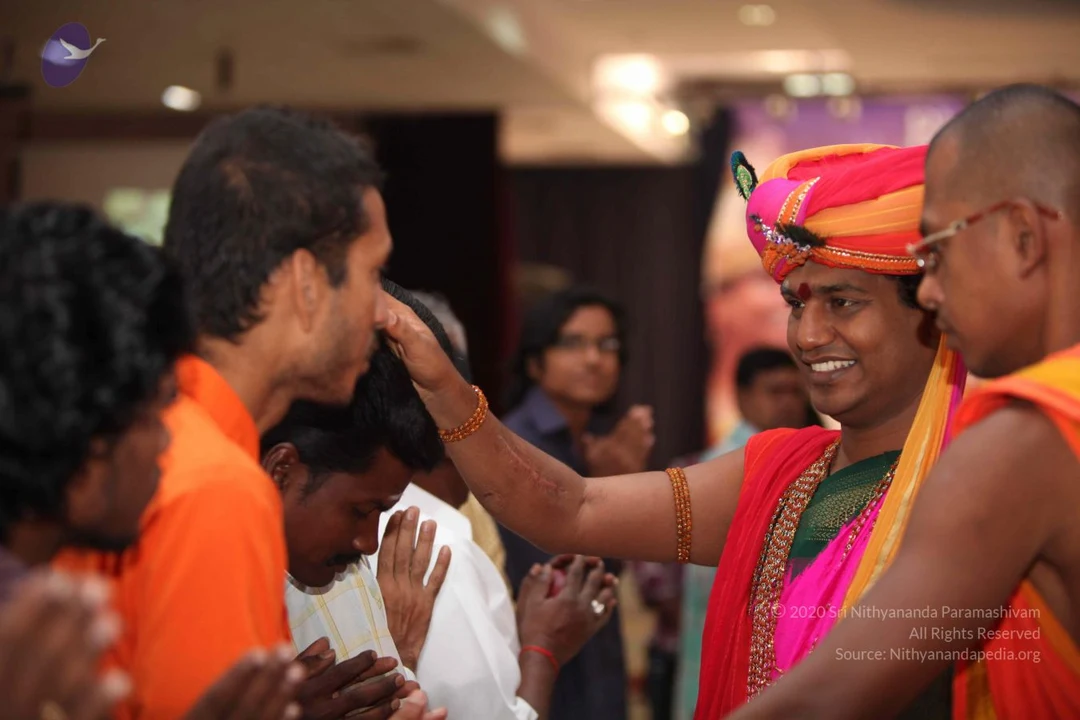
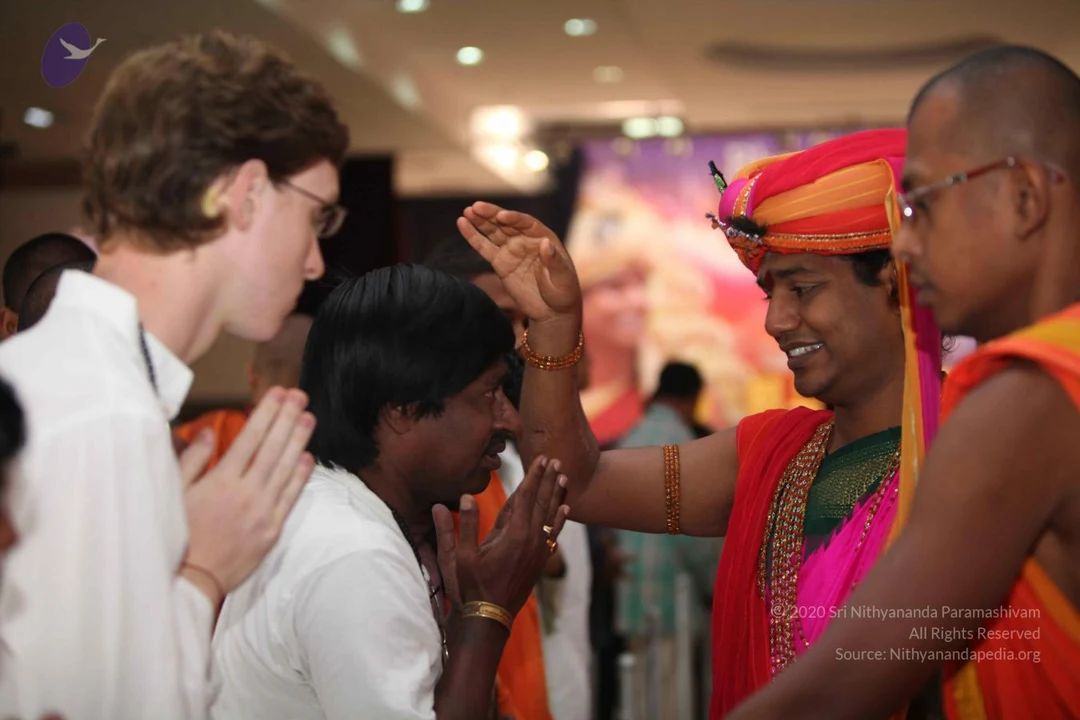
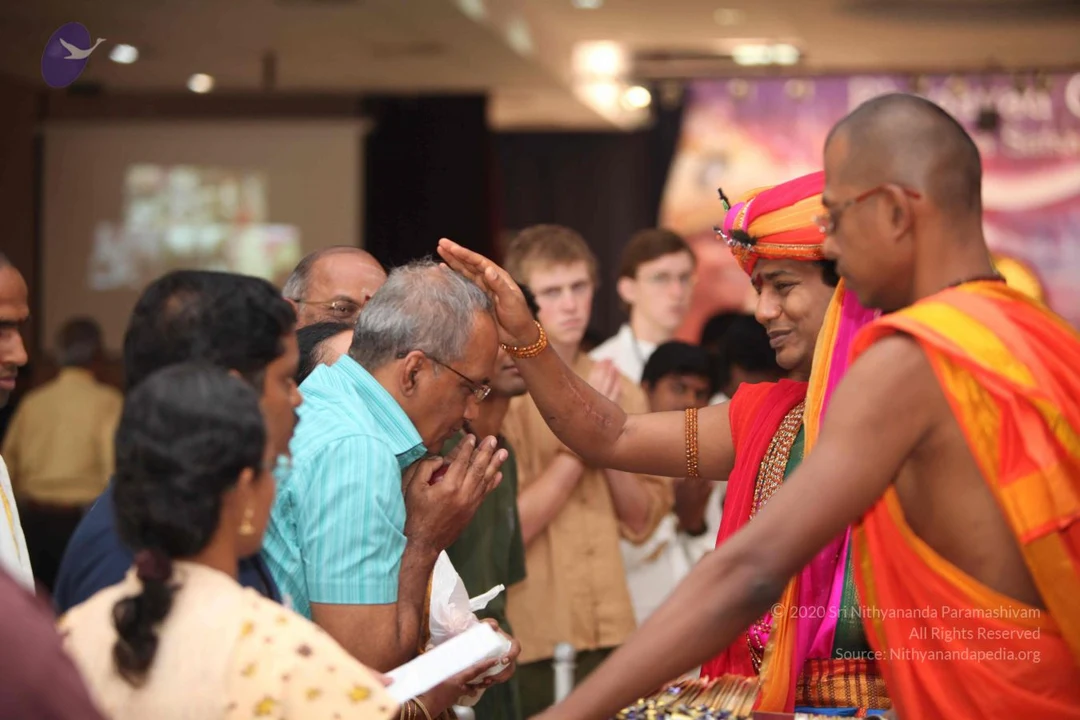
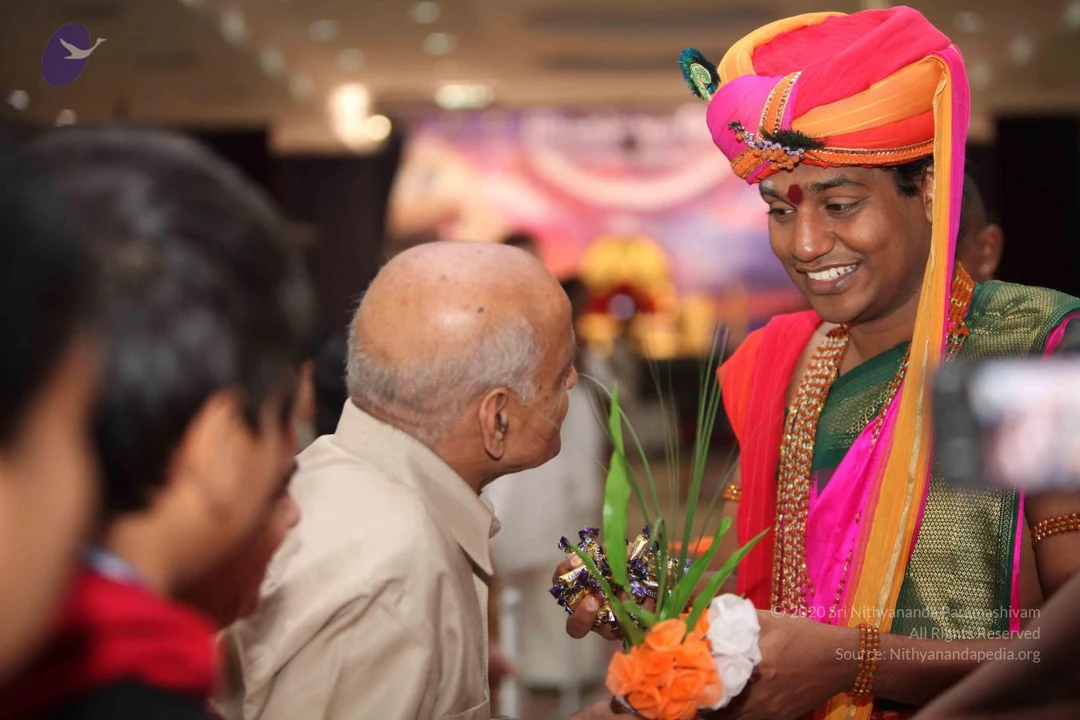
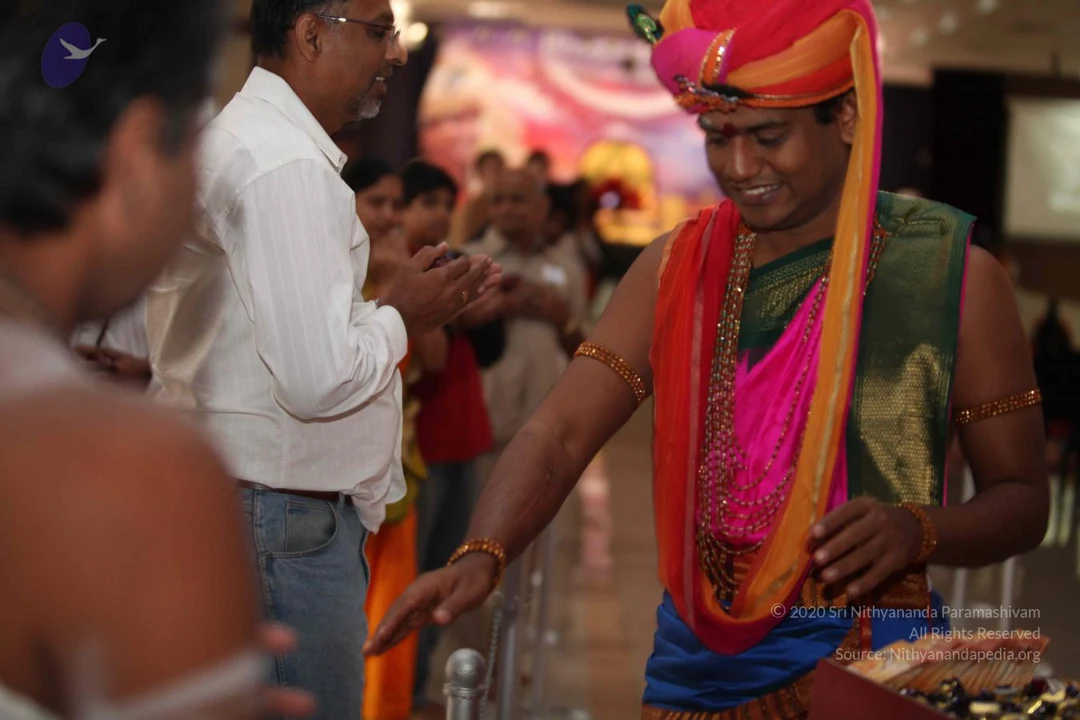
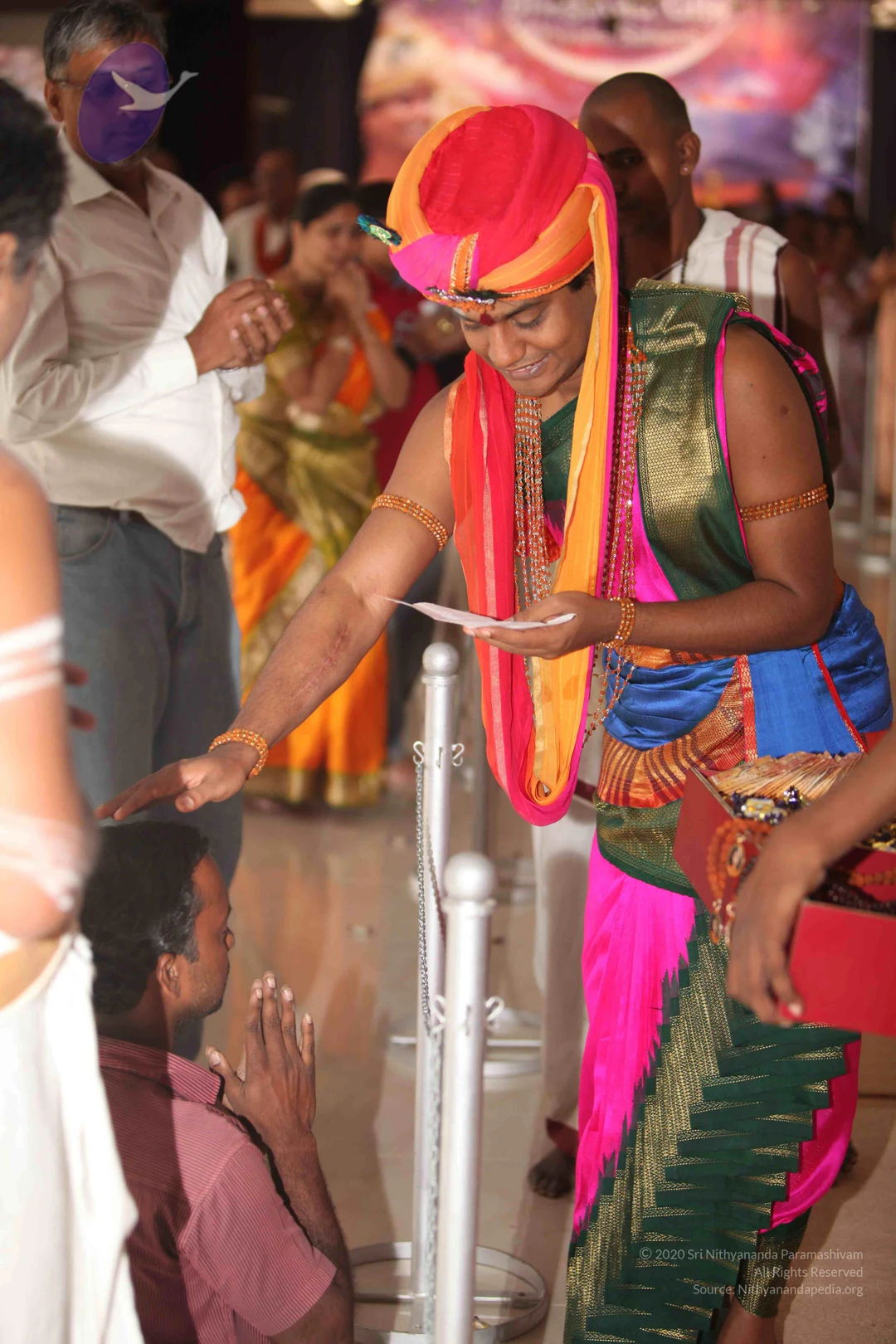
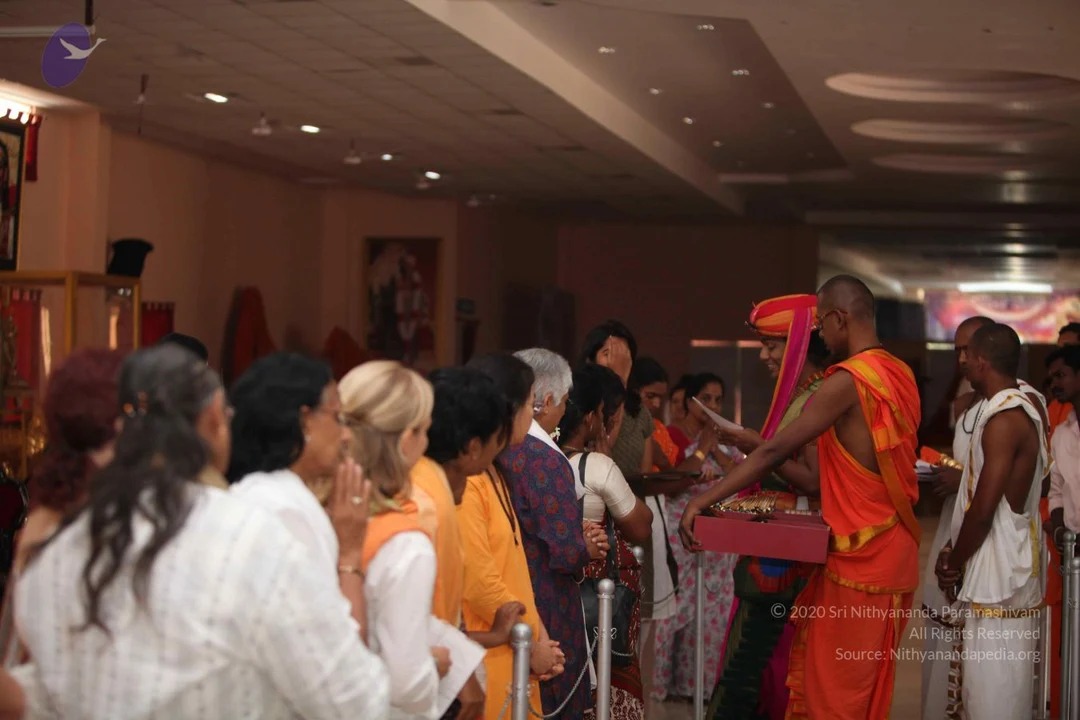
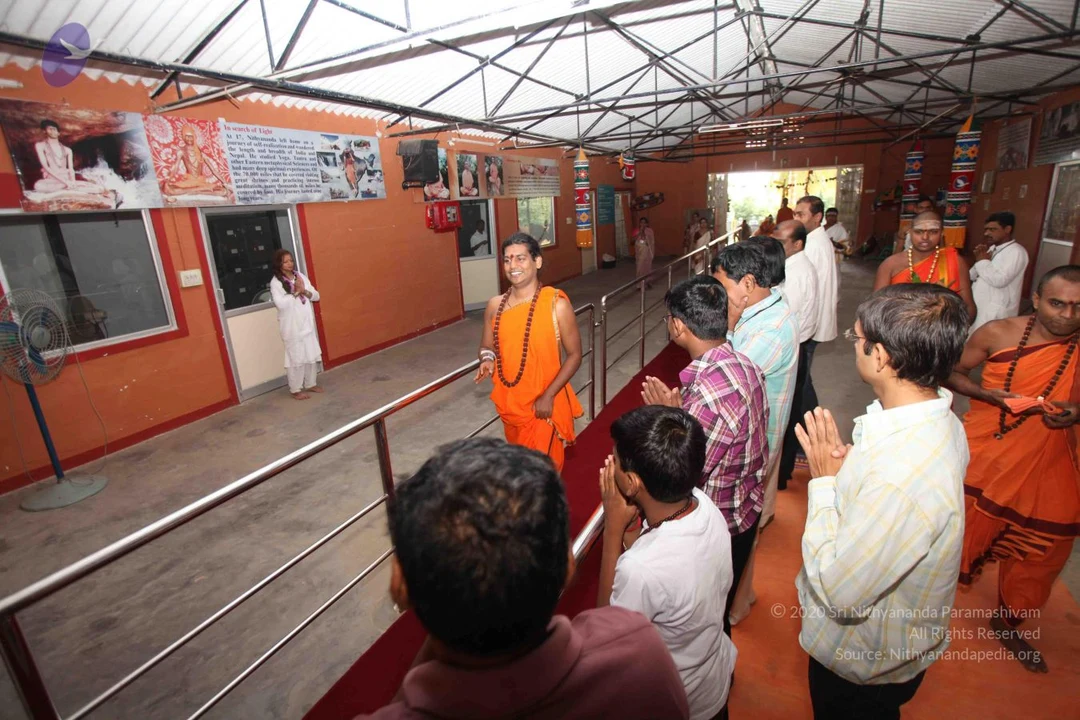
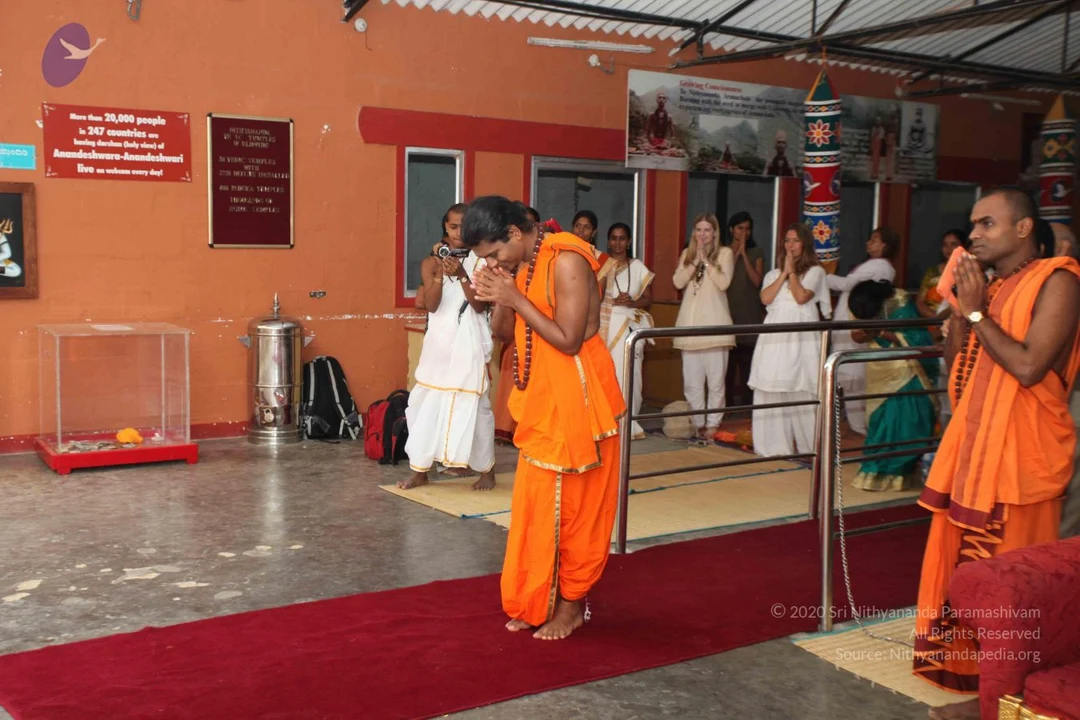
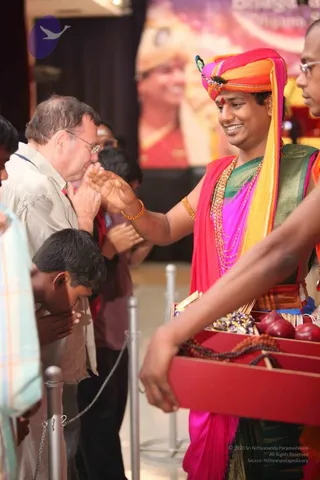
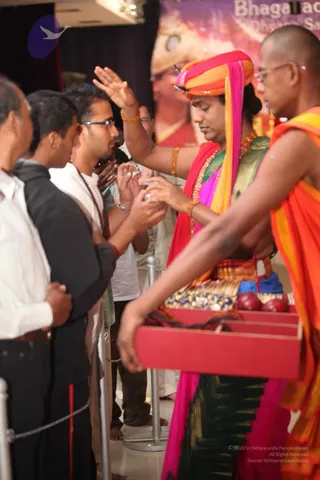
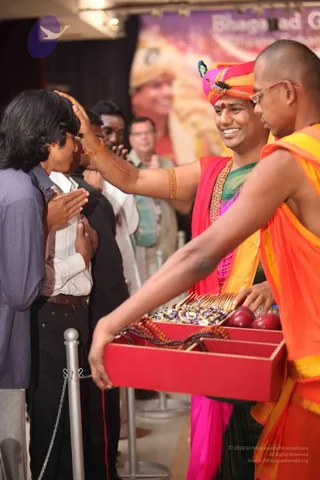
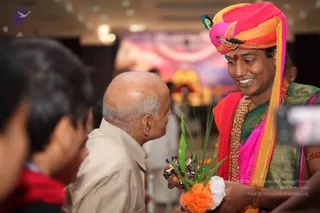
A photograph at an indoor event in a bright hall with a large backdrop behind. A man in a multicoloured pink, orange and yellow turban with a red bindi, wearing a pink and green silk garment, gold beaded necklaces and gold bangles, smiles while holding out his hand. He stands beside a red wooden tray holding red fruit, a bundle of folded cloth and rudraksha malas. In front of him, a balding man with glasses in a beige shirt presses his palms together in greeting, and a young boy bows forward with his hands folded. Other people stand behind a silver stanchion and chain barrier. A backdrop shows a smiling person in red and gold. Four people are visible.A photograph of a devotional line at an event with a banner behind. A person in a multicolored red, orange and yellow turban with a green and pink silk garment and beaded necklaces raises a hand in blessing toward a line of devotees. Beside them a man in an orange and yellow robe holds a red tray of beads and small items. Several devotees in white and dark shirts with rudraksha-style beads stand with palms joined and hands extended toward the blessing figure. A large banner behind shows a robed figure. The banner text is partly visible.A photograph at an indoor Bhagavad Gita satsang event. A smiling man in a bright pink and orange turban with a peacock feather and red tilak blesses a visitor with a hand on his head. Beside him a monk in orange robes and glasses holds a red tray of rudraksha malas, sweets and fruit. Other devotees with folded hands stand behind, and a large banner with a smiling portrait is visible in the background.A photograph of a blessing moment indoors in a hall with warm lighting and a purple curtain behind. A man in a multicolour turban with pink, orange and red tones and a peacock-feather ornament, wearing a red shawl over a pink and green garment, smiles and lays his right palm on the forehead of a man in an orange garment with a bowed head. Adornments include beaded orange bracelets, a gold-trimmed necklace and a red-and-gold patterned wrap. Around them, devotees in white and orange clothes stand with hands pressed together in anjali, and a bespectacled man in orange-saffron robes stands at the right edge. The gesture suggests a blessing or darshan-style touch, and the visible cues are a turban, ornate clothing and a ceremonial necklace, so the figure in the turban is a probable Swamiji.A photograph at an indoor hall event. A bald man in an orange-and-yellow shawl stands at right, while a figure in a red-and-orange turban, pink and green garments and gold bangles places a hand on the head of a grey-haired man in a turquoise shirt and glasses, who has his palms pressed together in greeting. Several other people in casual and traditional clothes stand behind, a projection screen and a purple-and-pink banner are visible in the background. Roughly a dozen people are visible.A smiling man in a bright pink and orange turban with a peacock feather ornament stands at right, wearing a green and pink silk garment, gold necklaces and bangles, and a red bindi. He holds a small bouquet of orange flowers, green leaves and white blossoms, and an elderly bald man in a beige shirt bends forward toward him at left. Two younger people in the foreground at left partly frame the scene, and a blurred pink and orange backdrop with floral decoration fills the hall behind. Visible individuals: about four people.
ABHISHEKAM

226 photosSource gallery
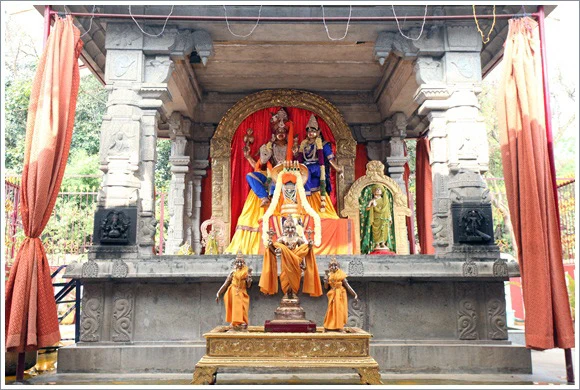
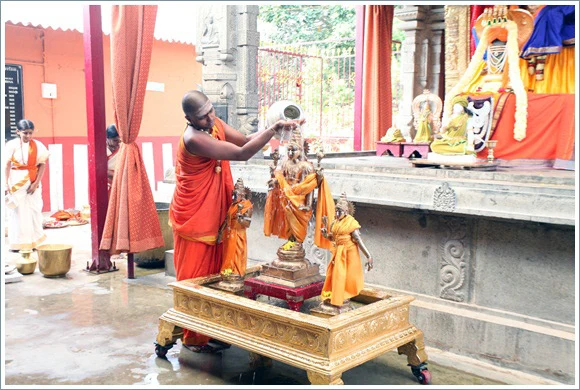
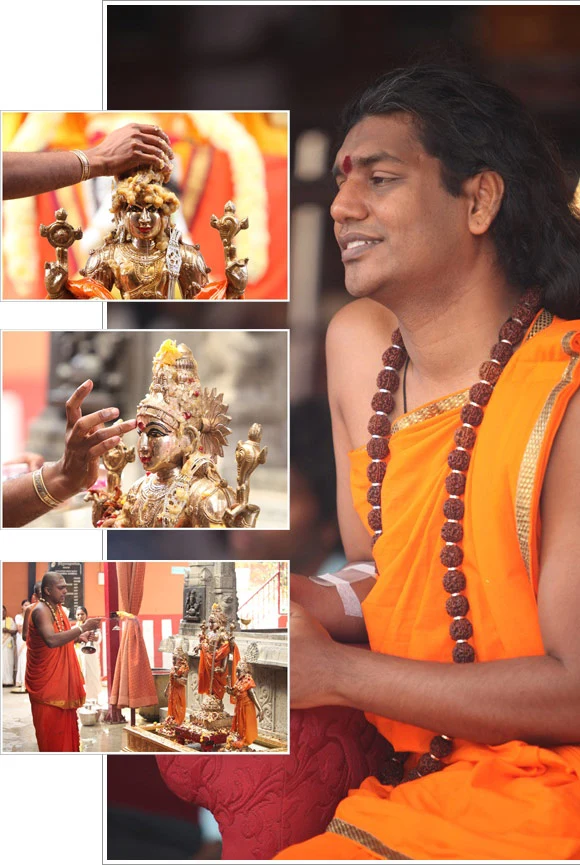
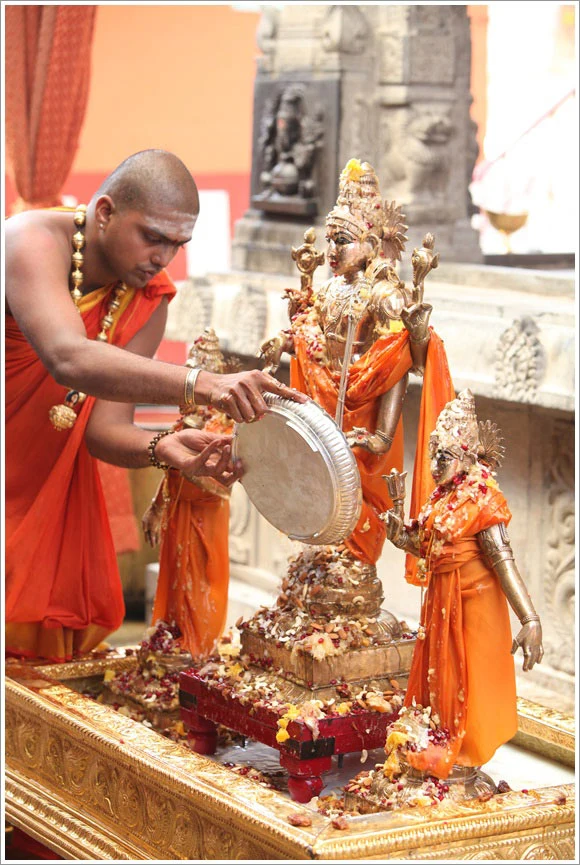
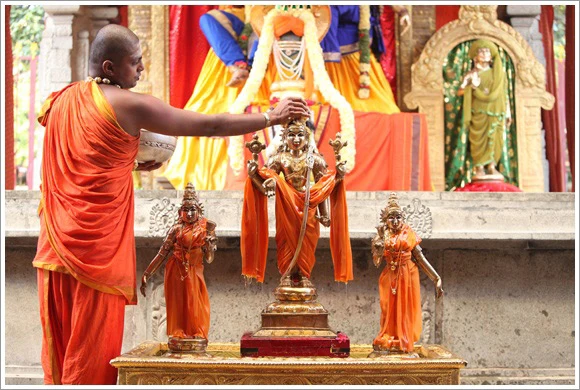
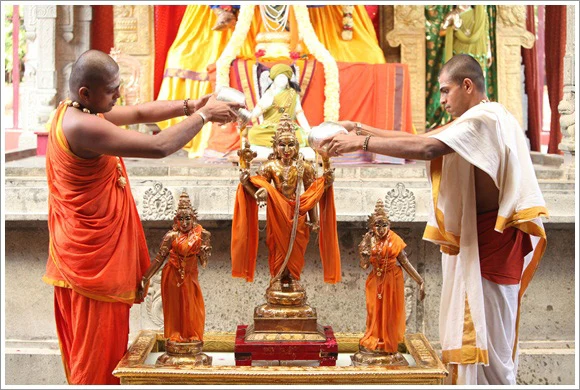
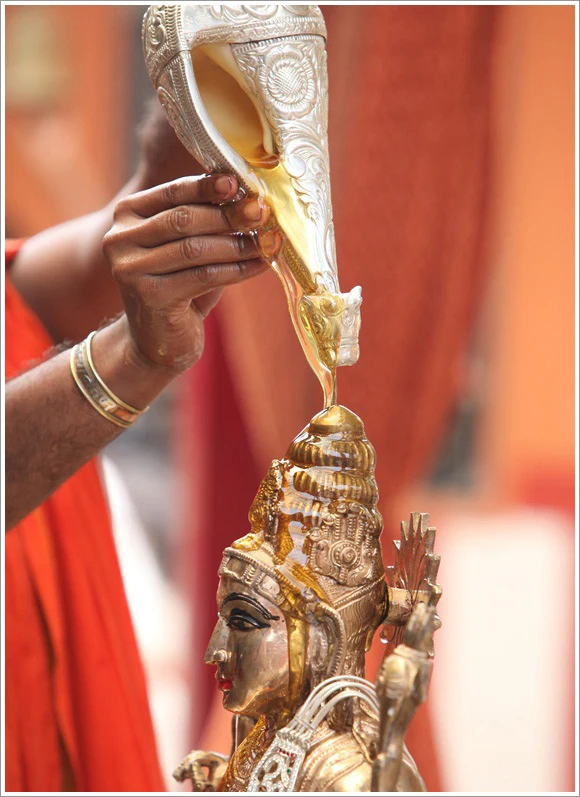
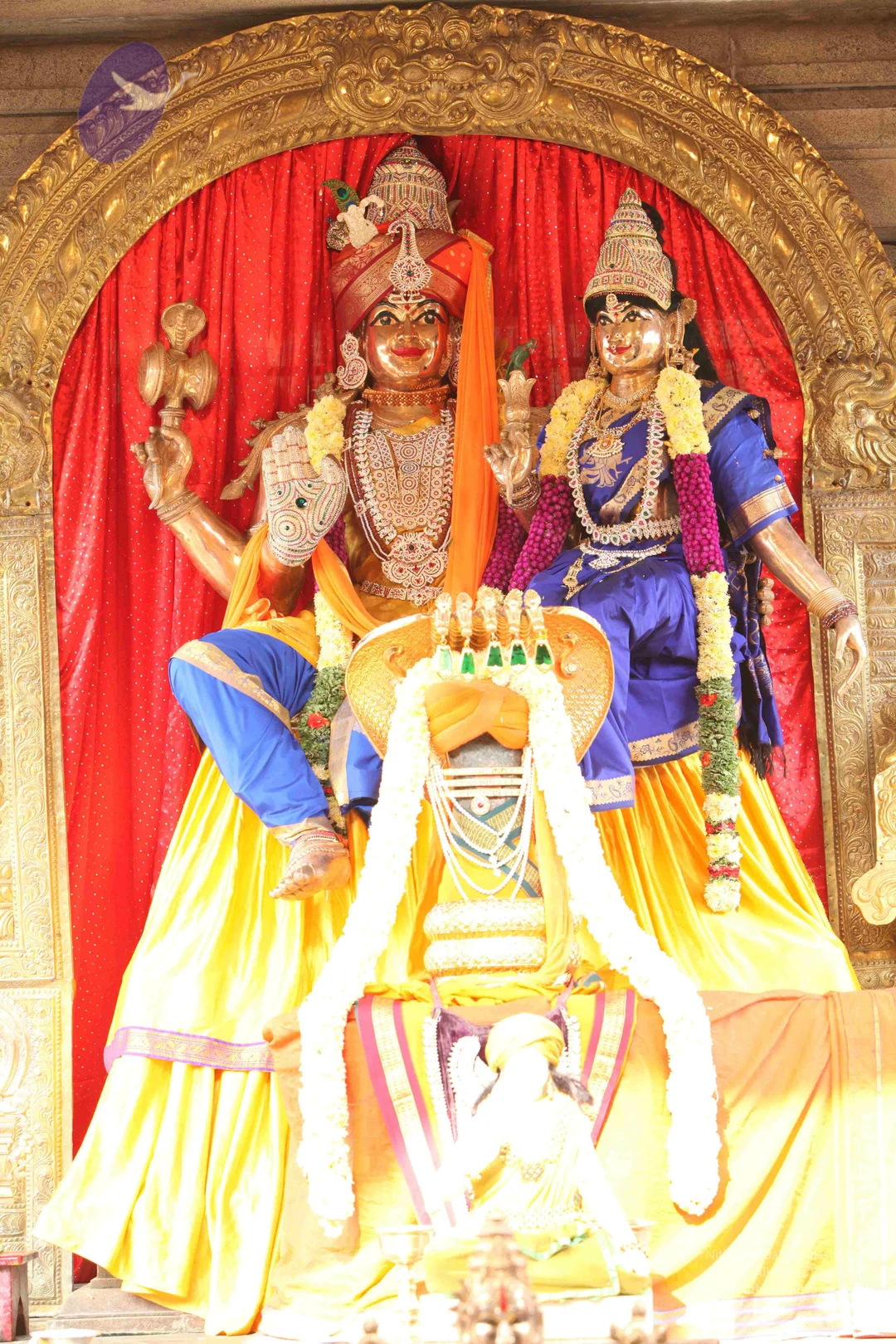
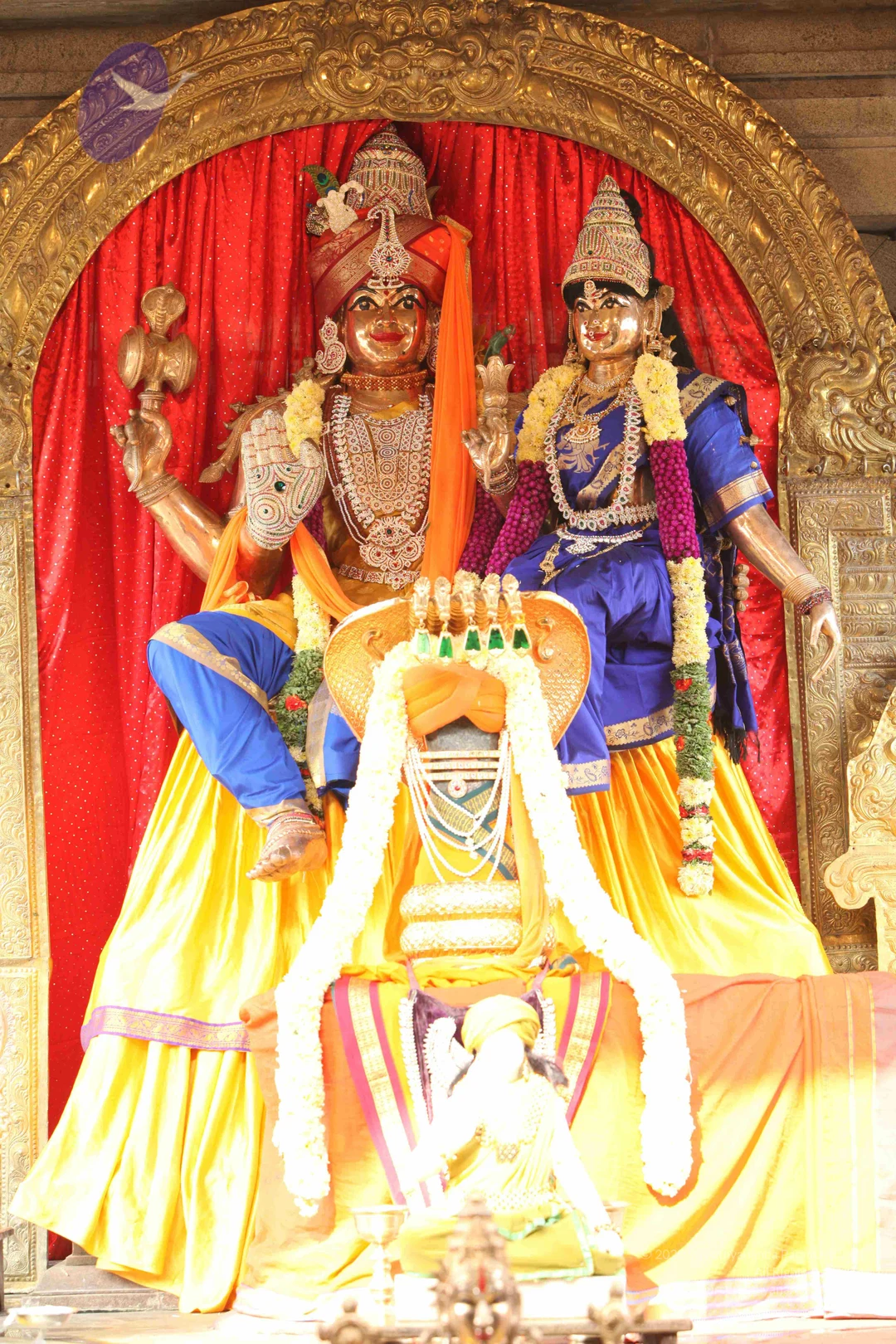
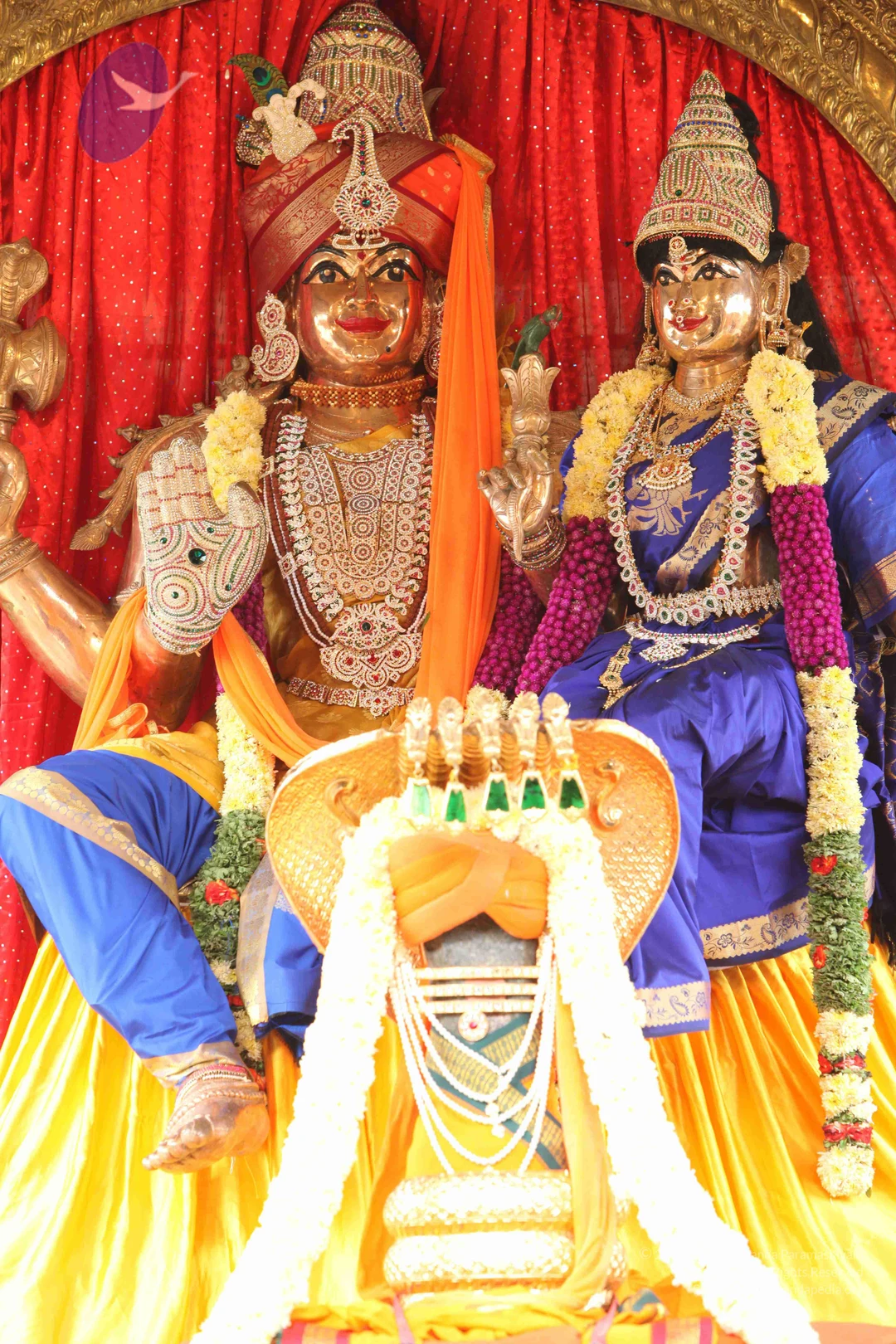
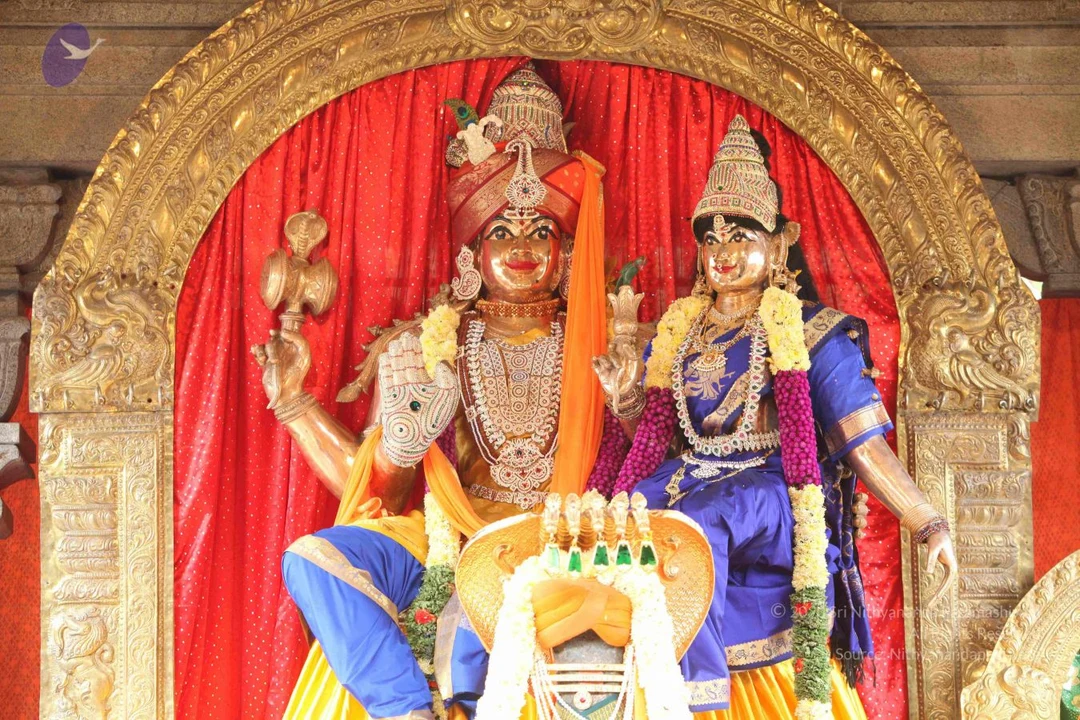
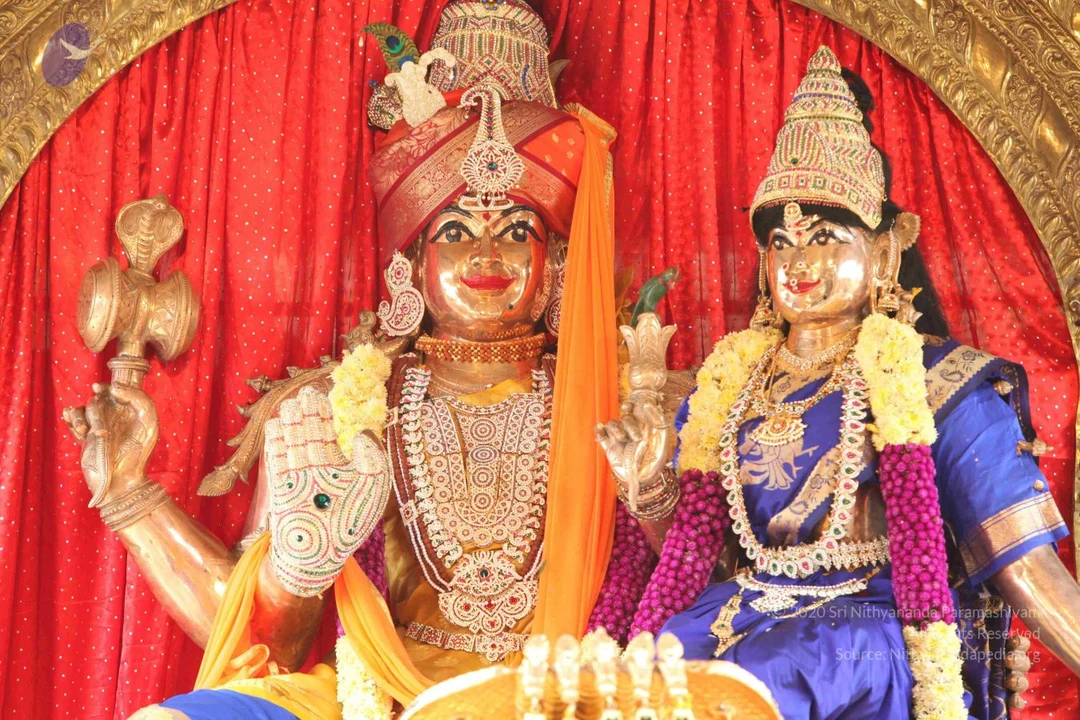
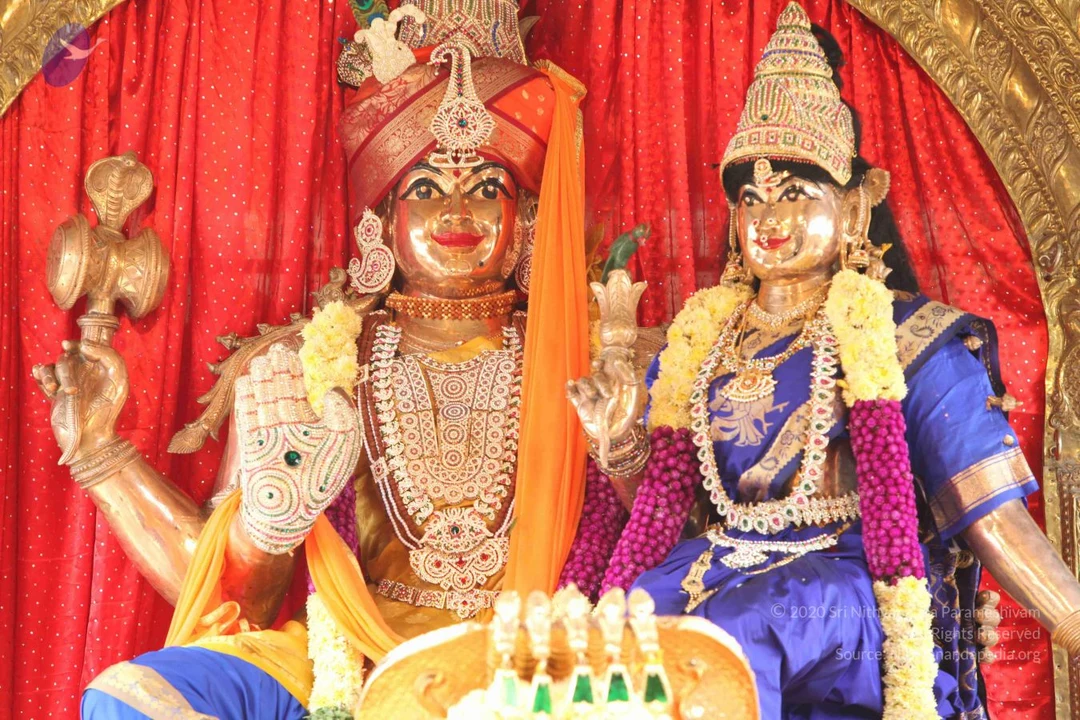
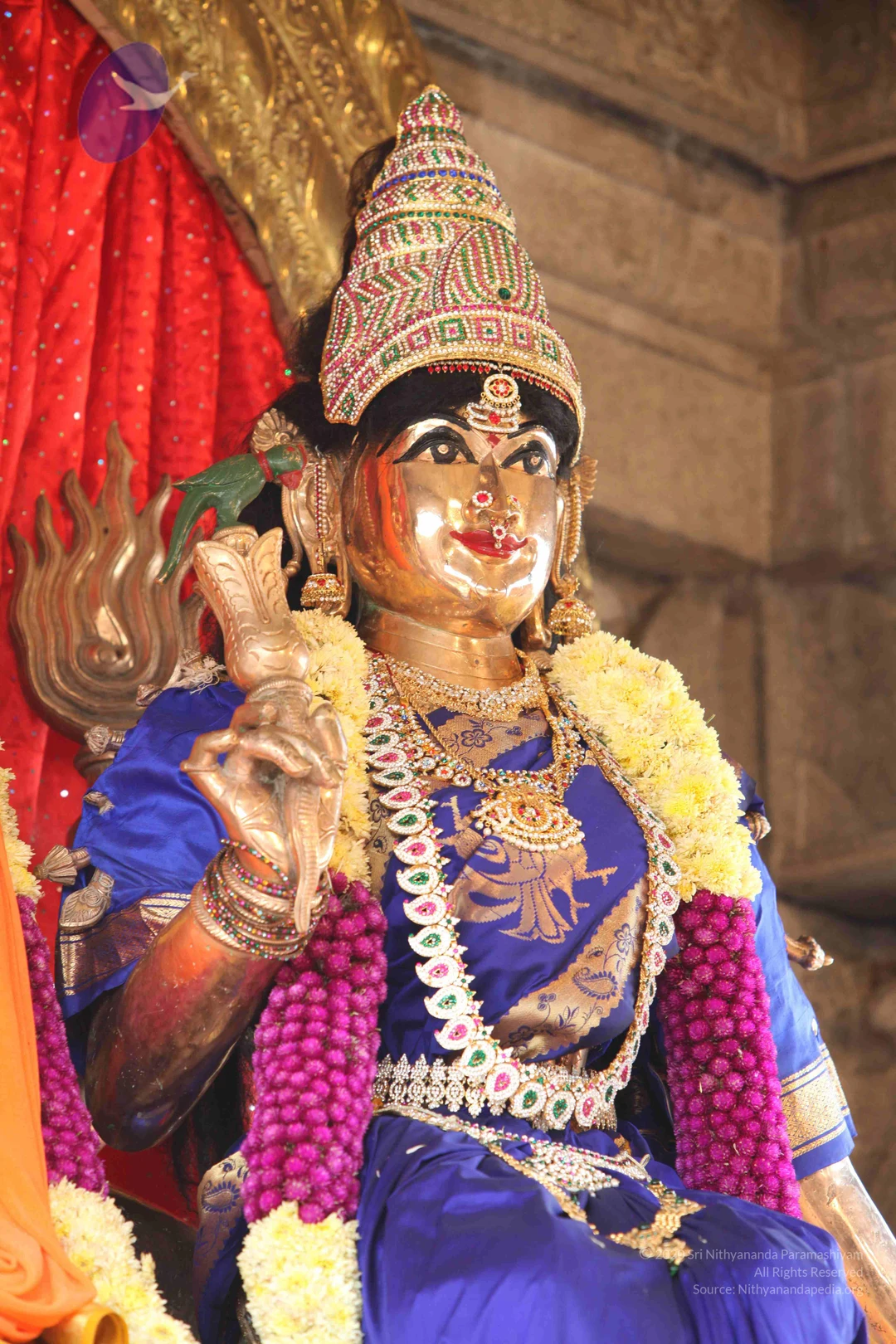
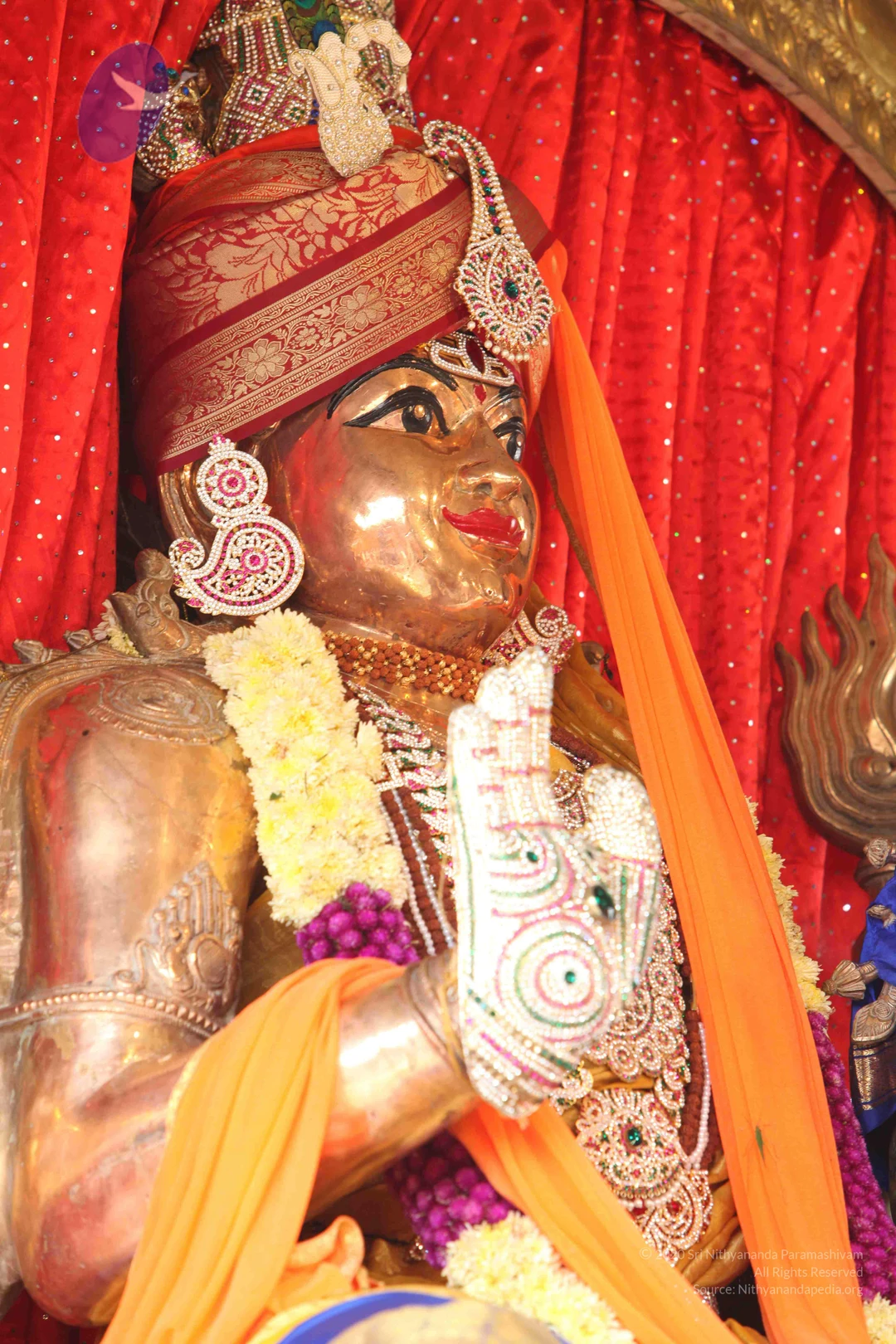
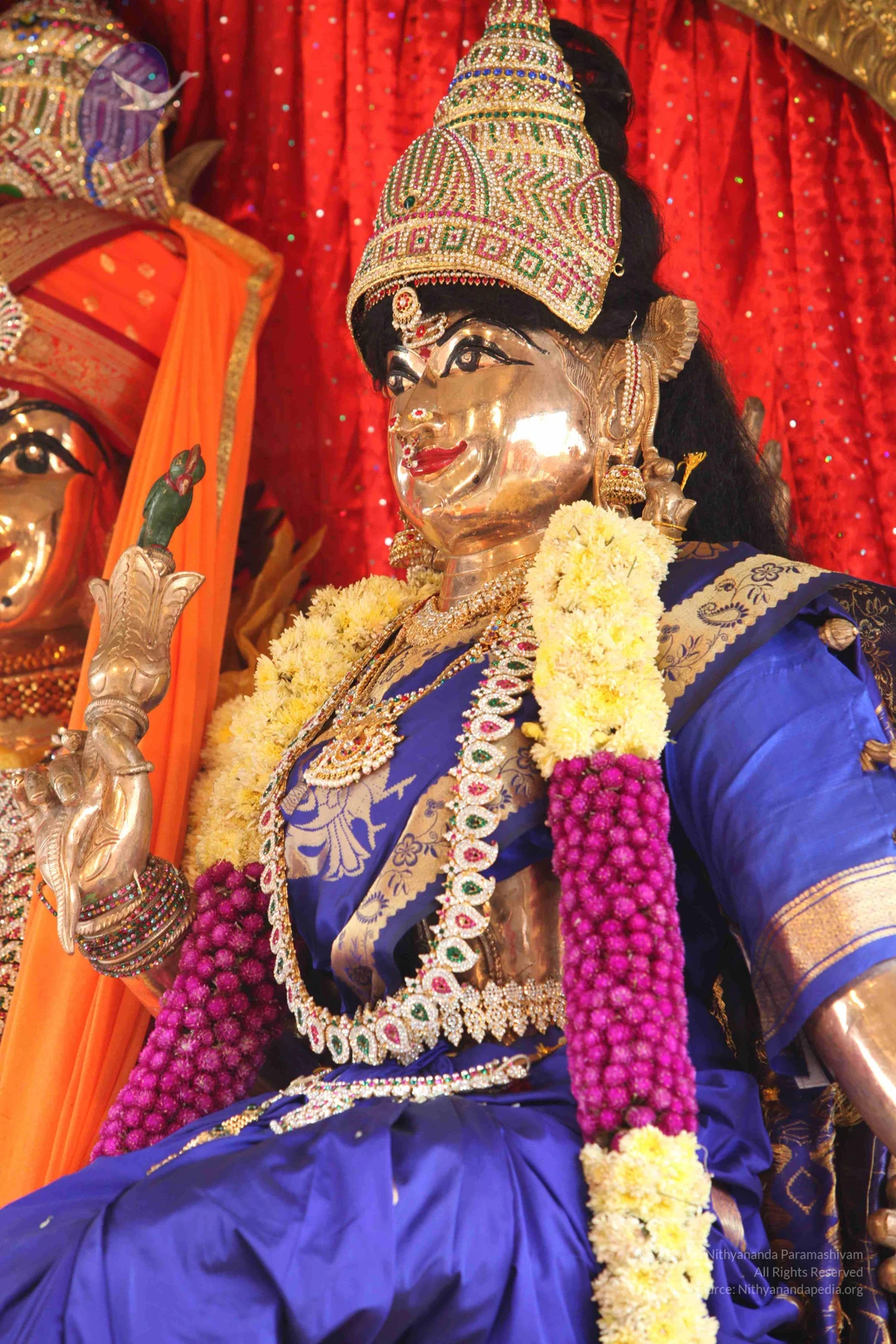
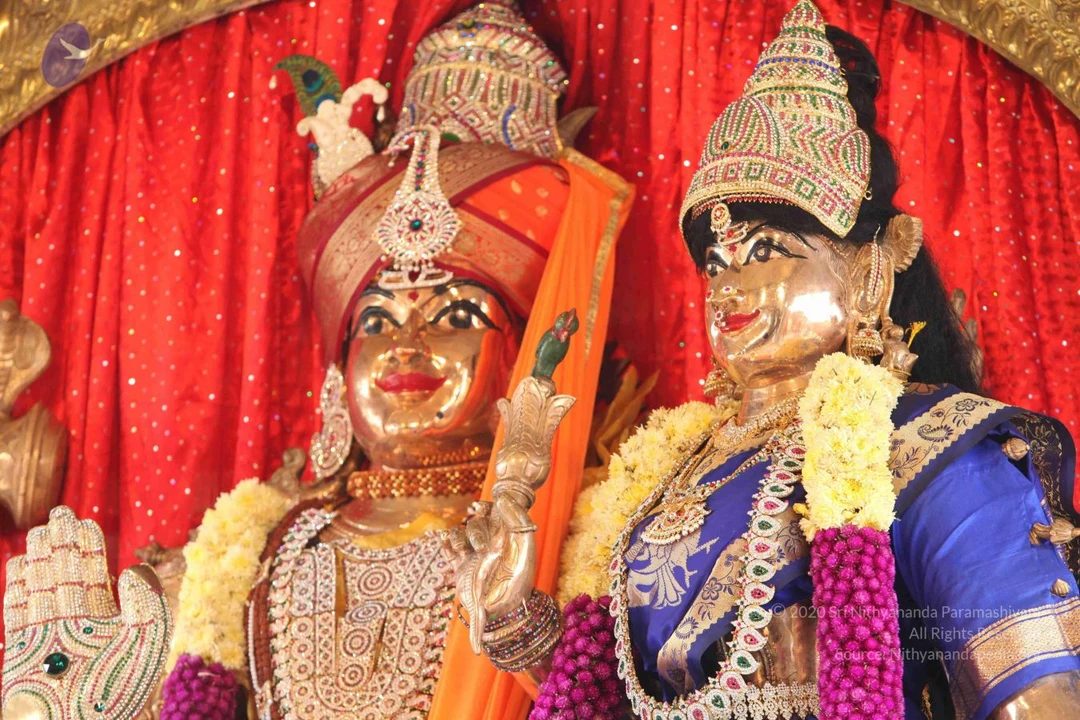
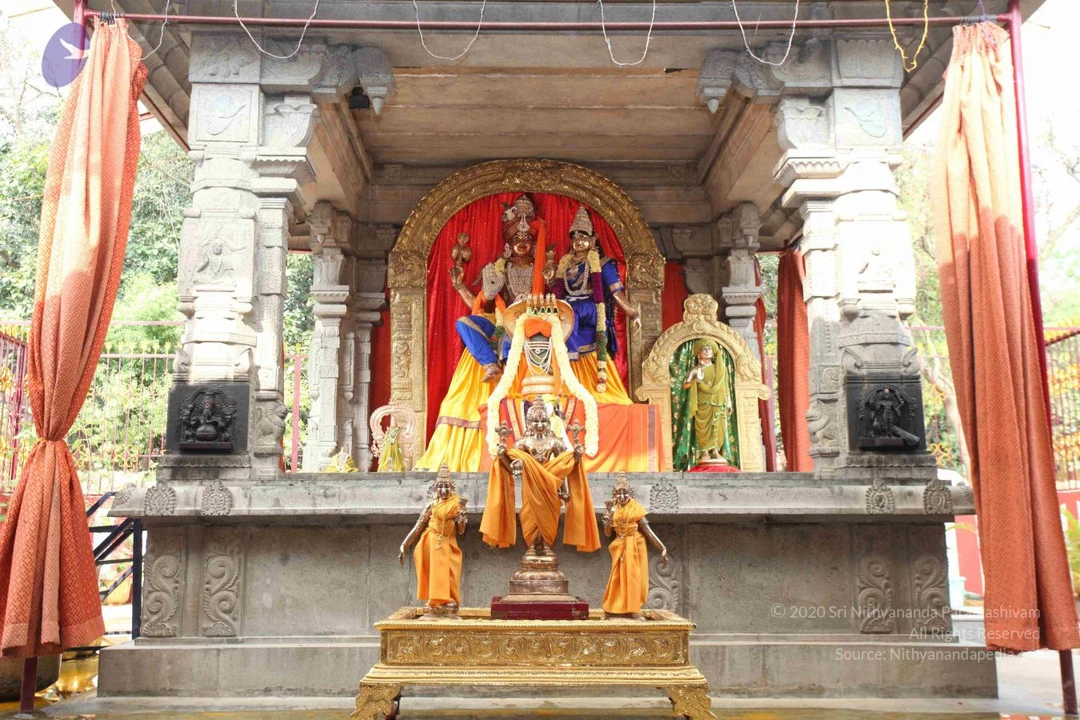
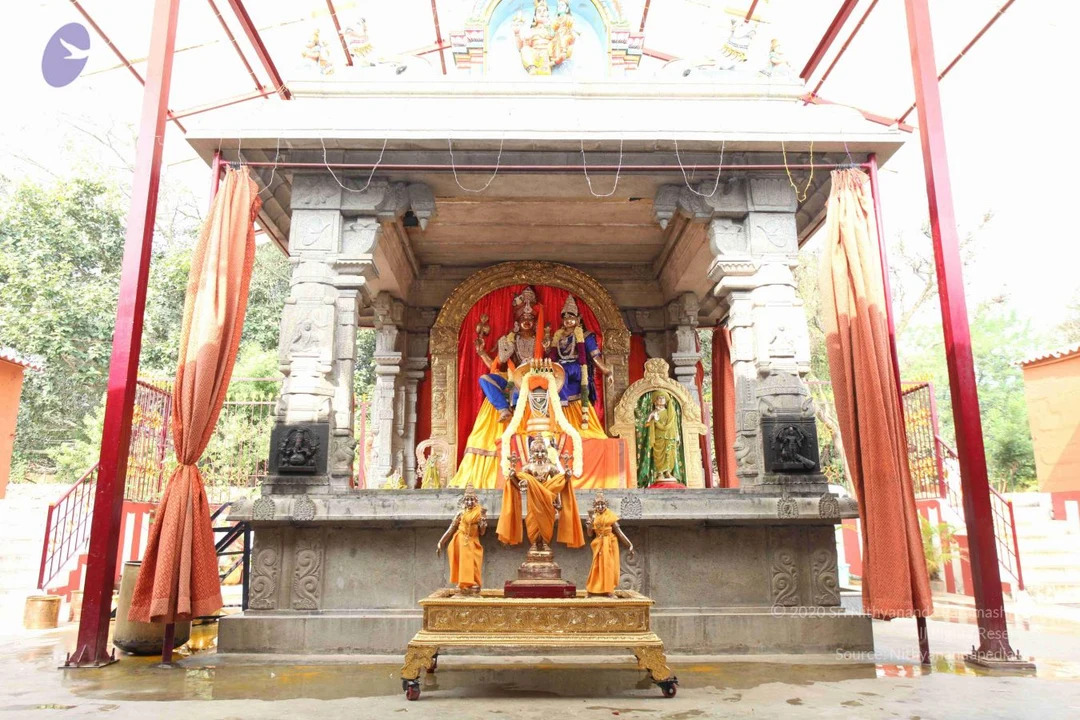
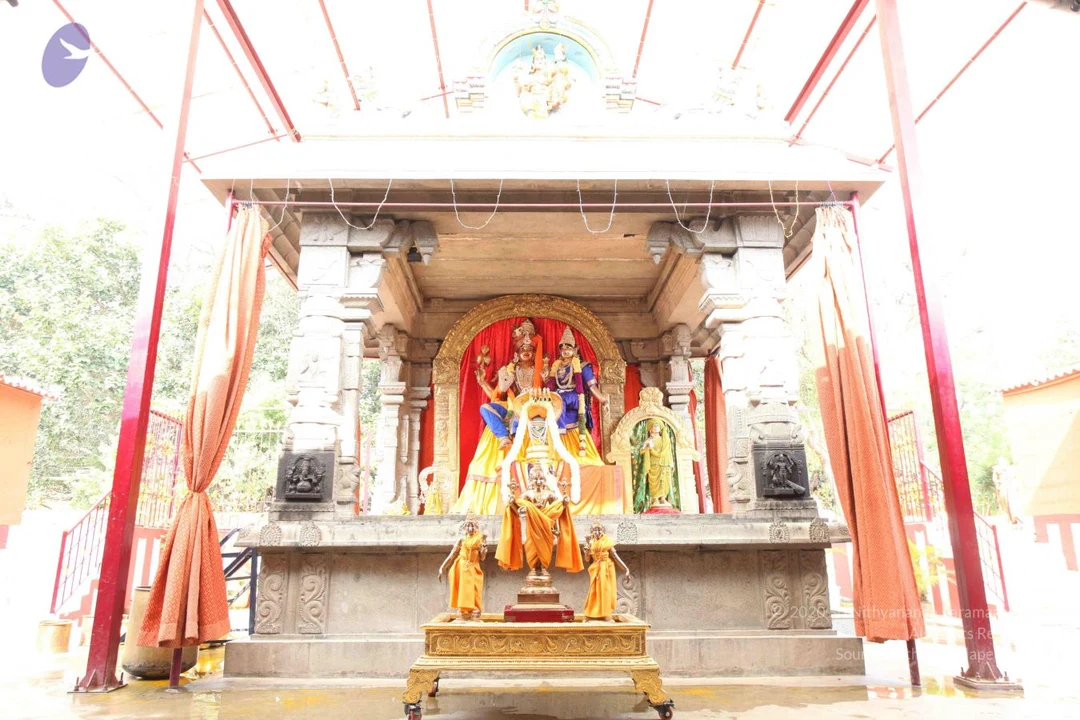
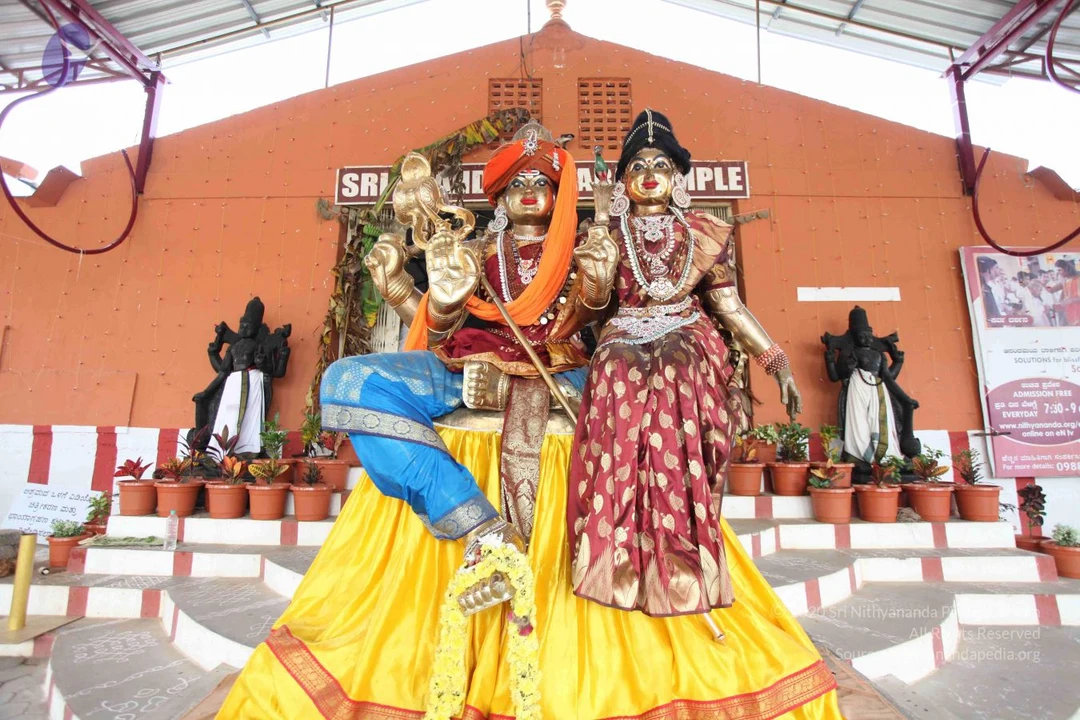
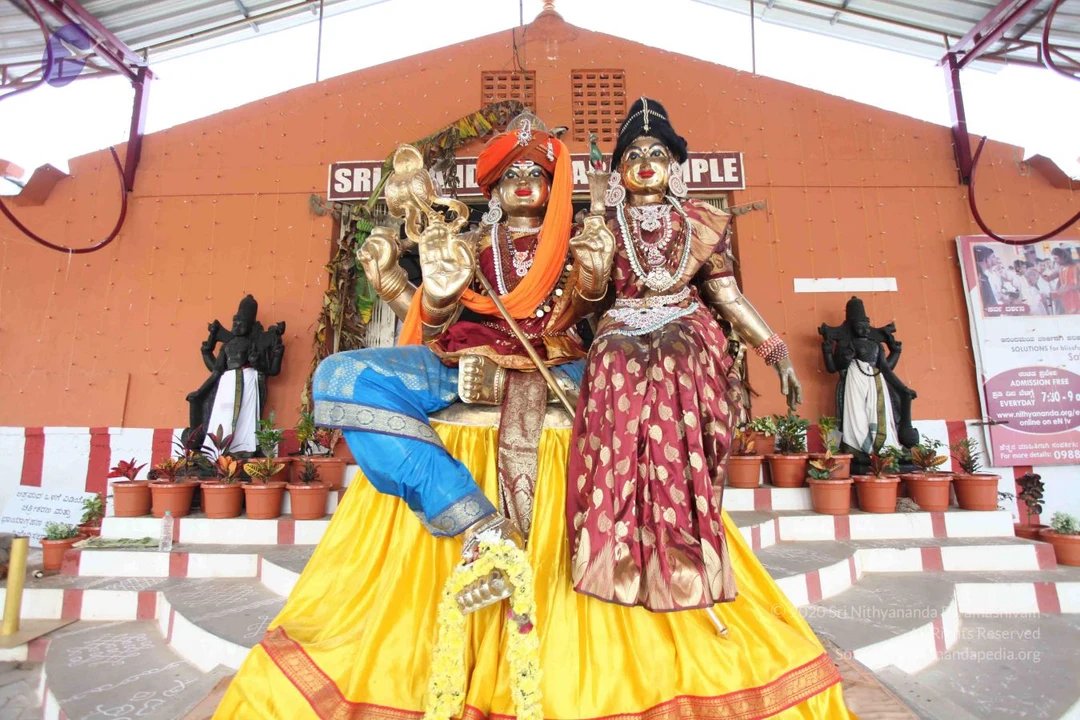
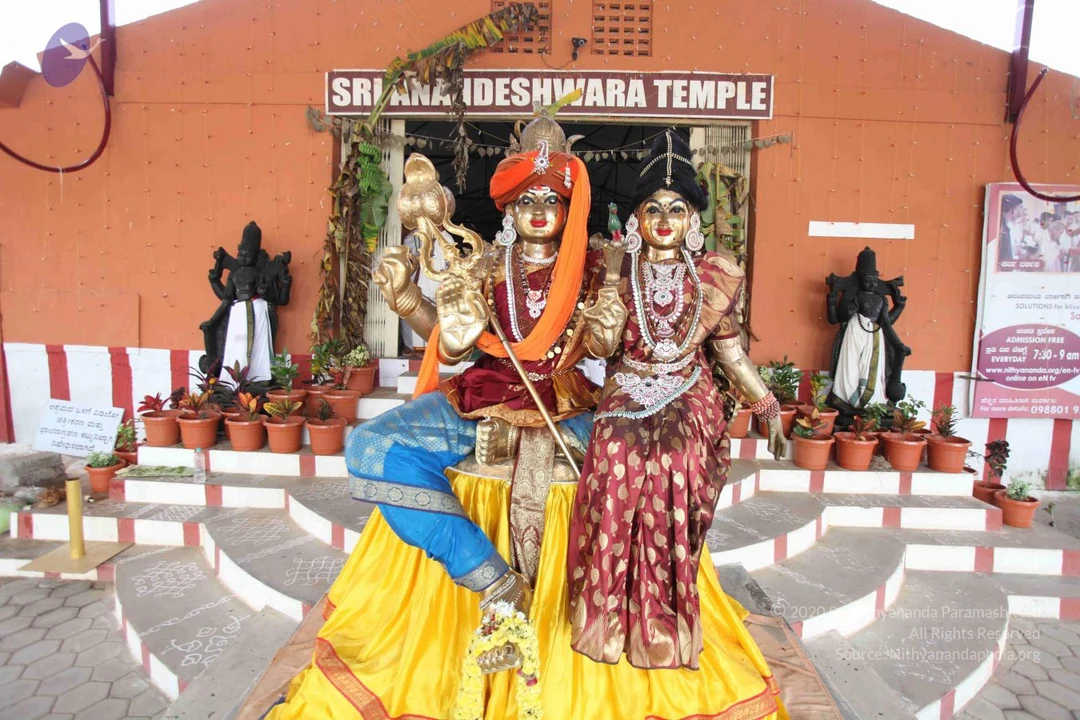
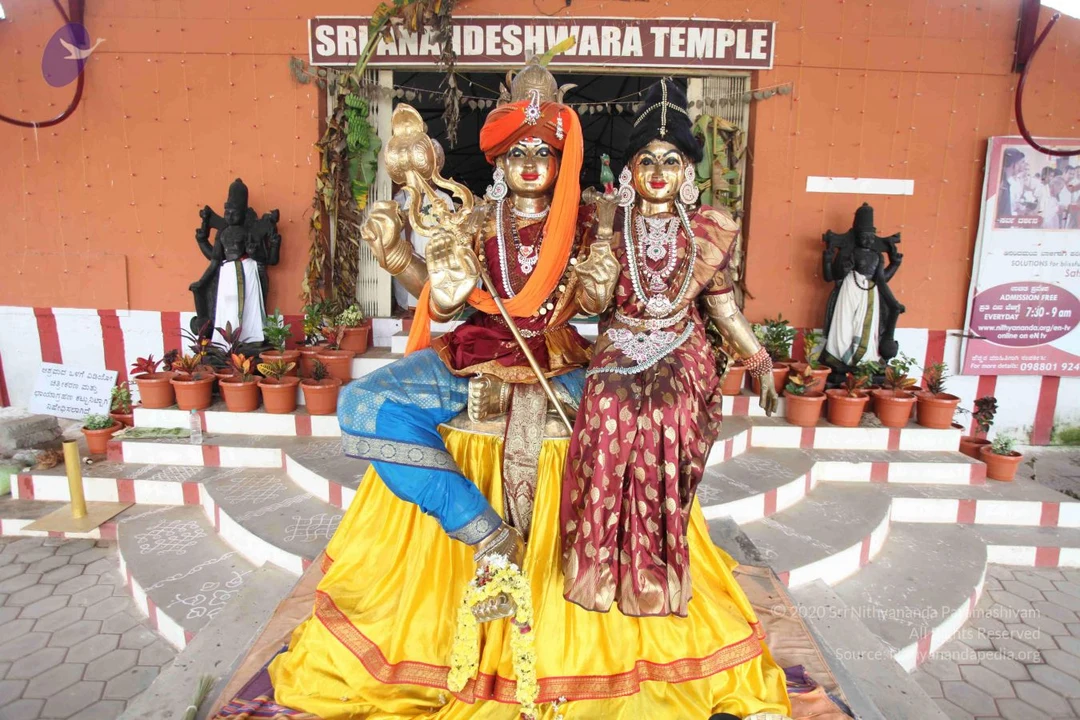
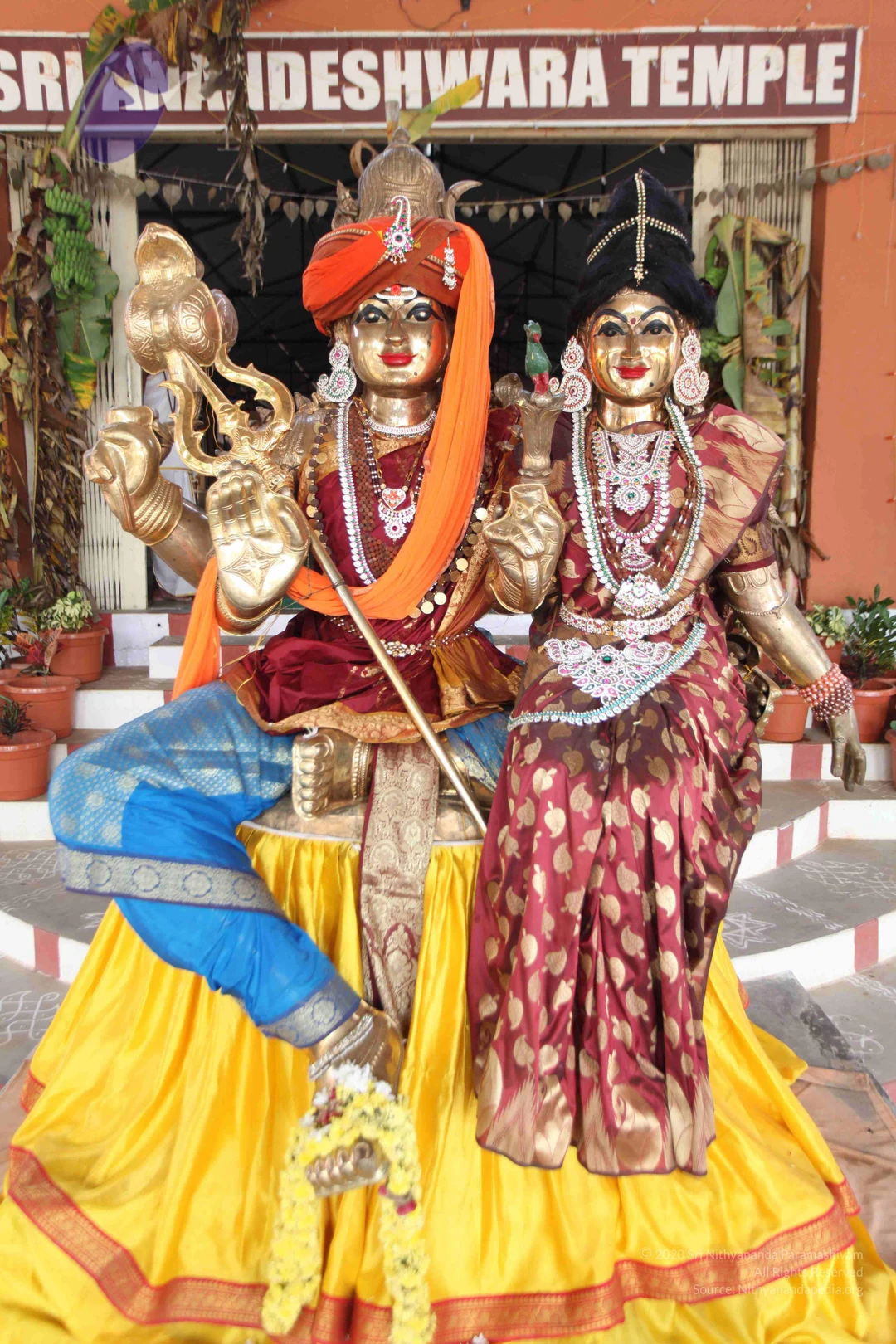
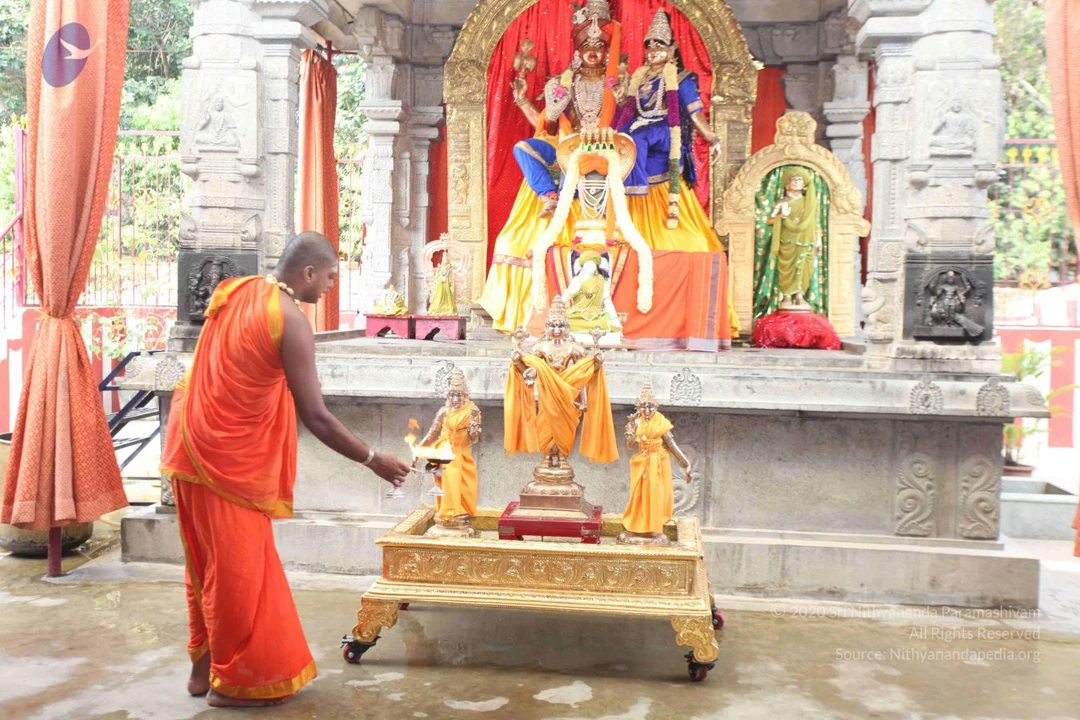
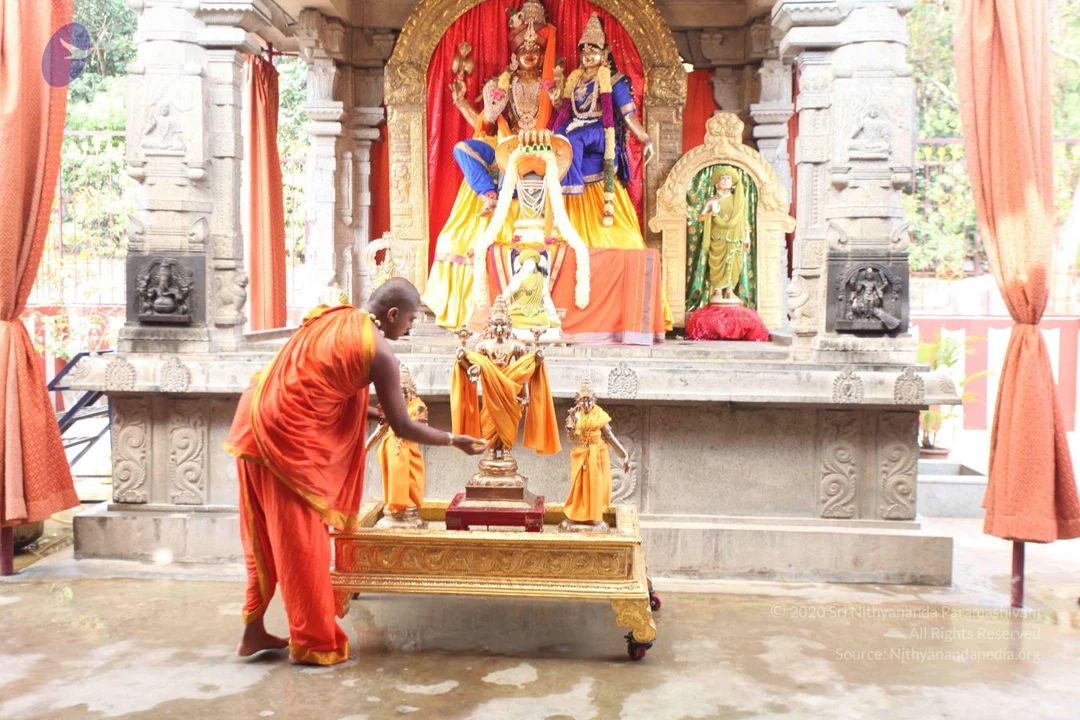
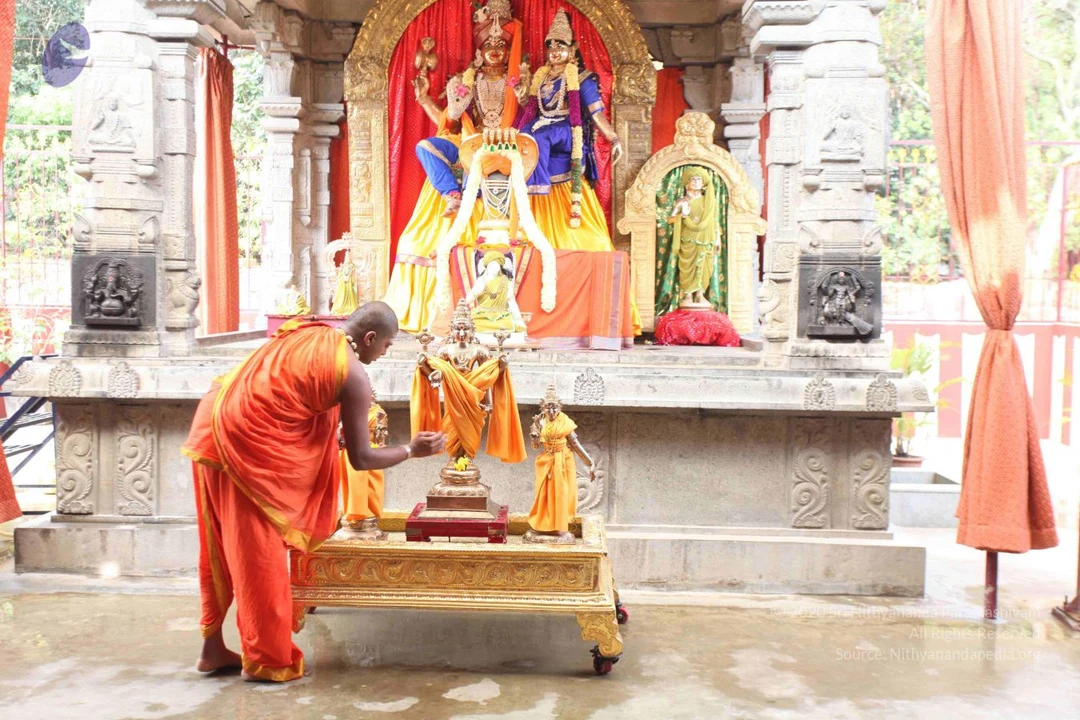
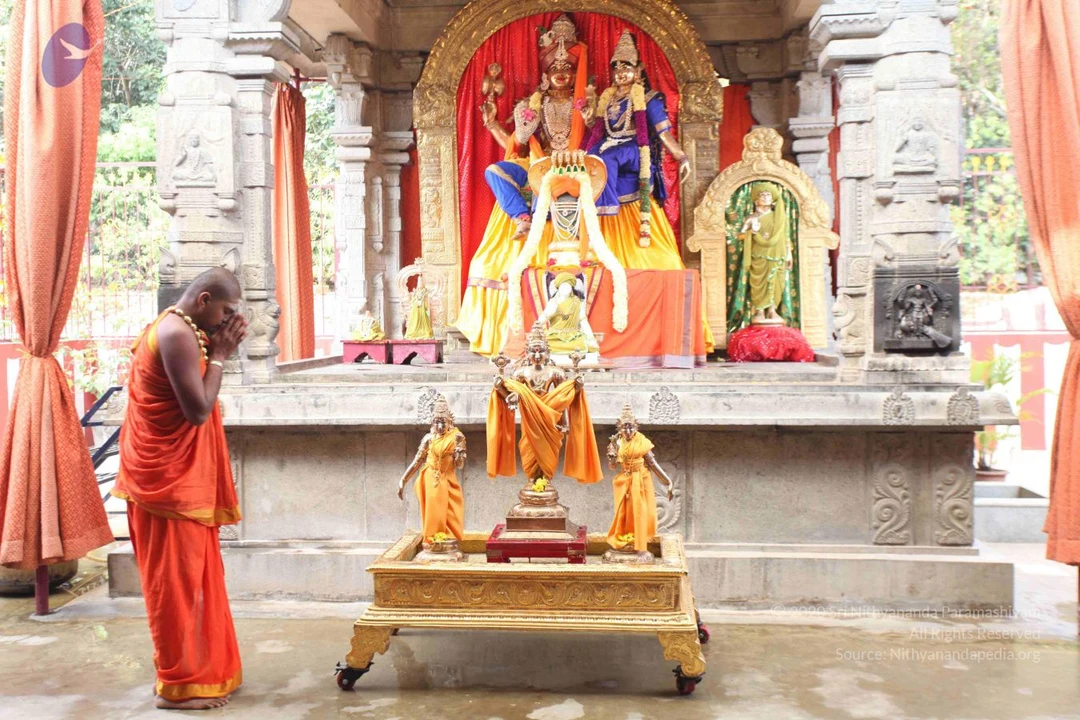
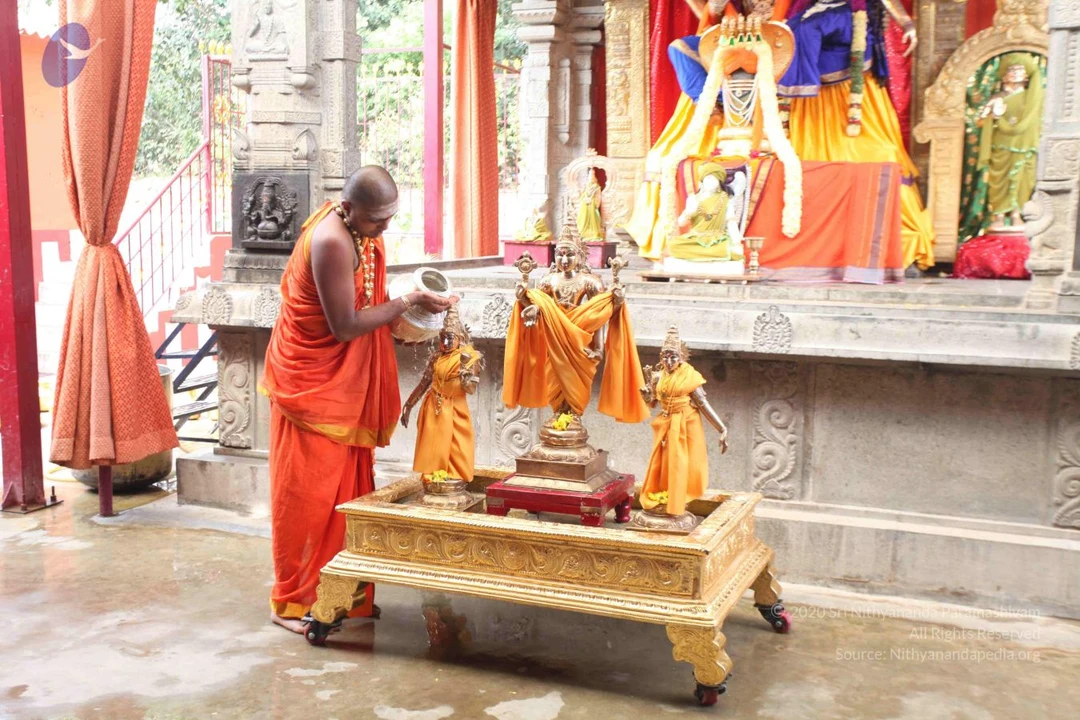
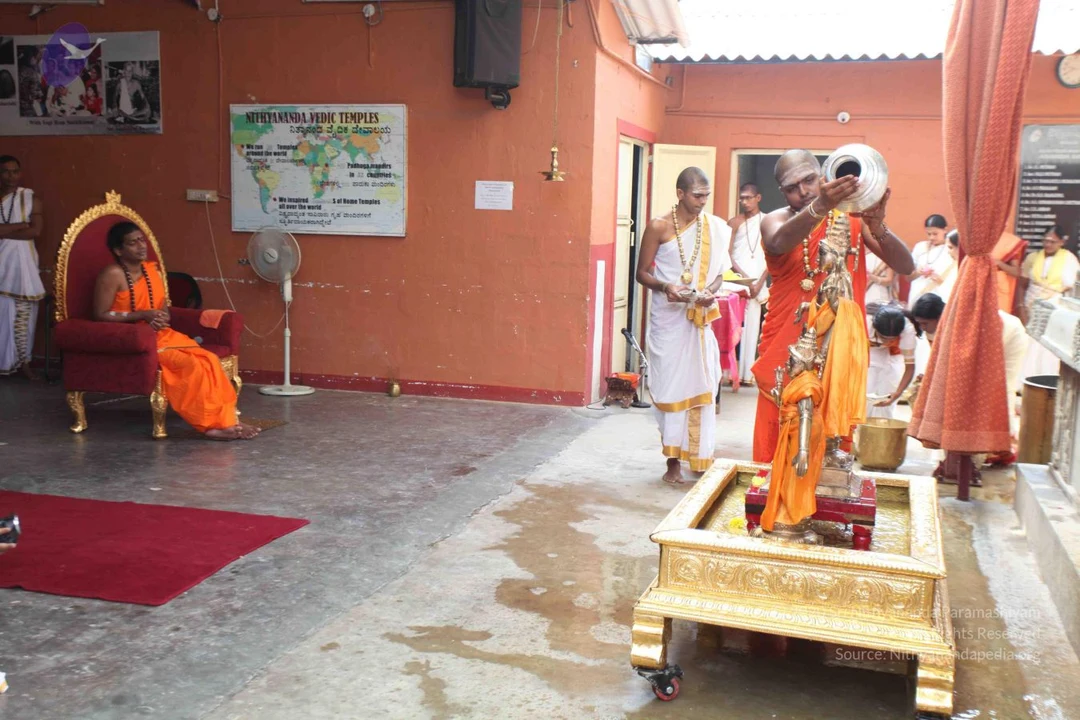
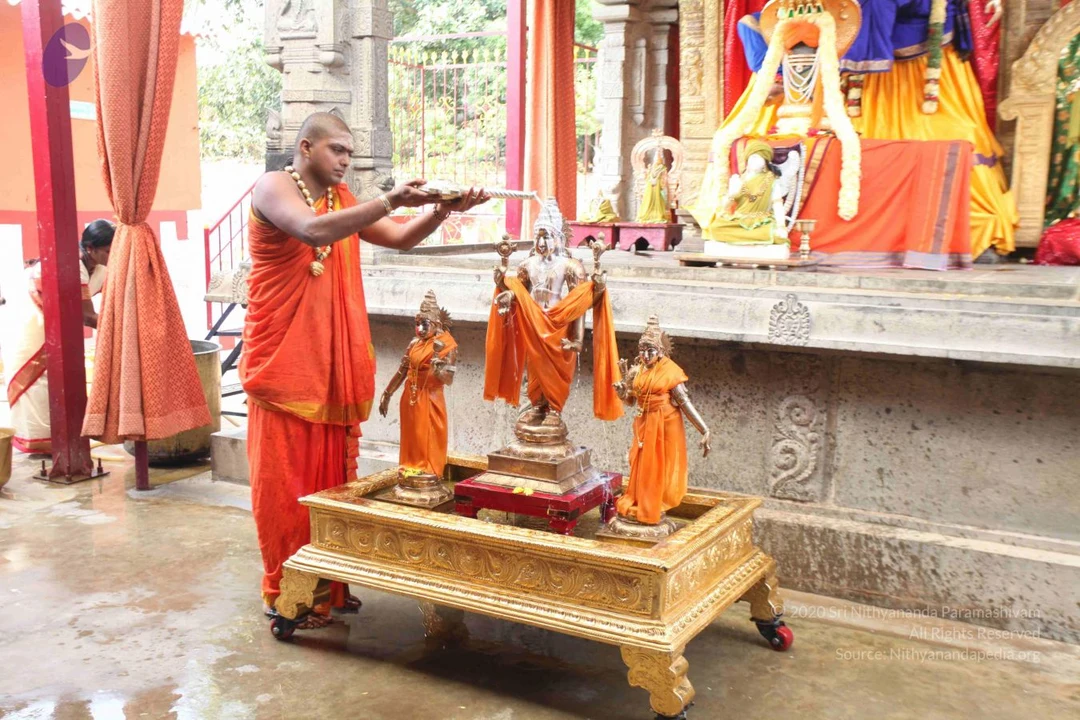
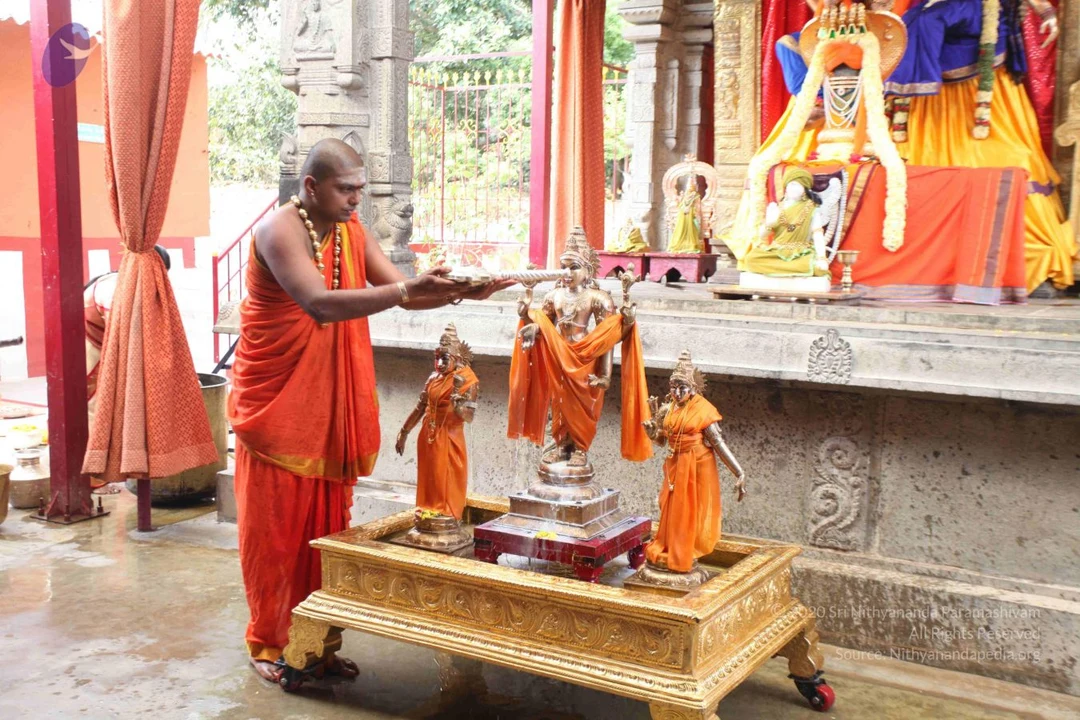
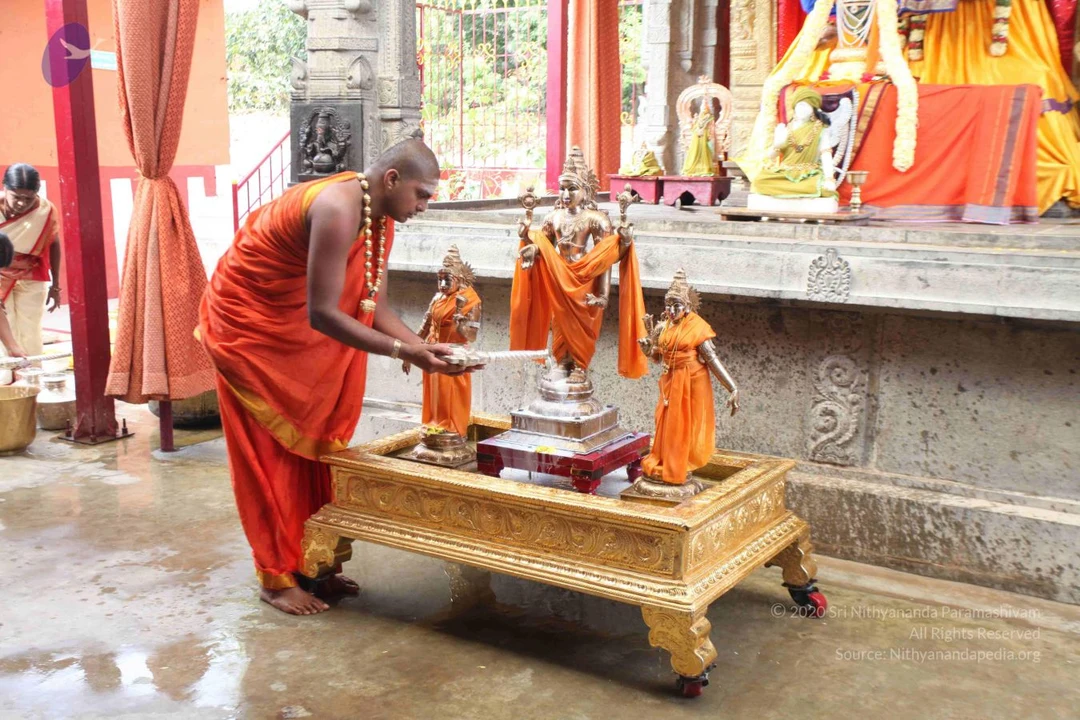
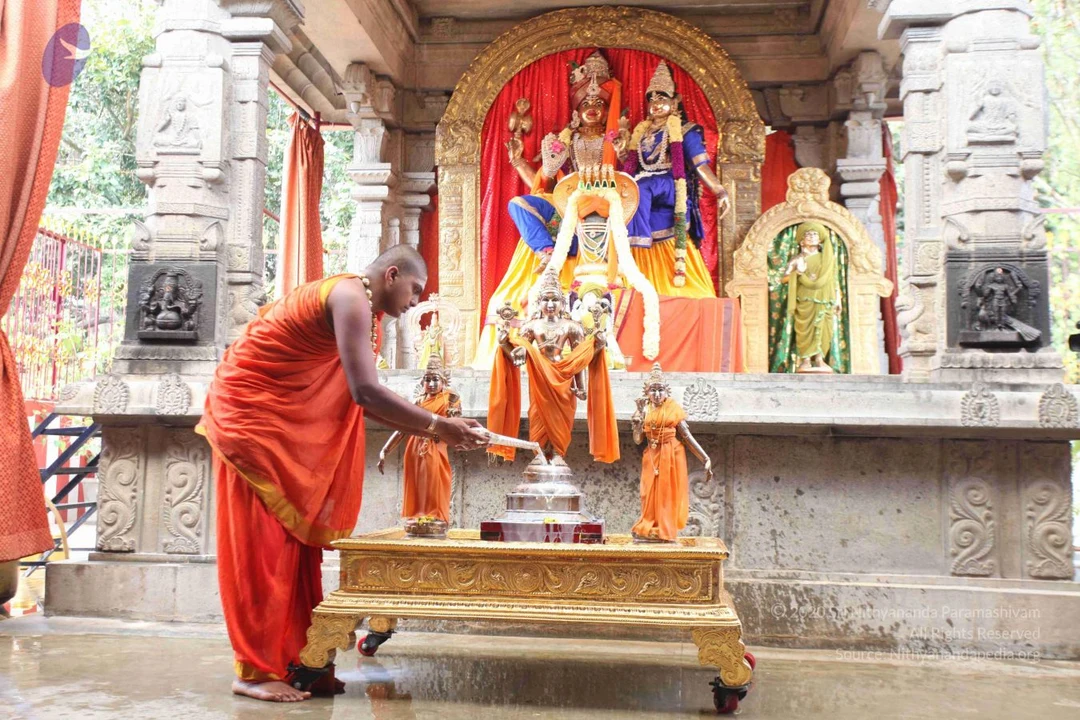
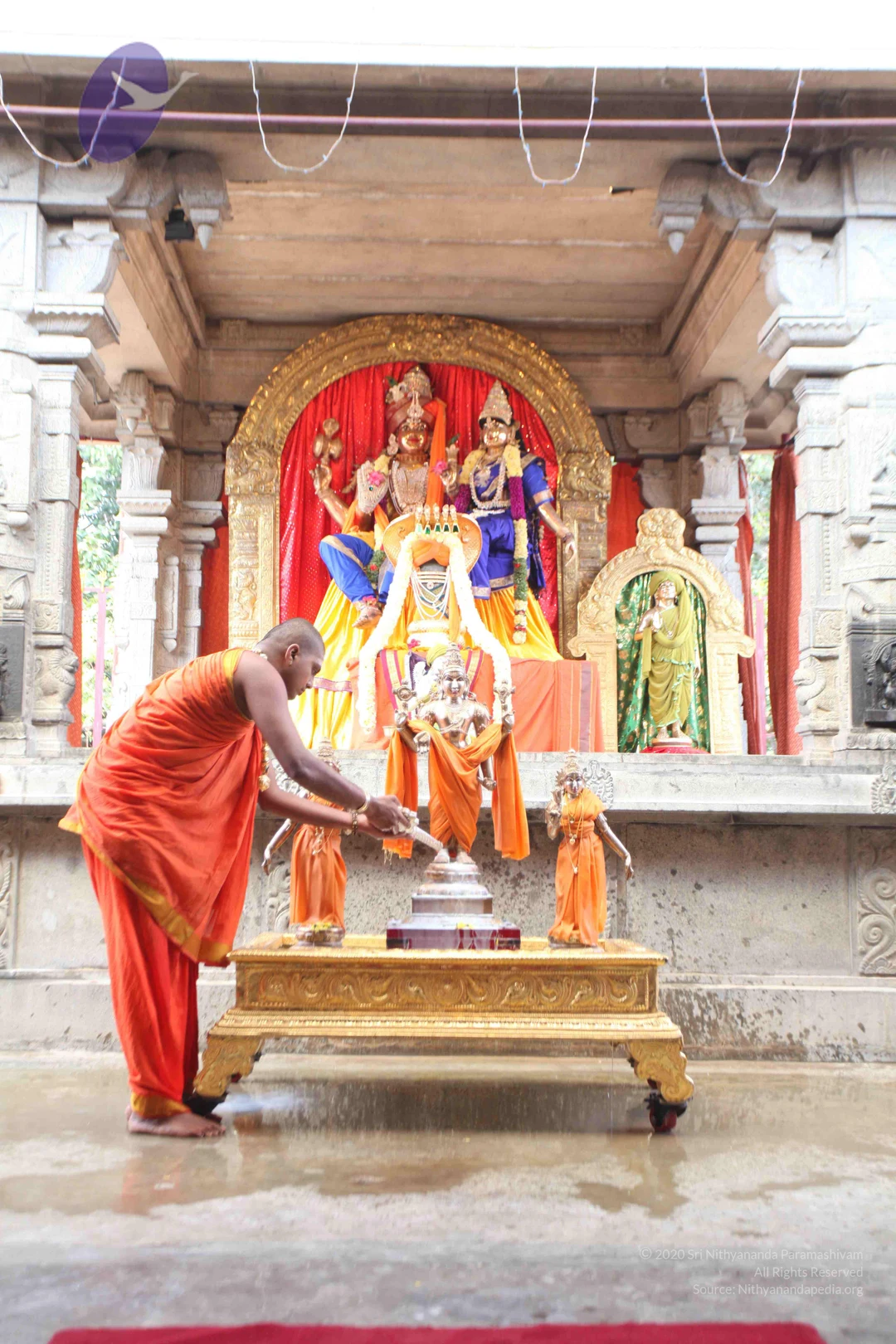
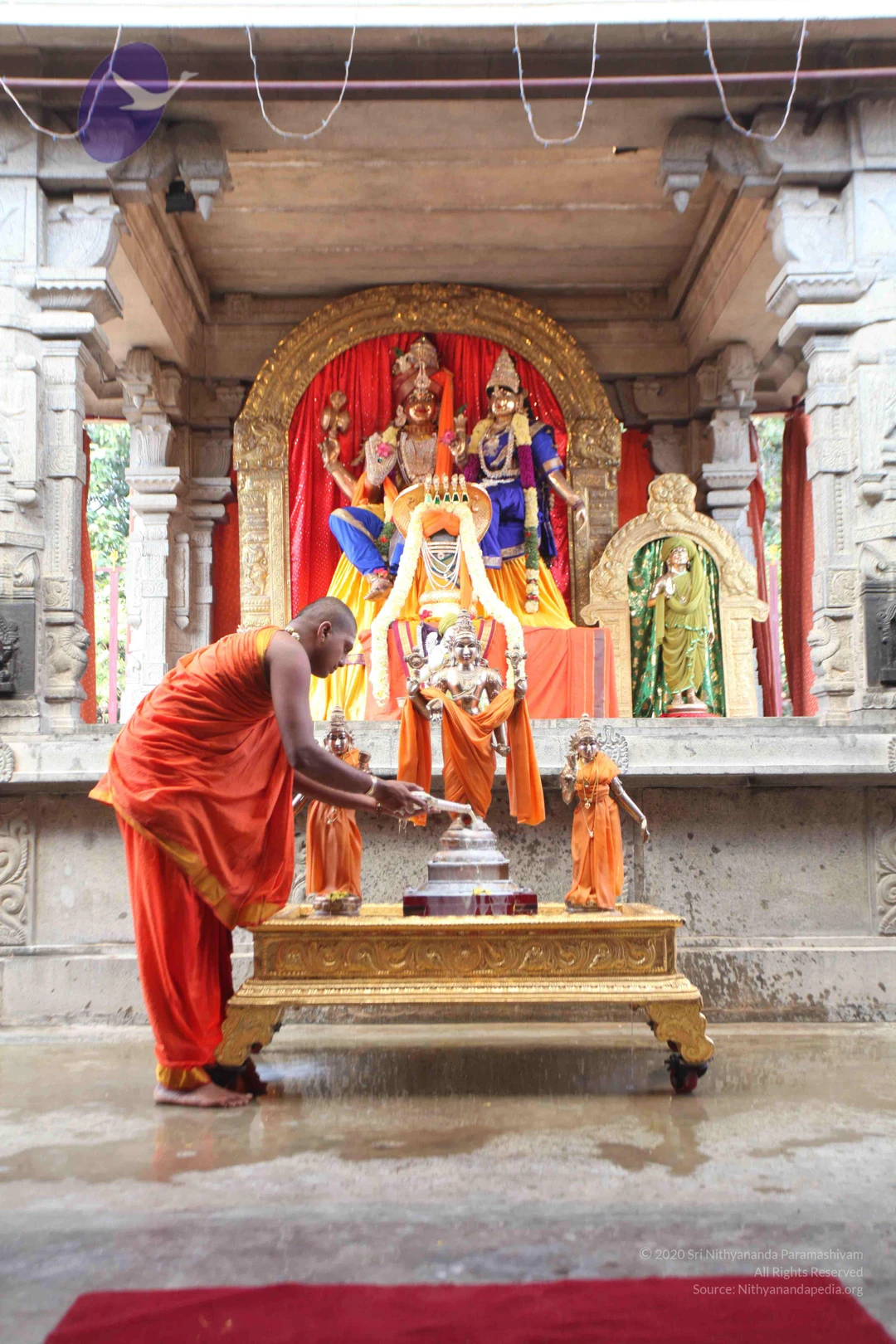
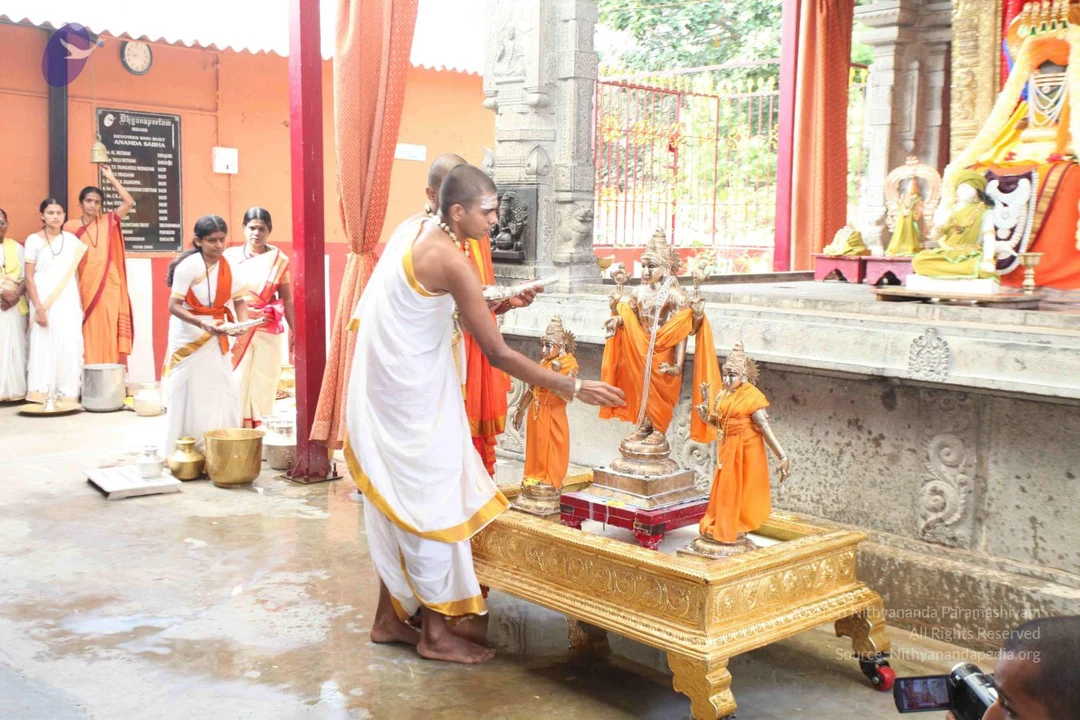
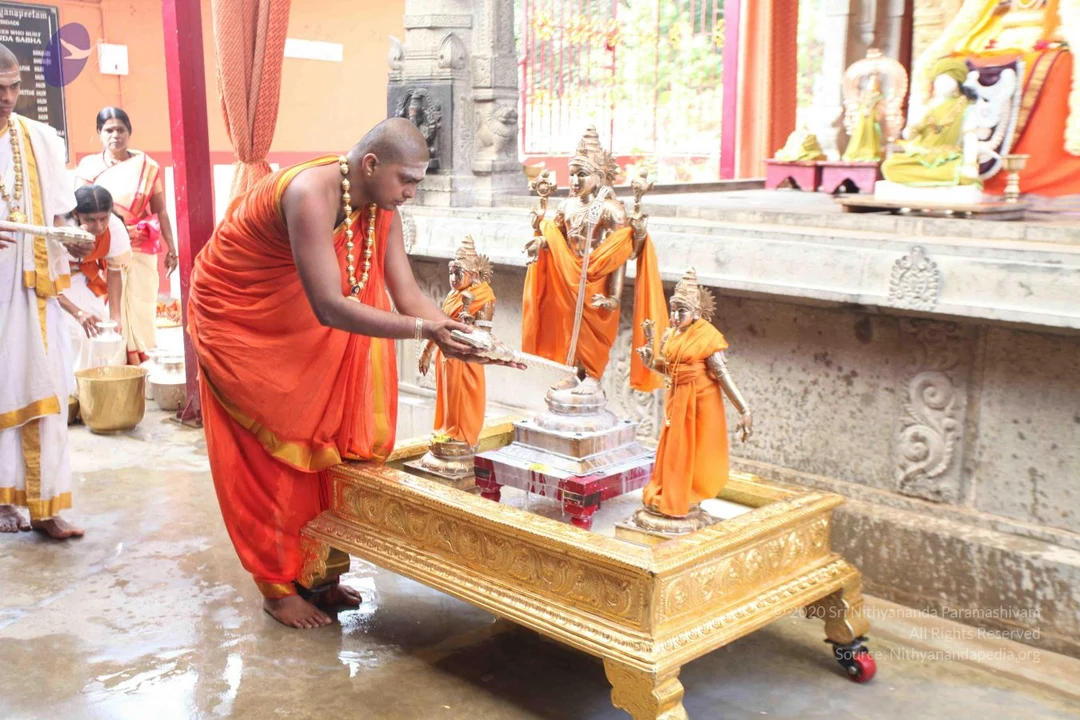
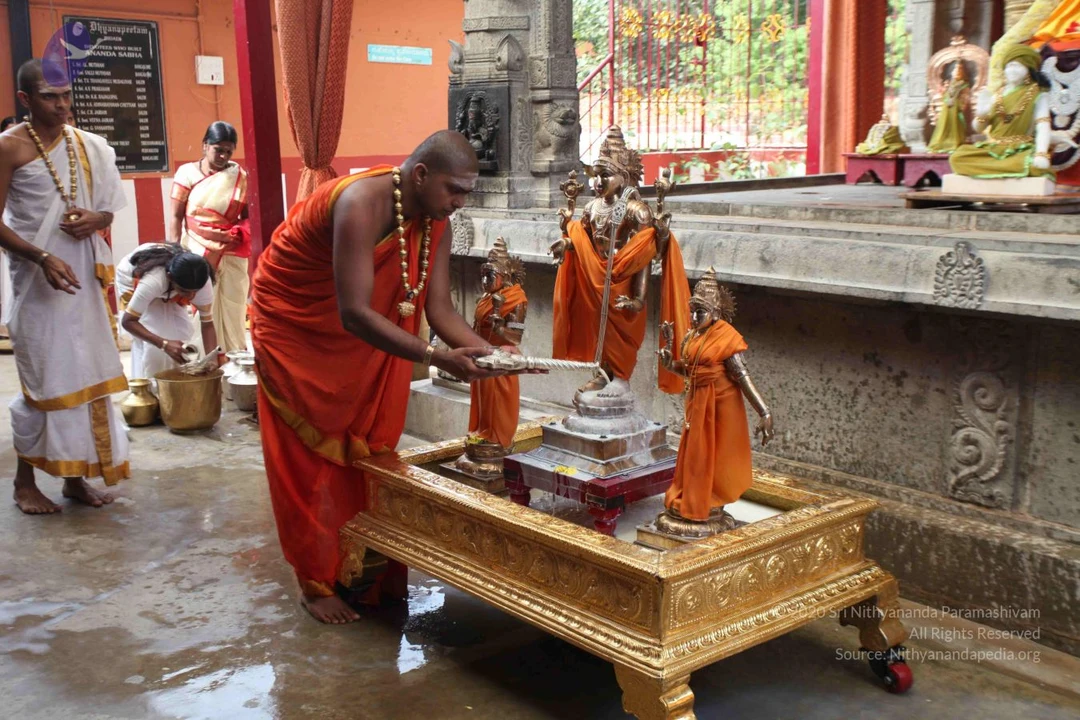
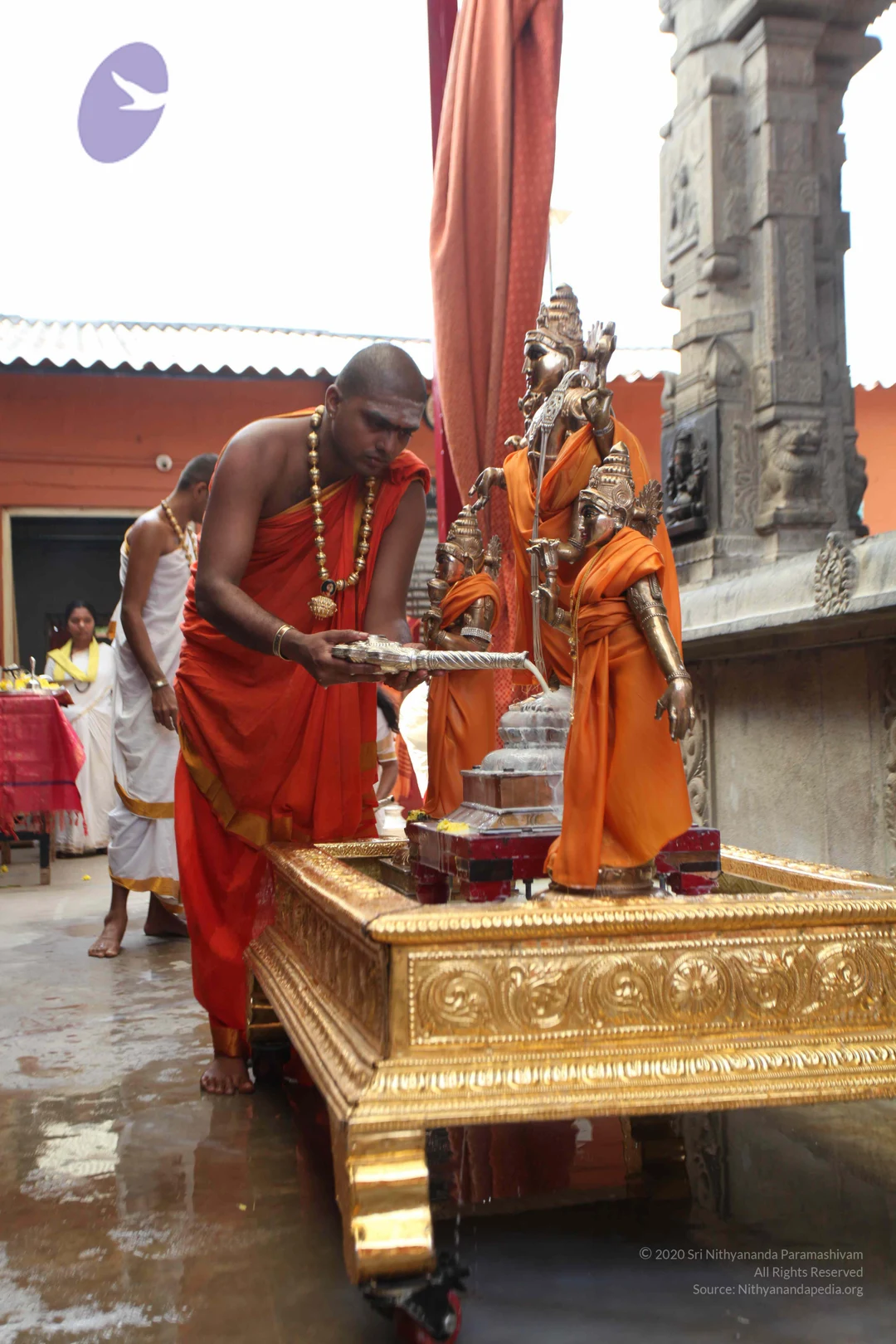
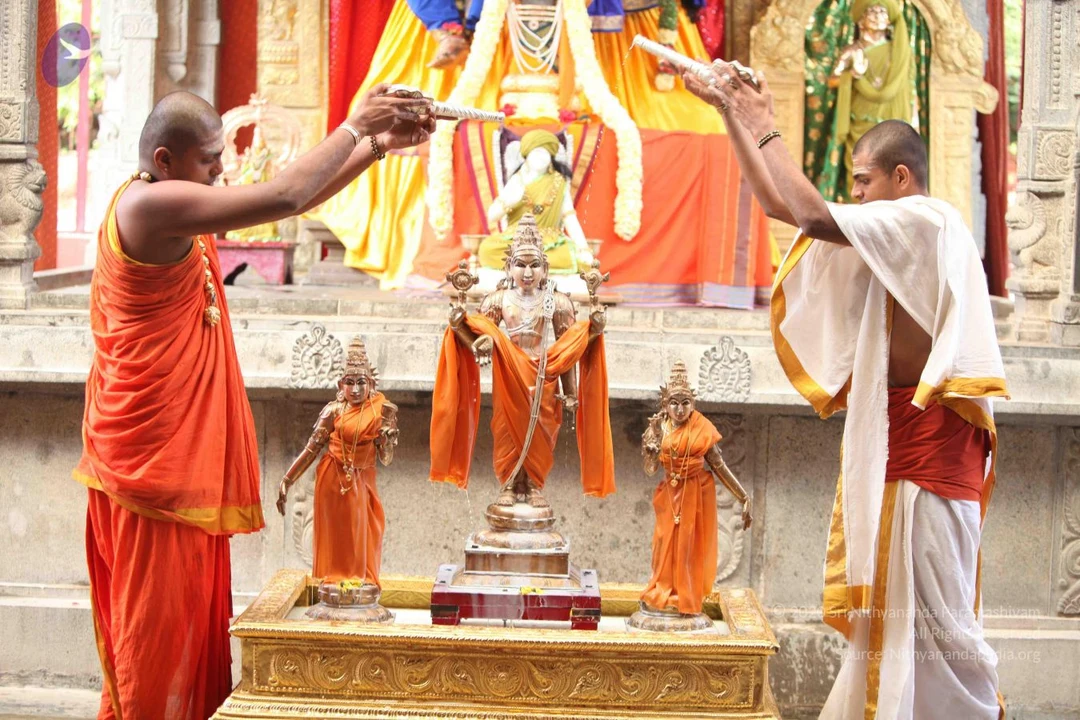
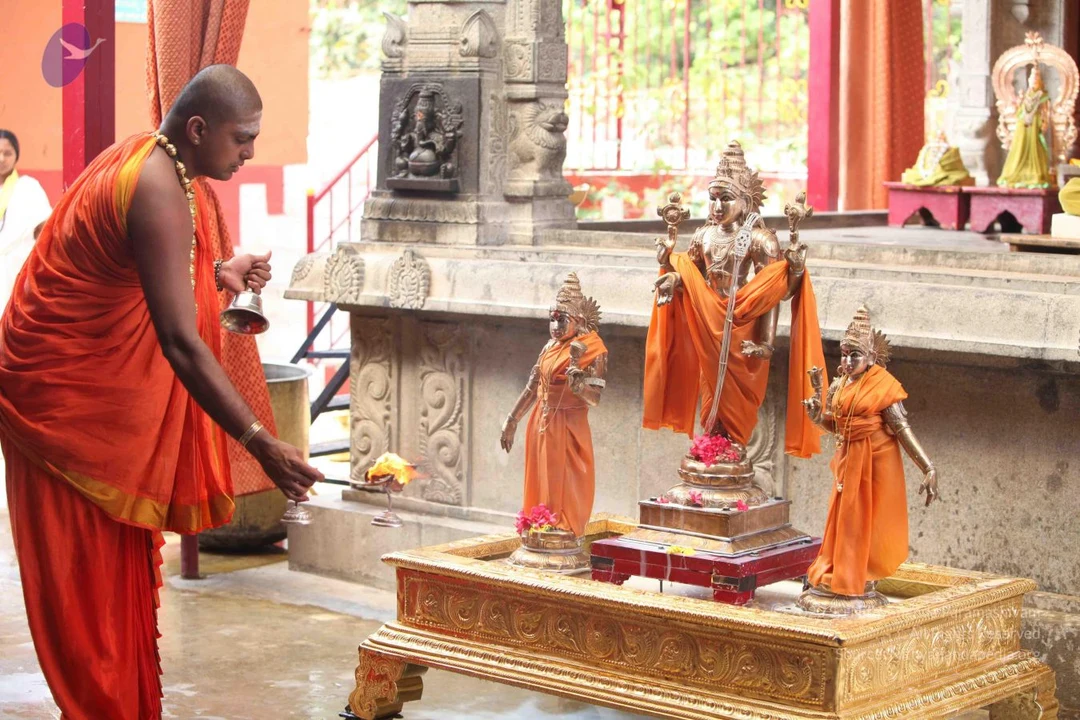
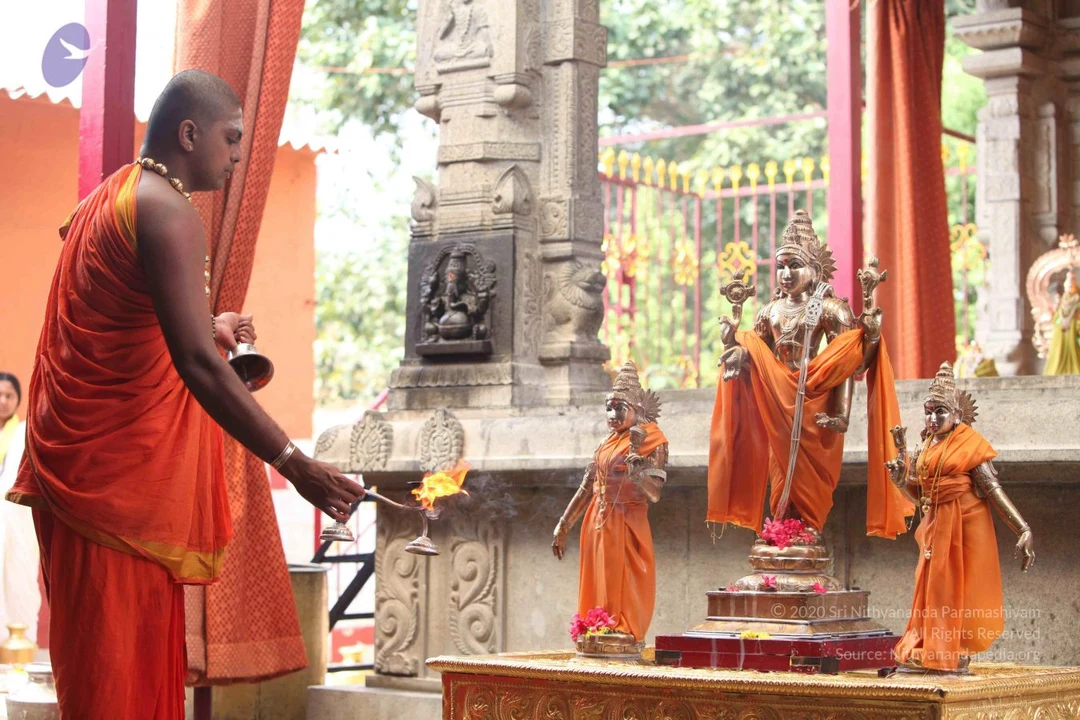
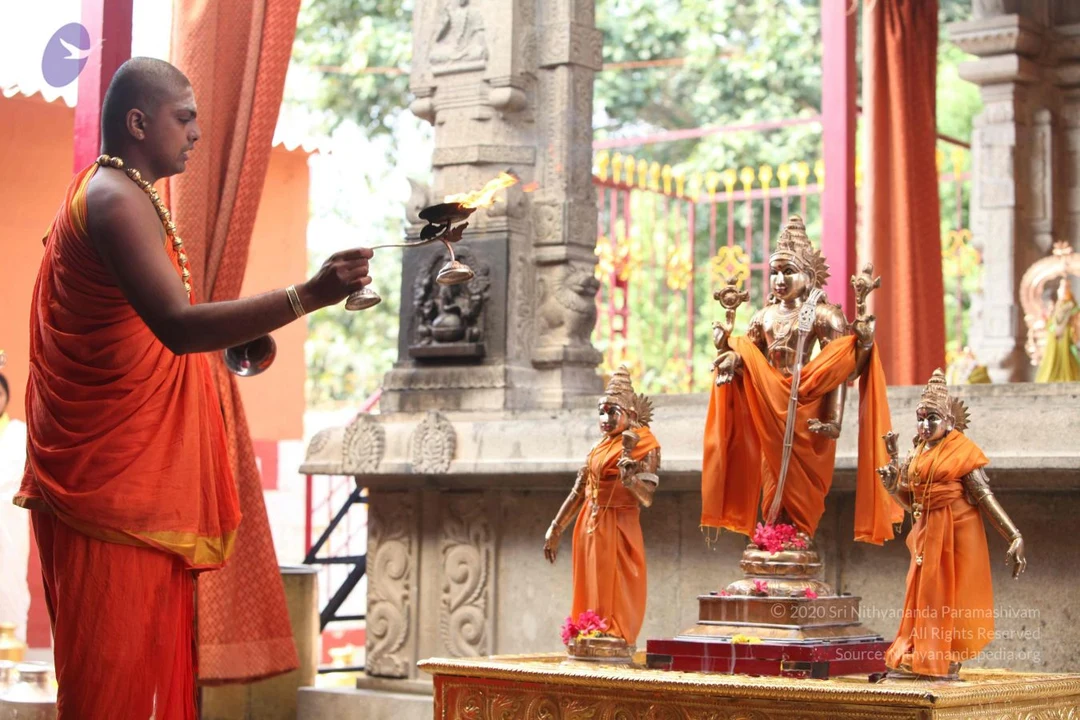
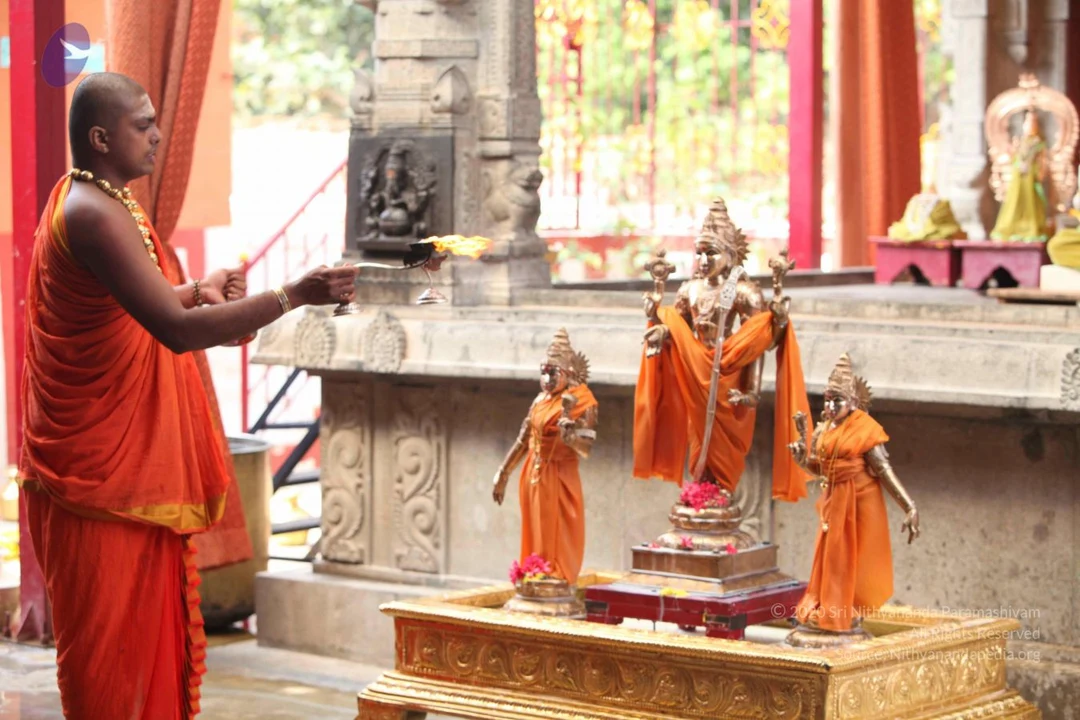
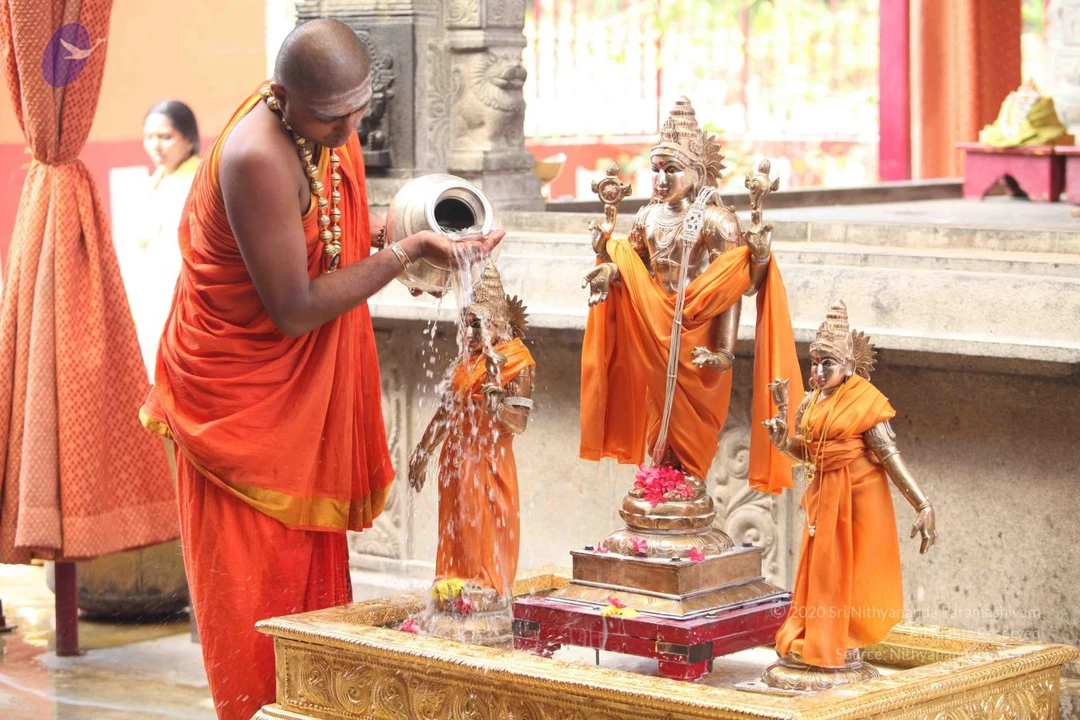
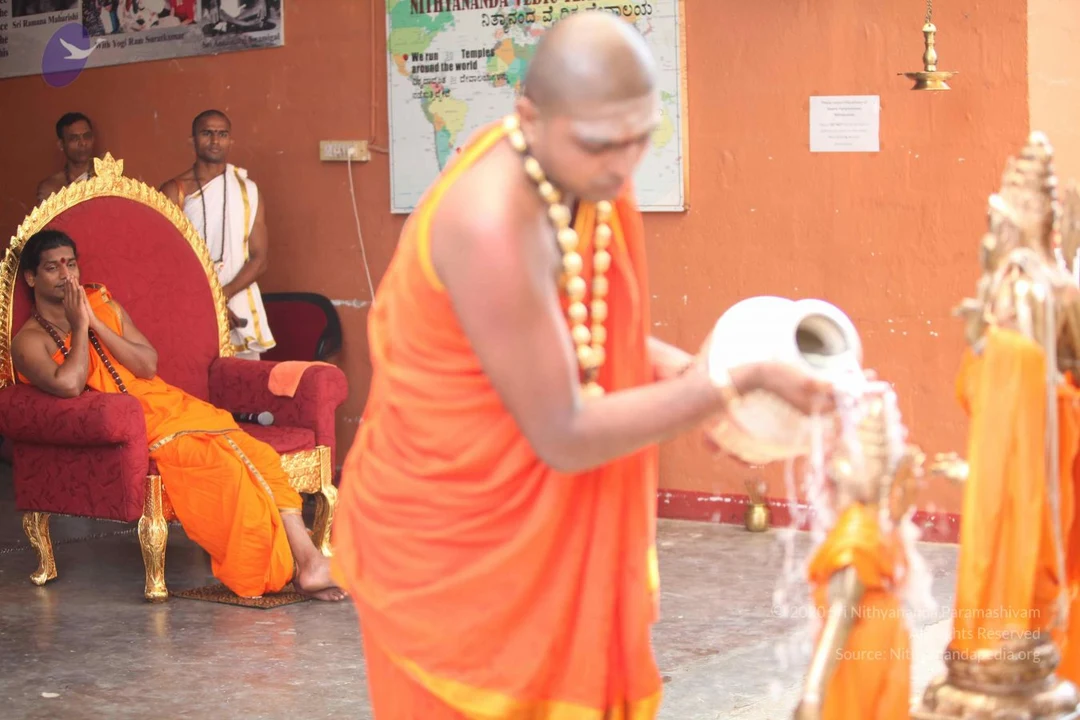
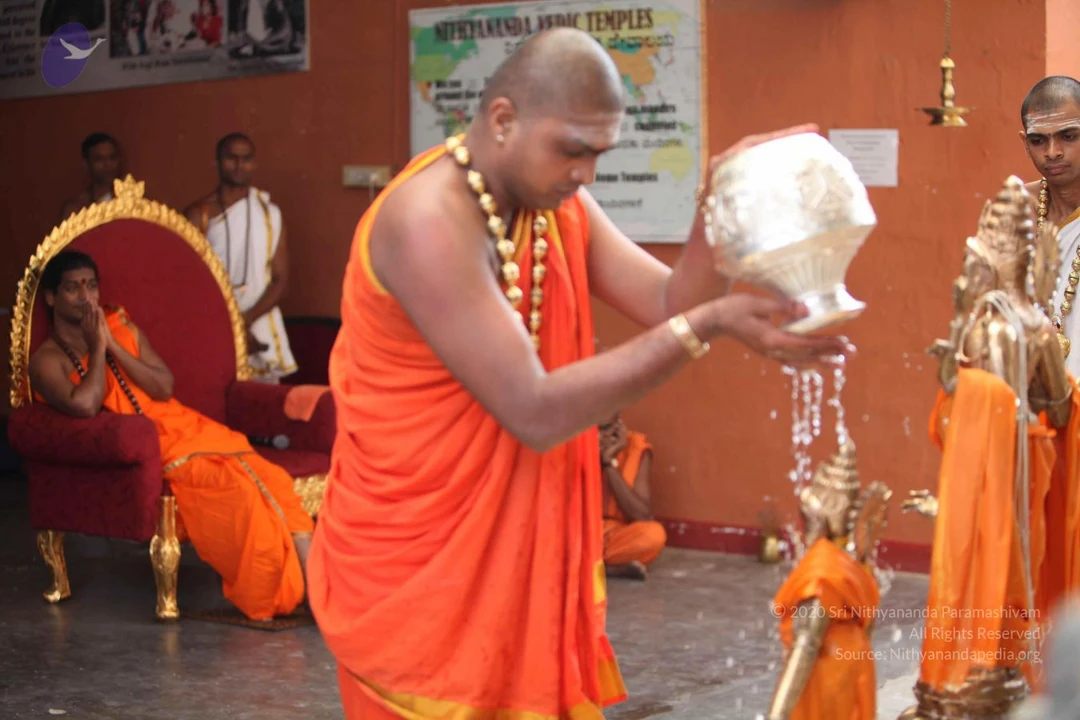
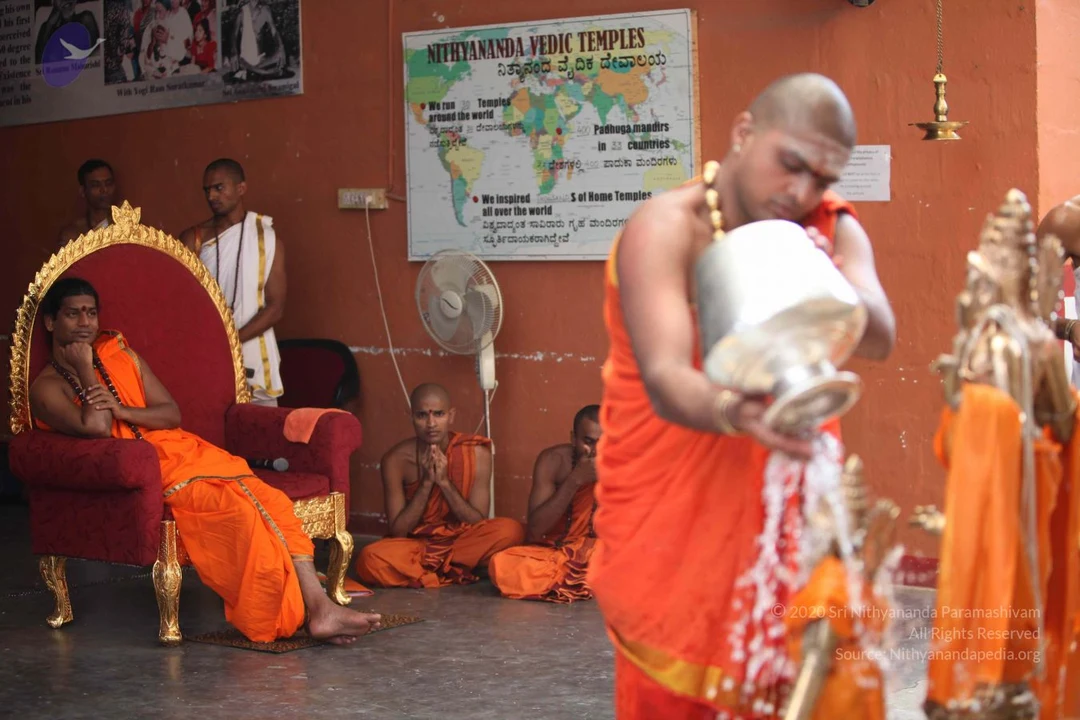
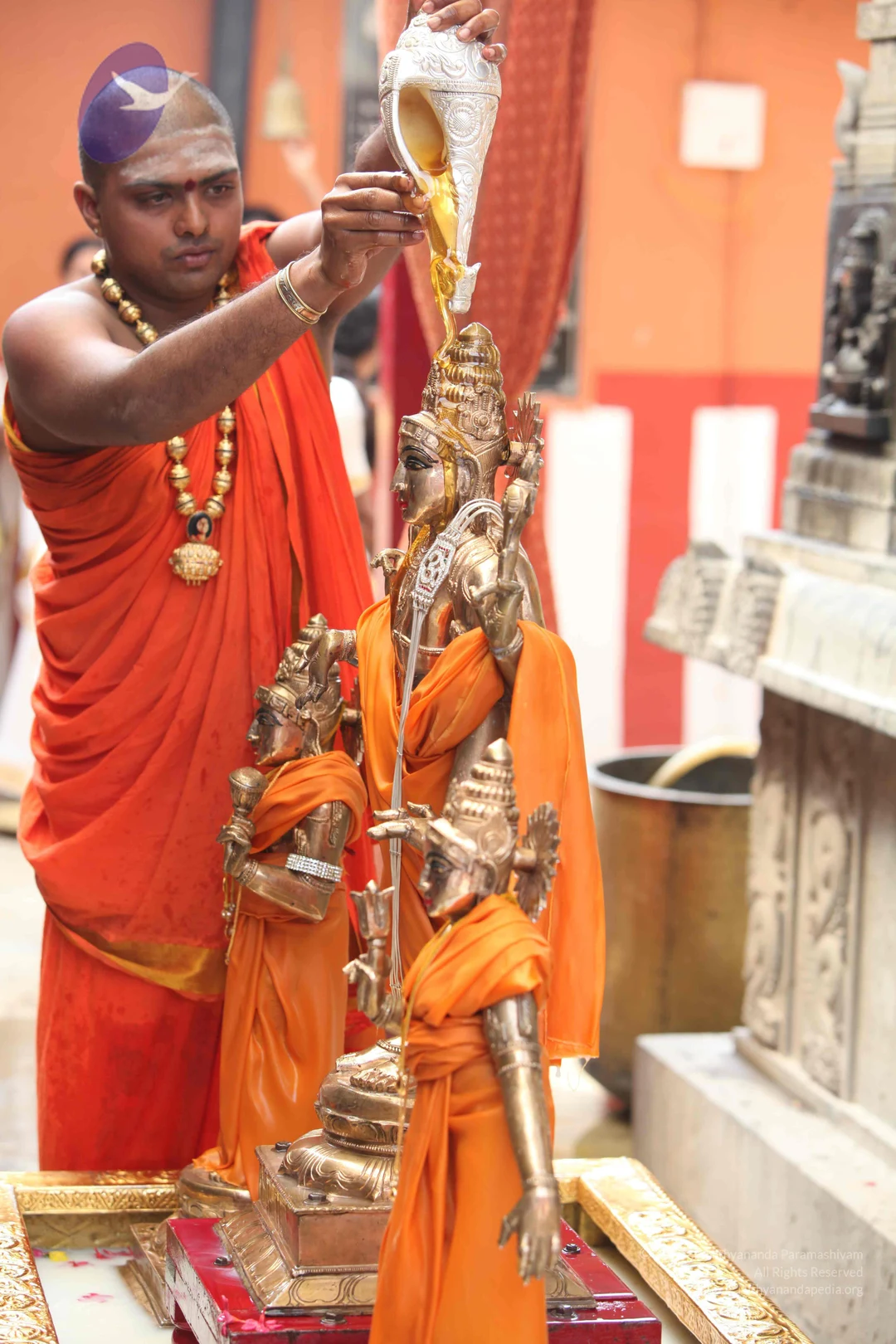
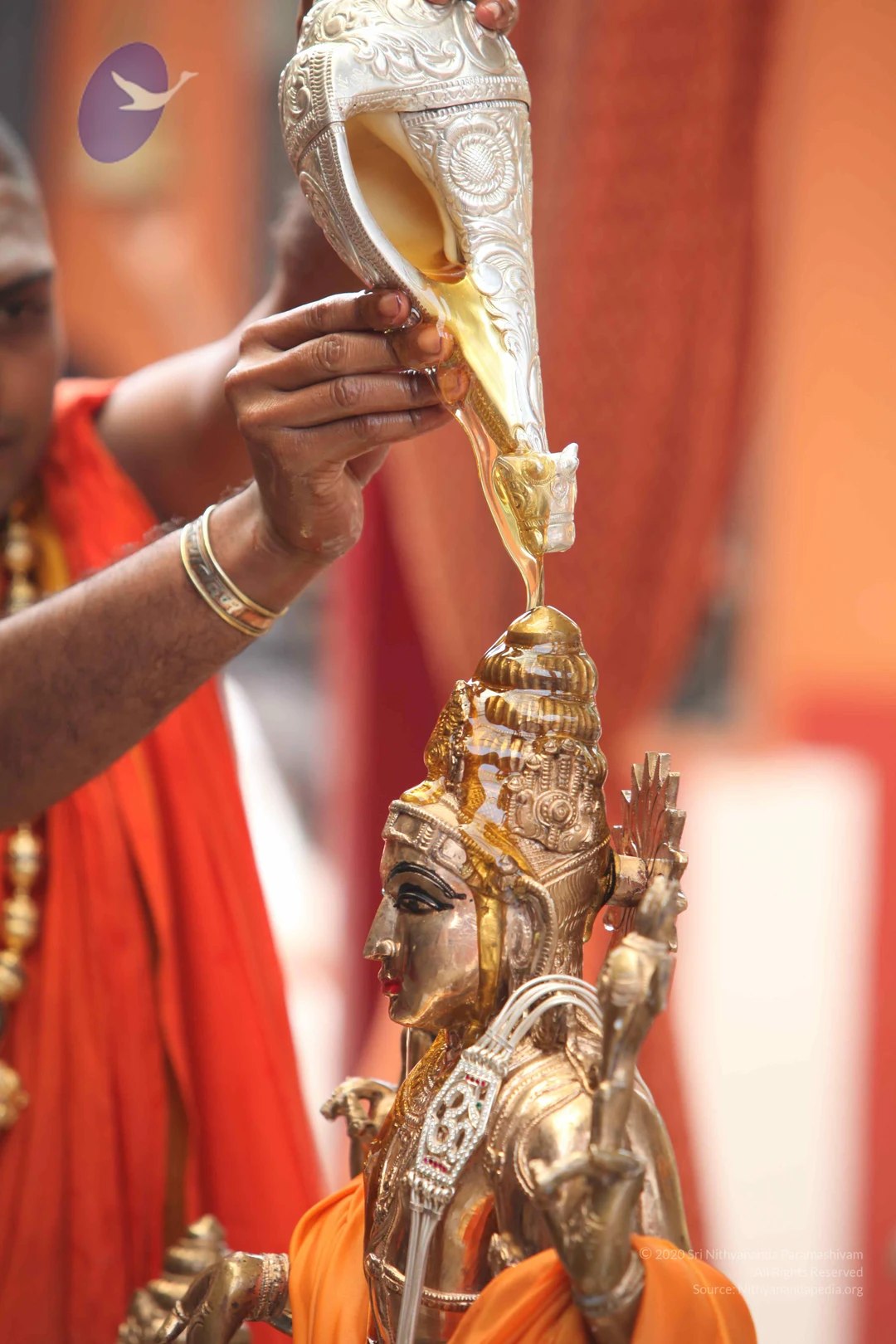
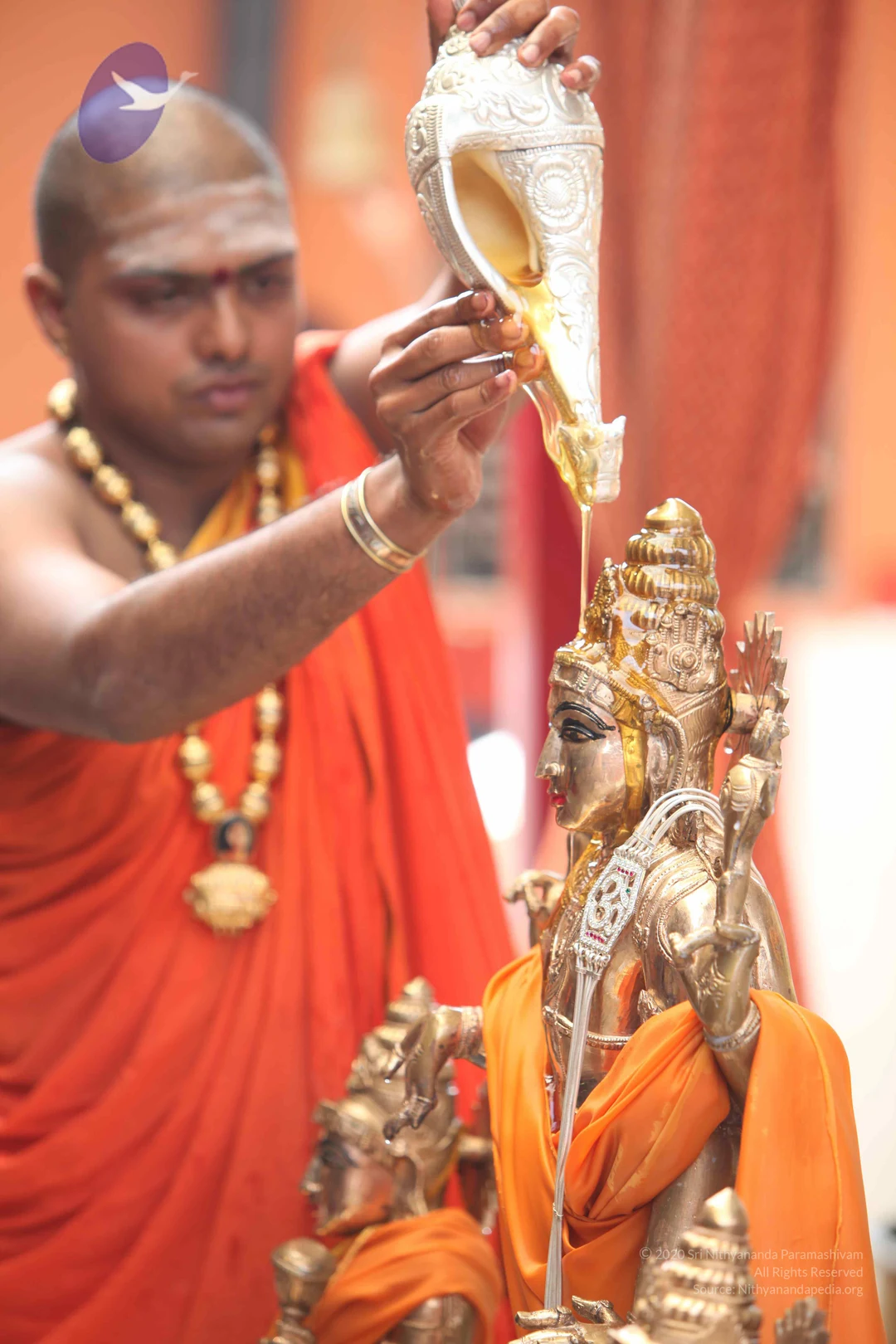
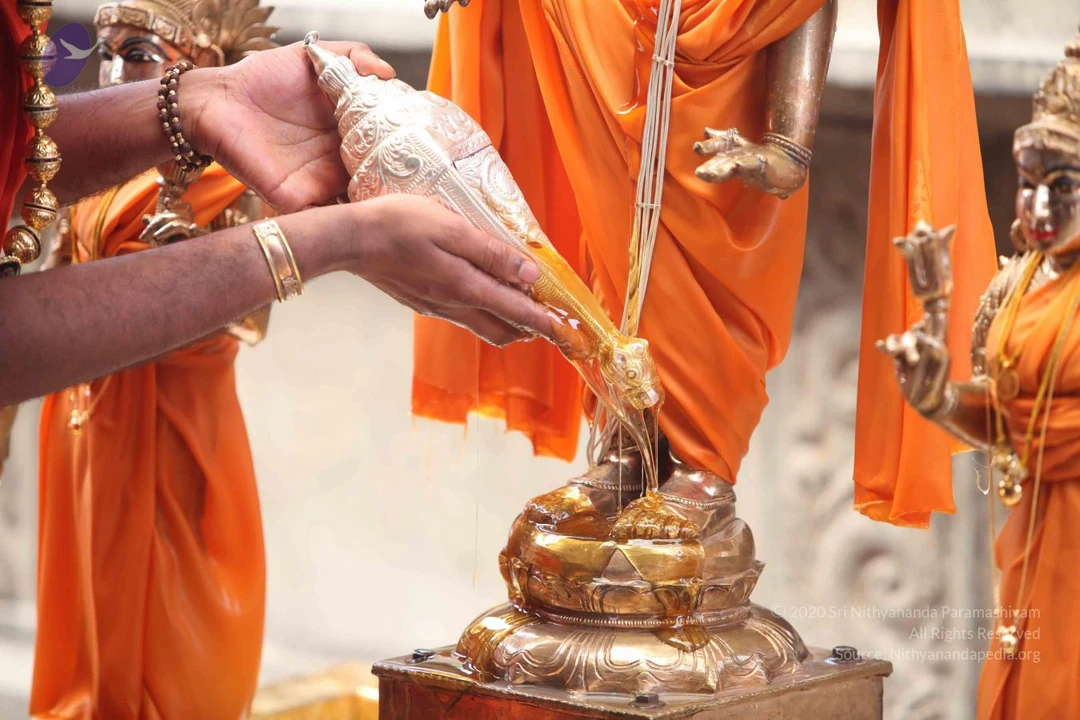
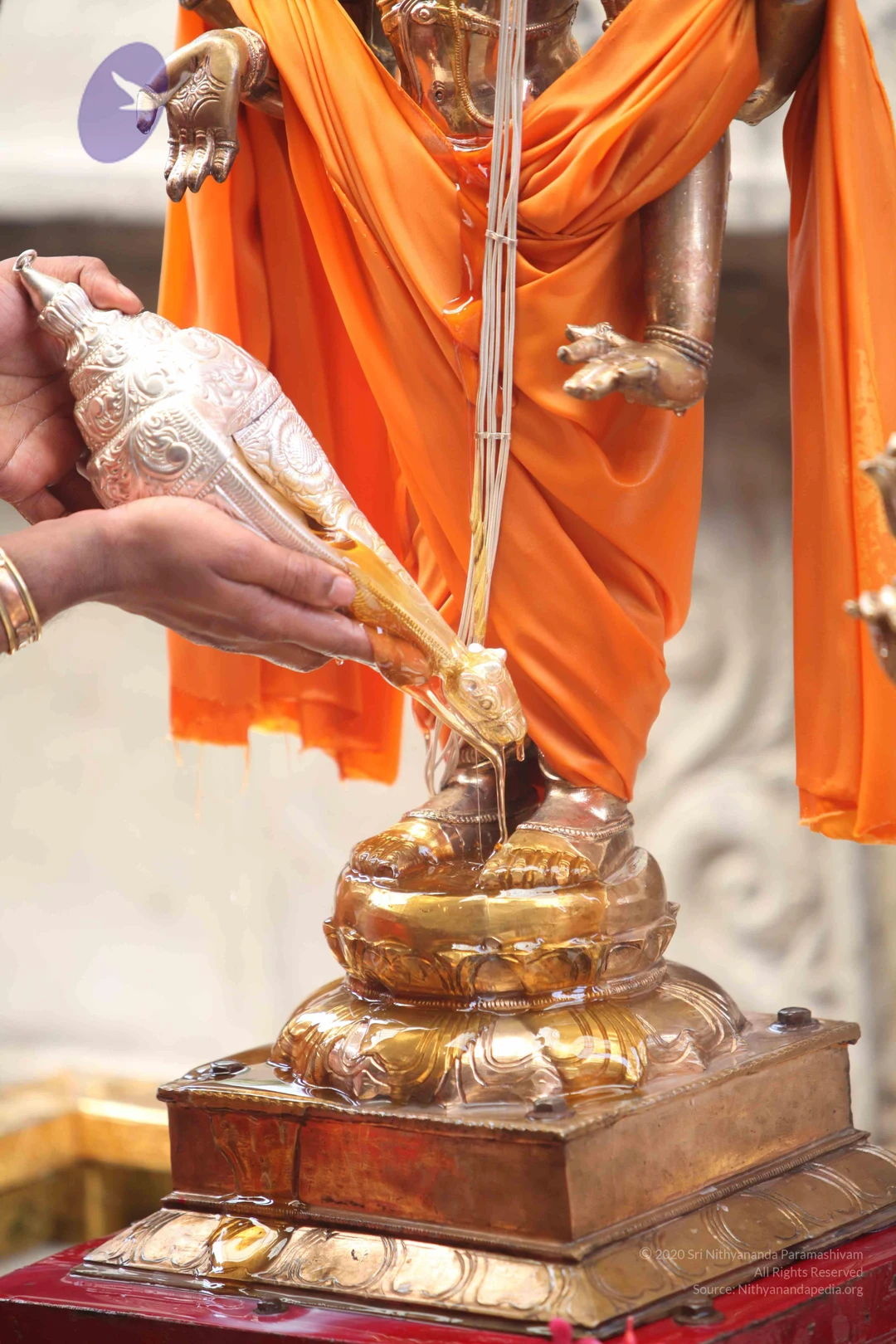
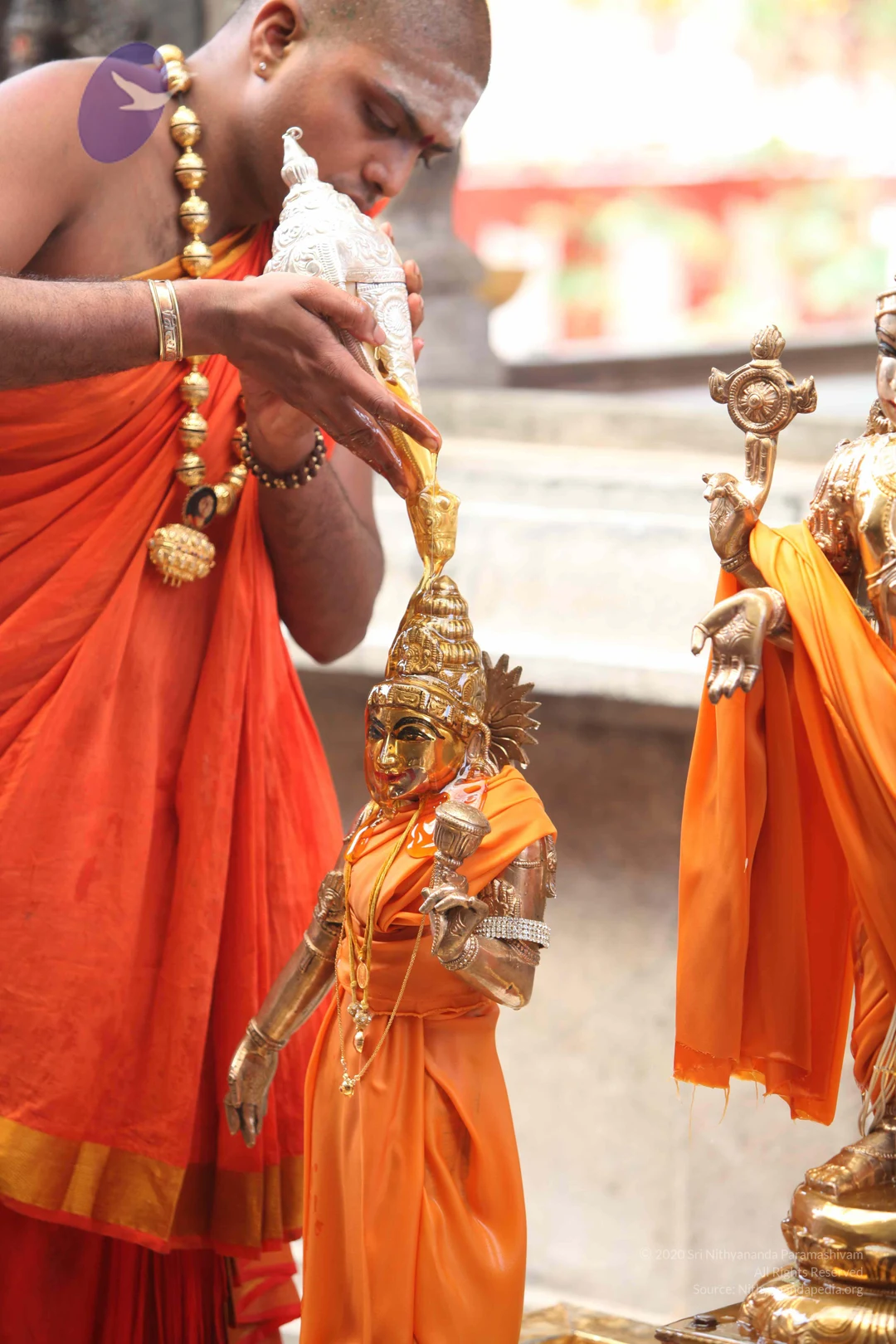
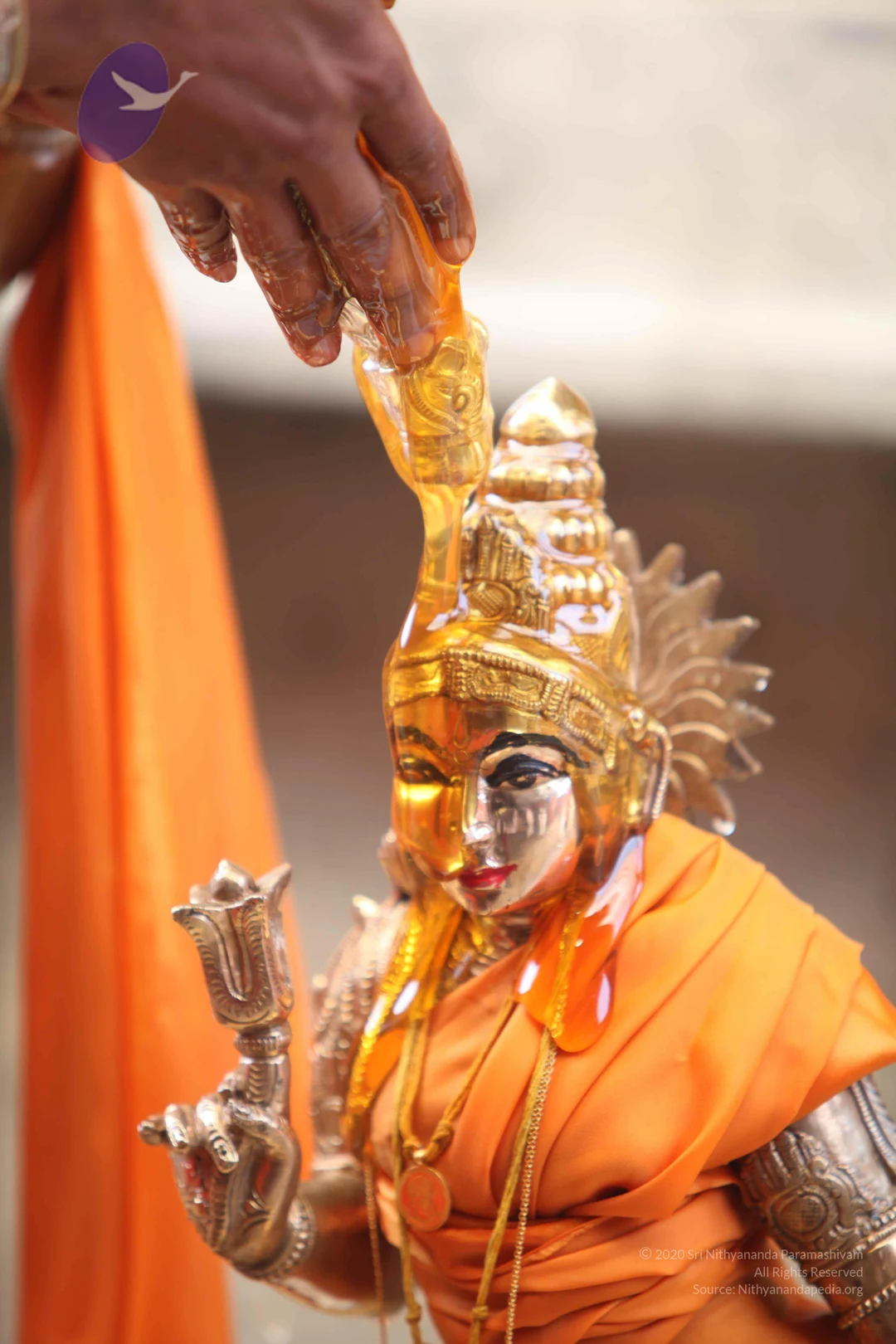
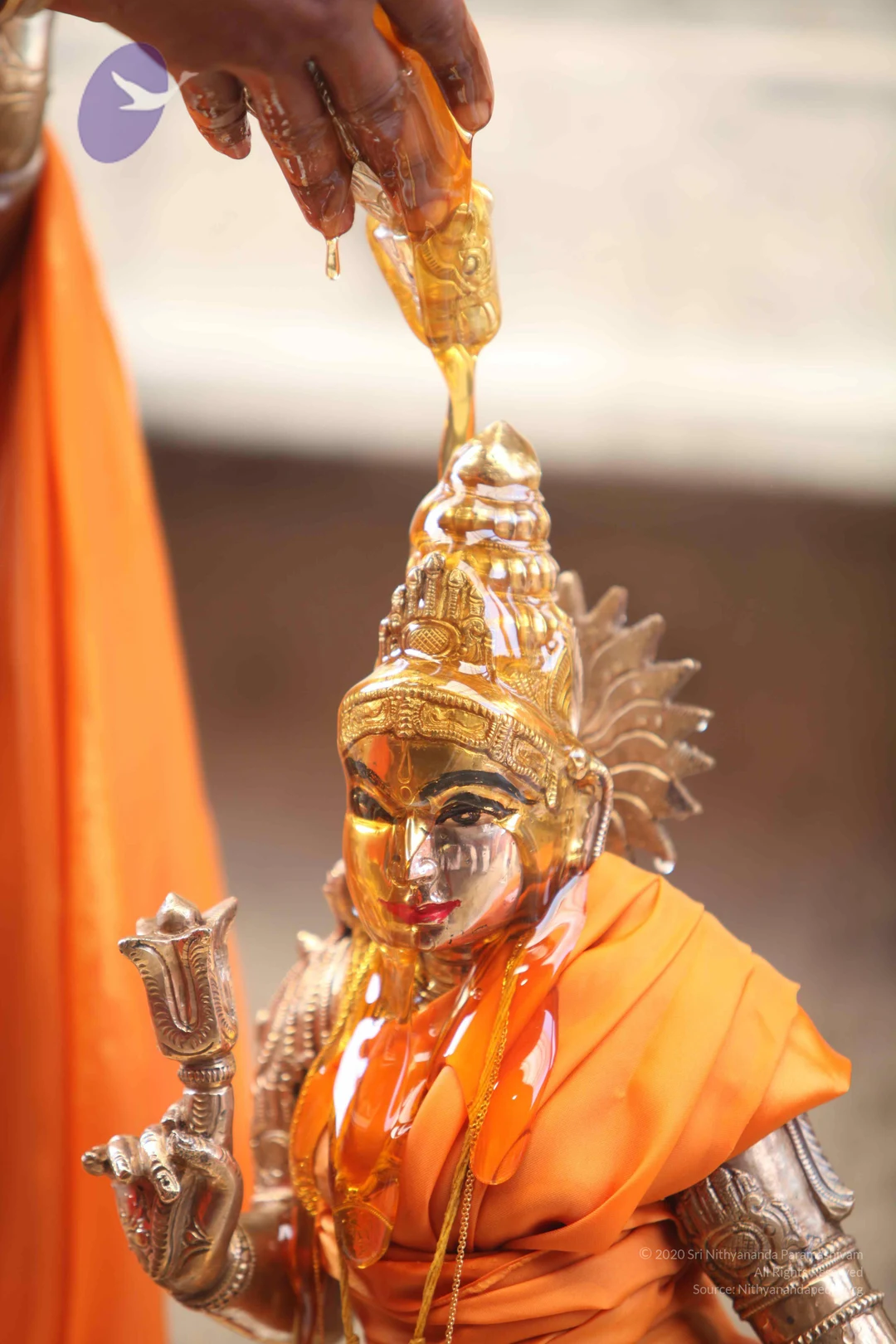
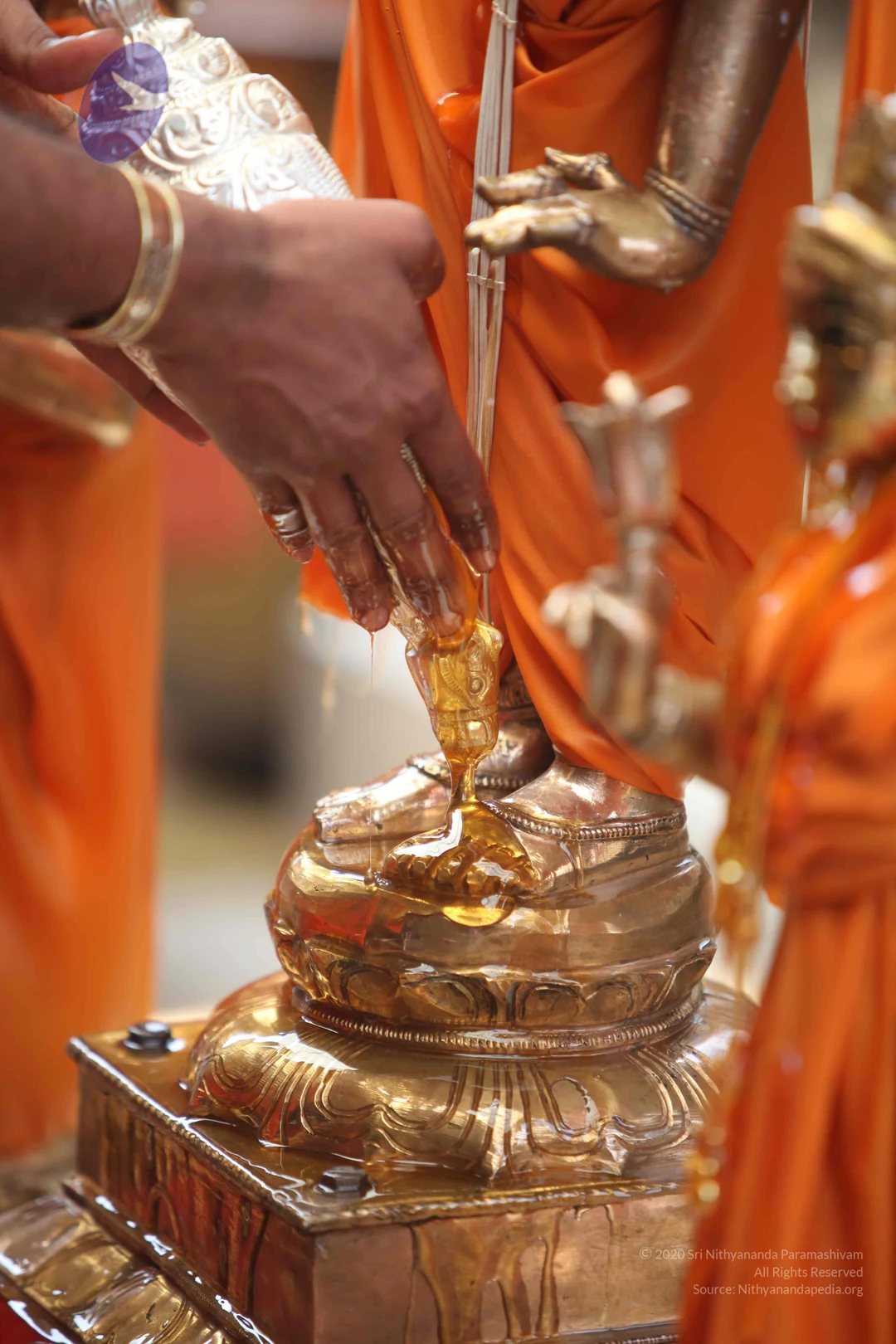
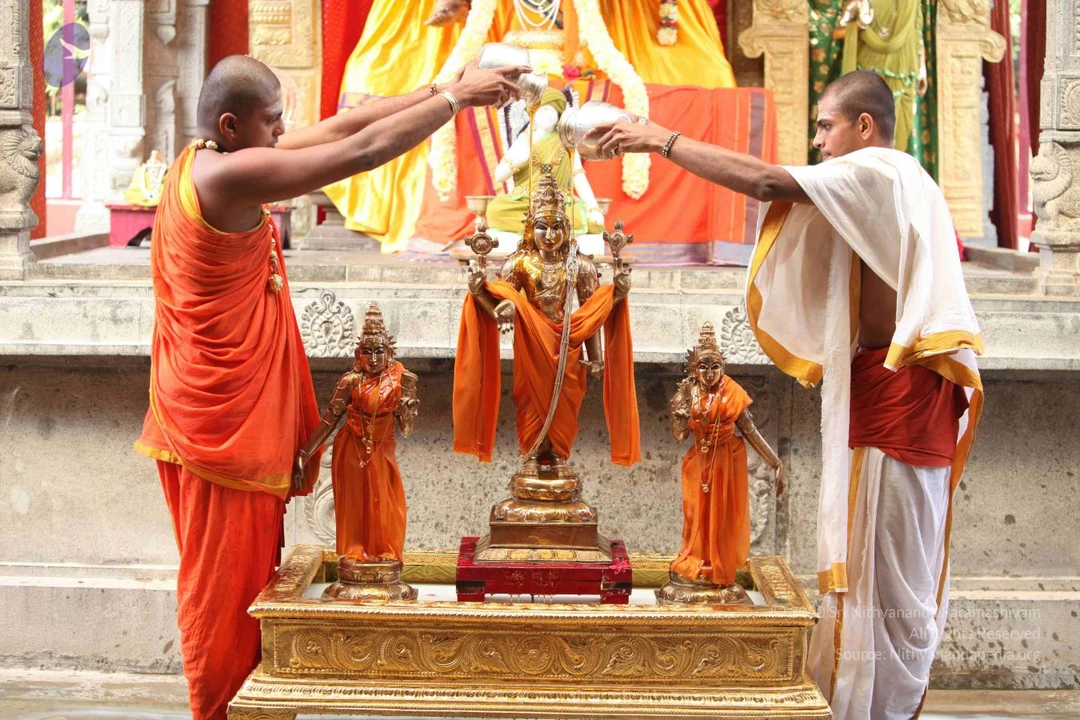
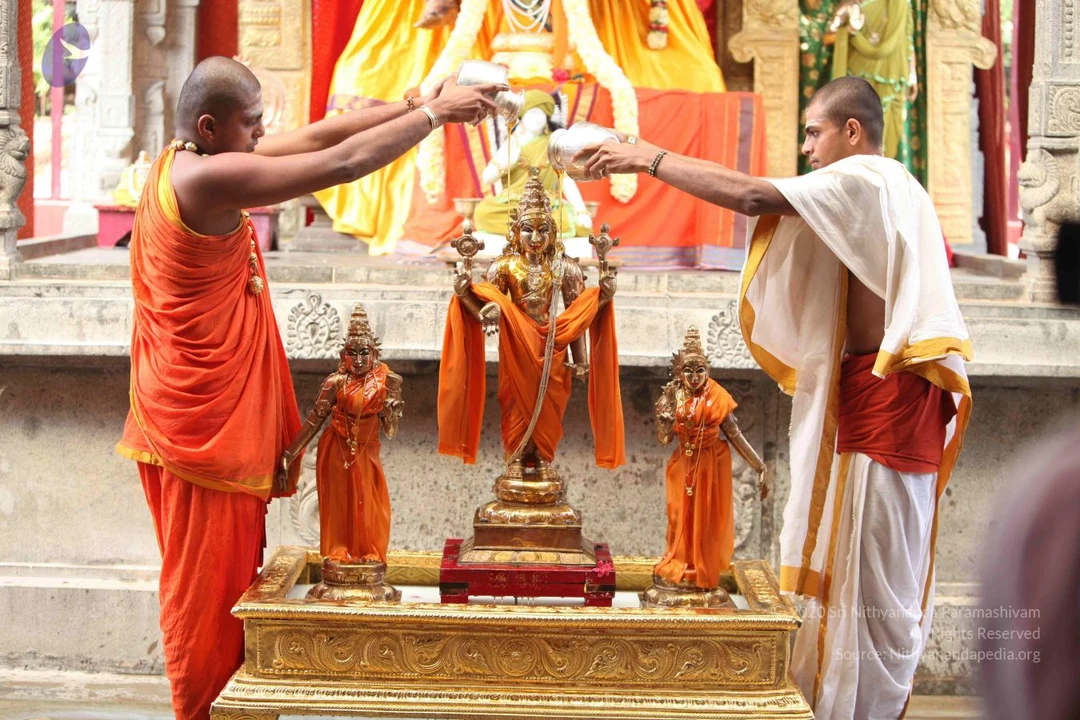
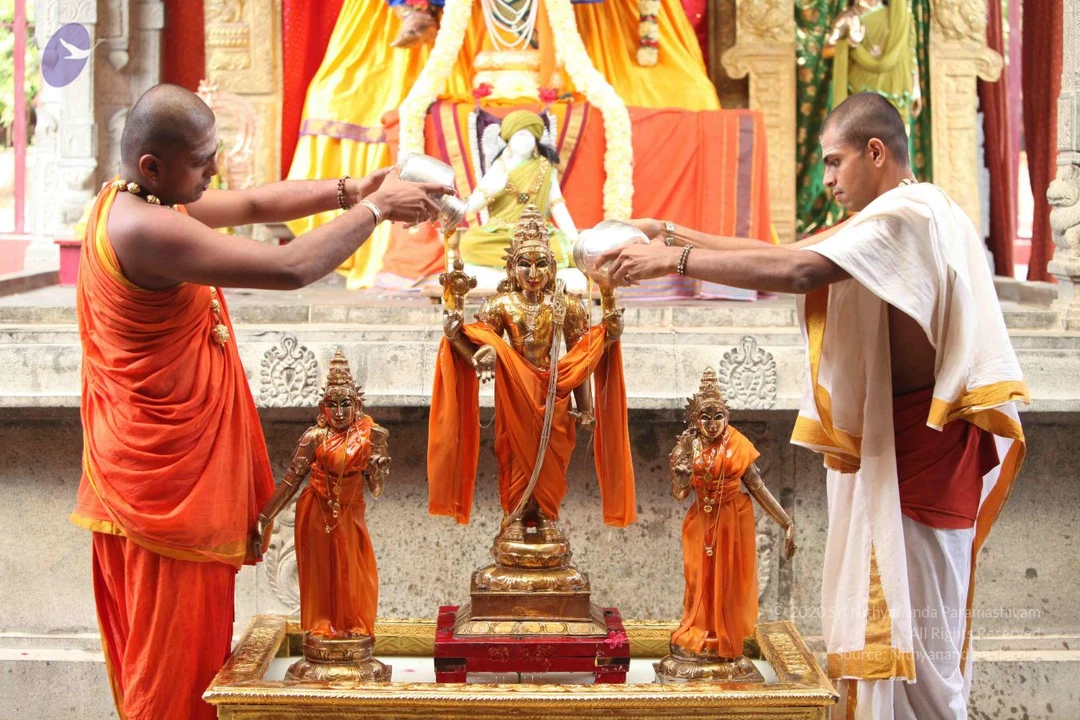
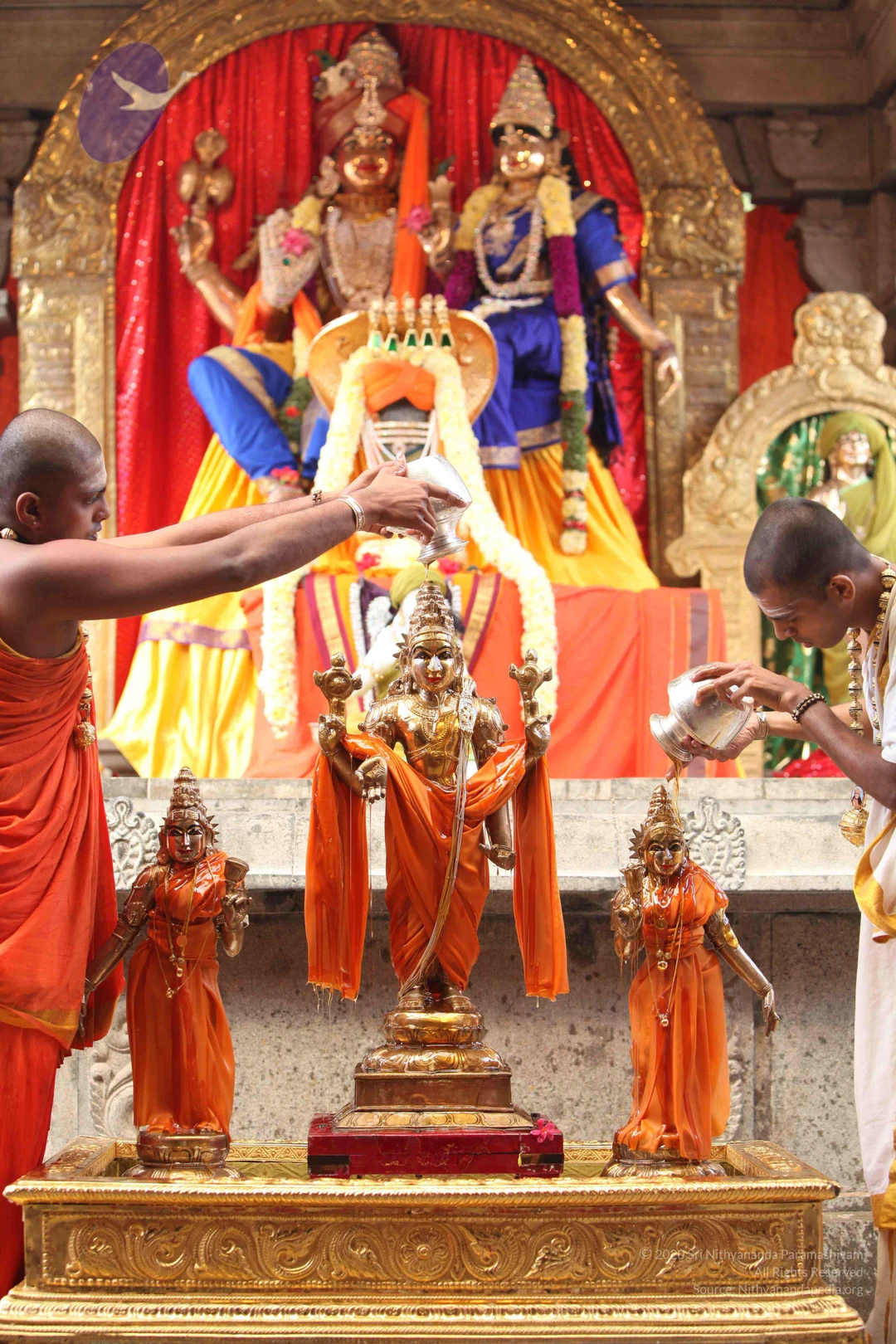
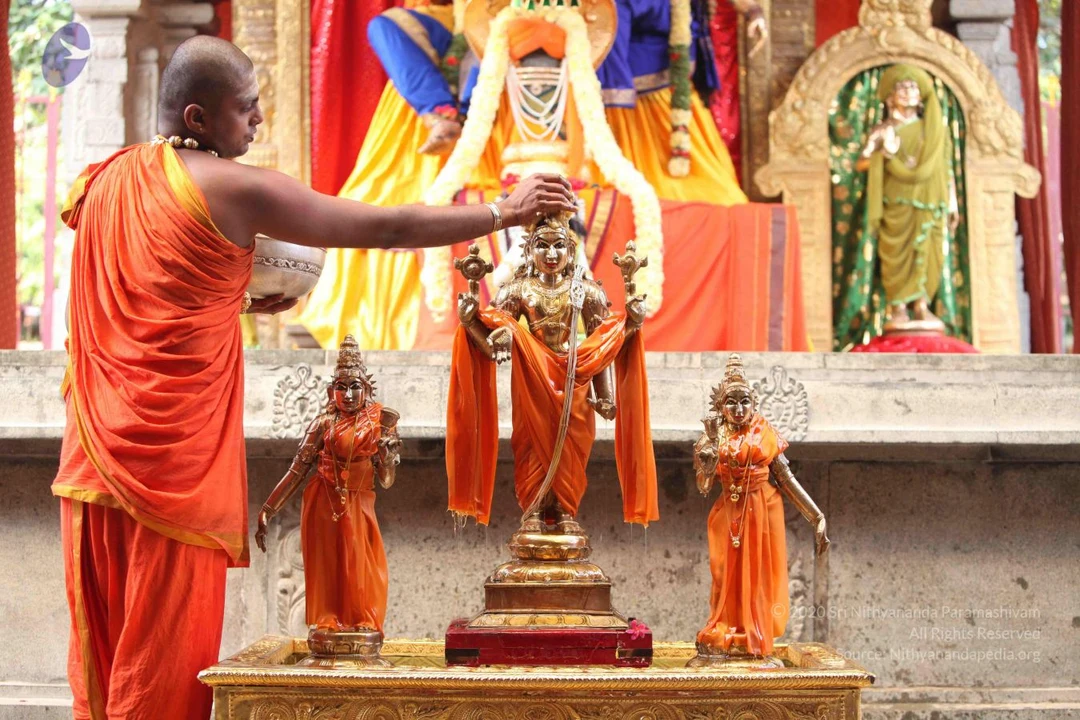
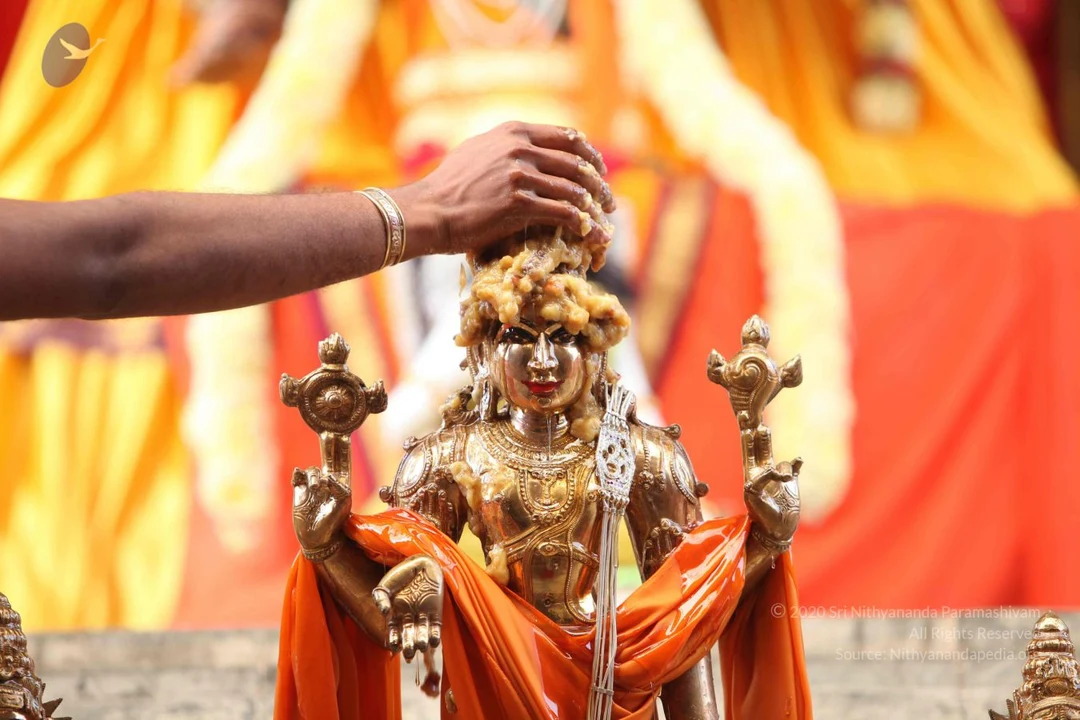
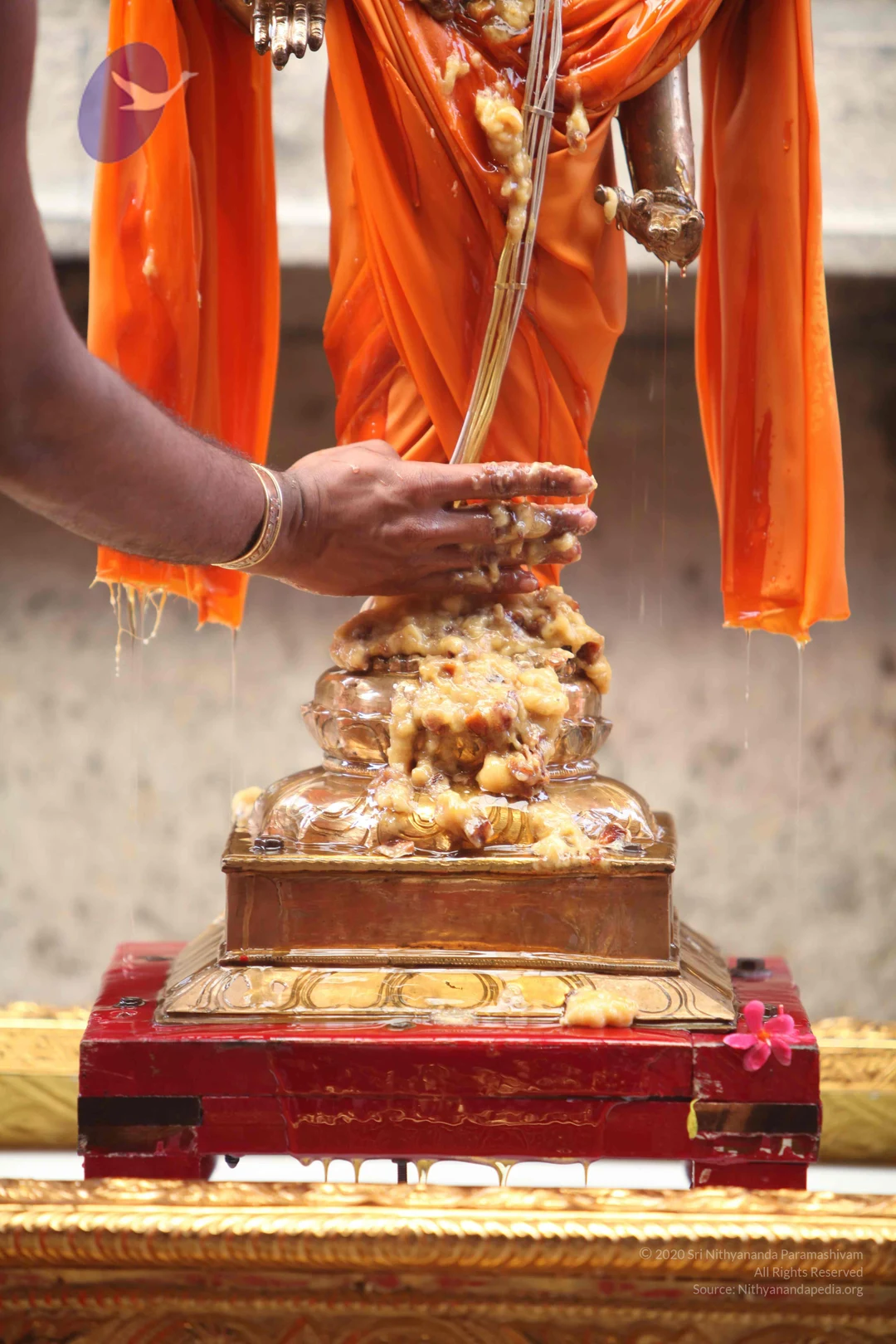
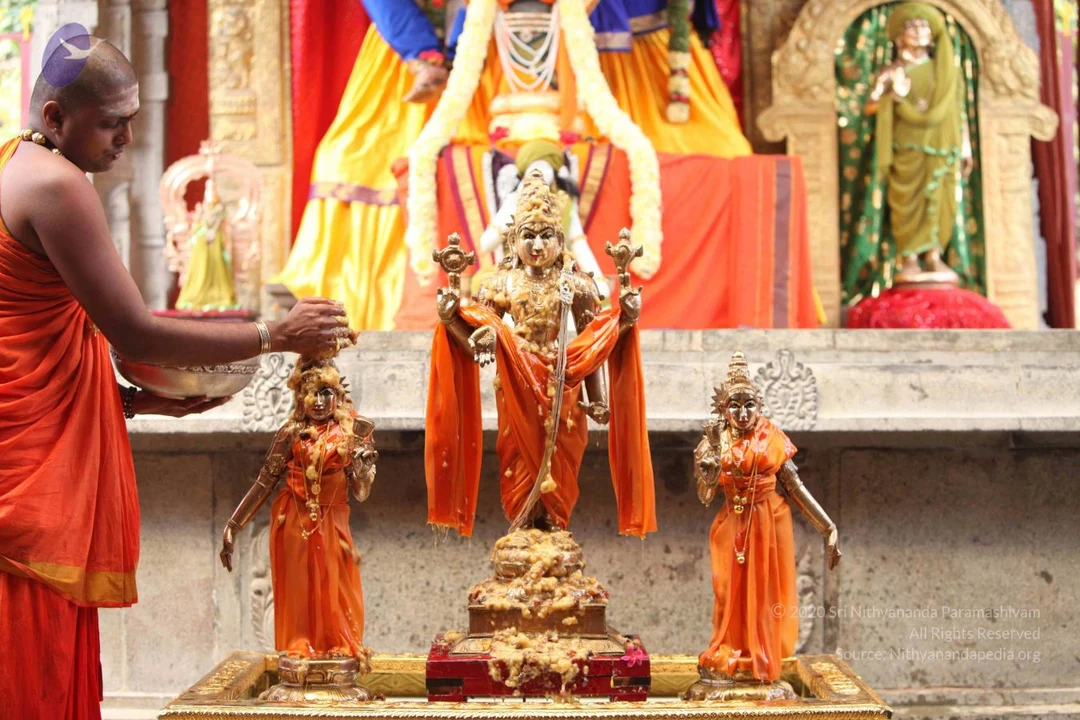
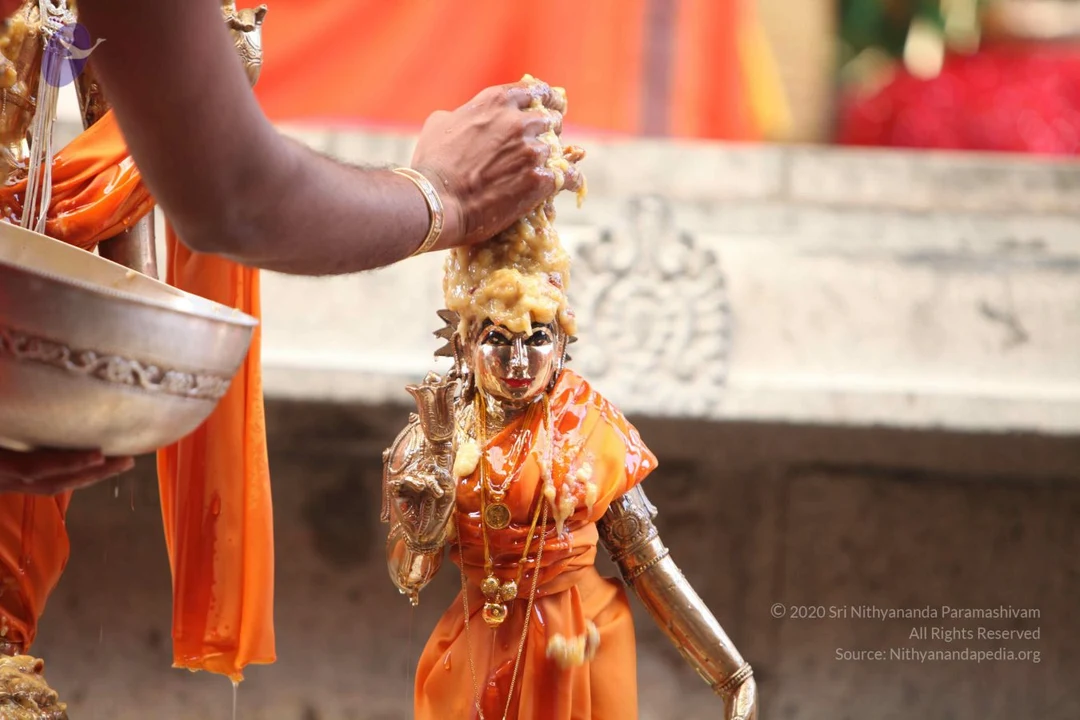
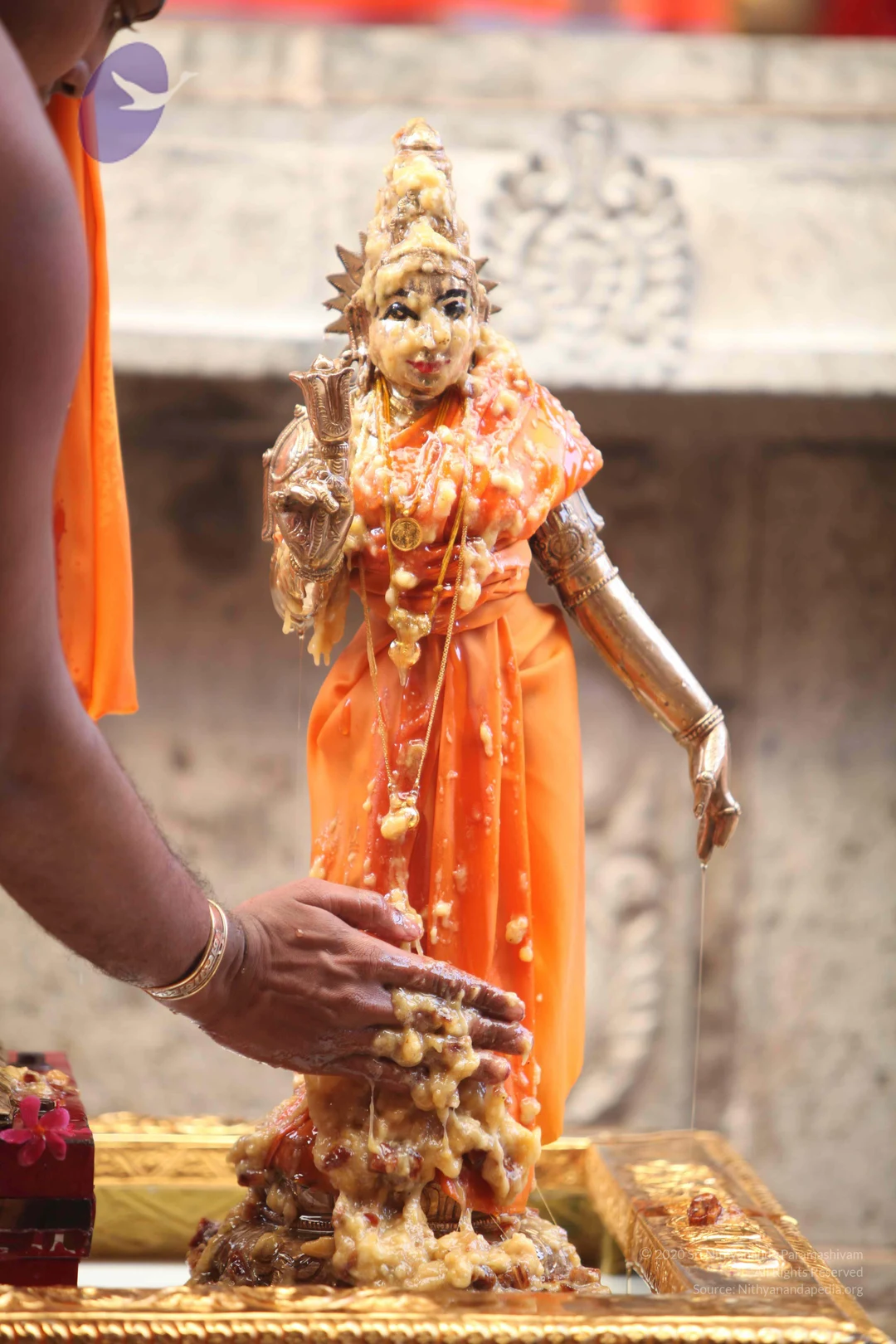
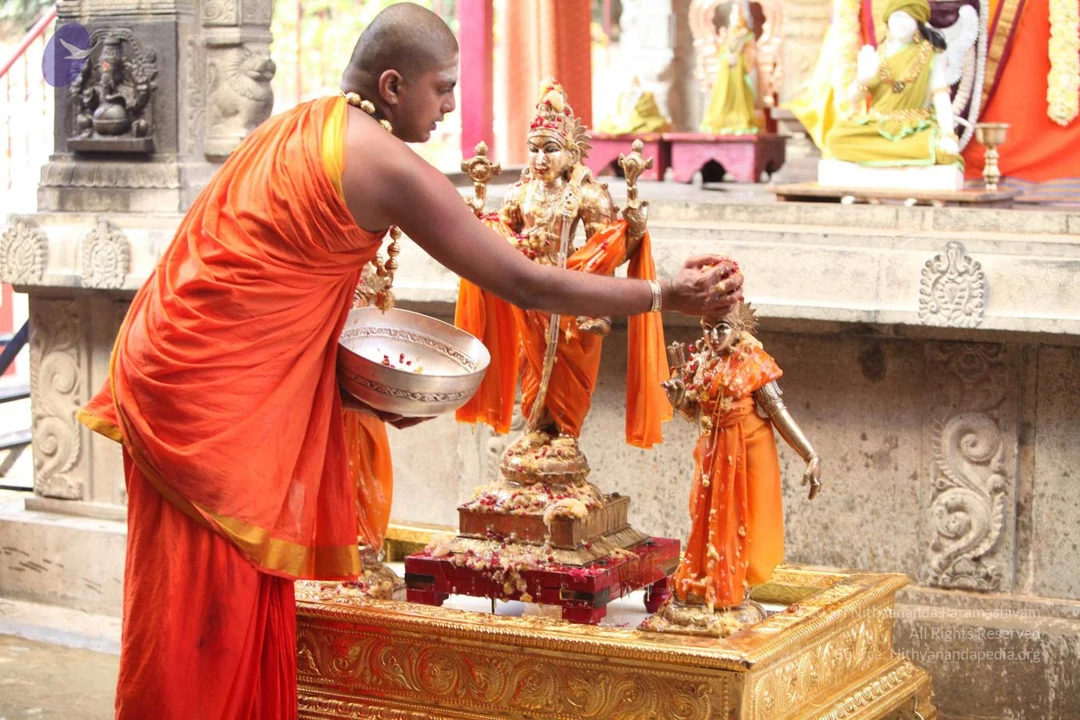
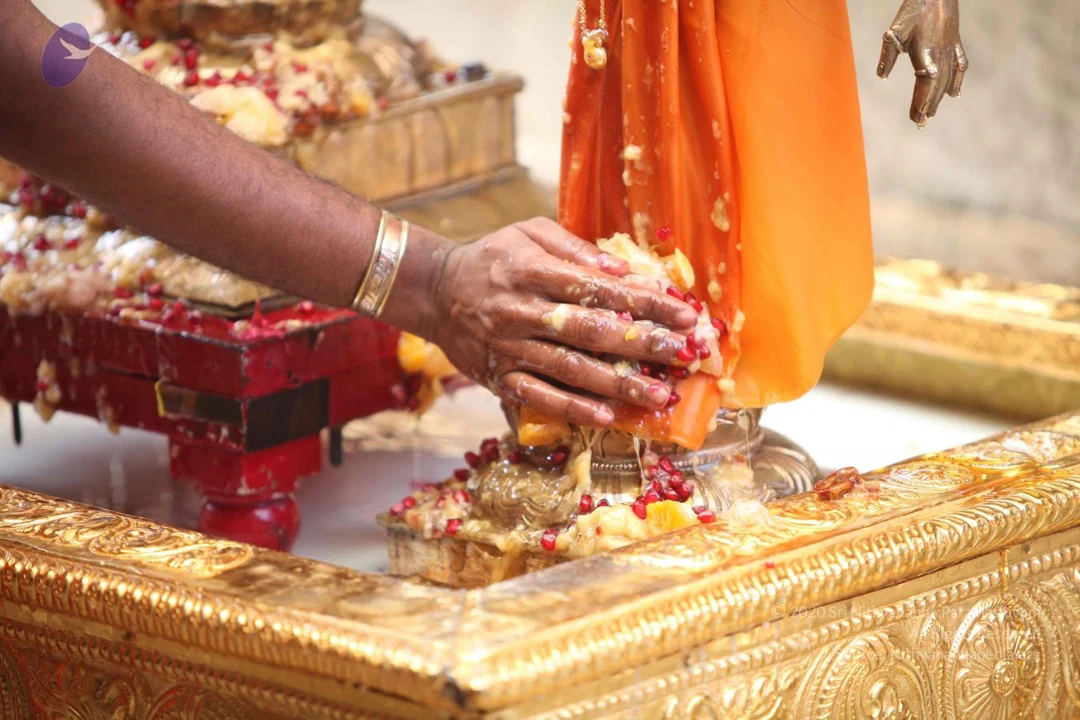
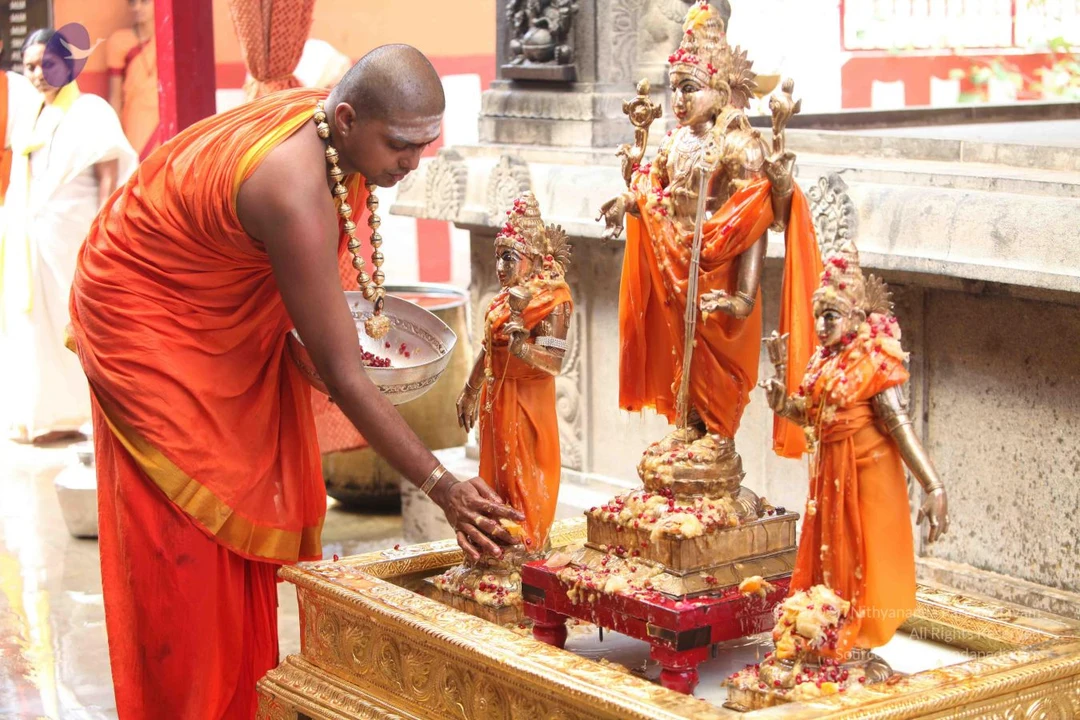
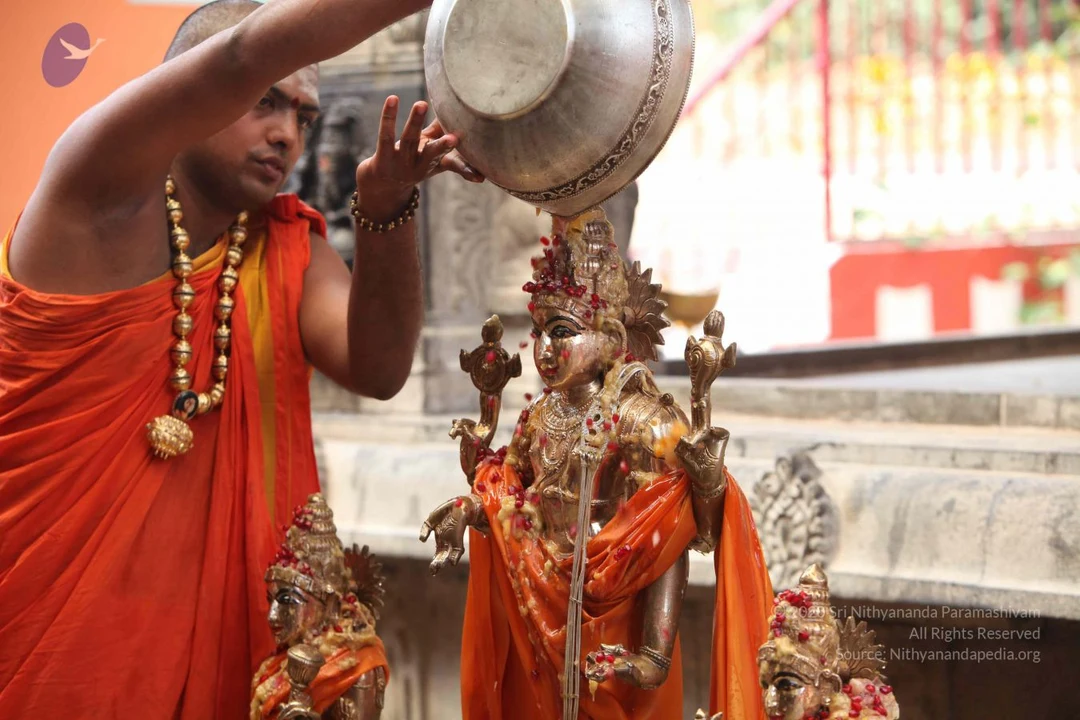
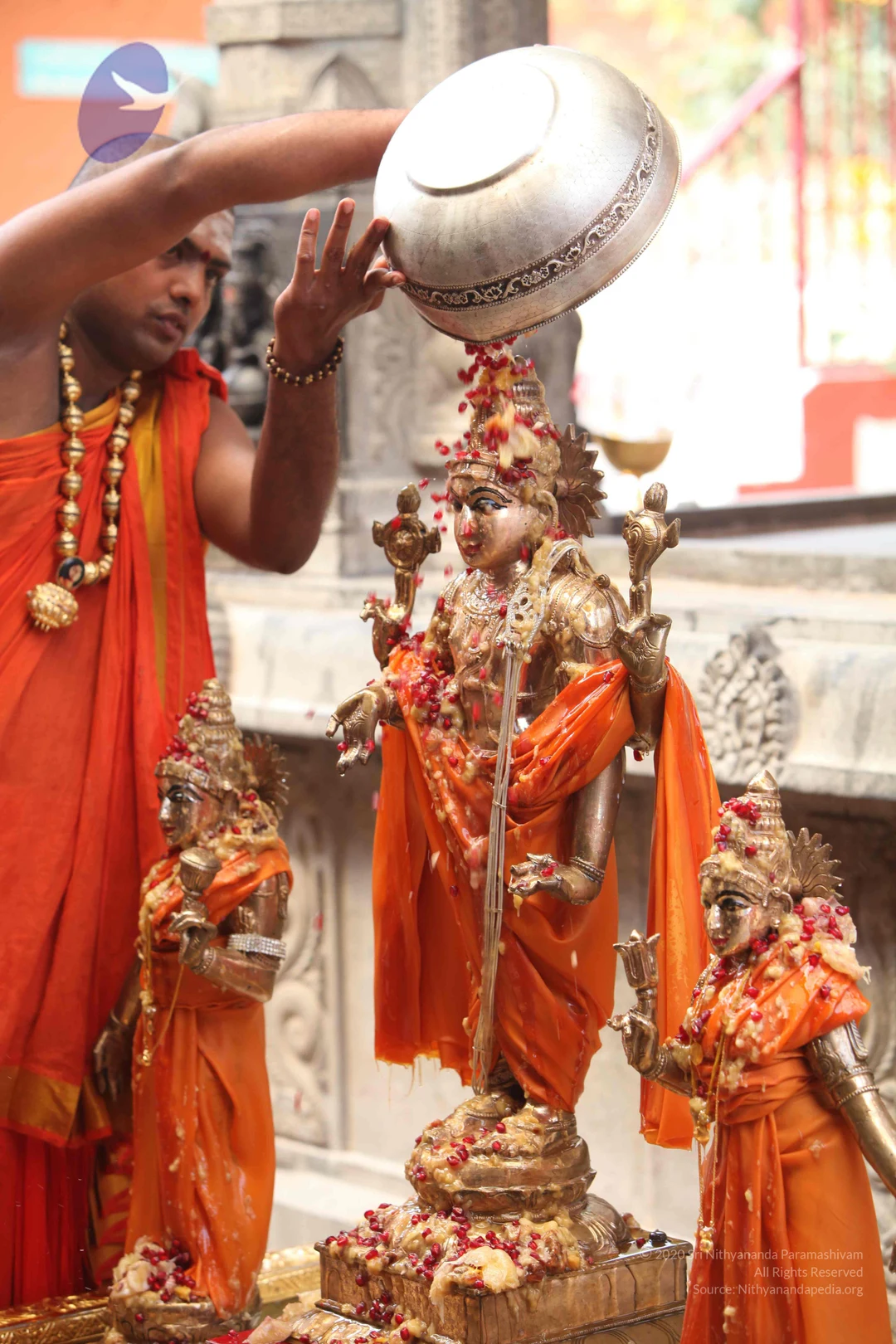
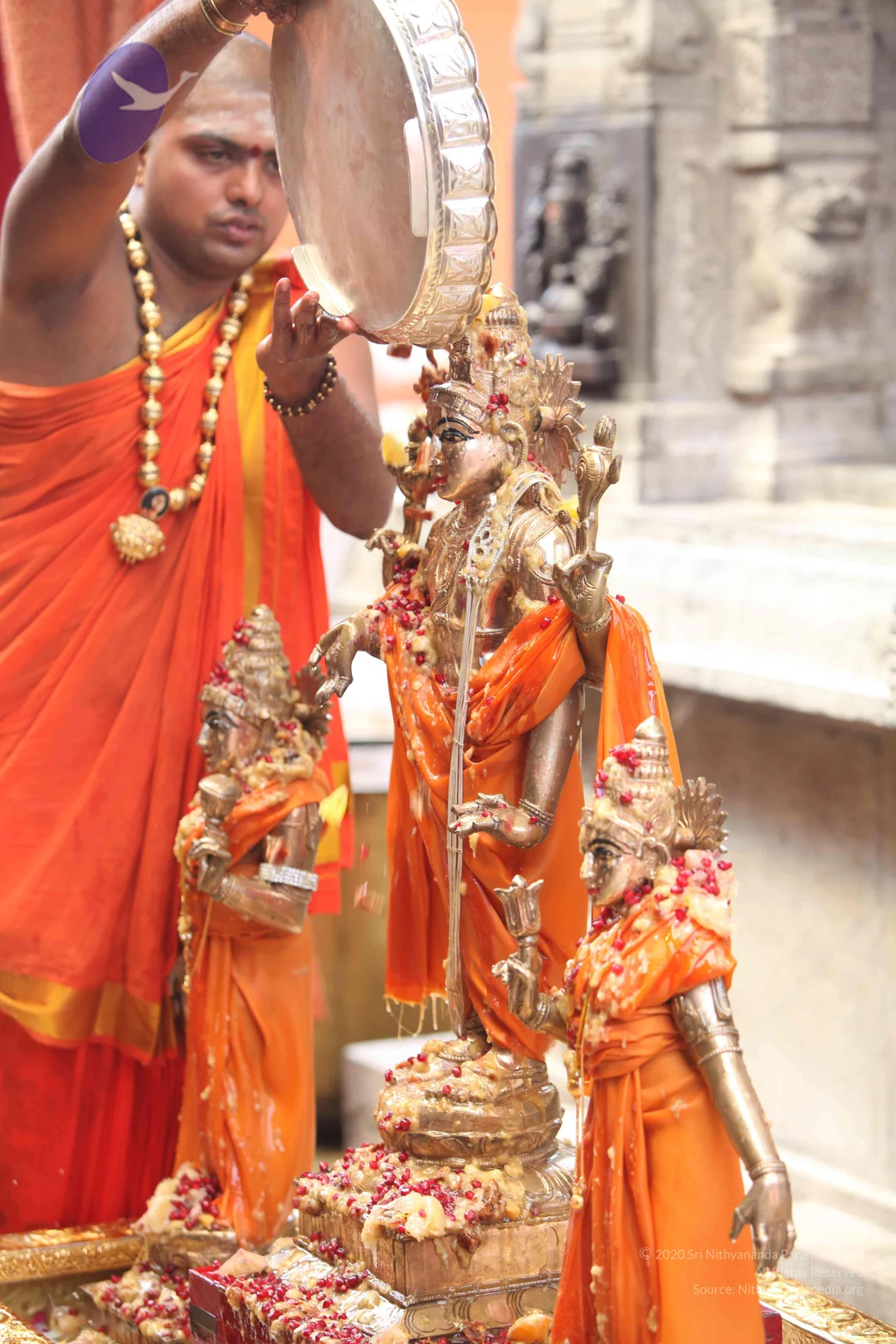
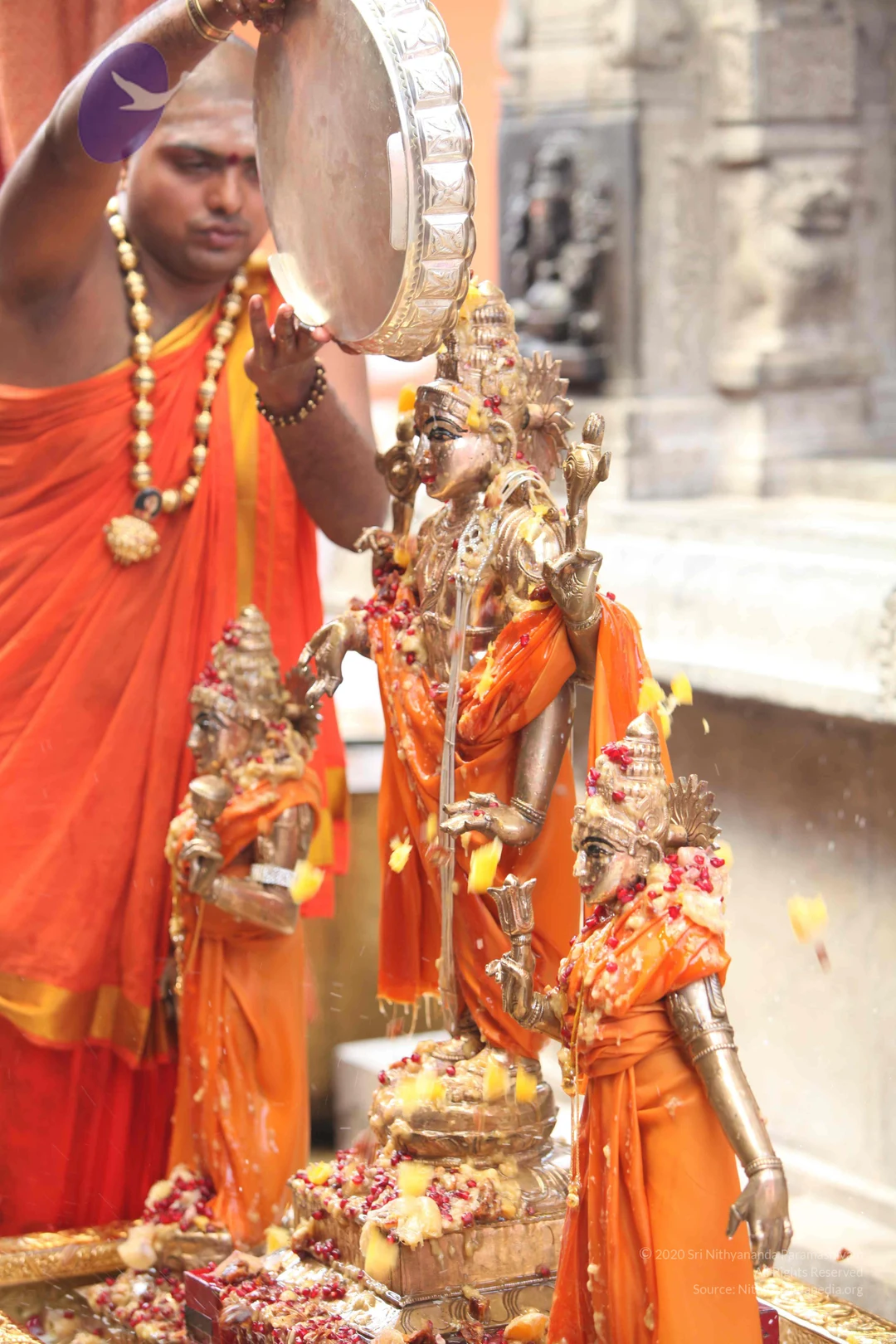
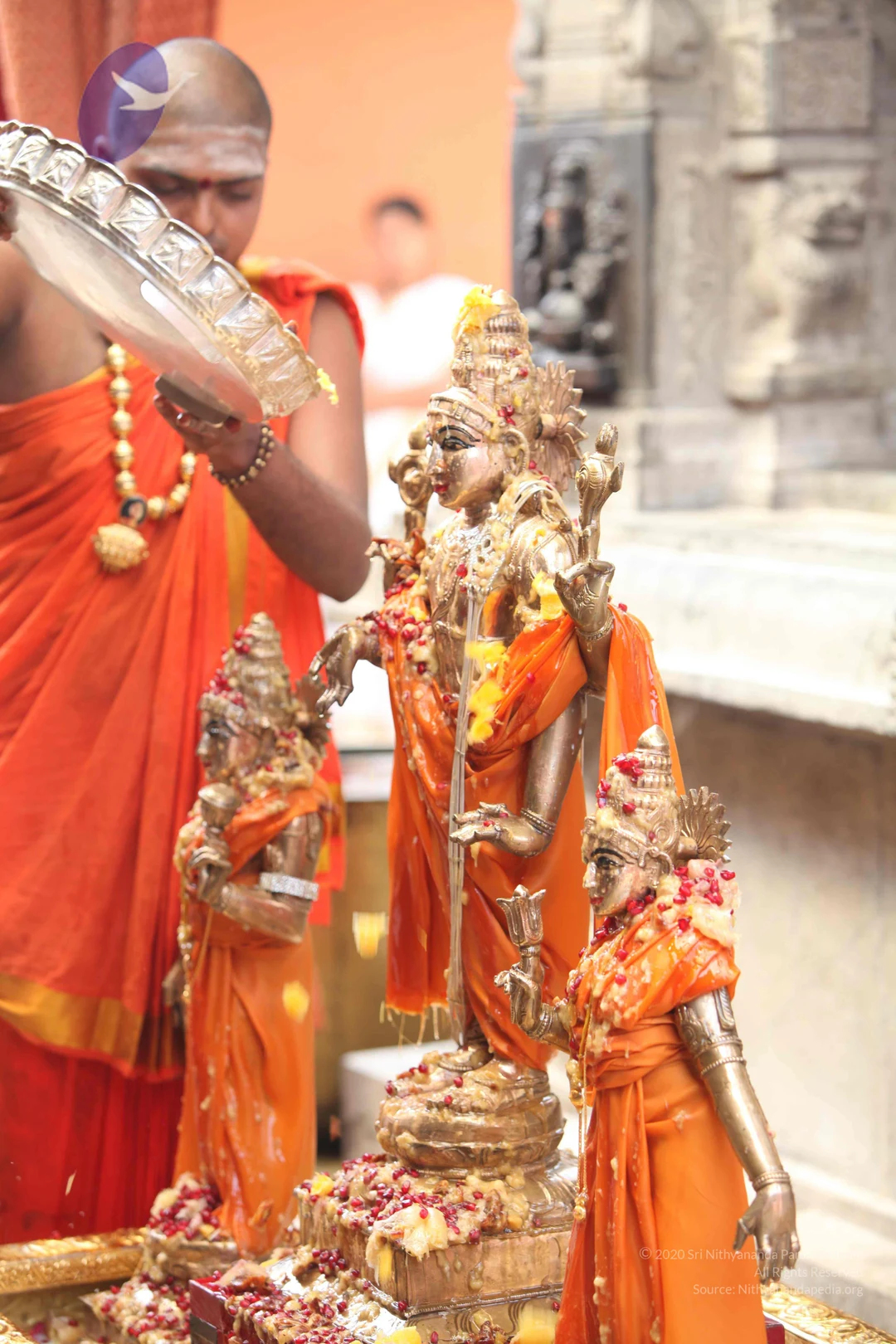
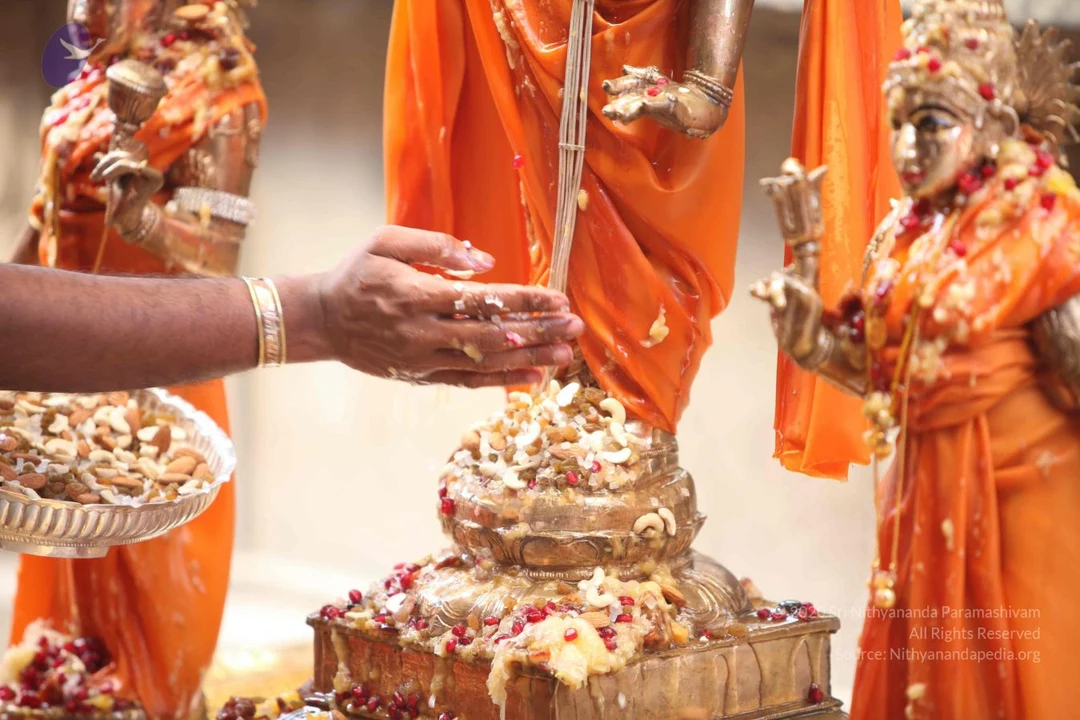
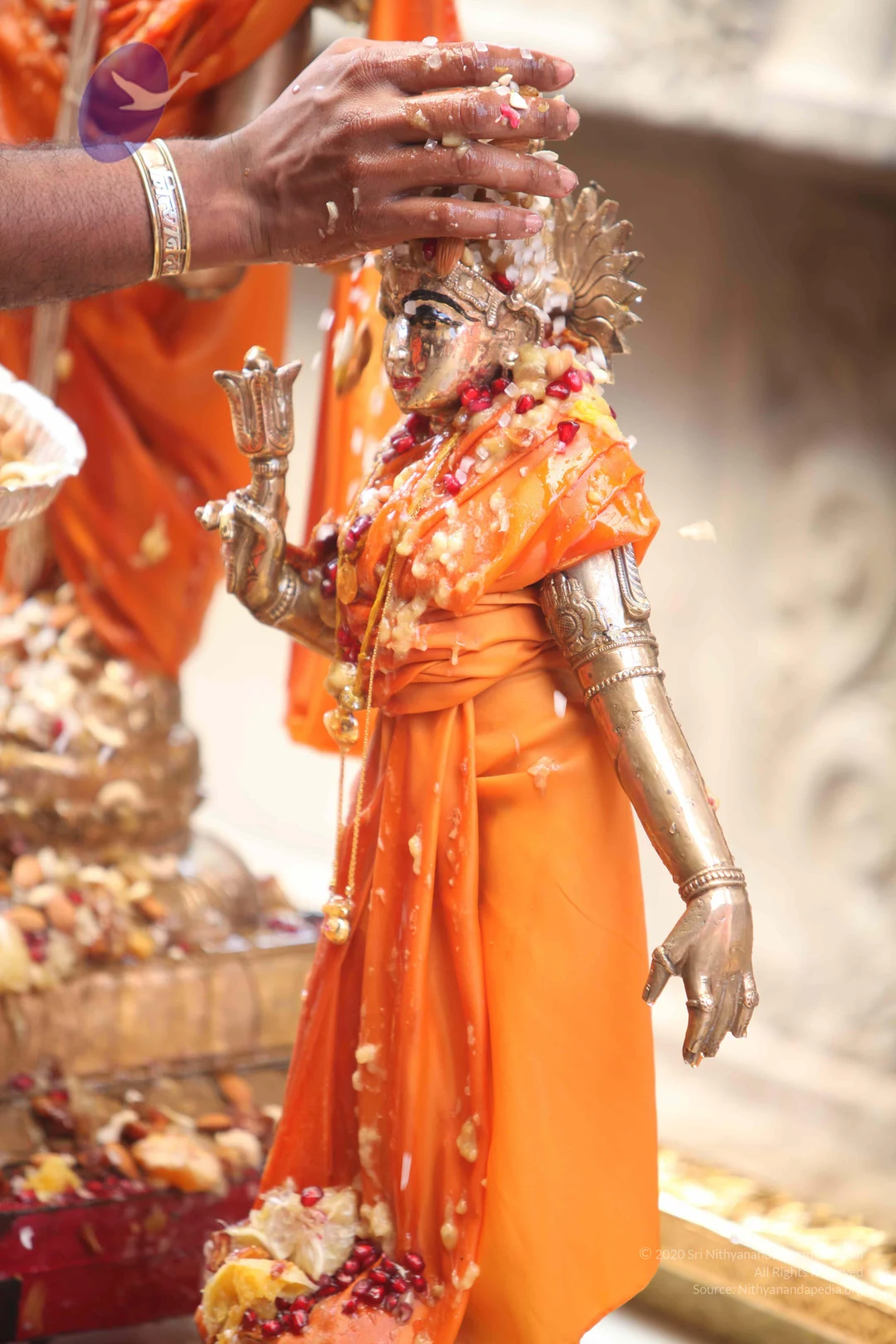
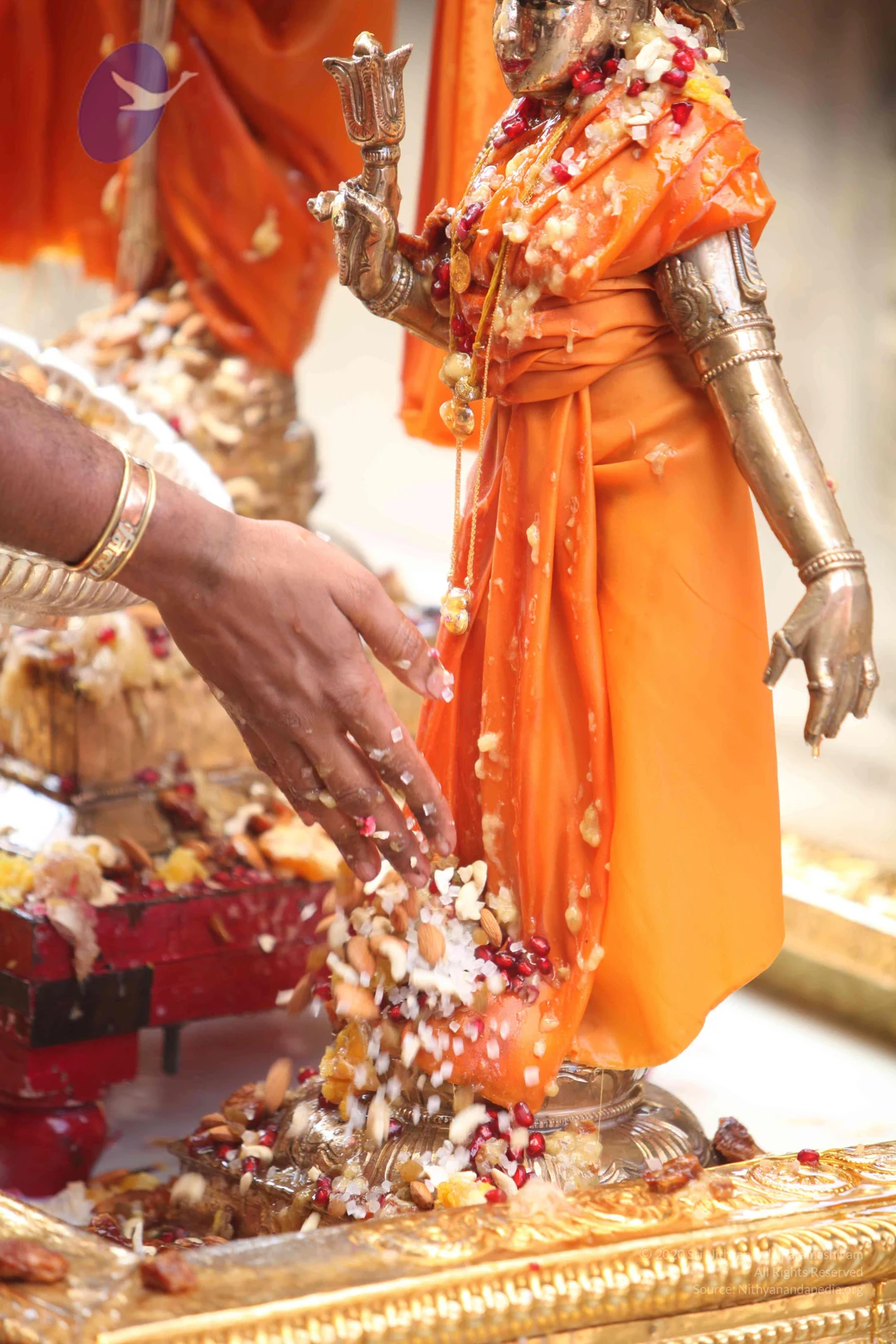
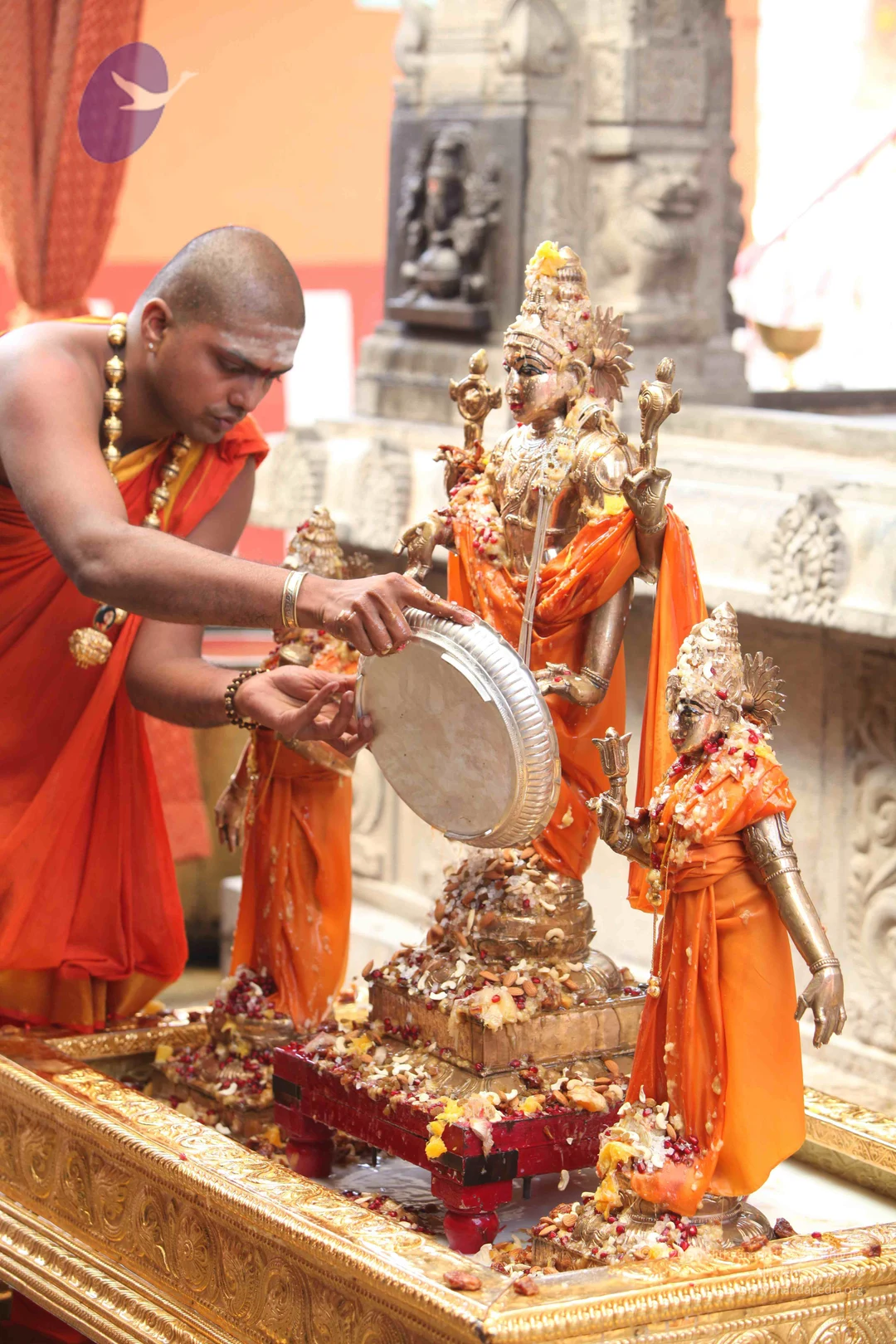
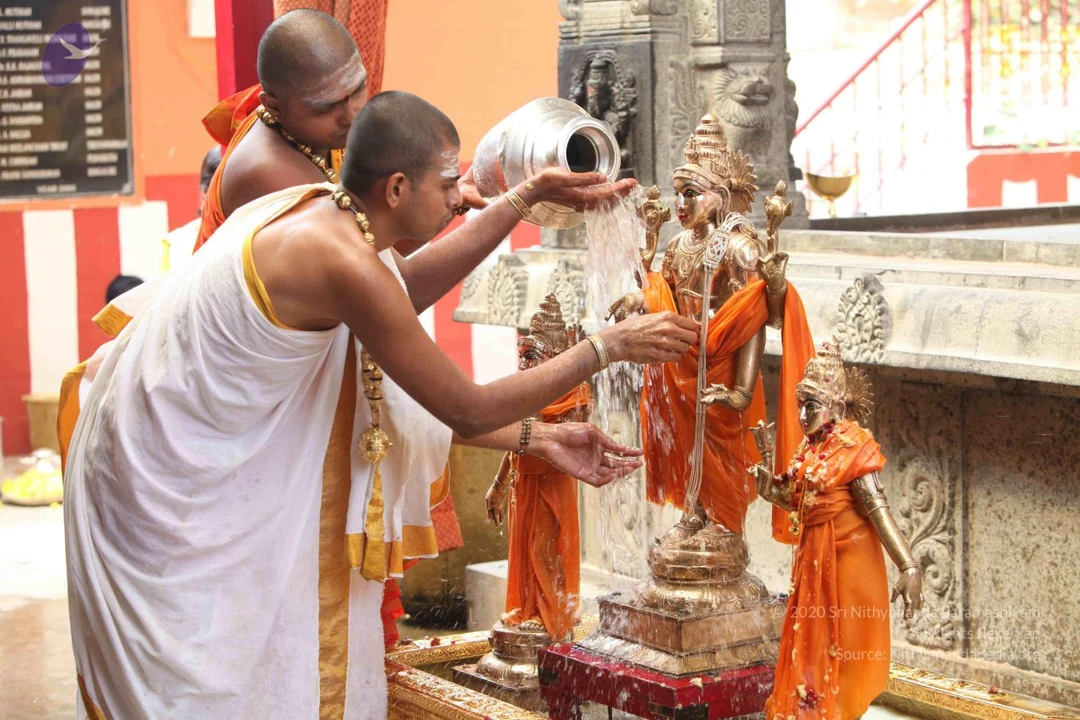
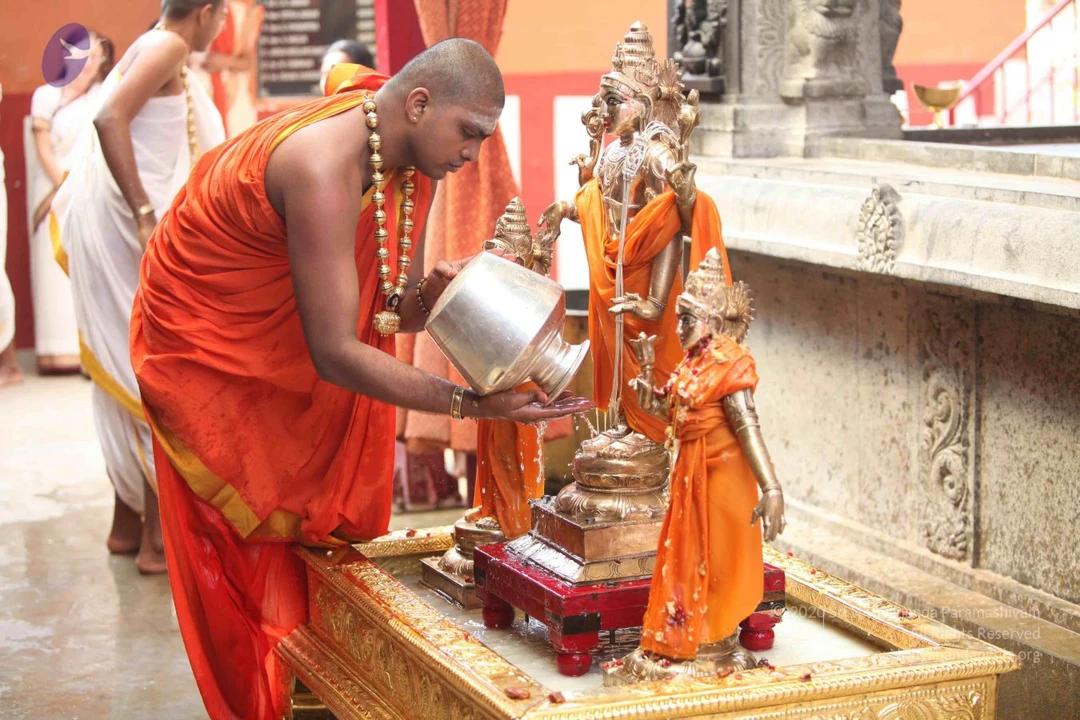
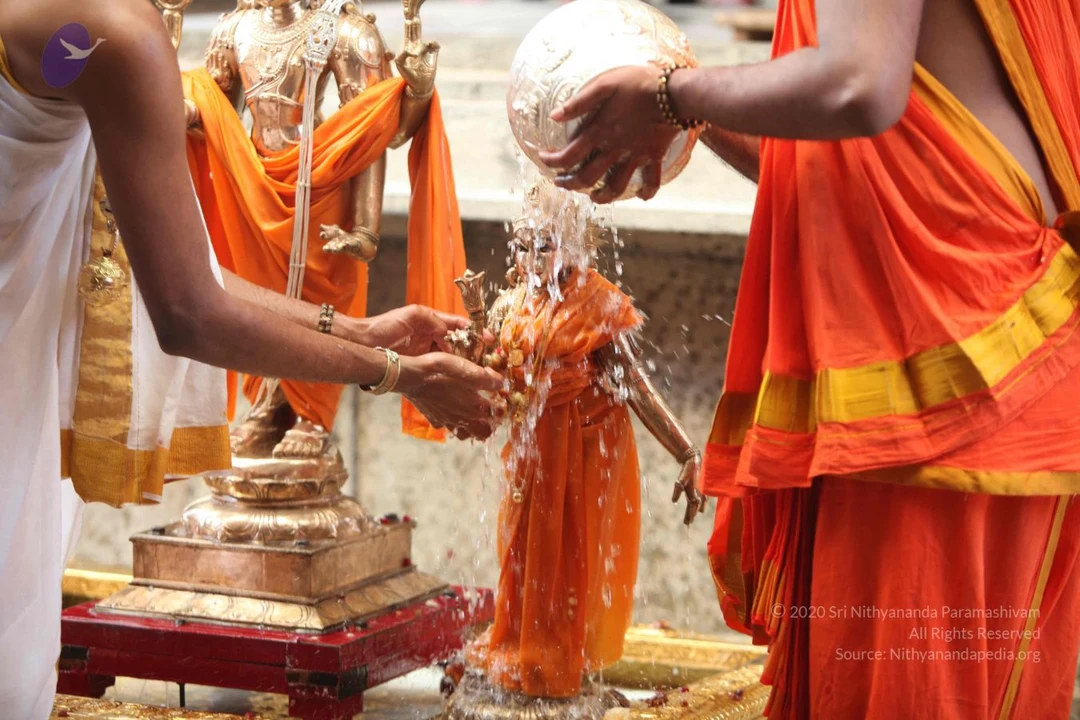
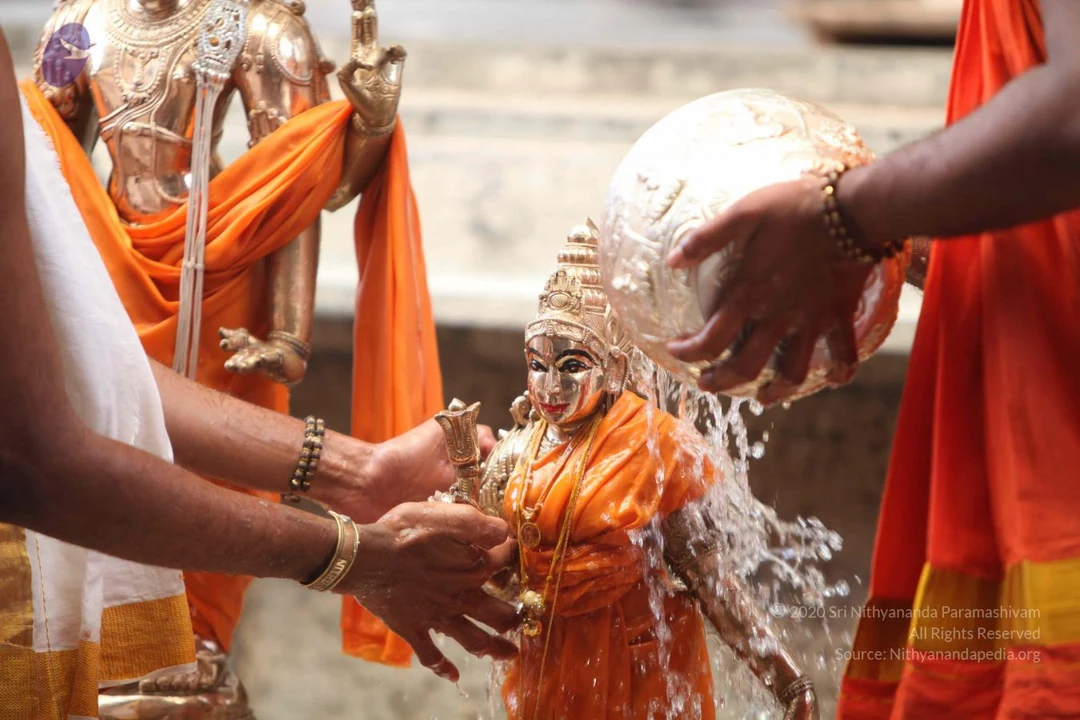
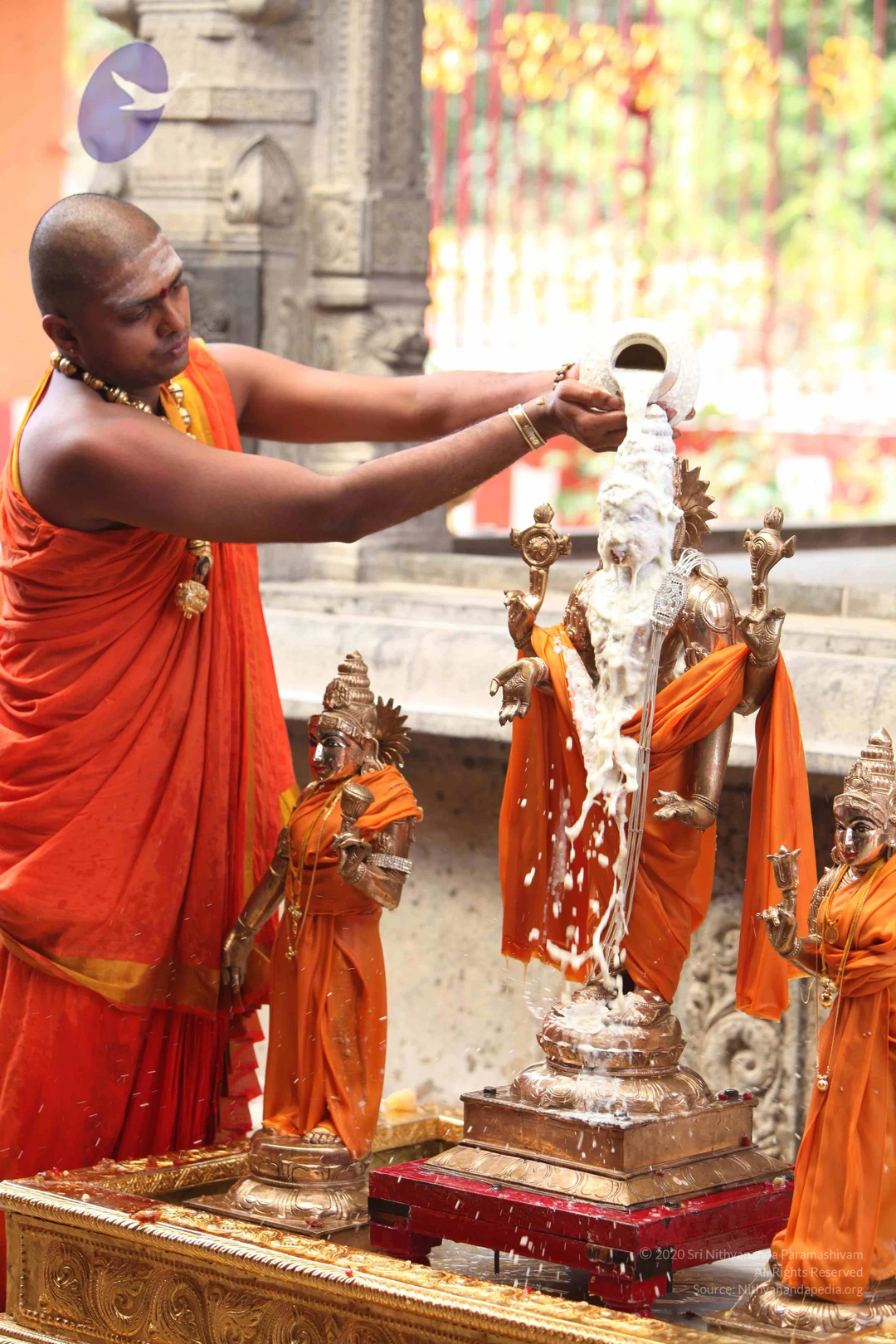
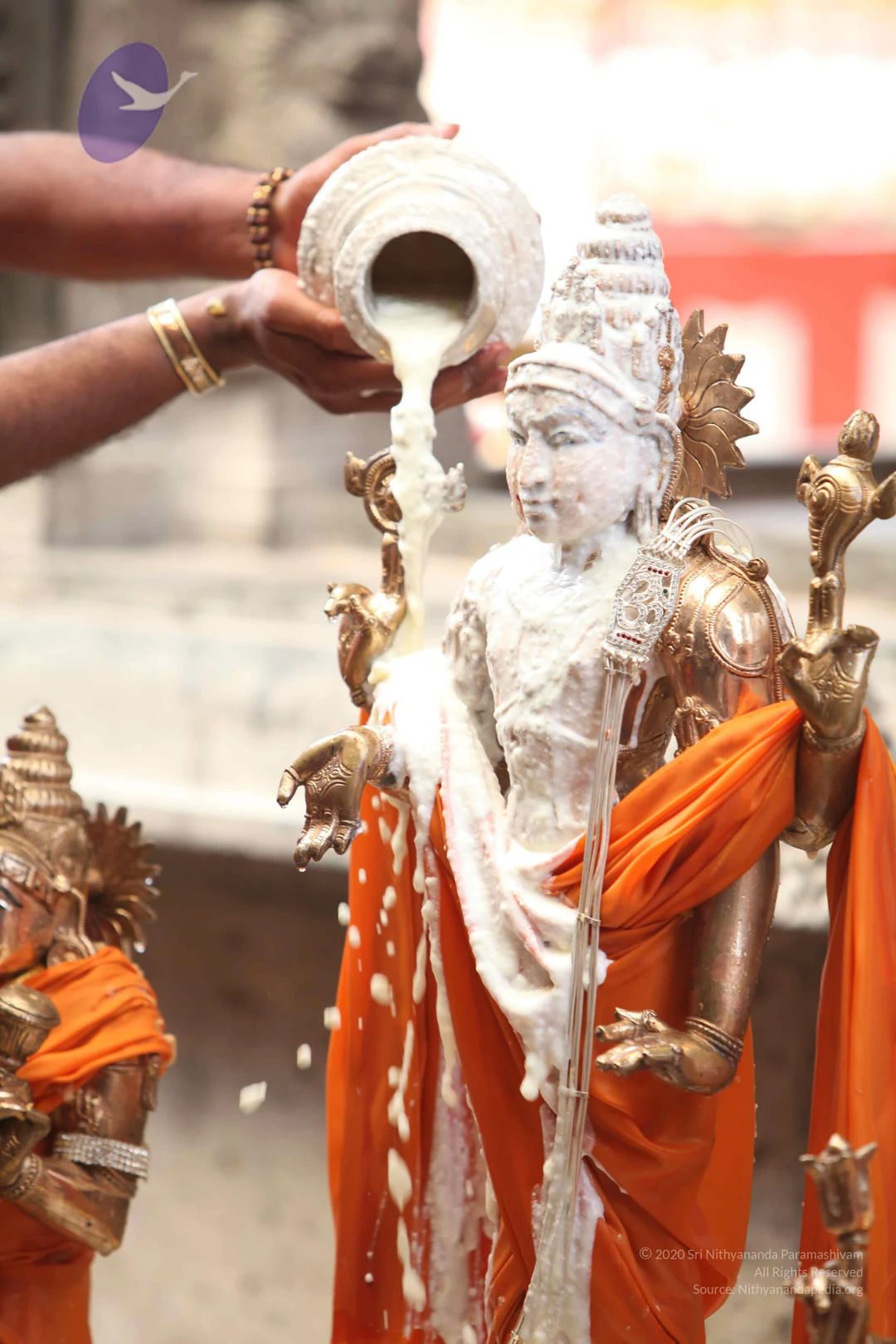
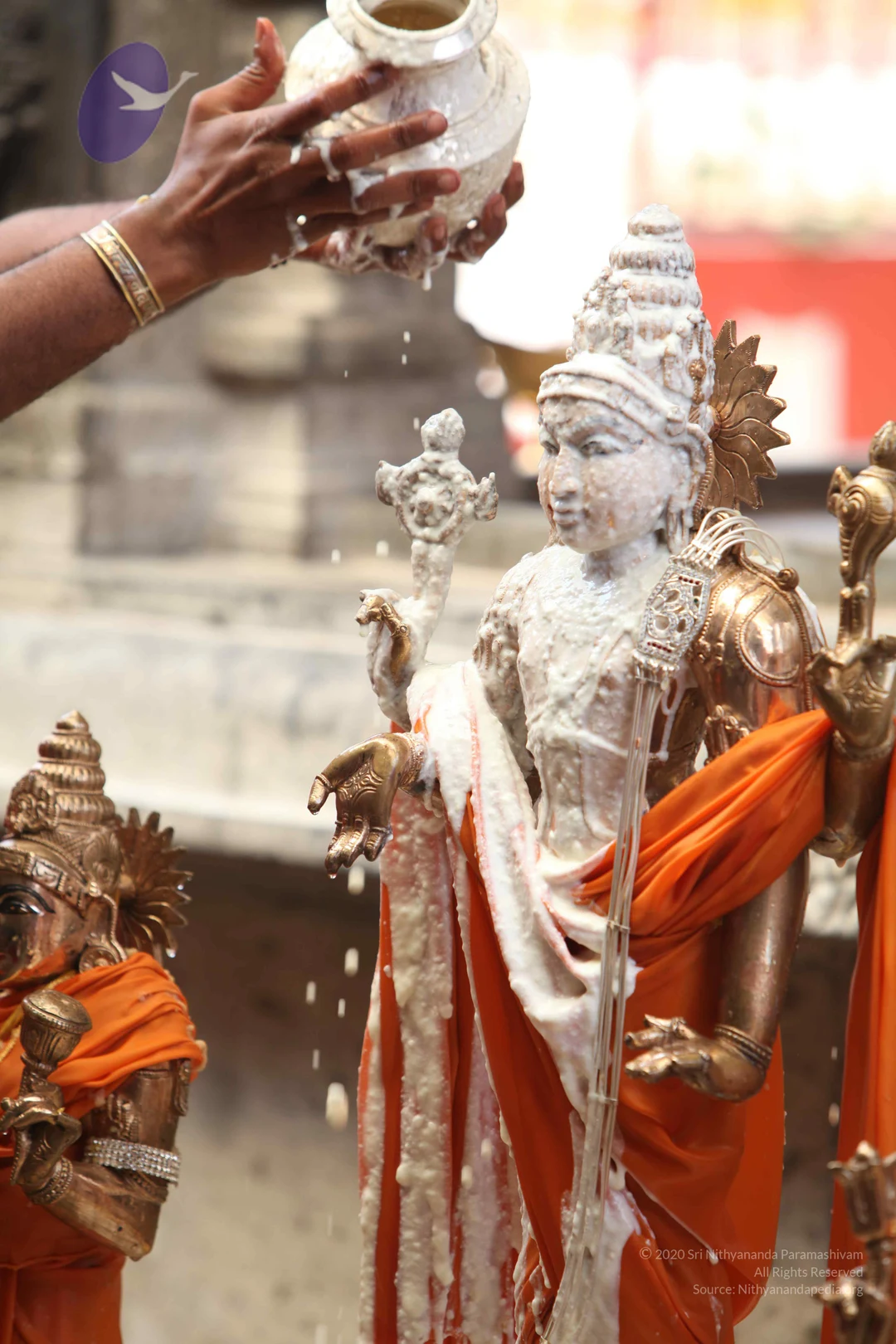
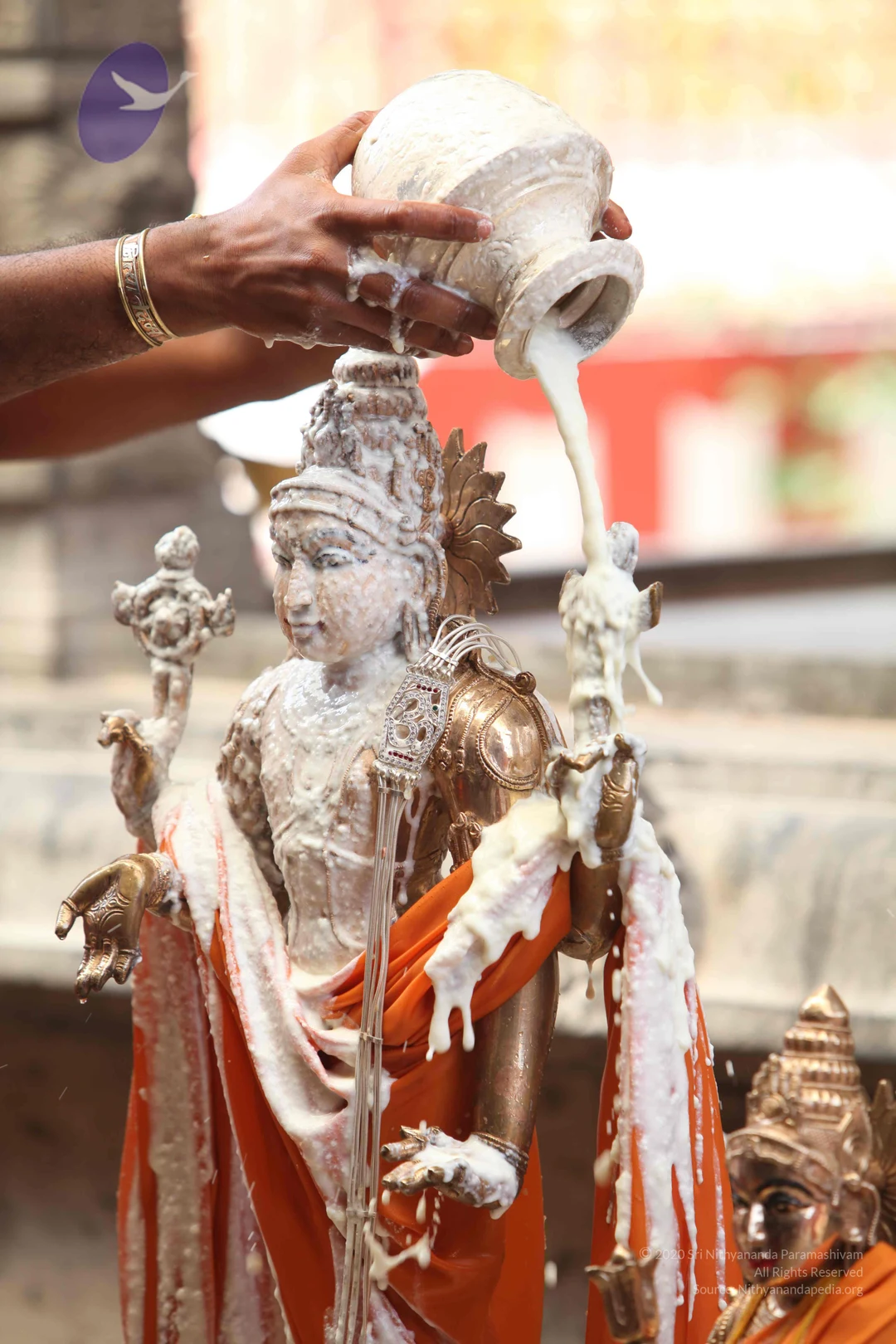
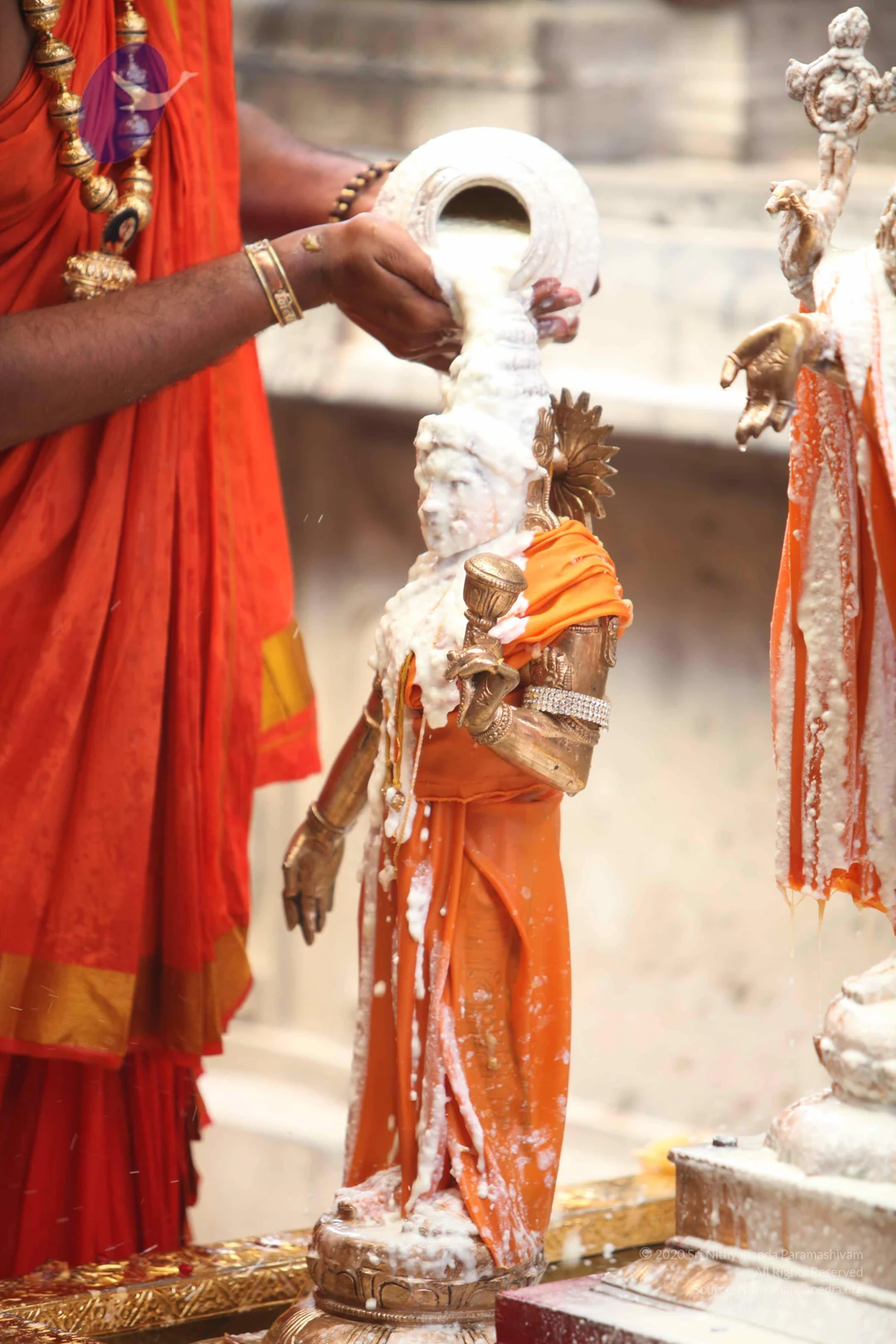
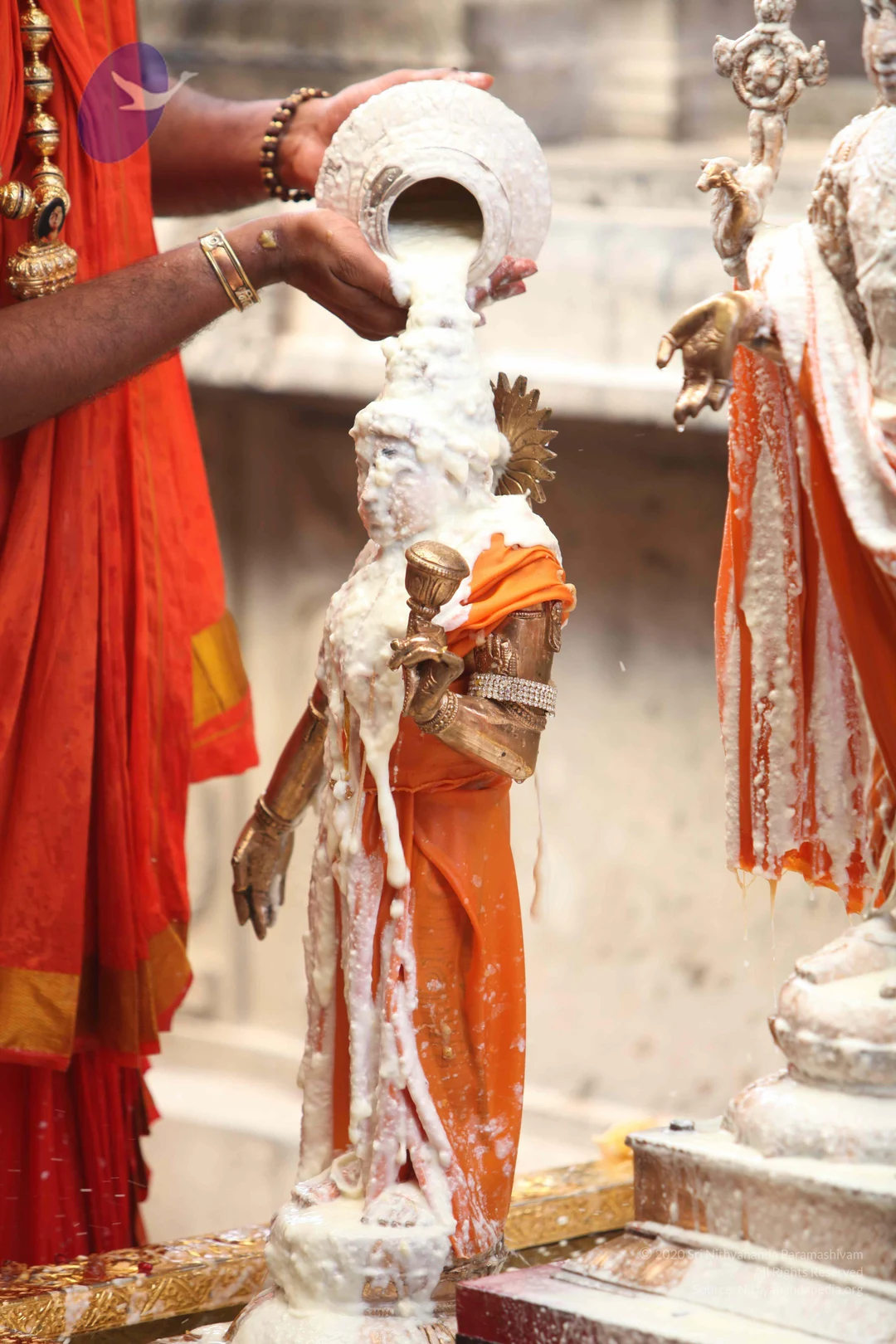
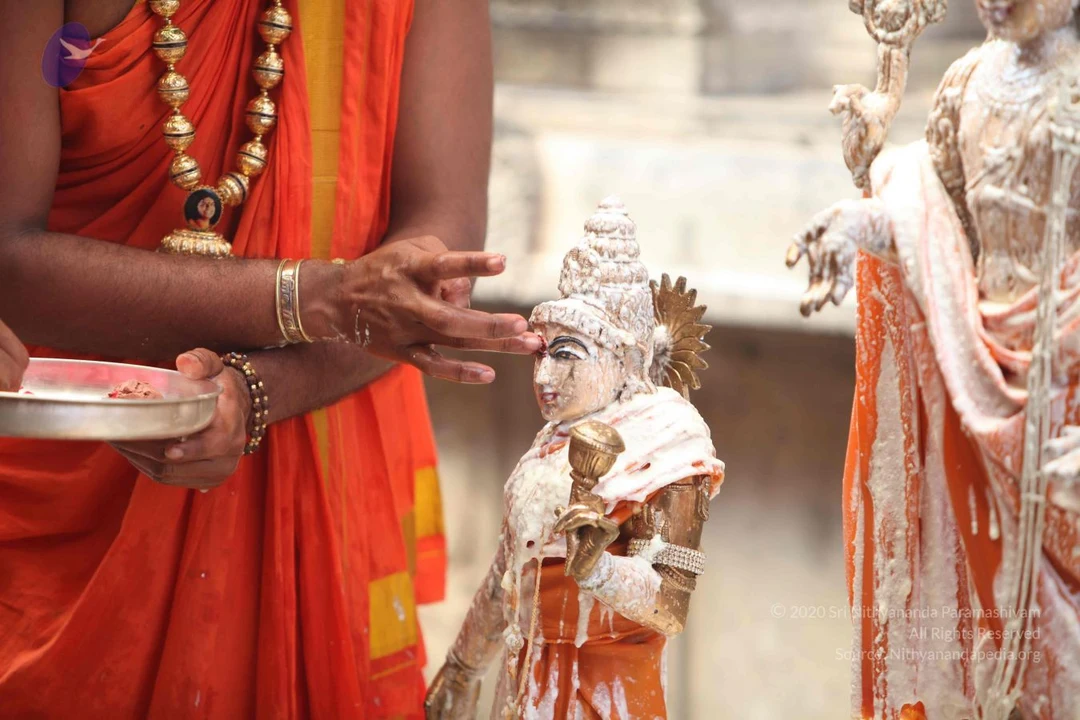
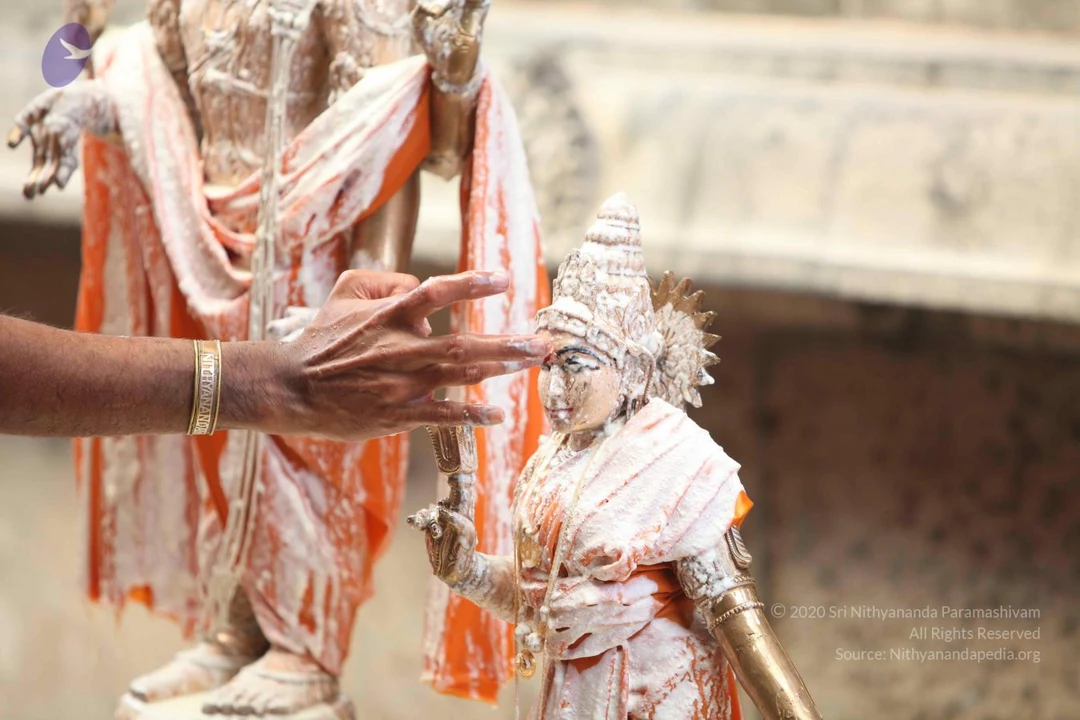
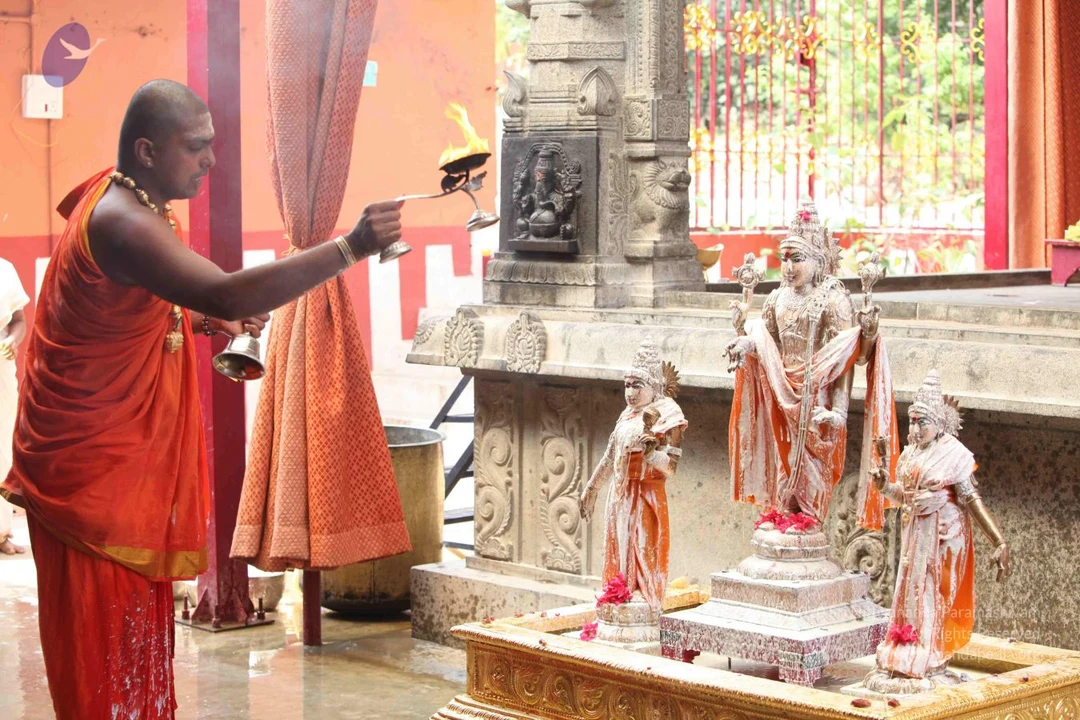
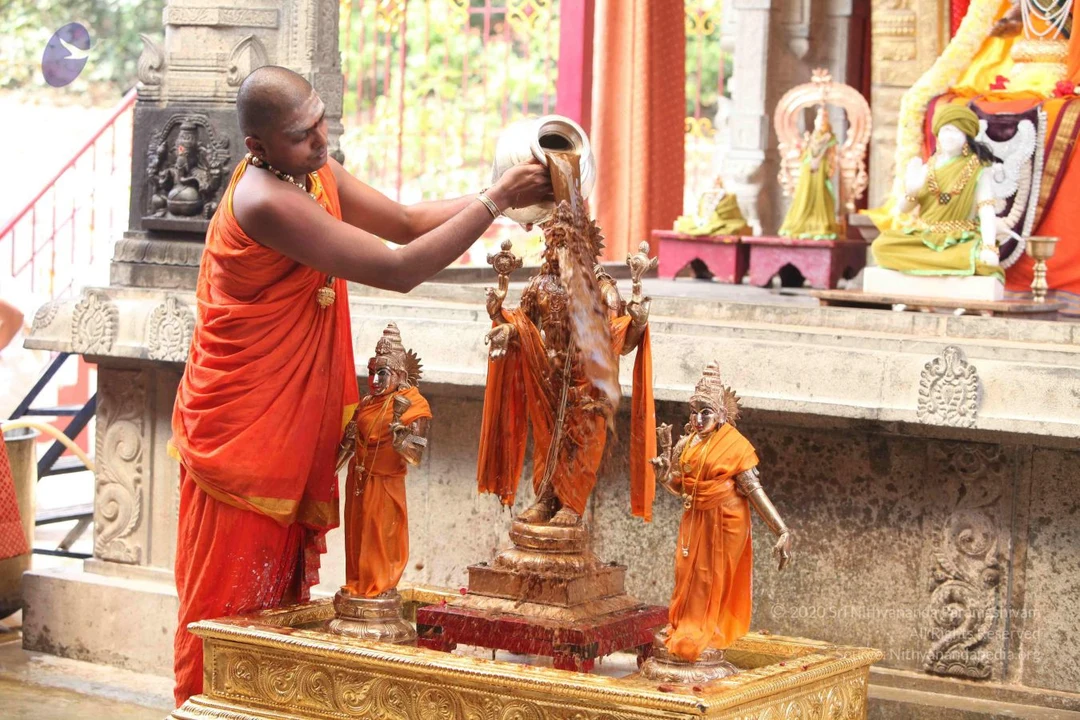
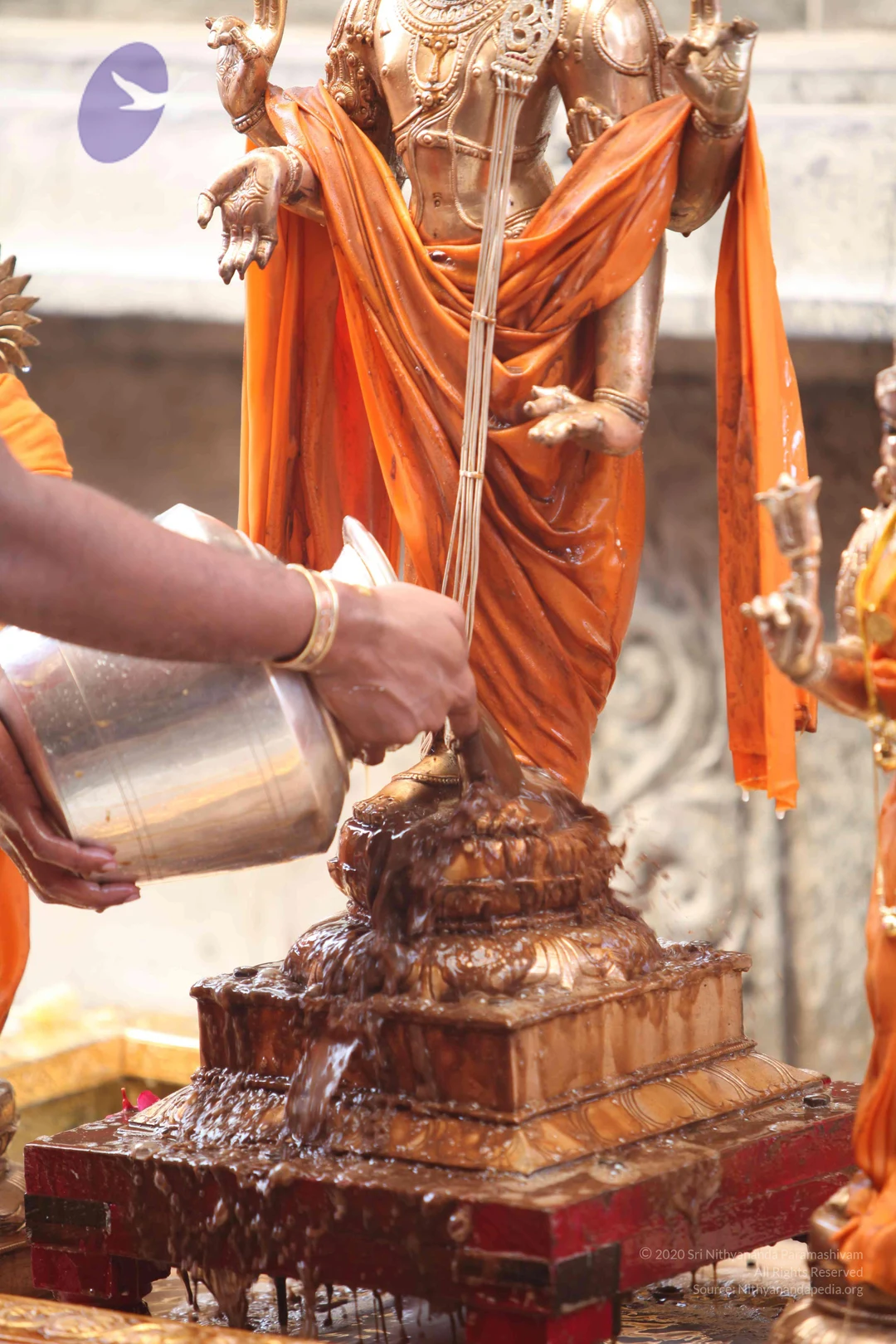
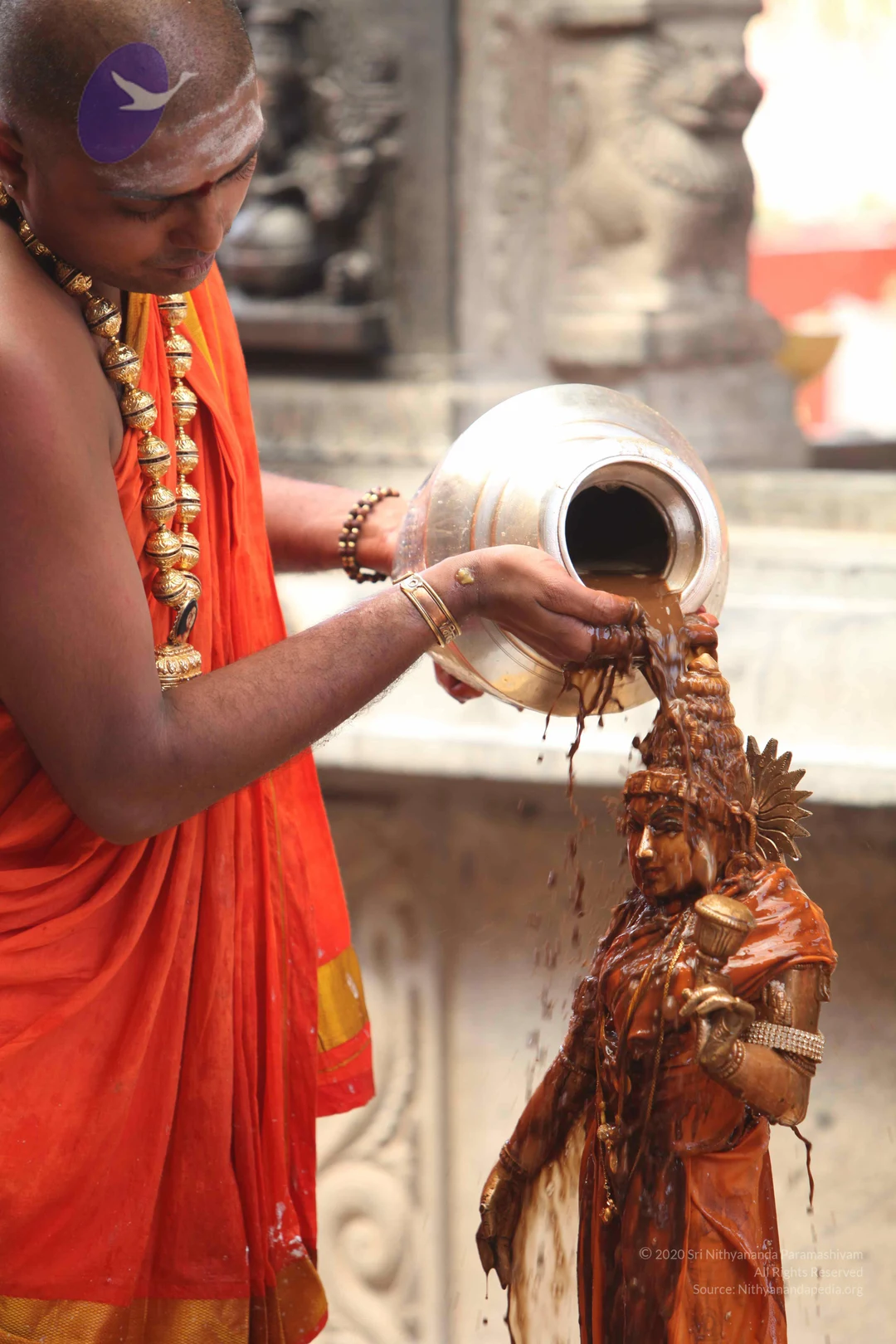
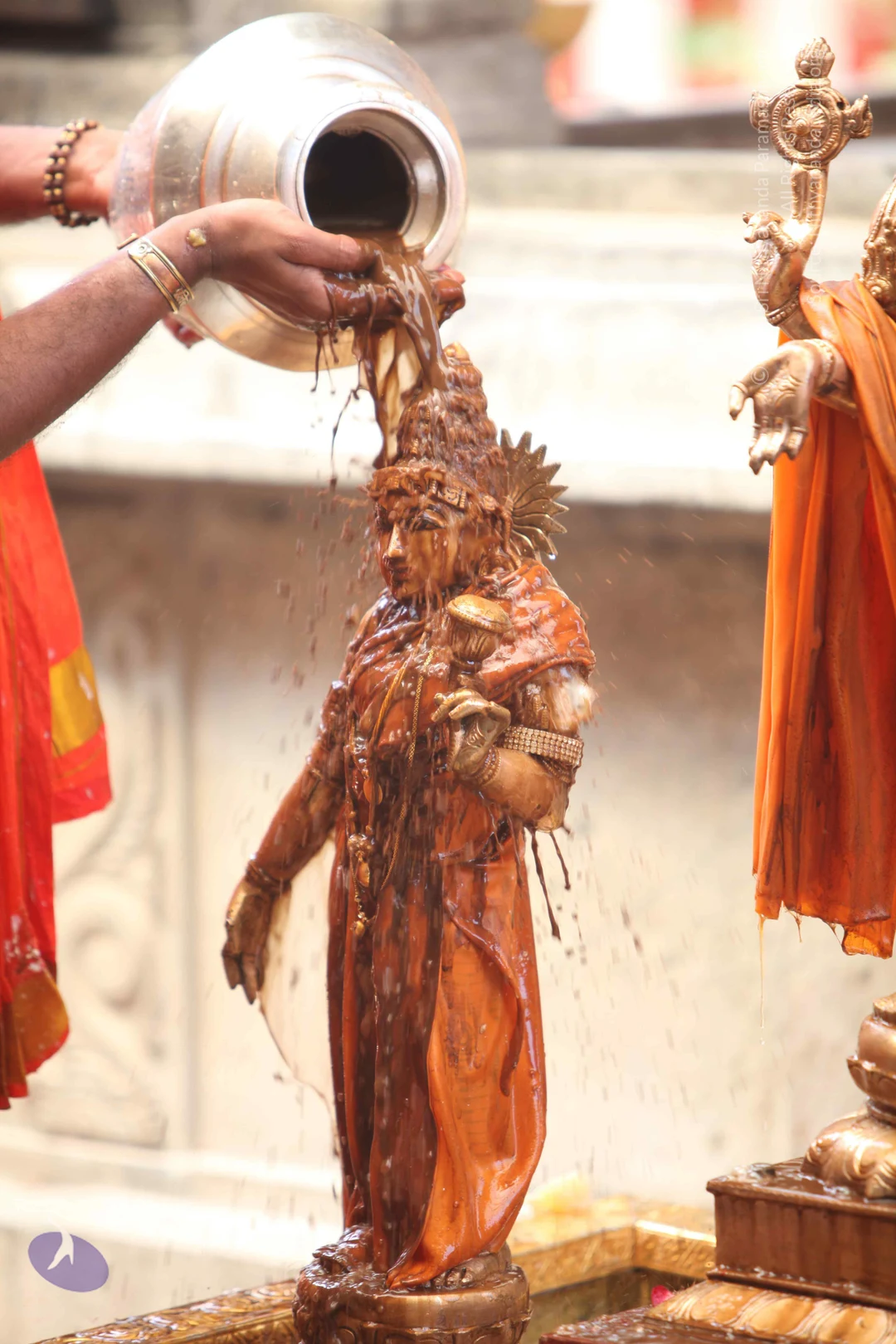
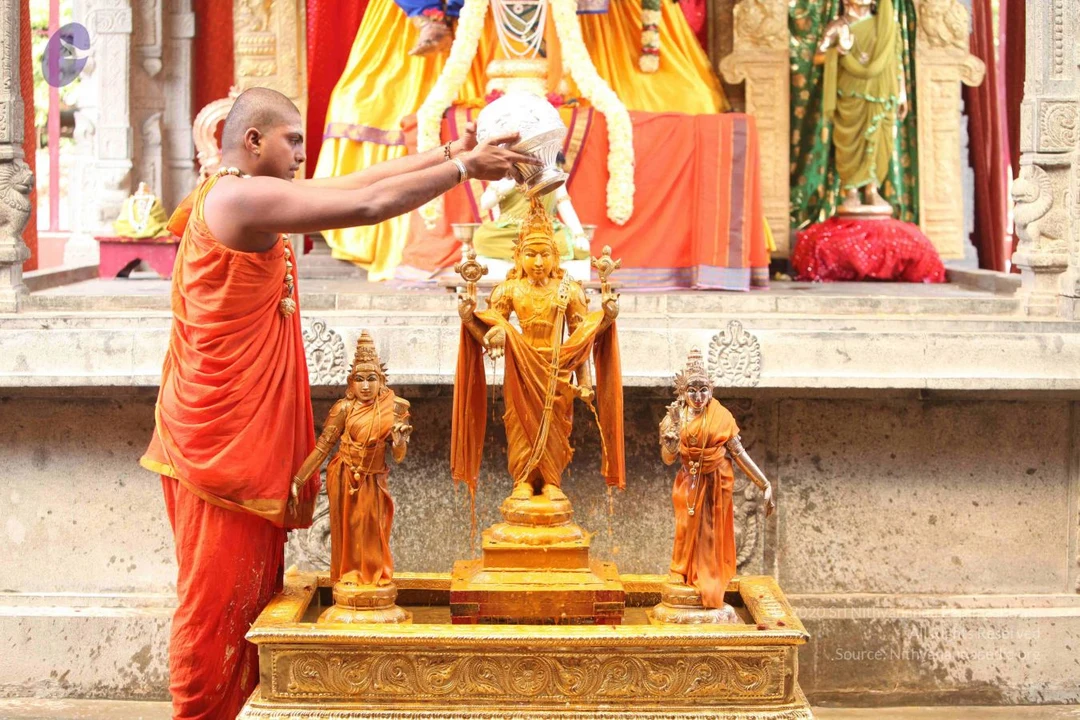
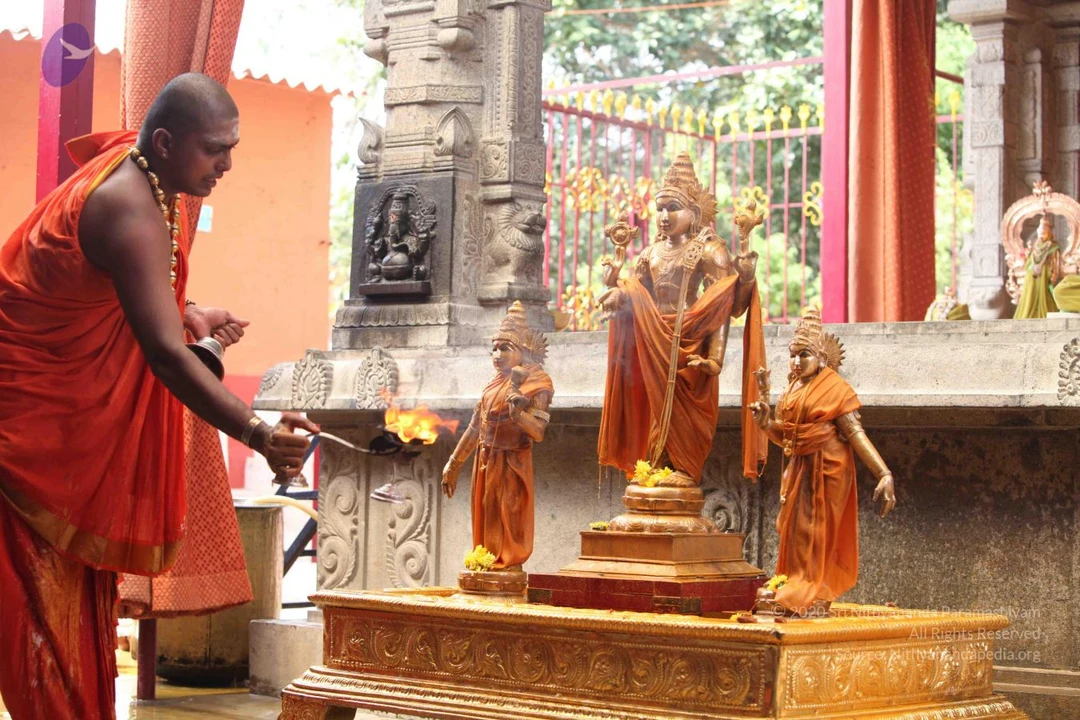
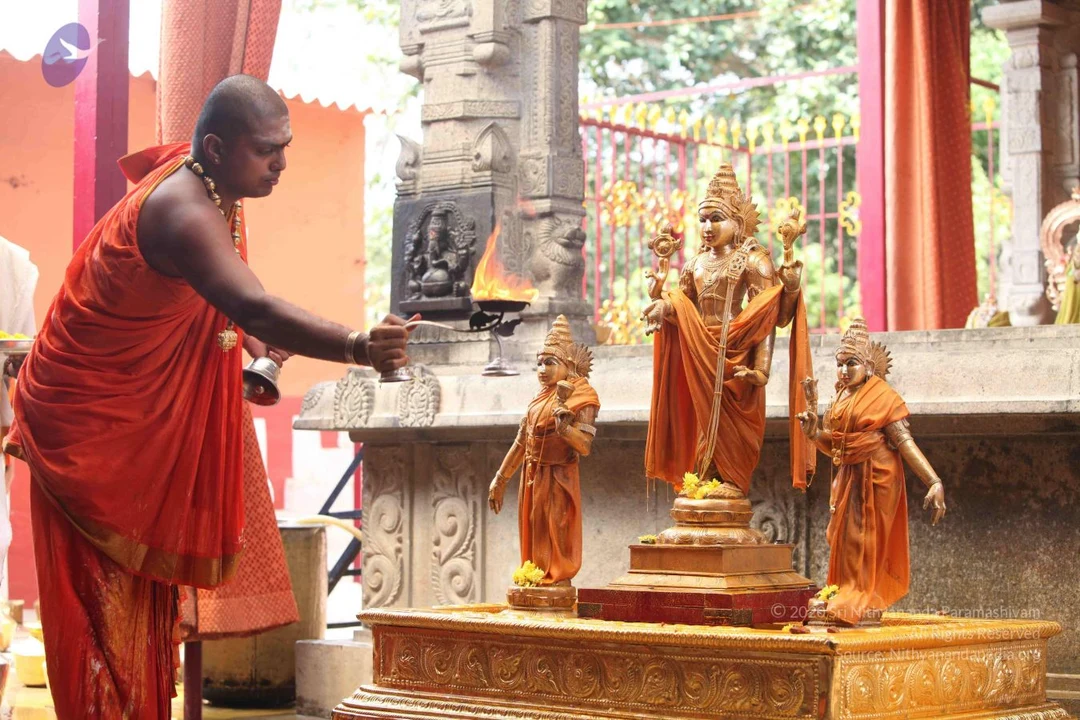
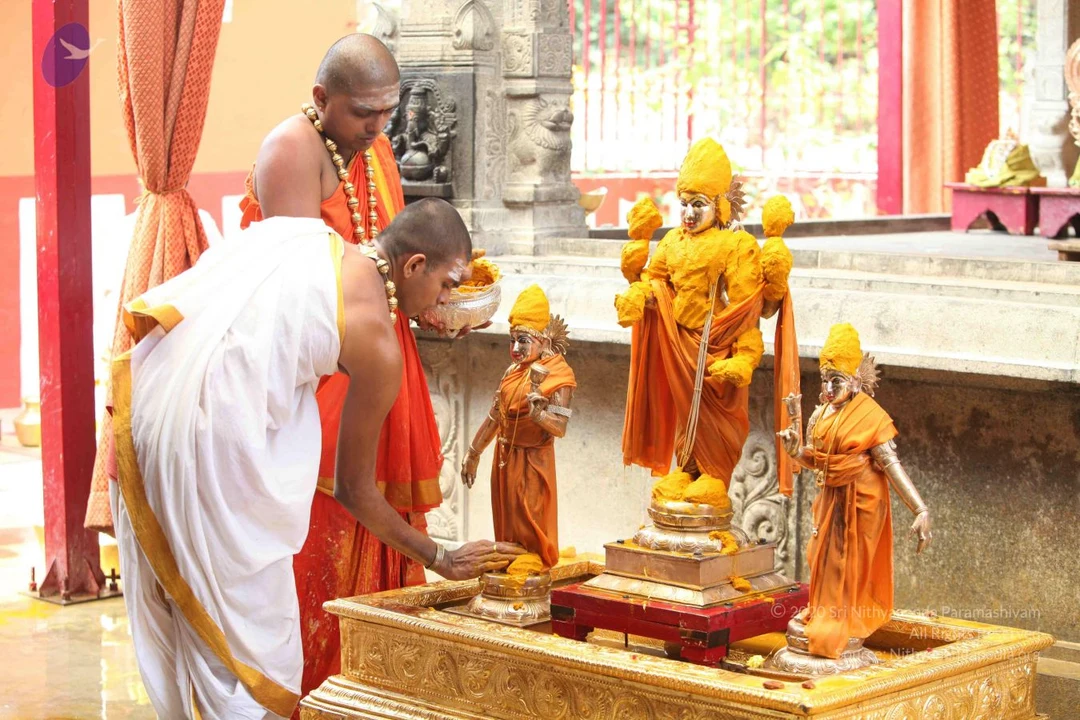
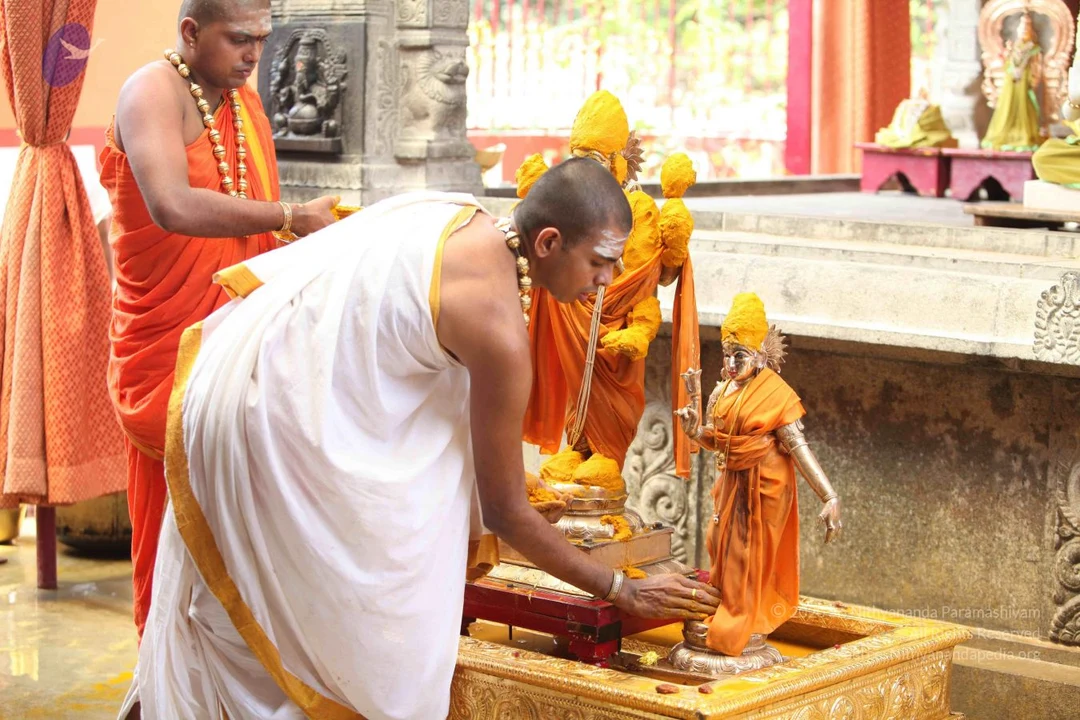
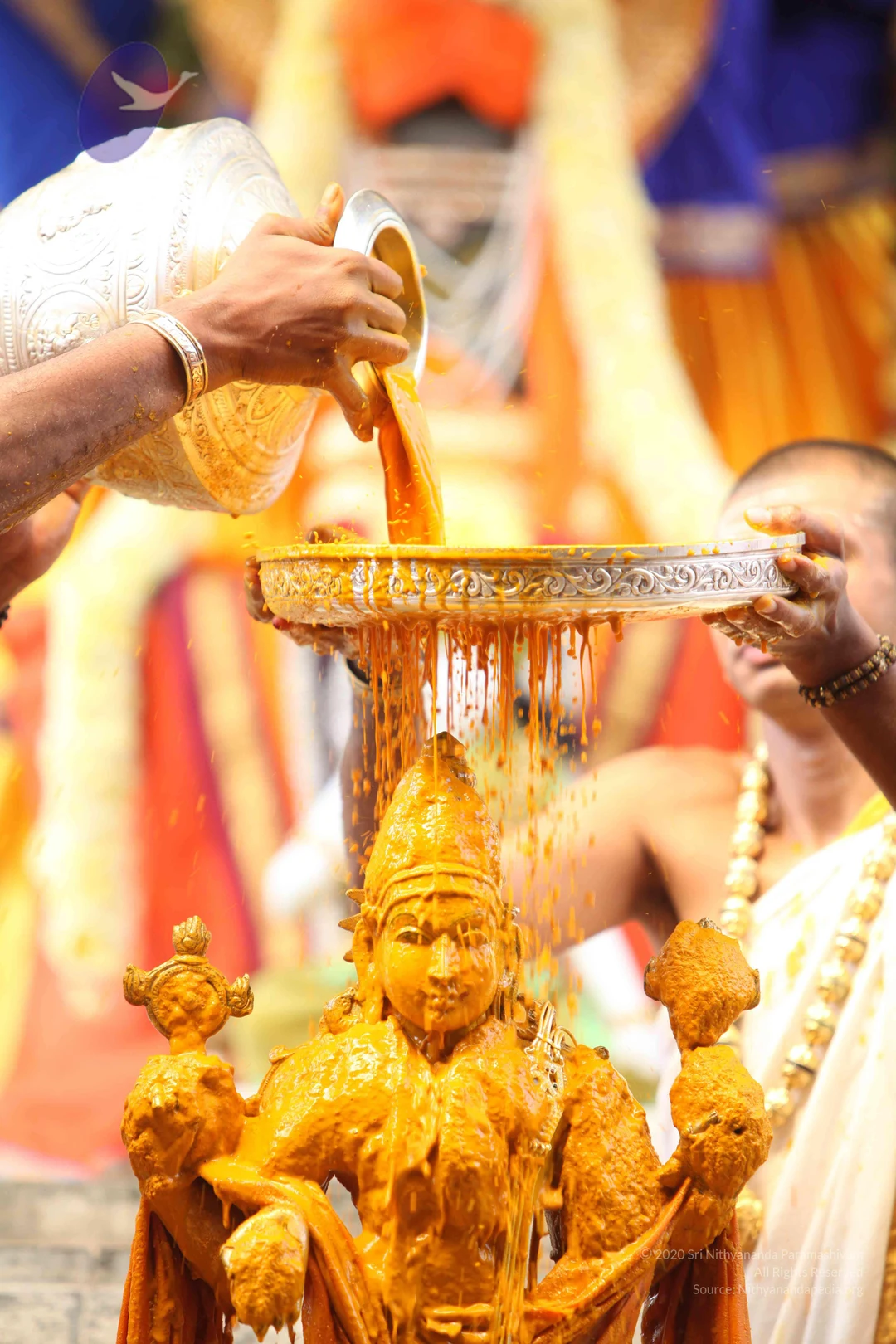
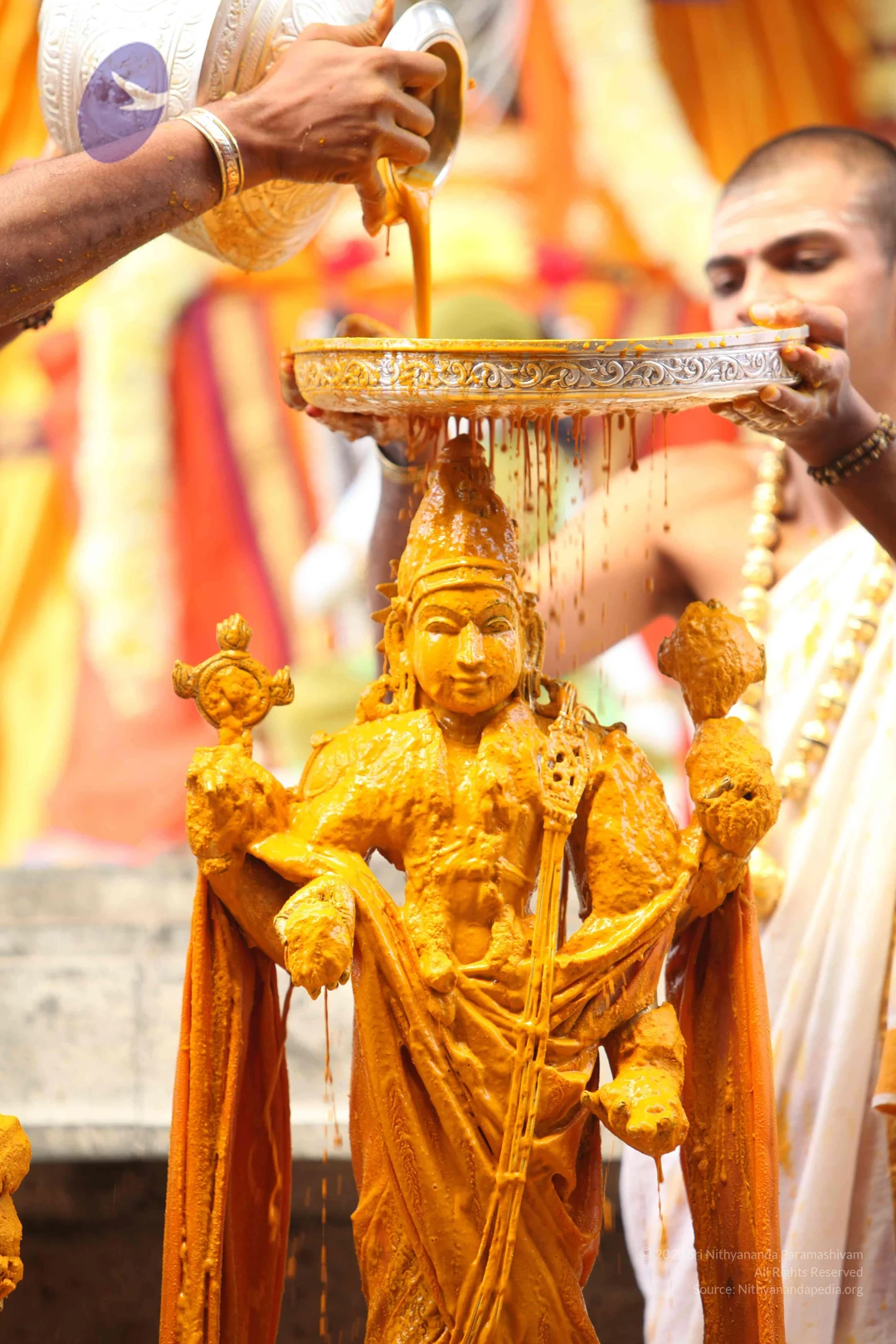
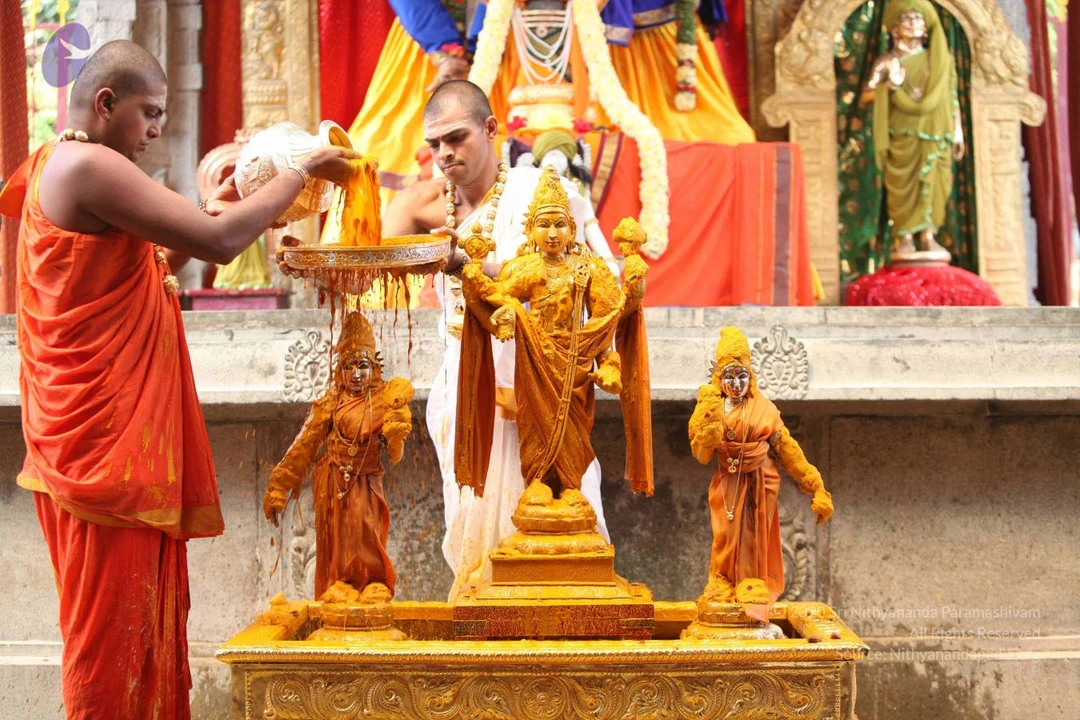
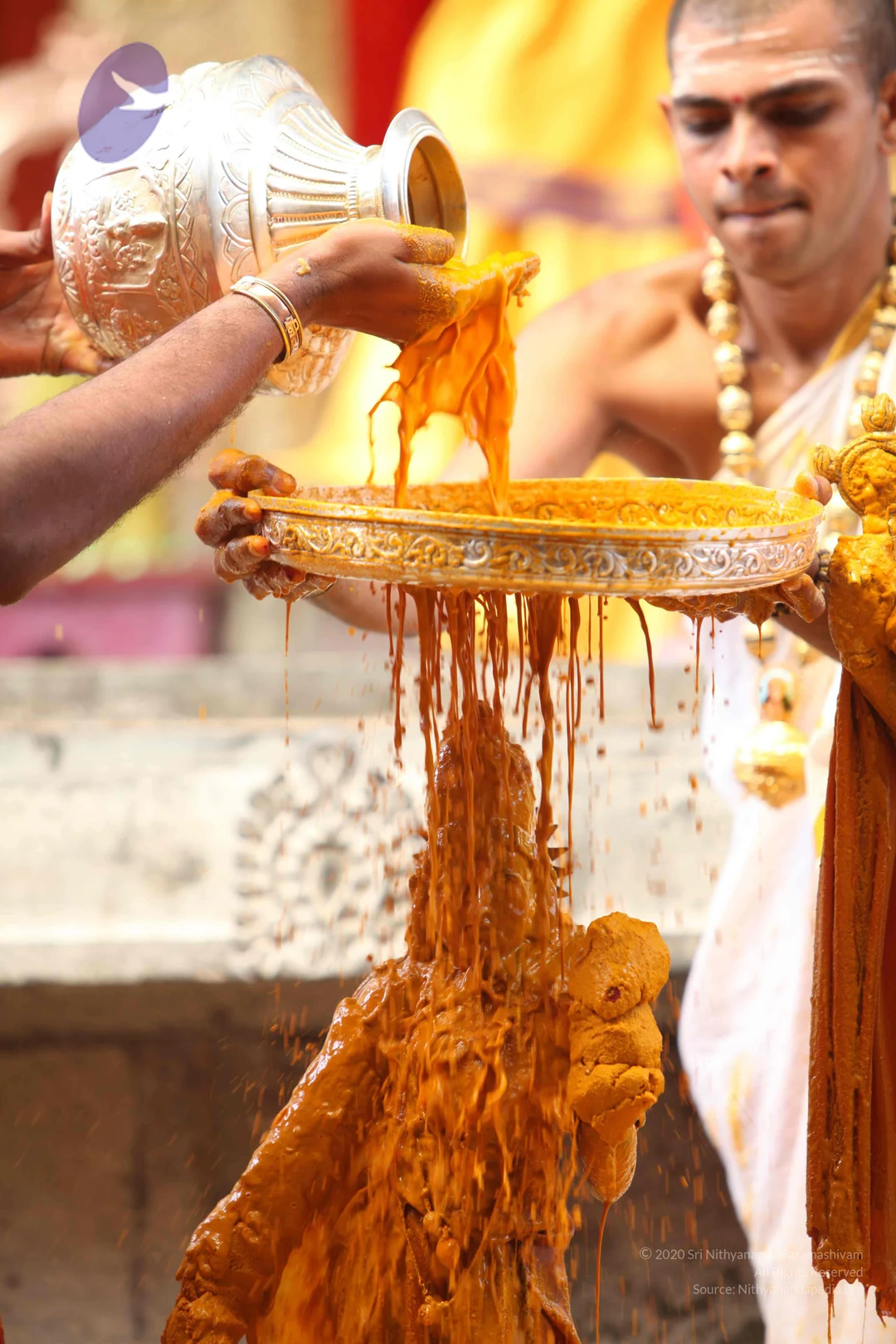
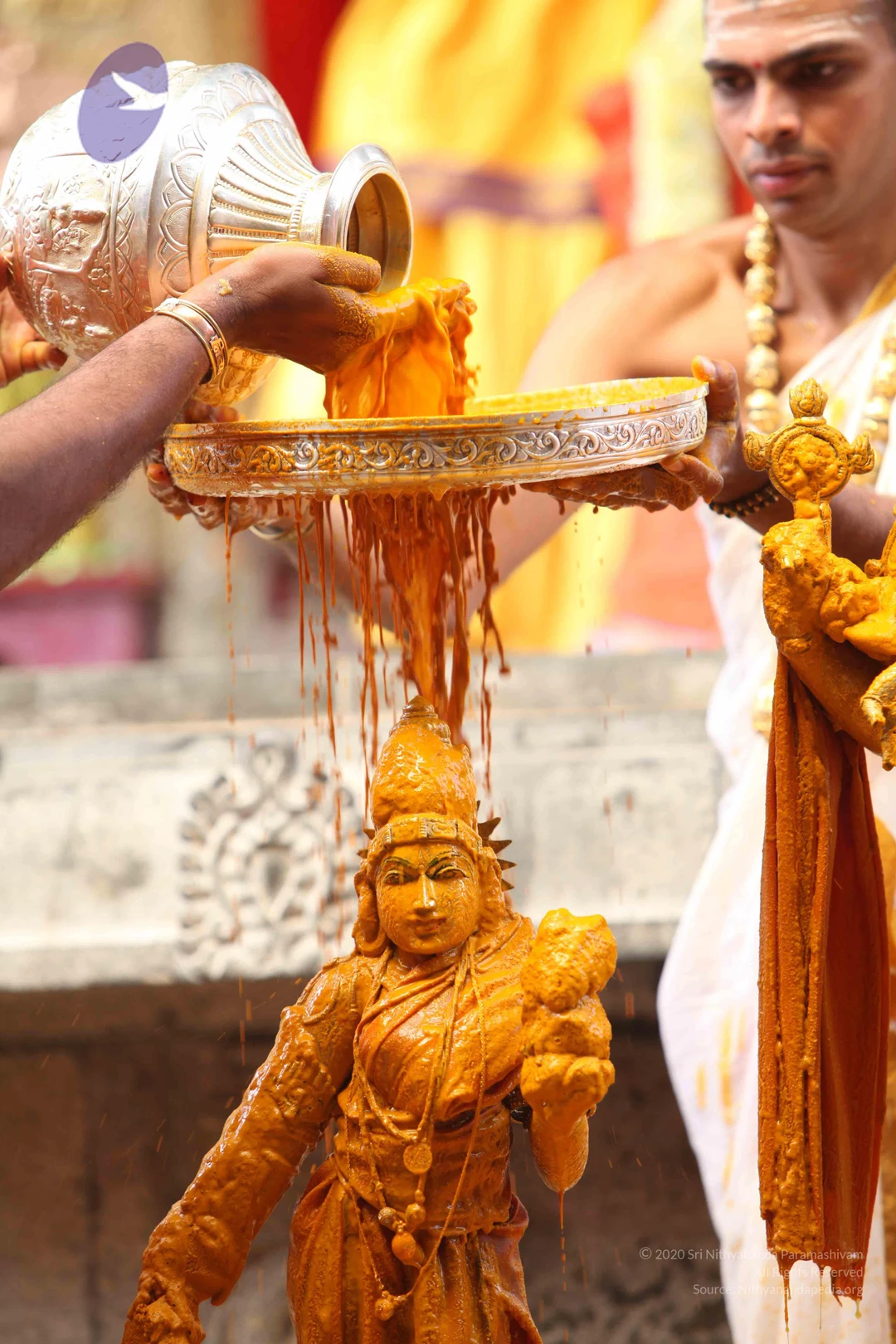
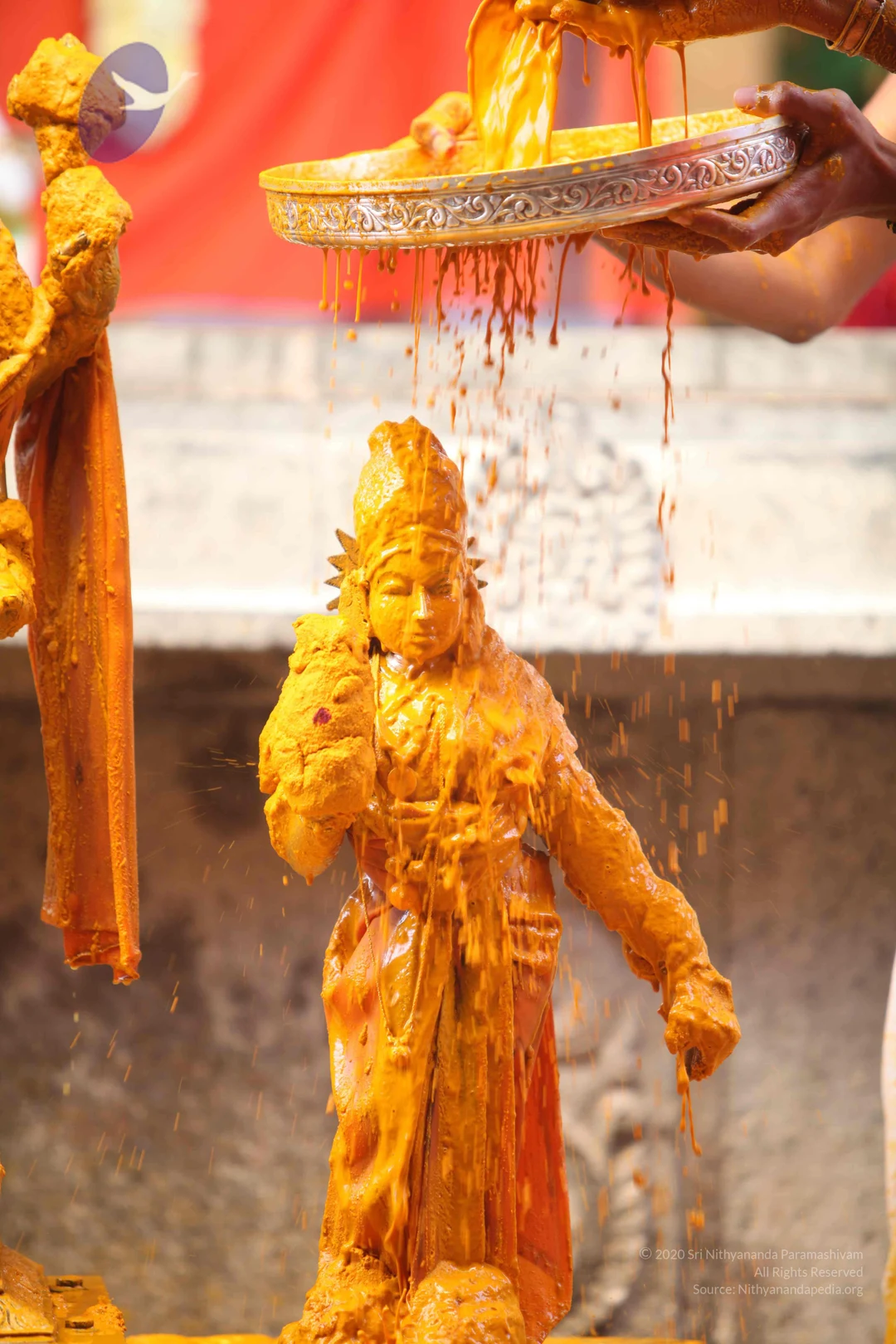
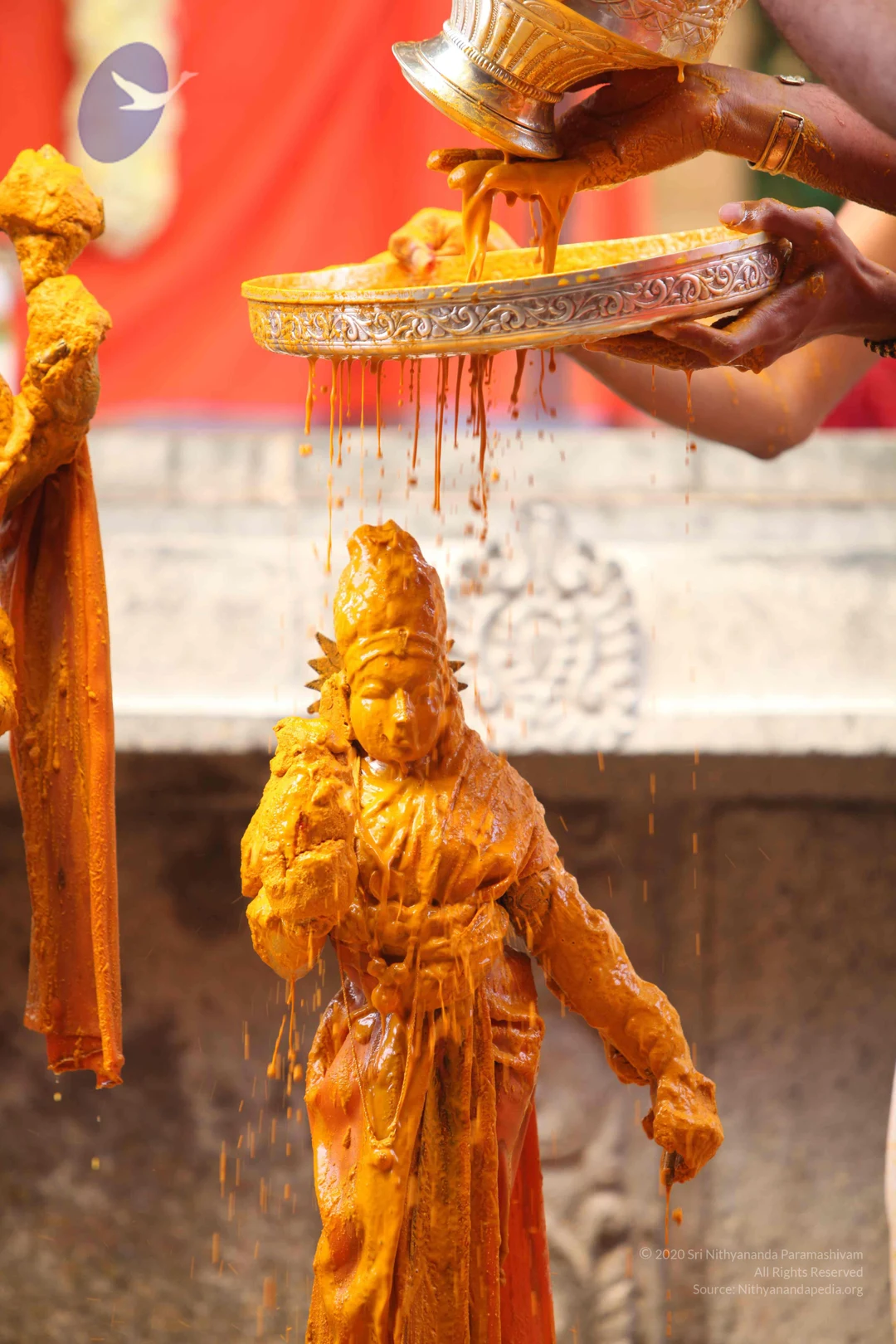
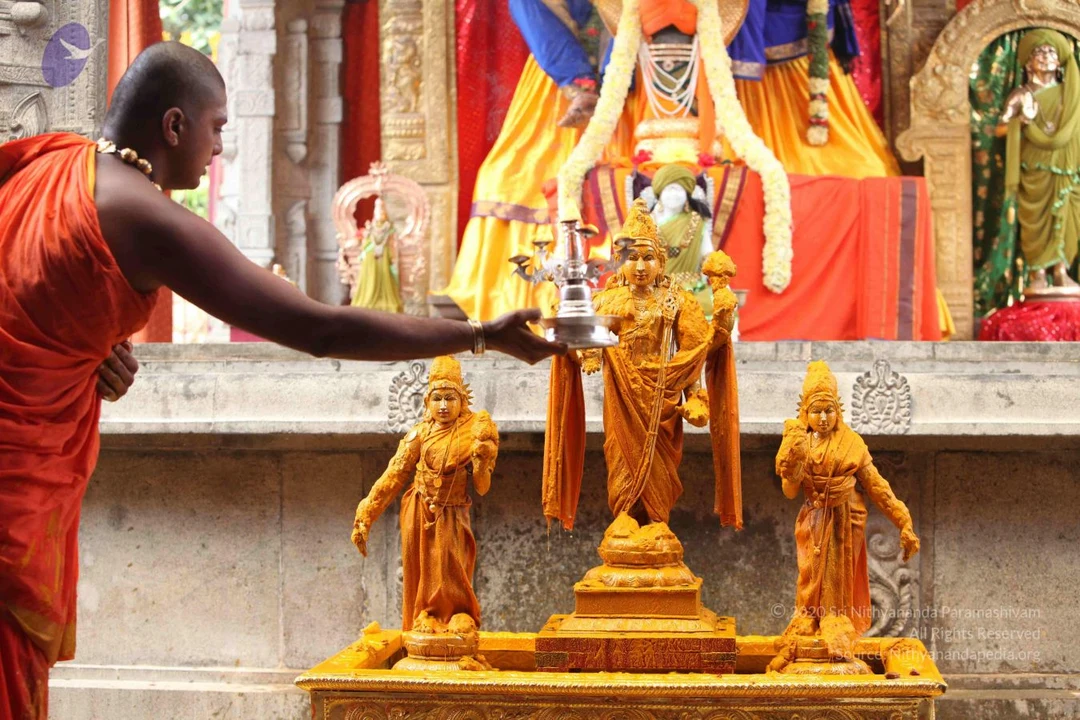
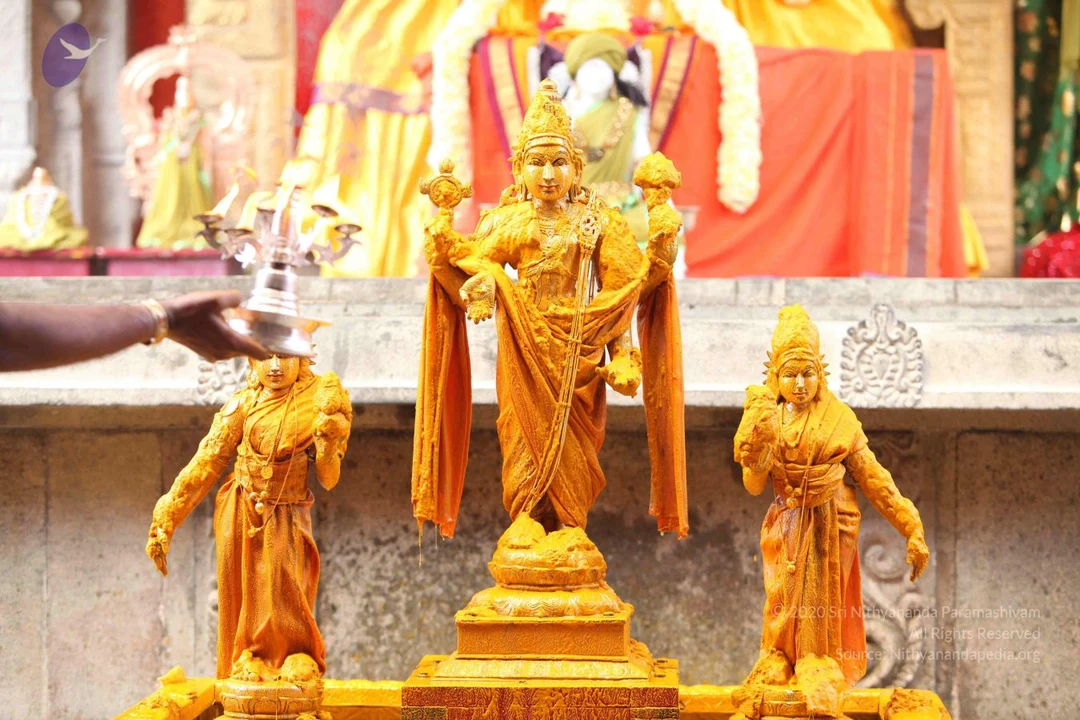
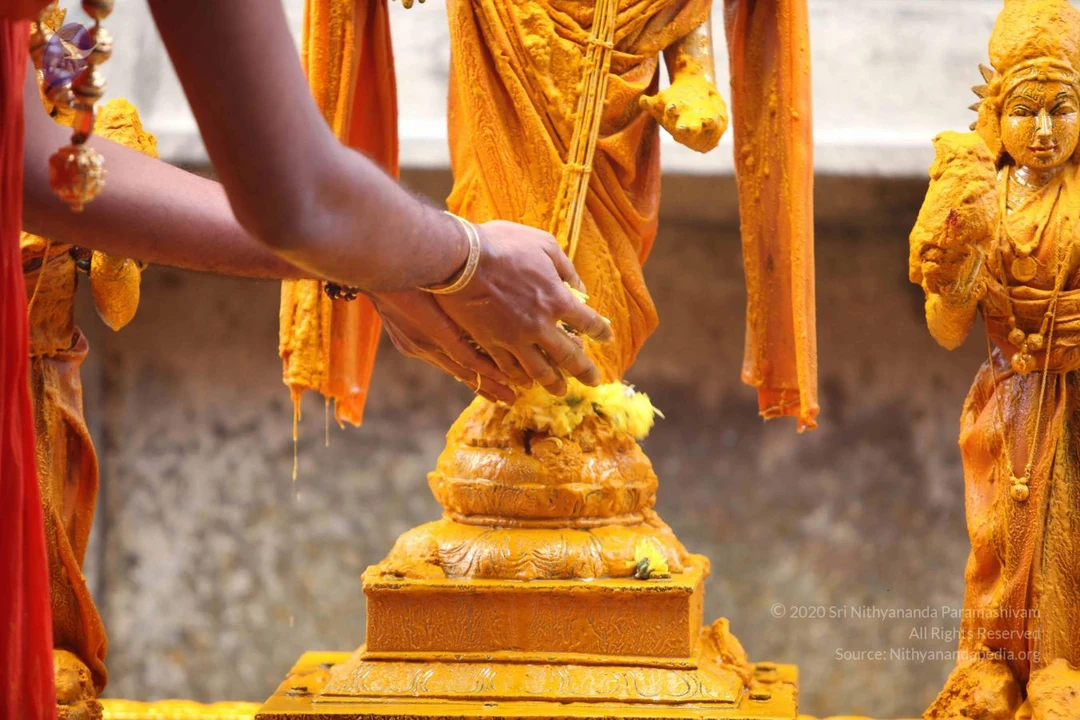
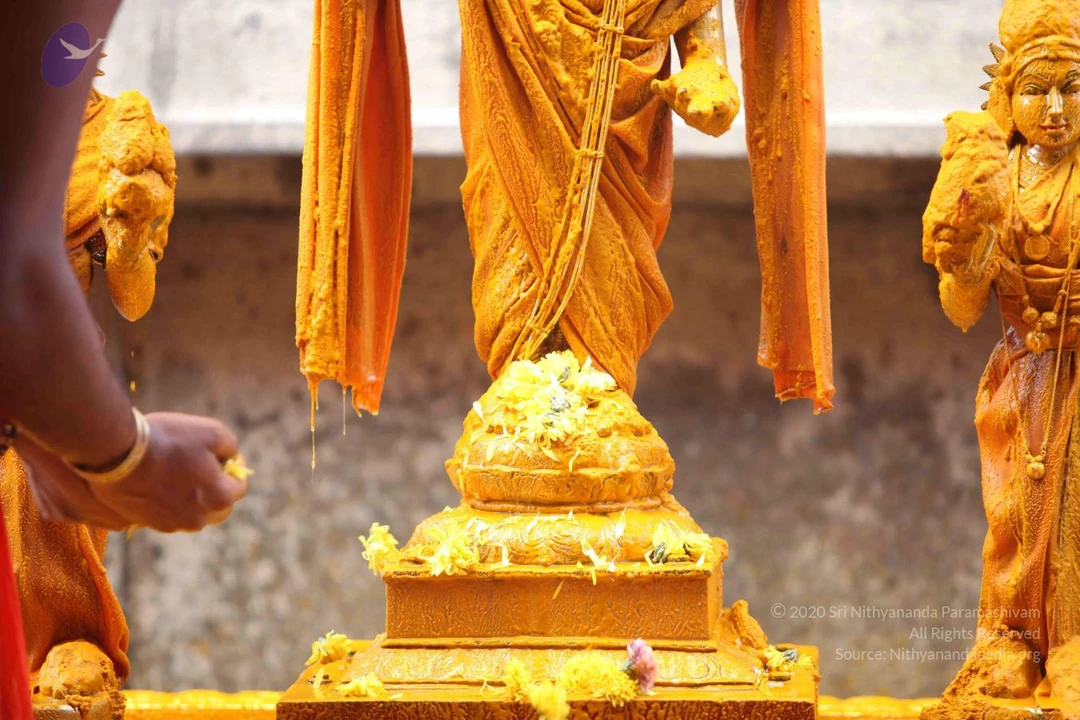
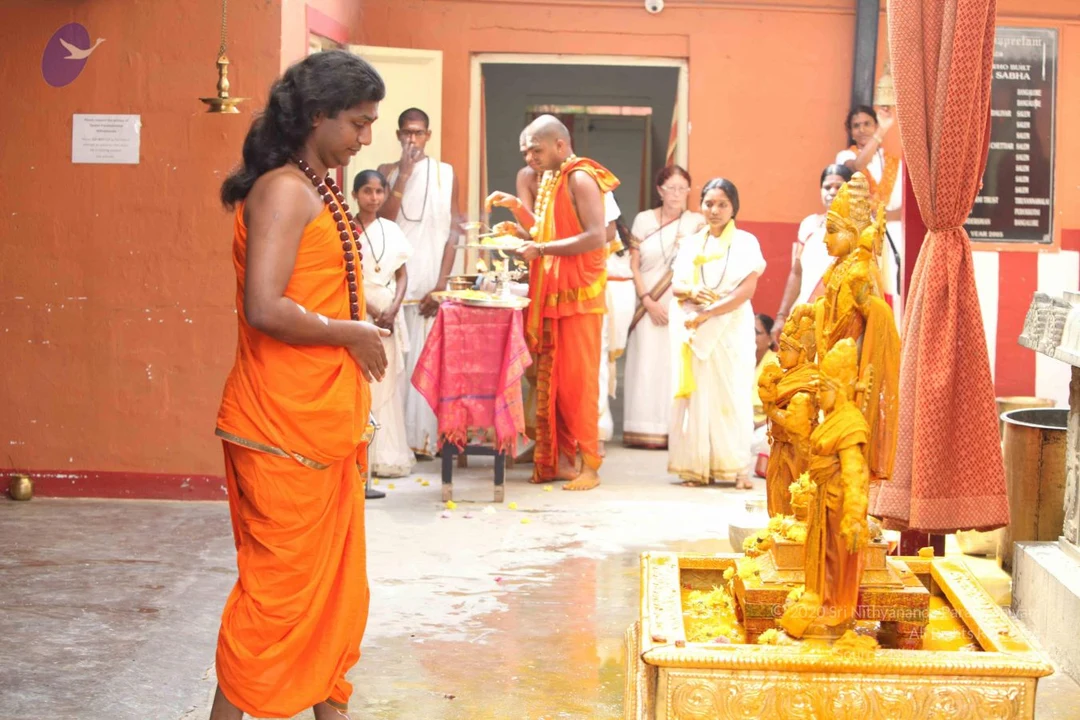
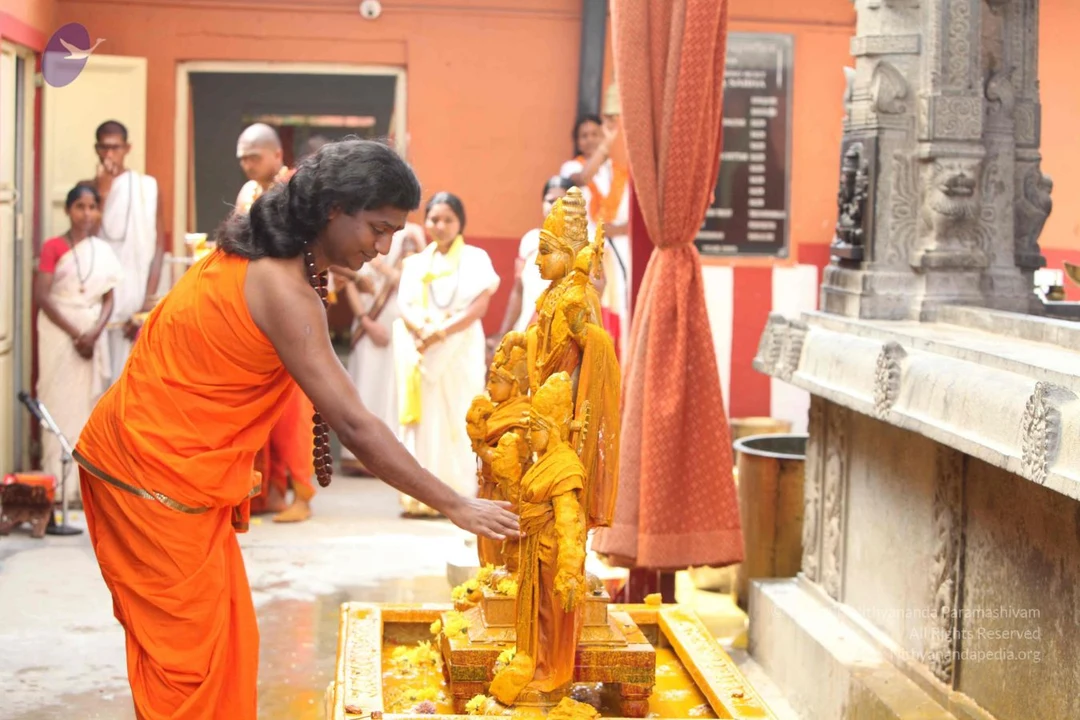
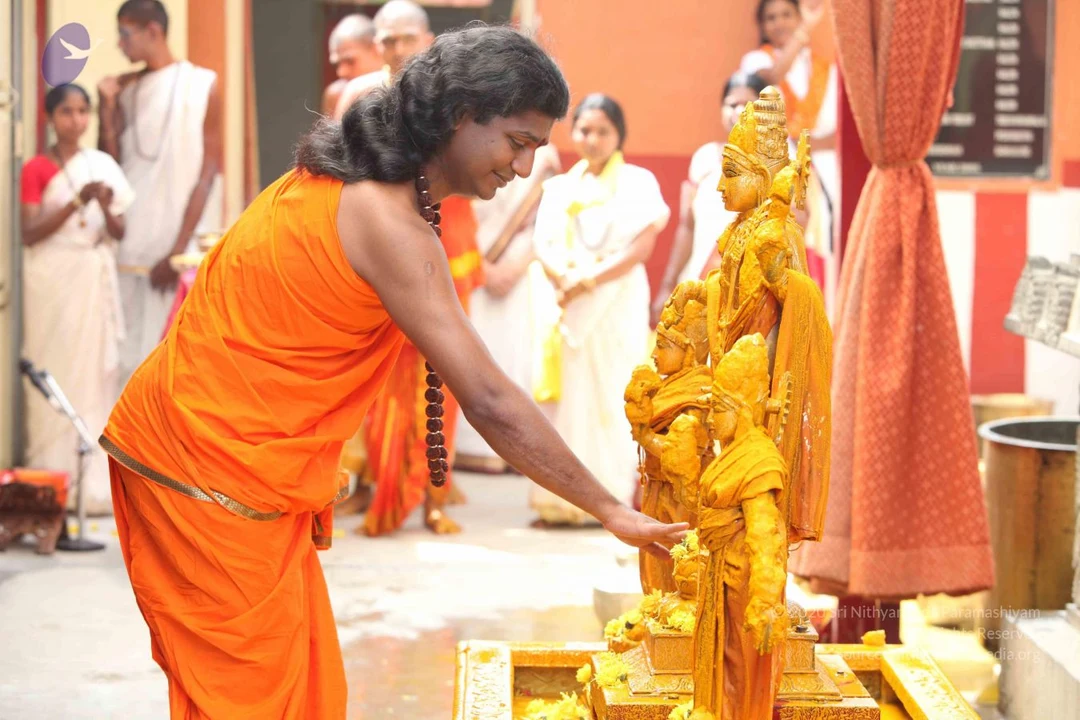
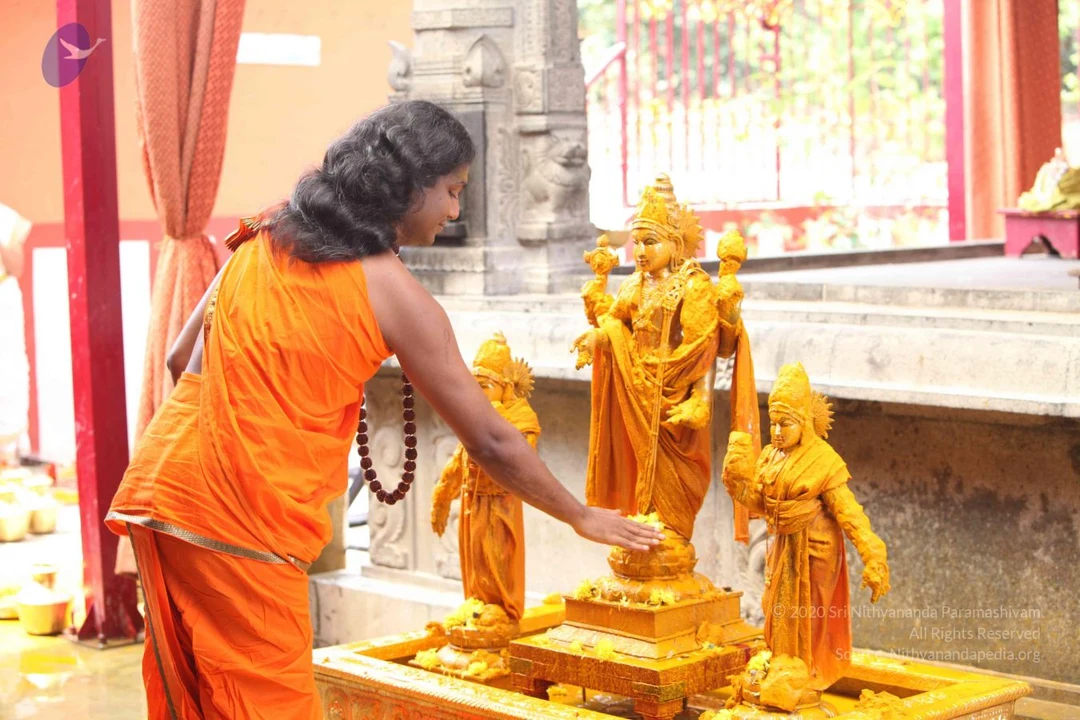
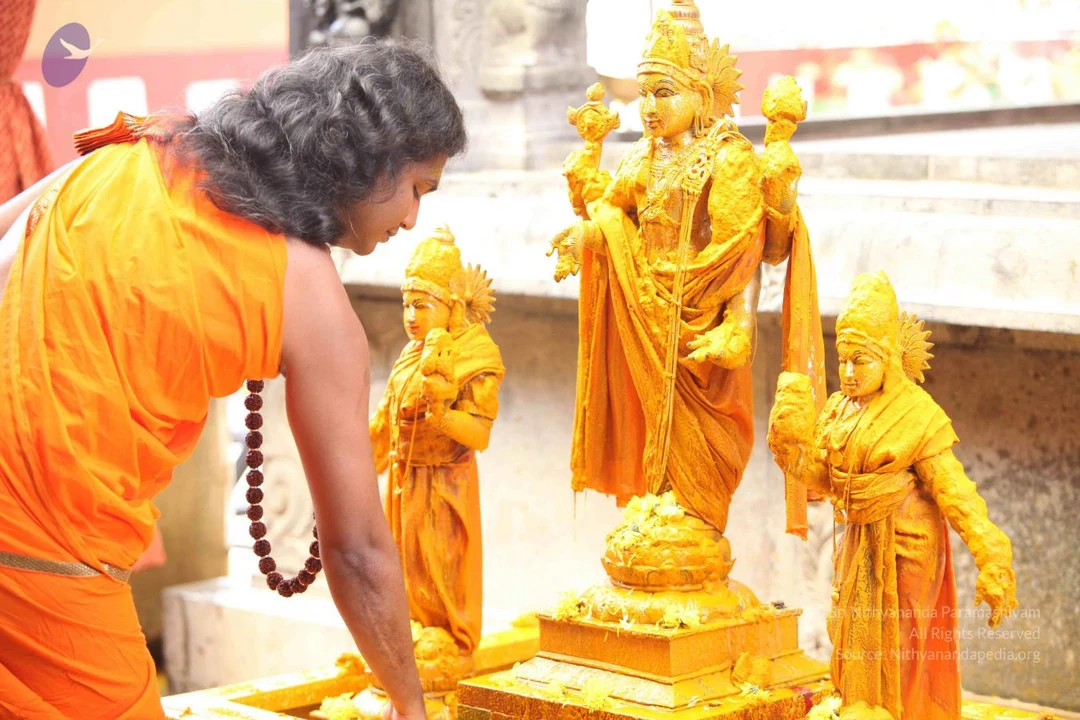
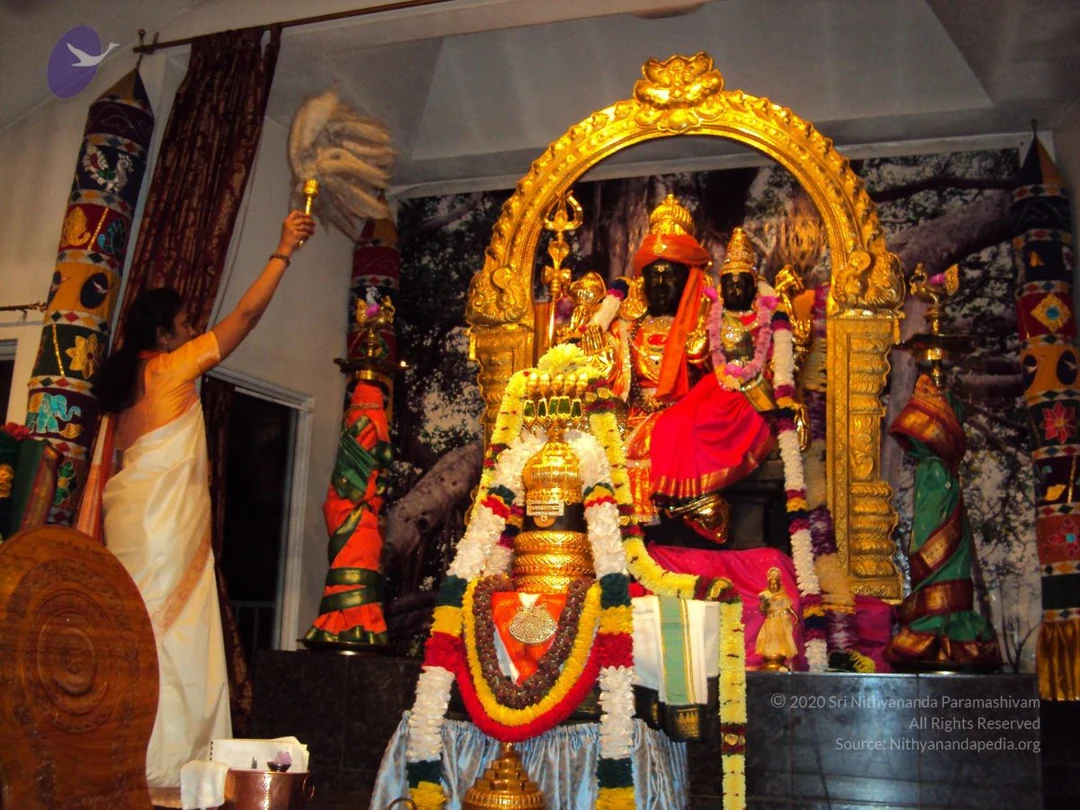
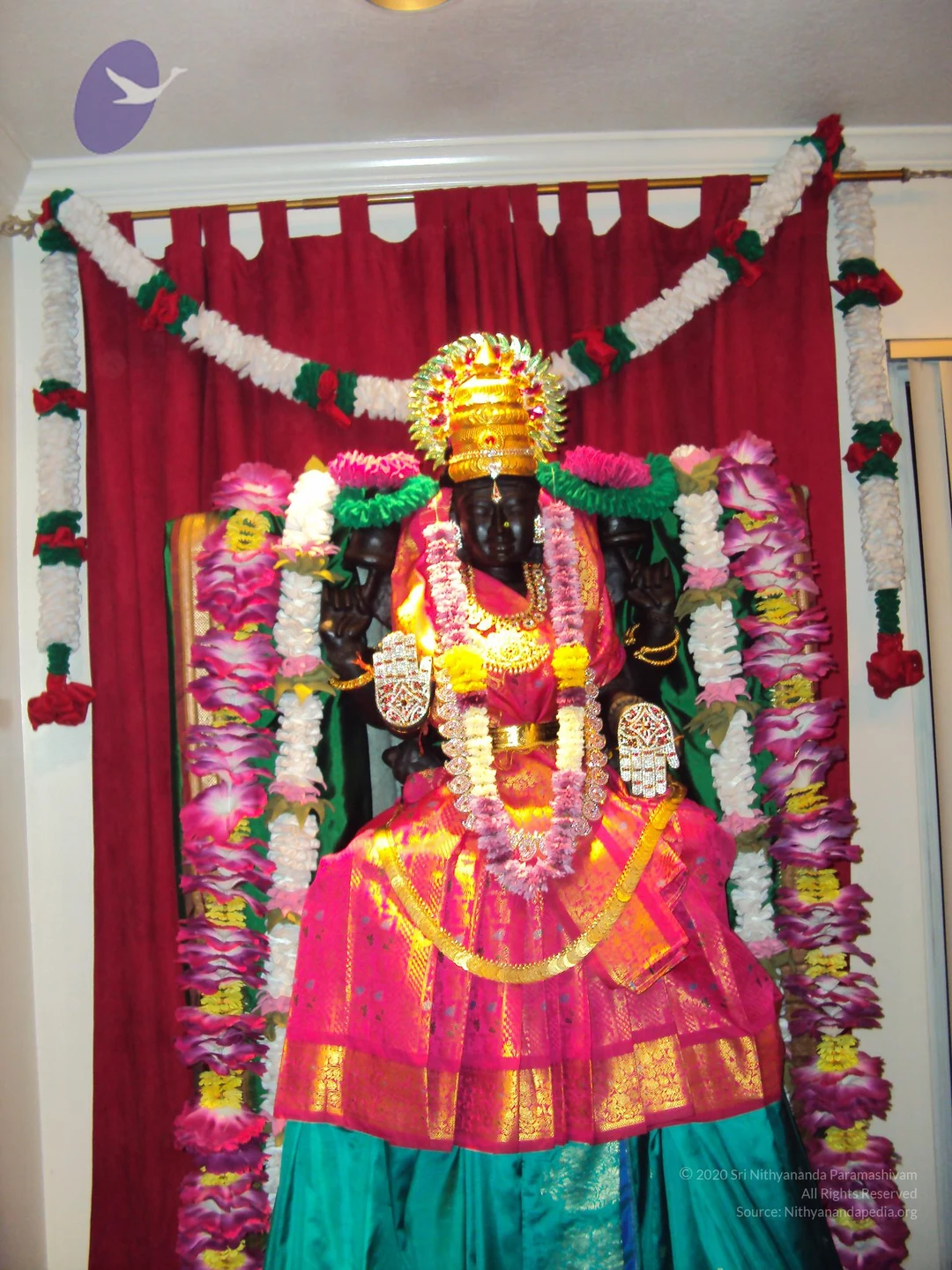
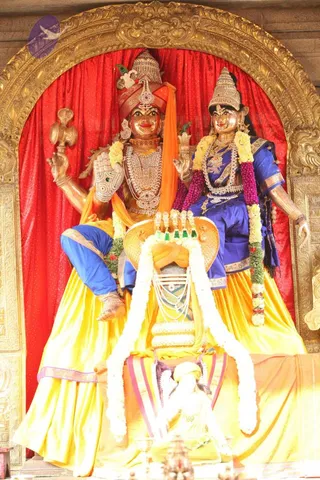
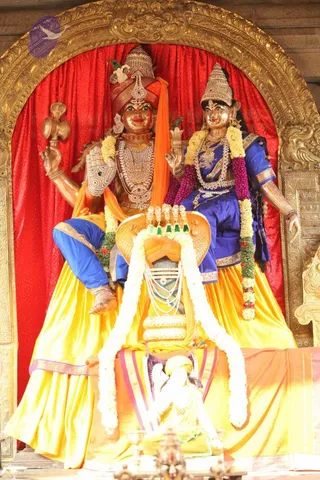
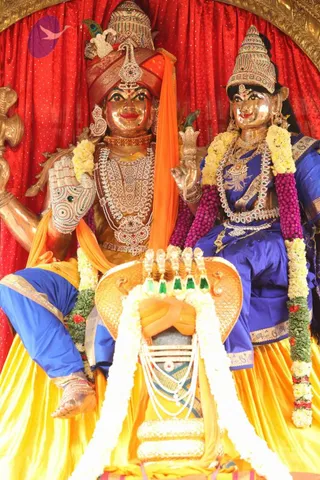
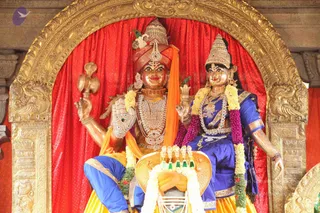
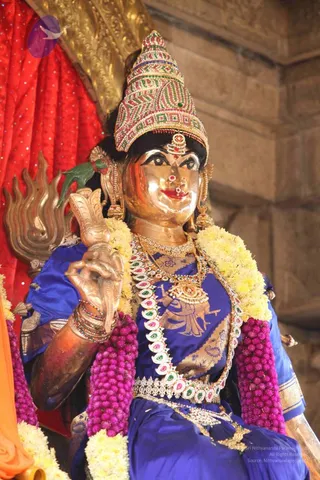
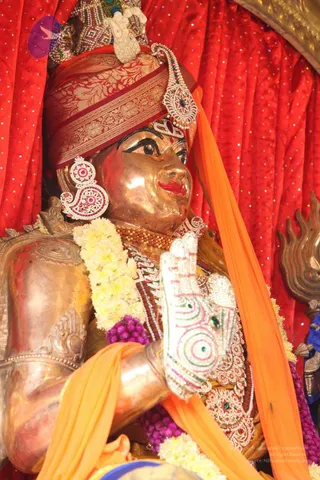
A photograph of a gilded deity murti pair seated in a golden arched niche against a red draped backdrop. The male figure, with a tall red-and-gold crown and four arms, holds a trident-like staff and wears an orange sash and layered white-and-gold necklaces. The female figure wears a blue sari with gold border, a tall crown, and magenta and white flower garlands. In front stands a large Shiva lingam draped with an orange cloth and wreathed in white jasmine garlands, with an ornate yellow-and-gold base. Brass oil lamps sit at the foot of the altar. No physical people are visible.A photograph of a gilded shrine with two large metallic deity statues seated side by side in front of a red draped backdrop within an ornate gold arch. The figure on the left, wearing a red and gold crown, orange sash, jewelled necklaces and holding a trident-like weapon, sits above a blue and gold dhoti; the figure on the right wears a crown, blue sari with gold border, and purple and white garlands. Both wear garlands of white and purple flowers. In front, a golden peetha and a Shiva lingam draped in an orange cloth and adorned with white jasmine garlands are placed, with a brass oil lamp and kalasha visible at the bottom. These are deity murtis, not living people, and no person is visible.Photograph of a shrine with two gilded metal murti figures seated side by side against a red curtain with sequins. The figure on the left wears an orange and red turban, a crown ornament with a peacock feather, heavy gold necklaces and an orange shawl, with one hand raised in abhaya gesture. The figure on the right wears a blue silk sari with gold border, a jeweled crown, layered necklaces and garlands of white and purple flowers. A lingam-shaped stone with garlands and a golden yoni base is in the foreground, draped in white flower strands. No physical people are visible.Two golden-skinned murti figures seated side by side on a gold-edged throne before a red draped backdrop within an ornate gold arch. The figure on the left wears a red and gold turban with a crown-like headpiece, an orange sash, a jeweled necklace, and a bejeweled armlet, holding a ritual staff in one hand. The figure on the right wears a royal blue blouse and blue sari with gold border, a tall jeweled crown, and layered pearl and gold necklaces, with a flower garland of white and purple blooms draped over both figures. Yellow silk drapes over the seat and a white garland lies on the base.A gilded metal deity murti of a goddess, shown seated against a red cloth backdrop with gold metalwork. She wears an ornate jewelled crown in pink, green and red, a blue silk sari with gold border and figured motifs, layered gold and gemstone necklaces, and bangles. Garlands of yellow and magenta flowers drape over her shoulders and arms. Her right hand is raised in a gesture, holding a small object, while a flame-shaped metal element rises behind her.A golden-bronze statue of a seated deity murti in a shrine, wearing a red and gold brocade turban with a jewelled ornament, ruby-and-pearl earrings, and a rudraksha mala with white flower garlands. It raises one hand in a beaded white and pink gesture, draped in an orange shawl against a red sparkling curtain with a golden trident-like finial at right. No living people are visible; the statue is the subject.

DWAJAROHANAM

63 photosSource gallery
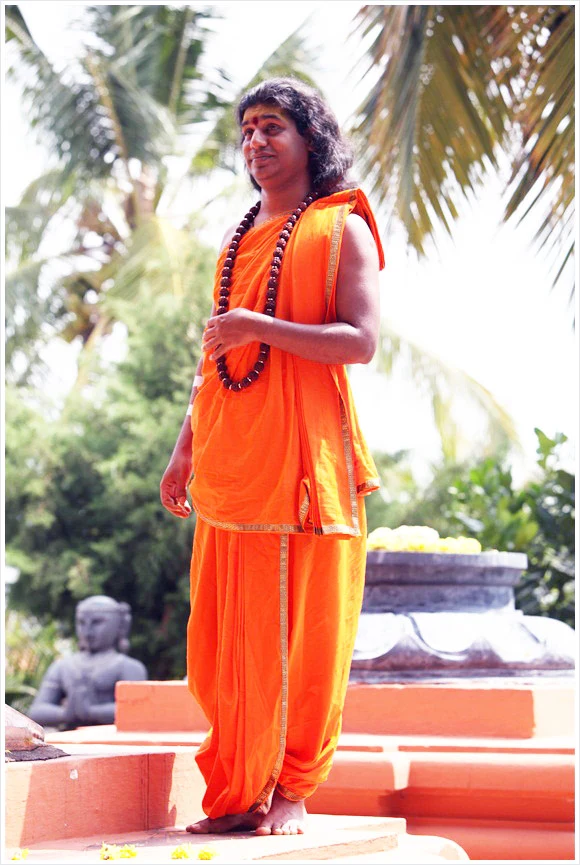
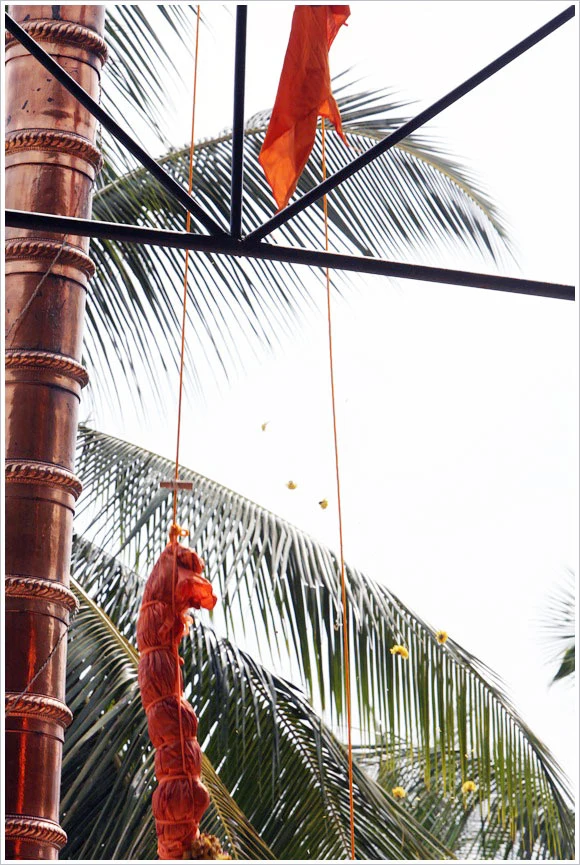
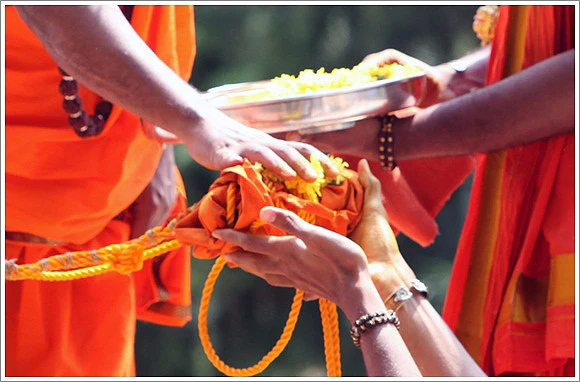
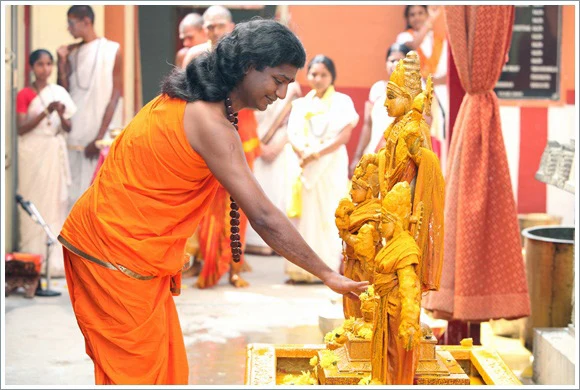
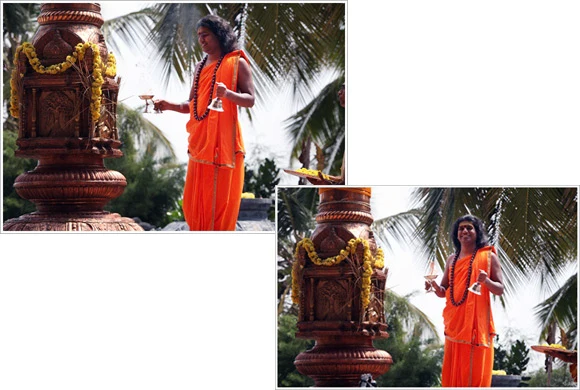
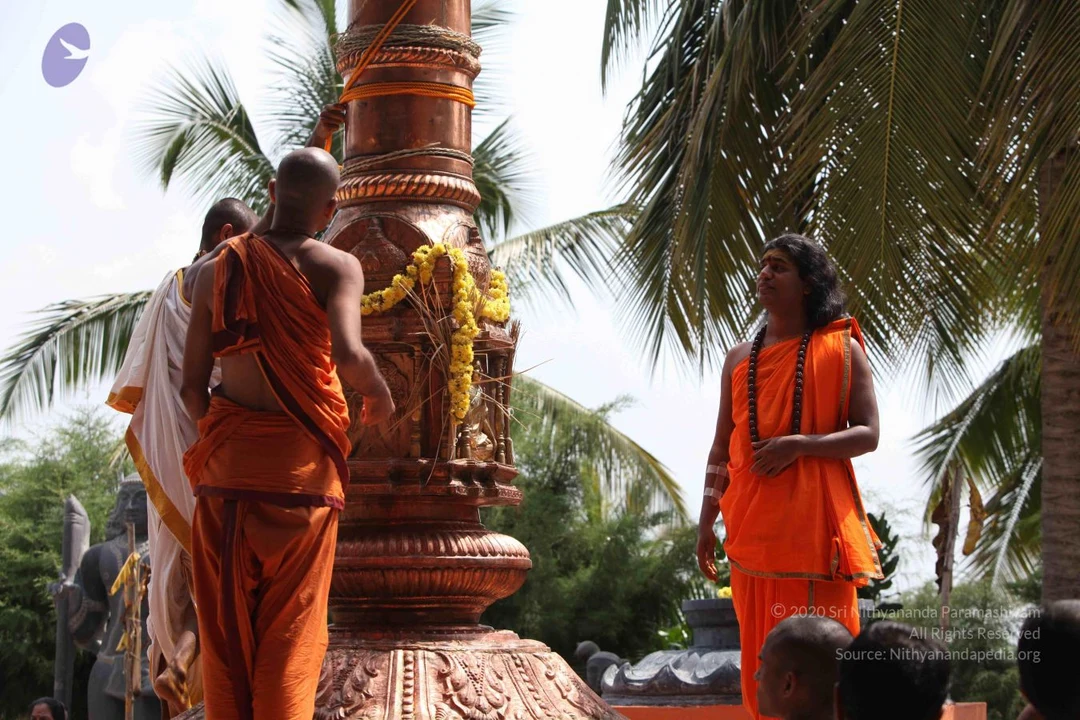
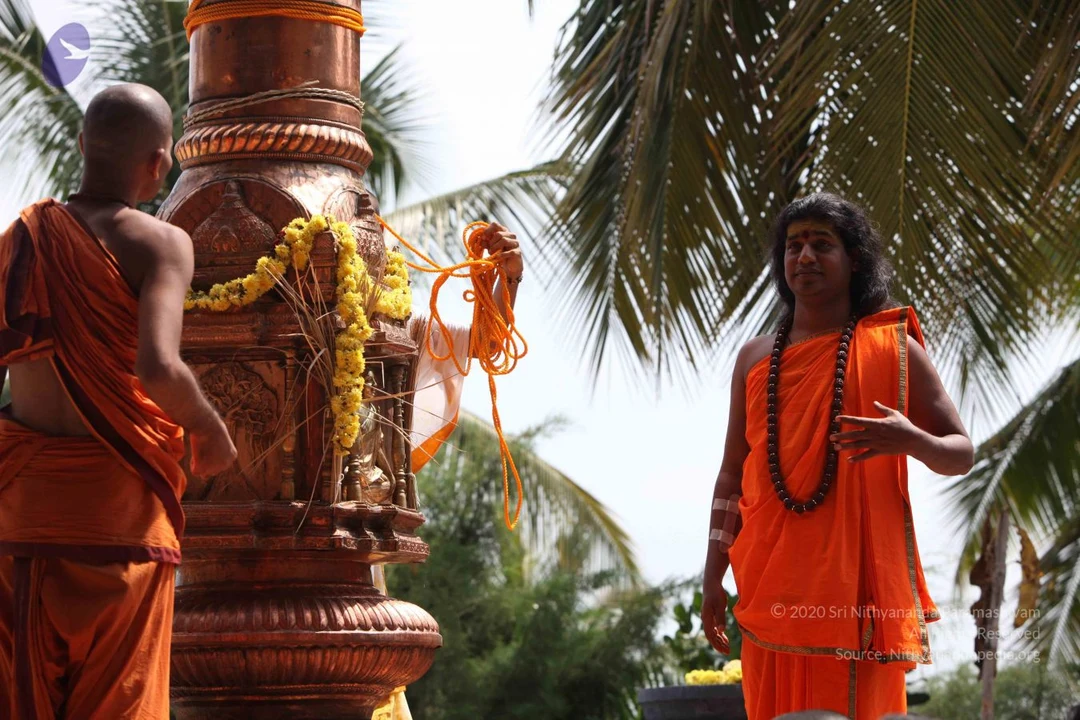
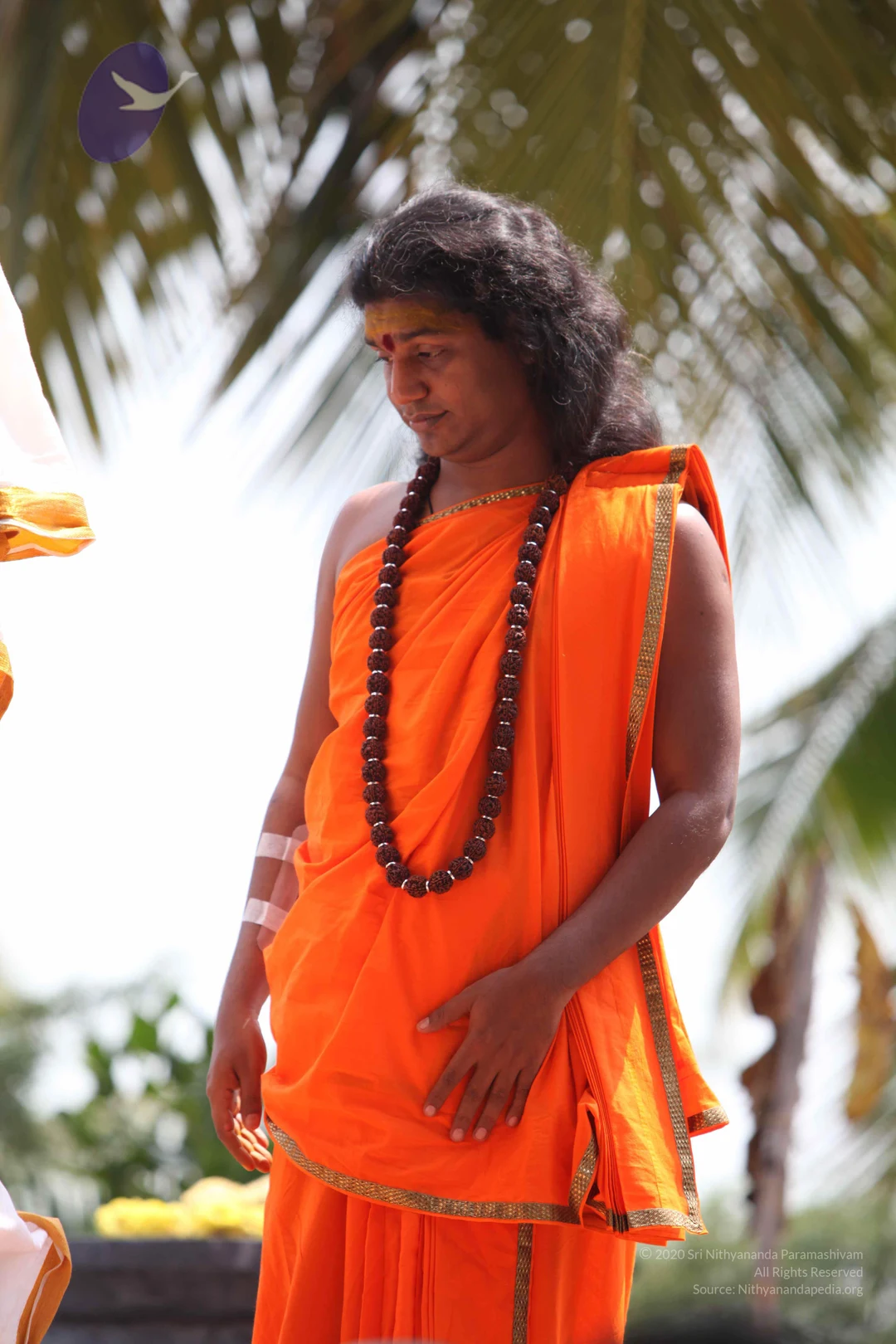
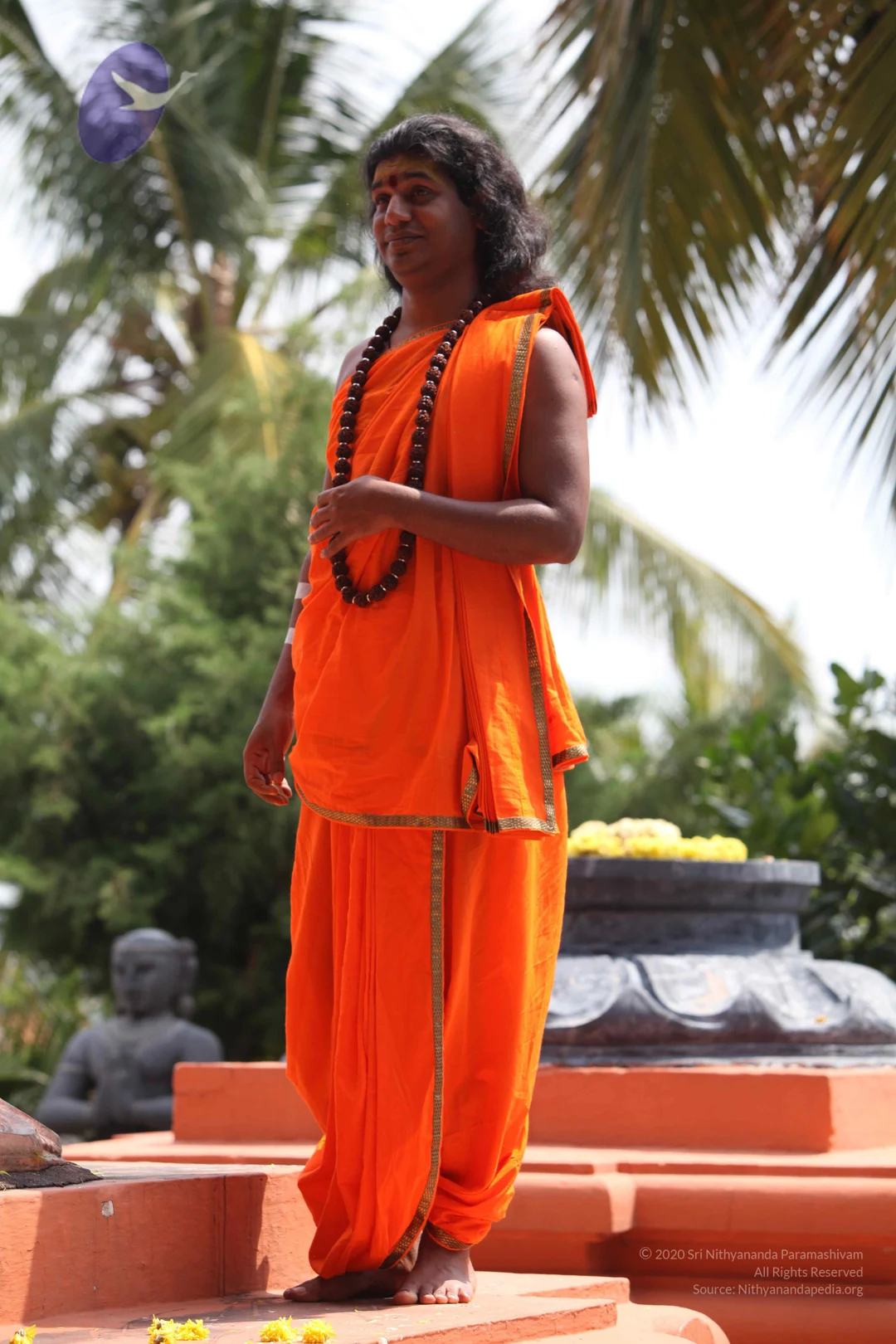
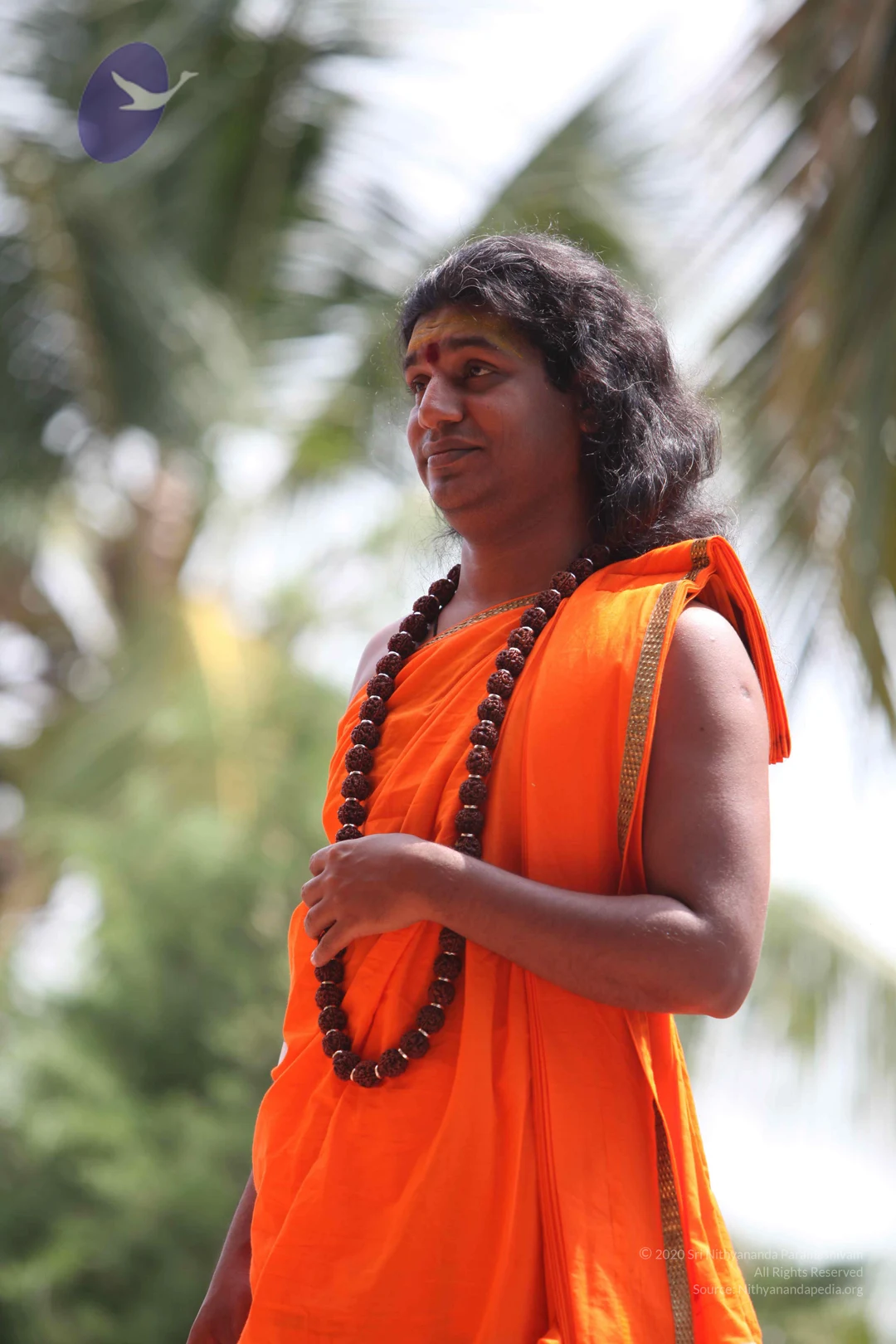
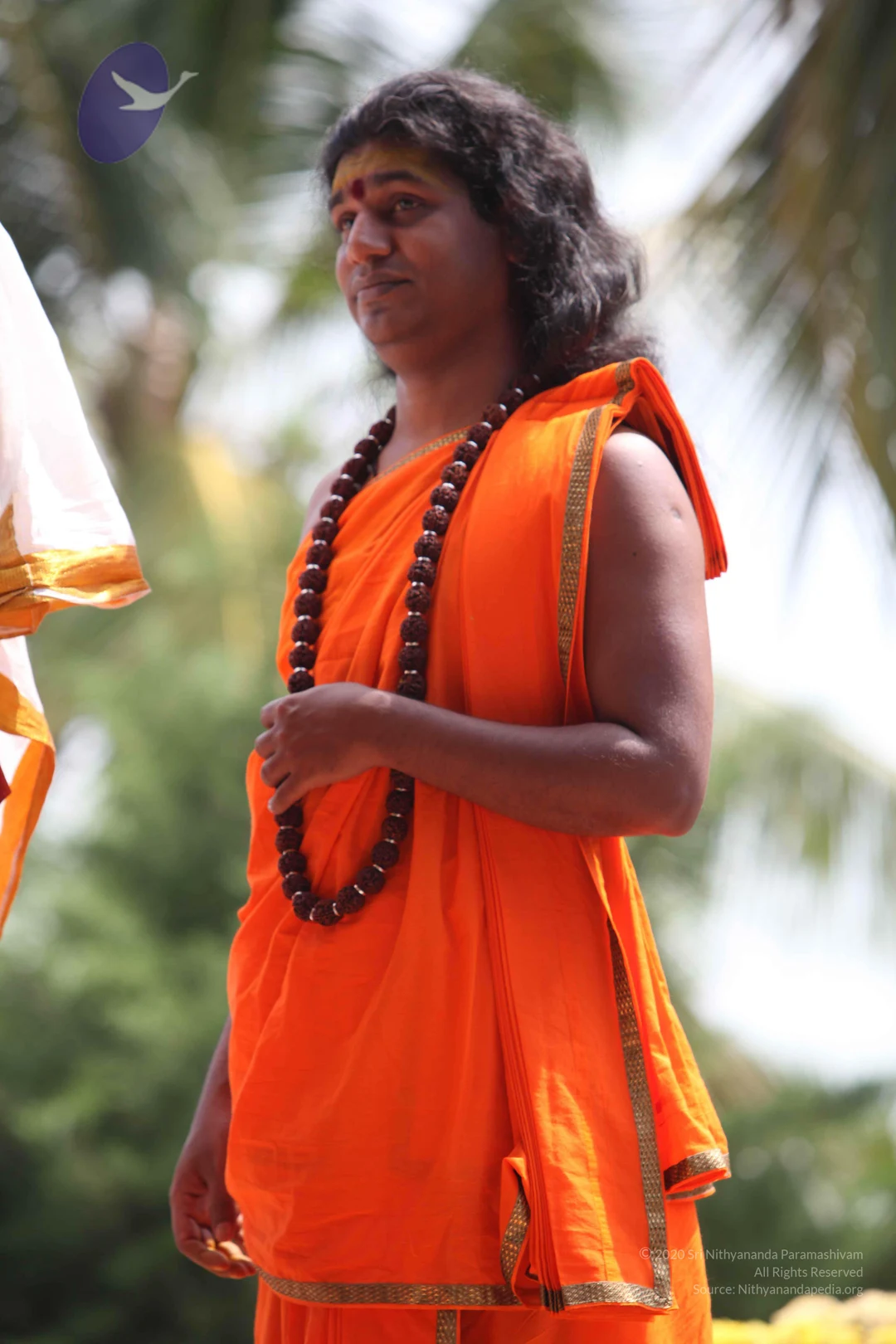
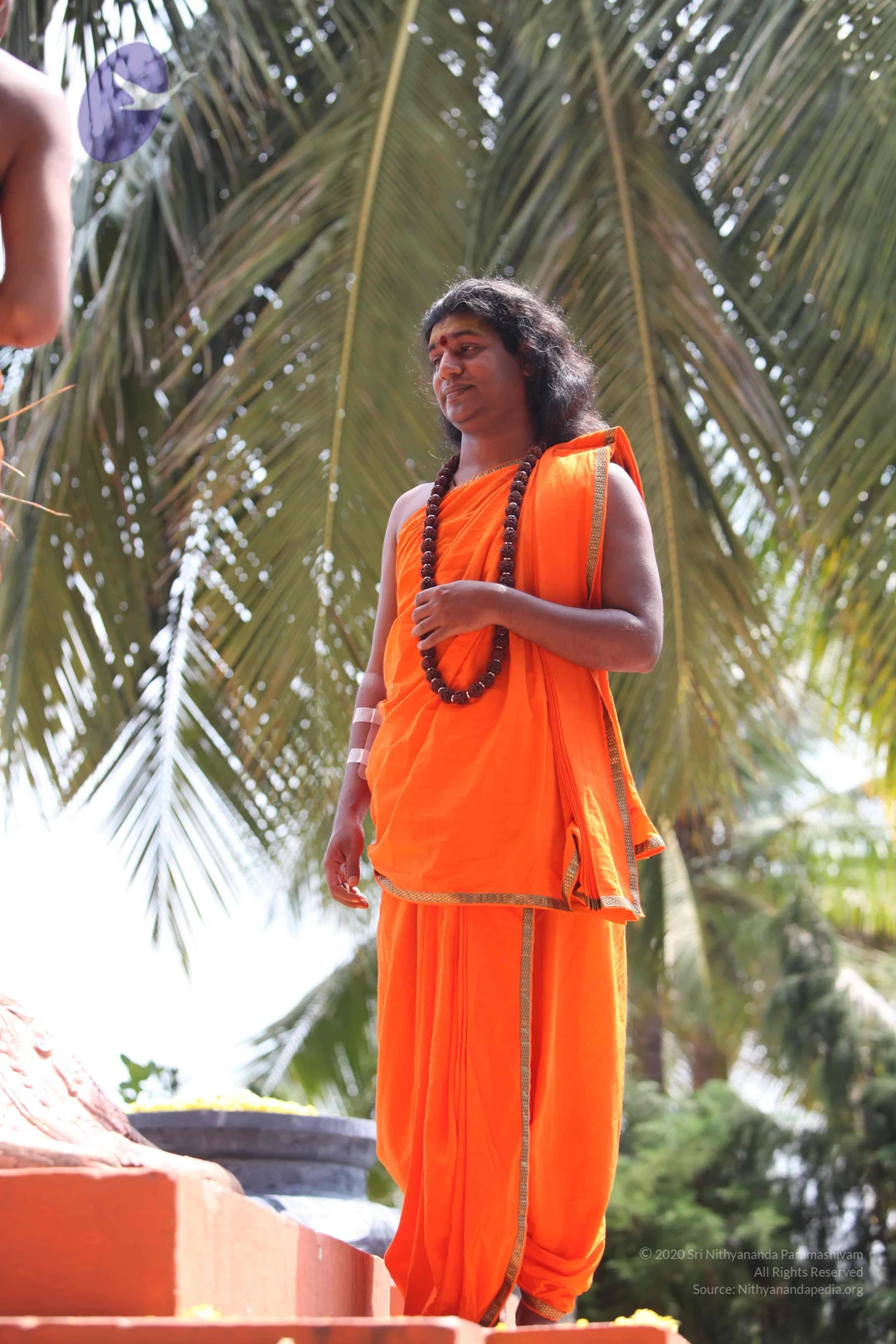
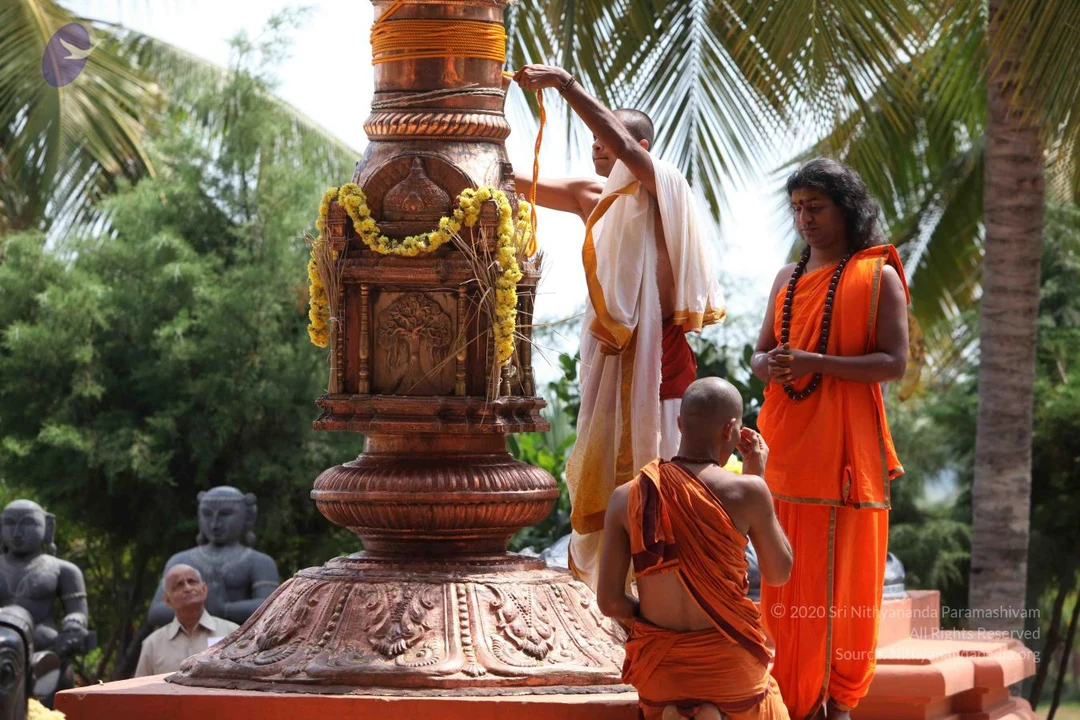
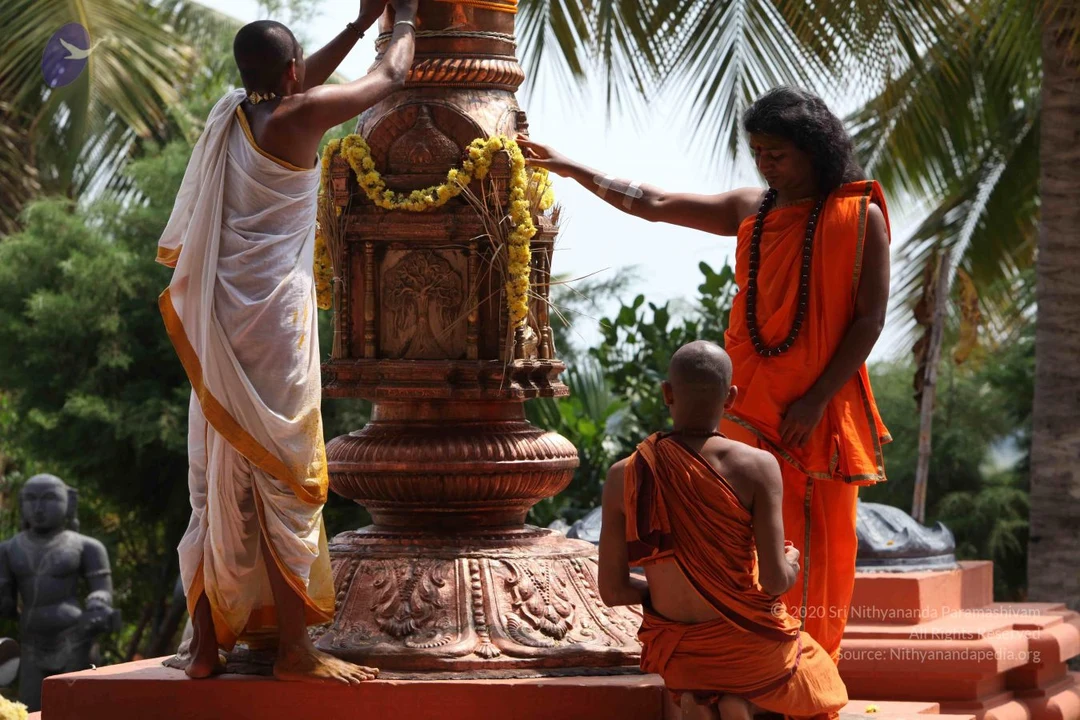
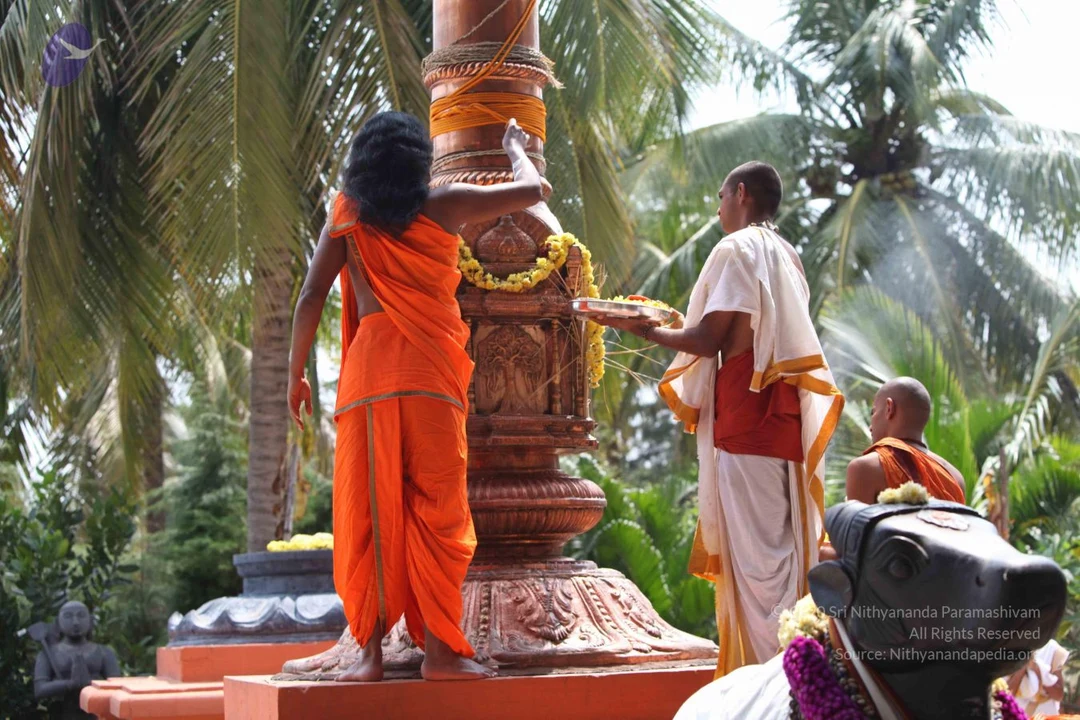
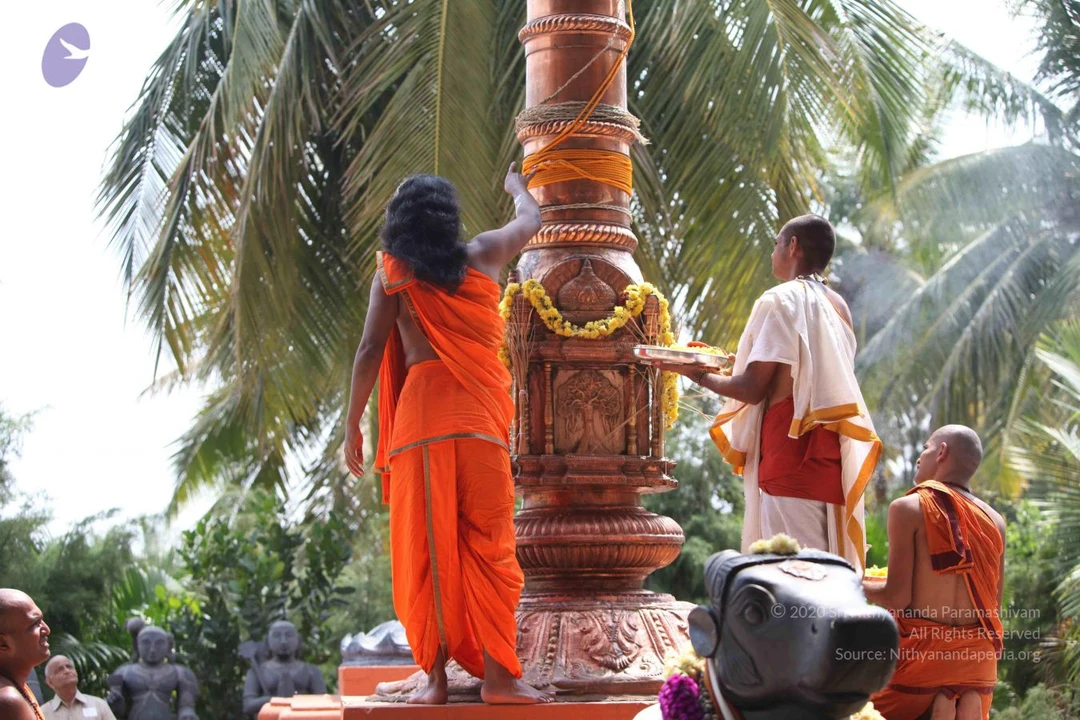
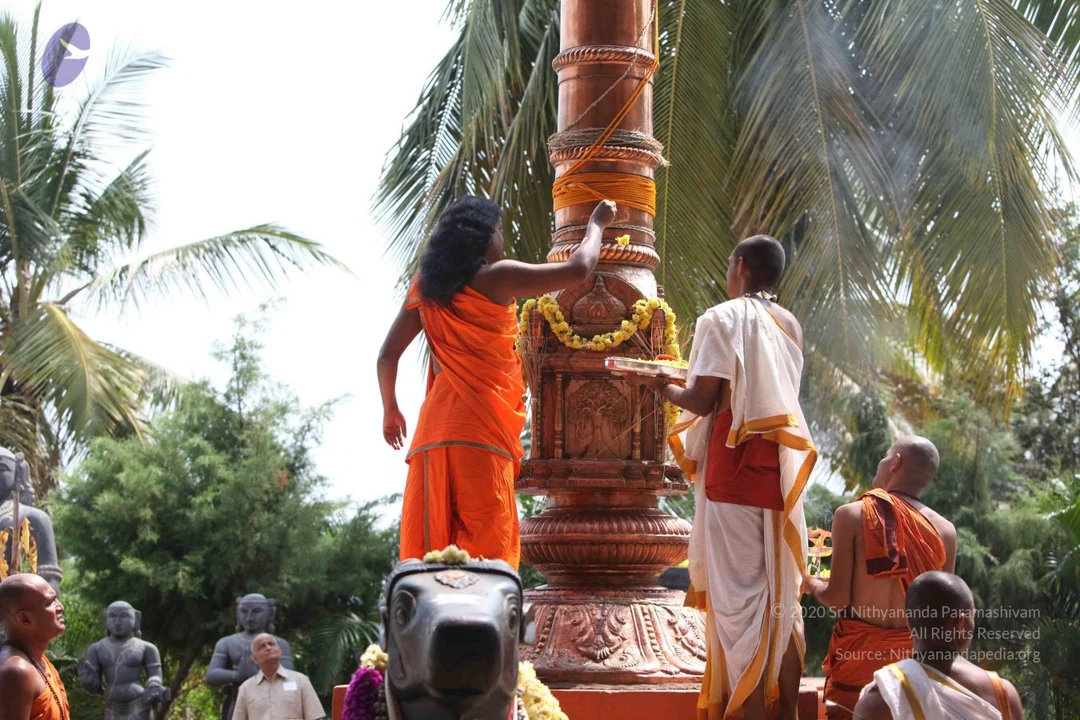
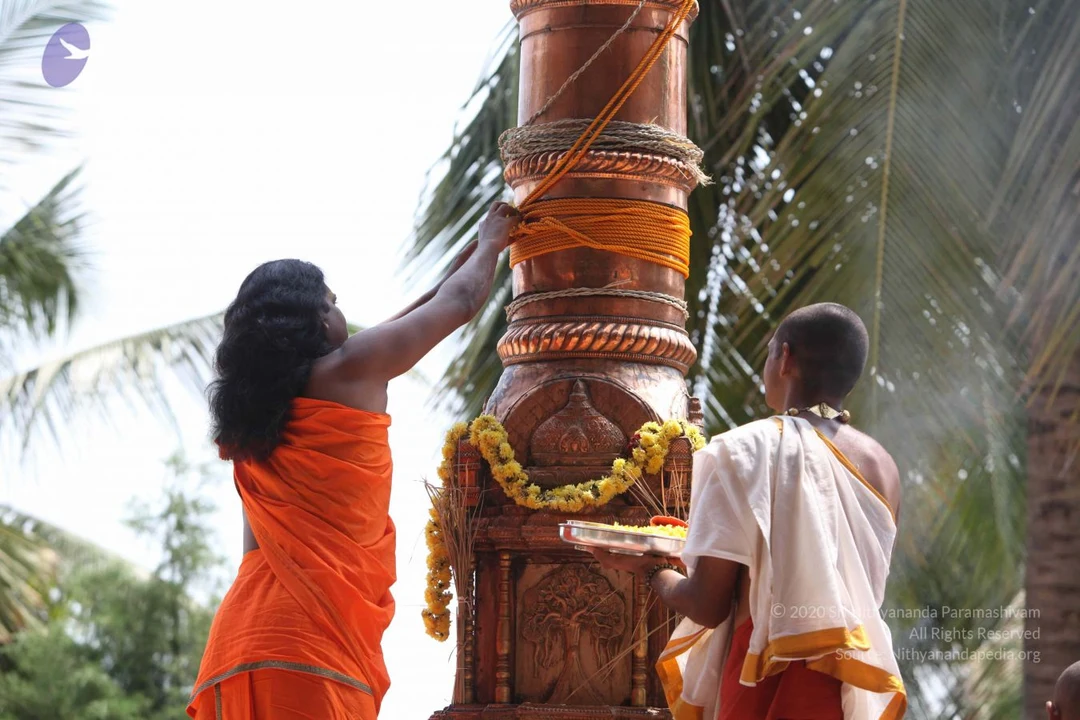
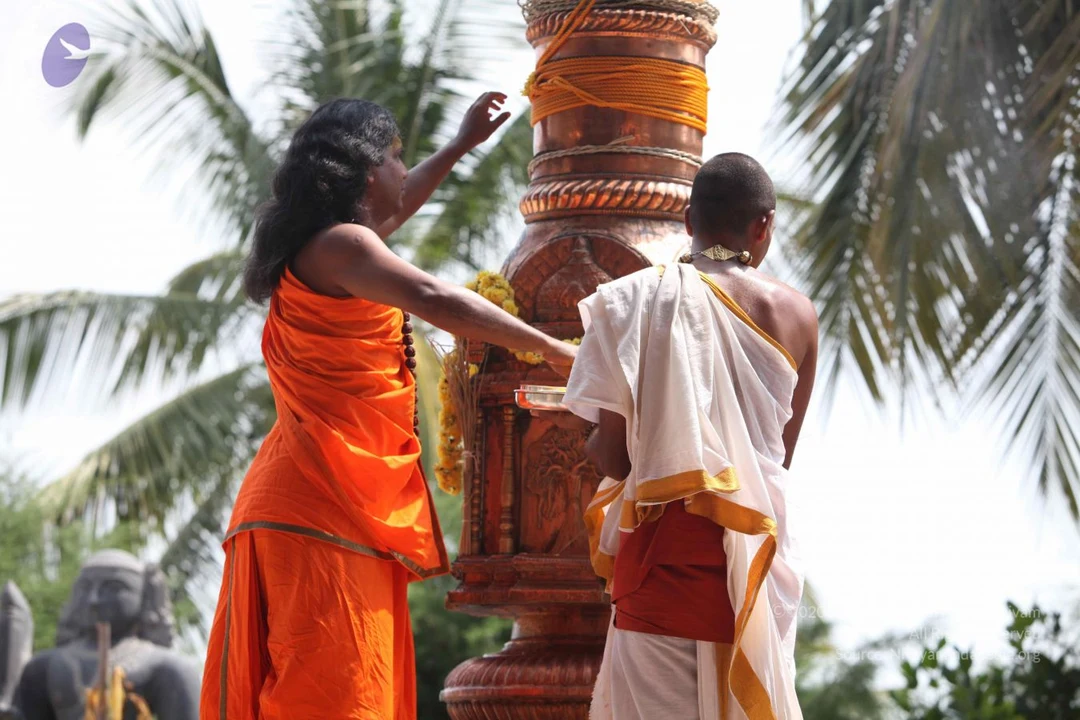
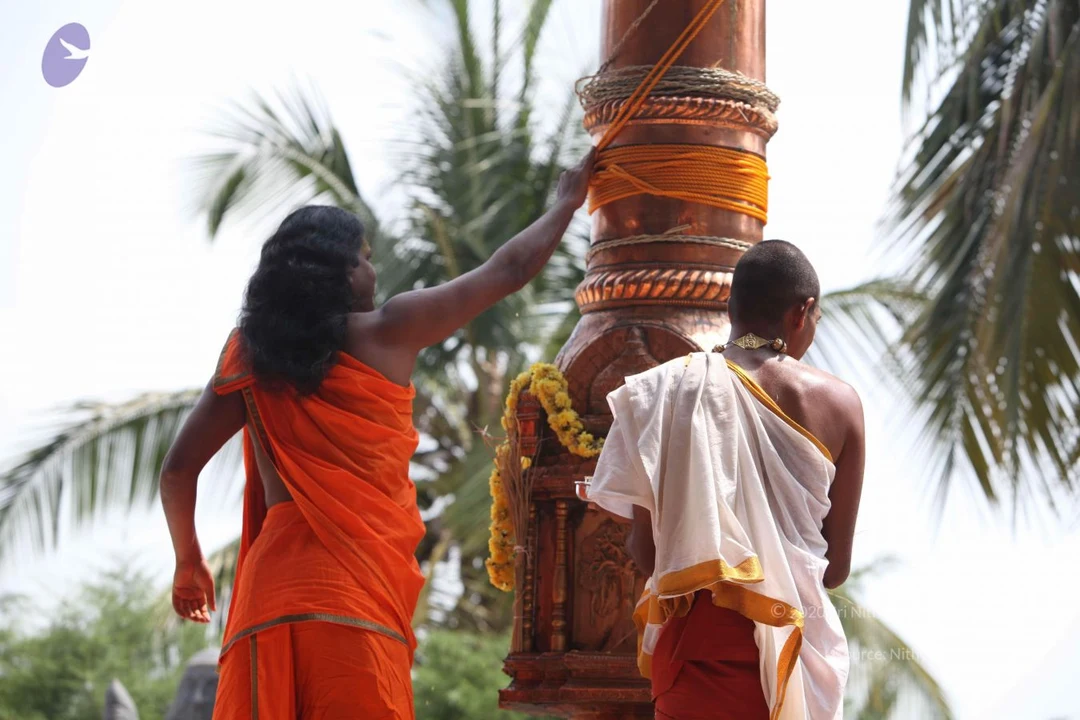
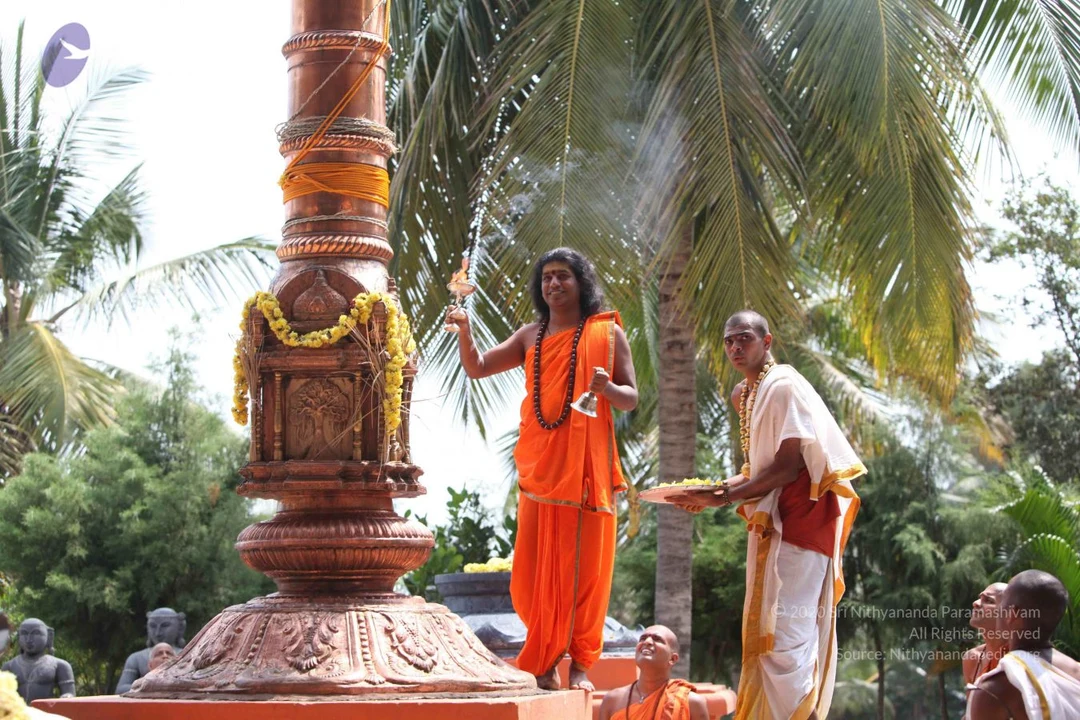
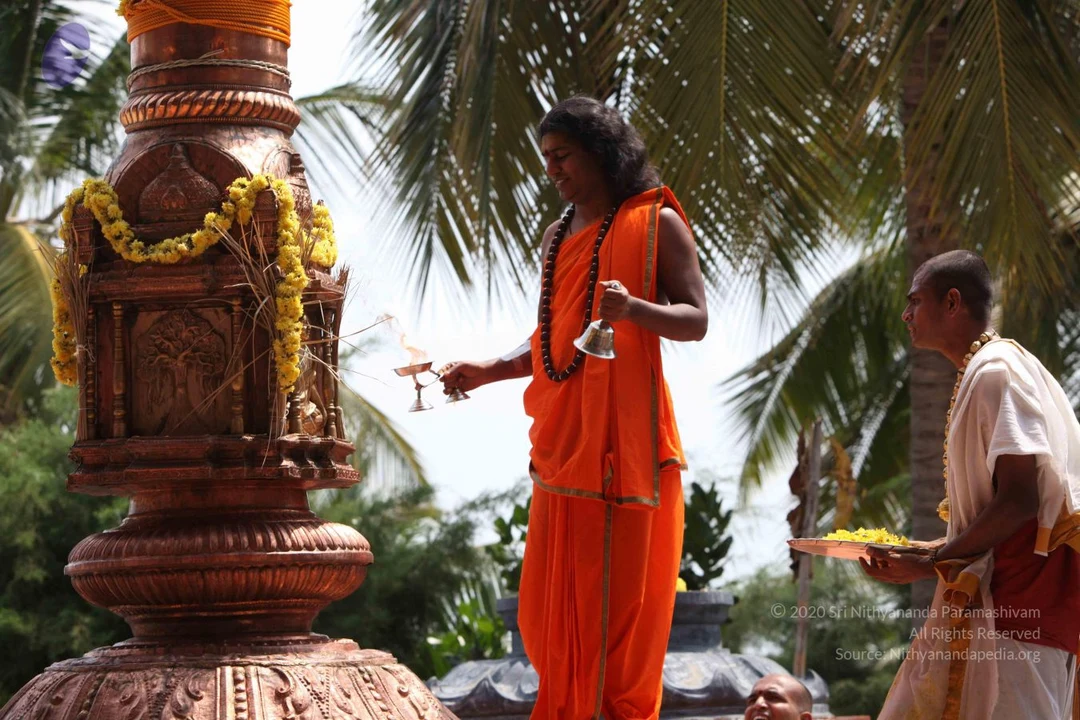
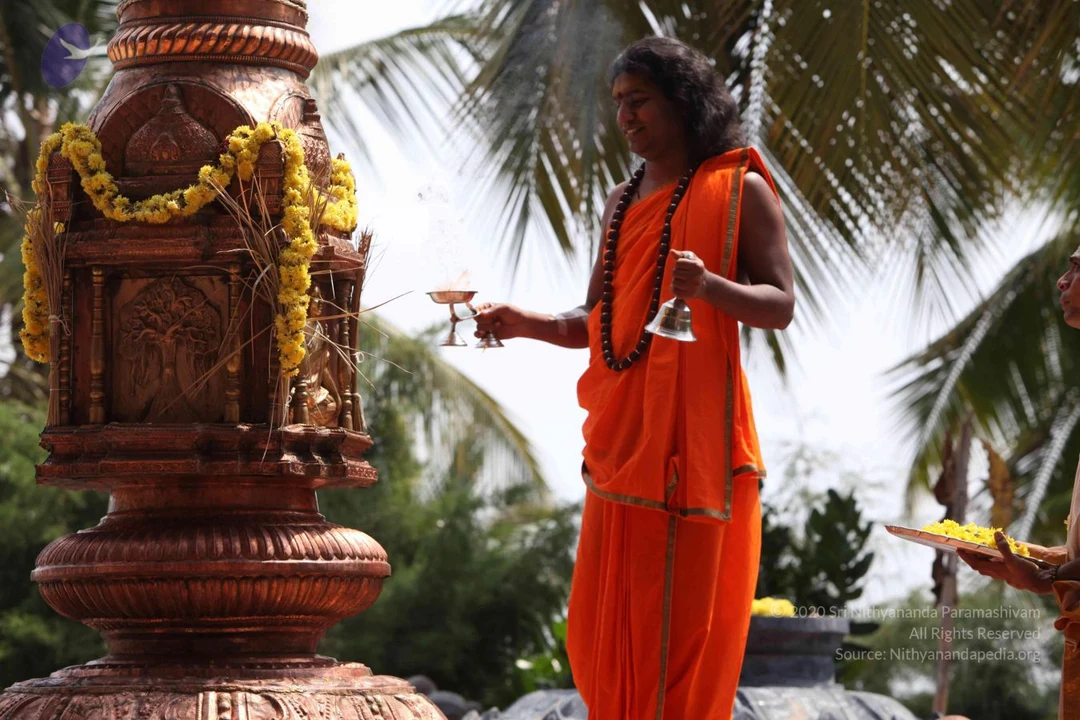
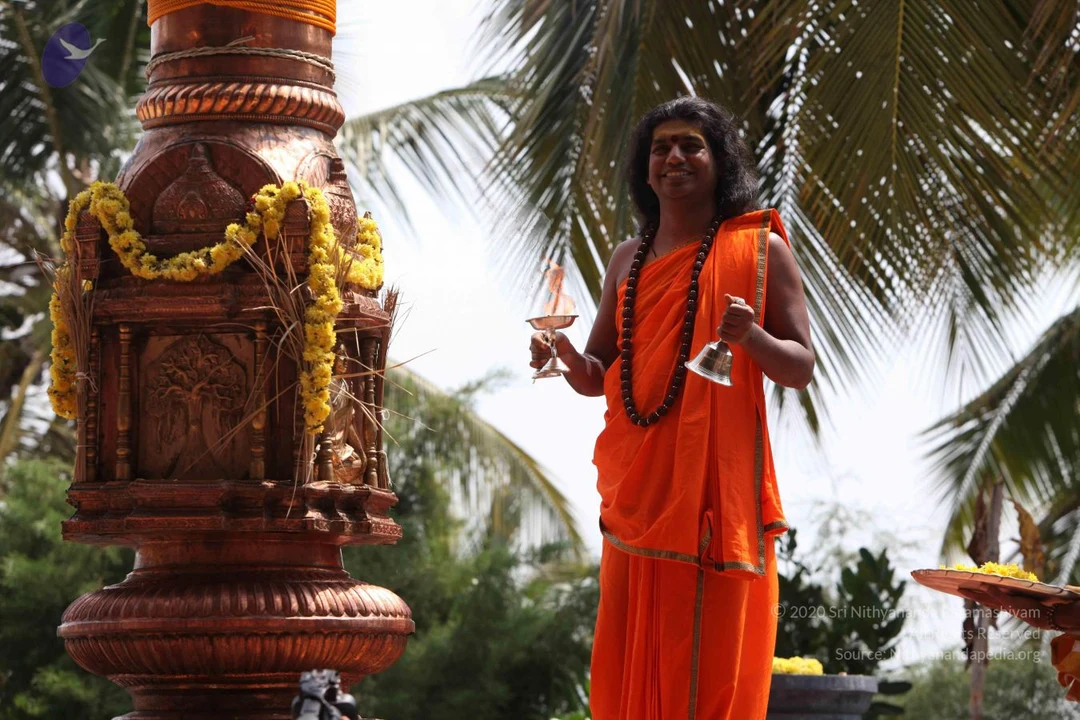
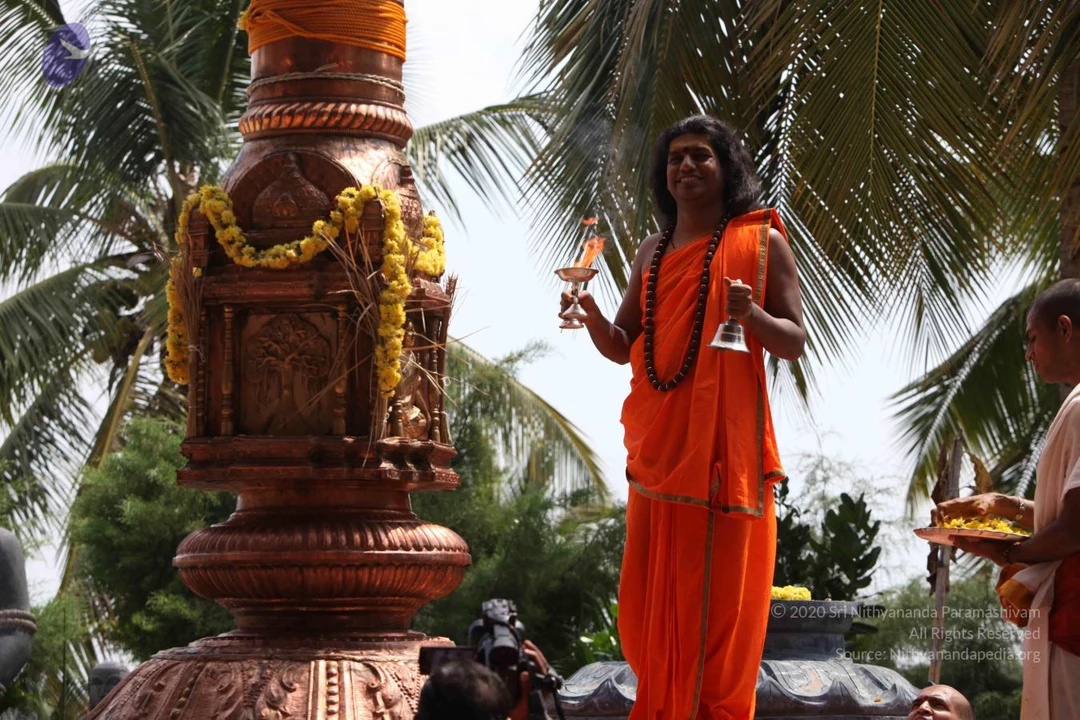
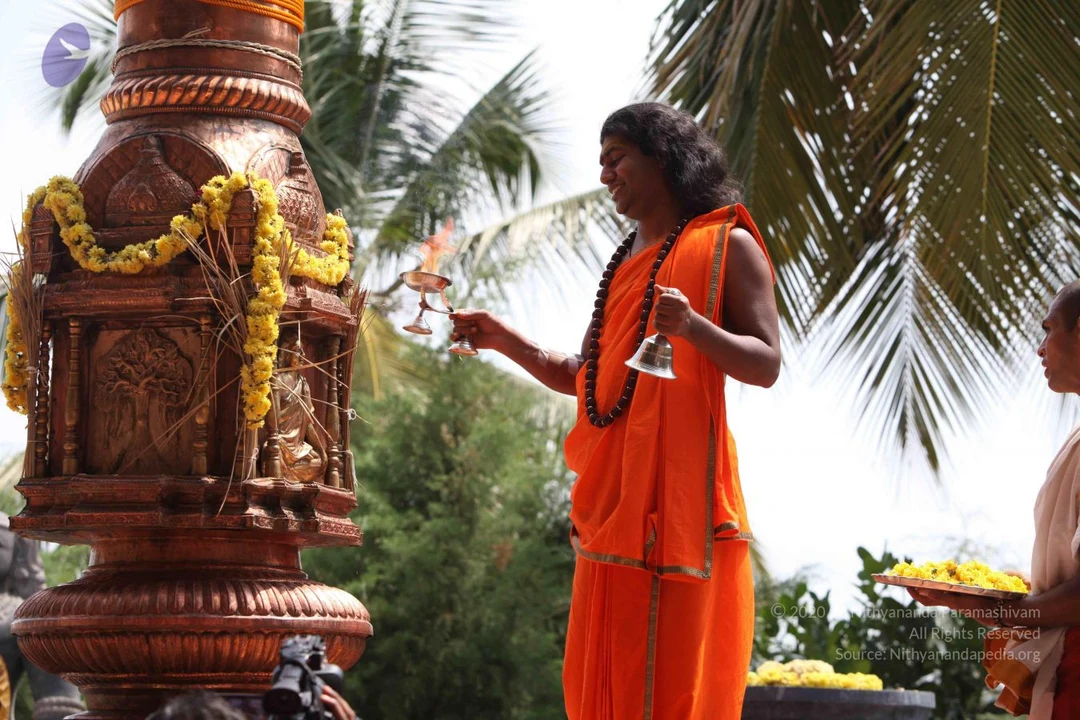
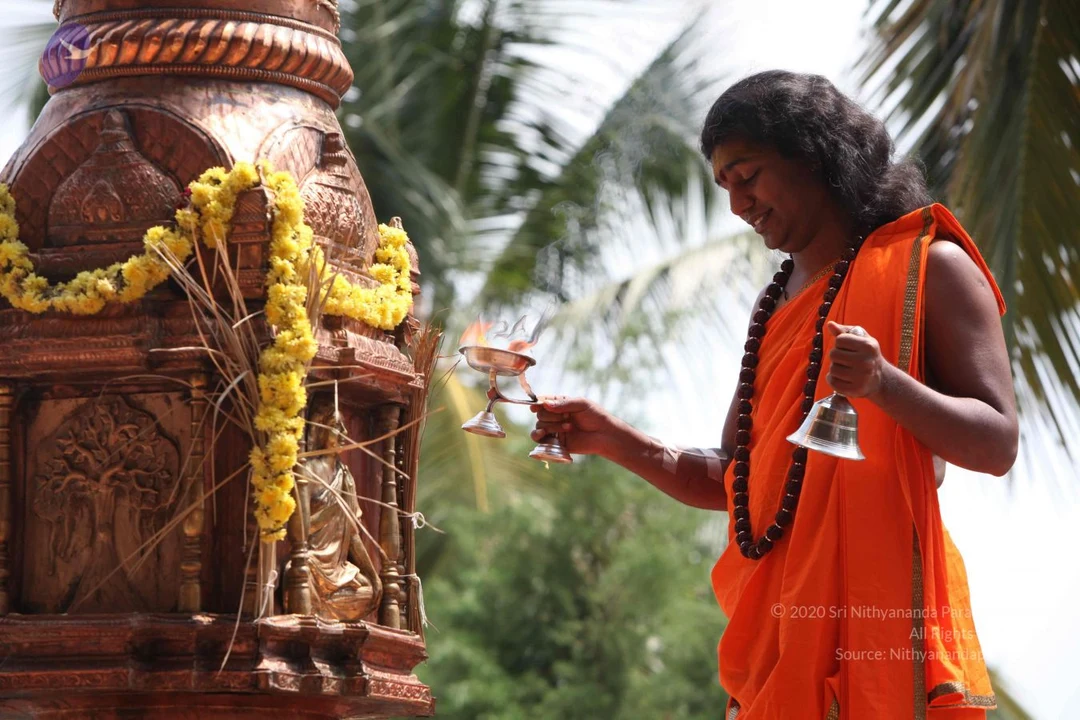
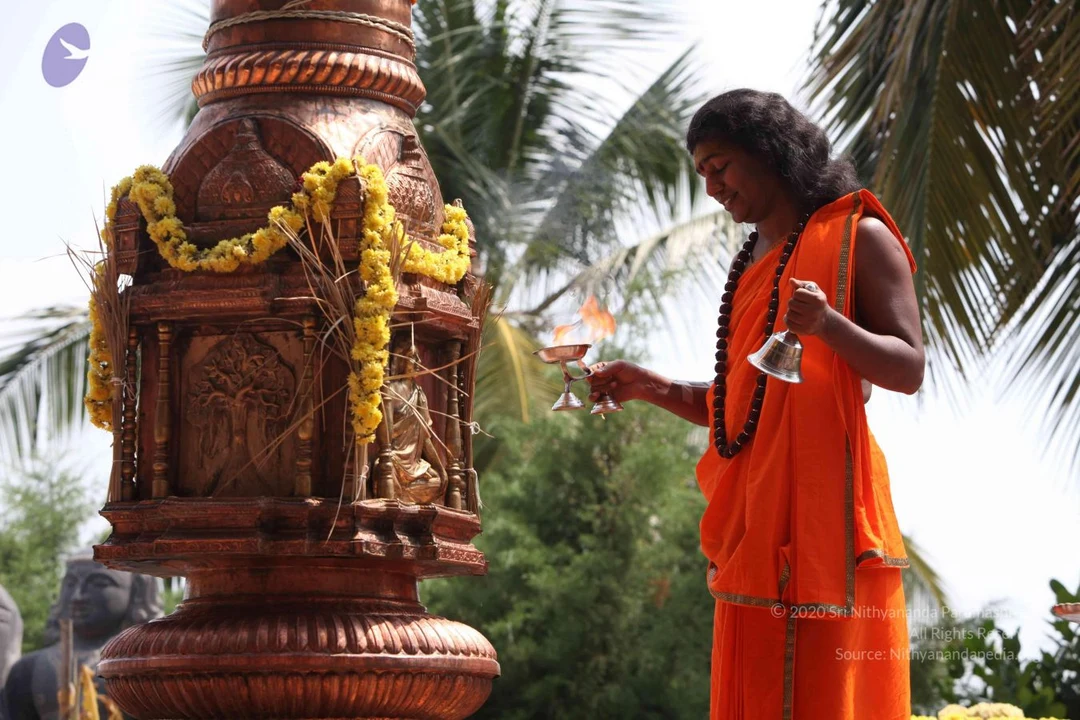
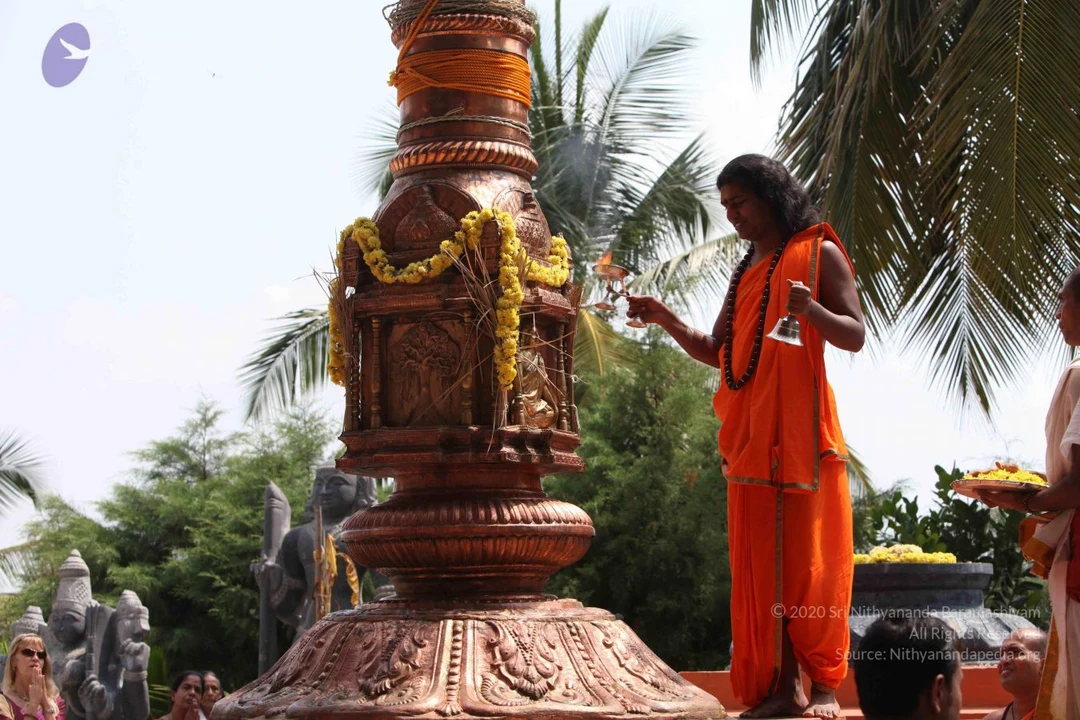
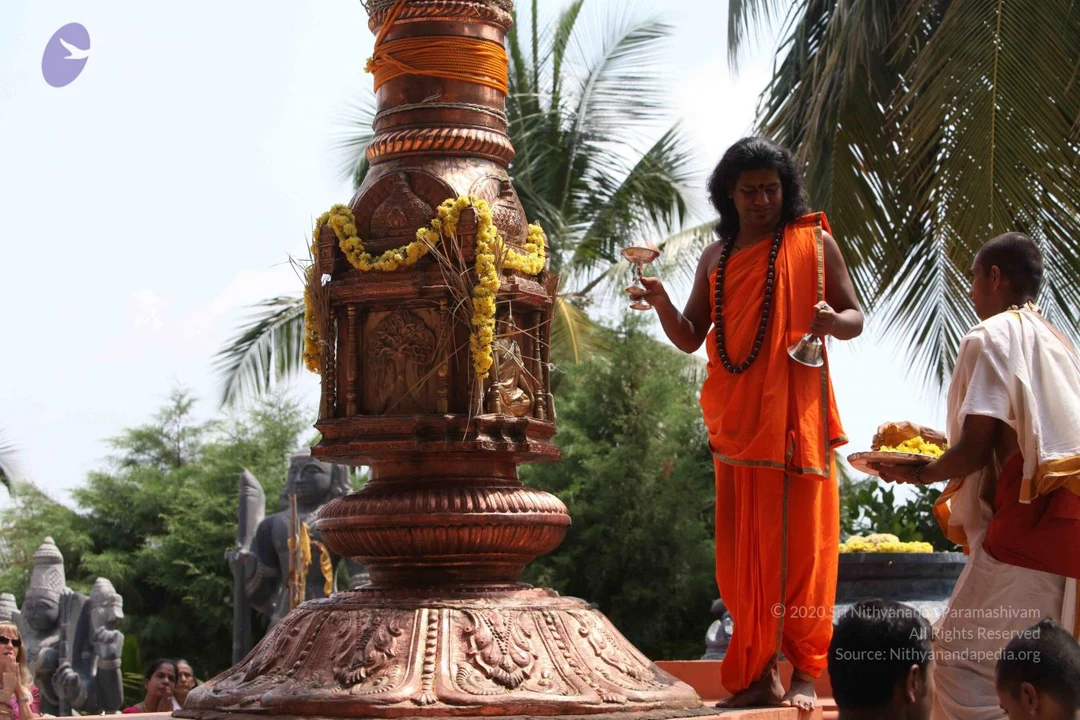
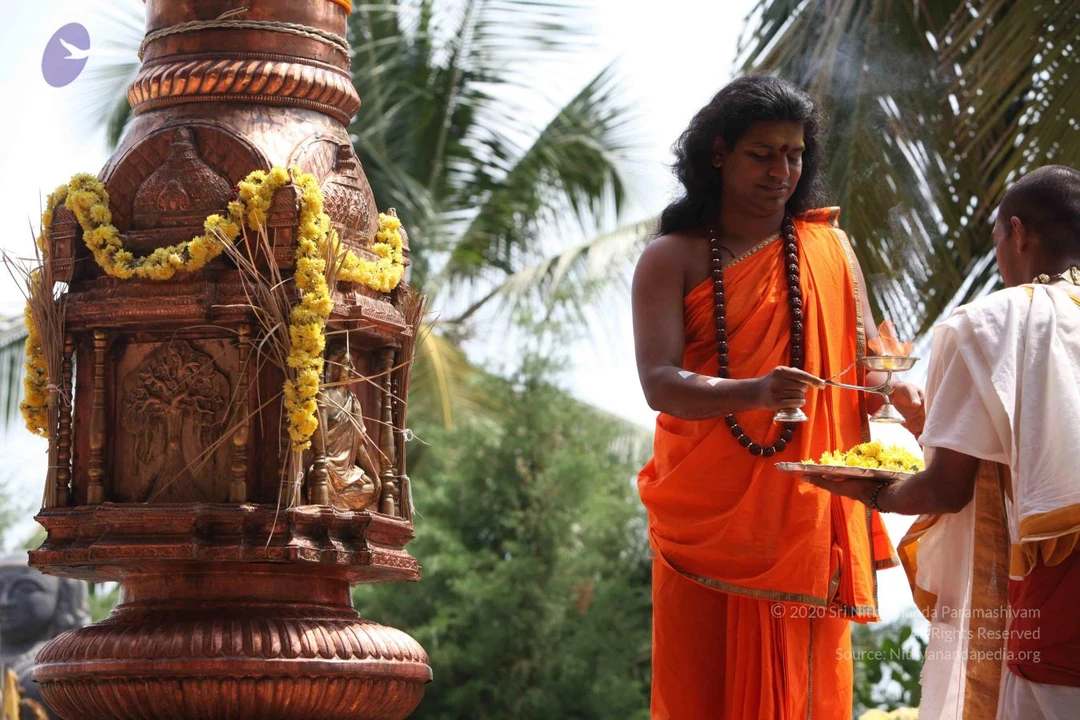
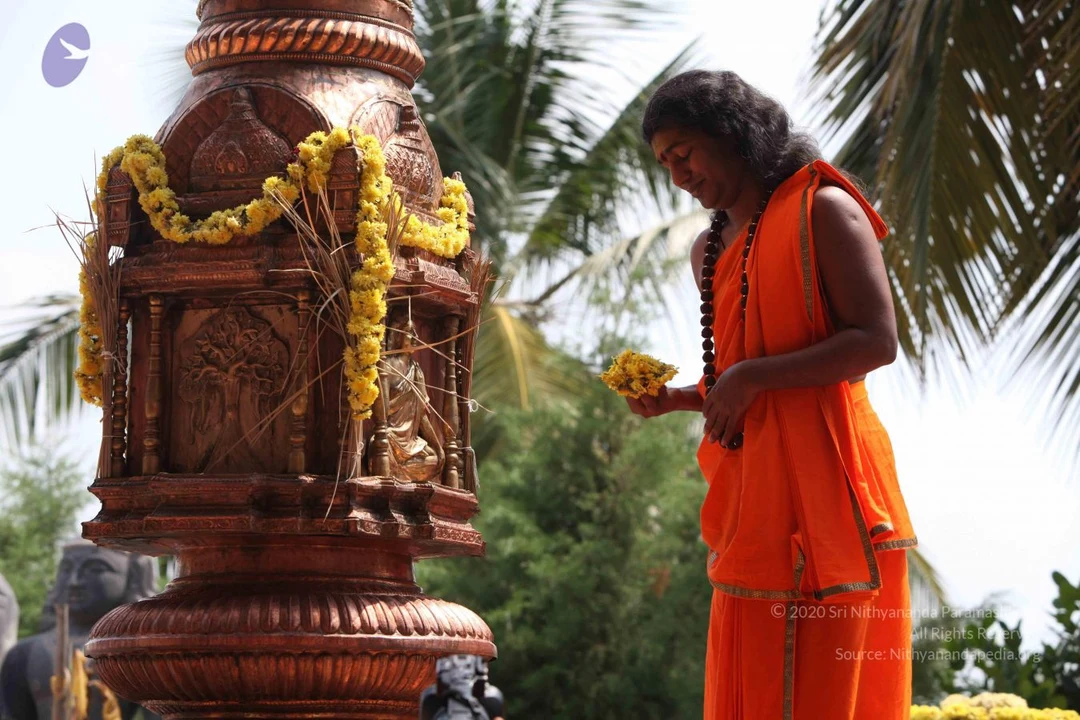
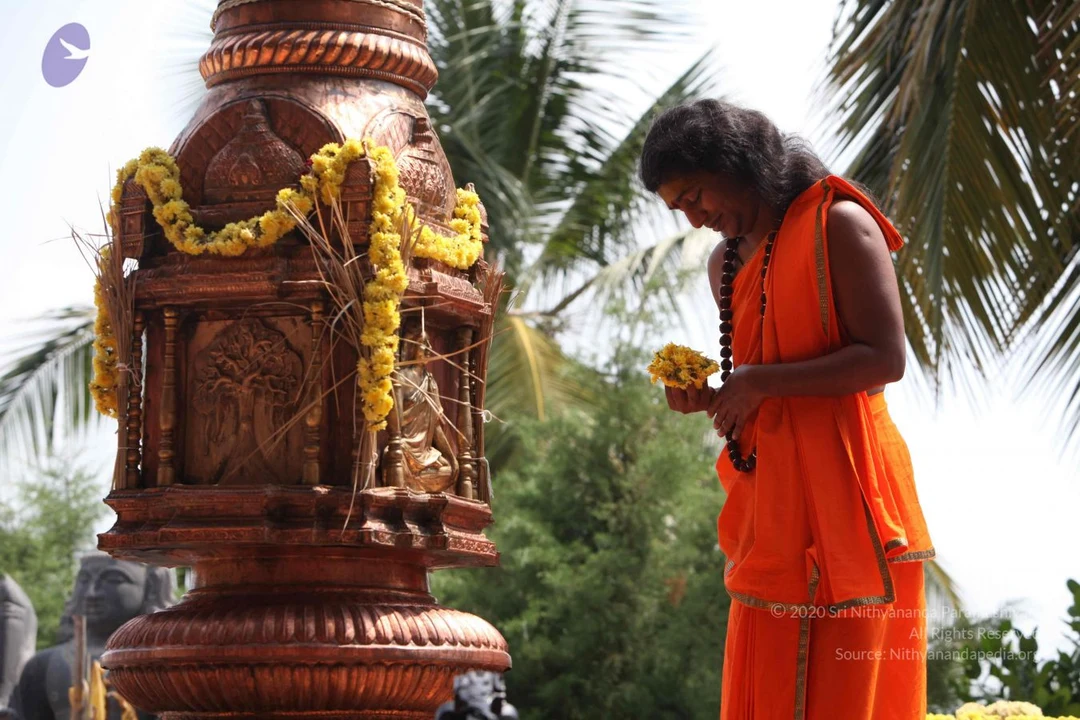
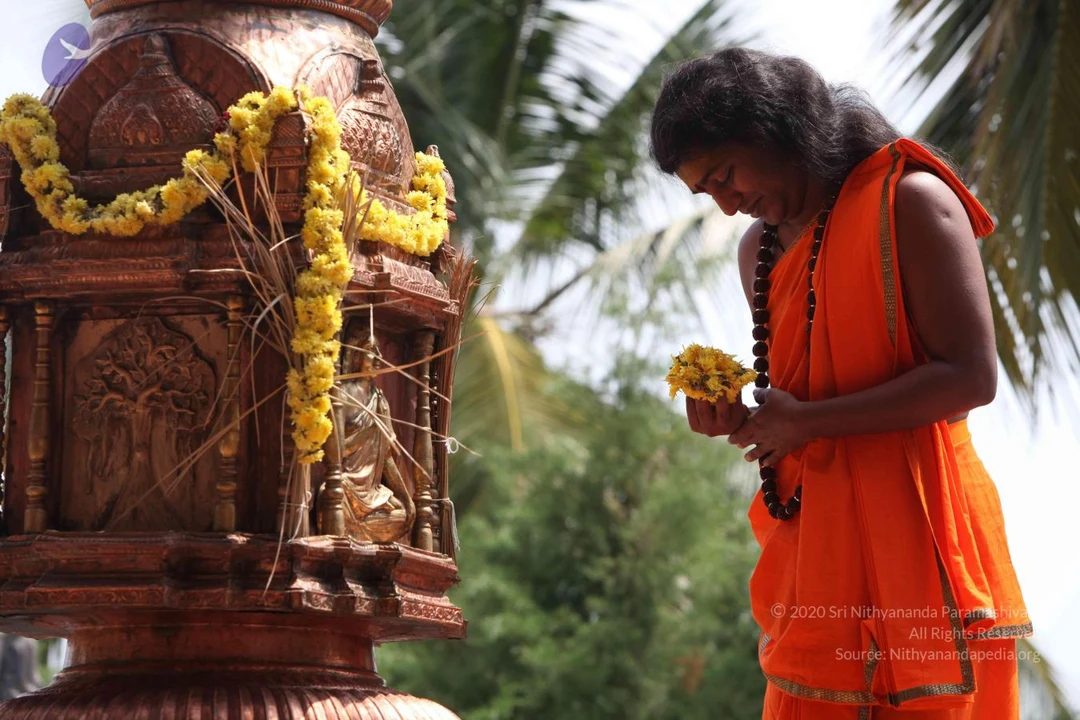
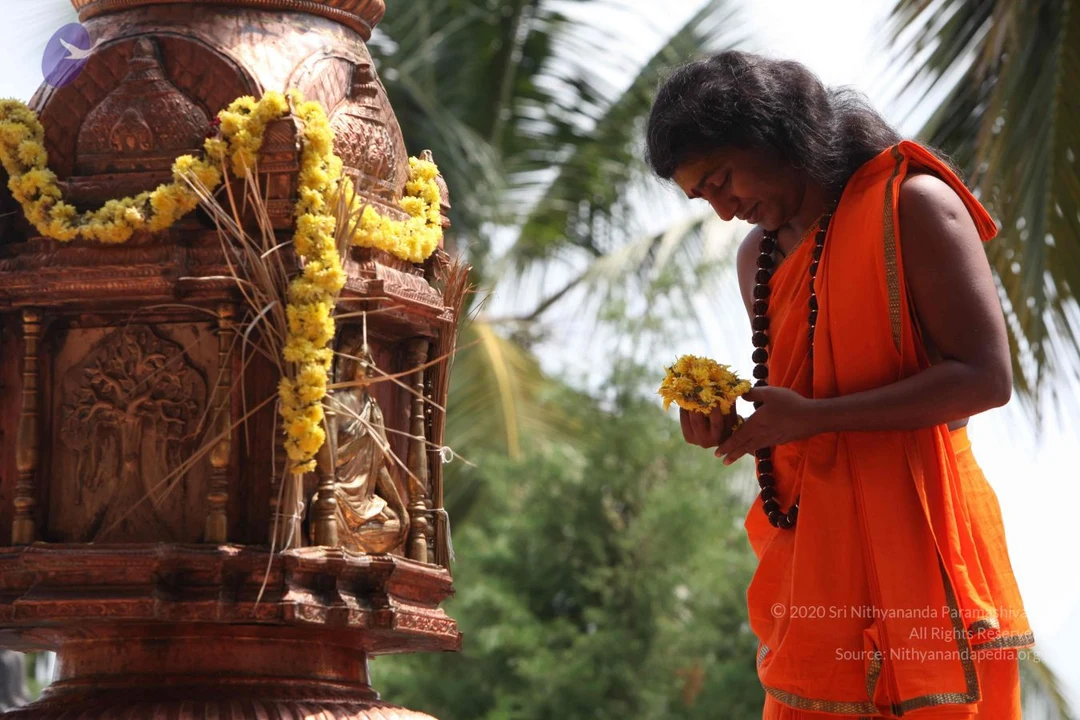
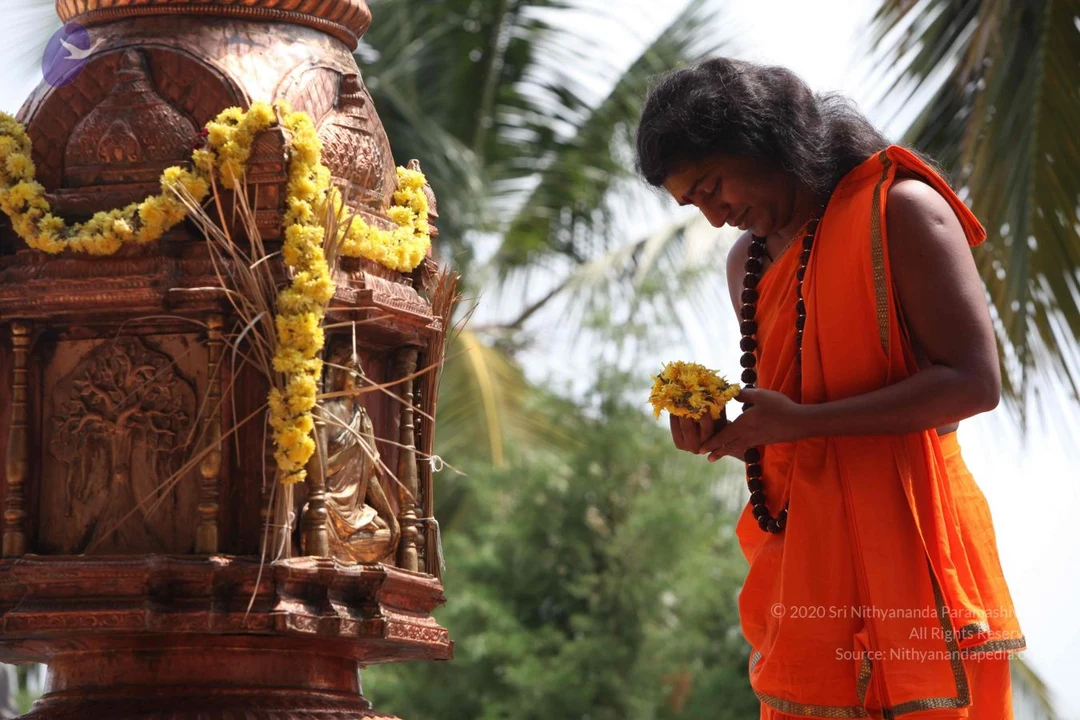
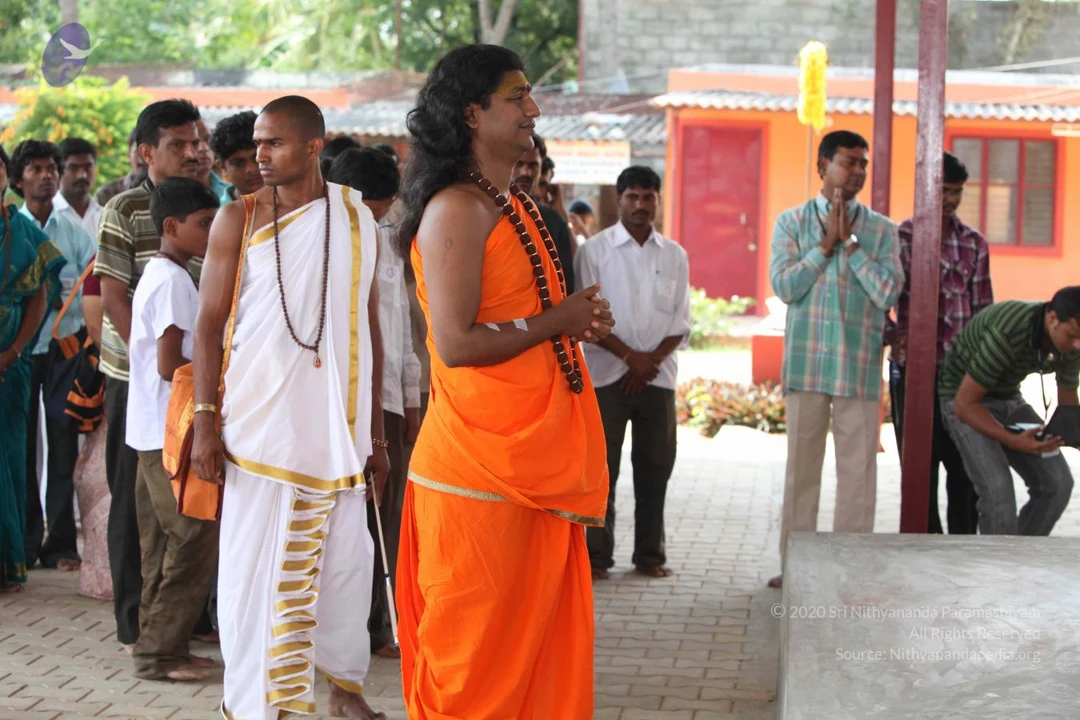
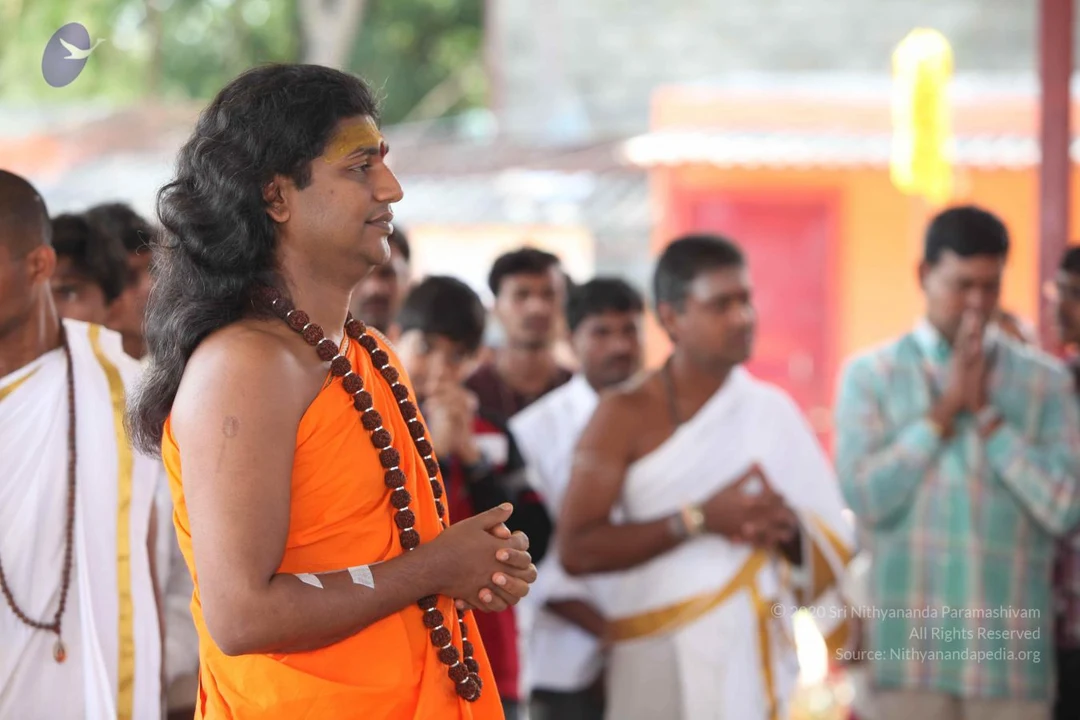
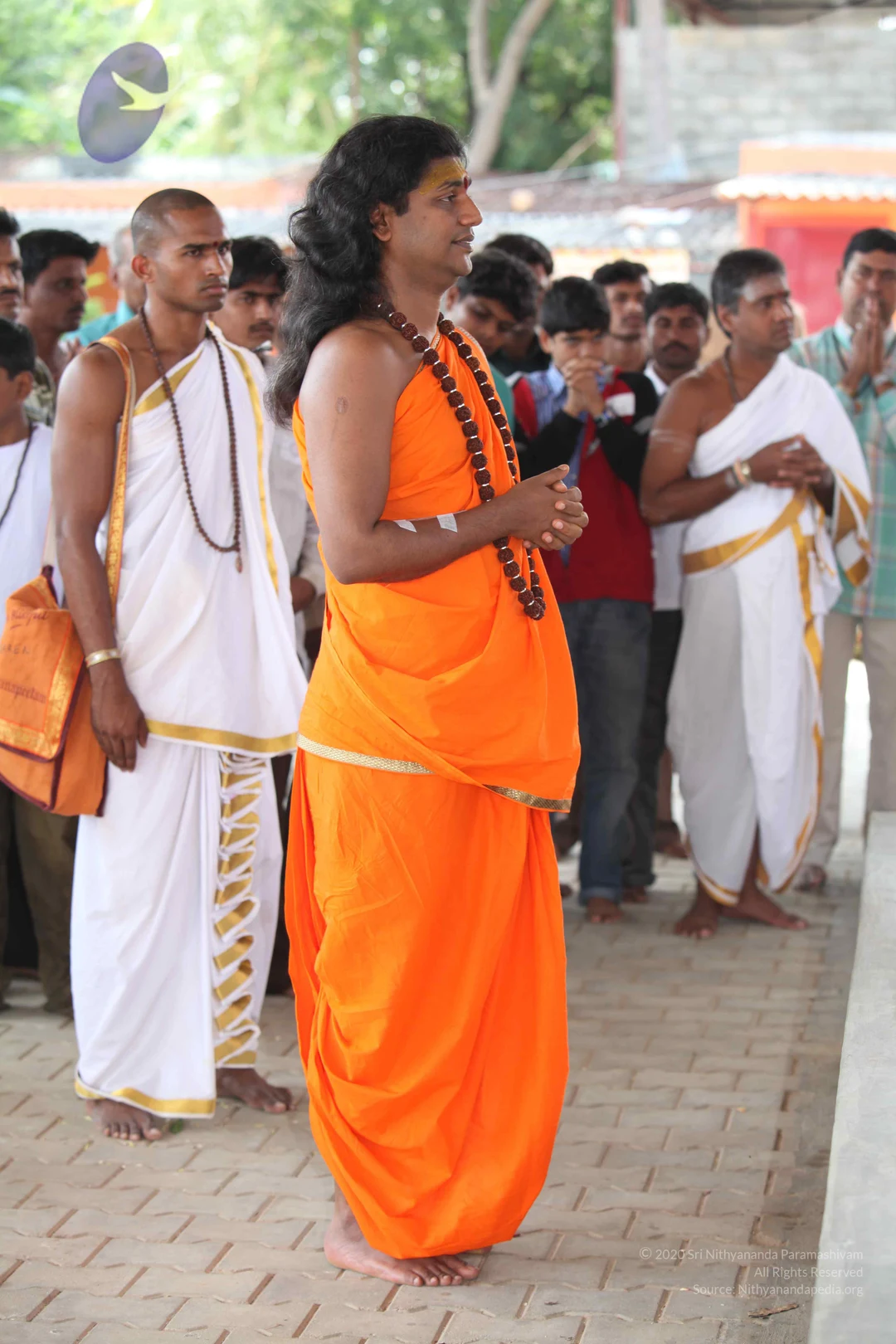
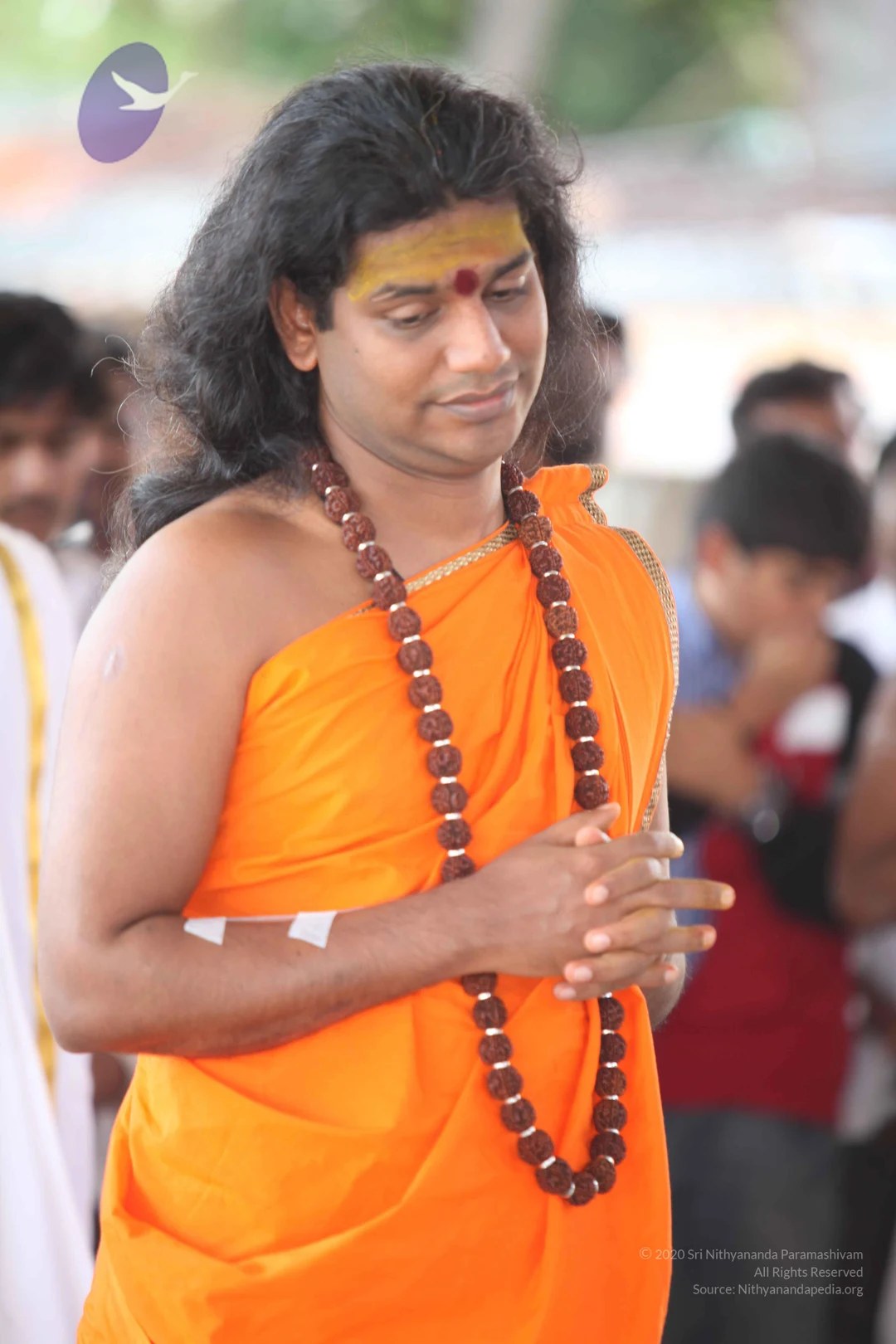
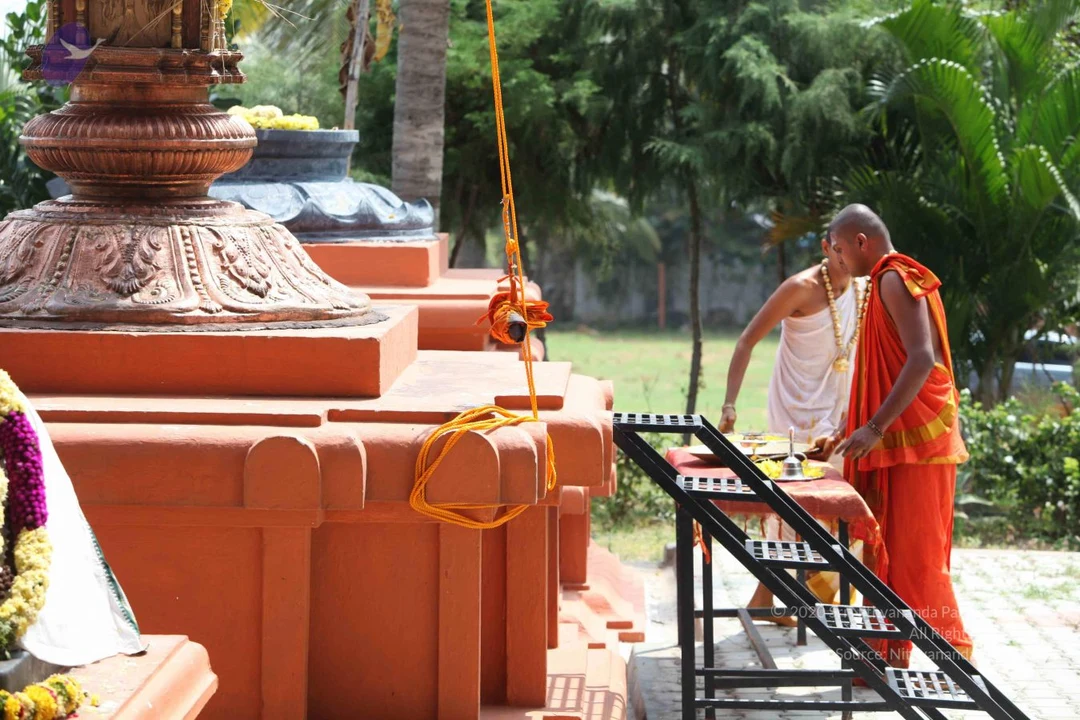
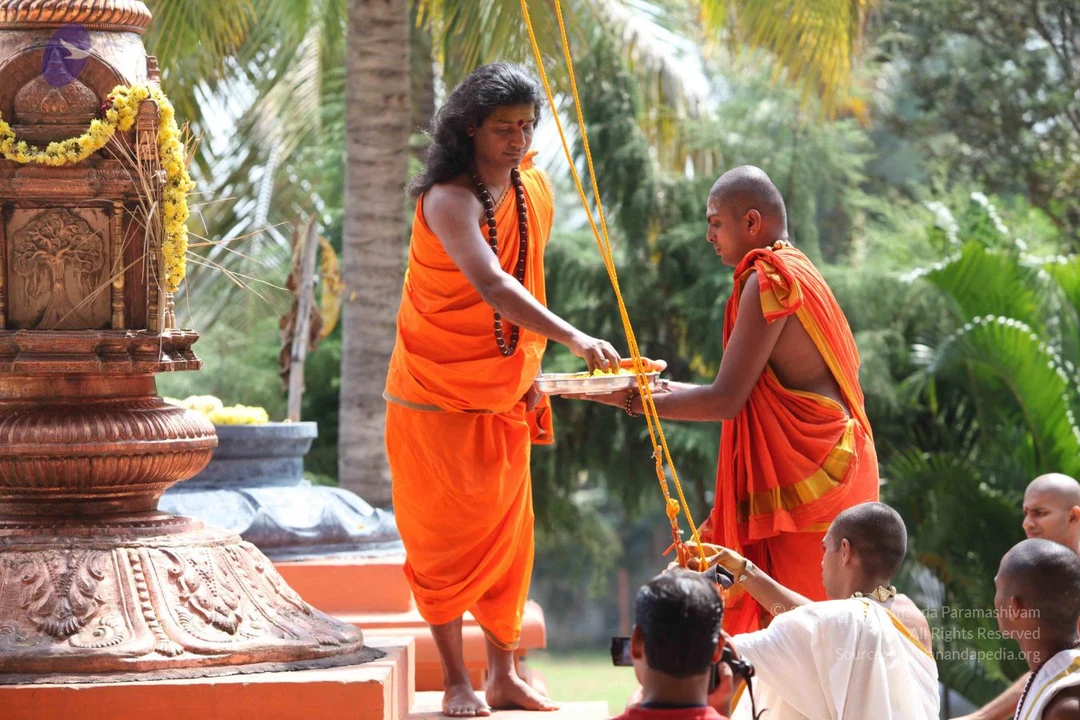
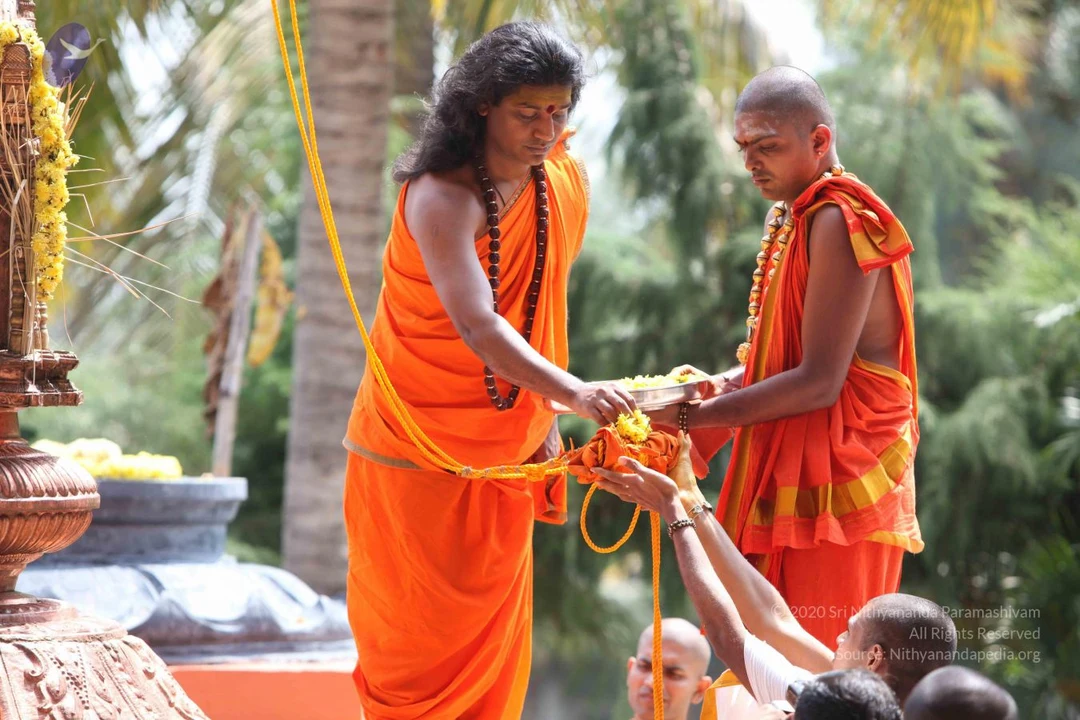
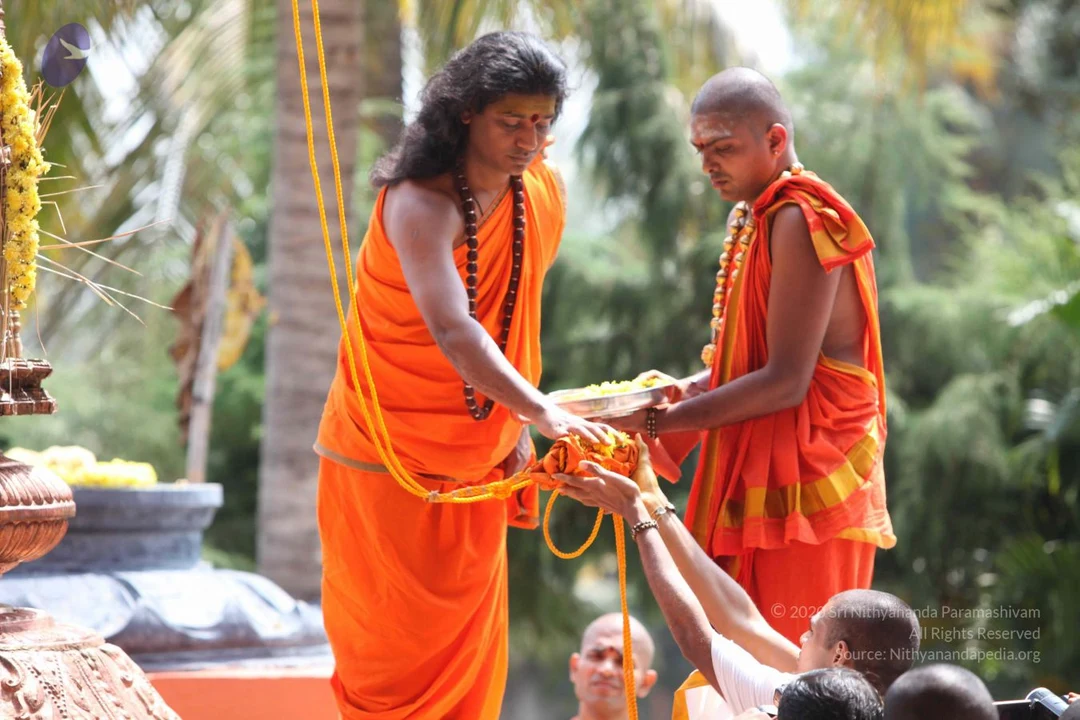
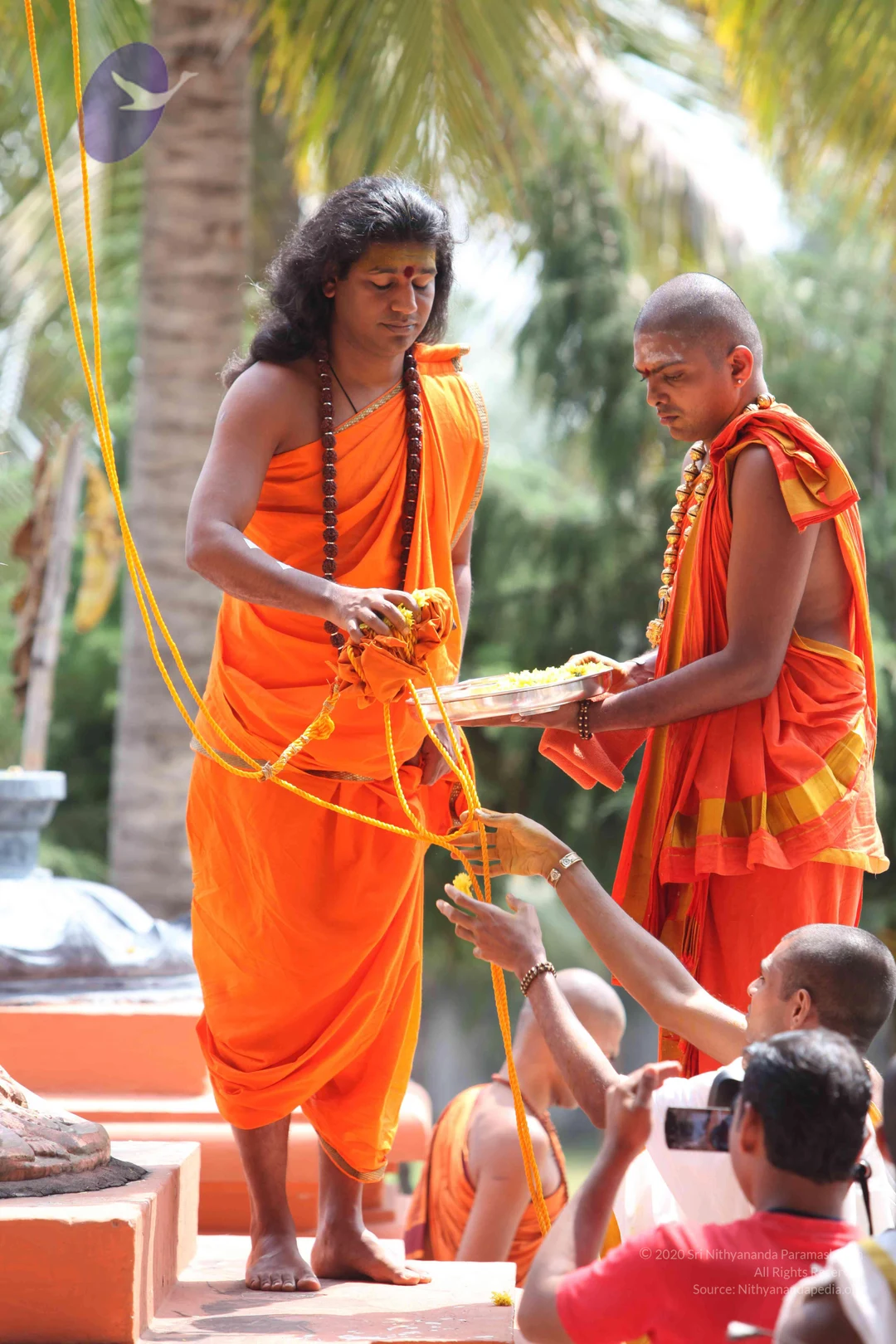
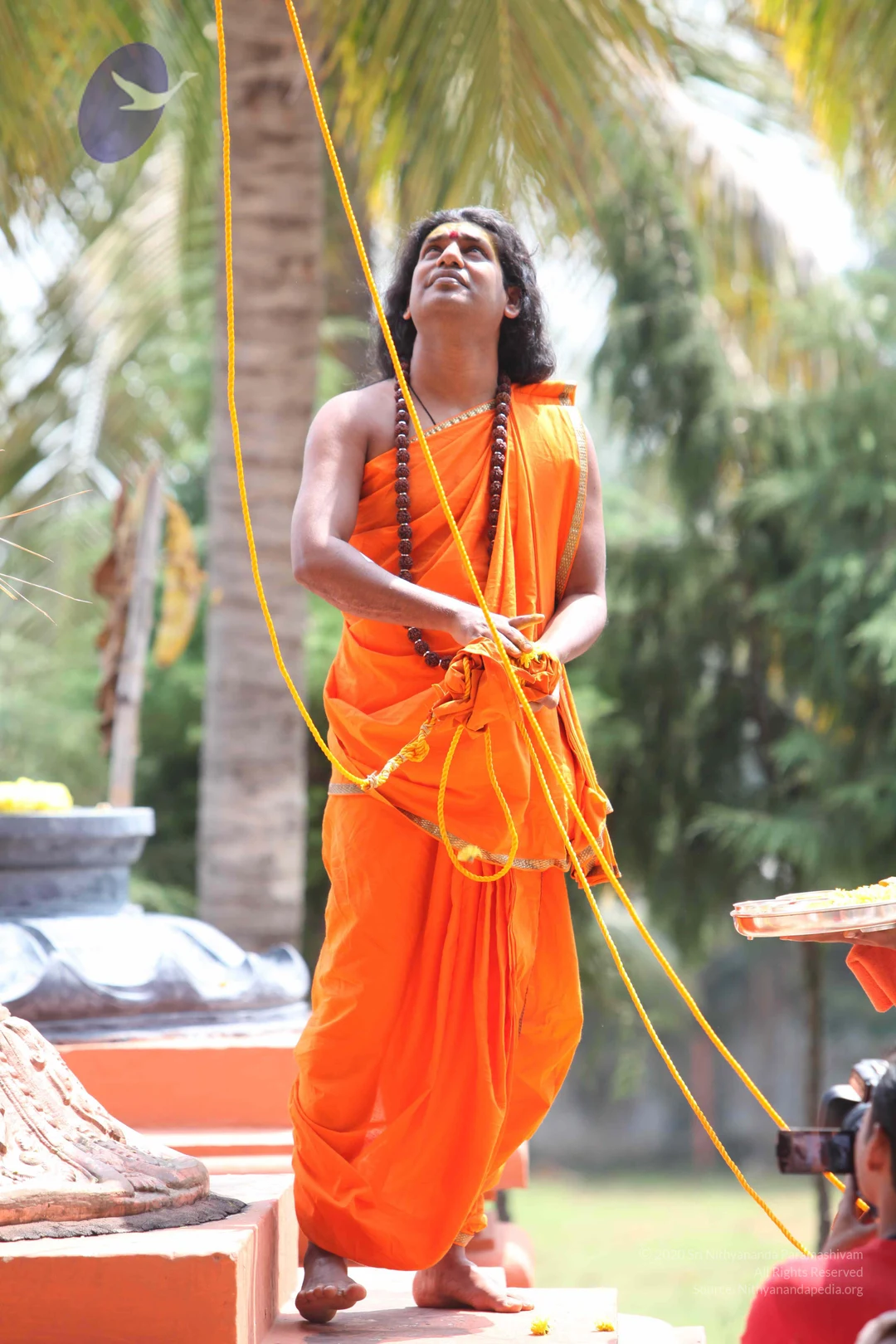
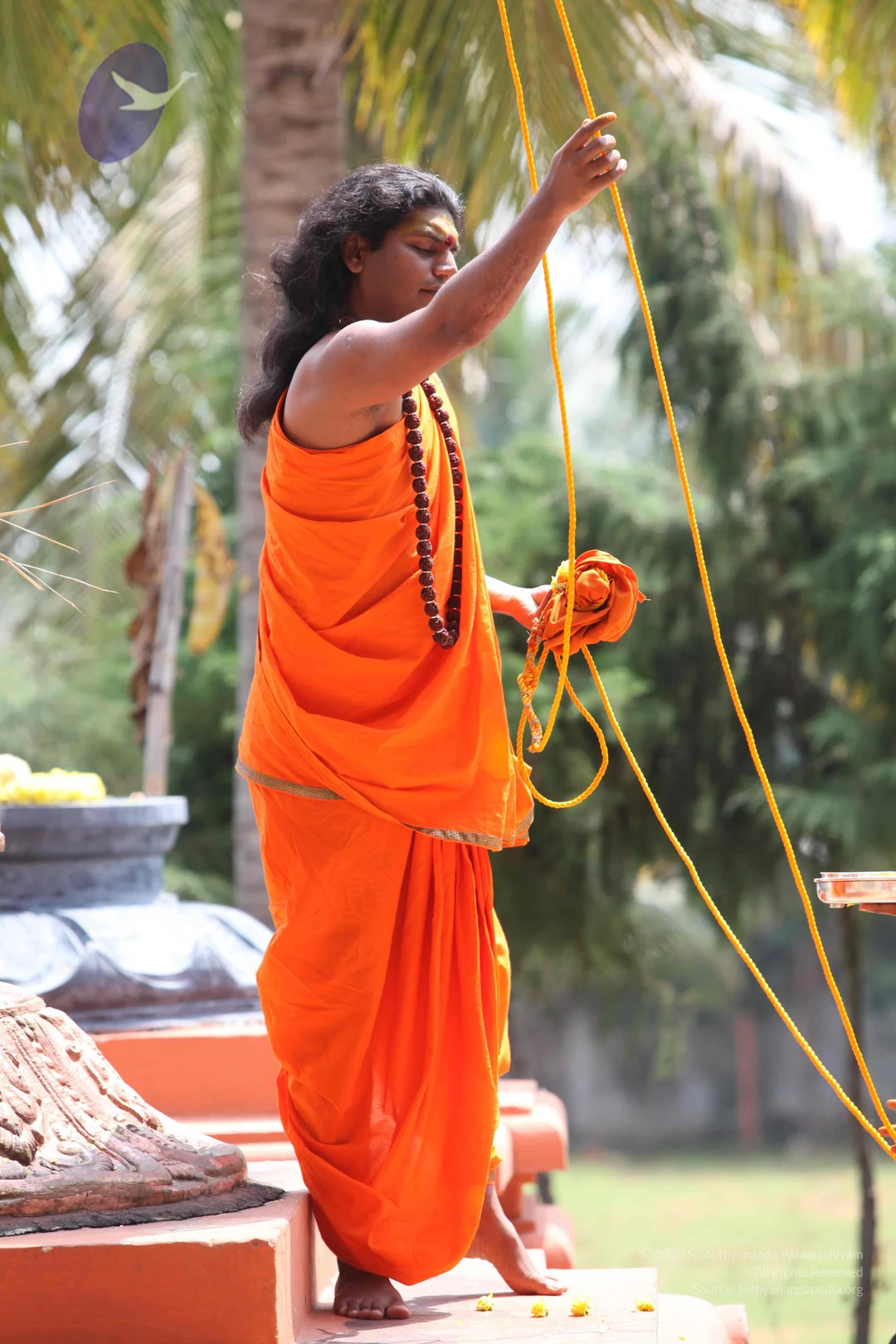
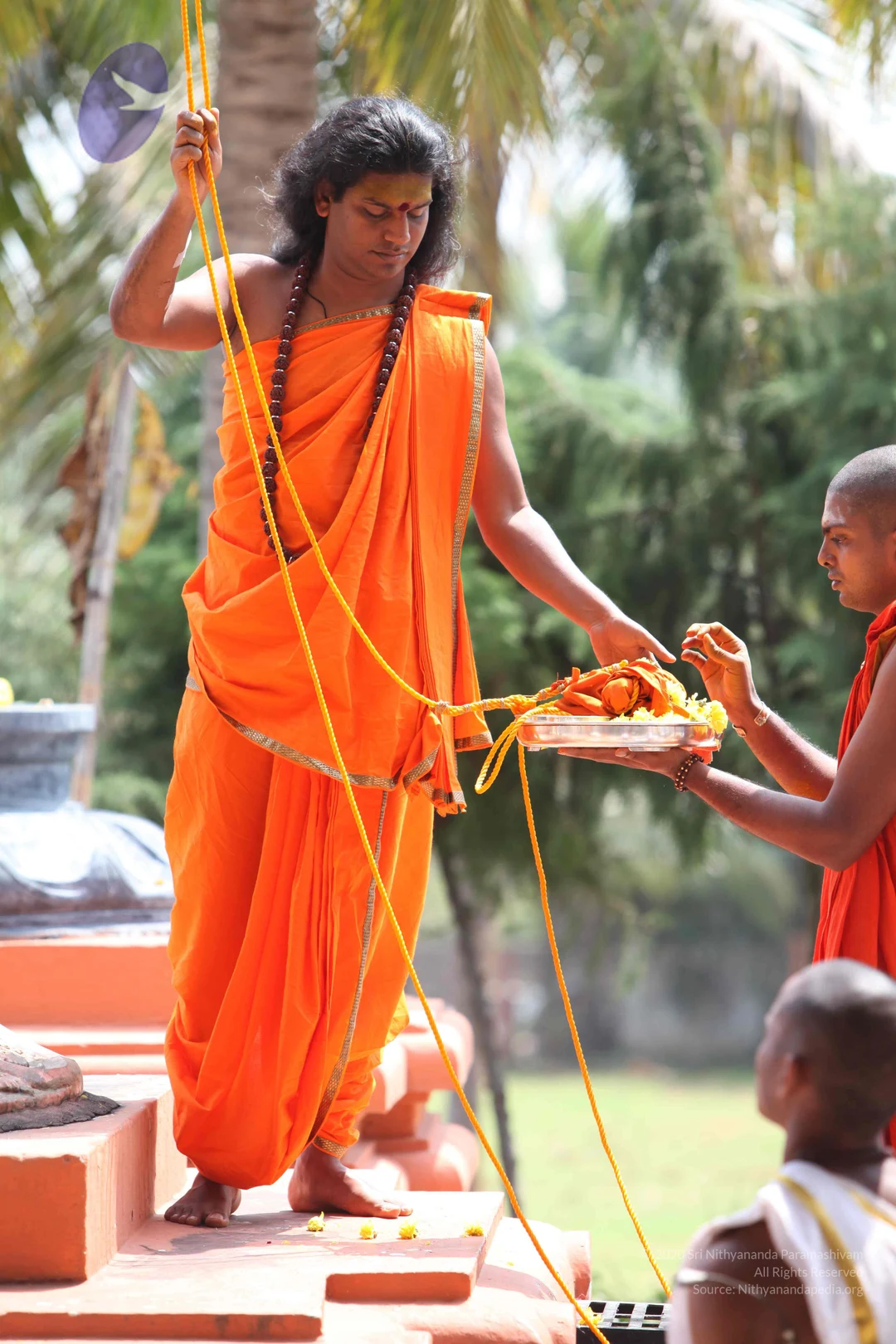
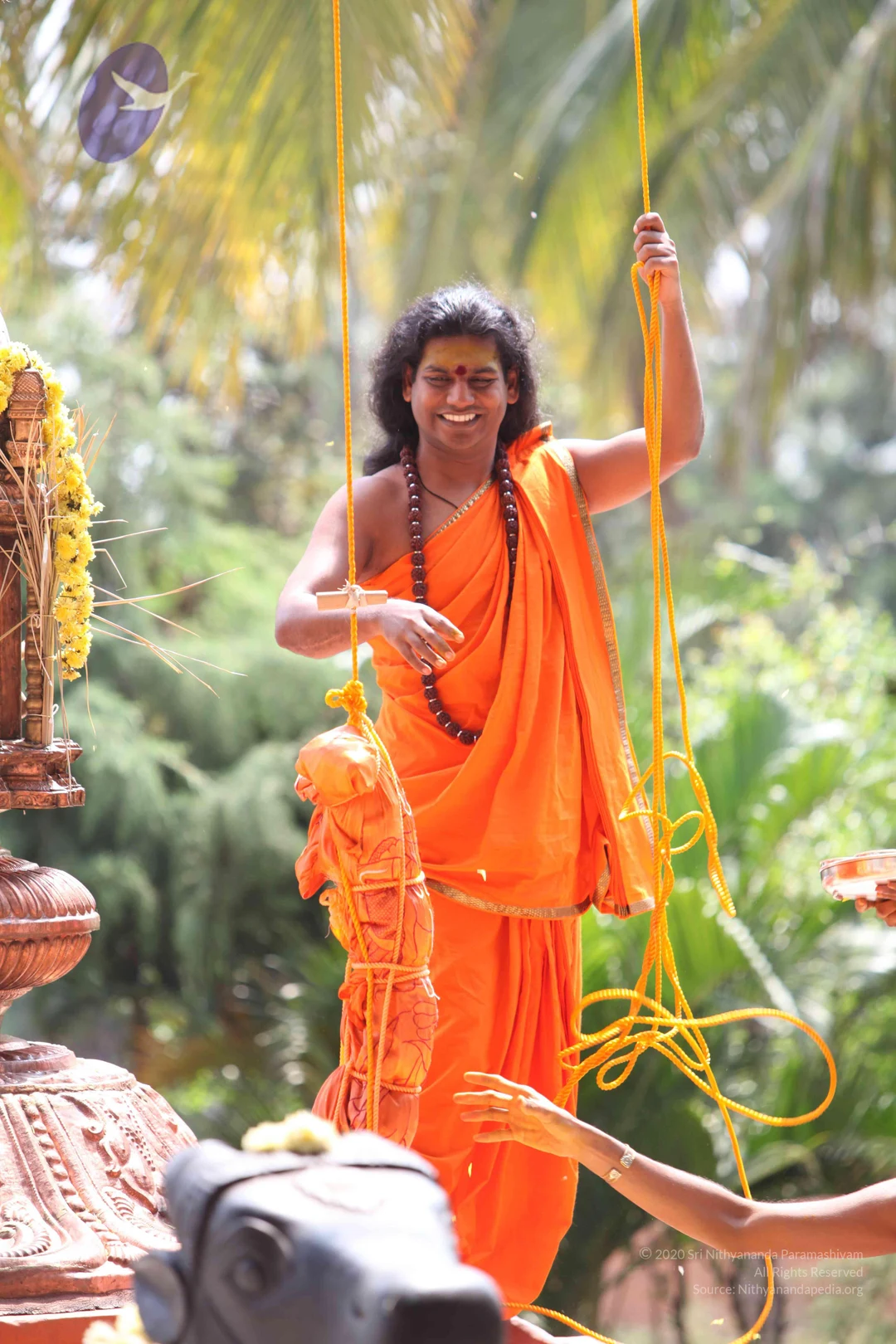
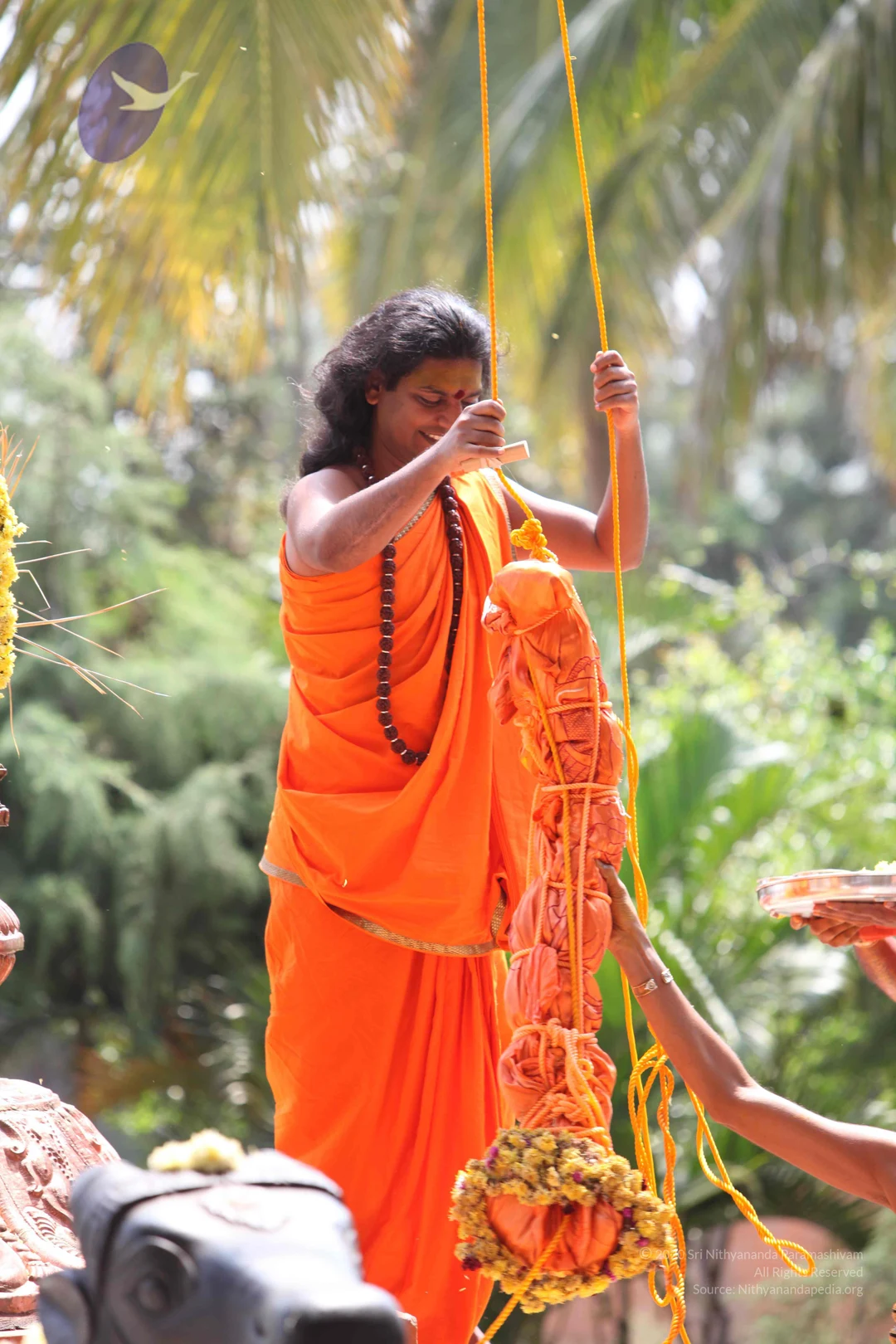
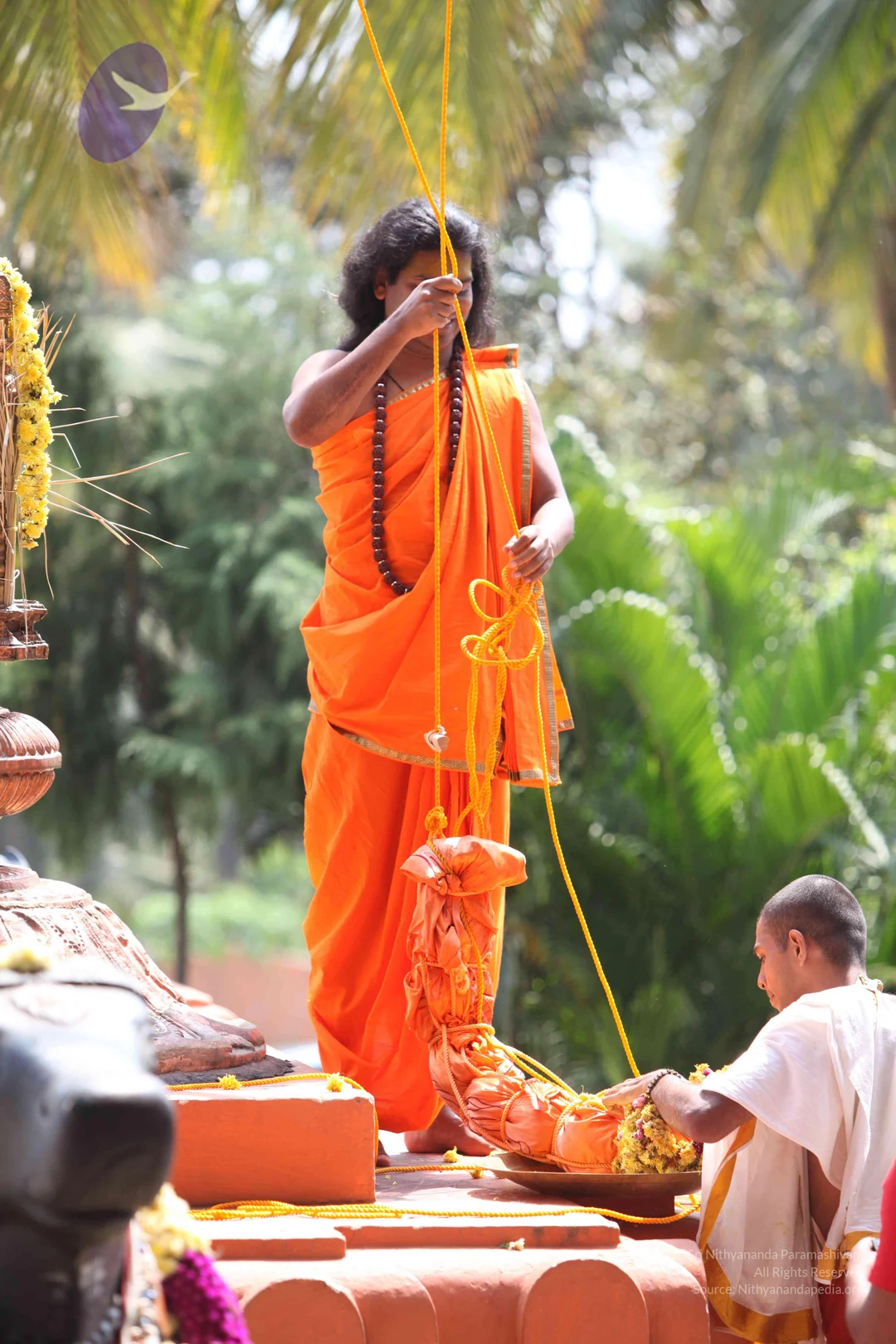
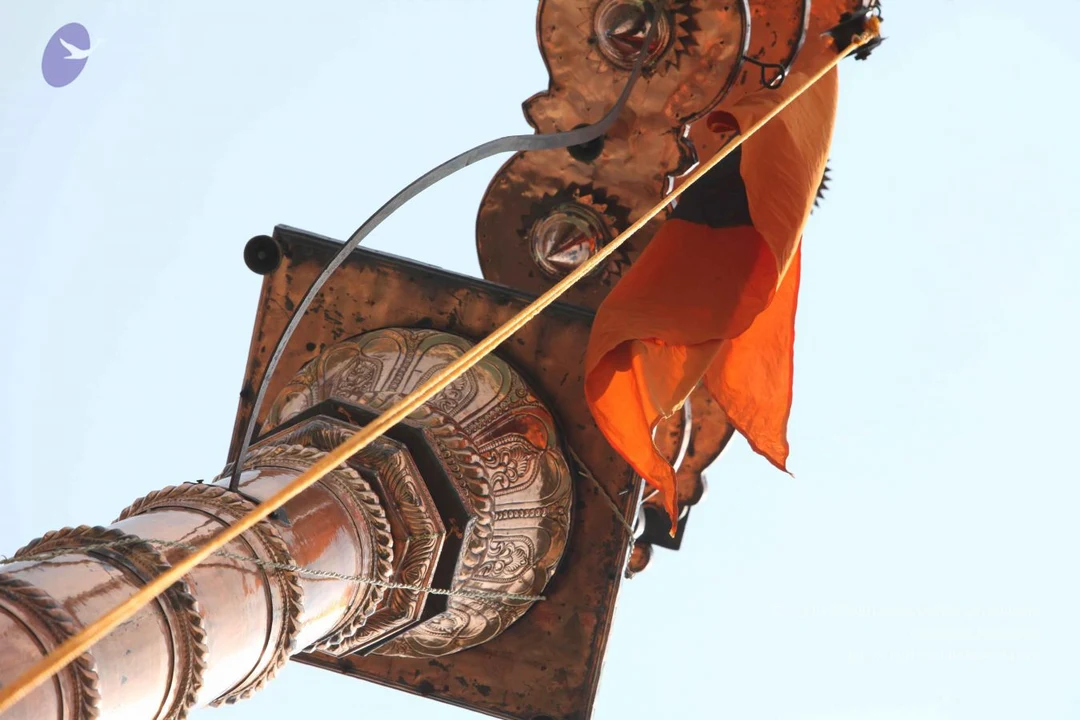
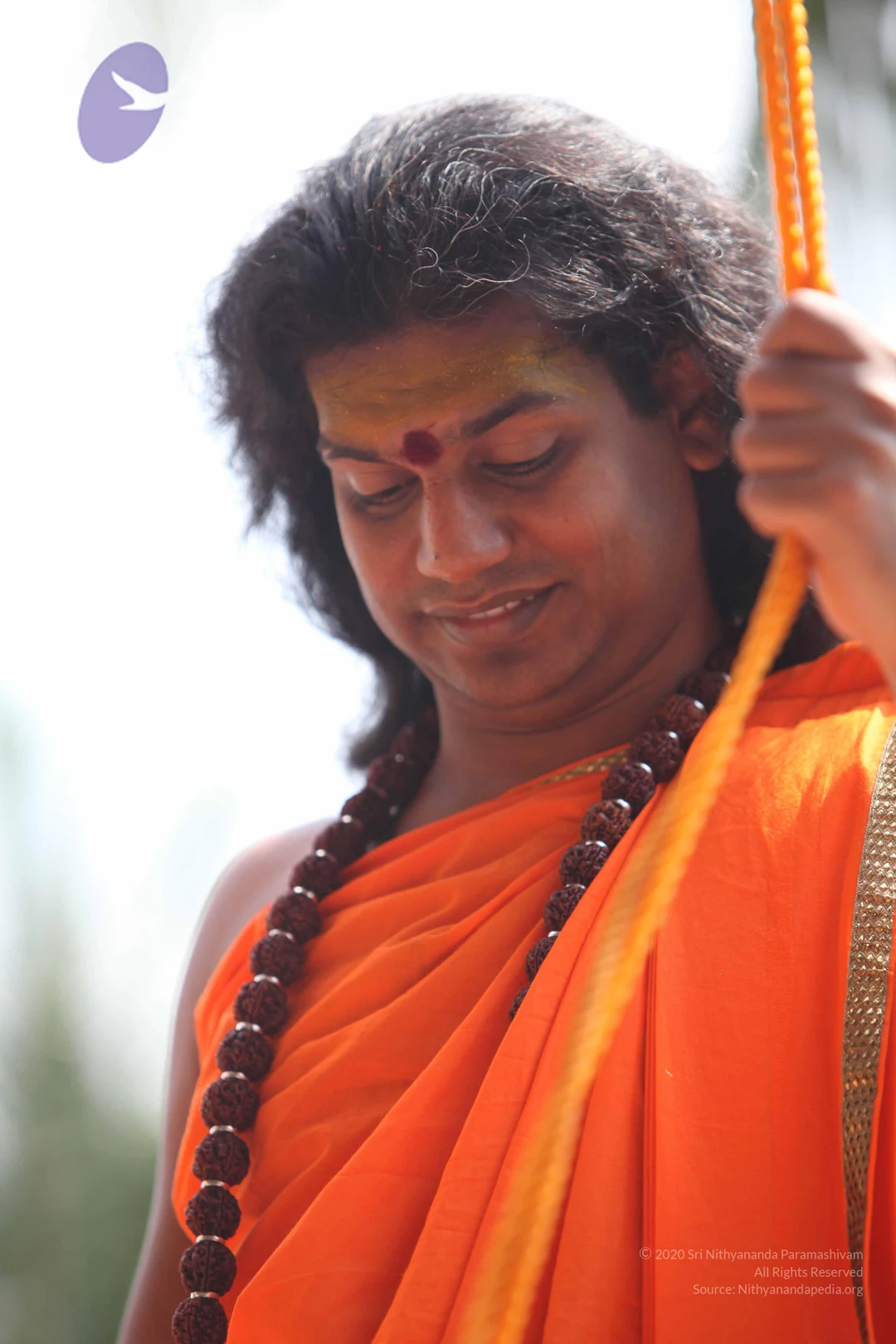
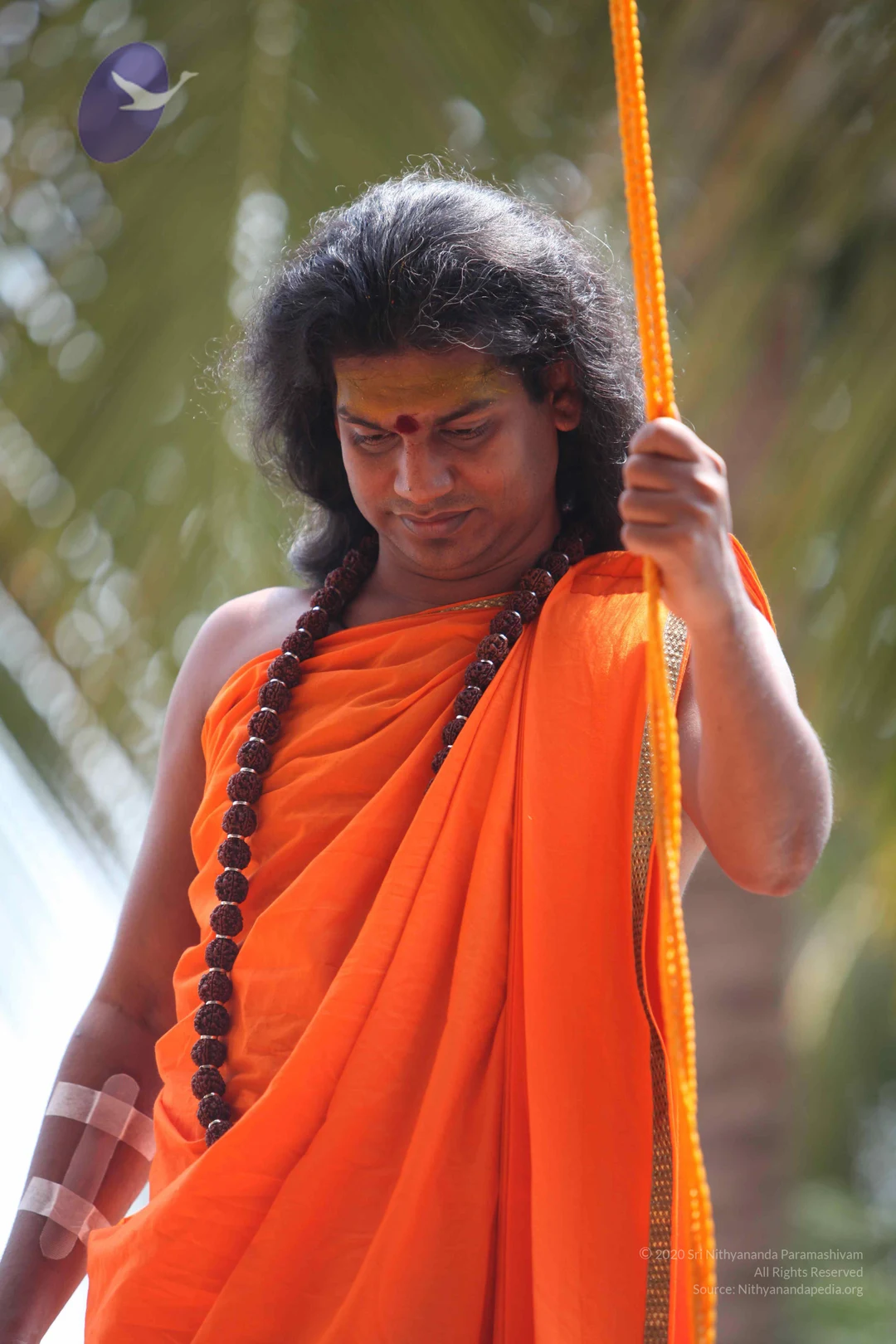
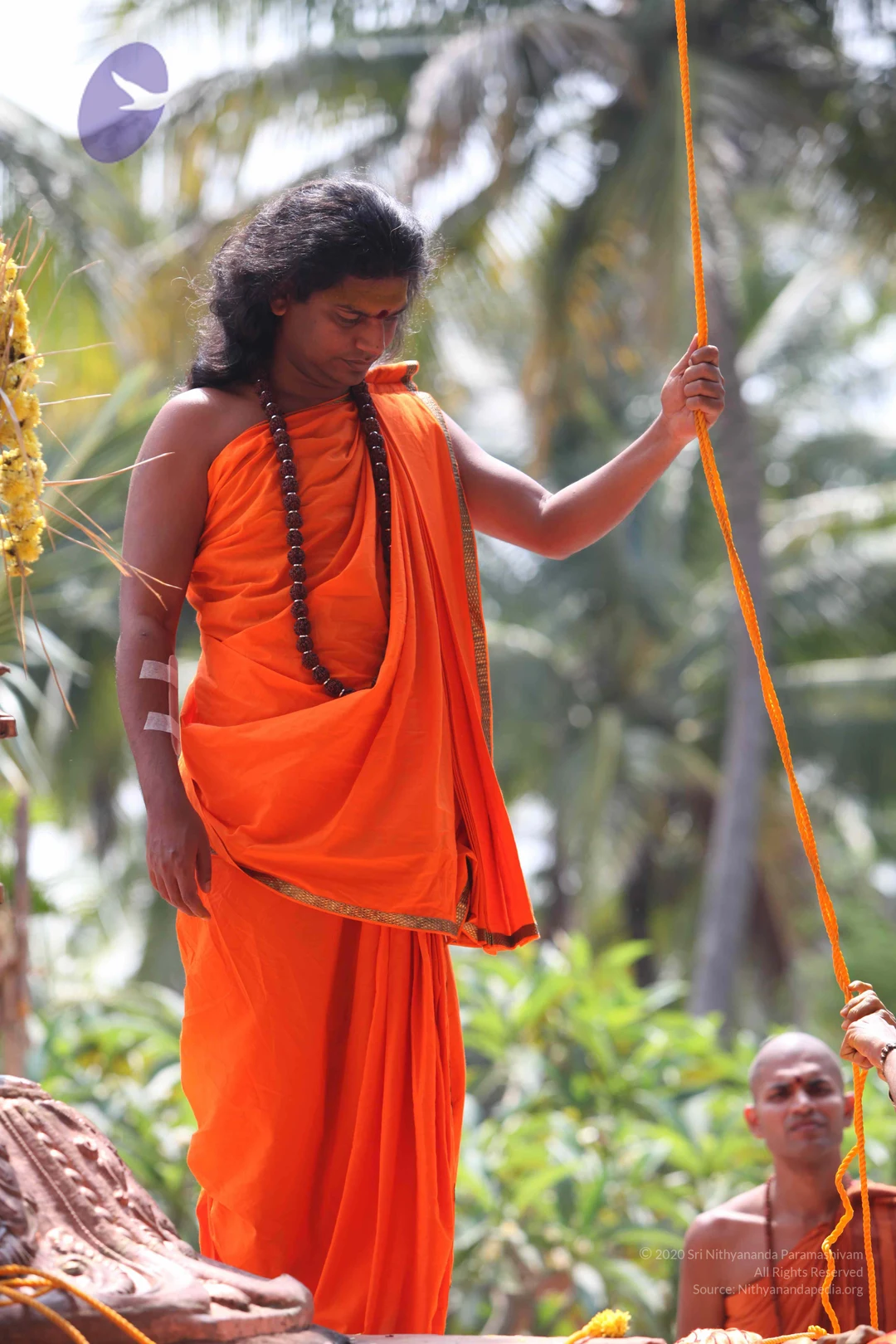
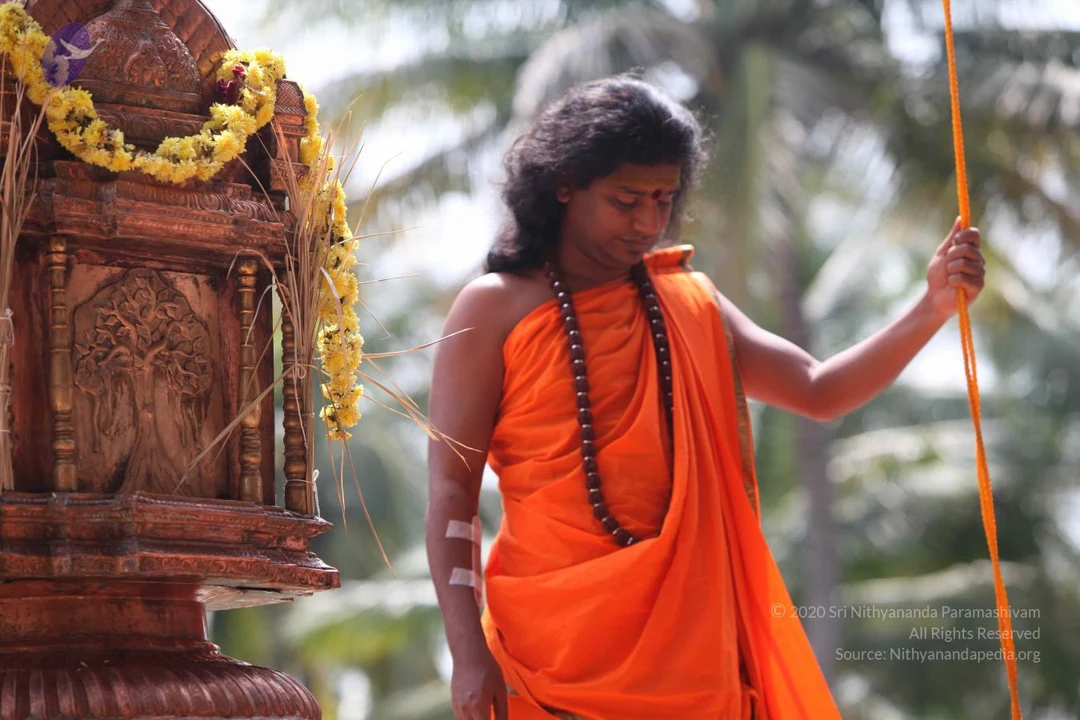
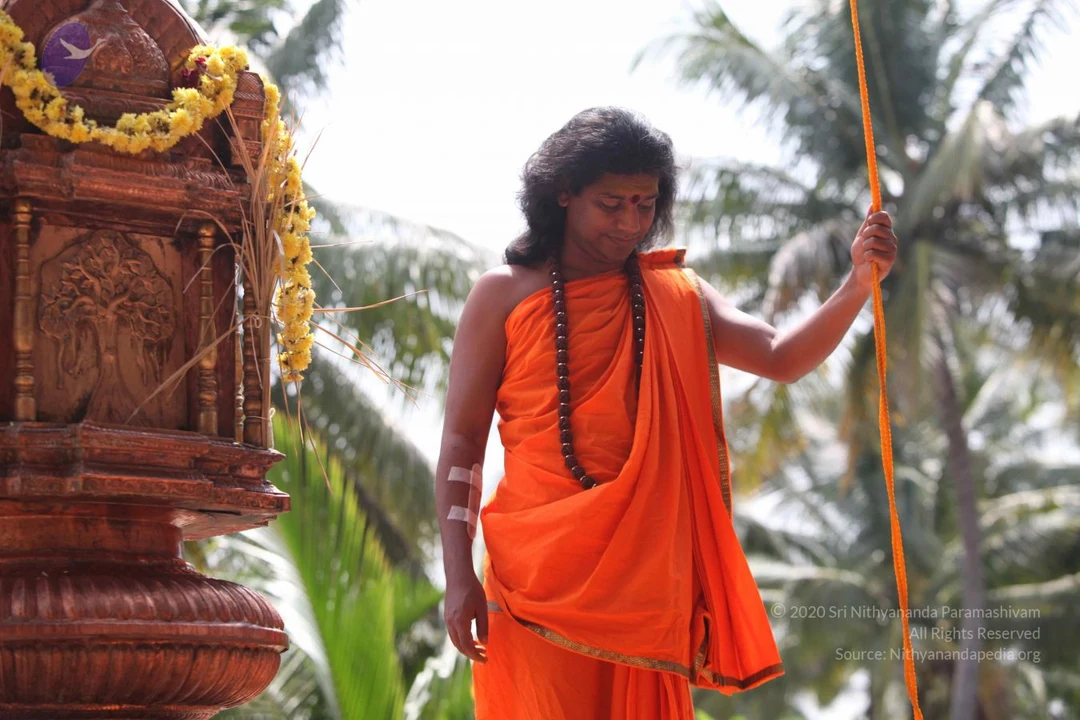
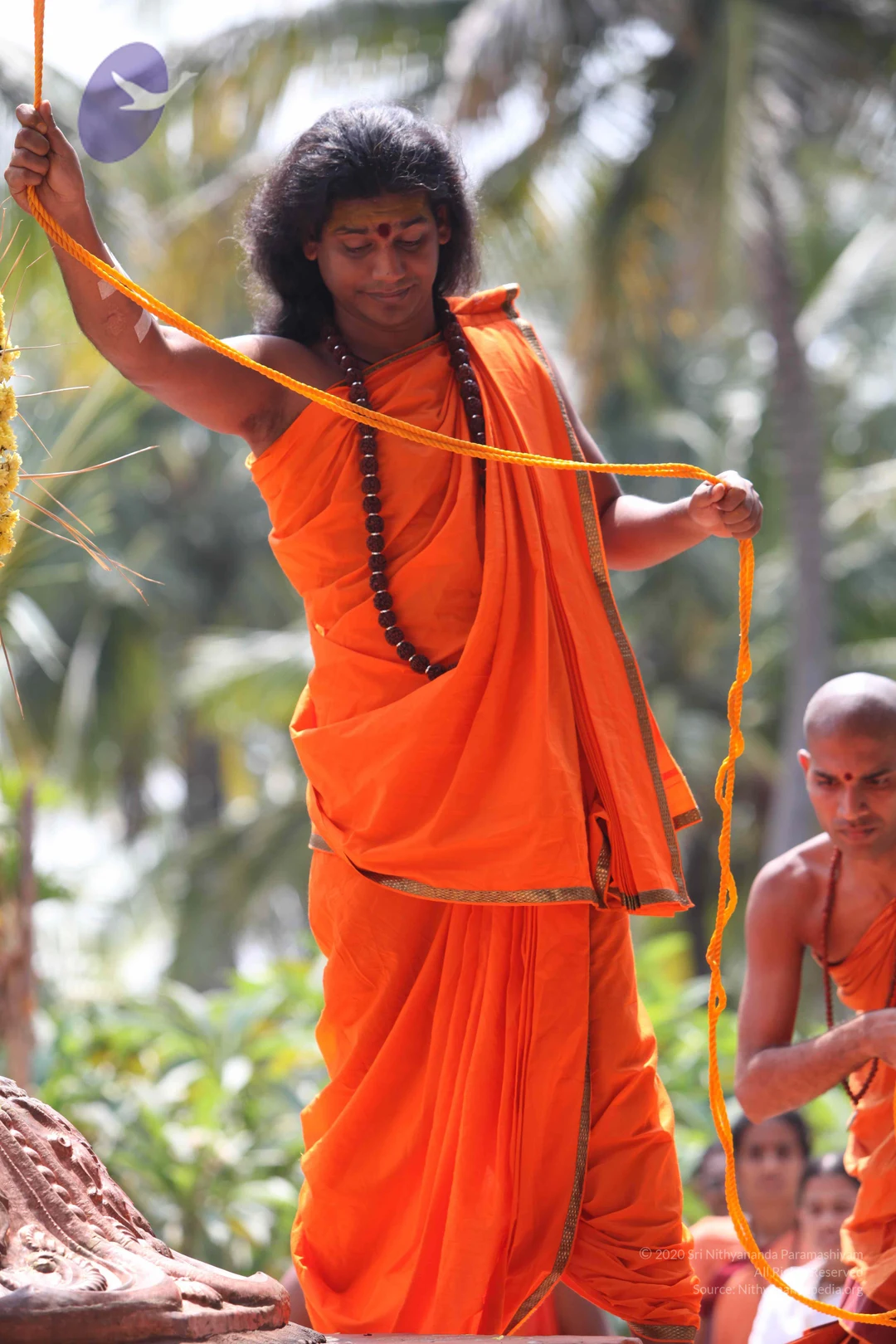
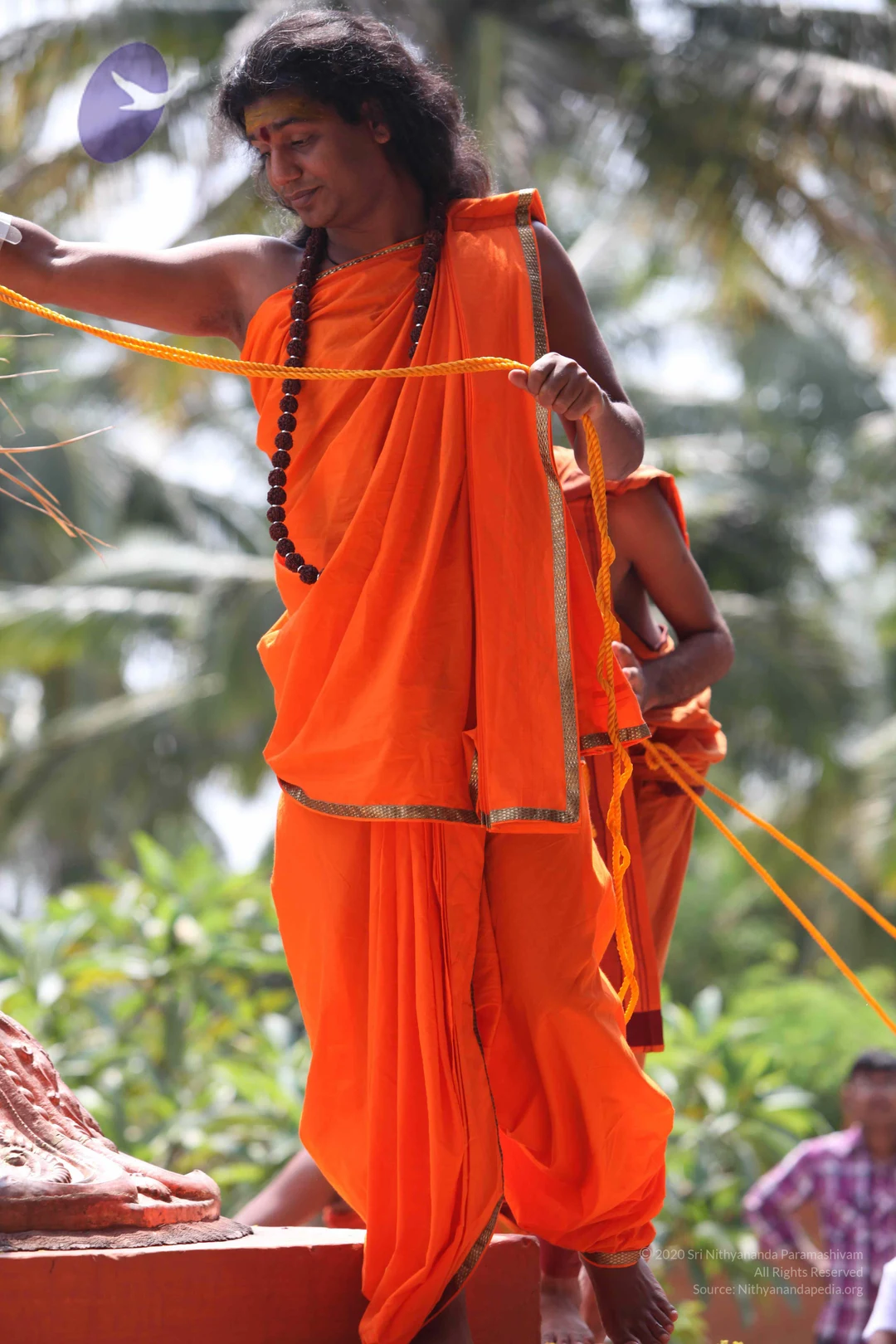
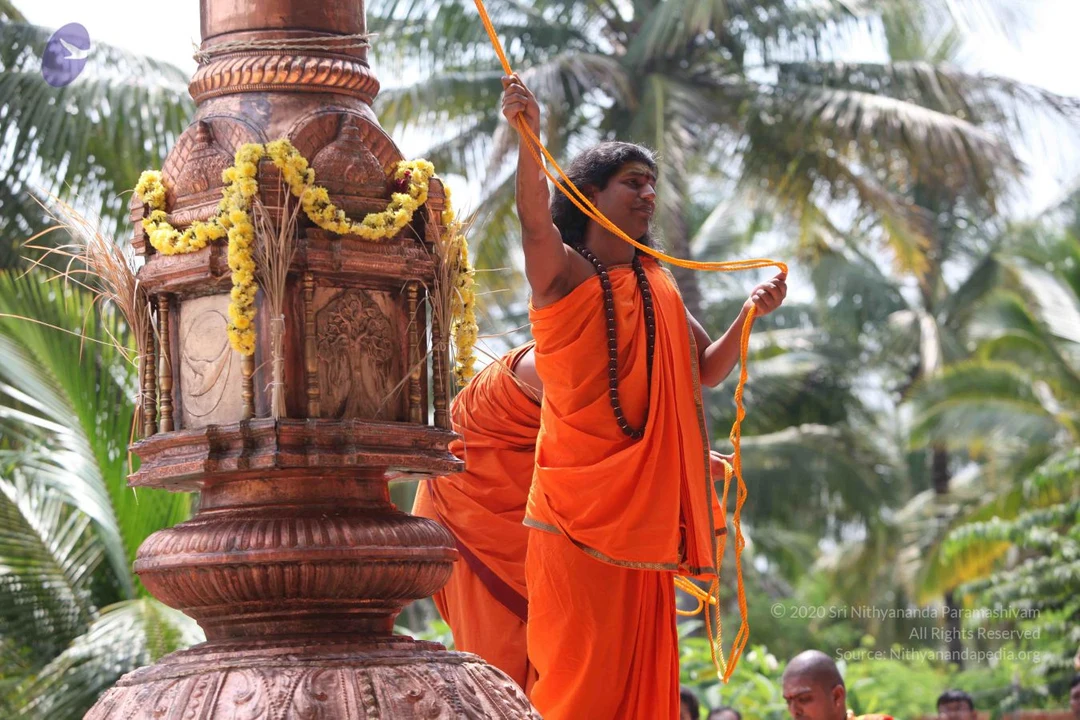
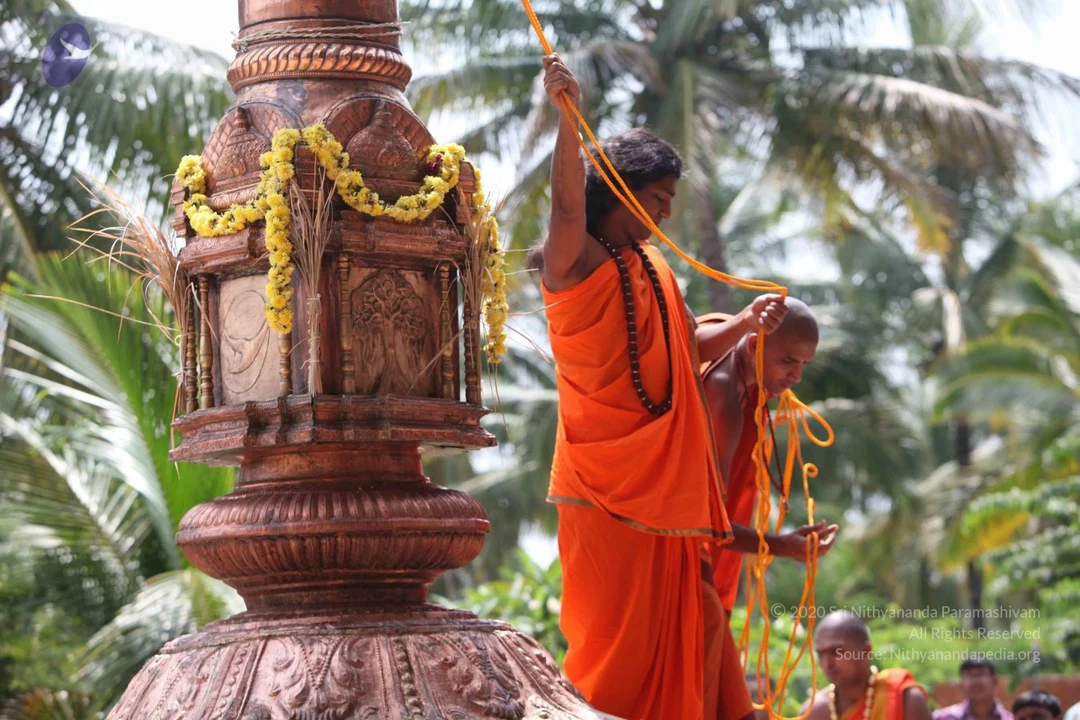
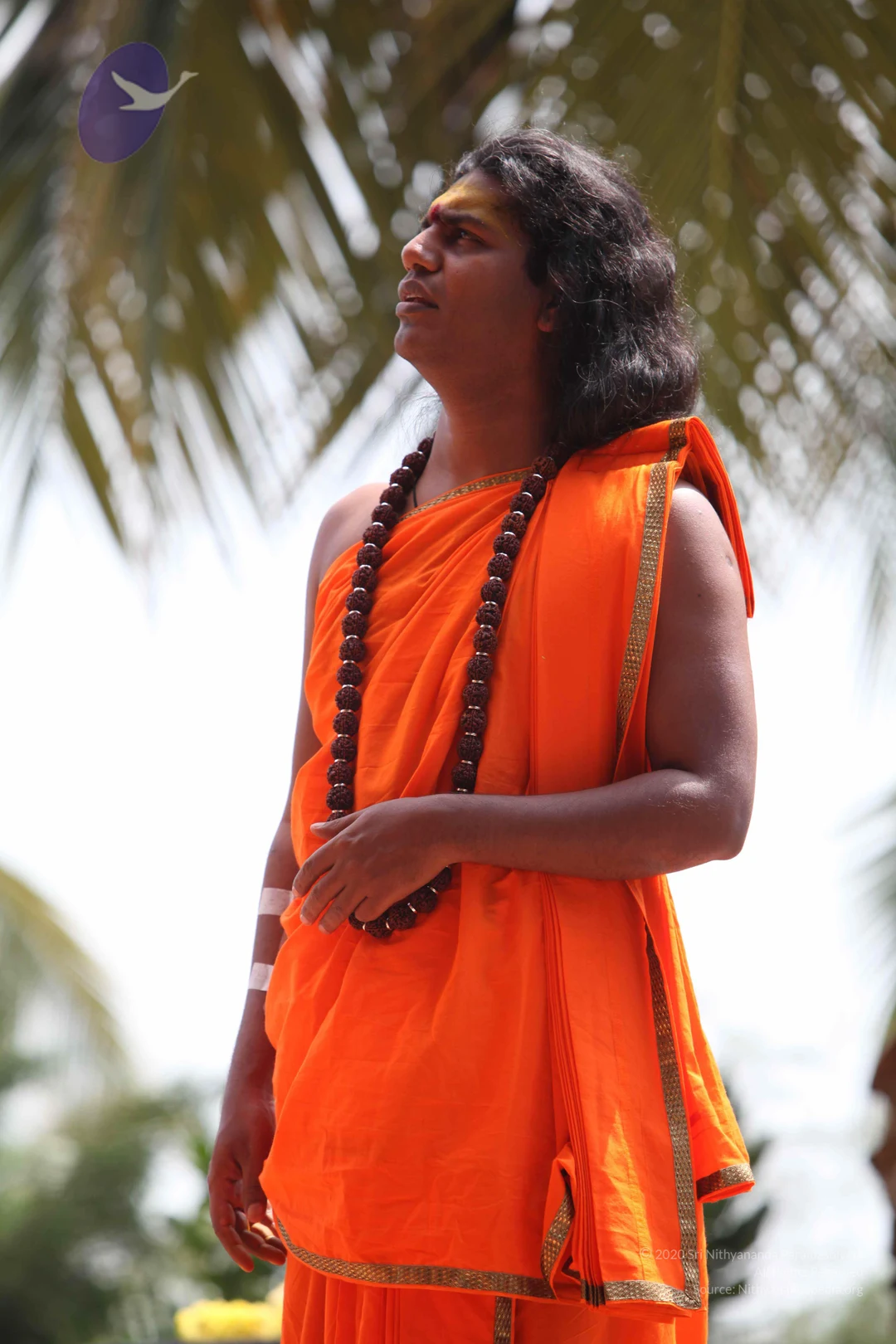
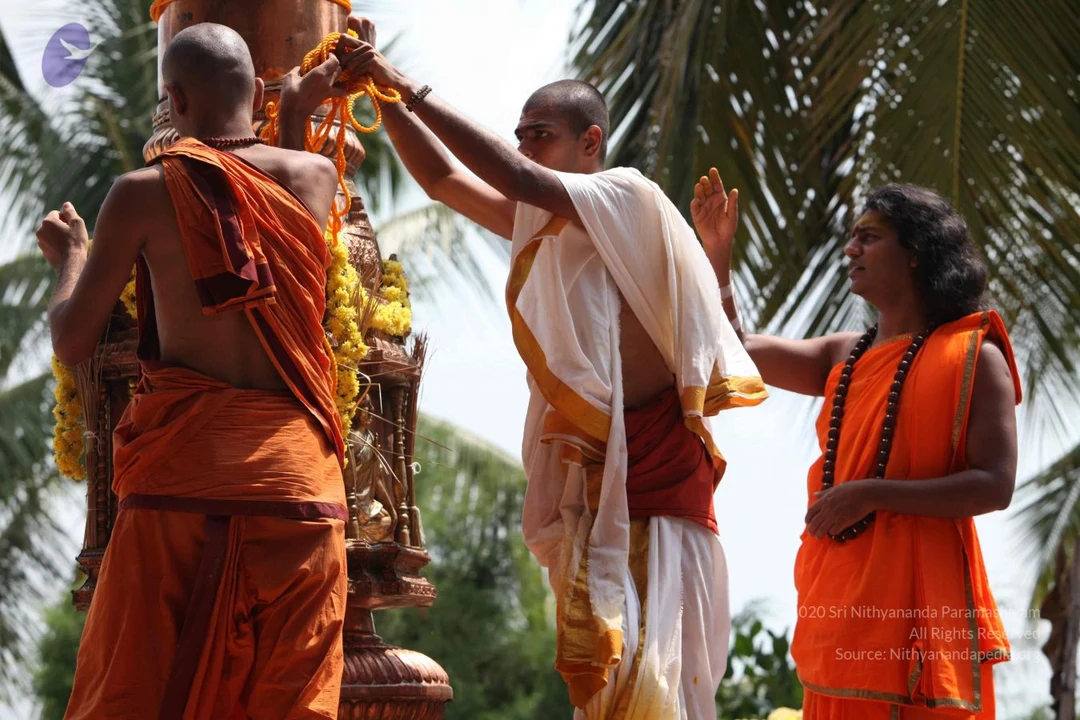
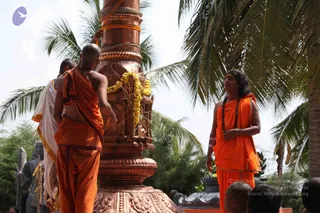
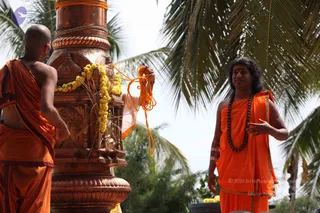
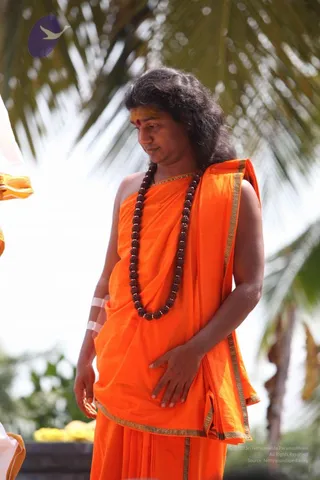
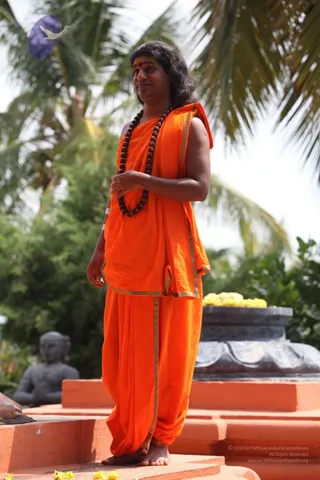
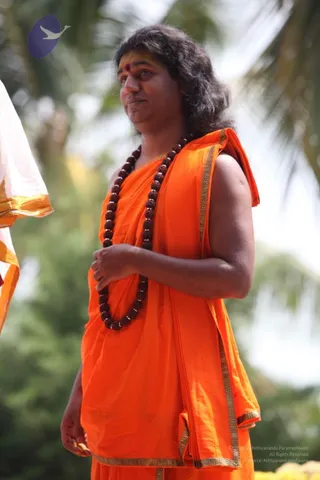
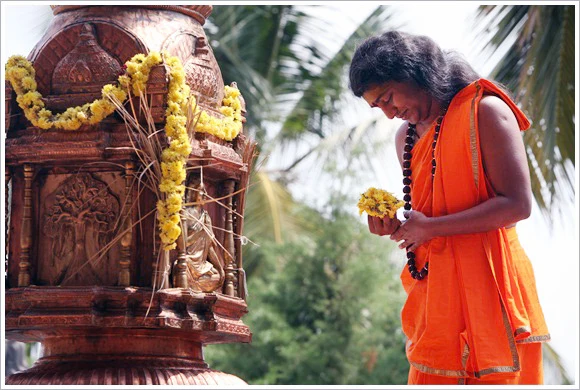
Outdoor temple scene beside a tall copper-coloured ornate pillar wrapped with an orange cord and draped with a garland of yellow marigold flowers, with a bundle of grass or straw tucked near its base. A bald priest in orange cloth stands at left with his back to the camera, touching the pillar, while another man in white dhoti and orange shawl attends nearby. At right, a figure with long swept-back dark hair, a rudraksha mala and an orange robe stands with hands folded, gazing ahead; these cues are consistent with Swamiji (probable), appearing in person. Palm trees and stone sculptures frame the scene.Outdoors under palm trees, an ornate copper-coloured pillar or kalasha-style post wrapped with yellow marigold garlands and an orange cord is being handled by a shaved-headed priest in orange robes, seen from behind at left. At right, a long-haired man in orange robes, a dark rudraksha mala, and a red tilak stands with one hand raised in gesture as if speaking. Palm fronds and a yellow-flowered arrangement are visible in the background.A man stands outdoors under palm fronds, wearing an orange saffron-coloured draped garment with gold-bordered edges and a long dark rudraksha mala with silver spacers around his neck. He has long dark wavy hair and a yellow and red forehead mark, and looks downward with one hand resting at his waist. A white-clad figure is partly visible at the left edge and a faint yellow object lies in the background. Swamiji (probable) appearance cues are the long hair, saffron clothing and rudraksha mala, identified as the in-person subject of this archive photo.A man with long swept-back dark hair stands barefoot on an orange-red stone platform outdoors among palm trees. He wears a saffron-orange dhoti and matching shawl edged with gold border, a red tilak on his forehead, and a long rudraksha mala with dark beads across his chest, hands folded at his waist. Behind him stands a dark stone base holding a heap of yellow flowers, and a grey stone deity murti sits to the left. Yellow petals lie on the platform. Swamiji (probable): long hair, saffron clothing and rudraksha mala indicate a sannyasi candidate.Photograph of a man standing outdoors against blurred palm fronds and greenery under bright daylight. He has long, dark, wavy hair swept back, a yellow and red forehead mark, and wears an orange saffron wrap with gold-bordered edges over orange garments, with a long dark rudraksha mala around his neck. His hands are folded at his waist and he gazes off to the side with a slight smile. A partially visible figure in white and gold clothing stands at the left edge of the frame. The person's appearance is consistent with the page's Swamiji reference (saffron clothing, long hair, rudraksha mala), so he is labelled Swamiji (probable).A standing man in an orange saffron dhoti and shawl with gold border, wearing a long rudraksha mala around his neck, with long swept-back dark hair and a red tilak on his forehead. He stands on a red stone platform outdoors beneath tall coconut palms, with a yellow flower-decorated stone vessel behind him and a partially visible bare-armed person at the left edge. Appearance-based label: a person, standing in front of palm trees.
HDH-REACHES-TIRUVANNAMALAI

53 photosSource gallery
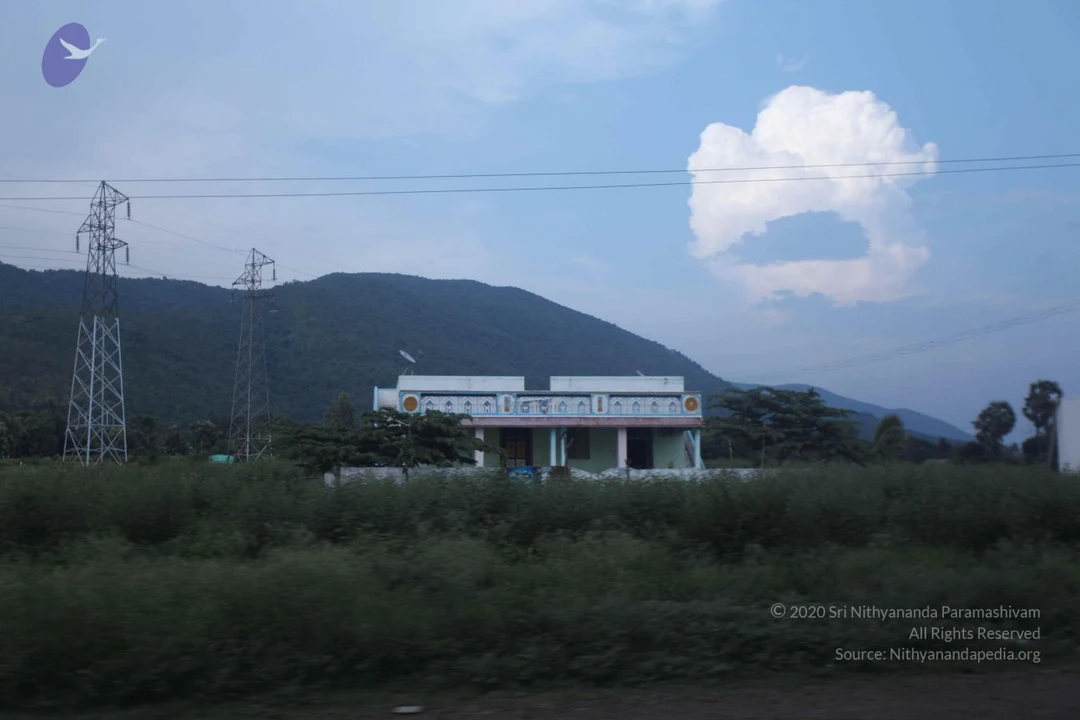
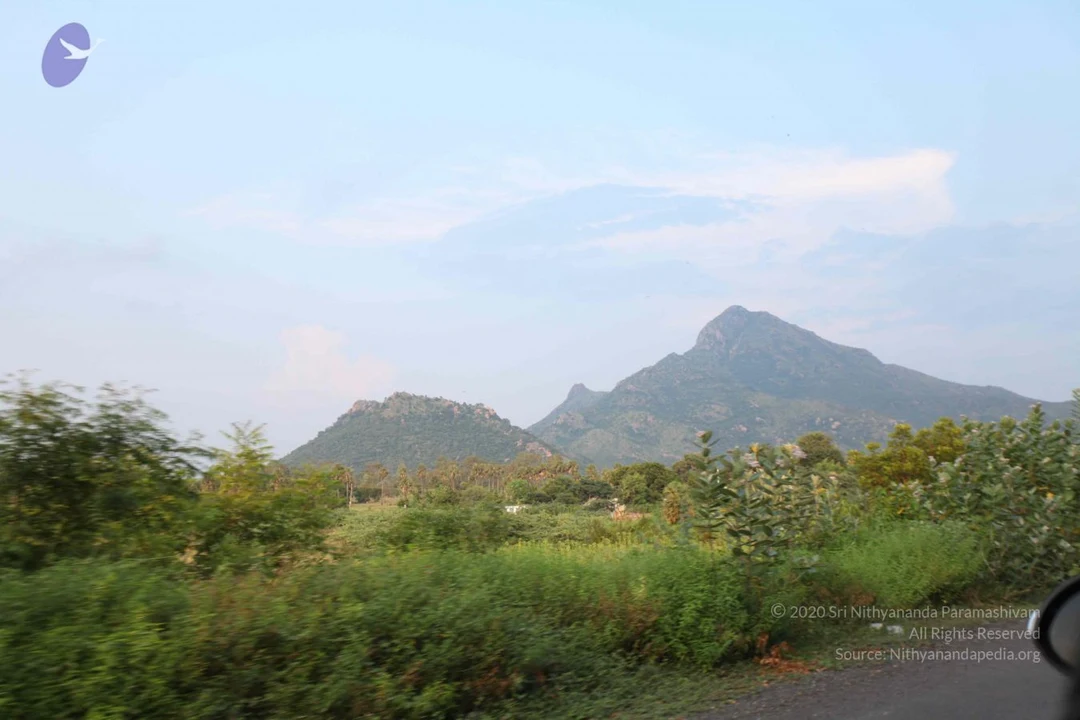
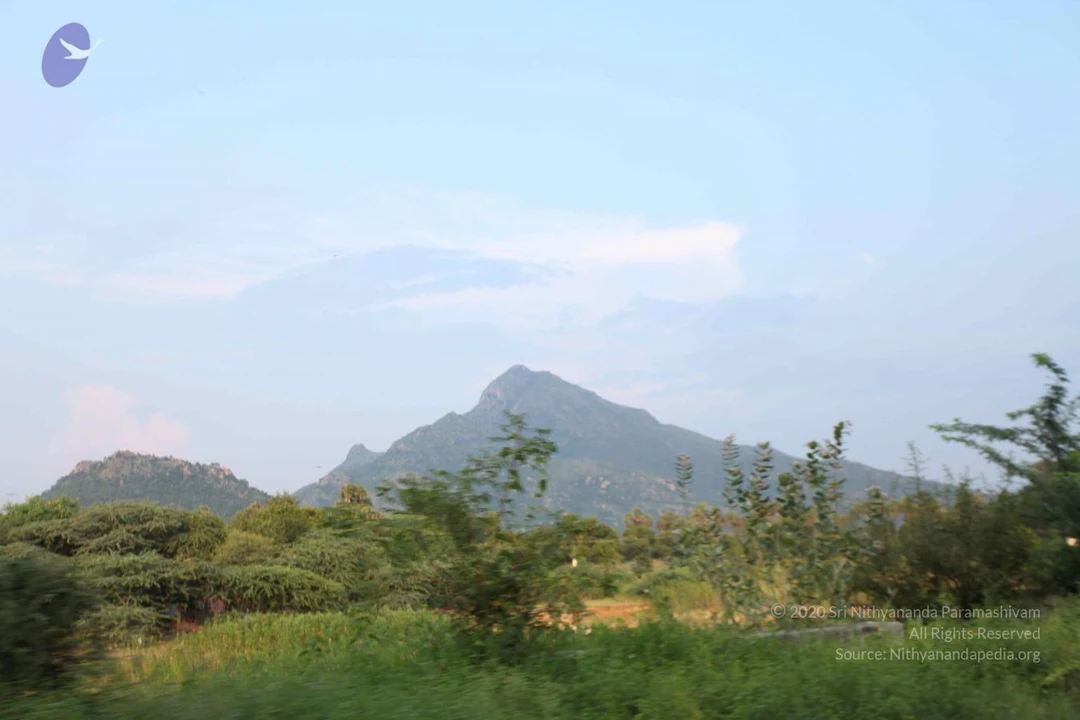
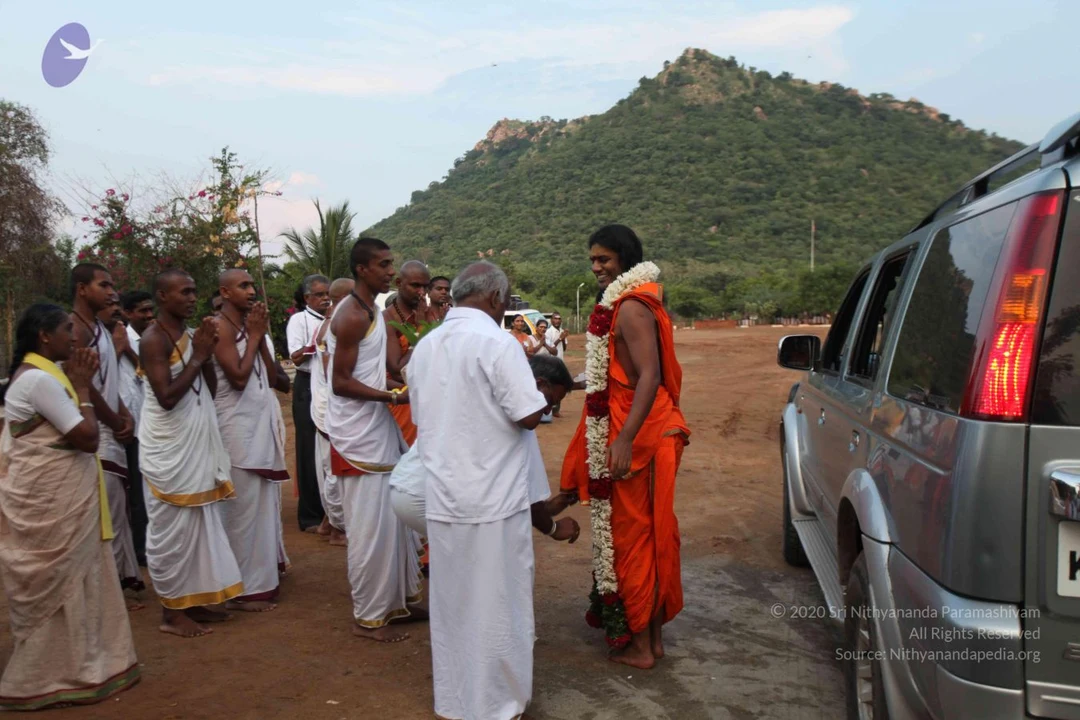
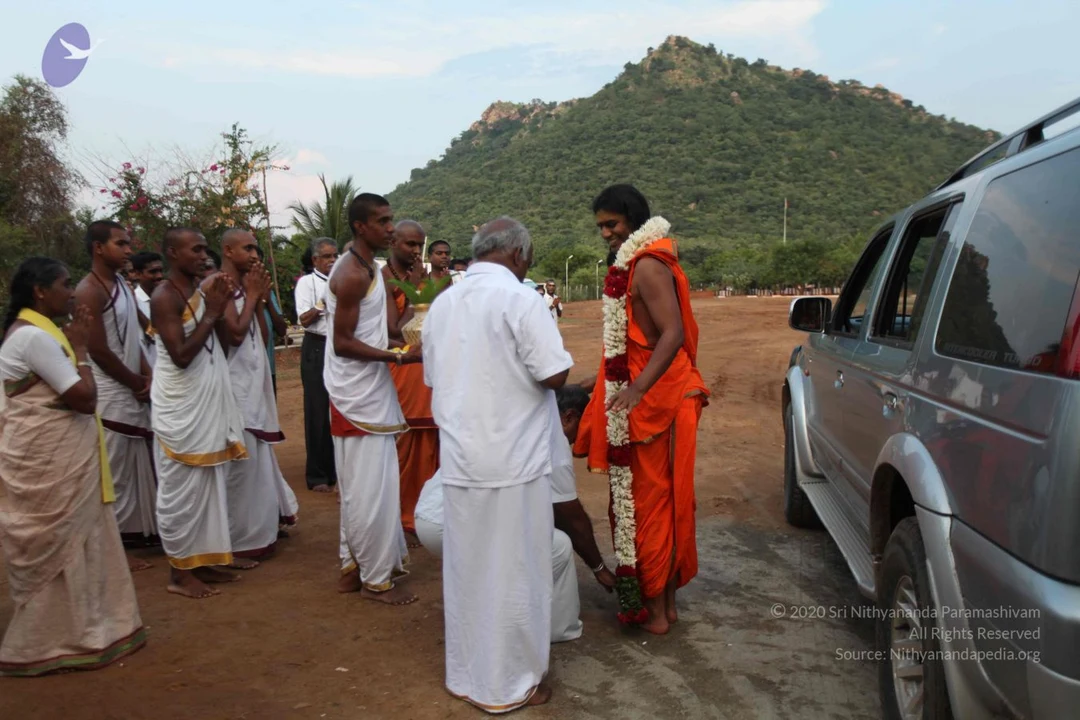
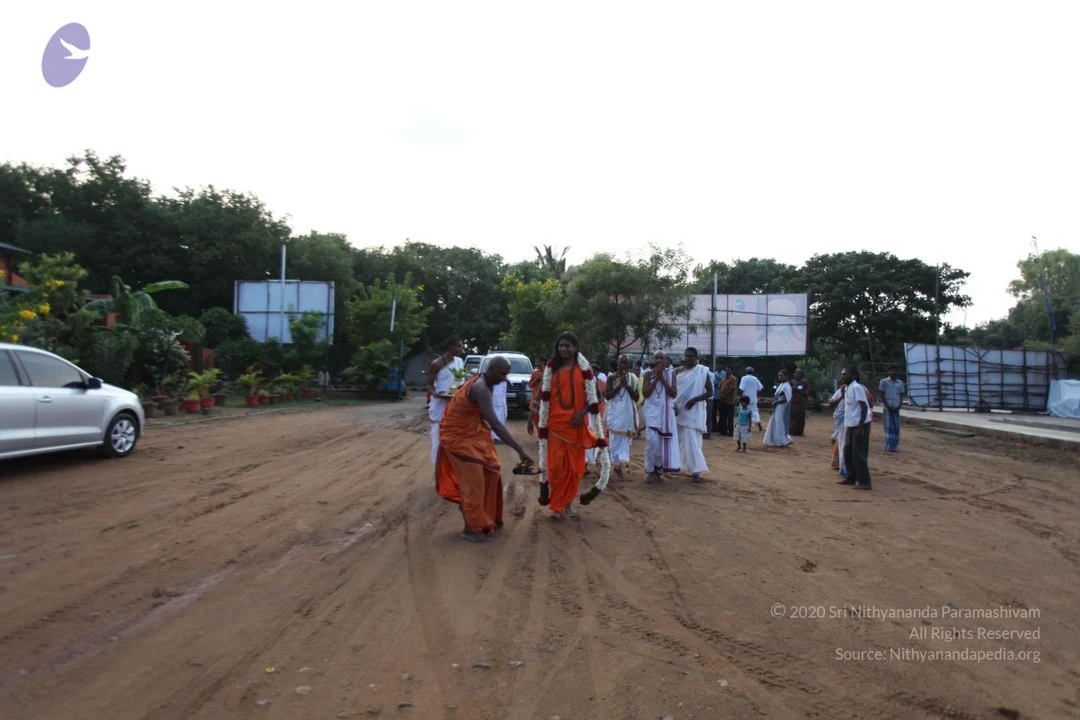
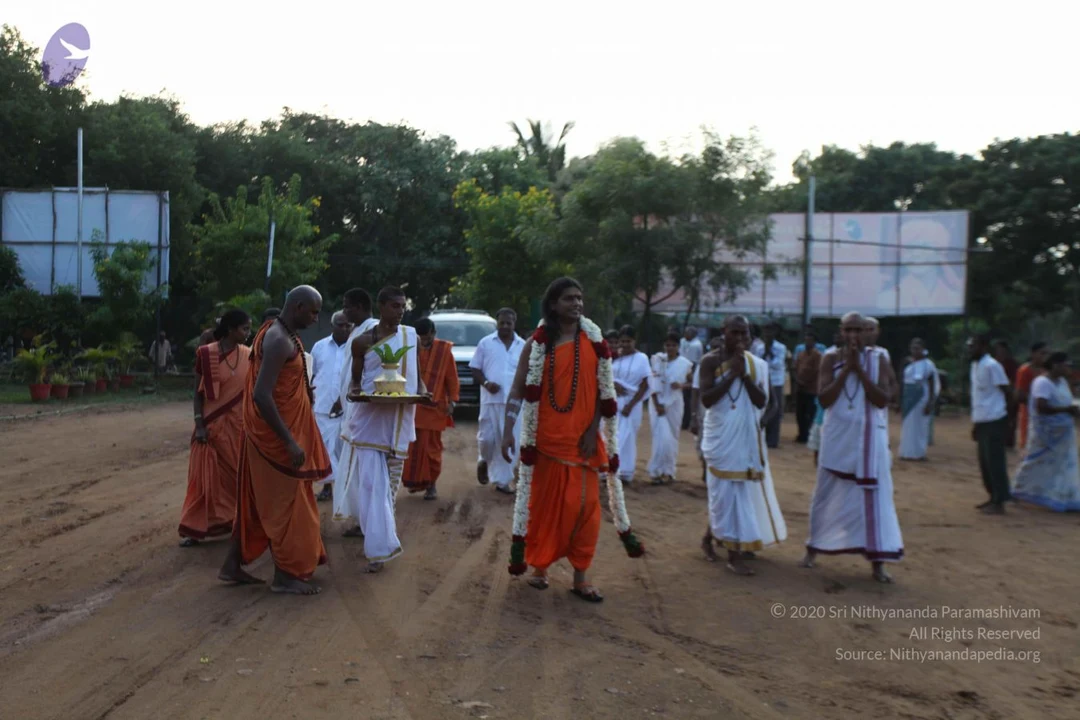
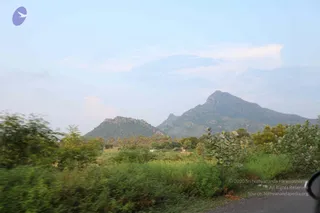
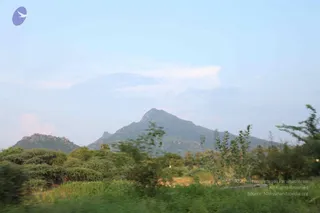
A blue dusk sky over a dark hill covered in dense green trees, with several tall coconut palms silhouetted in the foreground. A large white cumulus cloud sits to the right above the hill, its base shaded grey. The landscape is taken from a moving vehicle, with blurred foliage along the lower edge. No people, deities, or ritual activity are visible.A photograph taken through a vehicle window of a blue sky with a single white cumulus cloud above a dark green hill. Tall coconut palms in the foreground and midground sway against the sky, with dense tropical trees on the right. No people, ritual objects or ashram activity are visible, and the scene shows only a rural landscape.A photograph taken through a vehicle window of a low two-storey building painted mint green and white with decorative blue, orange and yellow roundel and arch motifs along its facade. It stands beside green shrubs and a tall electricity pylon, with forested hills behind and a large cumulus cloud in a pale blue sky. No people are visible.A photograph of a blue daytime sky with a large white cumulus cloud rising above a dense line of dark green trees in the foreground. A faint lighter cloud sits to the left and a thin wispy band crosses the right side. No people, deities or ritual objects are visible in the scene.A photograph taken through a vehicle window of a rural landscape under a pale blue sky with wispy clouds. Two rocky hills rise above a band of dense green shrubs, bushes with broad leaves and palm trees in the middle distance. A road edge is visible at the bottom, and a car side mirror appears at the lower right corner. No people are visible.A photograph of a rocky, forested hill rising above green shrubs and trees in the foreground, under a pale blue sky with thin clouds. A smaller hill with a craggy top sits to the left. Tall grass and bushes fill the bottom of the frame, and the image is slightly blurred as if taken from a moving vehicle. No people are visible.

TIRUKOVILUR-ARAGANDANALLUR-TEMPLE-VISIT

10 photosSource gallery
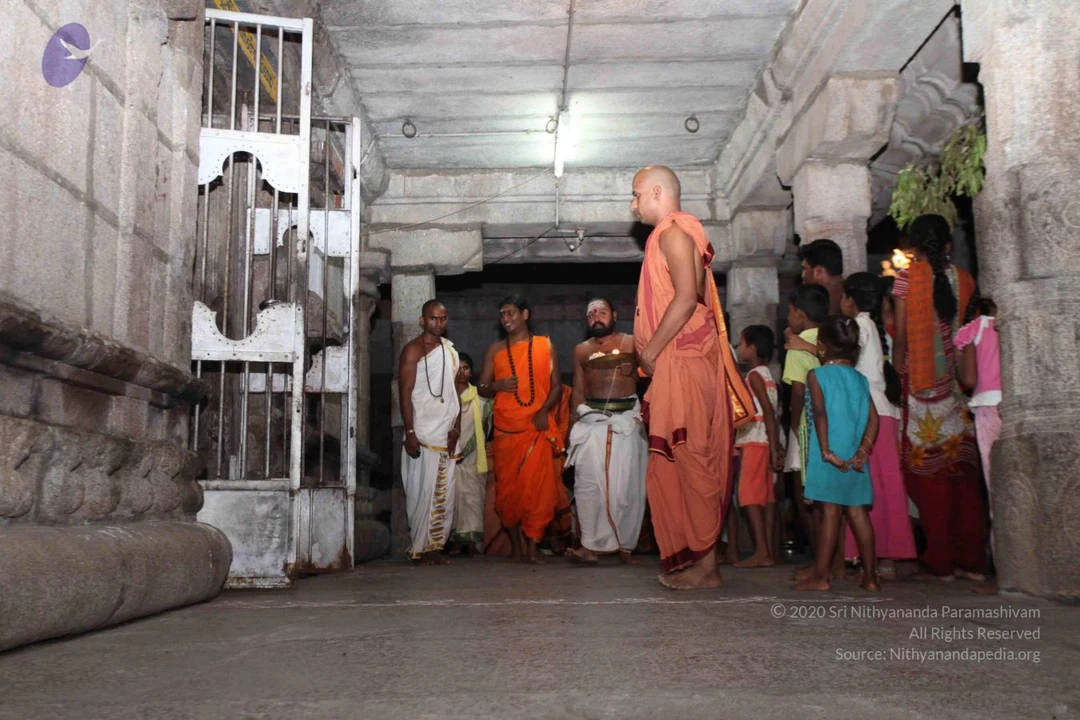
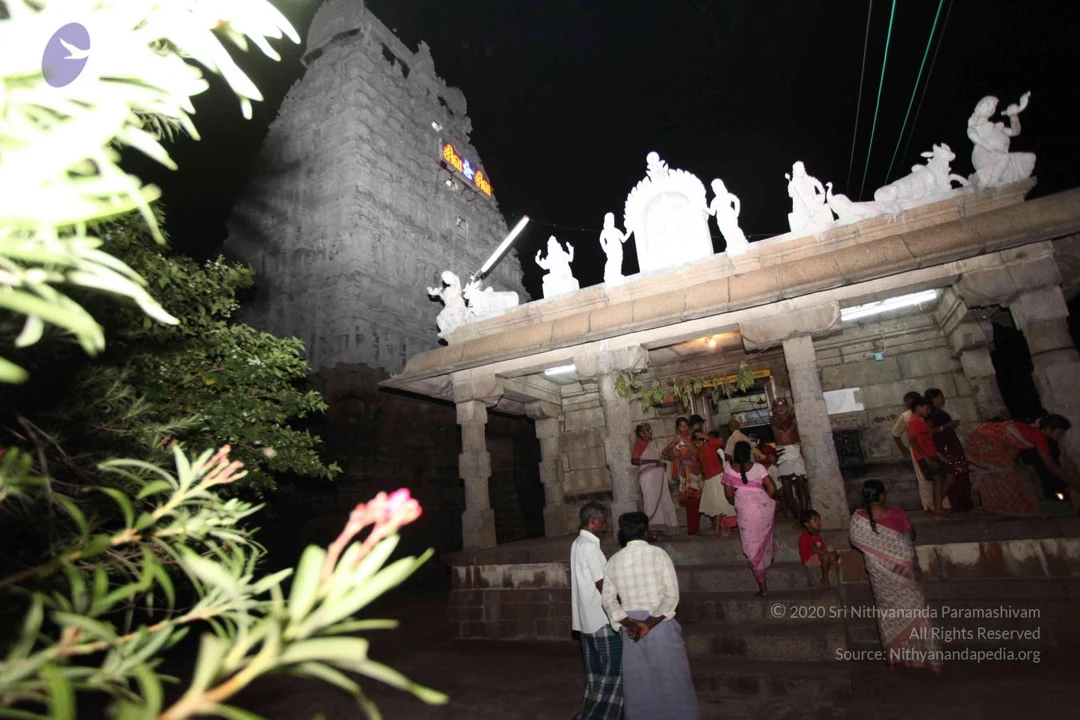
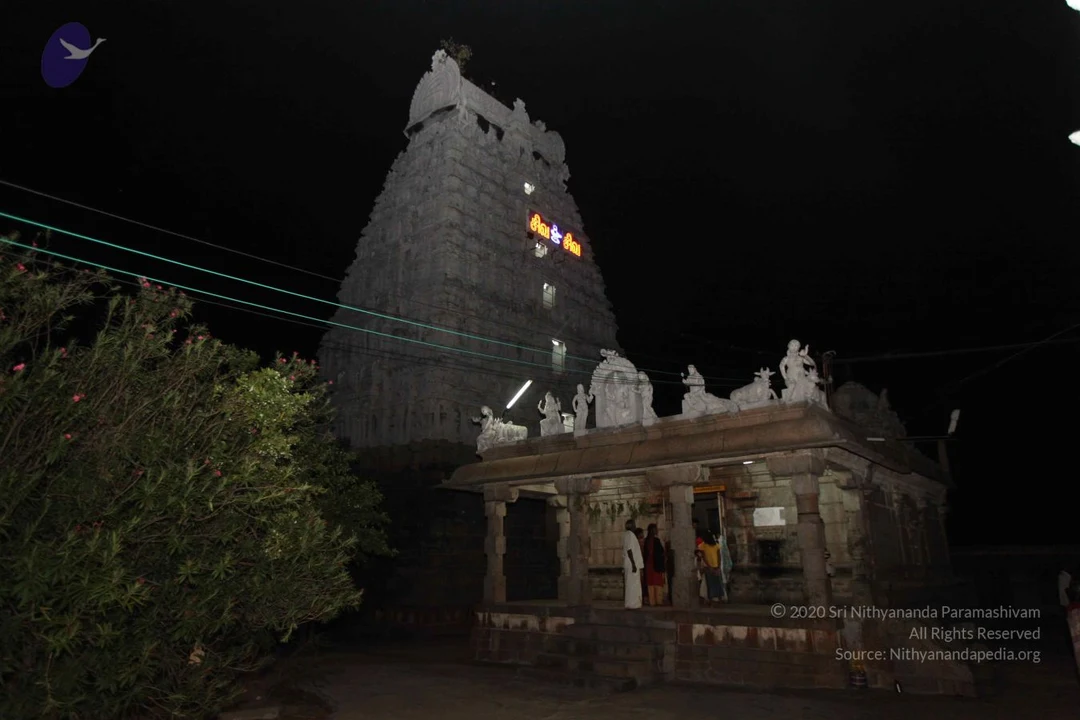
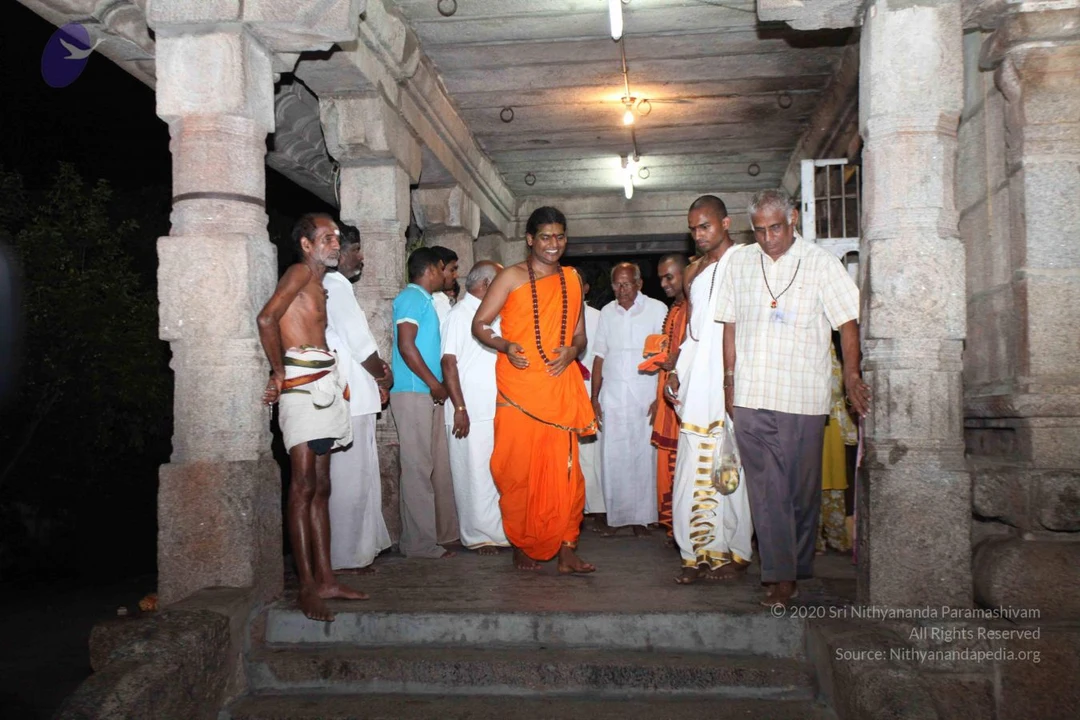
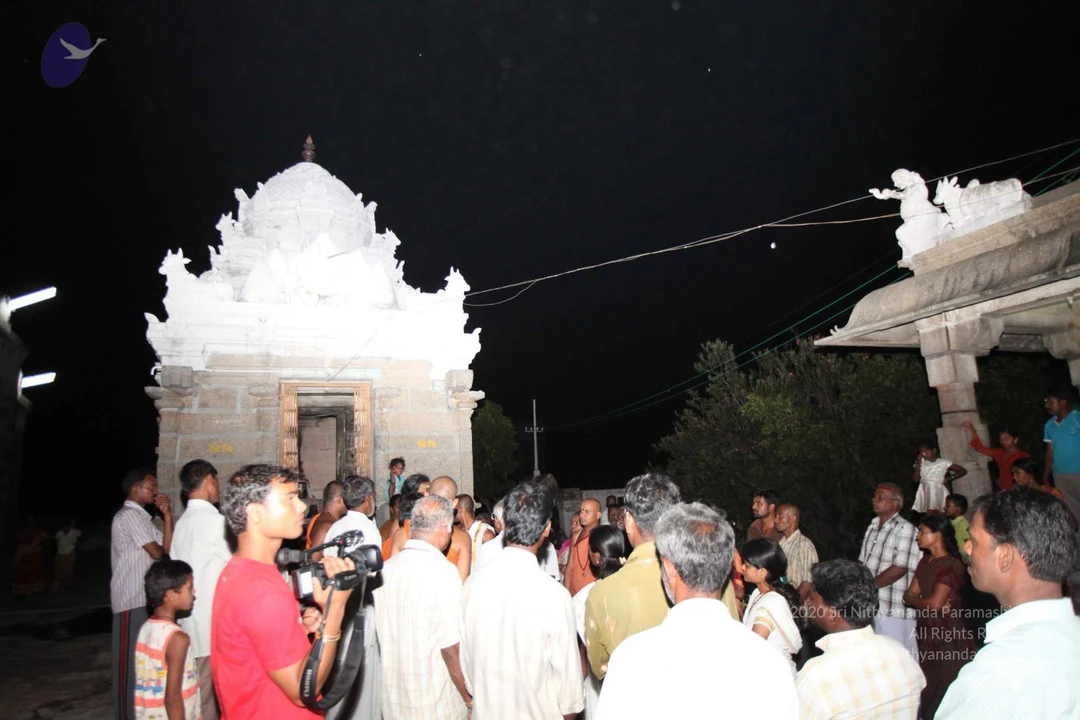
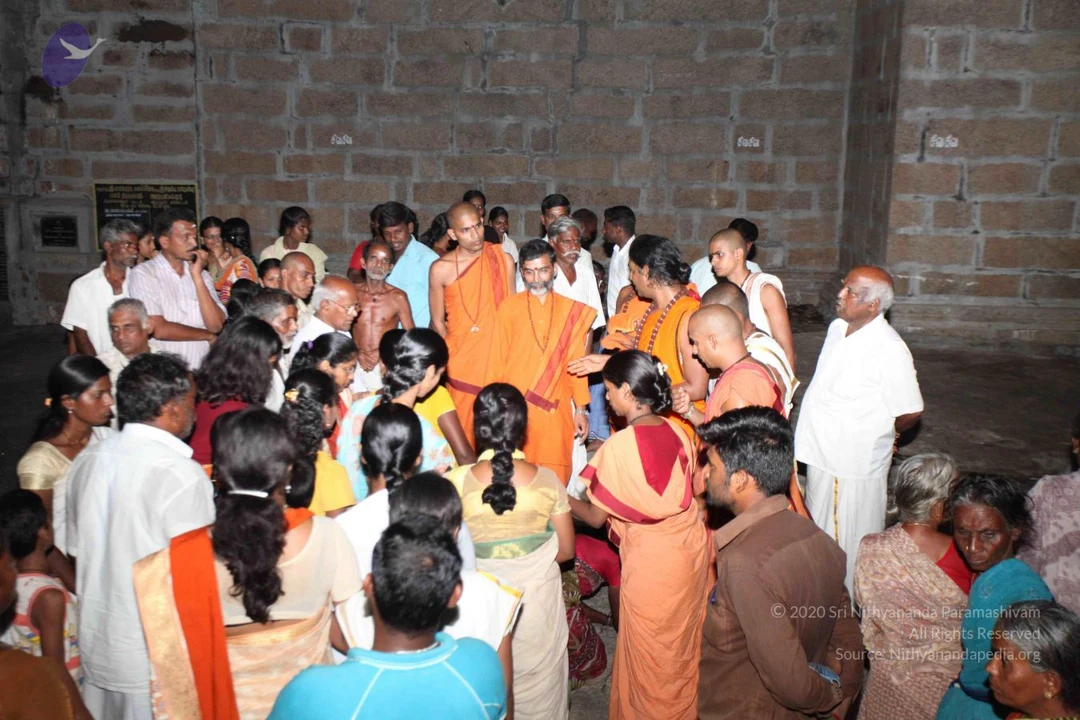
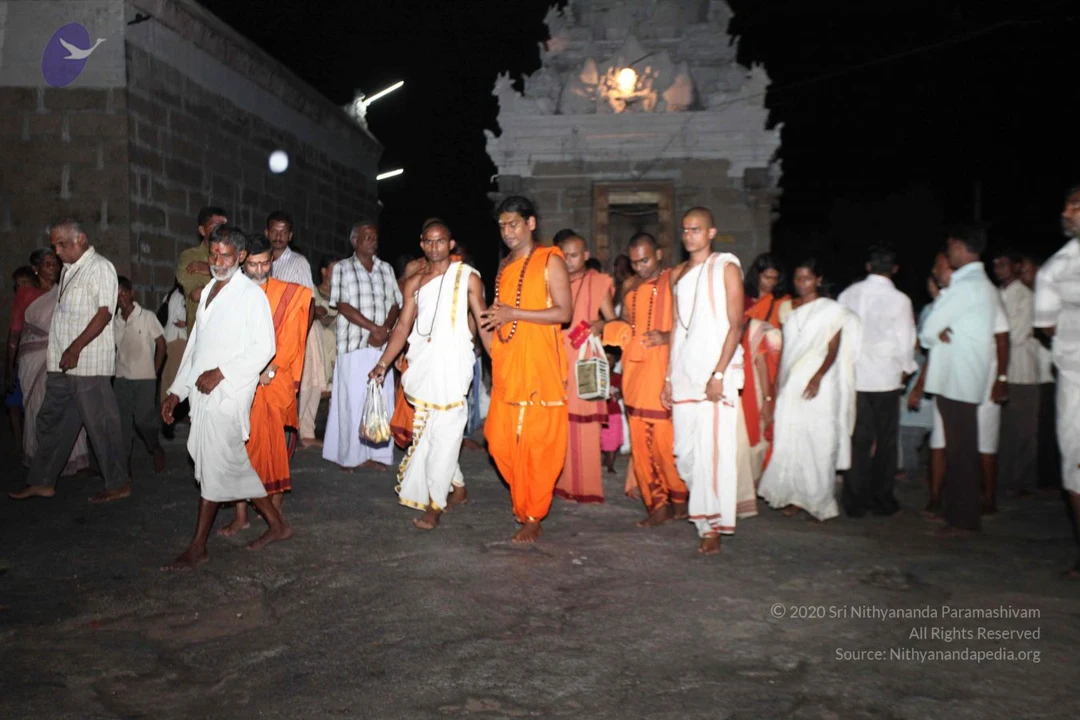
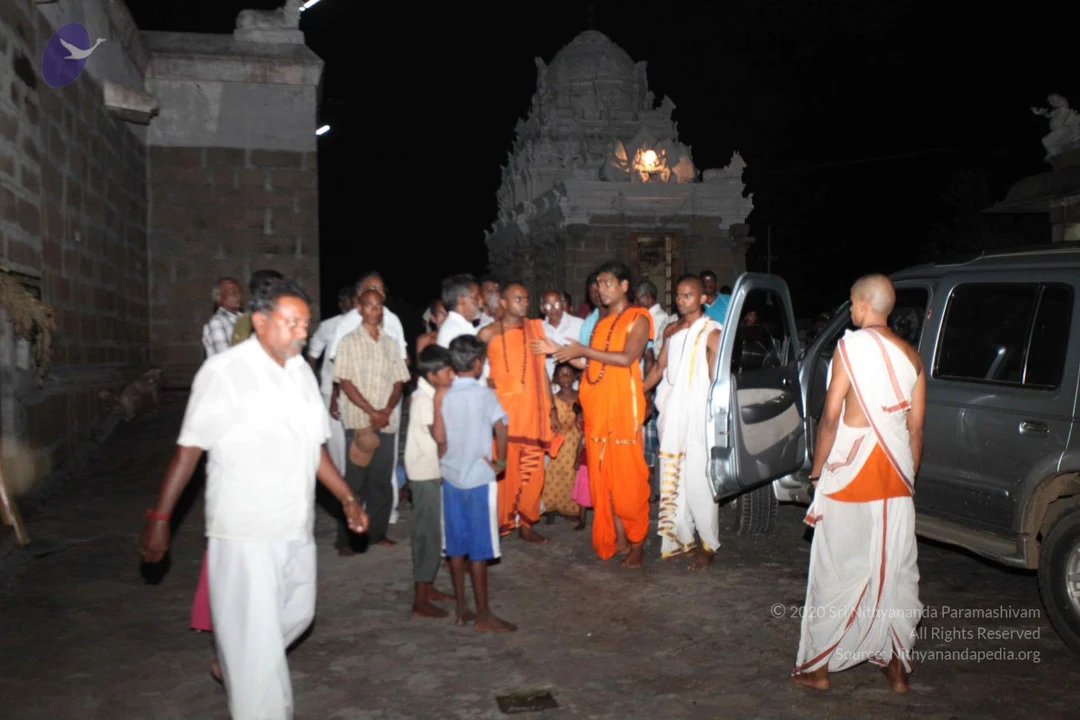
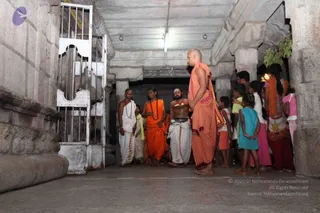
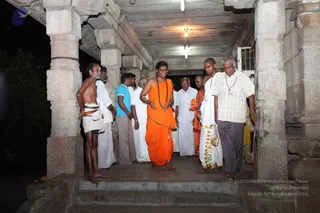
A photograph inside a stone temple corridor with a low ceiling and a white metal gate on the left. A bald man in an orange saffron robe and orange shawl stands in the foreground, facing left, with a small tray or plate in his hands. Beside him, a shirtless priest with a white dhoti and a sacred thread holds a brass dish, with a white tilak mark on his forehead. Another man in an orange robe and a rudraksha mala stands in the middle, and a man in a white dhoti stands near the gate. Several children and a woman in a red and orange sari stand along the right side, watching. A small oil lamp glows on the far right. Visible text reads a and the Nithyanandapedia sourceA dark night photograph of a temple structure with a stone pillared pavilion and a small shrine-like building. Above it, a vertical neon or LED sign glows in red, orange and blue lettering, with a white tube light nearby. Several silhouetted figures stand within the lit pillared hall, and a few dim figures are faintly visible in the foreground. The scene is mostly black with warm and cool light accents.Night photograph of a temple entrance hall with stone pillars and a raised stone platform. A neon sign with red and yellow lettering glows on the tower above, and a fluorescent tube light is visible. Stone carvings of animals, possibly a bull, sit on the upper ledge. Inside the lit hall a few small figures are visible near a railing and wall niche, with hanging garlands or strings on the left. Steps lead up to the entrance. Most of the frame is in darkness.Night photograph of a large stone temple gopuram tower lit from below, with a glowing neon sign reading Shiva Shiva on its upper section. In front, a smaller stone shrine pavilion with carved sculptures on its roof and columns stands at the entrance, where three or four devotees in white, grey and dark clothing stand near the doorway. A flowering oleander bush with pink blooms sits at the left edge, and power lines cross the dark sky above.A night-time photograph of a stone temple veranda with granite pillars and a ceiling light. A smiling man in an orange-saffron dhoti and matching shawl, with a rudraksha mala around his neck, walks barefoot down the steps toward the viewer. Around him stand devotees in white dhotis and shirts, a man in a turquoise shirt, a bare-chested elderly man holding a cloth at the left edge, and a man in a checked shirt with a red bead necklace at right. Another man in a white dhoti with gold border holds a small bag. a person: the saffron-clad man with the rudraksha mala and shawl, appearance-based label only.Night photograph of a crowd gathered outside a small white-painted stone temple shrine with a domed roof and carved white figures on the roof at right. A cameraman in a red shirt films at left, and several men in white dhotis and shirts stand among devotees, some in saffron-orange clothing. Children and women in saris are visible at the edges. Bright floodlights and a dark sky frame the scene, with a stone pillar at right.

CLEANING-THE-SHIVA-LINGAMS-IN-TIRUVANNAMALAI

19 photosSource gallery
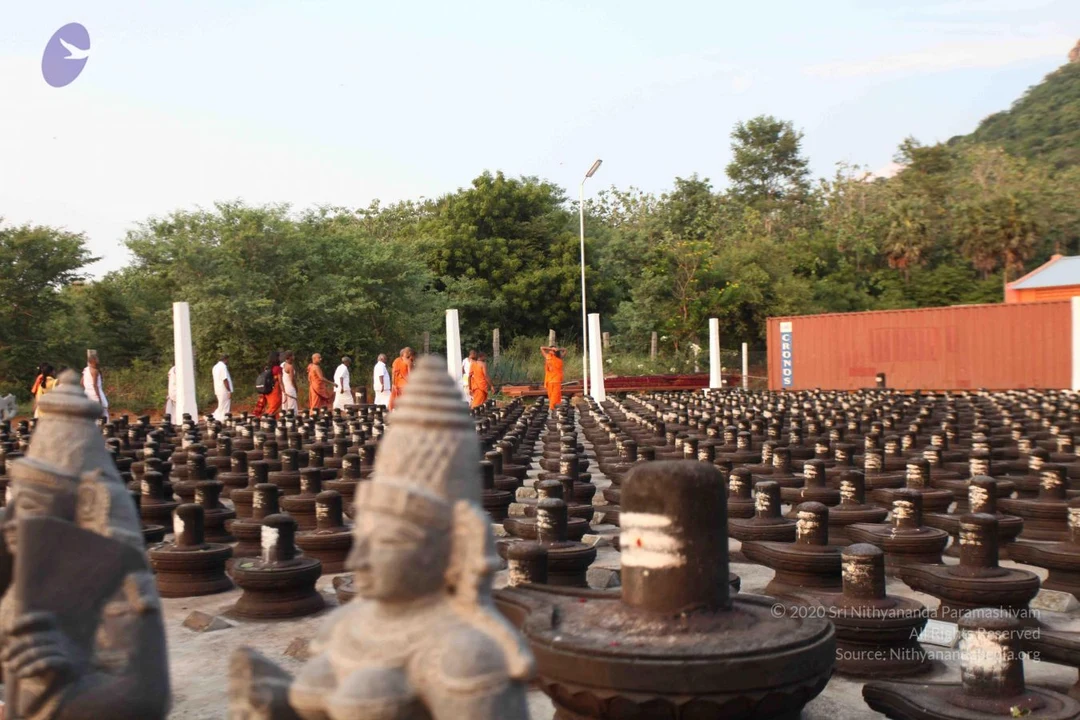
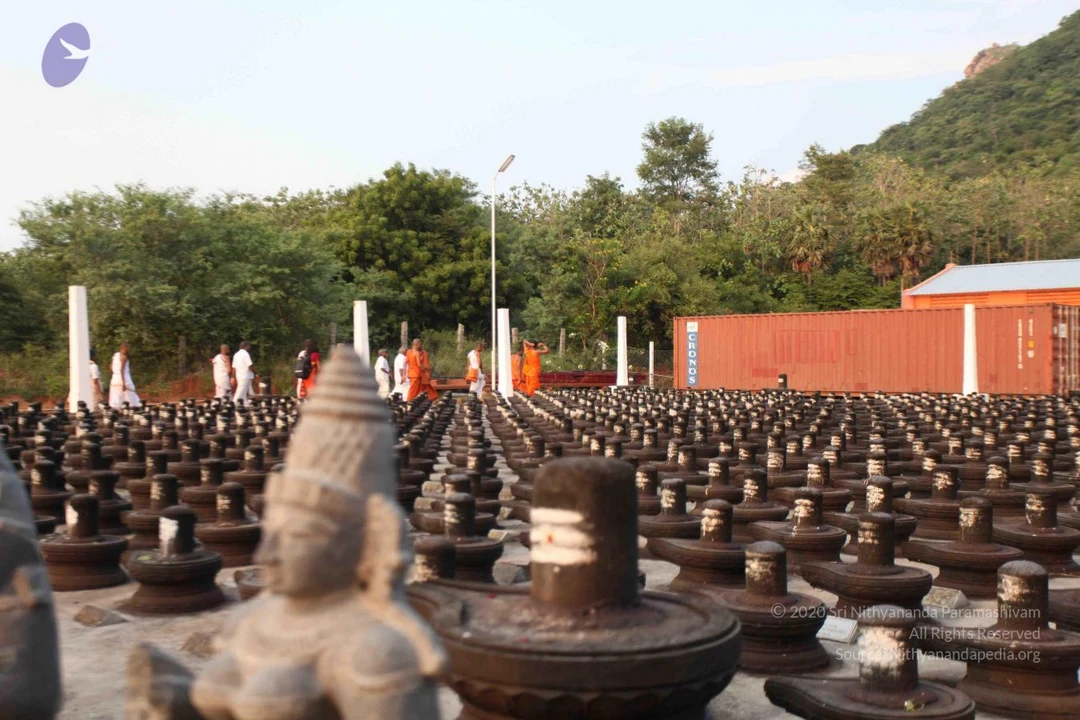
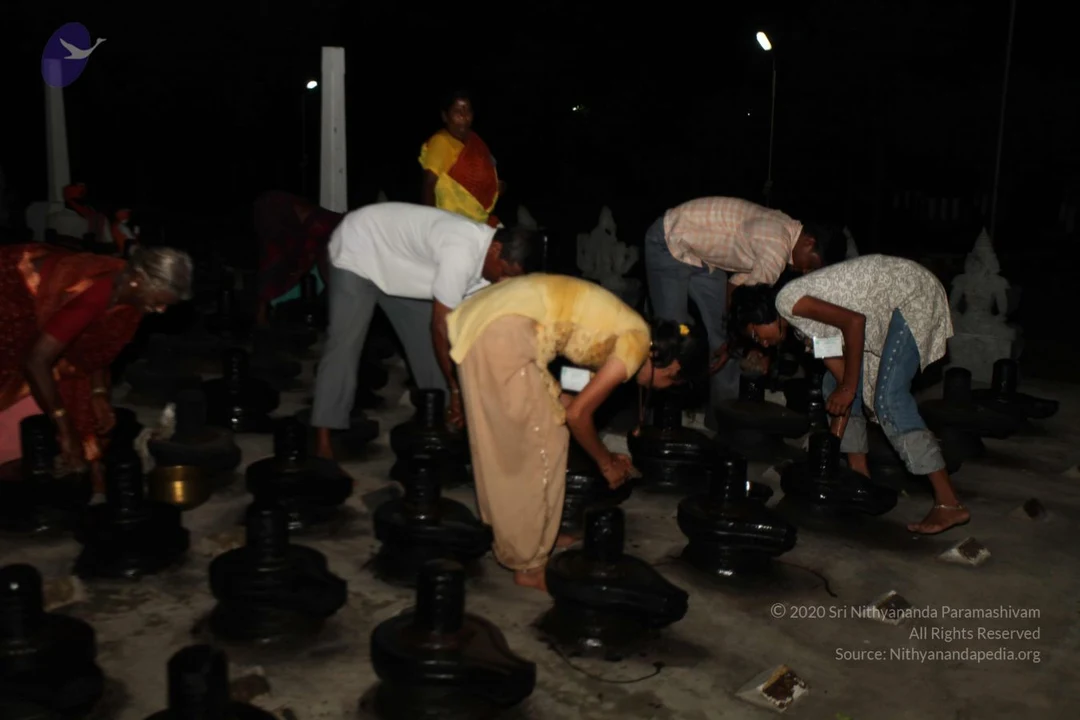
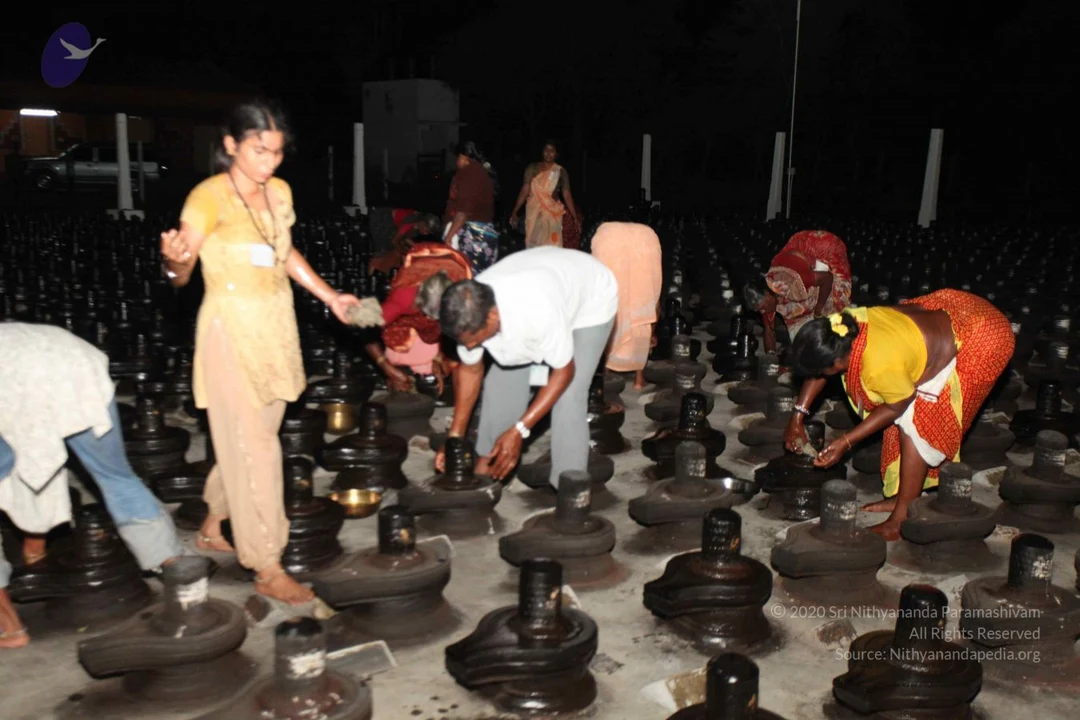
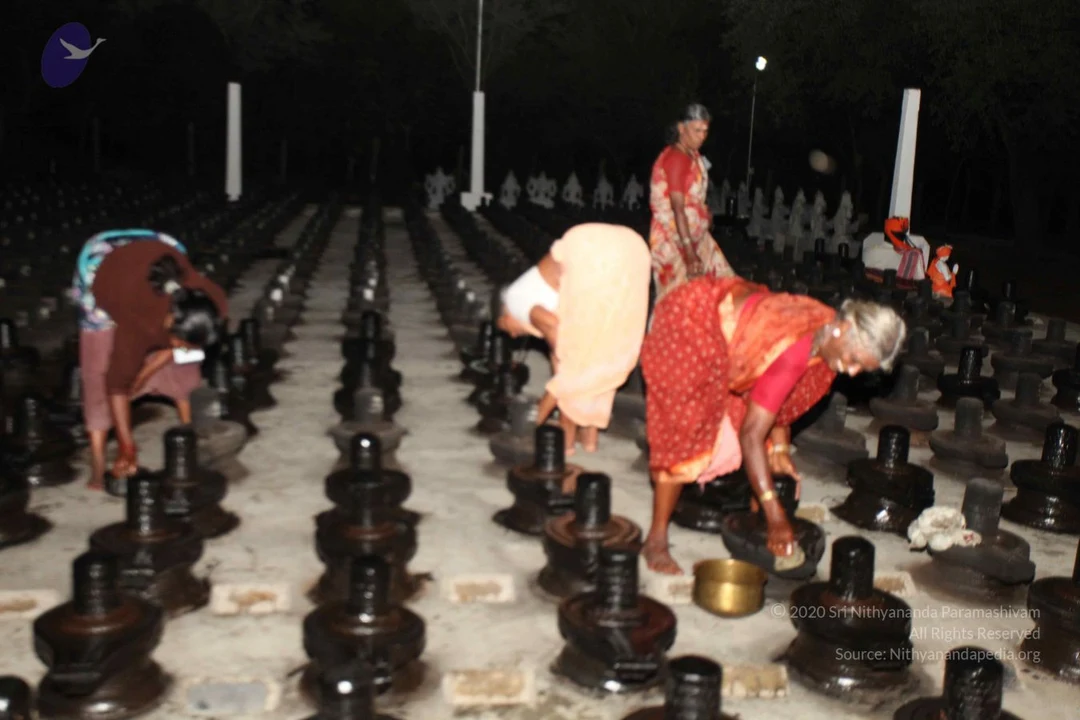
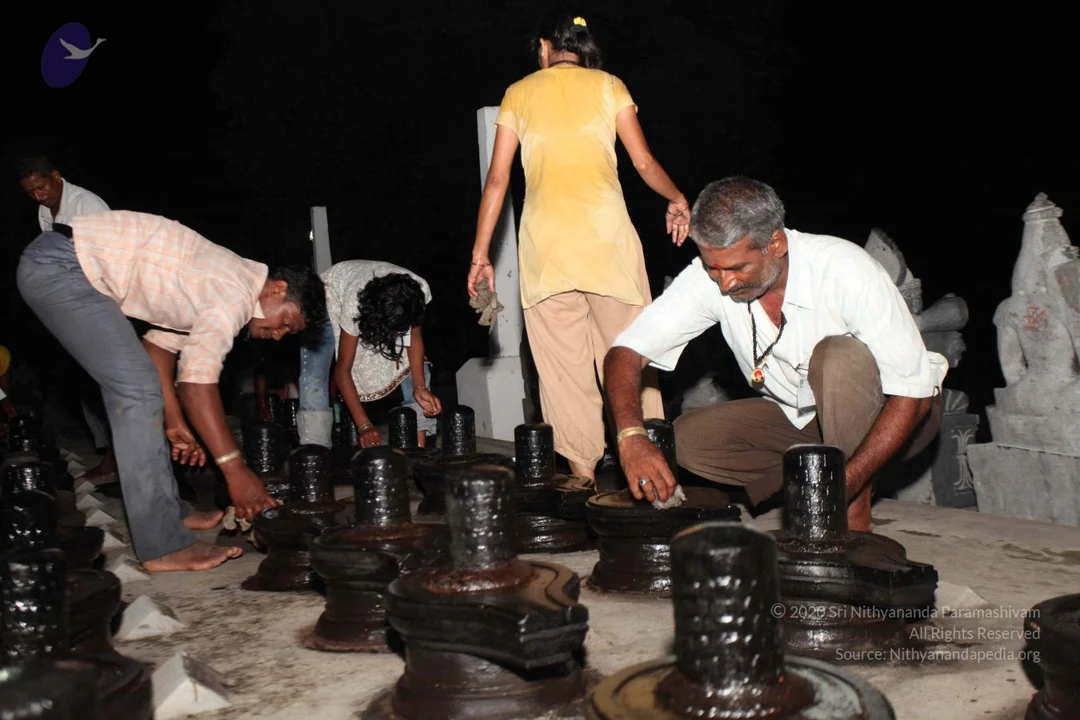
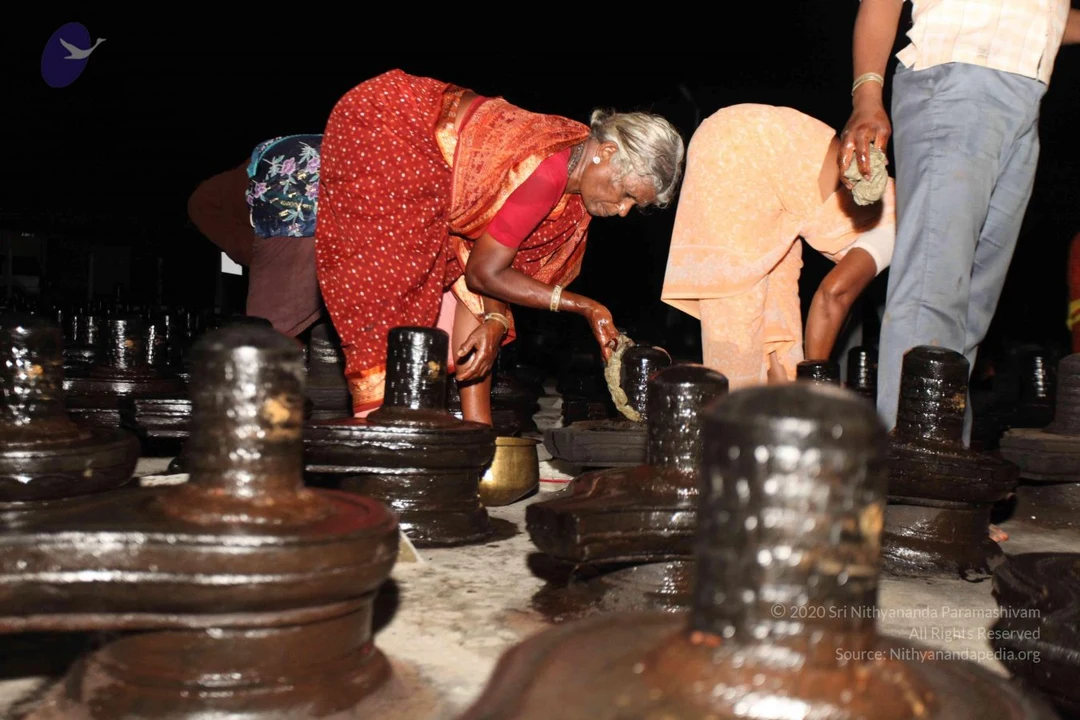
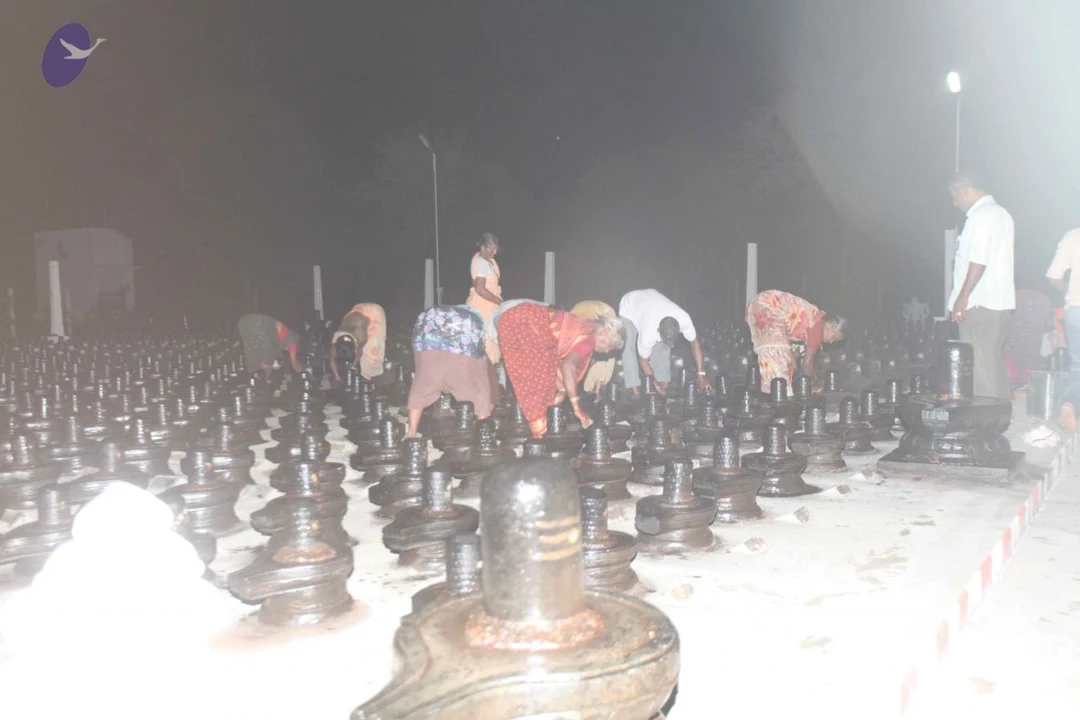
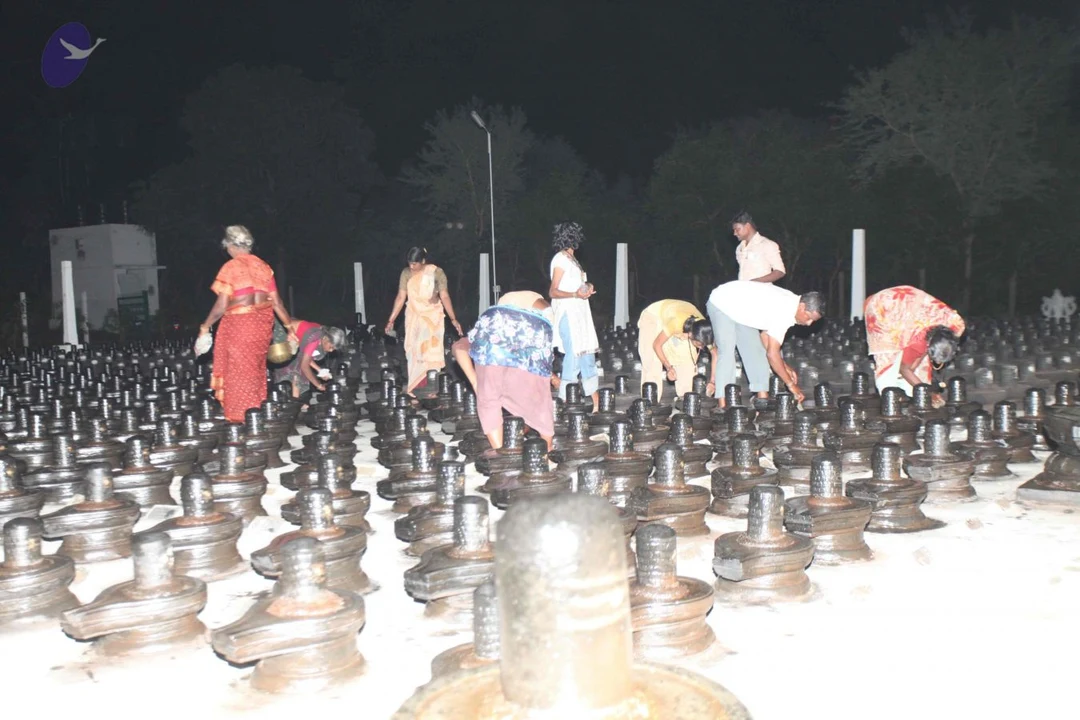
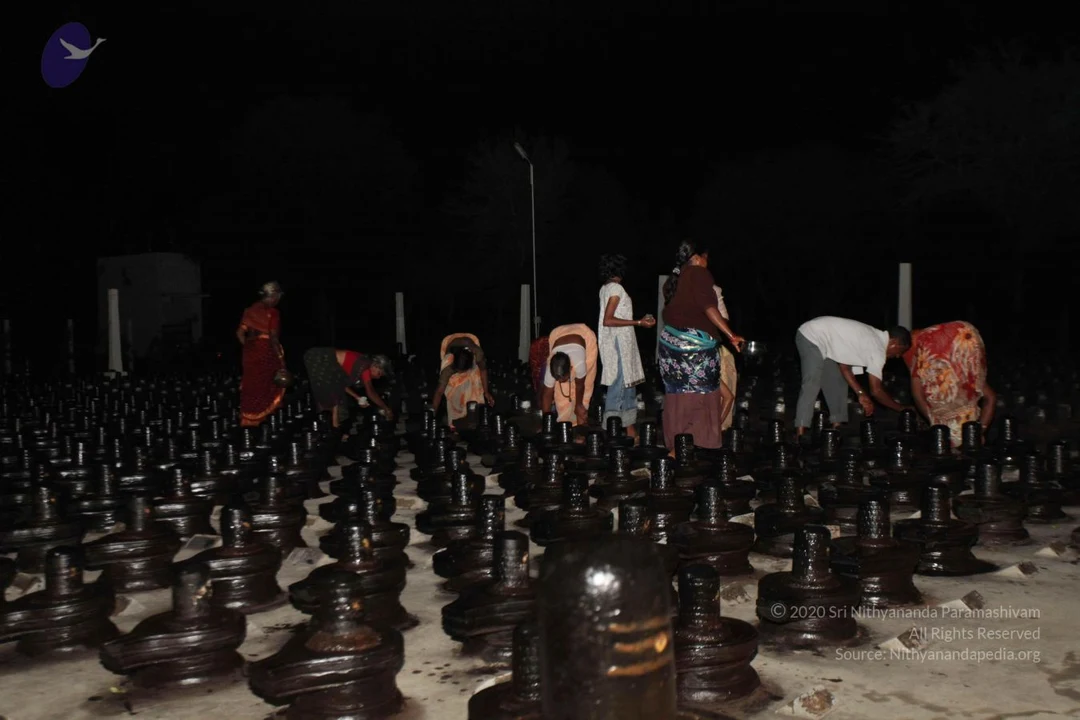
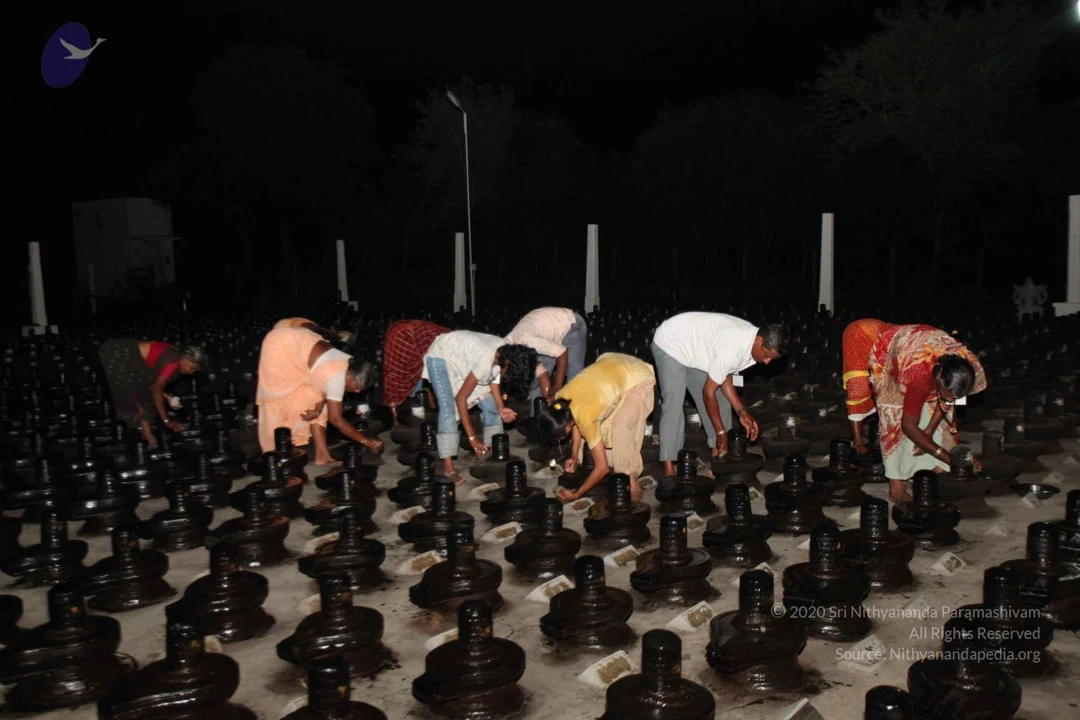
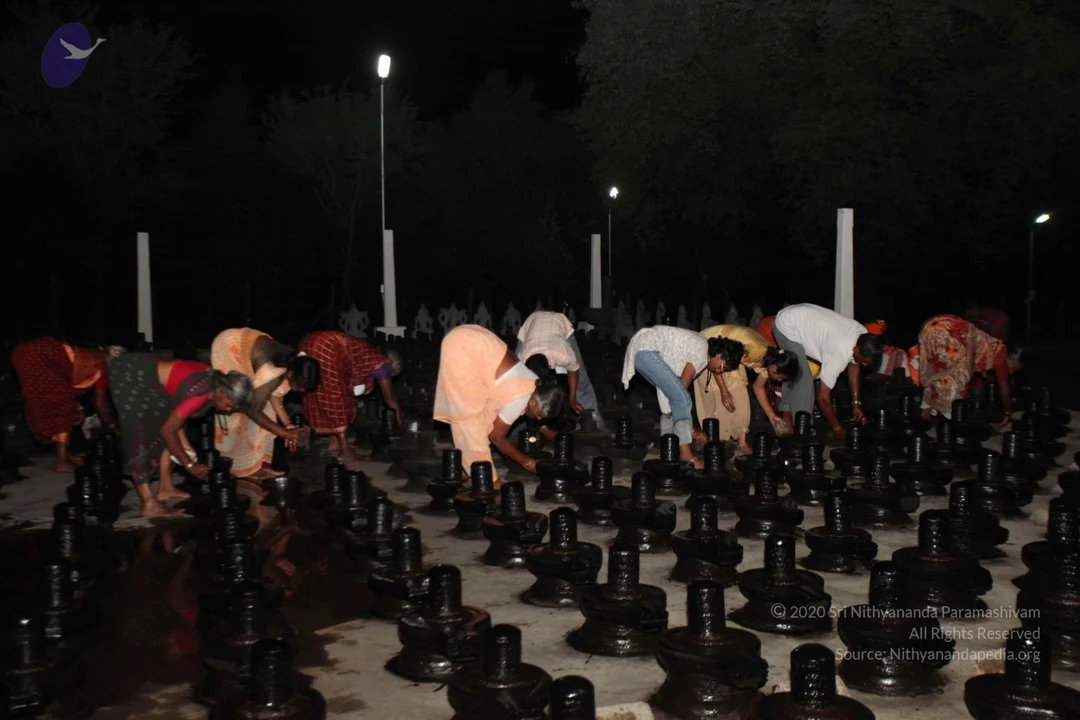
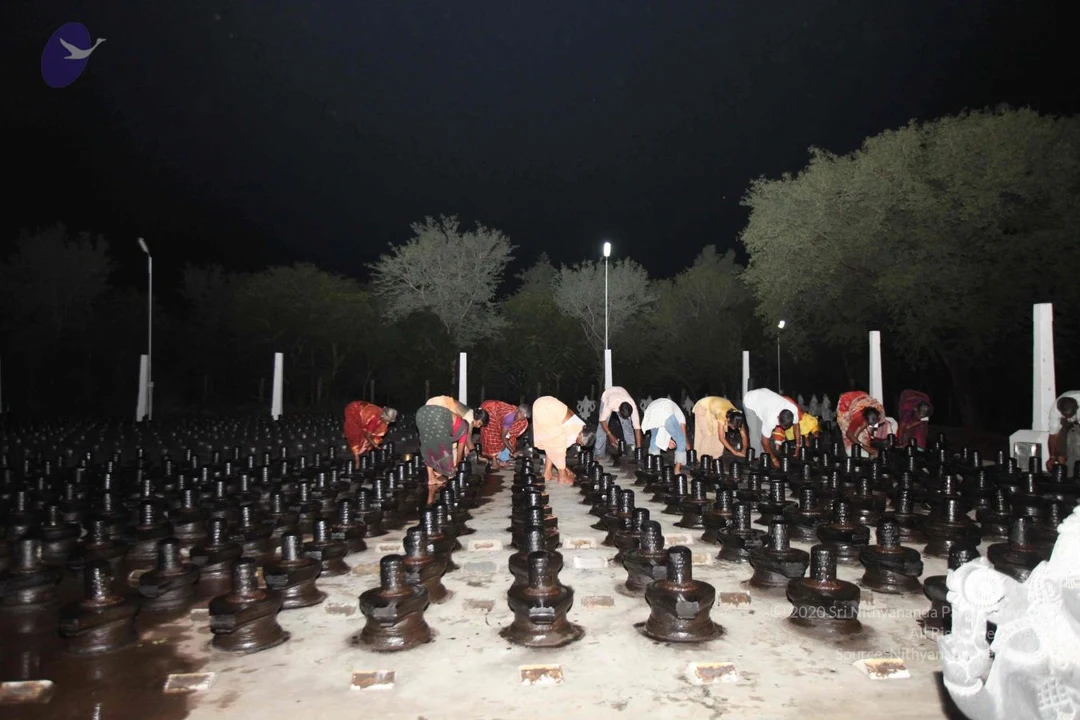
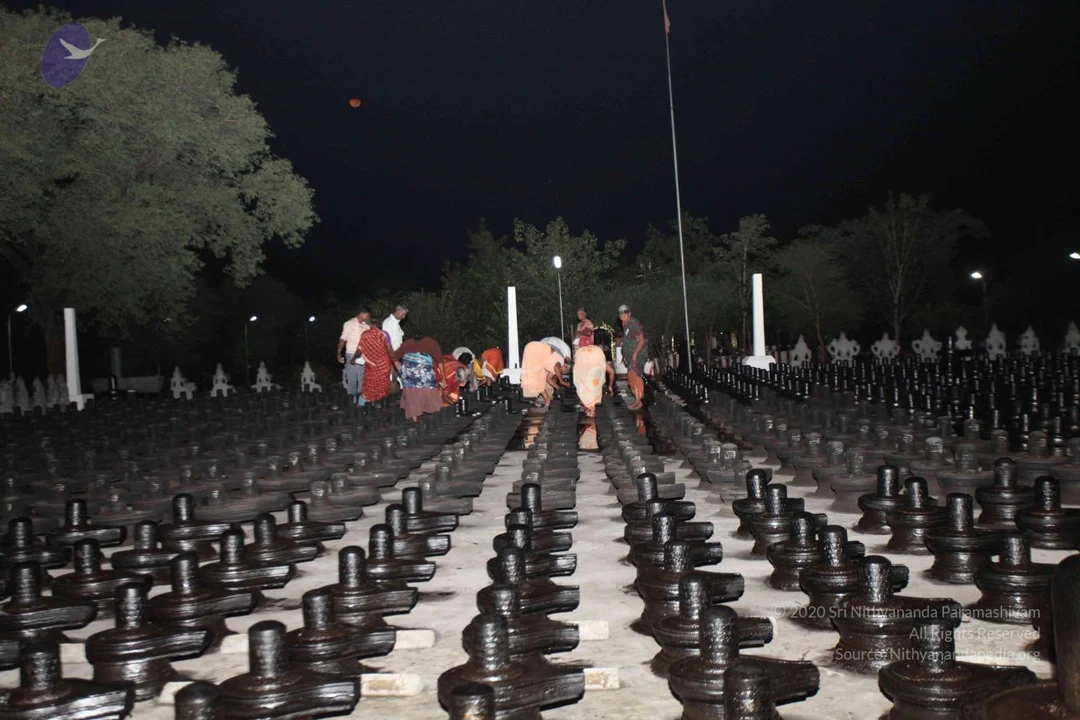
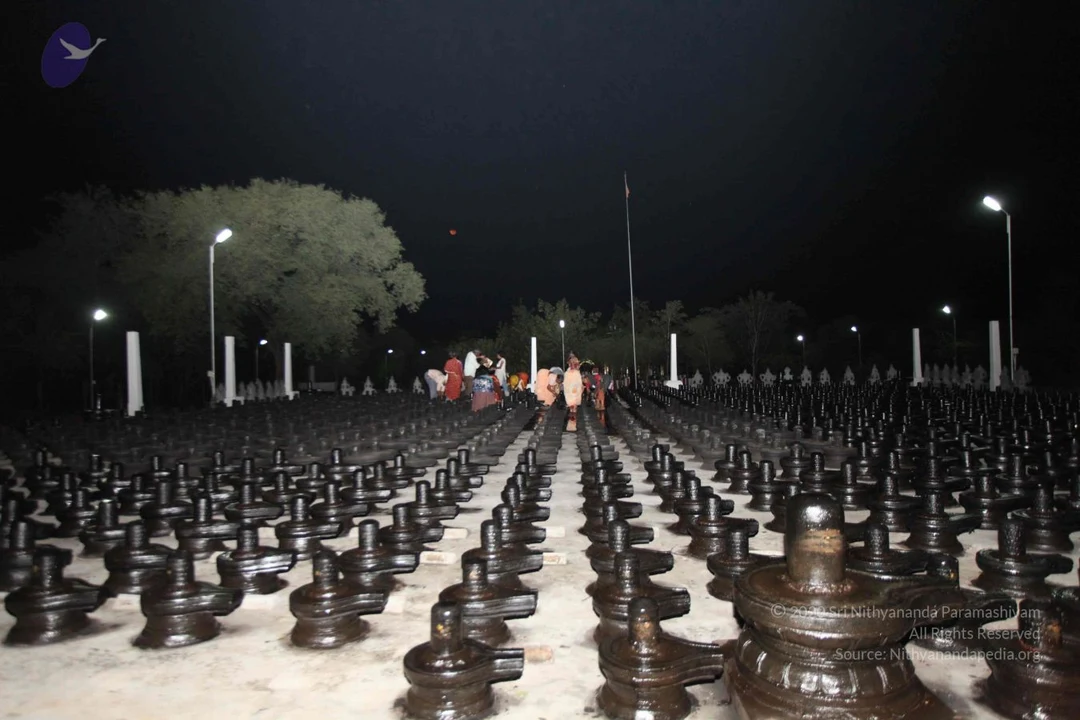
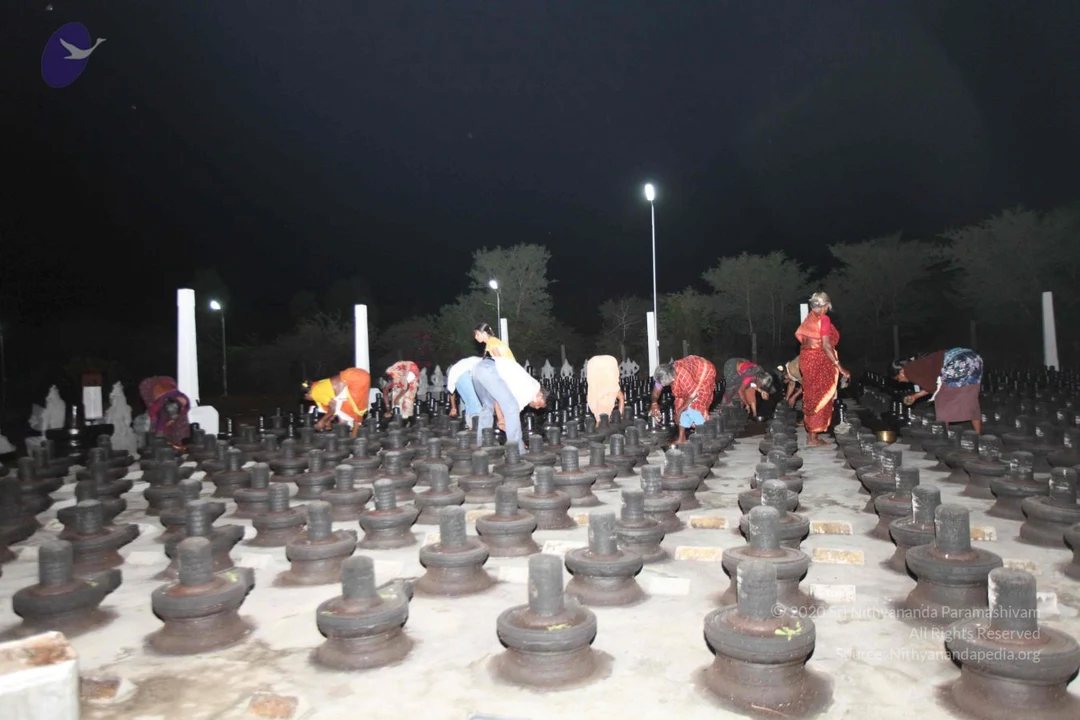
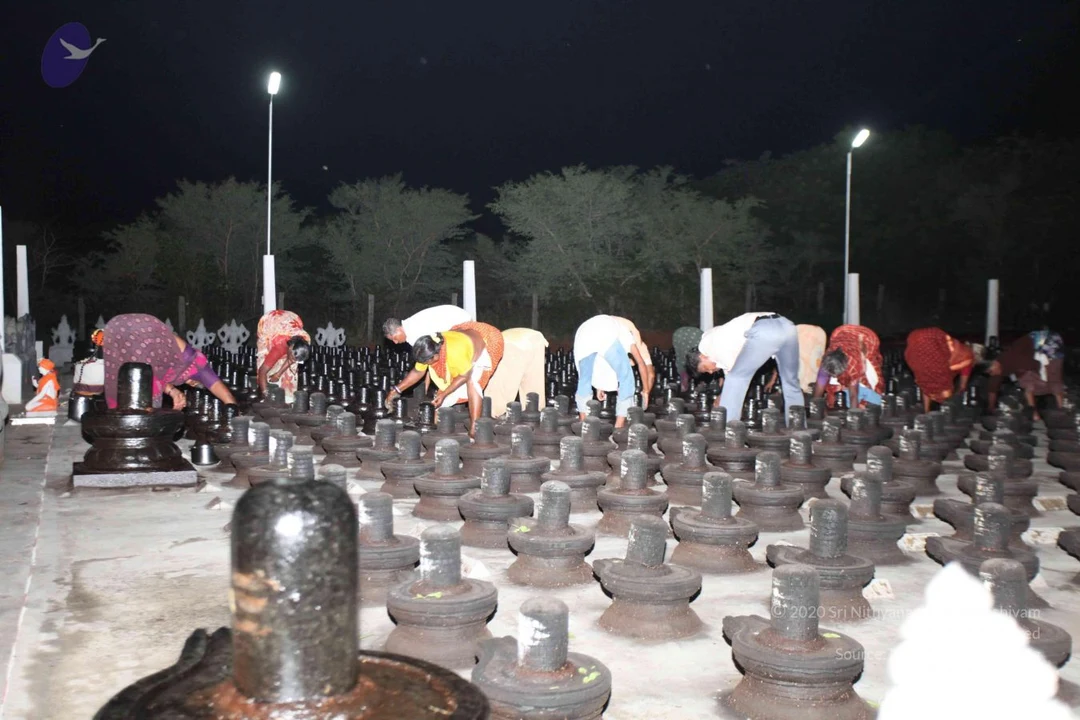
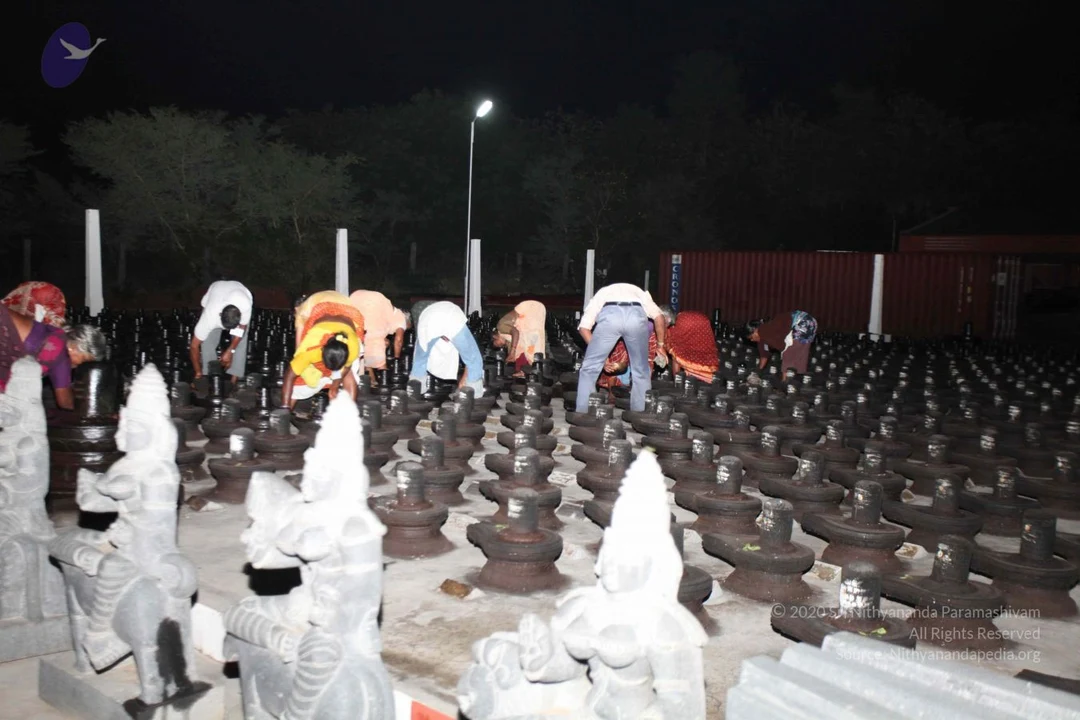
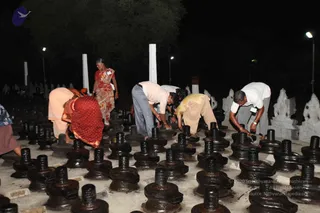
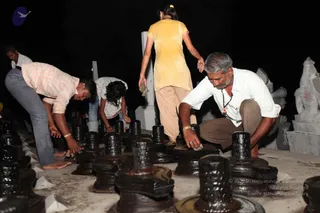
Night-time outdoor scene with rows of dark black stone Shivalinga lingams set on a pale concrete platform, many of them numbered by rows. Several devotees bend over the lingams cleaning and bathing them: a young woman in a yellow kurta and tan pants at left holds a cloth and reaches toward a lingam, a man in a white shirt and grey trousers bends low at centre, and women in red, orange and yellow saris kneel and bend among the stones. Brass pots and bowls stand beside some lingams. Ritual lingam abhishekam is evident.Night-time photo of a large outdoor field of rows of dark black stone lingams on square bases, set on a pale paved floor. Several women in saris bend low over the lingams, one in a red-and-gold sari pouring liquid from a small brass vessel onto a lingam, another in a pale peach sari bending nearby, and a woman in a red-and-white sari standing at the back. A woman at left in a teal blouse and brown dress leans over a lingam. White pillars and rows of white figures stand in the background, with lamp posts glowing and a few orange cloths visible. The scene shows lingam abhishekam being performed by devotees.Three women bend low over rows of dark stone Shivalingams arranged across a pale concrete courtyard at night. The woman on the left wears a green and pink sari and has grey hair pulled back; the middle woman wears a red patterned sari; the woman on the right wears a cream sari with a green border and has a long braid. Each appears to be tending a lingam, with a small brass vessel placed on the ground nearby. Dark, dense rows of lingams stretch into the distance under dim lighting.Night photograph of an outdoor field filled with rows of black stone Shivalingams on a pale stone platform. Several women in saris, one in a maroon top with a white cloth over her shoulder, bend over or stand among the lingams, tending them. White pillars and small white shrines line the background under dark trees and a street lamp. No identifiable a person figure is visible in this image.Night-time outdoor photo of devotees performing lingam worship on a paved courtyard lined with rows of black polished Shiva lingams on round peetha bases. Several people bend low to touch or pour water over the lingams. A woman in a red and orange sari stands at left, a woman in a red saree bends at left-centre, and men in white shirts and grey trousers bend at centre and right. Street lamps and dark trees surround the courtyard, with white sculptures visible at the right edge.Night-time photograph of devotees performing ritual cleaning of a row of black stone Shivalingams set on a pale stone platform. A man in a white shirt and brown trousers crouches at right, wiping a lingam with a cloth, a rudraksha mala visible at his neck. To the left, a shirtless man in a striped shirt and grey trousers bends forward over the lingams, and a woman in a white top bends low beside him. A woman in a yellow kurta and beige trousers stands behind them, holding a cloth.

VILAKKU-POOJA-IN-OHIO-NITHYANANDA-DHYANAPEETAM
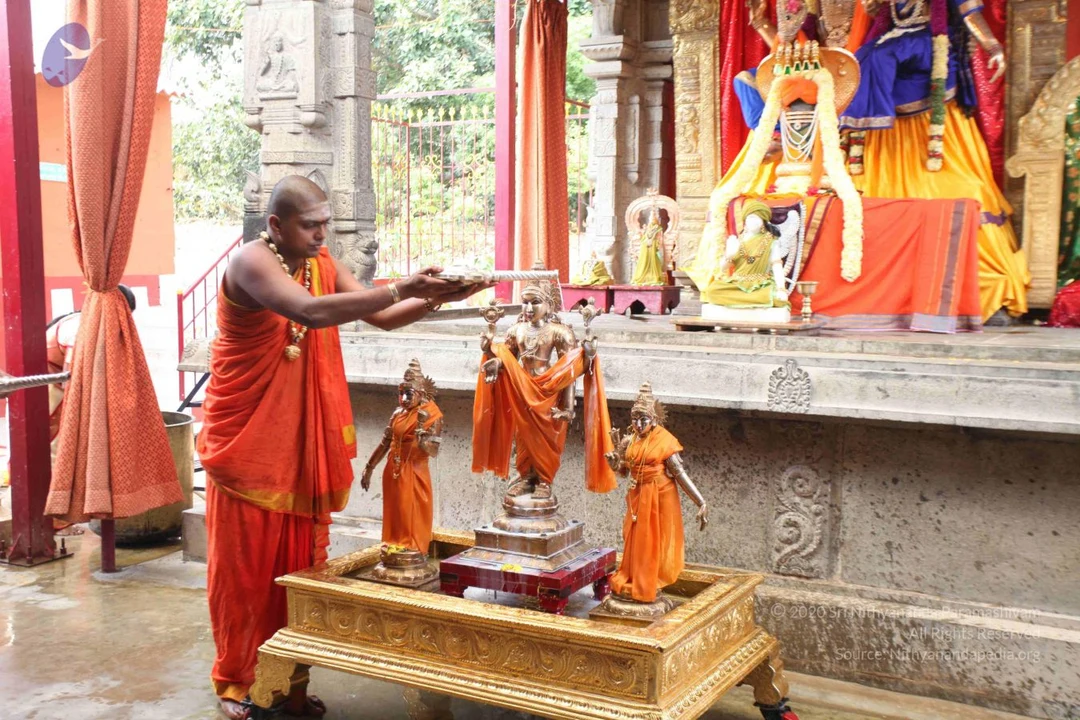
9 photosSource gallery
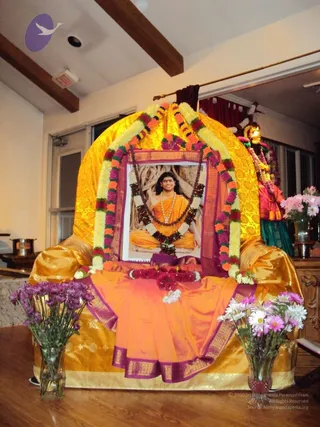
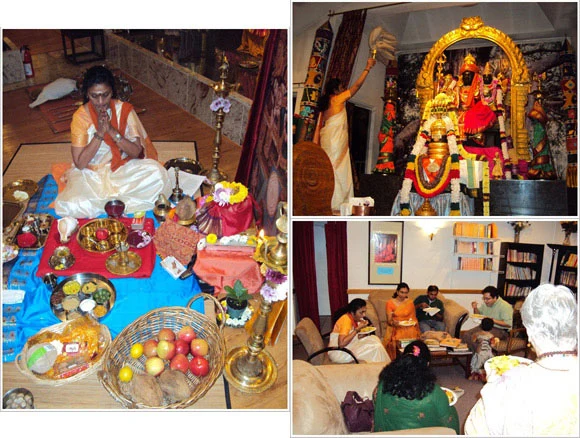
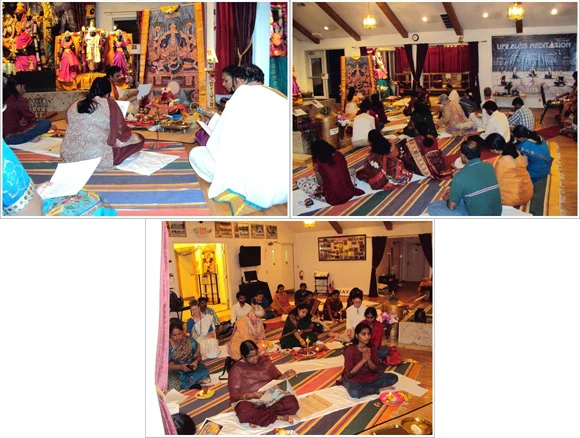
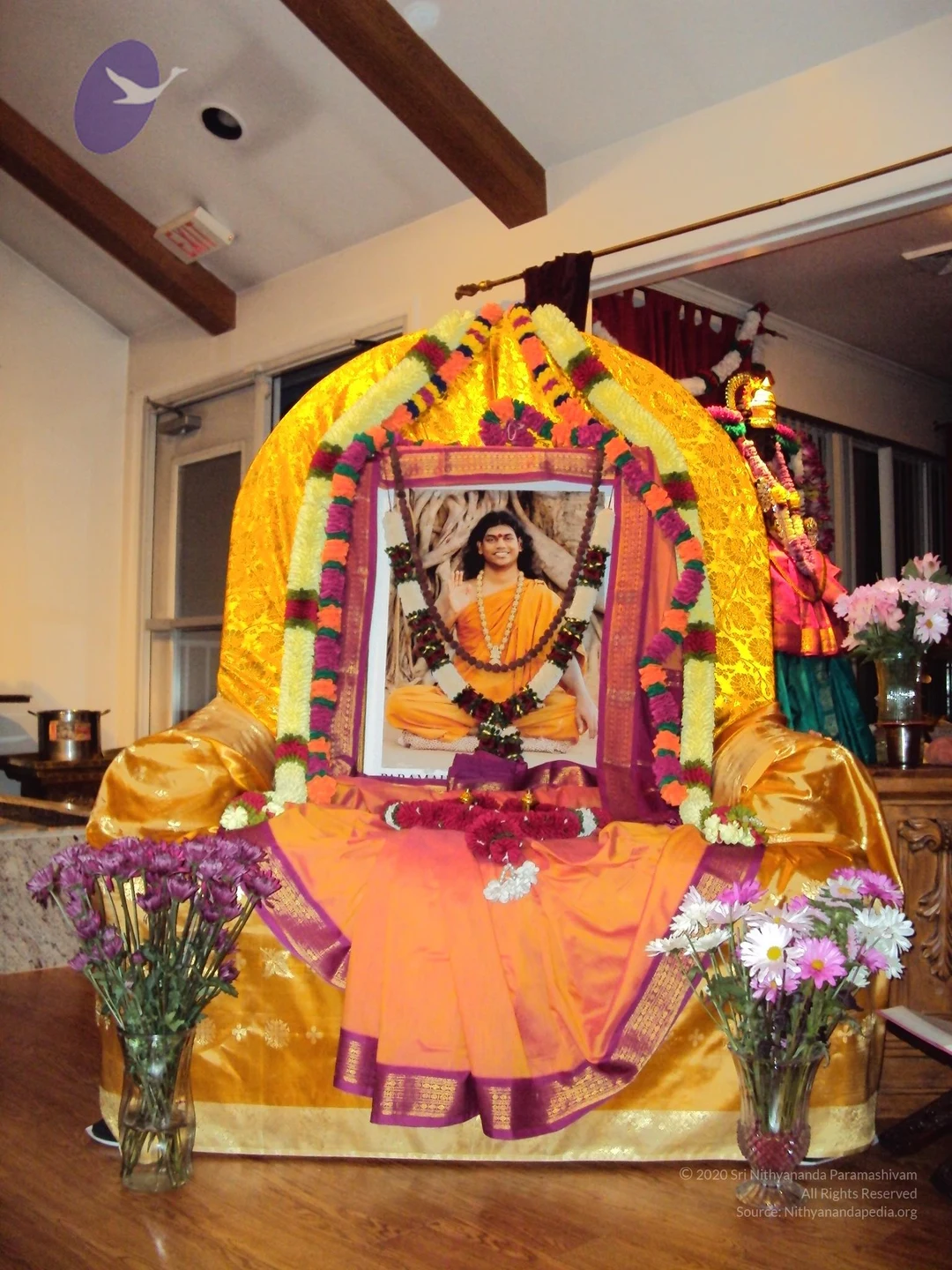
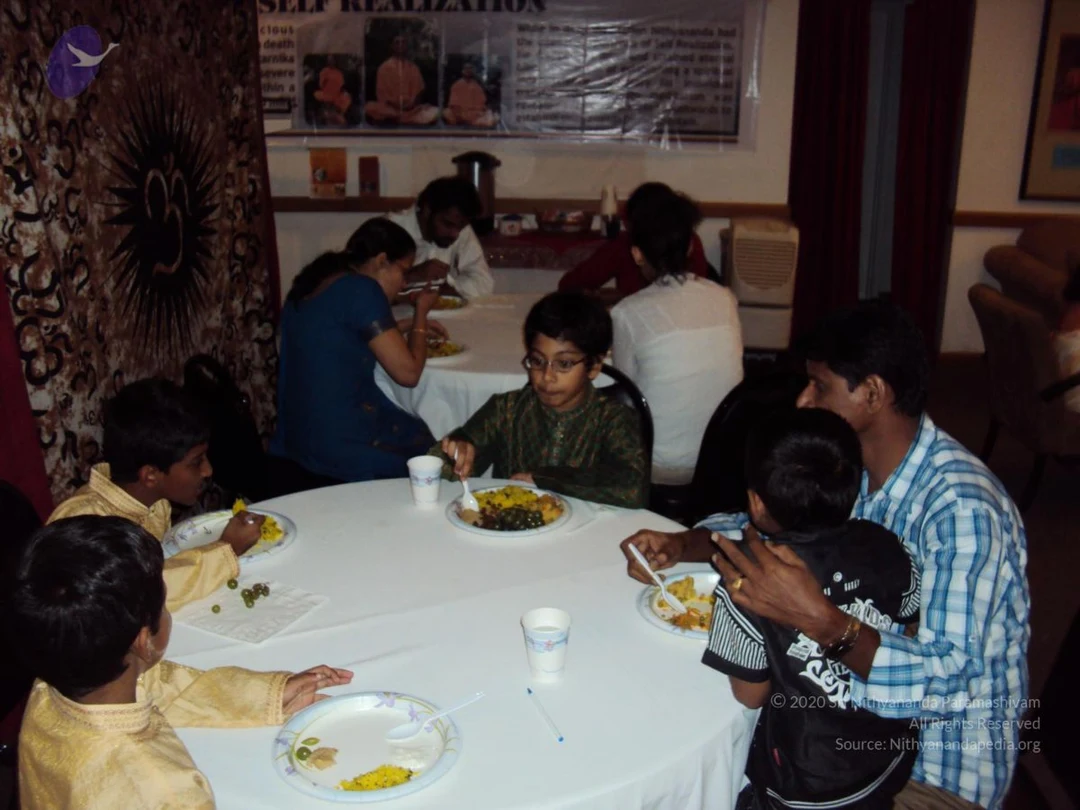
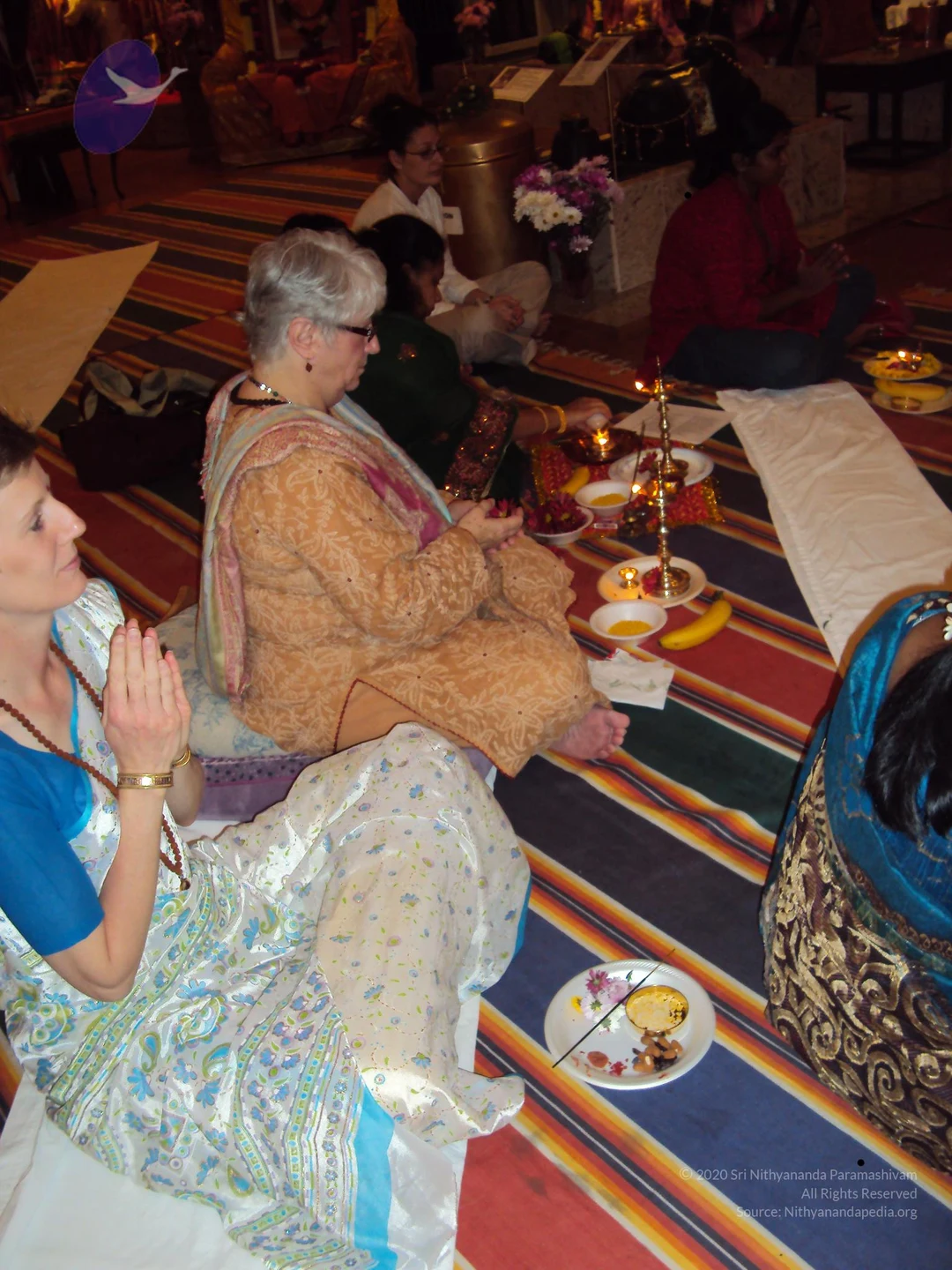
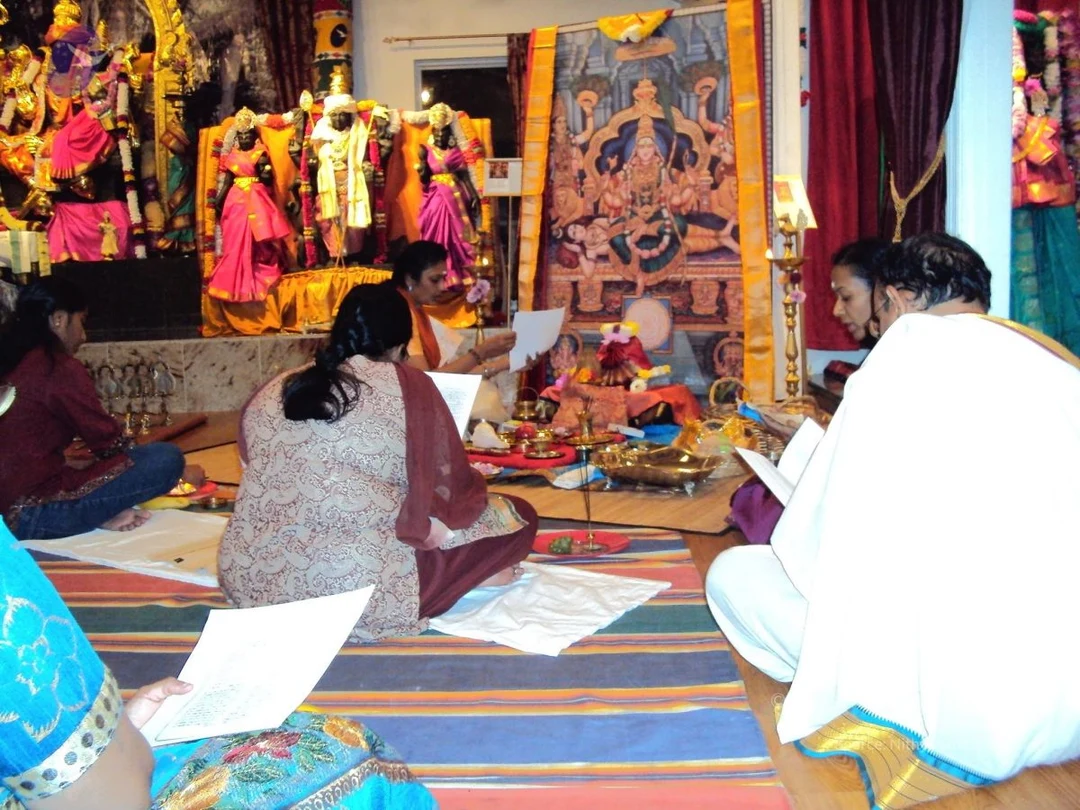
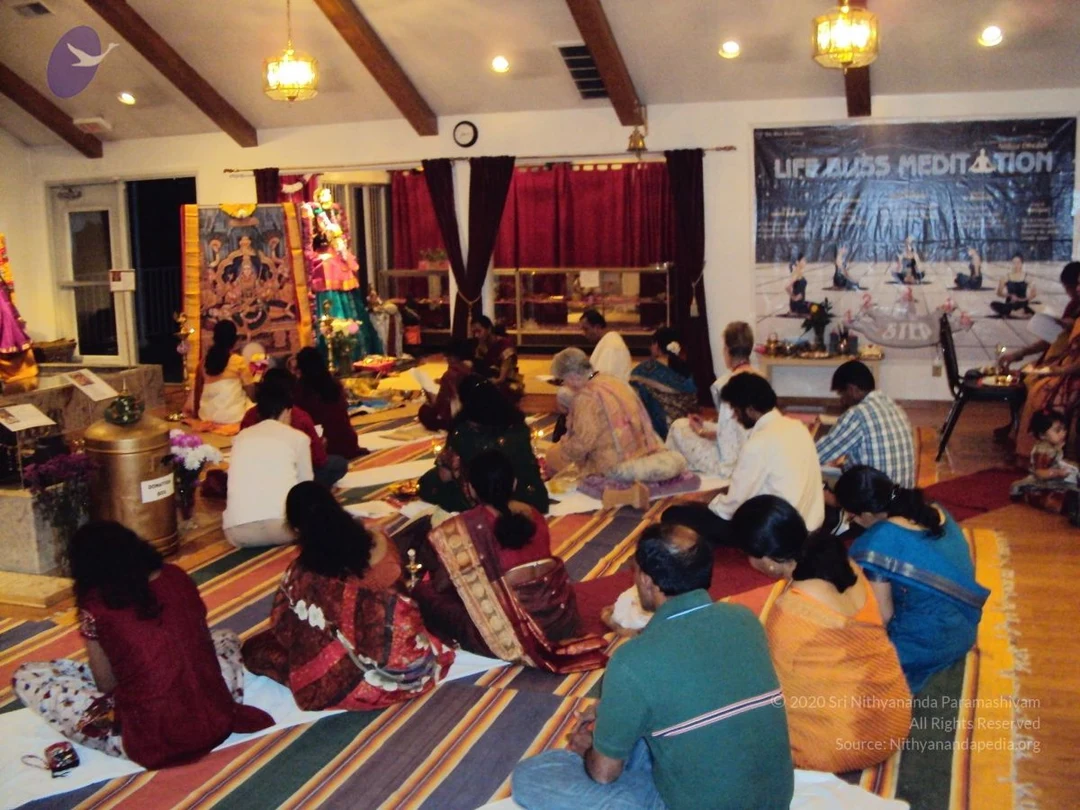
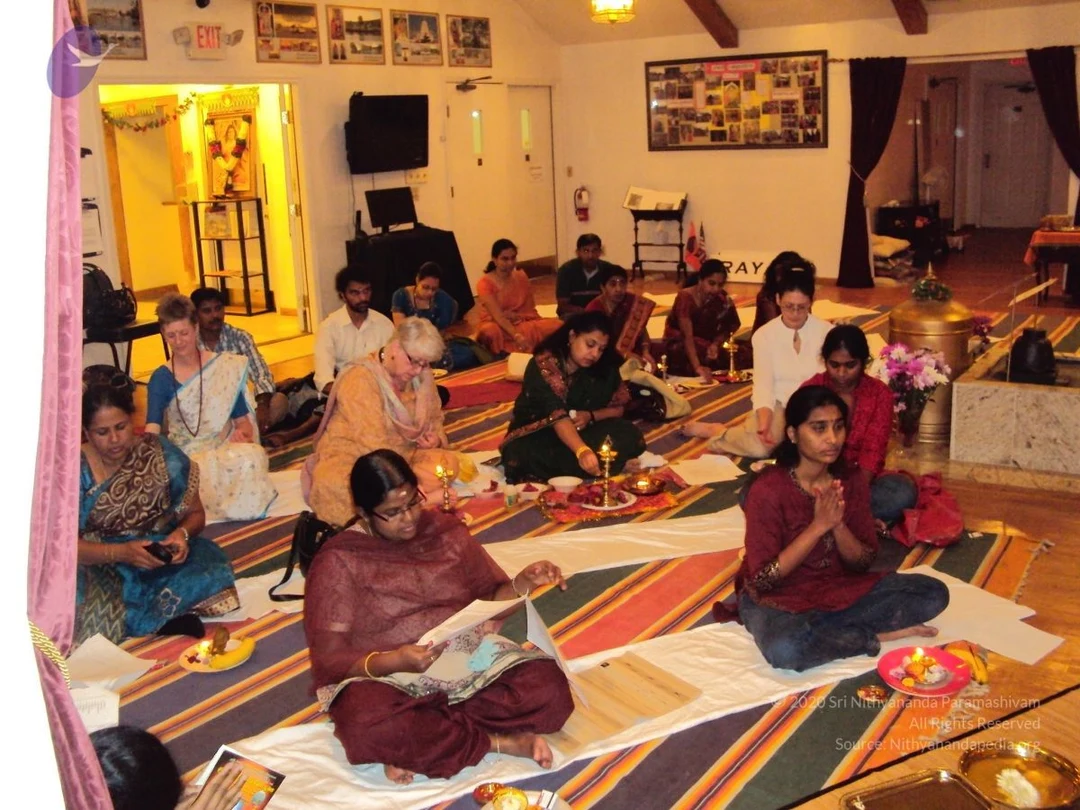
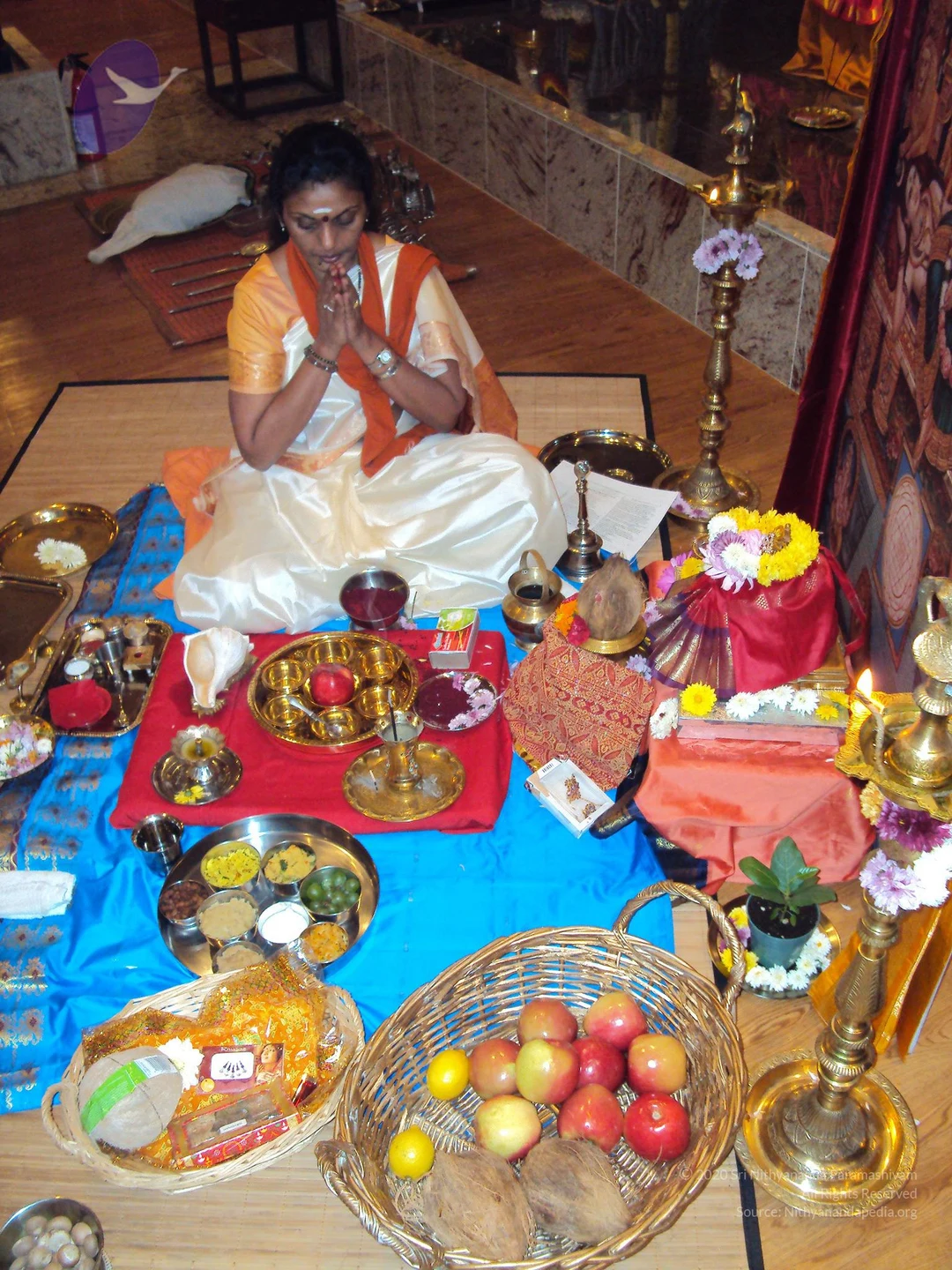
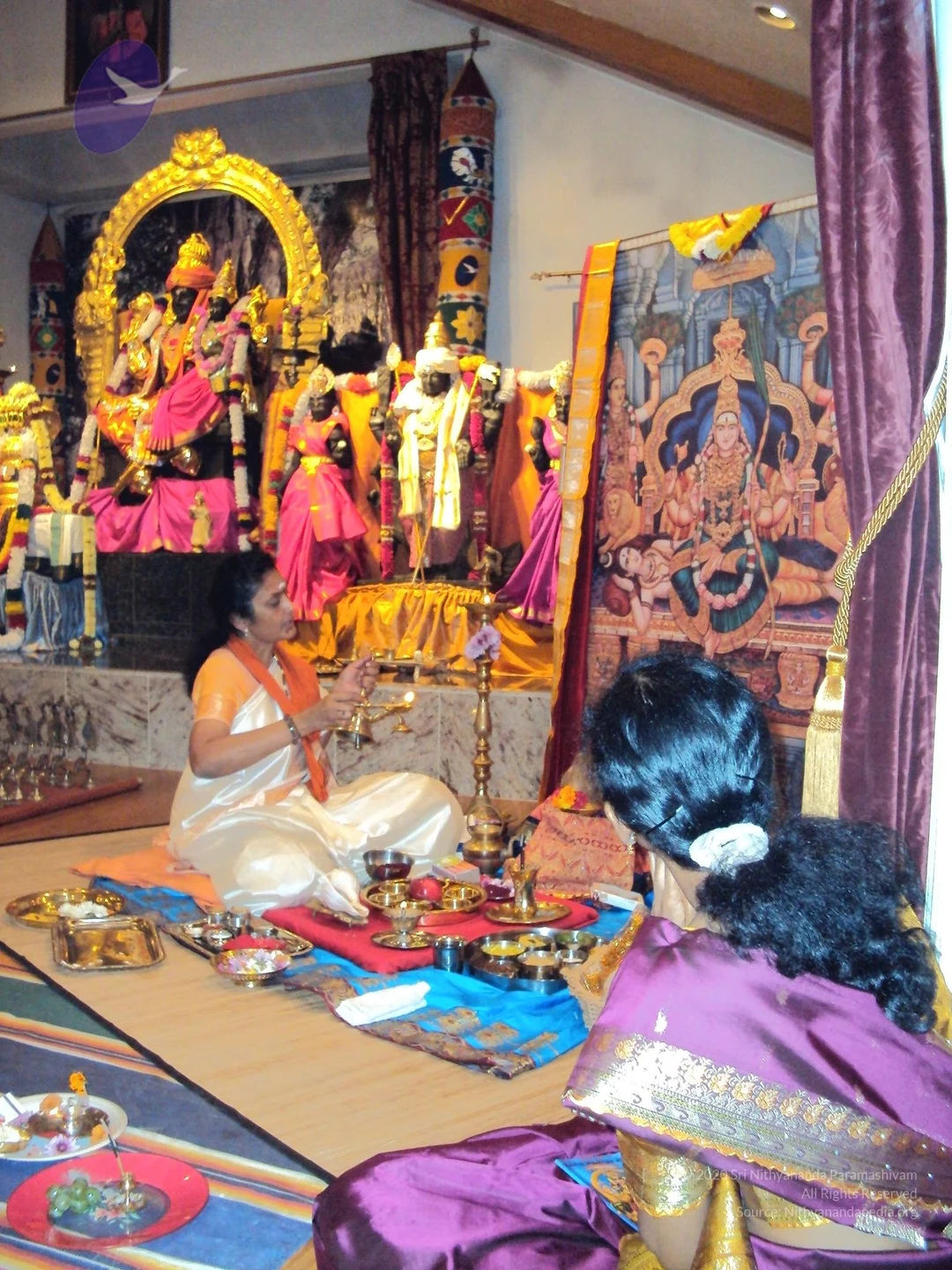
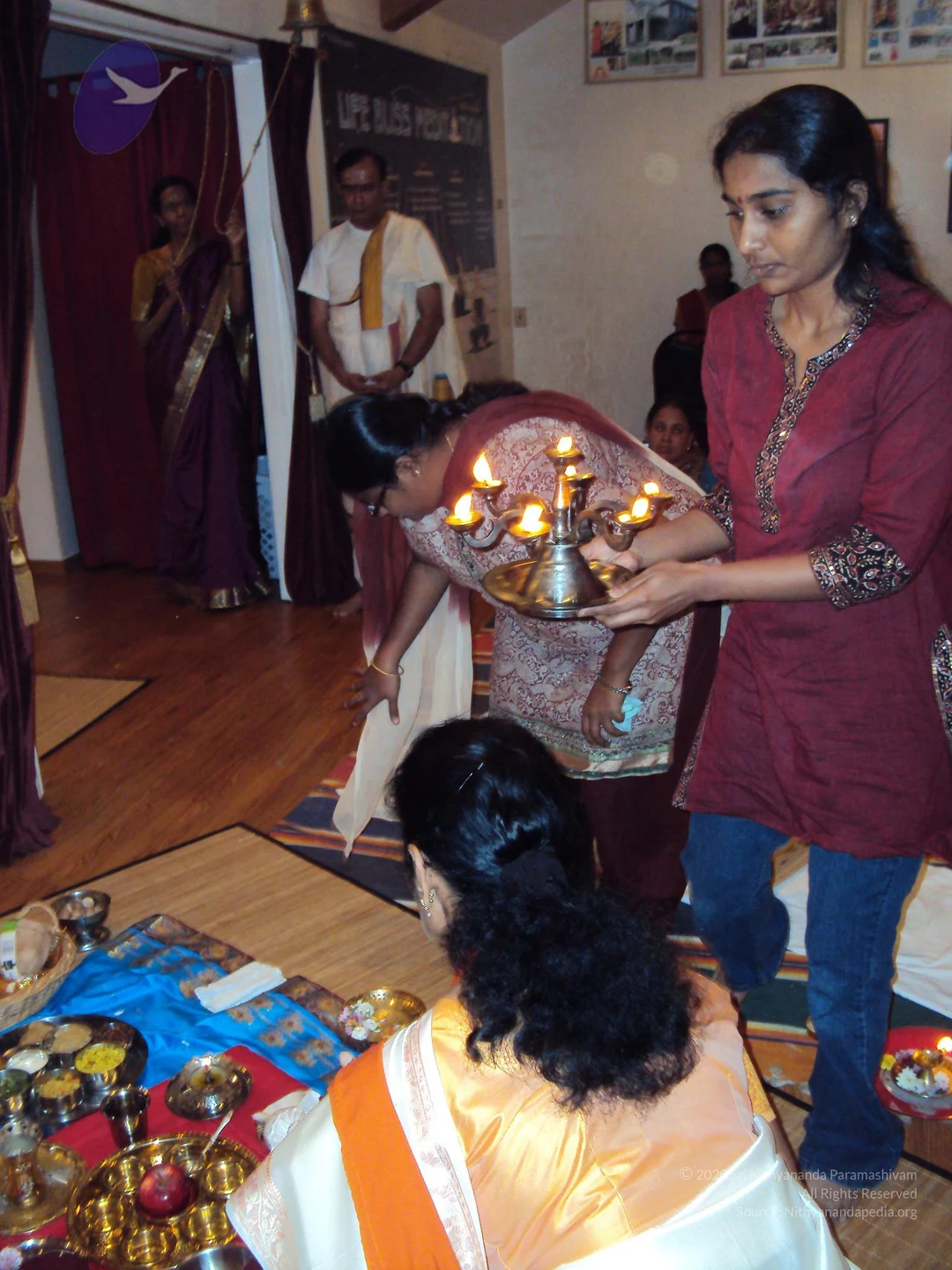
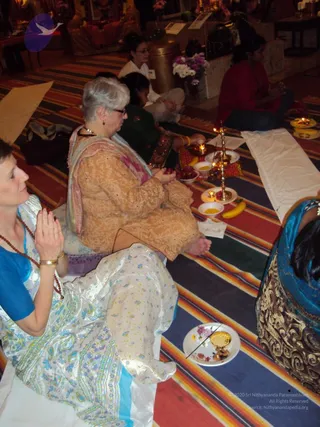
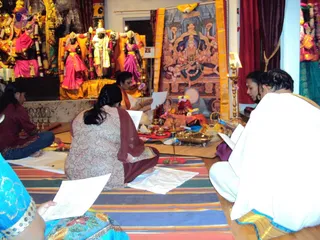
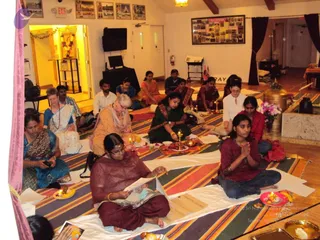
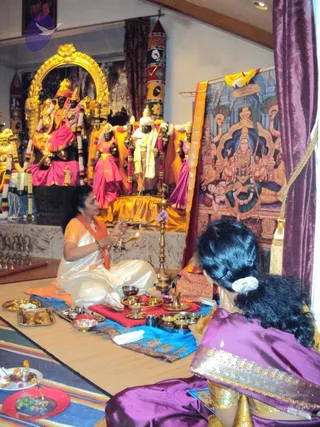
A decorated seat draped in gold and yellow silk with an orange cloth and a purple-bordered fabric, framed by garlands of white, yellow, orange and magenta flowers. Set at its centre is a framed photograph of a smiling man in orange robes seated cross-legged, a rudraksha mala and white garland around his neck, hand raised in blessing, with a tree trunk behind him. Purple and white flower bouquets stand in glass vases on a wooden floor, and a pink-clad deity murti with garlands is visible at the right in a wooden-beamed room. No physical people are present; the pictured man is shown only as a depiction in print.A dining scene in an ashram-style hall where people sit at round white-clothed tables eating from disposable plates with yellow rice and vegetables, using white plastic spoons. A boy in a green embroidered kurta with glasses eats at the center table, while a boy in a gold-yellow kurta sits at the left foreground. A man in a blue checked shirt with a ring and bracelet sits at the right and a woman in a blue top eats across the room. A paper banner with photos of meditating figures in orange robes and a block of text hangs on the wall above, beside a batik-style curtain with an Om motif, and a steel urn sits on a side table.A photograph of devotees seated cross-legged on a striped rug during an evening puja. In the foreground, a woman in a pale blue and white patterned sari with a rudraksha mala presses her palms together in anjali. Beside her, a woman in a peach embroidered salwar kameez holds flower petals in her hands. Brass oil lamps burn on a tray with small bowls of turmeric, a banana, and a plate of flowers and offerings. Other seated devotees in red, green and blue clothing stand out in the background. No a person candidate is visible.A photo inside a temple-style room where several people sit on a striped floor mat reading printed sheets during a ritual. In the centre, a brass kalasha and small brass lamps stand before a painted deity murti backdrop of a seated goddess with multiple arms, framed by orange and gold drapes. Behind them, a row of decorated deity figures wears pink and orange saris with garlands. A woman in a paisley-patterned top and maroon shawl sits at left, a man in white kurta sits at right, and others are partly visible. Brass plates with offerings sit on the floor.A group of devotees sit cross-legged on striped floor mats in a bright hall, performing a puja. In the foreground a woman in a maroon sari reads from a printed sheet, while a young woman in a maroon top sits with palms pressed together in namaskar. A woman in a green sari tends brass oil lamps and a silver plate of offerings on a red cloth. Others in saris and white and orange clothing sit in rows behind them. Brass pots and a flower arrangement stand nearby, and a lit shrine with garlands is visible through a doorway to the left. No a person candidate is visible.A woman in a cream silk sari with an orange shawl sits cross-legged on a wooden floor, performing a puja and holding a small brass lamp or bell in her hand. Before her are brass plates, bowls and a small red-rimmed tray with fruit and flowers. In the background, a gilded arched shrine holds several deity murtis in pink and gold garments decorated with flower garlands. To the right hangs a large painted deity picture of a multi-armed goddess seated on a throne. A person in a purple satin garment with long dark hair sits at the right edge, watching. Purple velvet drapes frame the scene.

VIPS-VISIT-HDH

5 photosSource gallery
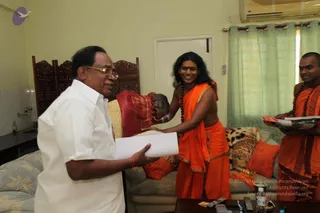
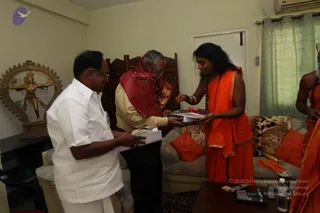
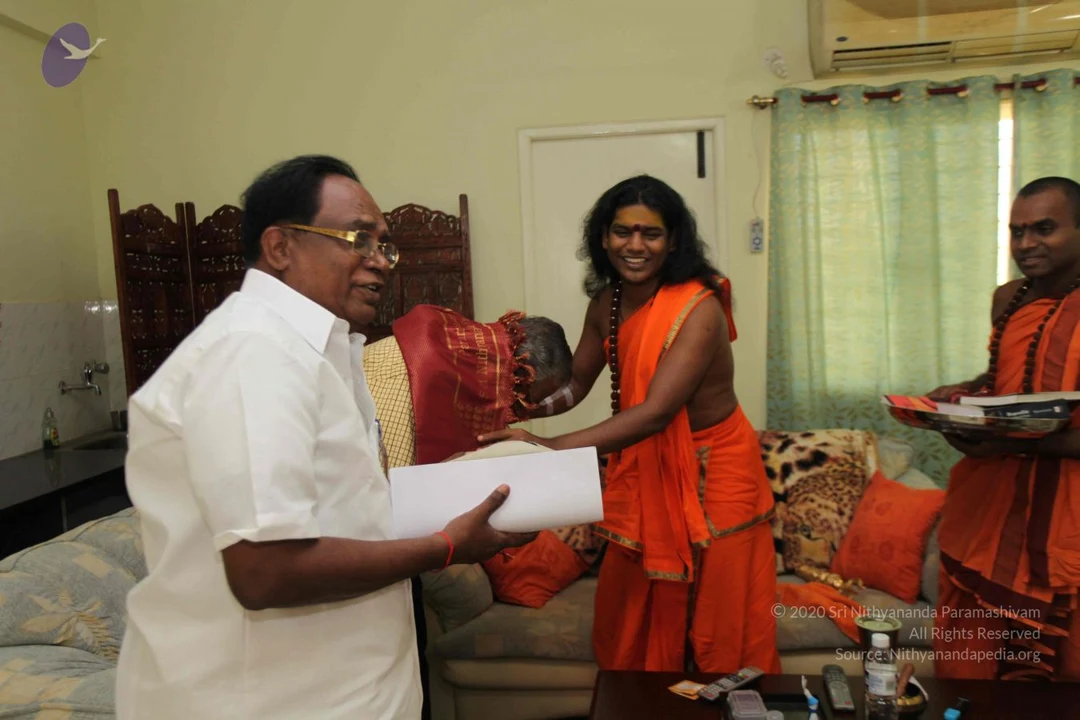
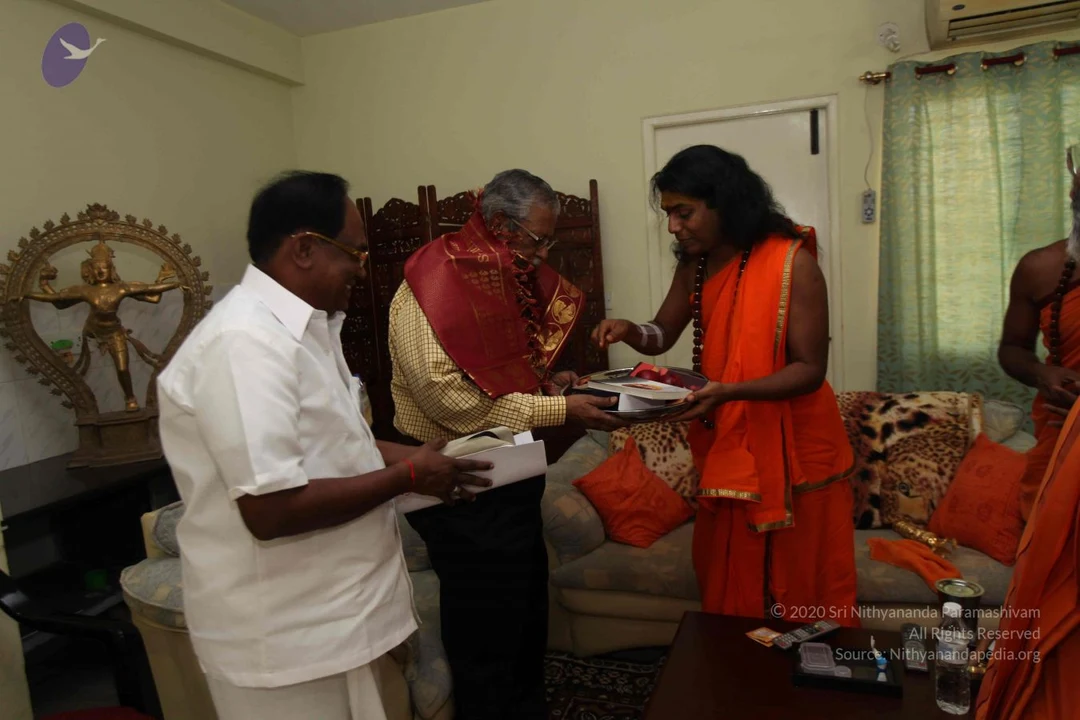
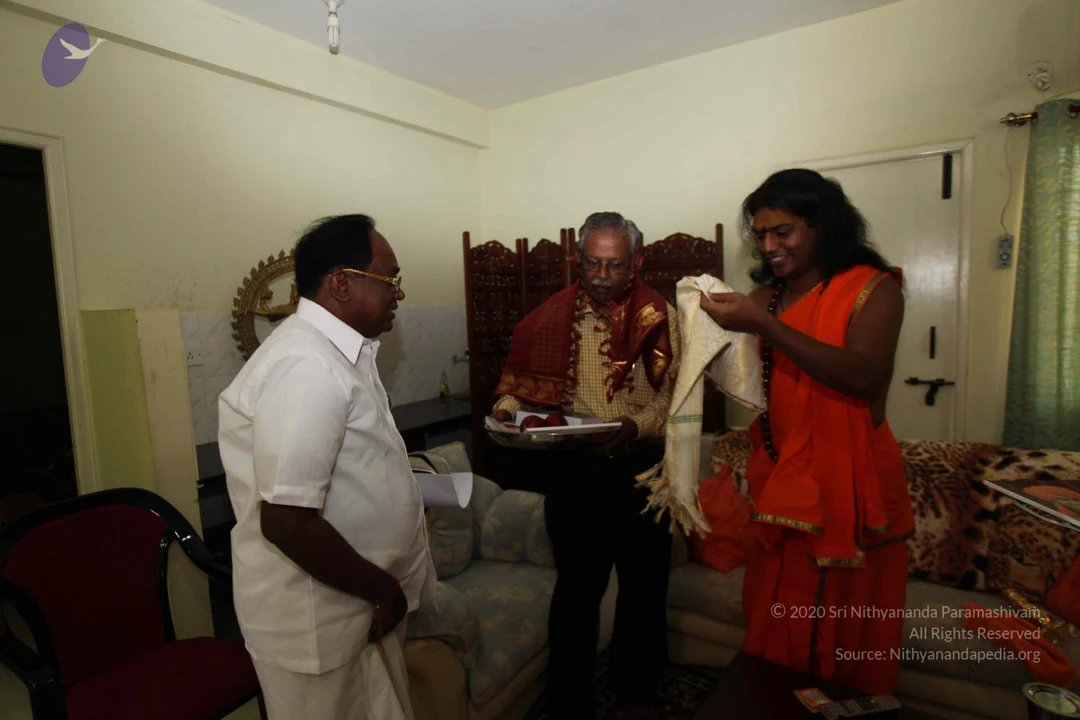
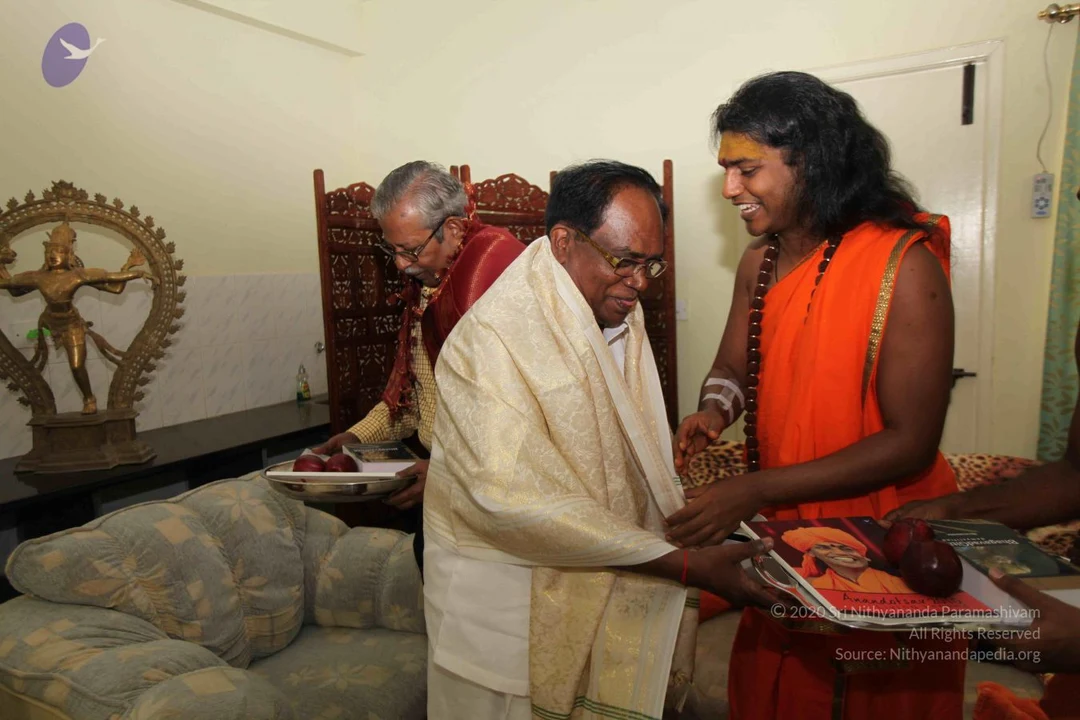
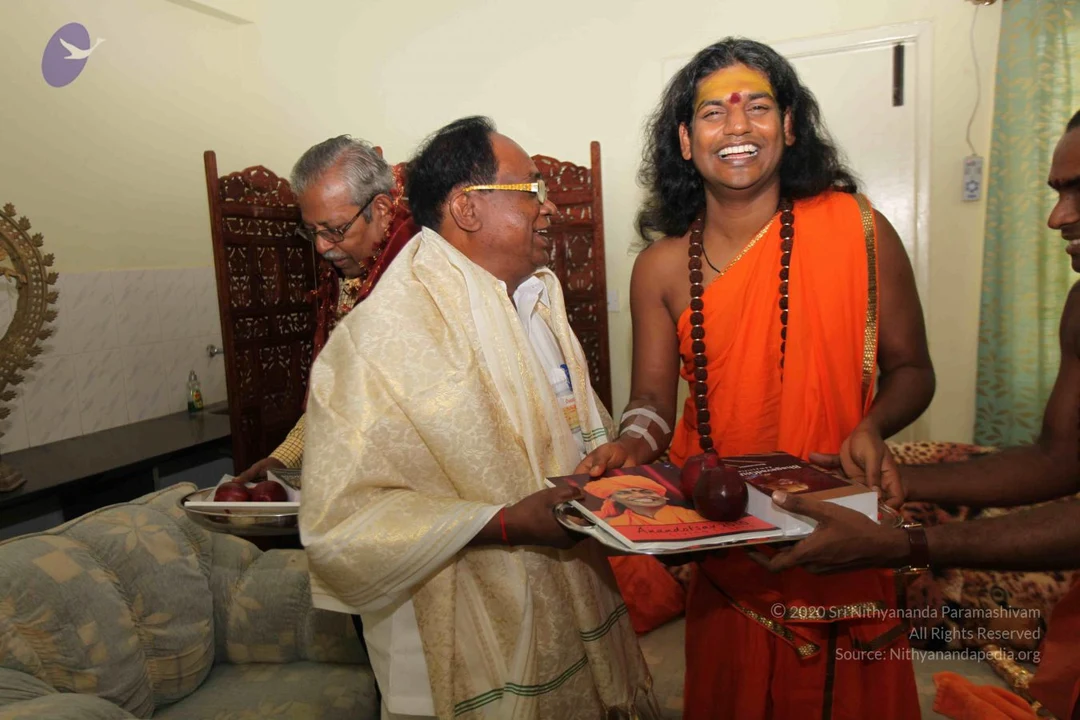
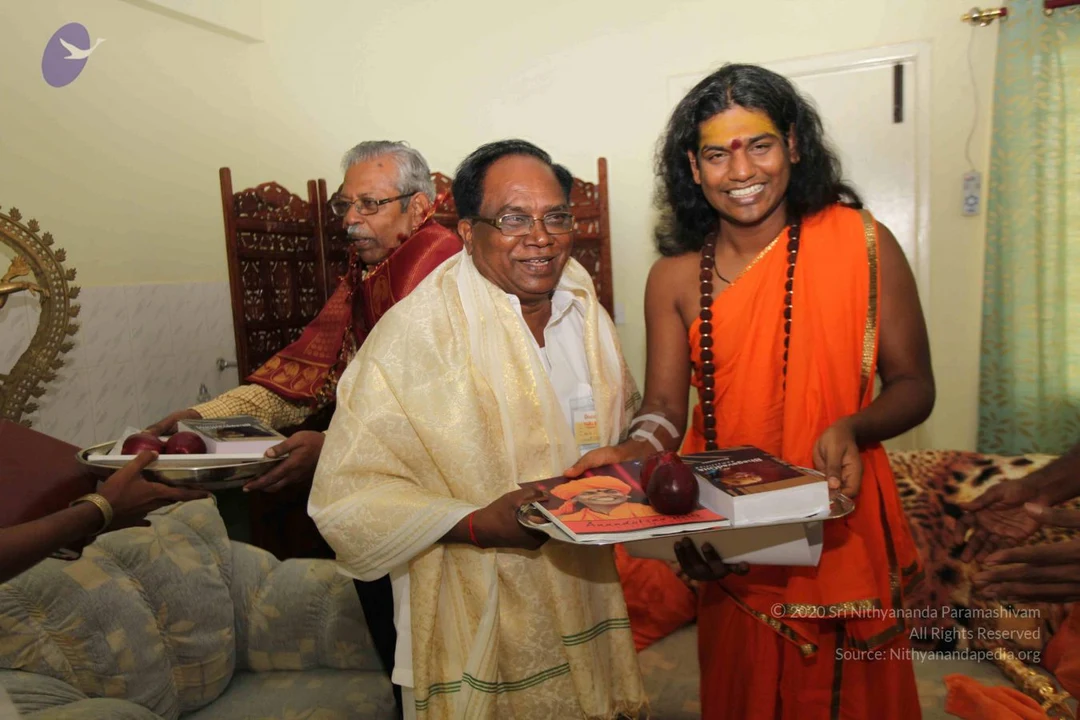
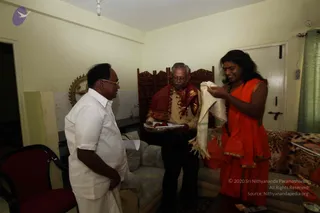
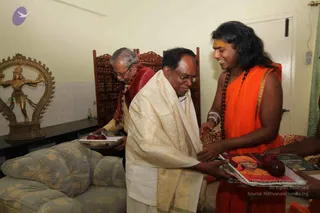
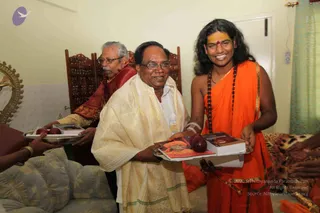
Indoor photo in a living room with a cream sofa with patterned cushions, a carved wooden room divider, a turquoise curtain, and an air conditioner on the wall. A man in a white shirt and gold-rimmed glasses stands at left holding a white envelope out toward a seated older man in a red and gold shawl, who bows his head. At right, a smiling figure with long dark hair, rudraksha malas and an orange saffron wrap and dhoti stands beside the seated man, his hand resting on the bowed man's shoulder. Another monk in orange with a rudraksha mala holds a tray of papers at far right. A small bottle and remote controls sit on a wooden table.A photograph of an indoor living room with cream walls, a green curtain and a sofa with leopard-print throw and orange cushions. A bronze Nataraja statue stands at left. A man in a white shirt and white dhoti stands at left holding a small book, while an older man in a yellow checked shirt and a red shawl with a garland receives a silver tray from a long-haired figure in orange robes and a rudraksha mala. The figure in orange, who may be a person given the long swept-back hair, orange robes and rudraksha mala, offers the tray. Another orange-robed attendant stands at right. A glass of water and a small table are visible at lower right.A photograph of three men in a domestic sitting room with a beige sofa, a wooden carved room divider and a cream wall. On the left, a man in a white shirt and white dhoti with gold-rimmed glasses stands with a folded paper in hand. In the centre, an older man in a checked shirt and maroon shawl holds a silver tray with fruit. On the right, a person in a saffron-orange robe with long dark hair and a rudraksha mala holds up a white cloth with gold border. A decorative brass wall plate hangs behind them. The person in saffron has cues consistent with the page's a person reference, so this is a probable in-person candidate.A photograph in a sparsely furnished room with cream walls, a patterned sofa and a bronze Nataraja statue on a dark shelf at left. A long-haired man in an orange-saffron robe, orange-yellow forehead marking, white arm bands and a rudraksha mala stands at right smiling and receiving a book or booklet with an orange cover from an older man in a white and gold-bordered shawl and white dhoti who wears glasses. Behind them a man in a red shawl and glasses holds a silver tray with red fruit and papers. a person cues: long swept-back hair, saffron robe and rudraksha mala, with the central role of receiving a book; appearance-based label only. Three physical people are visible, with a partial arm at far right.A photograph in a sitting room with pale yellow walls, a carved wooden screen and a framed ornate mirror at left. A smiling man on the right with long dark hair, a vertical orange-yellow mark on his forehead, a long rudraksha mala and an orange saffron robe holds a silver tray with a book and red fruit. Beside him, an older man with glasses wears a cream and gold-bordered shawl and white garment and holds a tray with books and fruit. Behind them a man in a red-and-gold shawl also holds a tray of fruit and books. Partially visible hands and a floral-patterned sofa complete the scene. Swamiji (probable): the man on the right shows long swept-back hair, saffron clothing and rudraksha mala, but the identification is an appearance-based judgment only.