Friday
8 April 2011
Supreme Pontiff of Hinduism HDH Bhagavan Sri Nithyananda Paramashivam
- Dated photos
- 47
- Source pages
- 1
- Media
- 4
April 08 2011
Original wiki pageTitle:
Supreme Pontiff of Hinduism HDH Bhagavan Sri Nithyananda Paramashivam
Link to Video:
| Video | Audio |
Transcript:
Sadāshiva samārambhām Shankarāchārya madhyamām | asmat āchārya paryantām vande guru paramparām ||
[00:59]
I welcome you all with my love and respects. I welcome all the devotees, disciples, samajis, satsangis sitting with us around the world at this moment in 483 places and two way connection in 8 places and in 163 cities in 24 countries. The cities which are in two way connection with us are Ohio, Los Angeles, Guadeloupe, Malaysia, The Klang center, Malaysia Klang center and Phoenix, San Jose, Seattle and Oman; My blessings to all of you. I welcome all of you with my love and blessings.
[02:04]
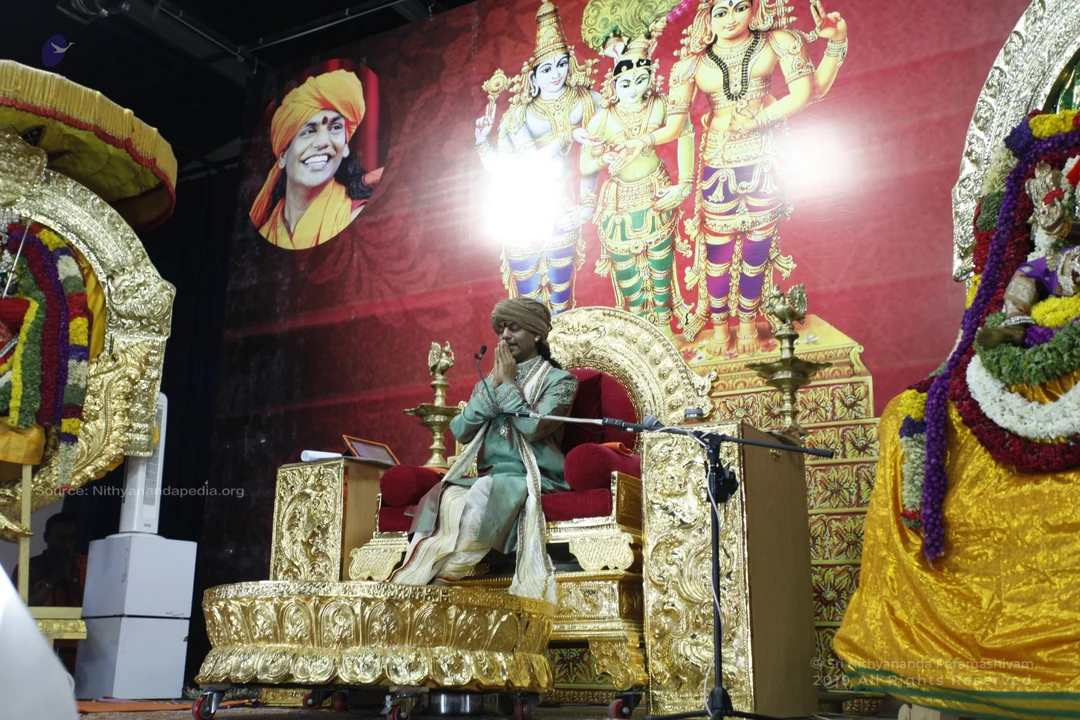
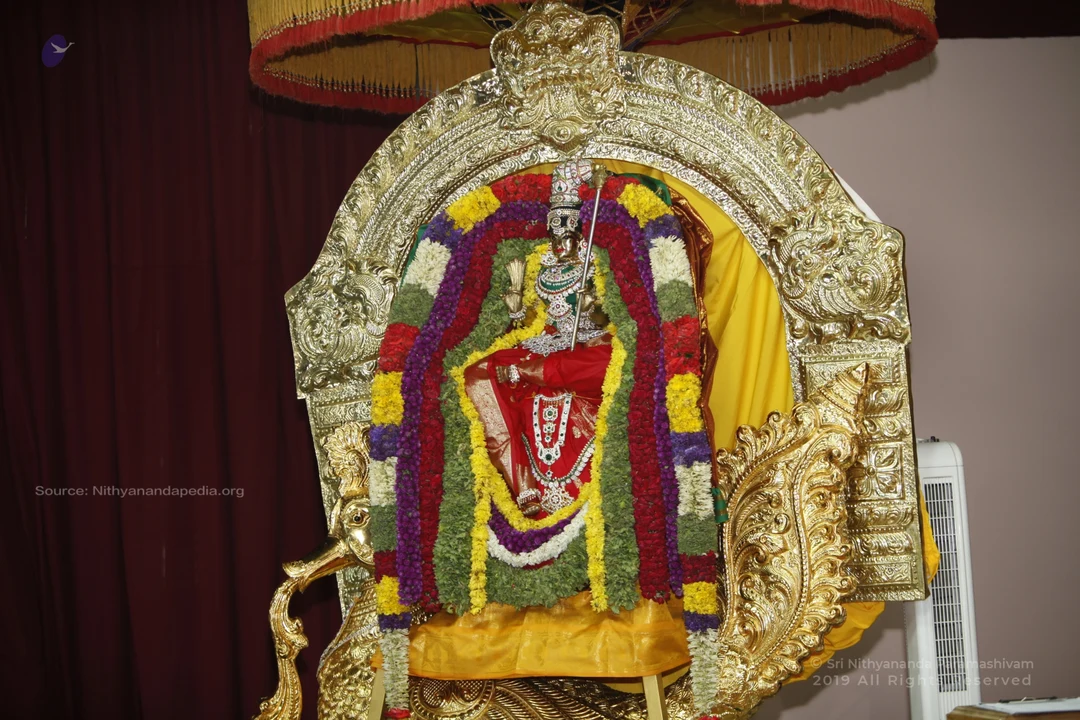
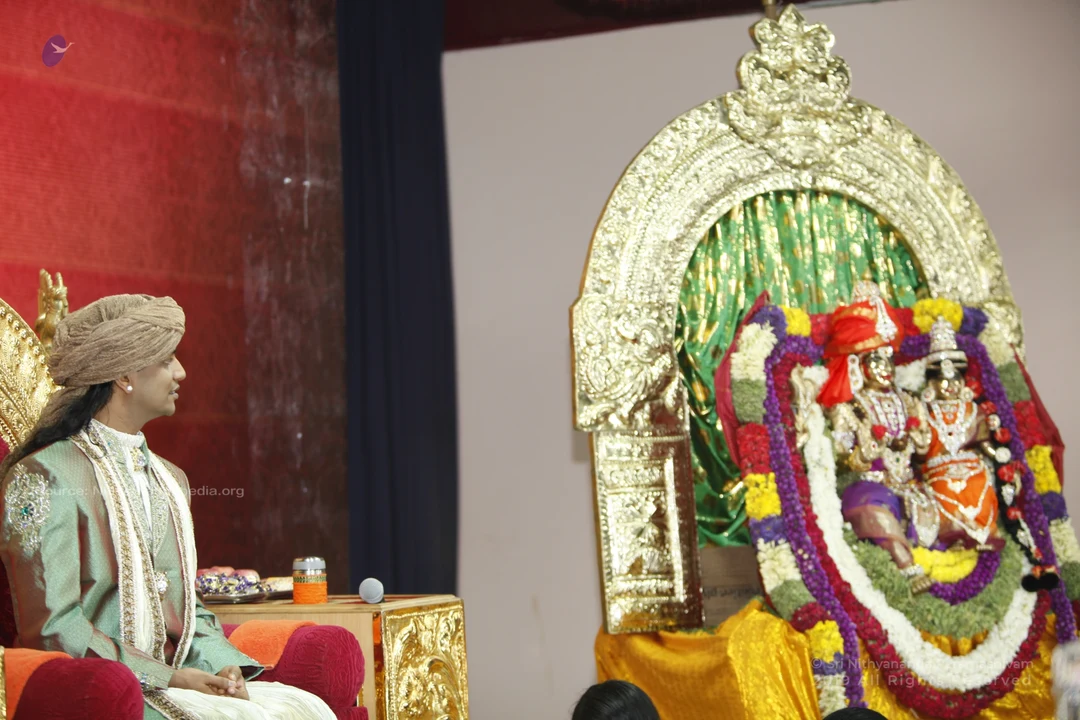
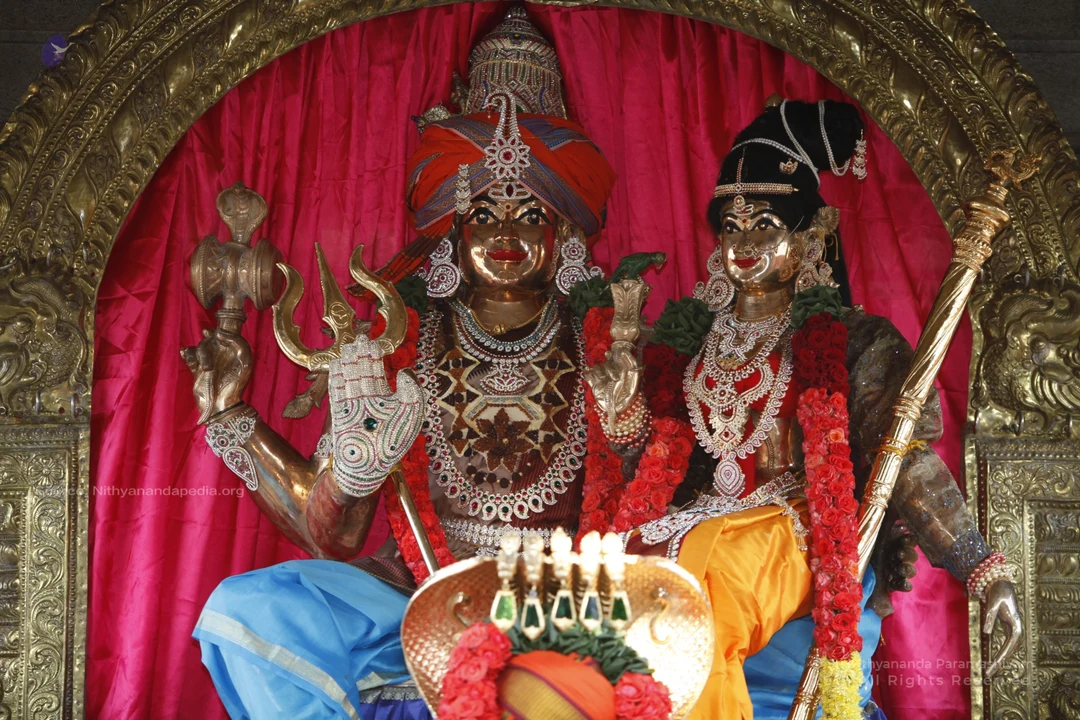
As you all may be aware that we are celebrating Chithirai Brahmotsavam, the divine marriage ceremony of Meenakshi and Sundareshwara; one of the great celebration done for Devi in southern part of India. This is the largest gathering of the devotees in south India. Even Arunachaleshwara’s Deepam is next to this festival. This is the largest gathering happening in the southern part of the India; the largest religious gathering. In all the five states of southern part of India this is the largest religious gathering, the ceremony of divine marriage of Meenakshi Sundareshwara. All ten days we will be having different celebrations; rituals like puja, homa and the Devi’s marriage ceremony and Devi’s coronation ceremony.
[03:24]
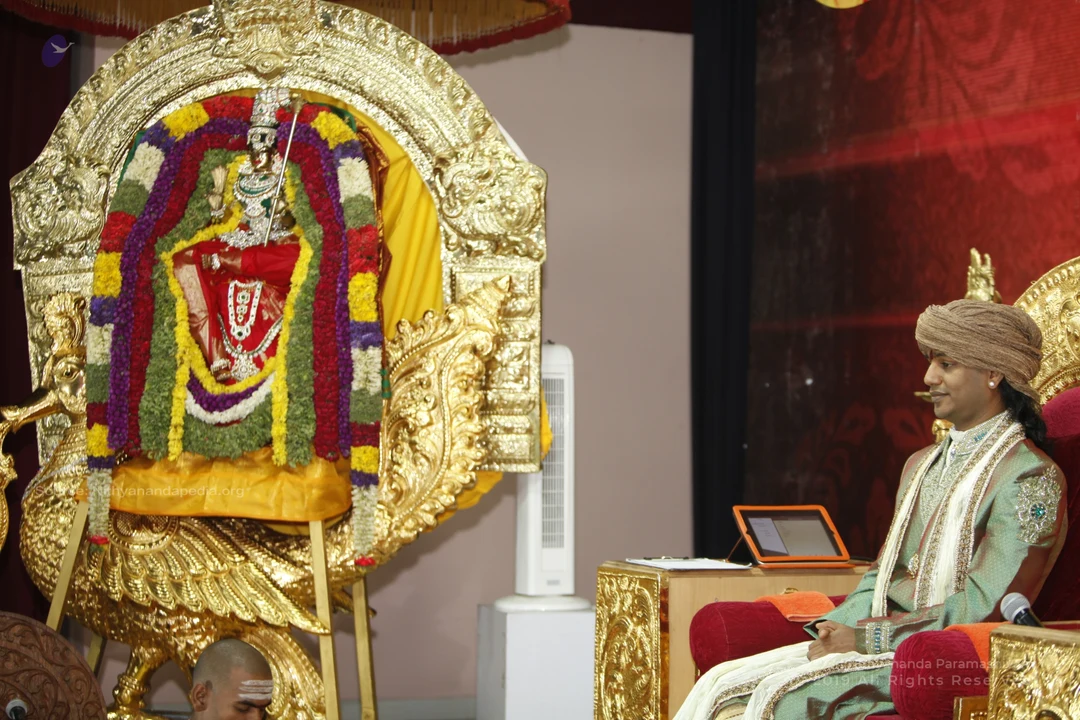
Every day the Devi will grace the devotees appearing in one, one sacred vahanas sacred vehicles. Today Meenakshi is on the sacred vehicle swan. We call it hamsa vahana in Sanskrit. The significance of the swan is liberated consciousness. Whoever is liberated - Paramahamsa, Devi resides on them. She resides inside them. That is the symbol of the hamsa vahana. And Chokkanadar – Sundareshwar, the God of grace, Sundareshwara means literally the lord of grace. You can translate sundara in many ways - lord of grace or beauty or whatever. The lord of grace Sundareshwara is gracing on the throne. Each day both of them will be gracing in different sacred vehicles.
[04:45]
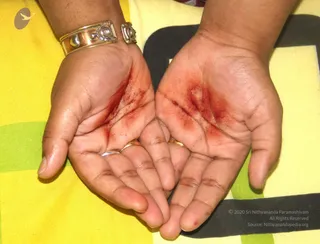
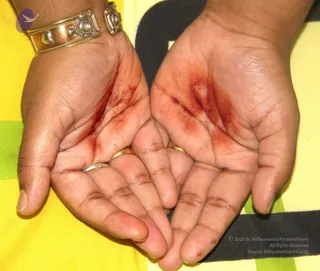
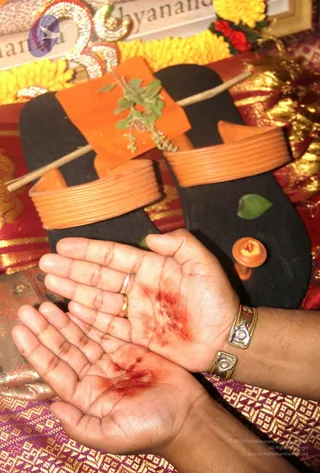
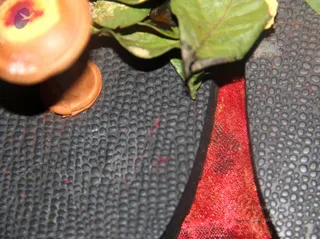
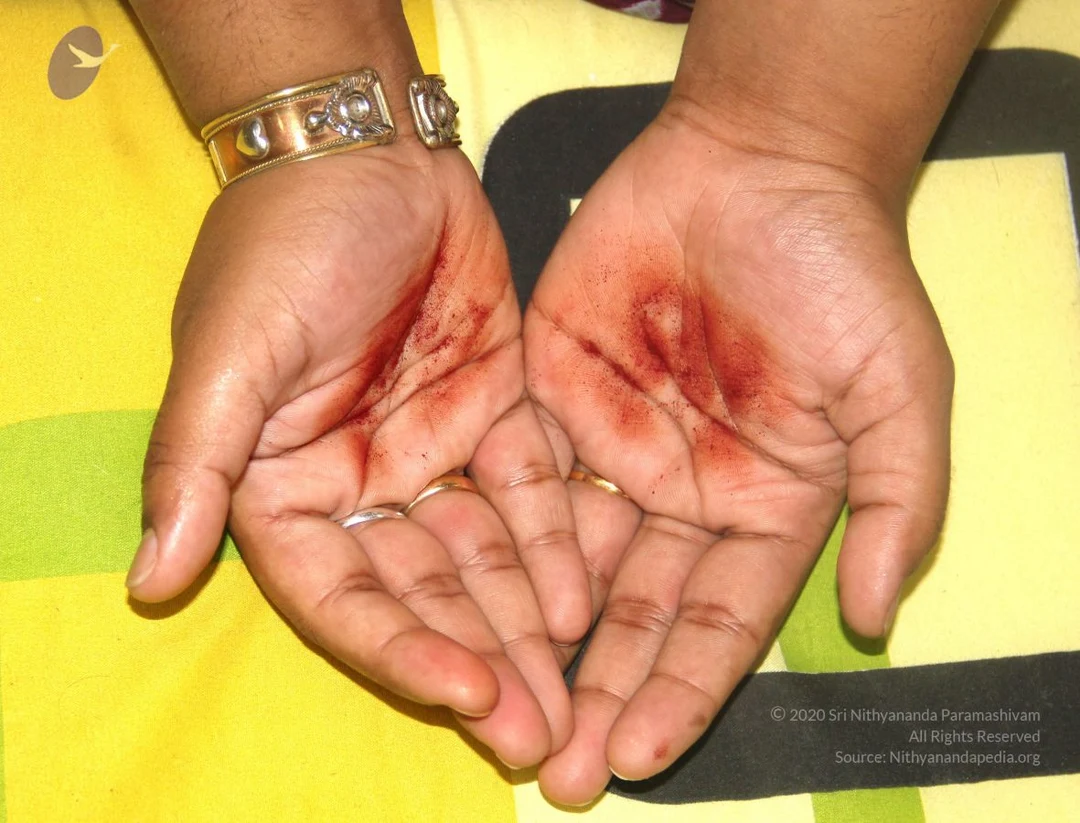
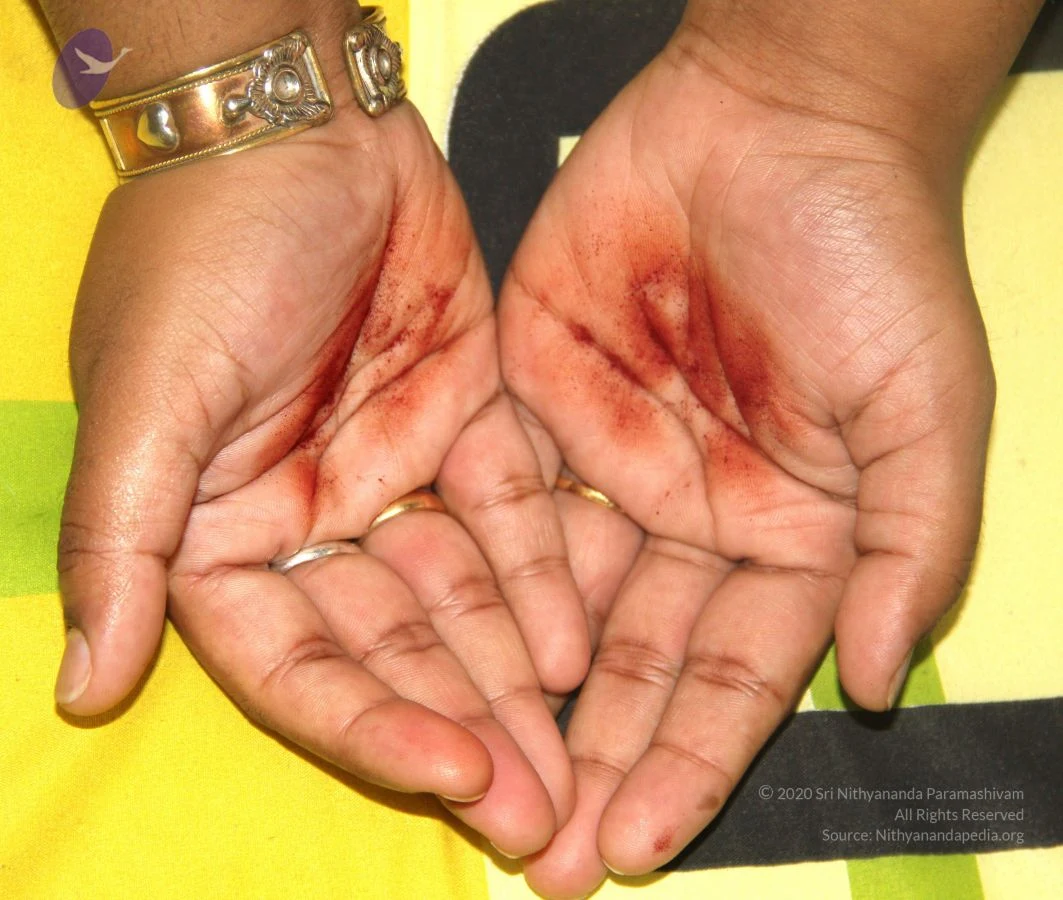
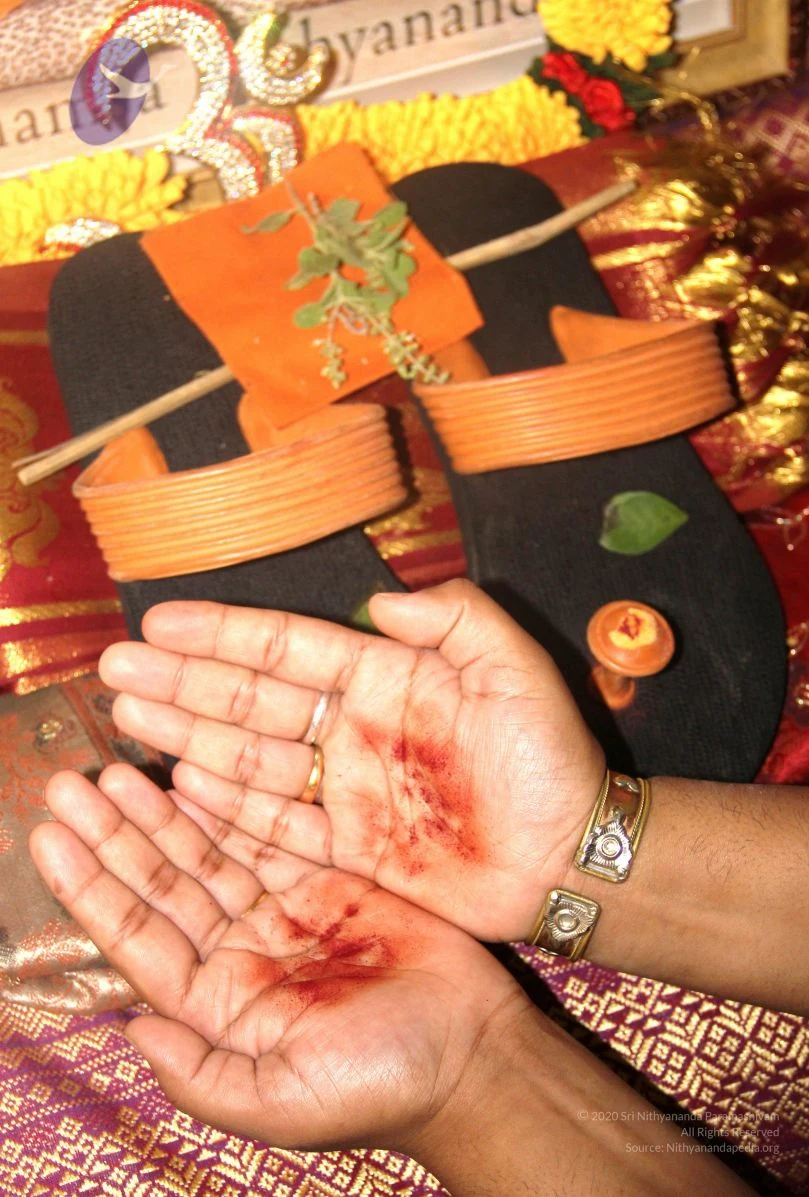
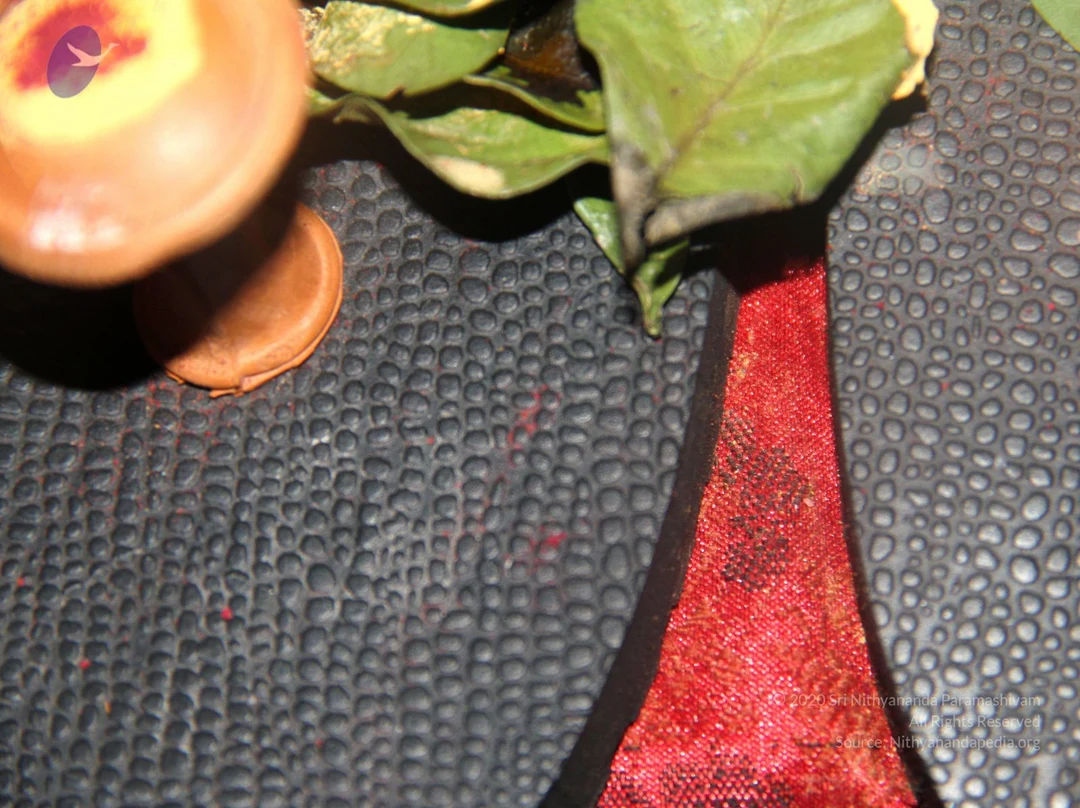
To mark Devi’s presence, Meenakshi’s presence, these ten days all padukas will give kumkum in all over the world and let’s work on Devi’s energy today. At least five places should have kumkum today; Ohio, Los Angeles, San Jose, Oman, Seattle, Malaysia and Phoenix. All right, all these places will have kumkum in the paduka today. Oman will have in the hands of Nithya Devi. Come on! So, clean and wipe the paduka now itself so that you don’t drop any dust. San Jose will have Devi’s footprint today on the floor and each day one, one leela; at least one, one leela in San Jose… auspicious leelas.
[06:21]
Jasmine is the Meenakshi’s favorite flower. So today in San Jose jasmine flower will appear on Devi and padukas; you will see. From Madurai directly it will come there. Madurai is famous for jasmine flower. You will see that Madurai has the unique flower and the jasmine also unique variety; exactly that Madurai jasmine will reach San Jose. This will prove the direct presence of Meenakshi is there in San Jose. The flower which is put on Madurai Meenakshi deity, in Madura temple, in Madurai temple, from that garbha mandir it will come directly to San Jose.
[07:36]
In those days you would have heard the stories like something is…. some deity or some flower or jewel put on the deity appearing in some other temple to prove the presence. Come on, let you guys have fun! The flower which is offered on Madurai Meenakshi deity in Madurai, that jasmine, Madurai malli flower will appear on San Jose Meenakshi to prove her presence in San Jose. Because jasmine is not available in USA, so nobody can suspect they bought it from the shop and put it. Let you all be blessed with Meenakshi’s presence, Sundareshwara’s grace.
[08:51]
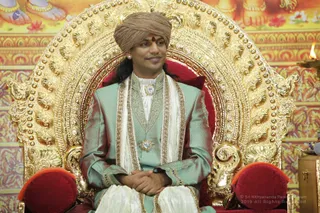
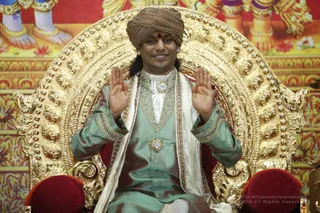
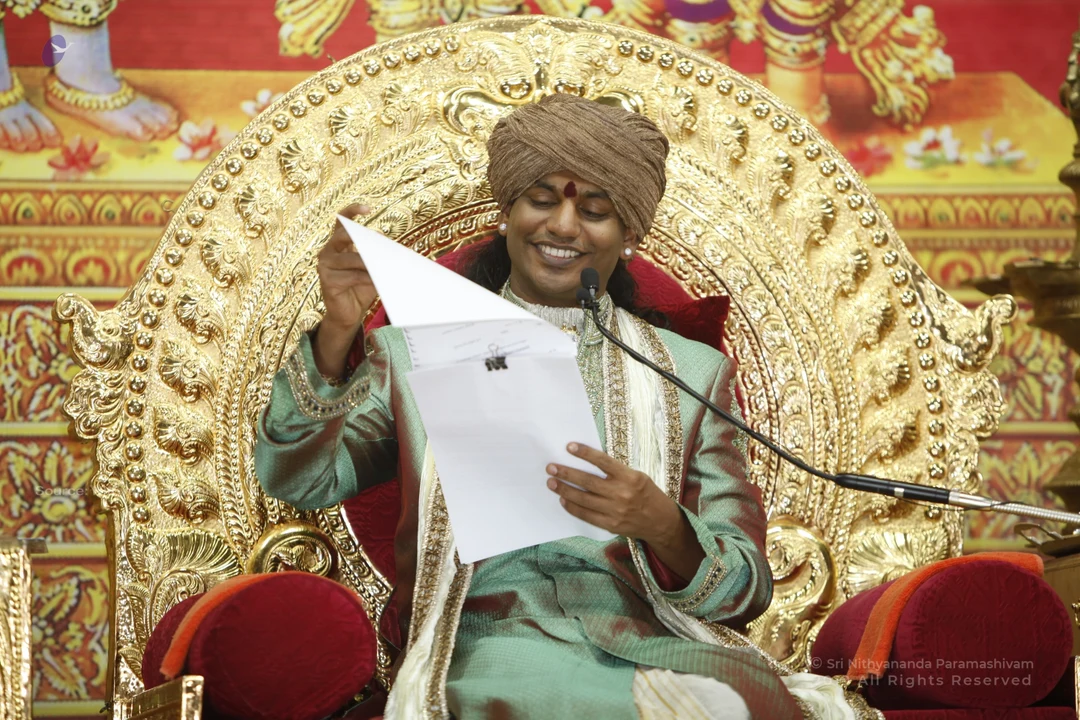
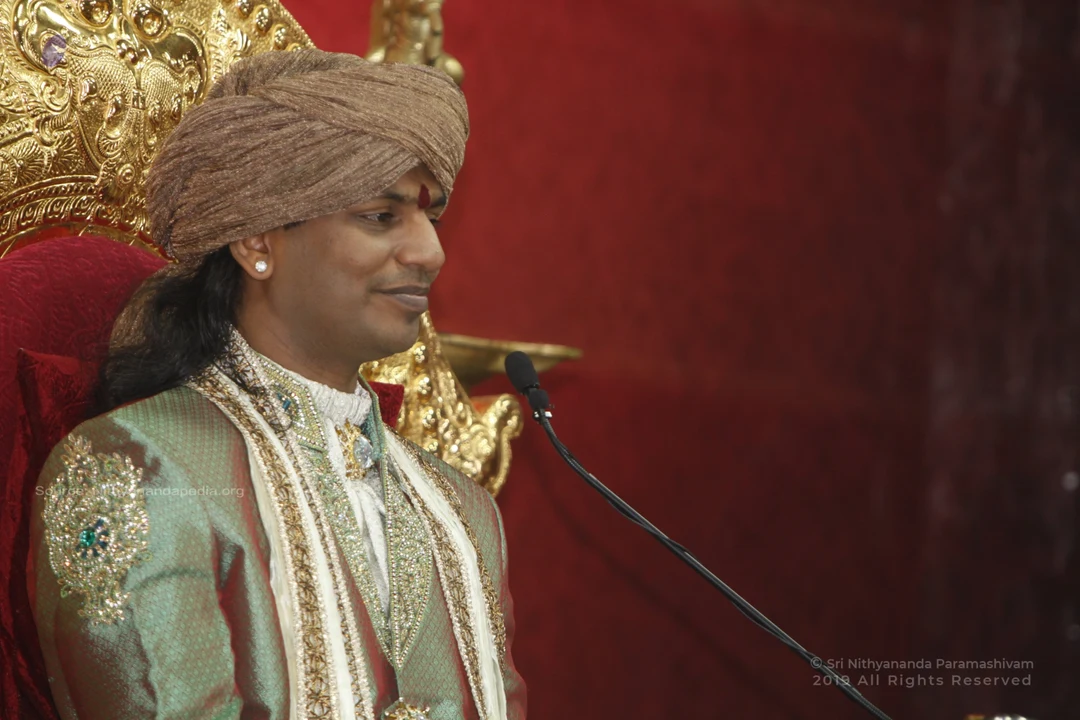
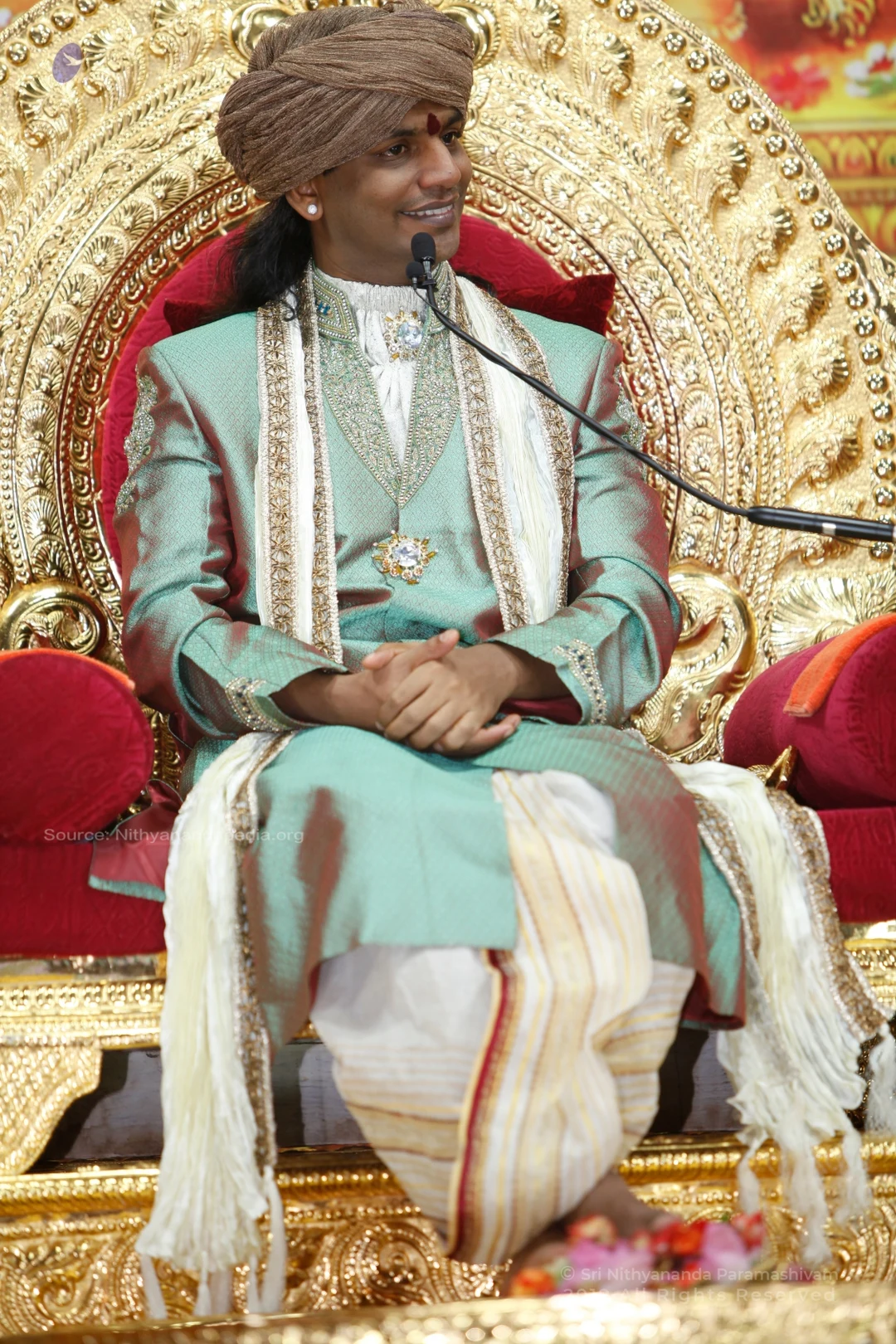
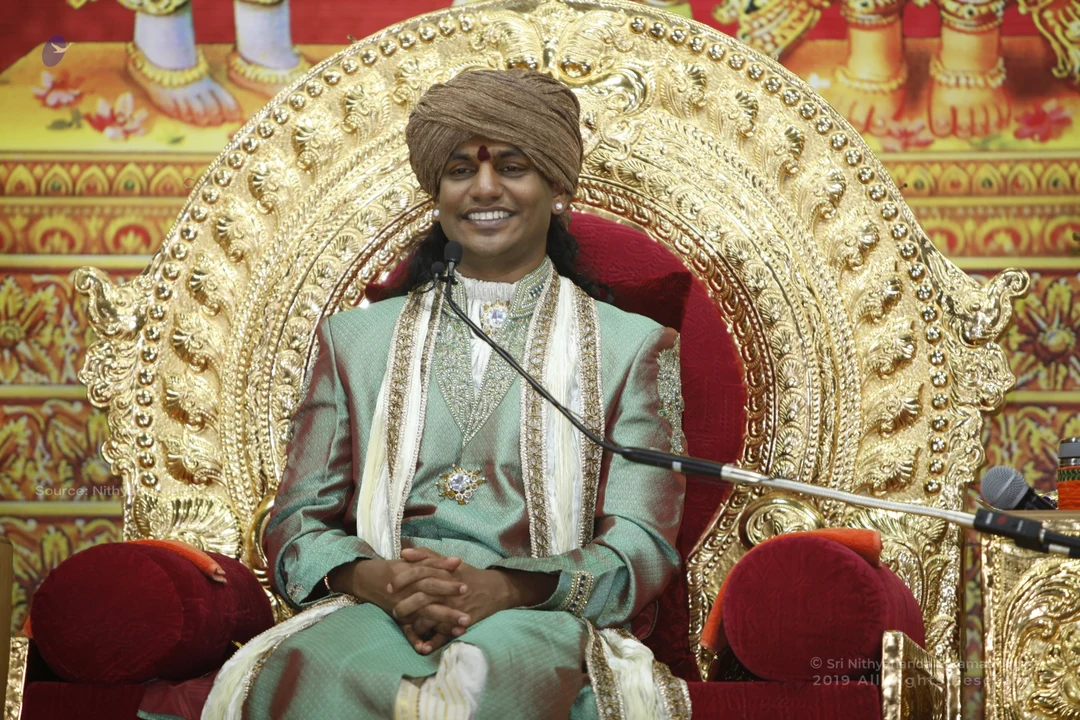
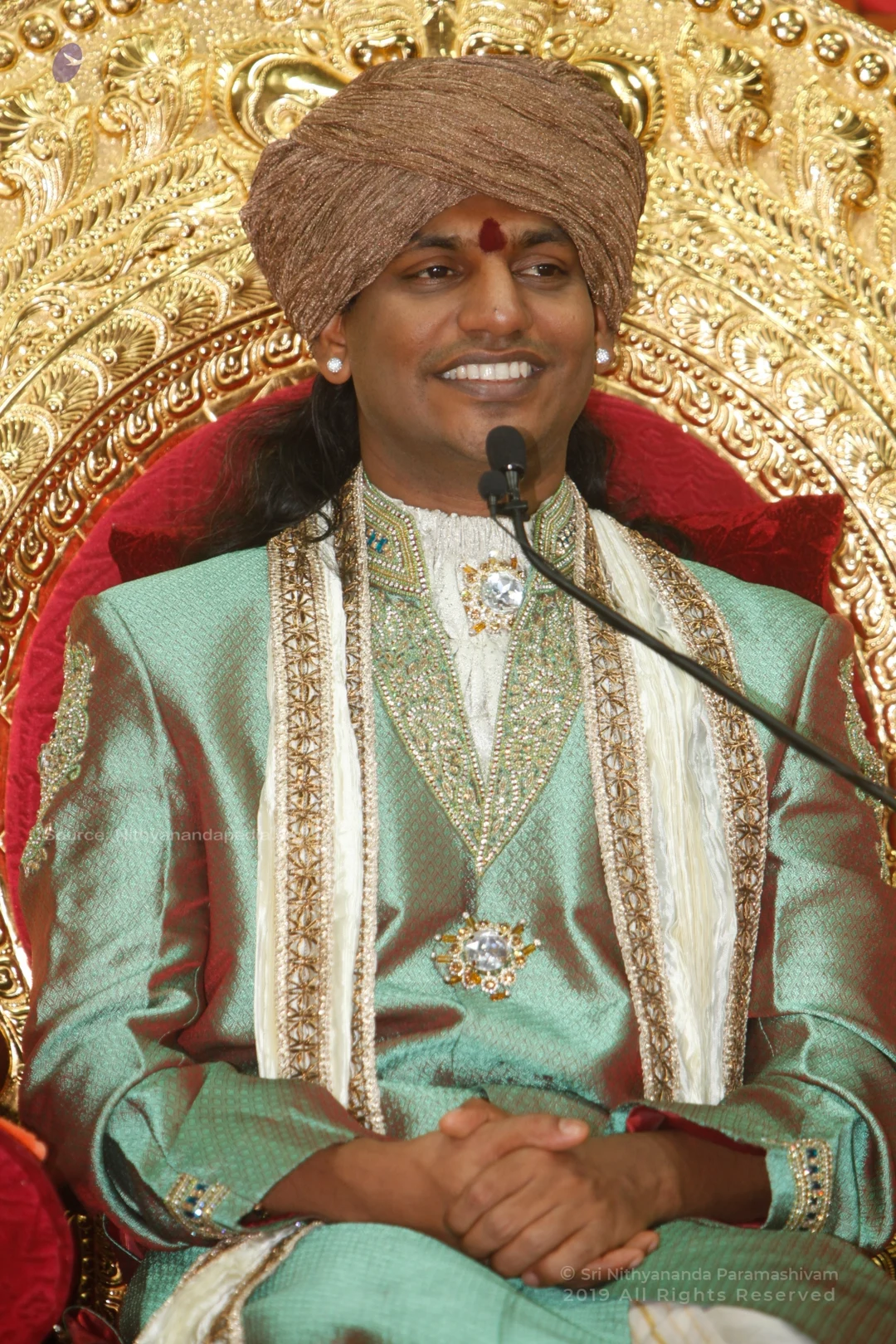
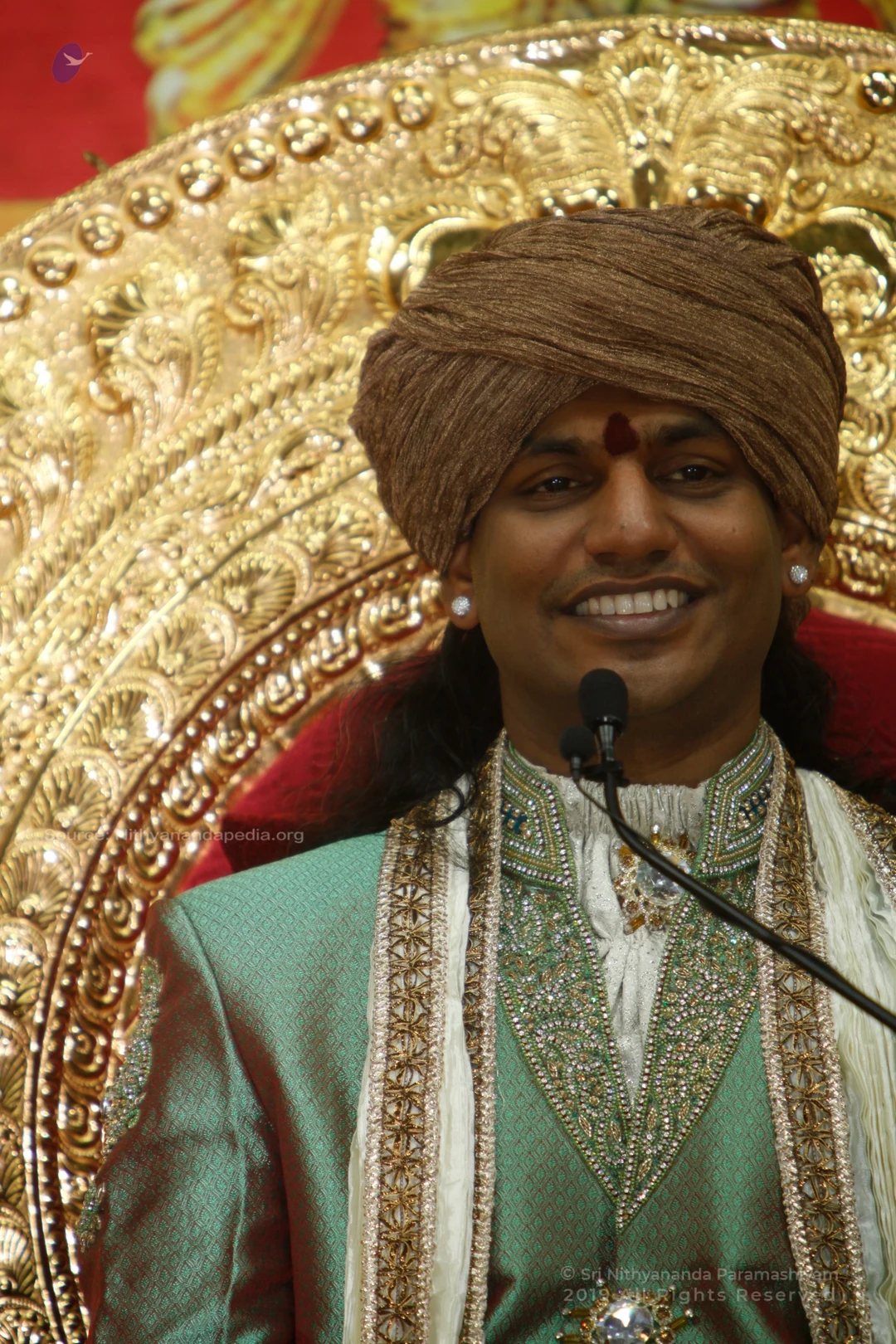
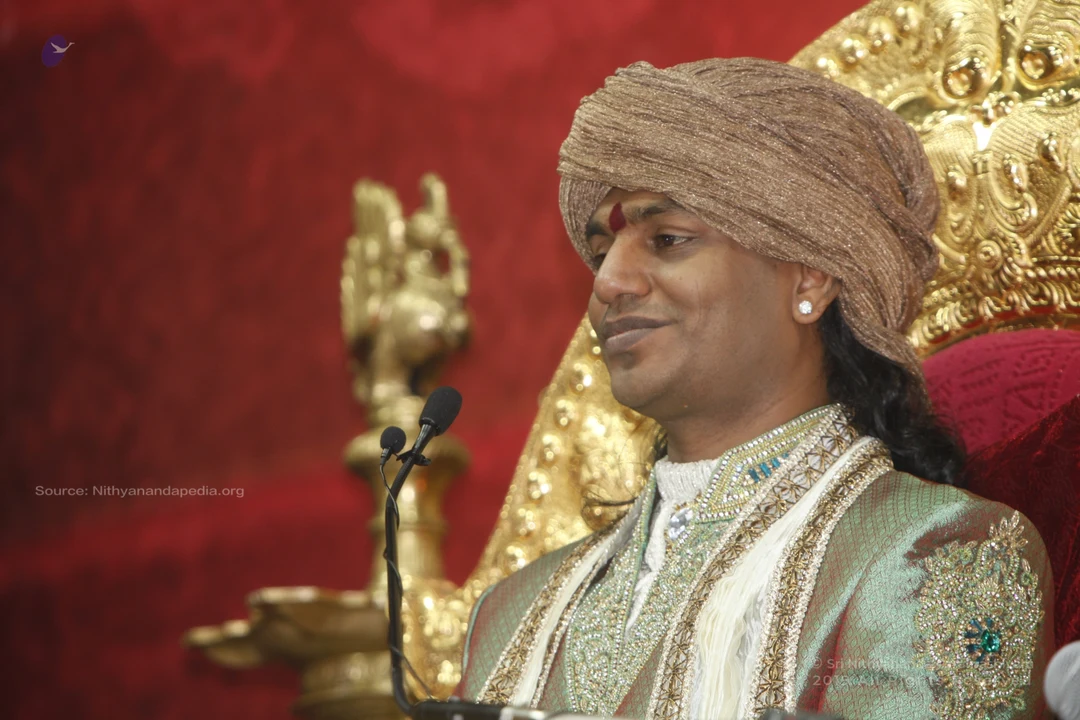
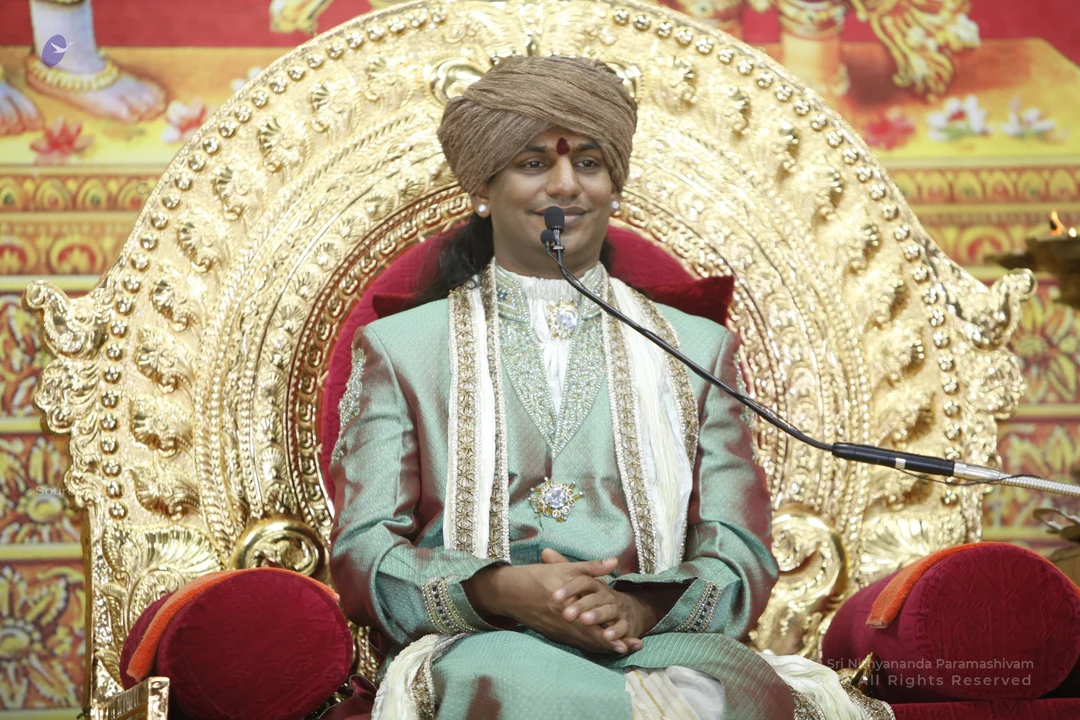
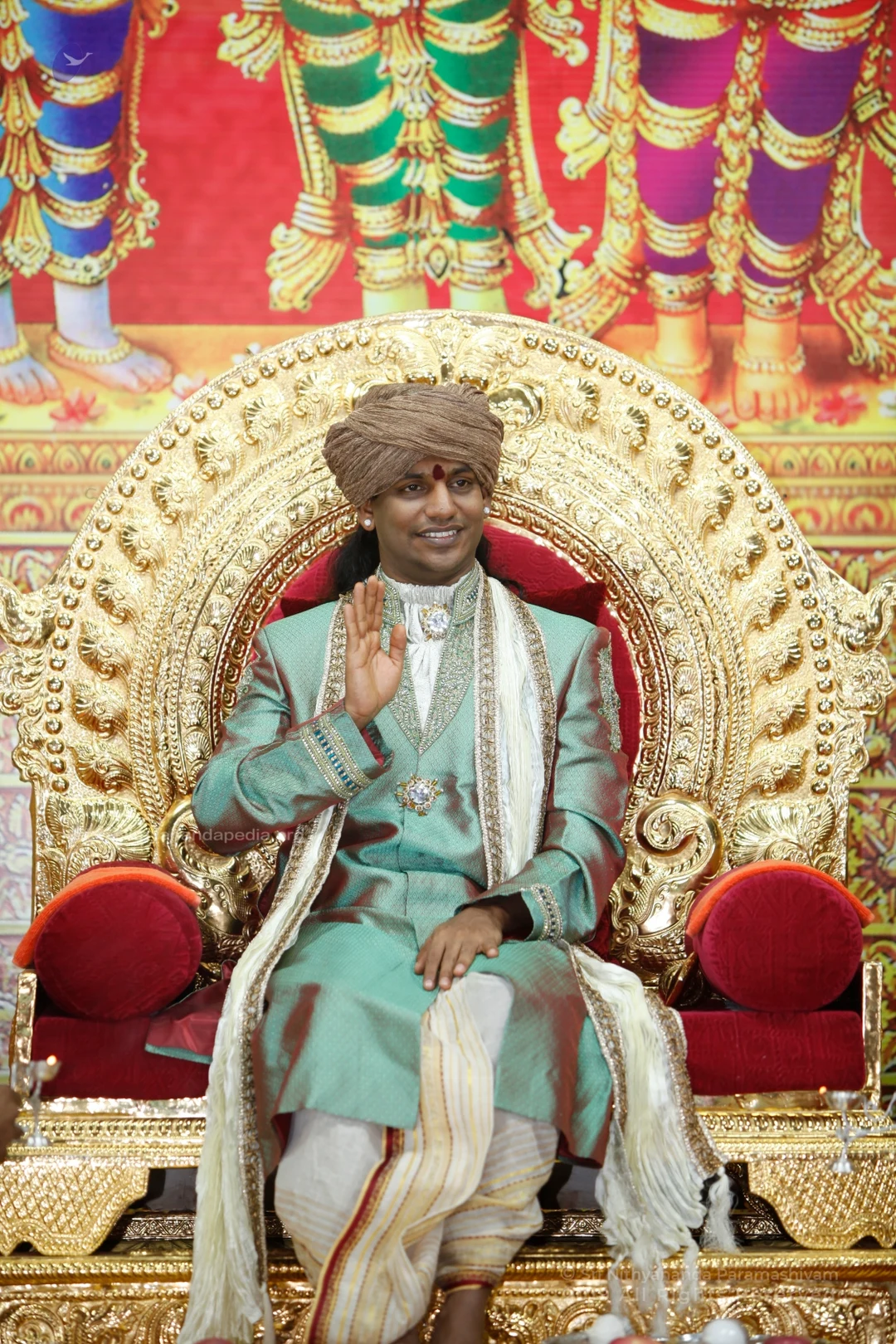
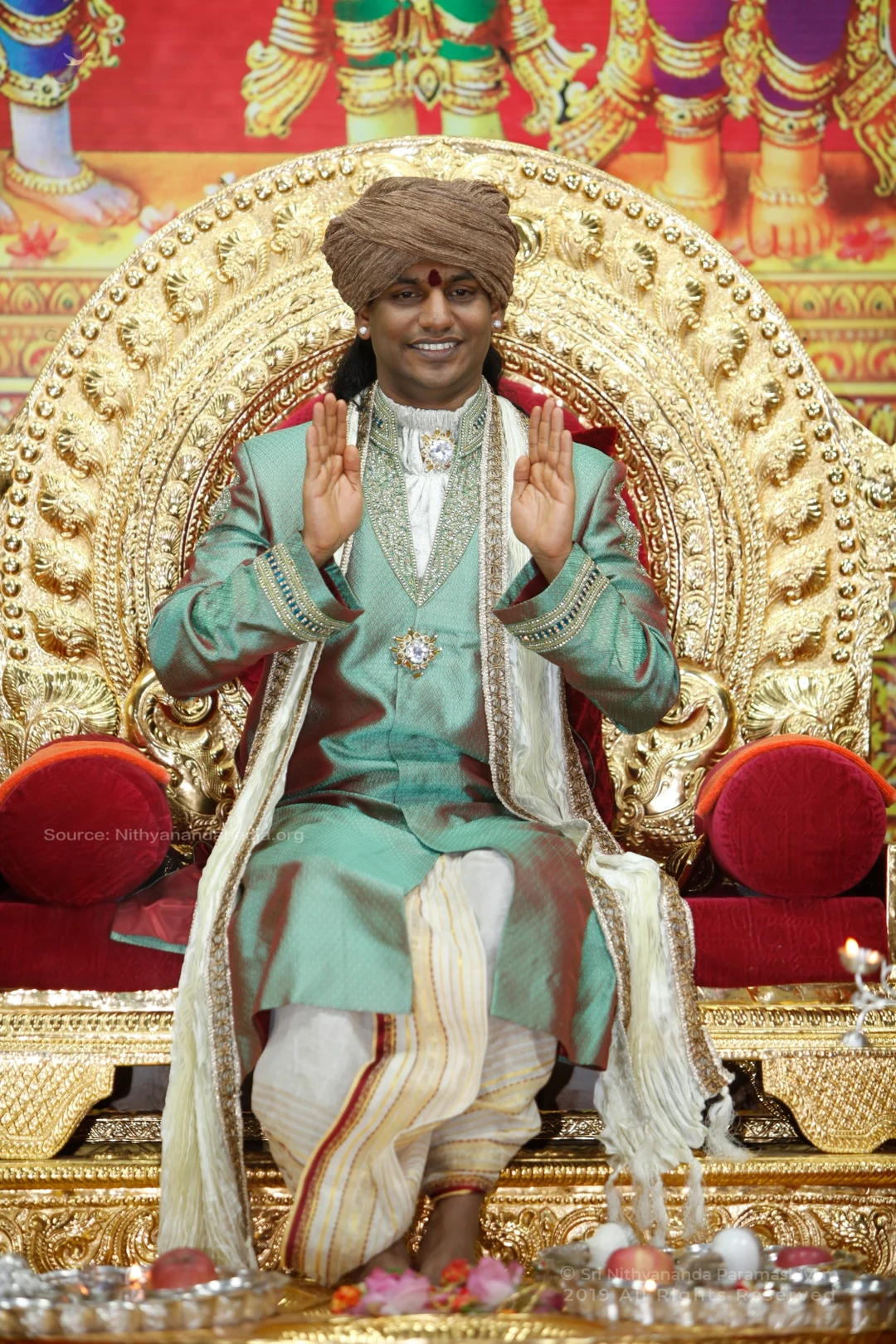
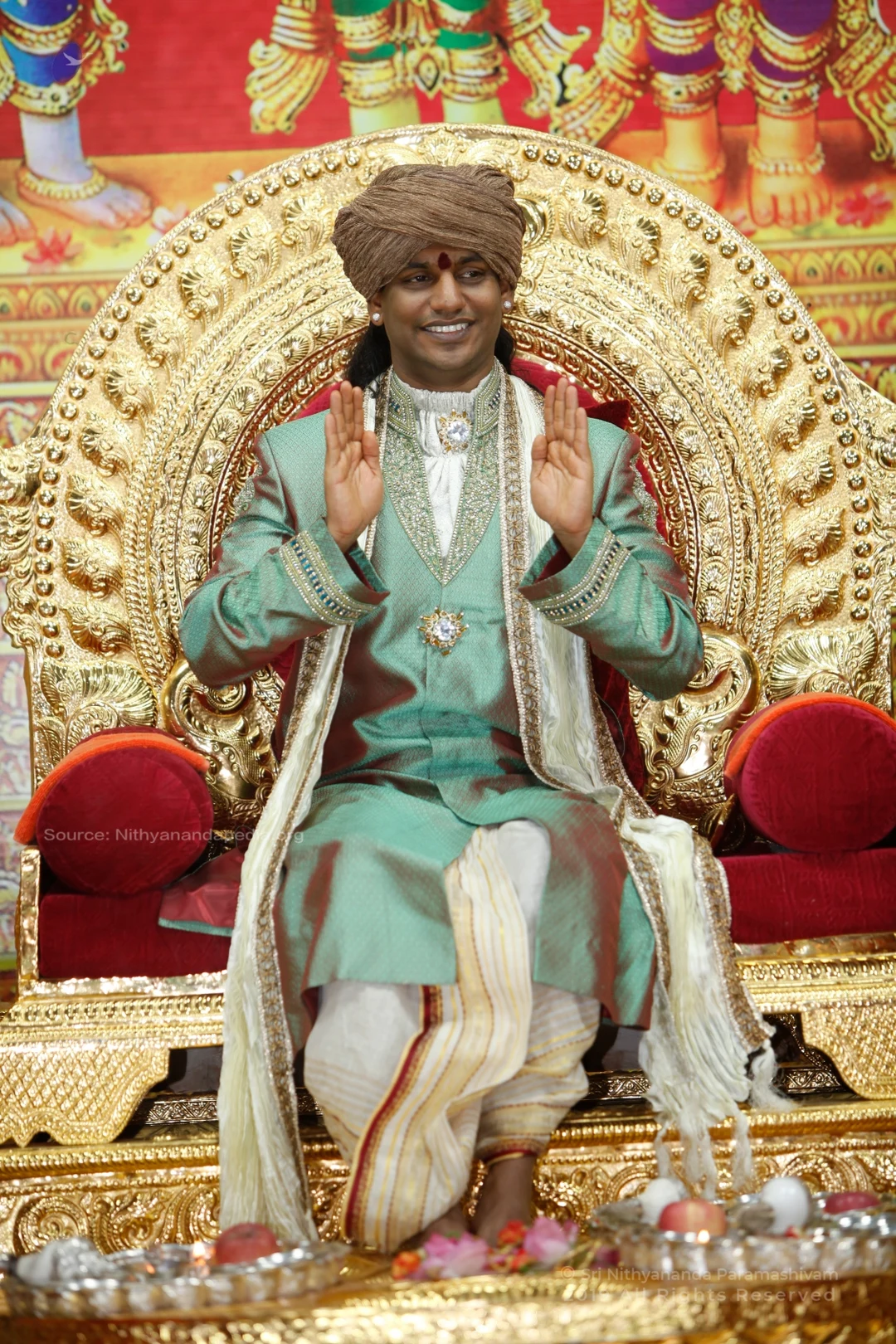
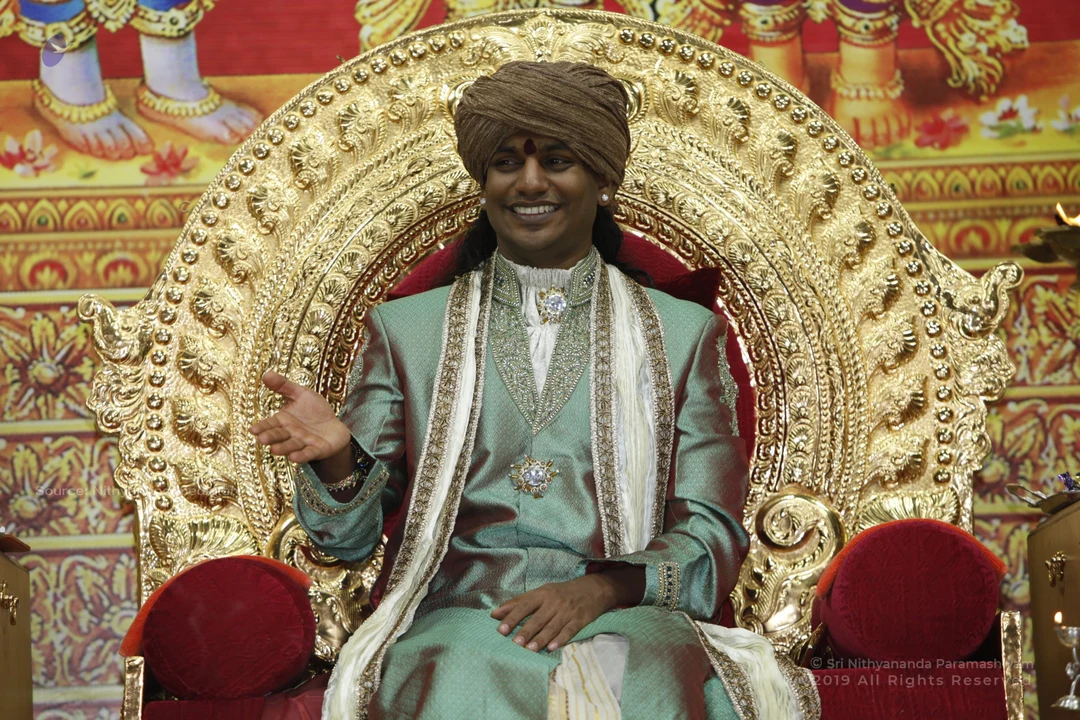
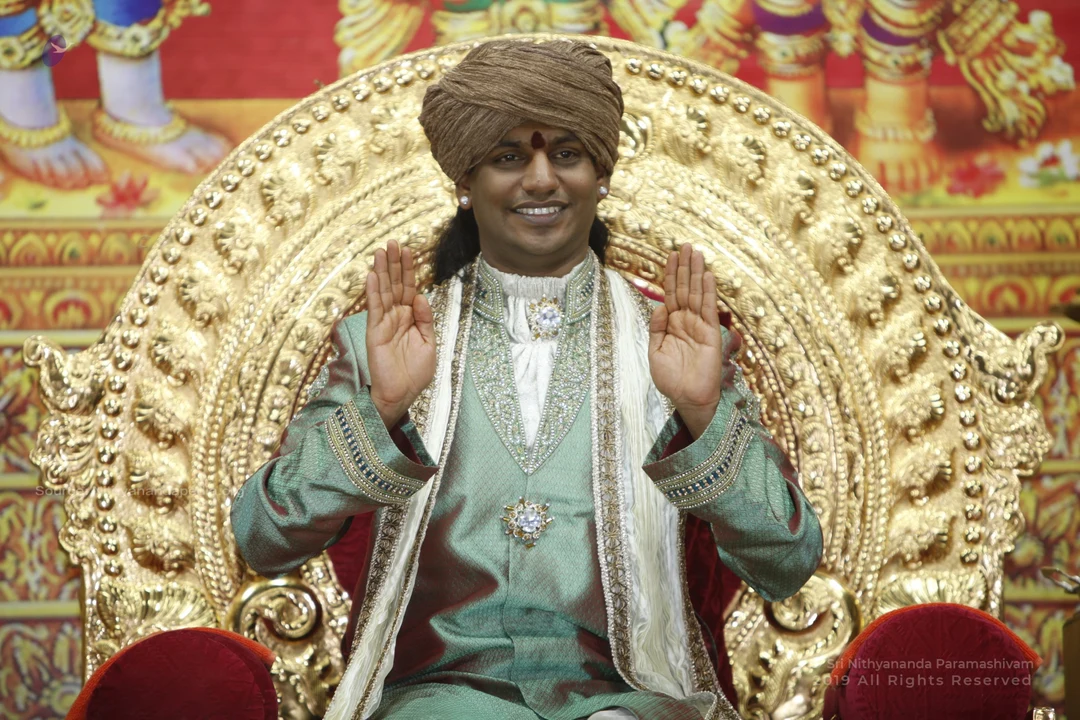
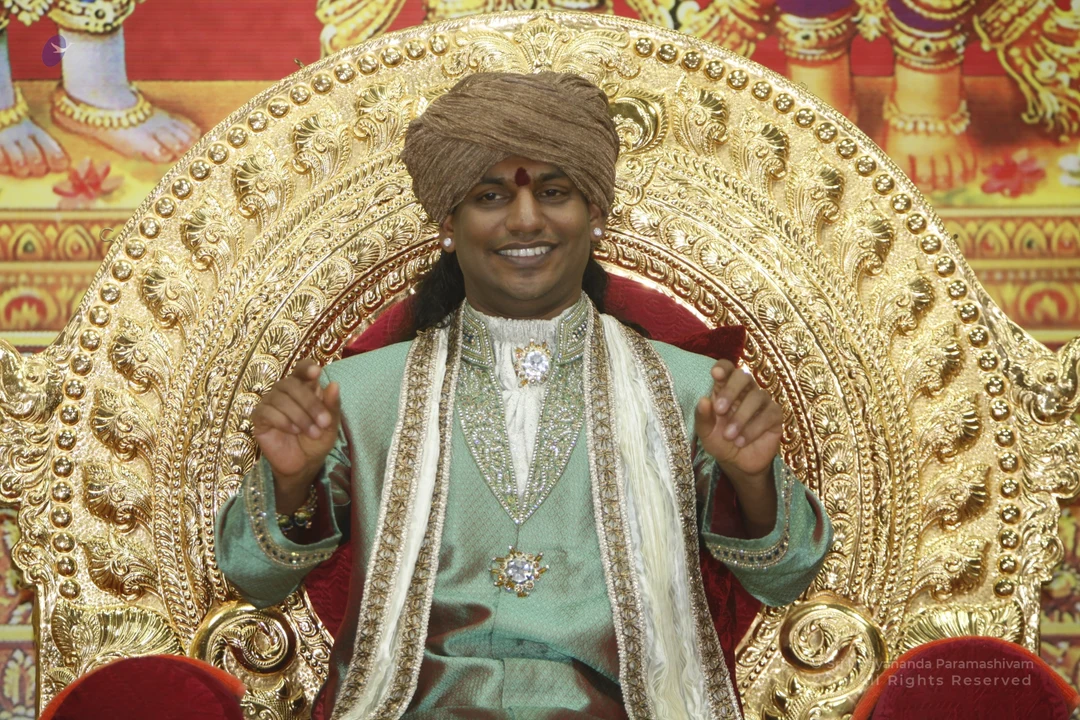
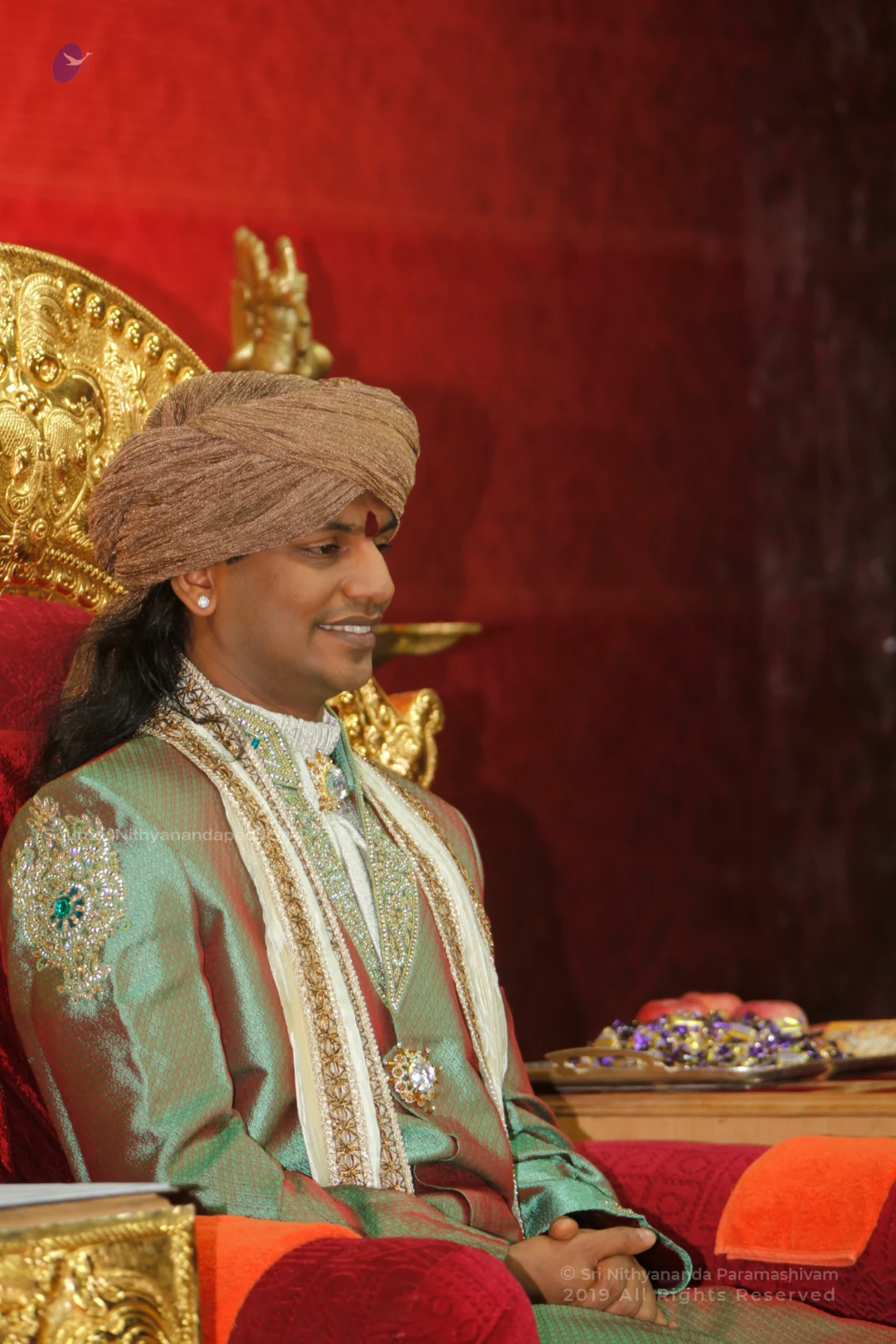
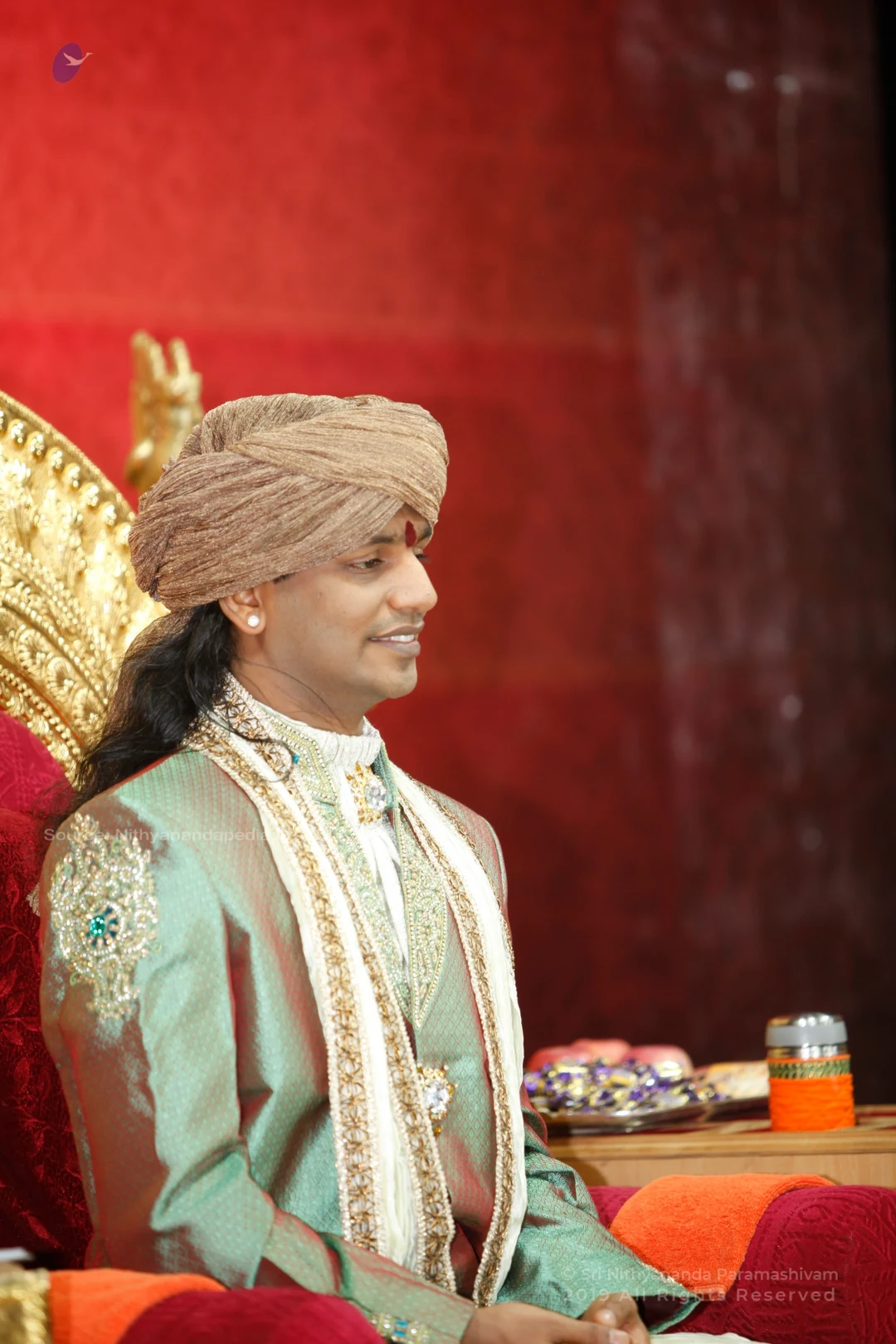
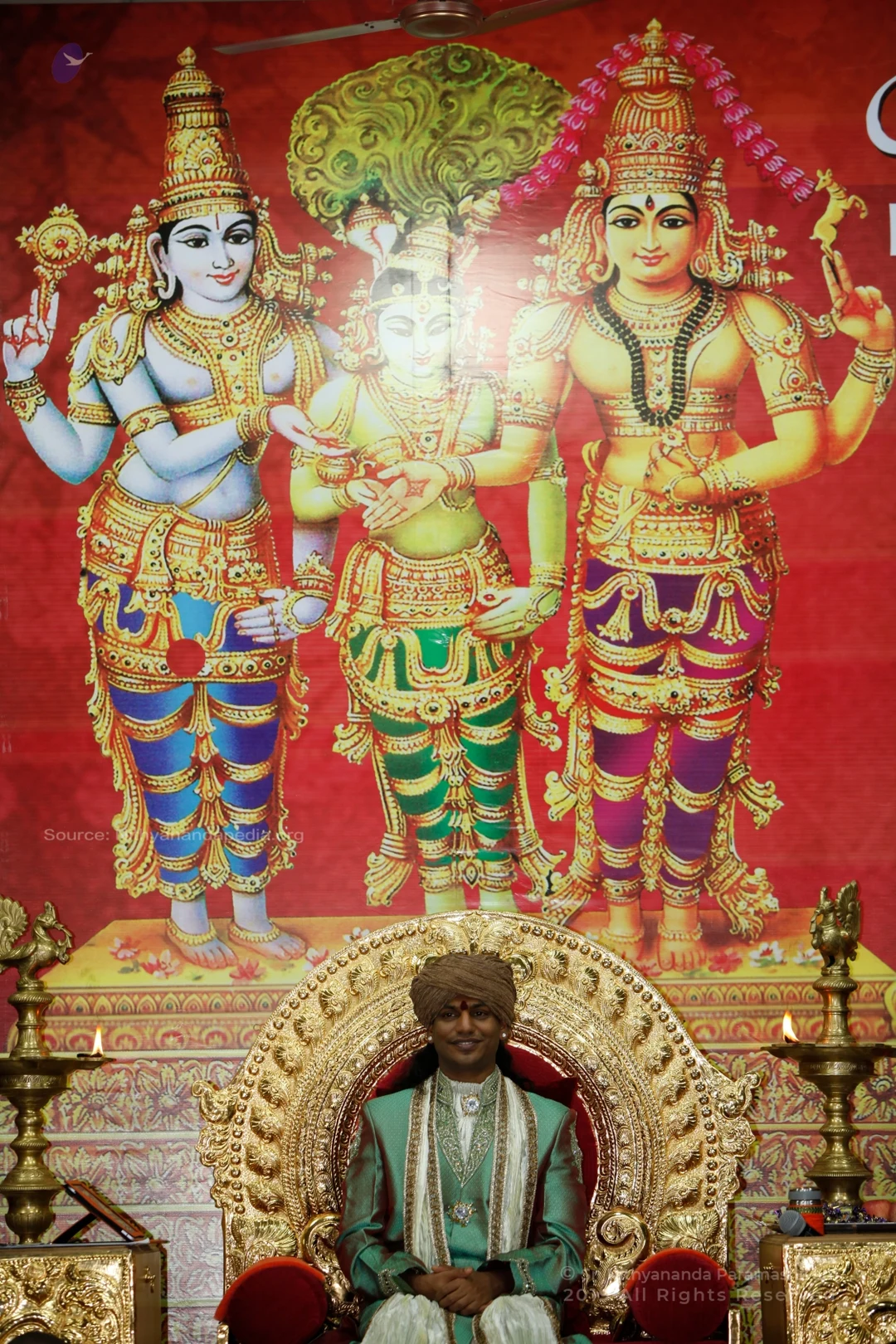
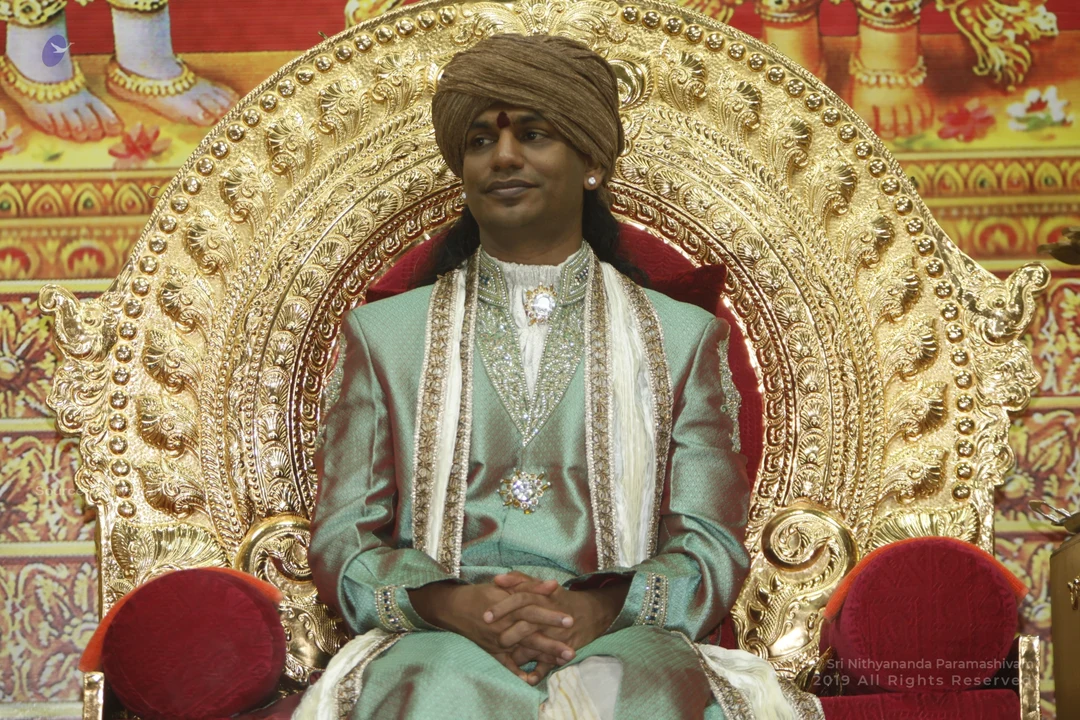
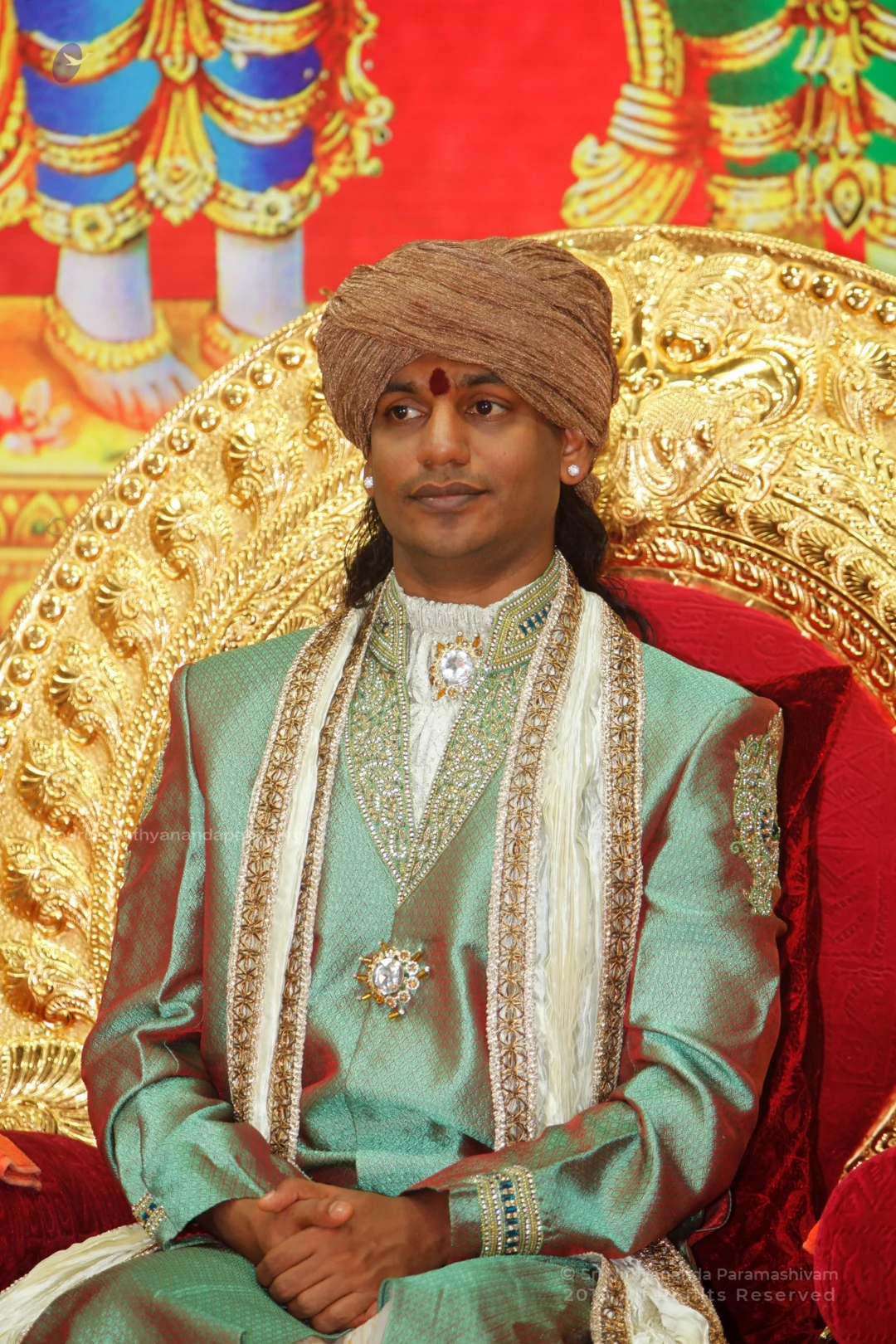
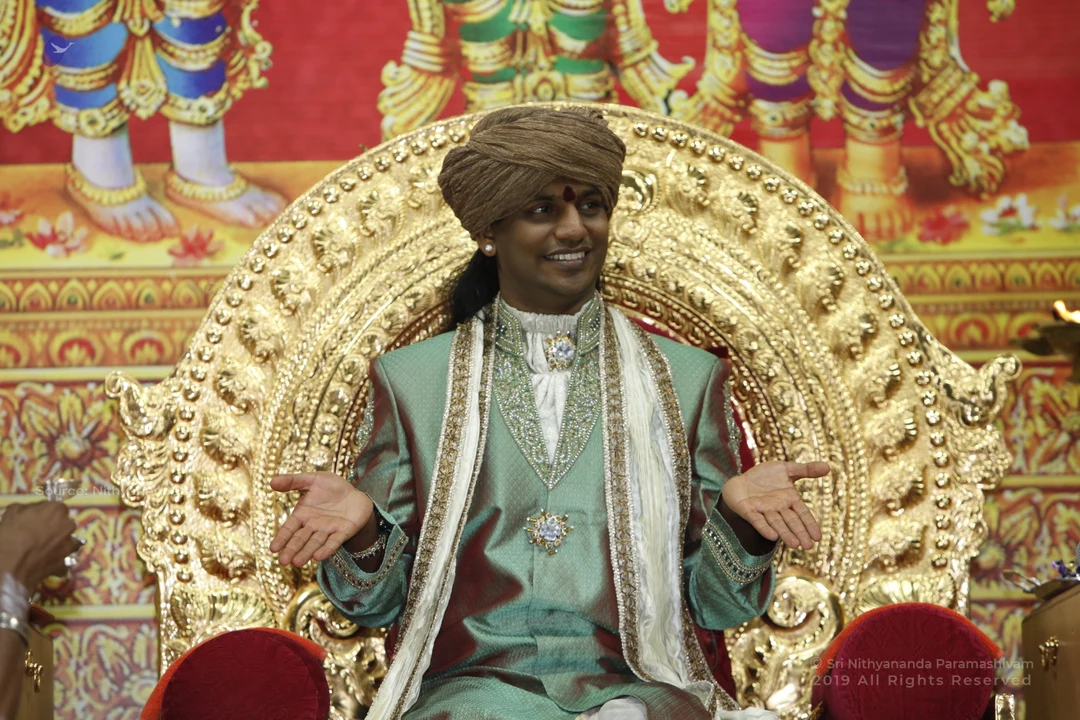
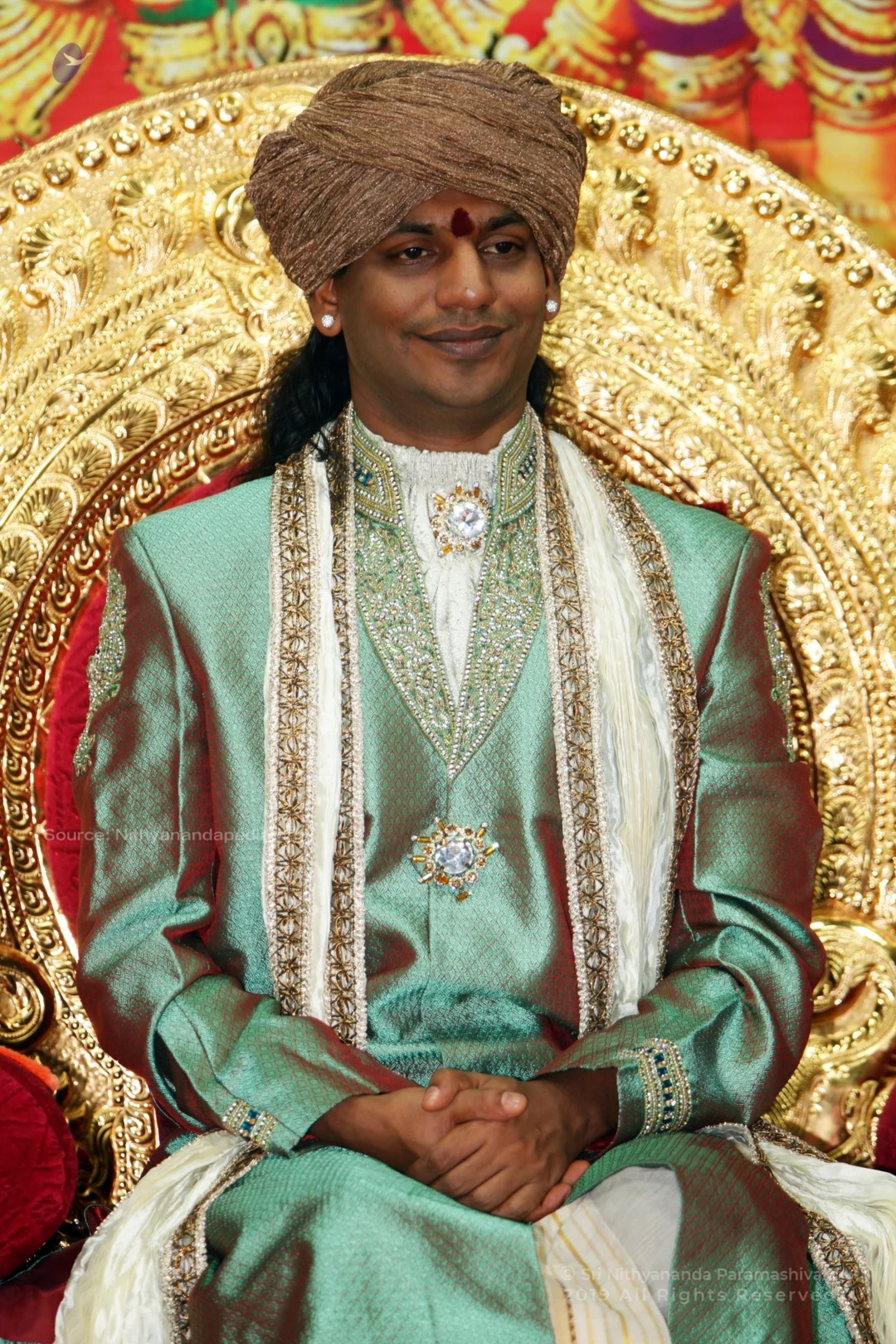
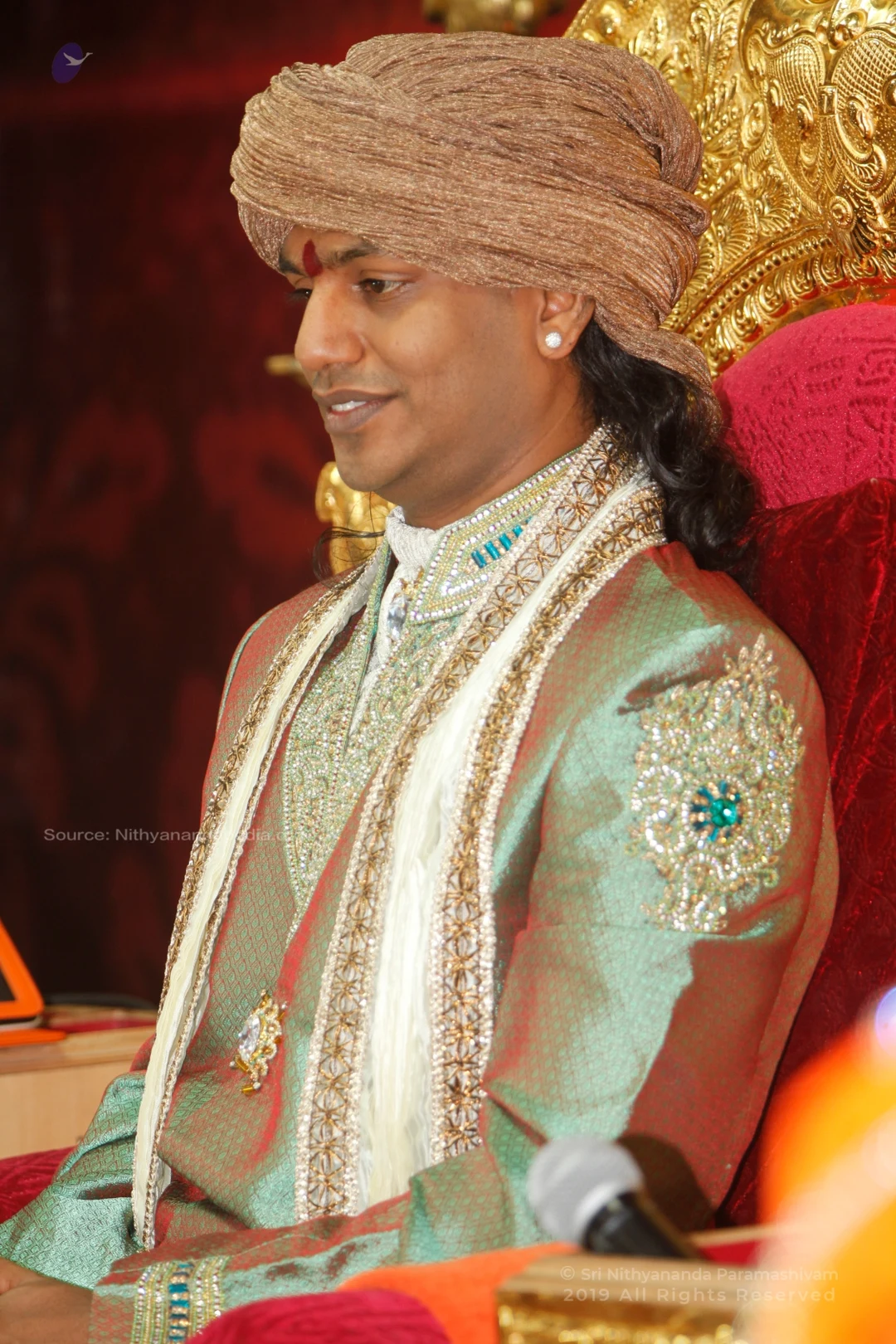
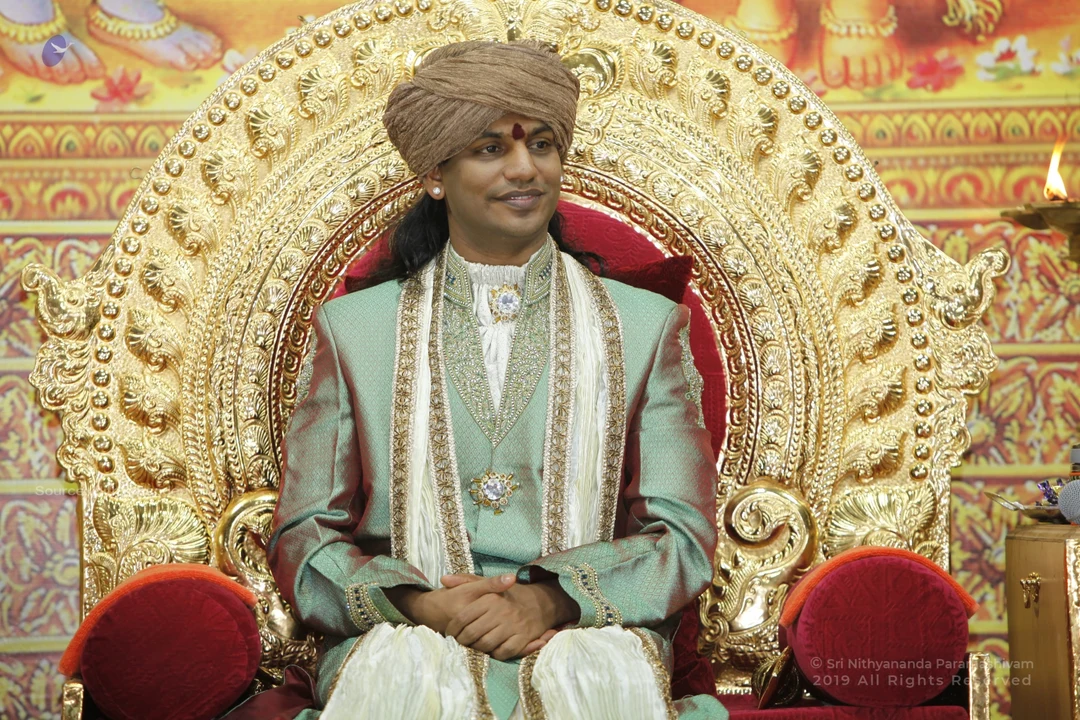
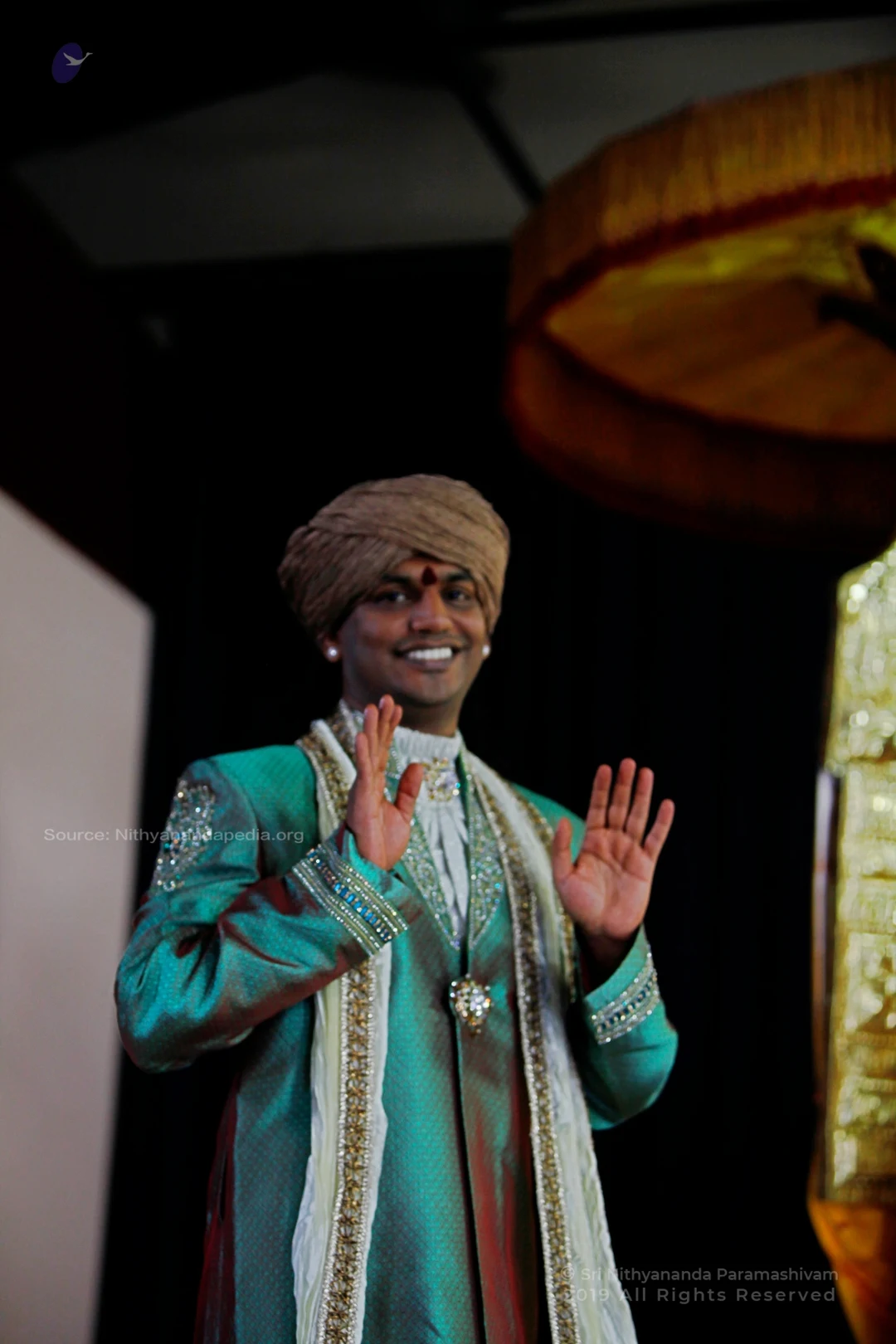
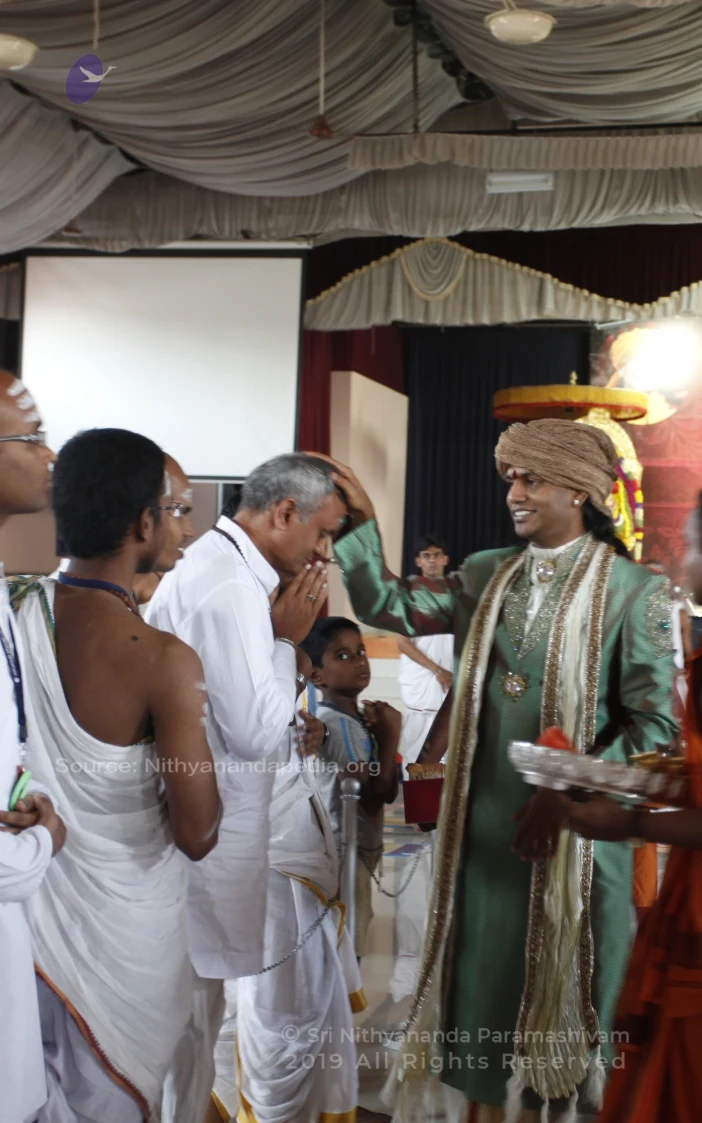
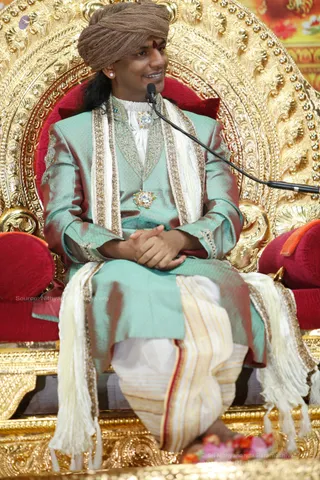
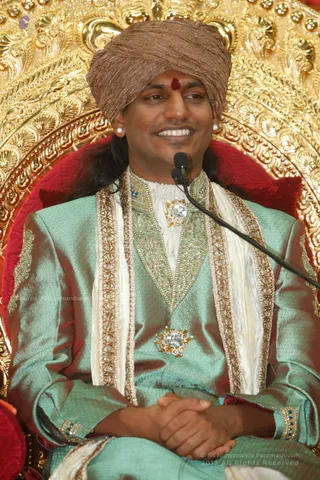
Vedic tradition celebrates life so much. You can’t imagine Buddhists celebrating Buddha’s marriage. ehhh. It’s not that Buddha did not get married. But somehow….. no way you can think of Jesus marriage being celebrated. Even if you talk about it, it is sacrilegious. But we can have everything. One side you can celebrate the Shiva’s sacred ceremony, wedding with Meenakshi, other side you can celebrate Shiva in Samadhi constantly and Shiva appearing as a Dakshinamurthy, Guru, shuddha sanyasi under the banyan tree and initiating people into enlightenment. We can celebrate everything and we have a vast space. The Vedic tradition has a vast space for everything. Today we will see the fun. I myself wearing Sherwani the dress of bridegroom in India usually. But I am going to initiate three people into sanyas now. I am going to give kavi to three brahmacharinis. We have space for everything. And there is no contradiction. In our tradition it is the space where you reside, not the ordinary things are considered. Not only that, the life is celebrated, accepted as it is… life with all its paradoxes.
[11:26]
I will enter into the next sutra. So I will continue on the same sutra; 145th sutra of Patanjali’s Yoga sutra and in the 3rd chapter 39th verse Bandha-kaarana-shaithilyat prachara-samvedanat cha chittasya para-shariraveshah. When the bondages are loosened you have the freedom to unclutch from your body and enter into any other body which is living or dead, or creating new body.
[12:52]
A person who is able to unclutch casually from his body radiates intense presence. See practically even the levitation is nothing but part of me entering into your body; that’s all. My presence when it penetrates your nervous system and awakens your inner potential energy that is what happens as levitation. That is what happens as a kundalini awakening. That is what happens as the spiritual experience. When the presence is loosened in your body… see when your presence is loosened in your body you become omnipresent. Omnipresent, the word needs to be understood. If you are caught inside one nervous system your presence is limited just to what you feel as you; that one small body. If you start the practice of loosening, the ability to get in or get out of one system - two things happens to you. One, you start becoming omnipresent. Second, the tremendous love and compassion, because you start feeling your presence everywhere… because you start feeling your happening everywhere, you start feeling you happening everywhere, the tremendous love and compassion to the whole happens.
[15:35]
I will start the next sutra. It is 3rd chapter 40th sutra Udana-jayat jala-panka-katakadishu asanga utkrantis cha Swami Vivekananda translates this sutra as: when he has conquered the current called udana the yogi does not sink in water or in swamps. He can walk on thorns and so forth and can die at will. By controlling the nerve currents that govern the lungs and upper part of the body, the yogi can walk on water and swamps or on thorns and similar objects and he can die at will: Swami Prabhavananda translates. Swami Sachidananda translates this sutra as: by mastery over the udana nerve current, the upward vital air, one accomplishes levitation over water, swamps, thorns etc and can leave the body at will. Bhagwan Osho translates as: by mastering the current, udana, the yogi is able to levitate and pass without contact over the water, mire, thorns etc.
[17:37]
Udana - that is the key word in this sutra. Patanjali is giving us one more samyama. Mainly this samyama is taught to us for the purpose of iccha mrityu - means you can leave the body at will. In this samyama when you master this samyama the first thing happens to you is levitating on the water means ability to float on the water. But that is not the goal of the samyama. The goal of the samyama is to leave the body at will. Udana means the vital energy, air energy which operates in your lungs in the upper direction. The energy which flows in the upper body filling your lungs and takes care of all the vital parts is called udana. In yogic tradition prana is five prana, vyana, udana, samana, apana. In Siddha tradition prana is ten. I will give you techniques based on yogic, hatha yogic and siddha - all three traditions, for levitation on the water and control the udana and decide the death at will - decision to leave the body as you want when you want.
[20:16]
Today let me introduce this sutra, then I will speak elaborately on the technique. First the sacred secret in this sutra is - decision to leave the body at will should be mastered by all human beings. The science of ‘leaving the body at will’ should be the basic lesson and this should be like a right to education. Please understand just like how all the government insists that every child has a right to education but unfortunately the education they give is more or less like a developing a child or creating a child to work for the government; that’s all. The education does not focus on the basis of the child need to live its ultimate potential; it needs to live all its possibility.
[21:31]
The problem is, by all the governments the human beings are looked at as creatures, creatures happened for the sake of developing the infra structure of the country. The right understanding about the human beings doesn’t exist. Because the understanding about the human beings doesn’t exist properly, the purpose is confused. Because the purpose is confused, the education system is confused; everything is in confusion. In my education system to create new man, I will say that the right education is, everyone has a right to know the science of leaving the body at will, because you happen in the planet earth to exhaust certain amount of karma. If you can retain your udana on your lungs till the karma is exhausted, you will have the freedom to assume the next body or not. You will have the freedom, you will be able to choose whether to go for one more body or not. So I can say this should be the right to education for every child happening on the planet earth.
[23:16]
Wherever our devotees, our disciples, my followers who have trust over what I am teaching; if you are in the political field or in the powerful place in society, influence your society, inspire your community to make this as a mandatory for all human beings. All human beings should have a right to education, to know the science of leaving the body at will and it is possible; the science is possible. It is provable, clear, practical science available in yogic, hatha yogic and Siddha traditions. Every human being should have right to education for this system - the method to control and manage udana, the vital energy which functions in you, and ability to leave the body when you want at will. Not suicide; understand it is not suicide. It is the natural process, but you will have the control over your prana and udana movements so that you can leave the body as you want, when you want, by your will. I will give you the techniques and the detailed different sacred secrets on this sutra in tomorrow’s satsang.
[25:27]
I bless you all who are sitting with us around the world at this moment in 710 places and in two way 8 places, in 220 cities, in 29 countries. Let you all achieve, experience, live, express, radiate and share the eternal bliss, Nithyananda. Thank you.
[26:04]
Link to Video:
| Video | Audio |
Transcription
Prayer. Welcome. As you are aware we are celebrating Chitrai Brahmotsavam marriage ceremony of Devi. This is the largest religious gathering in all the 5 states of southern India. The divine ceremony of the marriage of Meeankshi & Sundareshwara. All 10 days we will have different rituals like puja, homa and the devi’s marriage ceremony, coronation ceremony. Everyday Devi will grace devotees appearing in one one sacred vehicle. Today Meenakshi is on the sacred vehicle ‘swan.’ We call it Hamsa Vahana in Sanskrit. The significance of the swan is liberated consciousness. Whoever is liberated consciousness – paramahamsa devi resides in them. Sundareshwara literally means the lord of grace, beauty. He is gracing on the throne each day both of them will be gracing in diff sacred vehicles. To mark Meenakshi’s presence, these 10 days all paadukaas will give kumkum all over the world. let us work on Devi’s energy today. At least 5 places should have kumkum today – Ohio, San Jose, Oman, Seattle, Malaysia & Phoenix. All these places will have kumkum. San Jose will have Devi’s footprint on the floor today and at least one auspicious leela each day. Jasmine is Meenakshi’s favorite flower. So today in San Jose Jasmine flower will appear on Devi & Paadukaas. From Madhurai directly it will come there! Madhurai is famous for Jasmine flower. You will see that Madhurai Jasmine is a unique variety flower. Exactly that variety flower will come in San Jose. This will prove that the flower has directly come from Madhurai. It will come directly from the Garbha Mandir of Devi Madhura Meenakshi deity in Madhurai. That Jasmine Madhurai Malli flower will appear on San Jose Meenakshi to prove her presence in San Jose. Jasmine is not available in the U.S. so nobody can suspect that they bought it from a shop and put it. Let you all be blessed with Meenakshi’s presence – Sundareswara’s grace. Vedic Tradition celebrates life so much! One side we can celebrate Shiva’s marriage ceremony with Devi, other side we can celebrate Shiva being in Samadhi and as Dakshina Murthy – Suddha Sanyasi initiating people into enlightenment. Vedic tradition has vast space for everything! Life is celebrated, accepted as it is! Life with all its paradoxes is accepted as it is! I continue on the same sutra today - 145th Patanjali Yoga Sutras, 3rd chapter 39th verse Bandha karaana saitilyaath prachaara samvedanaascha chithasya para sareera aveshaha When the bondages are loosened, you have the freedom to unclutch from your body & enter into any other body which is living or dead or creating new body. A person who is able to unclutch casually from his body radiates intense presence. Practically even the levitation is nothing but part of me entering your body. that’s all. My presence when it penetrates your nervous system and awakens your inner potential energy that is what happens as inner potential energy, that is what happens as awakening of your inner kundalini energy, that is what happens as spiritual experience. When the presence is loosened in your body. when your presence is loosened in your body, you become omni-present. Omni-present the word needs to be understood. If you are caught inside one nervous system, your presence is limited just to what you feel as you that one small body. if you start the practice of loosening the ability to get in or get out of one system, 2 things happen to you – 1. You start becoming omni-present. 2nd you have the tremendous love and compassion because you start feeling your presence everywhere. You start feeling you happening everywhere, the tremendous love & compassion to the whole happens. 146th Patanjali Yoga Sutras, 3rd chapter 40th verse Udana Jayaath Jala Pankha Kantaka Aadishu asangha udkraanthischa Vivekananda: When he has conquered the current called Udana, the yogi does not sink in water or in swamps he can walk on thorns and so forth he can die at will Prabhavananda: By controlling the nerve currents that govern the will and upper parts of the body, the yogi can walk on swamps or thorns or similar objects and he can die at will Satchitananda: By mastery over the udana nerve current the upward vital air one, accomplishes levitation over water, swamps, thorns etc and can leave the body at will O: By mastering the current Udana, the yogi is able to levitate and pass without contact on water, myre and thorns. Udana is the keyword in this sutra. Patanjali is giving us one more samyama. Mainly this samyama is taught to us for the purpose of Iccha Mrityu – means you can leave the body at will. When you master this samyama, the 1st thing that happens to you is levitating on the water means ability to float on the water. But that is not the goal of the samyama. The goal of the samyama is to leave the body at will. Udana means the vital air energy which operates in your lungs in the upper direction. The energy which flows in the upper body filling your lungs and takes care of all the vital parts is called Udana. In yogic tradition praana is 5 – praana, vyaana, udaana, apaana, samaana. In Siddha Tradition it is 10. I will give you techniques based on yogic, siddha and hata yoga – all 3 for levitation and control on water and to decide the death at will. Decision to leave the body as you want and when you want. Today let me introduce this sutra. Then I will speak elaborately on the technique. 1st the sacred secret in this sutra is decision to leave the body at will should be mastered by all human beings. The science of leaving the body at will should be the basic lesson and this should be like a right to education. Just like how all Governments insist that every child has right for education, unfortunately the education does not focus on the basis that the child needs to live to its ultimate potential and its ultimate possibility. The right understanding about human beings does not exist properly so the purpose is confused and so the education system is confused and everything is confusion. In my education system for the new man I will say that the right education is that everyone should know the science of leaving the body at will because you happen in planet earth to exhaust certain amount of karma. If you can retain yoru Udana on your lungs till that karma exhausts, you will have the freedom to choose whether to go for one more body or not. So I can say this should be the right to education for every child happening on planet earth. Wherever my devotees, followers who trust what I am teaching, inspire your society, communities to make this as a mandatory thing for all human beings – all human beings should have the right to education to know the science of leaving the body at will. It is possible. It is clear practicable science available in hata yogic siddha practices. Every human being should have right to this education - The method to control and manage the Udana – the vital energy which functions in you and ability to leave the body when you want at your will. It is not suicide. Understand. It is the natural process but you will have the control over your praana and Udaana movements so that you can leave the body when you want and as you want by your will. I will give you techniques and detailed sacred secrets in this sutra in tomorrow’s satsang. Before we end the satsang, you can all watch the naishtika Brahmacharya ceremony and enjoy. There are some 32 steps to be precise in the sanyas initiation. This is one step before the naishtika Brahmacharya is given. Blessings!
Photos
Photos Of The Day:
Materialisation
Photos from this day
View all 47 photosPhotos
43 photosSource gallery
Materialisation
4 photosSource gallery