Skip to content
Monday

28 February 2011

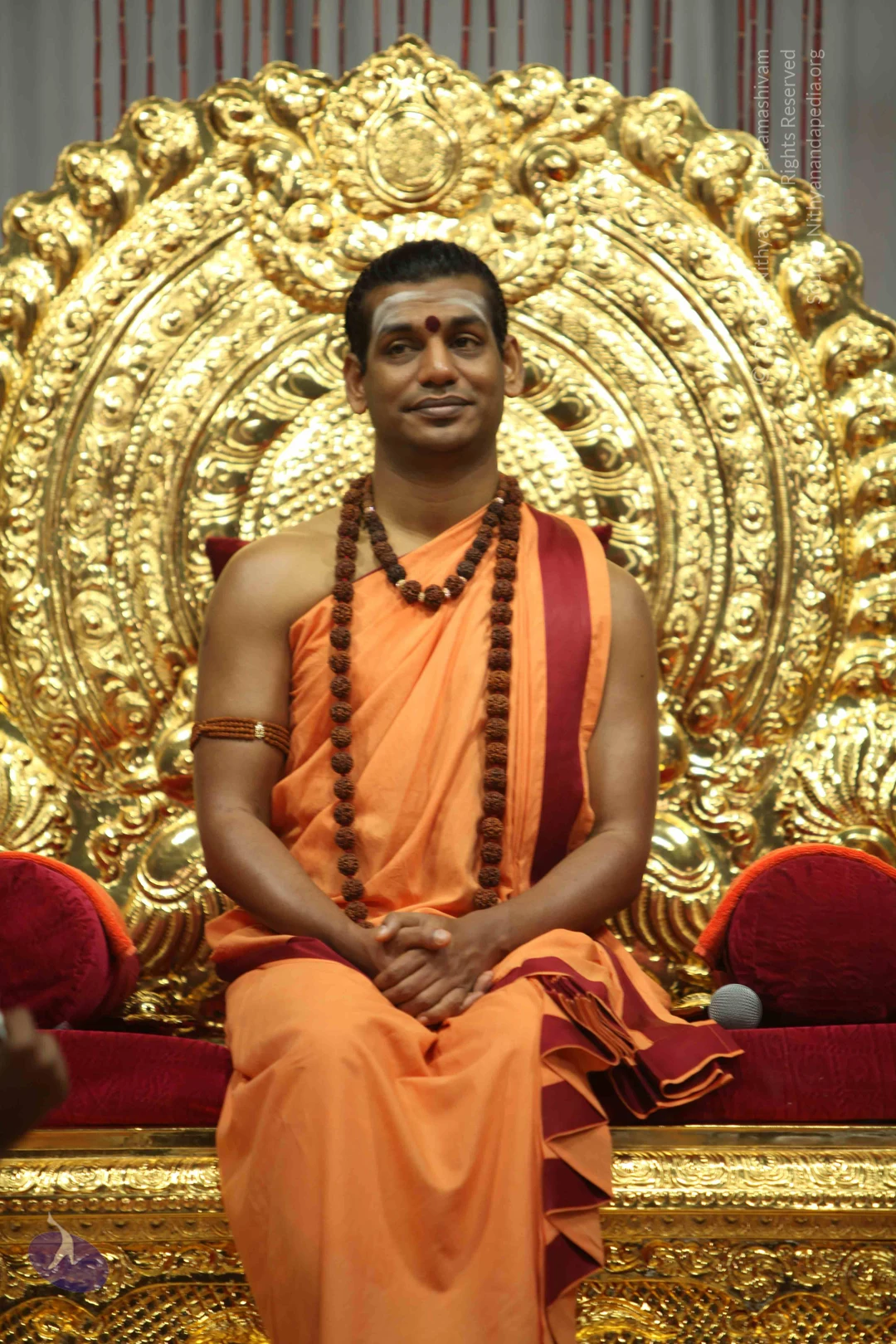
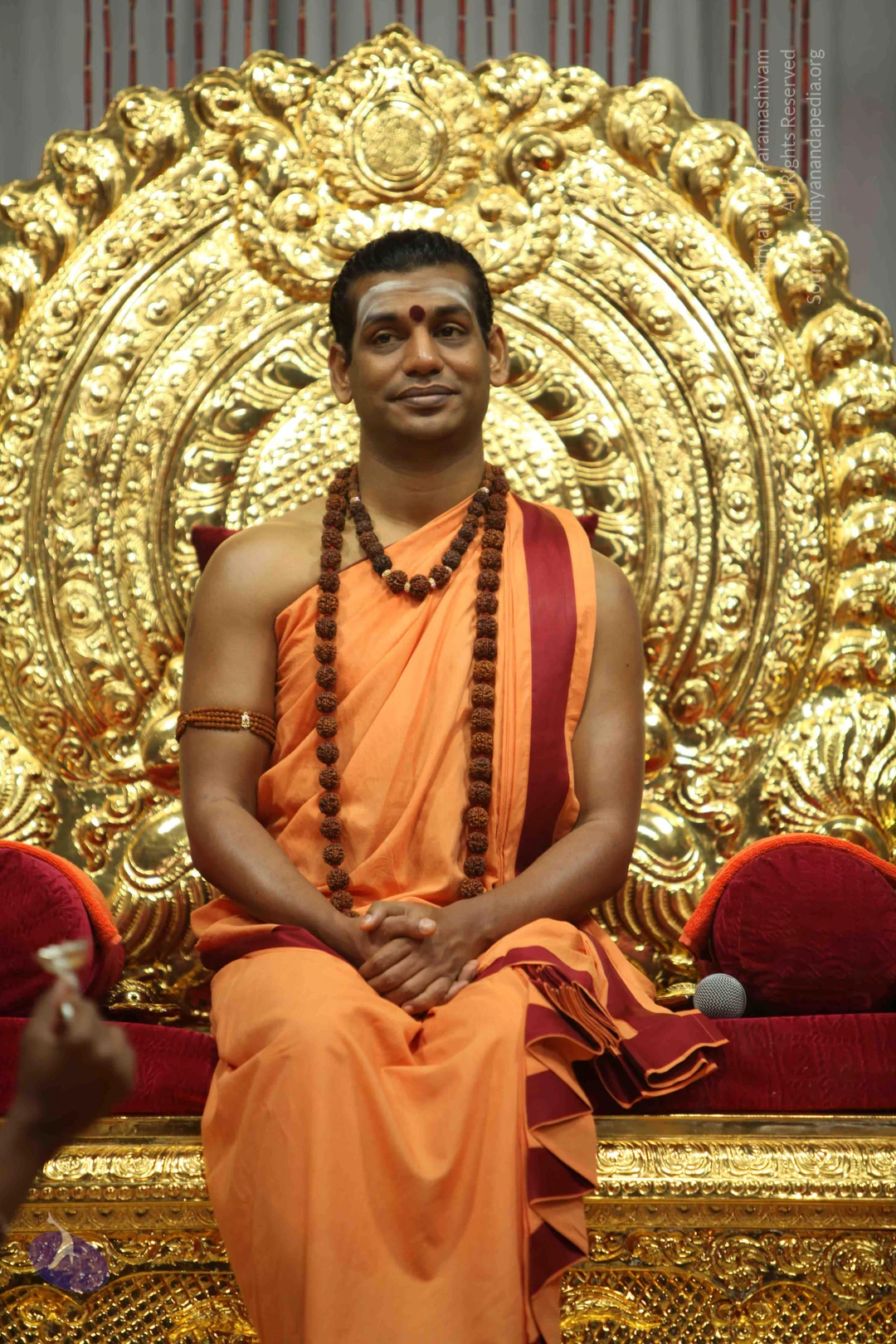
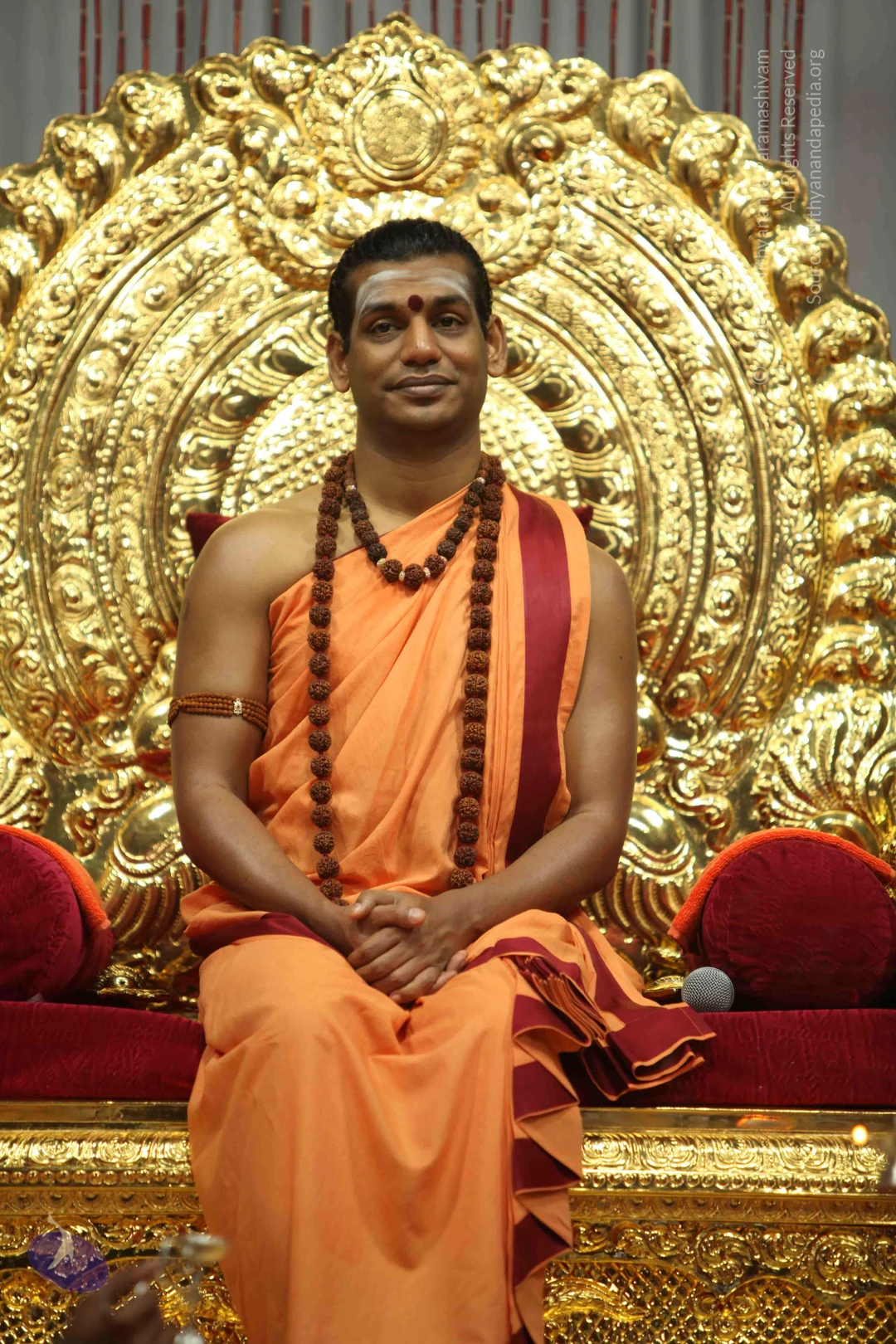
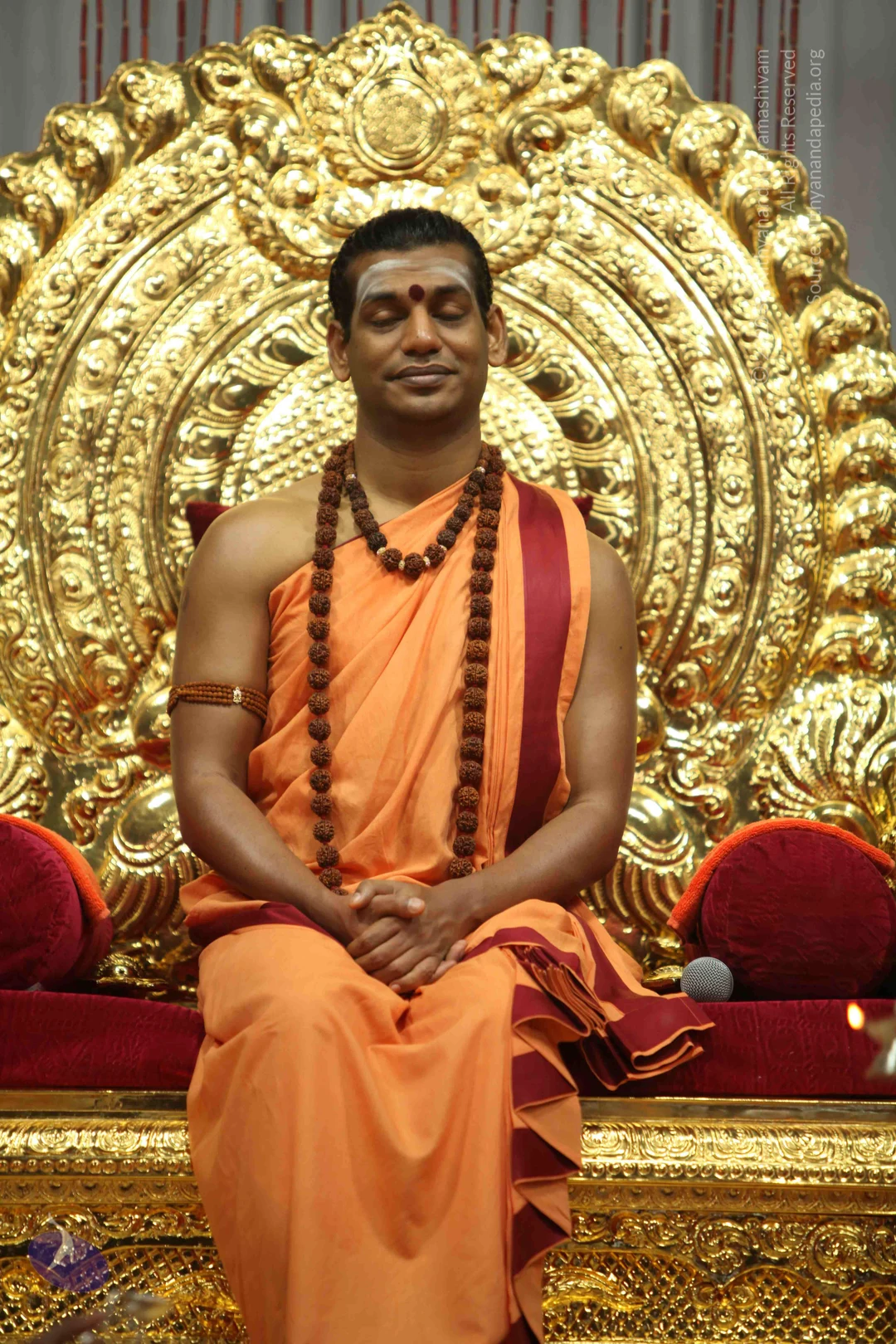
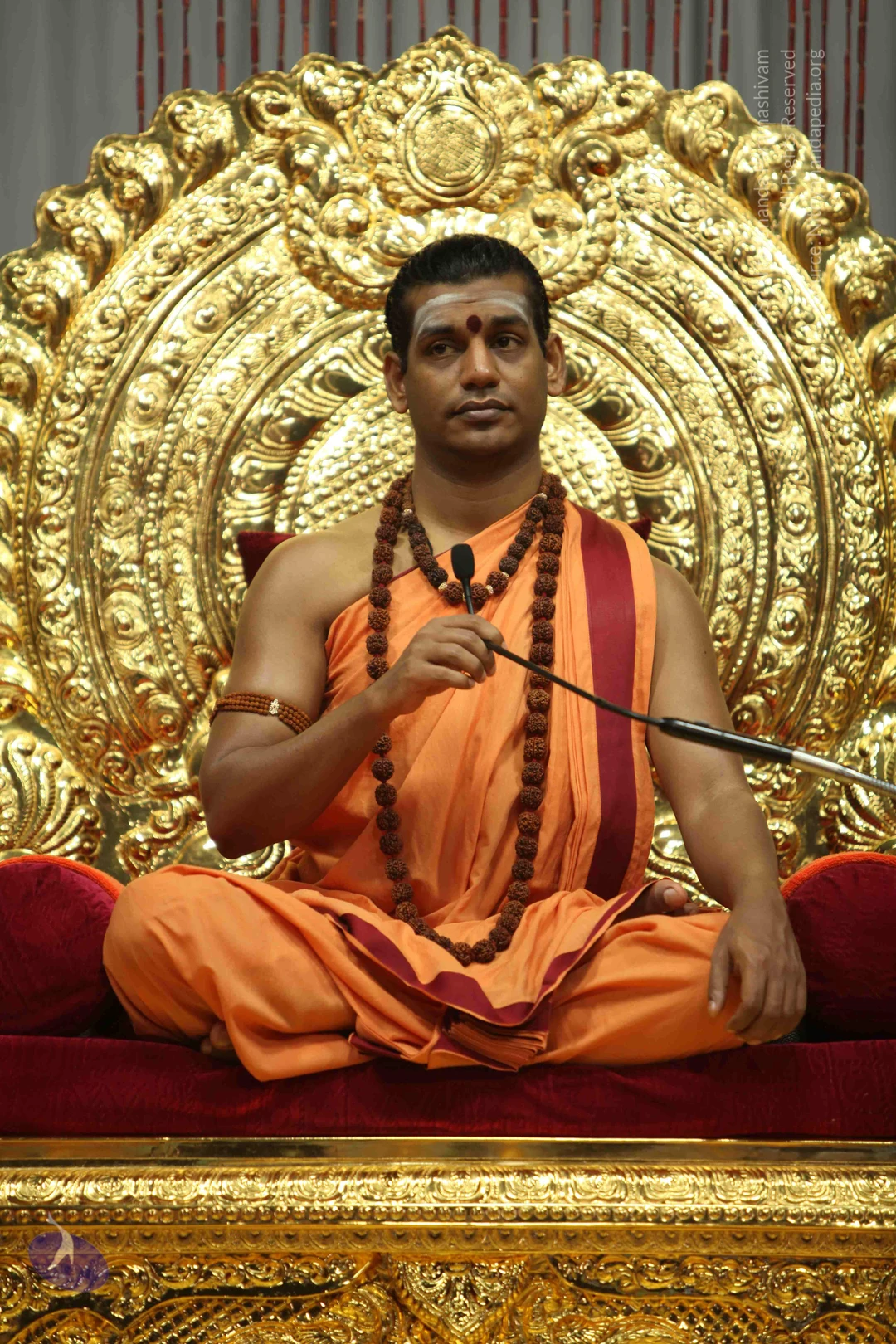
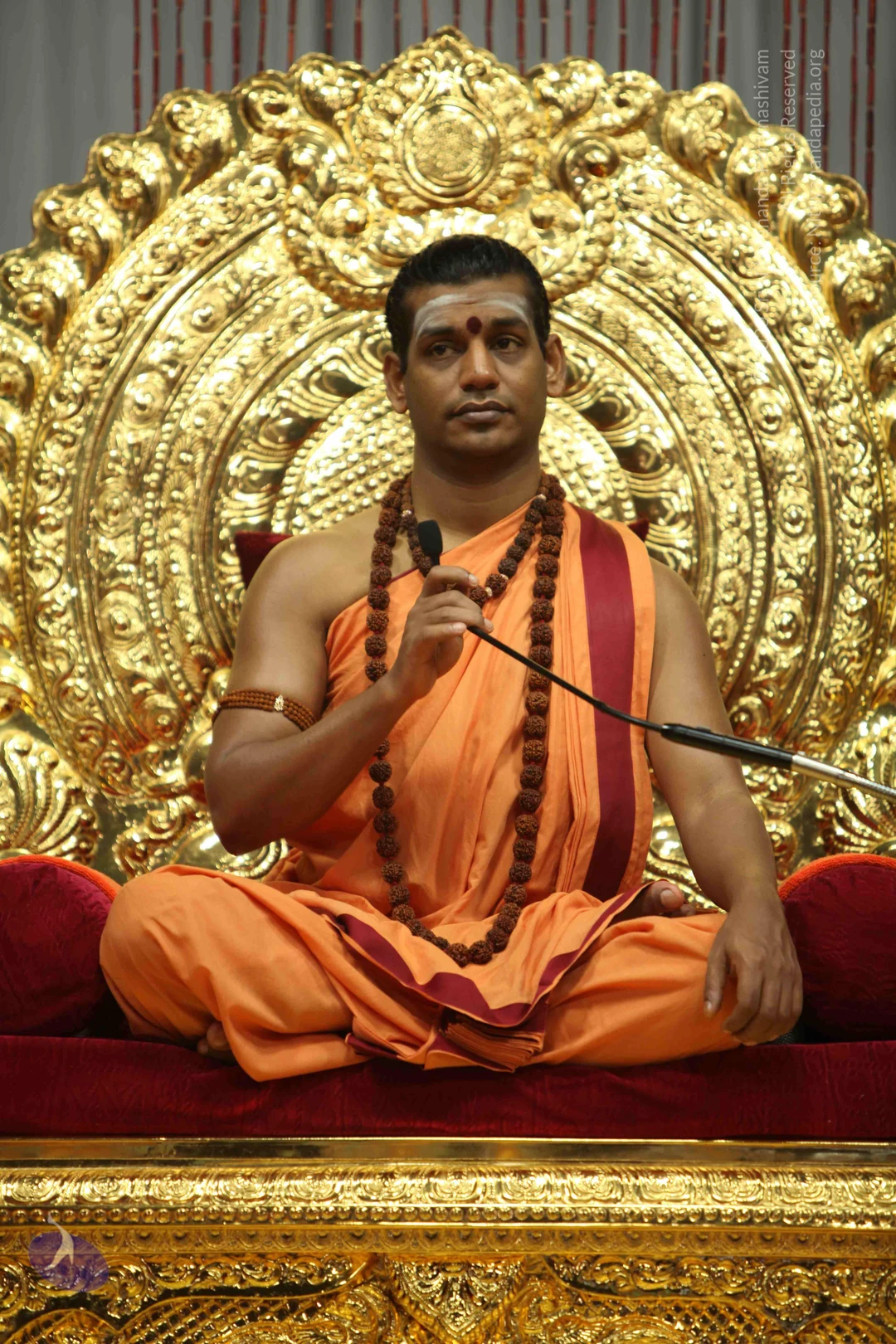
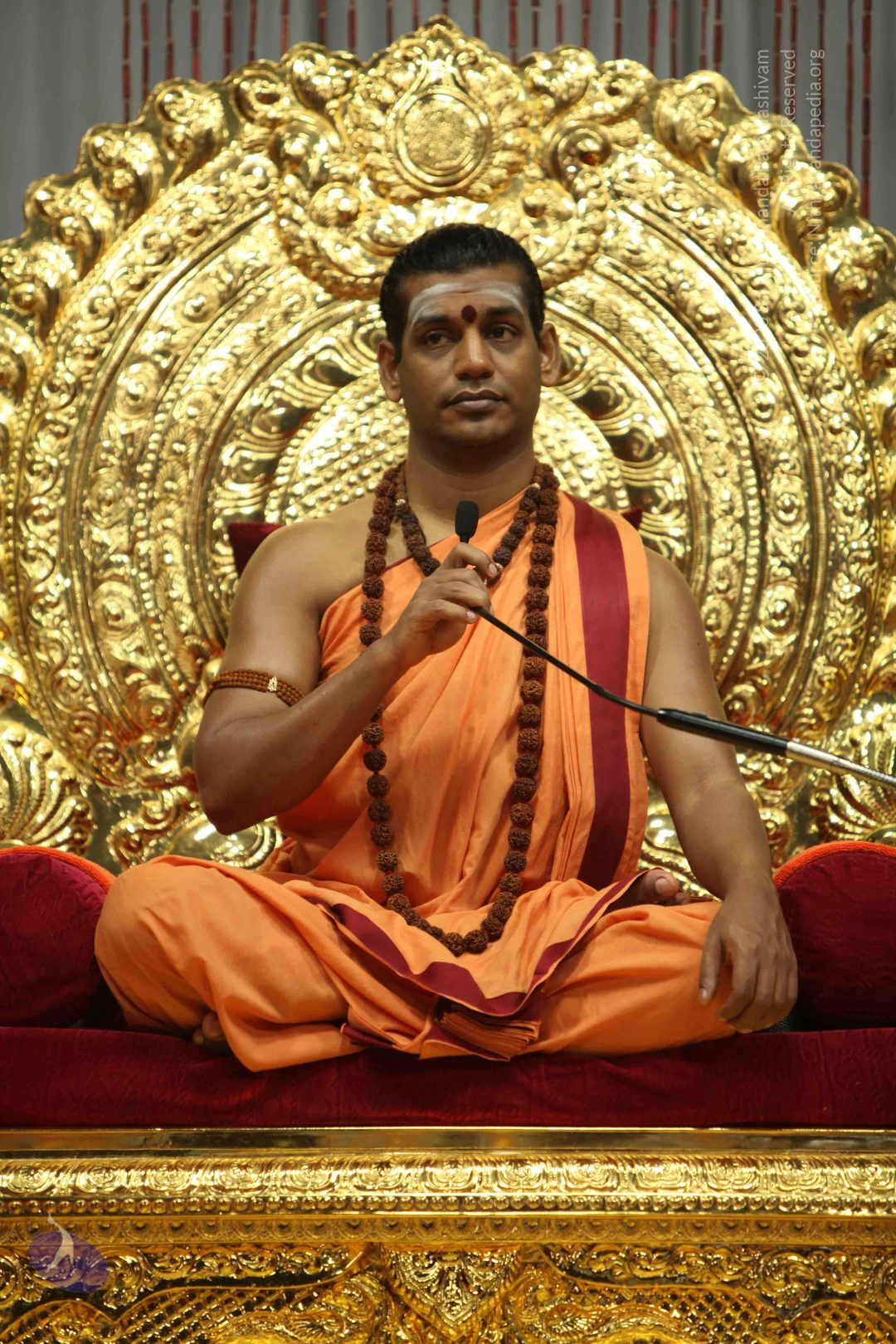
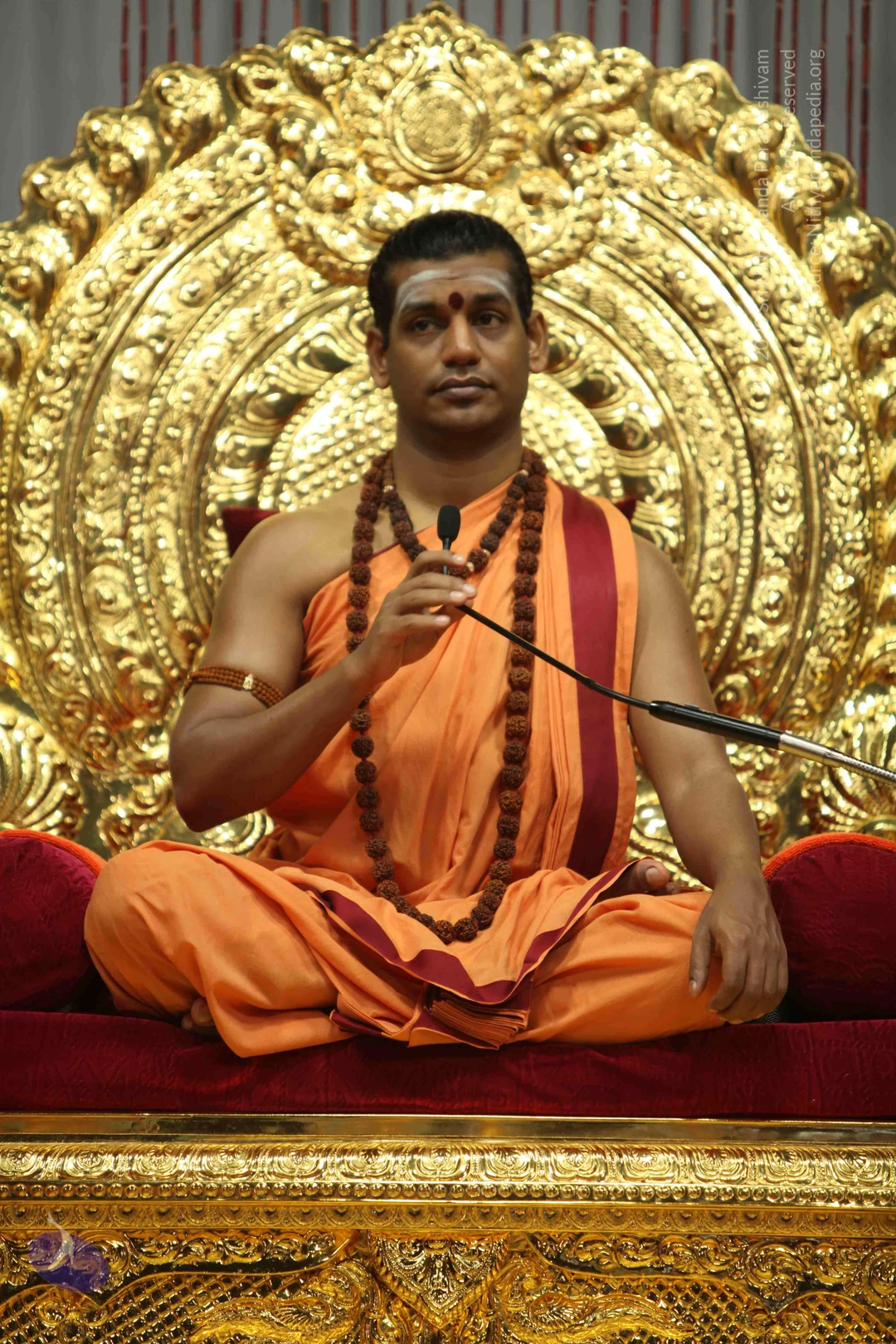
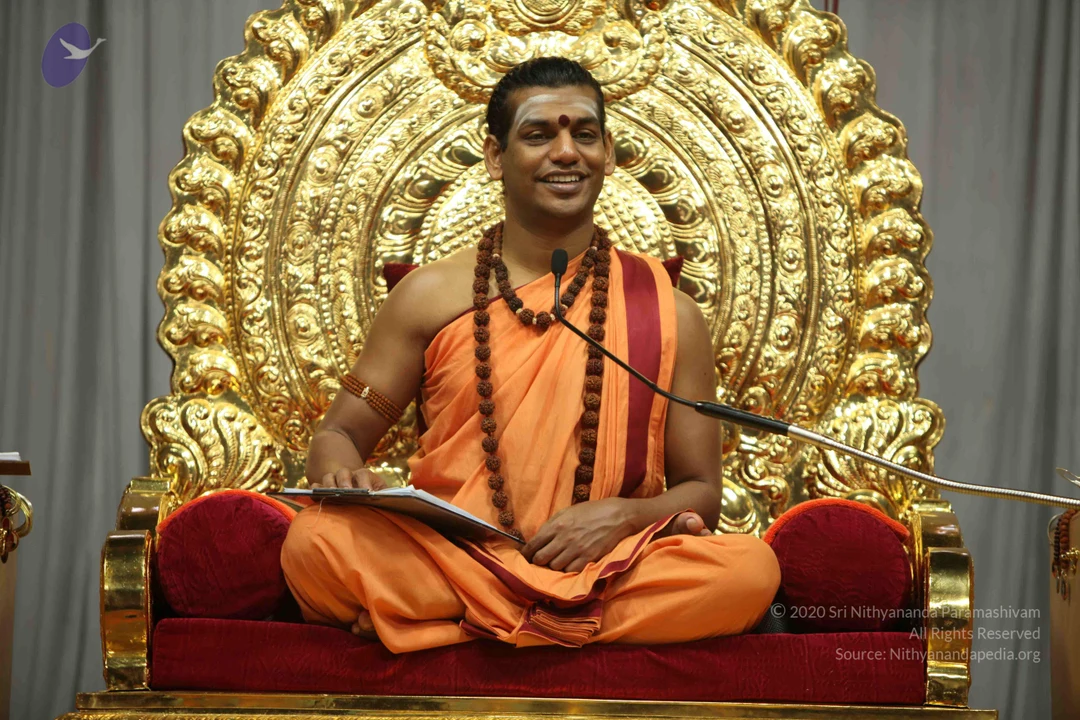
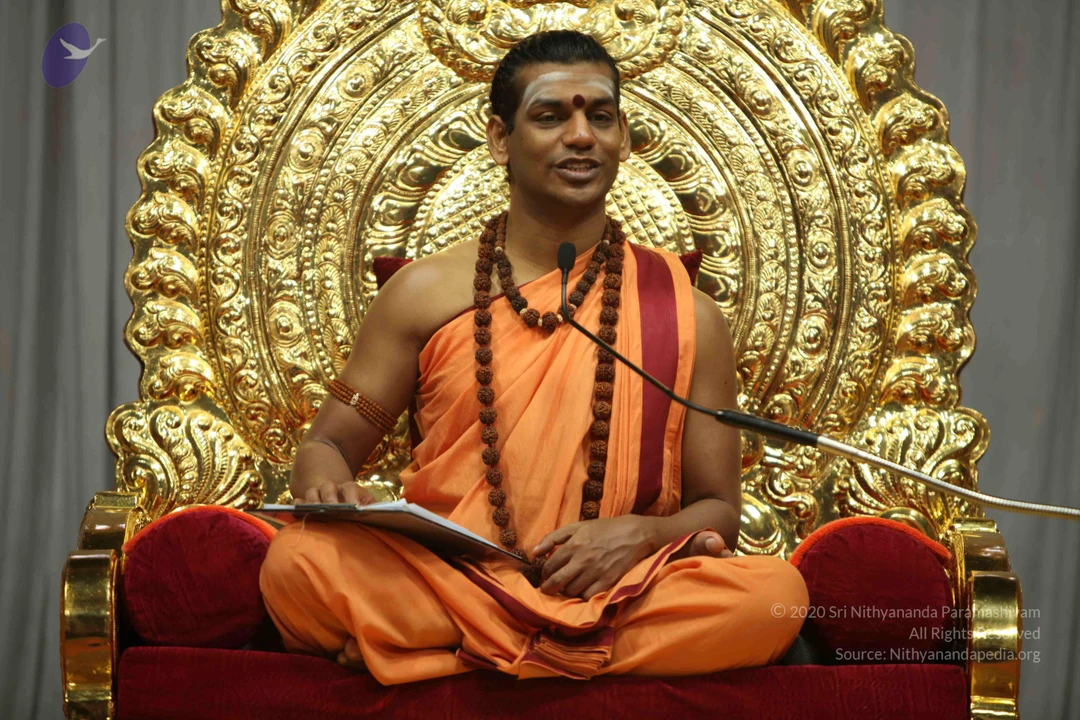
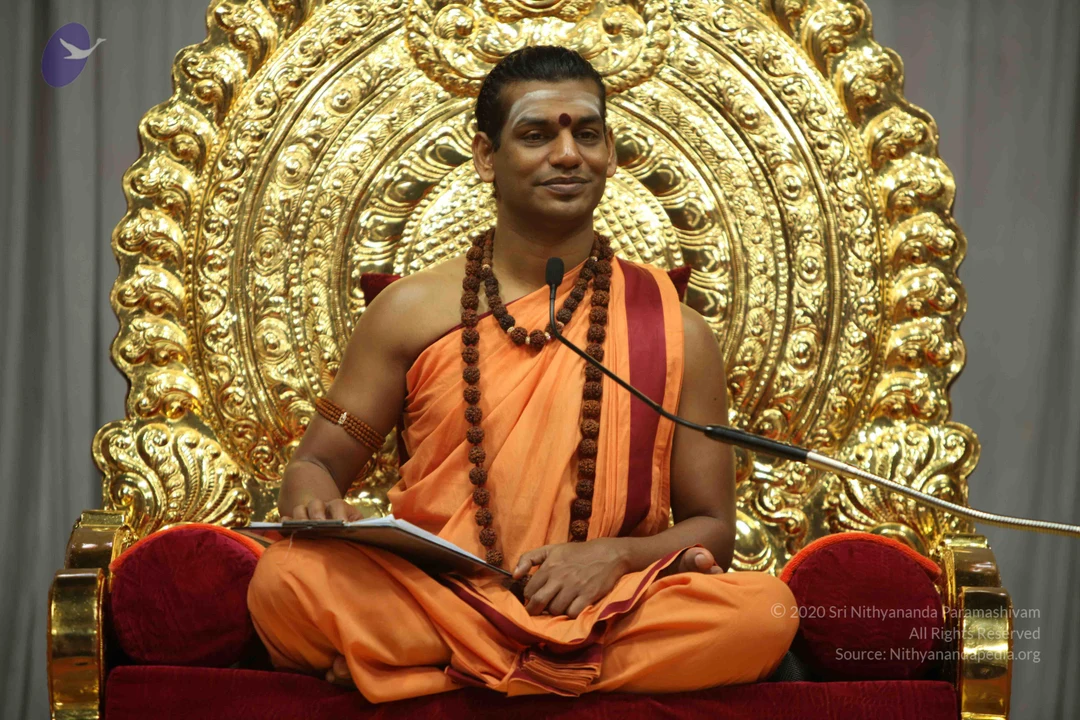
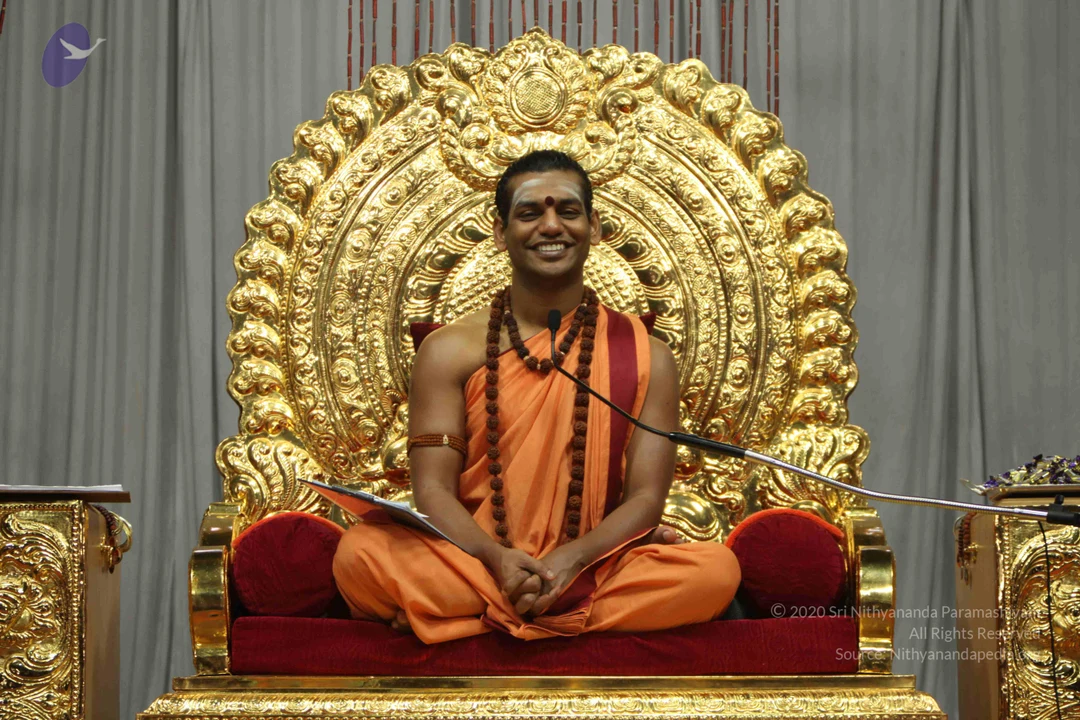
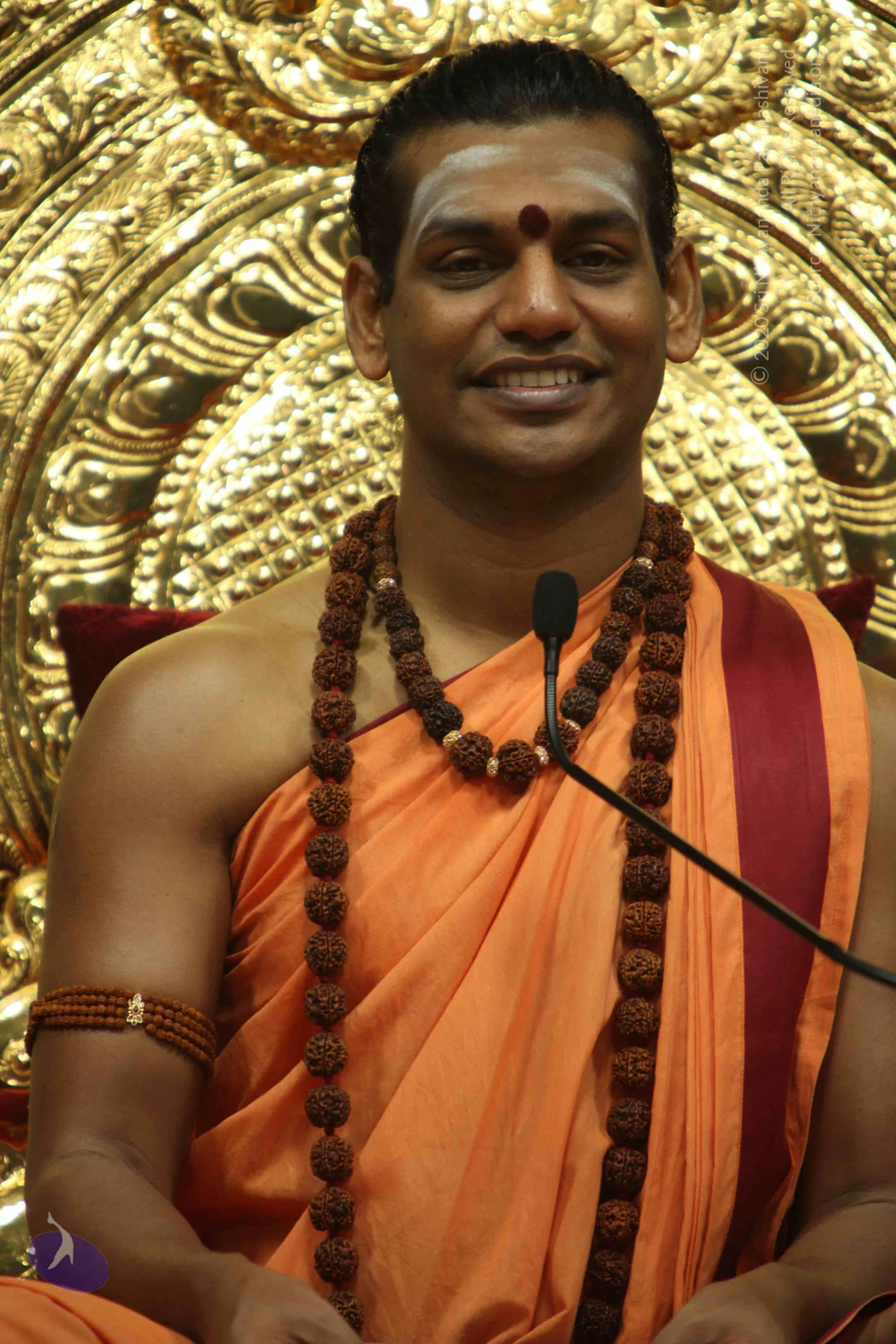
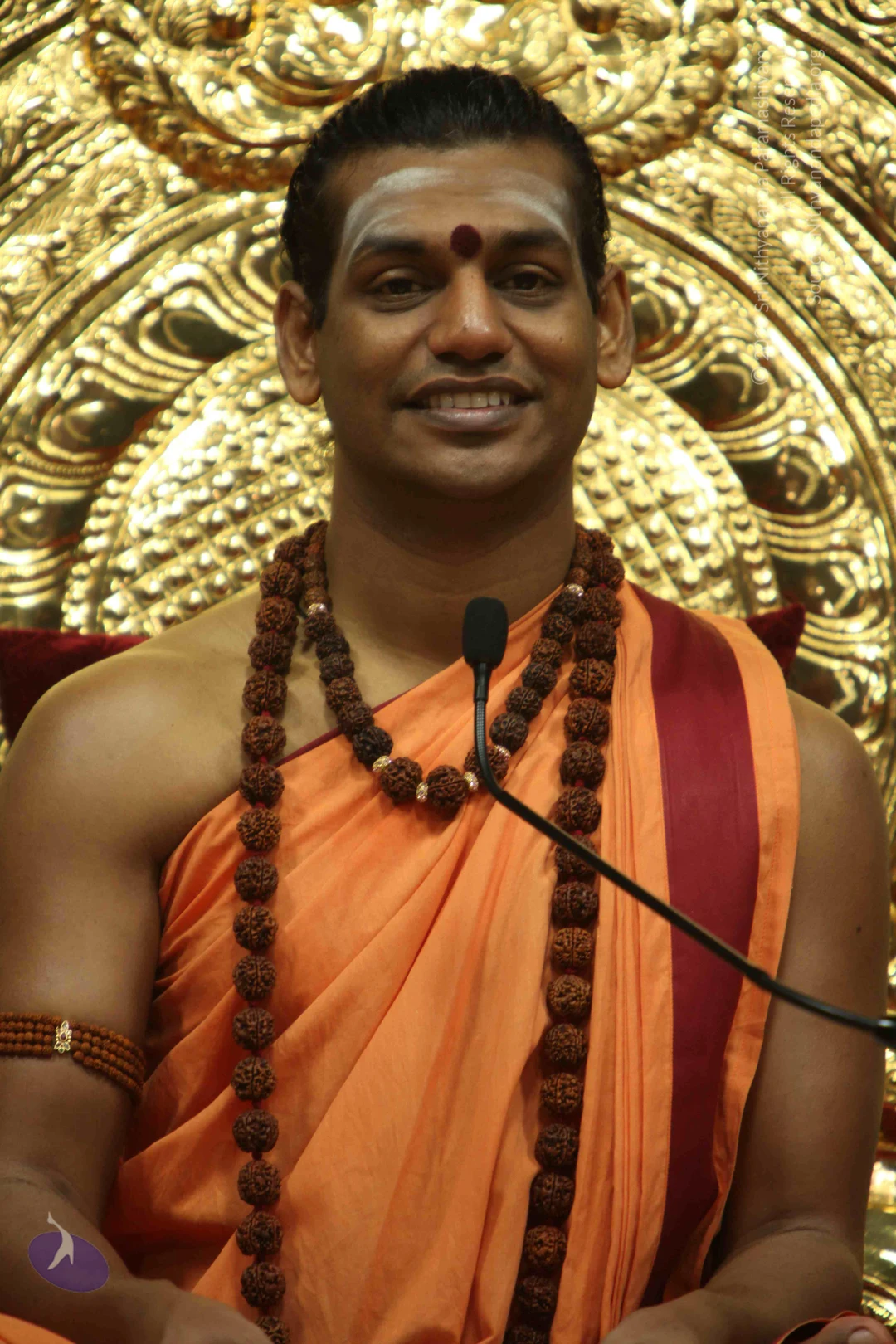
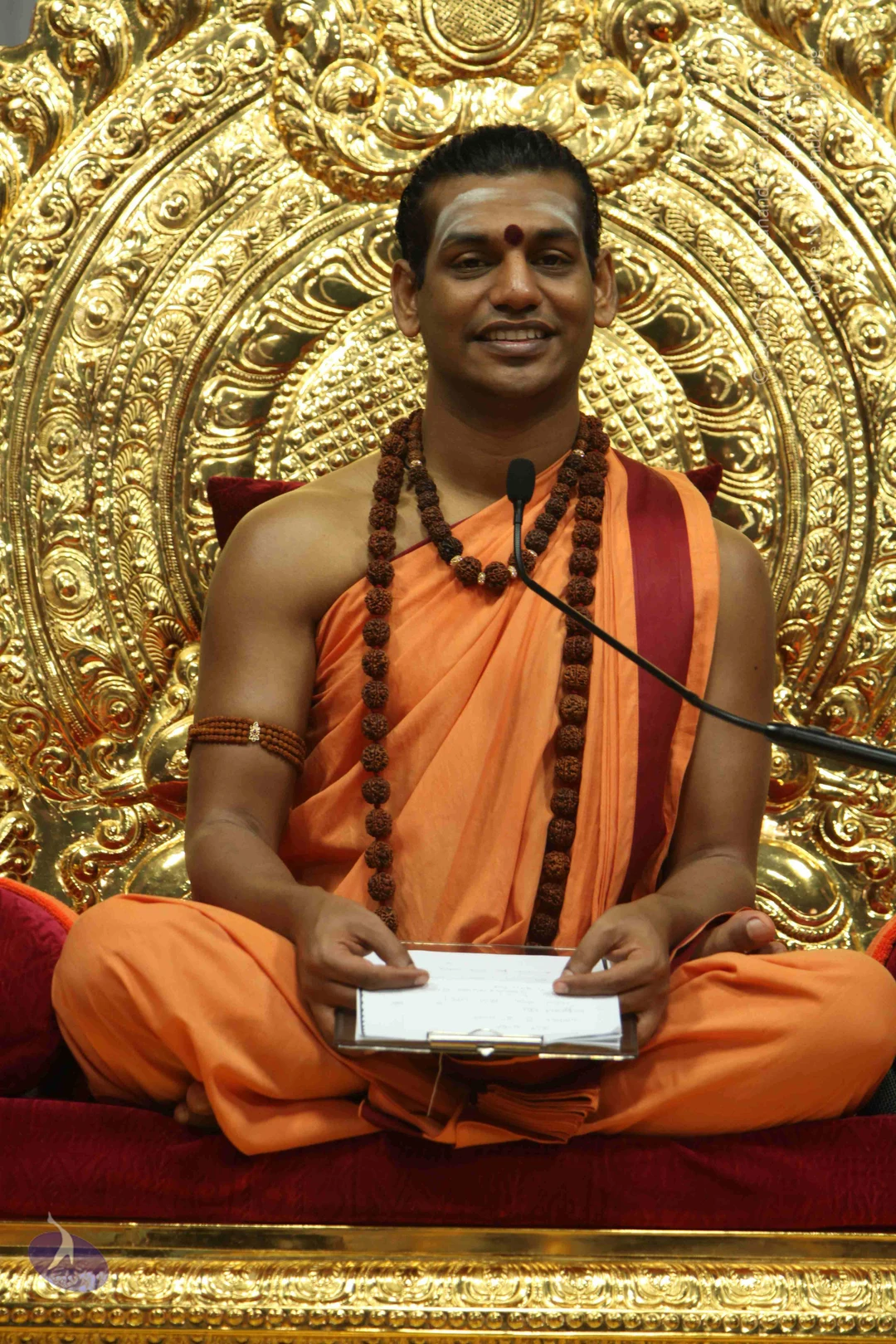
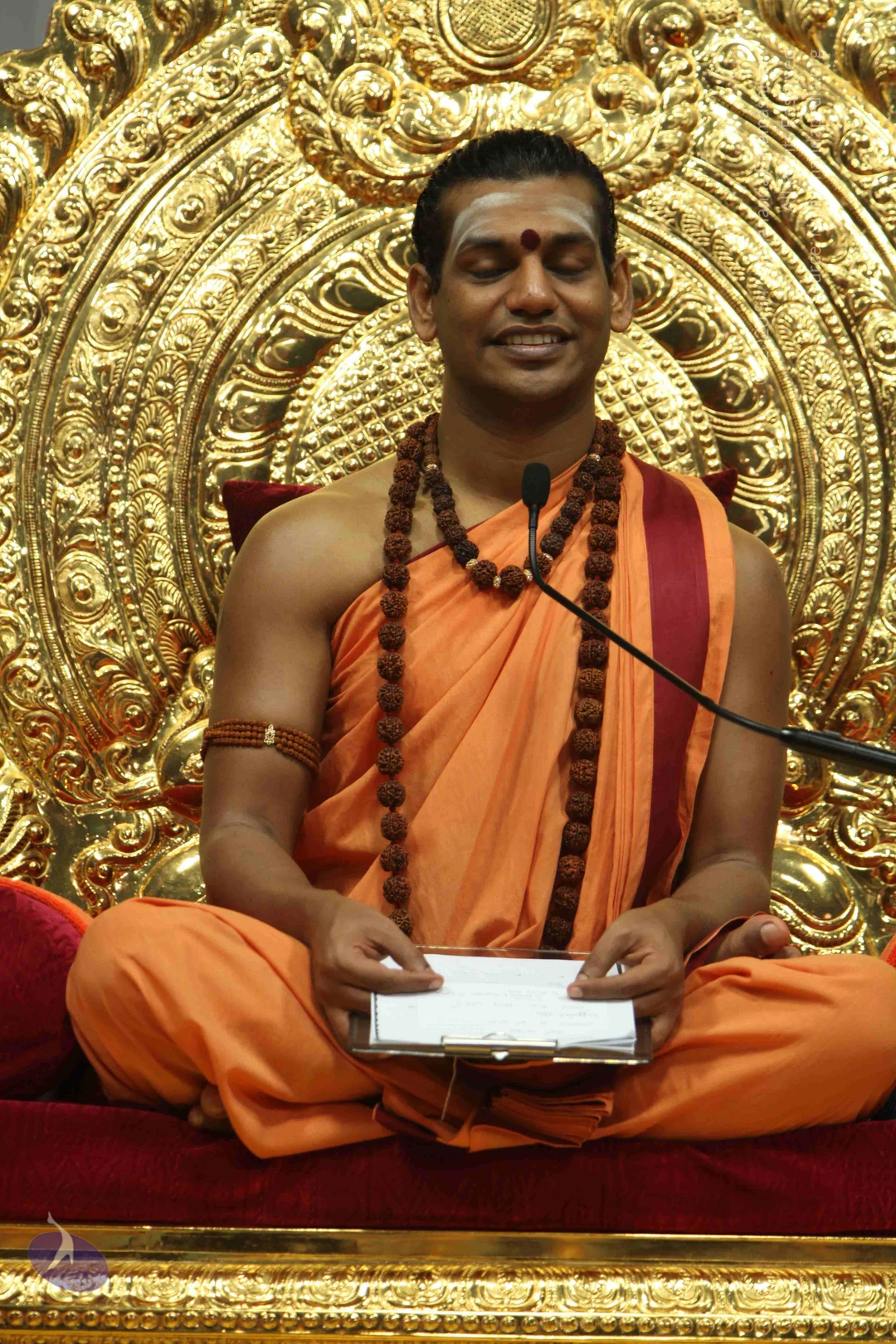
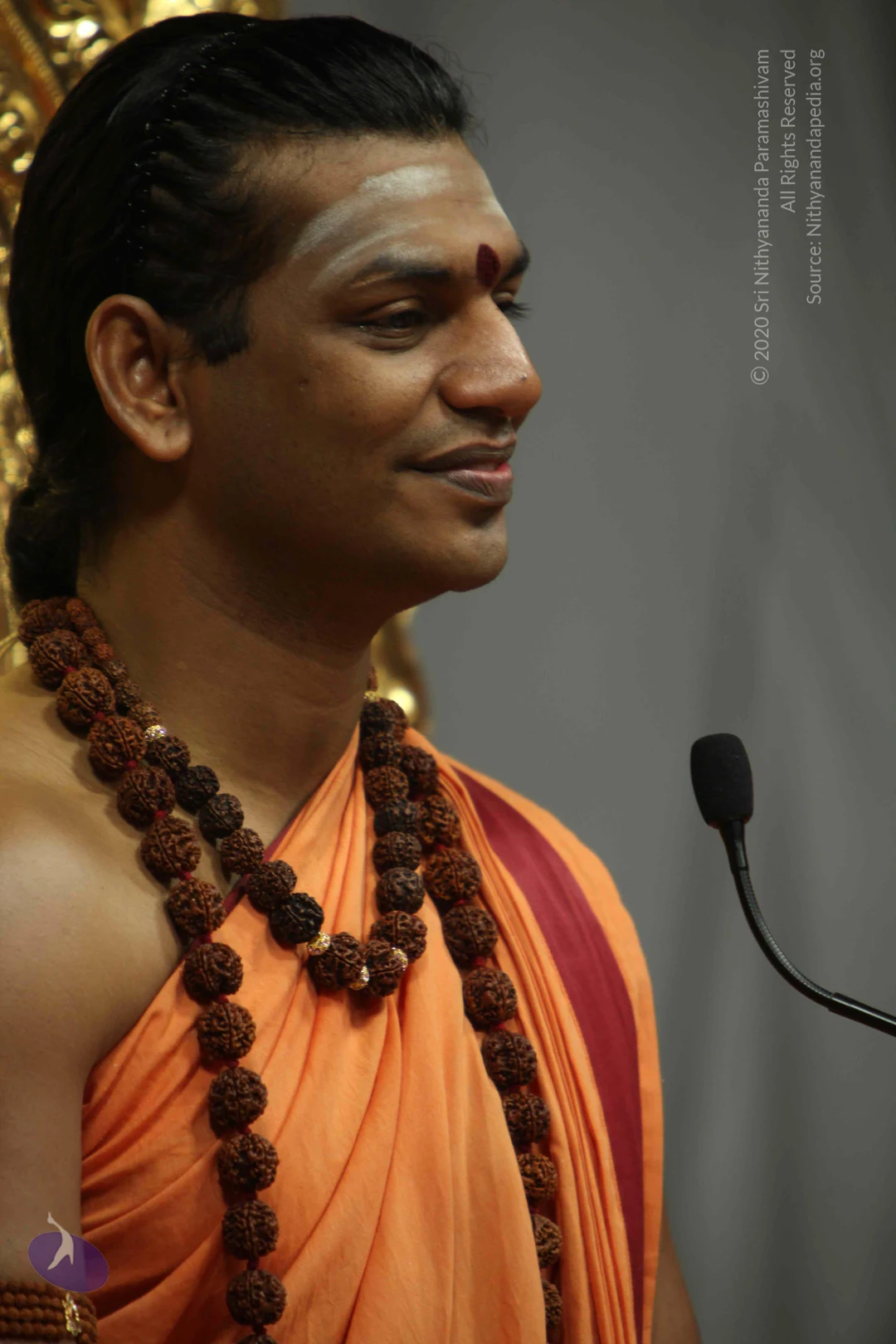
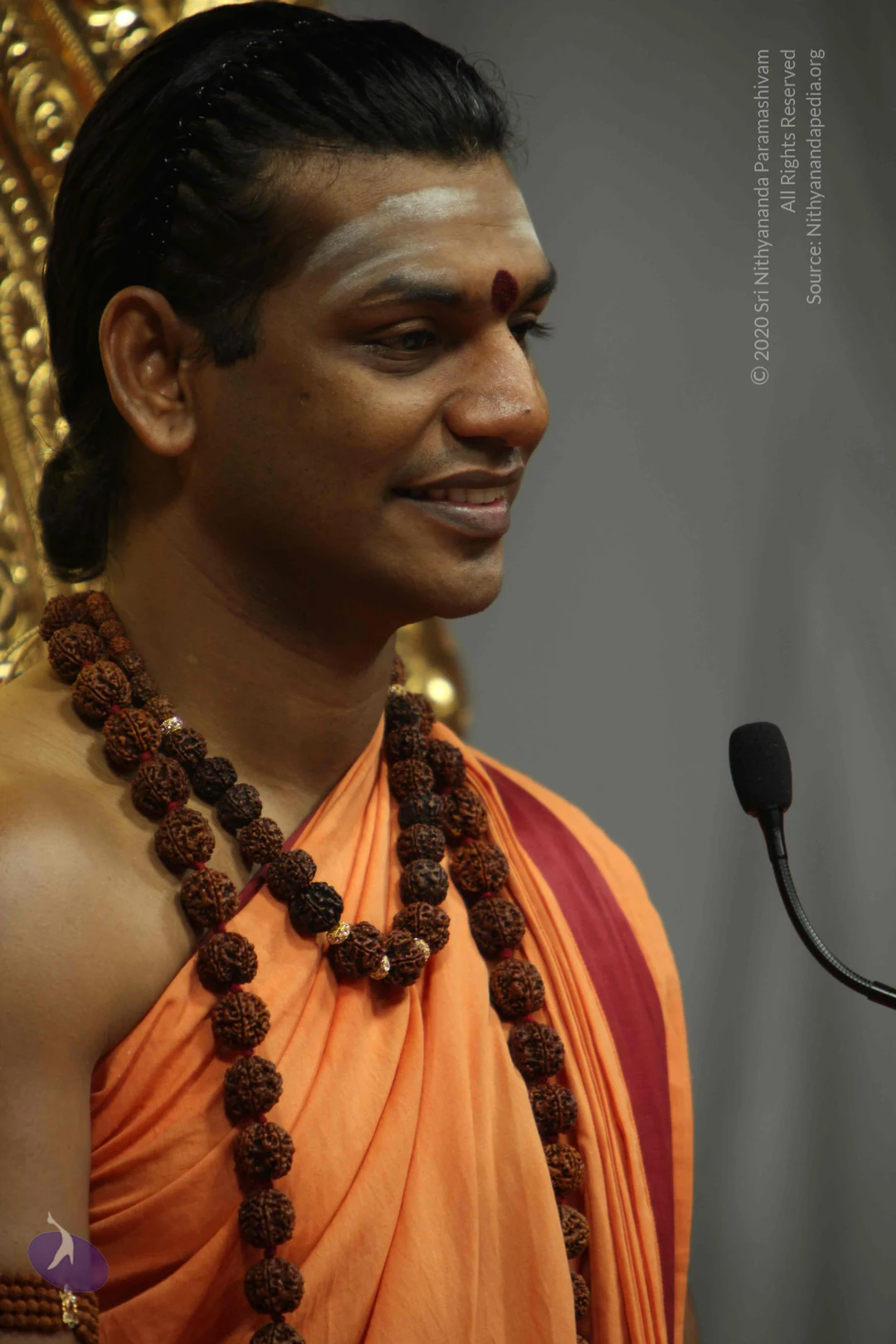
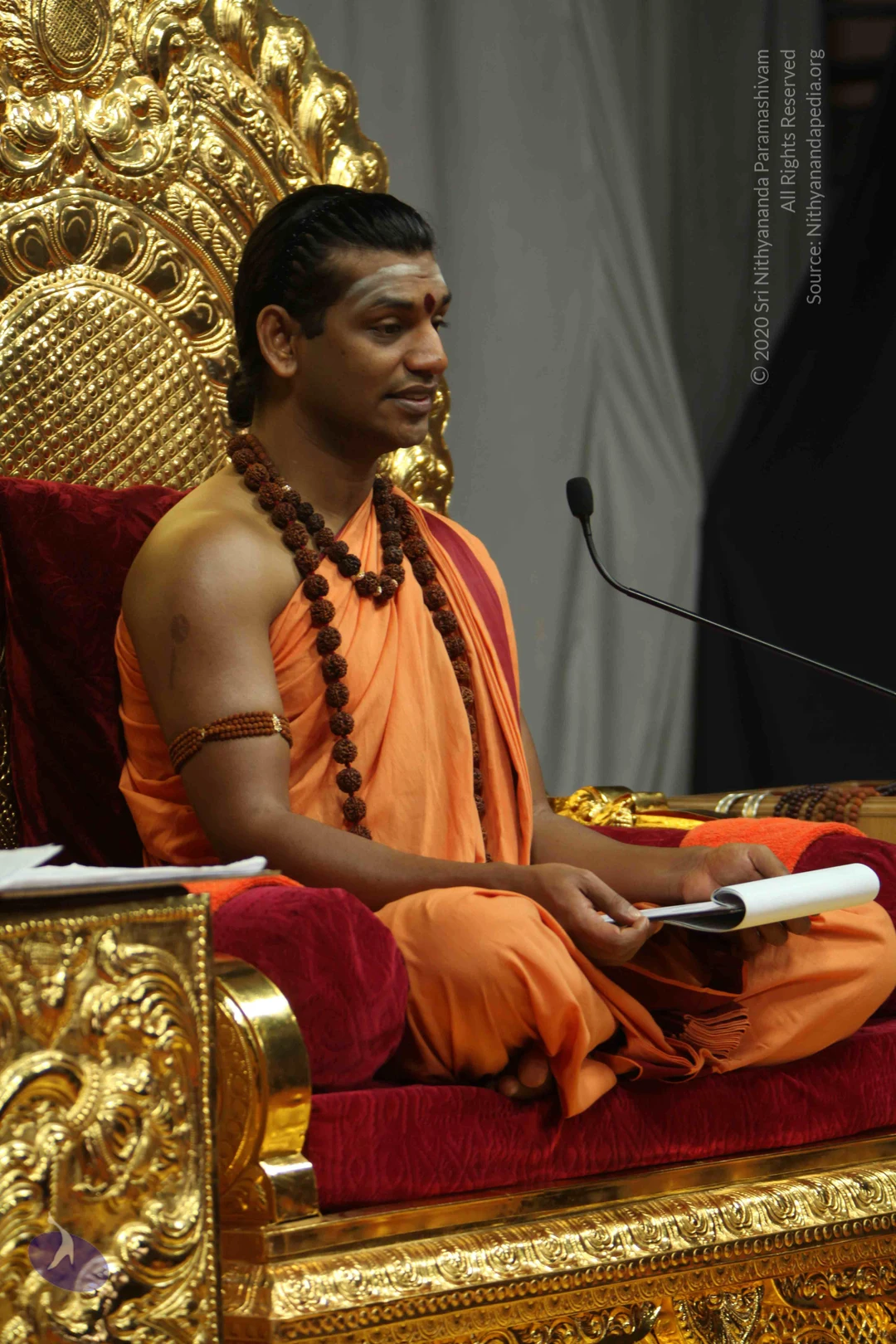
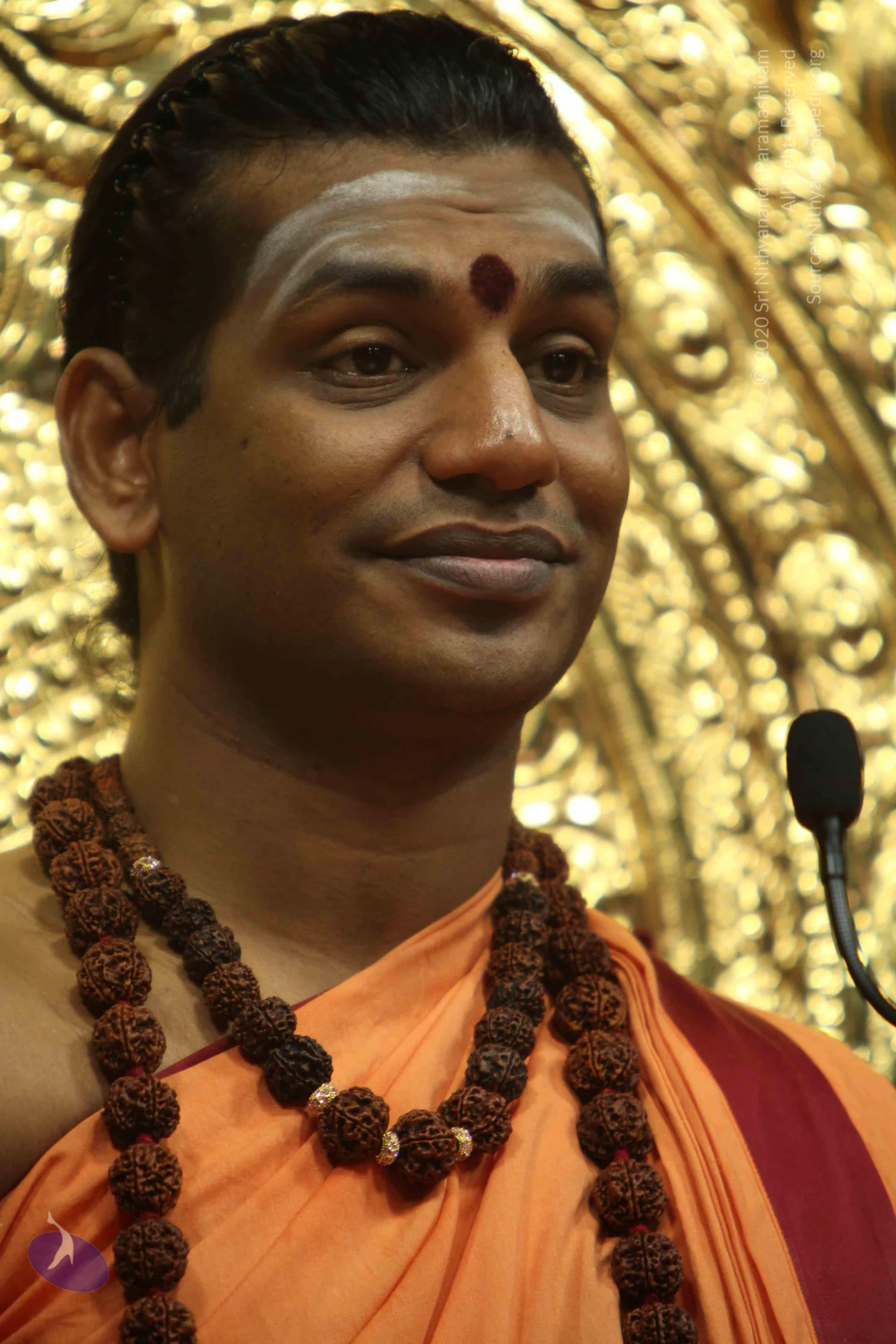
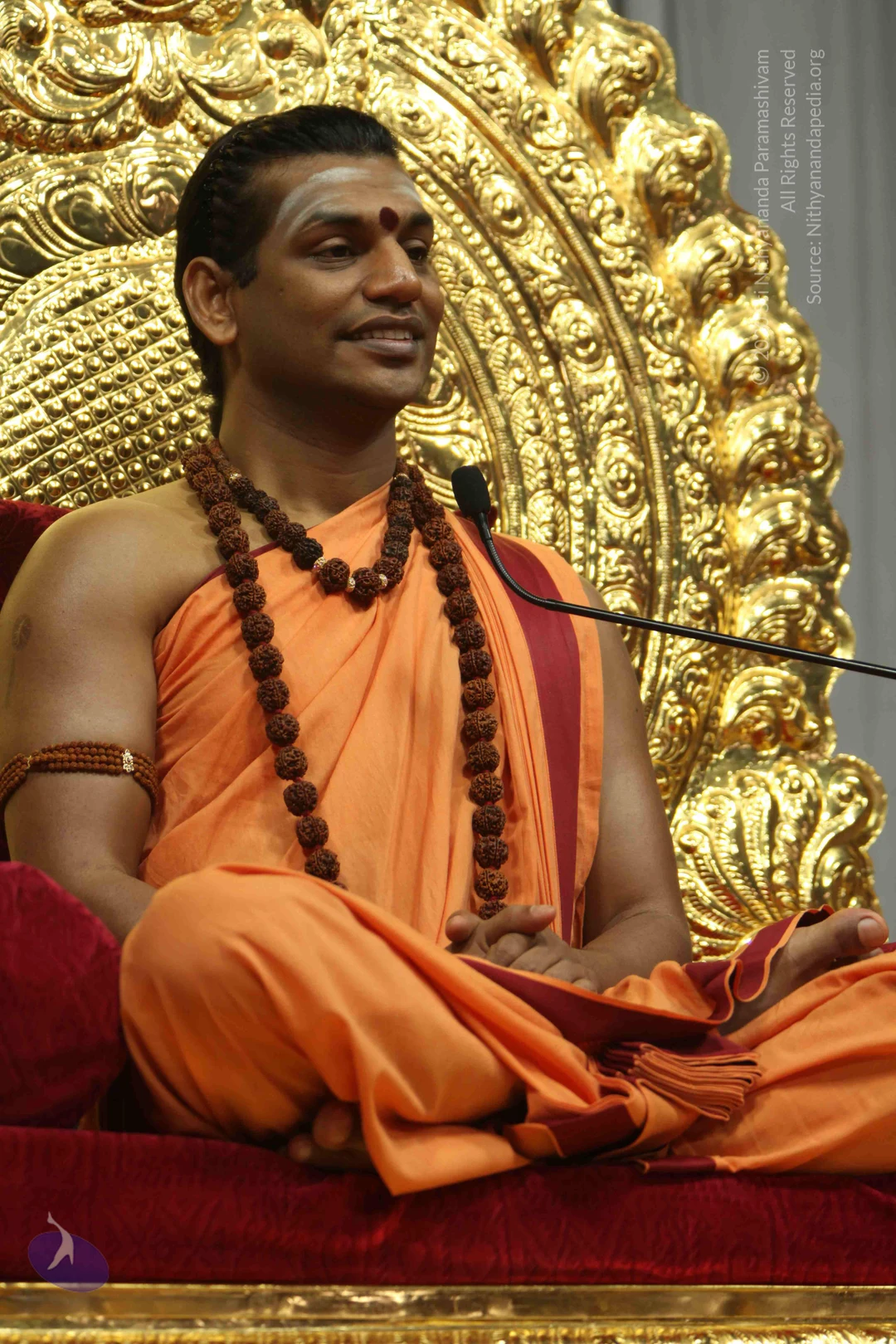
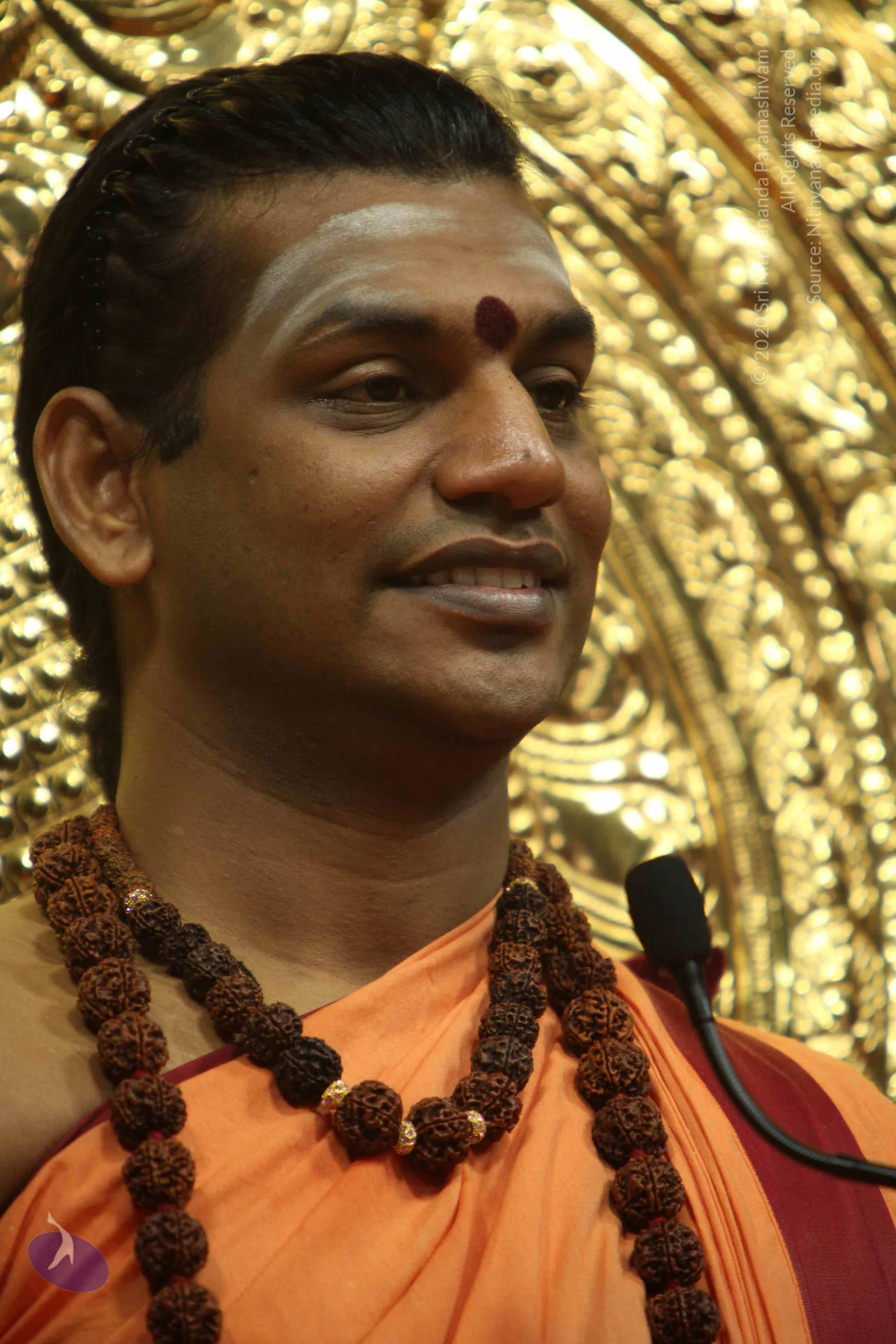
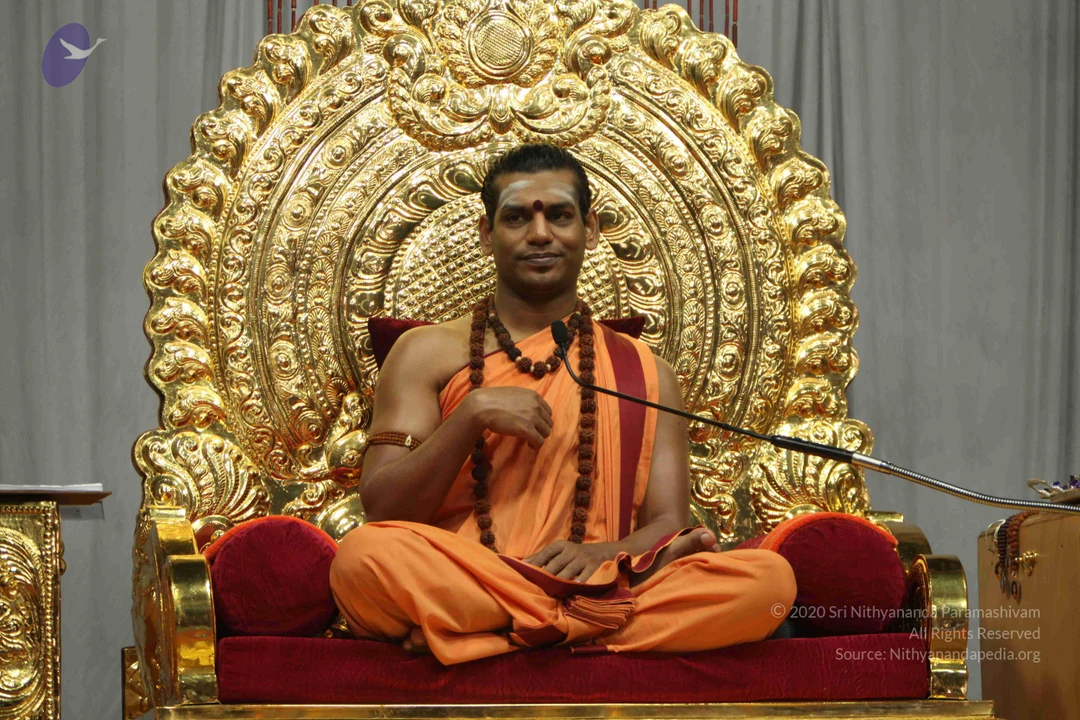
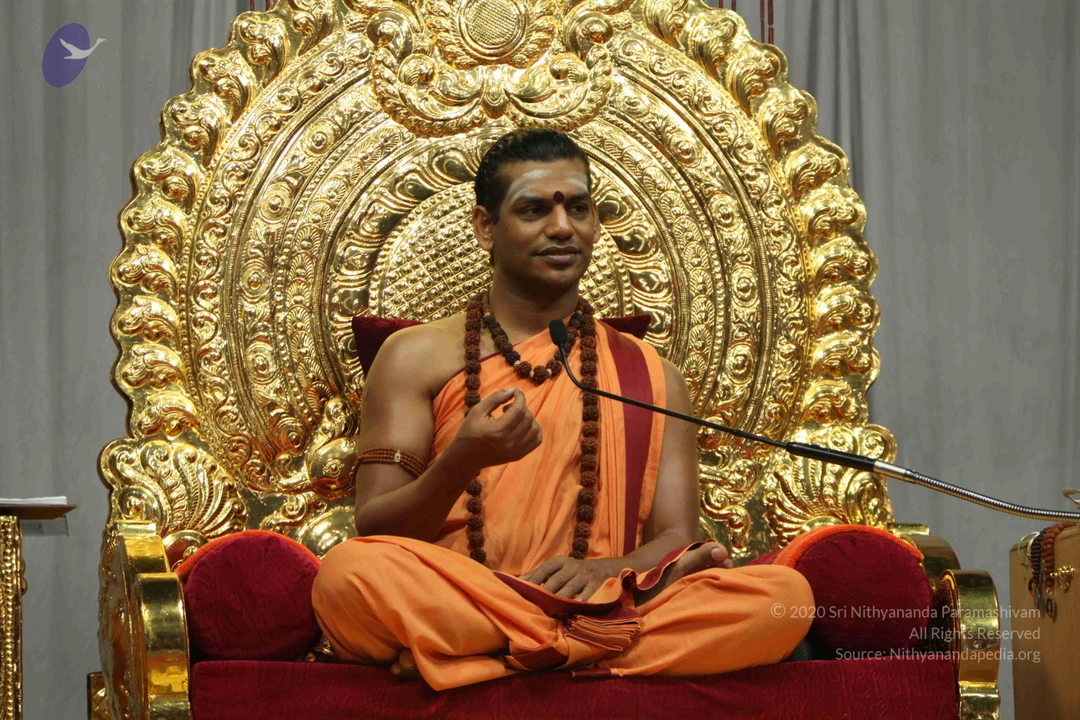
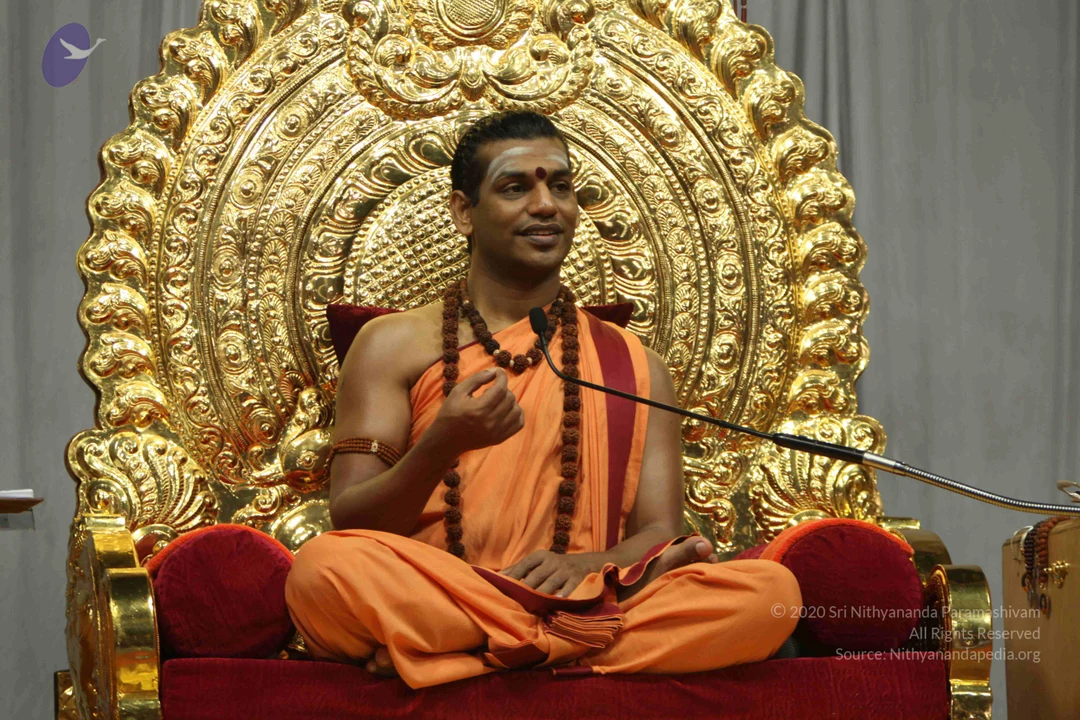
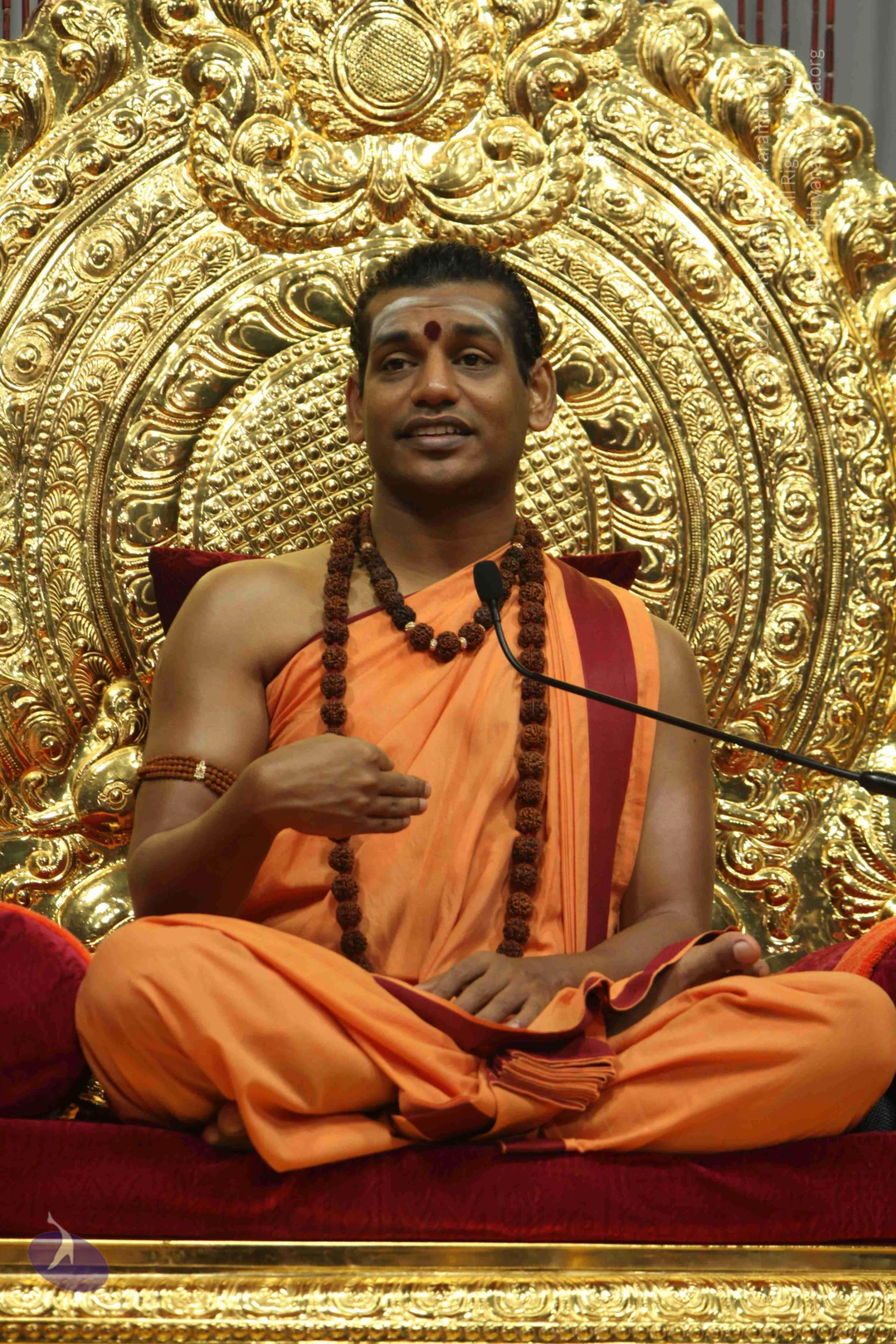
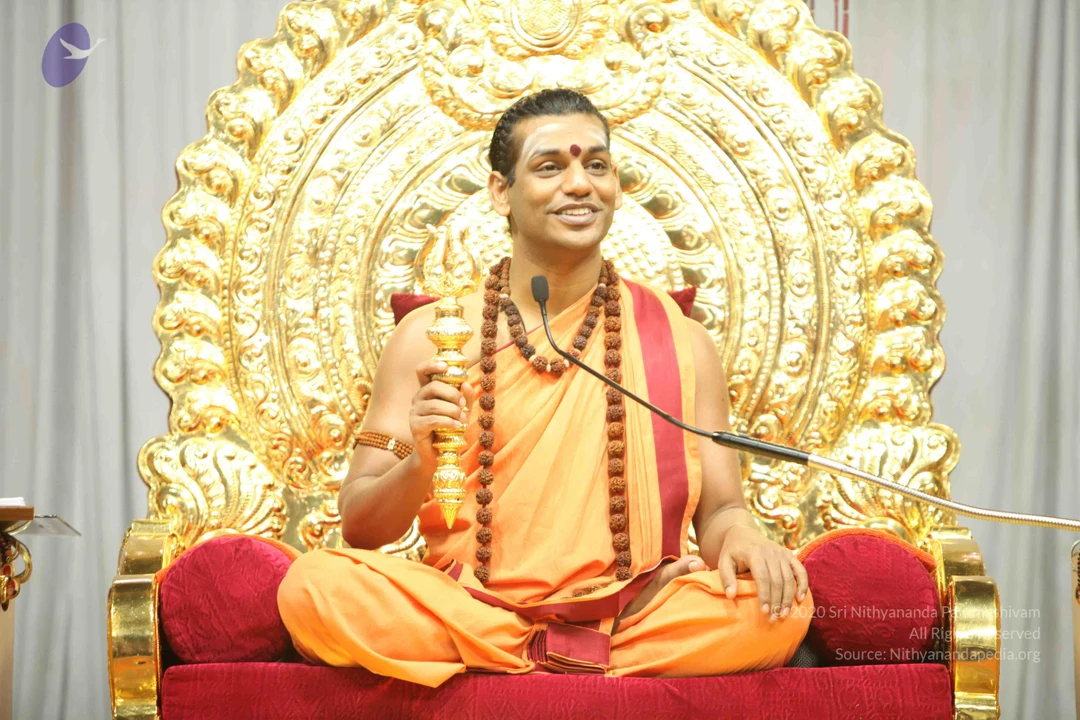
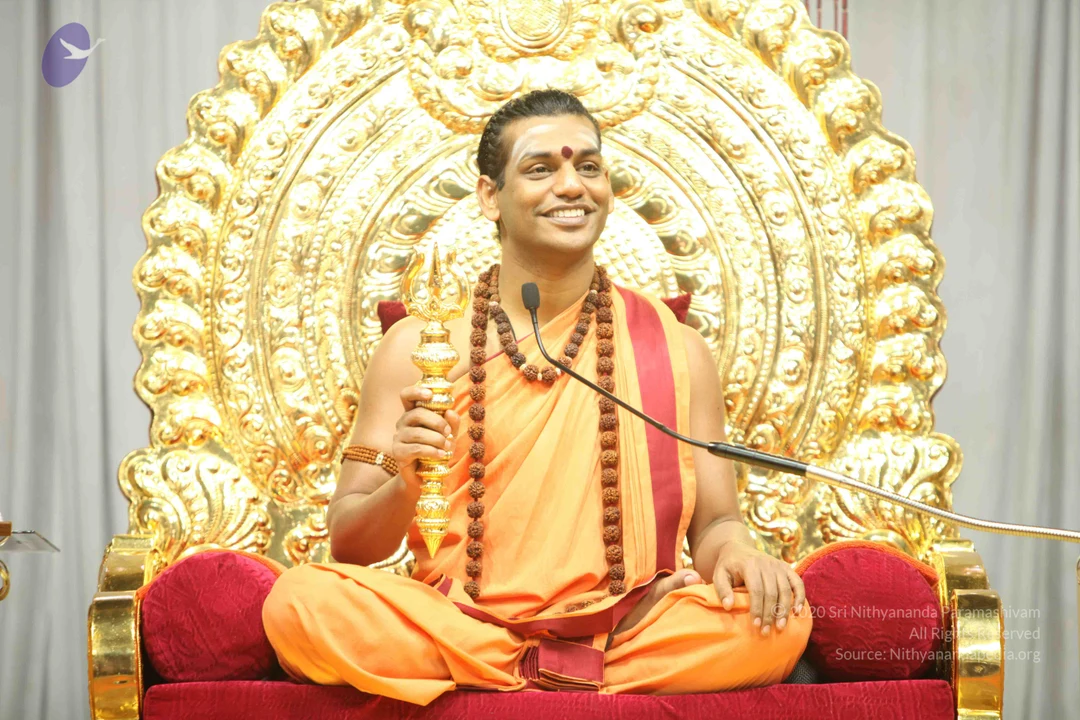
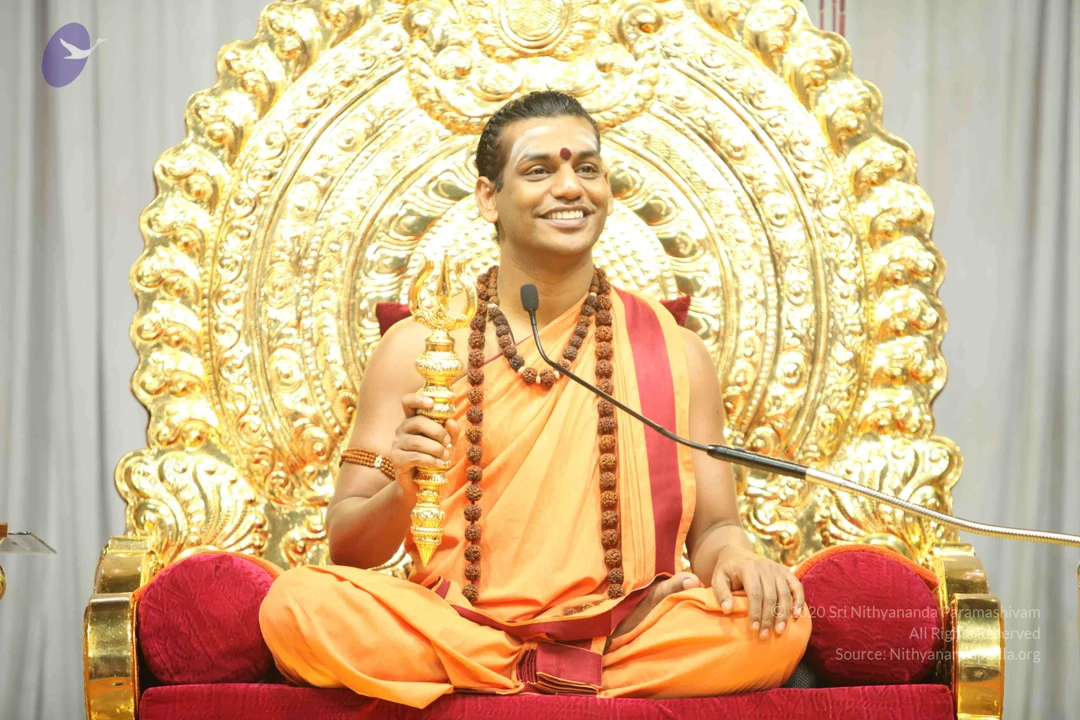
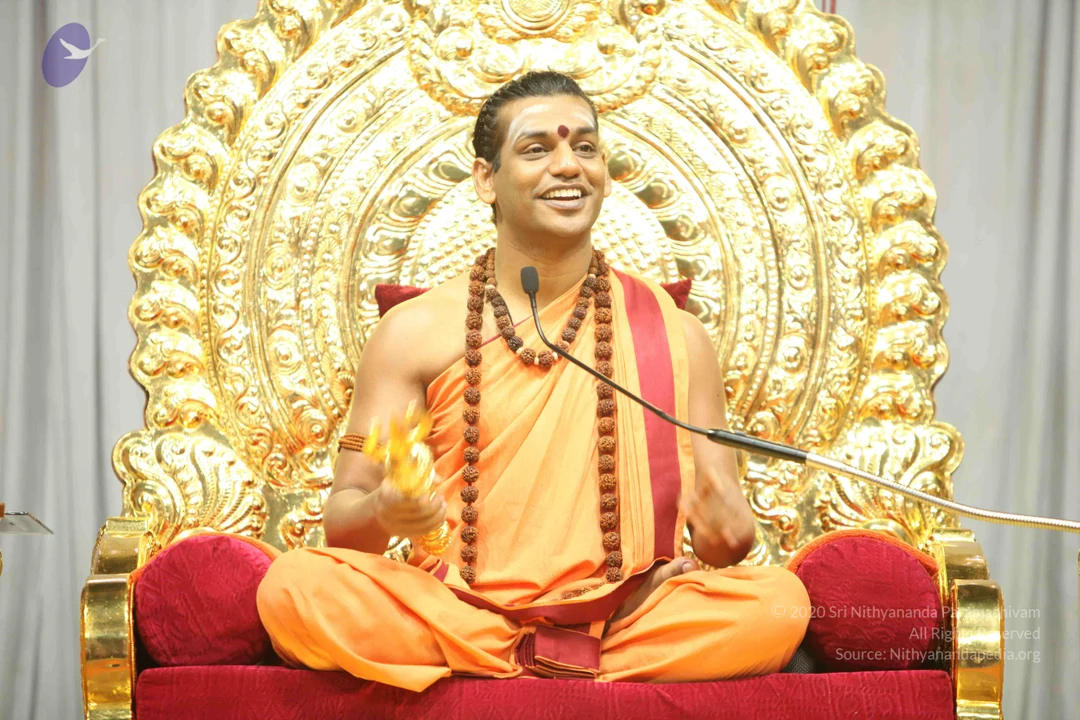
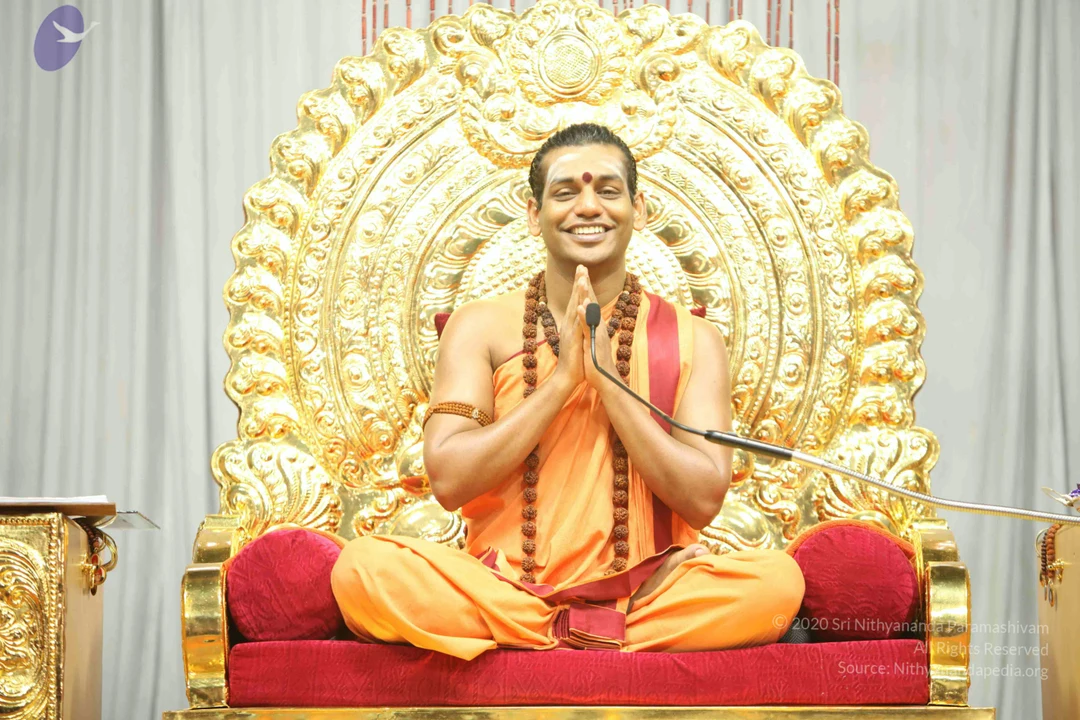
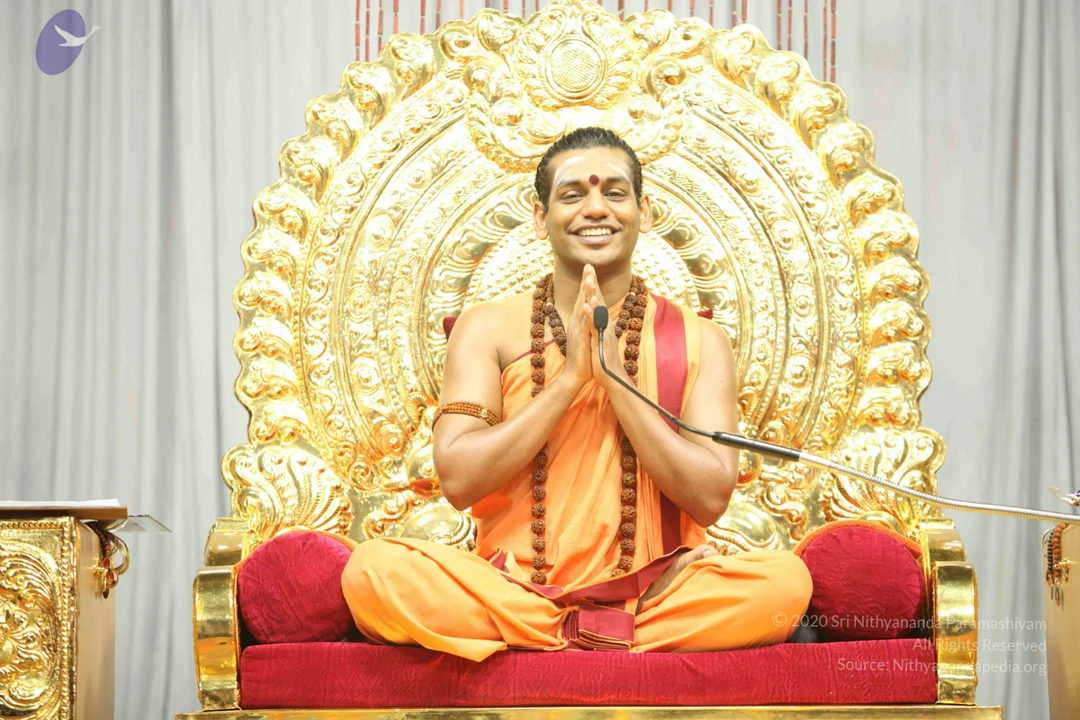
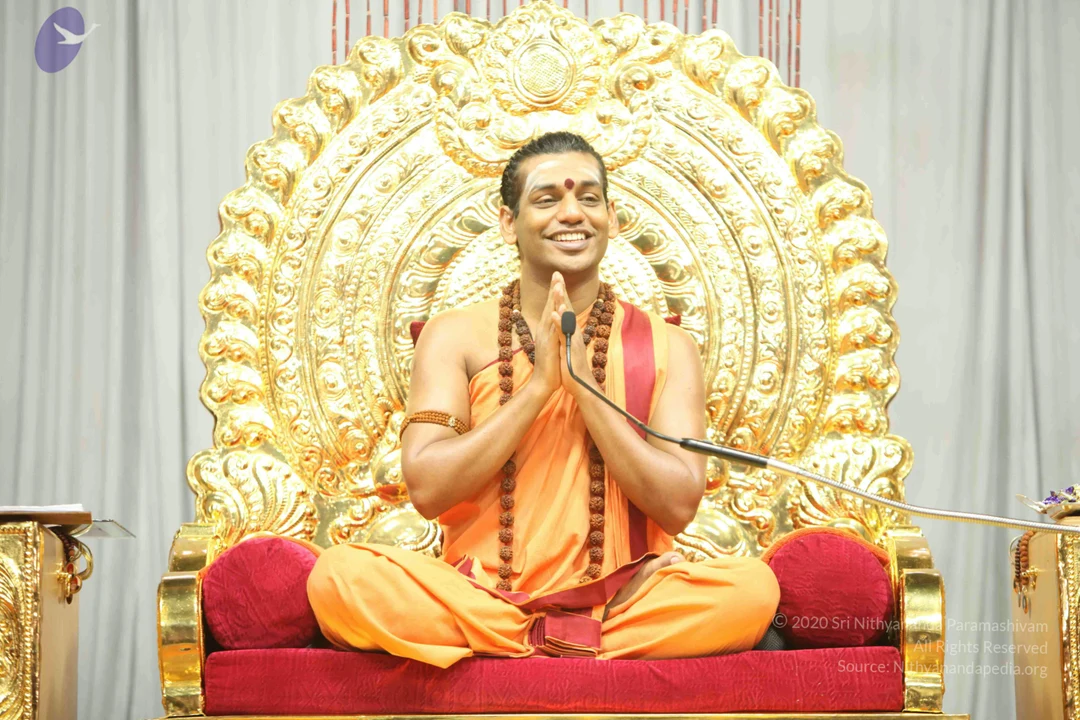
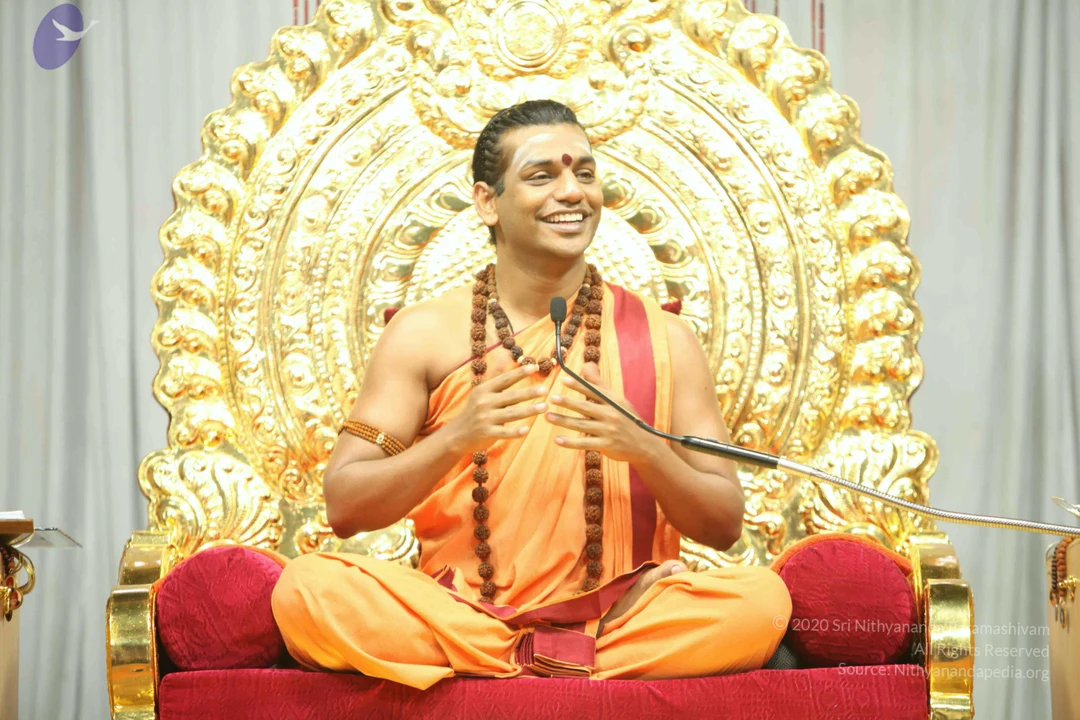
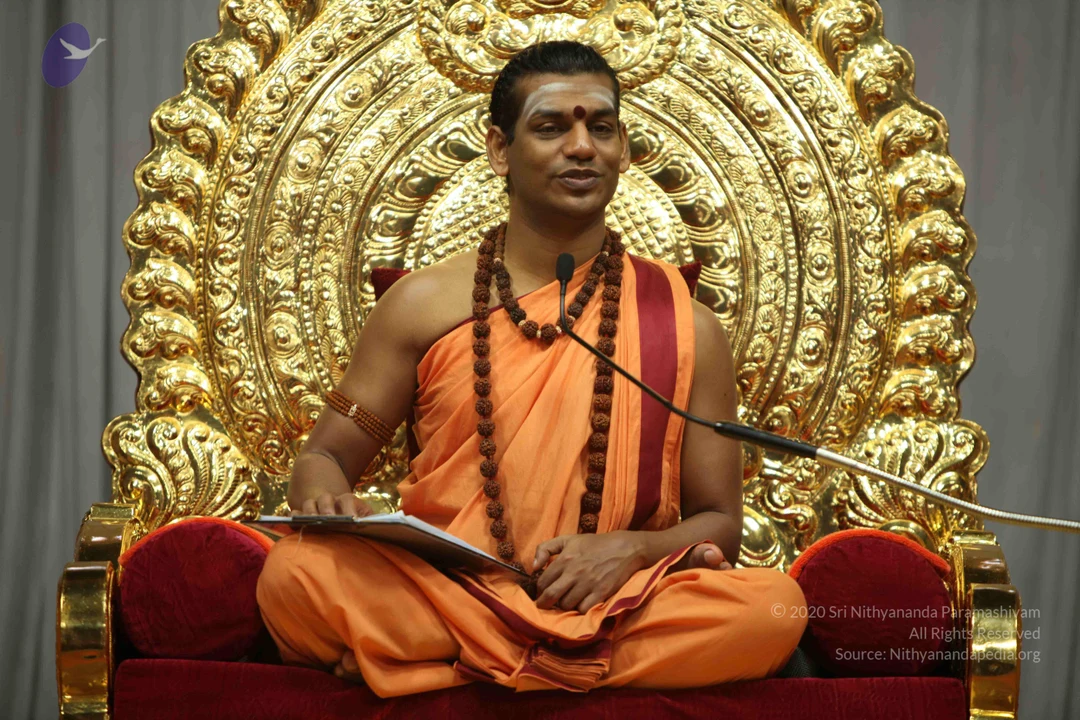
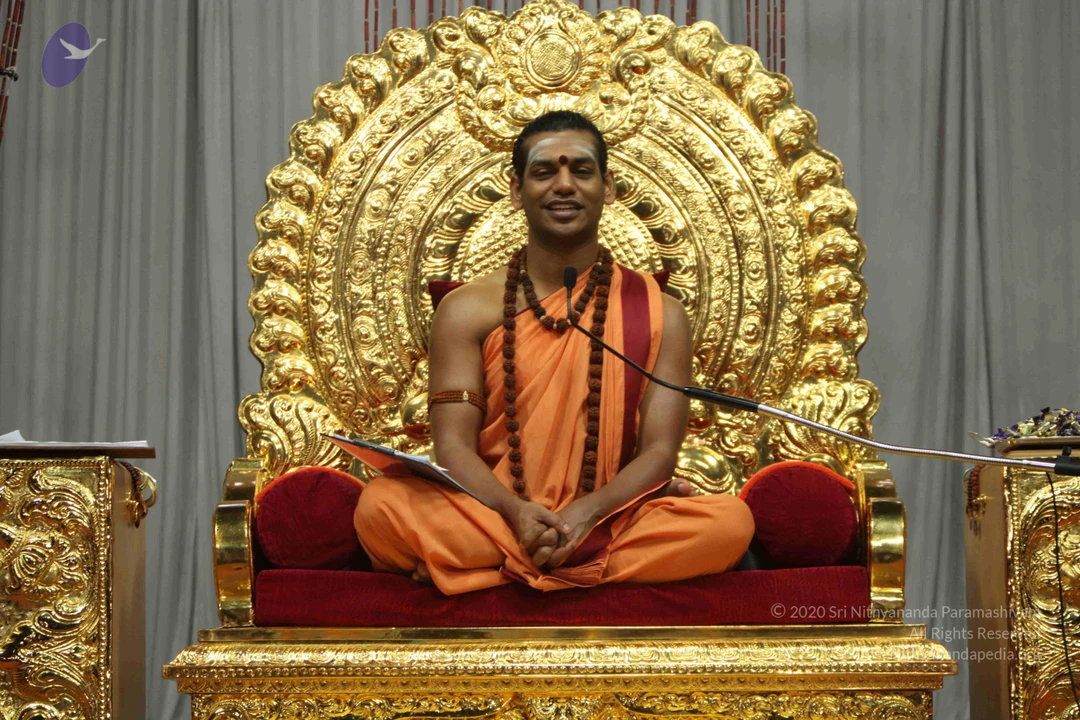
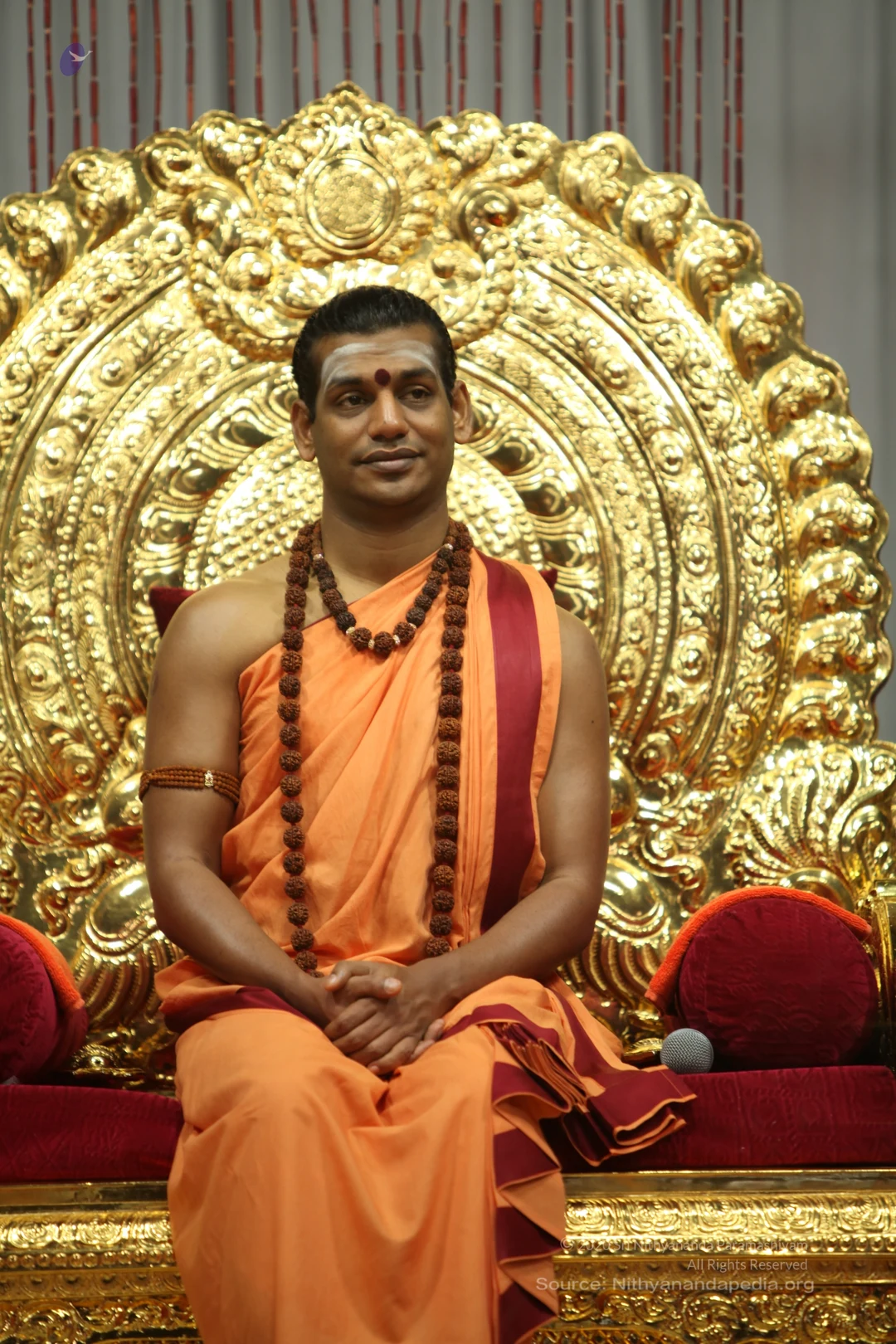
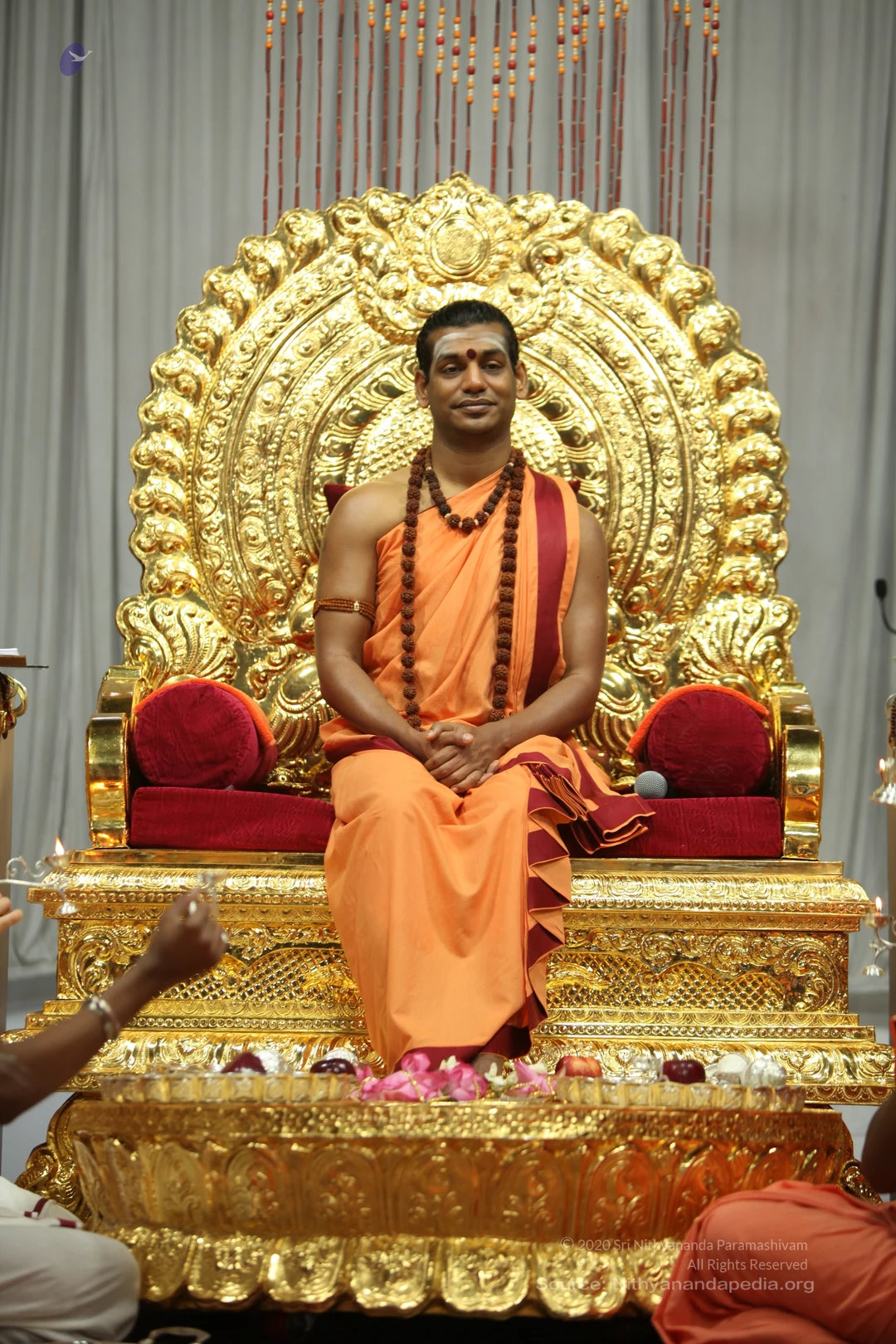
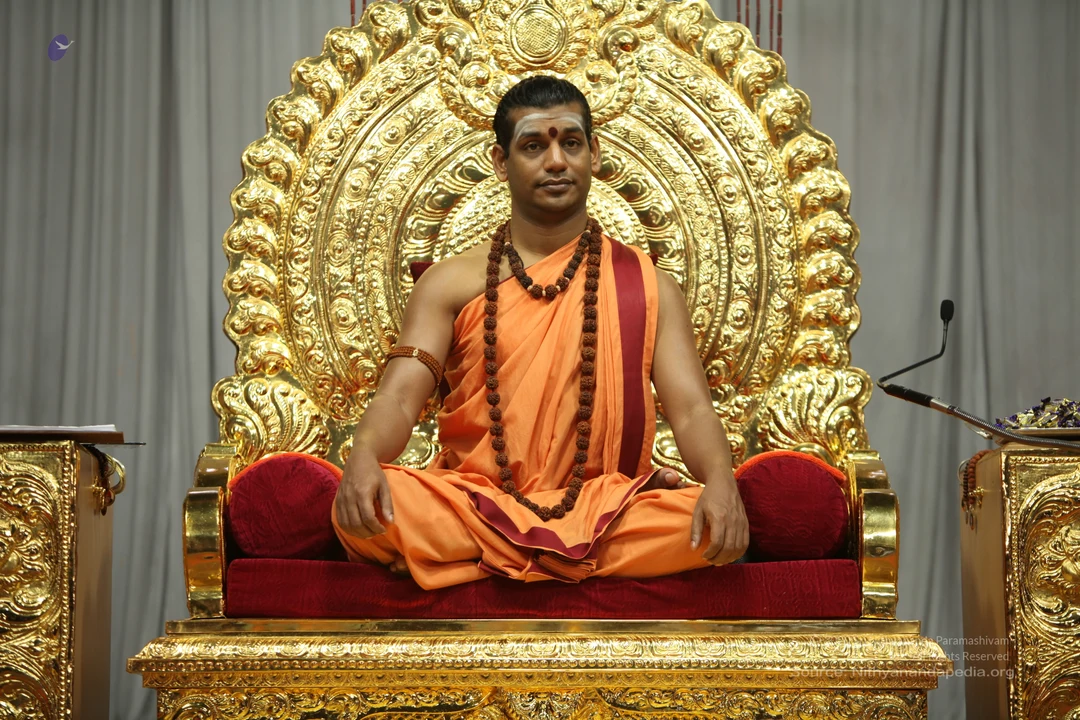
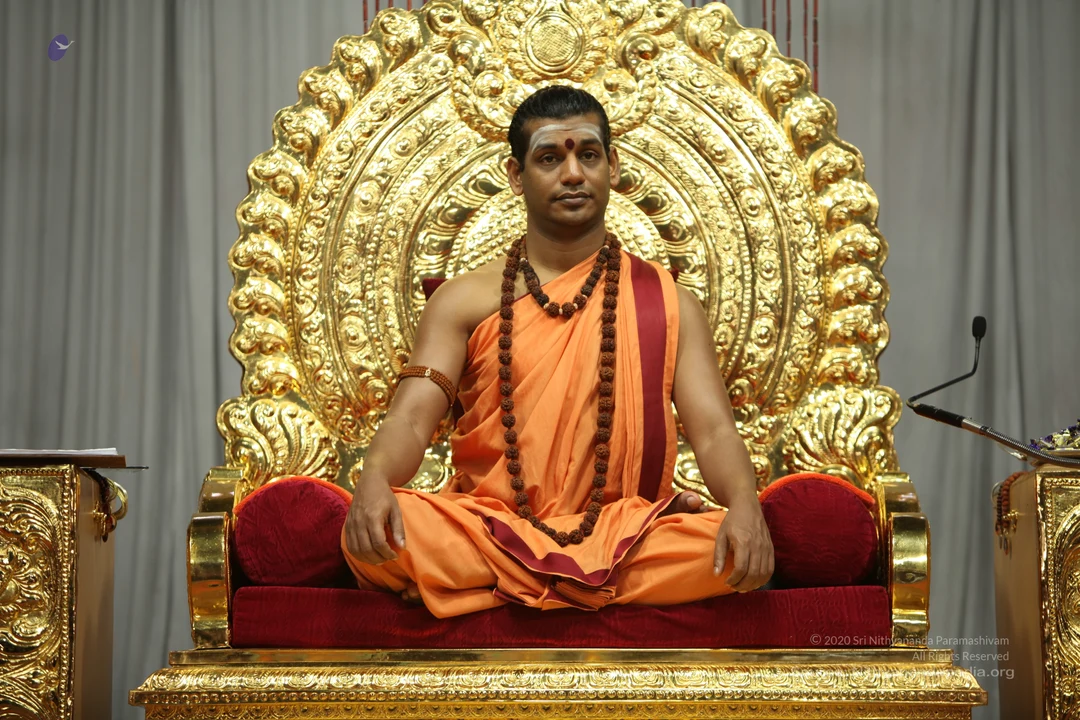
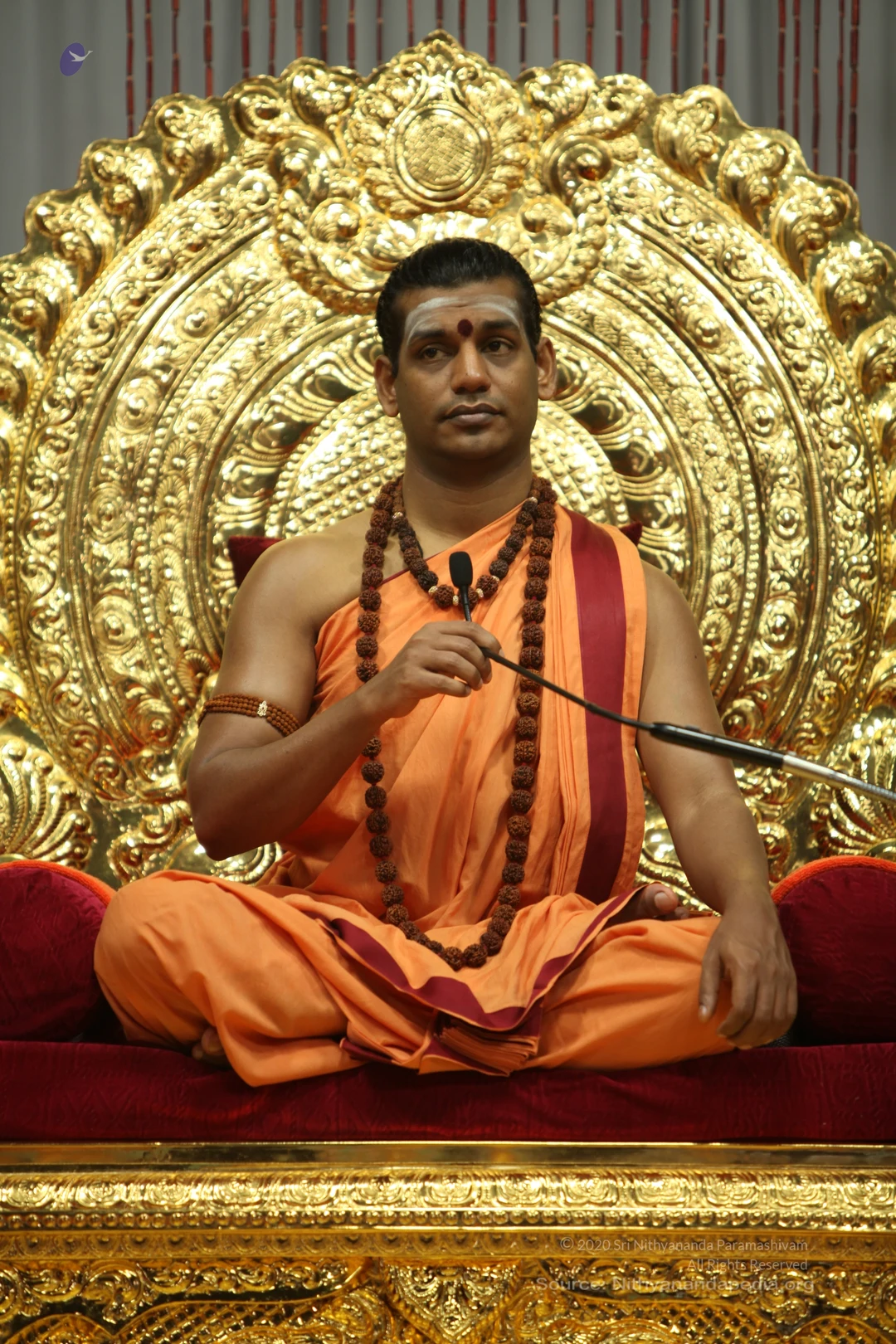
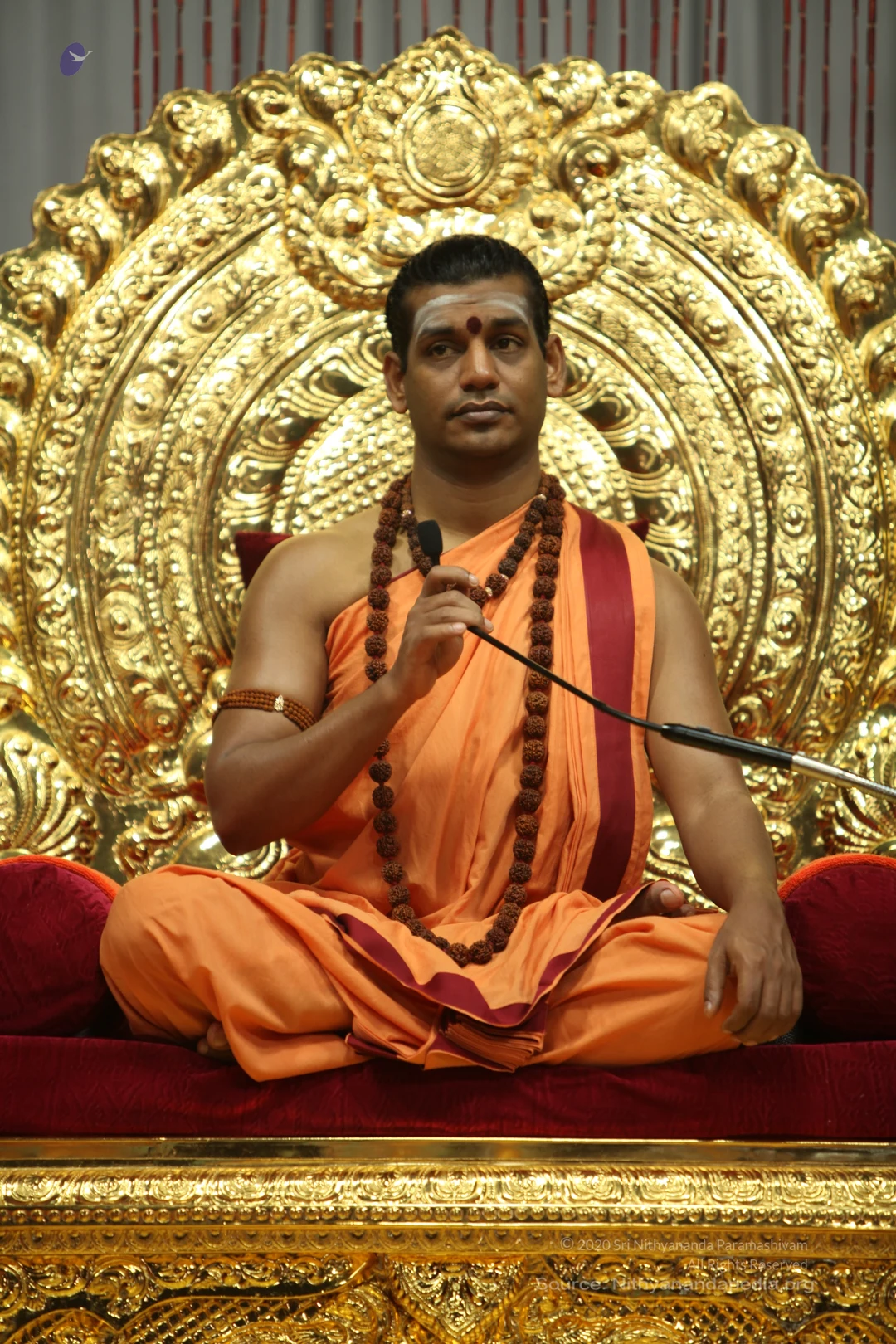
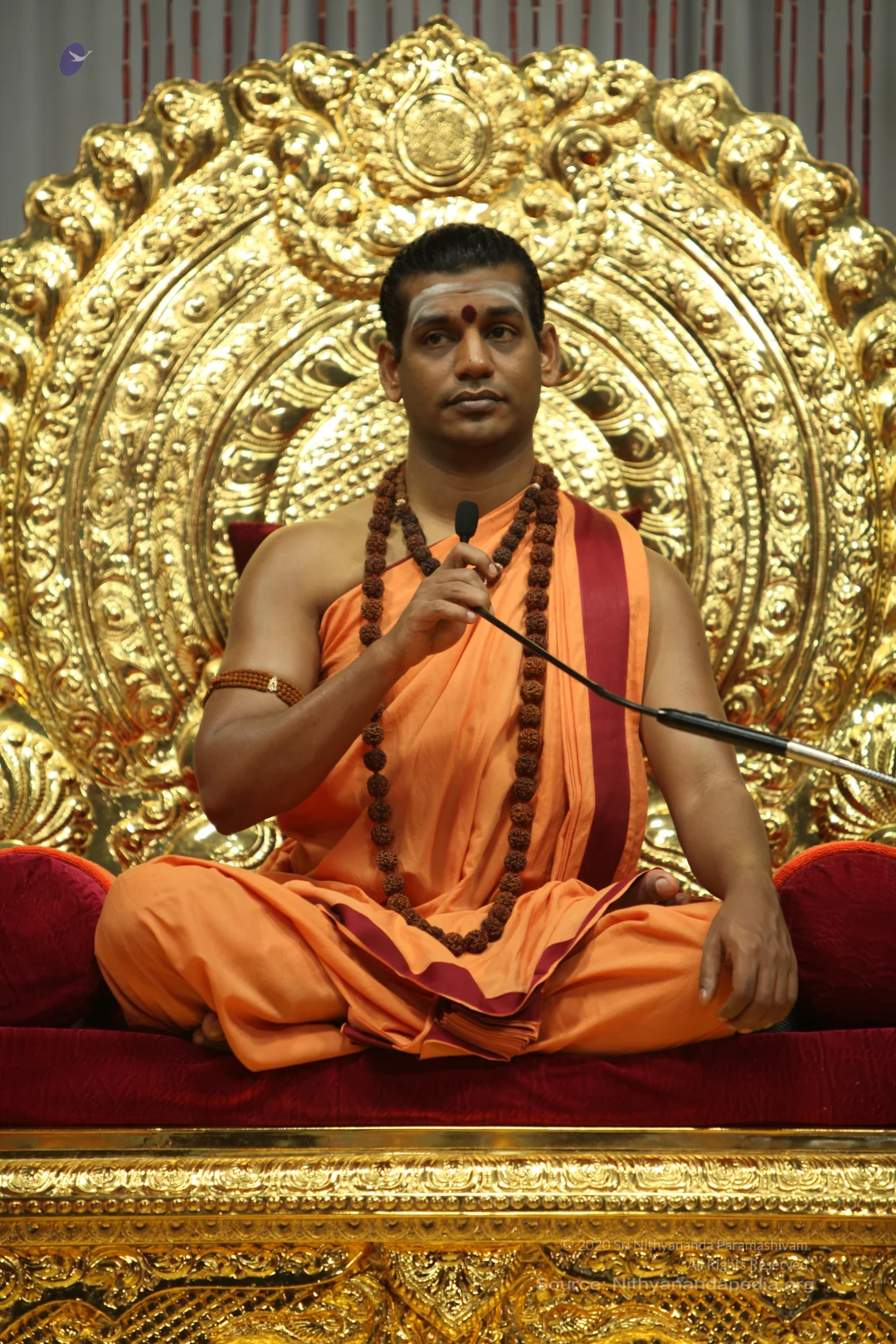
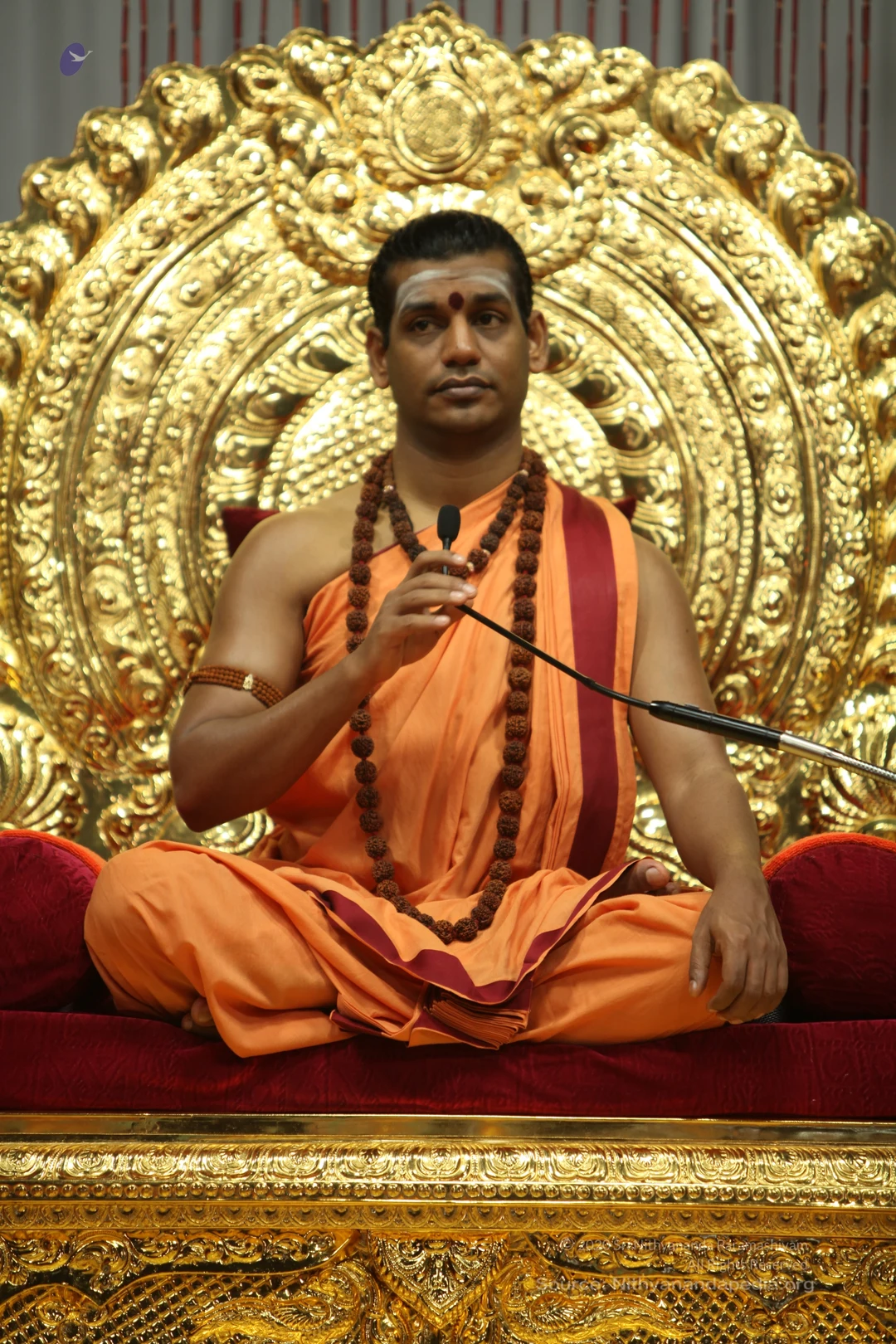
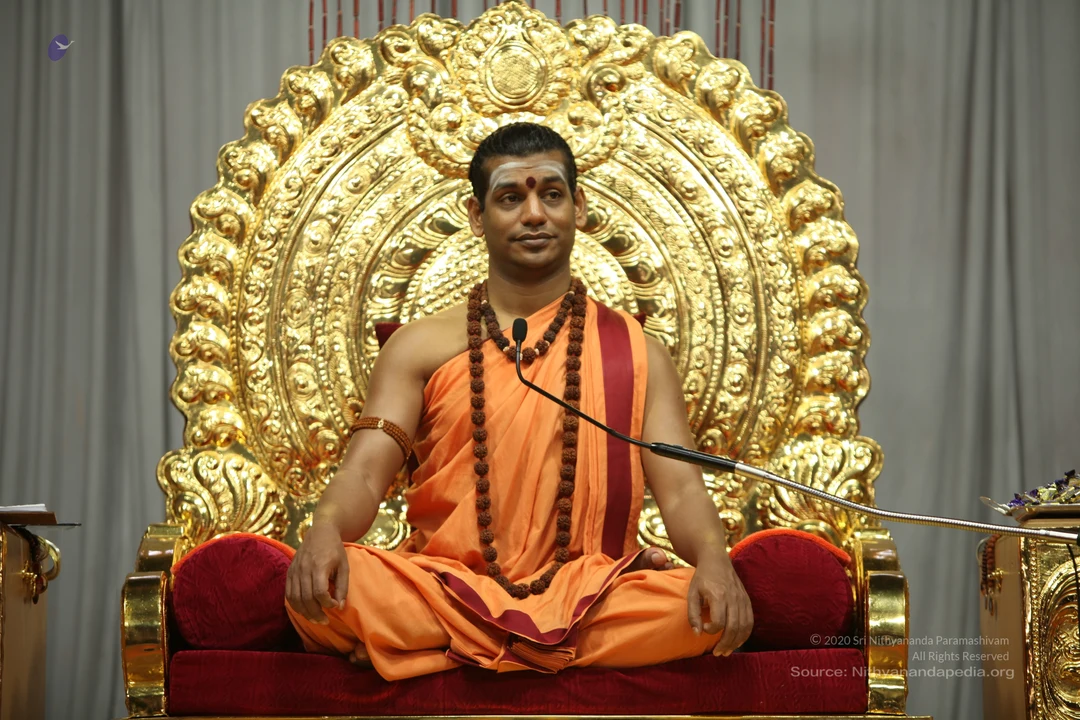
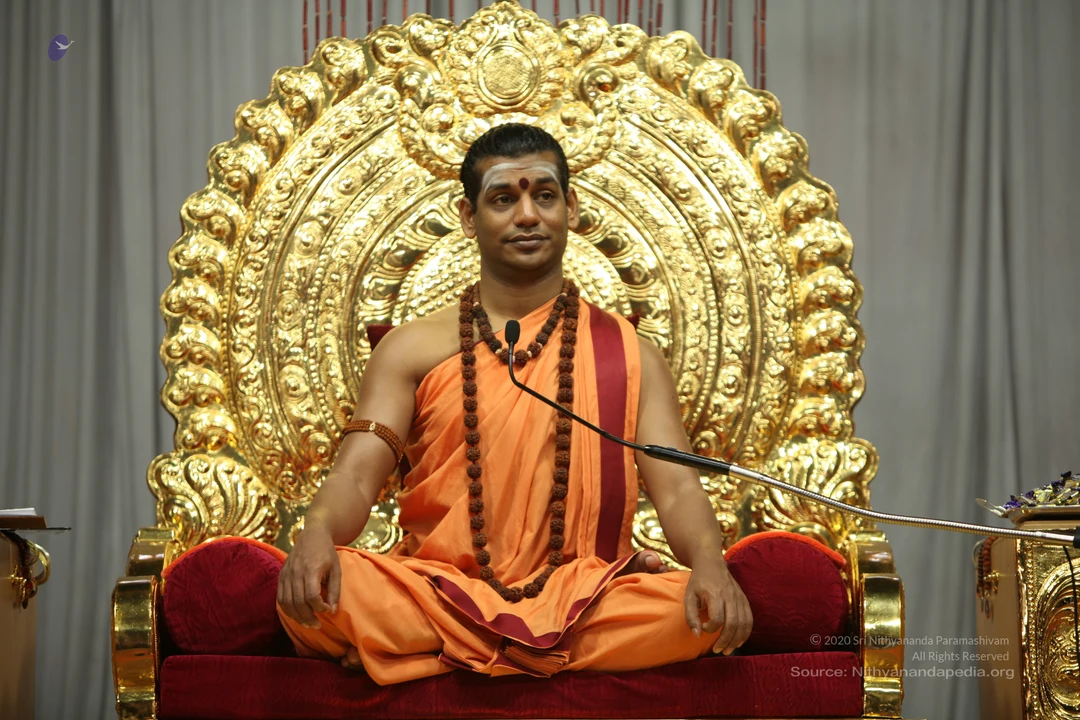
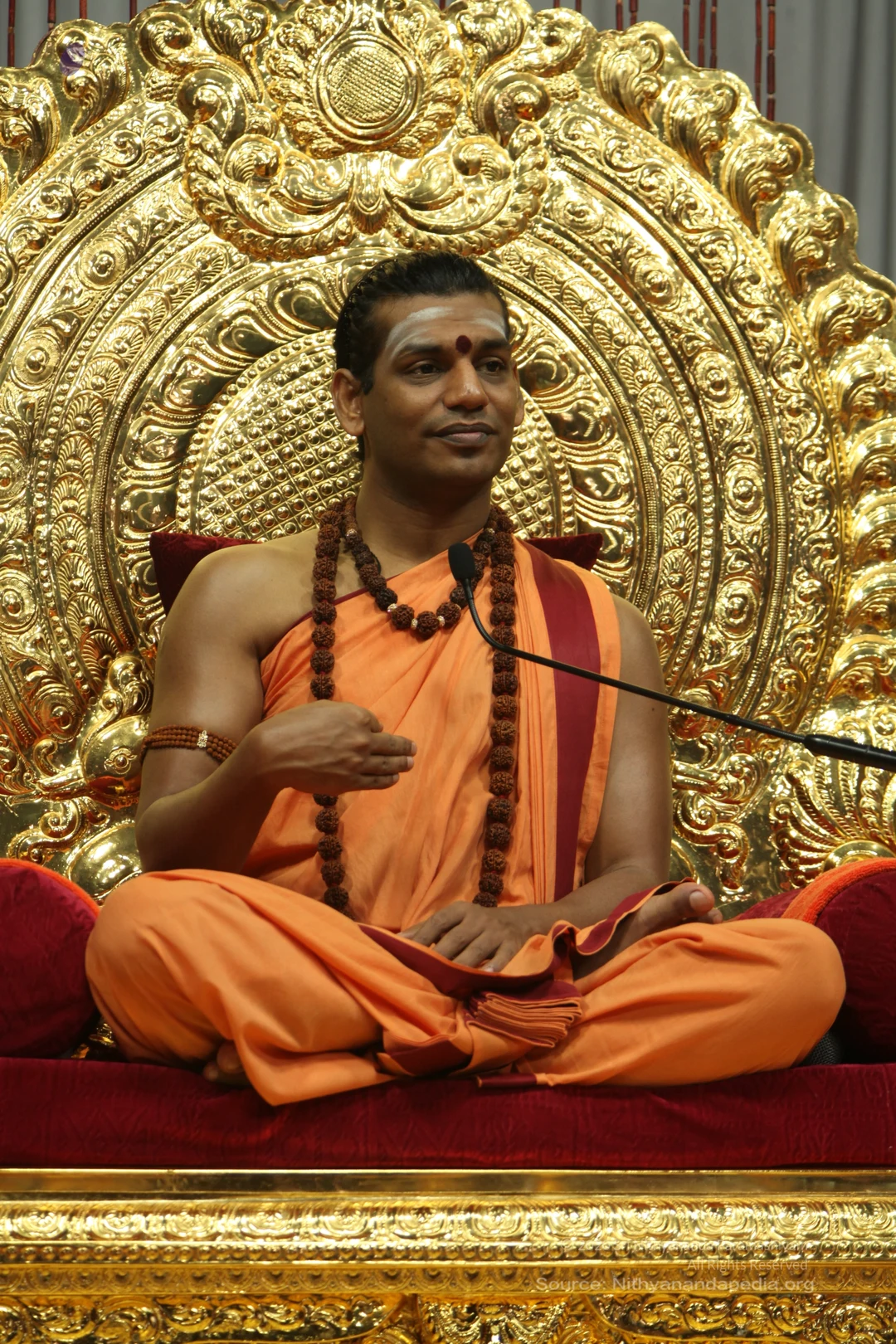
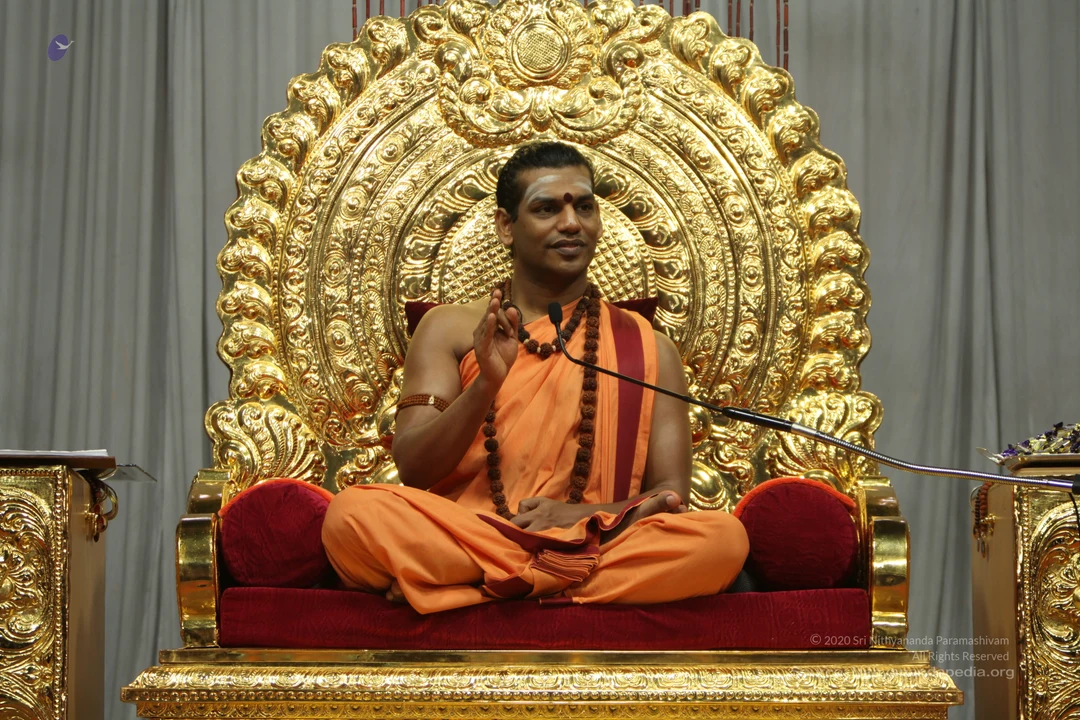
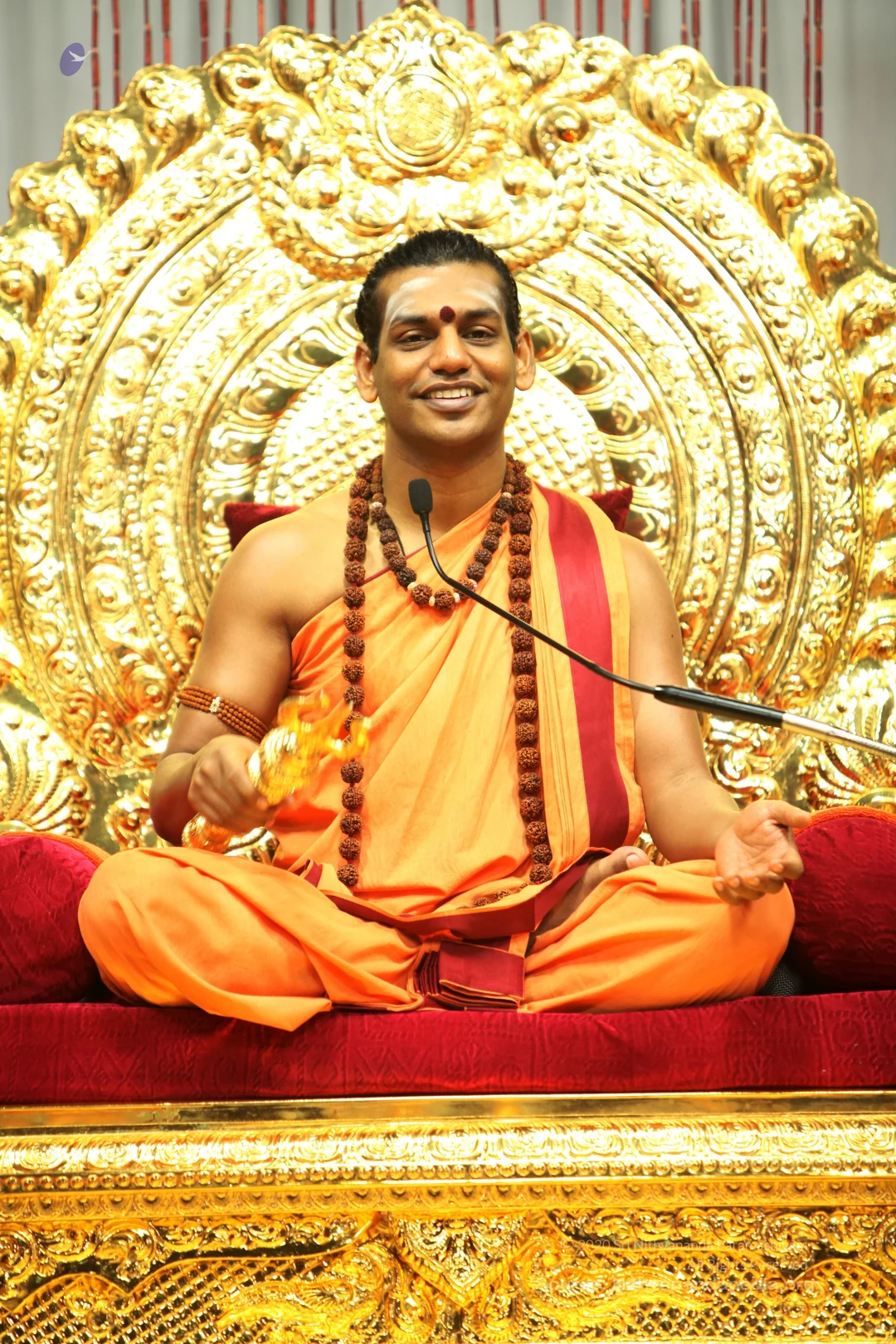
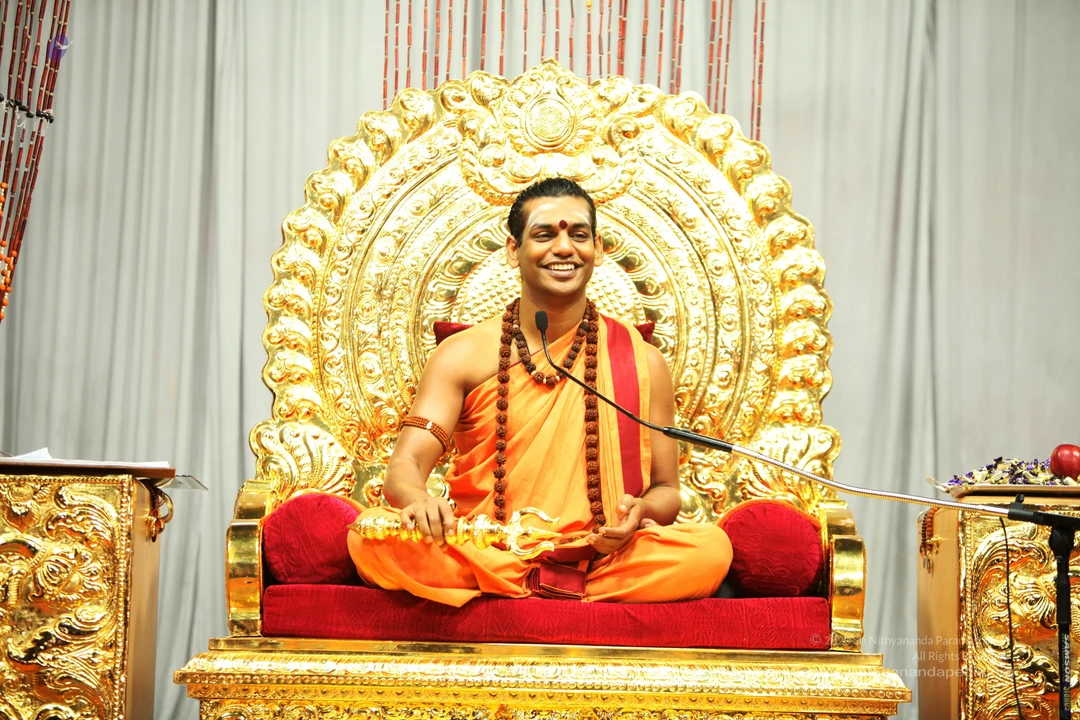
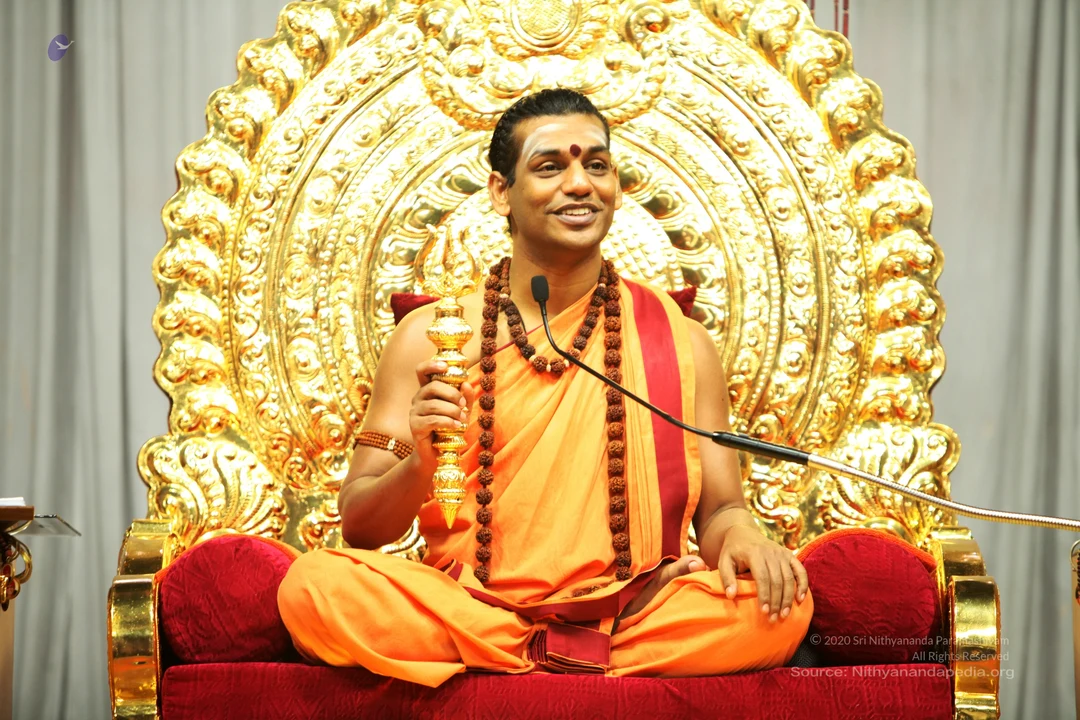
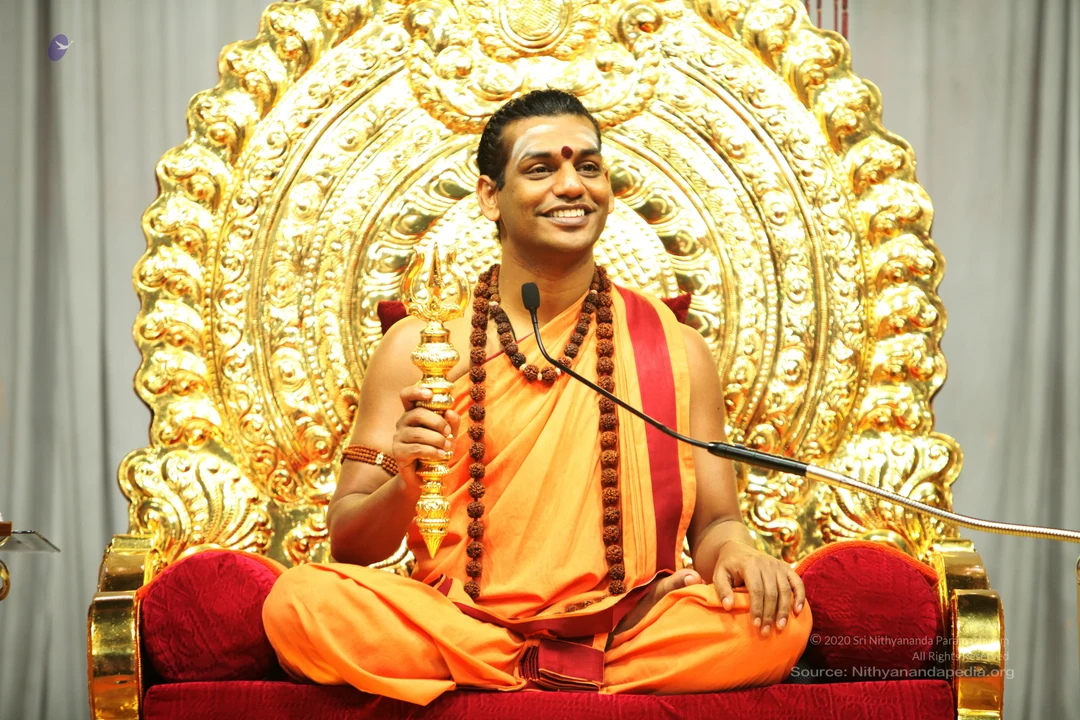
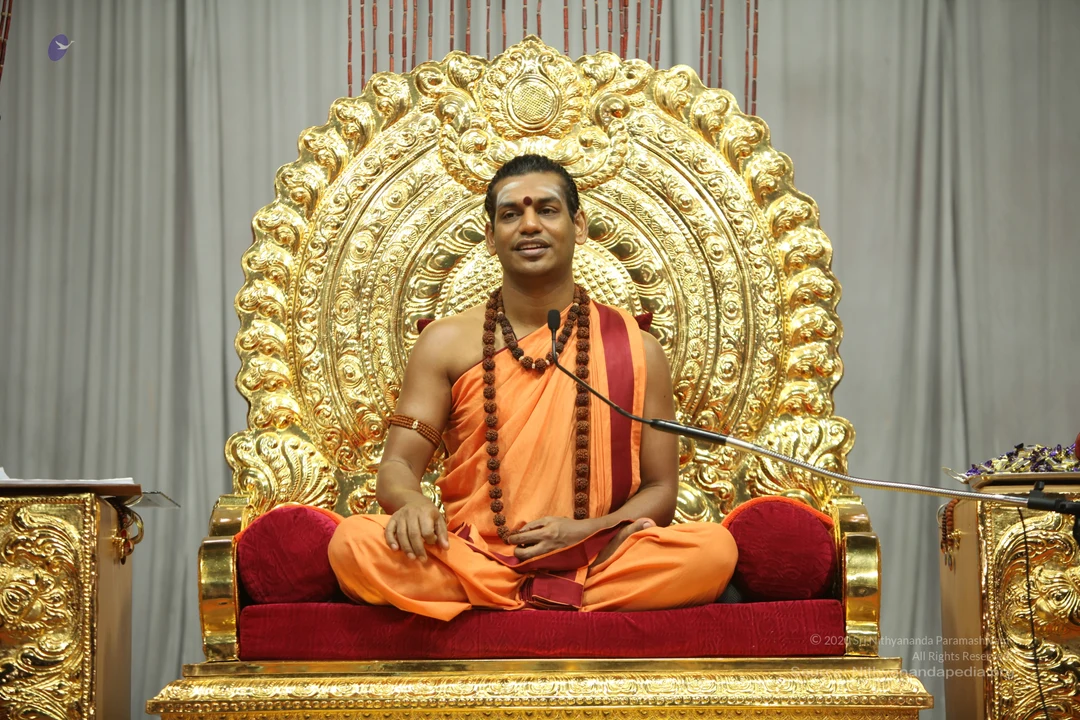
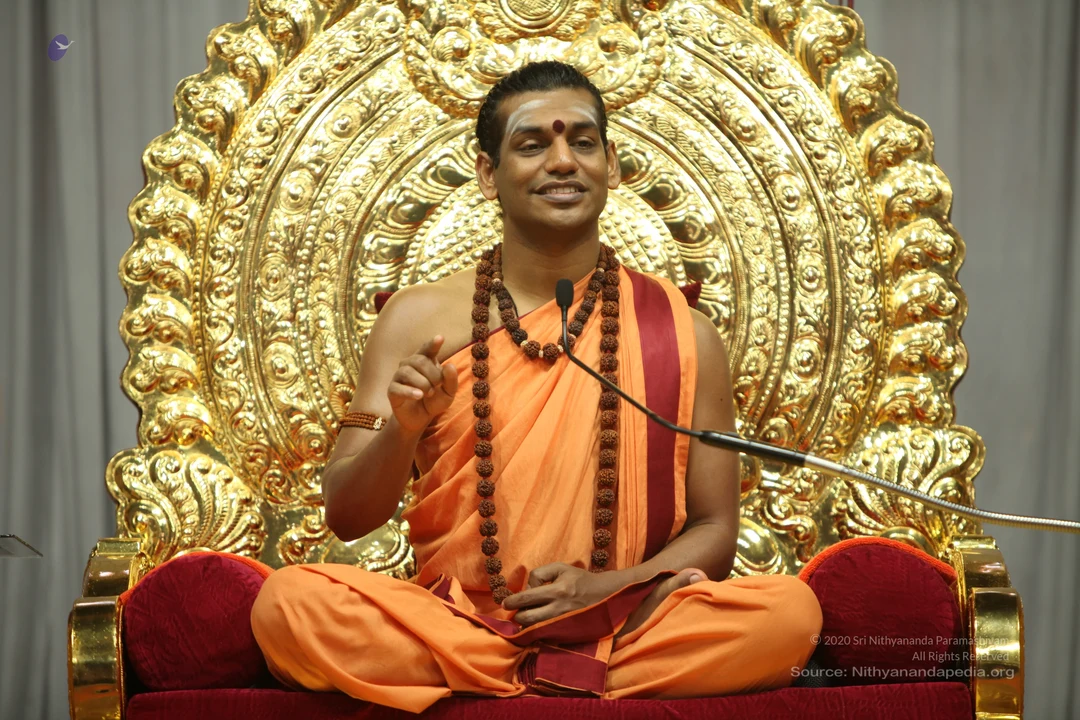
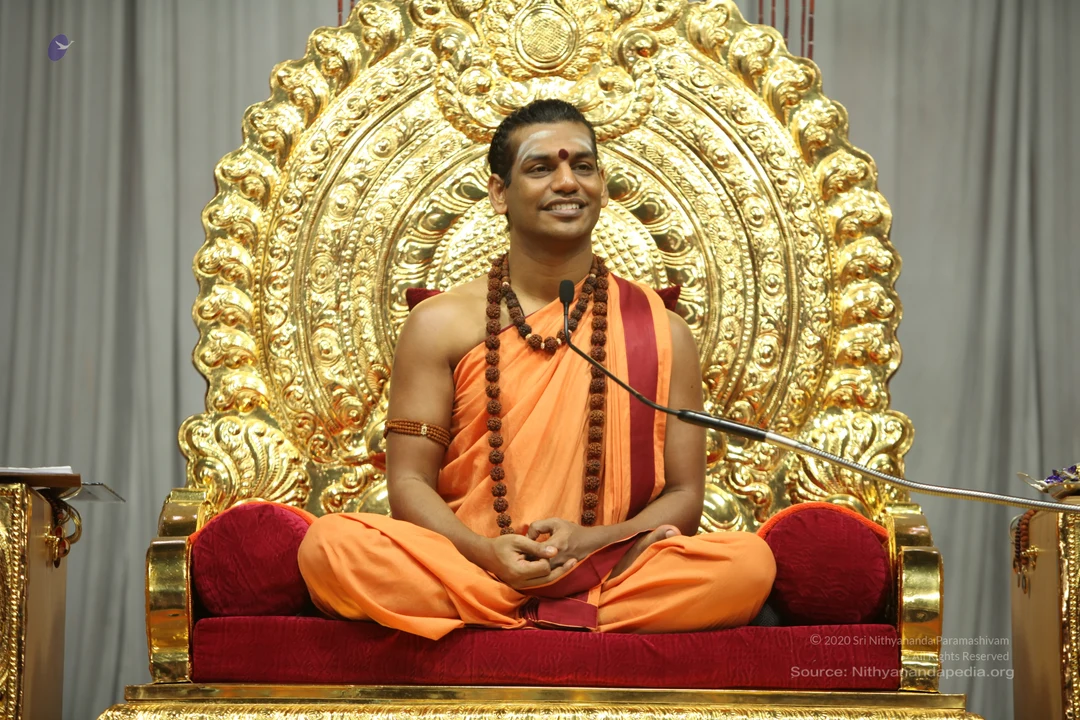
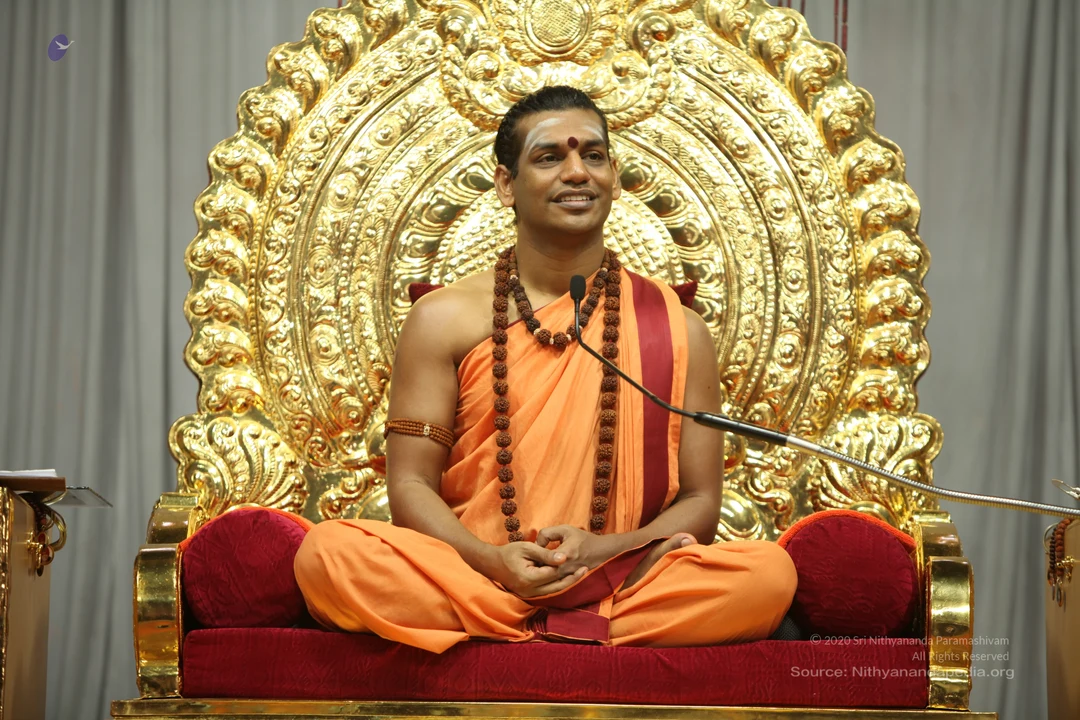
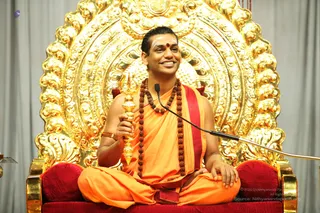
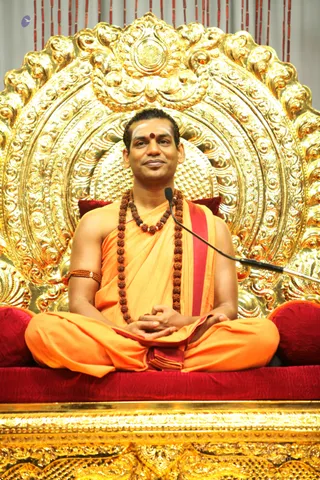
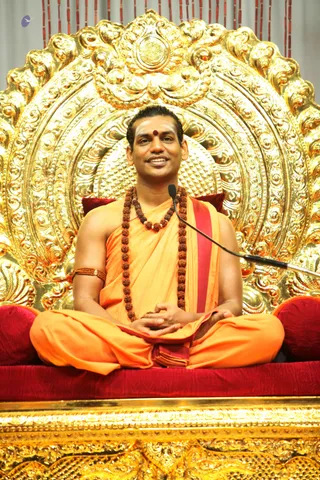
The Supreme Pontiff of Hinduism (SPH), JagatGuru MahaSannidhanam (JGM) Bhagavan Kailasa's Sri Nithyananda Paramashivam

Dated photos
418
Source pages
1
Media
2
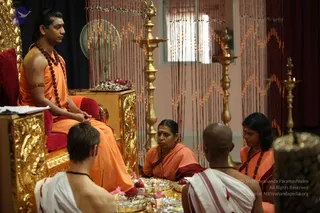
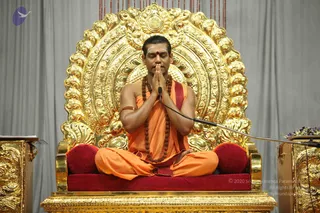
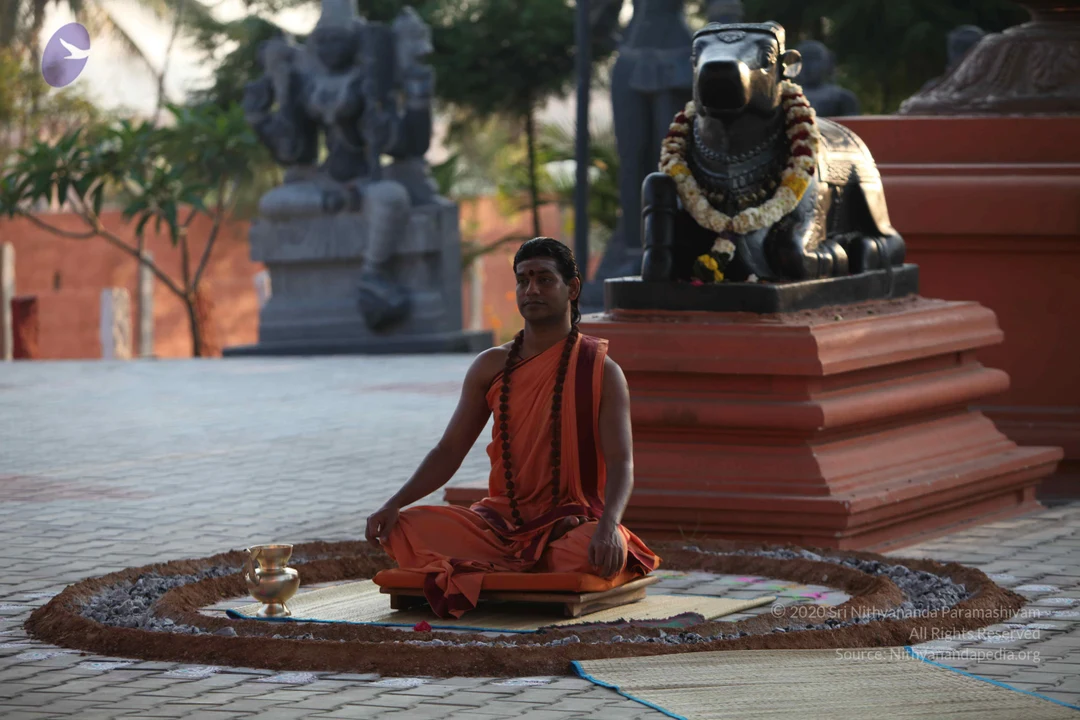
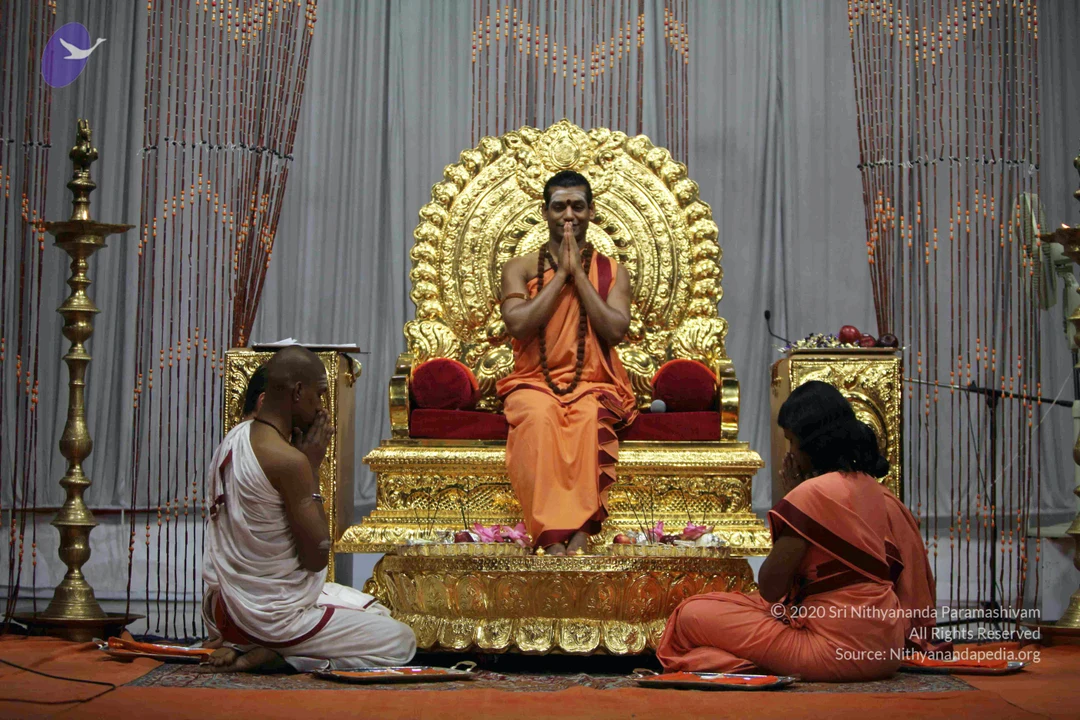
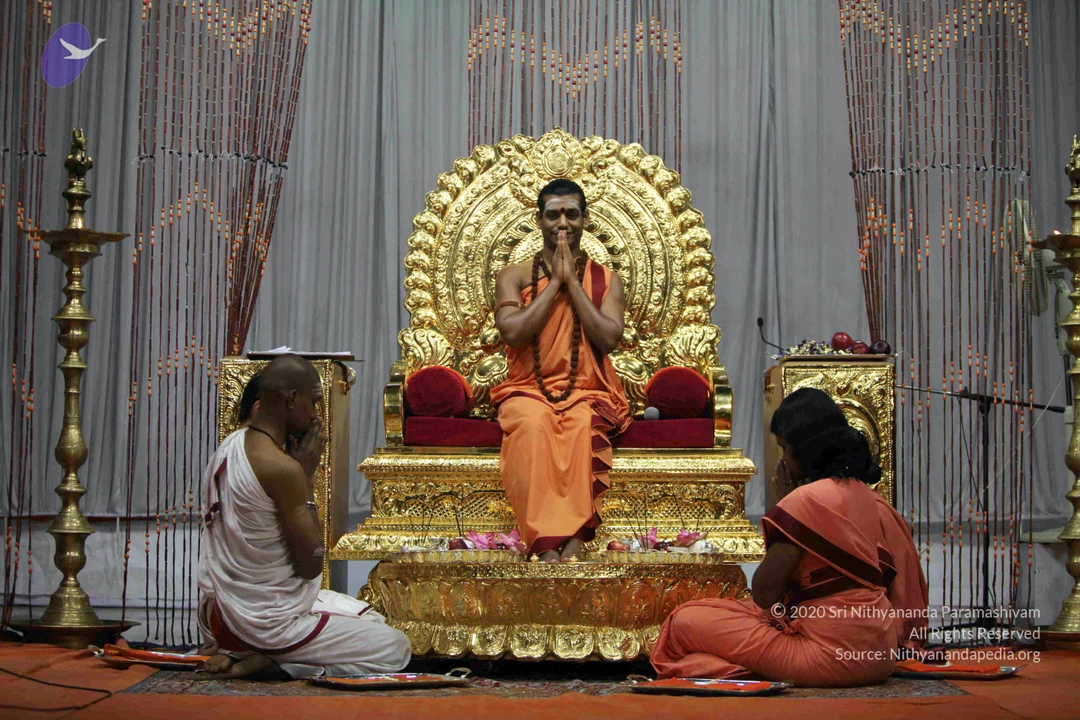
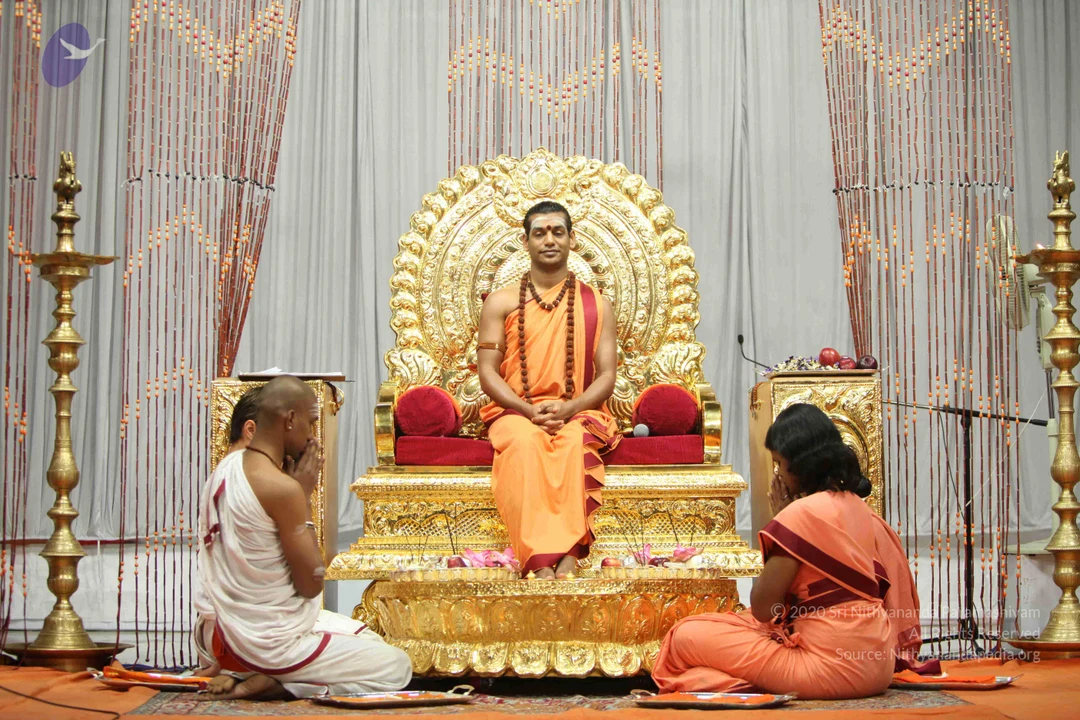
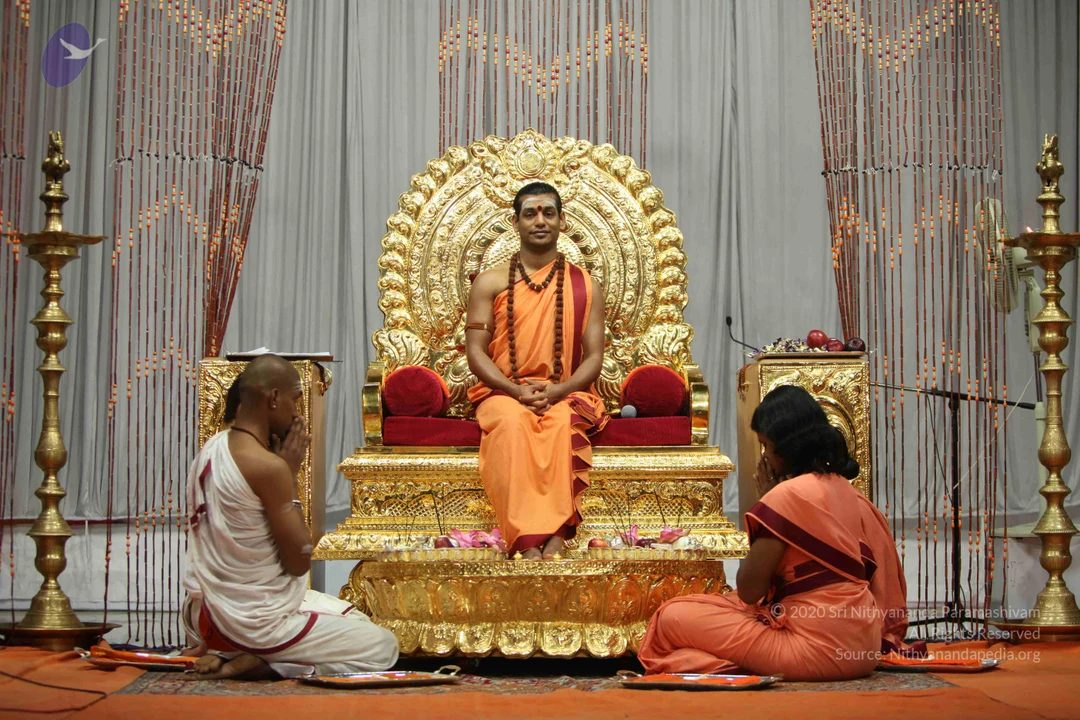
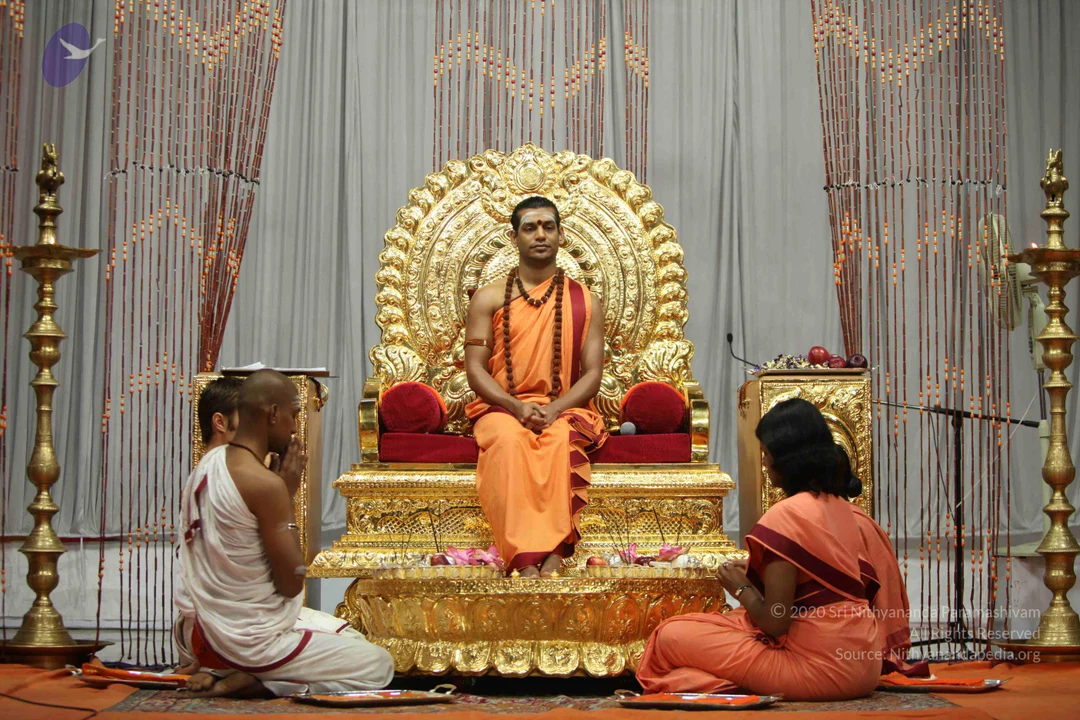
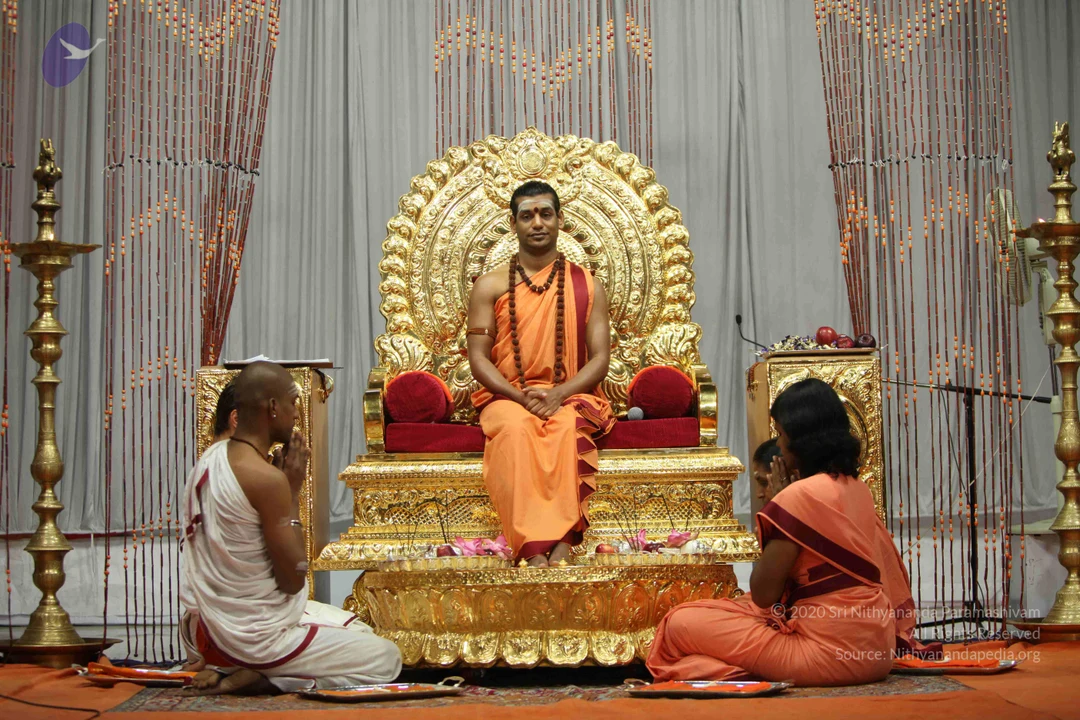
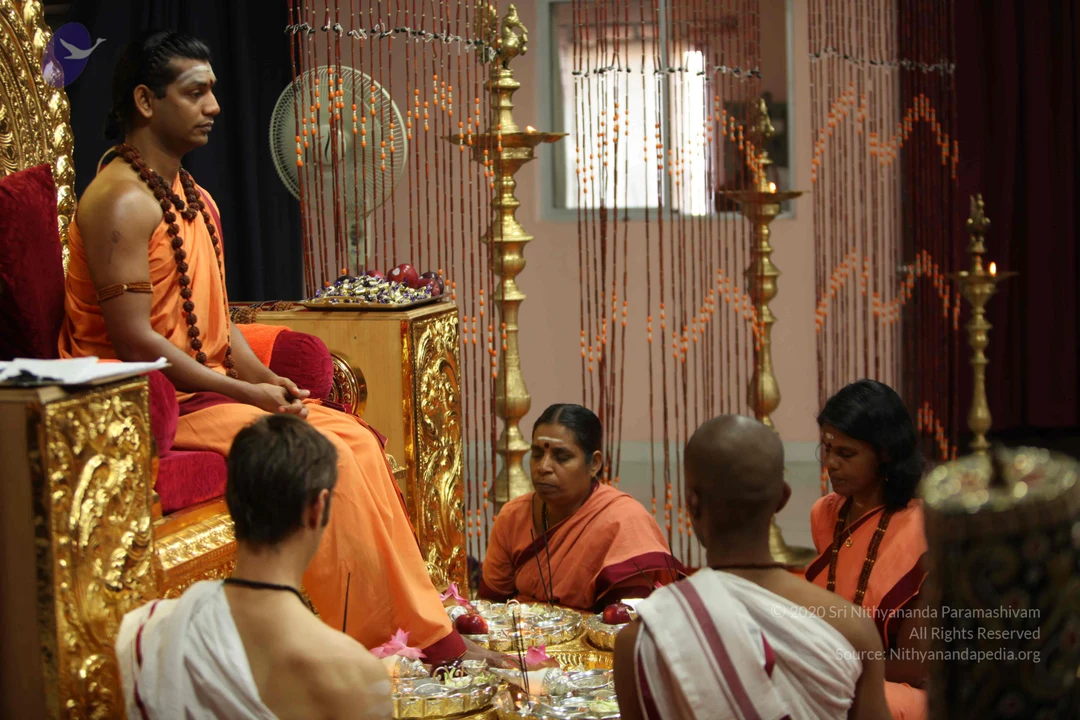
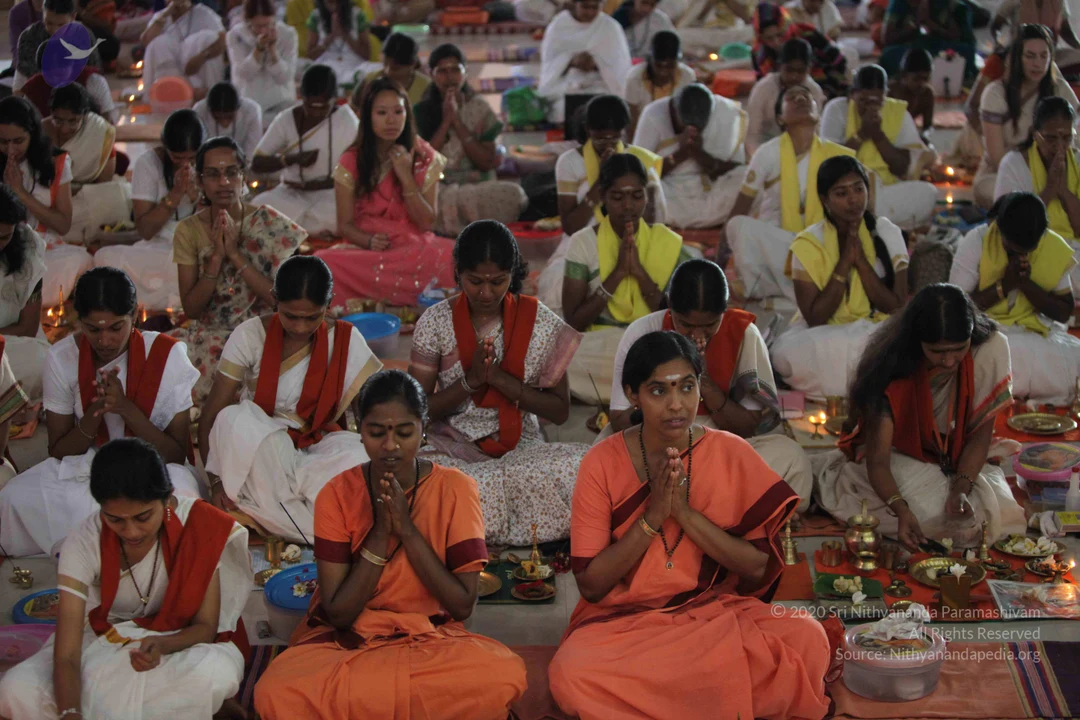
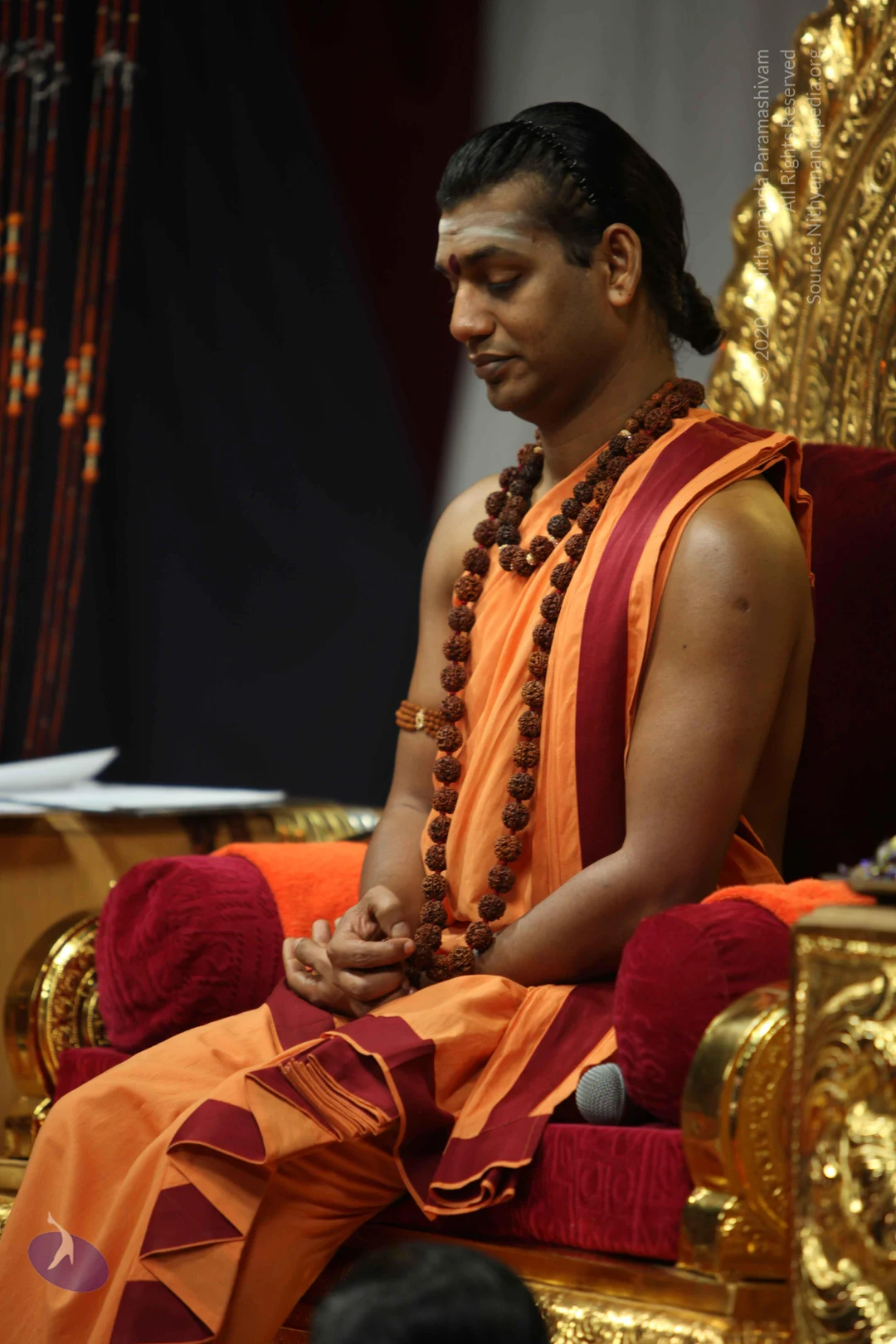
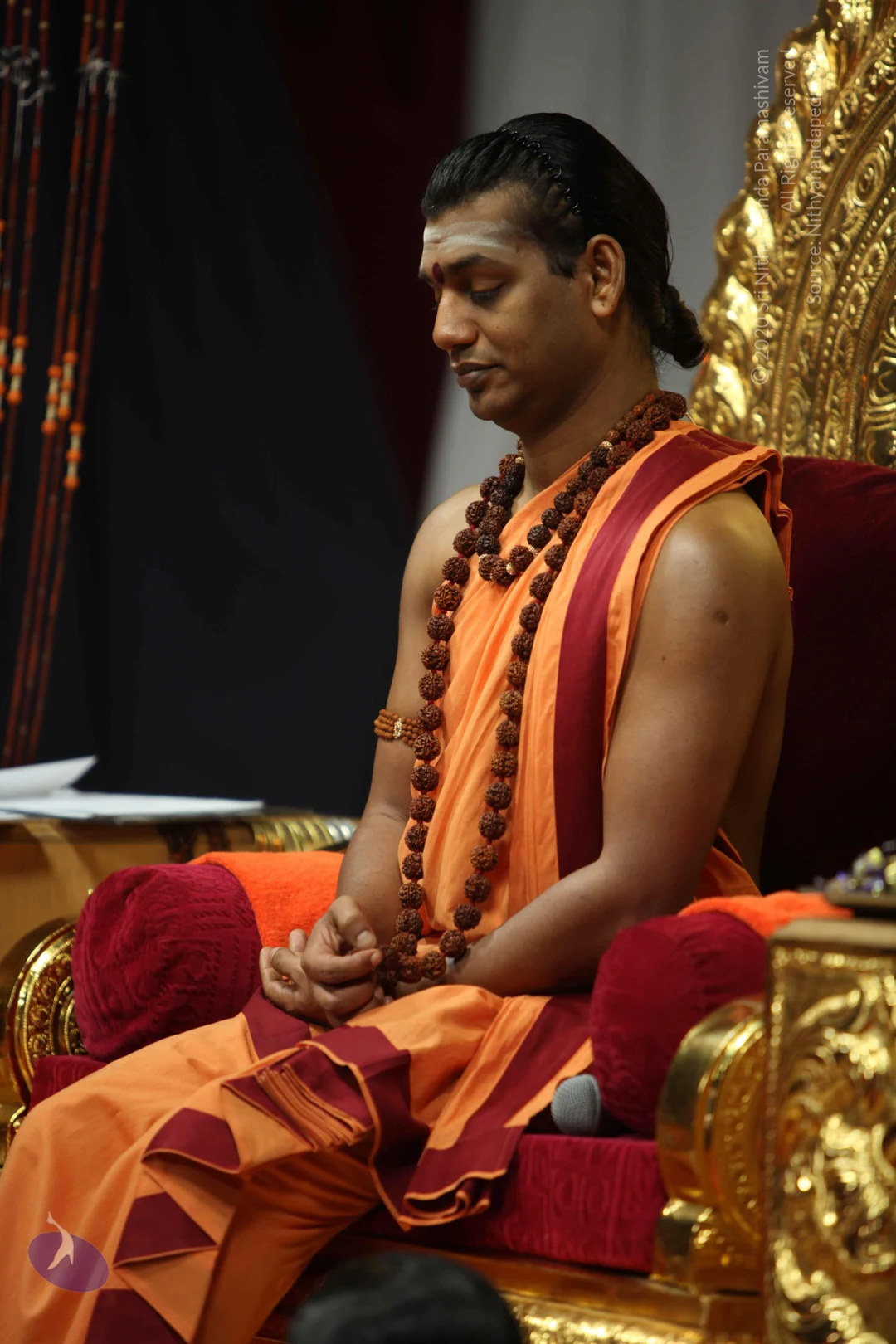
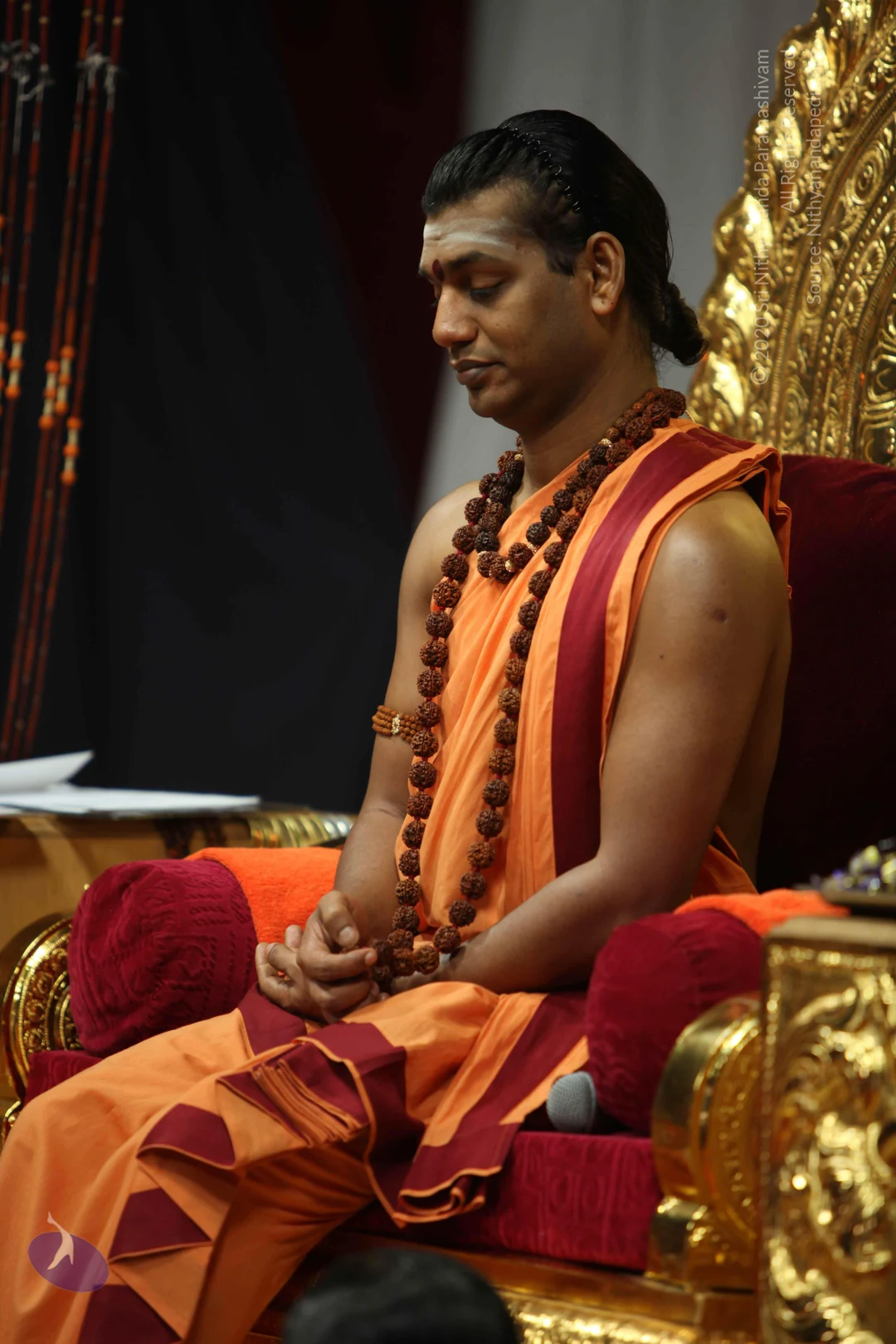
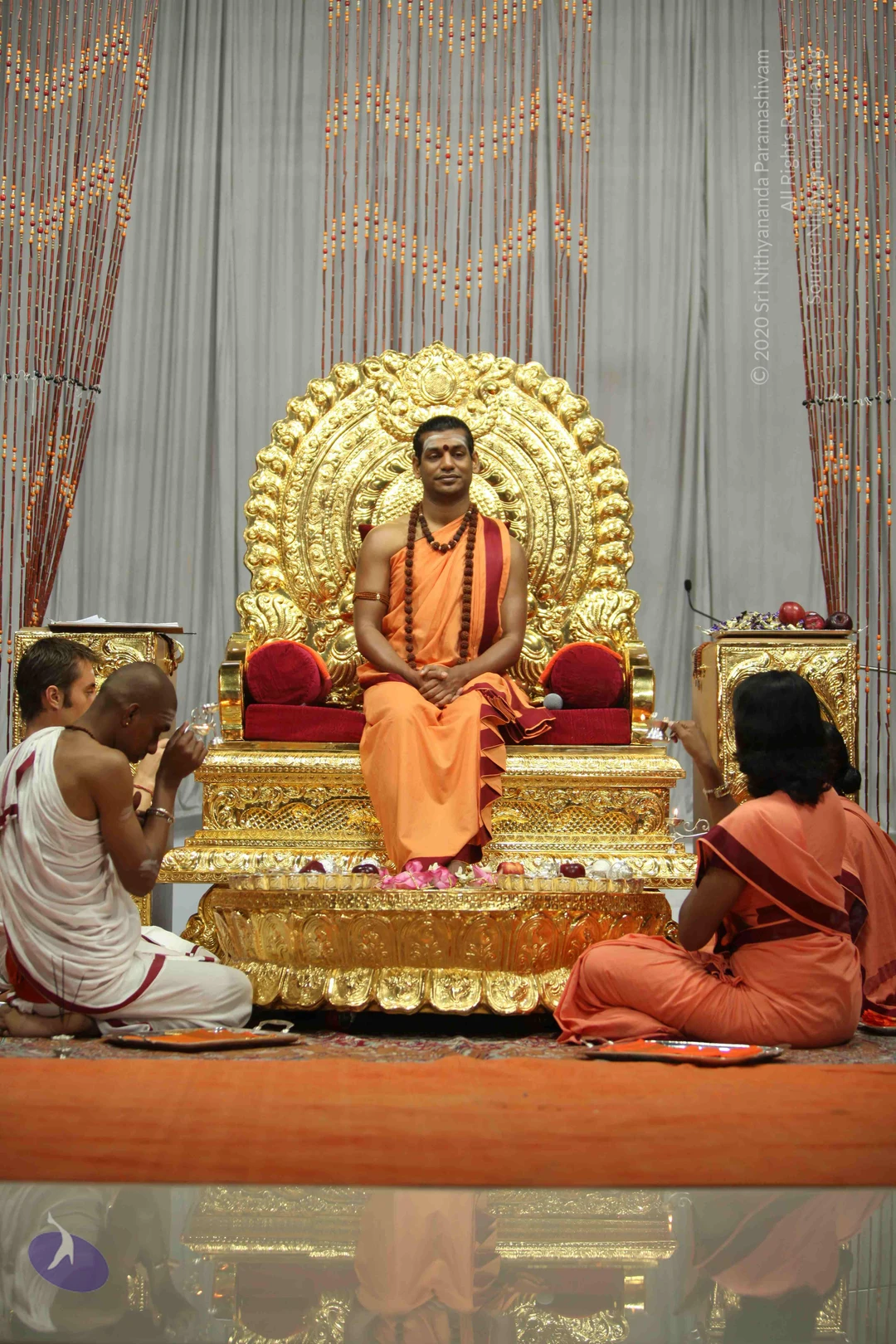
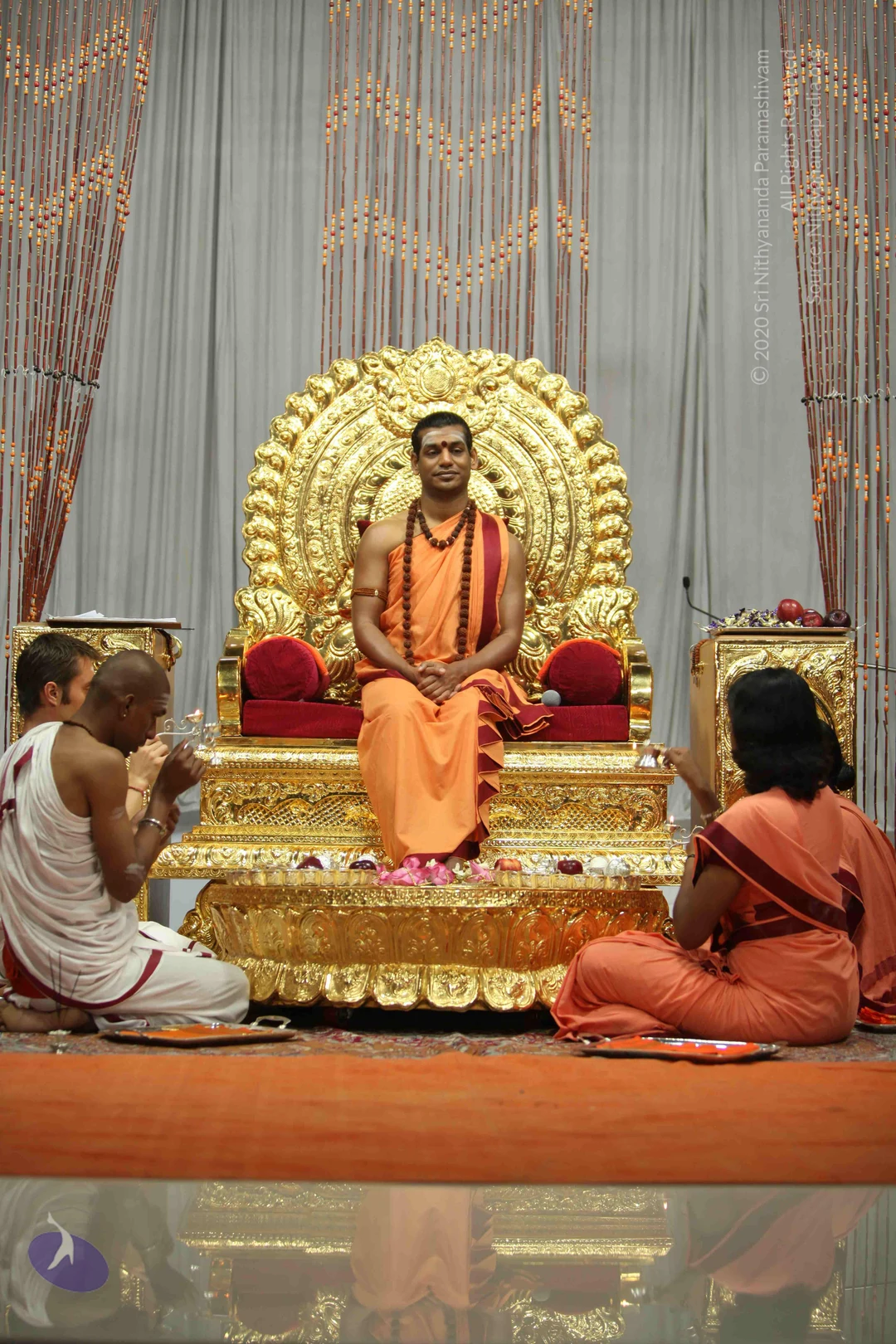
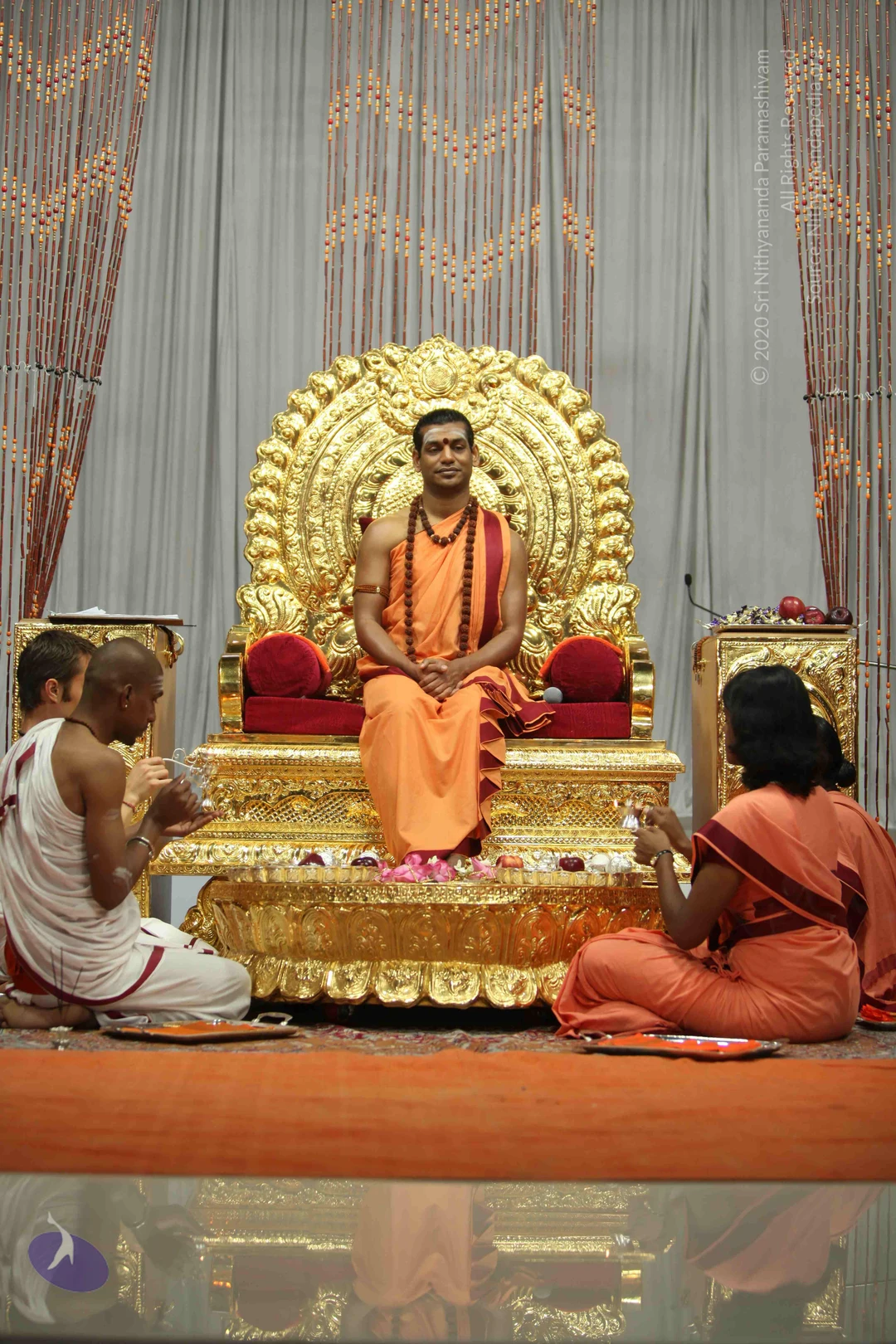
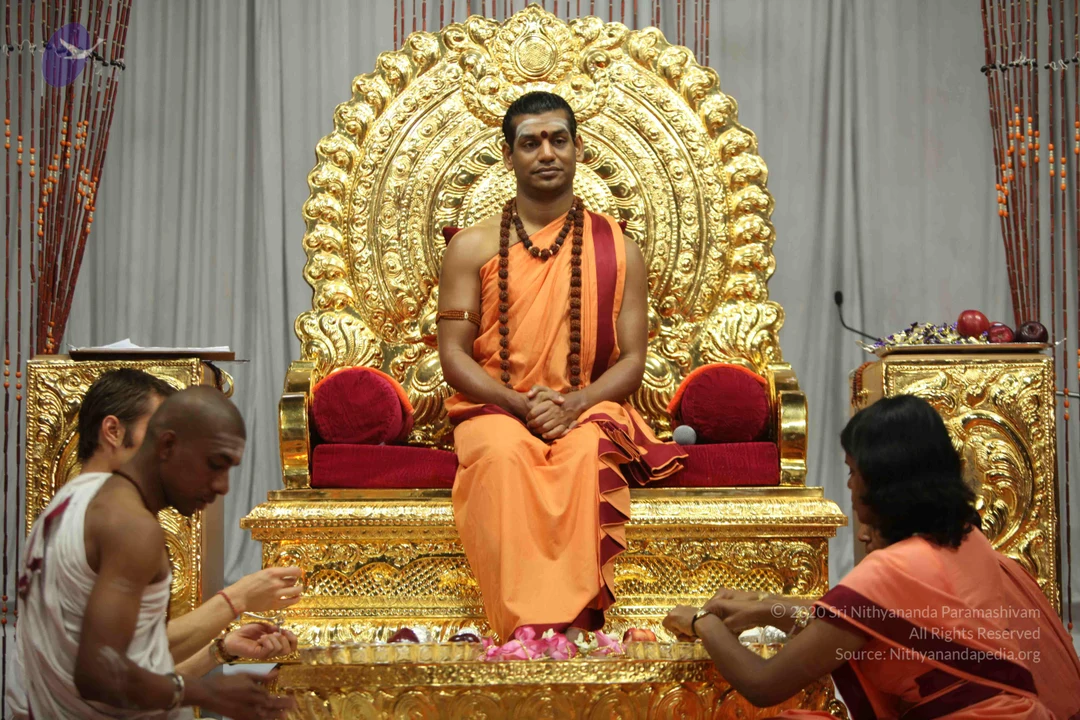
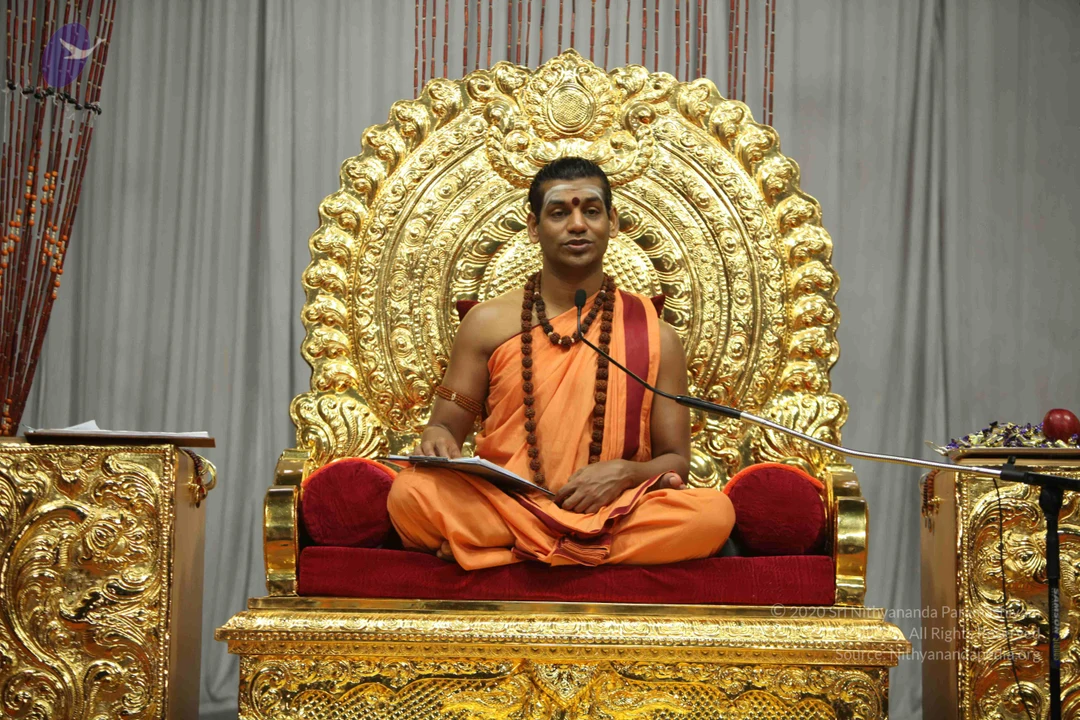
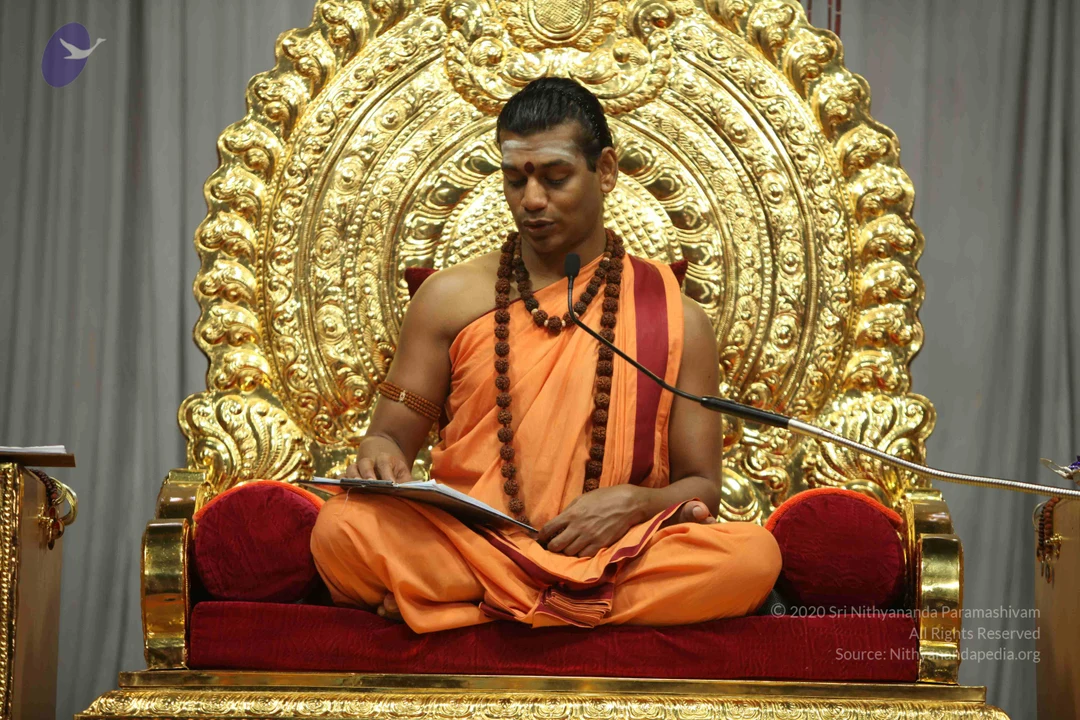
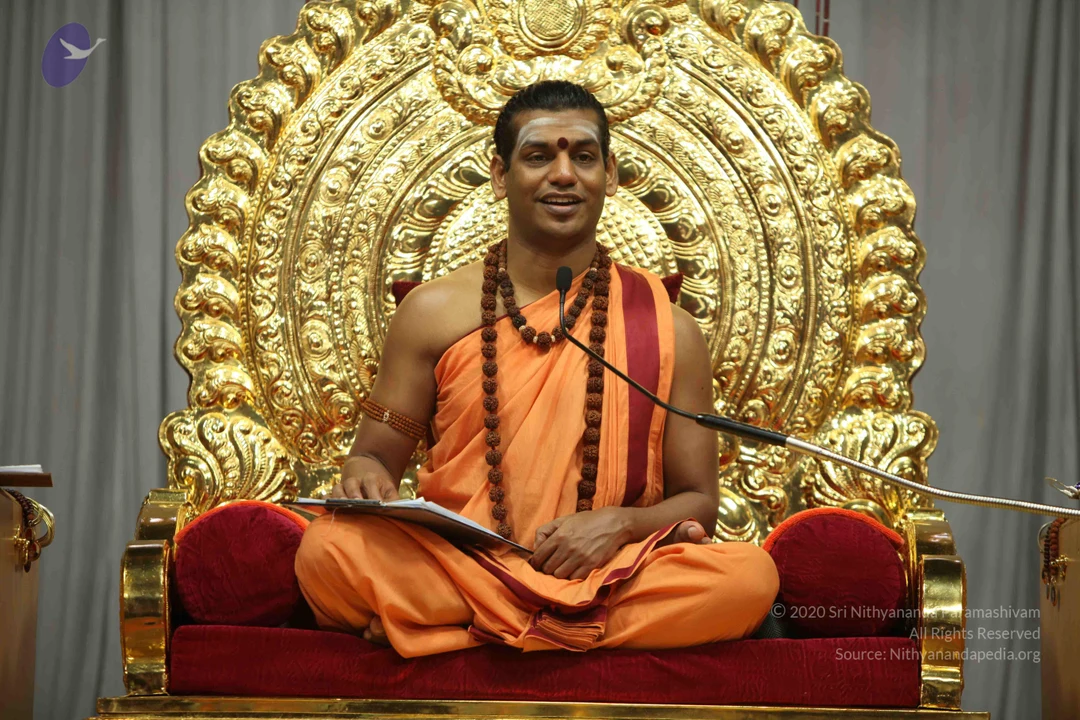
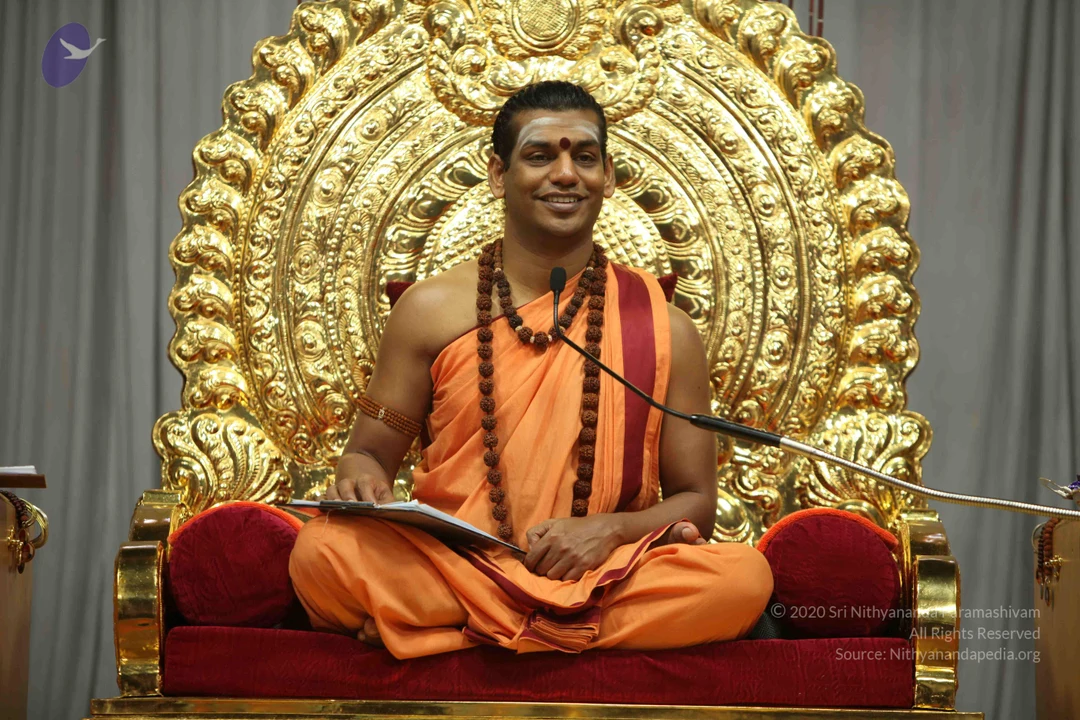
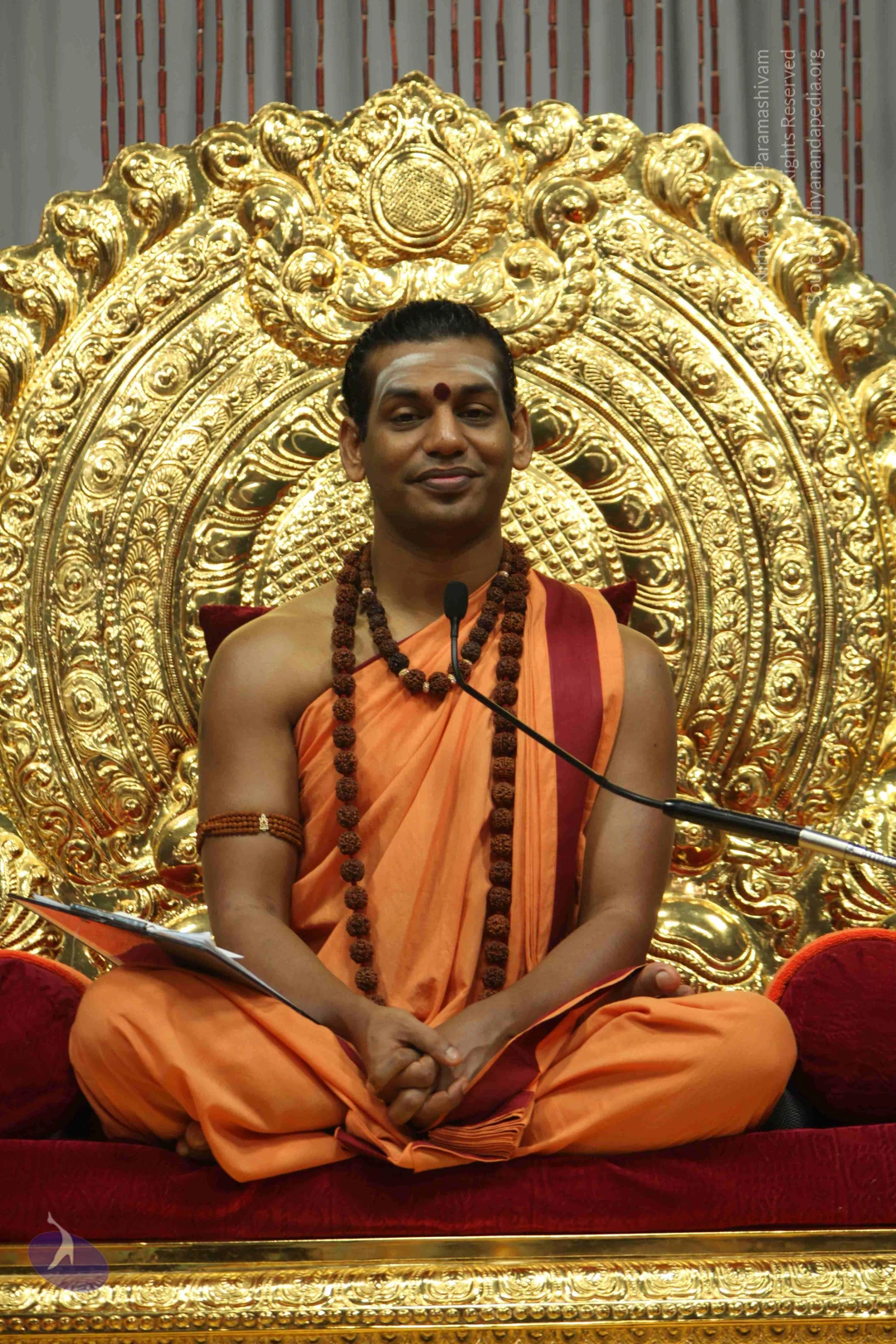
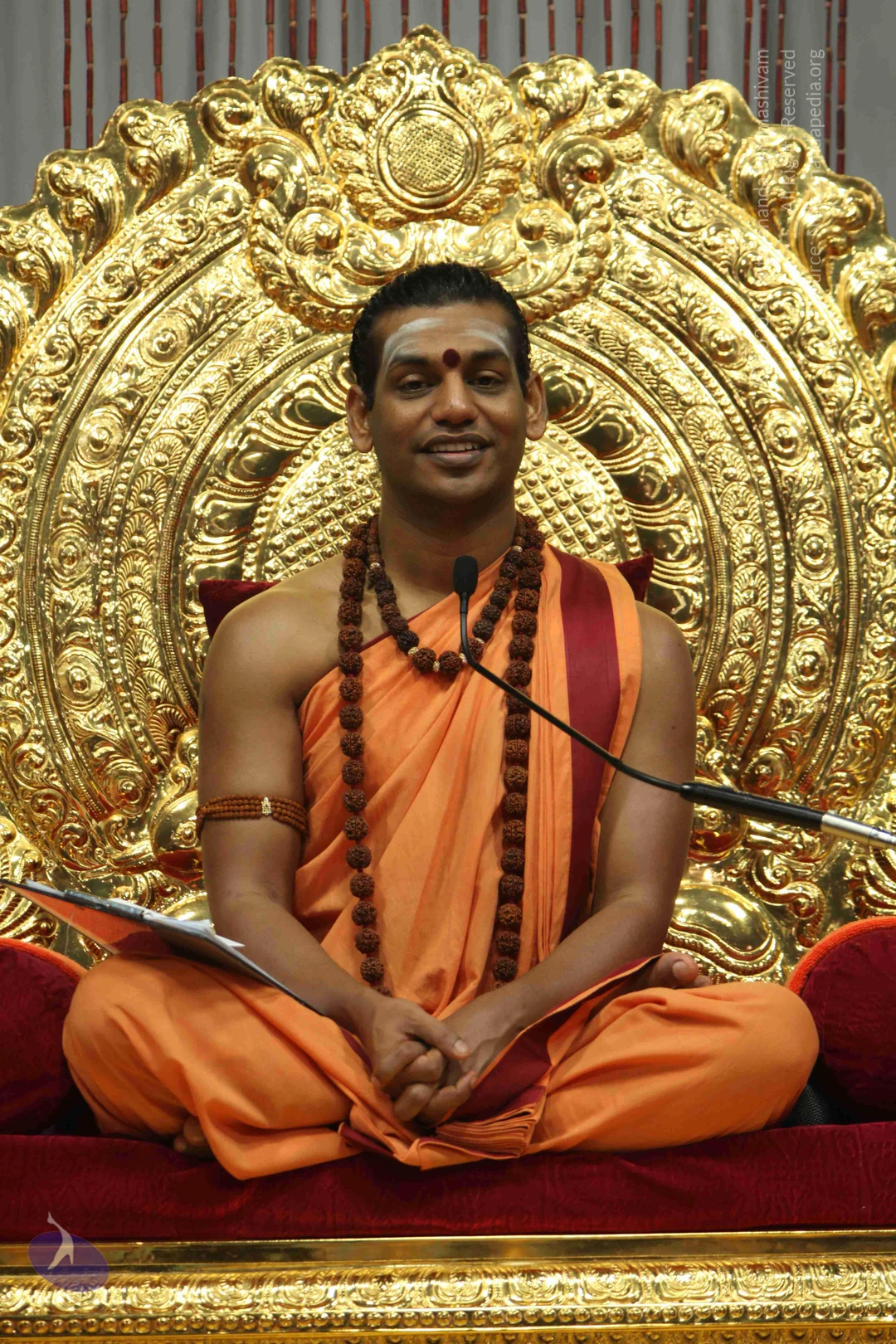
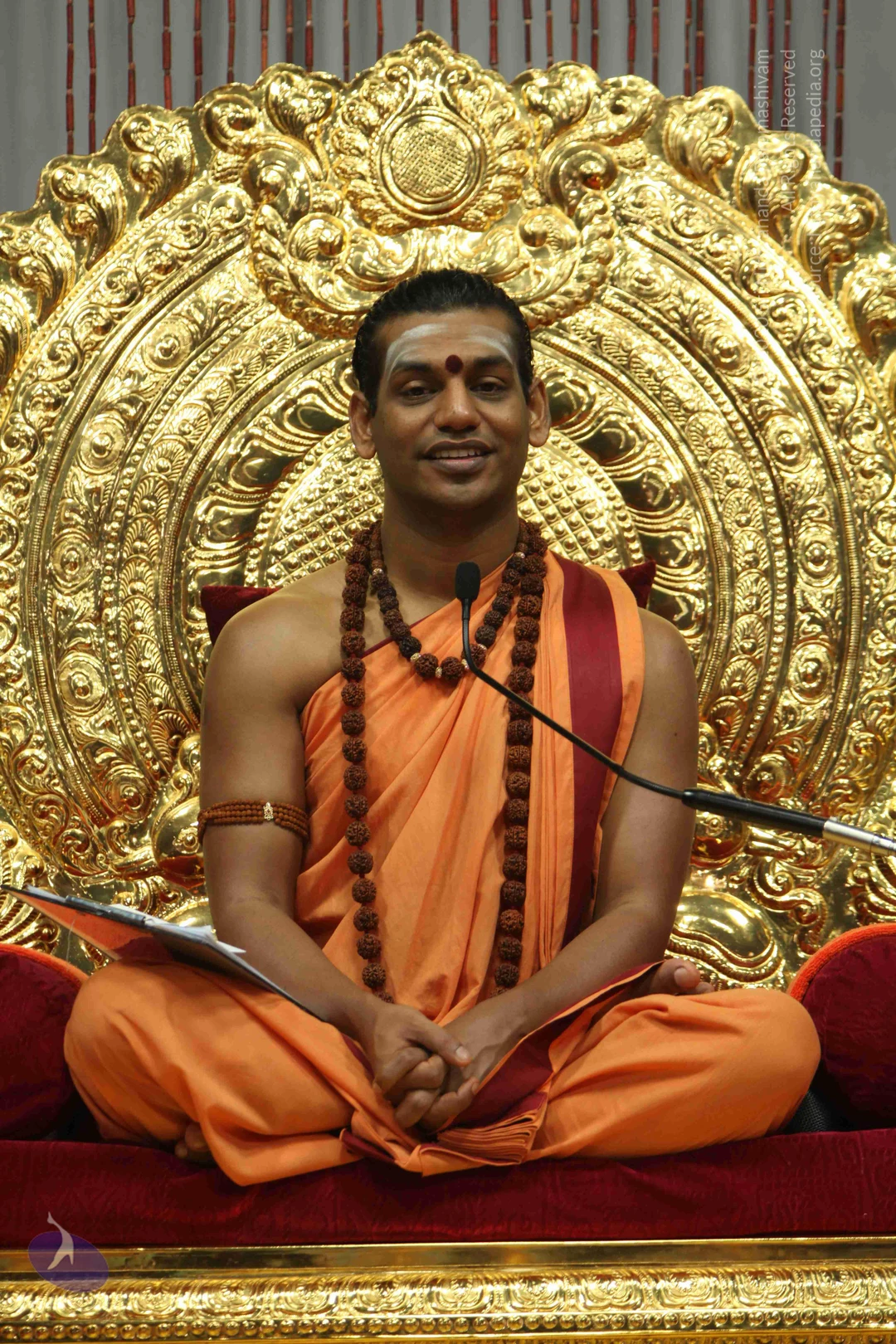
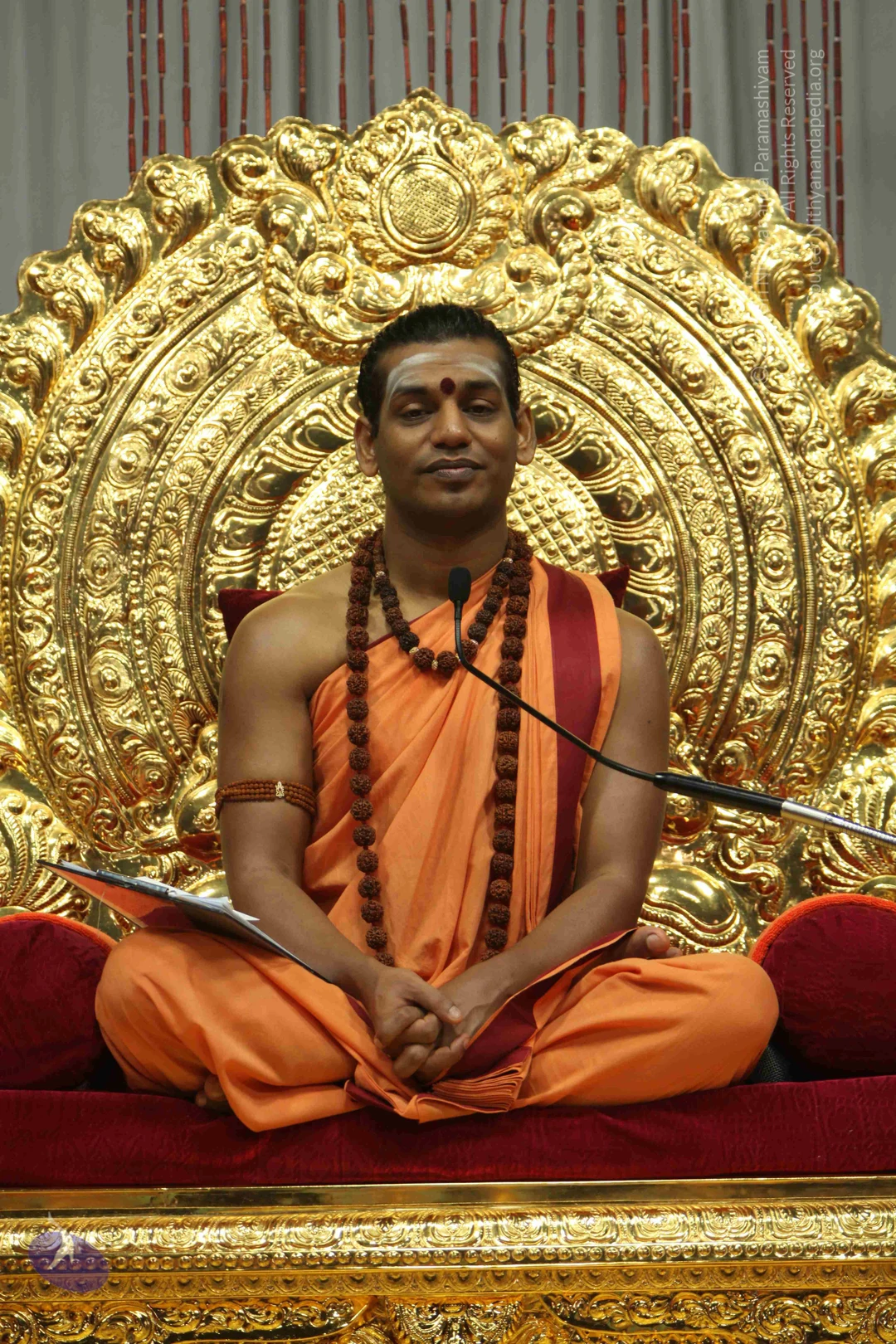
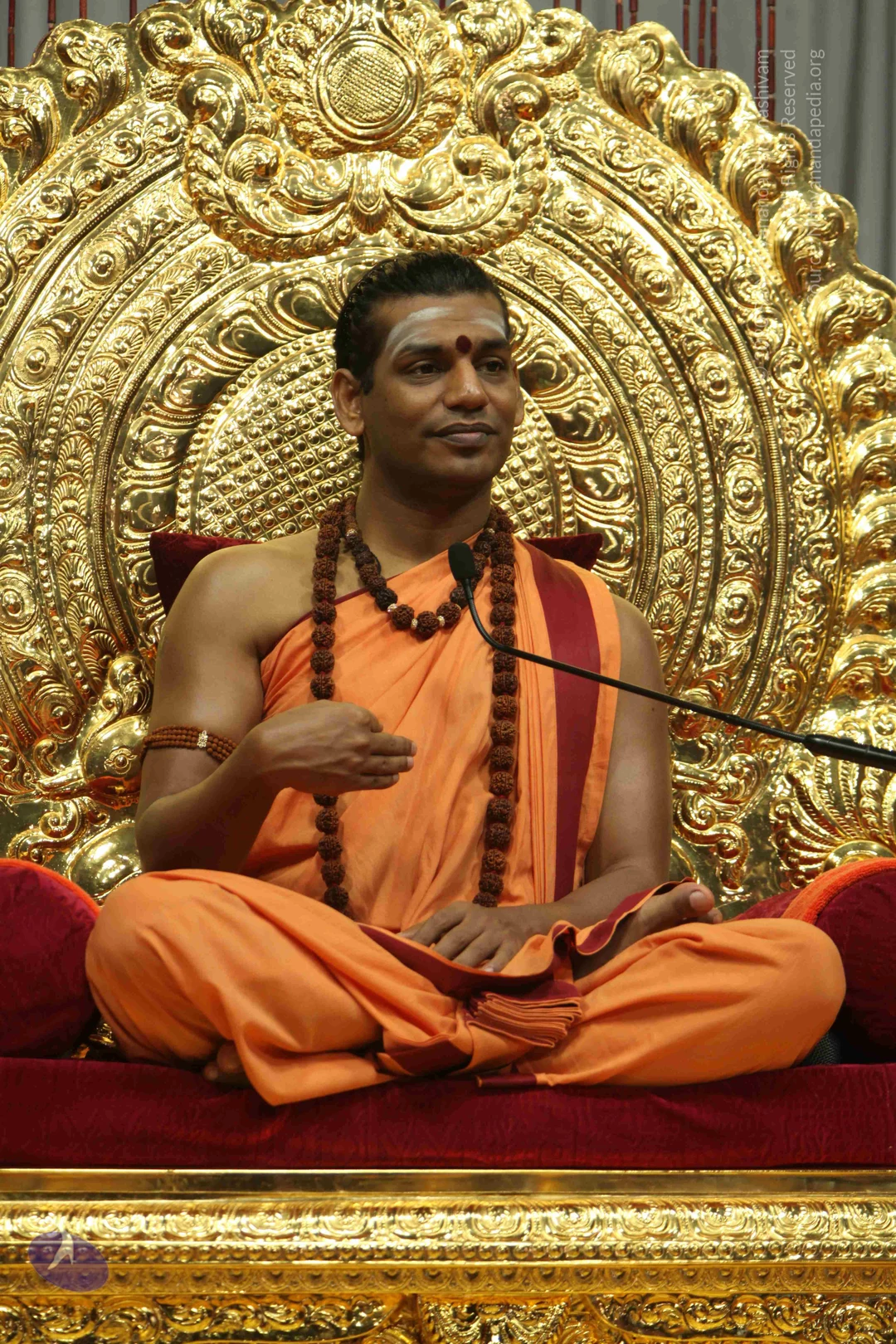
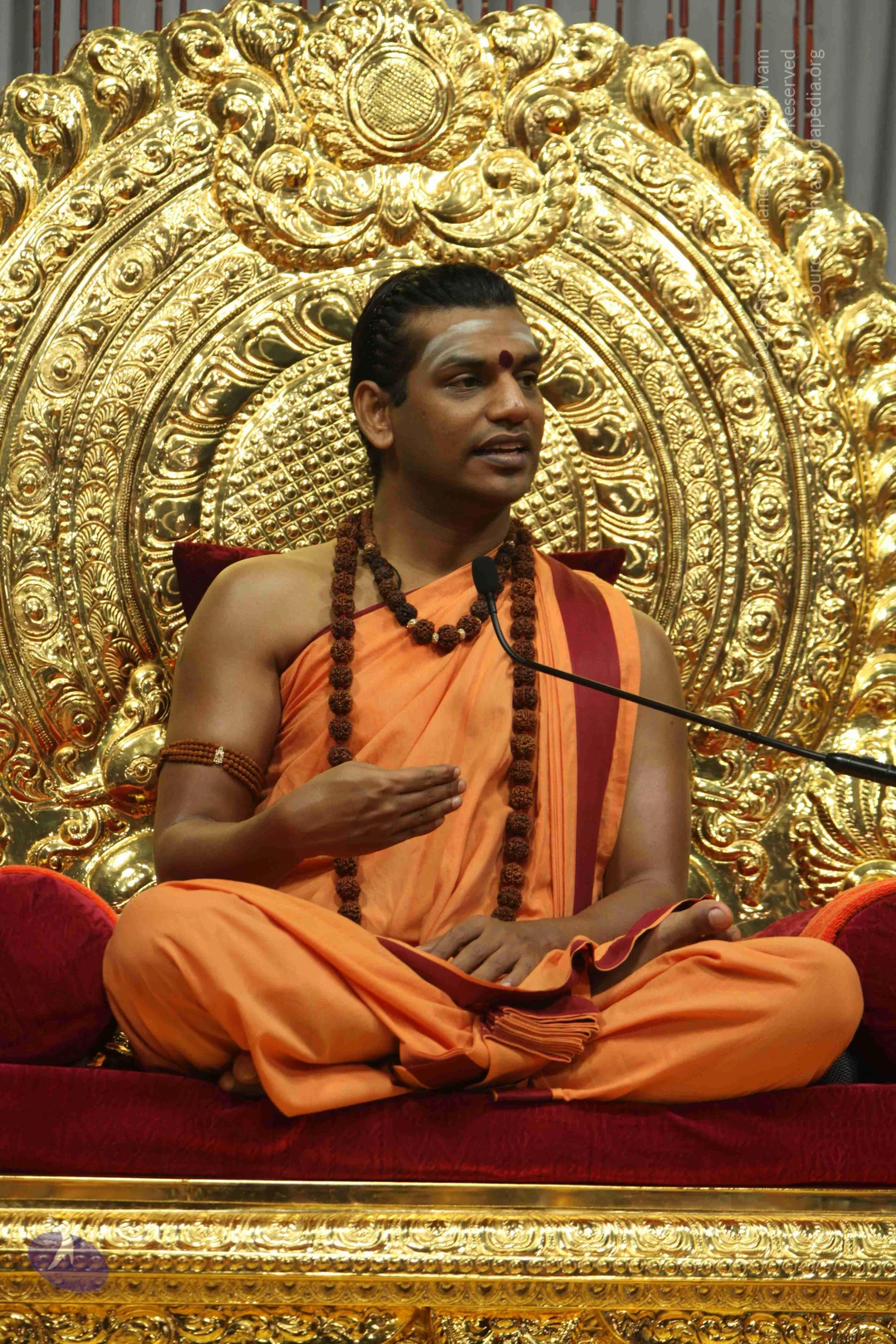
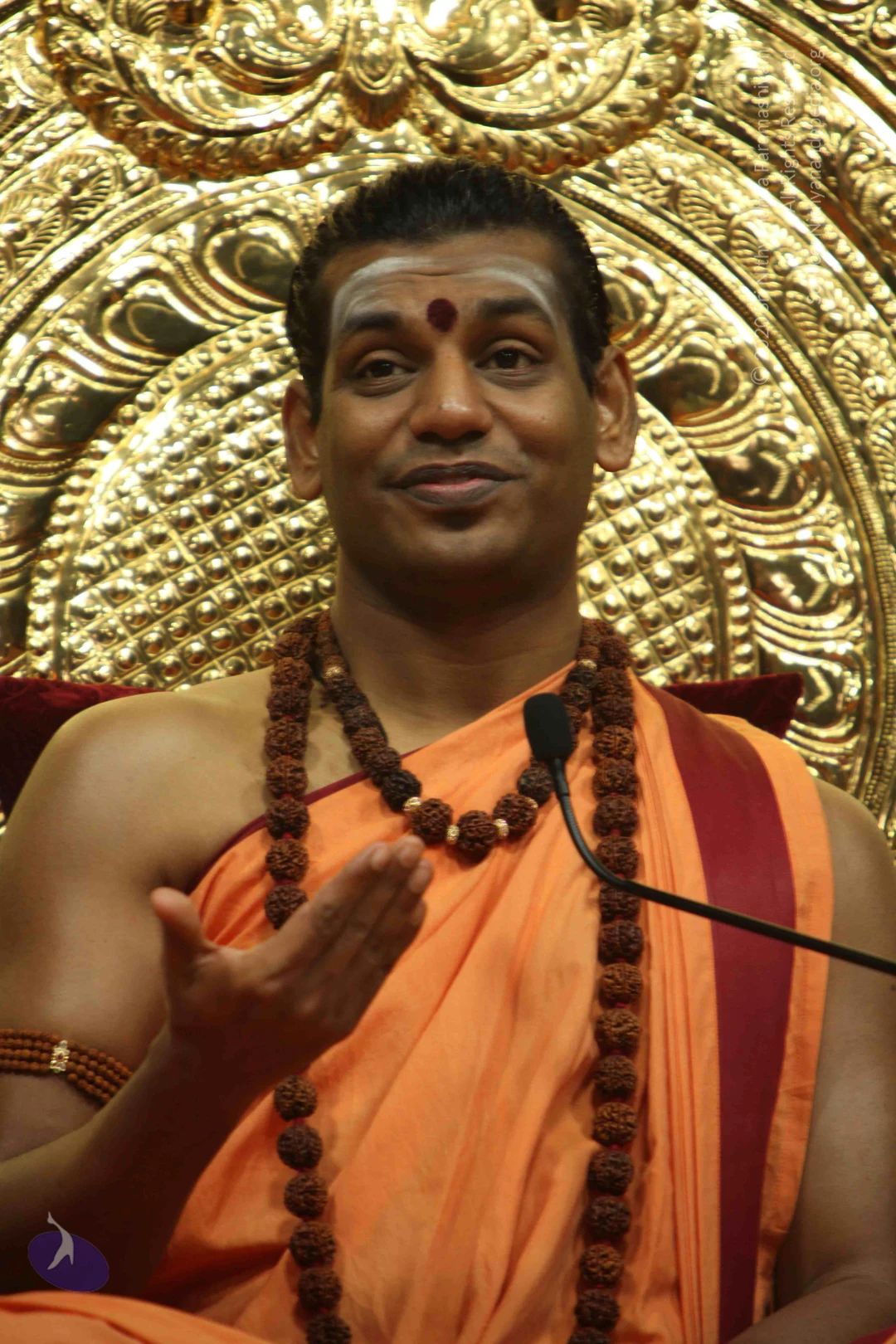
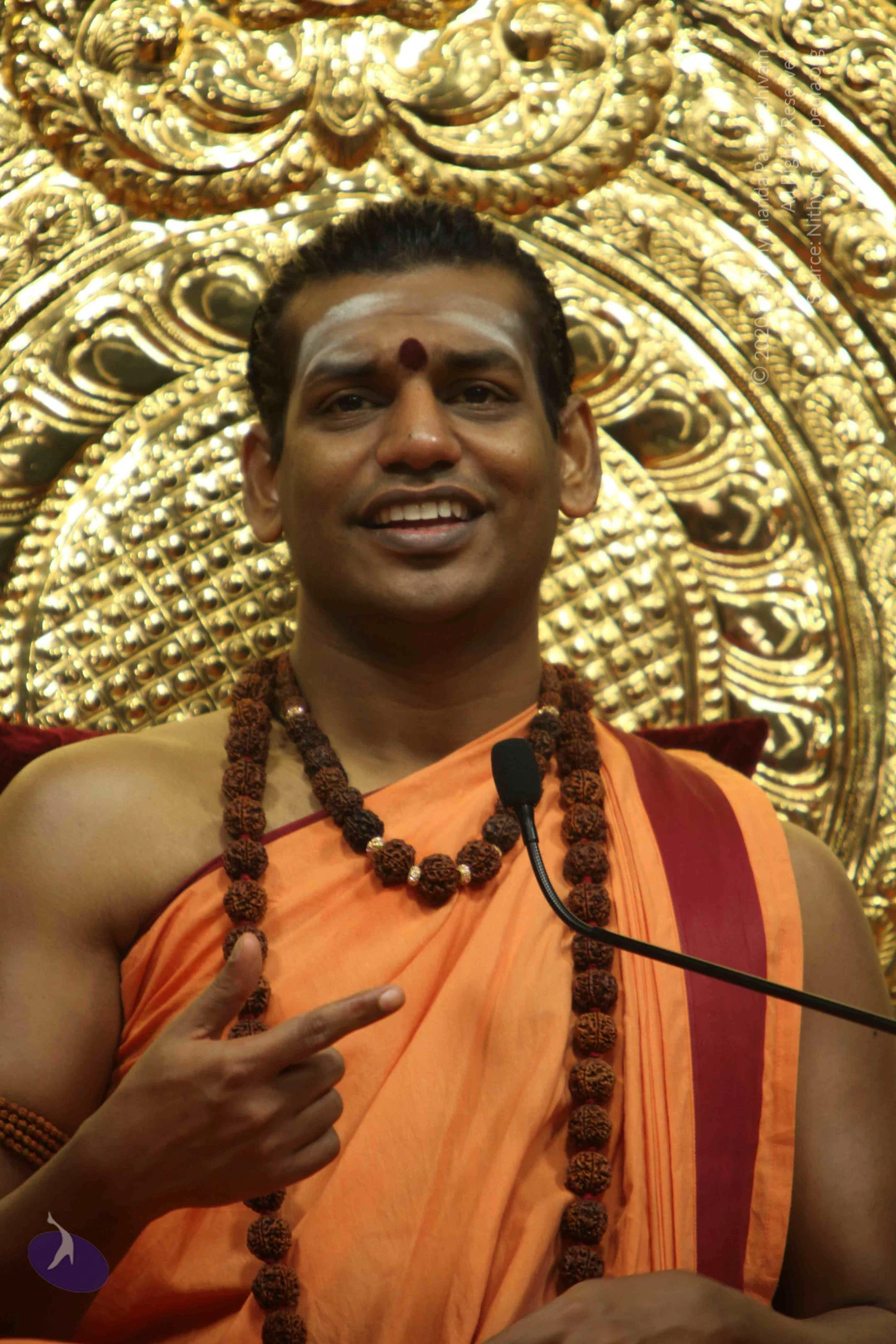
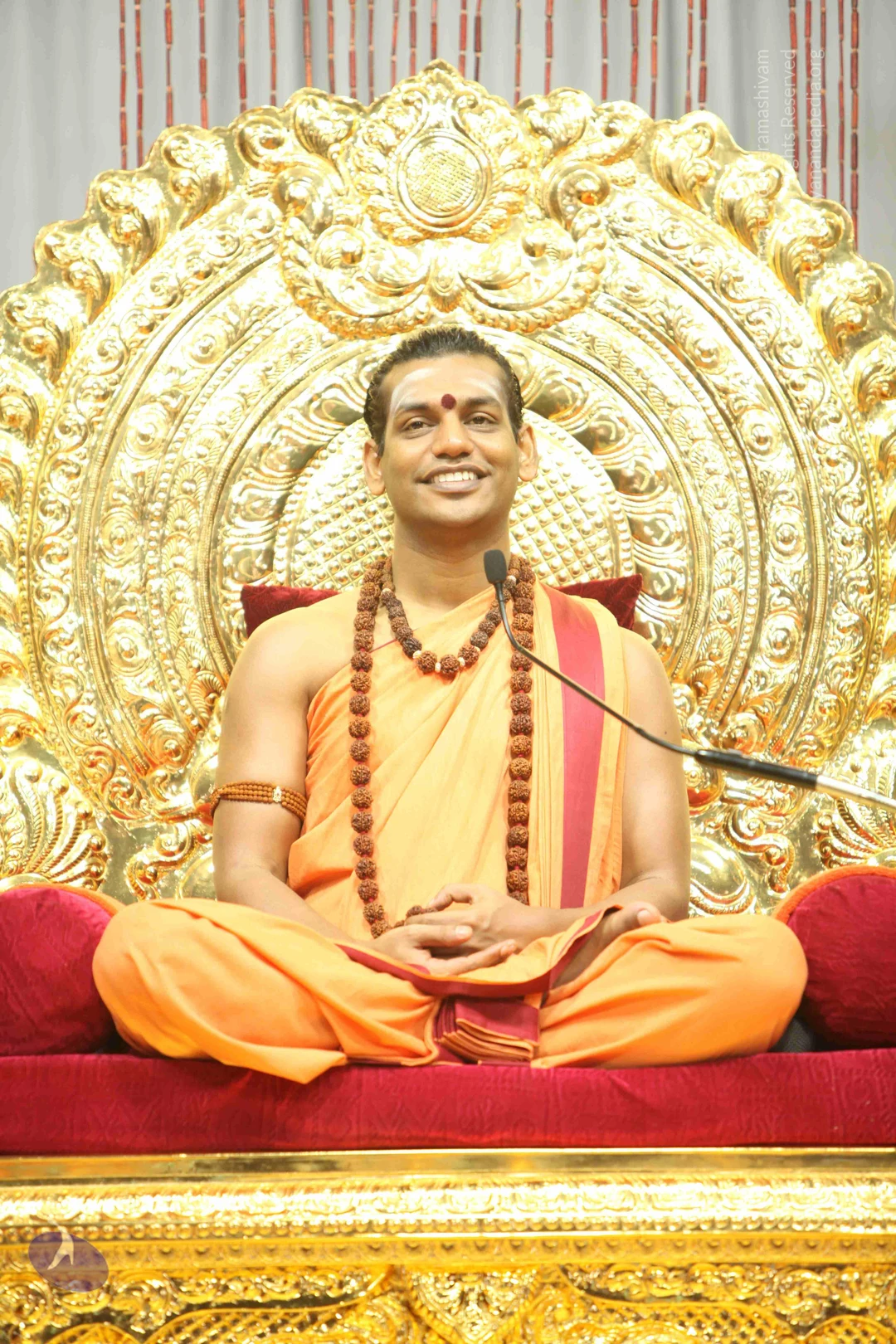
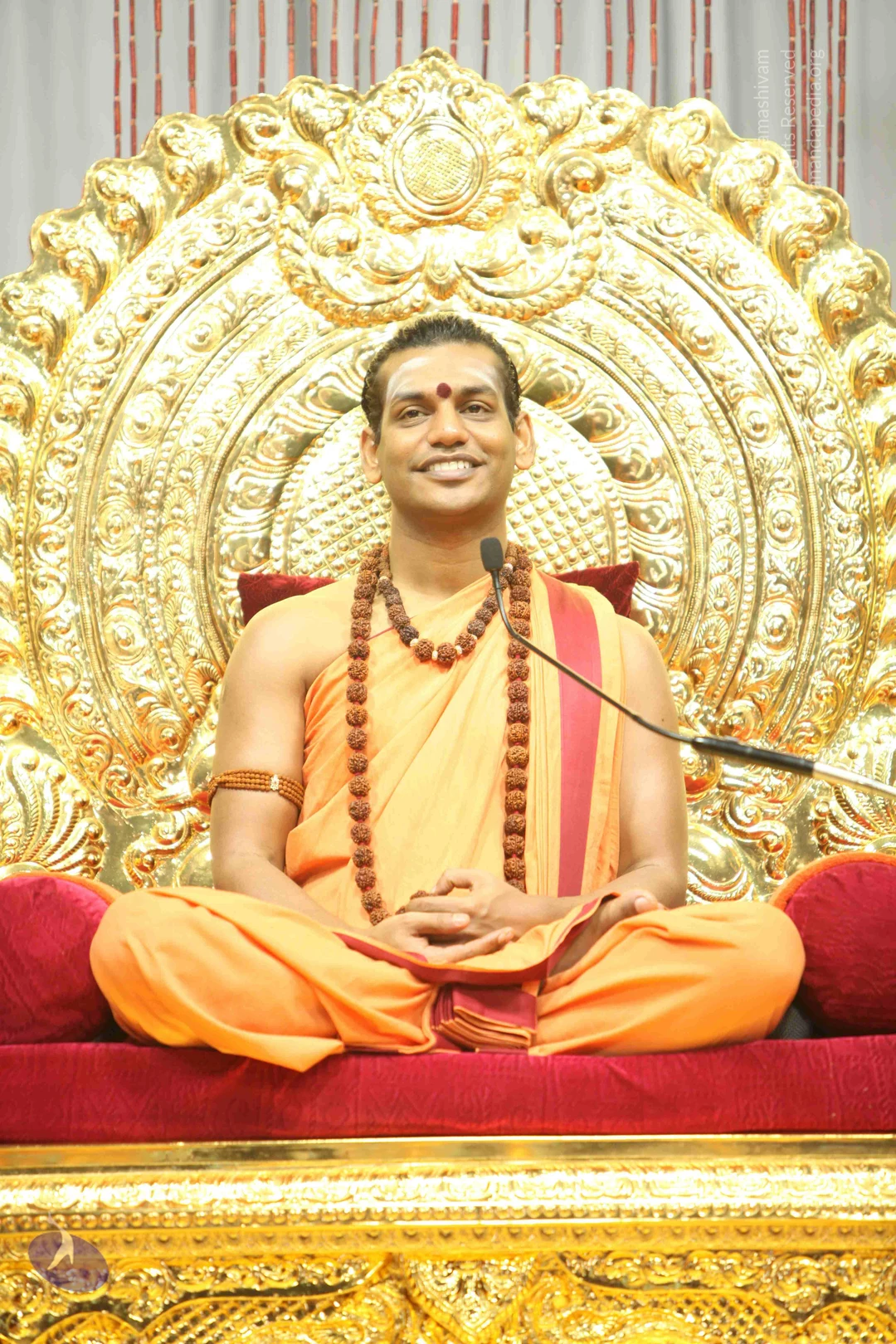
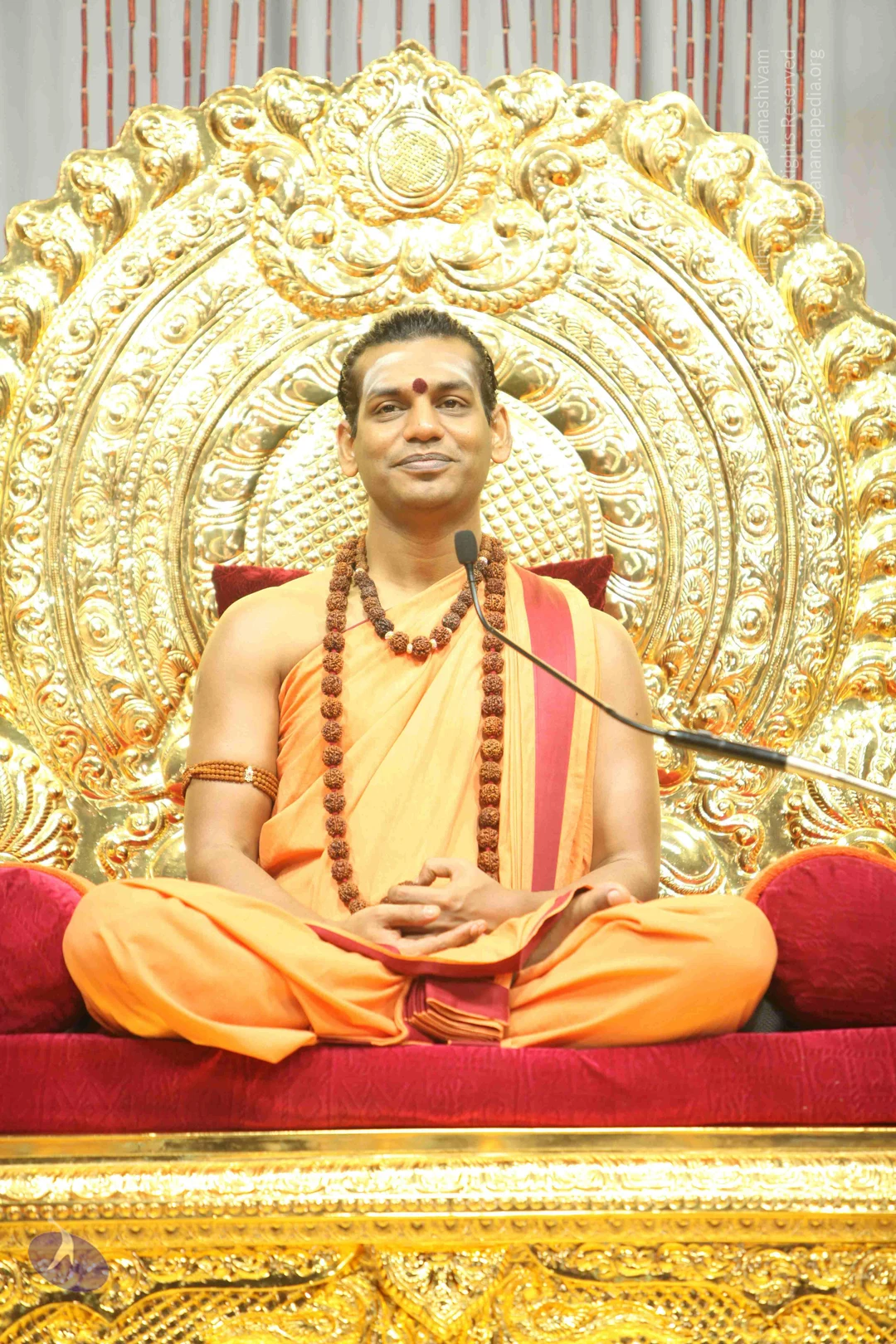
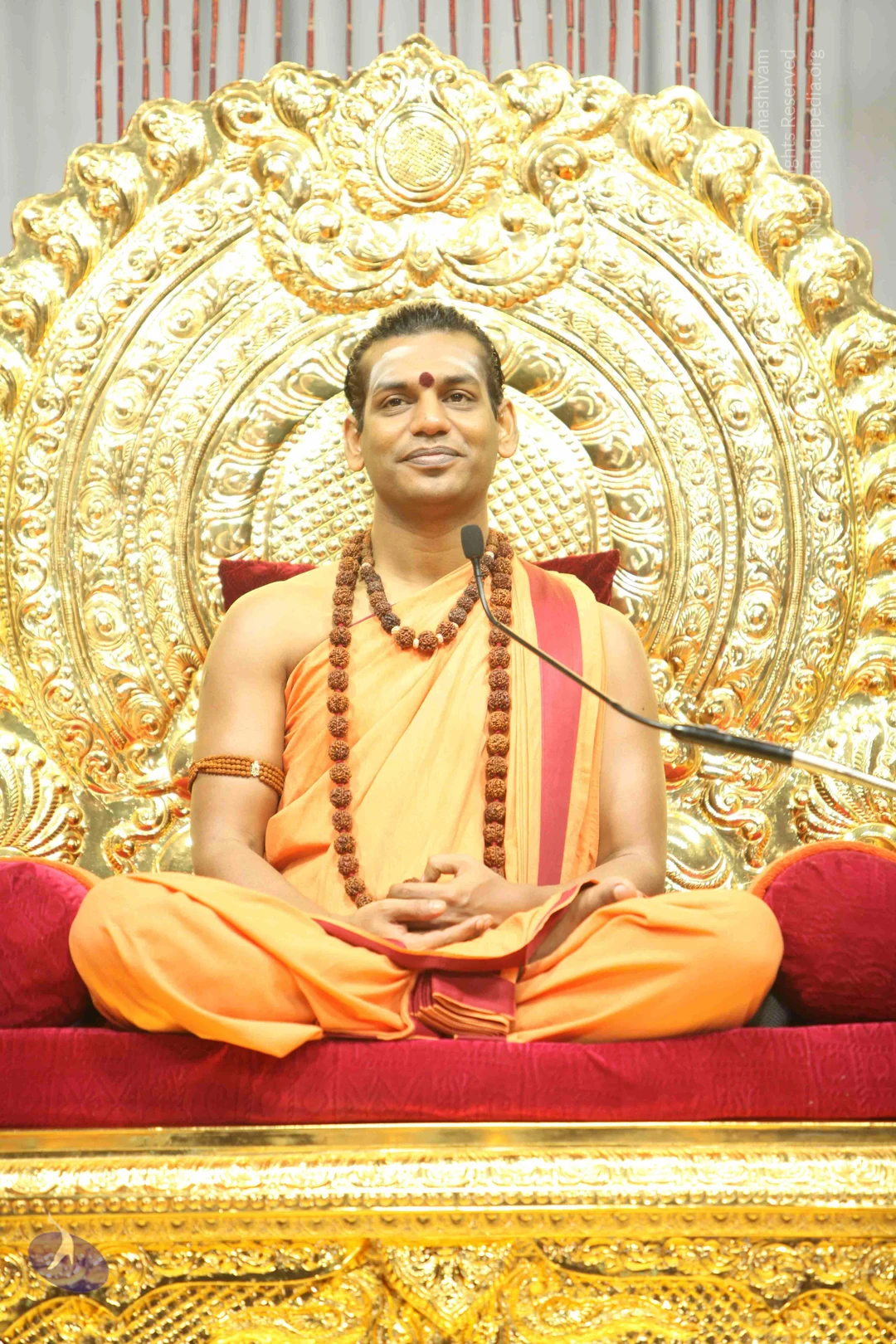
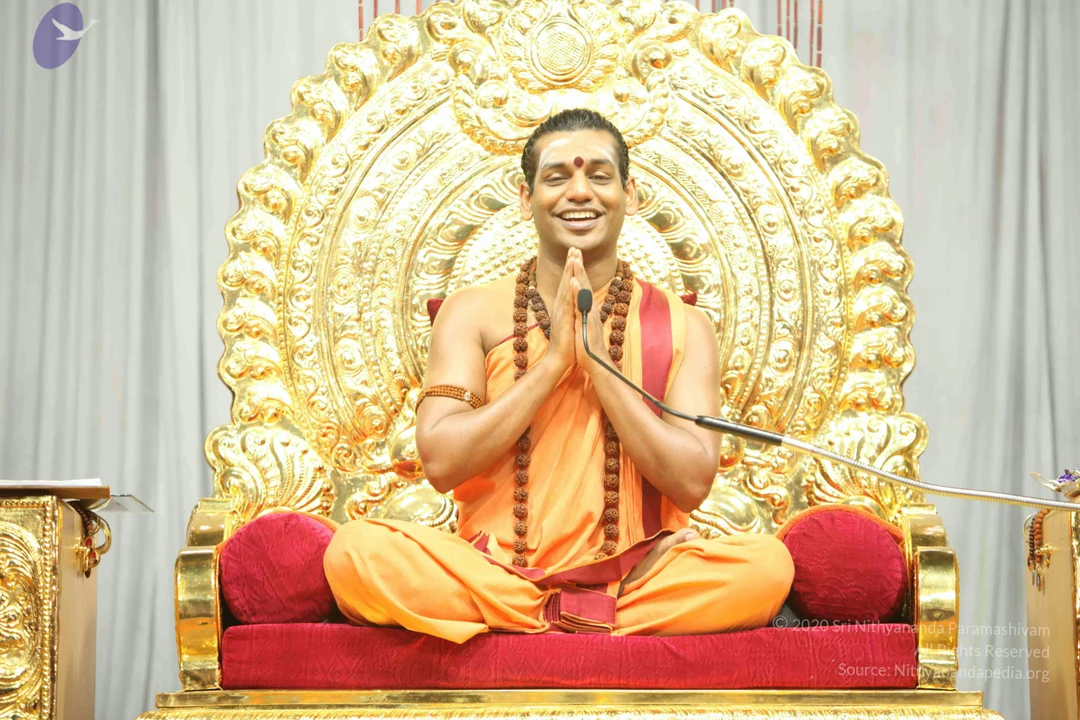
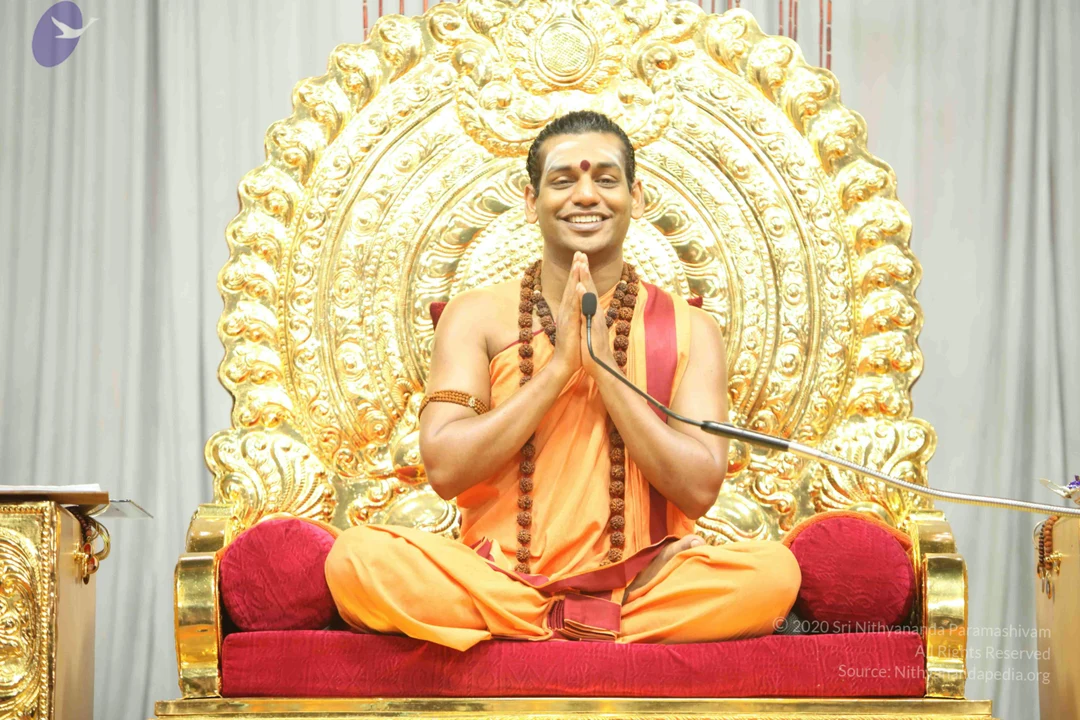
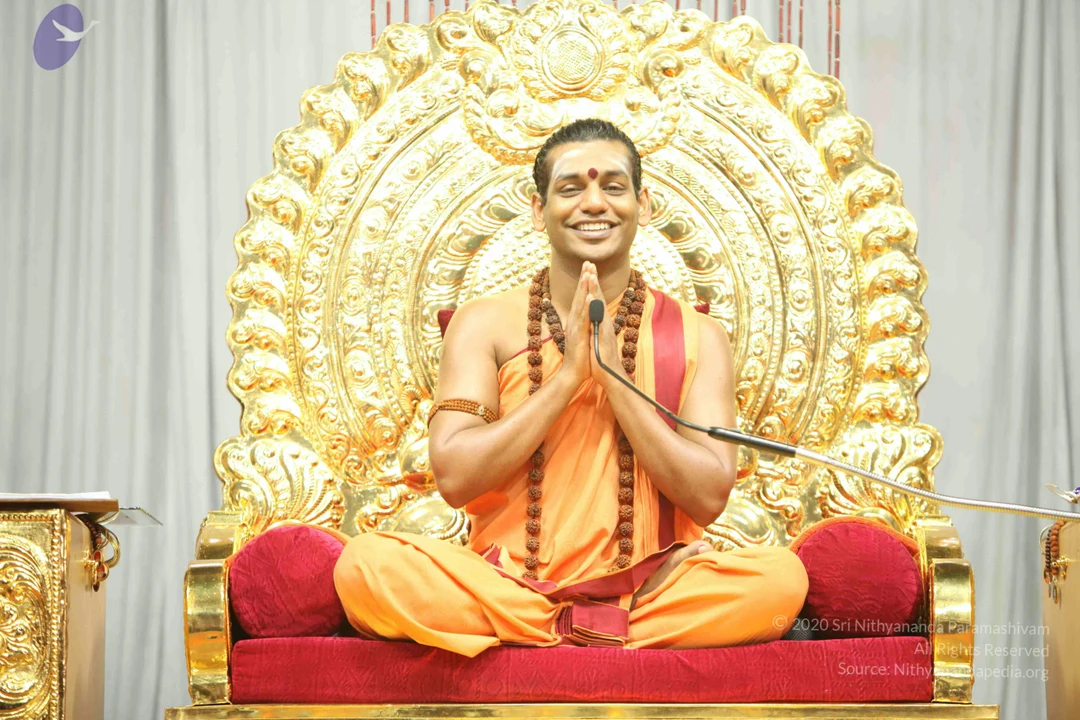
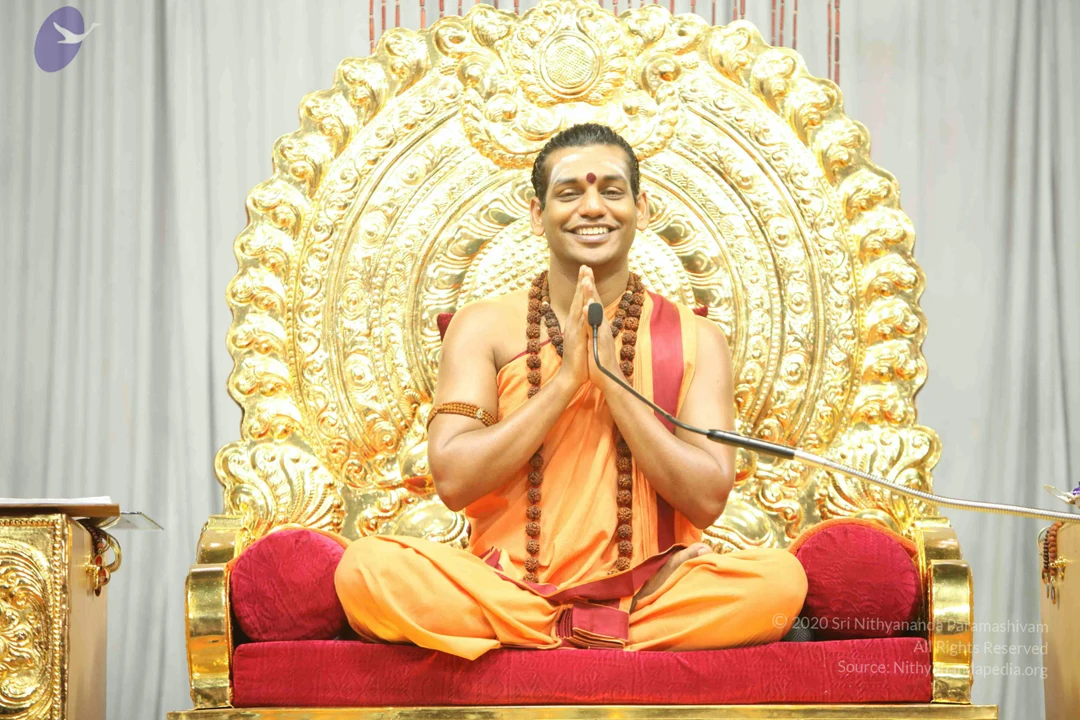
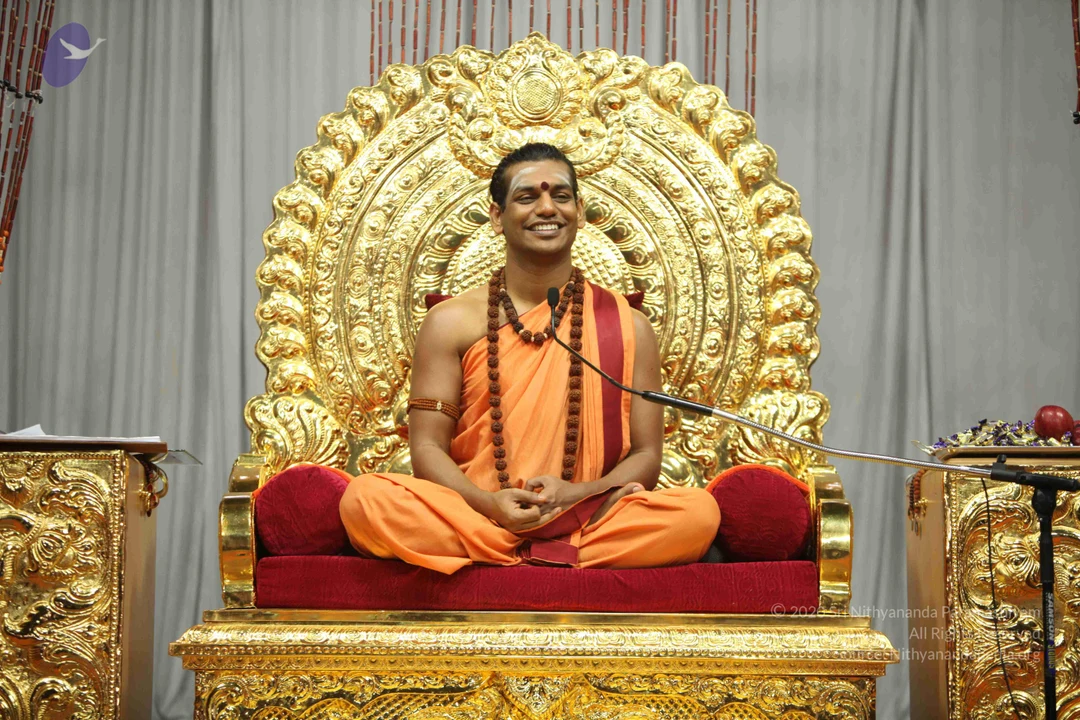
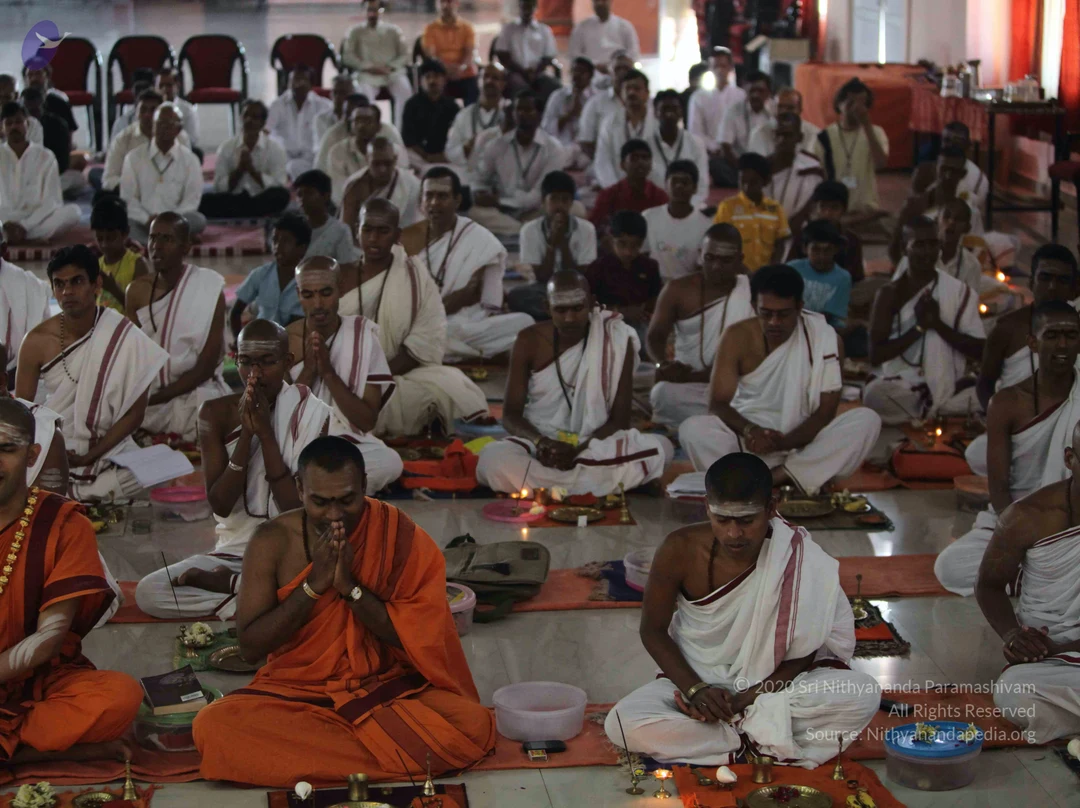
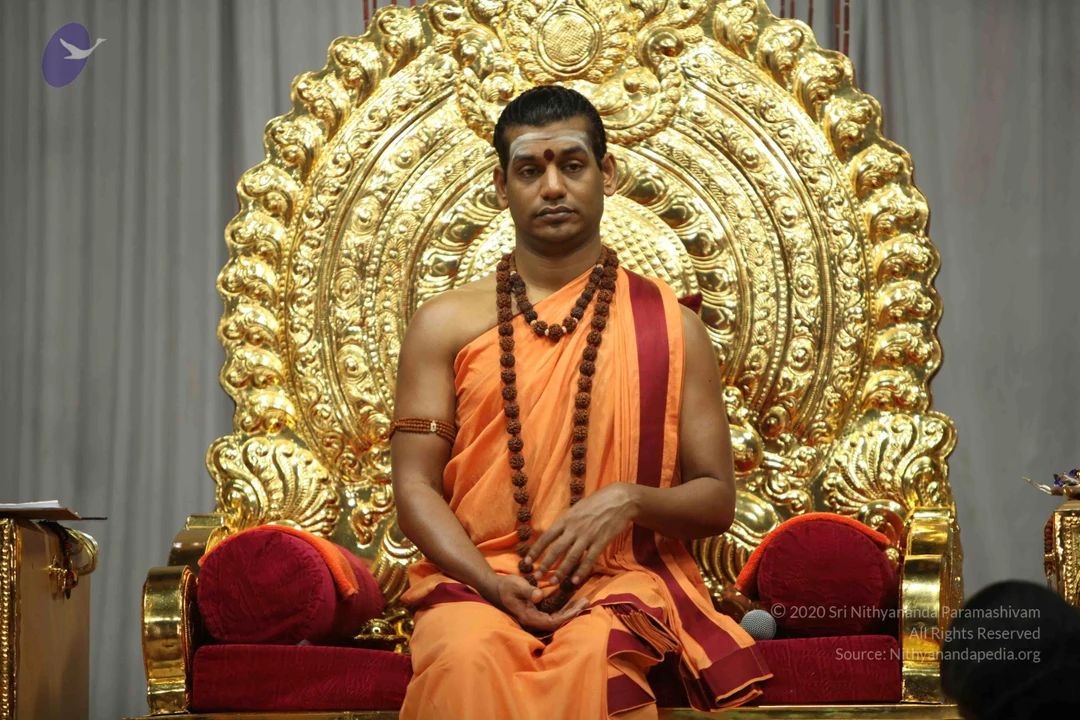
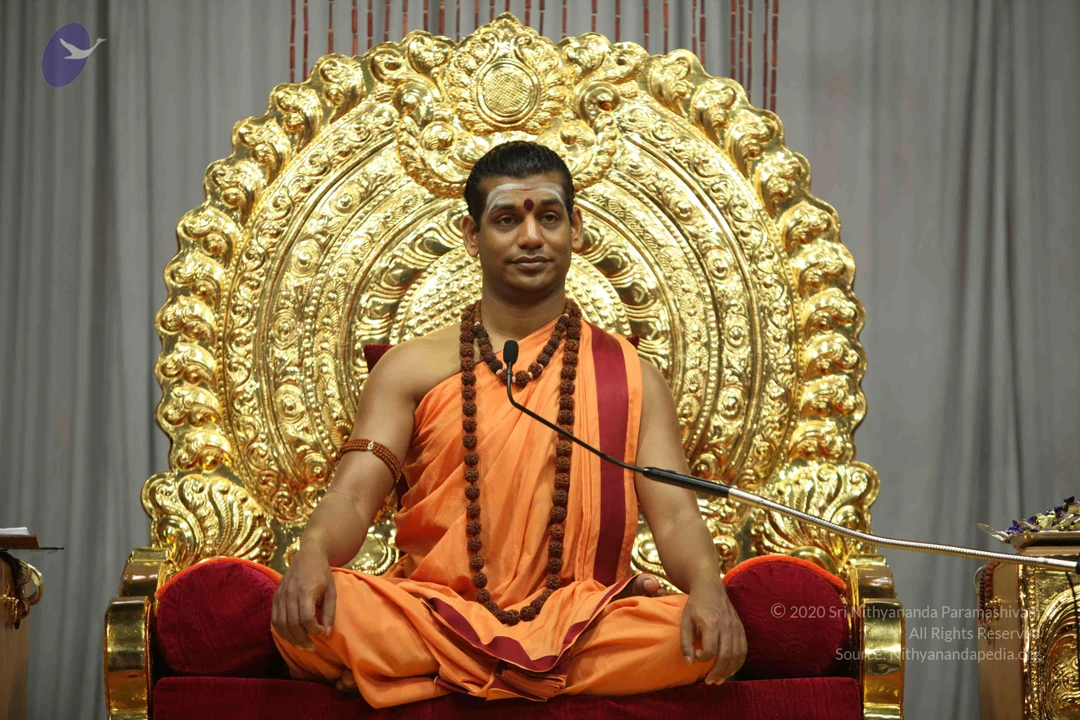
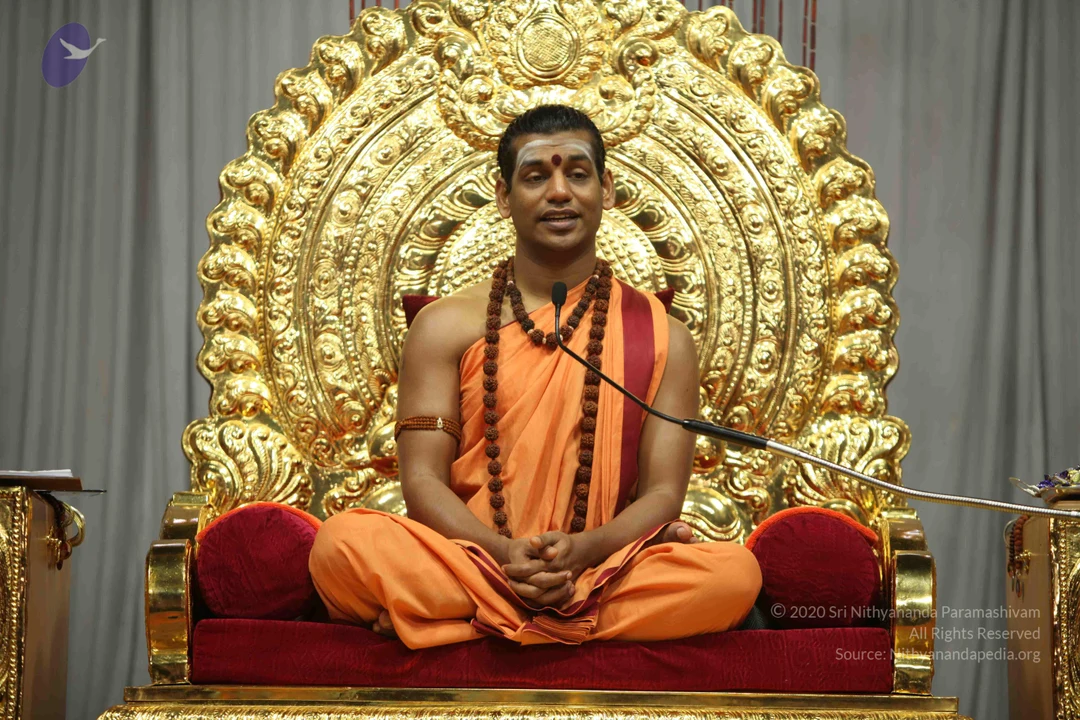
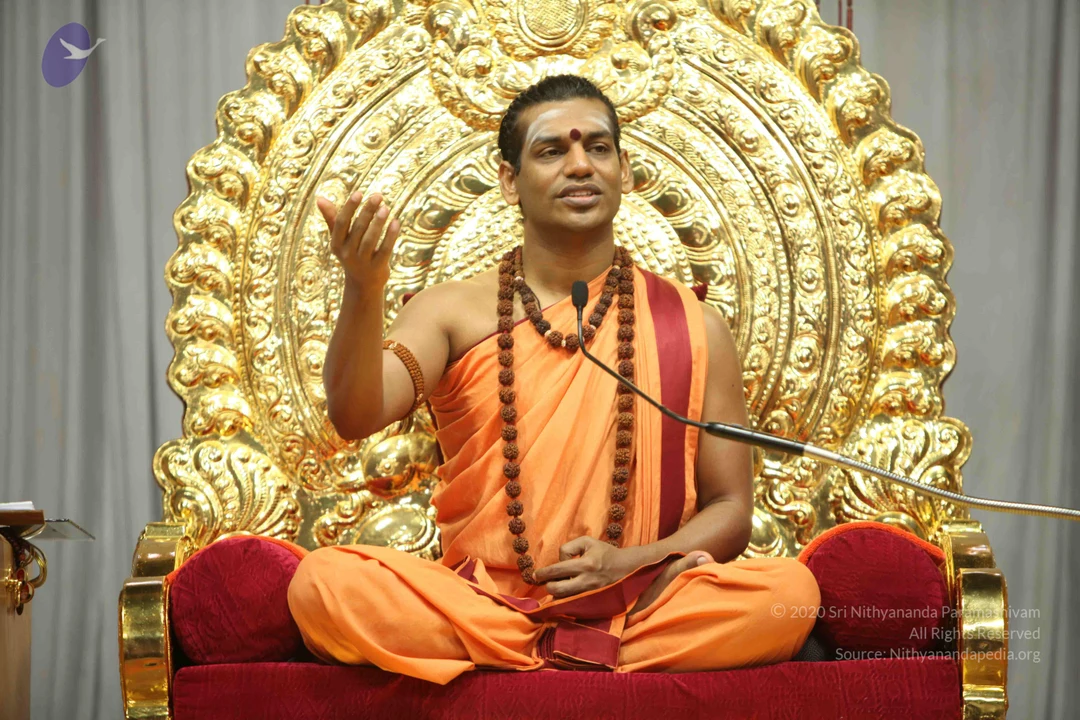
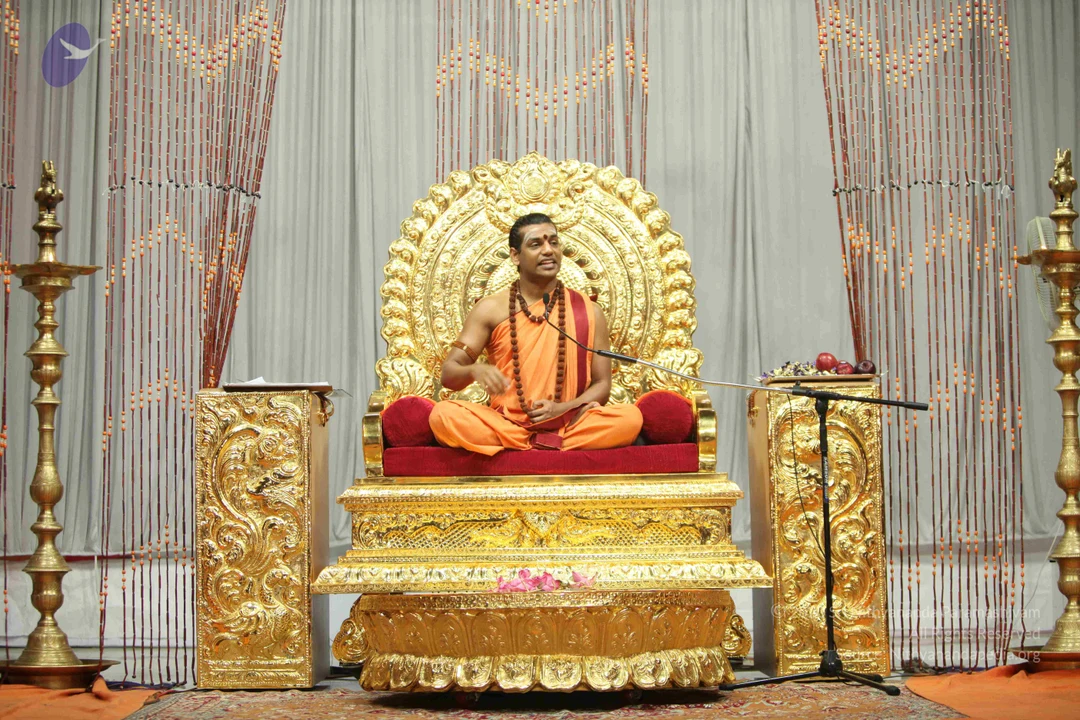
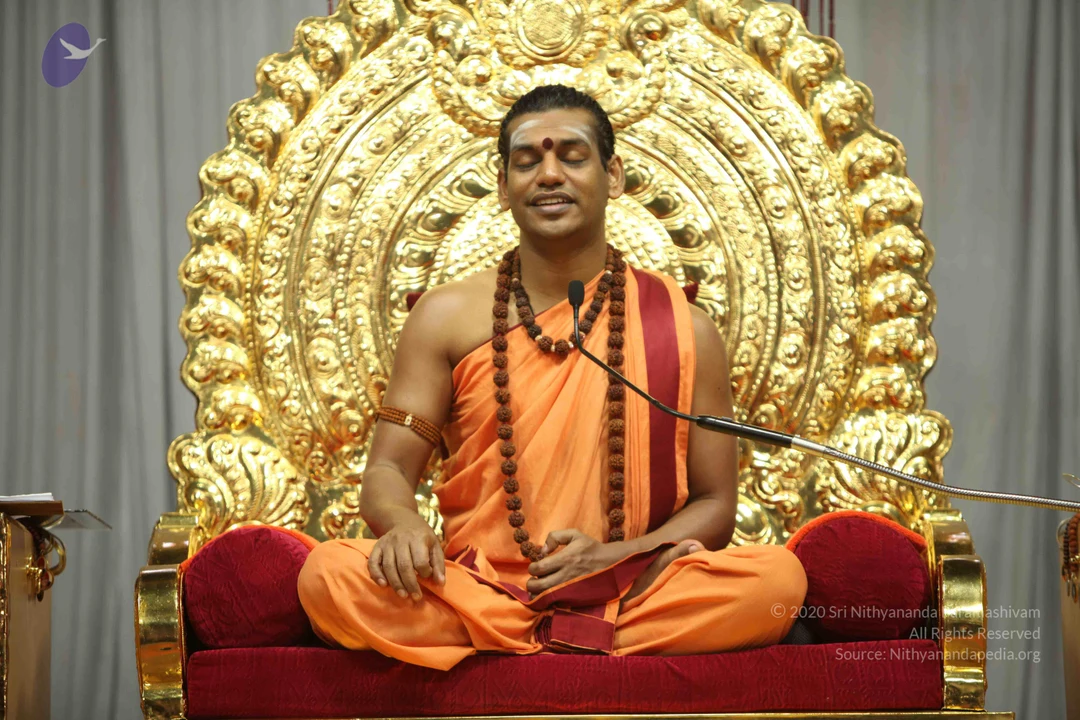
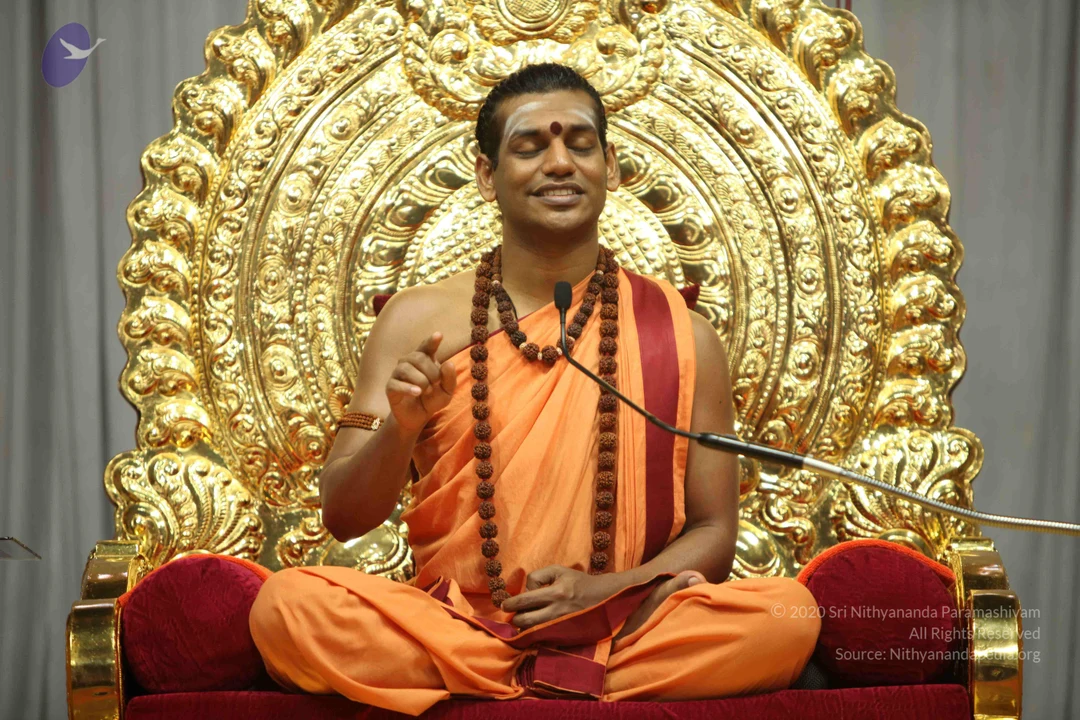
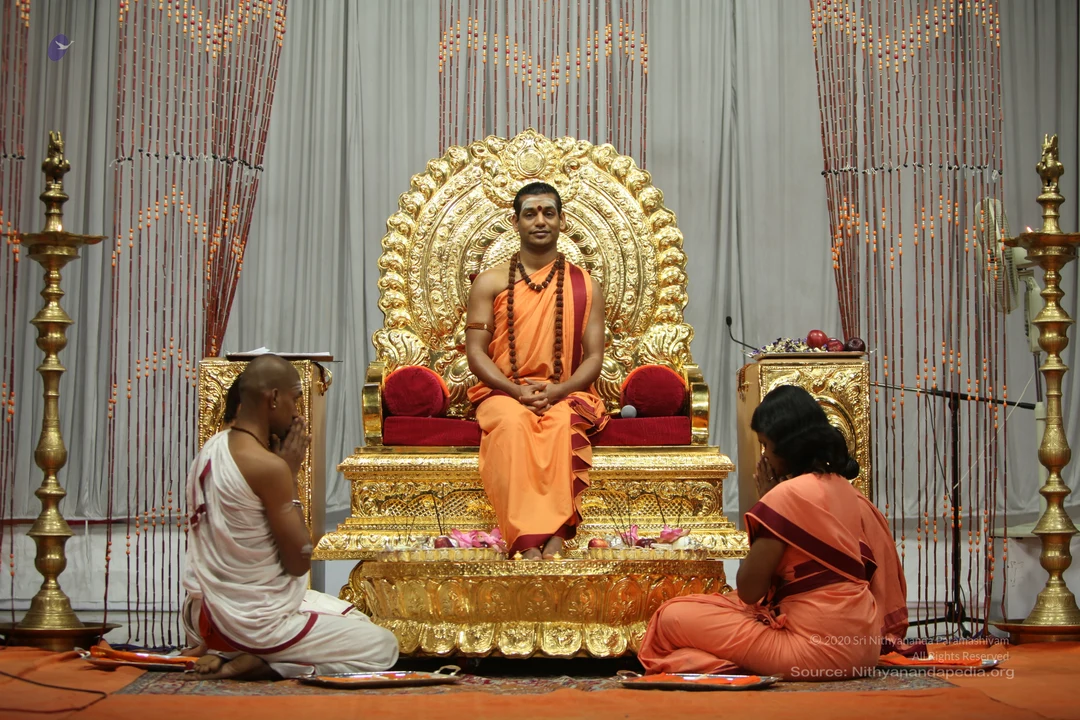
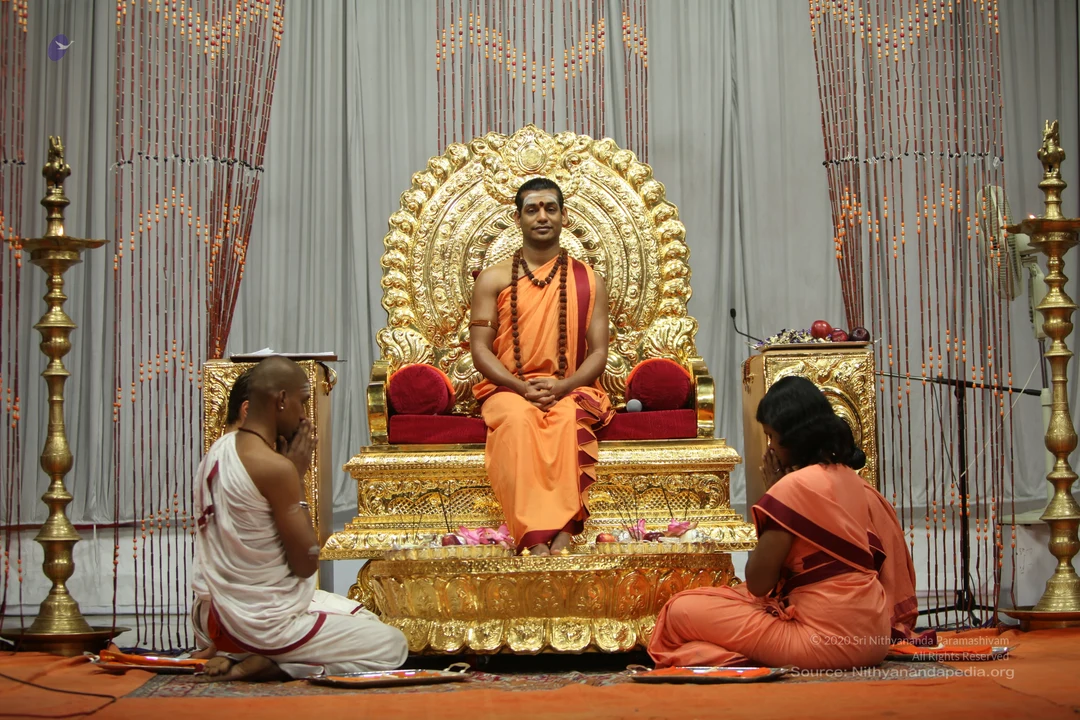
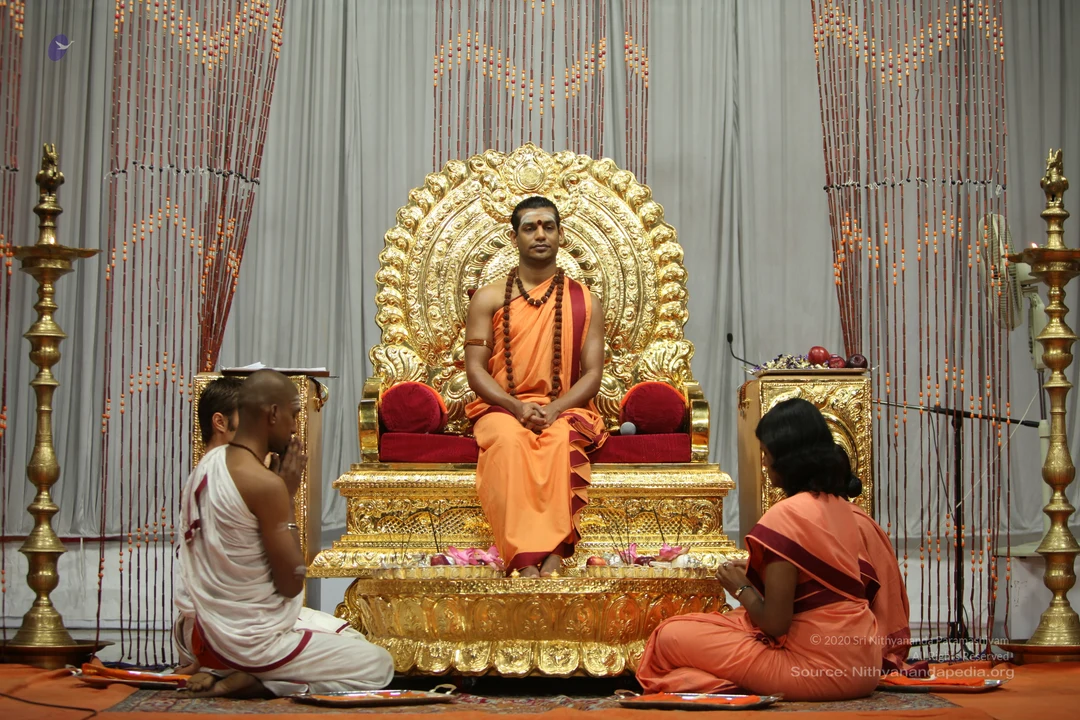
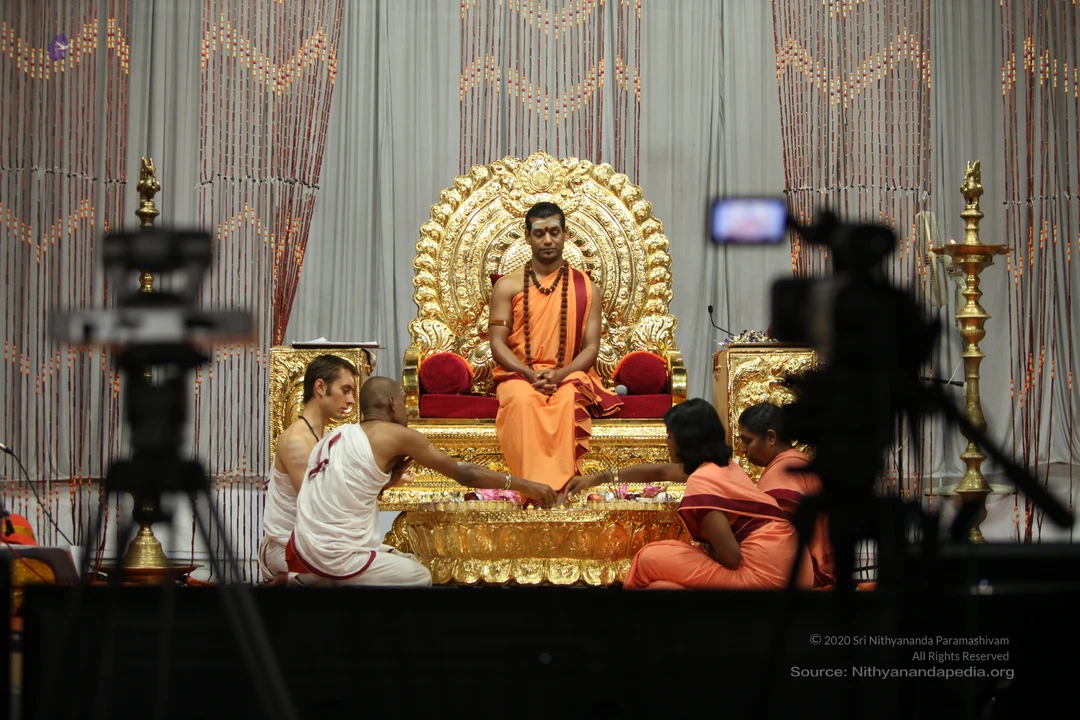
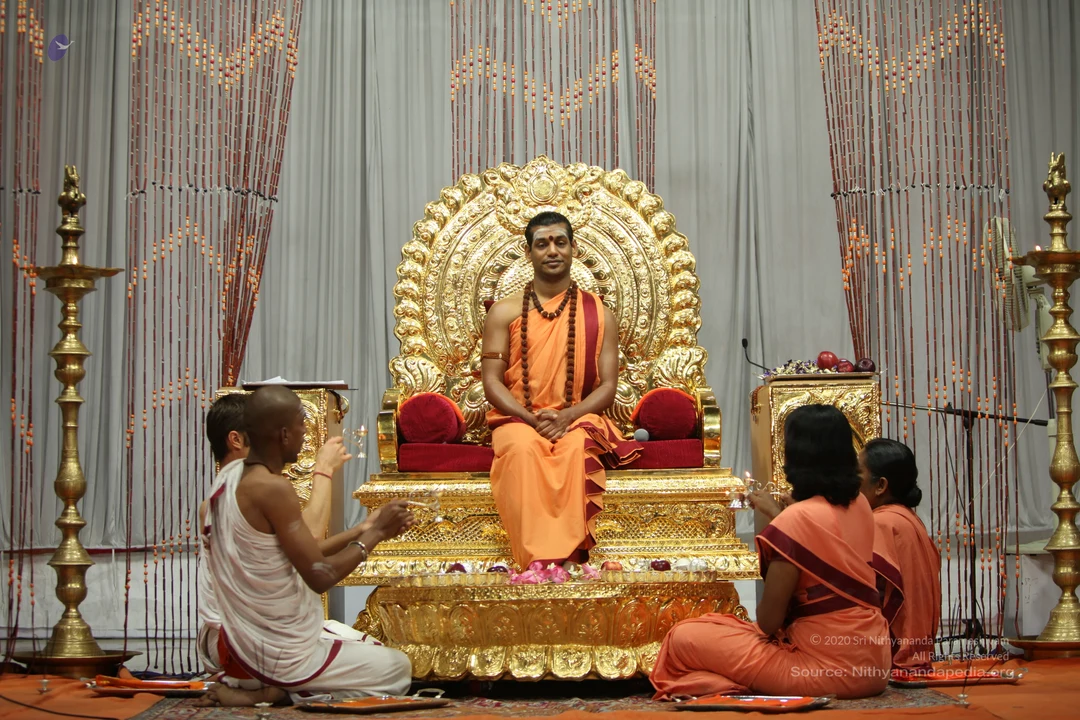
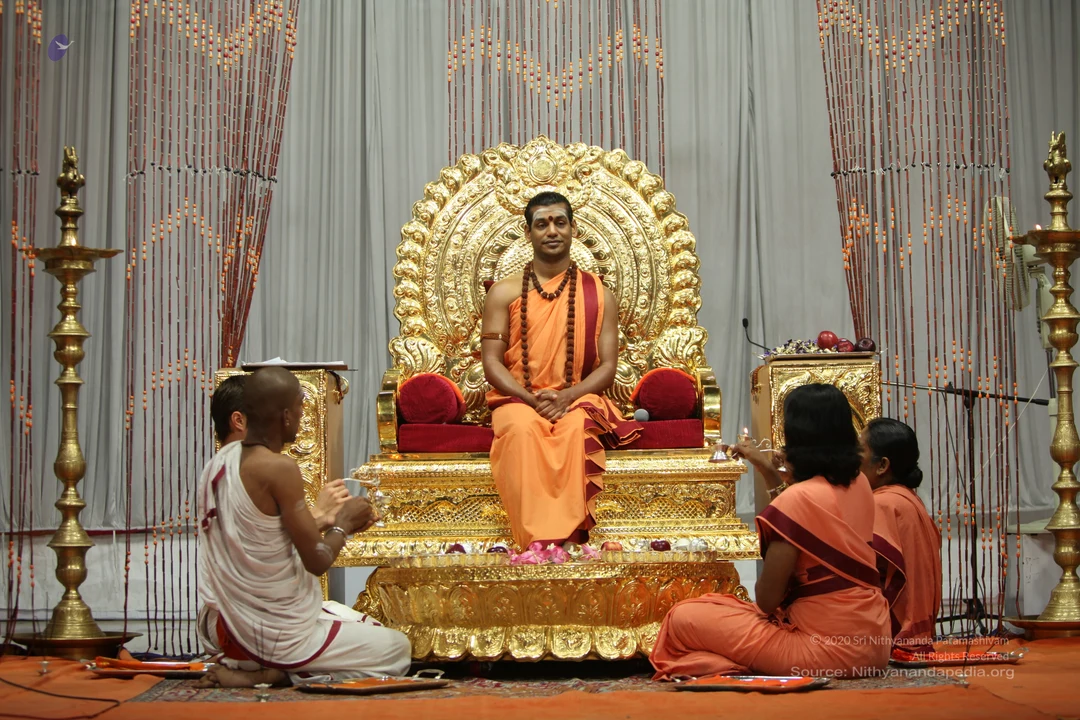
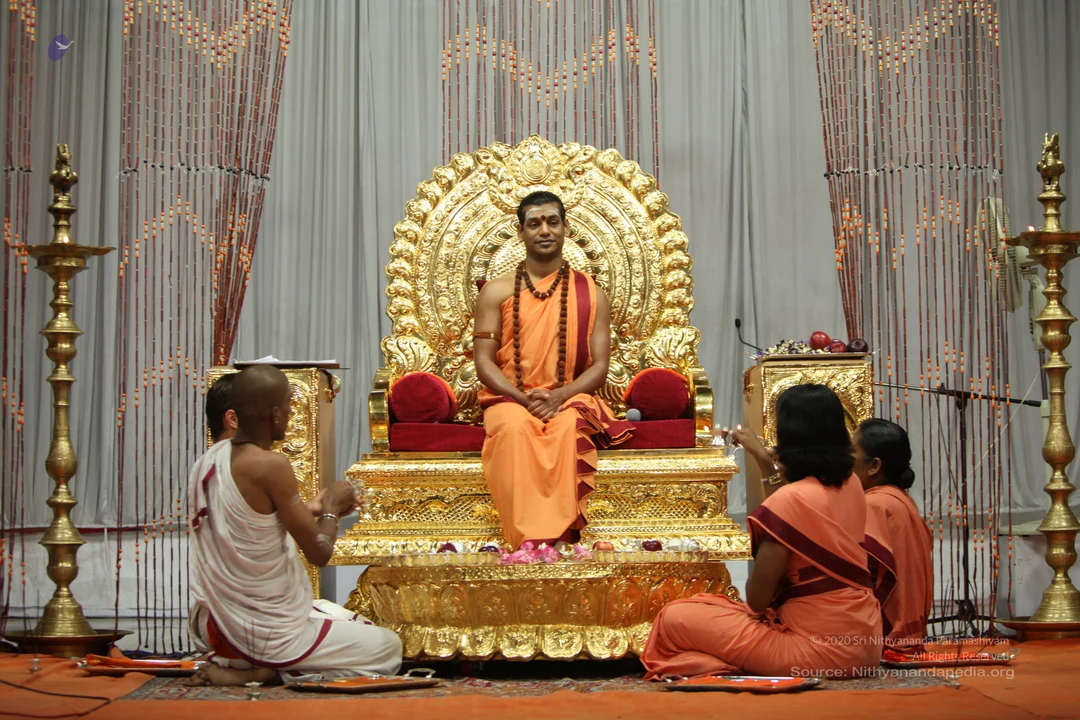
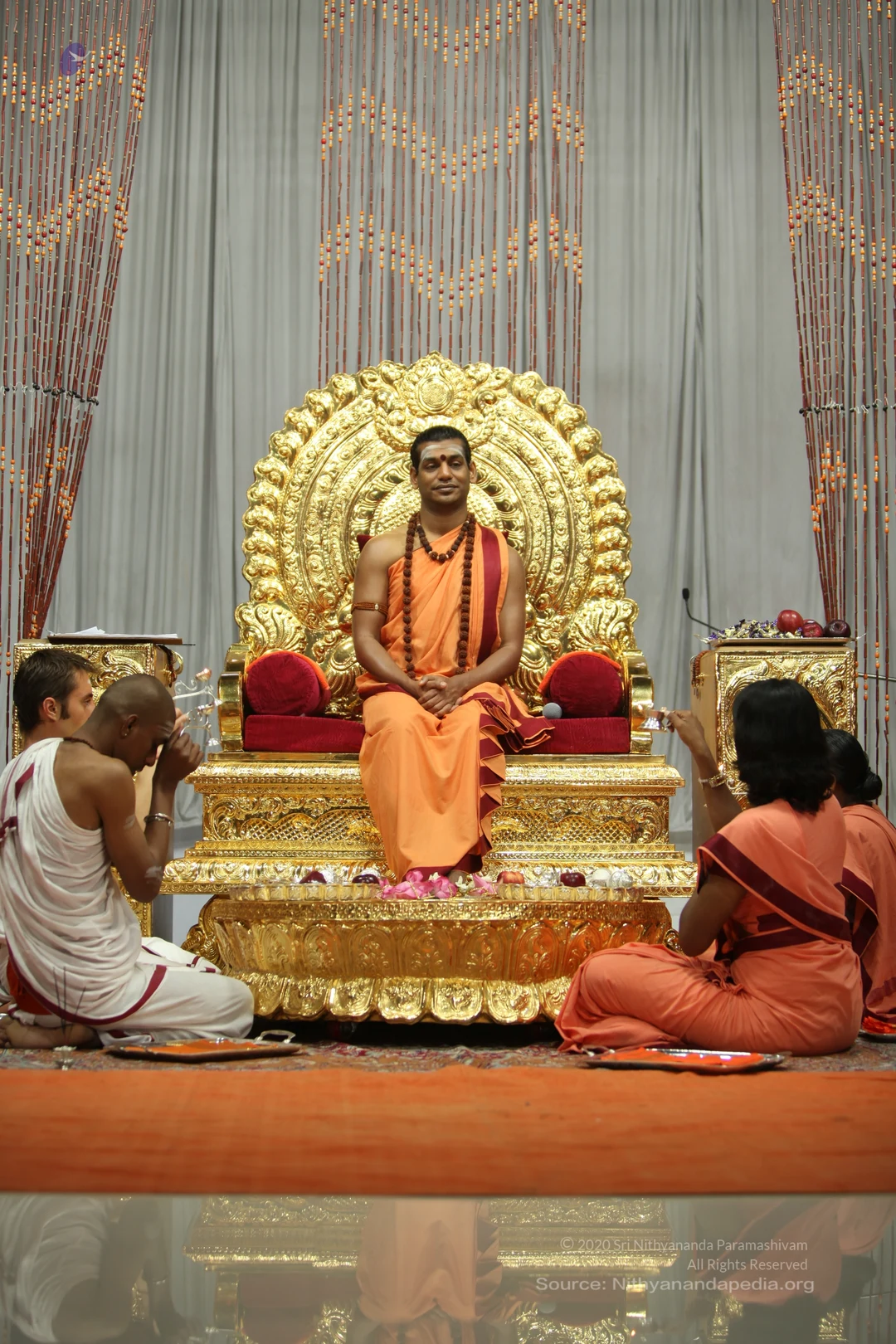
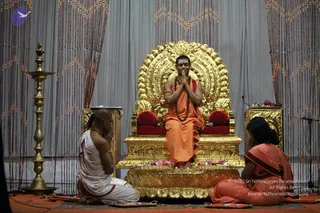
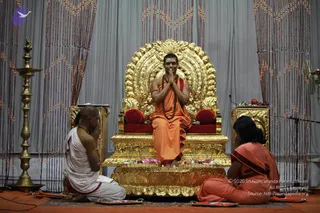
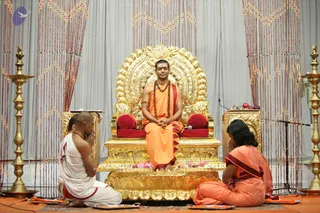
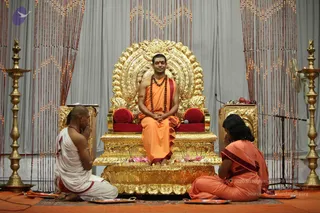
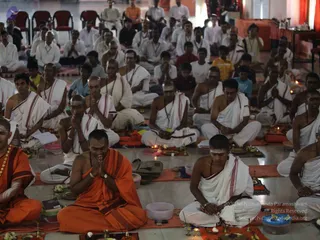
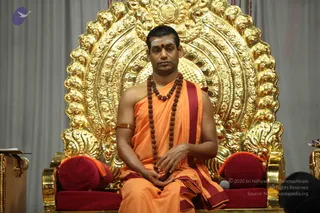
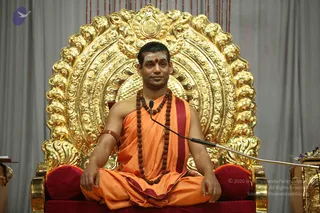
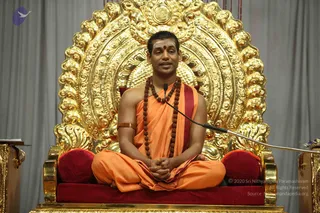
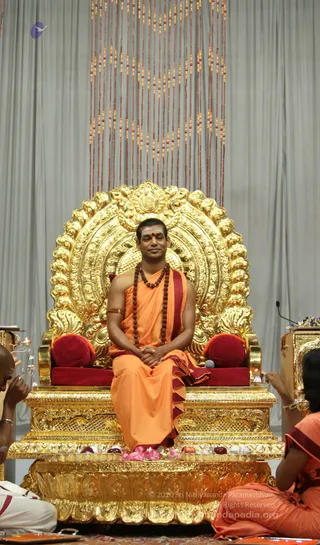
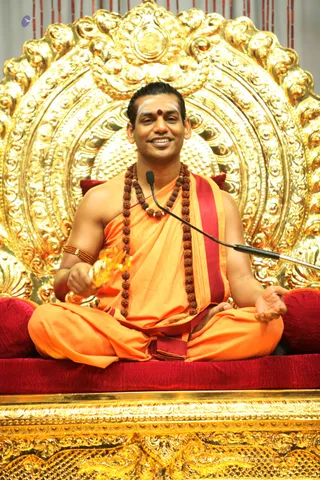
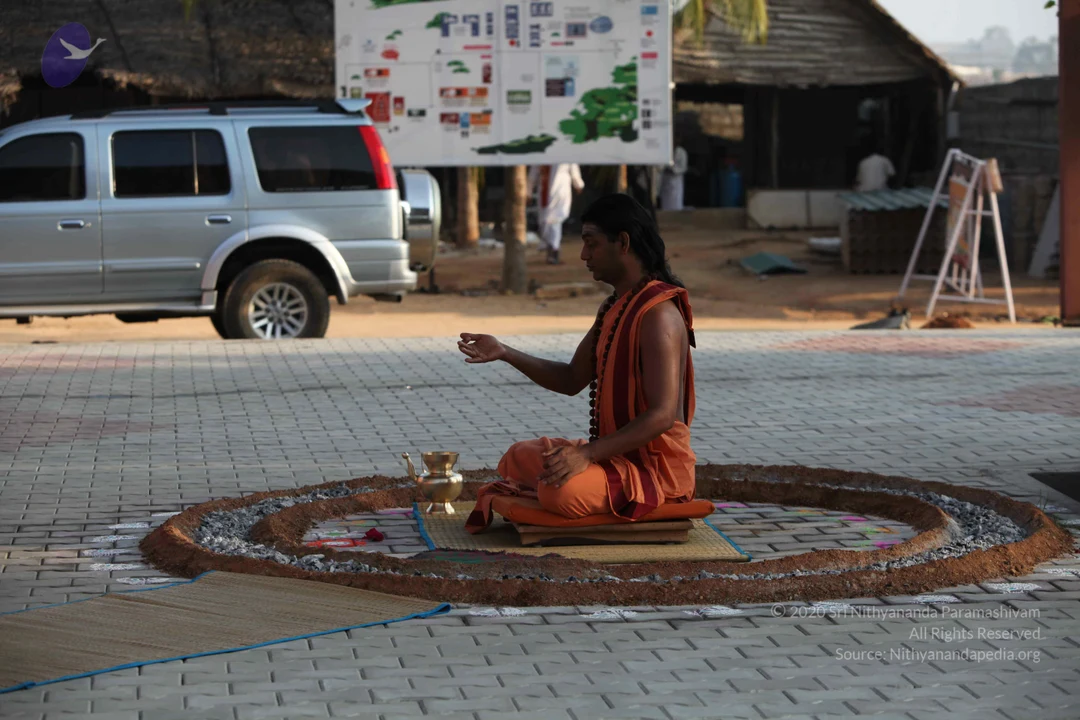
A photograph of a padapuja ceremony in an ashram hall. A man with swept-back dark hair, wearing an orange shawl, rudraksha malas and a red-cushioned gold throne, sits in the centre-left with hands folded in a seated posture. Two women in orange saris kneel before him beside silver trays of flowers, fruit and offerings. Two men in white ritual cloths sit in the foreground, one bald with his back to the camera. Brass oil lamps stand in the background beside hanging strands of beads and a pedestal fan. The swami on the throne is an appearance-based a person, with the swept hair, orange shawl and rudraksha malas as cues.A man seated cross-legged on a red-cushioned golden throne in front of an ornate gold-carved backrest, with a gray draped backdrop behind. He wears orange saffron robes, a red sash and a rudraksha mala, with a red bindi on his forehead, and presses his palms together in anjali with eyes closed. A microphone on a flexible stand is near his face, and gold-carved lecterns and a floral arrangement frame the scene.A photograph of a seated man in orange saffron robes and a rudraksha mala sitting cross-legged on a woven mat inside a circular earthen ring lined with grey pebbles on a paved courtyard. His right hand is raised in front of him, palm open, and a brass kalasha-style vessel sits beside him. Behind him stands a white vehicle-style SUV, a large informational map board with coloured panels, thatched roofs, and a few people in white clothing in the background. A small banner-style sign is to the right. The man has long dark hair swept back and is shirtless beneath the orange shawl. a person: the saffron clothing, long swept-back hair and rudraksha mala match the appearance cues, though the figure is seated and partly obscured.

February 28 2011

Original wiki page
Contents

Title:

The Supreme Pontiff of Hinduism (SPH), JagatGuru MahaSannidhanam (JGM) Bhagavan Kailasa's Sri Nithyananda Paramashivam

Description:

Today Living Incarnation and Avatar SPH JGM Bhagavan Nithyananda Paramashivam described a very unique sutra-the science of Samudrika Lakshana. It stems from the concept that your body is the shell of your consciousness which is consciously and wilfully developed and designed by your will. This truth forms the basis of Indian medicinal systems (Siddha and Ayurveda) and the whole Samundrika Lakshana. By studying the physical set up, the revelation of the mental set up is revealed. This theory forms the basis of yoga. Yoga masters have done amazing research on how every thought works on your system. Altering the mind by altering the body's dimension is yoga. Altering the structure of the body by understanding the mind is Samundrika Lakshana. If you alter your body, major samskaras of your system can be uprooted. Your body is a shell consciously created by your will. With this understanding, constantly work on it. Don't leave blind spots unattended on your body.

Link to Video:

VideoAudio

Transcription

Sadāshiva samārambām shankarācharya madhyamām Asmadācharya paryanthām vande guru paramparām

[00:50]

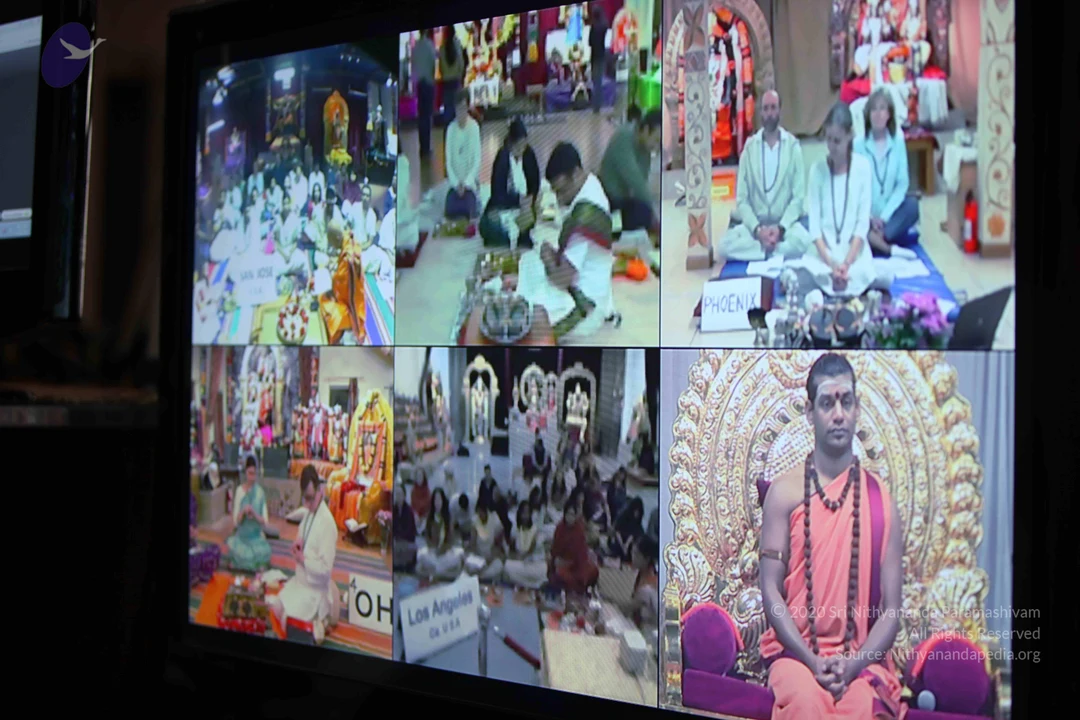
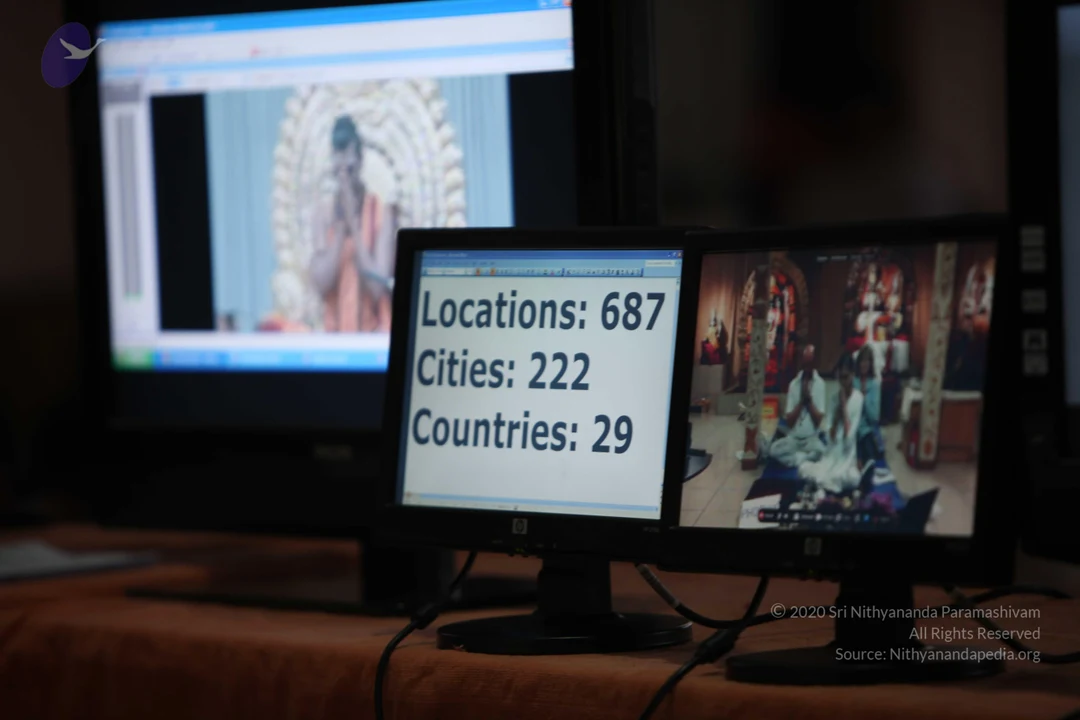
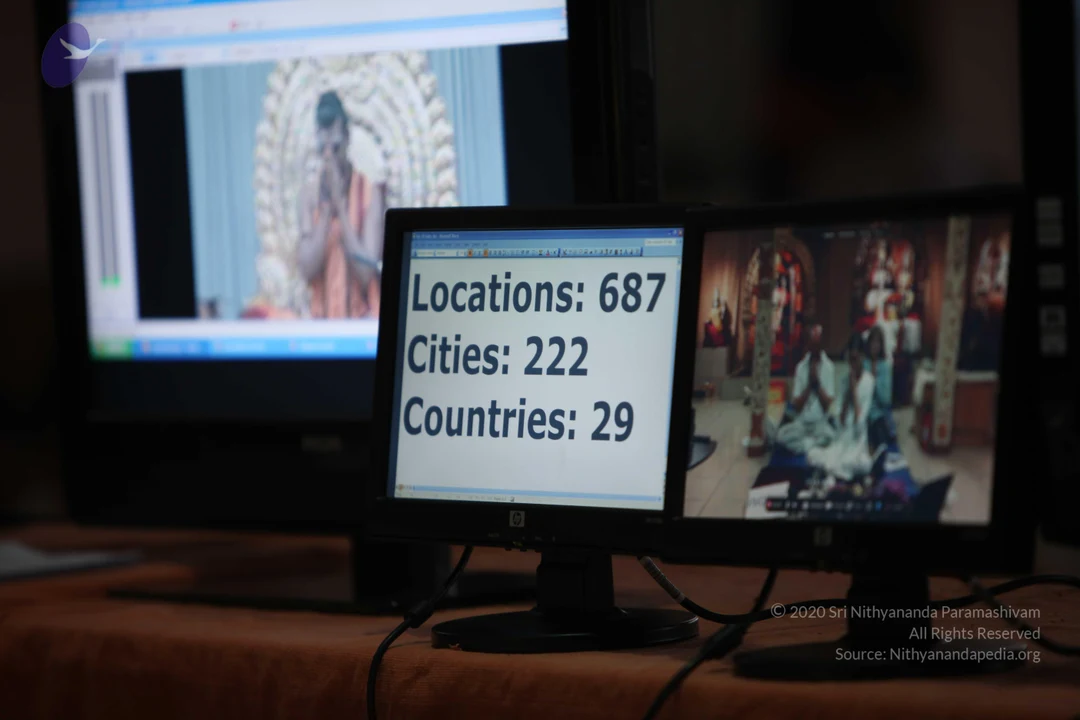
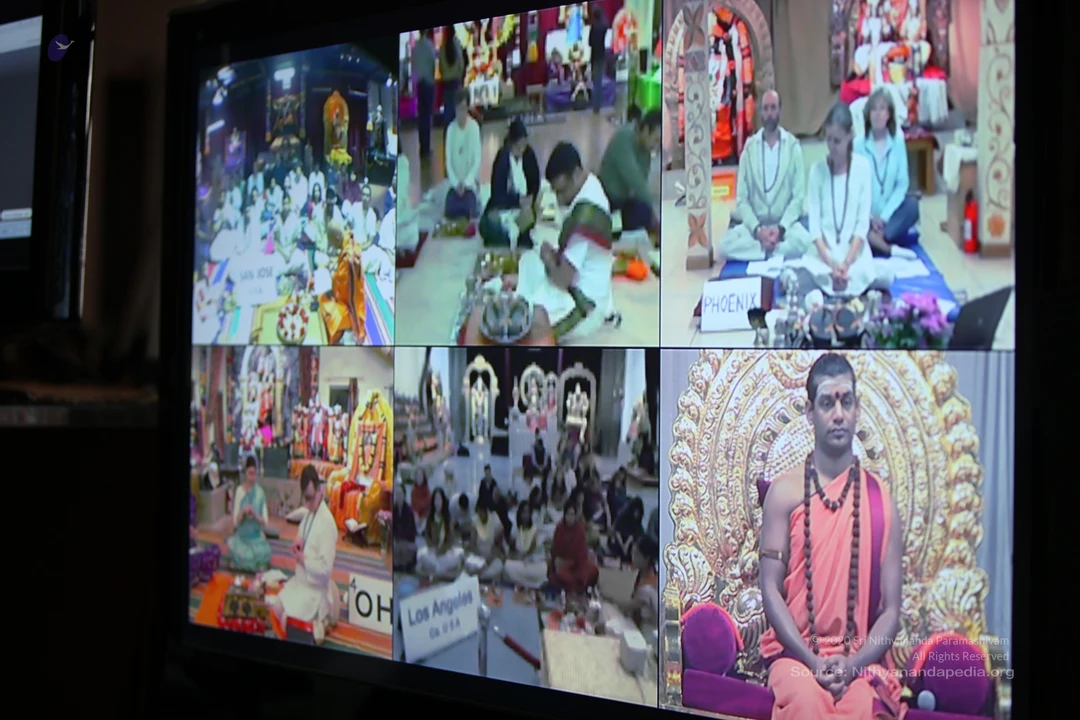
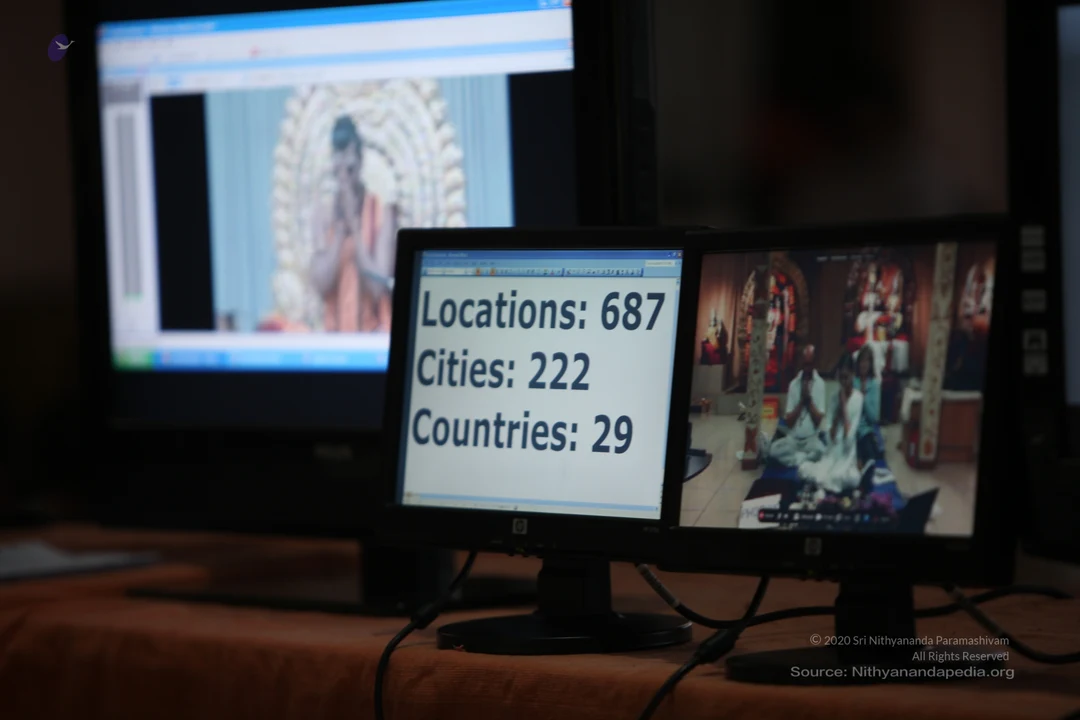
I welcome you all with My love and respects. I welcome all the devotees, disciples, satsangis around the world at this moment in 627 places, in 194 cities, in 24 countries. And I… we have many cities two way with us; Los Angeles, Seattle, Ohio, Vancouver, San Hose, and today first time Topanga California and Phoenix is also with us. Topanga are you able to hear me? Yes, I am able to see you guys. All these cities are in two way with us. Before entering into satsang I remind all of you to get back to padmasana.

[02:35]

San Jose are you able to hear me? Yes, so they have got a new golden paduka today and… I blessed. Vibhooti will start coming from that paduka regularly. I name San Hose temple as Paschim Madura. It will be representative of Madurai and Shiva came down as a ellam valla siddhar, a great siddha in Madurai and did all leelas. So the San Hose center will have continuous miracles and leelas. So each temple we will specially dedicate for special energies. San Hose for Meenakshi and Madurai and ellam valla siddhar. So Shiva will be there continuously walking around as ellam valla siddhar; not just giving vibhooti. It will continuously experience different miracles. Suddenly the music system will start singing by itself. Suddenly the anklets of Devi will be heard in the night time walking. You will see all kinds of miraculous experiences in San Hose temple. You will see the footprint of Devi today. Understand, you will see the footprint of Devi in the carpet. Just see the footprint it will be of the… that Indian mehandi. You will see. Don’t disturb. Thoroughly study, photograph, near the Devi’s moorthi on the carpets, on the floor, you will see footprints today, within 48hours. Study it, it will be a Indian mehandi feet. You will see. San Hose is going to radiate special miracles, special…. manifest special energies.

[05:15]

And Seattle will be Chidambaram. Seattle temple will be called as Paschima Chidambaram. Understand in Seattle you will hear again and again the dancing anklet sounds of Shiva. LA will be Arunachala, Paschima Arunachala. Ohio will be Paschima Prayag, western Prayag. If you take bath in Ohio, the rivers, you will be liberated. If you have darshan of Seattle you will be liberated. If you meditate in San Hose temple you will be liberated. If you just remember Los Angeles temple you will be liberated. So each temple will represent unique energies of India; unique energies of the different energy centers. The Phoenix will represent Kanchipuram. It will be Paschima Kanchipuram, Paschima Kanchi. So we will install each temple in a unique way, unique energy. The St. Louis will be Paschima Tirumala. It will represent the Venkateshwara’s energy, Tirupathi. So each temple in US, in other countries will represent one, one energy. Malaysia will represent Palani. So each temple will have the significant intense energy of one great energy center of India and not only that you will see that kind of special energies will express in those temples.

[08:33]

Lets enter into today’s satsang, today’s sutras. I have already completed on past life regression. So whatever I wanted to share I thought I will speak for three days on the sutra on the past life. But I think in two days I completed whatever I wanted to say. Now I will enter into the next sutra; 125th sutra of Patanjali in the 3rd chapter 19th verse; the subject ‘Photographing Minds’. Today Patanjali is explaining a very unique, very unique sutra - The science of samudrika lakshana. Indian tradition has developed some of the great unique sciences. One of the unique science came out of the inner space of Indian rishis is samudrika lakshana. Like a vastu shastra, jyotisha shastra, samudrika lakshana is one of the great science from the Indian tradition, from the Indian masters. The root of that science is from this sutra. pratyayasya para-chitta-jnanam Wow pratyayasya para-chitta-jnanam

[11:05]

Through the practice of samyama on the science in another’s body, knowledge of the mind comes. Through the practice of samyama on the science in another’s body, knowledge of his mind comes. Swami Vivekananda translates this sutra as this. Swami Prabhavananda translates as: by making samyama on the distinguishing marks of another man’s body, one obtains knowledge of nature of his mind. Swami Sachidananda translates as: by samyama on the distinguishing signs of other’s bodies, knowledge of their mental image is obtained. Bhagwan Osho translates as: through samyama the image occupying another’s mind can be known, but perception through samyama does not bring knowledge of the mental factors that support the image in another’s mind, for, that is not the object of samyama. By performing samyama on the form of the body to suspend receptive power, the contact between the eye of an observer and the light from the body is broken and the body becomes invisible. This principle also explains the disappearance of sound. Wow! Osho translates some of the next sutras also along with this sutra. He connects. That’s the uniqueness of our knowledge. If you connect two three sutras together you can completely give a different meaning, different explanation, different understanding.

[13:42]

Samudrika lakshana. The way Vedic tradition looks at the body and mind, plays a important role on how we eat, how we dress, how we medicate our body, how we maintain, how we sleep; everything is thoroughly influenced by one concept. That concept is - your body is the shell of your consciousness which is consciously defined, designed and developed by your will. Please understand your body is the shell of your consciousness which is consciously, willfully, designed, created, developed. This science, this truth, now what I expressed, forms a base of Indian medication traditions, Indian medicinal systems - siddha, ayurveda; all Indian medicinal systems. This truth is base for our dressing system - the way we dress. This system, this truth, is base for the whole samudrika lakshana; means by studying the physical image, the measurements - the mental setup is studied. The revelations about the mental setup is understood, the truths about the mental setup is revealed. Please understand this theory forms the base of yoga.

[16:40]

For example samudrika lakshana says, the face… see, this size, they keep it as…. they call as one unit; the edge of this ear edge and this edge, this they call it as one unit. It is supposed to be this size. I am giving you the exact science of samudrika. If you put your hand like this, the edge, the distance between this tip and this tip, the thumb and the little finger, this is called one unit and the distance between the two ear tips is supposed to be one unit. If you measure it with a straight line, this is supposed to be one unit and the distance between this edge and this edge [between shoulders] should be three unit and the distance between the hip, the lowest point should be again one unit. No, you may laugh; our samudrika describes, the tradition describes, if this is as per the measurement what will be the personality. If this comes down or goes up what will be the personality.

[18:02]

The cross section of your body, the belly button to the back should never be more than one unit. Then death is waiting. No…. our, See I am not only talking about the belly button, means the optimum space from this to that should not be more than one unit. Of course it cannot be more than a unit; then it is too much. So how a size should be… they are describing very clearly, if this shoulder to shoulder is less than two and a half unit, the person will not have, will never be able to have larger understandings; the broad mind. He cannot see his whole life within a larger picture. He will be too silly, just making decisions out of a small things… flaring up. Not having a clear larger vision about the purpose of life; mission of life.

[19:16]

I have seen… please understand, our Masters are not liars. They have done amazing research, amazing research on this science of how a body is willfully designed, developed and created, expressed by your consciousness, by every thought and action you are creating in your system. When you have certain thoughts continuously, that directly works on your system. When you have certain thoughts continuously but you don’t act upon it, that also works on your system. When you have certain thoughts and continuously suppress it, that also works on your system.

[20:11]

And another one thing: the way you have the body does not mean you are cursed once for all. No. you can alter. By altering the bodies dimension, altering the abilities of the mind is yoga. Please understand by altering mind, altering the body is vedanta. By altering the body, altering the mind is yoga. By analyzing the structure of the mind understanding the, sorry, by analyzing the structure of the body, understanding the mind is samudrika lakshana. Here Patanjali talks about the great science of samudrika lakshana. If you alter your body, I tell you if you alter your body, major samskaras of your system can be completely uprooted. Major samskaras can be uprooted. Your body is a shell consciously created by your will - With this understanding, constantly work on it. Do not leave blind spots in your body. Blind spots means unattended spots for the people who have a huge belly - means you have unattended that spot for last few years. When it has started growing, what were you doing? It was after all growing around you; not that it grew somewhere and they brought it and assembled it on you. No. Blind spot! And after growing, many parts of your own body you can’t see. I am giving you one example.

[23:06]

The essence of this sutra is one of the greatest discovery of the Indian tradition. Body is not just bio mechanism. It is a living entity which is created by independent intelligence. Just like how our websites are designed, the color, how it should look and the photographs, everything how it is designed, same way you sit and design skin color, the hair, its size and the length of the hand; everything. Please understand everything you sit and design. You have multiple choices in front of you. You sit and design. Every morning 21 minute… see that is that one cycle of you waking up. When you remember you are alive, you are awake about this world - few minutes after that and few minutes before that, I can say five minutes after you waking up and 16 minutes before you waking up; that 21 minute plays a major role in everyday designing of your body.

[24:53]

Every day you design your body. Understand, everyday you design your body. It is not that just once in a year on your birthday you design your body. No. every day it changes. That is why I say the moment you wake up jump out of the bed. Every day you design your body. You design how you should look, how you should feel, how you should feel about you, how others should feel about you. But unfortunately this whole process goes on unconsciously. So two thing you need to understand through this sutra. One, learning little bit of studying the body structure and mental setup; you don’t even need to refer samudrika lakshana. No. You don’t even need to refer those books; no need.

[26:24]

Take four persons, major influence on your life; pick up some four people who have major influence over your life; maybe your spouse or kids, your guru, some four people. Pick up those four and try to study their body structure and mental set up. Of course you cannot study My mental setup because I don’t have mind. You may have some mentor in your life. You can never study a Guru’s mental setup because he doesn’t have mind. That is where the whole problem comes. You try to impose your anger on him and wanted to see that he is angry, violent towards you. But suddenly when your mind melts down, you know he is not angry, he is not violent. See, at least if you can confirm he is angry to me, you can make a decision in your life and move on. But you can’t come to that decision also and same way your violence does not allow you to feel that he is intensely compassionate to you; that also your mind will not allow you to feel. You are…. neither your mind will allow you to feel he is your friend and compassionate nor your mind will allow you to feel he is your enemy, he is angry with you; because you will not find any symptoms of anger or enmity in him.

[28:22]

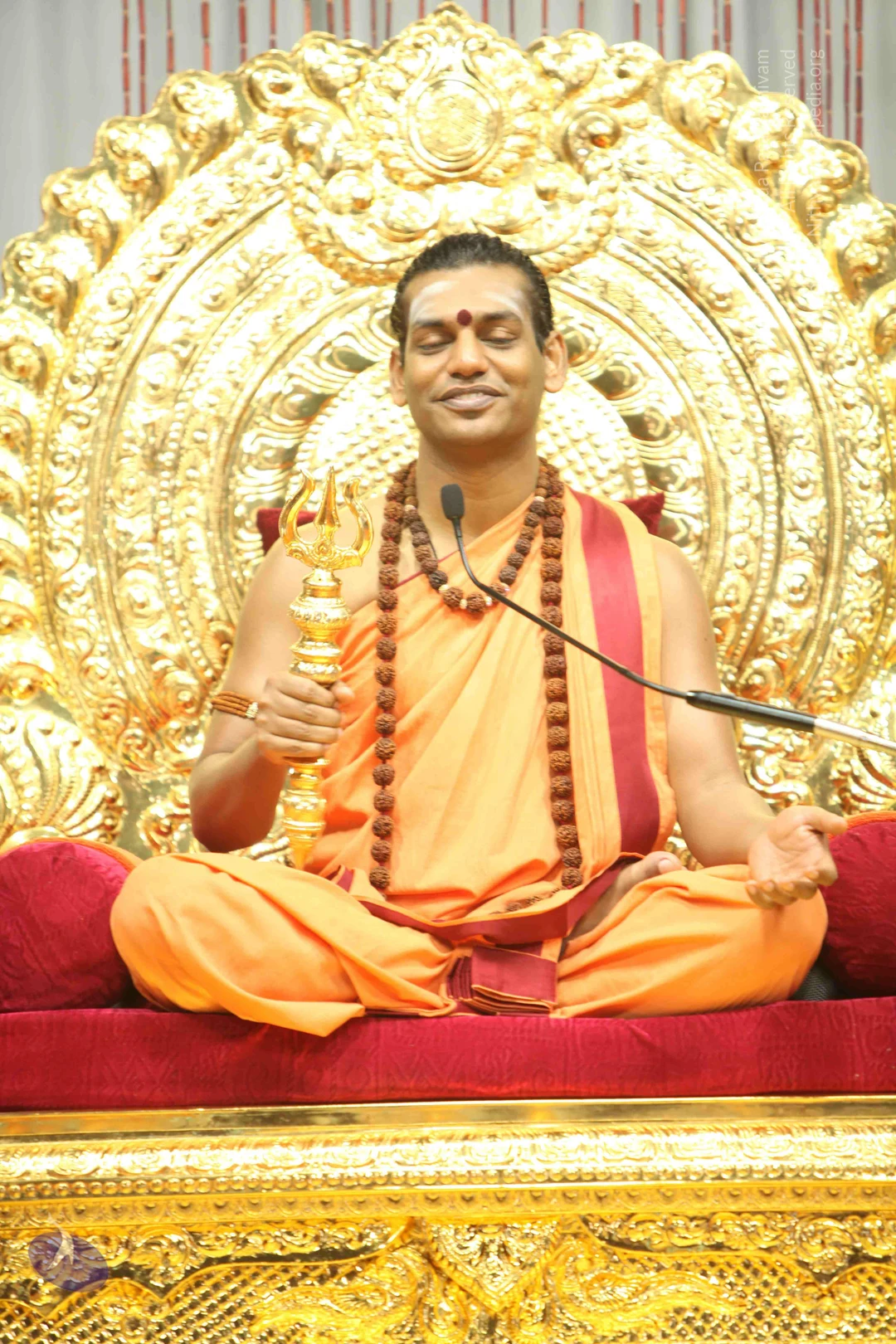
I want to tell you, whether show of My anger or show of My greed, it is just a tool for Me like a, when I heal, how I use the healing stick. A normal man who doesn’t understand that I heal, if he sees me with a trishul, when he comes near Me and says ‘I have a chest problem, chest pain Swamiji’, I just pick up a trishul, what will happen? What he will think? ‘Oh God! What is he doing? He is picking up trishul!’ But only I know I am going to heal him. Understand My anger is trishul for healing, not for killing. But this funny mind goes on playing. And another one worst thing is at least if your mind can confirm ‘No he is going to kill me, he is my enemy’ then at least you will be free and carry on in your life. That also will not happen; because, the underlying energy in your inner space which designs your body, is intelligent enough to catch the underlying current of the Masters energy which designs his body.

[30:06]

Understand you will never be able to find… studying My body, My mental set up. But when you… but the energy of your underlying consciousness which designs your body will catch by its own intuition as a smell, it will catch ‘No he is not My enemy he is not violent’. That is why the love-hate relationship with Master goes on till you get enlightened. This is a best word to define the guru disciple relationship. That is why the Upanishad starts saying sahana vavatu sahanau bhunaktu - let us not hurt each other, let us be friendly. Why should a rishi, an enlightened guru, should sit with a disciple and start ‘let us not hate each other, let us not hurt each other’! See if a disciple says ‘let you not hurt me’, it is understood logically because he is supposed to be in the lower rung. But the Master starts, ‘let us not hate each other, let us not hurt each other, let us be friendly to each other’ because he knows during the process how you are going to use me sometime as a deity, sometime as effigy.

[32:11]

When you are evolving……see the process of evolution has two angle - one your negativity getting cleaned another one positivity getting increased. When your positivity is getting increased, the friendliness you feel within you, about you and others, you will feel I am a deity. ‘Wow! He is God’. When the negativity is getting cleaned, when the acid wash is happening in you, you will feel ‘Oh! He is violent, he is a effigy, he should be burnt’. Whether you feel Me as a deity or effigy depends on the process you are going through; but in both you are evolving. That is why I say, even while you feel Me as effigy, don’t run away or don’t try to burn. Wait, have patience. If you run away, you will miss. If you try to burn, you will try to make 1000s miss Me. I will not let that happen. Don’t worry.

[33:34]

So it’s an important truth. Decide to study four people - their body structure and their mental setup. You will have many revelations in you. Have this as a base and expand your analysis to some ten people. Understand, create some basic laws… and one more thing: the basic laws which you create will not match with the basic laws your next person creates. That is why Patanjali says YOU need to do samyama.

[34:27]

There is another one science in siddha tradition called vasa yoga. Means, the siddha will be sitting in one place observing the breath; which nostril, what speed, which direction it is going and when somebody comes to him for any healing or any prediction just by the way his breathing changes by his presence, in his breathing space, he will predict whether he is going to be successful or losing, whether he is going to be healed or not. It’s called vasa yoga. The moment you wanted to talk to Me I will know whether you are going to listen to Me or not. I was being initiated into this vasa yoga by a great siddha, Narayana Swamy. His name was Narayana Swamy. This time when I went, I went and saw the place where he used to sit; a small Ganesha temple he will sit; a very powerful siddha. He is disciple of Paramahamsa Shivananda who was in Kerala; not the Shivananda Paramahamsa who was in Rishikesh; not Hrishikesh Shivananda Swami…… In Kerala we had a Paramahamsa Shivananda, Shivananda Paramahamsa, a great Paramahamsa. He is a direct disciple of Shivananda Paramahamsa; very powerful siddha.

[36:23]

He was teaching Me some of the basic rules. Then he said, ‘Now I am sitting’... one person came to him for healing of the anal cancer, means continuous bleeding. Then immediately he looked at him and said you will become alright and he gave, you know the skin of the onion, peeled onion. You see, next to the temple where he was sitting, there was a onion shop, village onion shop. You know how in the villages they will put the vegetable shop. On the road itself they will spread the gunny bag and heap all the vegetables and sell. There was a onion shop and the onion skins were peeled and they were lying down in one corner. He just collected that and pressed in his hand and gave it to him and said ‘make a small pillow with this and sit on it. You will be healed.’ And really in three months he got healed. That guy got healed.

[37:42]

Anyhow he was teaching Me and he had a unique small instrument, tool, he will give Me. It’s made out of a cotton. And when he sees the patients I have to sit behind him and study the breathing how it changes. So that is the way he will teach Me. So one day I was studying… especially this patient. So the rule written in the book; there is a beautiful book called periya gnana kovai. It’s a essence of the vasa yoga knowledge from the siddha tradition. So the rule written in thta book and the experience of him was not matching. See that rule says ‘if the nadi changes to certain level the person will be healed.’ But in him the nadi was changing completely opposite but he is telling the person will be healed. Then I asked him, how is it? He said, ‘The understanding only can be picked up. The rule has to be studied by your individual body. That is what is called samyama.’ He says, ‘You need to sit and see ten patients and develop your own formula.’

[39:20]

That is why I am saying you need to sit, study four people in your life who are closest to you - their body structure and mental structure. You will come up with your own formula. With that formula, study ten more people who are close to you. Then you will develop the secondary formulas. By the time you develop secondary formulas you will have the tremendous understanding about your own body and mental set up. Please understand, this samyama will do two job. One: understanding about others who come to you, whom you see every day; their body and mental structure. Second: understanding about your own body and mental structure. If you know your own mental structure, you can avoid 1000s of sufferings, you can avoid 1000s of unnecessary sufferings.

[40:34]

I tell you just if you understand one truth… The other day one of My brahmachari, to him I always used to tell, you project your father on me and suffer. But it was only an intellectual idea. He went and did some program. In that program it has become experience. After that I can see just understanding of that one truth he came out of that suffering. It is not there anymore. So whenever that suffering comes he knows this mental setup is reason for it. This mental setup is culprit. Understanding about mental setup makes that setup as object and you get the experience of seeing it objectively. It is no more a subject, part of you. You do not attribute the suffering created by that mental set up on you. You don’t take it up. You do not attribute that suffering on your own inner space. You don’t attribute that on you. You know, ‘ehh this suffering is by mental setup, not by me. So I cannot take up, take that up on me. I am not responsible. I should not attribute that suffering to me. No. I am different; that suffering mental setup is different.’

[42:12]

Studying, doing samyama on this sutra will help you to develop amazing purpose fulfilling relationships. Understand, learn to further the relationships, which fulfills your purpose and learn to curtail the relationships which brings suffering. That knowledge that understanding will happen to you if you do samyama on this sutra. How to do samyama on this sutra? I have given you the technique now. Sit, first pick up four people who are close to you in your life. Study, don’t show it to them. You sit and study their body structure - broad shoulder or no, narrow or medium; like this every dimension every understanding. Height - tall or short, medium, with your own understanding… their characters and their body structure - in this four when you study you will find the common theme and formula. With that try to study the secondary ten more people who are ten more people who are close to you; next level.

[44:01]

By the time you study this first level primary and secondary you will develop your own understanding. With that anybody comes in your breathing space you know whether to further your relationship with that person or maintain a distance. Understand, life is all about furthering the relationships which will fulfill your mission, your purpose and maintaining a distance from people who will not be helping your mission. I can give you a clear understanding with this one technique. You will have a clear understanding with this one technique. Try, not only this will lead finally to the understanding of your relationships, it will lead to the understanding of your own body and your own mental structure which will lead to enlightenment, which will avoid sufferings.

[45:27]

You see the form and the energy are very closely related. Just now I remembered, all the places now I connected, our Indian temples and the US temples, I am surprised there is a unique energy connection. See I said Los Angeles is representing Arunachala. Arunachala is fire. Los Angeles is continuously suffering with fire. Now that will be stopped. See Los Angeles has some wounded fire energy that is why the forest fire is the biggest problem of California. Now this fire energy will heal it. And Phoenix - earth energy, desert, Kanchipuram. And Ohio - river, river energy, Prayag. Of course Seattle – sky, Chidambaram is the sky energy, Seattle is the sky energy; that’s why sky is constantly showering. Sky is alive in Seattle. In five minute it will be open bright clean, in five minutes it will be showering. It’s the sky energy. Each temple I can see…. Oh God! There is some connection.

[47:10]

Houston will be air energy, Kalahasti - too many cyclones. We will put Kalahastishwara in Houston and stop all the natural calamities by the air. We will connect each temple with the each energy. We only need now water energy. We will come up with a place where the too much of suffering is happening because of water and install Jambukeshwara, Jalakanteshwara and stop that also, heal that; the place where too much of flood is happening we will see.

[48:15]

In Pancha bhoota kshetras we created already Arunachala, Chidambaram, Kanchi. Now Houston will be Kalahasti and we need to create the Jambukeshwara Jalakanteshwara. Place and energy connects. Body and consciousness connects. They are connected to each other, related to each other. So study this sutra, do samyama on this sutra. It will help immensely your day to day life for developing the relationships and your immense understanding about your own body and mind. See once you know your body and the mental structures you know how to alter it and alter the mental structure. It can free from many of the mental structural sufferings you are carrying and liberate you and lead you to enlightenment.

[49:39]

So I bless all of you who are sitting with us at this moment in 687 locations, in 222 cities, in 29 countries. I bless you all to achieve, live, experience, express, radiate and share the eternal bliss, Nithyananda. Thank you.

[50:22]

Photos Of The Day:

01-Pancha-Tapas
02-Pada-Puja

03-Morning-Satsang

04-Sarvadarshan

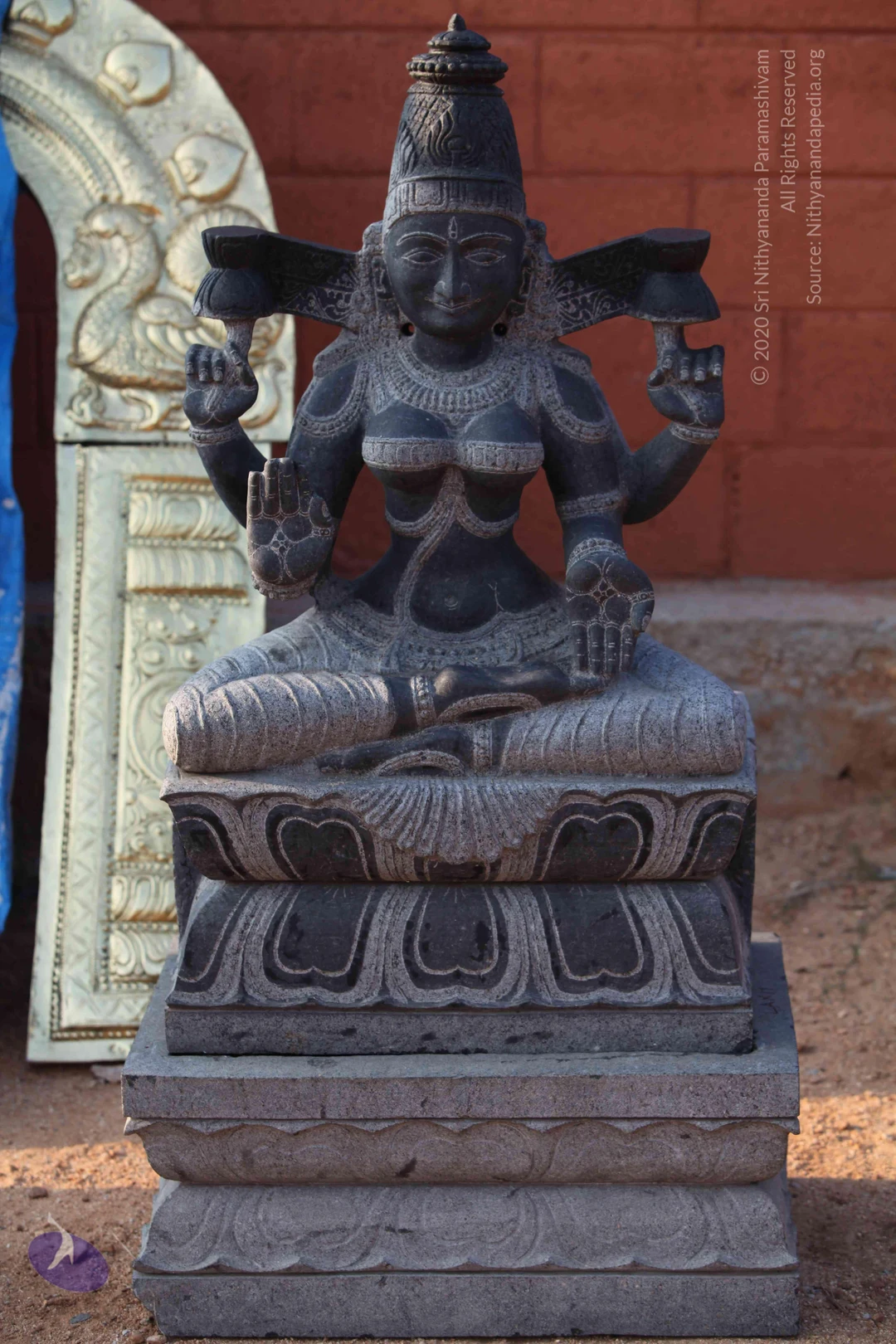
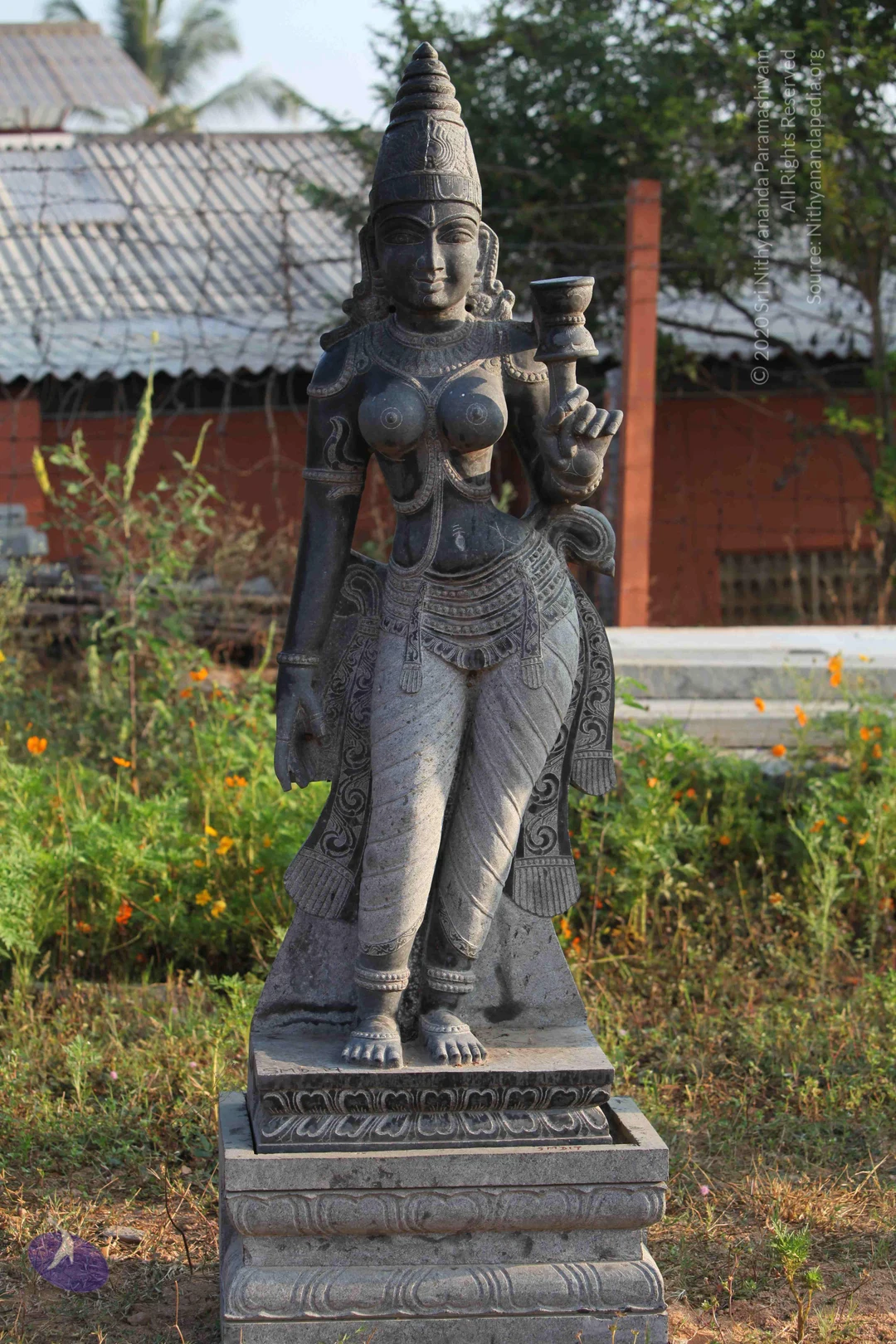
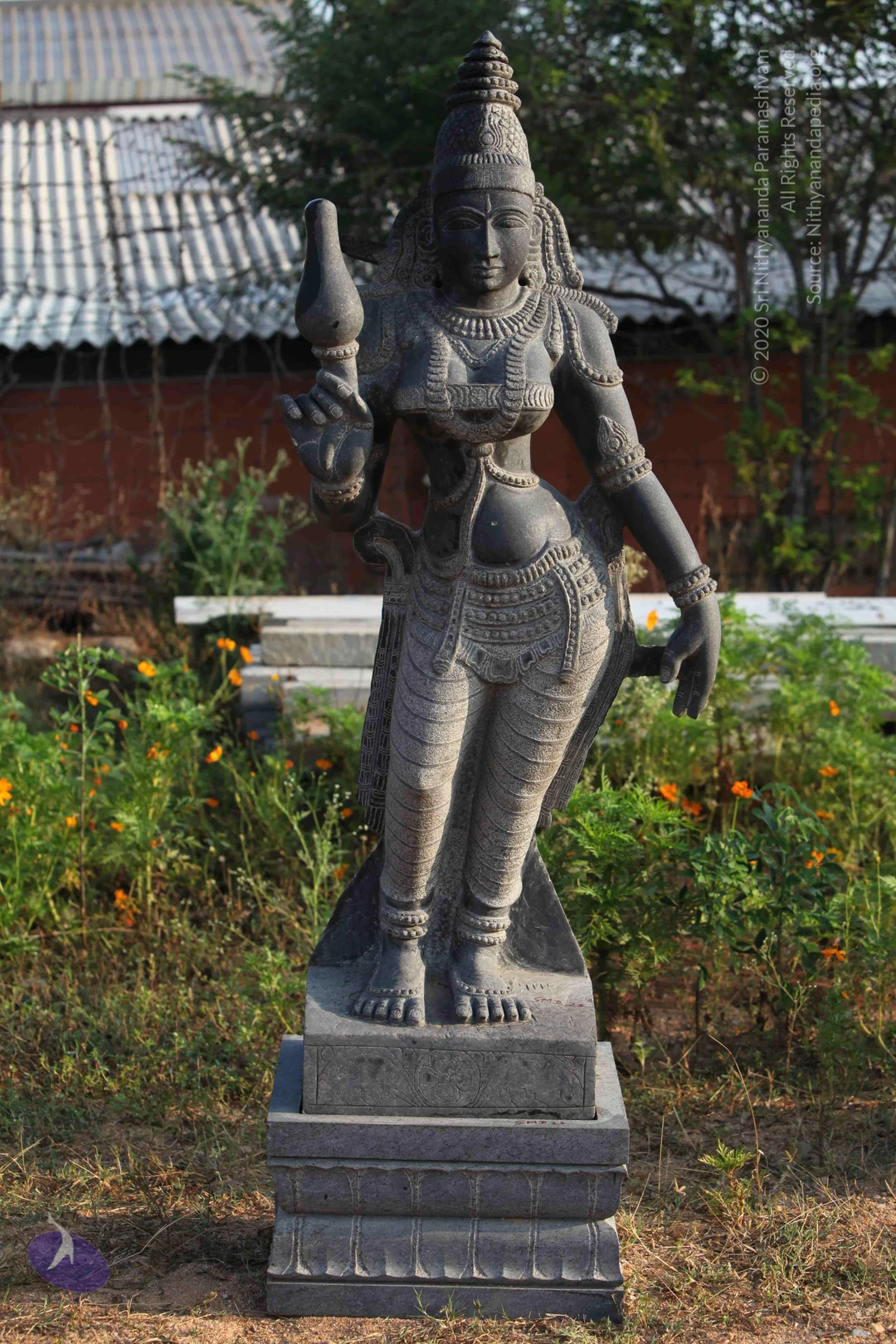
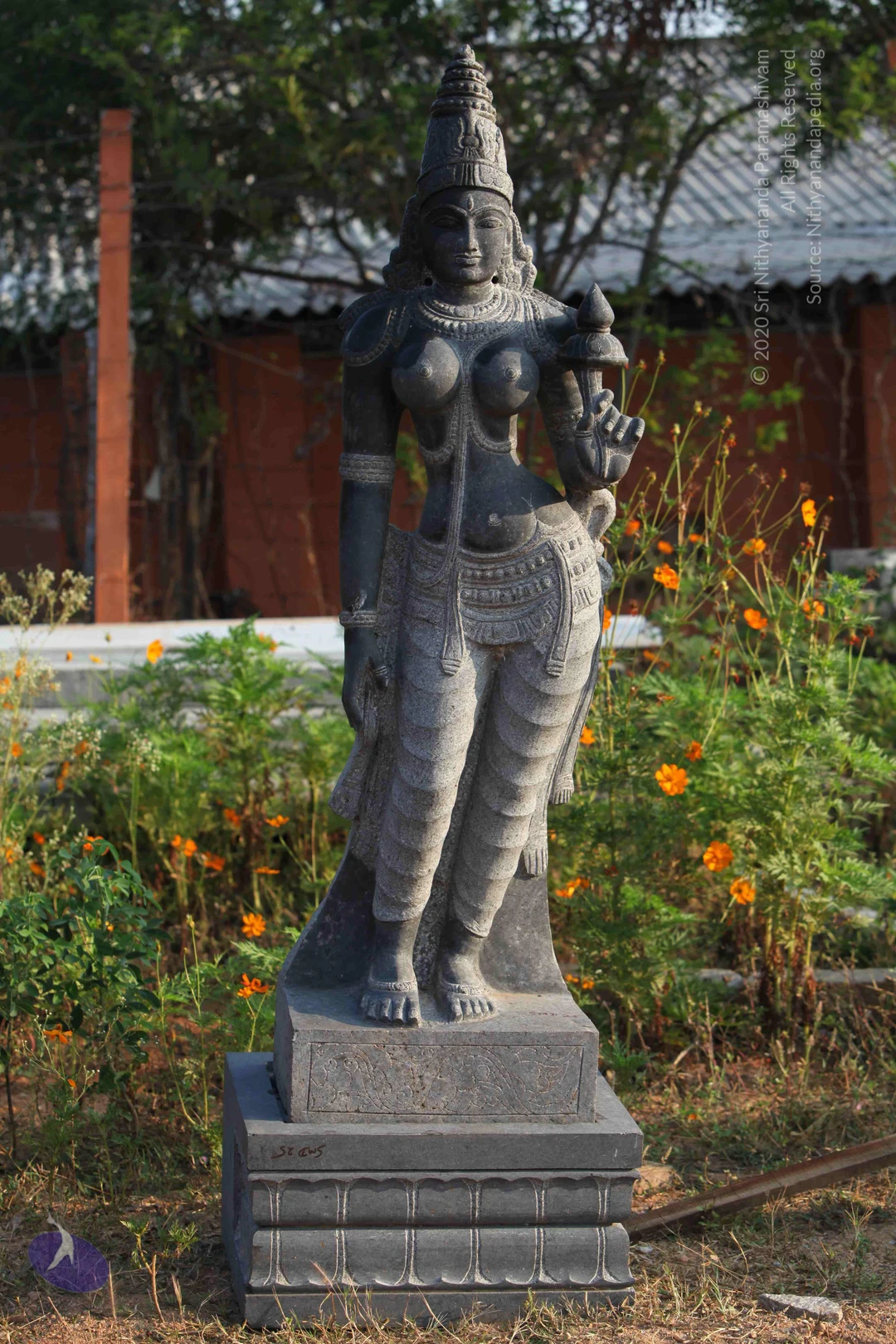
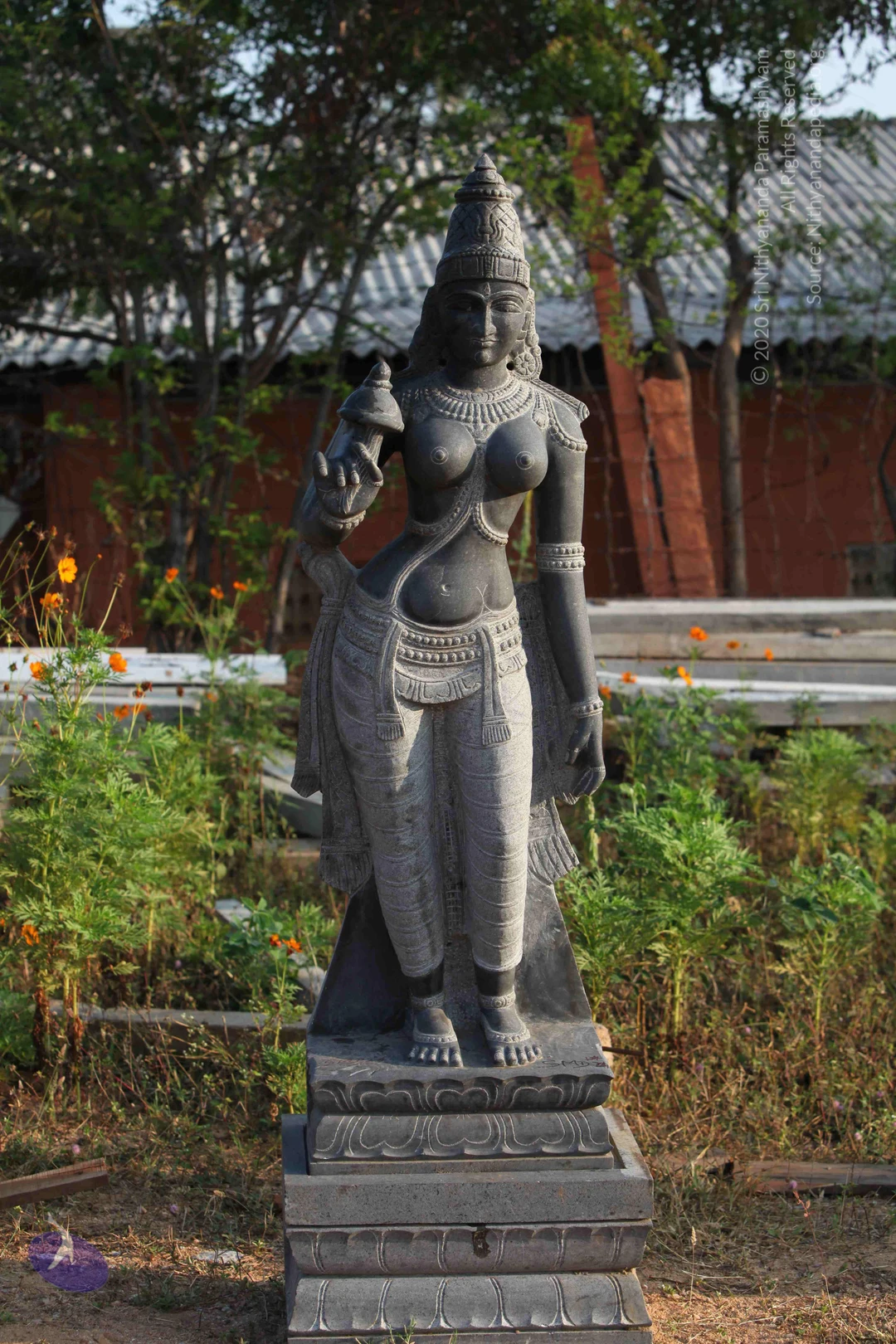
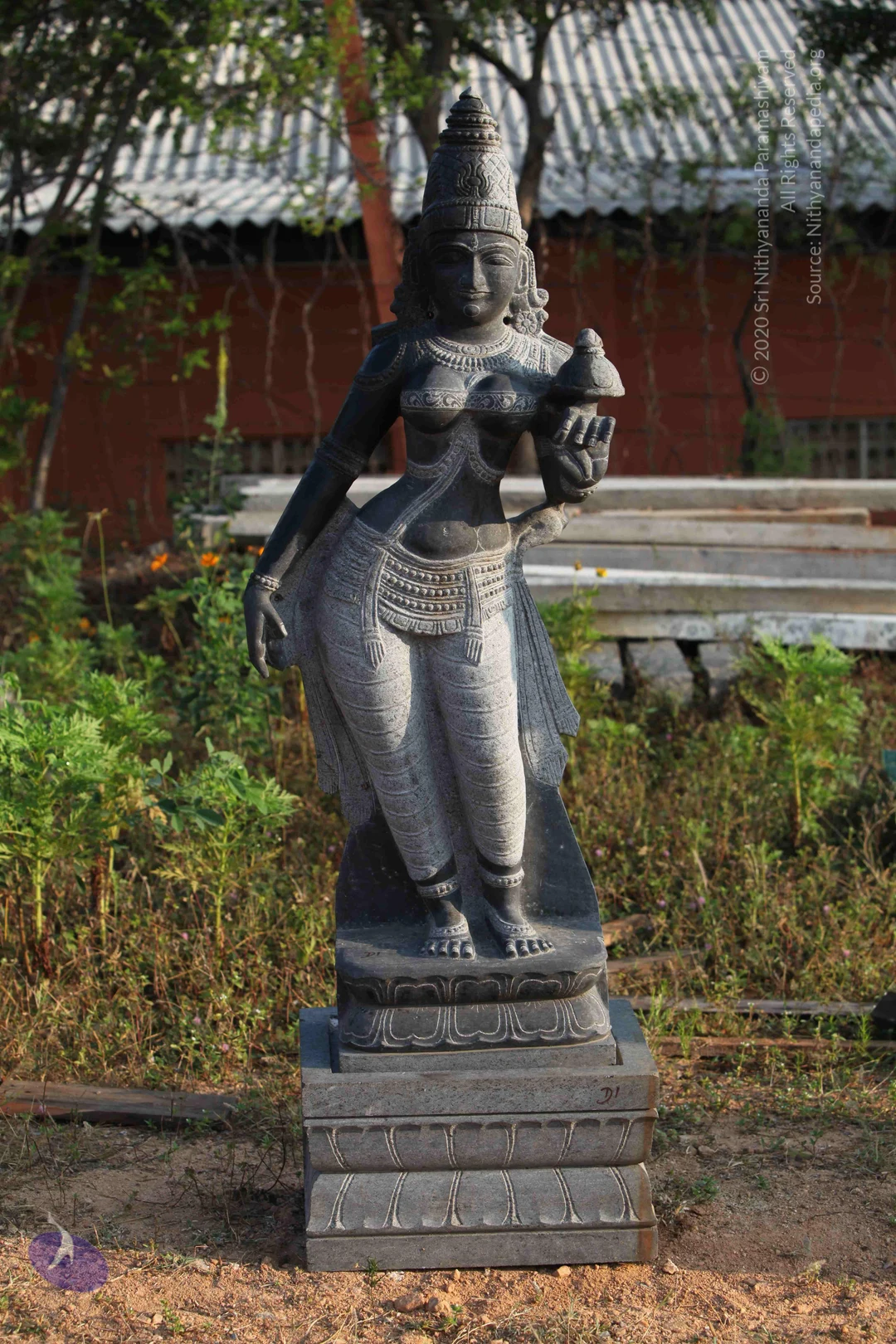
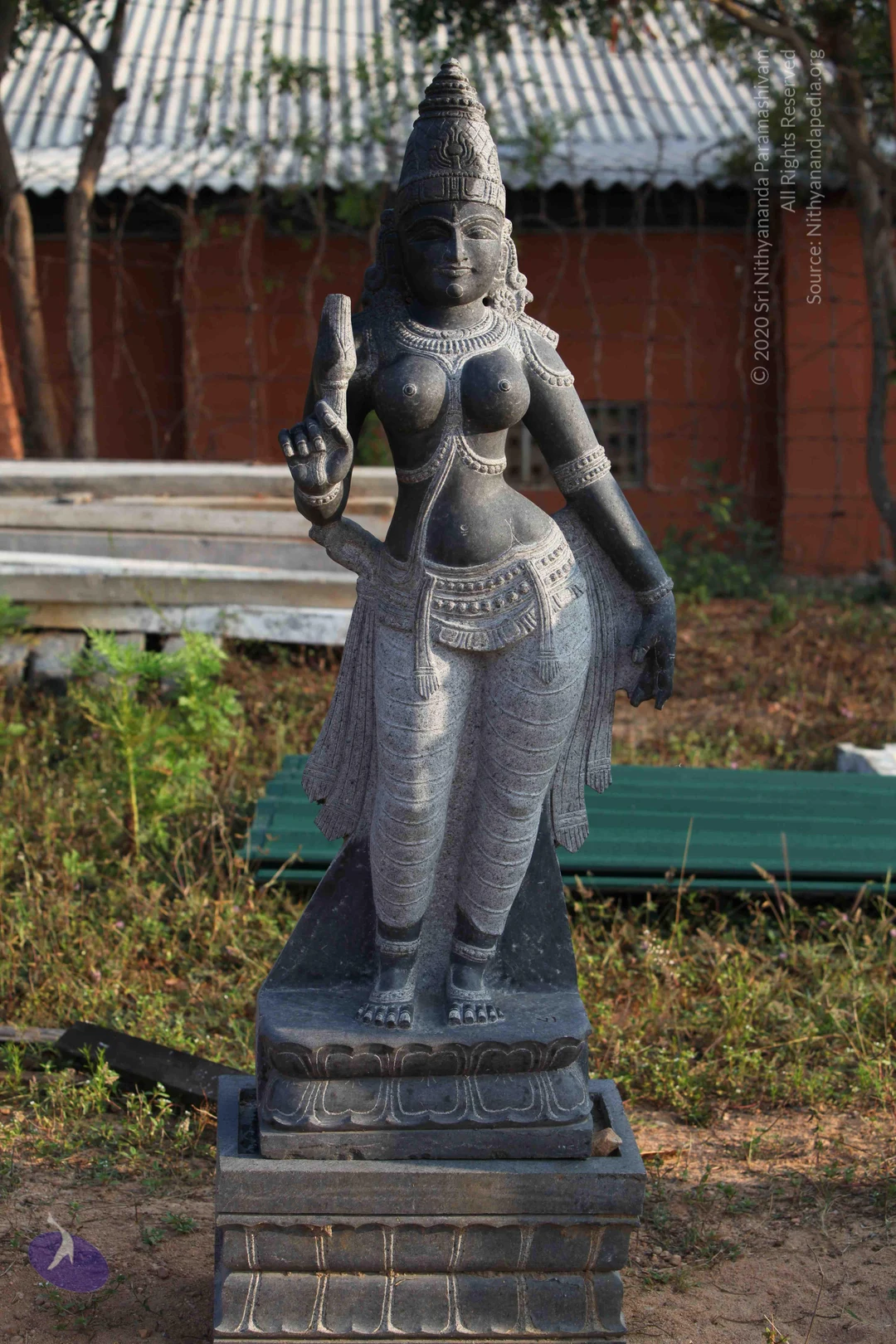
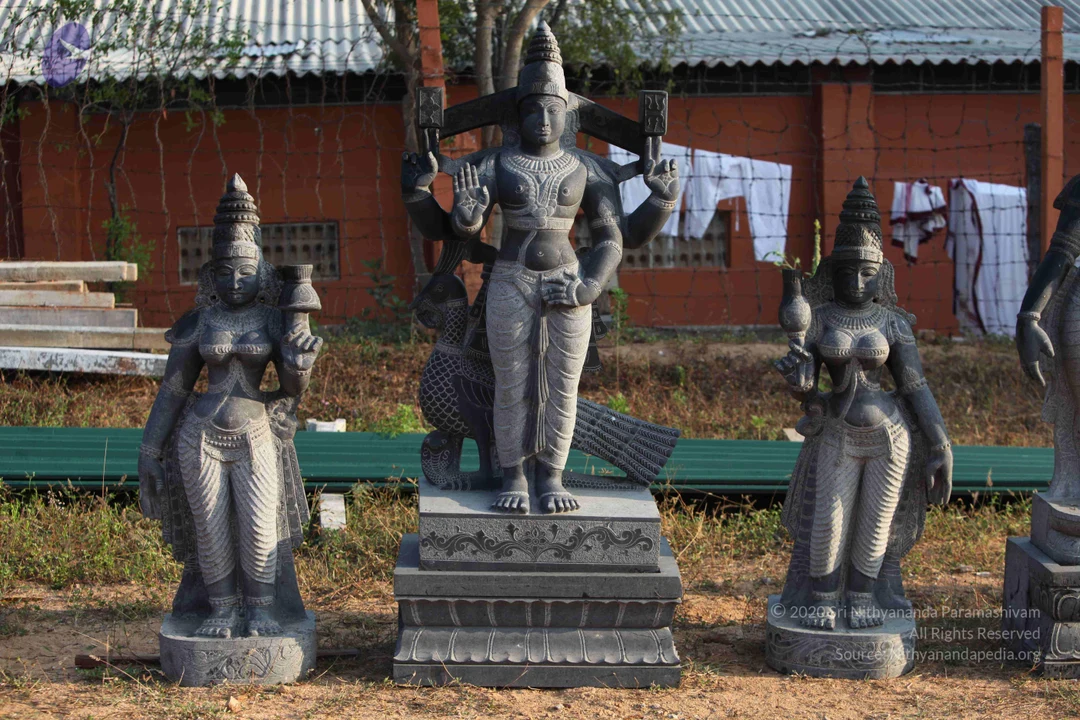
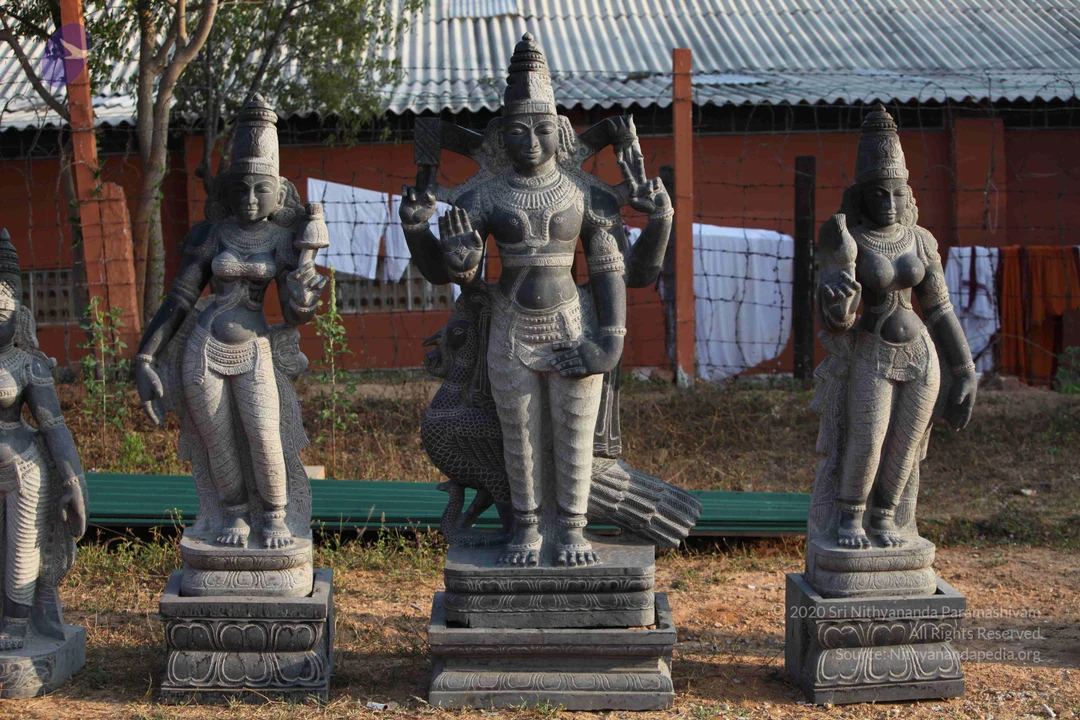
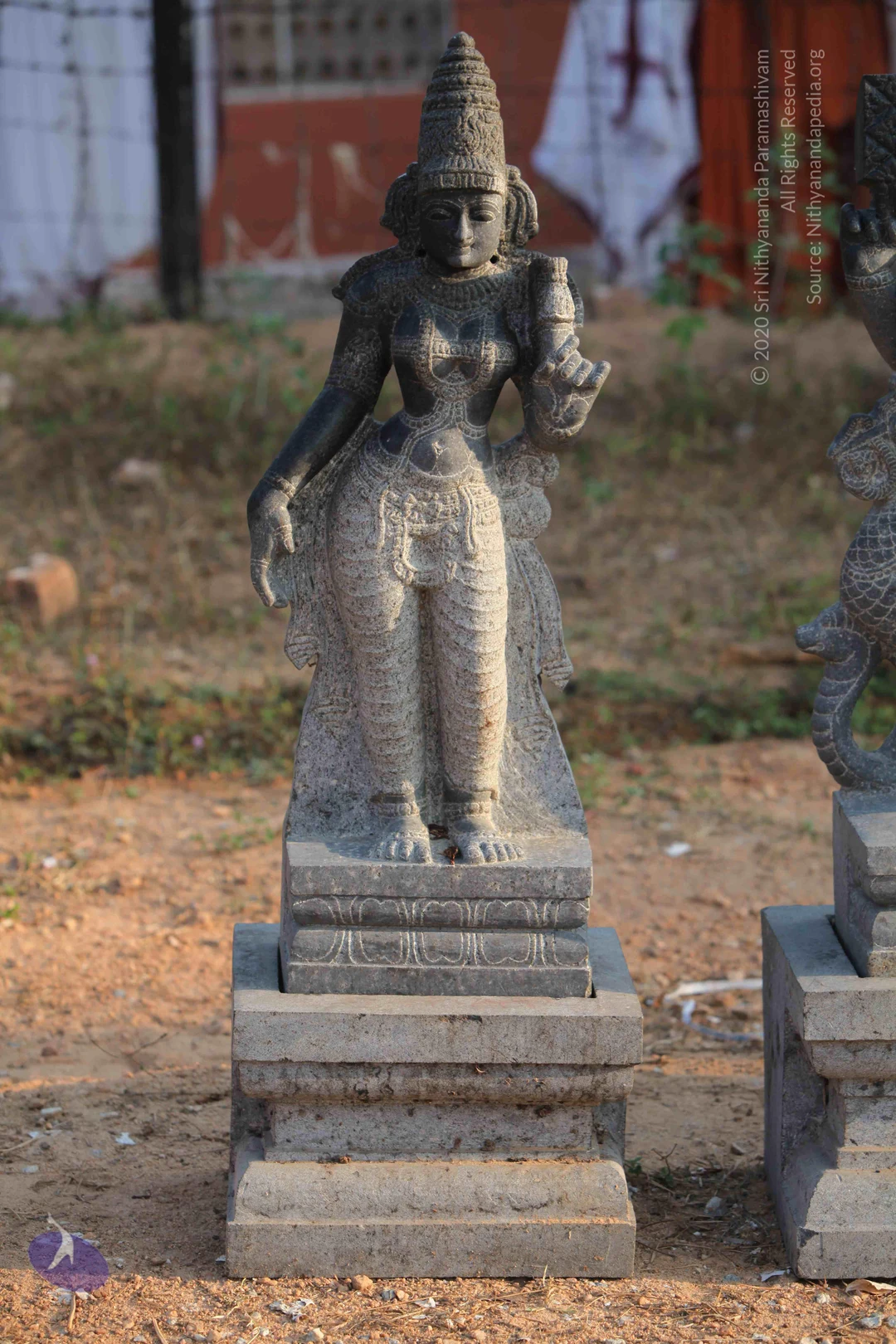
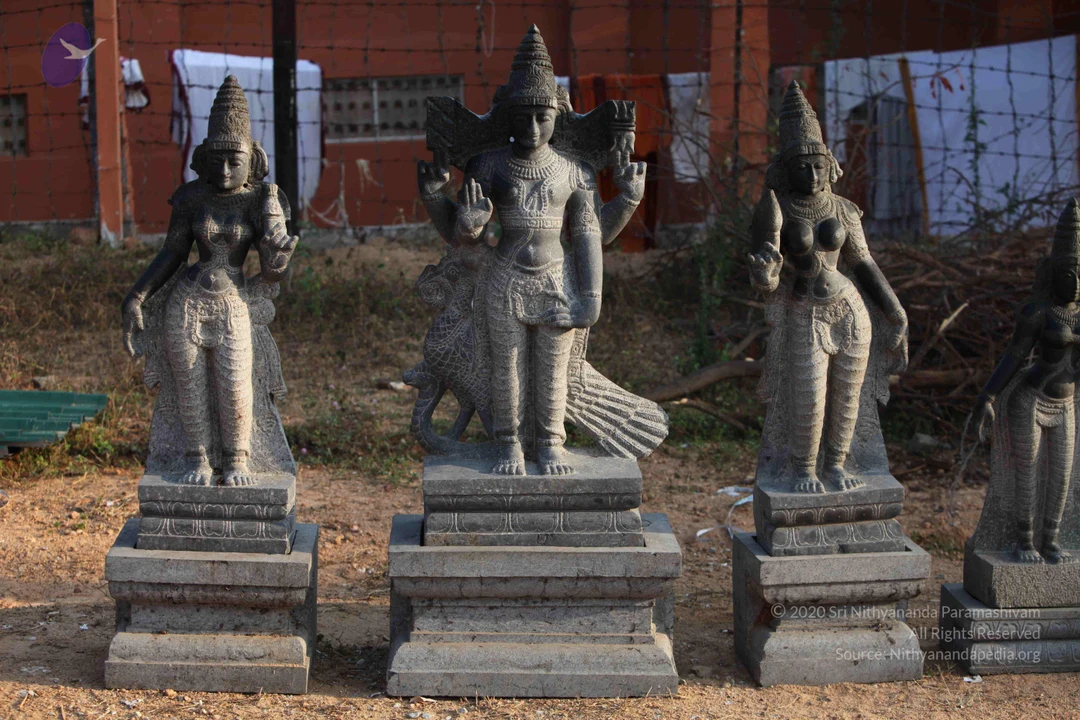
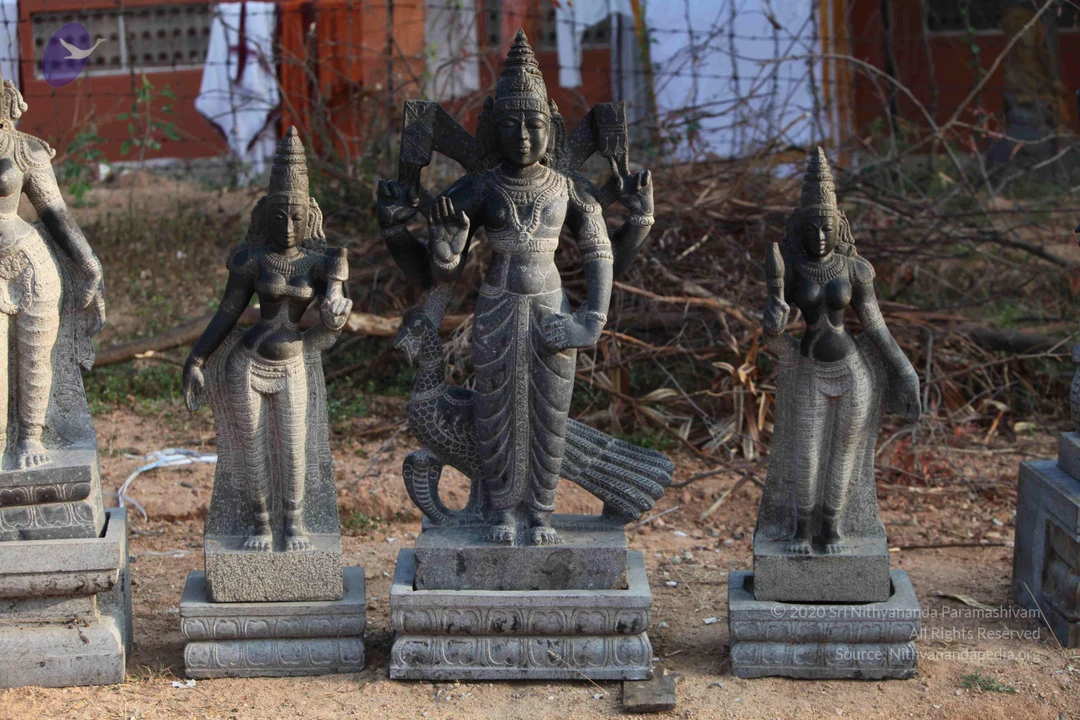
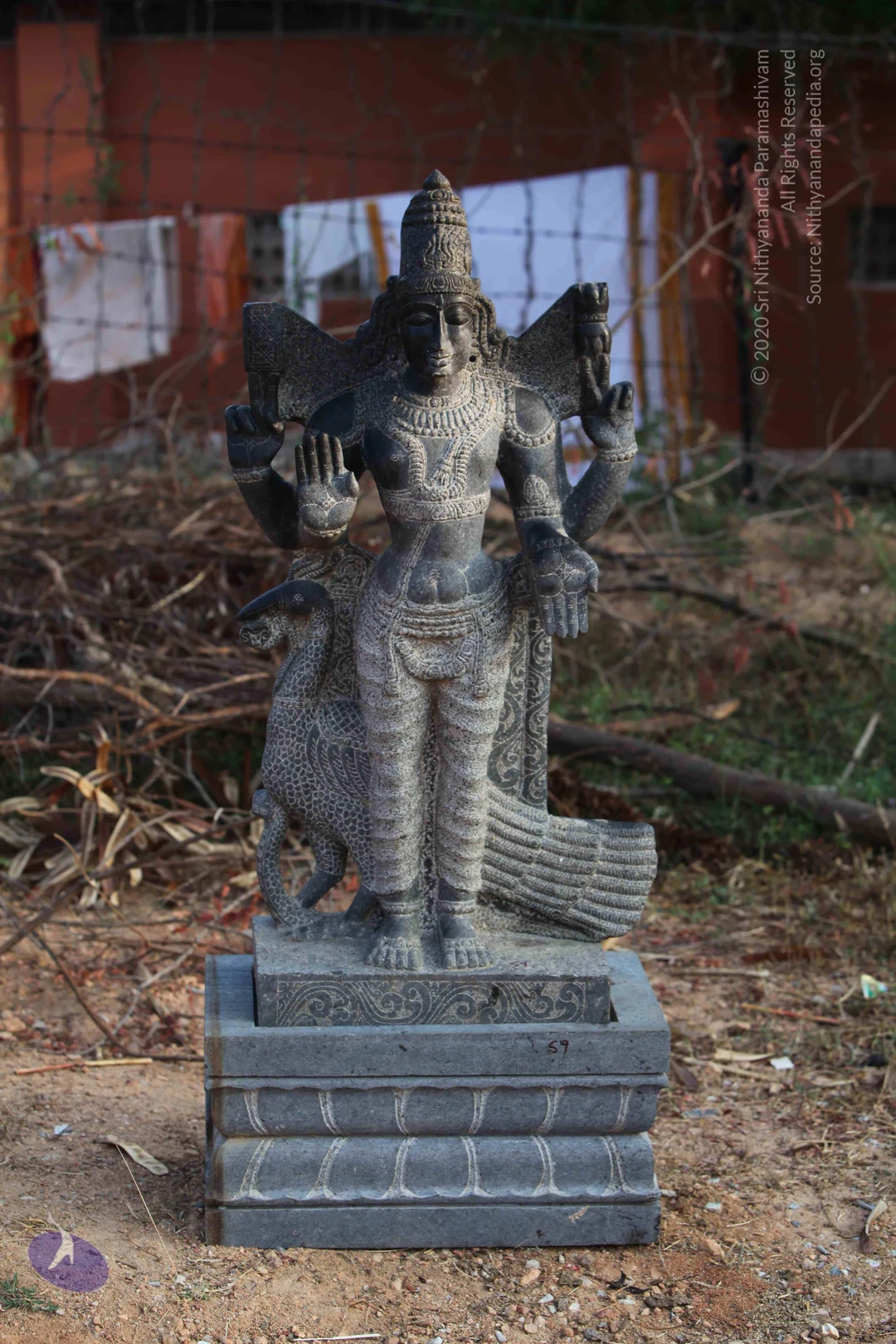
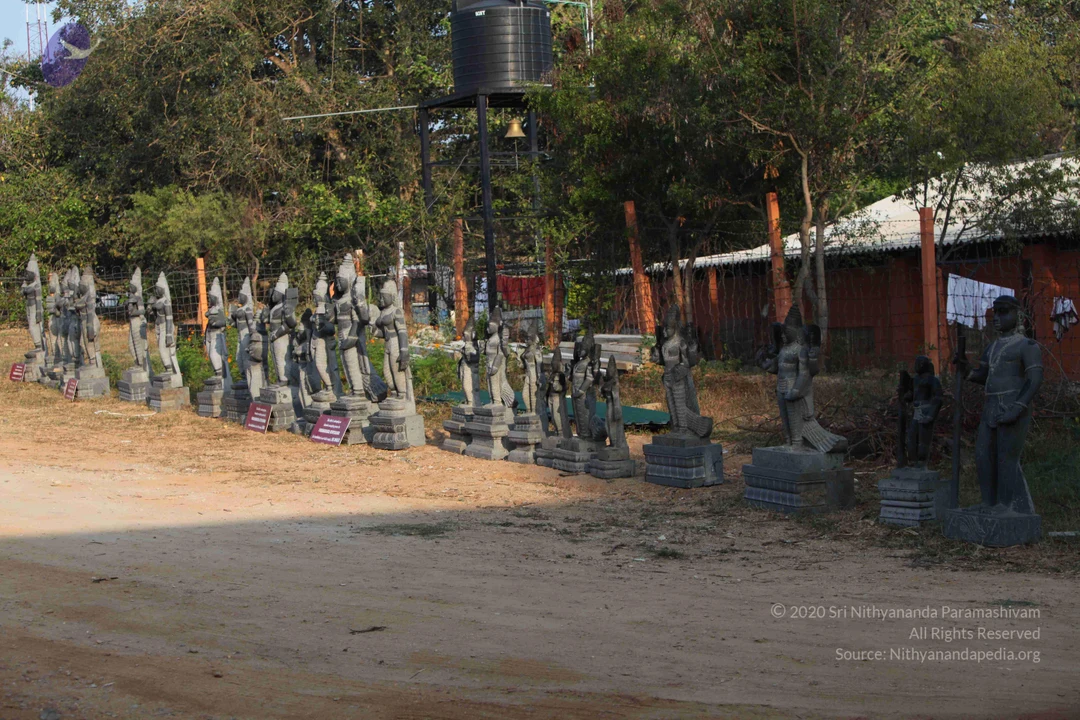
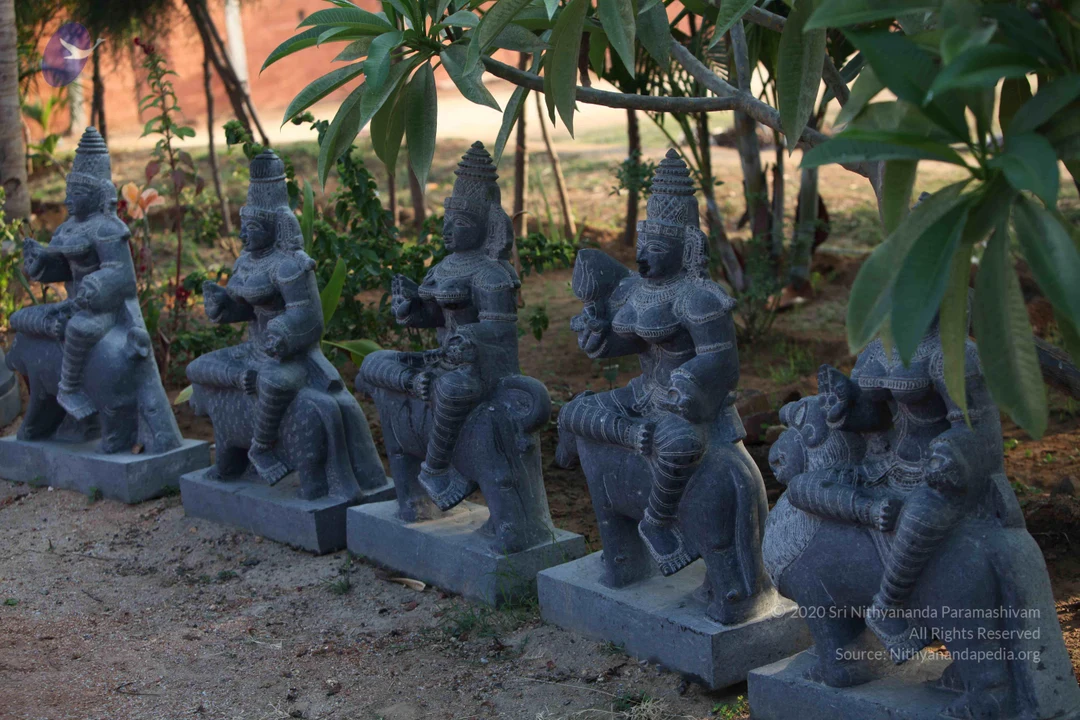
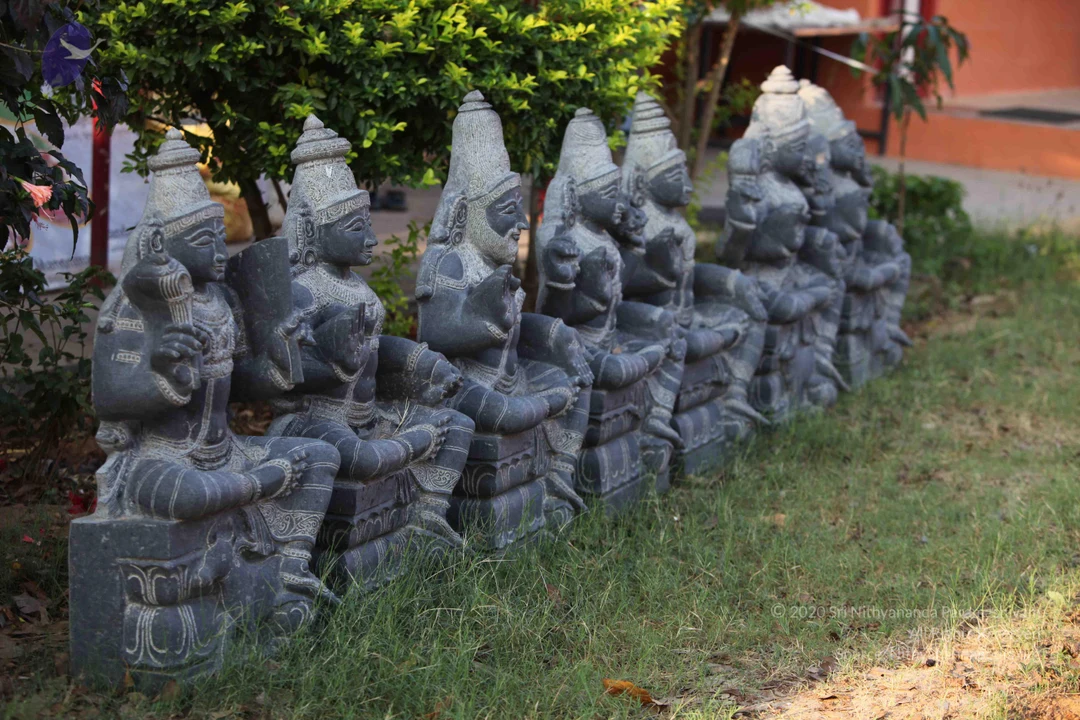
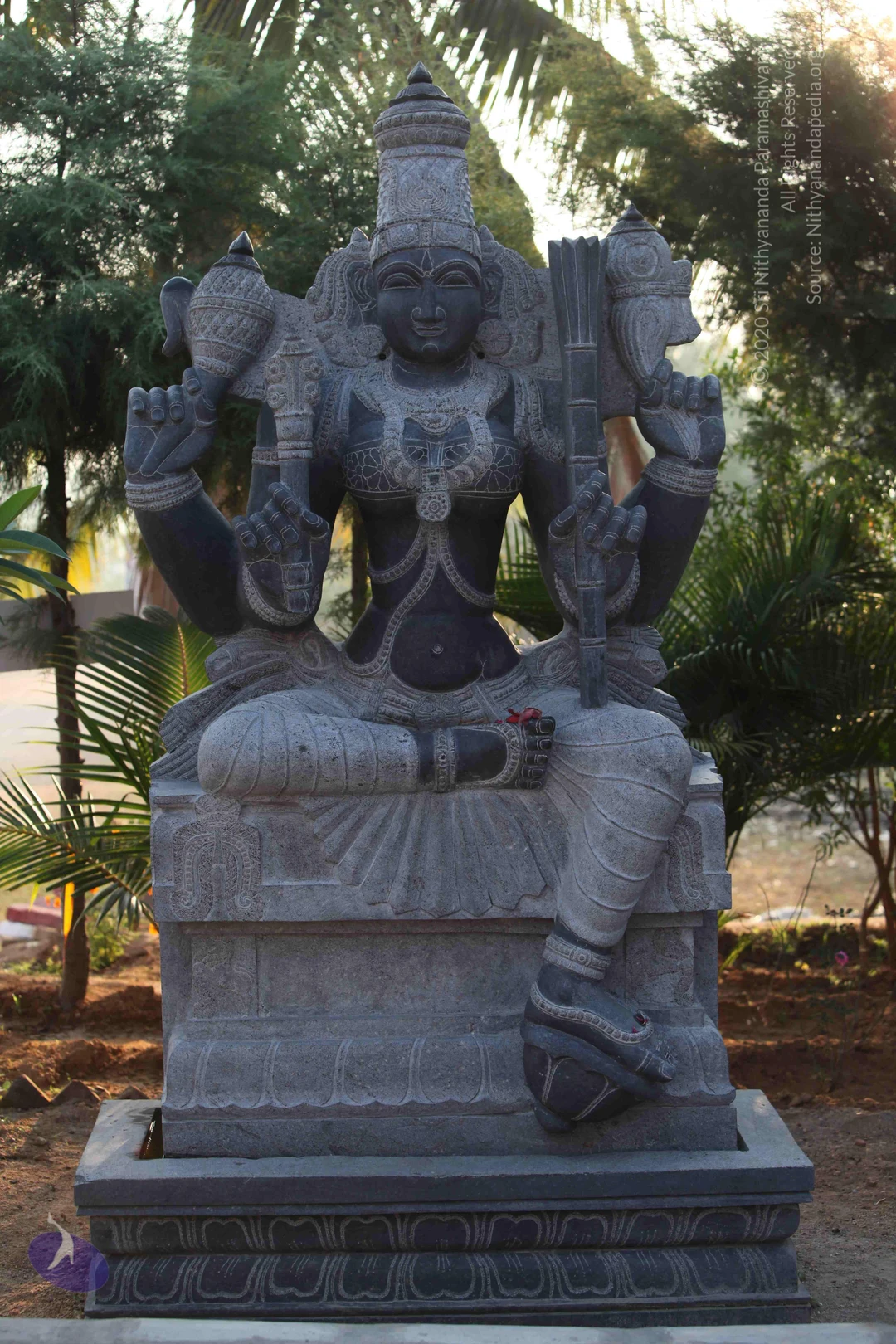
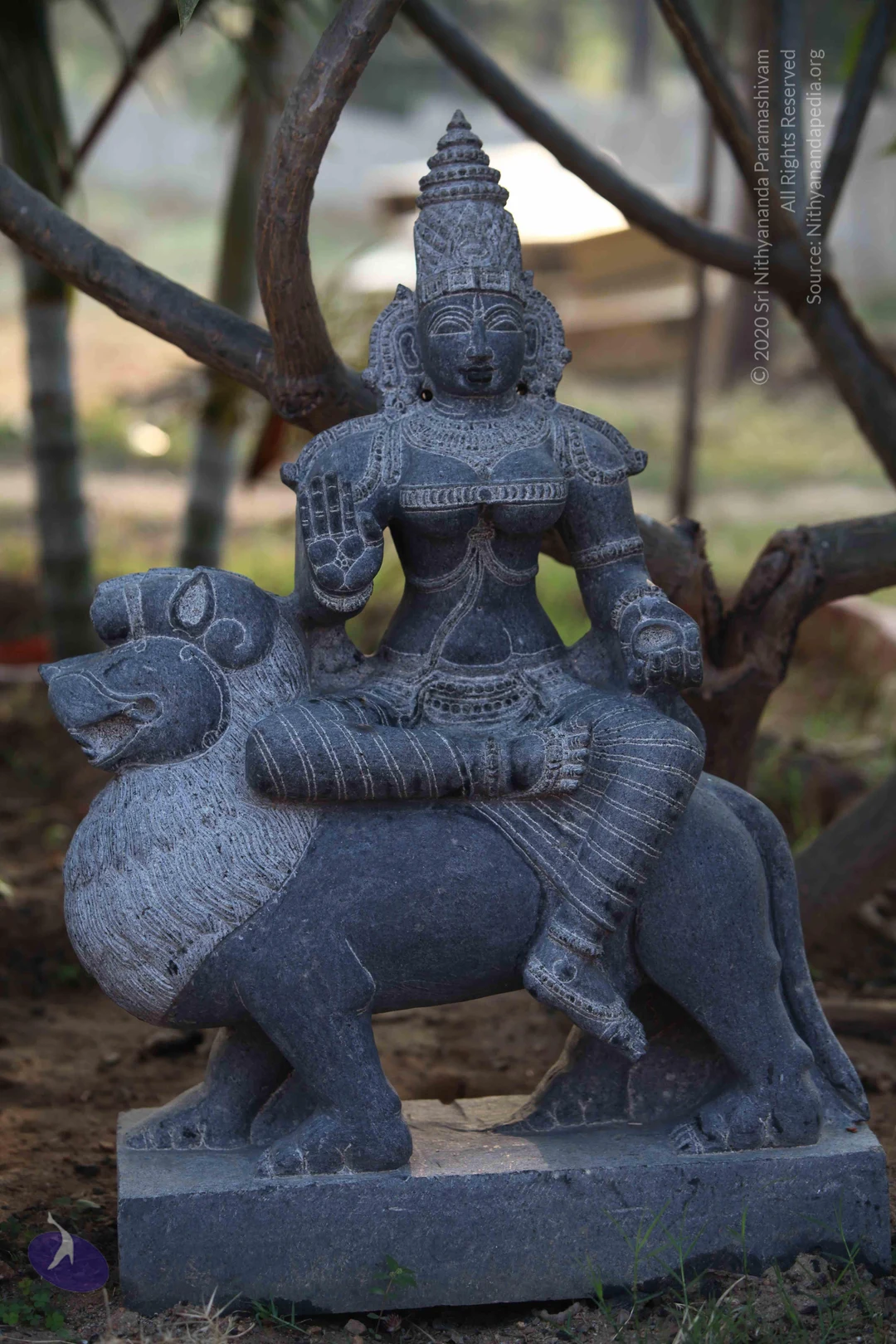
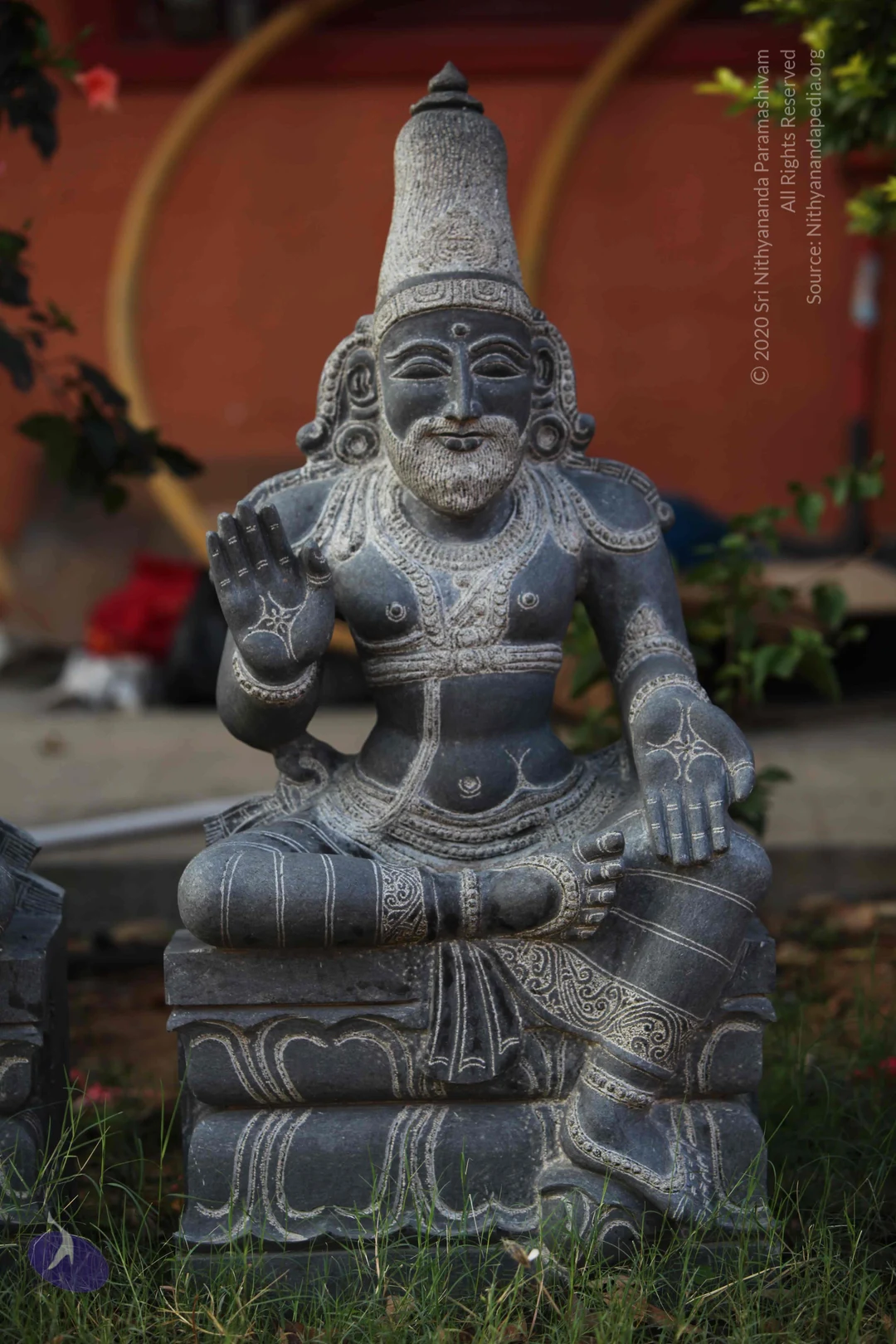
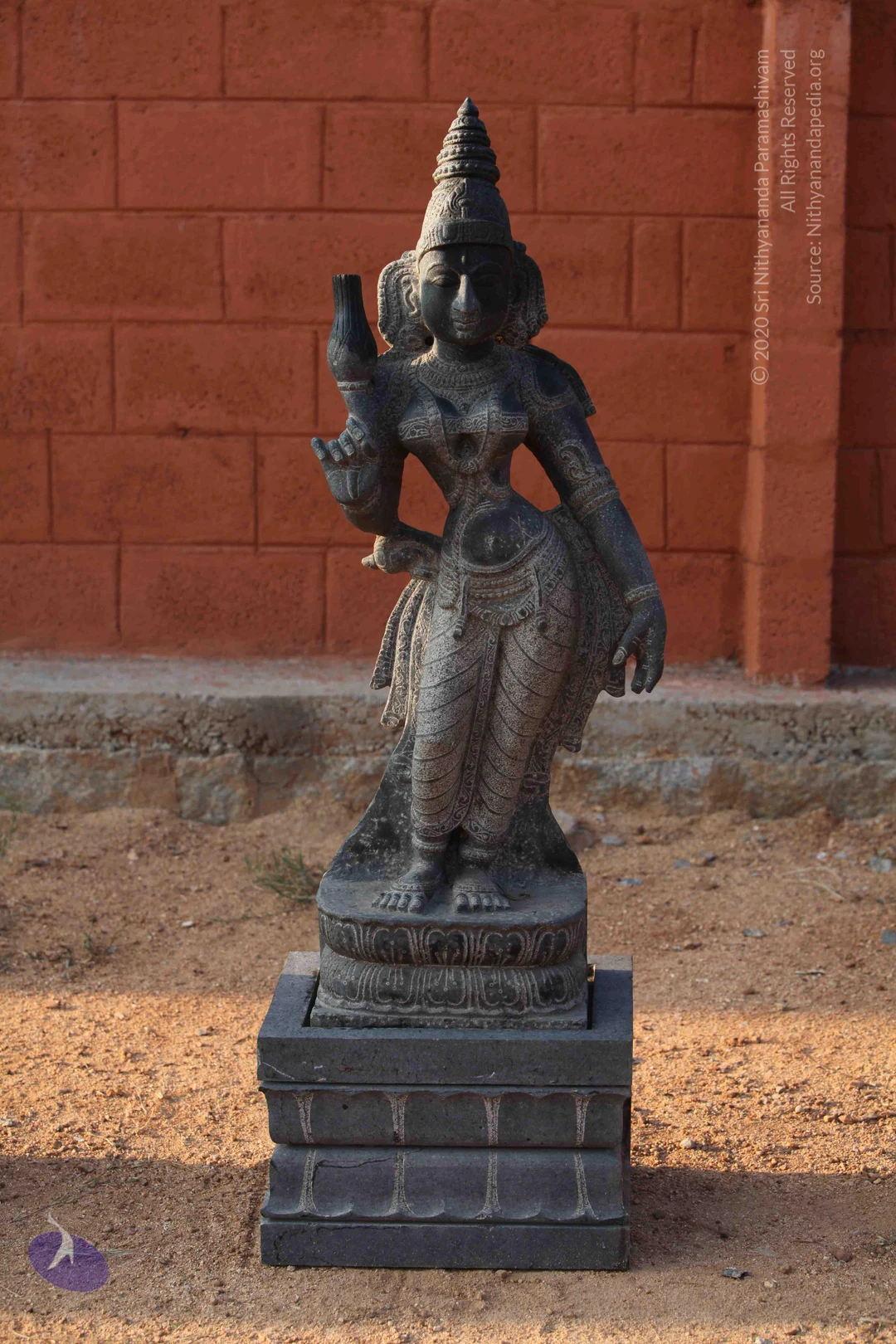
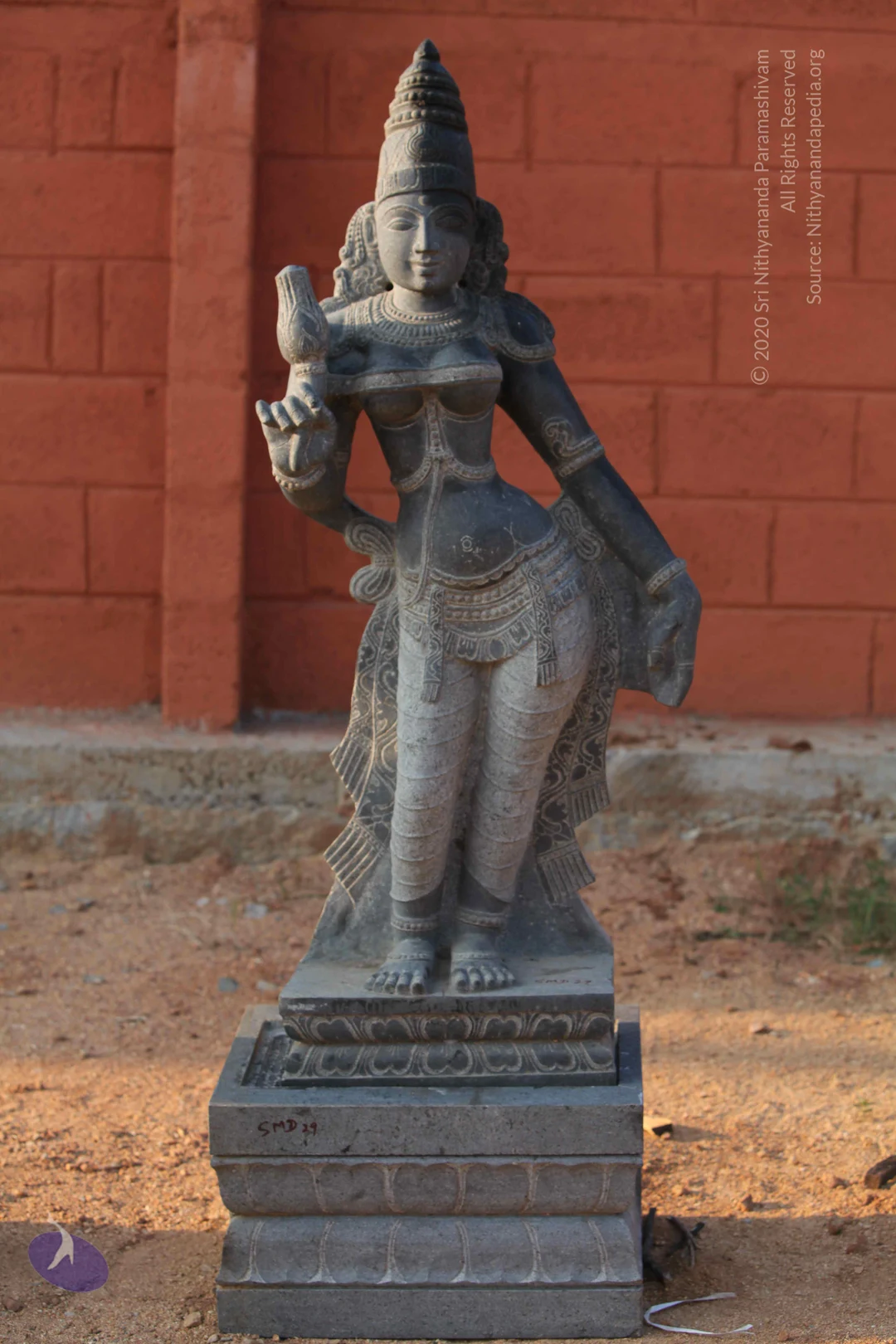
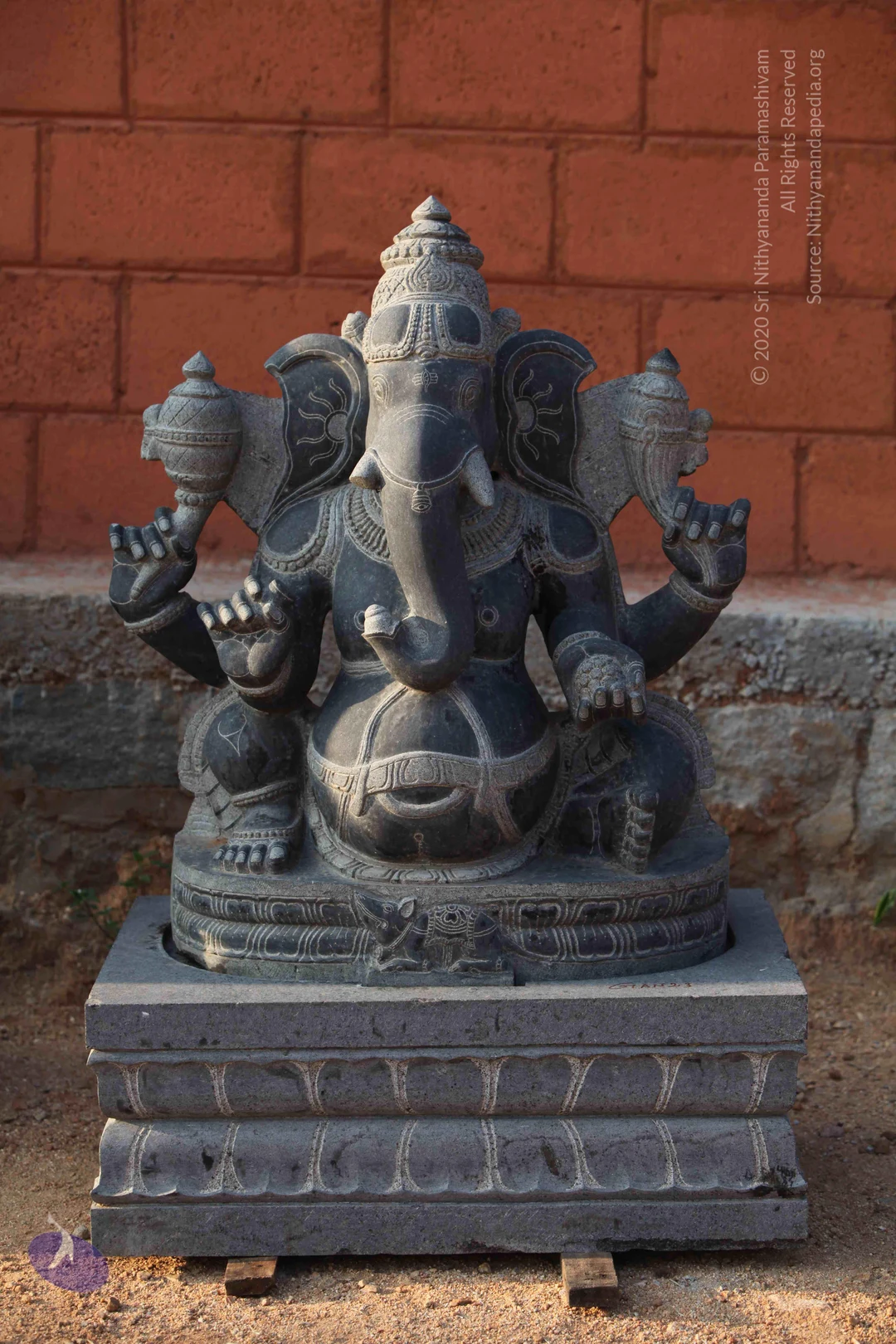
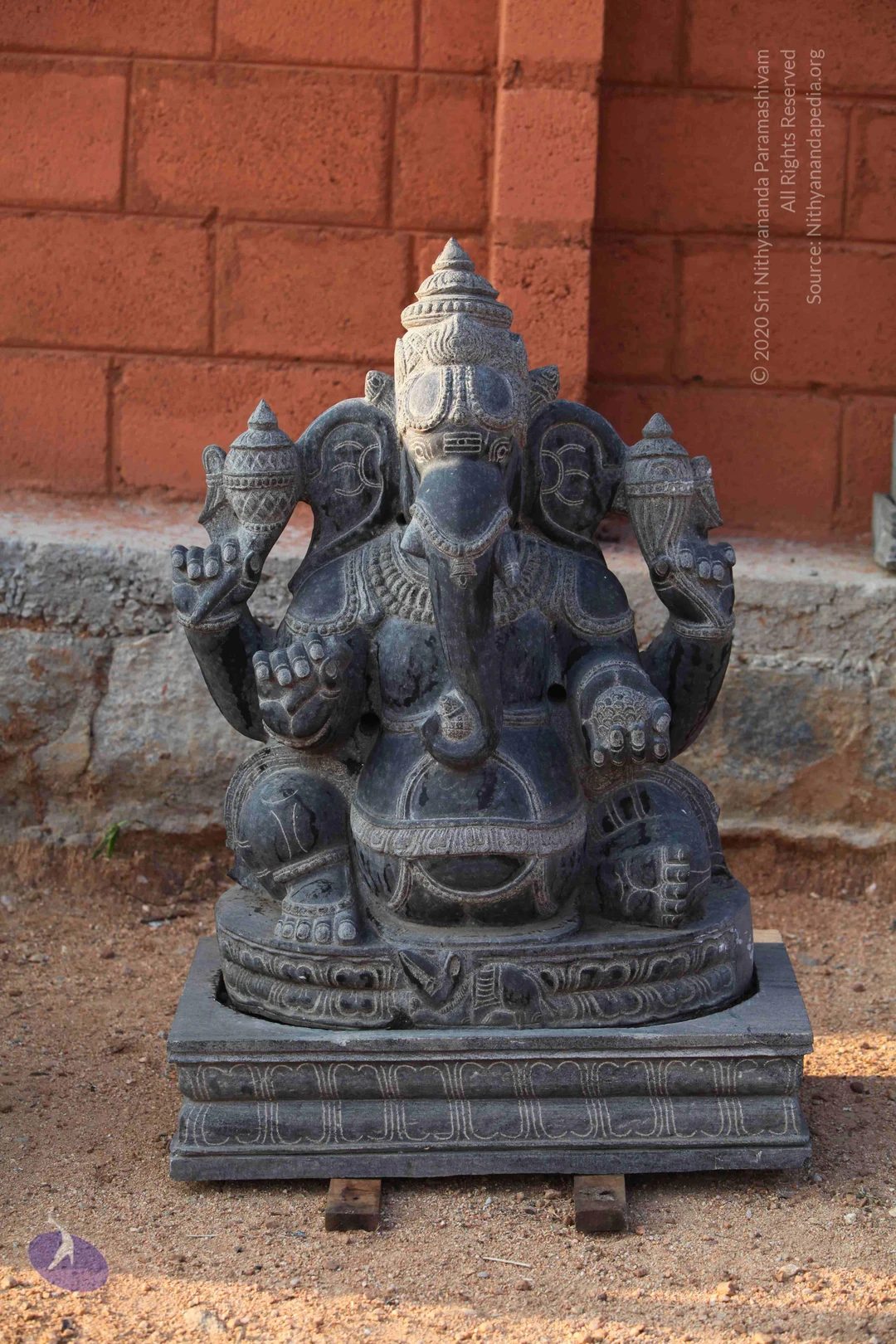
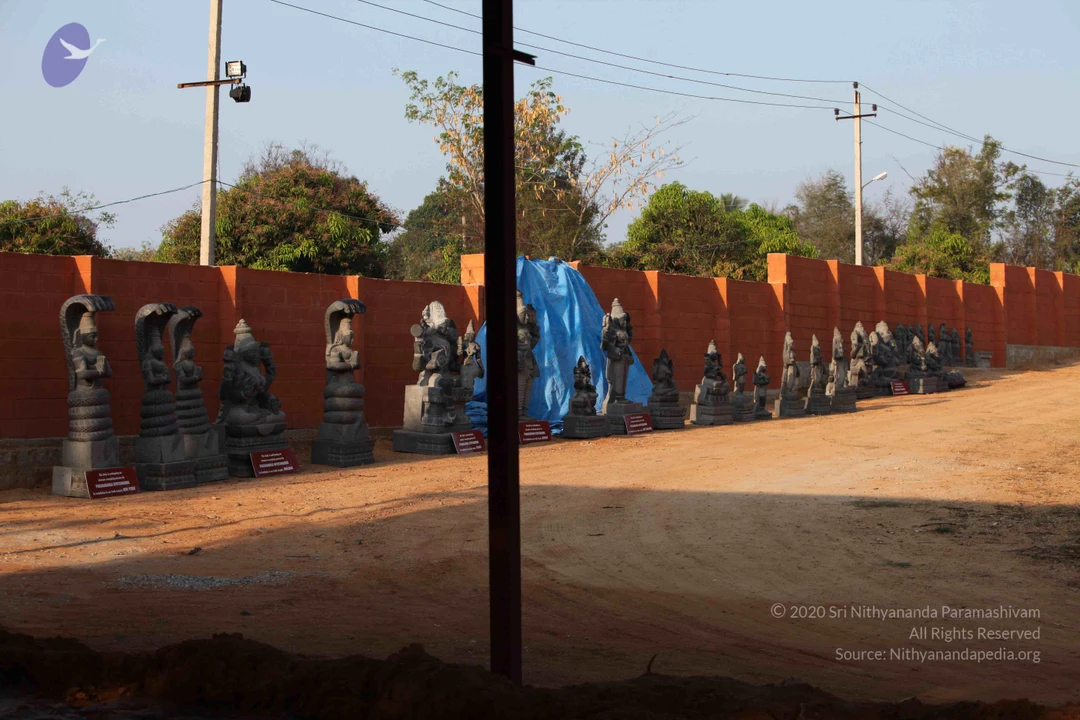
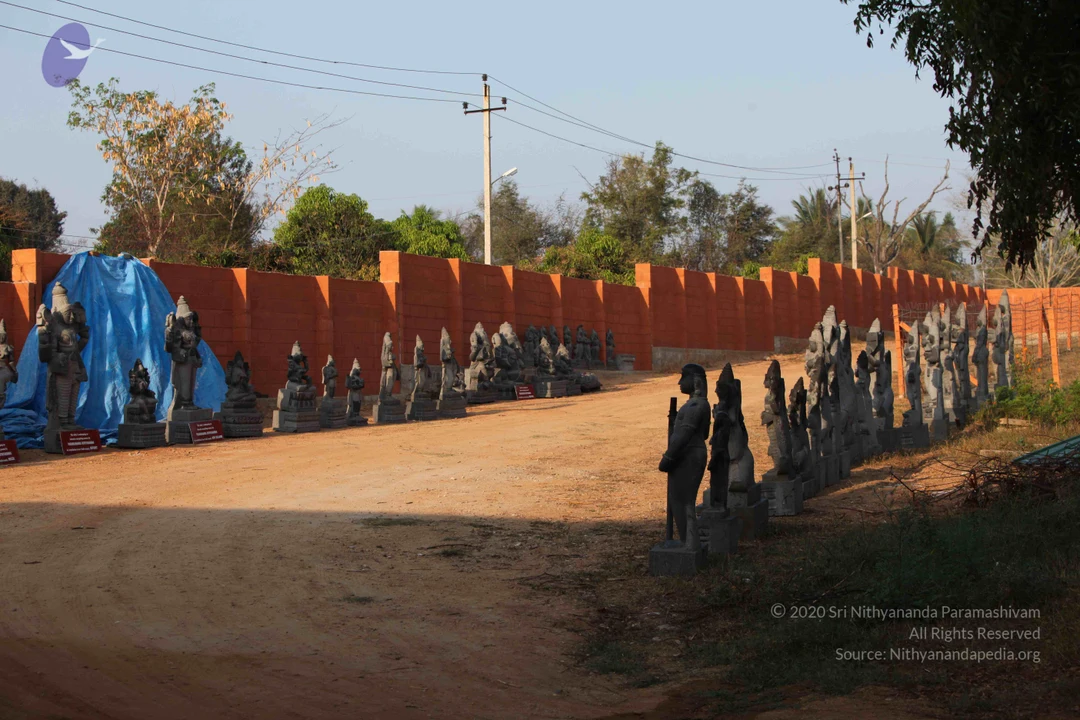
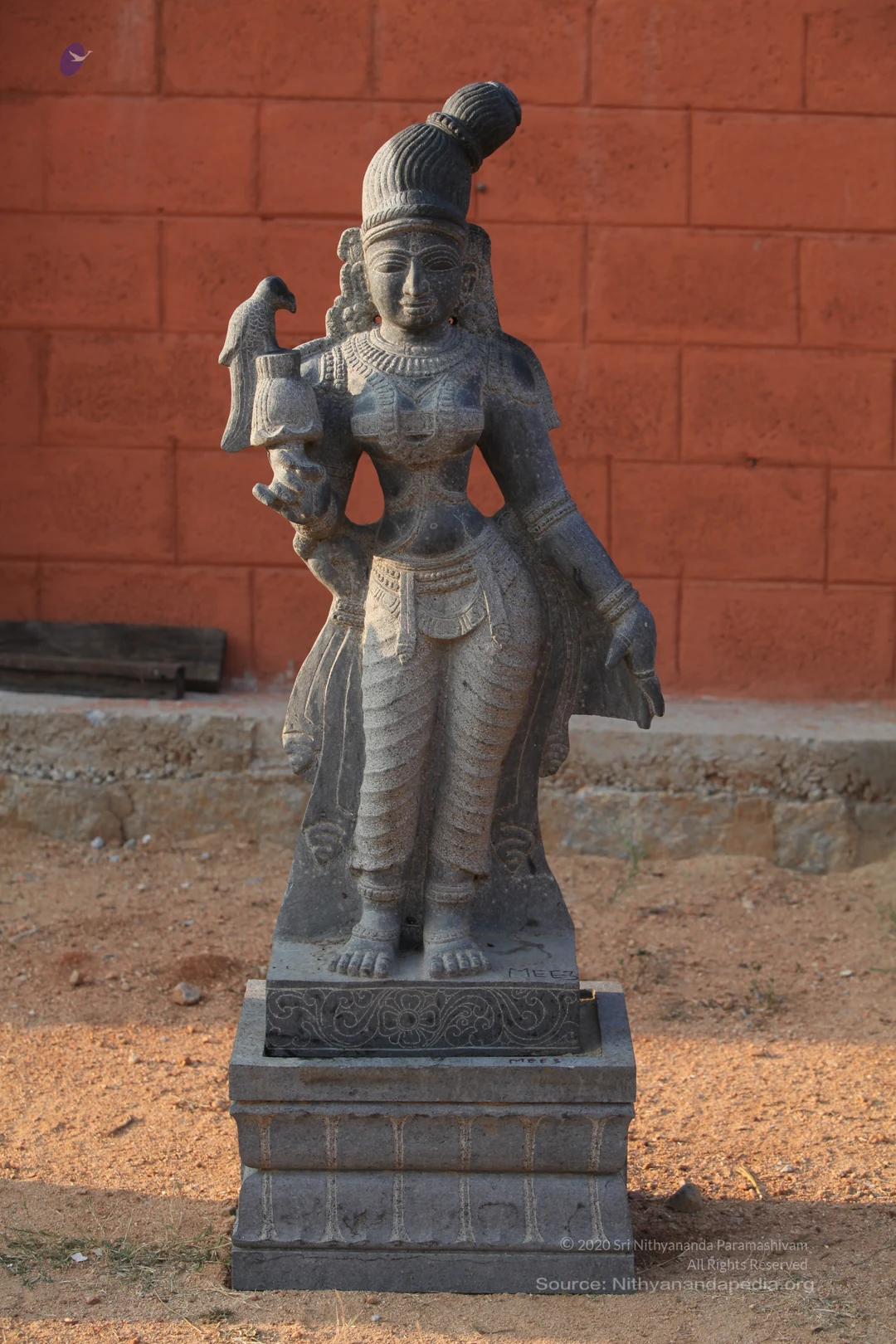
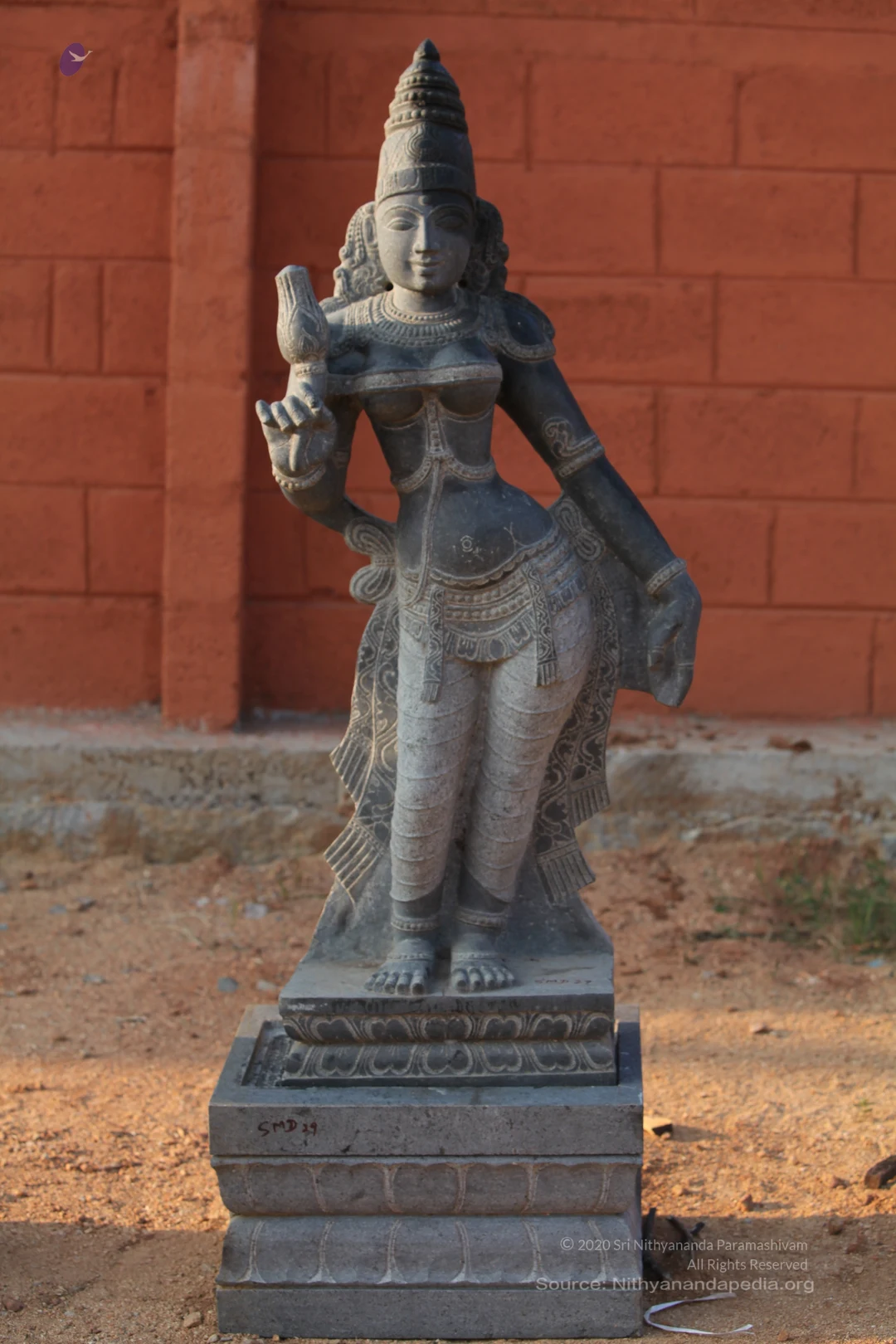
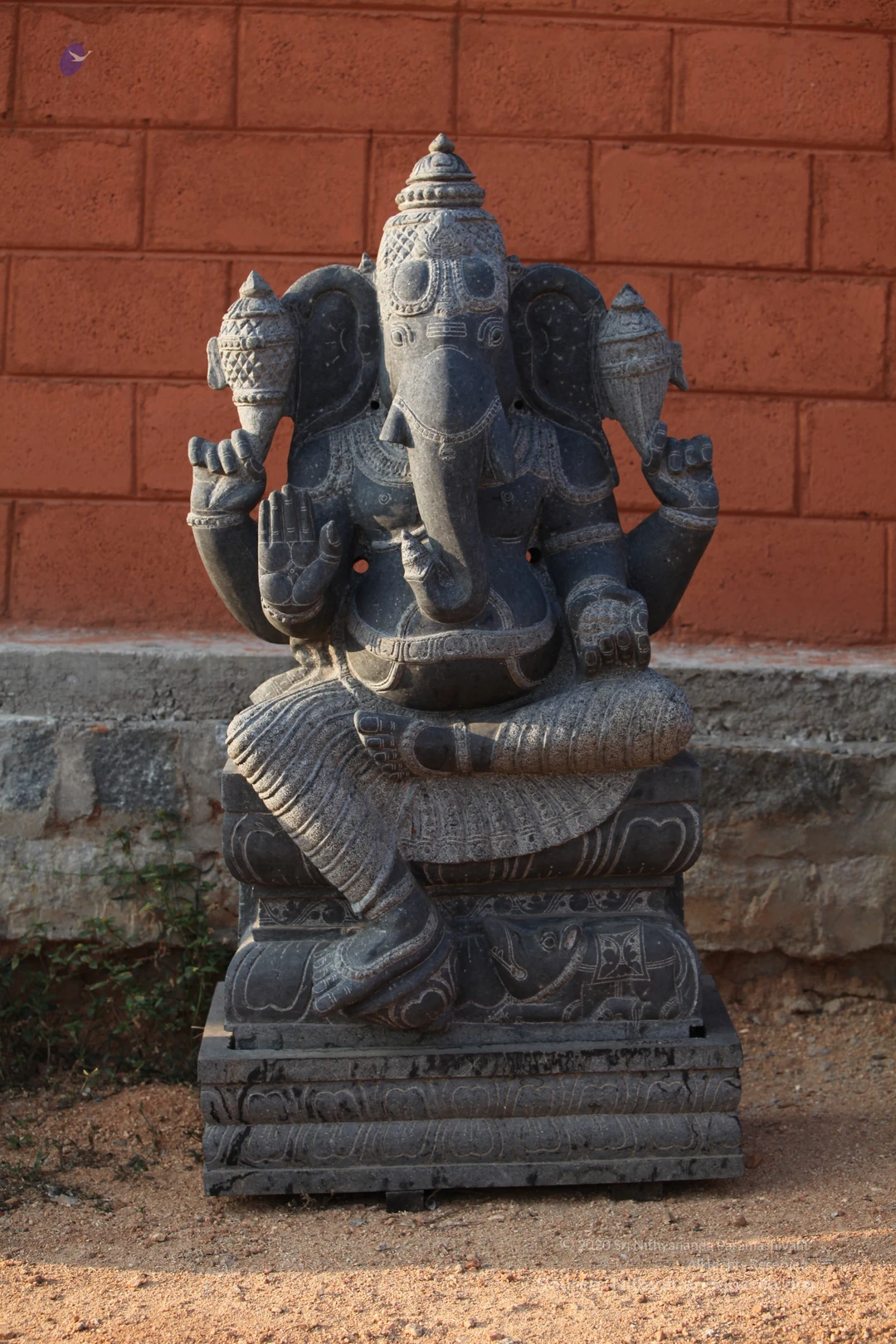
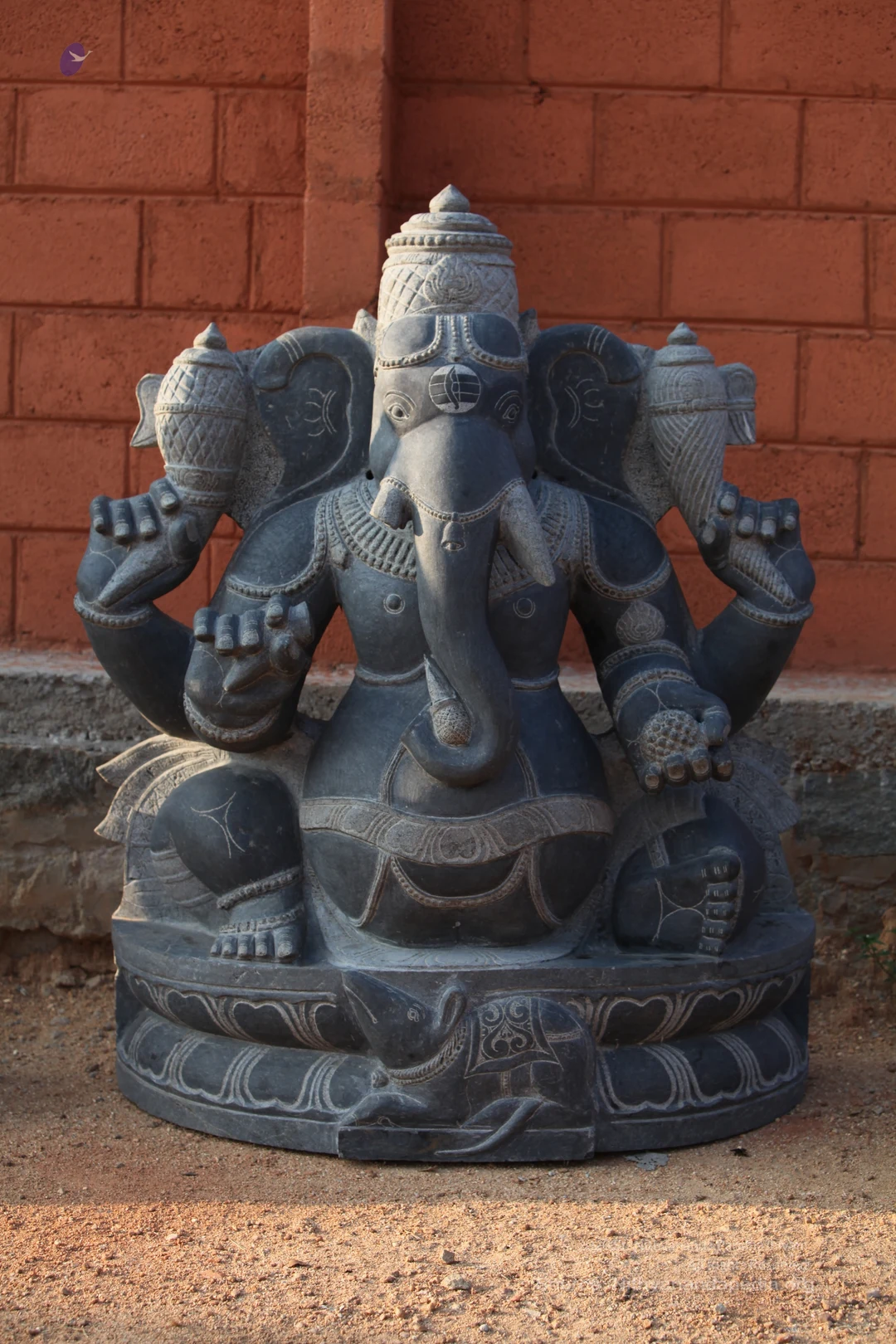
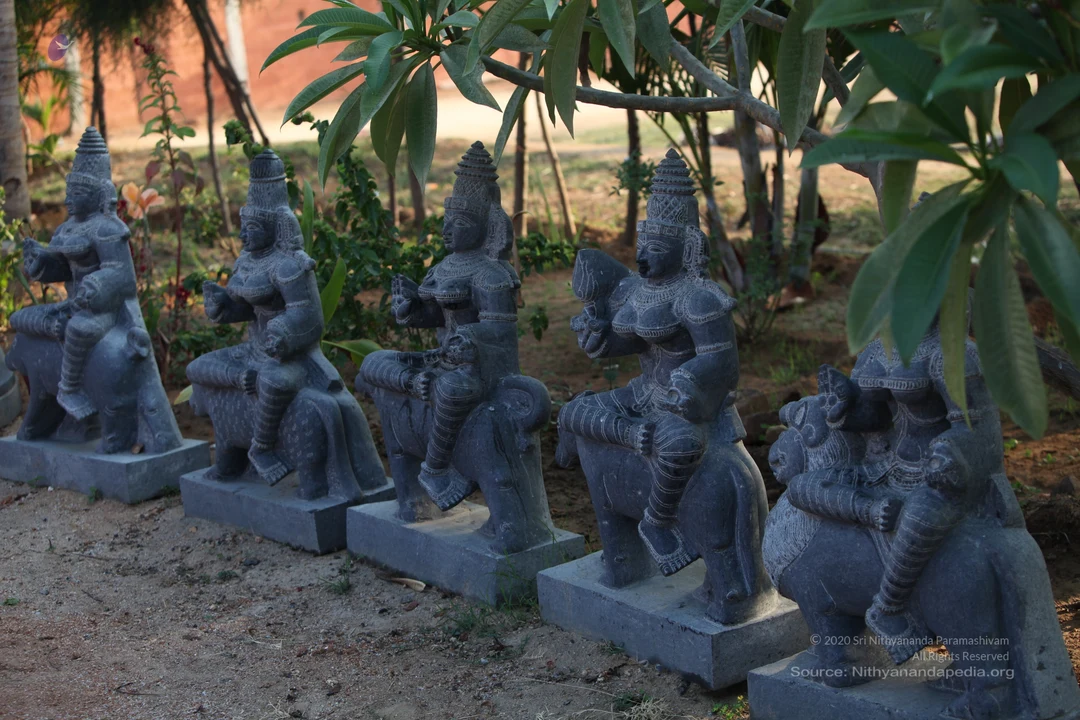
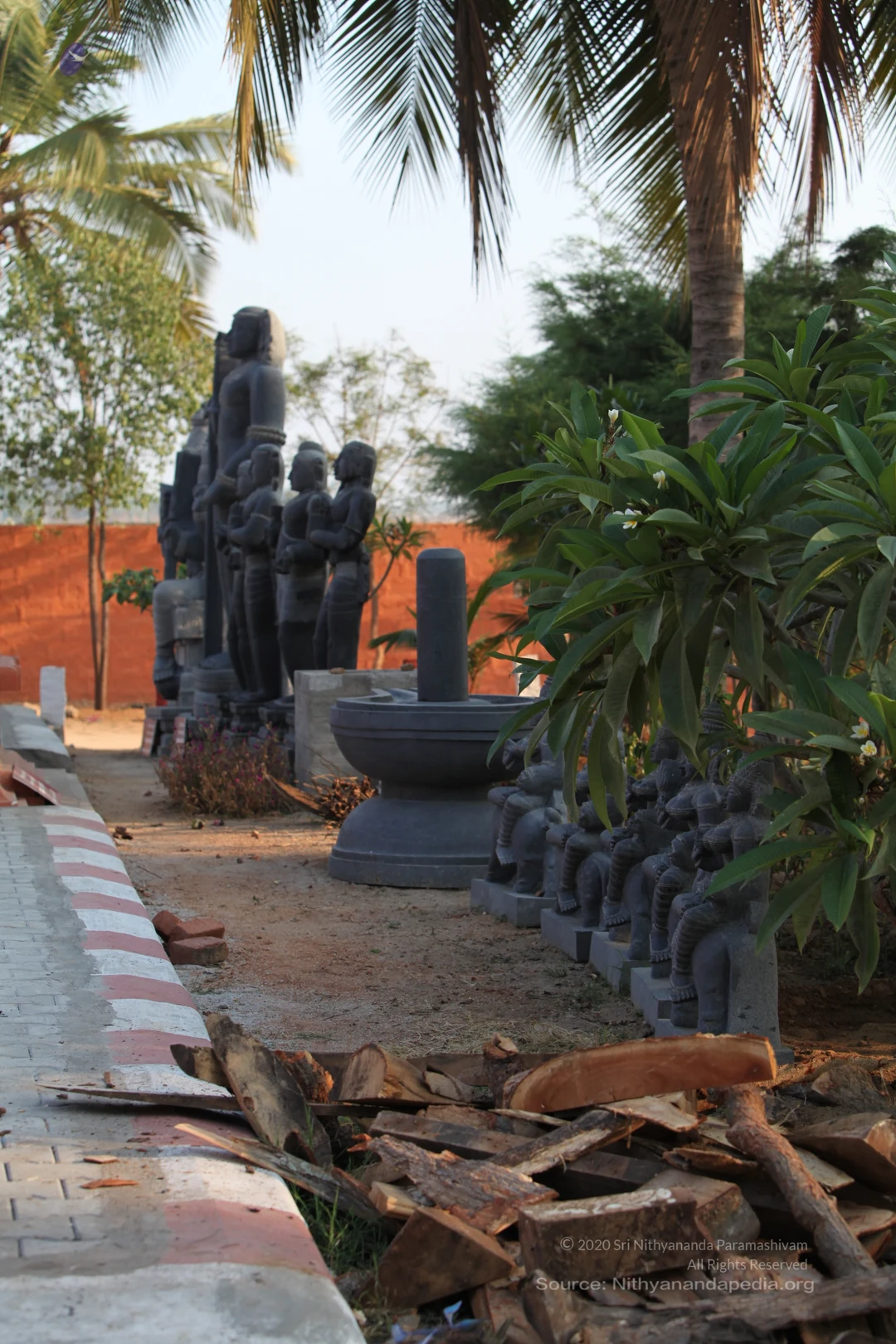
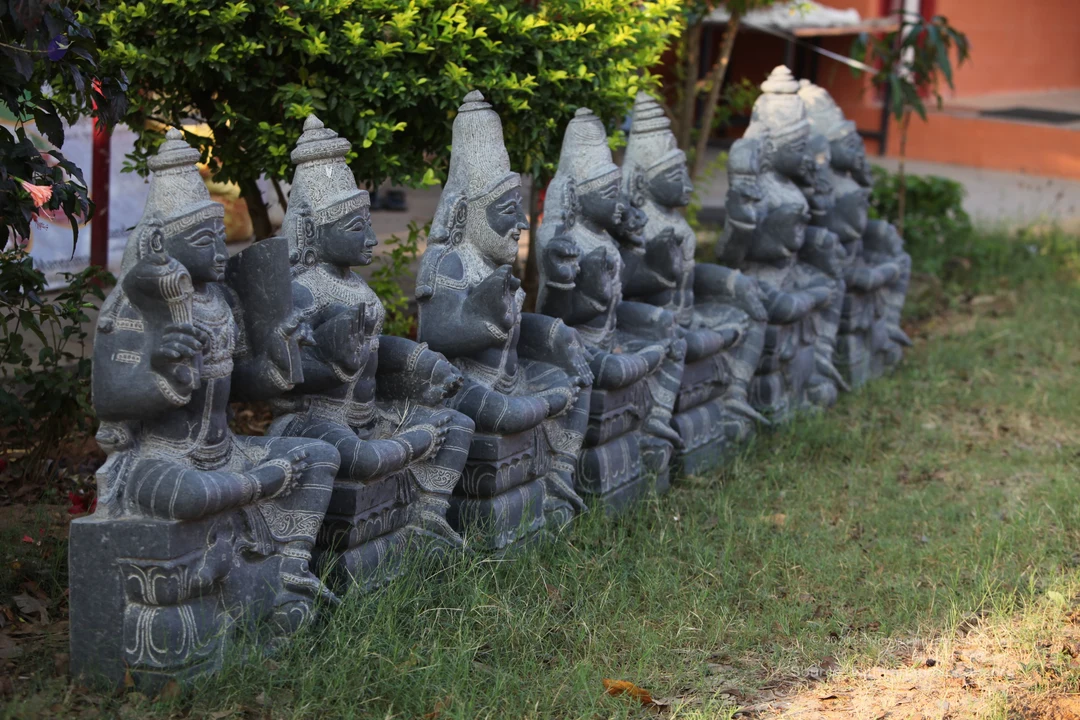
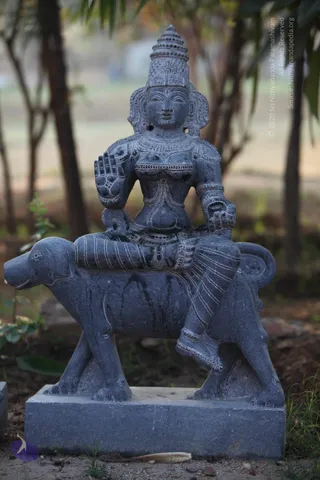
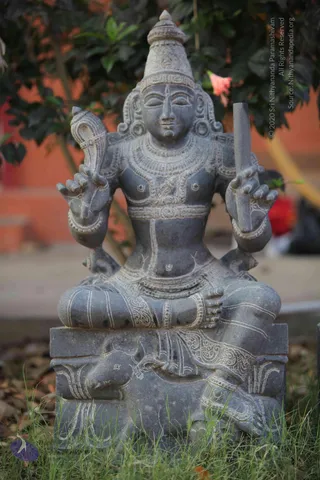
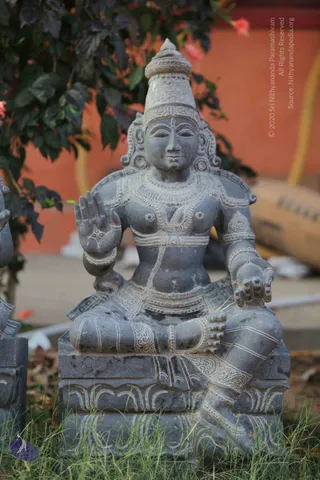
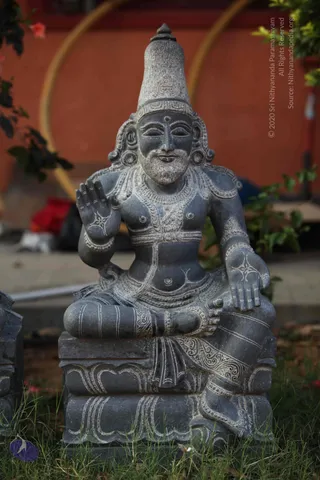
05-Sacred-Arts-Deities

02-Pada-Puja

03-Morning-Satsang

05-Sacred-Arts

Photos

Photos For The Day

Temple-Visit

Paadapooja

Nithyananda-Satsang

Sarvadarshan

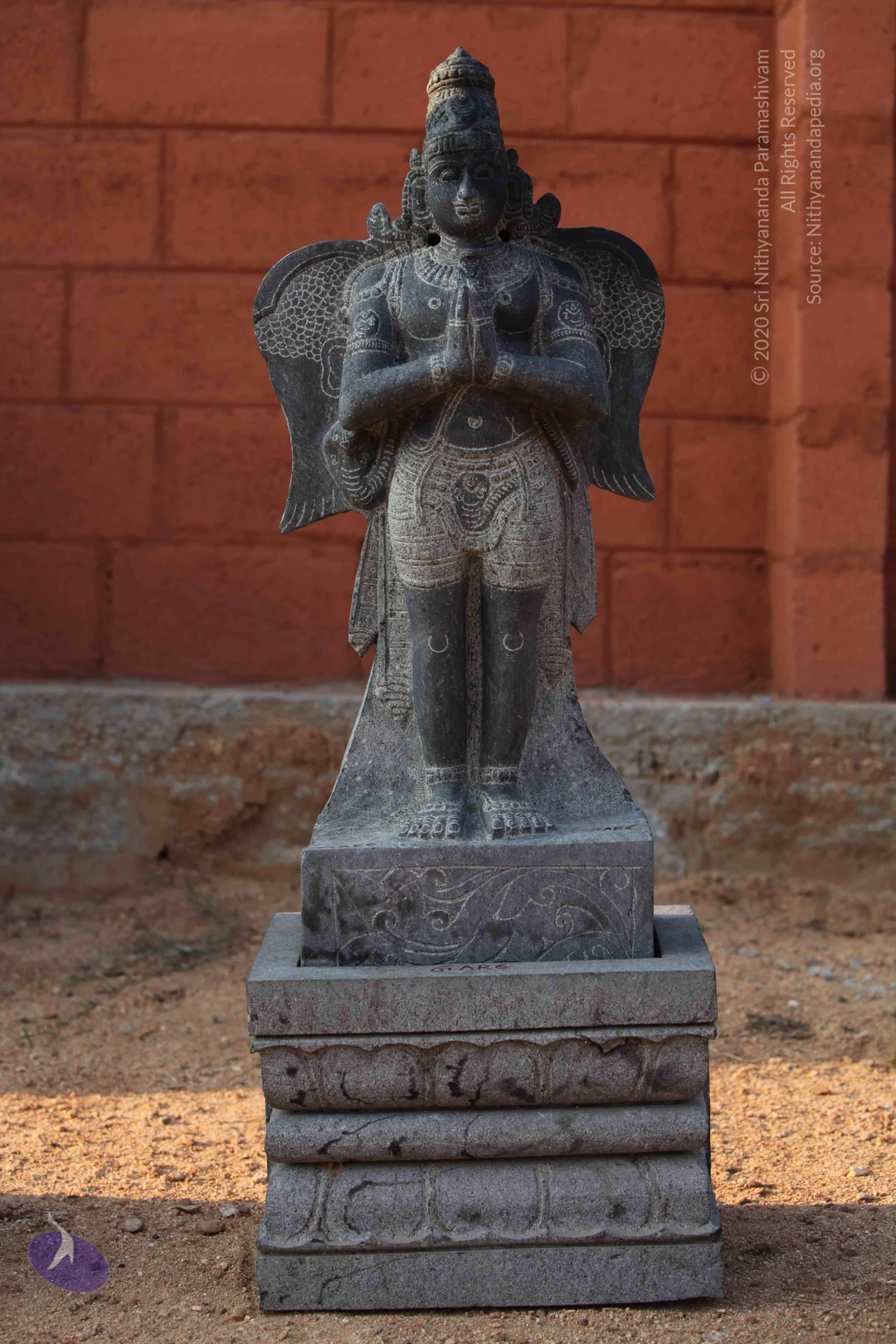
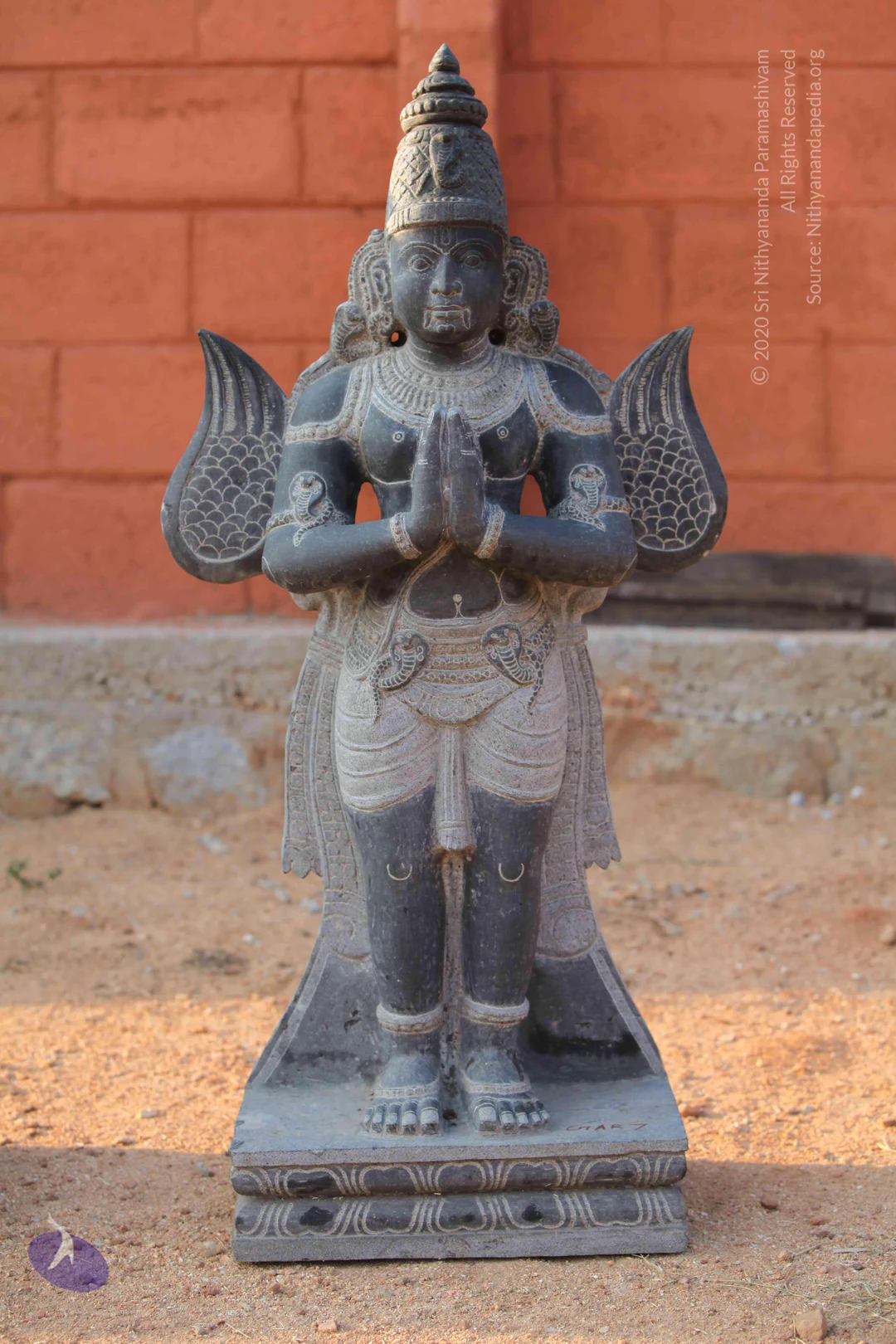
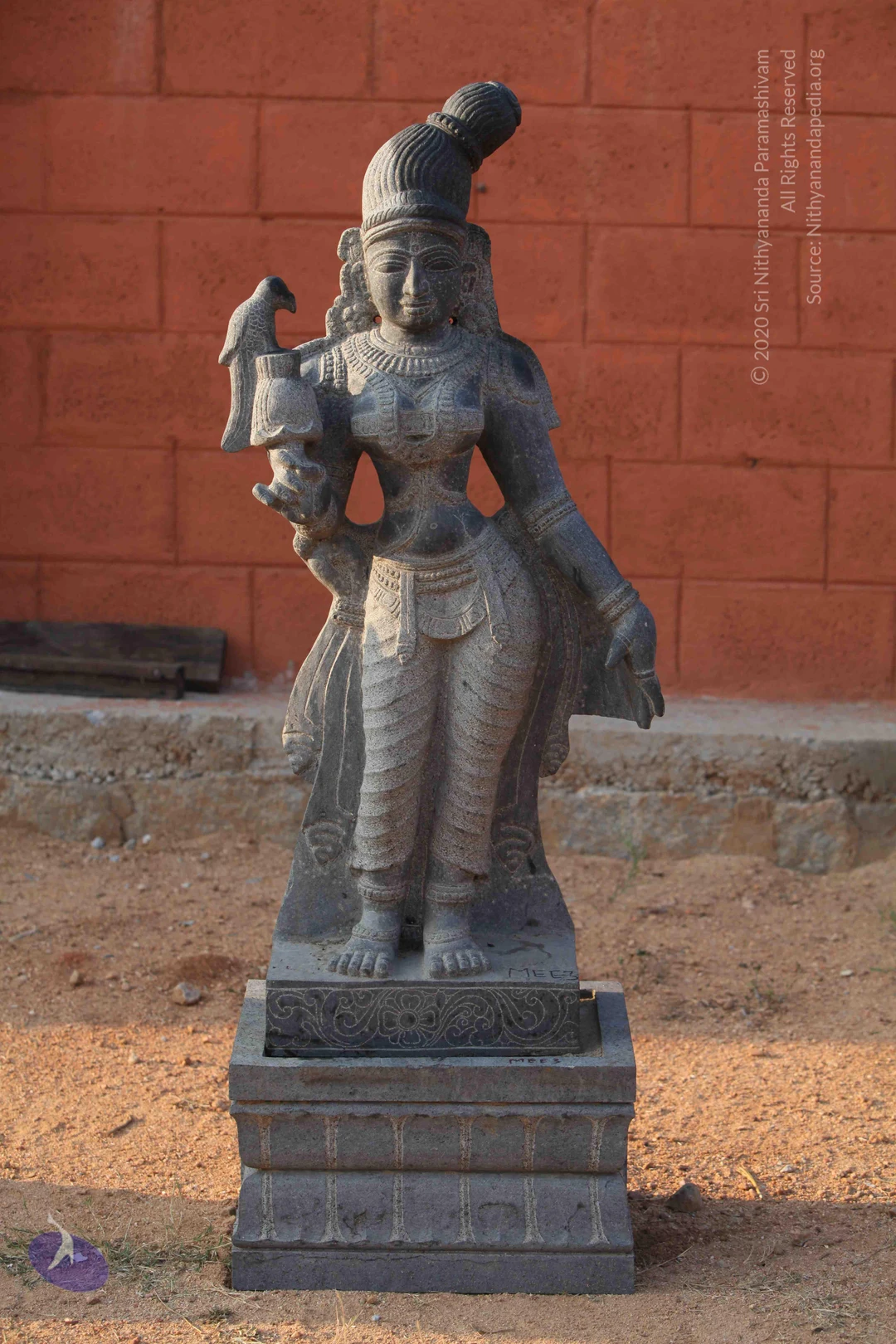
Nithyananda-Sacredarts-Stone-Deity

Photos from this day

View all 418 photos

01-Pancha-Tapas
32 photosSource gallery
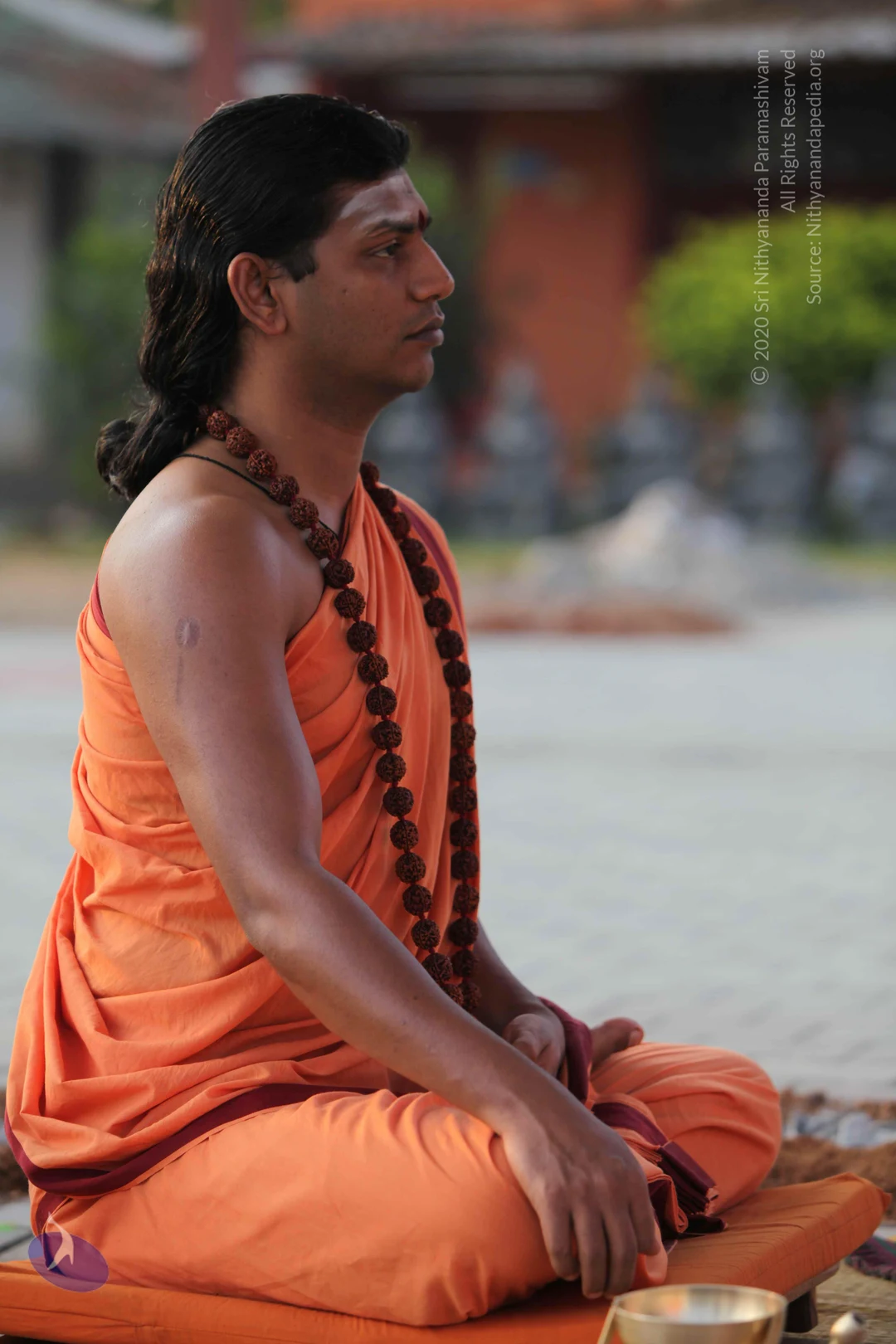
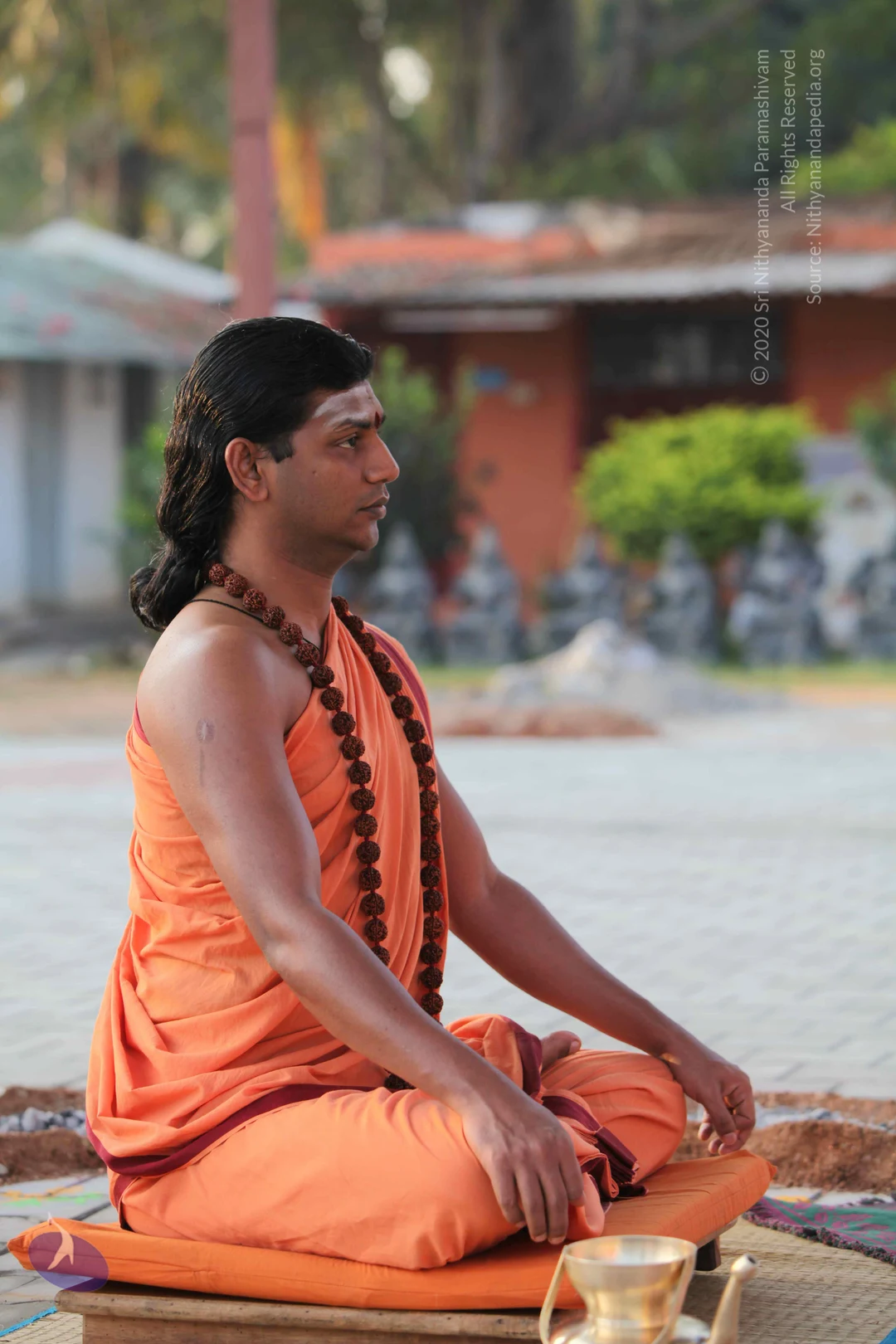
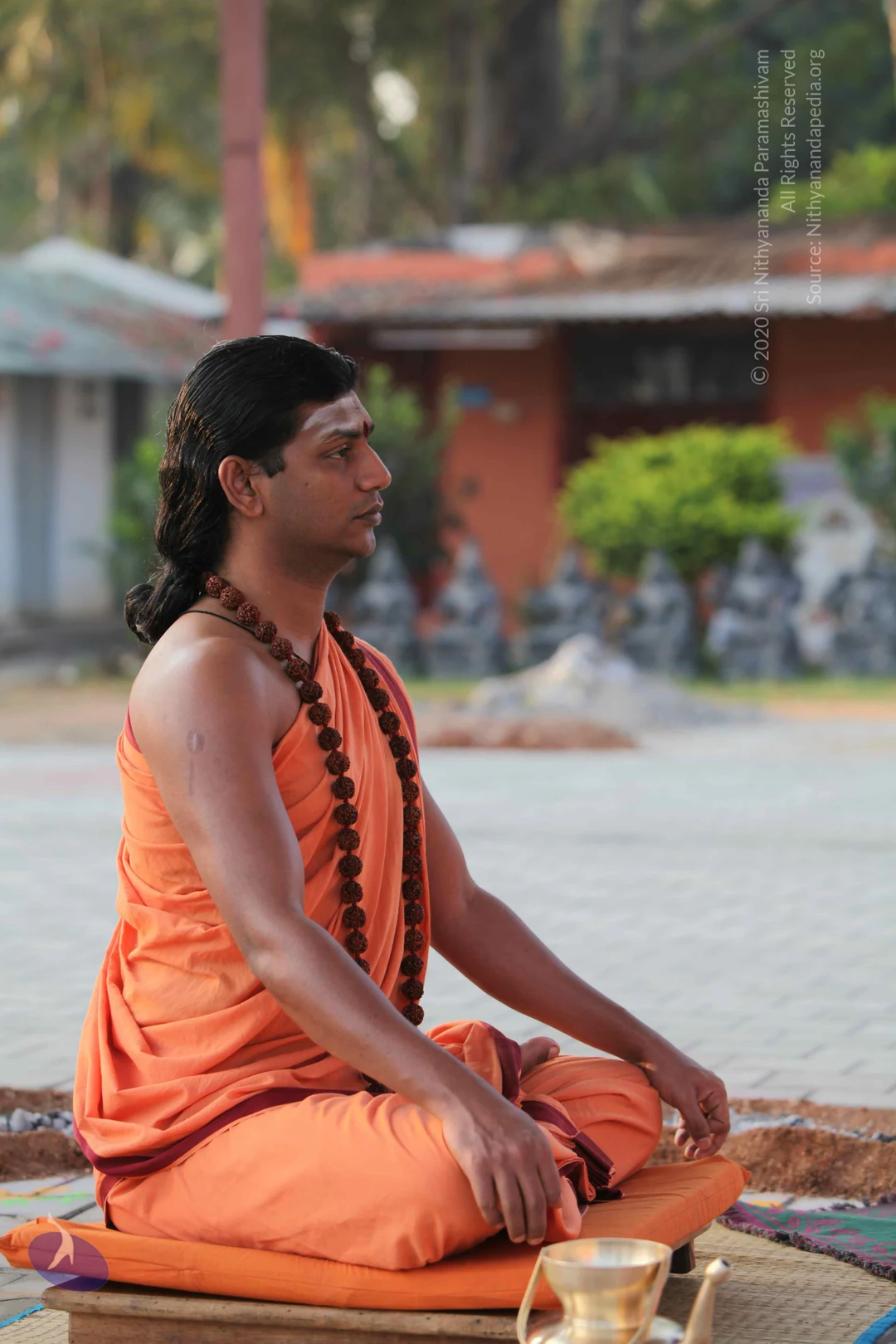
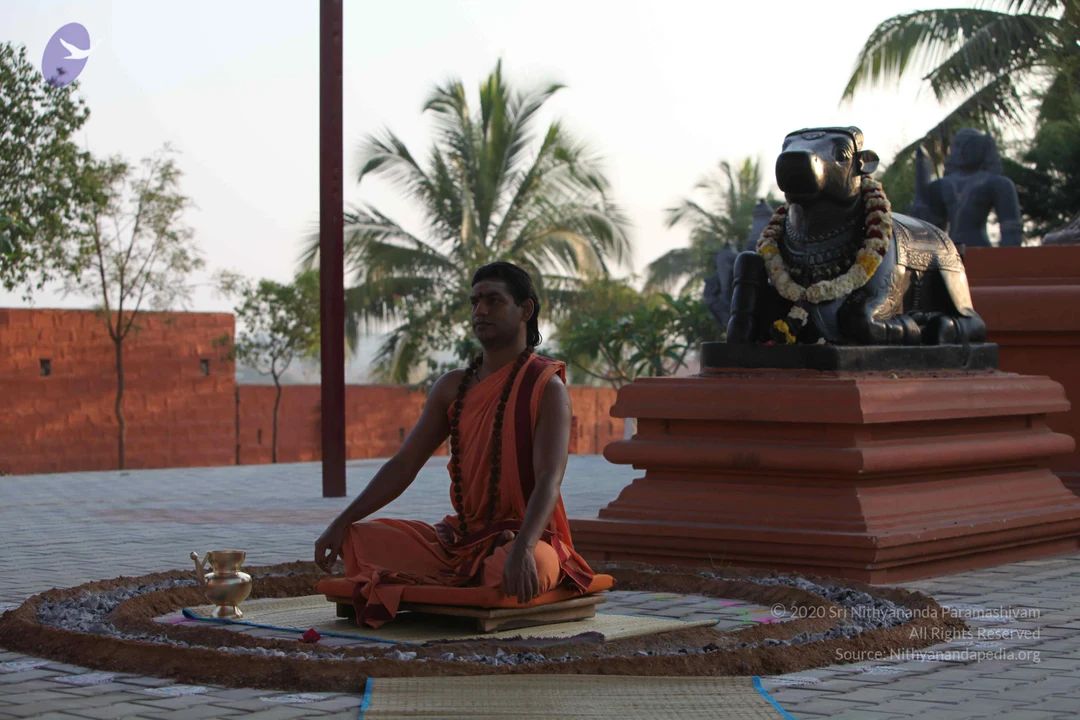
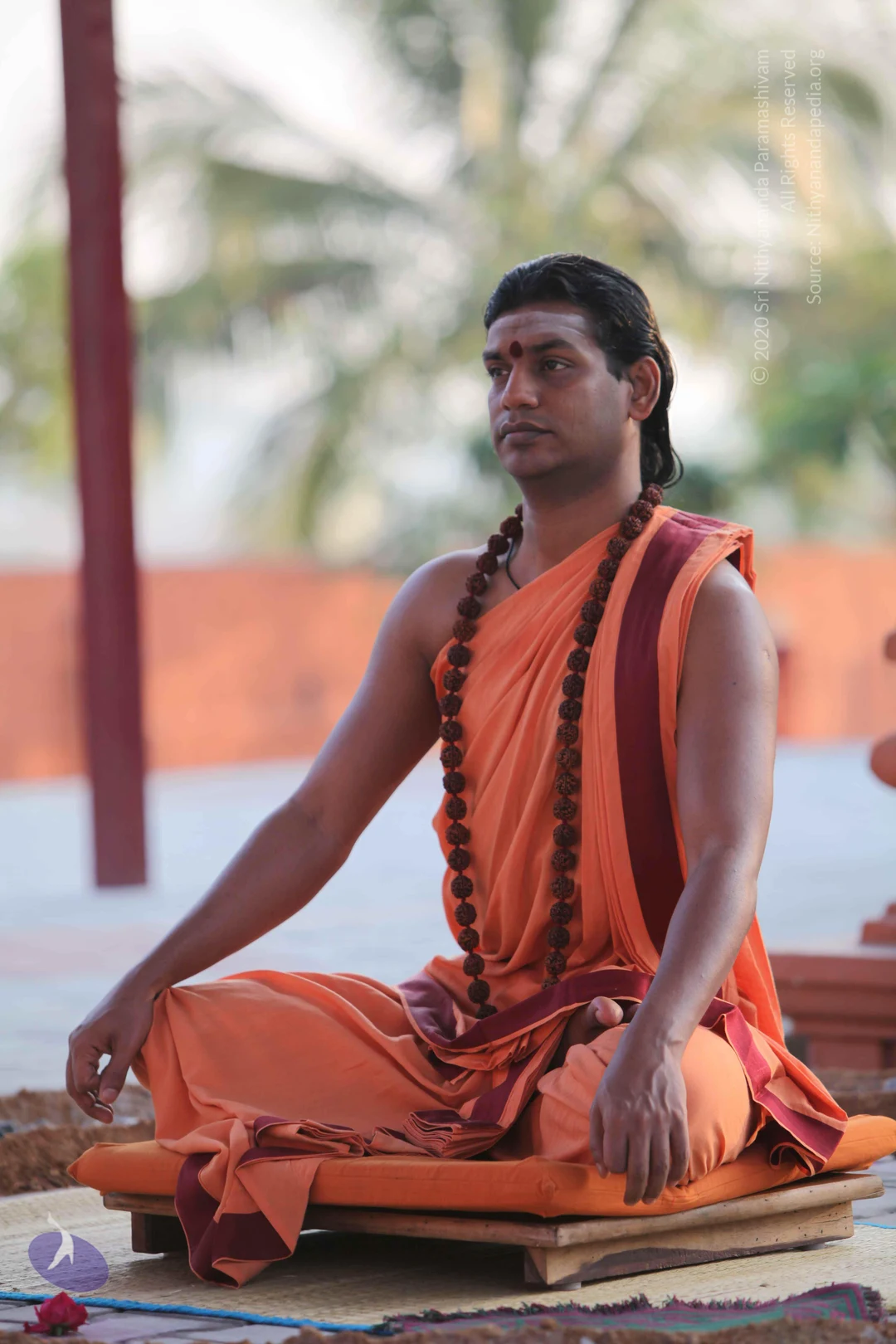
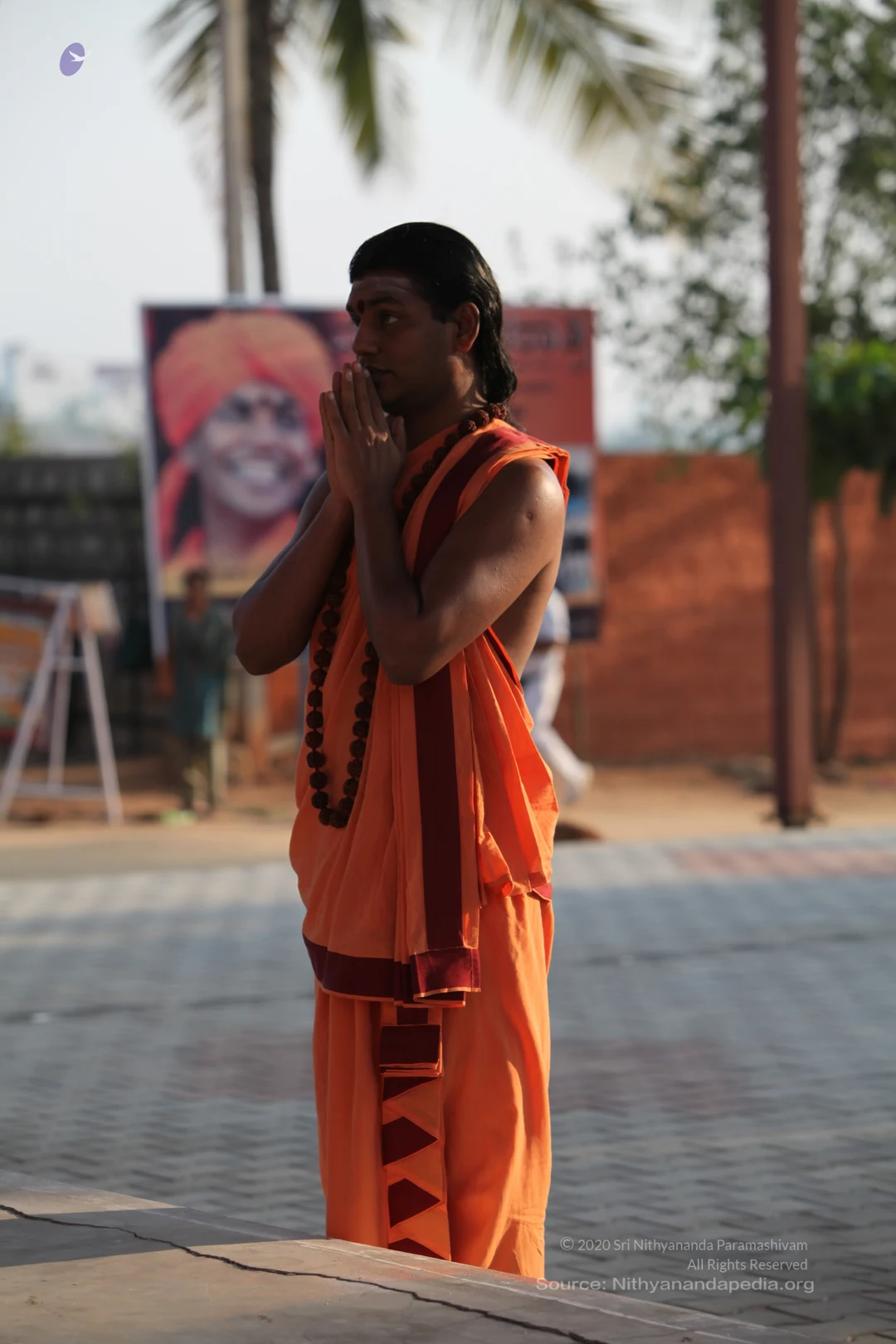
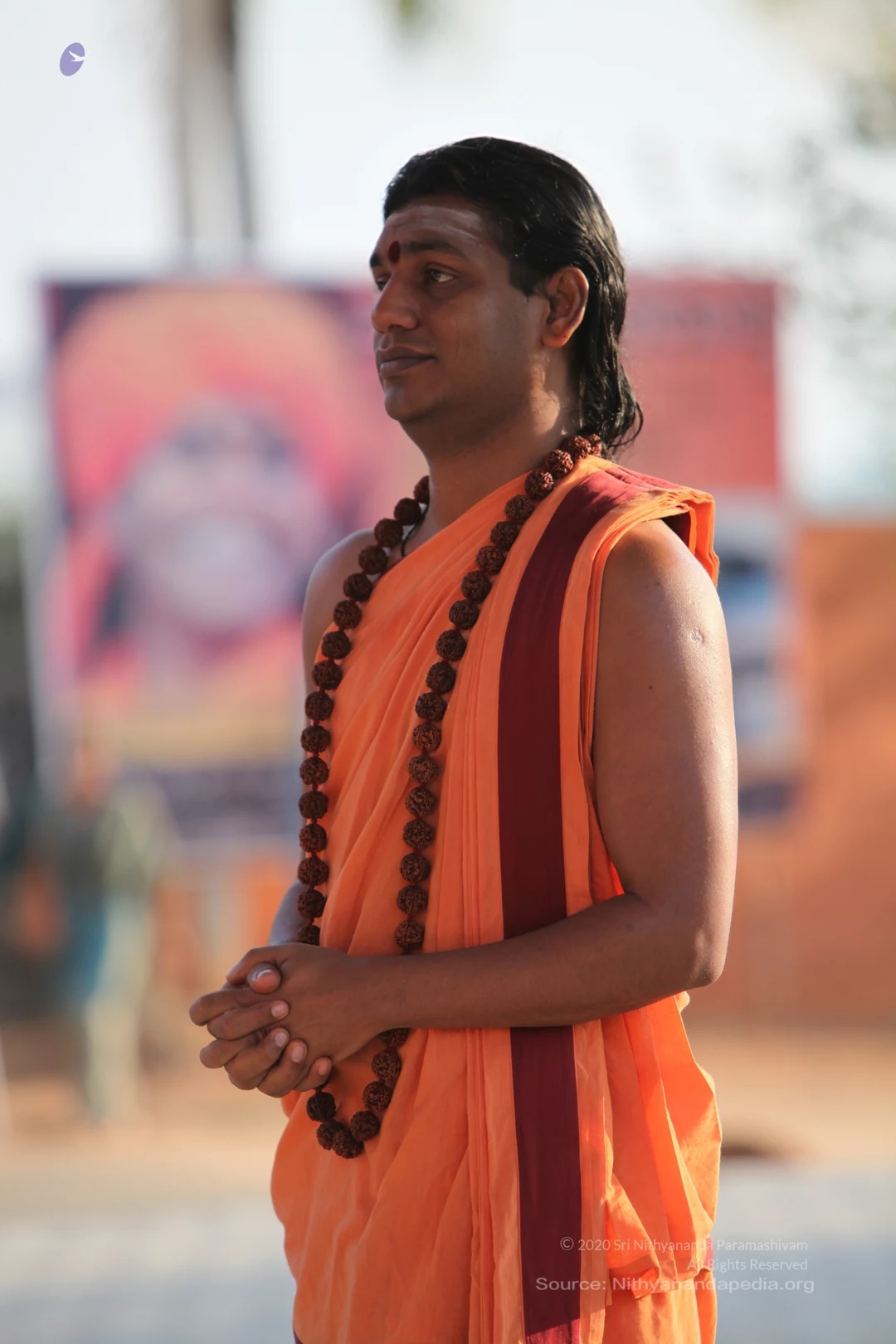
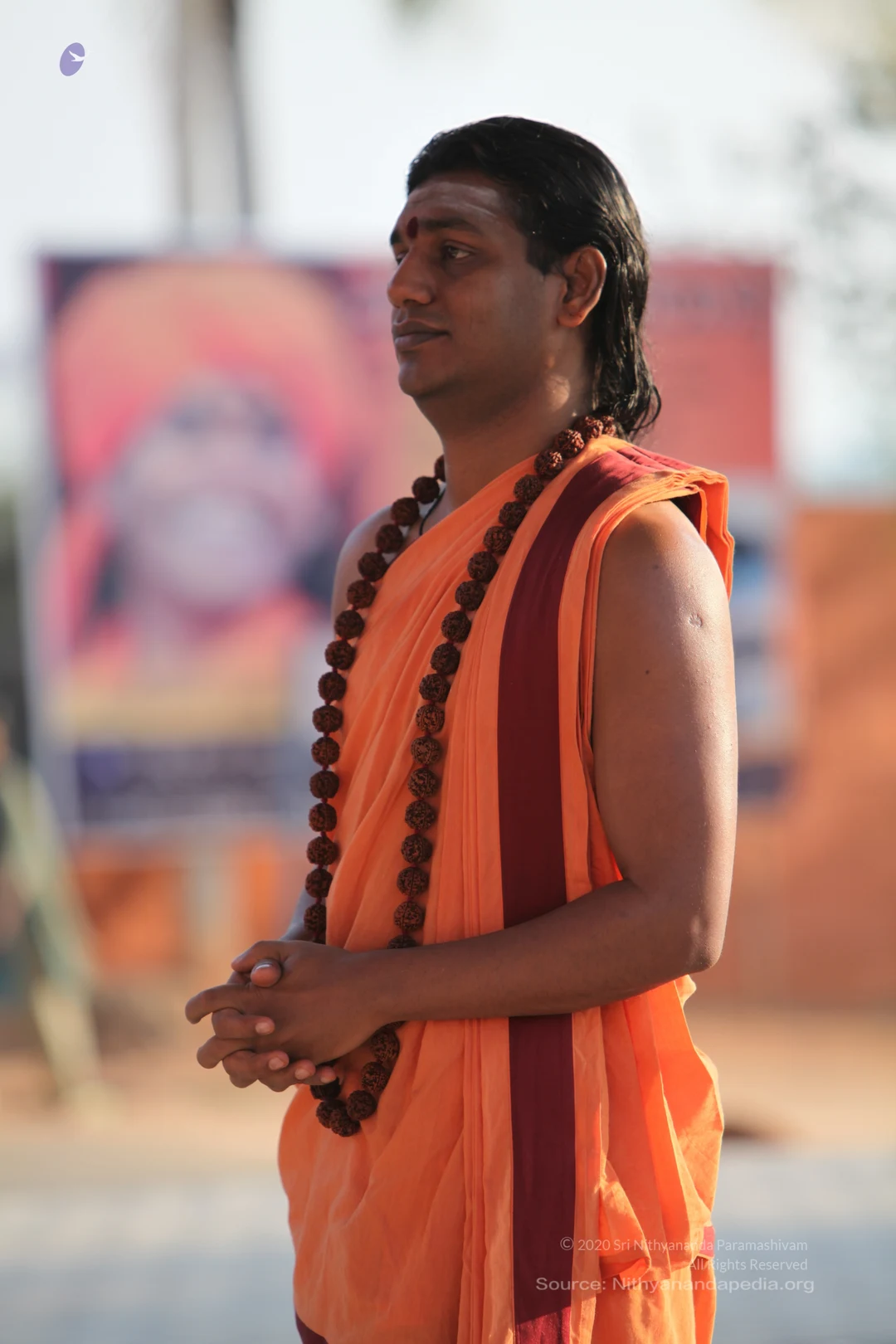
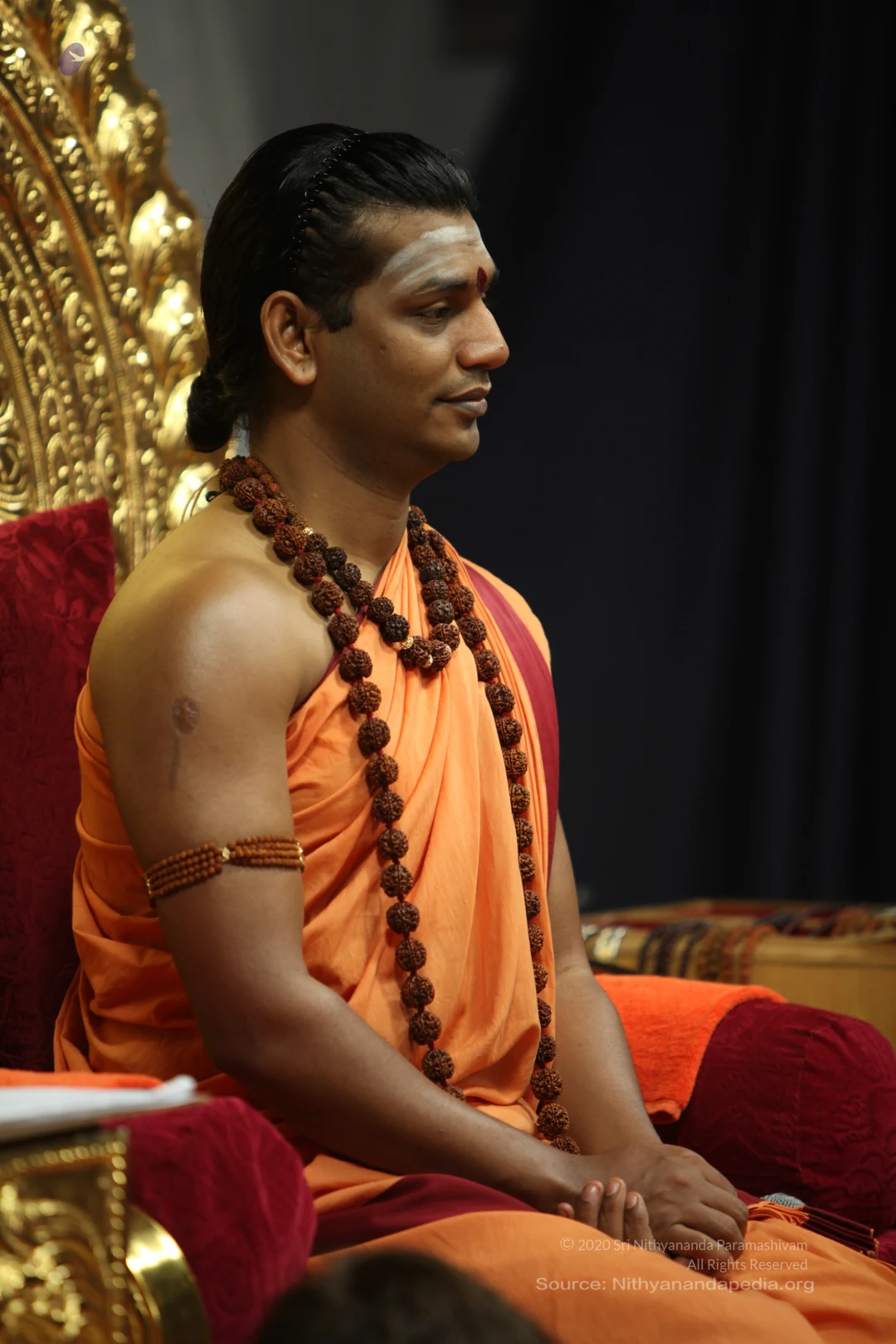
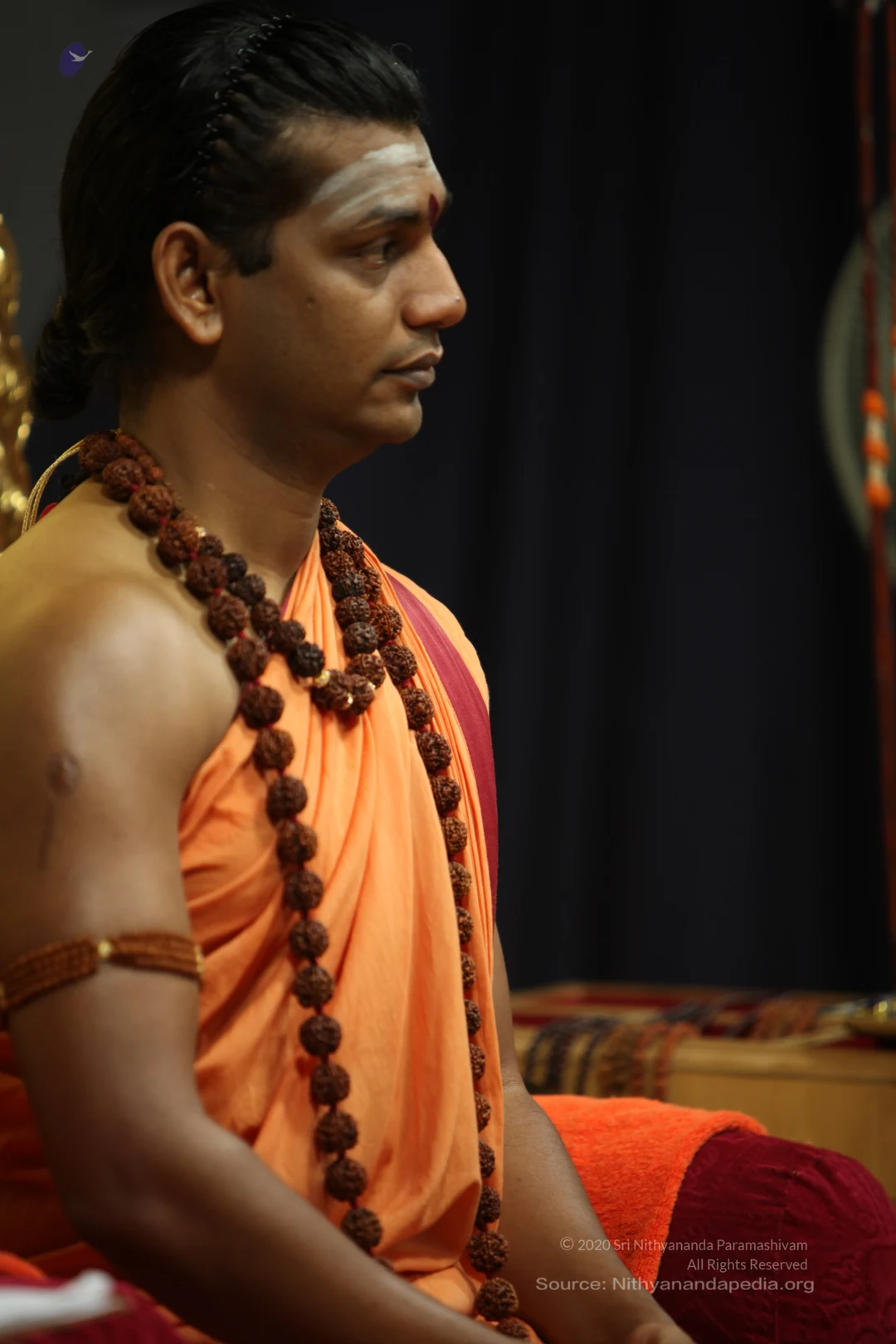
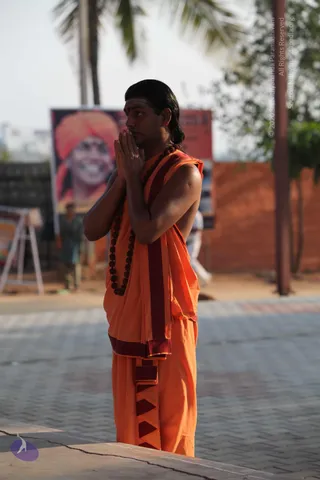
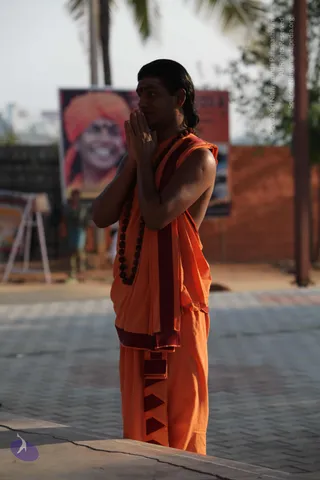
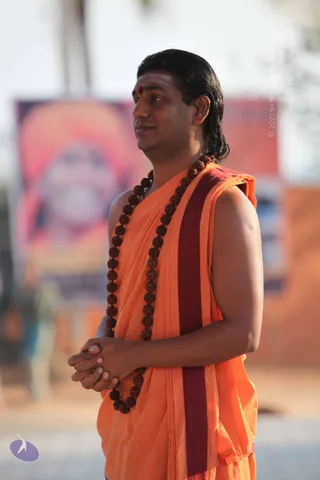
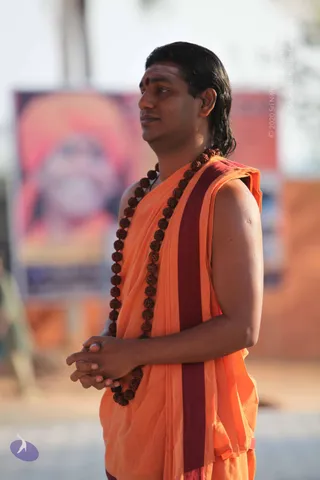
A photograph of a seated man in orange saffron robes and a rudraksha mala sitting cross-legged on a woven mat inside a circular earthen ring lined with grey pebbles on a paved courtyard. His right hand is raised in front of him, palm open, and a brass kalasha-style vessel sits beside him. Behind him stands a white vehicle-style SUV, a large informational map board with coloured panels, thatched roofs, and a few people in white clothing in the background. A small banner-style sign is to the right. The man has long dark hair swept back and is shirtless beneath the orange shawl. a person: the saffron clothing, long swept-back hair and rudraksha mala match the appearance cues, though the figure is seated and partly obscured.Outdoor photo of a man seated cross-legged on an orange cushion inside a circular ring of earth and grey stones on a paved courtyard. He wears an orange garment over his shoulders with a maroon-and-gold striped shawl and a dark beaded necklace, with long dark hair swept back. His hands are raised in a gesture while he looks down. Beside him stands a brass kalasha-style pot with a spout. Behind him a silver SUV is parked, a wooden signboard with coloured panels and a green map stands, and a few white-clad people are visible in the background near thatched structures.A man stands on a paved brick courtyard in profile, palms pressed together in anjali mudra at his chest. He wears saffron-orange robes with a maroon-edged shawl draped over one shoulder and a long strand of rudraksha beads around his neck, and his dark hair is swept back. Behind him a large printed portrait of a smiling man in a red-orange turban is mounted on a board, with palm trees and a red brick wall in the background. A second person in pale clothing is partly visible at the right edge.A man stands in profile on a paved outdoor walkway with palms pressed together in anjali mudra at chest height. He wears an orange saffron-coloured dhoti and shawl with a maroon border, and a dark rudraksha mala hangs around his neck. His long dark hair is swept back. Behind him, a large poster shows a smiling figure wearing an orange-red turban, and palm trees and a brick wall stand in the background under soft evening light. A second, smaller figure is partly visible on the left.A standing man in an orange sleeveless robe with a maroon border stands outdoors with his hands clasped at his waist. He has long dark hair swept back, a red bindi on his forehead, and wears a long rudraksha mala draped over his shoulders. Behind him, a blurred red-and-orange banner shows a figure in pink. The setting appears to be an open outdoor area with warm sunlight. Swamiji (probable): the man has long swept-back hair, saffron robes, and rudraksha malas, consistent with the page's reference to Swamiji at this event.A man stands outdoors in profile, hands pressed together in front of his body in a namaskar-like gesture. He wears an orange sleeveless wrap with a maroon border and a long necklace of brown rudraksha beads. He has long dark hair swept back and a red bindi on his forehead. Behind him, a large blurred poster shows a bearded figure in red and pink tones on an orange-brown wall. Swamiji (probable) based on the long swept-back hair, rudraksha mala and orange-maroon saffron clothing.

02-Pada-Puja
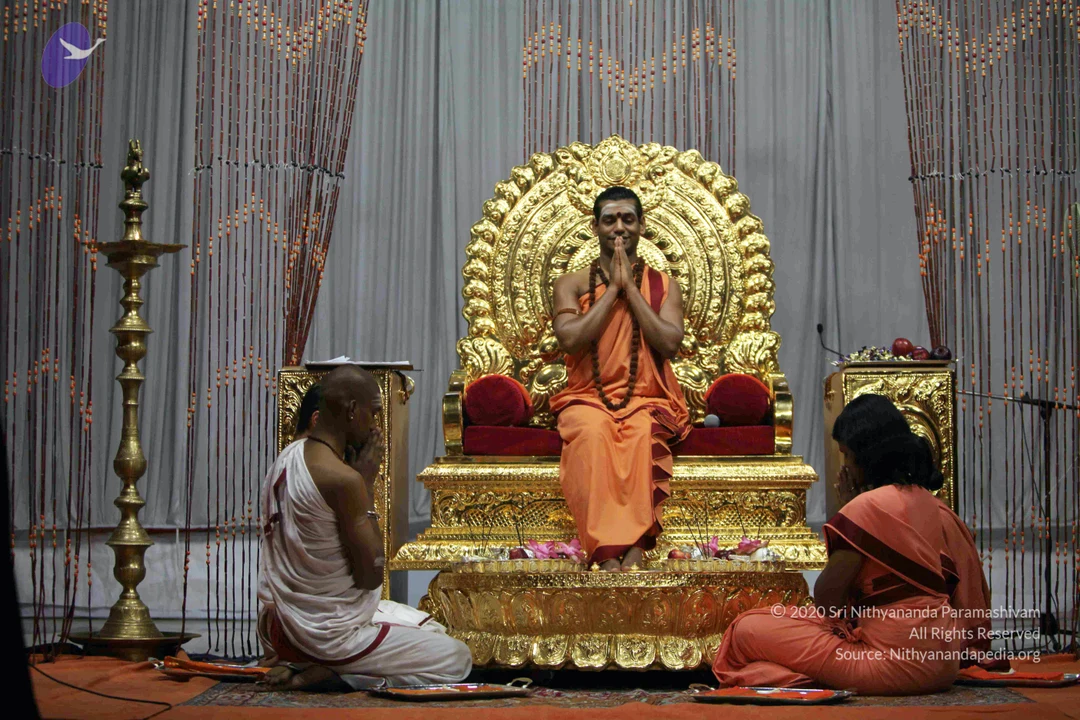
63 photosSource gallery
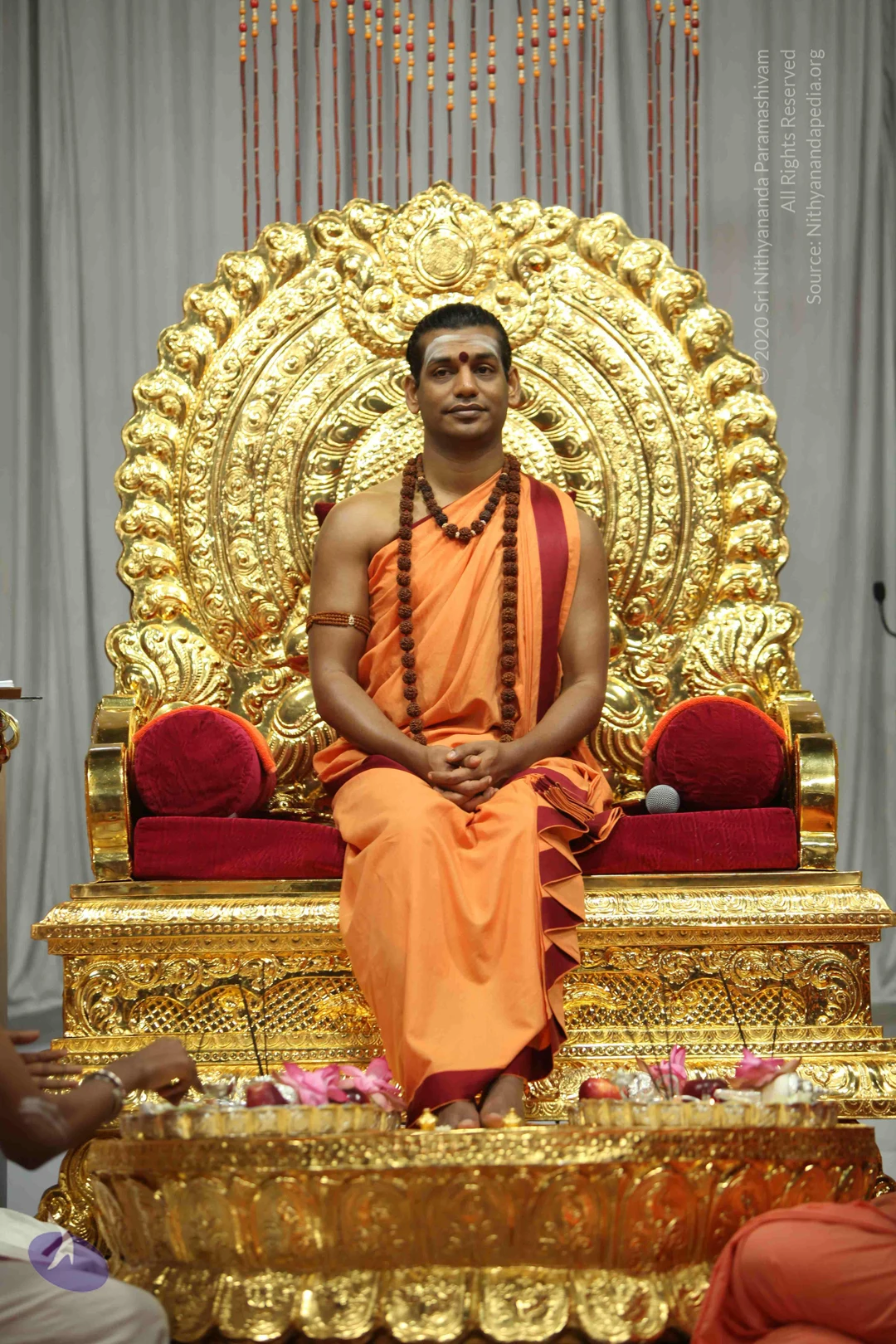
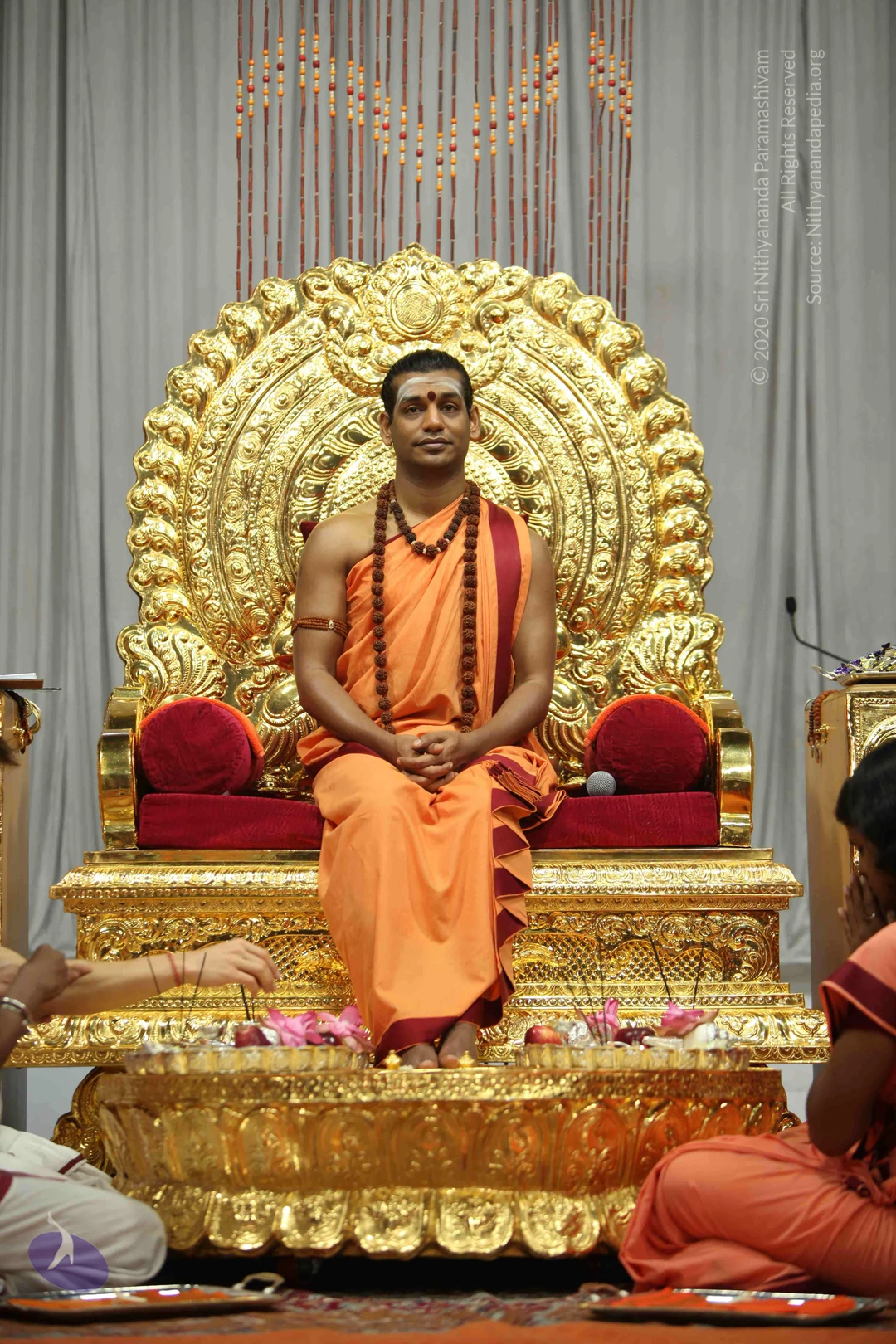
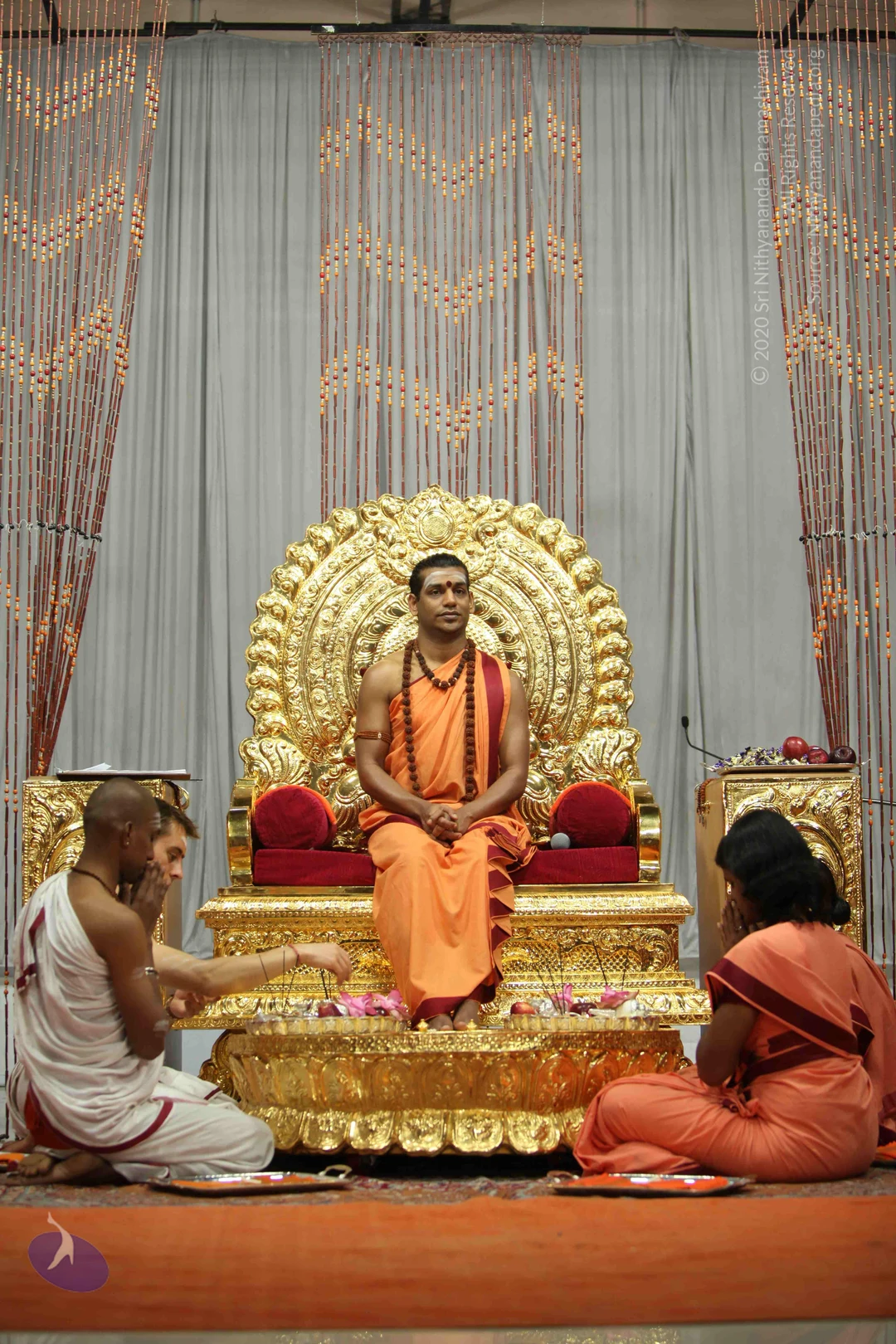
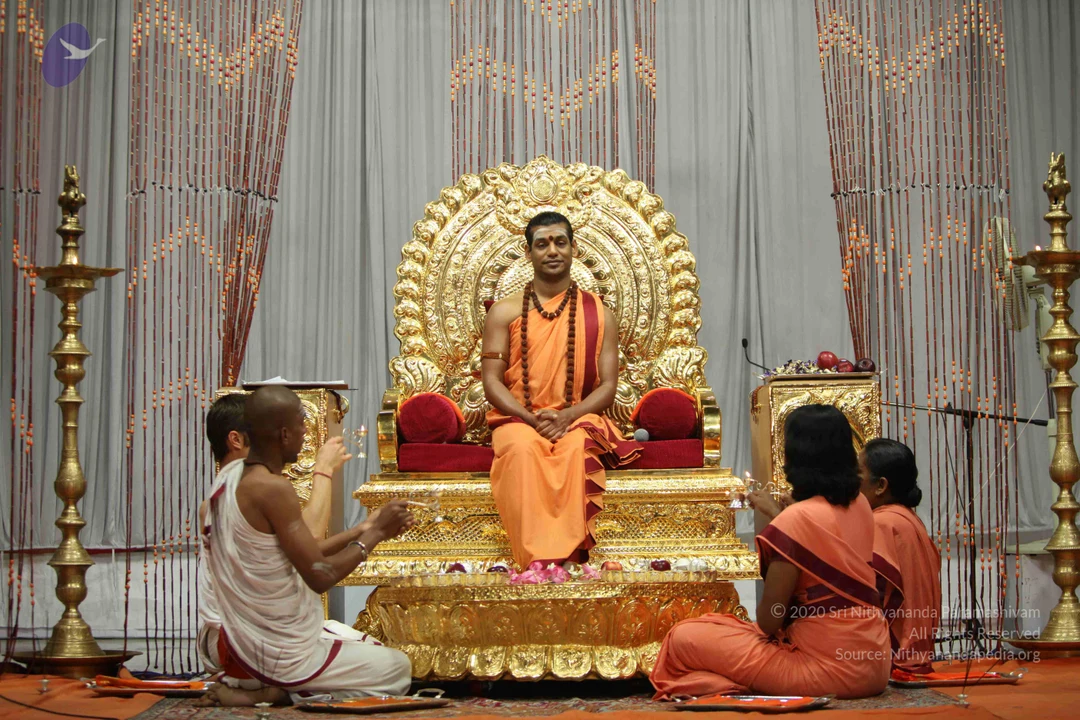
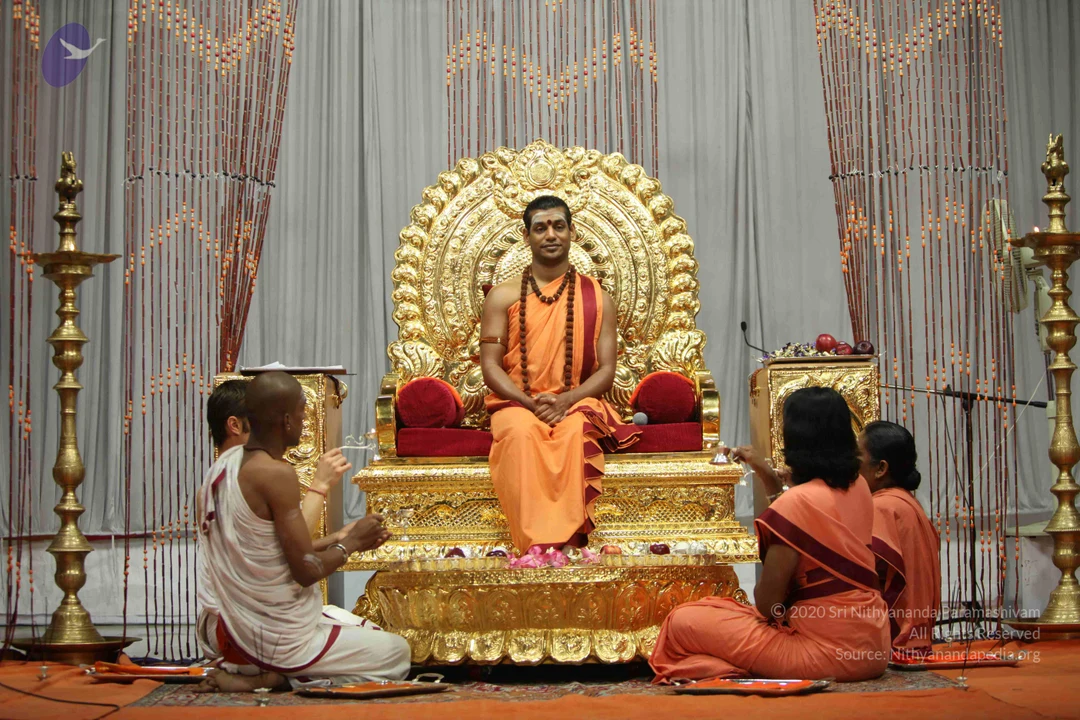
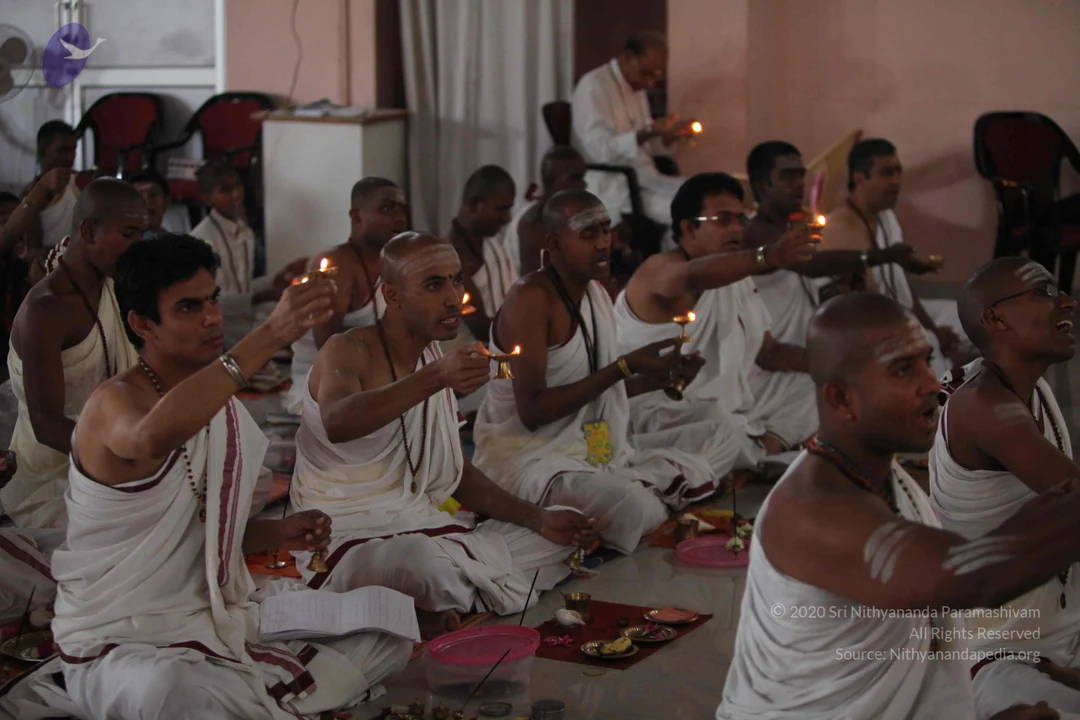
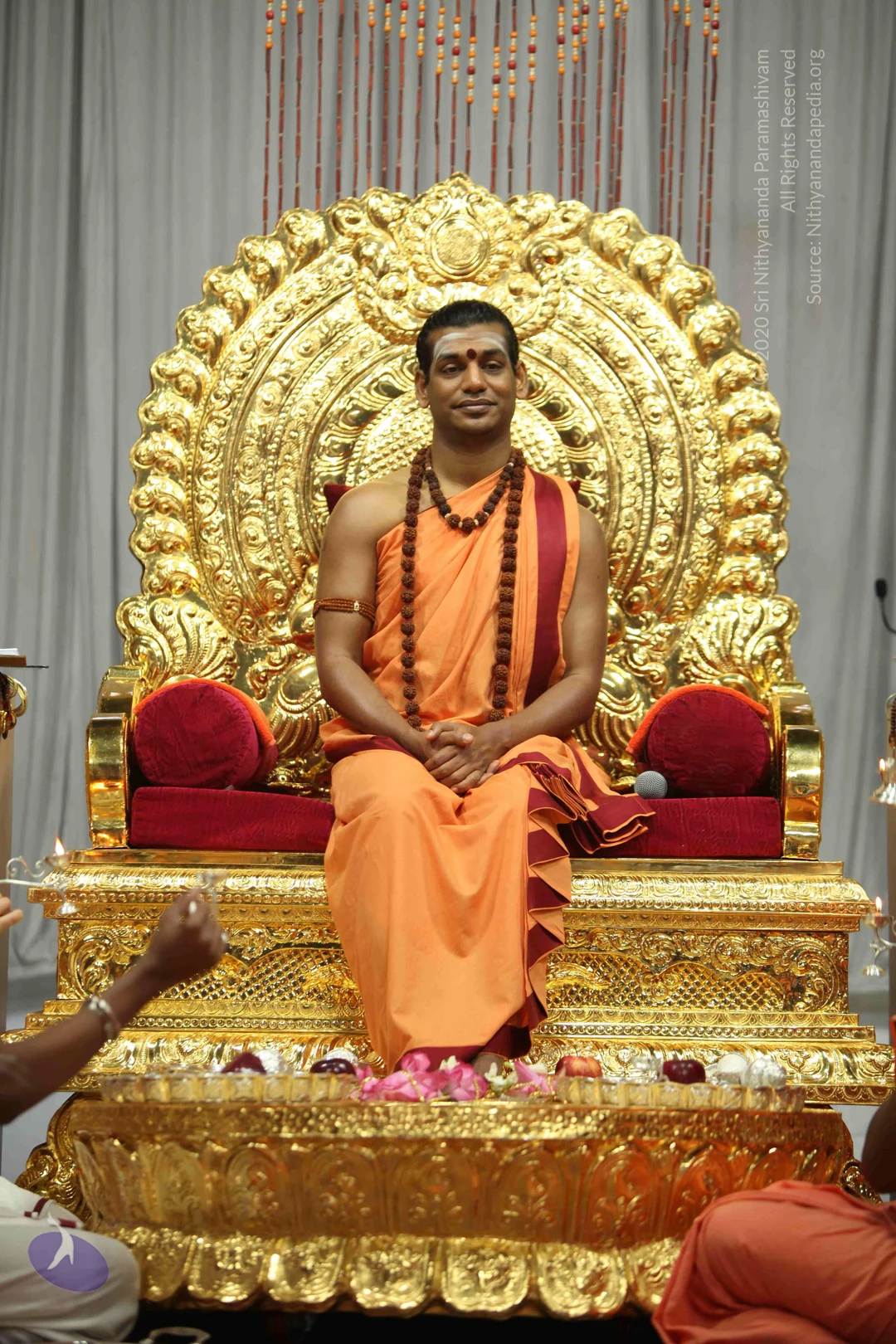
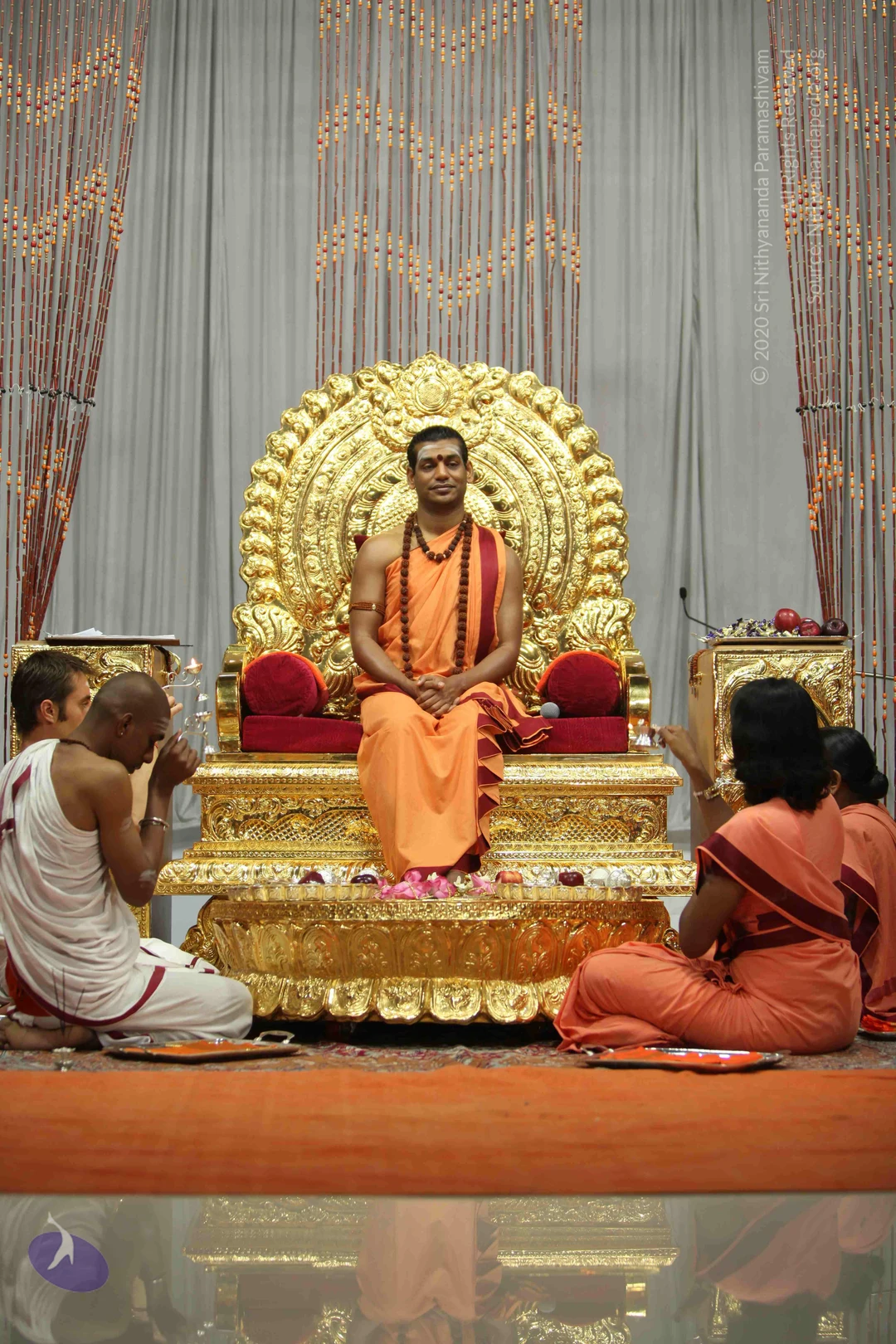
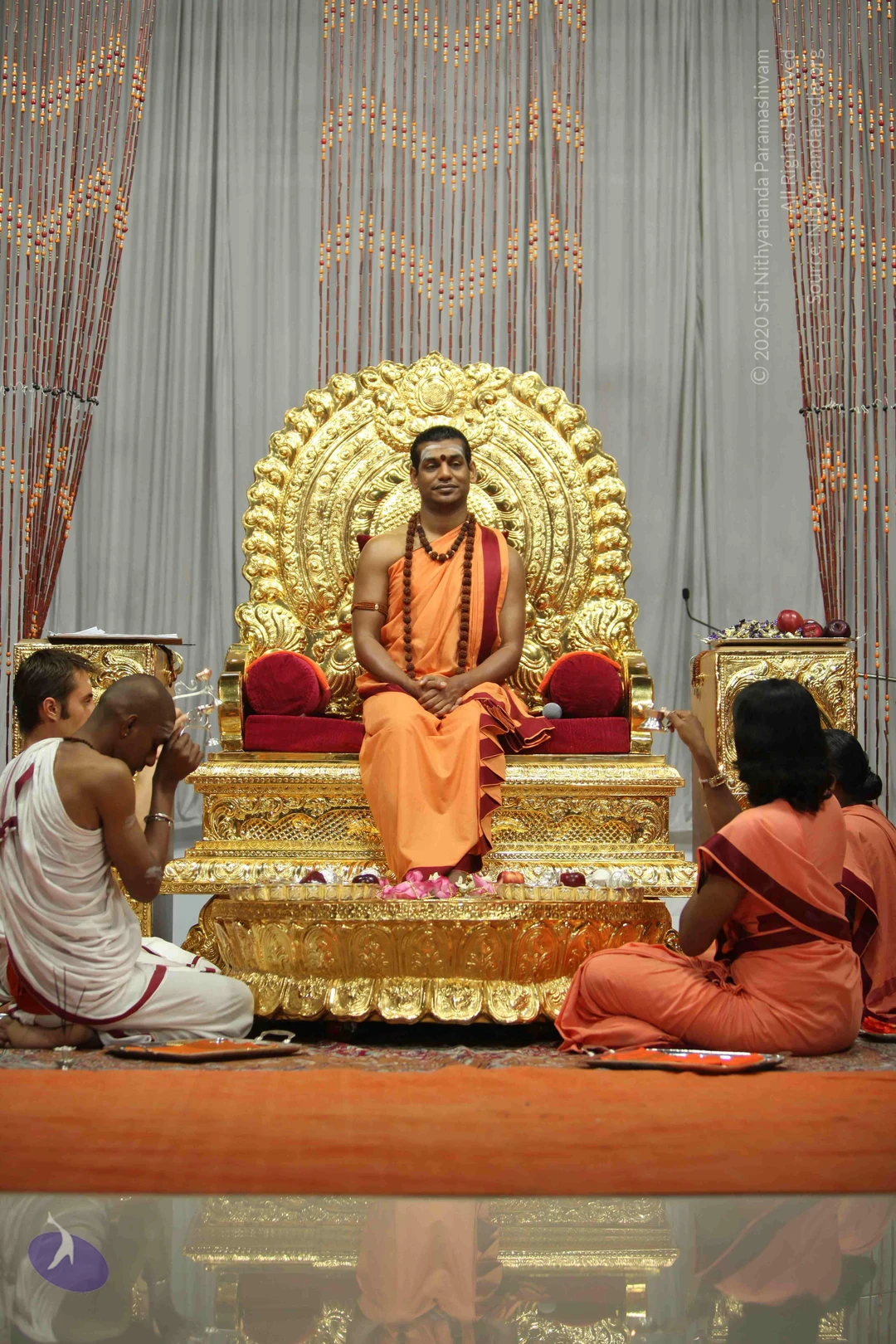
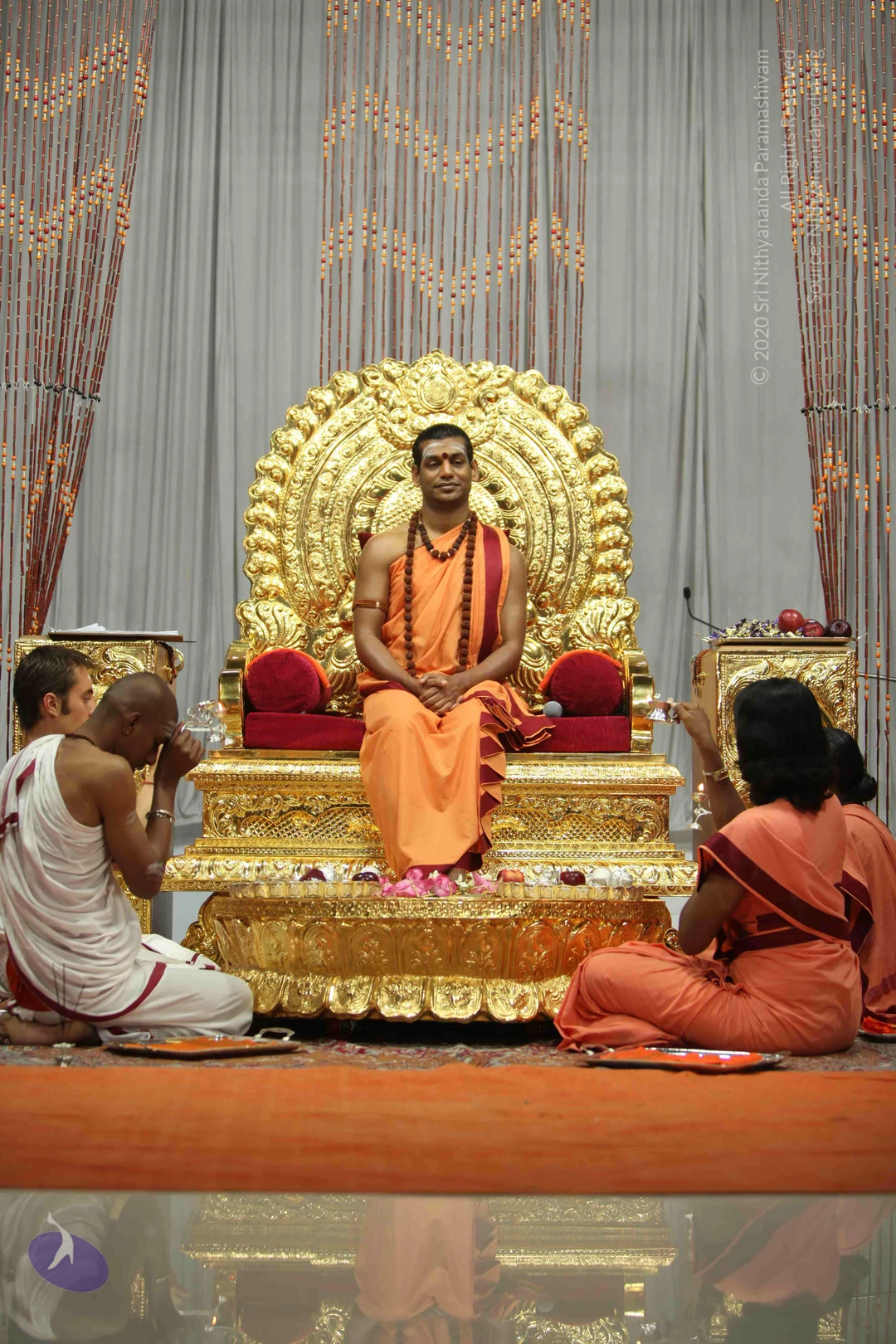
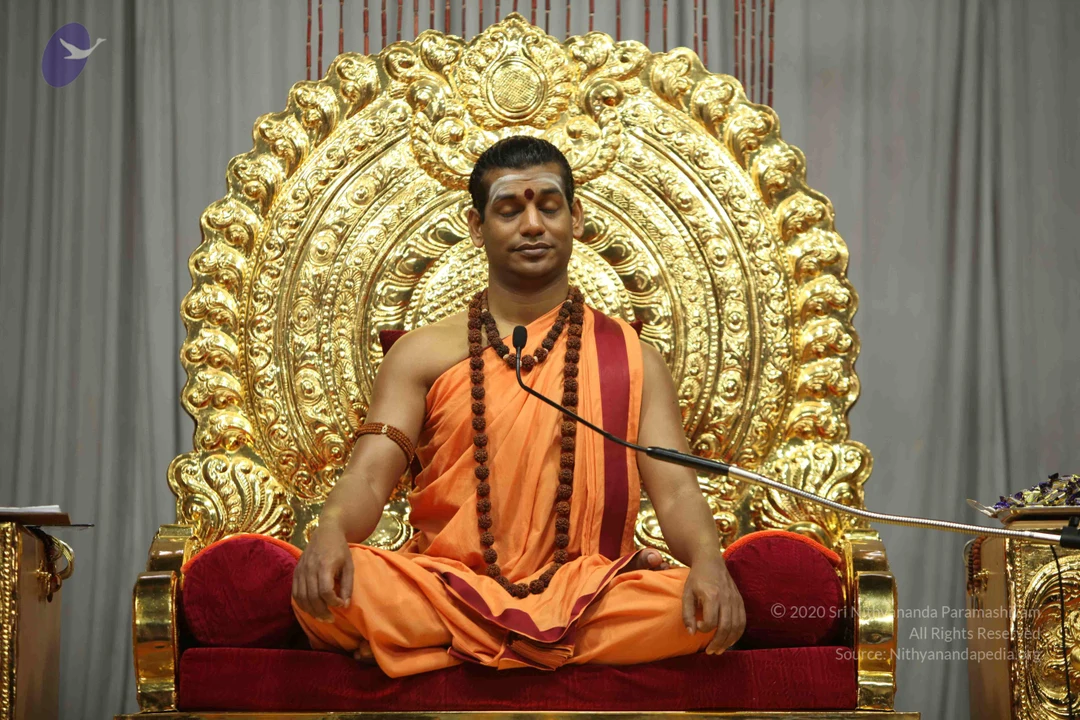
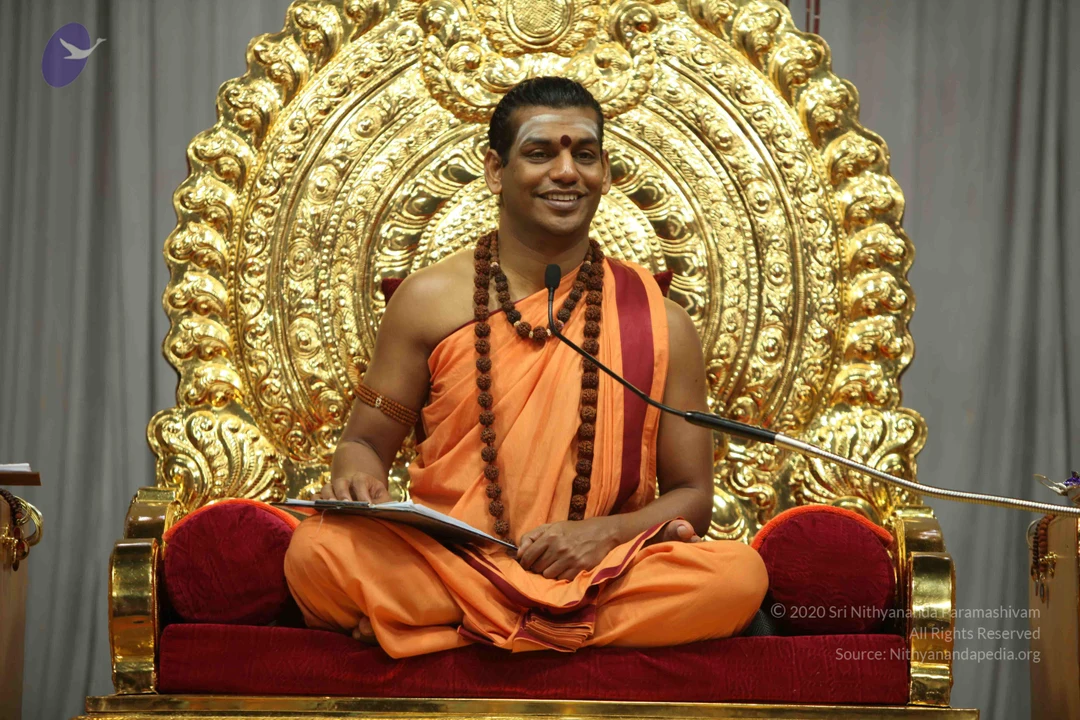
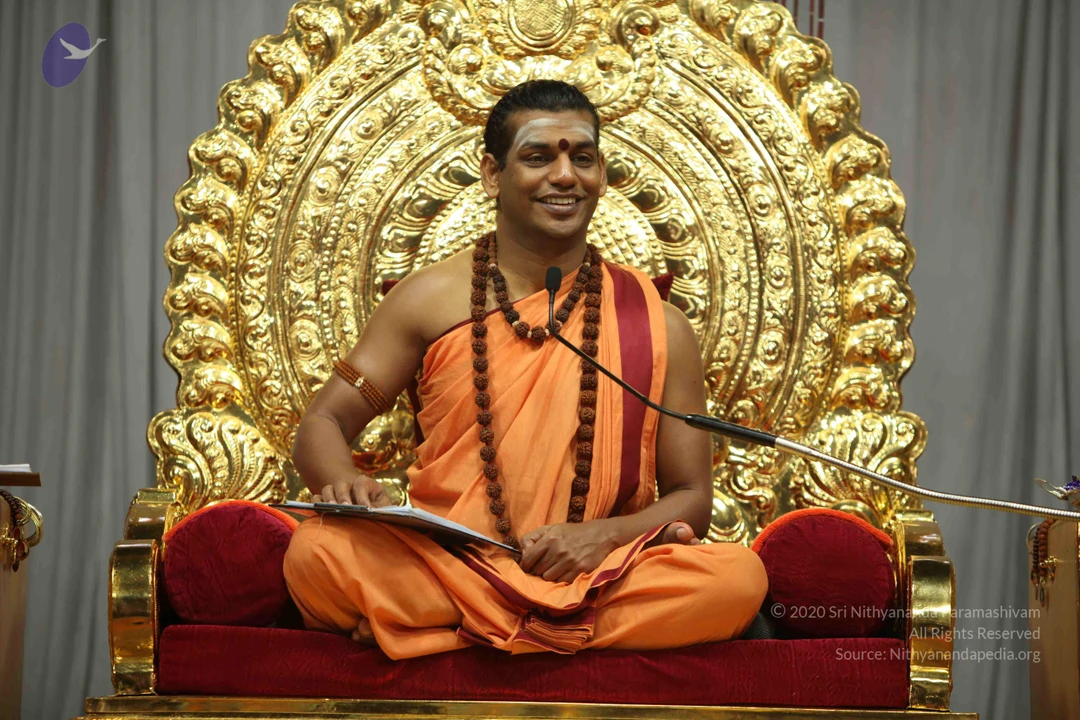
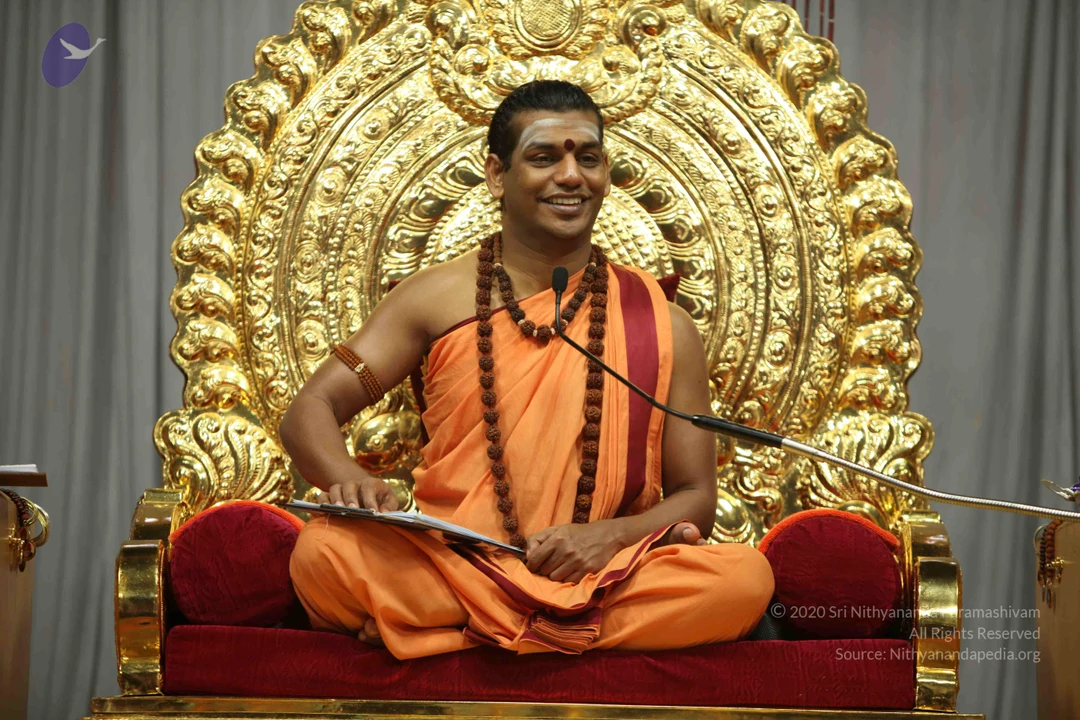
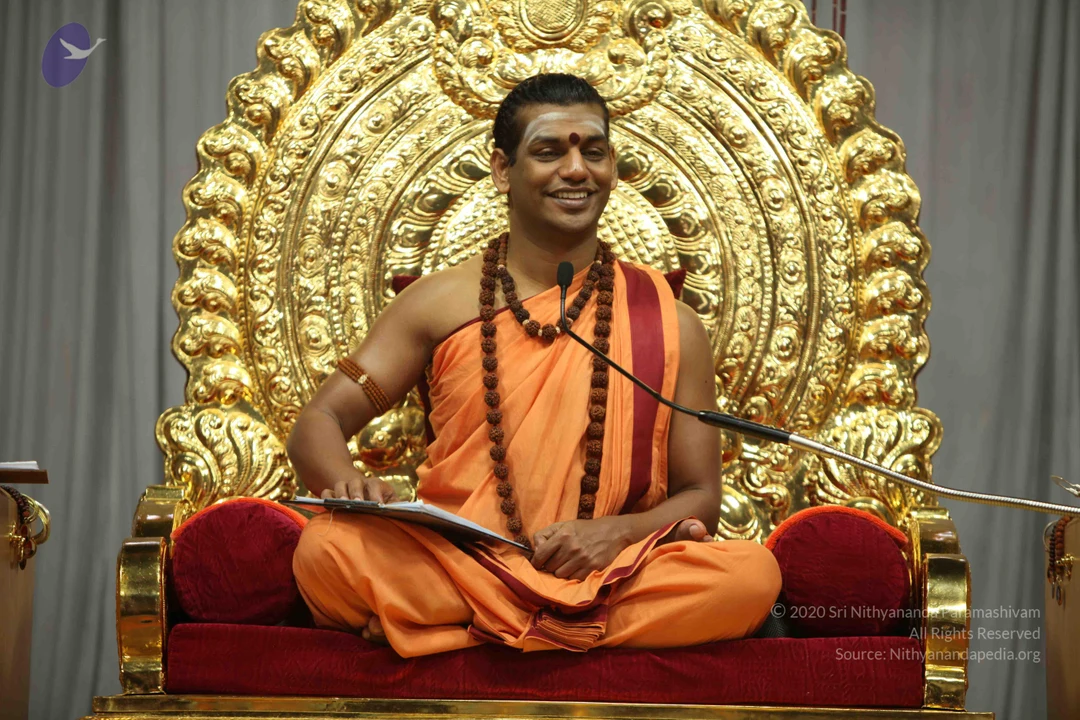
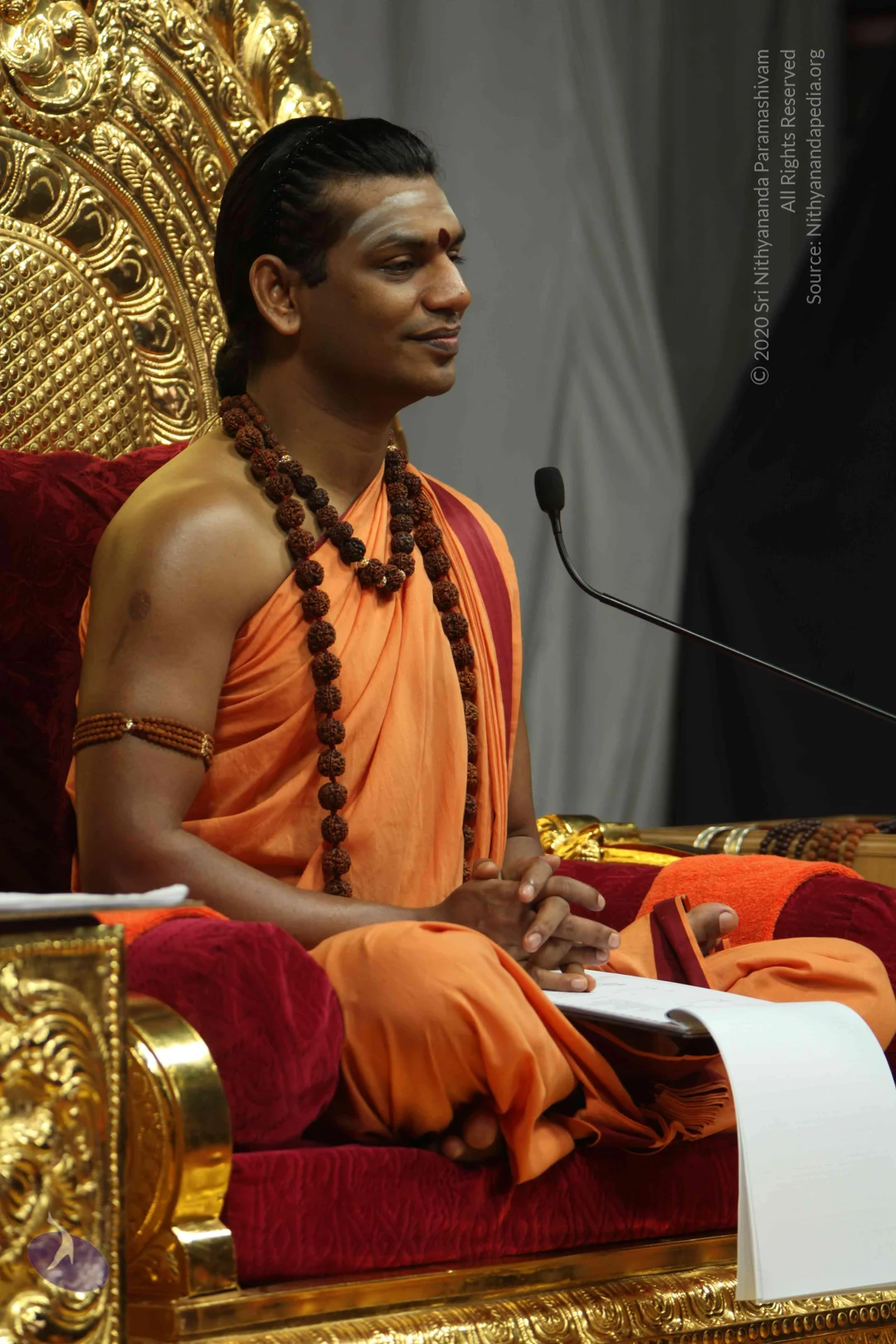
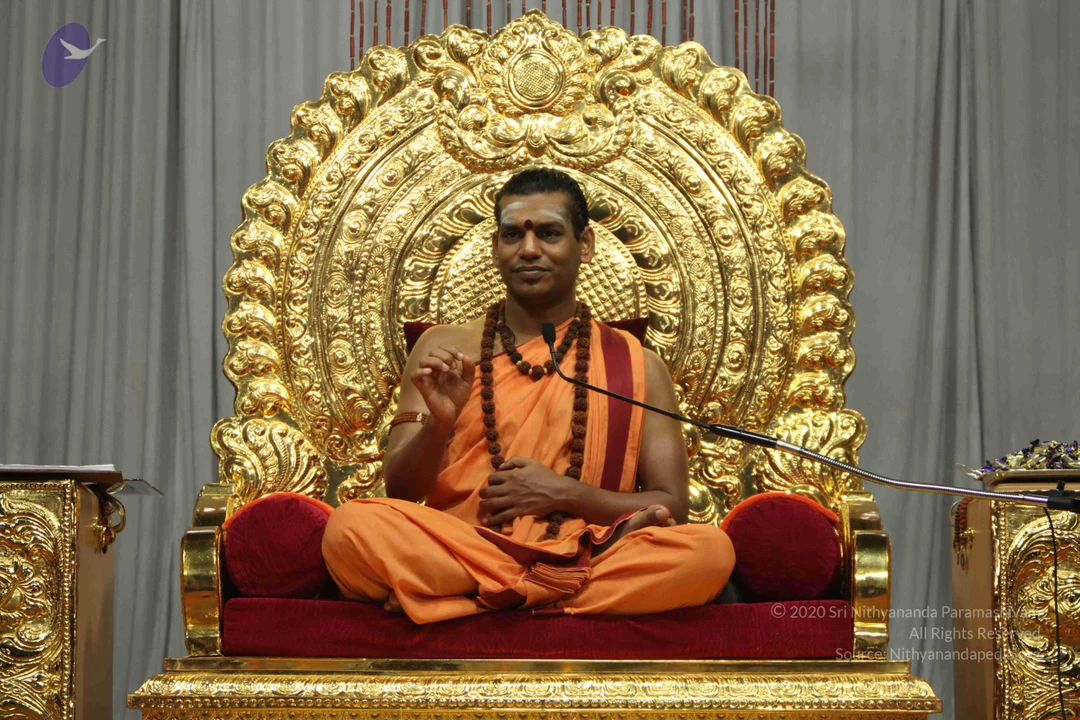
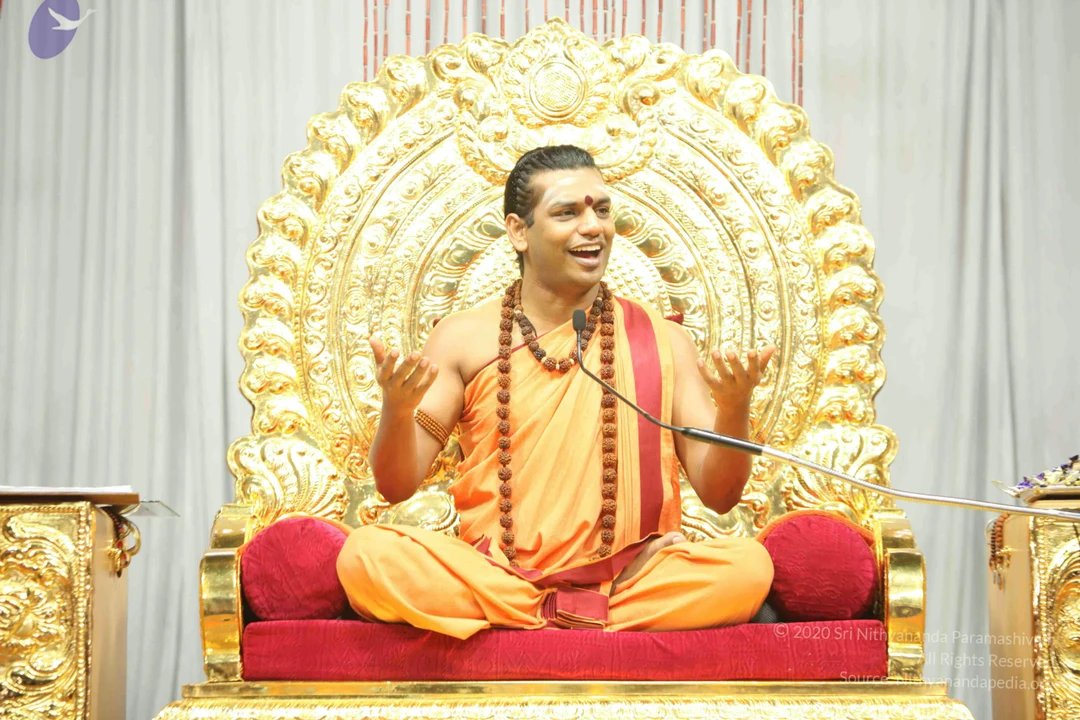
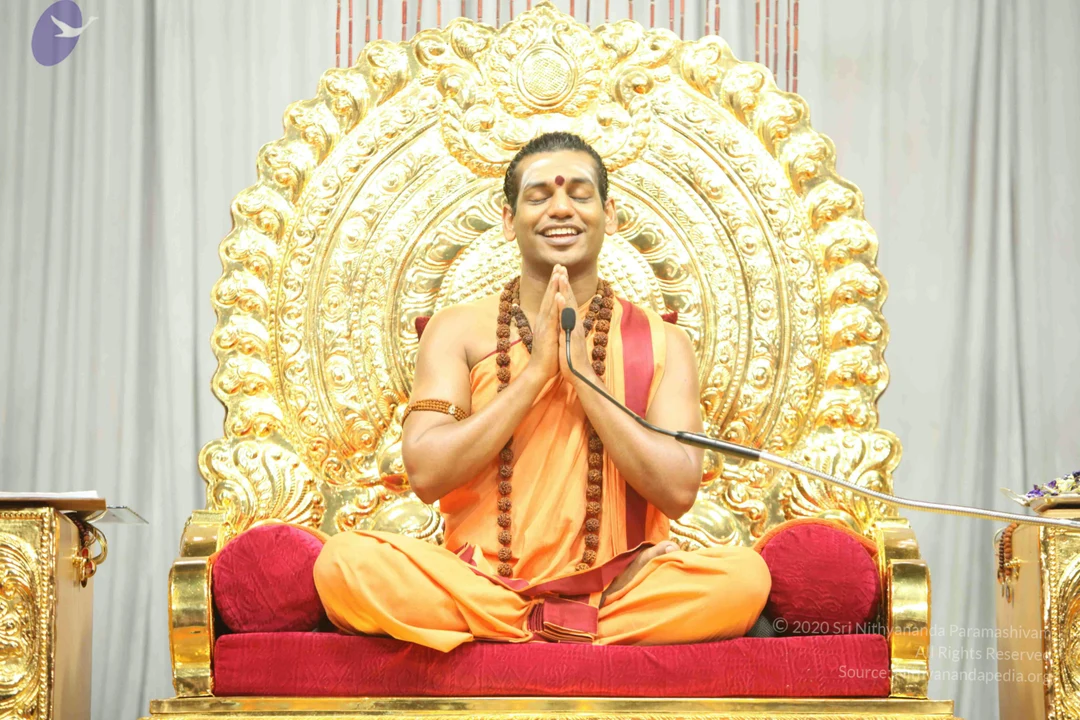
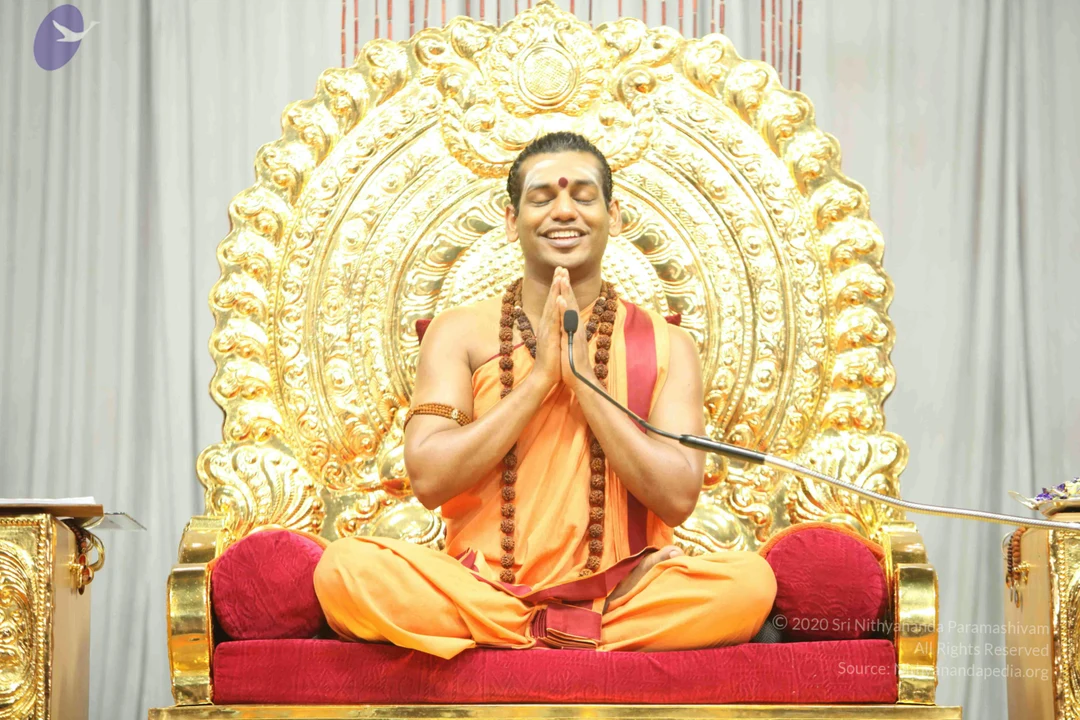
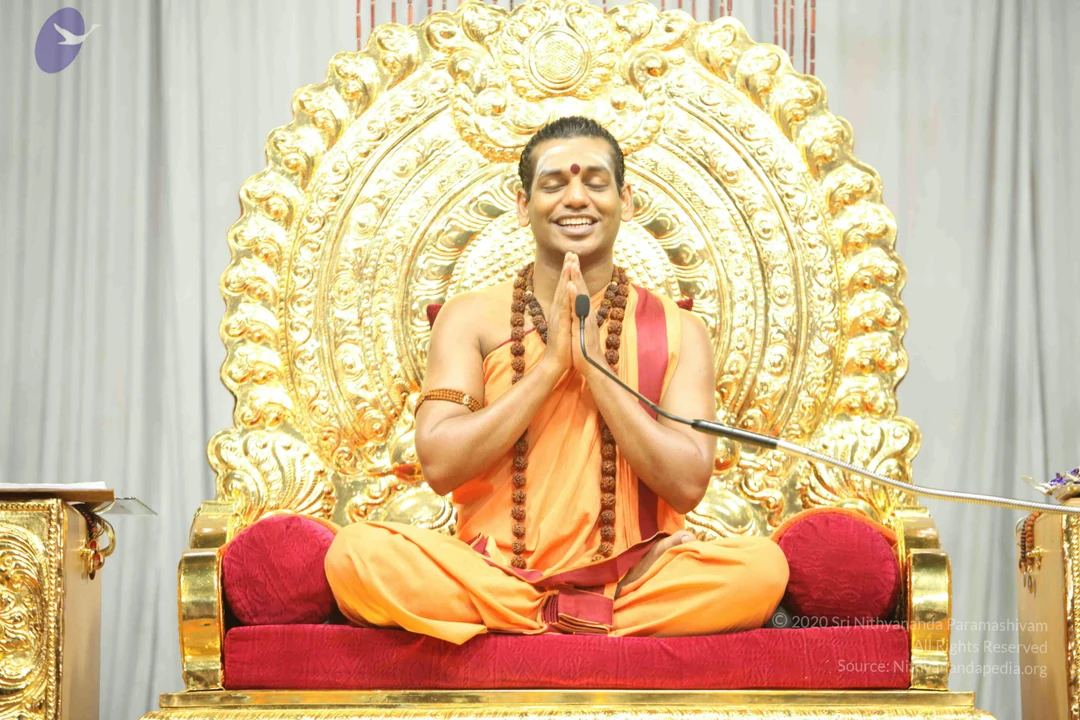
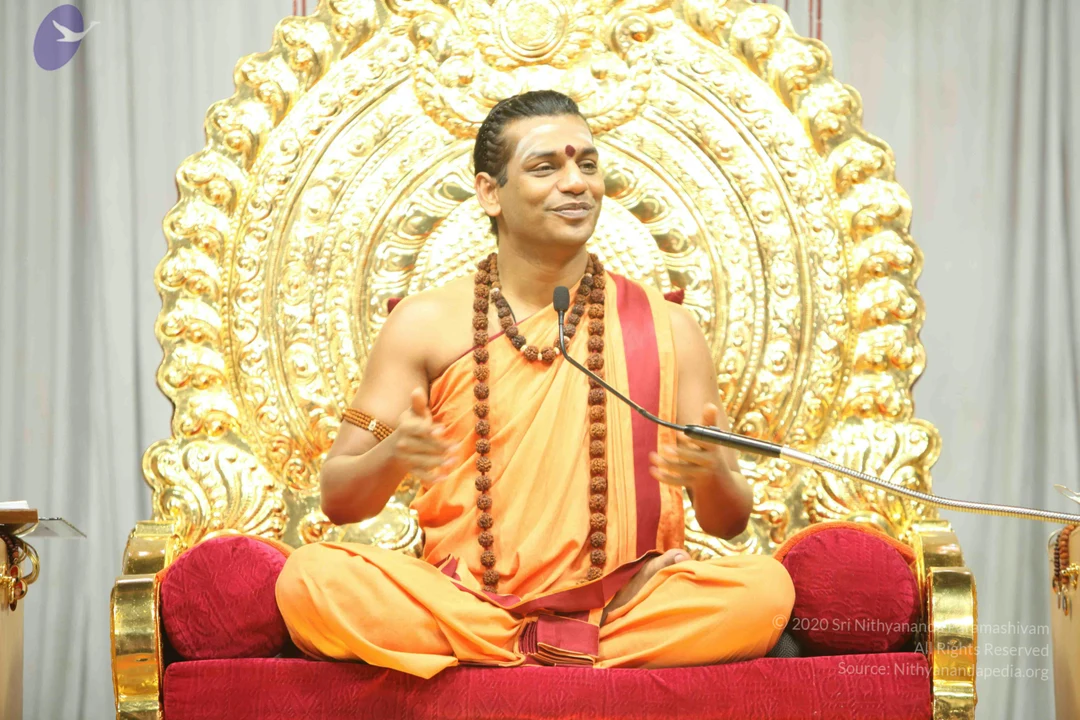
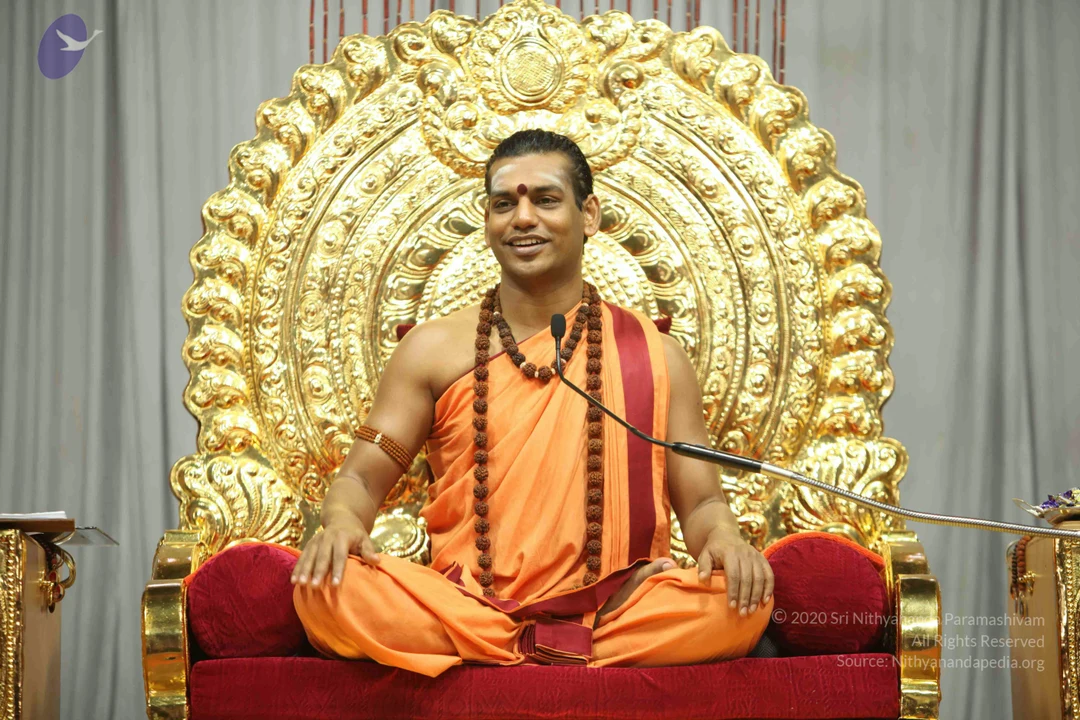
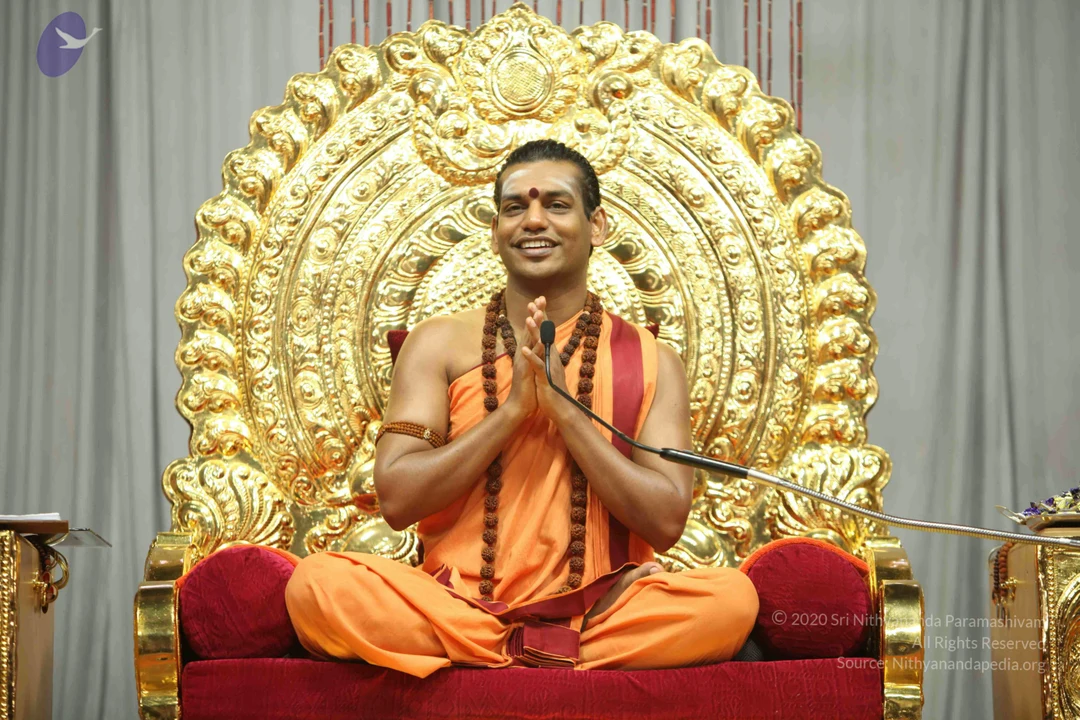
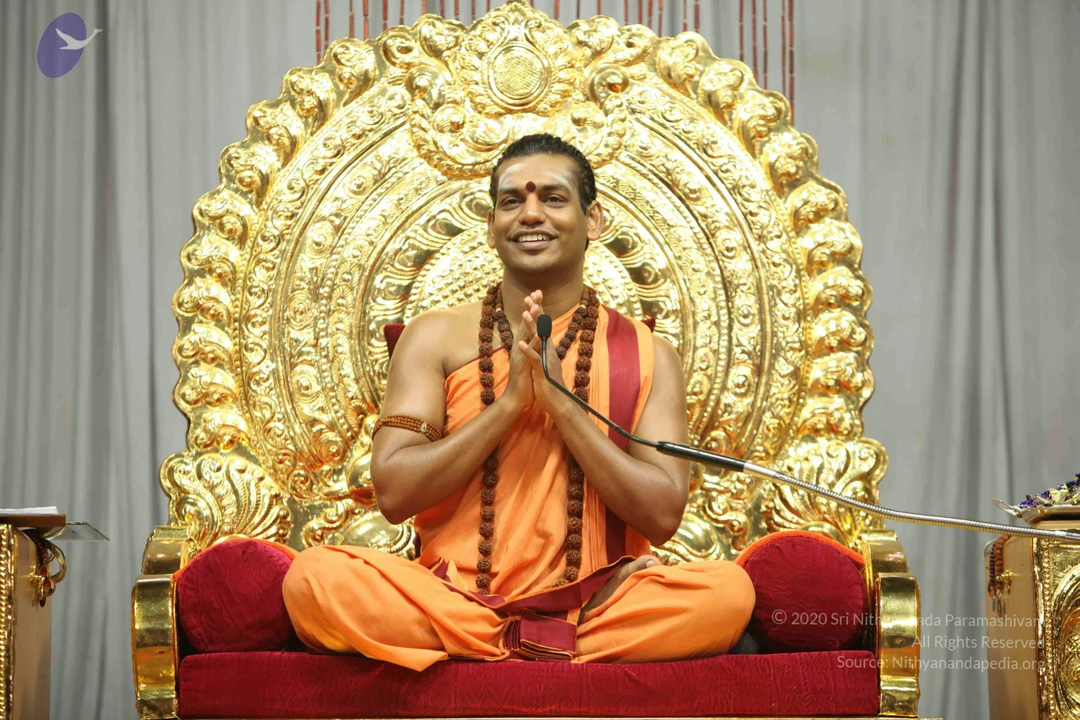
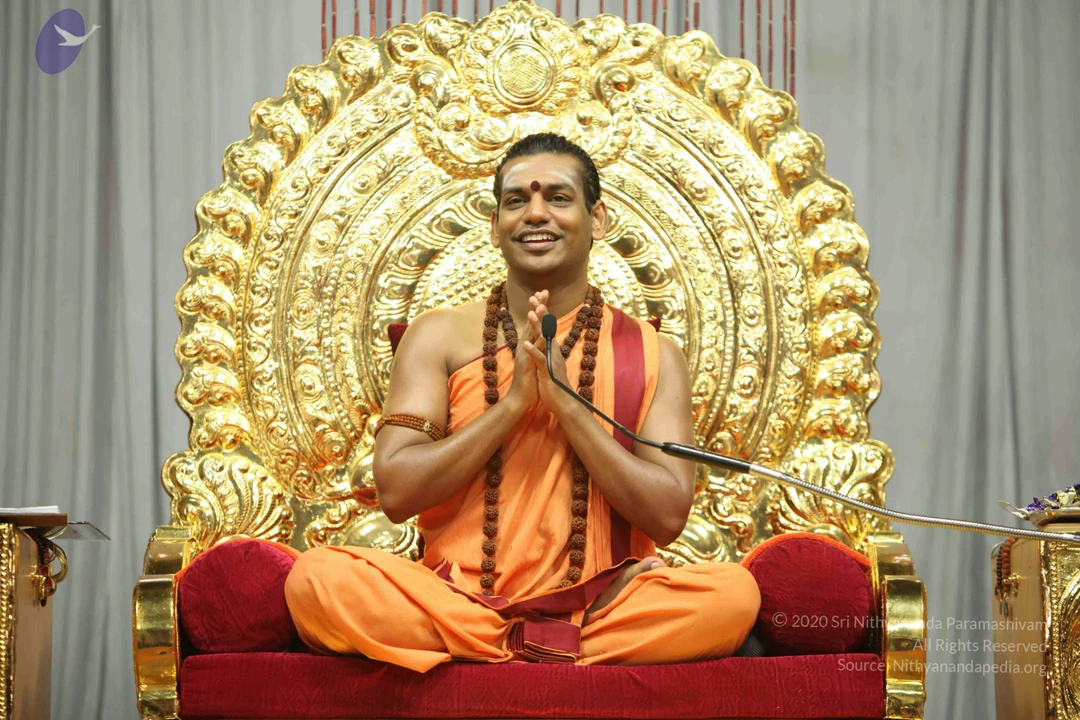
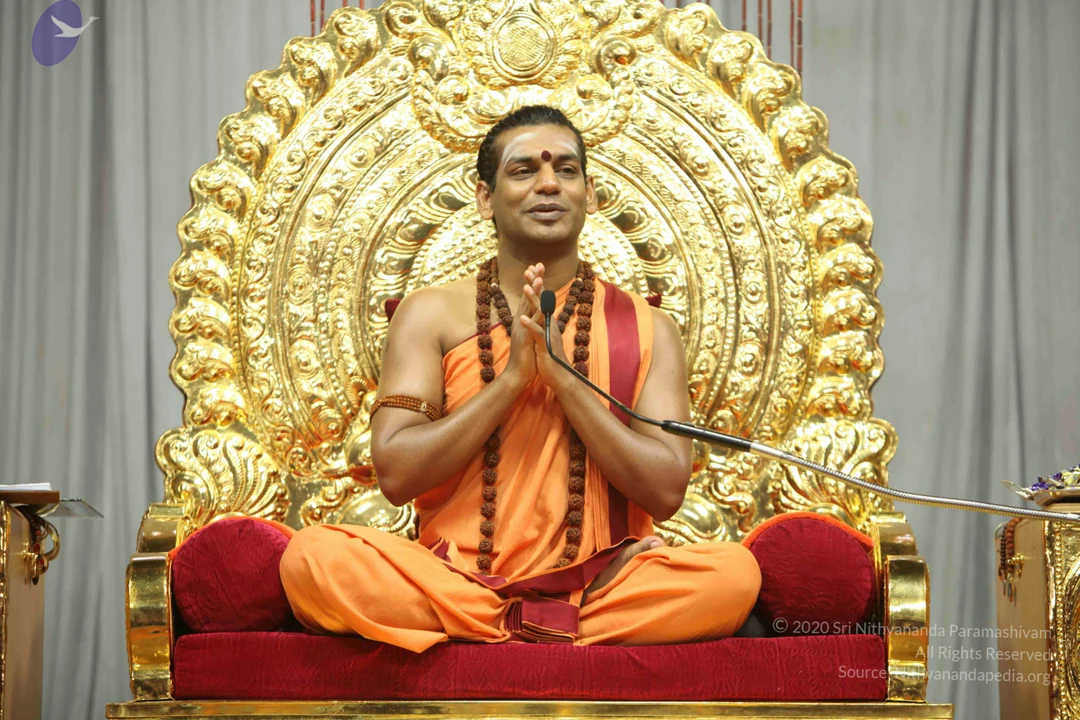
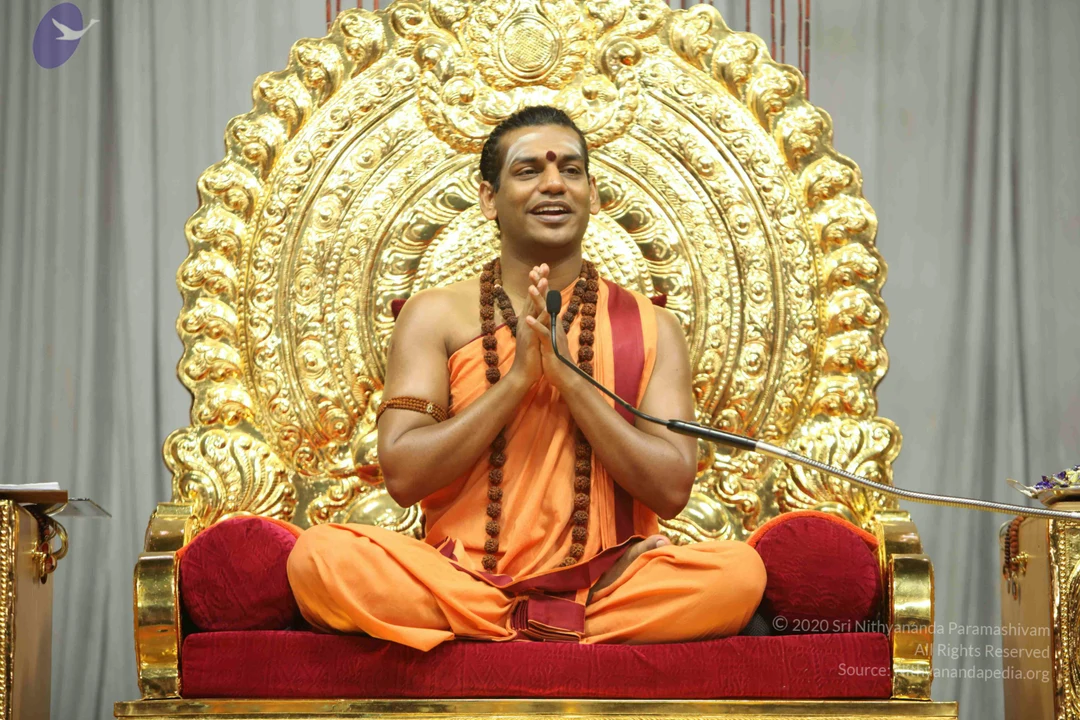
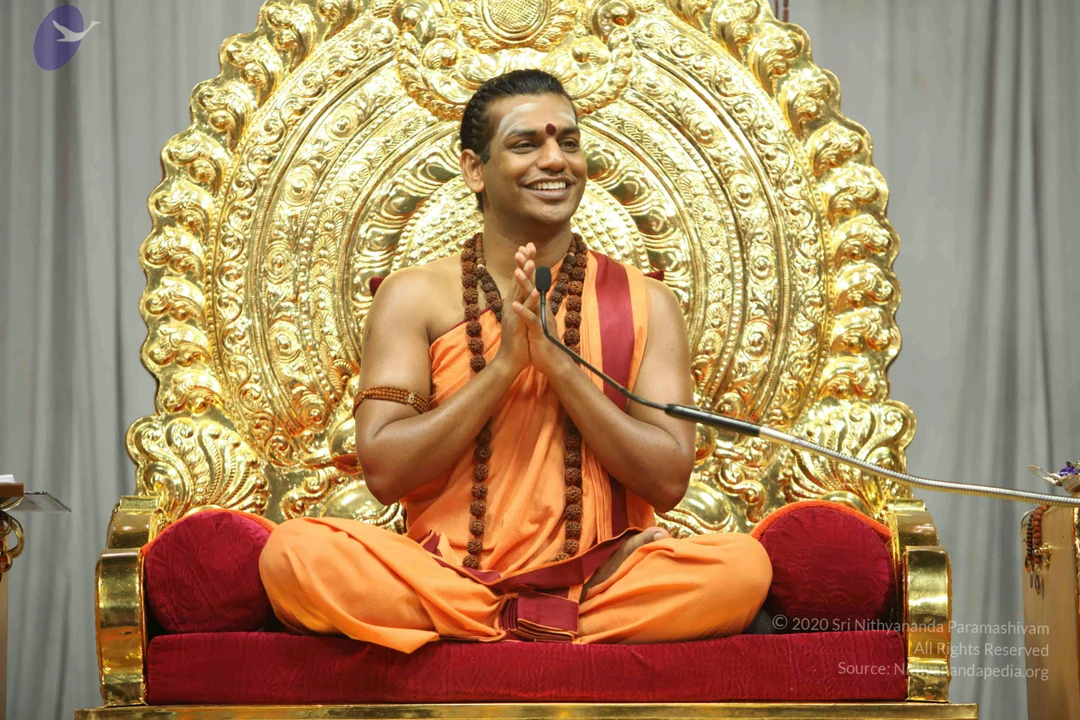
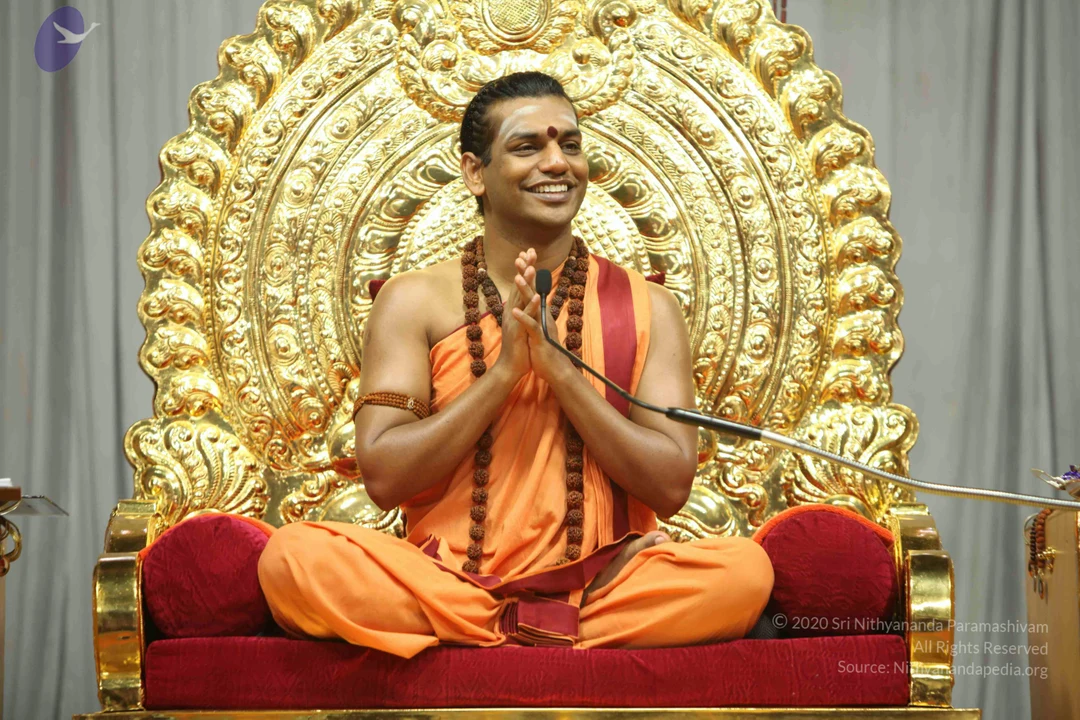
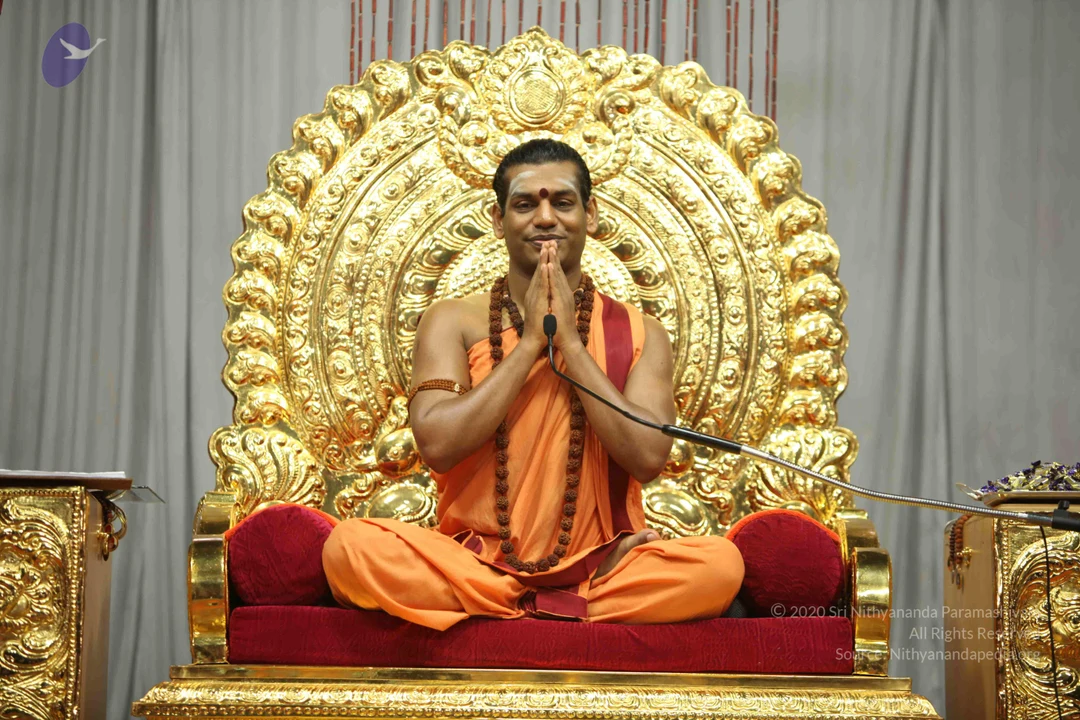
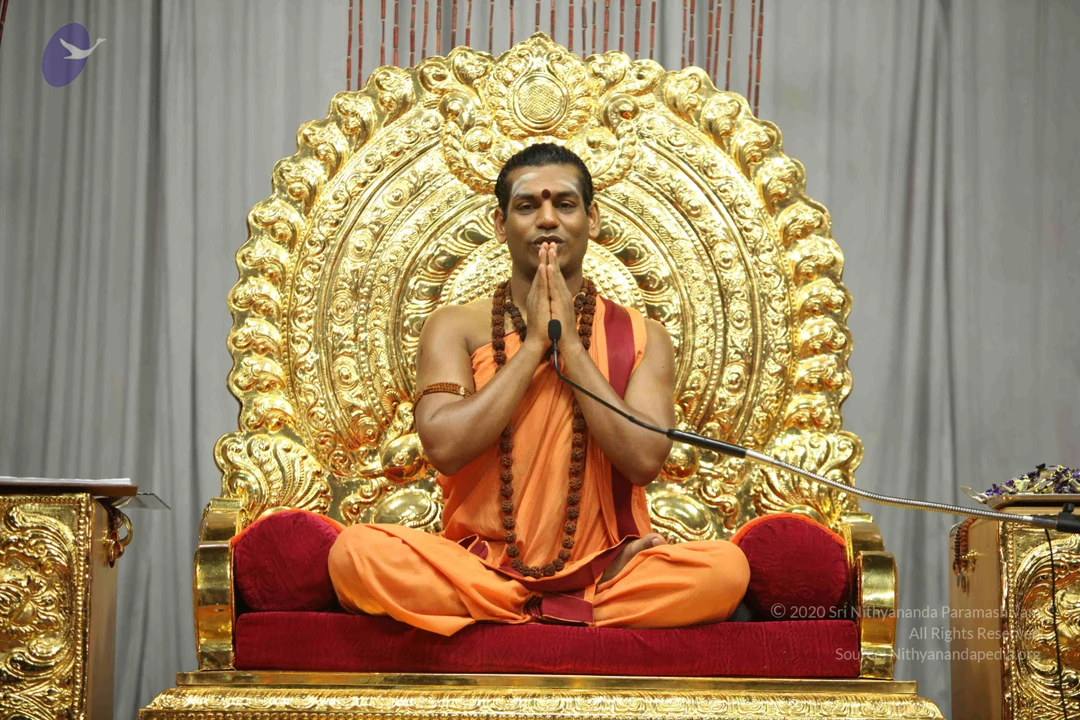
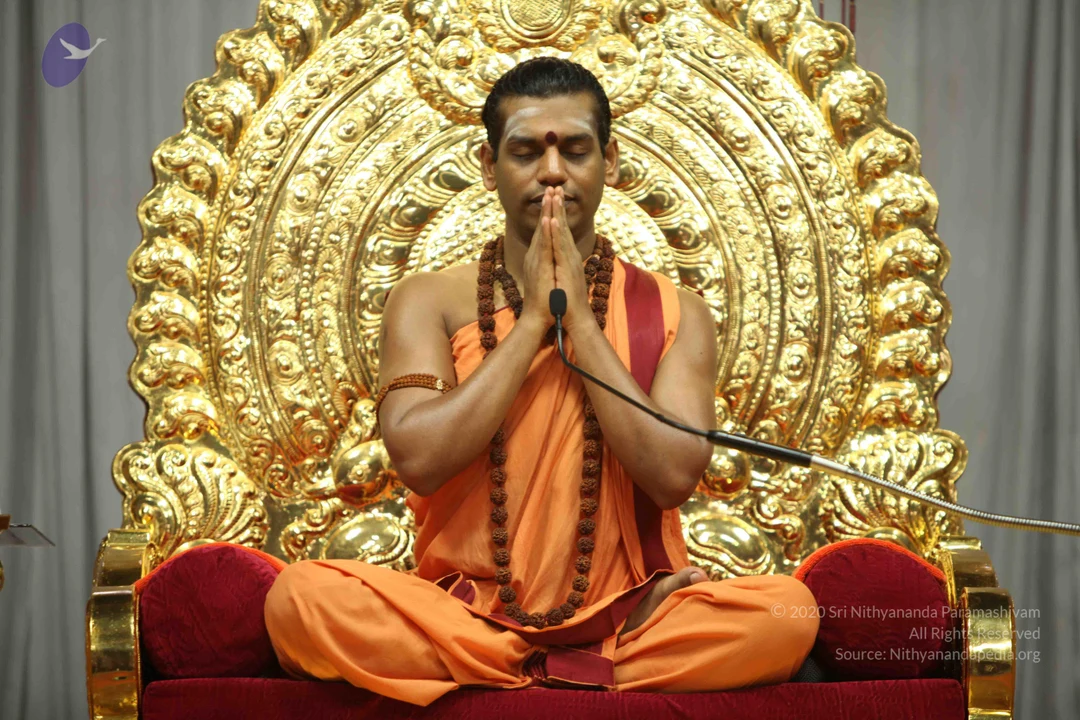
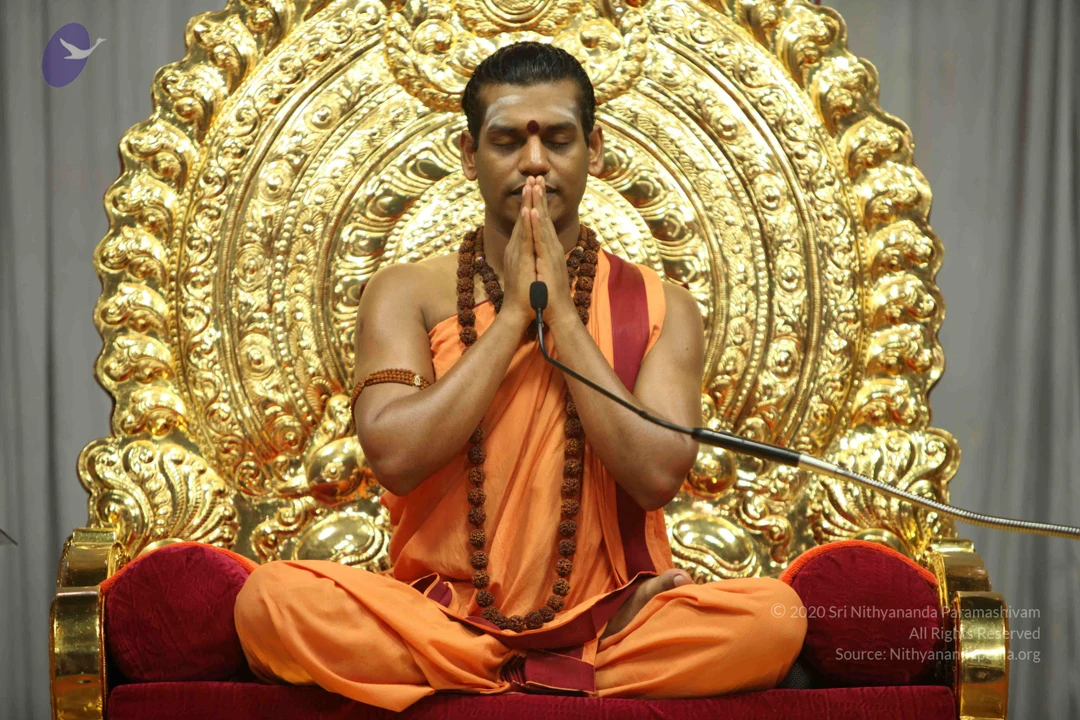
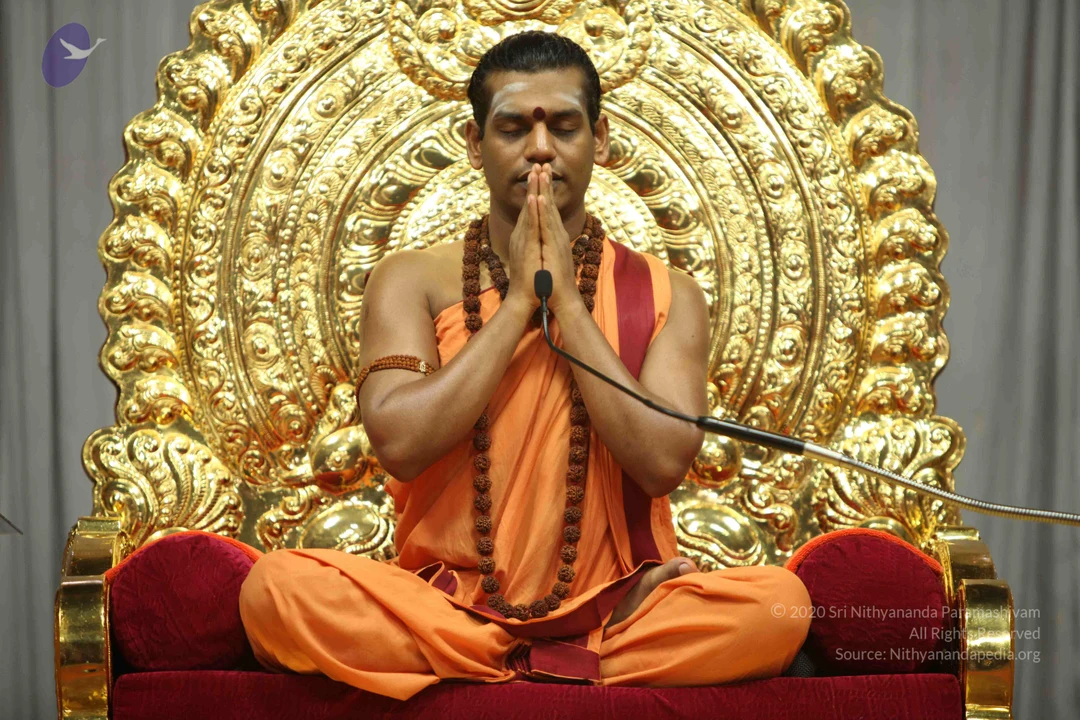
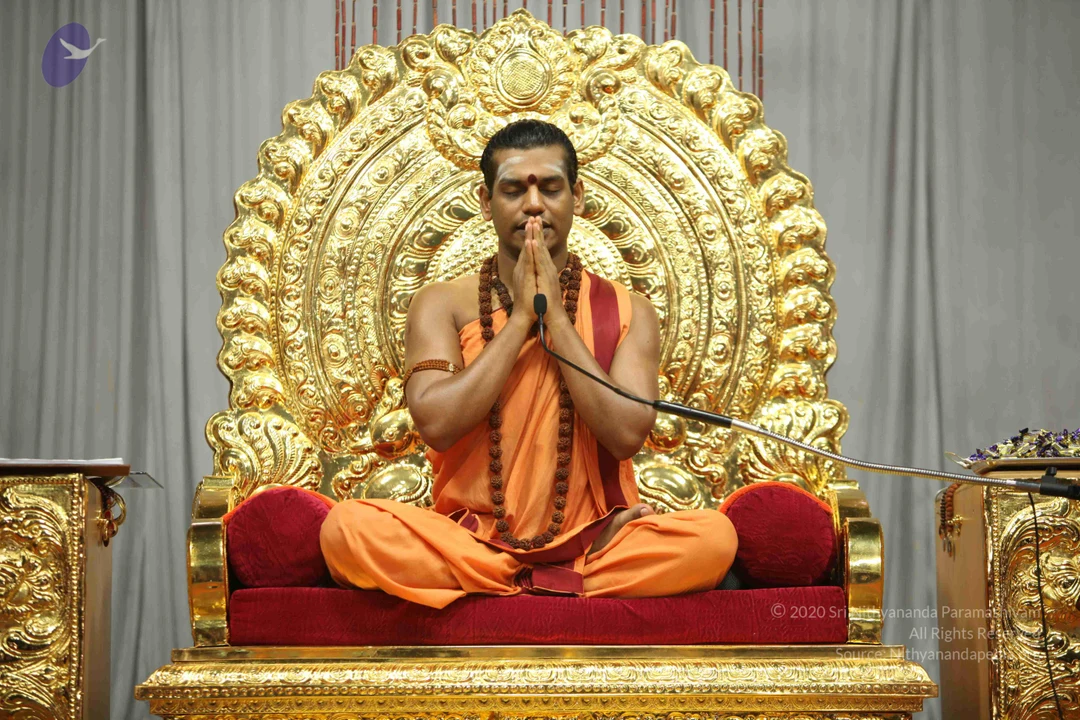
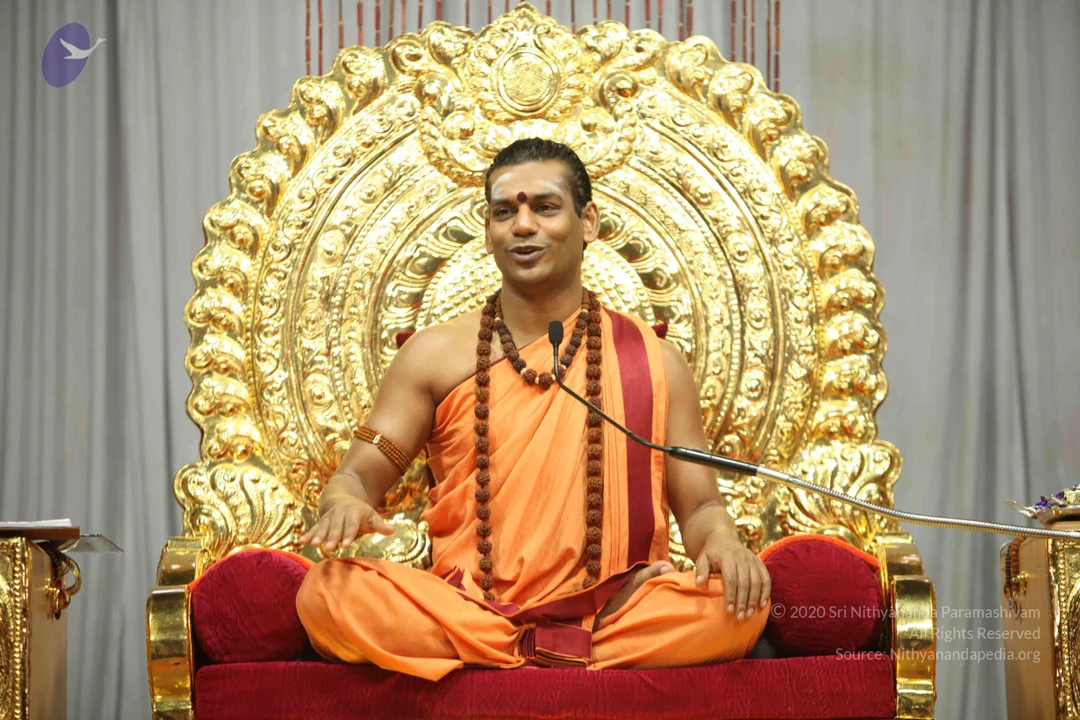
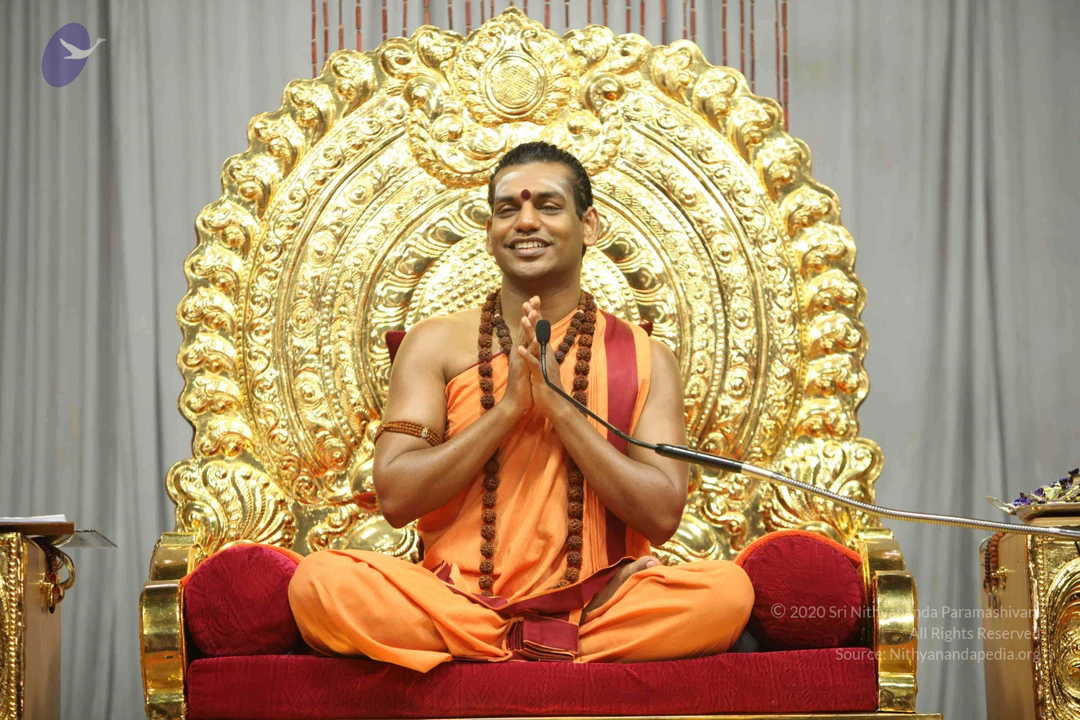
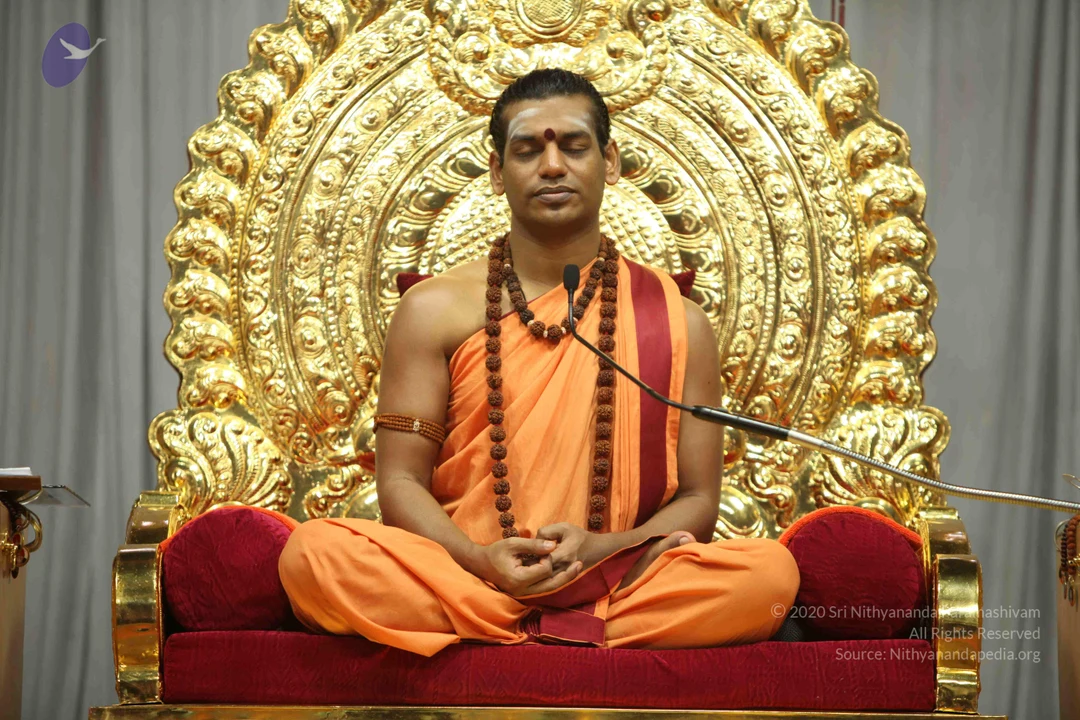
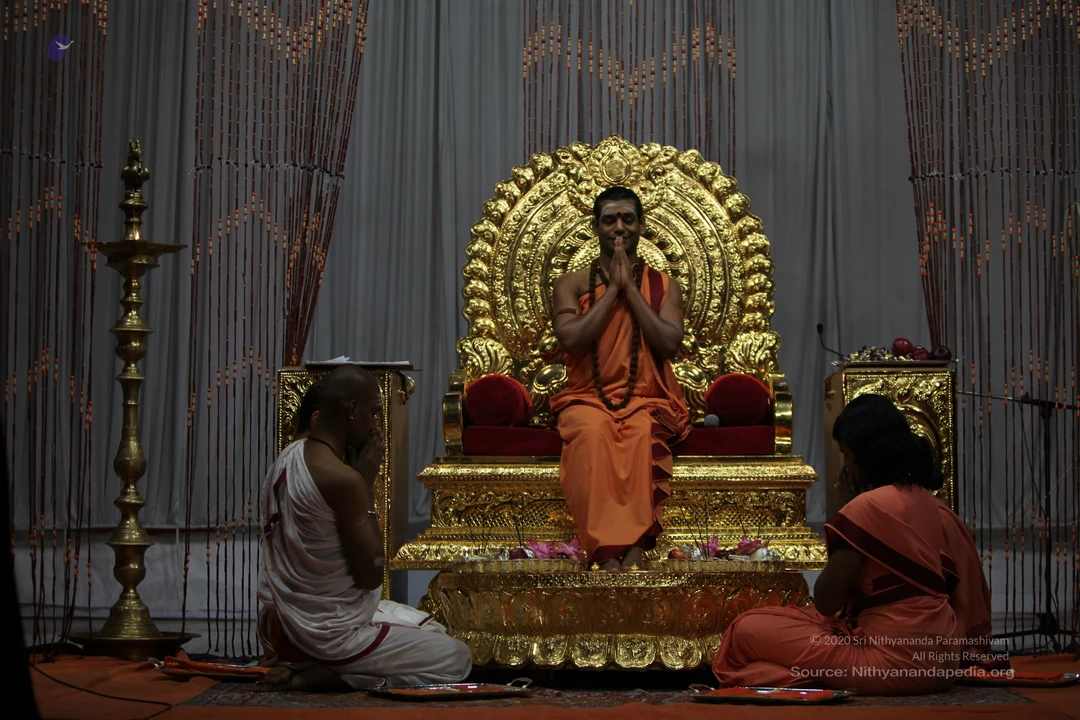
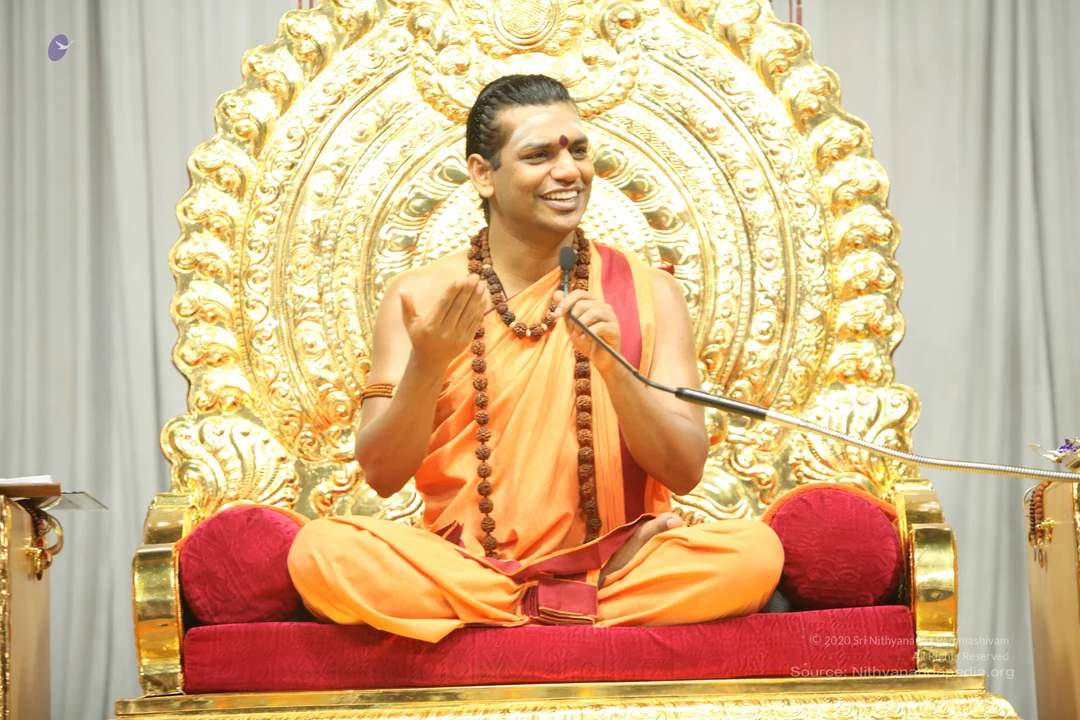
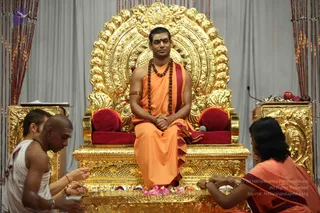
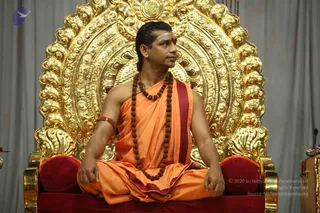
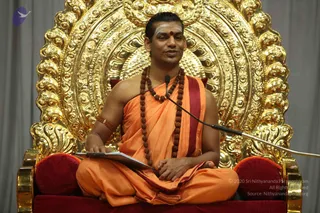
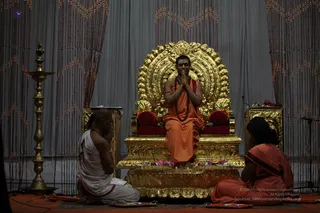
A seated man in an orange-saffron robe with a rudraksha mala and red tilak sits on an ornate gold throne with red cushions, hands pressed together in namaste. Long-haired? No; he has short hair. Before the throne, a man in white ritual cloth with a shaved head kneels with hands folded, and a woman in orange sari kneels on the right, also with hands folded. A tall brass oil lamp stands at left, and a gold tray with flowers and fruit sits at the base of the throne. Strings of beads hang behind, with a microphone at right and orange floor cloth beneath.A photograph of a central figure seated on an ornate gold throne with a large gold arched backrest, dressed in saffron-orange robes with a rudraksha mala draped over the chest, hands pressed together in anjali. Two devotees sit on the floor in front: a shaved-headed man in white dhoti and upper cloth with hands folded, and a woman in orange-red sari with her head bowed. A tall brass oil lamp stands at left beside beaded curtains, and the throne base is decorated with pink and white flowers.A photograph of a seated man in an ornate golden throne with red cushions, palms pressed together in namaste at chest level. He wears an saffron-orange robe, a red-and-gold cloth draped over the shoulder, a rudraksha mala, and a tilak on his forehead. Before the throne is a golden pedestal decorated with pink flowers and fruit. Two devotees kneel in attendance: on the left a bald man in white ritual dhoti with palms joined, and on the right a woman in orange sari with head bowed. Gold oil lamps stand at left and a beaded curtain hangs behind, with a white drape and an orange-red floor mat.A seated man in an orange robe with a rudraksha mala and bare upper body sits with palms pressed together in namaskar on an ornate gold throne with red cushions. Two devotees sit on the floor before him: one in white dhoti with bare shoulders, hands folded, and one in orange clothing with hands joined. Brass oil lamps stand at both sides, fruit and flowers rest at the throne base, and beaded curtains hang behind. The setting suggests a padapuja-style honouring. The central seated figure wears distinctive ornate and saffron cues on a throne, so he is a candidate a person in person.A seated man in a saffron-orange robe and a matching orange shawl sits on an ornate gold throne with a large gold backrest and red cushions, hands folded in his lap, wearing a rudraksha mala and a red-brown bindi. a person is shown on the throne, with the appearance cues of saffron robes and a rudraksha mala. Two devotees kneel before the throne on orange cloth: one in white ritual dhoti with bare upper body and palms pressed together, the other in an orange sari with hands folded in prayer. Behind them hang beaded red-and-white curtains, with tall brass oil lamps at the sides and a few fruits and flower petals placed on the throne platform.Photograph of a seated figure on an ornate gold throne with a large gold backrest and red cushions, set against grey draped curtains strung with beads. The central man wears a saffron-orange robe, a draped orange shawl, a rudraksha mala necklace and a red tilak on his forehead, hands folded in his lap. Two devotees kneel before the throne with hands in anjali mudra: a shaven-headed man in white dhoti and shawl on the left, and a woman in orange sari with dark hair on the right. Brass lamps stand on either side, and pink flowers and trays of offerings sit at the base of the throne, with fruit on a side table. Appearance-based candidate: a person, seated on the throne, wearing saffron robes with rudraksha mala cues.

03-Morning-Satsang

176 photosSource gallery
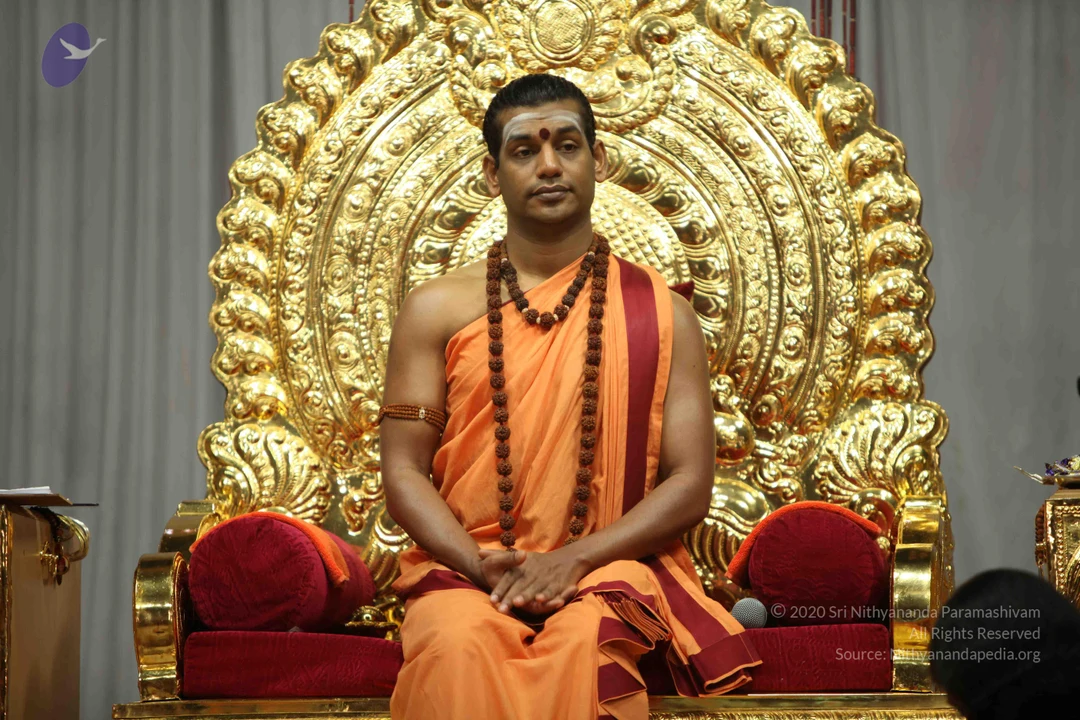
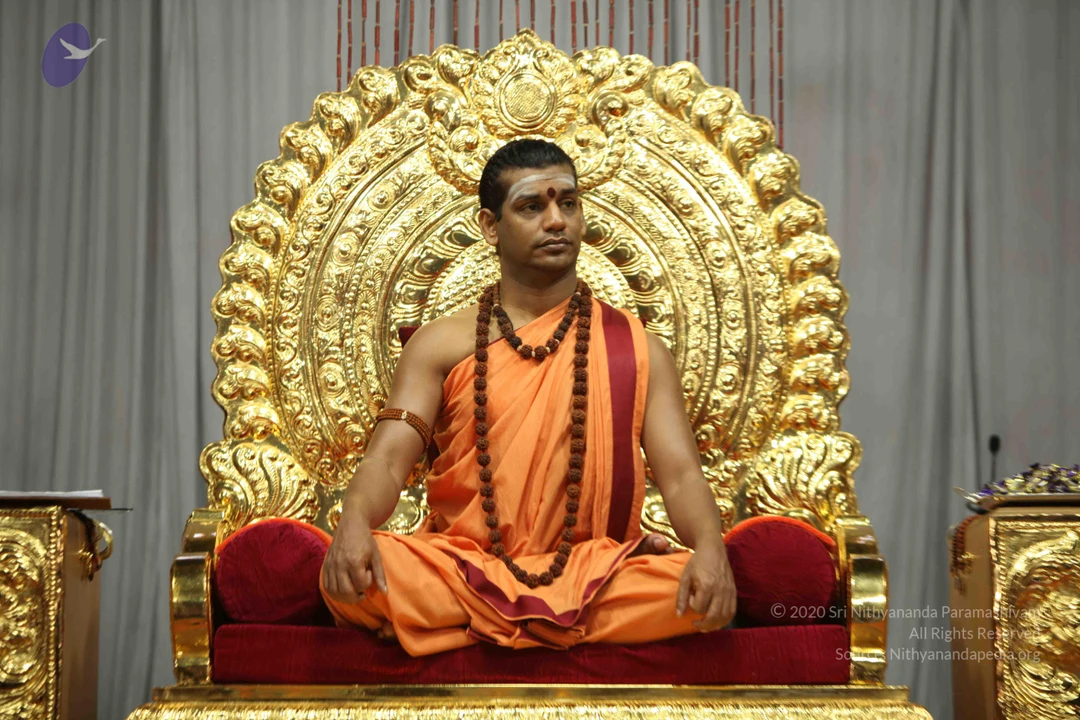
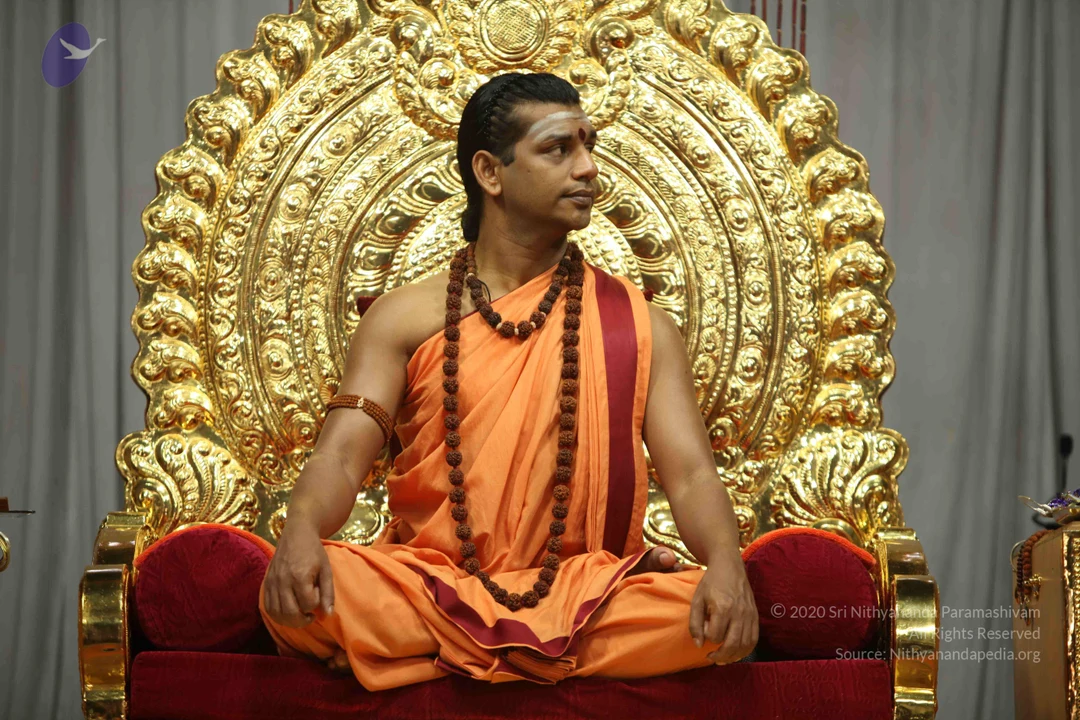
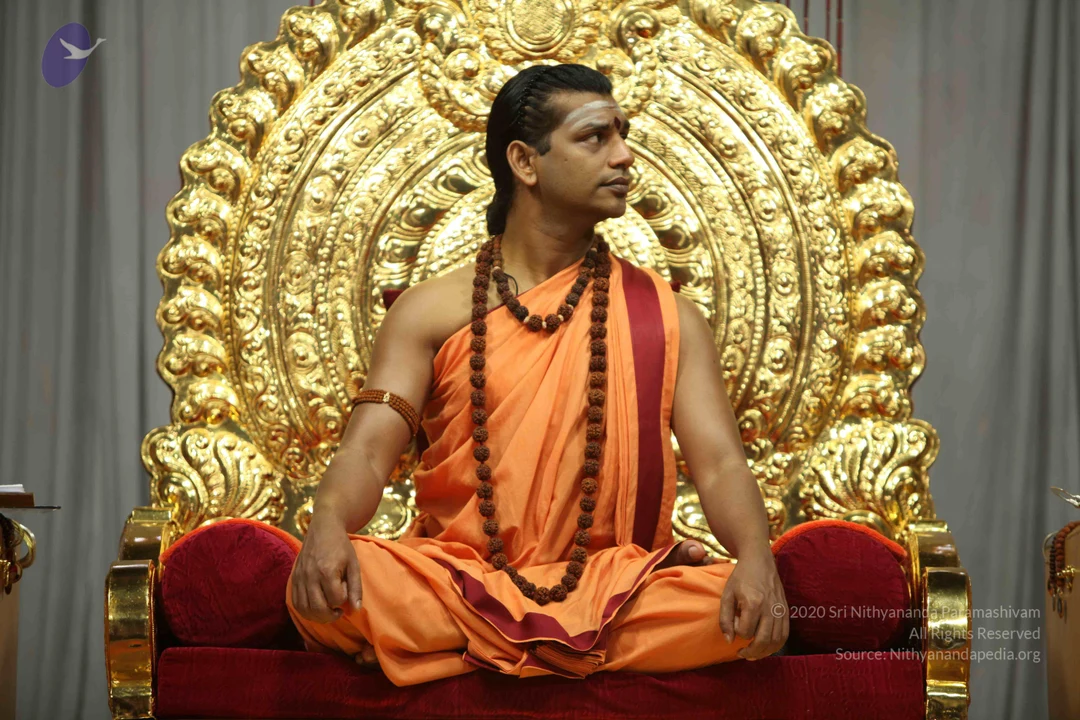
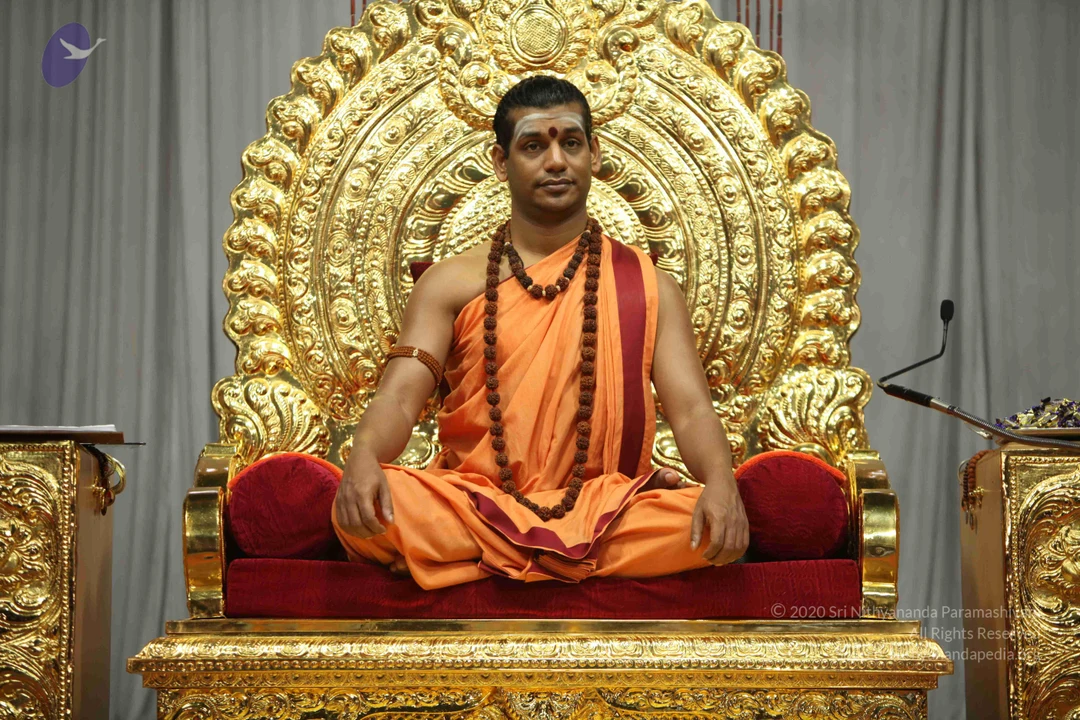
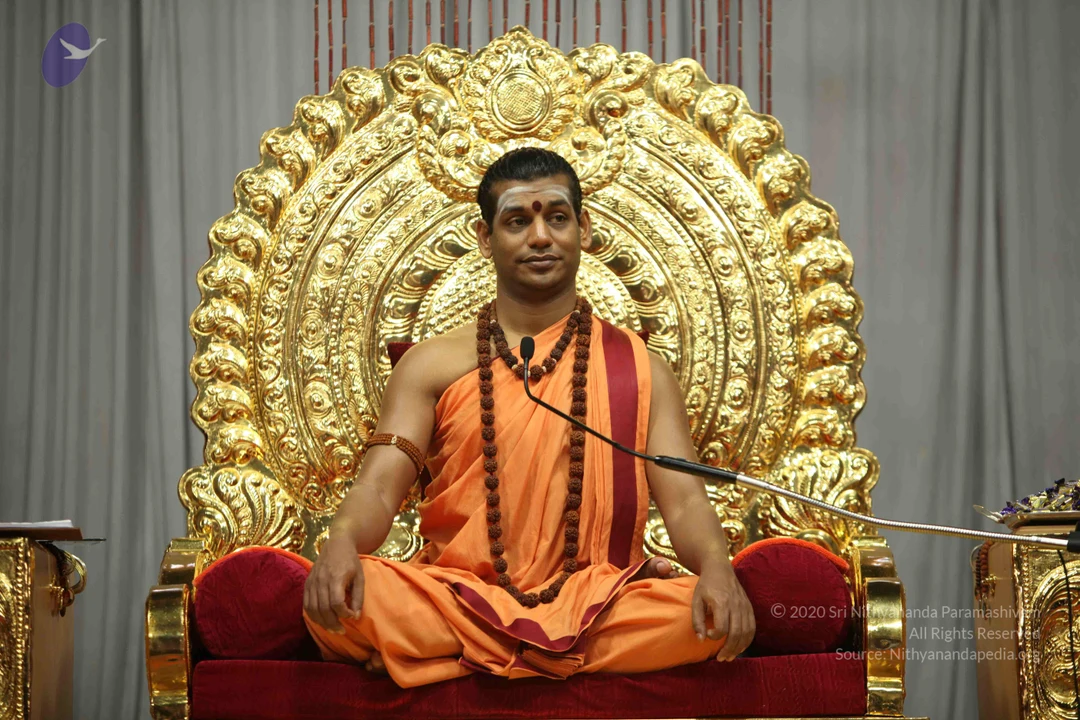
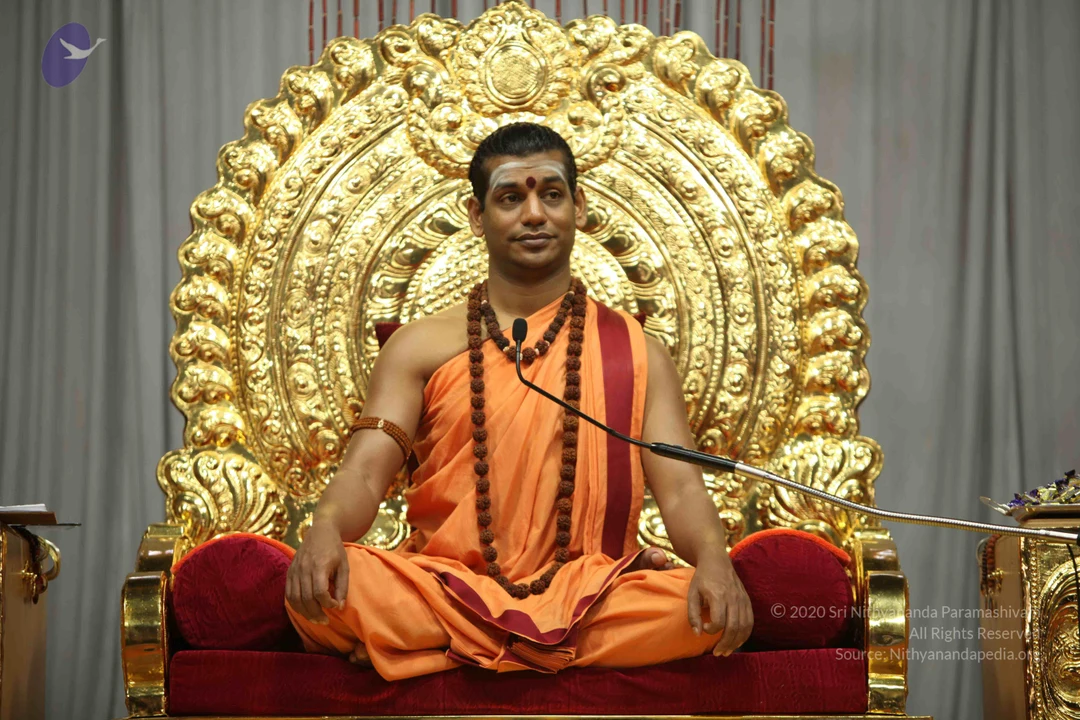
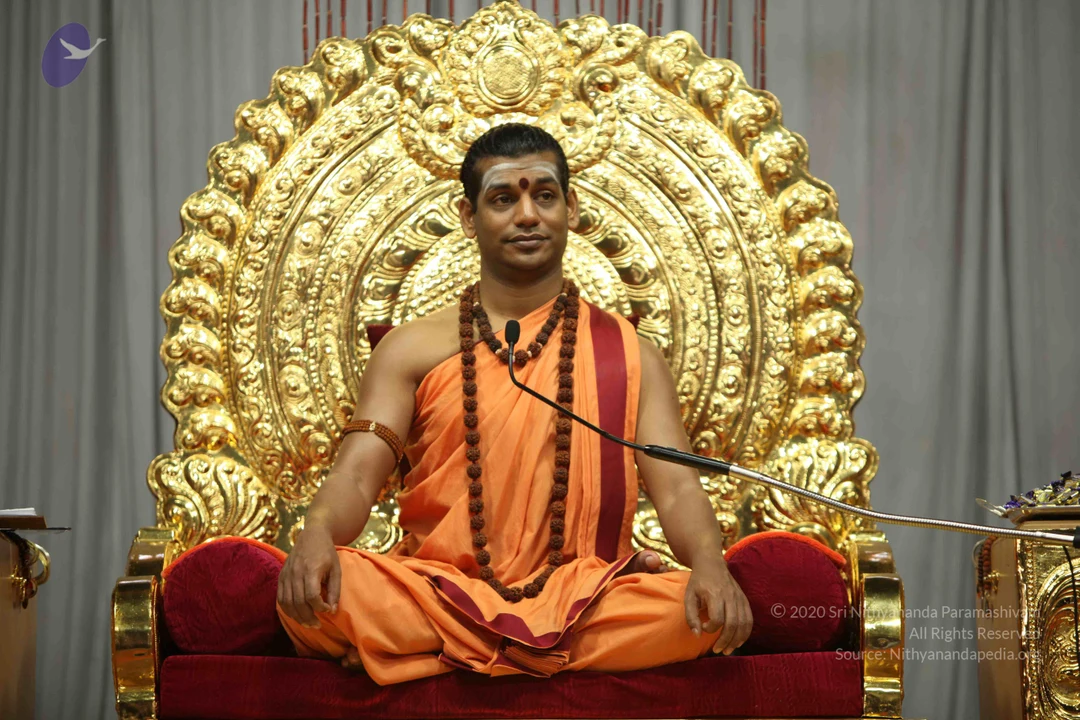
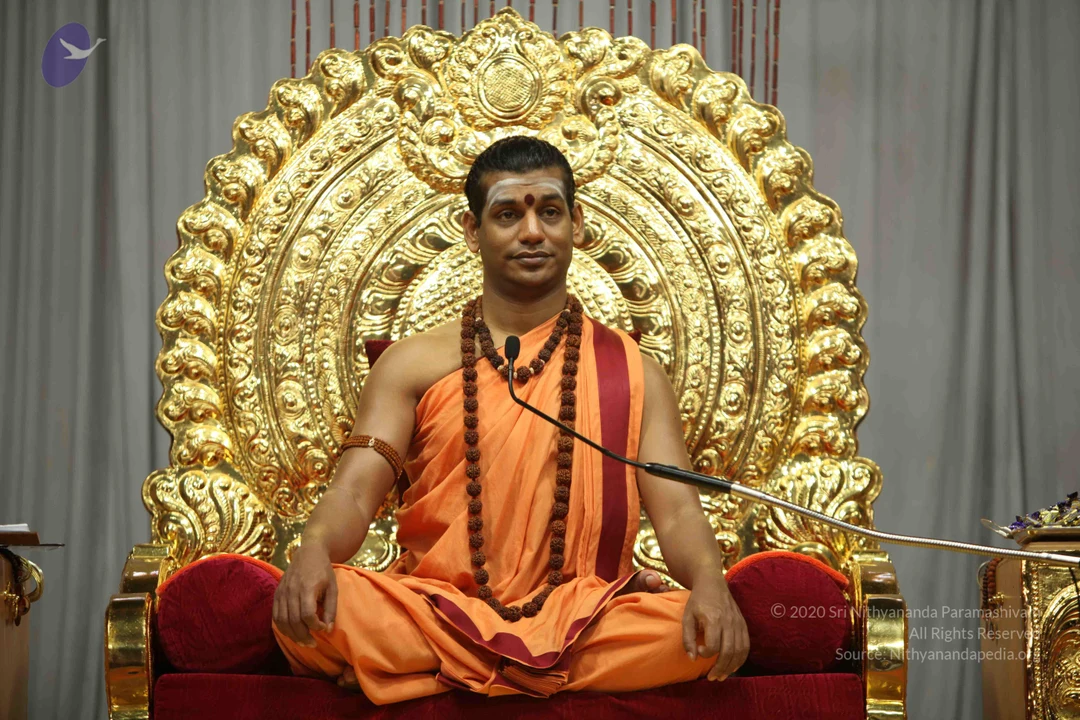
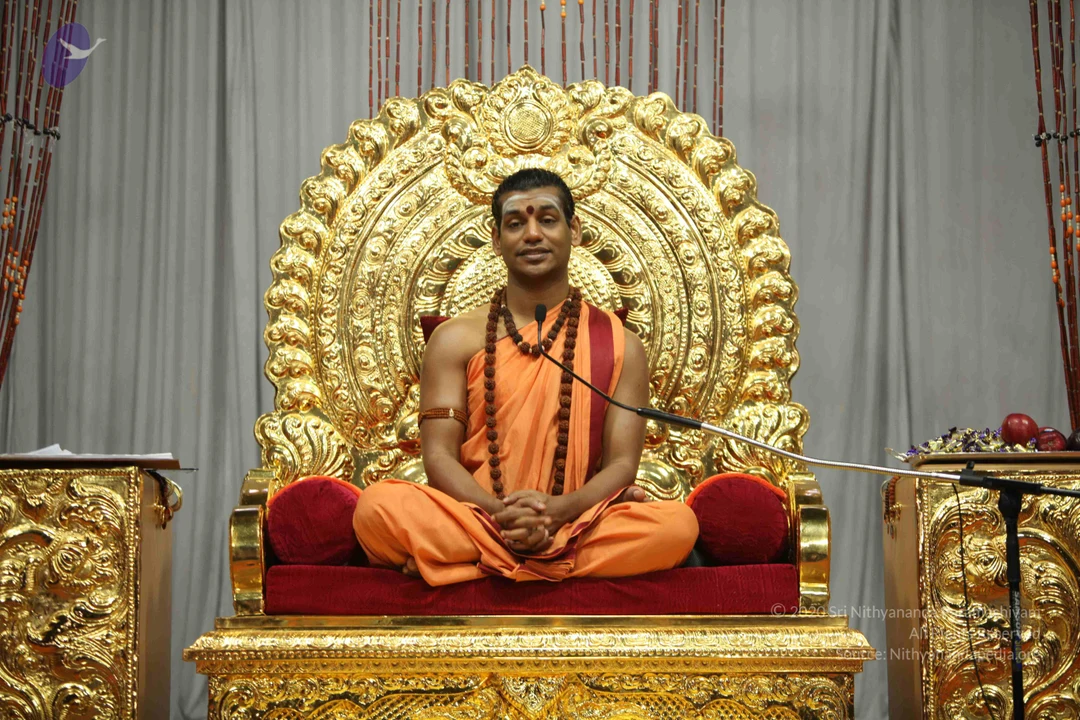
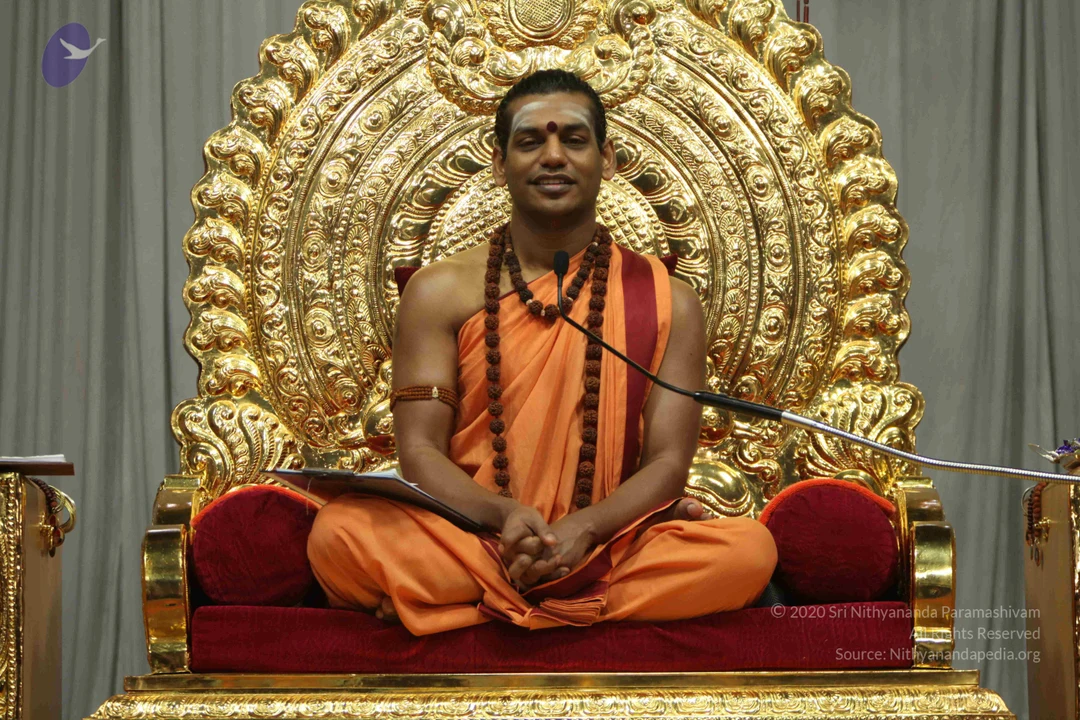
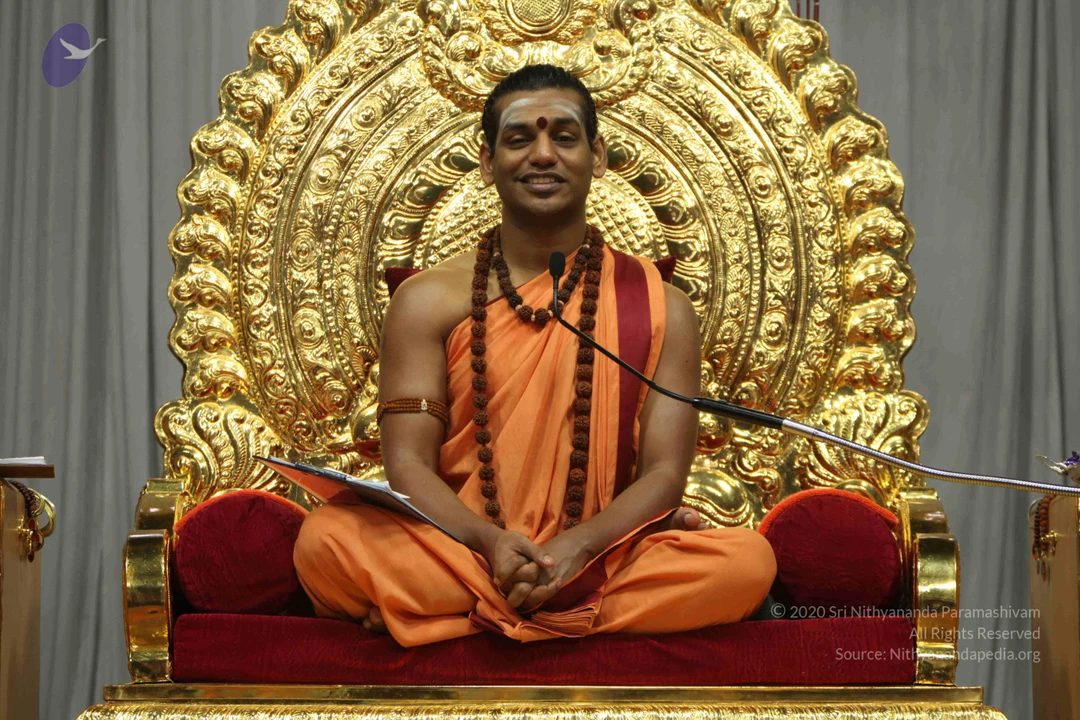
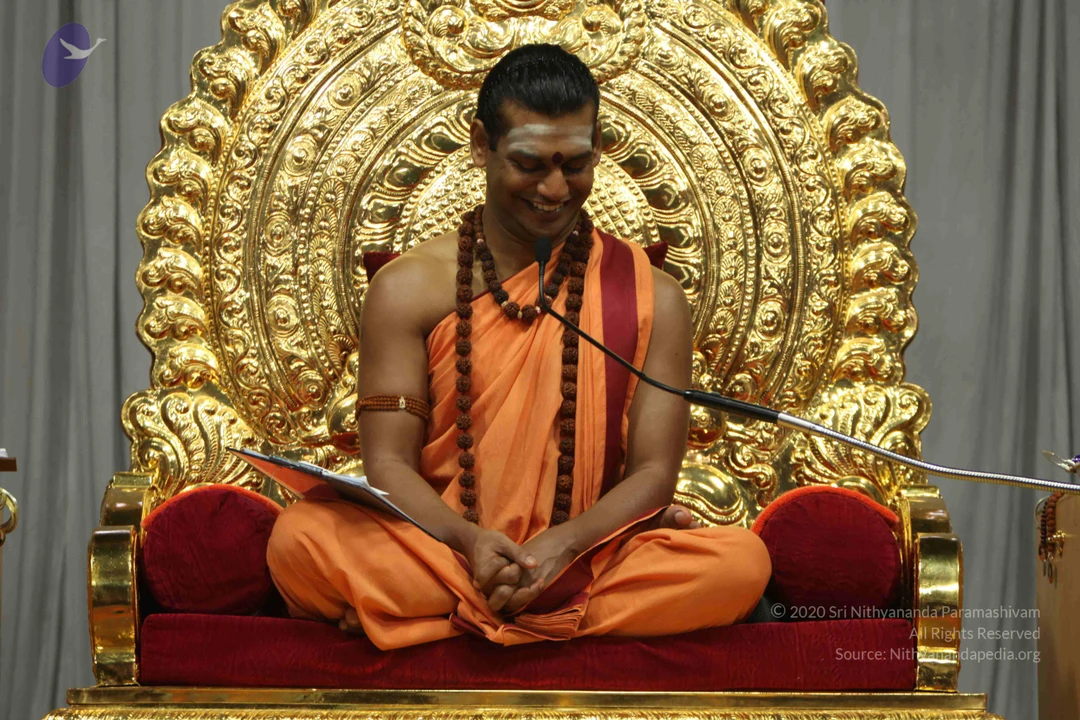
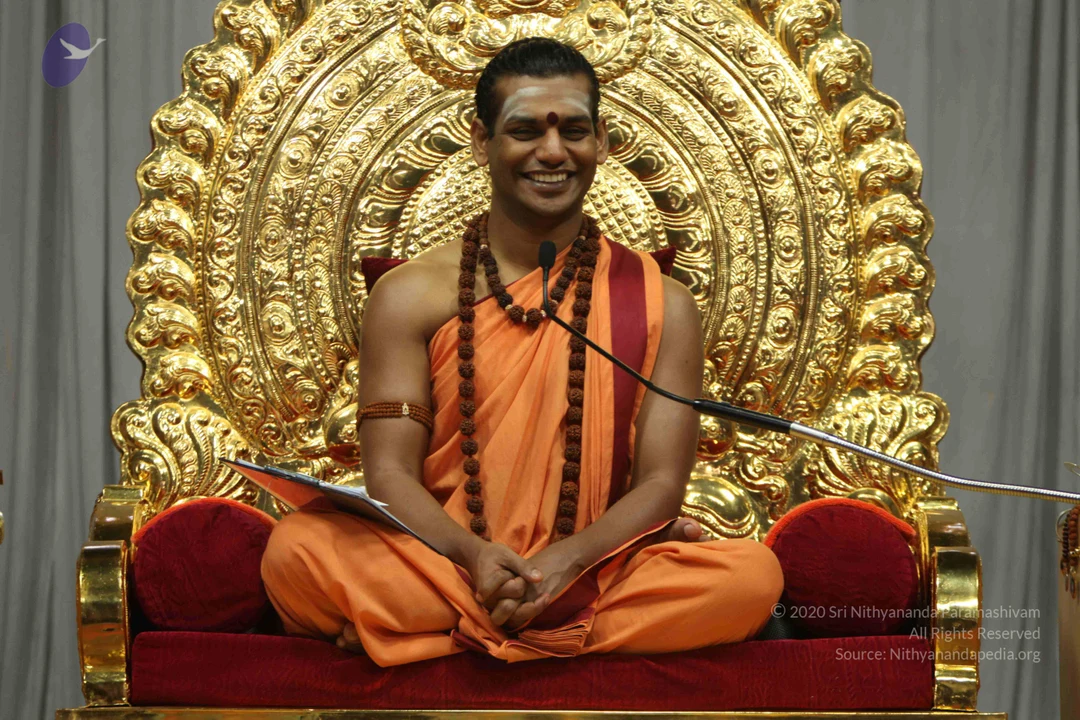
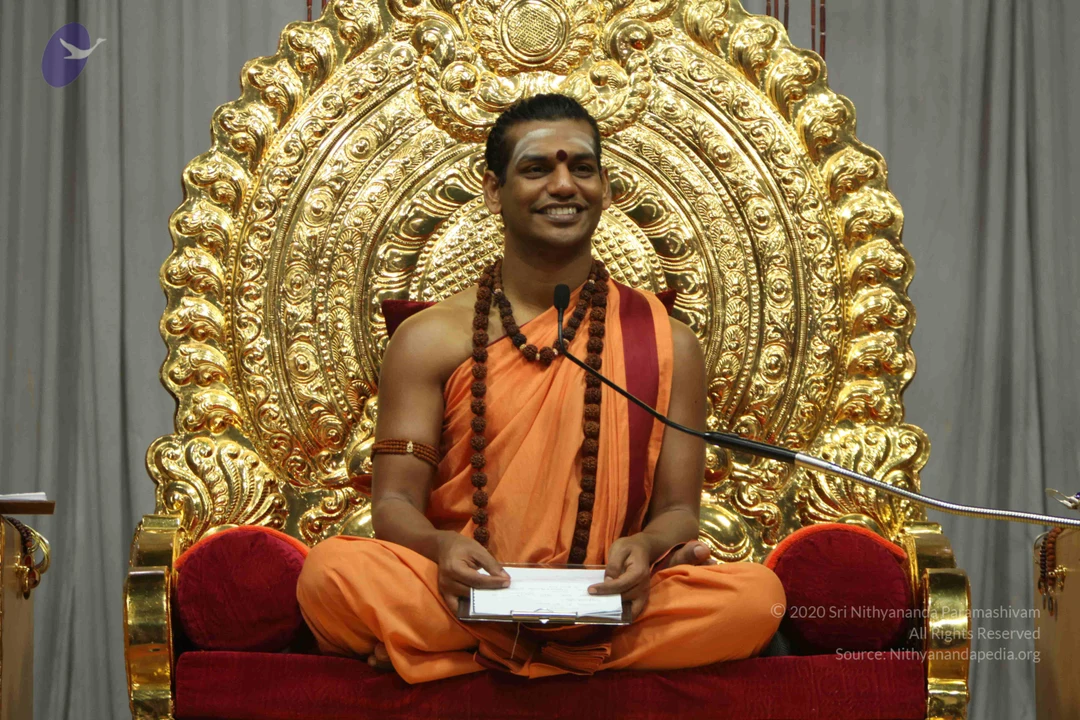
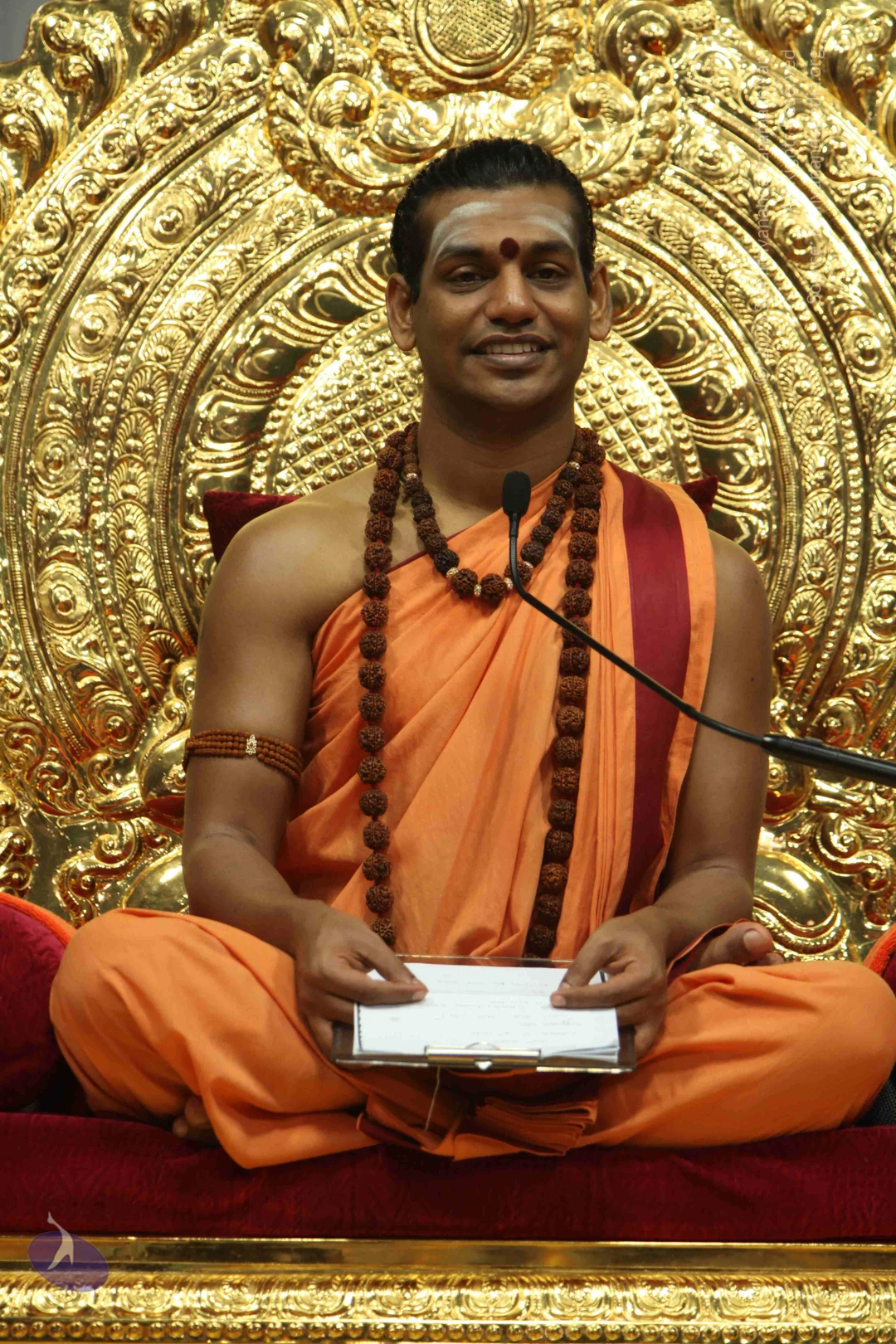
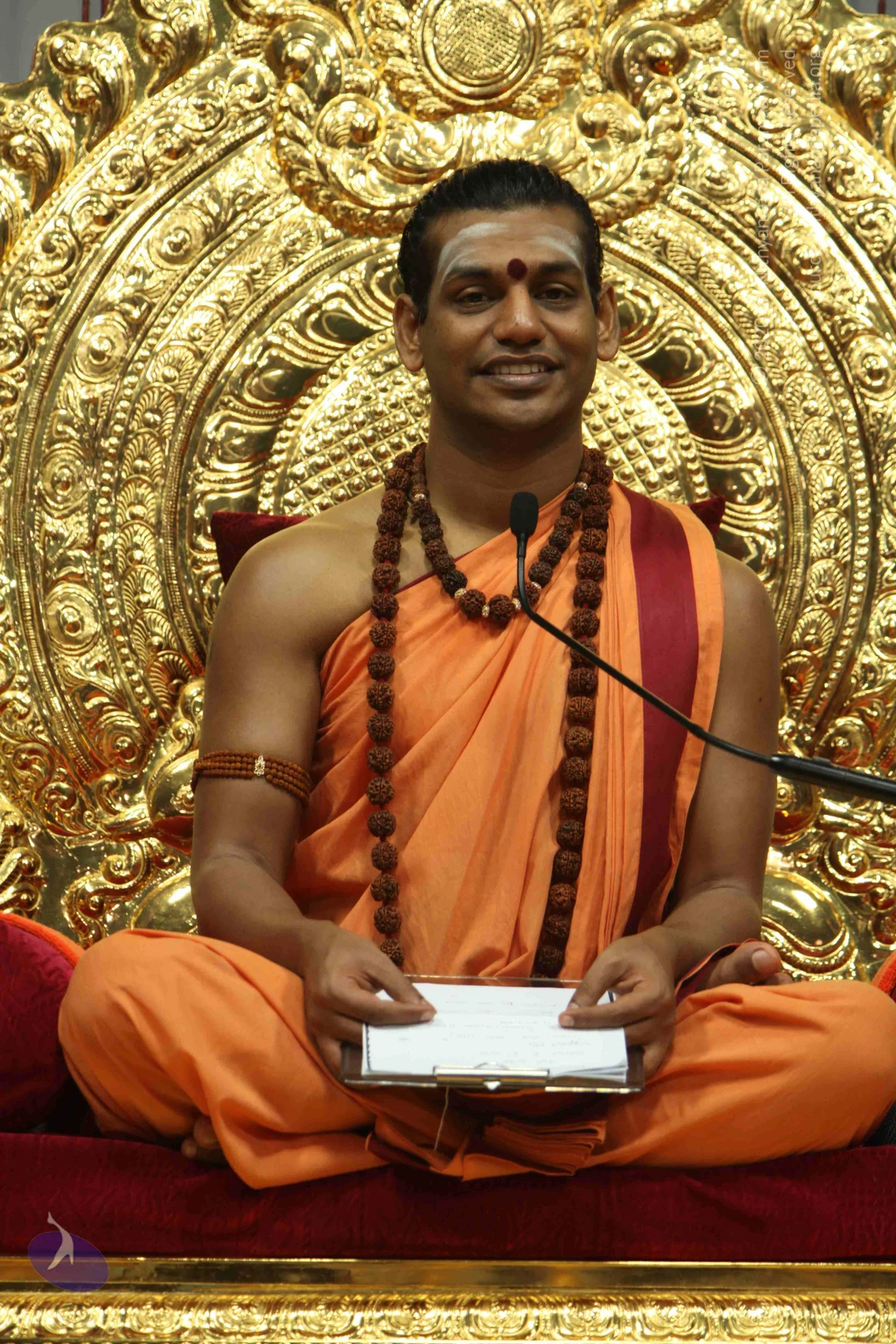
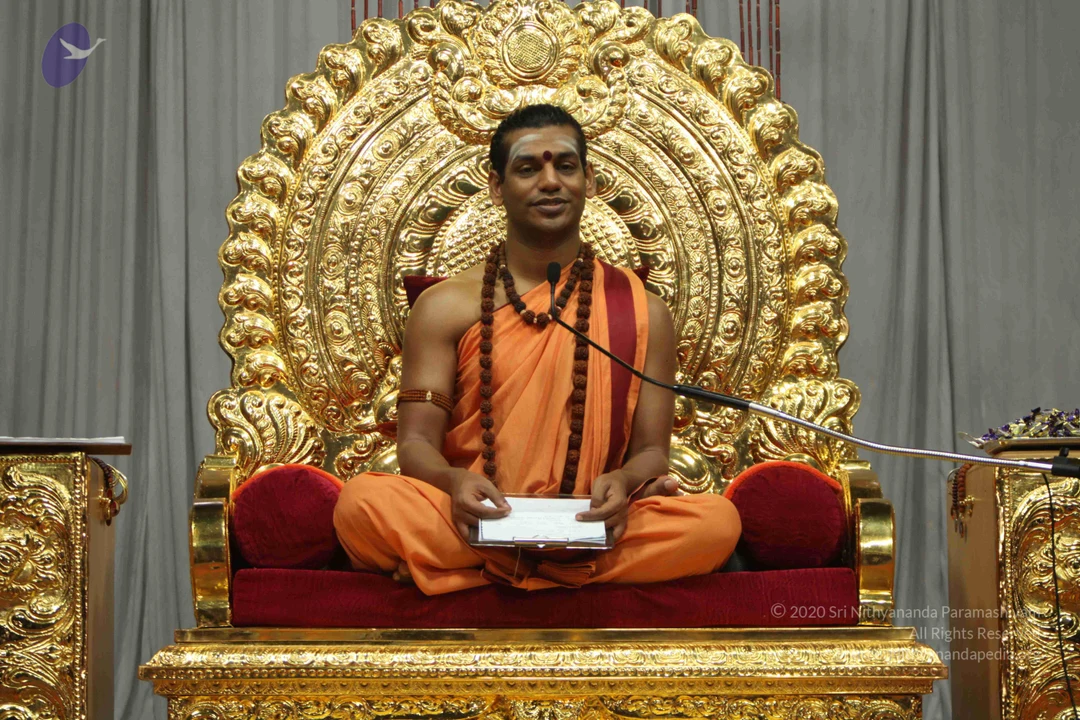
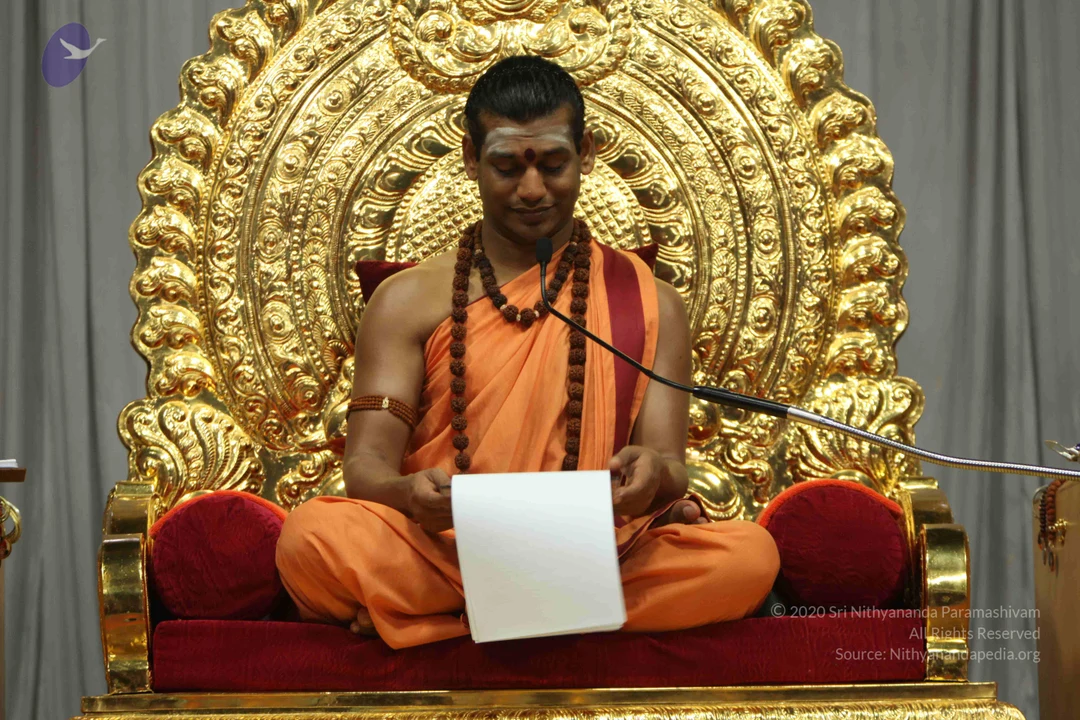
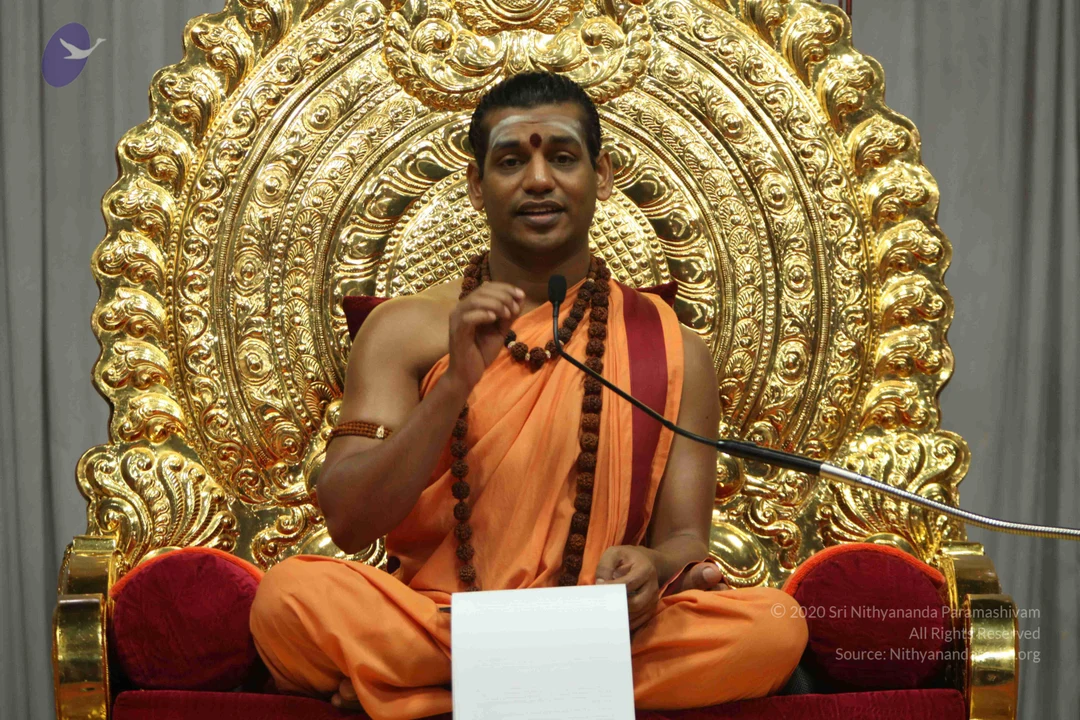
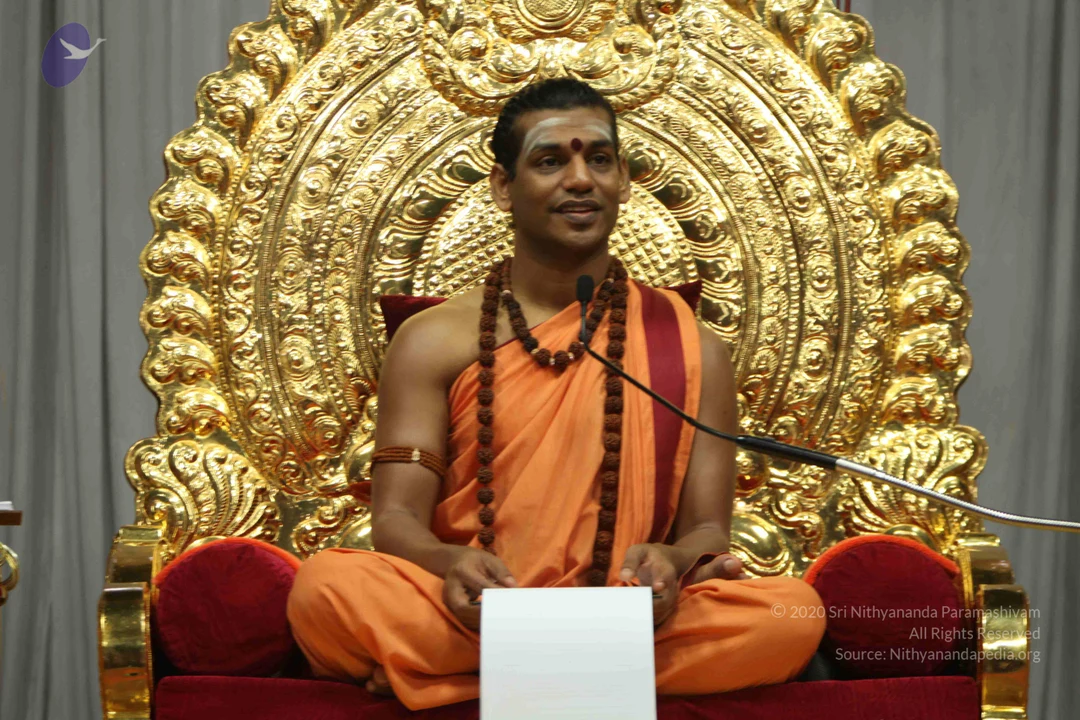
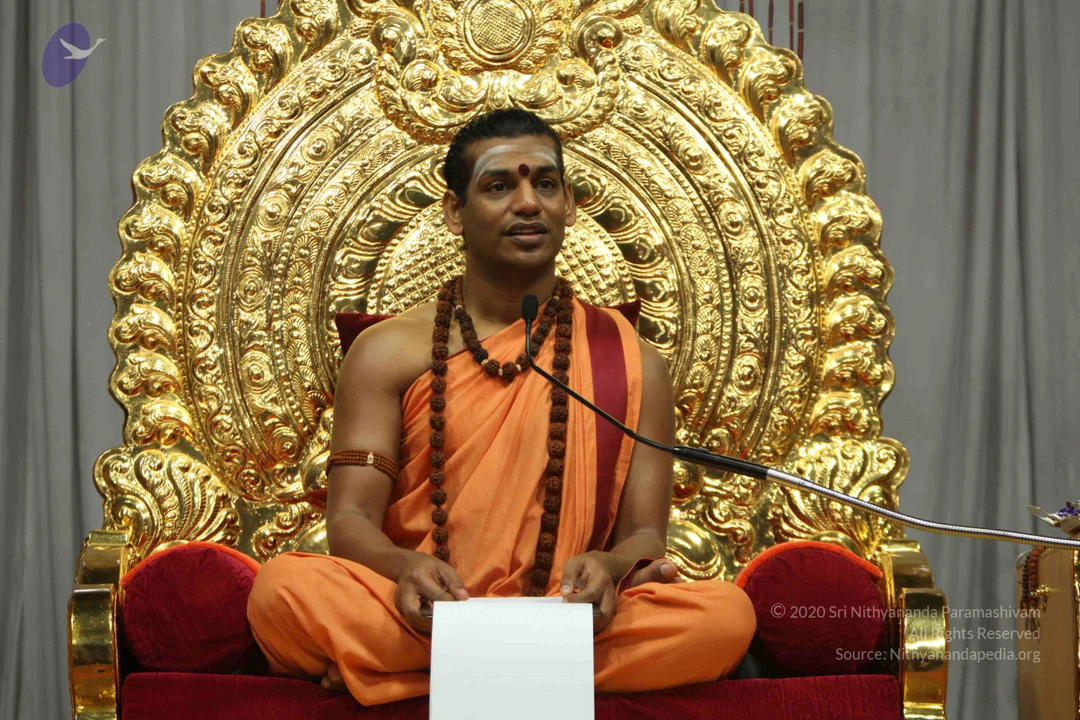
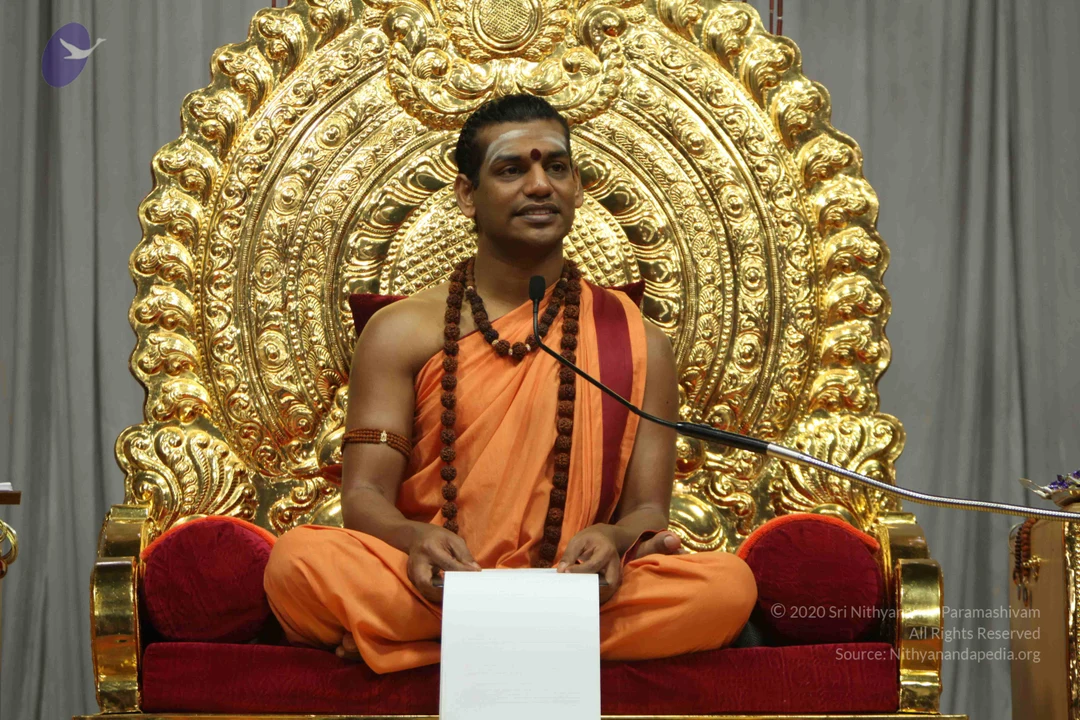
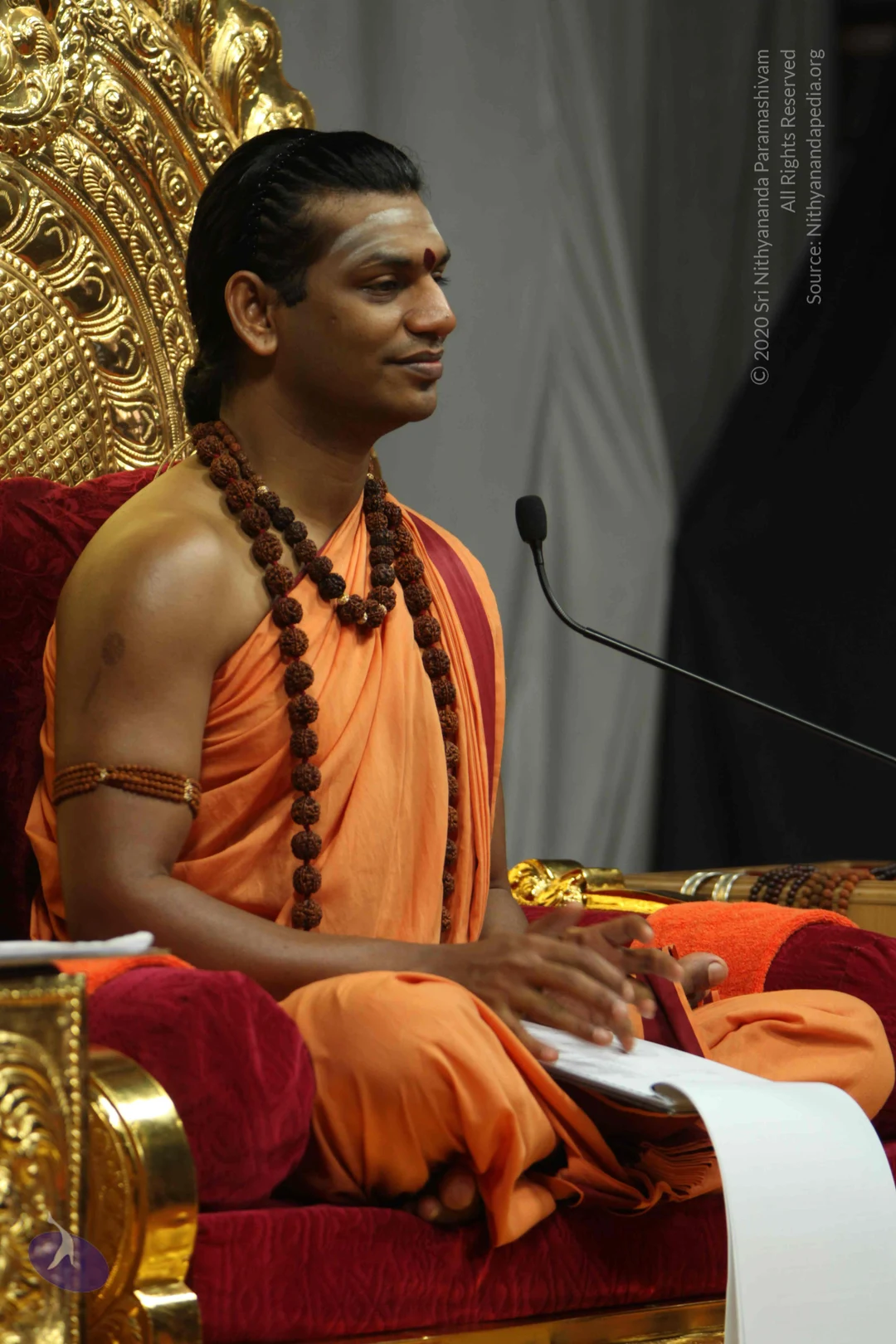
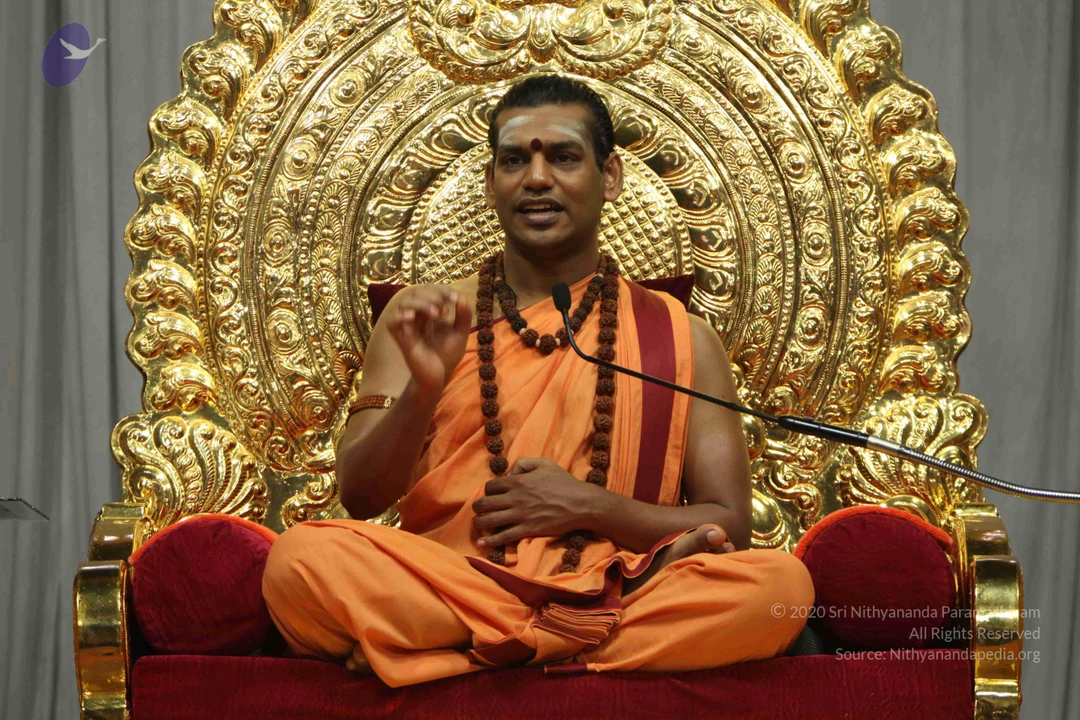
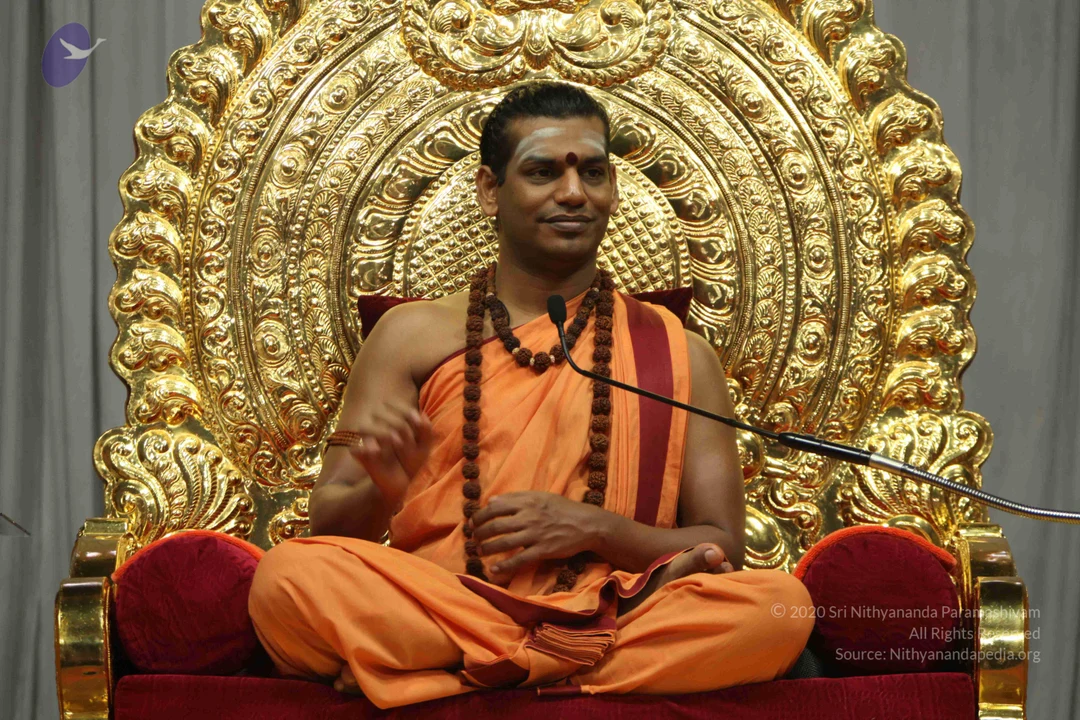
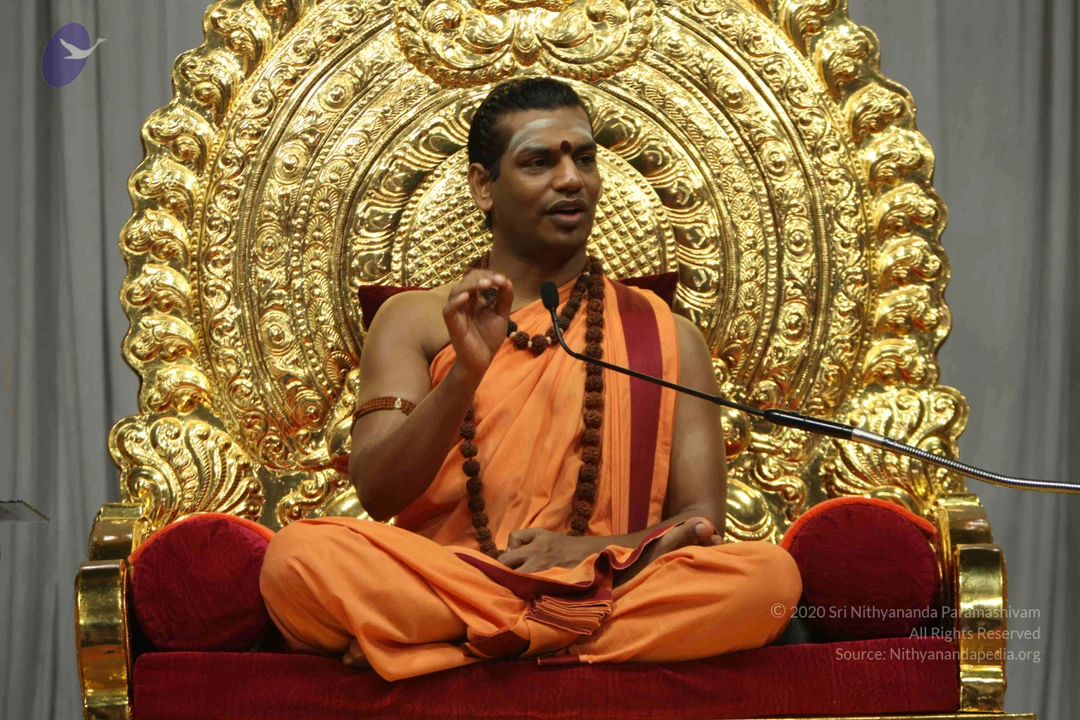
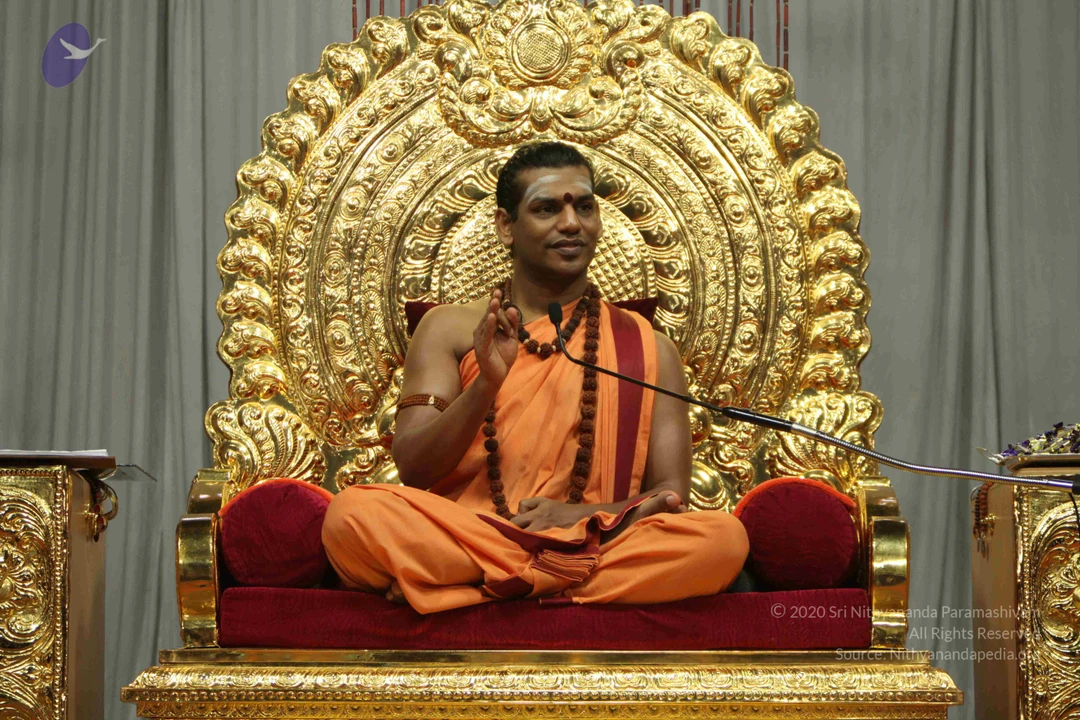
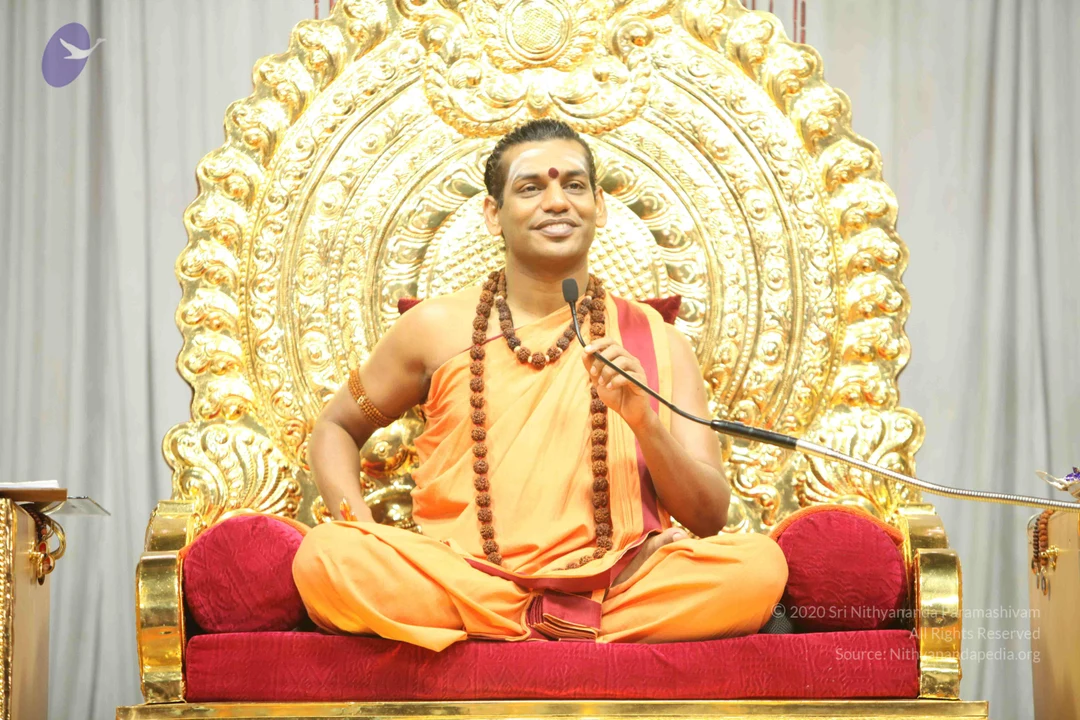
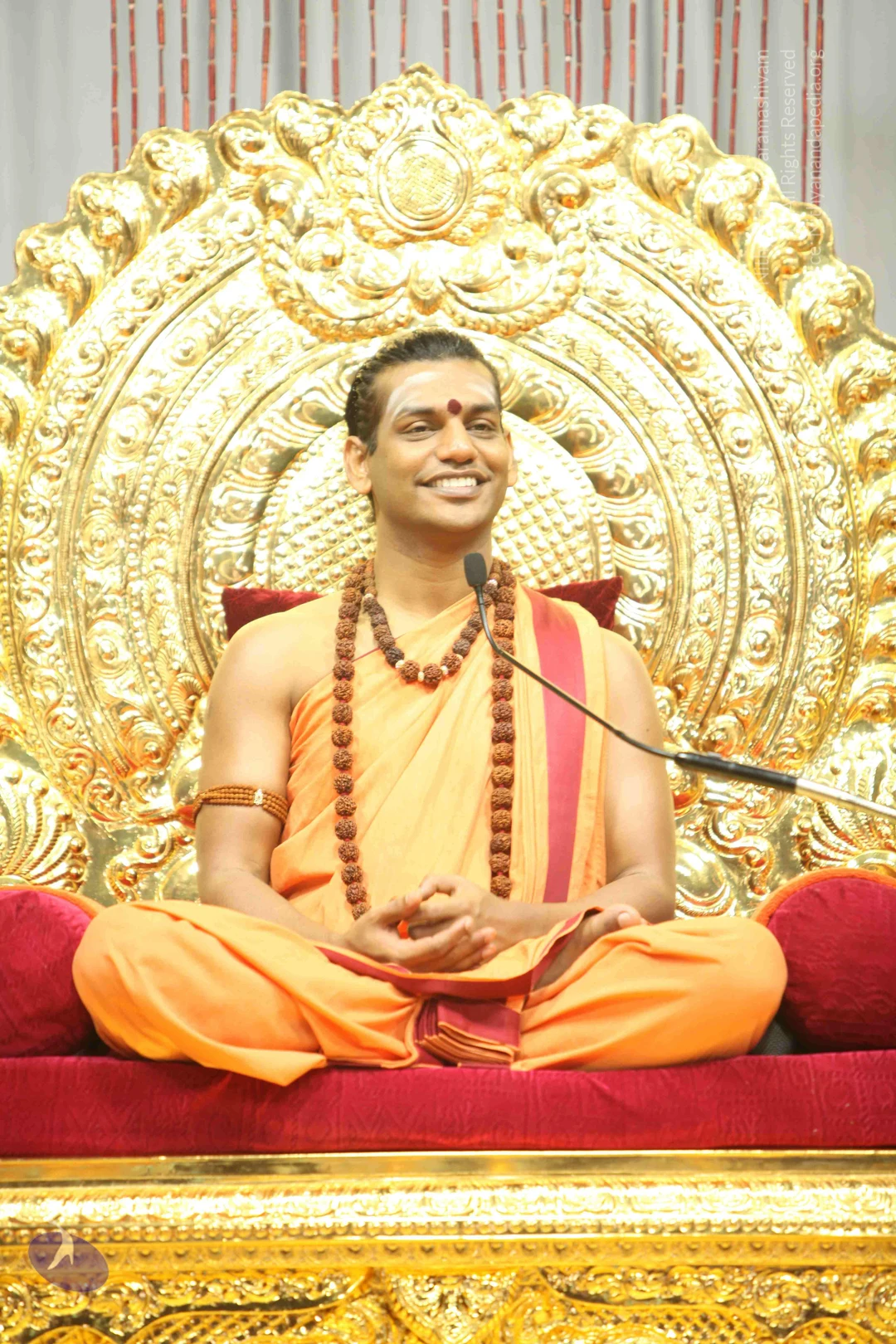
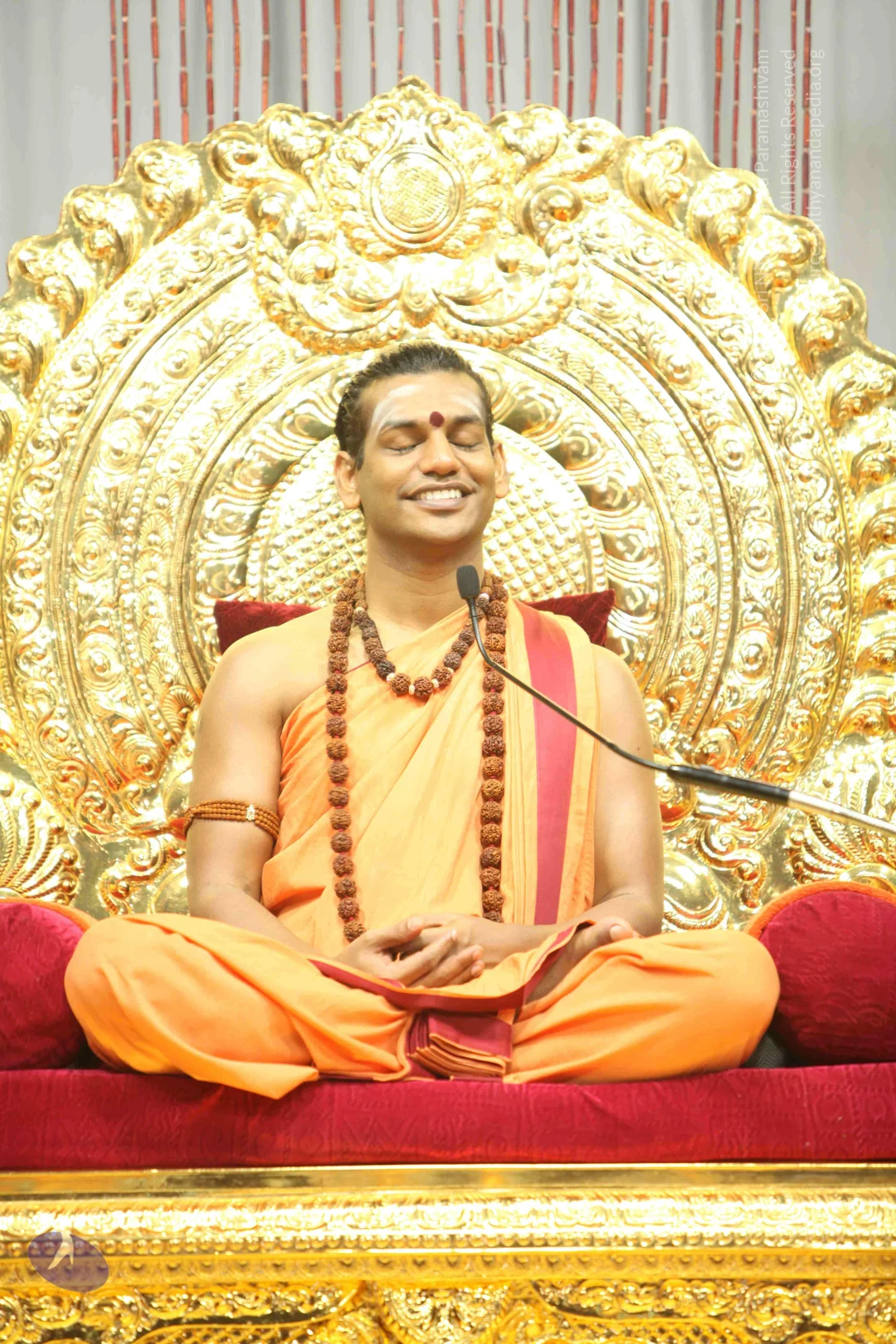
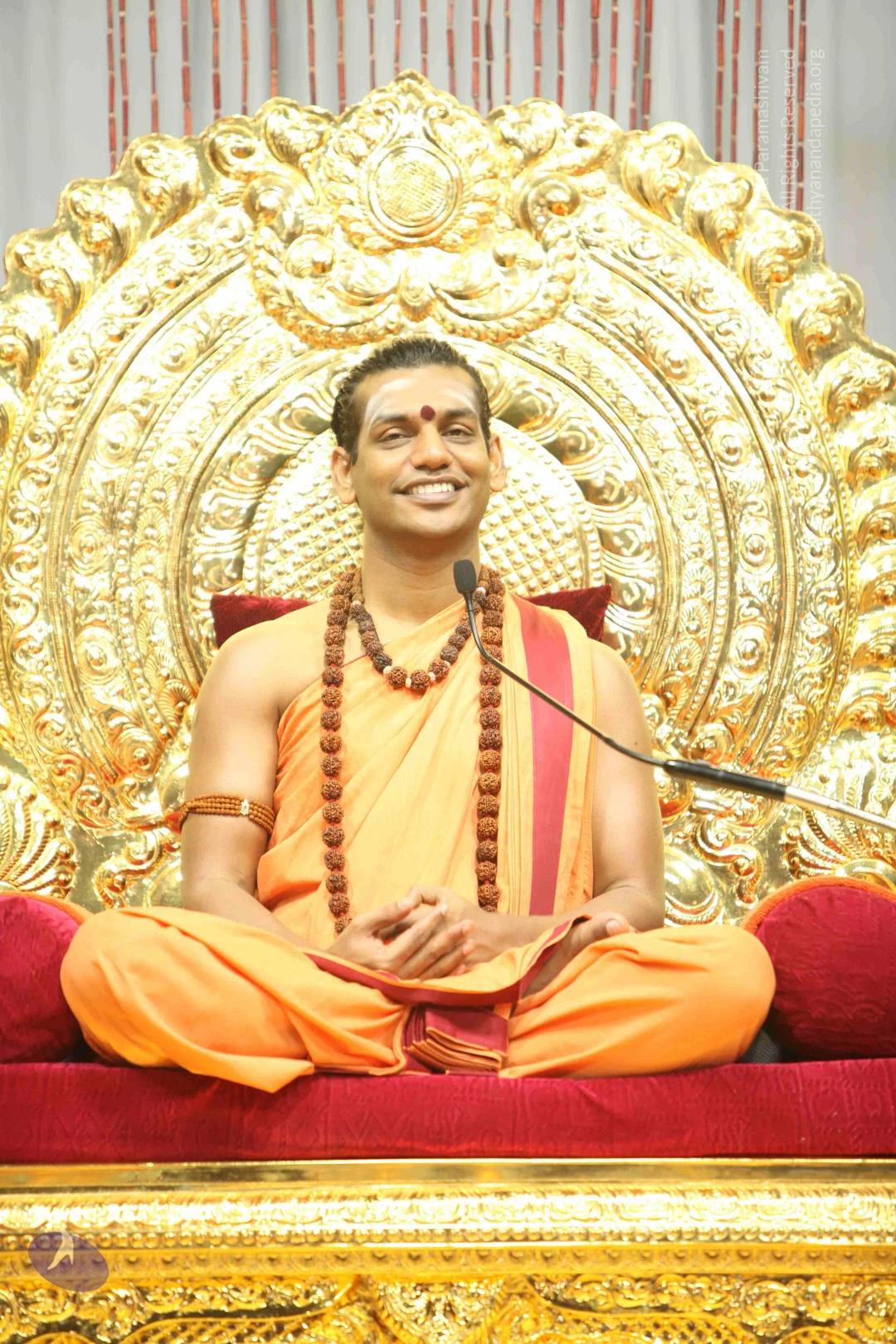
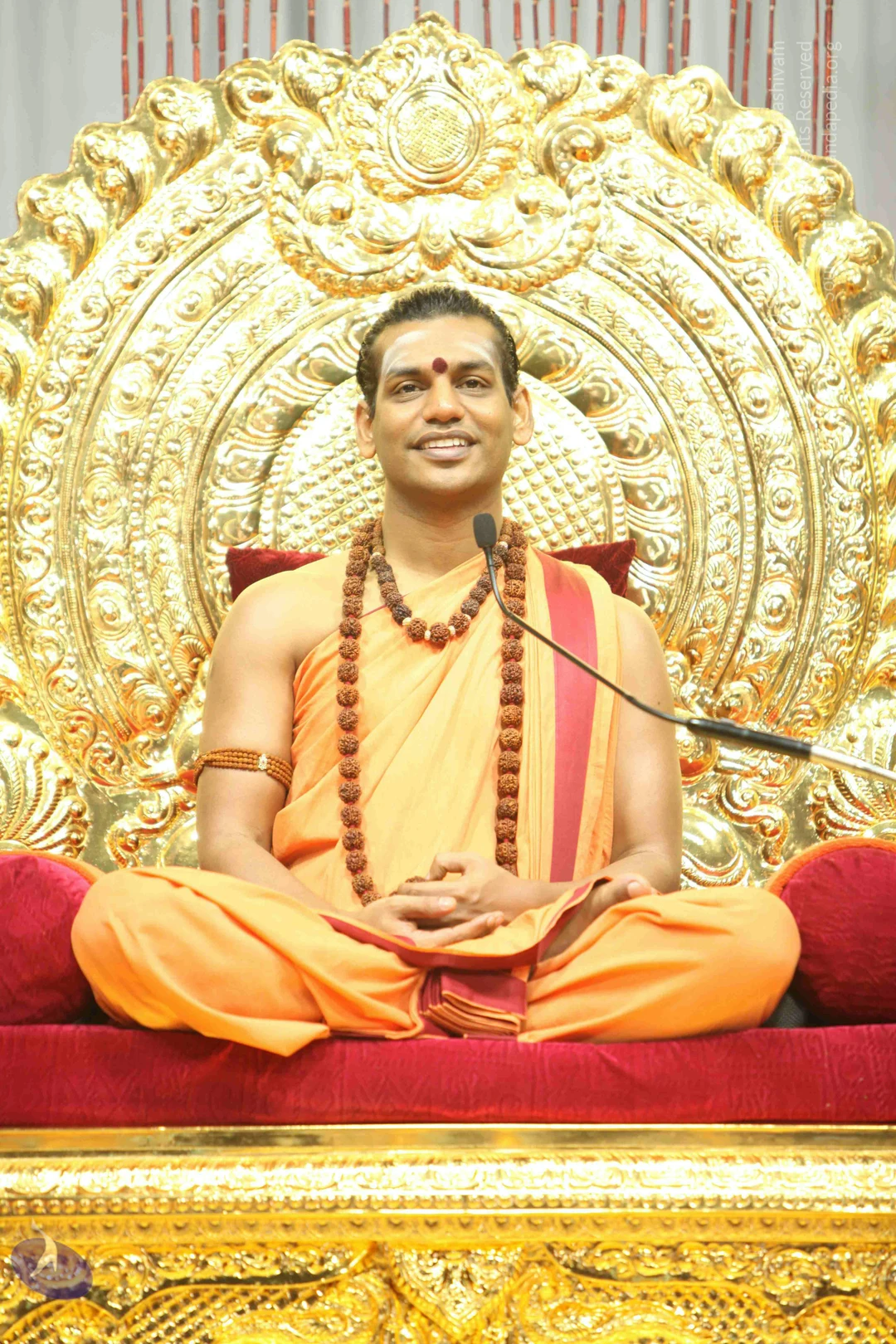
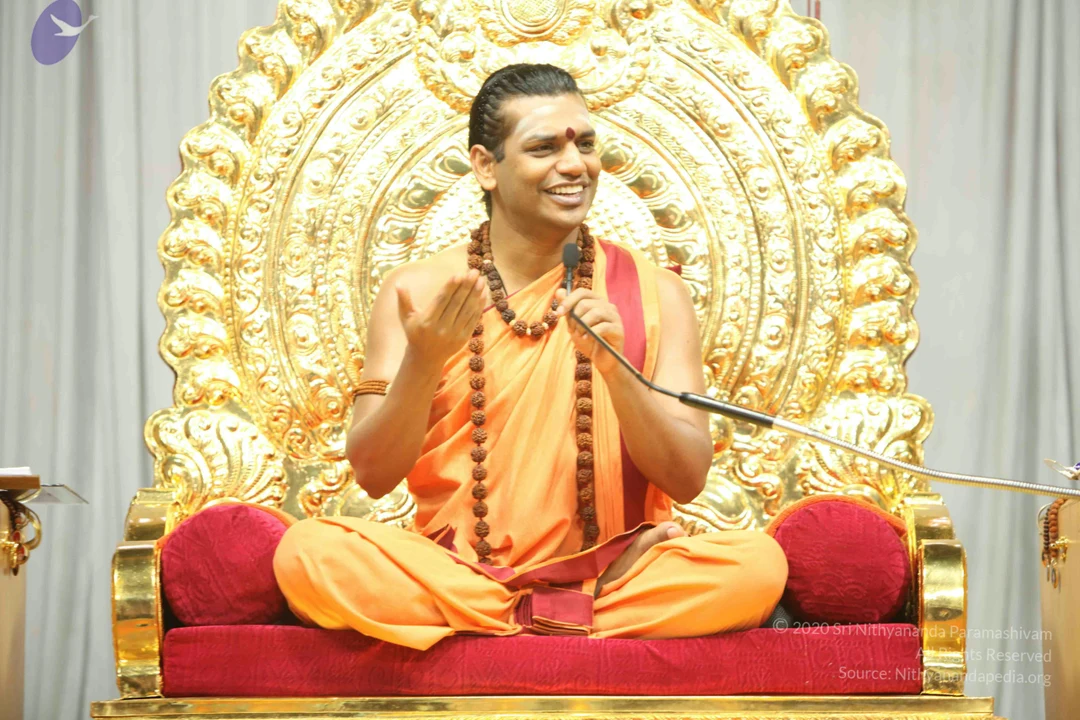
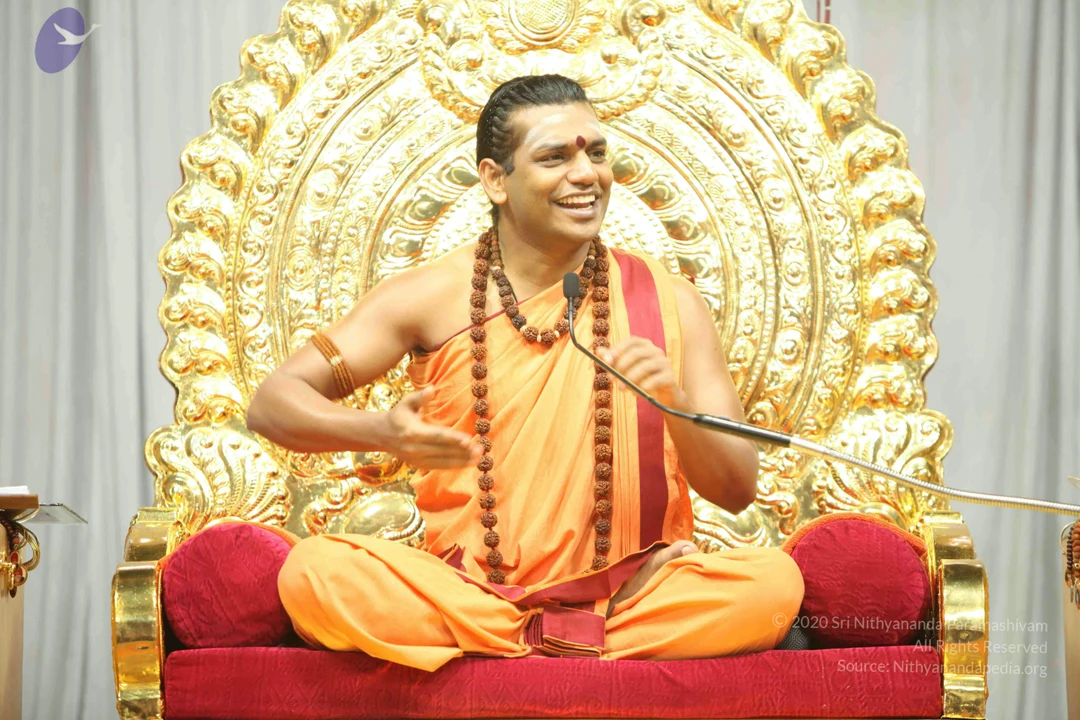
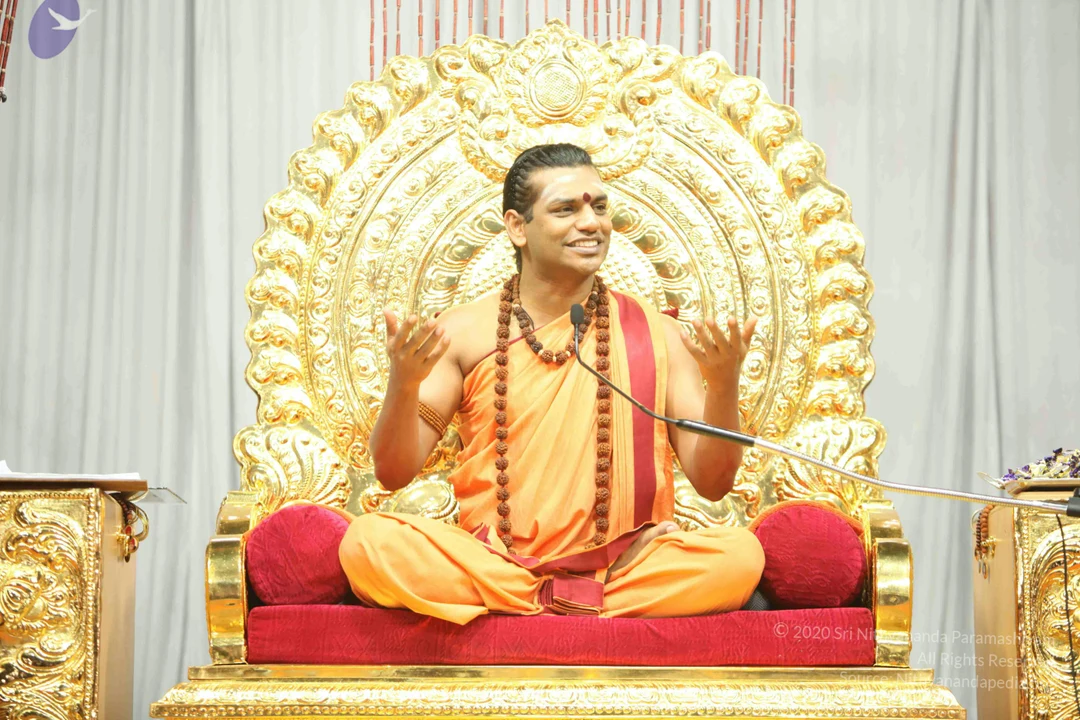
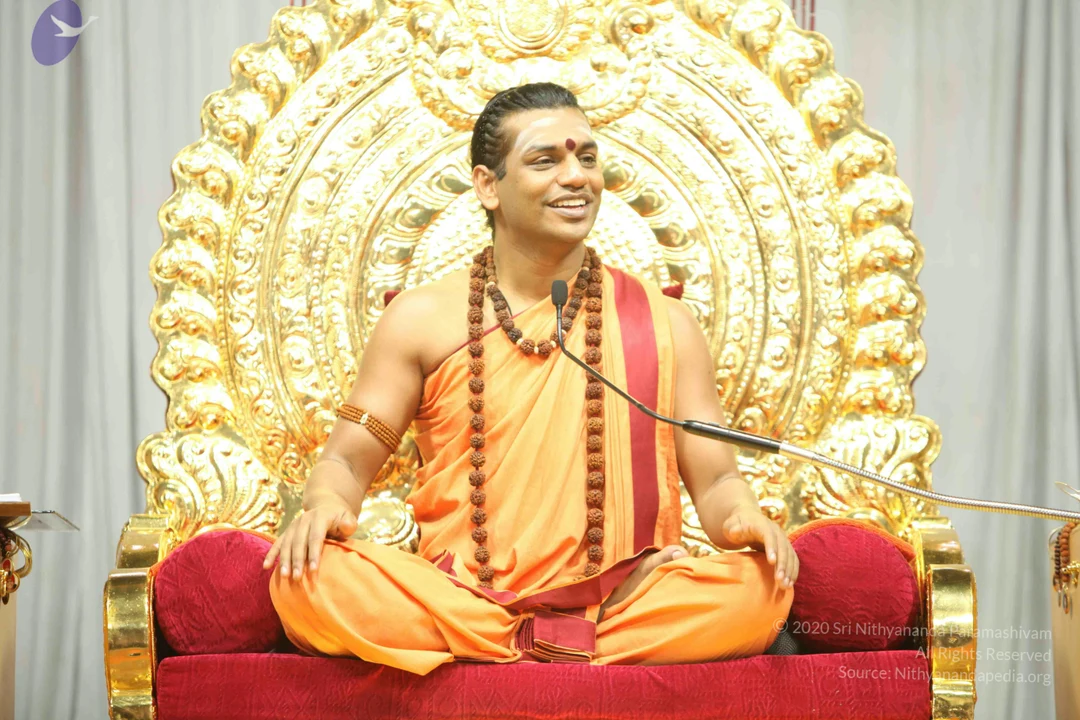
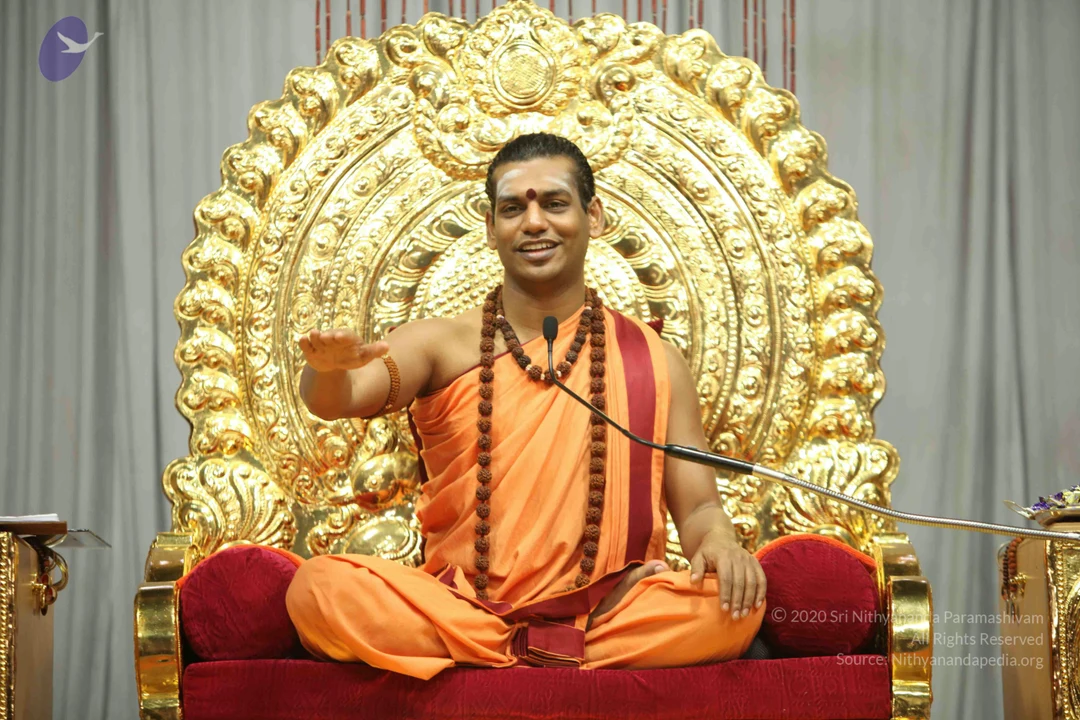
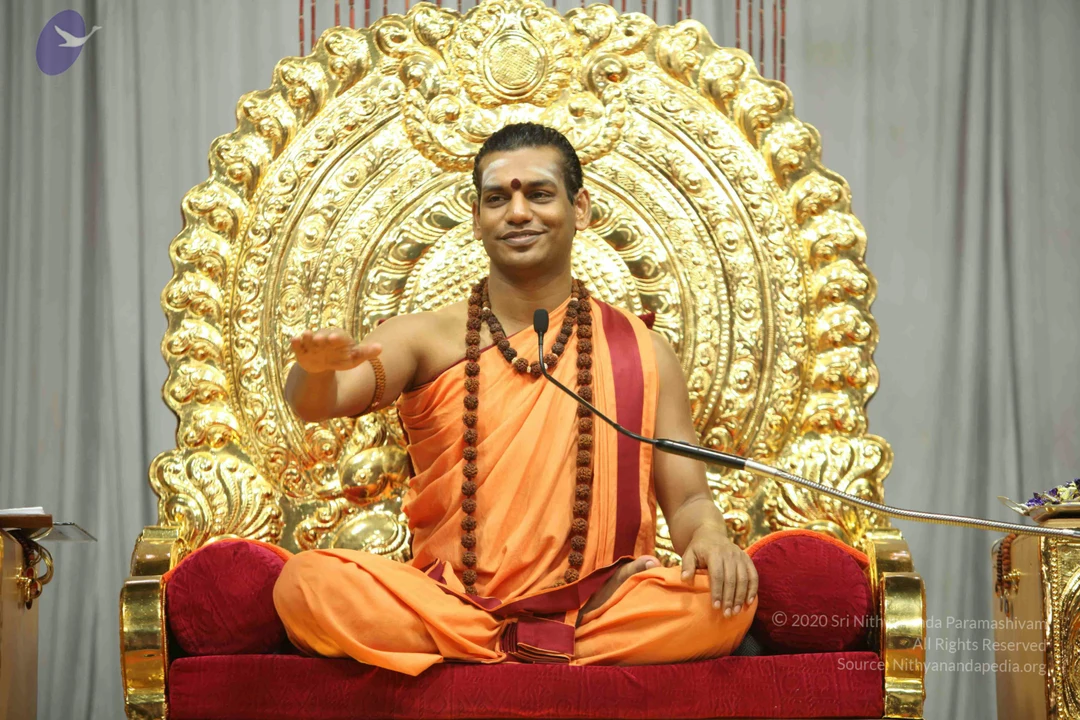
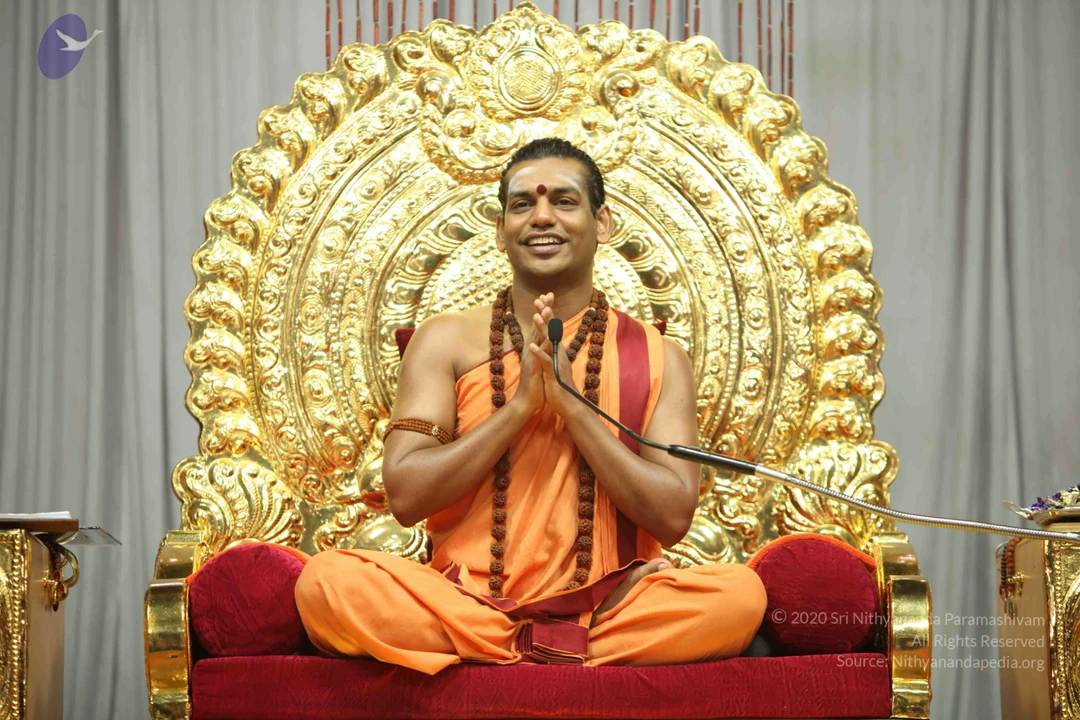
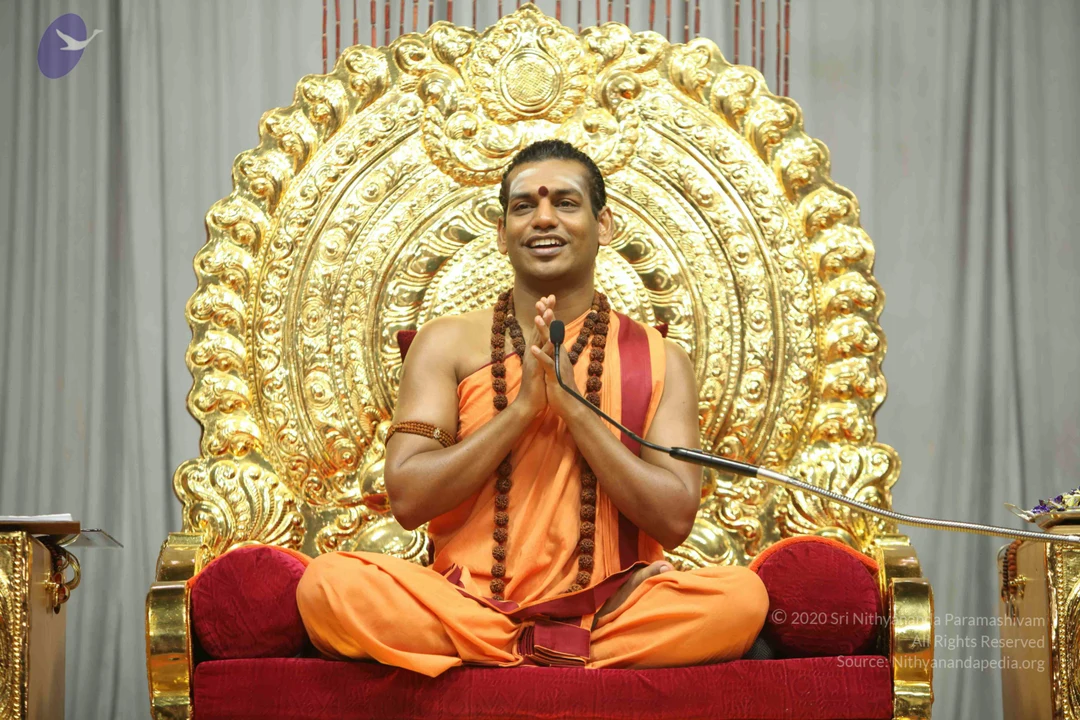
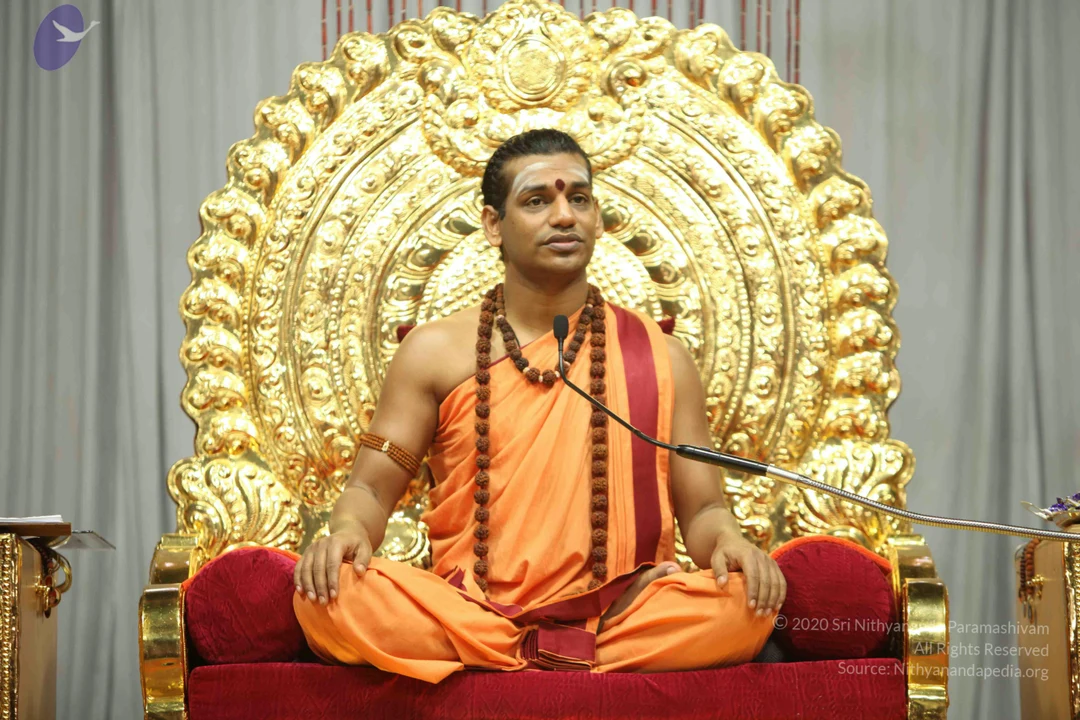
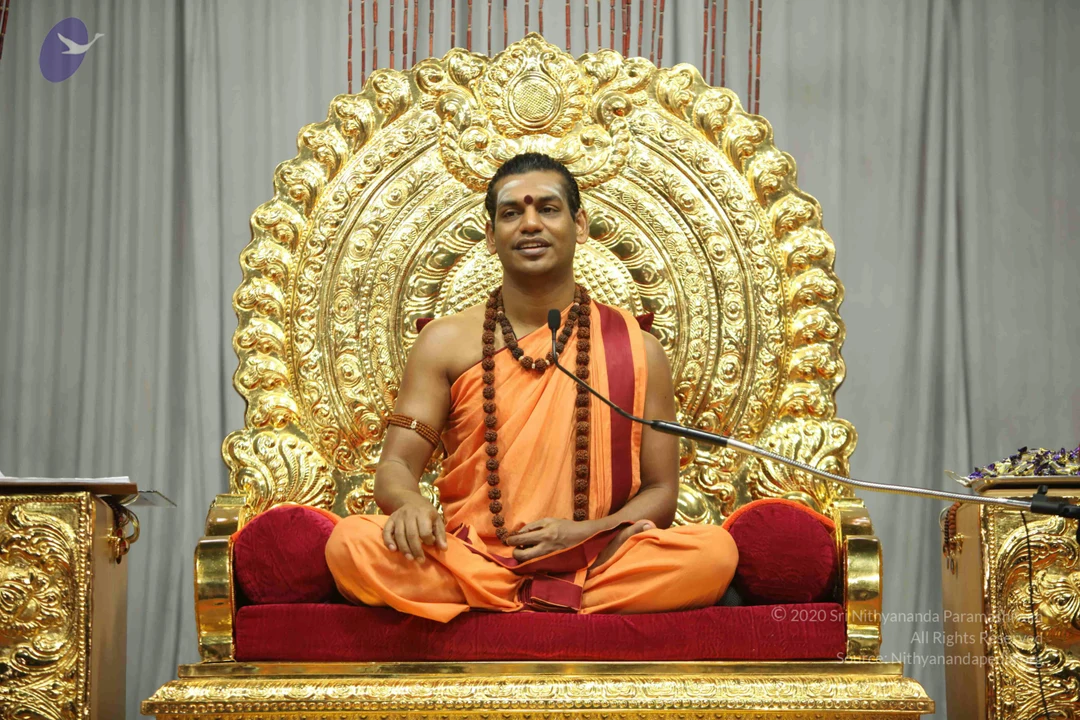
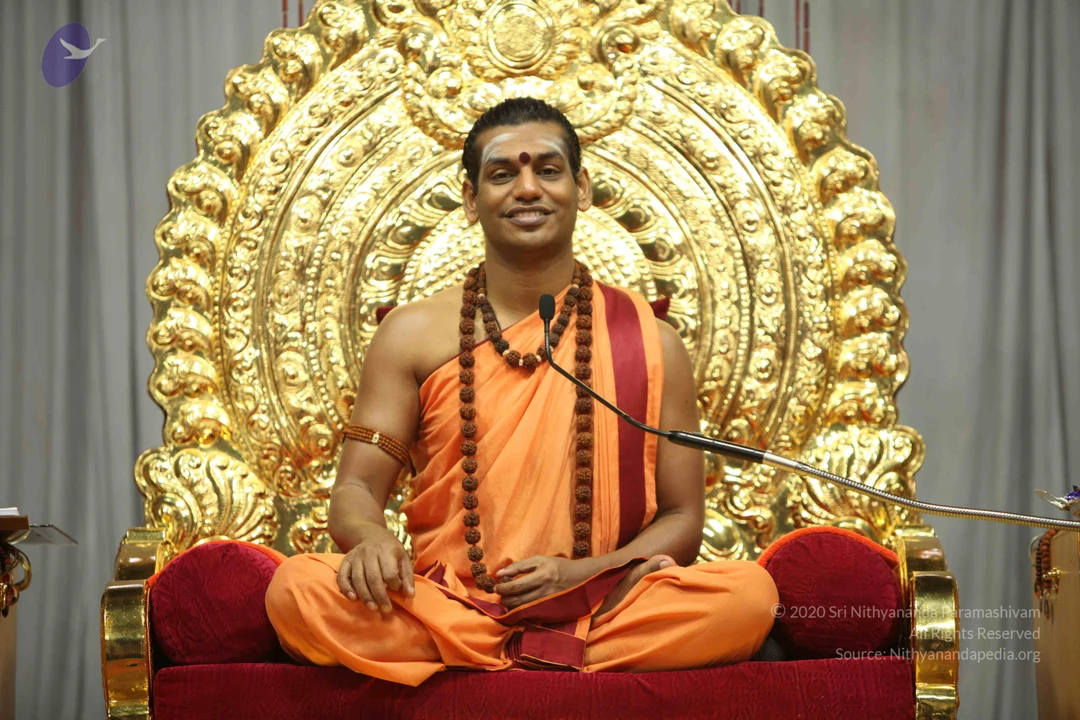
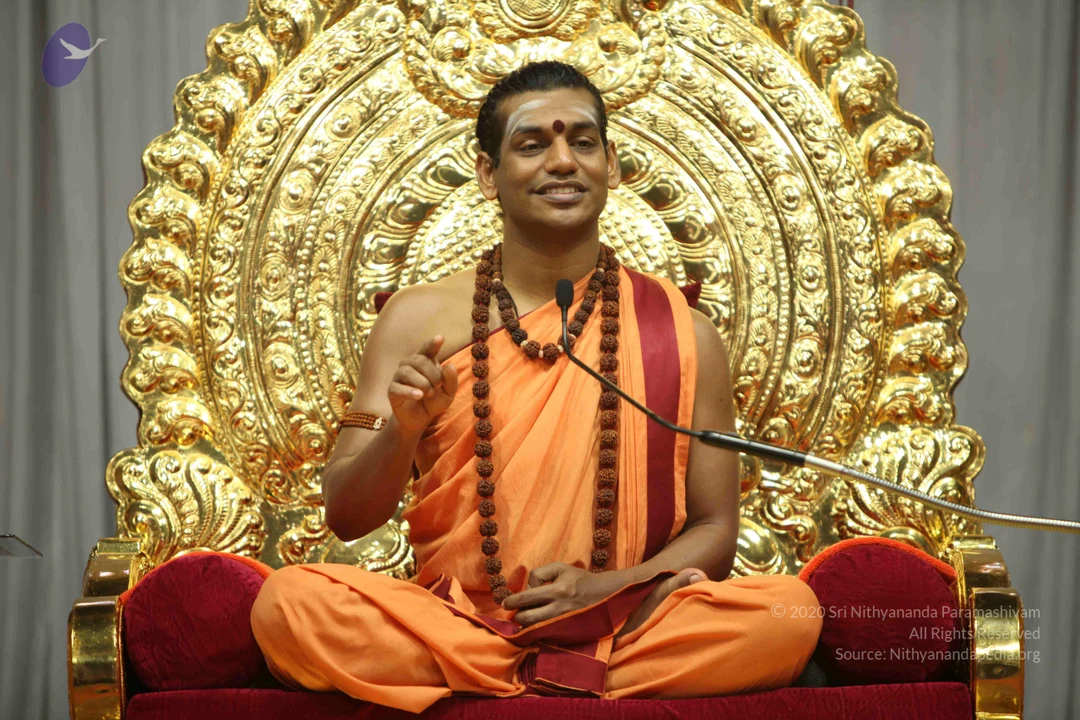
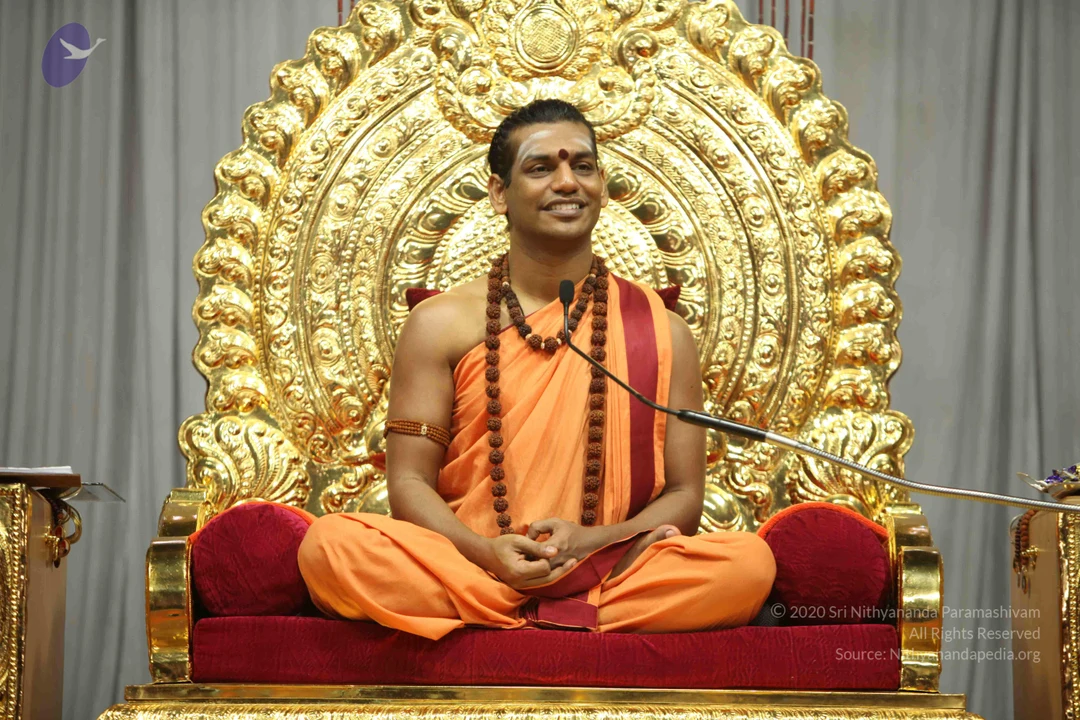
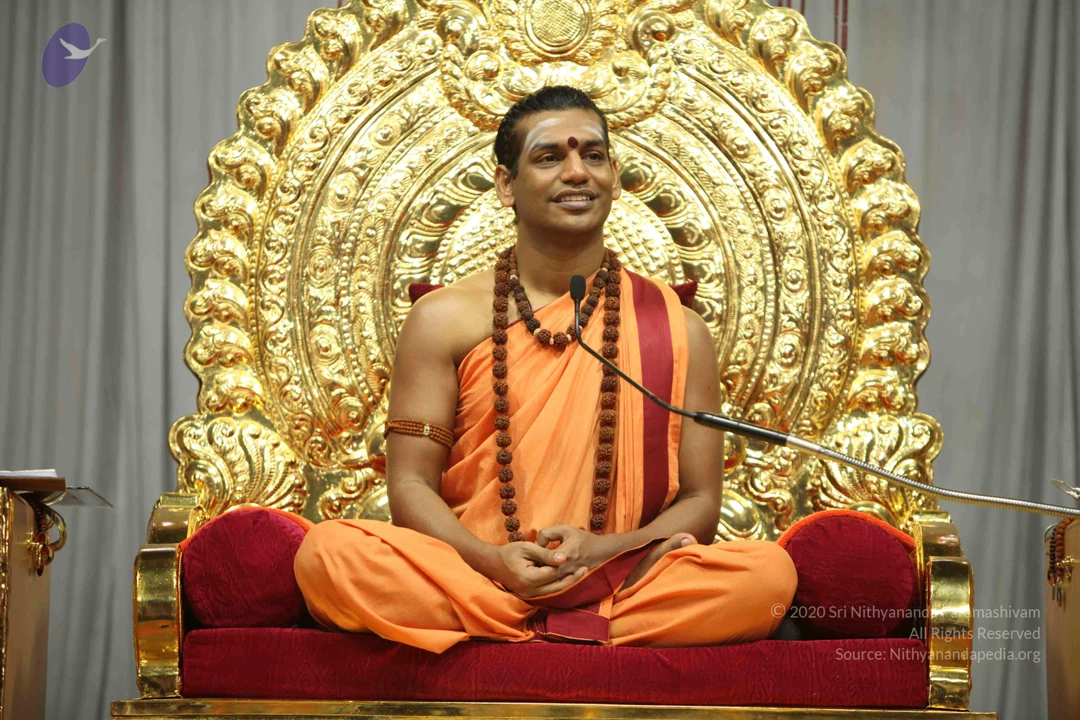
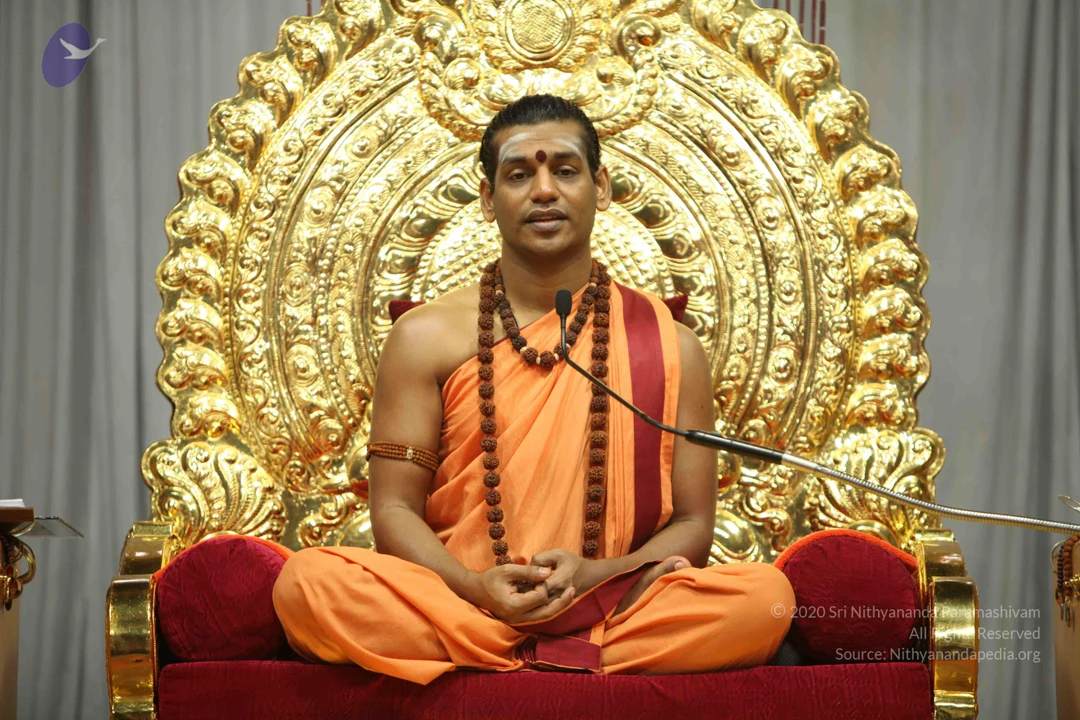
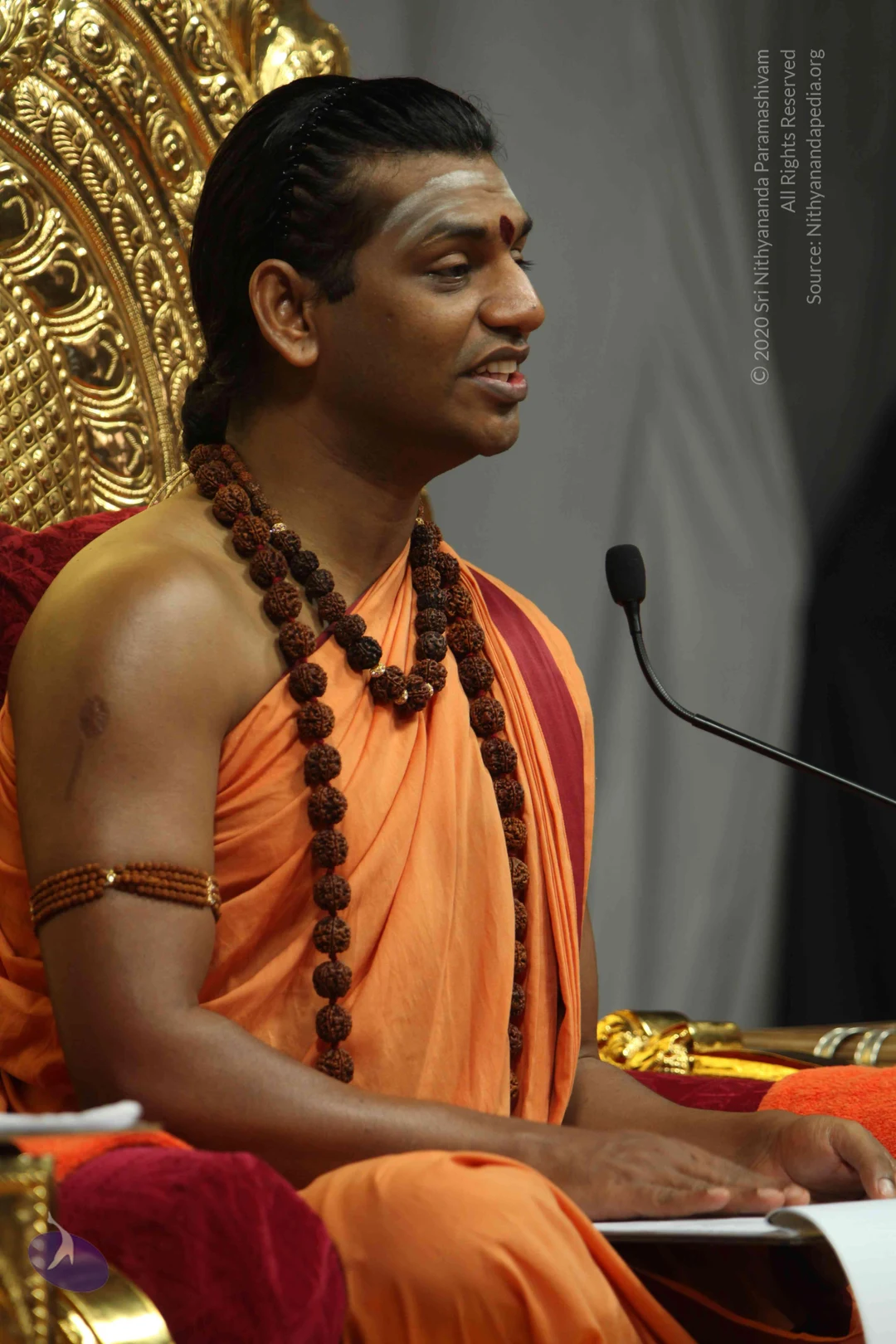
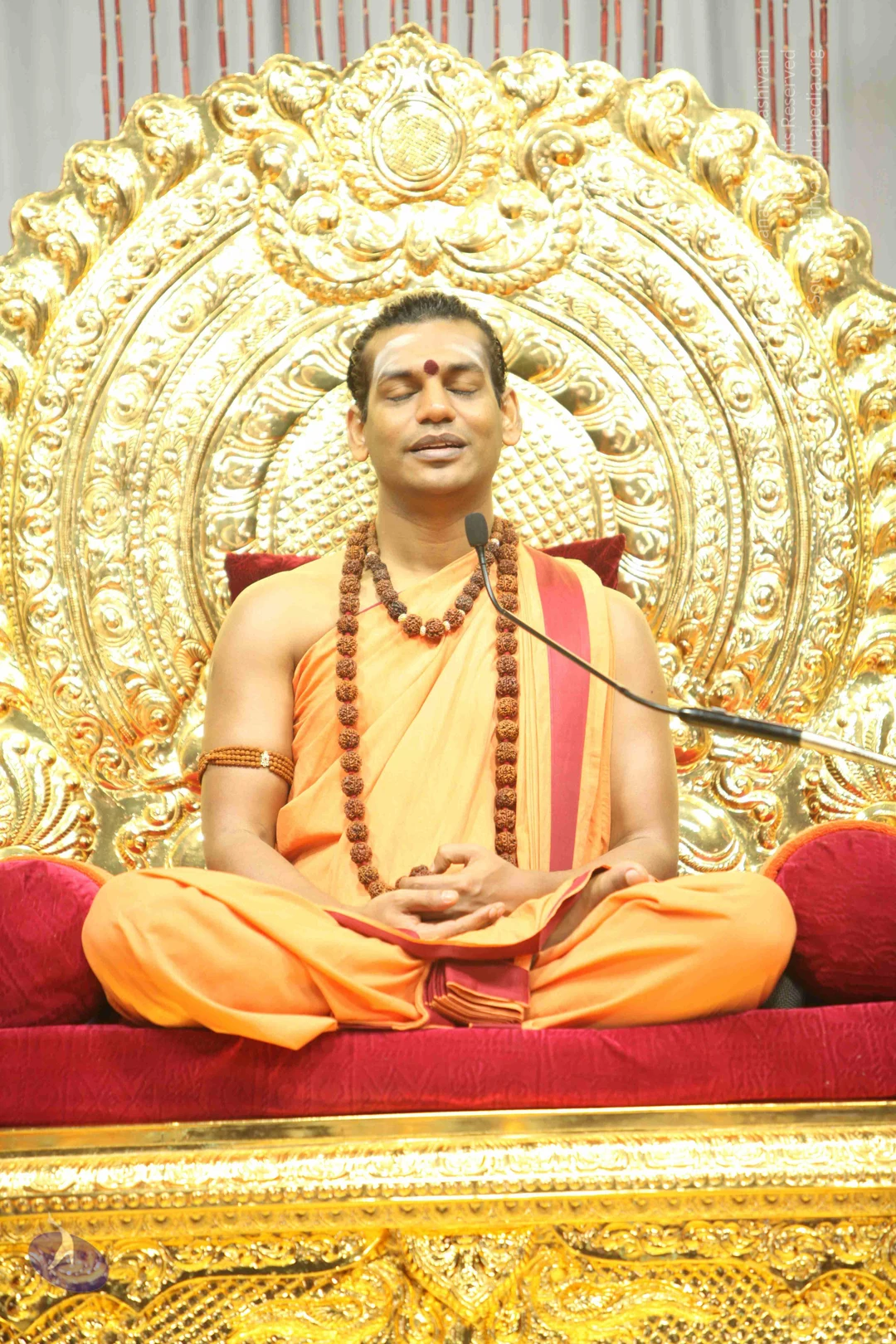
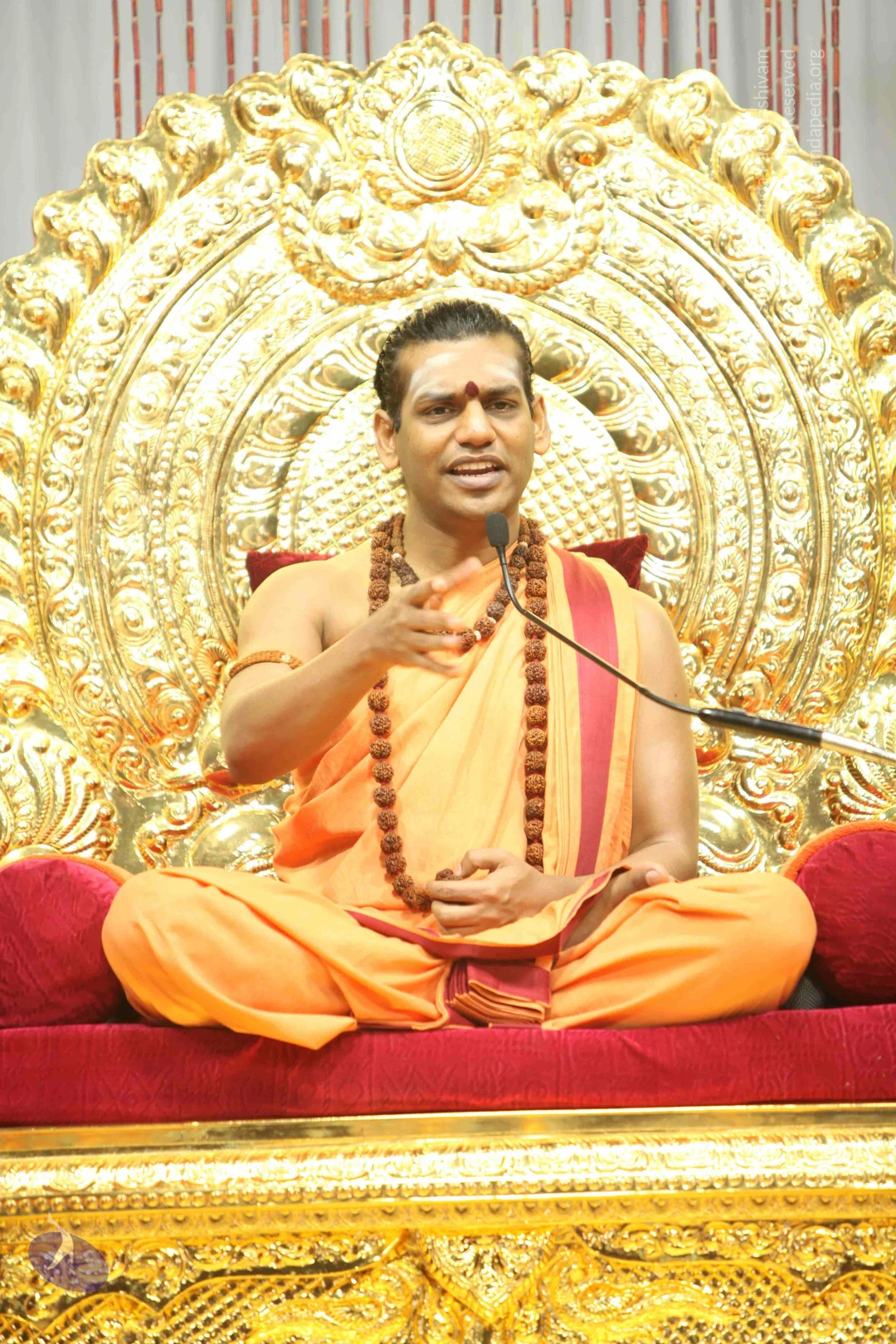
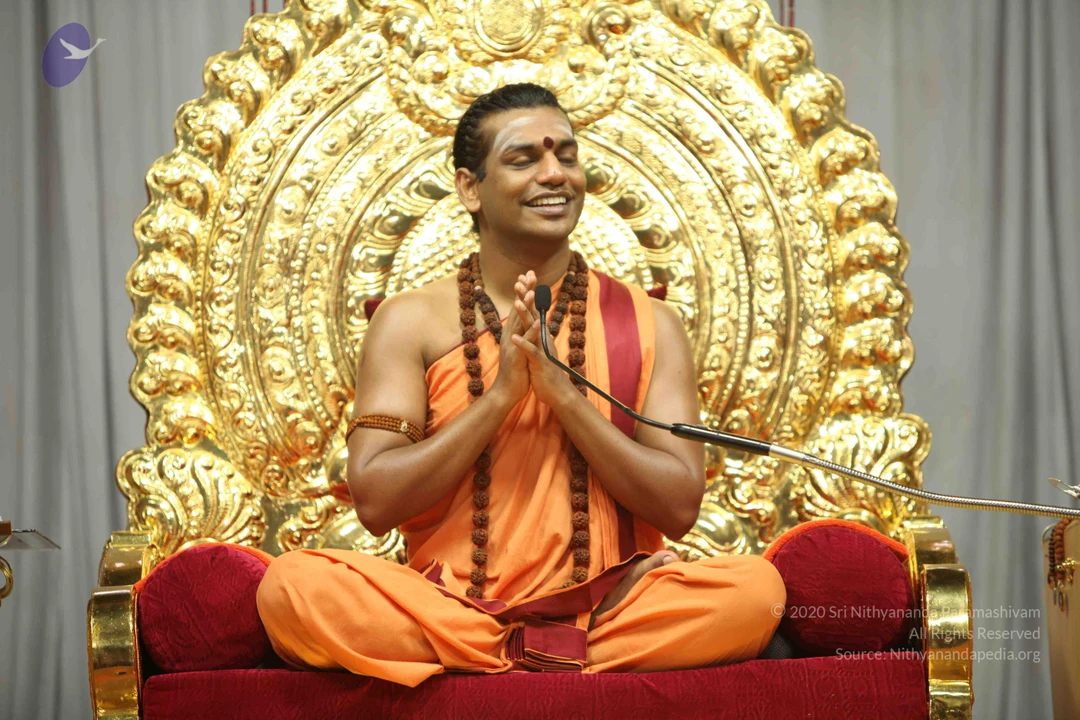
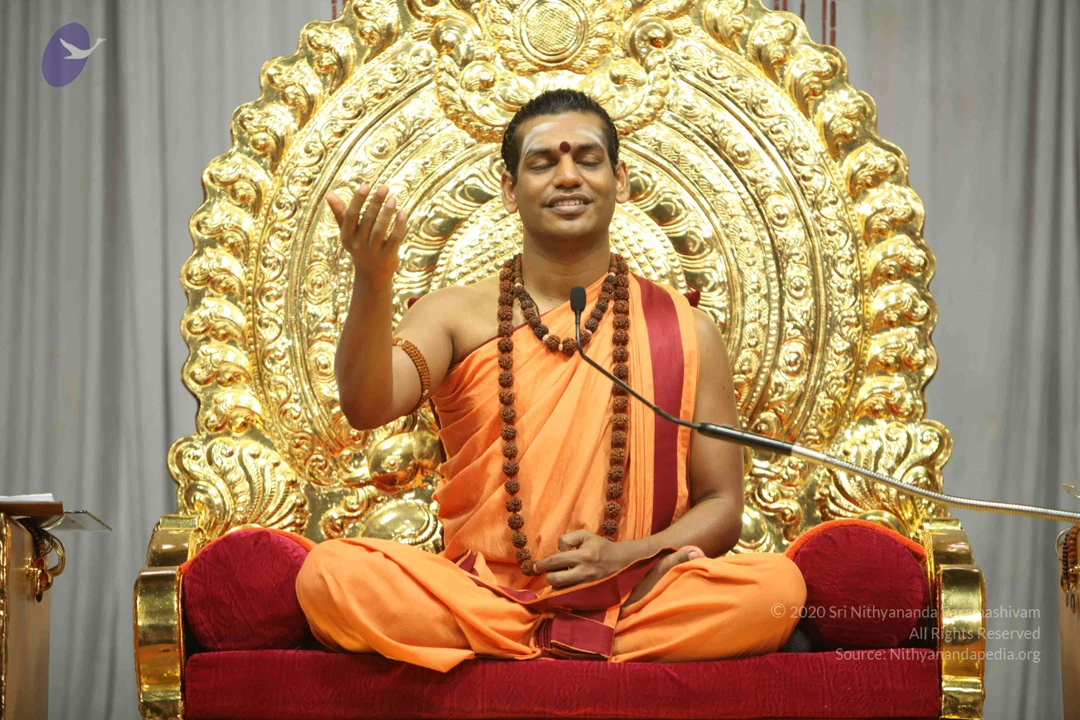
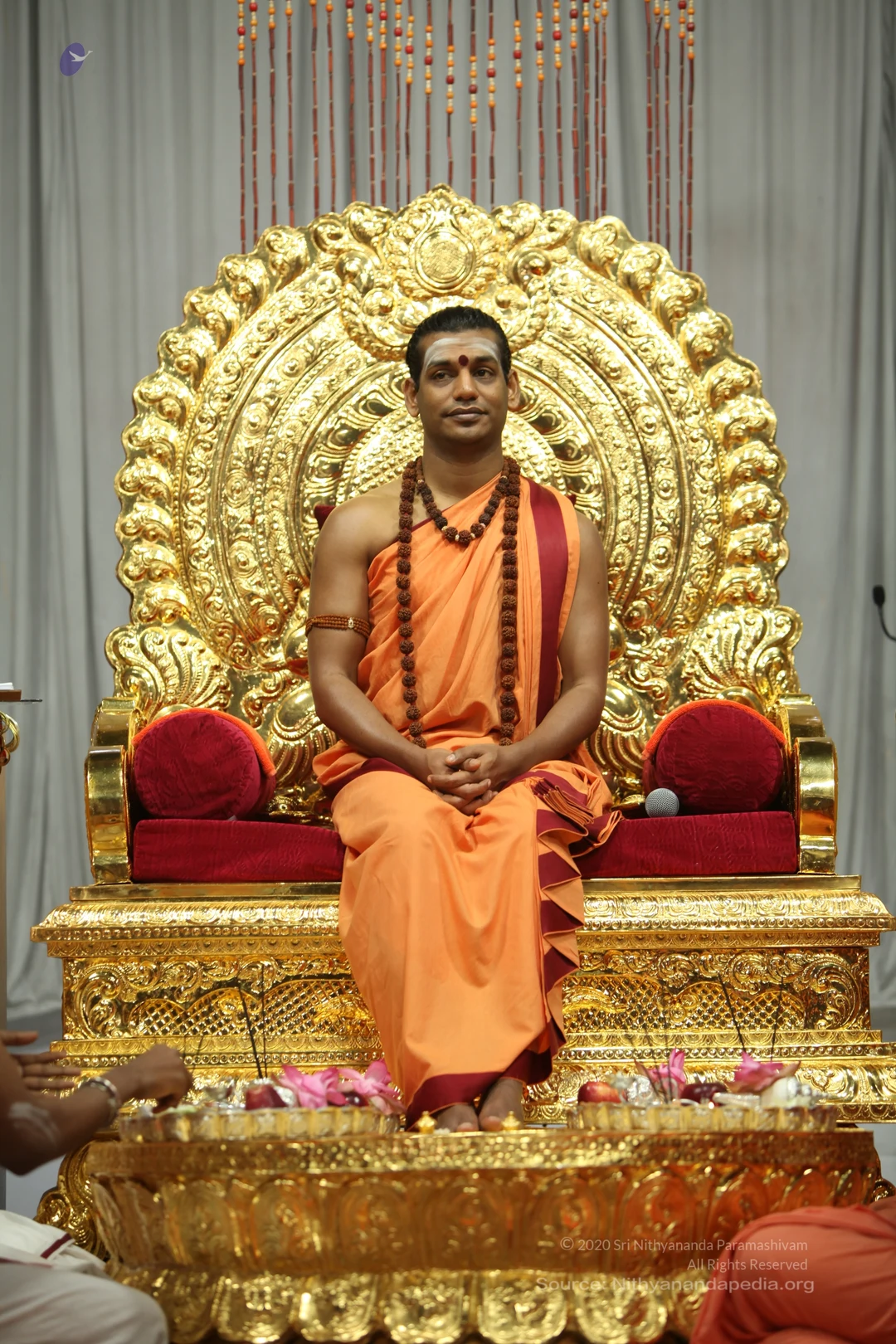
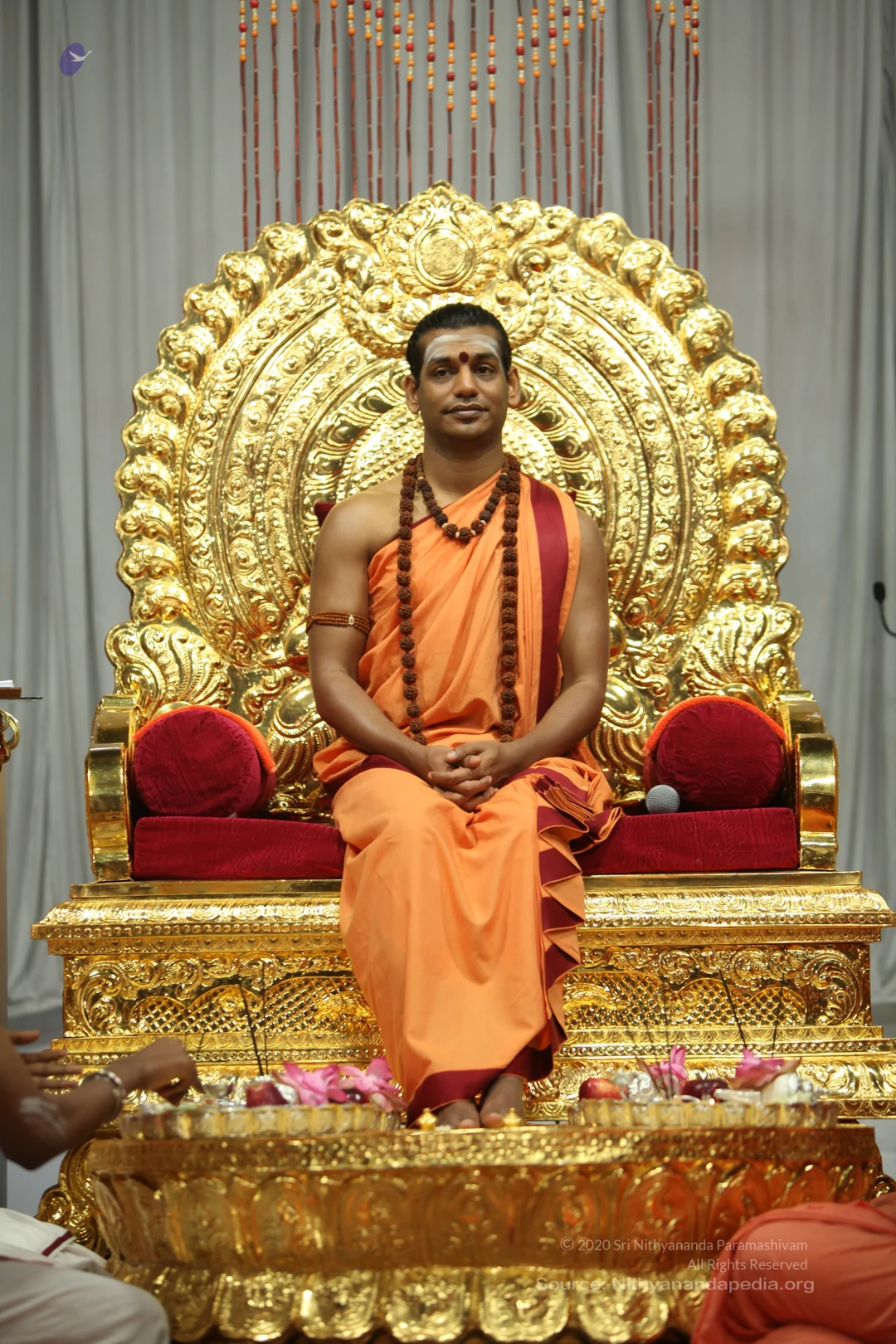
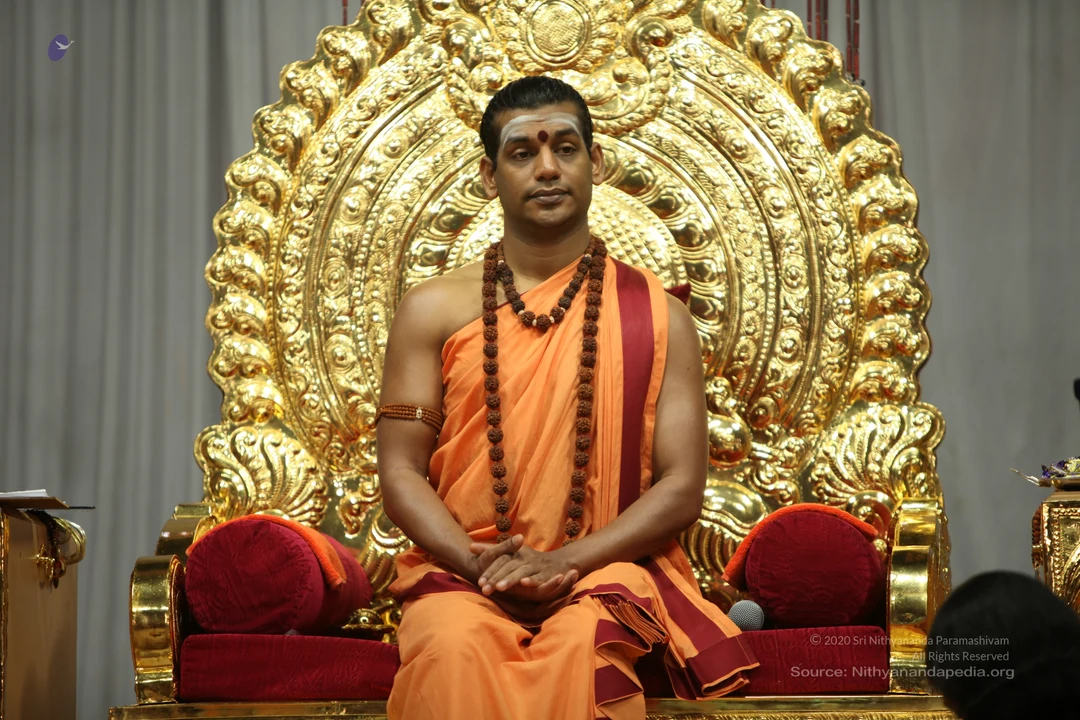
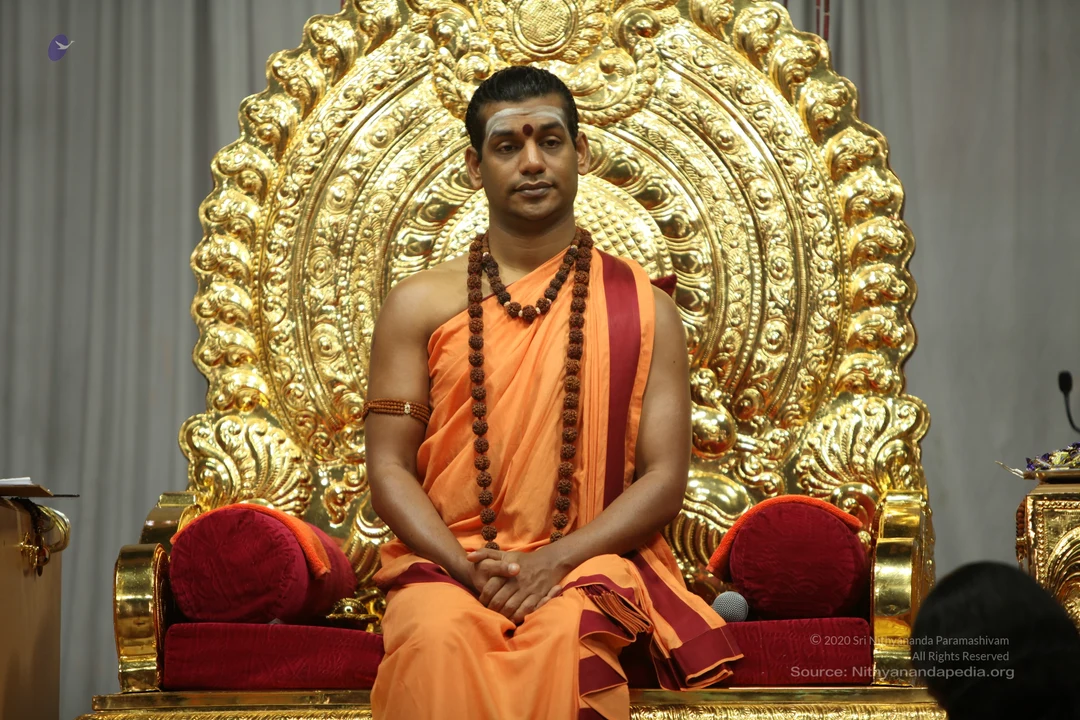
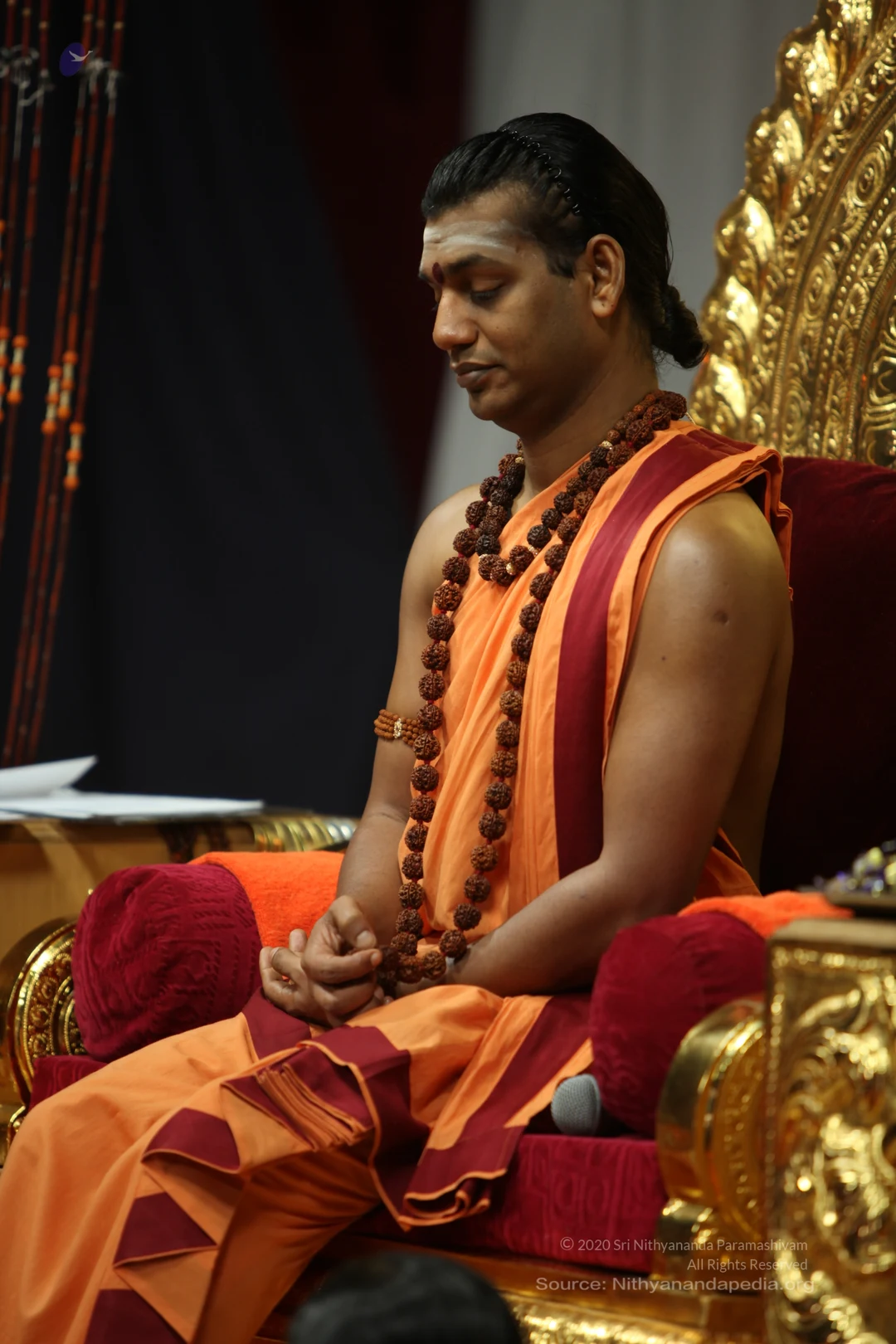
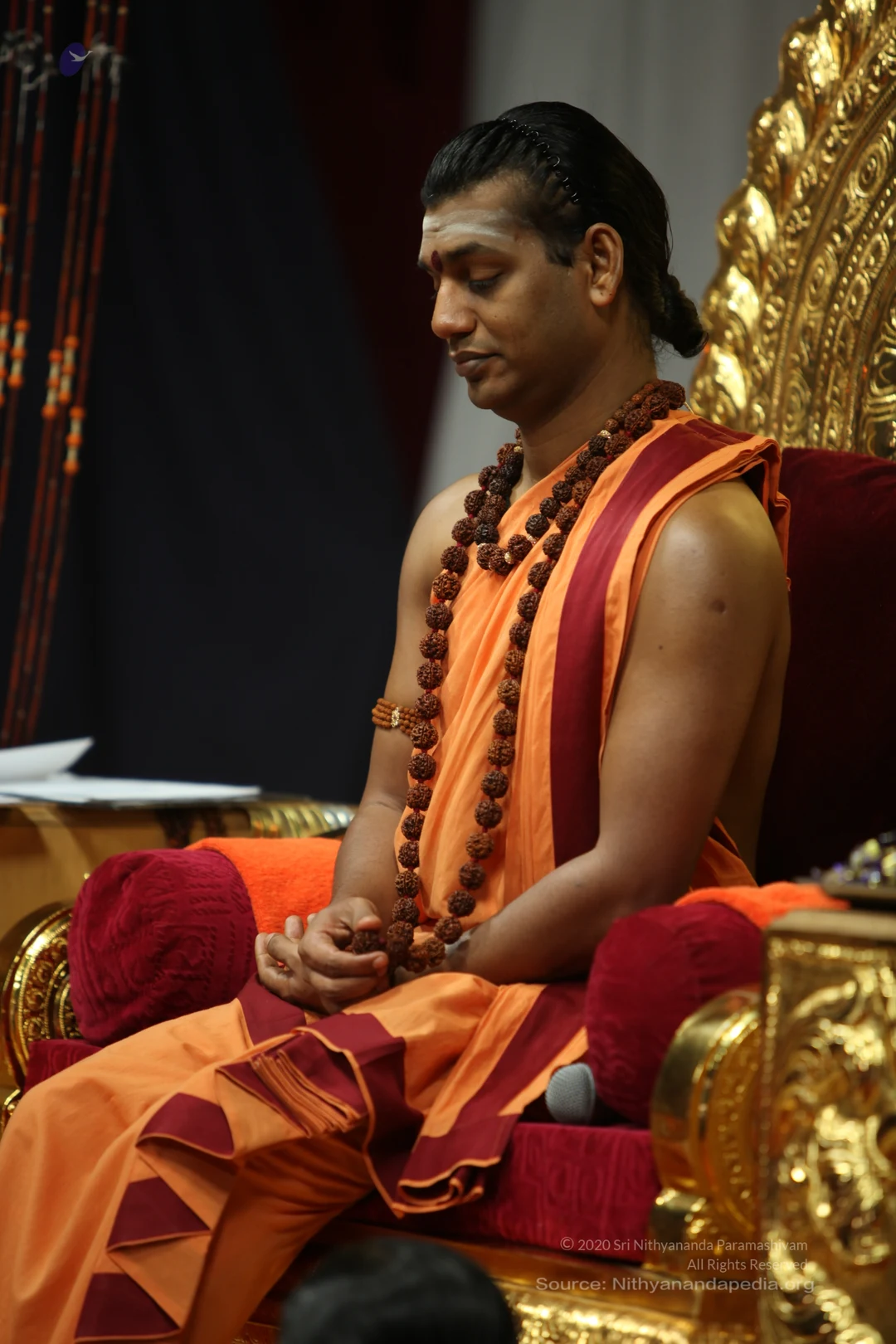
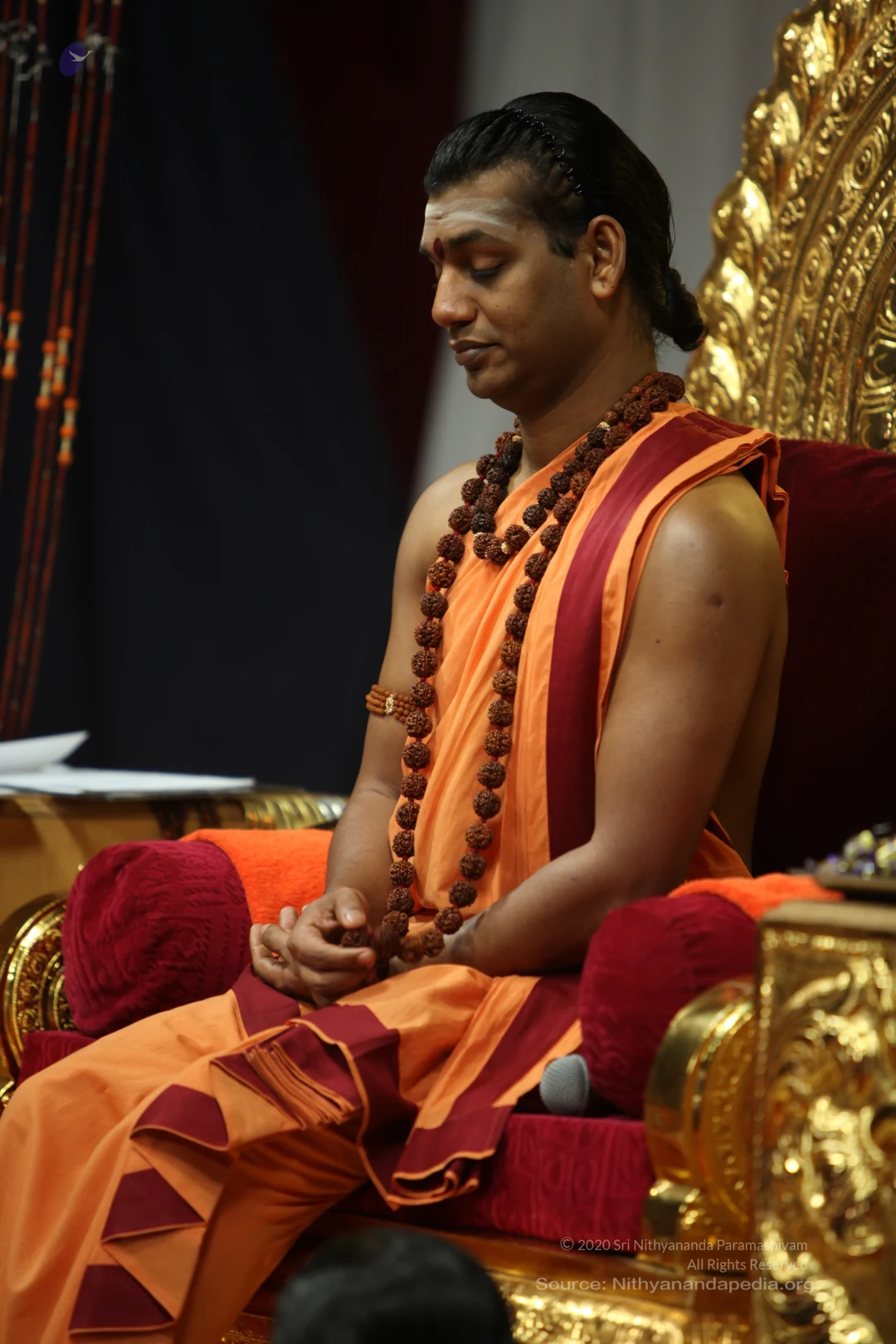
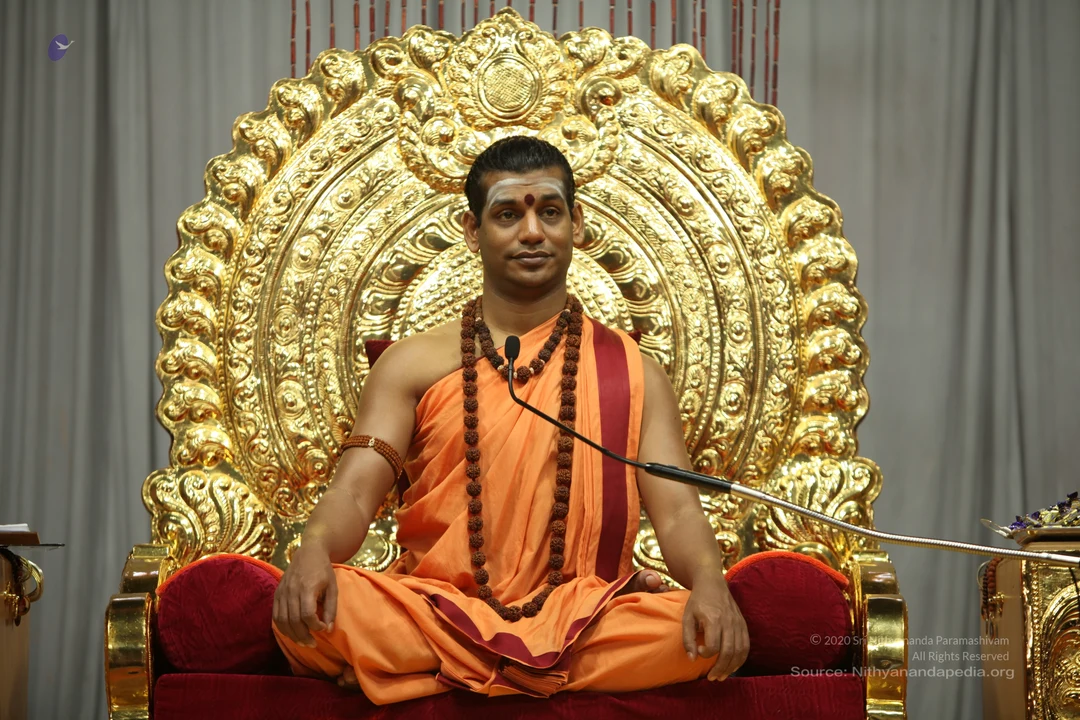
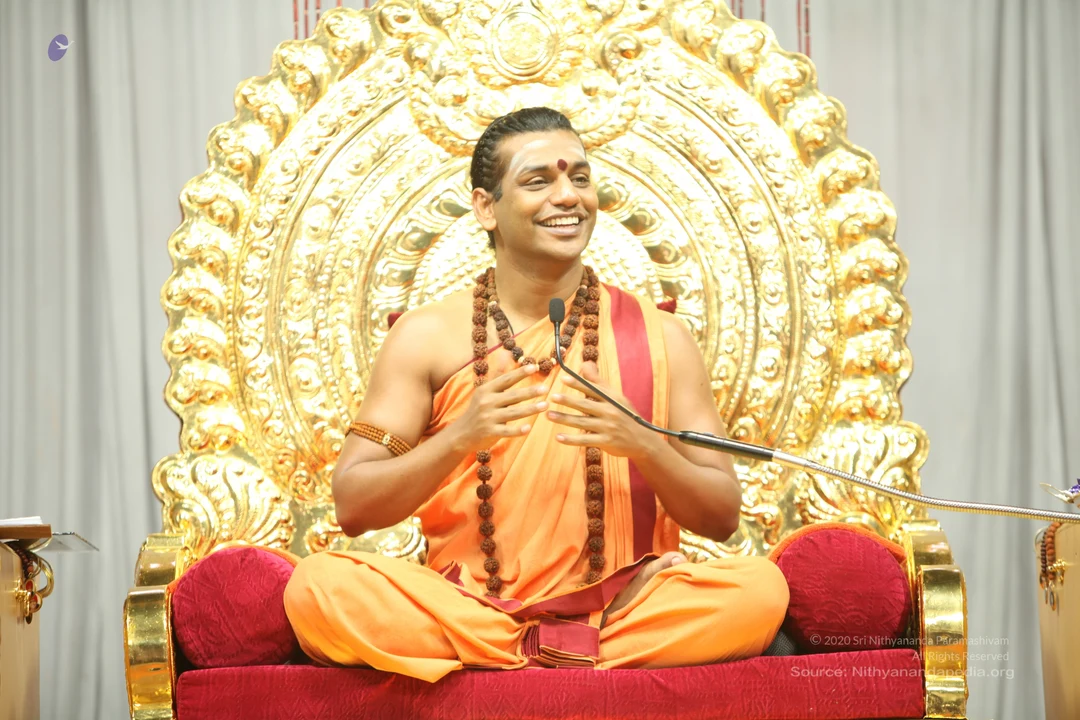
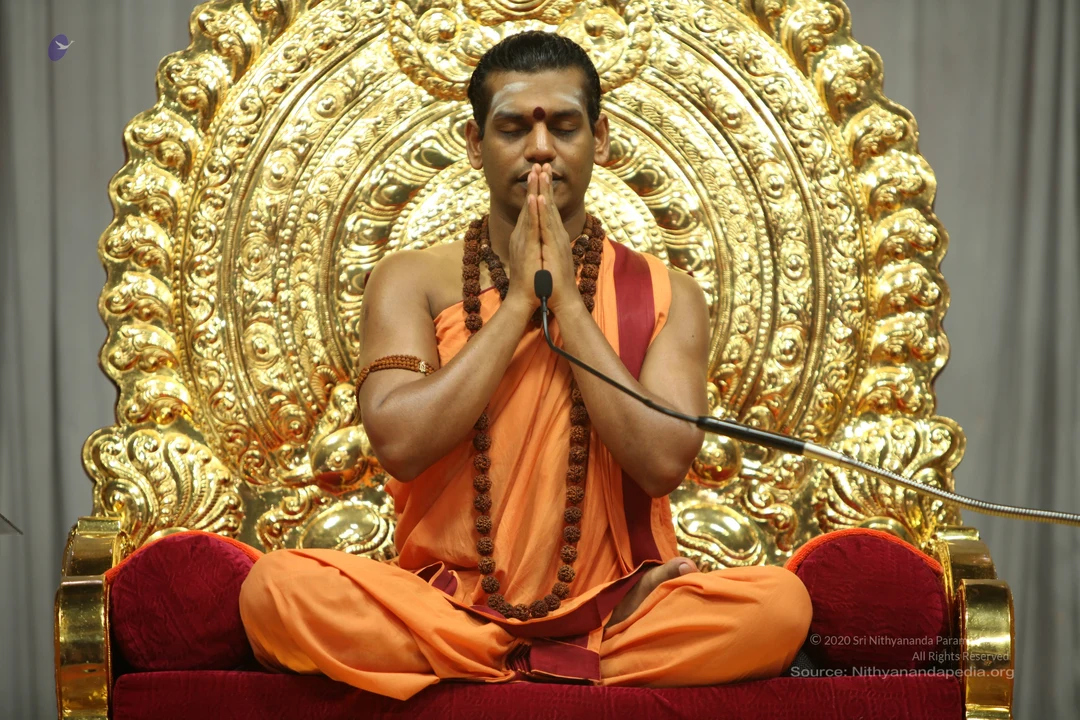
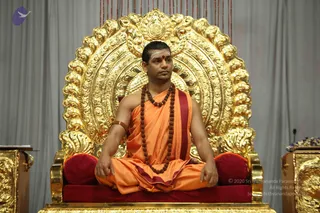
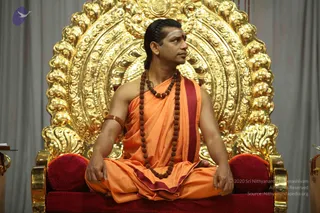
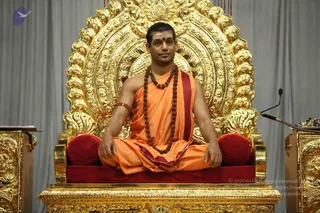
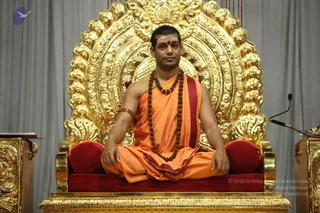
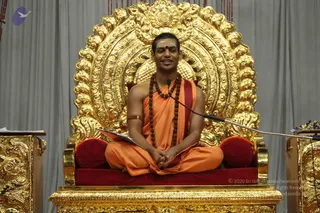
A man in saffron-orange robes sits on an ornate gilded throne with a large carved halo-style back and red velvet cushions. He wears a long rudraksha mala and a red-and-saffron shawl, with a red armband and a small red bindi on his forehead. His hands are folded in his lap. In front of the throne, a gilded table holds pink flowers, red fruit and a small offering. Two people in white and saffron clothing sit at the lower left and right, one holding a small object, while a red and orange beaded curtain frames the scene. The gilded throne and beaded curtain suggest a formal satsang setting.A seated man in saffron-orange robes with a red-and-maroon border sits cross-legged on a red cushioned seat before an ornate gold-leaf throne with a large scalloped back. He wears a long rudraksha mala with a red vibhuti or kumkum mark on his forehead and a copper-coloured bracelet on his upper arm, with his hands resting in a meditative pose. Behind him hang grey drapes and a strand of red beads. A gold-carved side table and a flower arrangement appear at the edges.A man seated cross-legged on a red-cushioned throne in front of an ornate gold repoussé backrest with scrolled, floral carving. He wears an orange saffron robe with a maroon border draped over his shoulders, a long multi-strand rudraksha mala, a gold armlet on his upper arm, and a white tripundra with a red bindi on his forehead. His hair is combed back and he gazes to the side while his hands rest in his lap. Grey drapes hang behind the throne. a person: saffron robe, rudraksha mala and ornate throne setting shown, presented as the seated speaker.A man seated cross-legged on an ornate red-cushioned throne in front of a large gilded carved backrest with scrolling floral and leaf motifs. He wears saffron-orange robes with a maroon border drape across the chest, a long mala of rudraksha beads, a bracelet on his upper arm, and a white-and-red forehead mark. His hands rest on his knees and he gazes to the side. Grey draped curtains form the backdrop.A man seated cross-legged on an ornate gold throne with a large gilded backrest carved with scrolls and foliage, cushioned in red velvet. He wears an orange-saffron cloth draped over his bare upper body with a maroon border, a long multi-strand rudraksha mala, a gold bracelet on his upper arm, and a red bindi with white tilak on his forehead. Hands rest on his knees. Behind him hangs grey drapery; a microphone stand and flower-decorated gold lectern sit at the sides. a person seated in the throne, with orange clothing and rudraksha malas as qualifying cues.A seated man in saffron-orange robes with a maroon-edged shawl sits cross-legged on a red-cushioned throne backed by an ornate gold-carved halo-shaped panel. He wears a long rudraksha mala with a gold-toned armband, a white-and-red tilak on his forehead, and rests his hands on his knees. A microphone stands at the right and a gold-carved podium at the left. a person: the saffron robes, rudraksha mala and ceremonial throne setting match the page, though the face is not used for identification.

04-Sarvadarshan

12 photosSource gallery
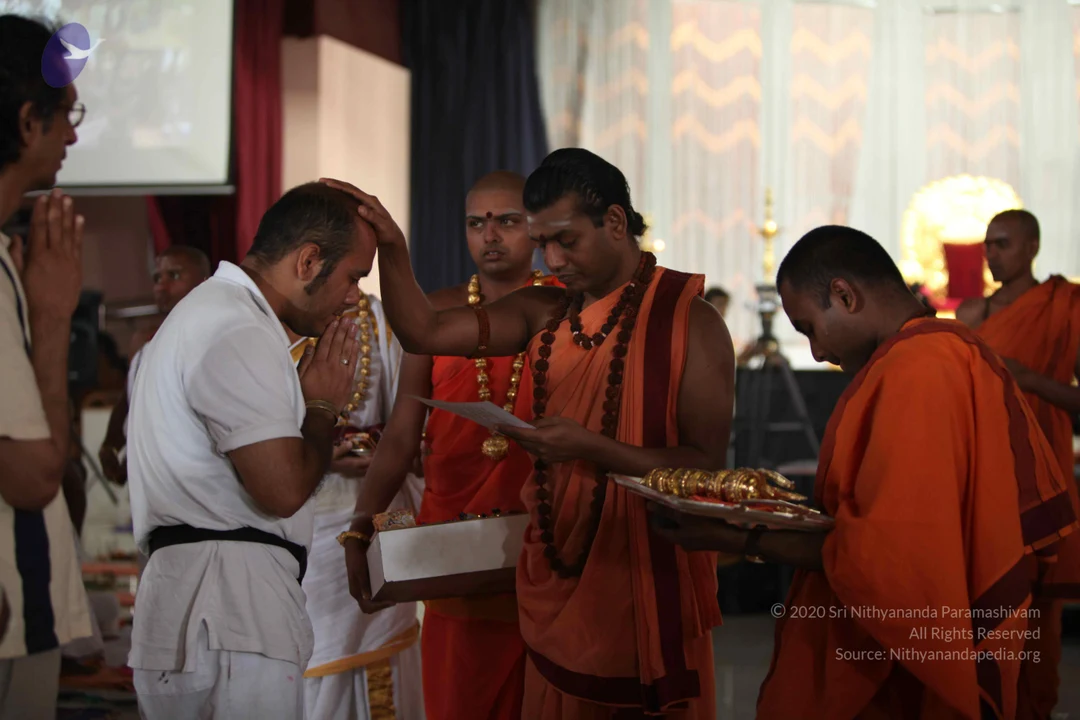
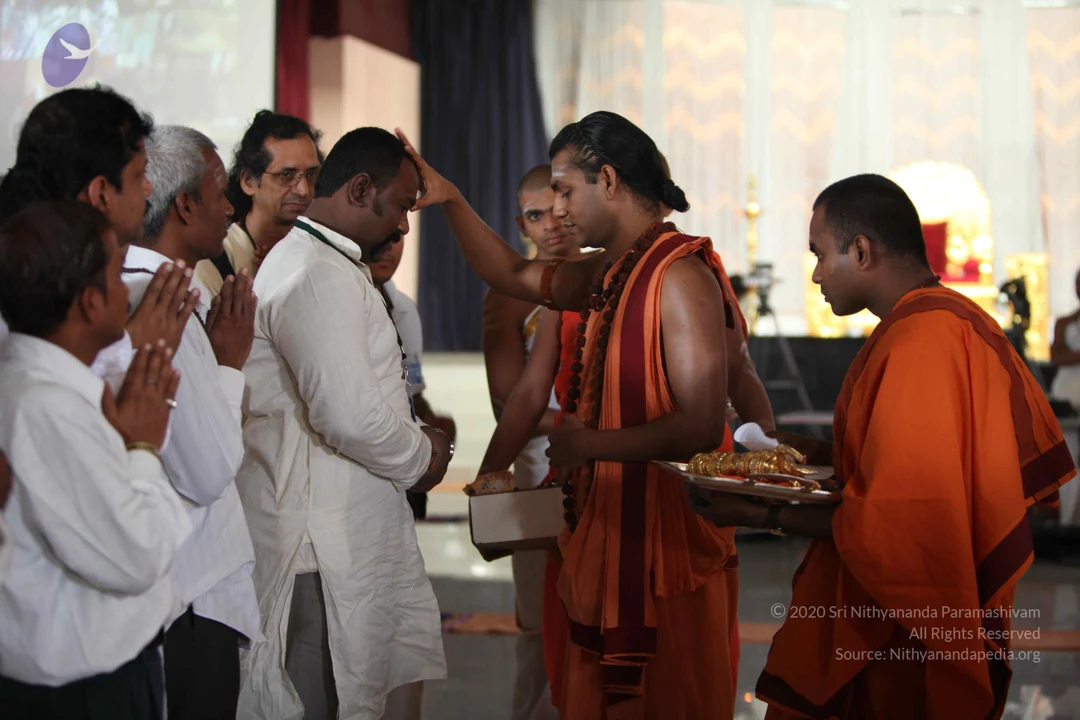
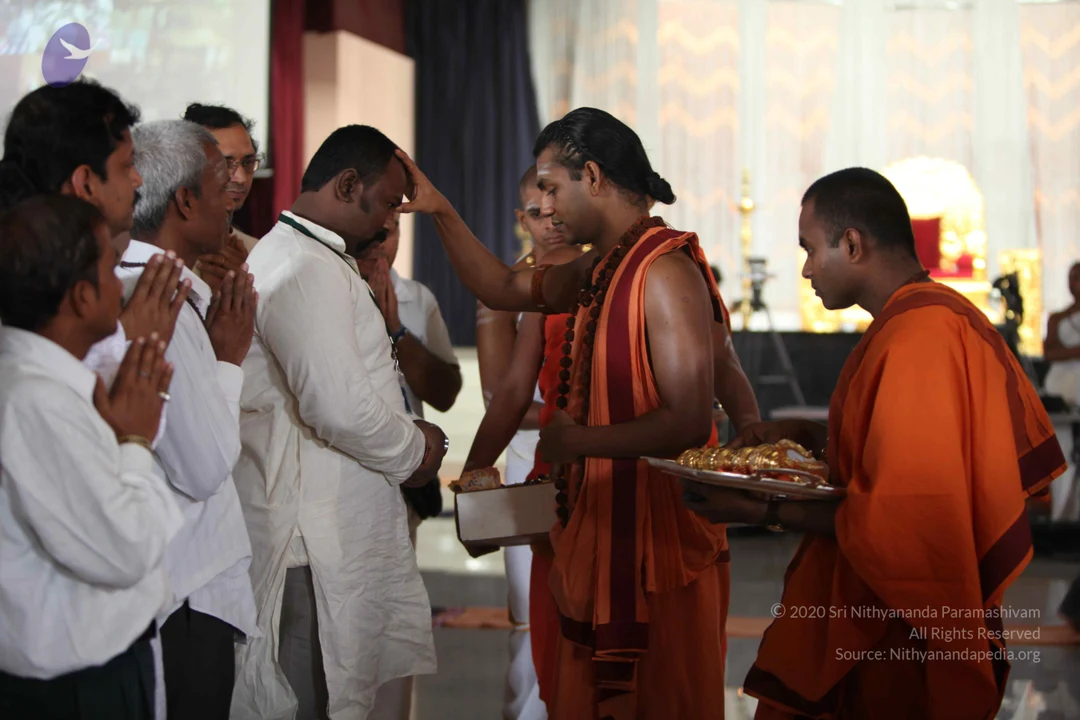
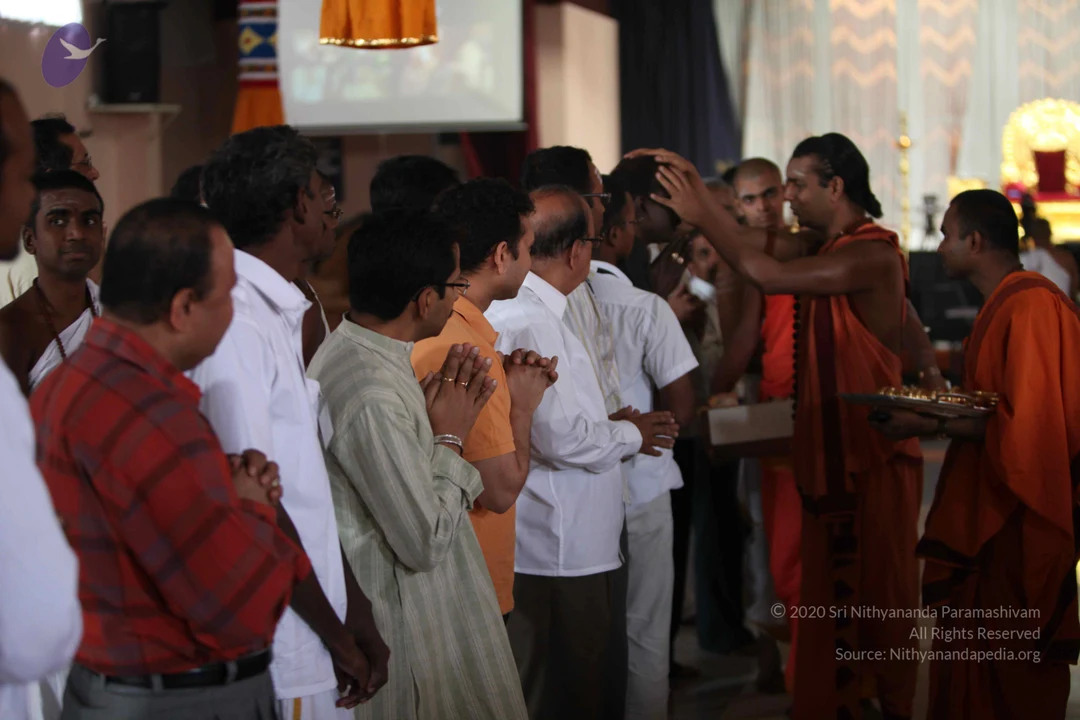
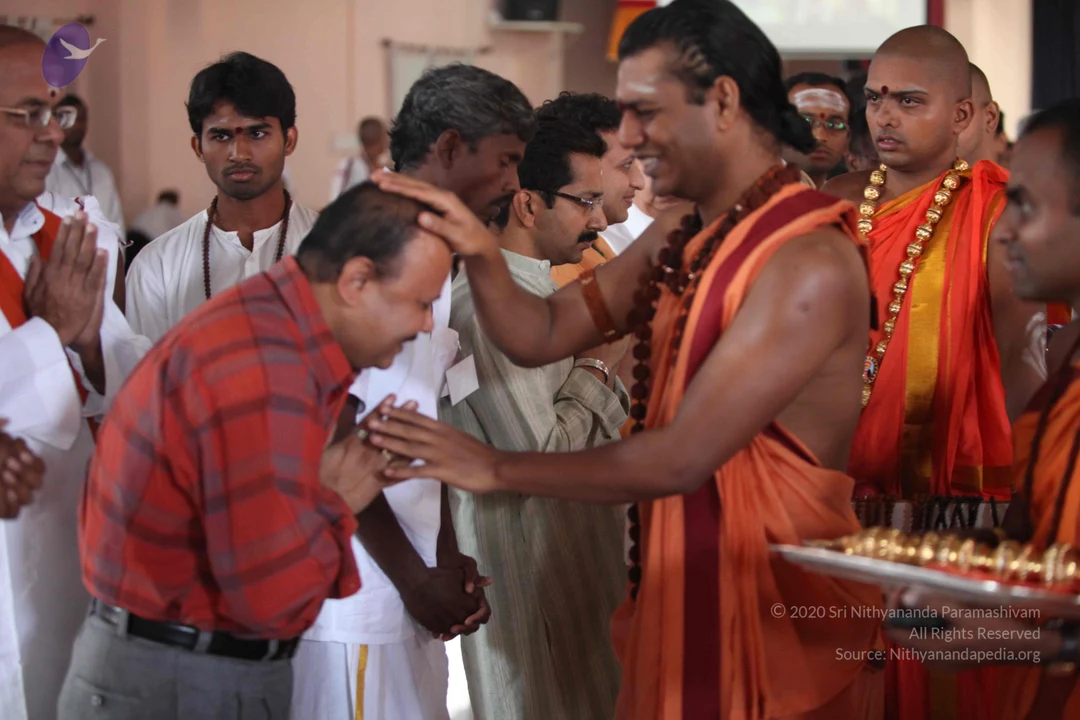
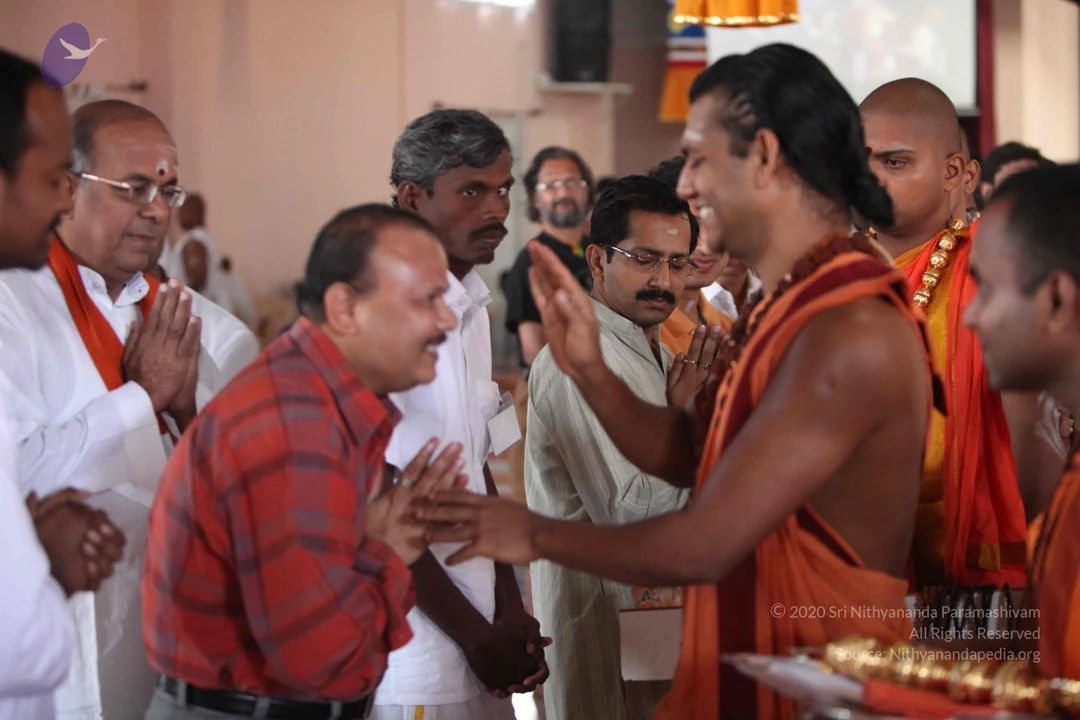
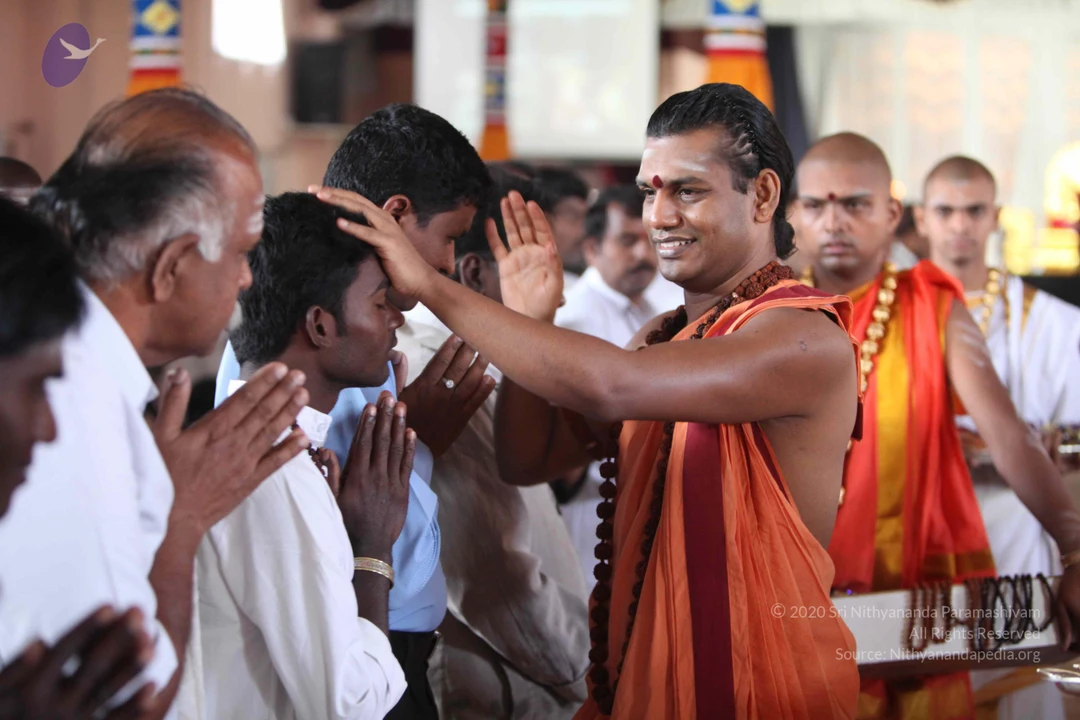
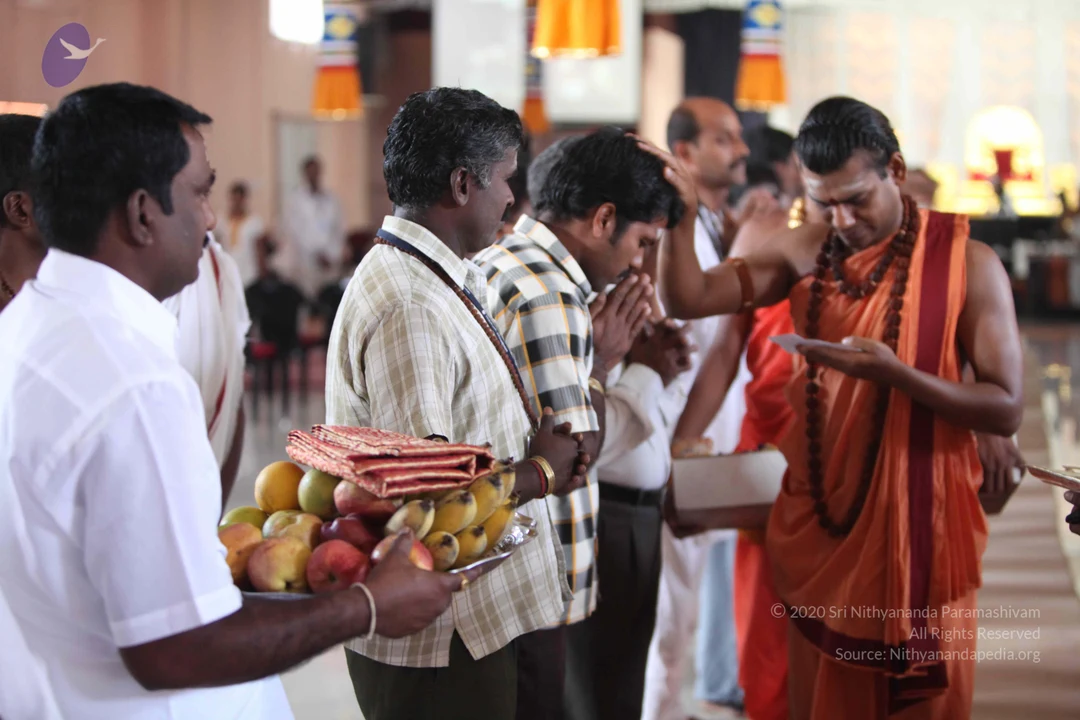
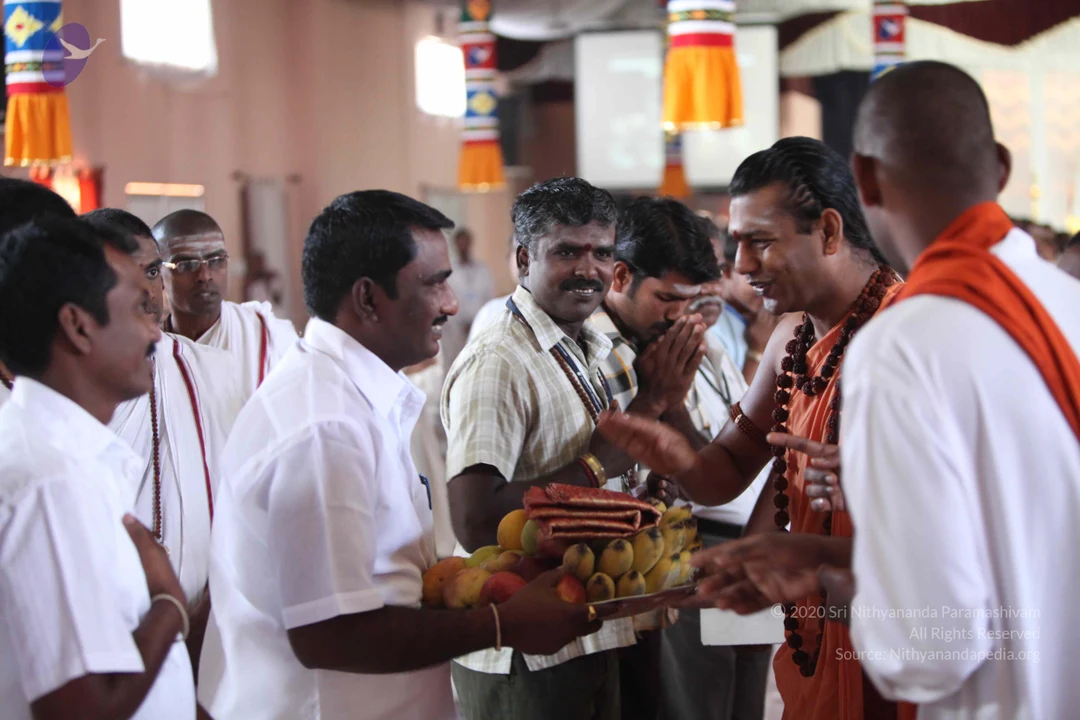
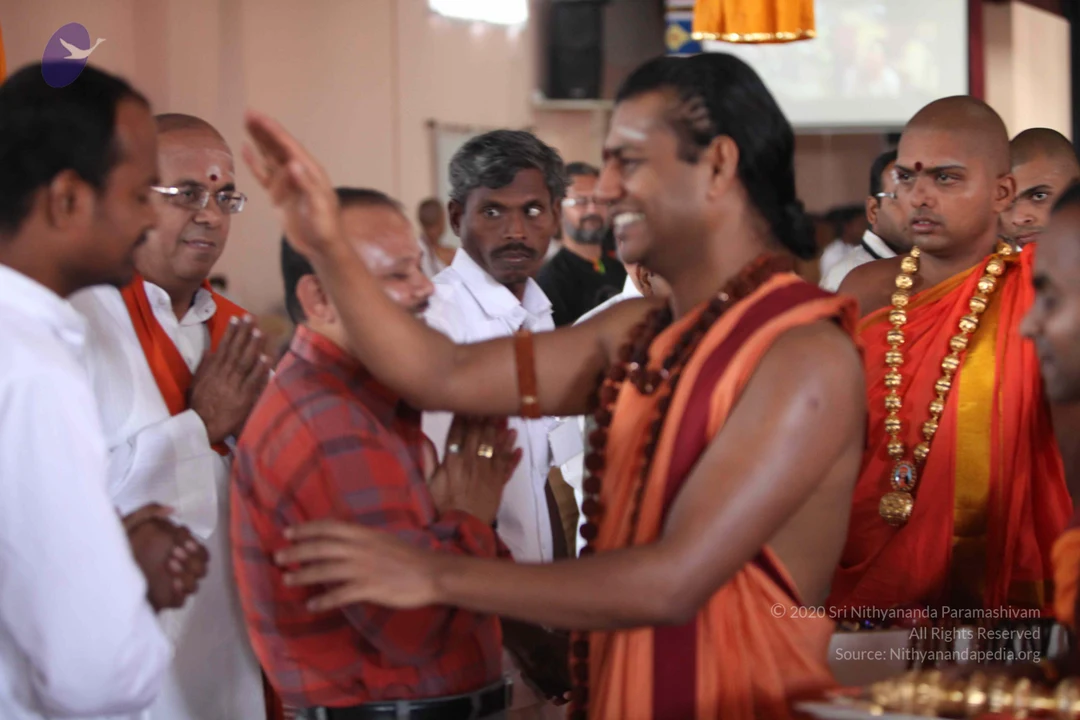
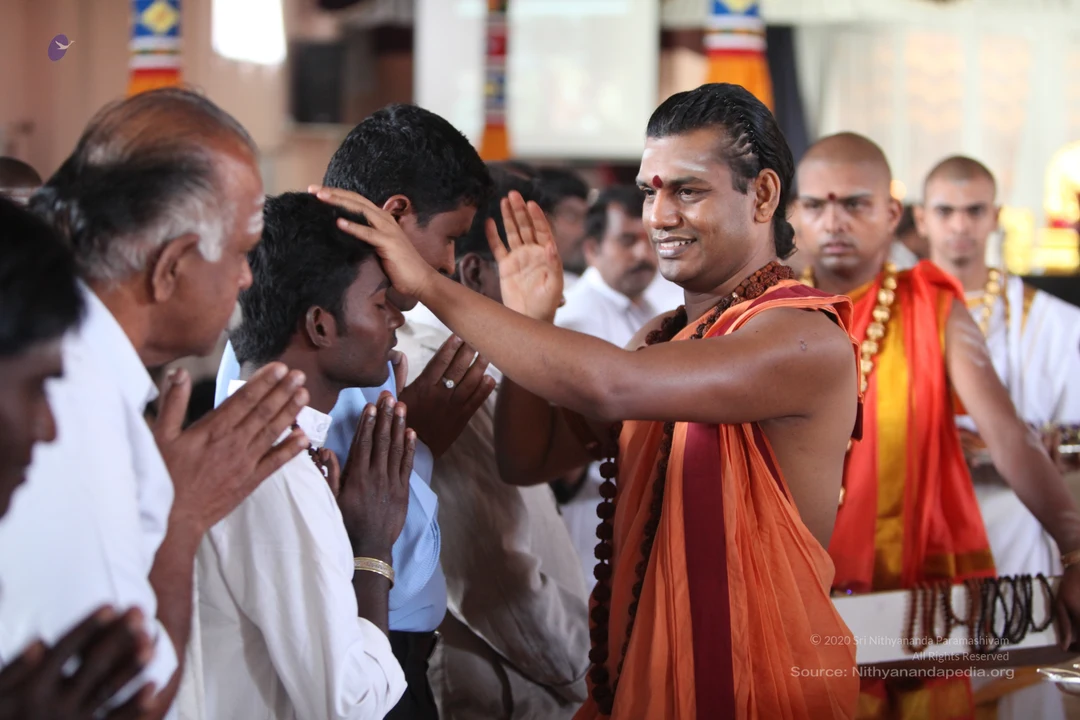
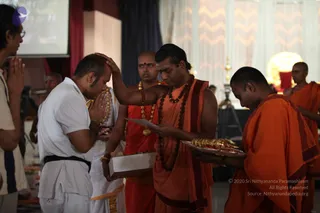
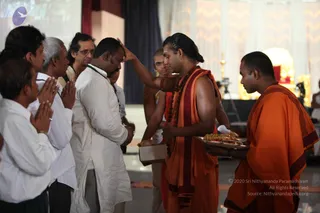
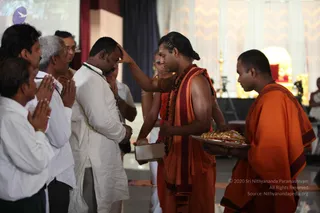
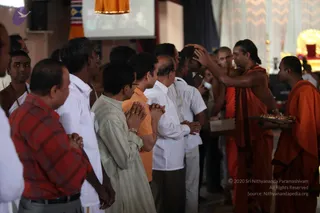
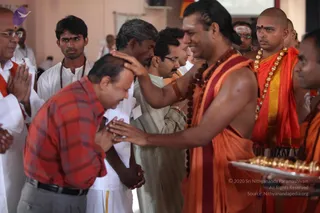
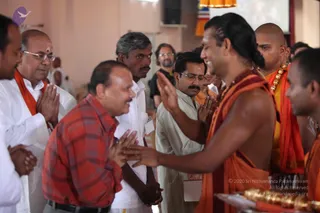
A devotee in white shirt and white dhoti with a black belt kneels with palms pressed together while a robed sannyasi in saffron and maroon garments places his hand on the devotee's head. The officiant wears a long rudraksha mala and ornate gold chains, and holds a paper. Beside him, a monk in orange holds a silver tray of gold-toned bangles and ornaments, and other saffron-clad monks stand nearby. A white curtain with gold patterns and a brass lamp are in the background.A photograph of a ritual blessing in an ashram hall. A man in an orange-saffron robe with a red-and-gold stole and a long rudraksha mala stands centre, placing his right hand on the forehead of a standing devotee in a white kurta. Beside him a shaved-headed monk in orange stands with hands clasped, and at the right a younger monk in orange holds a silver tray of gold-coloured items. Several devotees in white clothes on the left stand with palms pressed together in anjali. Behind, white drapes, a gold and red ornate shrine or throne, and a projector screen are visible.A photograph of a devotional gathering in a hall. A man in an orange saffron dhoti and shawl with a rudraksha mala places his hand on the forehead of a standing devotee in a white shirt and dhoti. Several other devotees in white with folded hands stand to the left, and an orange-robed attendant on the right holds a silver tray of offerings. Behind them, a decorated shrine area with gold and red draperies and oil lamps is visible. The scene suggests blessing or darshan at an ashram event.A photograph of a line of devotees in an ashram hall, standing with palms pressed together in namaskar. Several men wear white dhotis and shirts, one wears a red plaid shirt, one wears a grey-green kurta and one wears an orange shirt. On the right, a saffron-robed priest with long hair tied back places his hand on the head of a devotee, while another saffron-clad attendant holds a brass plate. A golden decorated throne-like structure and white curtains are visible in the background. A projection screen hangs above, with an orange cloth overhead.Indoor photo of a ceremonial blessing at a gathering. A man in an orange robe with a dark red shawl and a long rudraksha mala stands at centre, placing his right hand on the head of a man in a red checked shirt who bows with hands folded. Behind them, several men in orange robes, one with gold beads and a gold necklace, and a bald priest with a red tilak stand near a tray of gold-coloured items. On the left, a man in white with a shawl and folded hands, and a young man in white with a rudraksha mala, look on. A projector screen hangs on the back wall.Indoor photo of a devotional gathering in a plain room with a white wall. A bare-chested man with long swept-back dark hair, wearing orange and maroon cloth and a beaded rudraksha-style necklace, raises his right palm in blessing toward a kneeling man in a red-and-black checked shirt, who presses his palms together. Around them, several men in white dhotis and shirts, one with orange shawl and vibhuti marks, stand with hands folded in namaste. A shaven-headed man in orange with gold beaded garlands stands at right, and a bearded man in black shirt stands in the background. A white flower garland and ritual objects are visible at lower right. Whether the central figure is a person cannot be established from appearance, so the description uses his role instead.

05-Sacred-Arts-Deities

72 photosSource gallery
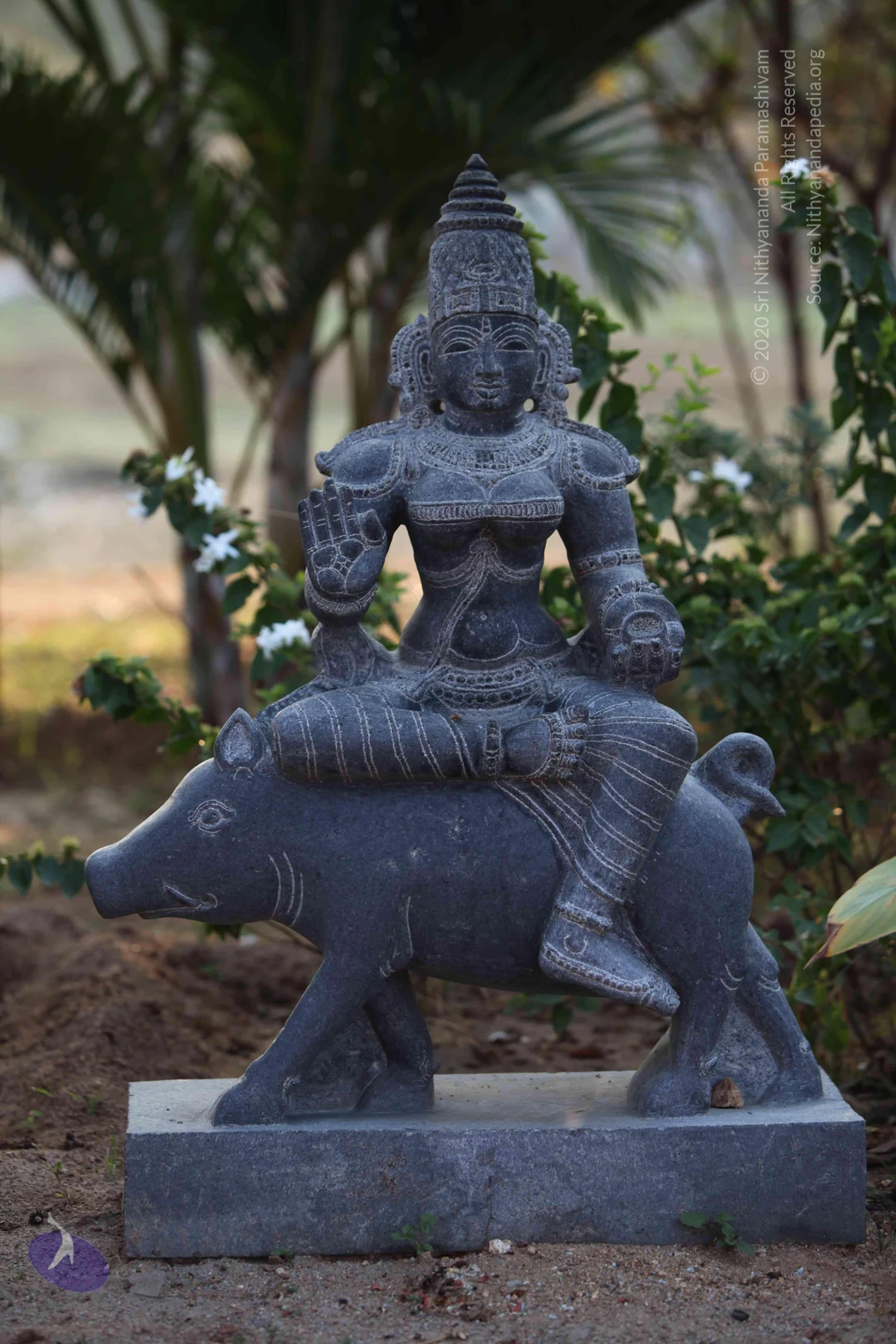
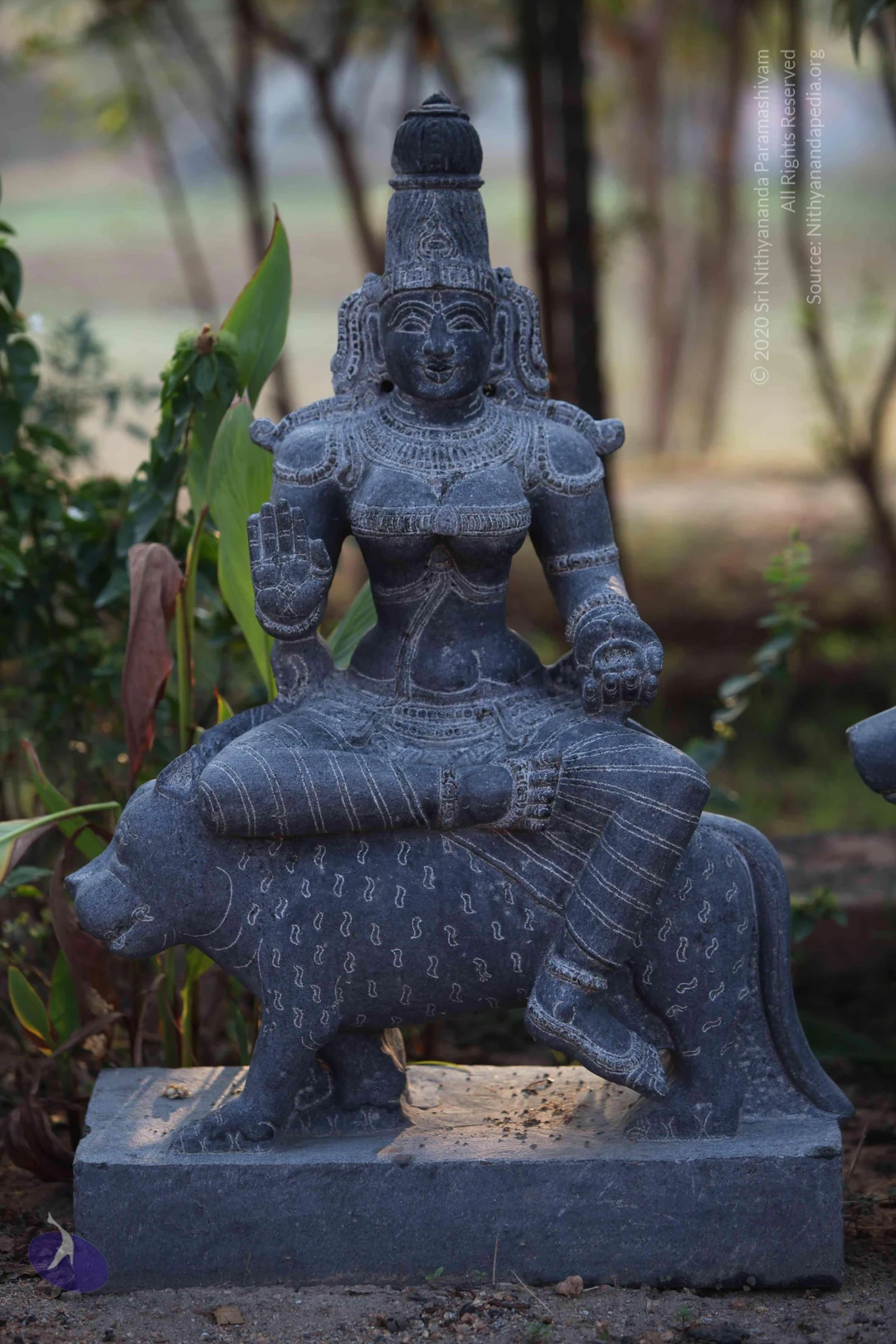
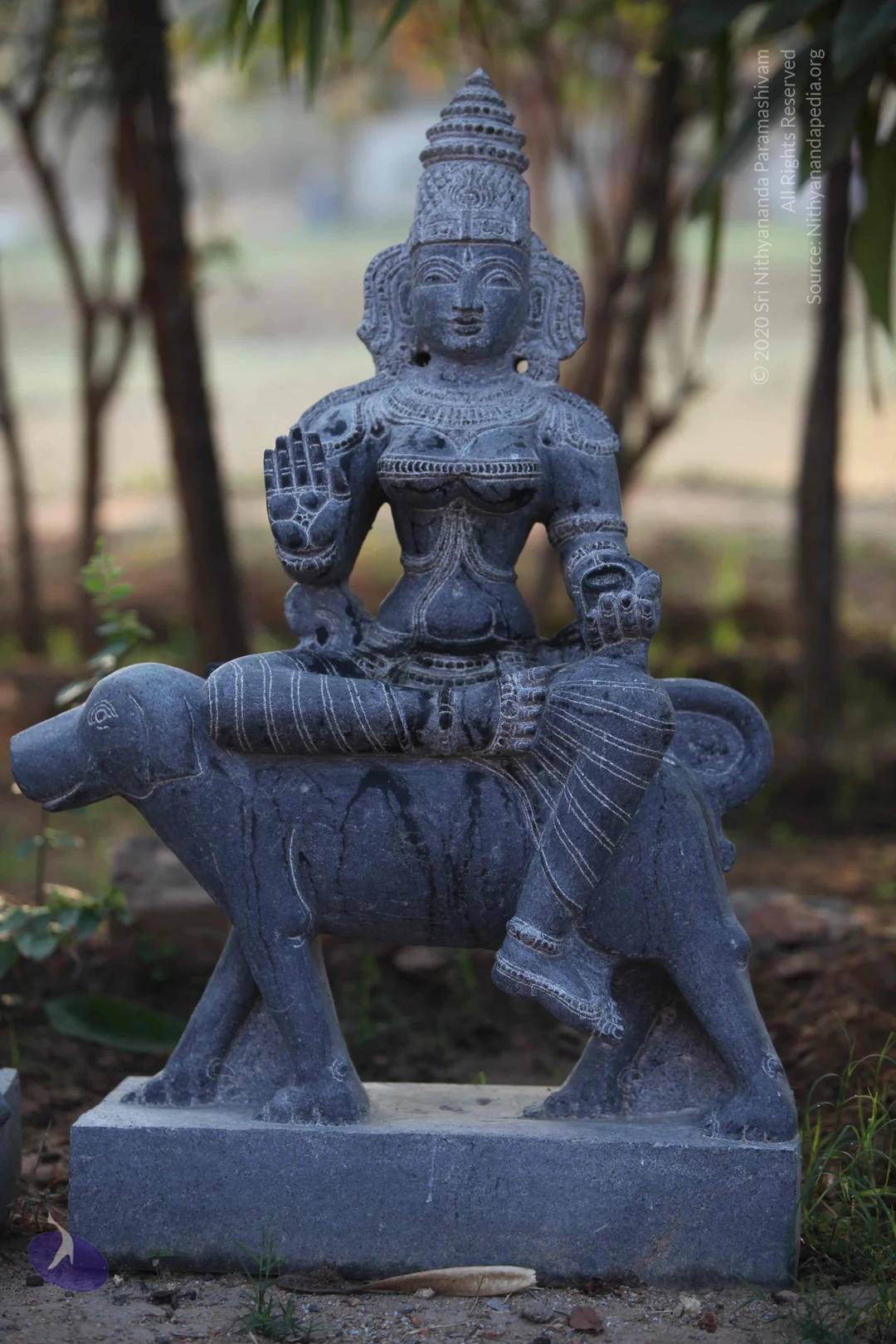
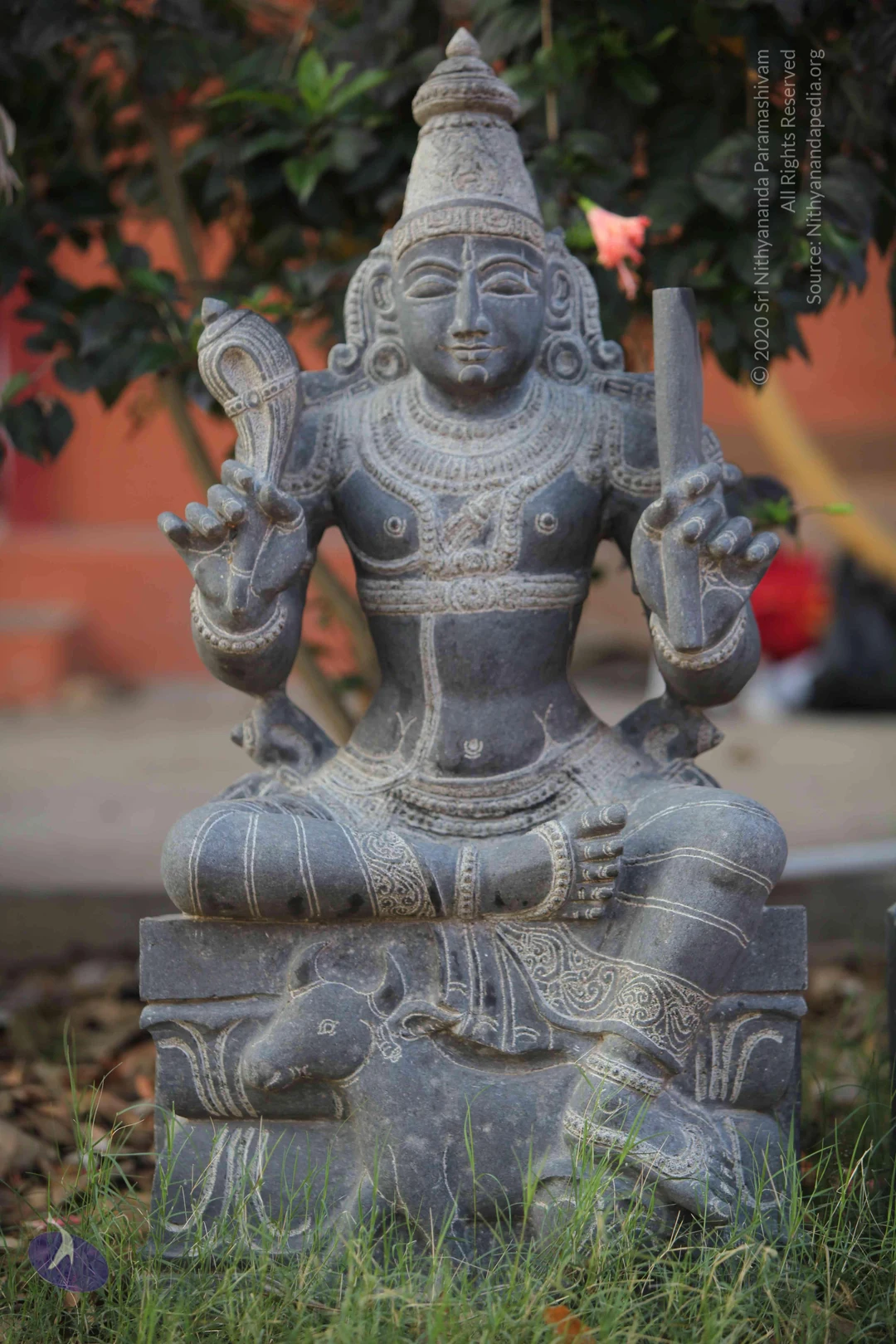
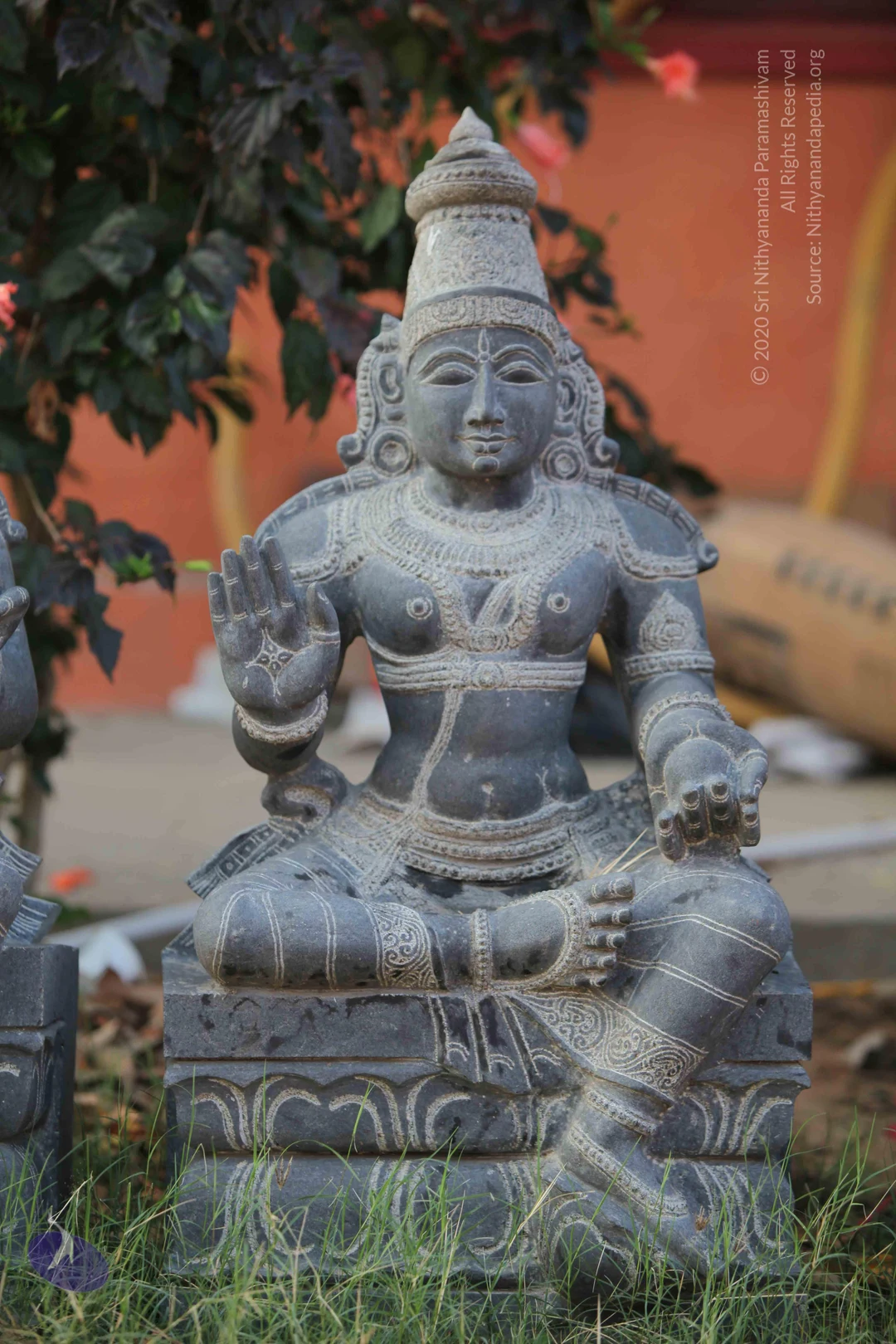
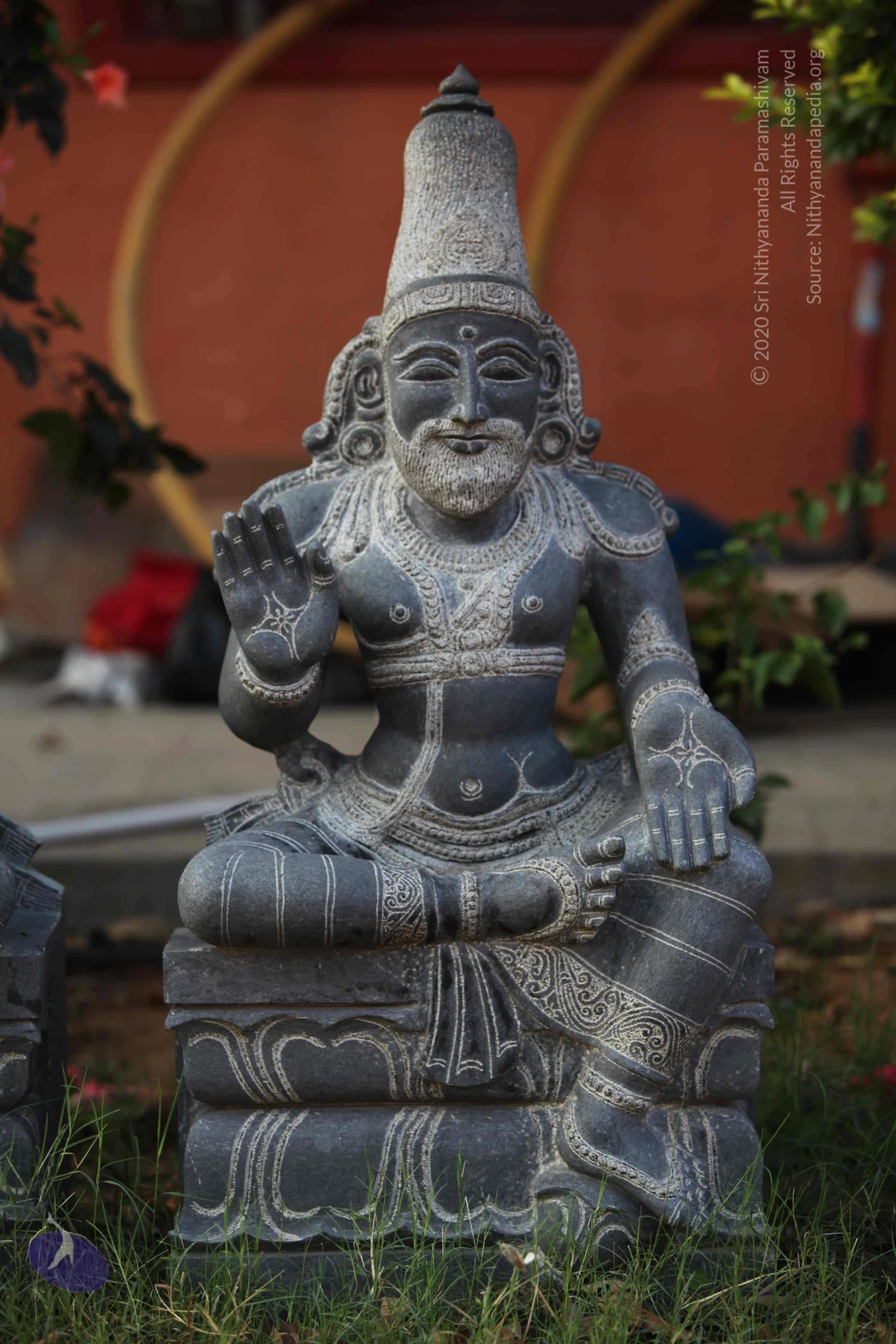
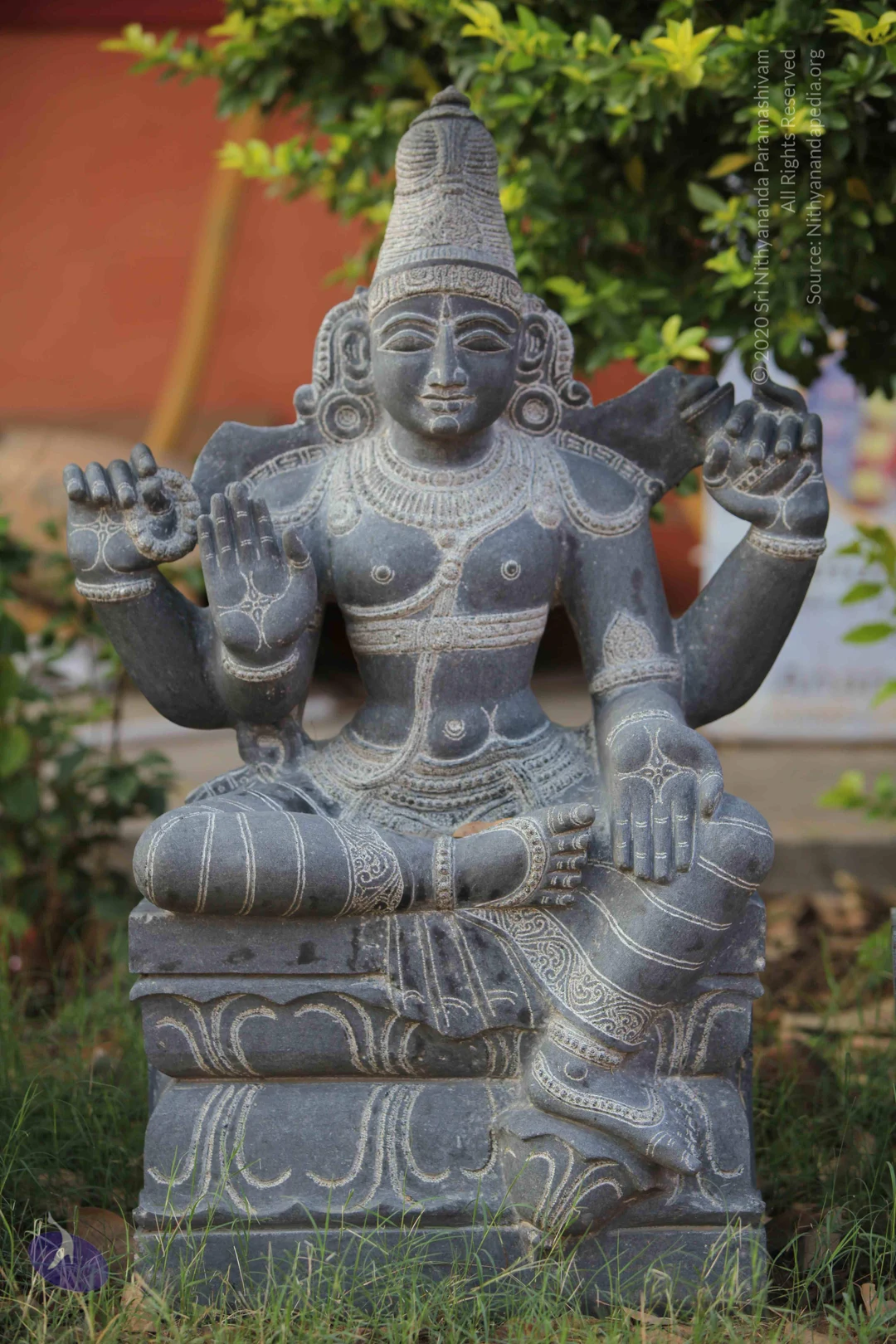
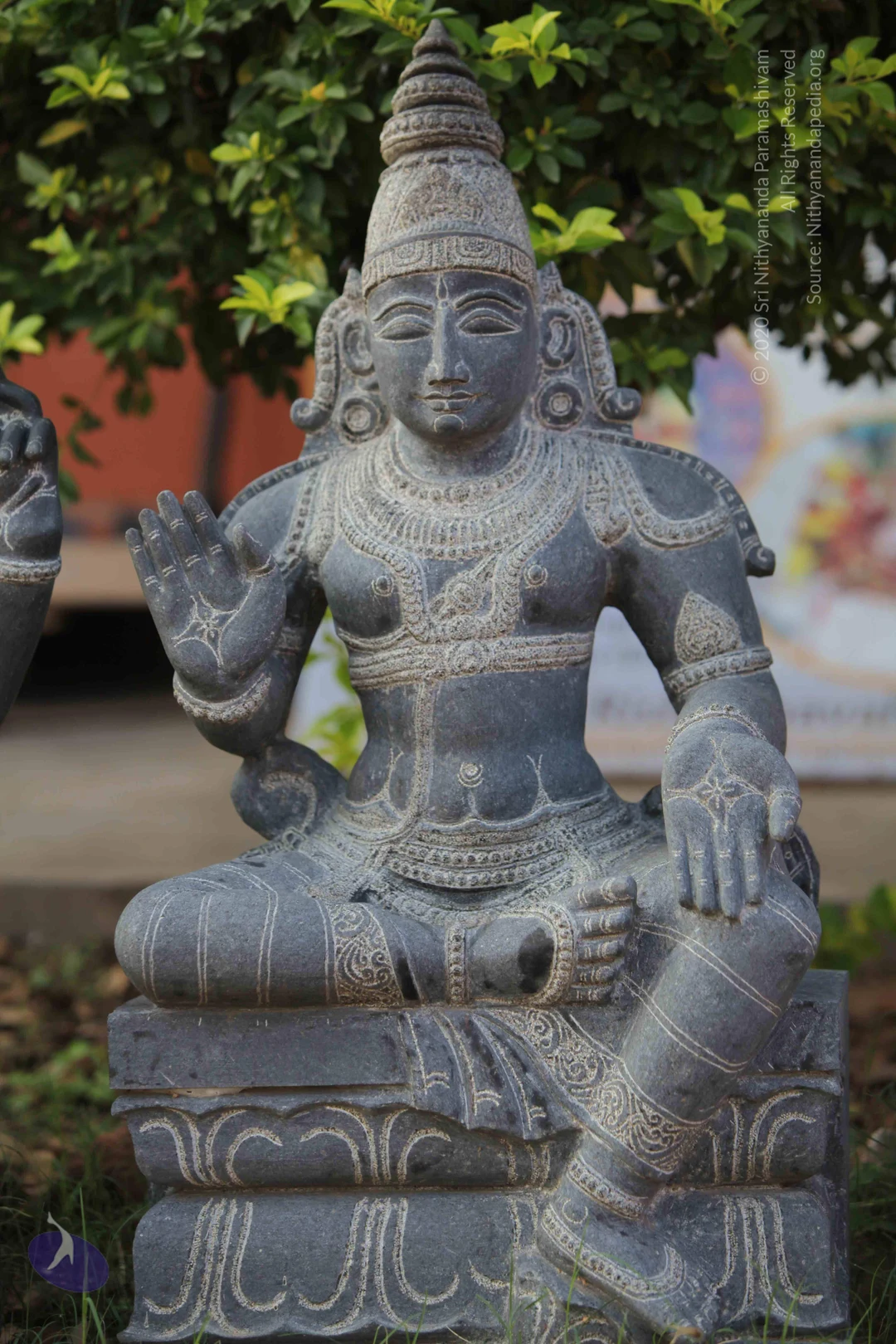
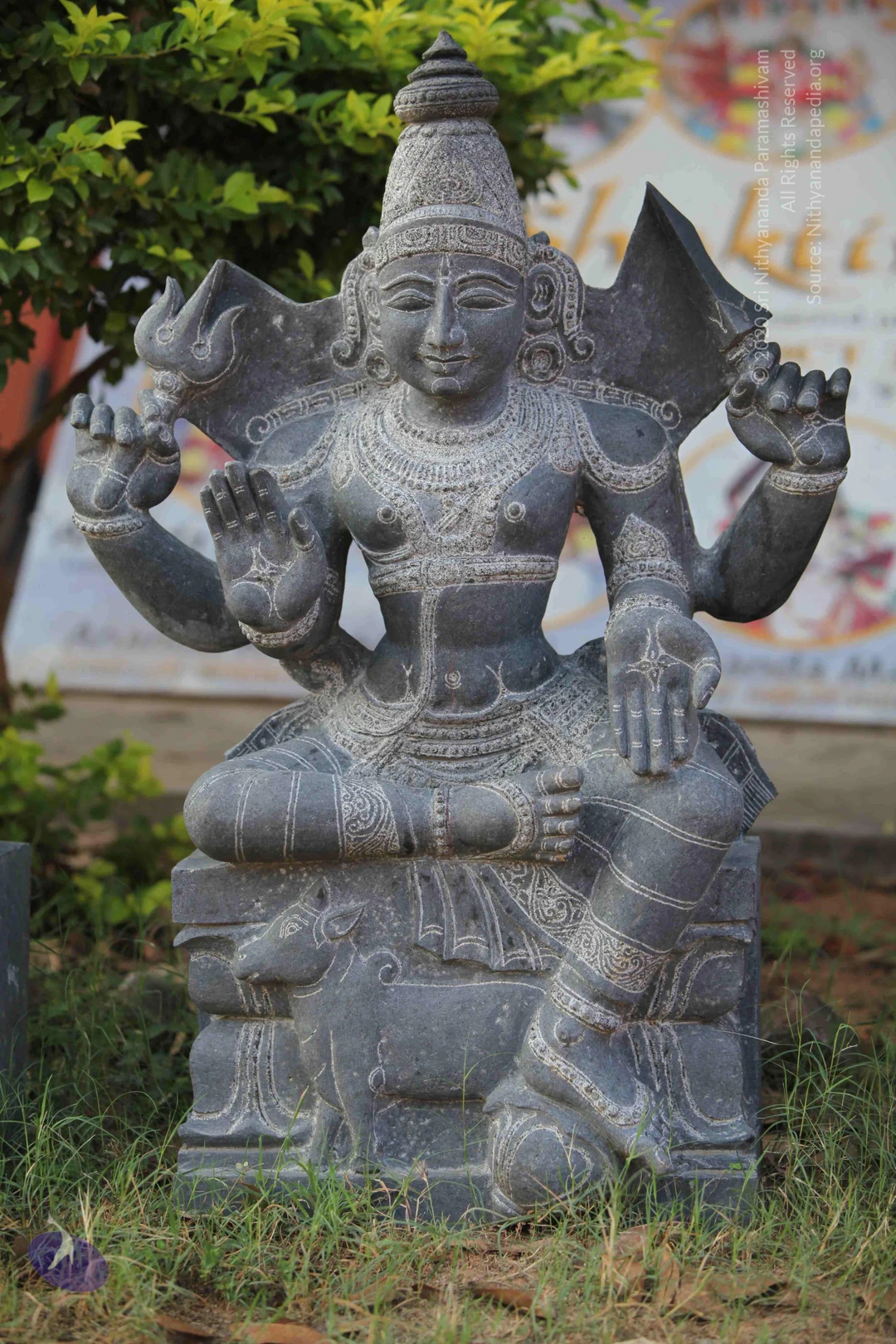
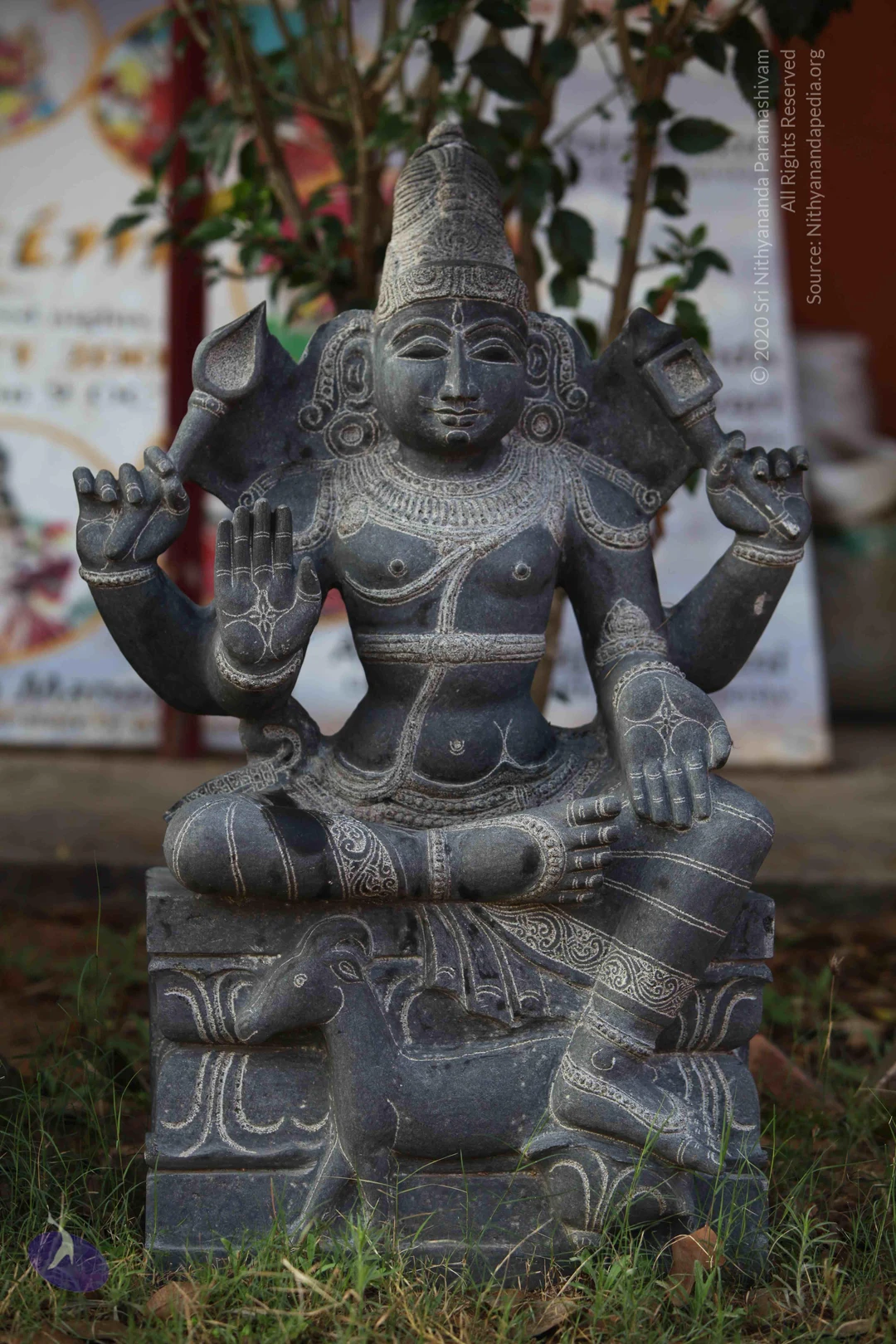
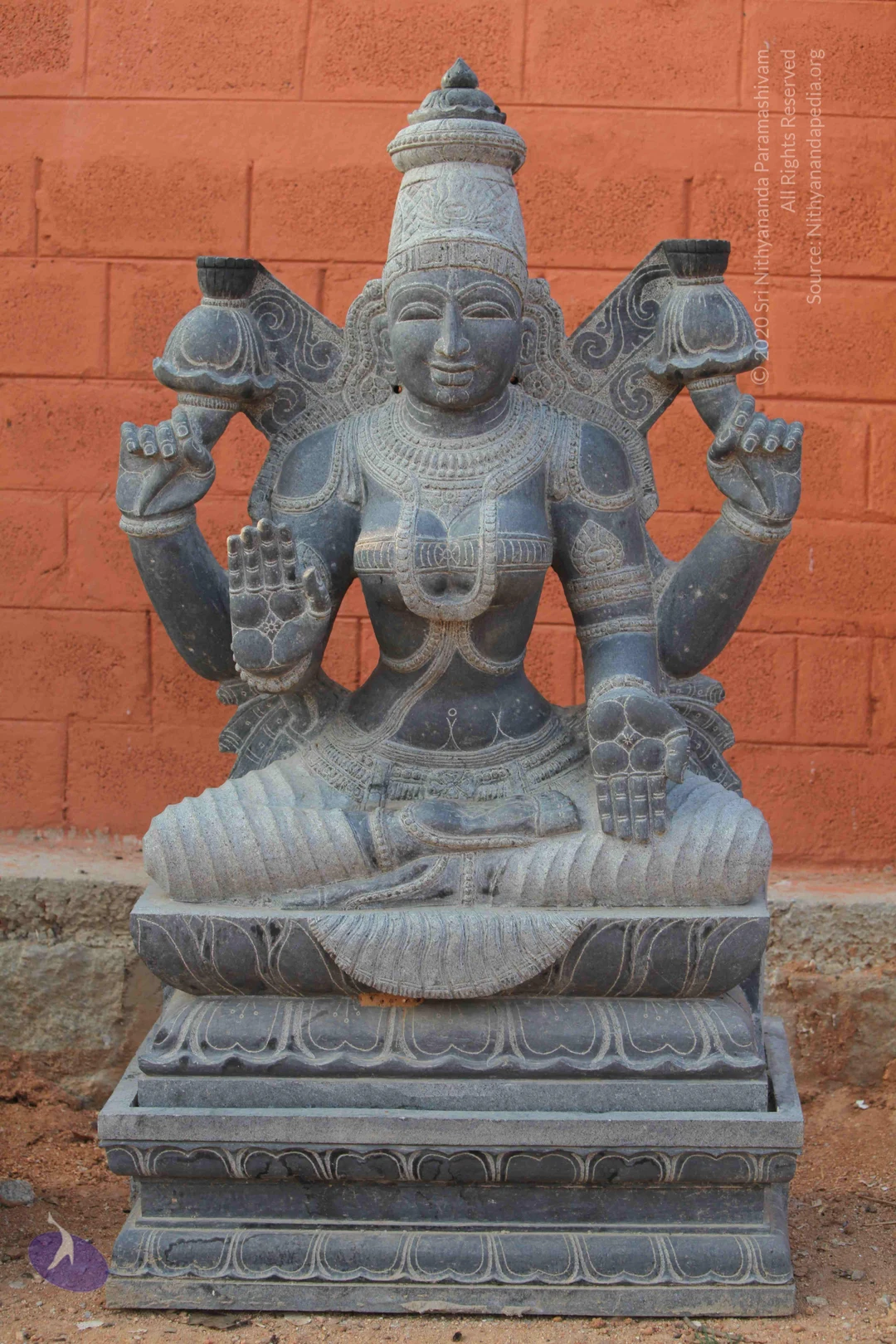
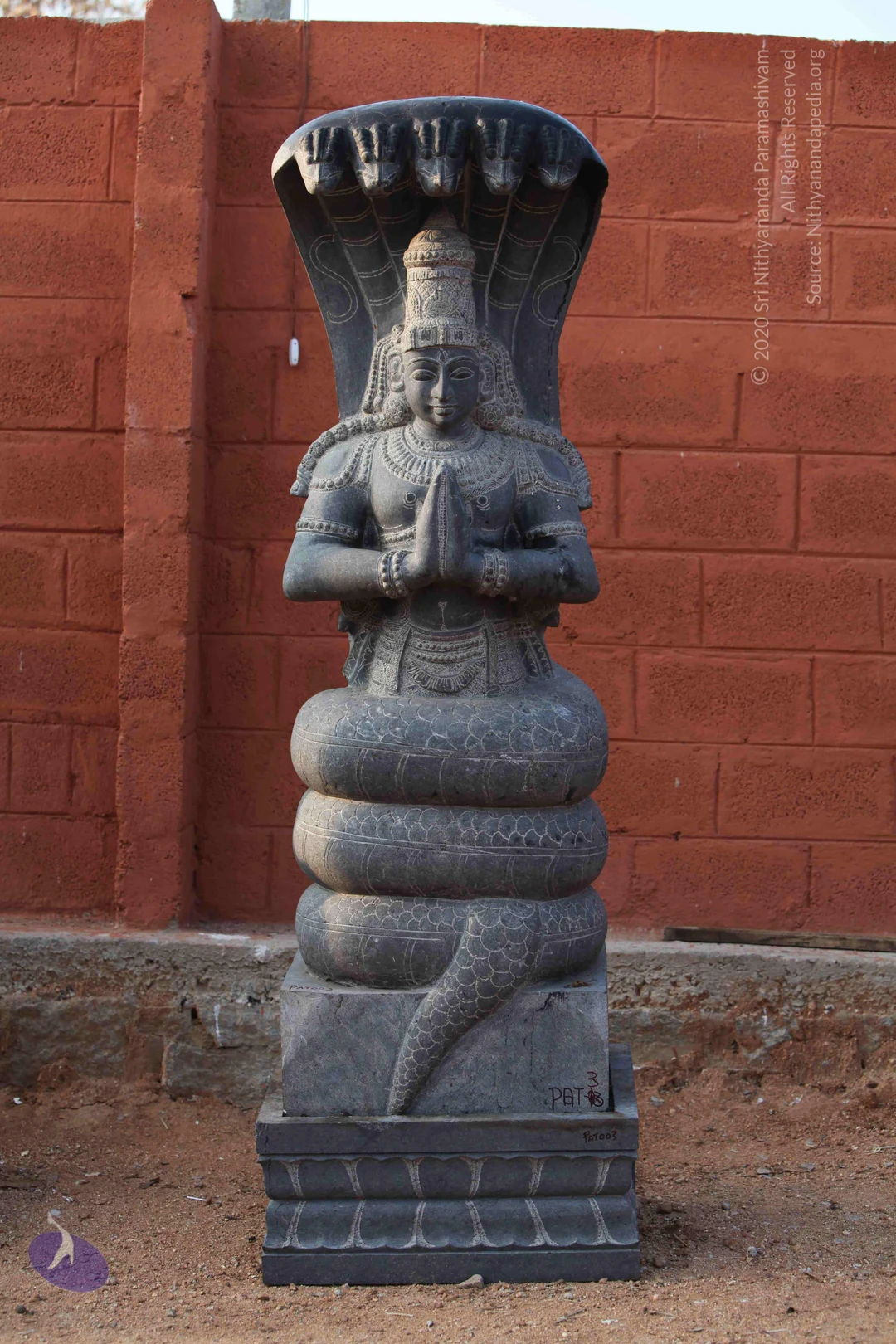
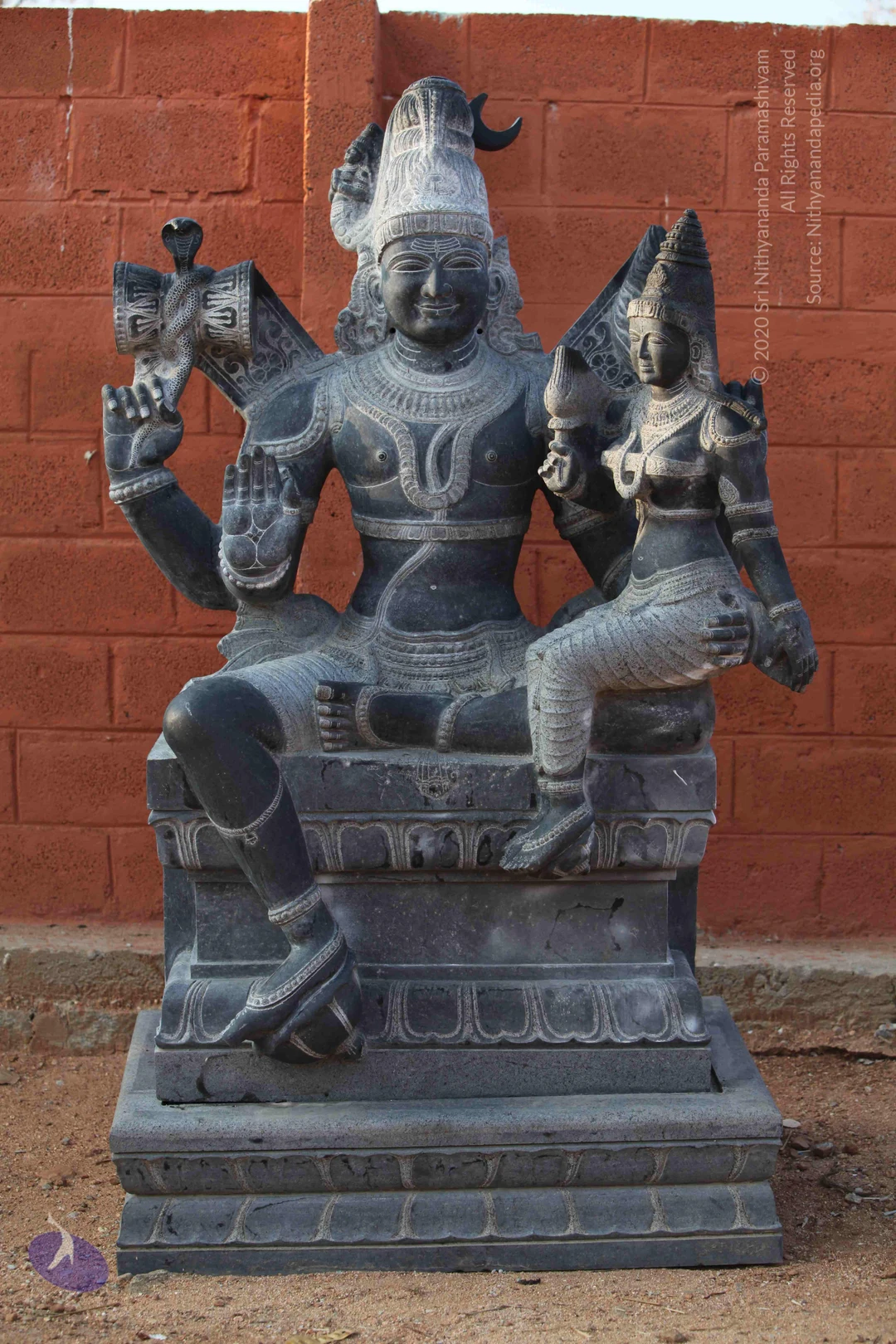
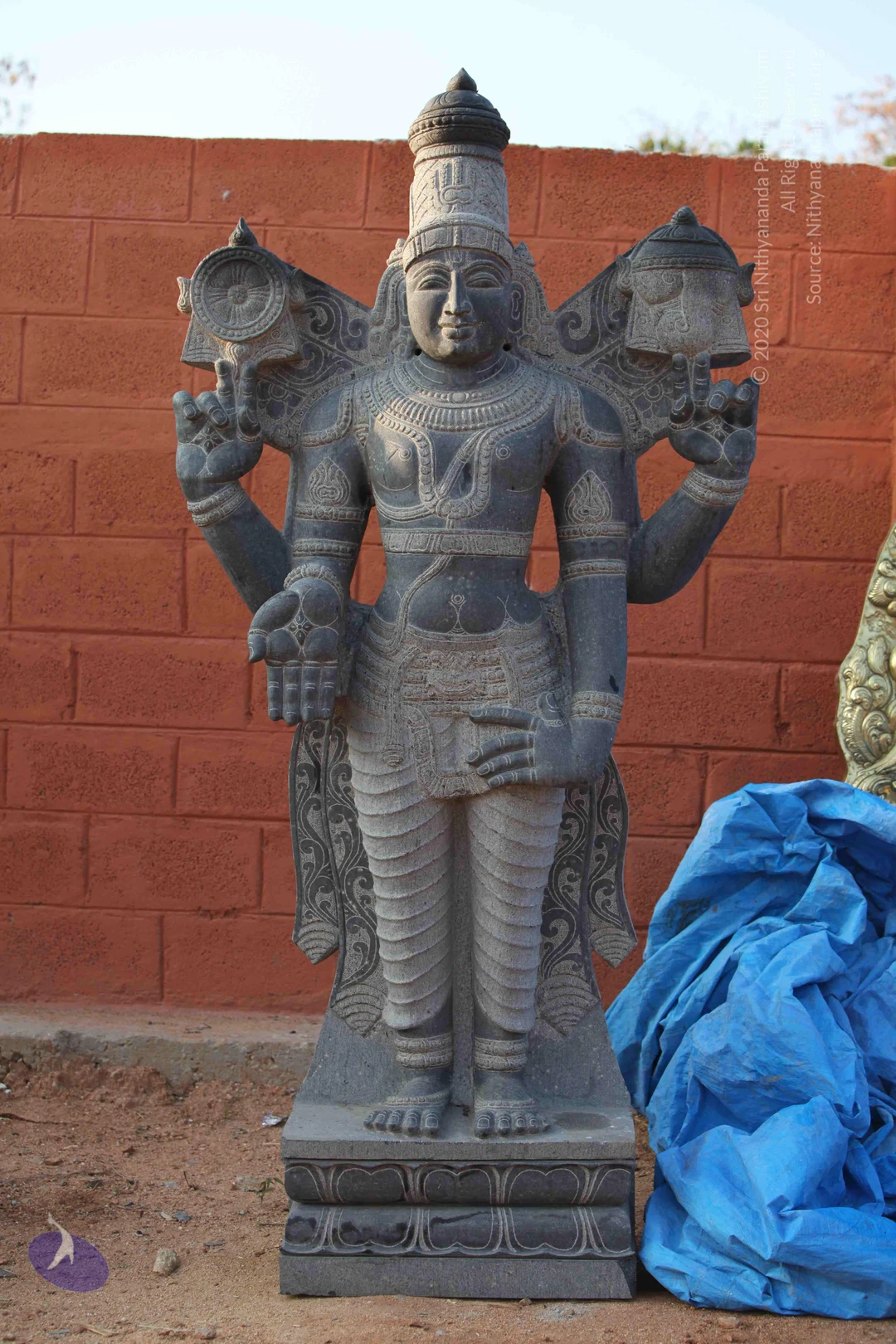
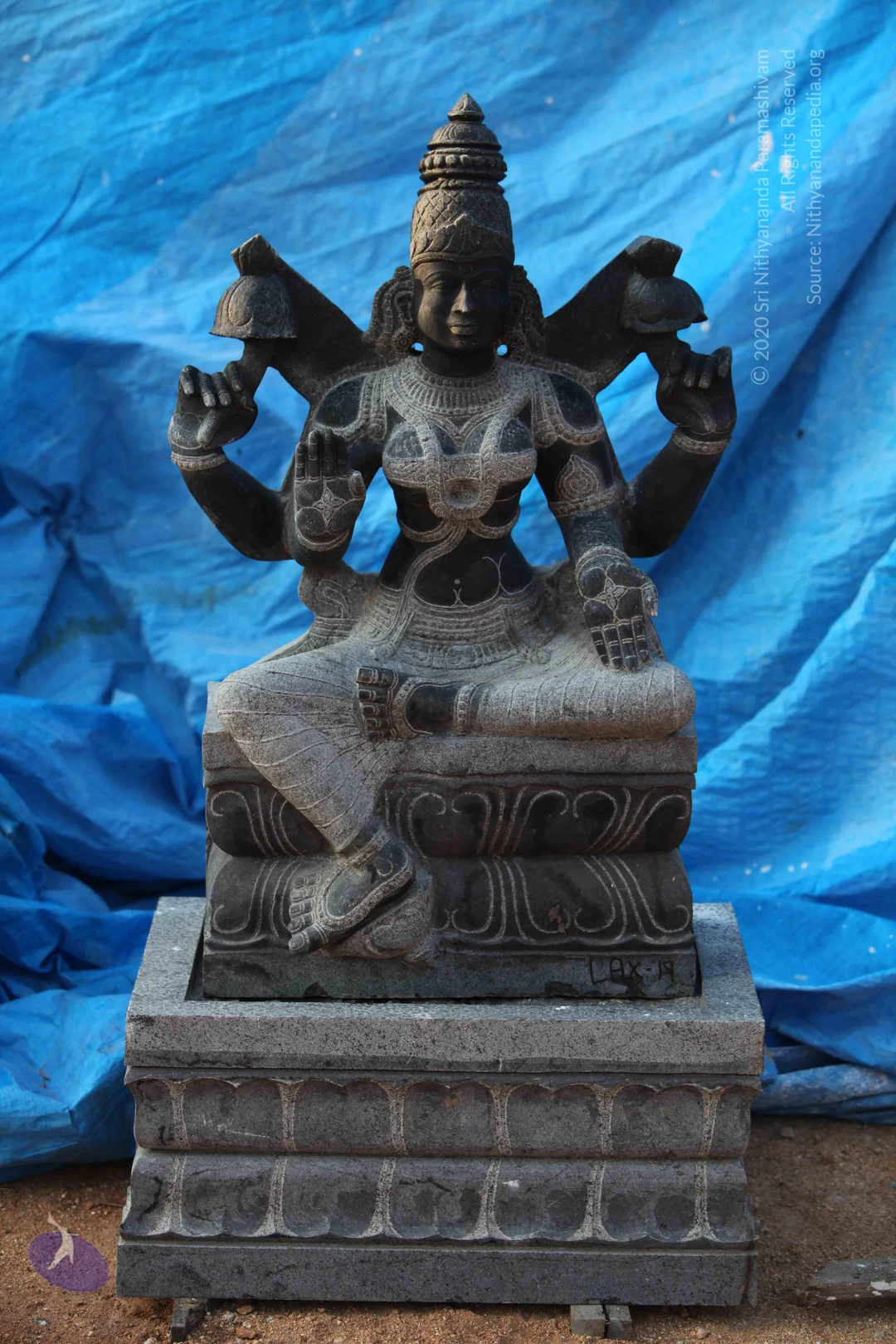
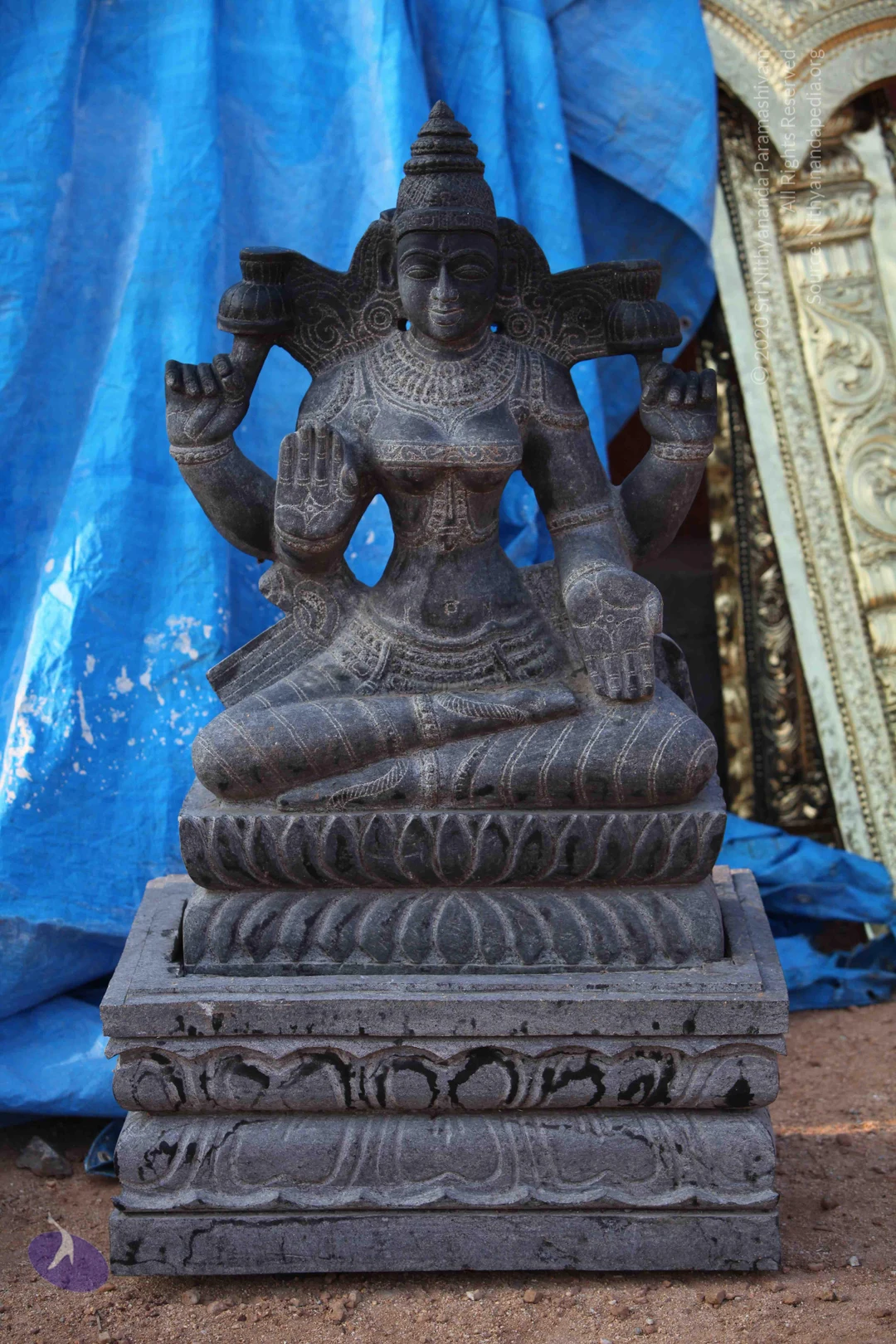
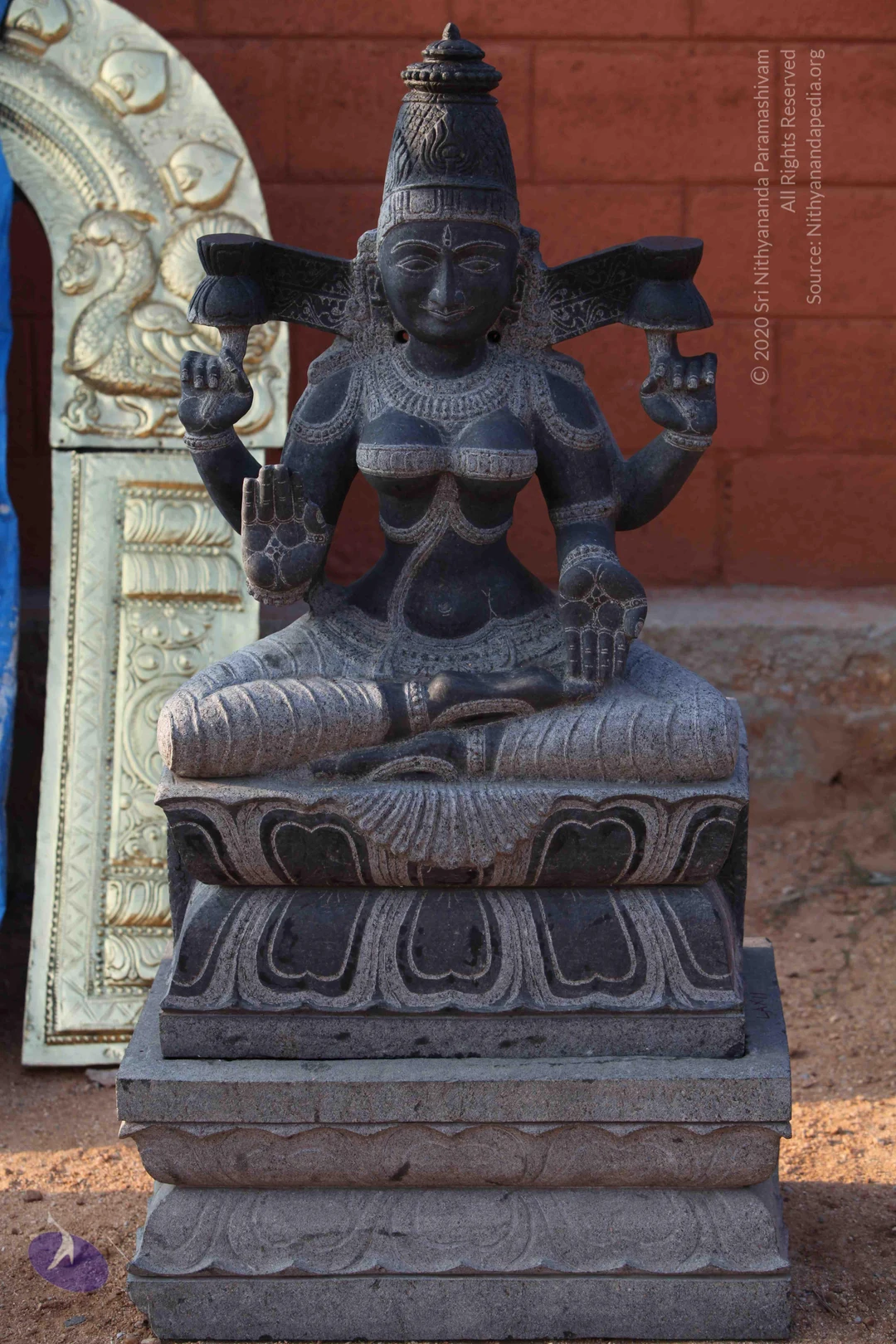
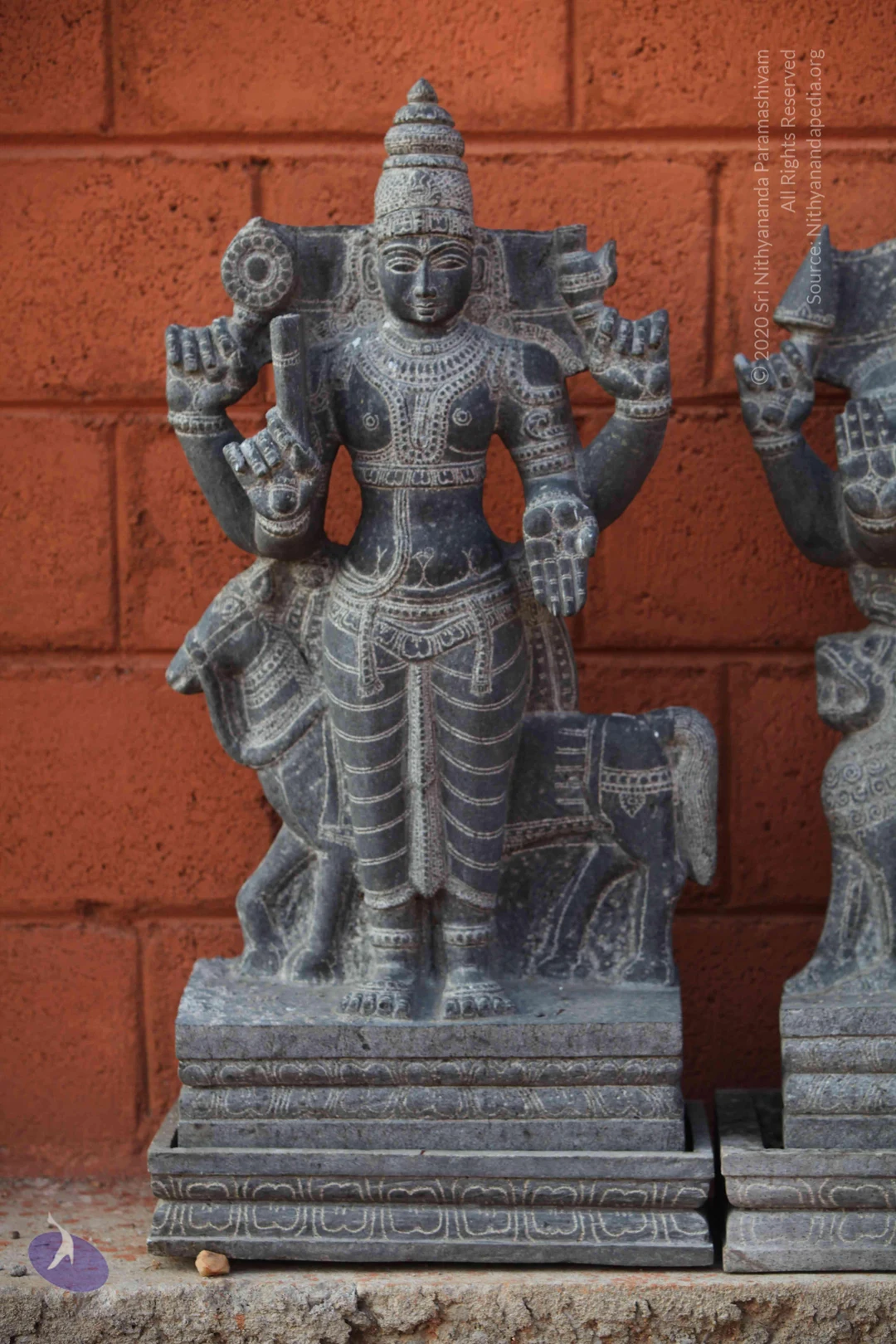
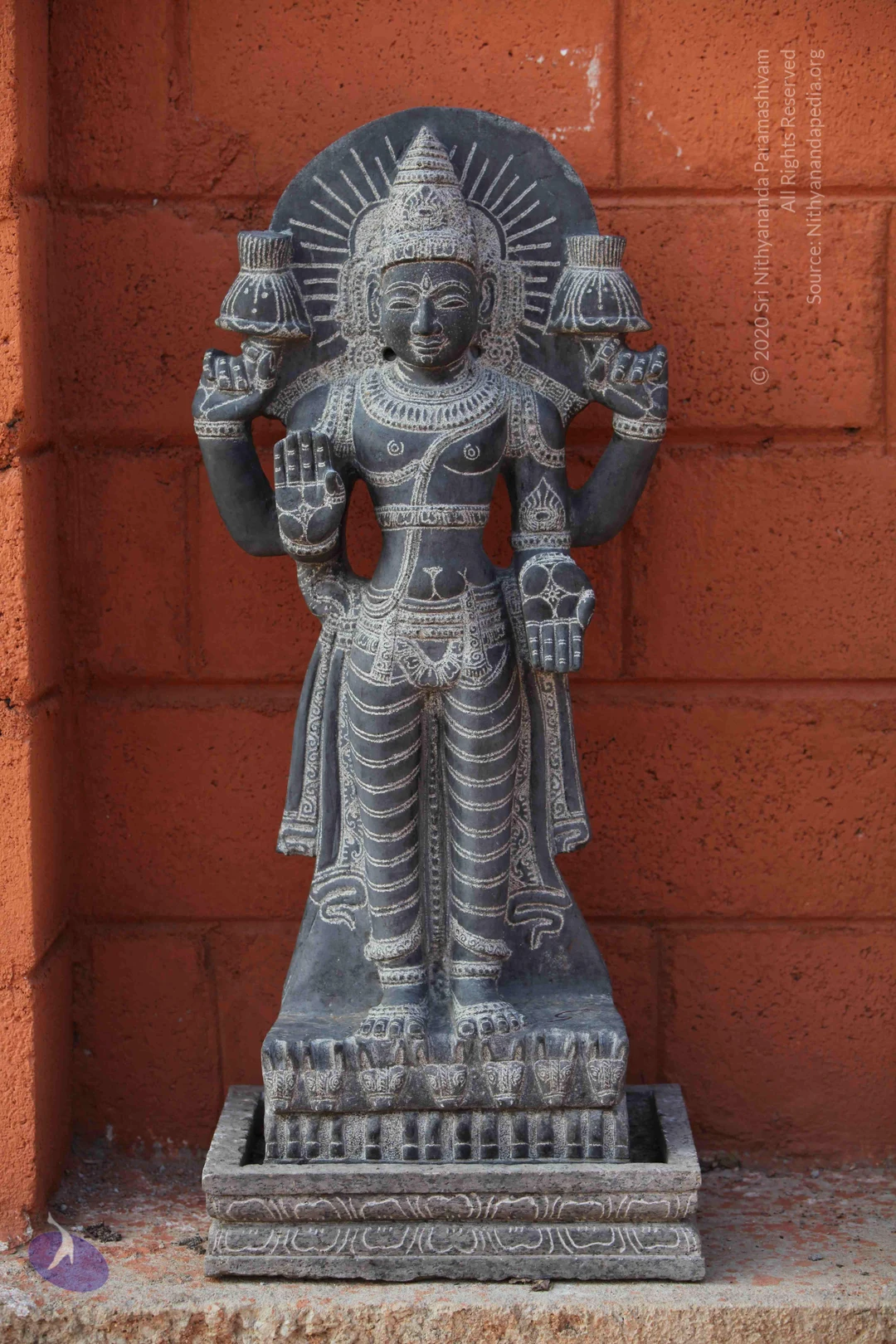
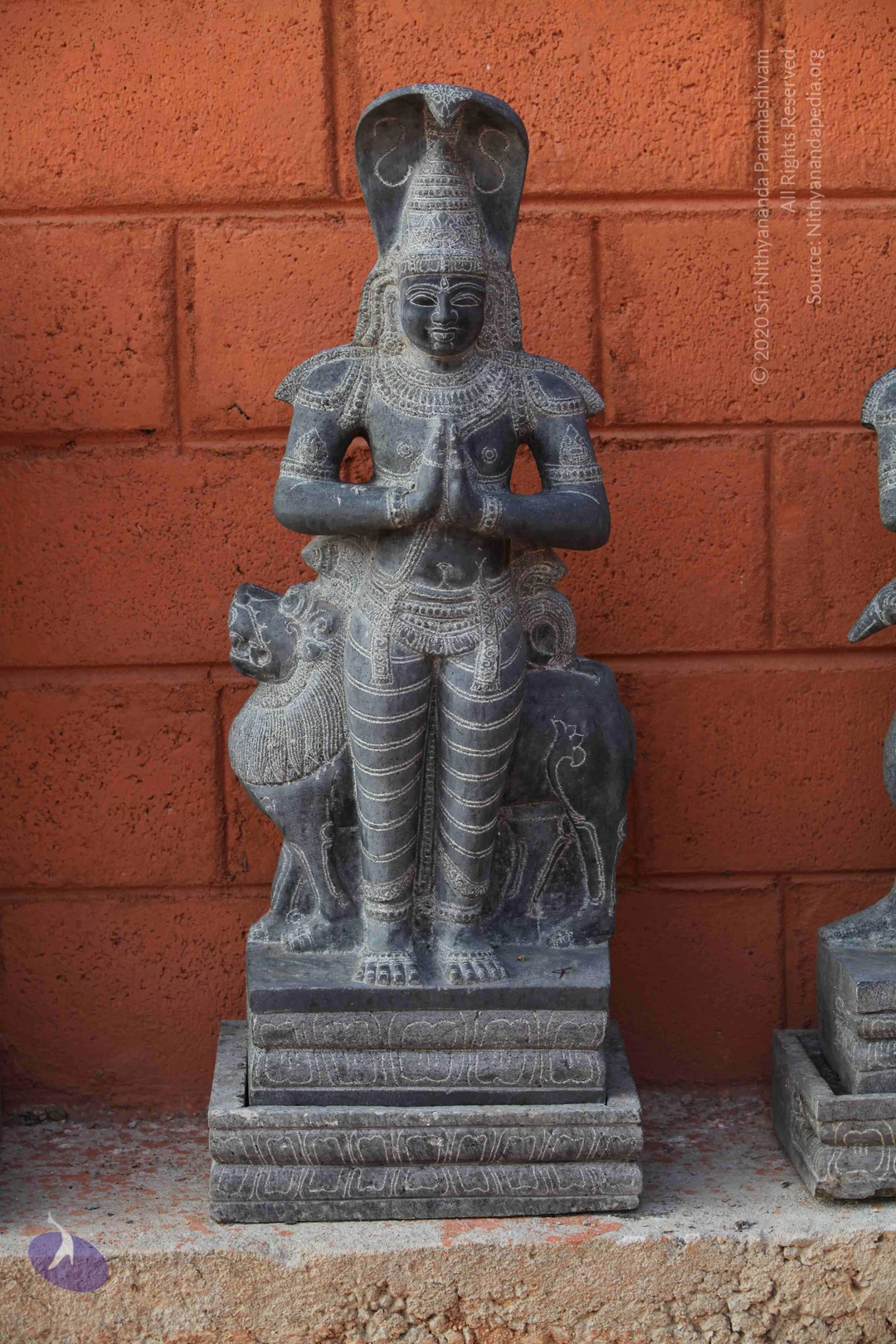
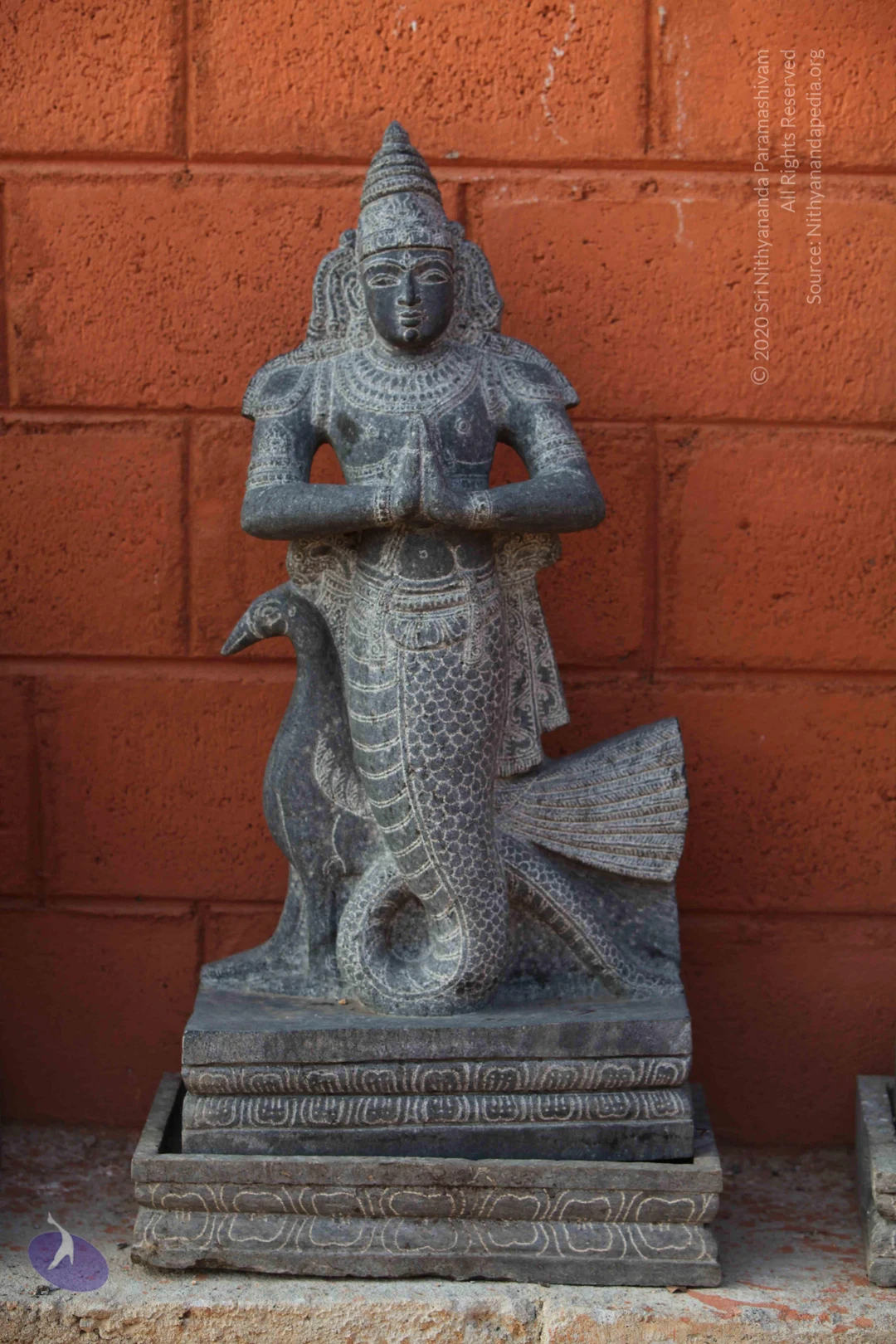
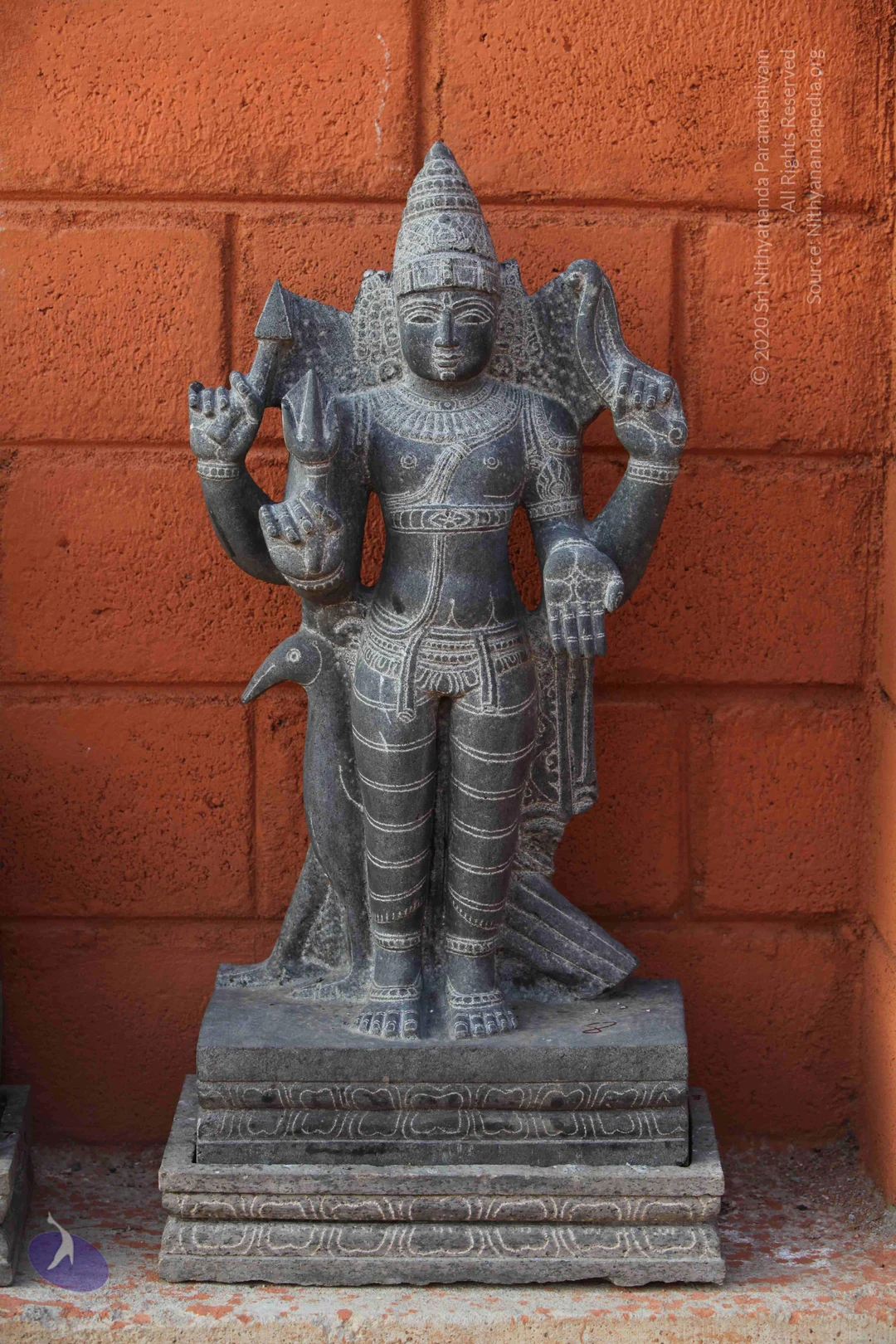
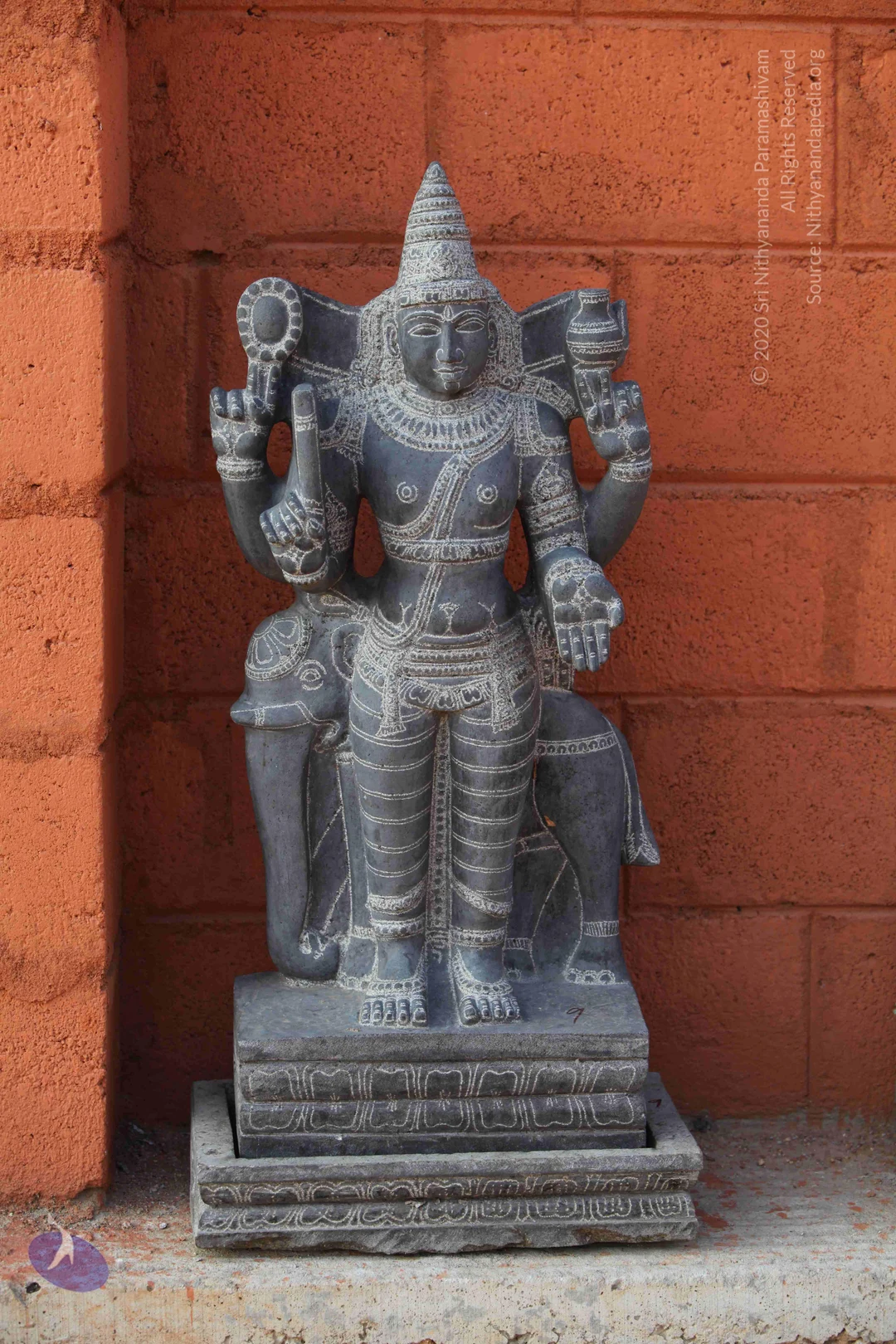
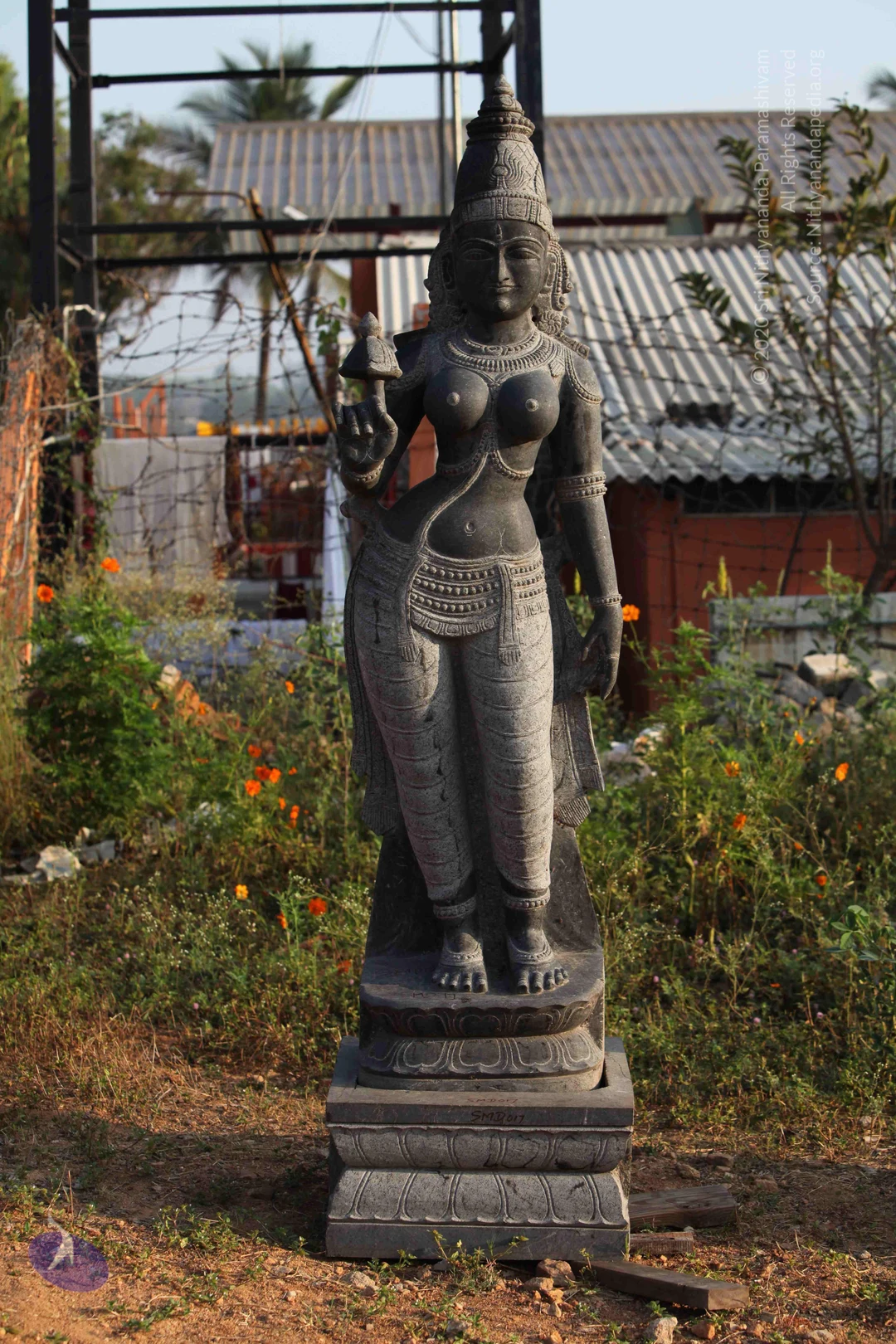
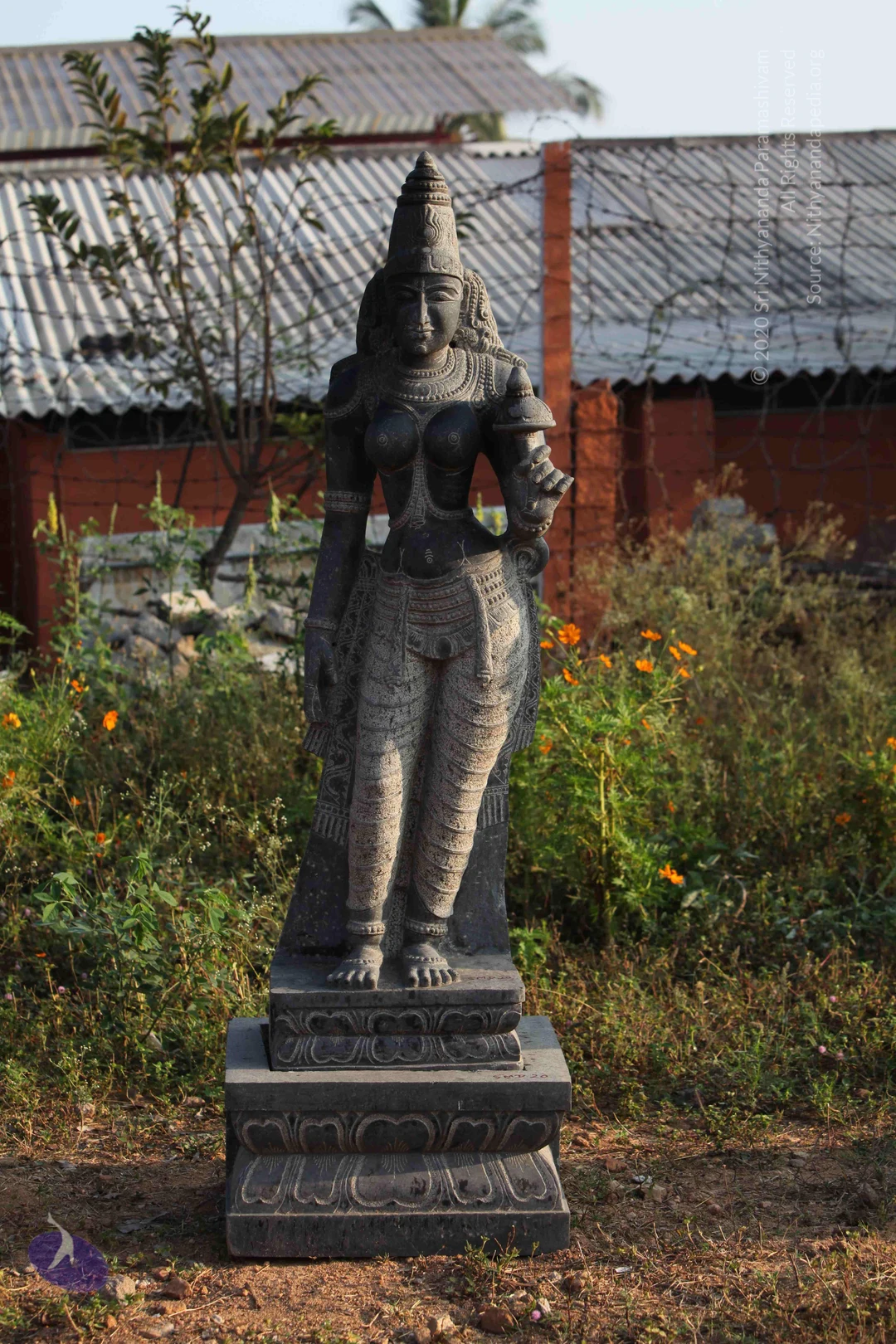
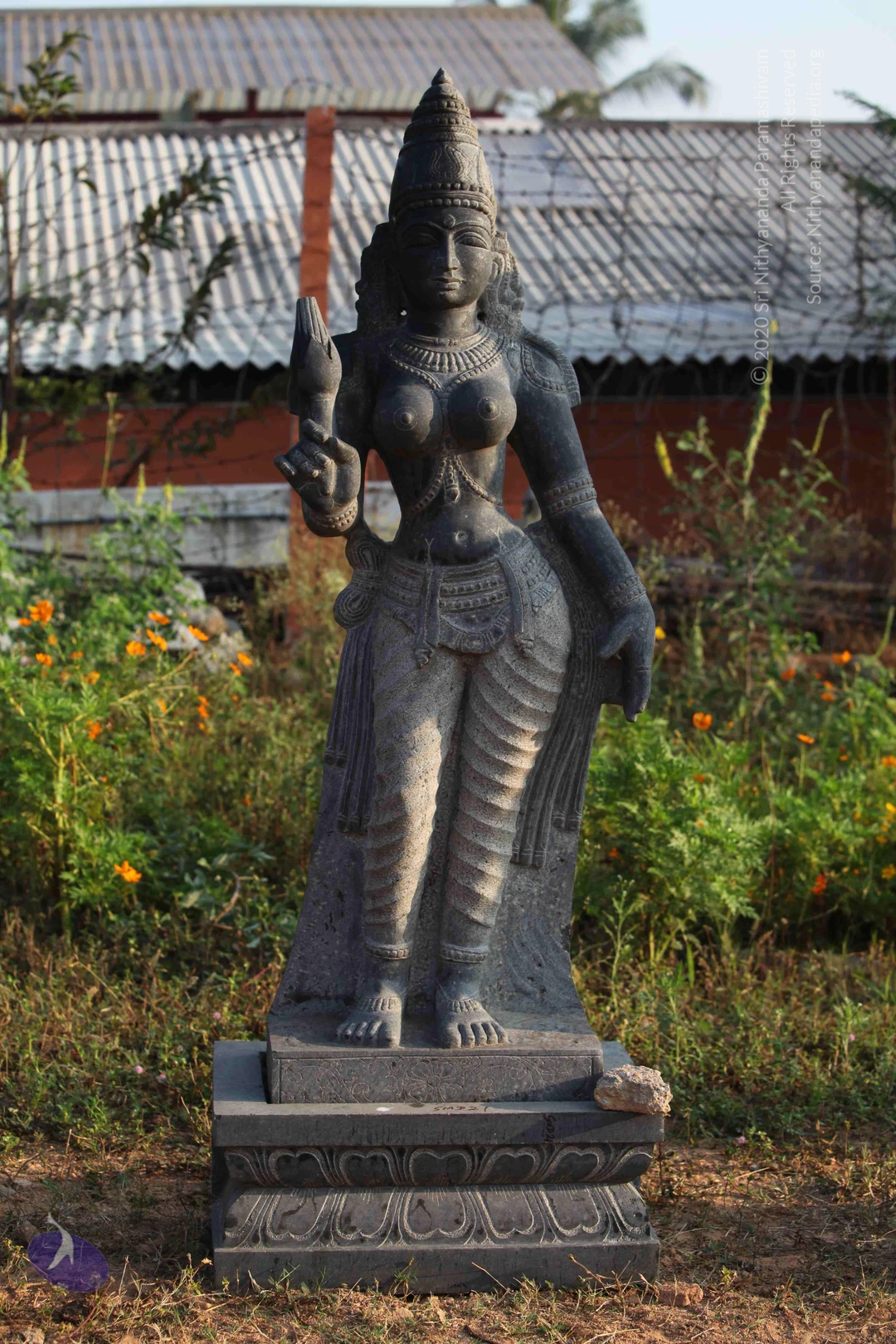
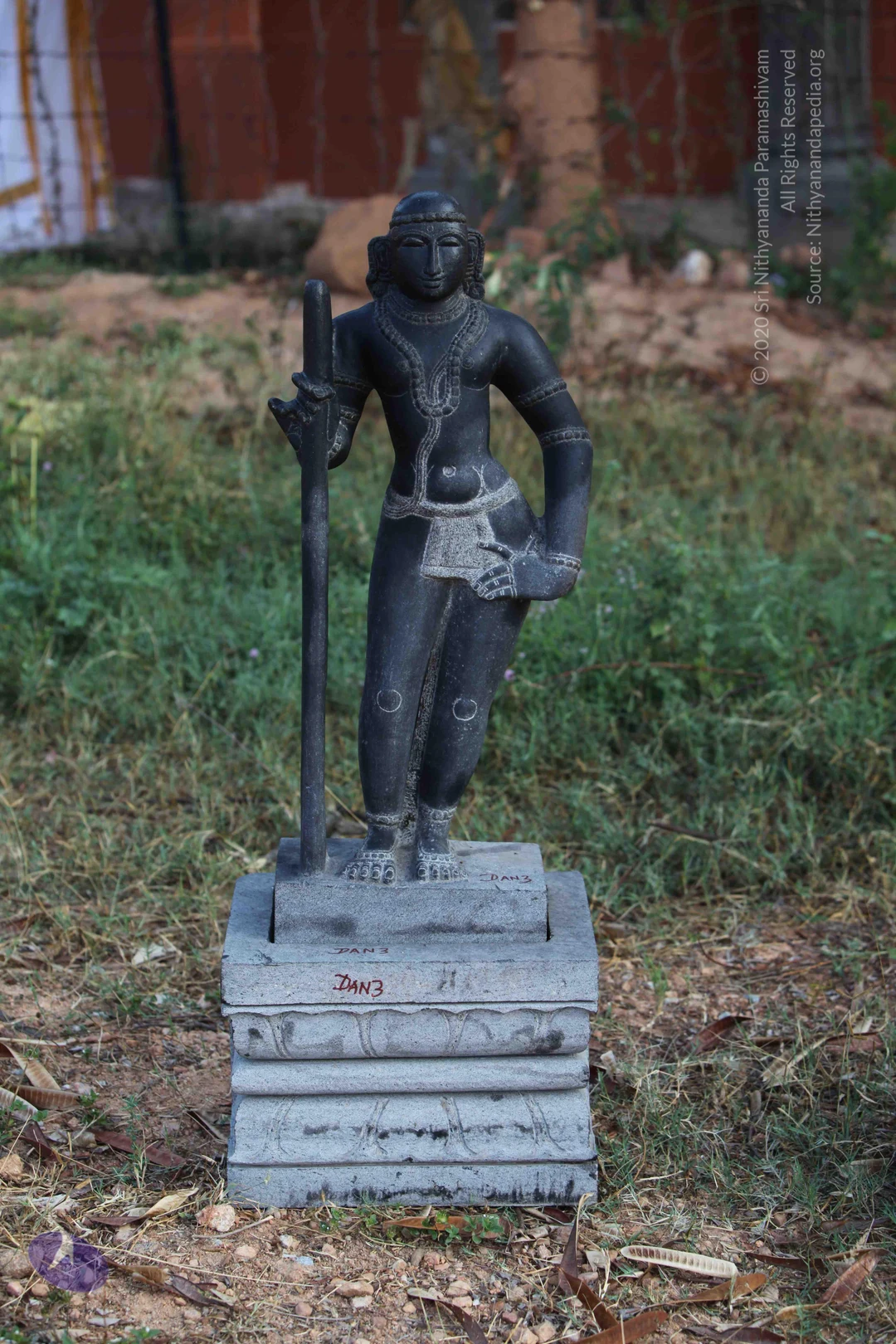
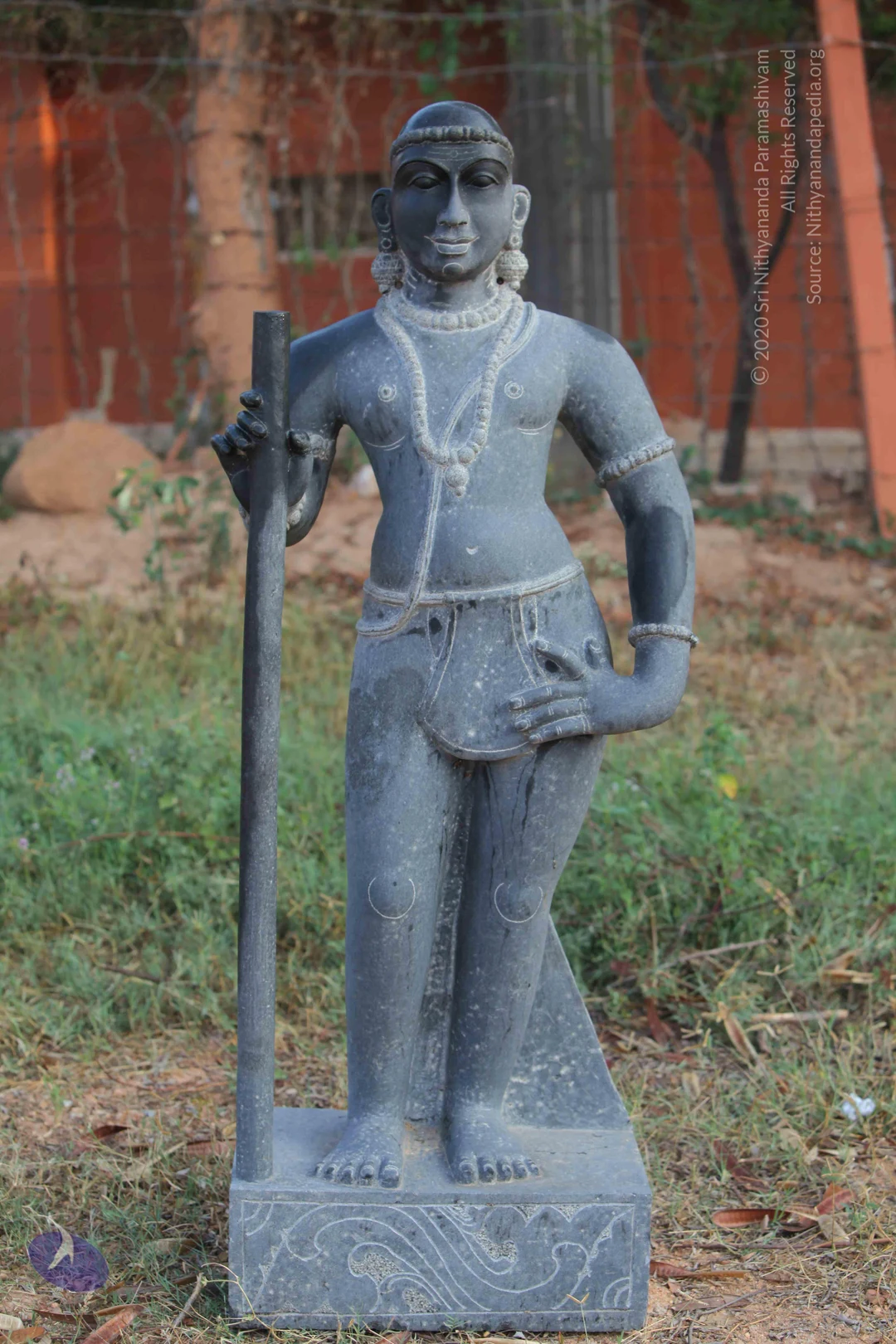
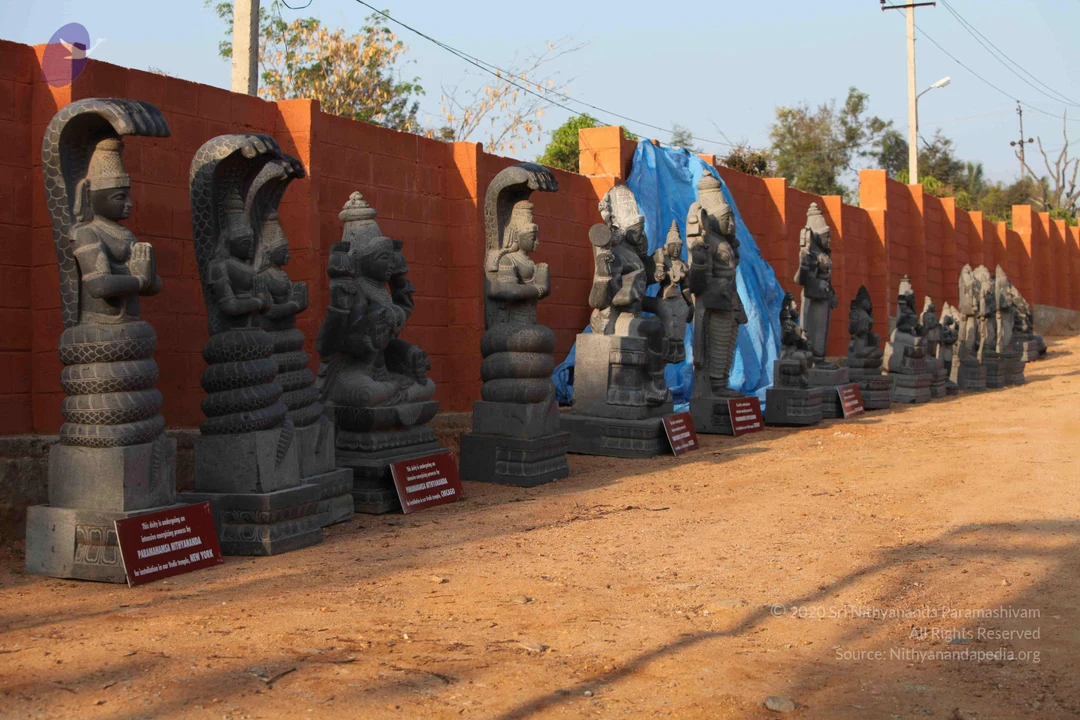
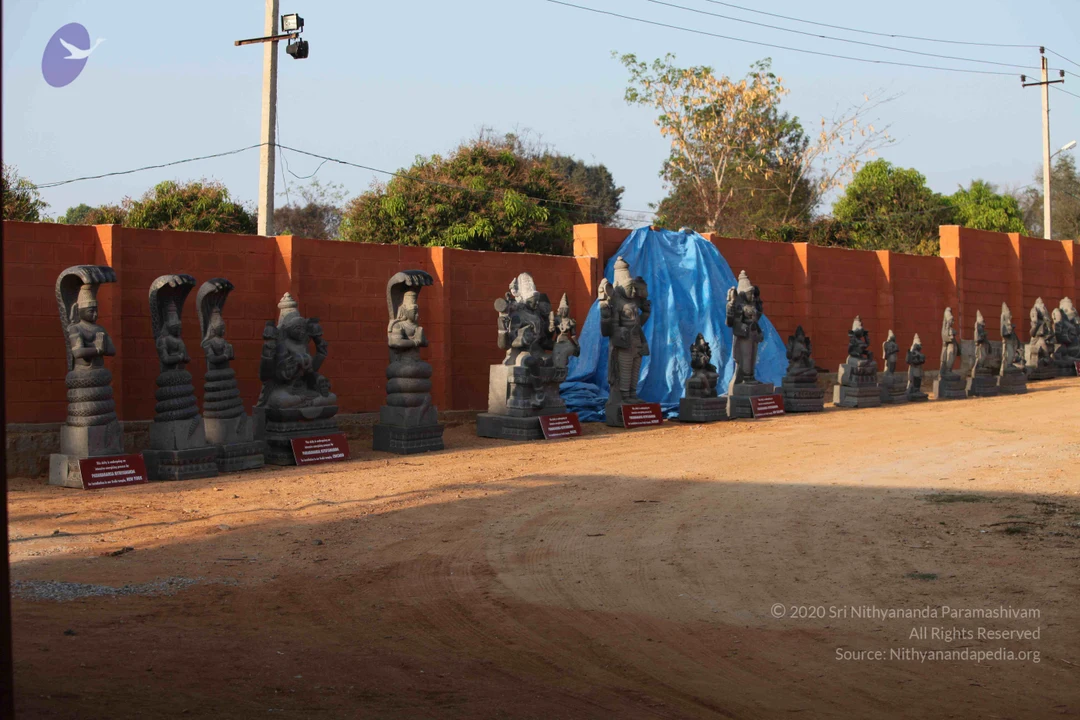
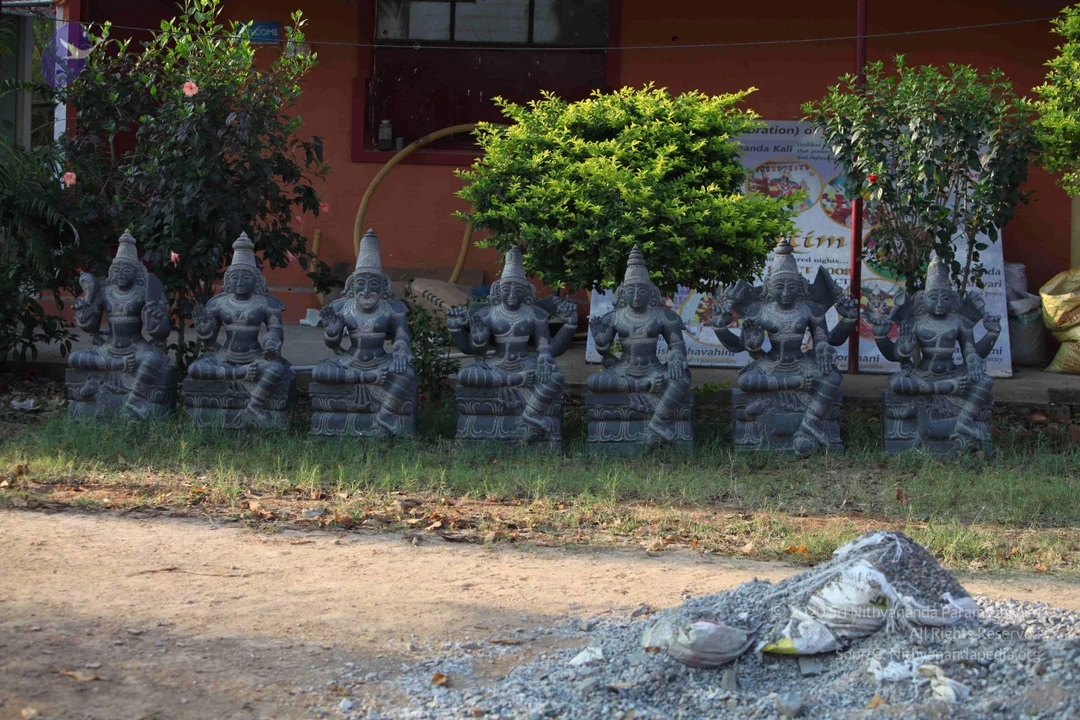
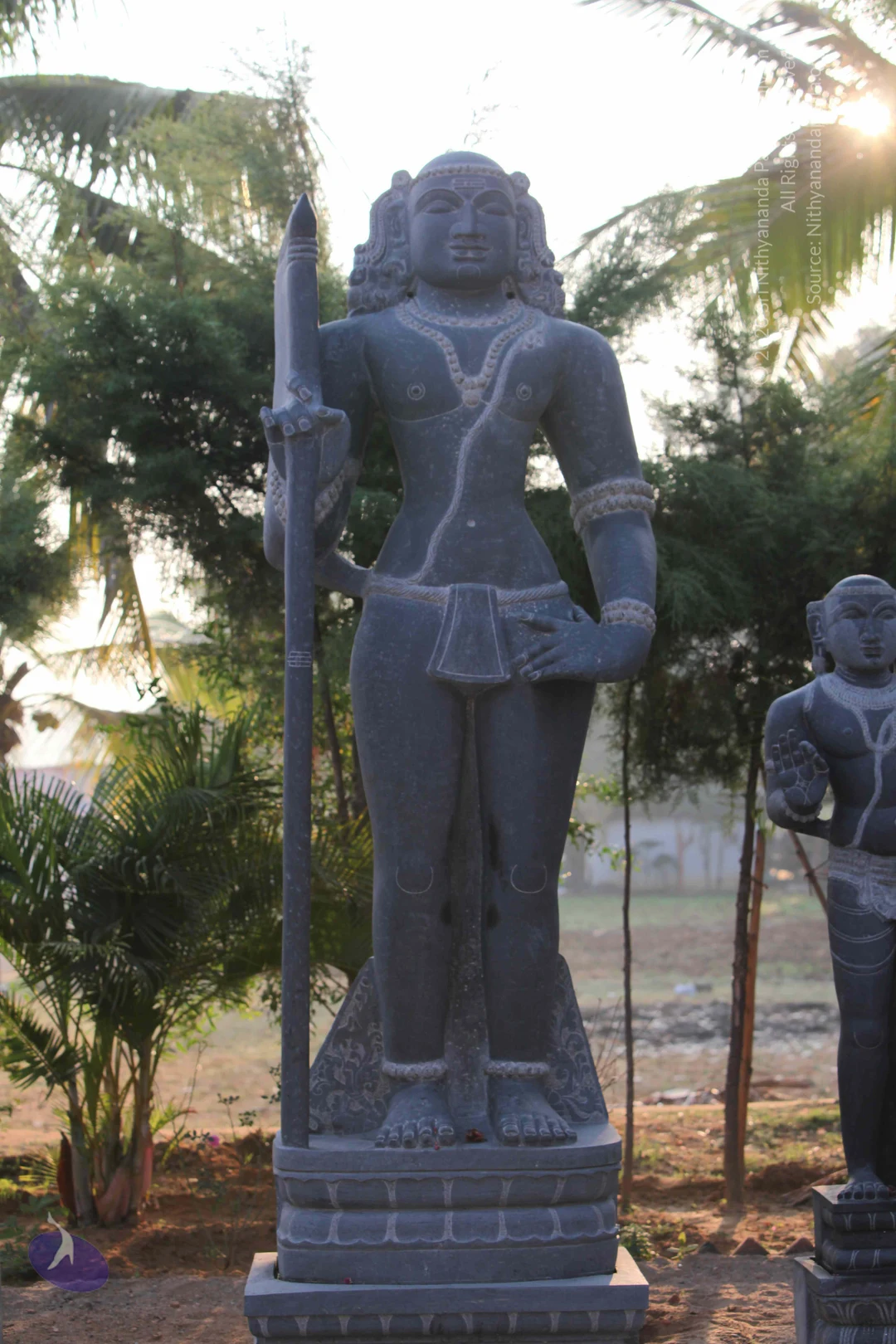
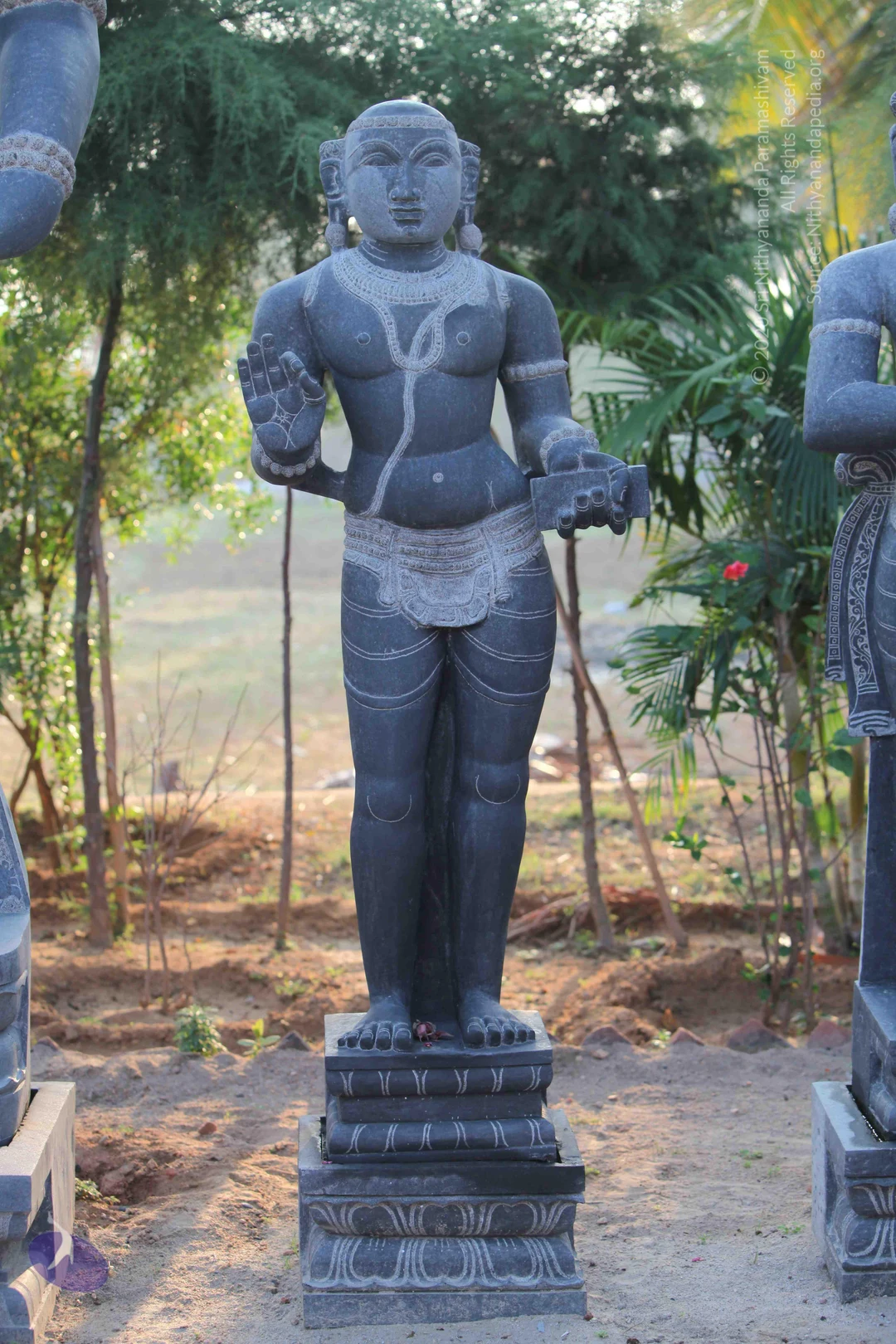
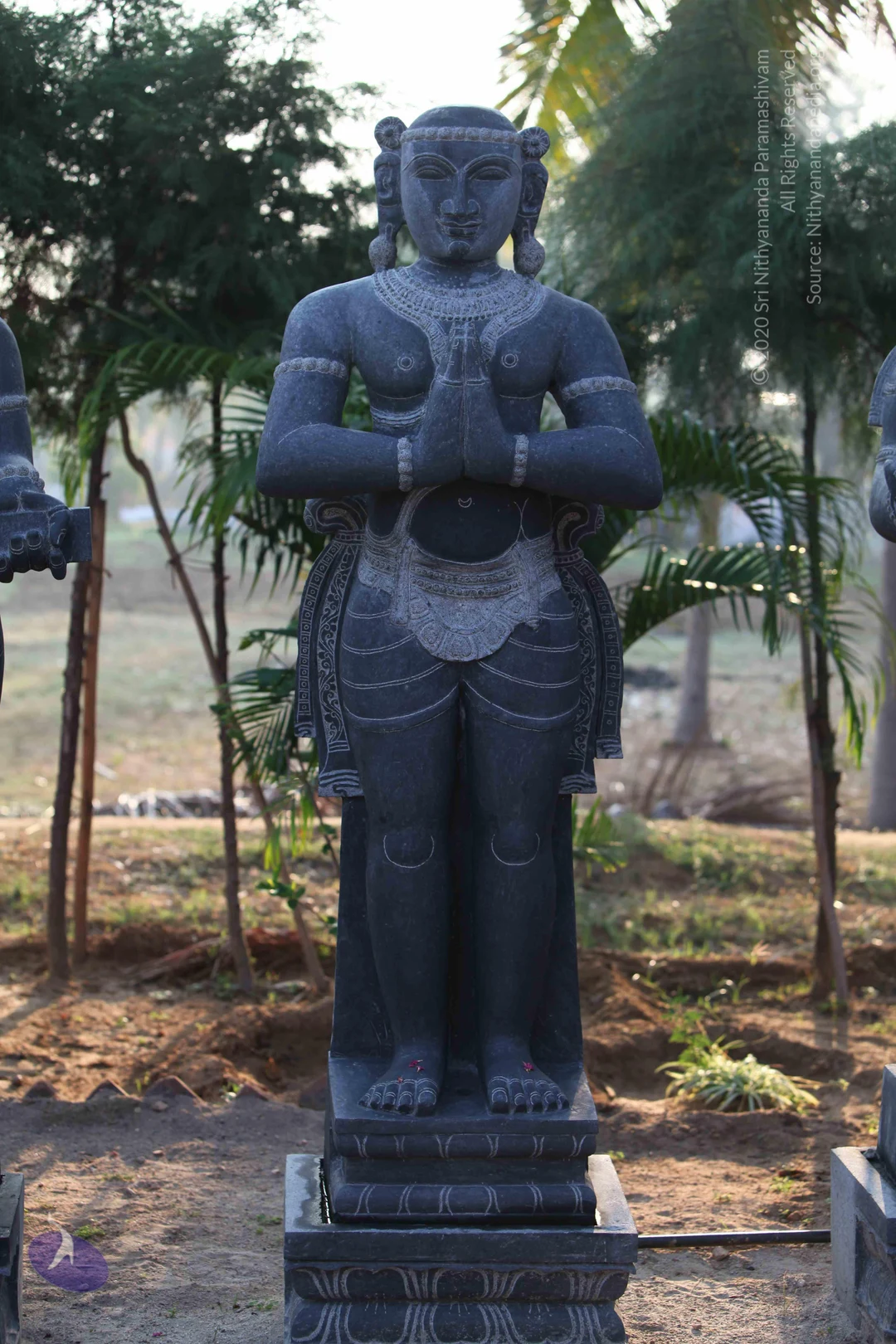
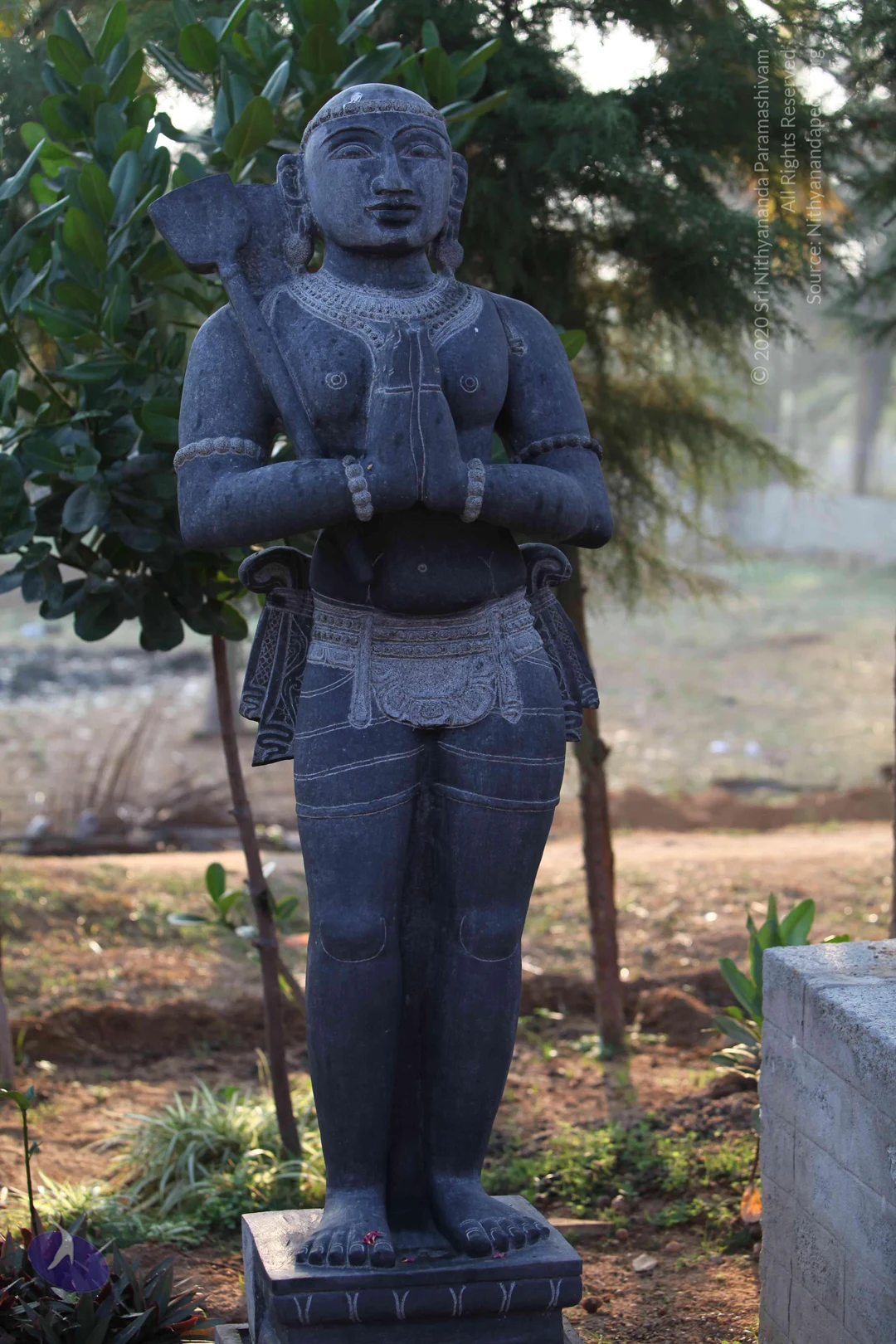
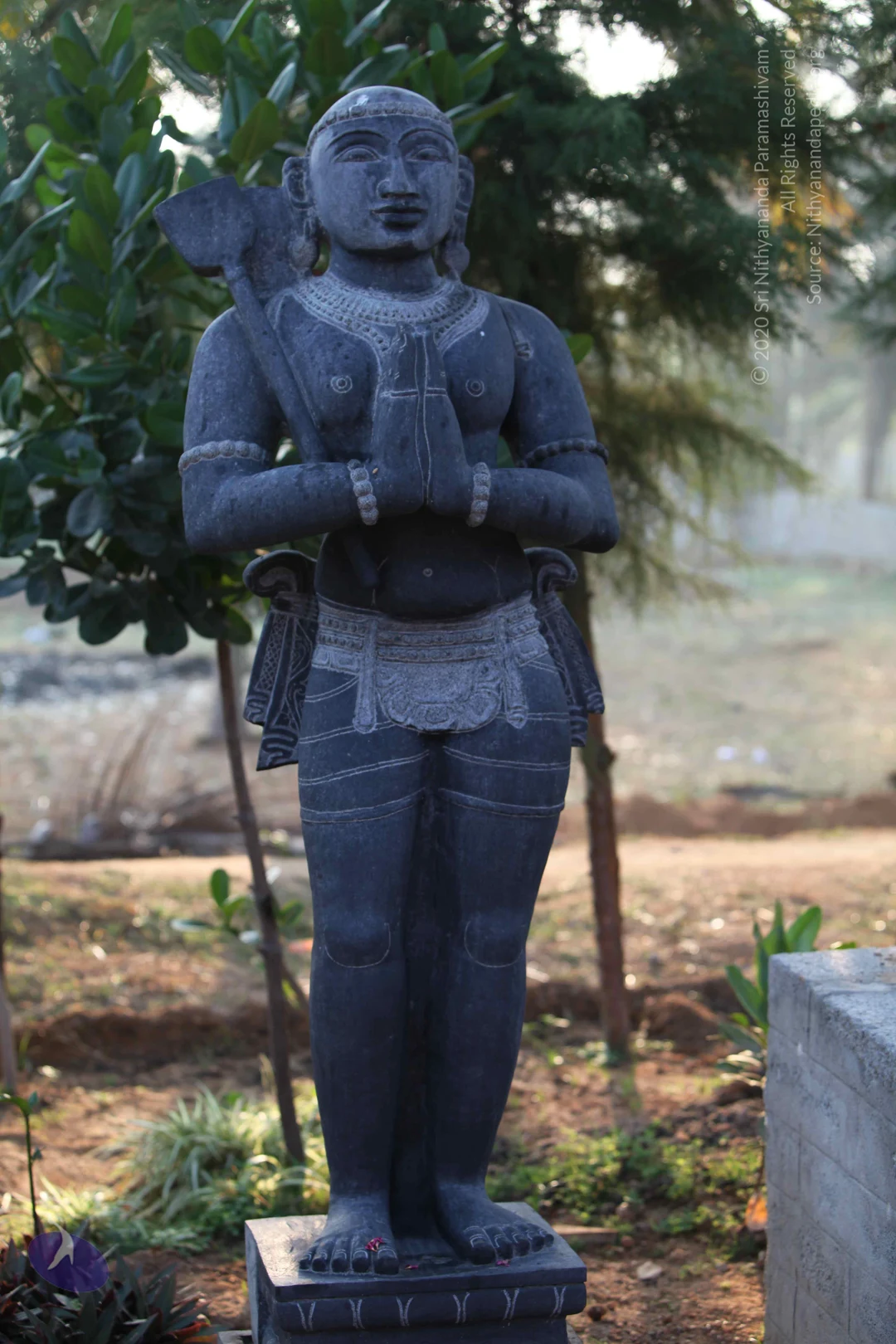
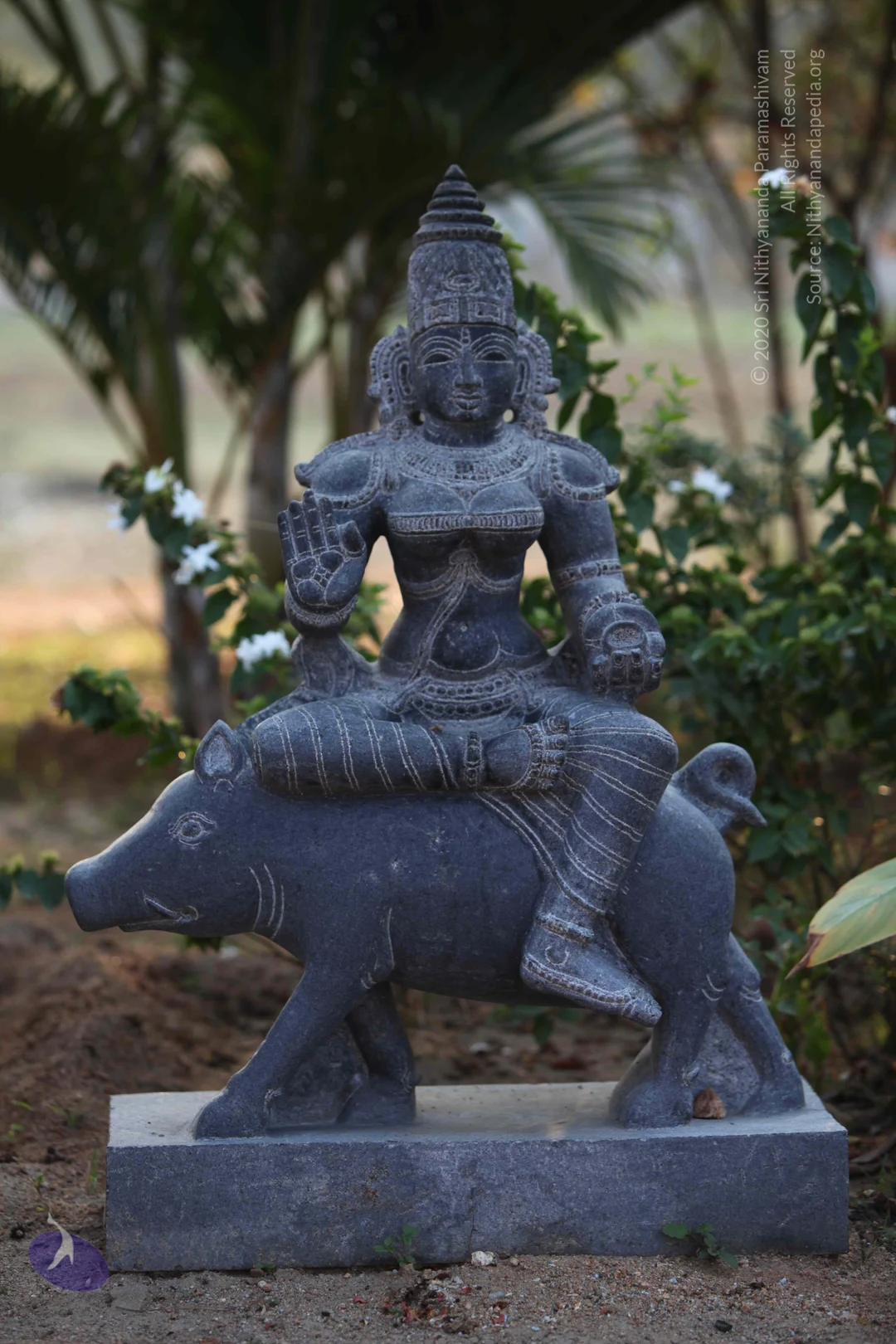
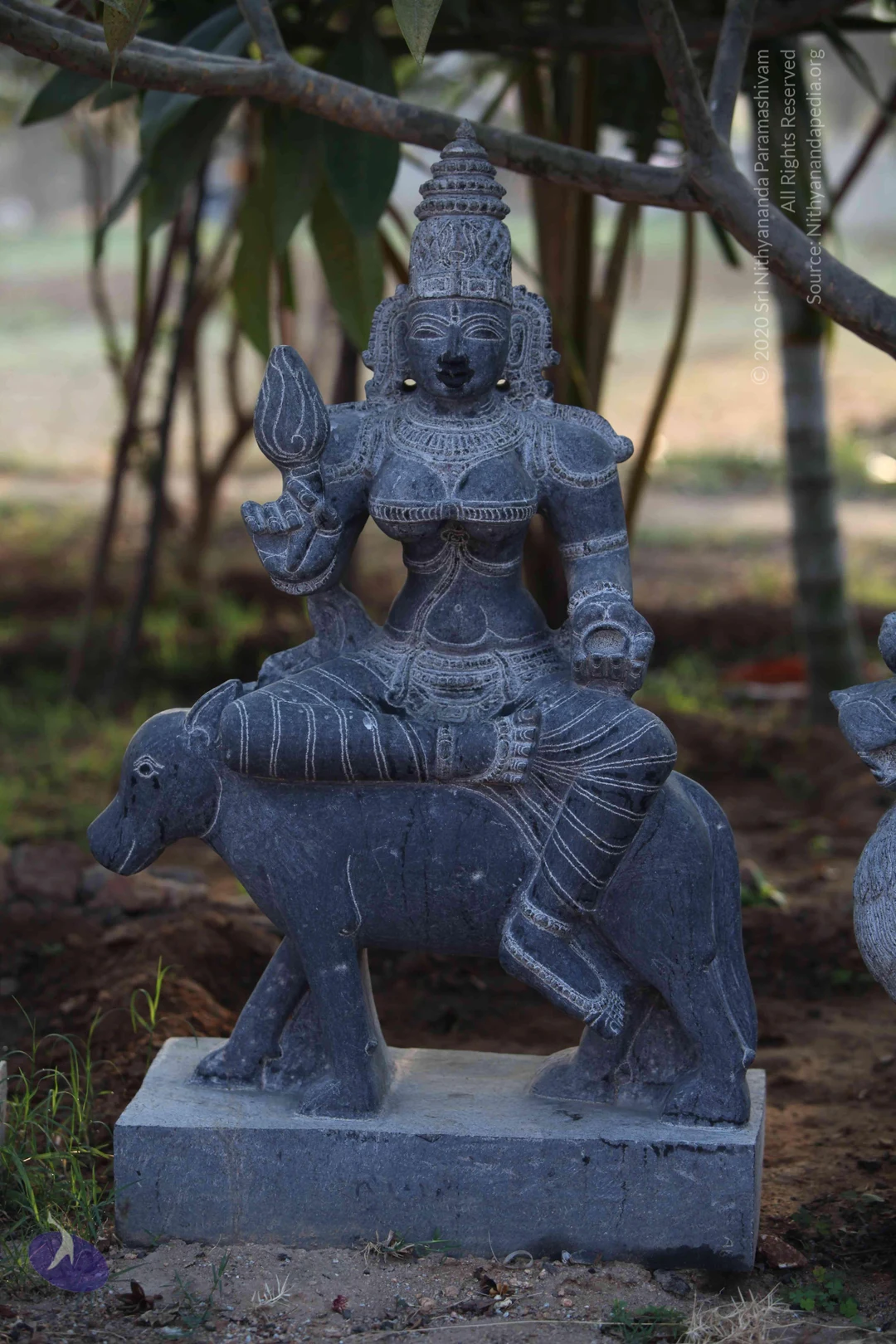
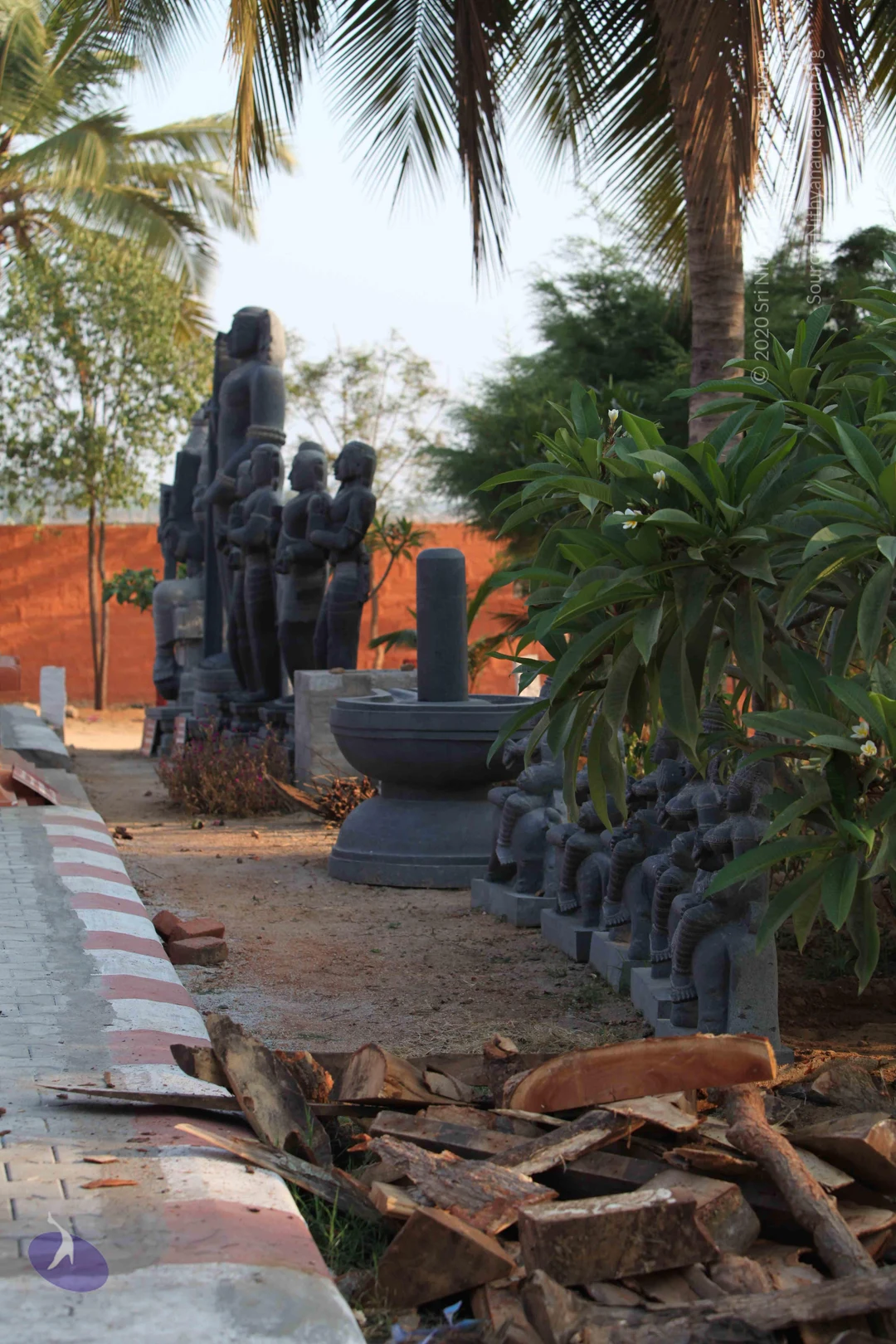
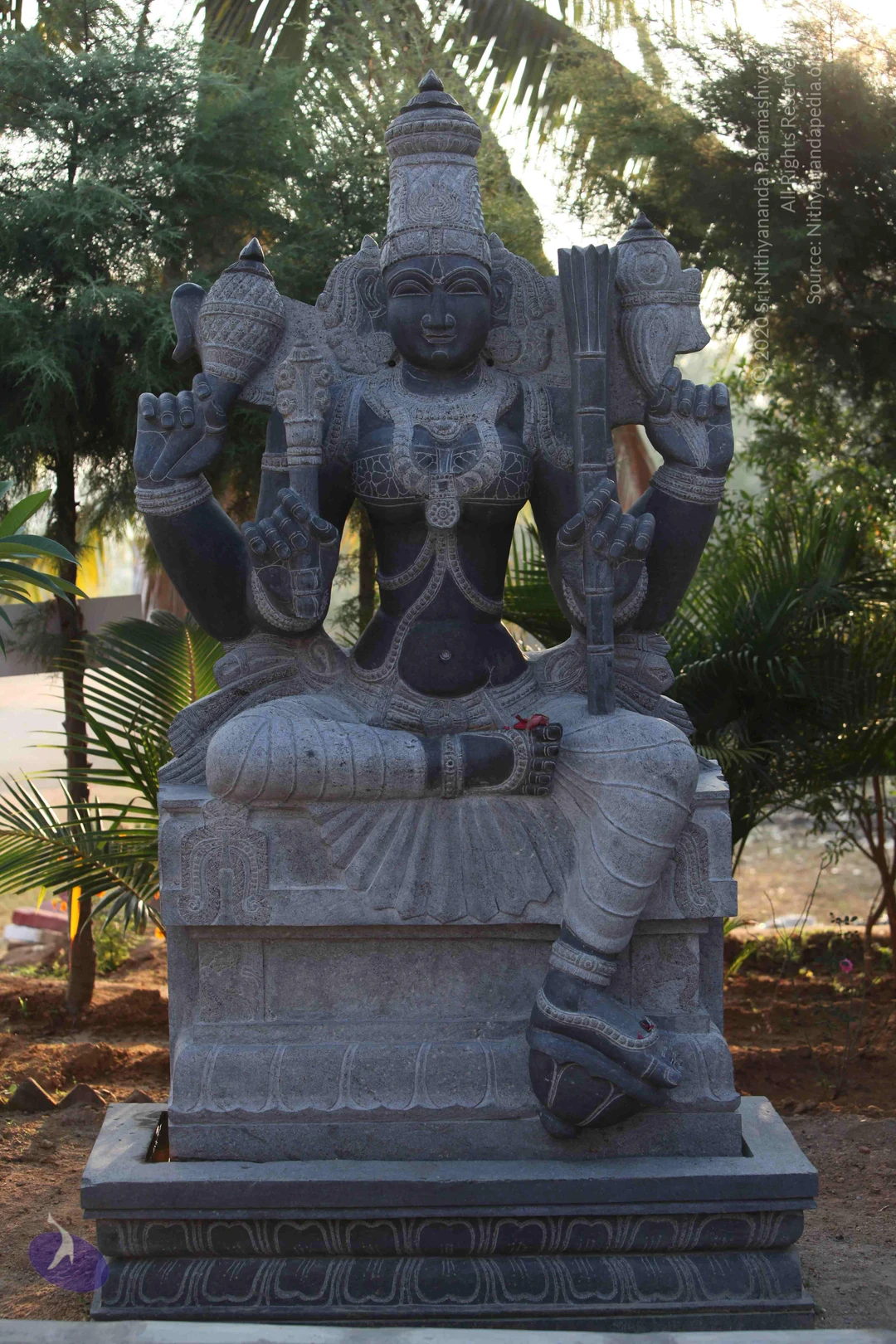
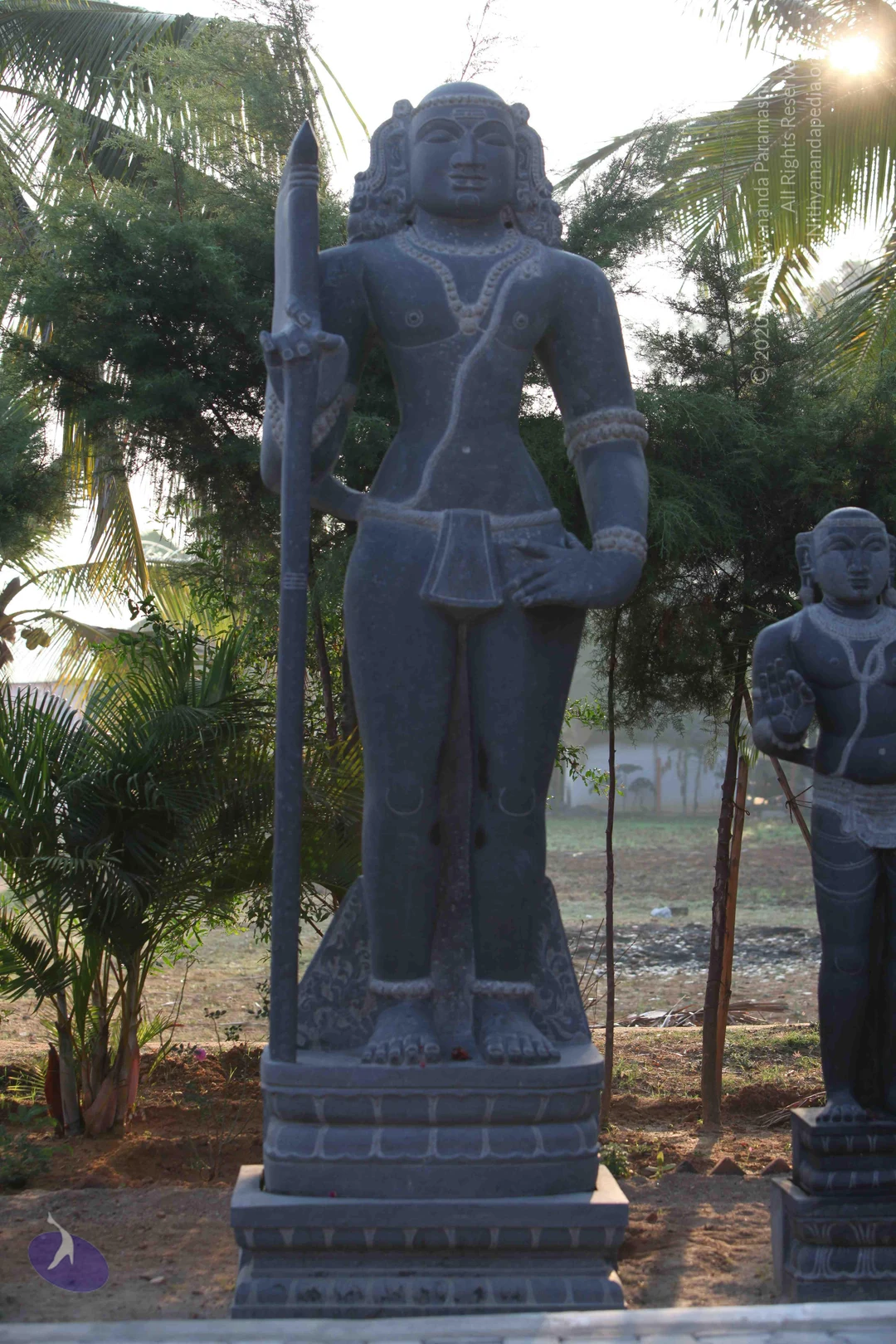
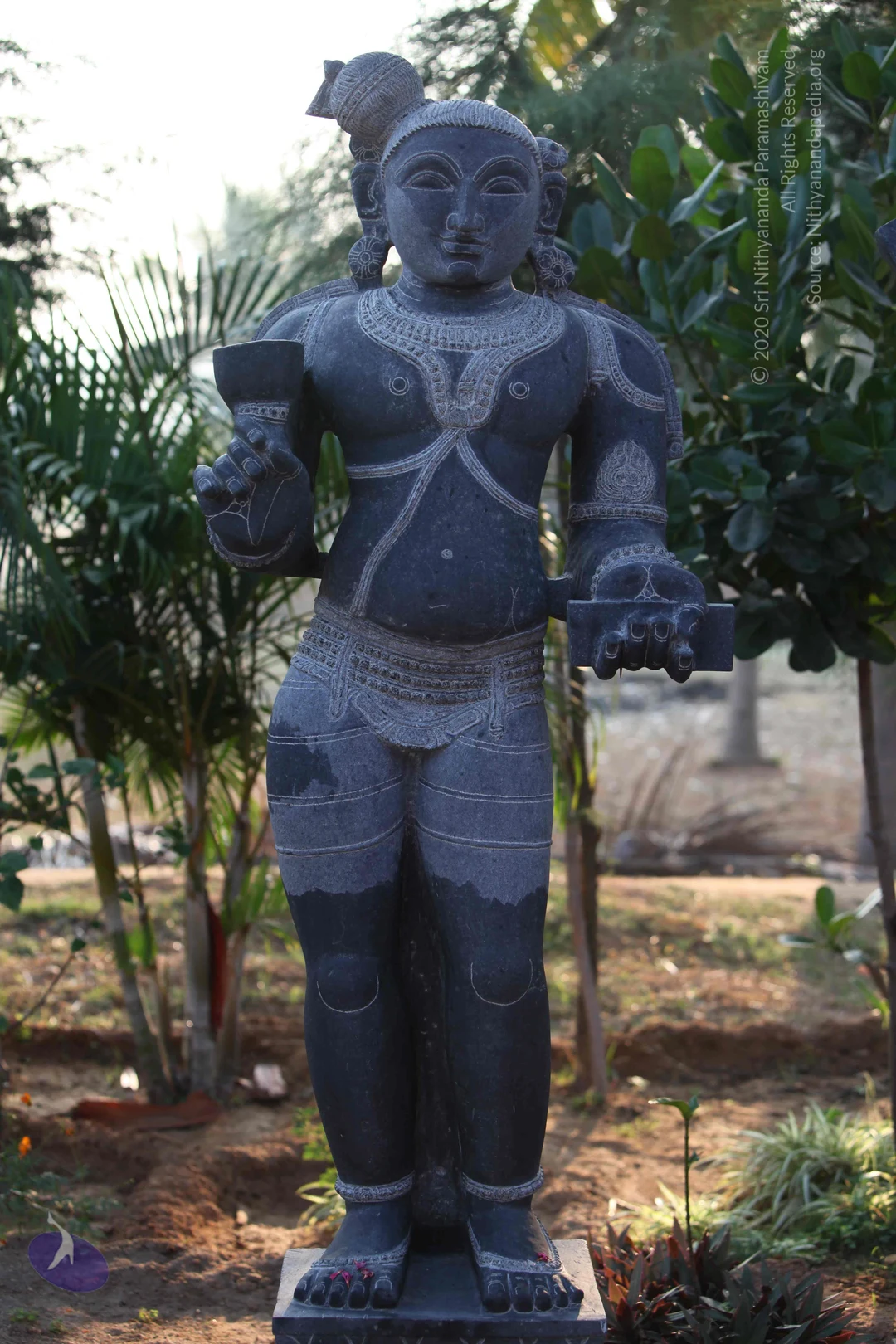
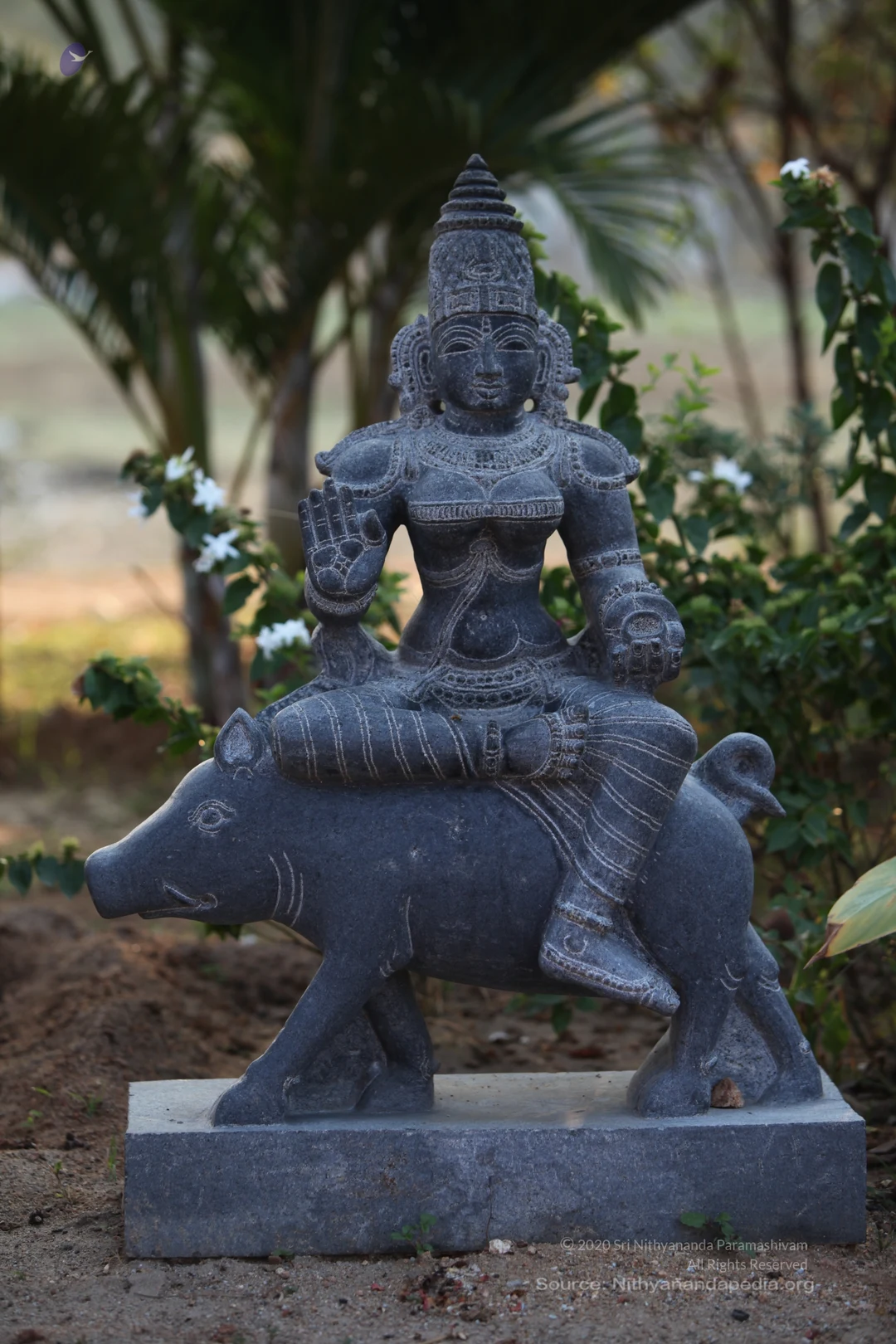
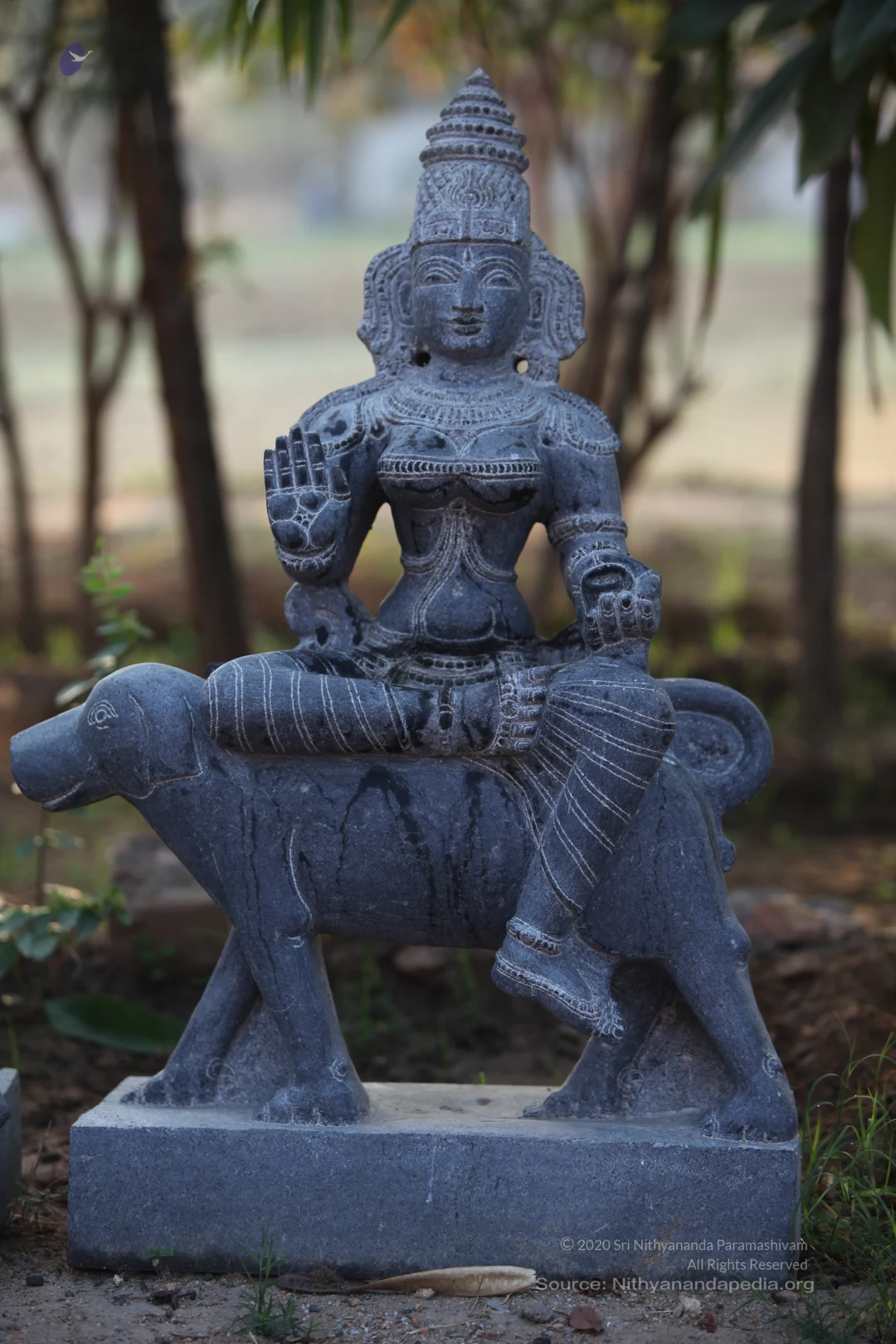
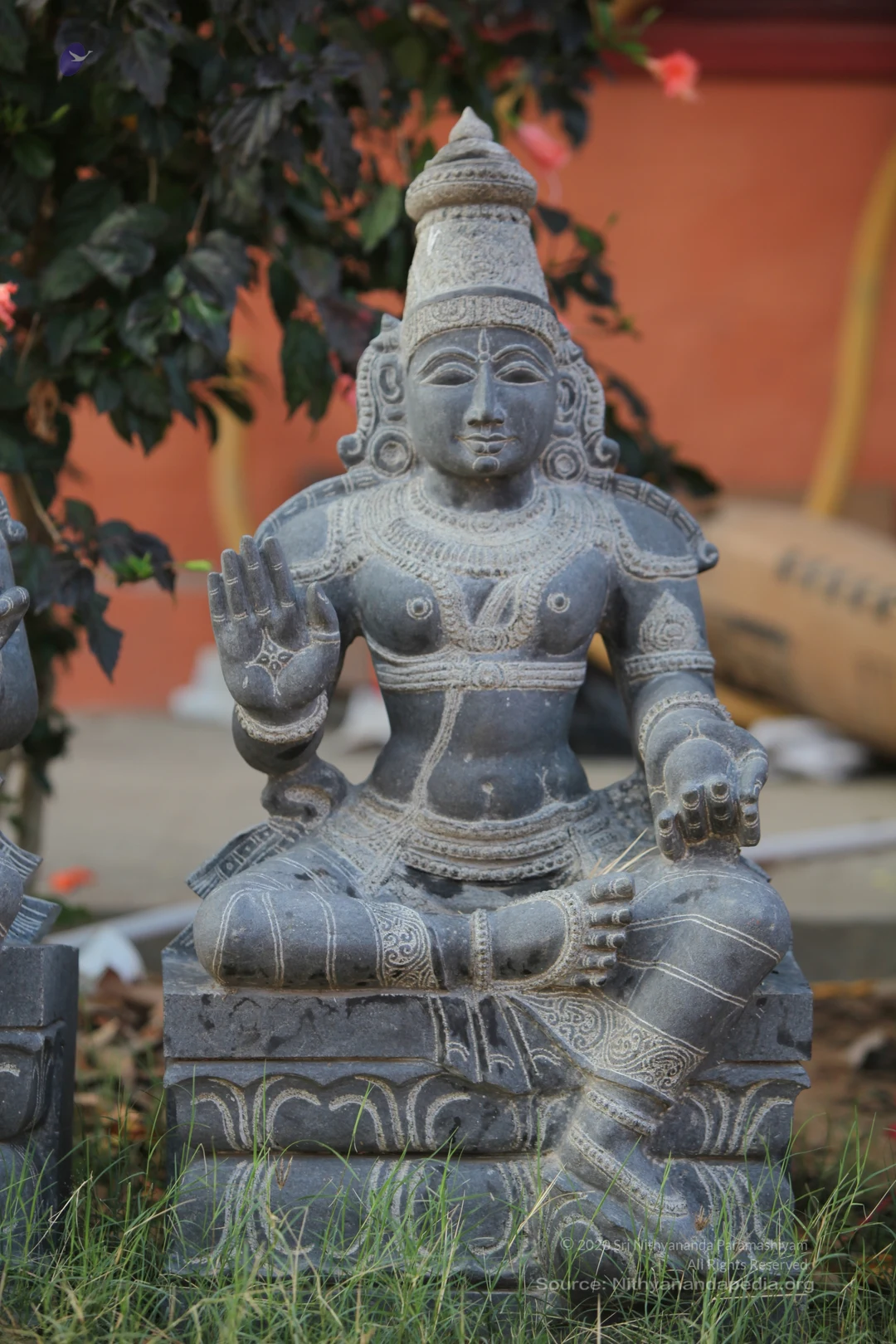
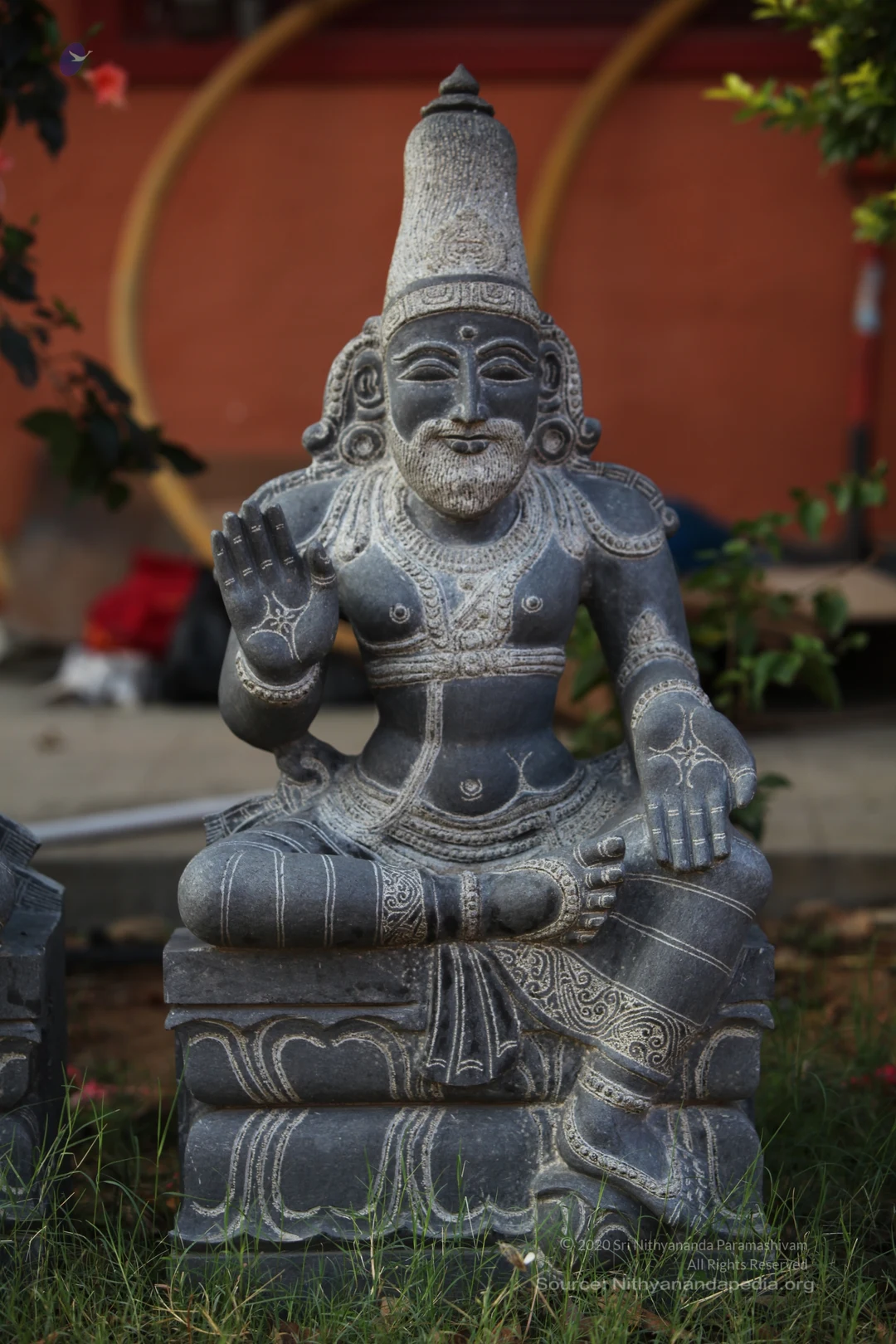
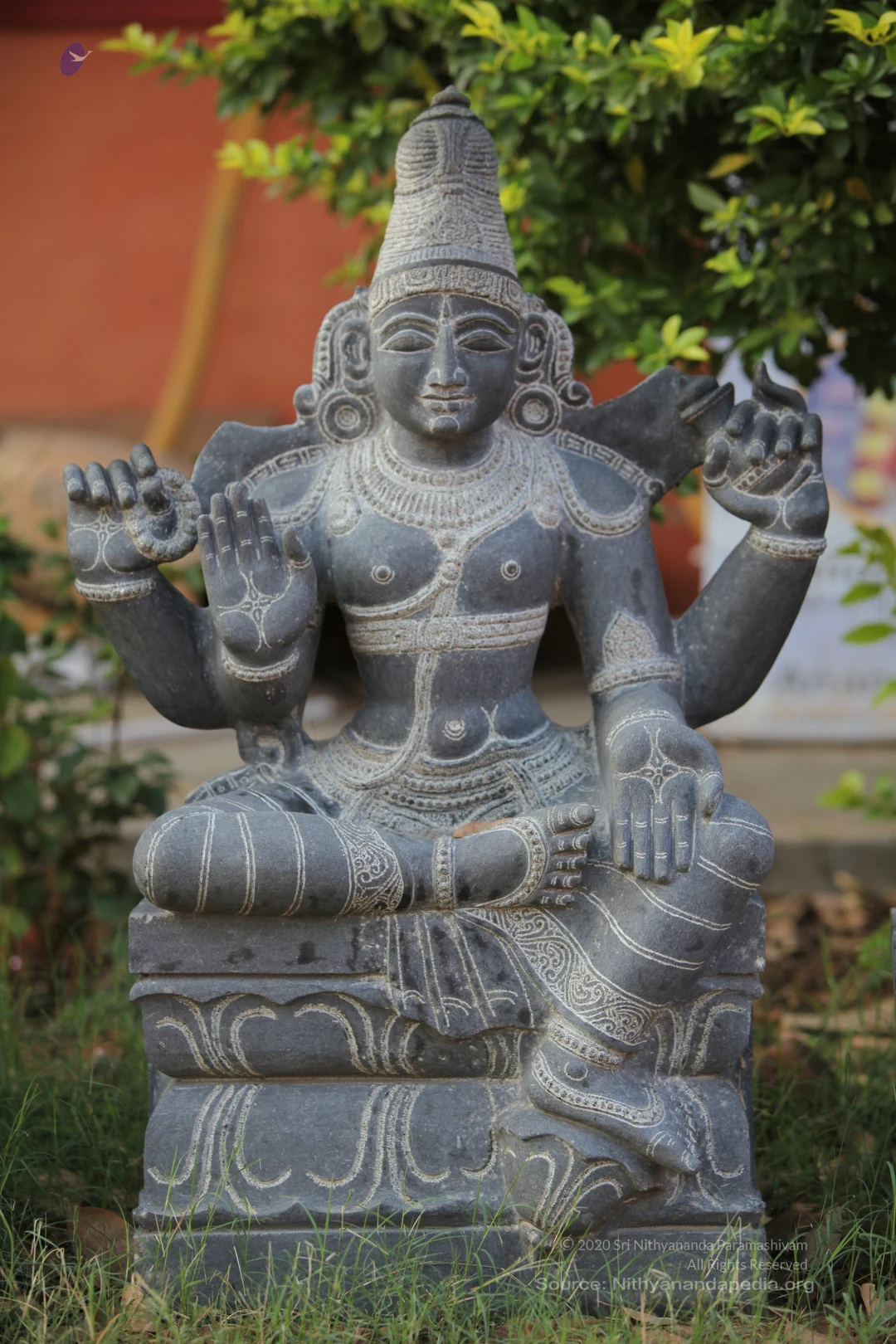
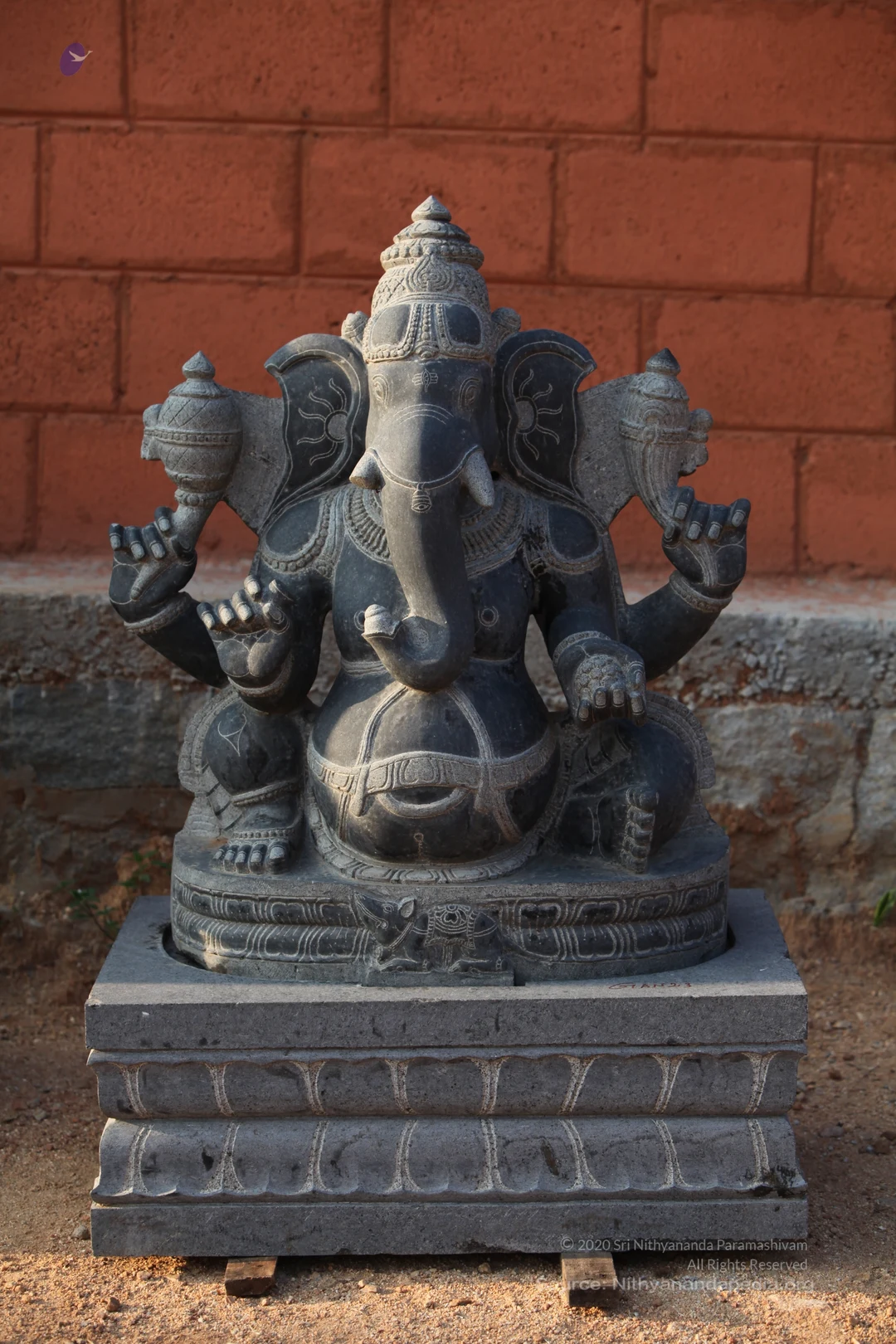
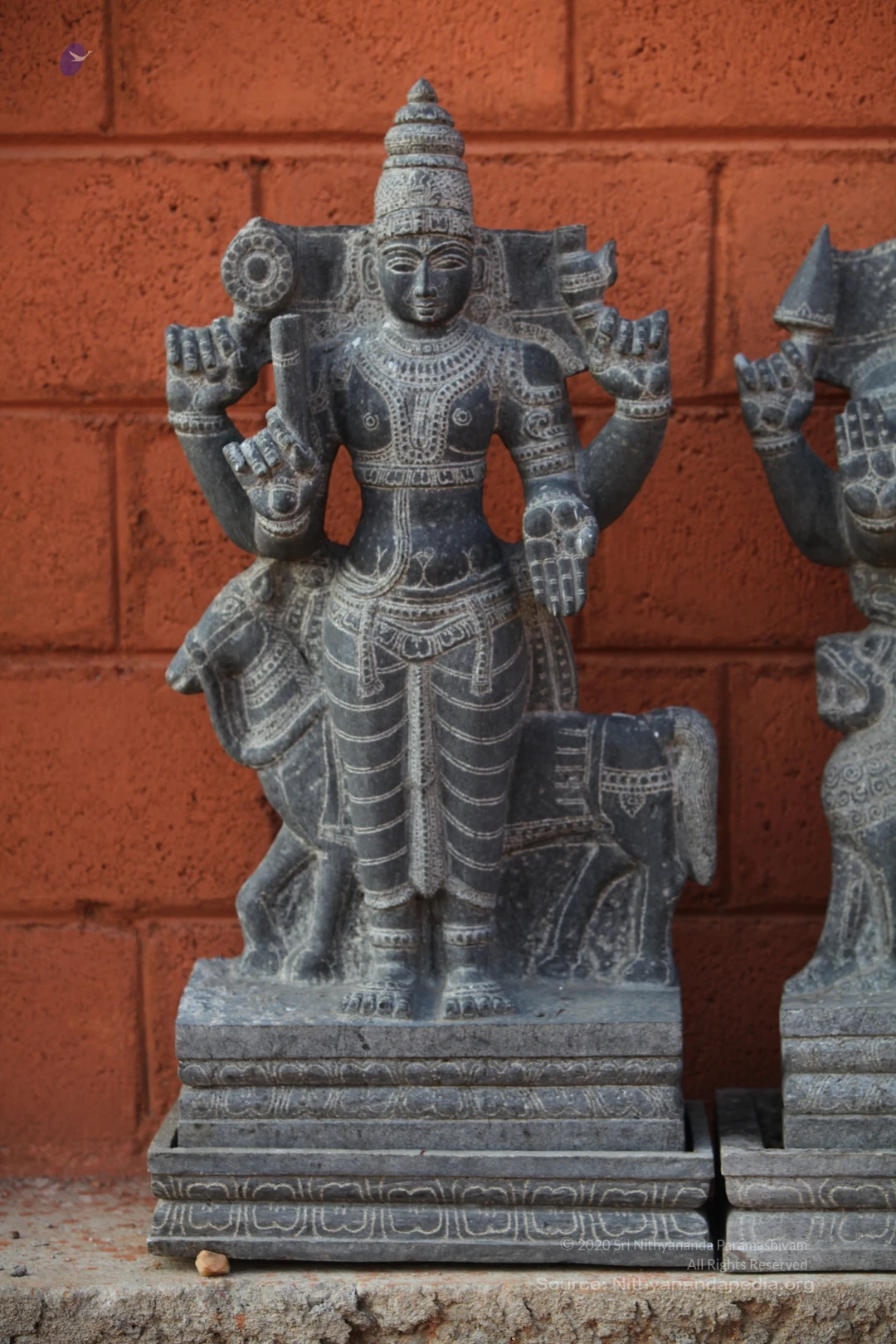
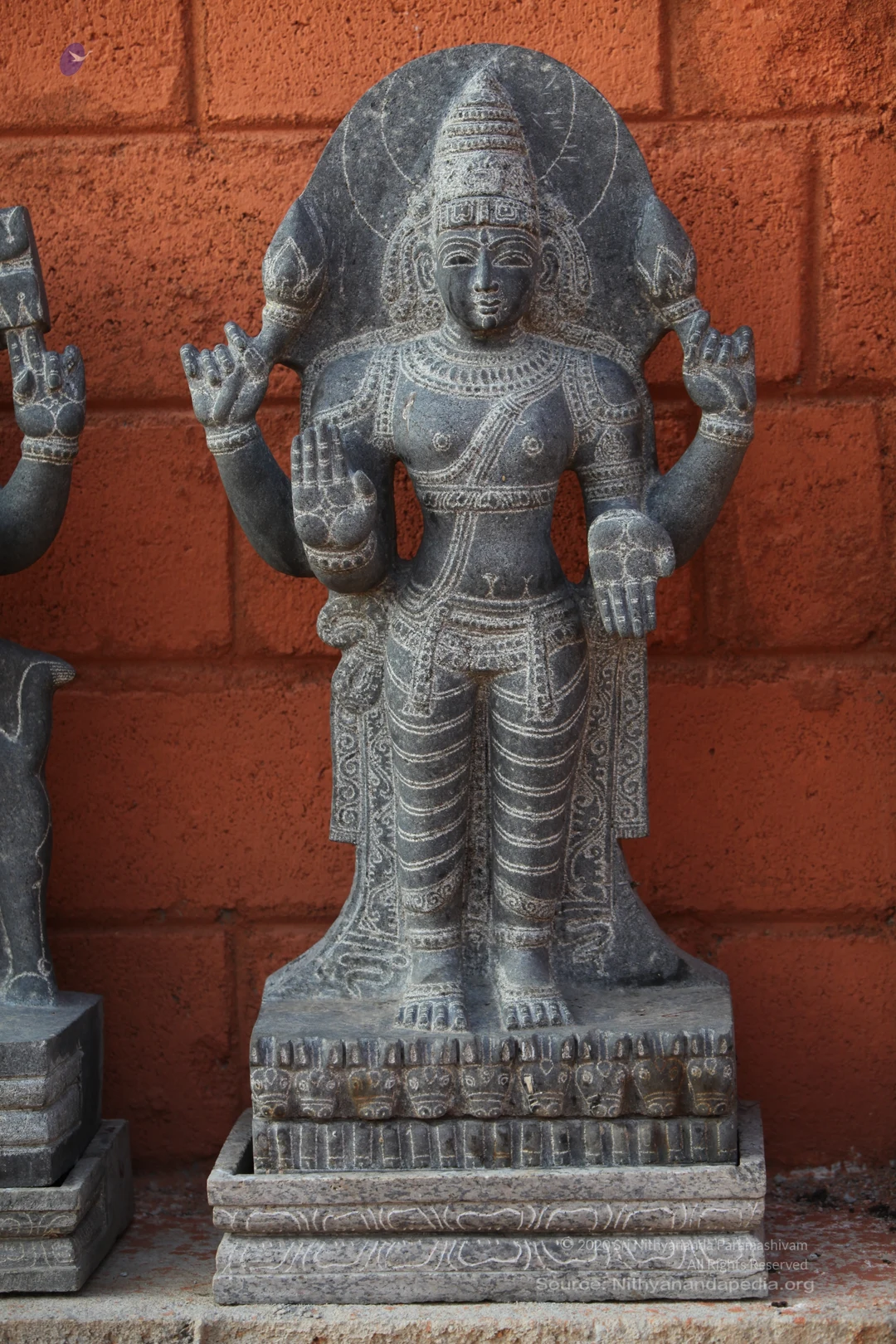
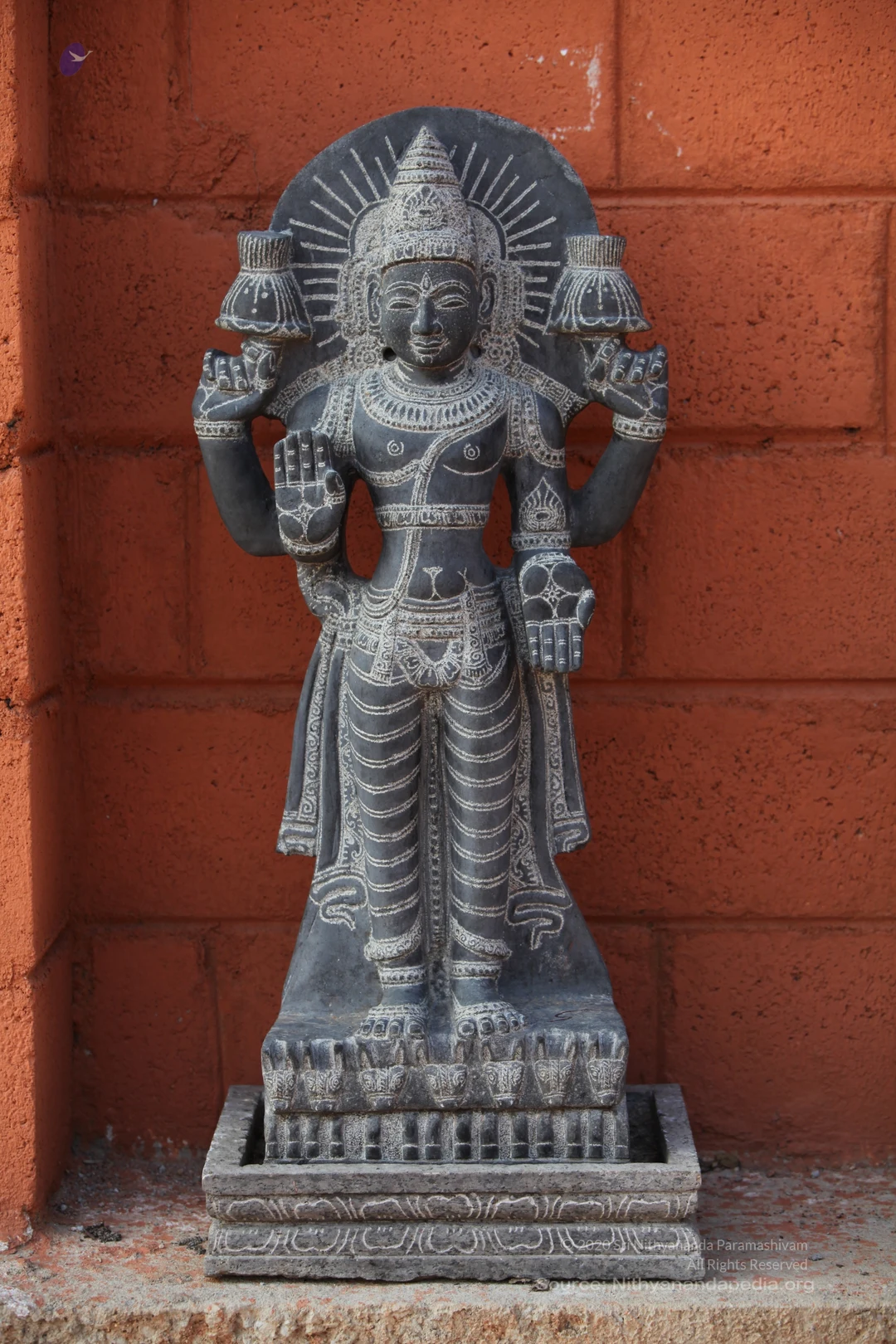
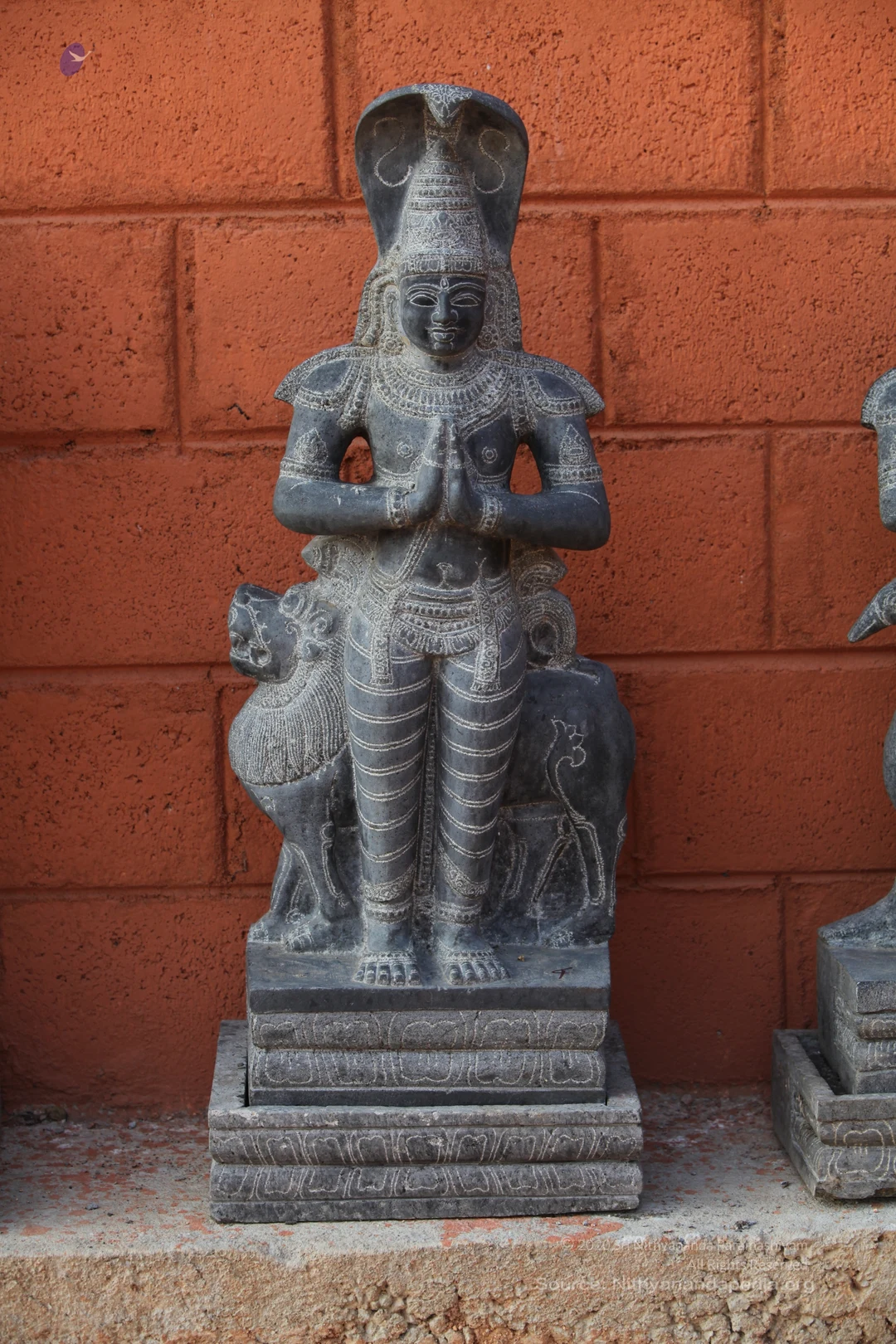
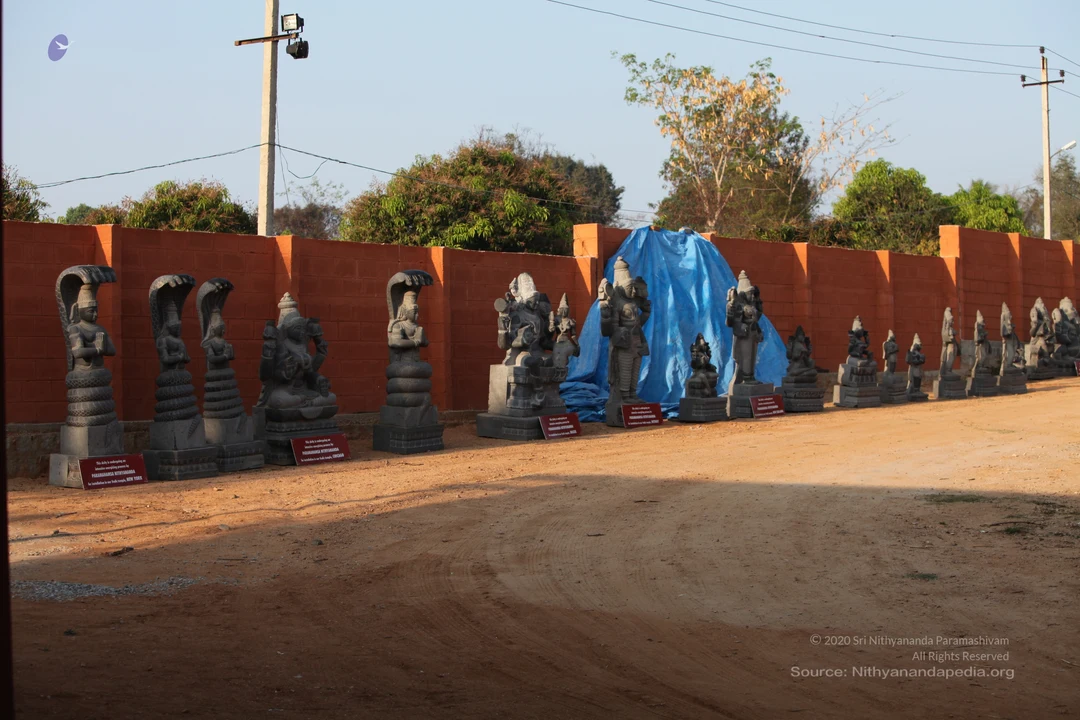
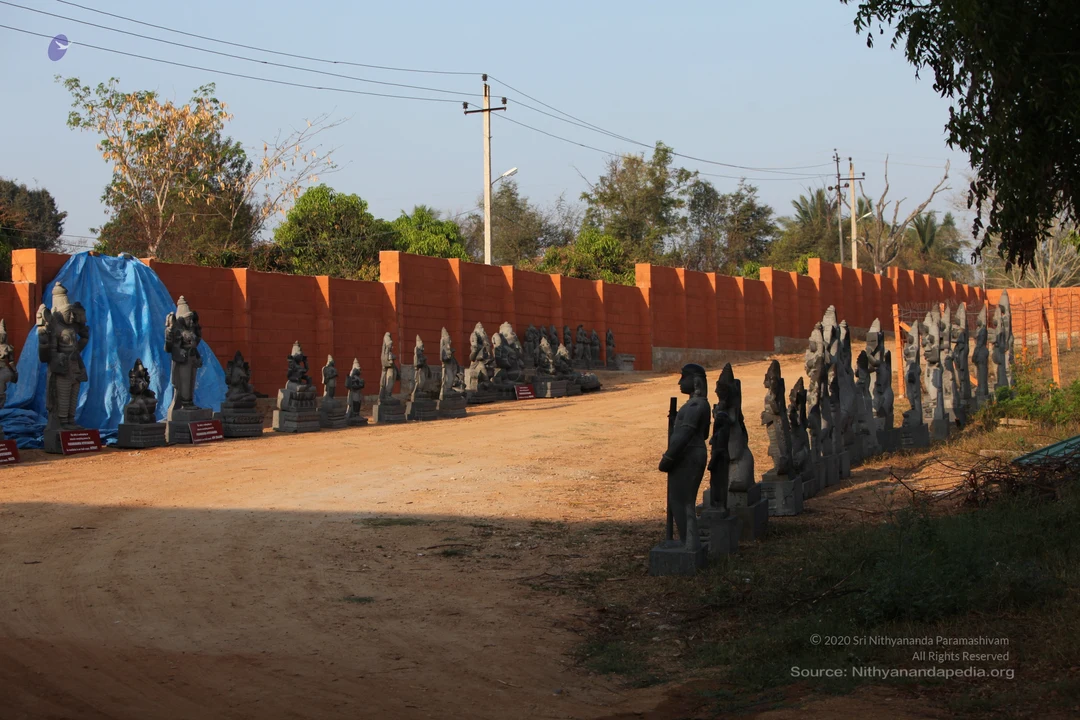
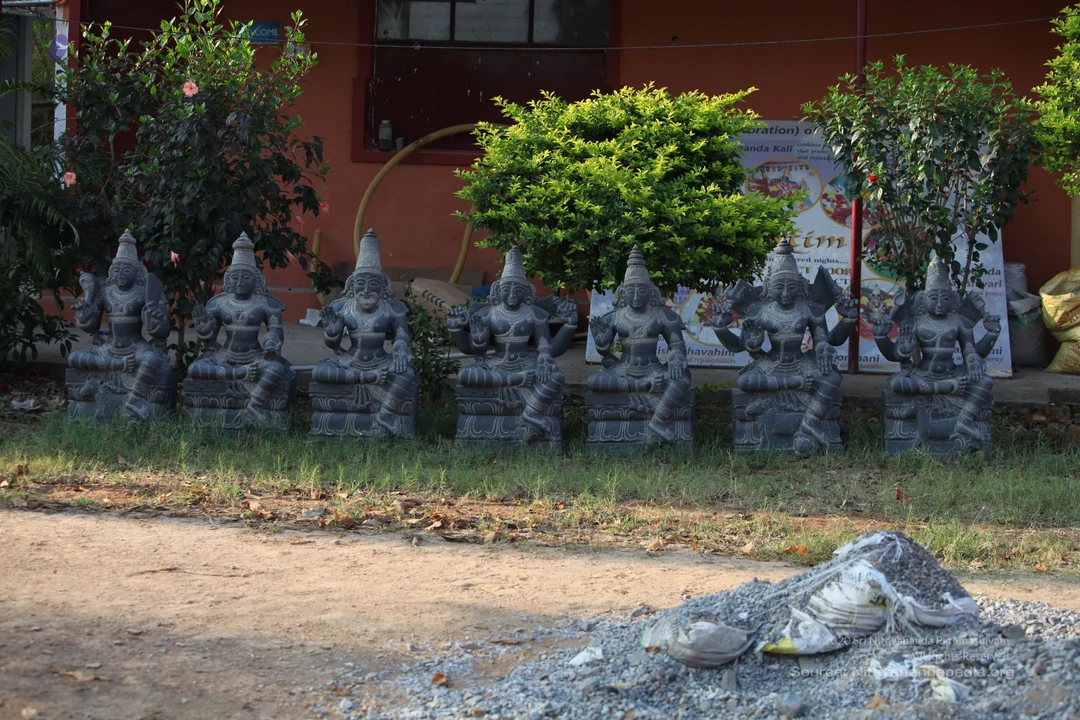
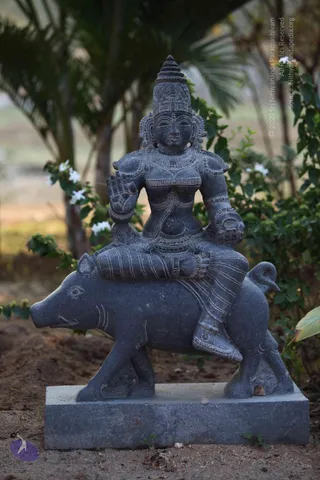
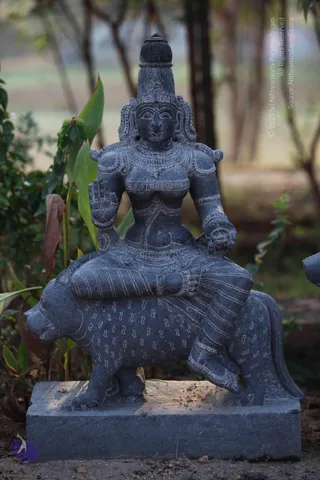
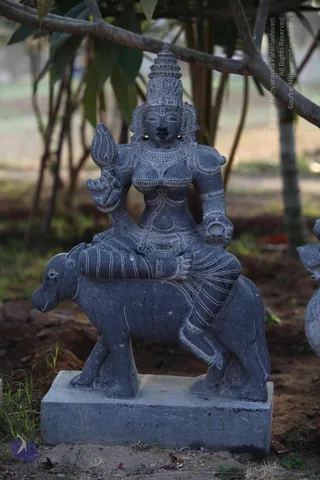
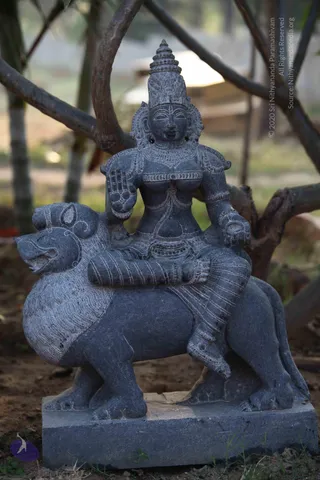
A dark grey stone statue of a female deity seated on a boar mount, carved with a tall conical crown, ornate earrings, a layered necklace, armlets and a jewelled waist belt. Her right hand is raised in abhaya mudra and she is seated in a relaxed pose on the boar, whose head is carved with tusks and a curled tail. The sculpture stands on a rectangular grey stone plinth set on dirt ground, with palm fronds, leafy shrubs and small white flowers behind it. No people are visible; the statue is a deity murti in an outdoor garden setting.A dark grey stone statue of a goddess seated sideways on a recumbent bull carved with small paisley-like markings, set on a plain rectangular stone plinth in an outdoor garden. The goddess wears a tall cylindrical crown, a broad necklace and armlets, and raises her right hand in abhaya mudra while her left hand holds a lotus-like object at her side. Green leaves and tree trunks blur in the background. The image shows a deity murti, not a living person, and no printed names are visible.A dark grey stone statue of a seated goddess with a tall conical crown and layered jewellery, her right hand raised in abhaya mudra and left hand resting on her knee, seated on a carved bull (nandi) that stands on a plain rectangular stone plinth. Trees and blurred greenery stand behind it in an outdoor garden setting with dry leaves on the ground. The statue is a deity murti with no living person visible.A grey stone statue of a seated deity murti, shown in front of a flowering shrub with an orange wall behind. The figure has a tall conical crown, carved earrings, a broad ornate necklace and a belt, with arms raised holding a serpent-like object in one hand and a rod-like staff in the other. The seated base is carved with a bull figure beneath the sitting figure. Grass and fallen leaves lie in the foreground. No people are visible.A grey stone sculpture of a seated deity murti sits on a carved stone pedestal outdoors on grass. The figure wears a tall conical crown, layered necklaces, armlets and a jewelled waist band. One hand is raised in a blessing gesture with open palm, the other rests on the knee. Behind it are green leaves, pink hibiscus flowers and an orange wall. A partially visible second statue stands at the left edge. No living people are visible, and the page's a person label is not supported by any person in the image.A dark grey carved stone statue of a seated sage figure, shown outdoors on grass in front of an orange wall. The figure has a tall conical crown, a short beard, carved ornate necklaces and armbands, and a draped waist cloth. One hand is raised in a blessing gesture (abhaya mudra) and the other rests on the knee. The statue sits on a carved base with scroll patterns. A partial second stone sculpture is visible at the left edge. No living people are present.

02-Pada-Puja
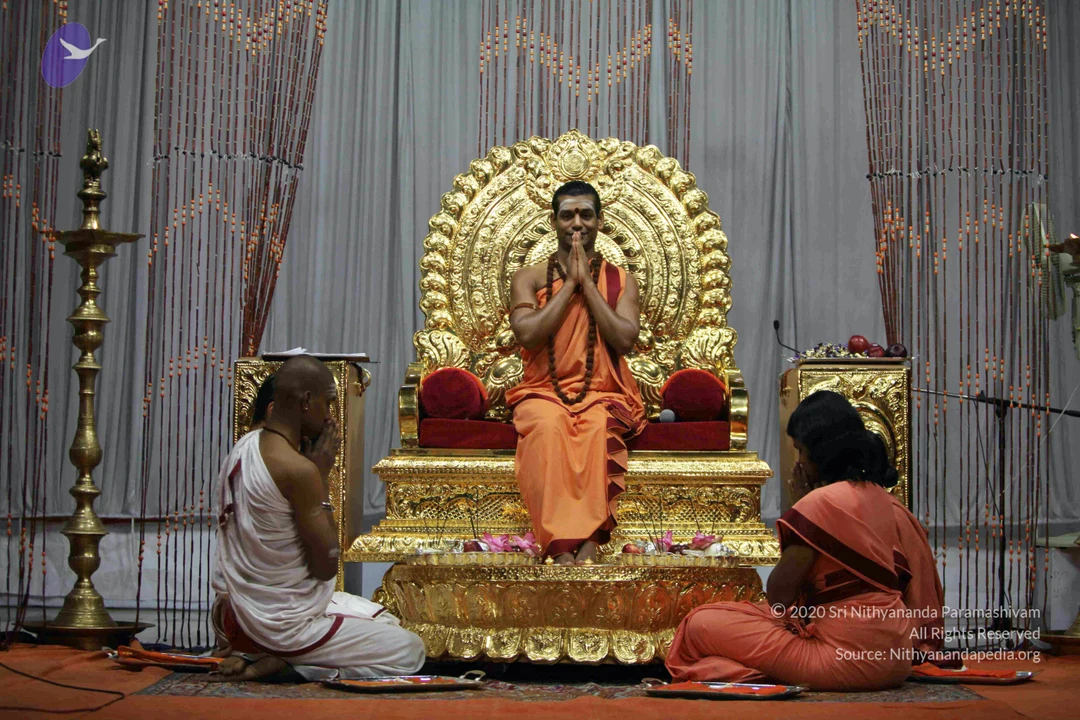
2 photosSource gallery
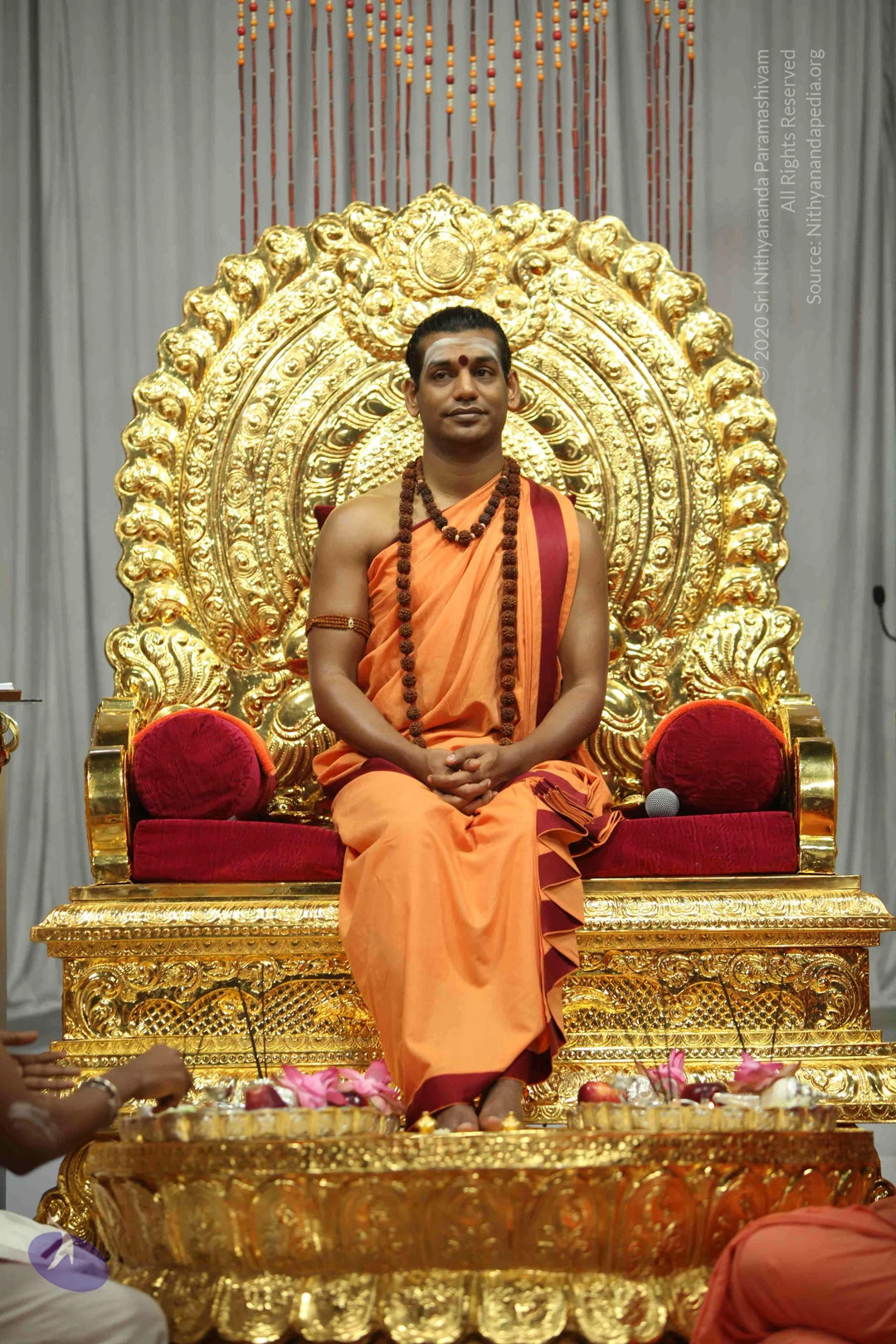
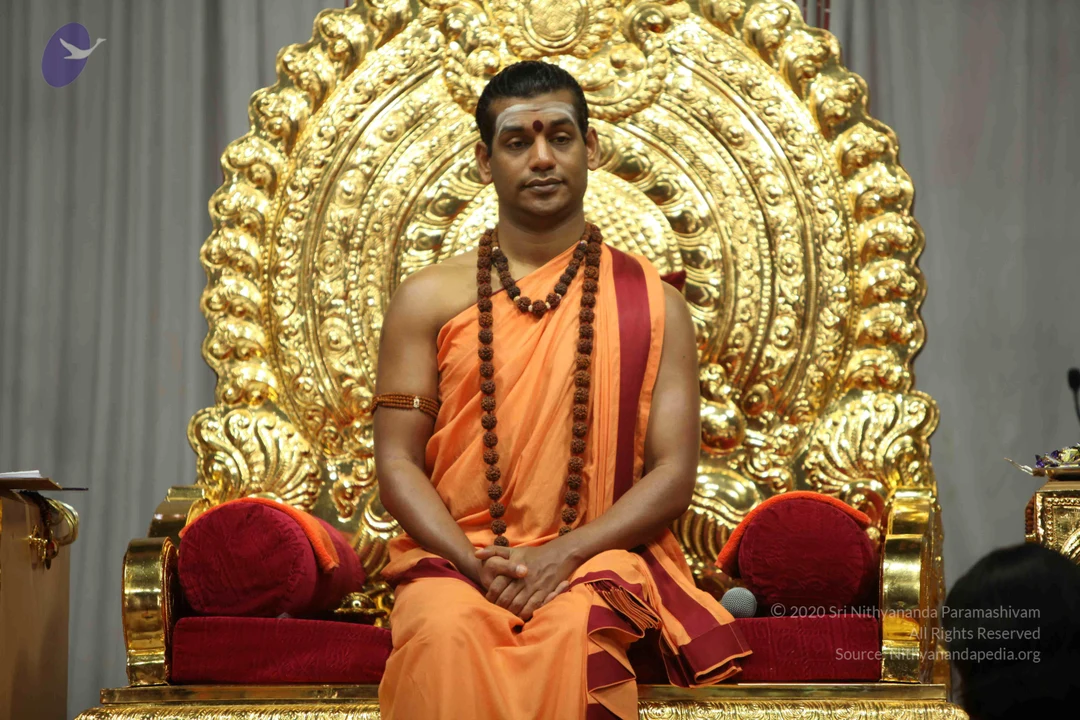
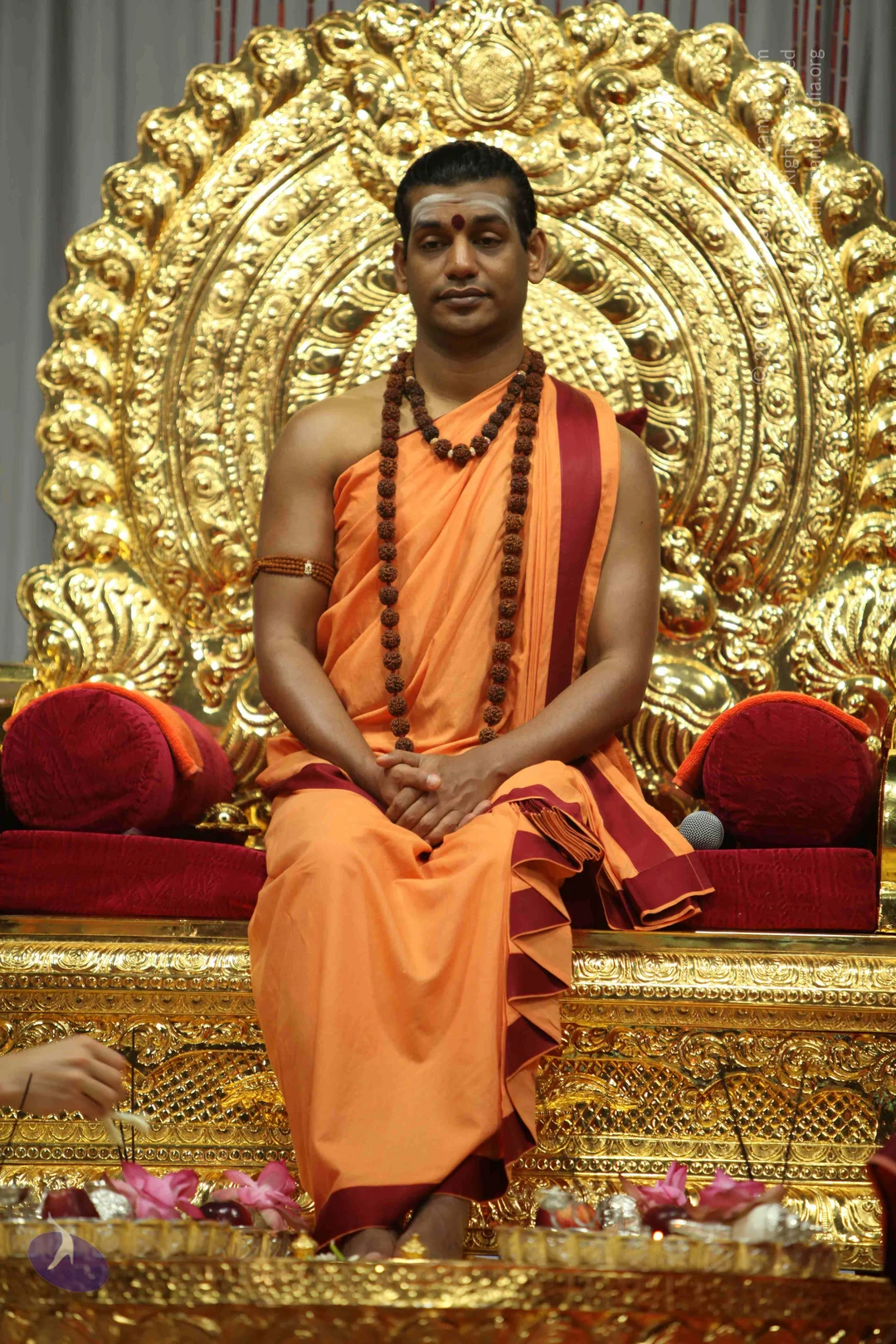
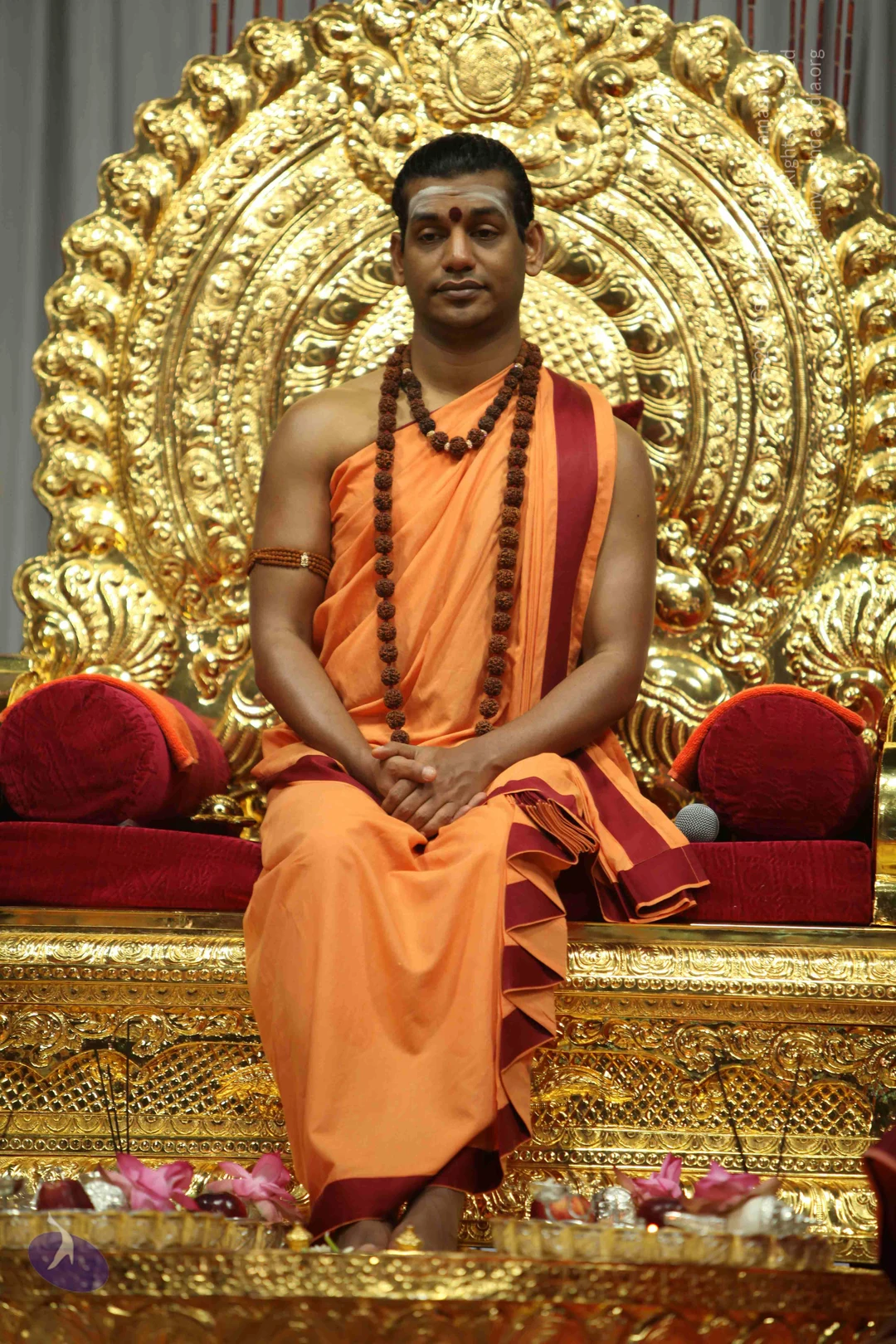
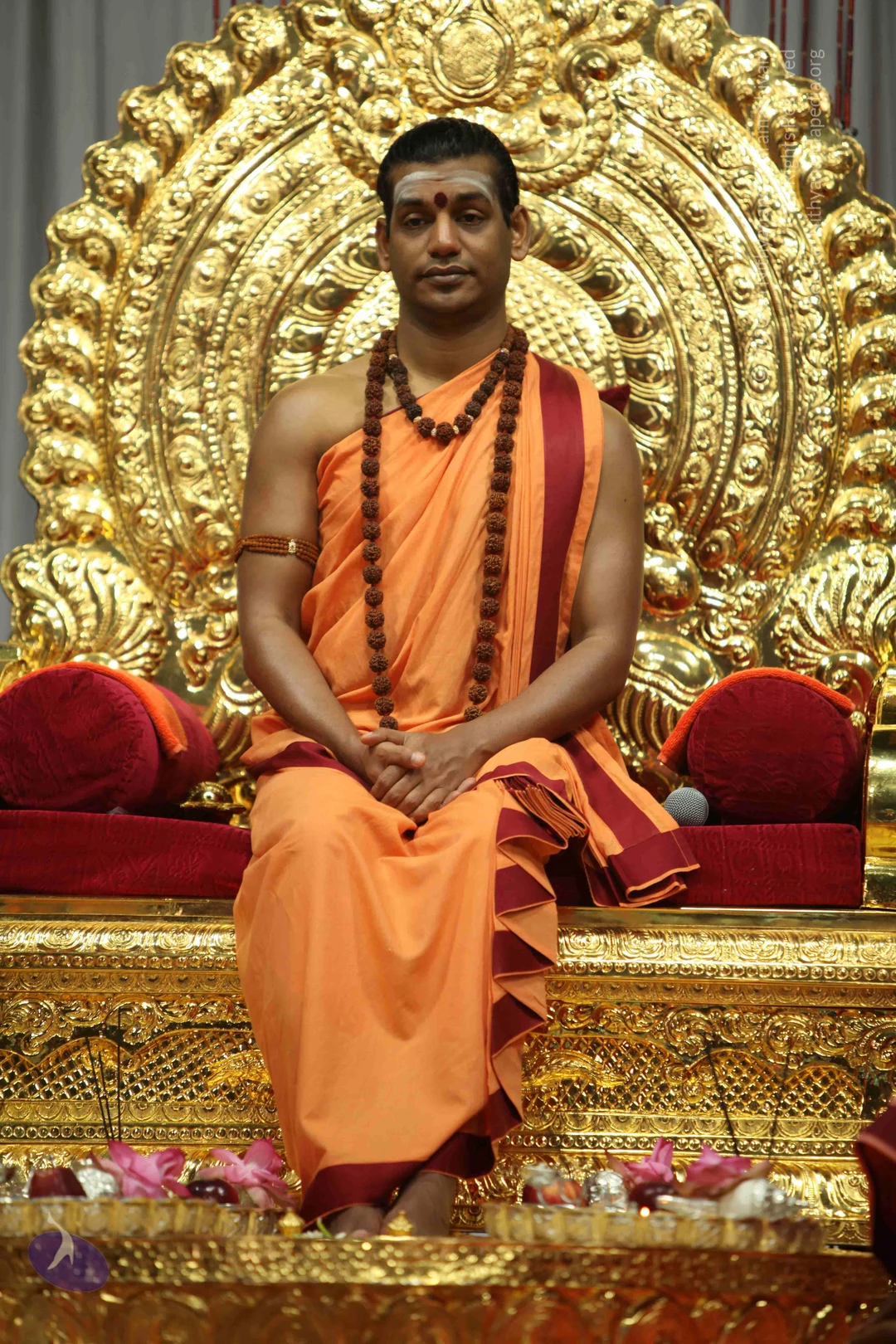
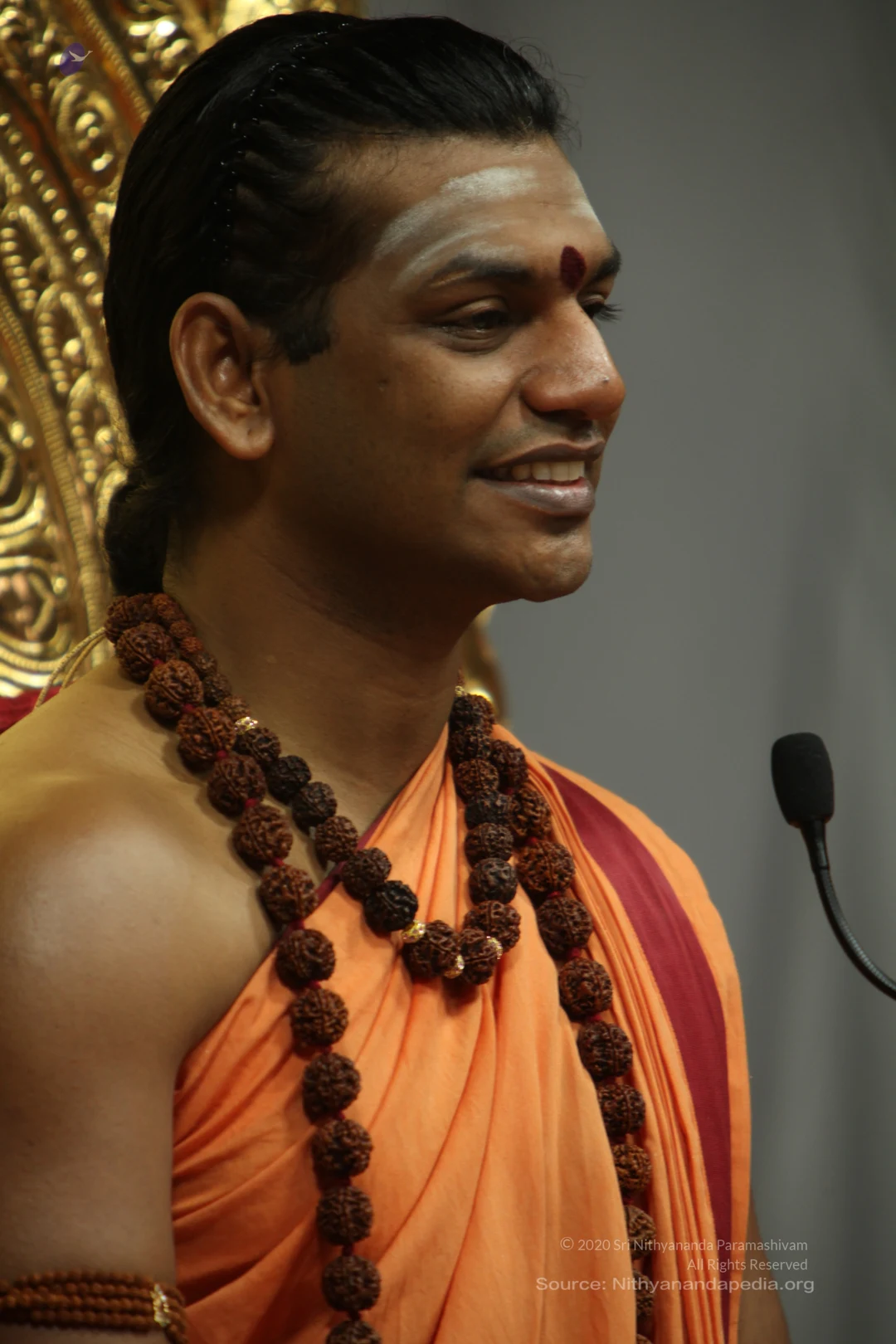
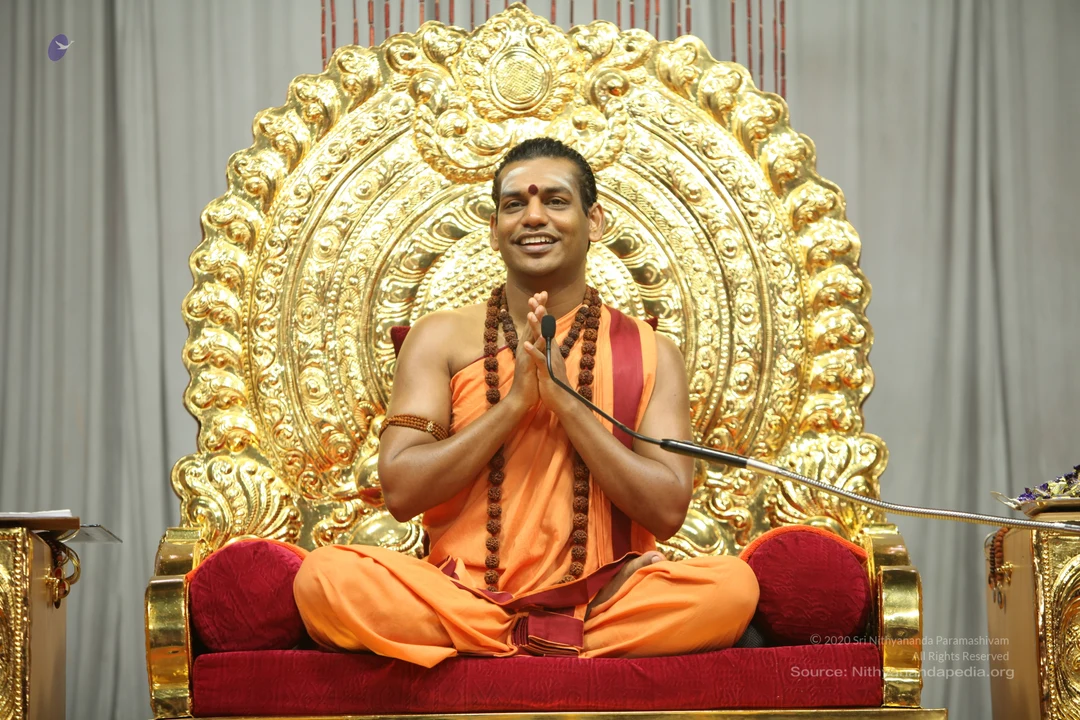
A photograph of a seated group of men in a hall performing a puja. In the foreground, a man in saffron-orange robes sits with palms pressed together in namaste, a rudraksha-style necklace and wristwatch visible. Beside him, a bare-chested man in white dhoti with a red-bordered shawl and white forehead markings sits with hands folded. Further right, more white-clad participants with shaved heads and white markings sit before brass oil lamps, small plates and offering trays on orange mats. Behind them, a large crowd of seated men and boys in white and colourful shirts fills the room, with red chairs along the back wall.A man seated on an ornate gilded throne with a large golden floral backrest and red cushions. He wears an orange saffron robe with a maroon border draped over one shoulder, multiple rudraksha mala beads around his neck, a gold armband, and a red bindi with vertical white tilak markings on his forehead. His hands rest together in his lap. A small microphone sits on the red cushion beside him, and a grey curtain forms the backdrop. Appearance-based label: a person, seated in a ceremonial position with saffron robe, rudraksha malas and throne cues.

03-Morning-Satsang

32 photosSource gallery
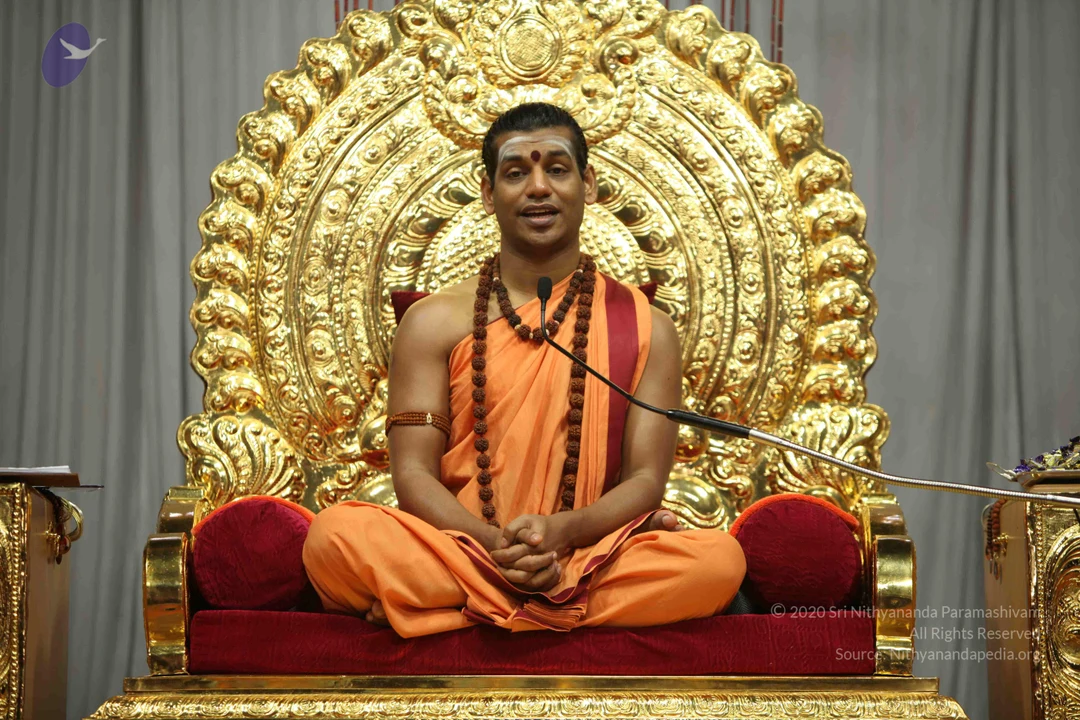
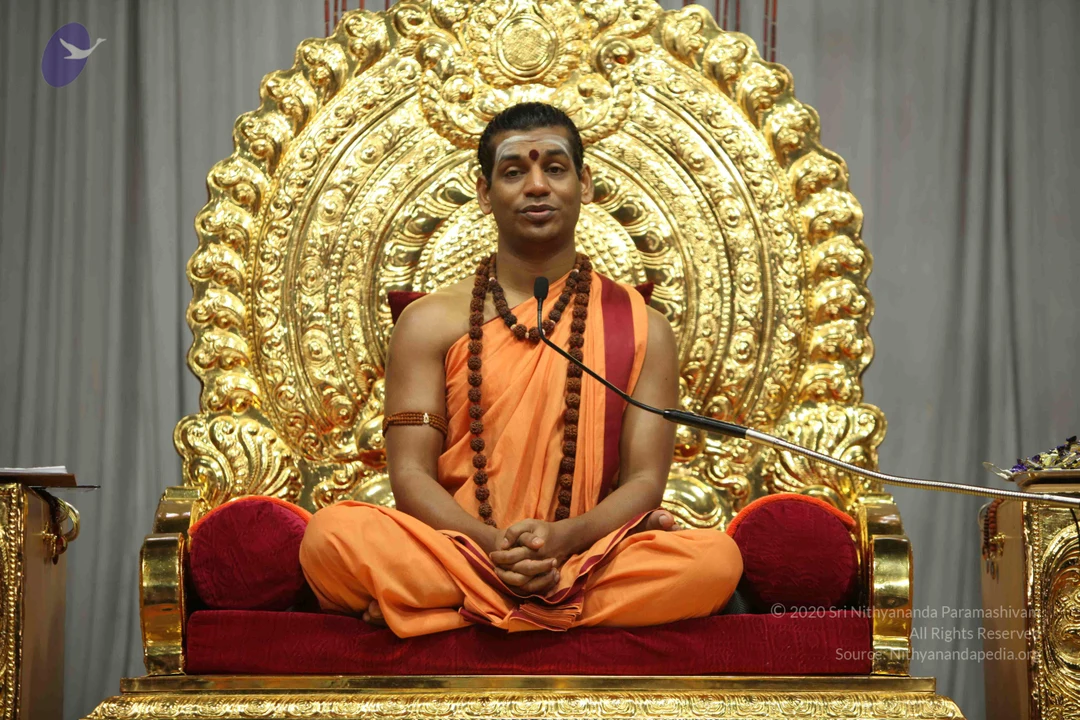
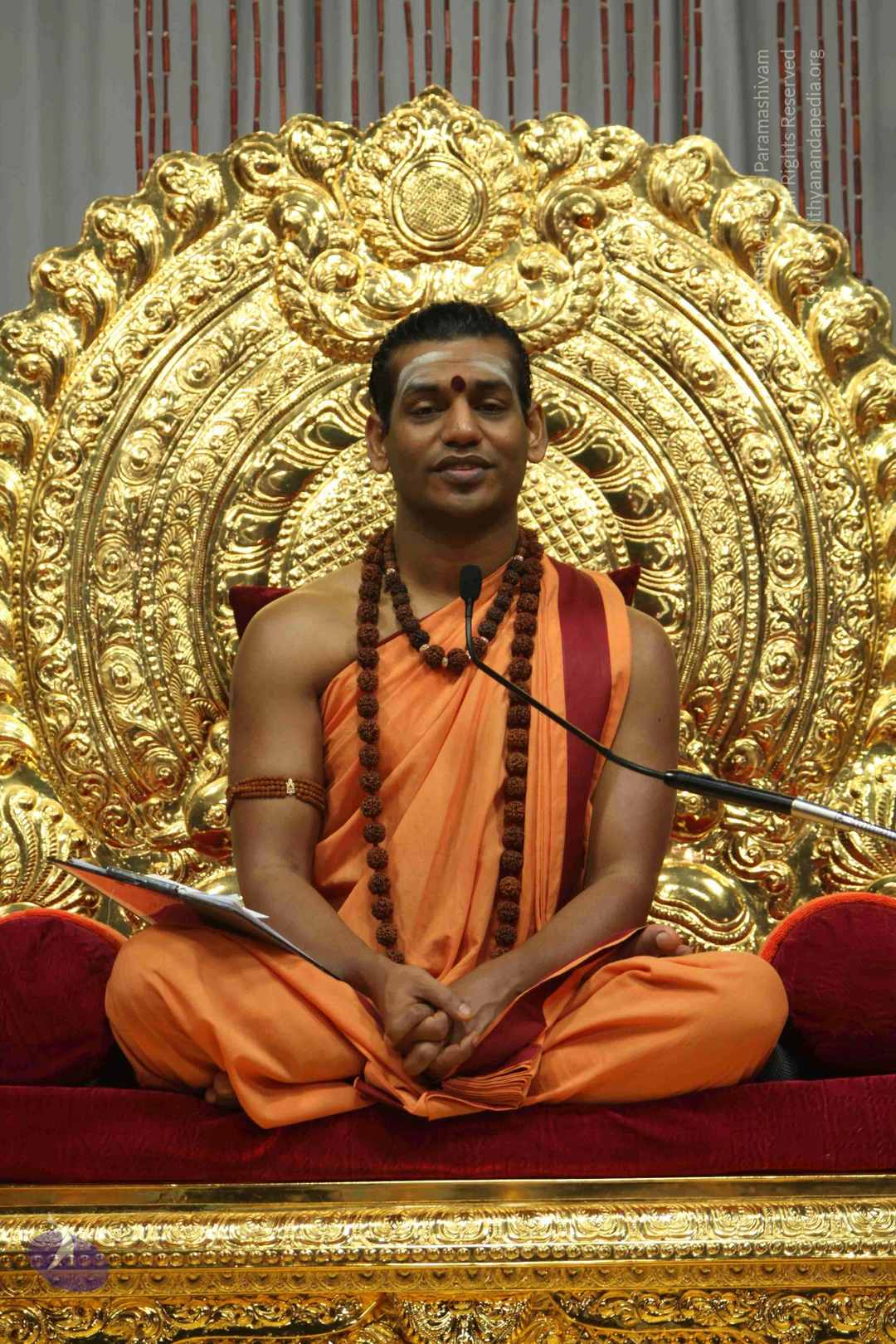
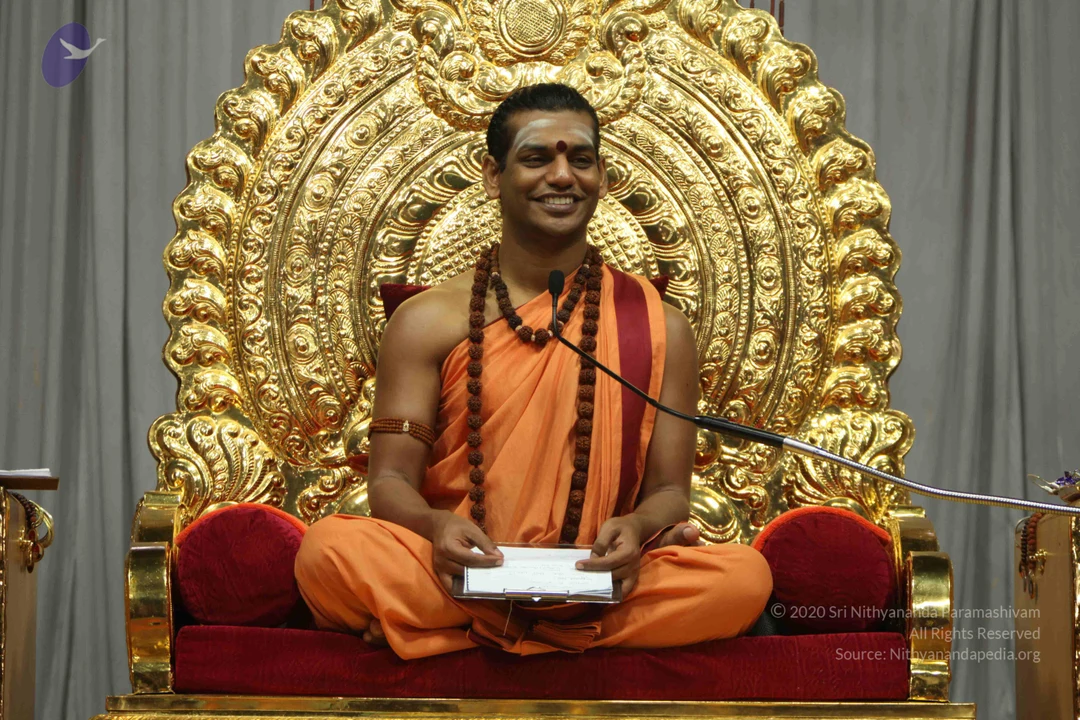
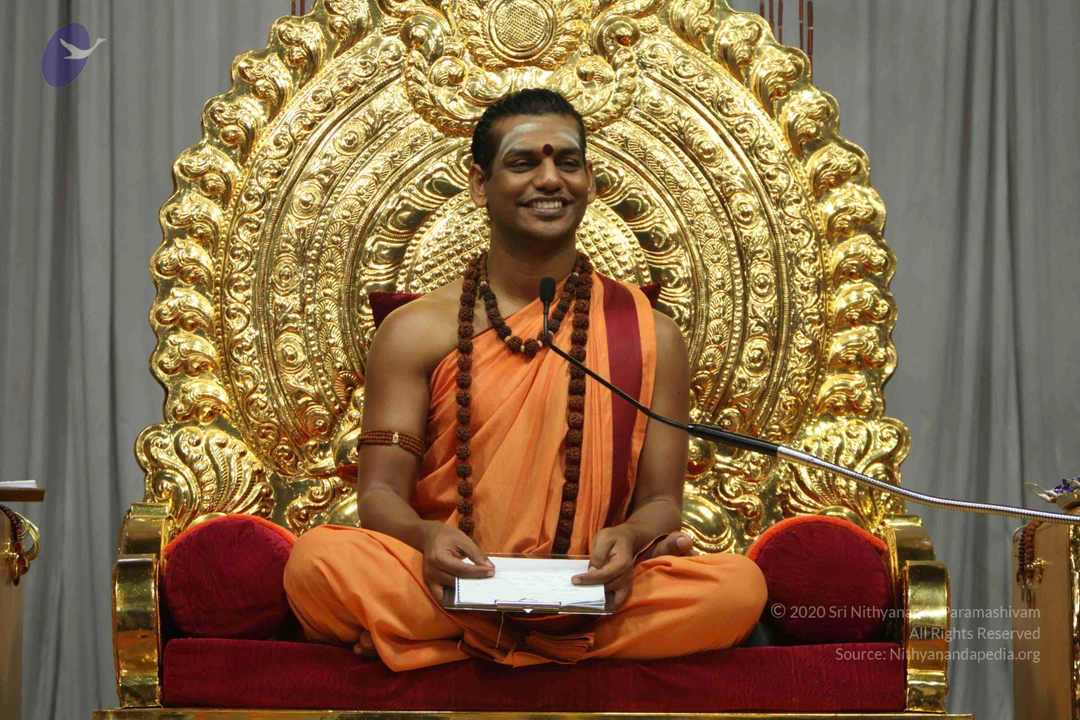
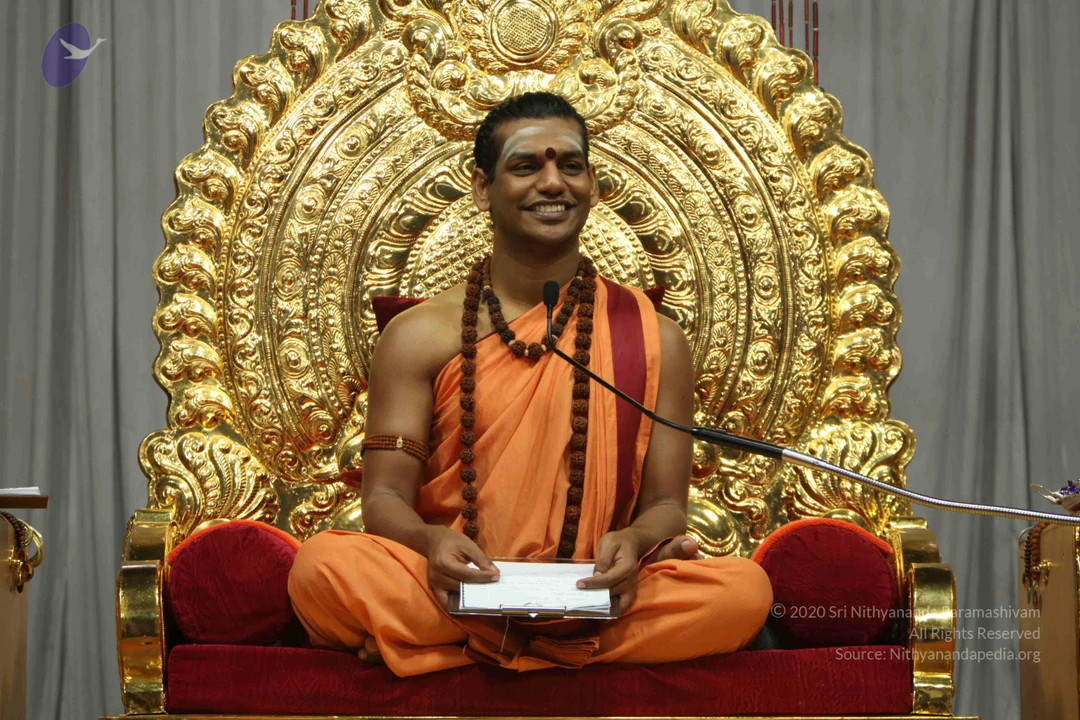
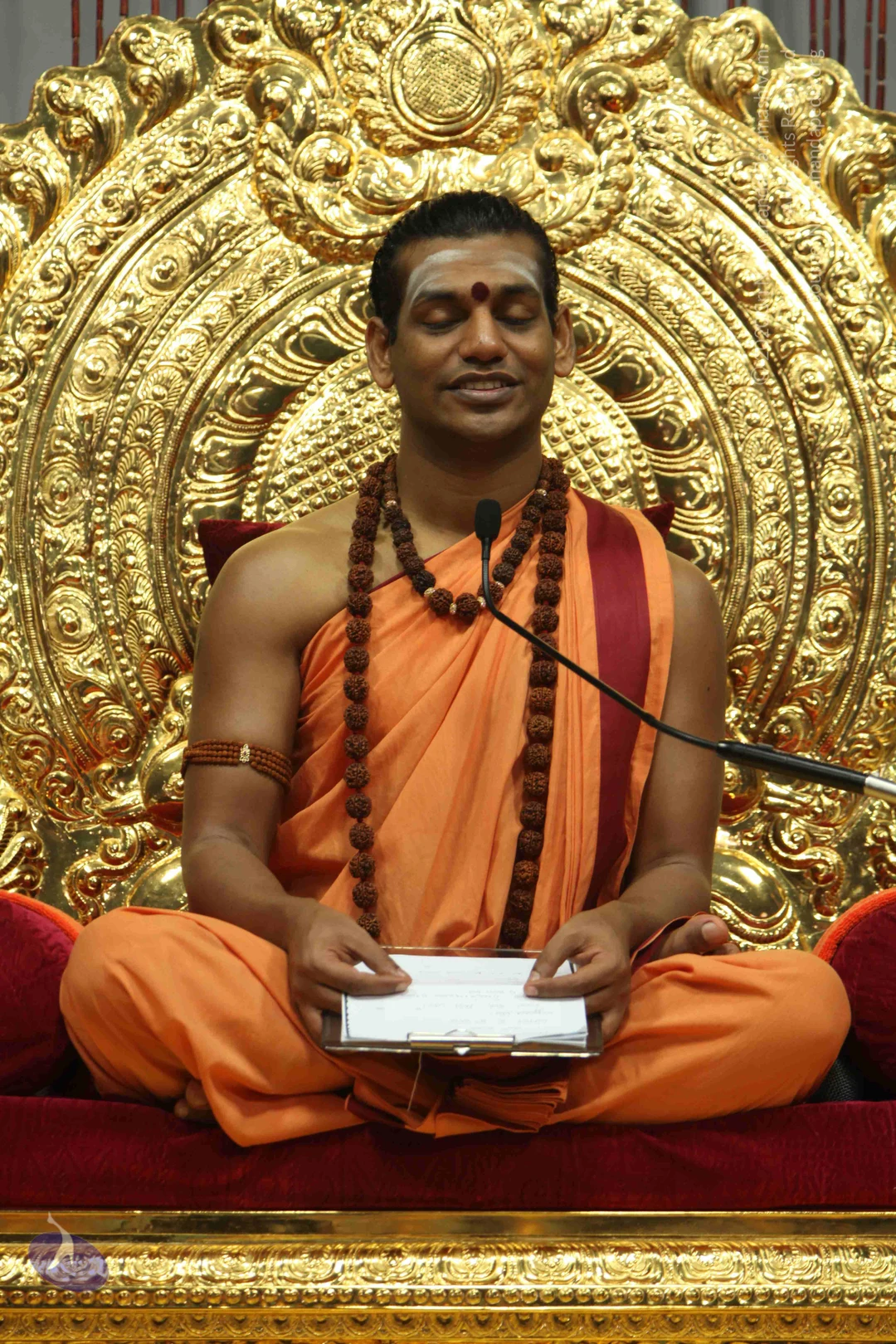
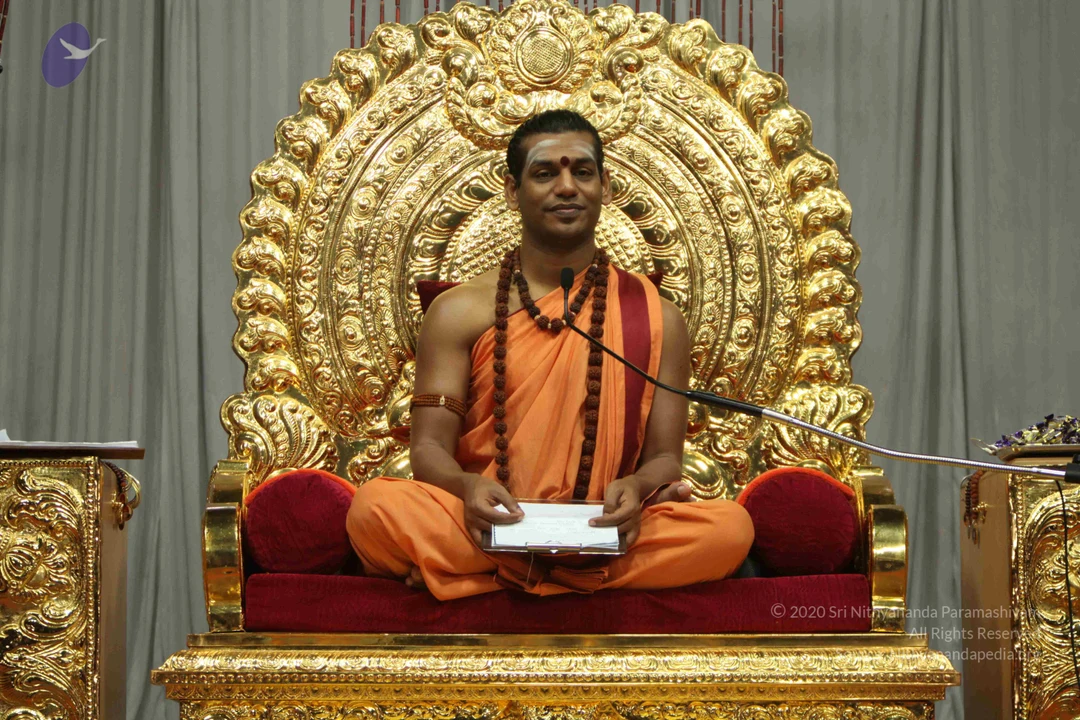
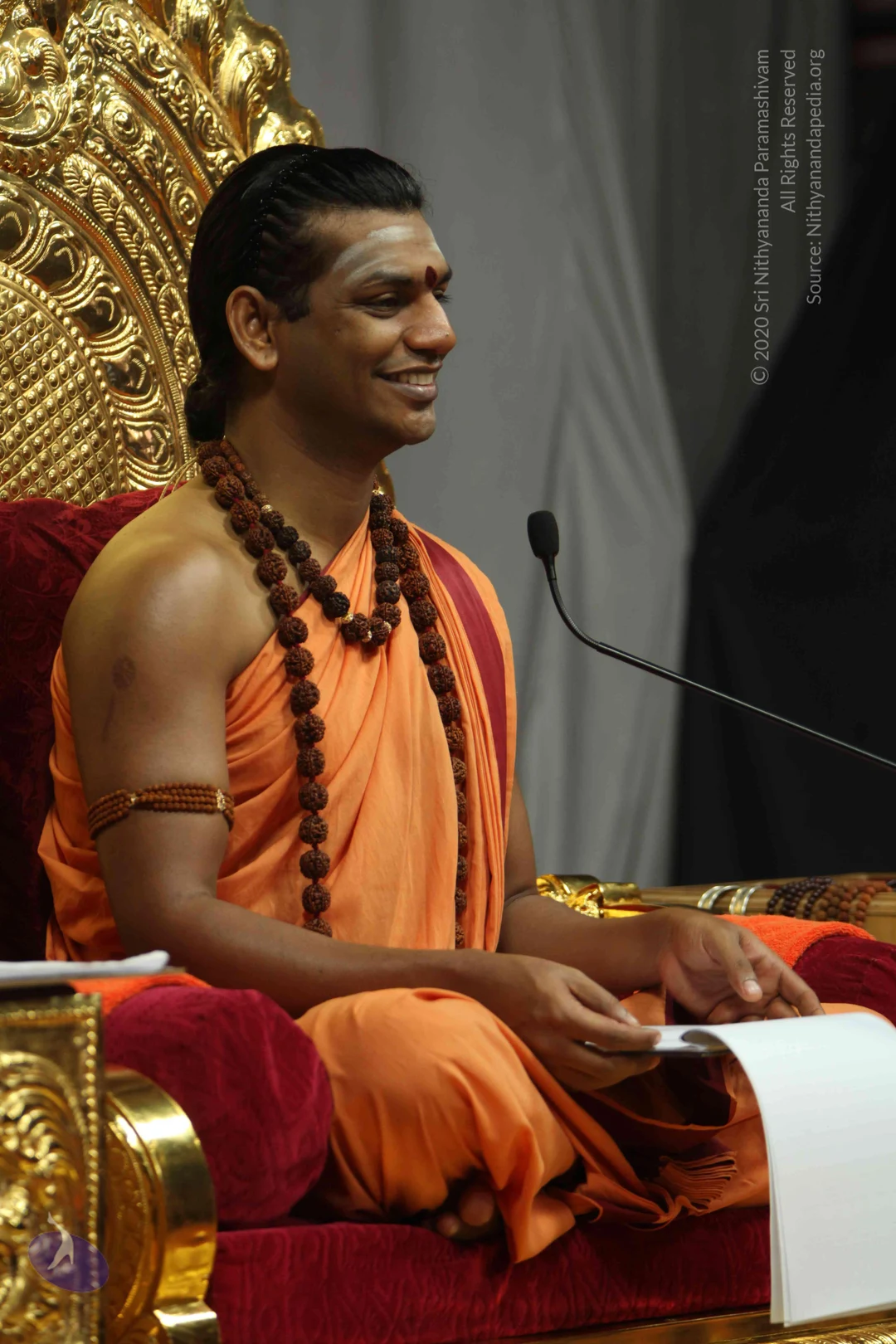
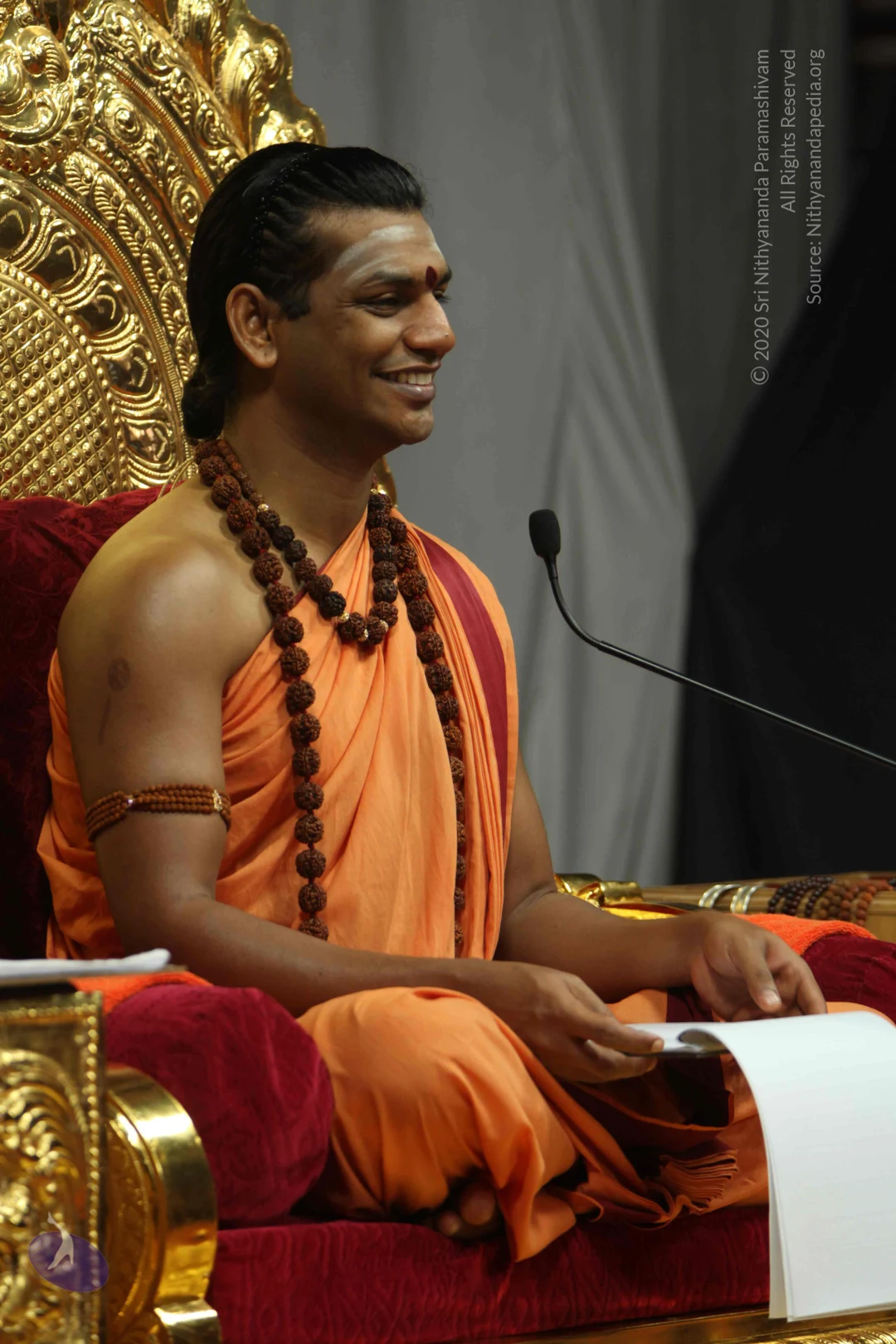
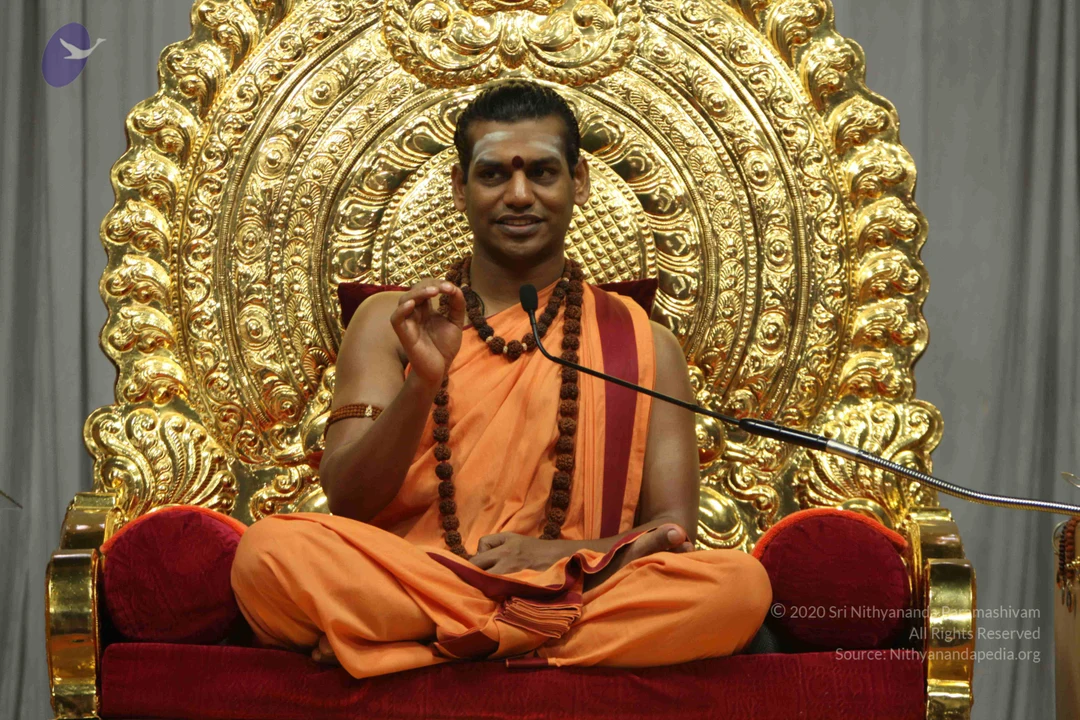
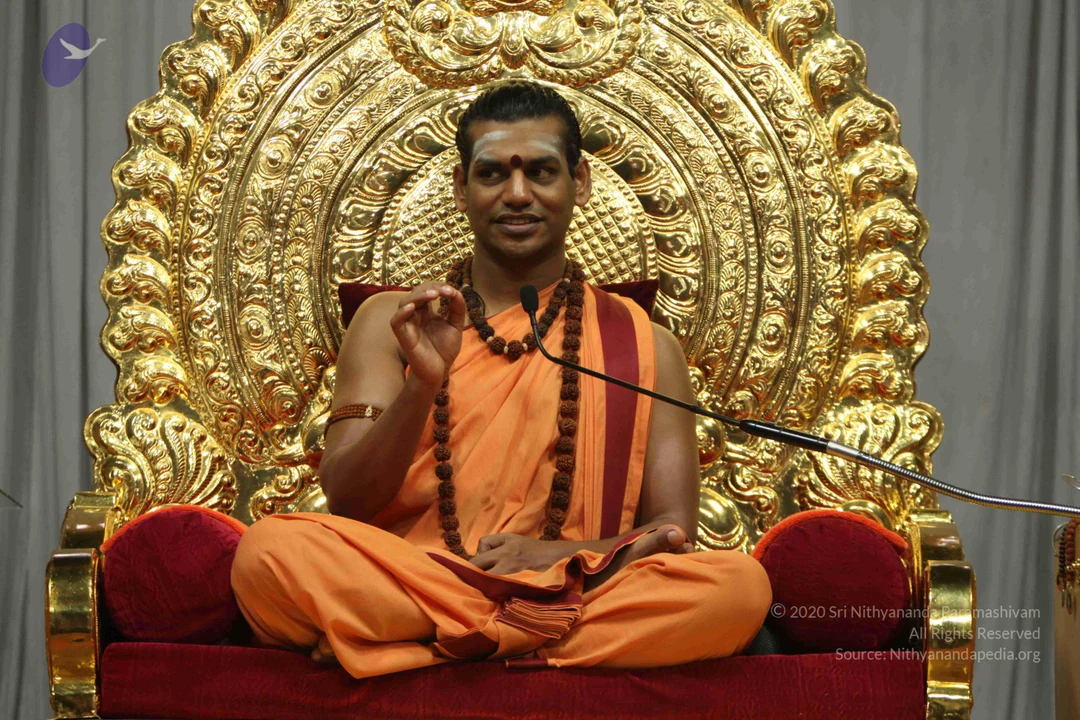
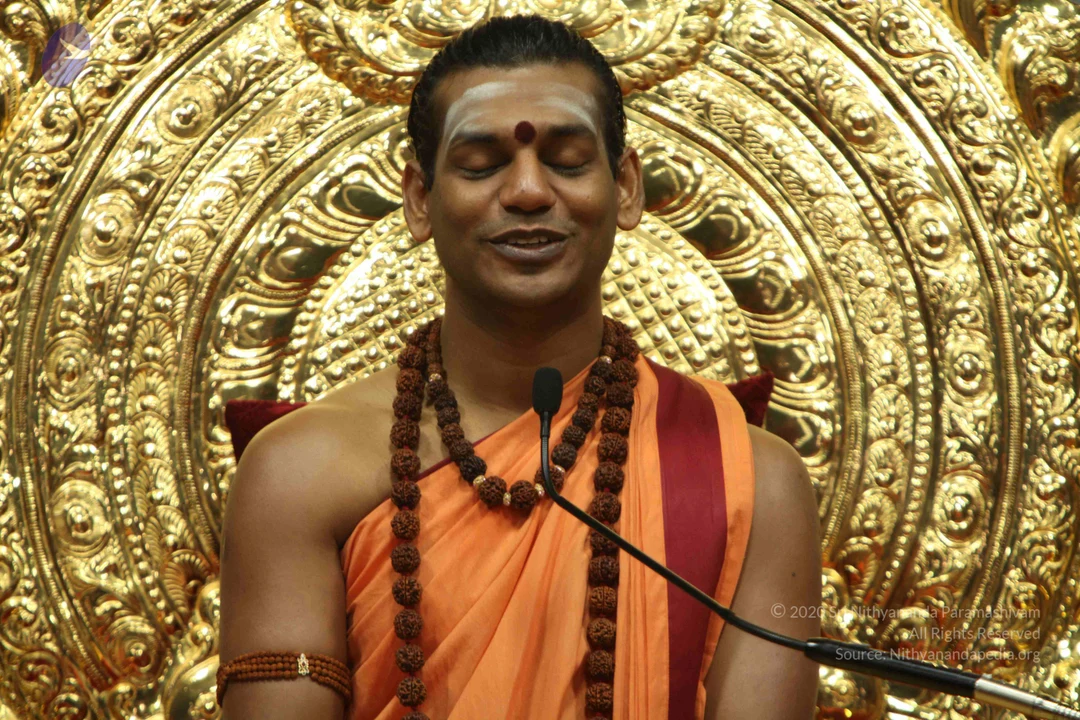
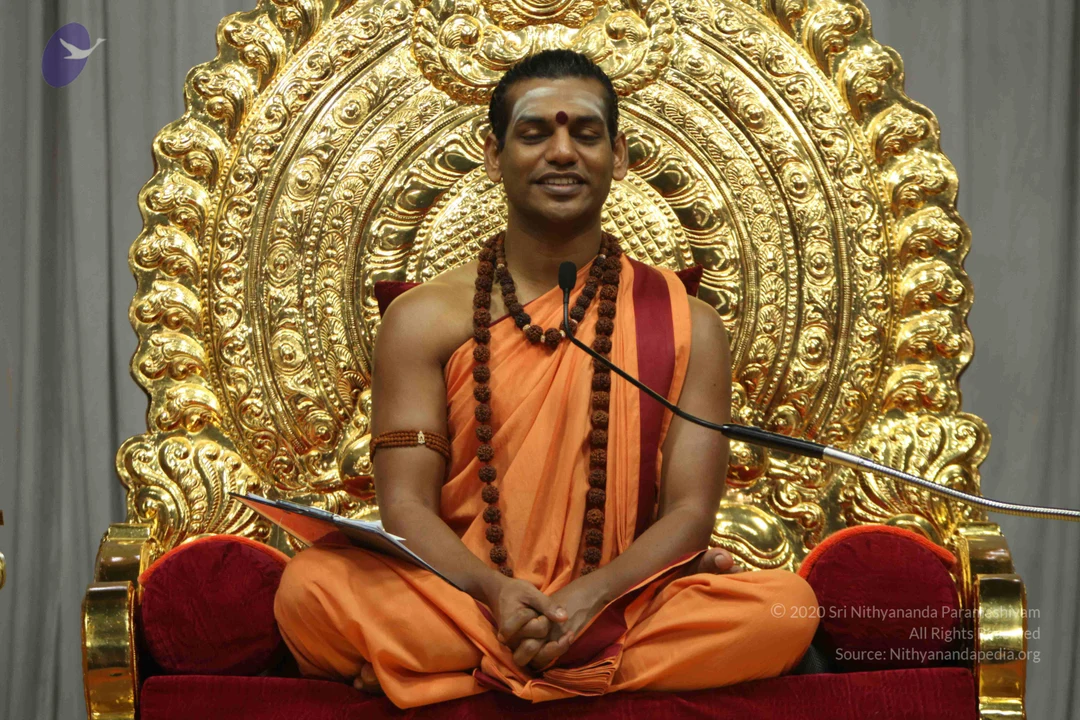
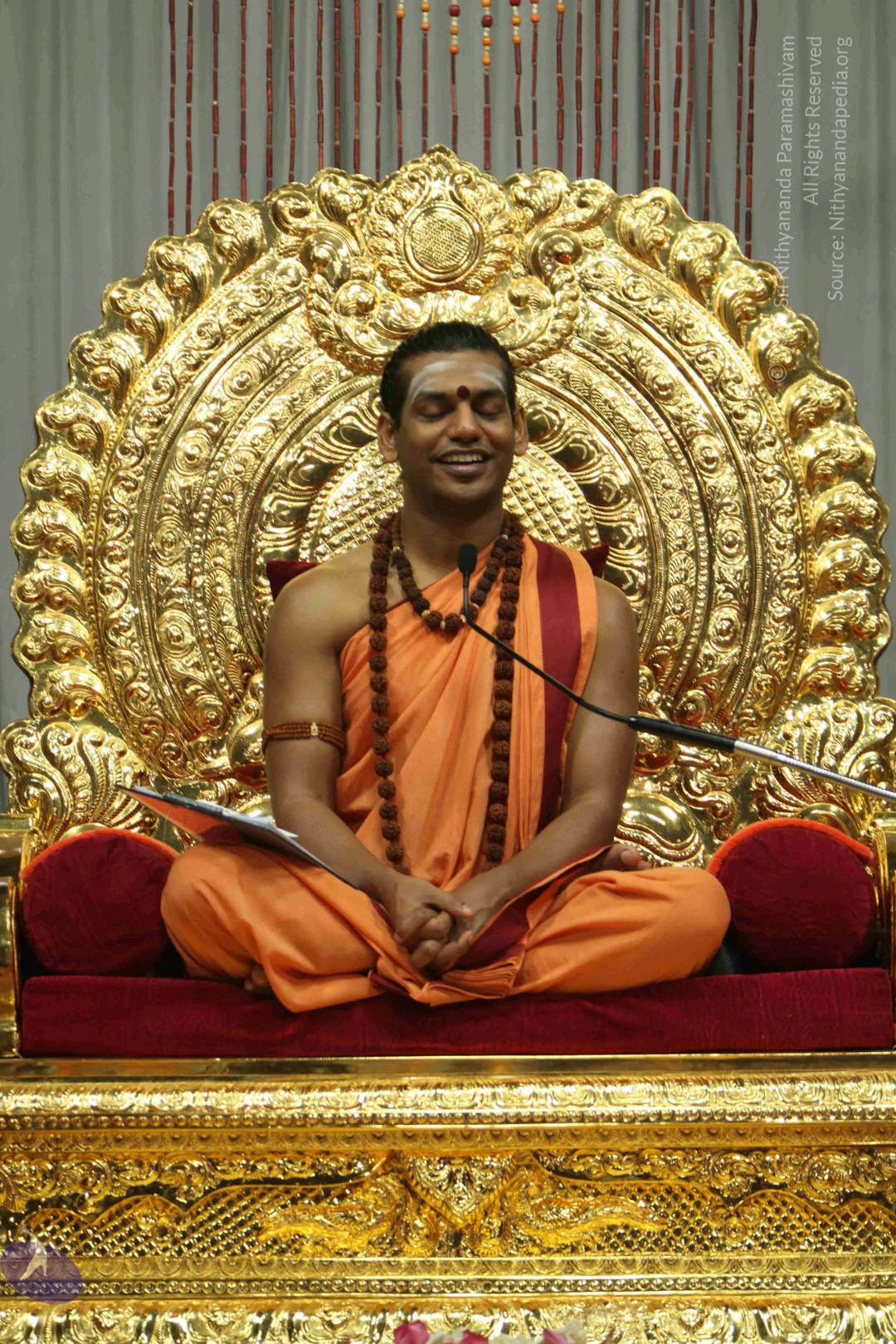
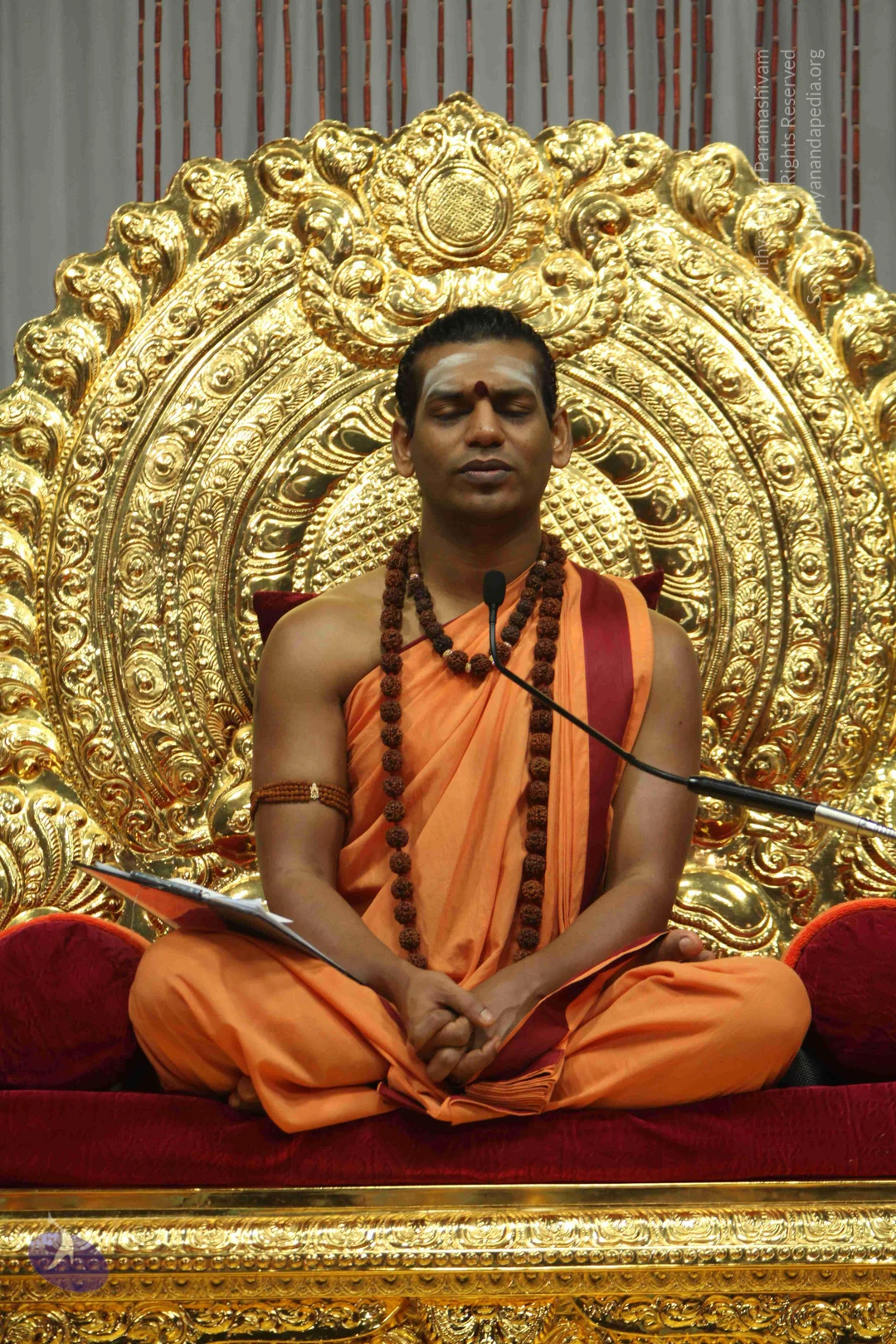
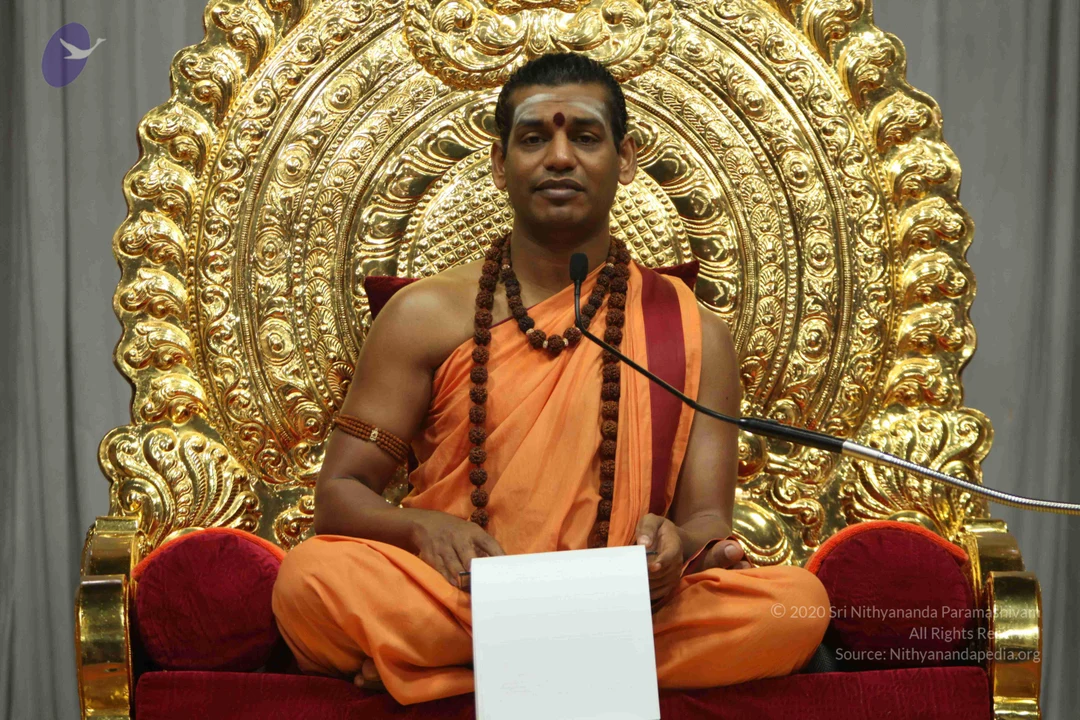
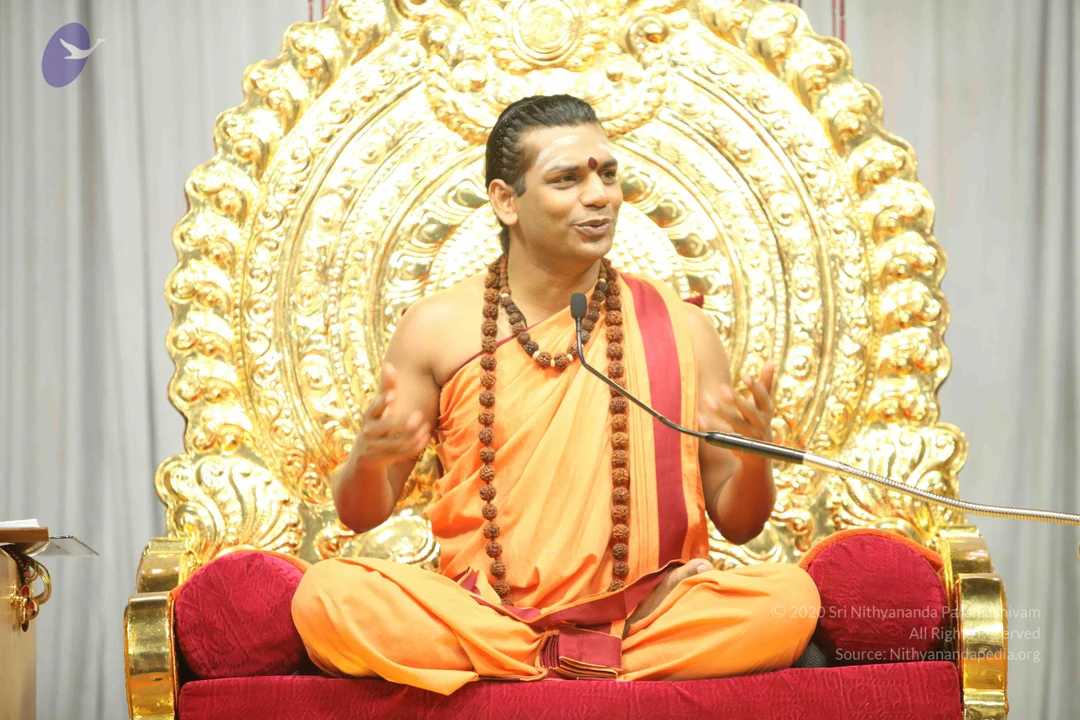
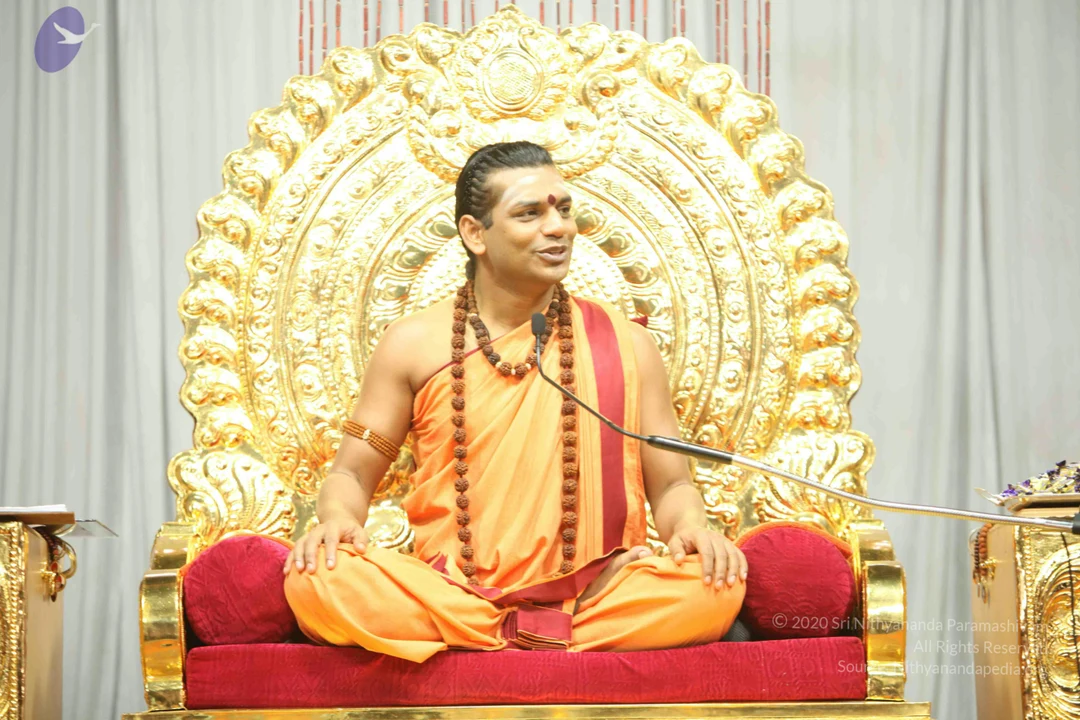
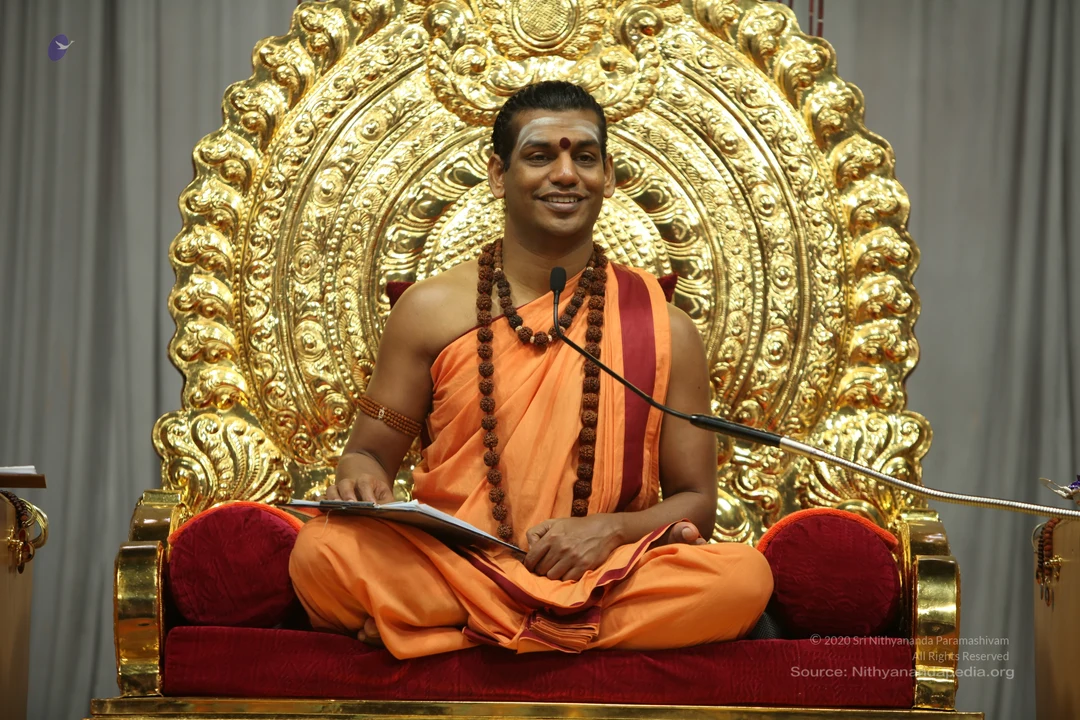
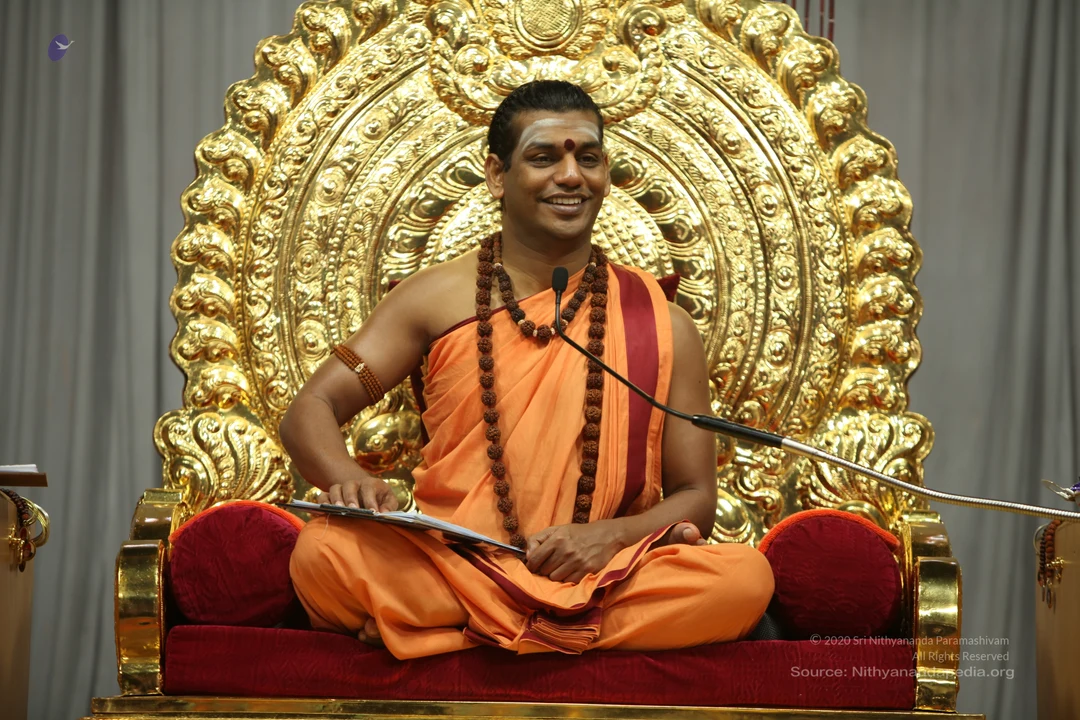
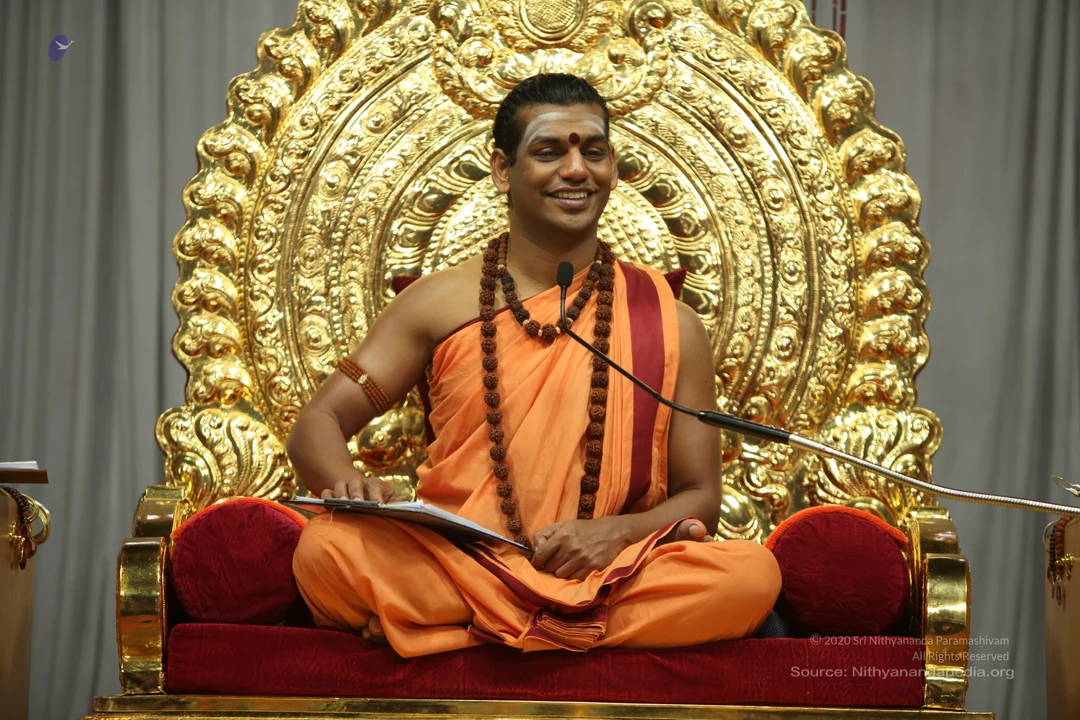
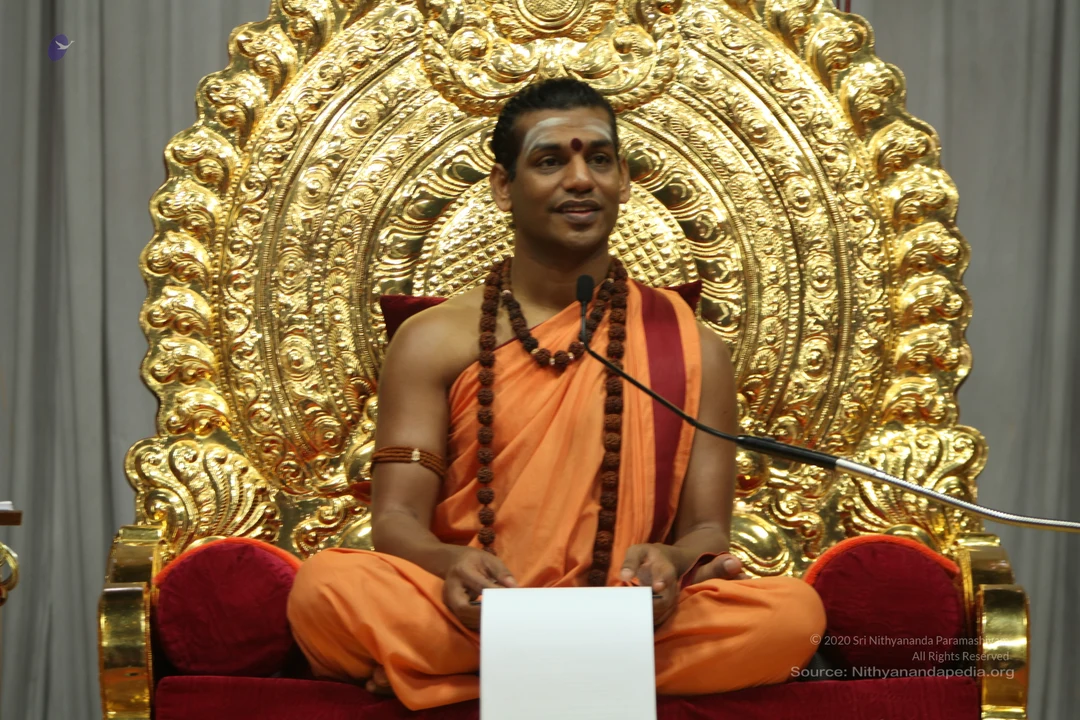
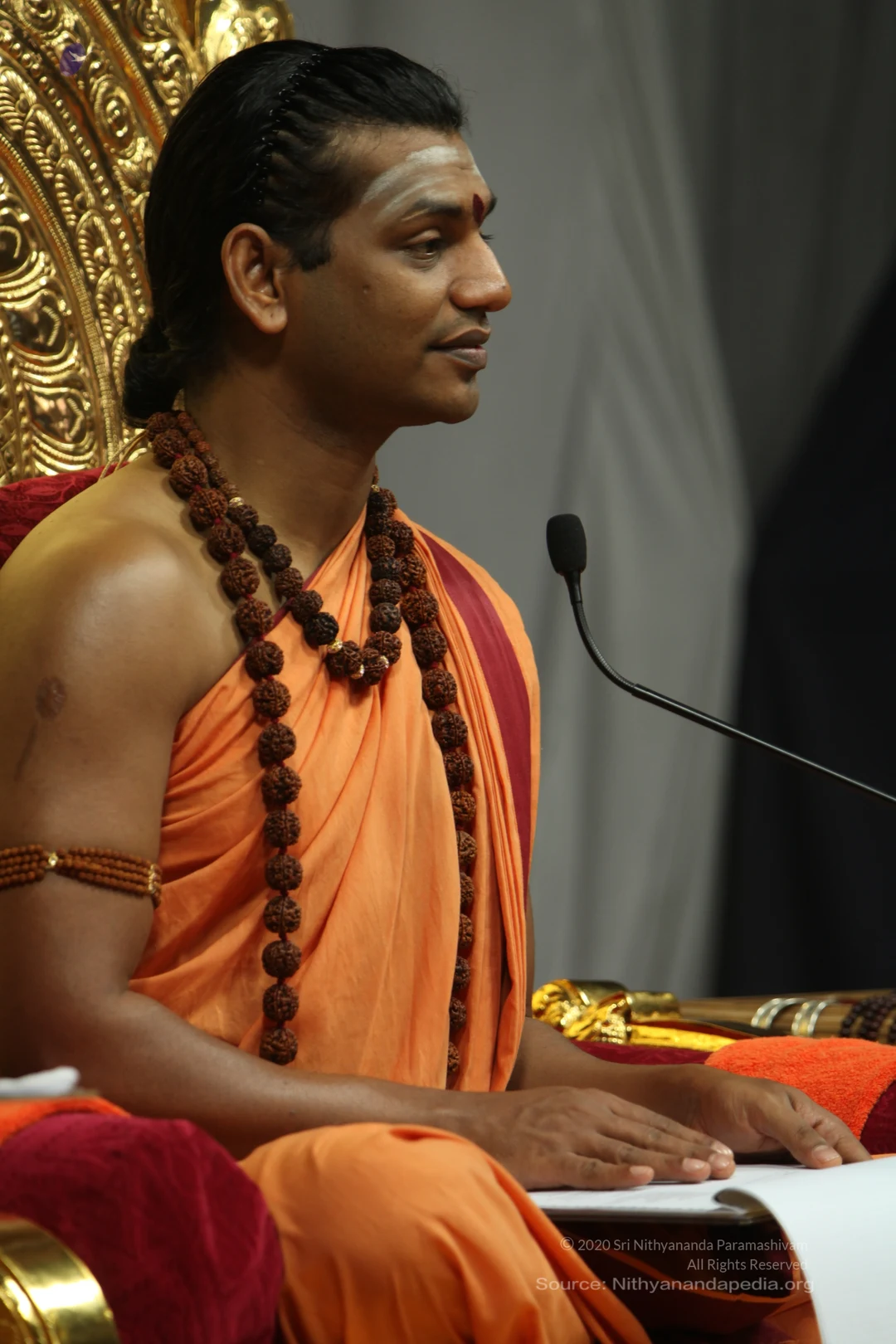
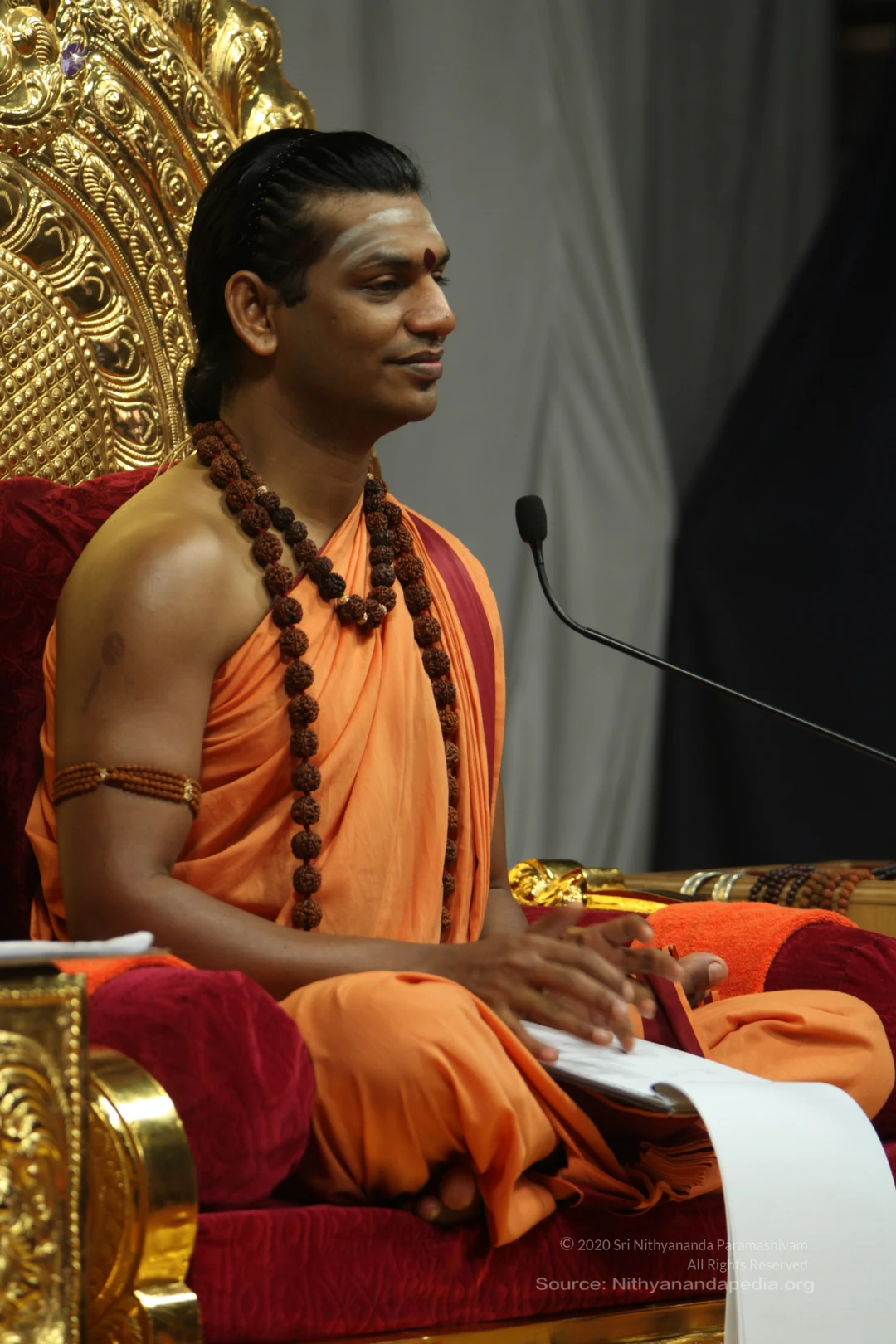
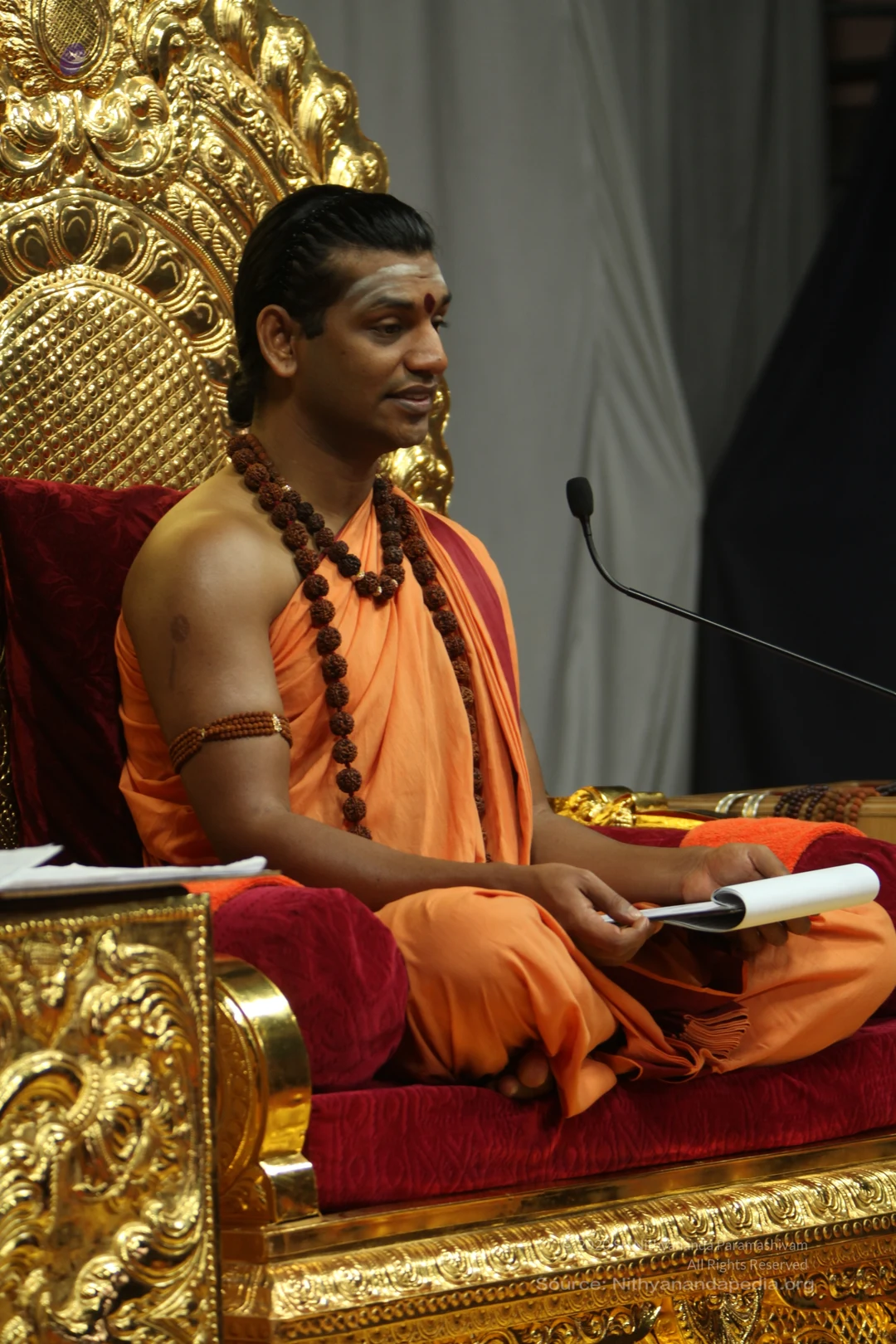
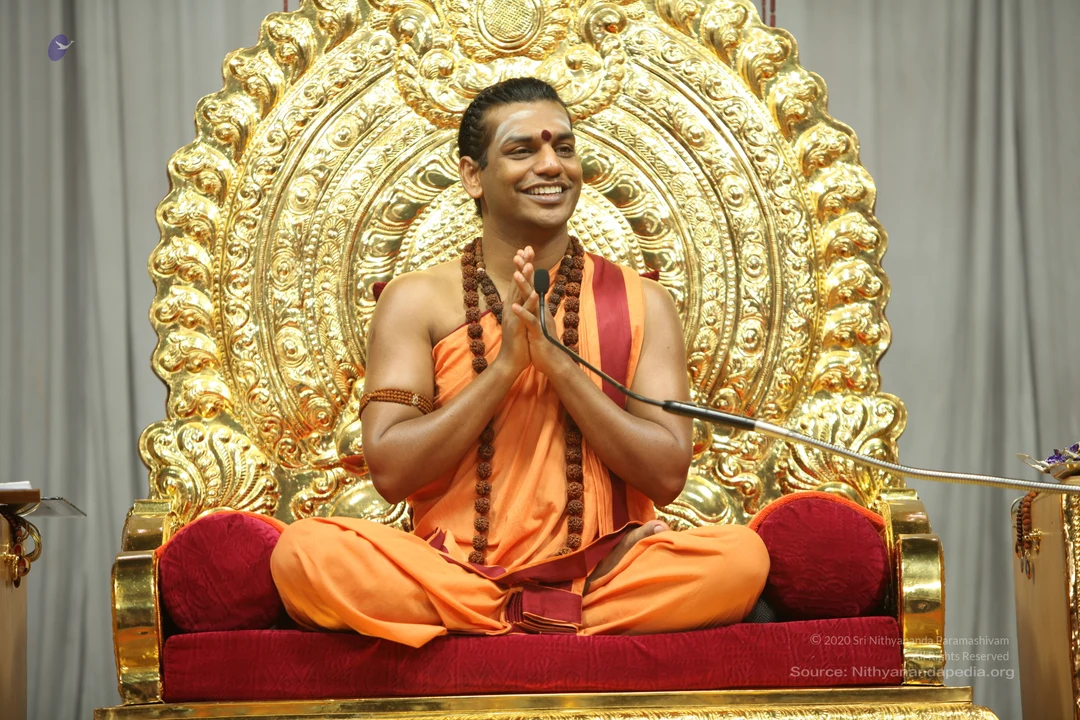
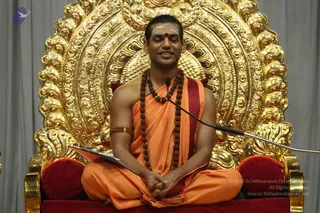
A seated man in saffron-orange robes sits cross-legged on a red cushioned throne backed by an ornate gold carved arch. He wears a long rudraksha mala with a wide red-and-orange sash over one shoulder, a gold armband, and a red bindi with white tilak on his forehead. He sits with hands resting in meditation pose and a small microphone on a gooseneck stand is positioned before him. Flowers sit on a gold table at the right edge. a person: the saffron robes, rudraksha mala, gold armband and ornate throne are the qualifying cues for the discourse setting.A seated man in saffron-orange robes sits cross-legged on a red cushioned throne with an ornate gold backrest carved with scrolling floral patterns. He wears a thick double-strand of rudraksha beads, a sandalwood tilak with a red dot on his forehead, and a gold armlet on his upper arm, with his hands folded in his lap. A microphone on a flexible stand is angled toward him, and grey drapes hang behind the throne. Swamiji (probable): long-haired figure in orange with rudraksha malas and ornate throne, seated as a discourse speaker. The image shows no other people.A seated male teacher in saffron-orange robes with a red-and-gold border sits cross-legged on a red velvet cushioned throne (peetha) backed by an ornate gold repoussé halo-shaped backrest. He wears multiple rudraksha malas around his neck and a gold bangle on his upper arm, with a white-and-red tilak on his forehead. He holds an open booklet in his lap and speaks into a gooseneck microphone. Swamiji (probable): long swept-back hair, saffron robes, rudraksha malas and a ceremonial throne. A grey draped backdrop sits behind the throne. A small purple bird logo appears in the upper left corner.A seated man in orange robes sits cross-legged on an ornate golden throne with a large gilded backrest carved with scrollwork. He wears a red bindi, a long rudraksha mala and an orange shawl over one shoulder, with a gold armlet on his upper arm. His hands rest together in his lap and a microphone stand is positioned before him. A reading sheet rests on his lap, and gilded side panels flank the throne against a grey drape backdrop.A man with closed eyes and a slight smile sits in front of an ornate gold repoussé backdrop, speaking into a microphone on a black stand. He wears an orange saffron-coloured upper garment with a maroon sash draped over one shoulder, a long necklace of brown rudraksha beads, and a rudraksha bead bracelet with a small gold accent on the upper arm. He has a white horizontal forehead mark with a red dot at the centre. A red cushion is visible behind him. The visible cues of orange robes, rudraksha malas and a seated speaking posture are present, but the face and appearance alone are not enough to confirm a specific identity, so the a person field is marked unsure.A man seated cross-legged on a red velvet throne with an ornate gold backrest, eyes closed and smiling, hands clasped in his lap. He wears orange saffron robes with a red-and-maroon sash over one shoulder, multiple rudraksha mala necklaces, a gold armband, and white vertical tilak marks with a red bindi on his forehead. A paper sheet rests on his lap and a microphone on a stand is positioned beside him. Gold ornamental curtains and a grey backdrop frame the scene.

05-Sacred-Arts

12 photosSource gallery
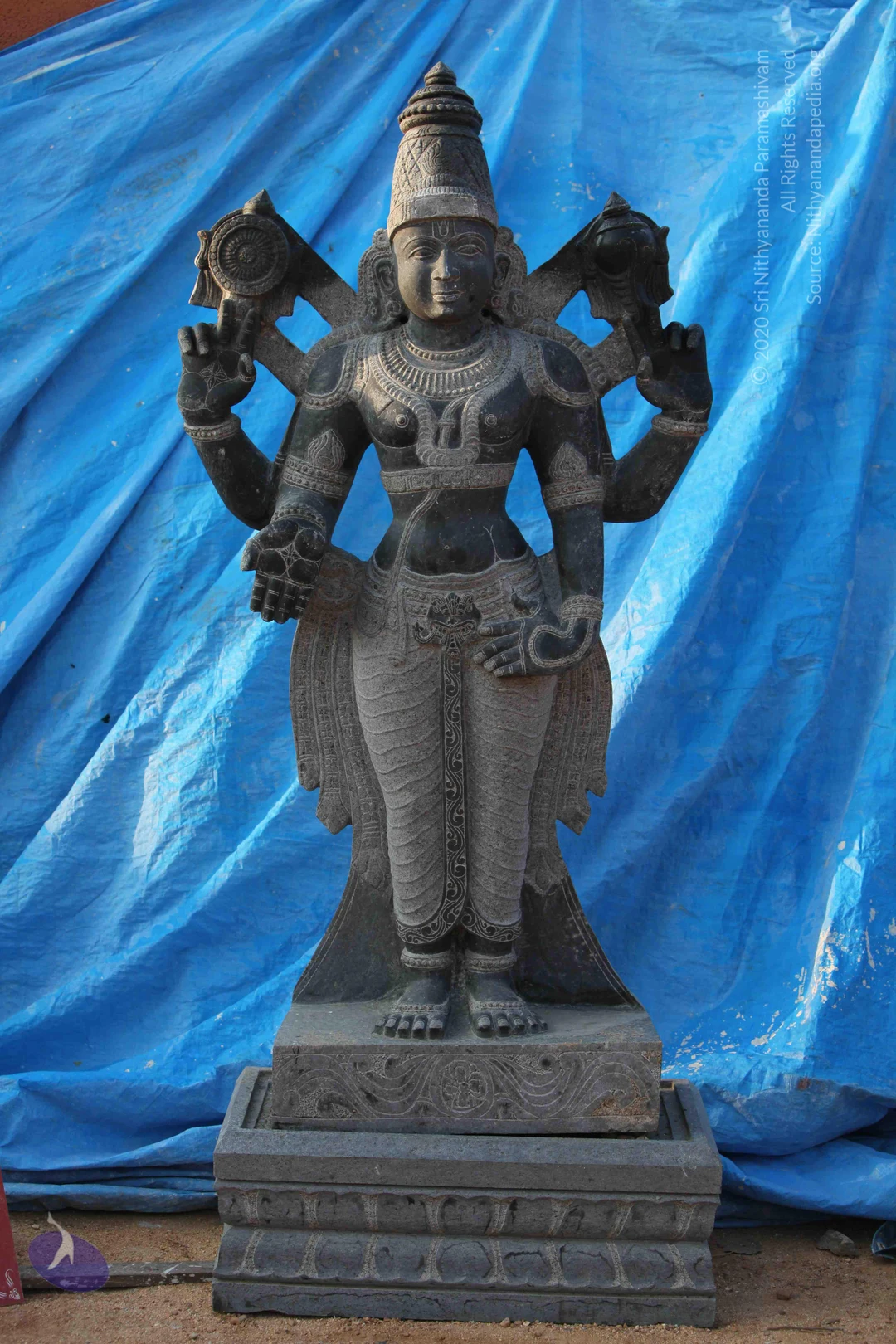
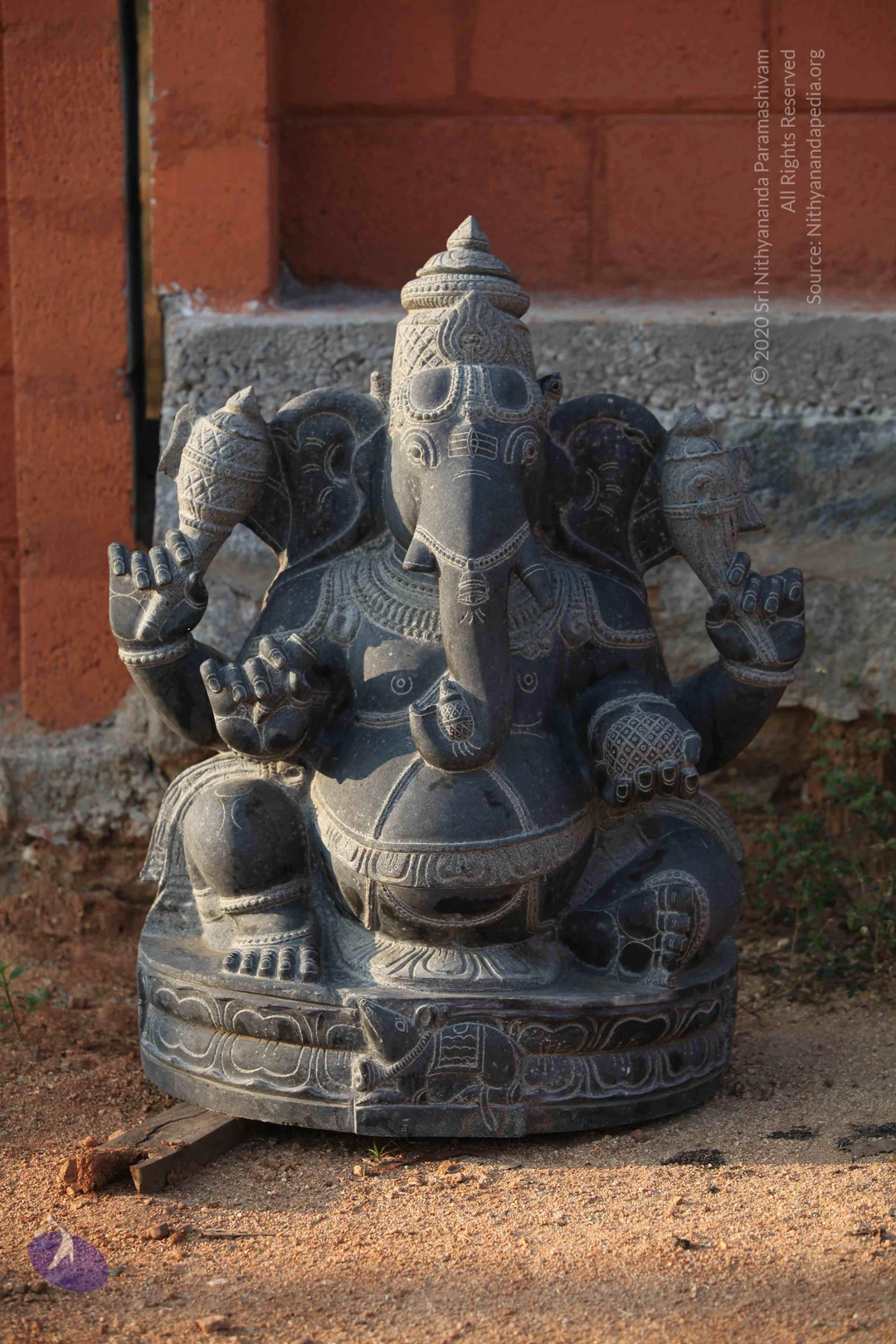
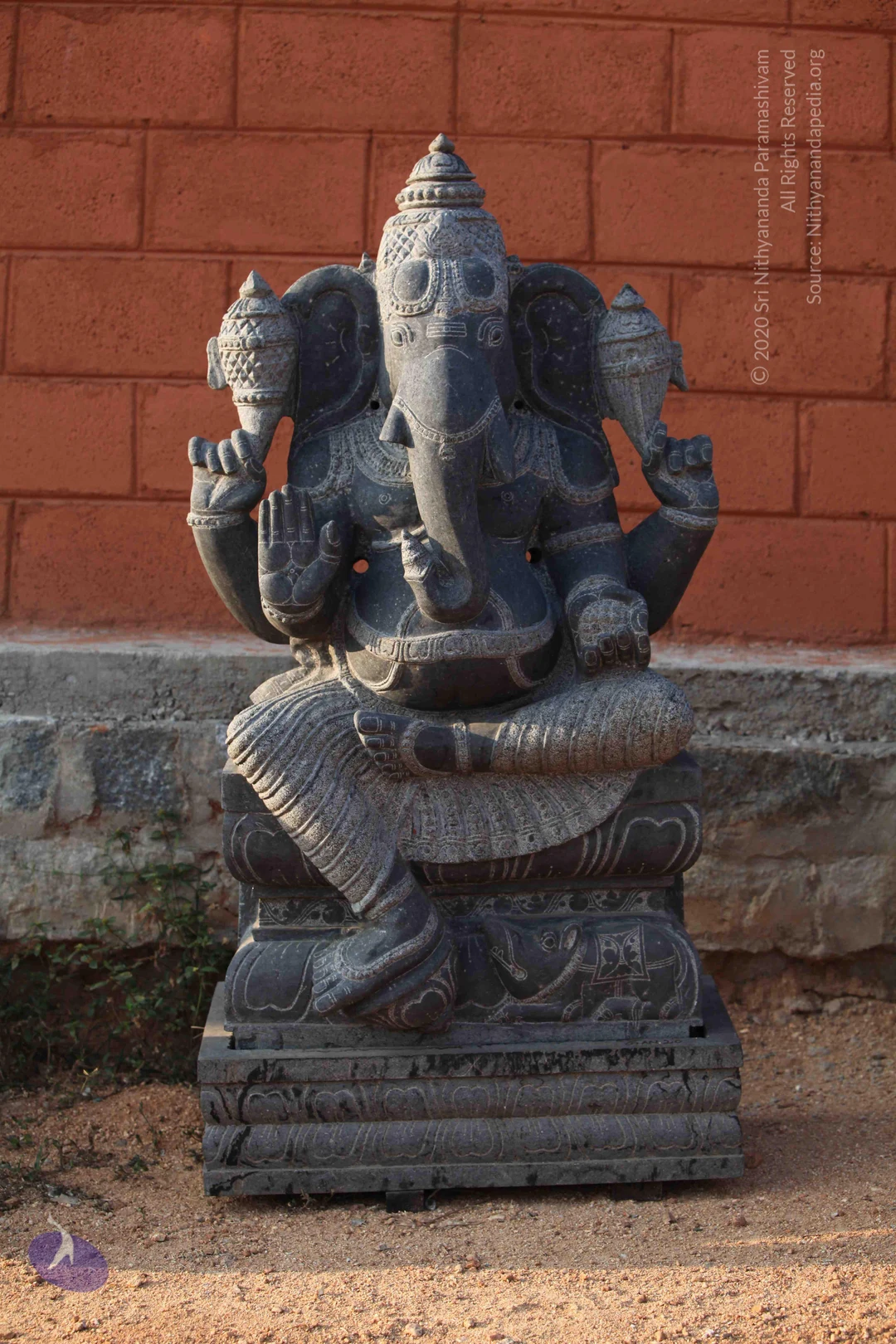
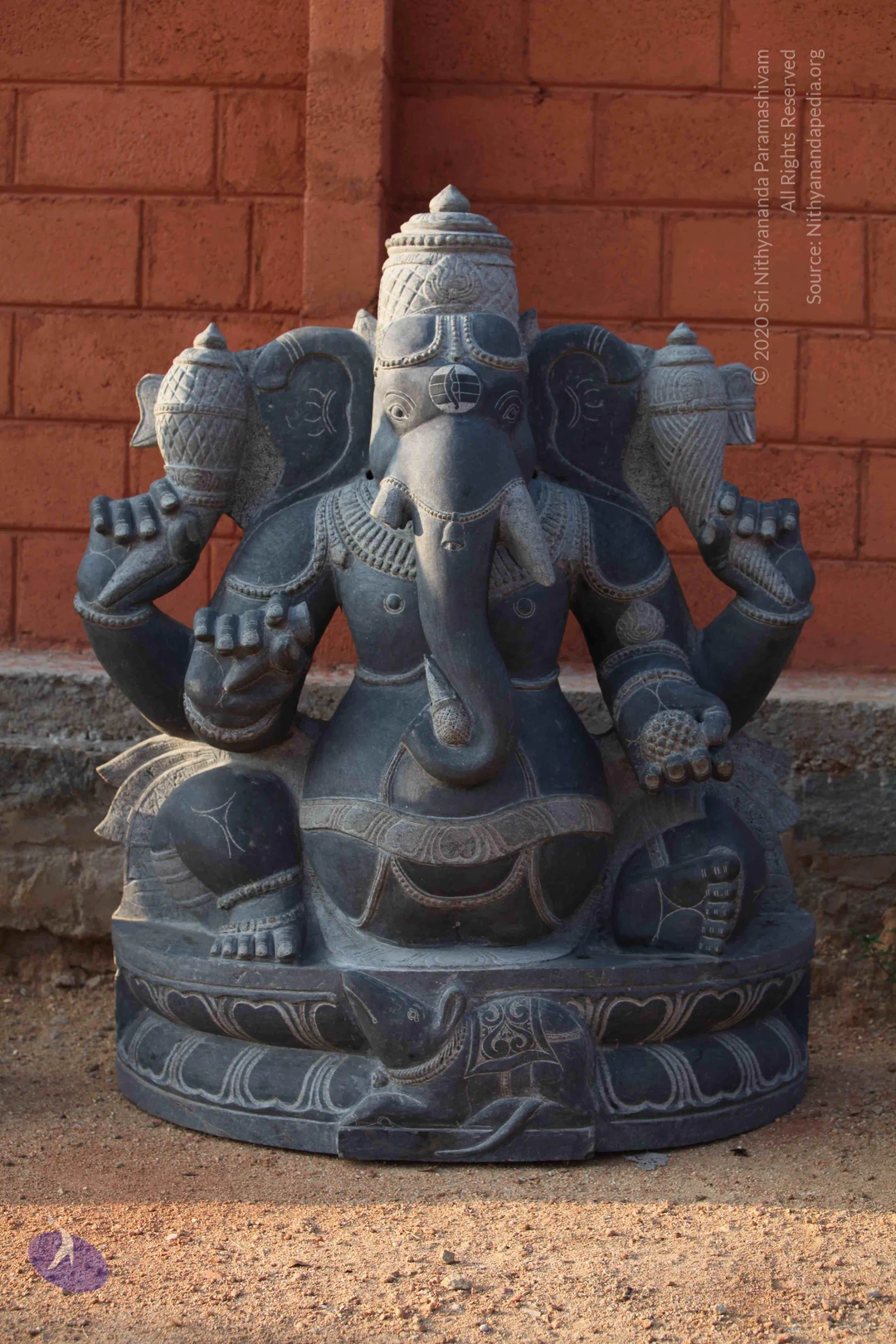
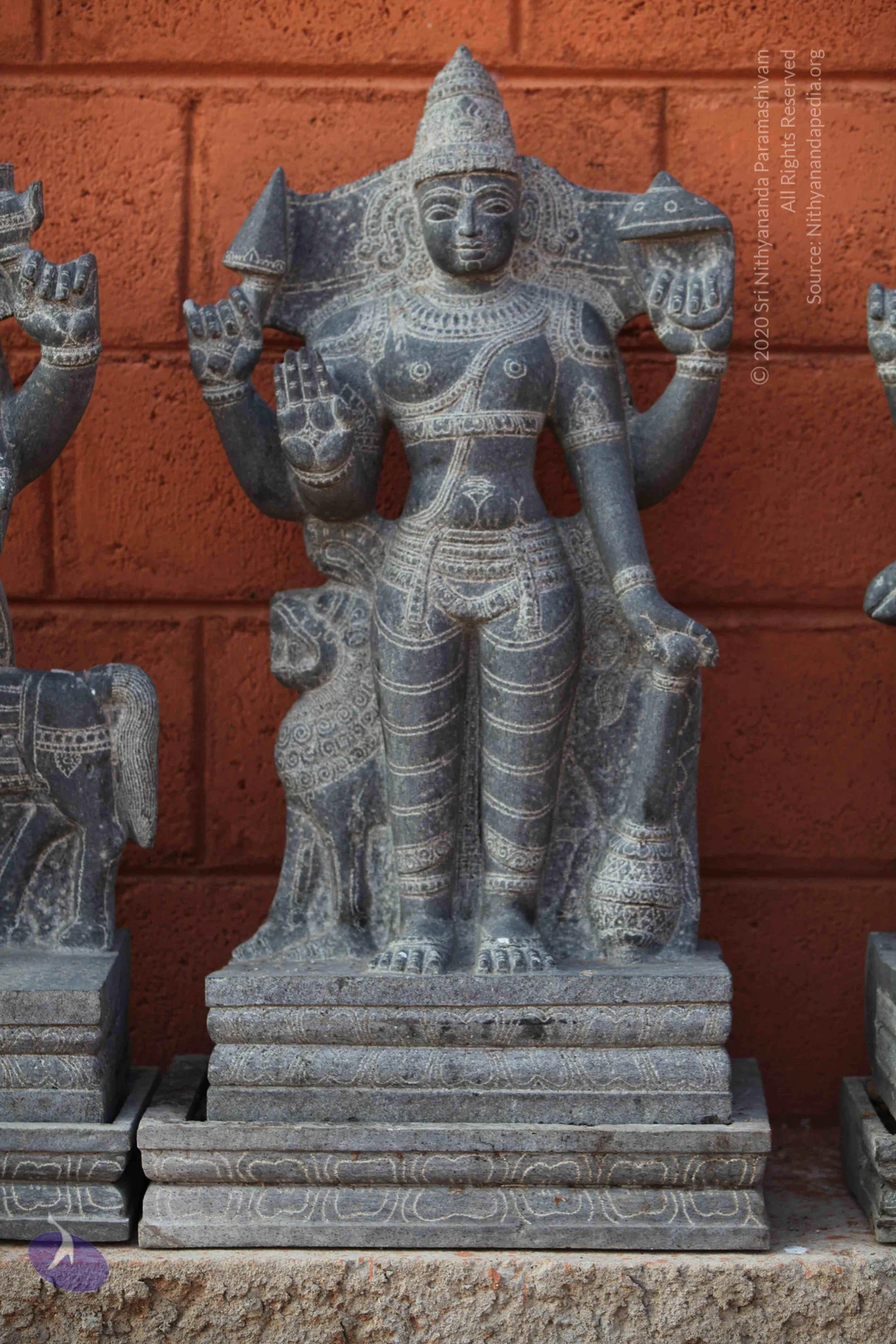
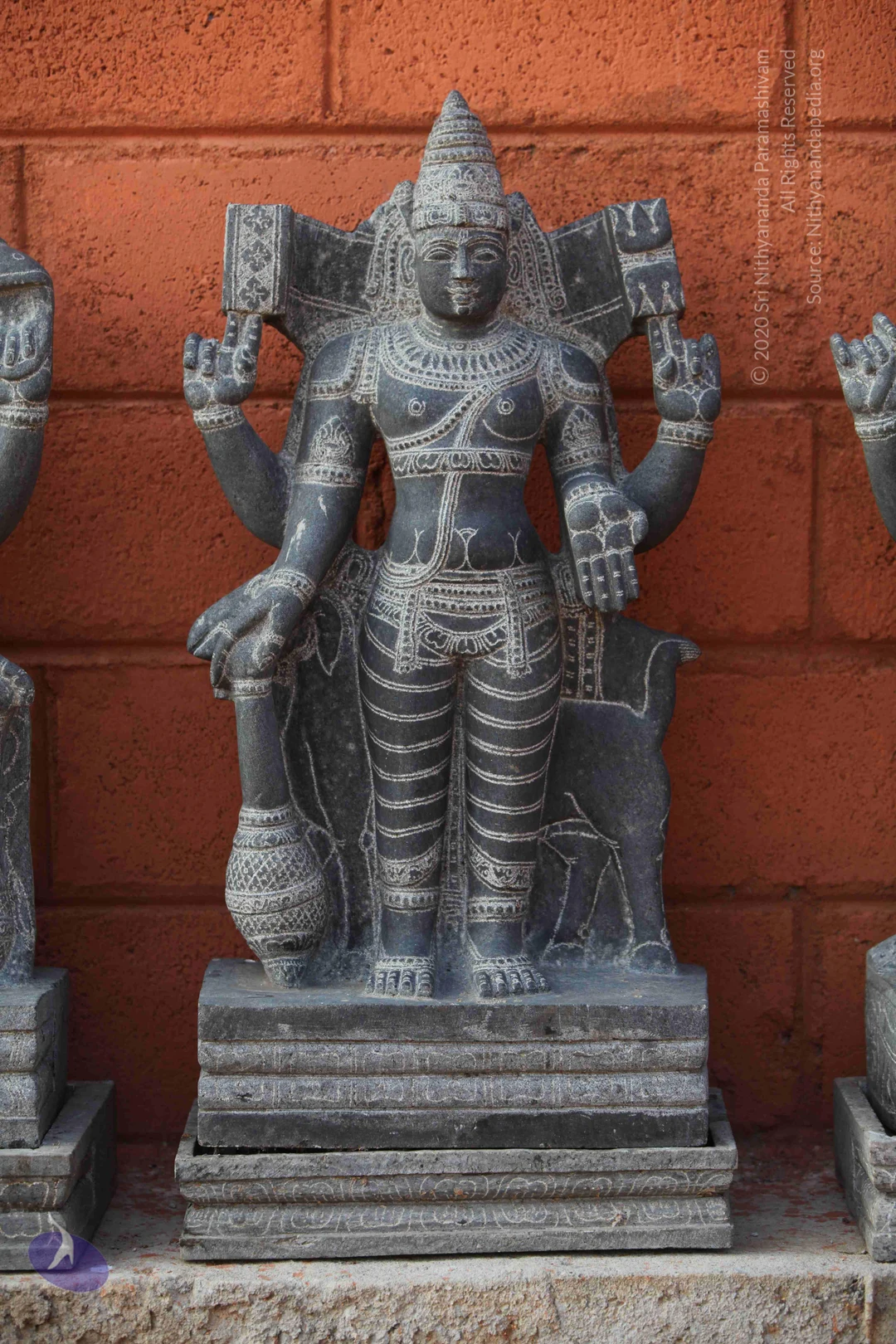
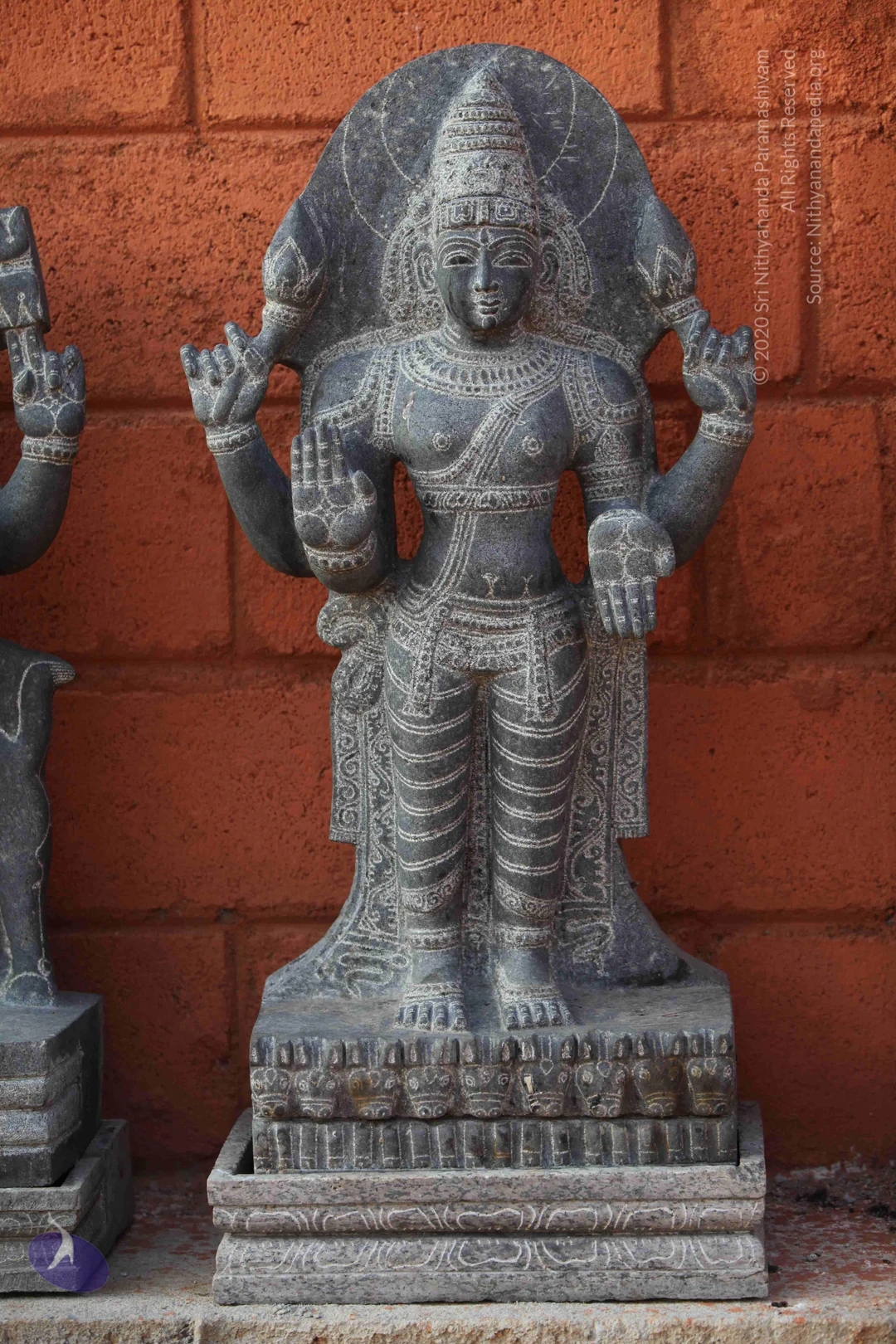
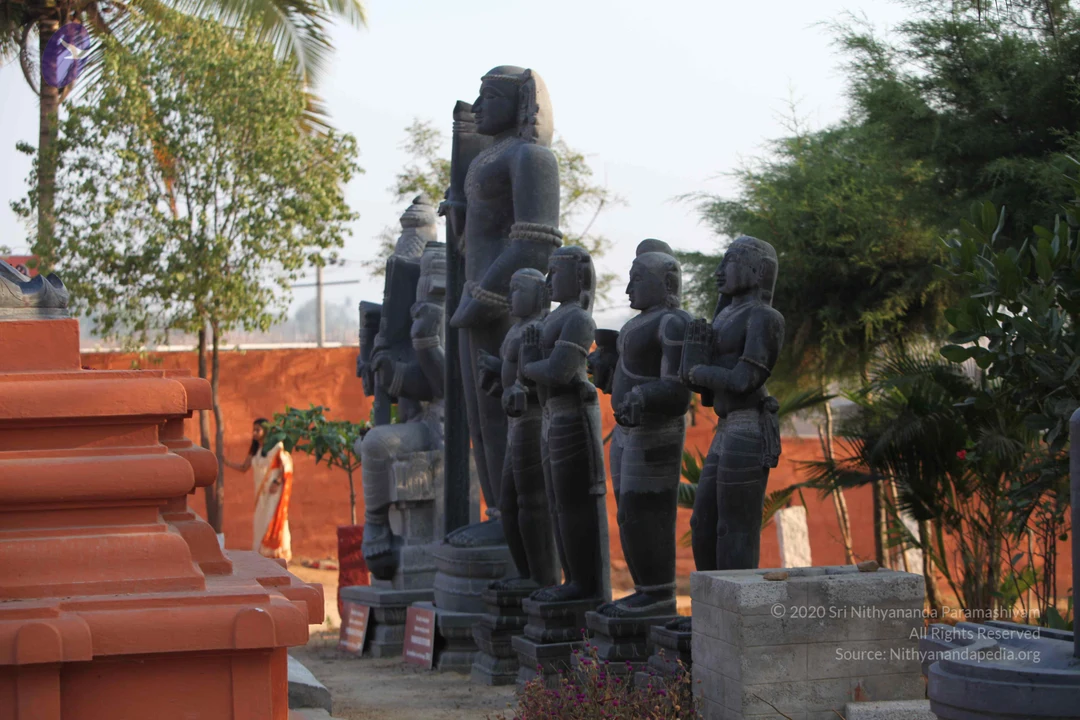
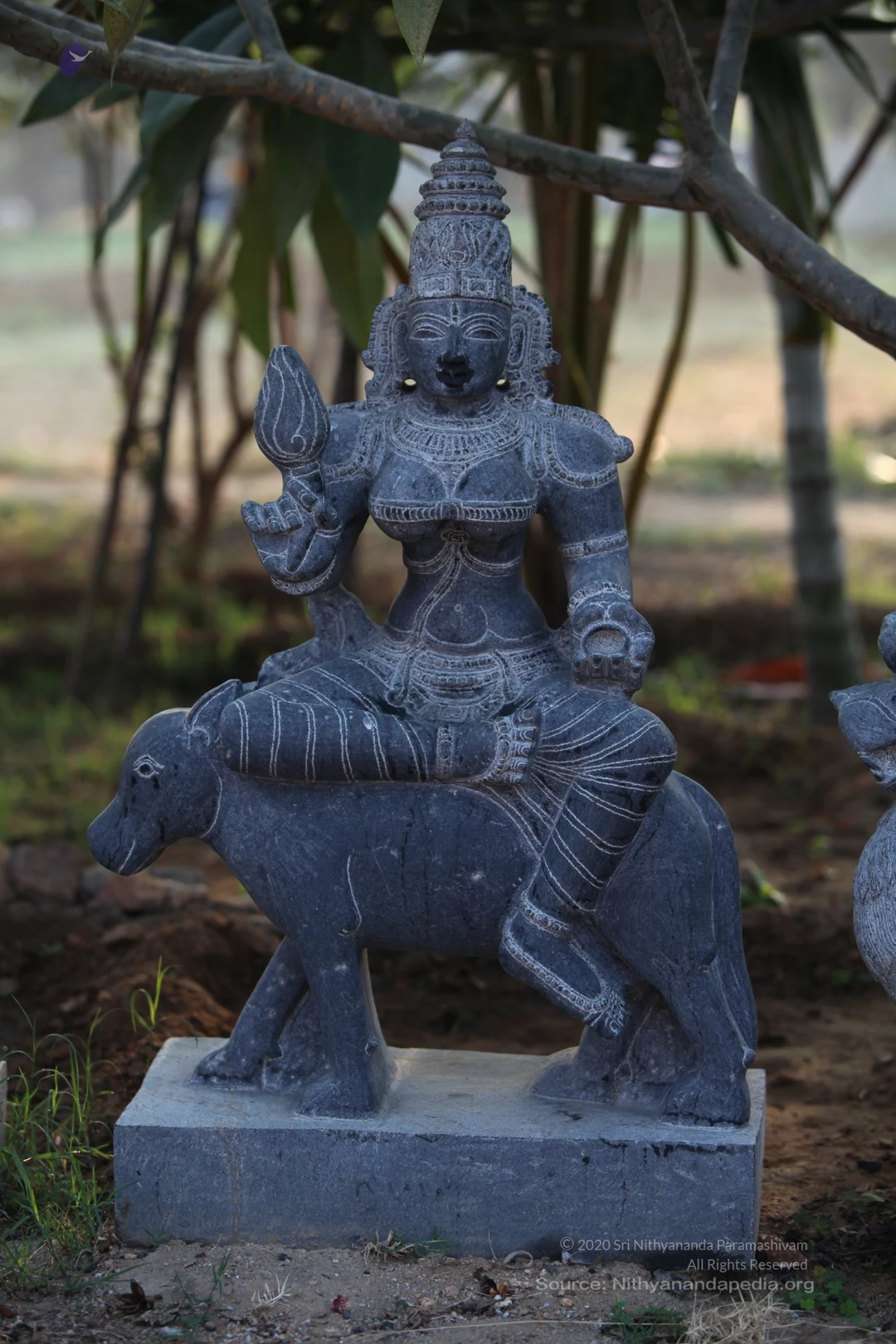
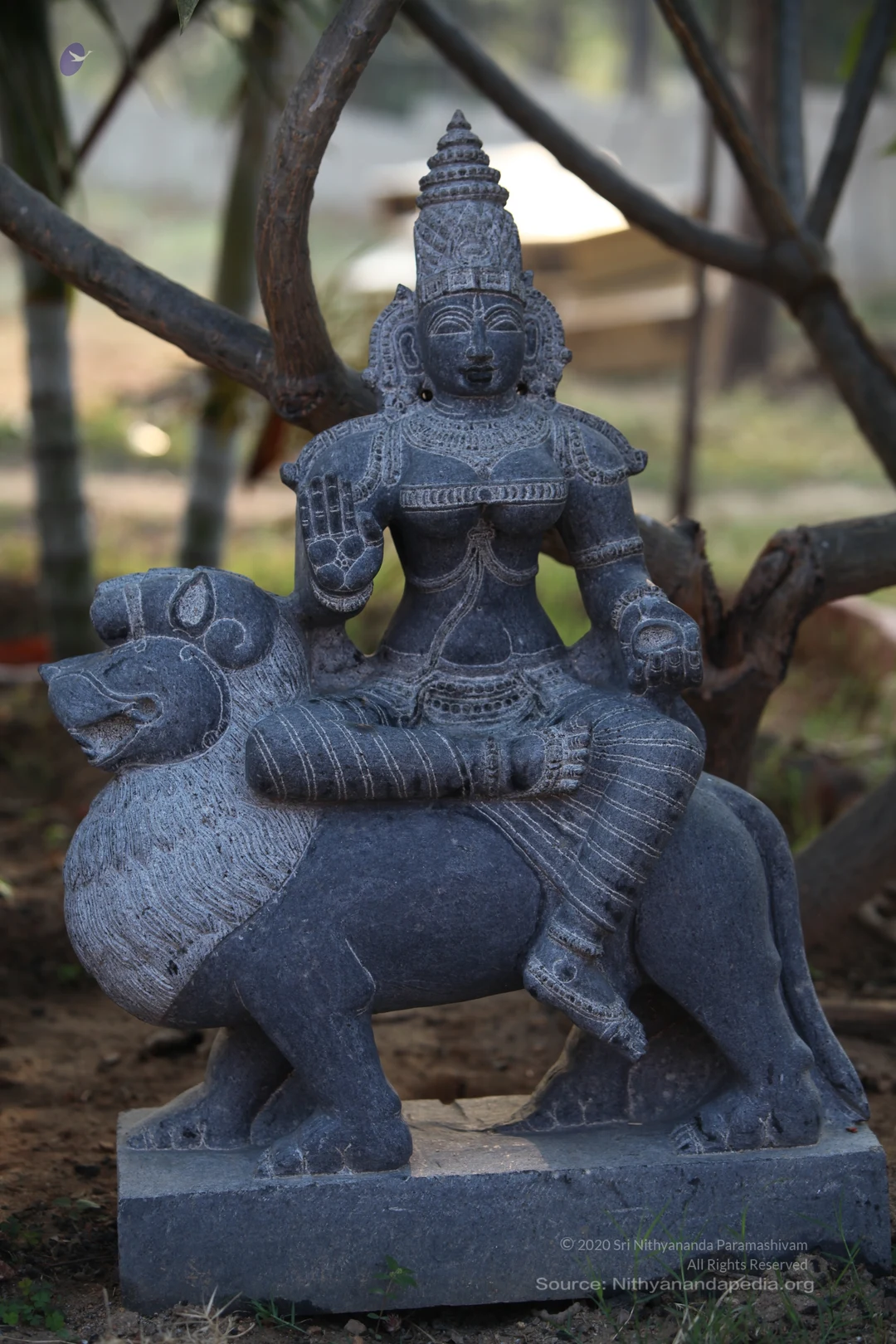
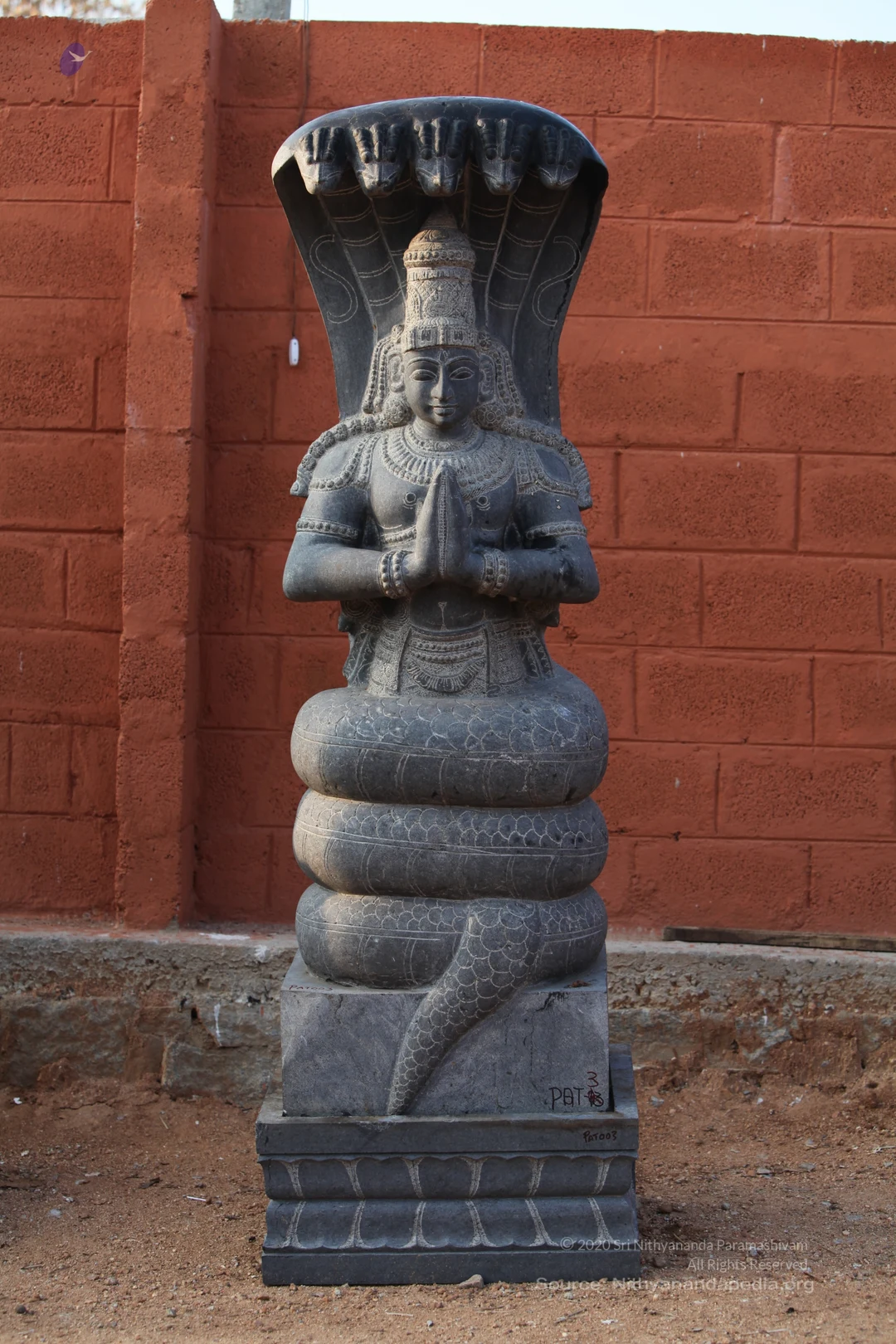
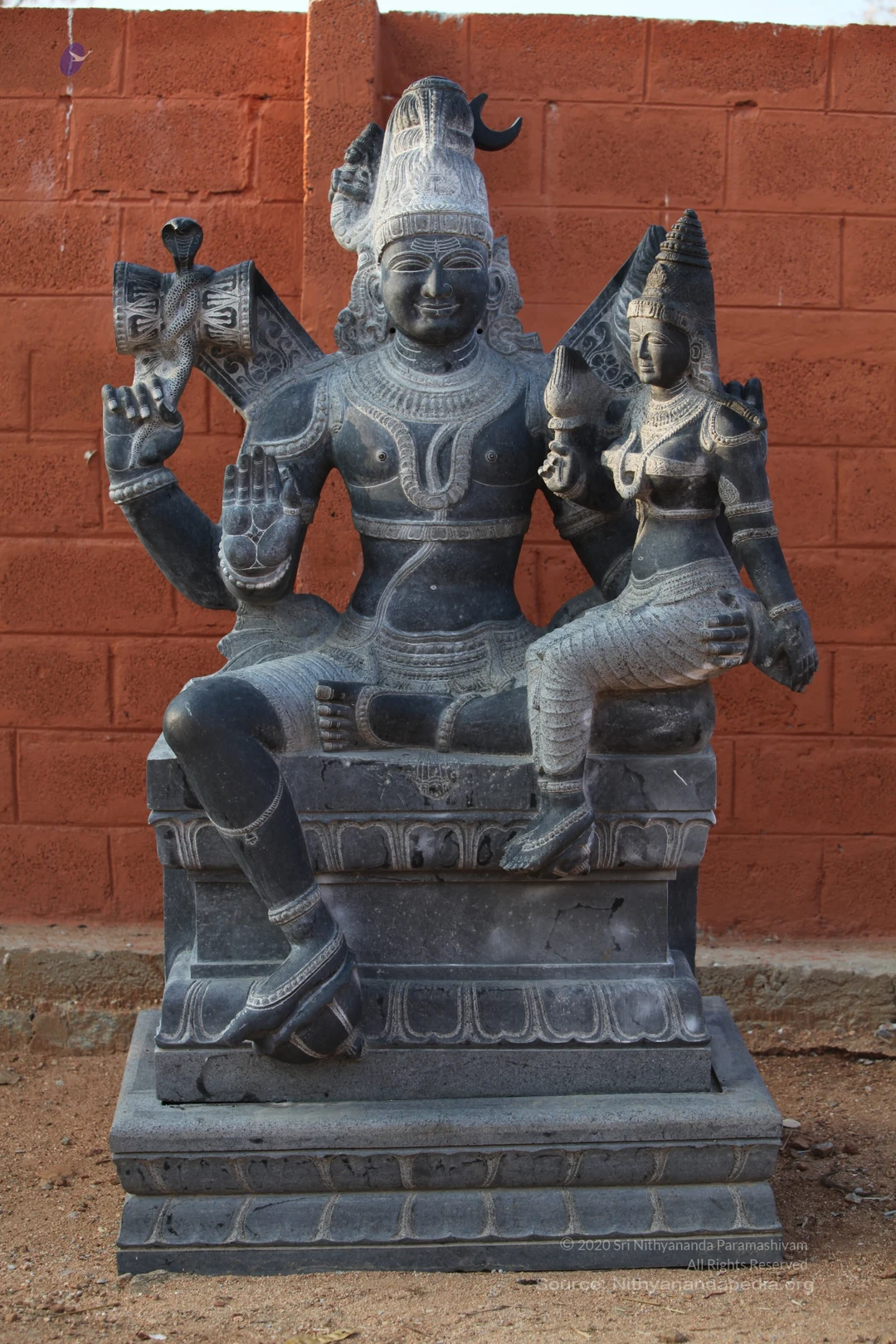
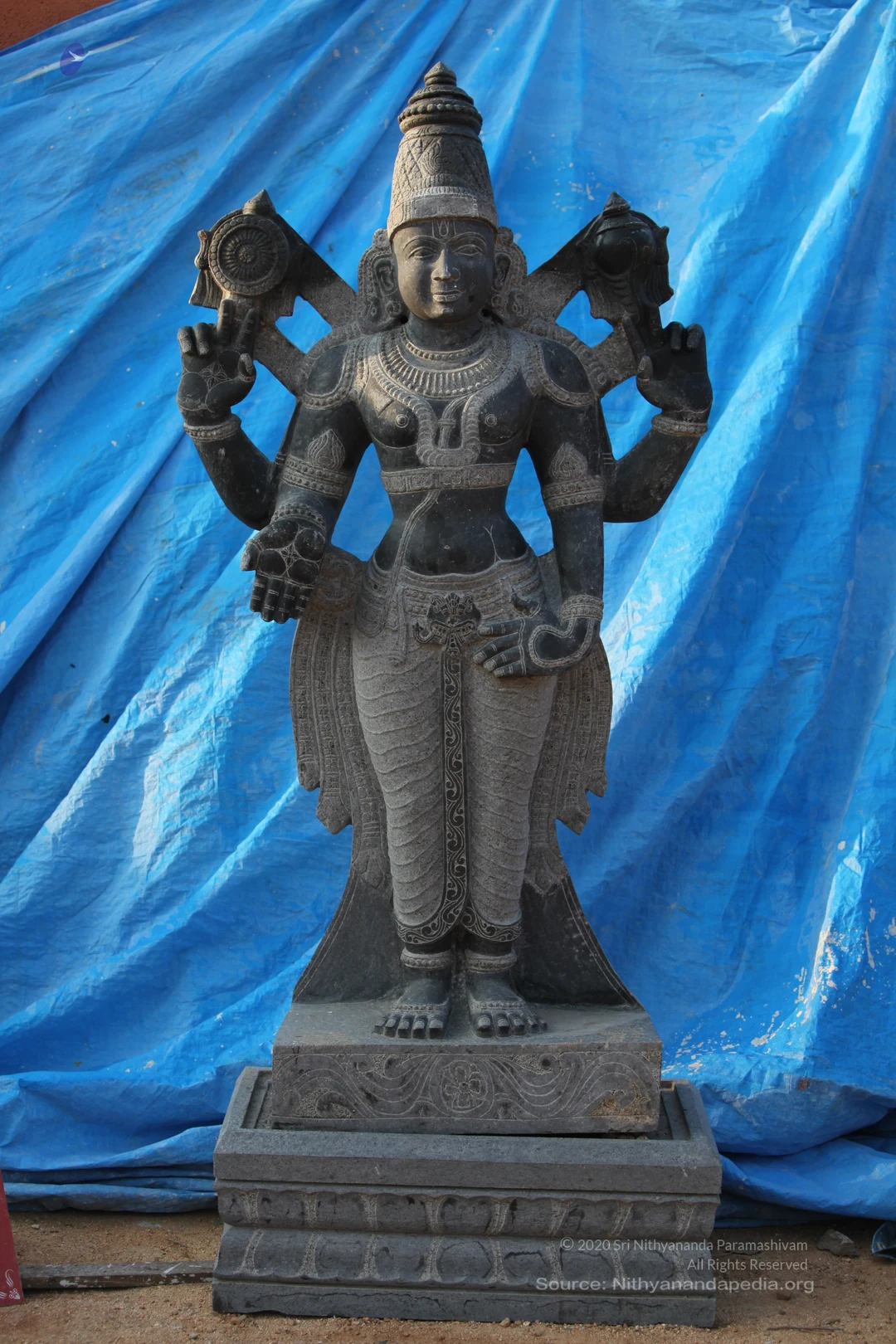
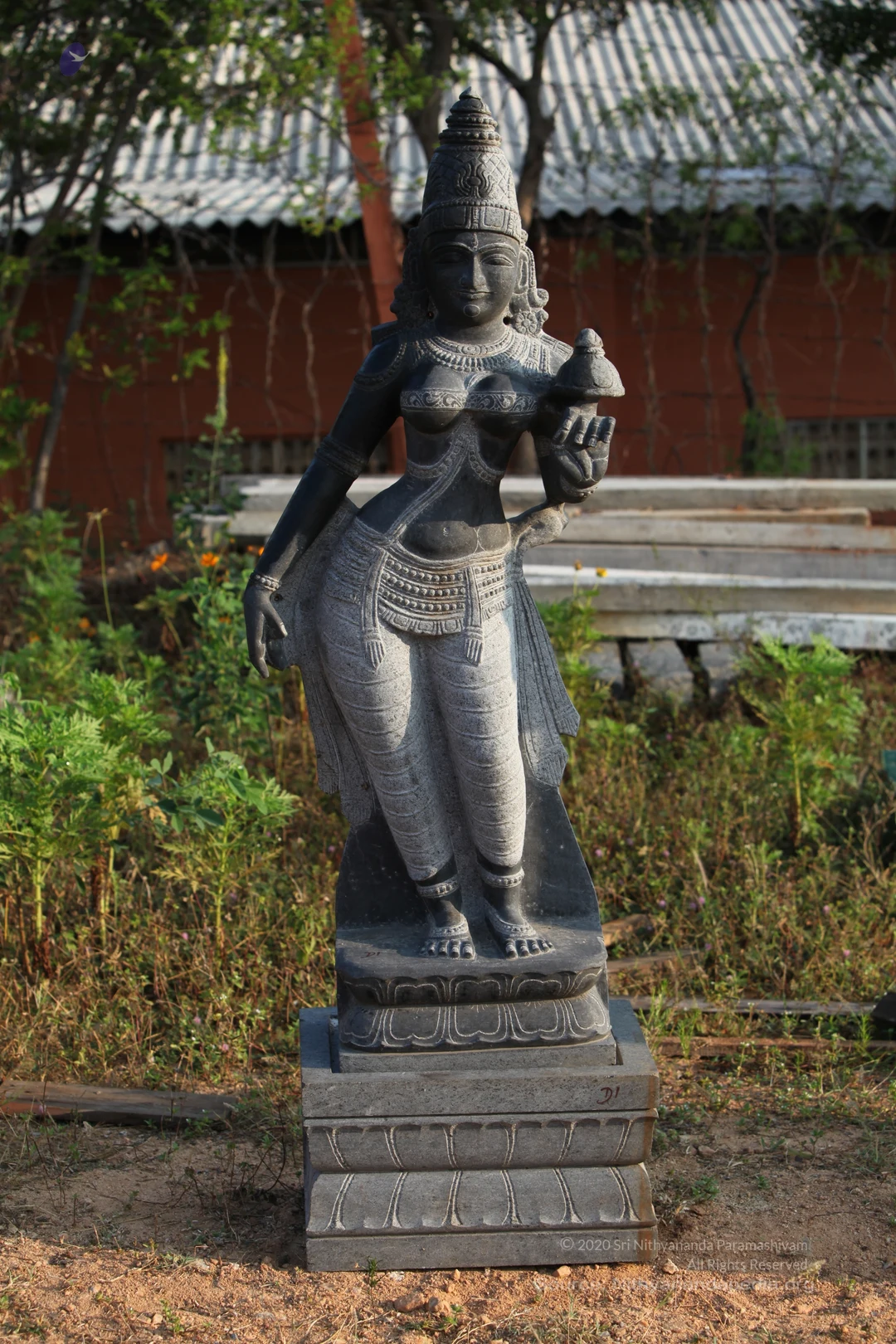
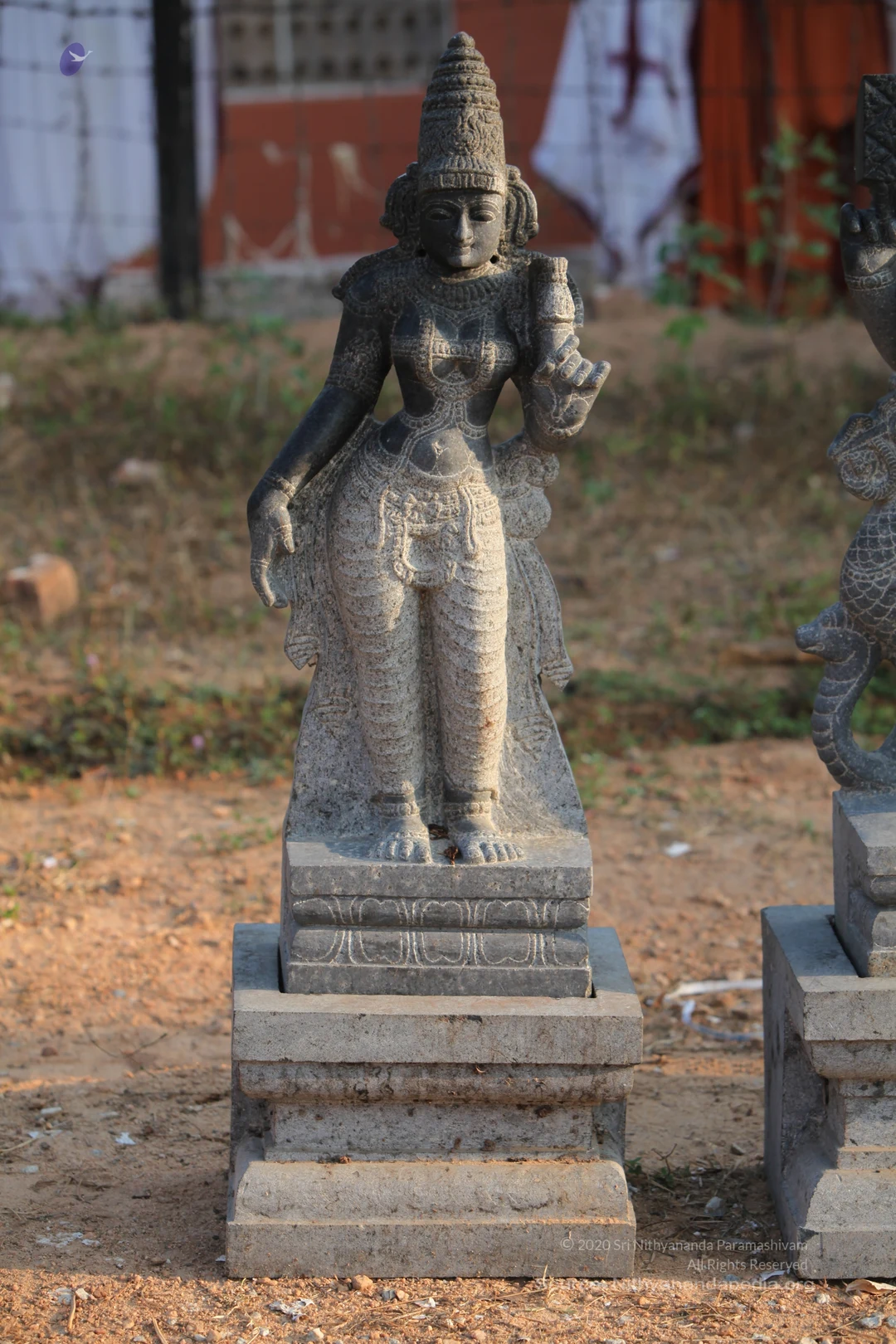
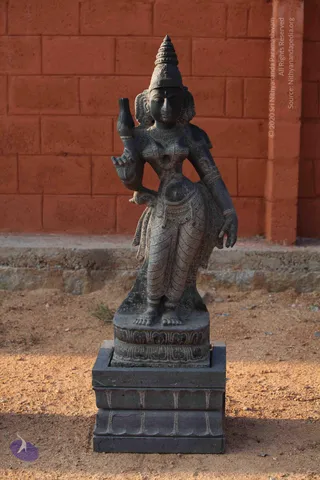
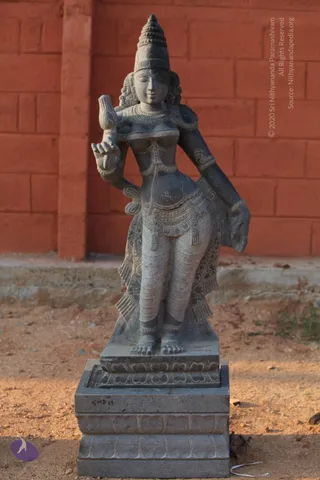
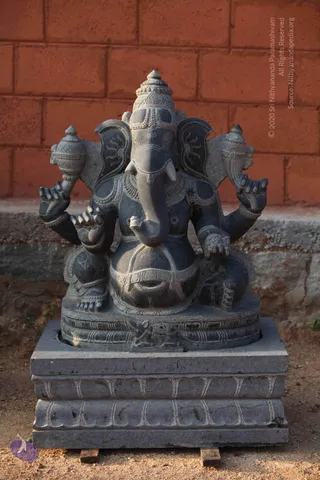
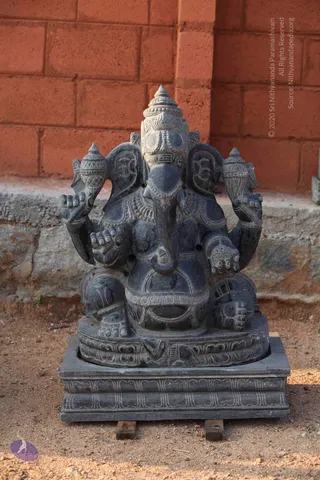
A grey stone statue of a goddess seated sideways on a recumbent bull, set on a plain grey stone plinth on reddish earth beneath a leafy tree. The figure wears a tall tiered crown, ornate necklaces and bangles, and a long carved skirt; one hand raises a lotus-like bud while the other rests on the bull's back. Carved bull detailing and incised patterns are visible. Outdoors, with blurred greenery behind and part of another statue at the right edge. No living people are visible.A dark grey stone sculpture of a goddess seated atop a lion, set outdoors on bare ground in front of bare tree branches and blurred greenery. The goddess wears a tall conical crown, ornate earrings, layered necklaces, a broad waist band and armlets, and raises her right hand in a palm-out gesture while her left hand rests on the lion's back. The carved lion has a curled mane and open mouth and stands on a rectangular stone plinth. This is a statue, not a living person, so no physical people are present. Sculpture depicts a deity murti rather than a person.A dark stone statue of a standing female deity stands on a tiered lotus-petal pedestal set on a stepped plinth, on reddish dirt ground in front of a red brick wall. The figure wears a tall conical crown, ornate jewellery and a patterned, pleated dhoti-style lower garment with a long scarf draped over the arms. One hand holds a vessel or flower stem raised near the shoulder, while the other hangs open at the side. The carving is finely detailed with incised patterns on the clothing. The statue is the only subject and no people are visible.A standing grey stone sculpture of a female deity murti on a tiered stepped plinth, set outdoors against a red brick wall on dry ground. The figure wears a tall conical crown, a broad collar necklace, armlets and a layered jewelled waist girdle over a long draped skirt. Her raised right hand holds a small lotus bud and her left hand rests at her hip. The base bears a carved lotus-petal pattern and a painted code marking. No people are visible.A dark grey stone statue of the elephant-headed deity Ganesha seated in a relaxed pose on a tiered stone pedestal, set outdoors in front of a red brick wall with dusty ground below. The statue has four arms: the upper hands hold a modak sweet bowl and an axe, while the lower right hand rests in a blessing gesture and the lower left hand rests on the knee. A large curved trunk, a tall crown, a broad belly girdle and carved sun motifs on the ears are visible. A small purple logo appears in the lower left corner. No people are visible.A dark grey stone sculpture of the elephant-headed deity Ganesha seated cross-legged on a carved pedestal base, set outdoors on sandy ground in front of a red brick wall. The murti has four arms holding attributes, a tall crown, a trunk resting toward the belly, and ornate carved jewellery and belt. Ganesha's form is clear from the elephant head and seated pose. No people are visible. A faint circular purple logo appears at the lower left.

Temple-Visit

1 photoSource gallery
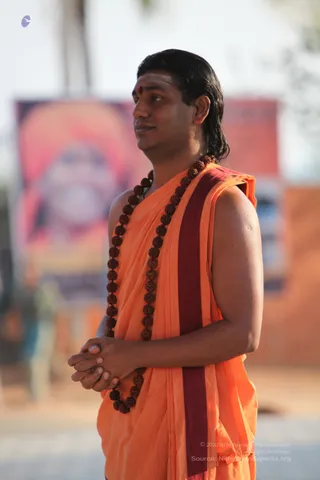
A man stands outdoors with his hands clasped together at waist height, facing sideways. He wears an orange saffron shawl with a maroon border draped over one shoulder and a long rudraksha mala of dark brown beads around his neck, and he has a red tilak on his forehead and long dark hair swept back. Behind him is a blurred red and orange poster showing a figure, with a warm sunlit setting. The person is a devotee-style presence with ascetic attire, and the appearance cues of swept-back hair, saffron clothing and rudraksha beads match the page's claim that Swamiji is present, so this is a probable identification of the Swamiji candidate in person.

Paadapooja
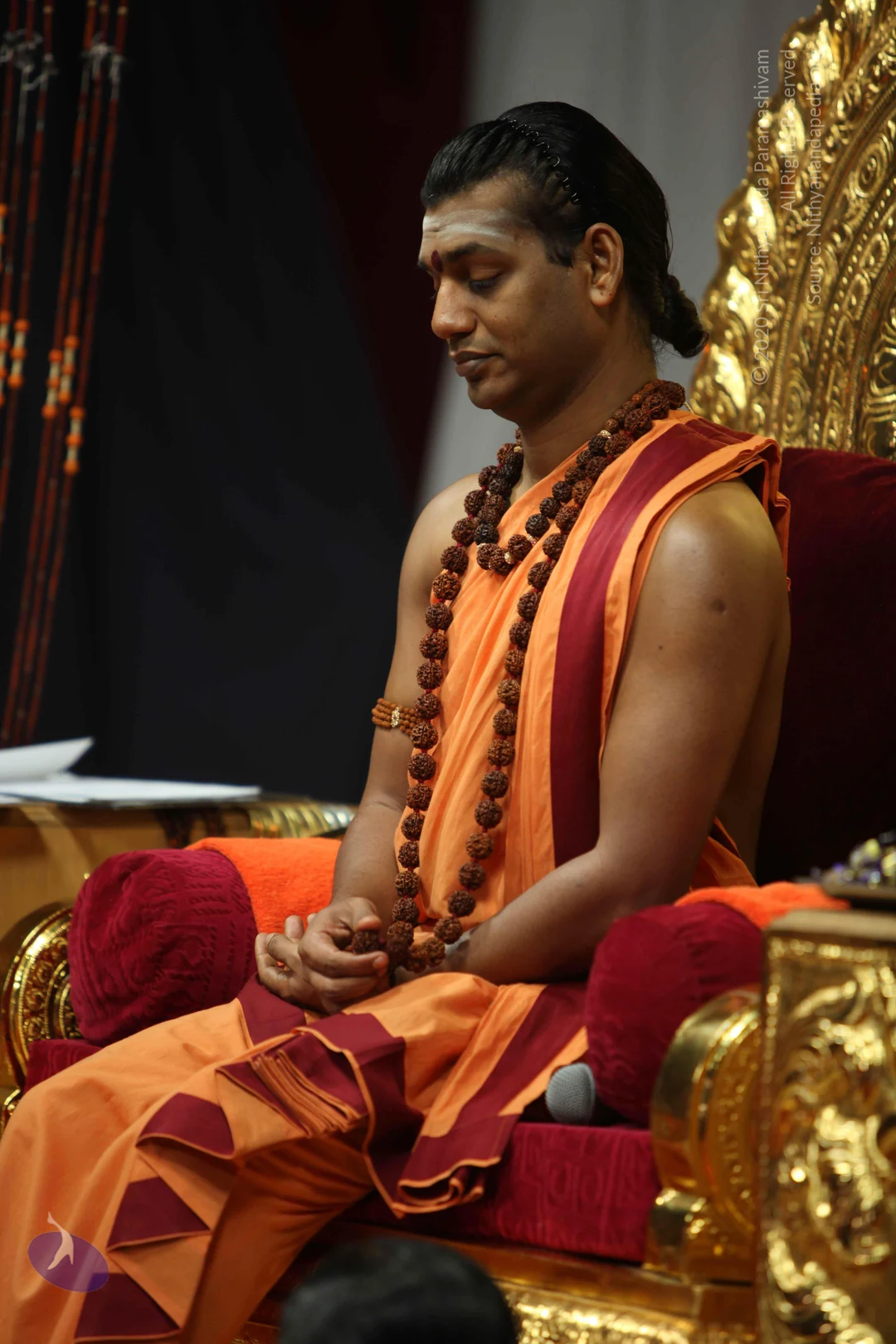
2 photosSource gallery
A seated man in saffron-orange robes and a rudraksha mala sits on an ornate gilded throne with red cushions, palms pressed together in namaste. Two devotees kneel on the orange floor: one on the left in white ritual clothing with a shaved head, and one on the right in orange sari-style dress. A tall brass oil lamp stands at left, beside beaded curtains and gold-framed side tables holding flowers and fruit.A man in orange saffron robes sits cross-legged on an ornate gold throne with red cushions in front of a gray draped backdrop hung with strands of red and orange beads. He wears a rudraksha mala necklace, a bronze armlet, and a red-and-white sectarian mark on his forehead, with his hands clasped in his lap. Pink flower petals and fruit rest on the gold pedestal below him. Two people in orange clothing sit at the edges of the frame, and a microphone stands near the throne. a person is seated on the throne as the speaker, with the orange robes, rudraksha mala and gold throne as cues. A plate of petals and fruit sits at the base of the throne, with a brass lamp on the left edge.
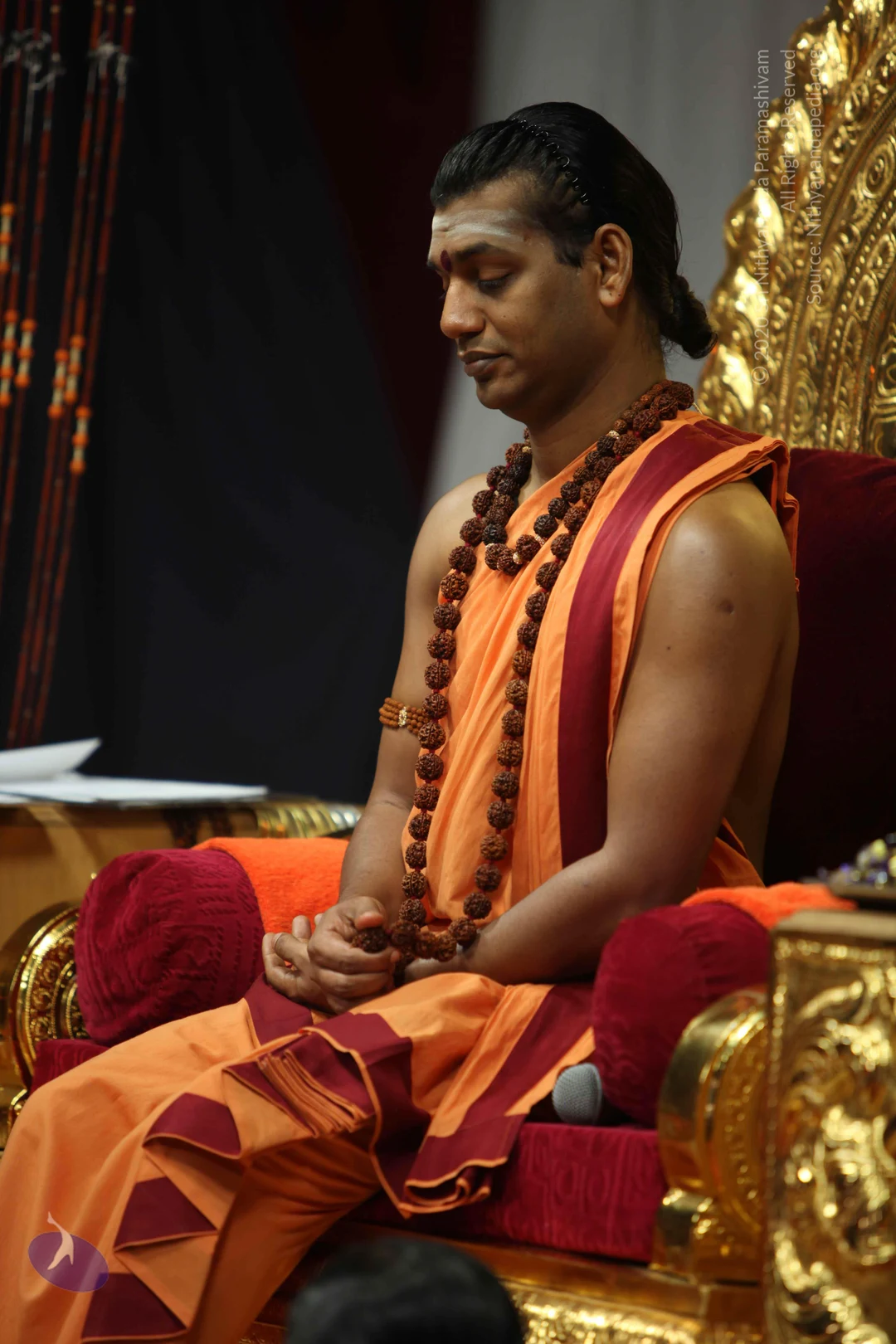
Nithyananda-Satsang
11 photosSource gallery
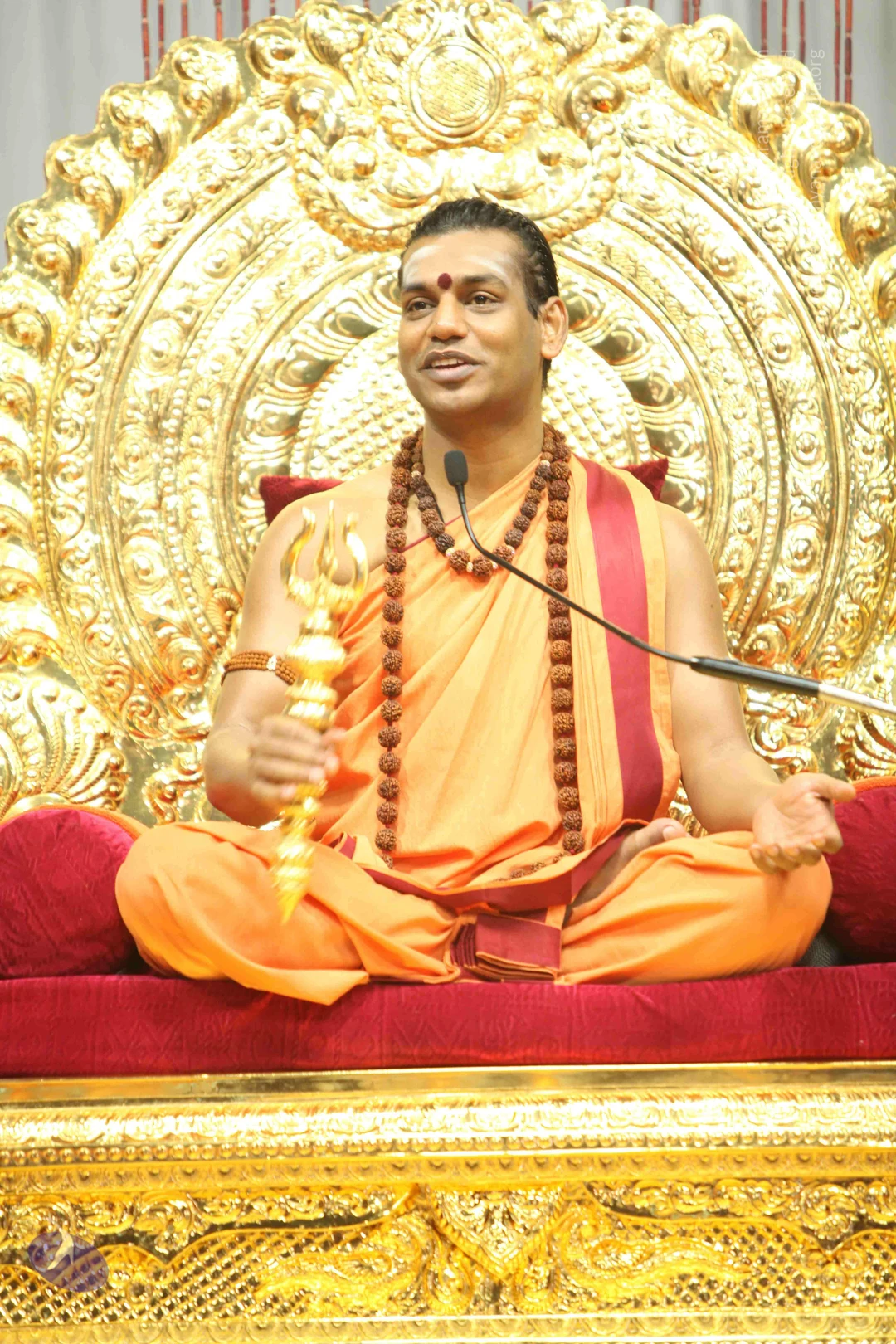
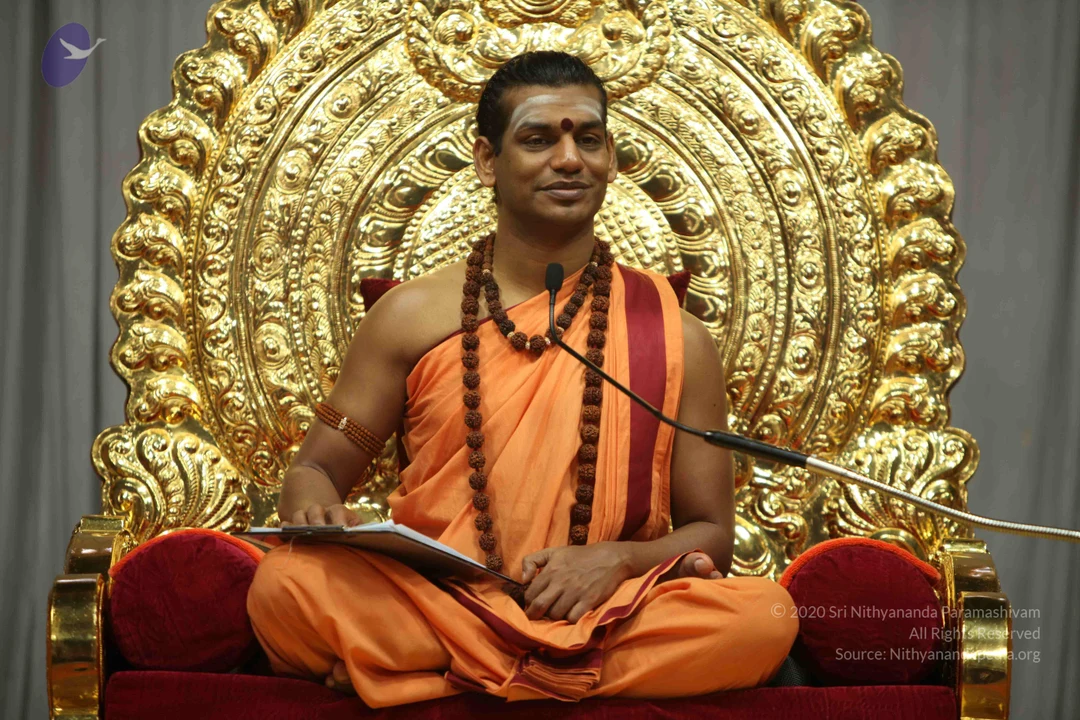
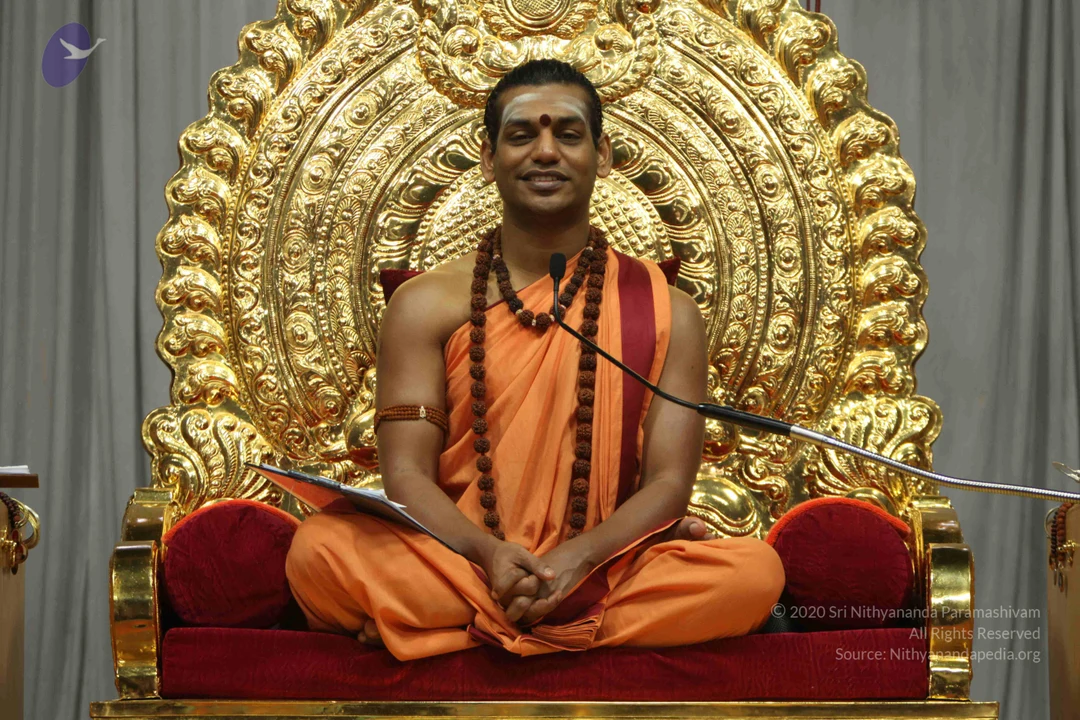
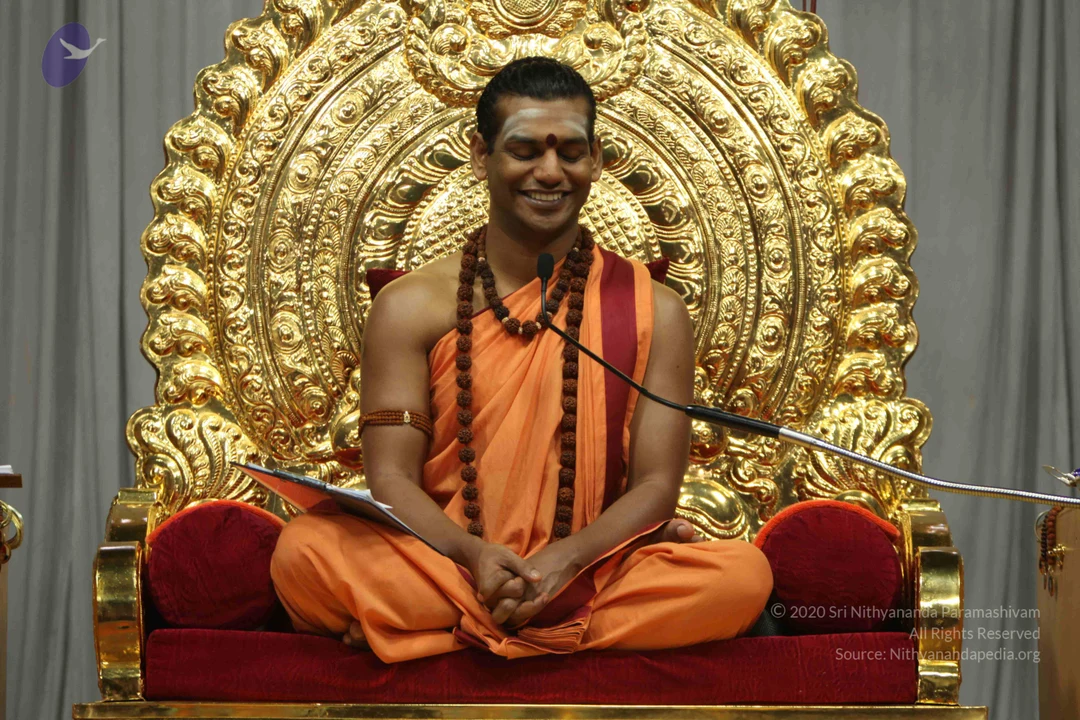
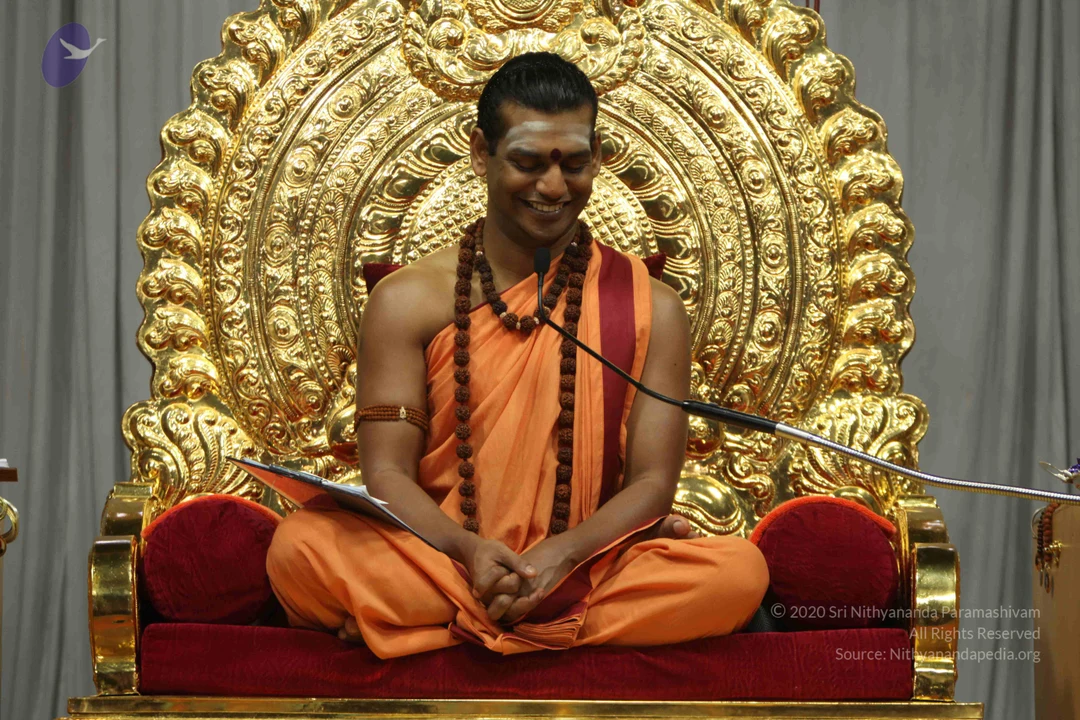
A smiling man in saffron-orange robes with a red sash sits cross-legged on a red cushioned seat in front of an elaborate gold repoussé throne backrest. He wears multiple long rudraksha mala necklaces and a rudraksha bracelet, has a white-painted forehead with a red dot, and holds a golden object in his right hand while his left hand is open in an explanatory gesture. A microphone on a black stand is positioned at his chest. The Swamiji cues include long swept-back hair, saffron clothing, rudraksha malas and a gold-and-red throne setting, so he is a probable Swamiji candidate present in person.A man seated cross-legged on an ornate gold throne with a large gold repoussé back and red cushions smiles while holding a golden trident-tipped staff across his lap. He wears saffron-orange robes with a red border, several rudraksha mala strands around his neck, a gold bracelet on his upper arm and a red tilak on his forehead. A microphone on a stand is in front of him, with gold-carved side tables on either side and red beaded hangings behind the throne. The cues of long swept-back hair, saffron robes, rudraksha malas and a ceremonial throne are present, matching the page's Swamiji reference, so this is an appearance-based probable identification of the Swamiji seated on the throne.A man seated cross-legged on a red-cushioned throne in front of an ornate gold repoussé backdrop, smiling and holding a gold ceremonial staff in his right hand. He wears saffron-orange robes with a red border, a long rudraksha mala draped over his chest, a red bindi and a red-banded wrist bracelet. A microphone on a gooseneck stand is positioned near him. a person, seated on the throne in saffron robes with a rudraksha mala and gold staff, is shown giving a discourse. Grey drapes hang behind the throne.A smiling man sits cross-legged on a red cushioned throne backed by an ornate gilded arch with repoussé floral and scroll patterns. He wears saffron-orange robes with a red-and-gold border draped over one shoulder, a long rudraksha mala of brown beads, a red bindi and white forehead markings, and a gold bangle on his wrist. He holds a golden trident-shaped staff upright in his right hand while his left hand rests on his knee, and a gooseneck microphone stands beside him. Grey drapery hangs behind the throne.A seated man in orange saffron robes with a red-and-gold border sits cross-legged on a red cushioned dais in front of an ornate gold repoussé throne with a large arched back. He wears a long multi-strand rudraksha mala around his neck and a beaded rudraksha bracelet on his upper arm, with a red bindi and white forehead markings. His hands rest folded in his lap and a microphone on a boom stand is positioned beside him. The a person is a physical presence in this discourse setting, with cues of saffron clothing, rudraksha malas and a throne-style seat, though the face and appearance are not confidently verifiable.A man seated cross-legged on a red cushioned dais in front of an ornate gold repoussé throne with a large scalloped arch backrest. He wears orange saffron robes with a red border, multiple rudraksha mala necklaces, a rudraksha bracelet on his upper arm, and a red bindi with white tilak on his forehead. His hands rest clasped in his lap, and a microphone on a stand is positioned beside him.
Nithyananda-Sacredarts-Stone-Deity

1 photoSource gallery
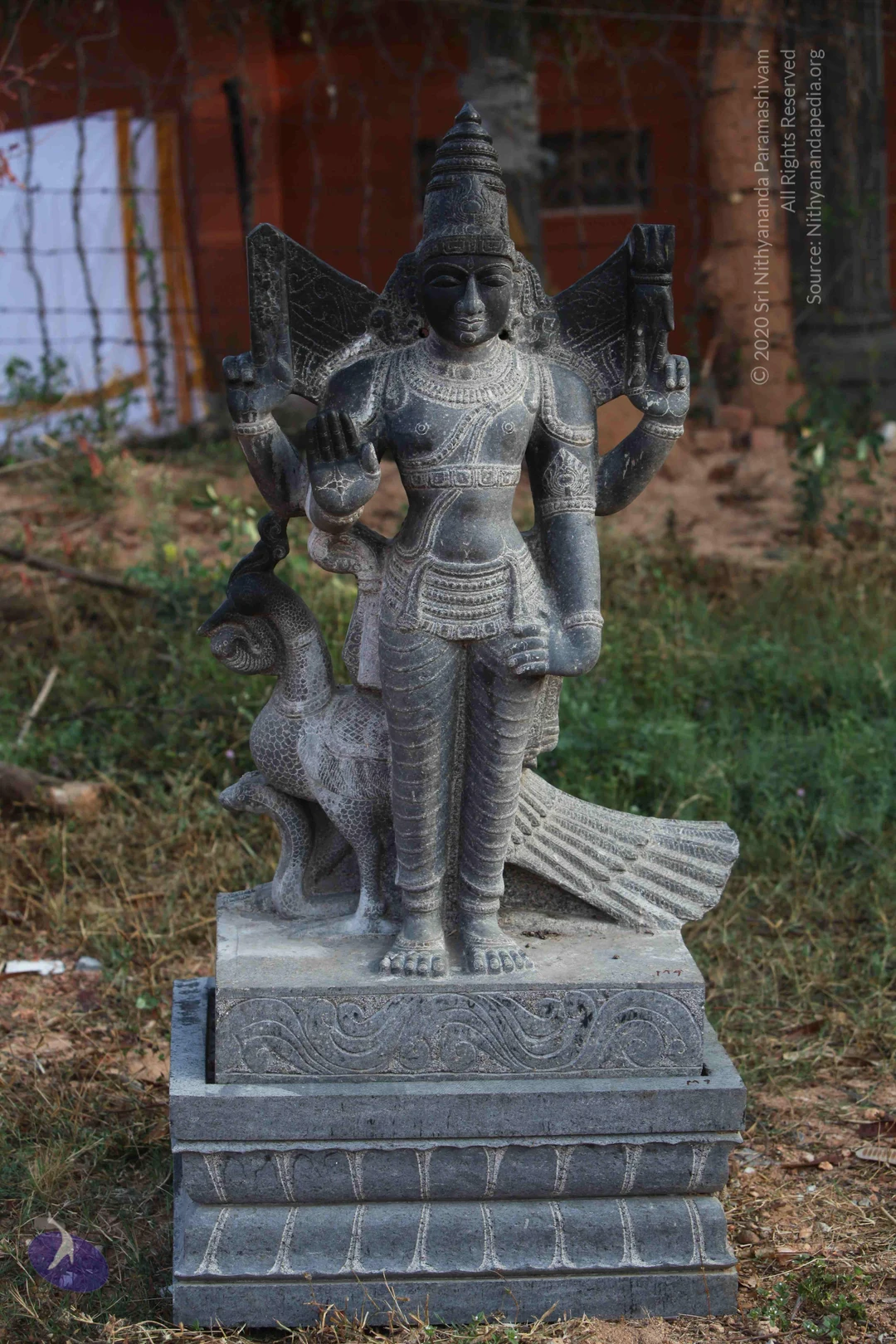
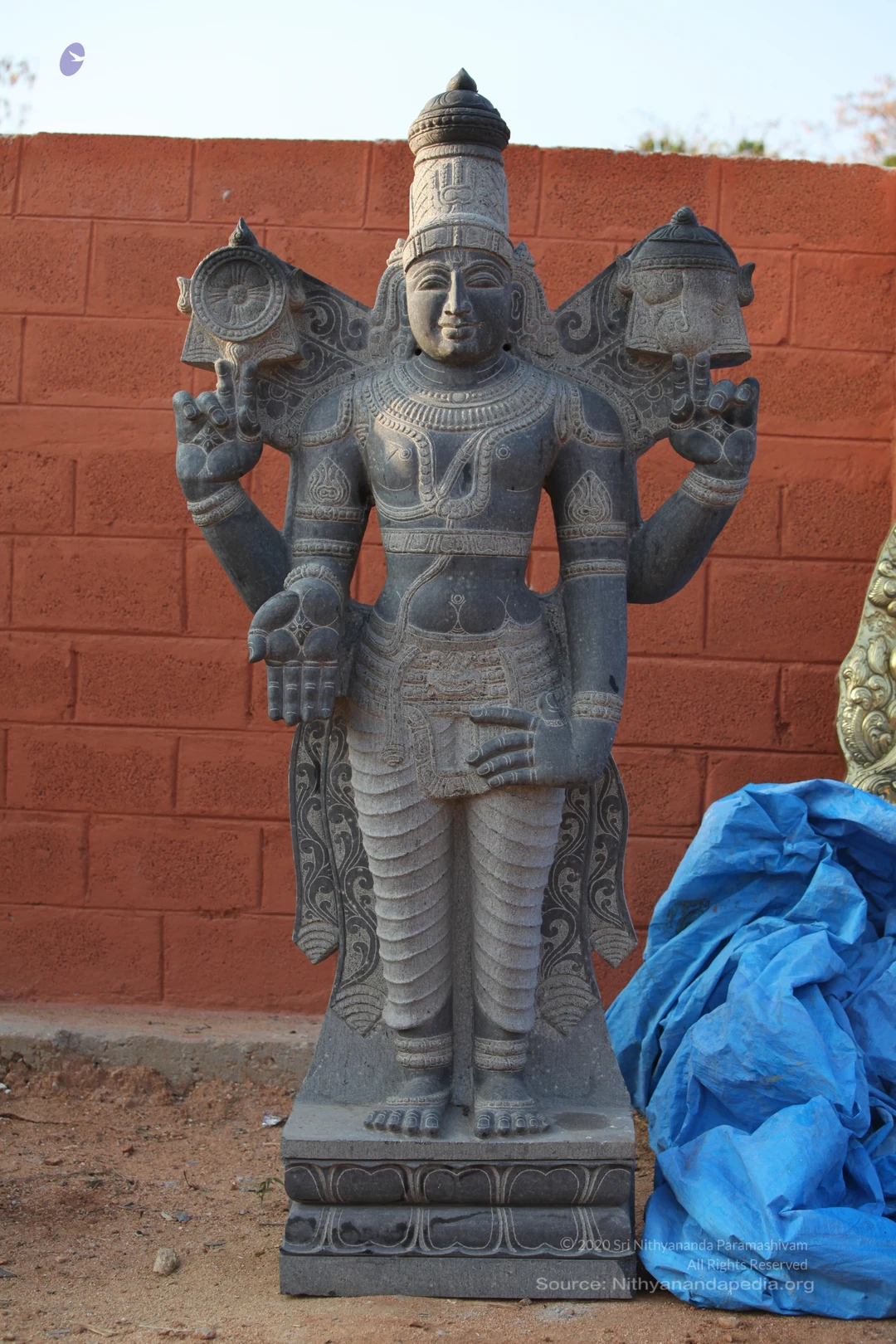
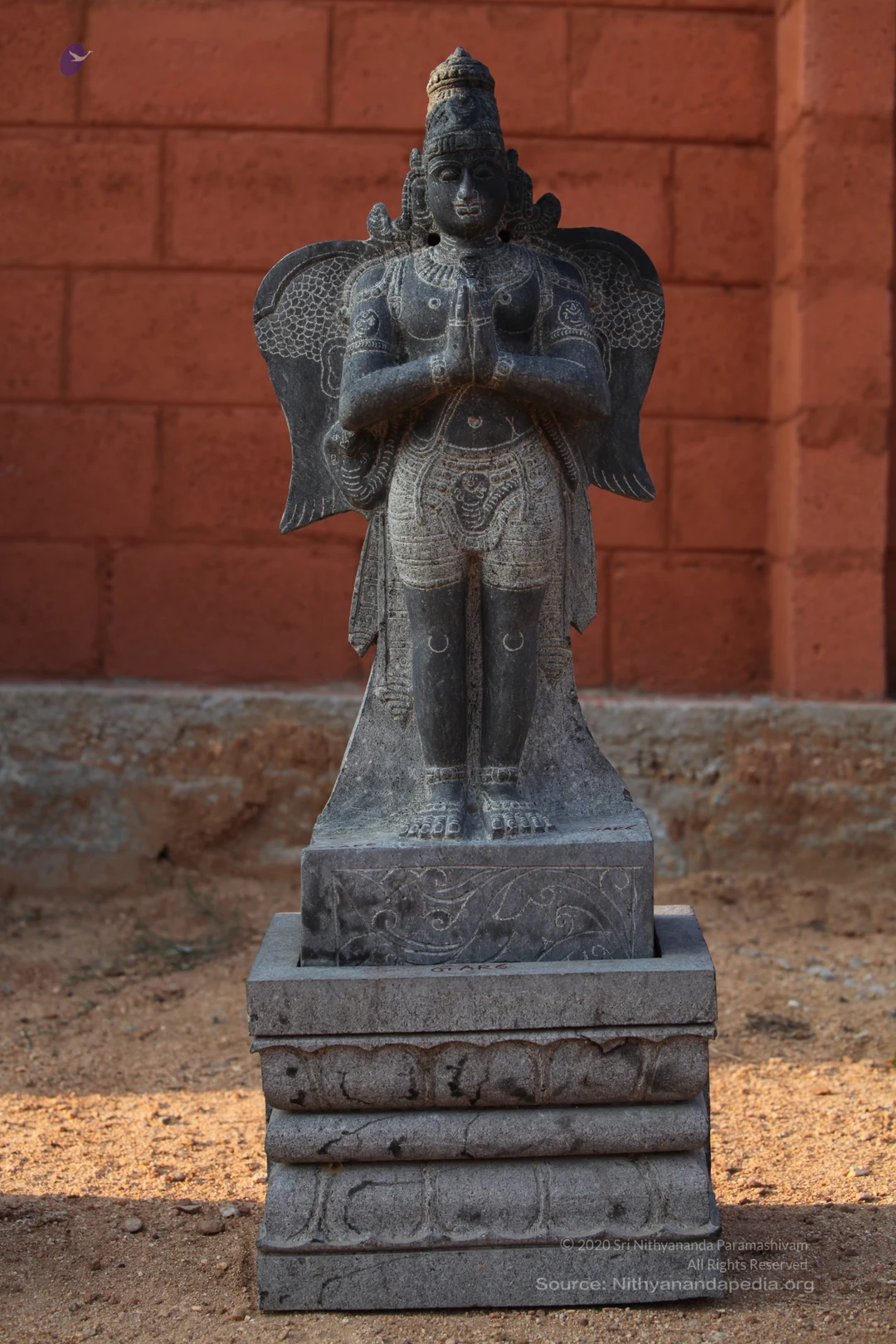
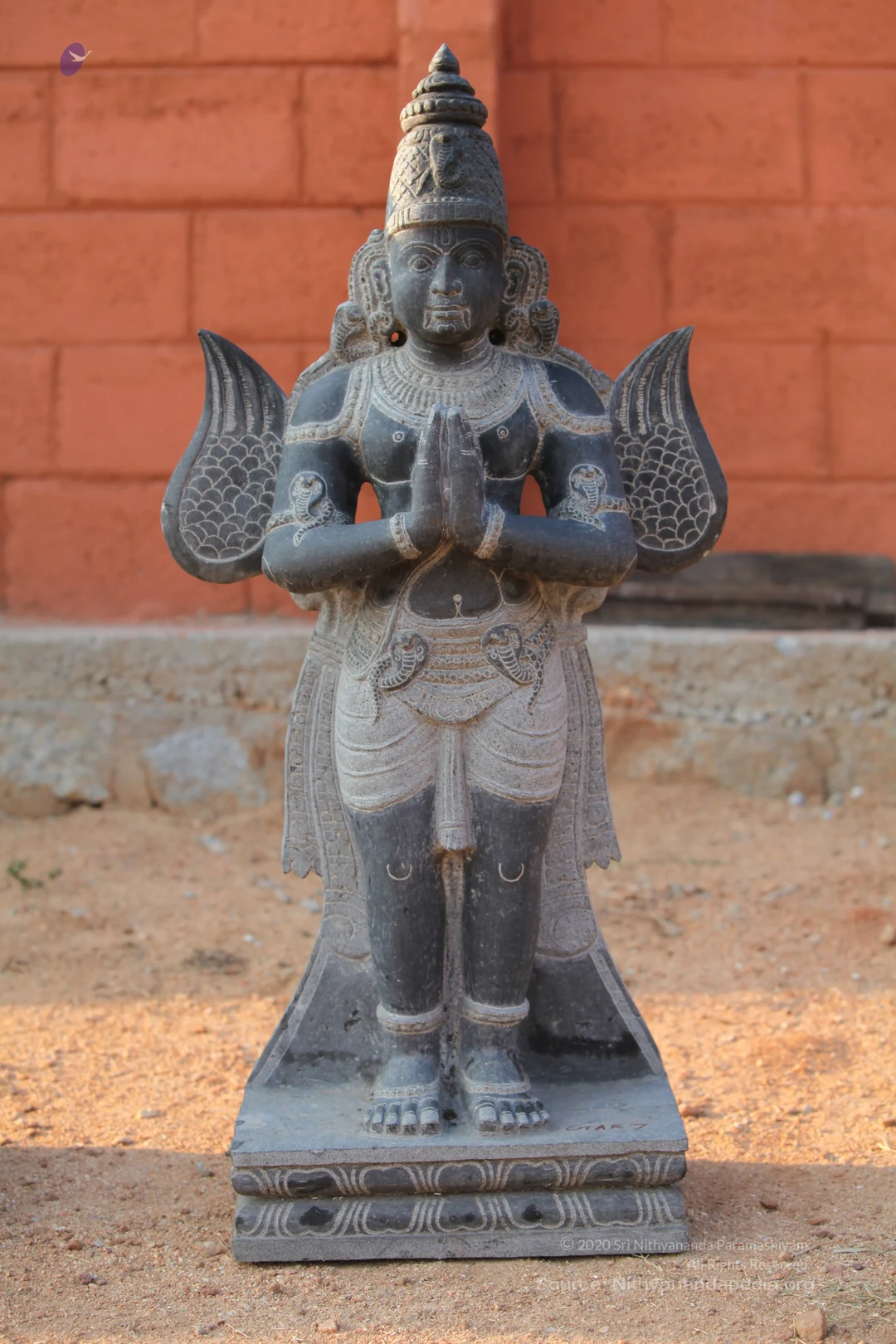
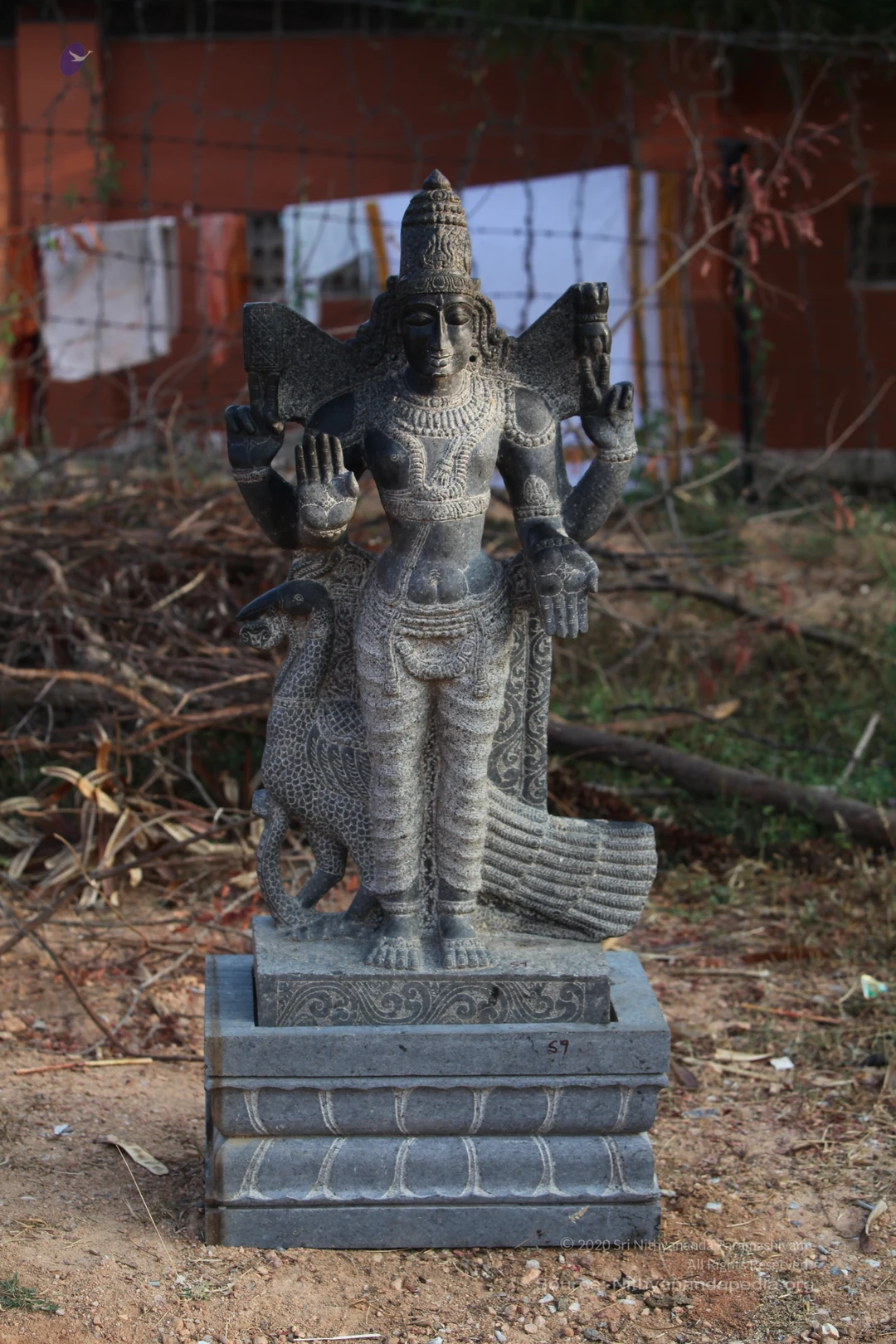
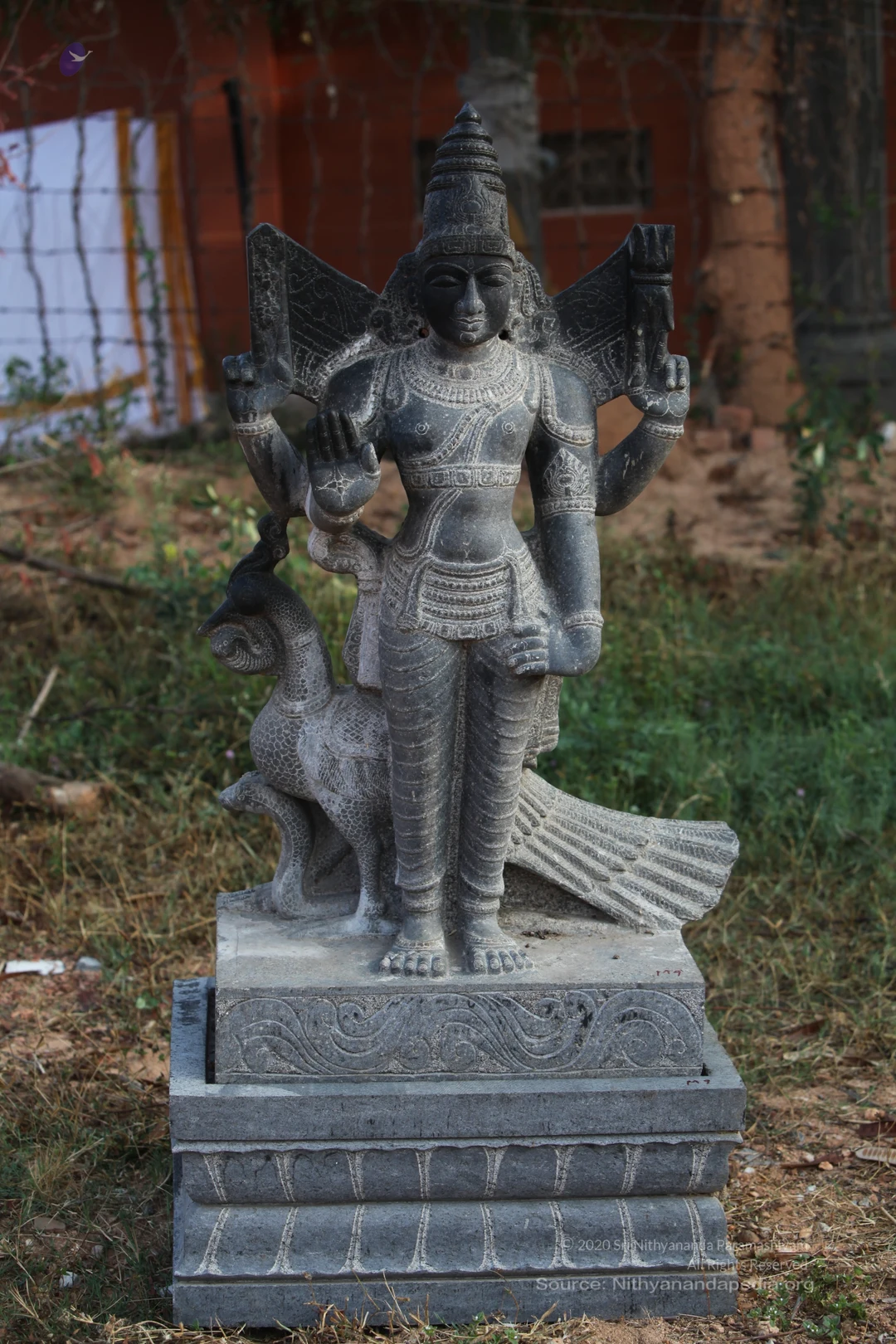
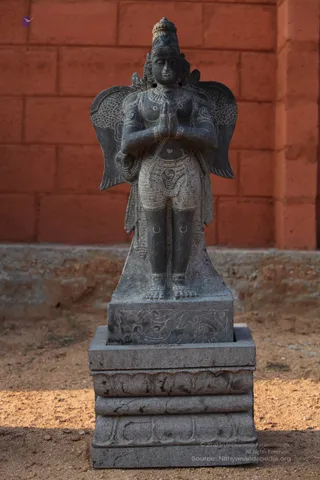
A dark grey stone statue of a winged figure. The figure wears a tall crown, ornate necklaces and a decorated waist cloth, with feathered wings rising behind the shoulders. The statue is set on bare ground in front of a red brick wall. No people are visible.
February 28 2011

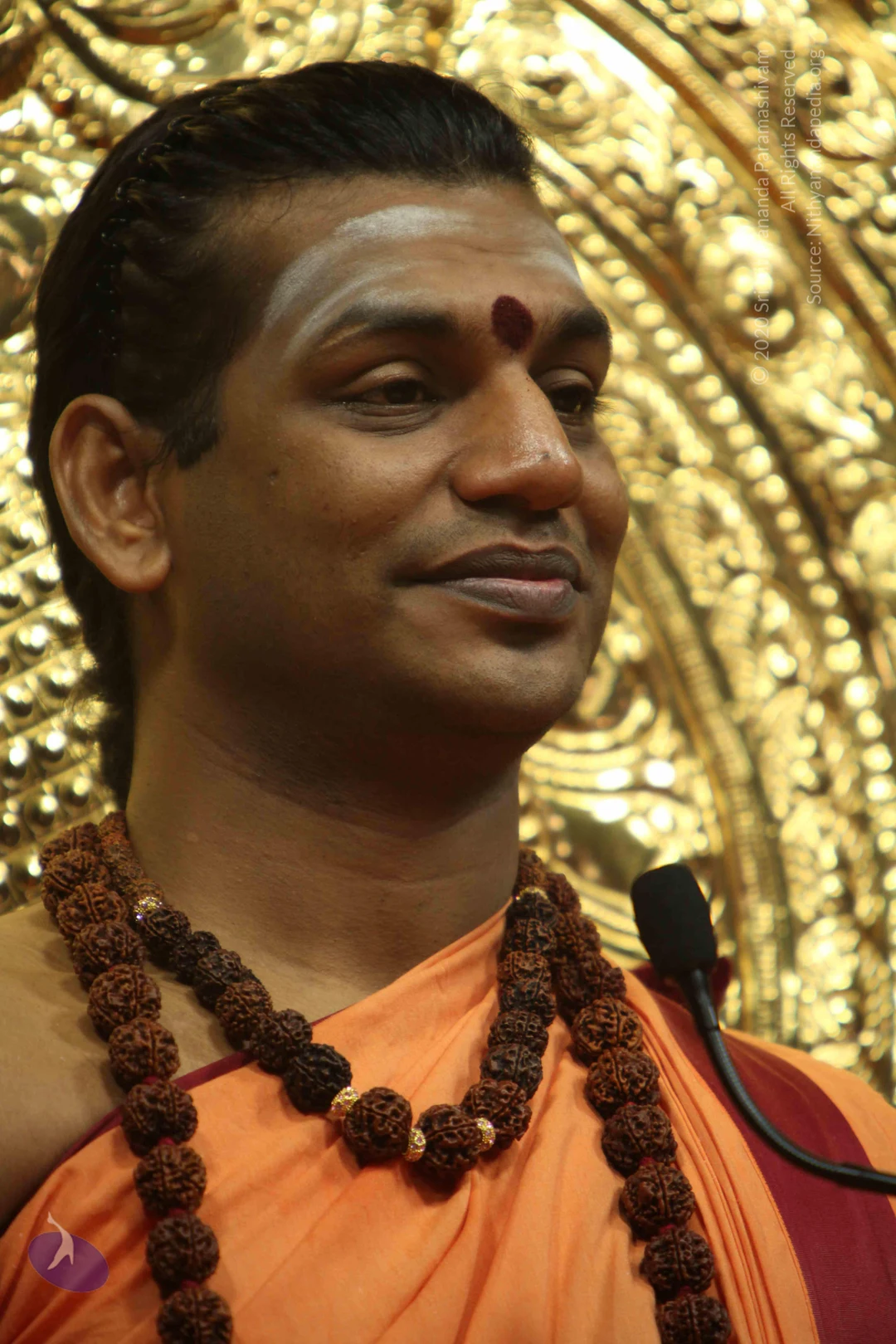
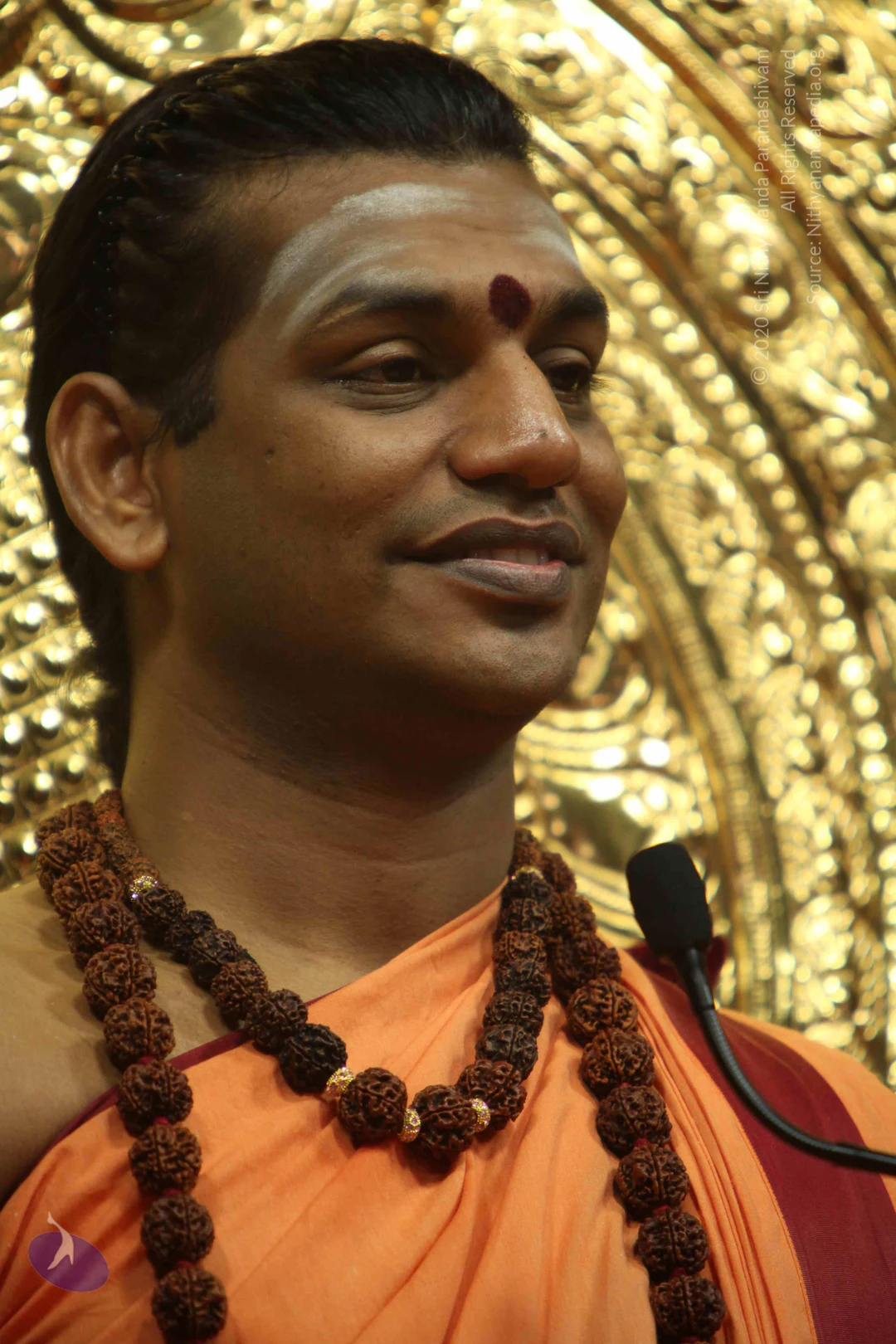
2 photosView all
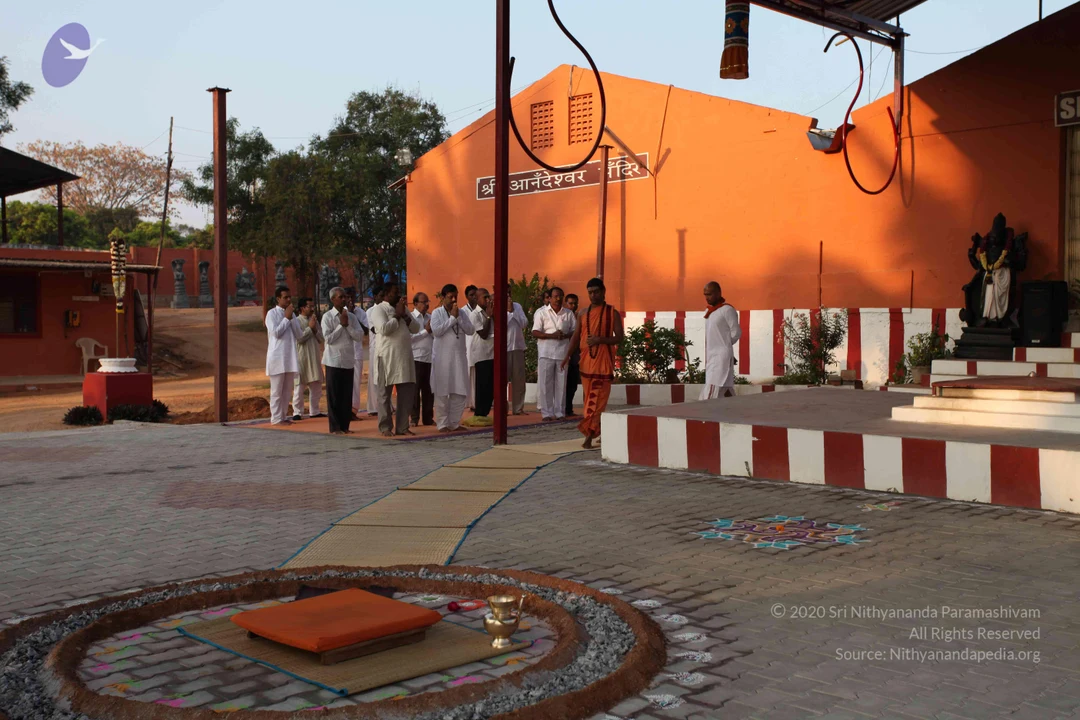
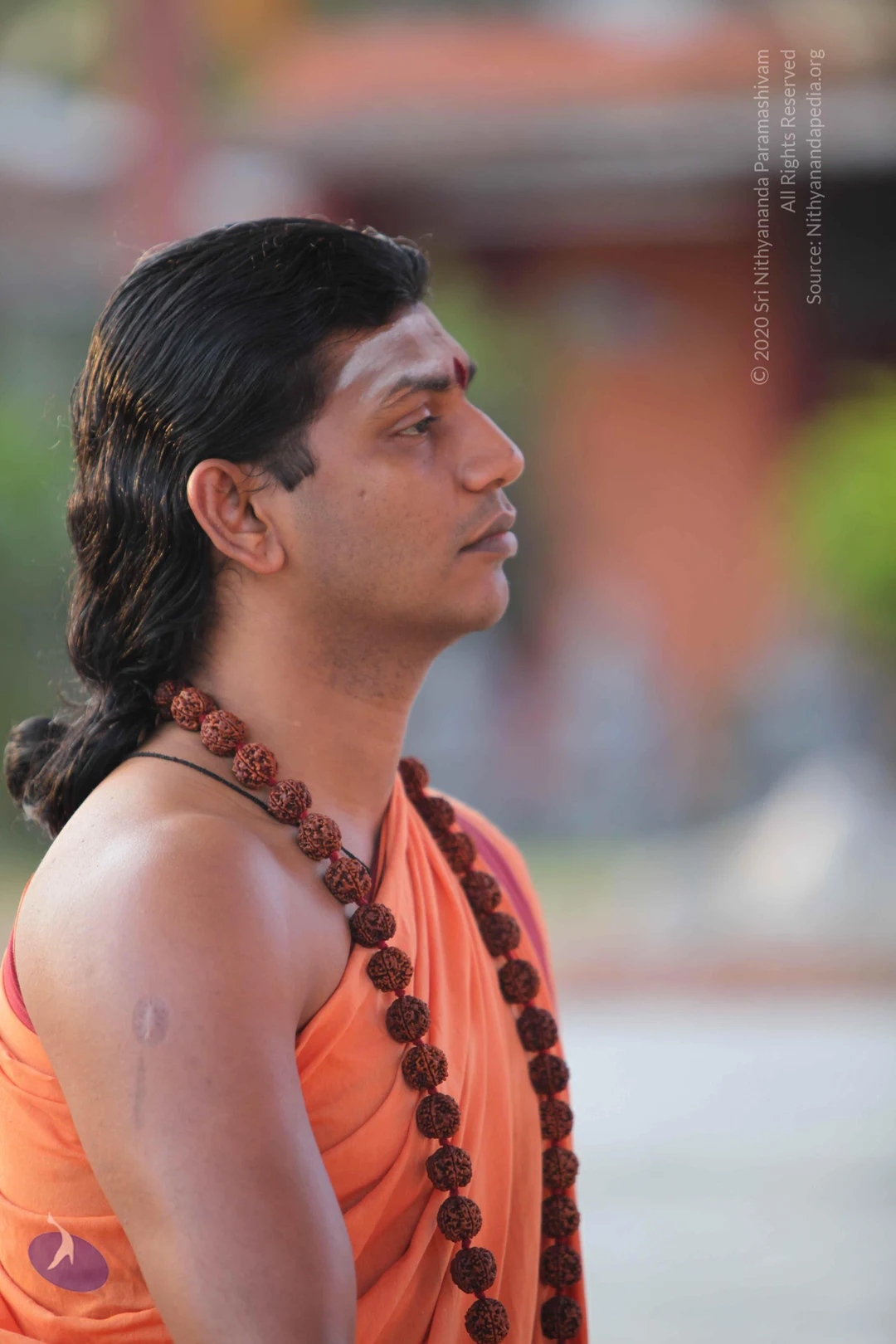
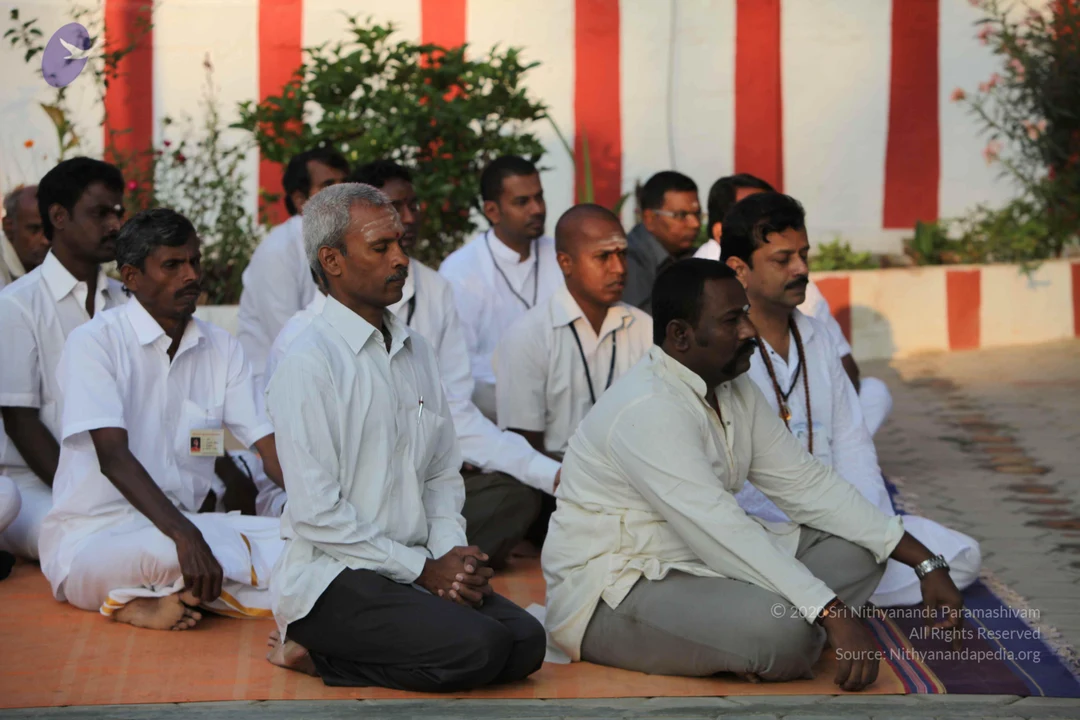
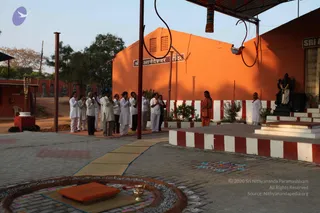
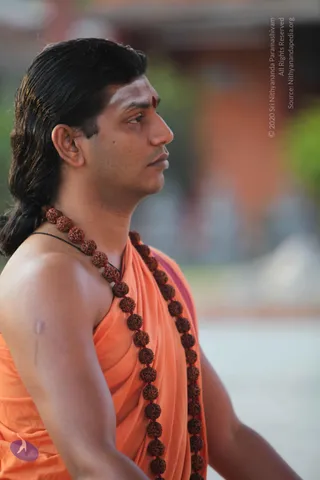
Outdoor temple courtyard at dusk with an orange-washed building bearing a sign reading श्री आनंदेश्वर मंदिर (Sri Anandeshwar Mandir). A row of about a dozen men in white dhotis and kurtas stand with palms joined in namaskar on a mat walkway. Near the steps a figure in saffron-orange robes and a rudraksha-style garland stands apart, and a bald man in white stands by a dark murti on a red-and-white striped platform. Before the walkway is a circular rangoli-bordered fire pit with an orange cushion and a brass vessel. Trees and a red-and-white striped boundary wall complete the scene.A man in profile wears an orange-saffron shawl draped over his bare shoulder and chest and long rudraksha mala beads of dark brown seeds worn across the chest. His long black hair is swept back, and a red bindi and white tilak mark his forehead. The blurred background shows warm orange and green tones. The figure appears to be a sannyasi in saffron clothing, with the page.