Skip to content
Friday

11 February 2011

No Mind State Experience it Nithyananda Patanjali Yoga Sutra 11 Feb 2011

Dated photos
370
Source pages
1
Media
2
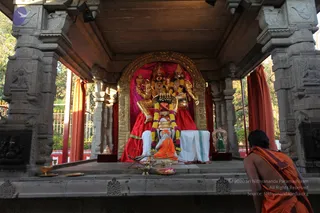
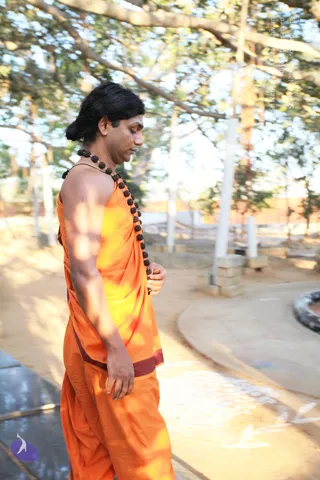
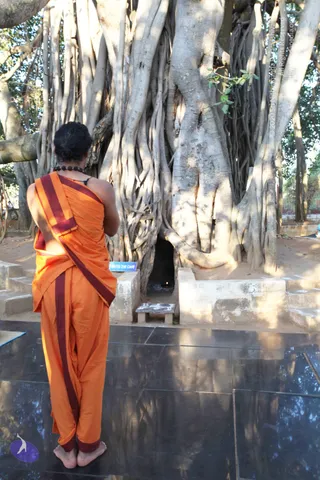
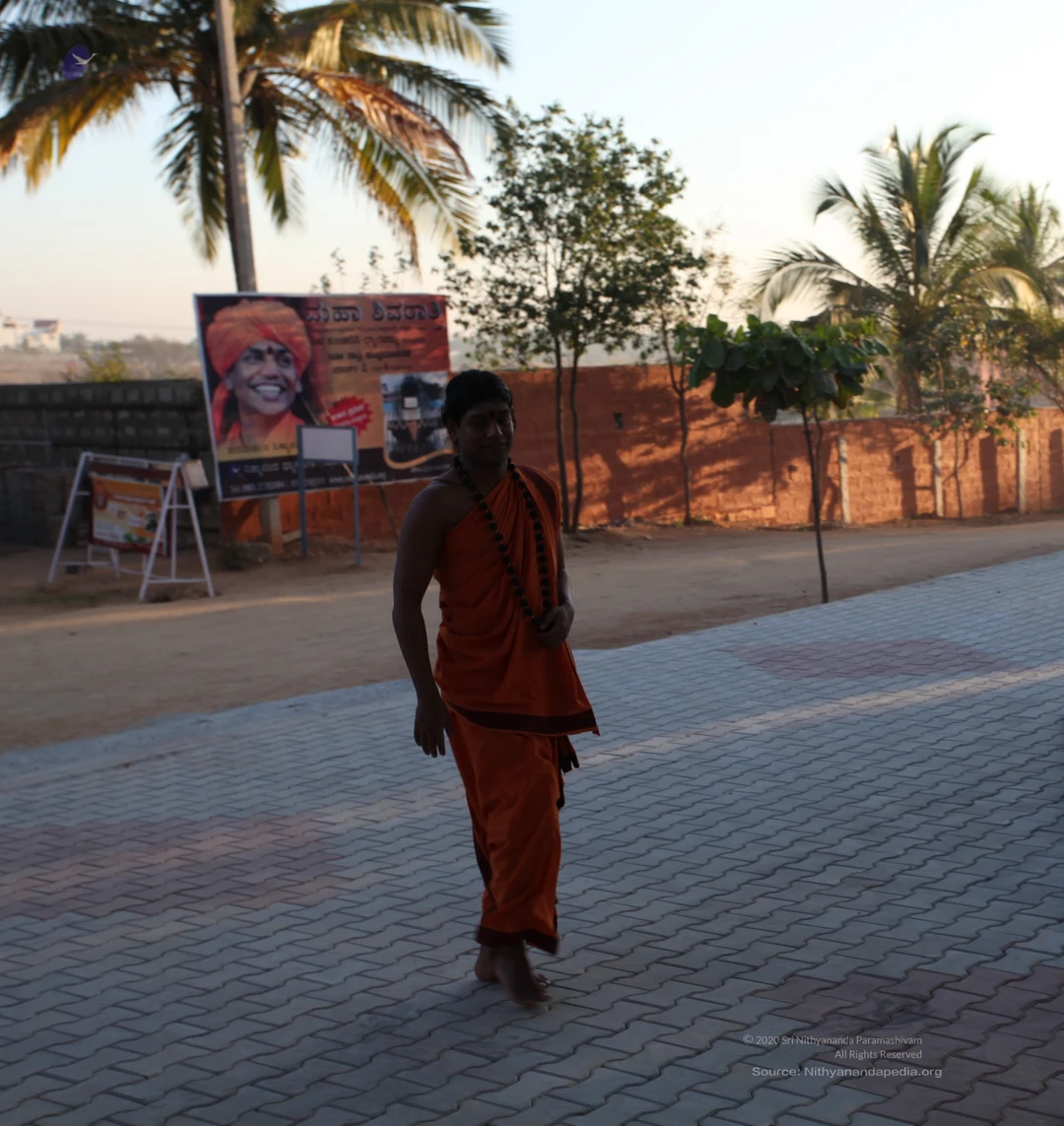
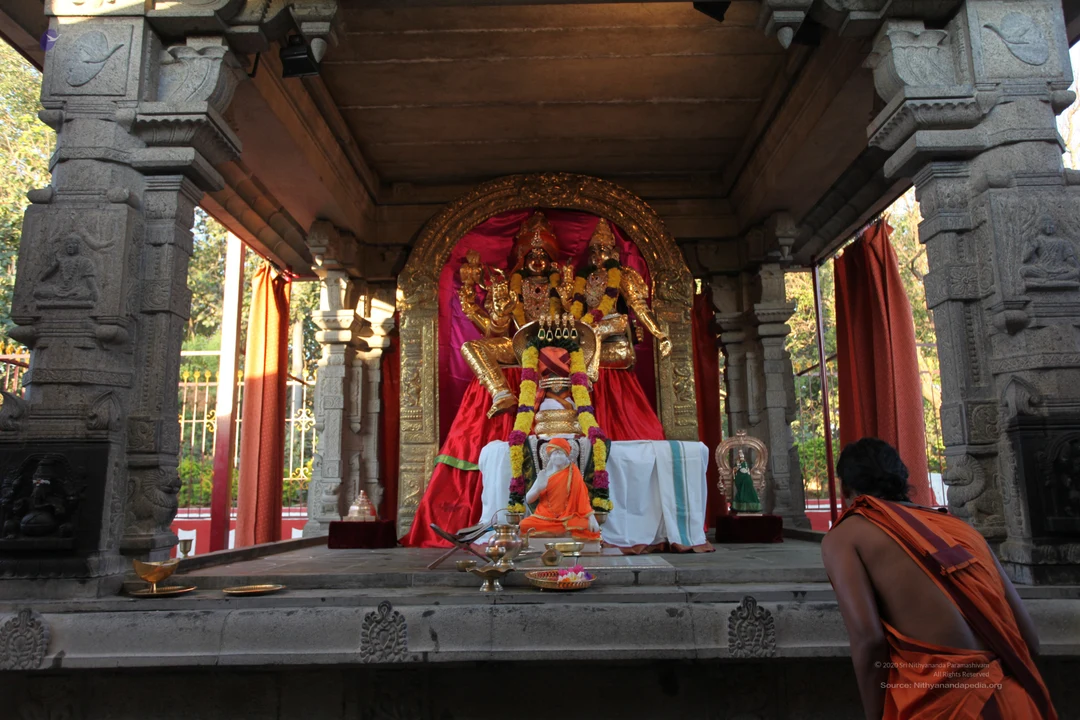
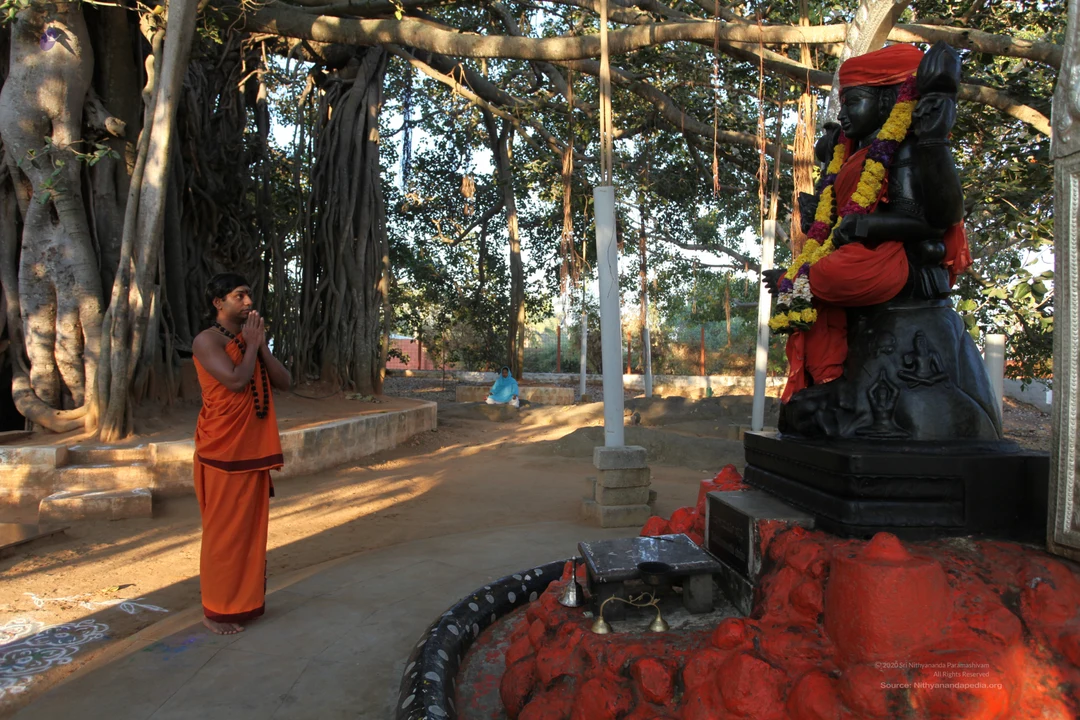
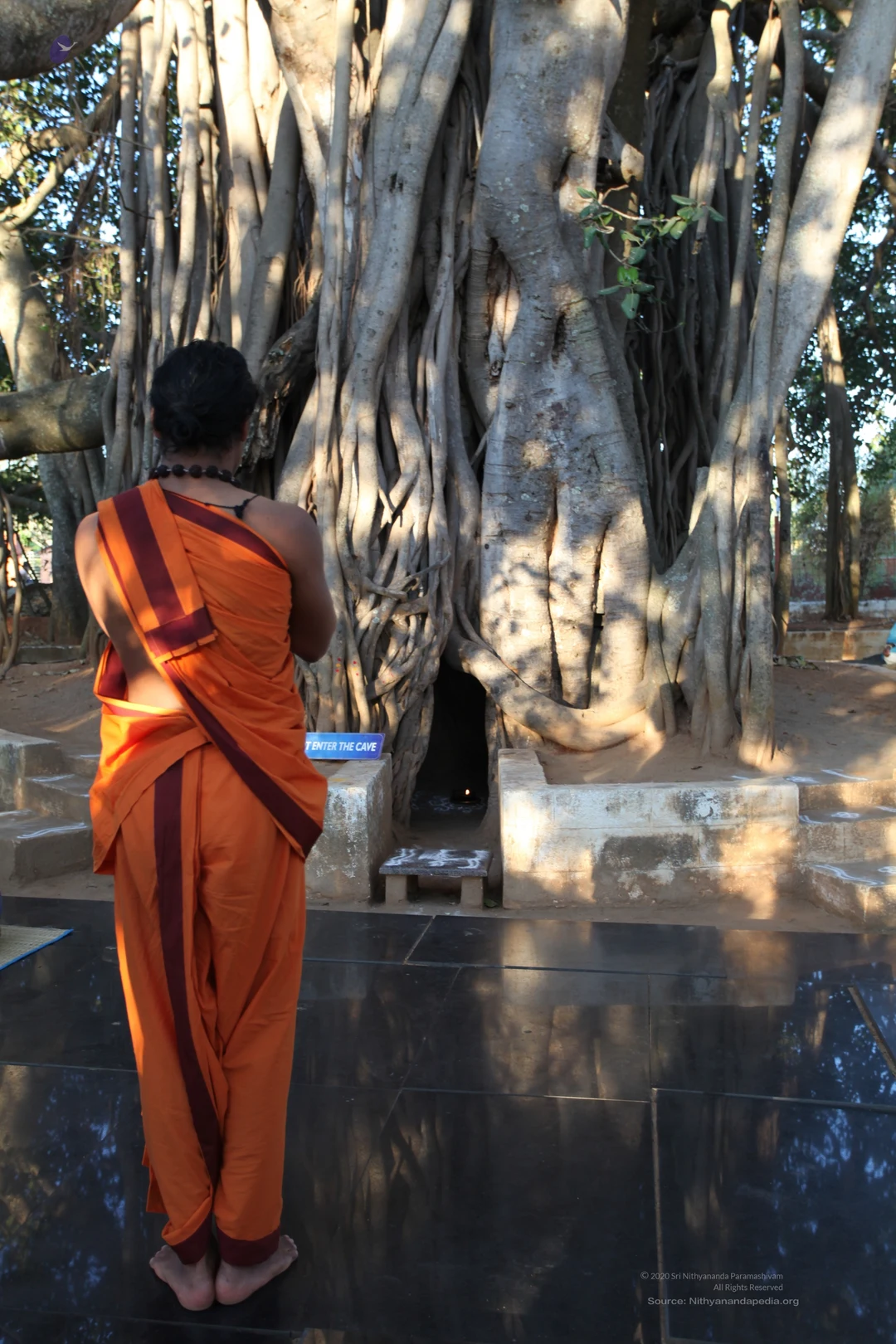
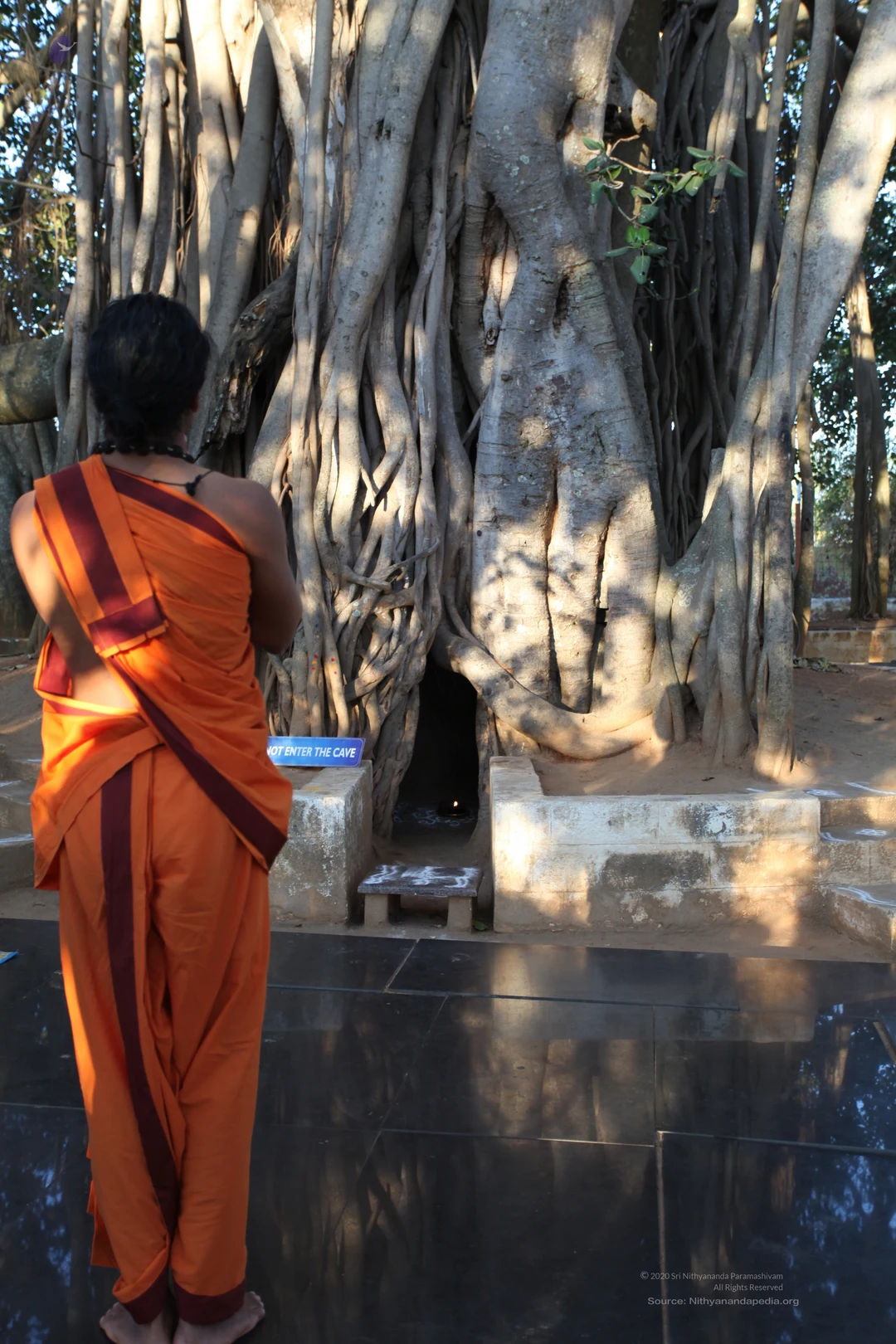
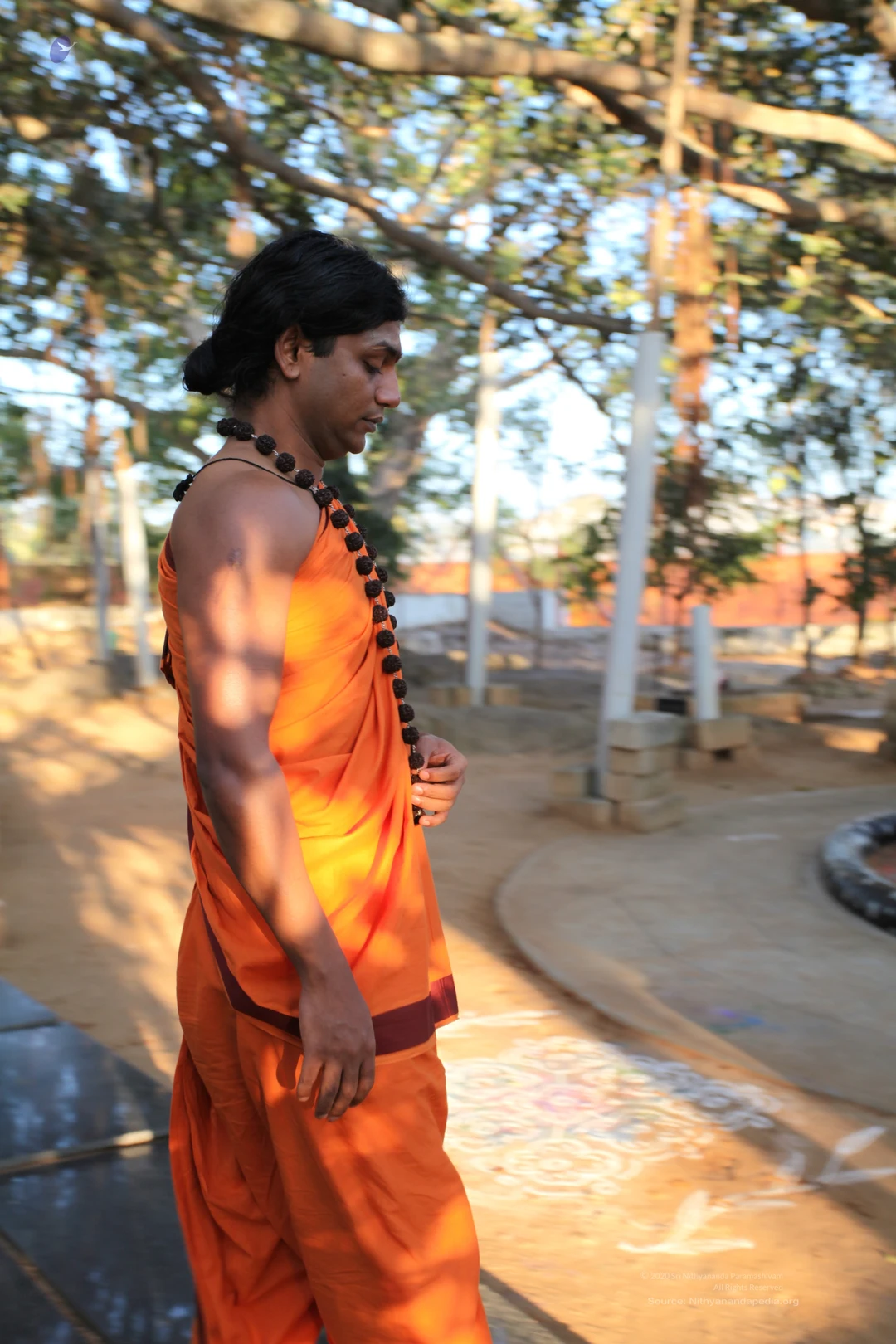
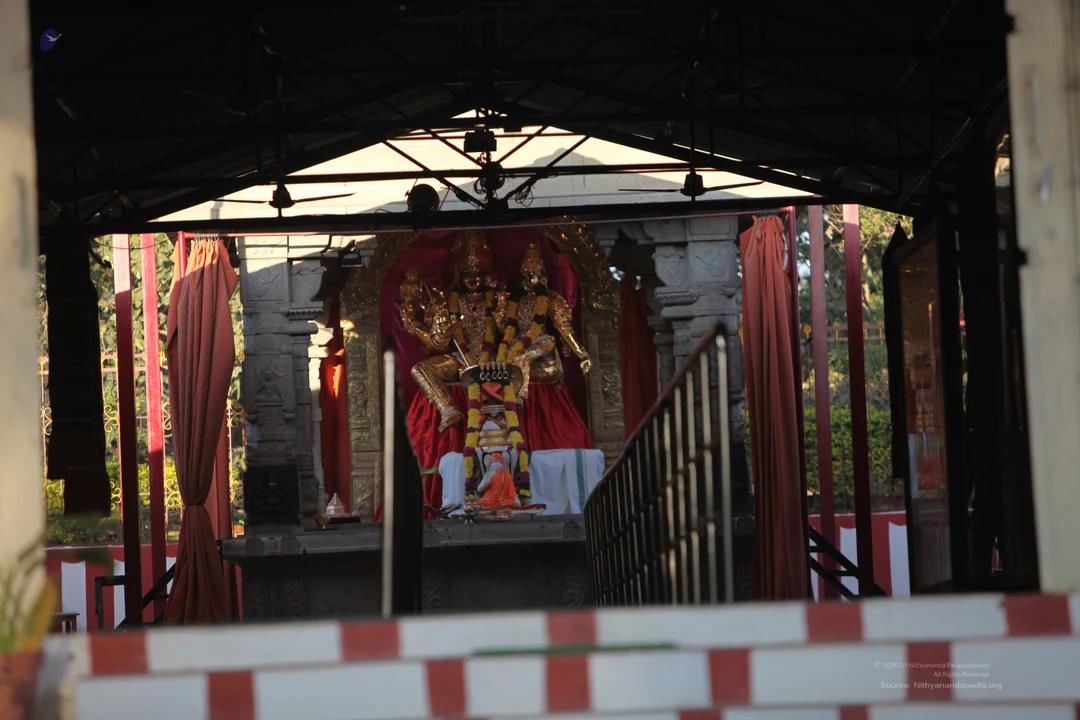
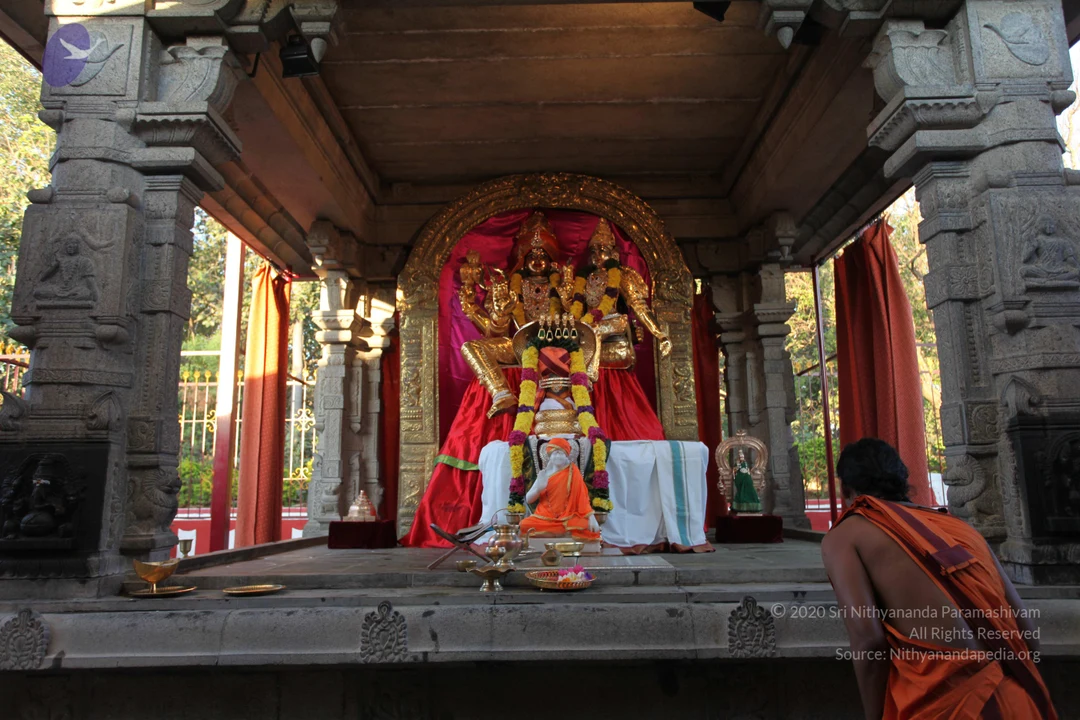
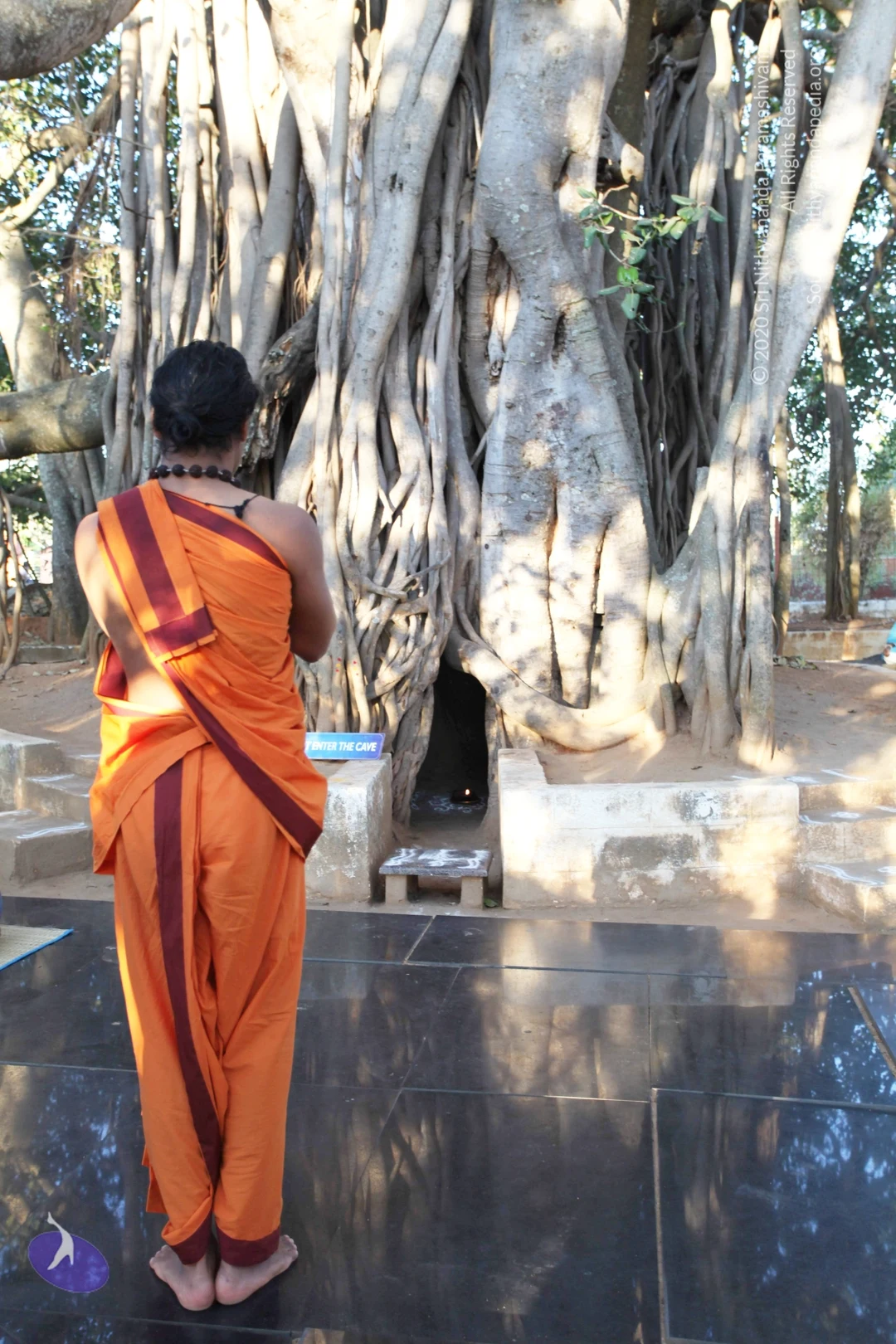
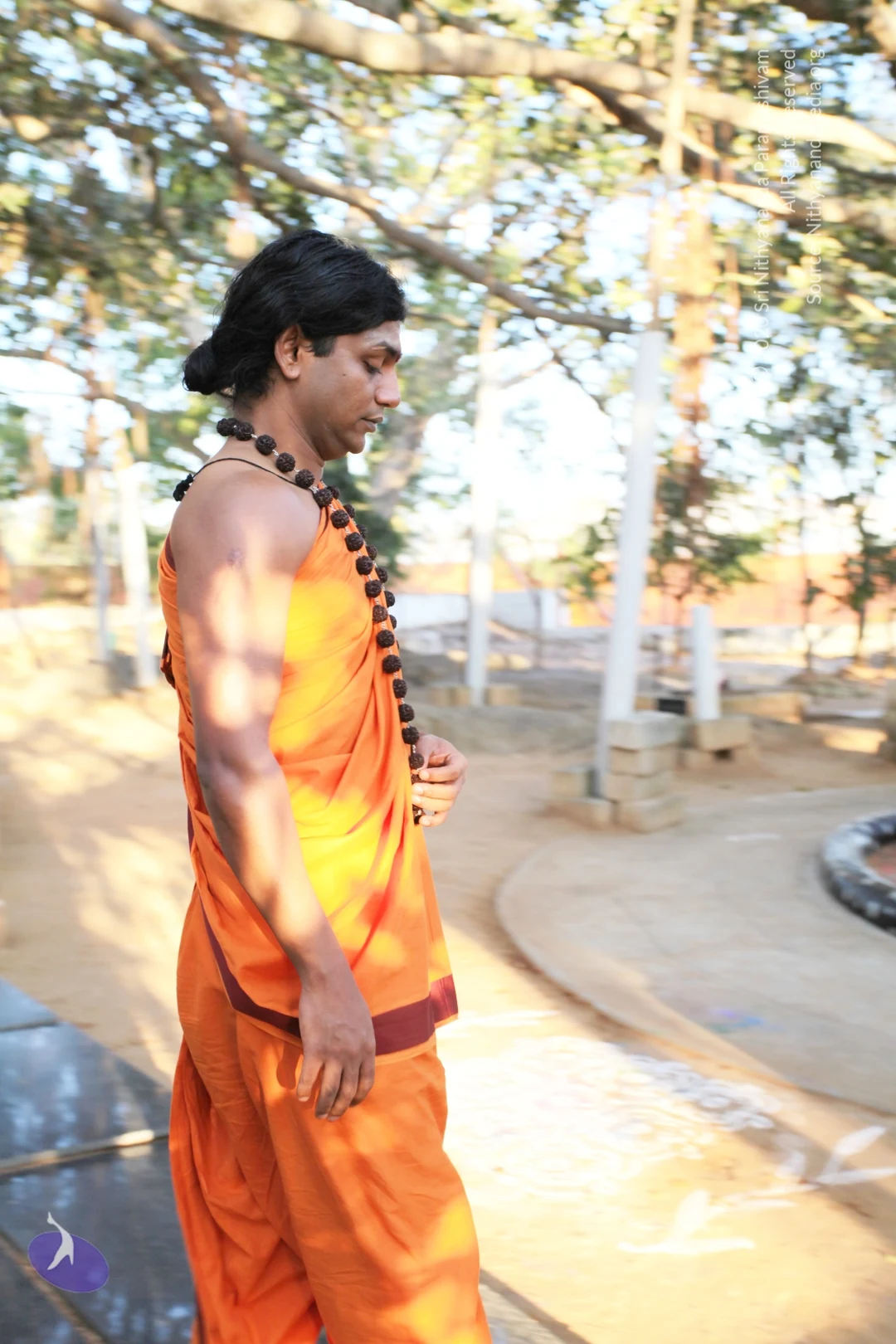
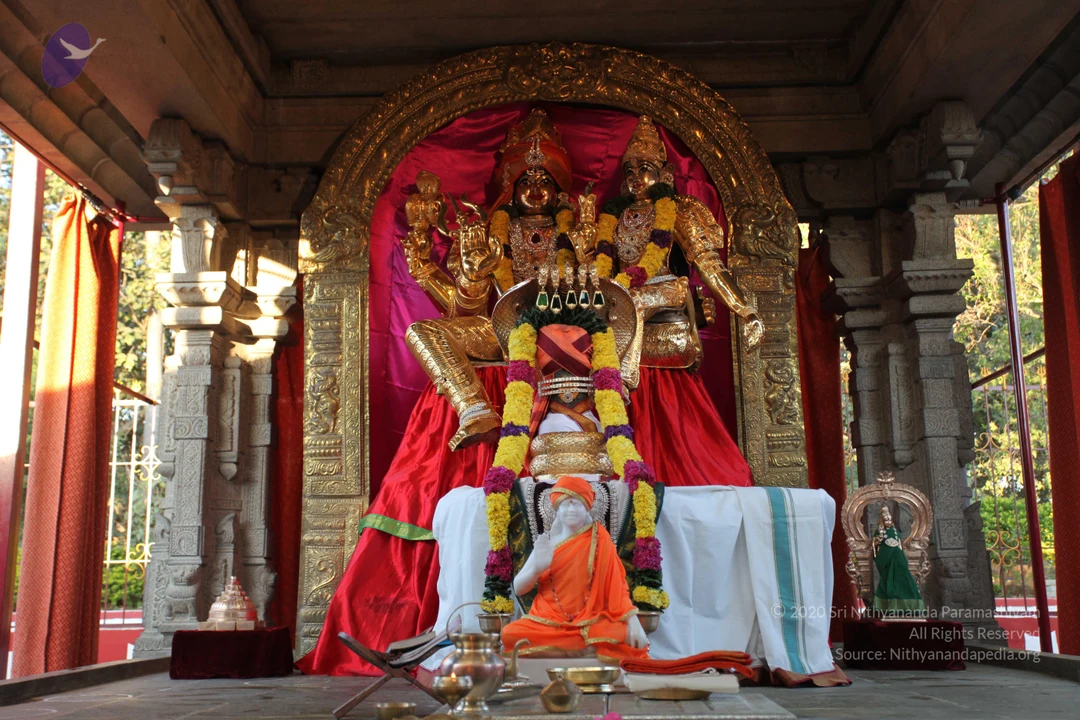
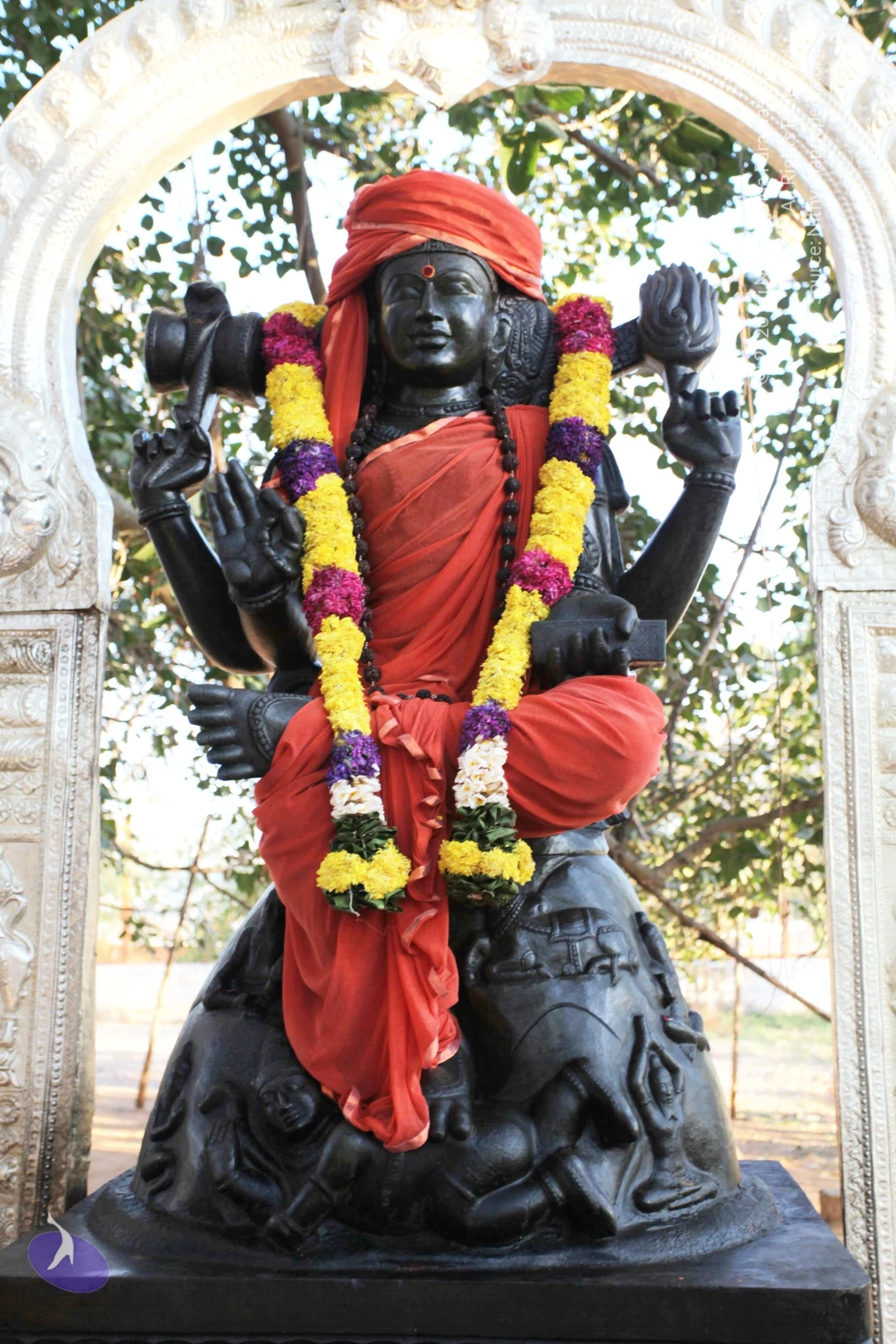
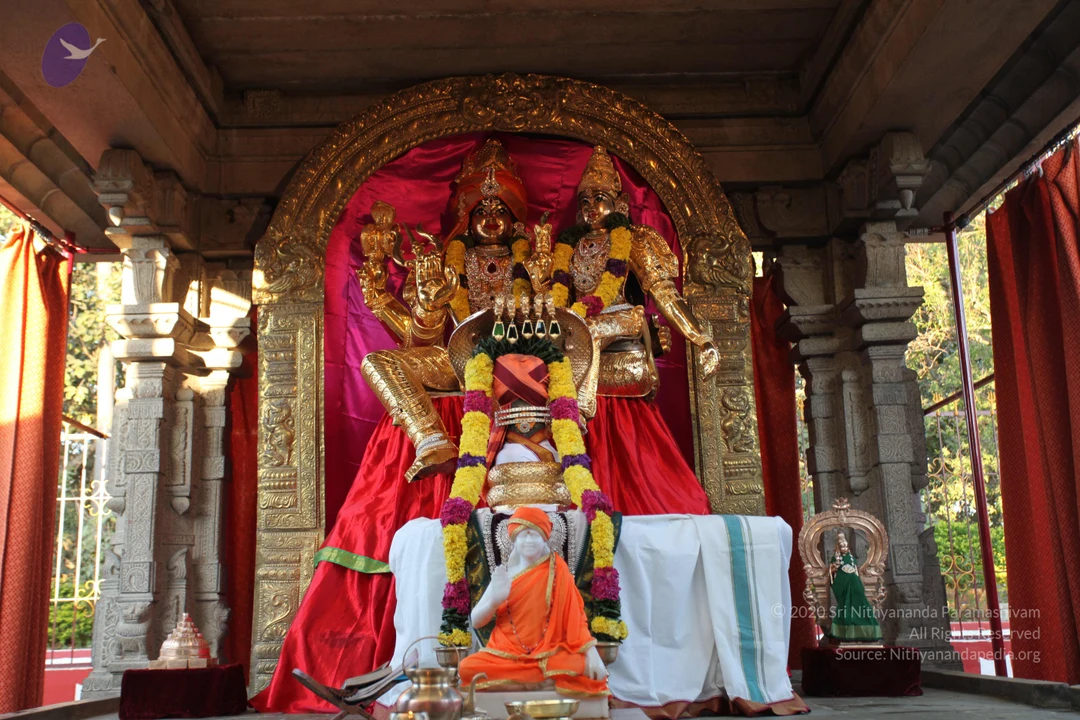
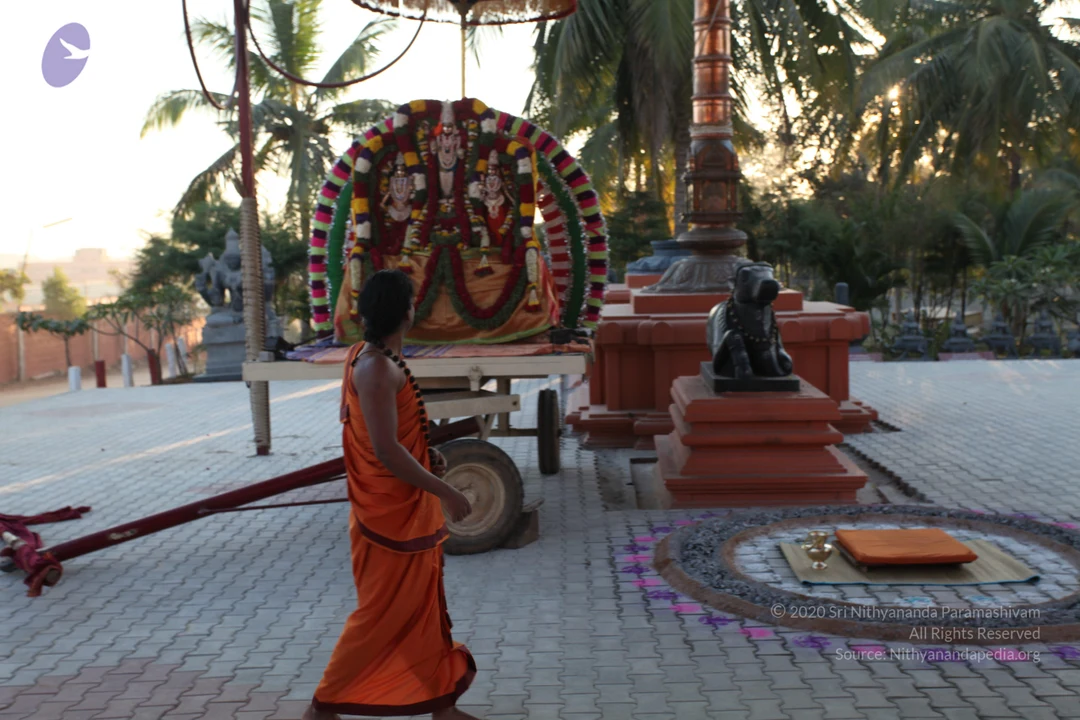
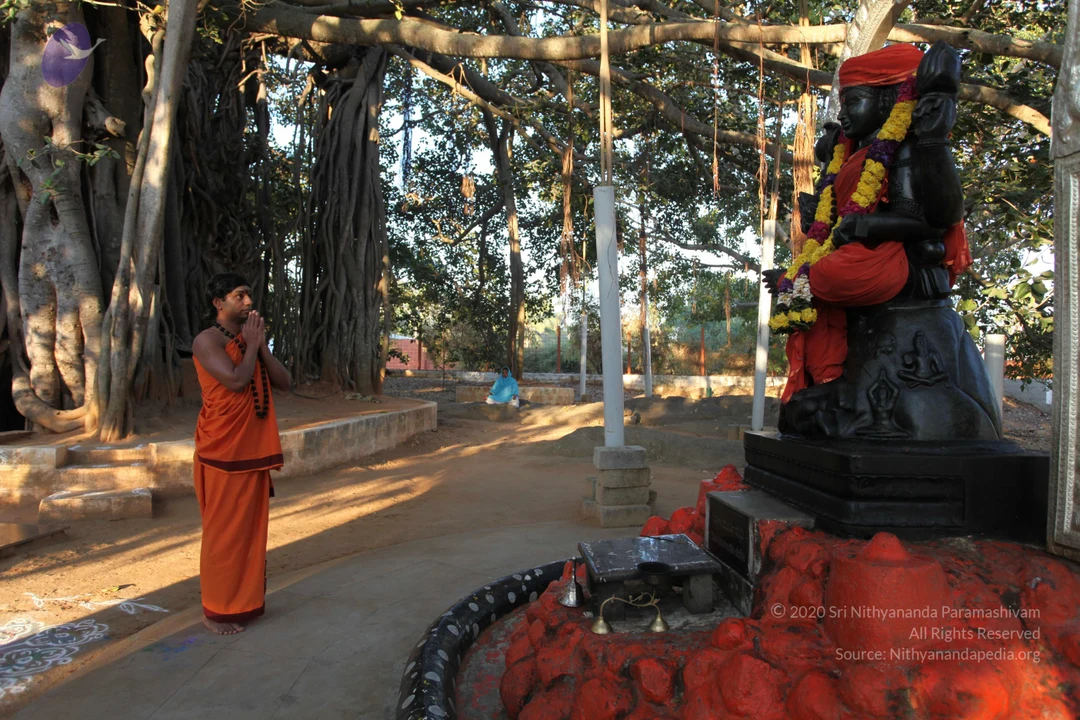
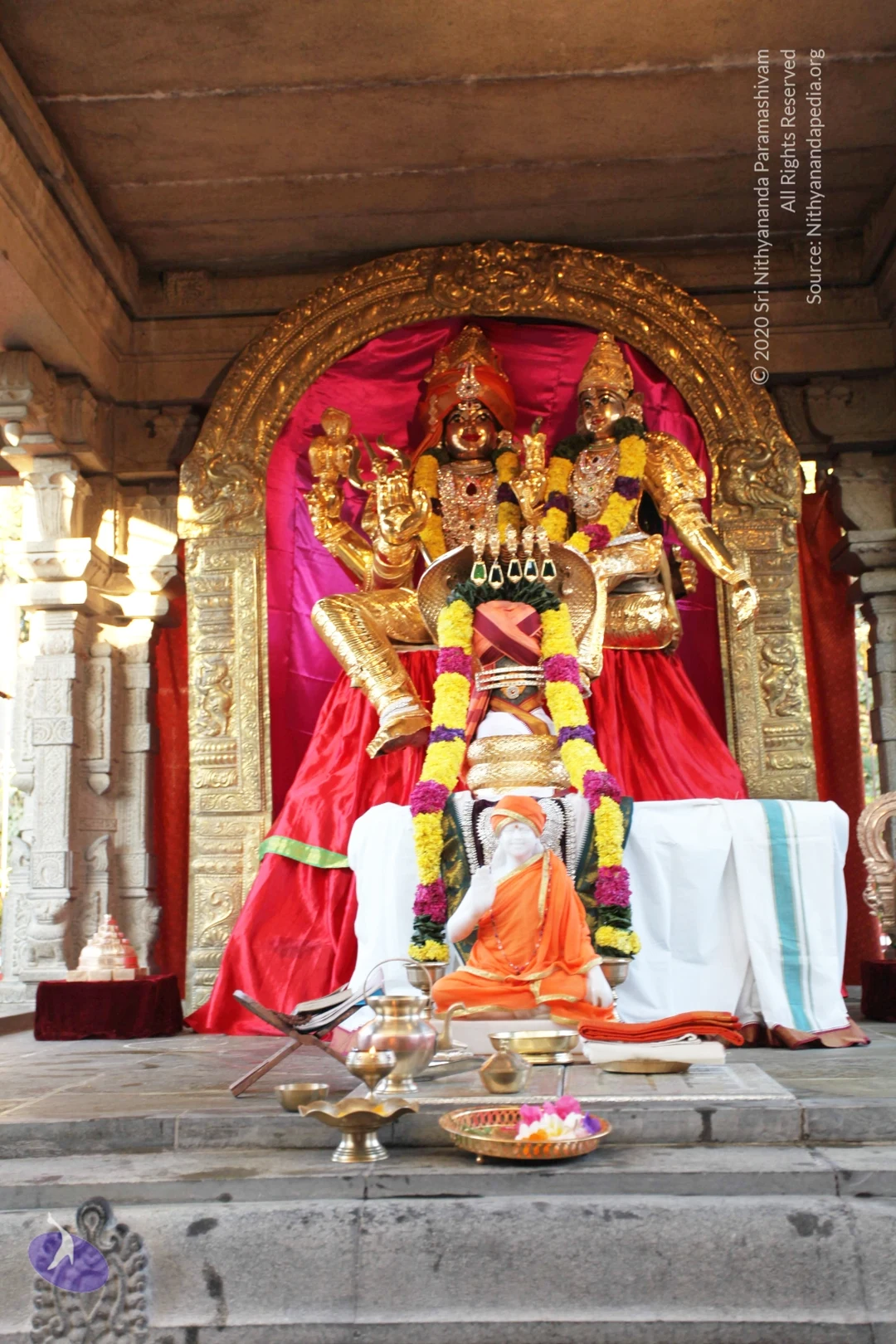
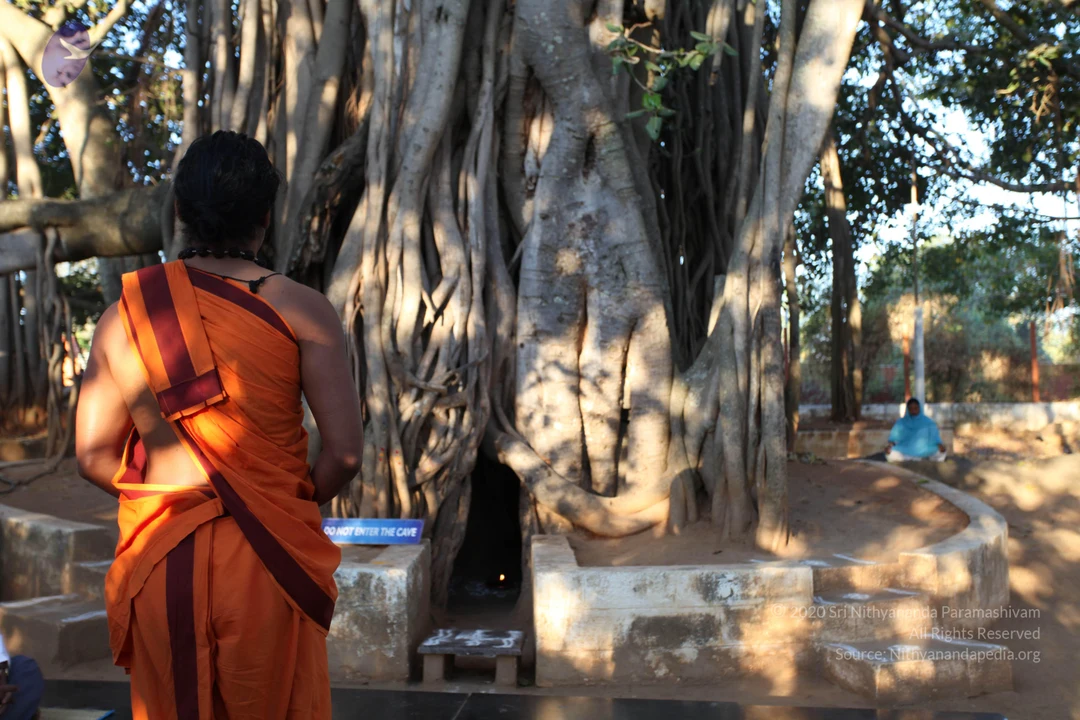
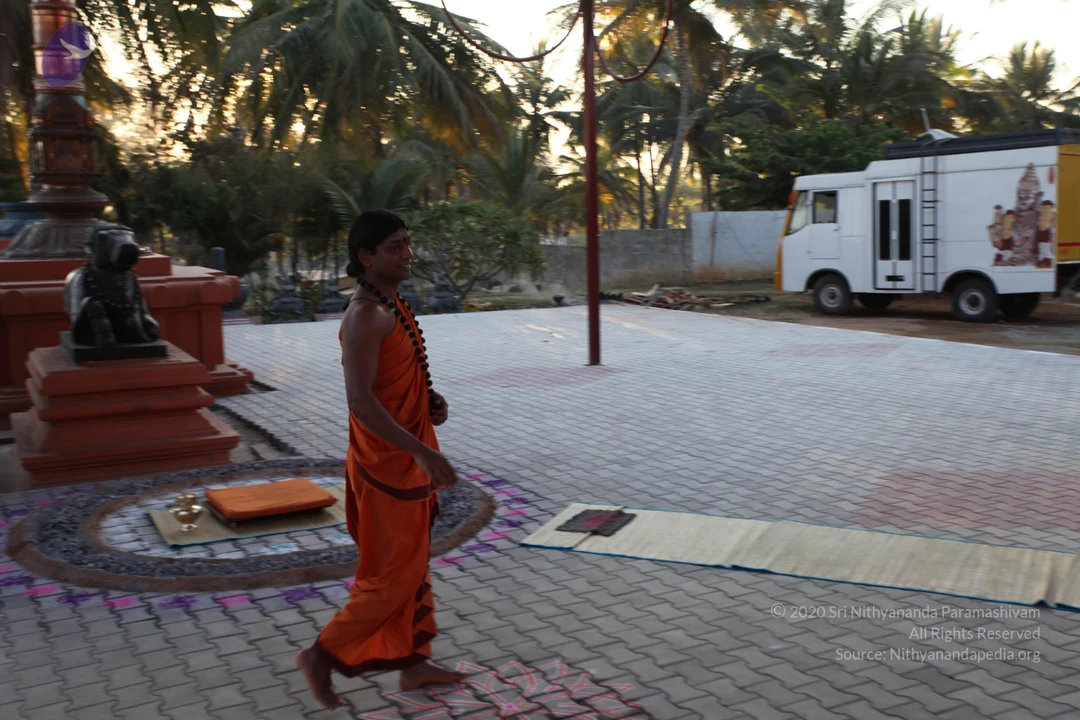
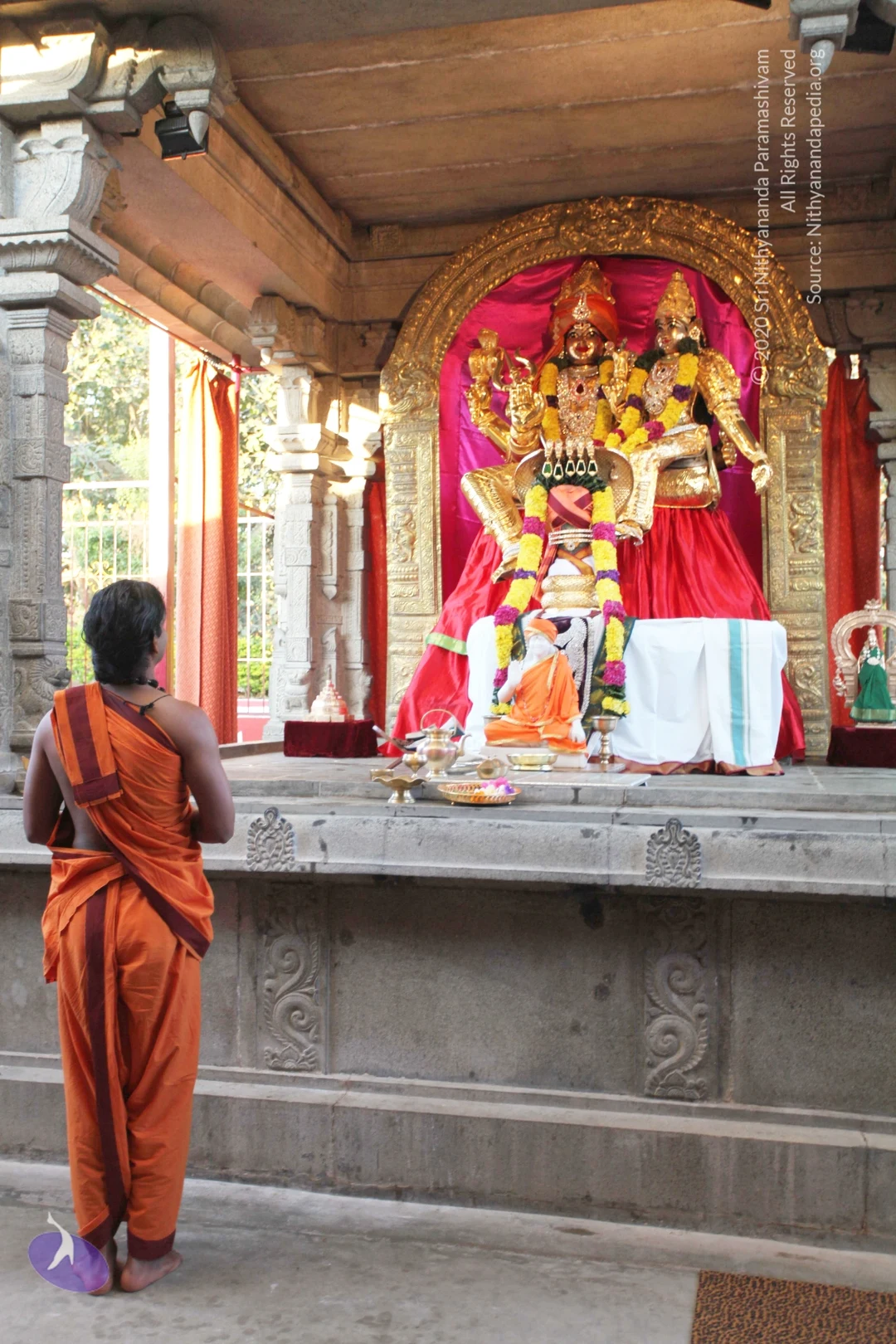
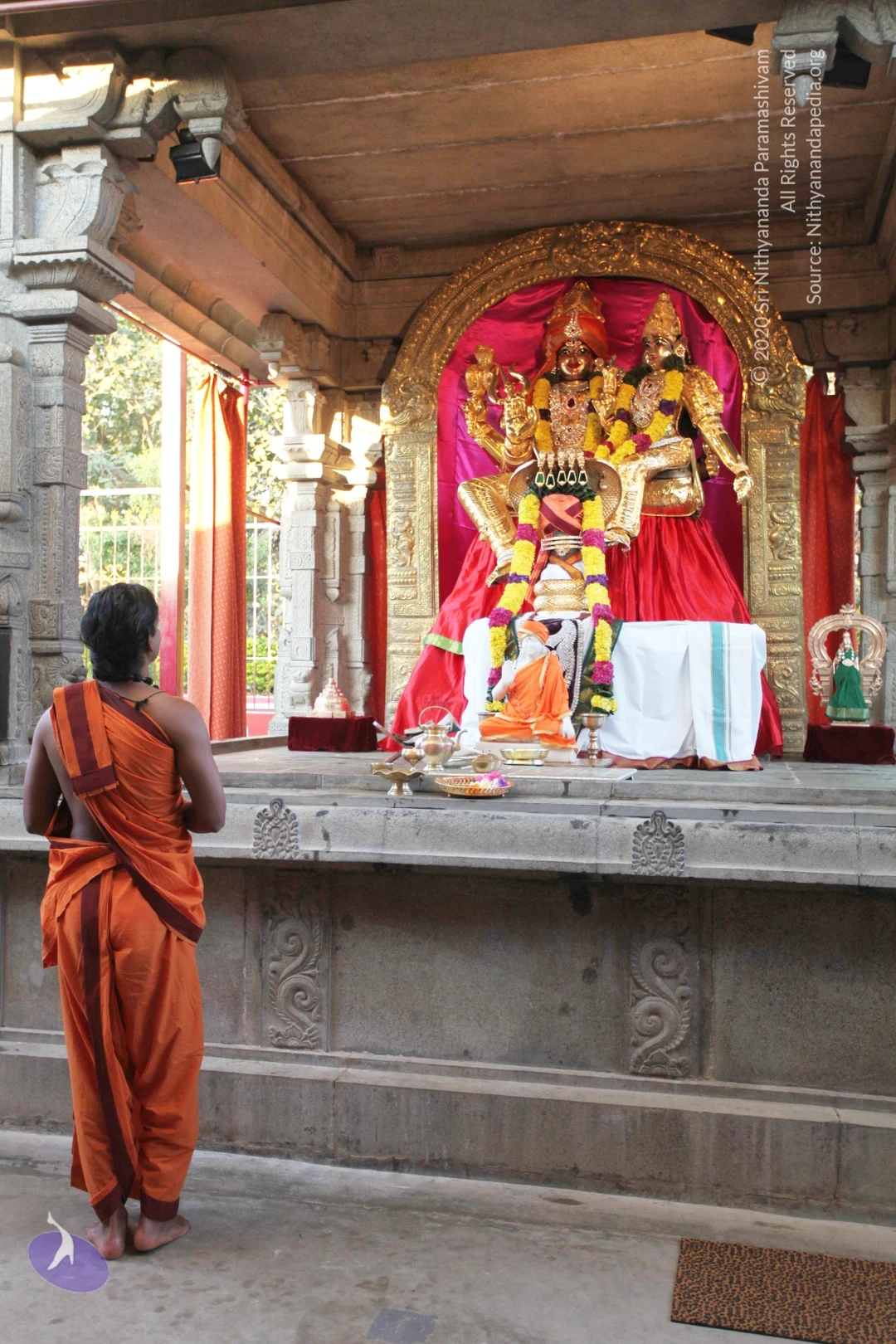
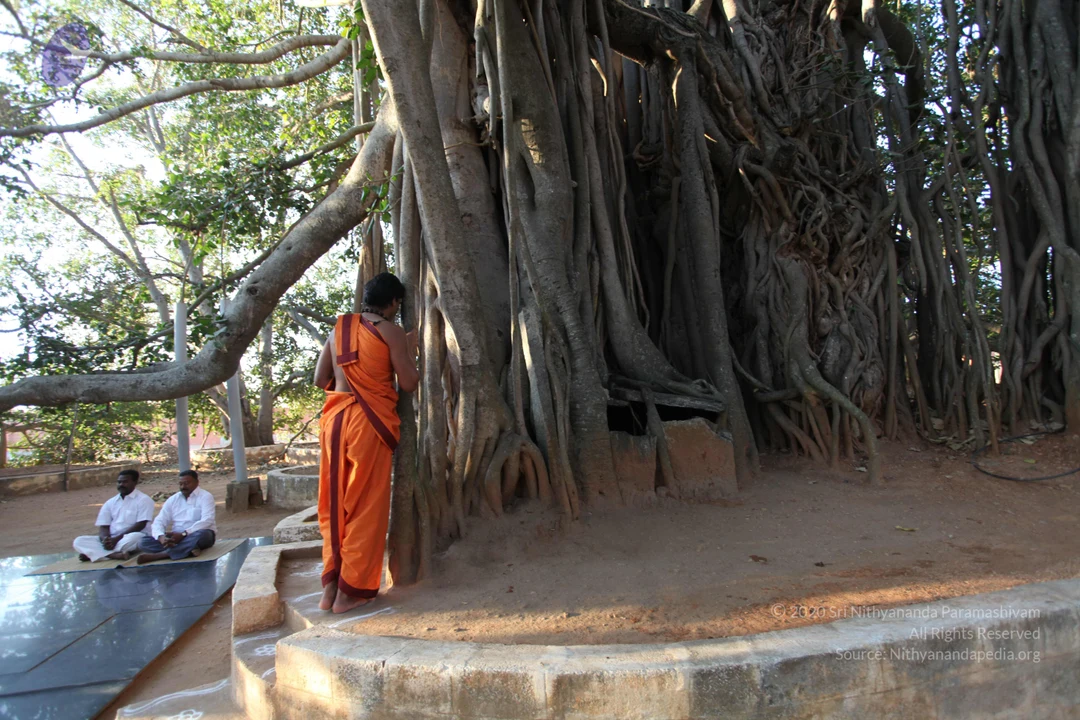
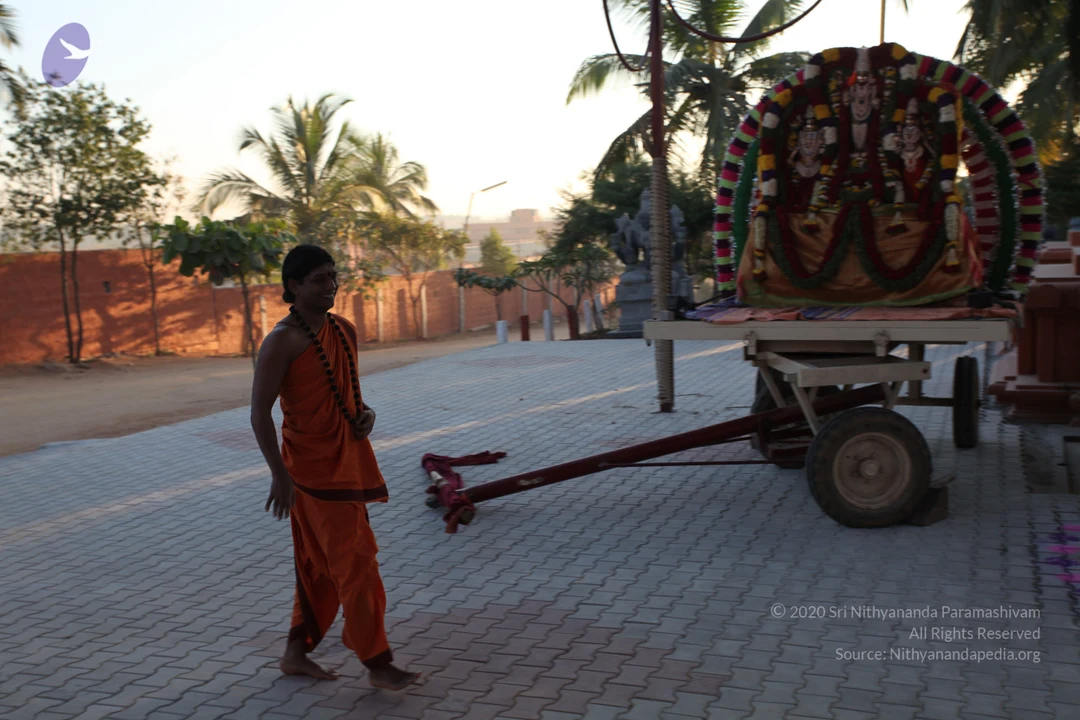
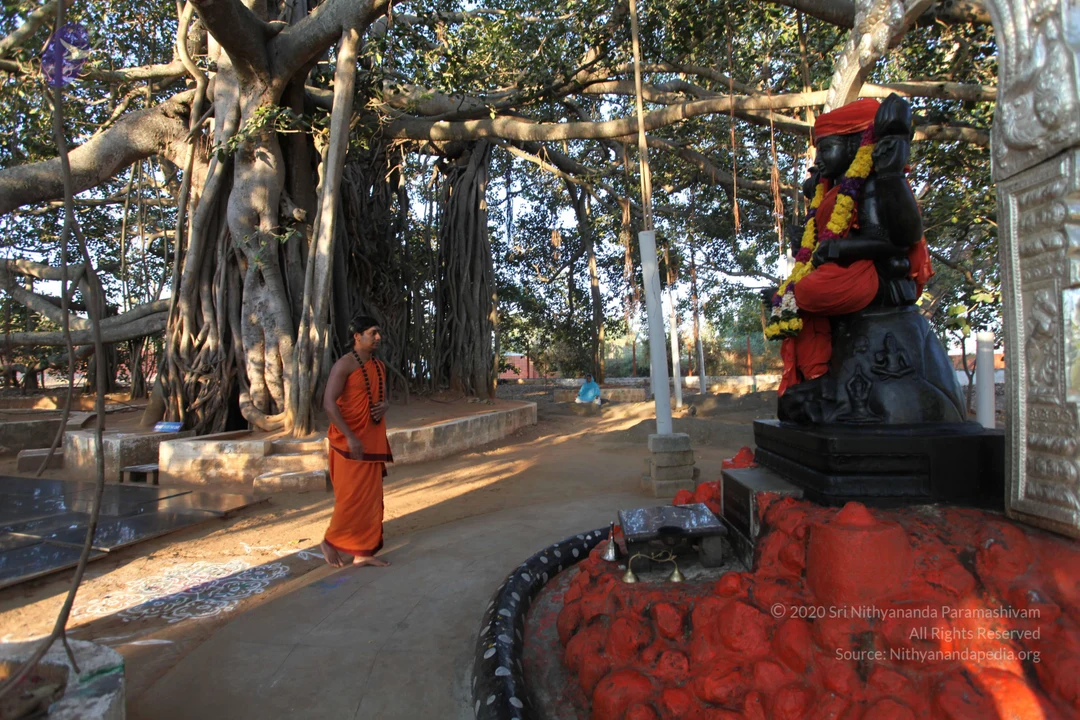
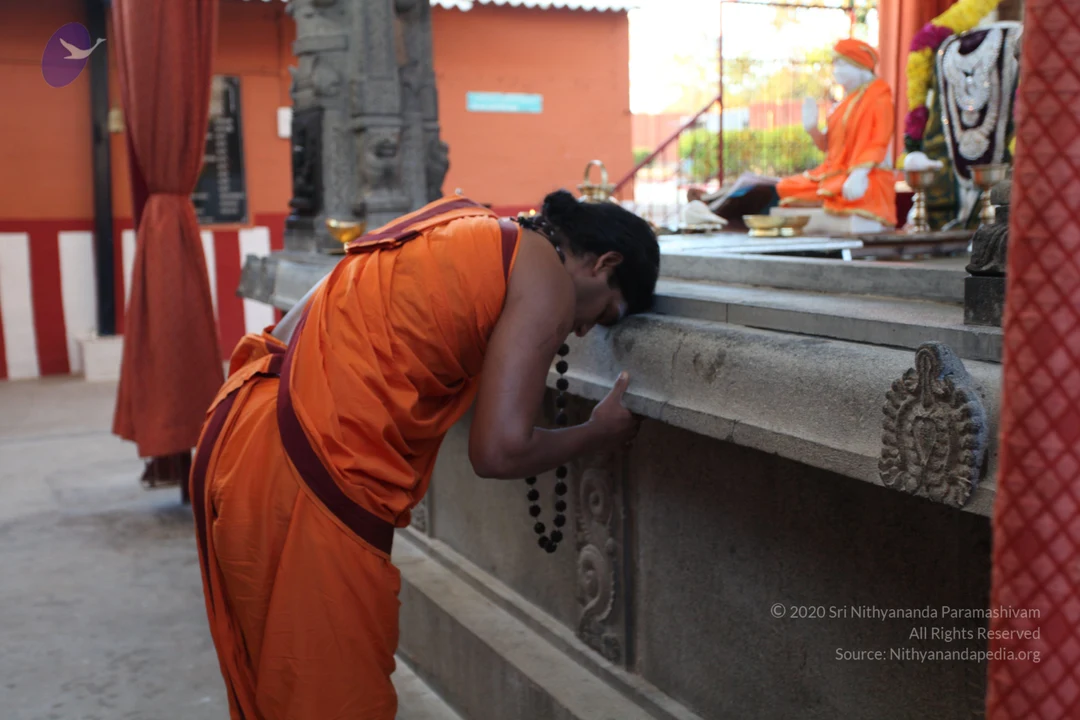
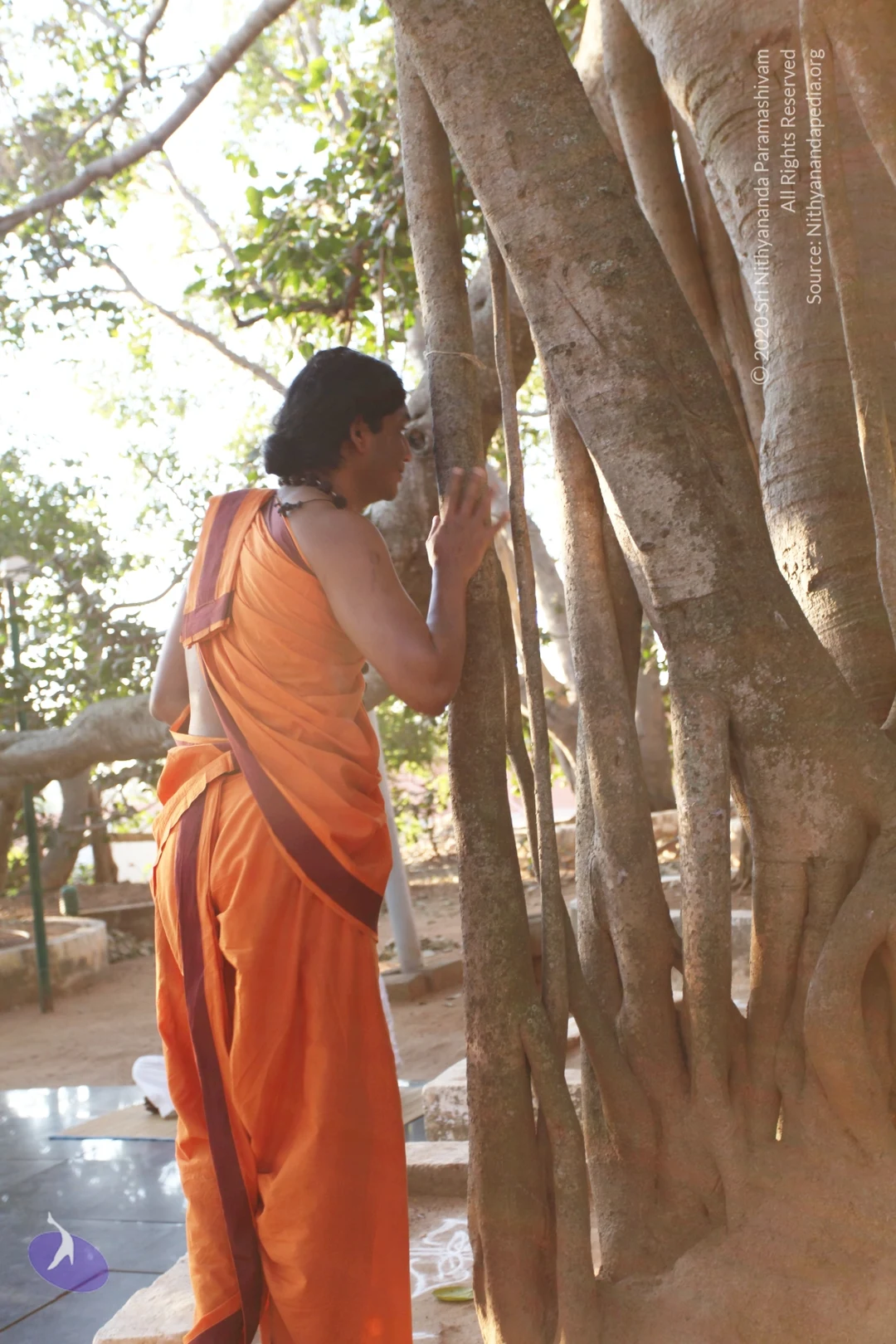
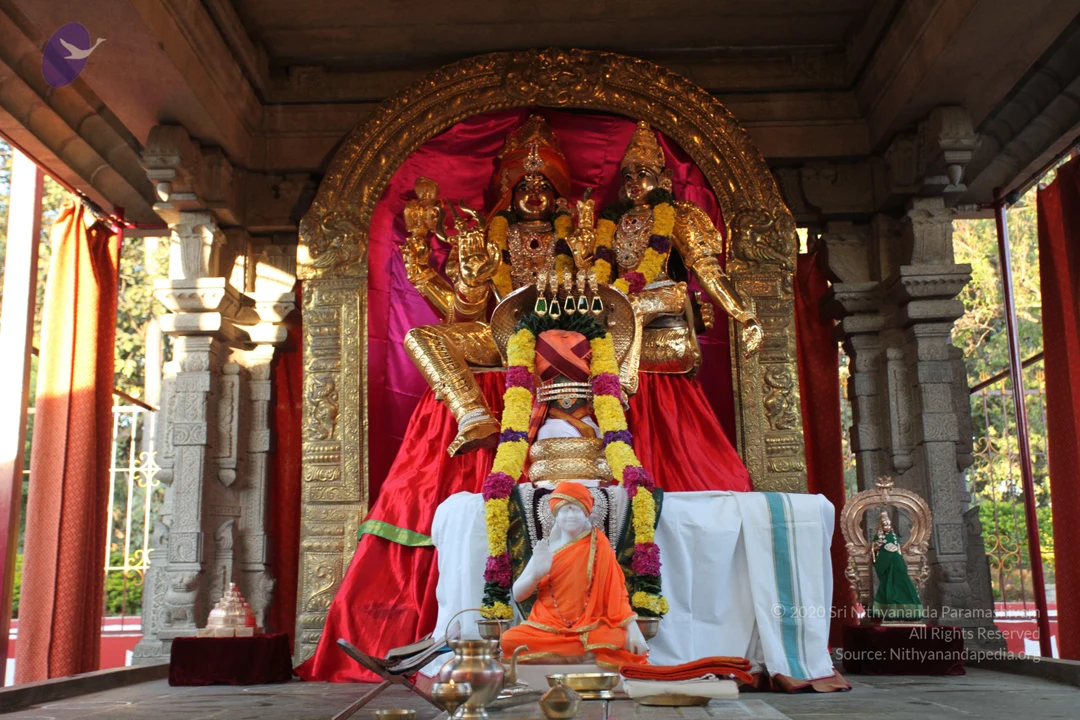
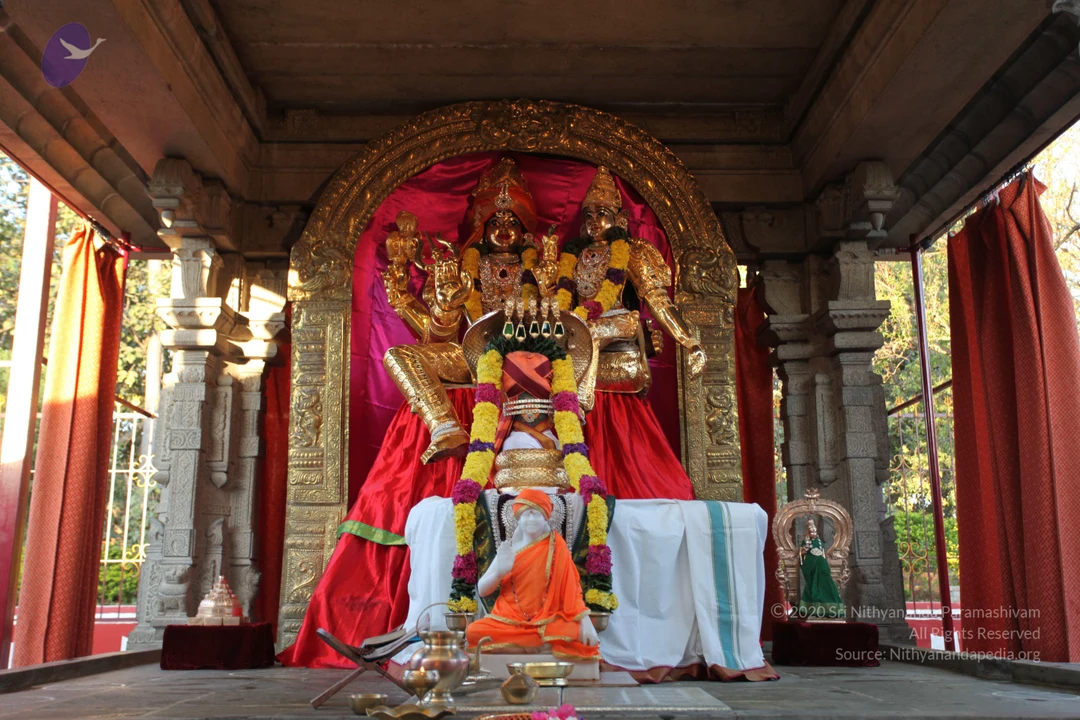
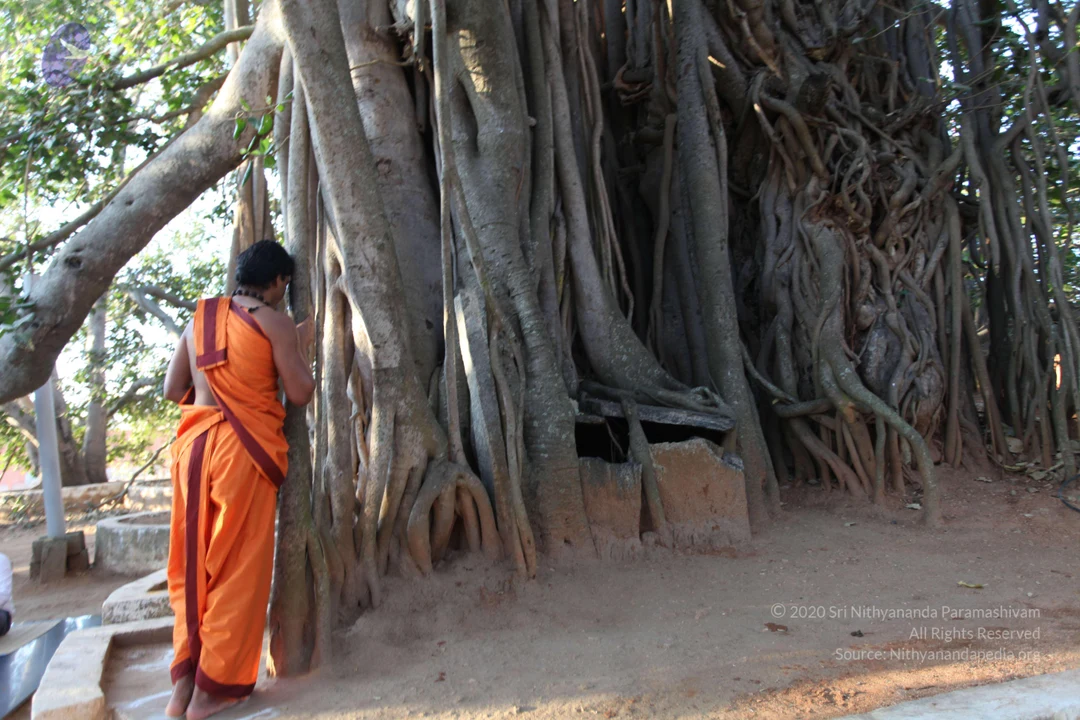
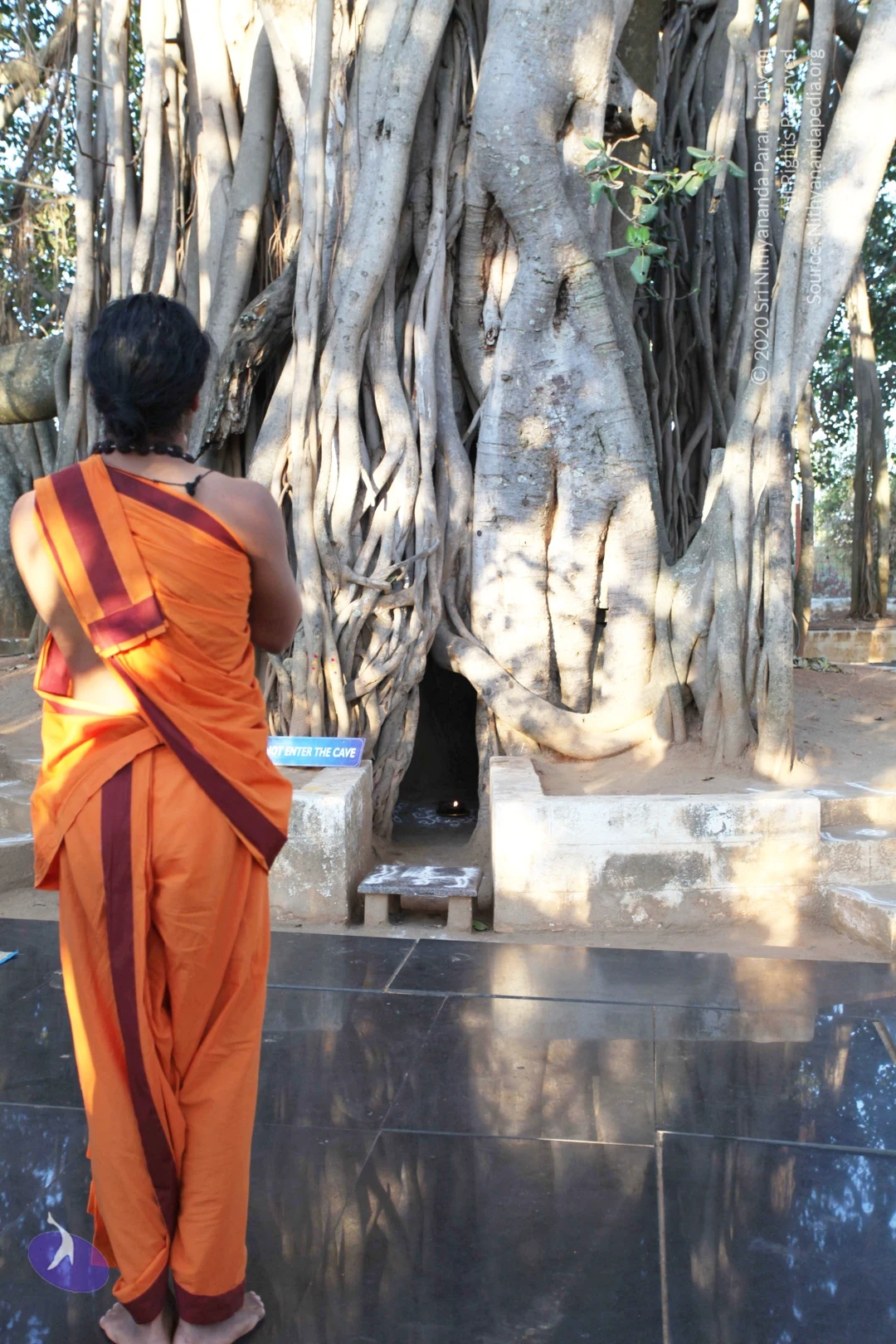
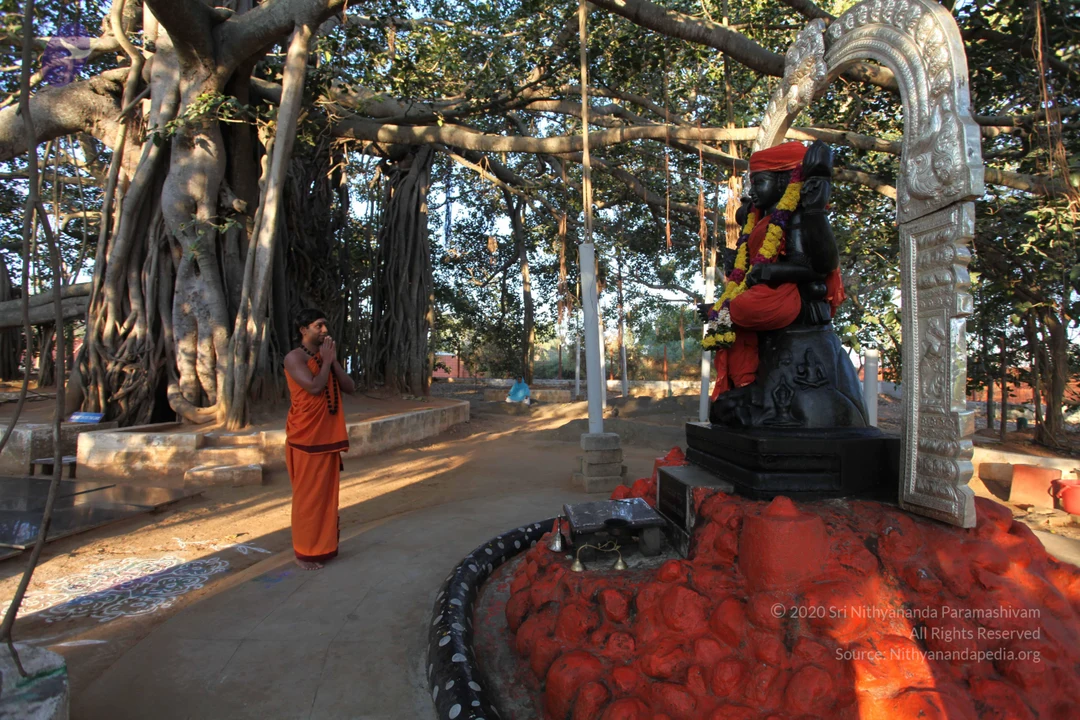
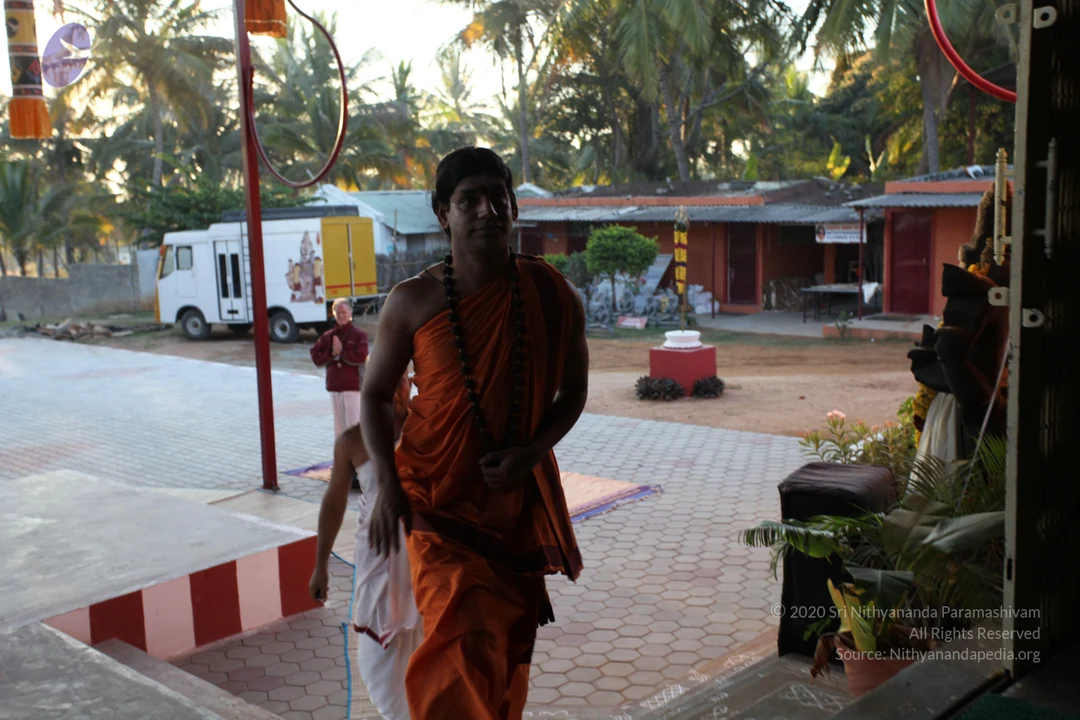
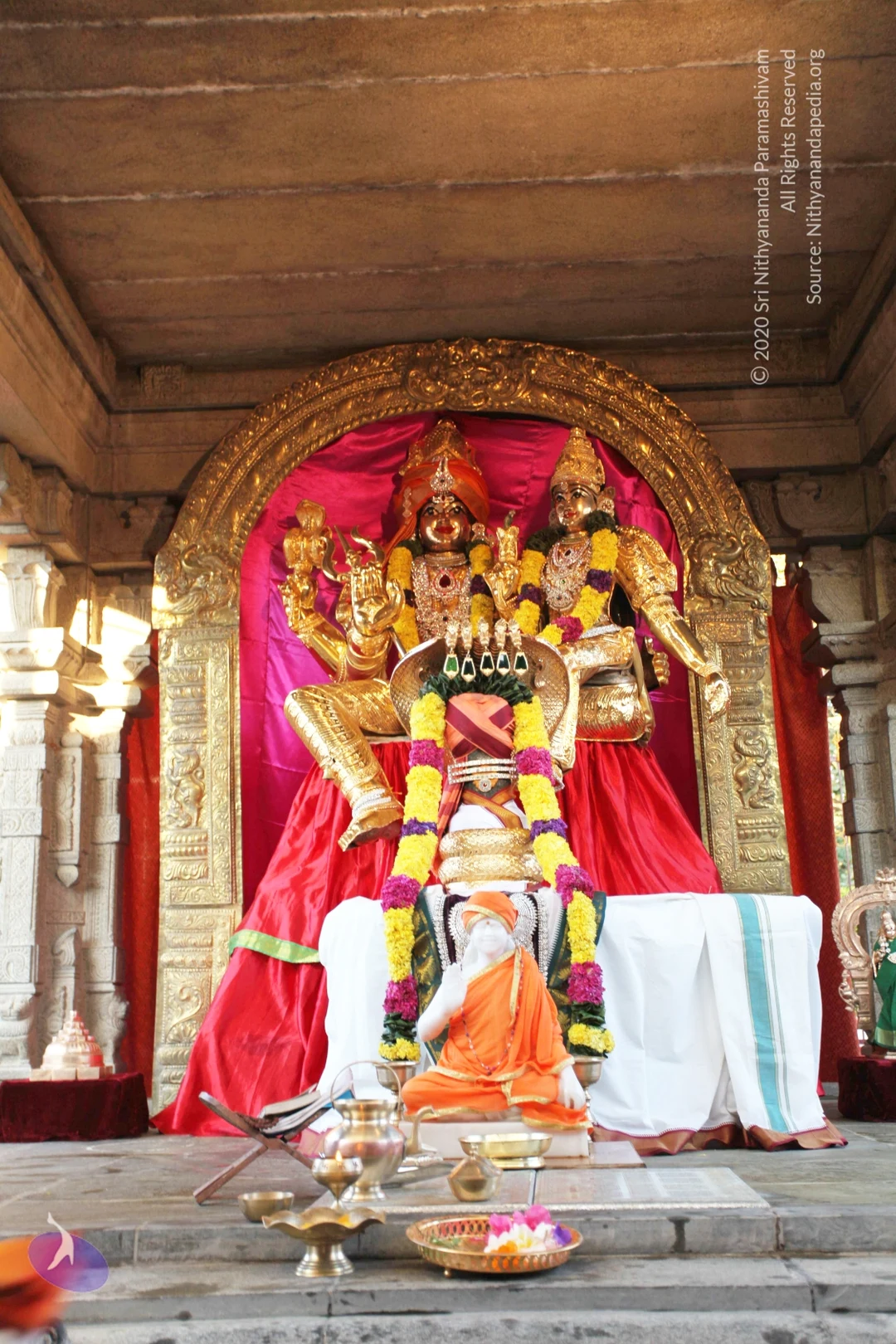
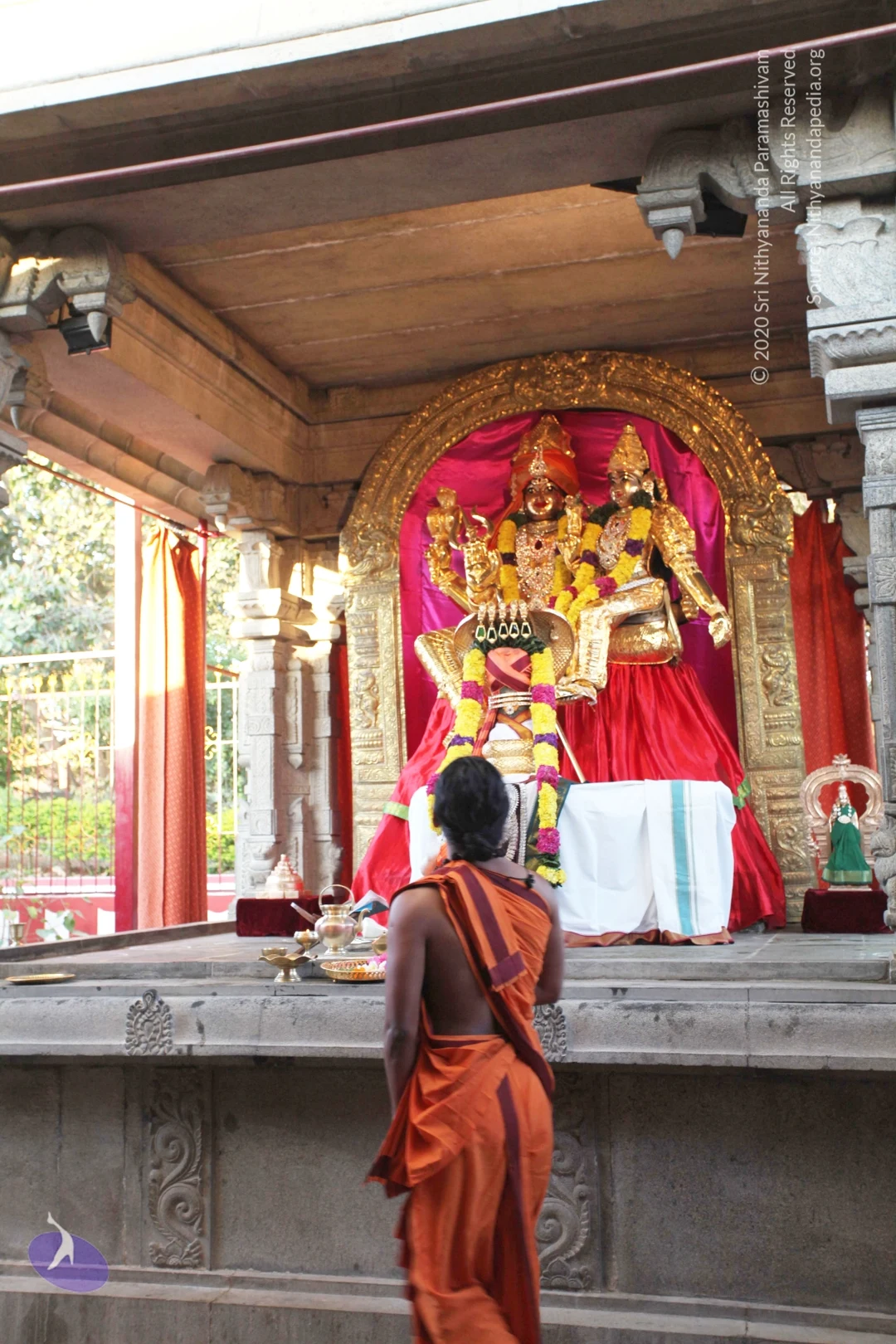
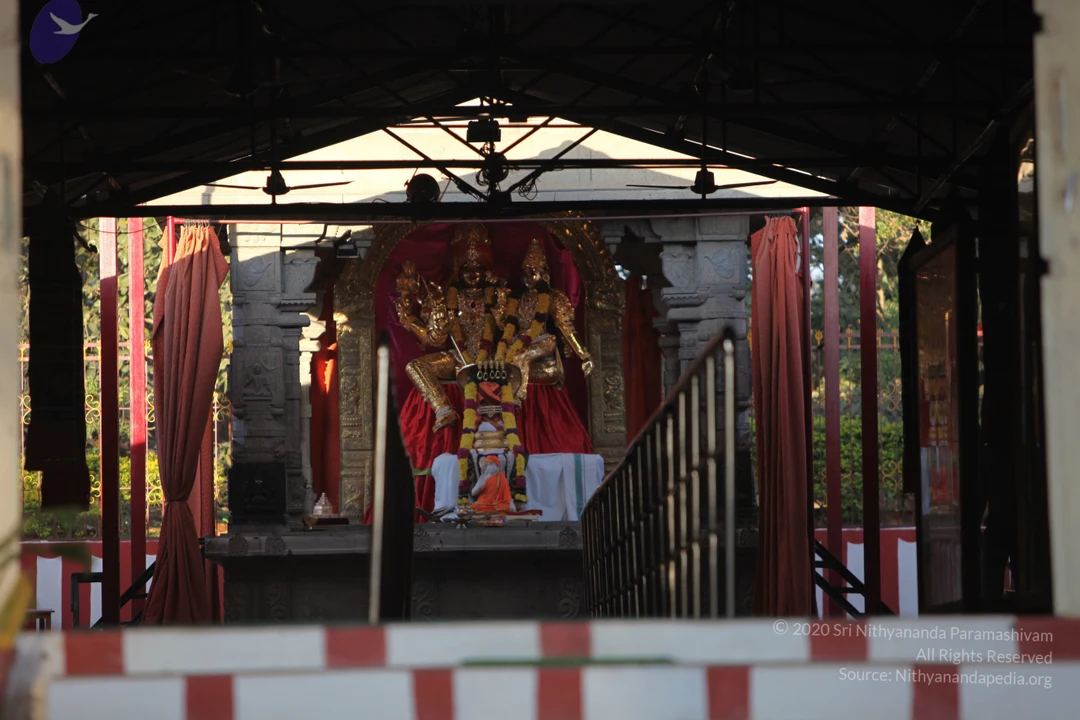
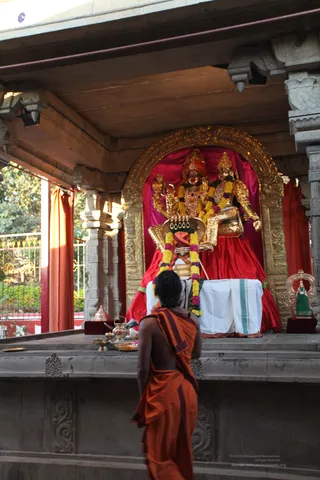
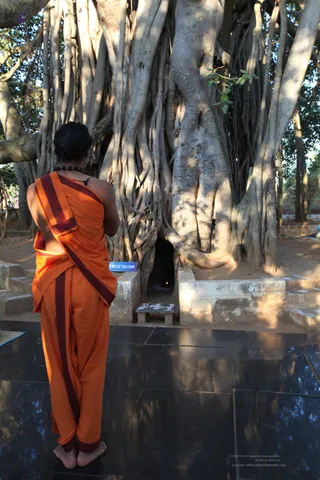
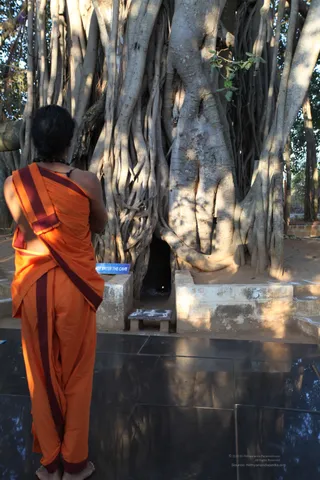
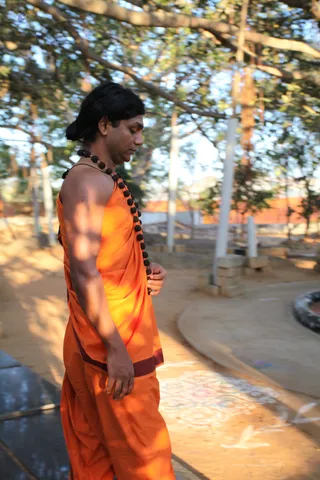
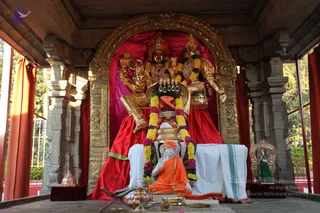
A stone temple shrine open on several sides, with carved granite pillars and a wooden ceiling. Inside, a golden deity murti in ornate crown and armour is framed by a golden arch and a red draped backdrop, and is decorated with a thick garland of yellow and orange flowers. In front, a seated figure in saffron-orange robes with a matching cloth wrap sits on a white-draped seat. Brass oil lamps, a kalasha, plates and offerings stand on the shrine platform. At right foreground, a man with dark hair in an orange-saffron robe kneels with his back to the camera, performing puja at the shrine. Orange curtains hang at the sides.A man walks outdoors under leafy trees on a paved path, head bowed and eyes lowered. He wears a draped orange-saffron garment with a dark maroon border, and a long rudraksha mala of dark seeds hangs across his chest and shoulder. His hair is tied back in a knot. Behind him are concrete blocks, a curved stone edge and a sunlit open ground.A person seen from behind stands on a dark polished floor before a large banyan tree with many hanging aerial roots. They wear an orange cloth wrapped over the shoulder and draped as dhoti-style trousers, edged with maroon borders, and a dark rudraksha mala around the neck. Their hair is tied in a bun and their hands are pressed together in front of the chest. Before them is a small cave opening at the base of the tree, with a small lamp inside and a low stone step. A blue sign reads "ENTER THE CAVE" beside the entrance. Dappled shade falls across the scene.

February 11 2011

Original wiki page
Contents

Title:

No Mind State Experience it Nithyananda Patanjali Yoga Sutra 11 Feb 2011

Description:

A discourse by Paramahamsa Nithyananda on Patanjali Yoga Sutras.

Watch, share and like the videos and Subscribe to our channel to be notified of the next upload. click http://bit.ly/20j90wr to subscribe.

Link to Video:

VideoAudio

Transcript

Sadāshiva samārambām shankarācharya madhyamām Asmadācharya paryanthām vande guru paramparām.

[00:45]

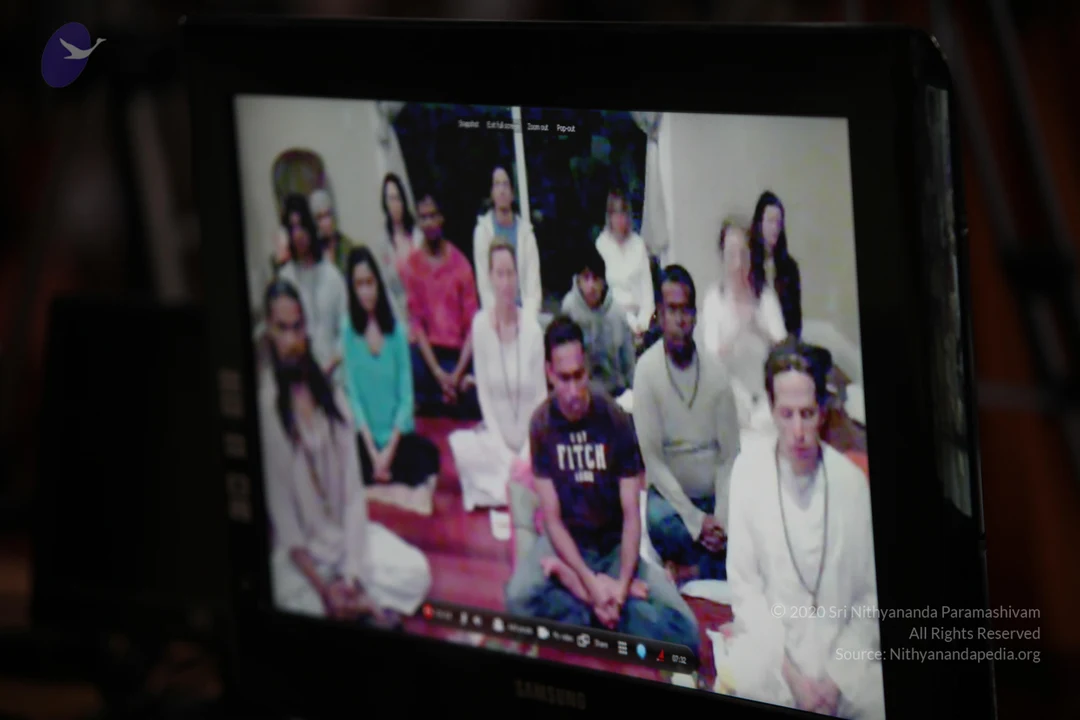
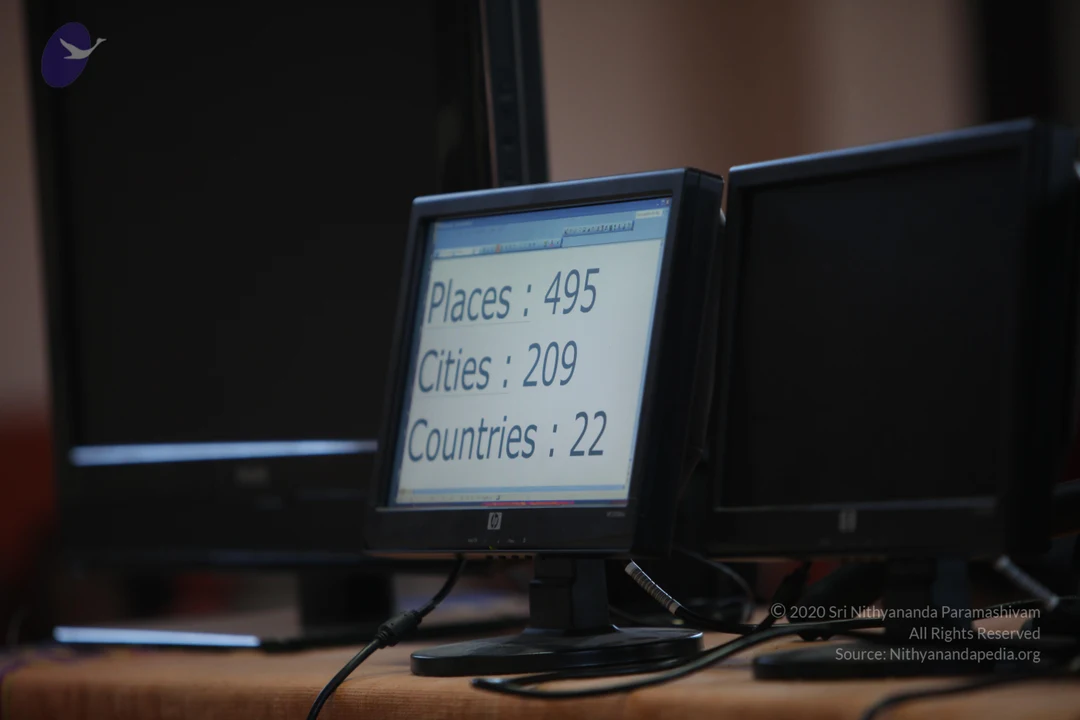
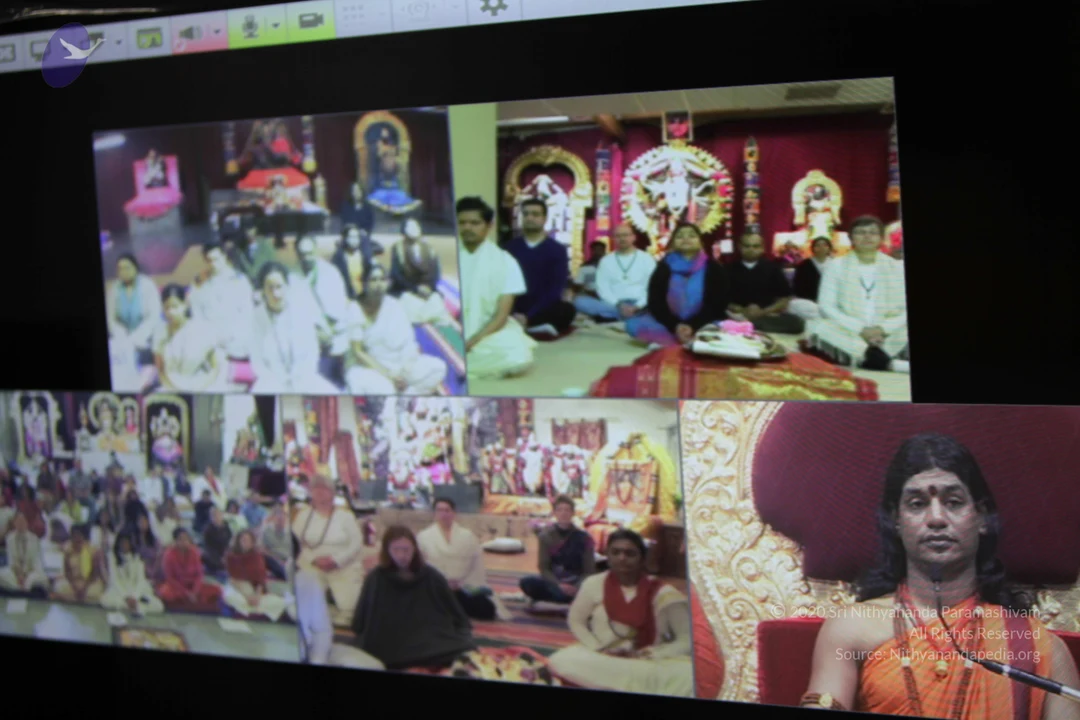
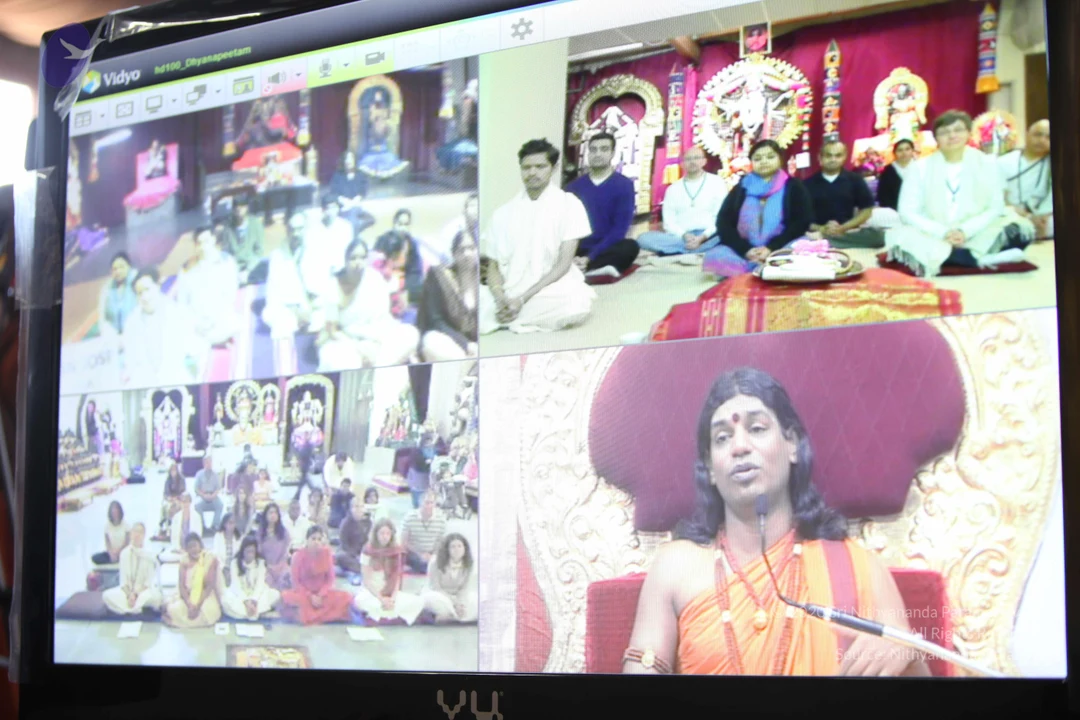
I welcome you all with My love and respects. I welcome all the devotees, disciples, satsangis, sitting with us around the world at this moment in 495 places, in 209 cities, in 22 countries. And I am able to see these 8 cities in two way; Los Angeles, Ohio, Seattle, San Jose and Hyderabad, Redondo Beach, Houston, al...... Sharjah. These are the eight cities I am able to see two way.

[01:47]

Before entering into today’s satsang some one or two questions. This is a question from Stephen, New Zealand Auckland satsang center. “I am enjoying sitting for morning live satsangs and doing eN-Kriya every day. When my body begins to just shake uncontrollably what is the best thing to do? Like the hands shaking and body rocking intensely; is it best to go with it or try to keep still? Or is the shaking and rocking of the body necessary to levitate or should I try to keep still to levitate? I attended the LEP program. Now with eN kriya I am able to relive those LEP experiences. Thank you for this great gift Swamiji.” Stephen understand, just allow the body to go with the kundalini awakening. You do not try to keep it still, and same way, do not try to levitate. Allow it. Let it happen as it wants. Let the kundalini do its process as it feels. You just don’t interfere with it.

[03:17]

Today’s subject I am continuing on ‘no mind state’. Patanjali’s yoga sutras, 115th sutra, in 3rd chapter 9th verse. Title is ‘Experience’. I will continue on the same sutra ‘No Mind State’. vyutthāna-nirodha-saṁskārayoḥ abhibhava-prādurbhāvau nirodhakṣaṇa cittānvayo nirodha-pariṇāmaḥ Yesterday I gave you all a process to contemplate and come back. ‘Is there really a gap between one thought and the other thought?’ I don’t know whether none of you sent any reply or the….. no replies came. Oh. Then I think people are already enlightened. They don’t need any input further. Actually if you would have contemplated on this one subject, you would have had at least some questions or some answers. ‘Is there really gap between one thought and the other thought in me? And is it directly useful to me in My life?’ These two only I am working on. Please understand, even if there is a gap, what is the use of that gap in My life?

[05:44]

Just intellectually knowing that there is a gap takes away tremendous stress and tension and the truth you attribute to your thoughts. Please understand sufferings are not because of the thoughts actually; the truth you attribute to the thoughts. You try to attribute too much of truth, too much of strength to that thoughts. That is where the problem starts. Otherwise, as such when thoughts are flowing in your inner space, they are neither good nor bad. The world is neither truth nor false. Your opinions and views and ideas about the world can be truth or false. So your opinions, ideas or views about the world need to be changed, need to be aligned, need to be understood. The world is neither true nor false. Please understand, world is neither true nor false. It is your opinion about the world - that is only true or false.

[07:16]

I always tell you, I wanted to remind you all again, as far as My experience goes, the stuff out of which your dreams are made, in that same stuff only this world is also made. But you have an idea about the dream that it is not permanent, it is anithya, it is ephemeral. But unfortunately you do not have that same clarity, this is also anithya of the same order and the same scale, same dimension and same space. Please understand, just because you are able to wake up from dream and see a kind of a consistent world, you think dream is less permanent. Same way if you raise your awareness and able to see from every birth and death you wake up and there is a consistency, much more than this world which you are experiencing, suddenly it clicks. Wow!! This world is illusion. Greatest joy in the life is playing in this world knowing that it is illusion. A man who knows this world is a illusion and leaves is a enlightened master. Man who knows this world is illusion and plays with it is incarnation.

[09:23]

Yesterday I had a question from somebody “who is incarnation?”

Being who understands this whole thing is impermanent illusion and plays with it beautifully as he wants or as he feels is incarnation. Knowing that there is a gap between thoughts, suddenly takes away the fear and greed and power you attribute to the thoughts. The amount of power you attribute to thoughts, the amount of the seriousness you give it to thoughts can drastically drop. I tell you, unless you go beyond words you cannot even actually play with words. Please understand, only if you are little more than body, you can play with the body. Only if you are little more than mind, you can play with mind. Only if you are little more than words, you can play with words. If you think everything is just word, it can be a good technique in the initial level; not more than that. It cannot be an ultimate solution.

[11:12]

If everything is word come on sit and go on repeating I am God I am god I am God I am God I am God. Aham brahmasmi Aham brahmasmi million time; what will happen? Nothing will happen. You can become an amazing automated tape recorder. Very beautifully Ramana Maharishi says, ‘Even if you repeat million times aham brahmasmi or soham, maybe it is a good technique to replace the negative words.’ Instead of thinking constantly I am body, I am body, I am body, I am body, you can remember I am God, I am God, I am God, I am God. So many restrictions related to body can be overcome. You can overcome those things; that’s it. But that is not ultimate truth.

[12:06]

Very beautifully Ramana Maharishi says "பாவனாதீத சத்பாவத்திருத்தலே பரபக்தி தத்வம் உந்திபர" (Bhavanateeda sadbhavatirathale parabhakti tattuvam undipara) Beyond all bhavanas residing in that space is sadbhava, that is parabhakti, ultimate. Word cannot be everything. Fools who are thinking money is everything are stuck with Vishnu. The fools who are thinking that words are everything is stuck with Brahma. Be very clear you need to find either the head or tail of Shiva, head or feet of Shiva. Still you do not know the ultimate. Words cannot be ultimate. Just like money cannot be ultimate words cannot be ultimate. If you think there is no gap between one thought and the other, you are caught, and you will attribute too much of seriousness to words. Attributing too much of seriousness to words is the most dangerous thing can happen.

[13:50]

Actually even I experienced at one time in My life a spot where I felt whole life is nothing but words. But that is not ultimate. வாங்மனாதி கோச்சரம் (Vaangmanaadi kocharam) beyond the வாங்(vaan) and mana; there is a Upanishad sutra also which says beyond the vaak and mind this truth is experienced. Vaak and mind cannot reach that space. Words and vaak has only a limited capacity. It can reach only to a limited level. It cannot be the ultimate. And if you are believing that it is ultimate, you are waiting for a big and great disappointment. If you are thinking ‘mind is everything’ you are waiting for a deep depression and disappointment and unfulfillment. No.

[15:24]

I wanted to let you all know one incident. Once I was sitting with Yogi Ram Surat Kumar in Arunachaleshwara temple. It was night, maybe 10 o’ clock. I was alone sitting with him and he was enjoying his beedi as usual and he has a habit of continuously chanting Ram naam. He was initiated into the Ram naam. Continuously he will chant that Ram naam. And whoever comes he will tell them Ram naam is the ultimate. Chant the naam, chant the naam, nothing else exists except the name. That day some two-three visitors came to him and he told them chant the naam. And he insisted and elaborately made them understand the importance of naam, Rama naama and chanting the name, making your whole body and mind filled with the name. Elaborately means, if he uses three sentence that is a elaborate description. He is that kind of a person. Anyhow he tried his best to do the elaborate thing.

[17:24]

But after they all left, I was sitting alone with him. I looked into his eyes and asked “Swamiji tell Me honestly, is word the ultimate?” He turned away from My eyes. Actually I remember still, he just slapped on My face and turned My face away and started smoking again. Of course I did not leave him. He used to have the rope made out of coconut fiber, fiber rope in his hands, one bunch. I pulled that rope to turn his face towards Me and looked deep into his eyes and asked, “I really want to know, is word the ultimate, is sound the ultimate?” He just looked into My eyes, shook the head horizontally and said “No. There is something beyond word”. I just could not control myself, because this happened just few months after My enlightenment experience; because in My enlightenment experience there was no word. I could not control myself; the joy and ecstasy that I found the truth, I know the truth! I just jumped and shouted, “I know, I know, I know”.

[19:41]

It is beyond words. I tell you, just a simple understanding ‘there is a gap between your thoughts’ and this truth, when it is heard in such close space from a person whom you trust and who has no vested interest, something happens in you. I tell you even at this moment 1000s of you are sitting with Me in the close space; understand close space does not mean you alone sitting with Me, you sitting with me intimately. There is some space between you and Me which nobody is allowed, where nobody else is allowed. Those few moments only you cherish with Me. That space nobody else has with Me. If you are sitting with that feeling, please understand, you are sitting with Me alone. Sitting with Me alone does not mean there should not be any other person next to you. It means the deepest possible intimacy, the deepest possible feeling connection exists between you and Me. You know ‘Even though there are so many people sitting next to me there is something between me and Him which is deeper than anybody else, anything I know’.

[21:54]

Understand, I will explain this science; because it is a very important science to experience truth; the Upanishad. If you feel, the connection with the Master is the deepest connection you experience than any other relationship you experienced in your life, you will experience that what I am saying ‘sitting with the Master all by yourself’. You may be sitting with 1000s but you are sitting with Me alone in the banks of Manasarovar or in Kailash; there’s no other person. If you have experienced a space, the relationship and the connection with the Master is the deepest than any other relationship you have or had in your life, understand, you know what I am saying. Now you may be sitting with any number of people but you know you are sitting with Me, Me alone, because all other relationships become immaterial. They do not hold any more power over you. They do not hold any more space over you. In that mood any truth transmitted not only will be the honest truth that will straight away give you the experience.

[23:49]

That is why I am telling you, the traditions which misses this great Bhakti, love, will always tell you words are ultimate because they cannot take you beyond words. The traditions which understands this guru-disciple relationship, not only will accept, will be able to take you beyond words; because to take you beyond words you need to relax in certain space. You need to know, by Me teaching this great truth to you I have nothing to gain and you have nothing to lose. See when I was sitting with Ram Surat Kumar, if he is going to say ‘word is ultimate’ or ‘there is something much more than words’ whatever his response will be, I know he has no vested interest. He is going to tell the truth just for My sake. He has nothing to gain, I have nothing to lose. It is only the honesty the integrity.

[25:35]

I tell you, if I teach words or everything, I can make more money, I will have a bigger business. I can create hundreds of leadership seminars. All the sick fellows will come and I can just do little band aid and skin grafting, make them leaders. No. I am not interested in just skin grafting. I am interested in bone marrow transplanting. The very being should change, transform. I can straight away challenge all these guys who are teaching words are ultimate. Come on. By what I am teaching and what I am transmitting - ‘the space between the words exists and that is consciousness’ - With this teaching I can awaken the very strands of DNA, very mitochondria energy. Let these guys who are teaching ‘words are everything’ also come and try their experiment. Let us do a scientific research. I will show you how shallow those teachings are. ‘Words are everything’ may be able to increase few percent of your mitochondria cell energy, maybe one strand of DNA. I can tell you the experience beyond words can awaken all 12 strands of DNA and at least 1300% mitochondria cell energy.

[27:56]

People who teach ‘words are everything’ cannot express extraordinary powers and experiences. But people who understand, experience and transmit the experience of consciousness to others, can express extraordinary experiences and powers. I challenge these guys who say words are everything. Let them come. I will give them one throne. Let them say ‘let vibhooti appear in their padukas’. Let Me see whether dust comes or vibhooti comes. No they claim words are everything na come on then do with words.

[28:53]

This tharuka vana rishis got into the same stage at one point. ‘Words are everything’ ‘the mantras can do everything’ So no God, no ultimate power, no consciousness. But at least tharuka vana rishis are fortunate that Shiva was so compassionate, he himself came down; came down and went to tharuka vana, taught them lesson. Anyhow, this time I am inviting them; let’s see whether they are intelligent enough to come and learn the lesson and go to the deeper zones. Understand, ultimate truths cannot be a convincing argument. You will miss the whole thing. It can only be shared to a person who is sincerely sitting and seeking and waiting for it. So I am telling you whoever has done this last two days the process - the liquid diet and the neem juice and manana - contemplating on the truth, second day neem juice and contemplating on the truth, if you have done this two days, naturally this shows you are committed, you are in love, you are interested in knowing the truth.

[30:37]

Please understand, just like how I had the revelation from Ram Surat Kumar I am revealing to all of you – ‘There is something more than words. And that pure space can be experienced just by simple trusting and relaxing’. Nothing else is required except simple trusting and relaxing. Not trusting there is gap between words or there is something beyond words; if you think everything is words, you will be under constant stress, depression. Only when you understand there is something beyond words, there is gap between words, you rest in a space; you relax in a space. The possibility of conscious experience happens in you. For this to happen in you, as I said… see for Me it happened with two thing. One; I had a deep trust with Ram Surat Kumar and I know he has no vested interest. He is just going to tell the truth as it is and My intense thirst and quest and My tremendous love and intimacy, respect, commitment for Ram Surat kumar.

[33:09]

Understand, just sit with a deep, tremendous, receptive mood and listen to these truths. This will straight away take you to that space. There is nothing much to explain in this sutra. It is a revelation. Patanjali says when a thought is suppressed or raised or disconnected or modified; anything happens between a thought and other thought there is a gap. That is called nirodha parinamah. Start resting more and more in that nirodha parinama; that’s it. That’s it.

[35:50]

I initiate all of you who are sitting with Me at this moment in 623 places, in 244 cities, in 24 countries. Just sit in samana mudra, padmasana with closed eyes. I initiate all of you into nirodha parinamah - the gap between your thoughts, the space beyond your thoughts, pure inner space. Just sit. Let the kundalini shakti in you all be intensely awakened. Let you all experience the space beyond the thoughts.

[37:07]

Let you all experience, achieve, live, express, radiate and share the eternal bliss Nithyananda. Thank you.

[37:23]

Photos

Nithyanandeshwara-Temple-Visit-And-Pancha-Tapas
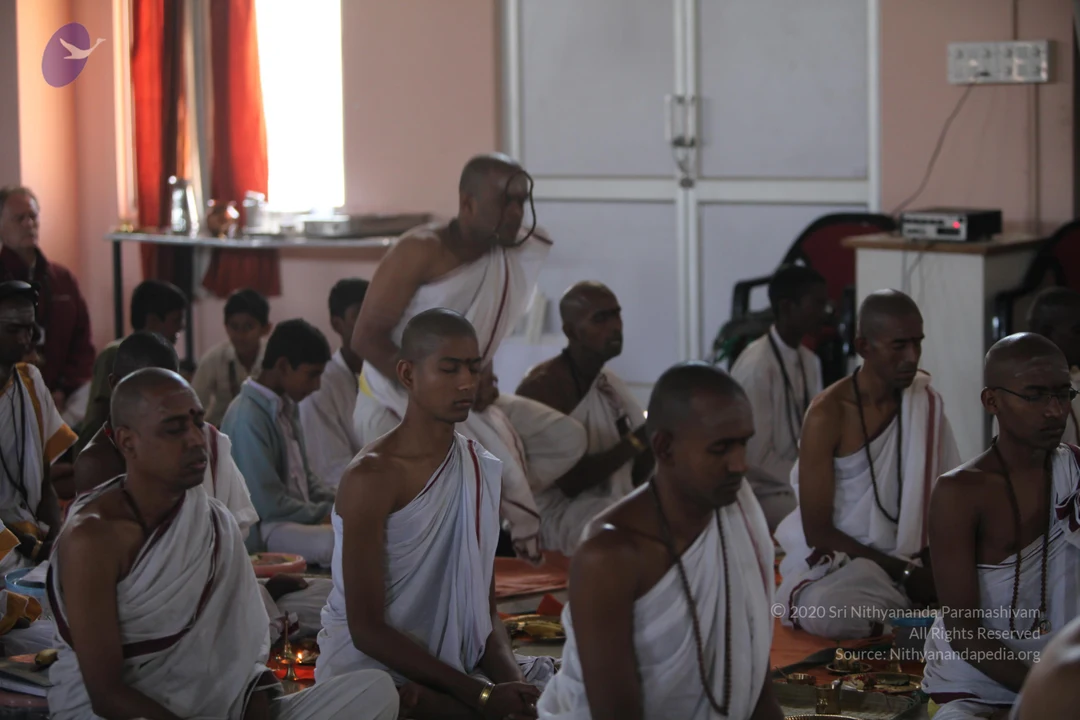
Paada-Pooja

Nithyananda-Satsang-And-Sarvadarshan

Photos Of The Day:

1-Temple-Visit

2-Pancha-Tapas
3-Pada-Puja

4-Morning-Satsang

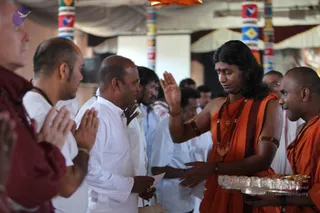
5-Sarva-Darshan-and-Final-Blessings

Photos from this day

View all 370 photos

Photos

17 photosSource gallery
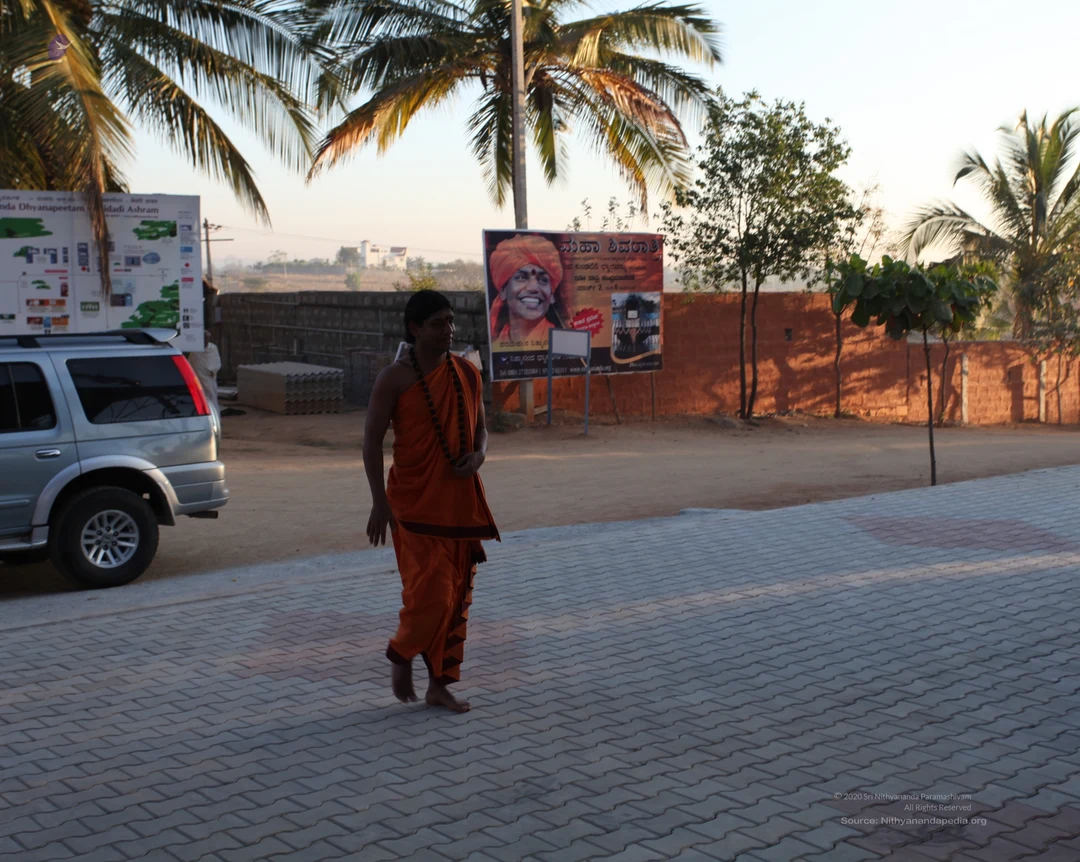
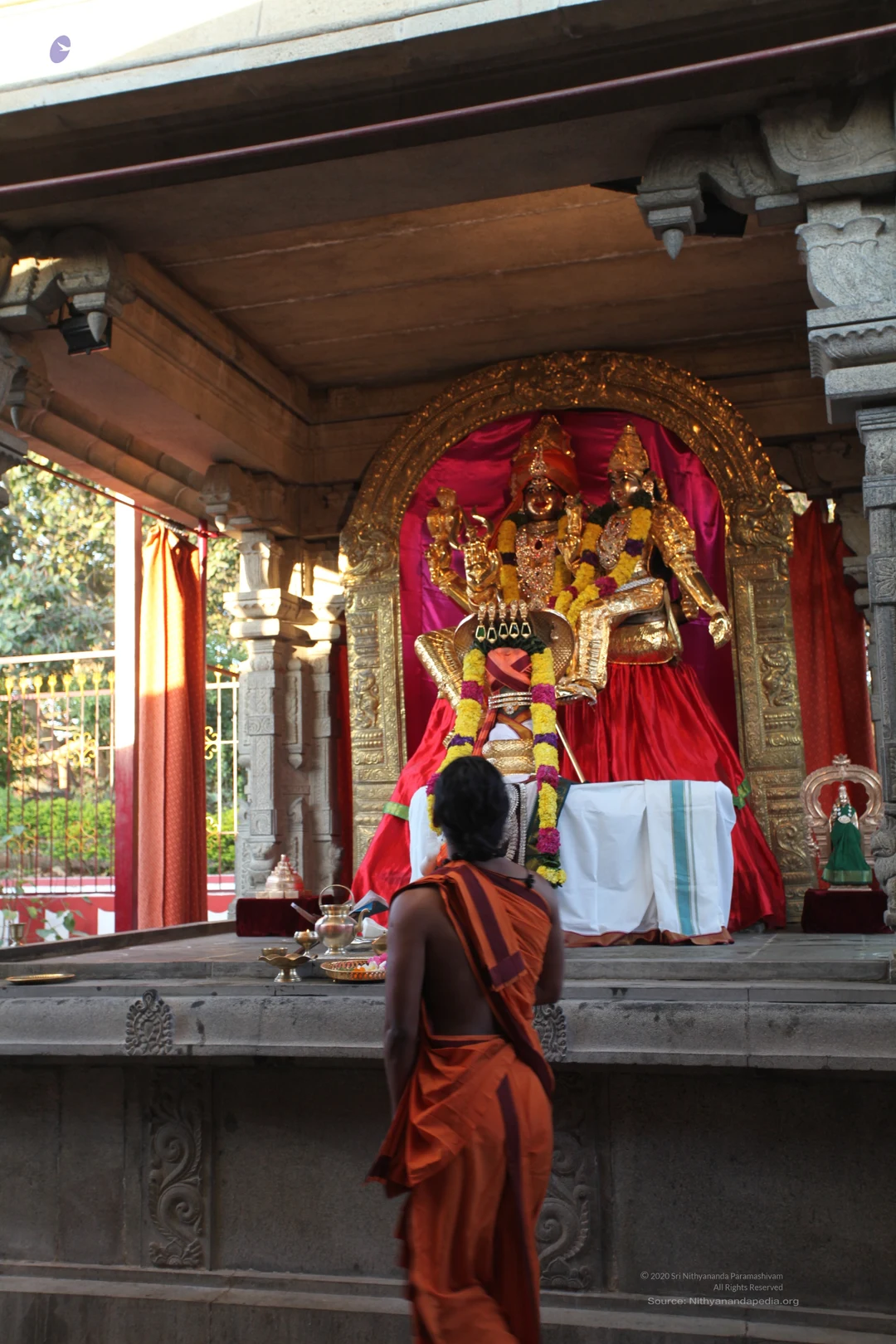
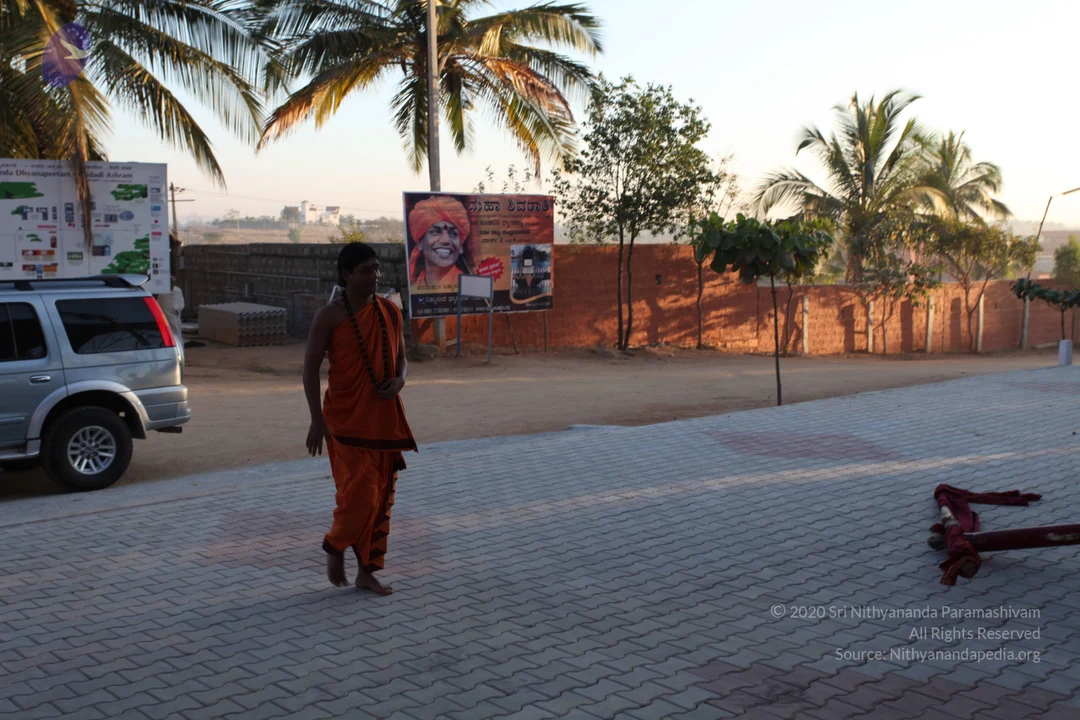
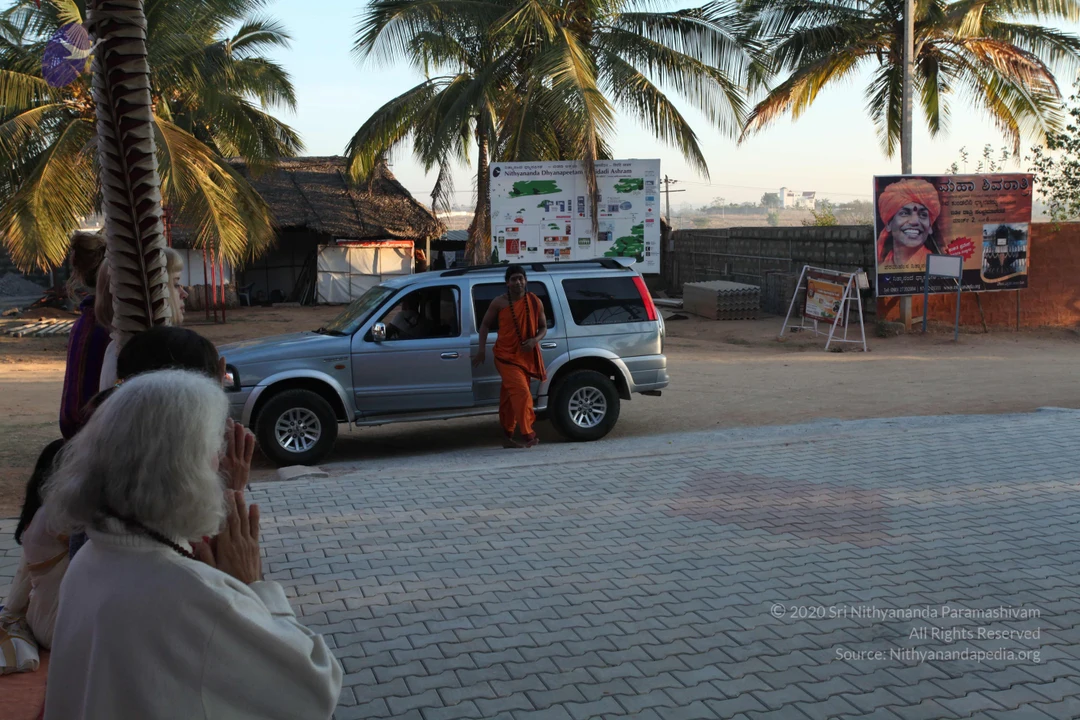
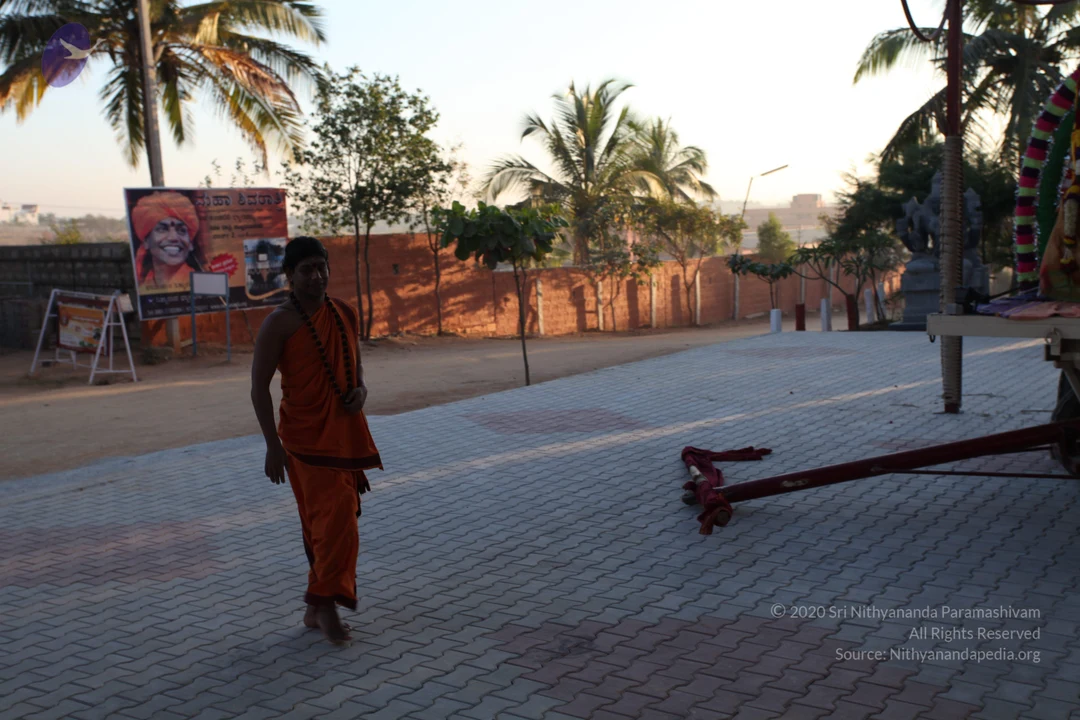
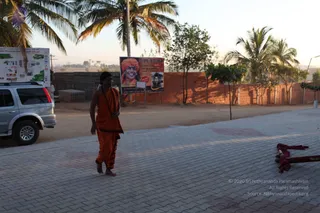
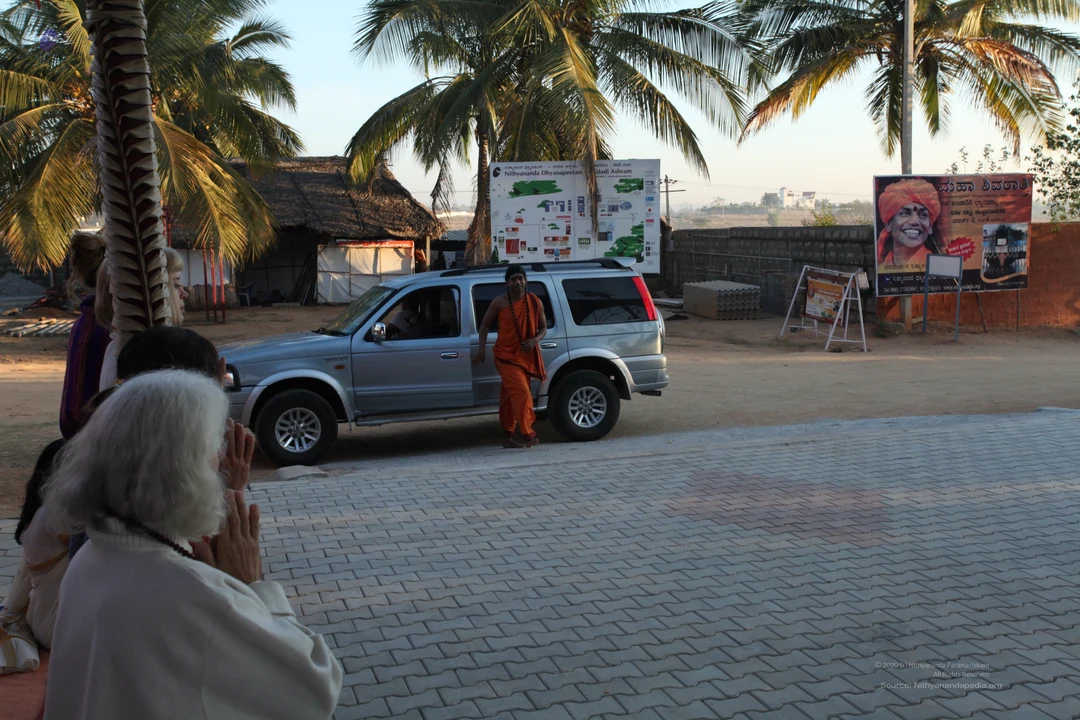
A barefoot man in saffron-orange robes walks across a paved courtyard in warm morning or evening light. He wears an orange wrap over his shoulder and a long rudraksha-style mala around his neck, and his hair is pulled back. Behind him a silver SUV is parked beside a large billboard showing a smiling figure in an orange turban with Kannada text. A palm tree and a red-brick wall stand in the background, along with a signboard with a map.A barefoot man in orange saffron robes walks across a paved brick courtyard at dusk, wearing a dark rudraksha mala around his neck. Behind him a large roadside banner shows a smiling figure in an orange turban and reads "Maha Shivarathri" in red and white lettering, with a smaller inset photo. Palm trees, young saplings and a terracotta-coloured boundary wall stand behind, with a signboard on an easel to the left.A photograph of a shrine inside a temple-style pavilion with carved grey stone pillars and a gold-framed arch. Behind a red and magenta cloth stand gilded deity murti of a seated couple adorned with yellow and magenta marigold garlands. In front, a figure in white dhoti and gold-coloured ornaments with an orange headcloth sits on a white-draped platform. In the foreground, a person from behind wears an orange saffron robe with maroon border and faces the shrine. Brass vessels, a kalasha-style pot, an oil lamp and a plate of flowers sit on the ledge. A small green-clad figure appears on a side table at right.A person in orange robes with maroon borders stands barefoot with hands joined in prayer, facing a large banyan tree with many hanging aerial roots. Beneath the tree, a small dark cave opening sits at the base, with a lit oil lamp inside. A blue sign reads 'ENTER THE CAVE' beside the stone steps. The figure has dark hair tied up and a dark rudraksha-style mala around the neck. The stone platform and dark floor surround the scene, with dappled sunlight across the tree trunk.A photograph of a figure seen from behind, standing barefoot on a dark stone floor before a large banyan tree with many hanging aerial roots. The figure wears an orange robe with maroon borders draped over one shoulder and a dark bead mala at the neck, with hands pressed together in prayer. In front of the tree is a small dark cave opening at the base of the trunk, with a small oil lamp burning inside and a short stone bench nearby. The scene is lit by warm sunlight filtering through the leaves.A man walks outdoors along a paved path in warm sunlight beneath a large spreading tree. He wears an orange-saffron cloth draped over his shoulder and body with a maroon border, and a long black rudraksha mala hangs across his chest. His dark hair is tied up at the back of his head and he looks downward. Behind him are white pillars, a low orange wall, and a circular patterned design on the ground. The scene has a calm, ashram-like setting. Whether he is the a person candidate cannot be confirmed from appearance alone.

Photos

1 photoSource gallery
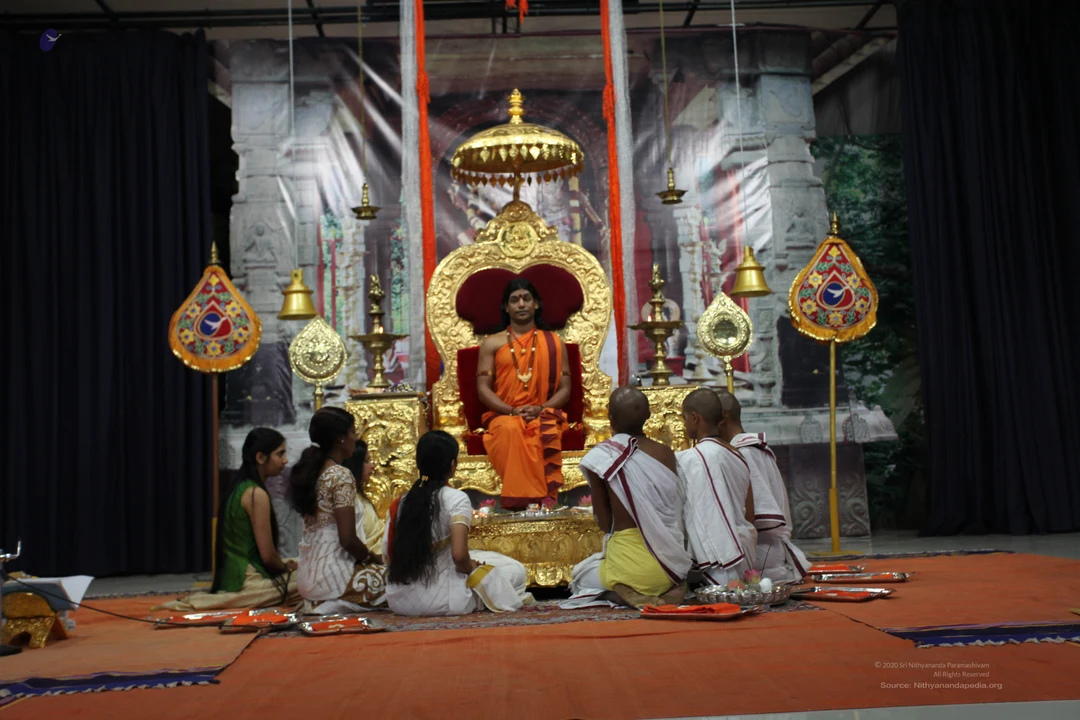
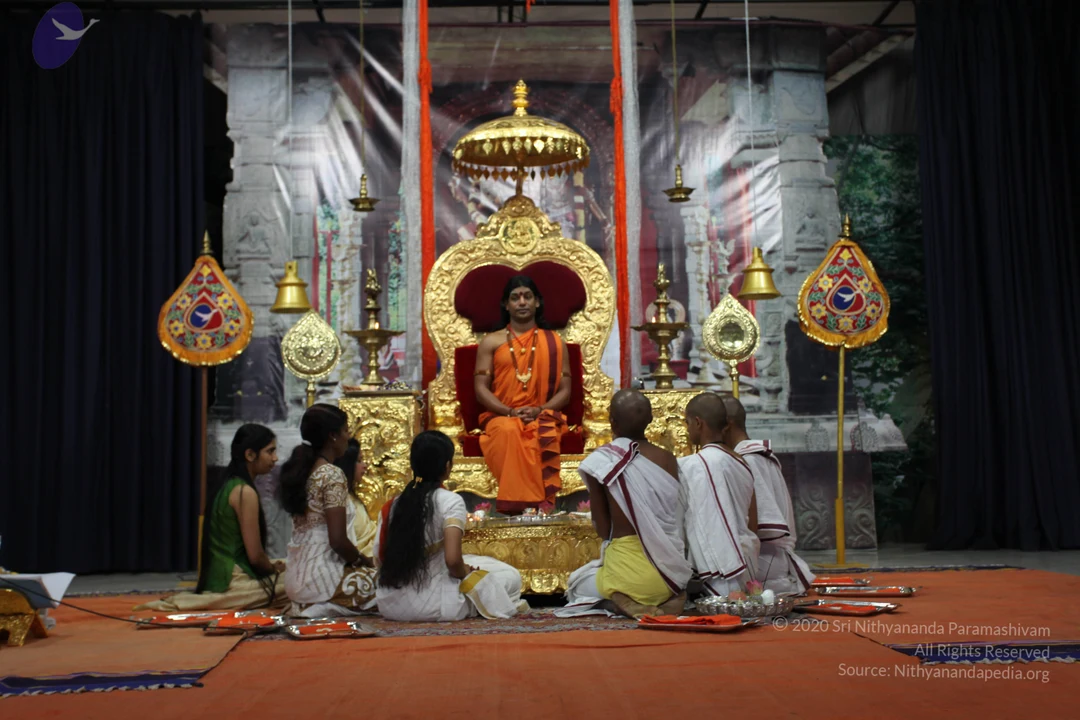
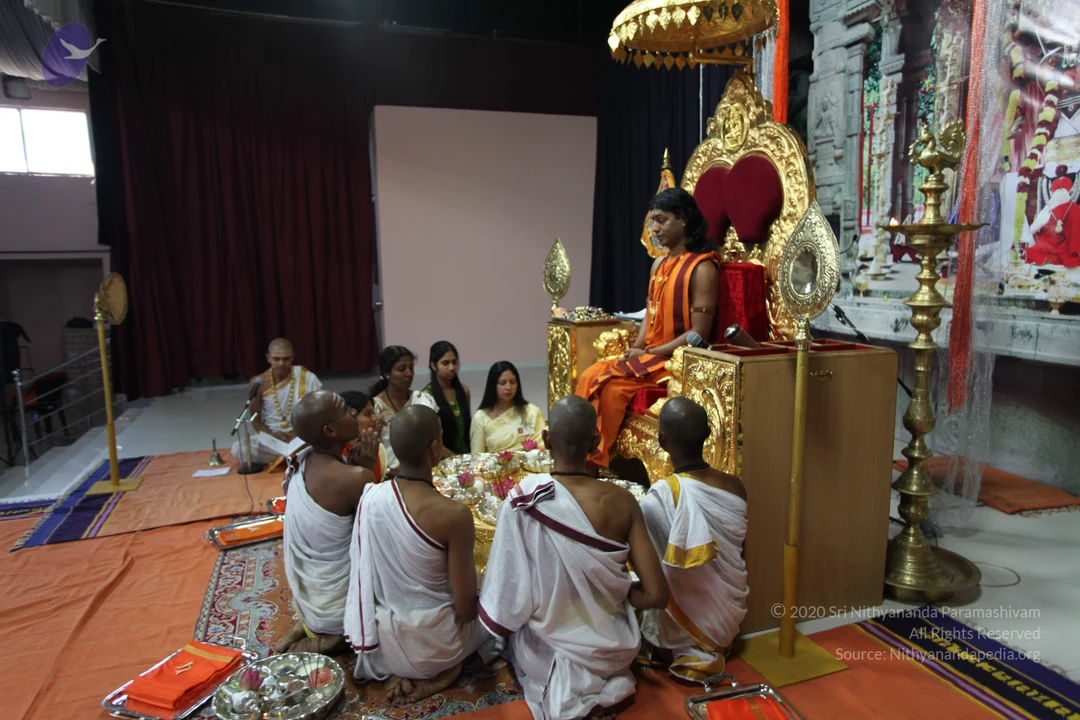
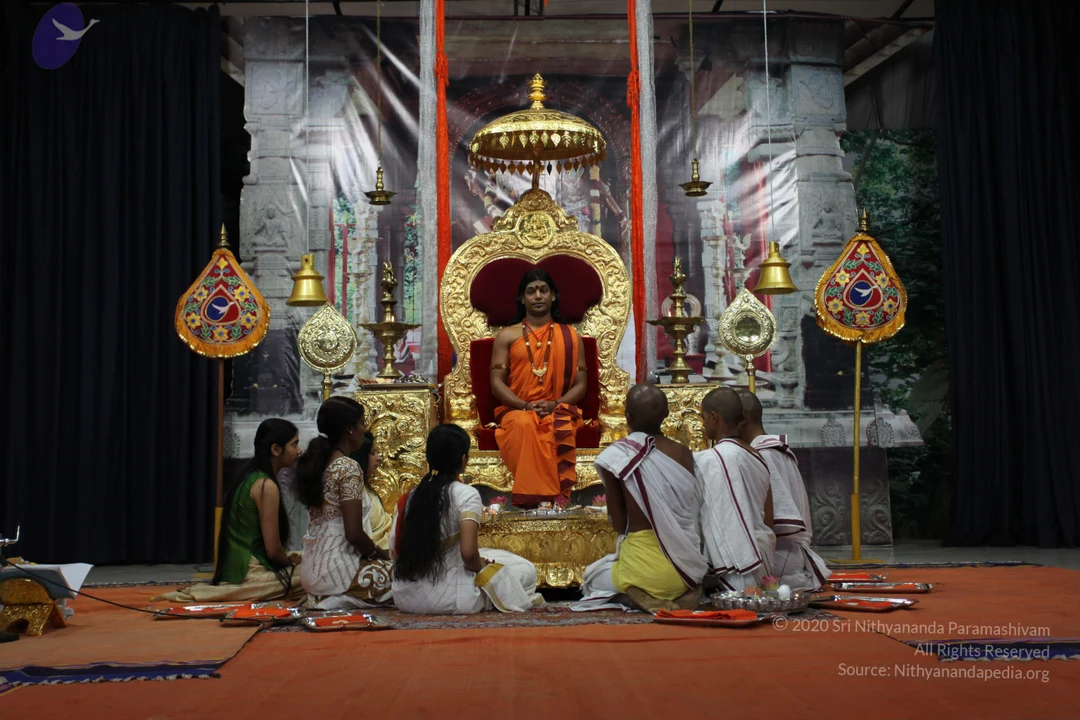
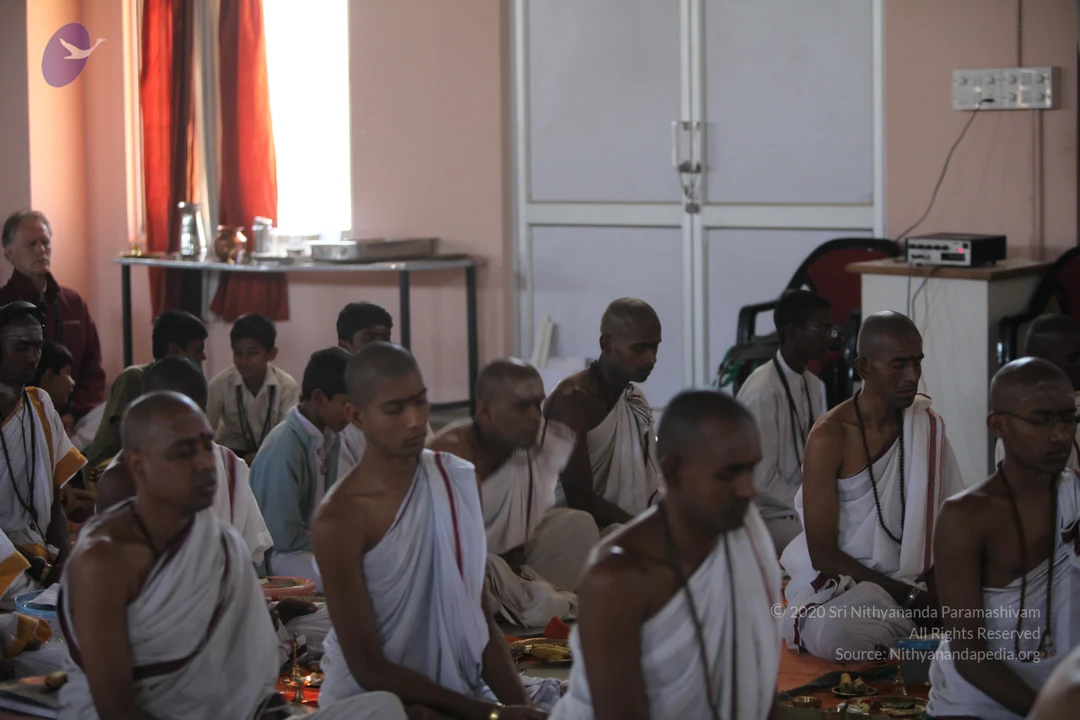
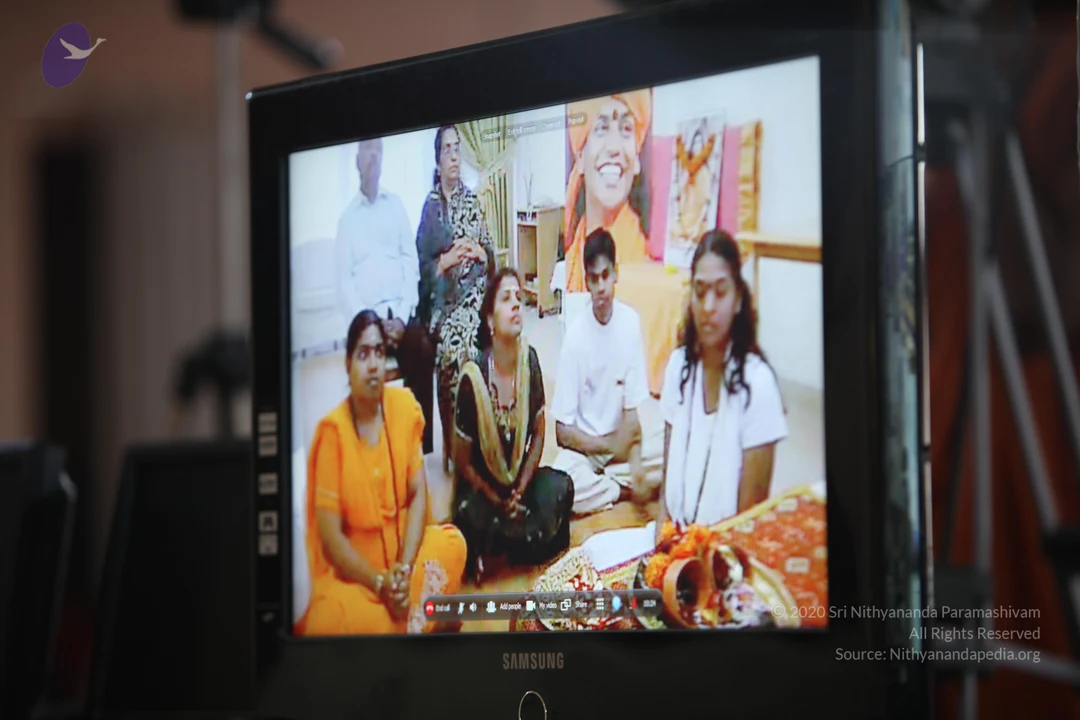
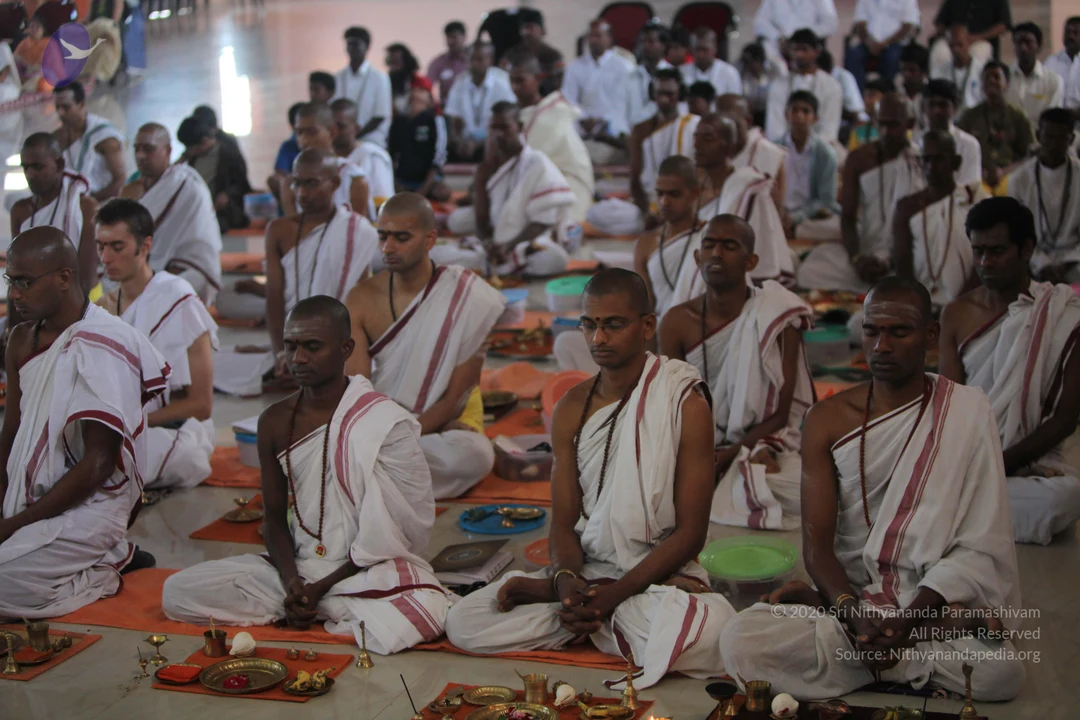
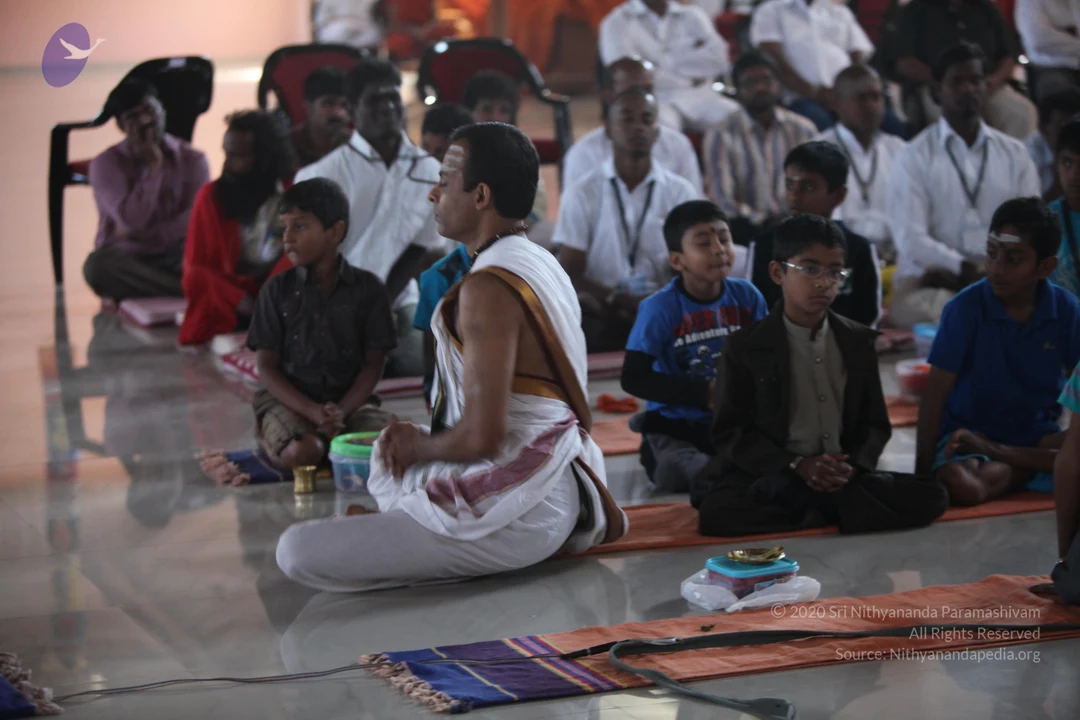
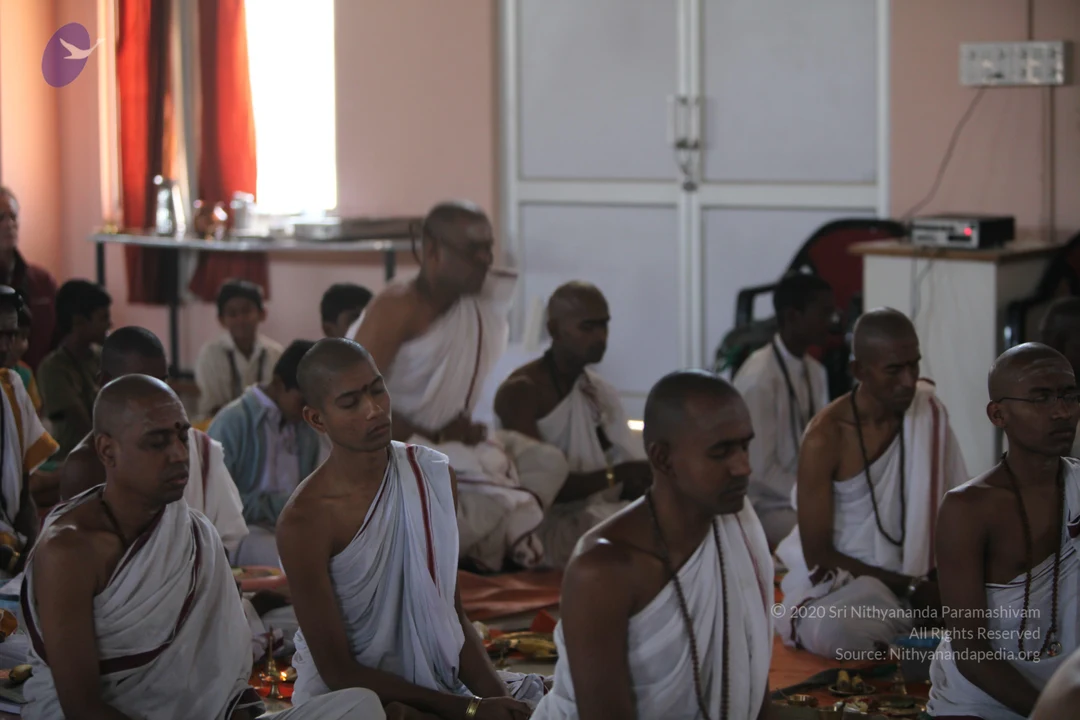
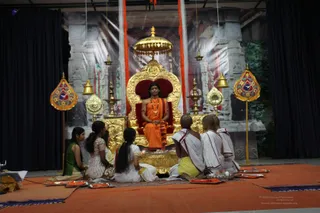
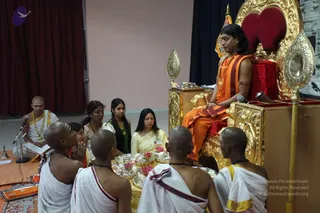
A seated figure on an ornate gold throne with a red cushioned seat and a gold canopy sits at centre, wearing an orange saffron robe, a rudraksha mala and a gold necklace, with long hair swept back. Six people in white ritual clothes and white dhotis sit on orange floor cloths before him. Brass oil lamps, bells and a gold-and-red kalasha-style setup line the stage, with trays of offerings in front. A backdrop shows temple architecture with pillars and a painted scene. Stage setting suggests a satsang or ritual gathering.

Photos

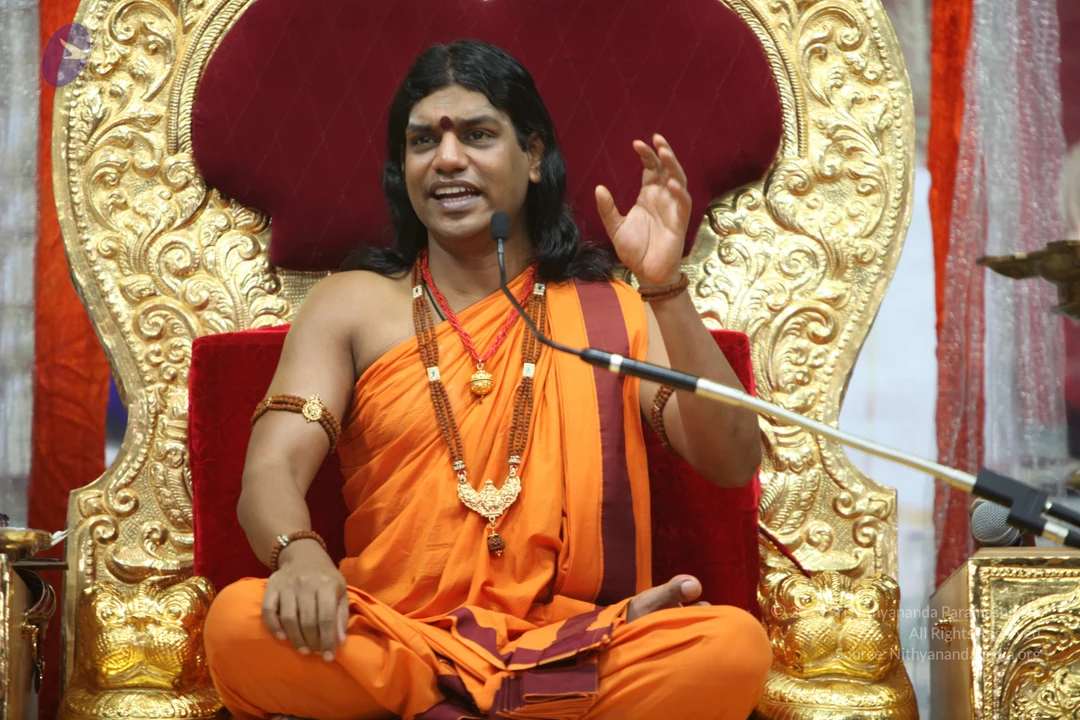
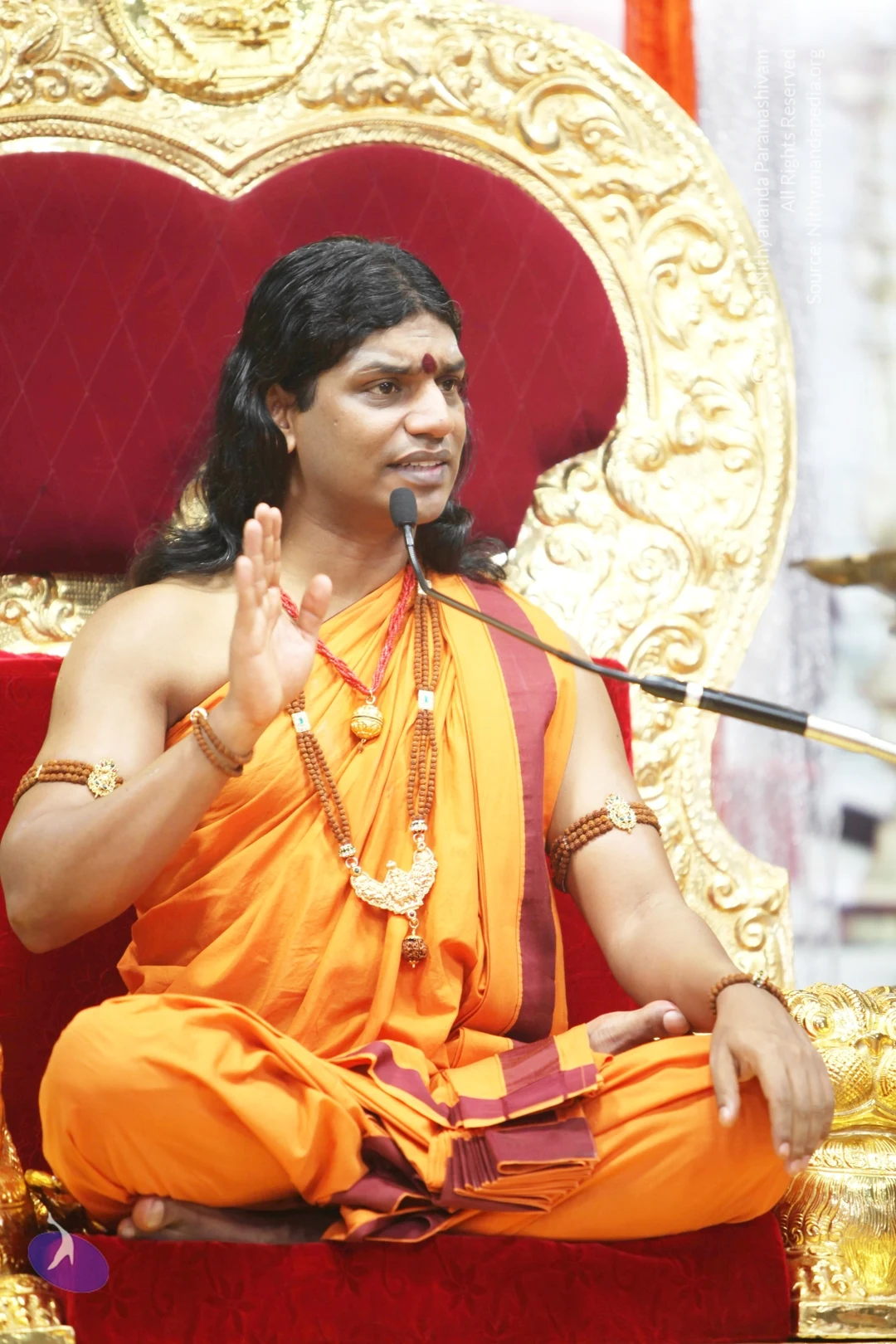
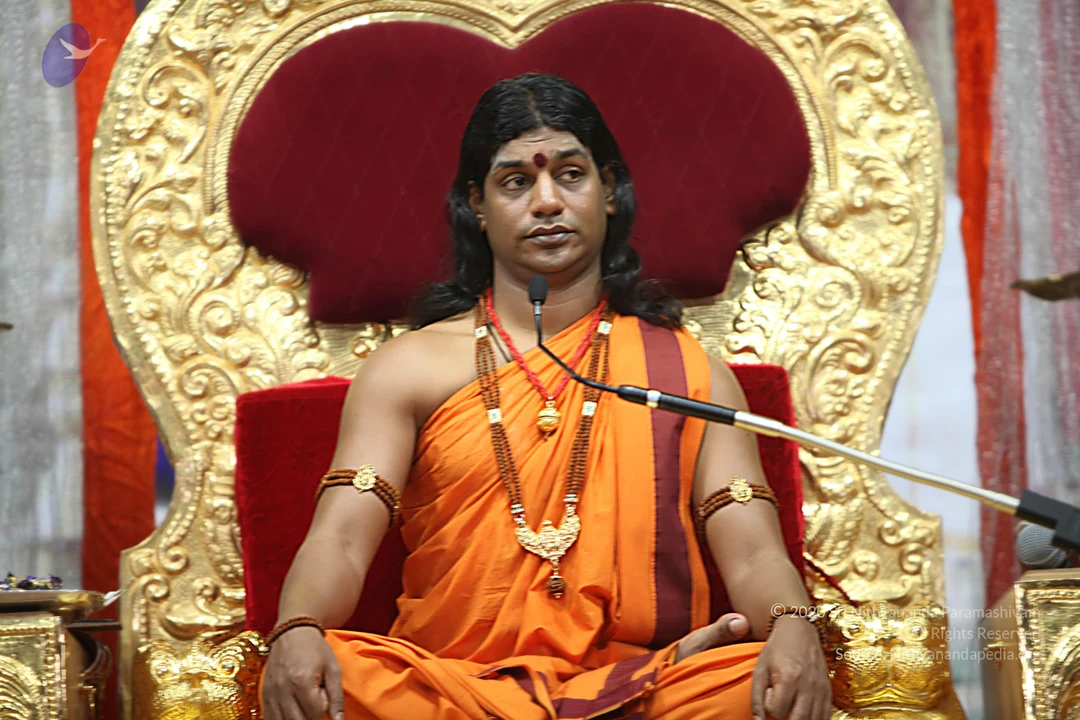
11 photosSource gallery
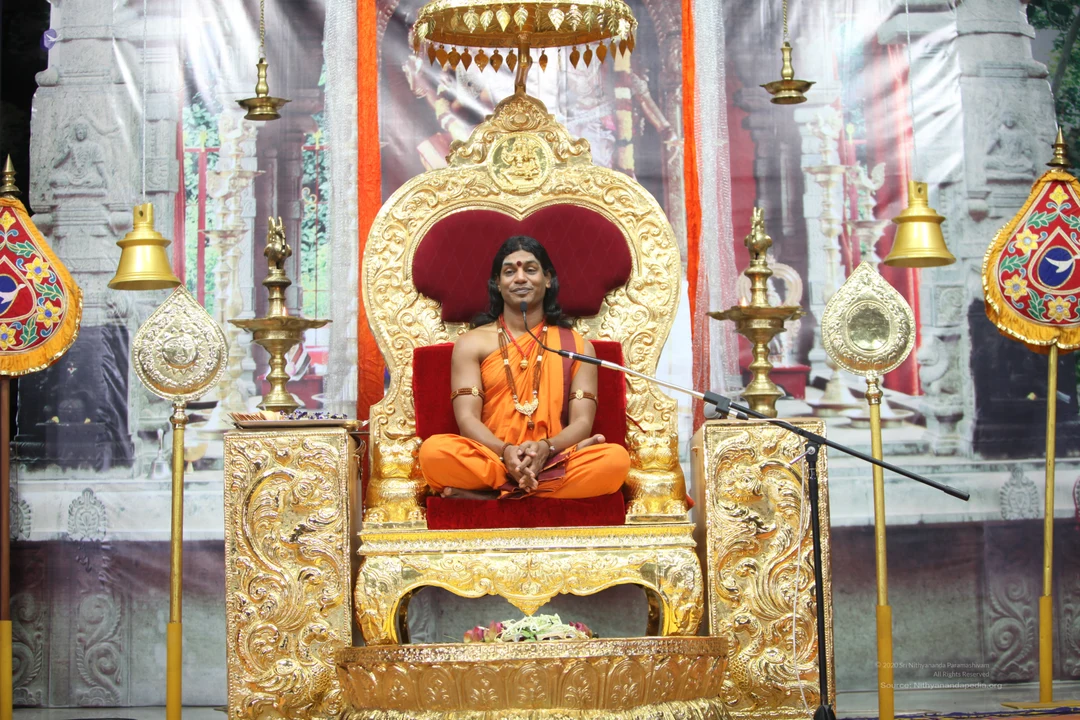
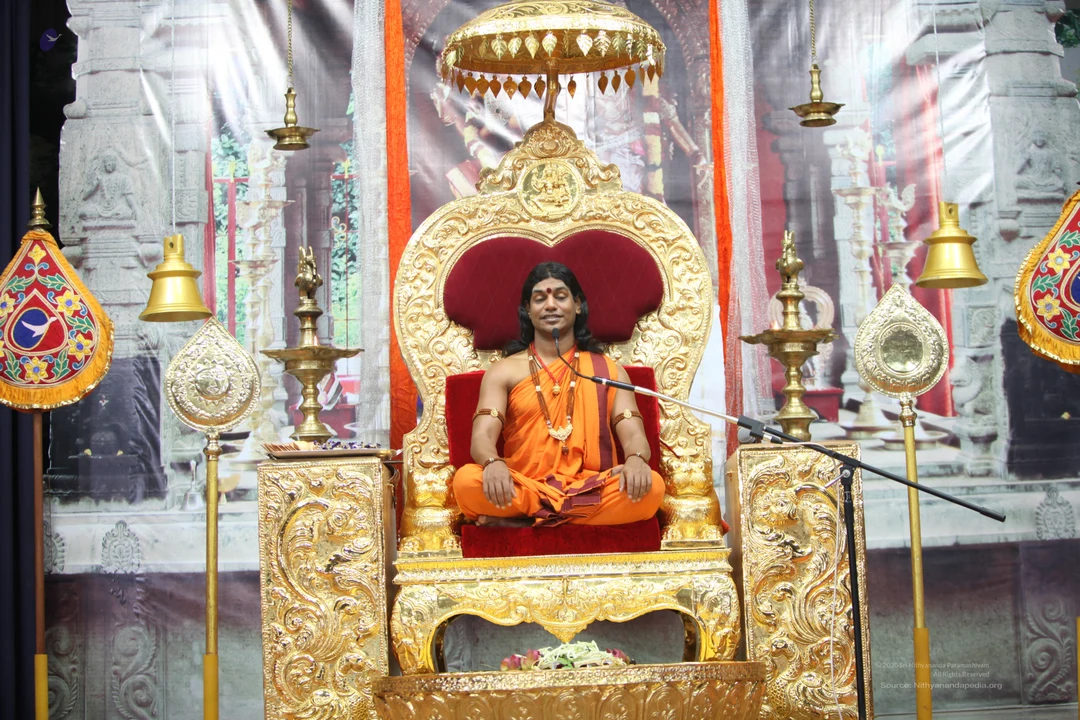
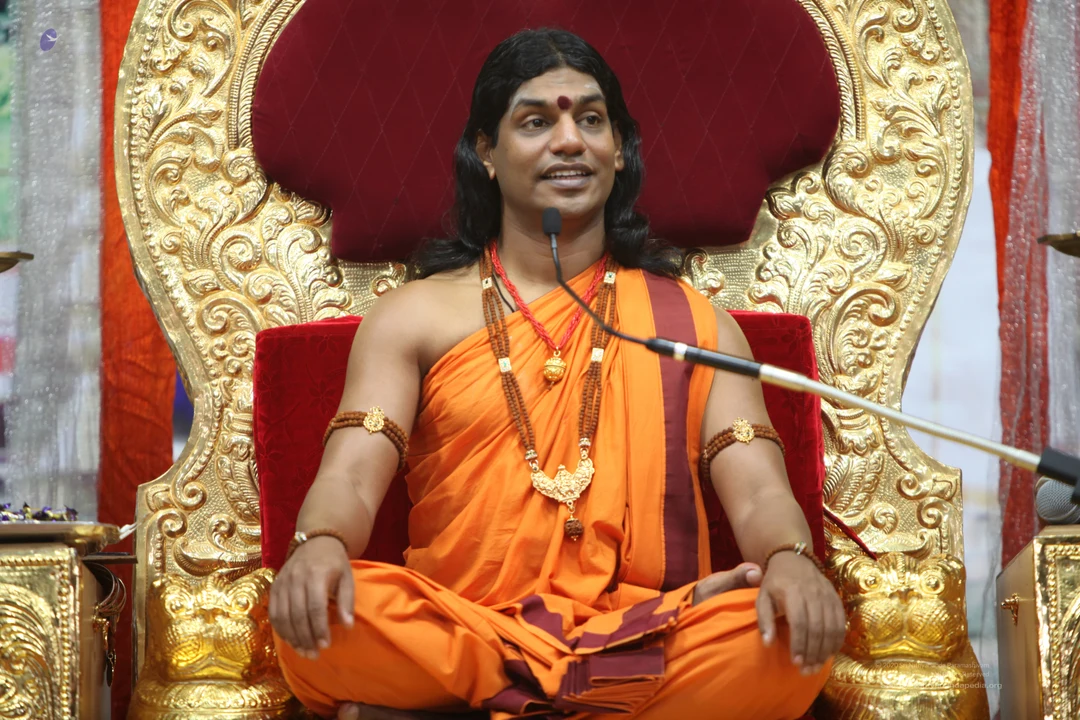
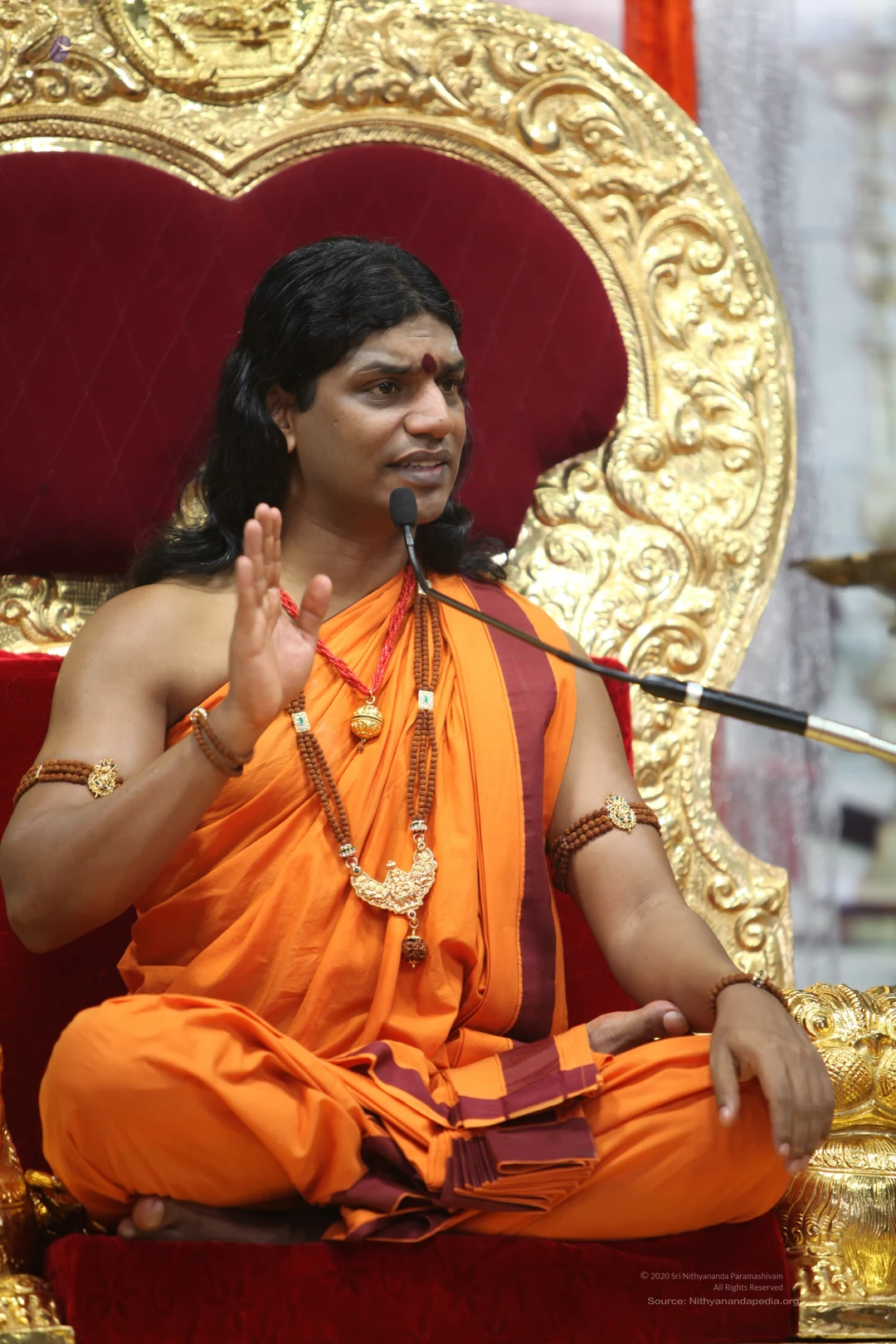
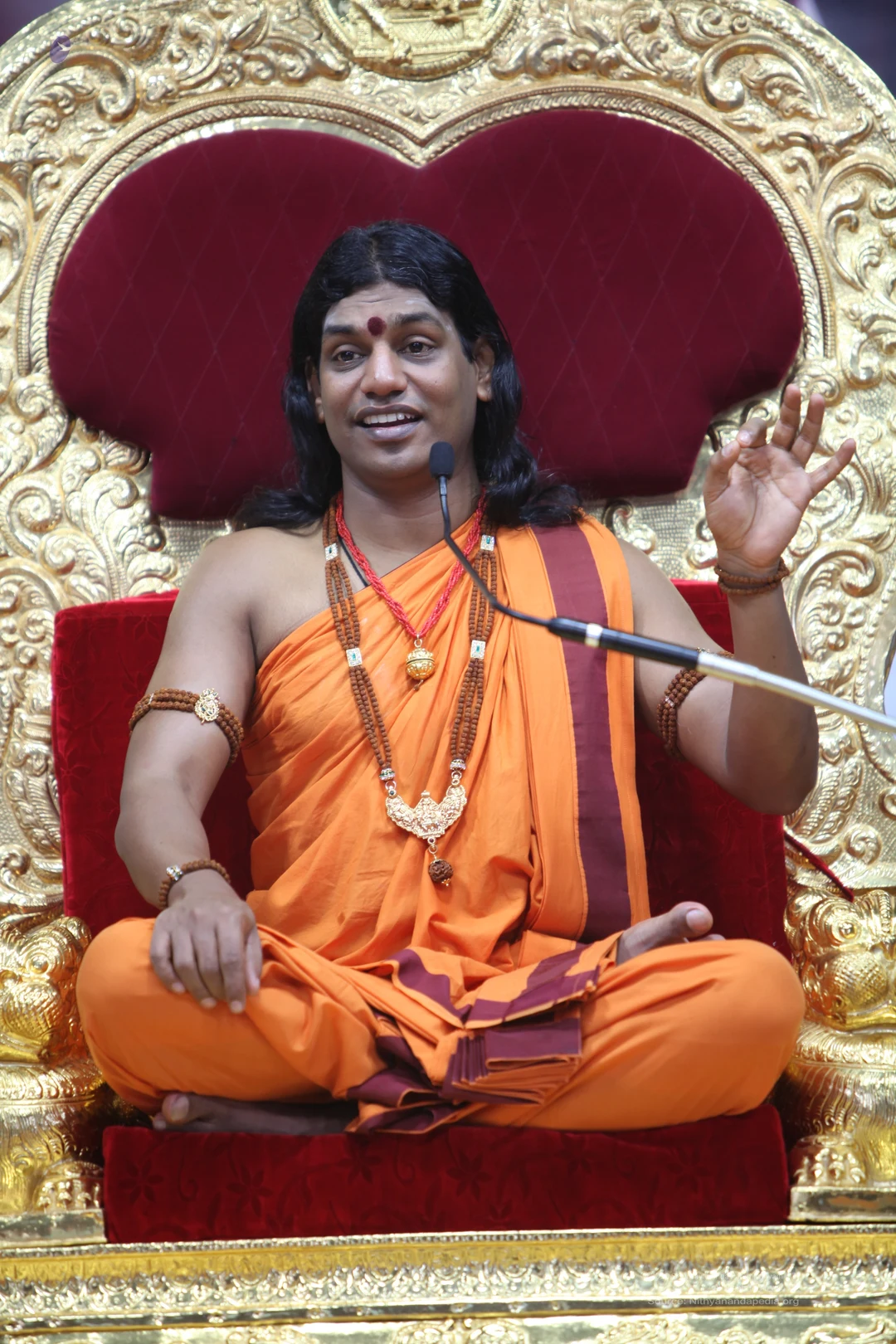
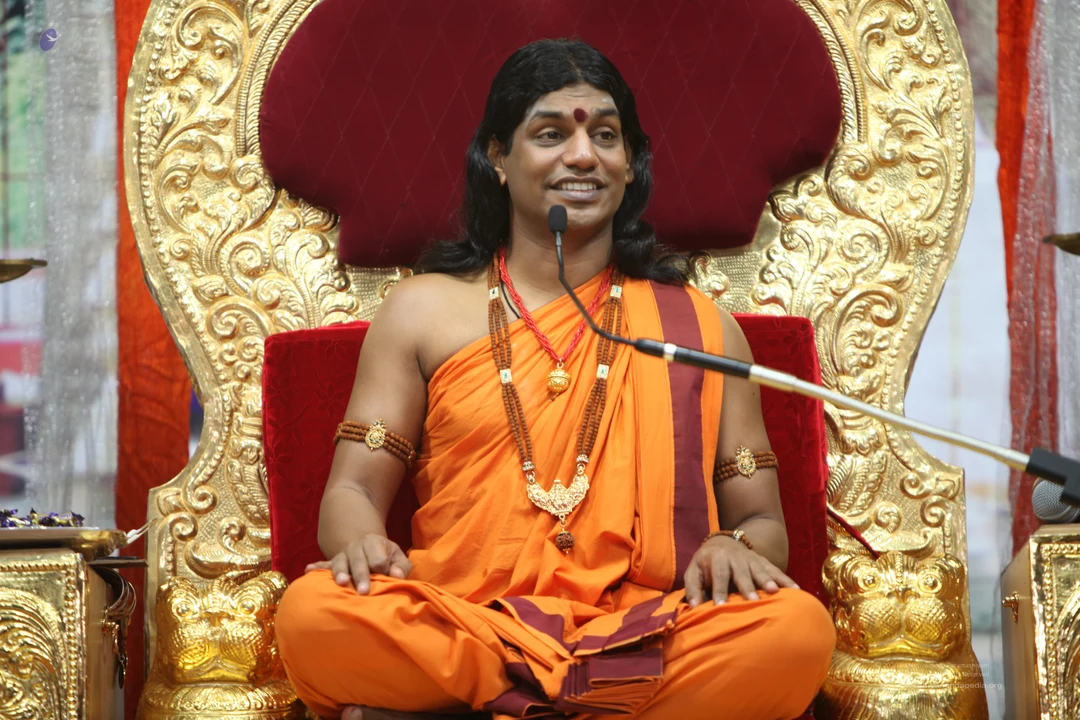
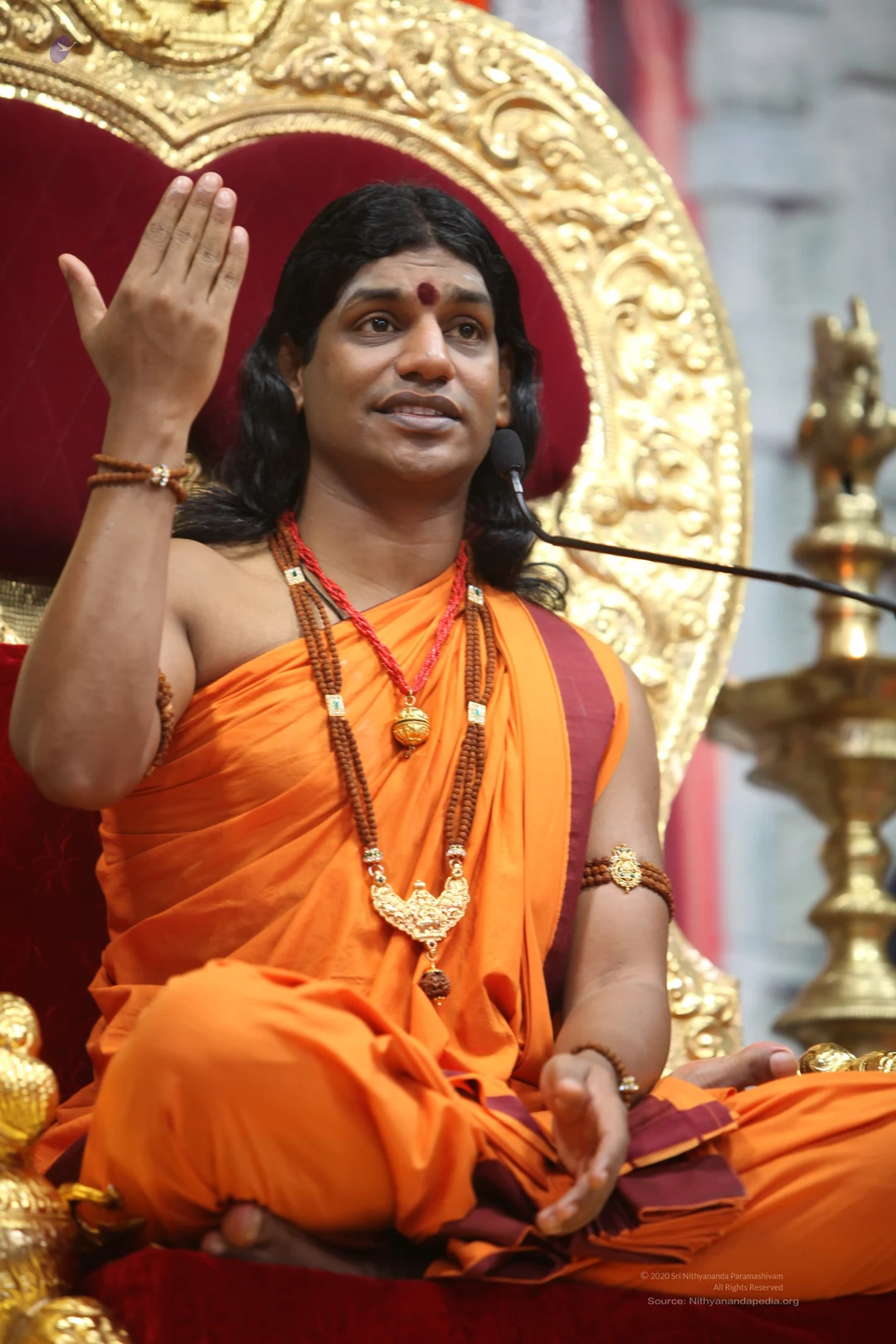
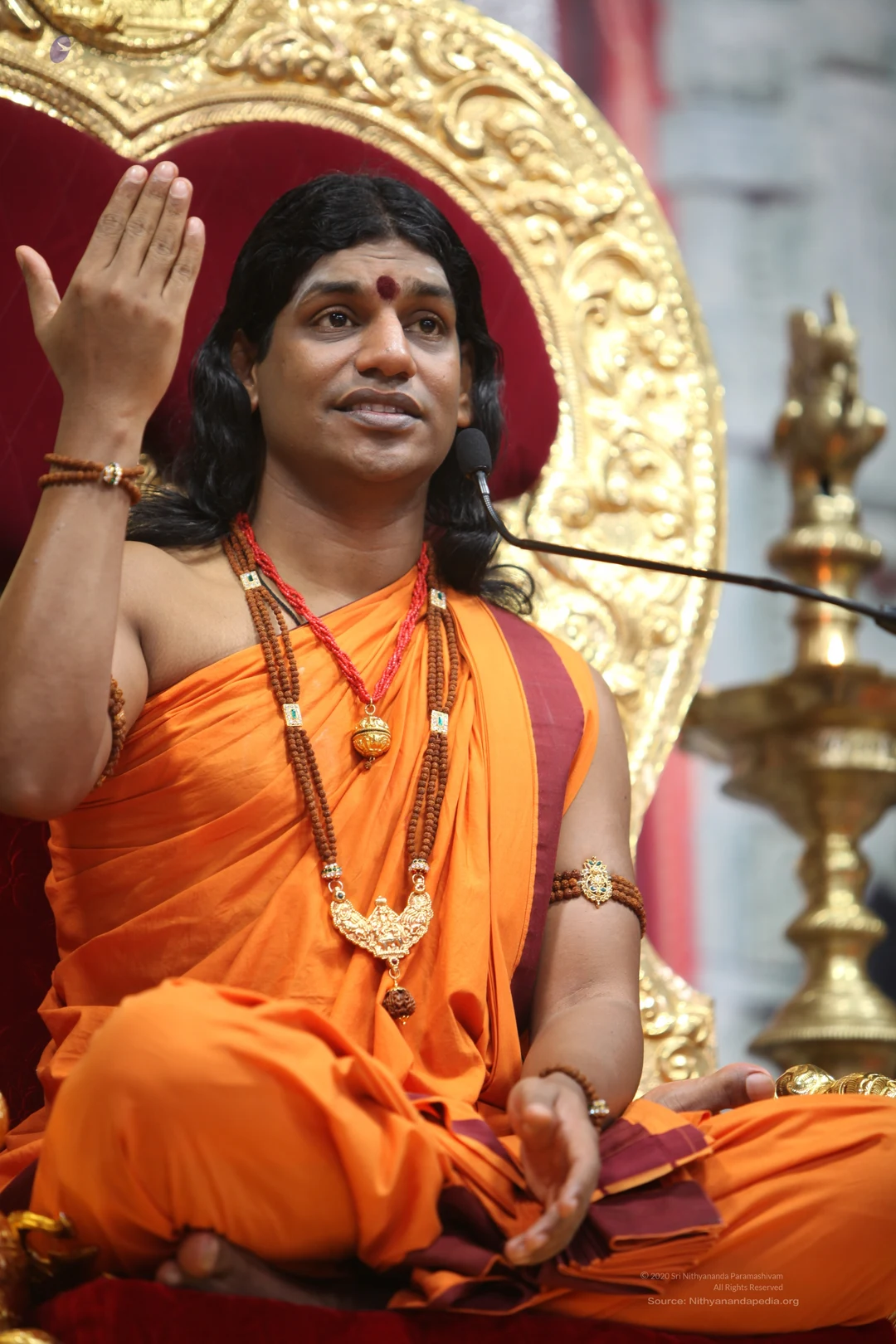
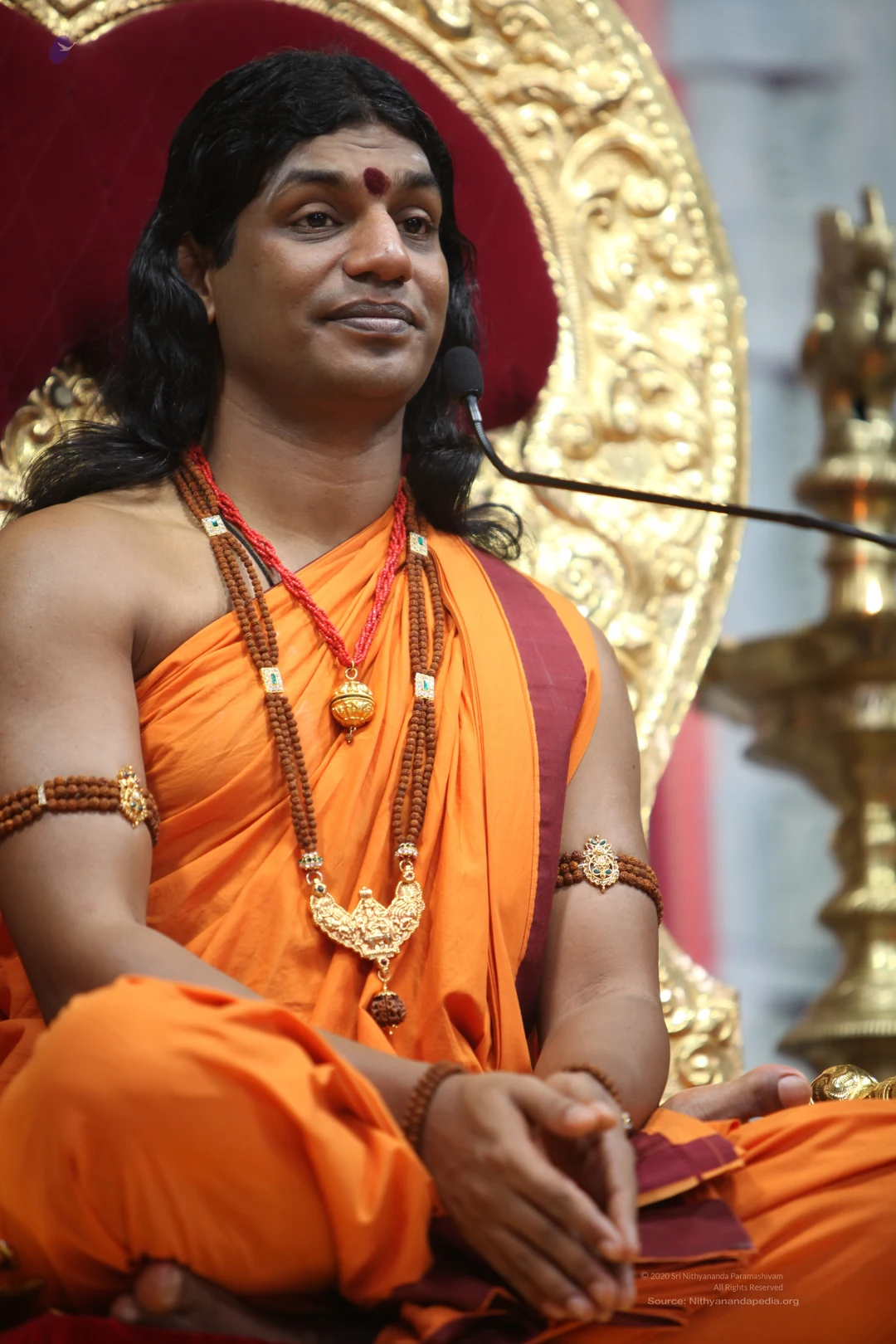
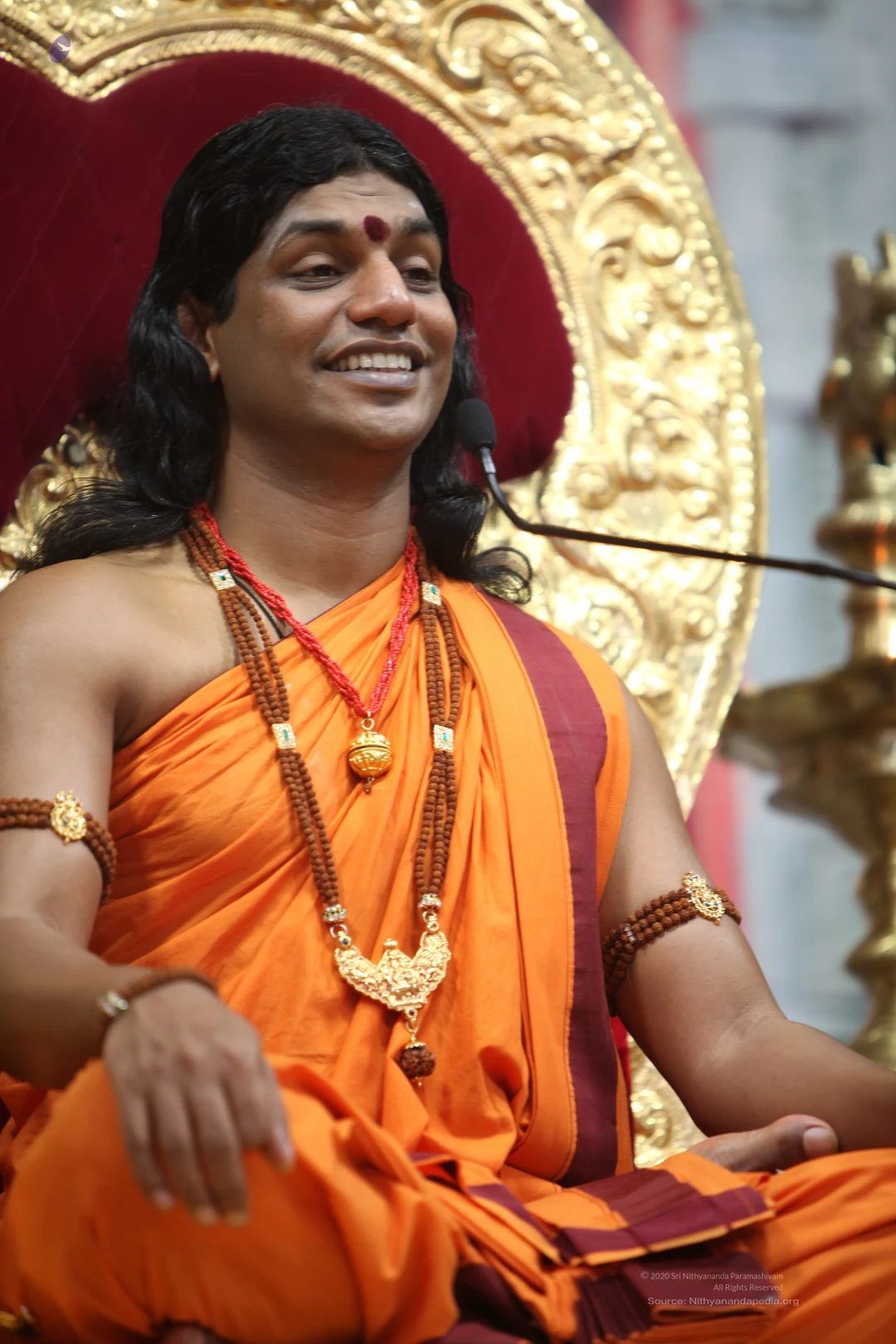
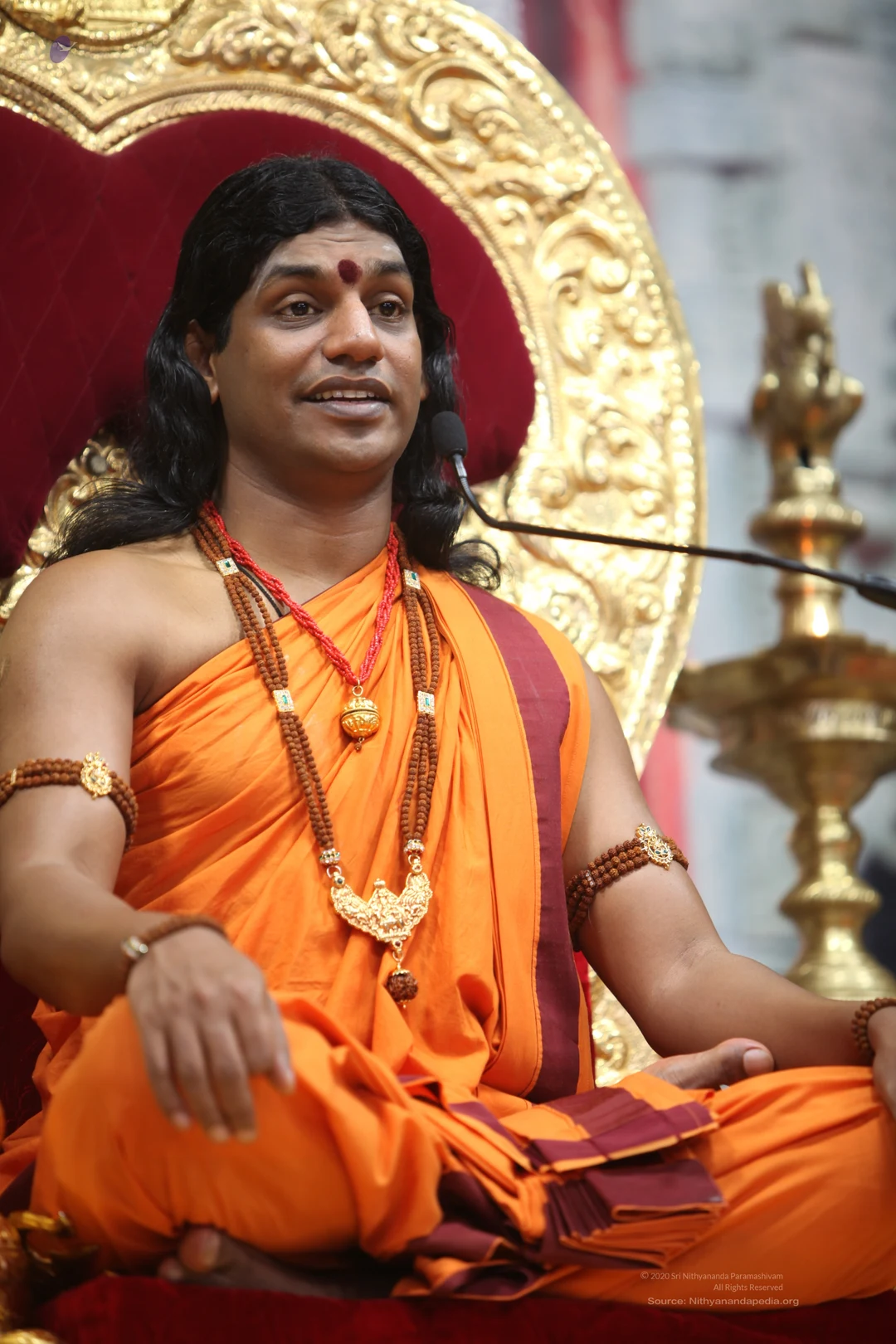
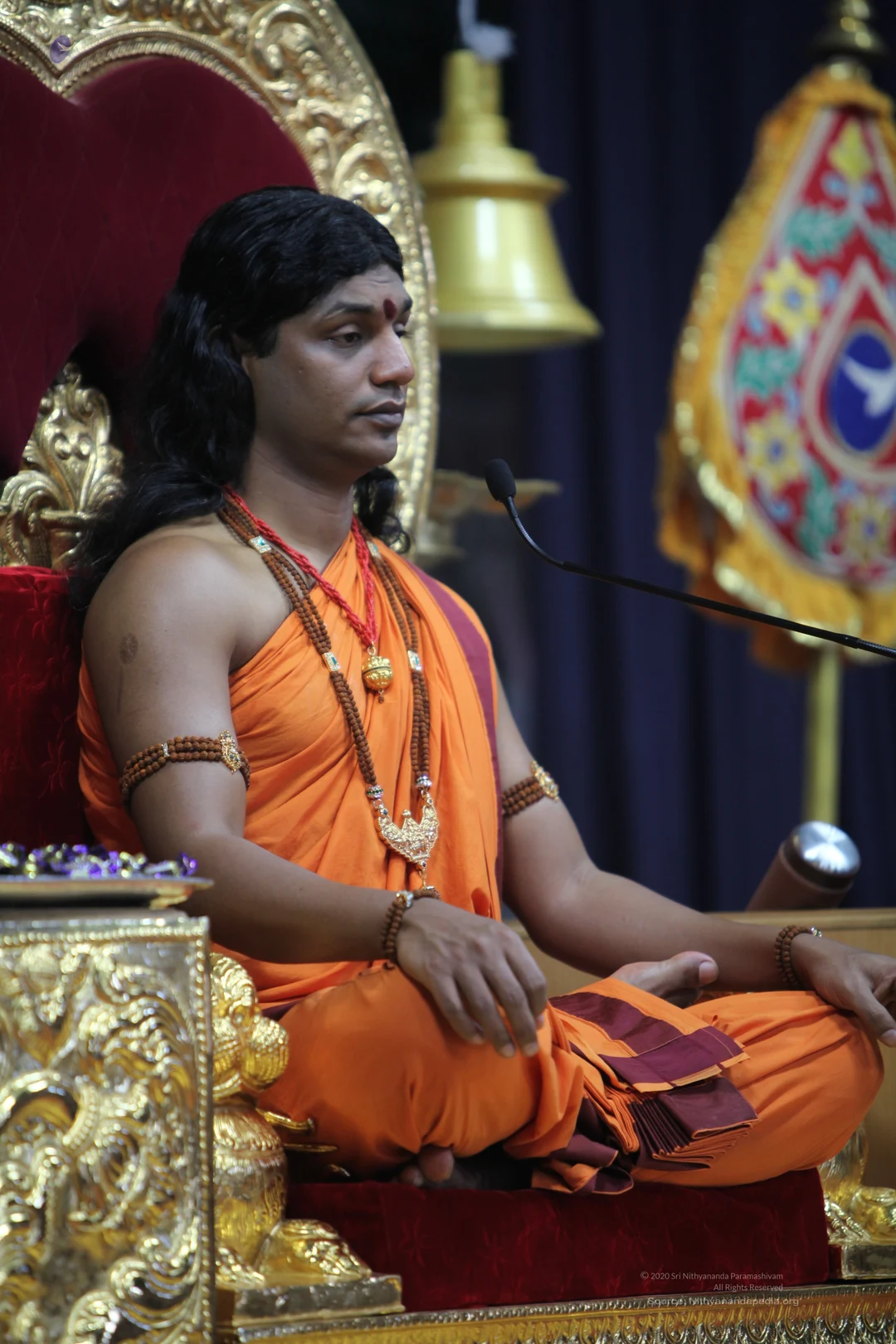
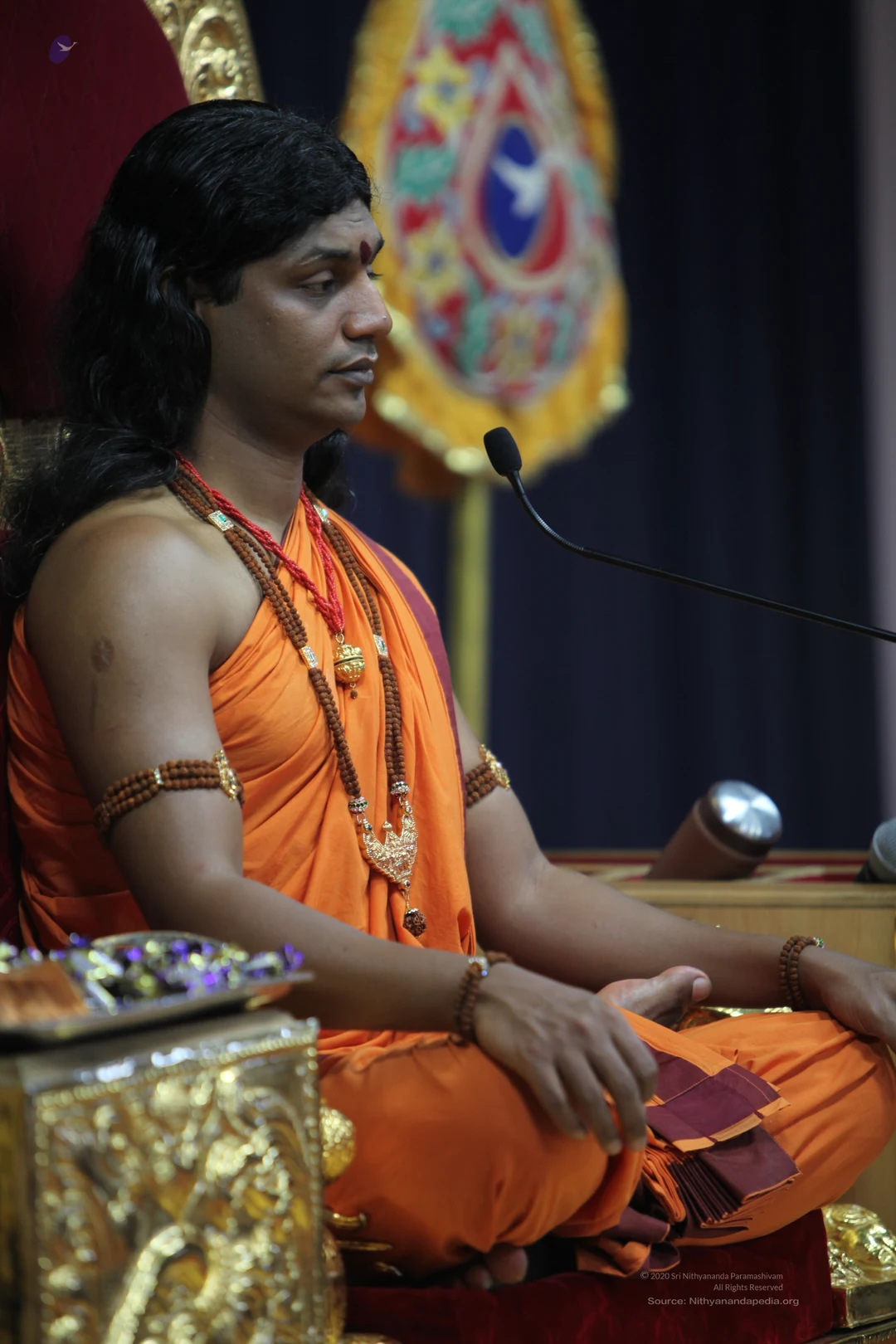
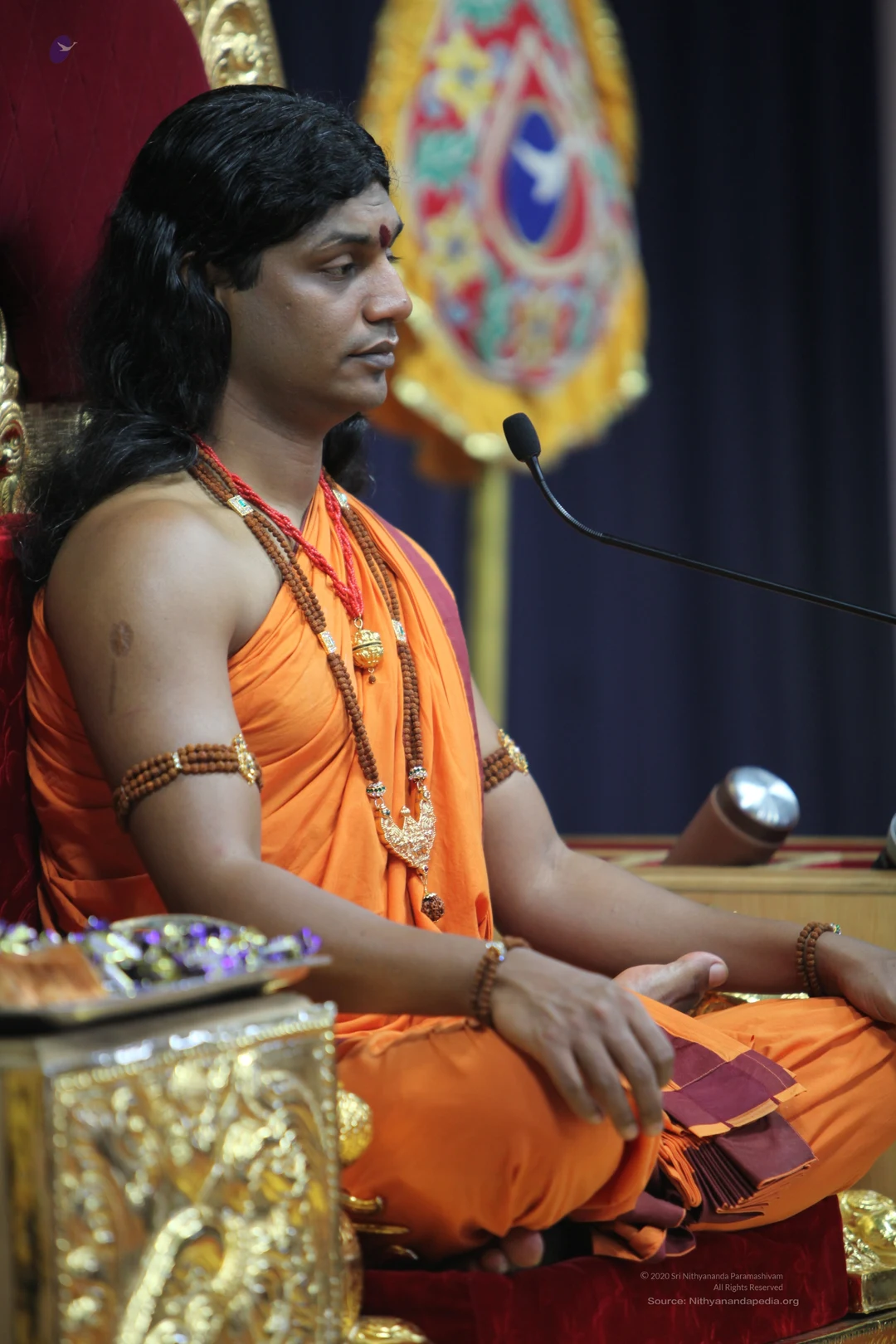
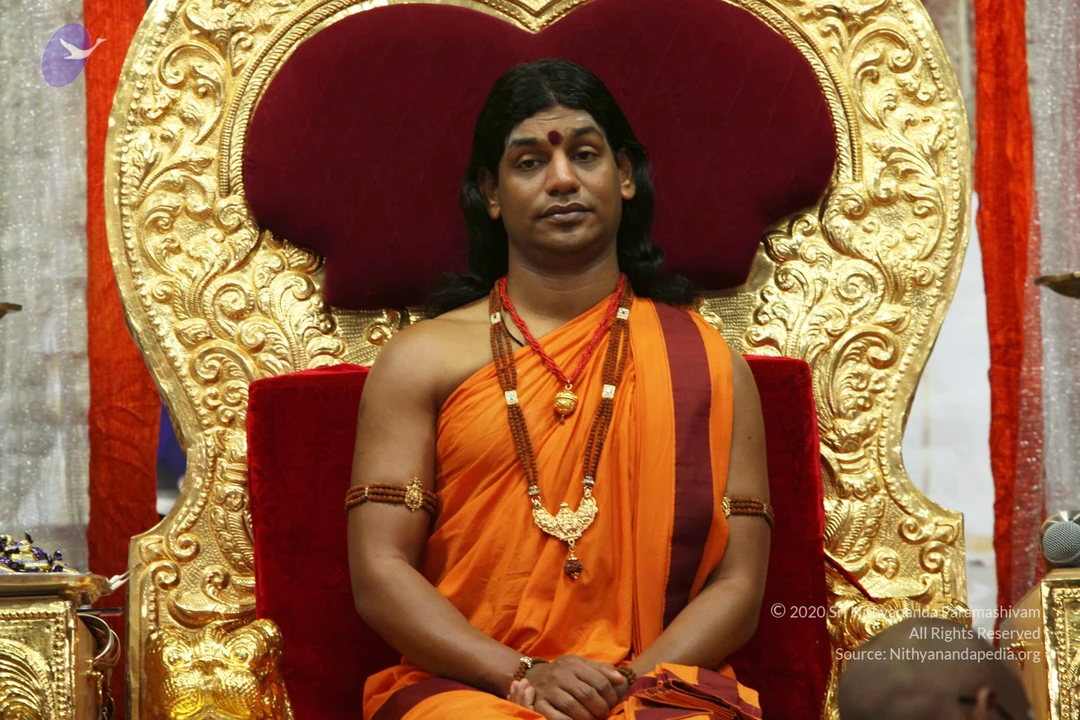
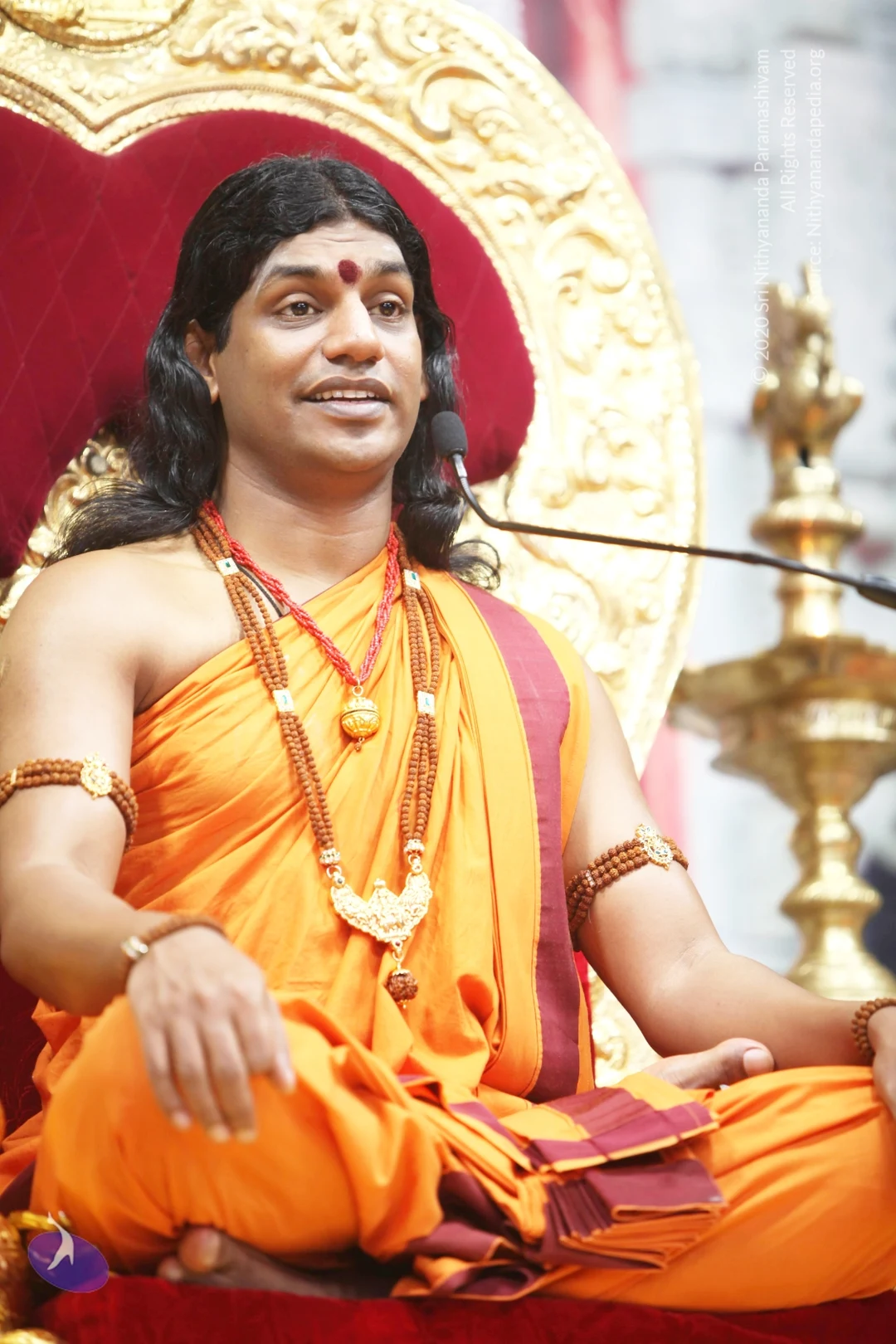
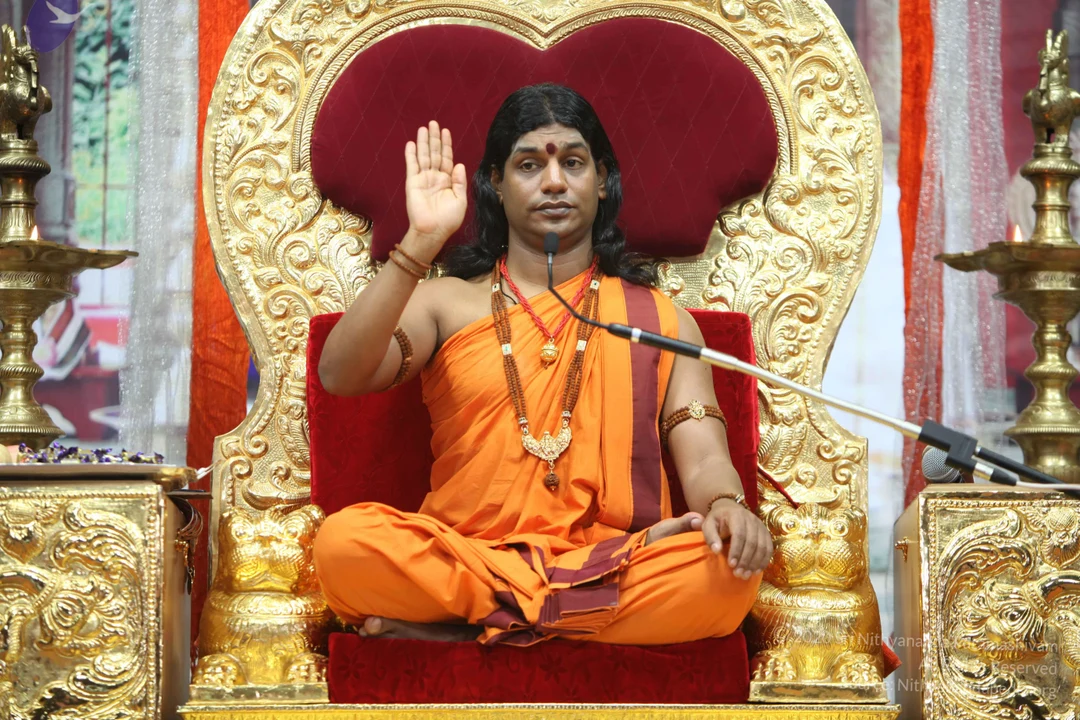
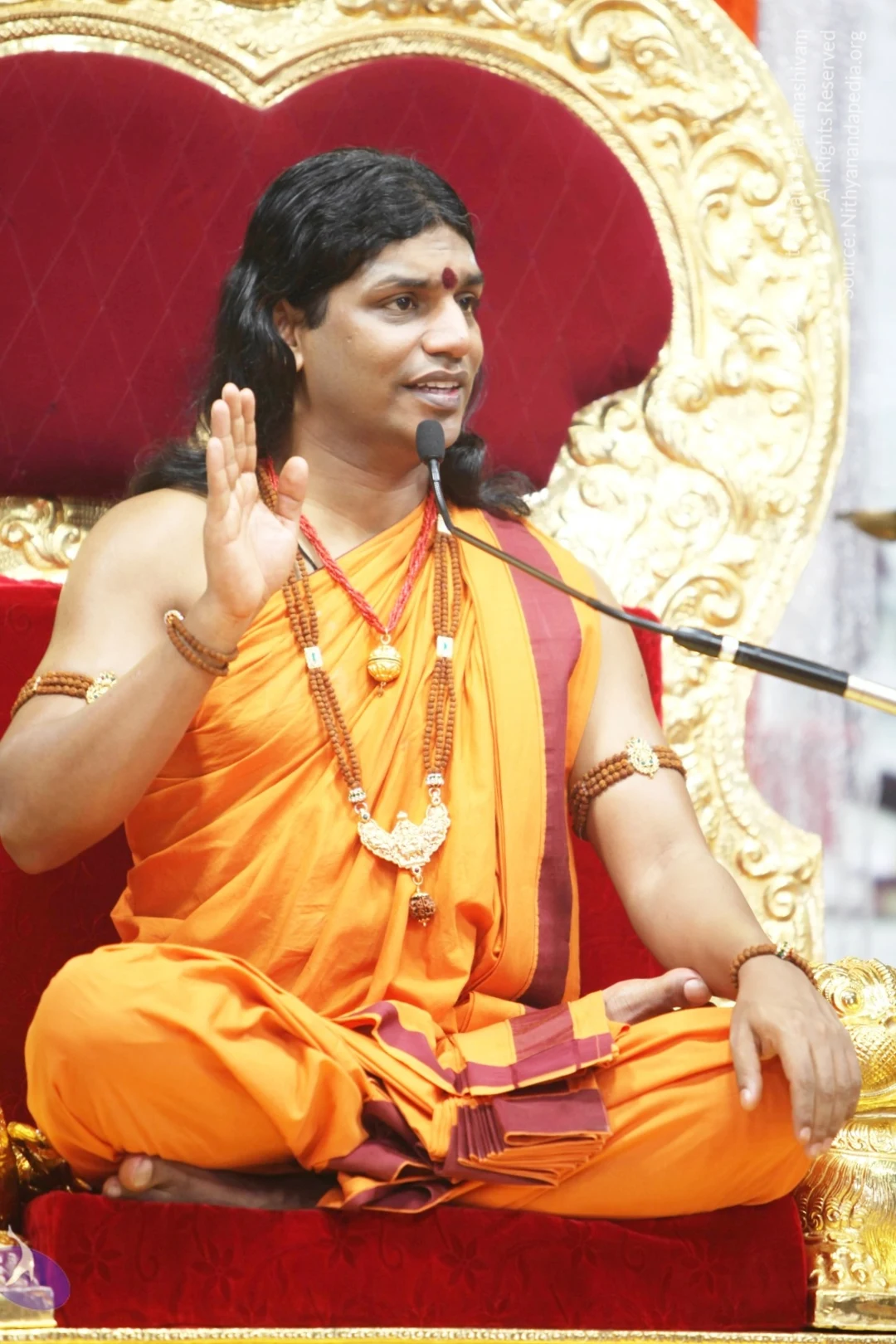
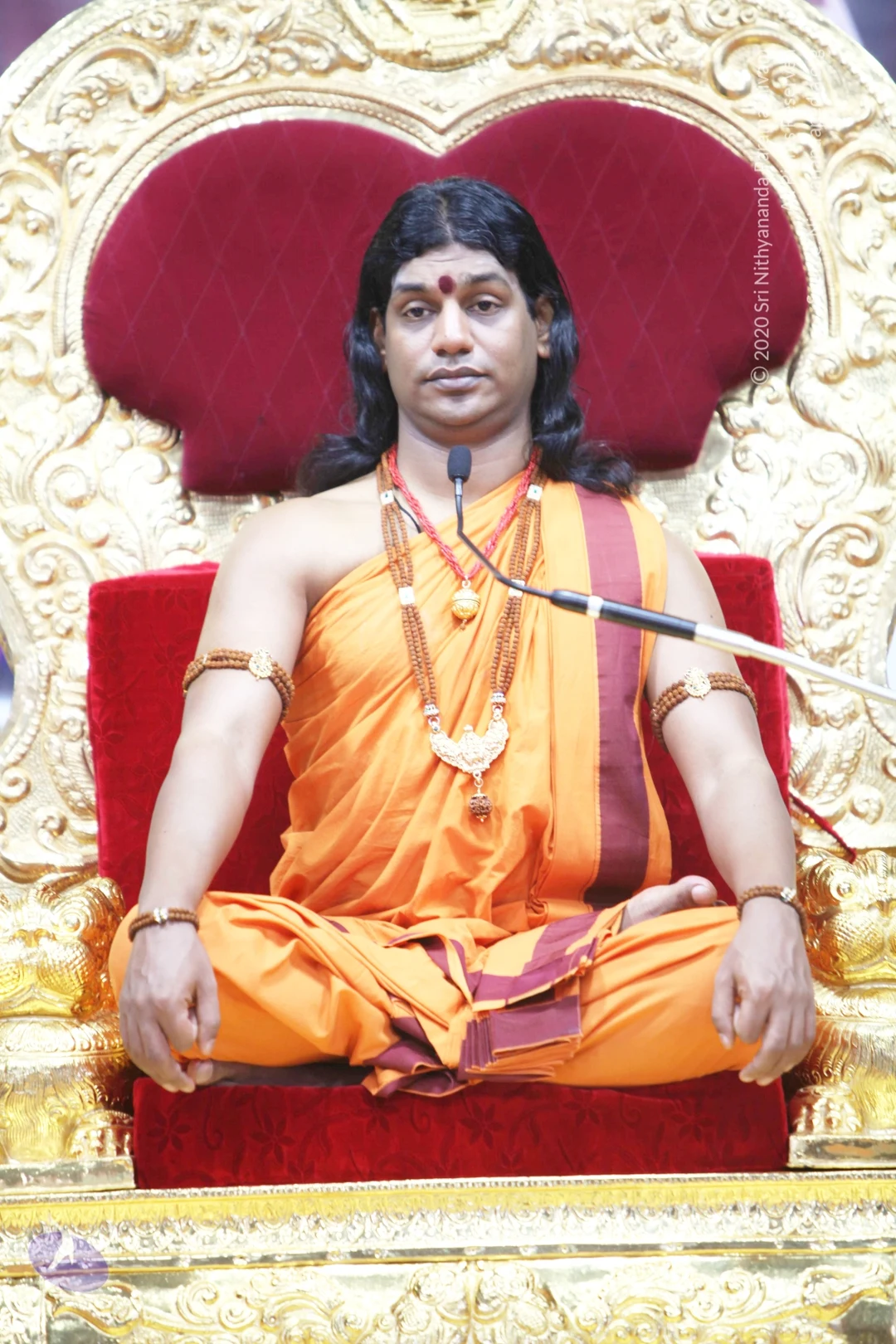
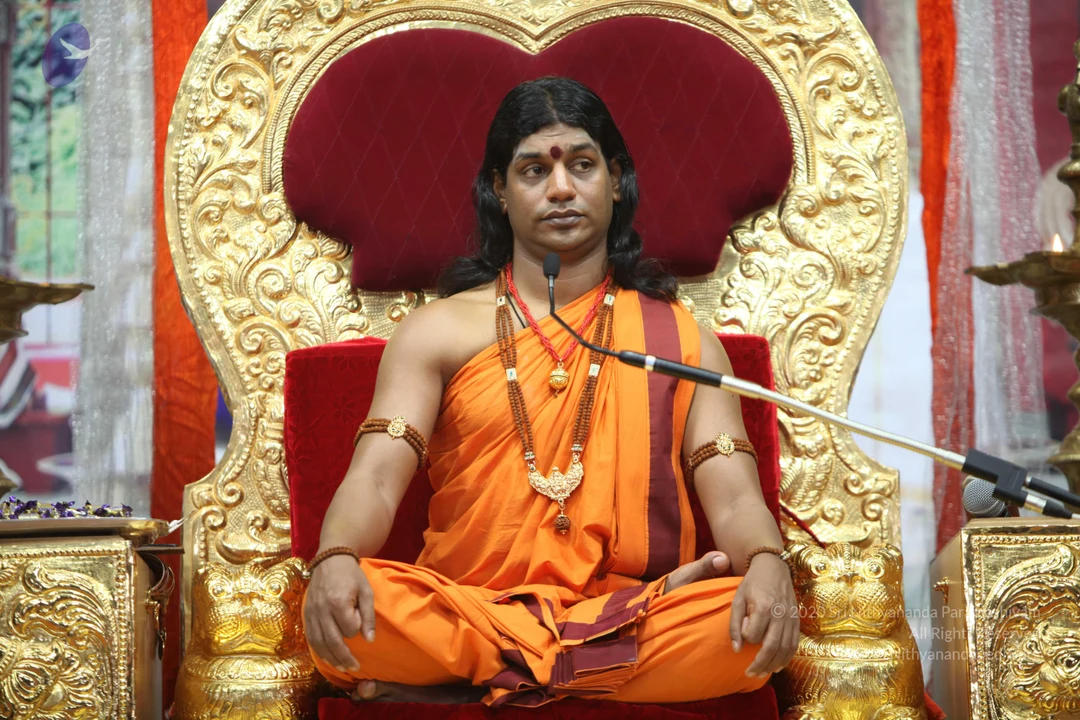
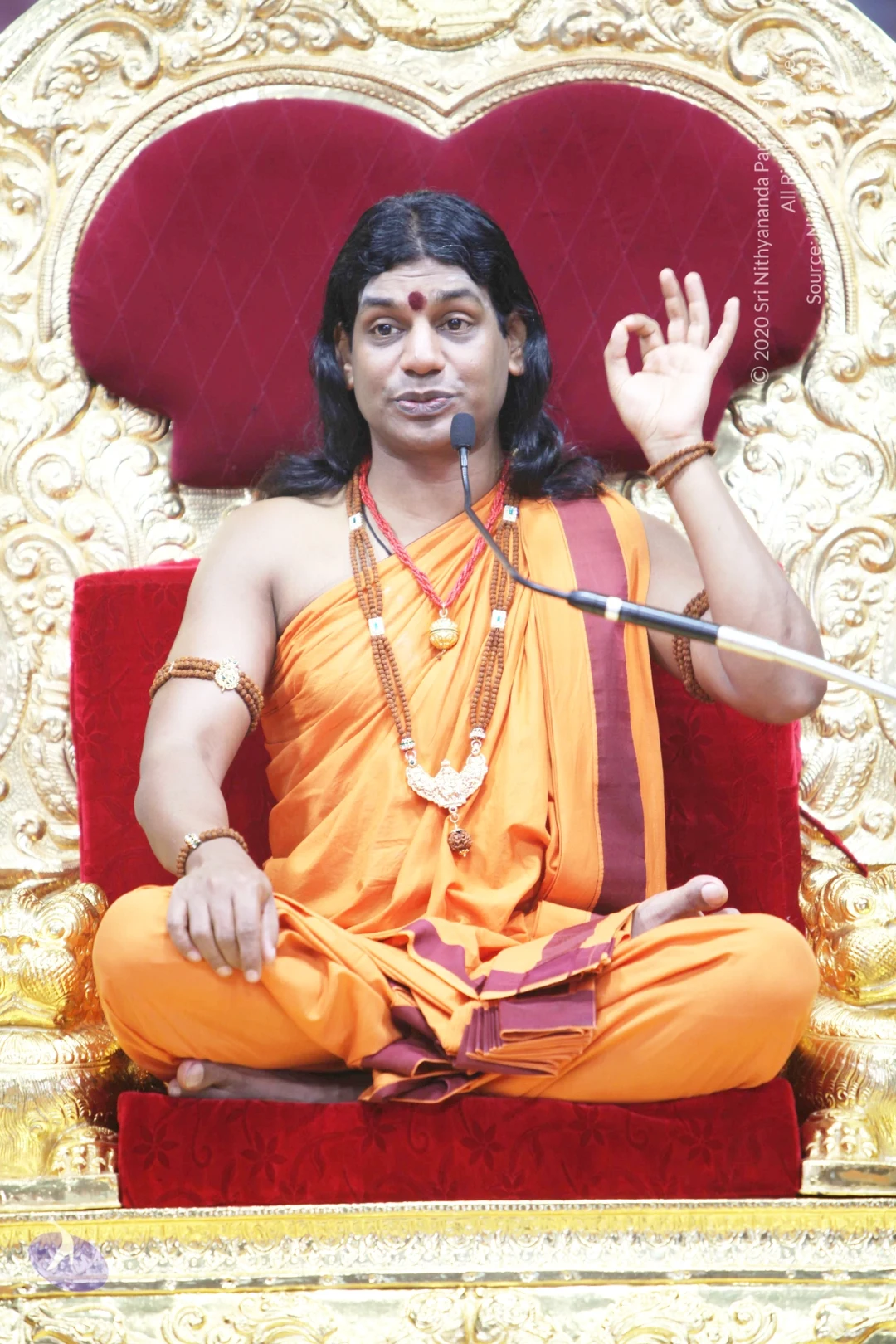
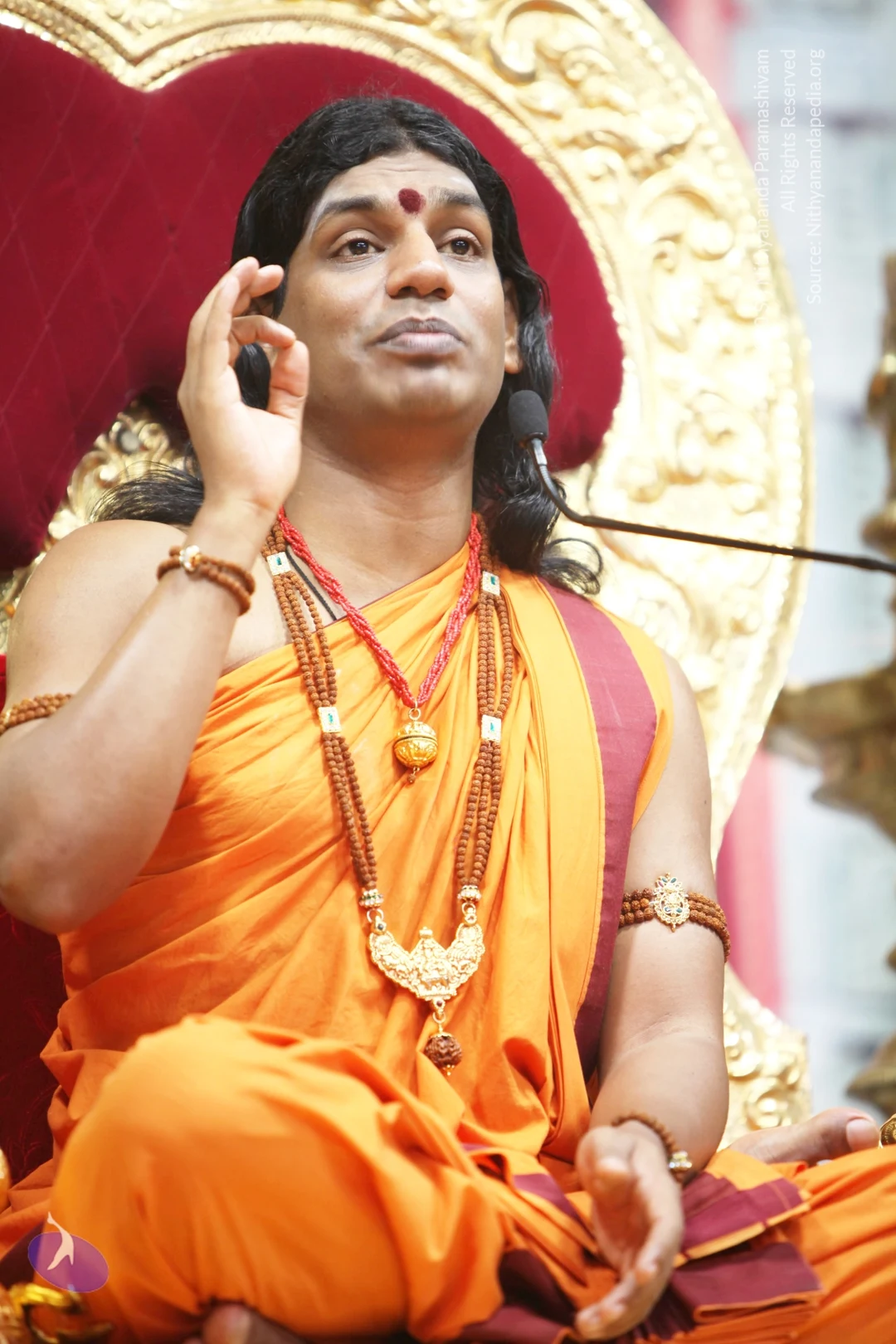
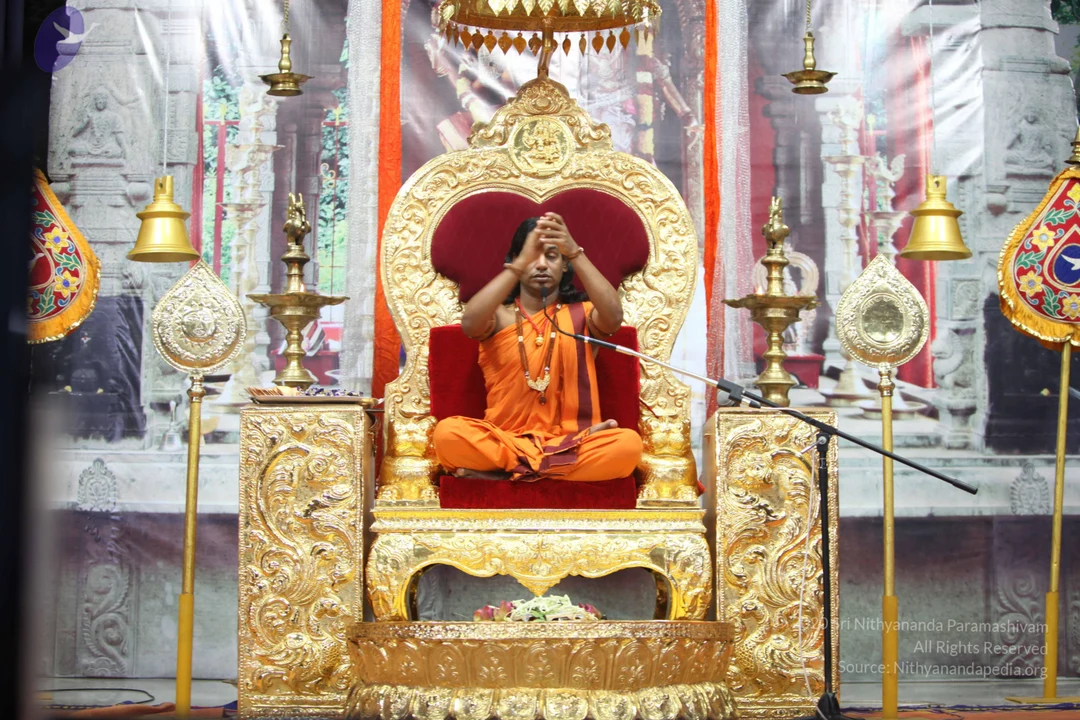
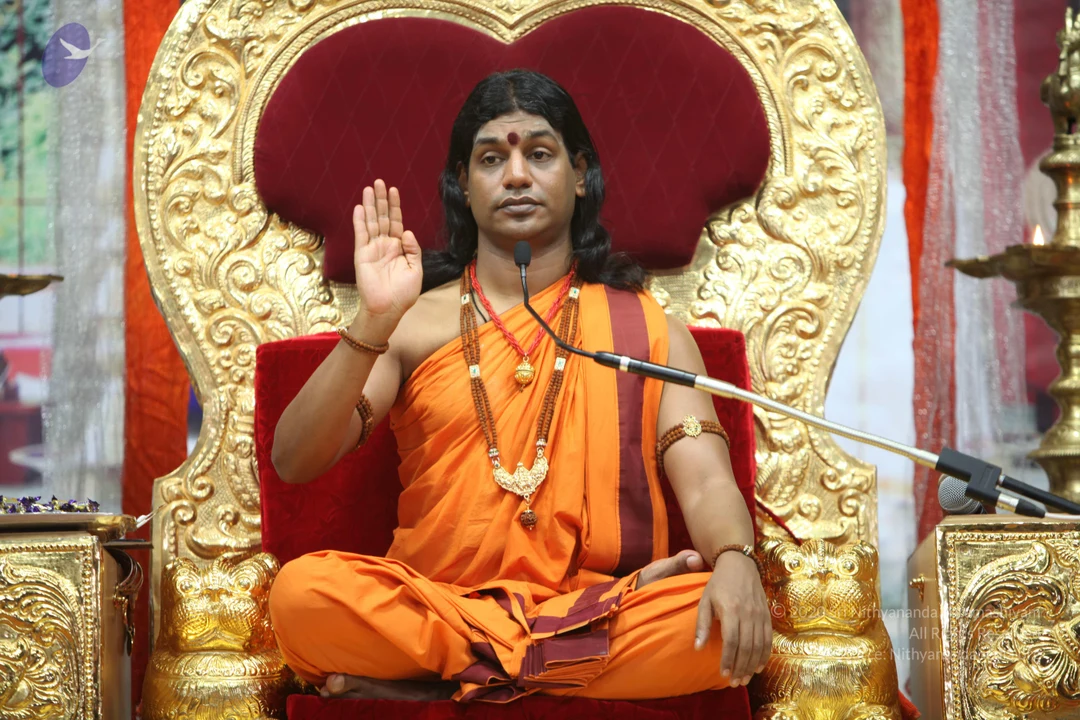
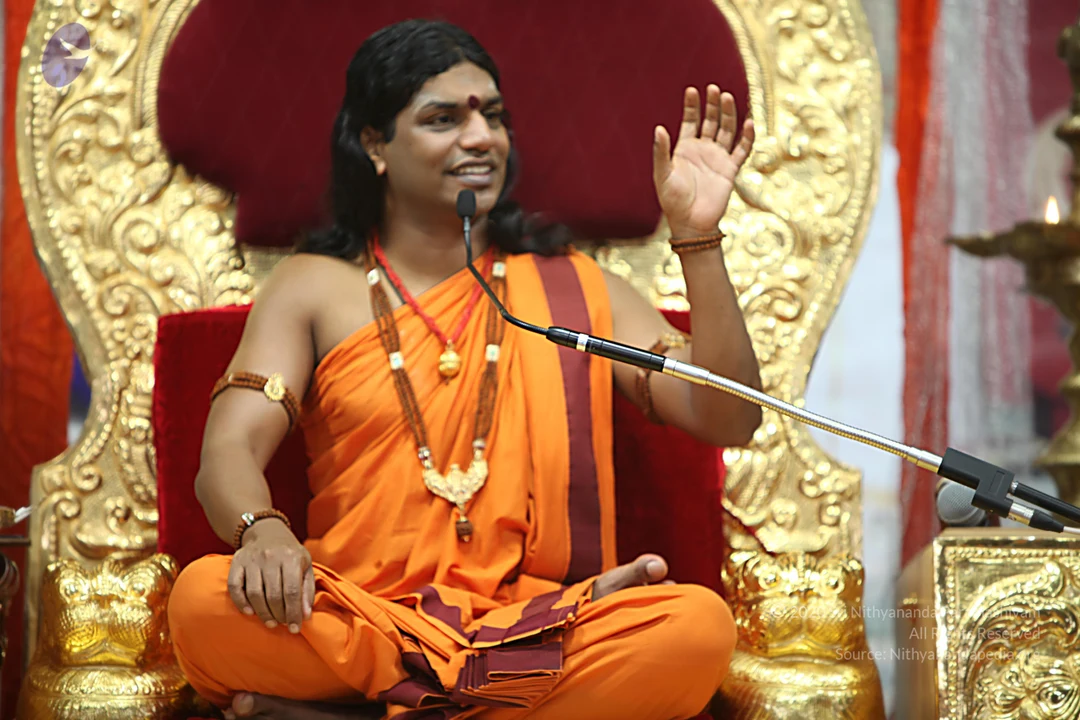
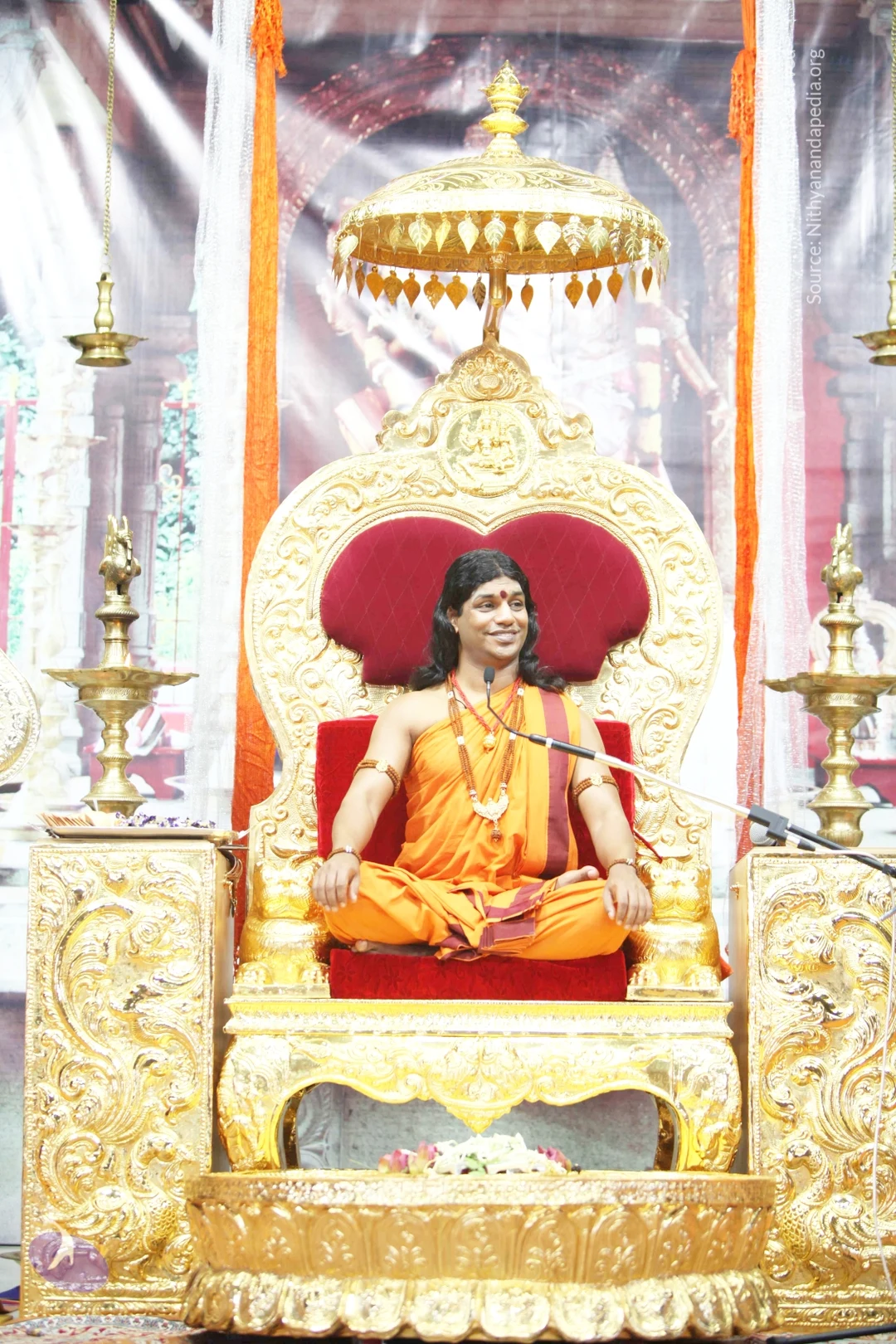
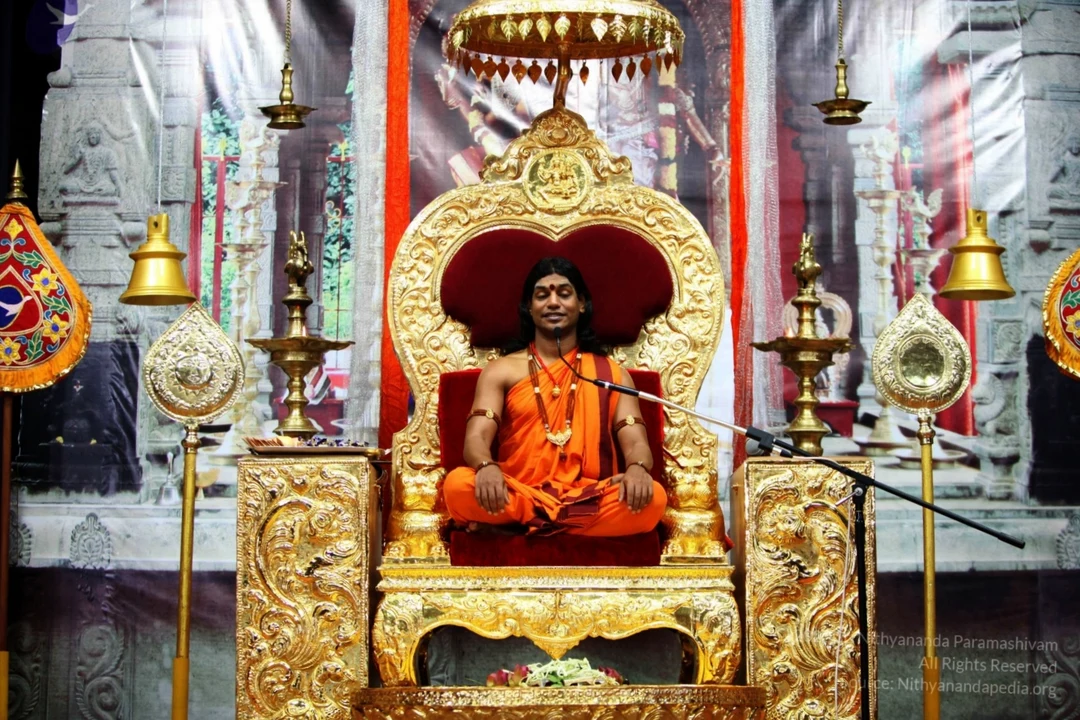
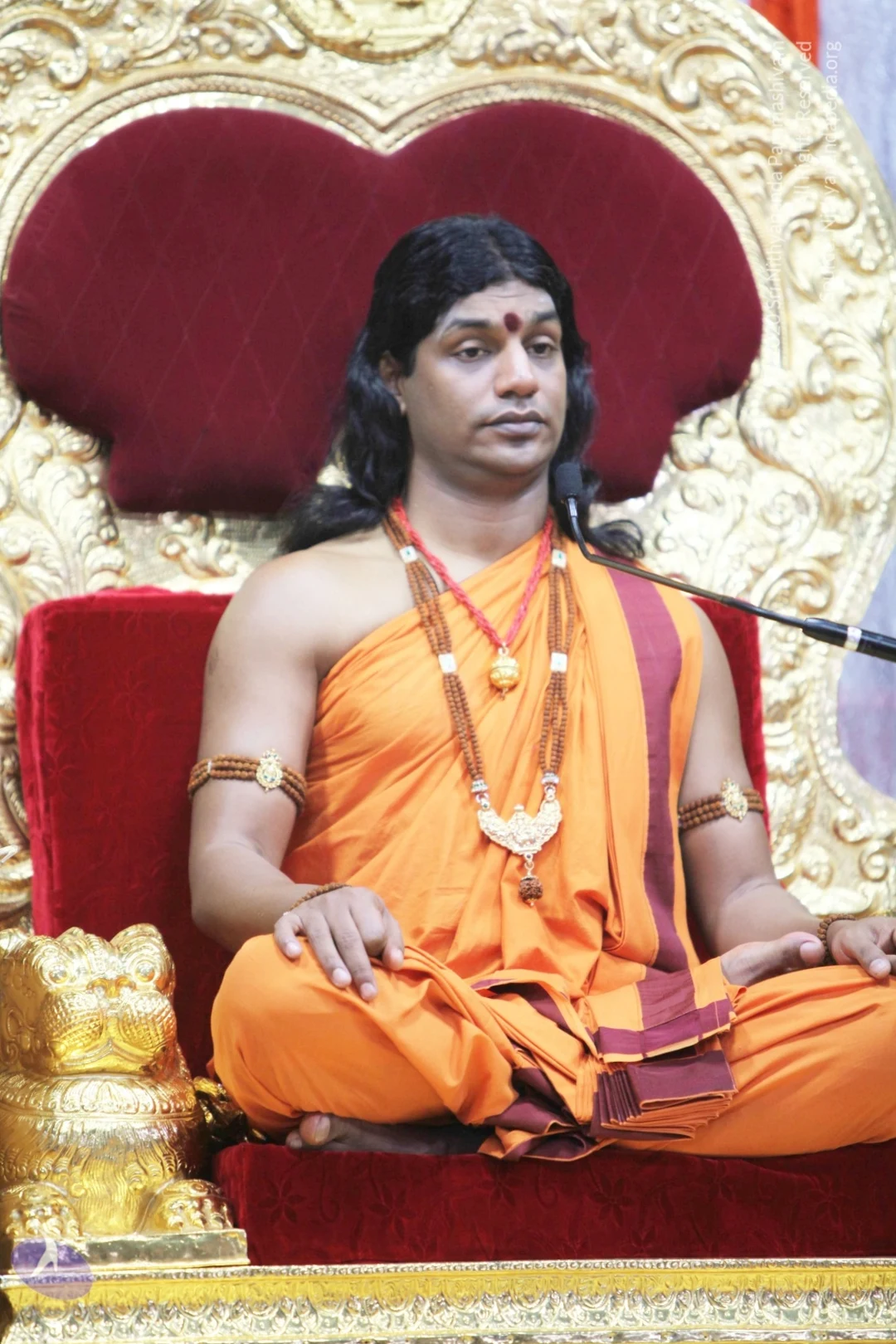
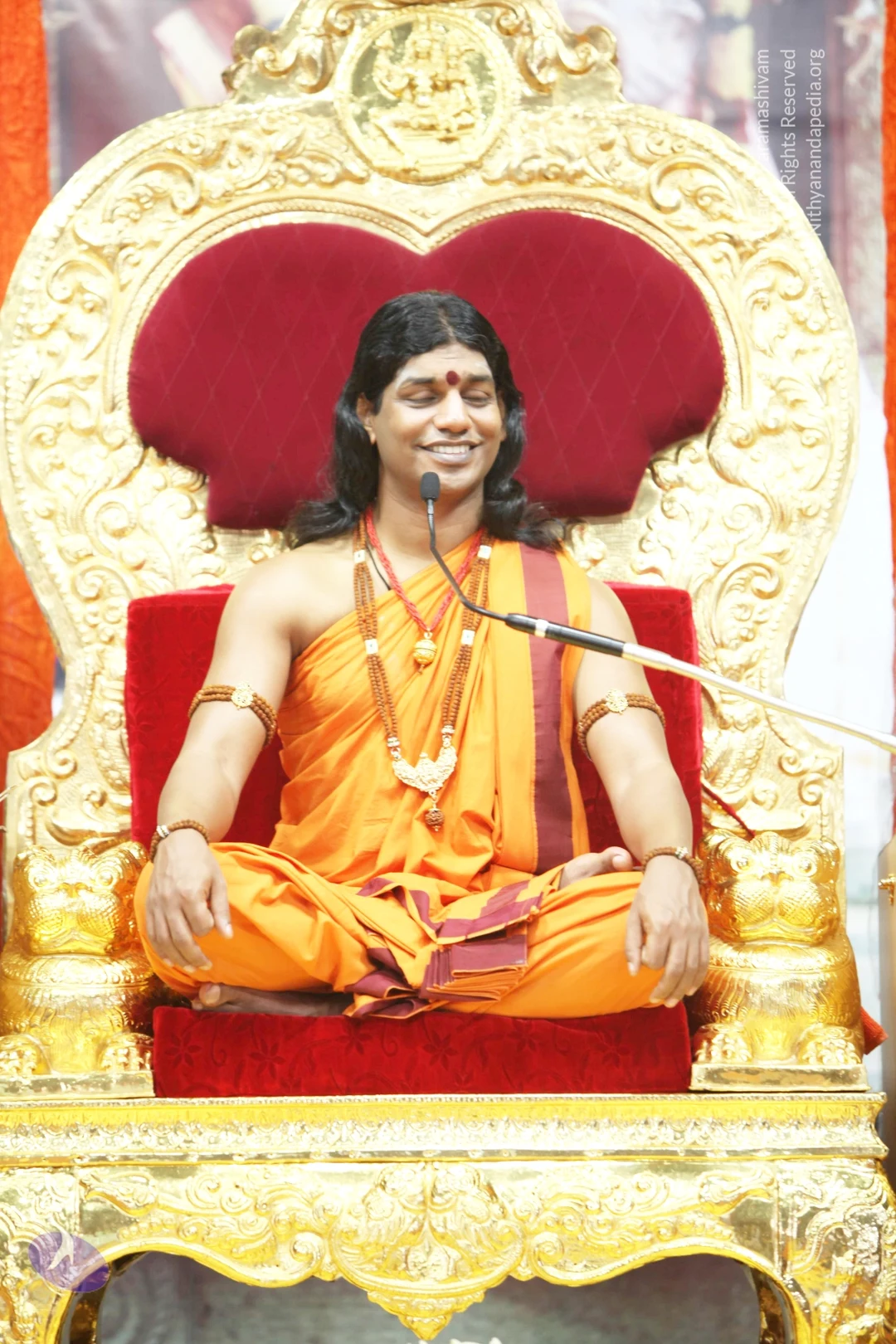
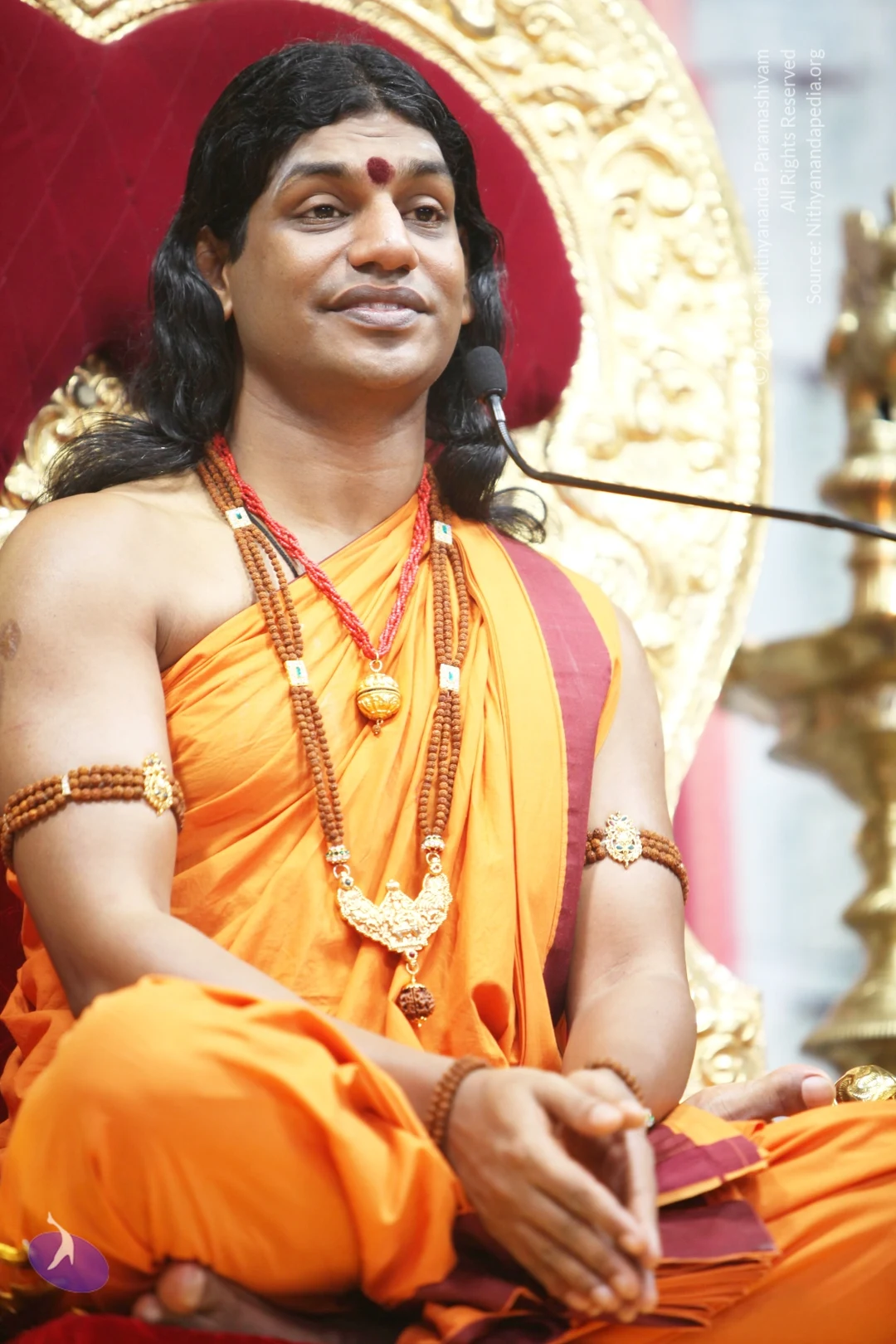
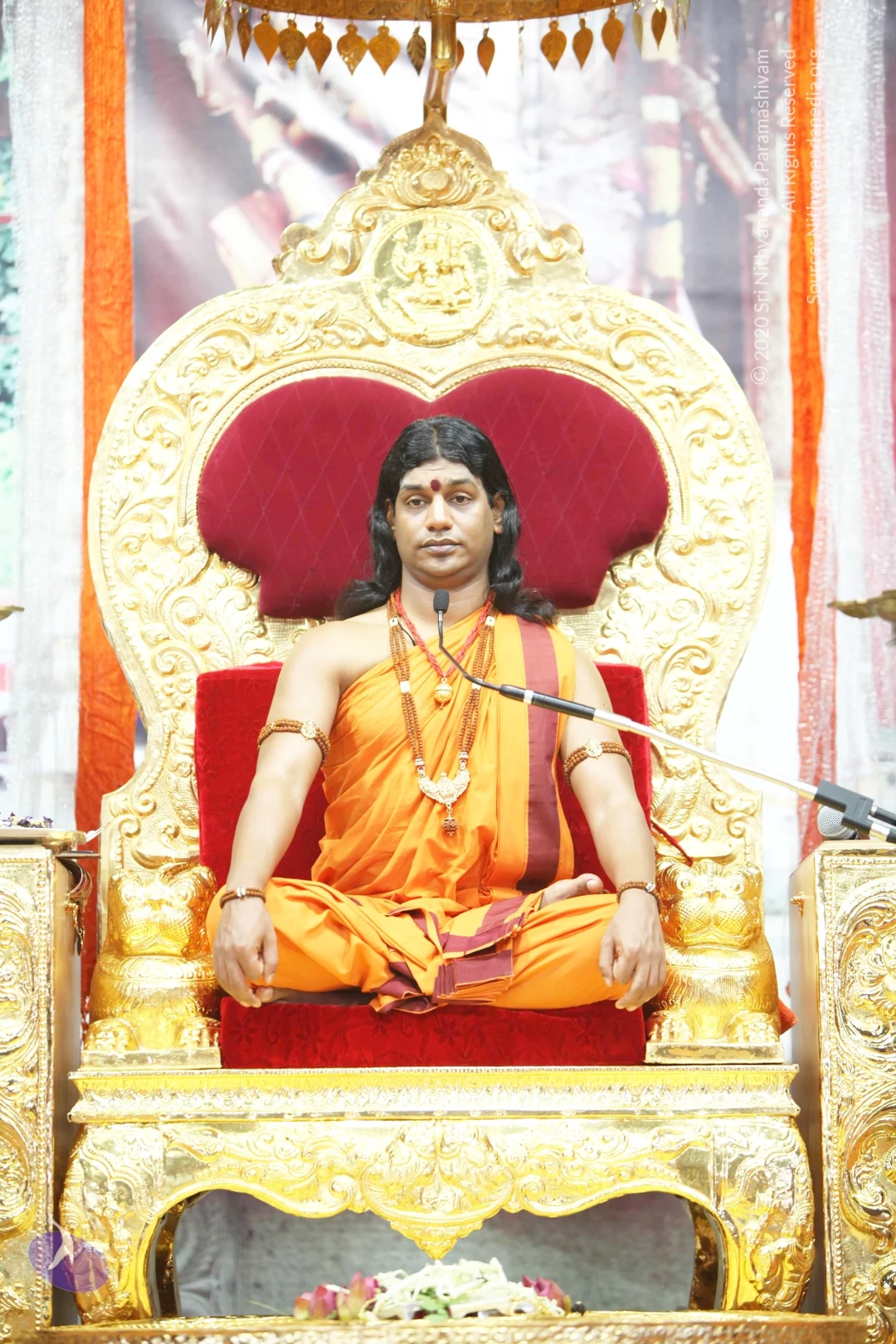
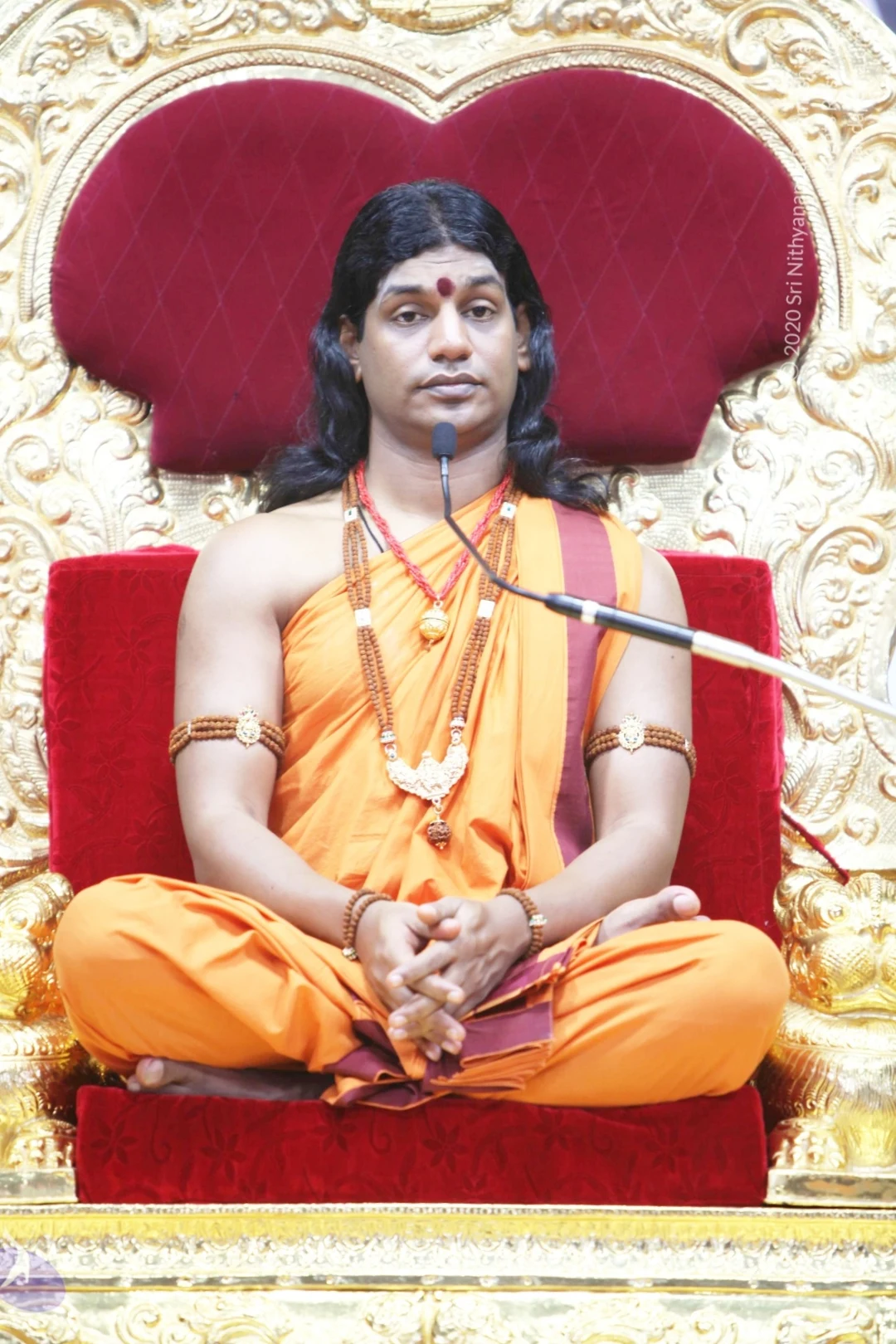
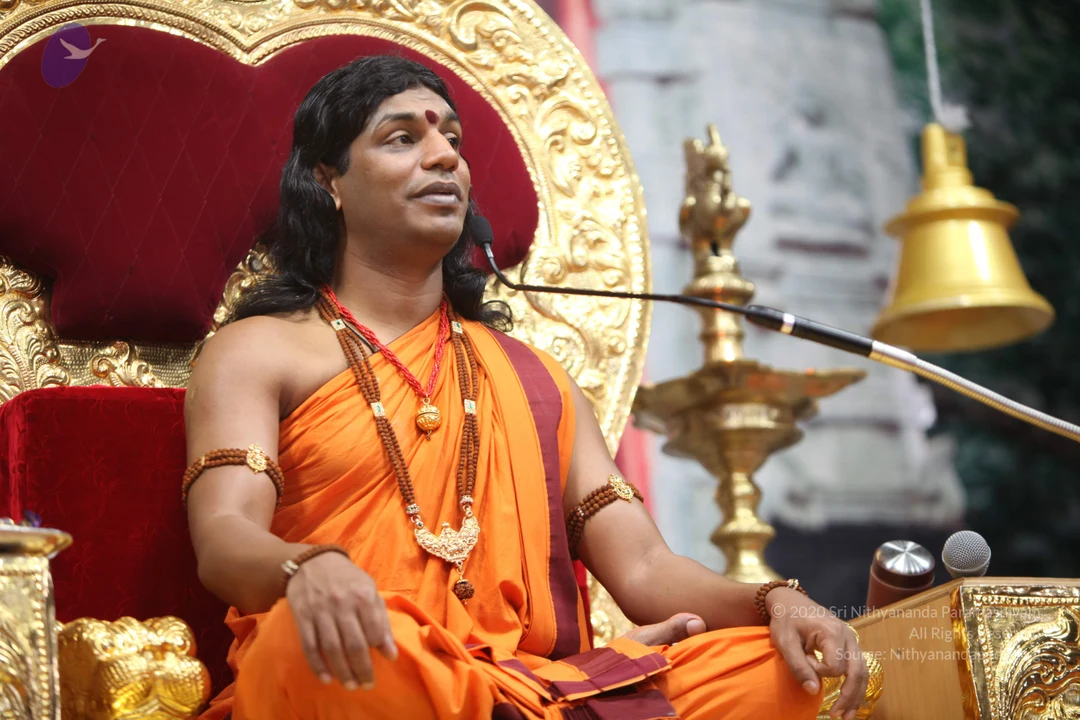
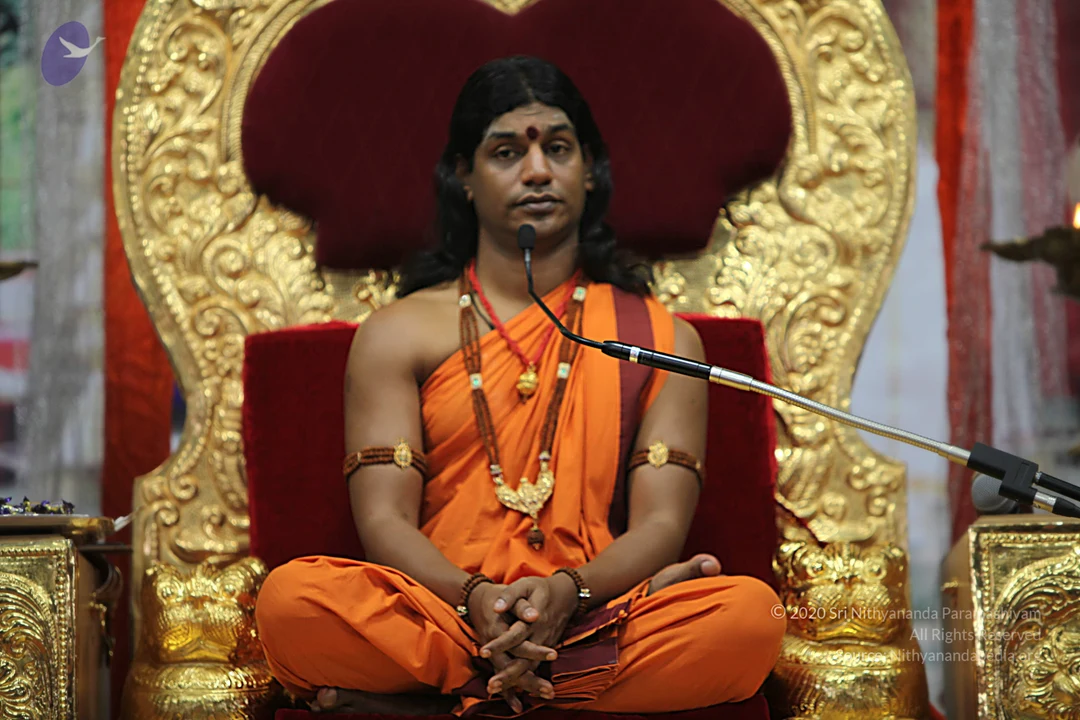
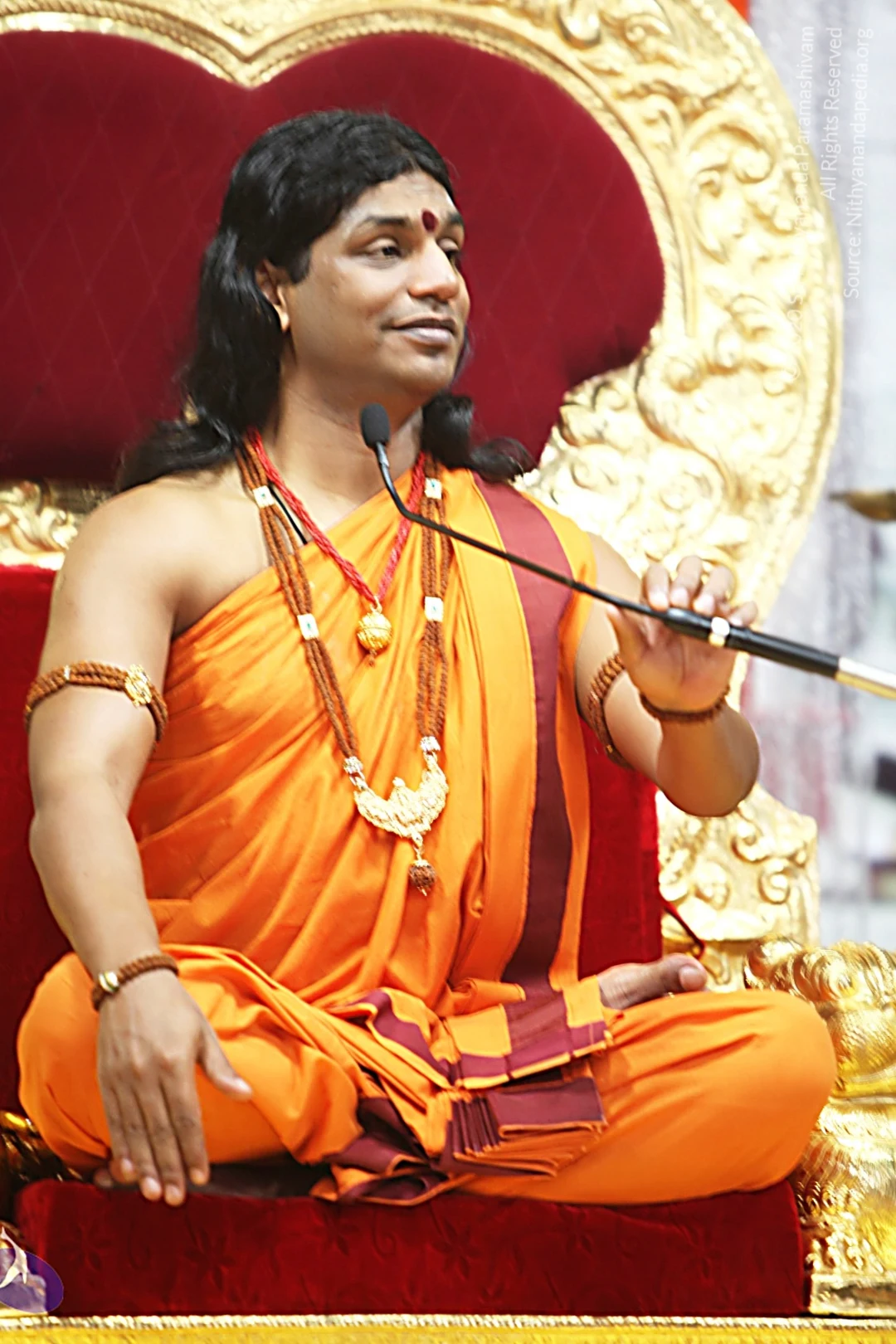
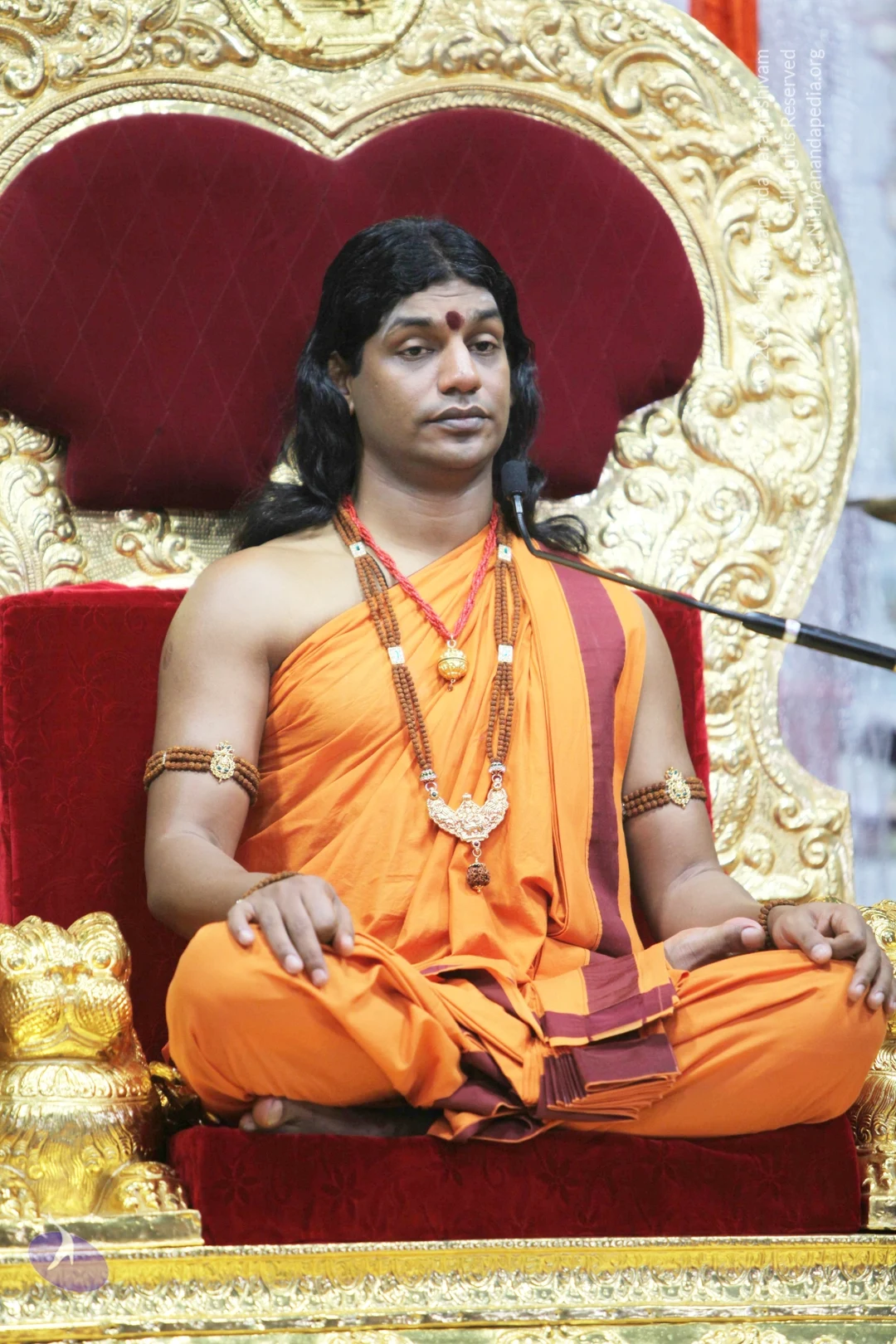
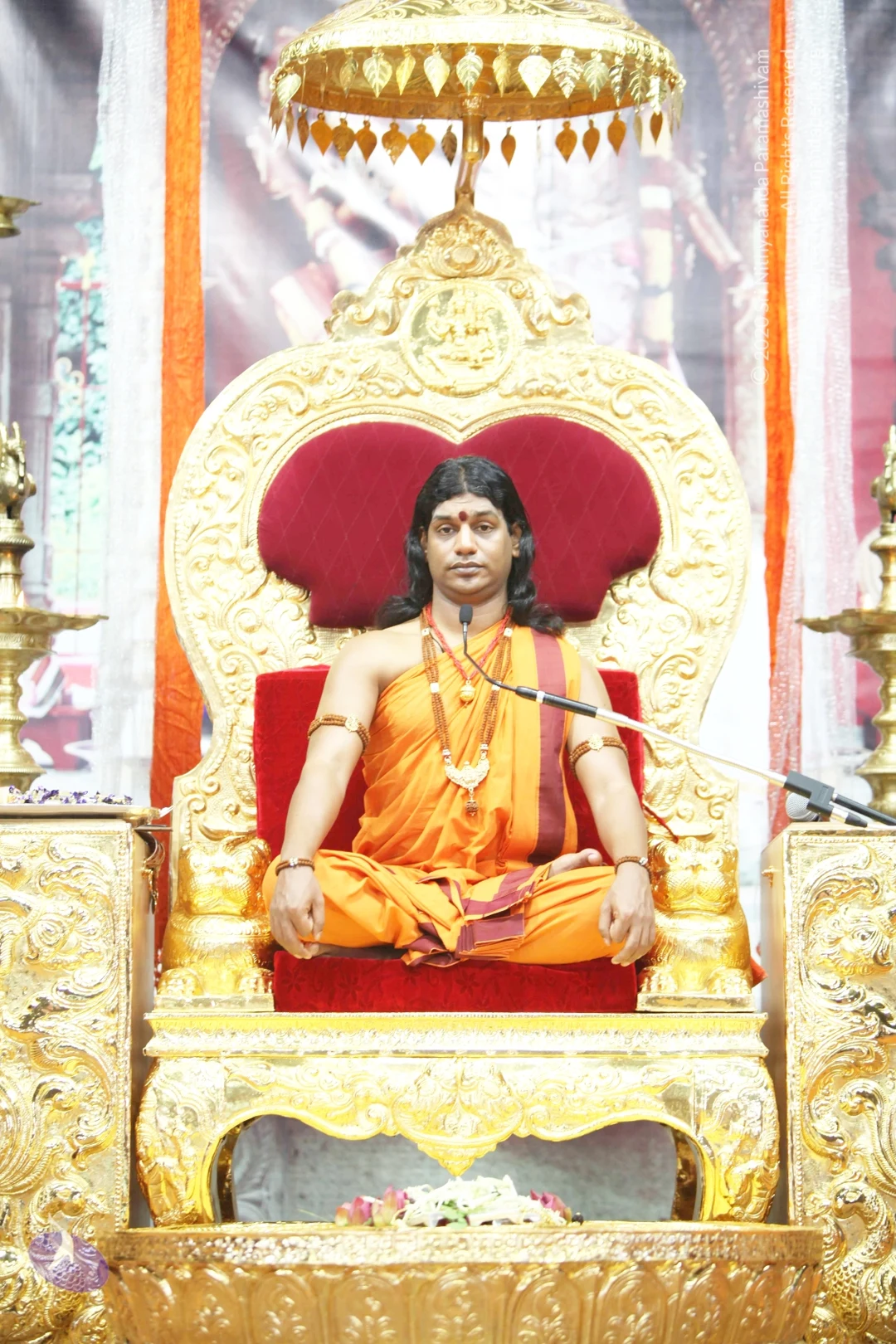
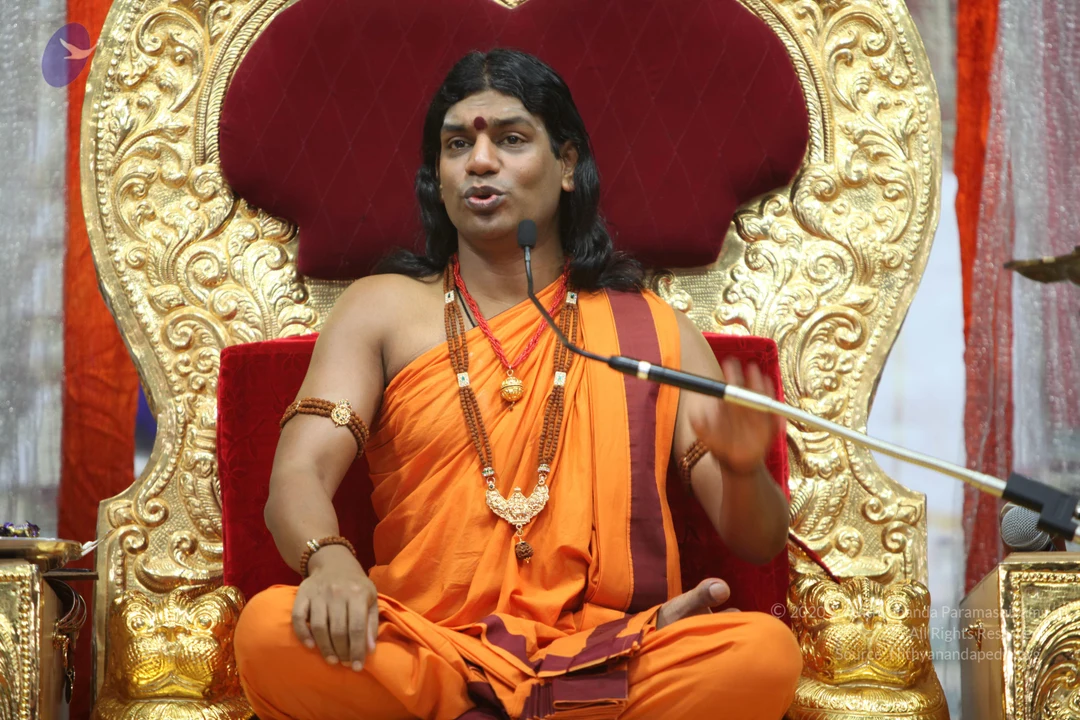
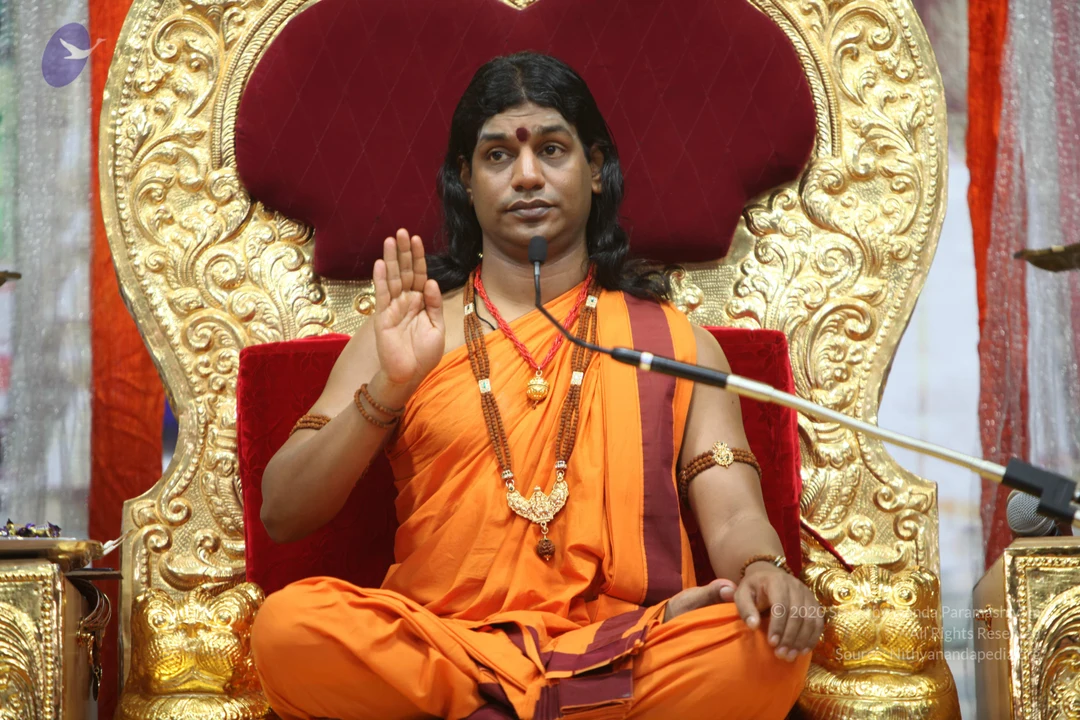
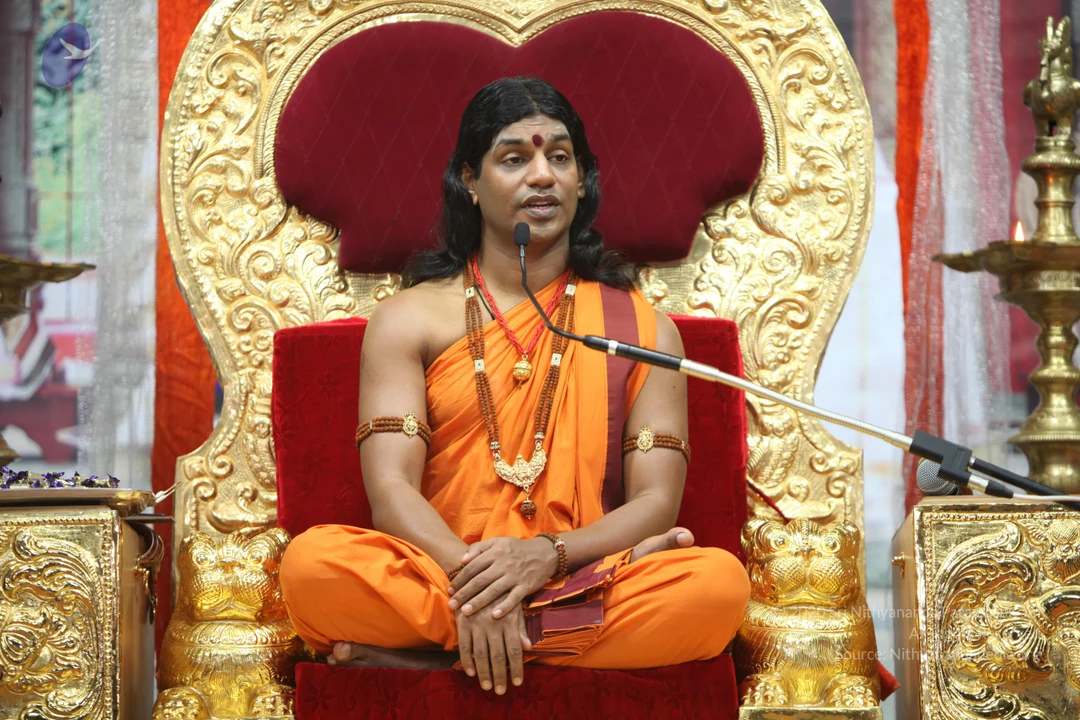
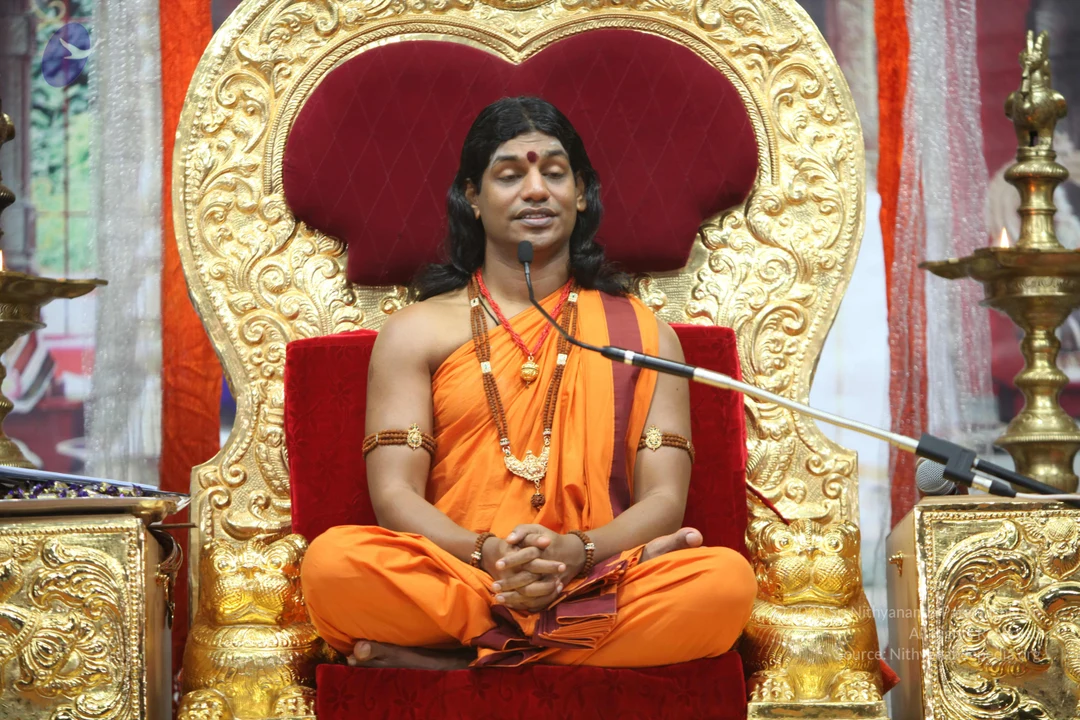
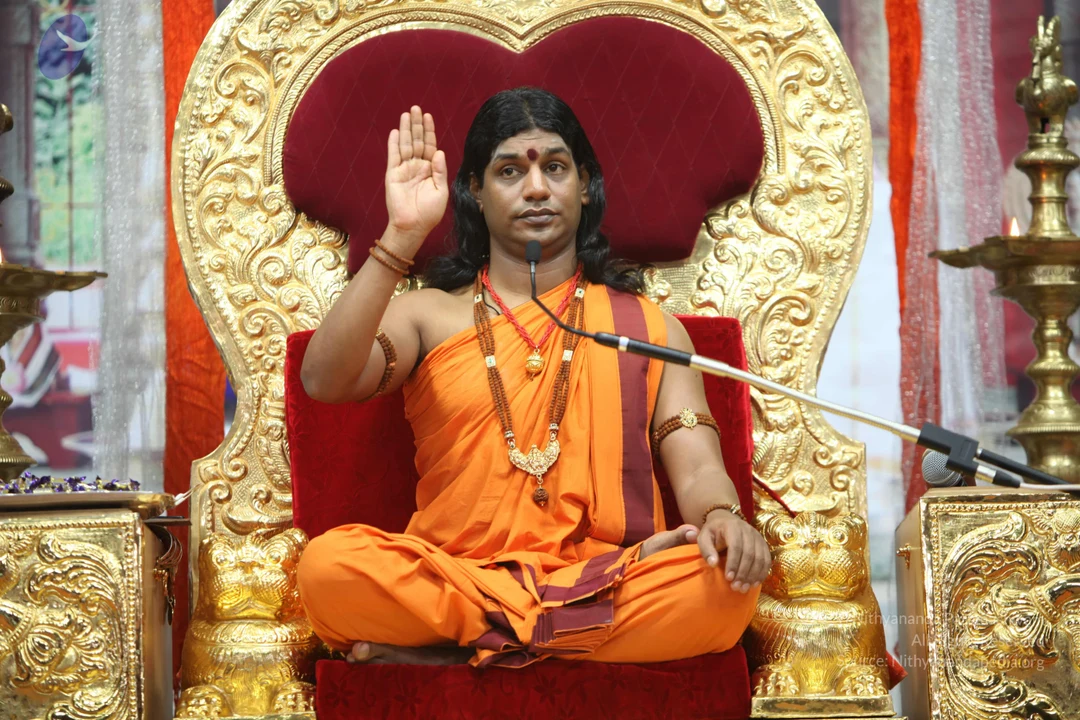
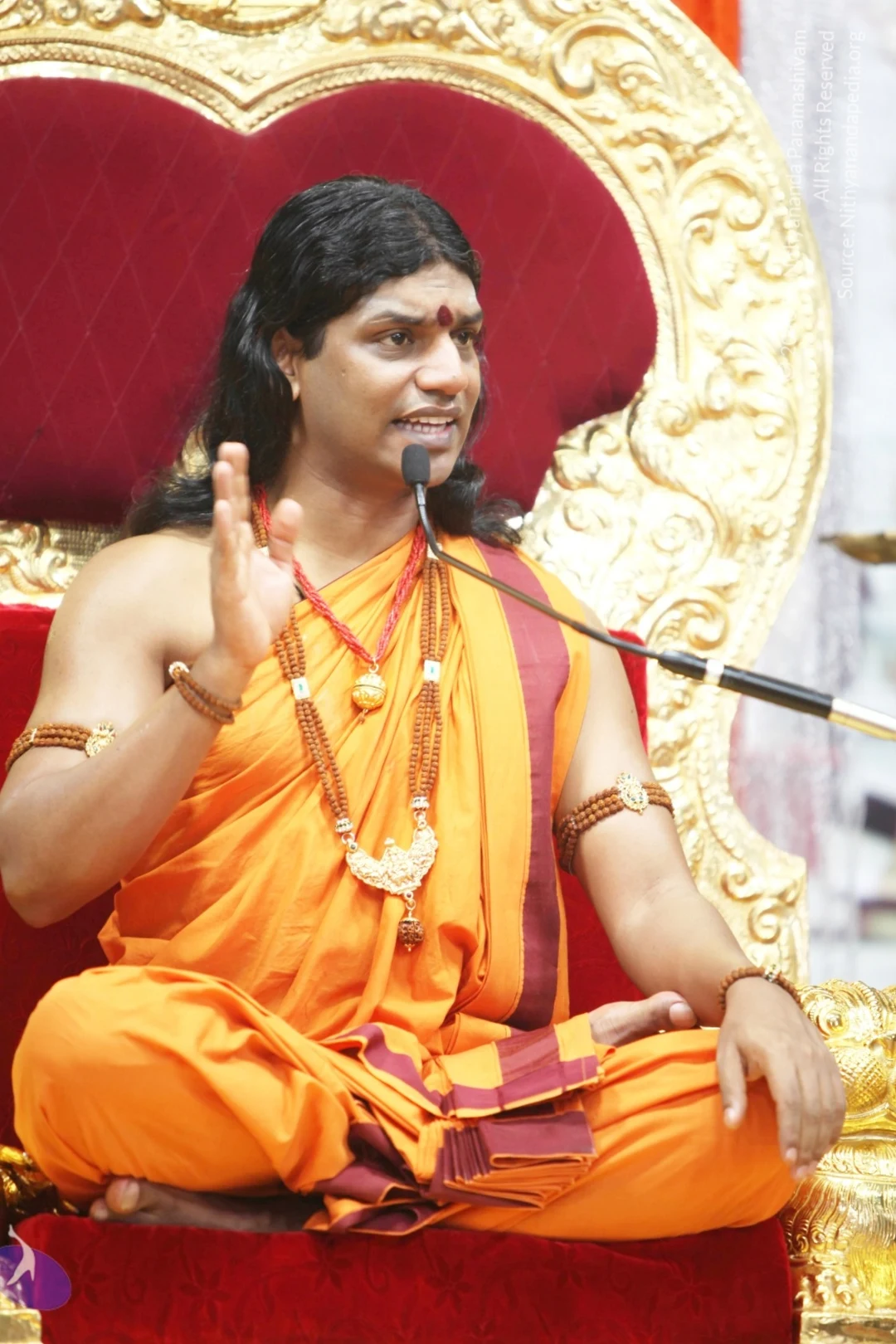
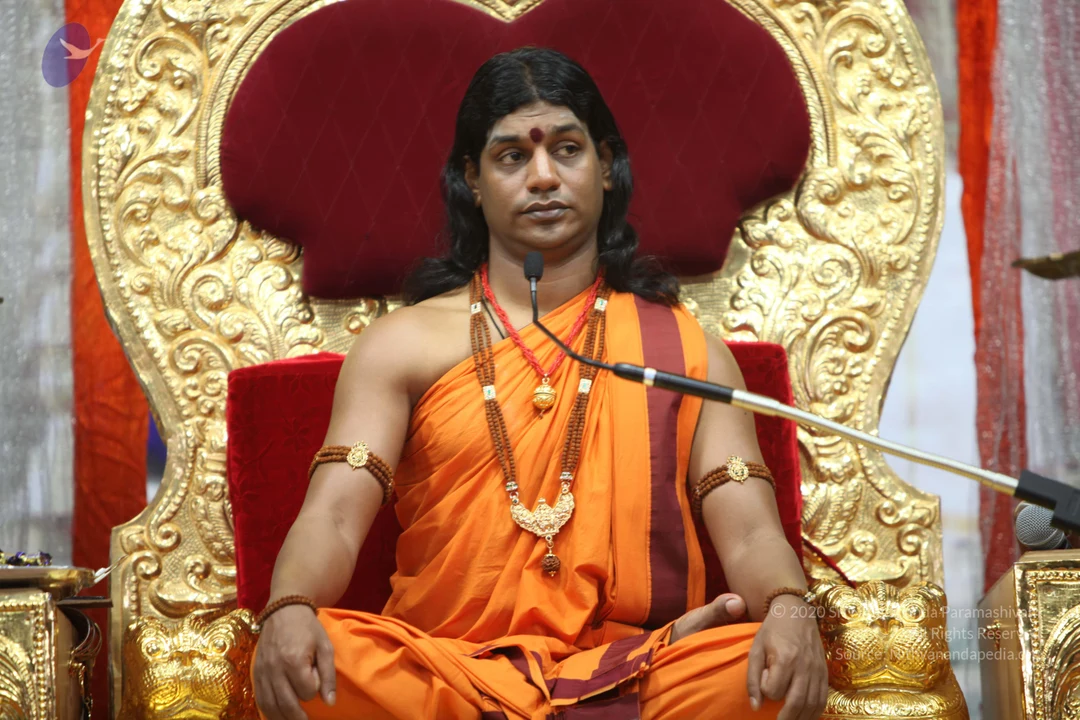
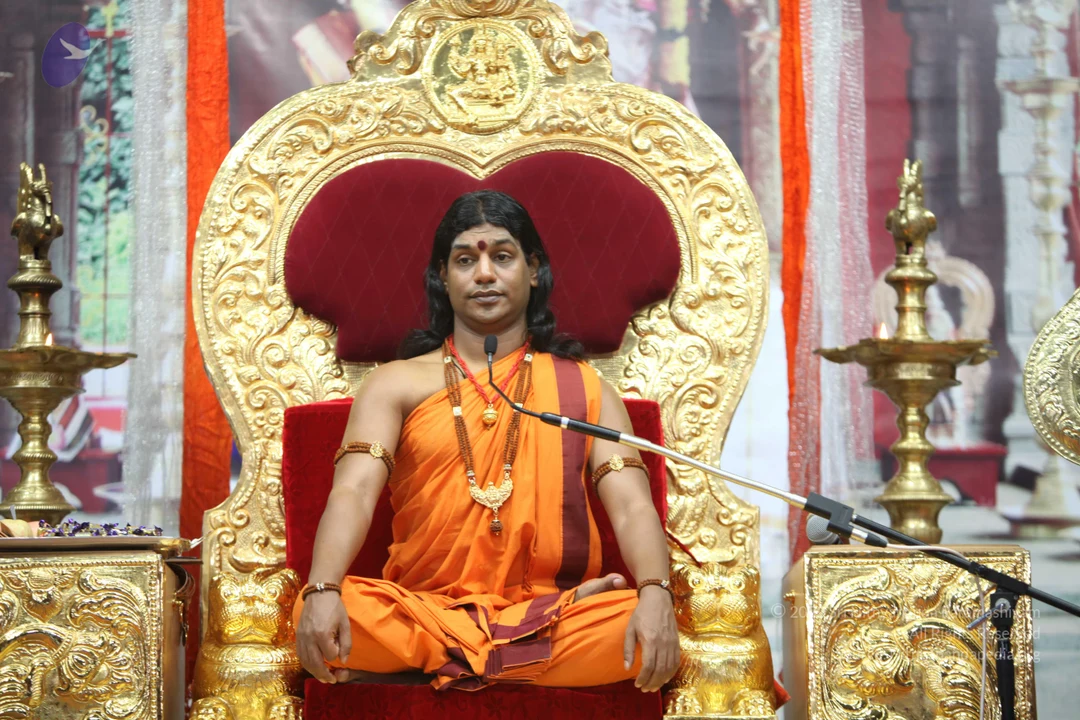
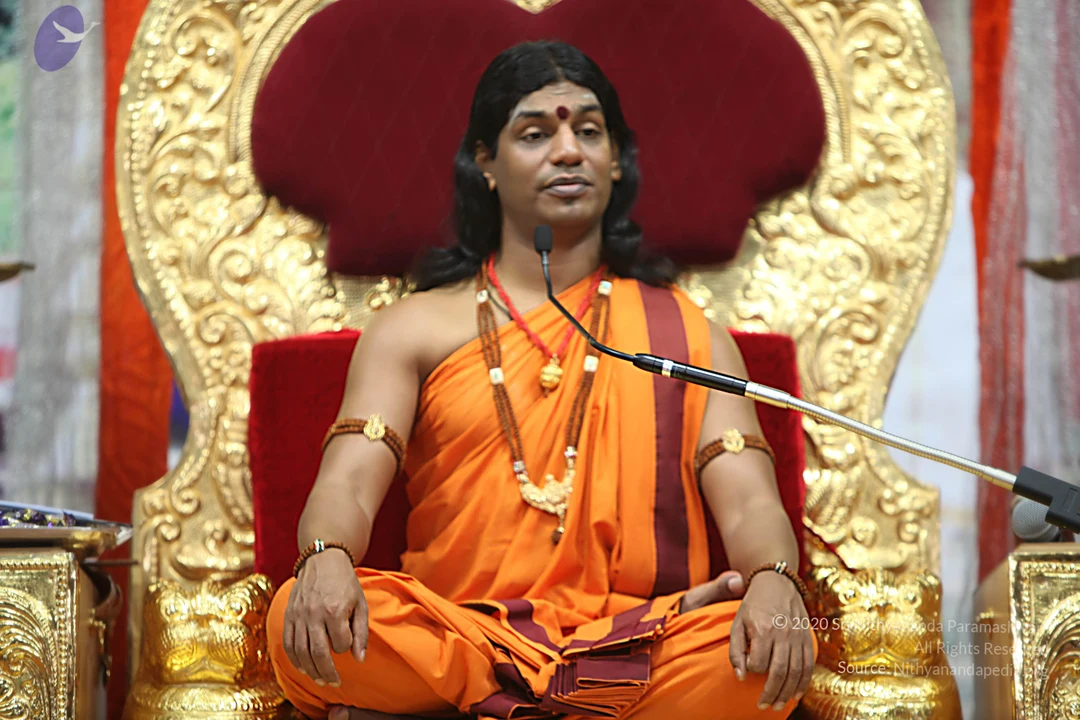
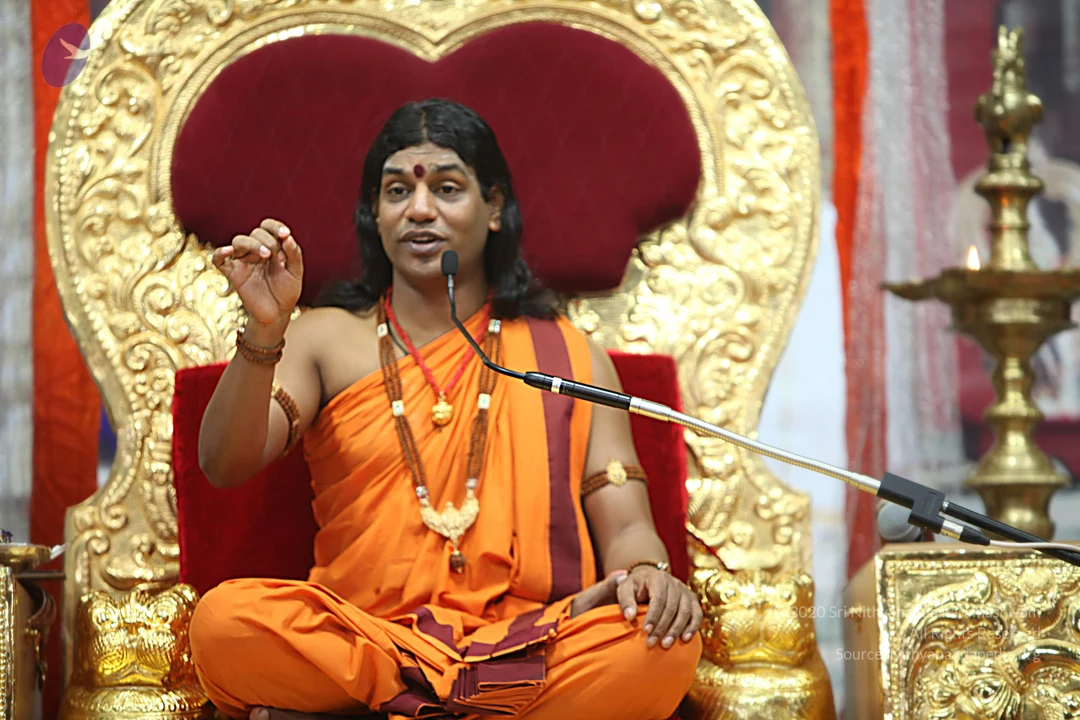
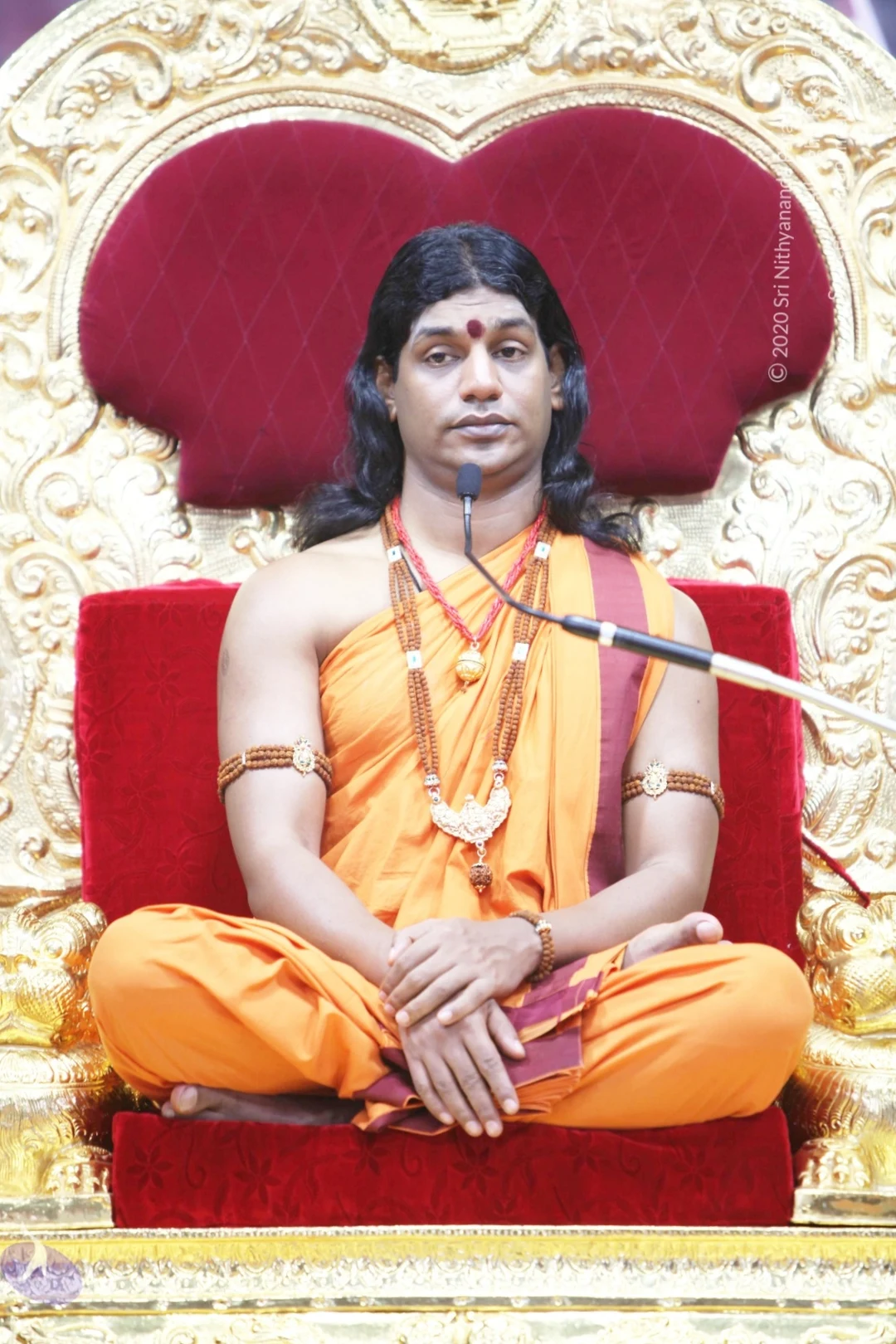
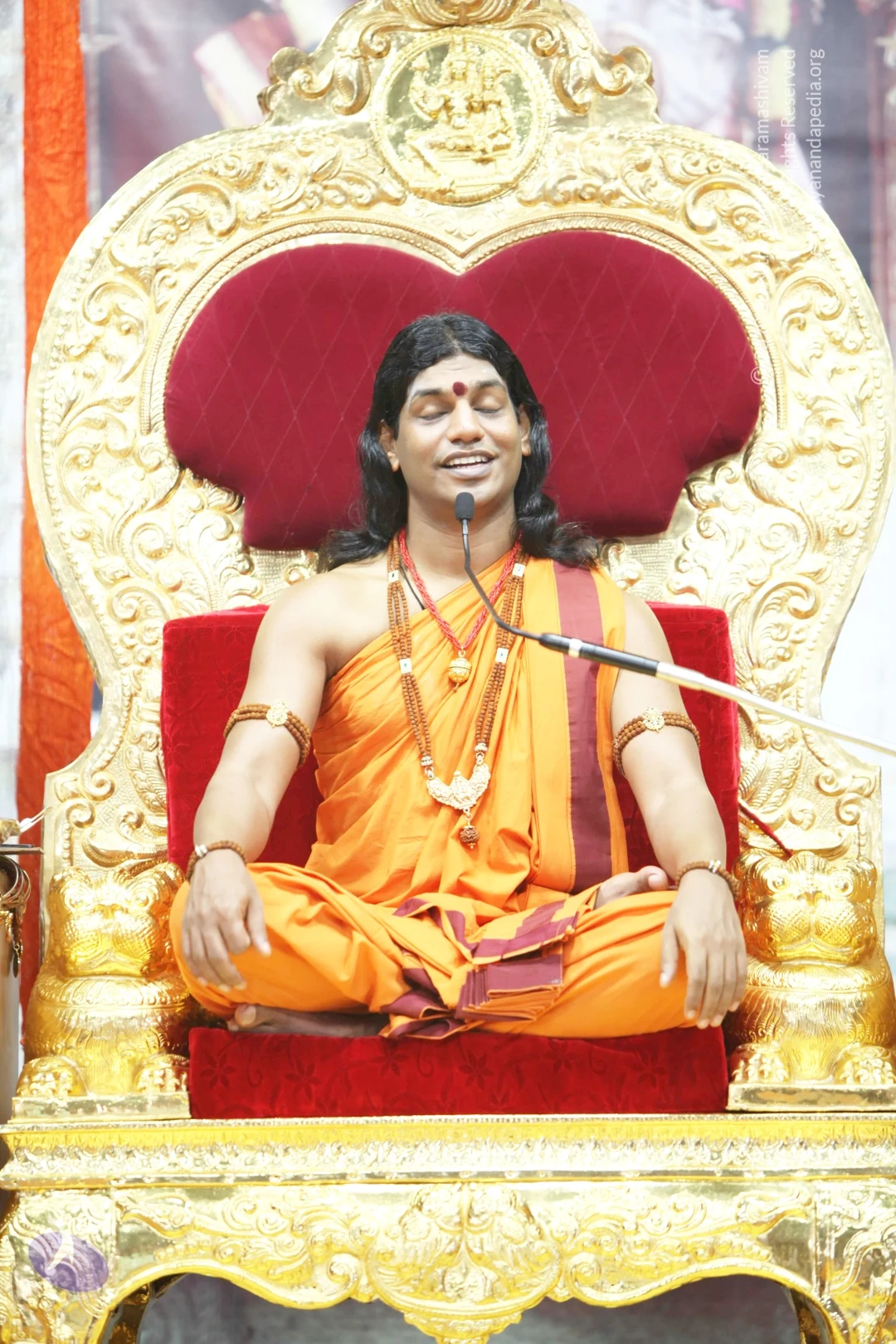
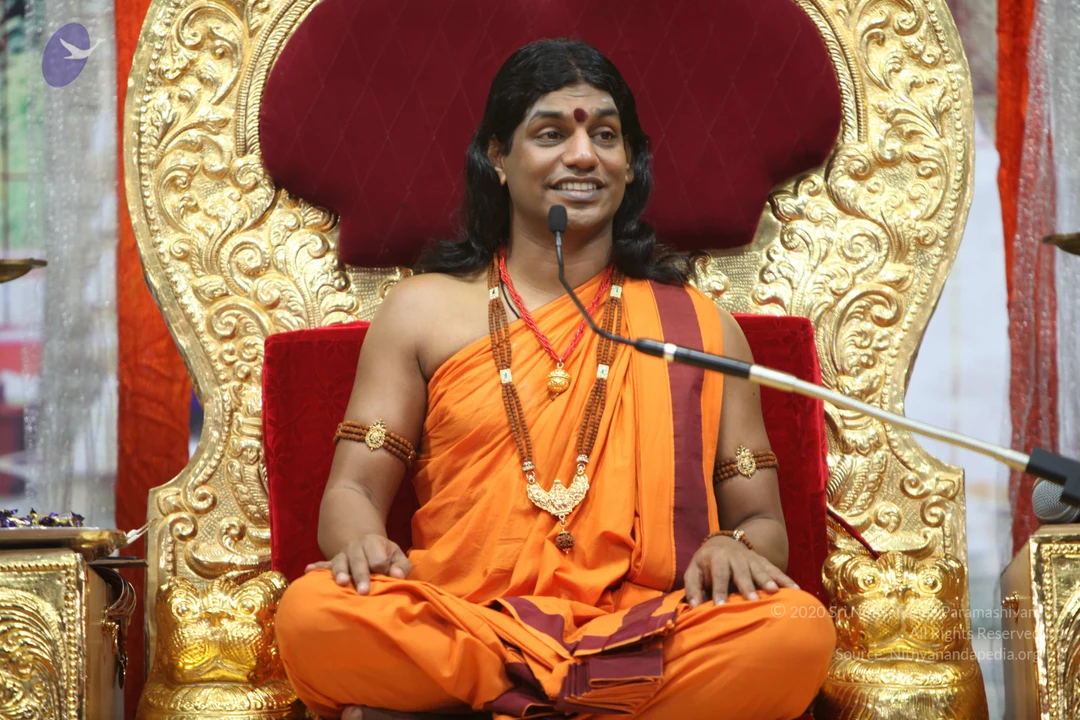
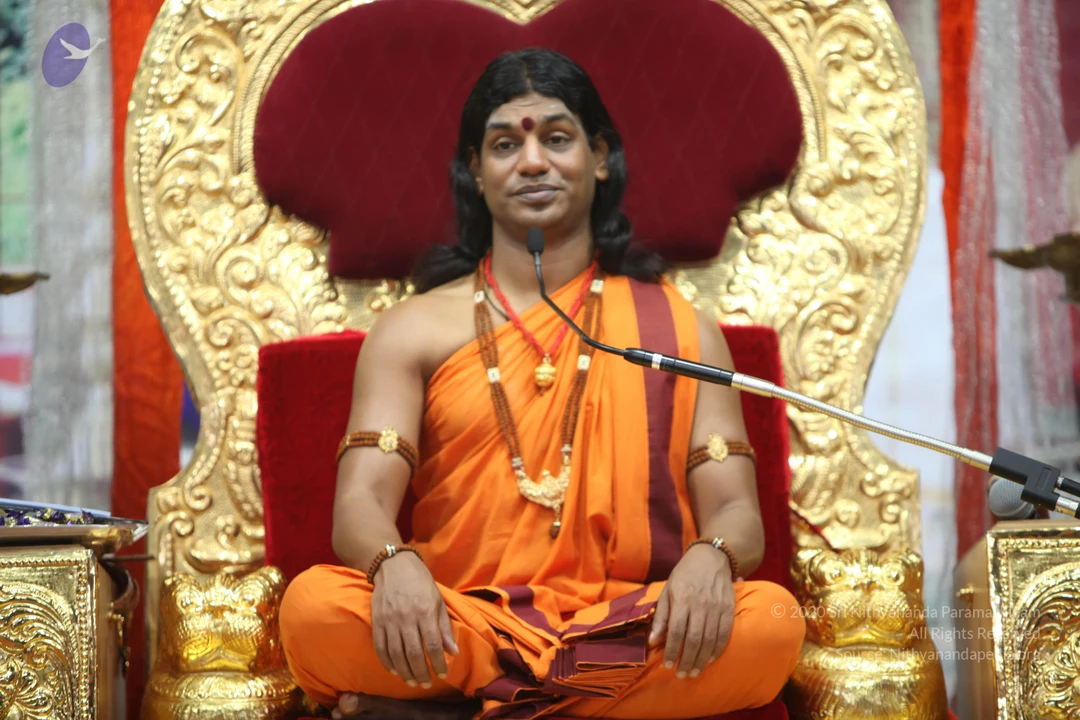
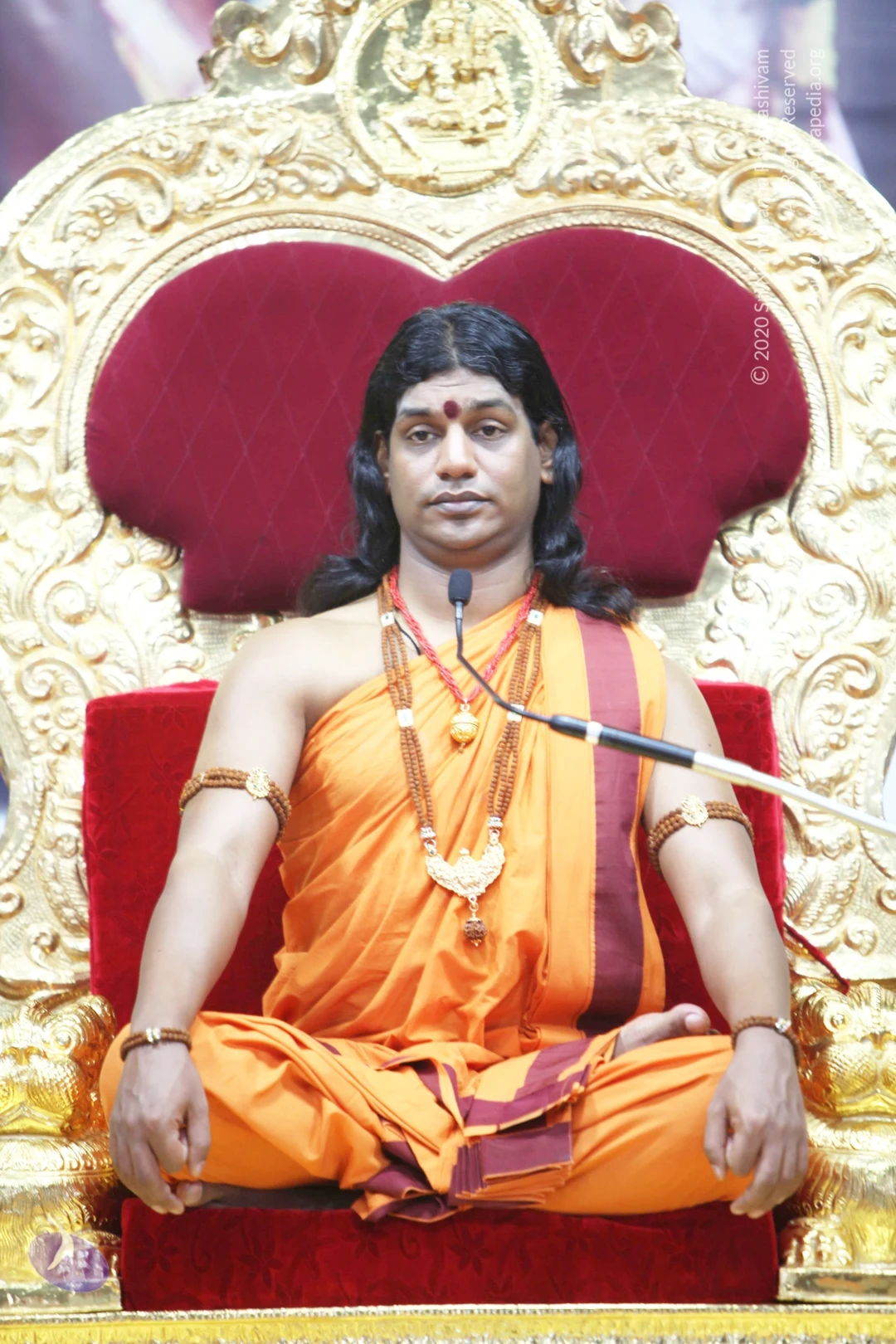
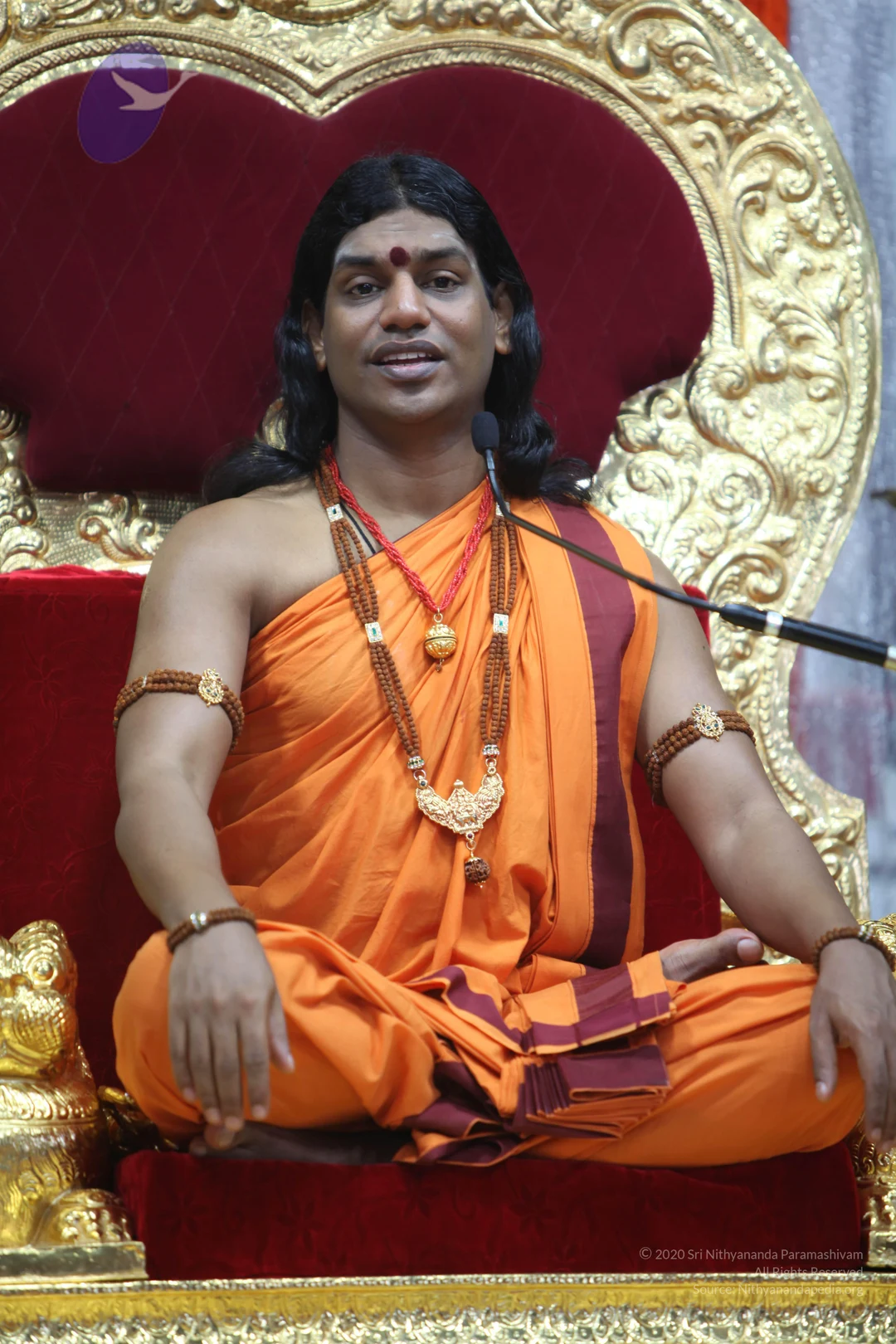
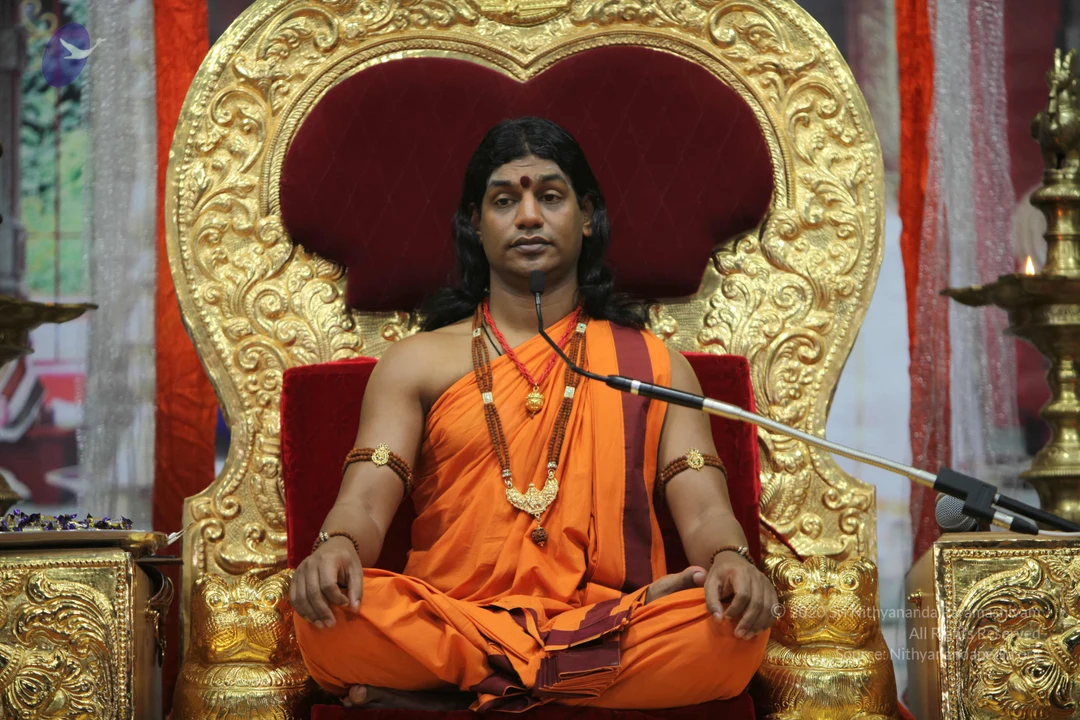
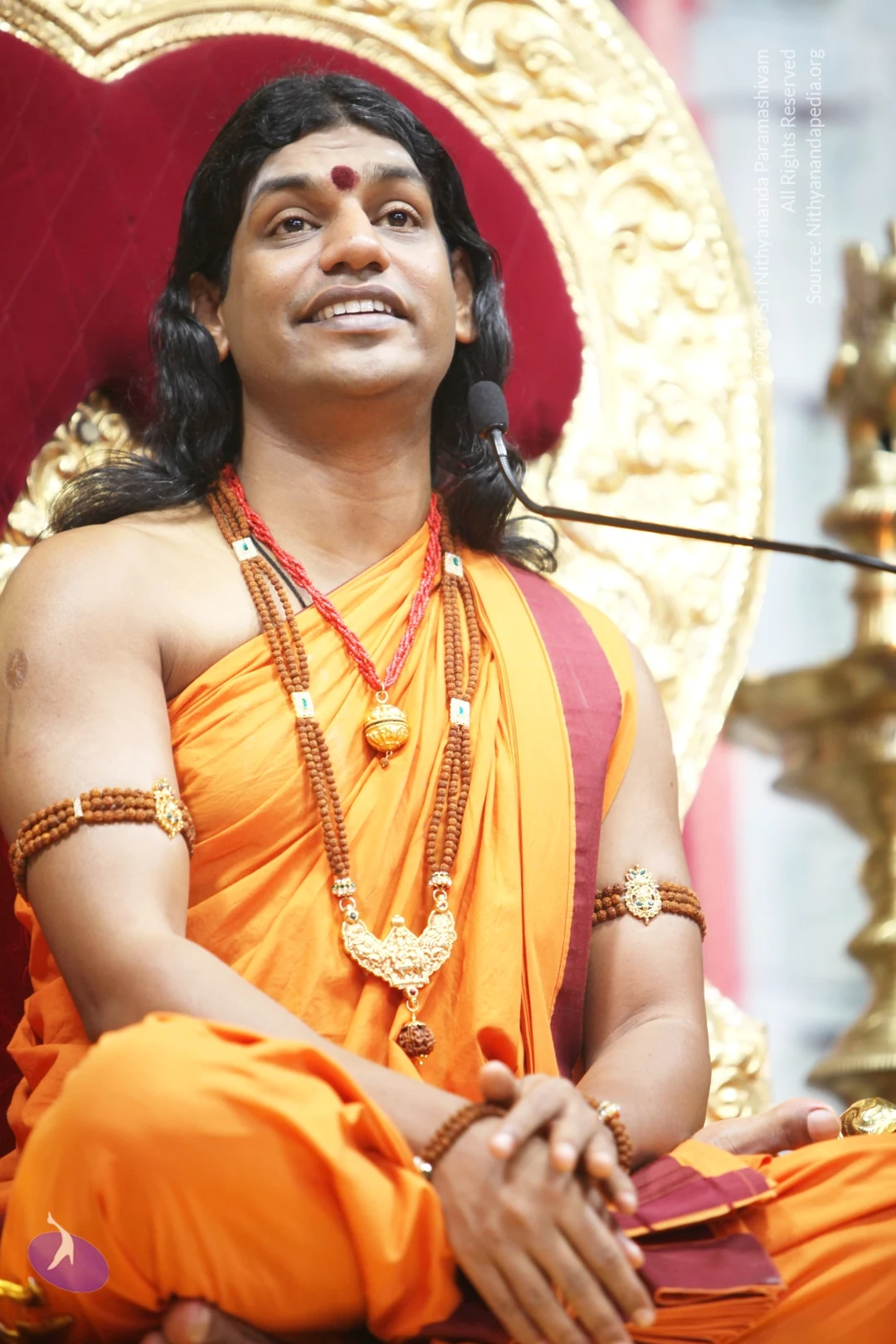
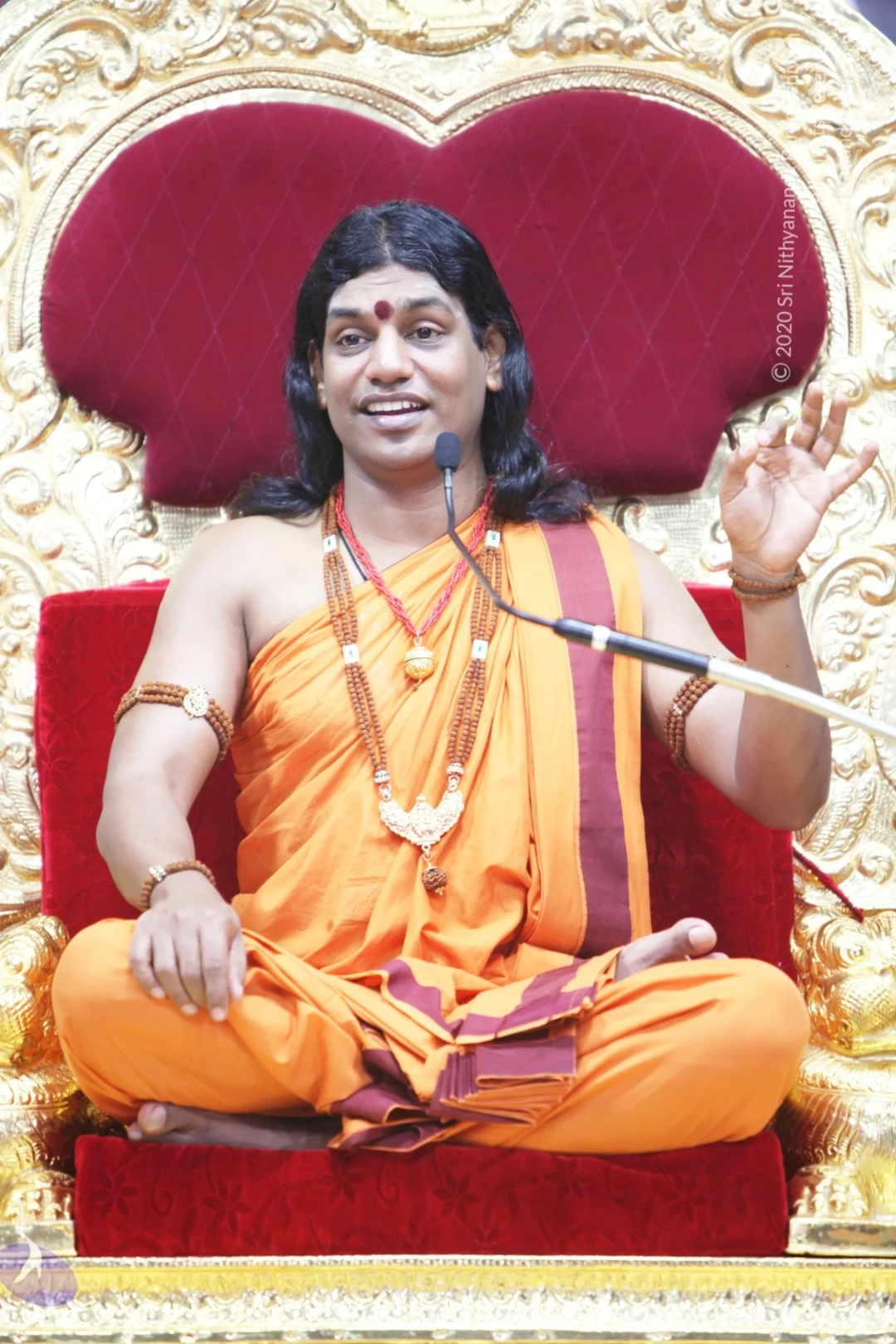
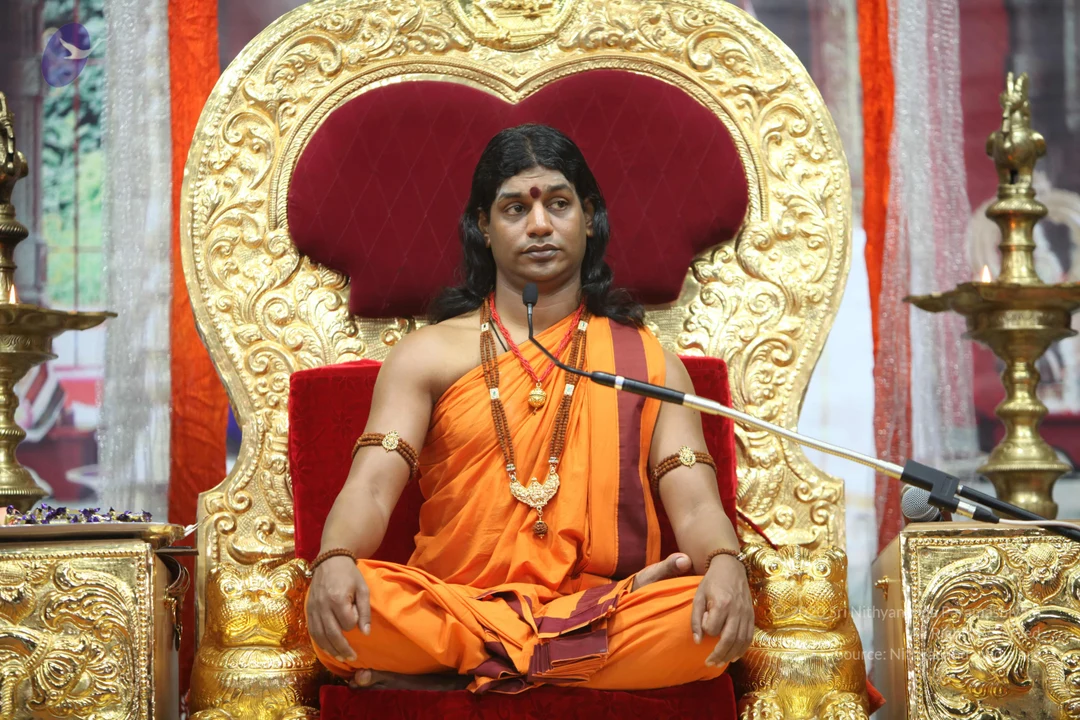
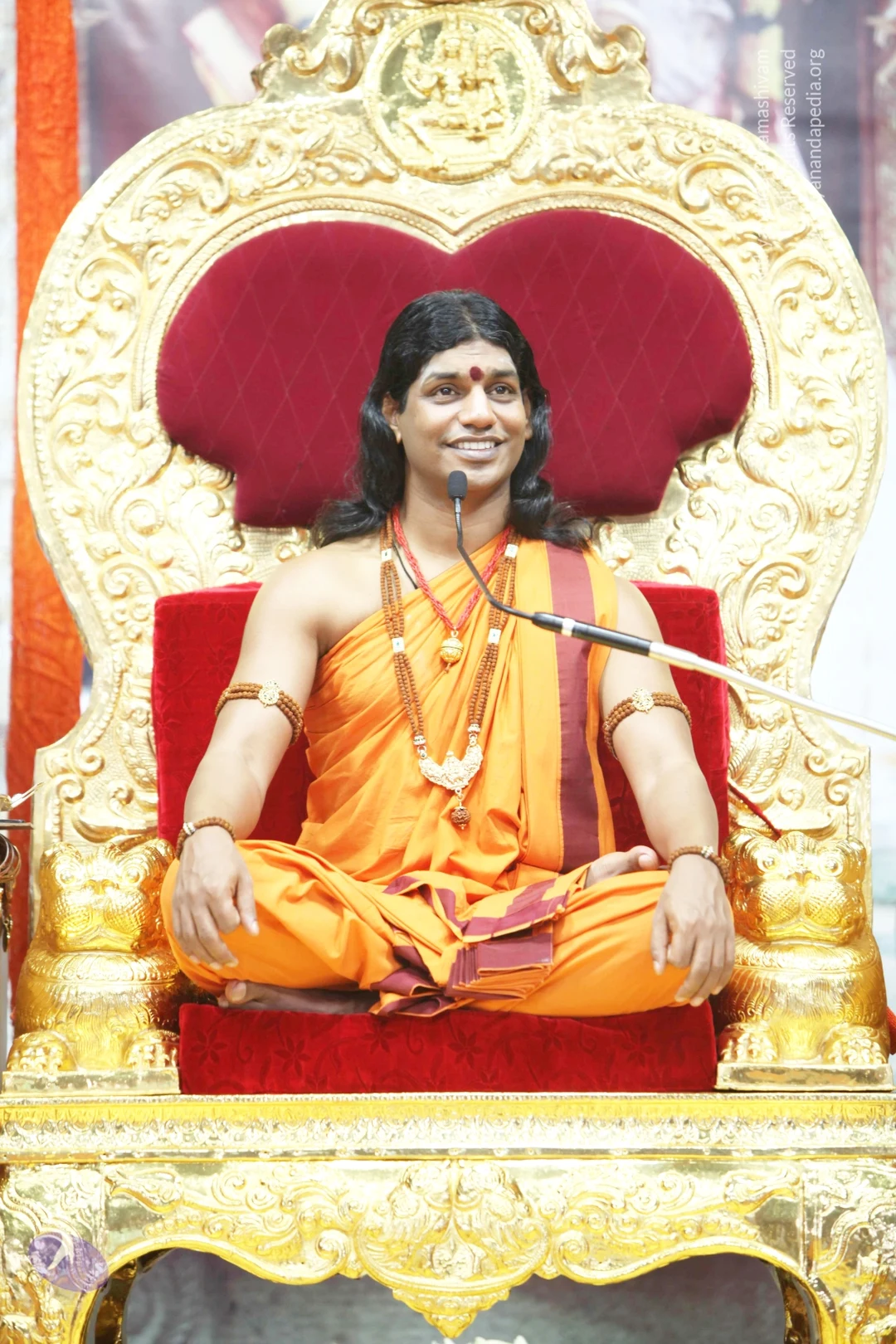
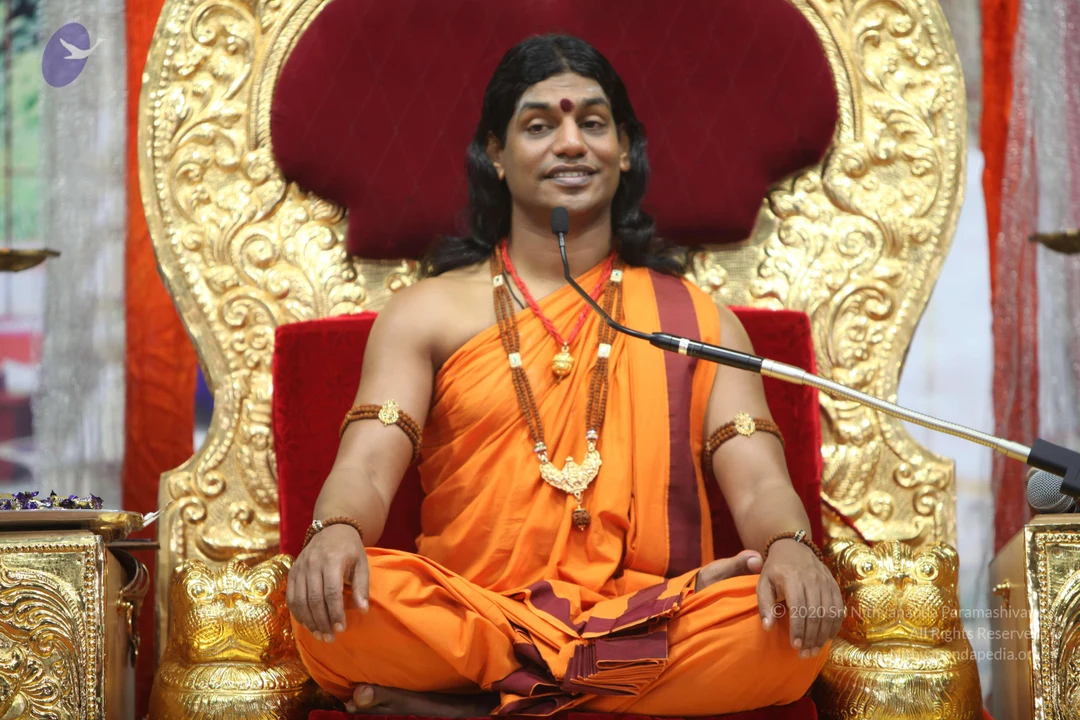
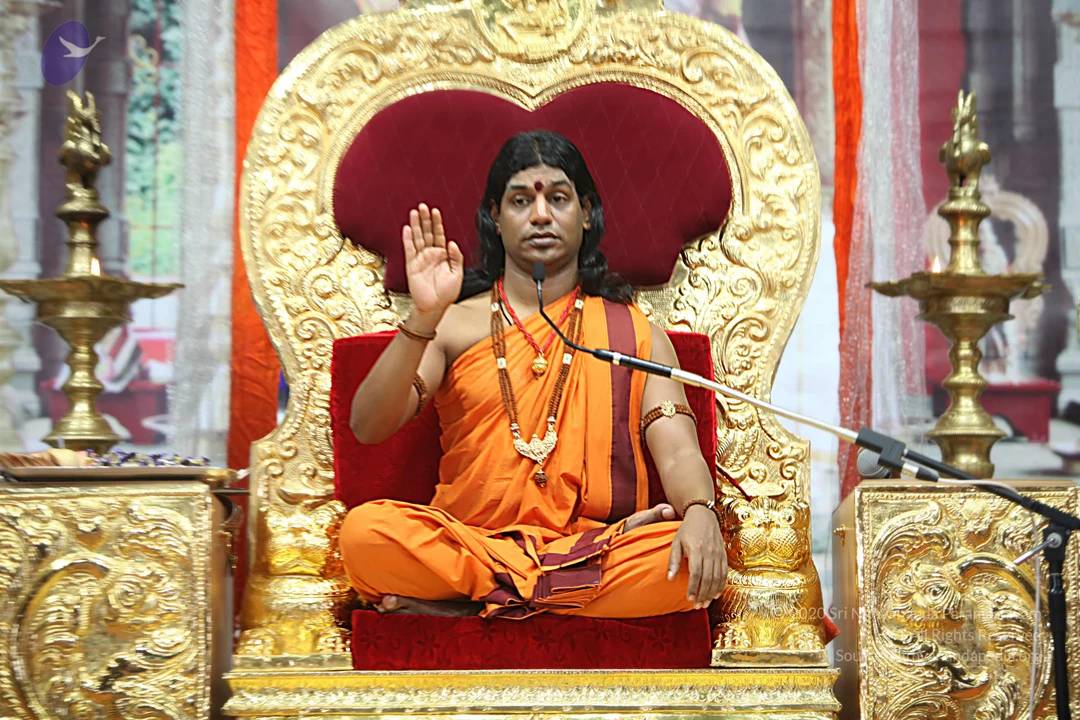
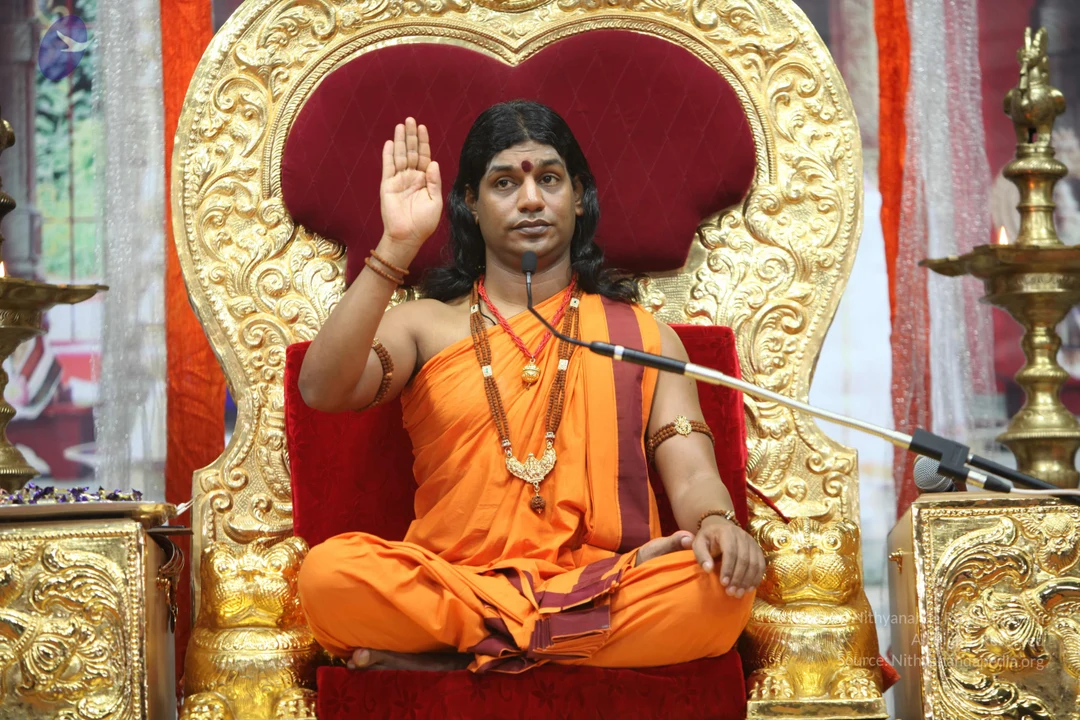
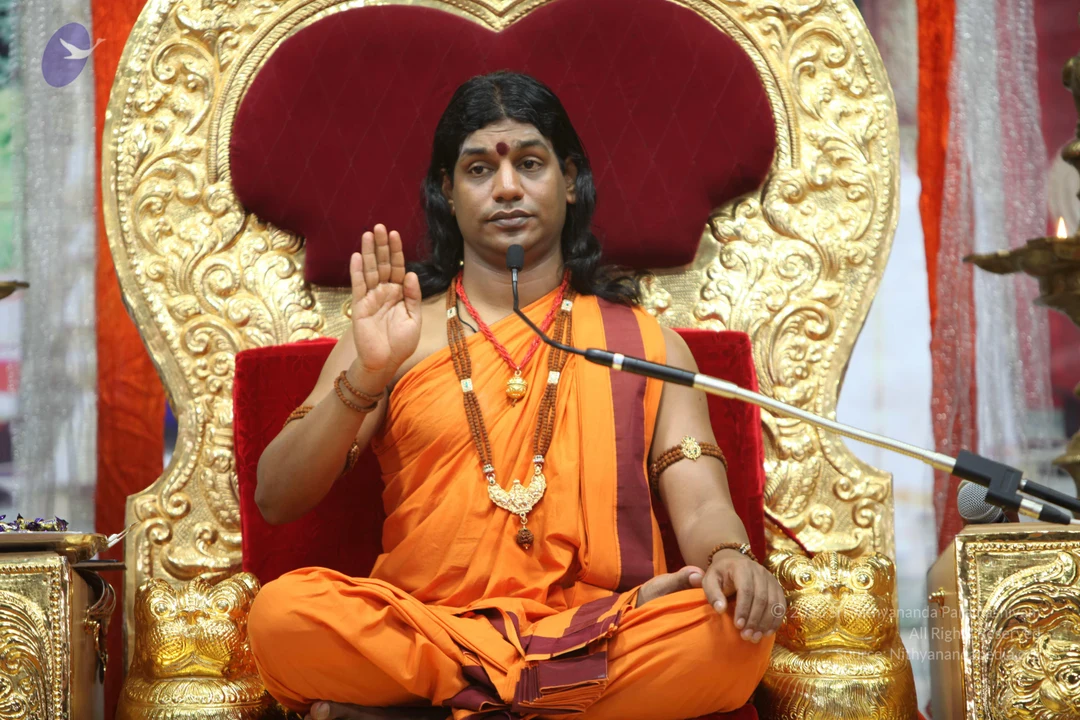
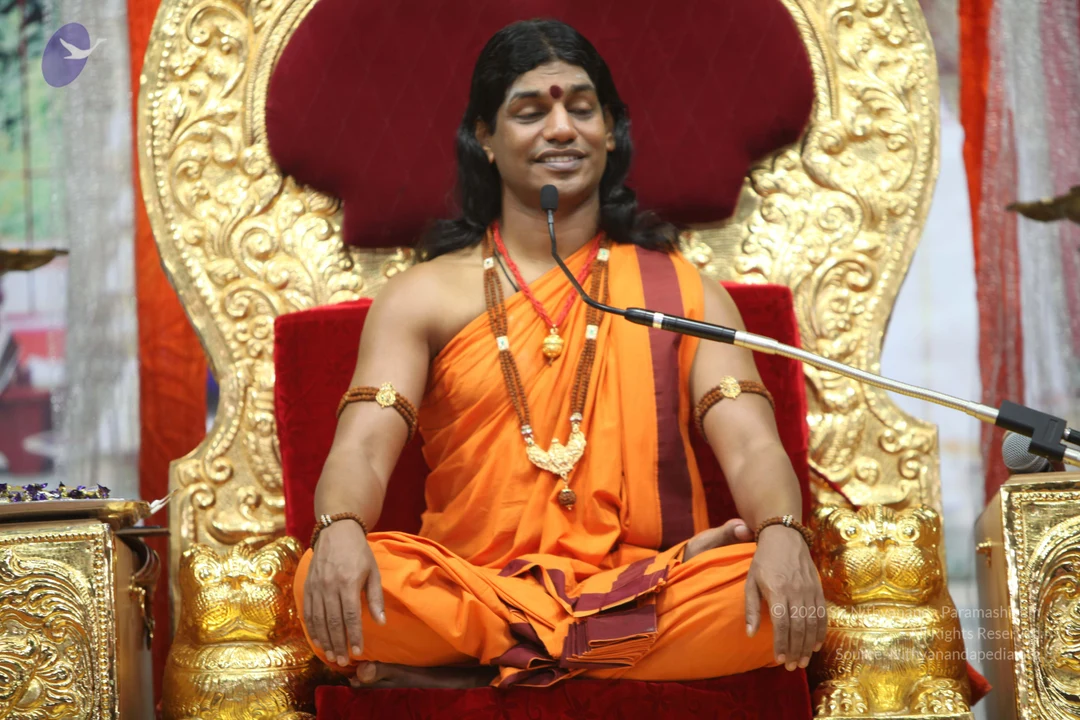
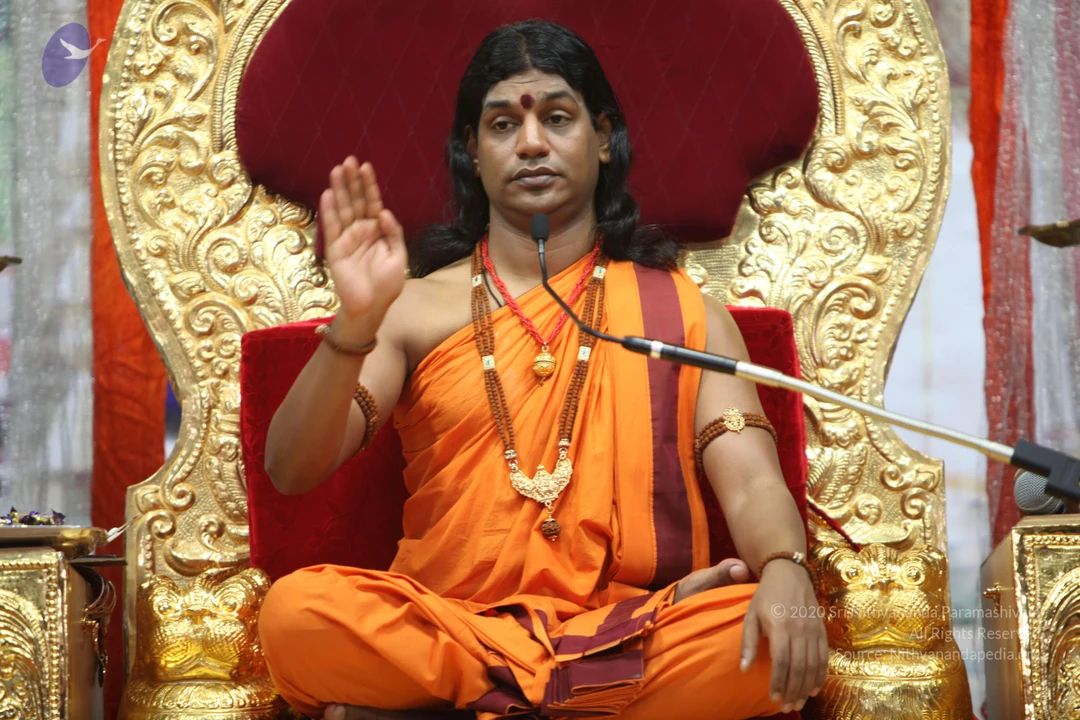
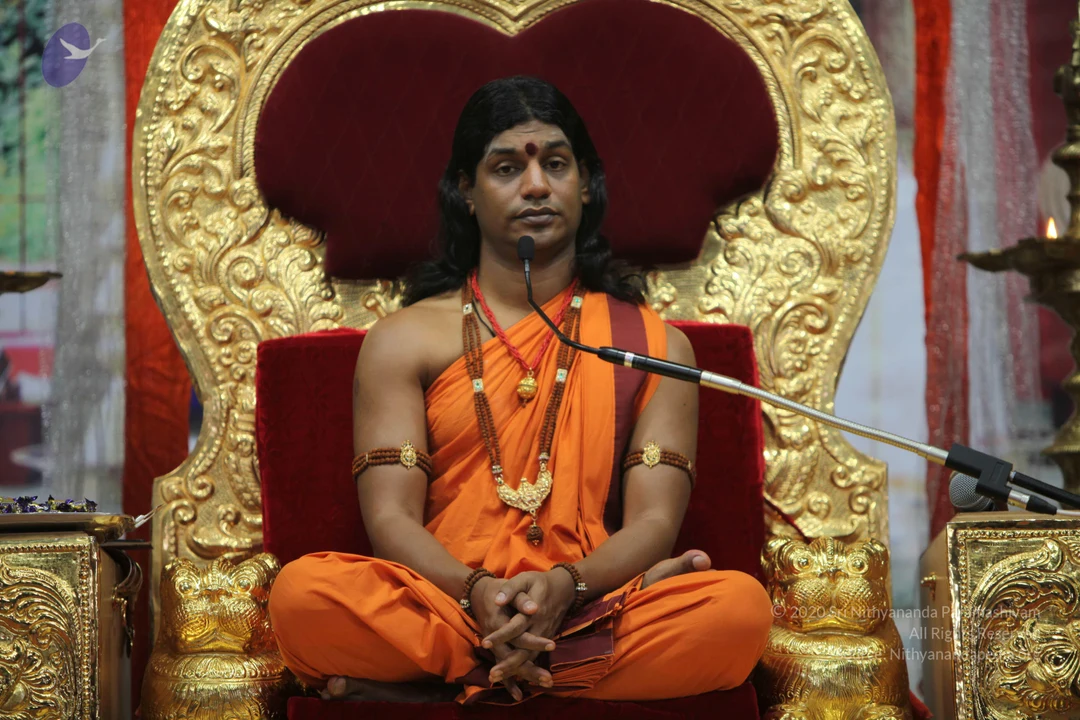
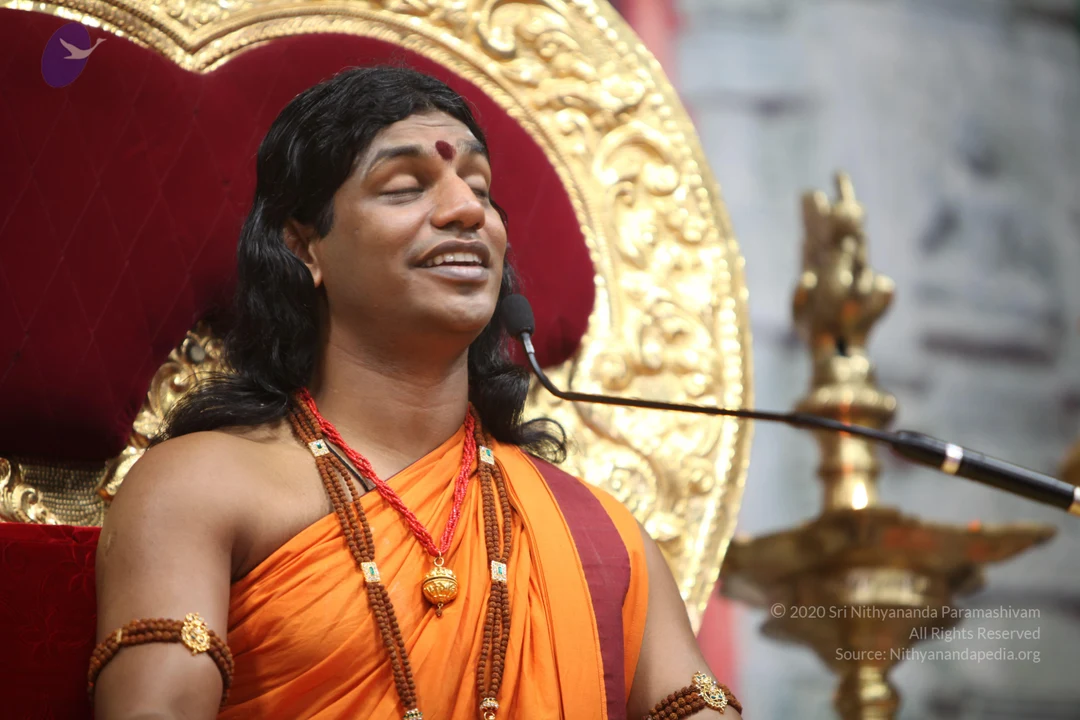
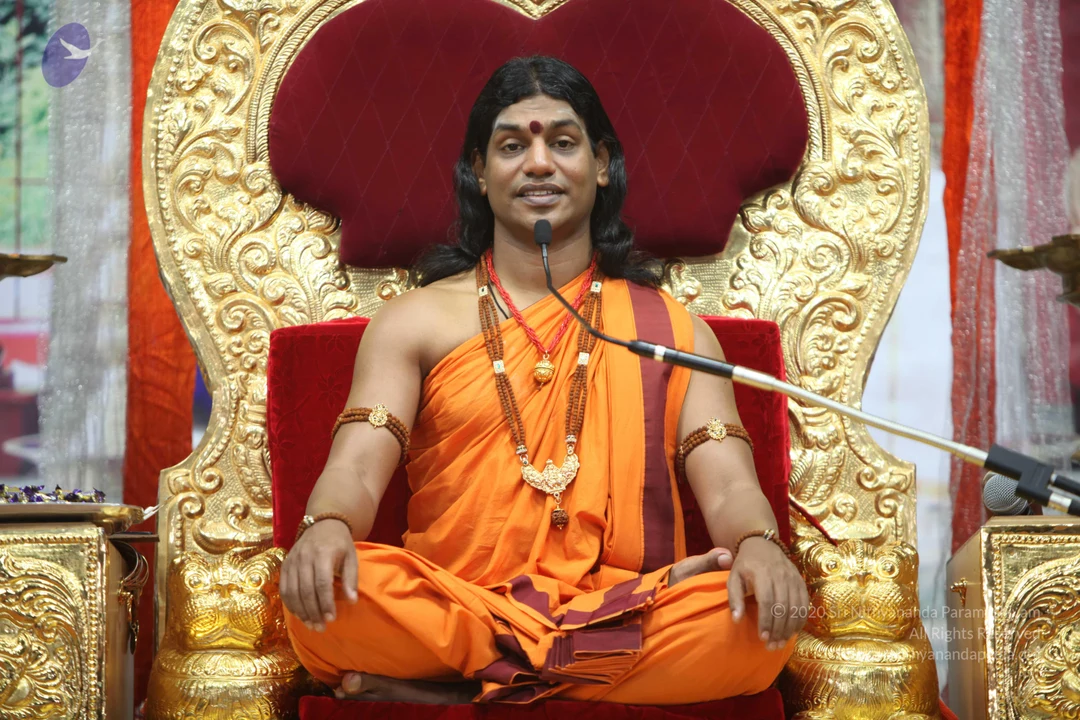
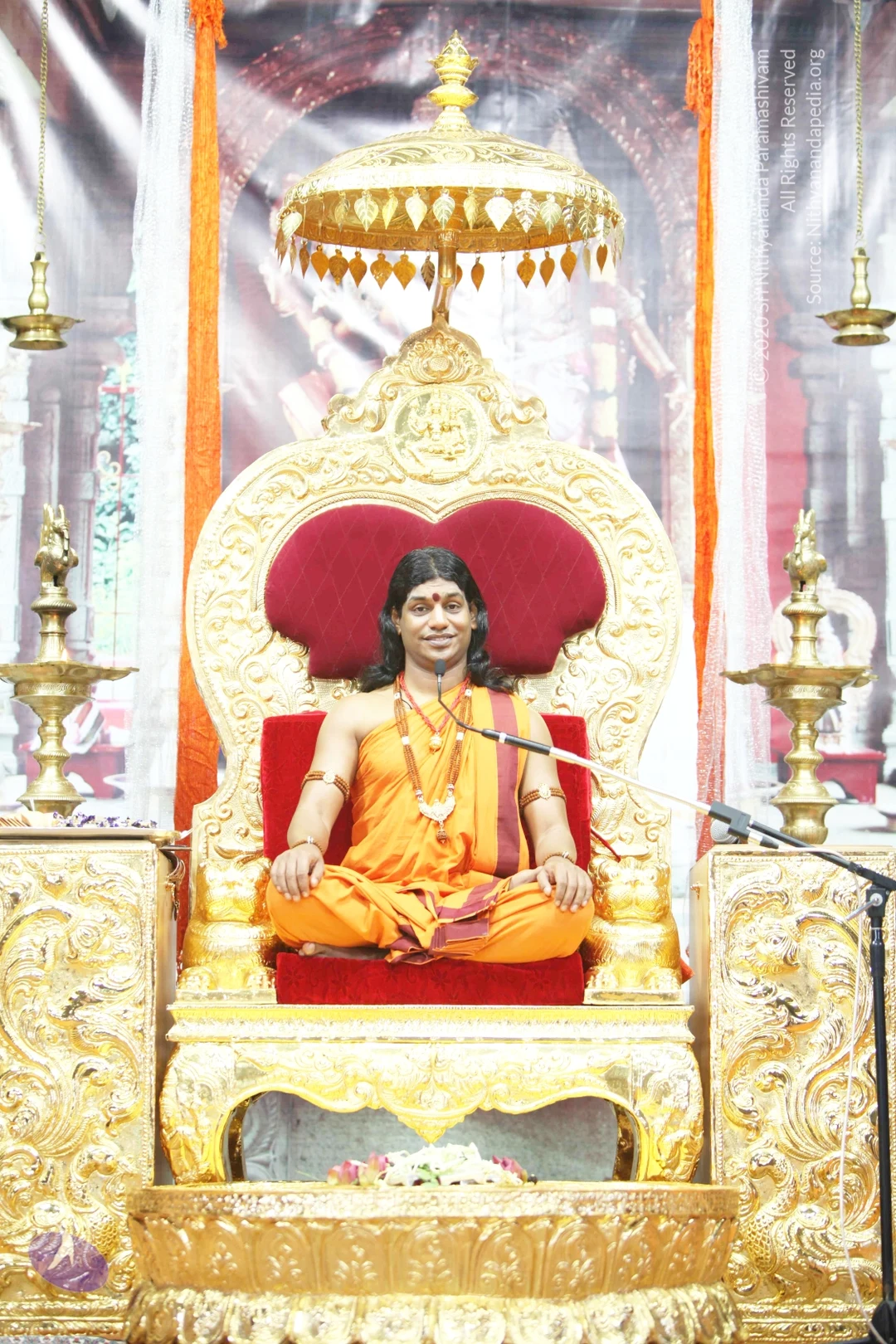
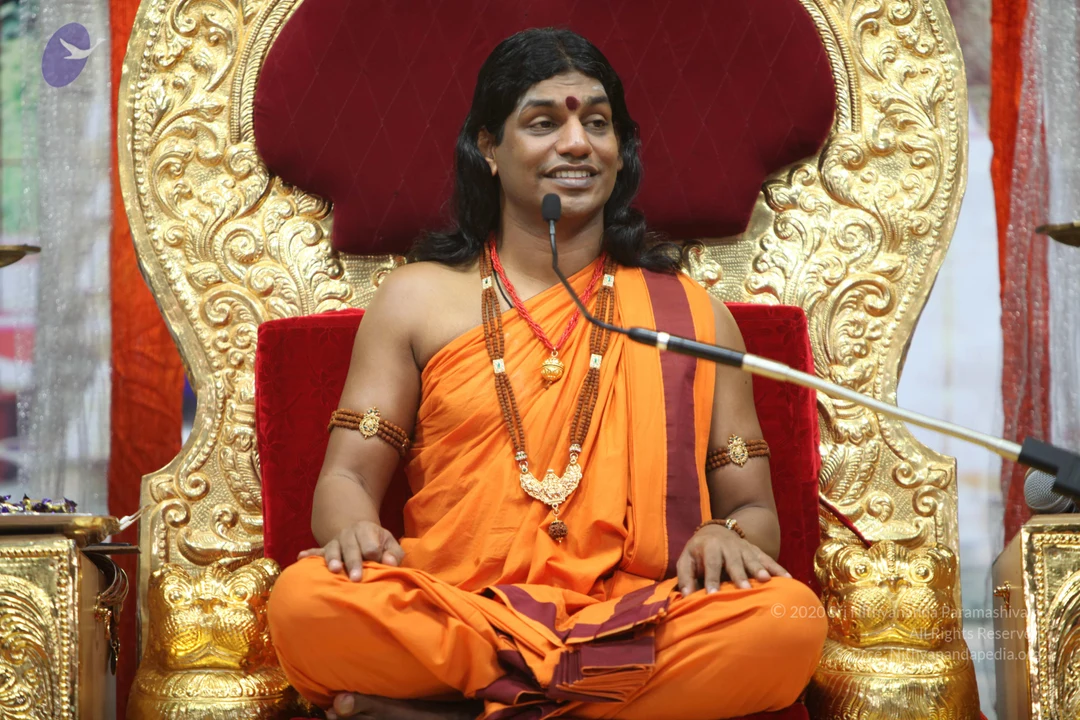
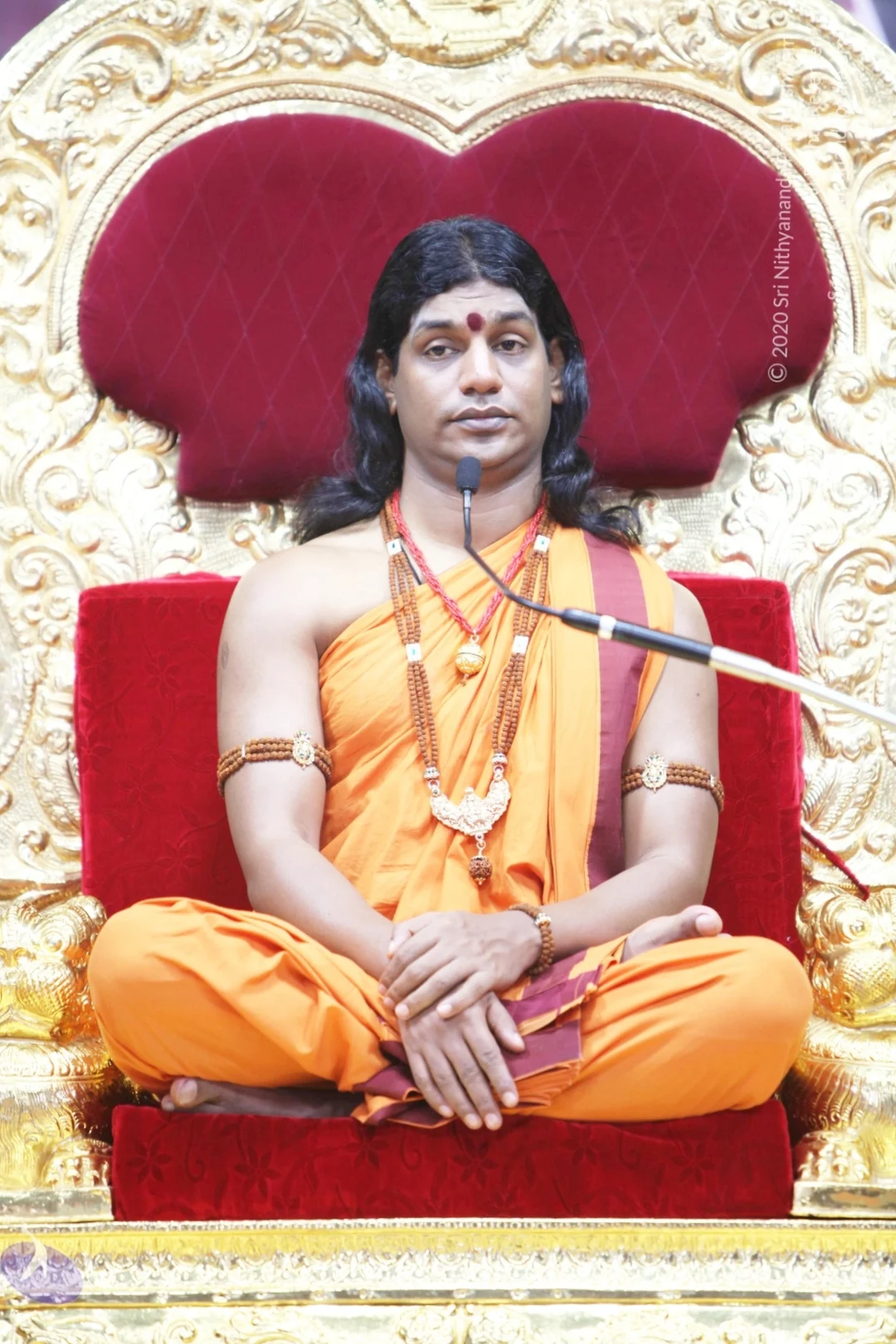
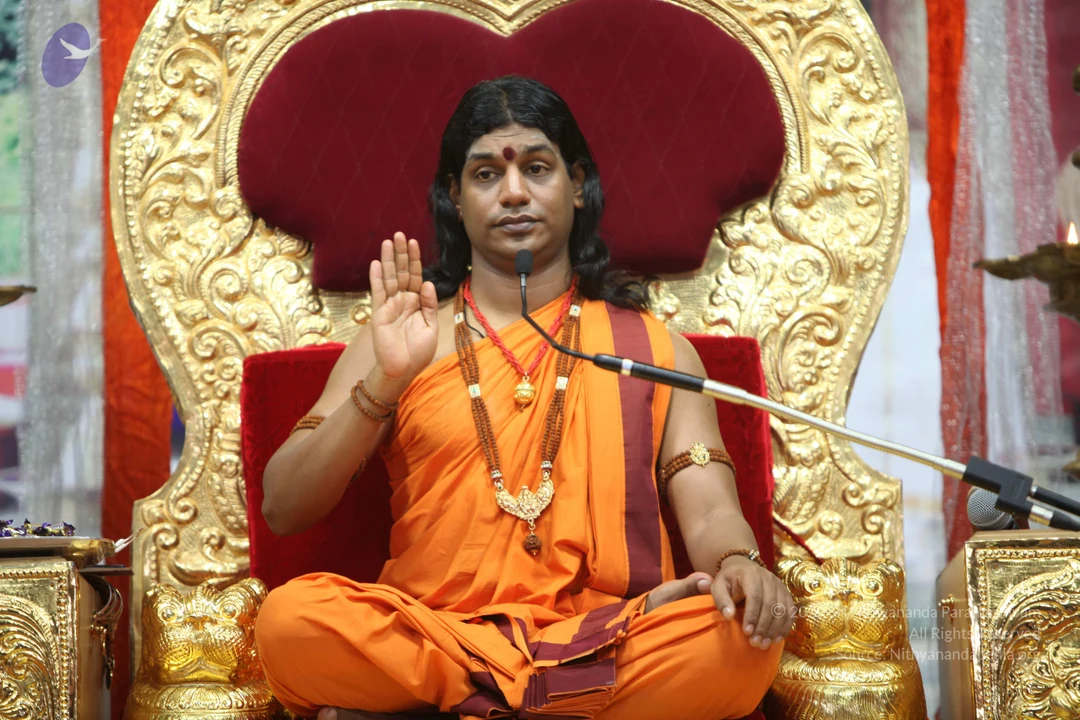
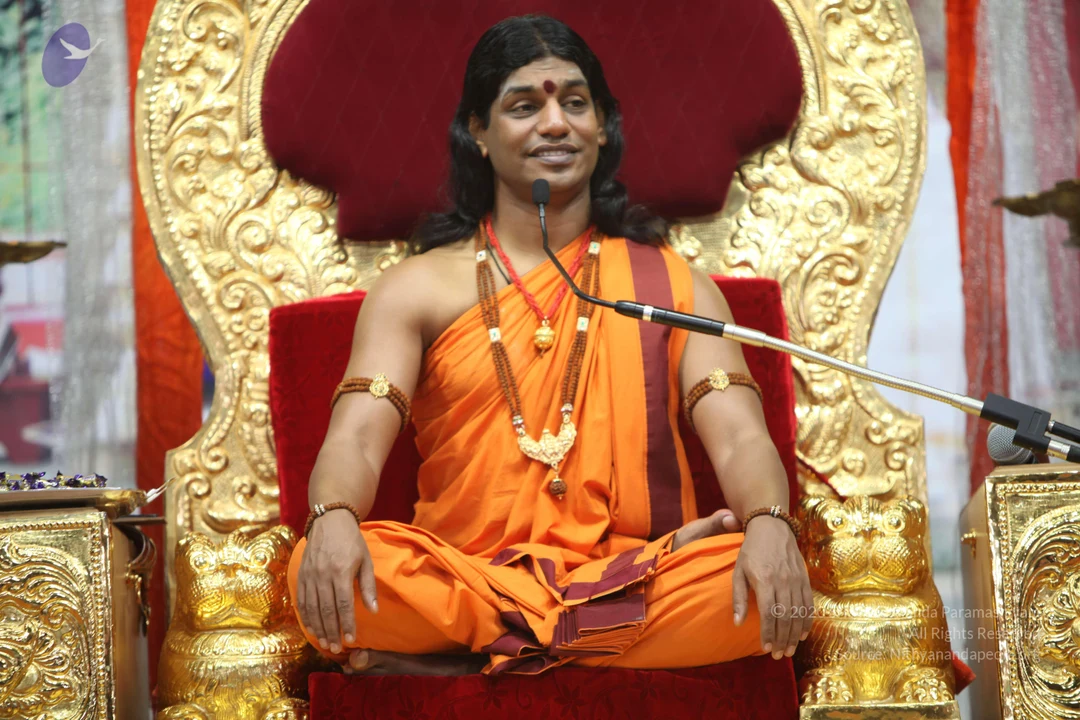
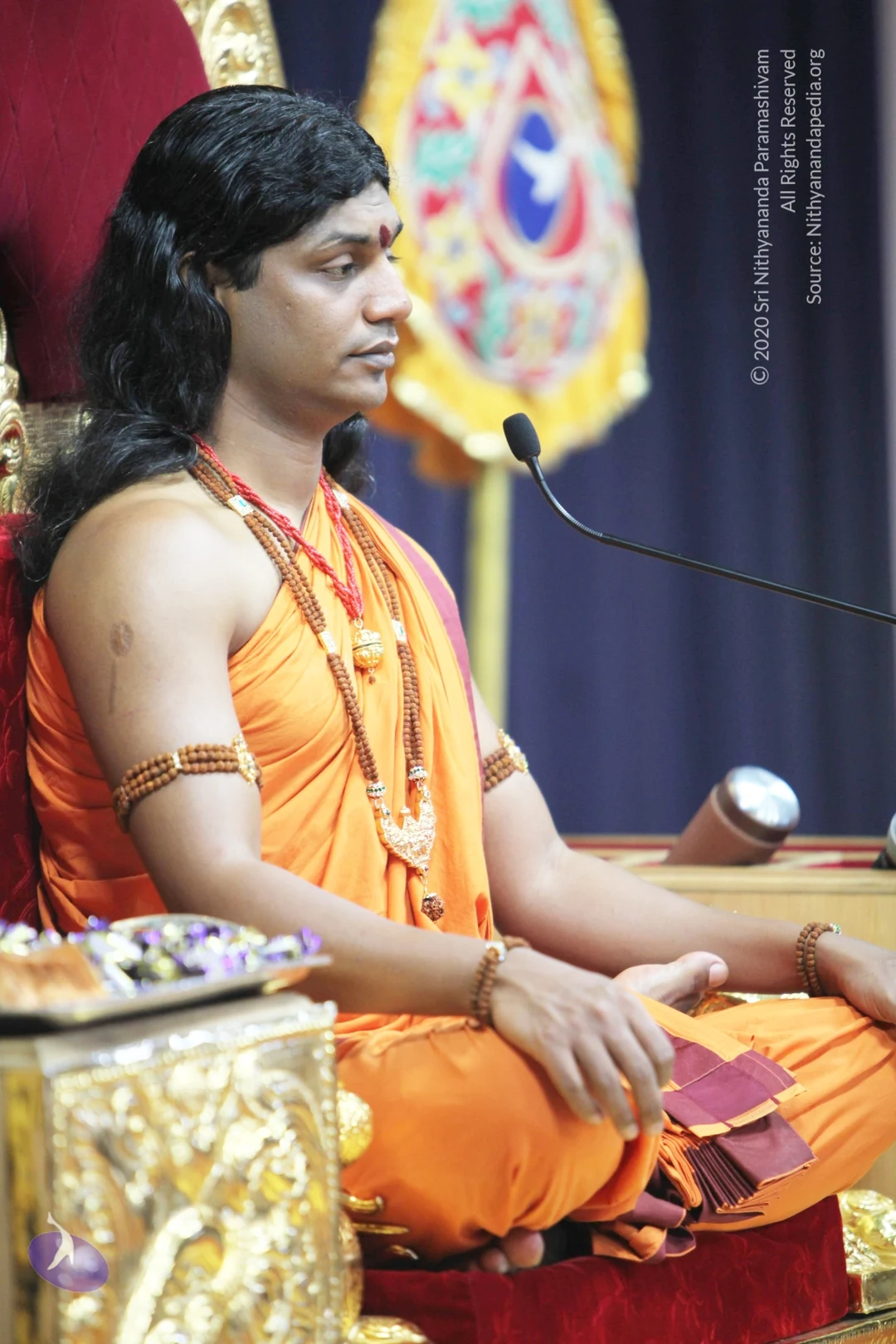
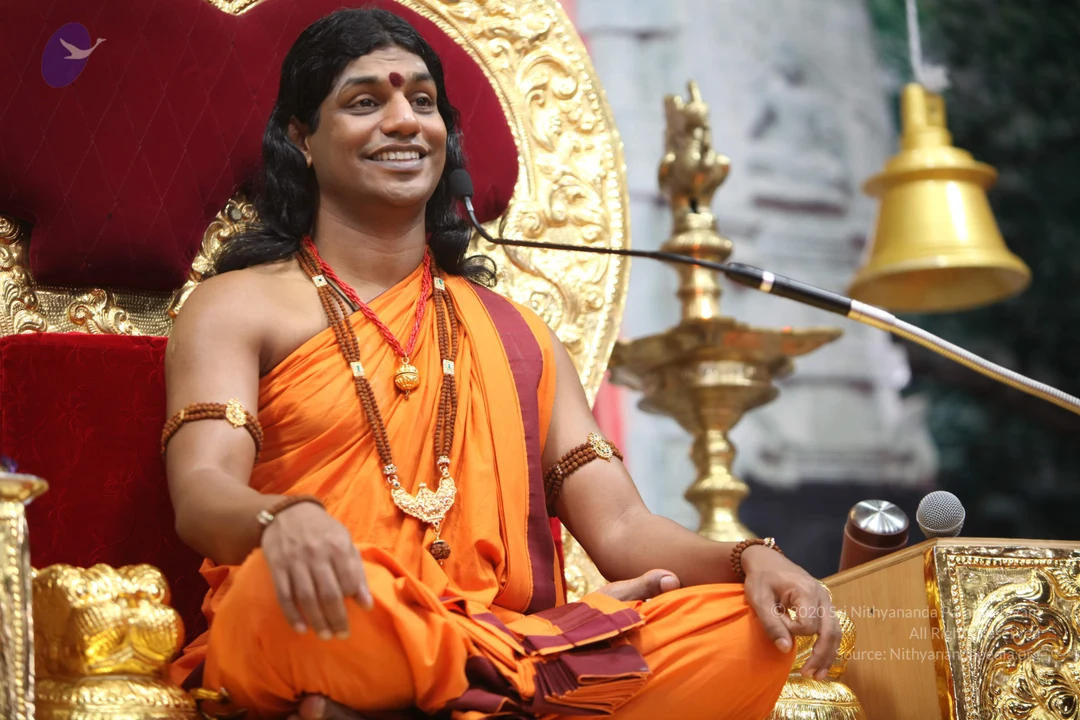
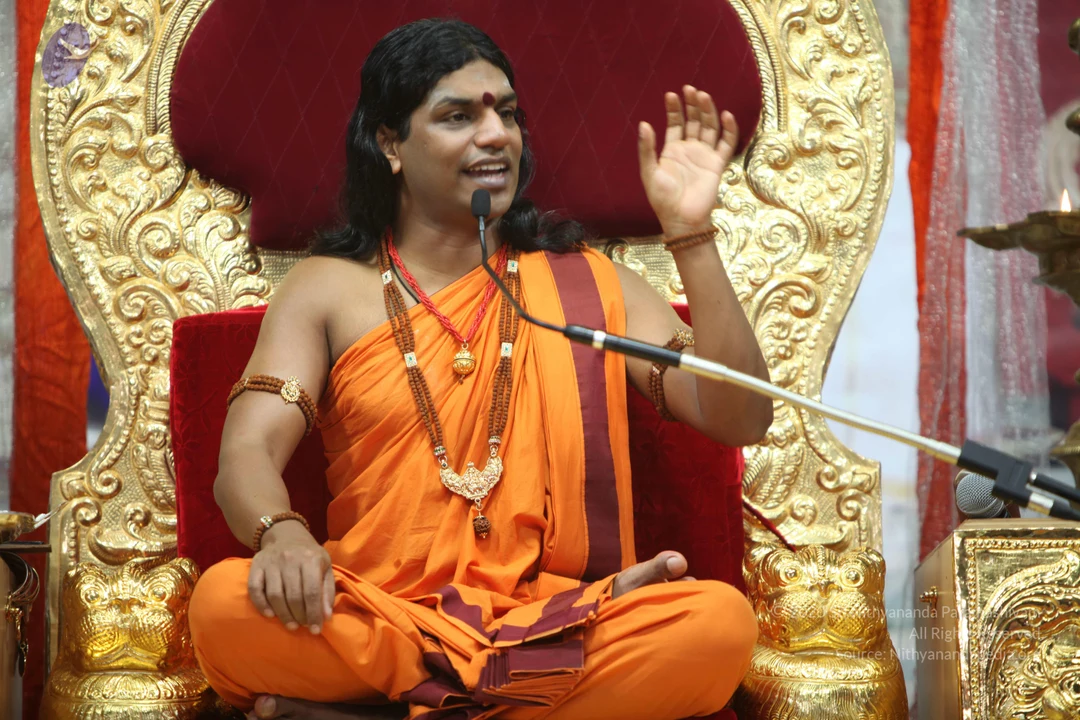
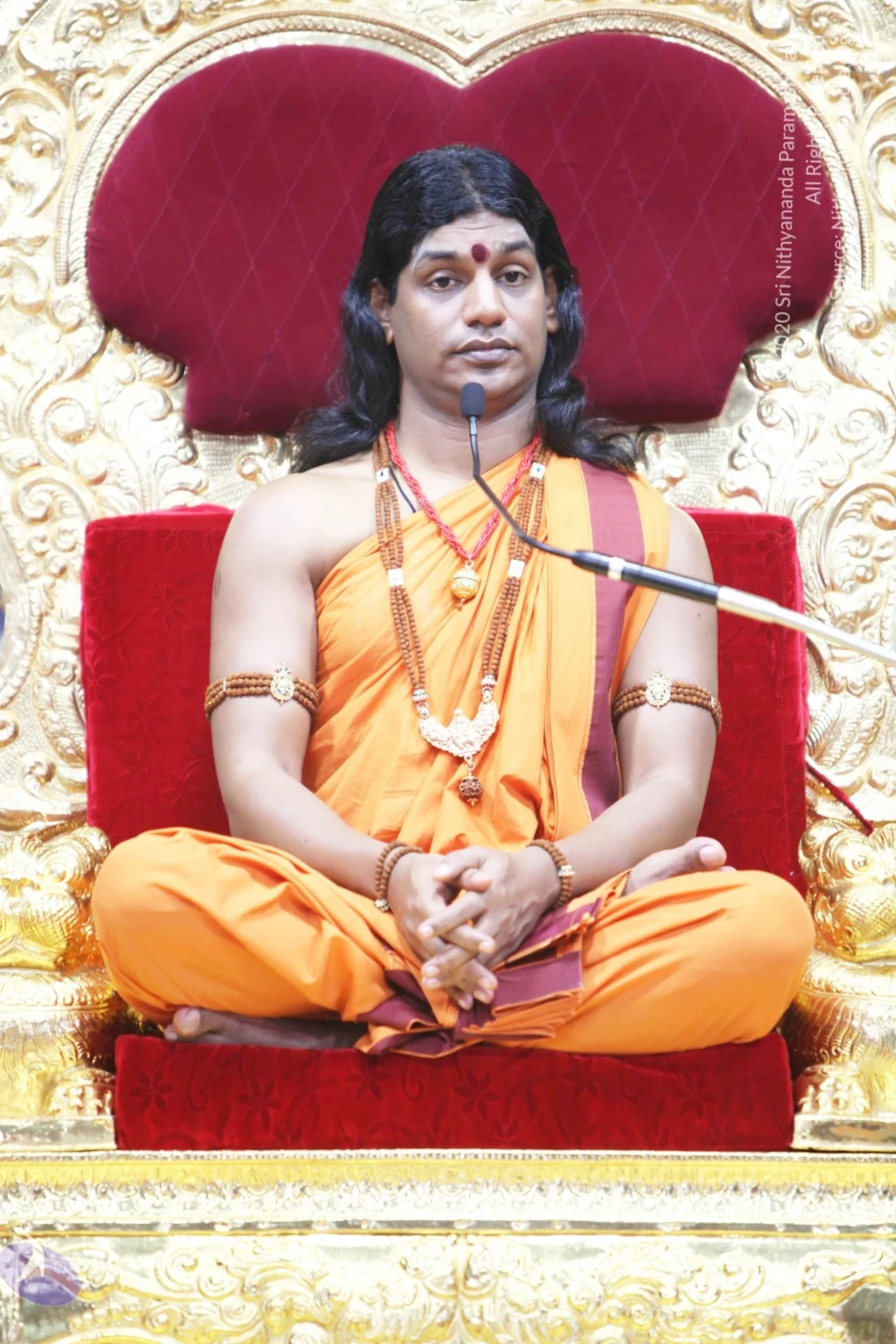
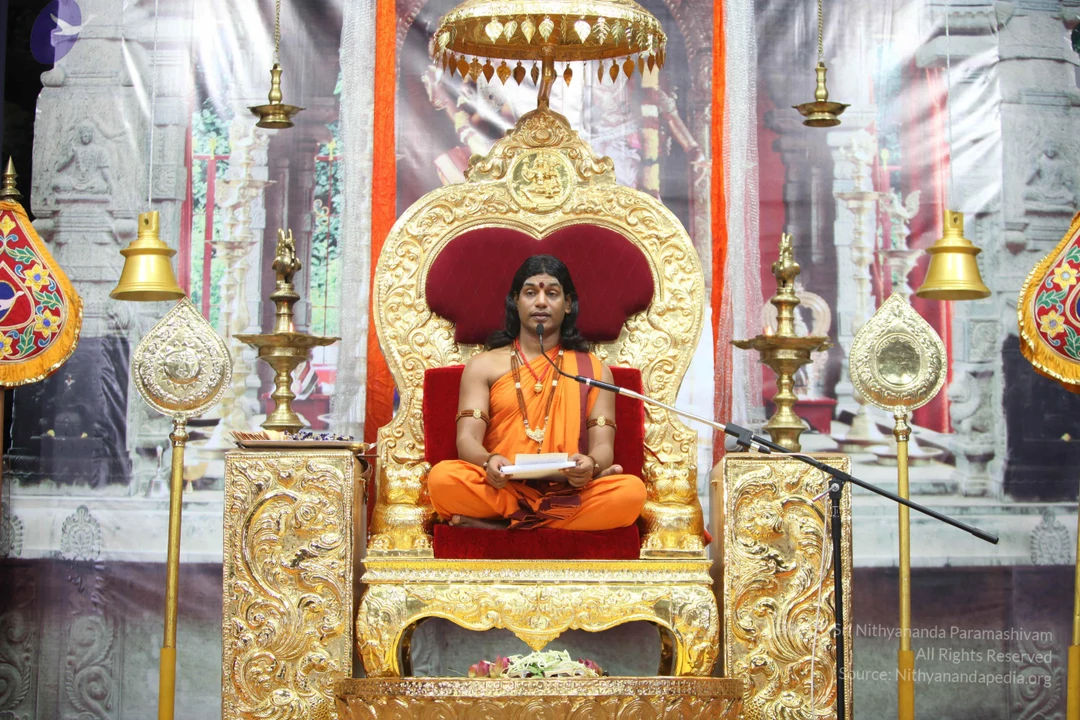
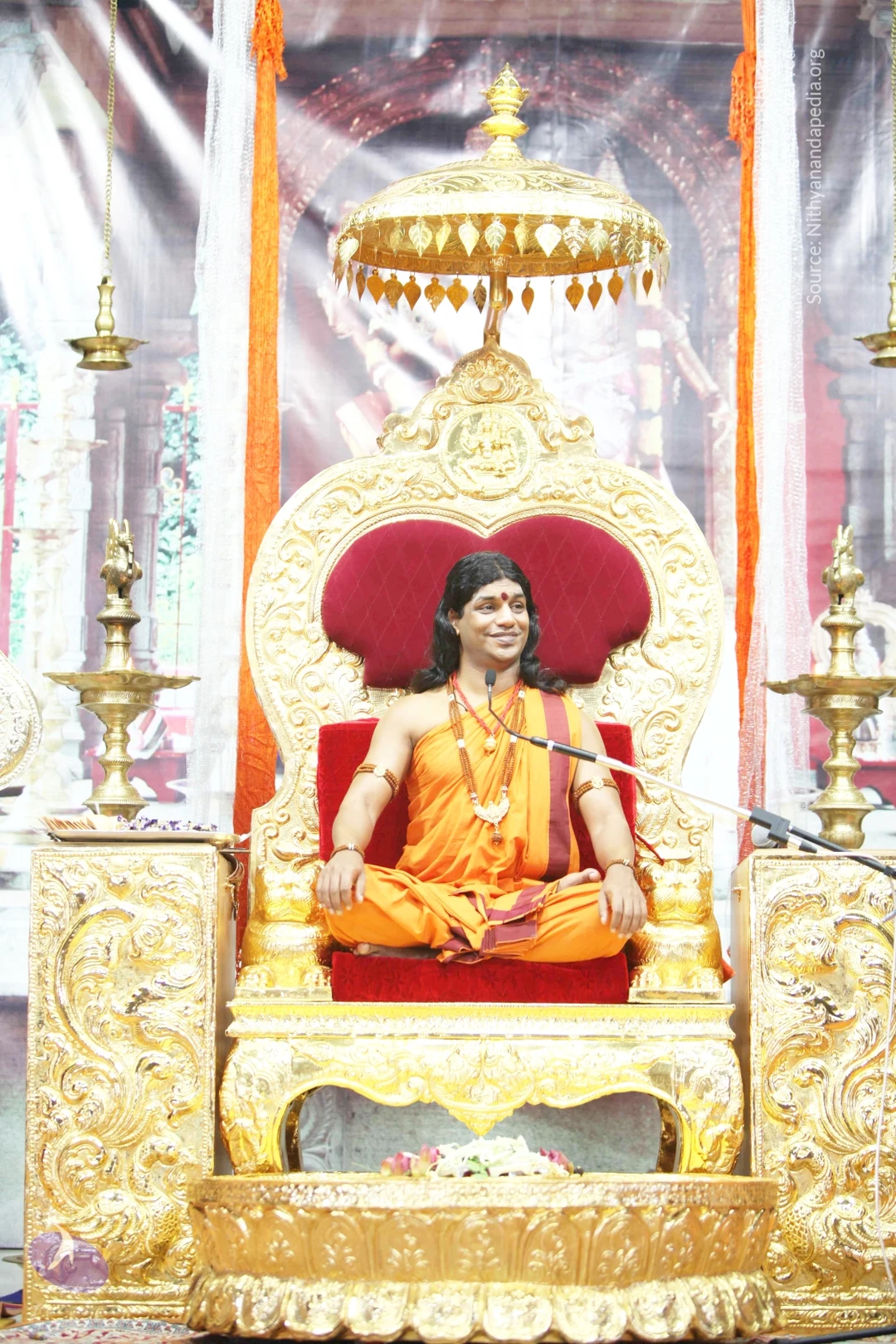
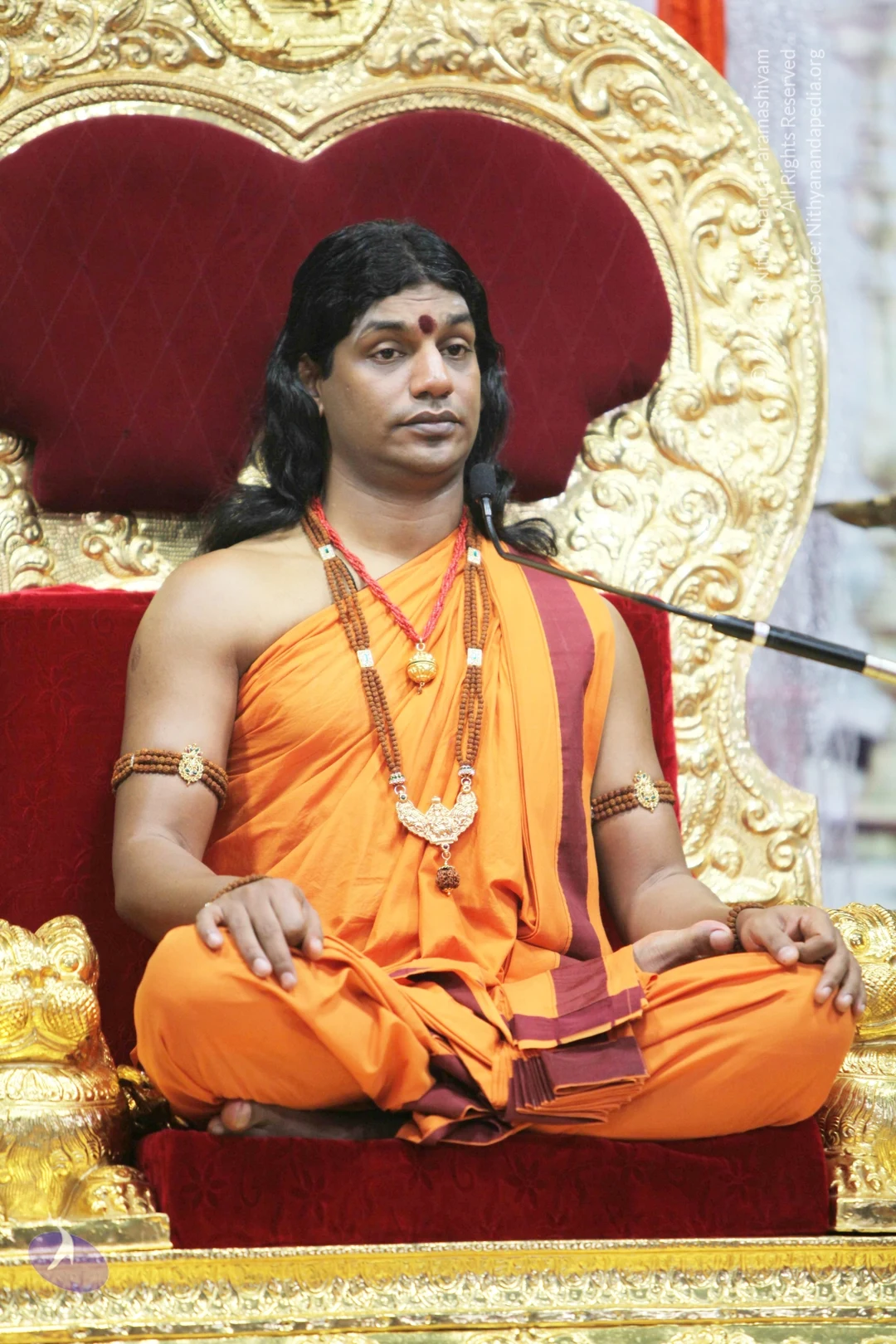
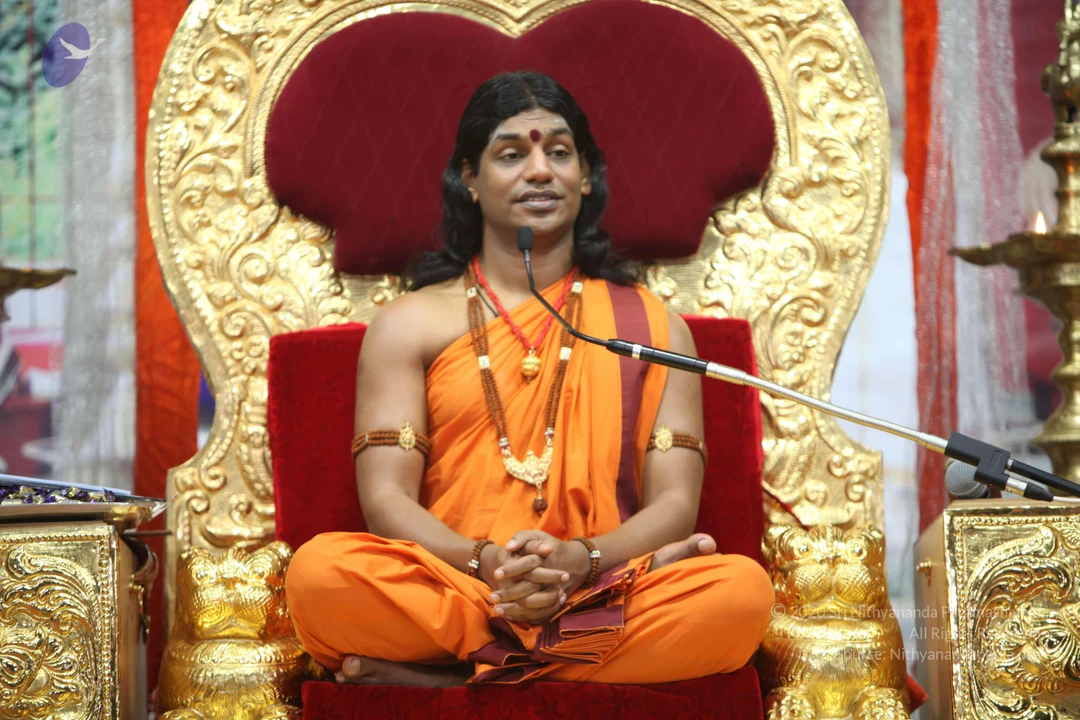
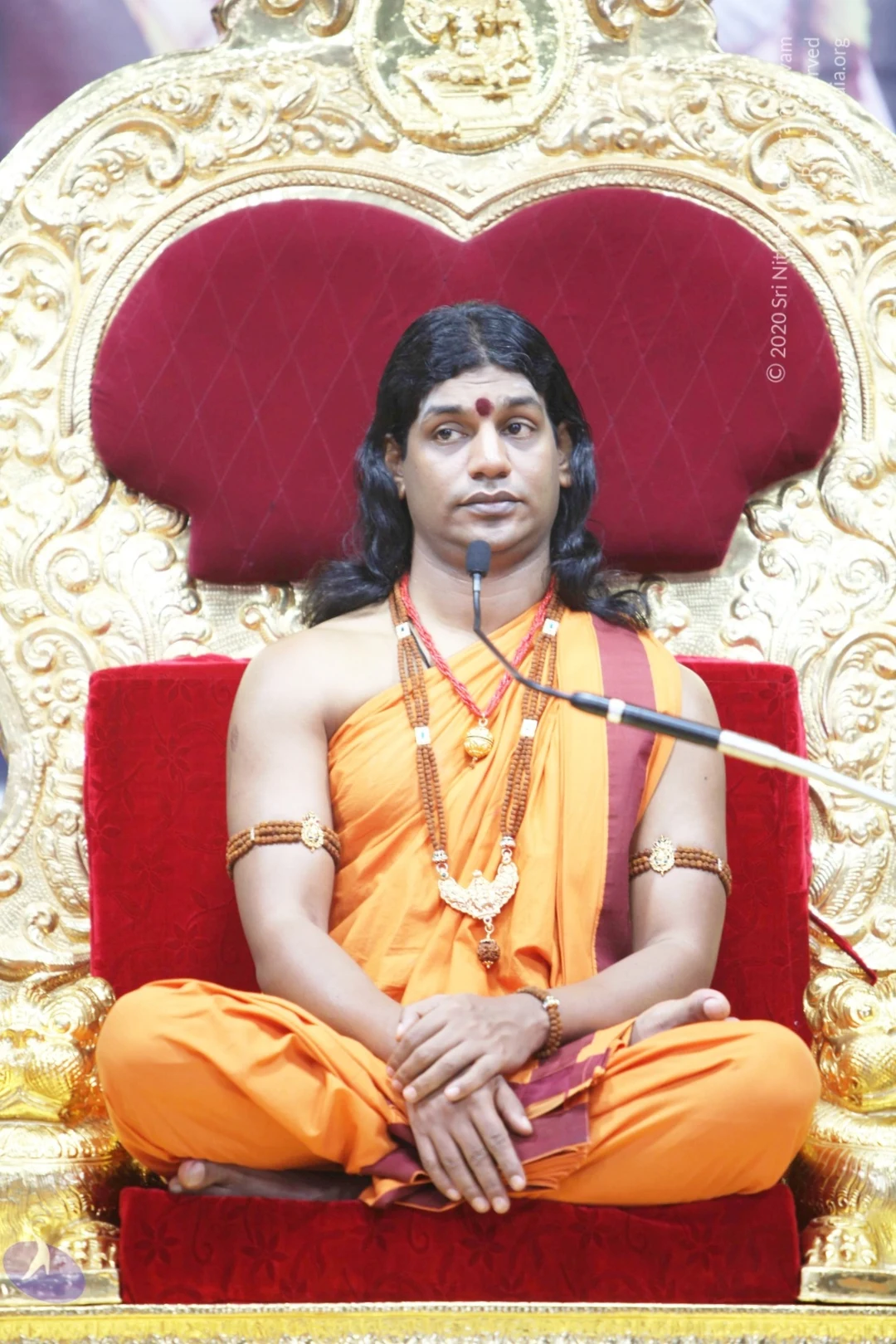
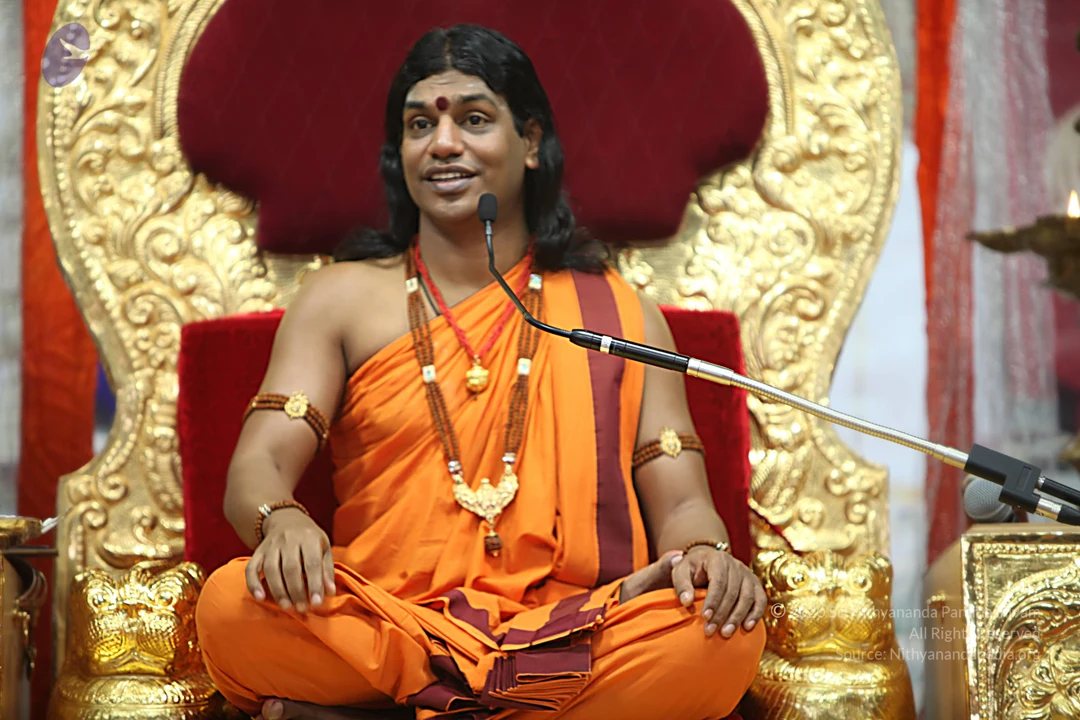
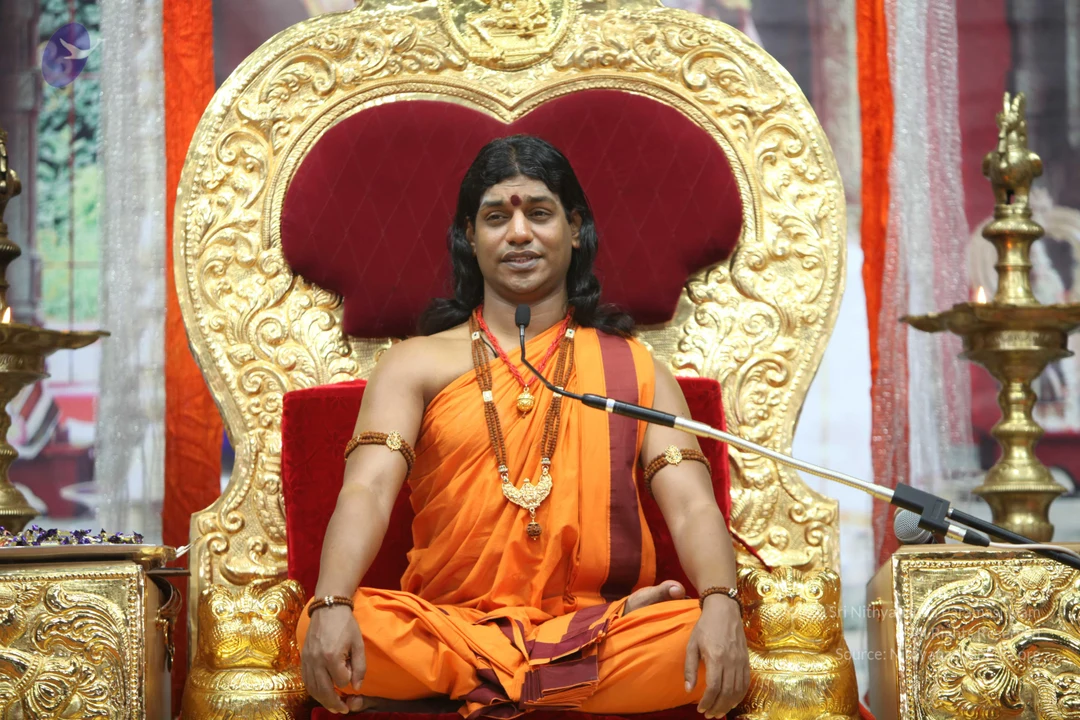
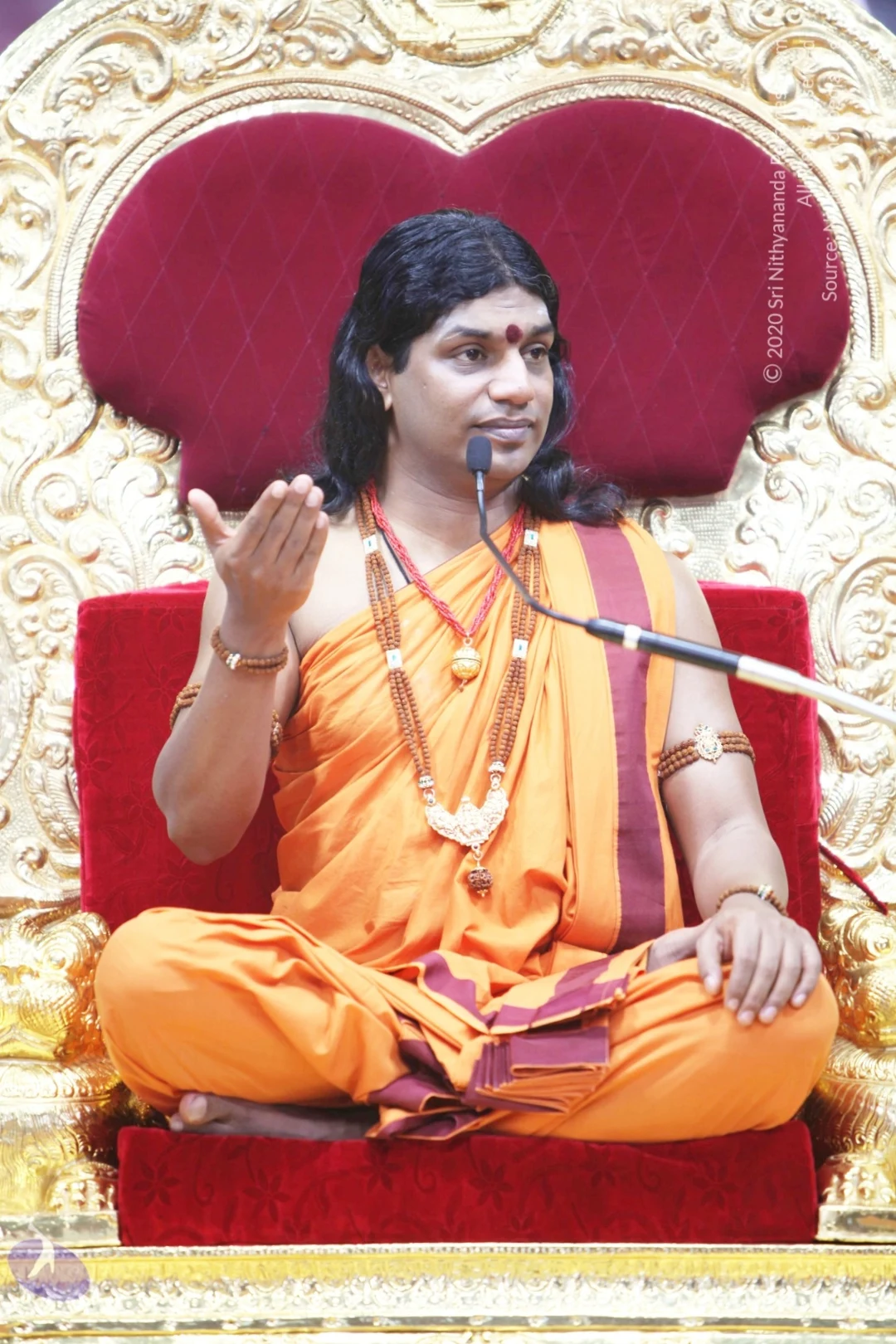
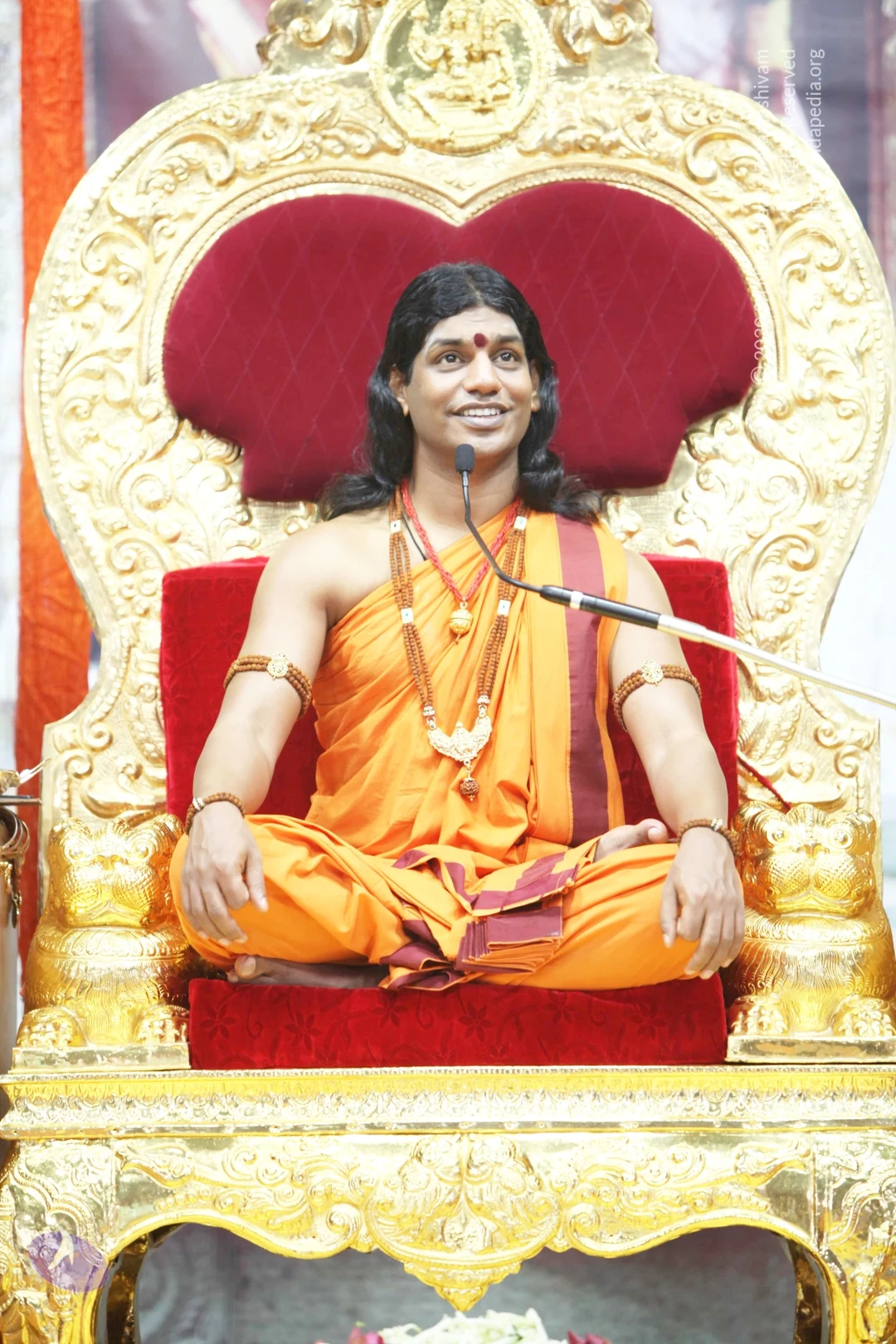
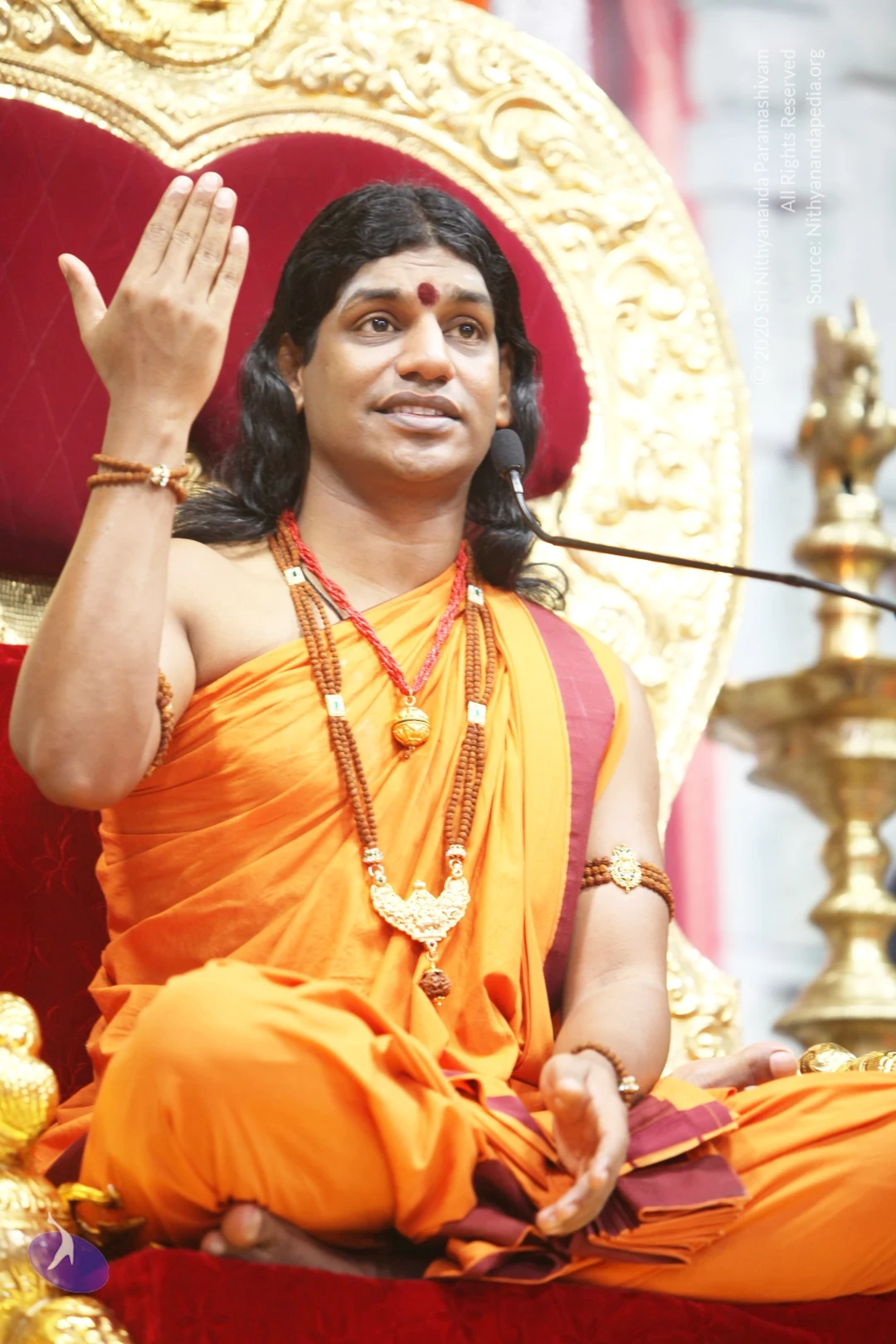
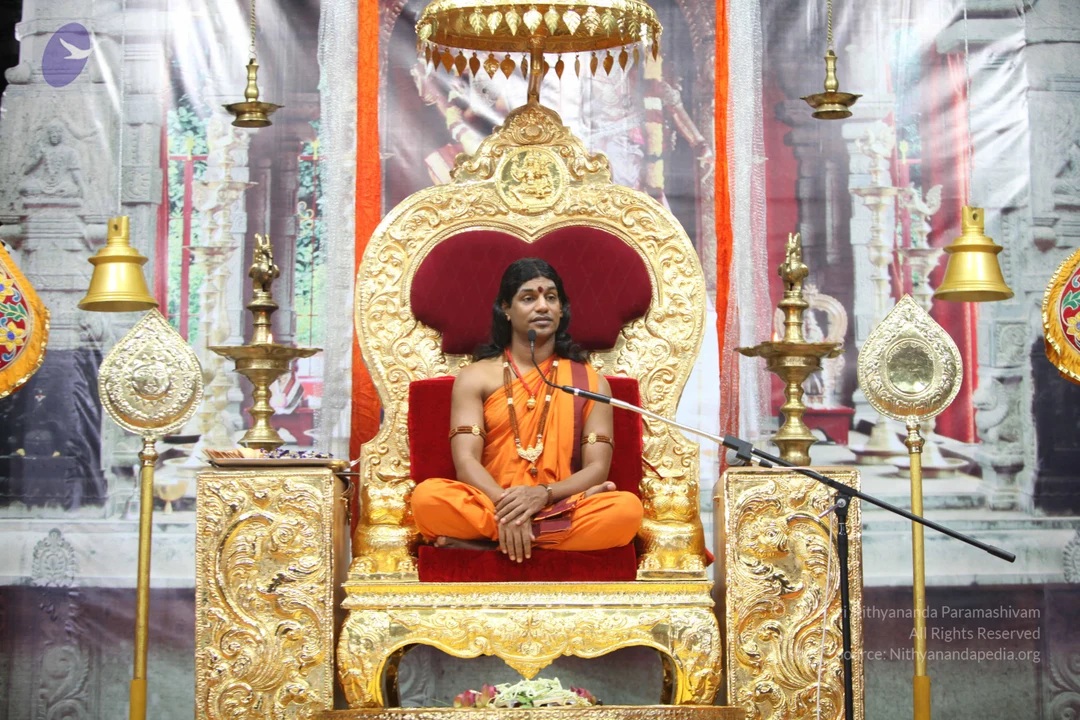
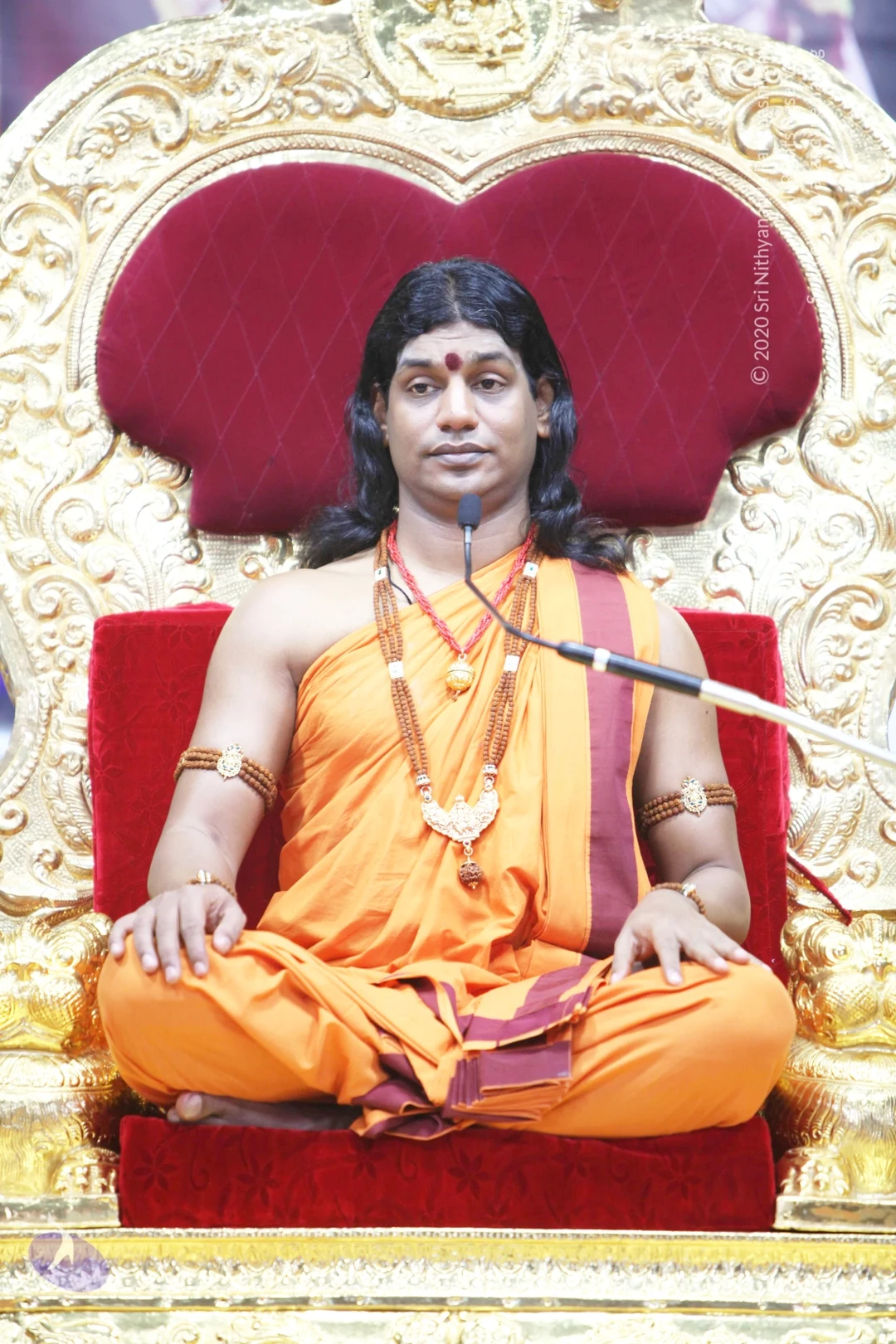
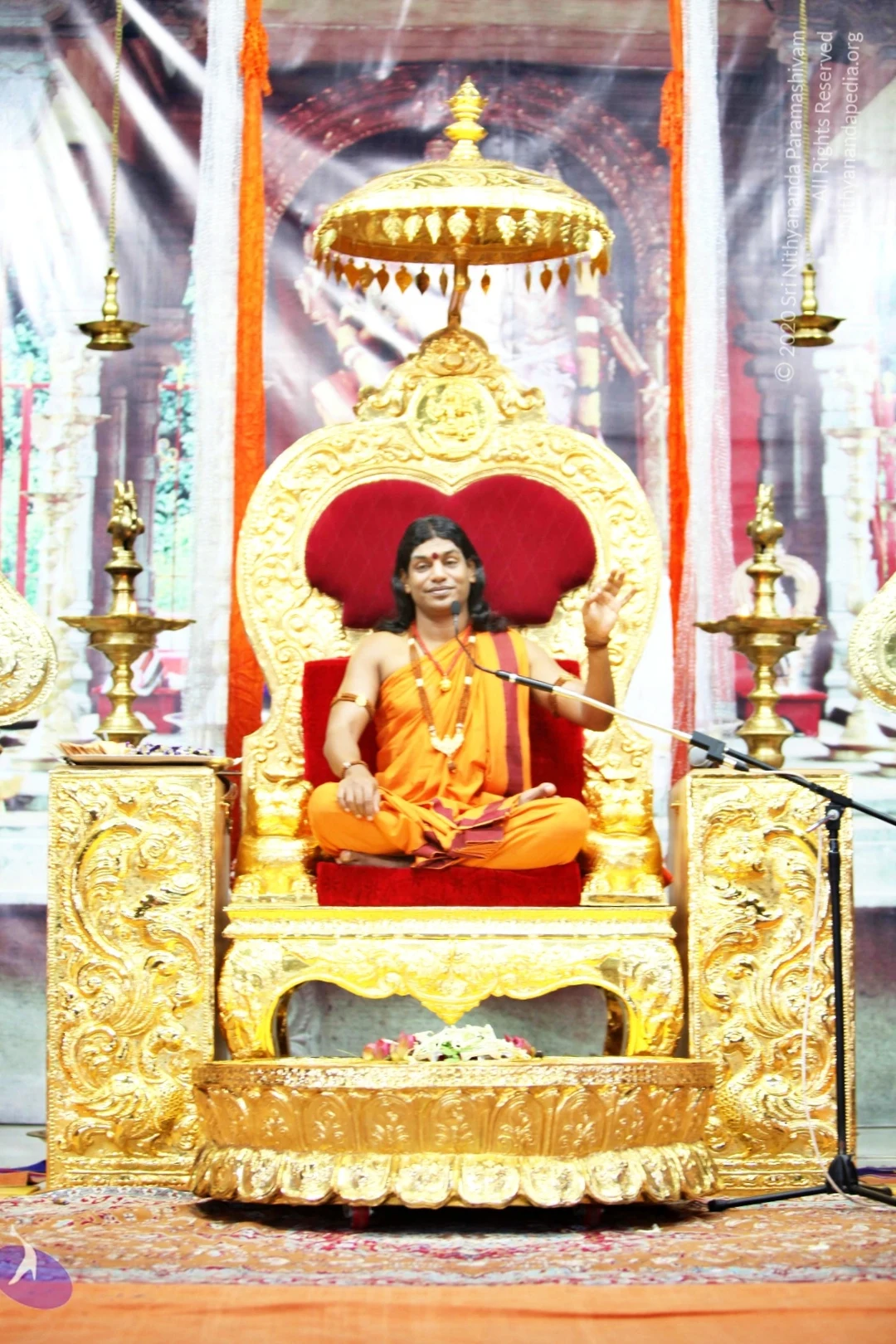
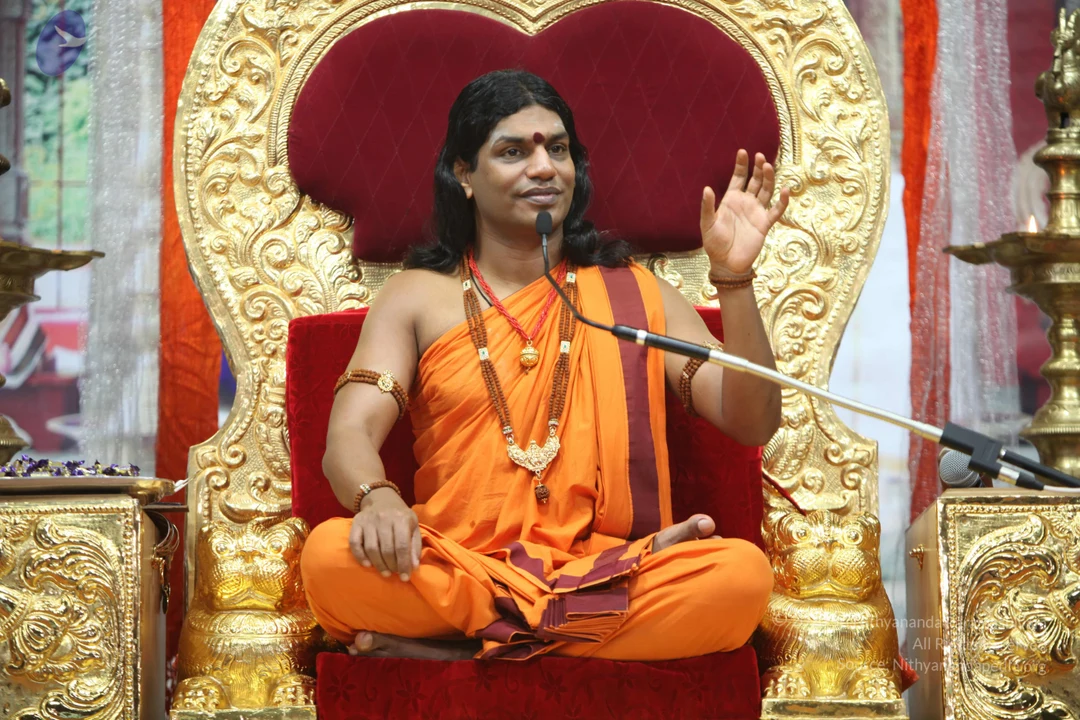
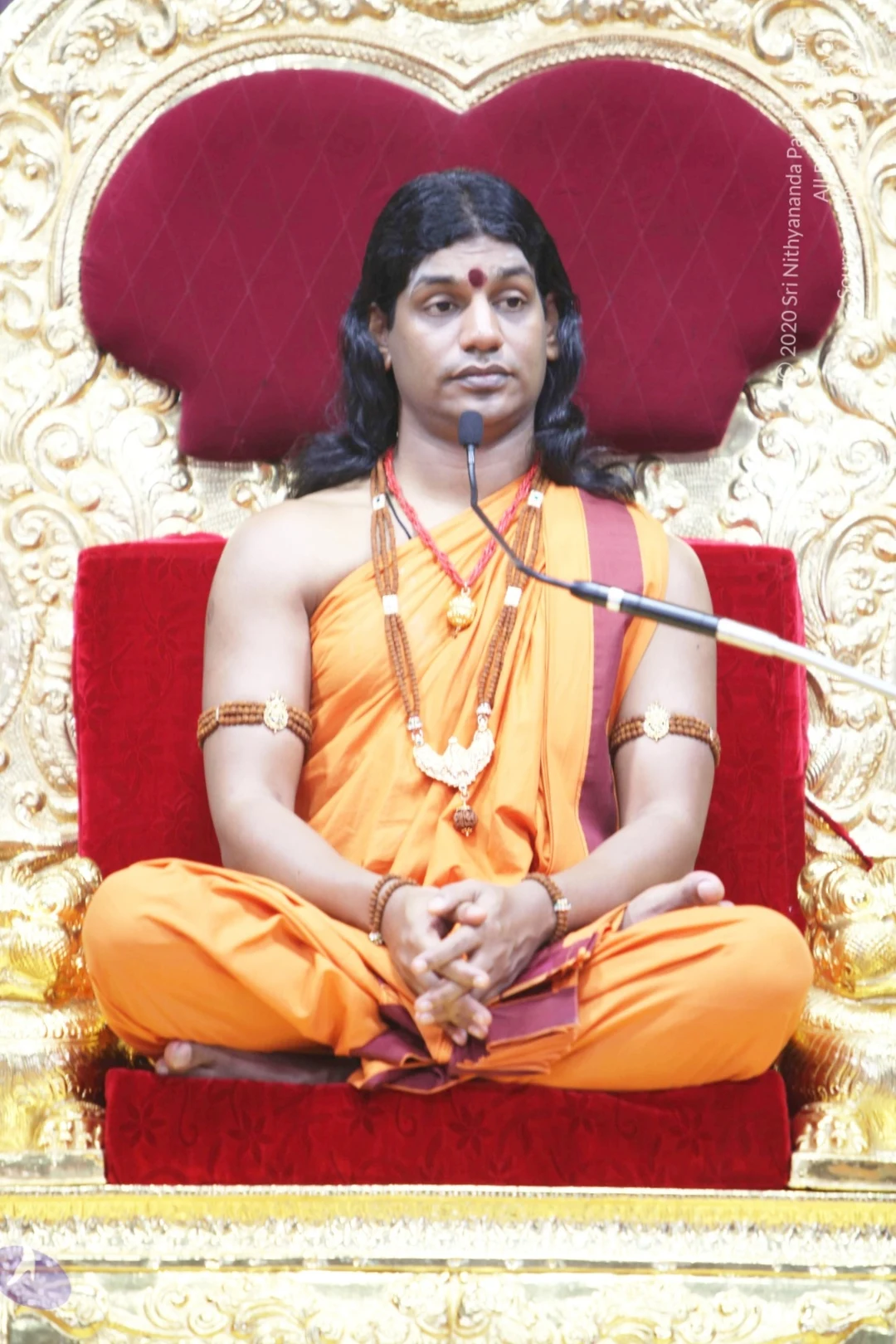
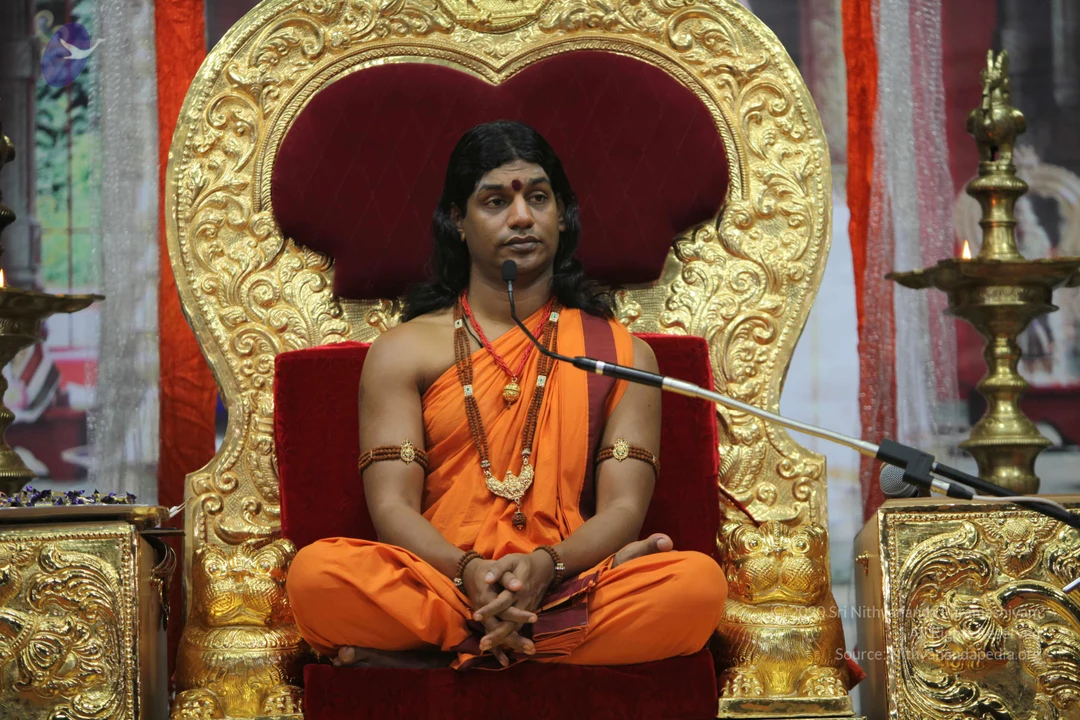
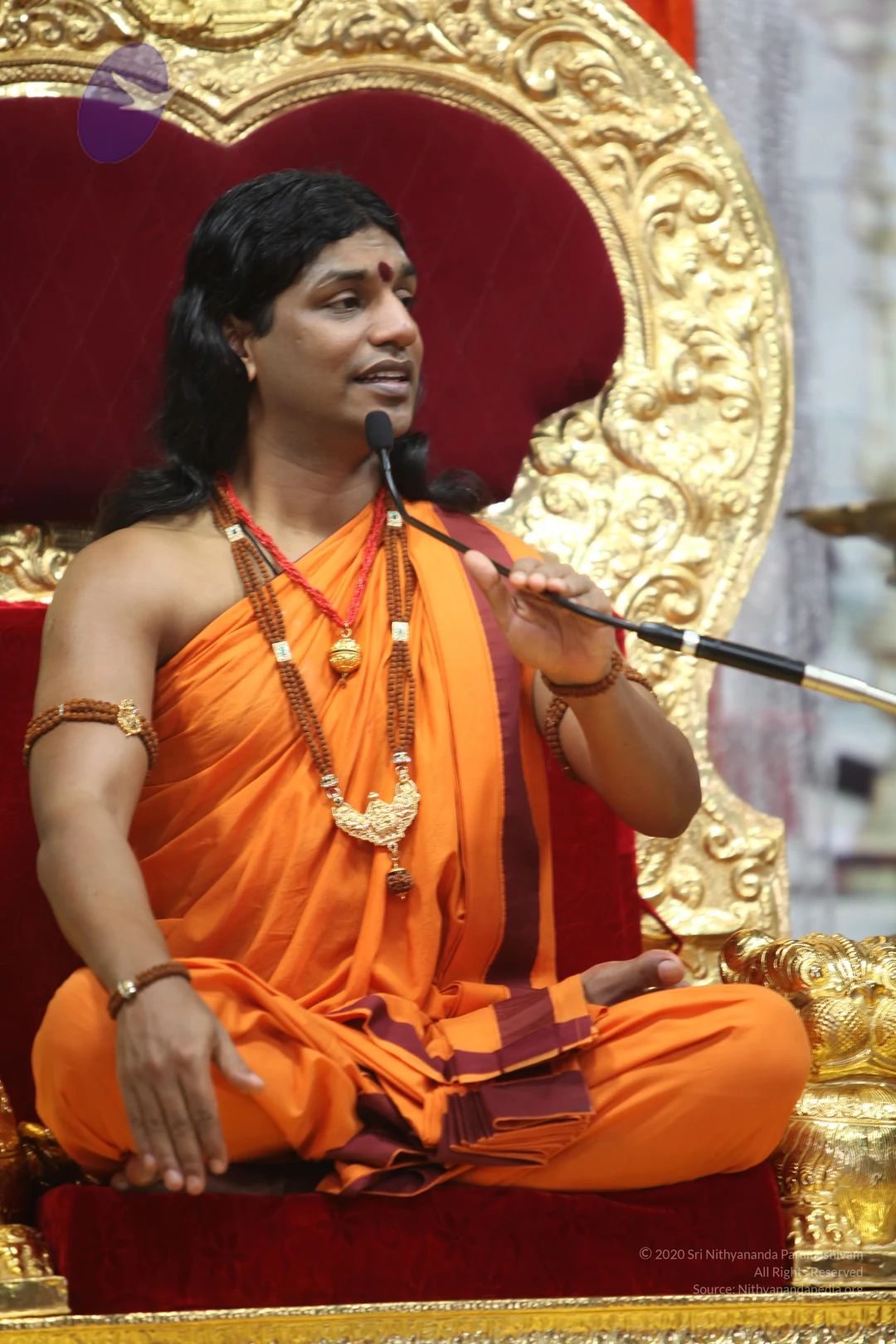
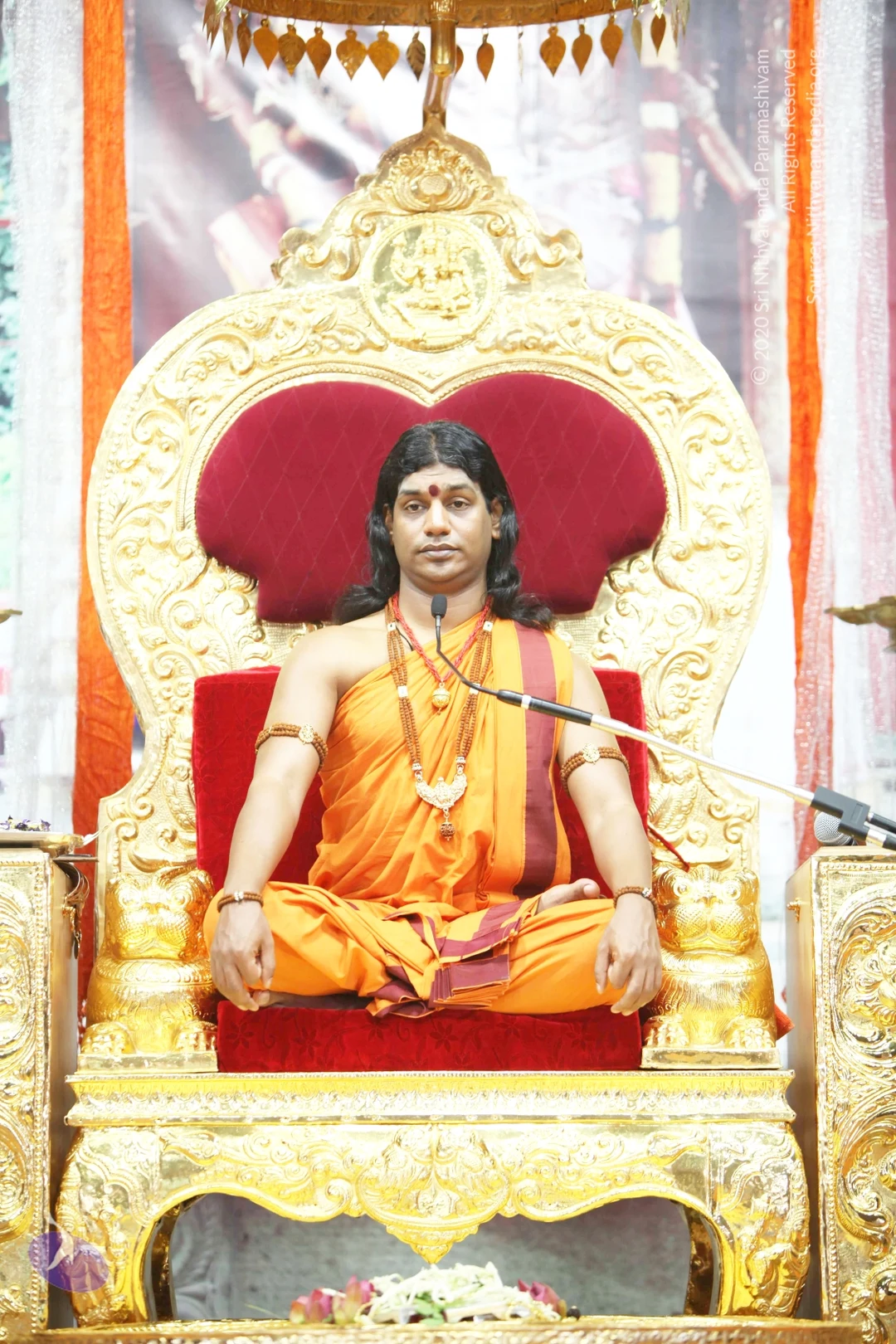
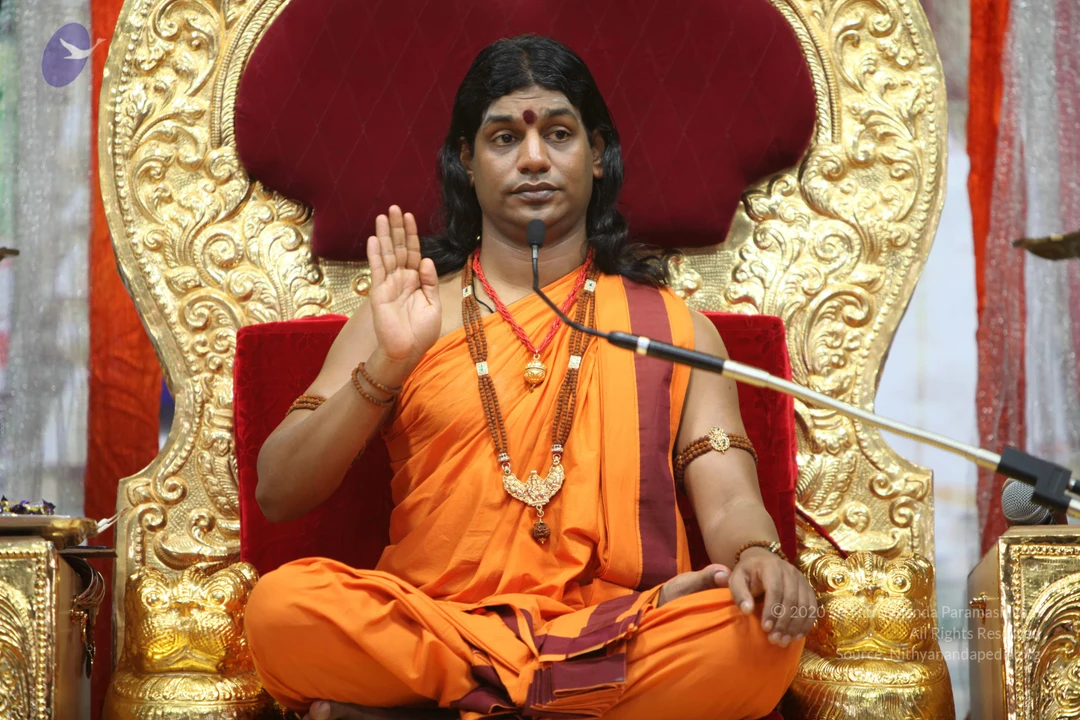
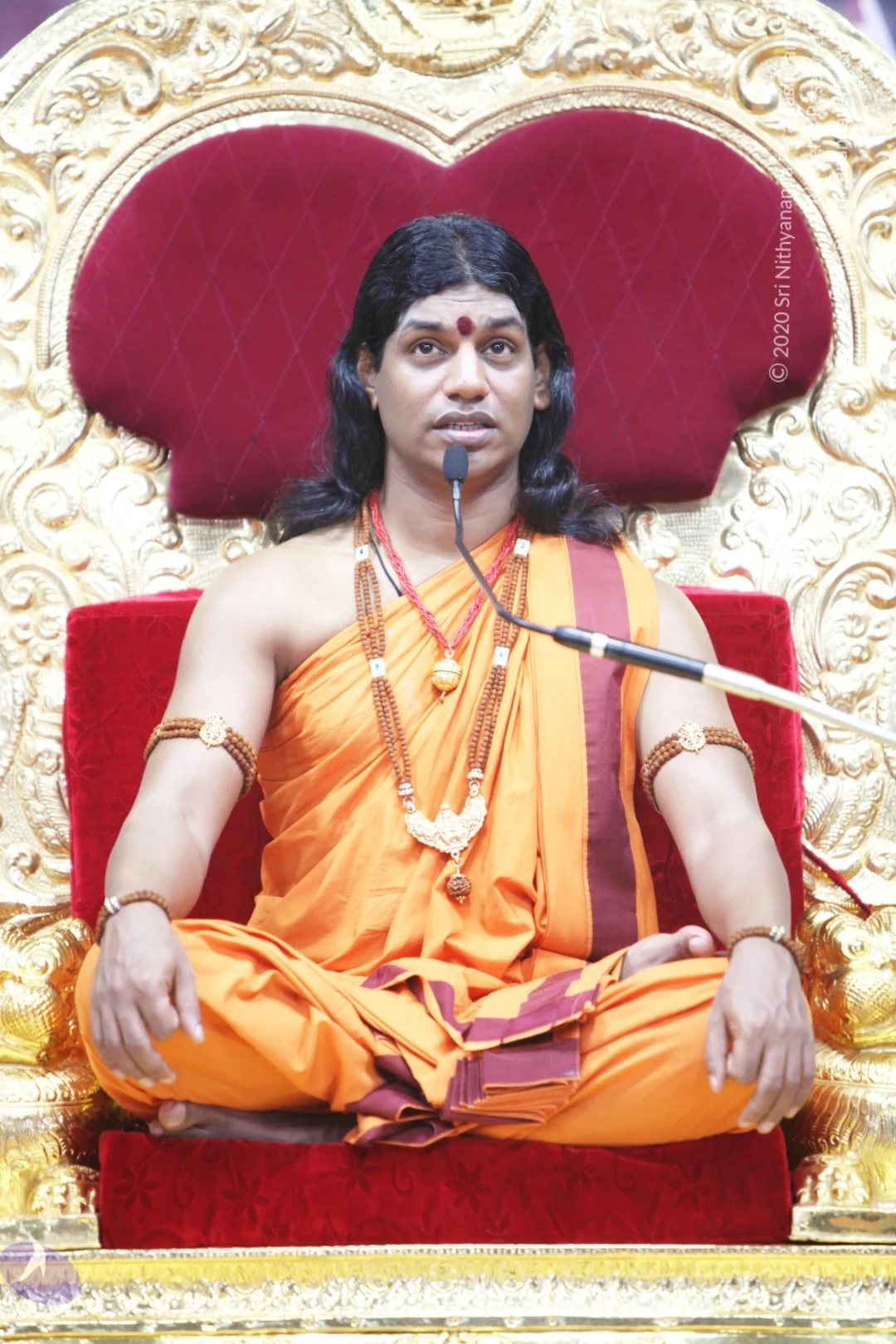
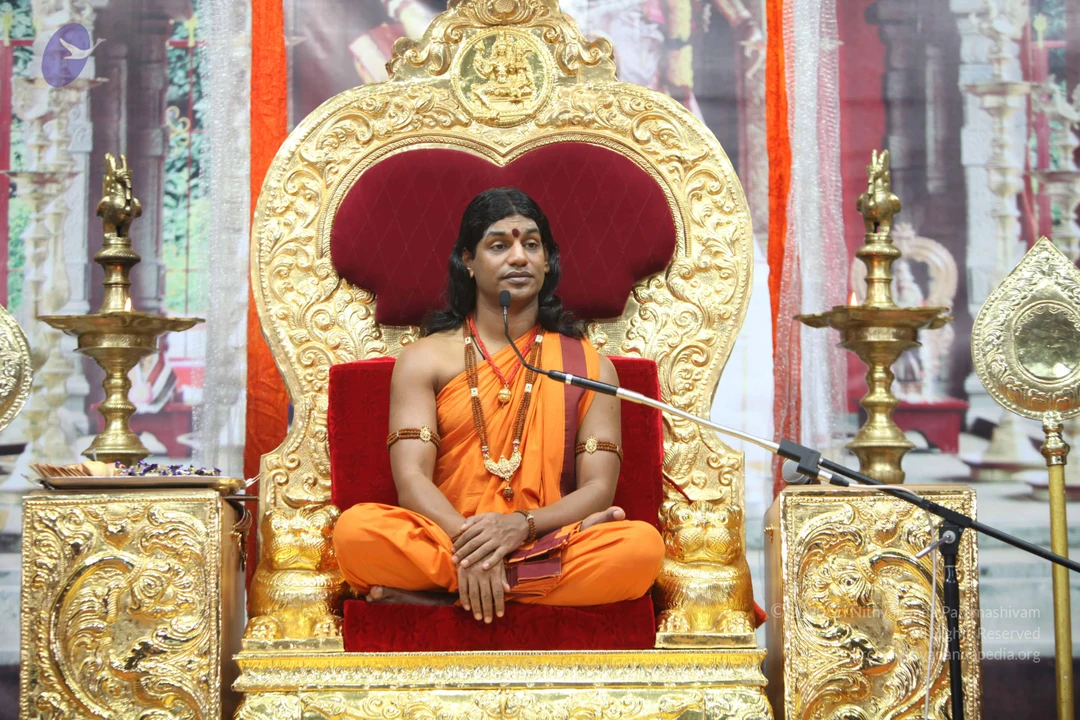
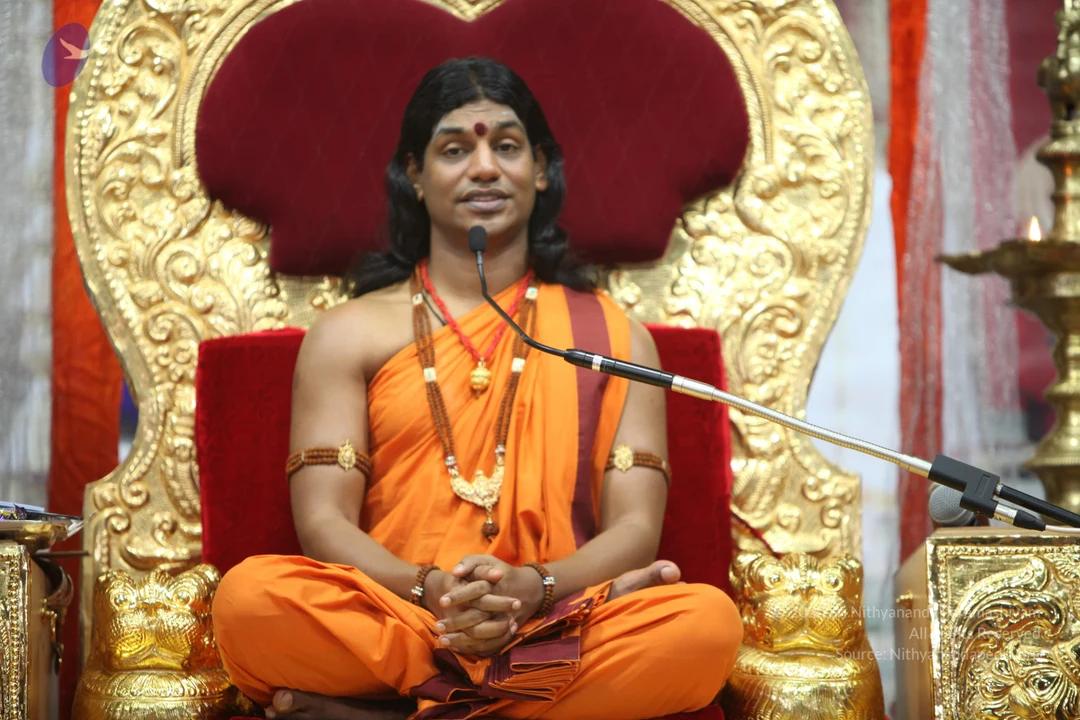
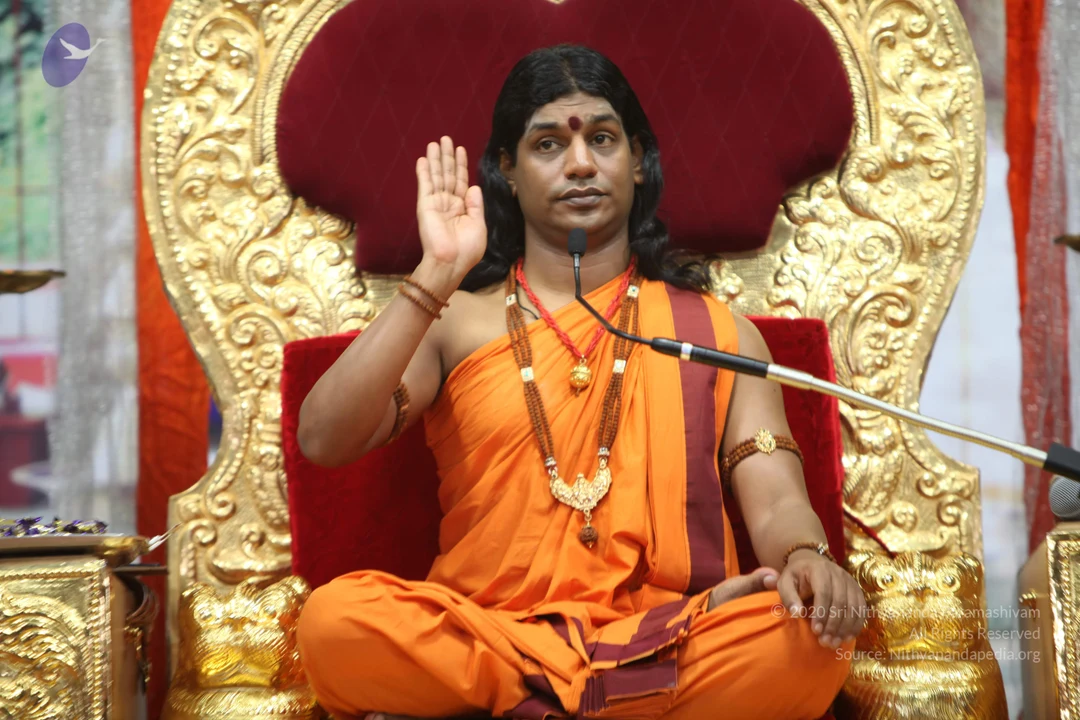
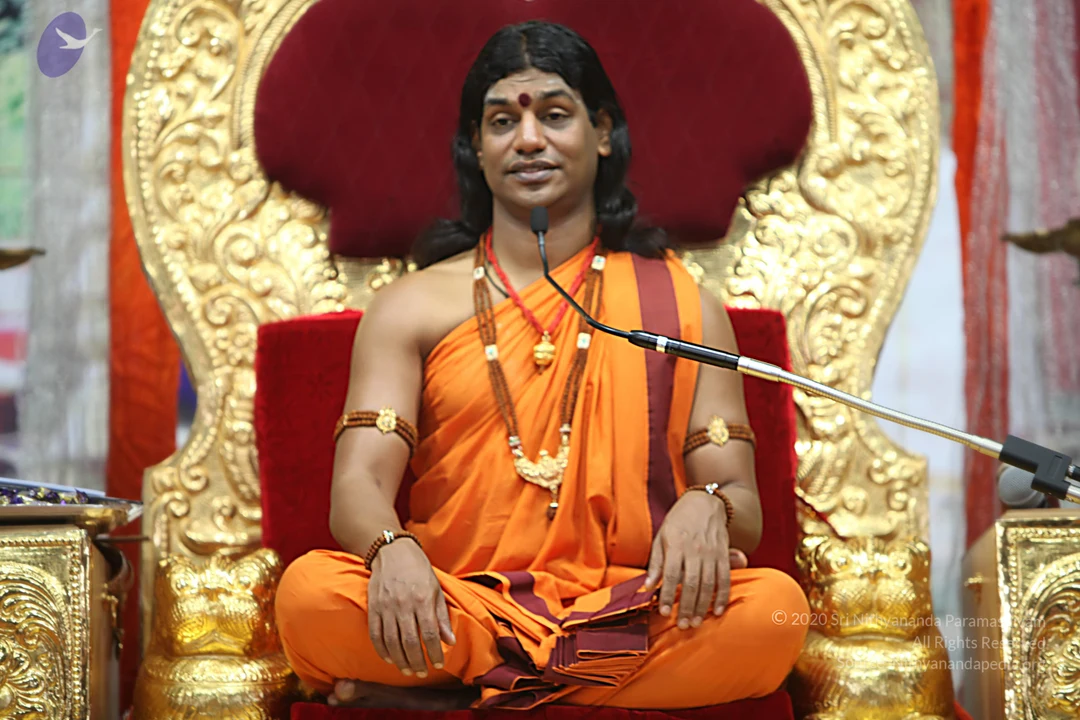
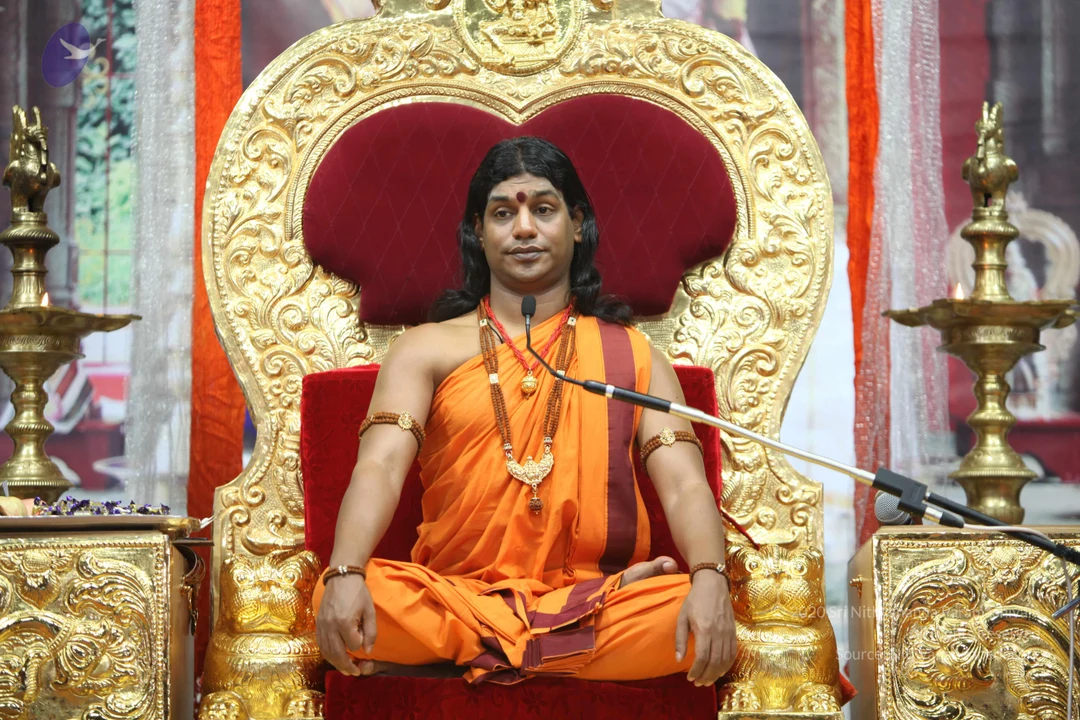
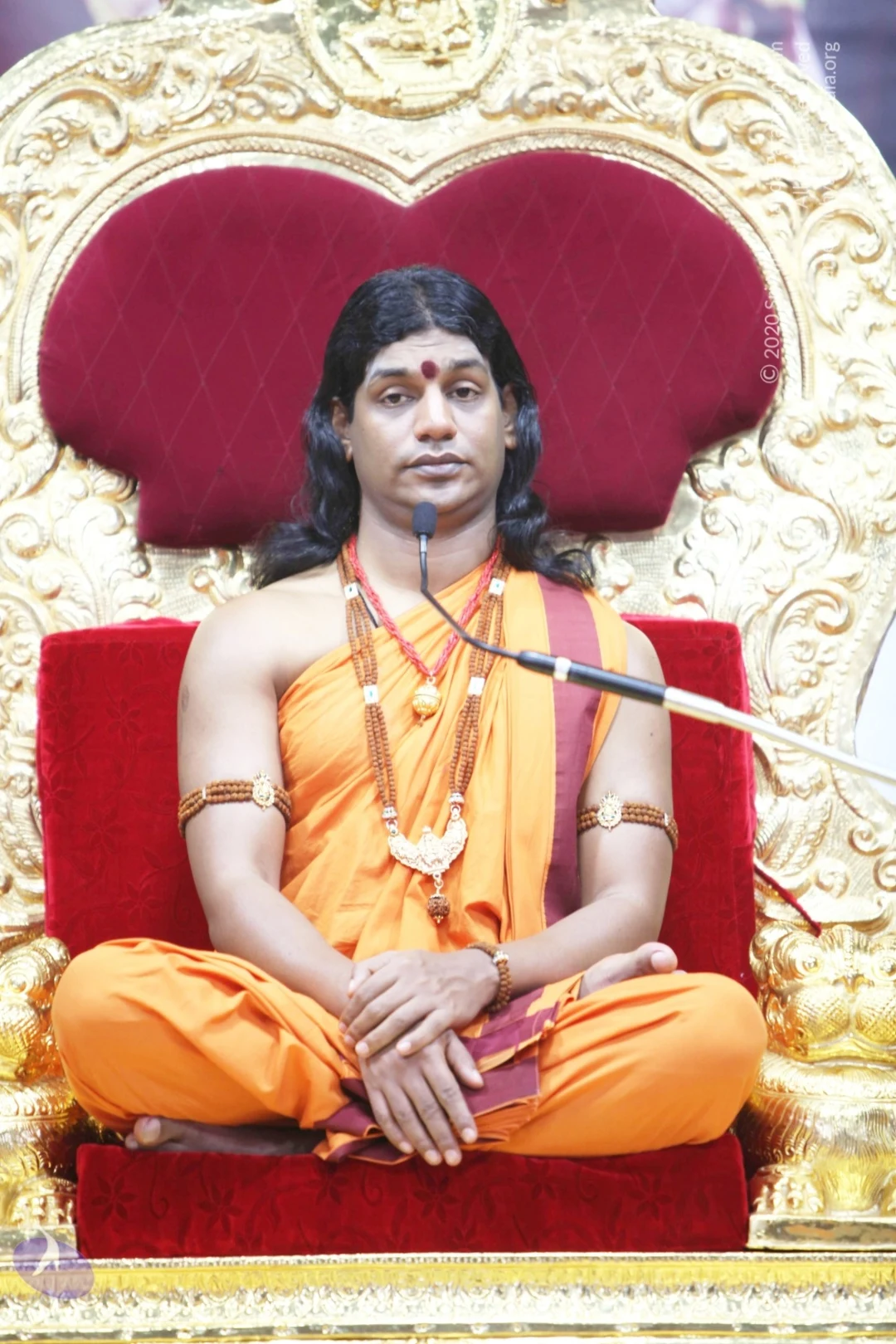
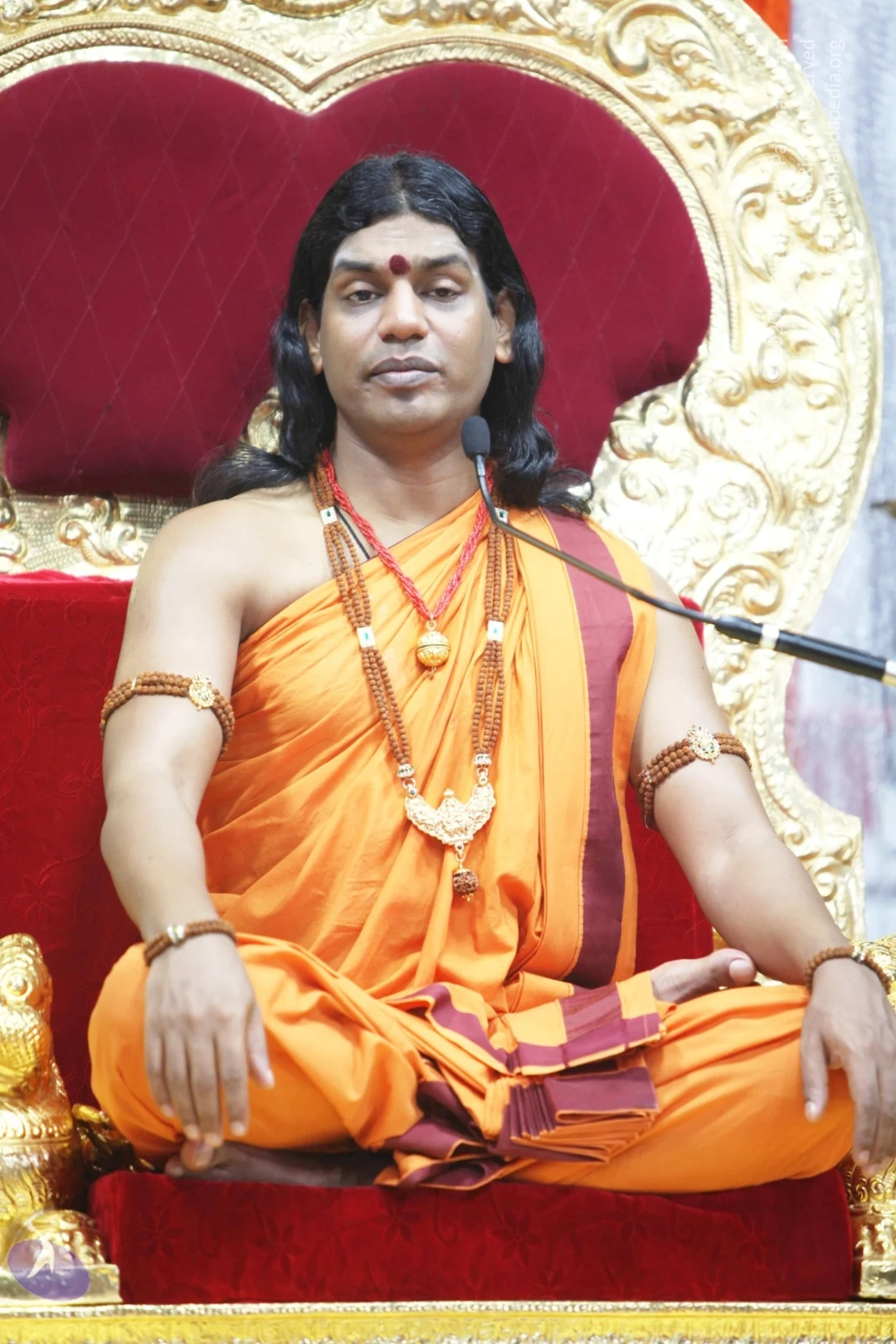
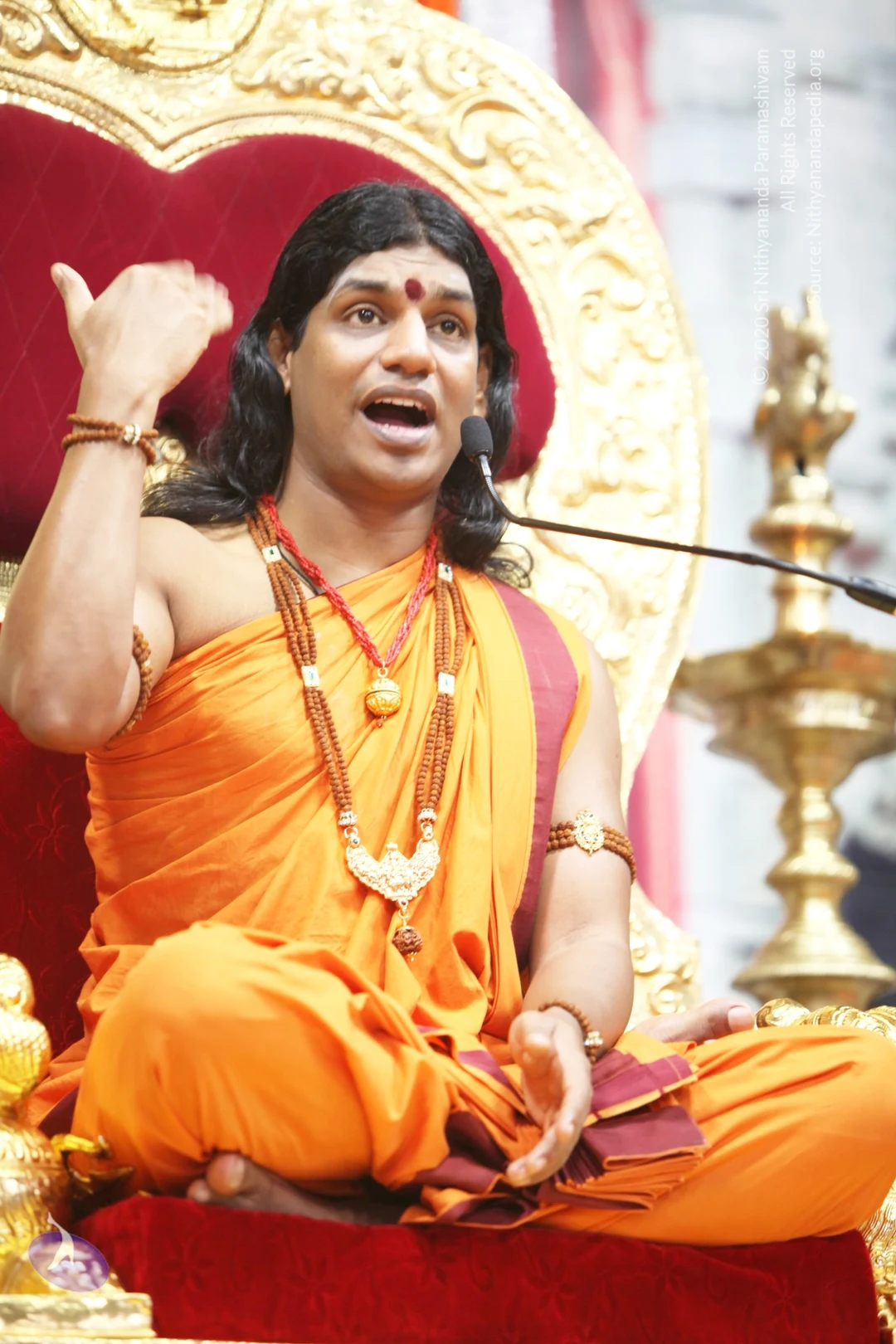
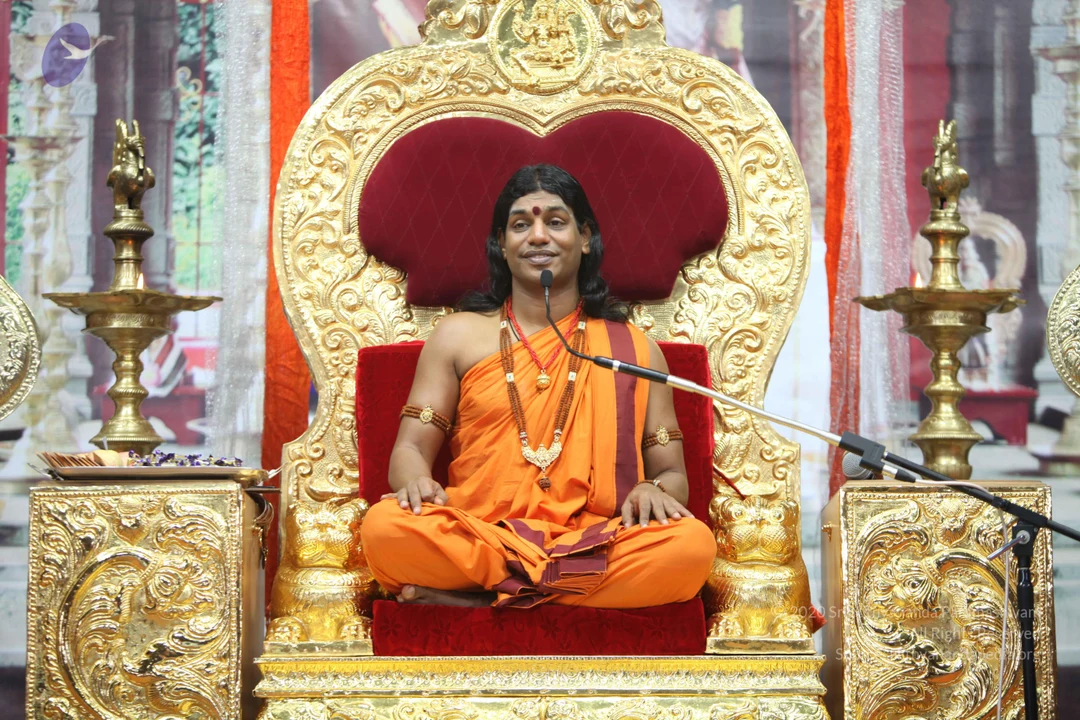
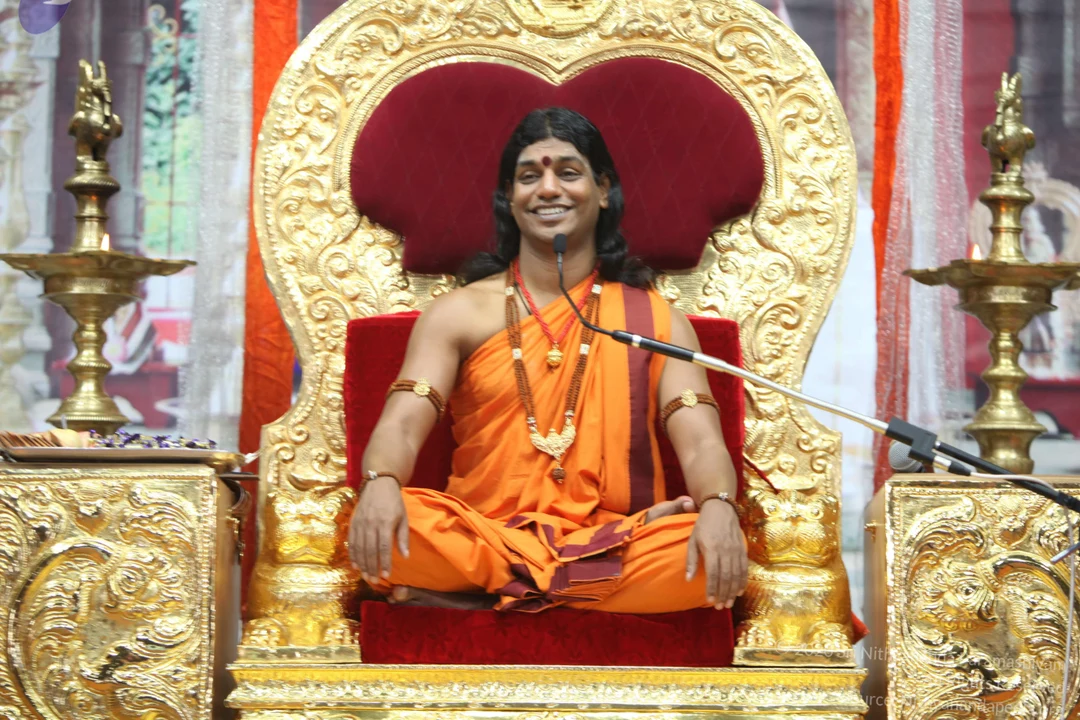
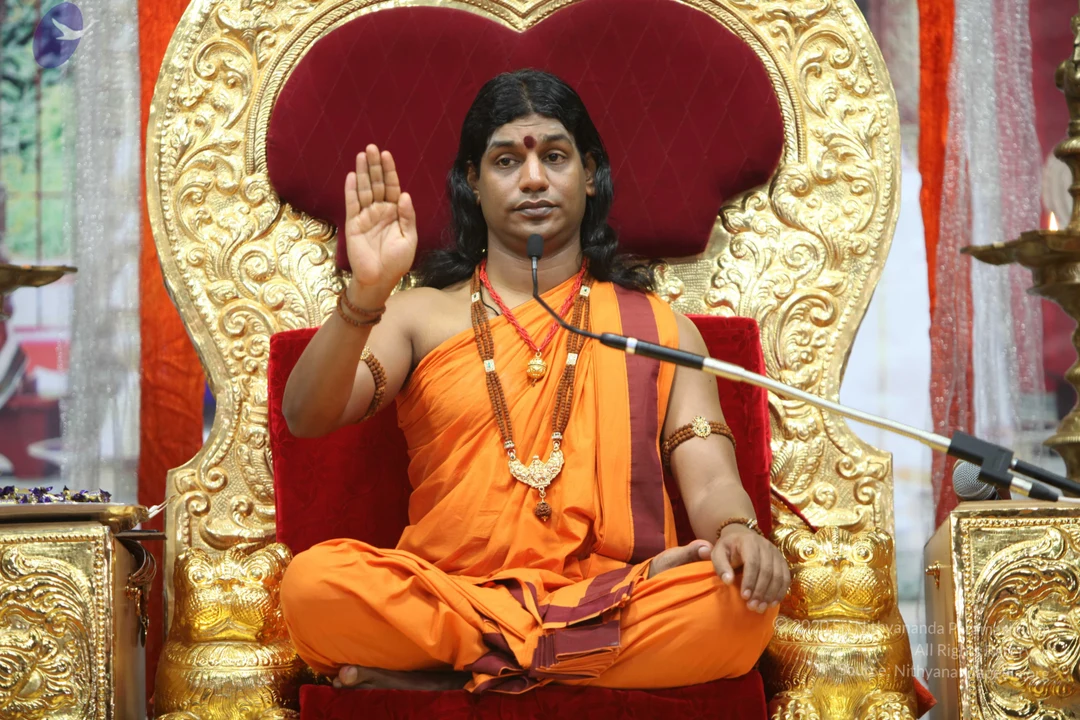
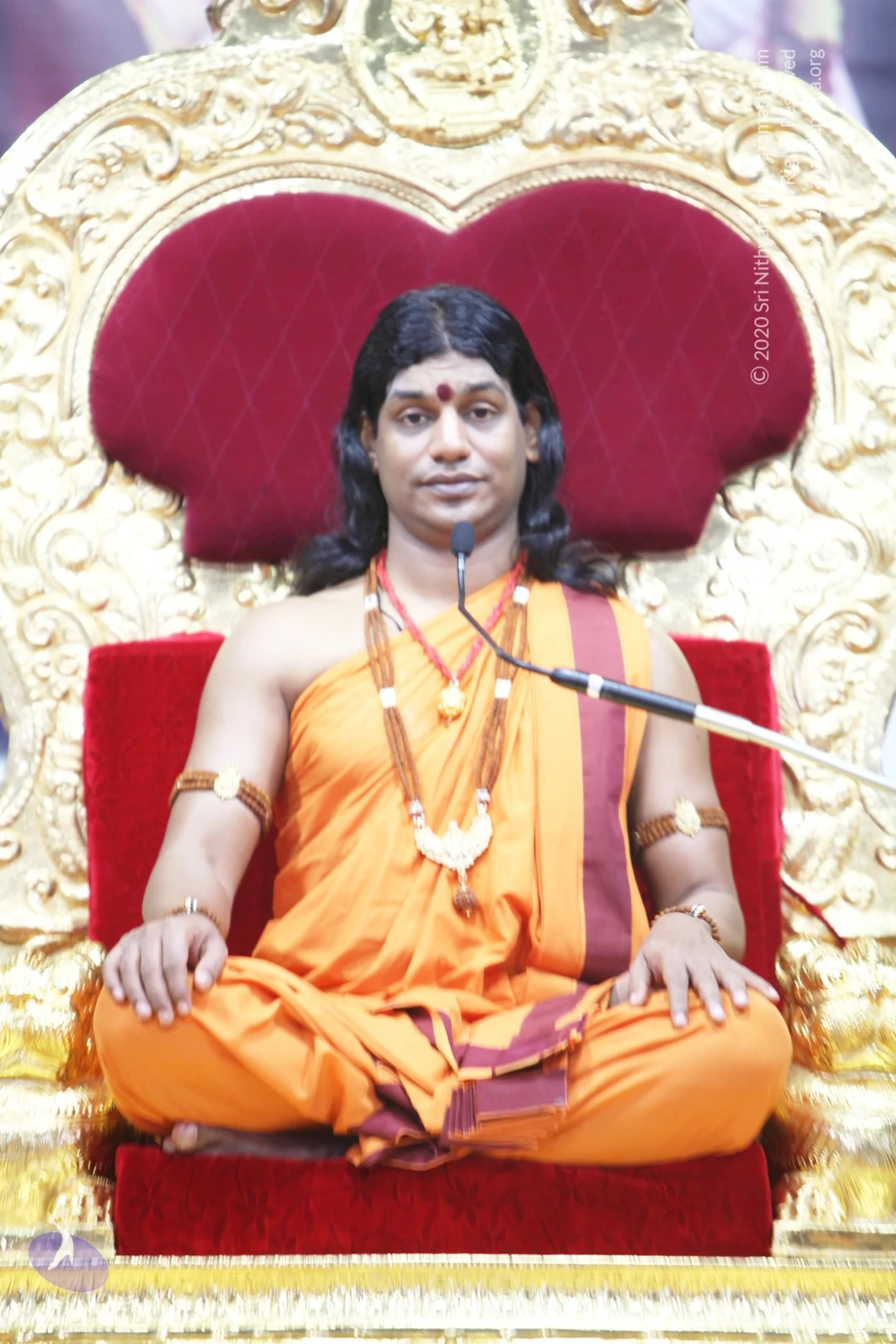
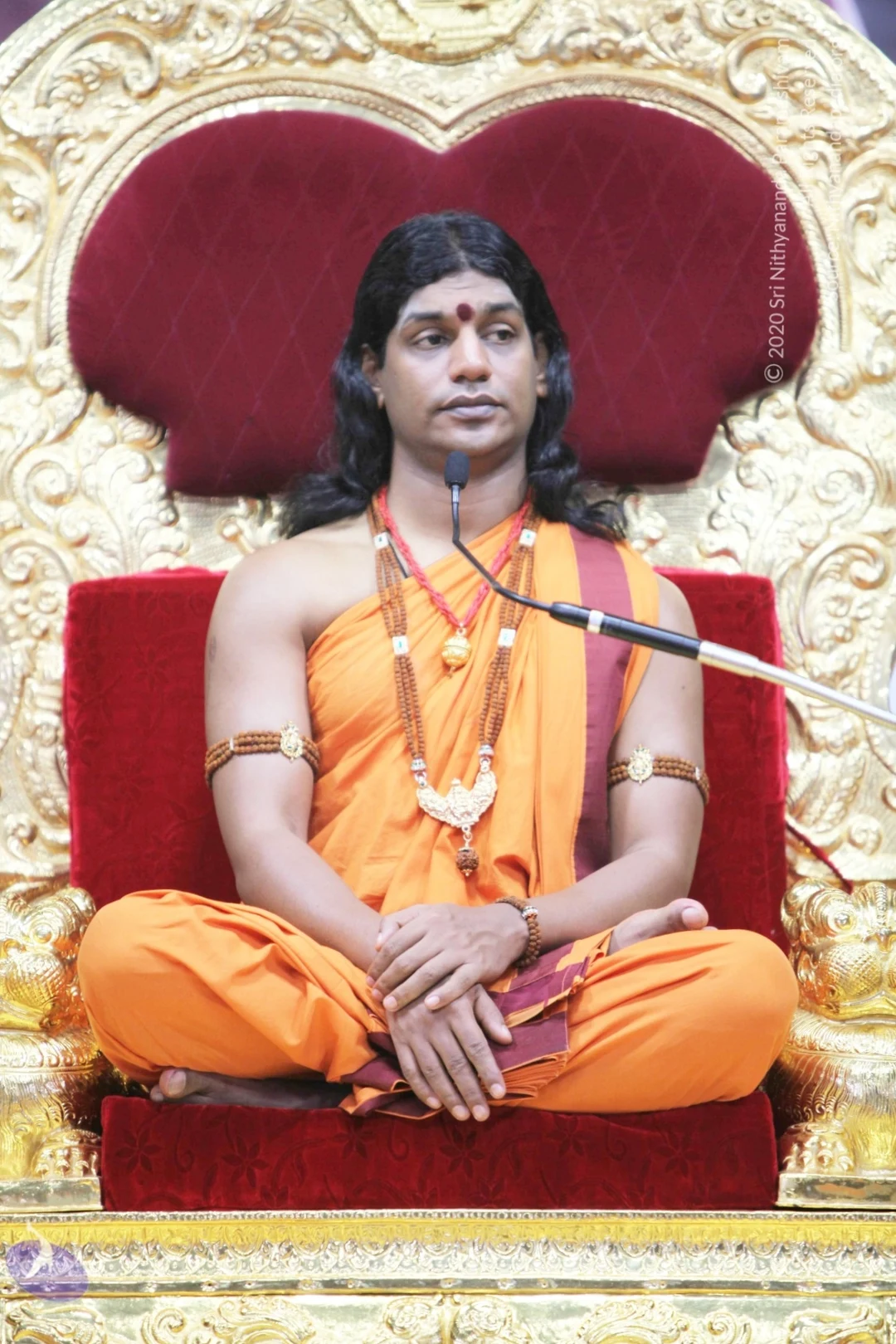
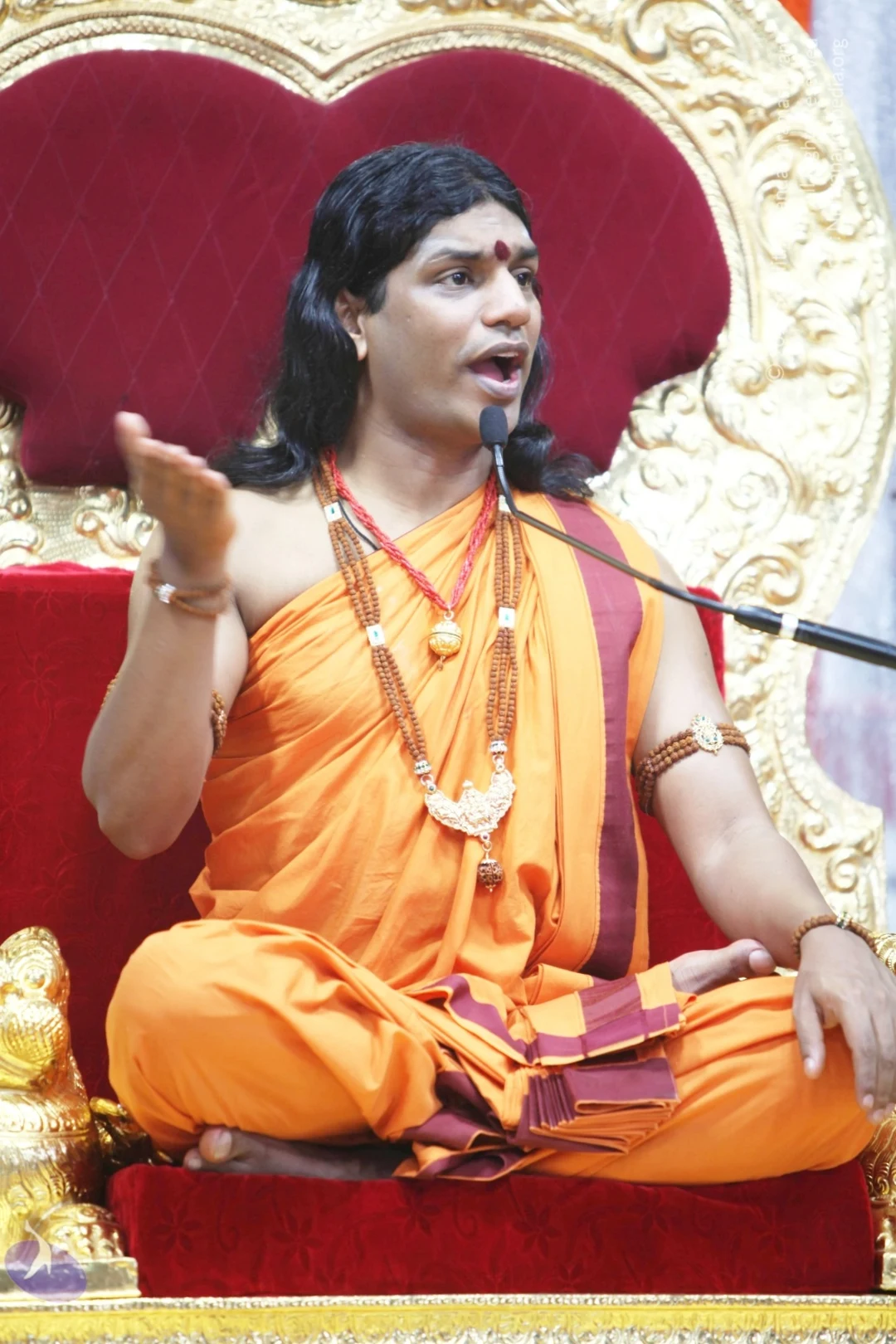
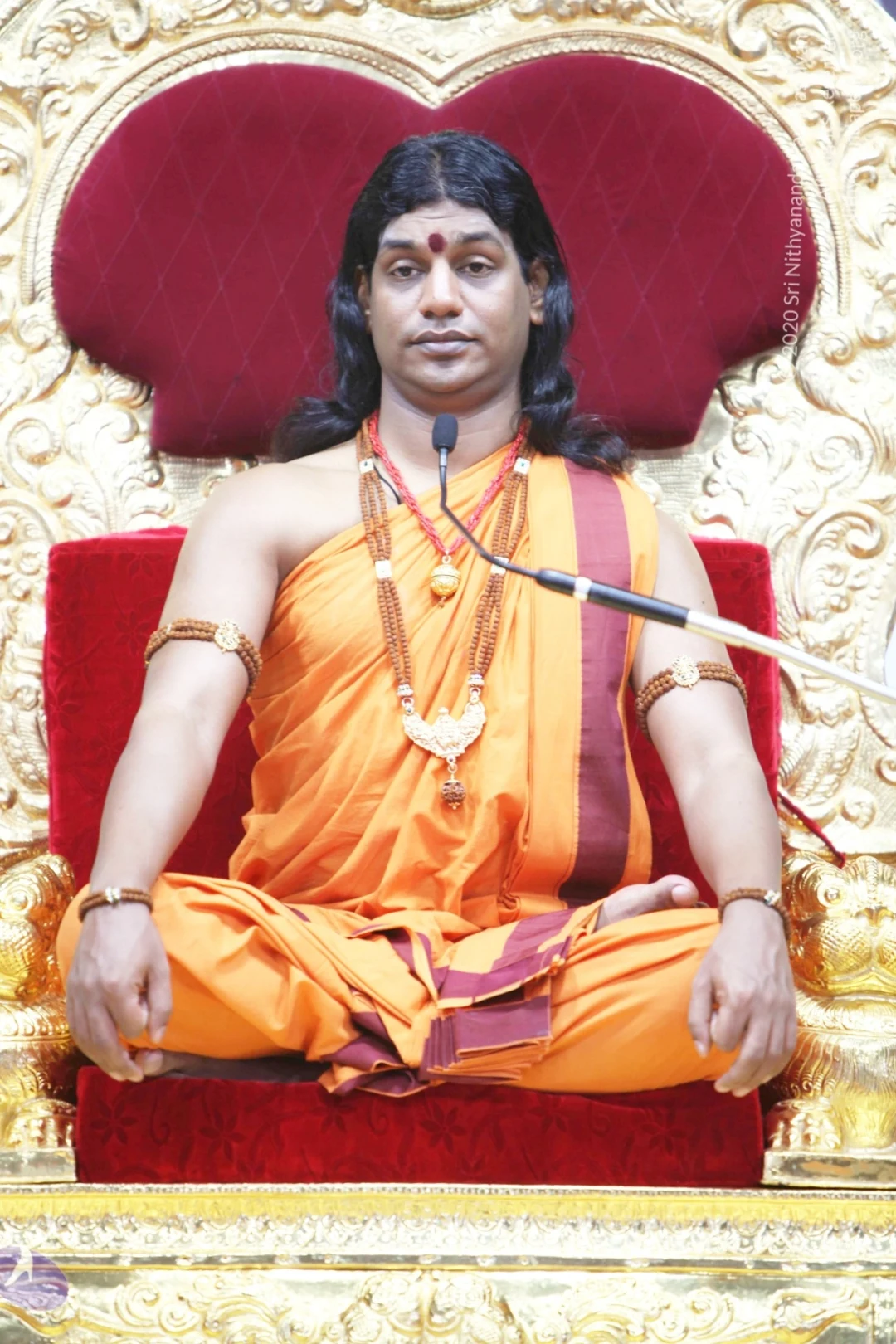
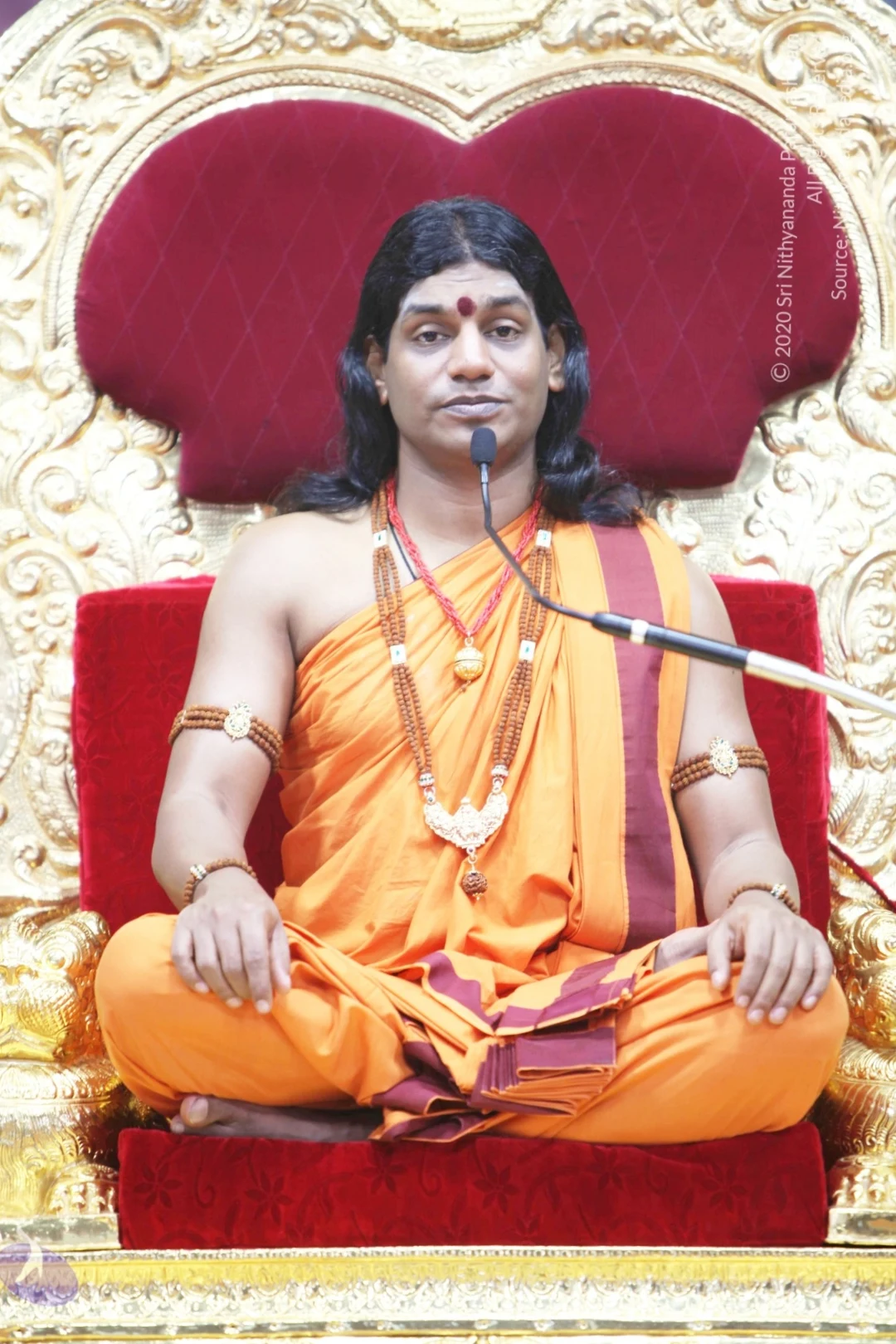
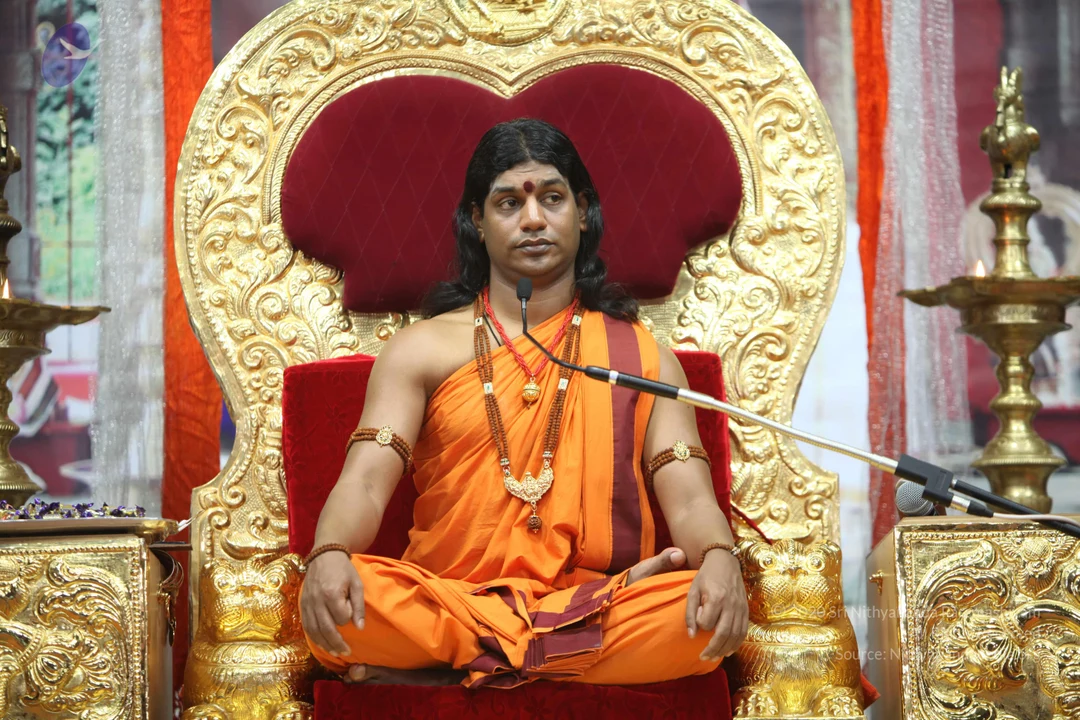
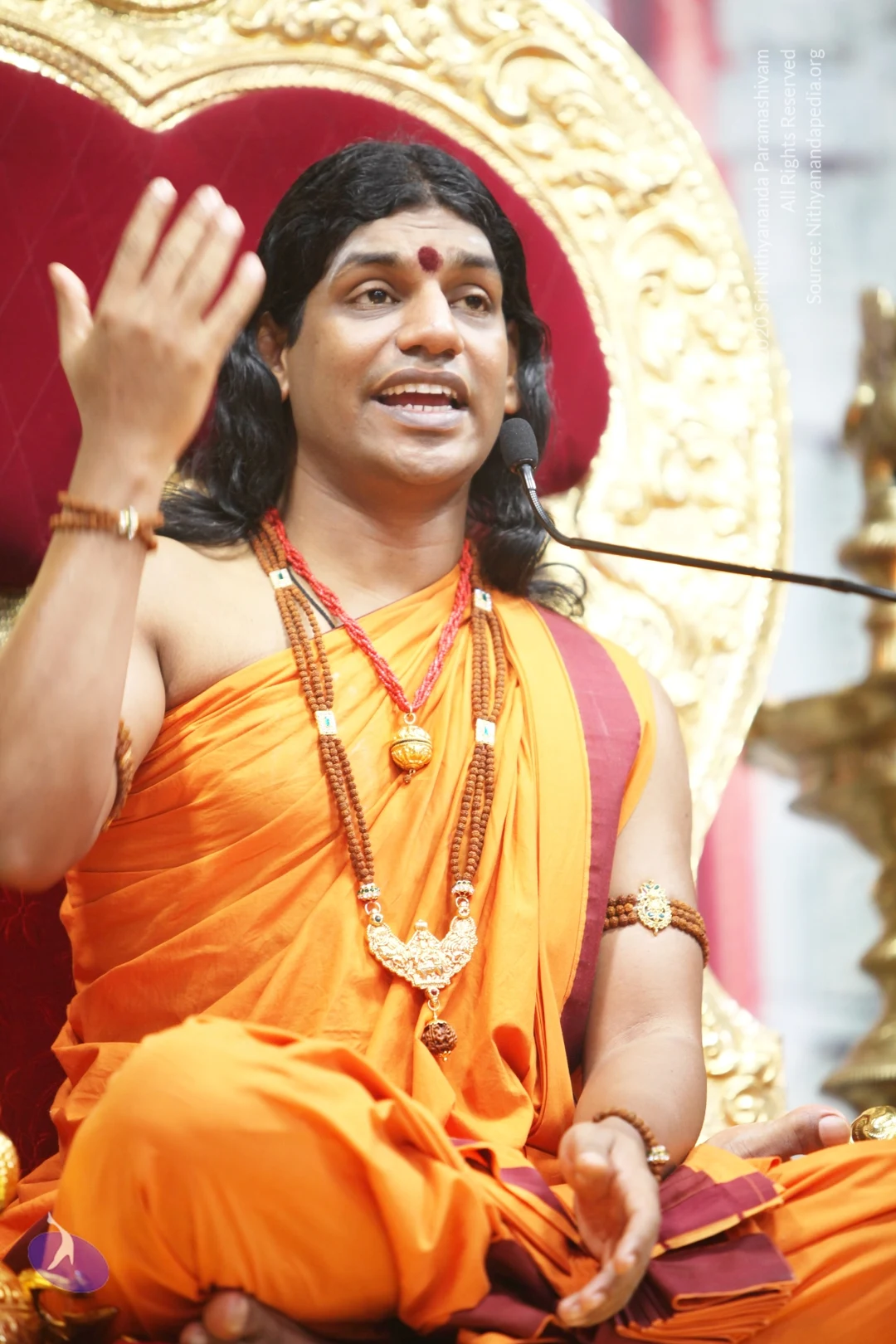
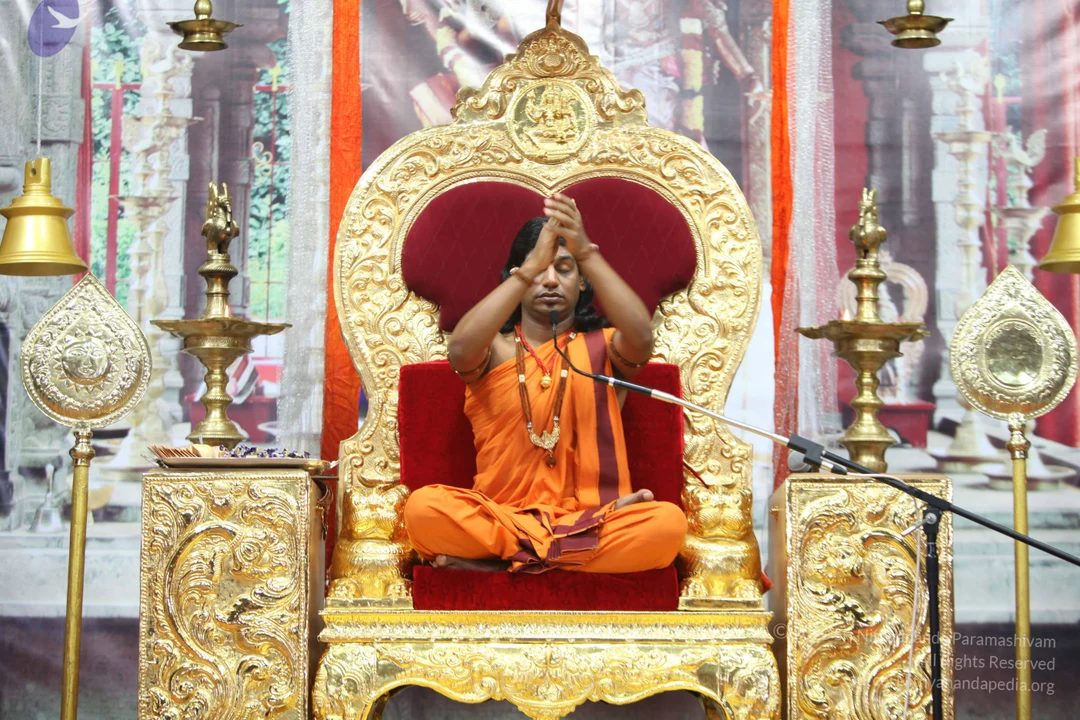
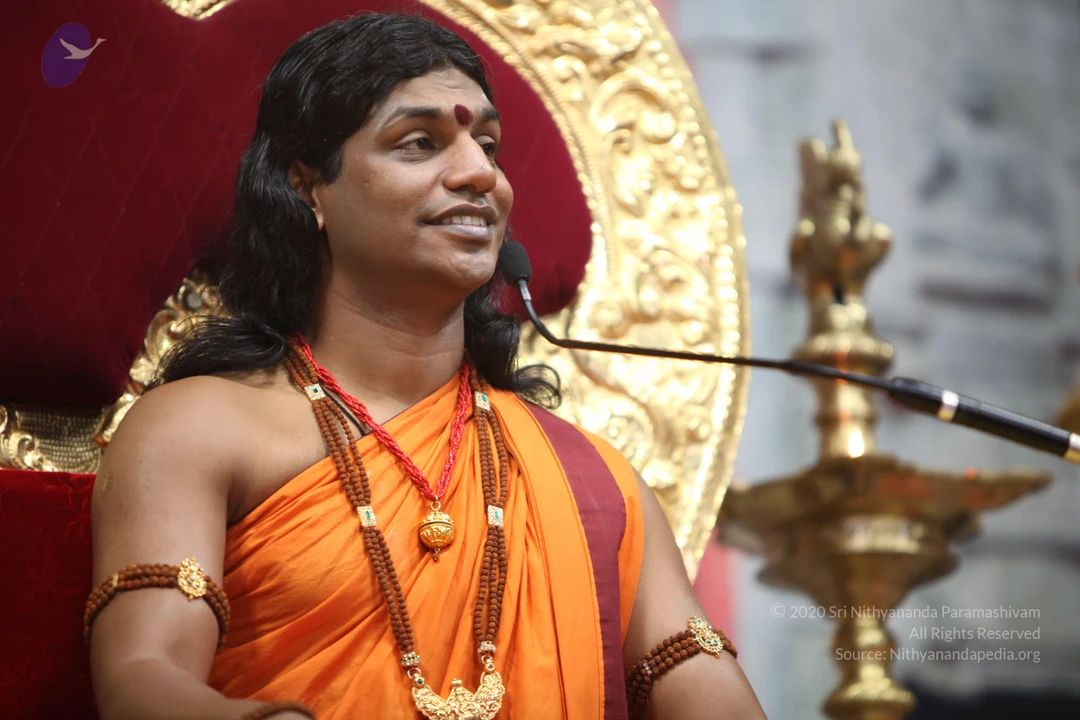
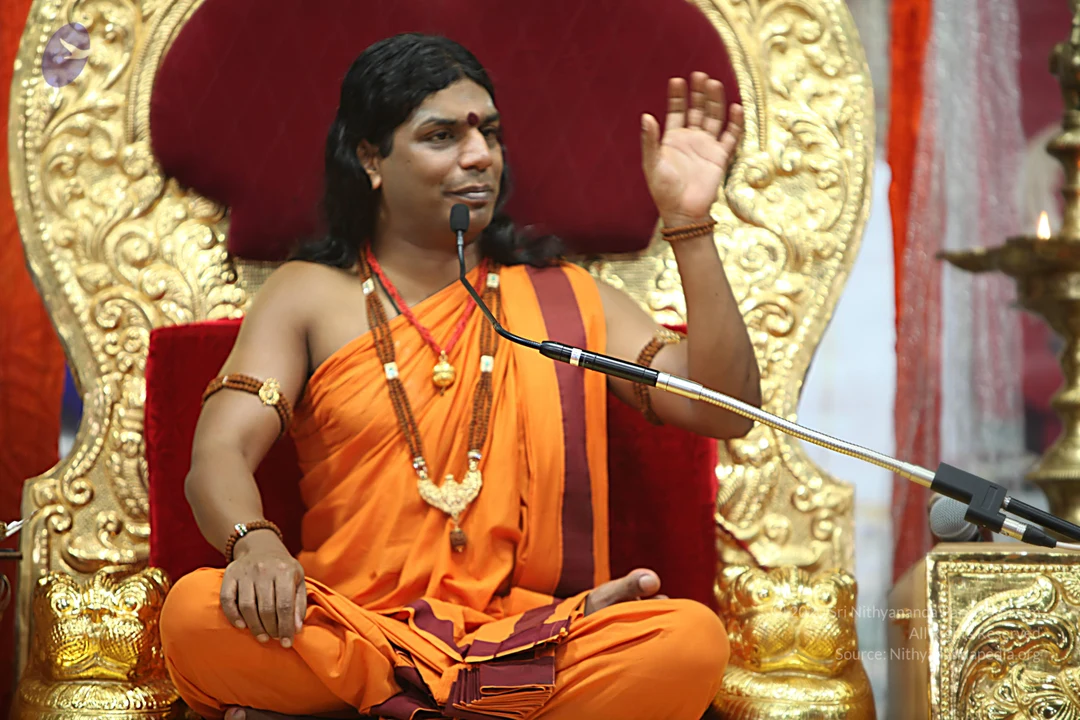
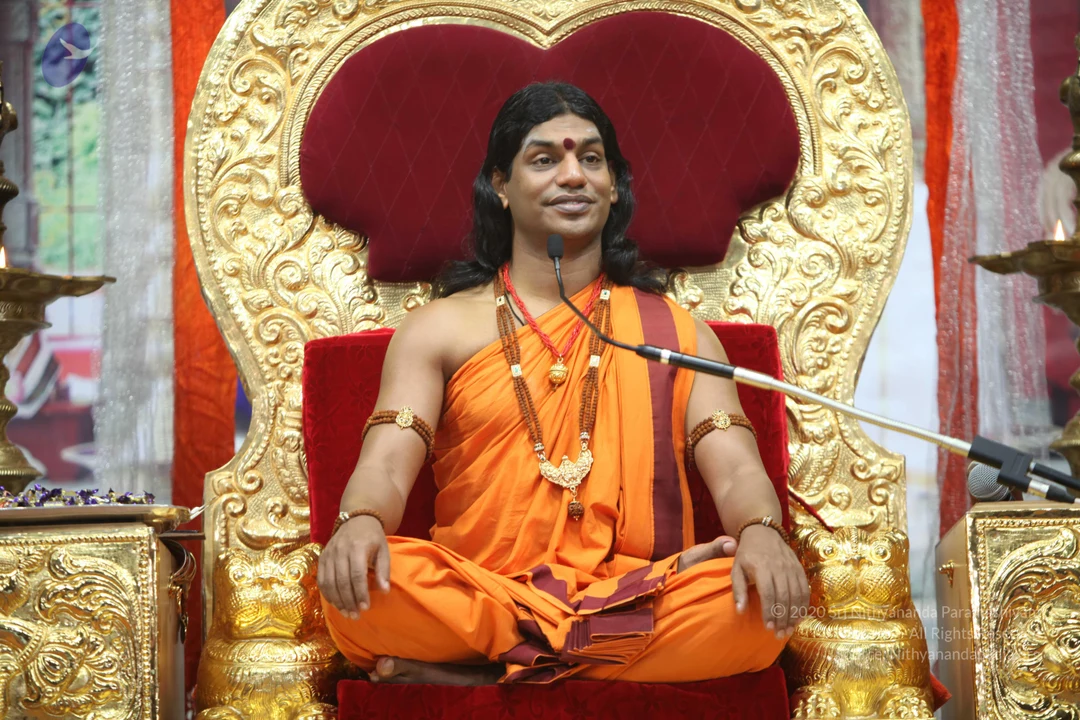
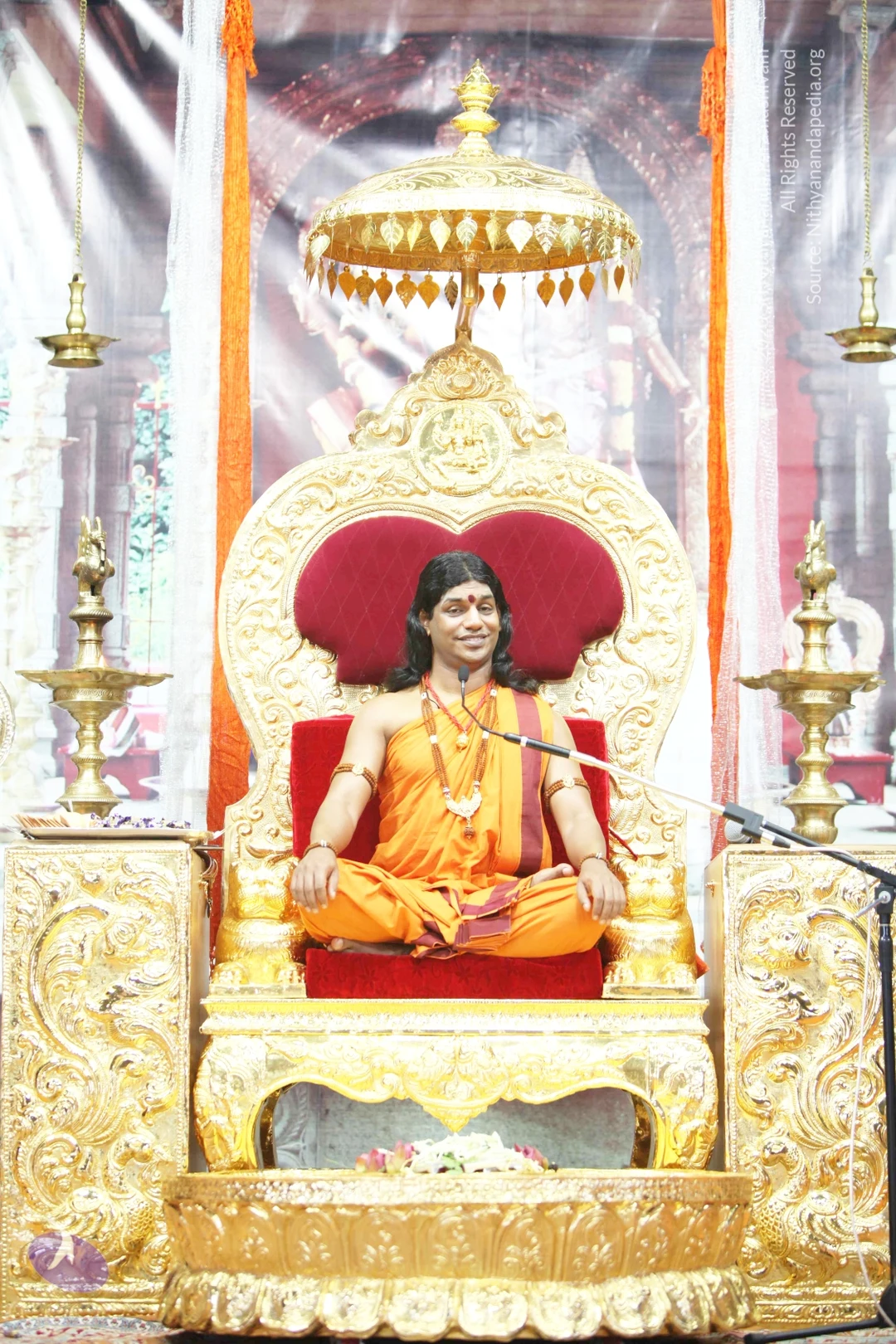
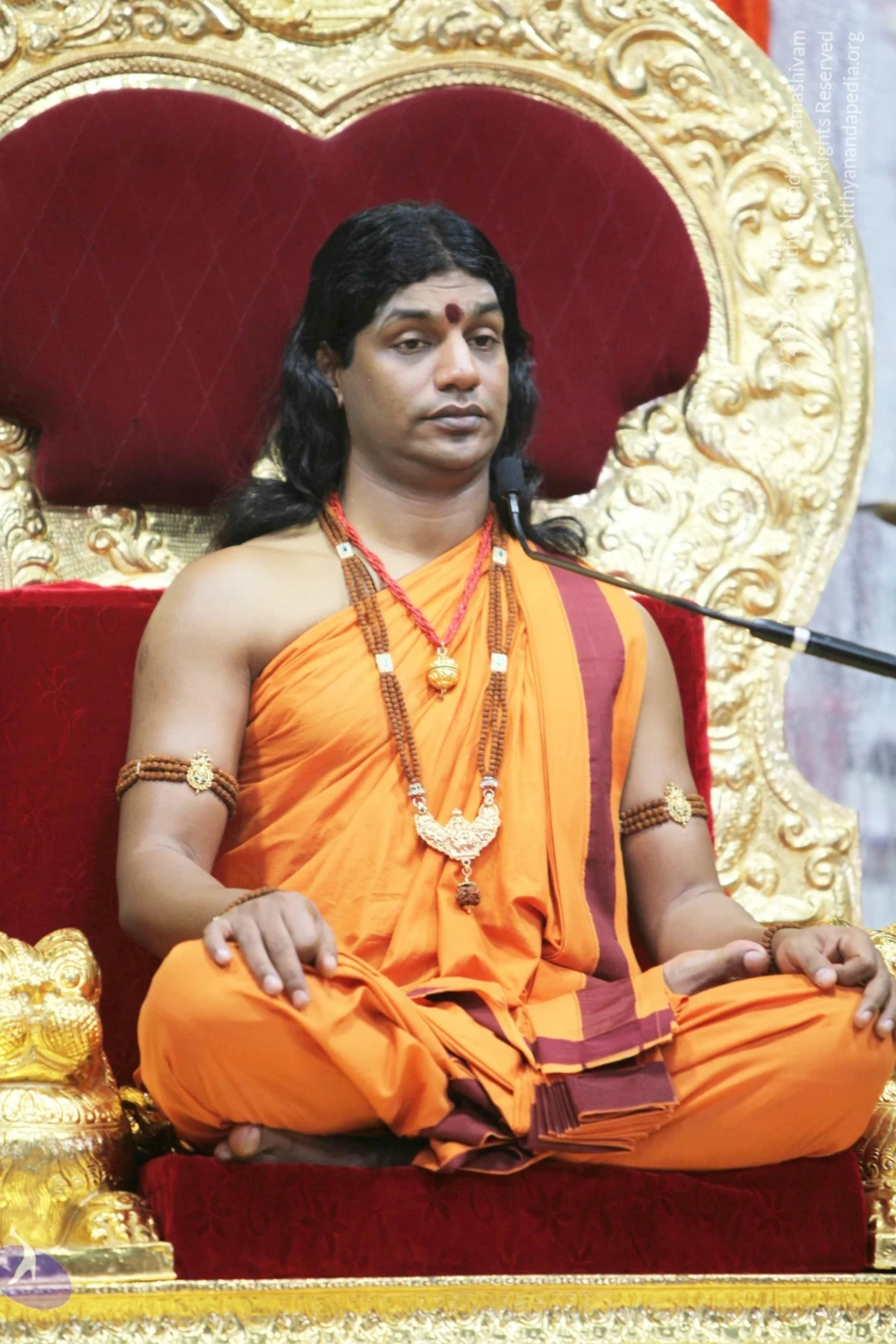
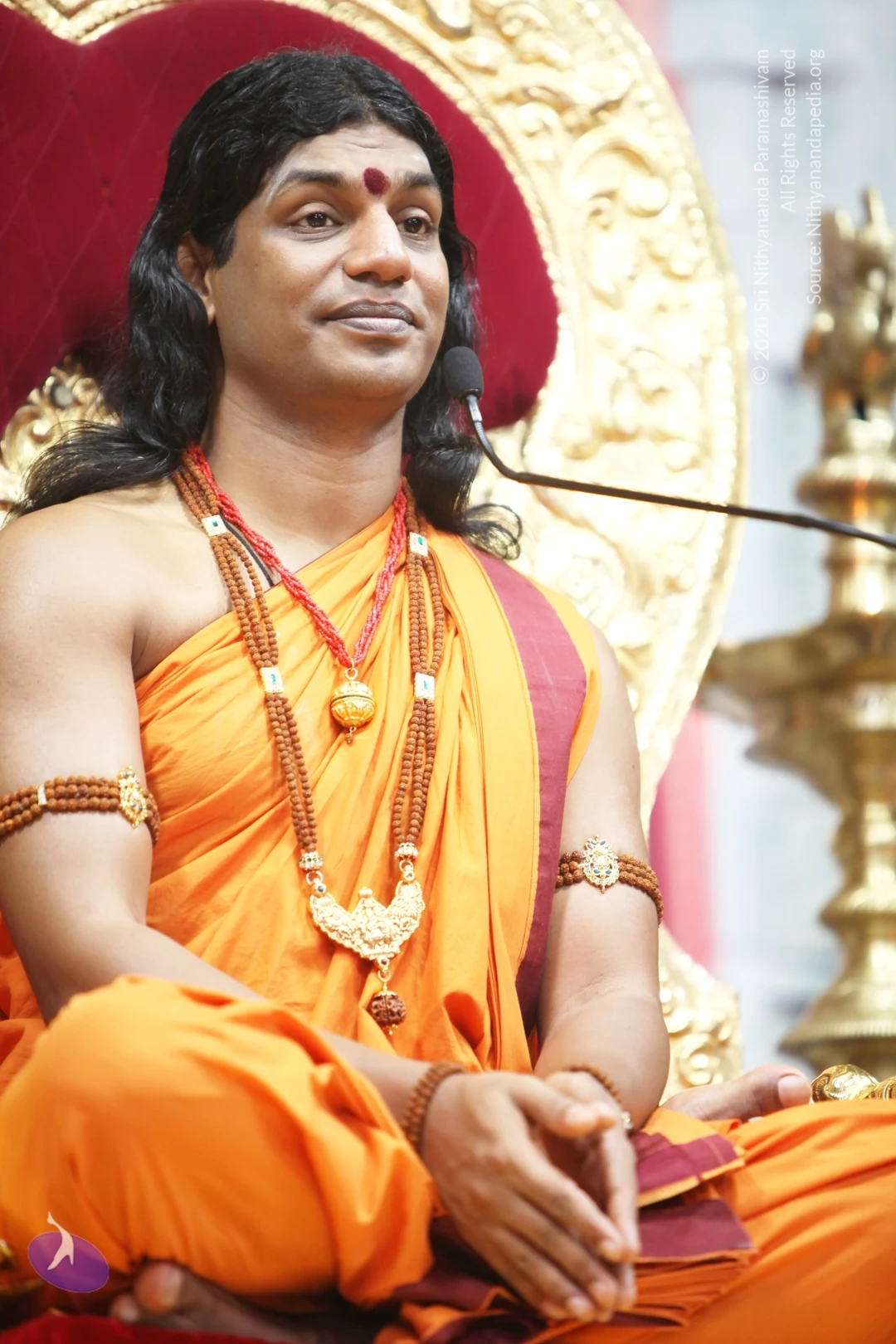
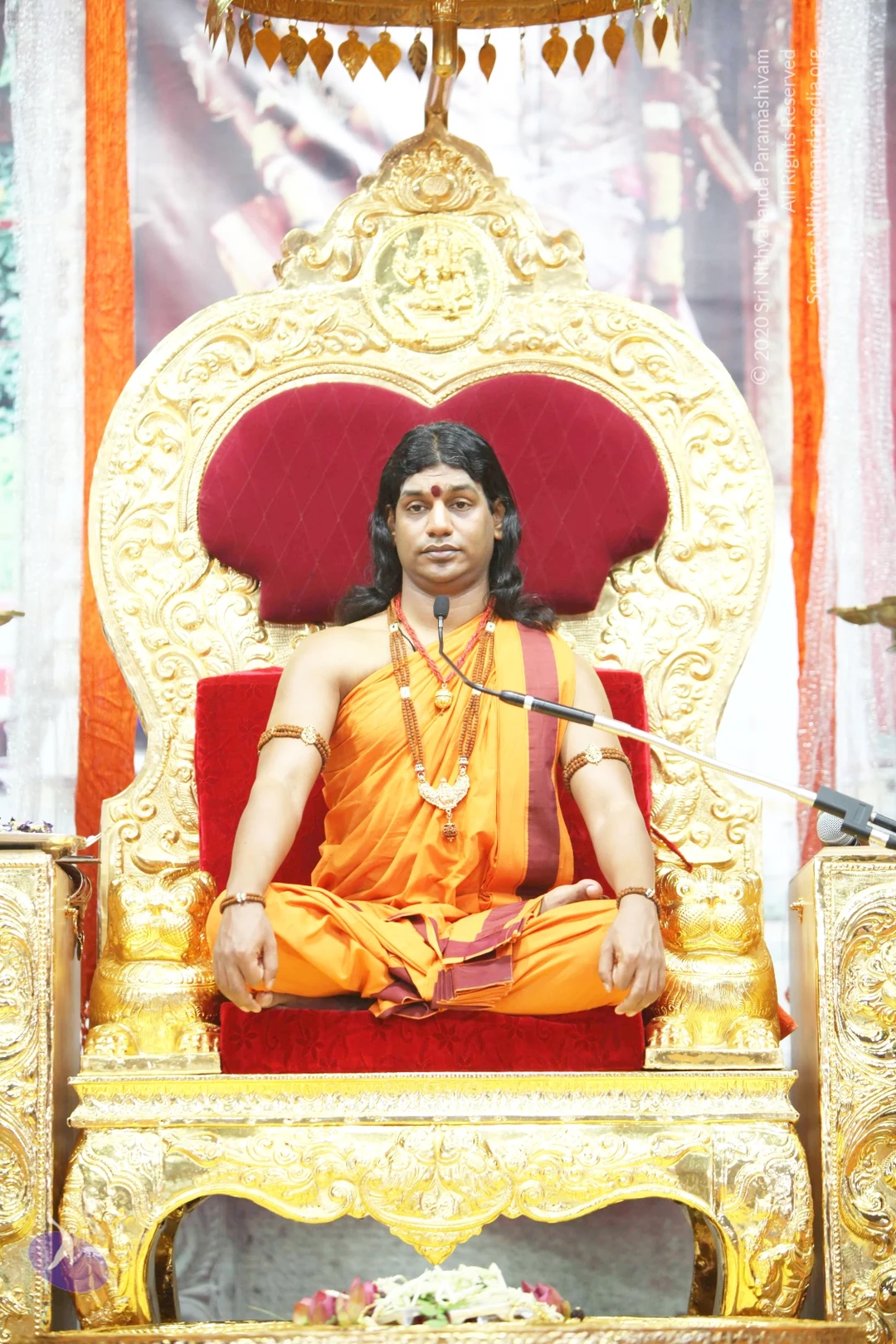
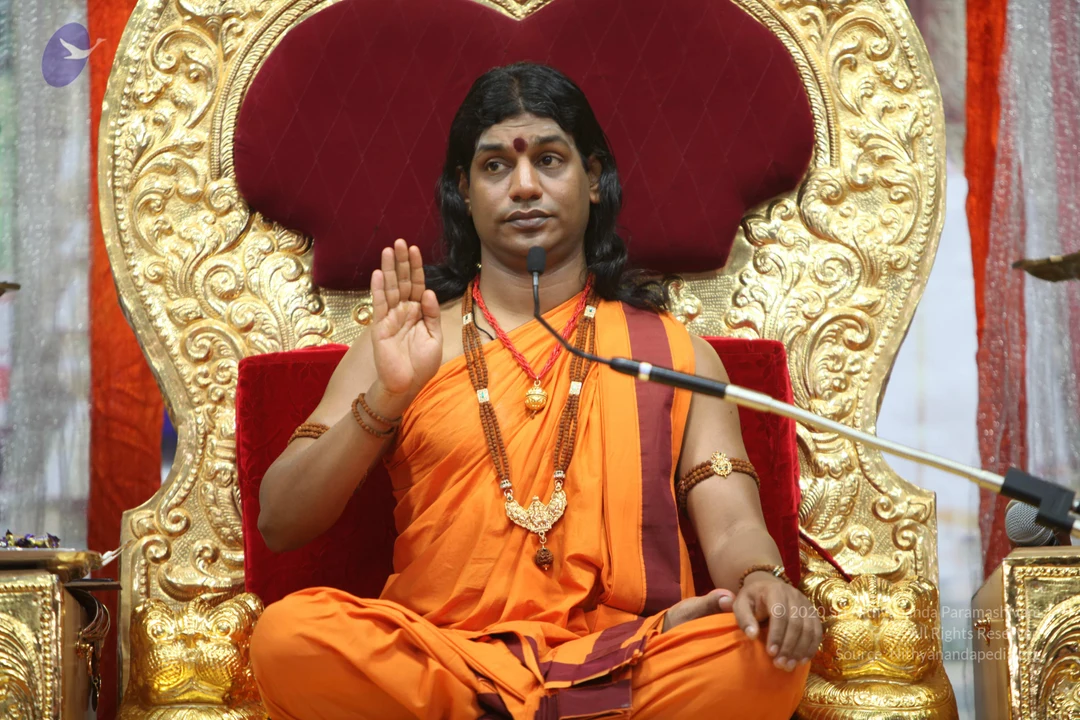
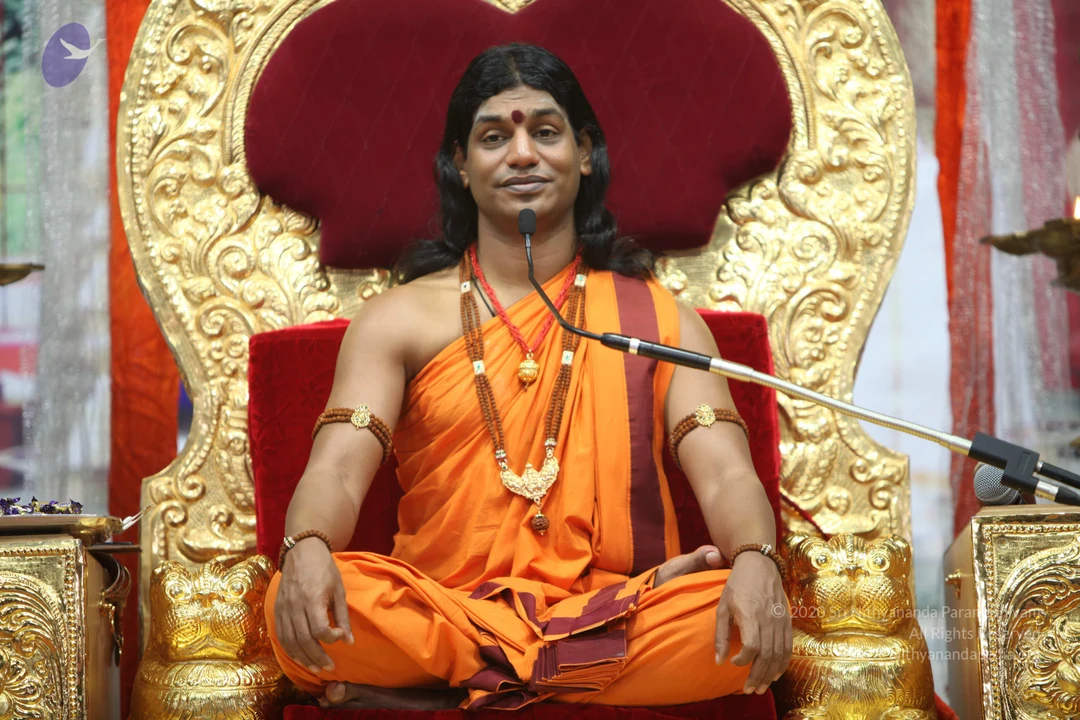
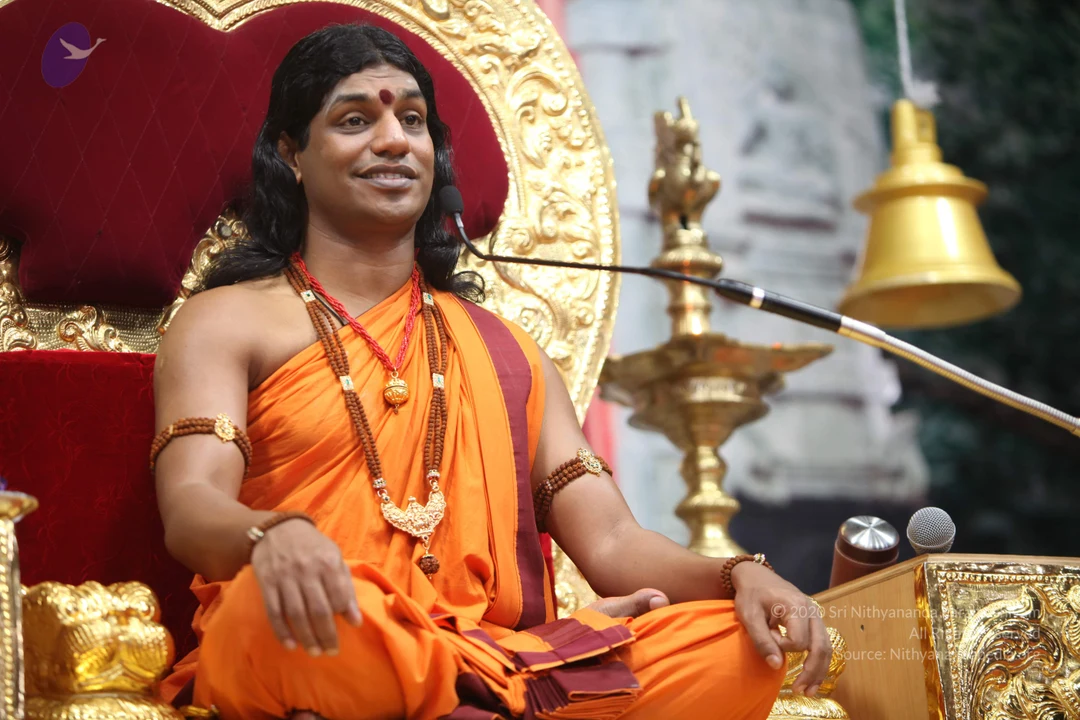
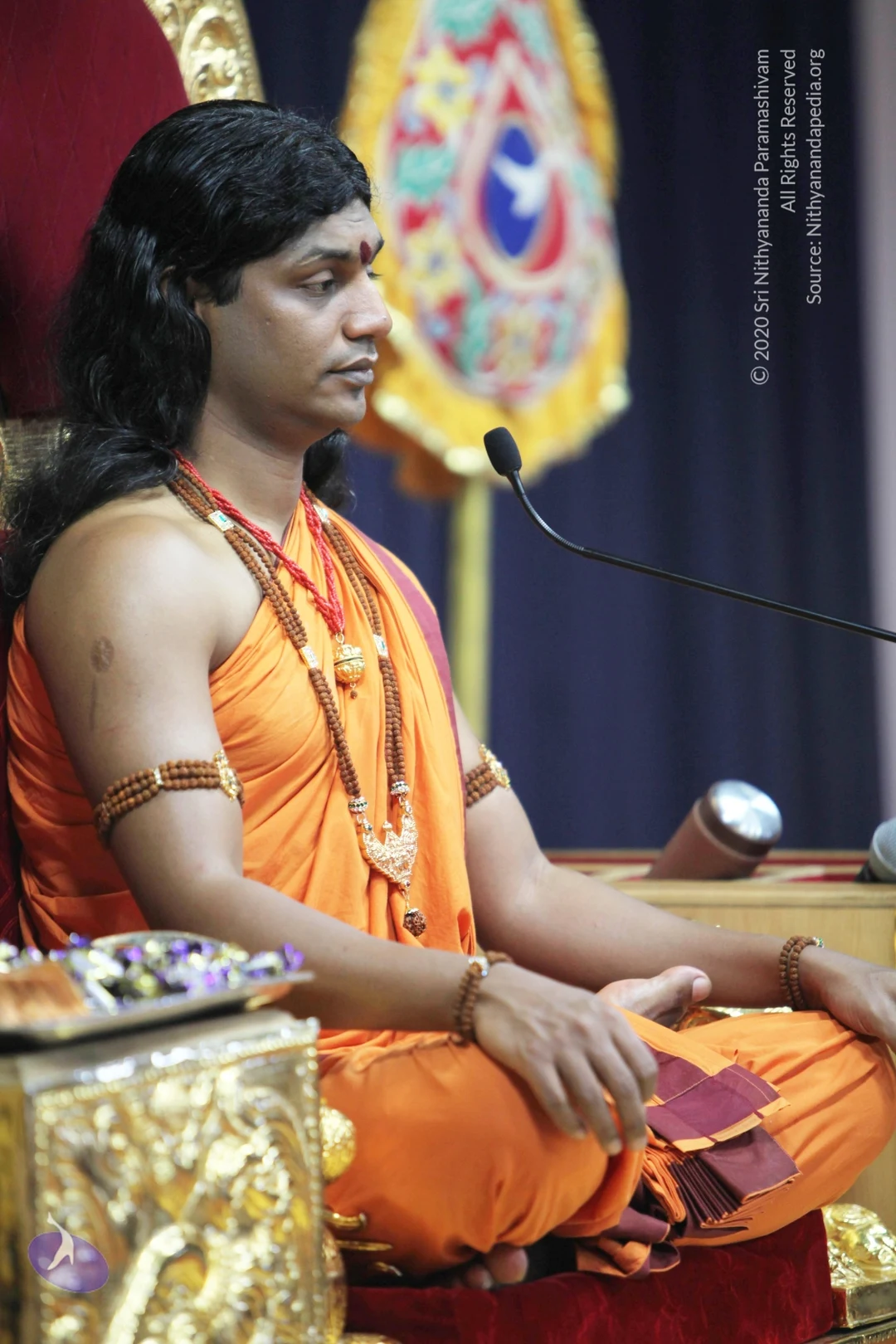
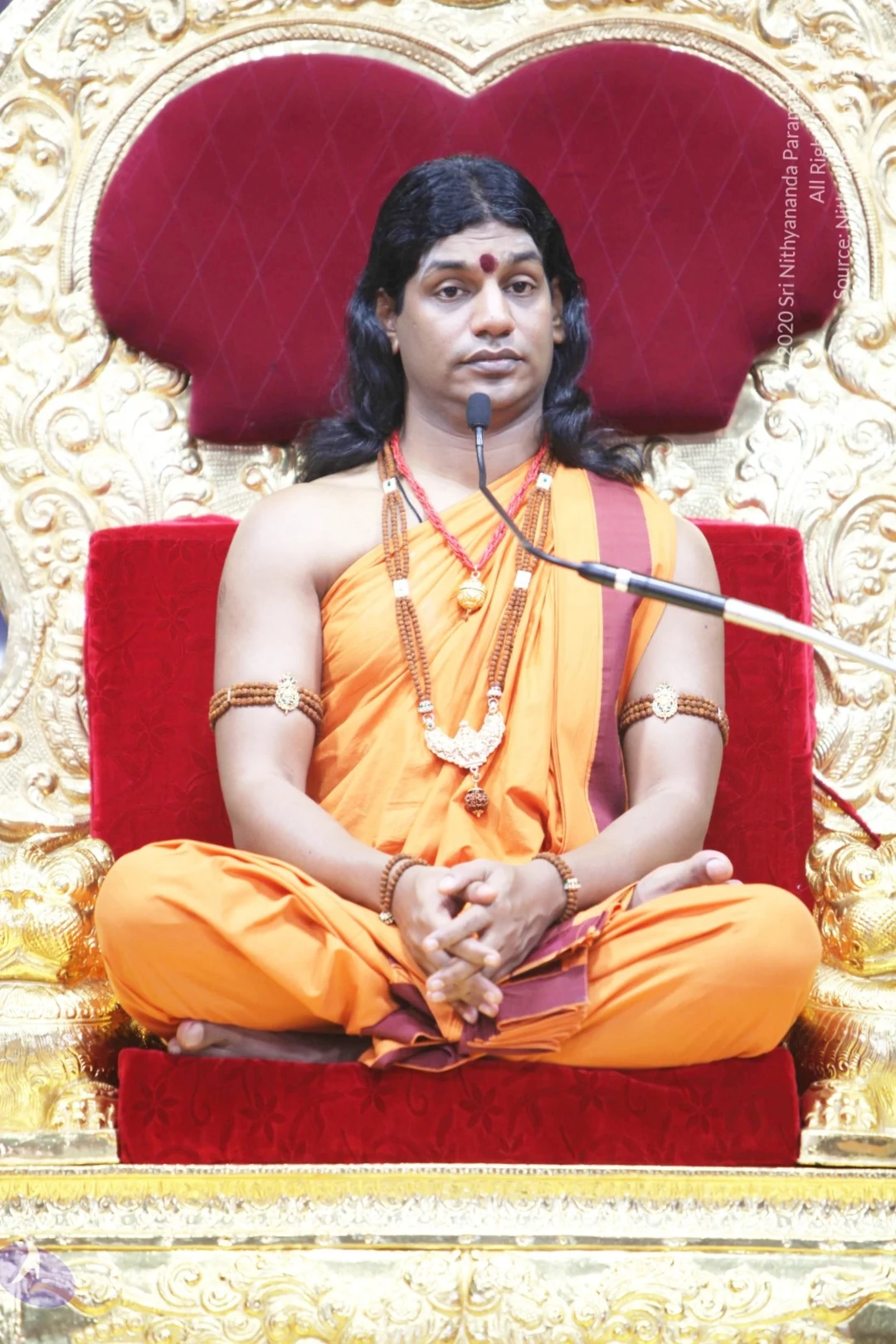
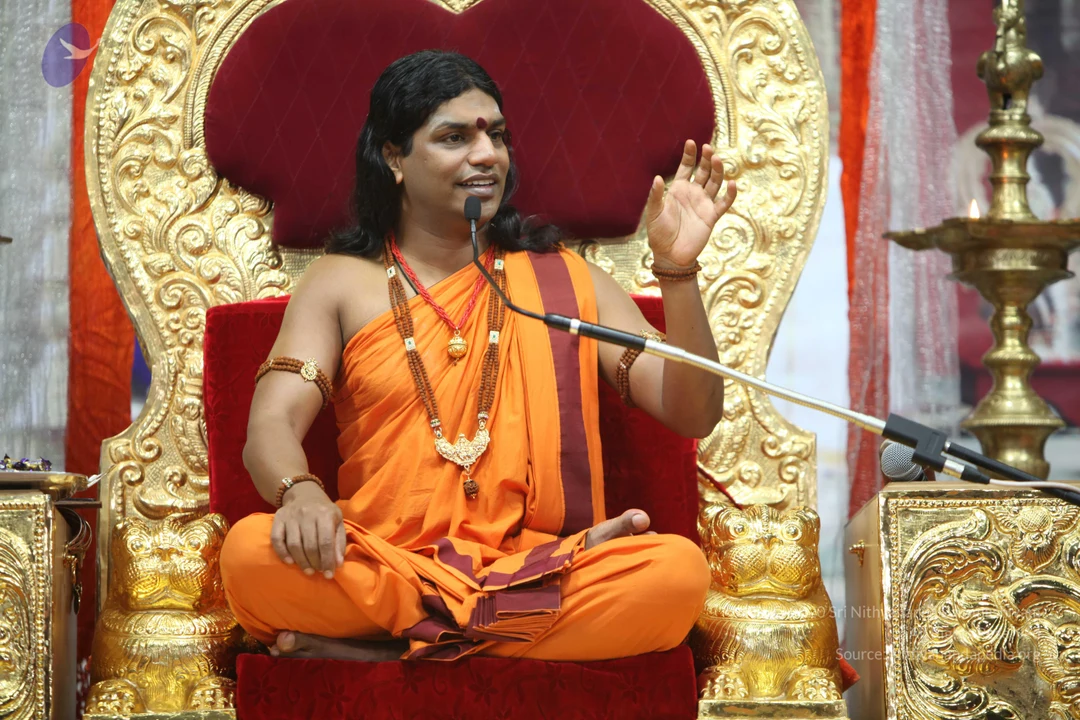
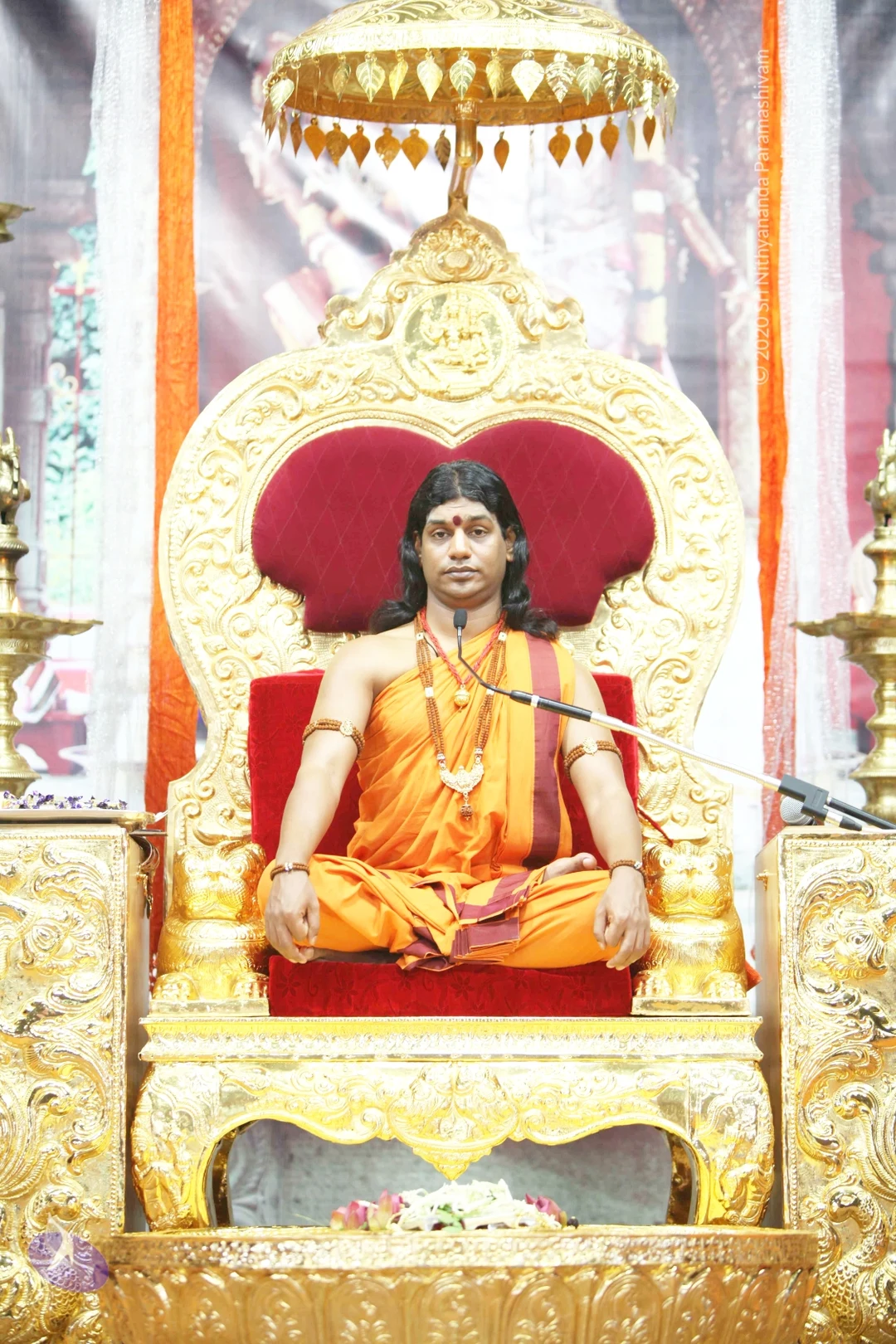
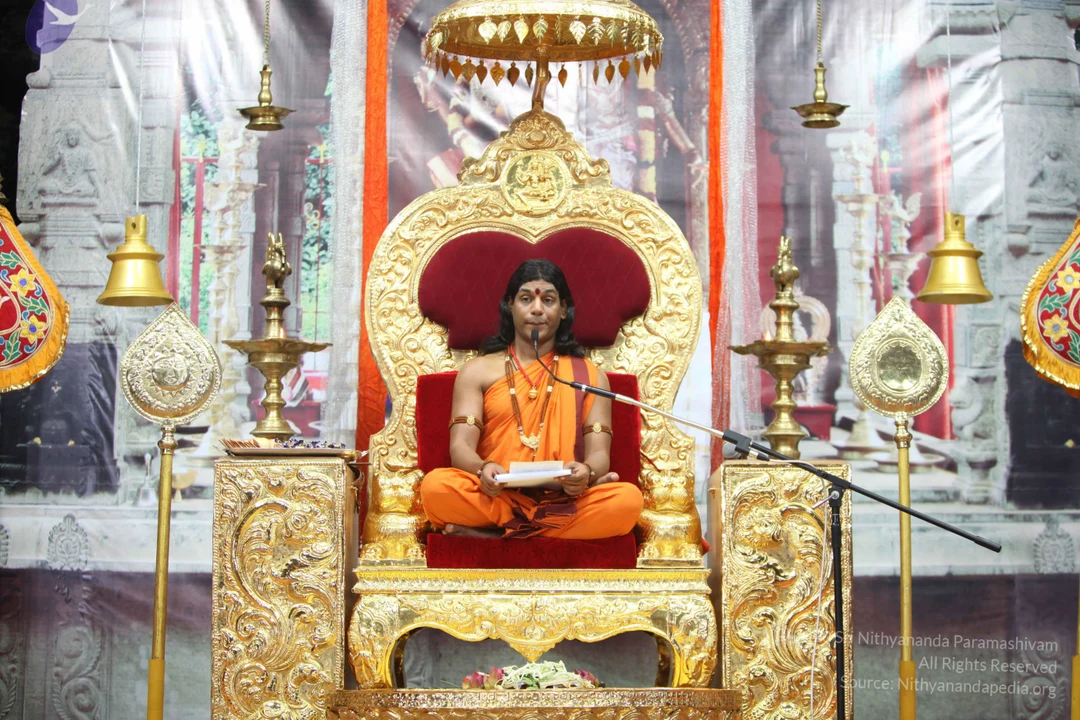
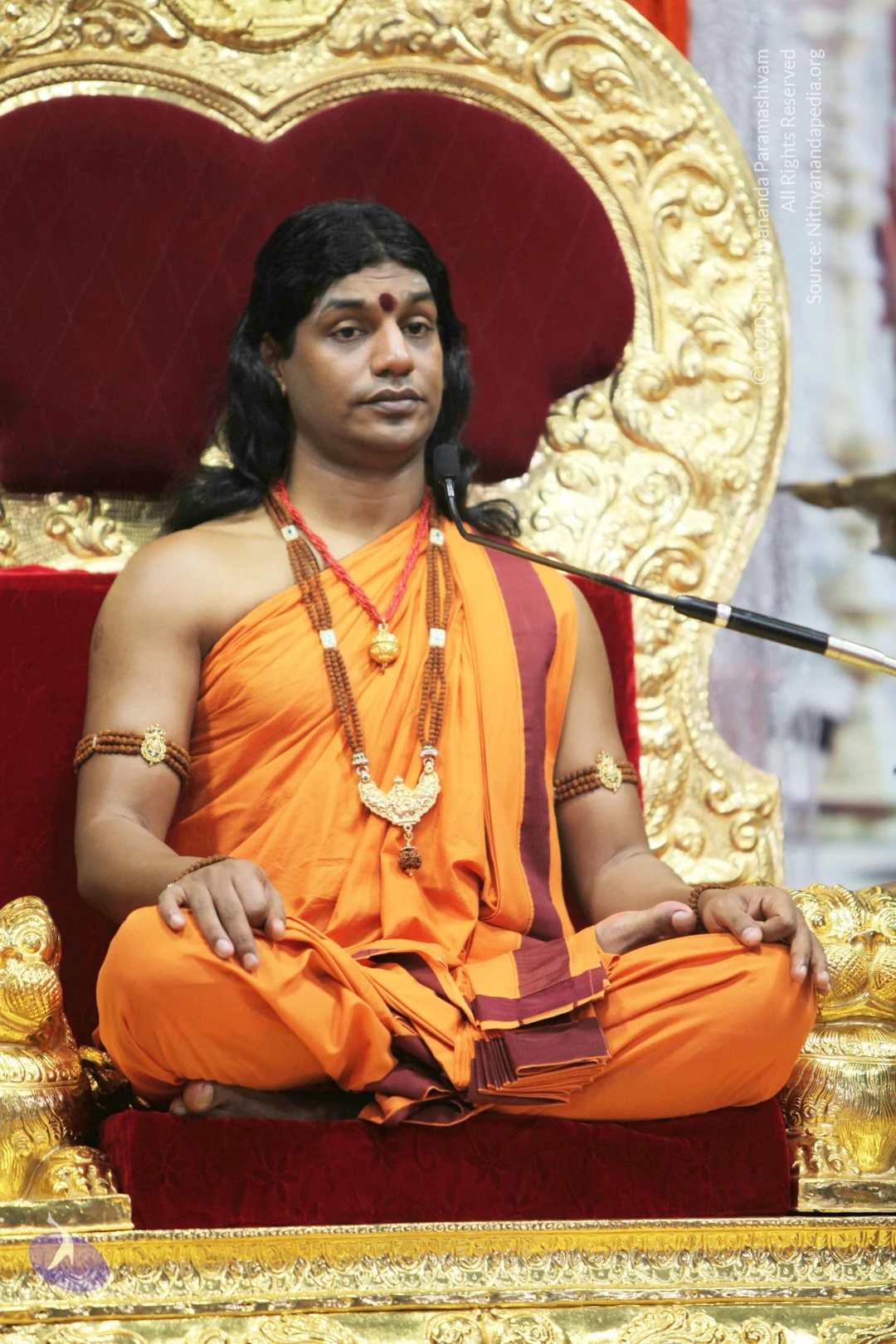
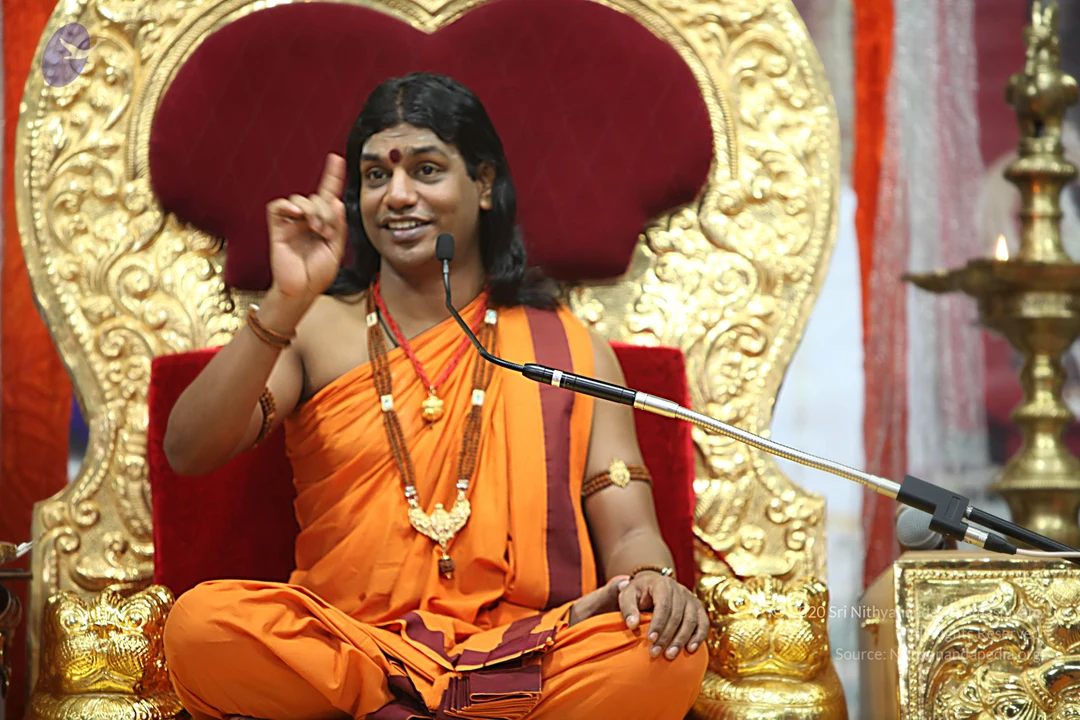
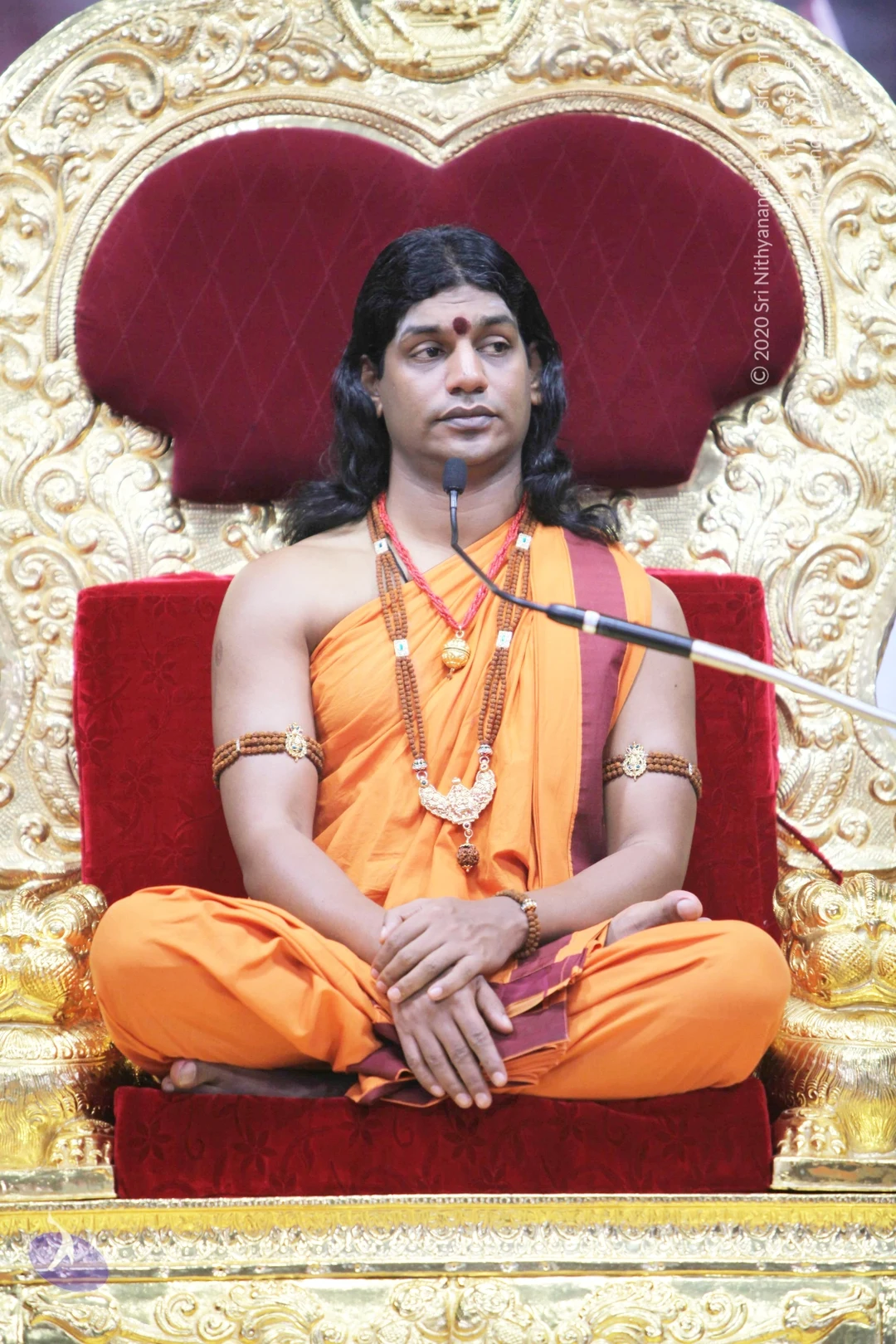
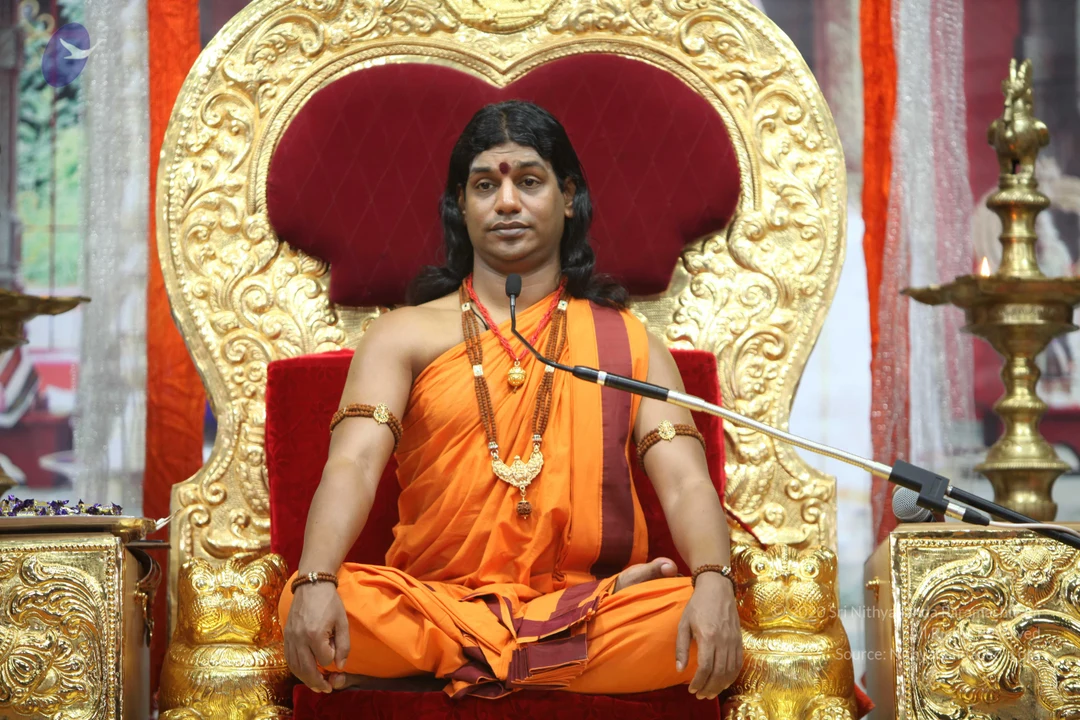
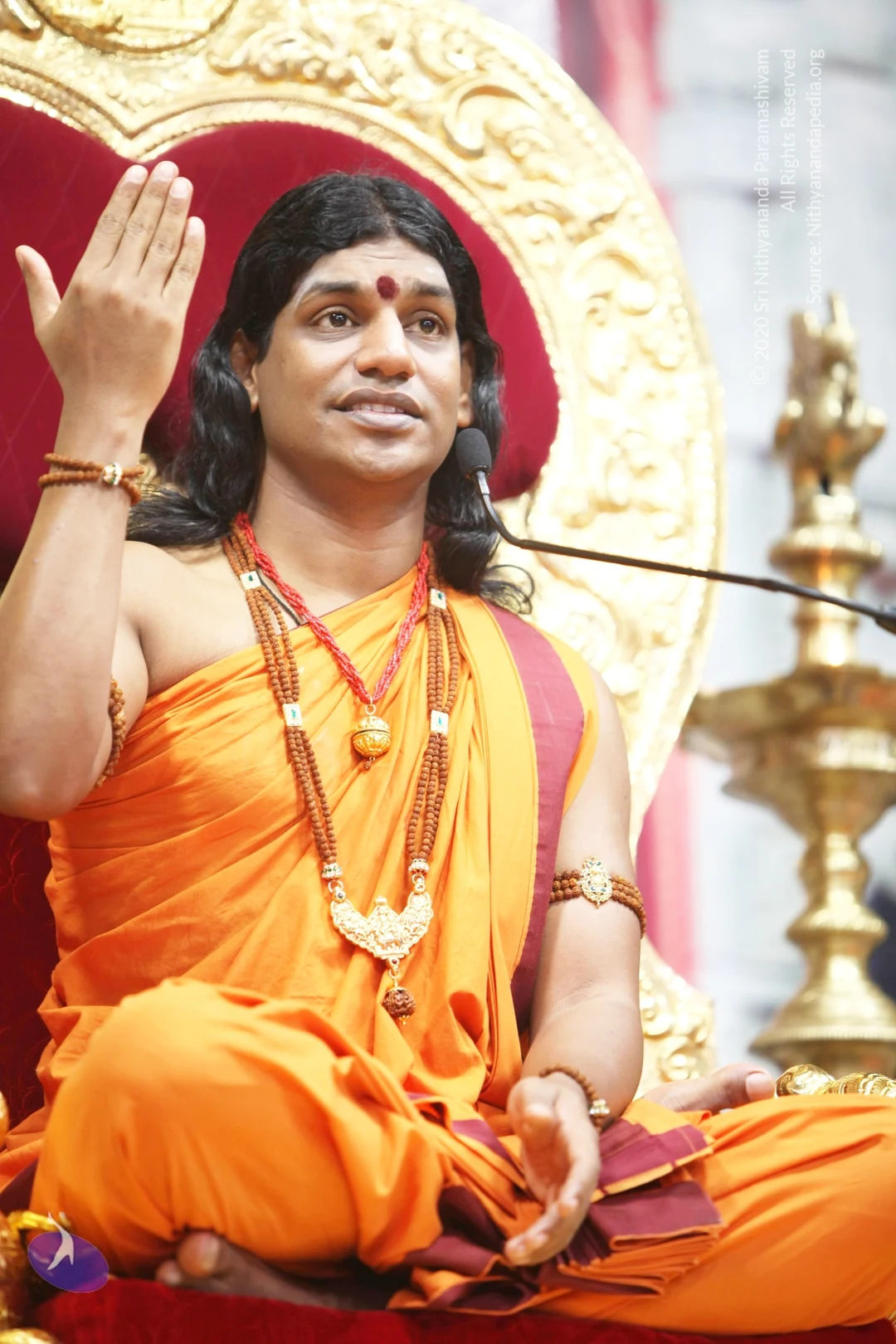
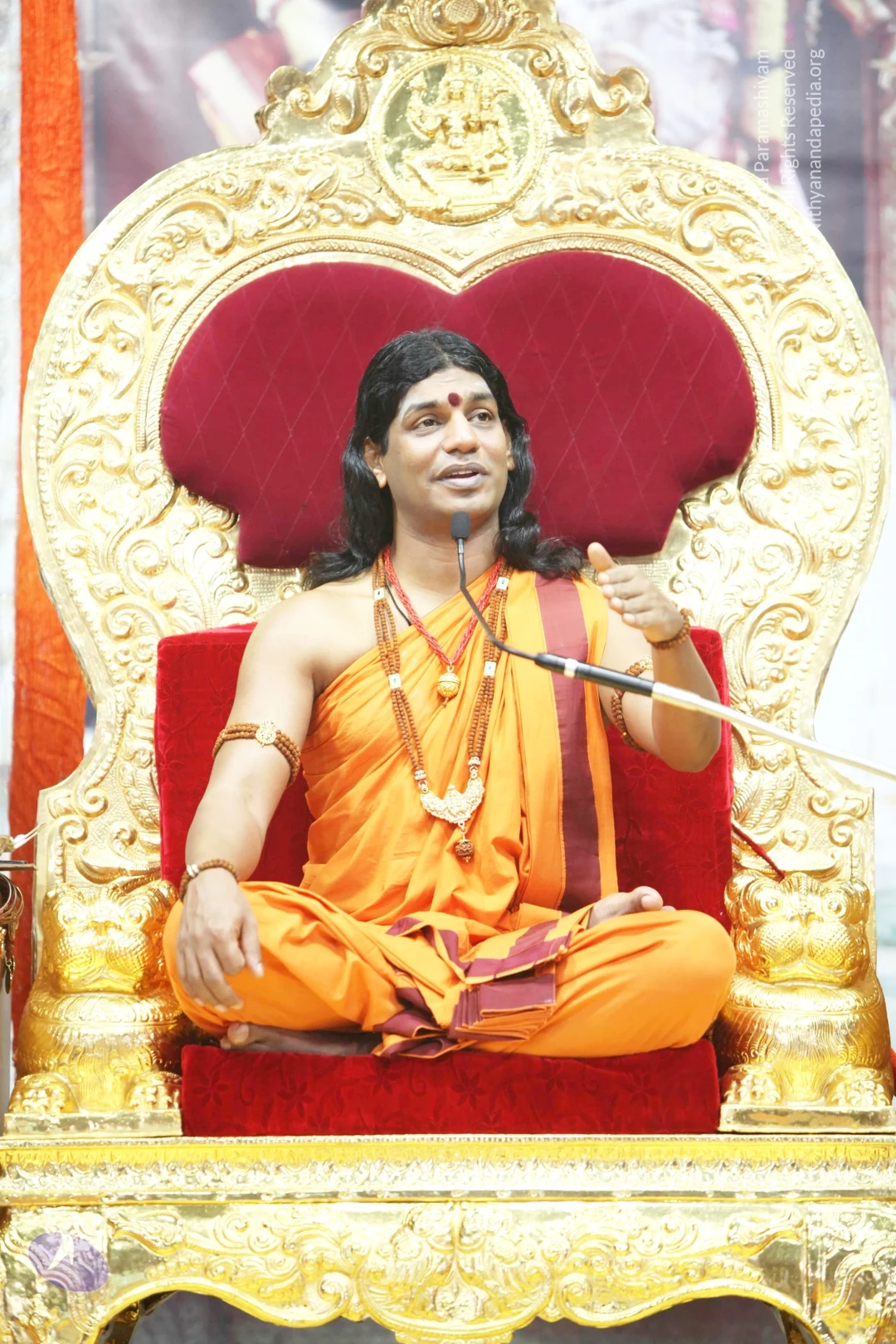
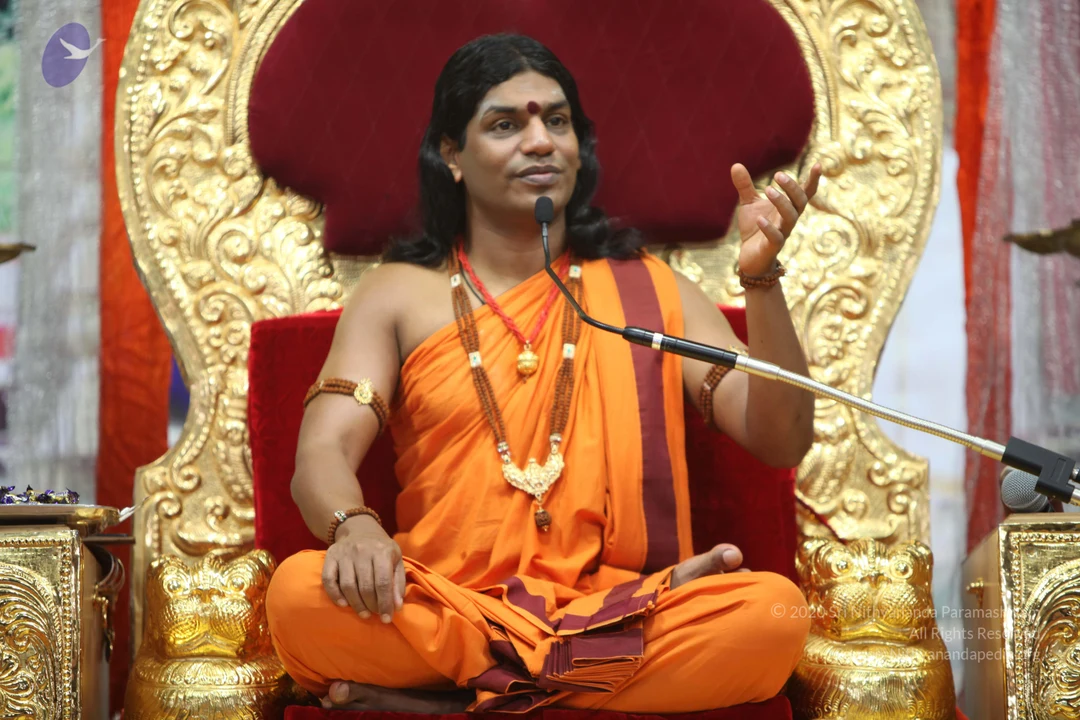
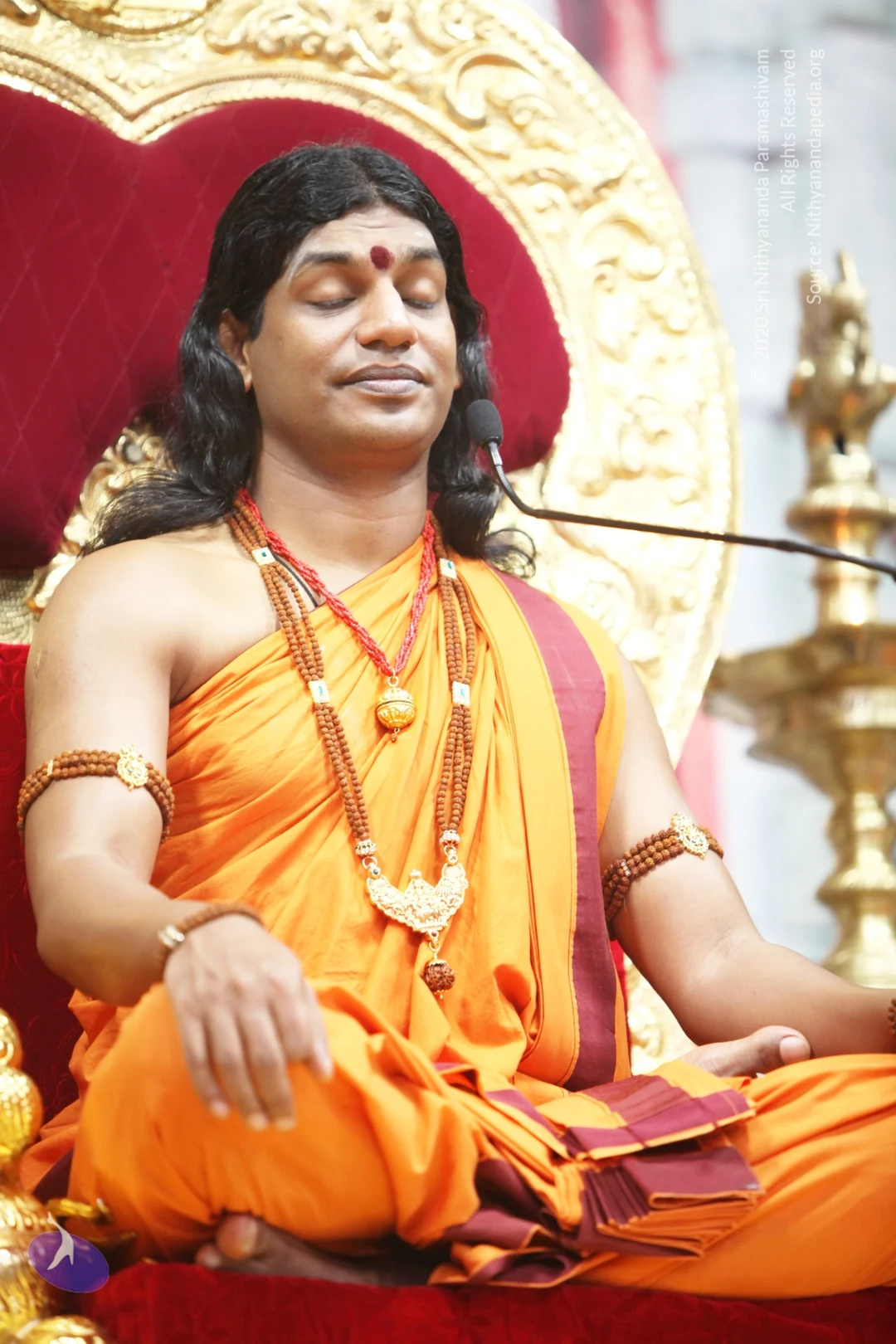
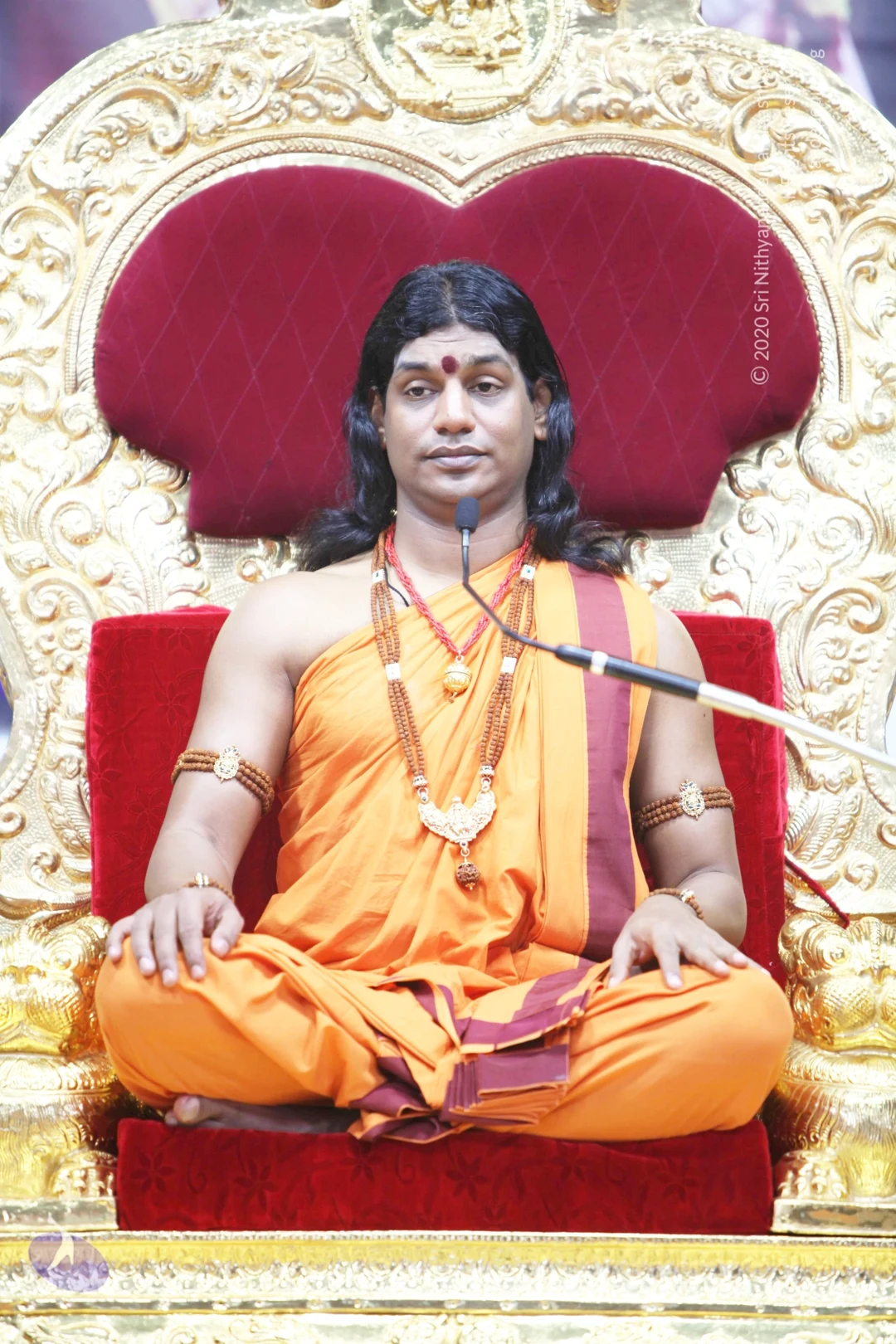
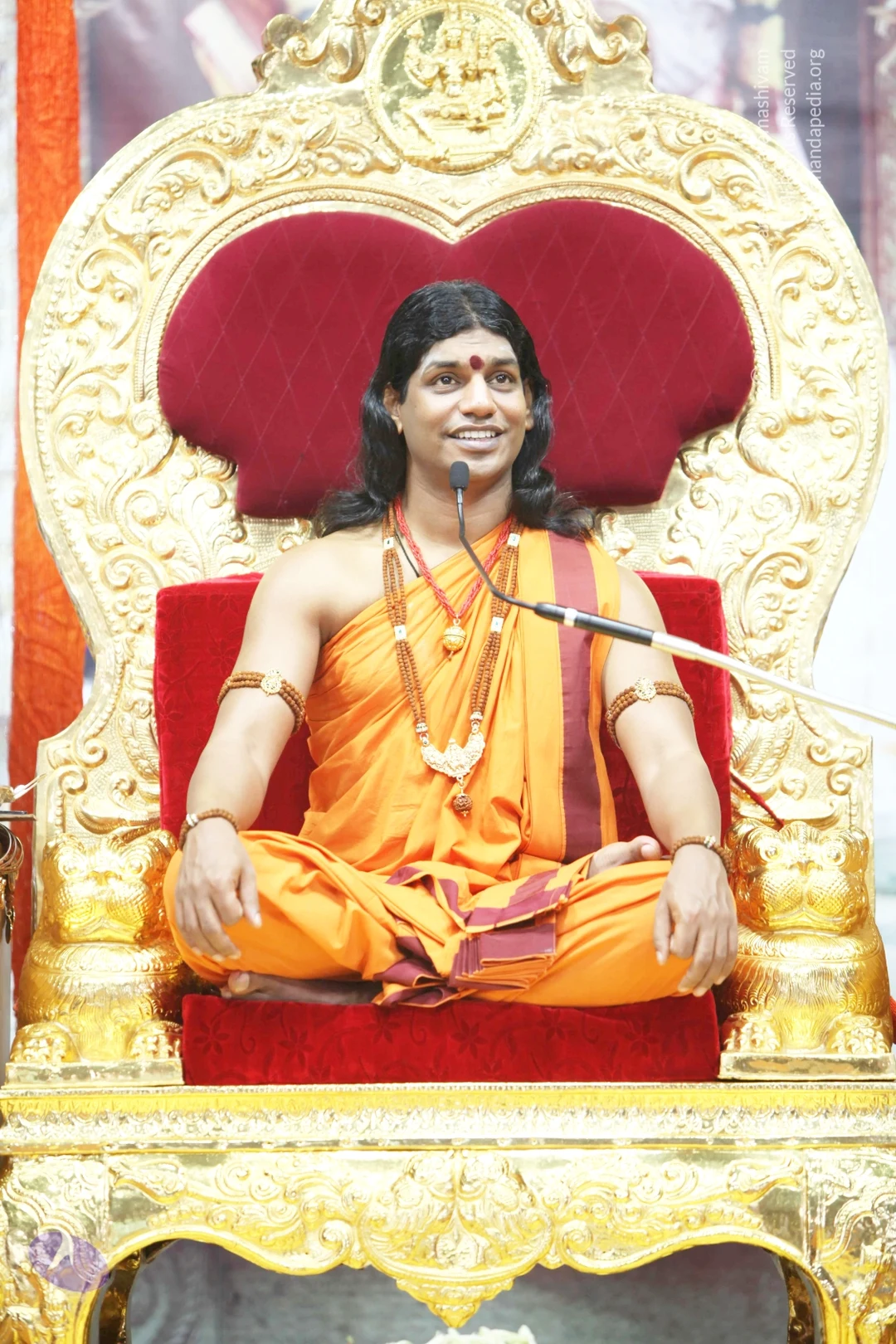
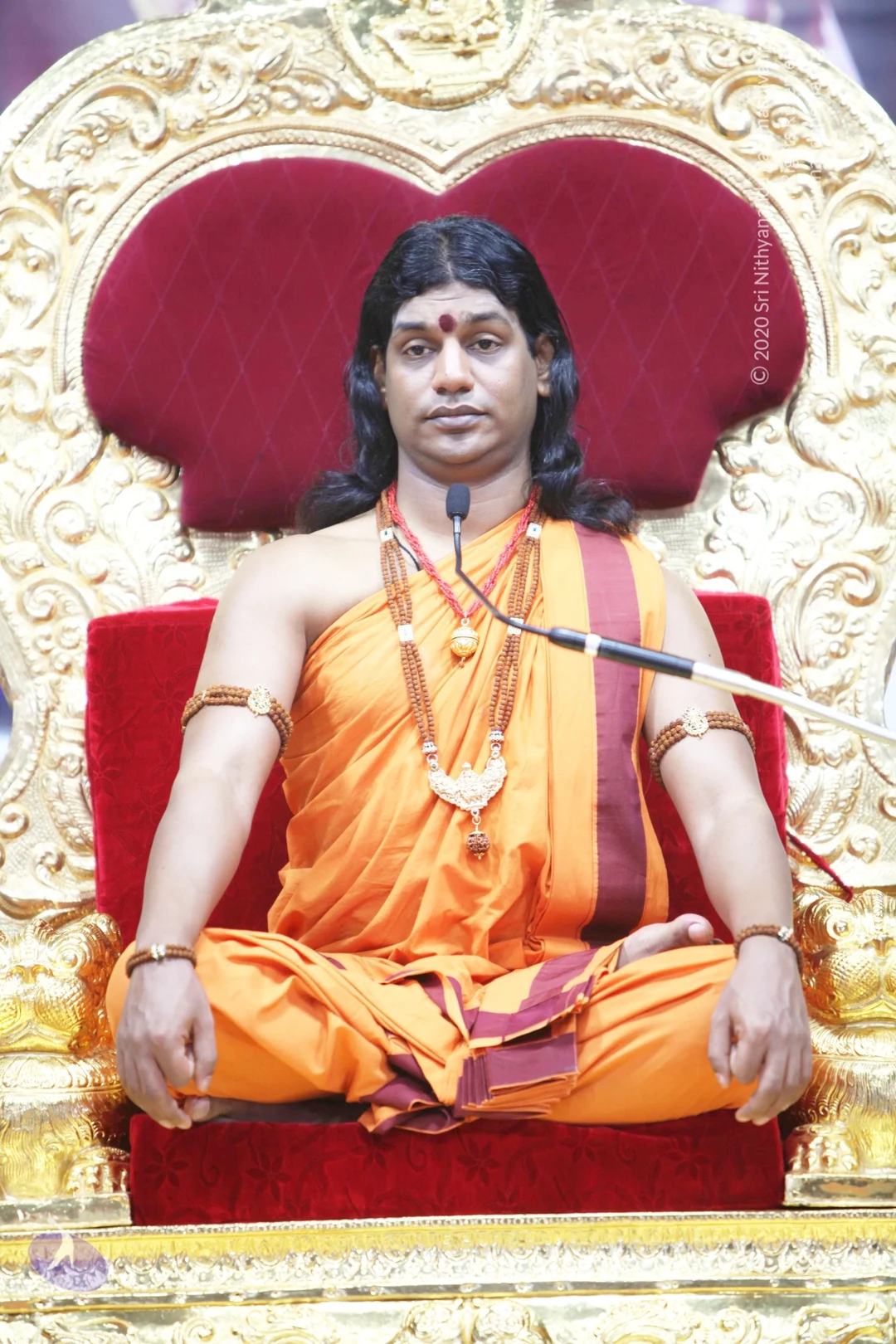
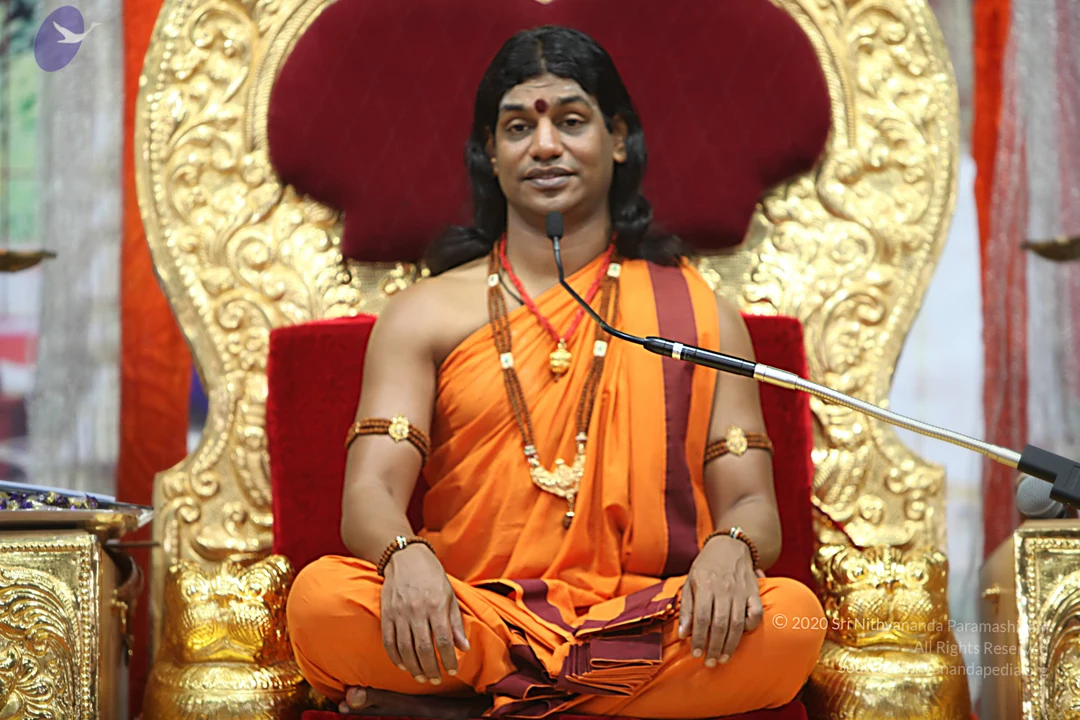
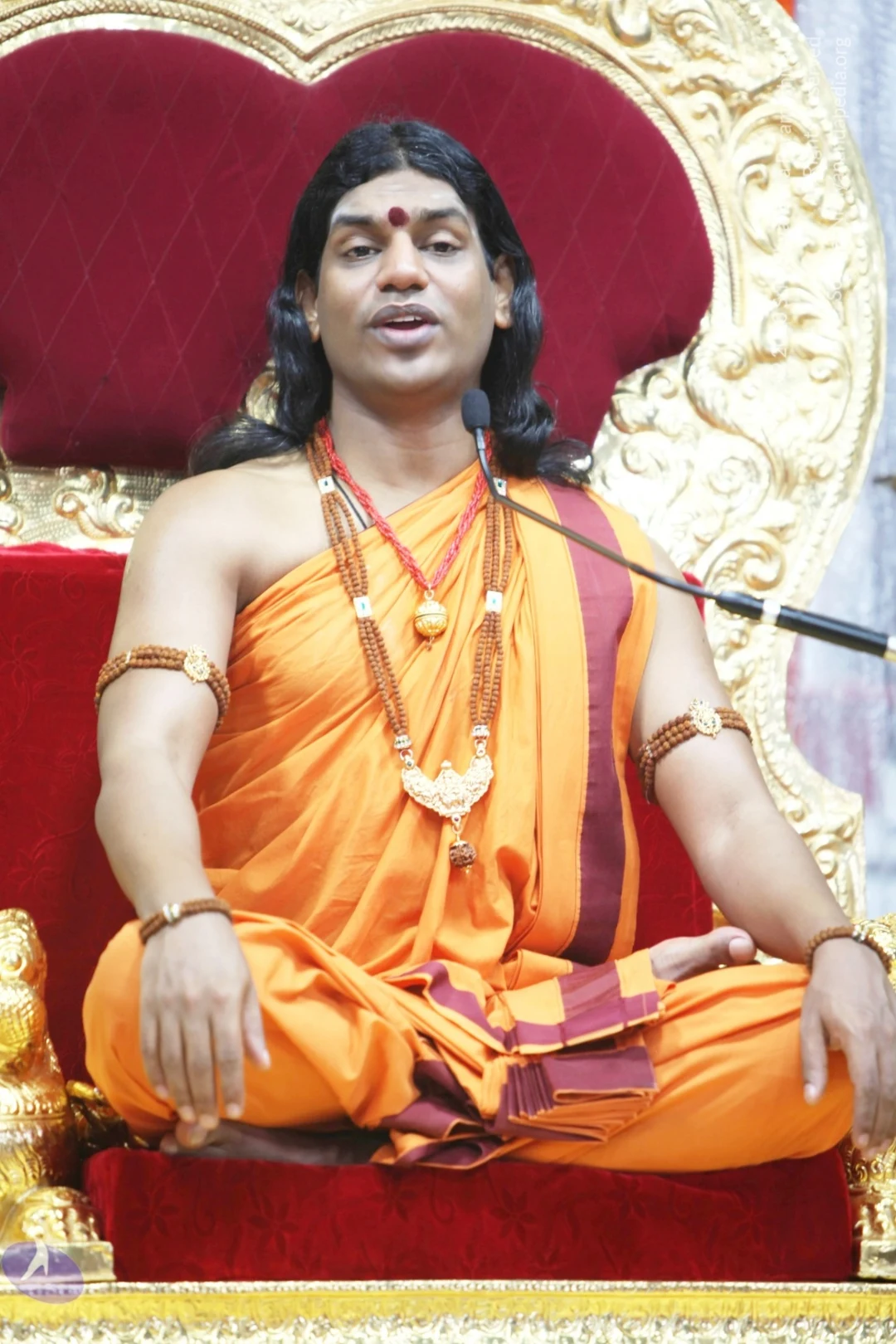
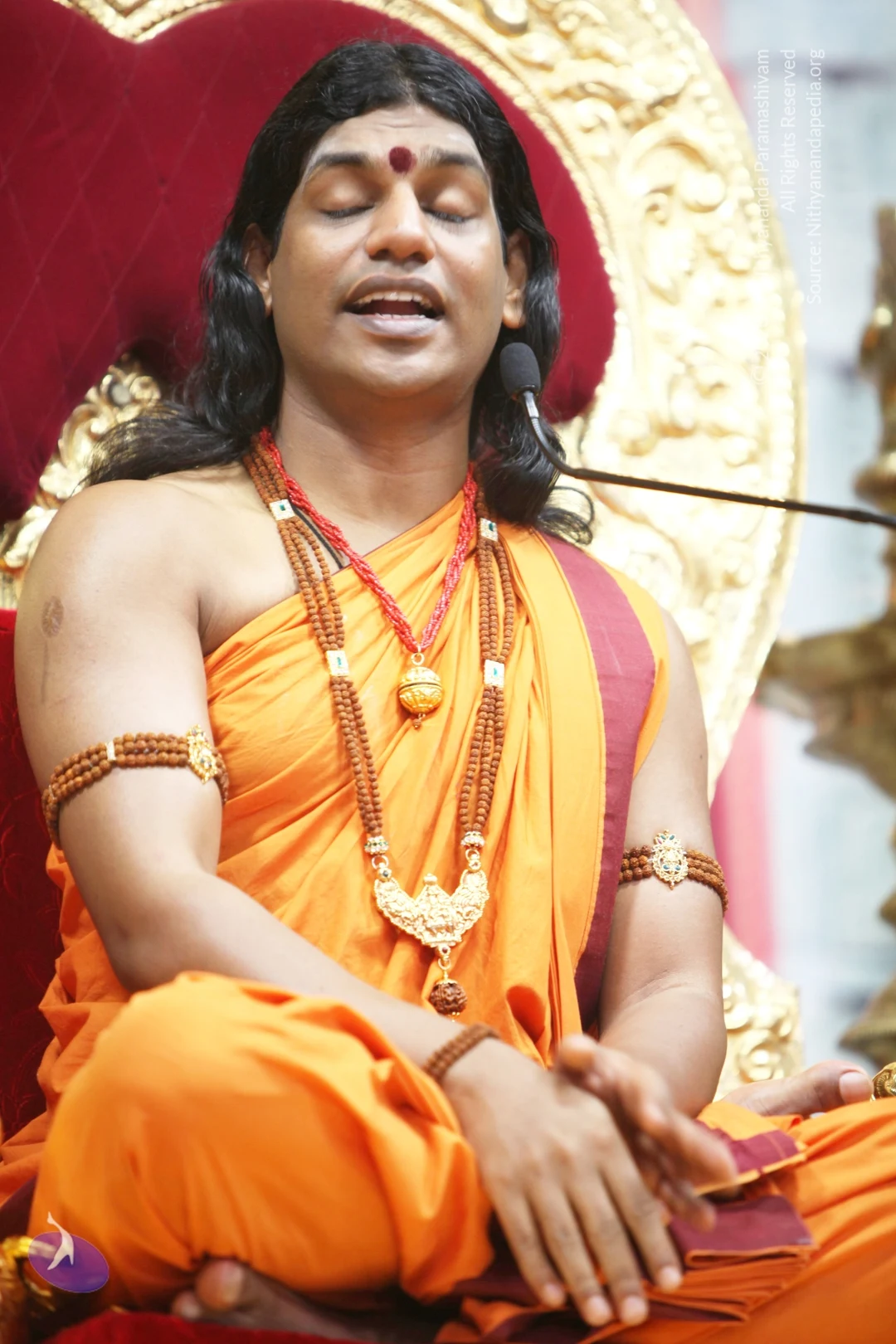
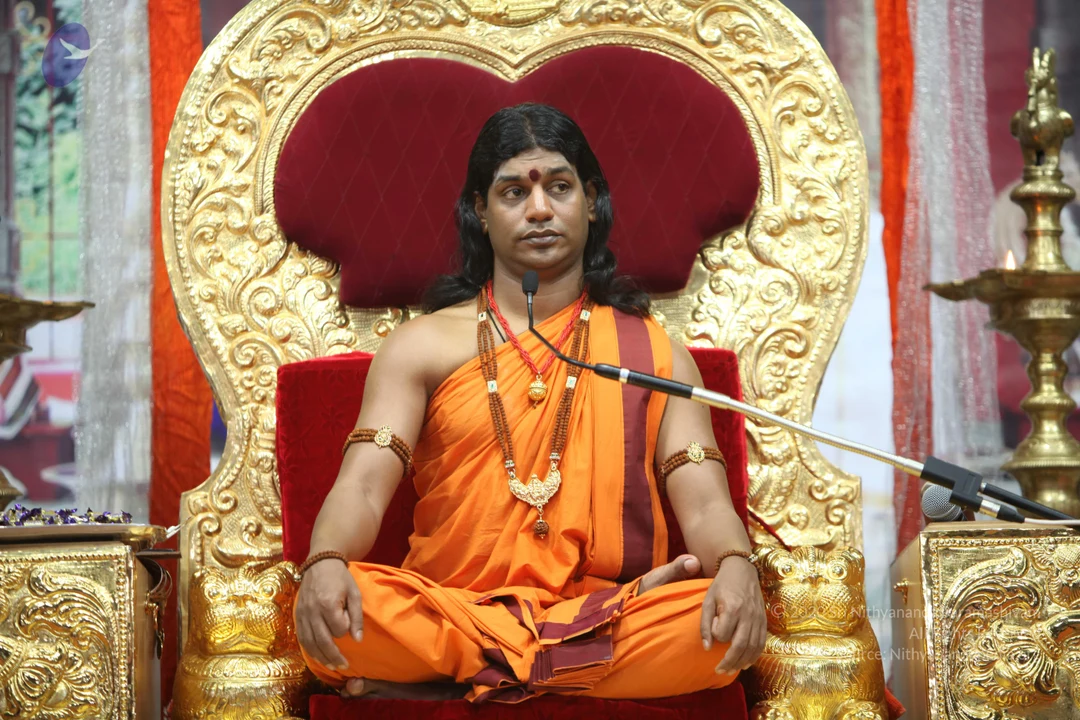
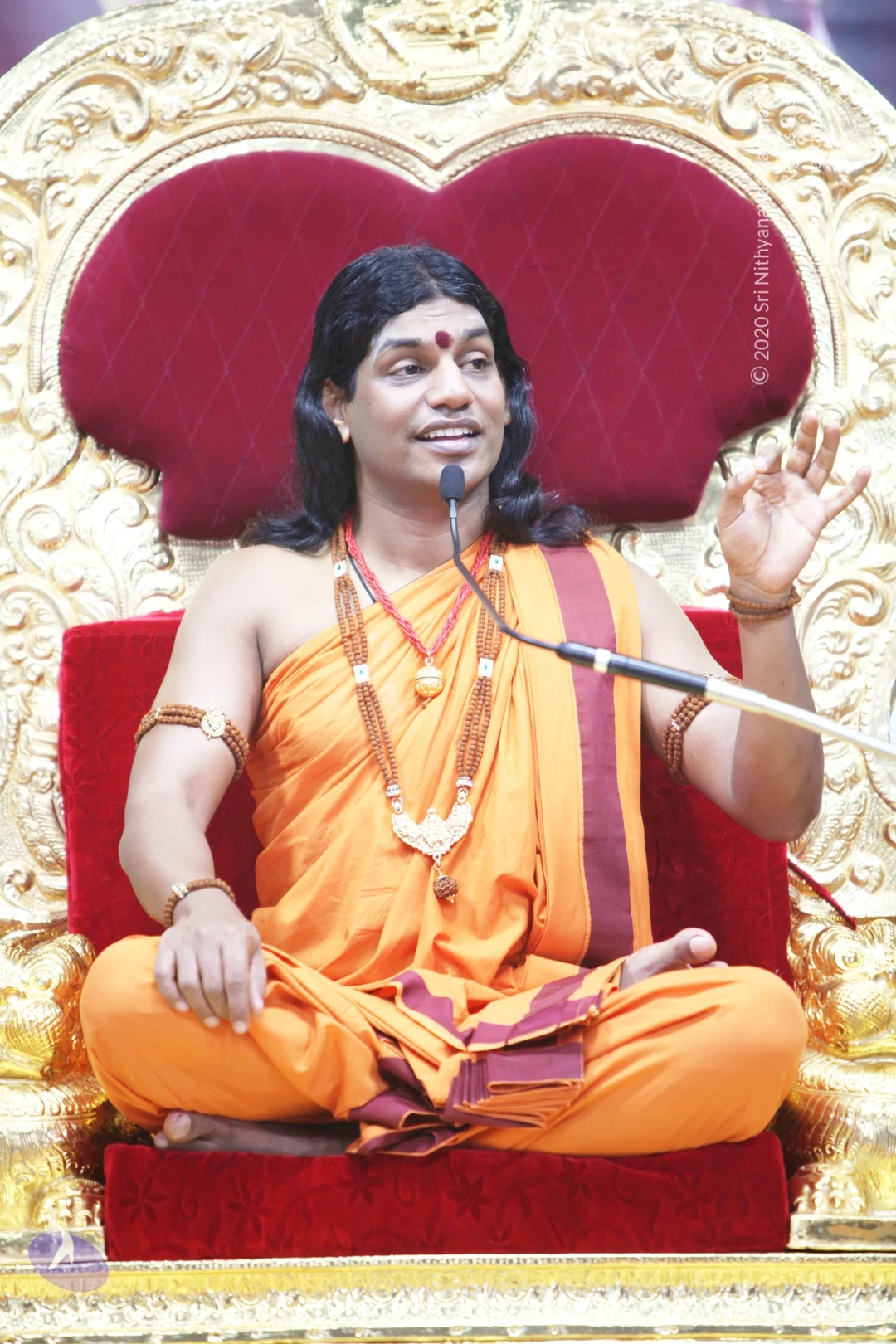
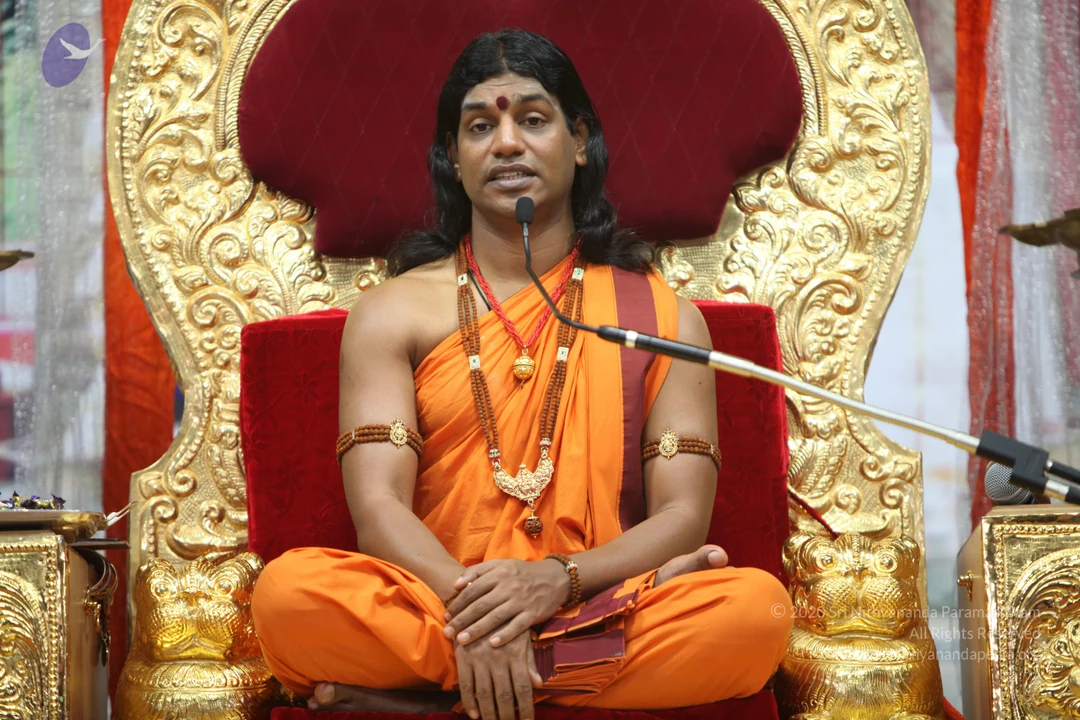
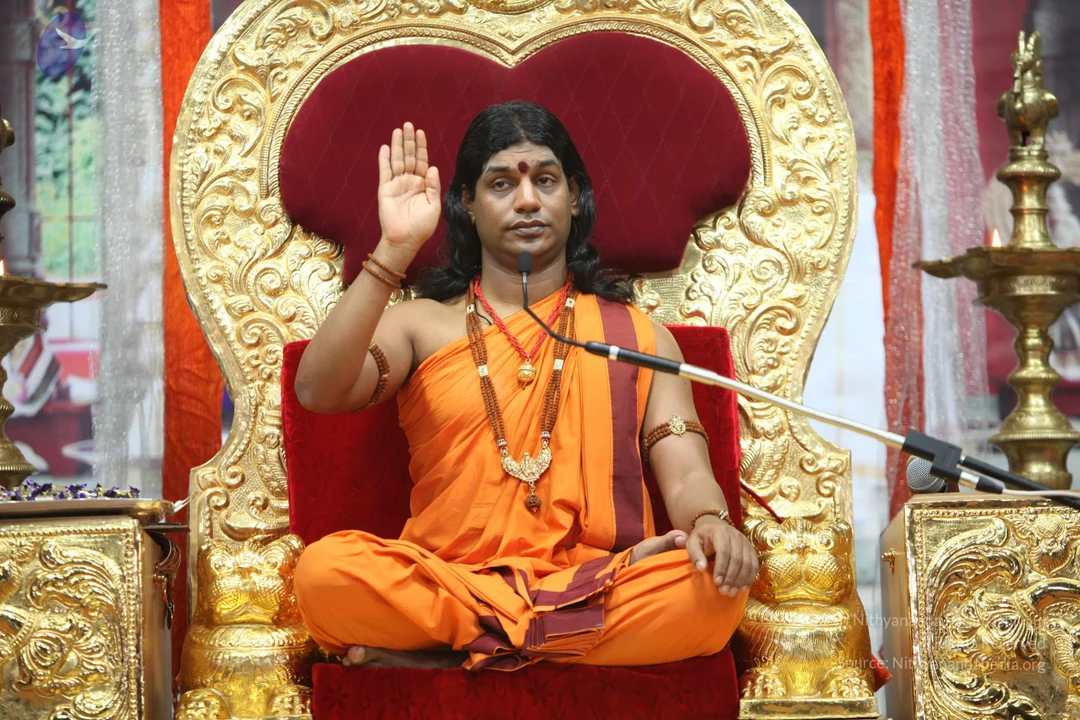
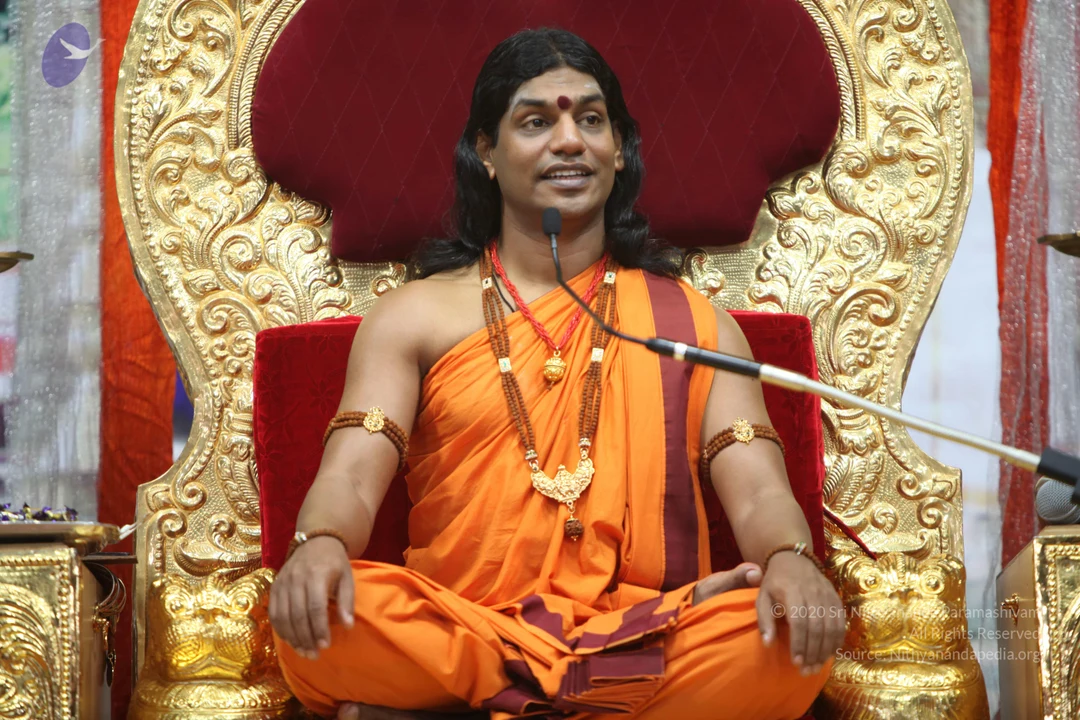
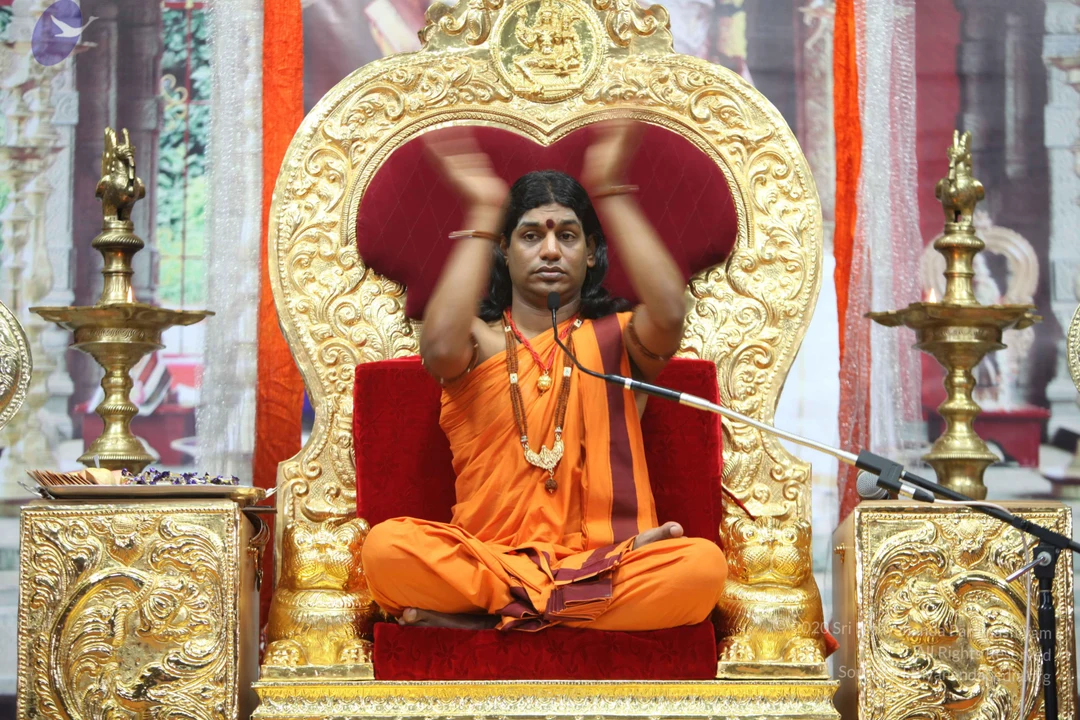
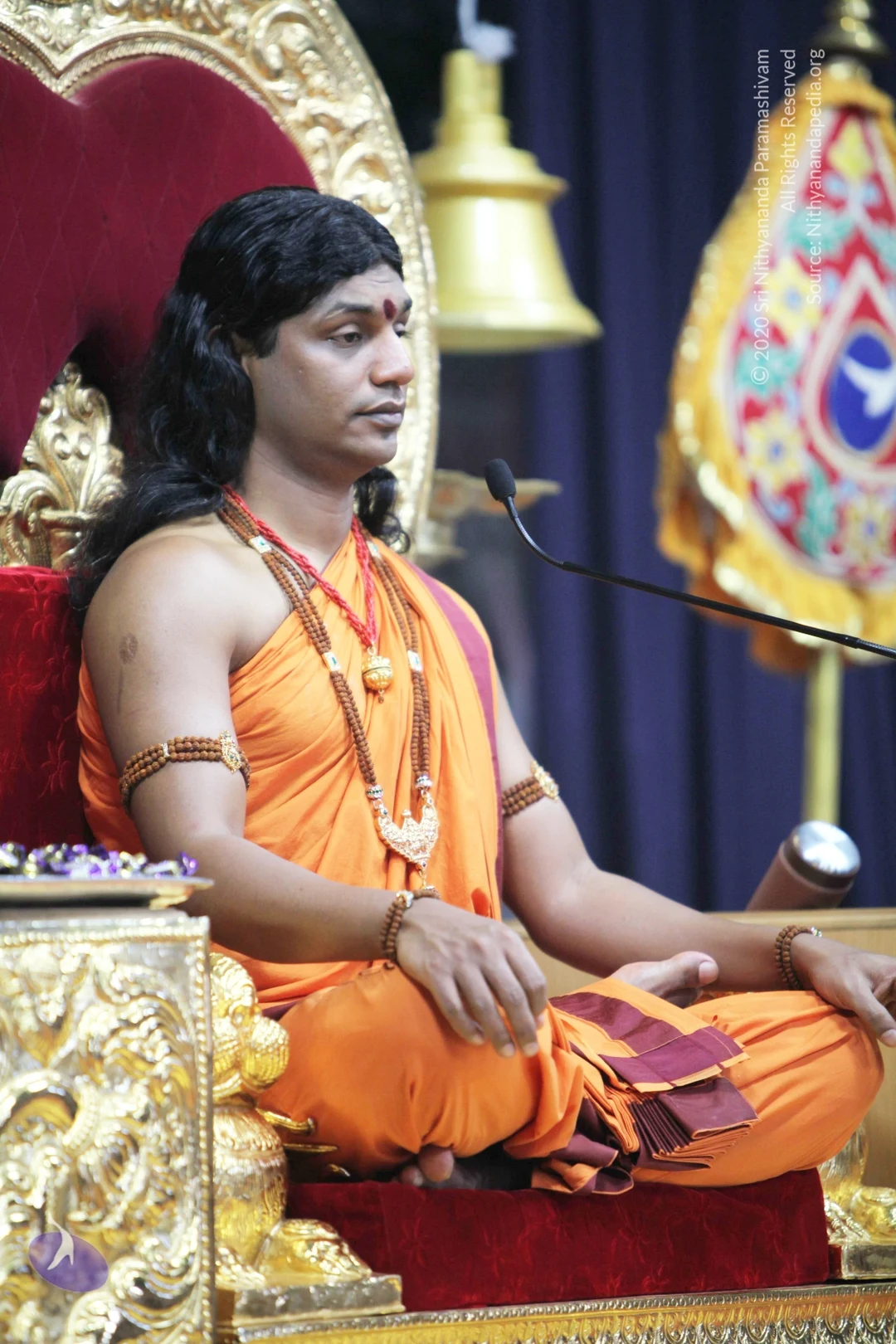
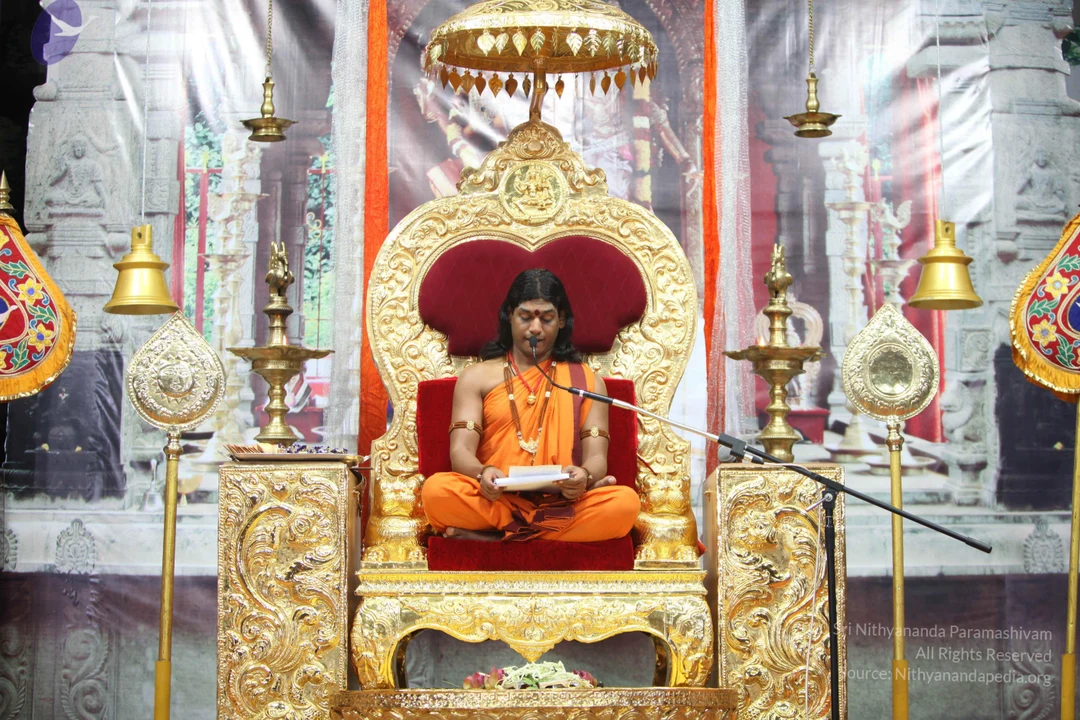
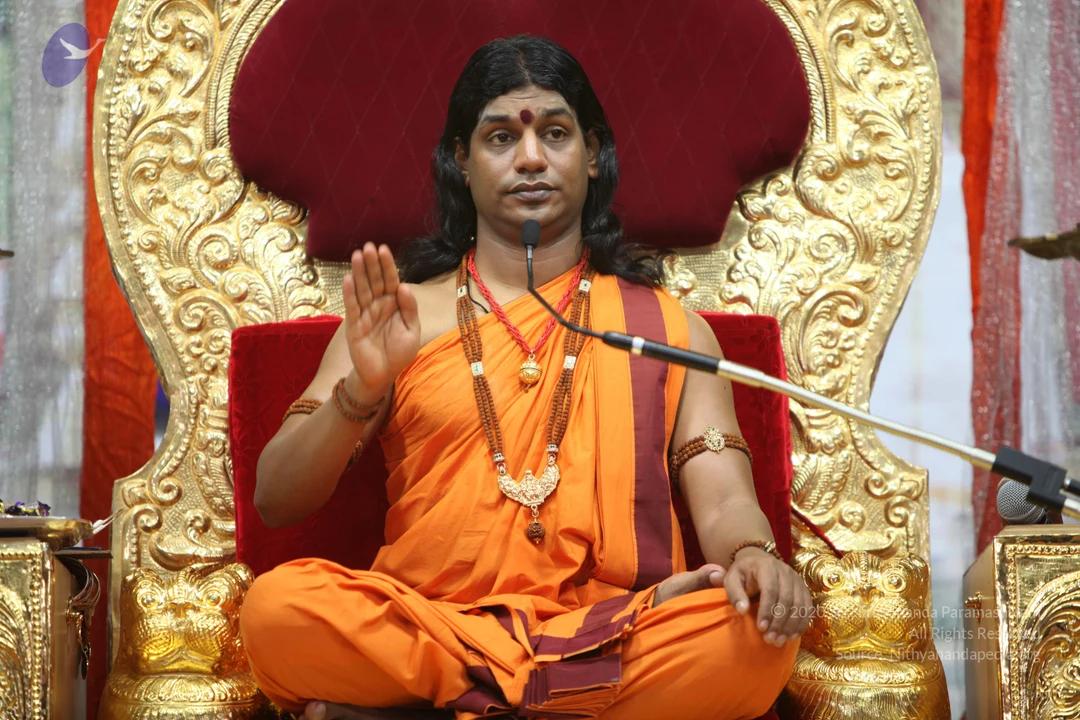
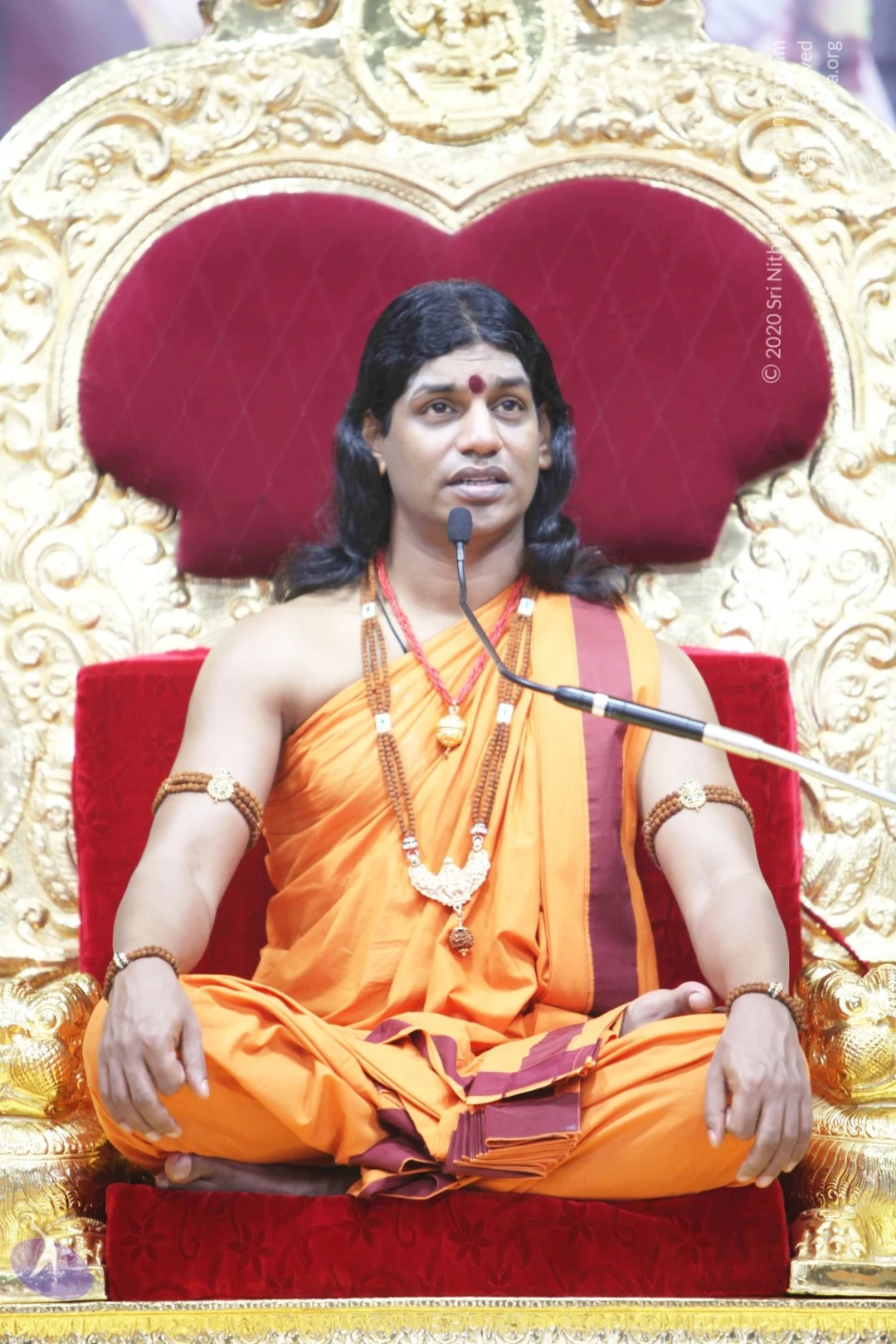
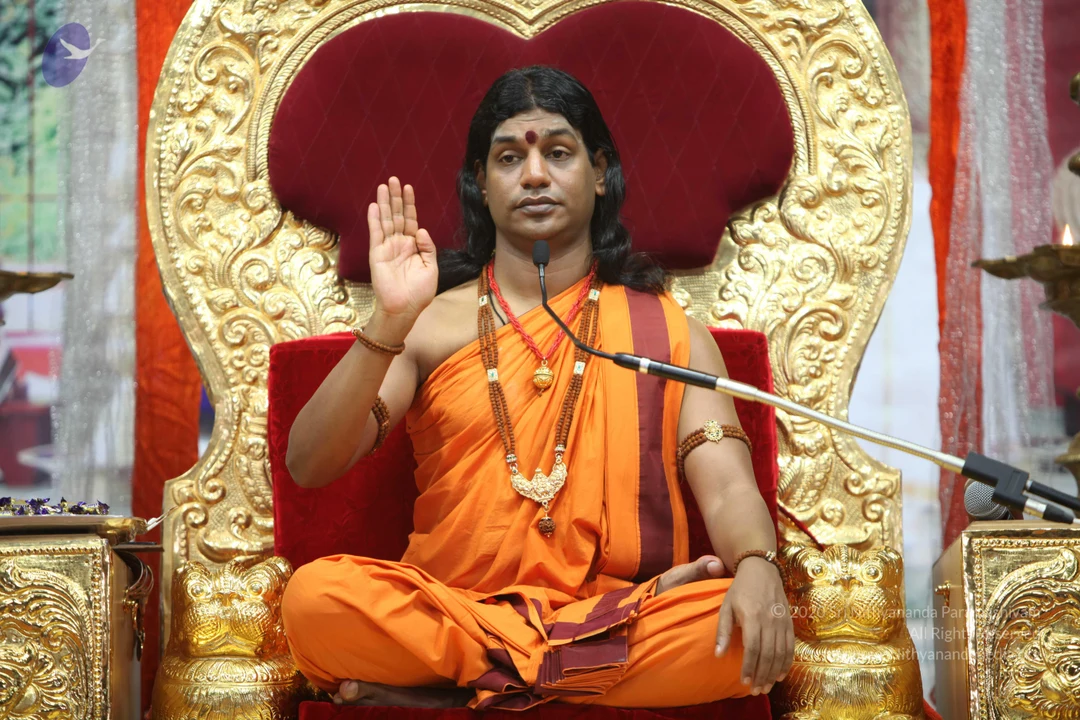
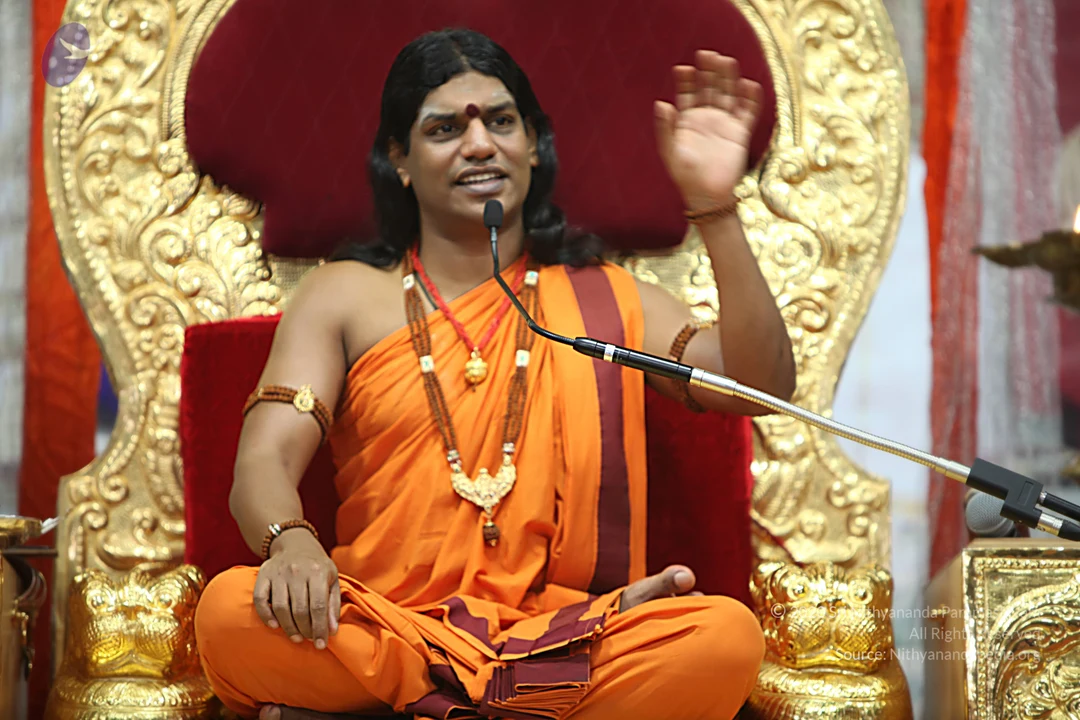
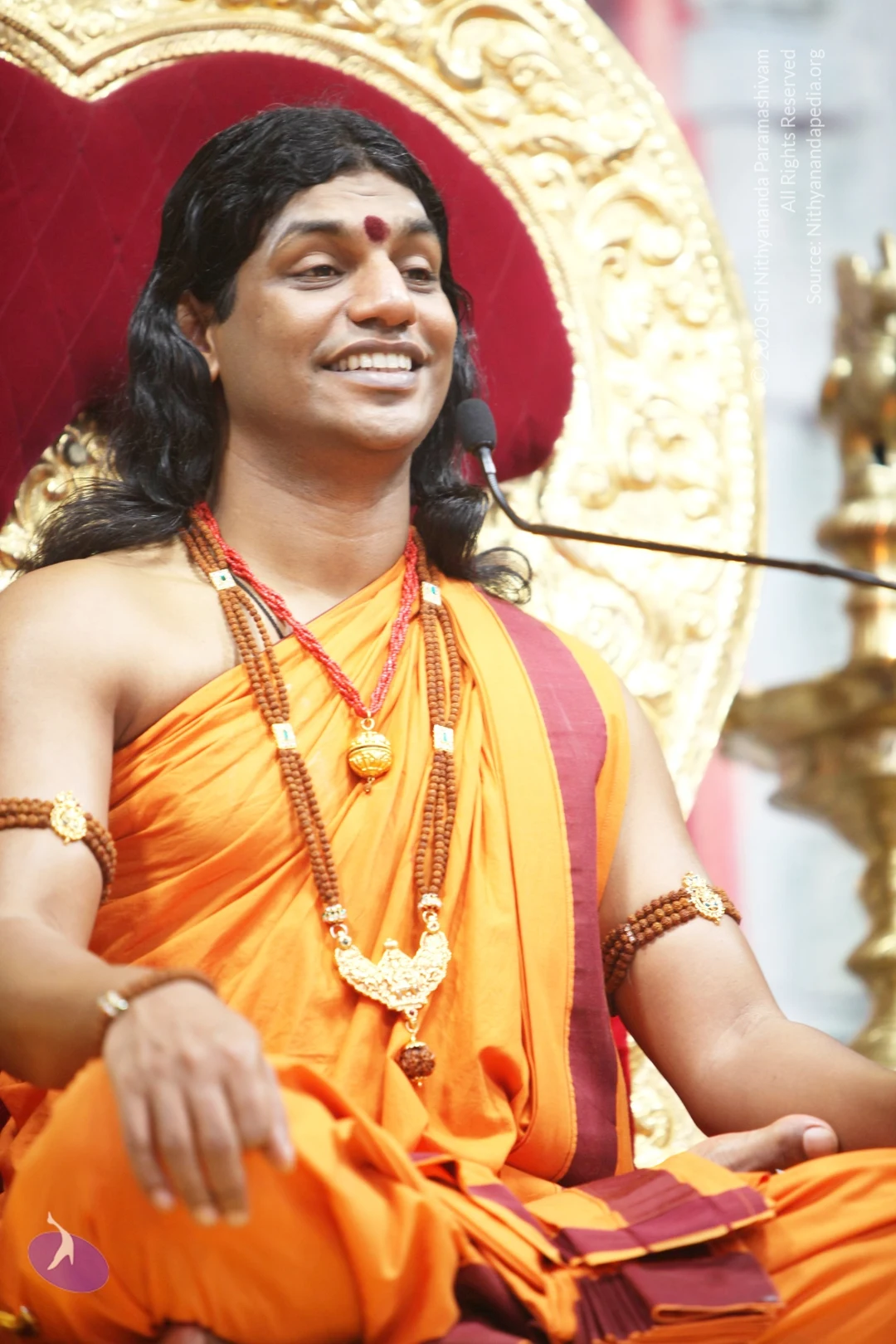
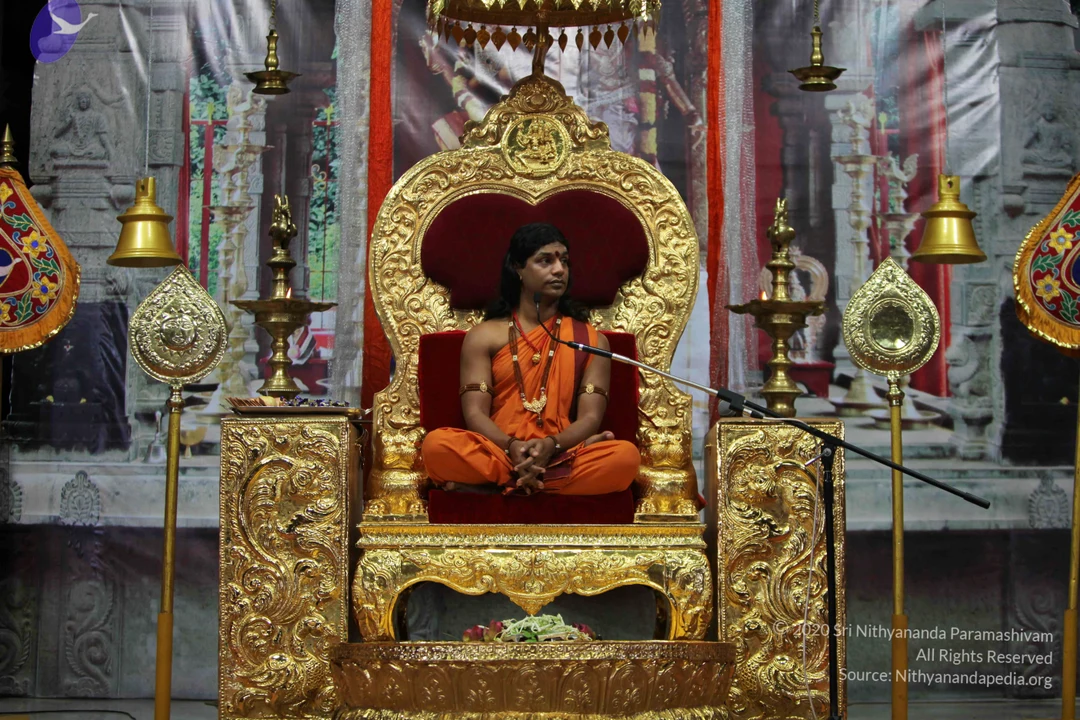
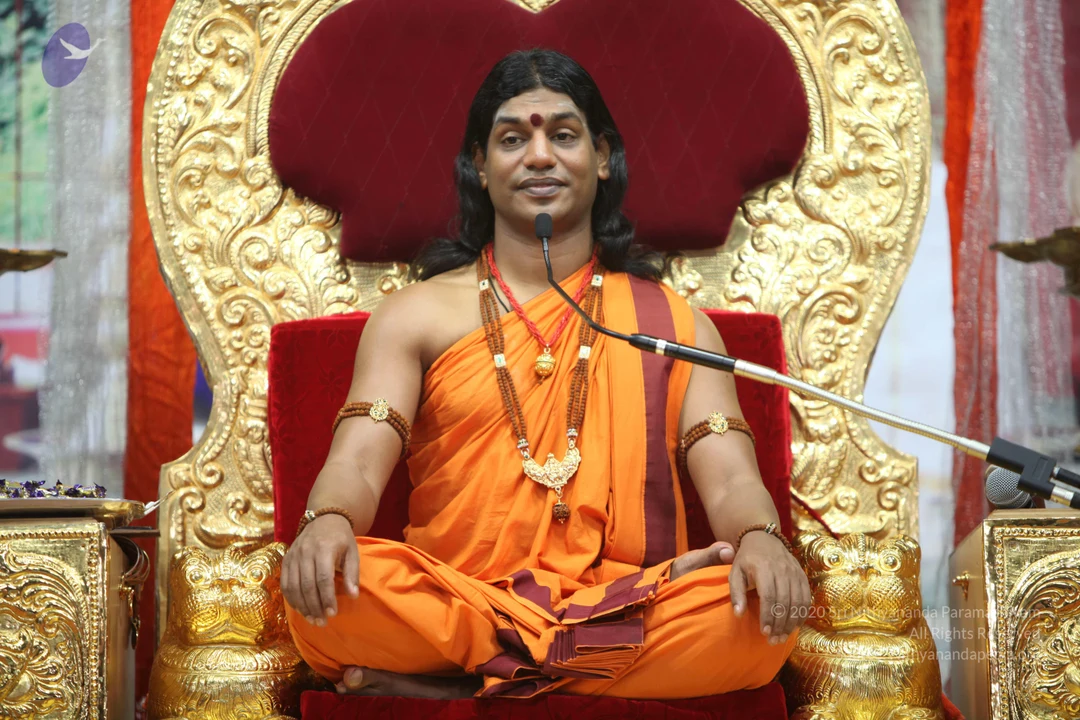
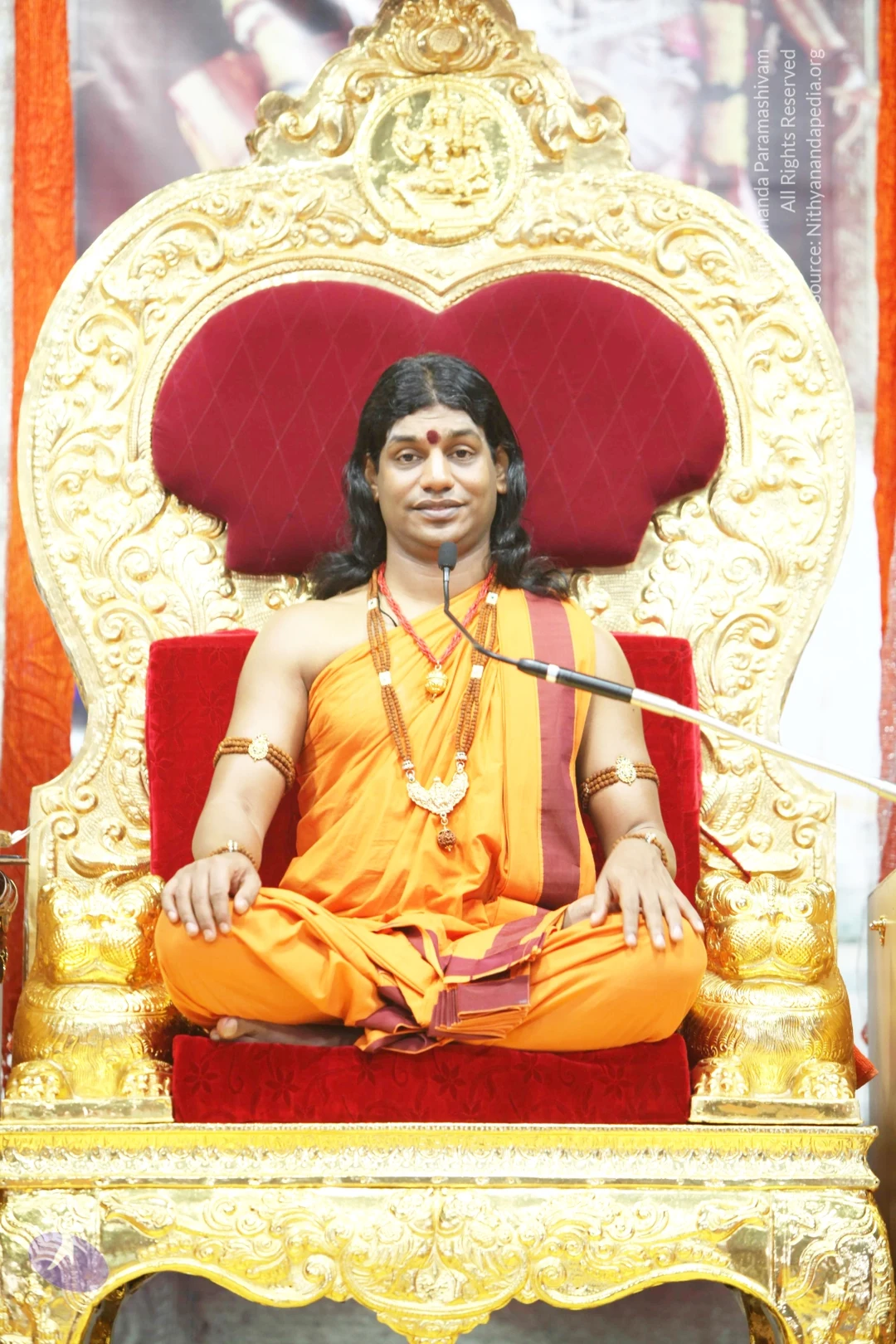
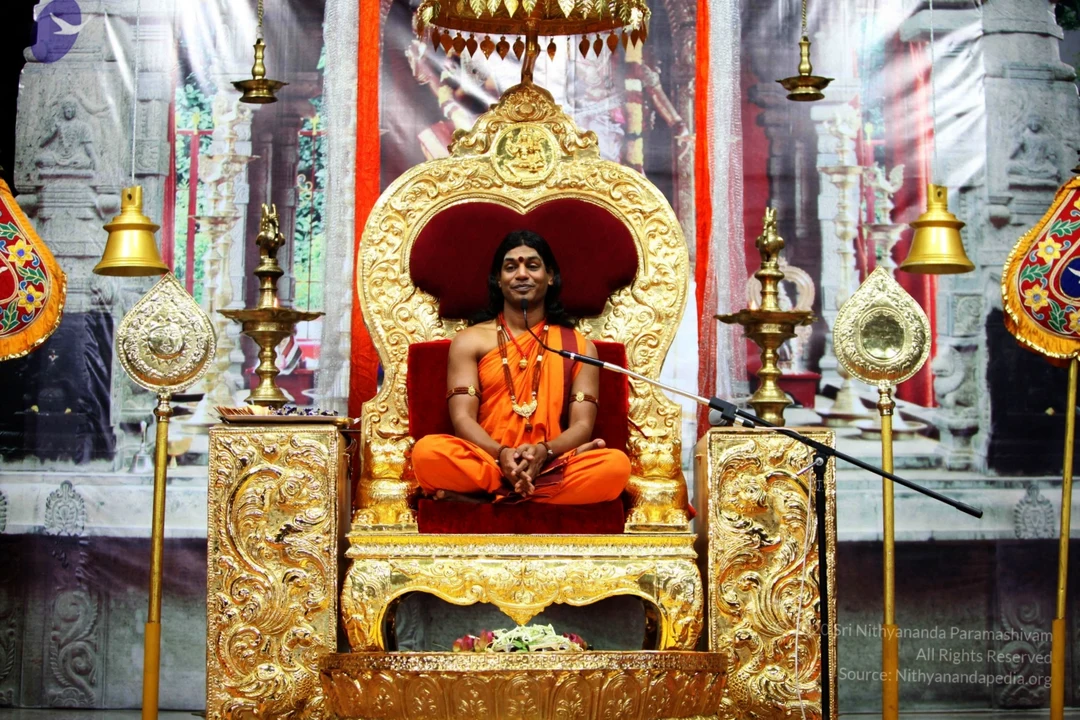
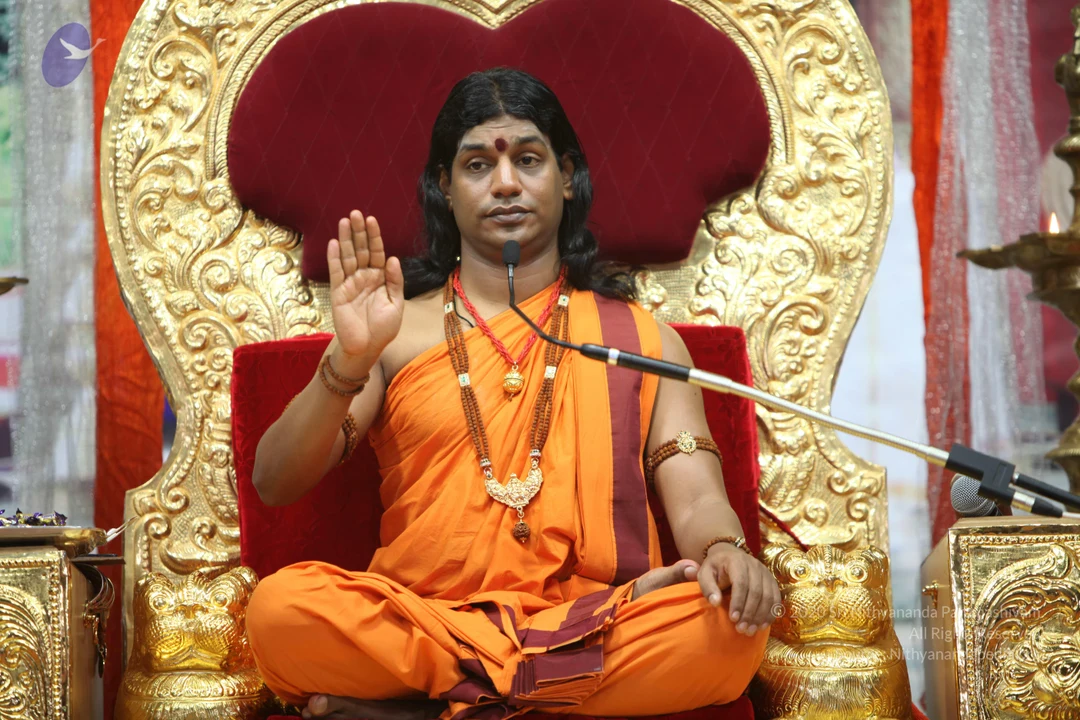
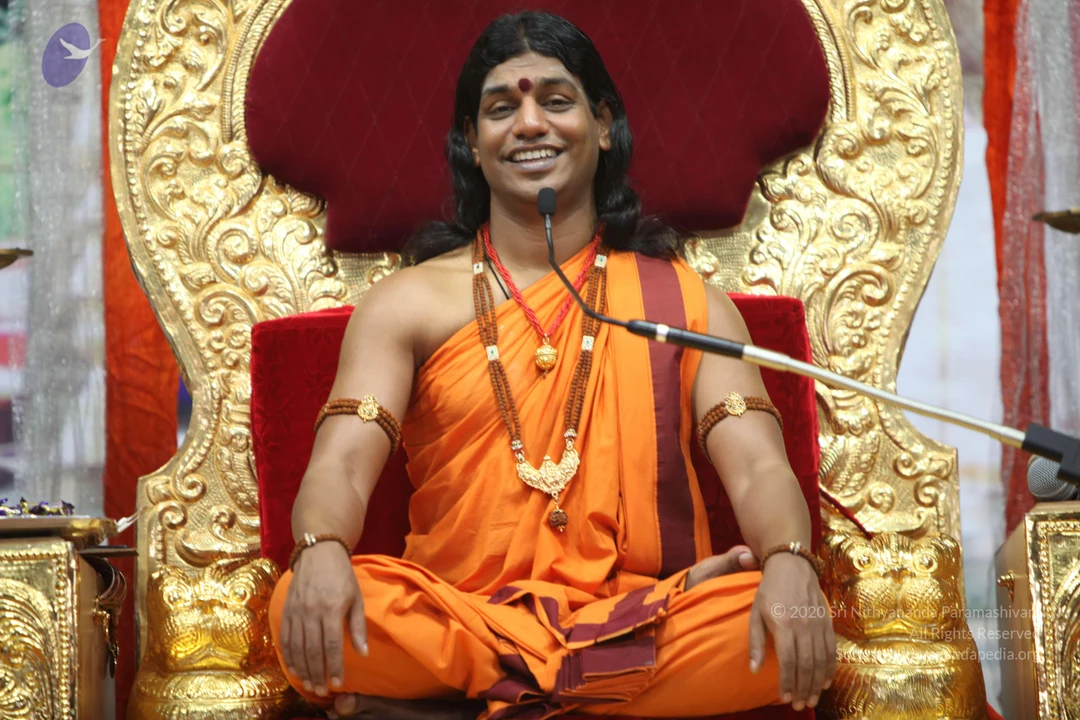
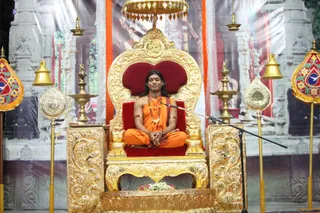
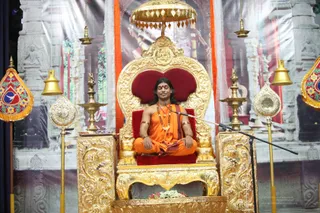
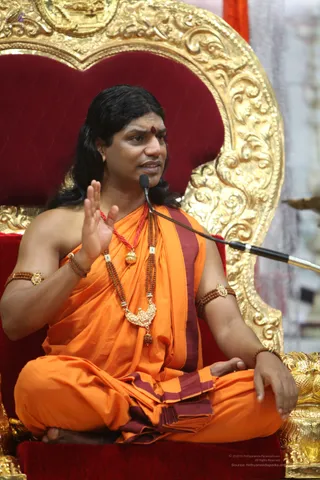
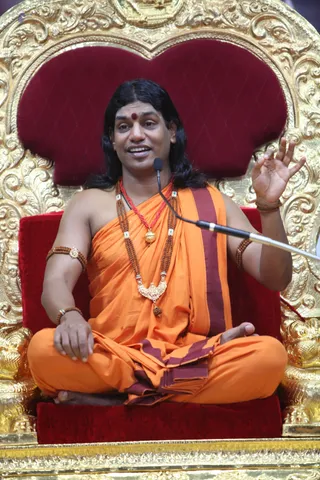
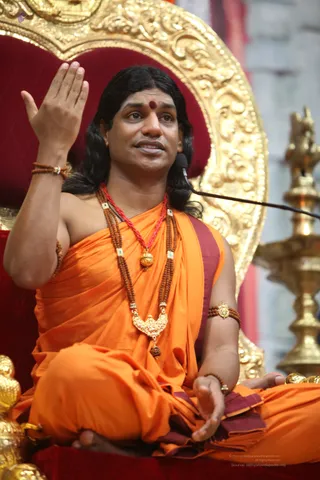
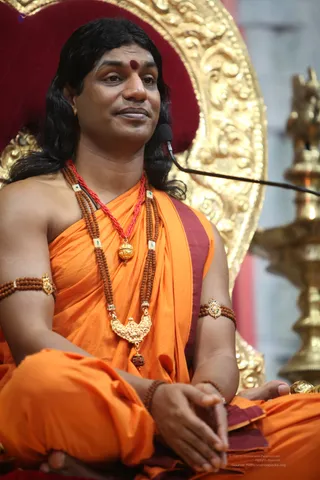
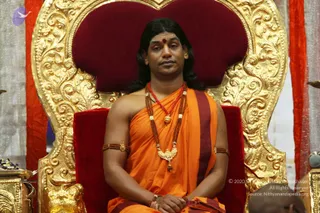
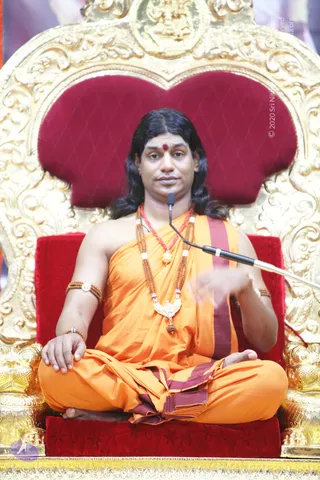
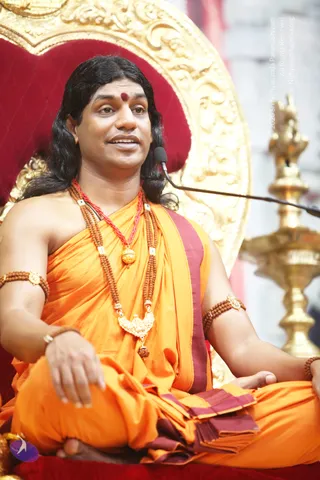
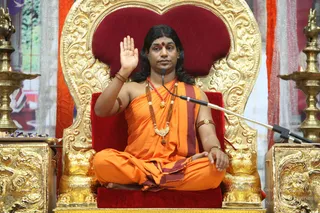
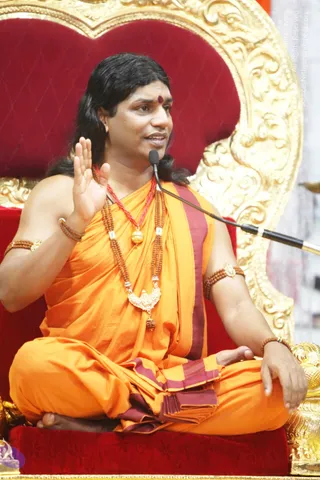
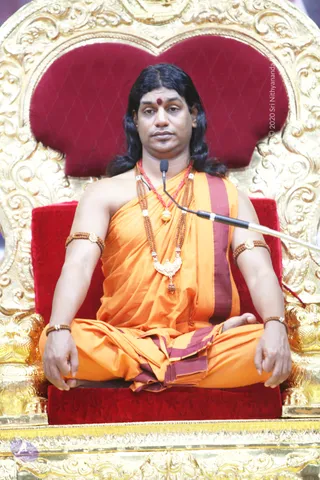
A seated figure sits cross-legged on an ornate gold-leaf throne with a red velvet seat and back, under a golden canopy with hanging tassels. He wears orange saffron robes, a bare upper body with gold armlets, a rudraksha mala and a gold necklace, and a red tilak on the forehead, his hands folded in his lap. A microphone stands before him. Brass oil lamps and bells flank the throne, with gilded ceremonial fans on either side and a floral offering at the base. The backdrop is a large printed temple-pillar image. Appearance-based label: Swamiji (probable), seated on the throne in saffron robes with long swept-back hair and rudraksha mala.A seated man in orange-saffron robes sits cross-legged on an ornate gold throne with a red velvet seat and backrest, beneath a golden canopy hung with gold leaf pendants. He wears layered orange and gold necklaces, bangles on both upper arms, and a red bindi, with long dark hair. Brass oil lamps and handbells stand on both sides of the throne, and gold ceremonial fan-shaped standards with red and yellow embroidery flank it. A microphone stands at his right. Behind him is a backdrop with painted temple-style architectural imagery and a small pink and white floral offering on a gold table below. Swamiji (probable): the seated figure has long swept-back hair, saffron clothing, rudraksha-style necklaces and ornate gold adornments, seated on a throne during a discourse setting.A seated man in orange and maroon ceremonial robes speaks into a microphone while raising his right hand in a teaching gesture. He sits cross-legged on a red velvet throne with ornate gold carved armrests and backrest. He has long dark hair and a red bindi on his forehead, wears a rudraksha mala across his chest with a gold pendant, a red bead necklace, and rudraksha armbands with gold clasps. His left hand rests on his knee. Swamiji (probable): long swept-back hair, saffron robes, rudraksha malas and ceremonial gold necklaces, seated in a discourse.A seated man in an ornate golden throne with red velvet cushions speaks into a microphone on a stand. He wears an orange saffron wrap with a maroon border, a red bindi on his forehead, long dark hair, multiple strands of rudraksha malas and a red beaded necklace with a gold pendant, and rudraksha bracelets on his wrists and upper arm. His right hand is raised in a gesture while his left rests on his lap in a cross-legged pose. The appearance fits the presentation of a probable Swamiji, with long swept-back hair, saffron clothing, rudraksha malas and ceremonial gold ornaments, seated as a teacher giving a discourse.A man seated cross-legged on a red velvet throne with an ornate gold carved backrest, speaking with his right hand raised in an open gesture and a microphone on a stand beside him. He has long dark hair, a red dot on his forehead, and wears saffron-orange robes with a maroon border, multiple strands of brown rudraksha malas, a red beaded necklace and a gold pendant with a deity motif, plus rudraksha bracelets and a gold armlet. A tall gold lamp stands at right. a person: long swept hair, saffron clothing, rudraksha malas and ceremonial gold necklace, seated on a throne during a discourse.A seated man in orange and maroon ochre robes sits cross-legged before a red and gold ornate throne with a microphone stand at right. He has long dark hair, a red bindi on his forehead, multiple rudraksha malas, a red coral bead necklace, a large gold pendant necklace, and rudraksha-and-gold armbands. His hands rest in his lap. A gold lamp stand is visible at right. a person: the long swept hair, orange robes, rudraksha malas and ornate gold jewellery are the appearance cues, shown in a discourse setting.

1-Temple-Visit

34 photosSource gallery
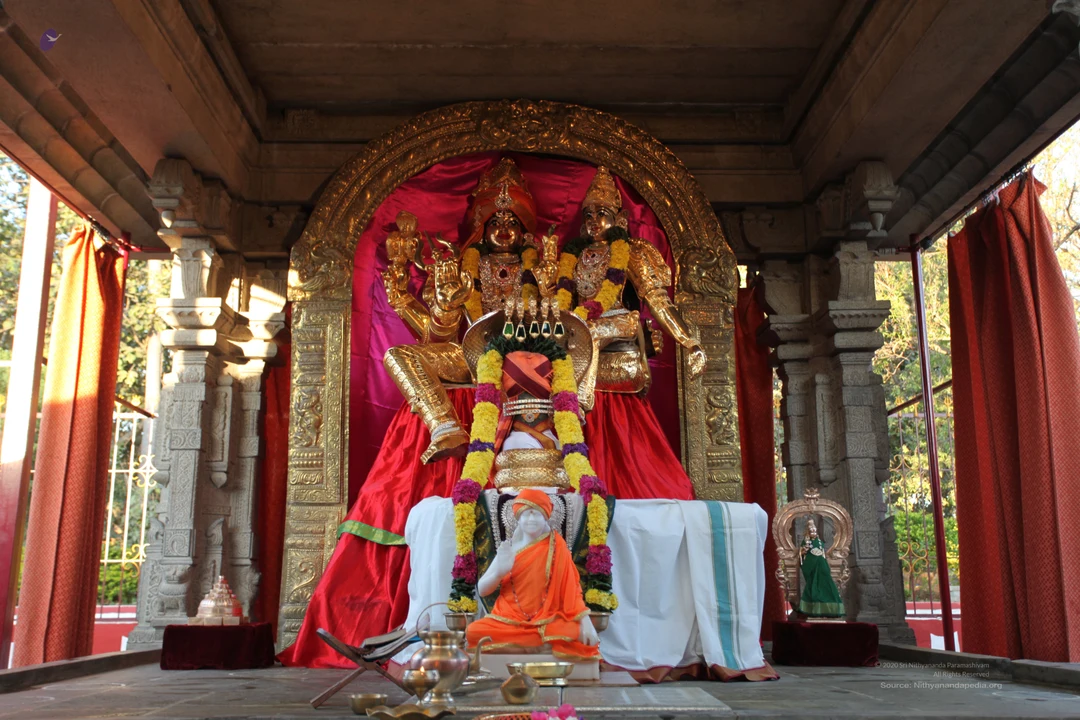
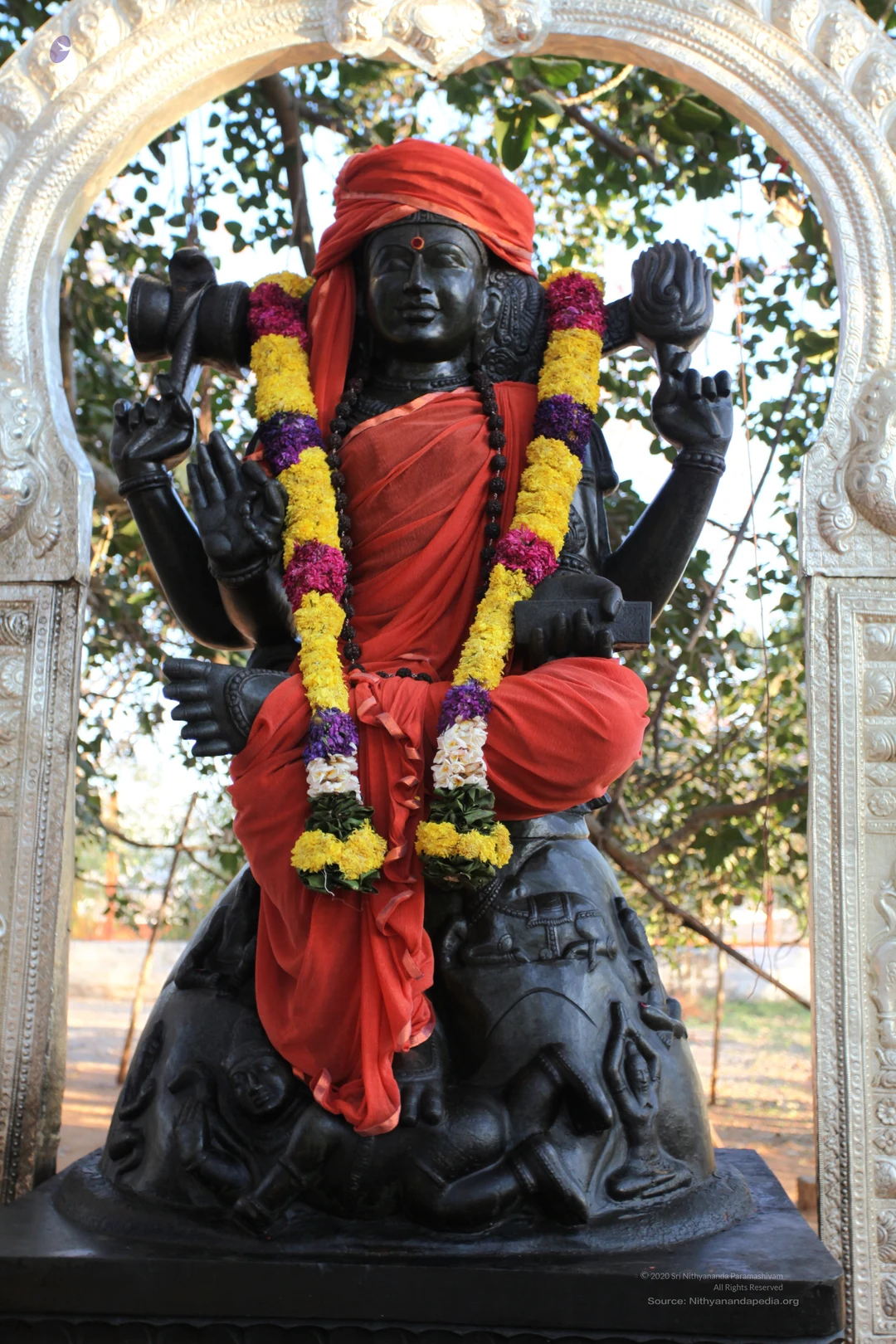
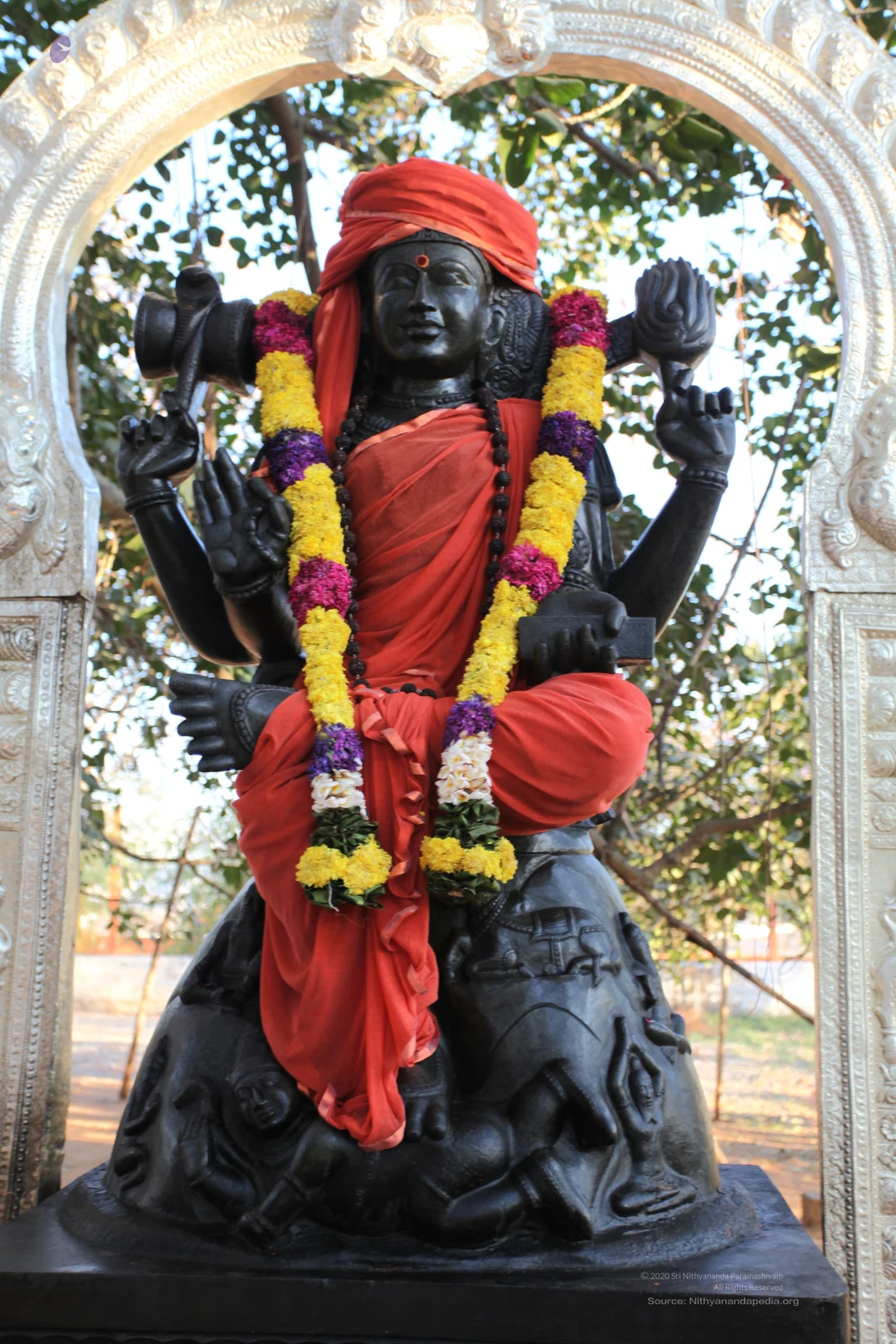
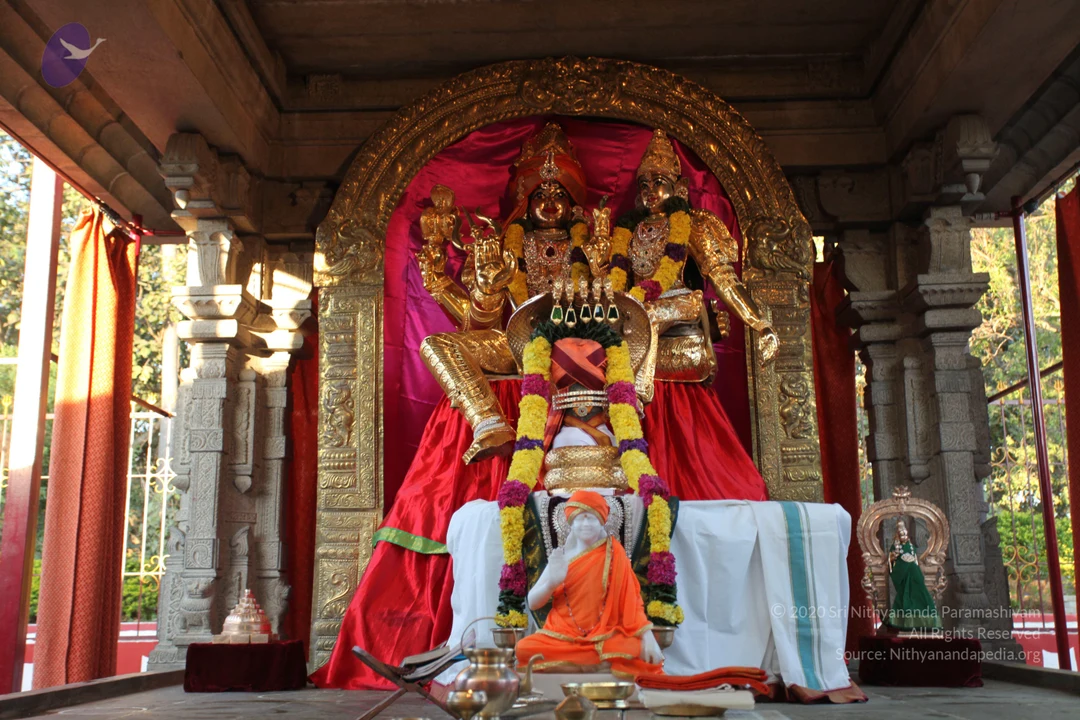
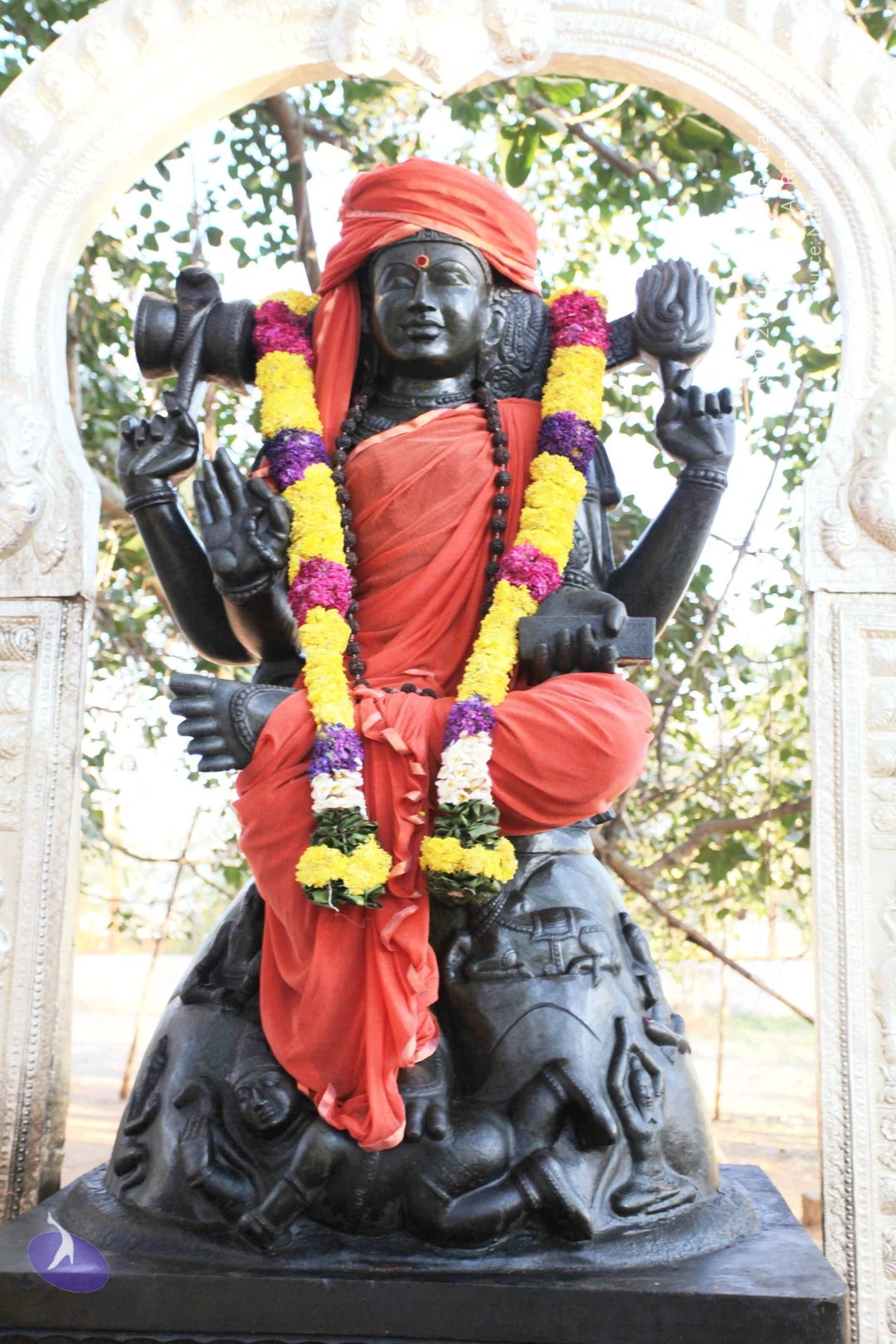
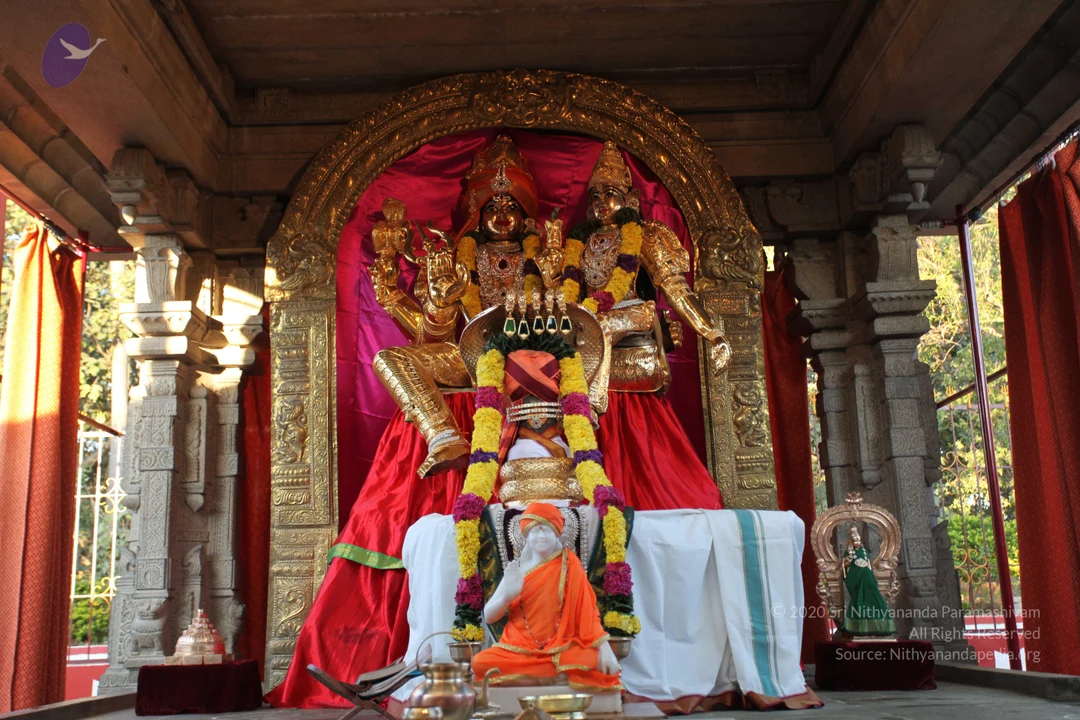
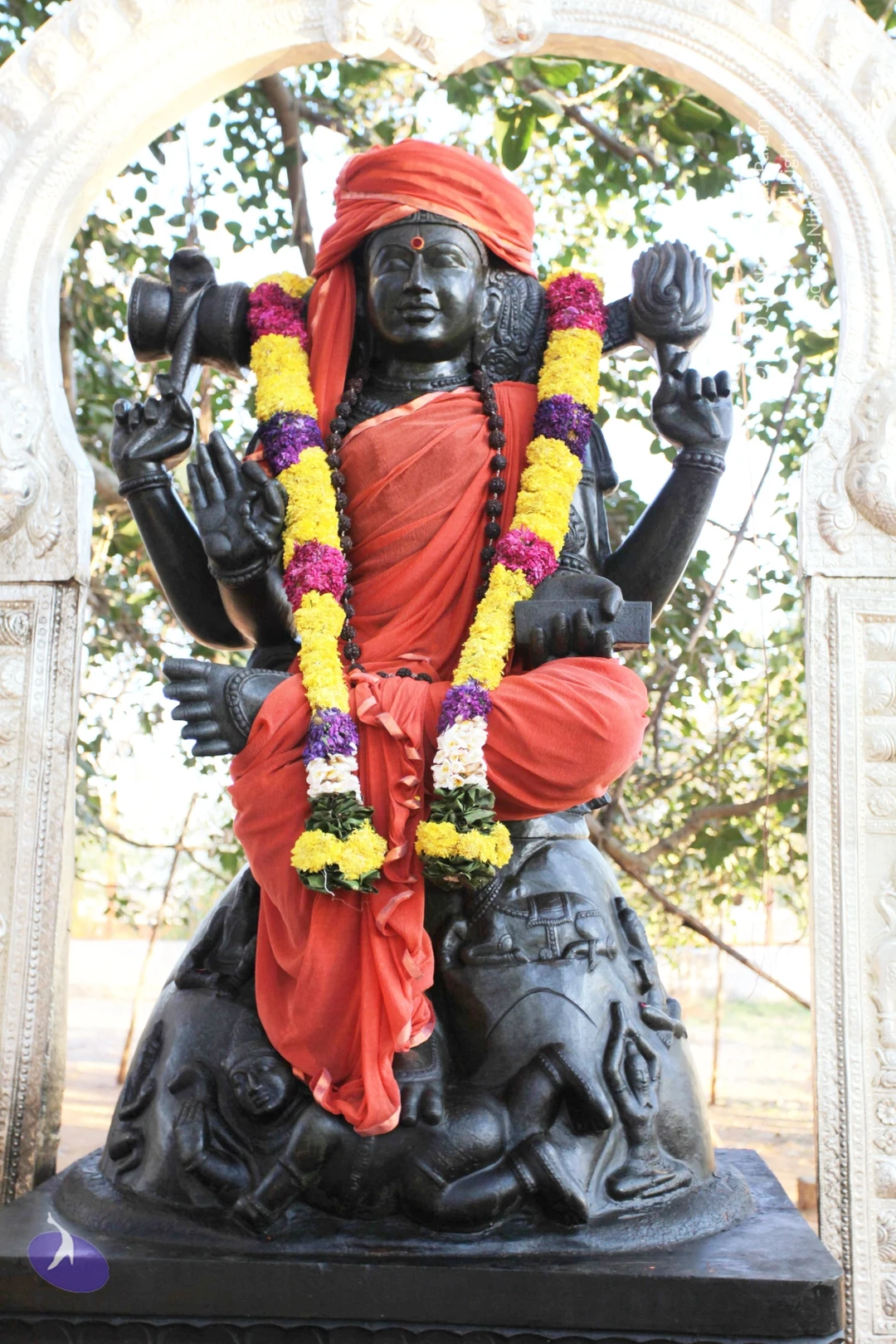
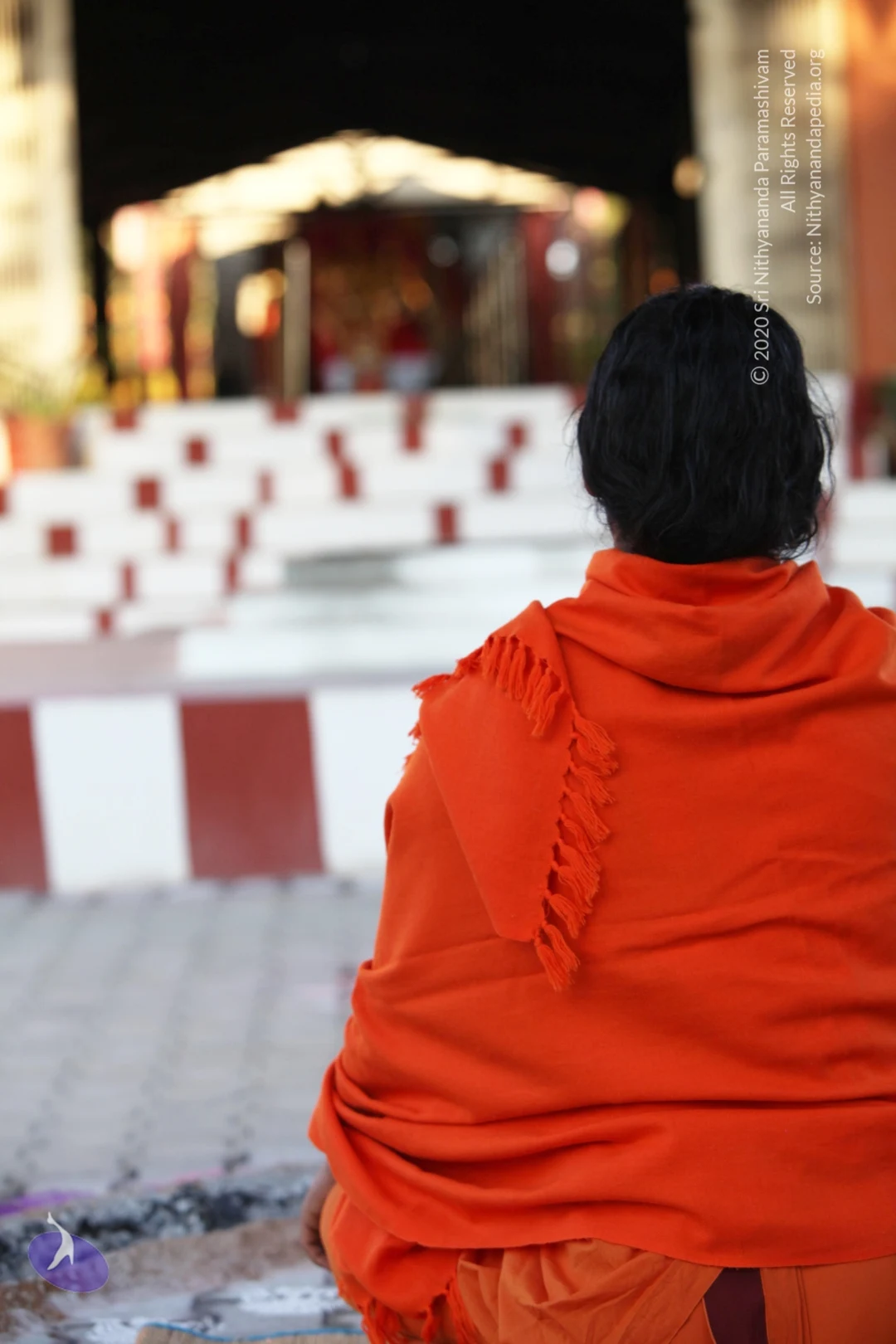
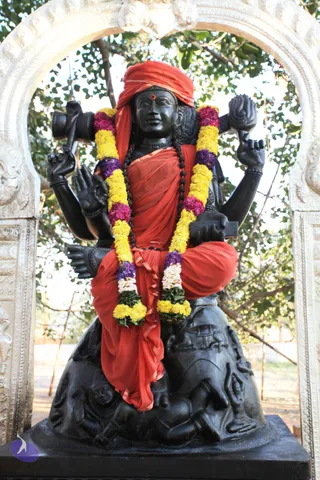
A stone temple shrine open on several sides, with carved granite pillars and a wooden ceiling. Inside, a golden deity murti in ornate crown and armour is framed by a golden arch and a red draped backdrop, and is decorated with a thick garland of yellow and orange flowers. In front, a seated figure in saffron-orange robes with a matching cloth wrap sits on a white-draped seat. Brass oil lamps, a kalasha, plates and offerings stand on the shrine platform. At right foreground, a man with dark hair in an orange-saffron robe kneels with his back to the camera, performing puja at the shrine. Orange curtains hang at the sides.A person seen from behind stands on a dark polished floor before a large banyan tree with many hanging aerial roots. They wear an orange cloth wrapped over the shoulder and draped as dhoti-style trousers, edged with maroon borders, and a dark rudraksha mala around the neck. Their hair is tied in a bun and their hands are pressed together in front of the chest. Before them is a small cave opening at the base of the tree, with a small lamp inside and a low stone step. A blue sign reads "ENTER THE CAVE" beside the entrance. Dappled shade falls across the scene.A man walks outdoors under leafy trees on a paved path, head bowed and eyes lowered. He wears a draped orange-saffron garment with a dark maroon border, and a long rudraksha mala of dark seeds hangs across his chest and shoulder. His hair is tied back in a knot. Behind him are concrete blocks, a curved stone edge and a sunlit open ground.A temple shrine photographed indoors with a gilded arched frame and red satin backdrop. Two gold-coloured deity murtis stand behind, one wearing a red crown and the other a golden crown, both garlanded with yellow and purple flowers. In front sits a white marble statue of a seated sage dressed in orange robes with an orange head cloth and a gold waist ornament, also garlanded with marigolds and purple flowers. Brass oil lamps, a kalasha-style vessel and offering dishes sit on a white cloth-draped platform. Red curtains frame the open sides of the shrine, and a small green-clad figure appears in a niche to the right. The statue depicts a seated figure, not a living person, so no physical people are present.A barefoot man in saffron-orange robes and a rudraksha mala walks across a paved brick courtyard at dusk. Palm trees and a silver SUV are visible at left. Behind him stands a large billboard showing a smiling man in an orange turban, with Kannada text, beside a brick wall. A red-and-maroon cloth lies on the pavement at right. A signboard map stands at upper left. The man is a devotee or sannyasi, not confidently identified as a person.A black stone statue of a four-armed figure in an ornate white arch, wearing a red-orange turban with a red bindi and an orange-red wrap over the body. Garlands of yellow, purple, magenta and white flowers hang across the chest, and rudraksha beads are visible. The figure sits atop a dark rock base carved with small figures, with green trees behind the arch. Visible hands hold a trident-like staff, a drum and other objects. The statue is a deity murti, not a living person, so no candidate is physically present.

2-Pancha-Tapas
77 photosSource gallery
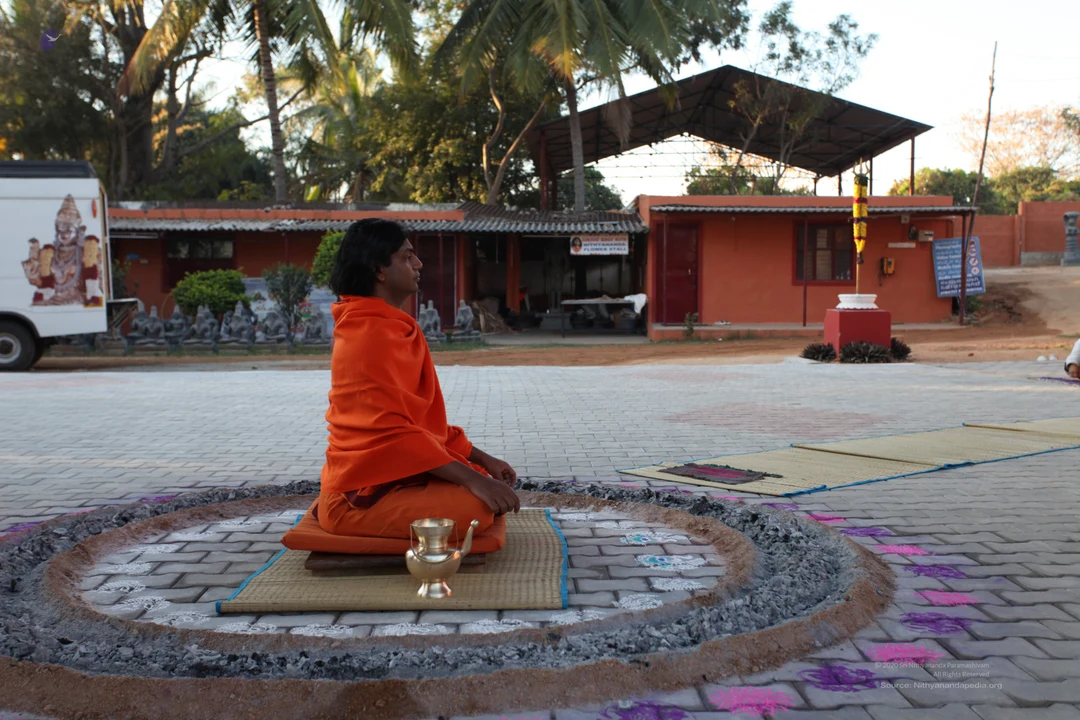
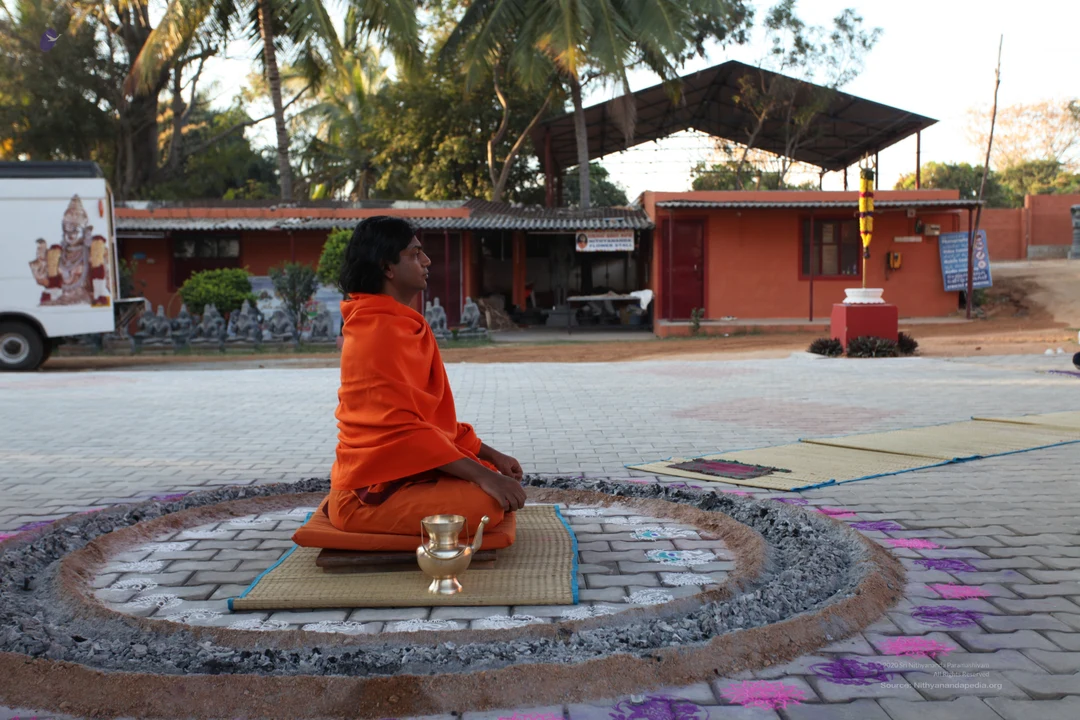
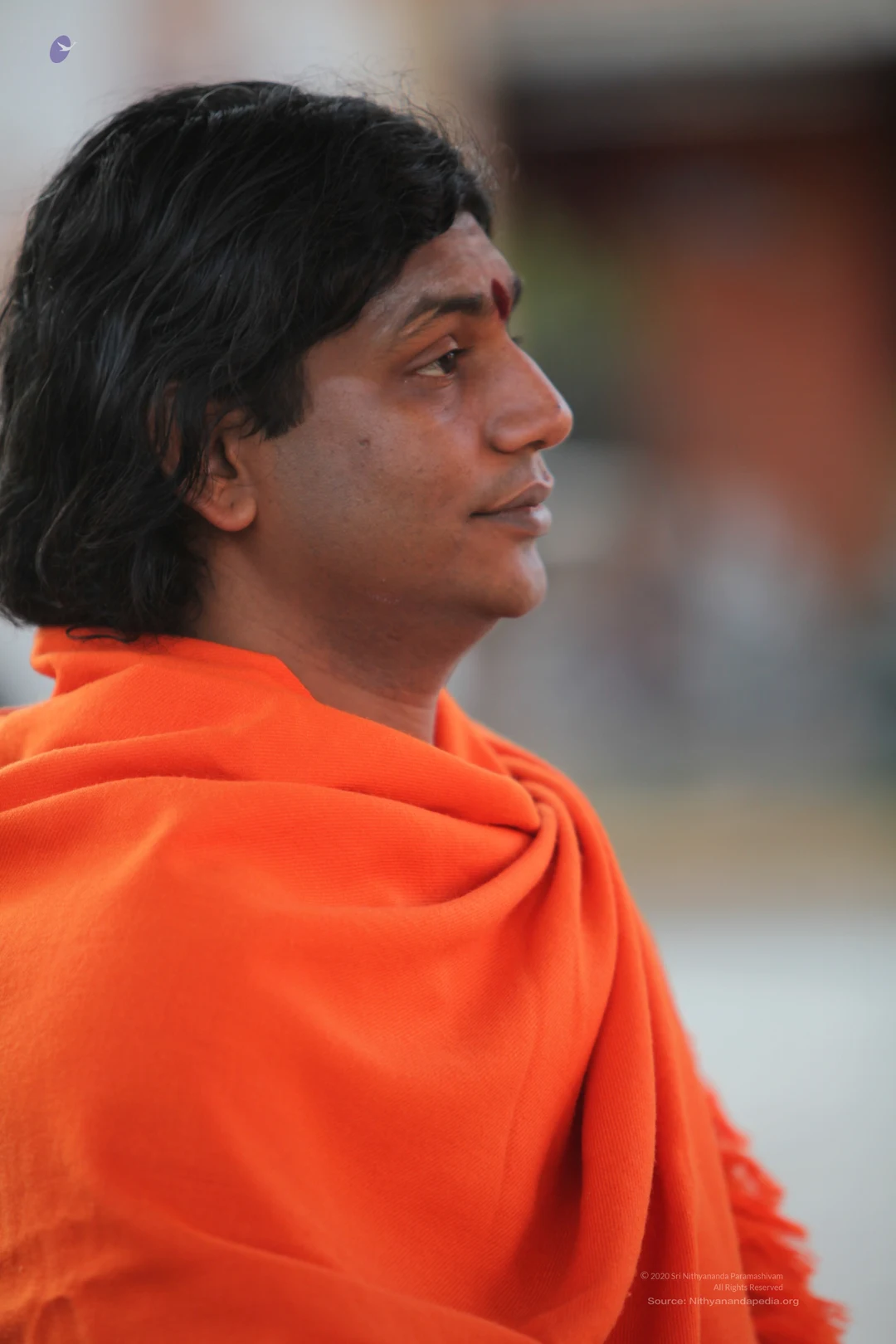
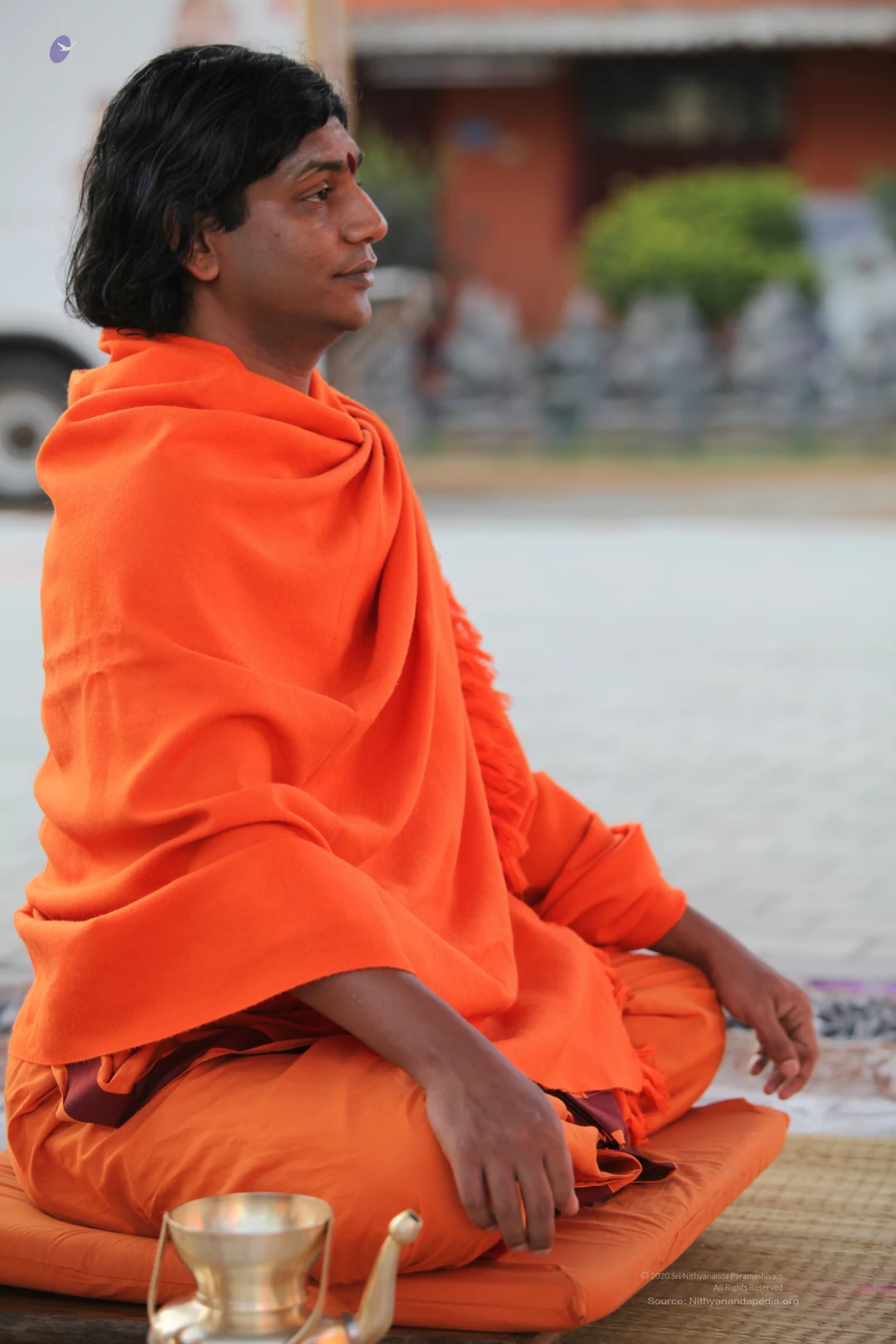
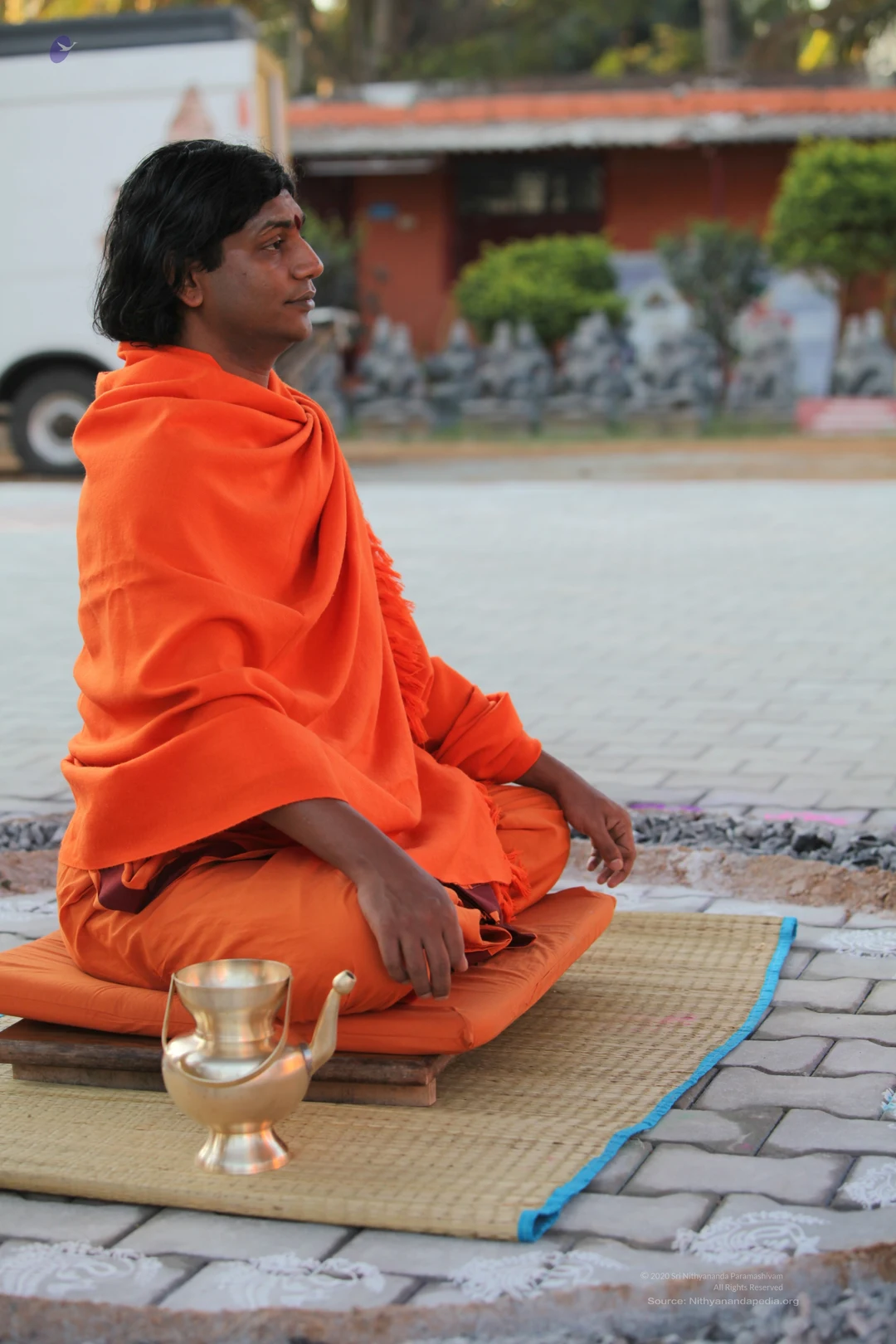
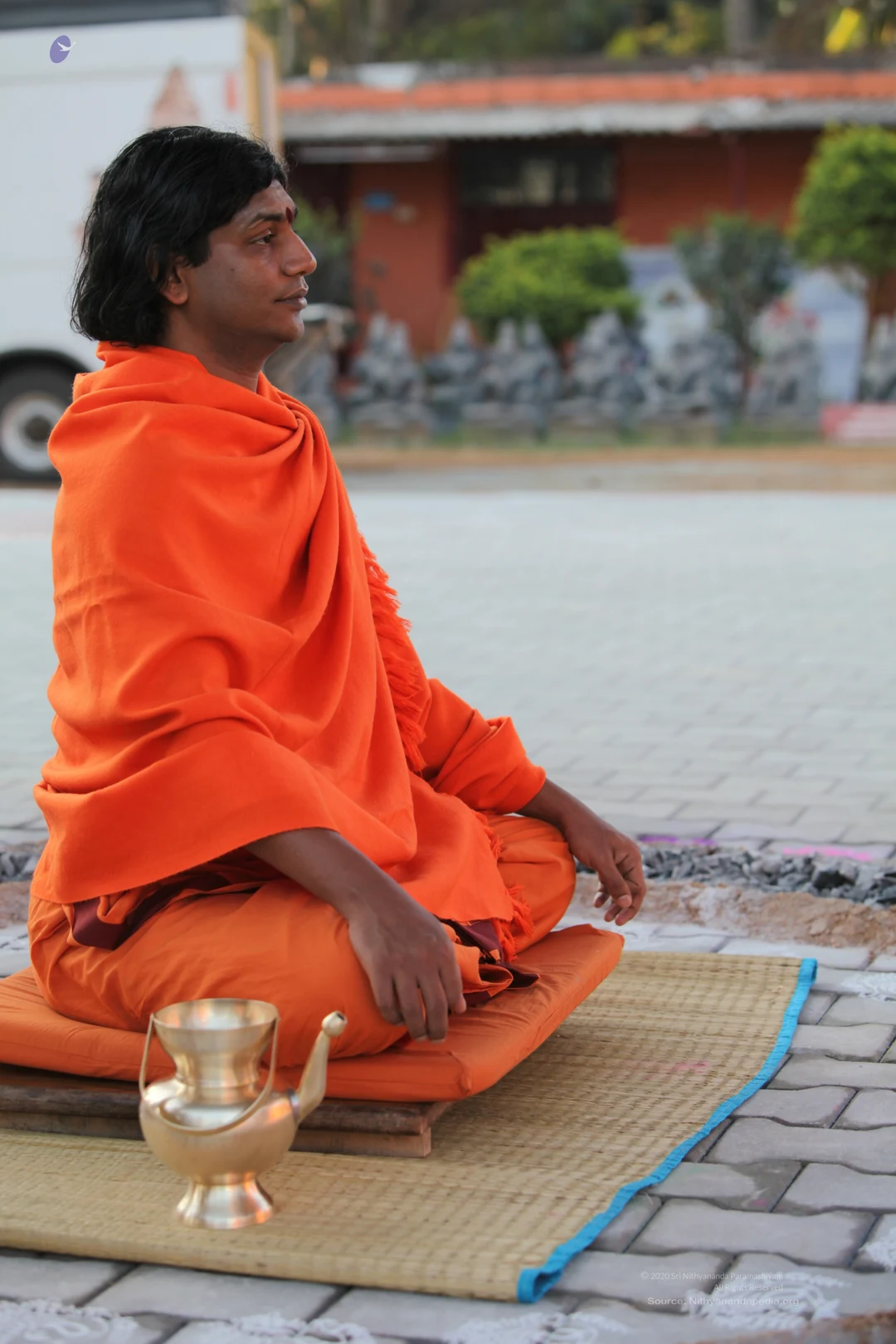
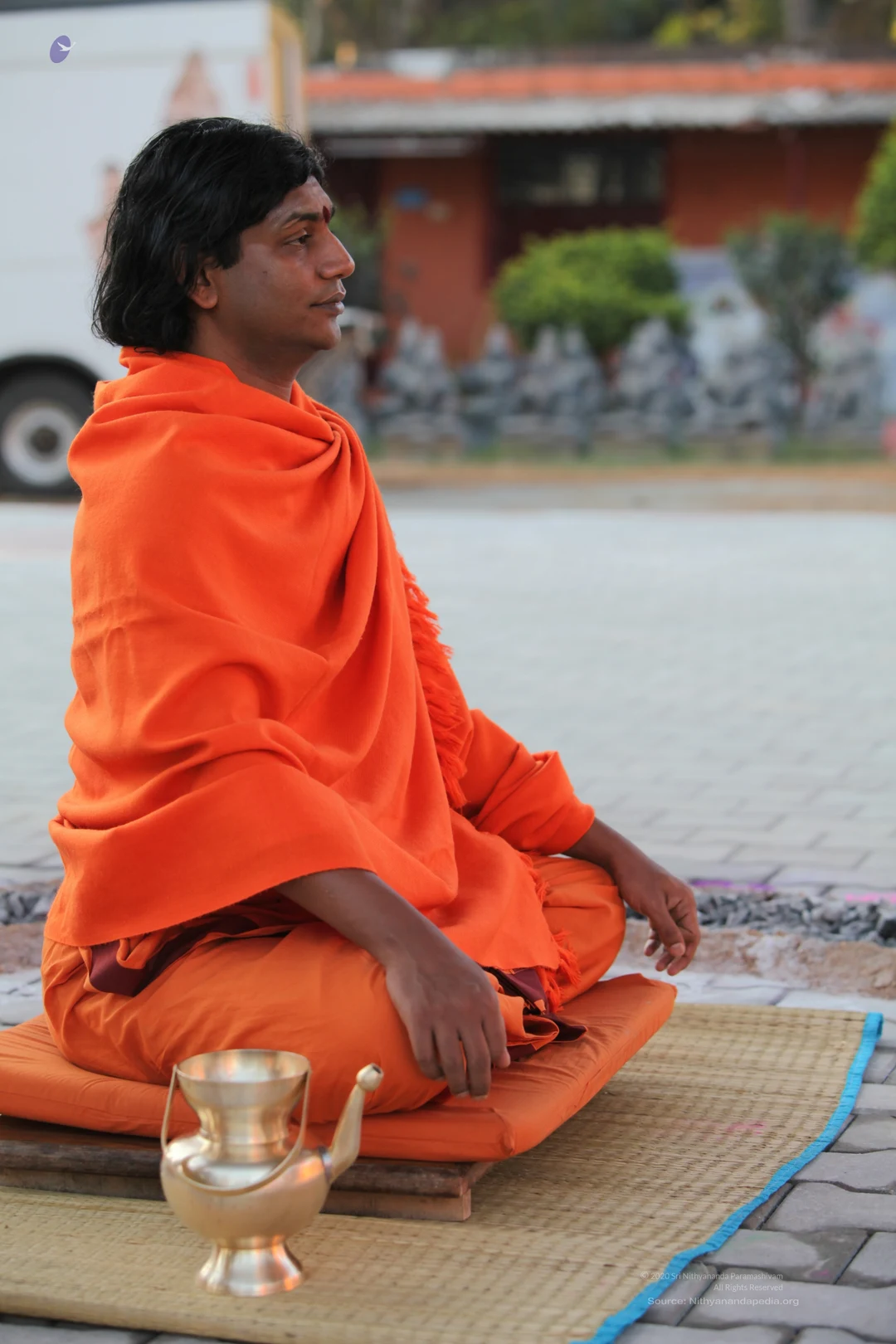
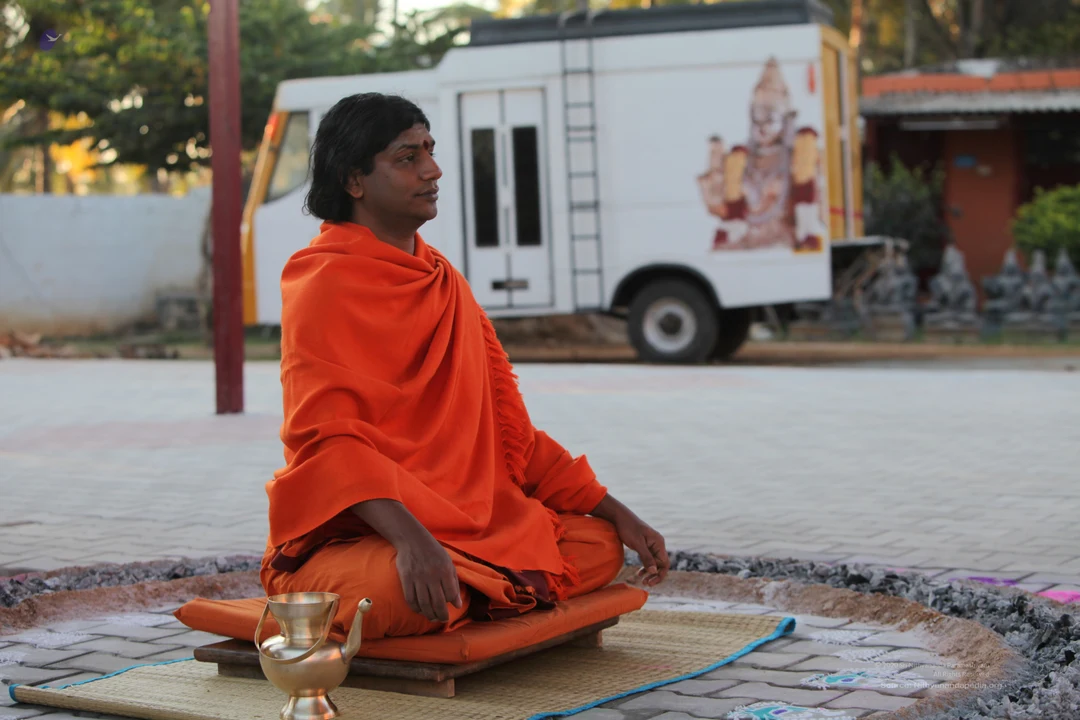
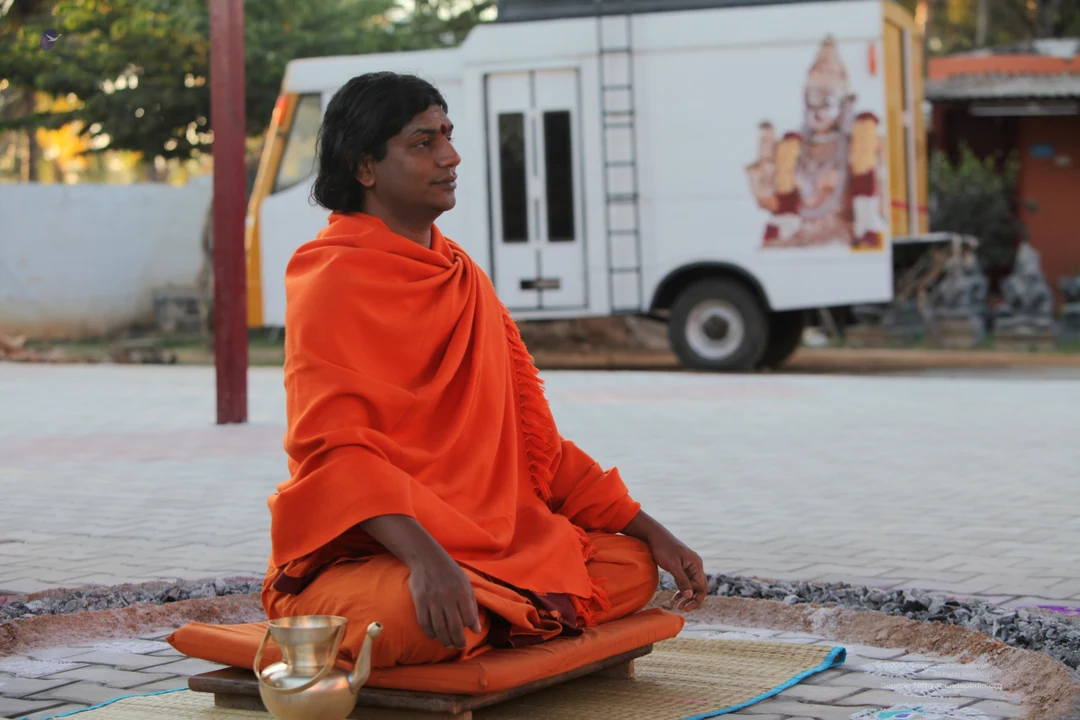
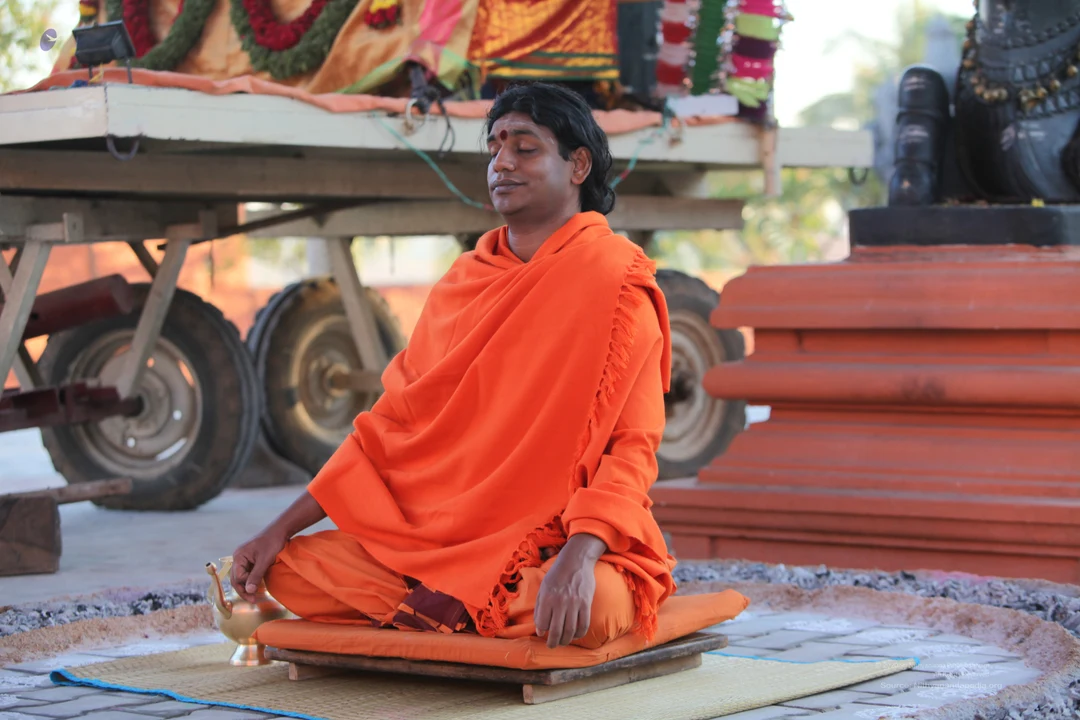
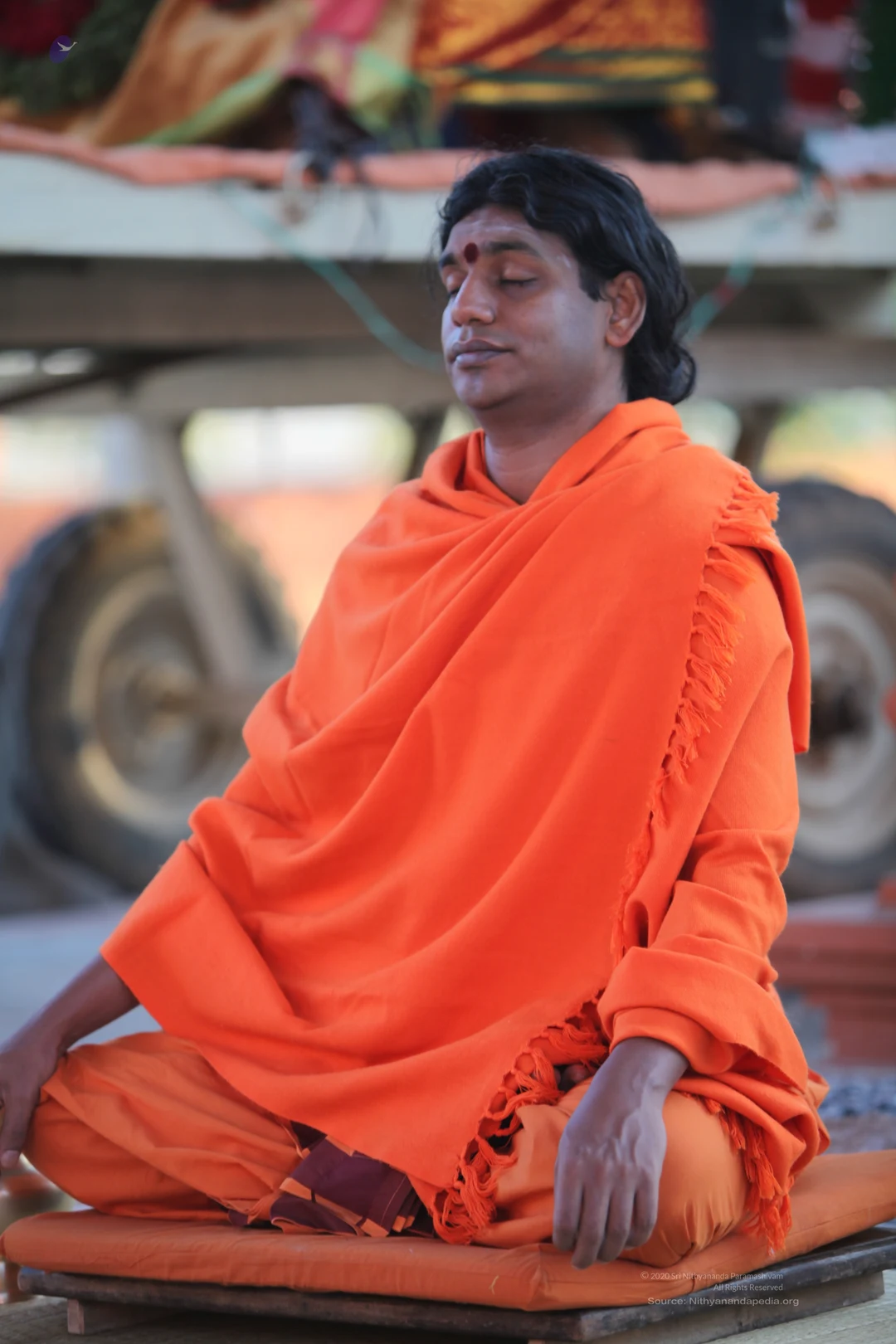
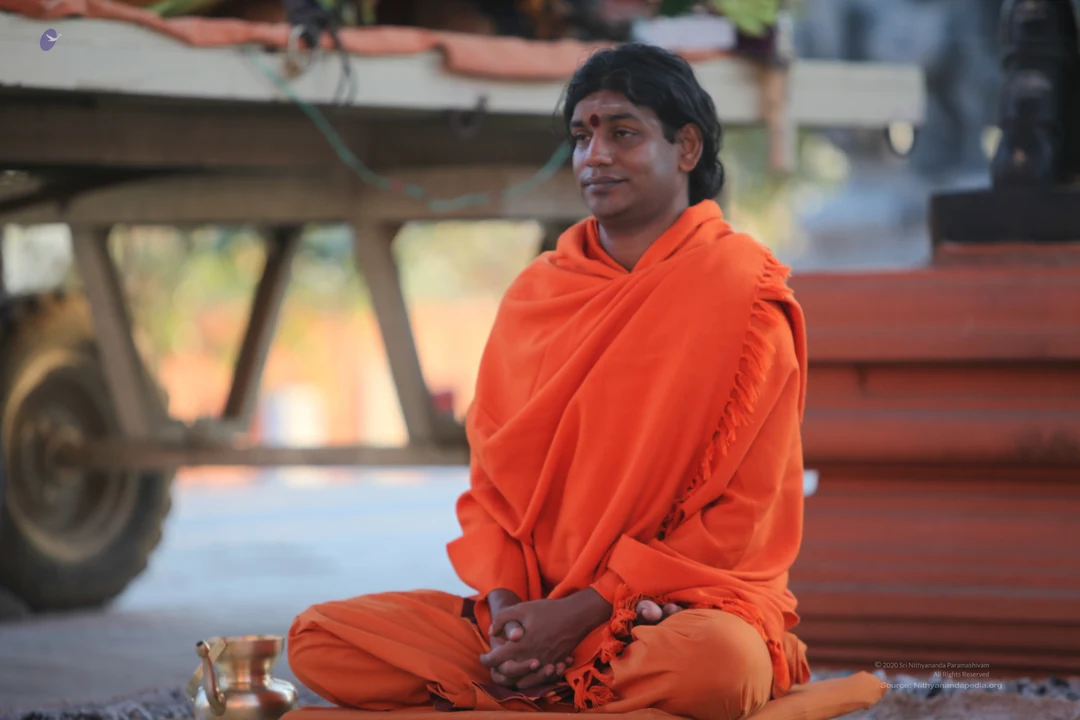
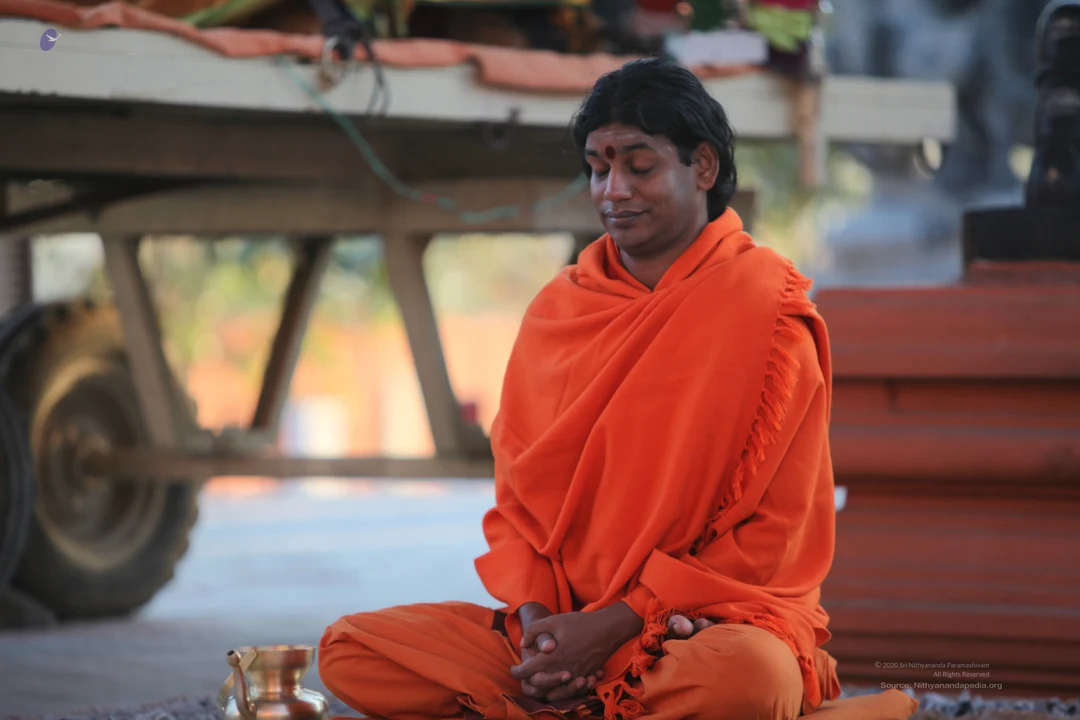
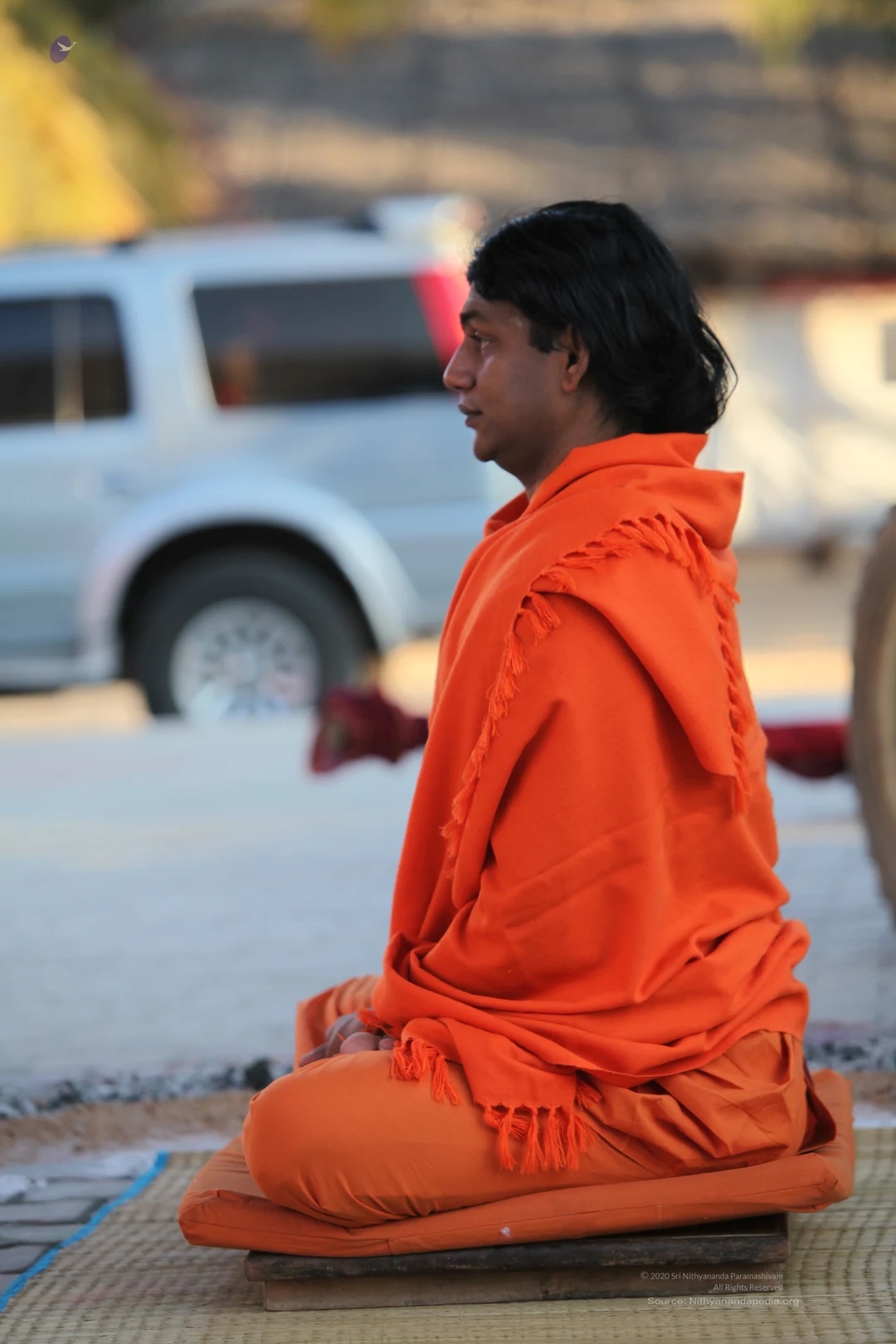
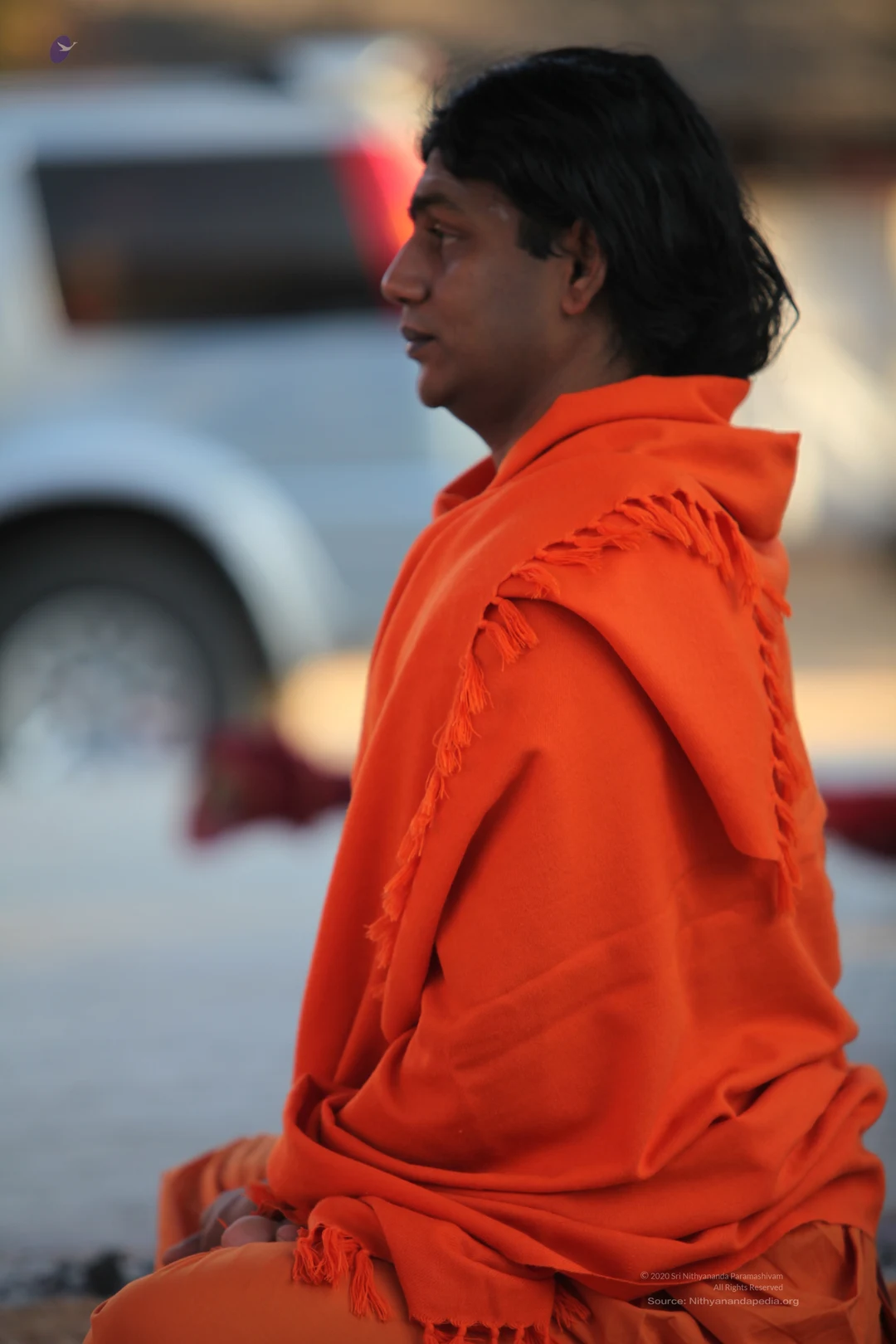
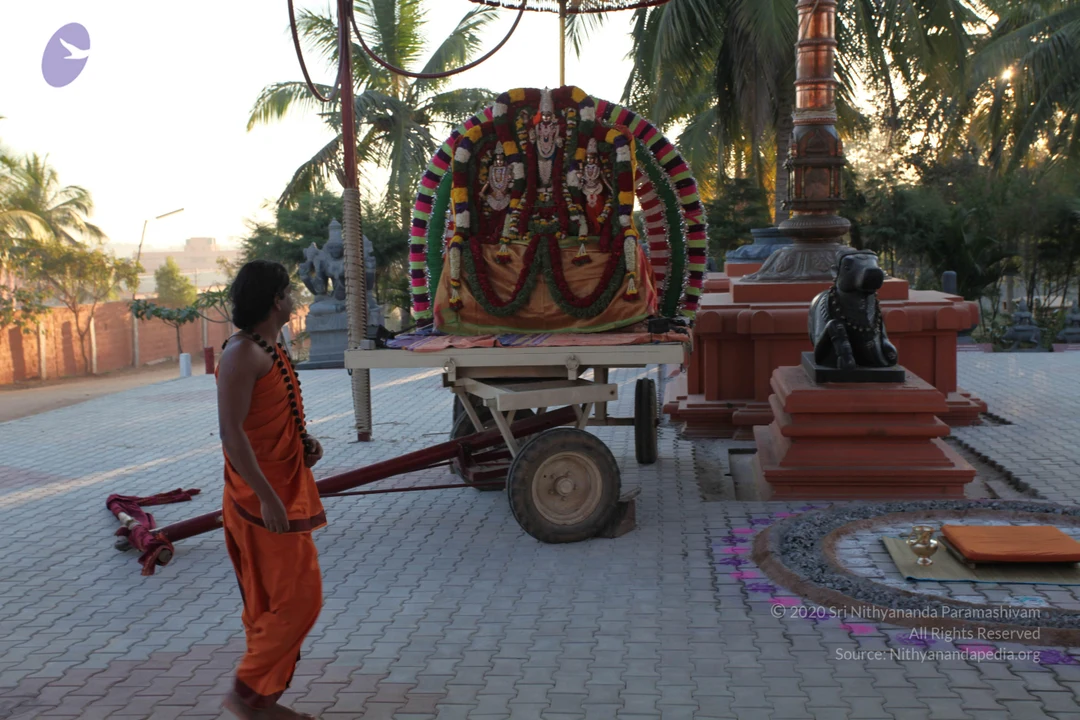
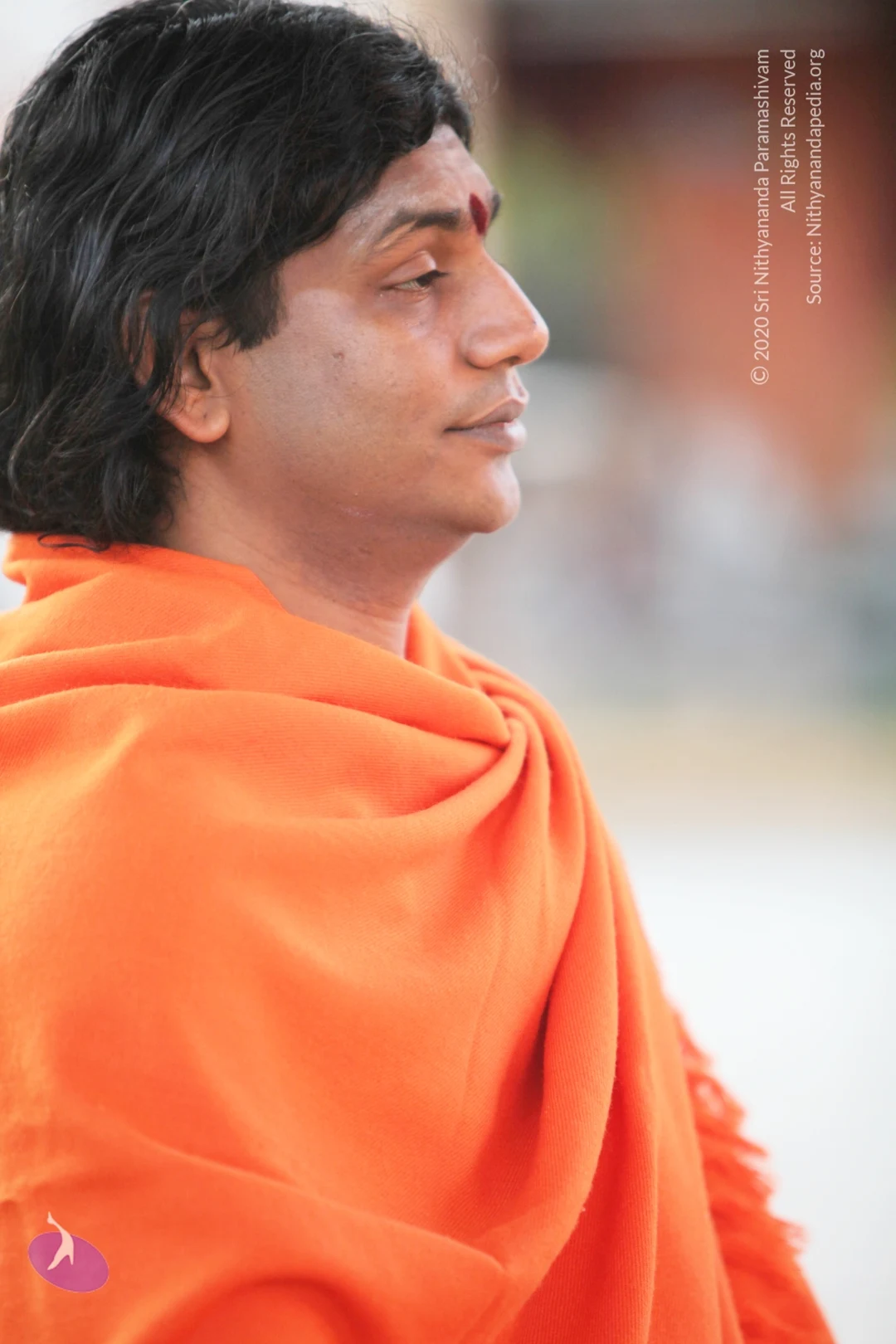
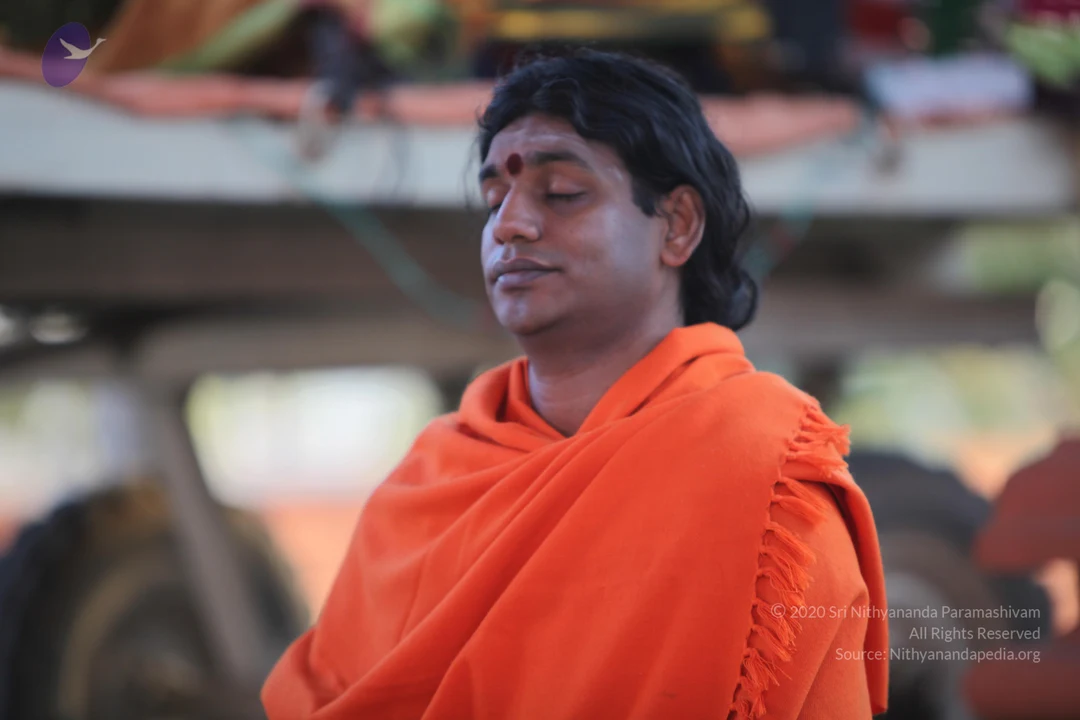
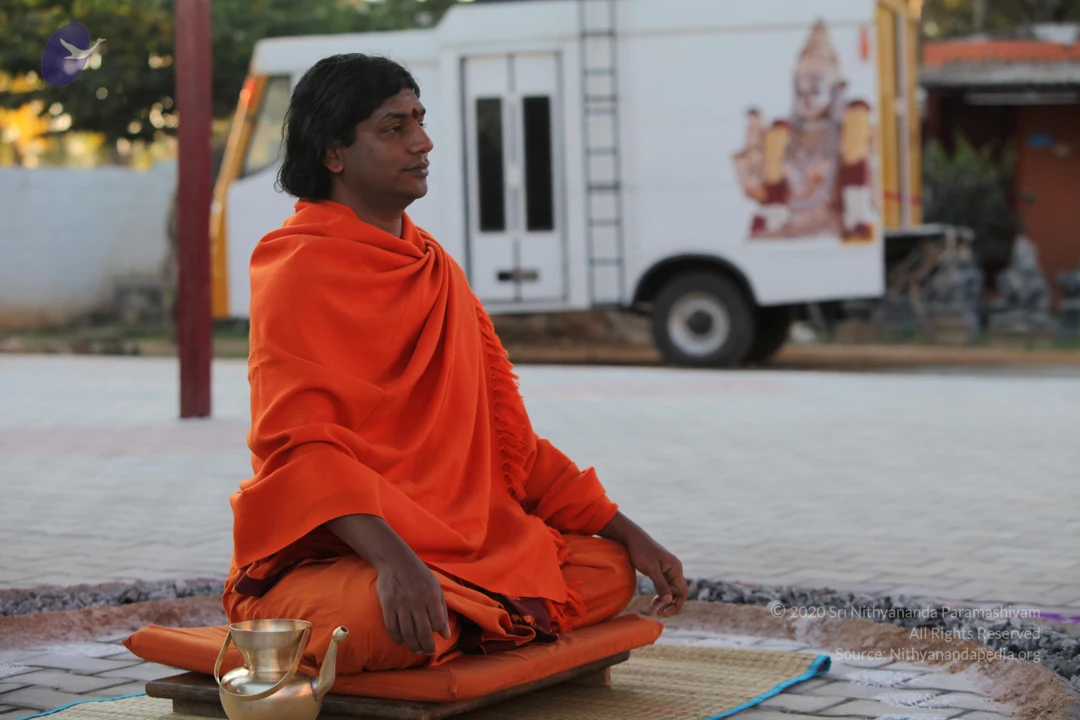
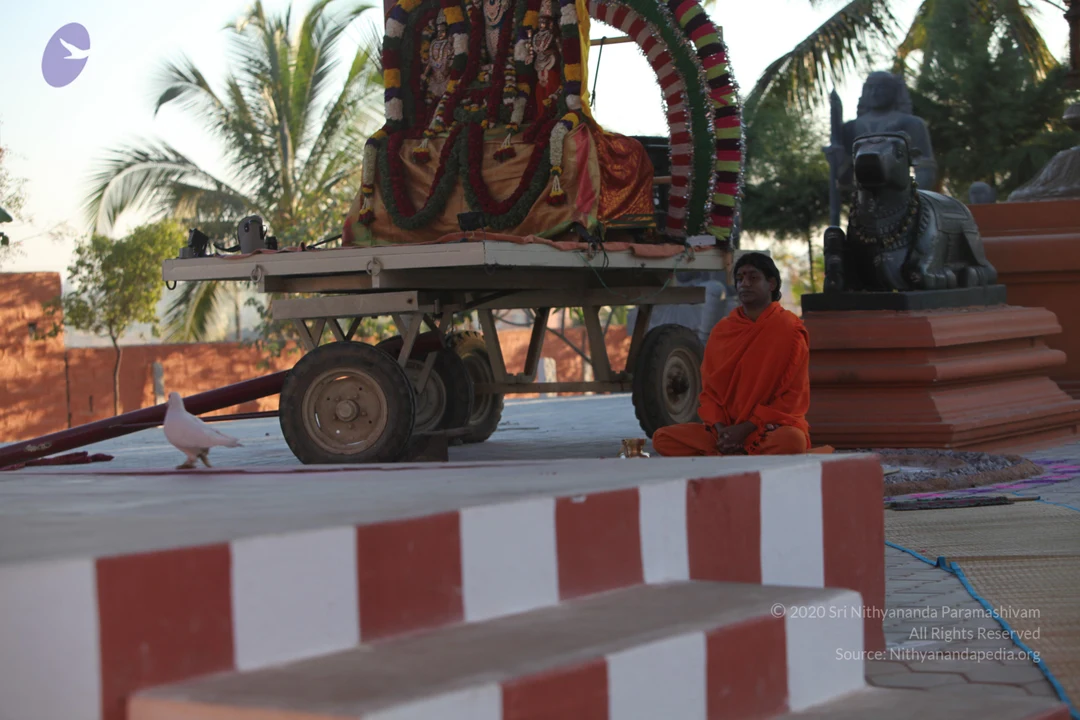
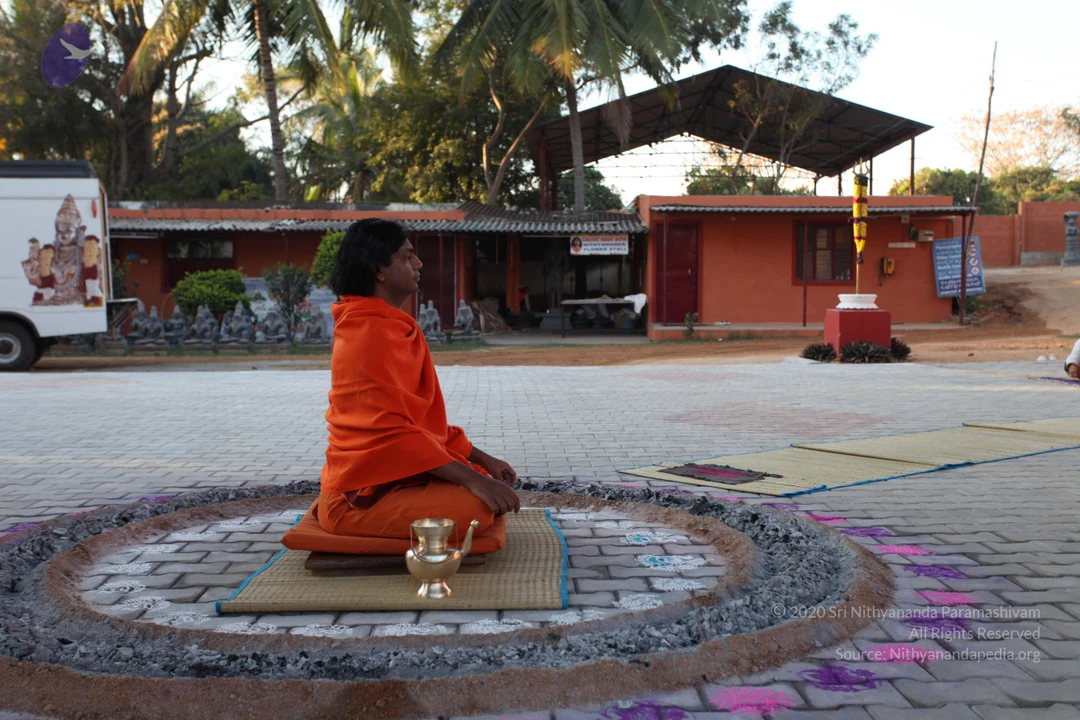
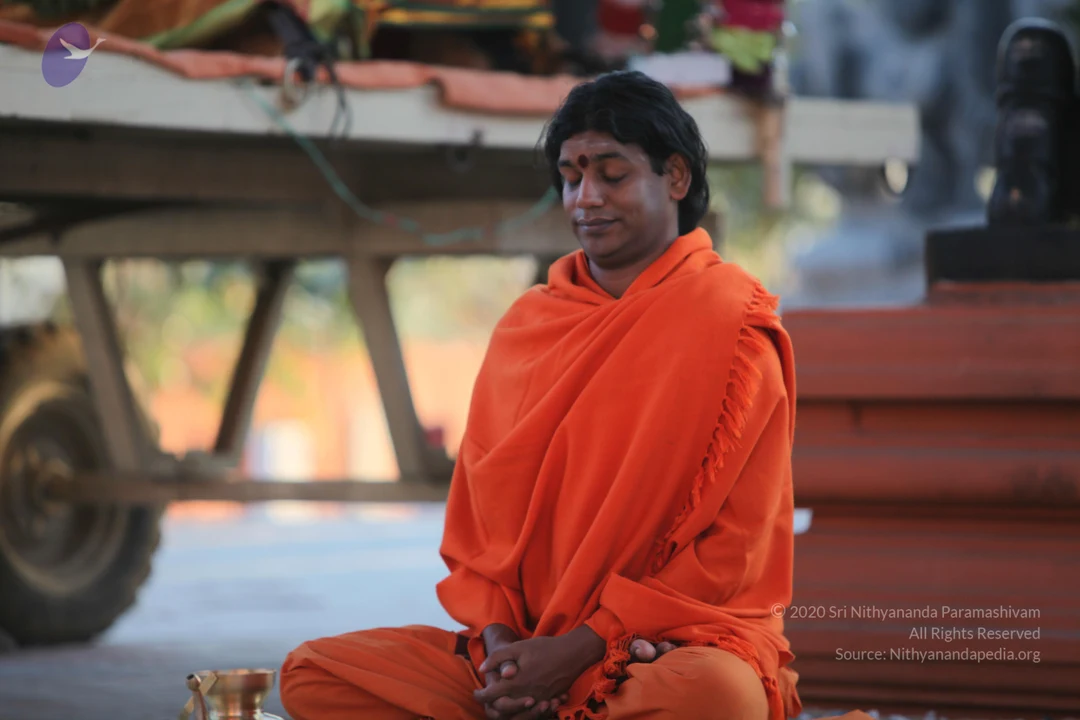
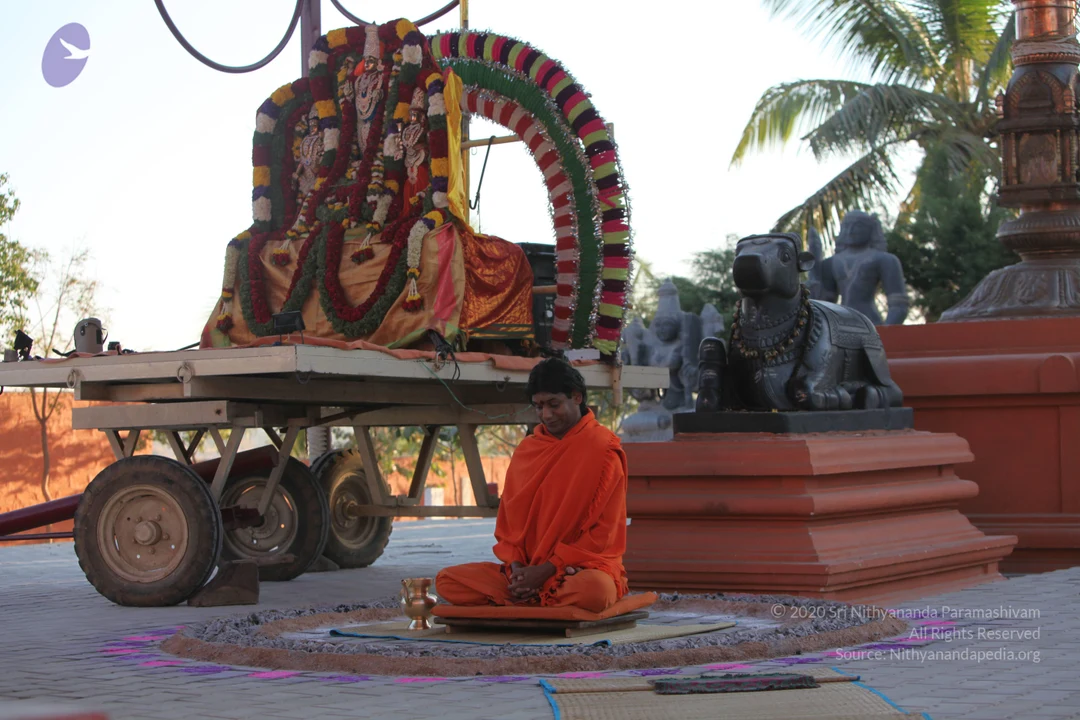
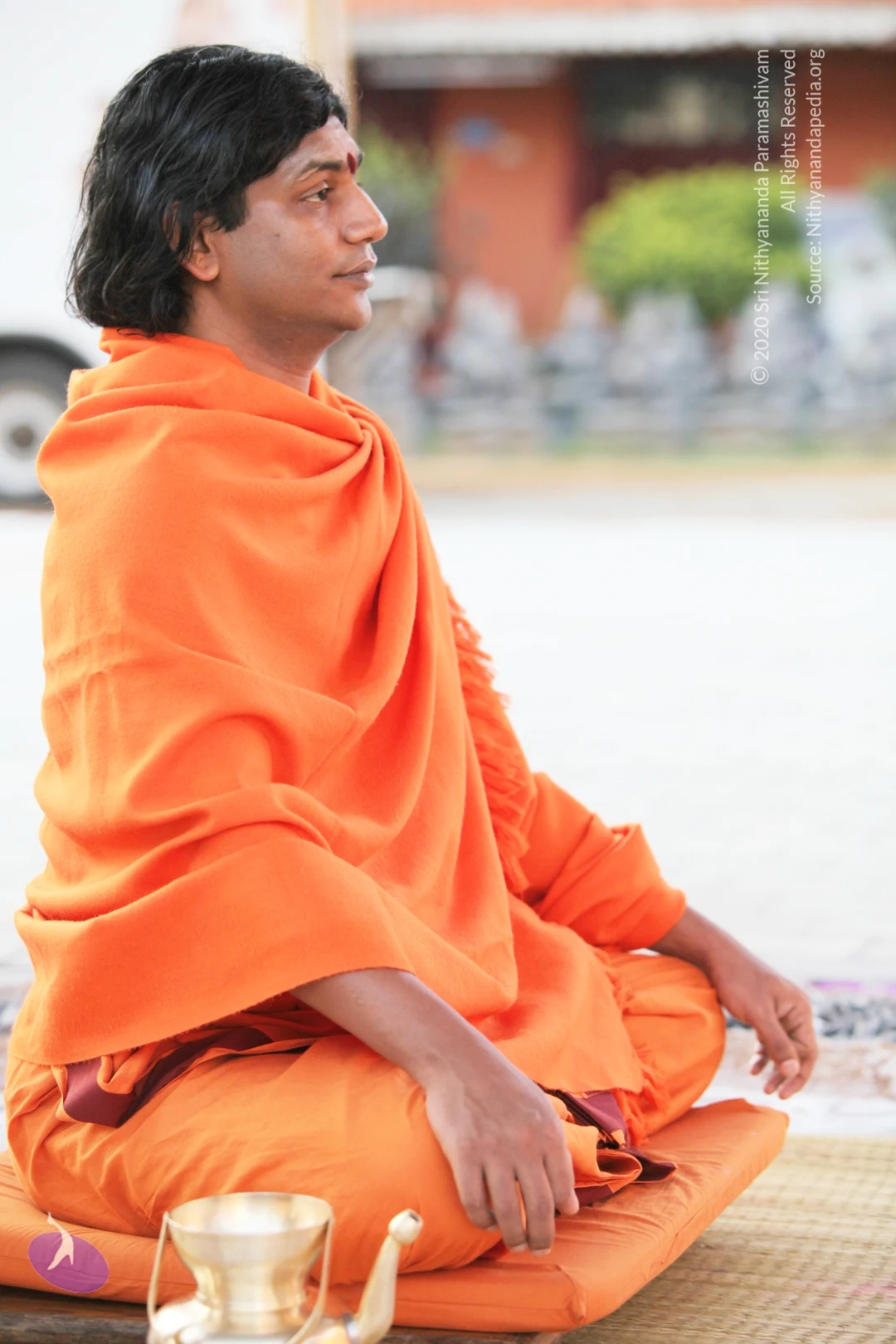
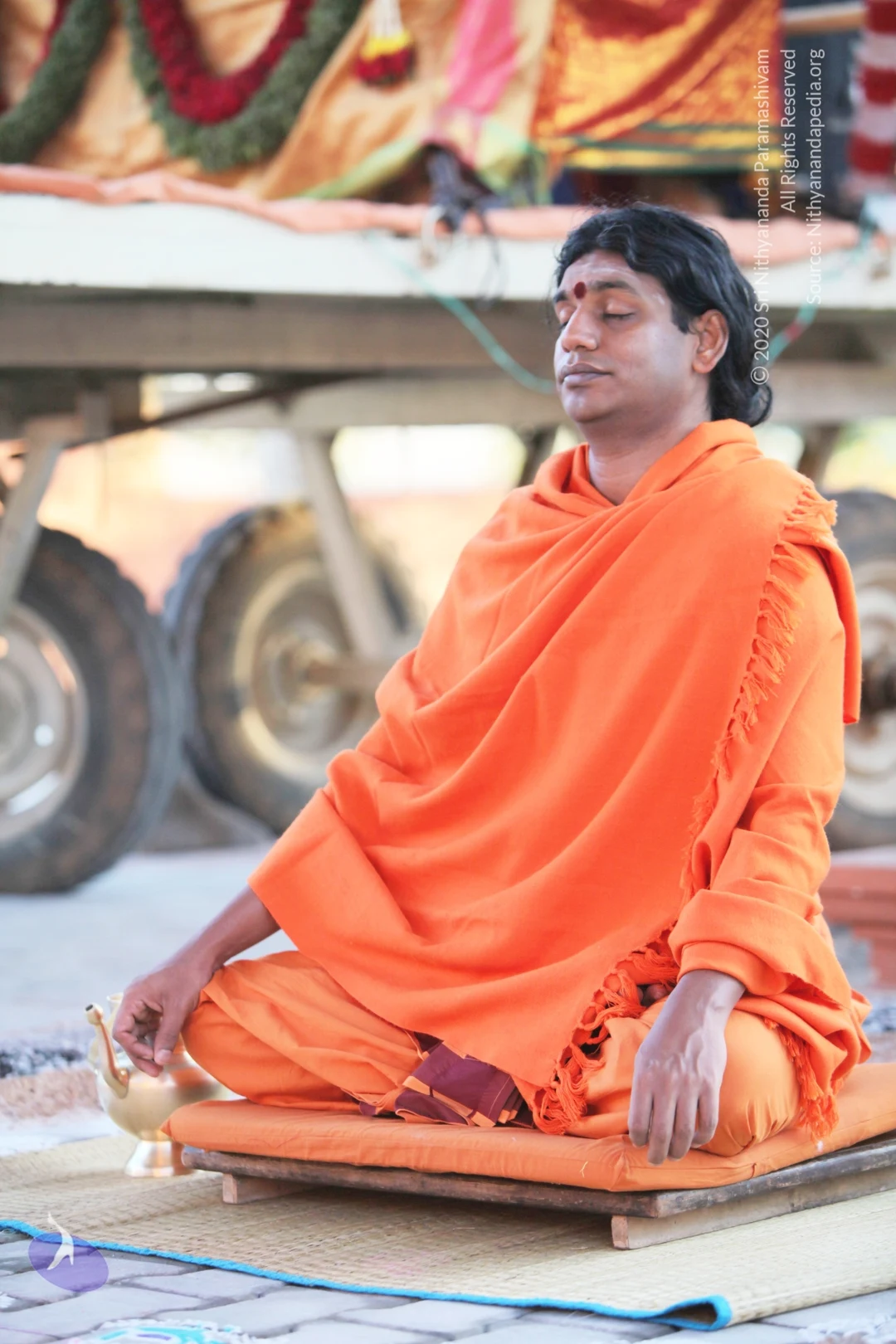
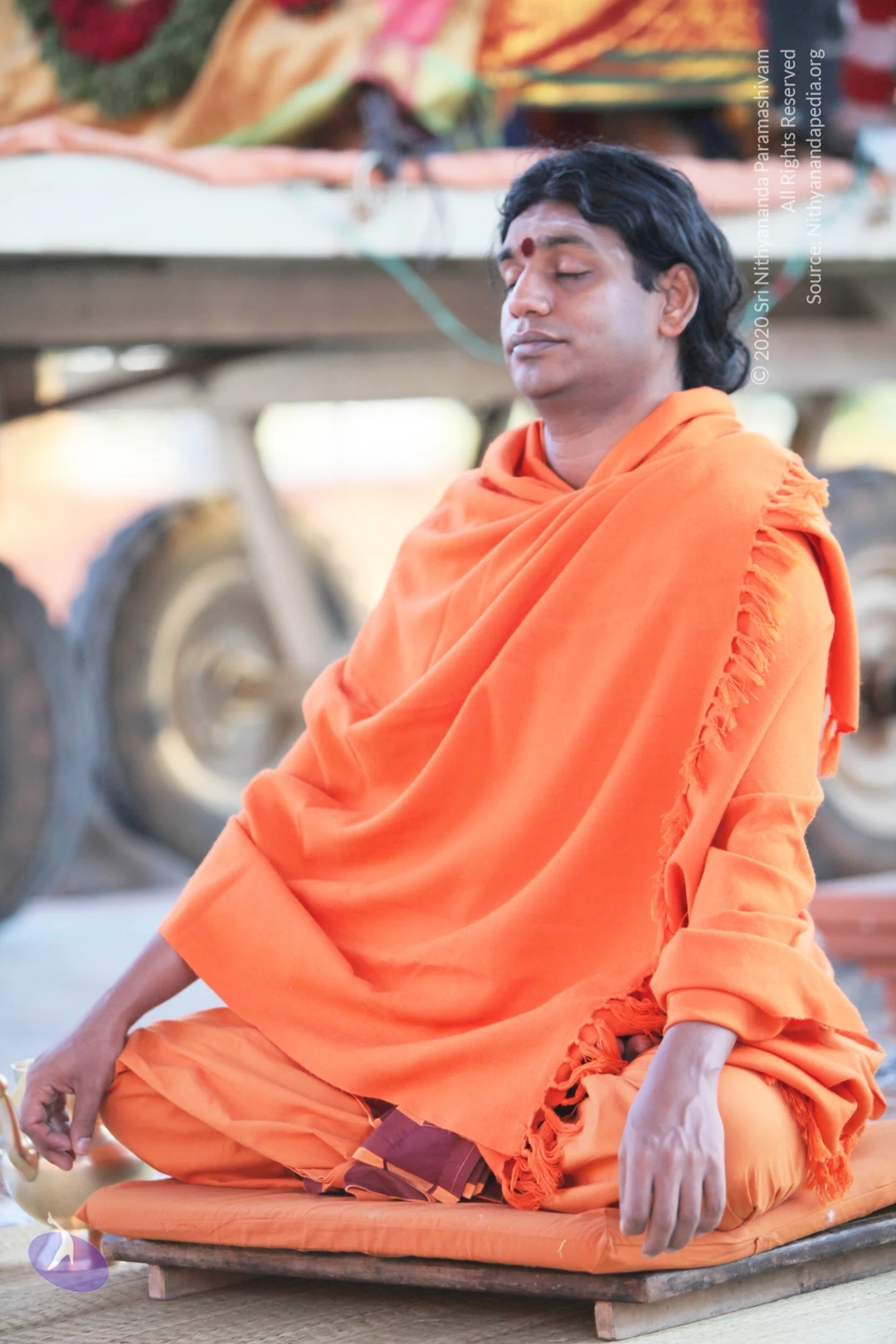
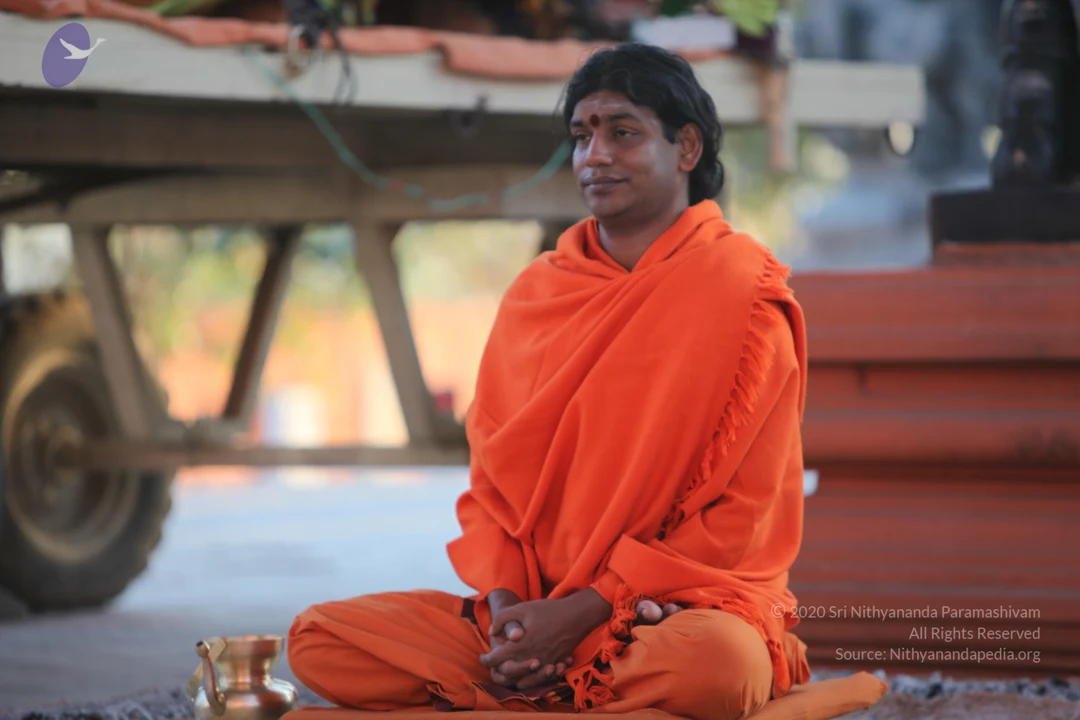
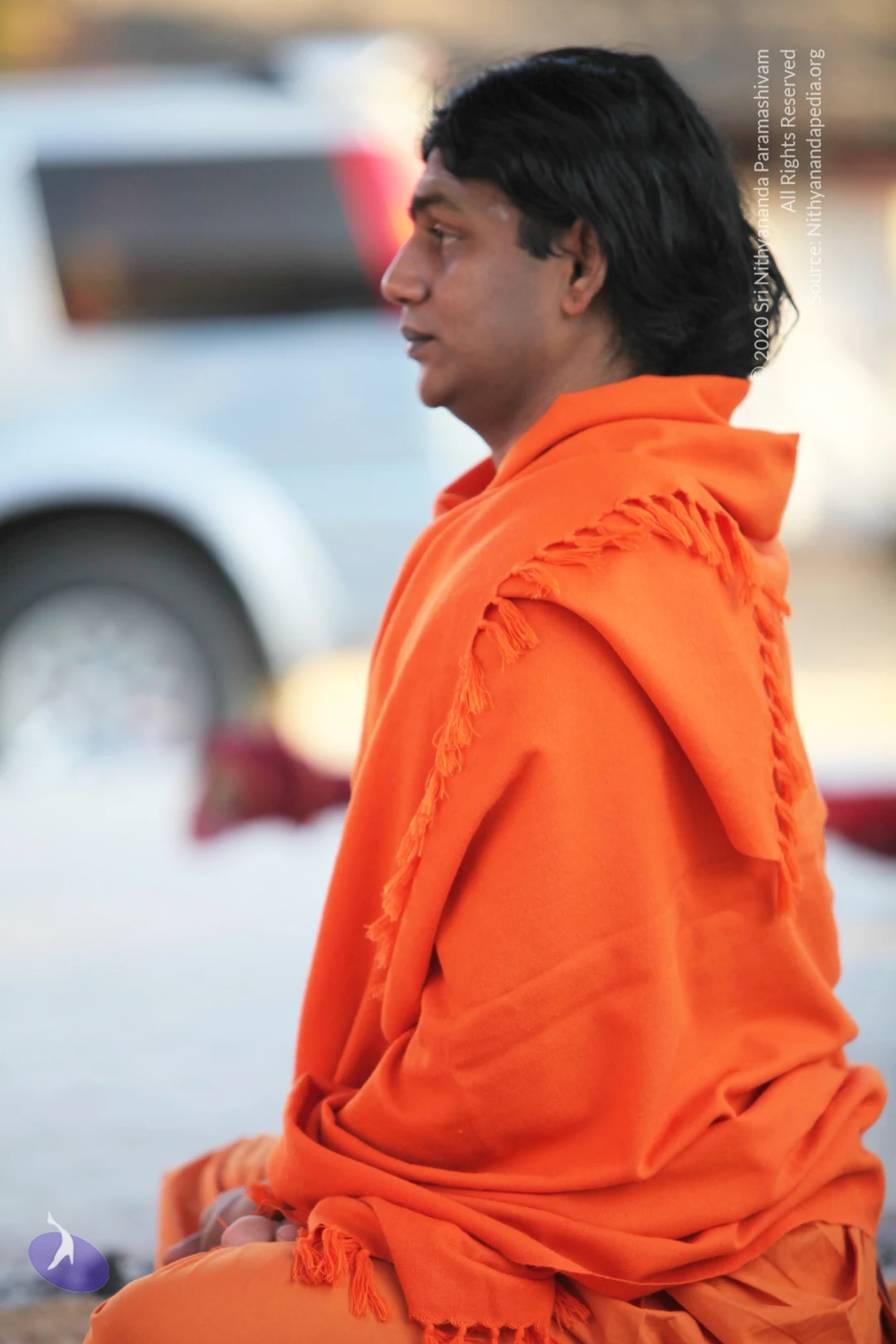
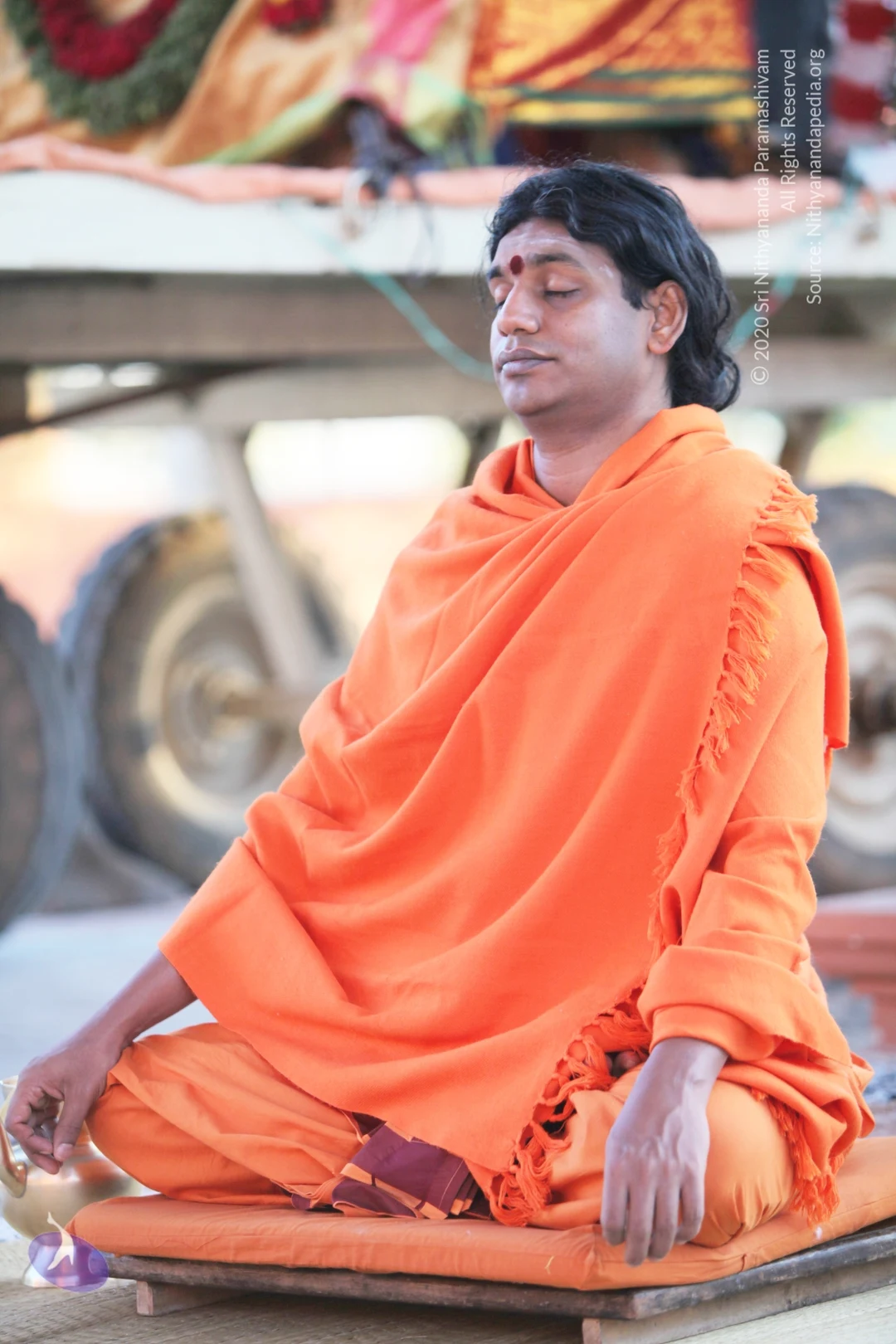
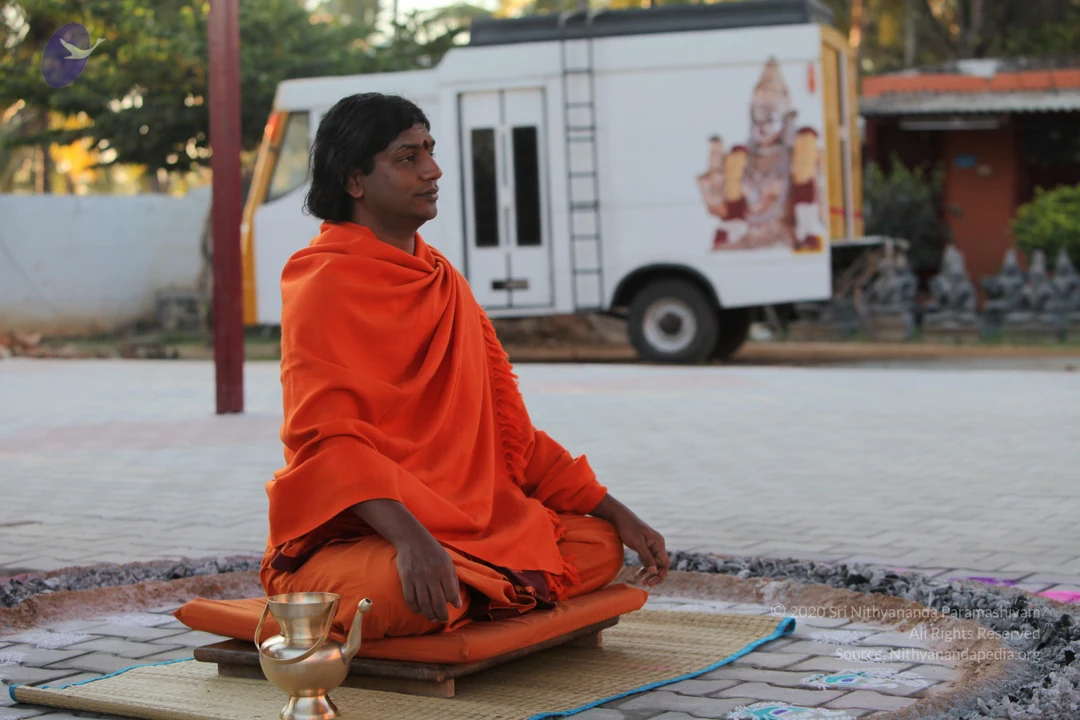
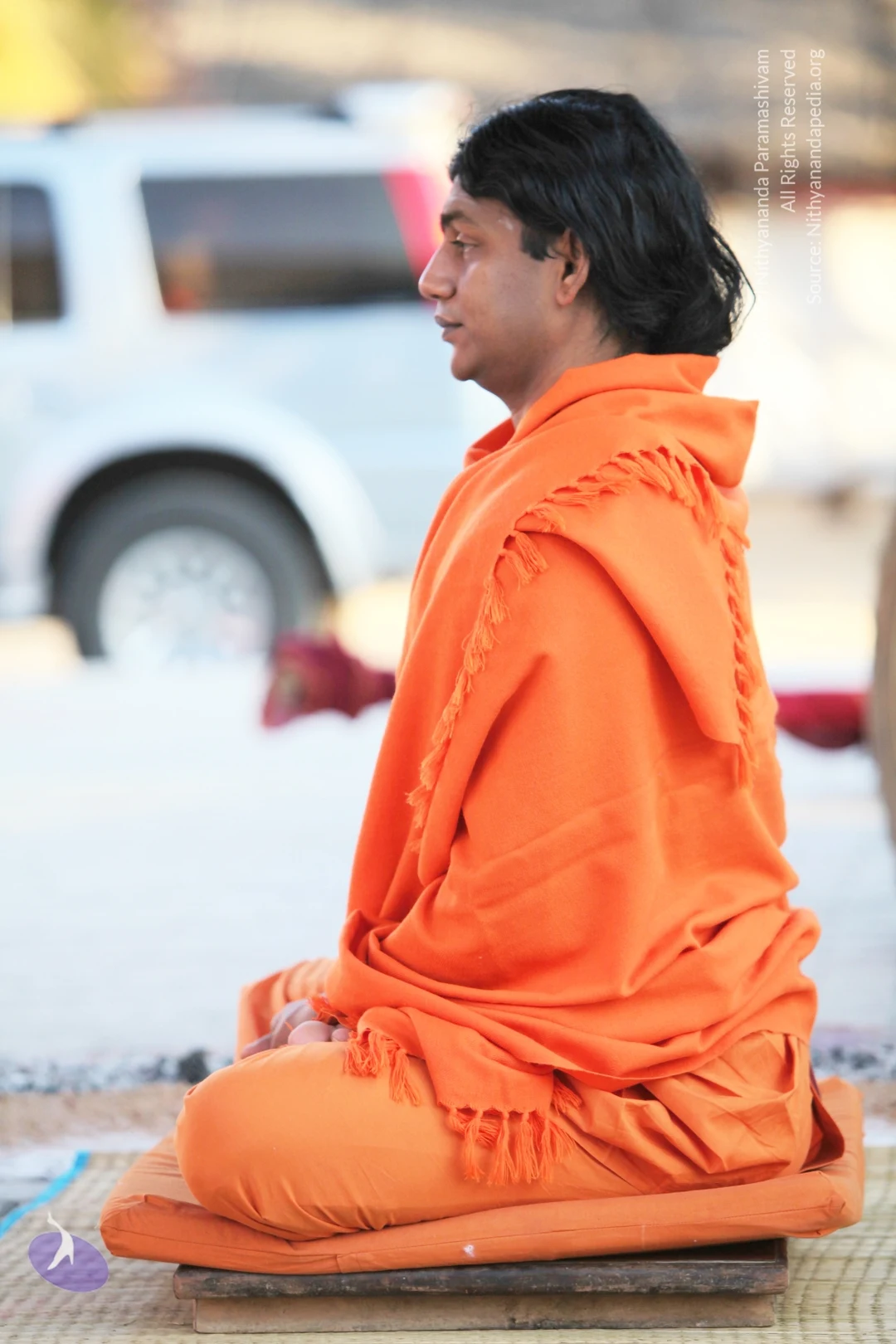
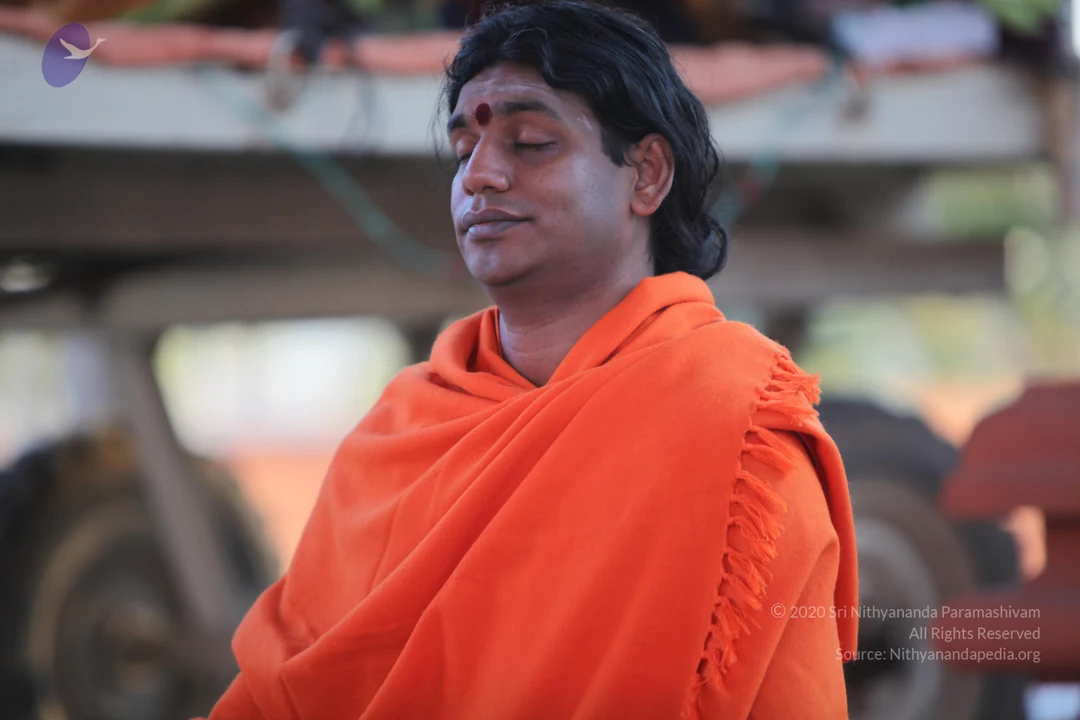
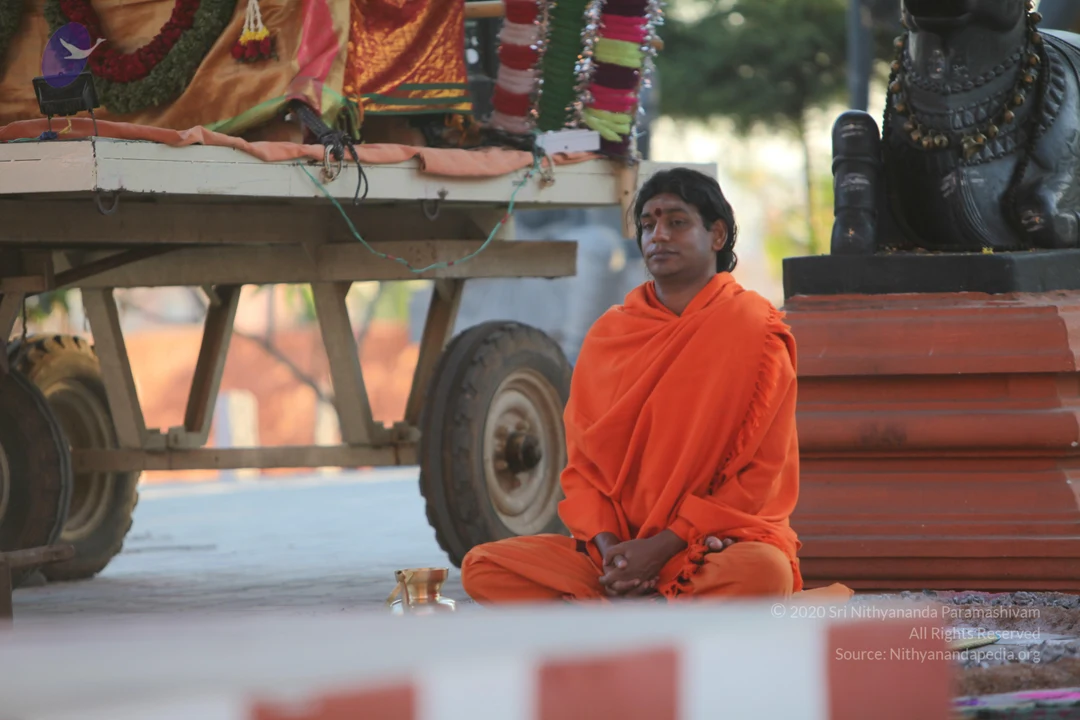
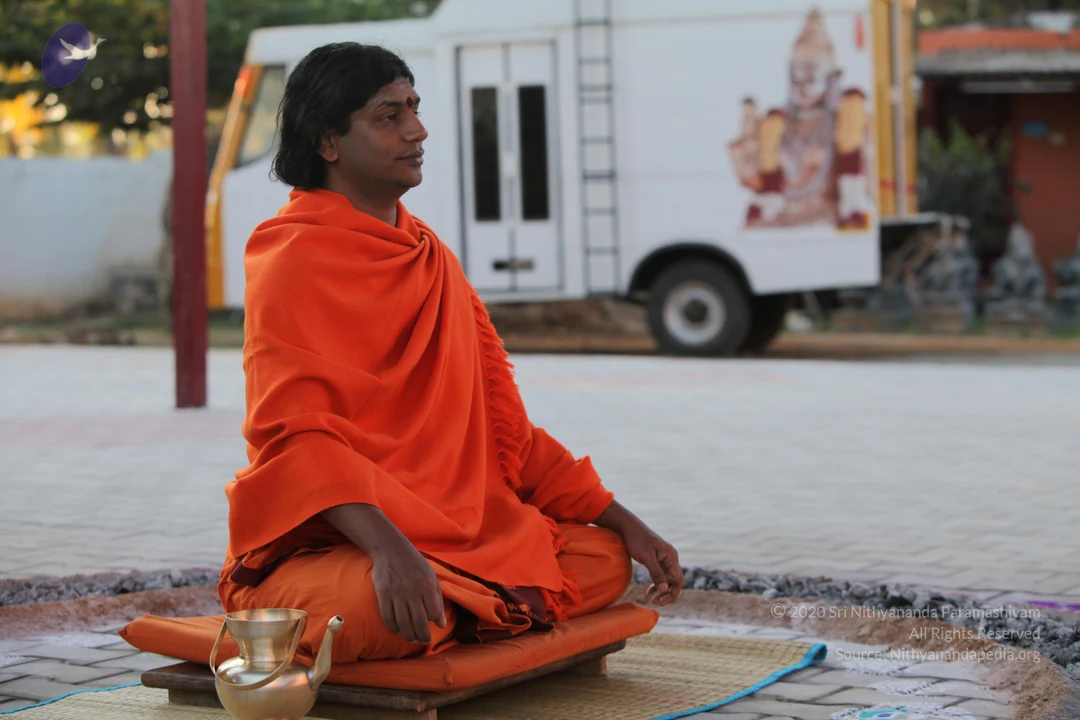
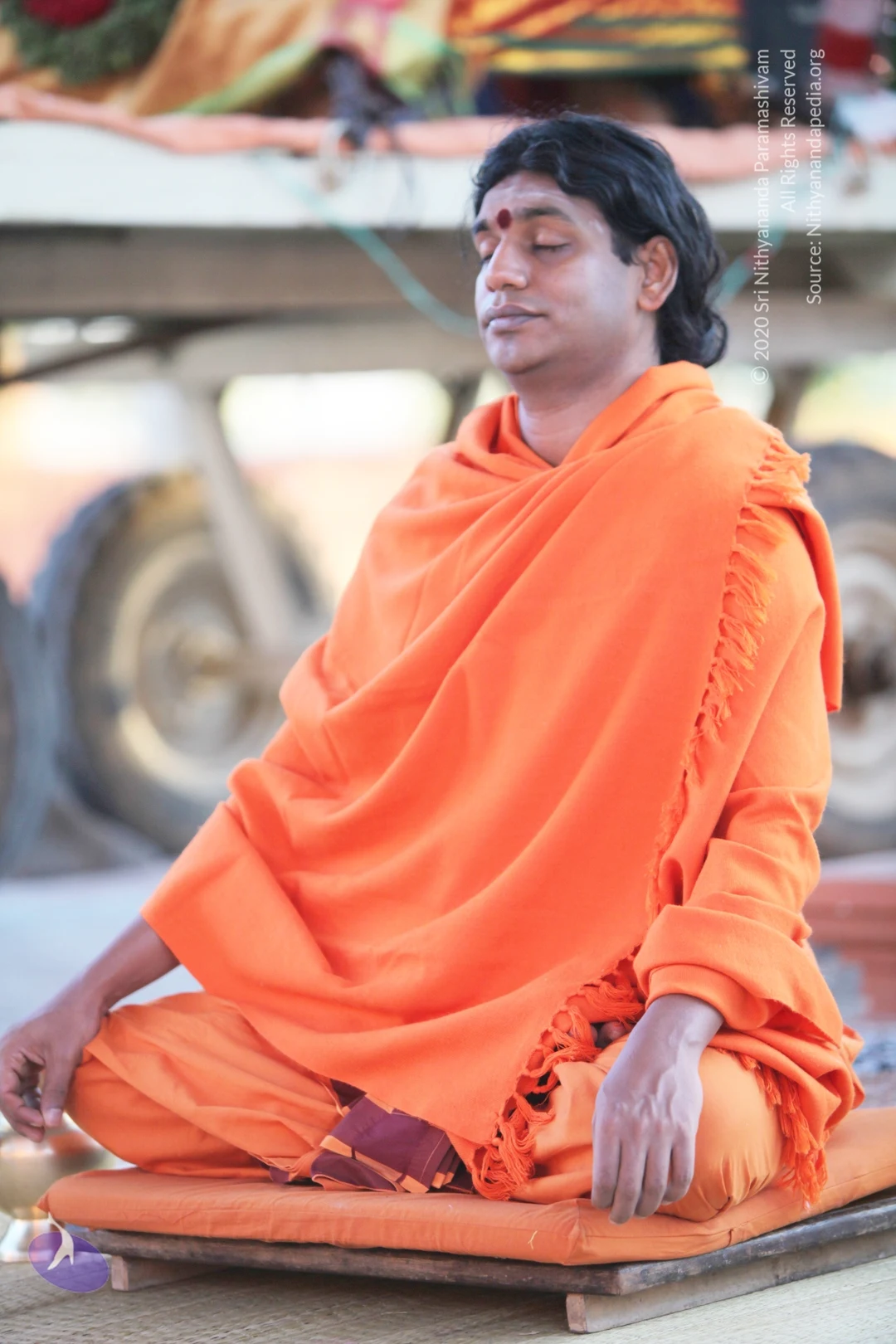
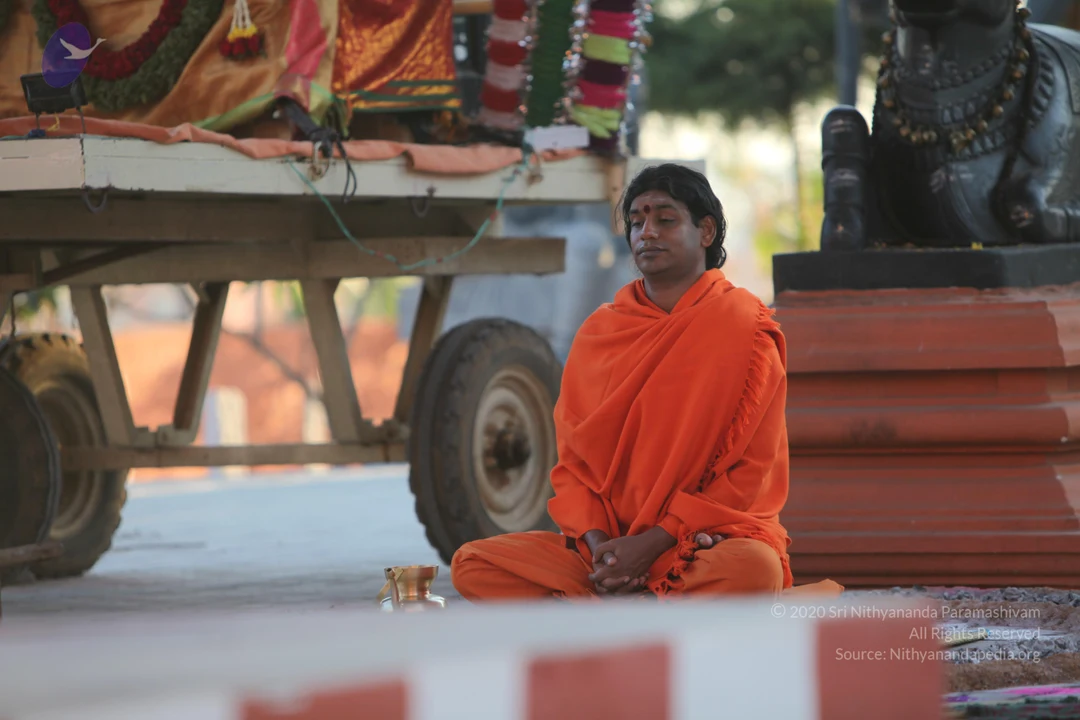
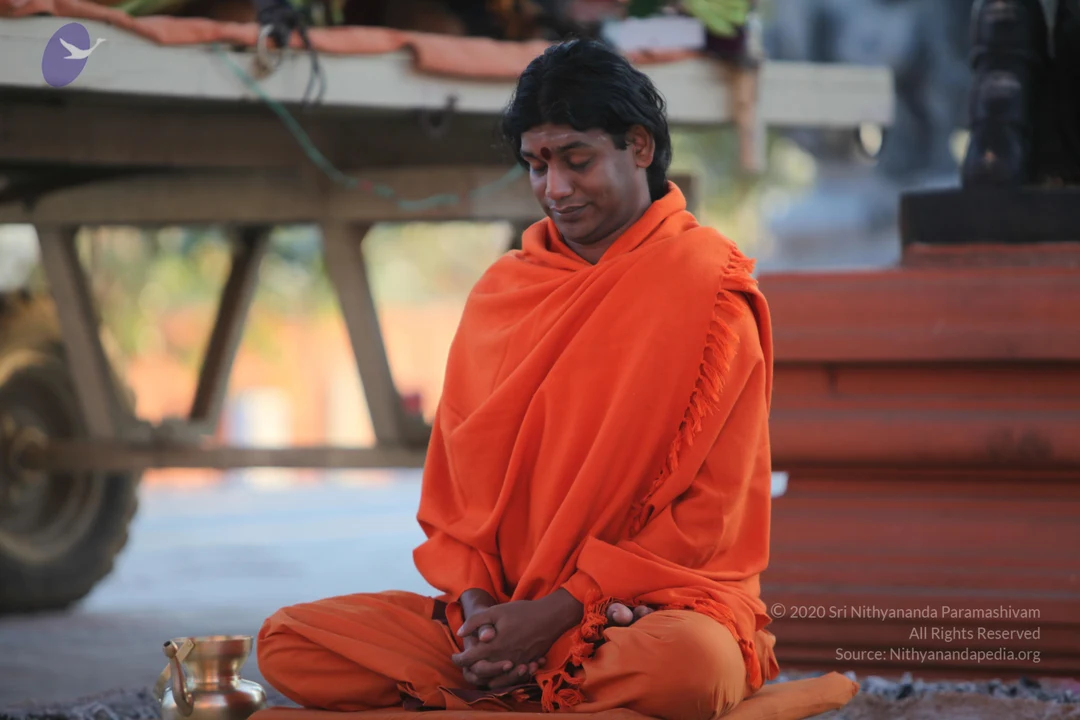
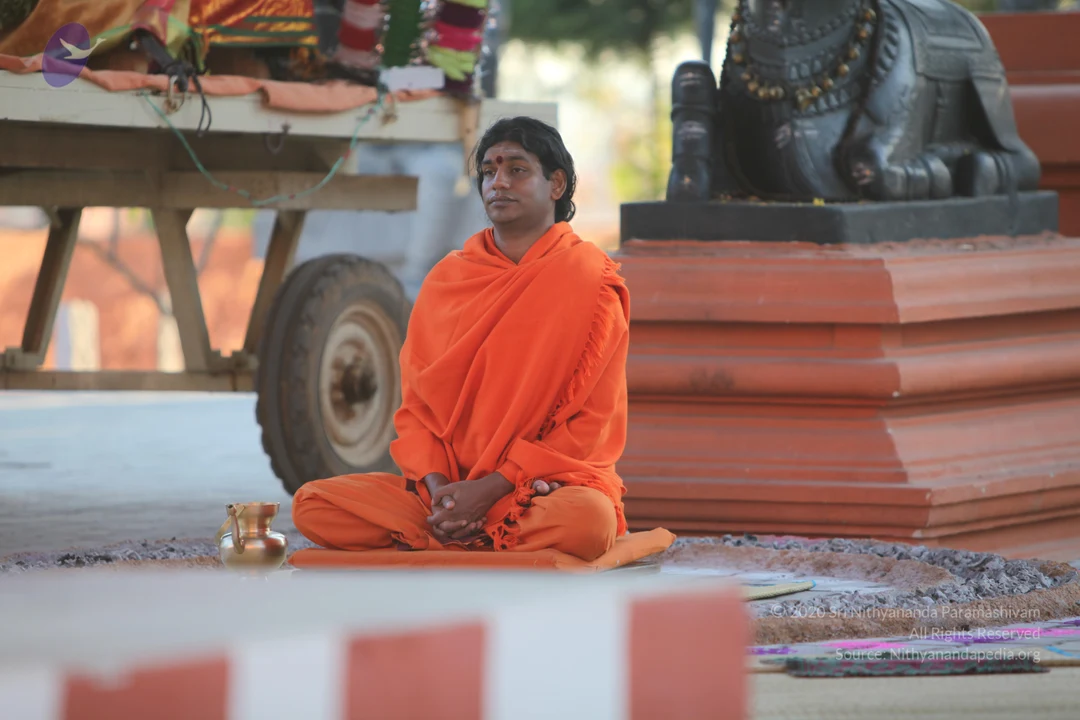
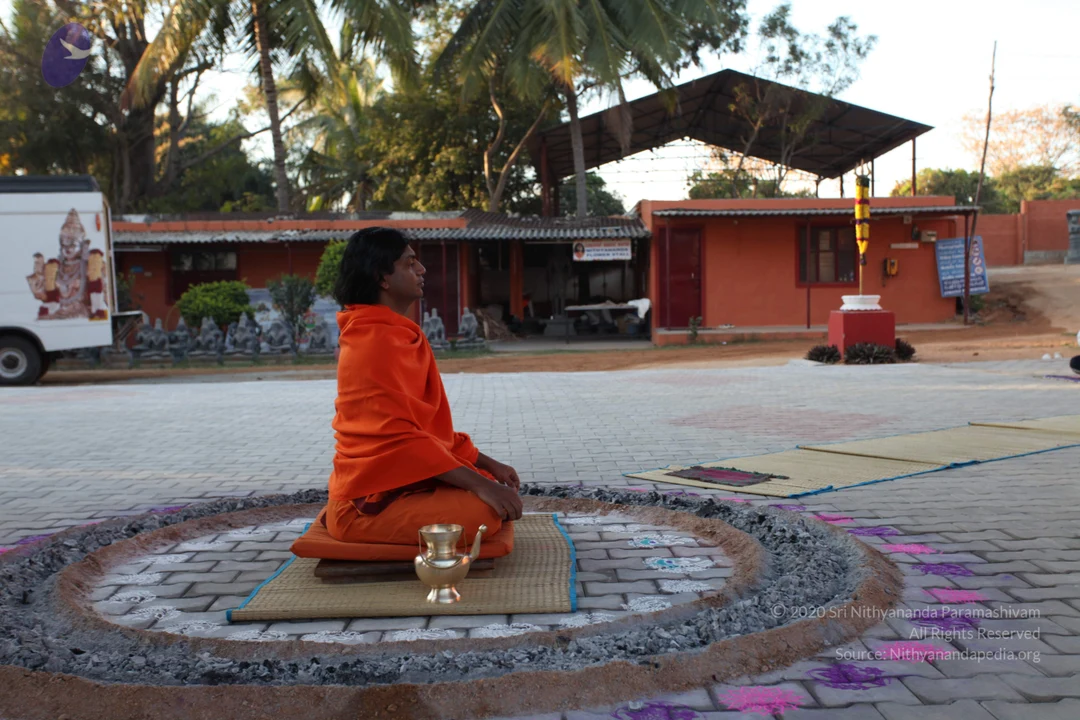
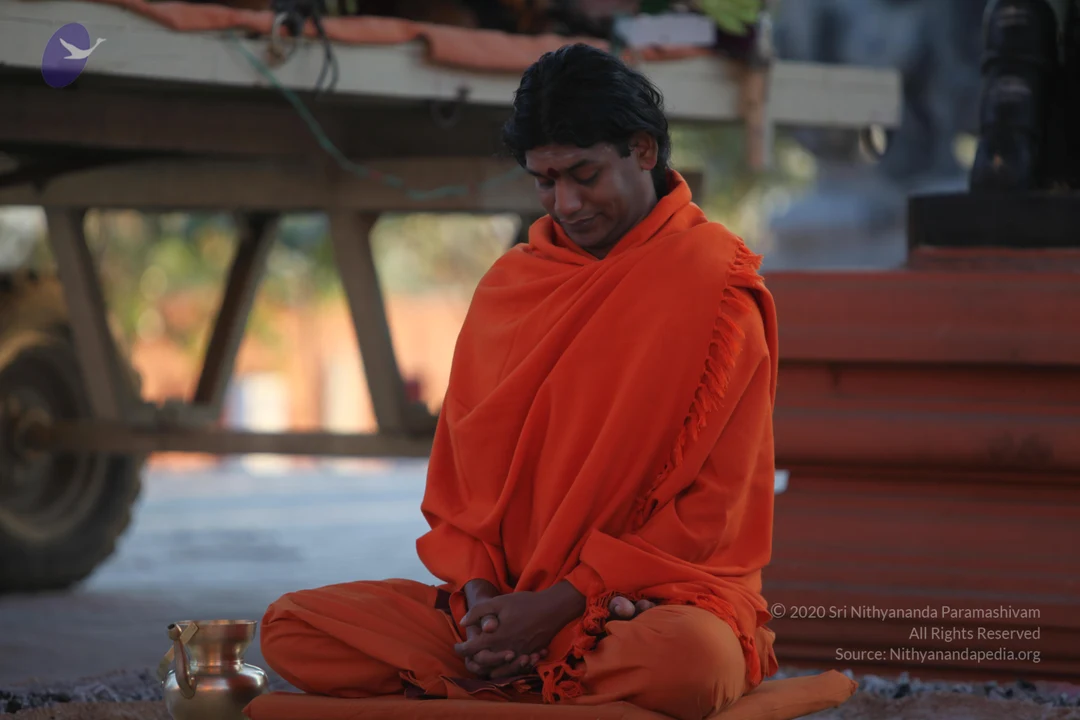
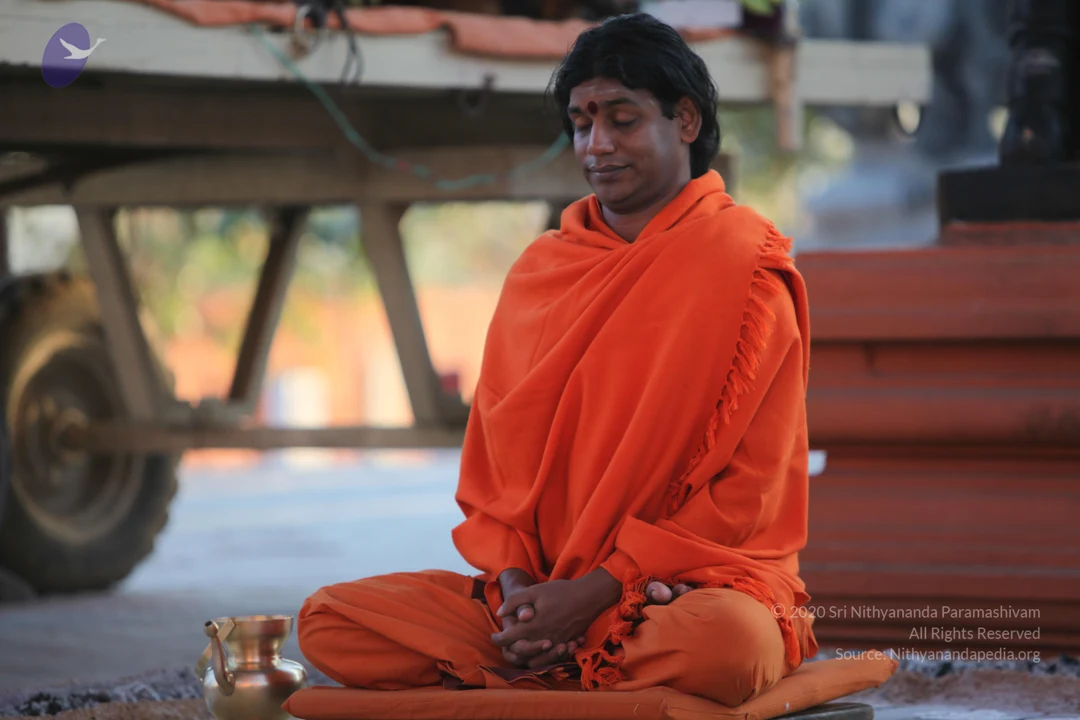
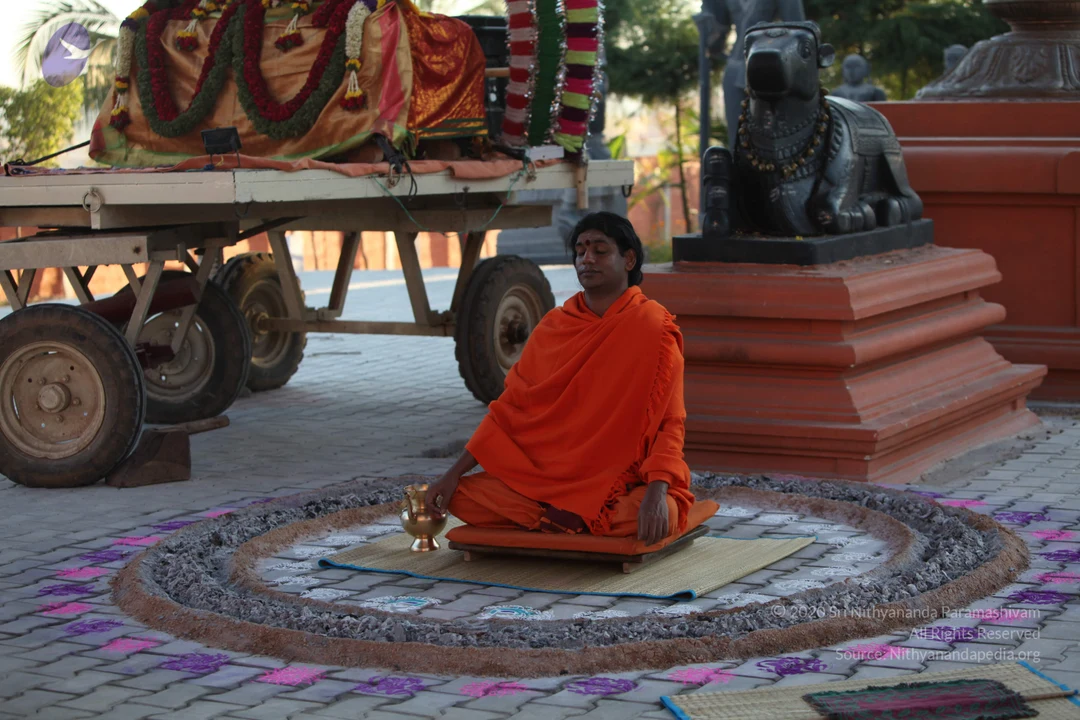
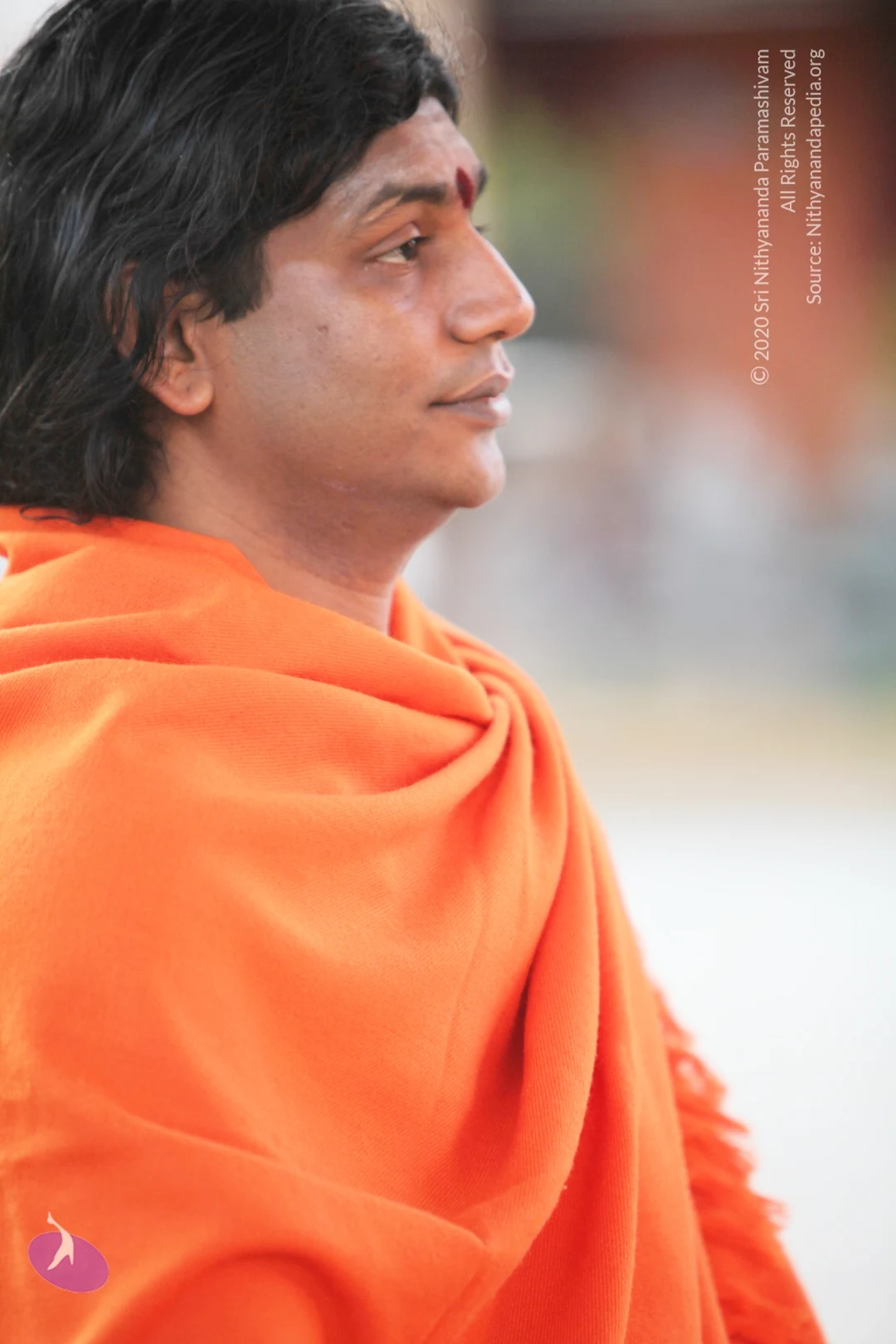
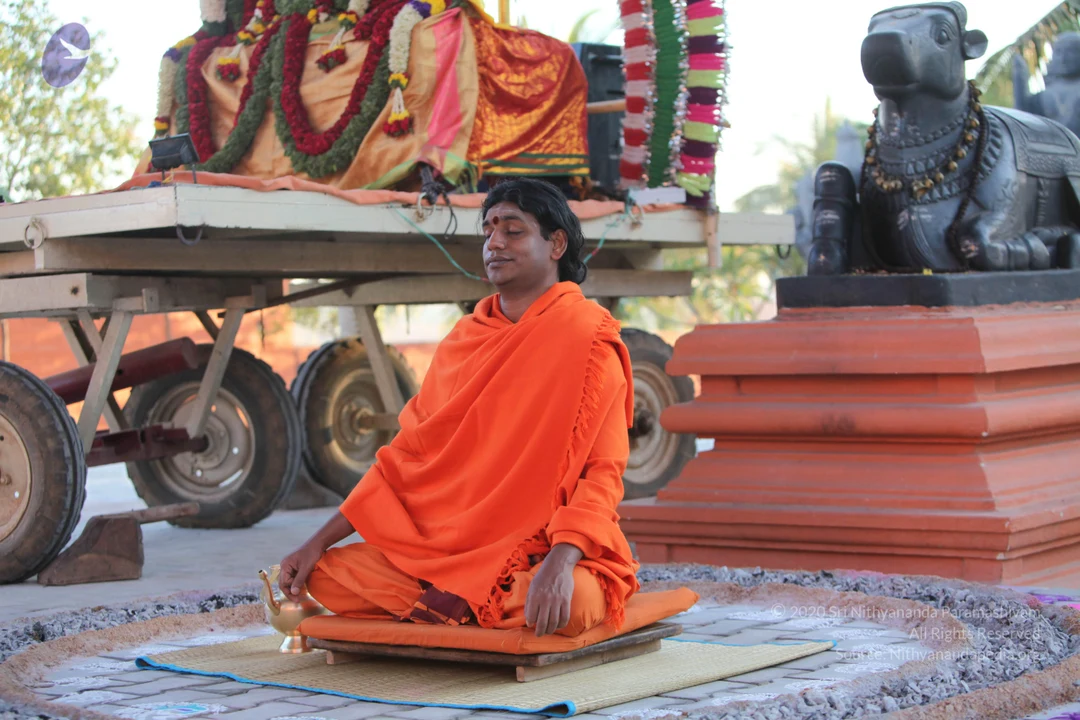
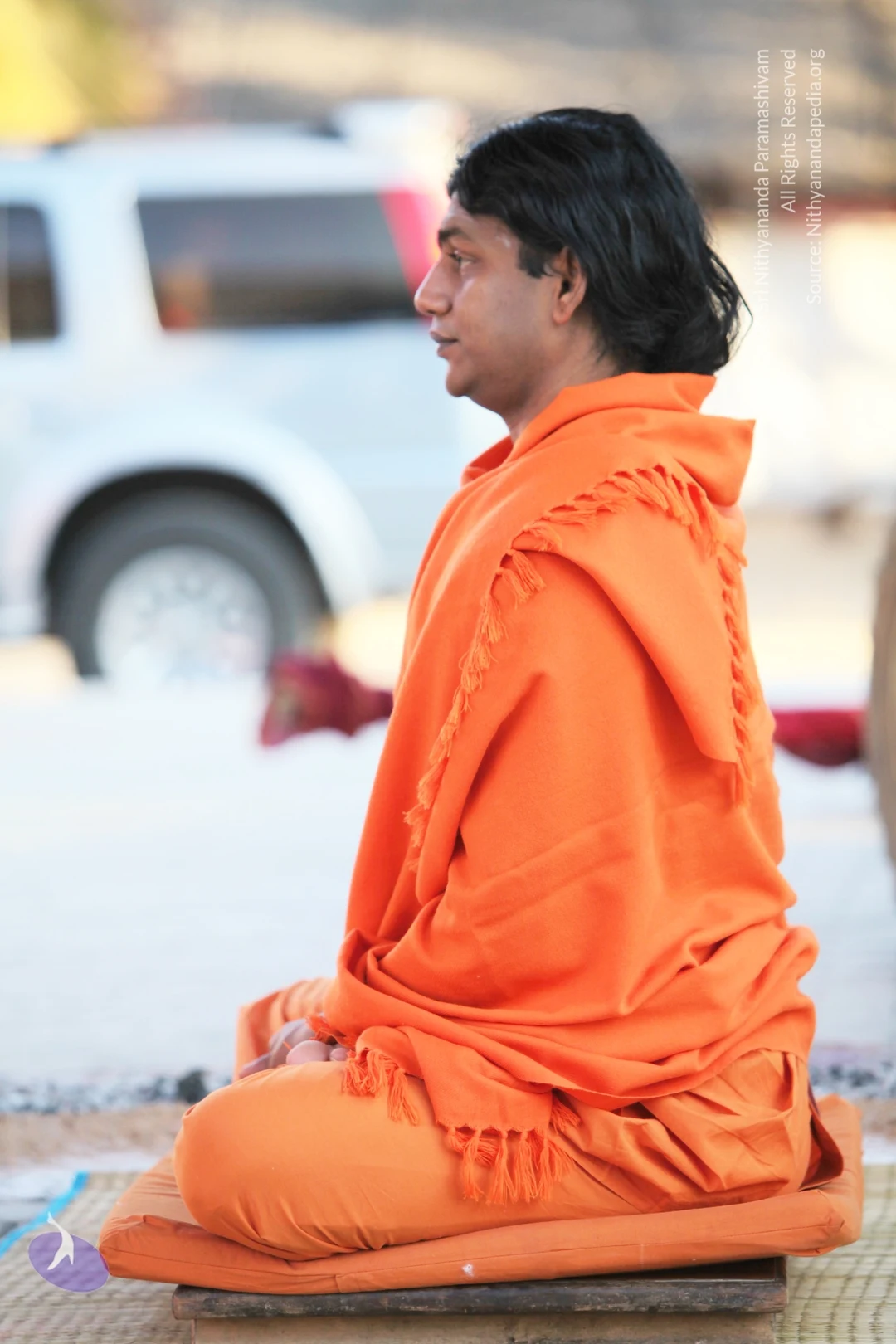
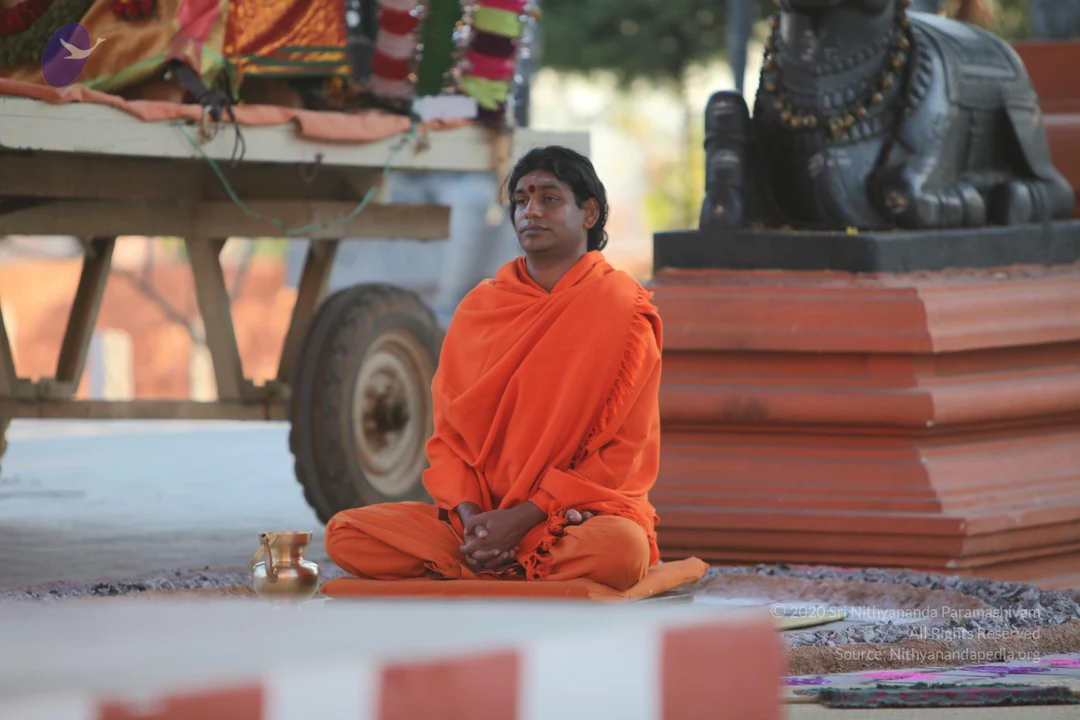
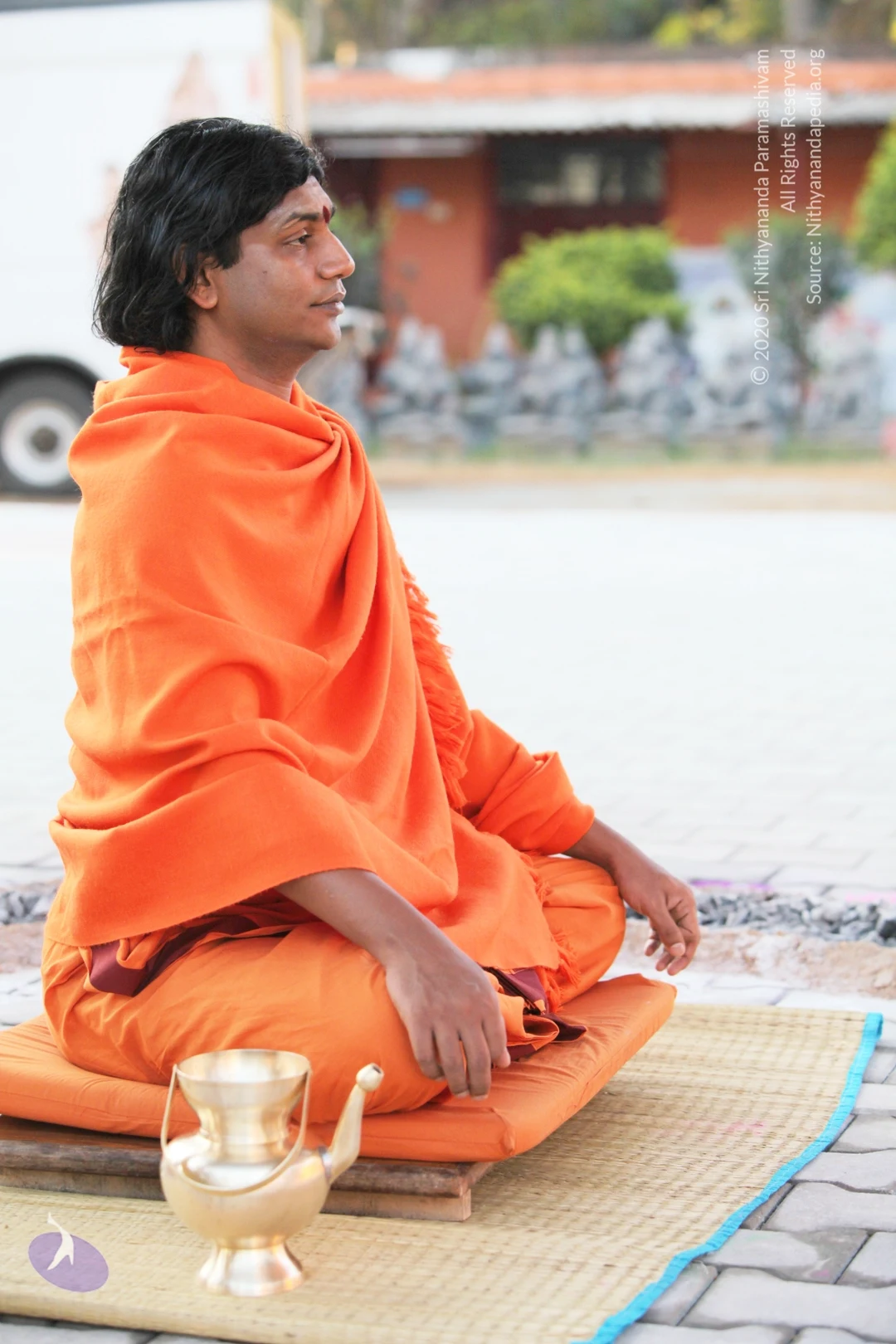
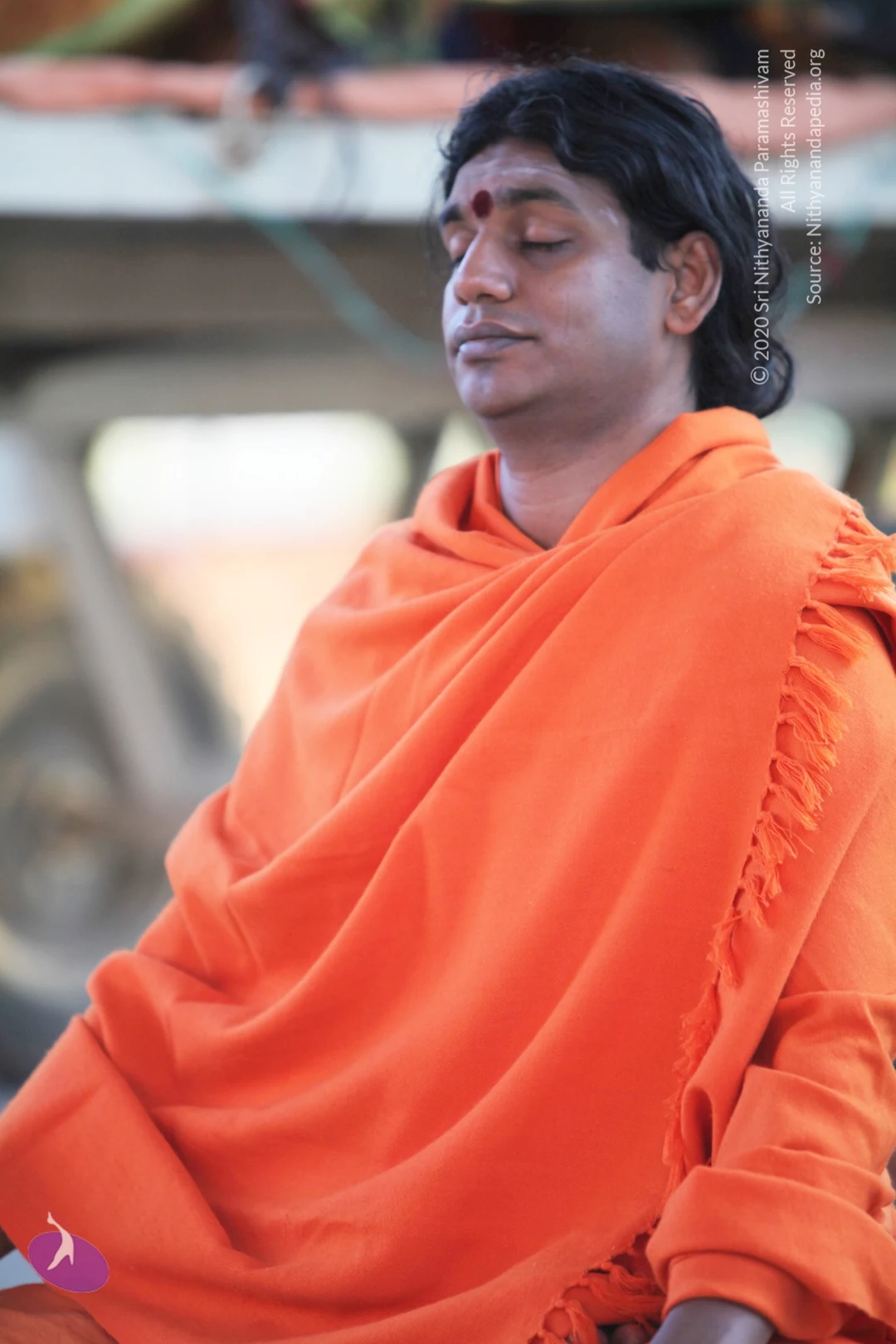
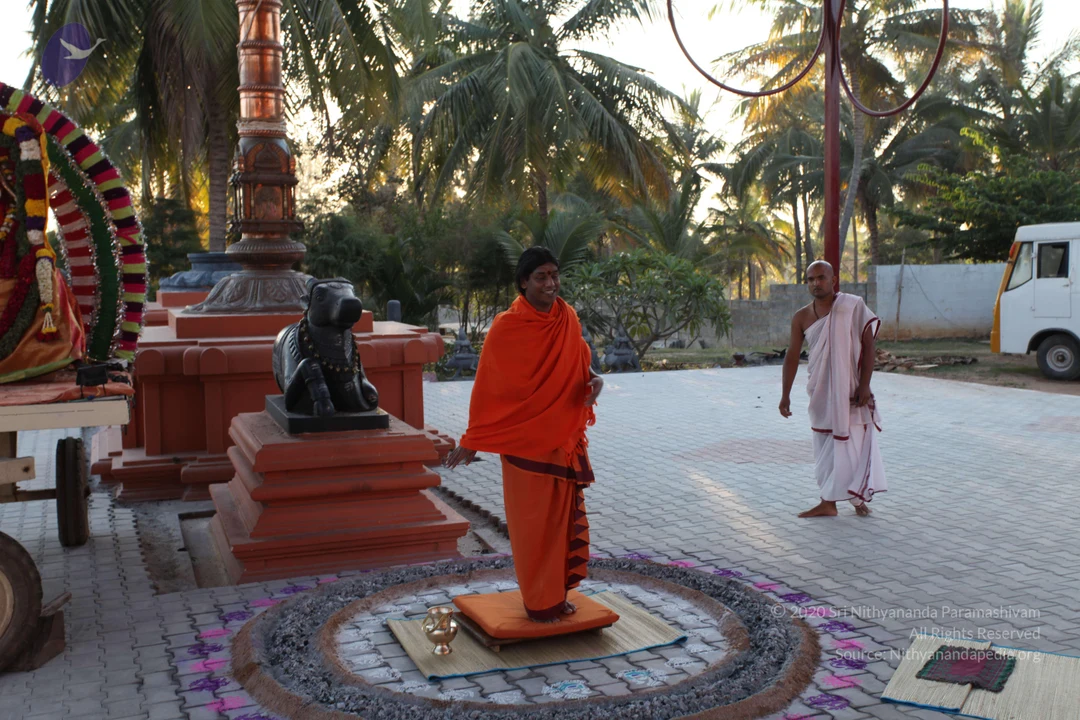
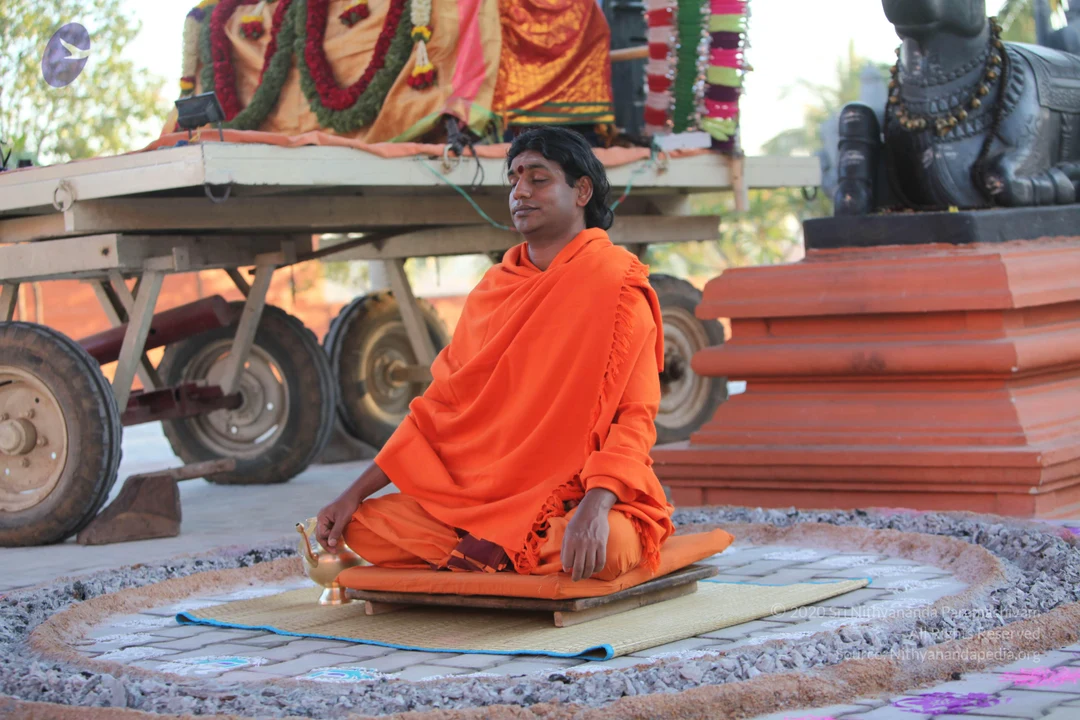
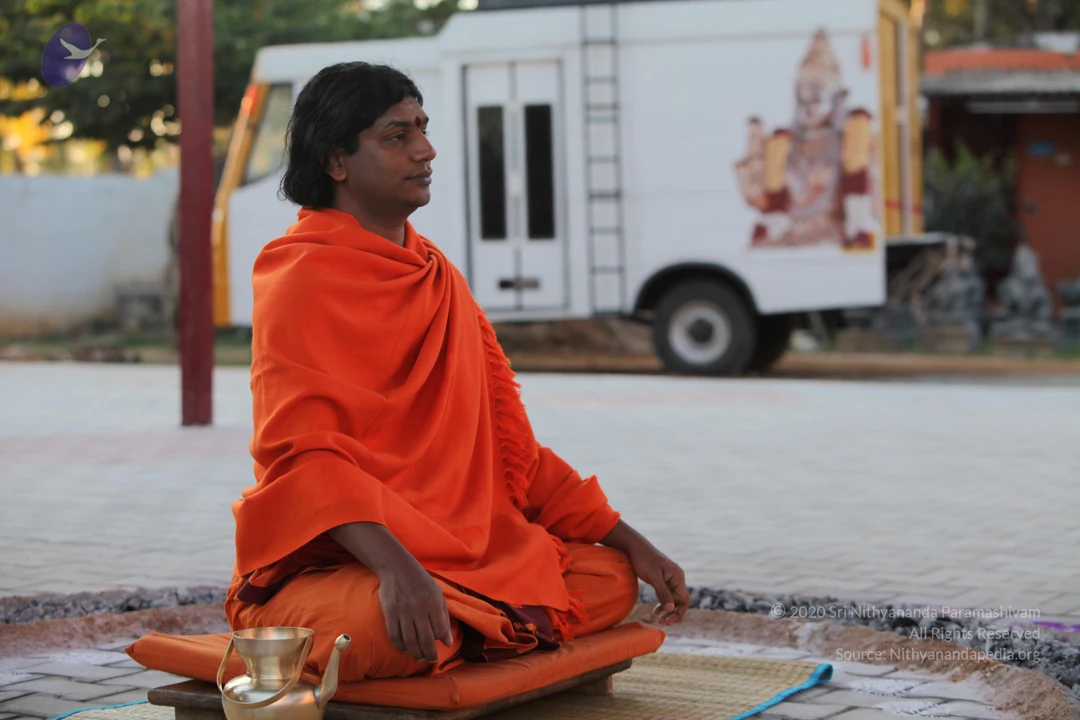
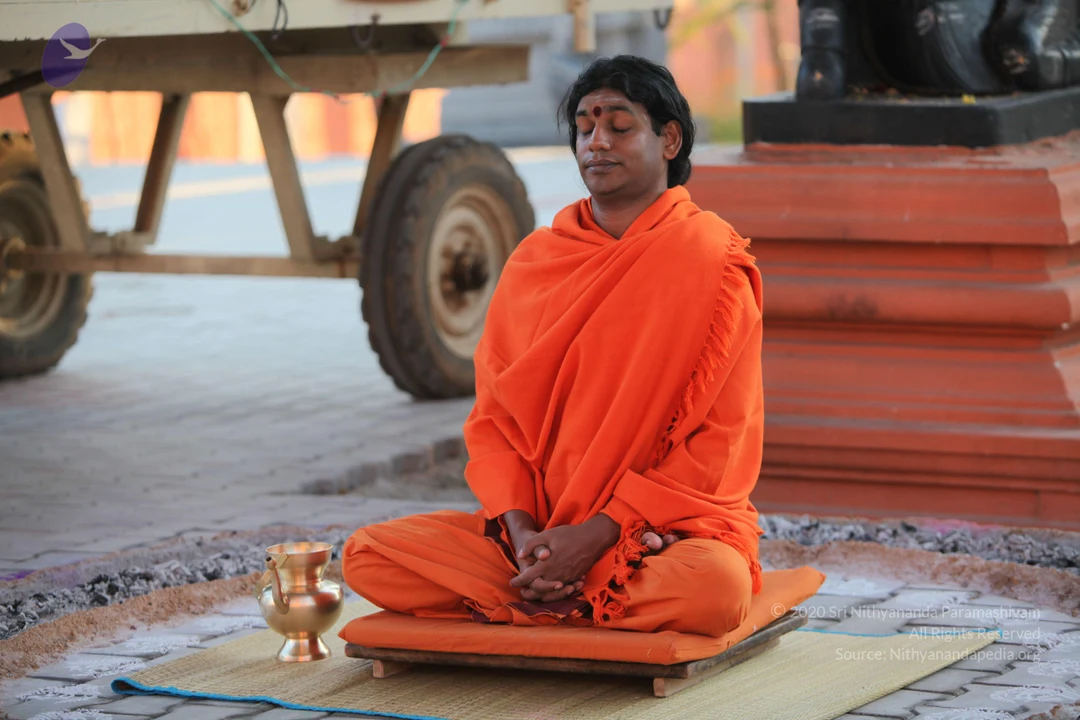
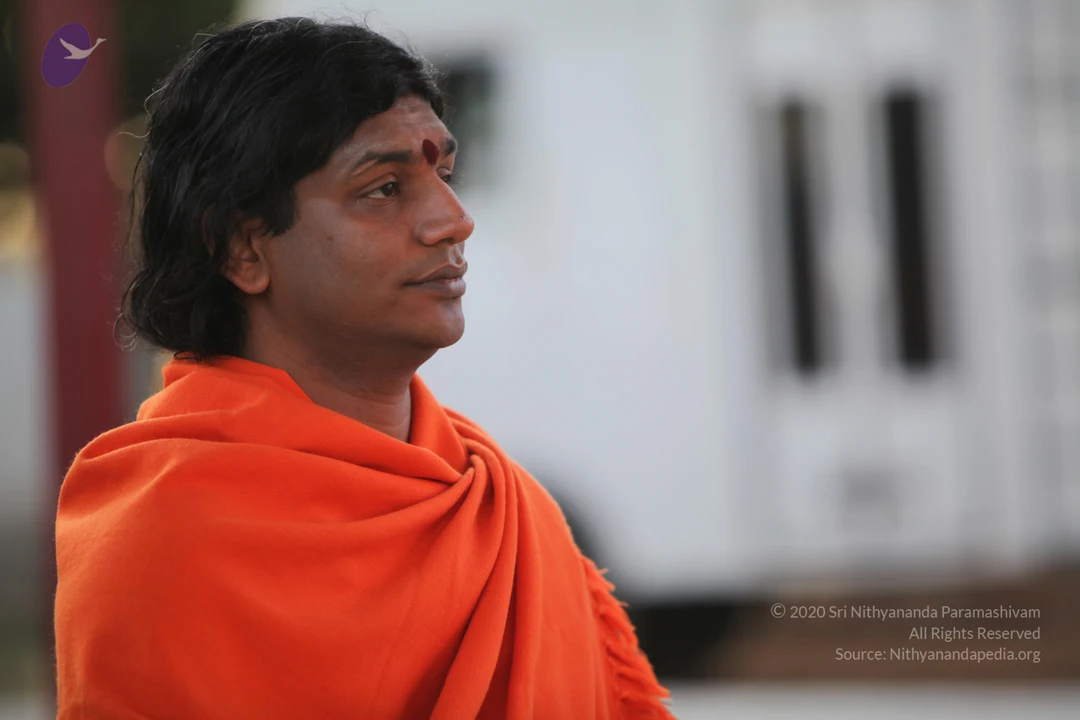
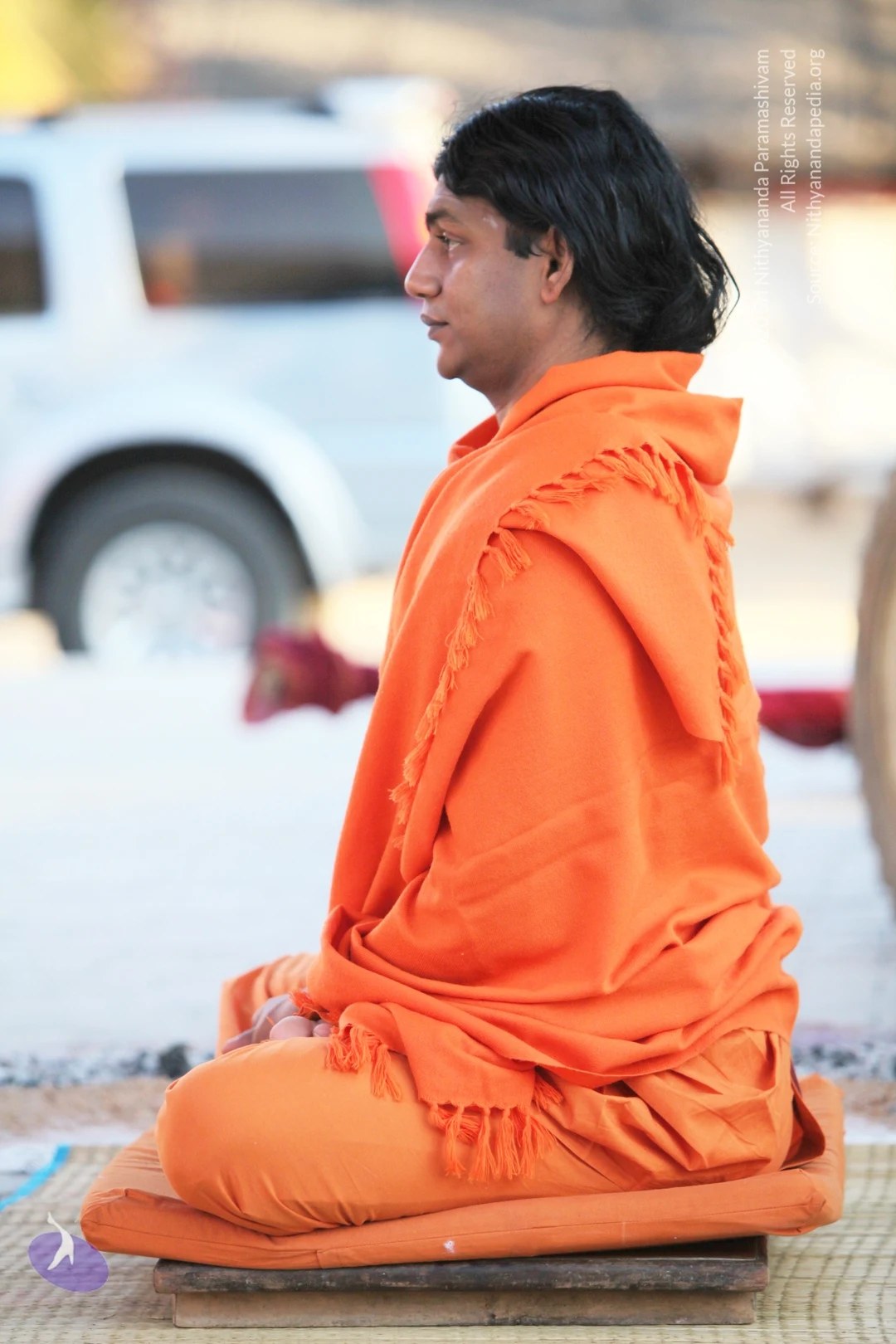
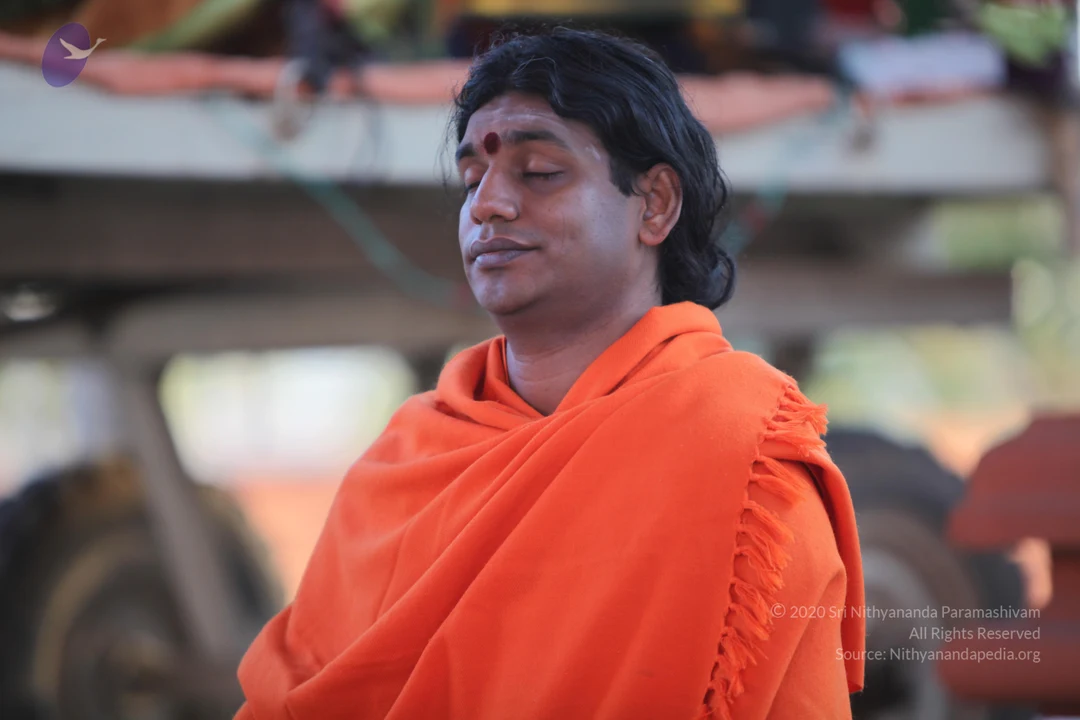
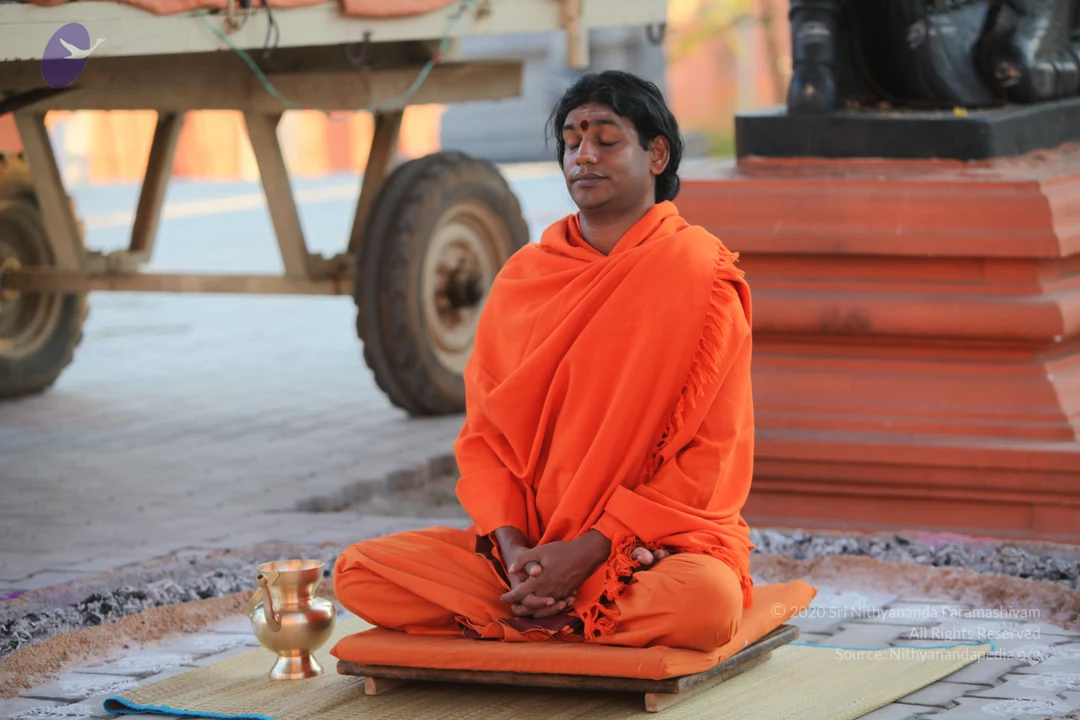
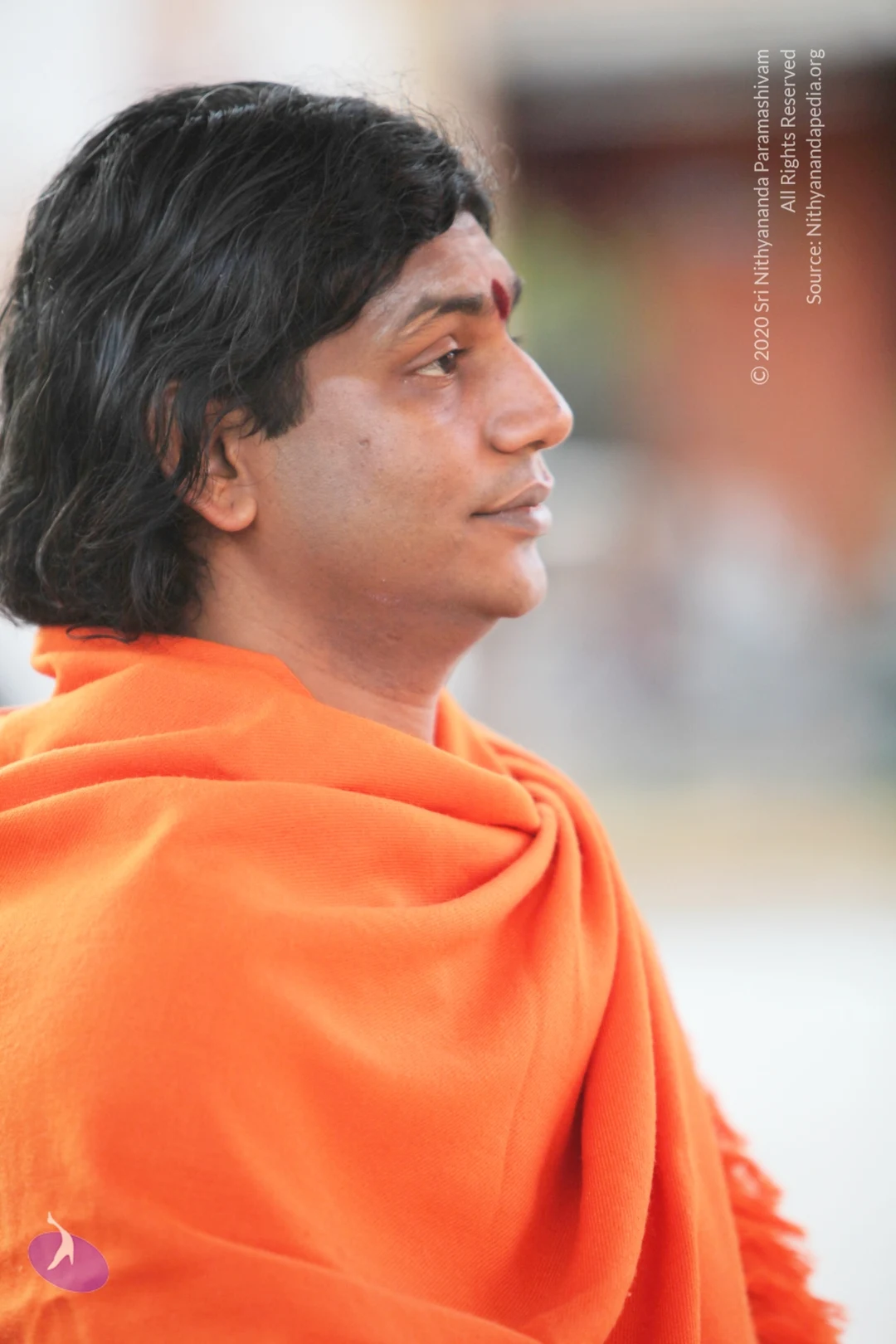
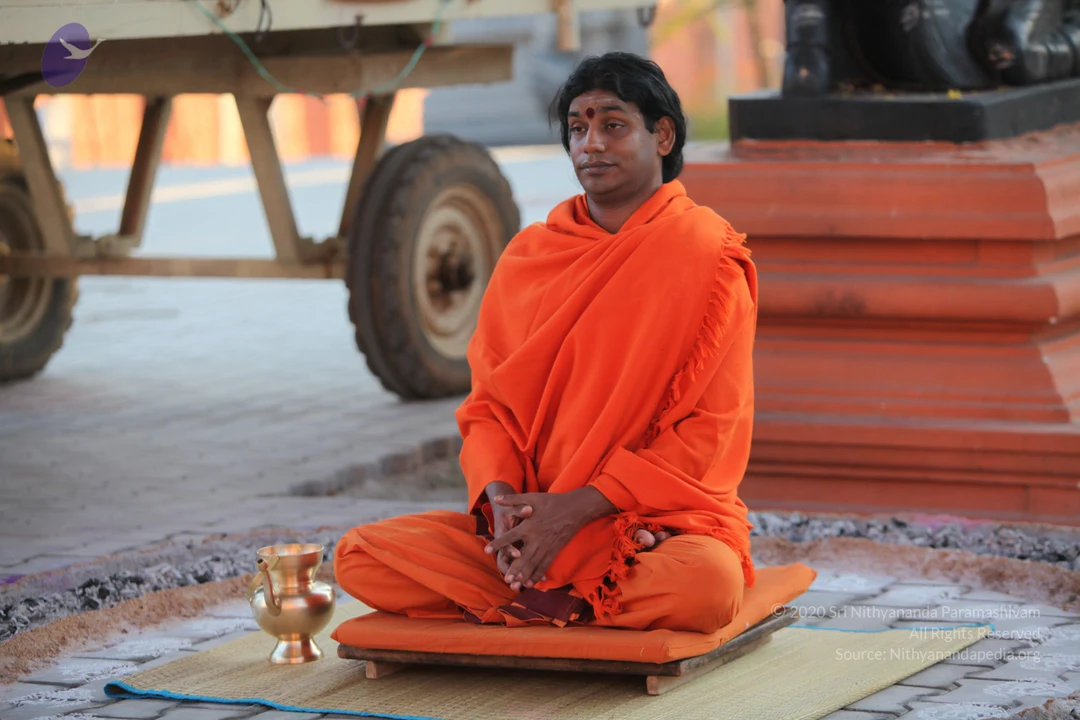
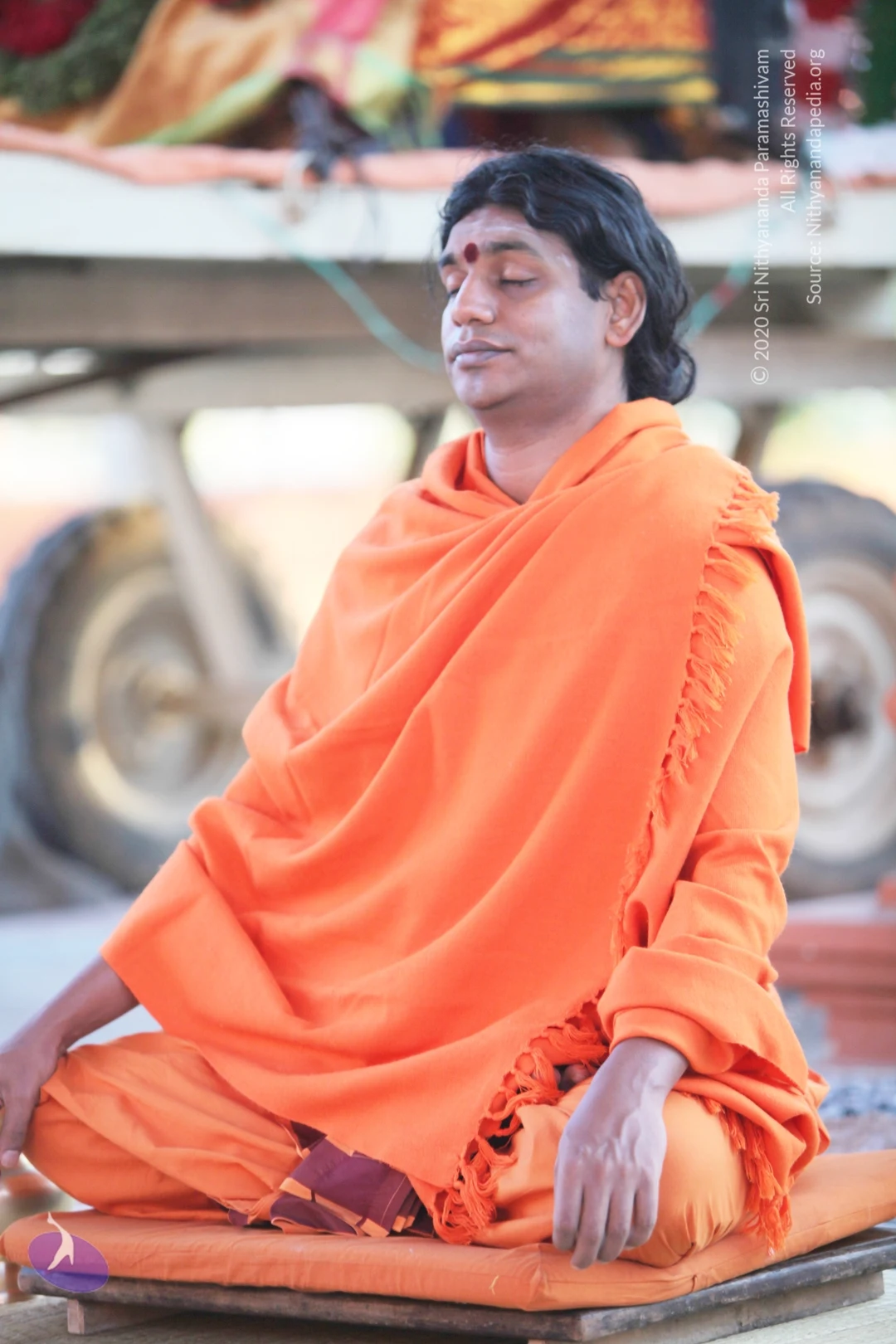
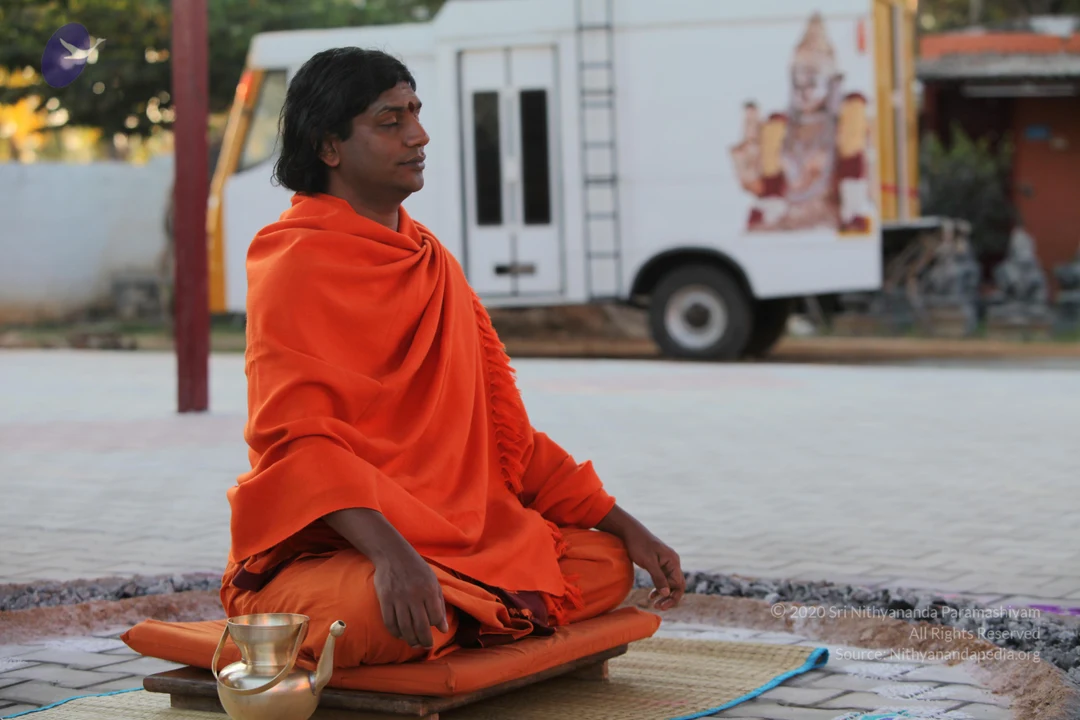
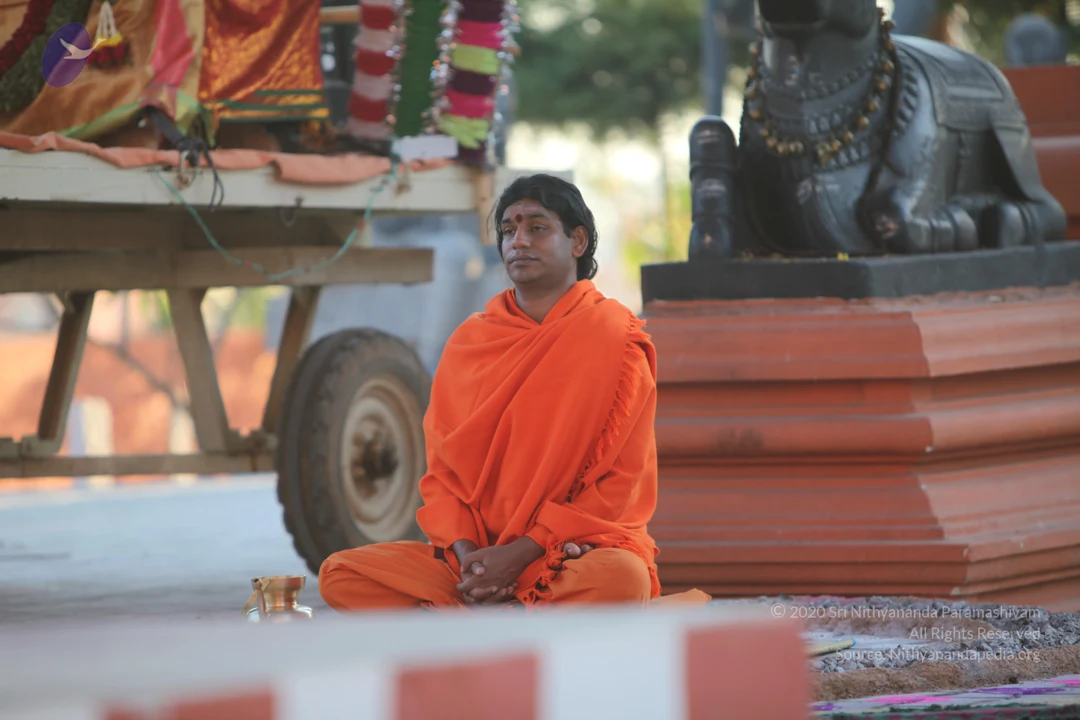
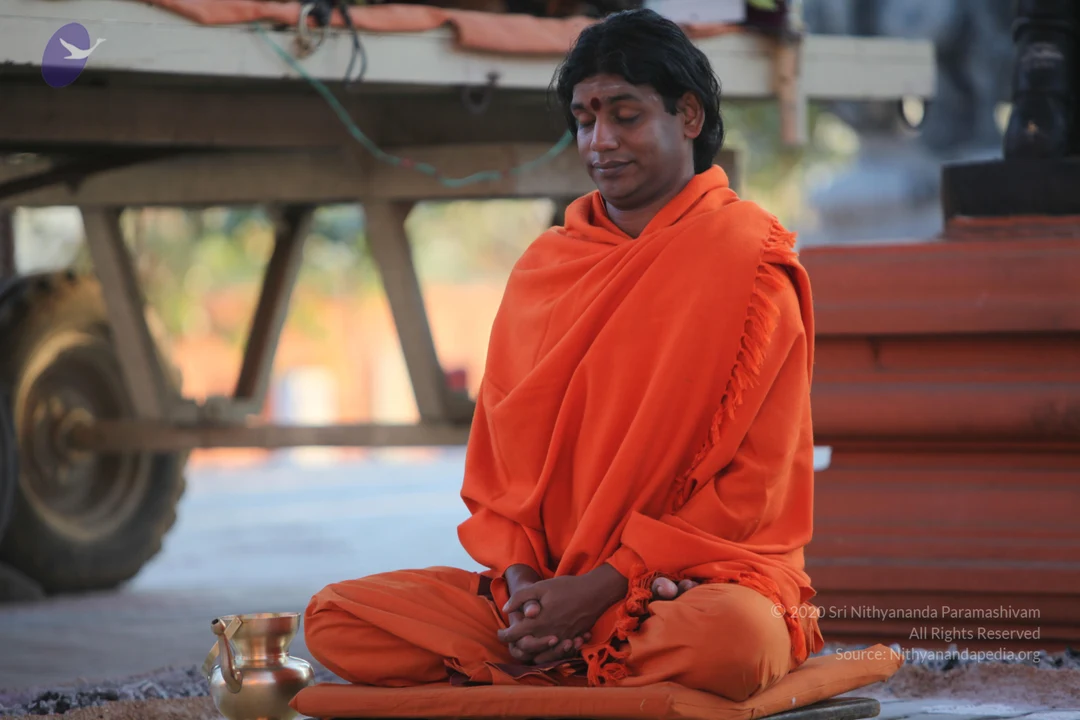
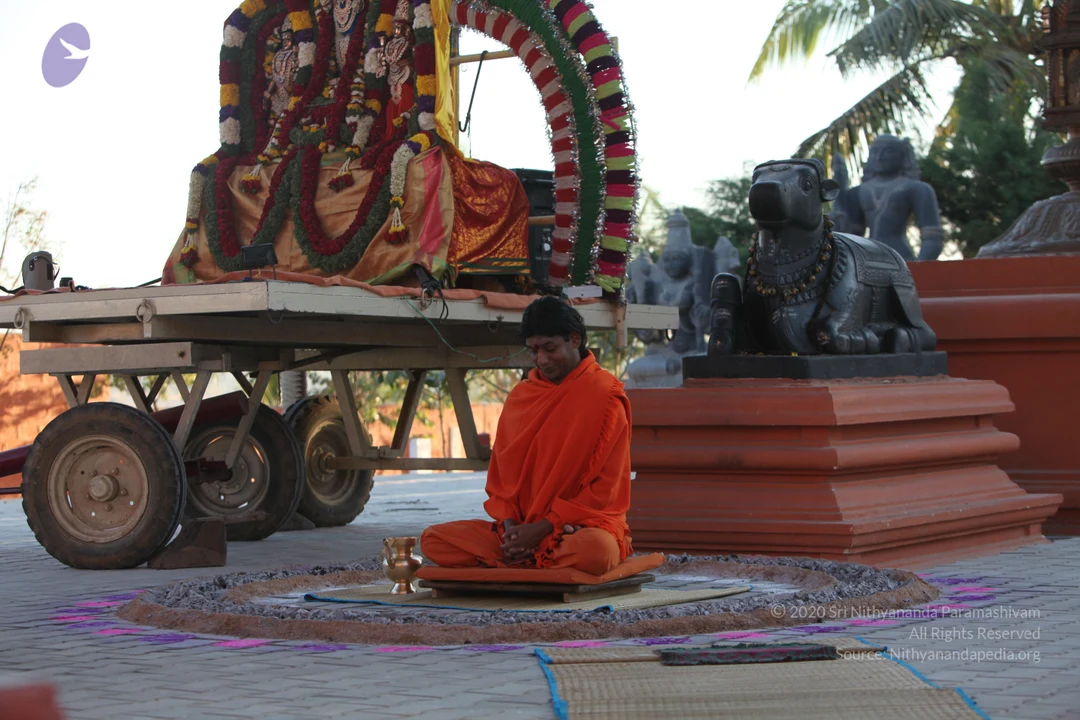
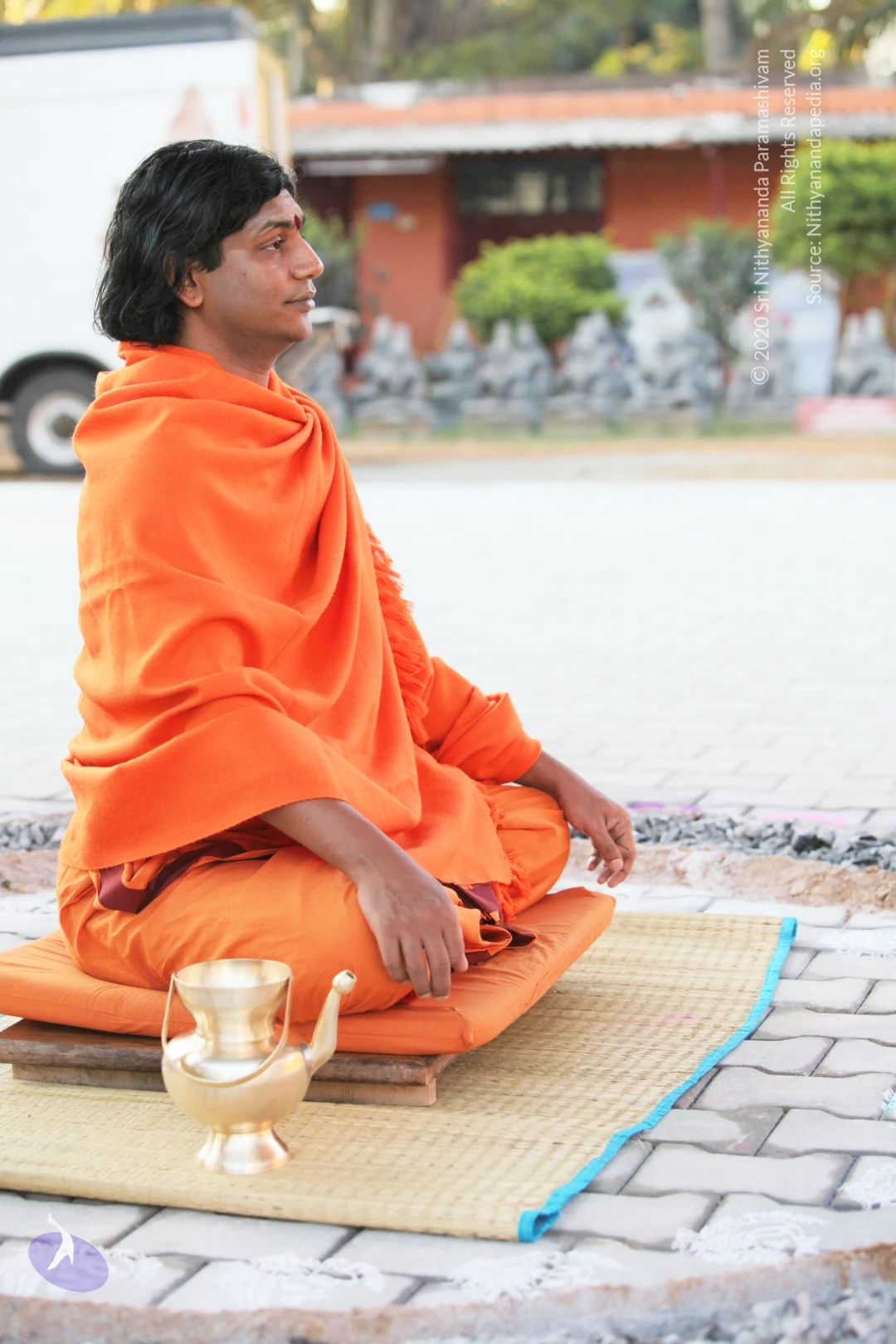
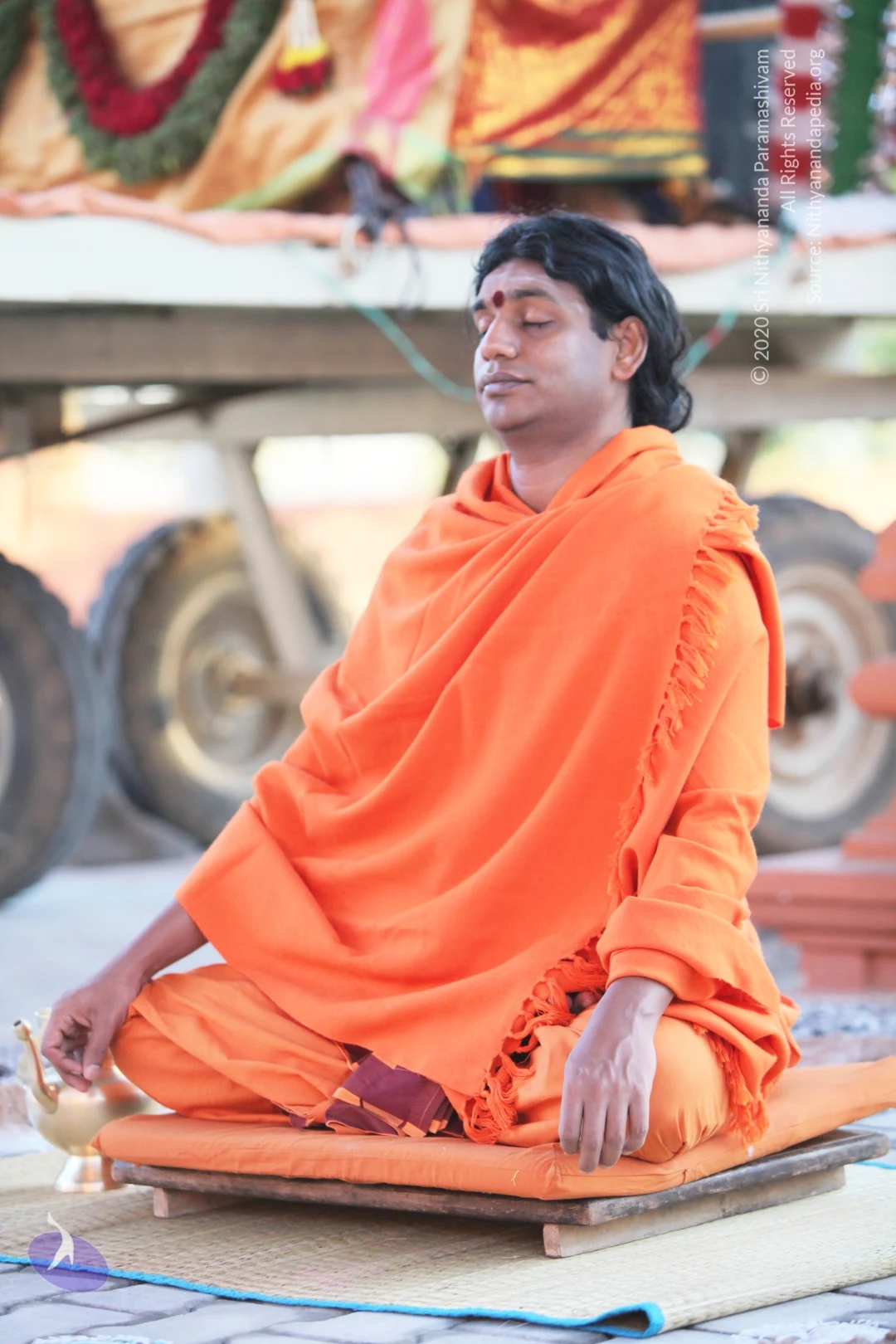
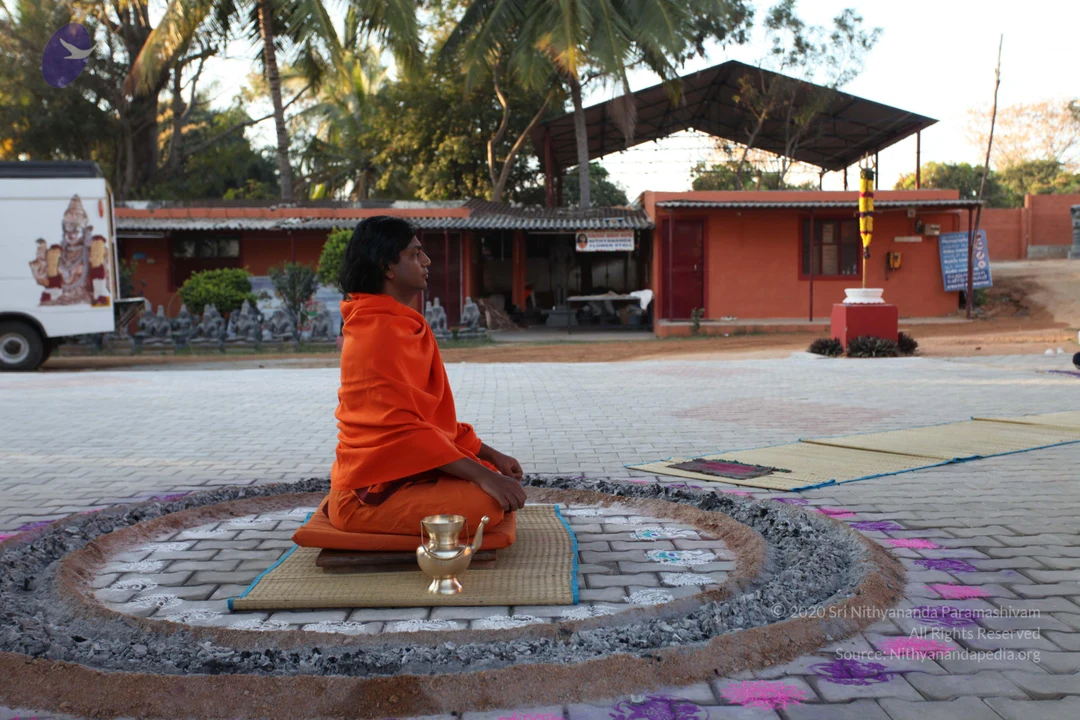
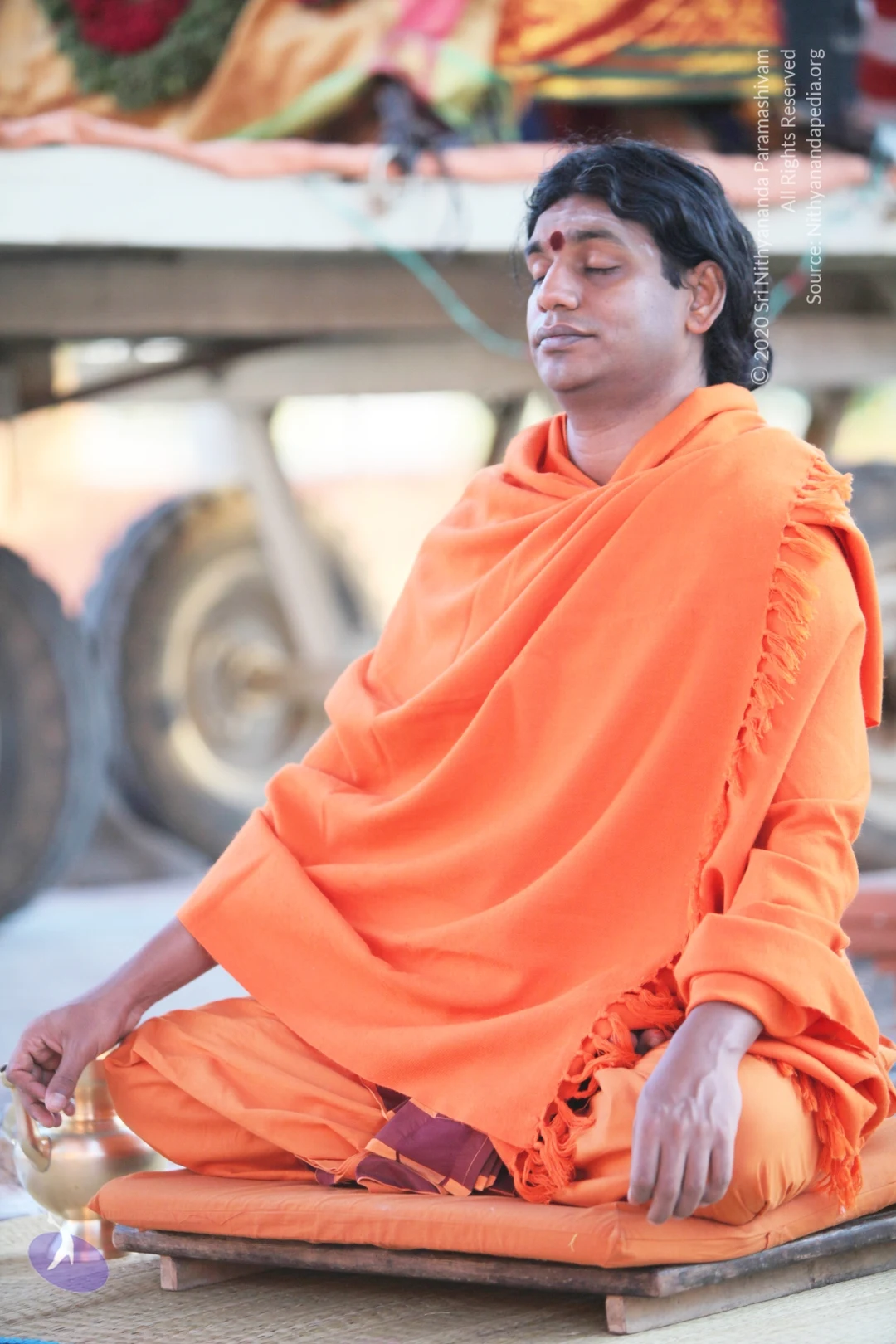
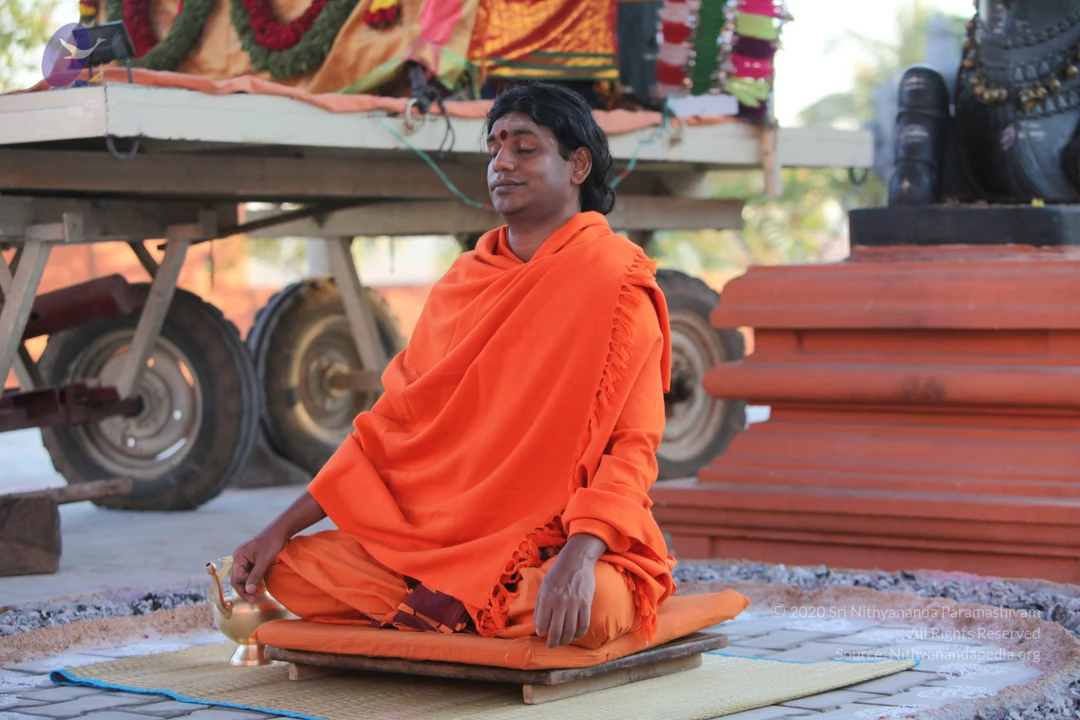
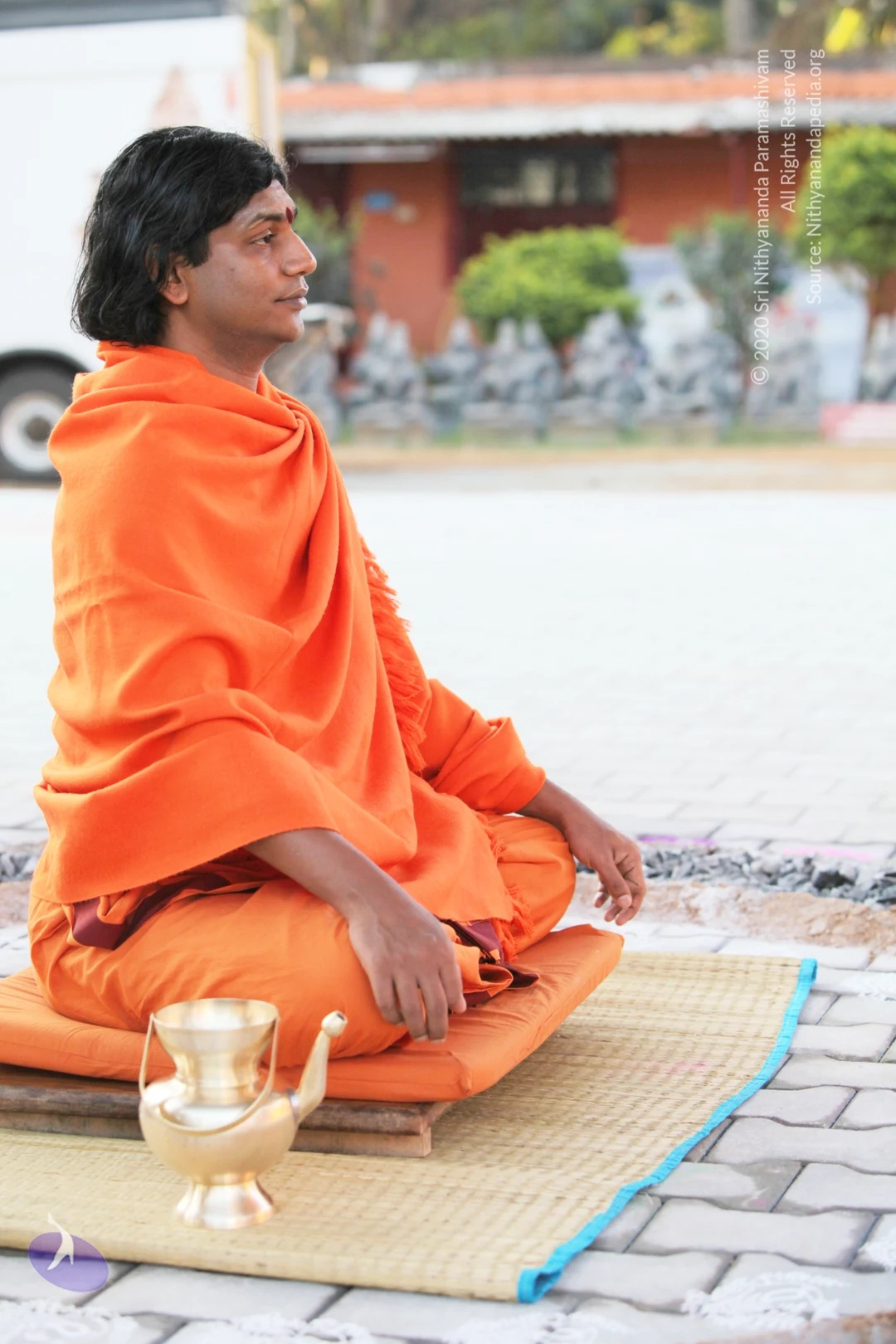
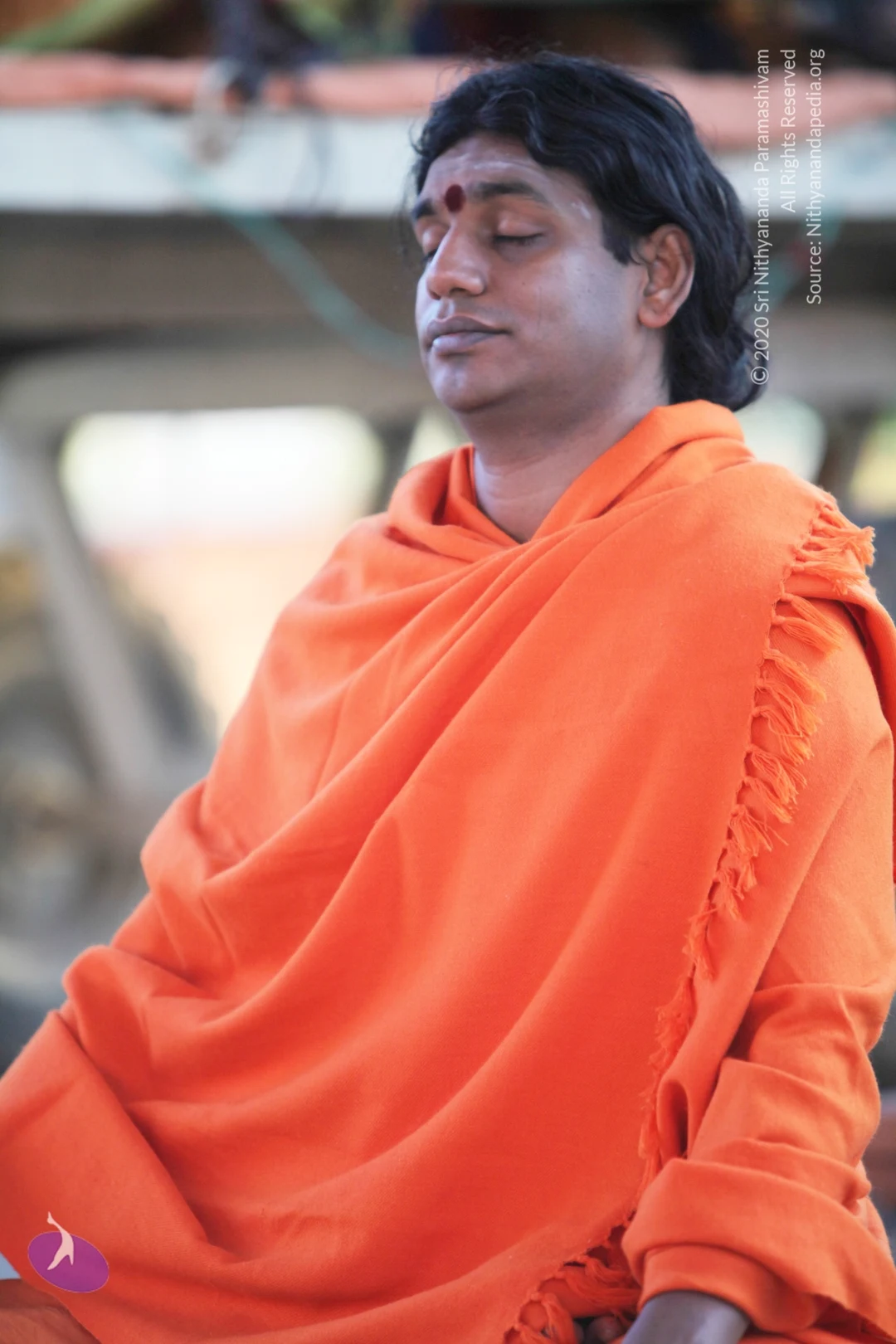
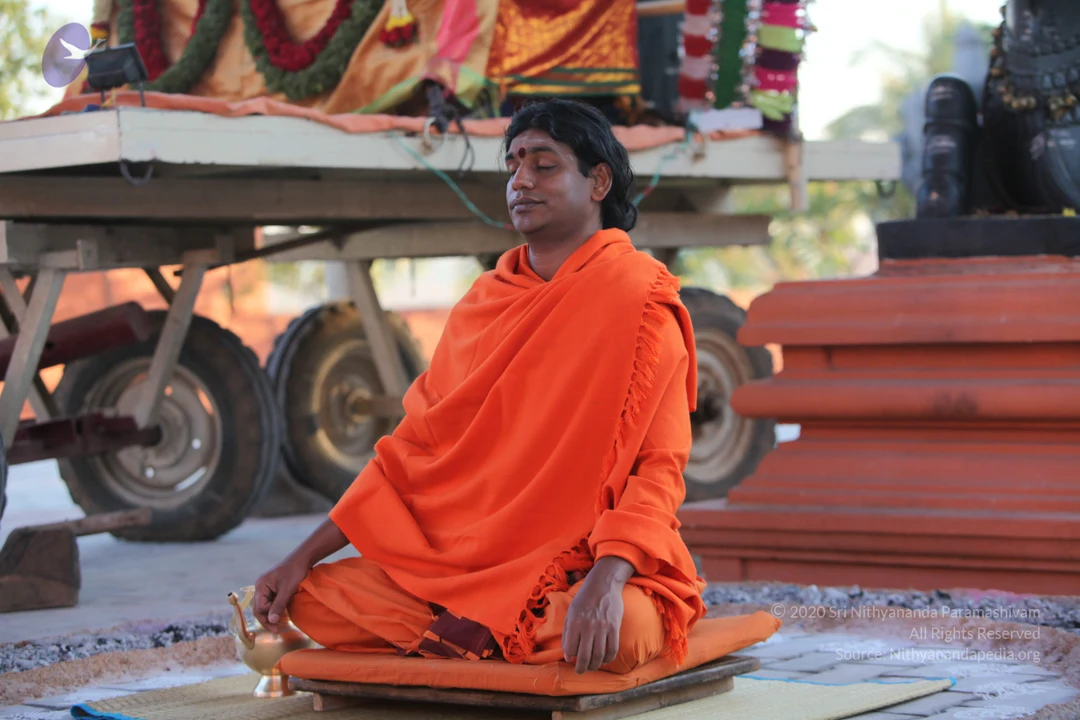
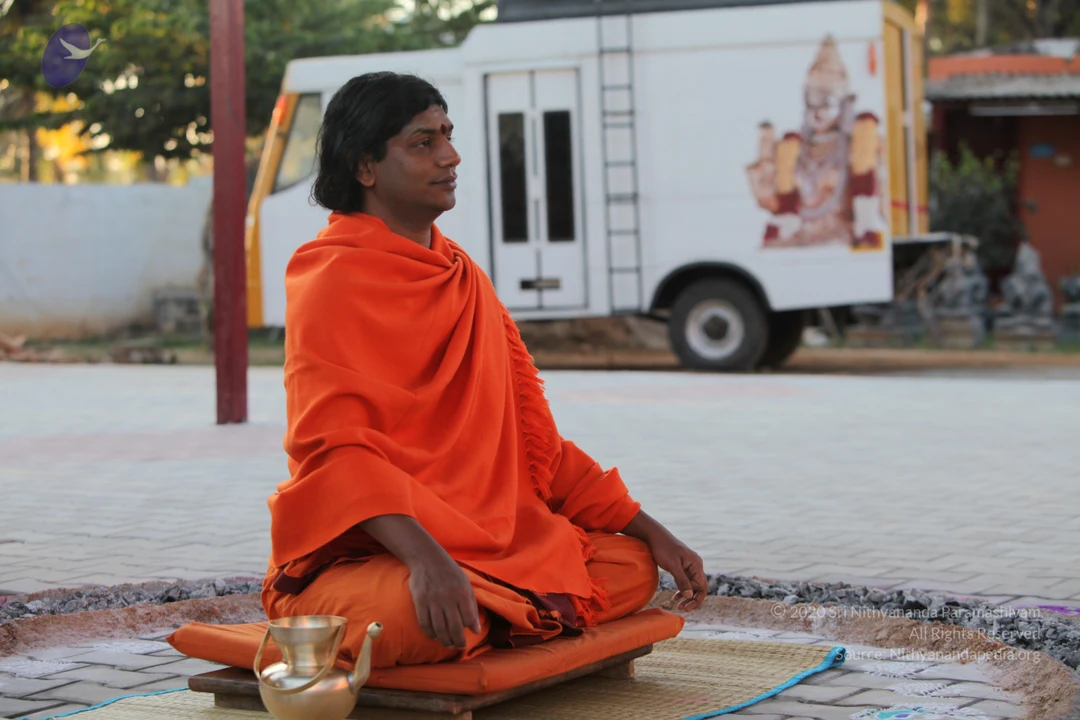
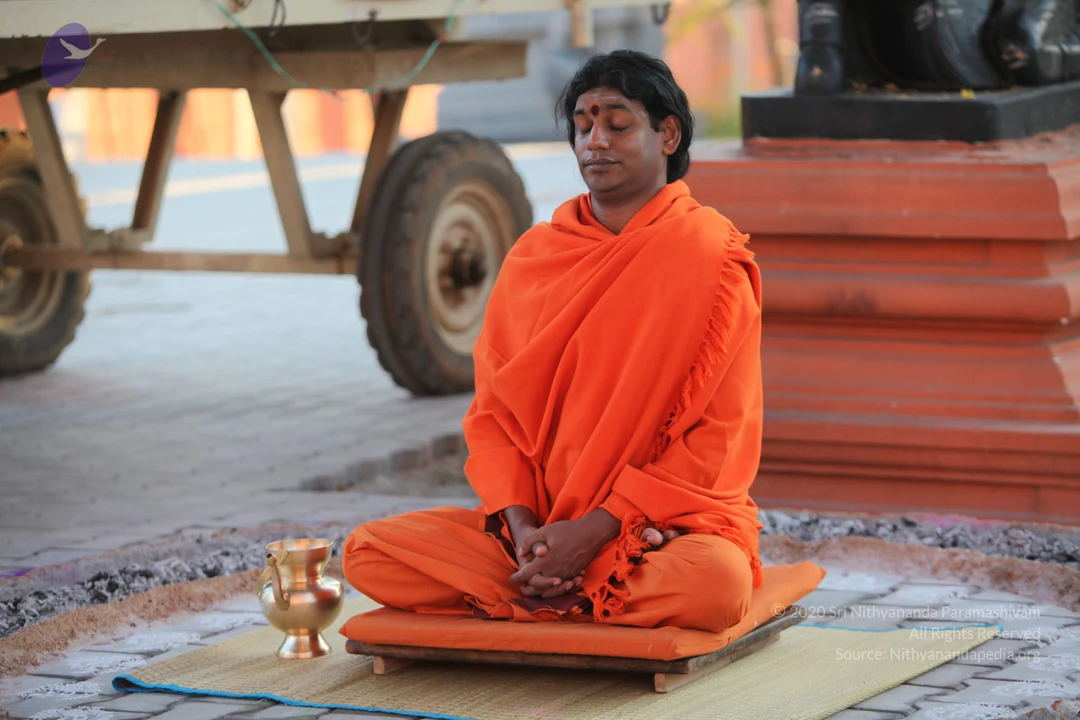
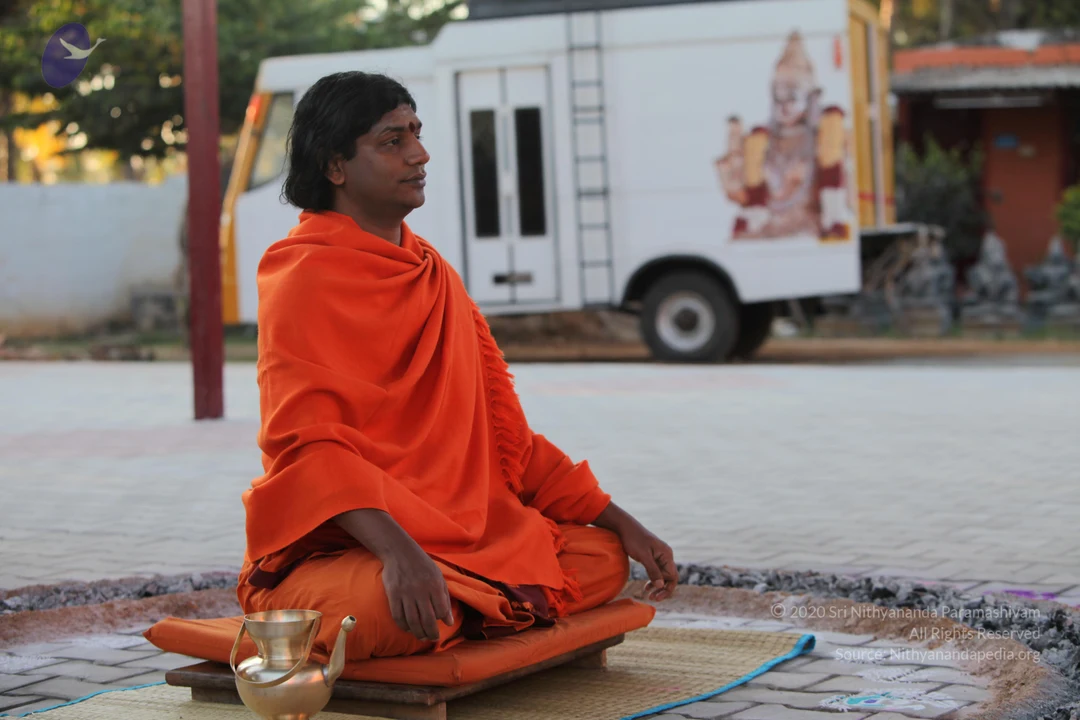
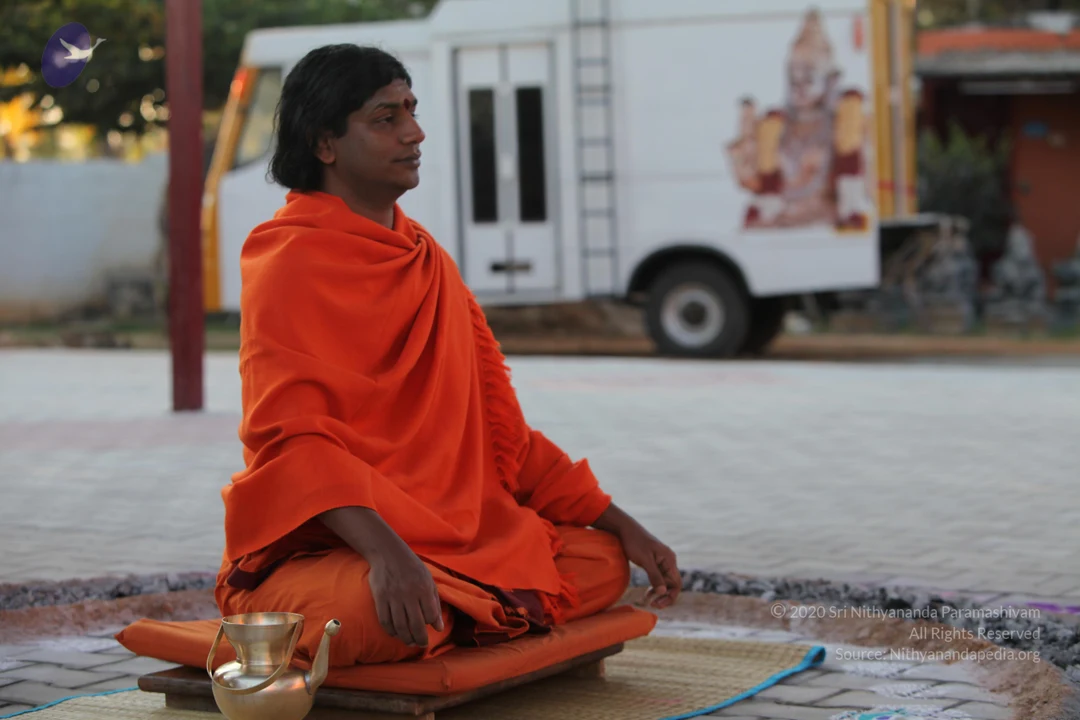
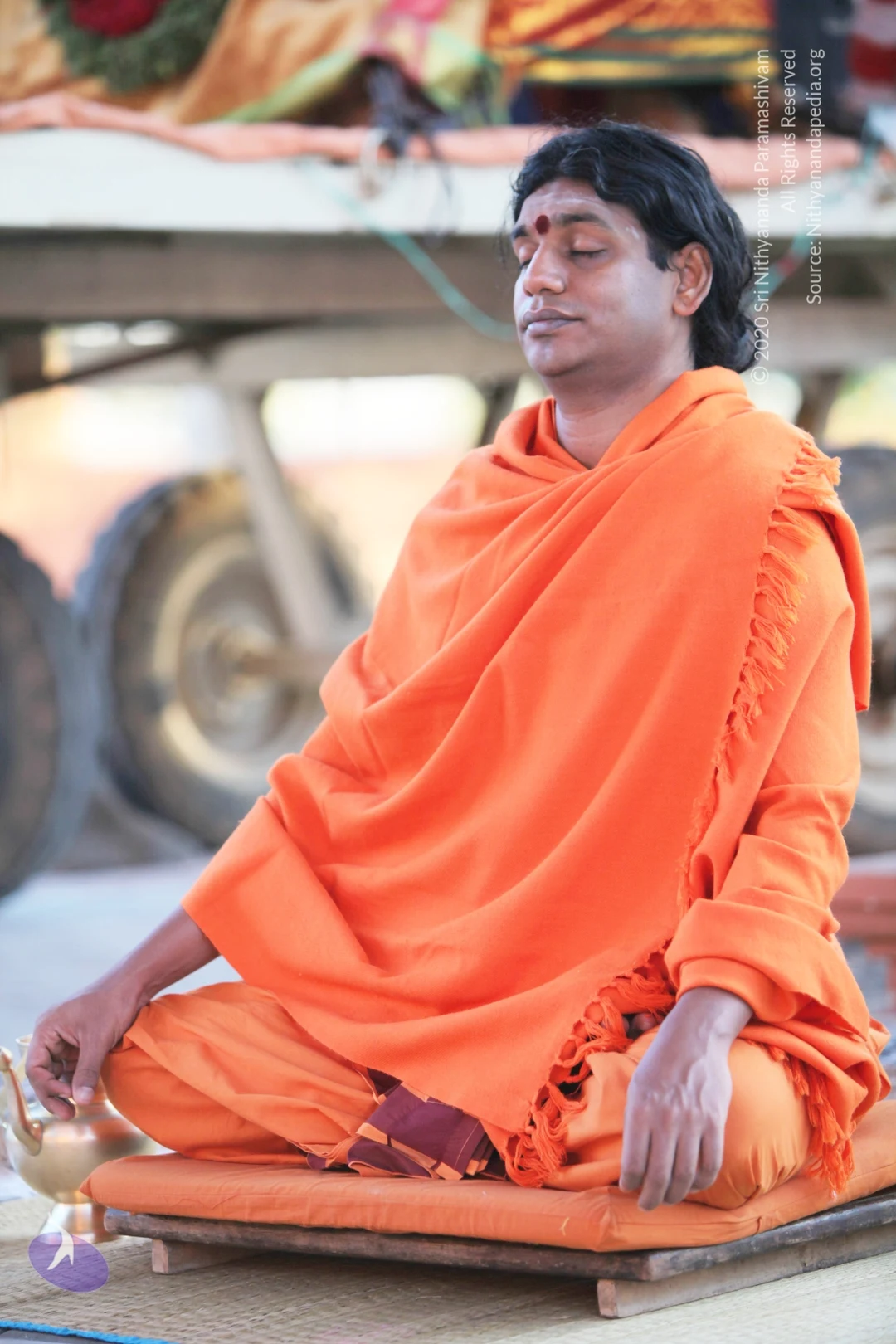
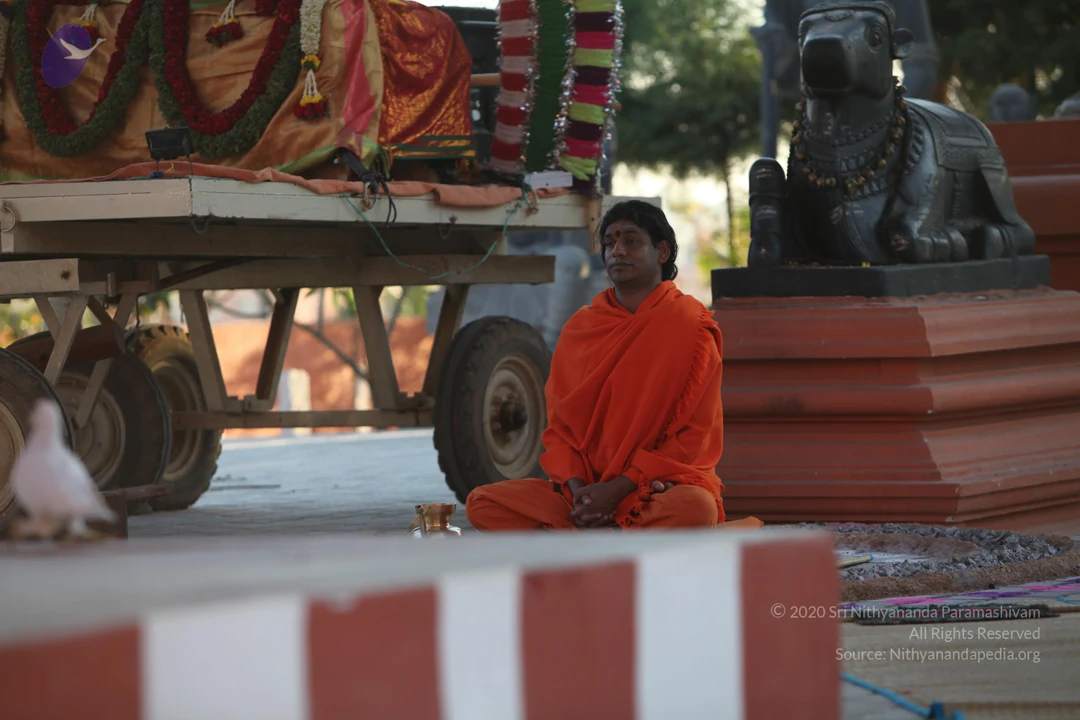
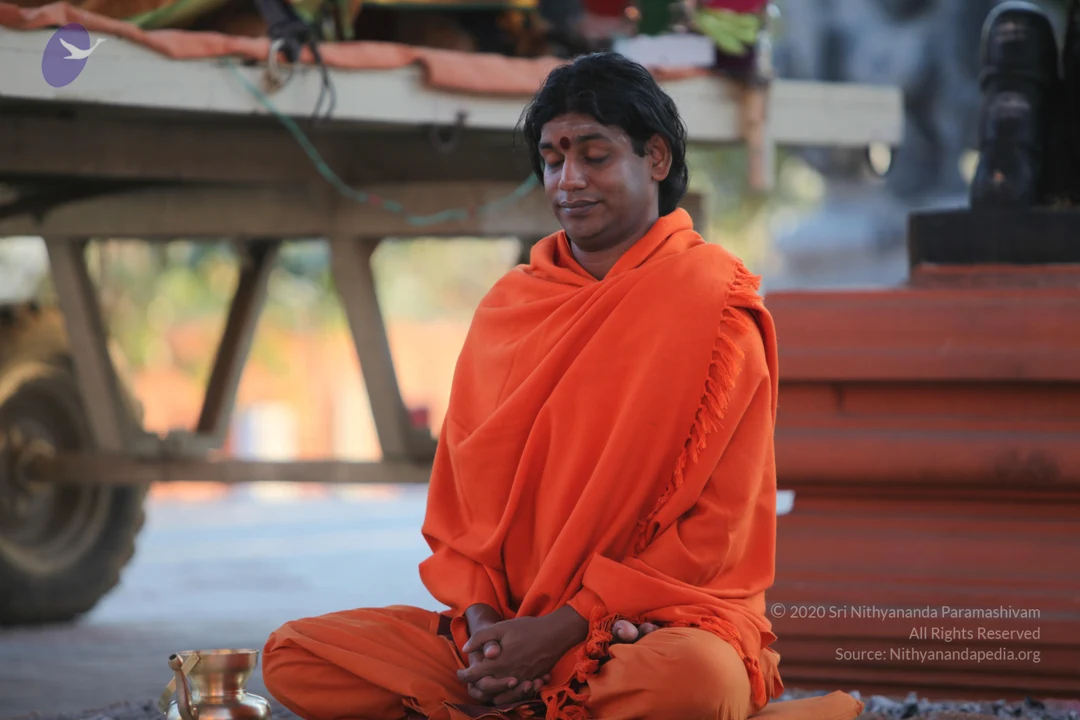
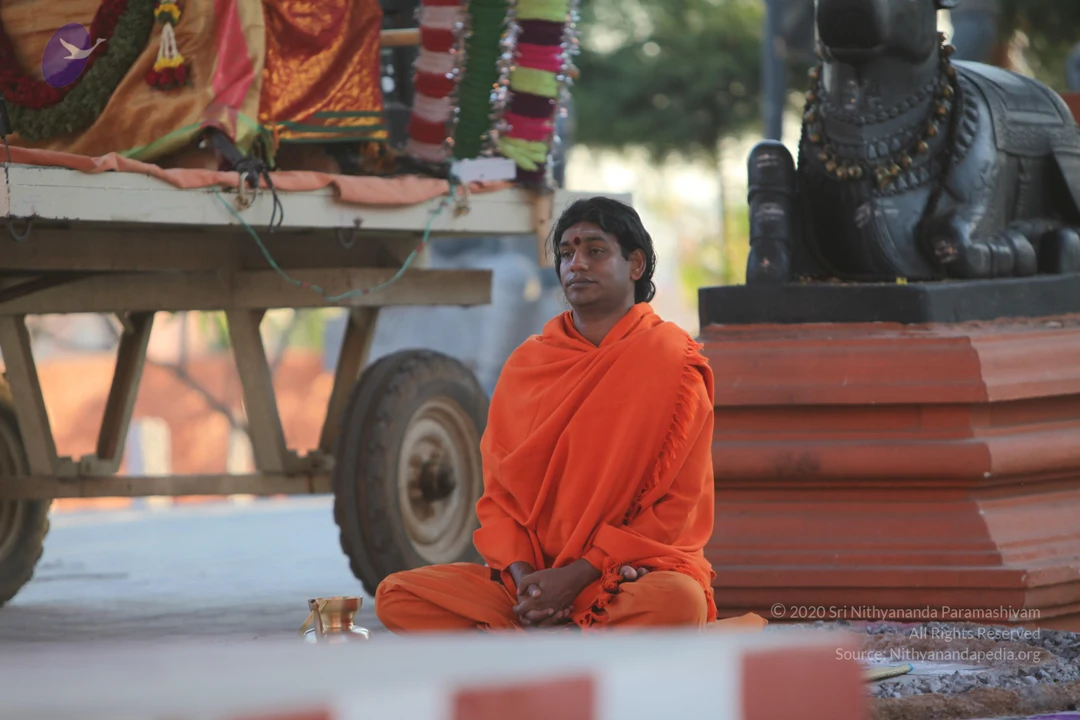
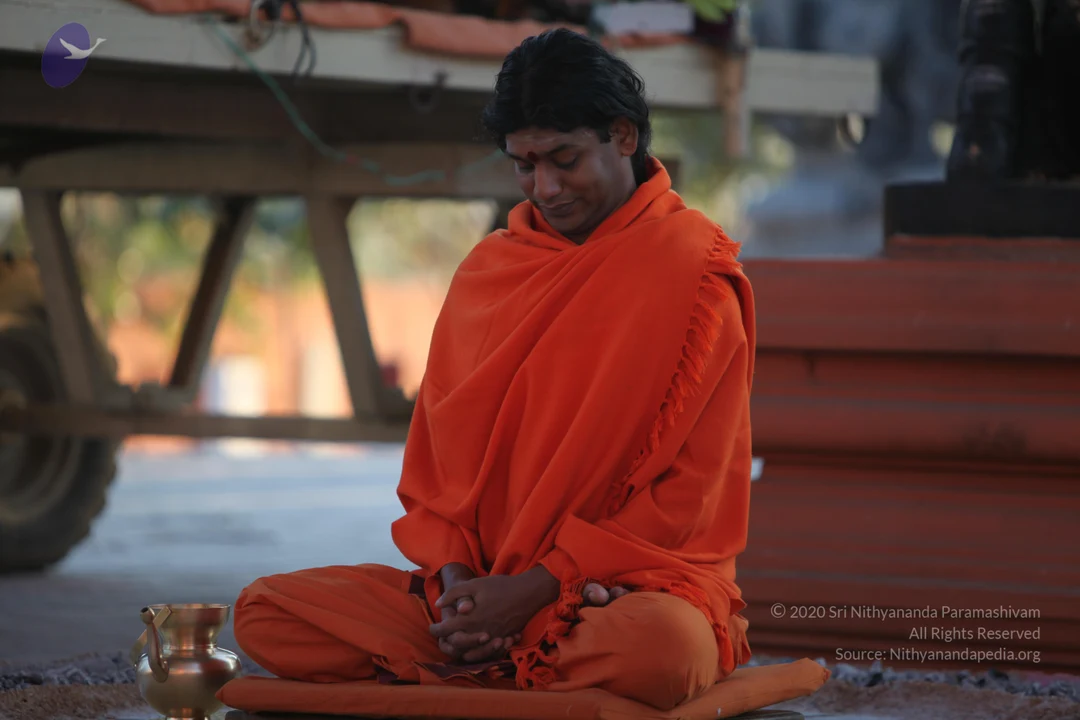
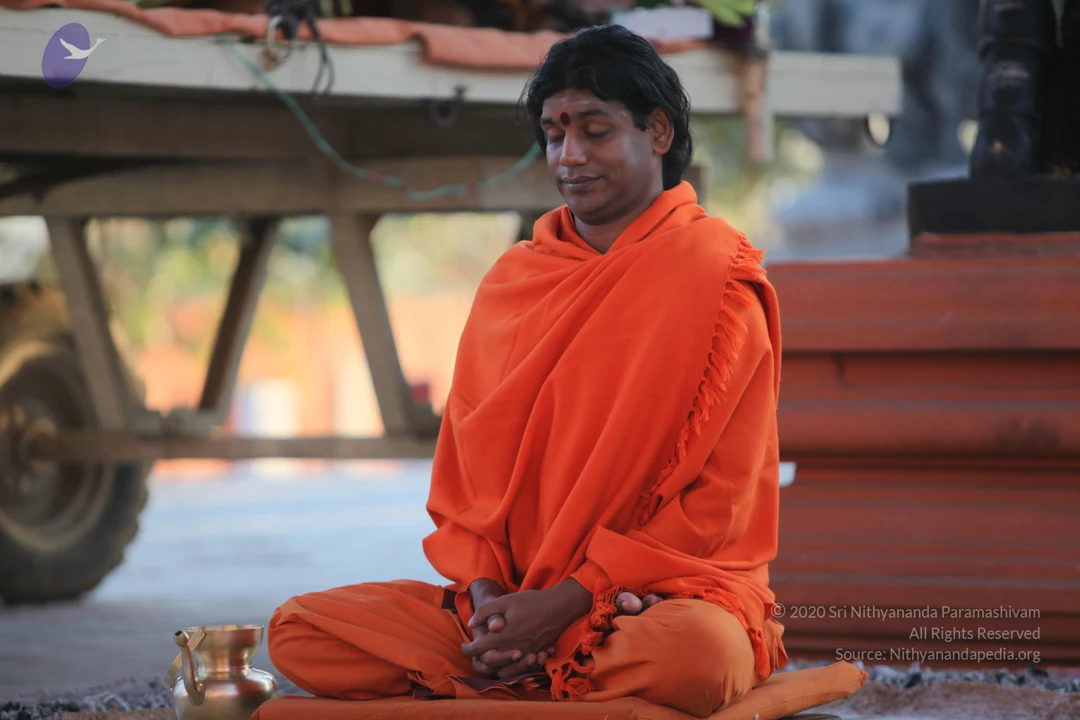
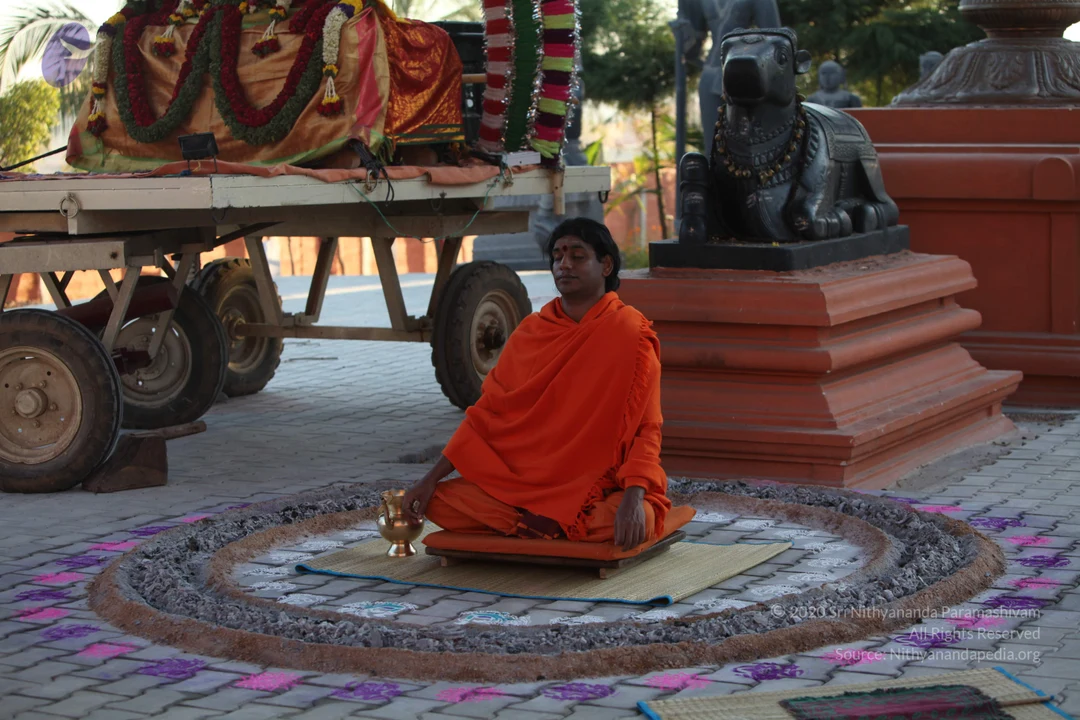
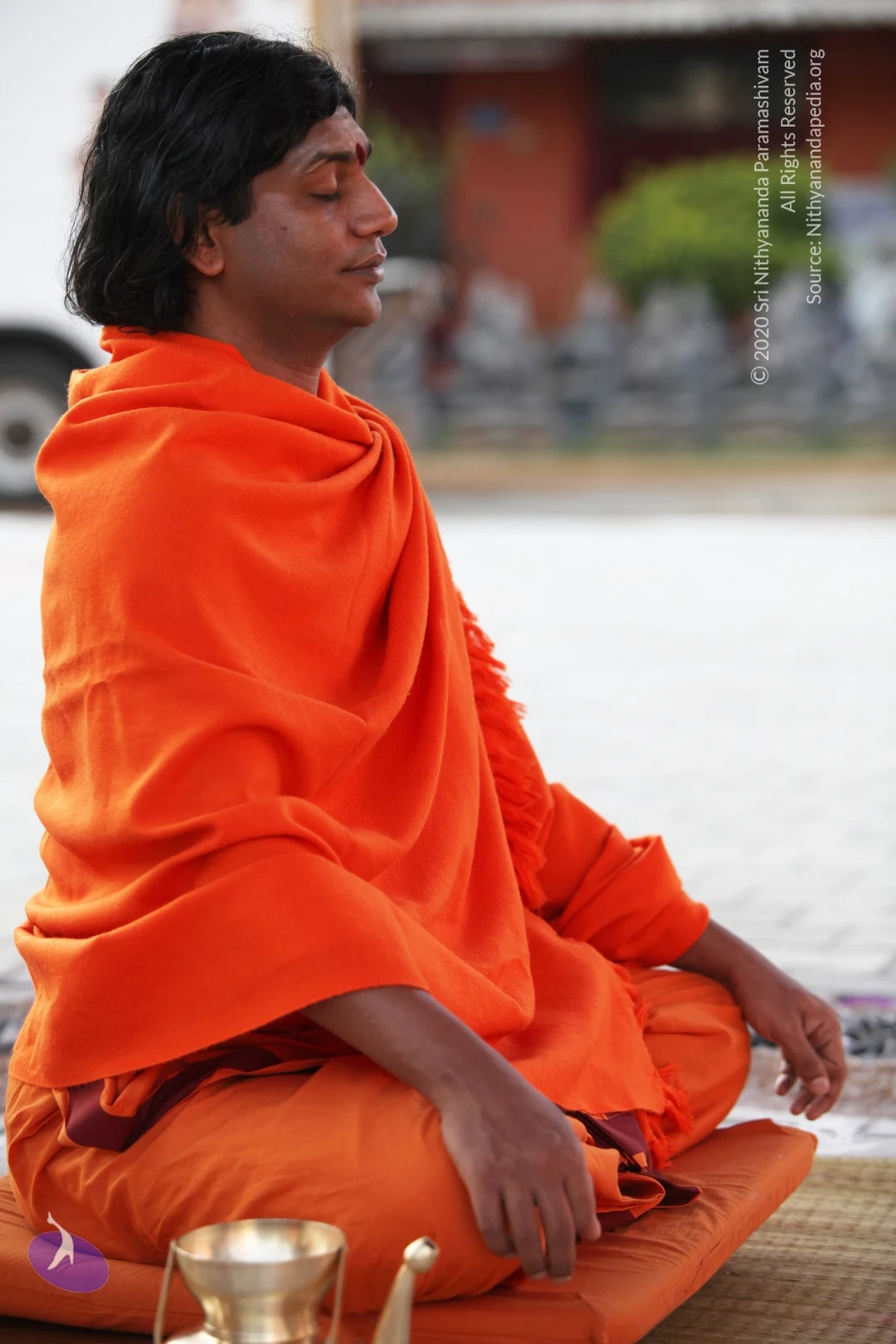
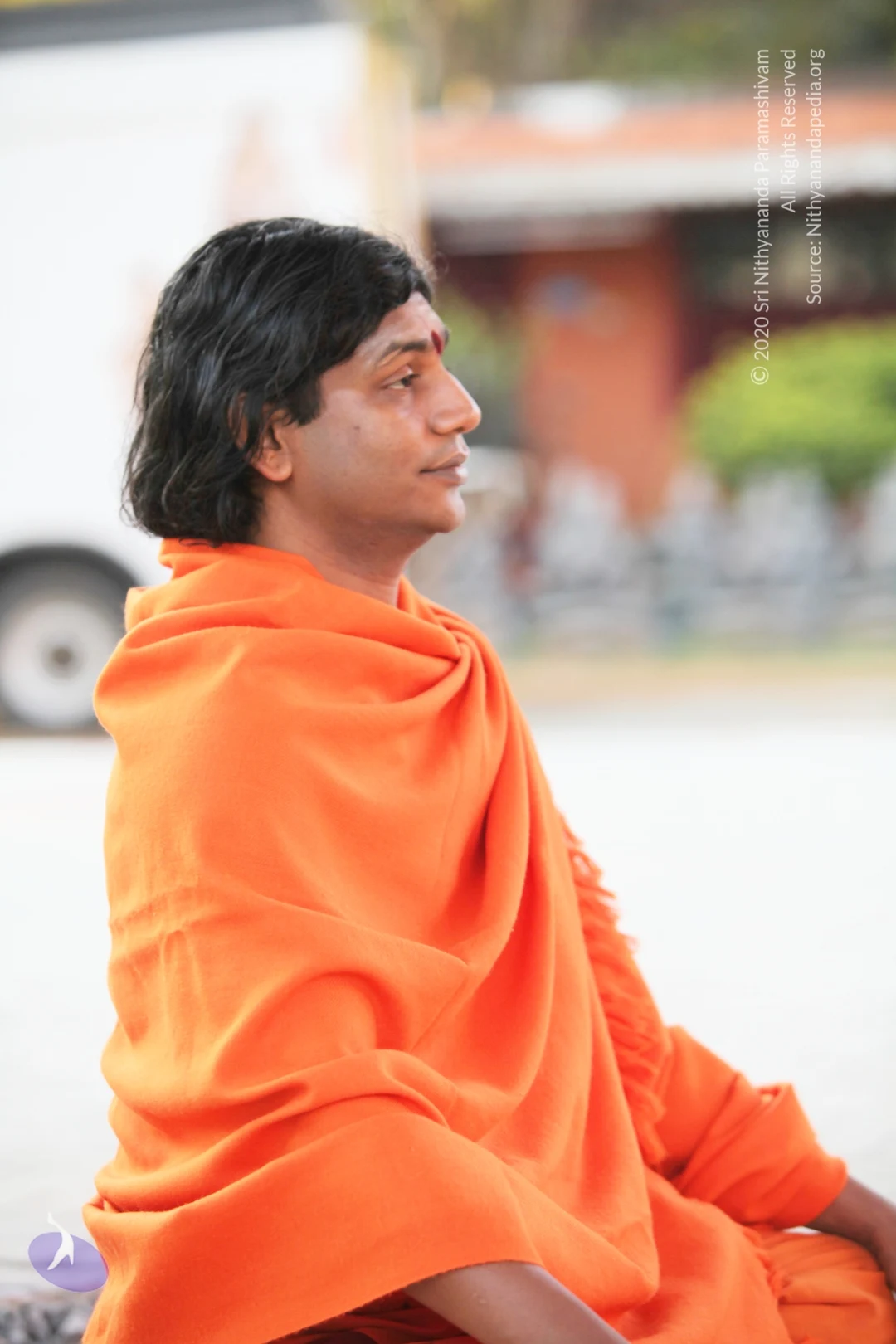
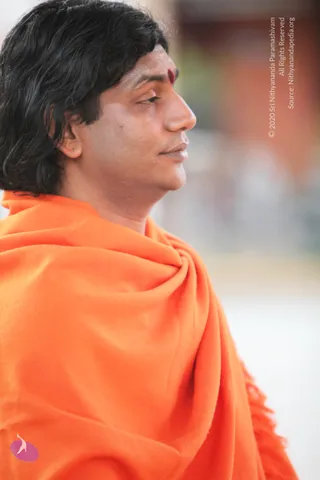
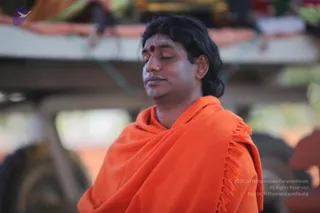
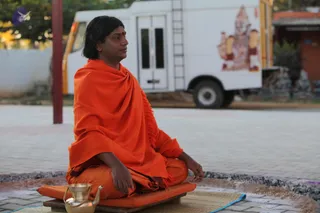
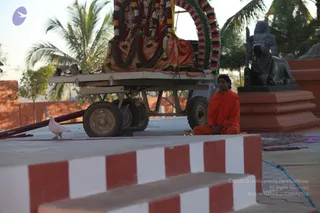
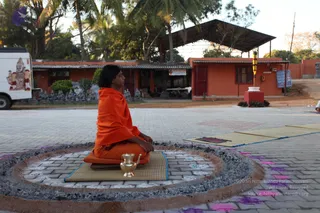
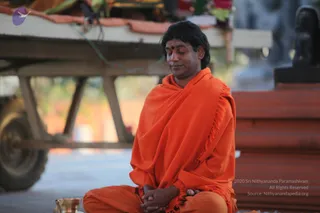
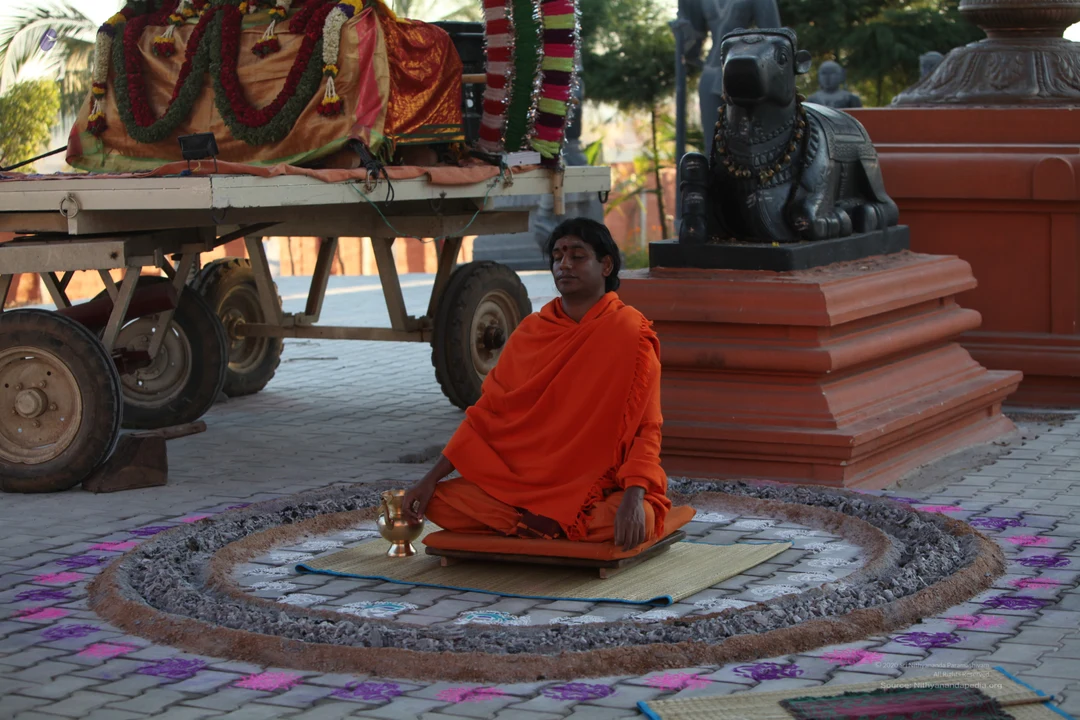
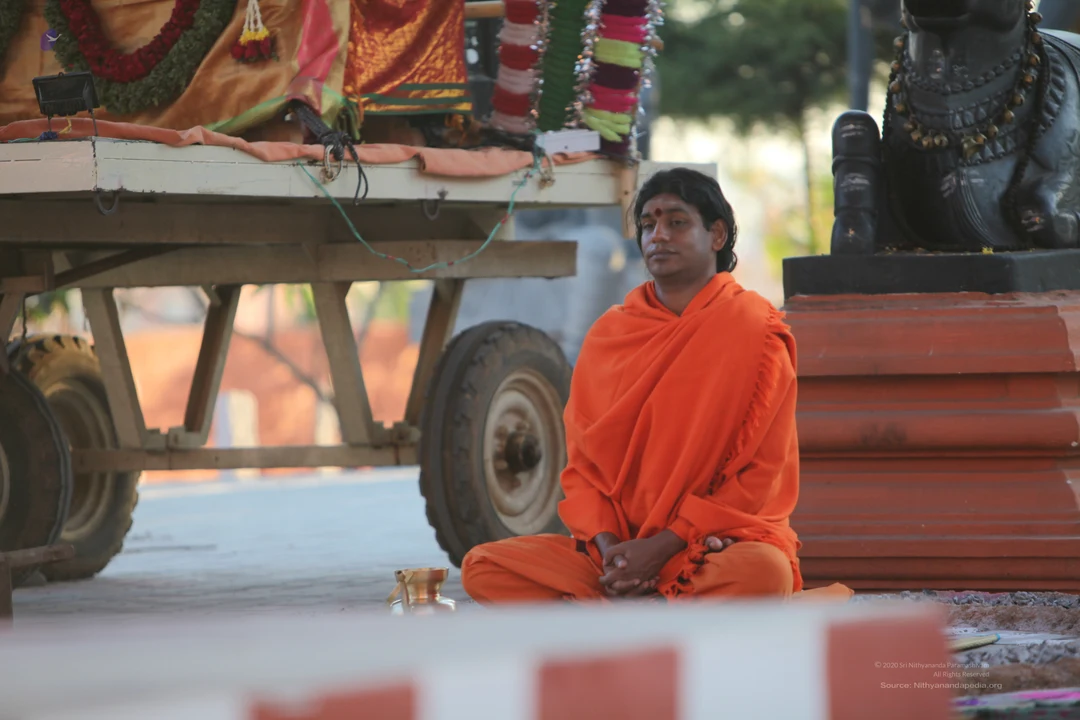
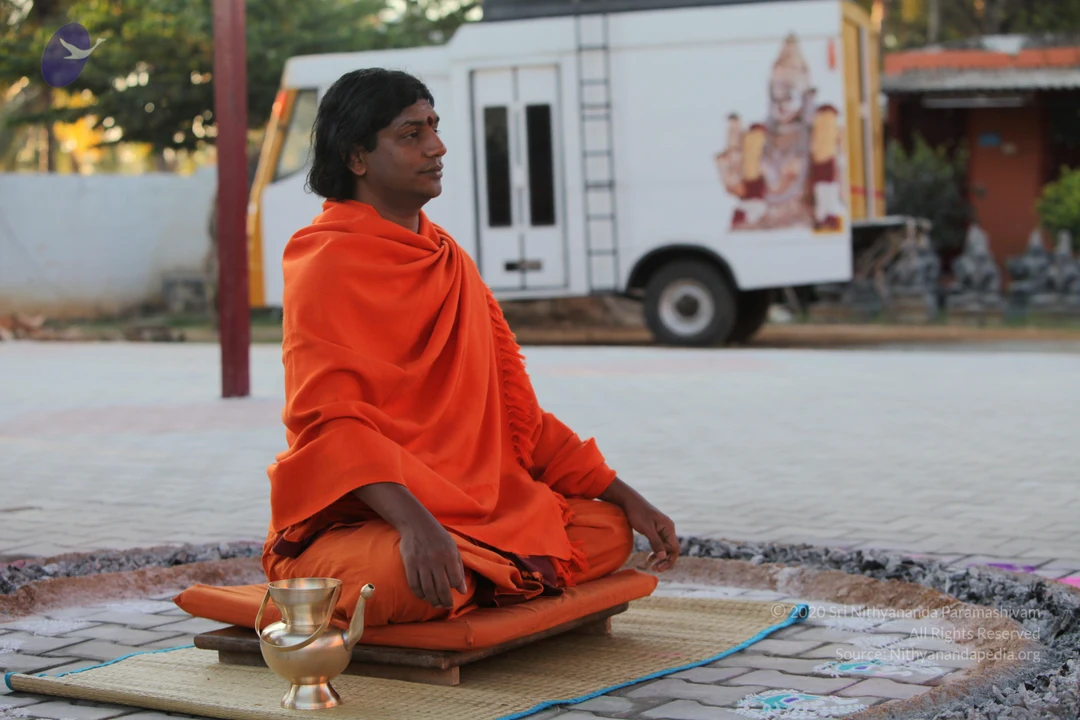
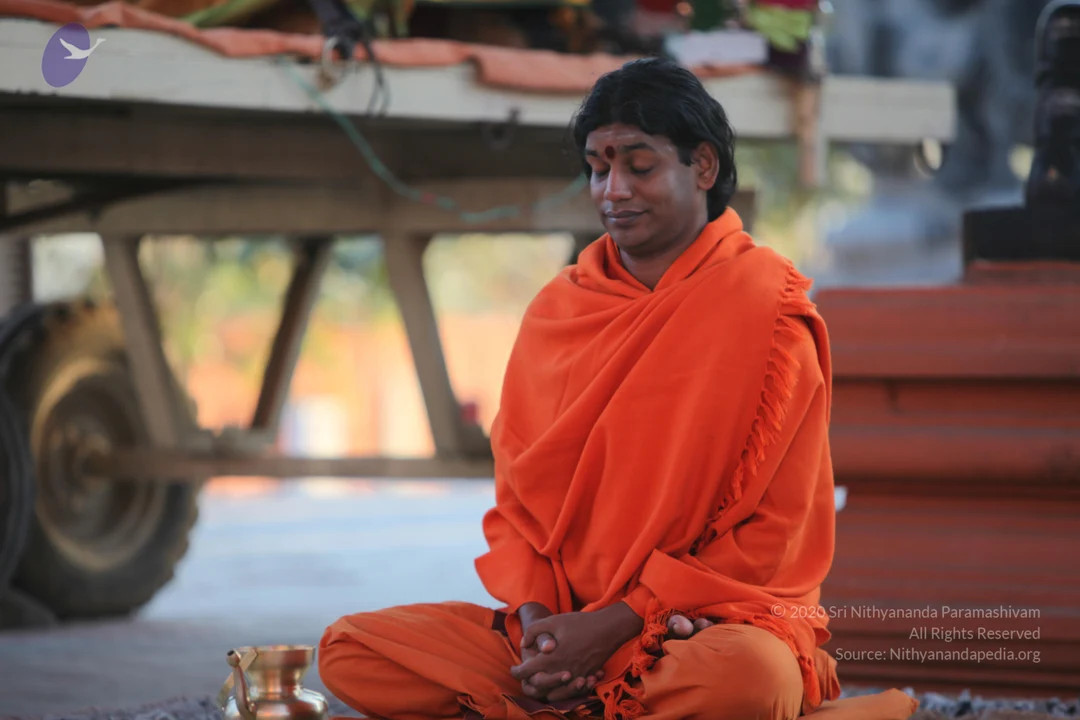
Close profile photograph of a man with shoulder-length dark wavy hair, wearing a bright orange shawl wrapped around his shoulders and upper body. A small red mark is on his forehead, and he looks to the side with a calm, composed expression. The background is softly blurred in warm red and neutral tones. a person: long swept hair and saffron-orange shawl with a forehead mark, shown in profile as a single person.A close photograph of a man with long dark hair swept back, eyes closed, serene expression, and a small red bindi on his forehead. He wears a loose orange-saffron shawl draped over his shoulders with fringed edges. Behind him, blurred orange and white structures and a dark vehicle wheel suggest an outdoor setting.A man with shoulder-length dark hair sits cross-legged on an orange cushion placed on a woven mat over a paved courtyard. He wears an orange-saffron shawl draped over an orange robe and a red tilak on his forehead, looking off to one side. Beside him on the paving stands a polished brass kettle-shaped vessel. Behind him a white van is decorated with a painted deity figure in red and gold, and a red-trimmed structure and greenery are visible at the edge of the frame.A photograph of an outdoor temple courtyard. In the centre-right, a man in an orange-saffron robe and orange dhoti sits cross-legged on a mat, hands resting in his lap, eyes lowered. Behind him stands a wheeled ceremonial cart or ratha on a metal chassis, its raised canopy draped in orange and gold cloth and decorated with garlands of red, white and green flowers, with a deity murti visible beneath the canopy. To the right, a large black stone Nandi bull sits on a tall plinth beside a black stone Shiva figure. A white dove walks on the striped red-and-white steps in the foreground. Palm trees and an orange brick wall frame the background.A seated man in an orange-saffron shawl and orange robe sits cross-legged on a woven mat at the centre of a circular ash-grey fire pit set into a paved courtyard. His long dark hair falls past his shoulders and he gazes to the side. Beside him stands a brass kalasha-style pot with a spout. Surrounding the pit are white and pink floral kolam patterns on the pavers, and woven mats are laid out to the right. Behind him are orange-walled buildings, a palm-shaded open shed, a white van painted with a deity image, and rows of small white statues along a wall. A probable Swamiji identification is based on his long hair and saffron clothing; he is seated in a ritual courtyard setting.A seated man meditates with eyes closed, hands folded in his lap, wrapped in a flowing saffron-orange shawl over saffron-orange robes with a red bindi on his forehead and dark hair falling to his shoulders. Behind him stands a wooden cart or chariot with large wheels and a dark wooden structure at right, and a small brass vessel sits at lower left. The outdoor setting suggests a meditation or satsang session.
3-Pada-Puja
25 photosSource gallery
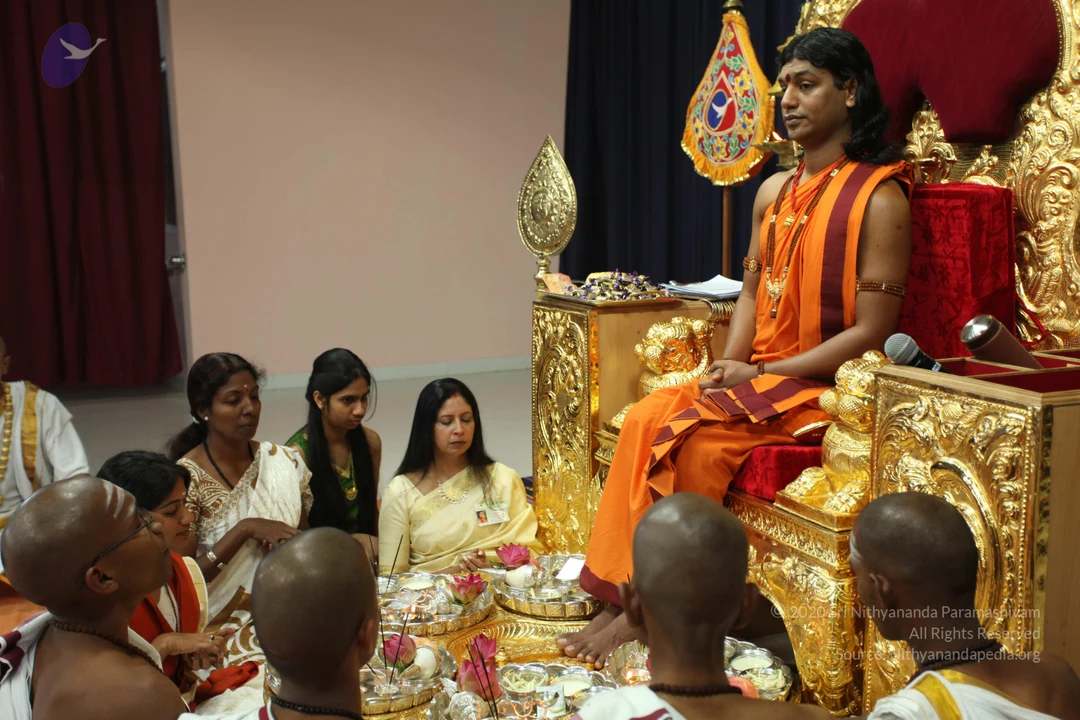
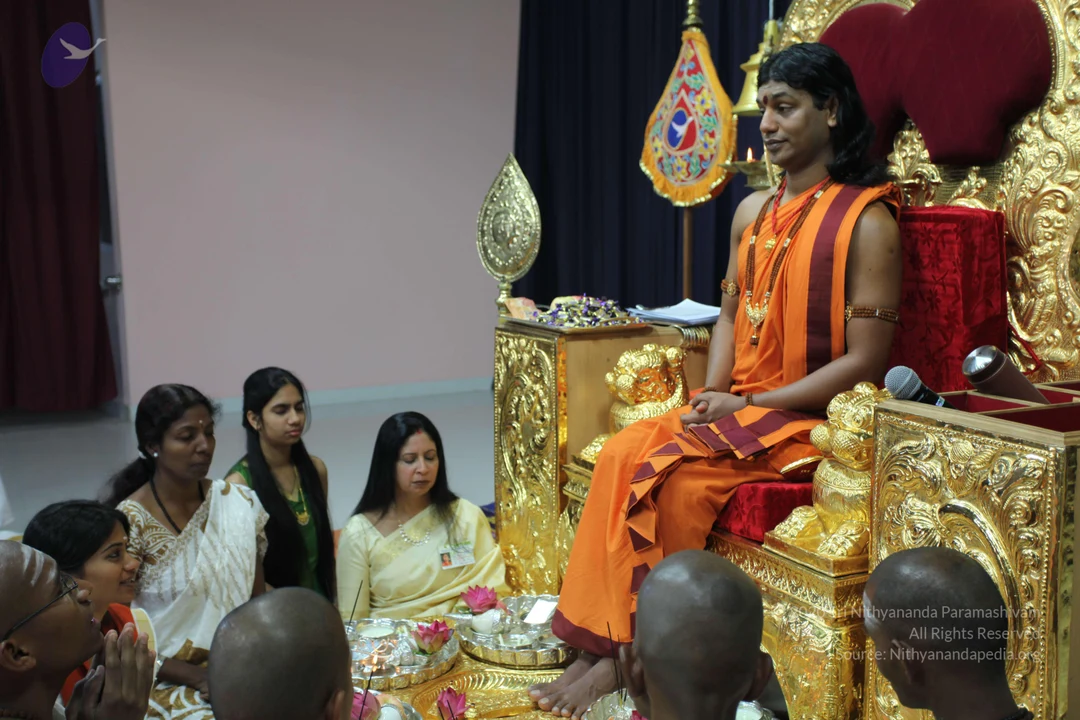
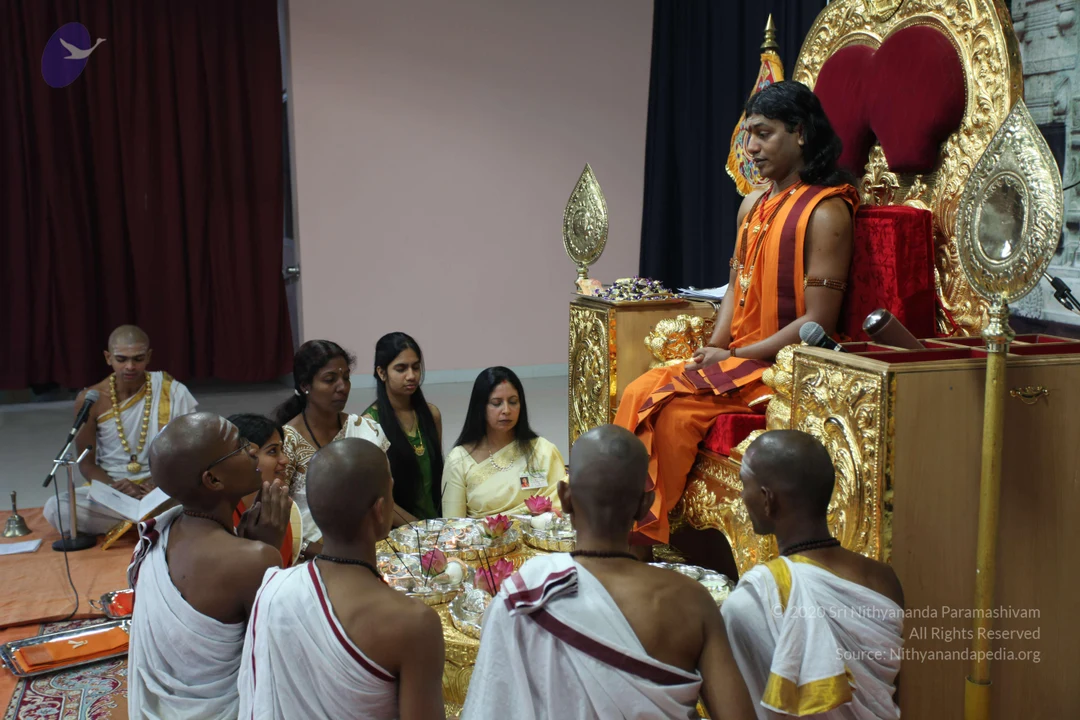
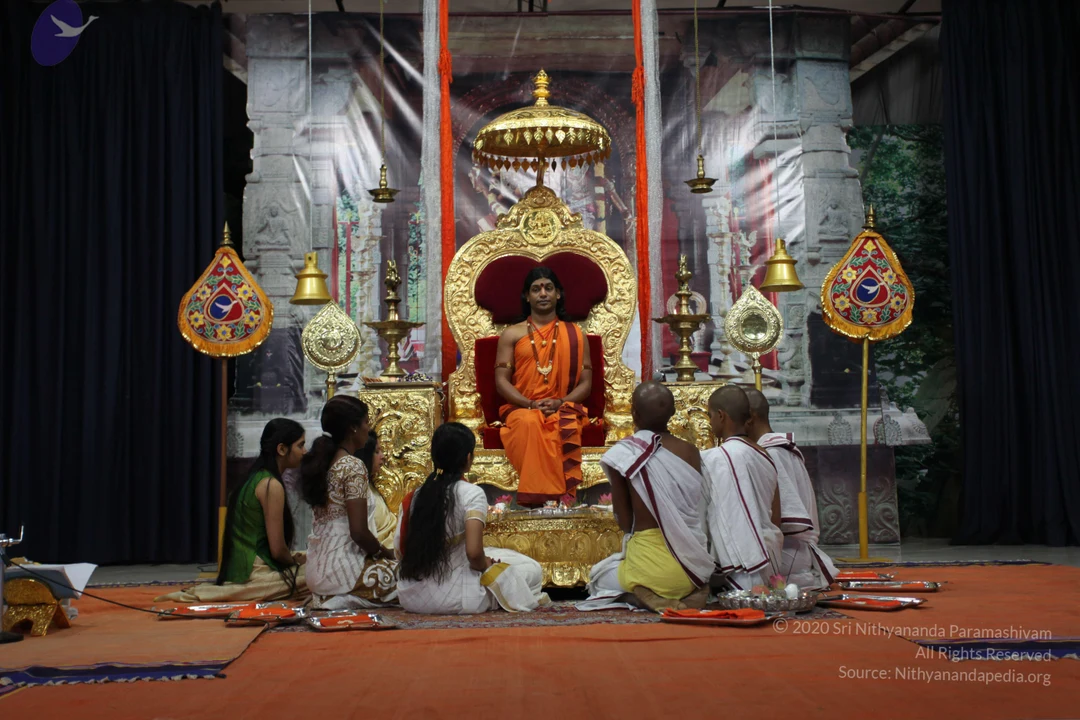
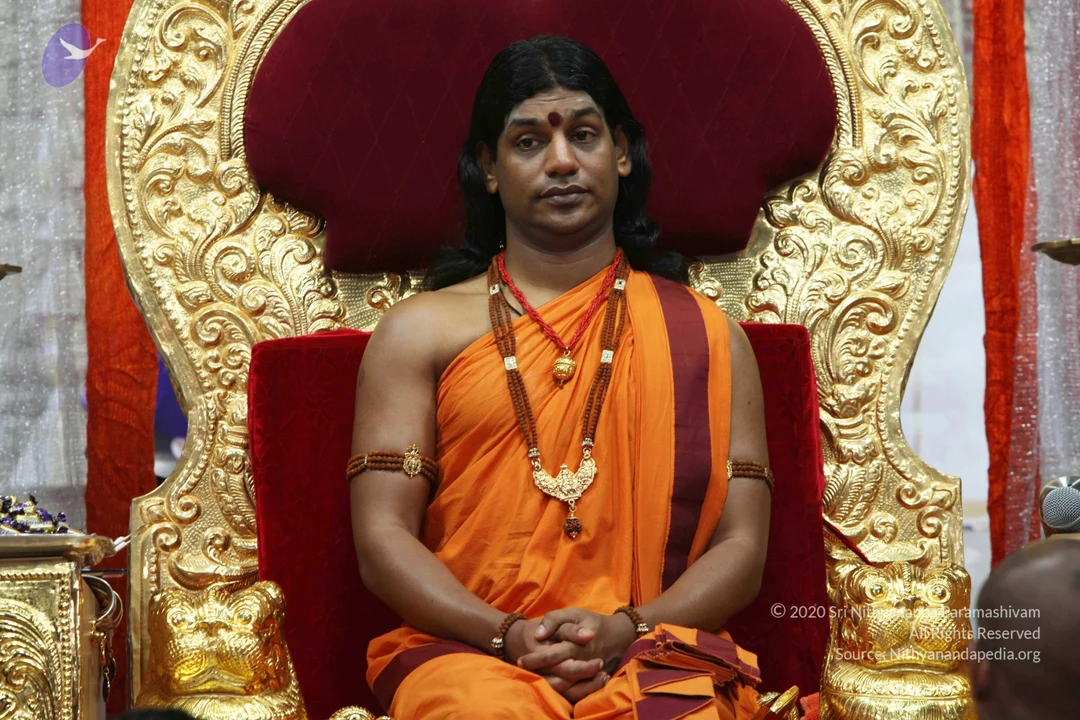
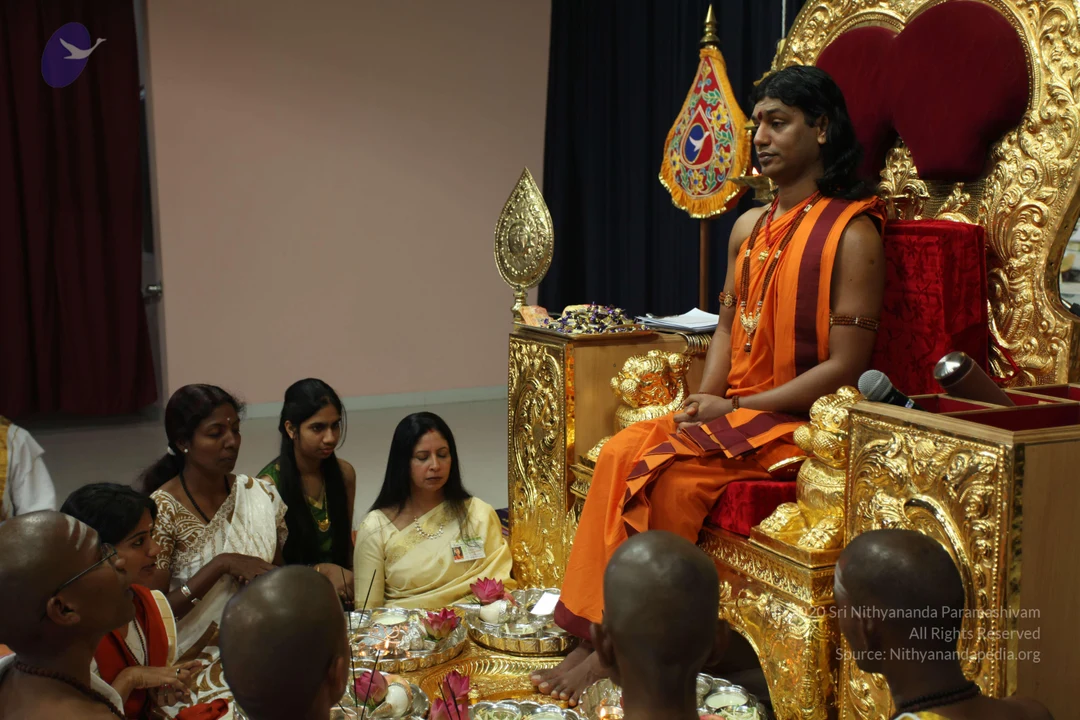
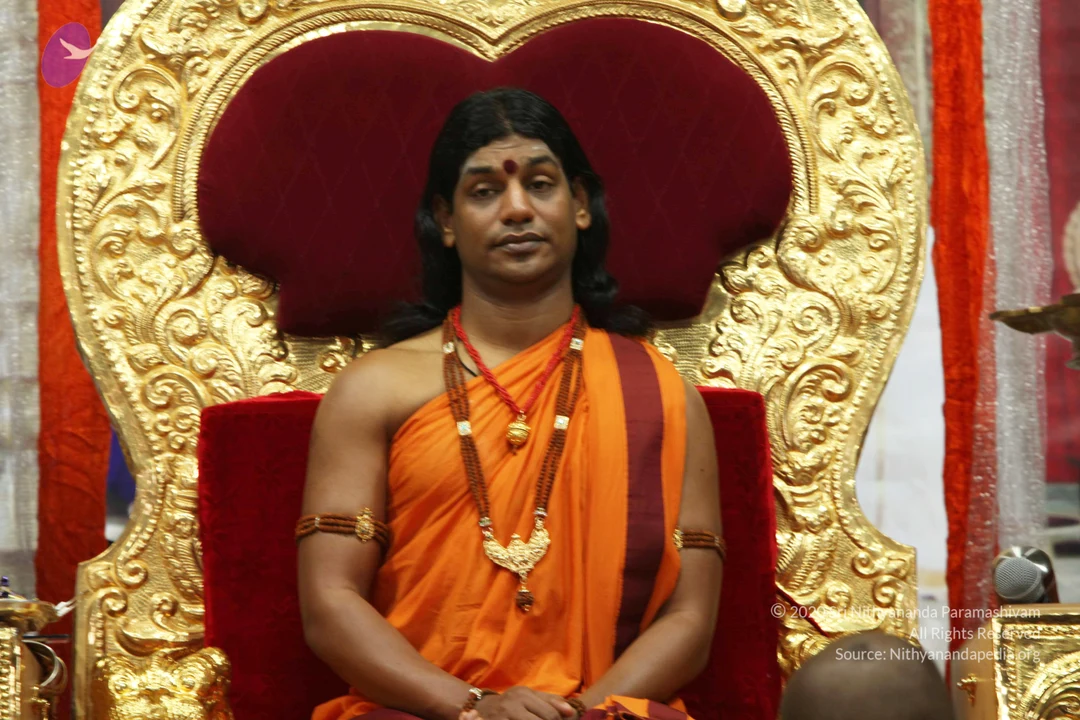
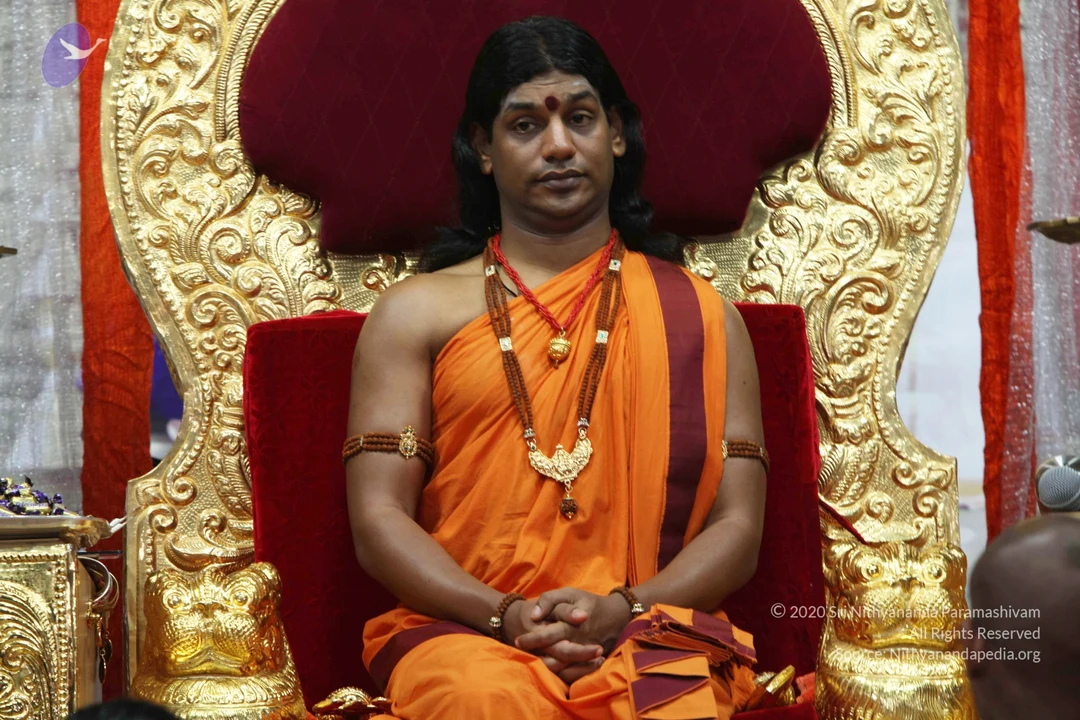
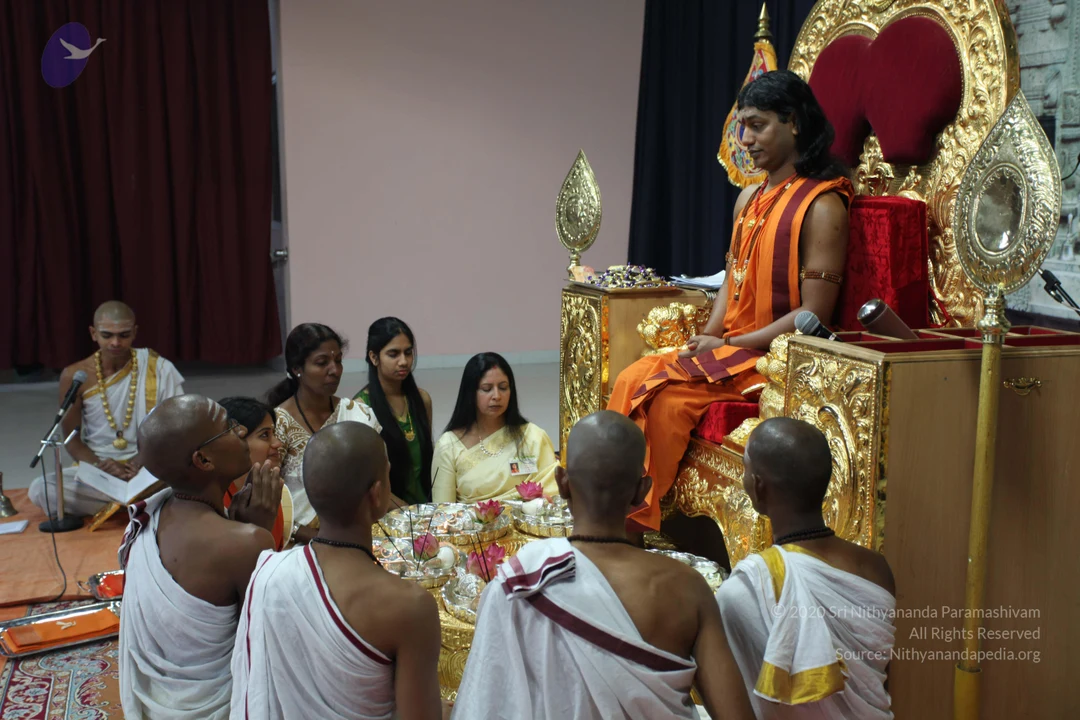
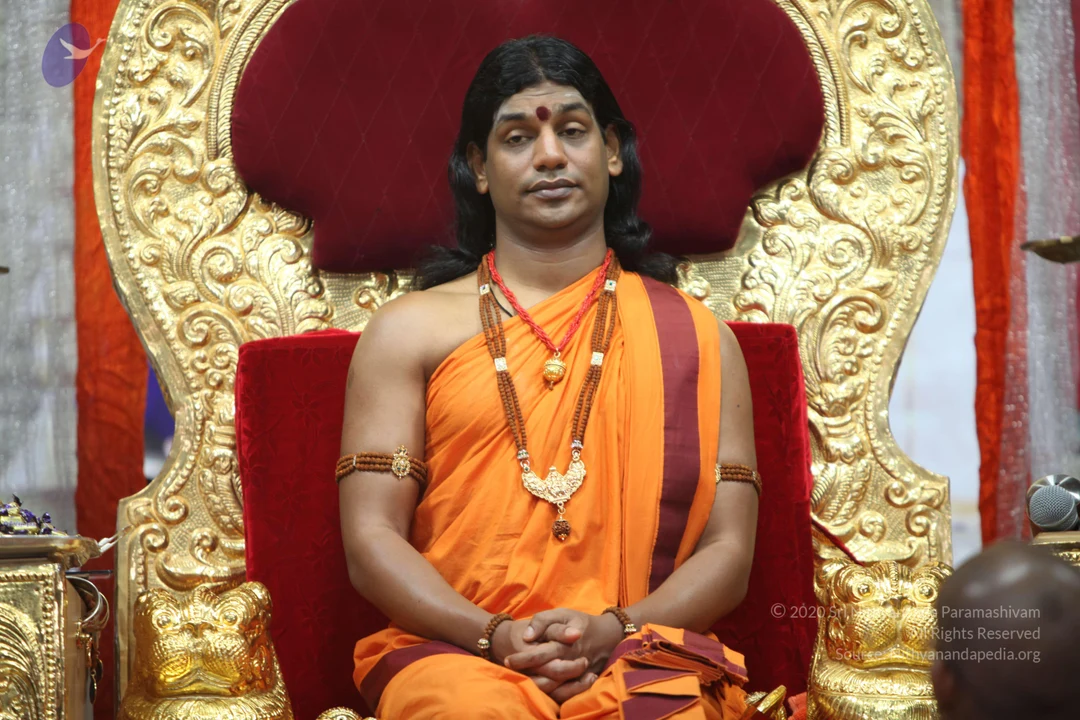
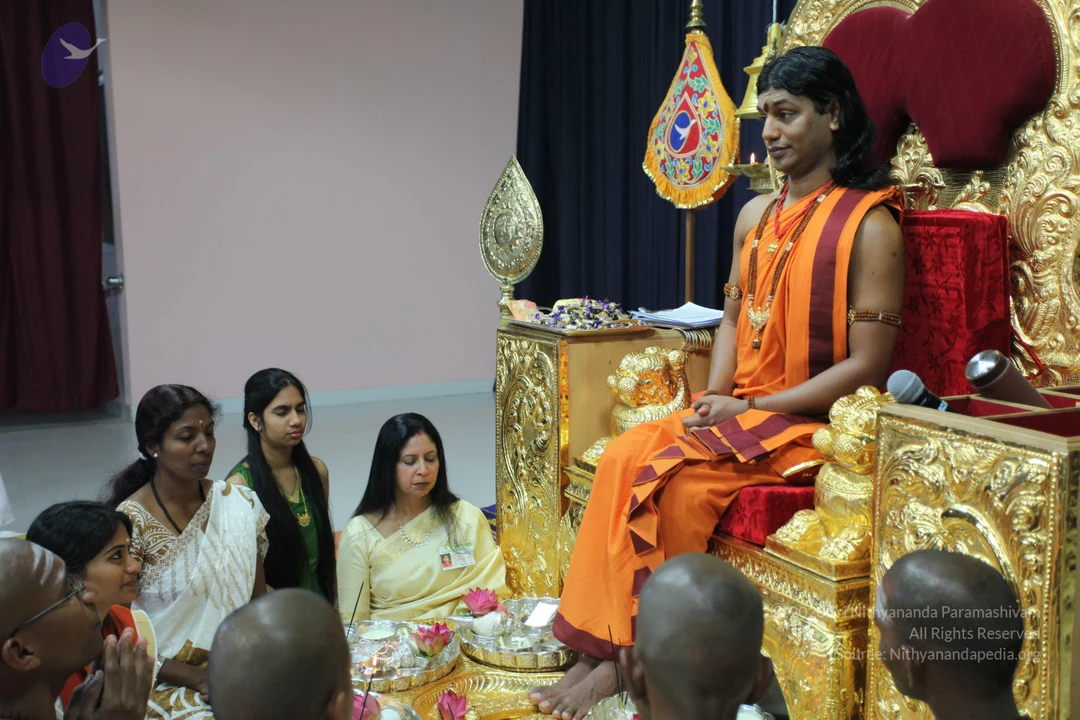
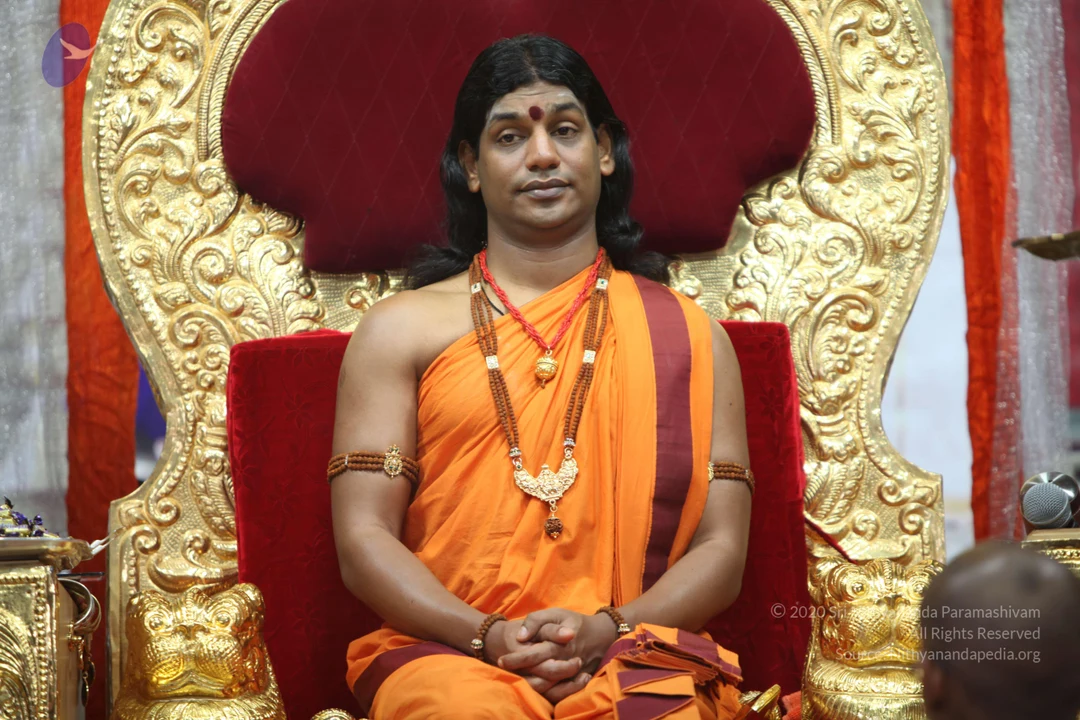
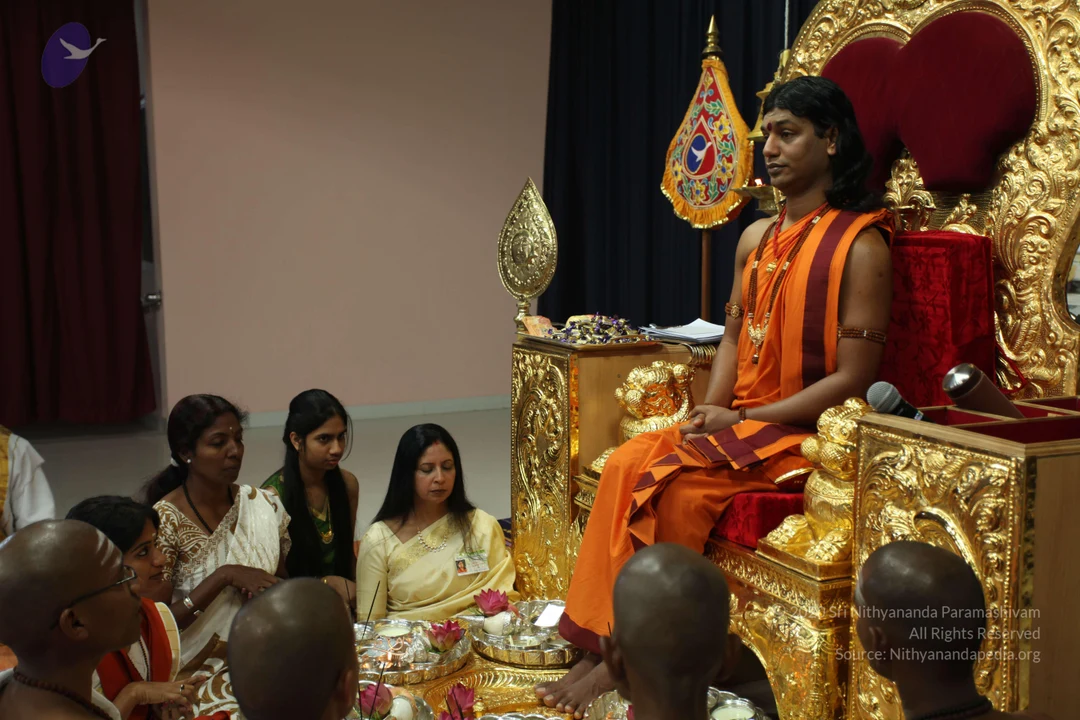
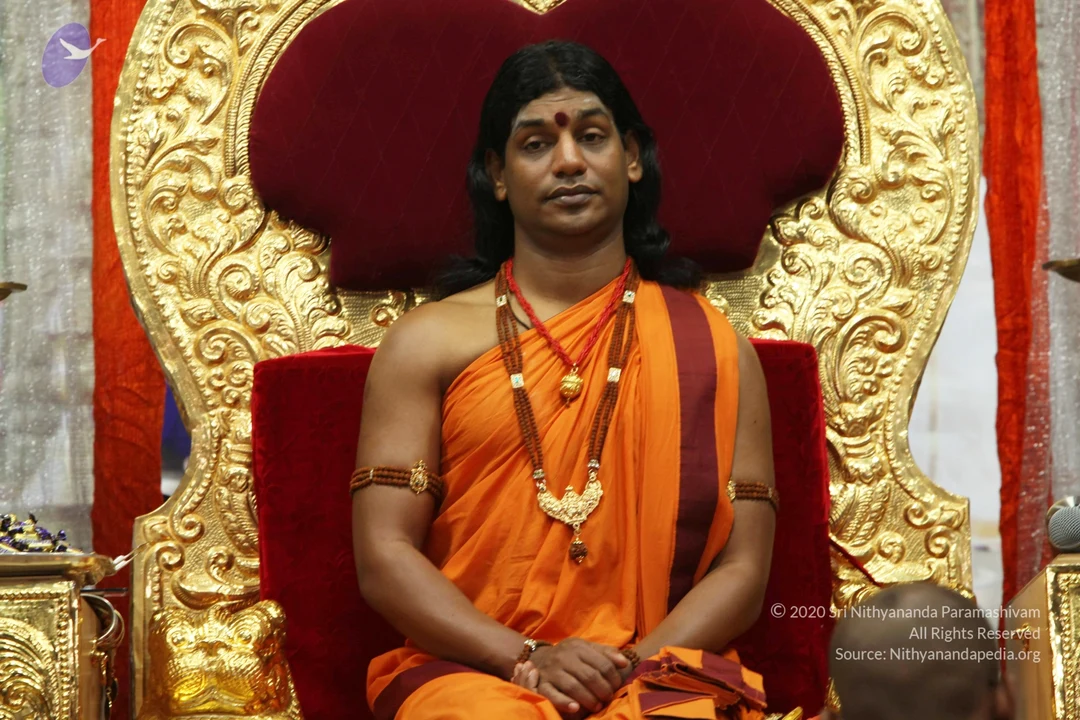
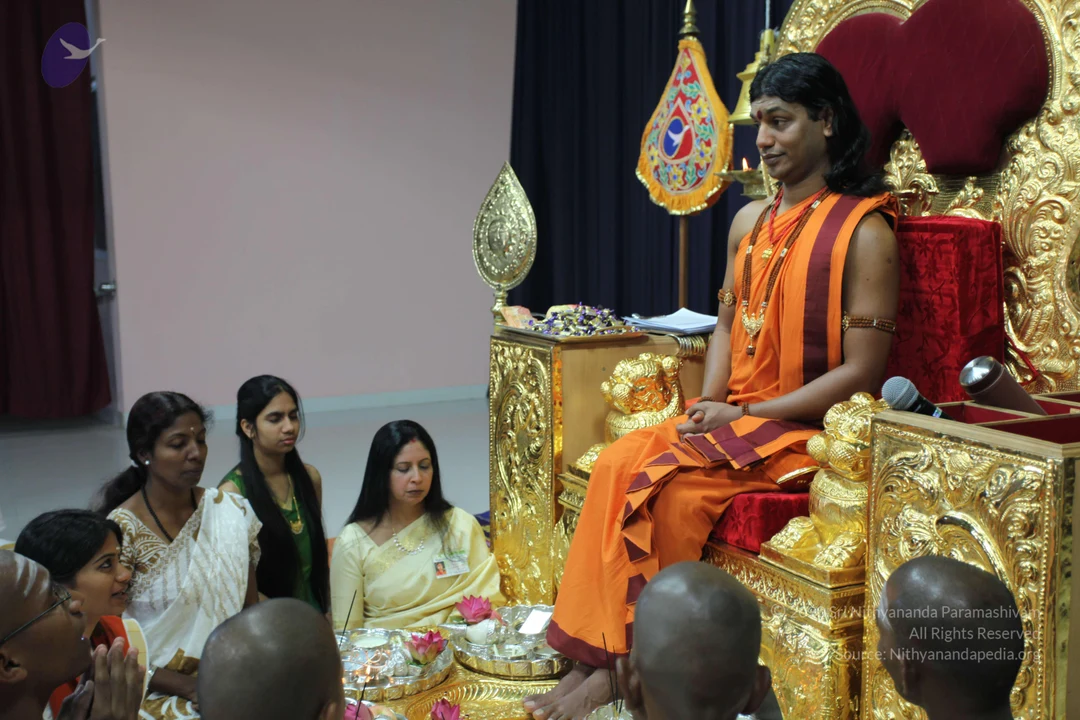
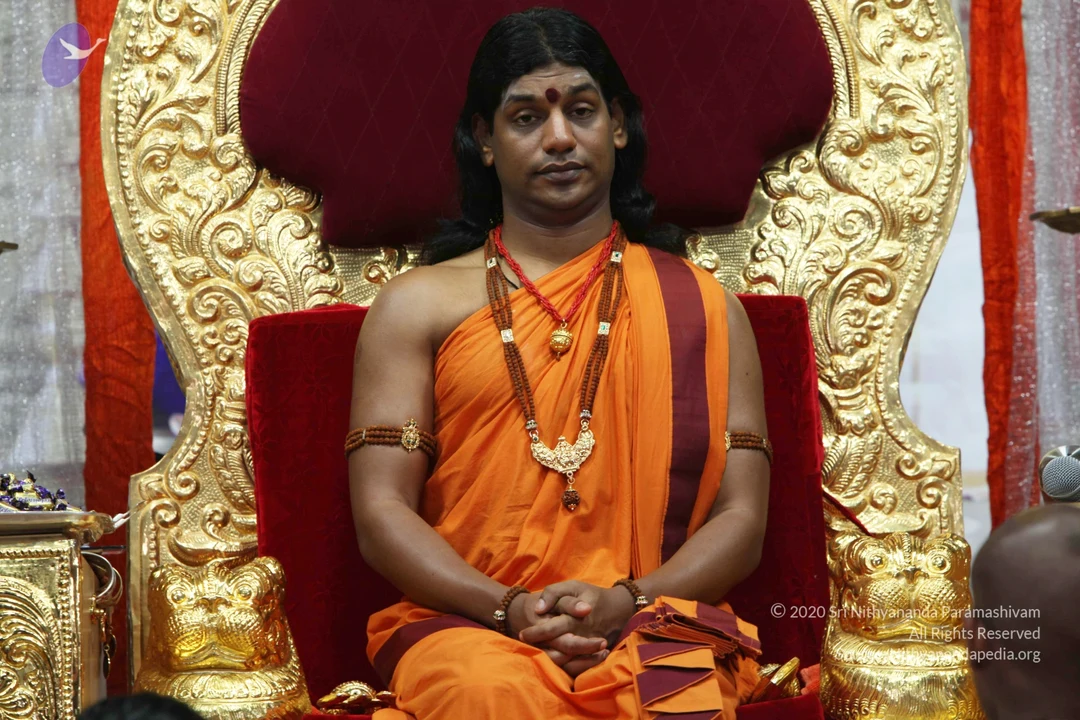
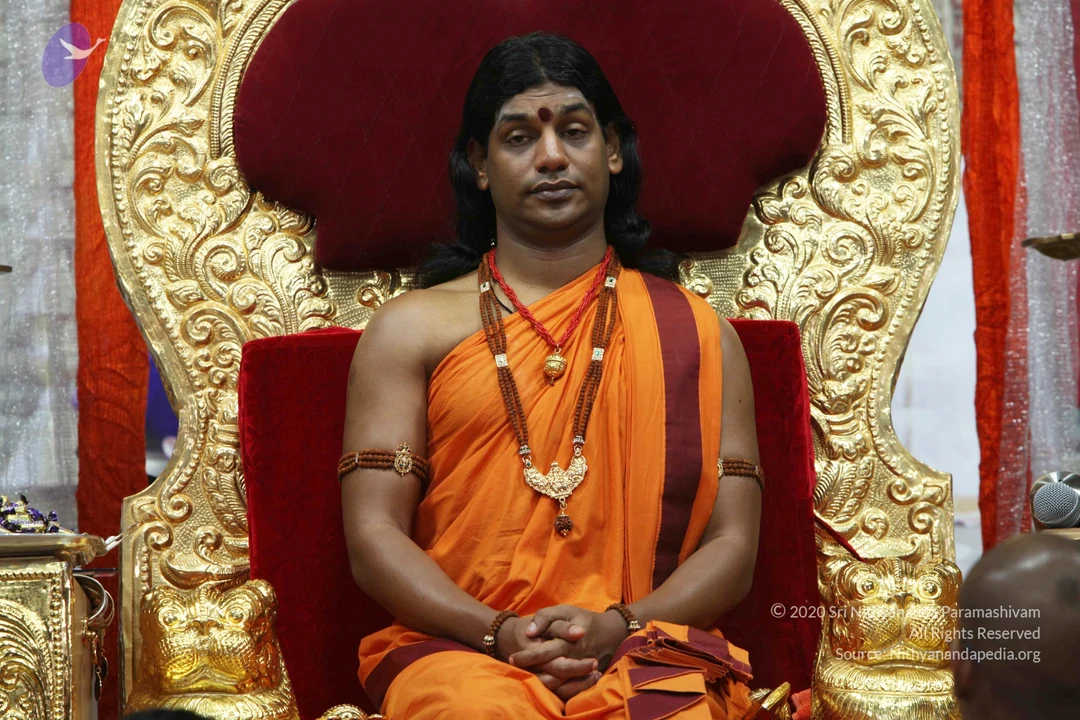
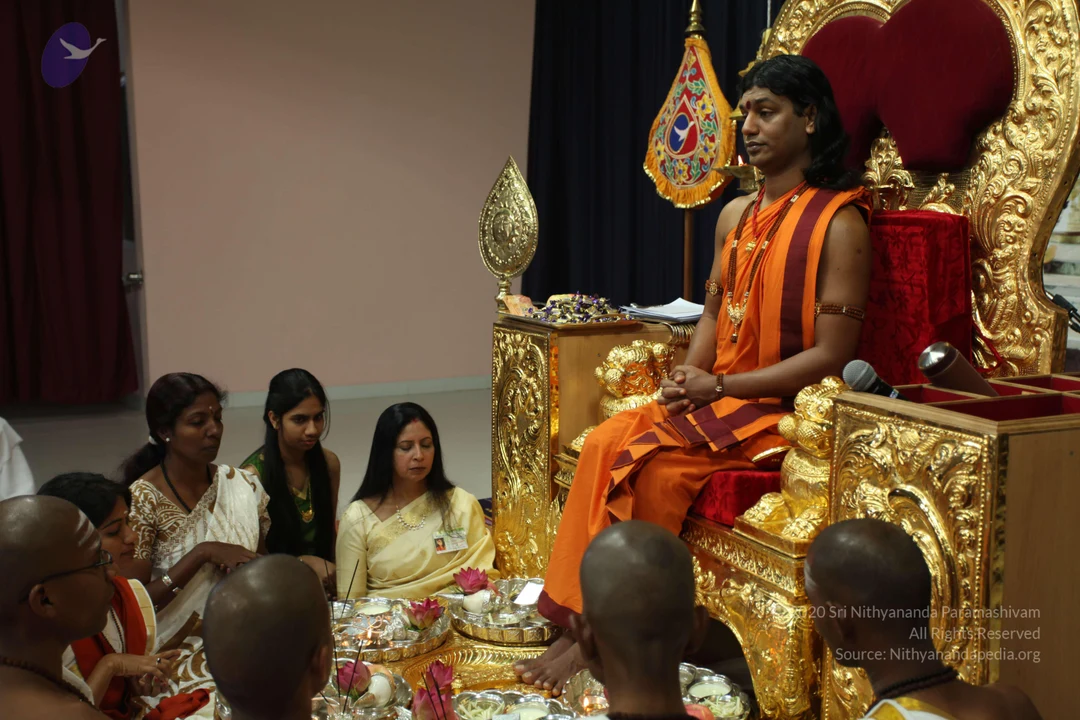
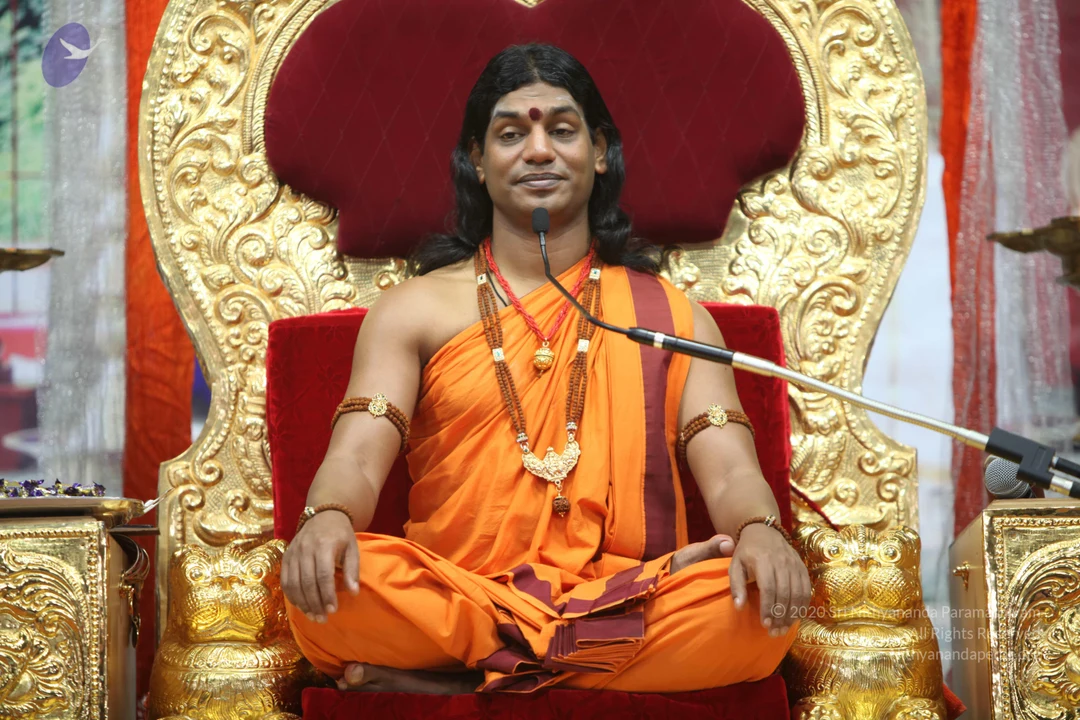
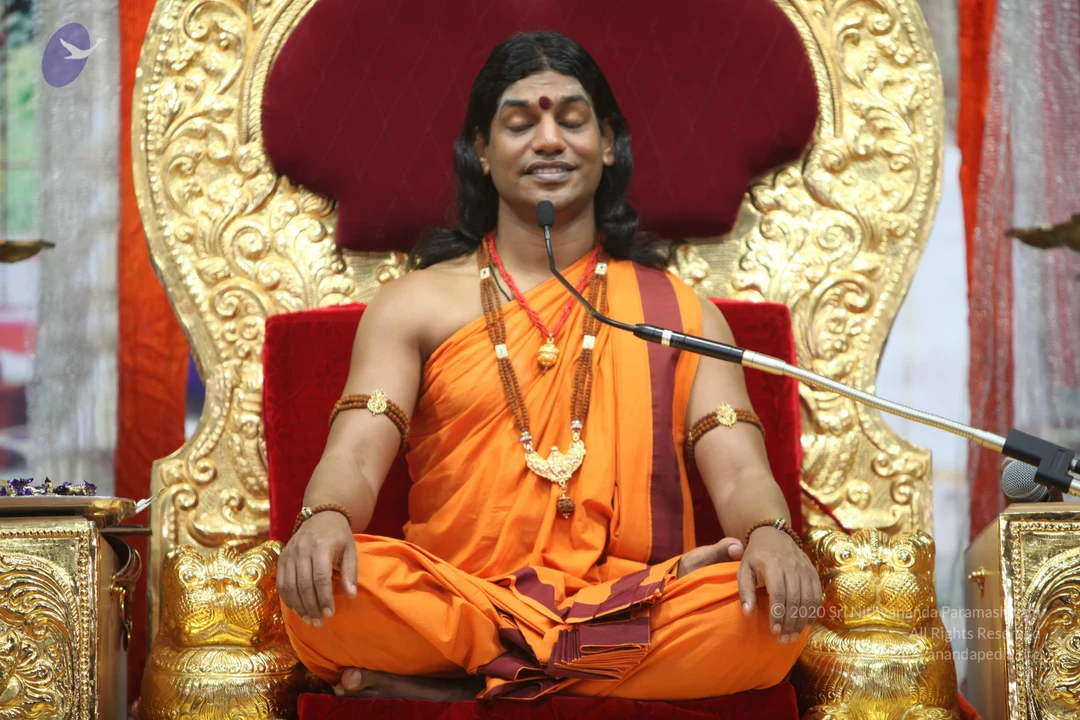
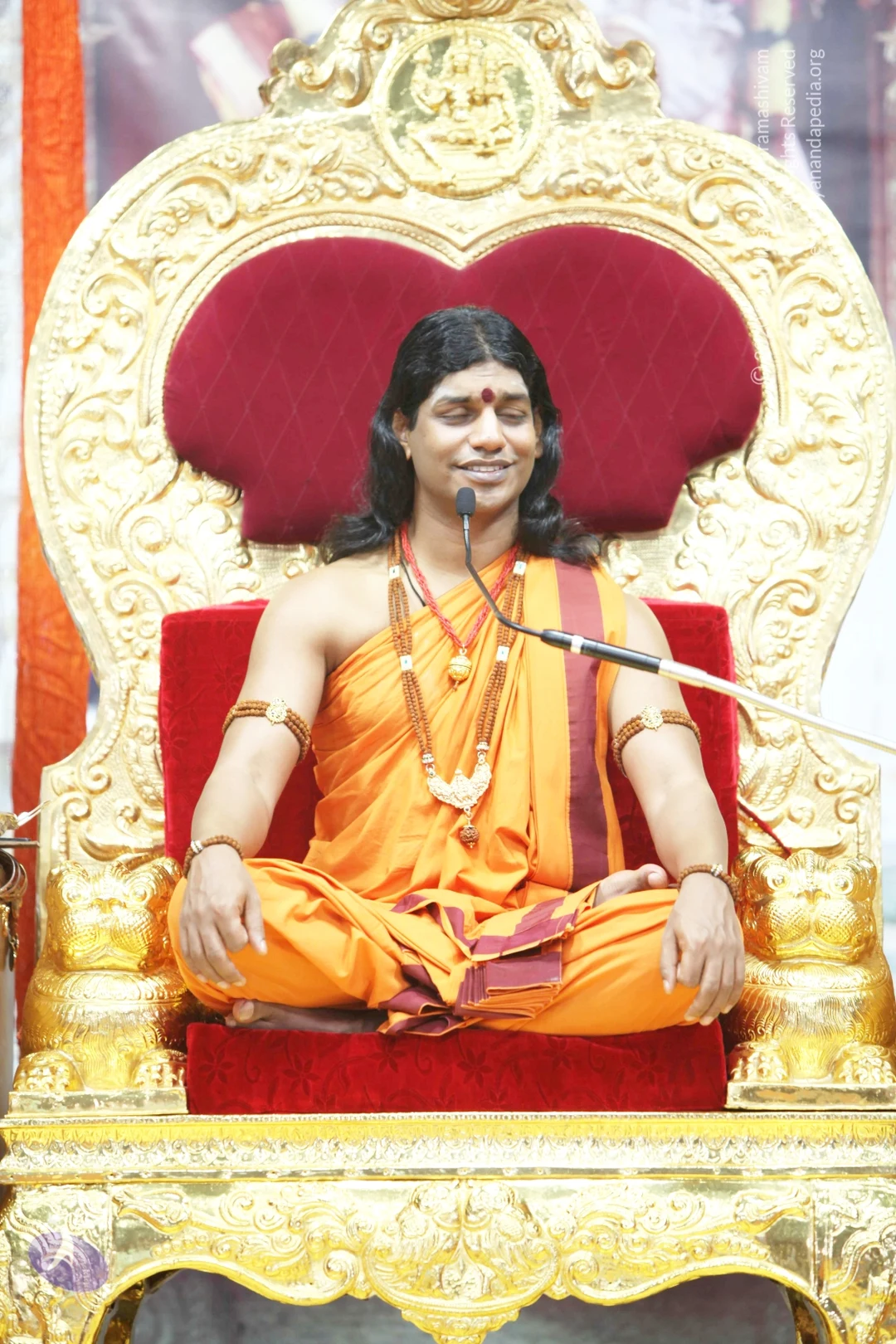
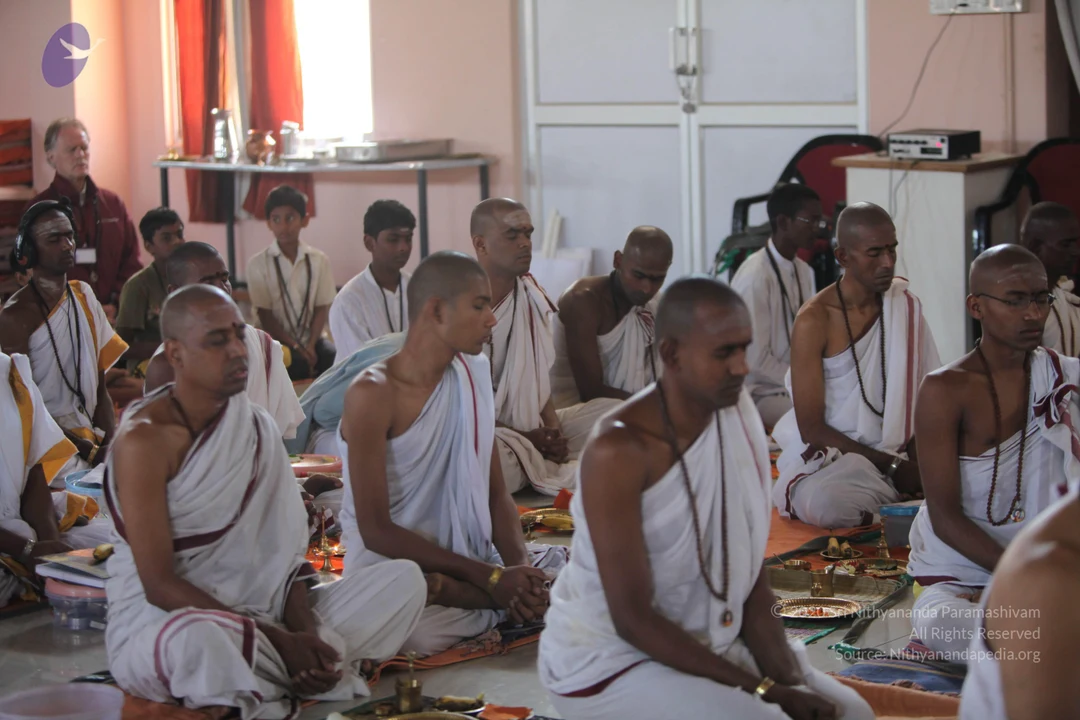
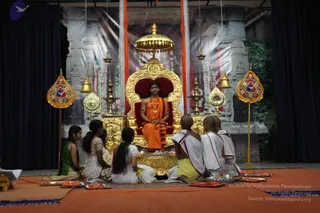
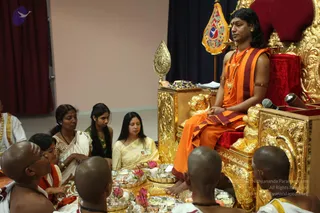
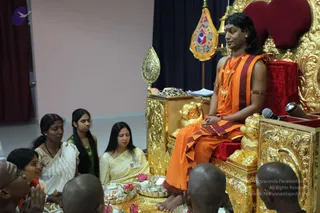
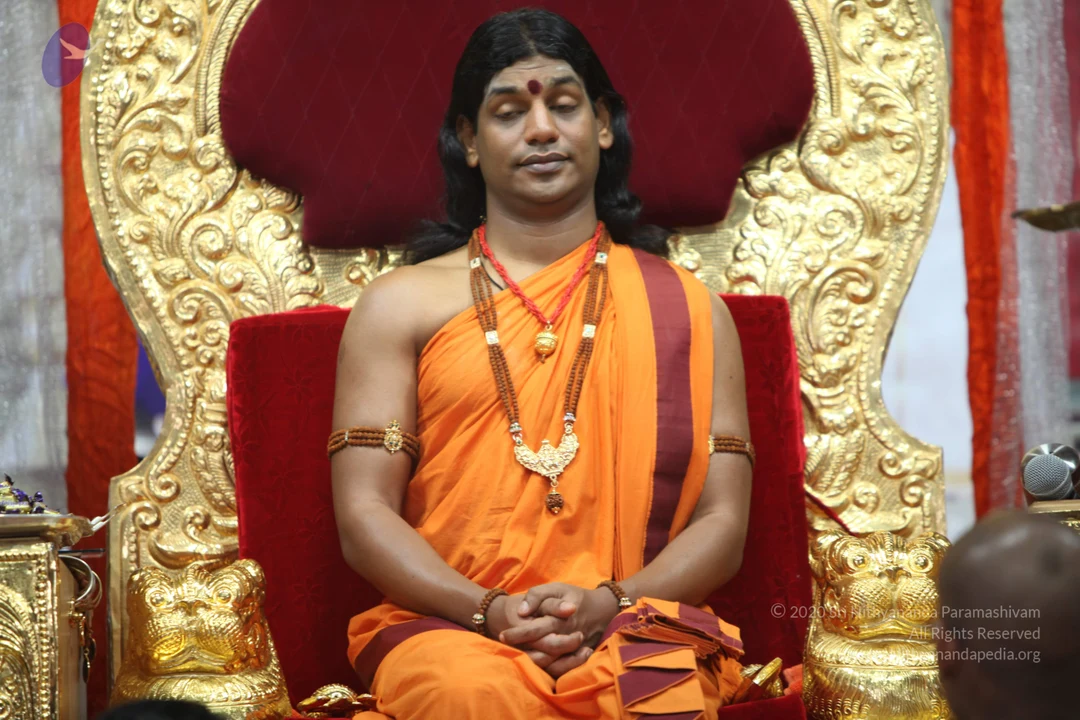
A man with long dark hair sits with eyes closed on an ornate gilded throne with a deep red cushioned seat and carved lion-head armrests. He wears saffron-orange robes with maroon borders, a red bindi, a red beaded necklace, a golden pendant, multiple rudraksha malas, and rudraksha armlets. His hands rest folded in his lap. Orange and red drapes hang behind him, a microphone stands at right, and the blurred head of an audience member appears in the lower right corner.A photograph of a seated figure on an ornate gold throne with a red cushioned seat and a golden canopy, dressed in saffron-orange robes with a rudraksha mala and gold necklace. Before the throne, several people sit on orange floor mats: a girl in green, young women in white and cream dress, and boys in white dhotis with yellow and red borders. Brass oil lamps, bells and a metal offering plate stand on the platform, and gold-and-red ceremonial umbrellas flank the stage. The backdrop shows a painted temple pillar scene. The figure's identity is uncertain from appearance alone.A photograph of a seated ritual gathering indoors. A man with long dark swept-back hair wears an orange saffron garment with a maroon-and-gold sash, layered beaded necklaces, and gold armbands, seated on an ornate gold-and-red throne with a microphone nearby. Before him, shaven-headed priests in white and orange clothing sit on the floor around silver and brass trays holding pink lotus flowers, offerings, and small oil lamps. Several women in saris, one in white with gold trim and others in green and cream, sit with hands folded in devotion. A gold kalasha finial and a yellow-and-red embroidered banner stand behind the throne against a plain pink wall and dark curtains.A seated man with long dark hair, wearing an orange and maroon sash, rudraksha mala and gold necklaces, sits on an ornate gold and red velvet throne with a gold lion-shaped armrest, speaking to a small seated audience. Swamiji (probable) is shown in an appearance-based label as a teacher on the throne, with long swept-back hair, saffron clothing and rudraksha beads. Around him, women in white, cream and green saris sit on the floor, and shaved-headed devotees sit in the foreground. Brass plates with lotus flowers, a kalasha-style gold vessel and a microphone stand are arranged in front of the throne, with an orange and gold ceremonial banner behind.A photograph of a seated man on an ornate gold-carved throne with a deep red velvet back and seat. He wears saffron-orange robes with a maroon-striped shawl draped over one shoulder, long dark hair, a red bindi, a red beaded necklace, a dark rudraksha mala, a large gold pendant necklace and gold-and-red armbands. His hands rest folded in his lap. Behind him hang red and sheer silver draperies, and a microphone stands at the right edge. A small white bird logo appears in the upper left corner. a person seated in ceremonial dress on the throne; the figure is shown in appearance-based terms only.A seated figure on an ornate gold-and-red throne with a carved golden backrest, dressed in saffron-orange robes with a saffron shawl and ceremonial gold necklaces, speaks into a microphone. Before him, a group sits on a rug: shaved-headed men in white dhotis with red and gold borders, a woman in a yellow sari, and younger women in green and white. Silver and gold offering plates with pink lotus flowers sit in front of them, and a gold-handled ceremonial staff stands at right beside the throne. A bell and a microphone stand are on a low table at left. A person in white with a gold-bordered shawl sits behind a lectern. The figure on the throne has long swept-back hair and distinctive ceremonial adornments, which matches a person presence, though his appearance is only partly visible.

4-Morning-Satsang
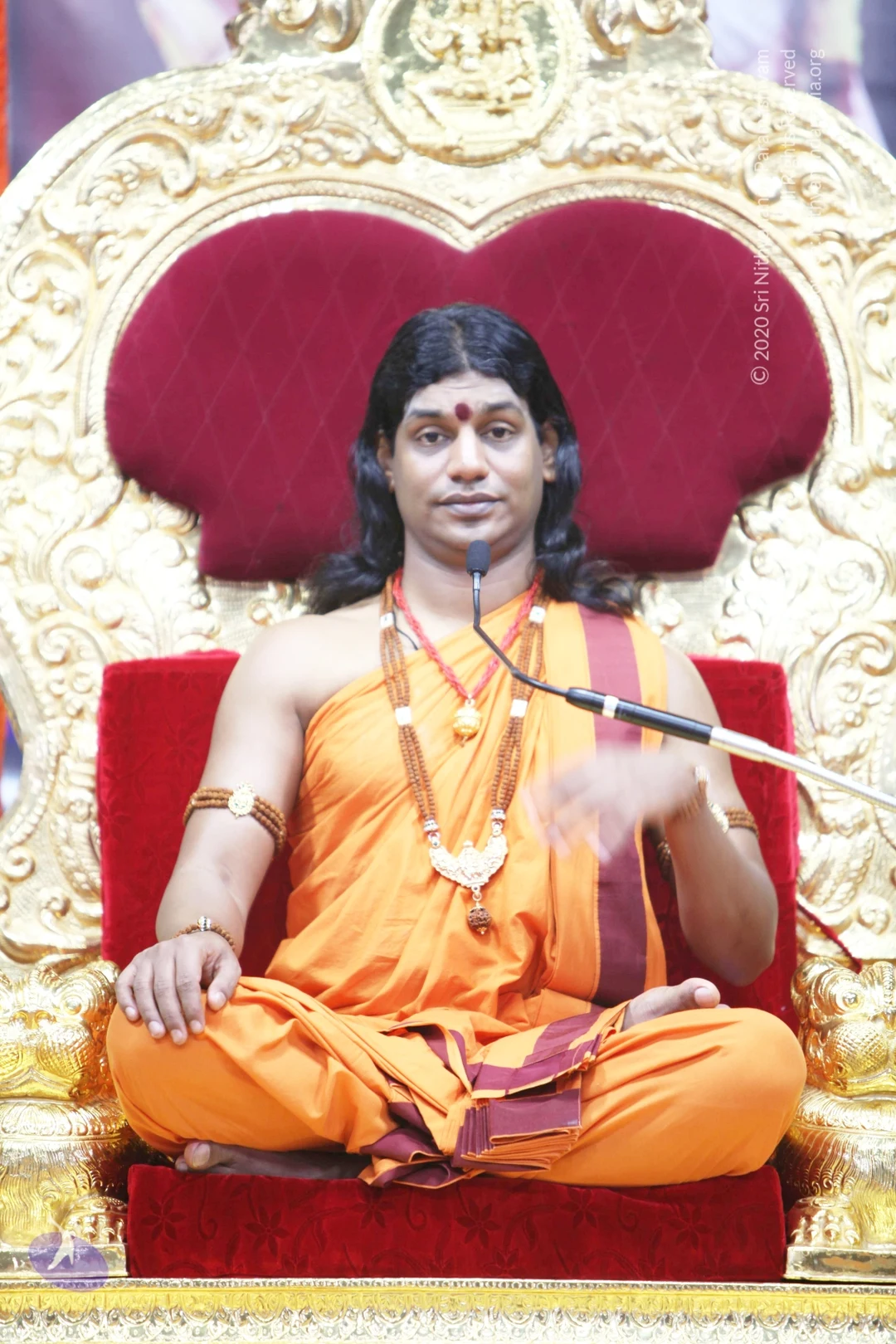
174 photosSource gallery
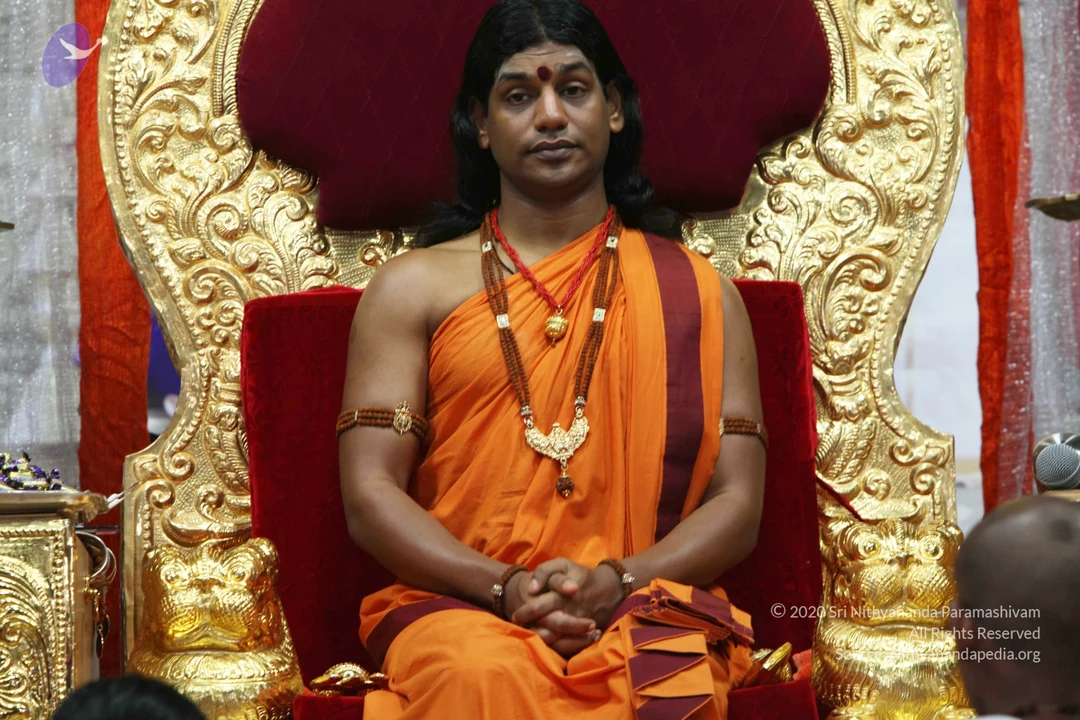
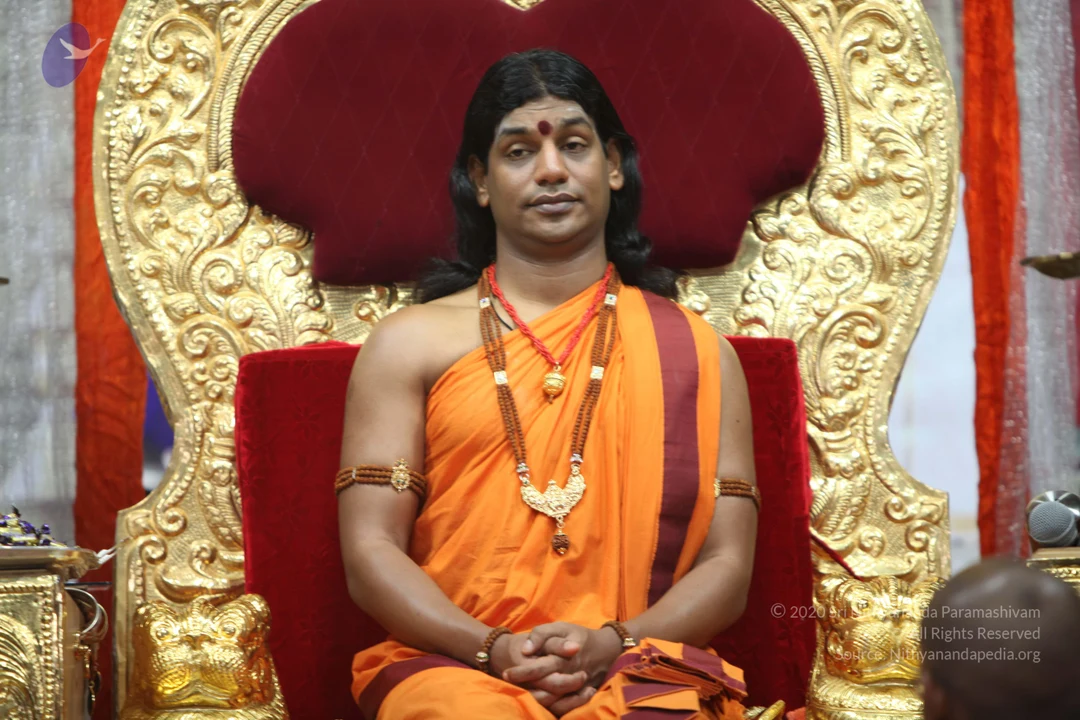
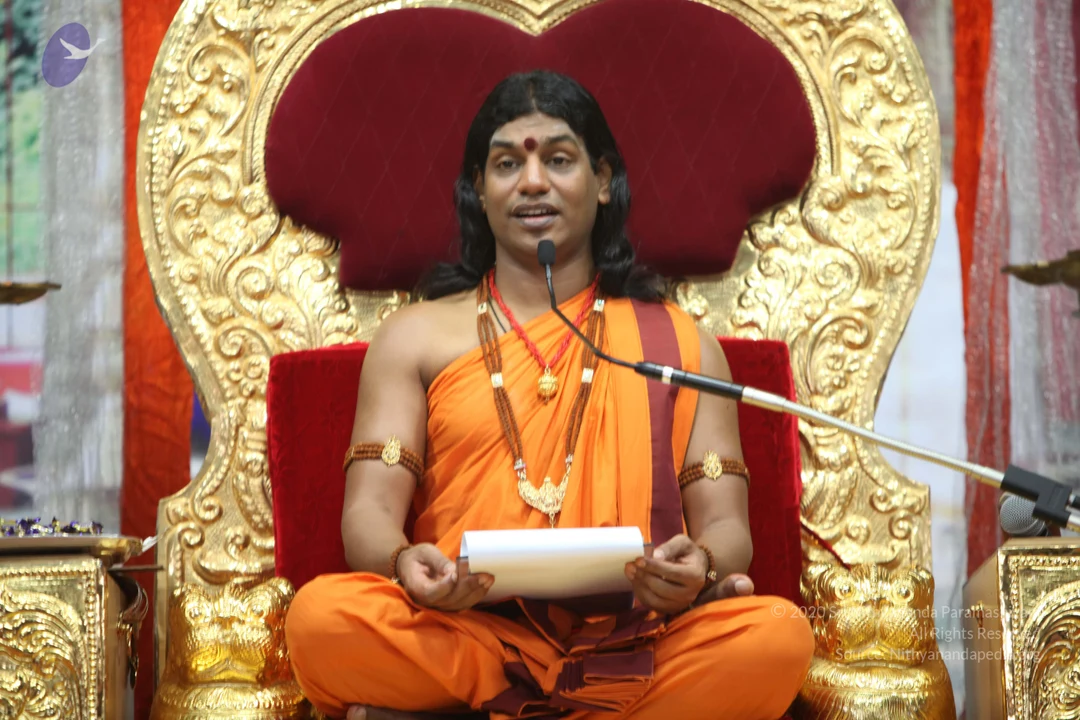
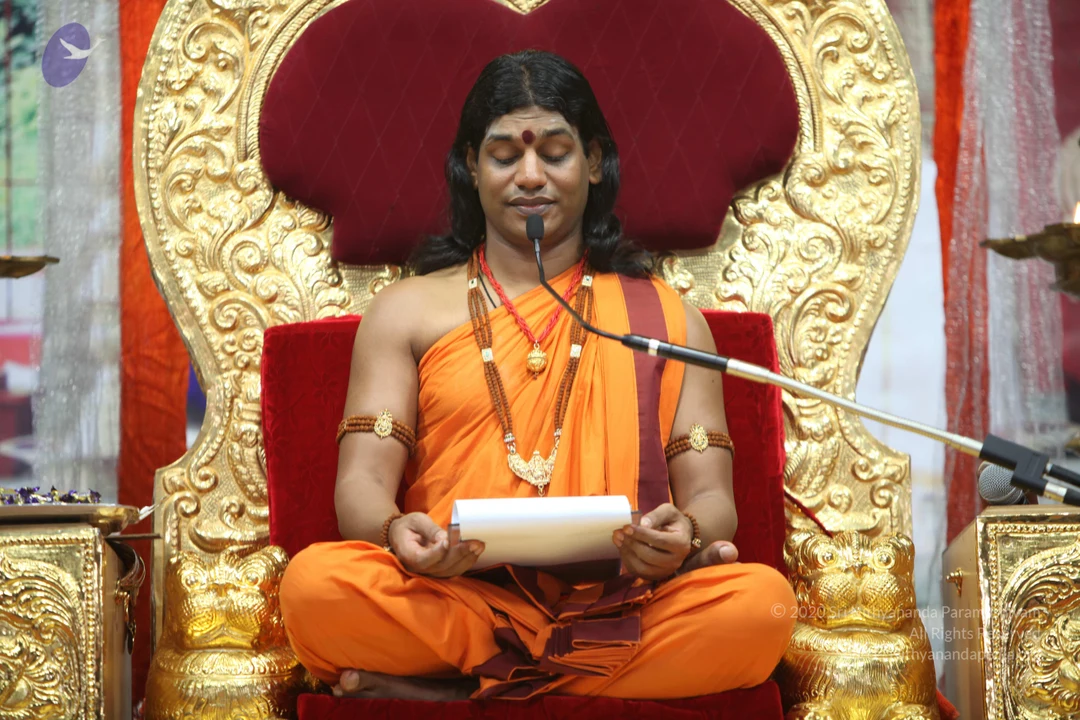
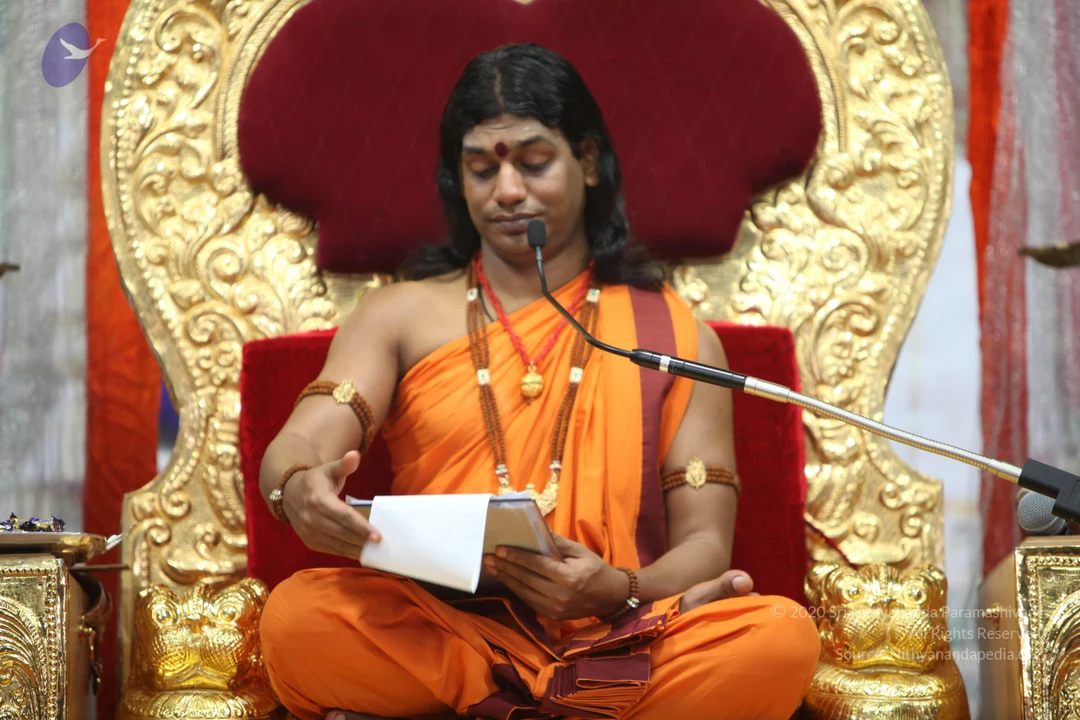
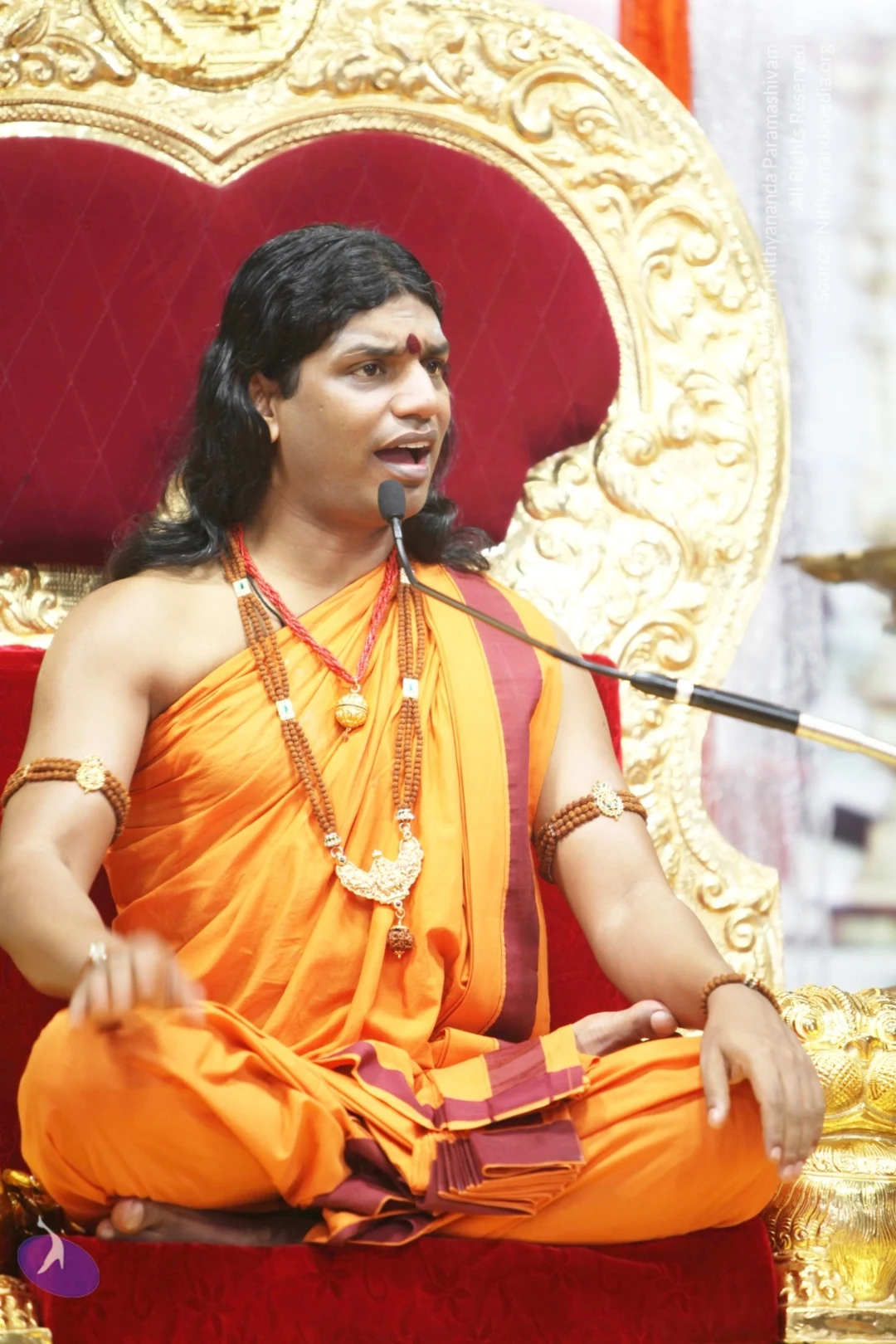
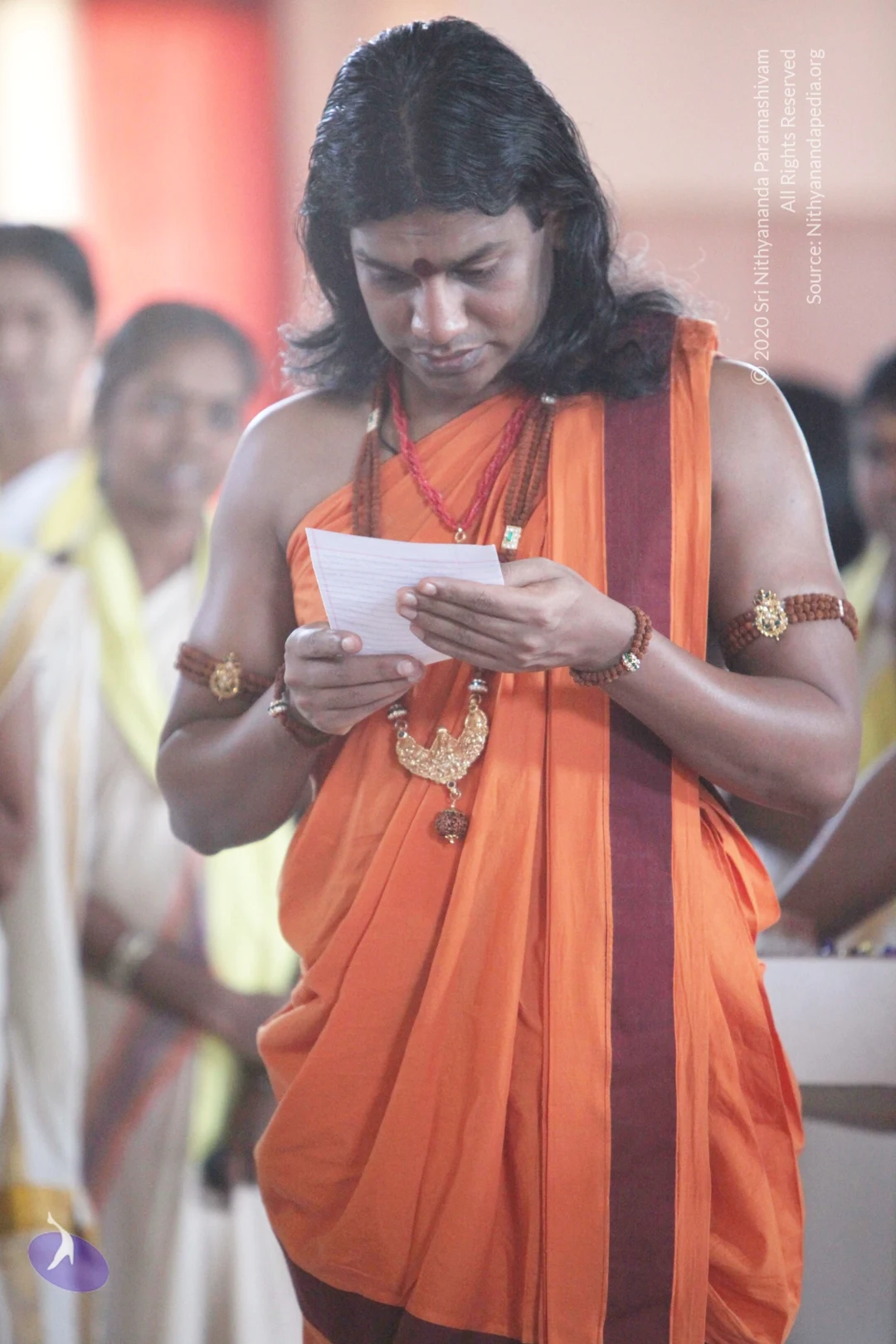
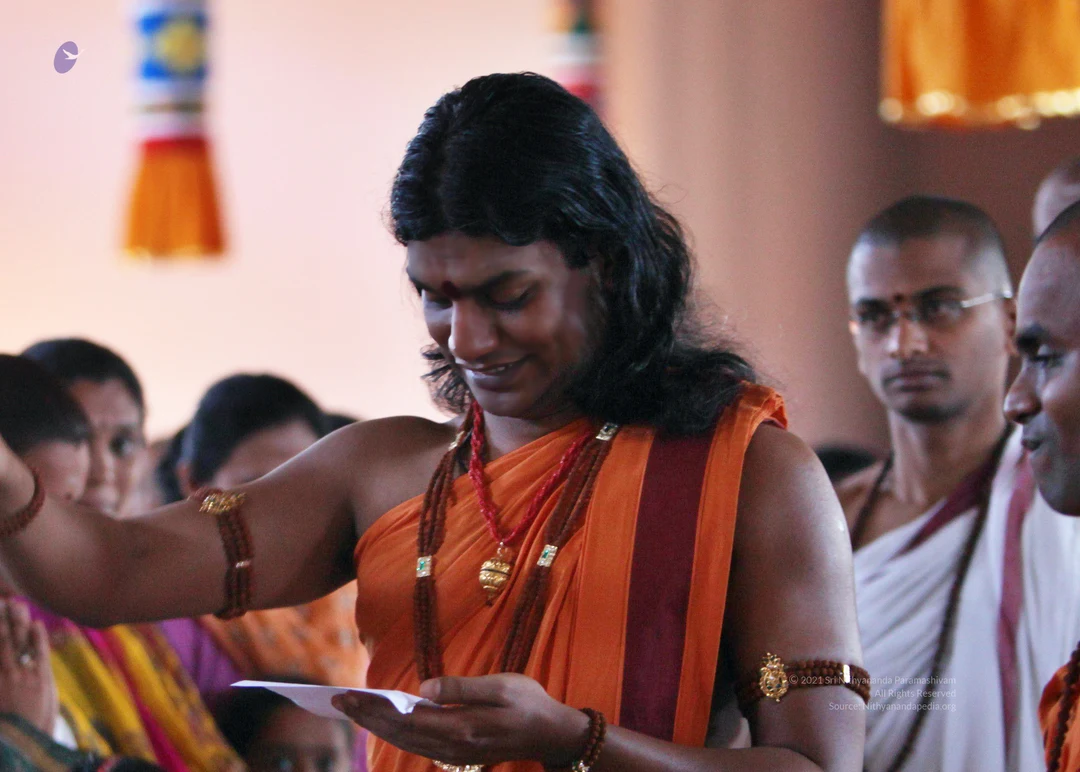
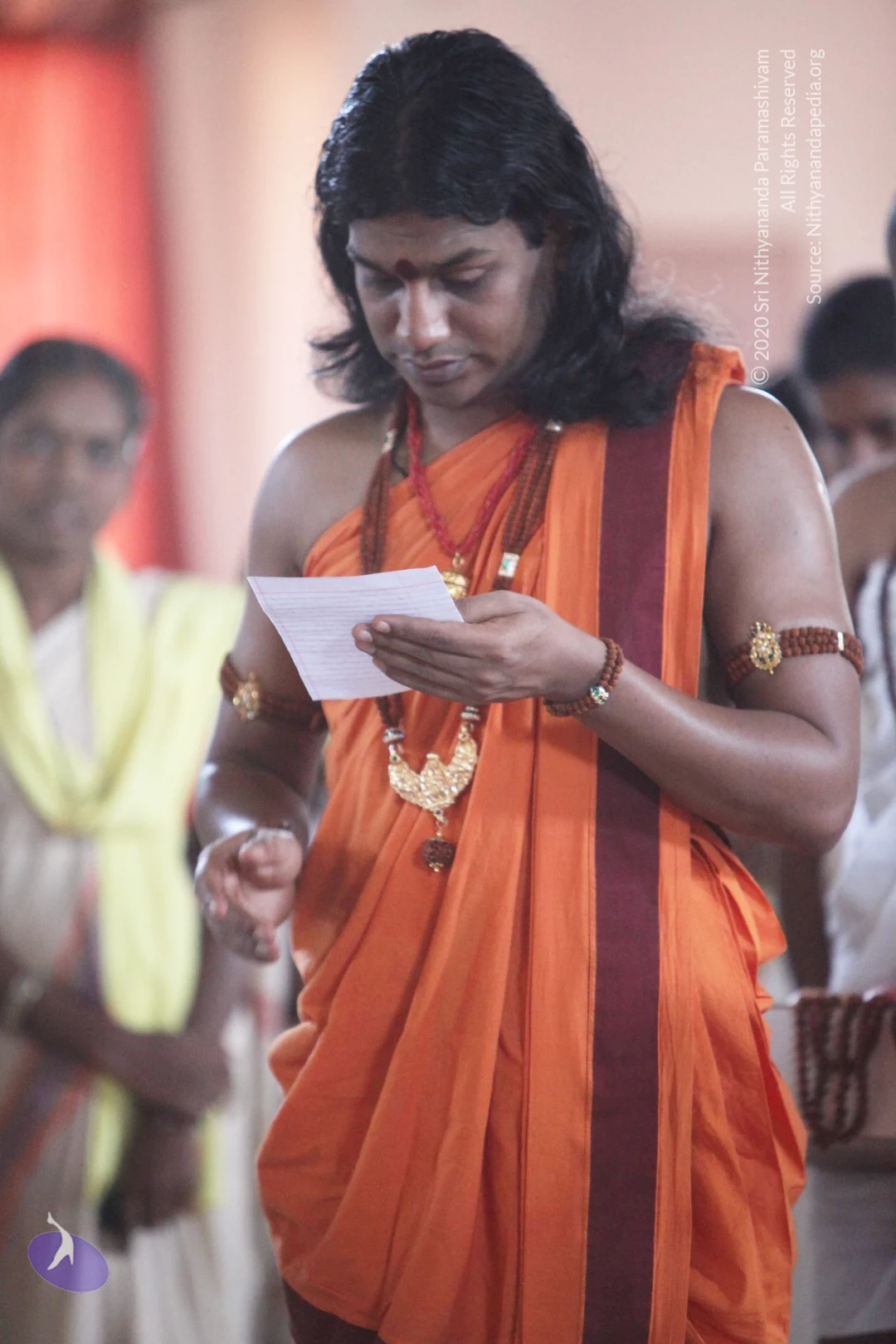
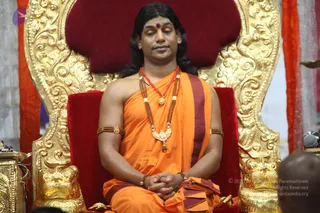
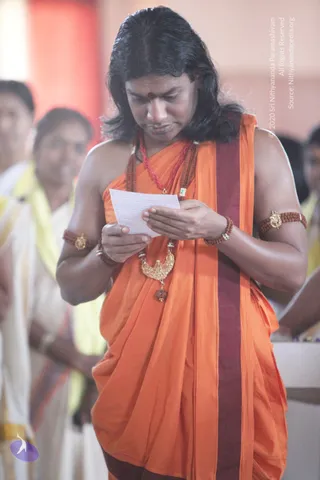
A seated man in an orange-saffron dhoti and shawl with maroon borders sits cross-legged on an ornate gold and red velvet throne with a red cushioned seat. He wears layered rudraksha malas, a red thread necklace with a small gold pendant, a large gold ceremonial necklace, and beaded armlets, with a red bindi on his forehead and long dark hair swept back. A microphone on a stand is in front of him and his right hand gestures mid-speech. The throne has carved gold scrollwork and a gold medallion at the top. Appearance-based identification of the teacher is probable (Swamiji (probable)), based on his long hair, saffron clothing, rudraksha malas and ceremonial gold necklace, seated in the teaching posture of a discourse.A seated man in orange robes speaks into a microphone while sitting on a red cushioned throne with an ornate gold carved backrest. He has long dark wavy hair, a red bindi on his forehead, and wears multiple strands of rudraksha beads, a red coral necklace, and a gold ceremonial pendant. Rudraksha armlets and bracelets adorn his arms. Beside him stands a tall gold oil lamp. The appearance is consistent with Swamiji (probable), given his long hair, orange saffron clothing and rudraksha malas, seated in a teaching position on a throne.A seated figure in saffron-orange robes with a red-and-maroon border sits cross-legged on an ornate gold-and-red velvet throne with a heart-shaped back. He raises his right hand in a blessing gesture, wears rudraksha malas, a red beaded necklace, a gold pendant and a gold-and-brown armband, and has a red bindi and long dark hair swept back. A microphone stands before him, and ornate gold lamps flank the throne against red and orange drapes. Swamiji (probable): the long swept-back hair, saffron robes, rudraksha malas and ceremonial gold necklace match the page's Swamiji claim, and he is shown seated on a throne at a satsang.A seated man in an orange saffron robe with a maroon-striped border speaks into a microphone on an ornate gold-carved throne with red cushioning. He wears a red bindi, long swept-back dark hair, multiple rudraksha malas and a gold ceremonial pendant necklace, plus rudraksha armbands. His right hand is raised in a teaching gesture while his left rests on his lap in a cross-legged posture.A man seated cross-legged on an ornate gold-and-red throne with a red velvet cushion, in front of a microphone on a stand. He wears an orange saffron robe with a maroon border, multiple rudraksha mala necklaces, a red cord necklace, a gold ceremonial pendant, rudraksha armbands and a red bindi, with long dark hair. His hands rest on his knees in a meditative pose. Swamiji (probable): the figure has long swept-back hair, saffron clothing, rudraksha malas and ornate gold adornment, seated on a throne while speaking at a satsang.A seated man in saffron-orange robes sits cross-legged on an ornate gold throne with a deep red velvet cushion and back, speaking into a microphone on a stand. He wears a red rudraksha-style necklace, a long gold pendant, a multi-strand rudraksha mala, gold armbands, and holds a folded white sheet of paper in both hands. He has long dark hair and a red bindi. Behind him hang orange and red drapes, and gold ceremonial vessels sit on pedestals at the sides. Swamiji (probable): long swept-back hair, saffron clothing, rudraksha malas and ceremonial gold necklace, seated as a speaker giving a discourse.

5-Sarva-Darshan-and-Final-Blessings

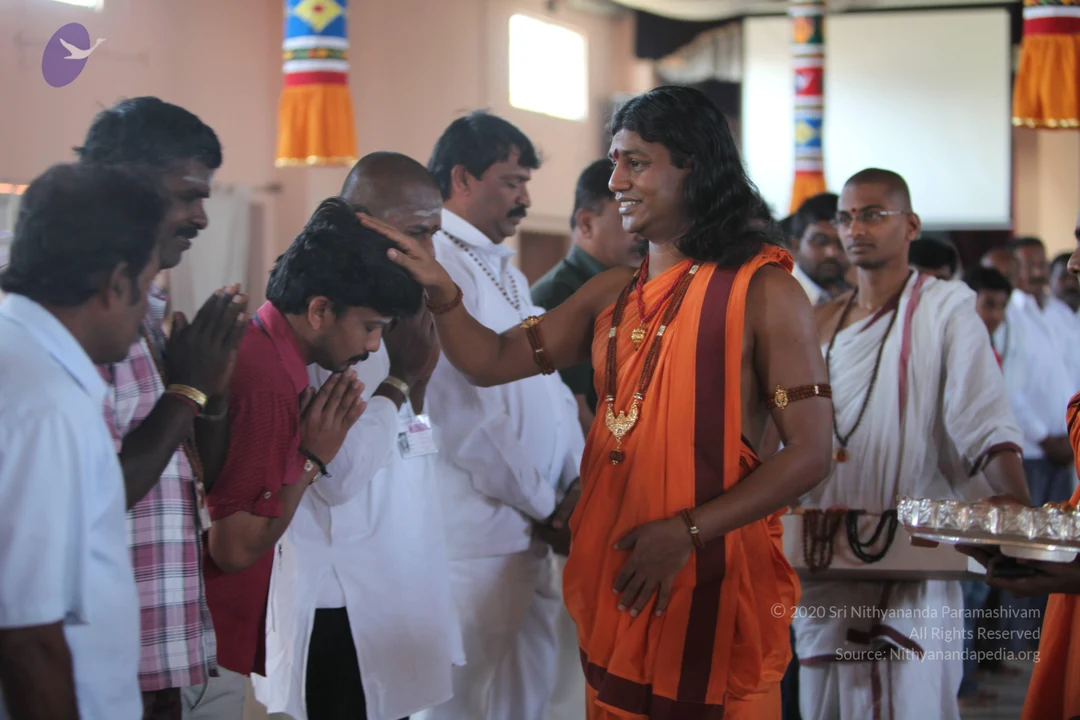
31 photosSource gallery
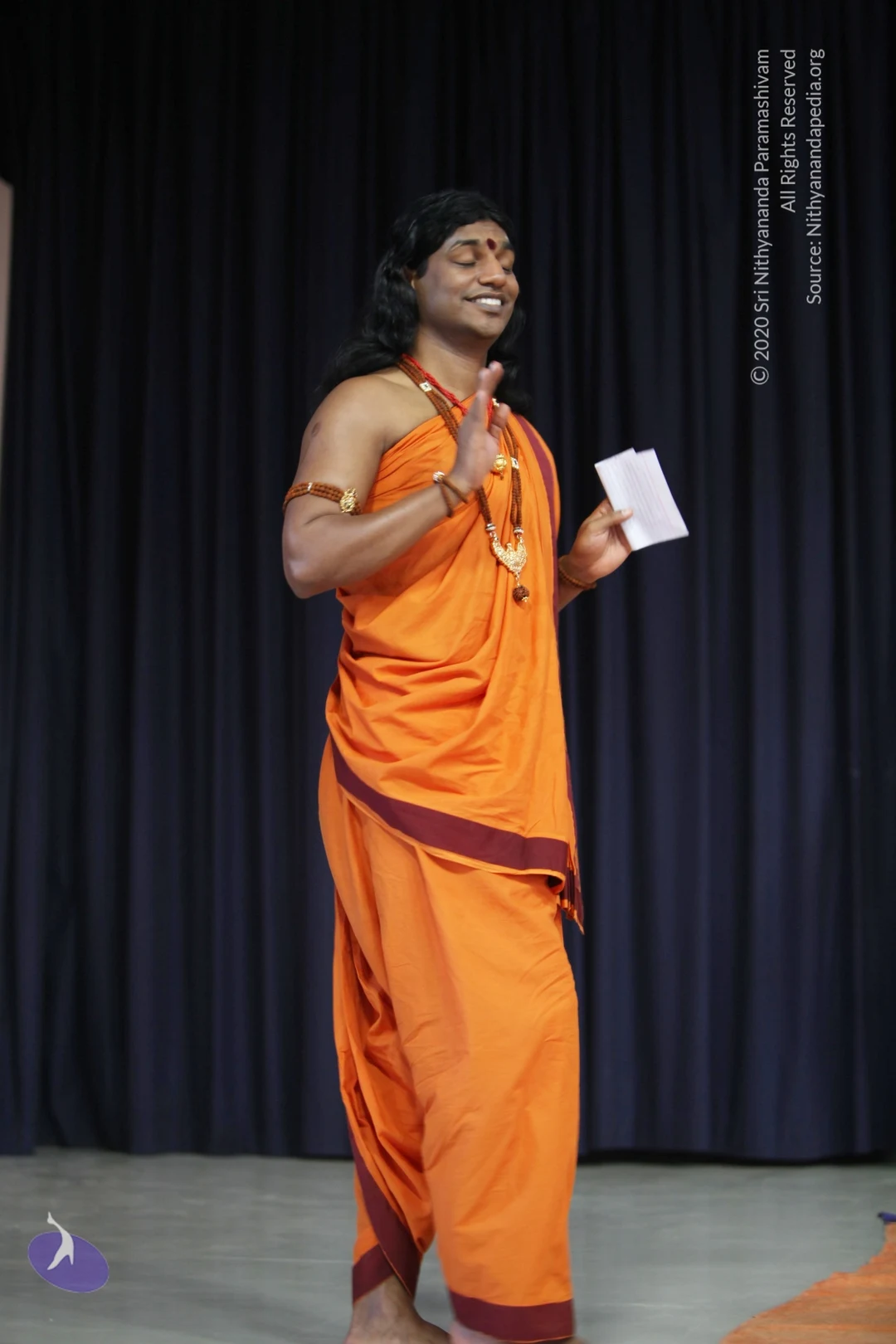
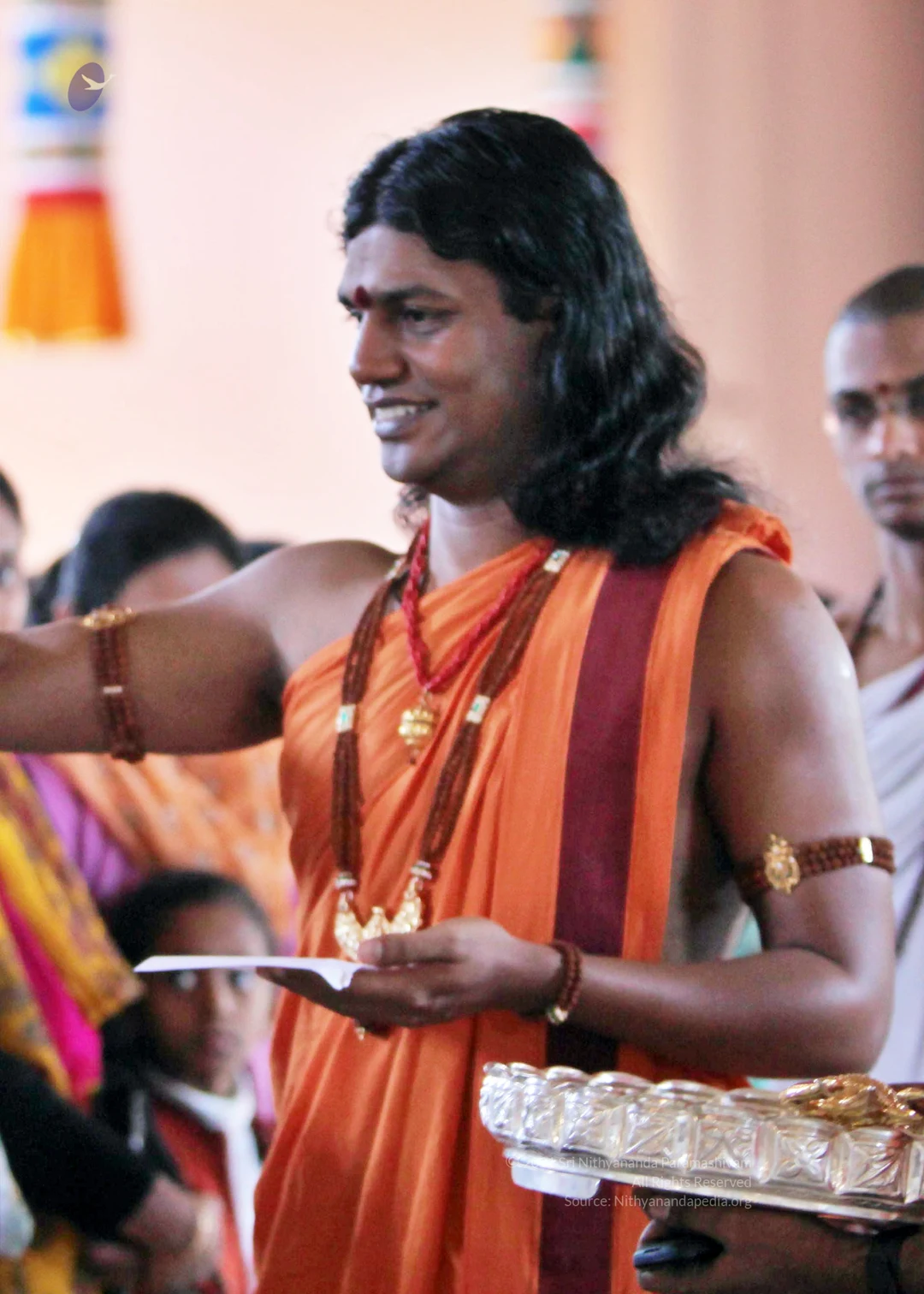
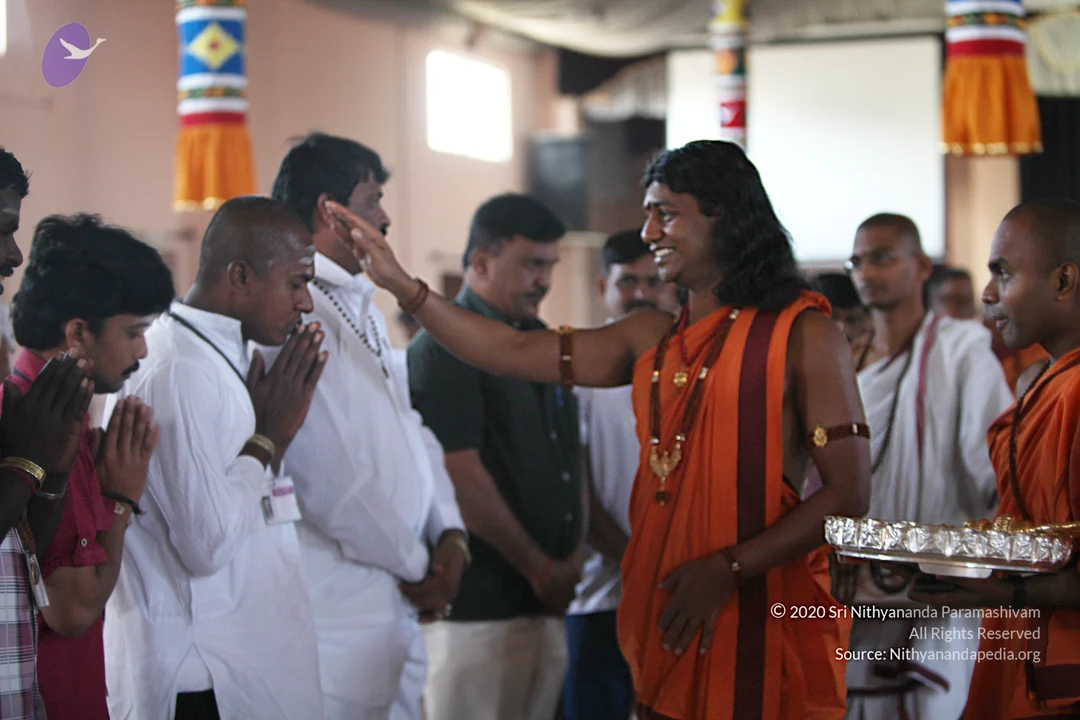
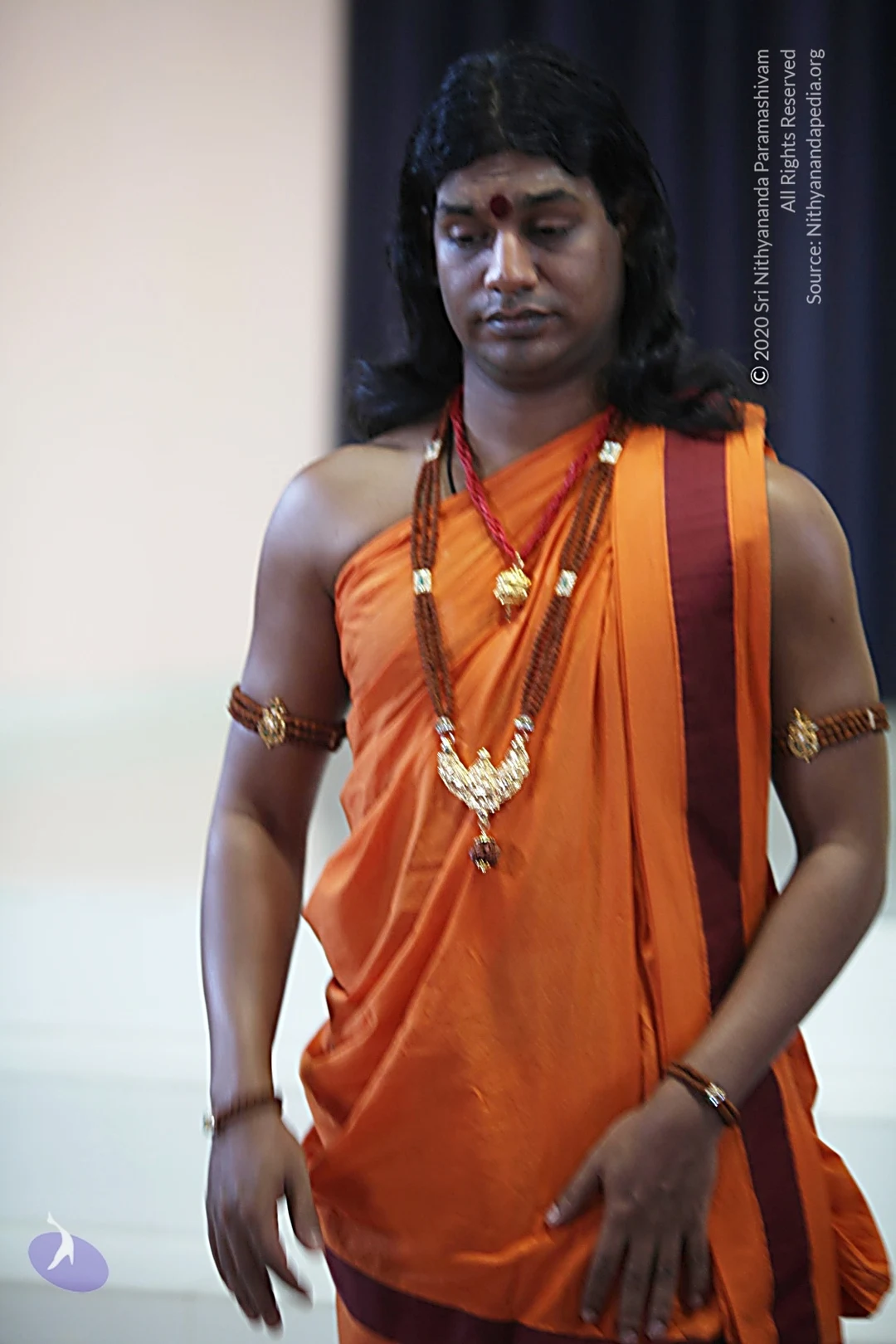
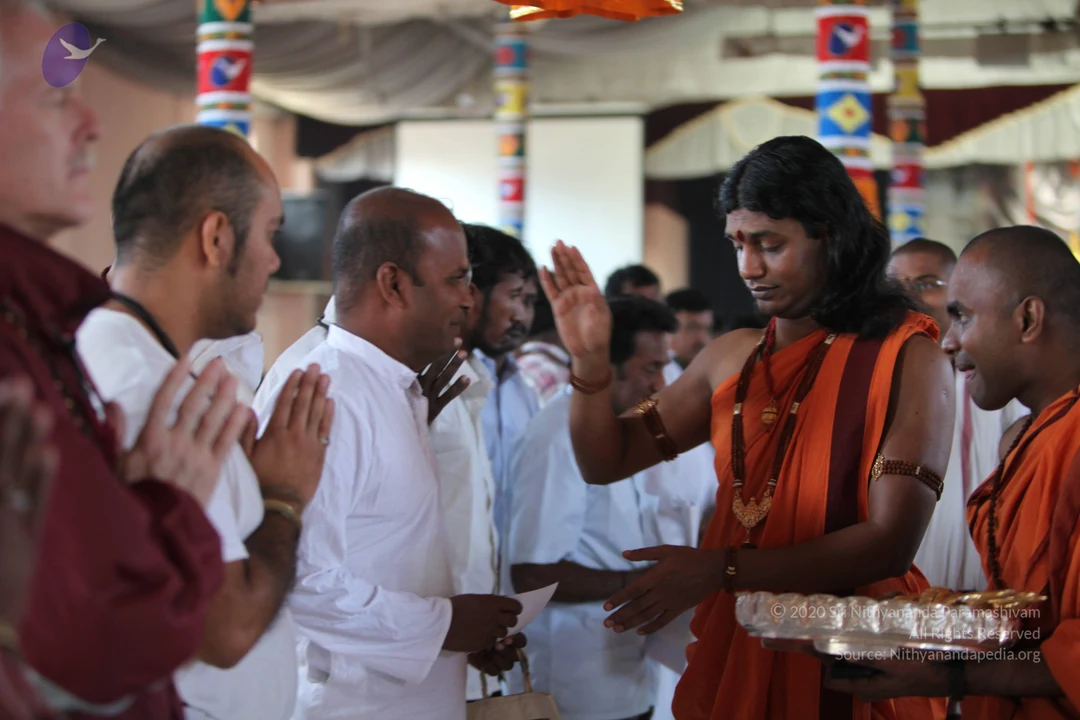
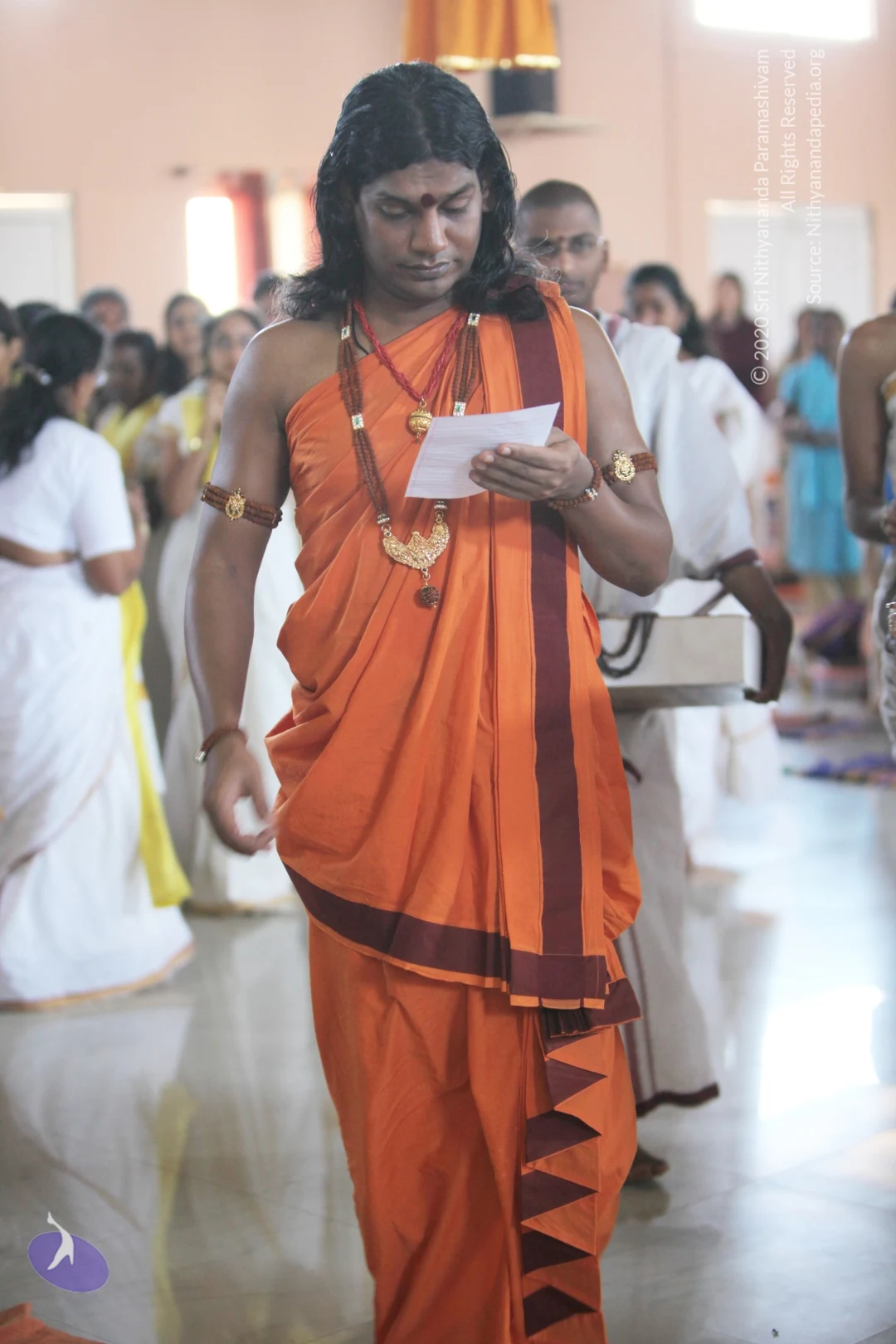
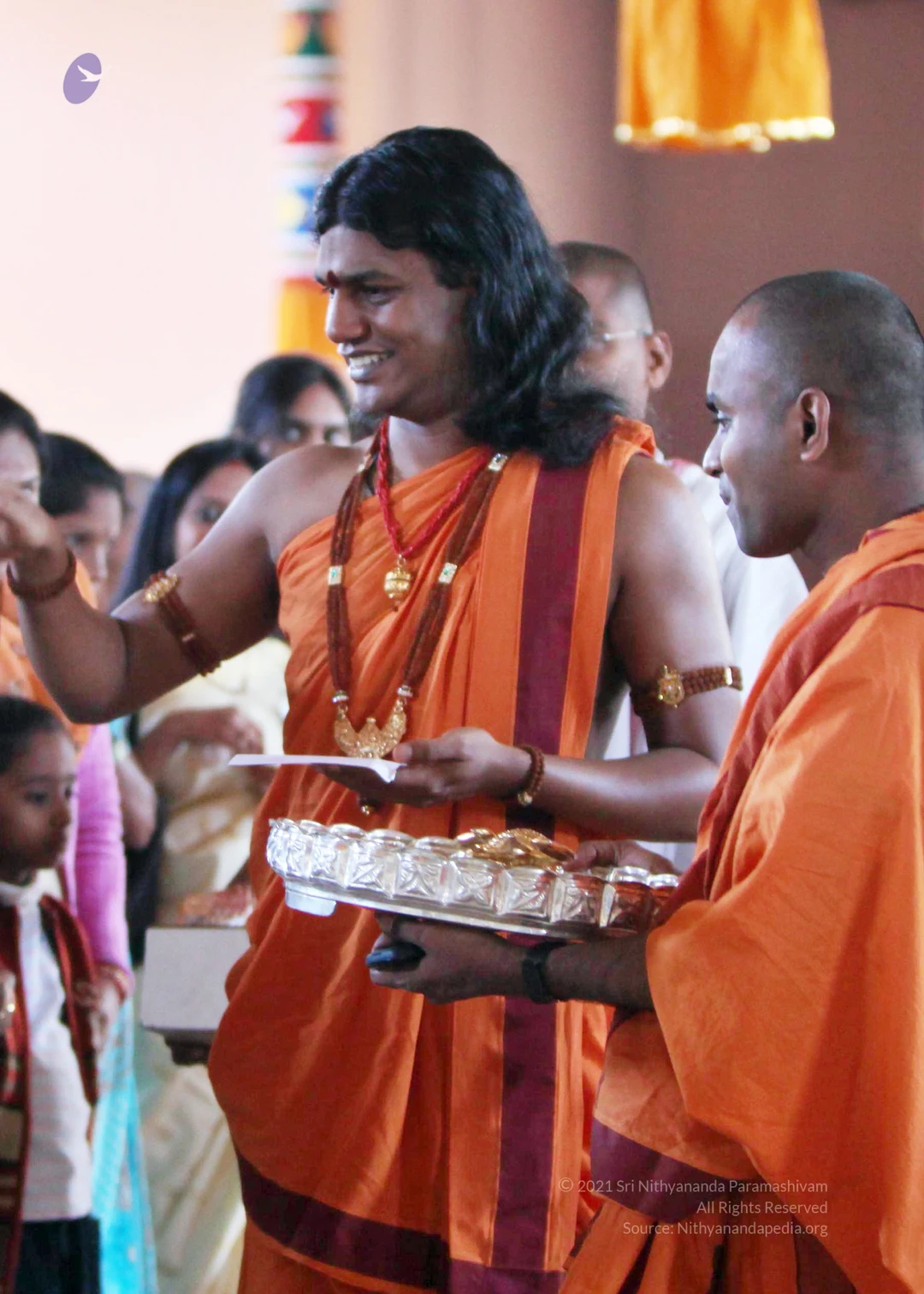
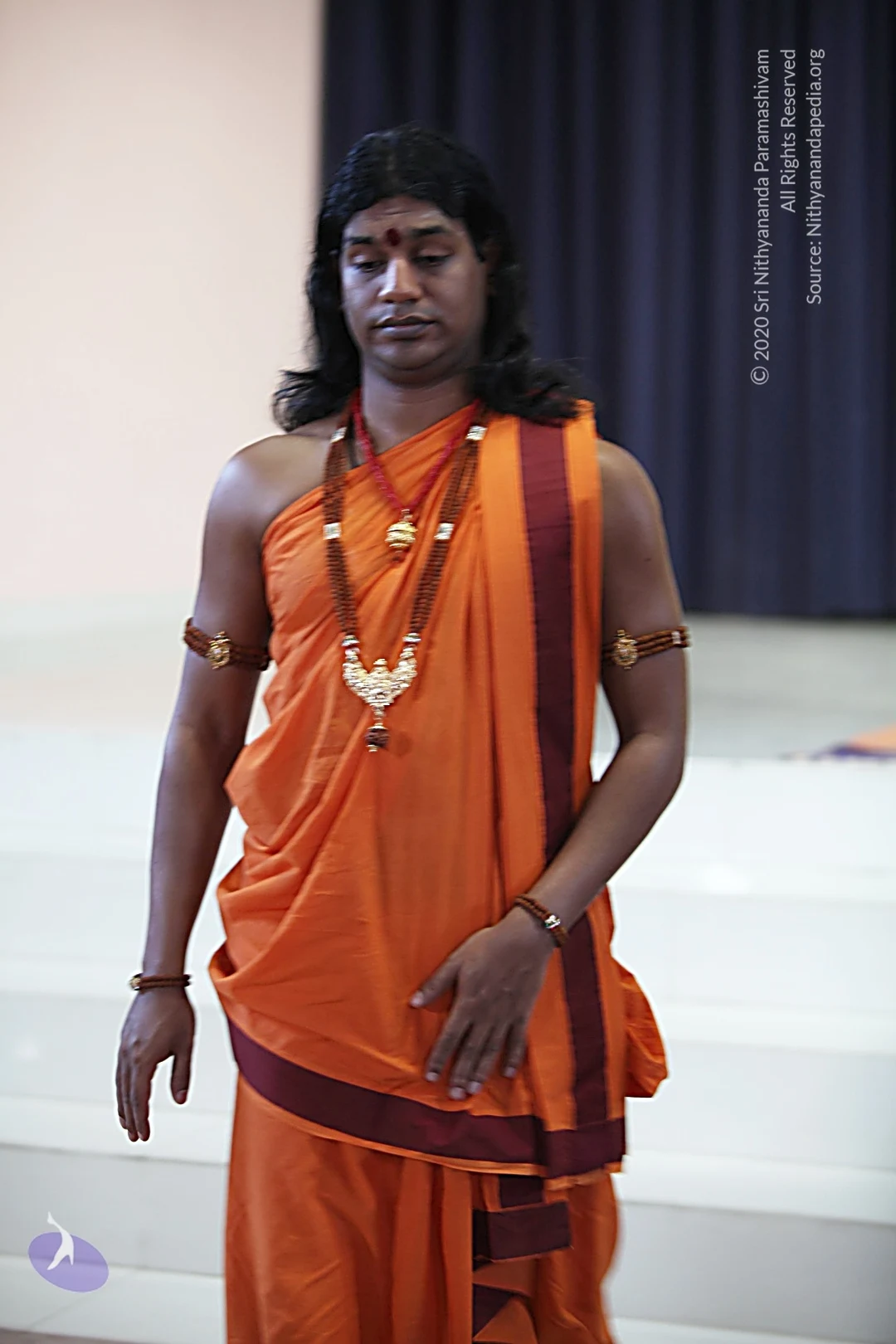
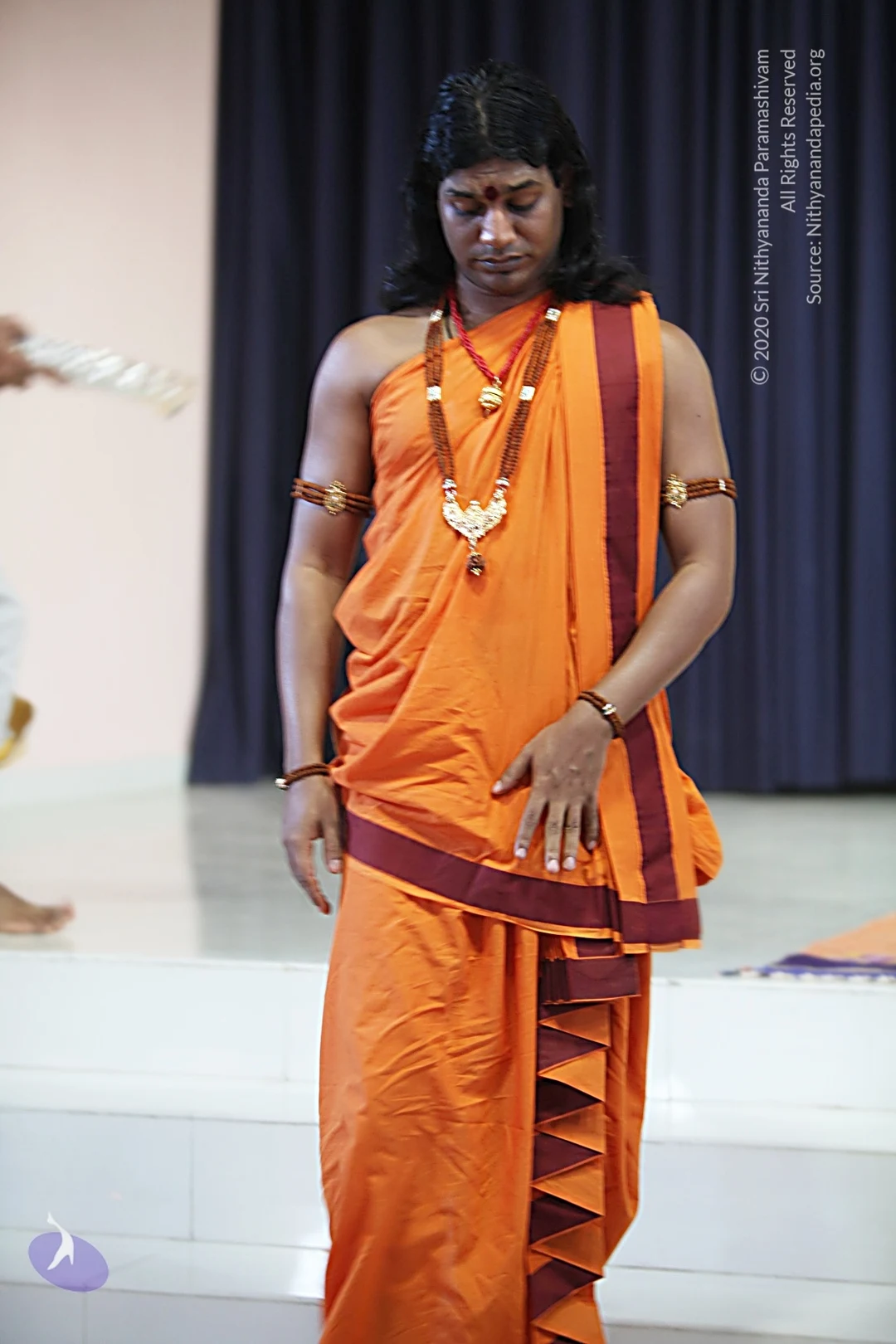
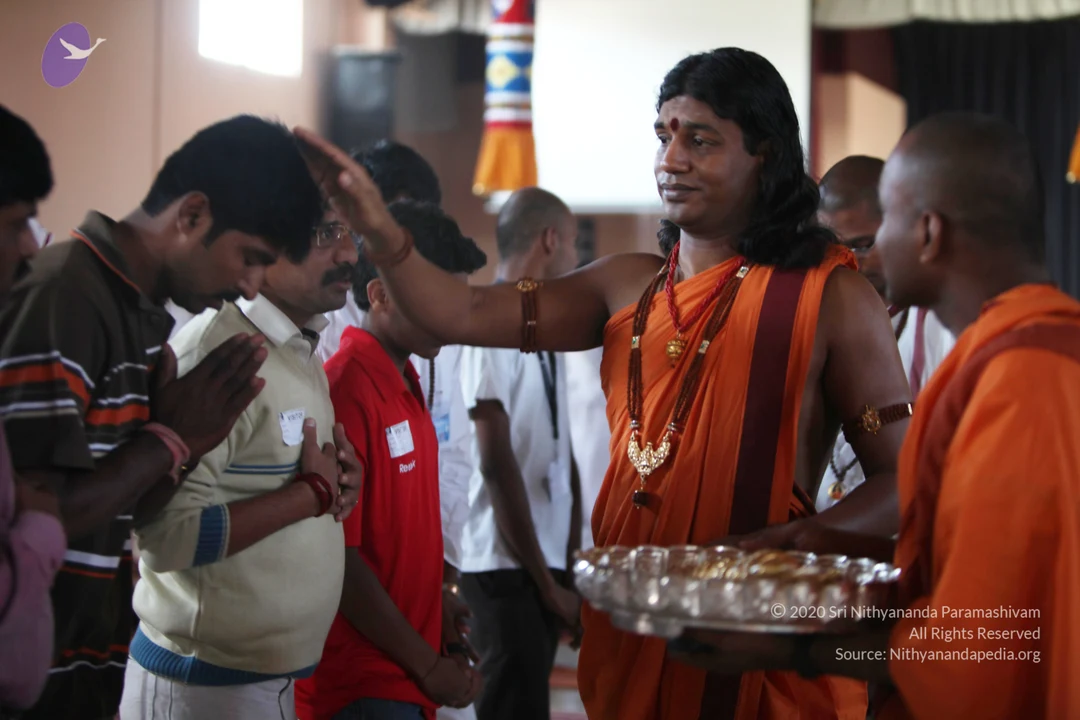
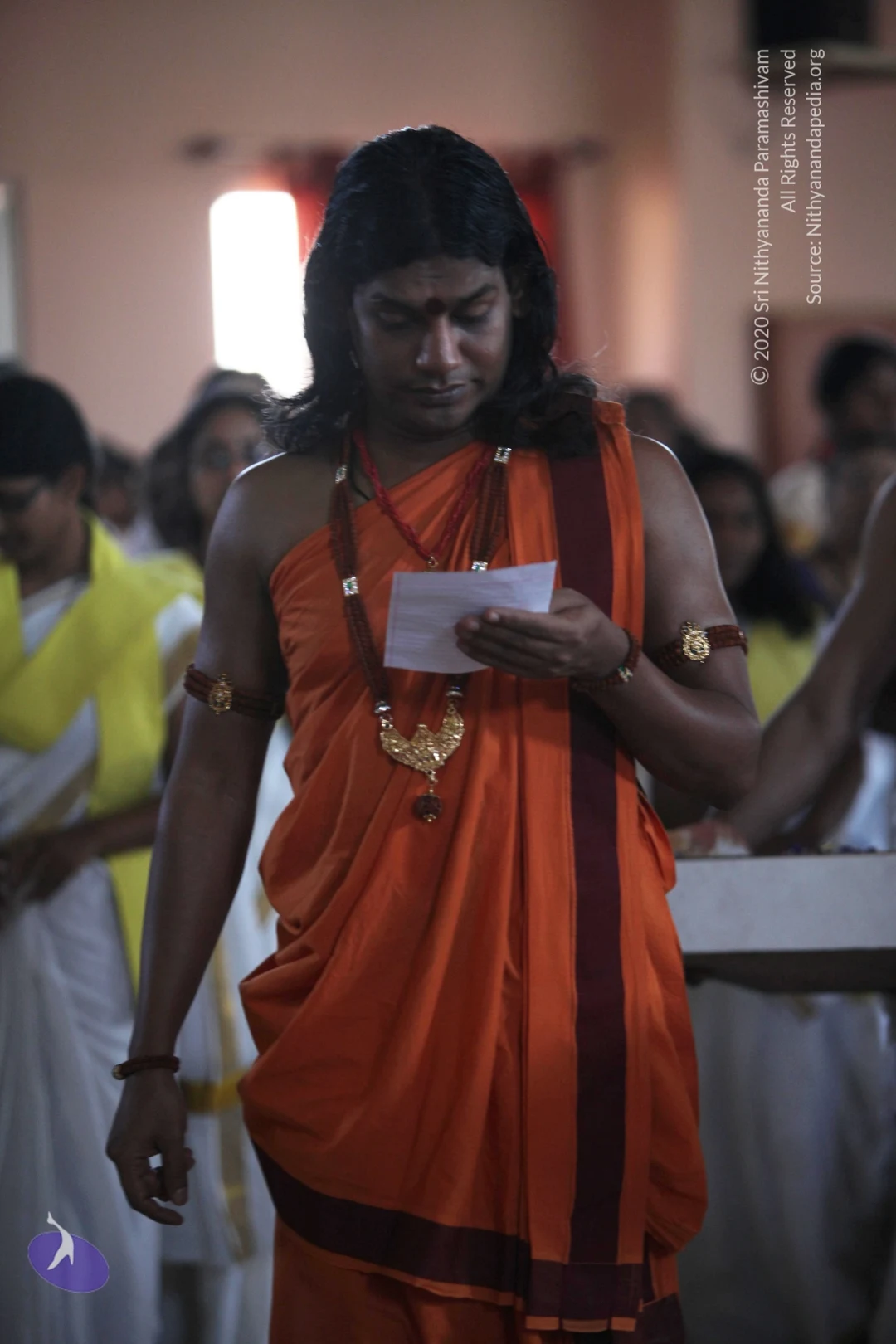
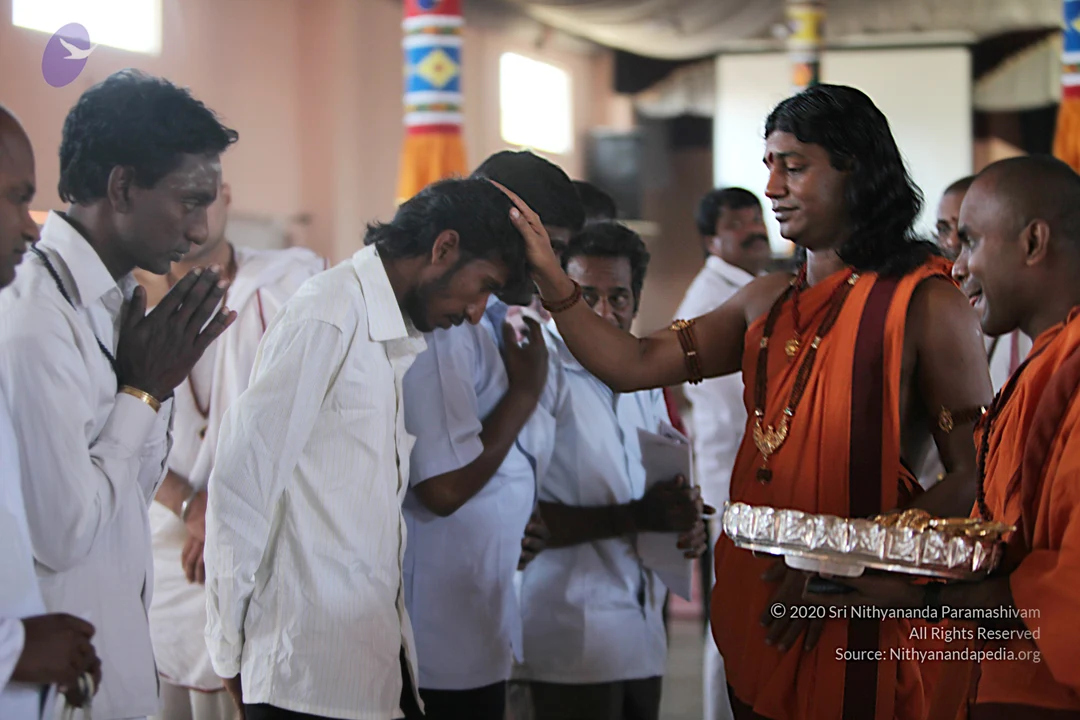
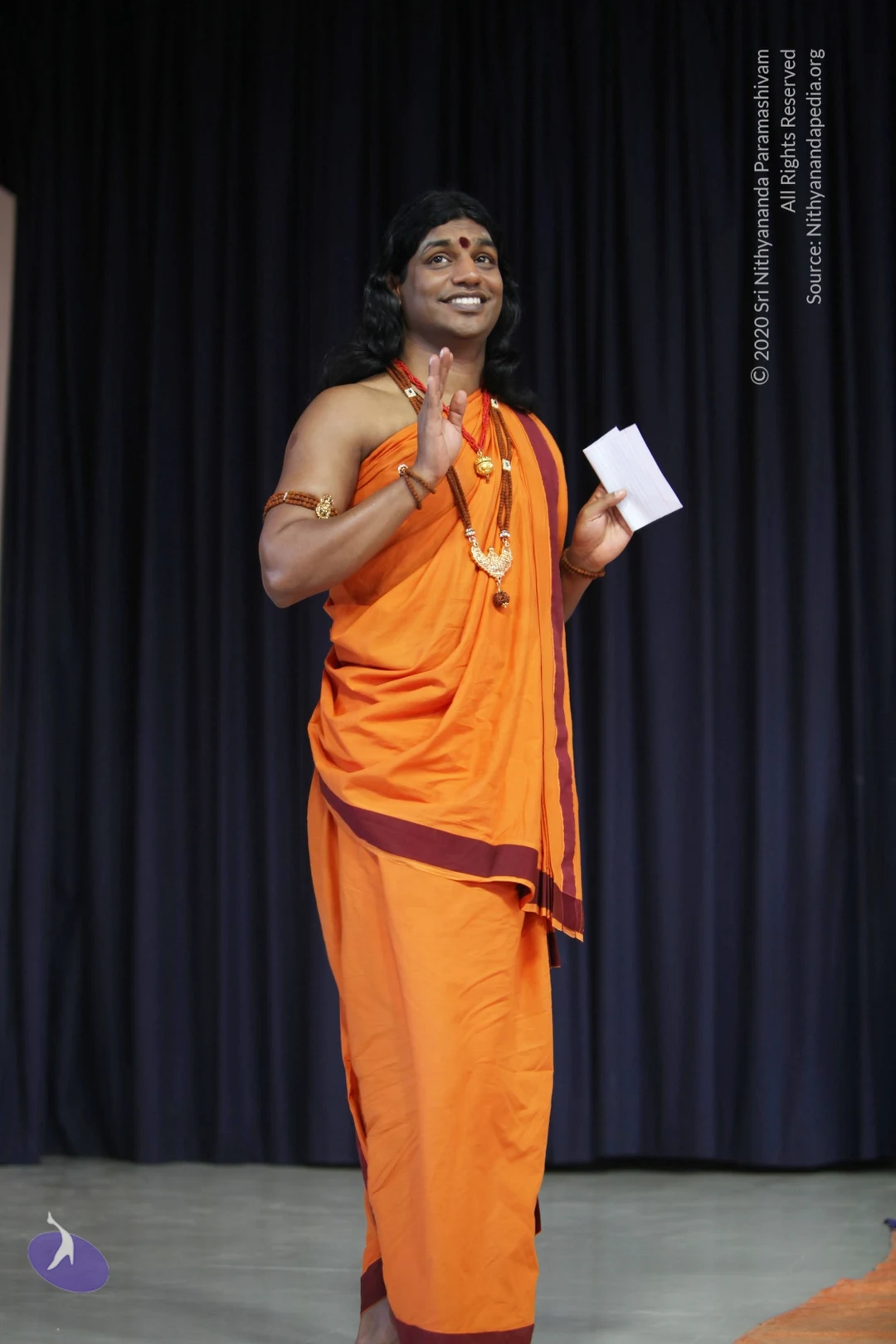
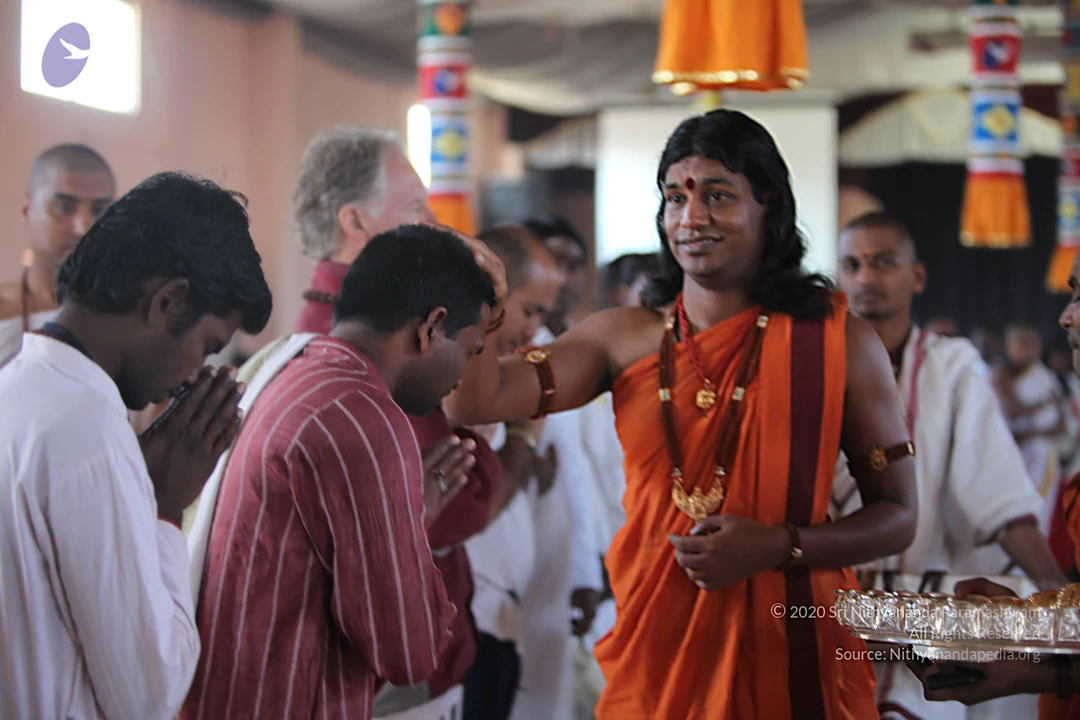
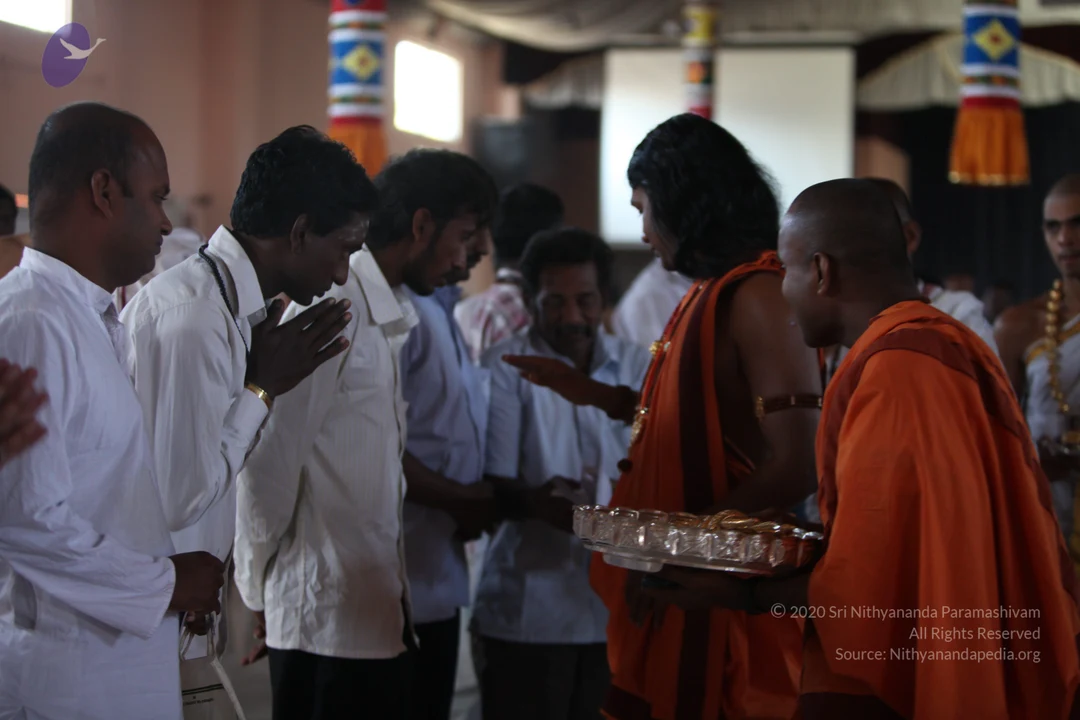
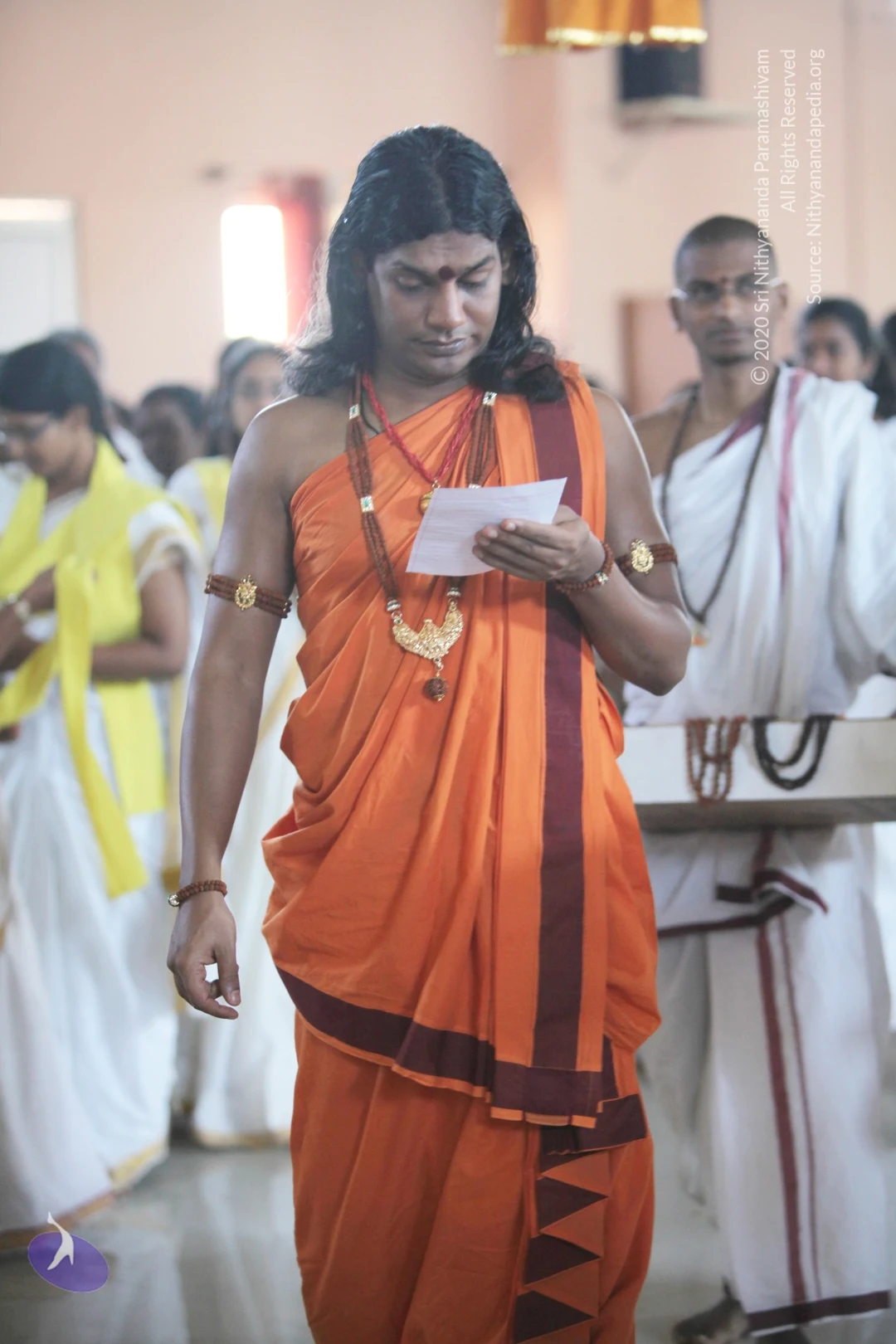
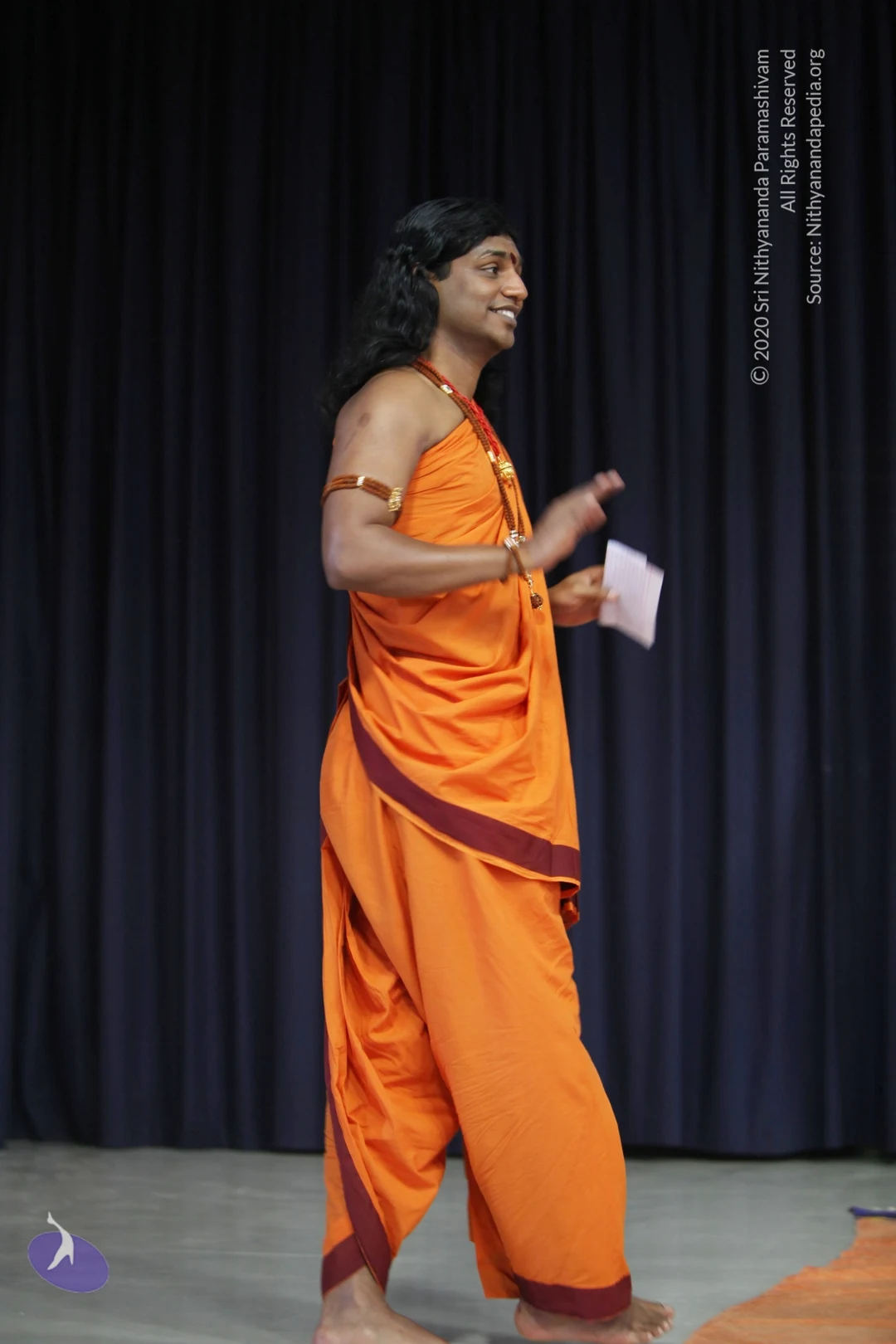
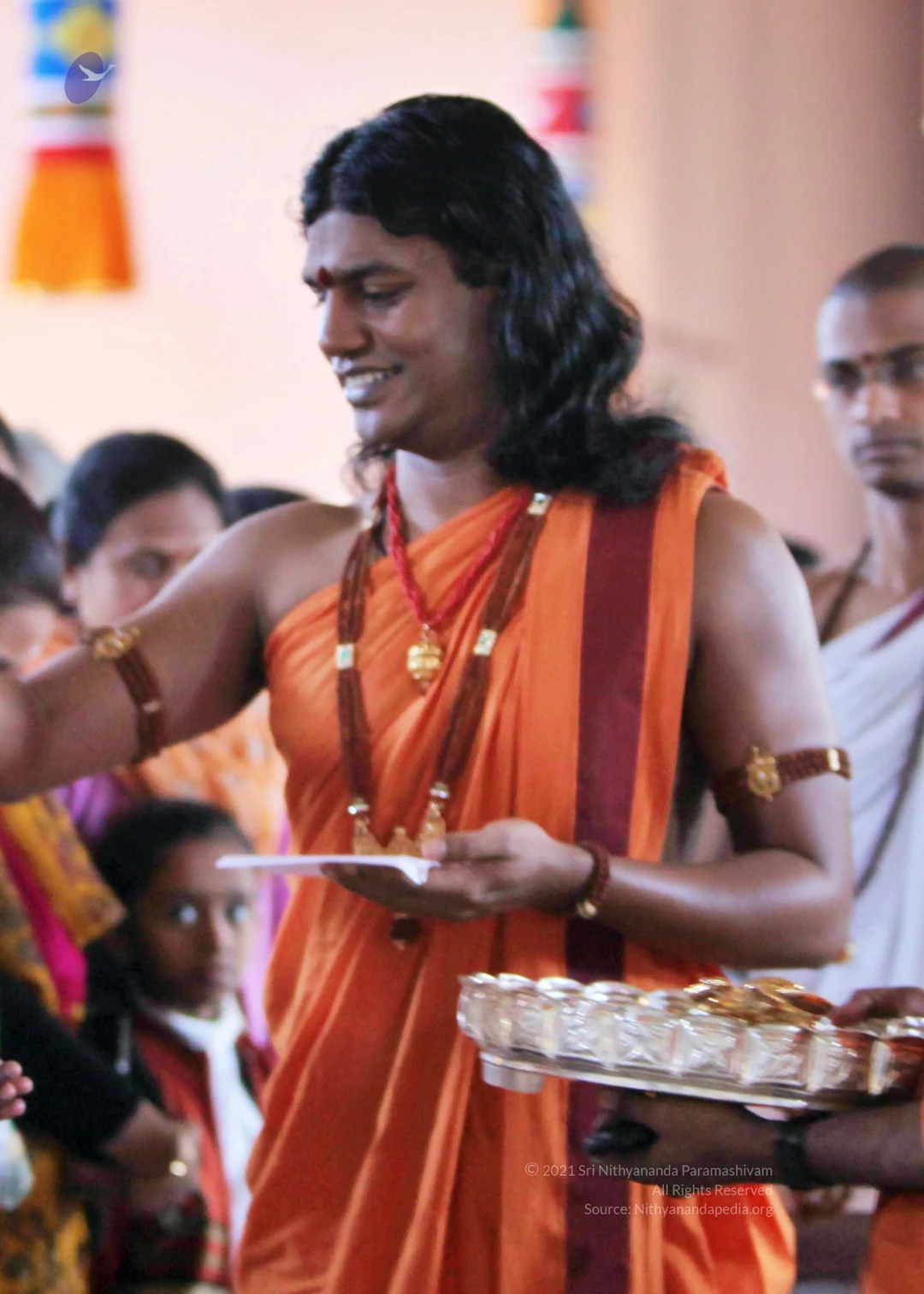
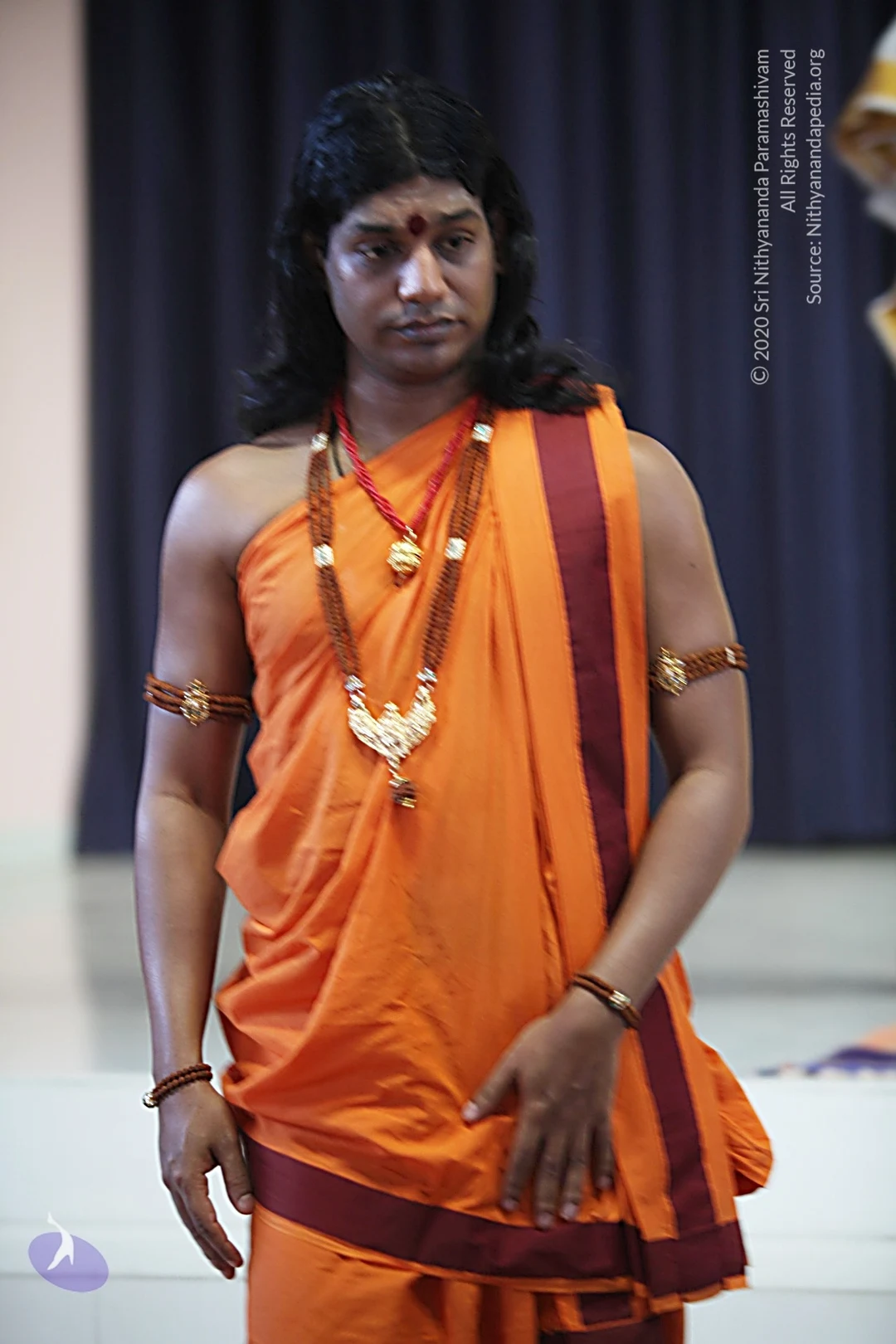
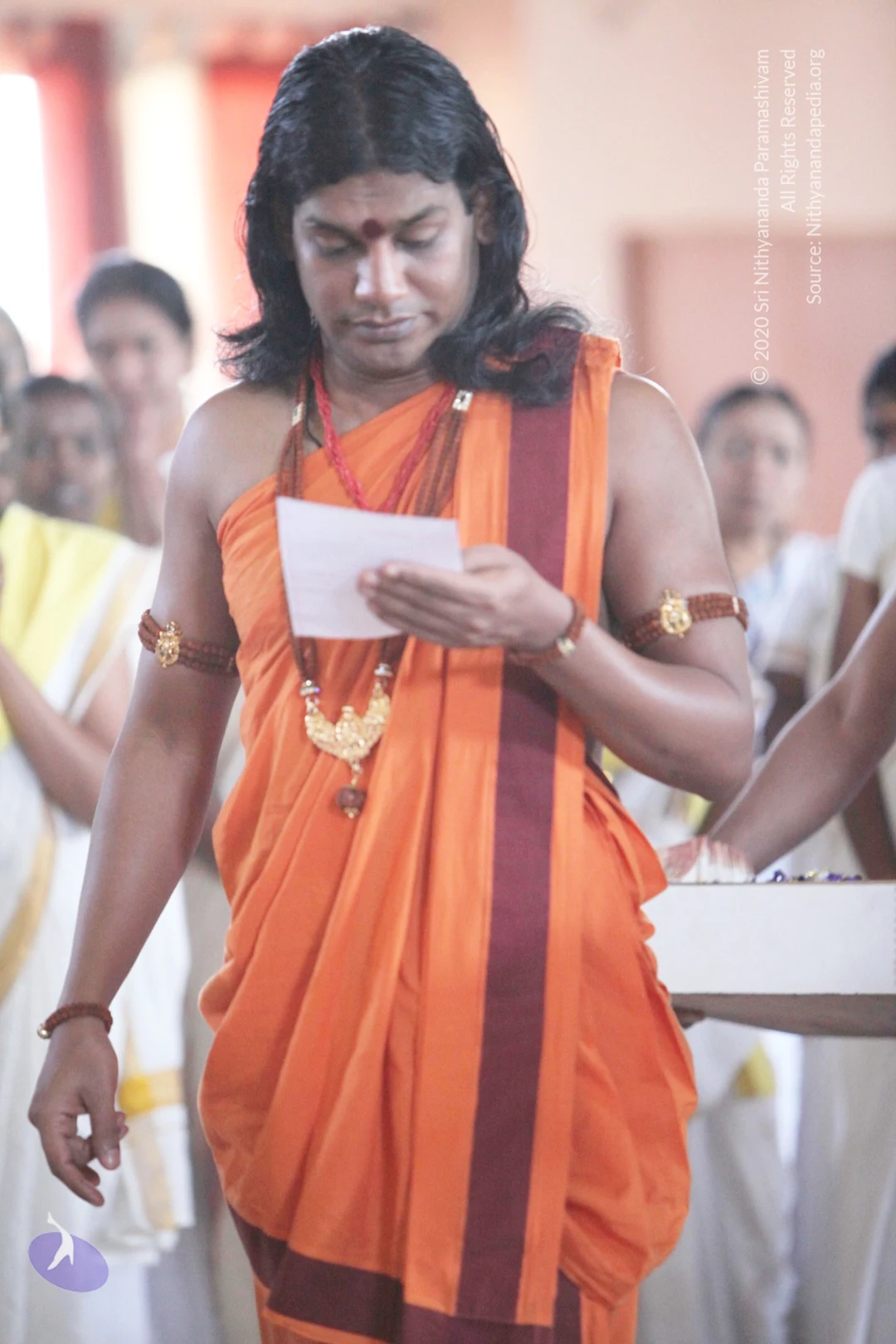
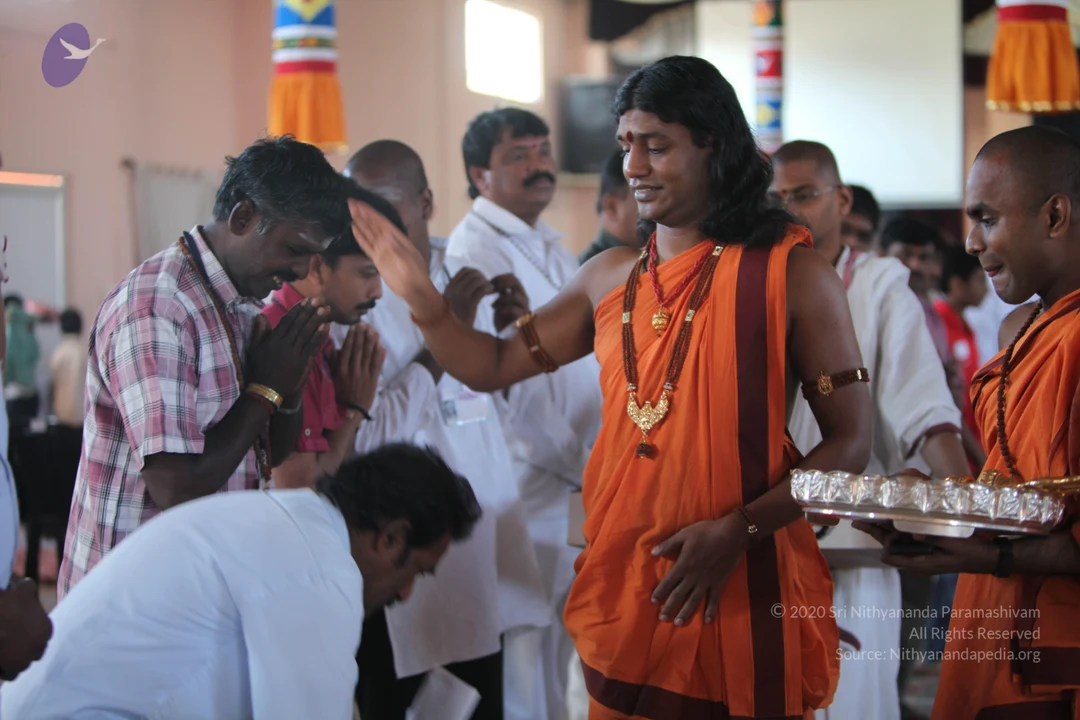
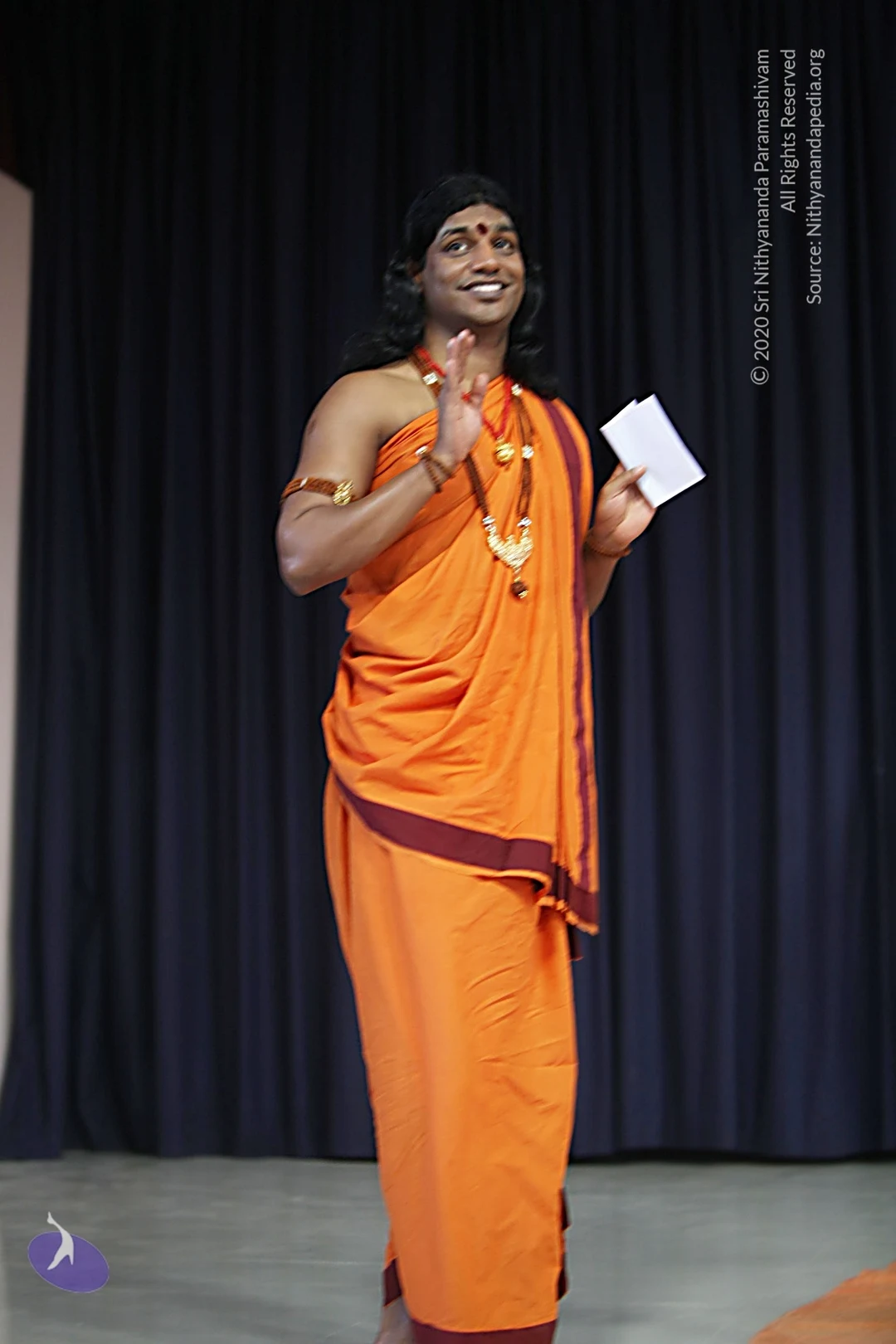
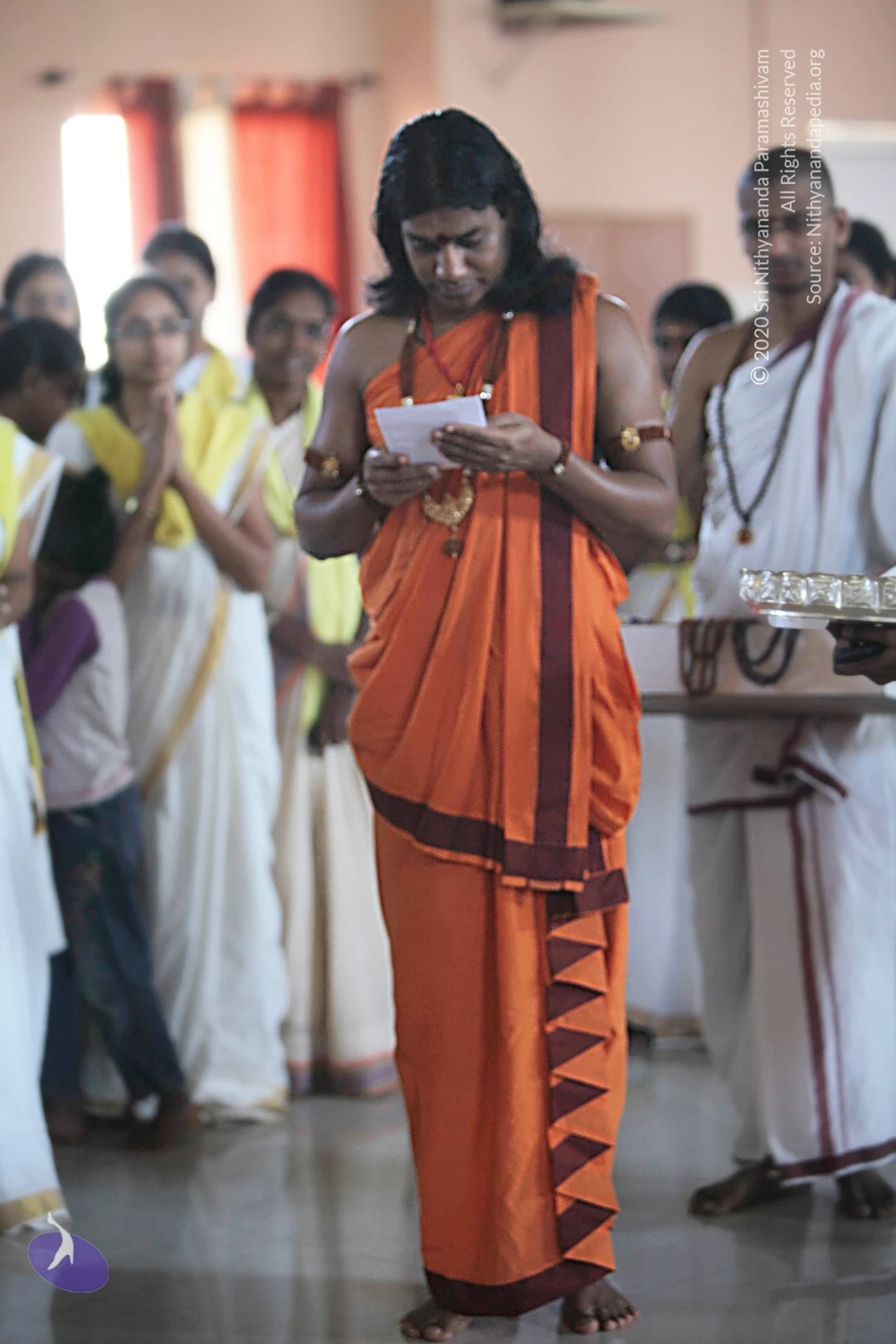
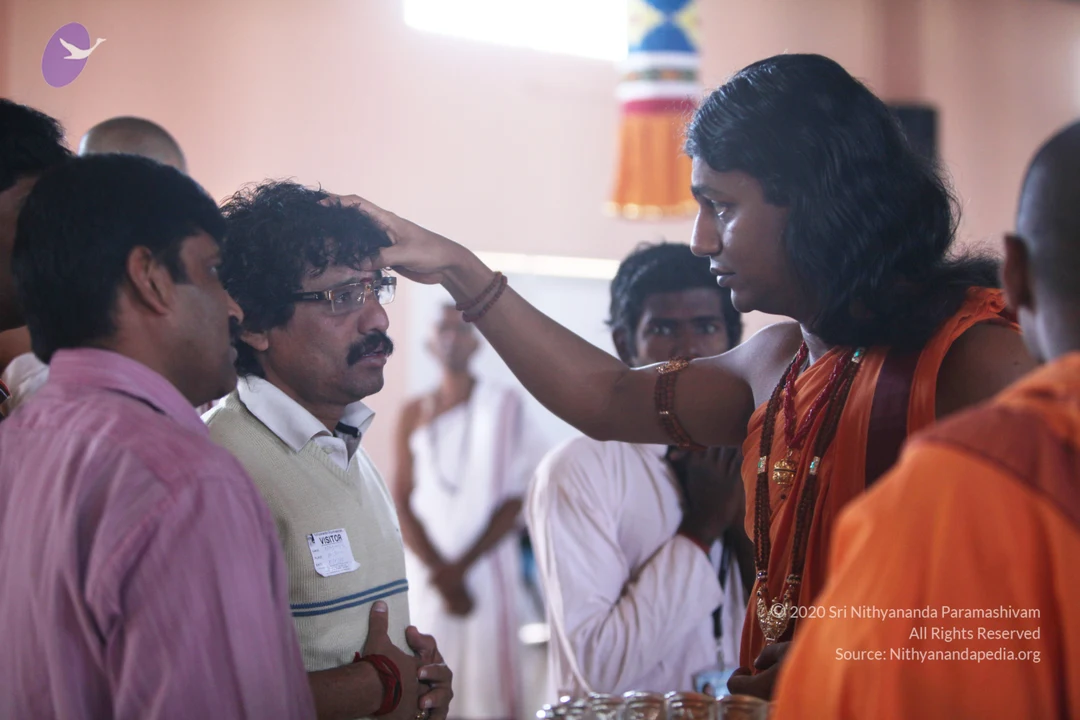
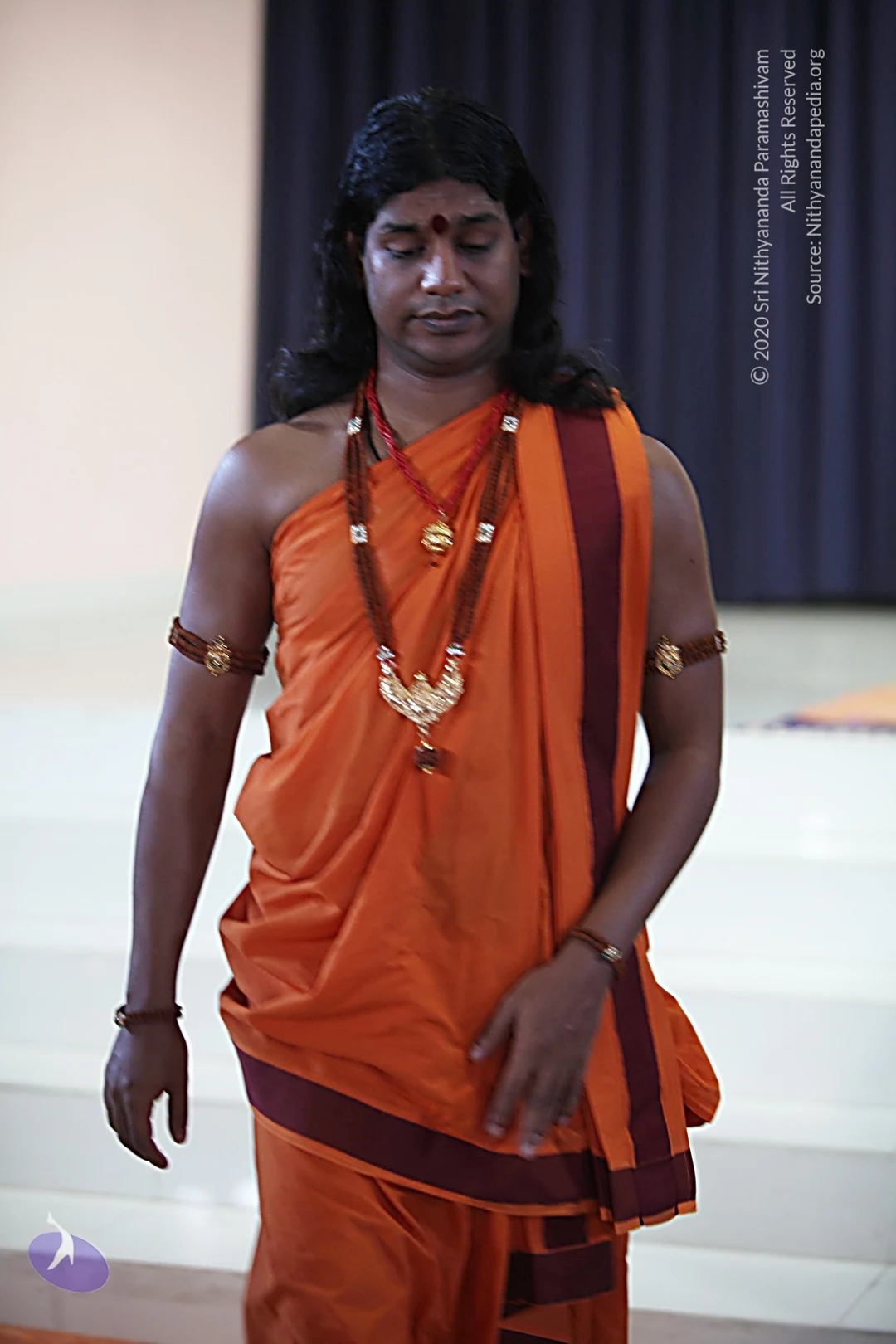
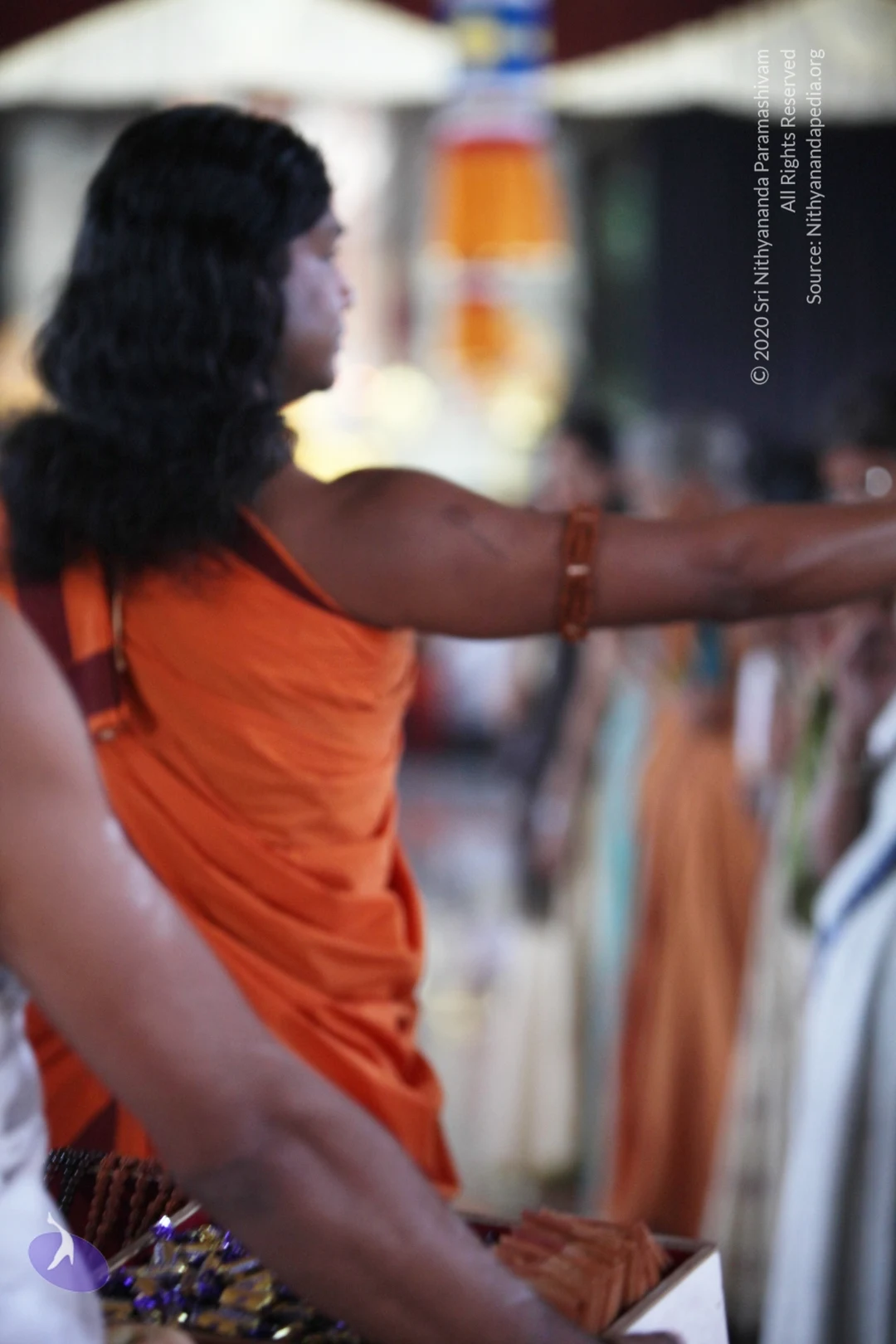
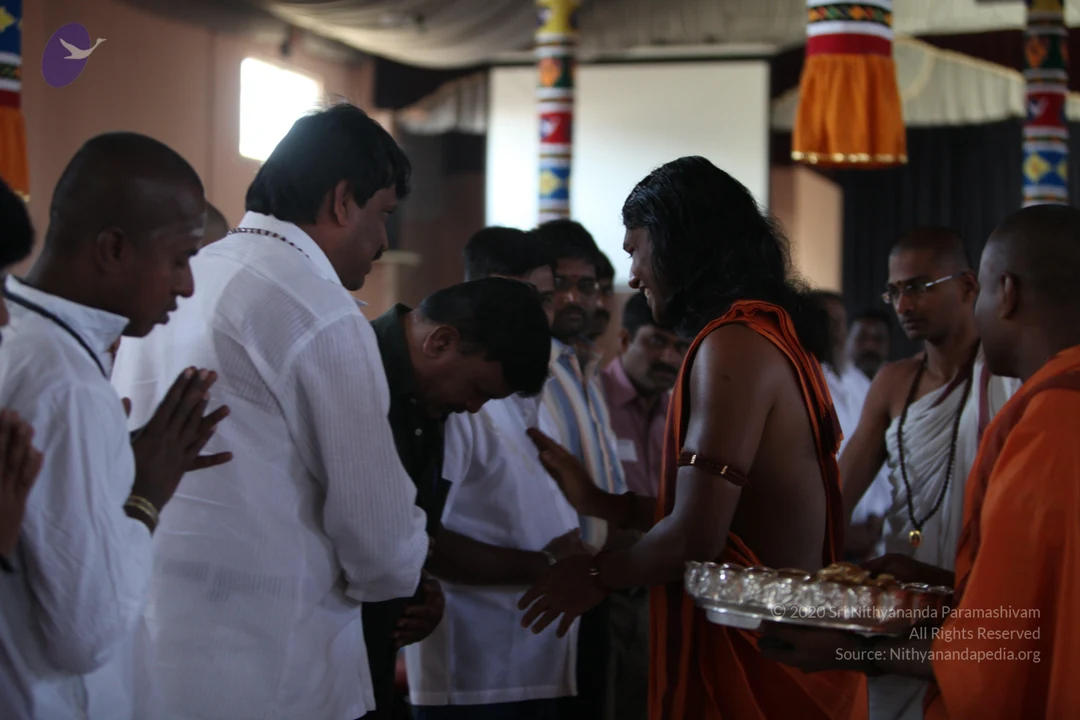
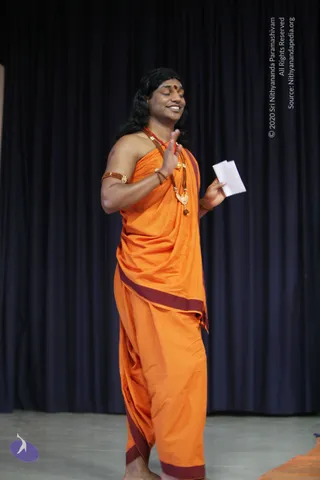
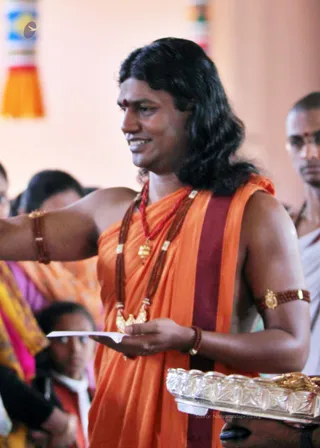
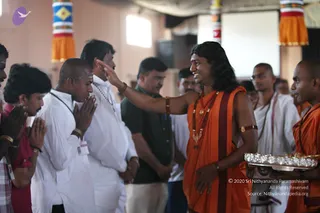
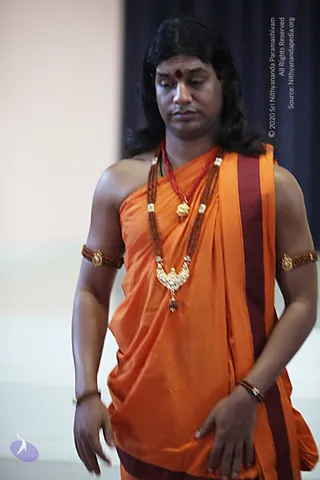
A photograph of a man standing on a grey stage in front of a dark navy curtain. He wears an orange saffron-coloured dhoti and shawl with maroon borders, and long dark hair. He has a red bindi, rudraksha malas around his neck and arm, and a gold pendant. He smiles with eyes closed, raises one hand in a gesture, and holds a sheaf of white papers in the other.A smiling man with long, swept-back dark hair and a red bindi stands in an orange saffron garment with a maroon stripe, wearing multiple rudraksha malas and a gold ceremonial pendant, a red coral-looking necklace, gold armlets and beaded bracelets. He holds a small white card in one hand and extends his other arm outward, while a silver tray with gold-coloured items is held at lower right. Behind him, a bald man in white clothes with a red forehead mark and people in colourful saris stand in a pale pink hall with a hanging red and yellow decoration. The long hair, saffron clothing and rudraksha malas match the Swamiji appearance cues per the page, which says he is at this event, so this is an appearance-based probable identification.A photograph of a long-haired man in an orange saffron dhoti-style wrap with a maroon border, wearing a rudraksha mala and a gold pendant necklace, who is smiling and extending his right hand in a blessing gesture toward a devotee. Several men stand around him: at left, two men with palms pressed together in namaste, one in a white shirt and one in pink; in the centre a man in white with a rudraksha mala and hands clasped; a man in a dark green shirt behind them. At right, a bald man in white and another in orange hold a silver tray of offerings. Red and yellow striped decorative banners hang from pillars in the pale-walled hall, which has a white screen behind. The long-haired figure has a distinctive presentation with long swept hair, saffron clothing and rudraksha and gold adornments, matching the page's reference to Swamiji, so he is identified as Swamiji (probable), giving blessings in person.A standing man in an orange saffron robe with a maroon border draped over one shoulder, wearing multiple strands of rudraksha beads, a red thread necklace, a gold pendant, and beaded armlets on both upper arms. He has long dark hair swept back and a red dot on his forehead, and looks downward with a calm expression against a pale wall and dark curtain. a person, based on long swept hair, saffron ornate clothing, rudraksha malas and gold ceremonial necklace.A photo of a devotional gathering under a decorated pavilion with colourful pillars and white and orange fabric overhead. In the centre, a person with long dark hair wears an orange saffron robe, a rudraksha mala, a gold necklace and a bangle, and raises one hand in blessing while holding a silver tray. Around him, men in white kurtas and dhotis stand with palms joined, and a man in maroon robes on the left stands with hands folded. A shaved-headed attendant in orange holds a tray at the right edge. Some attendees hold white cloth or papers.A man with long, swept-back dark hair and a red bindi stands reading a small sheet of paper held in both hands. He wears a saffron-orange garment with a maroon border, a red beaded necklace, a gold pendant with a rudraksha bead, rudraksha bracelets and gold-clasped rudraksha armbands. Behind him, out of focus, a woman in white with a yellow border stands among other people in a hall with a red wall. Appearance-based cues including long hair, saffron clothing and rudraksha malas make this a probable Swamiji (probable) candidate reading in a satsang setting.