Skip to content
Tuesday

8 February 2011

Seedless Samadhi Patanjali Yoga Sutra 114 Nithyananda Satsang 8-Feb-2011

Dated photos
229
Source pages
1
Media
2
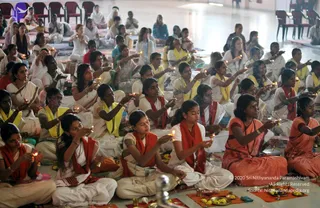
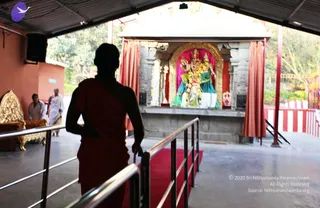
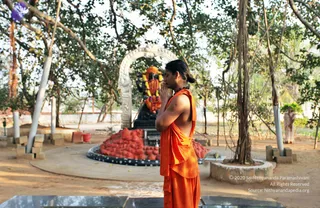
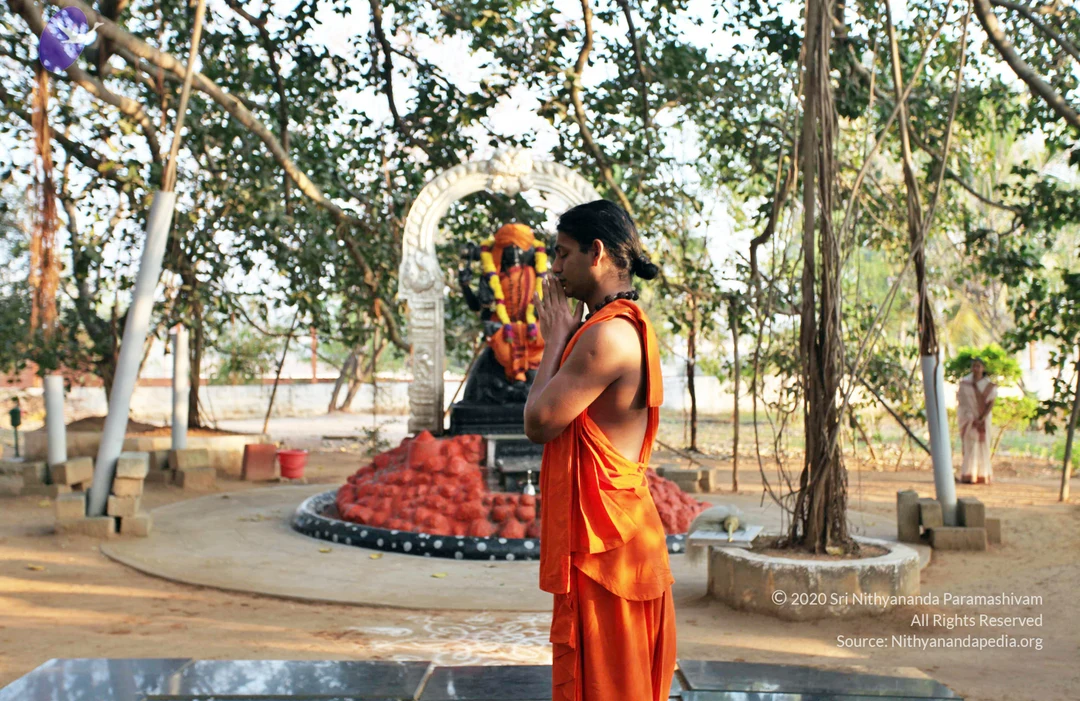
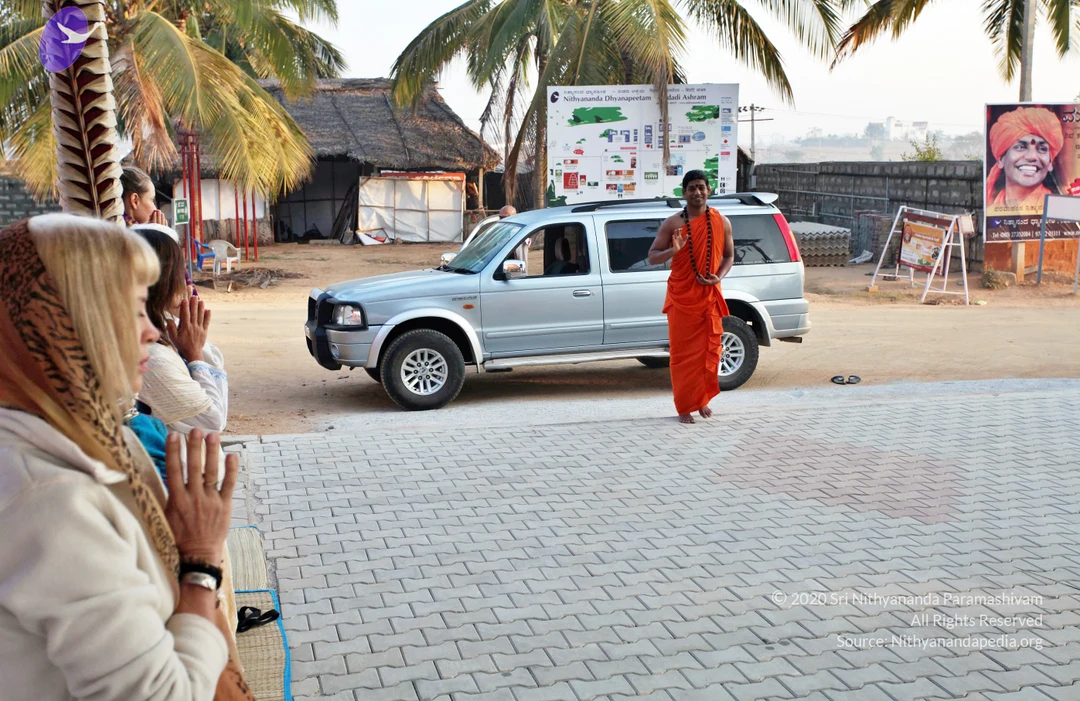
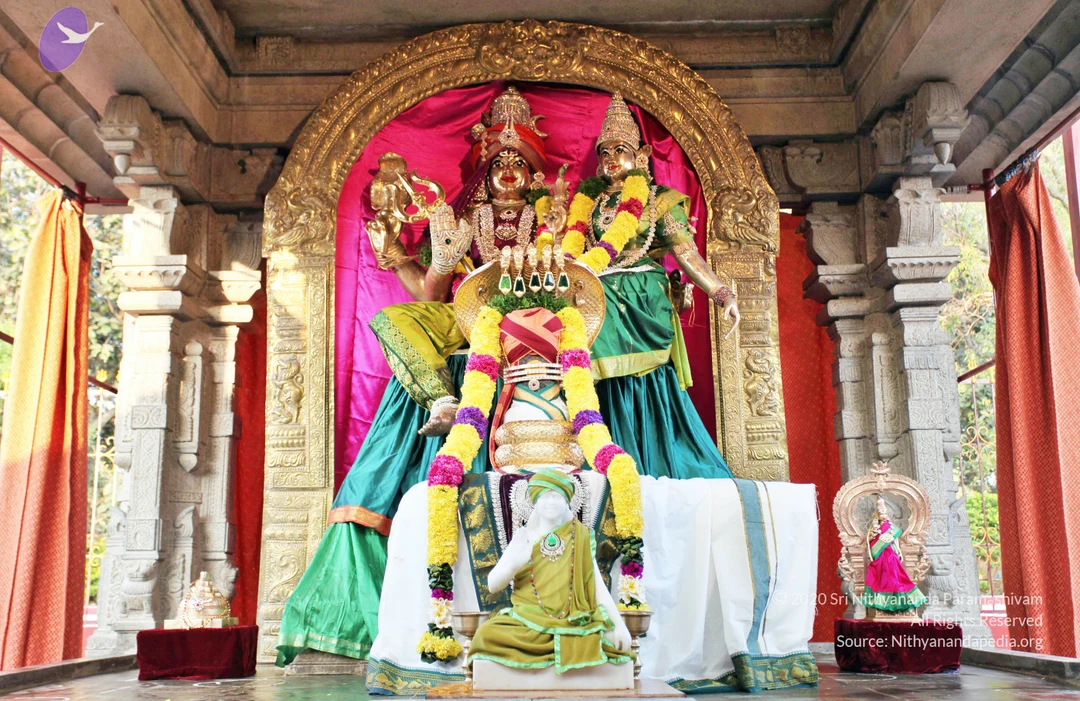
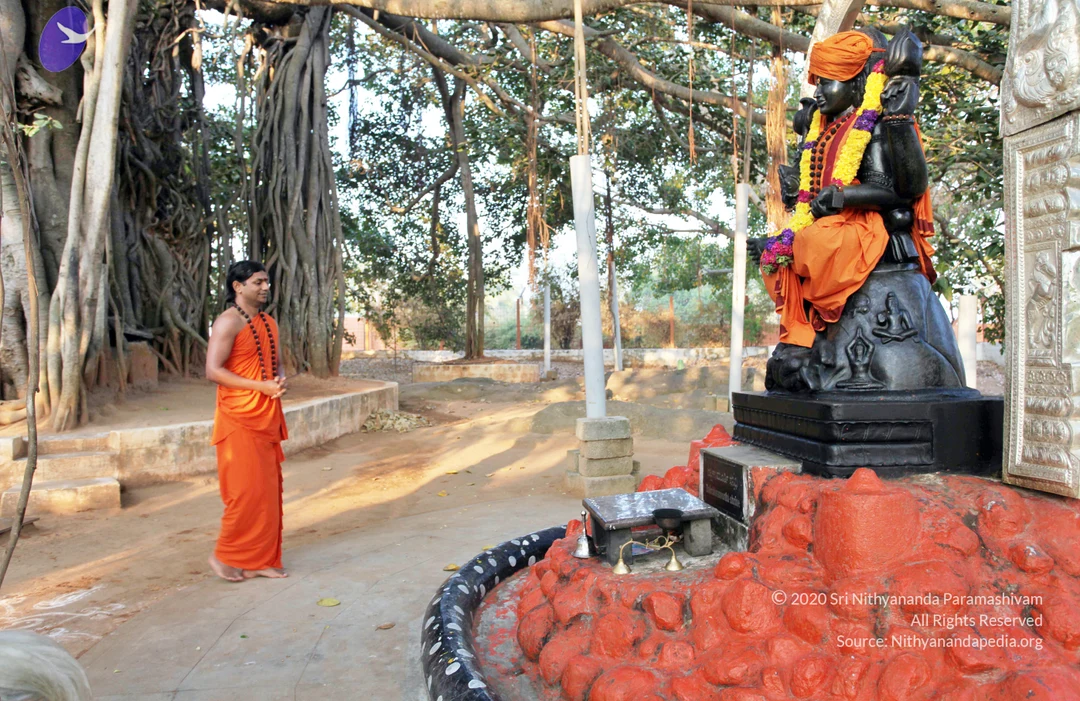
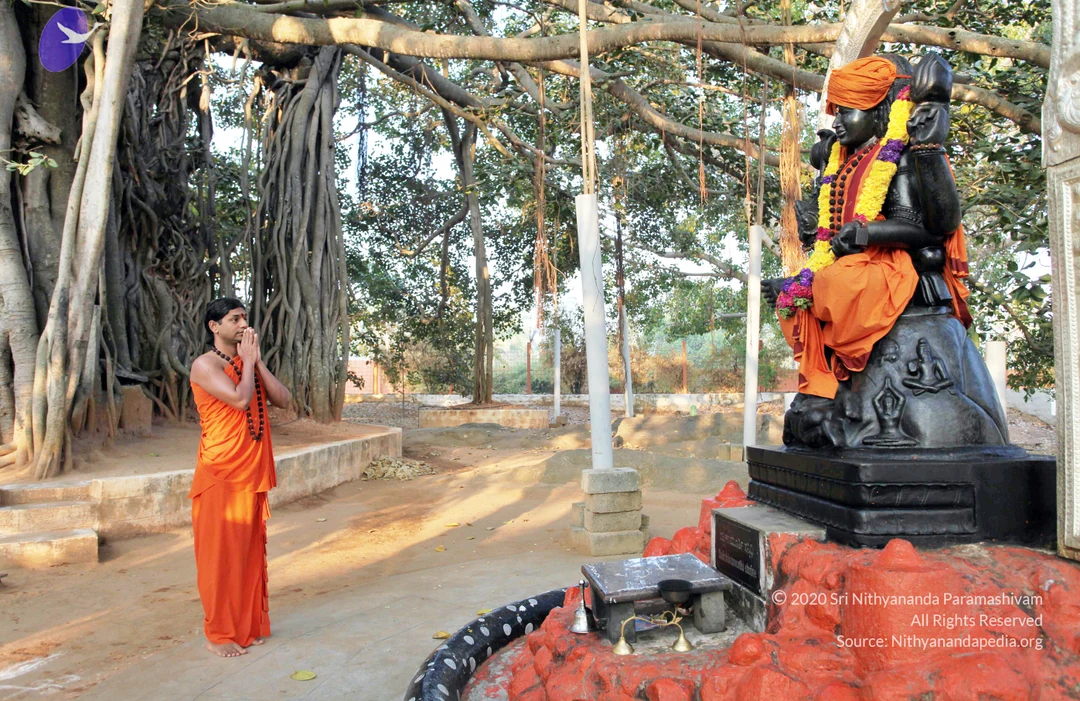
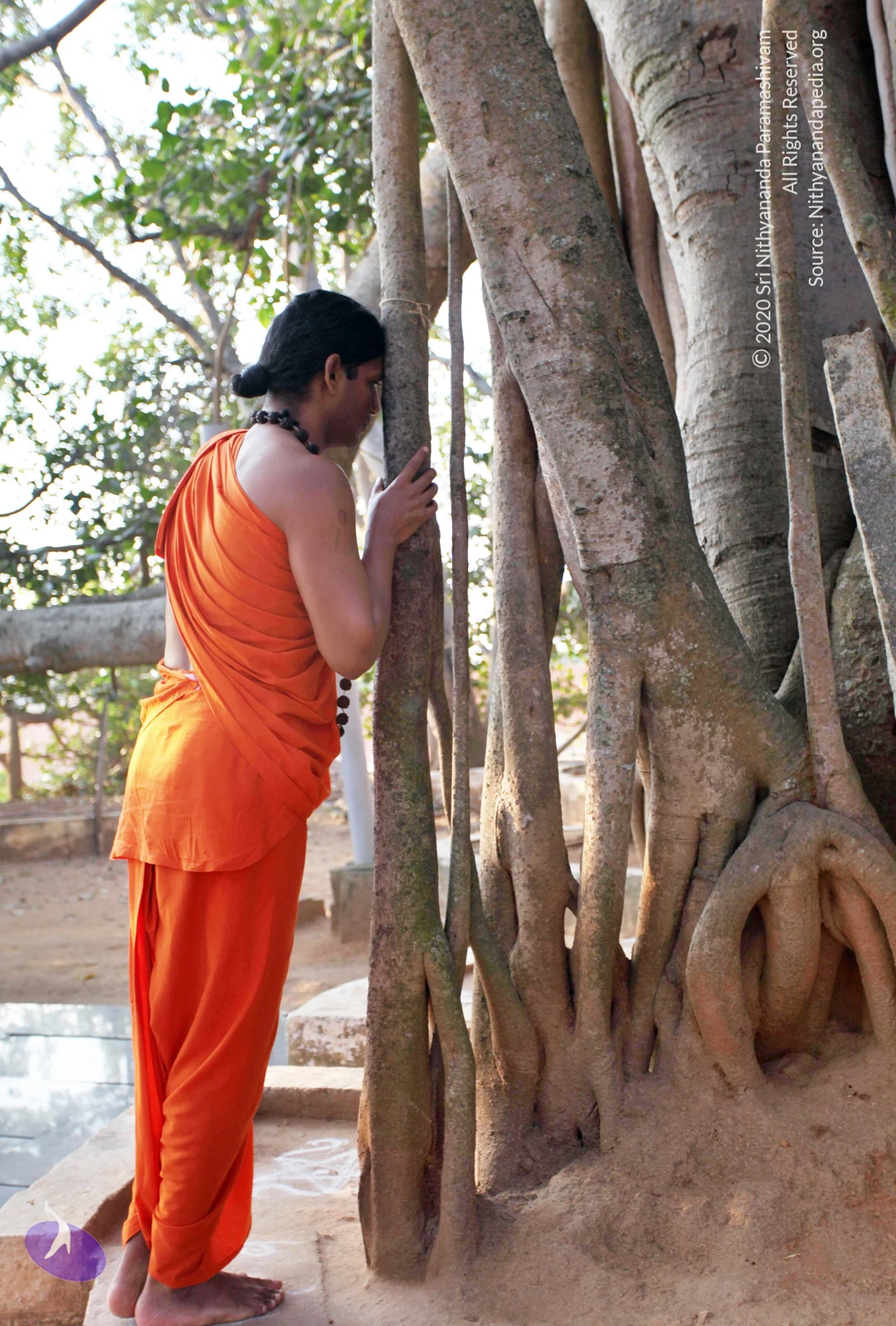
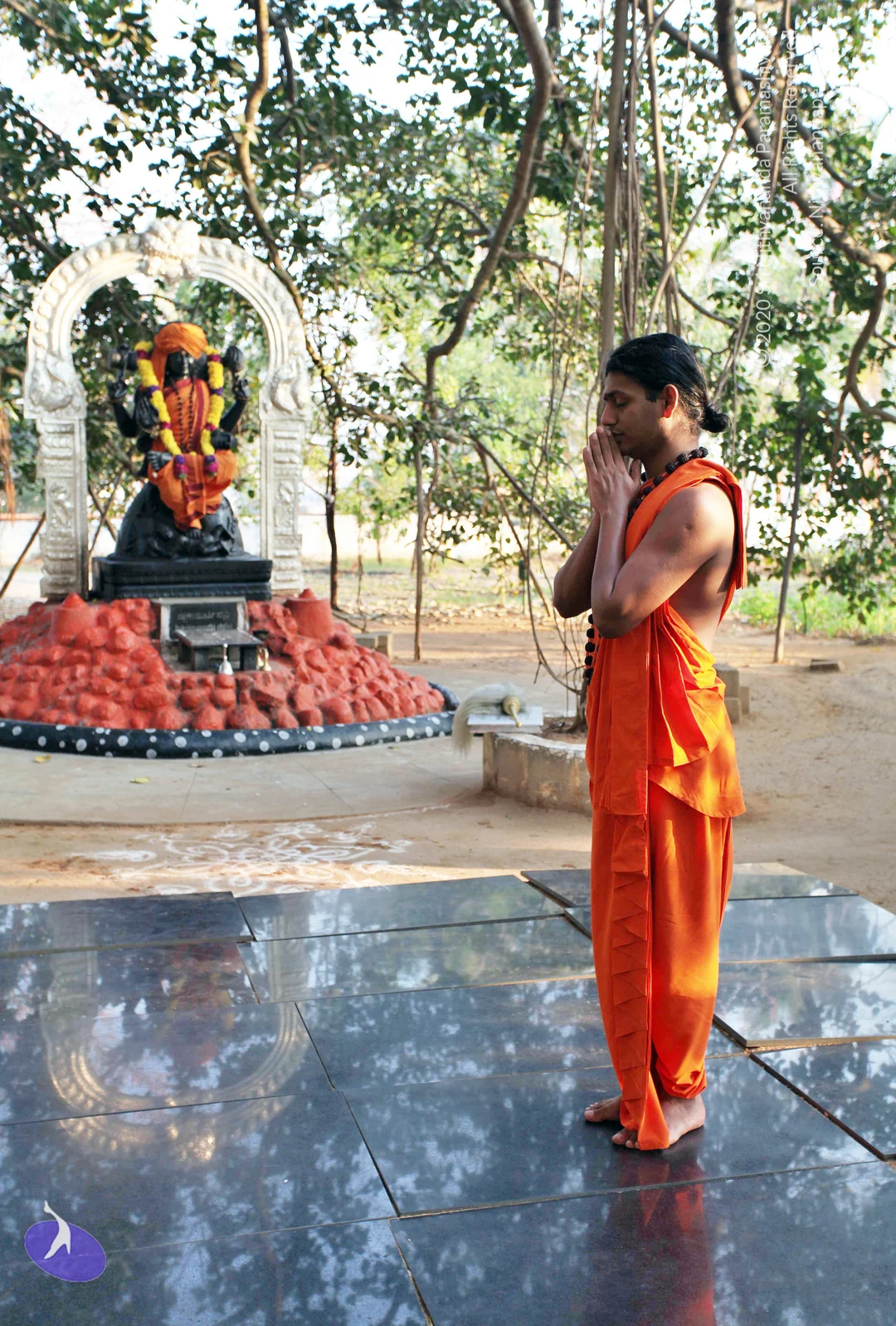
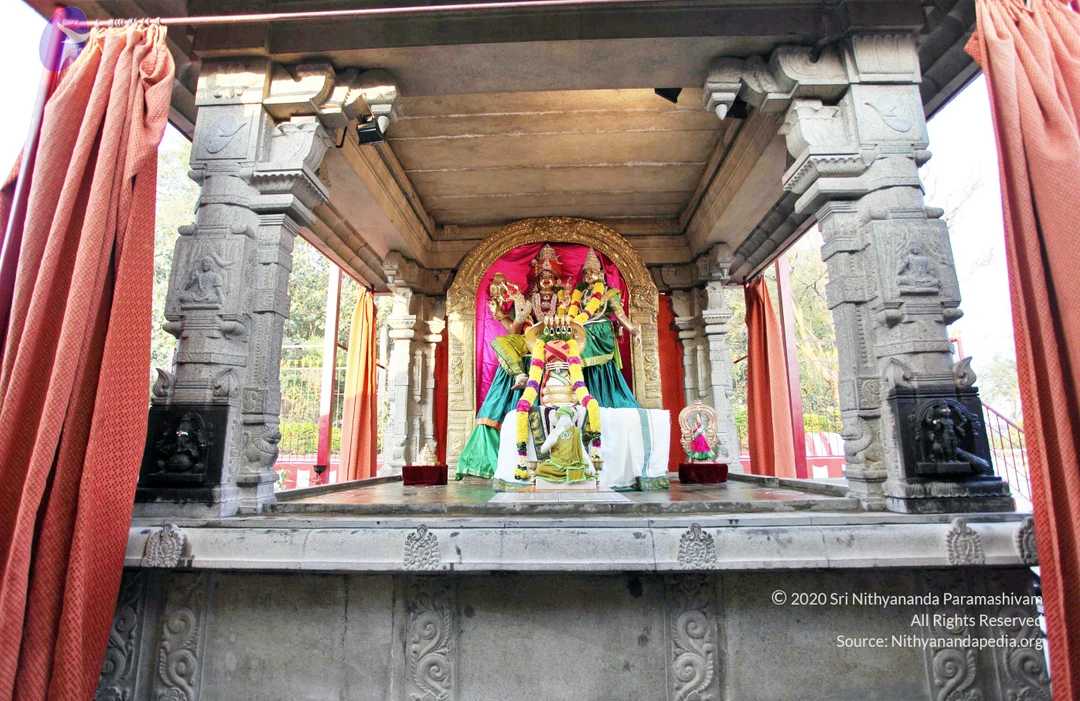
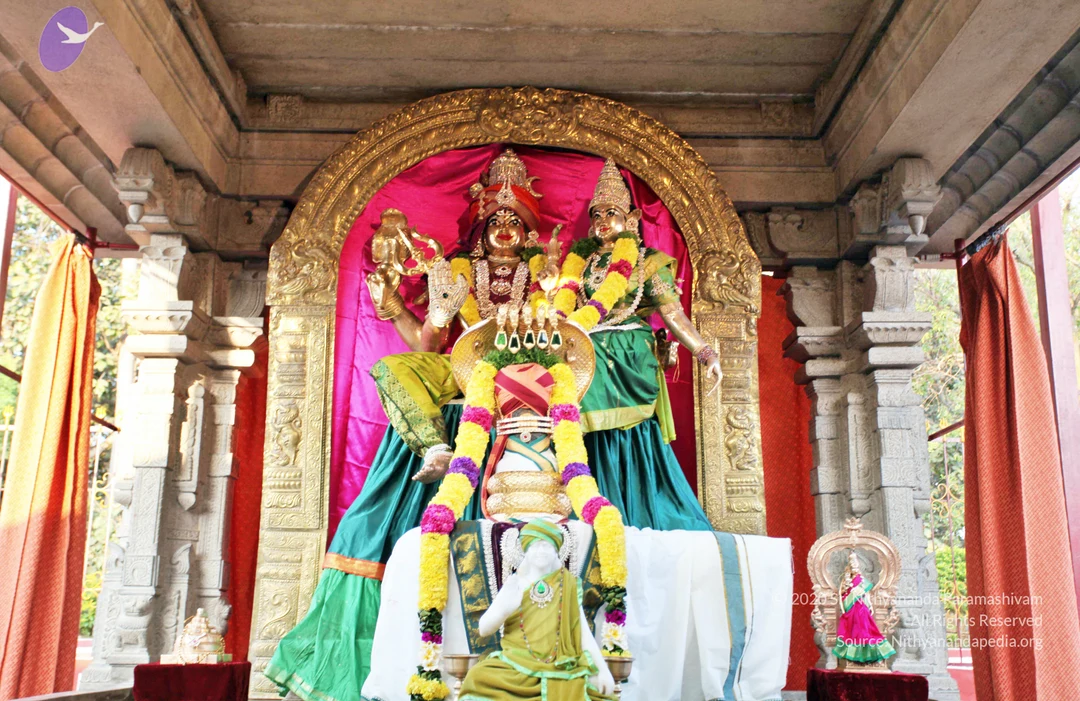
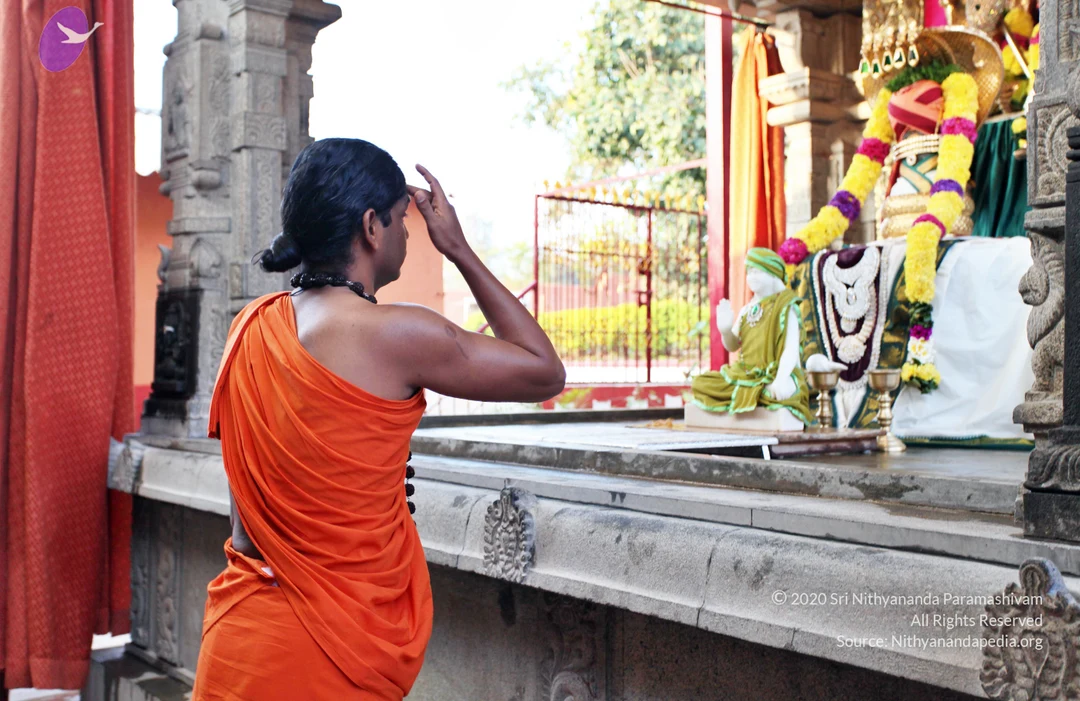
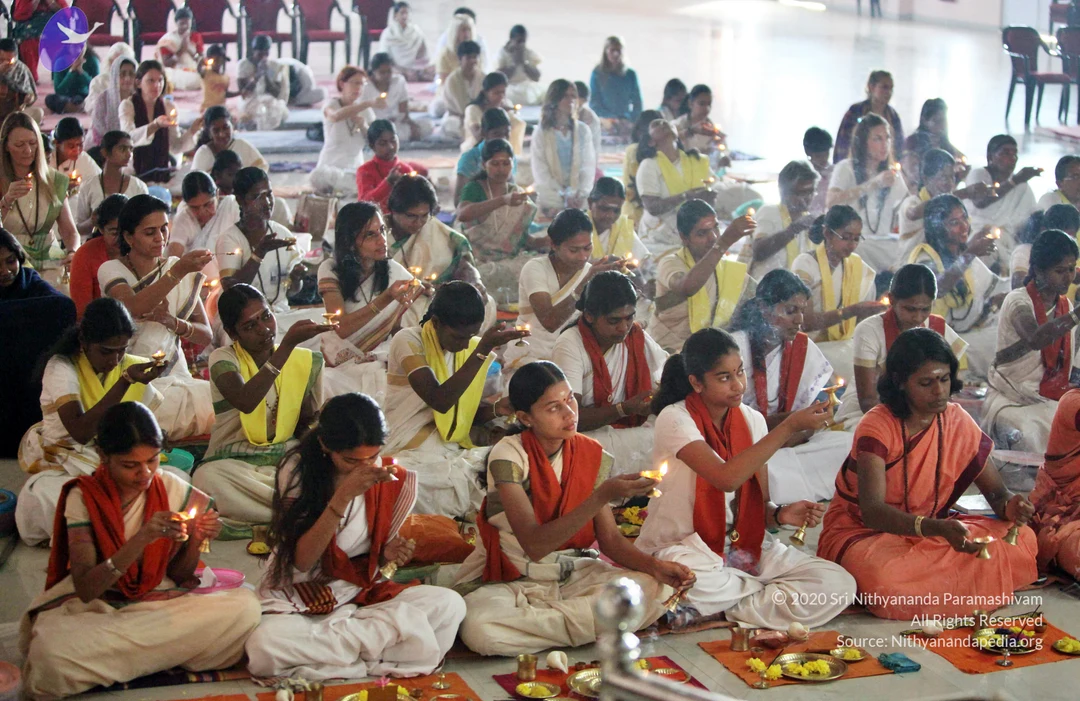
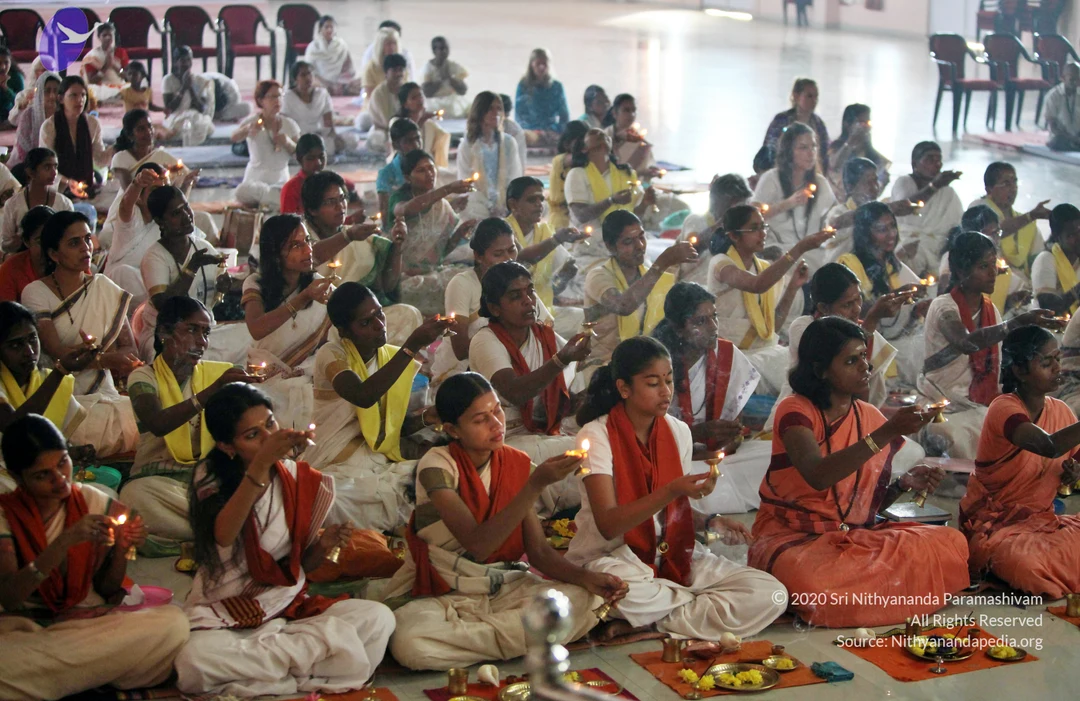
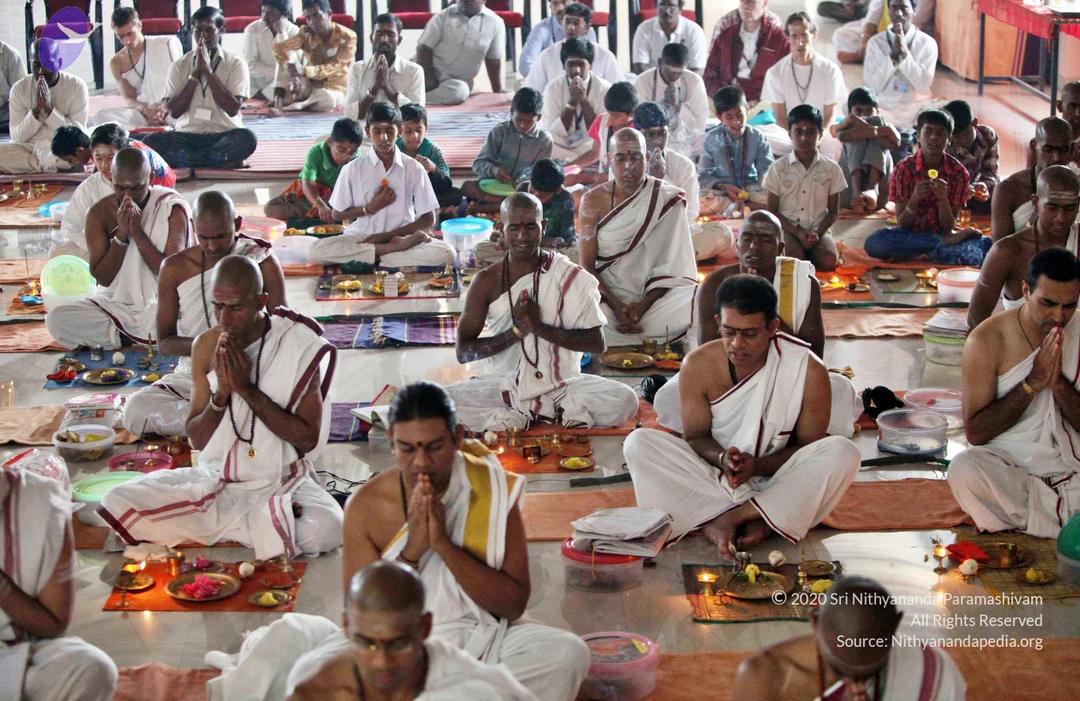
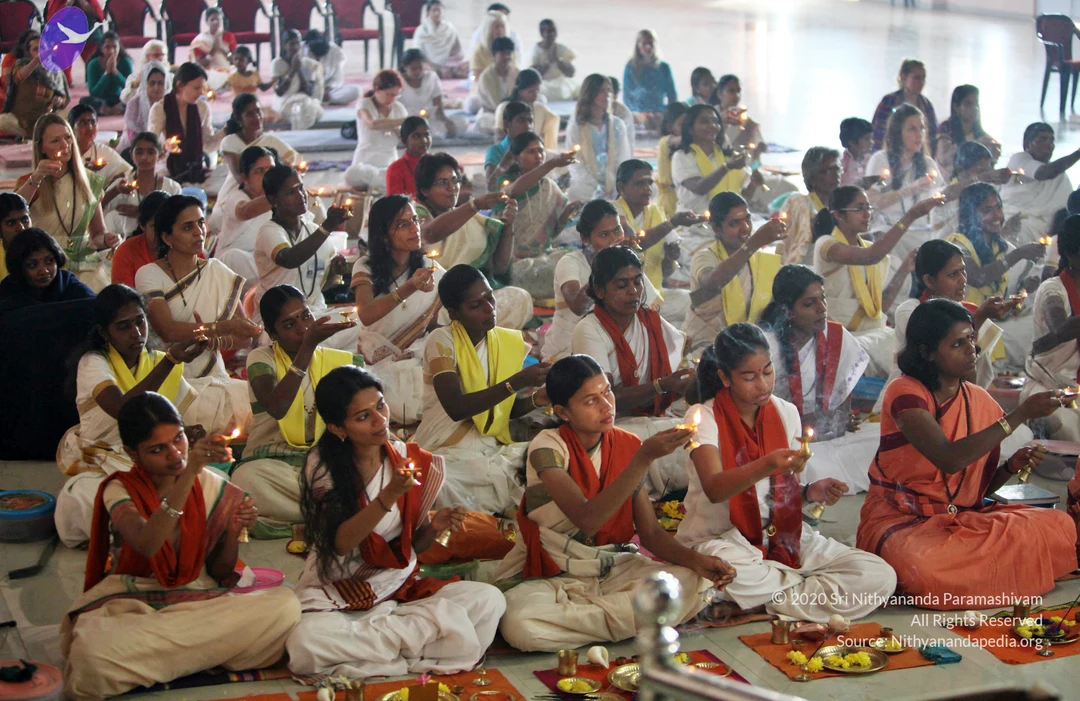
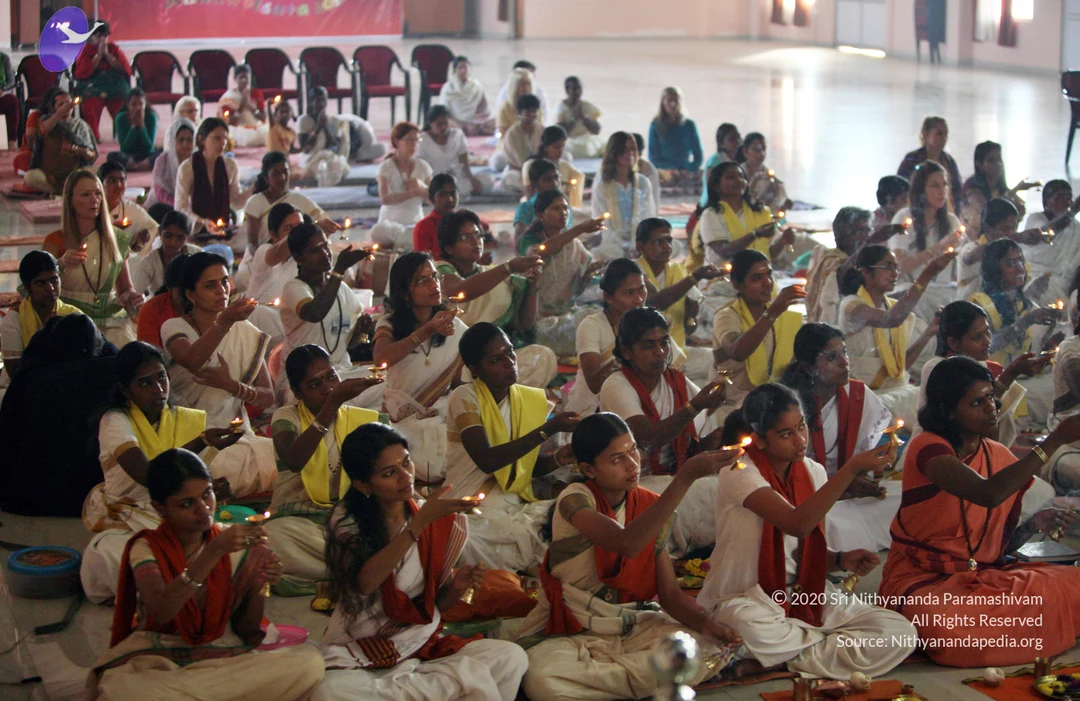
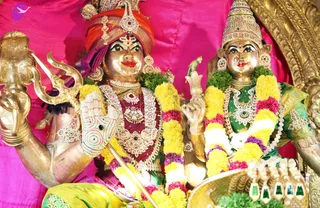
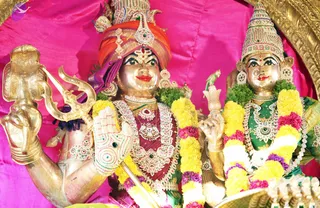
A large group of devotees sits cross-legged on mats and cloth across a bright hall, holding small lit oil lamps (diyas) in their hands during a puja. Many wear white or cream clothing with red, orange, or yellow shawls and stoles; some women wear orange saris. Brass plates with flowers and small bowls sit on orange cloths in the foreground. Red chairs line the back wall. No a person candidate is clearly visible among the seated devotees.A photograph taken from behind of a figure in a saffron-red robe walking along a metal railing toward a shrine. The silhouetted person is backlit, with a shaved head and bare arm visible. Inside the temple-like hall, a deity murti stands in an ornate grey stone shrine framed by a gold arch and draped with rose-pink cloth, decorated with green and orange garlands and a green sari-like garment. A red carpet runs to the shrine. To the left, a gold carved throne-like seat stands beside two figures in white: one in a white dhoti and shawl with ceremonial gold necklace, and another in white clothing. Red-and-white striped pillars and a shaded tent frame the scene.Outdoors under a large shady tree, a man in an orange saffron-coloured robe and a dark rudraksha-style neck mala stands with palms pressed together in prayer, head bowed, hair tied up in a knot. Behind him is a black stone deity murti draped in orange cloth and garlands, set within a white arched shrine frame. Before the murti is a circular black-rimmed platform heaped with red kumkum or powder offerings. To the right, a person in white ritual clothing stands in the background among the trees. Metal pillars and concrete blocks surround the open ground.

February 08 2011

Original wiki page
Contents

Title:

Seedless Samadhi Patanjali Yoga Sutra 114 Nithyananda Satsang 8-Feb-2011

Description:

Living Incarnation and Avatar Paramahamsa Nithyananda explained in today's morning discourse that the Sanskrit language is created to keep the eternal truths alive for generations. Up until the last sutra, Patanjali was explaining the 8 limbs of yoga in Ashtanga yoga.

To summarize: Yama - understanding about the law and the power that executes the law. Niyama - raising the coherence to the cosmic consciousness. Asana - aligning the body for the cosmic experience. Pranayama - aligning and elevating the life energy in your system, through the proper processes. Pratyahara -- withdrawing from the senses. Dharana -- centering on the great truths. Dhyana -- merging with the cosmic experience. Samadhi -- completely experiencing the non-return zone, the space where you don't get separated or come back.

The quality which you need to add to move from pratyahara to dharana, is the sacred secret: honesty to the identity which you believe as you. Whatever commitment you take, be honest to it. If you are not able, to be honest to all, at least prioritize and be honest to the few you can.

Maintain your life with a clear balance, any identity you have assumed, take complete responsibility for it. If you are not able to take responsibility, renounce, give it up.

Honesty to the identity moves you from pratyahara to dharana because controlling the mind is not like controlling a bunch of monkeys. The mind can't be shut down if it's put in a cage or prison. Mind is so vast, for it to be shut down, the mind has to be altered. Complete honesty in your understanding about yourself has to happen.

Fulfilling the identity which you assume and renouncing the identities you are not able to fulfill is what Swamiji calls standing on Sathya. This is responsible for moving you from Pratyahara to Dharana.

Understand a very important truth, to move from Pratyahara to Dharana, you need a lifestyle change. From samadhi to nirbija samadhi, you need a complete intense dedication to the spiritual growth alone. Even the 8 limbs of yoga are external to nirbija samadhi, the seedless Samadhi, a stage from which you don't need to come back. If you come back, you can come back as an Incarnation.

If you are interested in nirbija samadhi, everything, all desires, even simple desires are not allowed. That's why Patanjali says, even dharana dhyana and Samadhi are external to Nirbija Samadhi.

Watch, share and like the videos and Subscribe to our channel to be notified of the next upload. click http://bit.ly/20j90wr to subscribe.

Link to Video:

VideoAudio

Transcript:

(0:38)

Sadāshiva samārambām shankarācharya madhyamām Asmadācharya paryanthām vande guru paramparām.

(0:59)

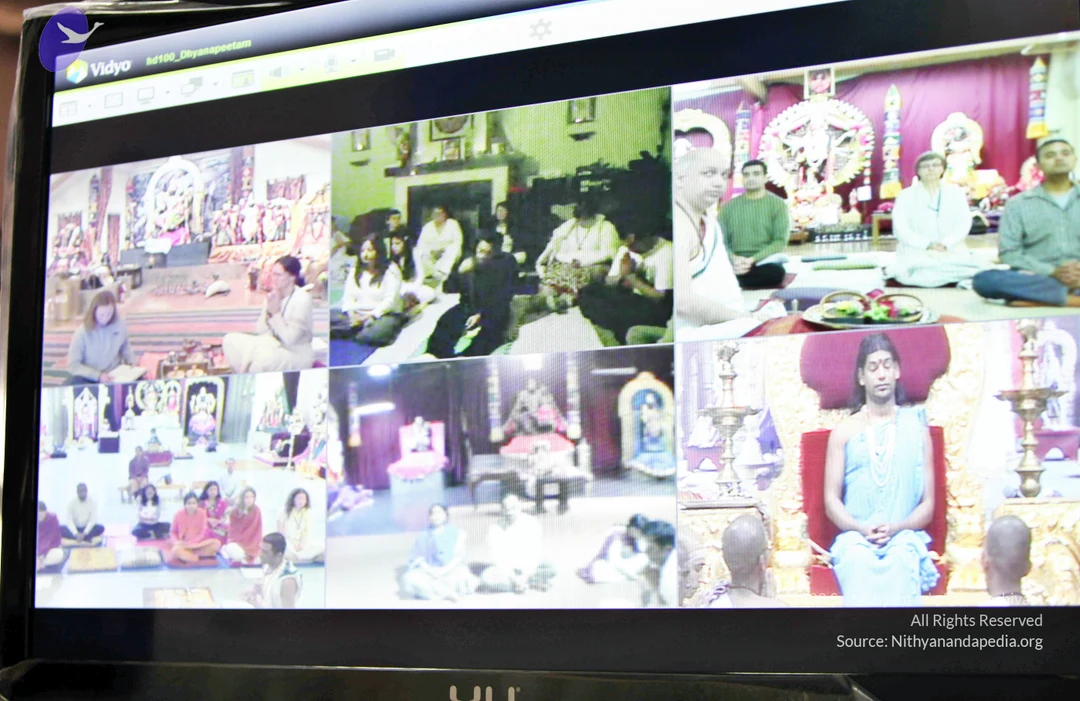
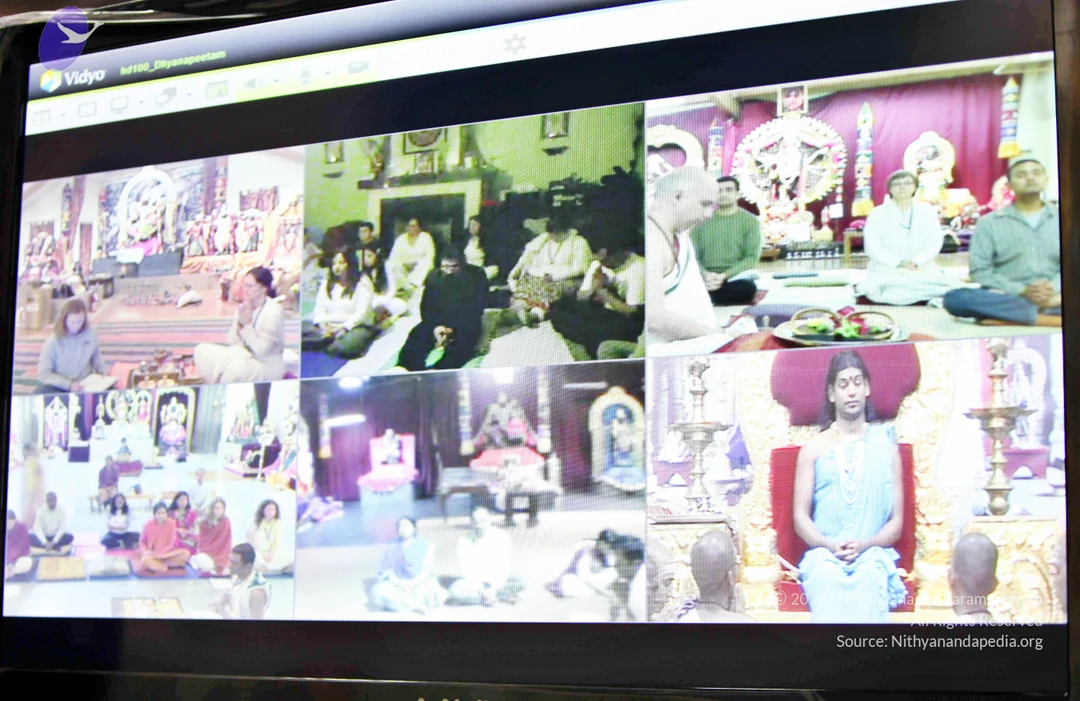
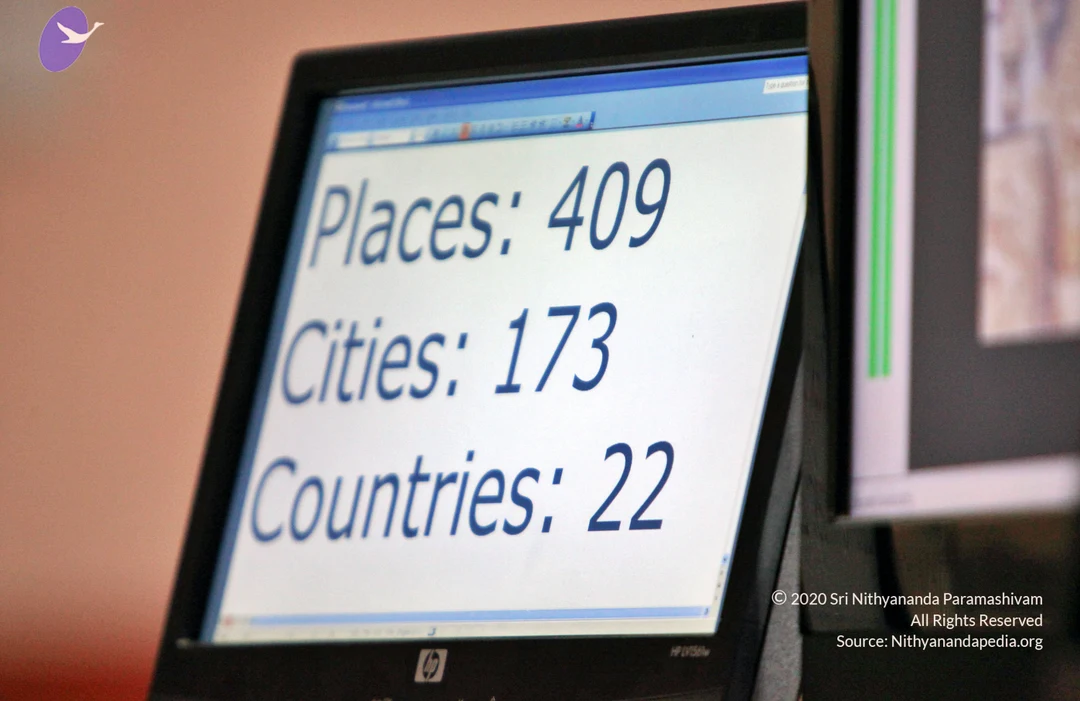
I welcome you all with My love and respects. I welcome all the devotees from around the world who are sitting with us at this moment as on now in 409 places, in 173 cities, in 22 countries people are sitting with us…. And 10 countries are two-way connection with us. I am able to see Los Angeles temple, San Jose, Seattle, Ohio, Hyderabad, Redondo Beach, North Vancouver and Mexico centers, and 409 centers are seeing us at this moment in 173 cities in 22 countries…. So before entering into the satsang I wanted to remind all the devotees, disciples, visitors to sit in padmasana or vajrasana or sukhasana comfortably and in samana mudra. Sit comfortably in unclutched mood in a relaxed way, we will start the eN experience eN effect. Today’s subject ‘The Seedless Samadhi - Nirbija Samadhi’; I will be expounding on 114th Patanjali’s yoga sutra; the sutra 114th Patanjali’s yoga sutra and in the 3rd chapter 8th verse the seedless Samadhi; nirbija samadhi.

(3:37)

Let Me recite the sutra and enter into the translations. tad api bahir angam nirbijasya Swami Vivekananda translates this sutra as: but even they example dharana dhyana and samadhi are external to the seedless Samadhi. Swami Prabhavananda translates as: but even these are not direct aides to the seedless Samadhi Swami Sachidananda translates as: but even these are external to the seedless Samadhi. Osho translates this sutra as: but the three are external compared to seedless Samadhi.

(4:35)

The beauty of Sanskrit is same sutra can be translated as 100 ways by 100 Masters, still it retains its originality and purity forever and ever and ever. Masters new, new Masters and Incarnations to come and give their translation and interpretation but still it retains its originality and purity untouched, available, fresh for further generations to translate and interpret as they want. Sanskrit language is created to keep these eternal truths alive for generations. See you can see the translations of various Masters. Vivekananda translates in one way. His own sampradaya Swami Prabhavananda; actually Prabhavananda is the disciple of Vivekananda’s brother disciple. Vivekananda’s brother disciple Brahmananda, his disciple is Prabhavananda. If you see Prabhavananda’s translation sometimes not only radical, opposite to Vivekananda’s translation; but in our sampradaya in the Vedic tradition you have freedom to translate and interpret, comment as you experienced. So each Master gives his own understanding experience and expression. But still the original sutra remains as pure as it is, as it was expressed by Patanjali.

(6:34)

tad api bahir angam nirbijasya I will try to give My own understanding, My own experience on this truth. Till last sutra Patanjali was explaining how yama, niyama, asana, pranayama, pratyahara, dharana, dhyana, Samadhi; these eight are deeper than the earlier ones. Yama is understanding about the law and the power which executes the law. Niyama is raising the coherence of your Consciousness to the Cosmic Consciousness. Asana, aligning and preparing your body for the Cosmic experience; Pranayama aligning and elevating the life energy in your system through the proper life breath process; Pratyahara withdrawing from the things which distracts you from the cosmic experience; Dharana centering on the great truths which leads you to the Cosmic experience; Dhyana merging or becoming one with that Cosmic experience; Samadhi completely experiencing the non return zone, the space where you do not get separated or you do not come back. Patanjali was expressing in all these sutras how every step is deeper than the previous one.

(09:17)

As I was telling yesterday, the difference between pratyahara and dharana is not just quantity; it is qualitative. Please understand do not think if you do two hours of pratyahara it can lead to dharana by itself. No. Pratyahara and dharana are not just quantitatively different, they are qualitatively different…. So the quality which you need to add for you to move from pratyahara to dharana is what I call sacred secrets. As I said yesterday from pratyahara for you to move to dharana, the honesty to the identity which you believe as you…..please understand whatever you believe as you whatever position you hold in your social life, family life, personal life, spiritual life; whatever position you take up whatever commitment you accept, be honest to it. If you are not able to be honest to all the identities you are committing at least priorities and drop the identities which you are not able to fulfill. Do not accept.

(10:59)

Understand very beautifully Ramakrishna says in his life, in his teachings, life is an accounts. Always be ready when Yama calls you. He says if Yama calls me now I have no balance; clear. Maintain your life with clear balance; means any identity you accepted, you are completely taking responsibility for it. If you are not able to take the complete responsibility don’t assume that identity. Ability to renounce, give up the identity which you are not able to fulfill is vairagya. Naturally when you give up few identities because you are not able to fulfill those commitments, you will have some suffering; you will have some drawbacks; you will have some missing feelings. Bearing with that is tapasya.

(12:12)

Please understand so prioritize the identities which you are assuming in your life. You may be assuming the identity of a wife or husband, you may assume the identity of a son or daughter or father or mother, you may assume a identity of a disciple or you may assume the identity of a brahmachari, you may assume the identity of grihastha, you may assume the identity of vanaprastha, you may assume the identity of a sanyasi. You may assume any identity but be very clear, honesty to that identity completely to the core. This is what I call the sacred secret.

(13:20)

Honesty to the identity moves you from pratyahara to dharana because controlling the mind is not a job like how you control the monkeys. If you want to control the monkeys put all that 25 monkeys into a cage and lock it; over. But controlling the mind is not like that because mind cannot be shut down if it is put in cage or prison. I tell you mind is so vast. For it to be shut down the whole life has to be altered. I Myself did not have a problem. You cannot shut your mind, move it from pratyahara to dharana just like some technique or method. Mind is not like a snake. If you just blow some pipe it will settle down. No. For pratyahara to dharana to happen, a complete honesty in your very understanding about yourself has to happen.

(14:38)

All the identities which you assume and are unable to fulfill is what I call extra bad cholesterol. Not only it is a heavy load and weight on you, it is dangerous for your very life; the cholesterol on the lower abdomen. As per the research Indians die one three years means 13 years early just because of their belly cholesterol, just because of their cholesterol in the belly. One three years, please understand they create attract suffer with the diseases…. and die thirteen years early just because of their stomach cholesterol; belly cholesterol…. I am really surprised the country which is based in ayurvedic food and ayurvedic way of eating is now suffering with cholesterol.

(16:20)

India is one of the country, greatest country. Every 100 kilometer you travel, the food style and the clothing style will be different. Because we are so rich, we evolved a system of eating which itself will be a automatic medicine for our body. We had a local intelligent village doctors who study the quality of the local water, quality of the local food, quality of the local body, quality of the local lifestyle, quality of the local air and design the food, method of dressing everything based on that. If you just, you see, if I just write down all the varieties of food I ate in My wandering I can say at least 10000 recipe I can create. 10000 variety of food I ate in My wandering. You may be thinking what am I talking? No, really I am telling you; because in India maximum 100 kilometer any one food or clothing system will be followed.

(17:45)

I am giving you the example; from here go towards Tamil Nadu 100 kilometer completely food cloth everything is different. Go northern Karnataka side 100 kilometer, food cloth everything is different. Go this side Chittoor side 100 kilometer, food clothing everything is different. Go Kerala side 100 kilometer, food clothing everything is different. India is a rich country where the food, clothing, everything is designed developed by the intelligent spiritual understanding people; people with spiritual understanding, specially for the complete health and wellness.

(18:43)

Fulfilling the identity which you assumed and renouncing the identities which you are not able to fulfill, is what I call standing on satya; that is responsible for you to move from pratyahara to dharana. From pratyahara to dharana to move a complete alteration of lifestyle is required. Please understand lifestyle alteration is required. Till pratyahara it is more or less like exercise. That is why all over the world only till the point of pratyahara it is preached and practiced as yoga. All over the world anywhere you use the word yoga, immediately they only know some exercises, stretching out your body front and back and blowing your nose in the name of pranayam, breathing exercise and maybe little ten times chant om om om; that’s all. That’s all they know about yoga. It is reduced to some circus and exercise.

(20:09)

Till these steps you don’t need lifestyle change. You don’t need to be vegetarian, you don’t need to be honest, you don’t need to be doing any special lifestyle changes. You can just be as you are what you are and who you are and just do little makeup on the skin. It’s enough. There will not be any bheda between your earlier identity and new identity. But in dharana you need to change your whole system. The whole body and mind needs to go through a change, a lifestyle change. That is why when it comes to dharana, these so called yogis all over the world say oh now enough I think. No, no, no, no now it is religion part we are not interested in religion, we are only interested in spirituality and teach this. Till the end of pratyahara you can also make money they are also happy. You don’t touch me, I don’t touch you. You won’t hurt me, I won't hurt you…. You can be a non religious organization.

(21:52)

But the real yoga is in dharana-dhyana-samadhi. That is the soul of the yoga…. For that you need lifestyle change. You need, your core need to be changed. Yoga is lifestyle change not just a pseudo makeup. No. You need to diagnose the right problem. You need to go to the core, not attending symptoms. You need to attend the very root core disease. Yoga attends disease not just symptoms.

(22:57)

A guy with a big flatulence problem goes to a doctor and says “Sir, I am suffering with silent gas emissions. From today morning I had 25 times. When I drove from my office to your office I had 10 times. When I was waiting in the hall I had 12 times. Just now after entering into your room I had twice.” Doctor says first I need to check your hearing power…. If you understand, understand. Doctor says first I need to check your hearing. Sometimes first you need to check your hearing before you are diagnosed for flatulence. The right problem needs to be diagnosed. You need to attend; you need to work on the deeper disease, not just the symptoms; not just symptoms.

(24:31)

Understand a very important truth from pratyahara to dharana you need lifestyle change and from samadhi to nirbija samadhi you need a complete intense dedication to the spiritual goal alone. That is why Patanjali says even these eight steps are external as far as the nirvikalpa Samadhi is concerned; nirbija Samadhi is concerned. He is using the beautiful word nirbijasya for nirbija Samadhi, seedless Samadhi means the ultimate Samadhi; you don’t come back, you don’t take one more birth. As long as seeds are there you have to take birth. Seedless Samadhi means a stage from which you don’t need to come back. If you come back you will come back as an Incarnation. You don’t need to come back as an ordinary human being. This nirbija Samadhi, seedless Samadhi, even these eight steps including Samadhi are external to the seedless Samadhi. Then how can we achieve seedless Samadhi? What is the difference?

(26:06)

Understand this is the sacred secret. If you are interested in seedless Samadhi everything including an ordinary simple desire like a having a banana, having a potato, having even ordinary desires is not allowed. Please understand. When you are working on yama, niyama, asana, pranayama, pratyahara, you don’t need to change anything. Just add some exercise, blowing the nose, this, that, you don’t even need to change your handbag and lipstick. No, really, there are many ashrams, teach you life where your handbag color or lipstick color nothing needs to be changed. Go tuk tuk tuk. And without even having any wrinkle in your sari or dress you can do some yoga, kriya and come back. You don’t need to change anything. But for dharana-dhyana-samadhi you need lifestyle change. You need to center yourself on this goal.

(27:44)

But for nirbija samadhi everything else has to be eliminated. Not even one desire. You can’t even have a desire like; can I just have one banana which is my desire for a long time? No, nothing can be done. Nirbija samadhi is an extraordinary feat, extraordinary work, extraordinary thing. That is why Patanjali says even dharana-dhyana-samadhi is external as far as nirbija samadhi is concerned. Nirbija samadhi is more subtle and ultimate than dharana-dhyana-samadhi…. He is just insisting on some of the important concepts through this sutra so that you are getting ready to enter into dharana-dhyana-samadhi samyama.

(29:02)

I bless you all; let you all achieve, experience, live, express, radiate and share the Eternal Bliss, Nithyananda. Thank you.

(29:19)

Photos Of The Day:

01-Temple-Visit
02-Panch-Tapas

03-Pada-Puja

04-Morning-Satsang

05-Sarva-Darshan-&-Final-Blessing
Photos from this day

View all 229 photos

01-Temple-Visit

24 photosSource gallery
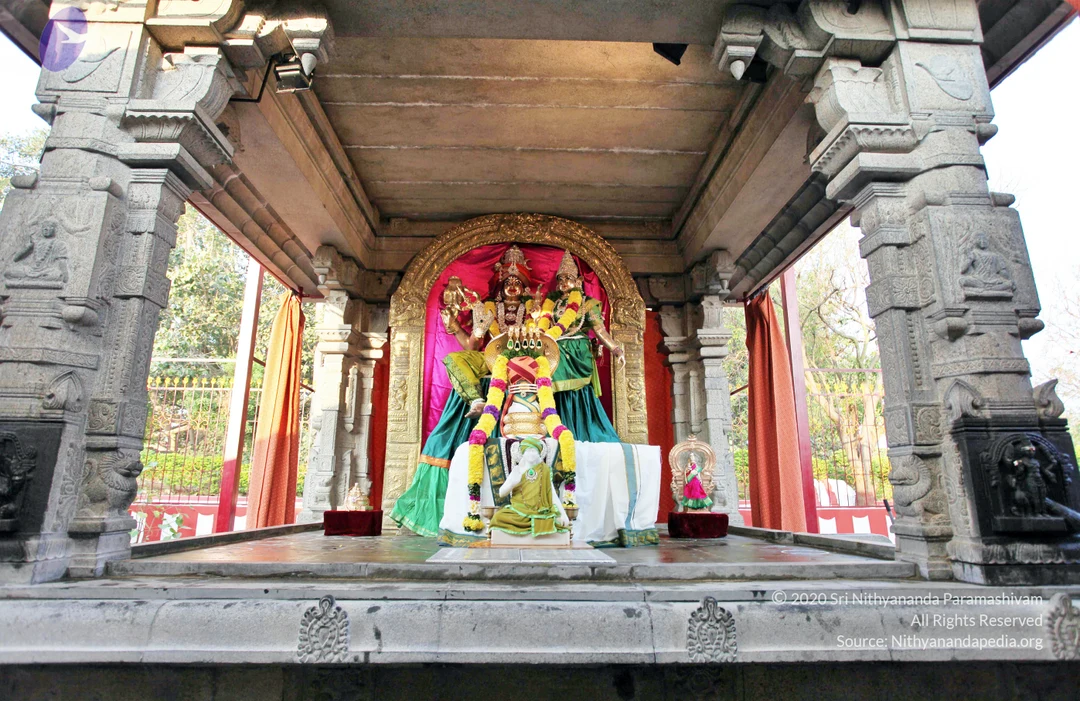
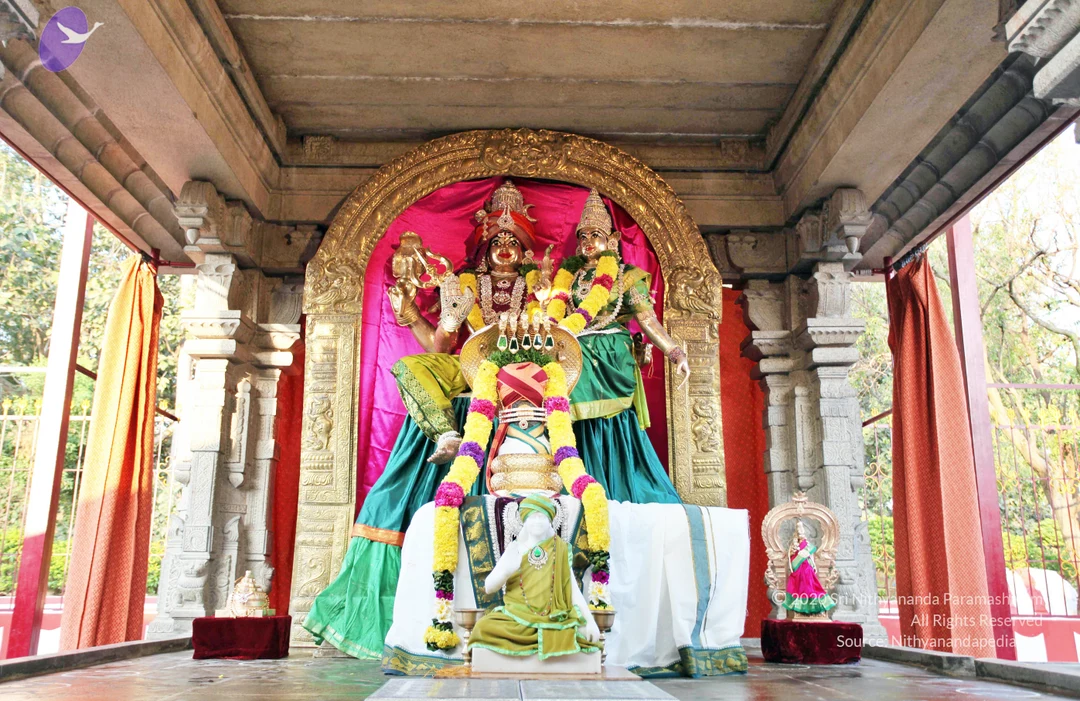
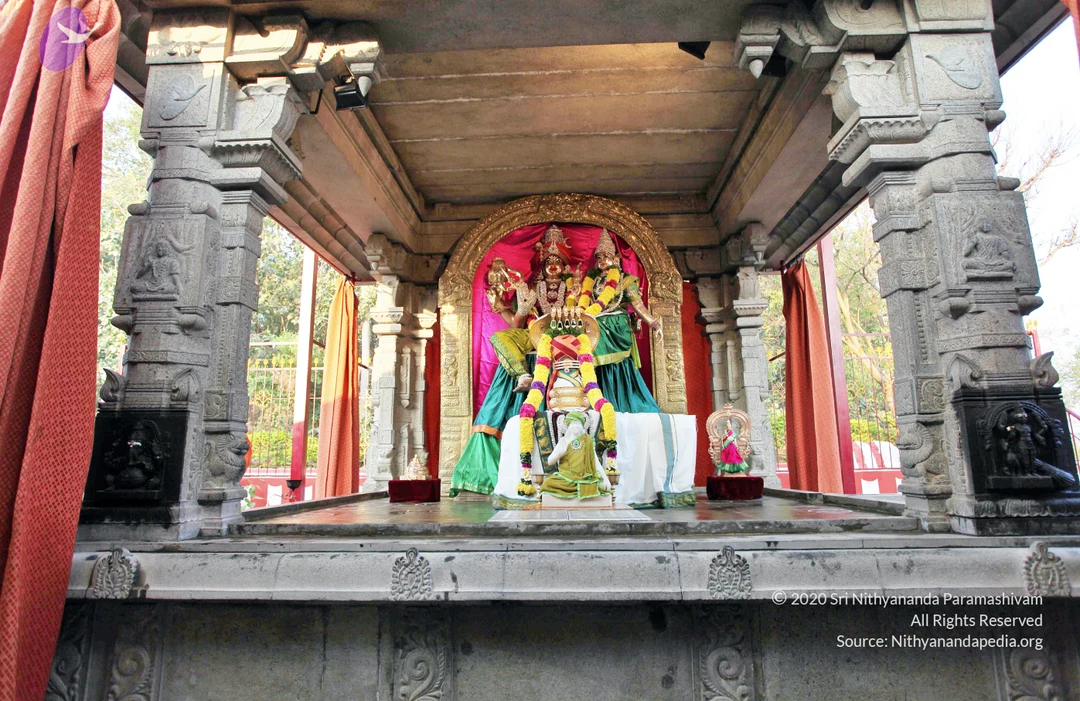
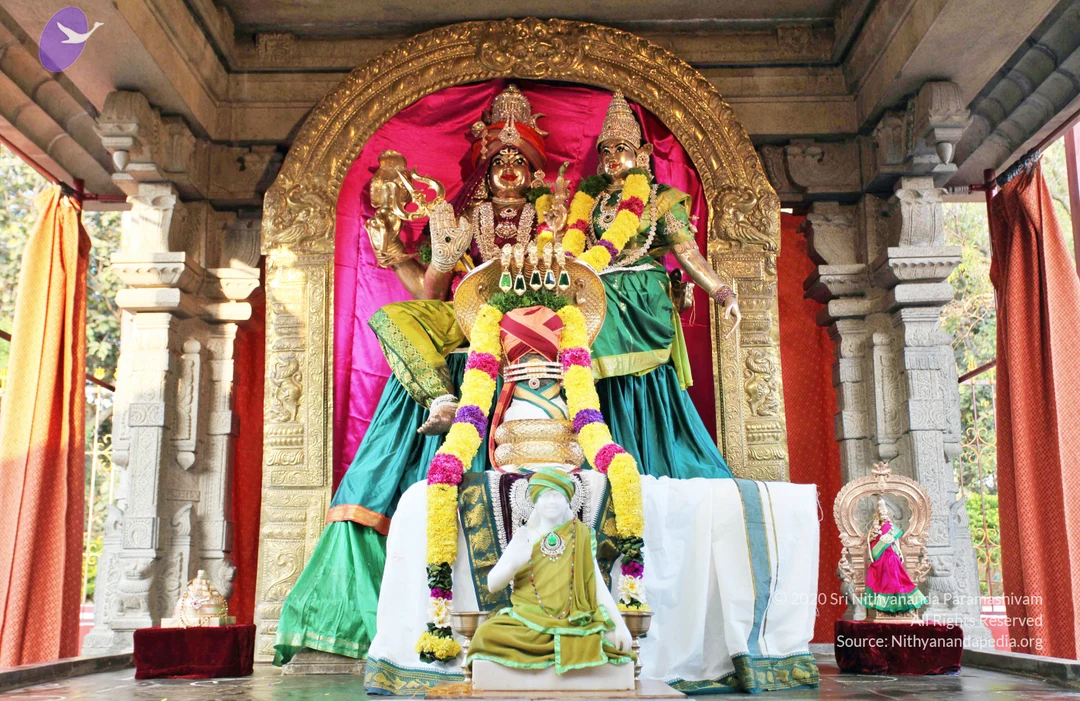
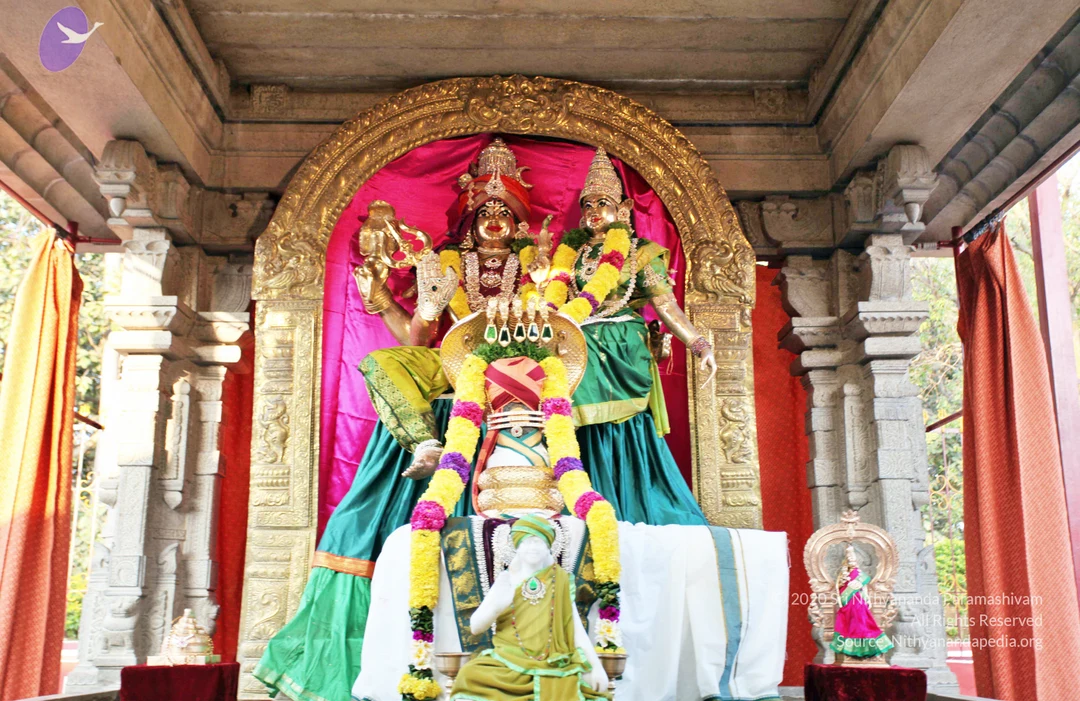
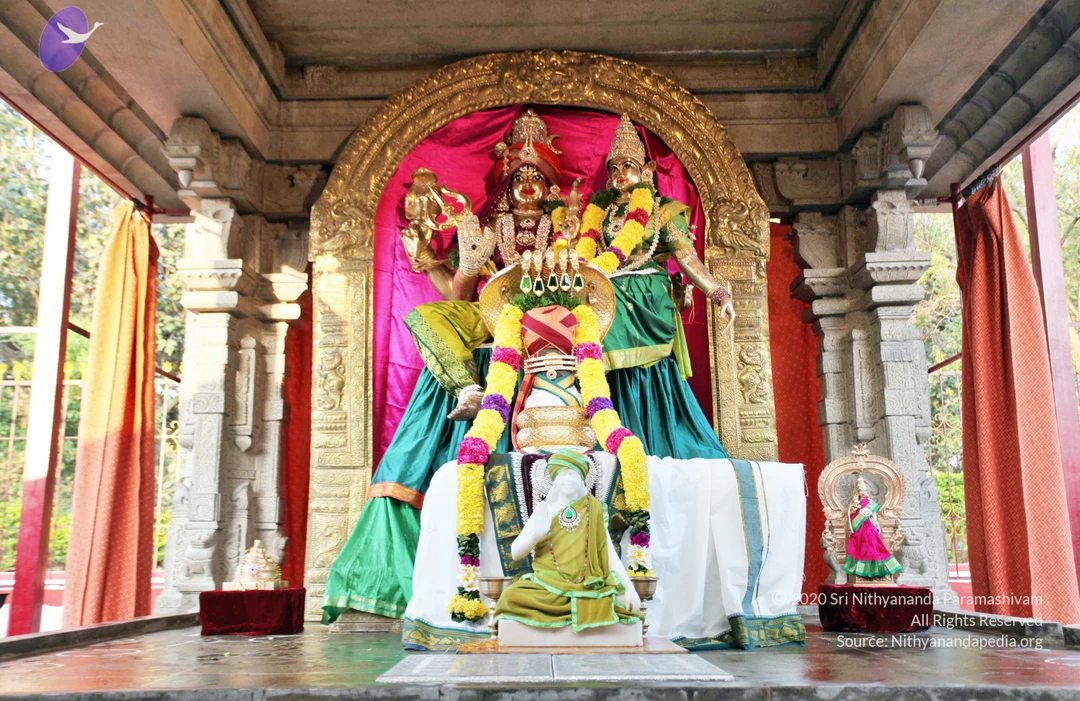
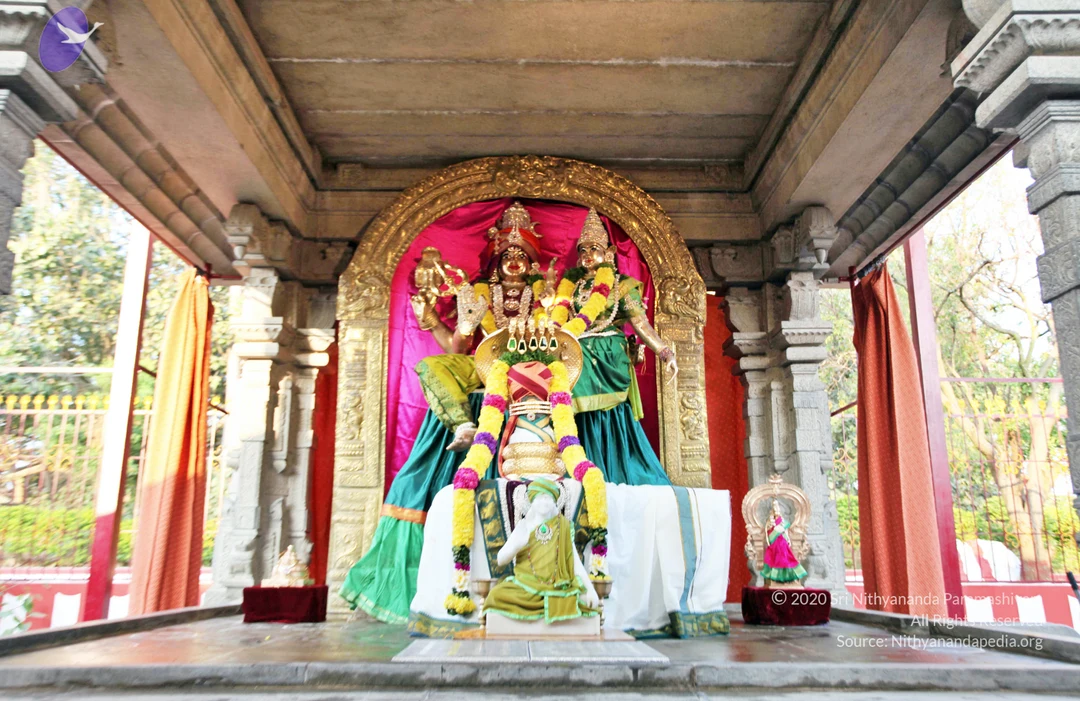
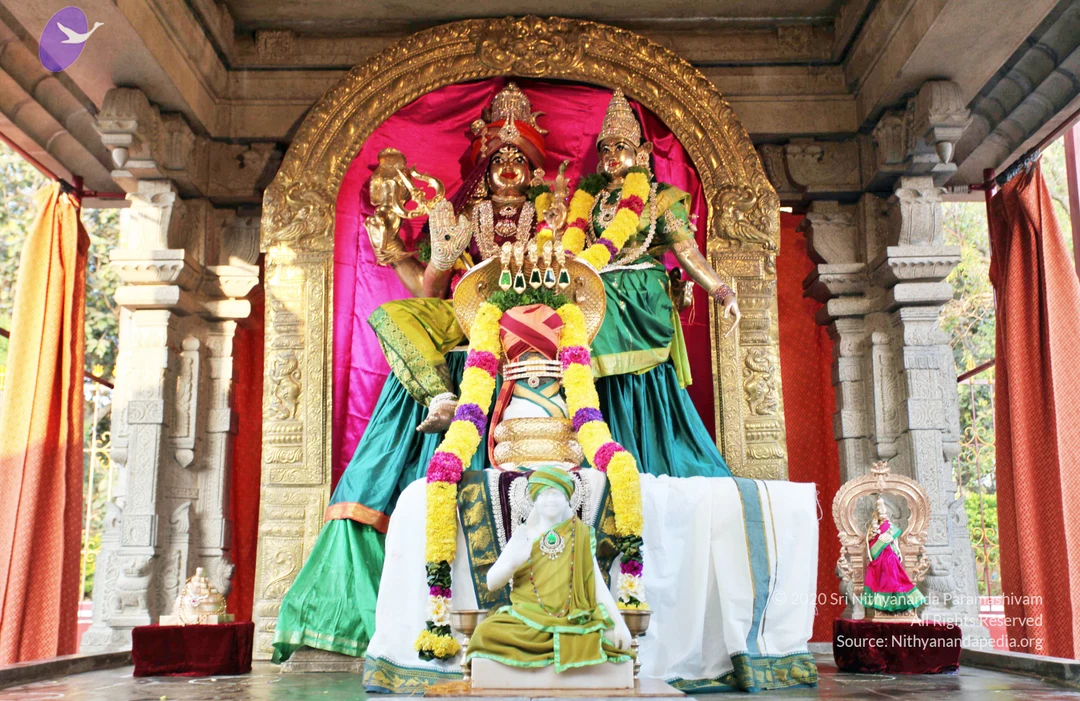
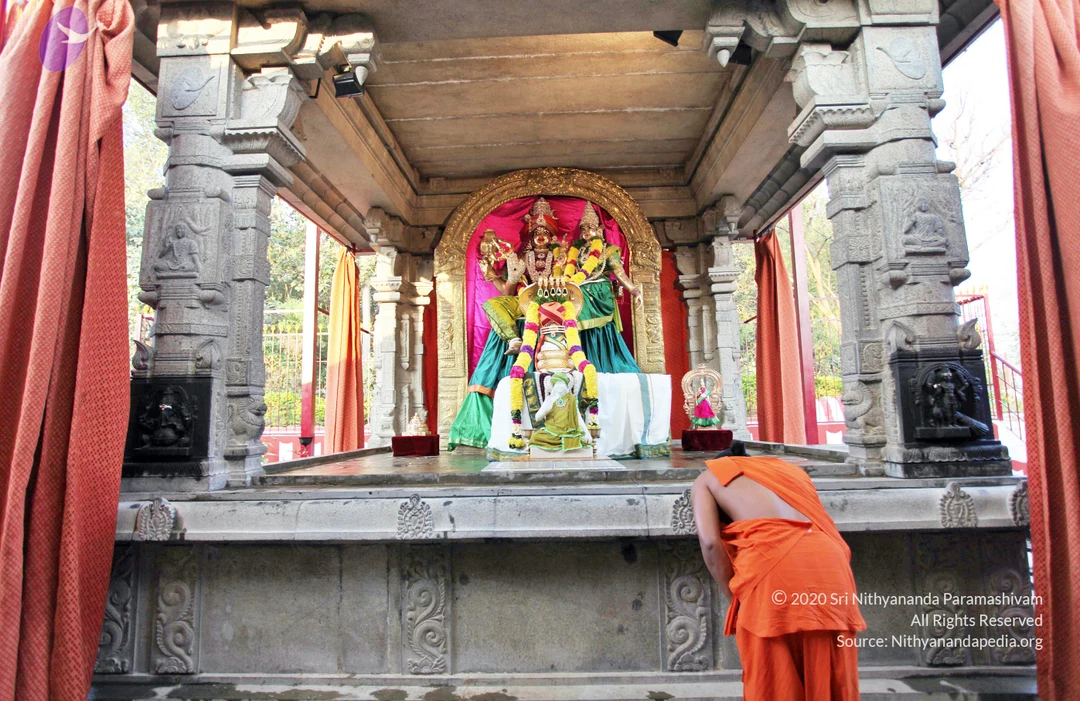
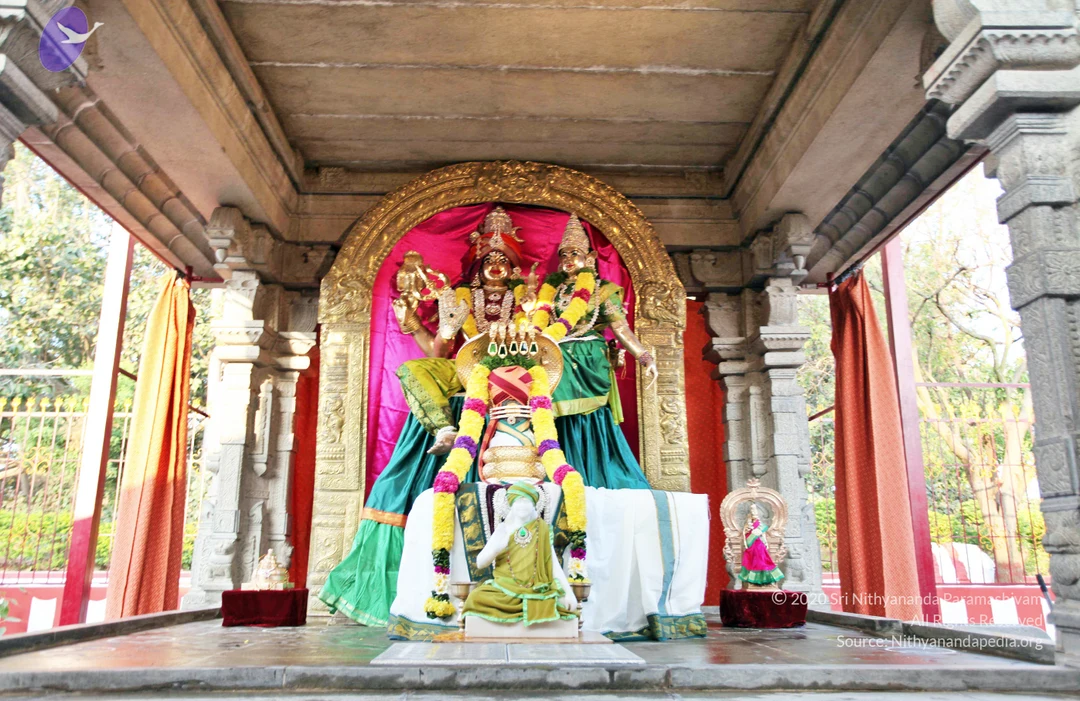
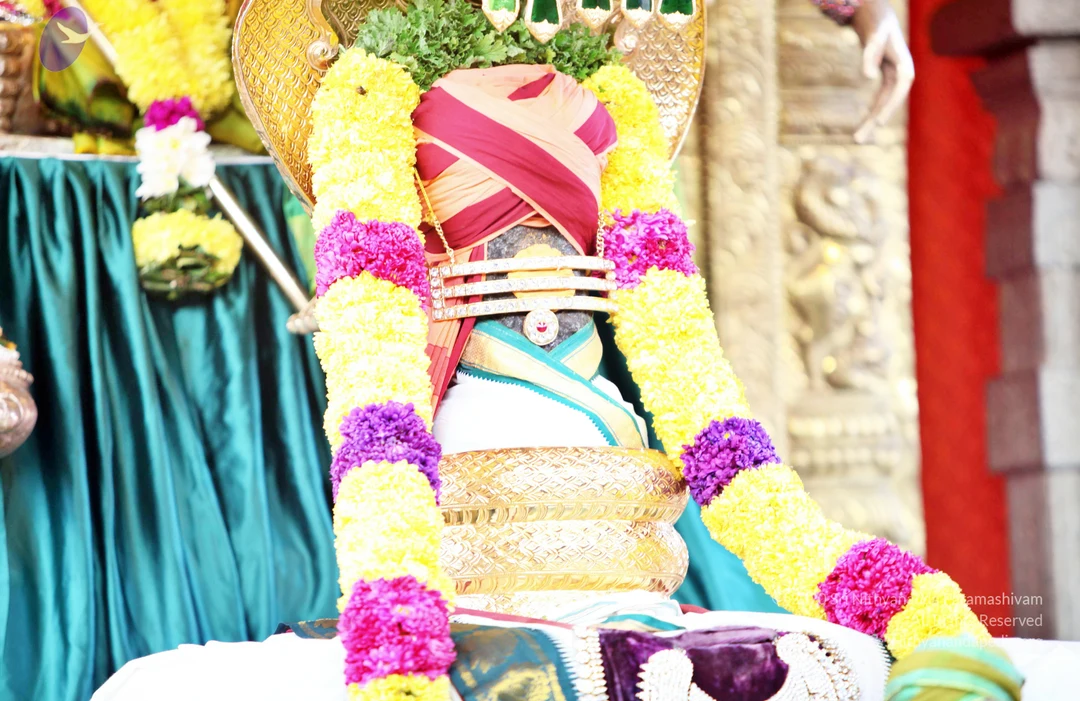
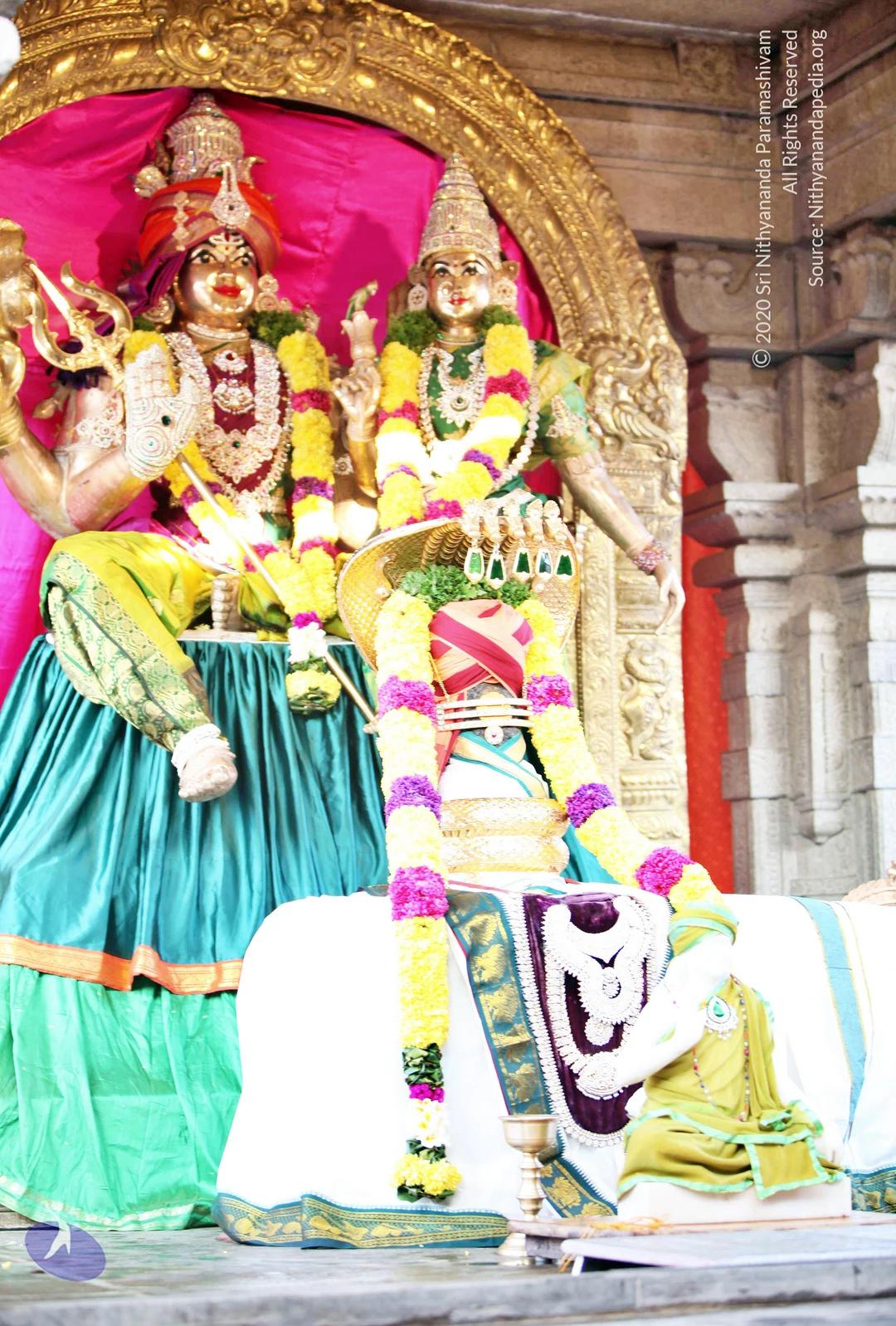
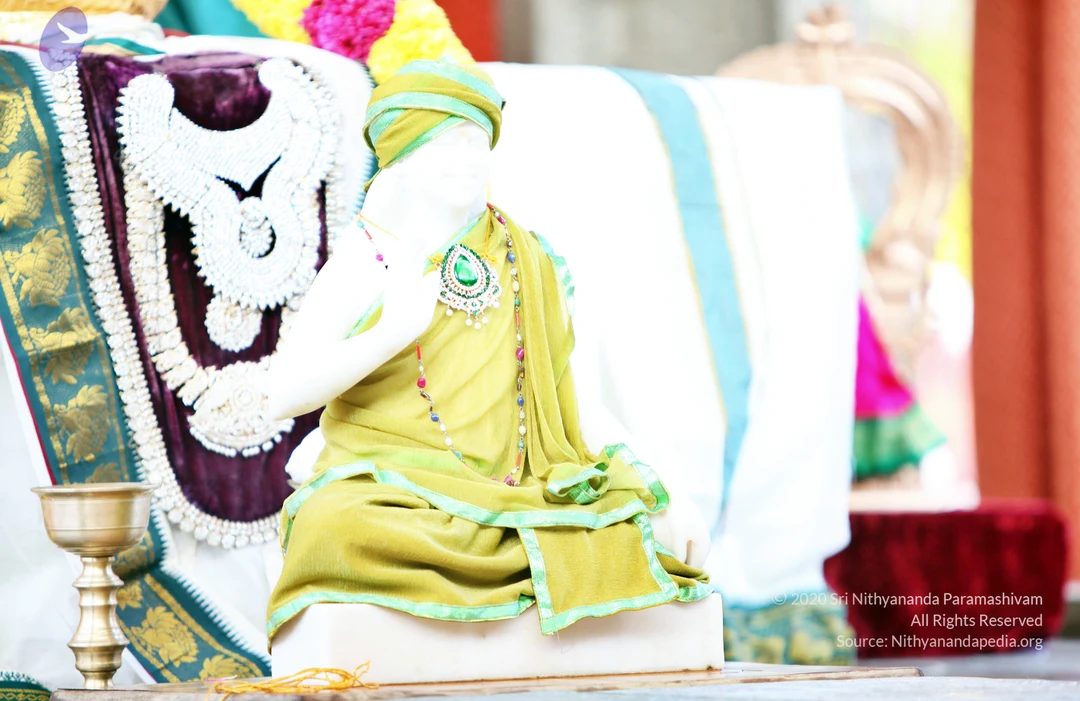
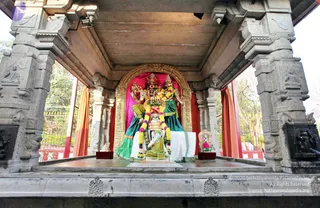
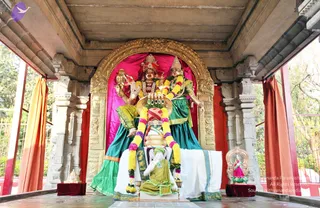
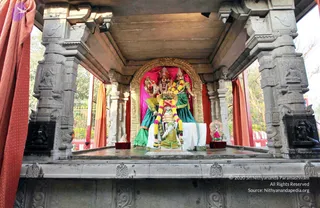
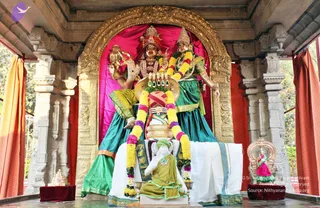
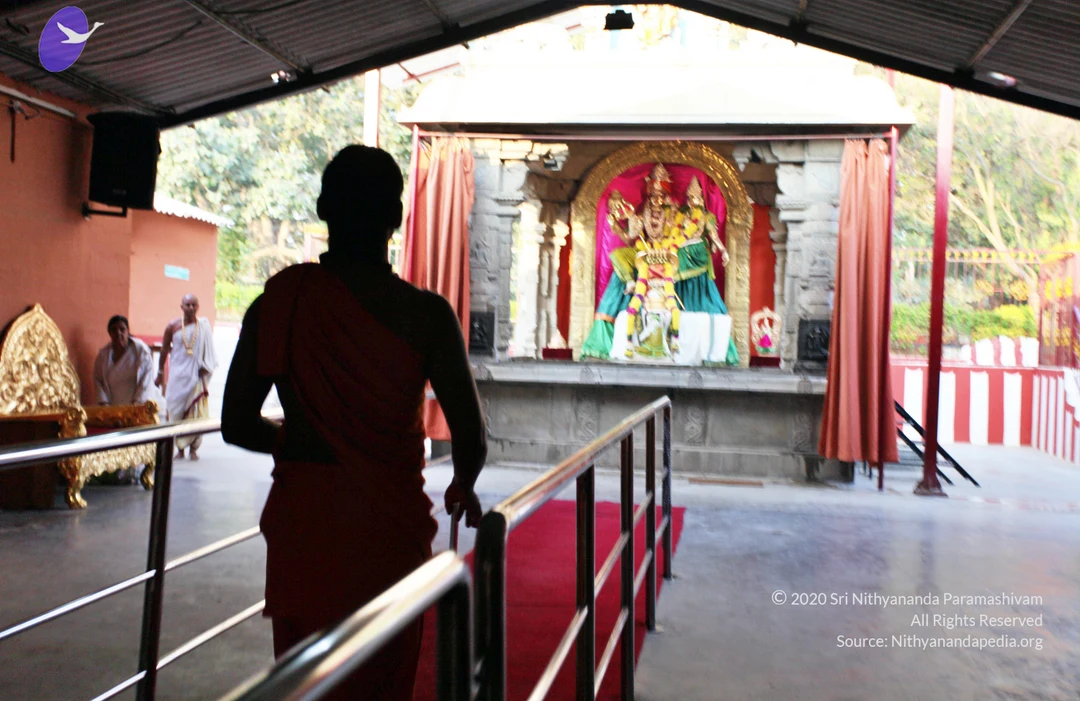
A photograph taken from behind of a figure in a saffron-red robe walking along a metal railing toward a shrine. The silhouetted person is backlit, with a shaved head and bare arm visible. Inside the temple-like hall, a deity murti stands in an ornate grey stone shrine framed by a gold arch and draped with rose-pink cloth, decorated with green and orange garlands and a green sari-like garment. A red carpet runs to the shrine. To the left, a gold carved throne-like seat stands beside two figures in white: one in a white dhoti and shawl with ceremonial gold necklace, and another in white clothing. Red-and-white striped pillars and a shaded tent frame the scene.A photograph of an open-sided granite shrine with carved pillars and a golden arched frame around a pink and red backdrop. Inside stands a deity murti flanked by two female figures in green and teal sarees, with a red-gold crown on the central figure. Yellow and orange marigold garlands hang across the central figure and a white cloth drapes the platform below. Two small red-cushioned stands sit on either side, and a small devotional figure appears beside the base. No living people are visible.Outdoors under a large shady tree, a man in an orange saffron-coloured robe and a dark rudraksha-style neck mala stands with palms pressed together in prayer, head bowed, hair tied up in a knot. Behind him is a black stone deity murti draped in orange cloth and garlands, set within a white arched shrine frame. Before the murti is a circular black-rimmed platform heaped with red kumkum or powder offerings. To the right, a person in white ritual clothing stands in the background among the trees. Metal pillars and concrete blocks surround the open ground.A photograph of a temple shrine with a golden arched niche framed by carved stone pillars and an open-sided pavilion. Within the niche stands a deity murti with an elephant head and a red crown, flanked by two standing female figures in green and teal skirts with crowns and a red-and-gold headdress. Garlands of yellow and magenta flowers hang across the figures, and a pink cloth backdrop fills the niche. Orange and yellow curtains hang at the sides, and a small figure in a pink sari sits on a red-draped stand to the right. Lush trees are visible beyond the open sides.A photograph of a stone-pillared temple shrine open to the air, with orange curtains on the sides. Inside an arched gilded niche stands a deity murti with multiple heads and arms, flanked by two figures in green and teal garments, all draped with yellow and orange marigold garlands. A white cloth covers the base below the figure. Carved stone pillars frame the shrine, and a small decorated pedestal stands at the right. No physical people are visible.A temple shrine photographed from the front, with a large golden arch framing two painted deity murti standing behind a central seated white figure. The left murti holds a trident and wears a red crown; the right wears a green skirt and an ornate crown. Both are draped in garlands of yellow and purple flowers. Below them, a white seated statue in a green and gold garment with a golden necklace sits on a white draped platform with a garland. Red and orange curtains hang at the sides, and a small golden shrine and a figure in pink sit on the right. No living people are visible.

02-Panch-Tapas

38 photosSource gallery
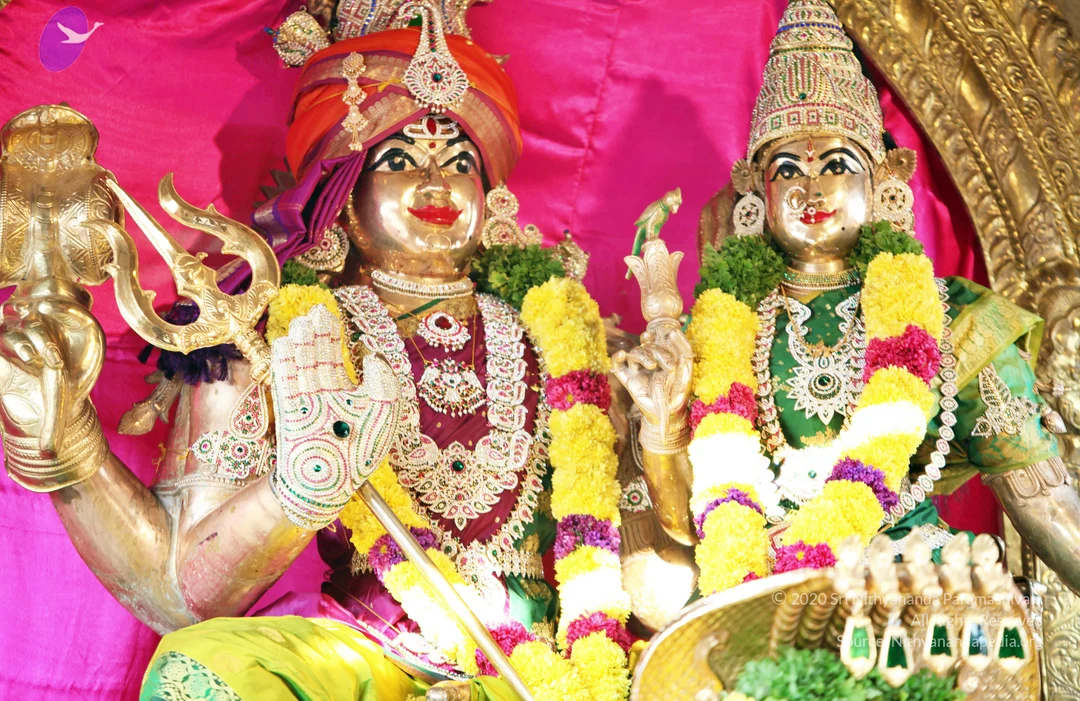
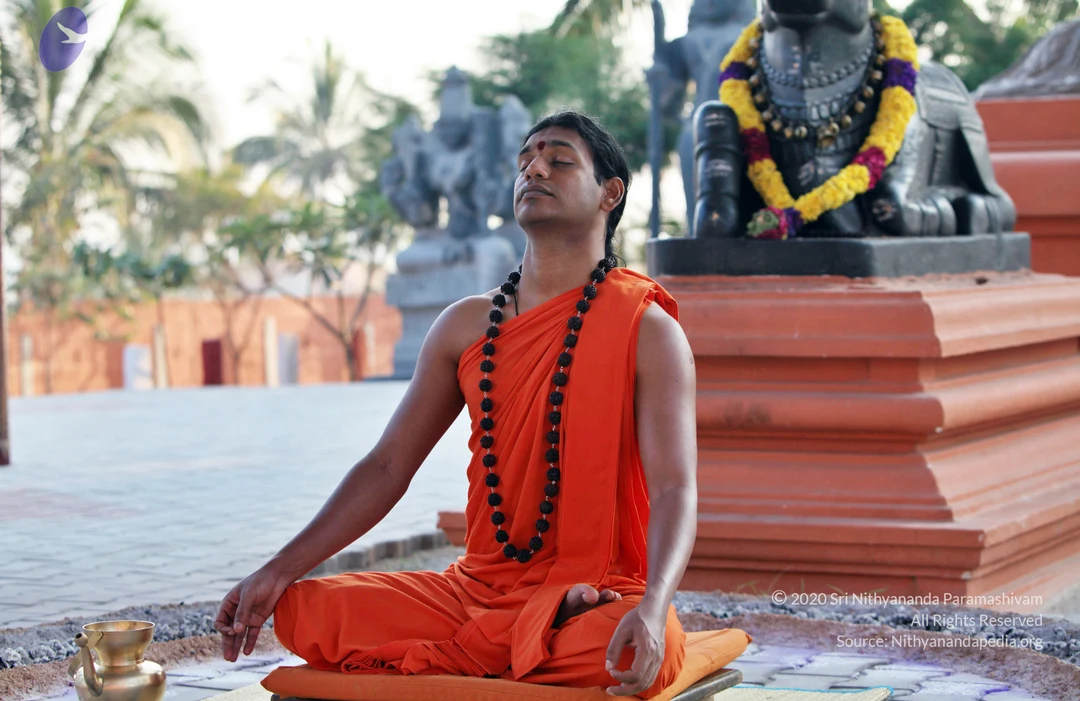
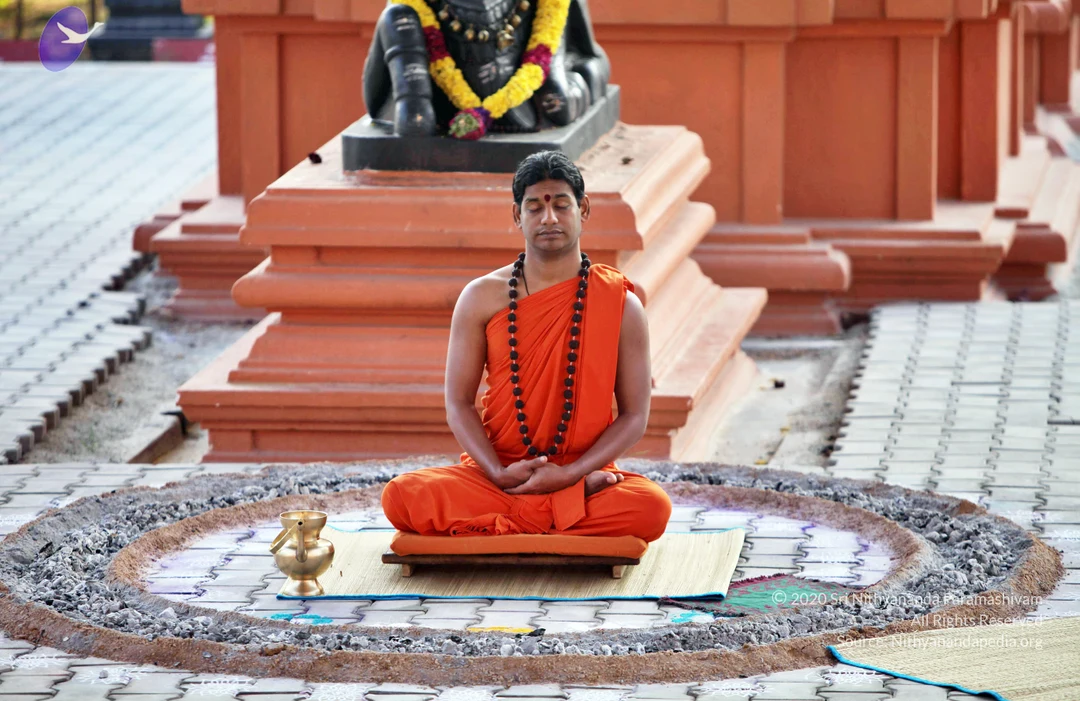
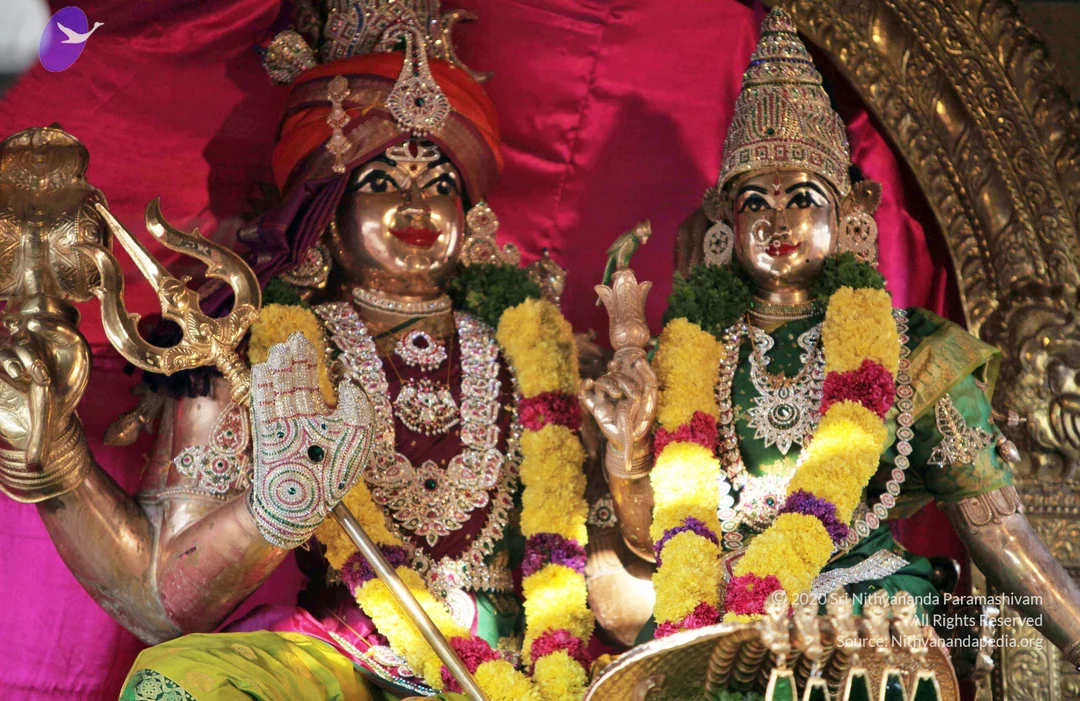
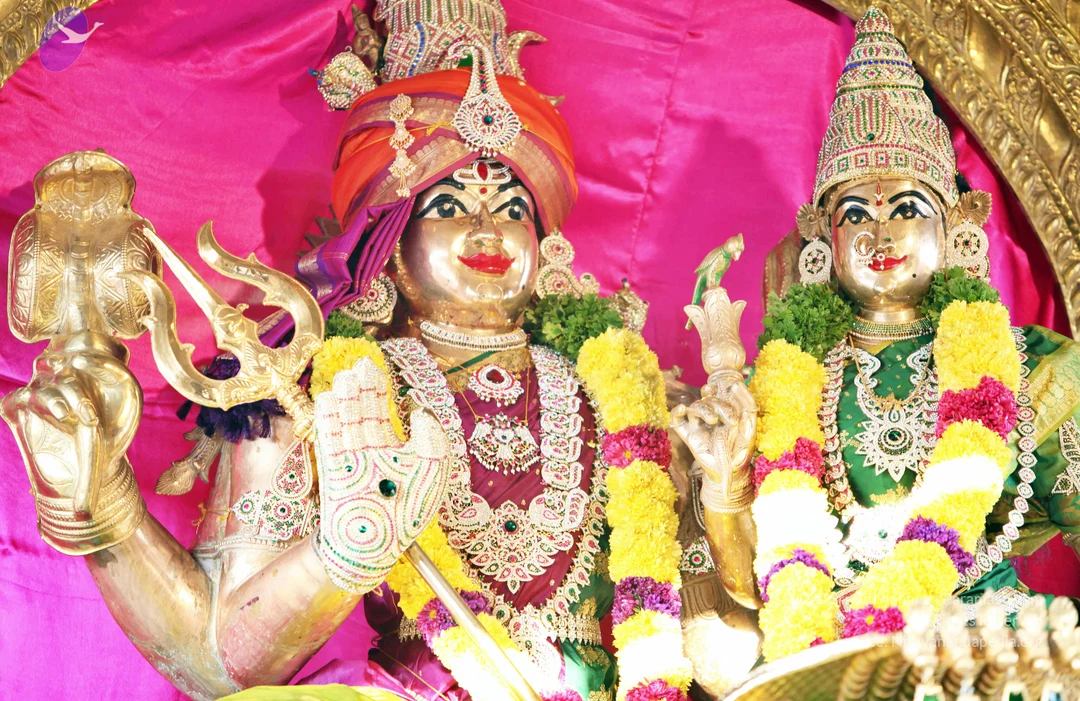
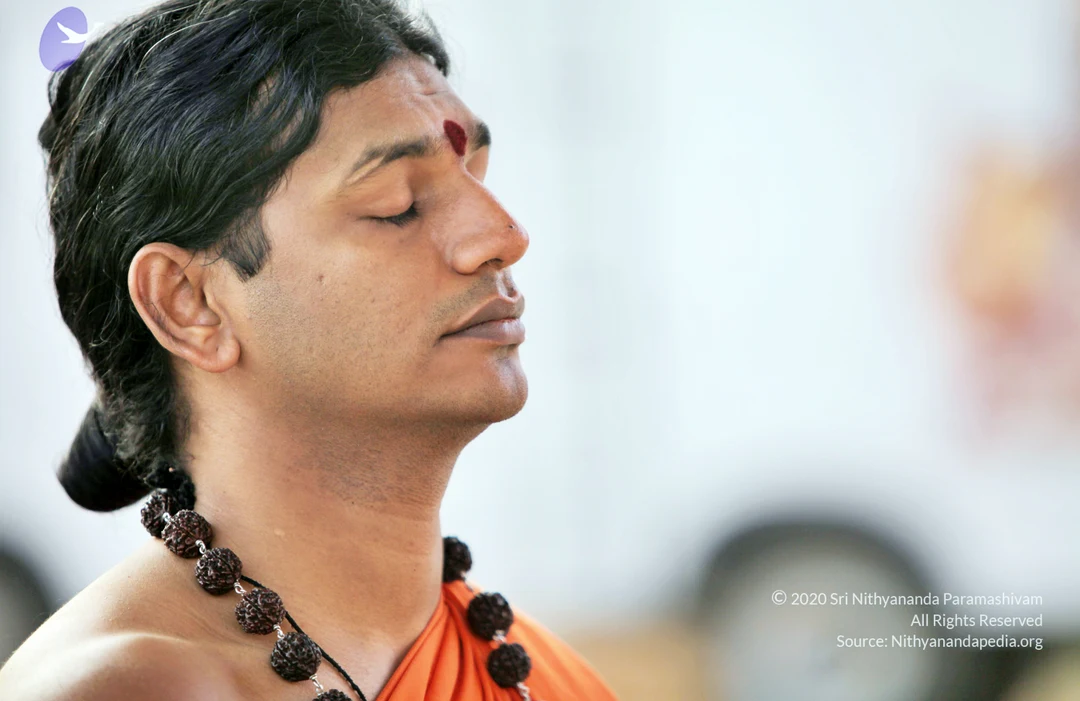
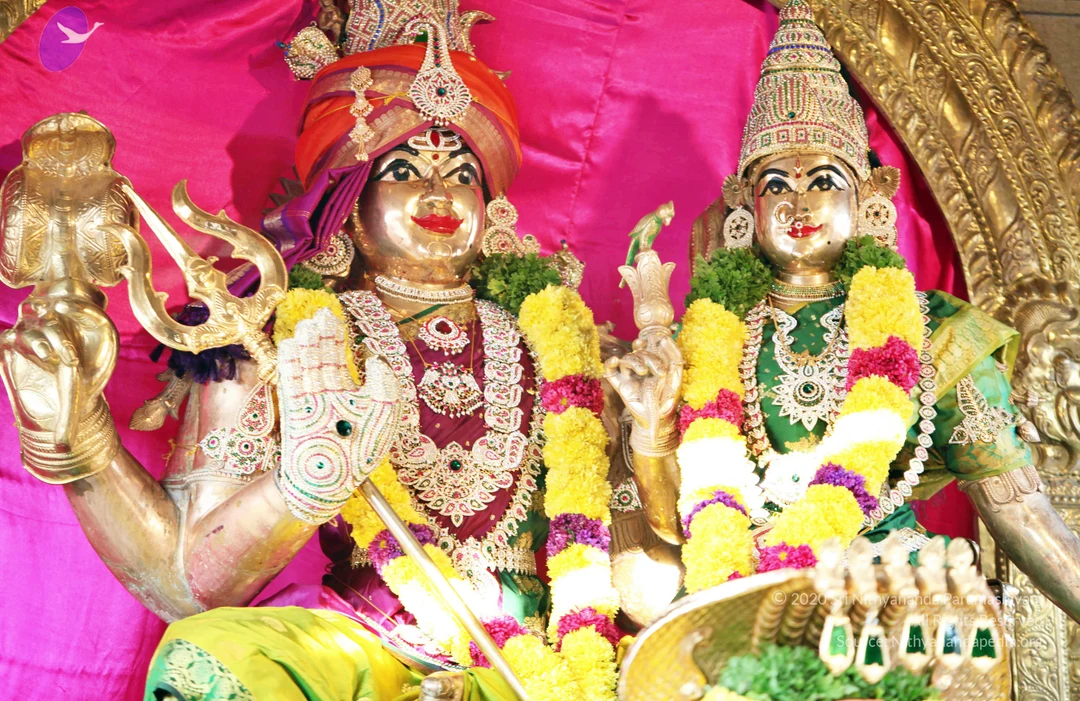
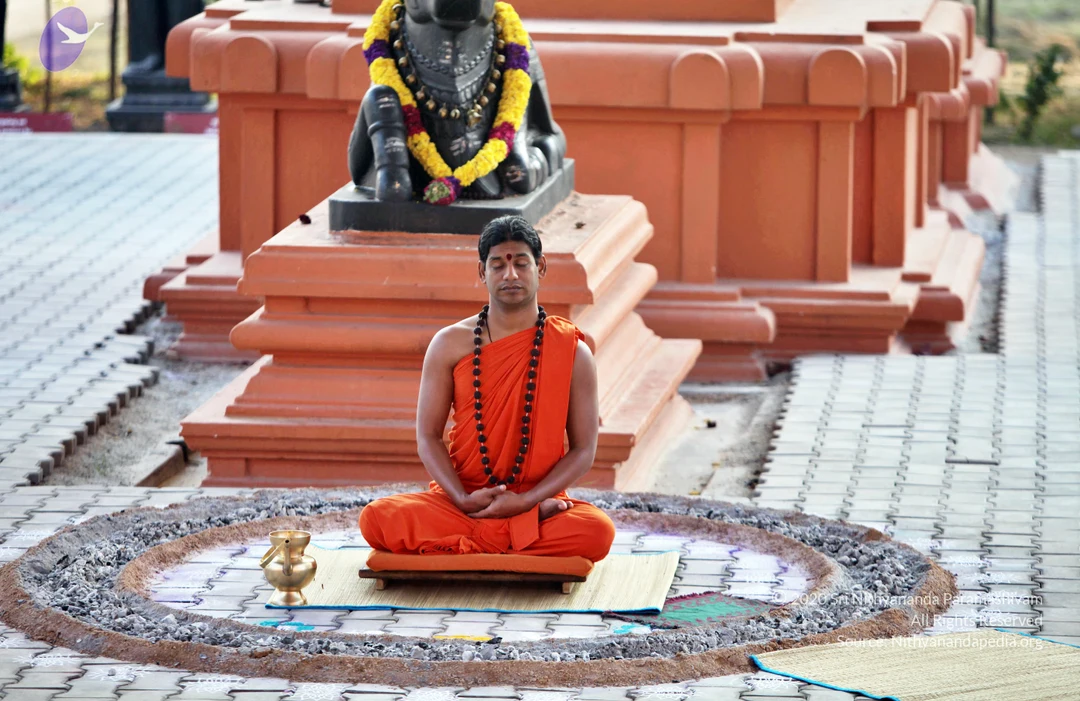
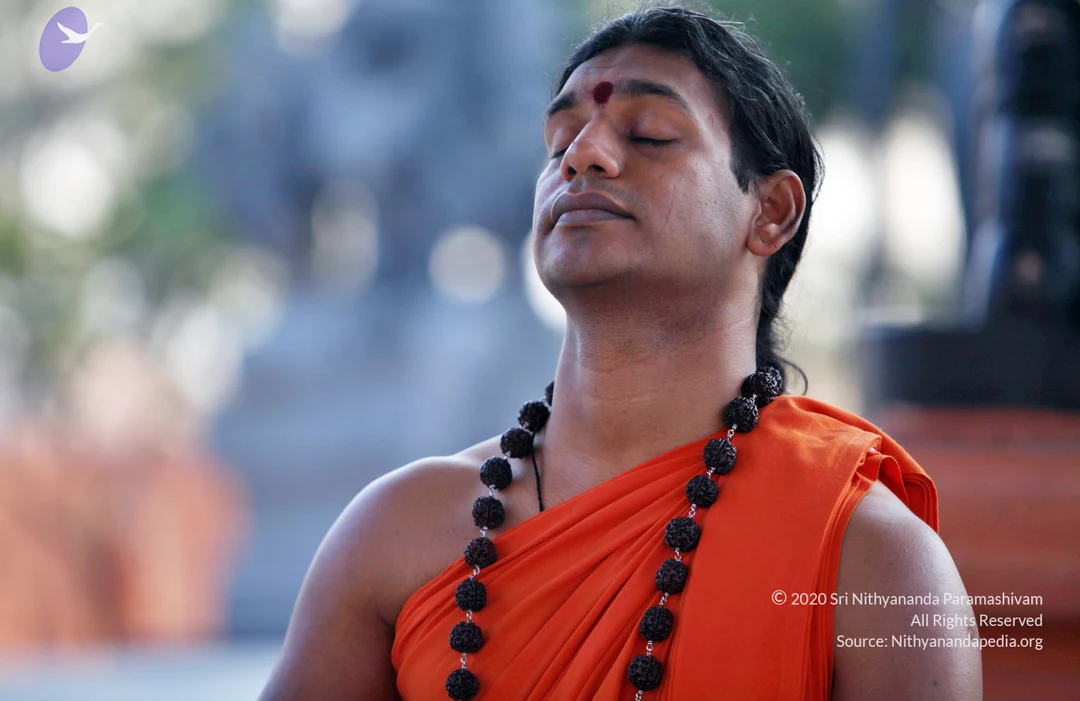
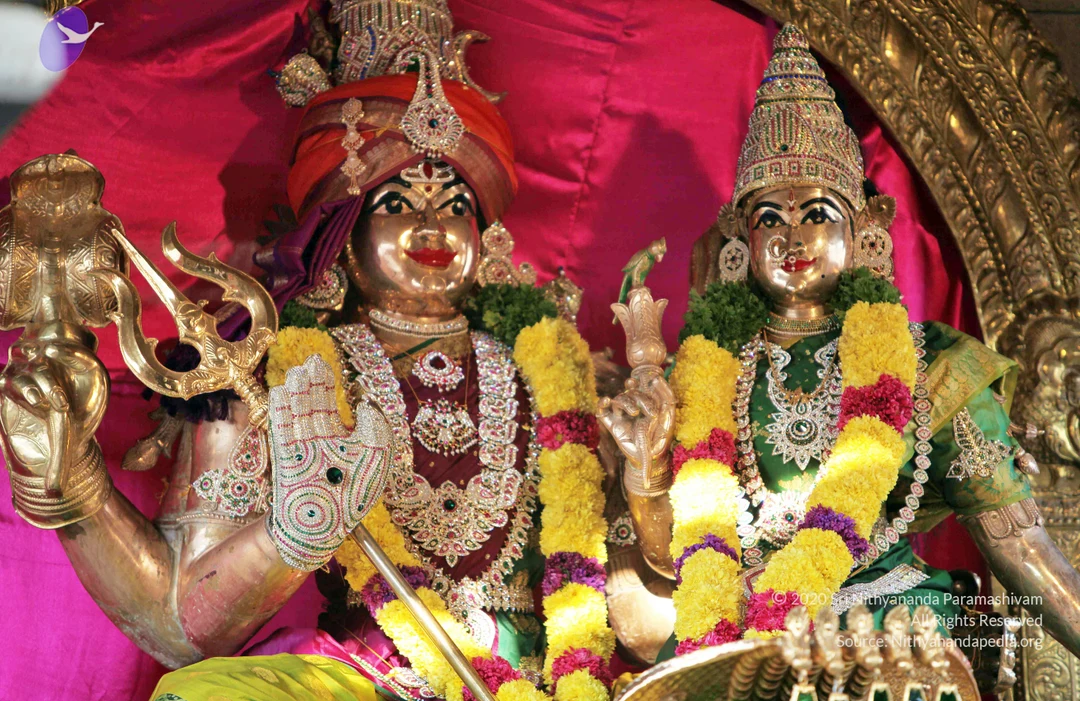
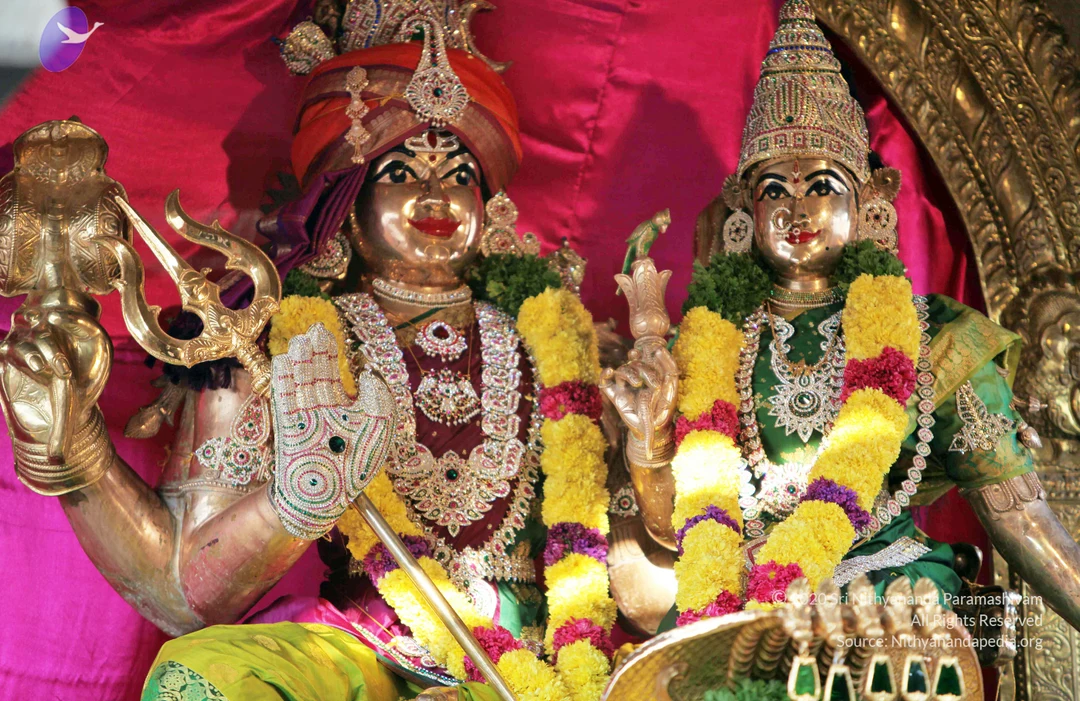
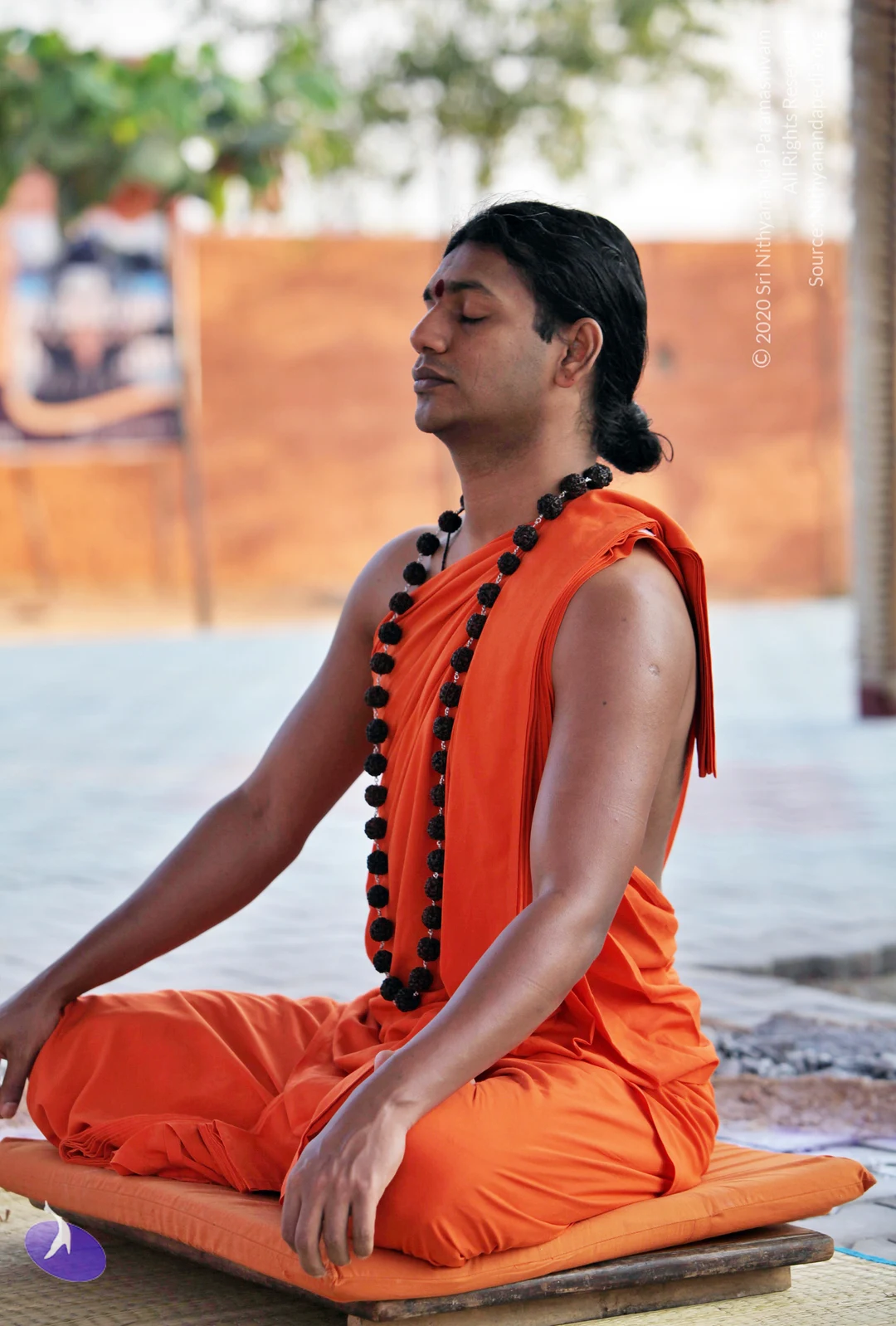
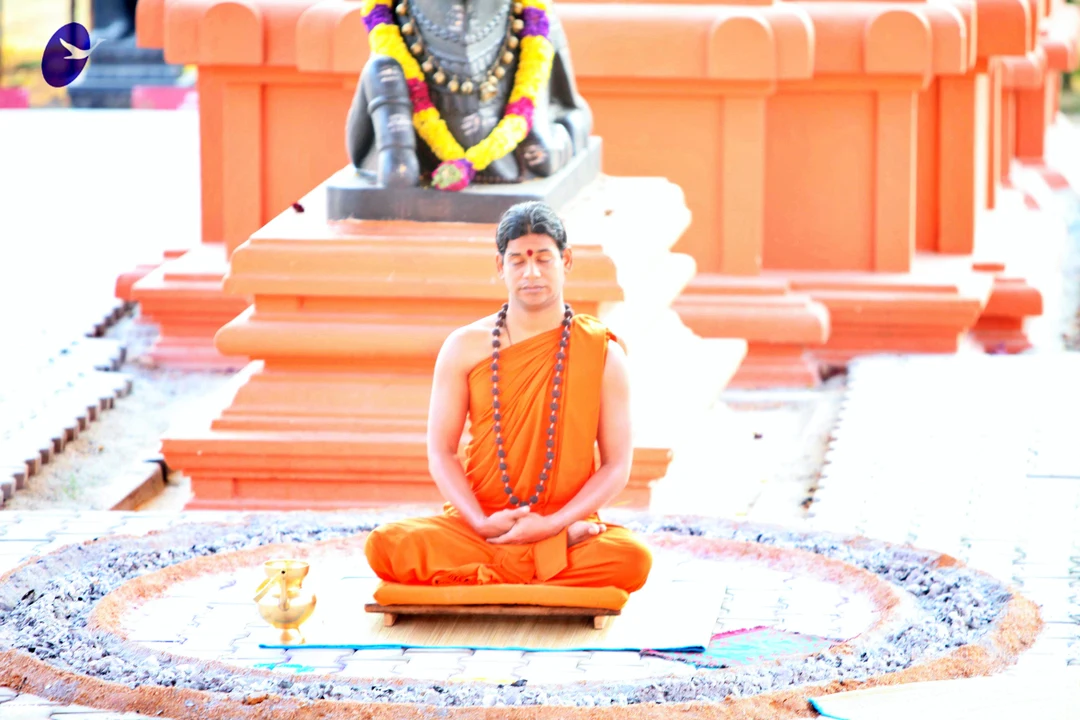
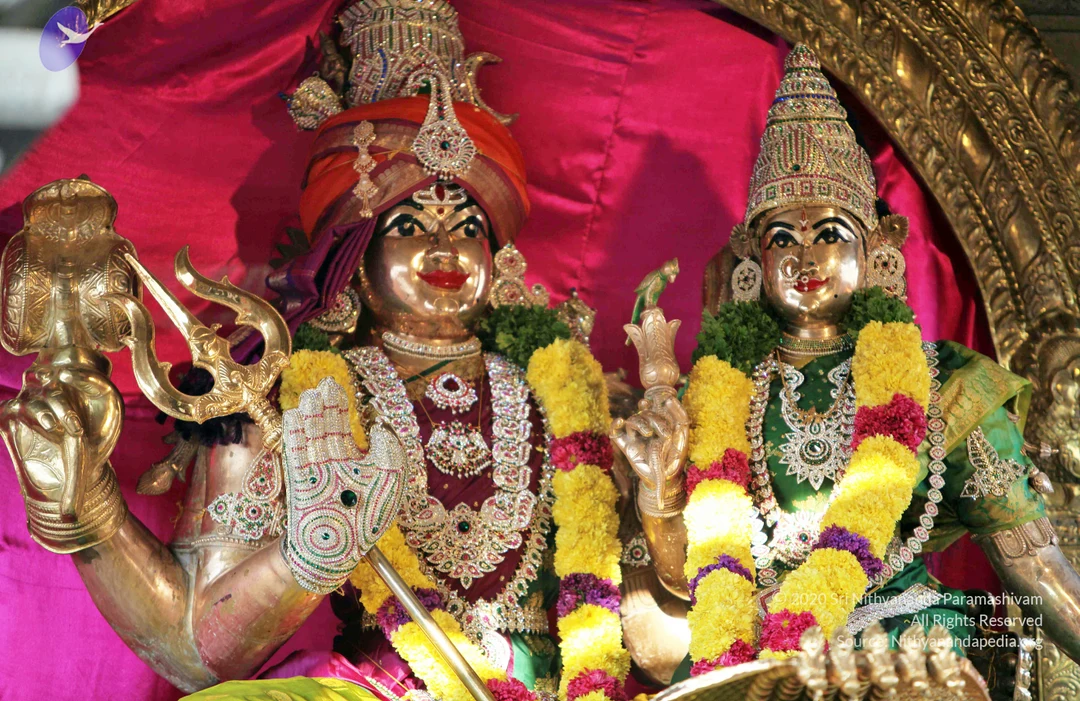
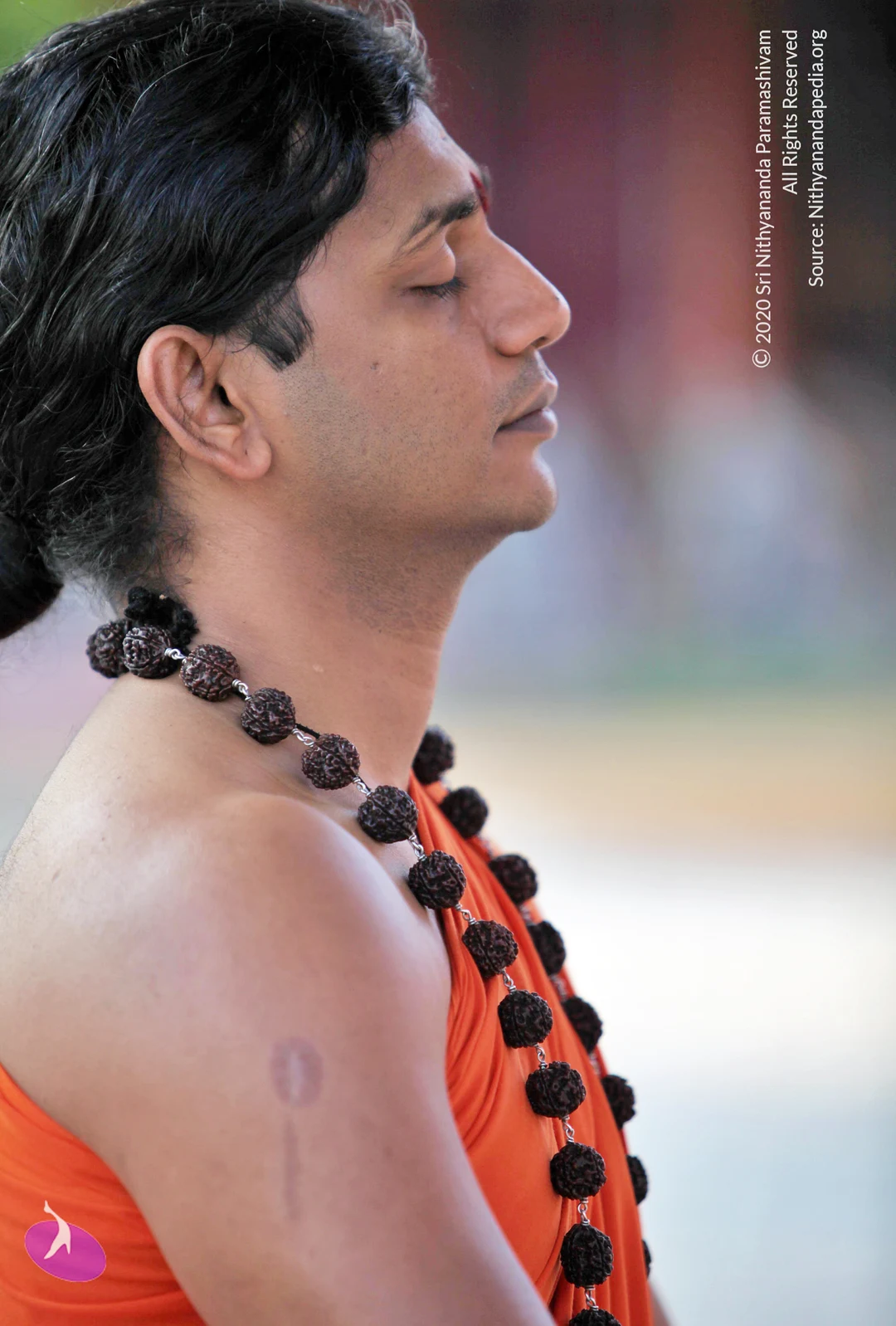
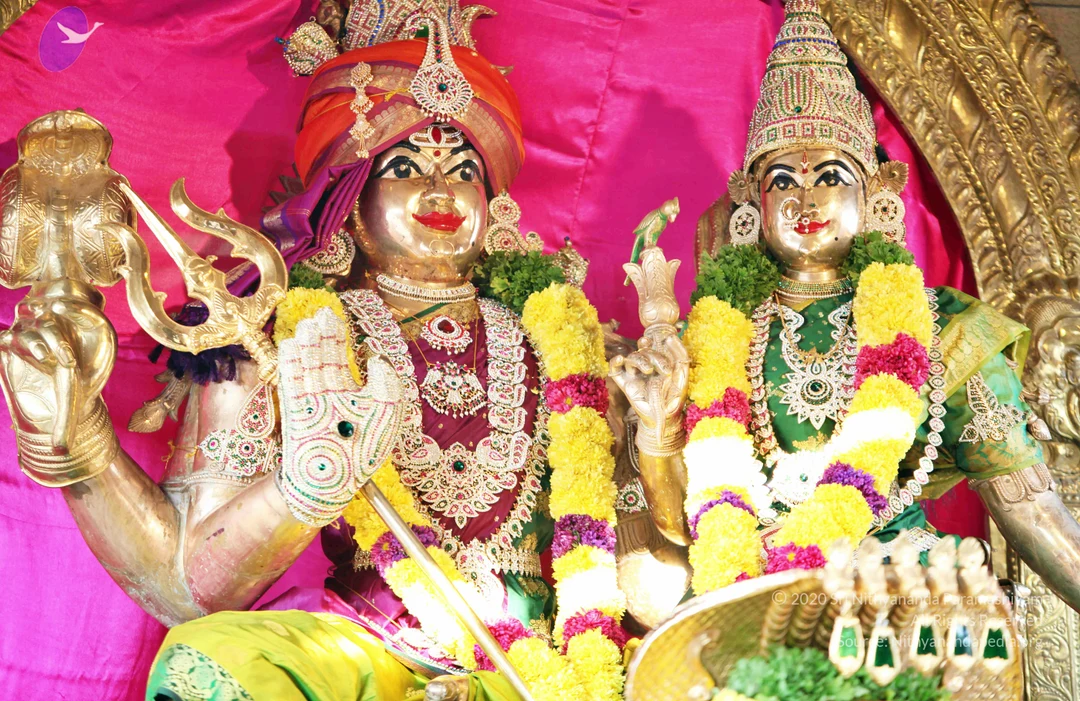
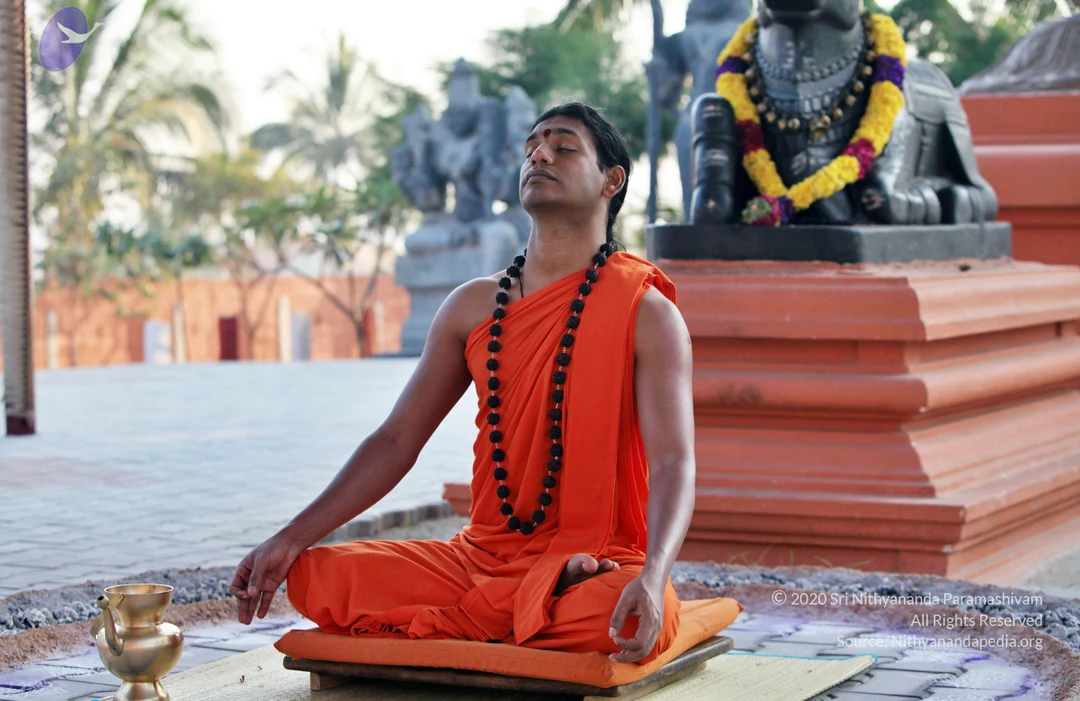
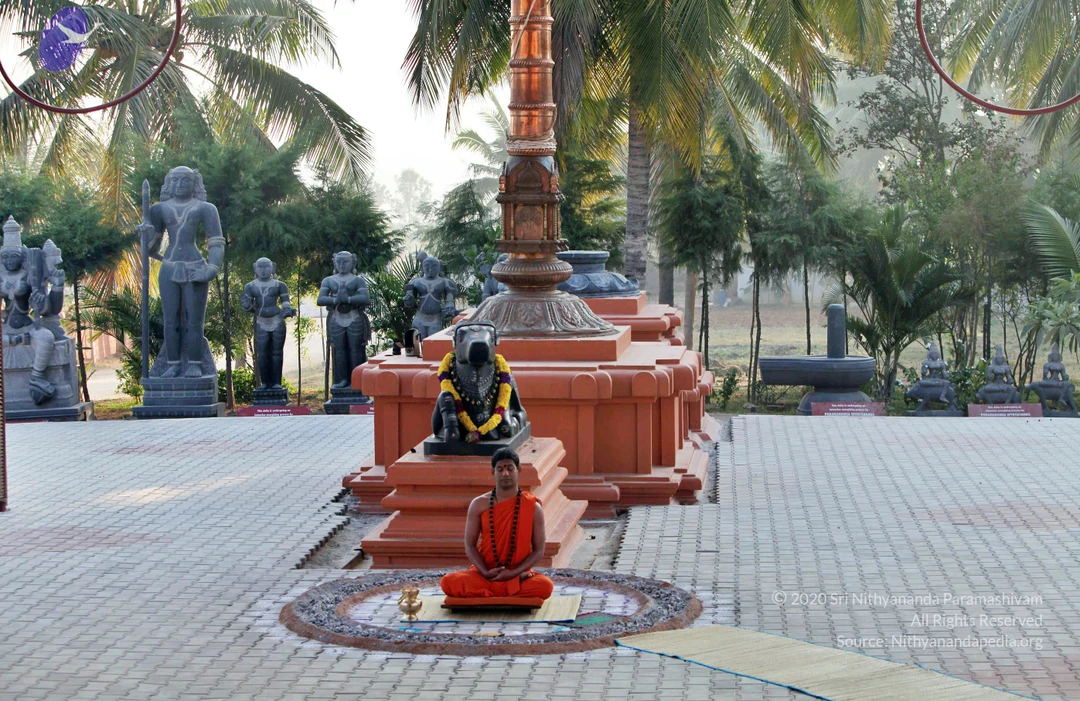
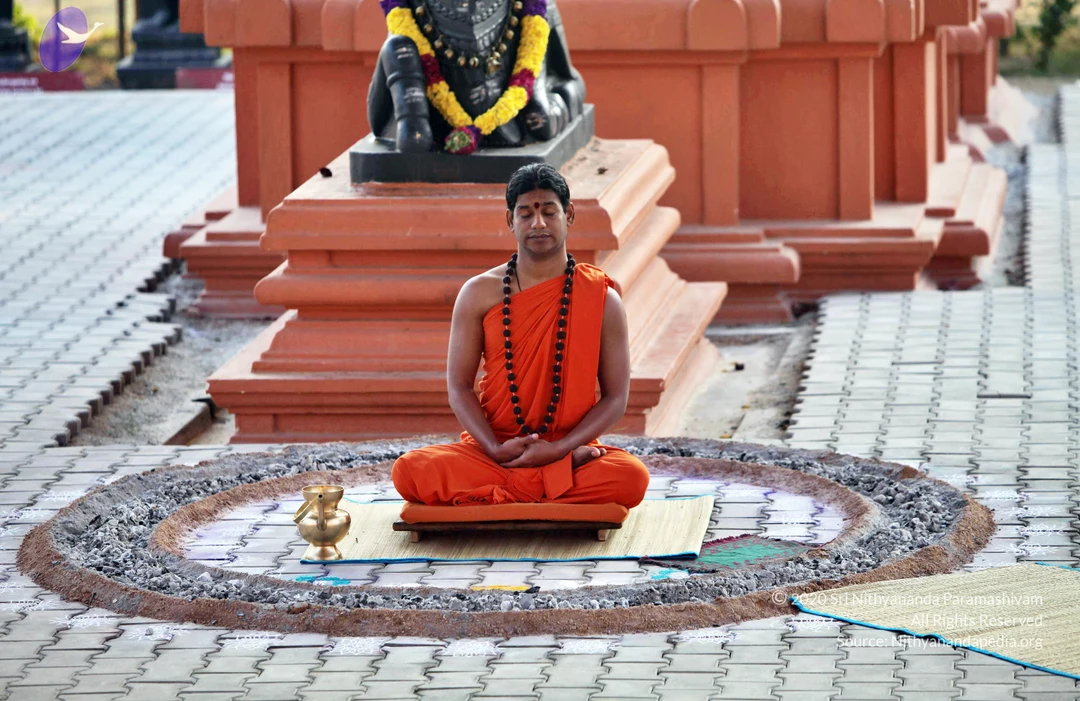
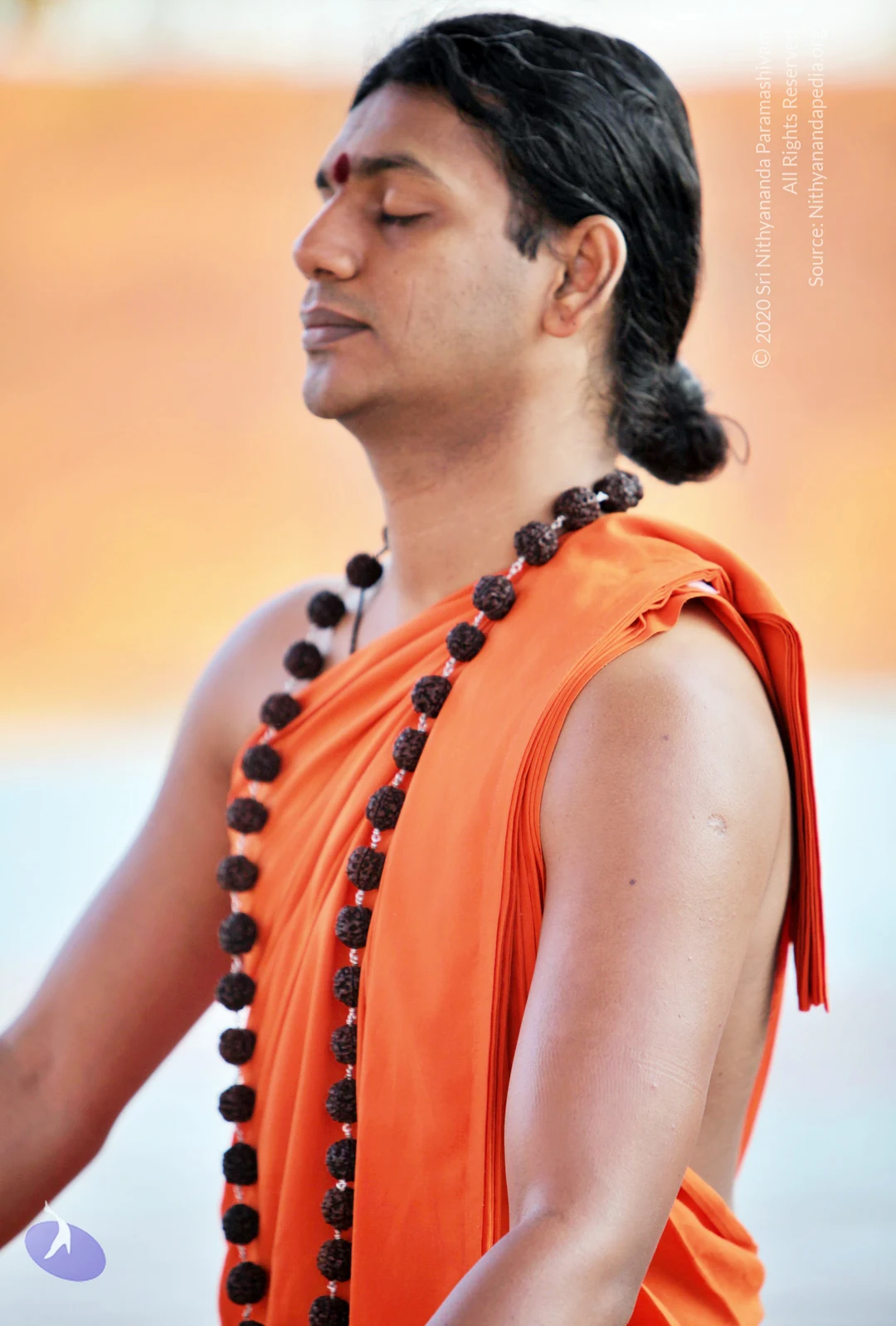
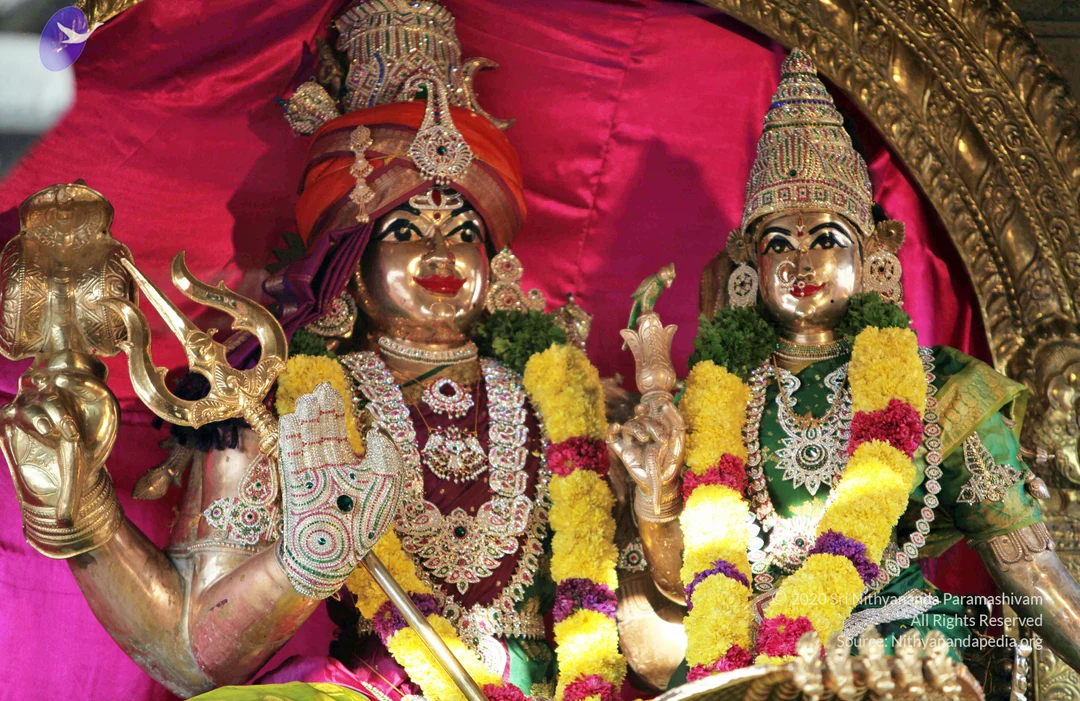
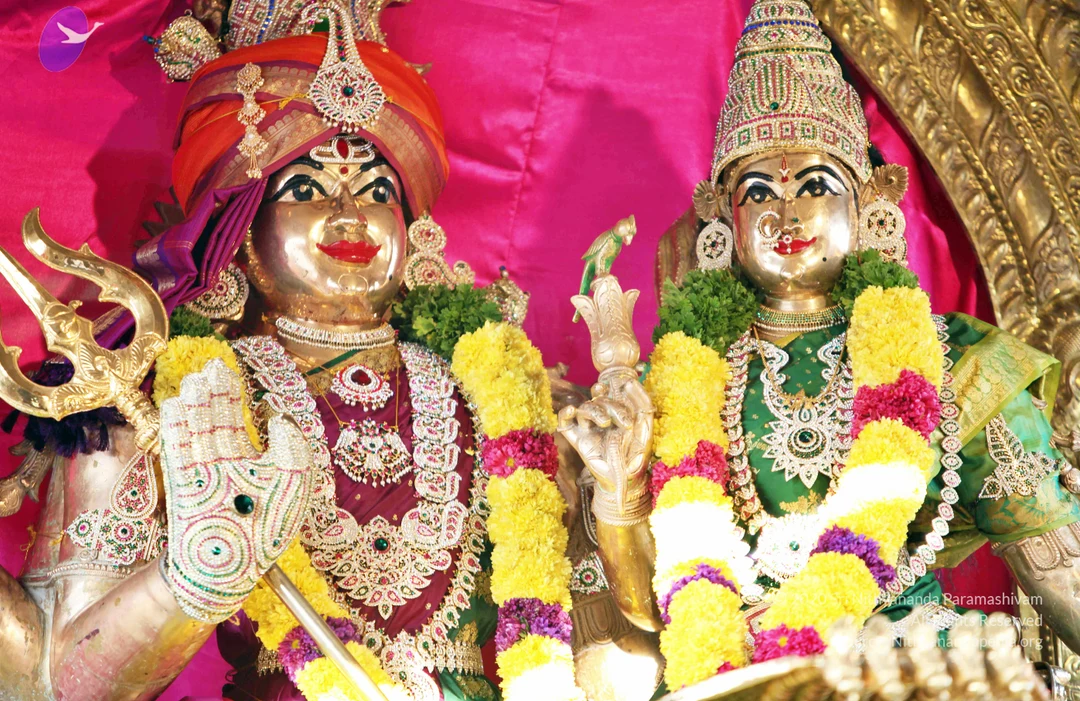
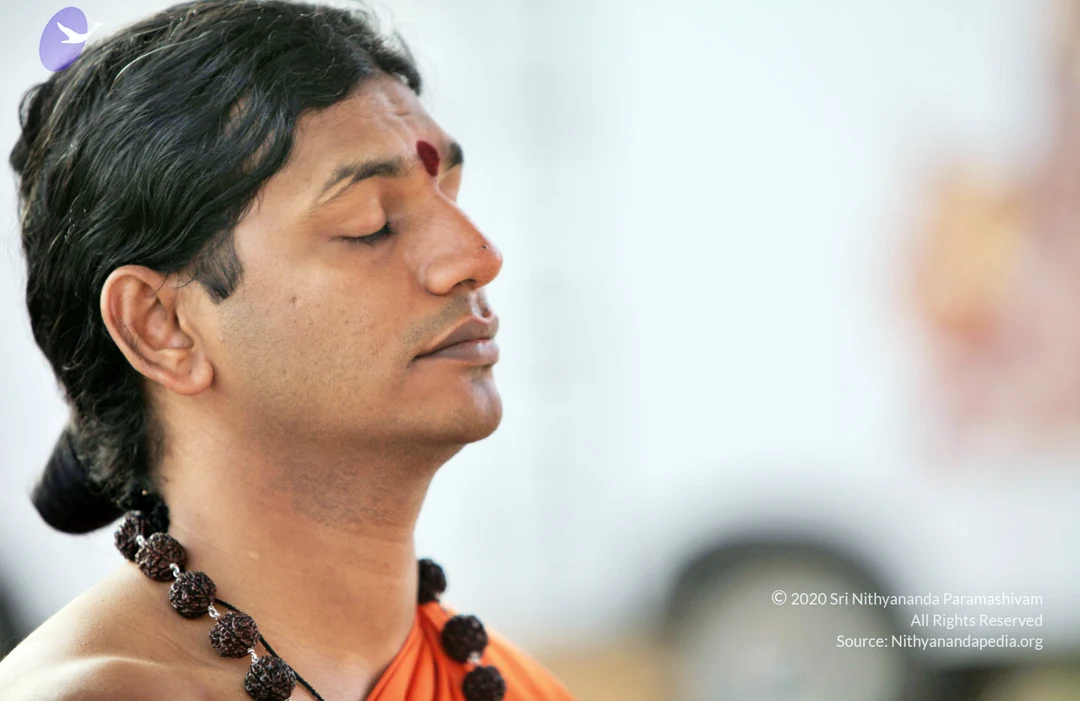
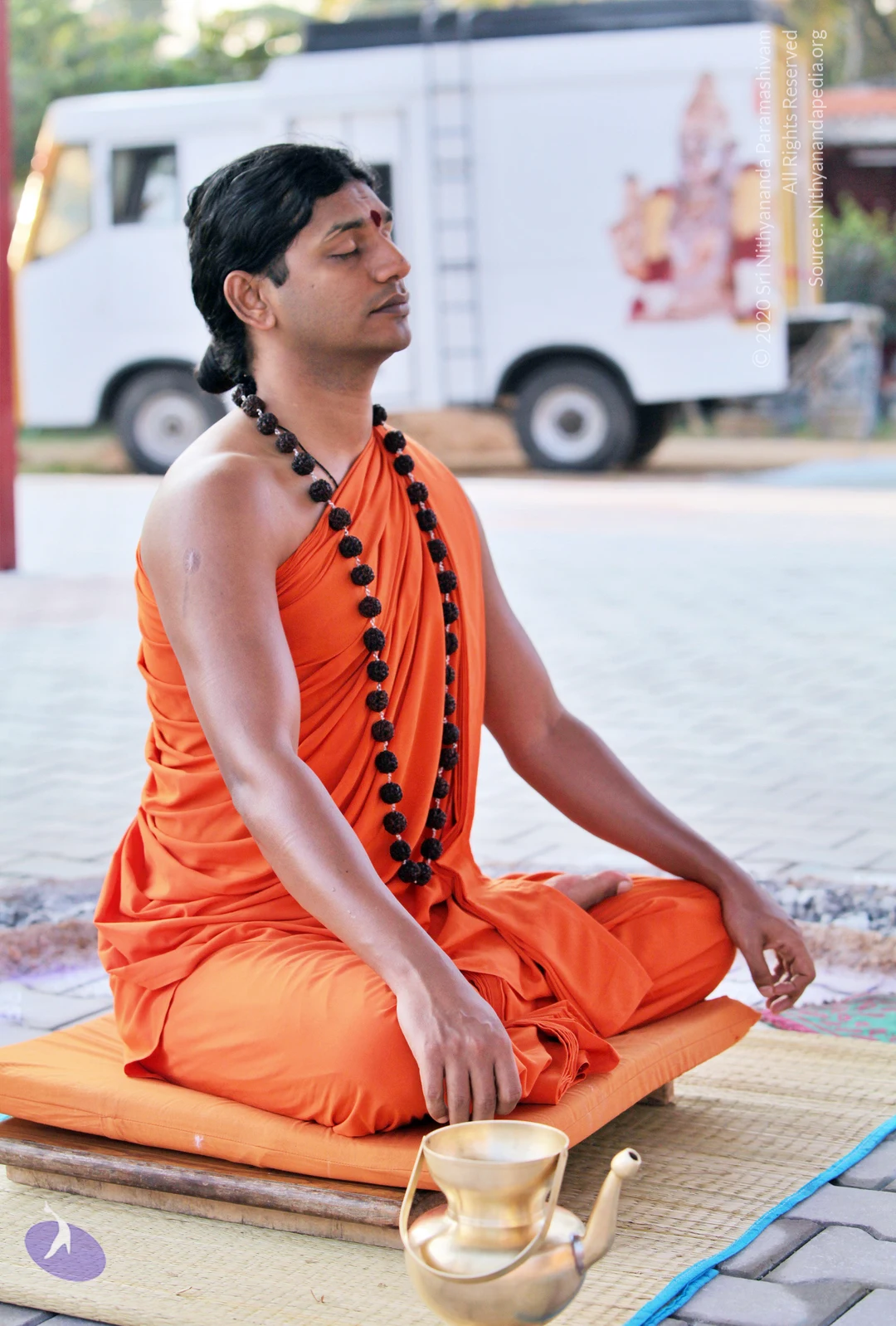
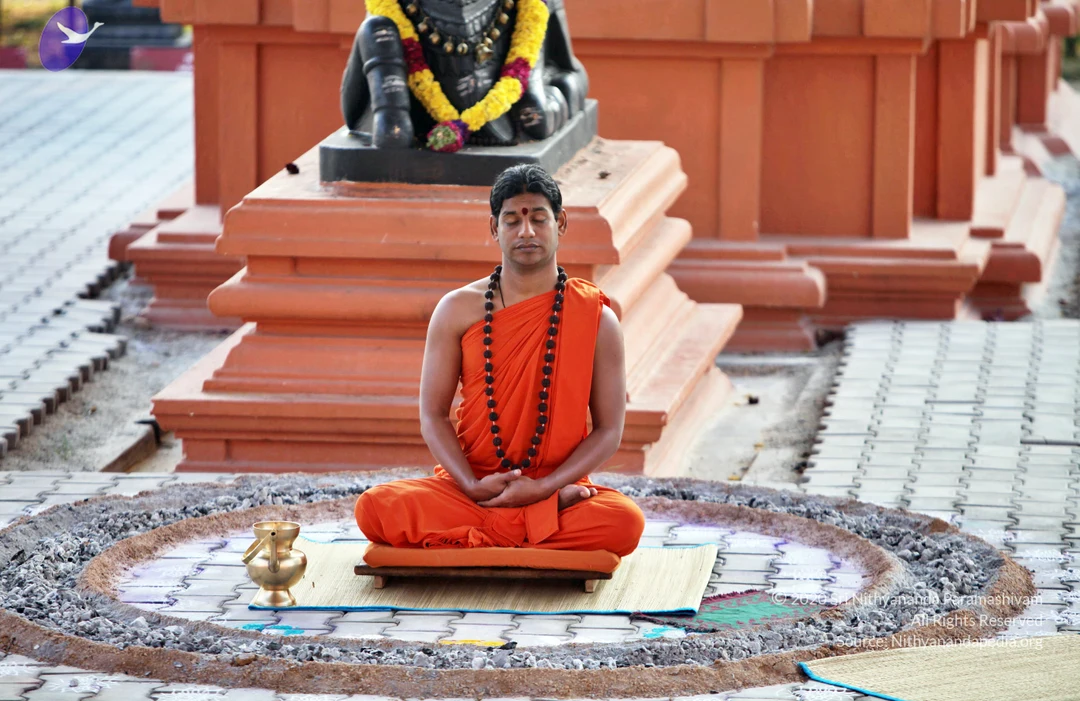
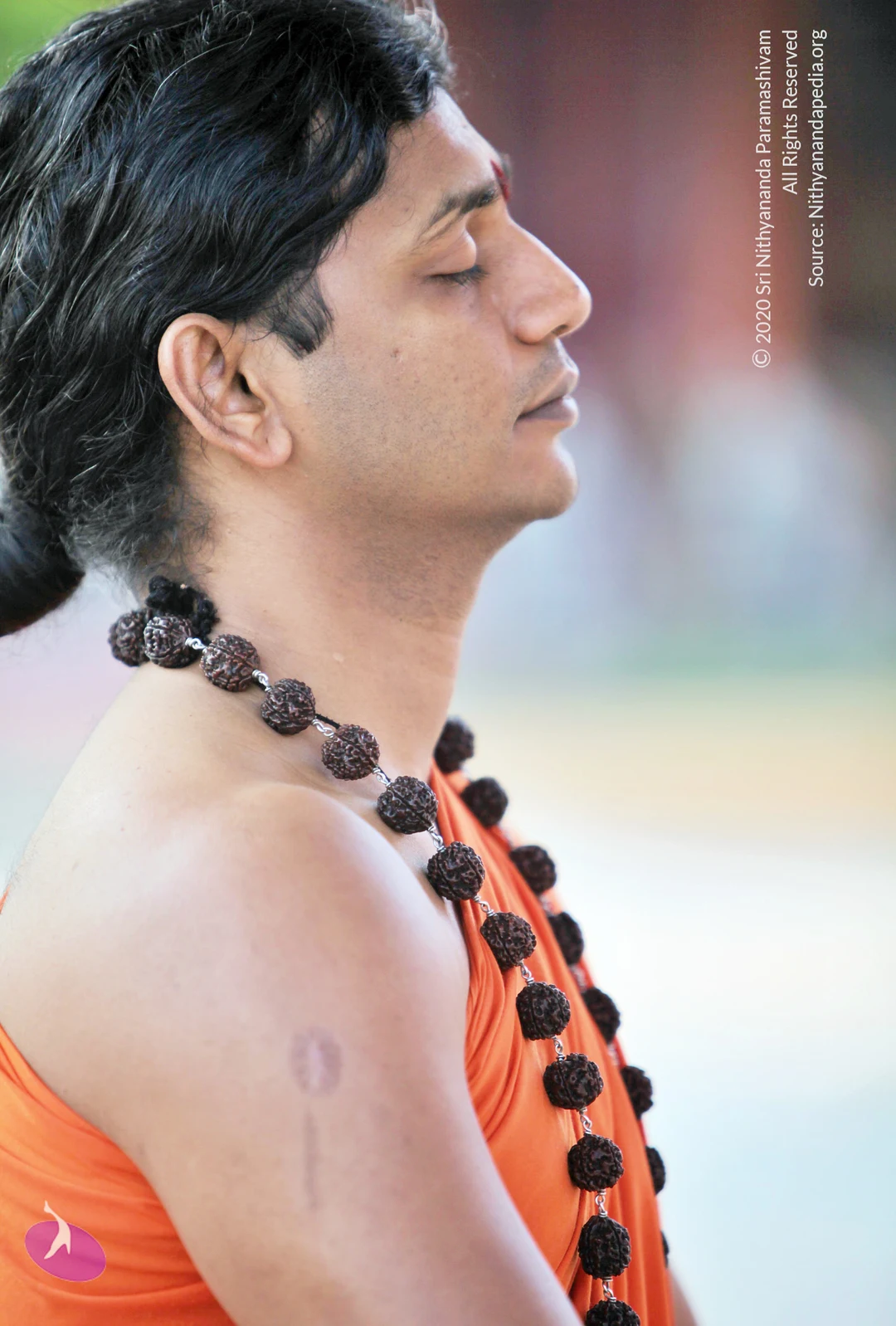
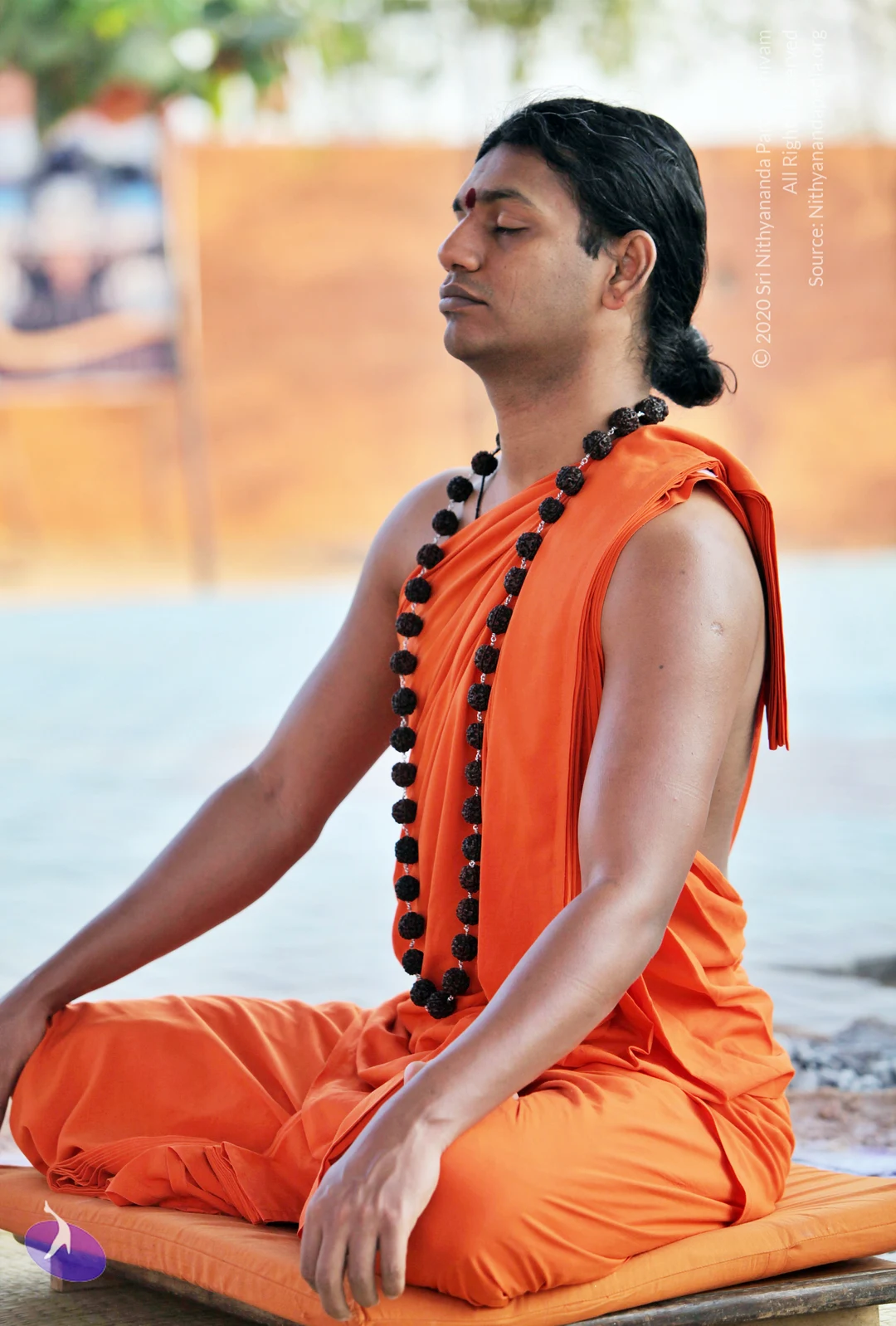
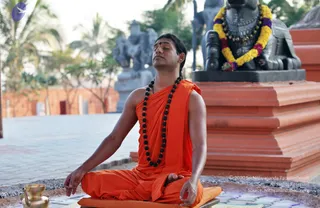
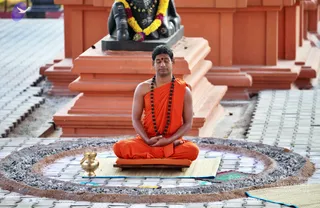
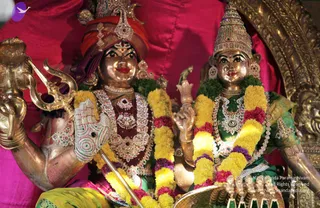
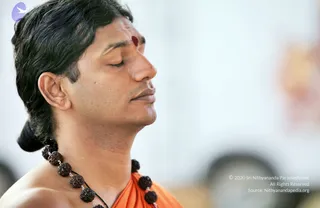
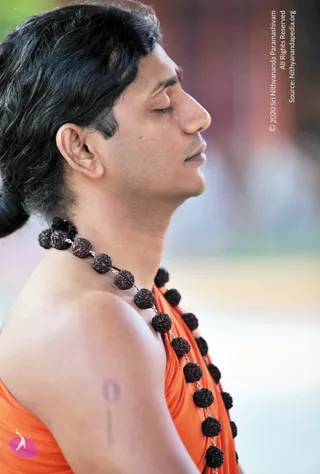
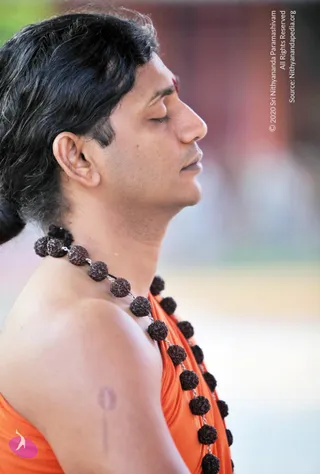
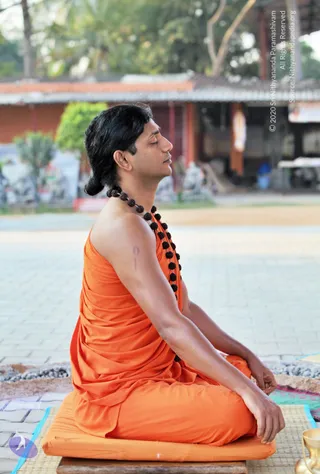
A photograph of two golden deity murti decorated for worship against a magenta silk backdrop. The figure on the left holds a trident and a ceremonial staff, wears an orange and magenta turban, a red tilak, and layered jewelled necklaces and a garland of yellow and pink flowers. The figure on the right wears a tall jewelled crown, a green silk garment with gold embroidery, and holds a lotus-stem staff, with a yellow and pink marigold garland and green leaves. Gold kalasha-style ornaments and fresh greenery surround them, with a brass tray of offerings at the lower right.A man seated in lotus-style meditation on a cushion outdoors, eyes closed, hands resting on his knees with mudra-like fingers. He wears a saffron-orange wrap over his shoulders and a long black rudraksha mala with a red bindi on his forehead. Behind him stands a large dark stone deity statue. A brass kalasha or vessel sits at the lower left on the paved ground. Stone sculptures and palm trees fill the background. a person cues here are the saffron wrap and the long rudraksha mala, seated in meditation before a garlanded statue.A man in saffron-orange robes sits cross-legged in meditation on an orange cushion over a woven mat, eyes closed, hands folded in his lap, with a red tilak on his forehead and a long rudraksha mala around his neck. Behind him stands an orange stepped plinth topped by a black deity murti draped with yellow and red marigold garlands. A brass kalasha-style vessel sits beside him, and a circular ring of grey ash or embers surrounds his seat on a tiled courtyard. The scene is outdoors in bright daylight.Two golden metal deity murtis sit side by side against a magenta silk backdrop with an ornate gilded arch behind them. The figure on the left wears a red and gold turban, a crown-like headpiece, a multi-stranded jewelled necklace and a rudraksha-style chest ornament, holding a trident and a small ceremonial implement in its raised hands. The figure on the right wears a tall ornate gold crown, green silk garment, layered gold and jewelled necklaces and holds a lotus stem. Both are garlanded with yellow marigolds, red flowers and green leaves.Two golden deity murtis are seated against a hot pink silk backdrop framed by an ornate gold border. The figure on the left wears an orange and magenta turban with a jeweled ornament and holds a trident and a golden drum-like object. The figure on the right wears a jeweled conical crown, a green silk garment with gold jewelry, and a green leafy garland. Both wear yellow and magenta marigold garlands, earrings, and necklaces. The image is a close photograph of the murtis with no visible people.A close profile photograph of a man with eyes closed in meditation. He has long dark hair tied back, a red bindi-style mark on his forehead, and wears a rudraksha mala of dark brown beads with an orange saffron garment draped over his bare shoulder. The background is a soft blurred white and light setting. Only one person is visible.

03-Pada-Puja

90 photosSource gallery
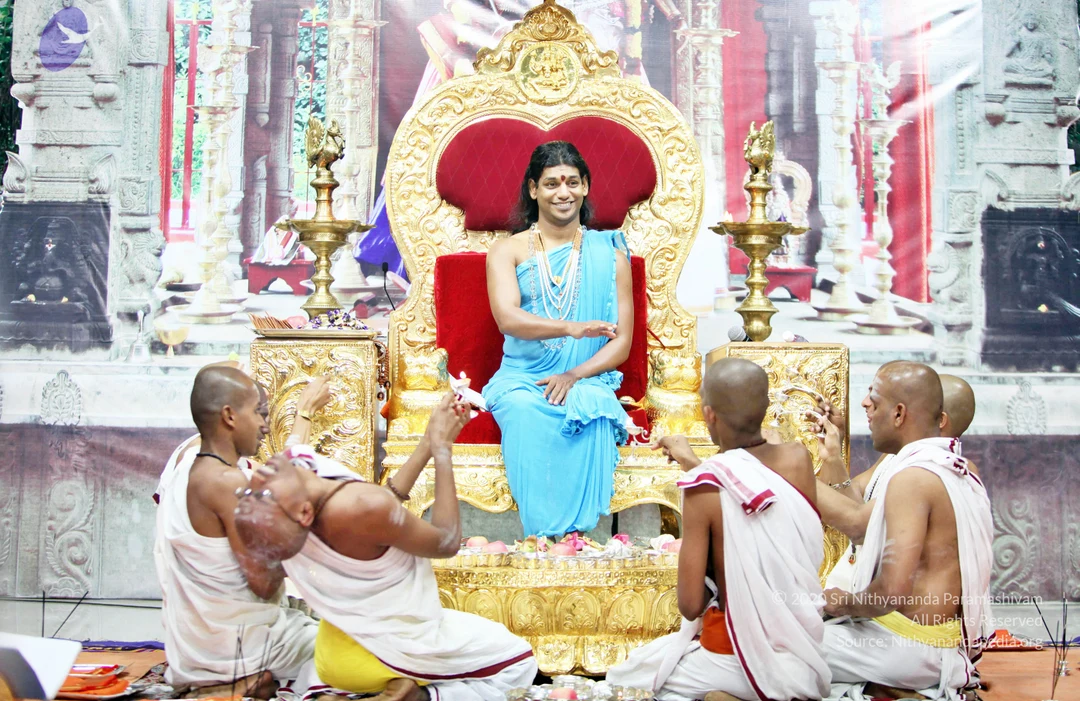
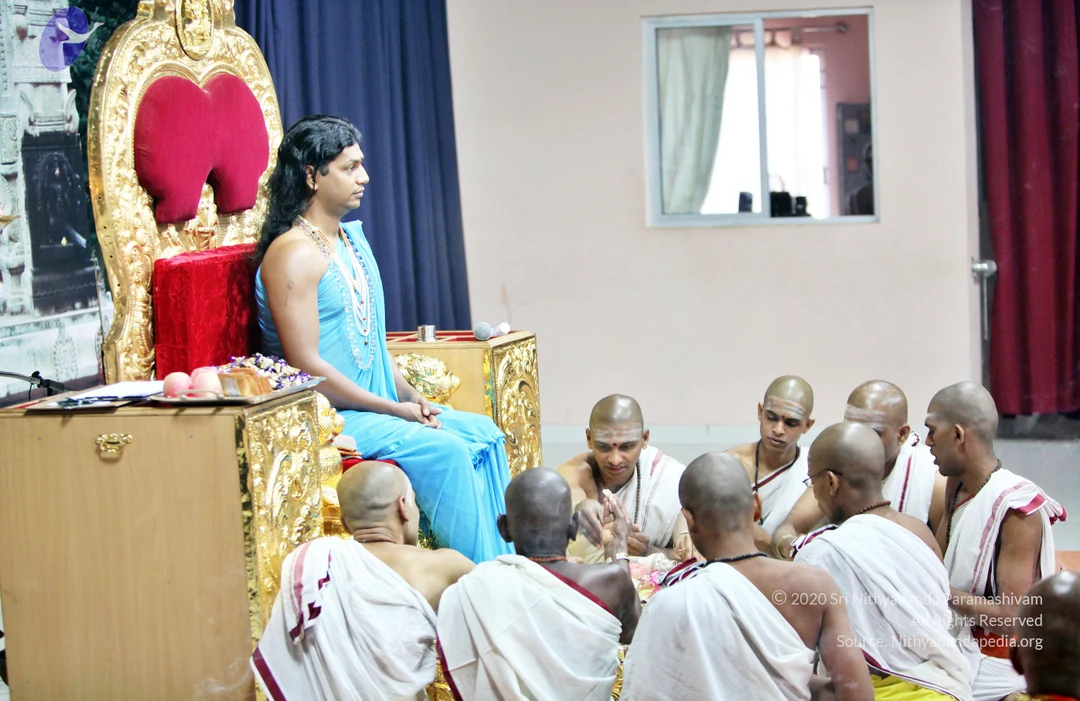
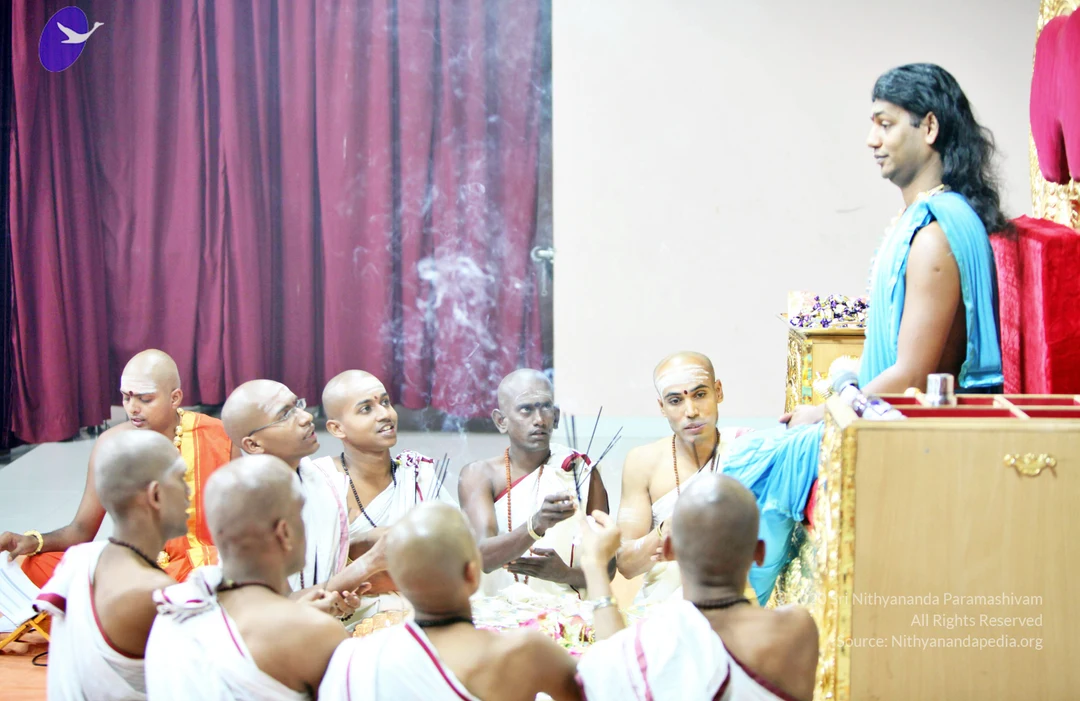
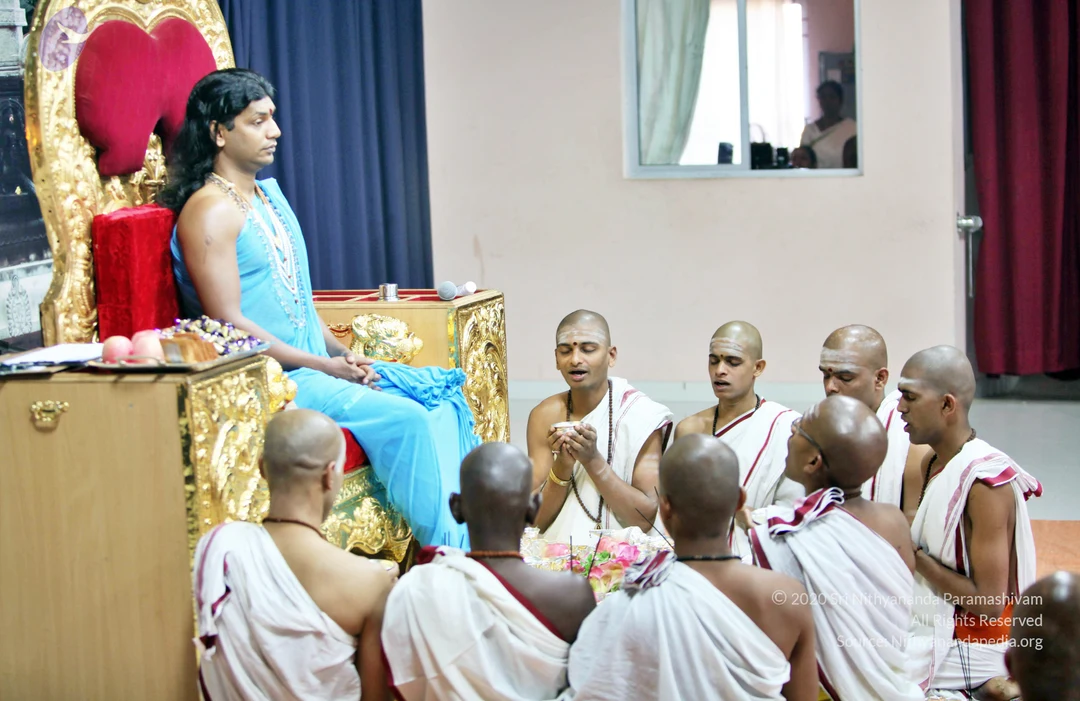
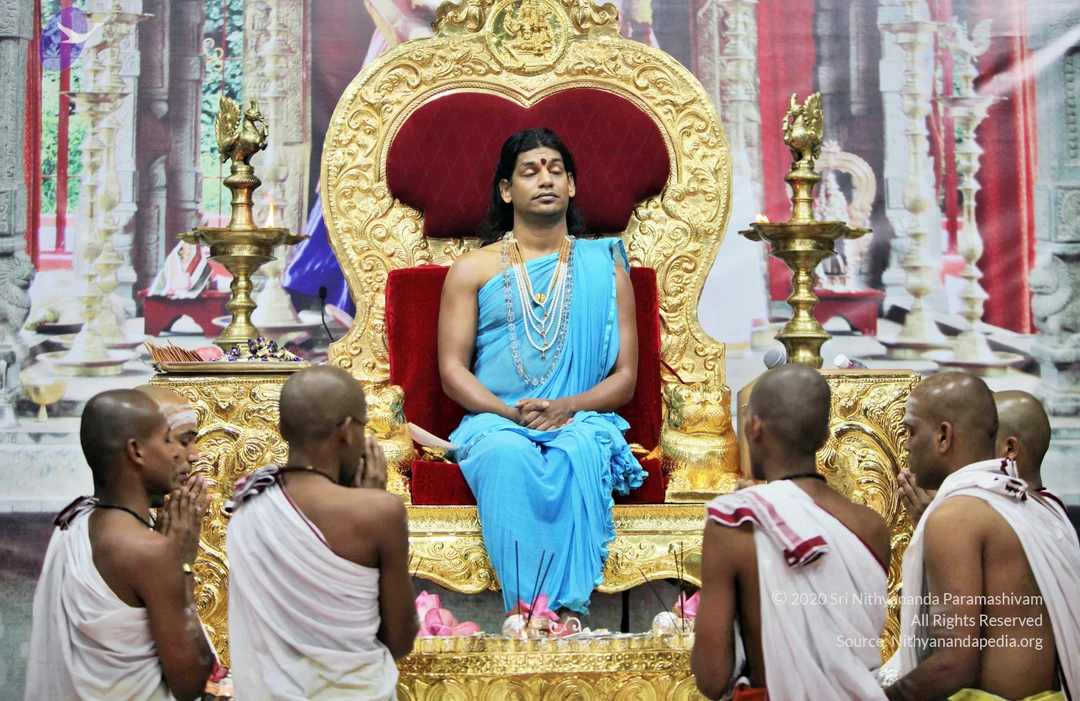
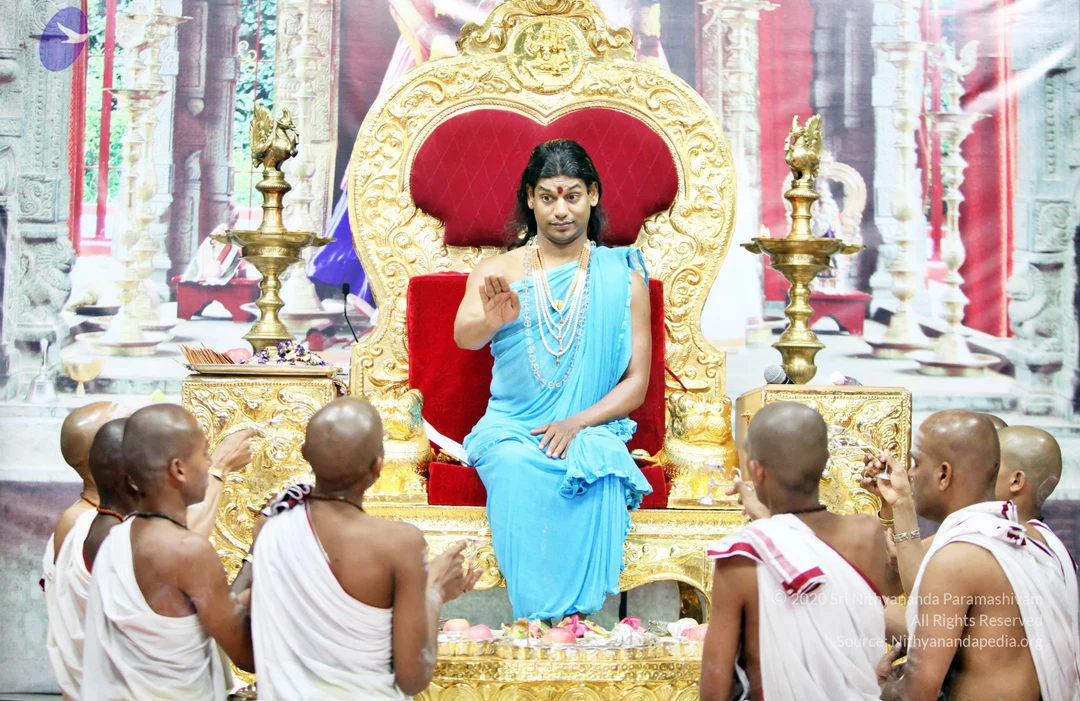
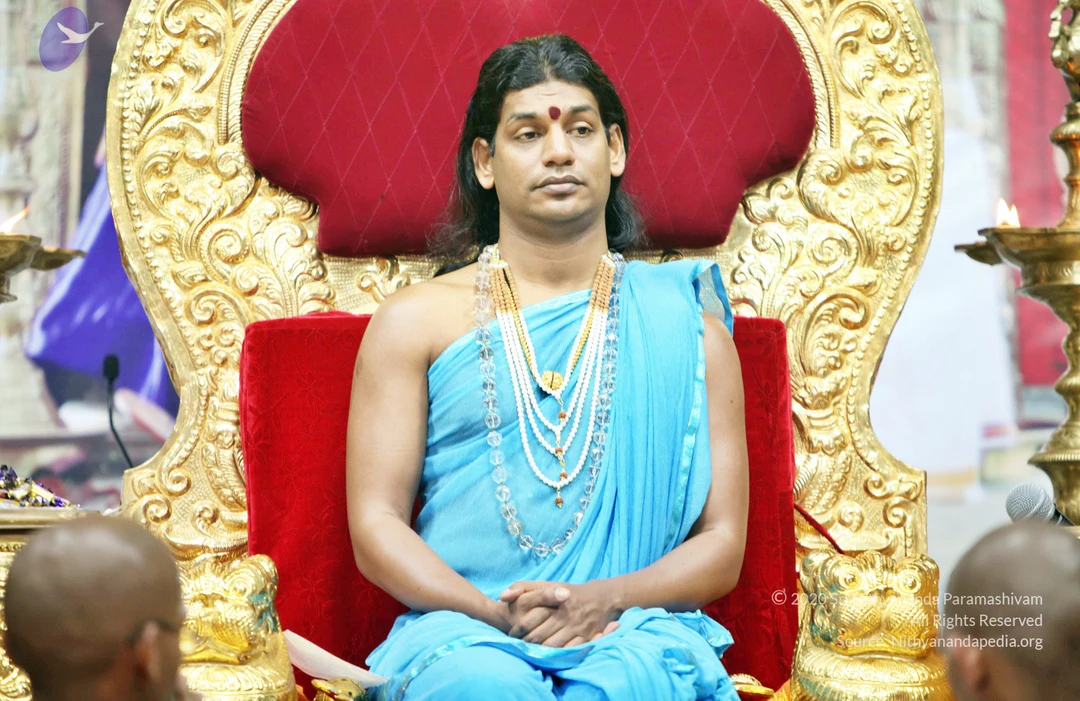
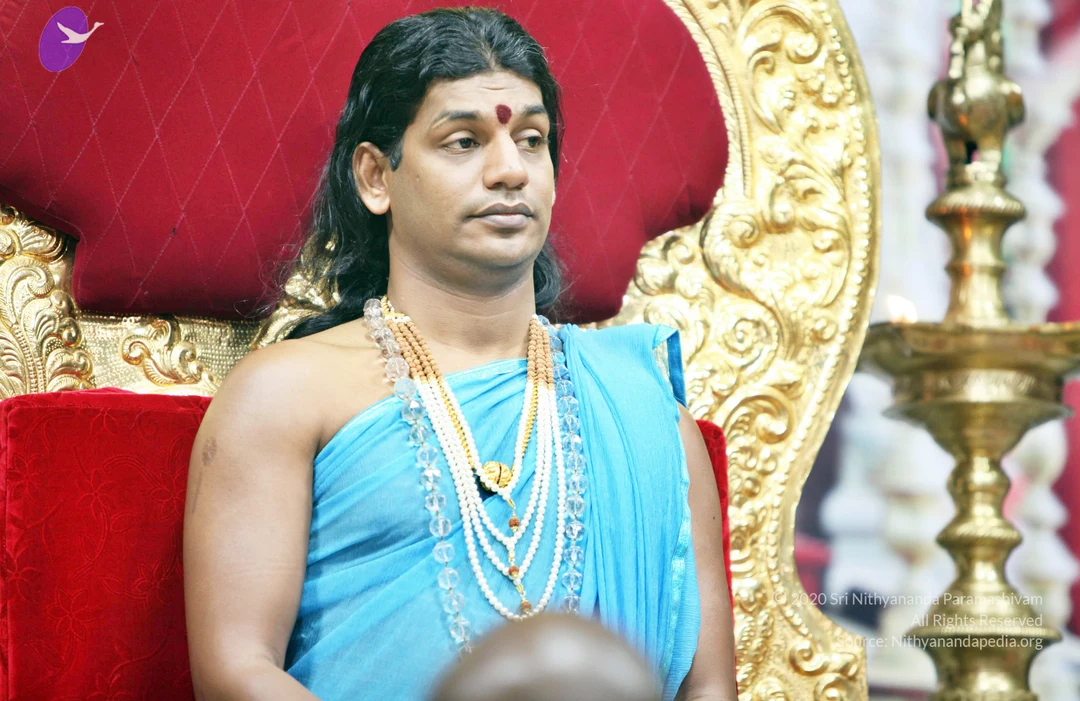
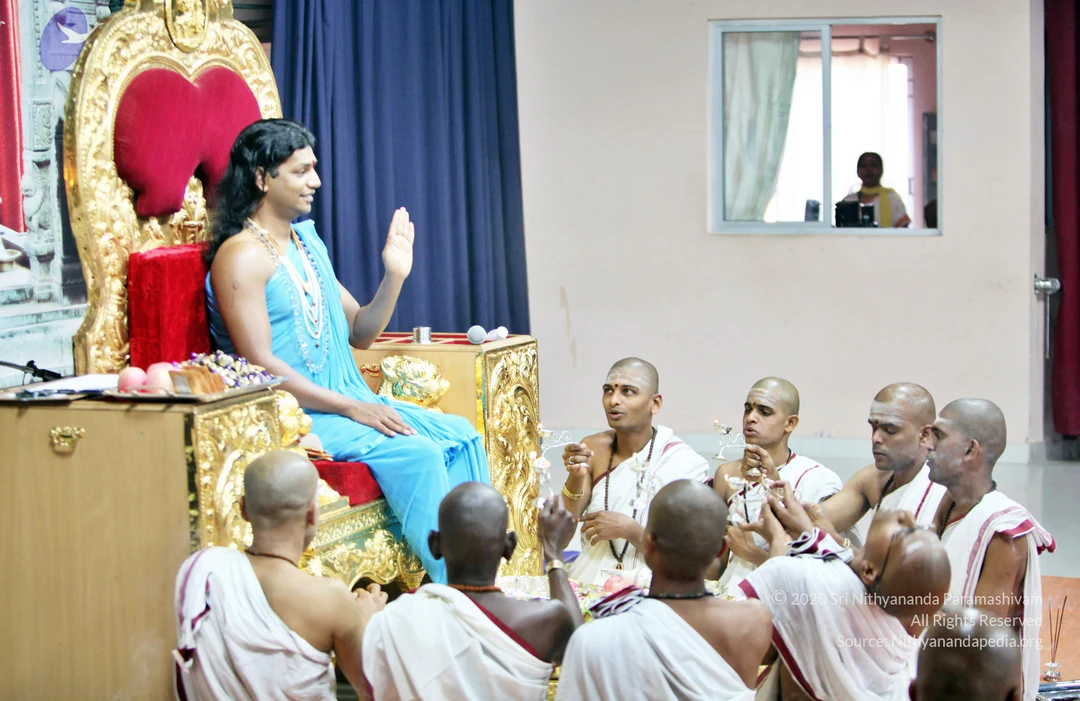
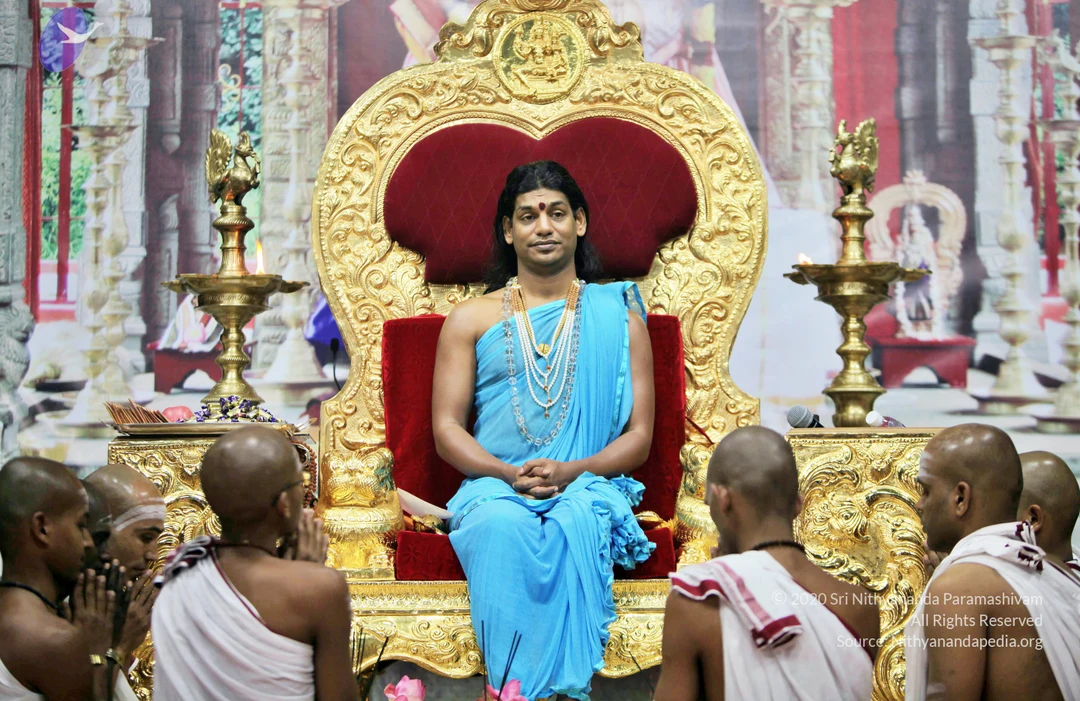
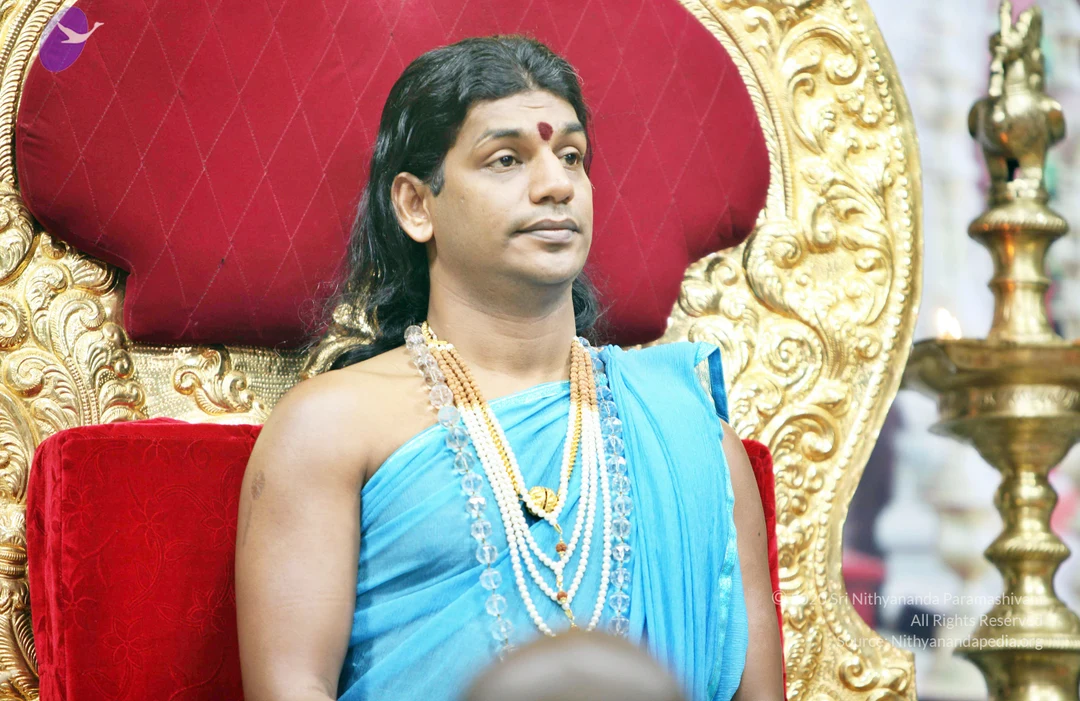
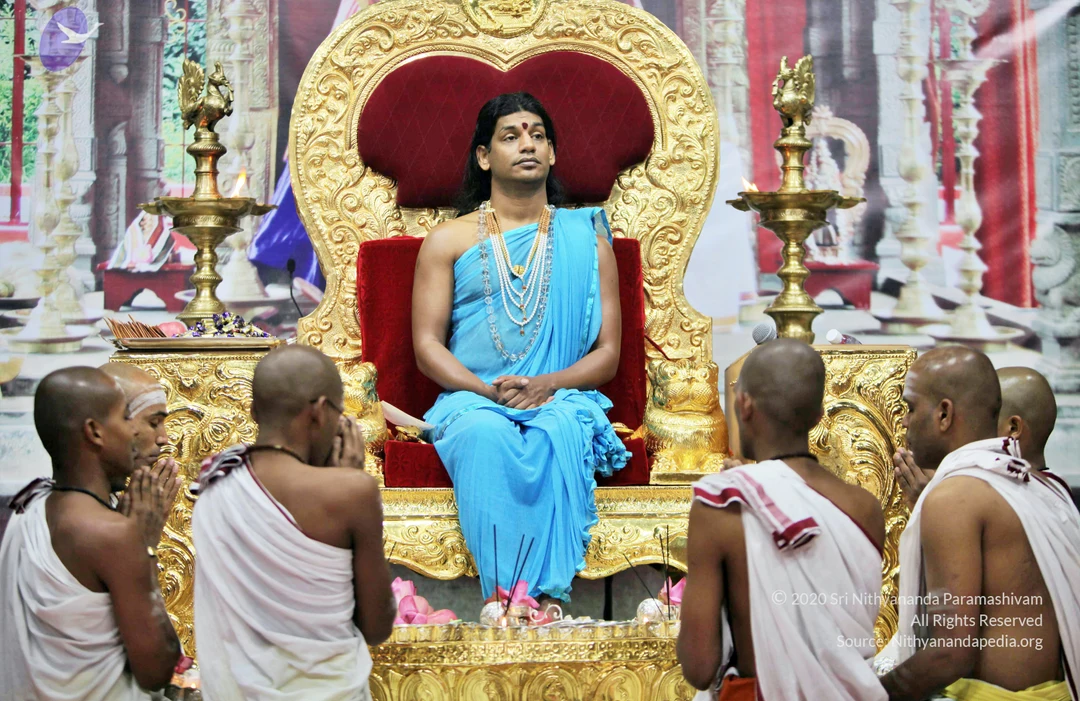
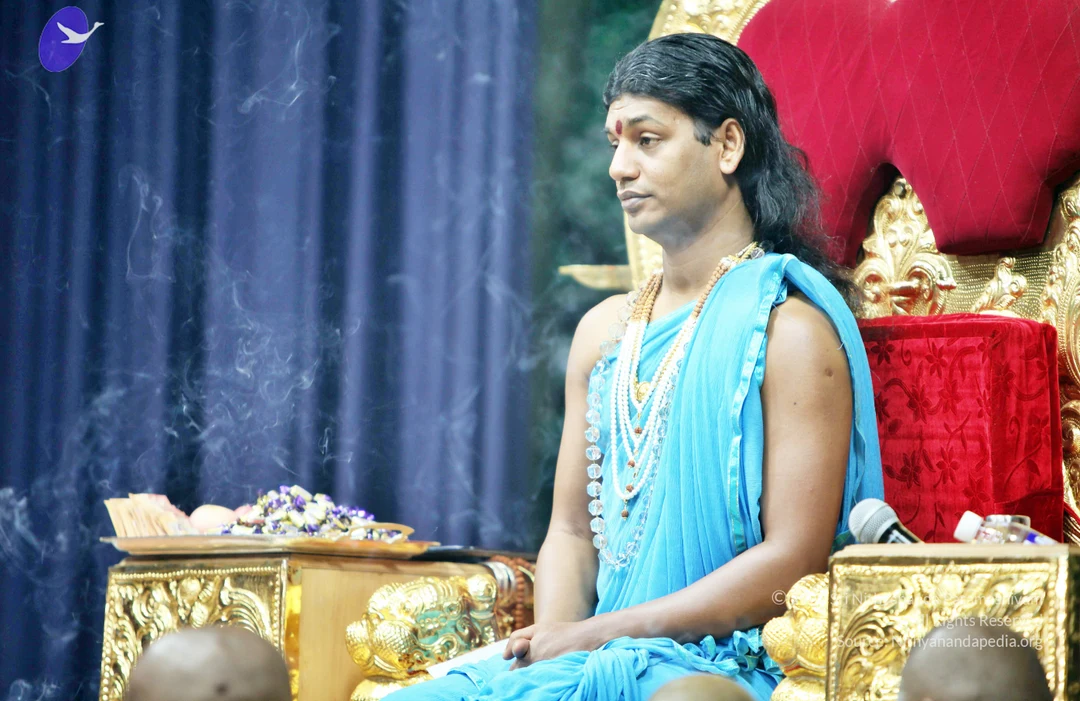
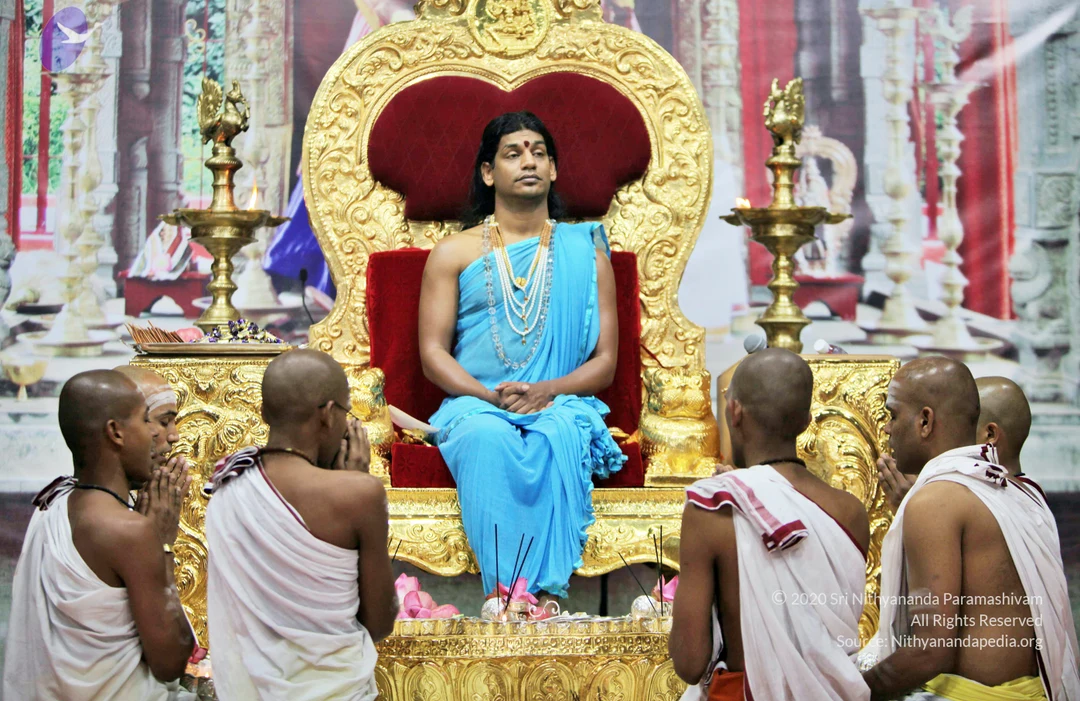
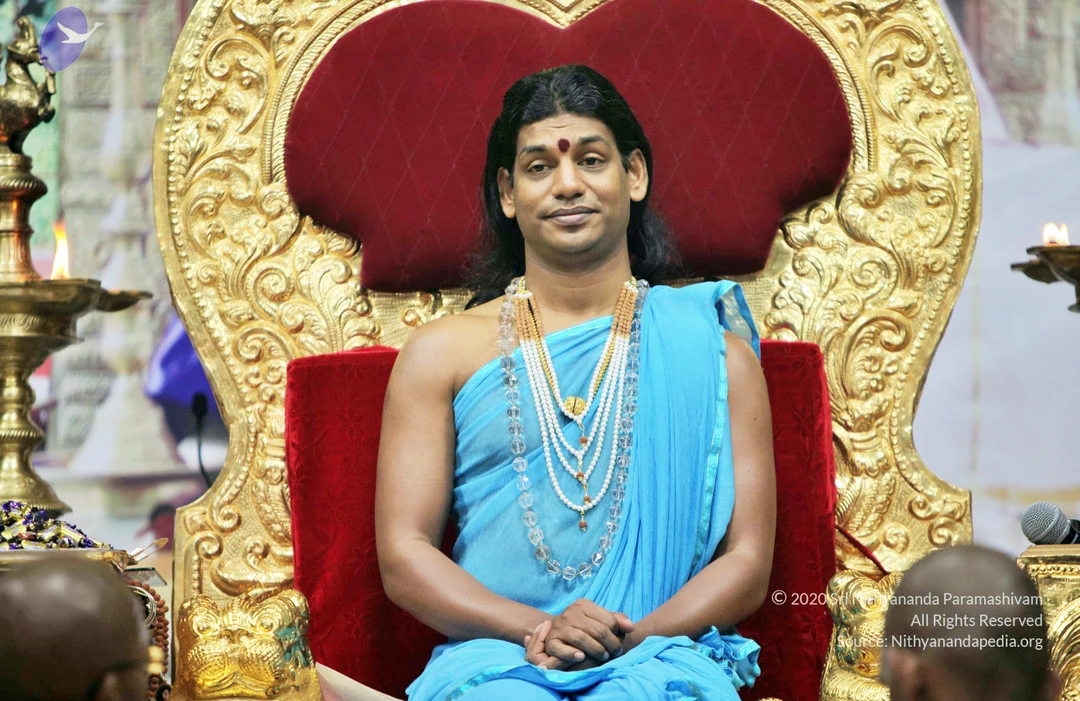
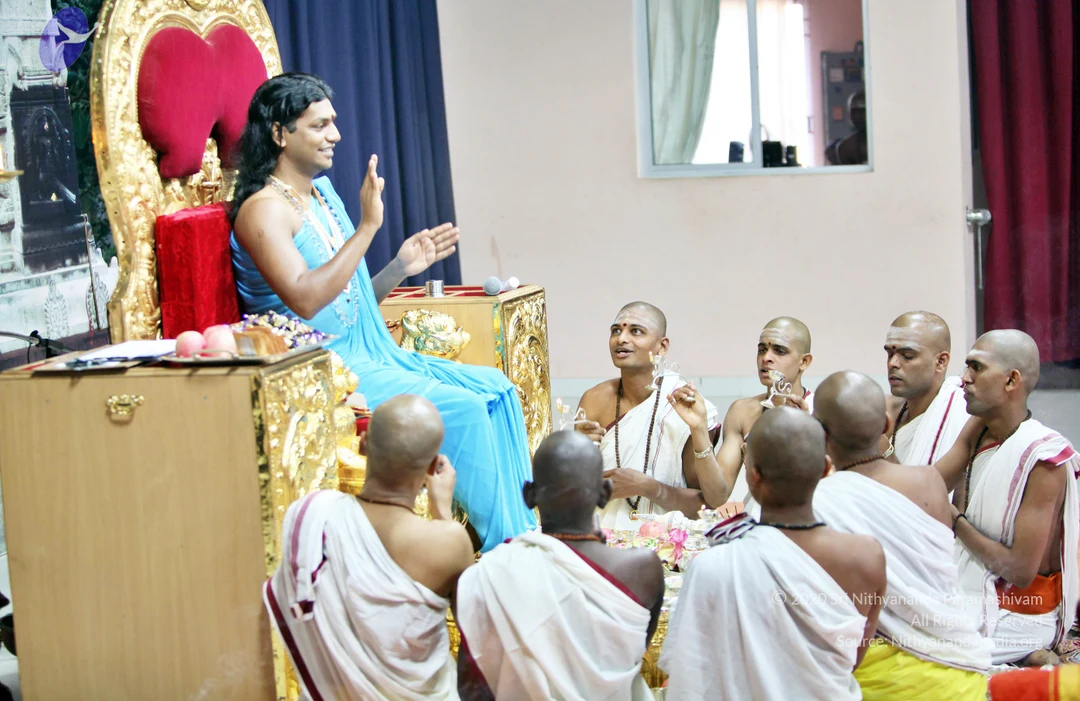
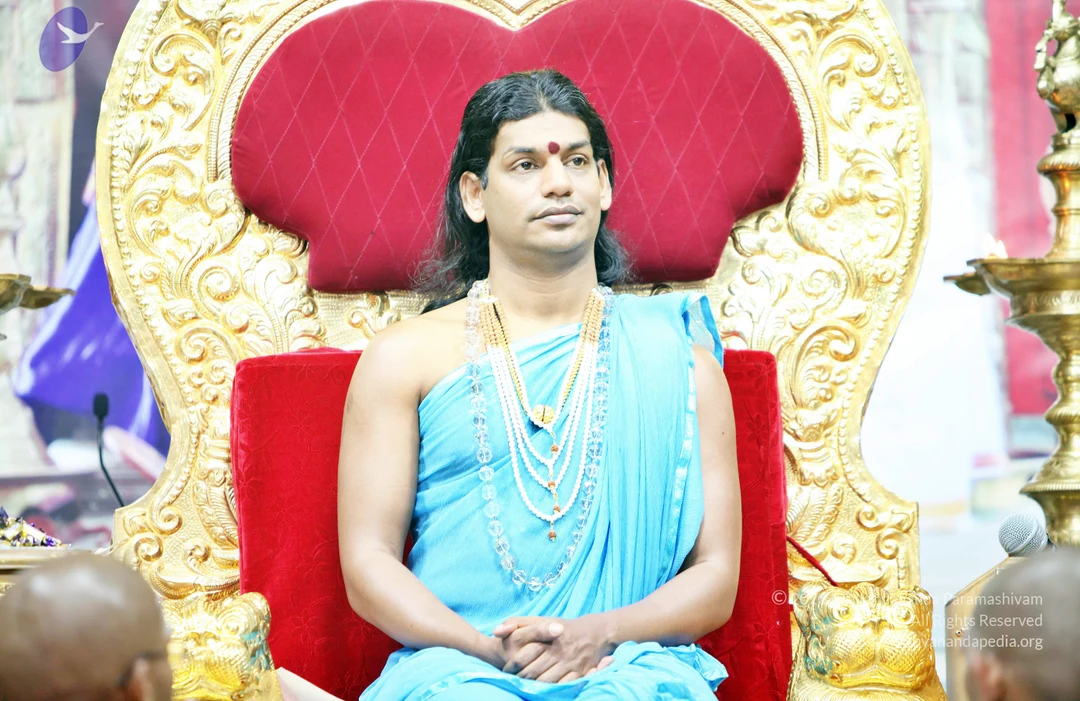
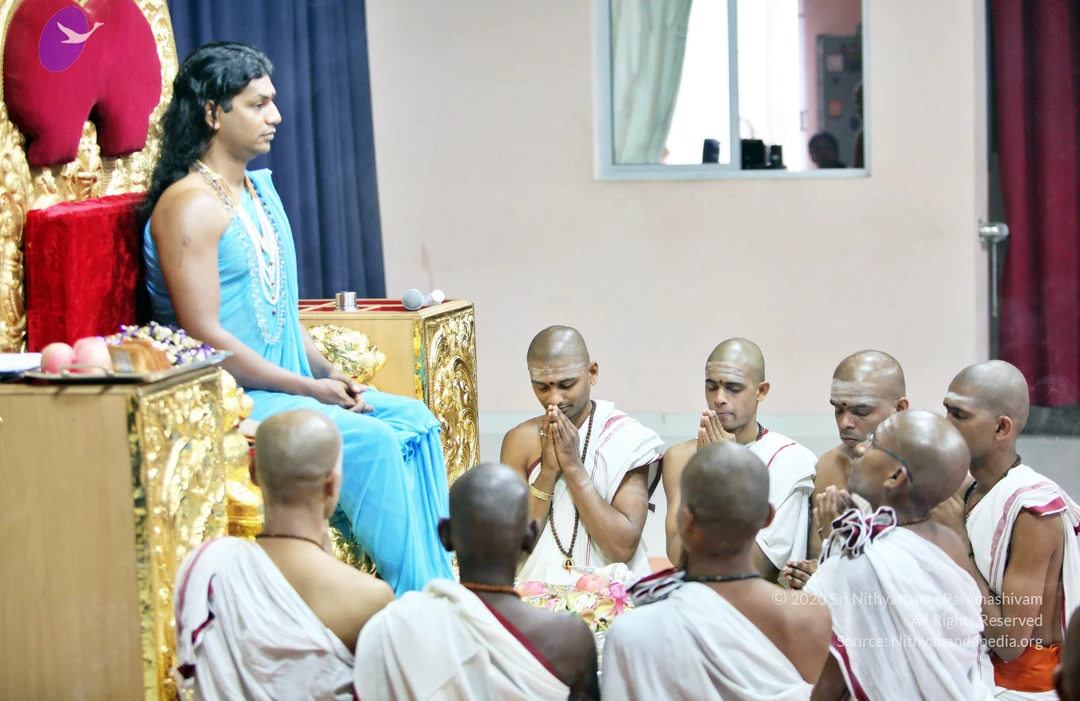
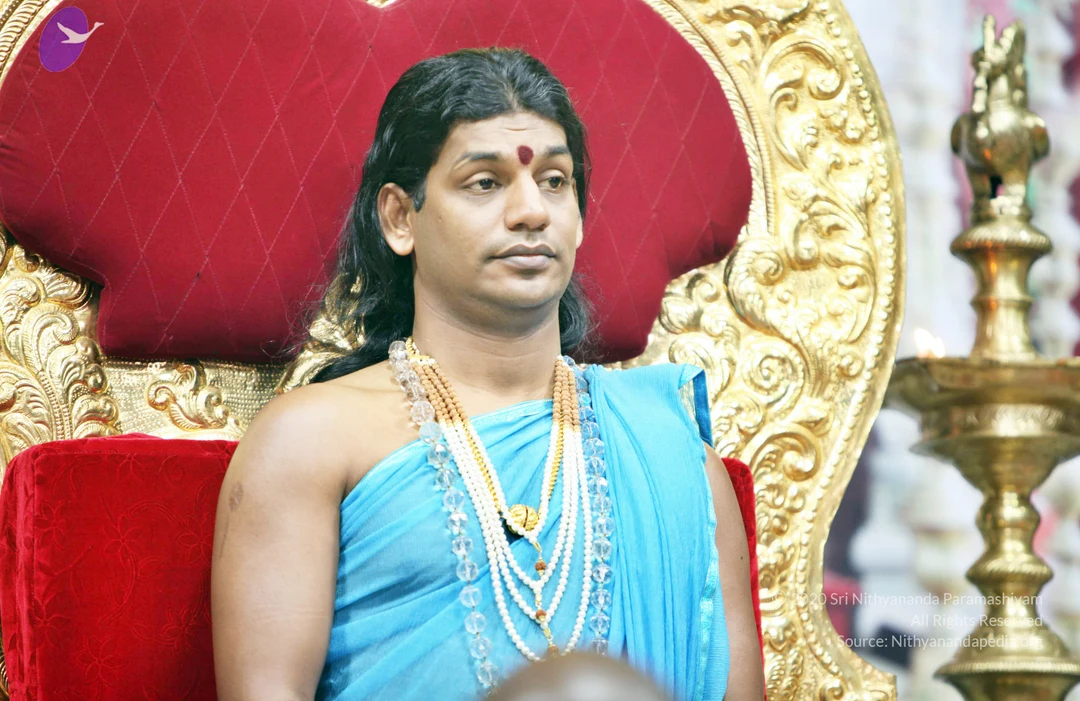
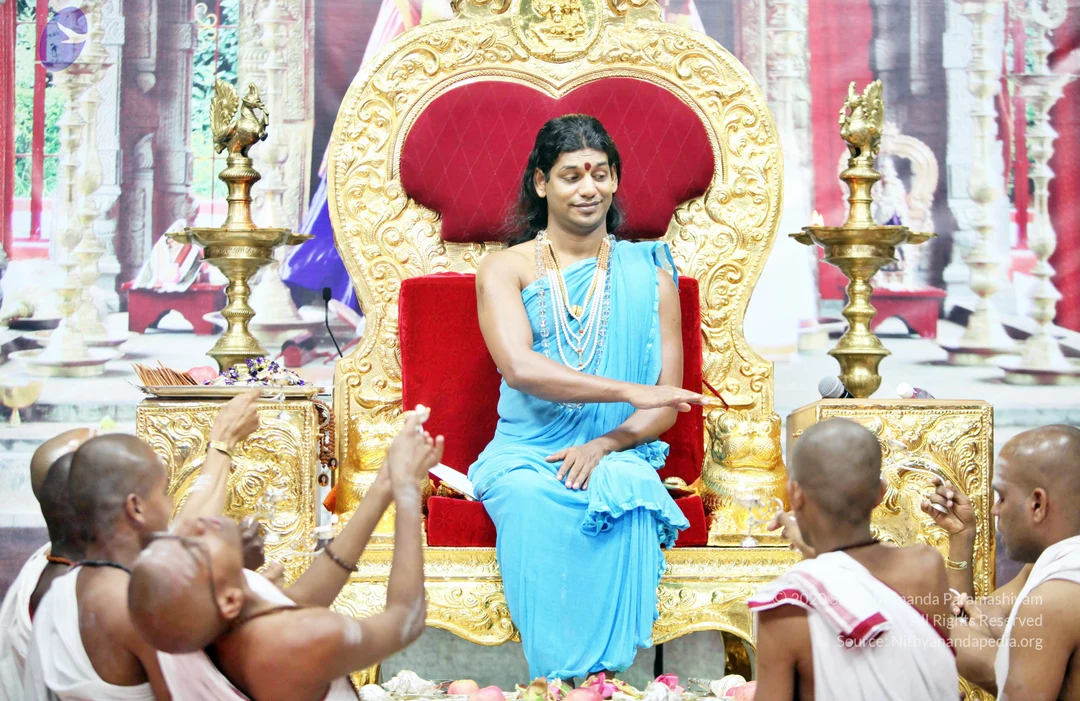
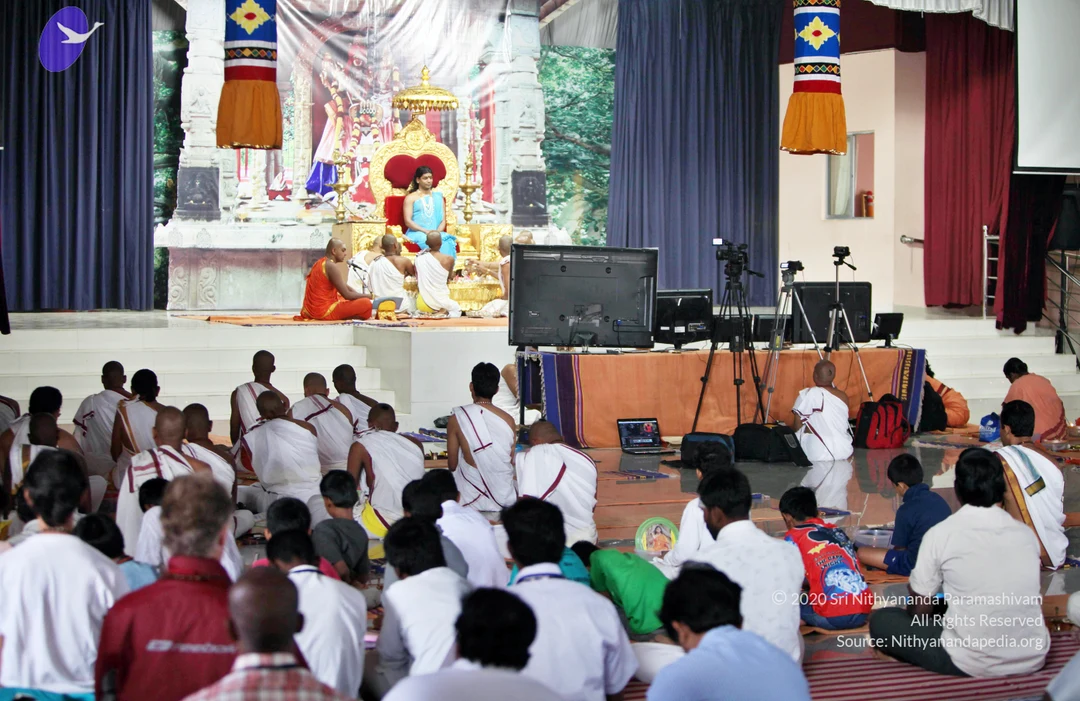
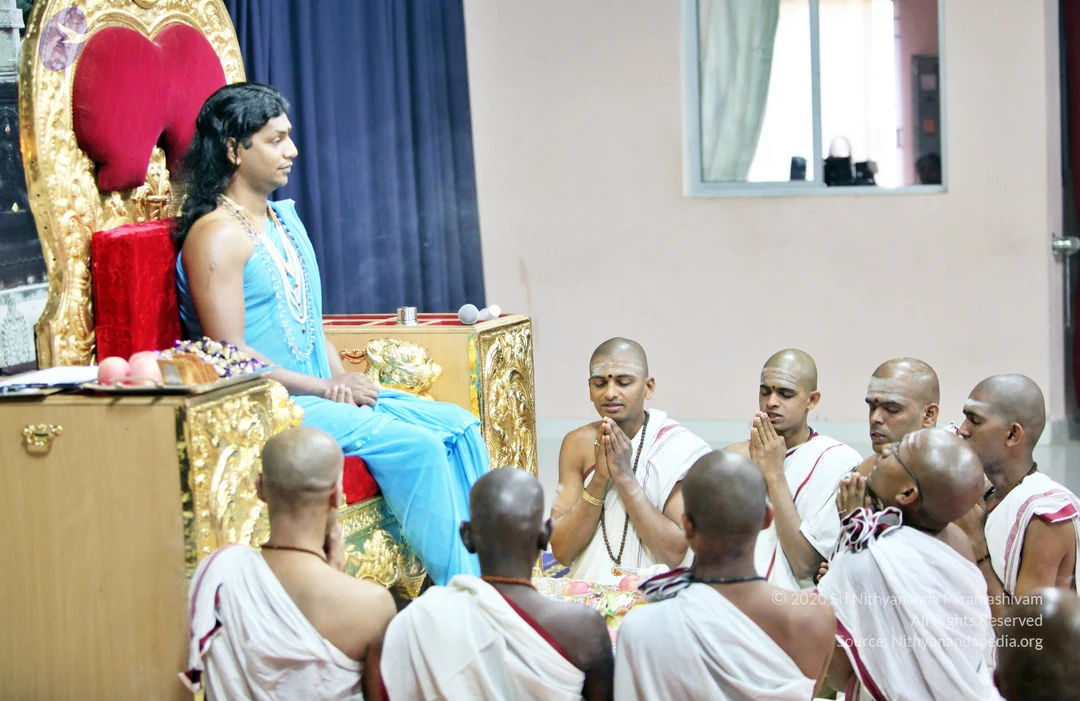
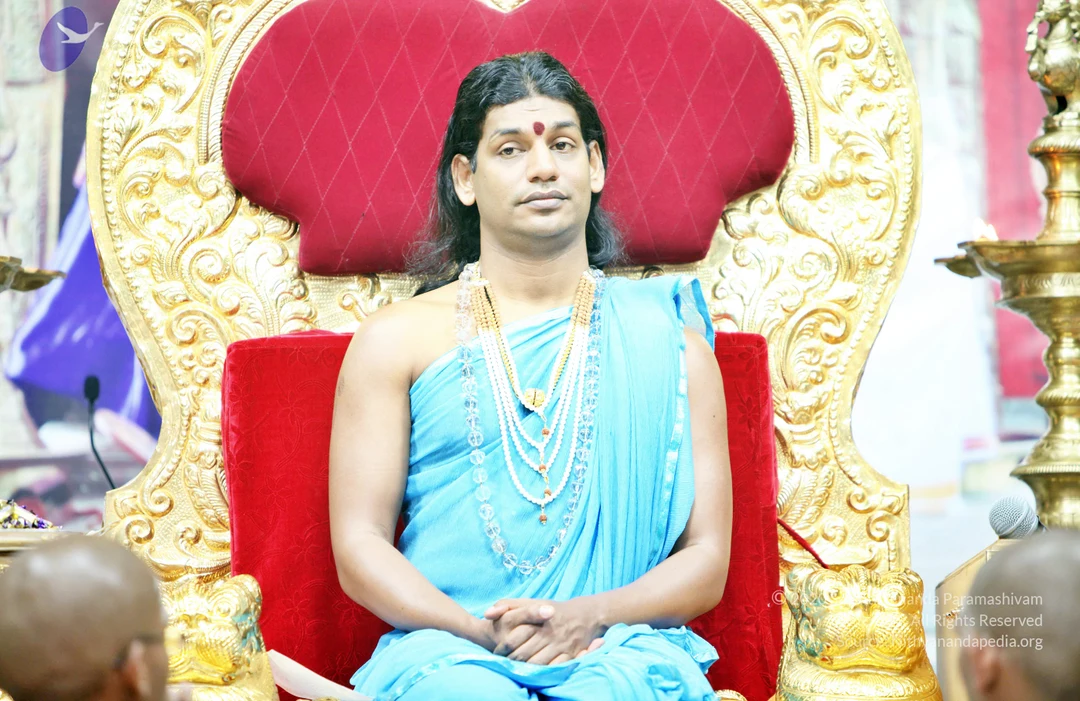
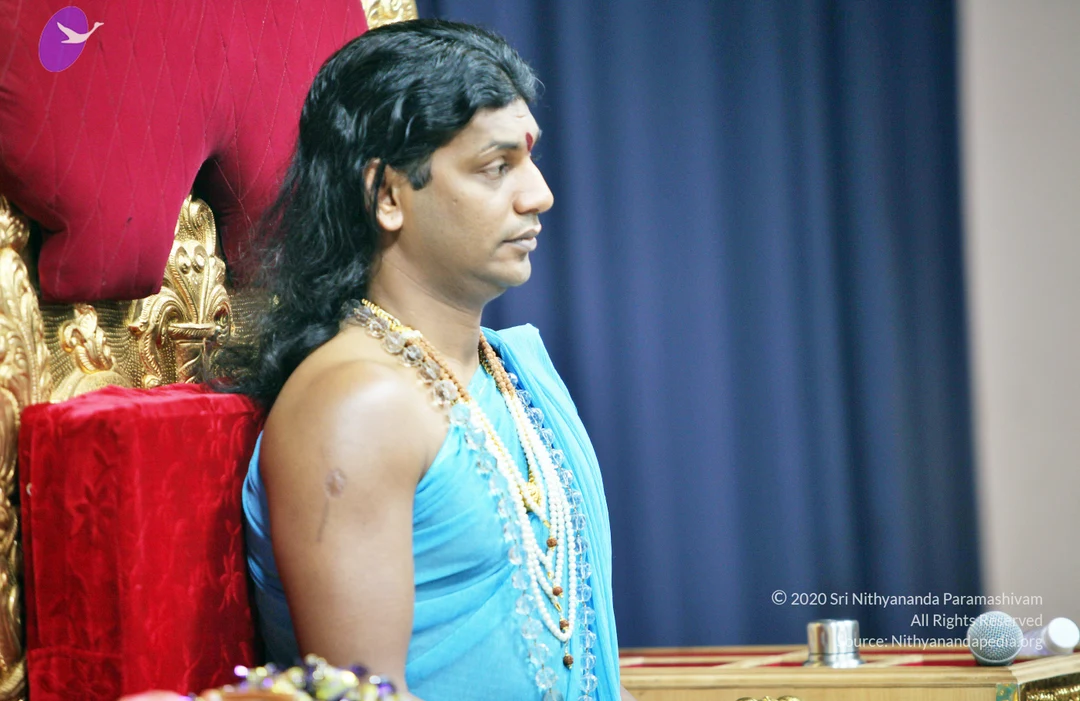
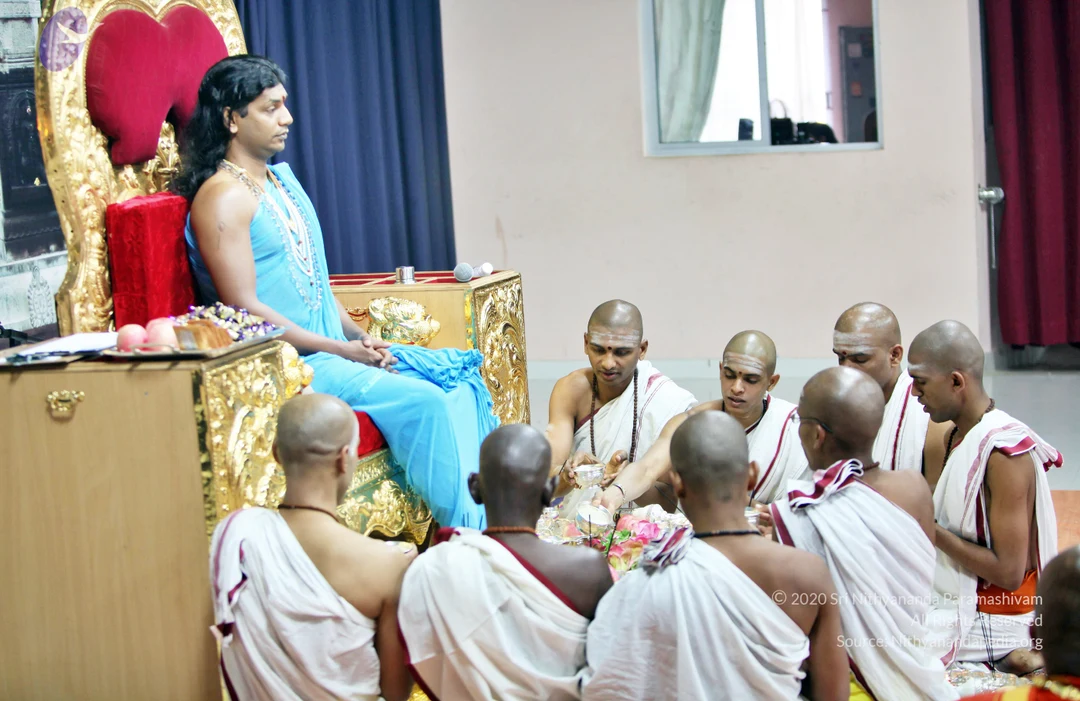
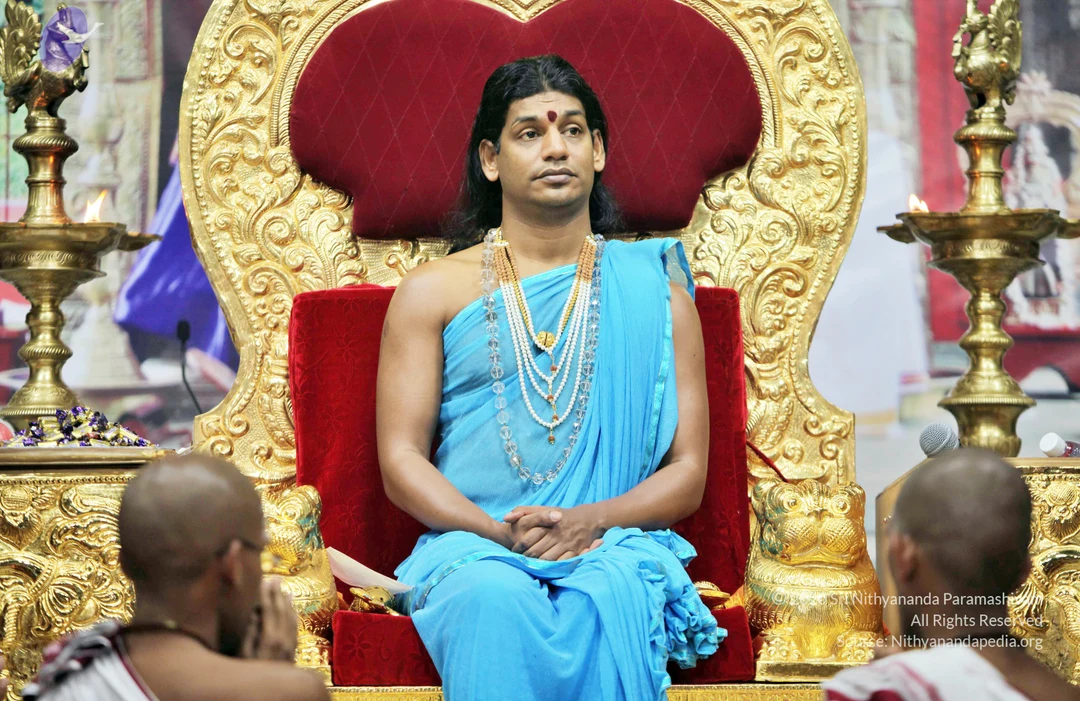
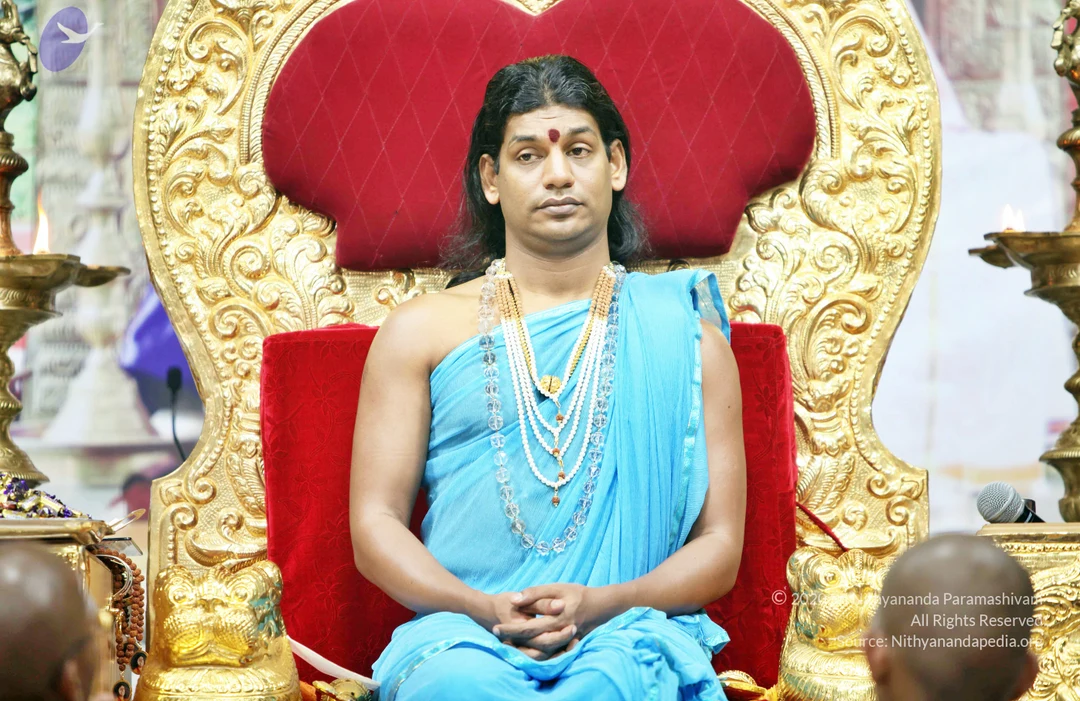
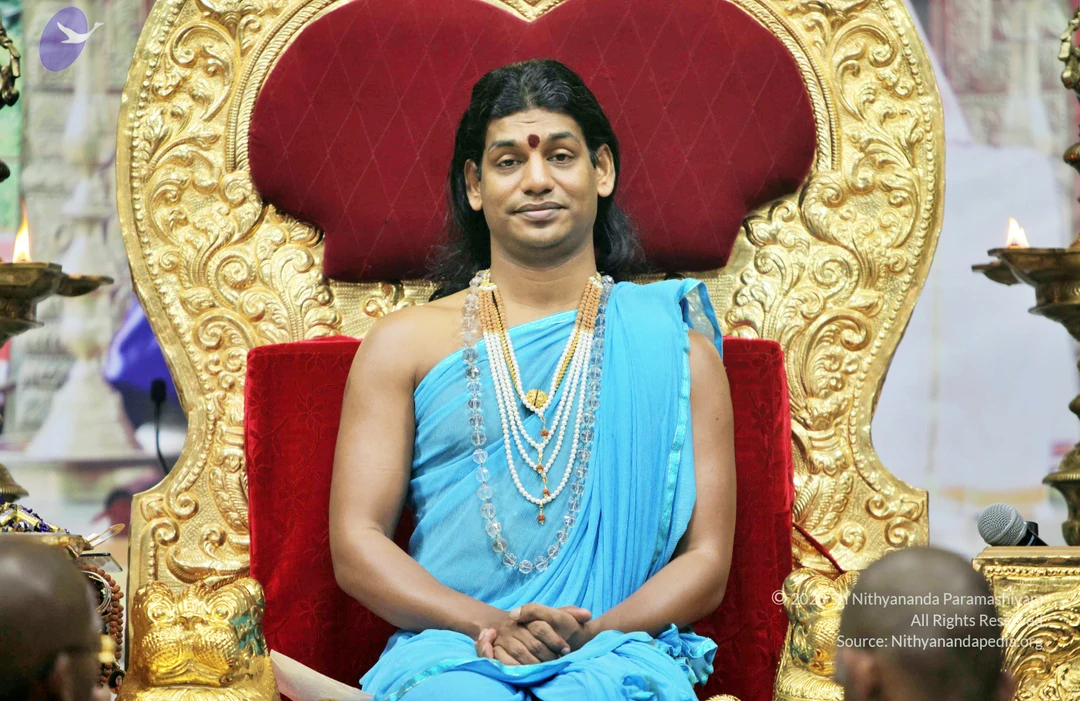
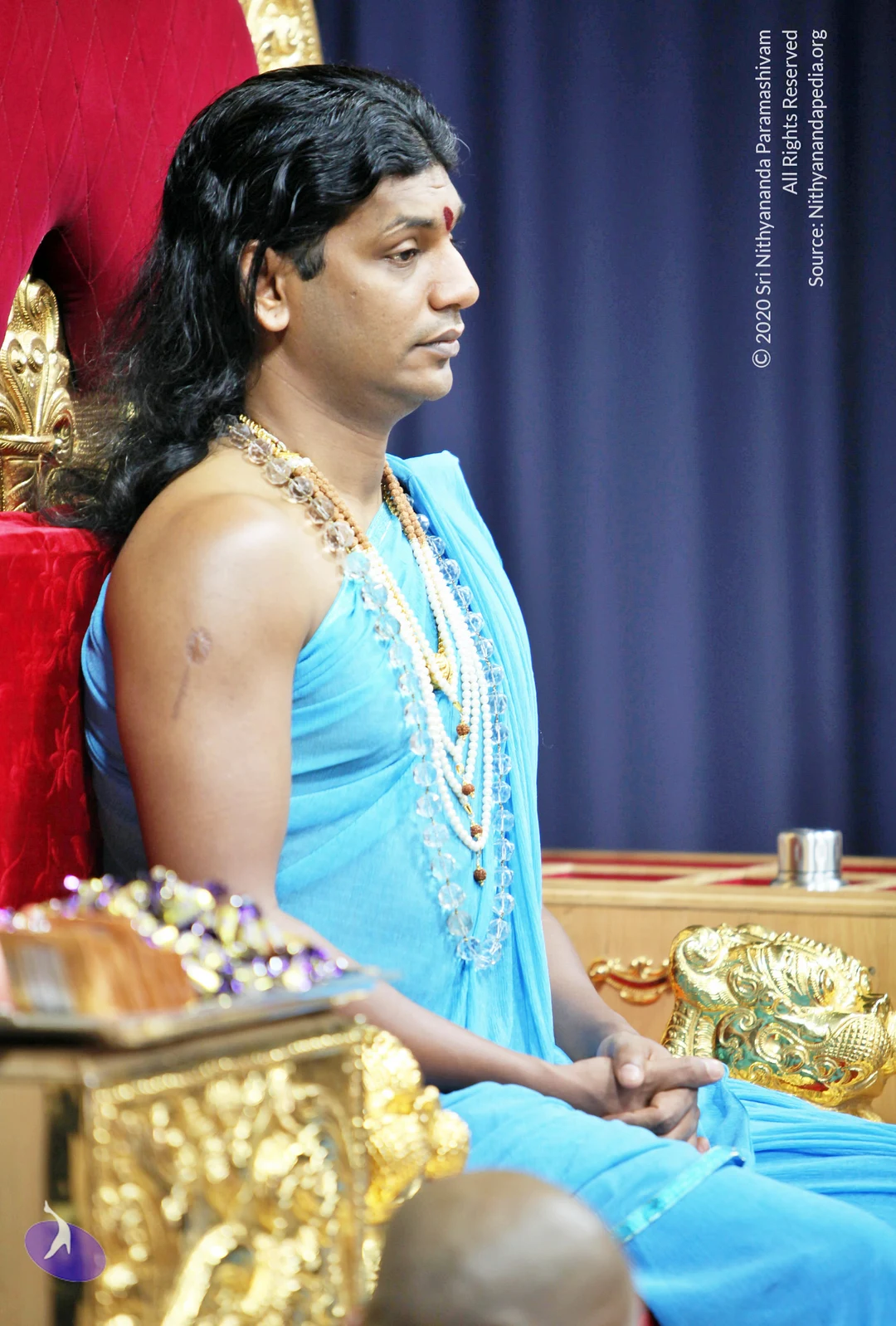
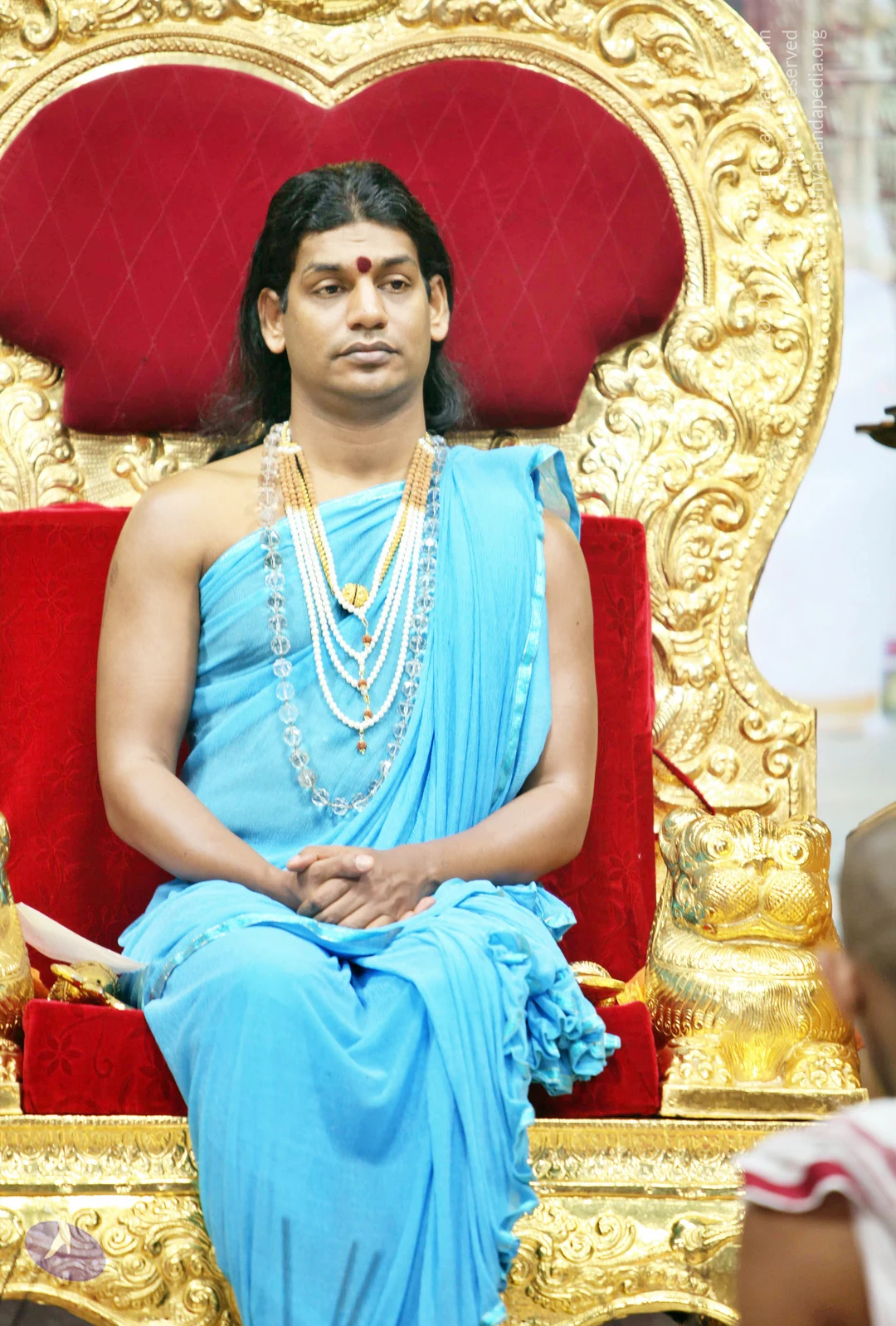
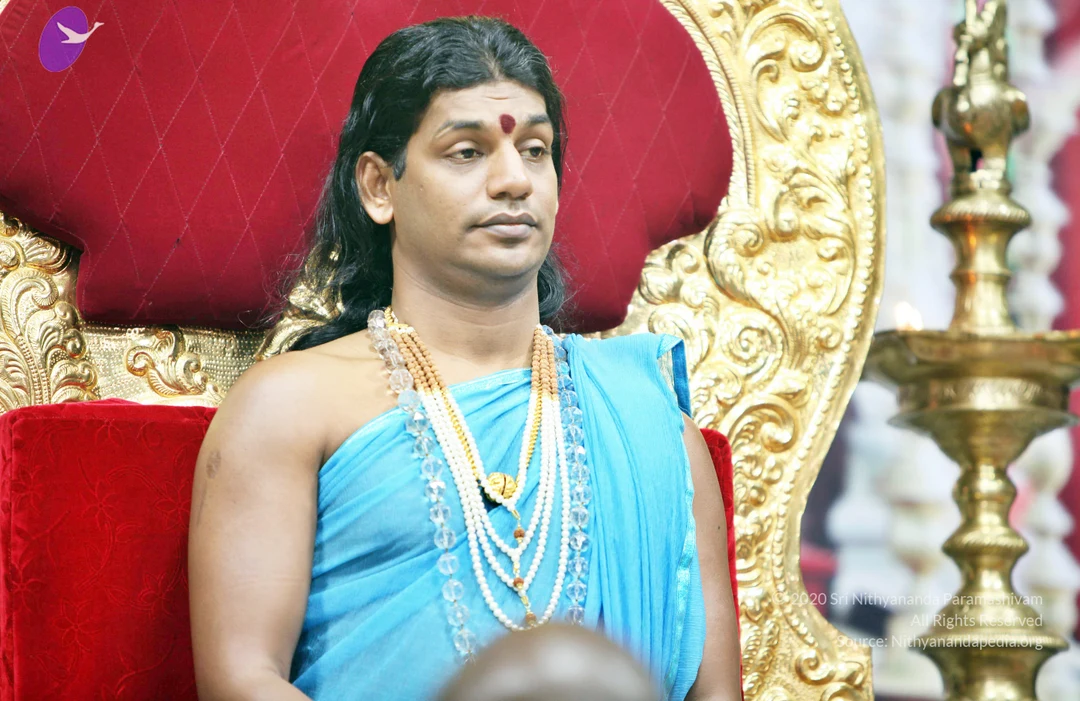
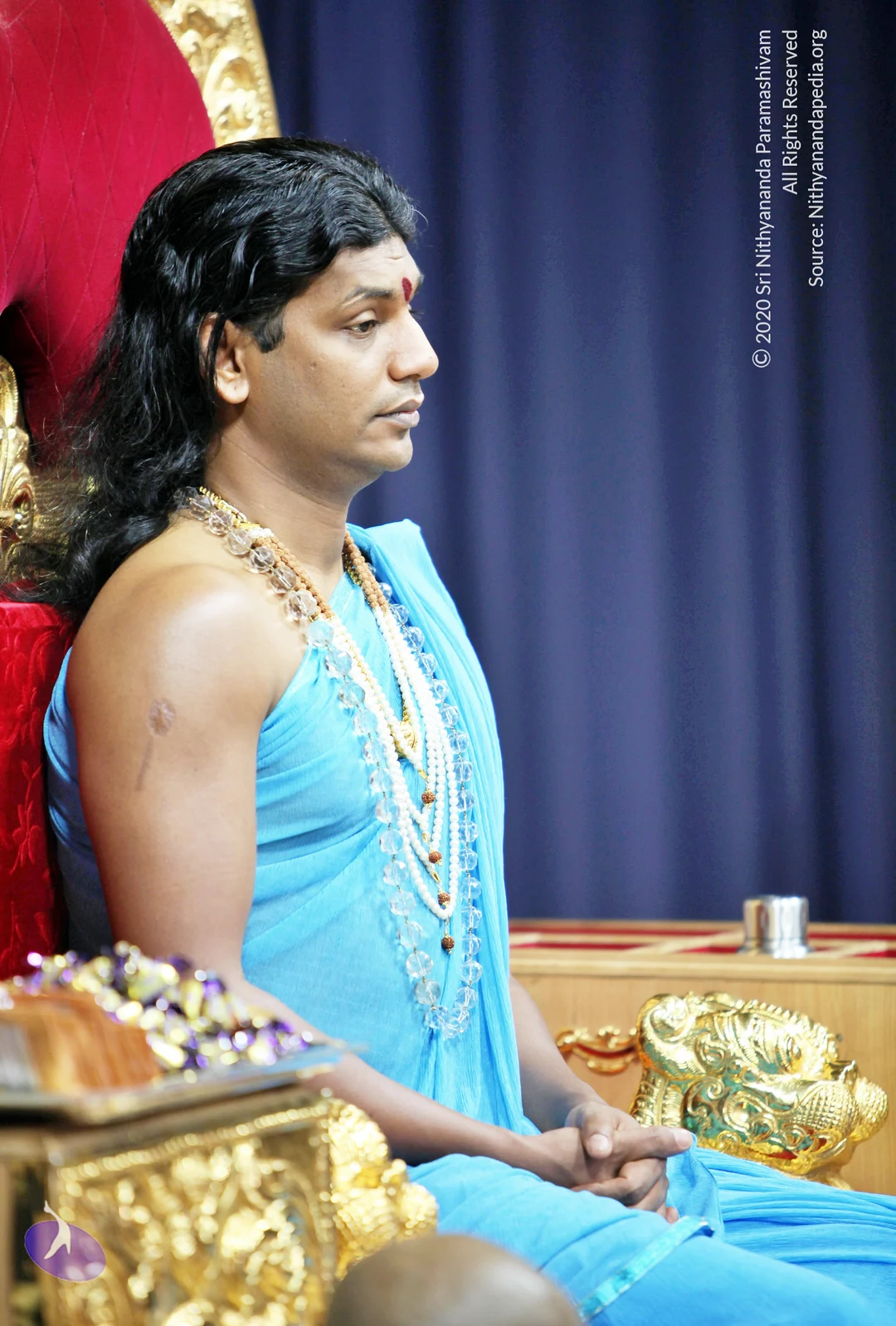
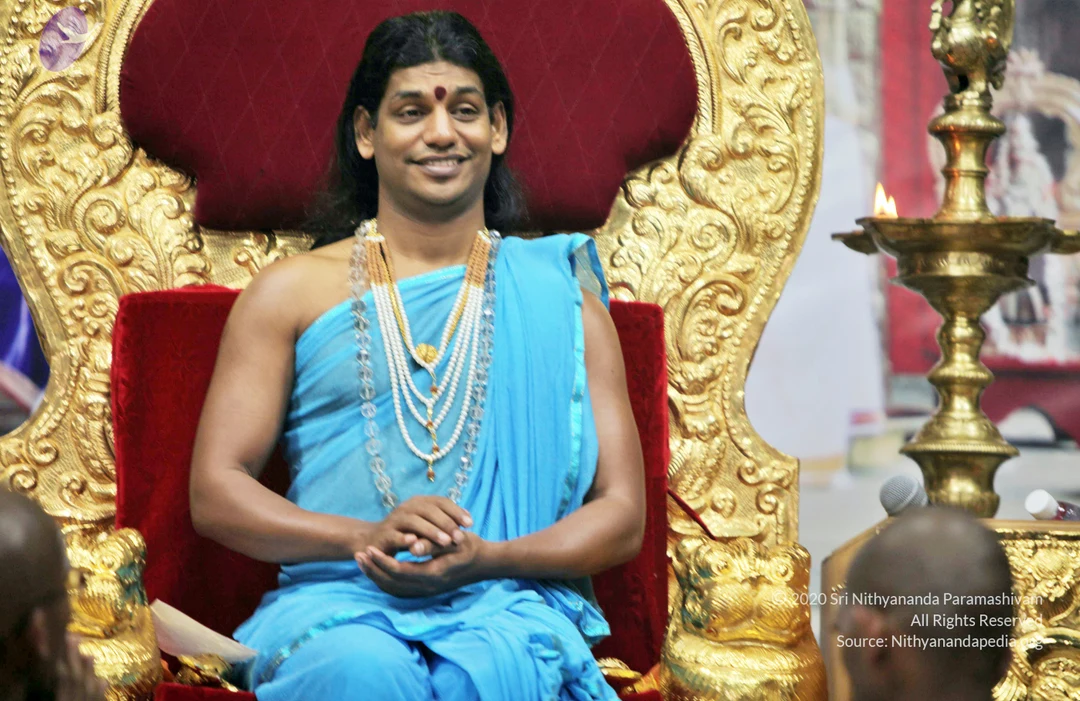
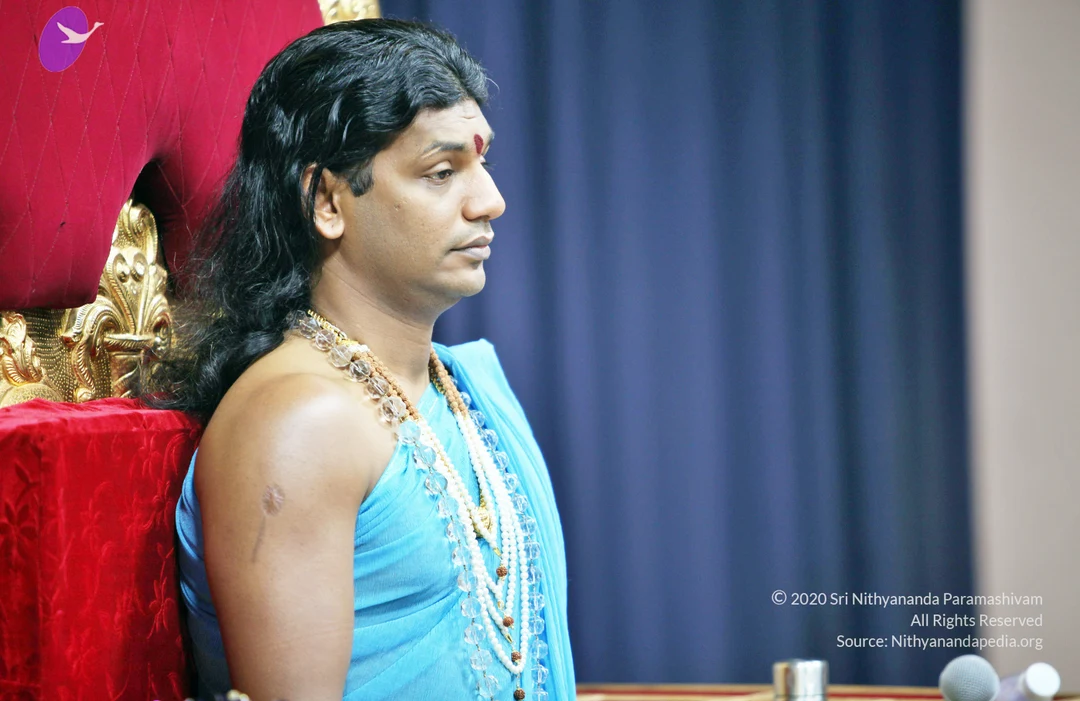
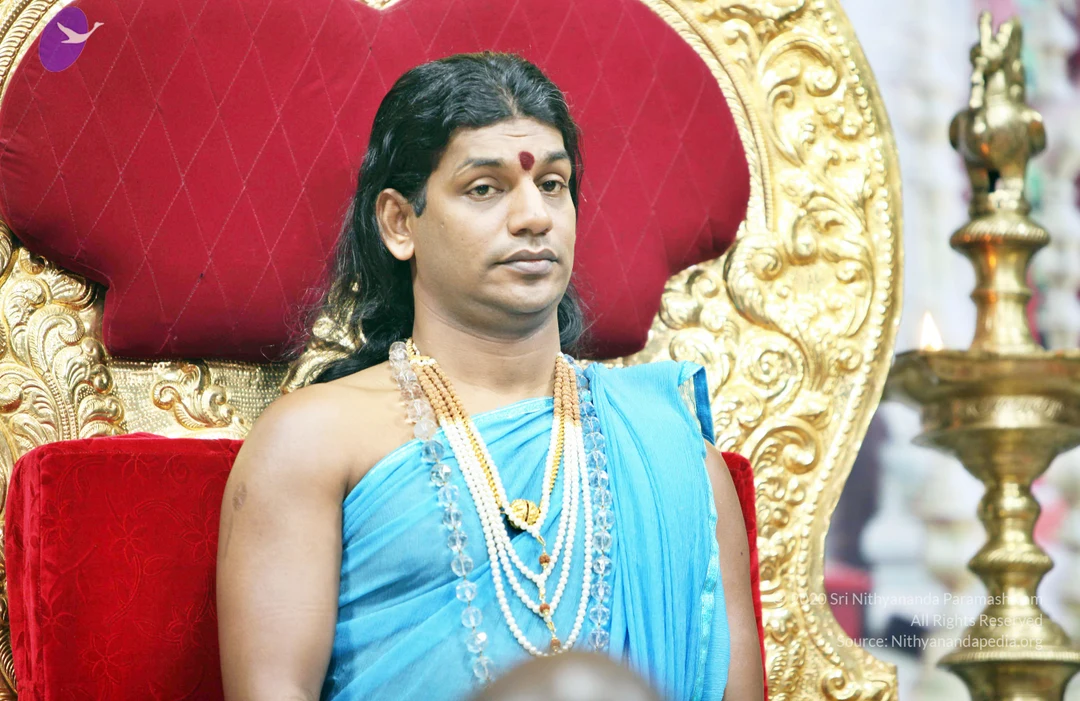
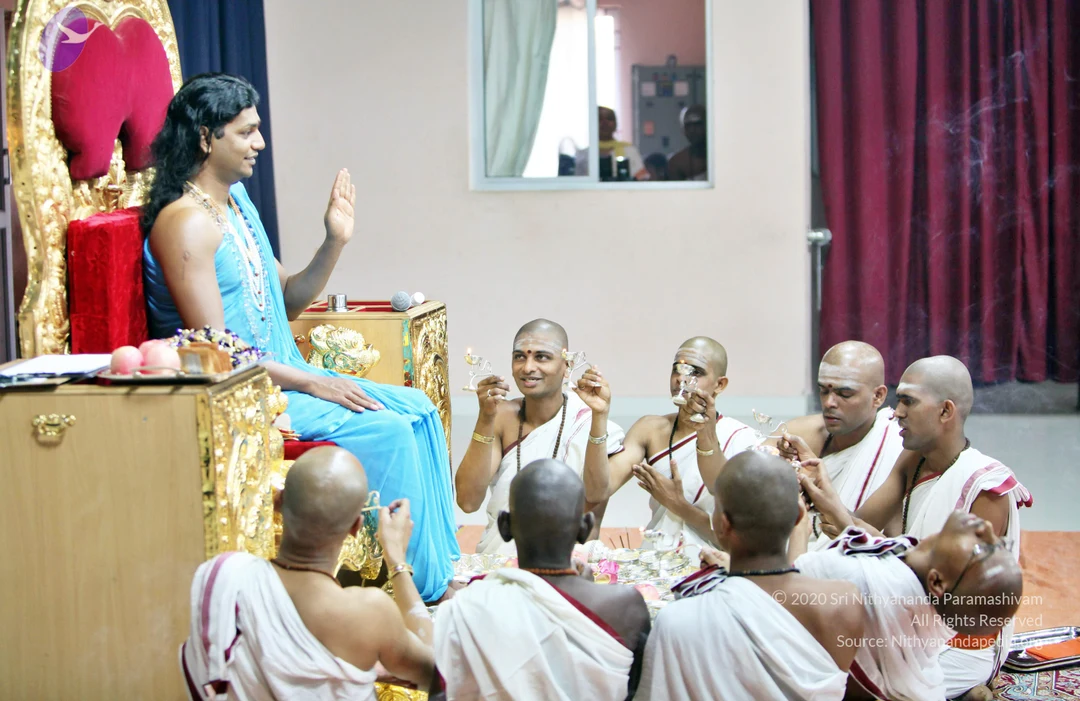
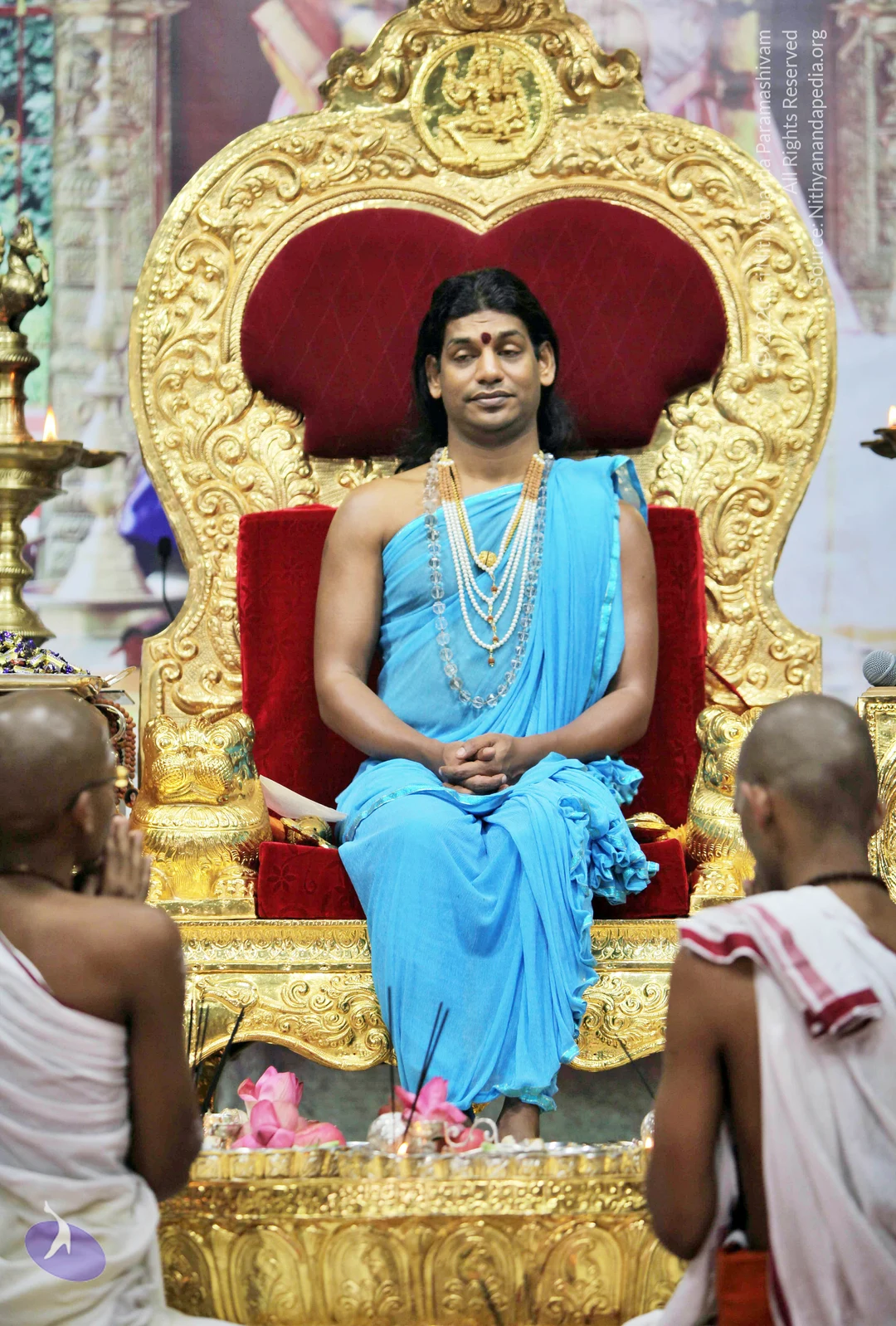
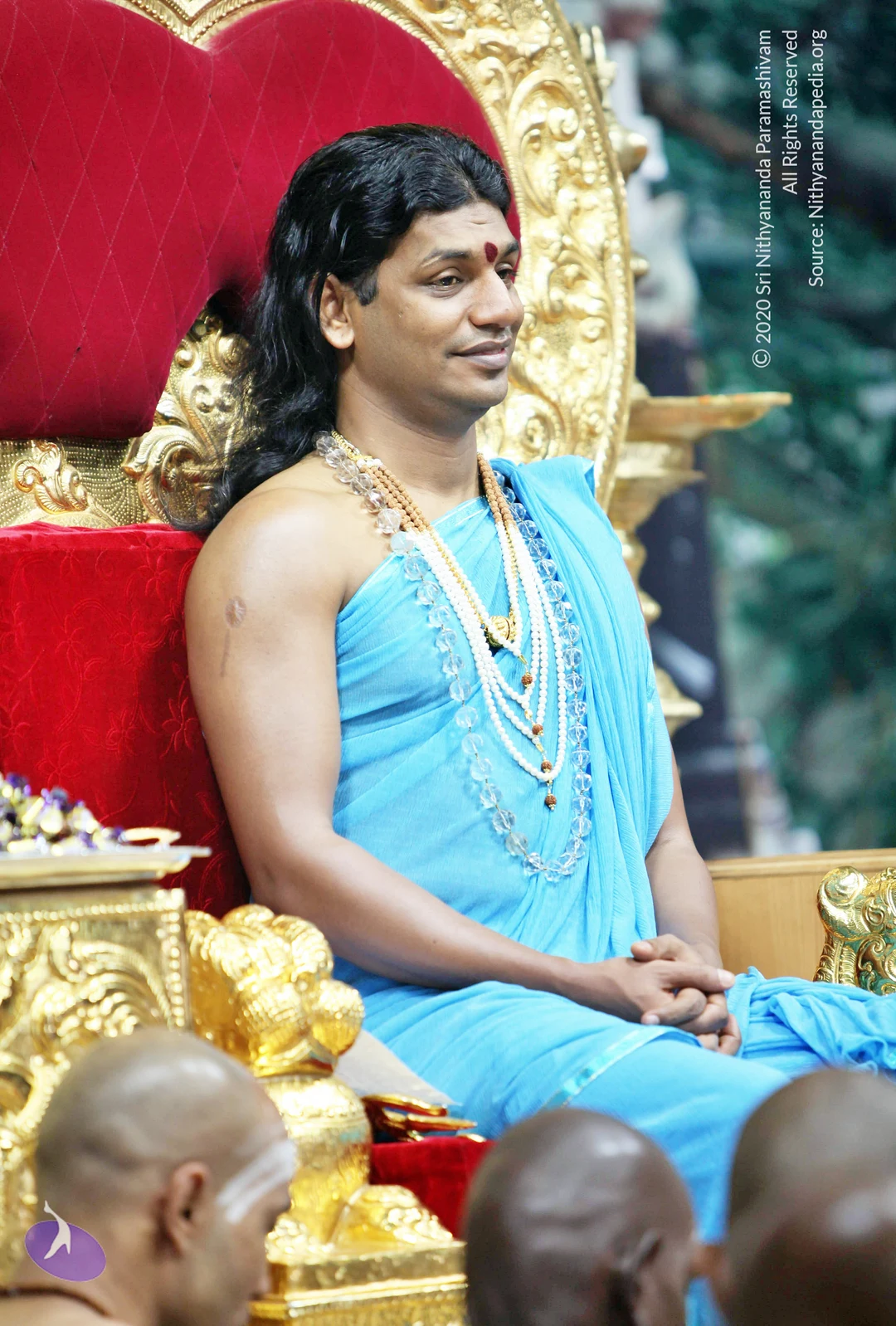
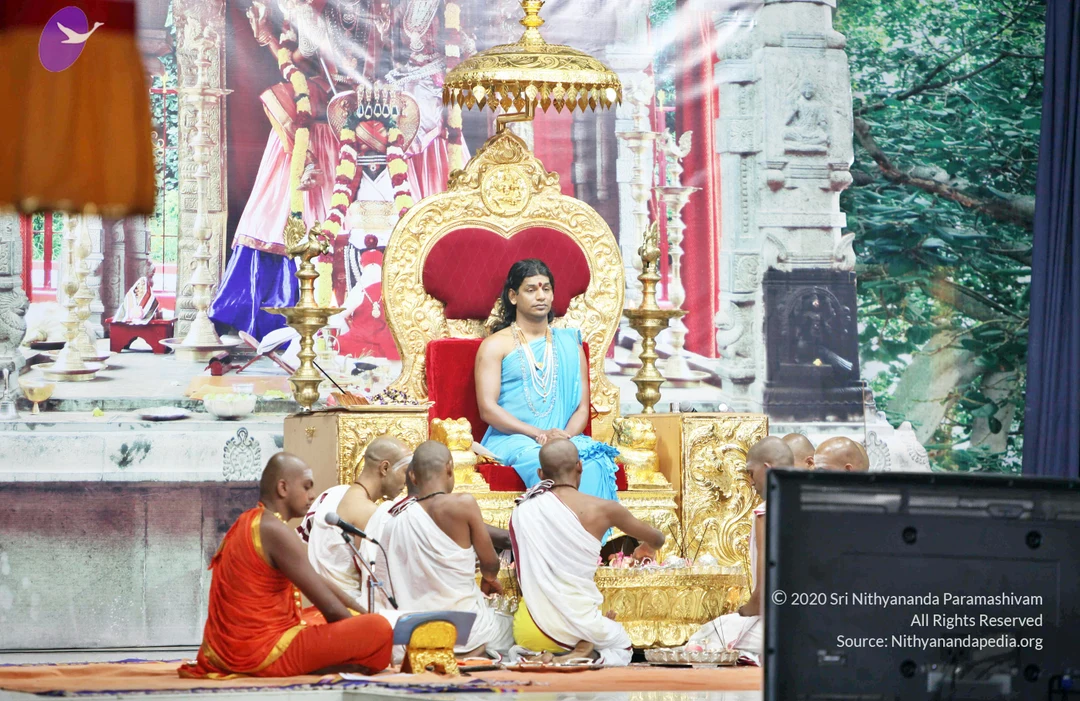
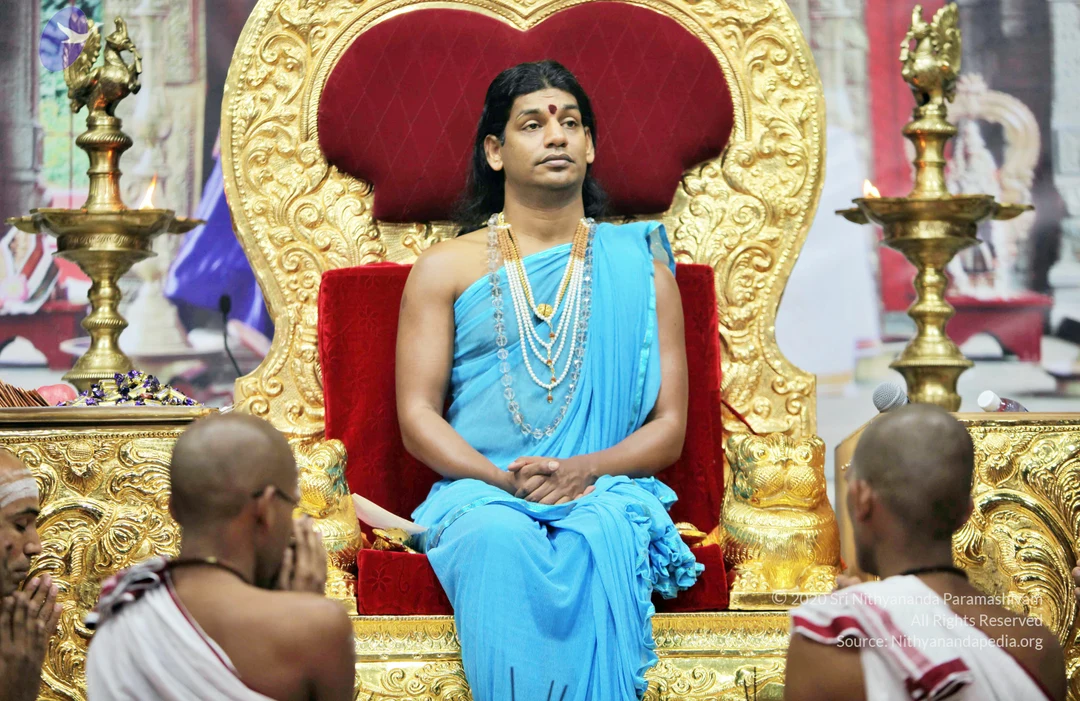
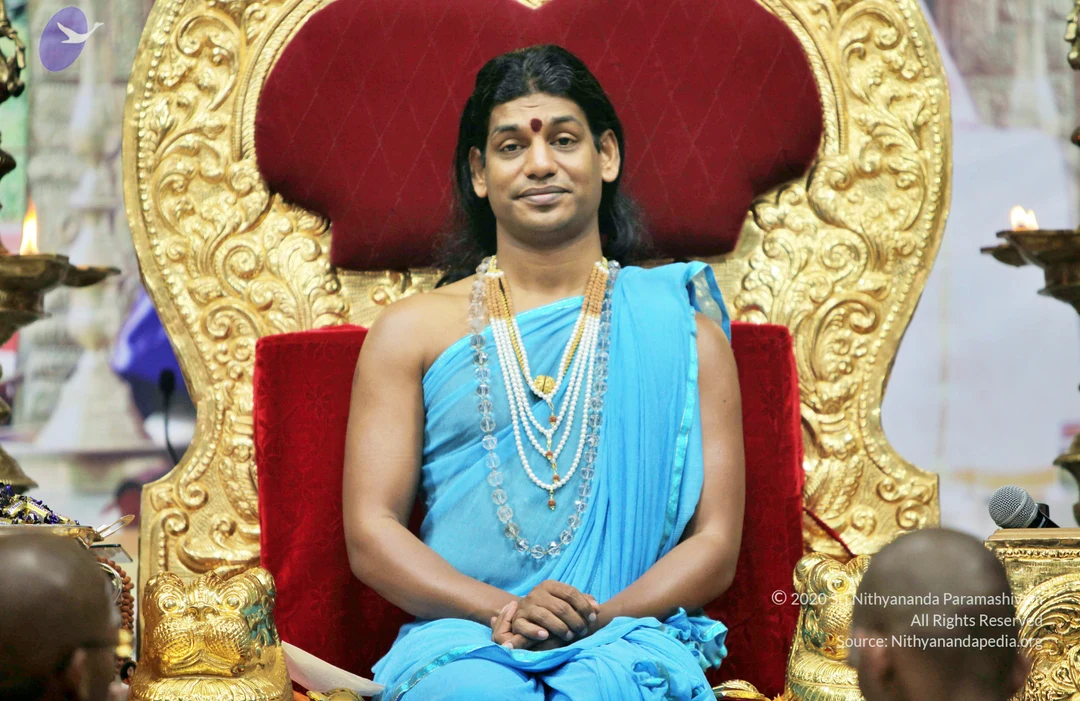
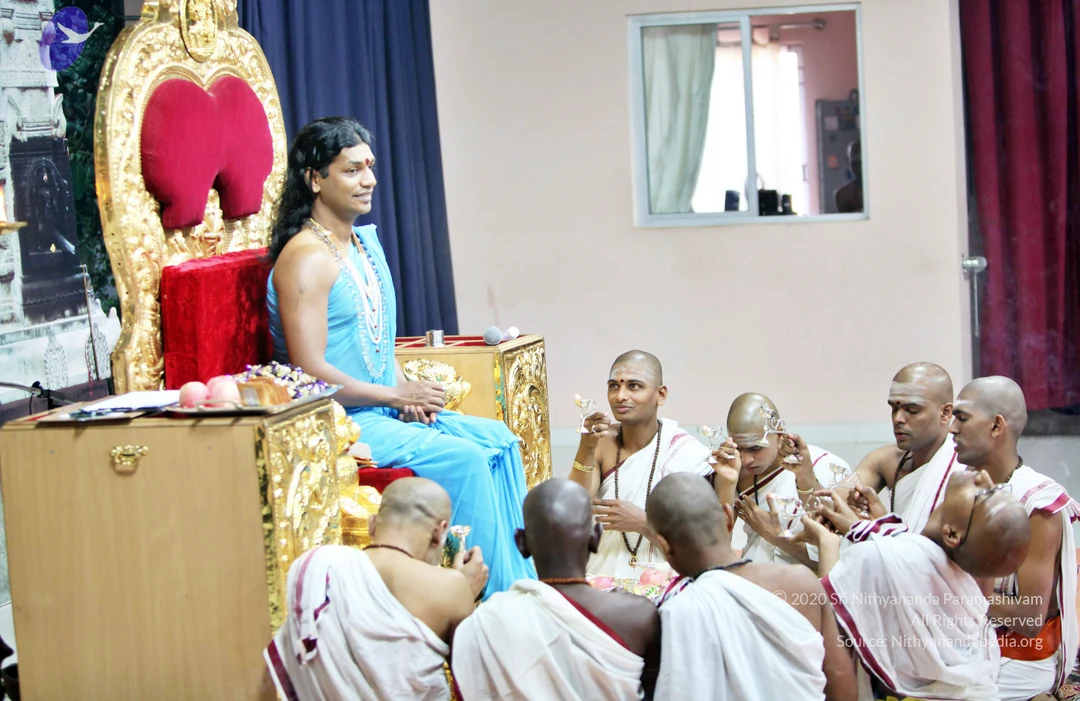
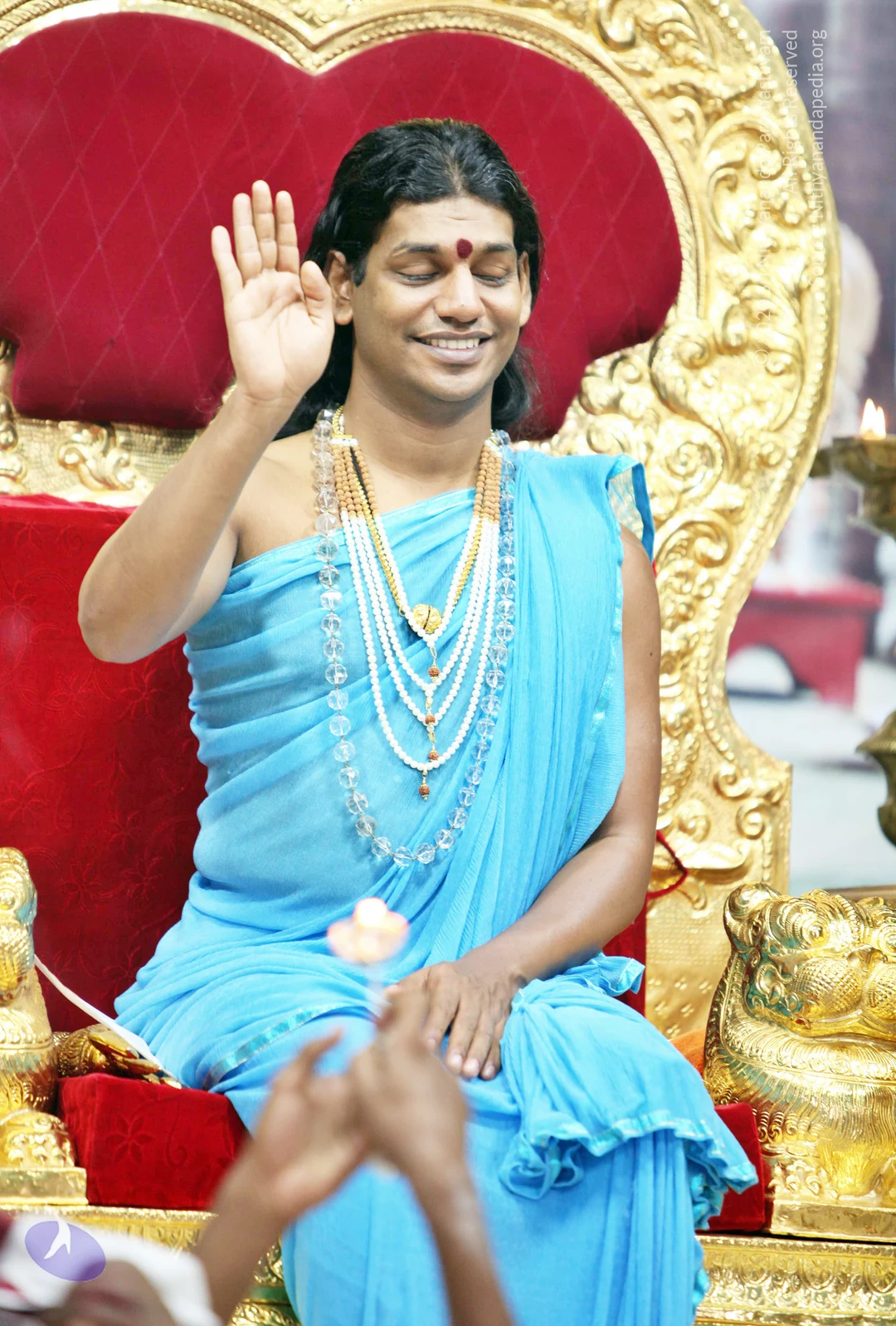
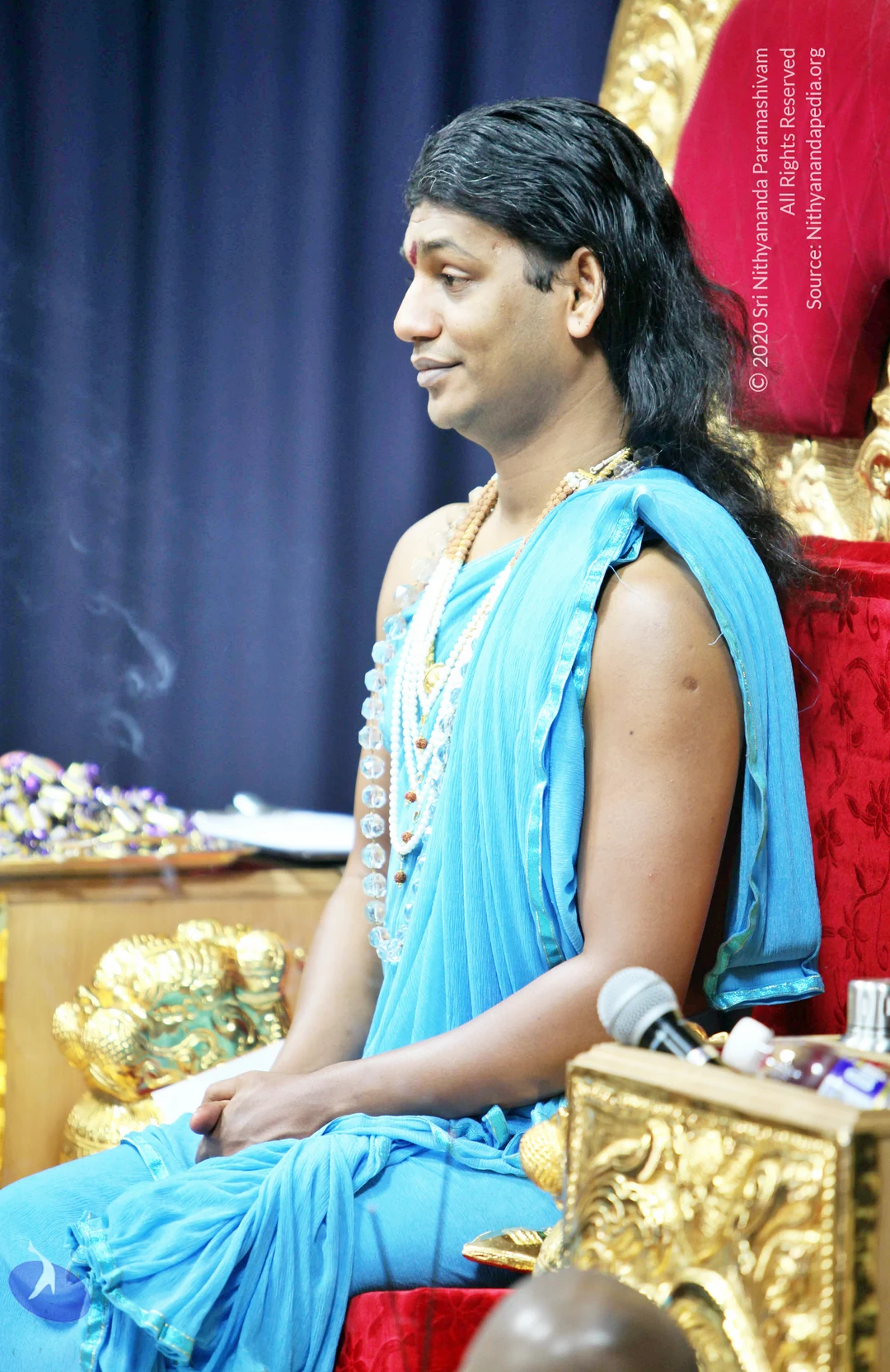
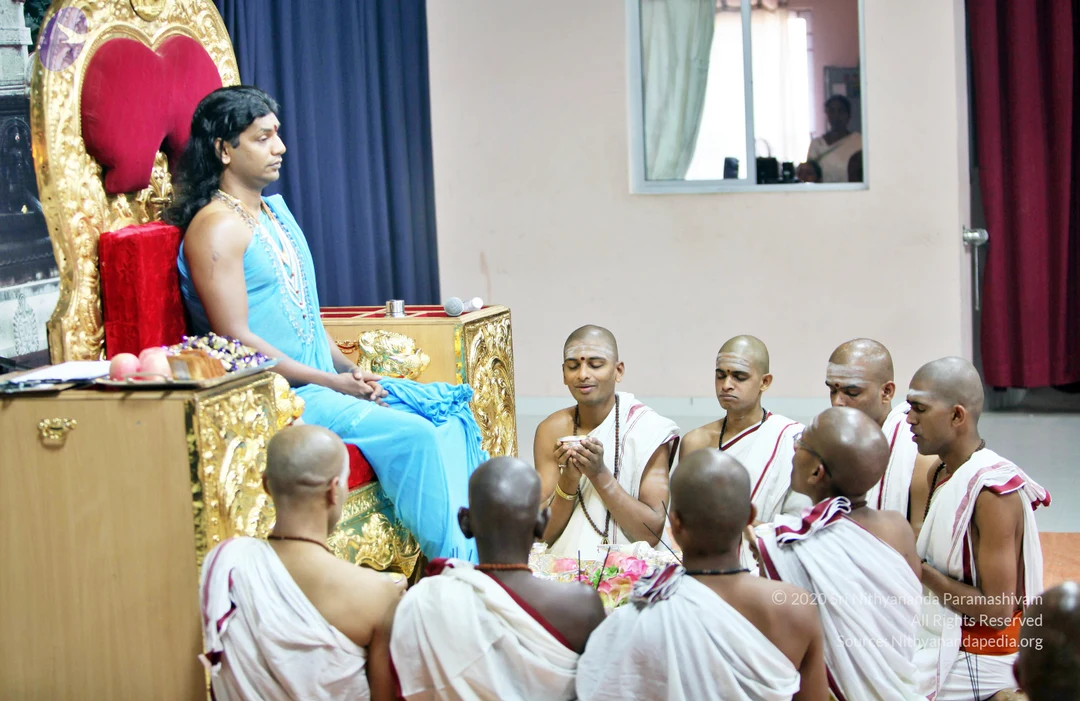
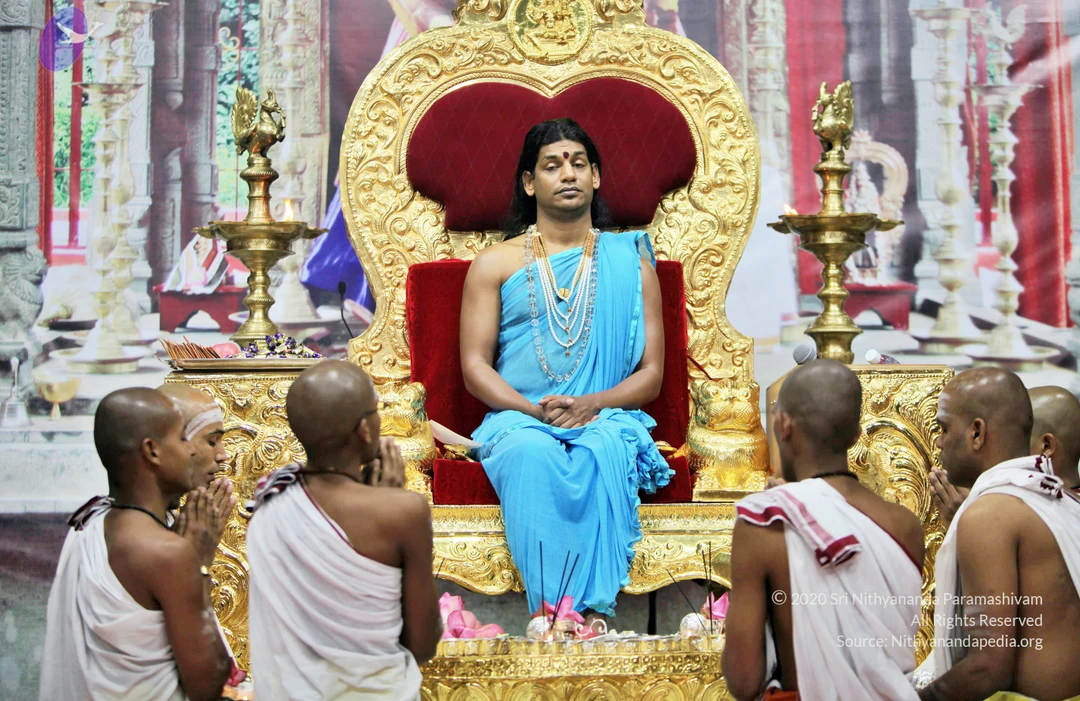
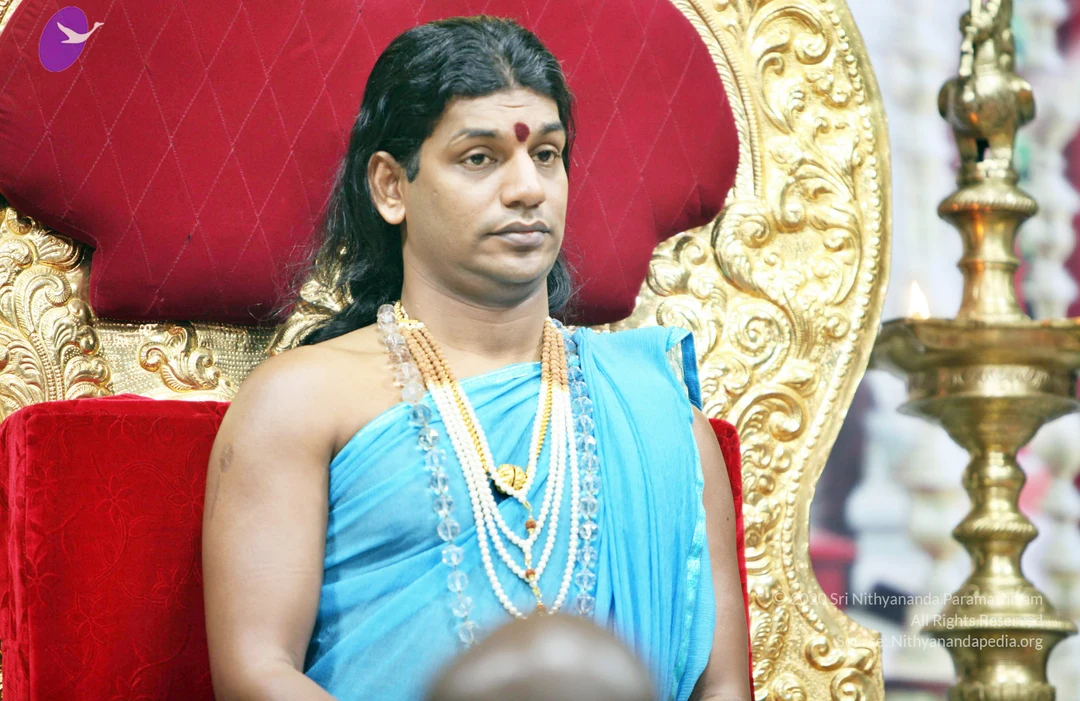
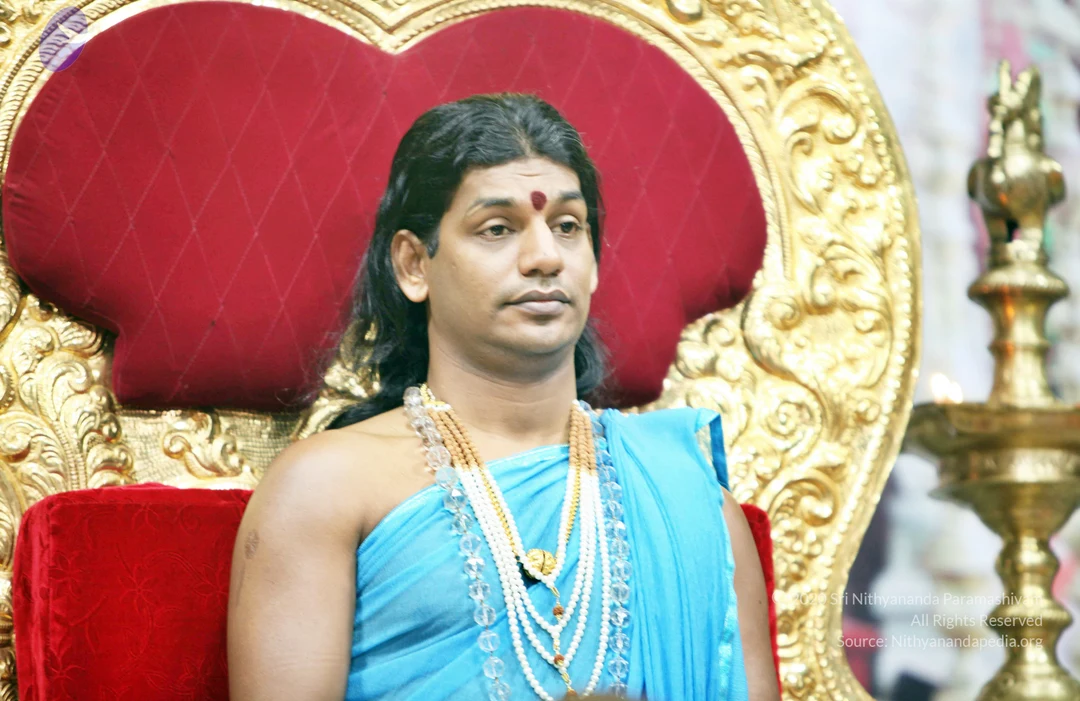
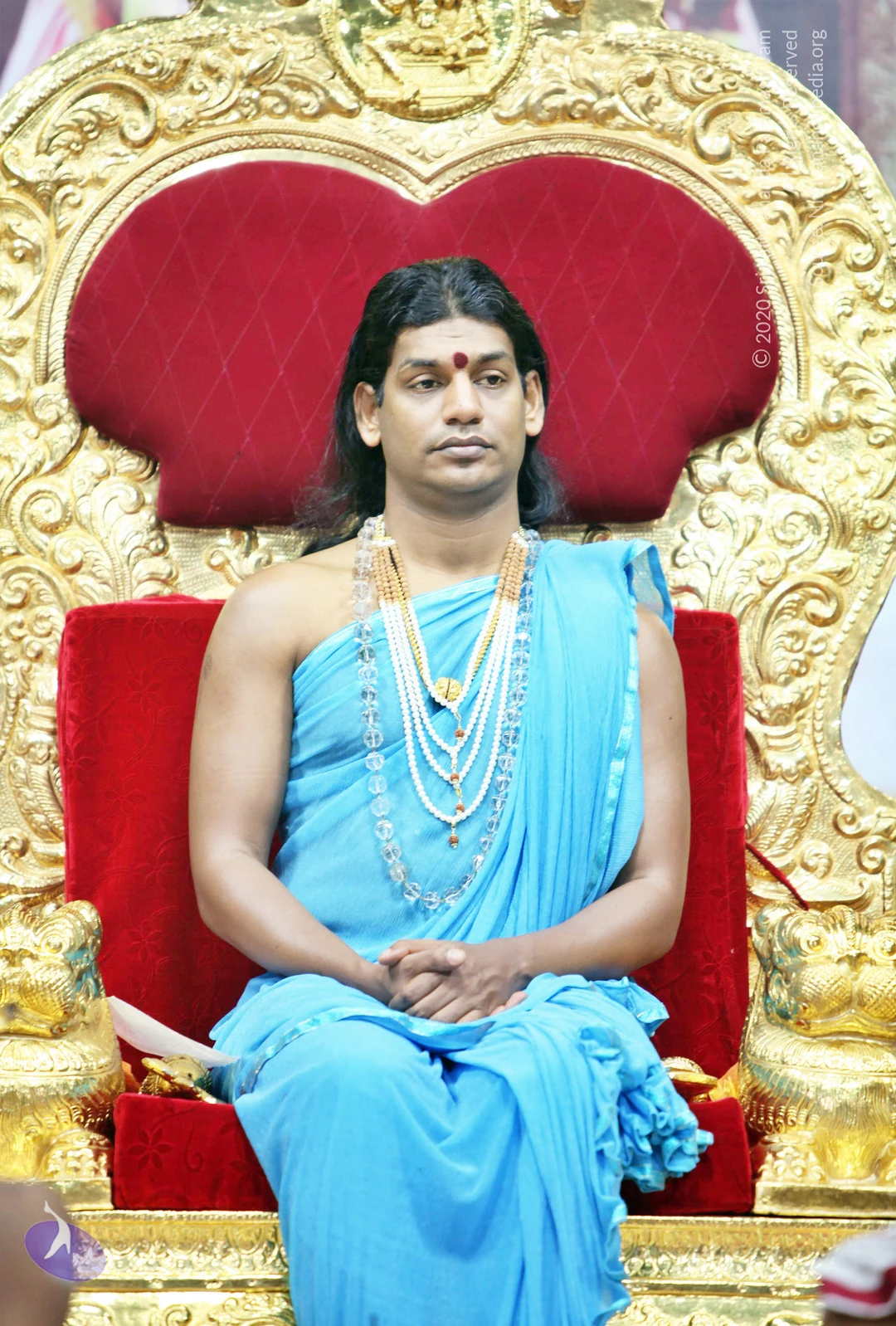
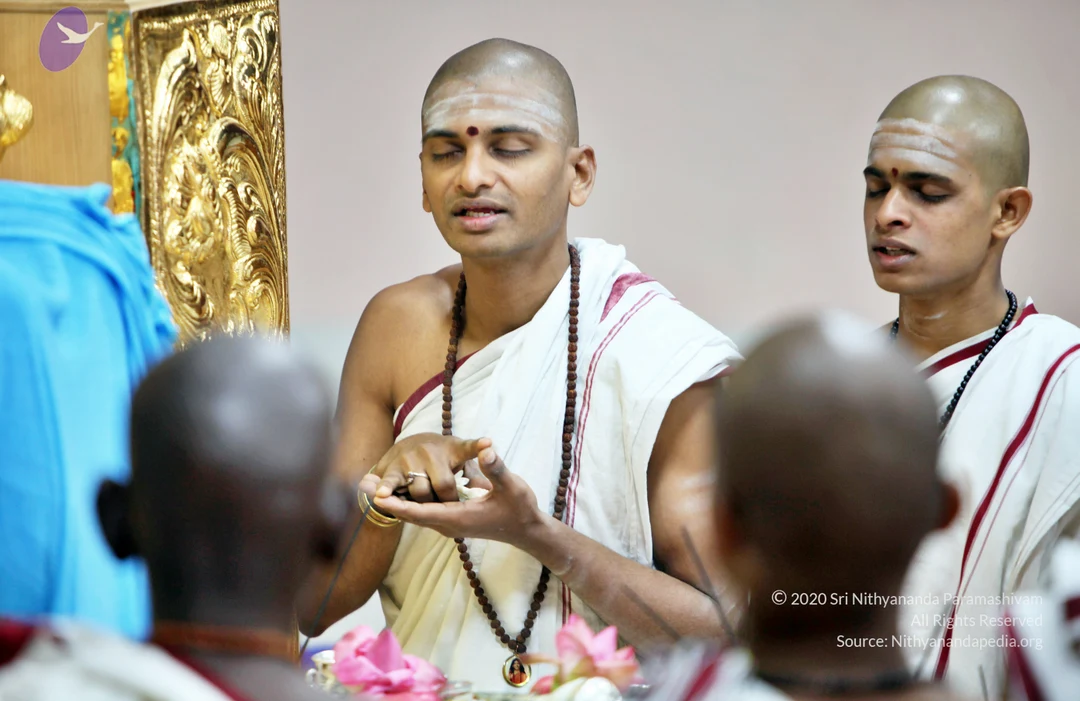
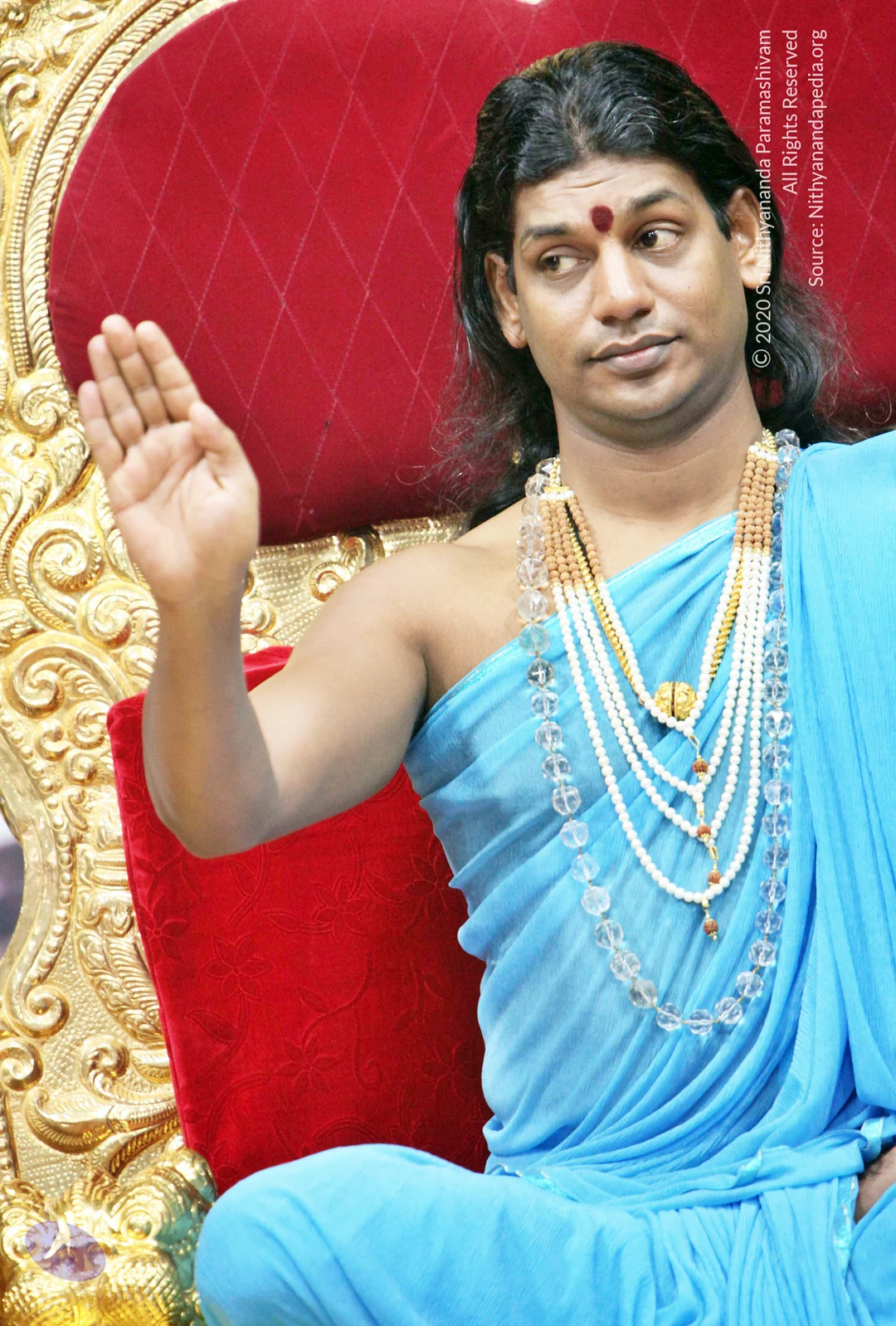
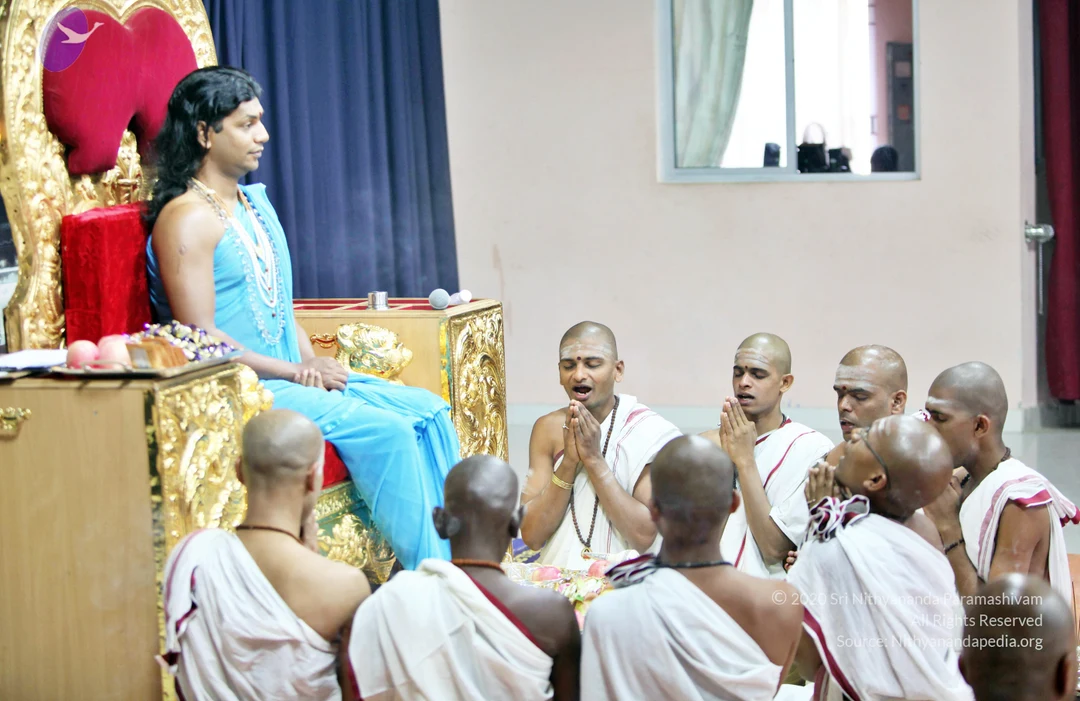
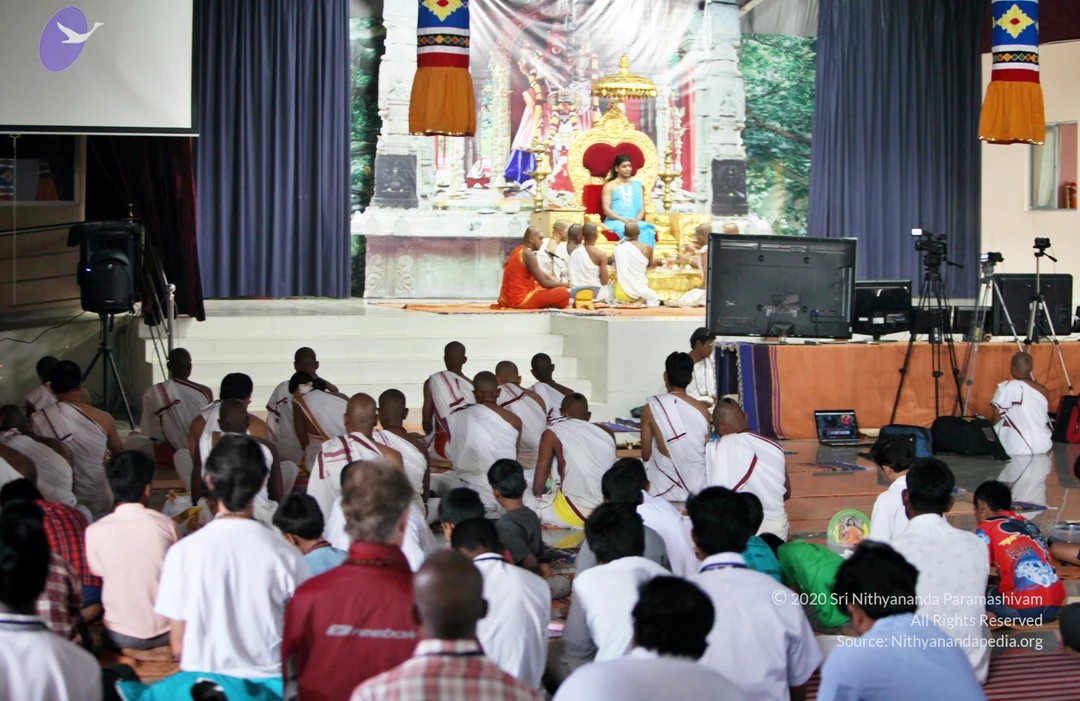
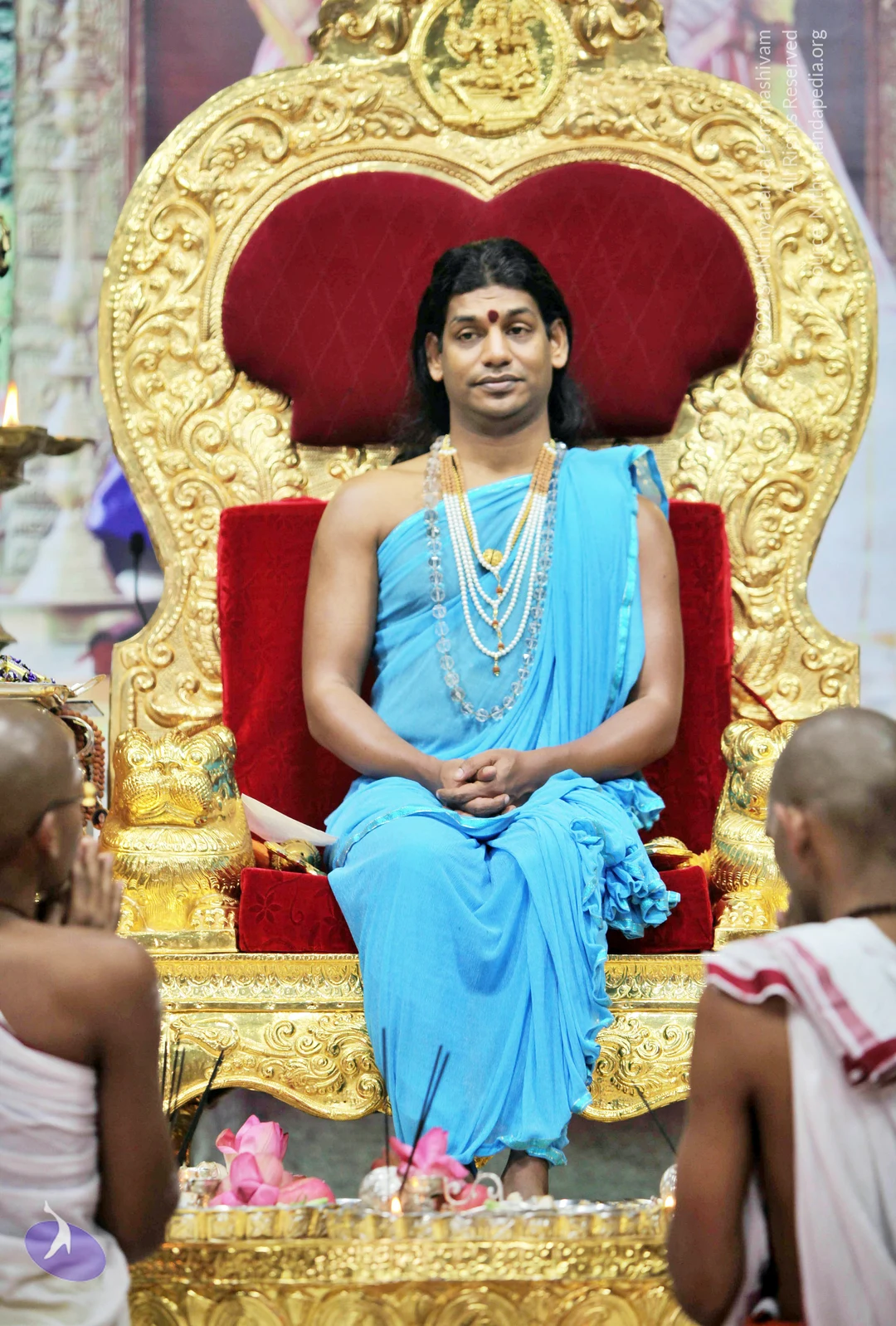
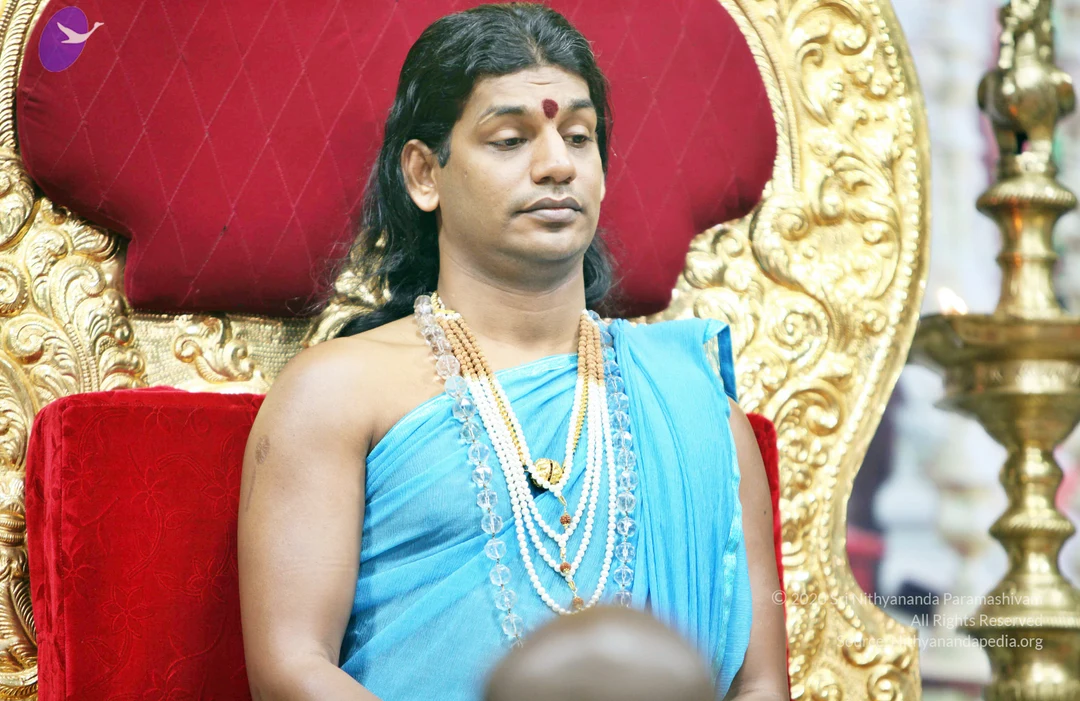
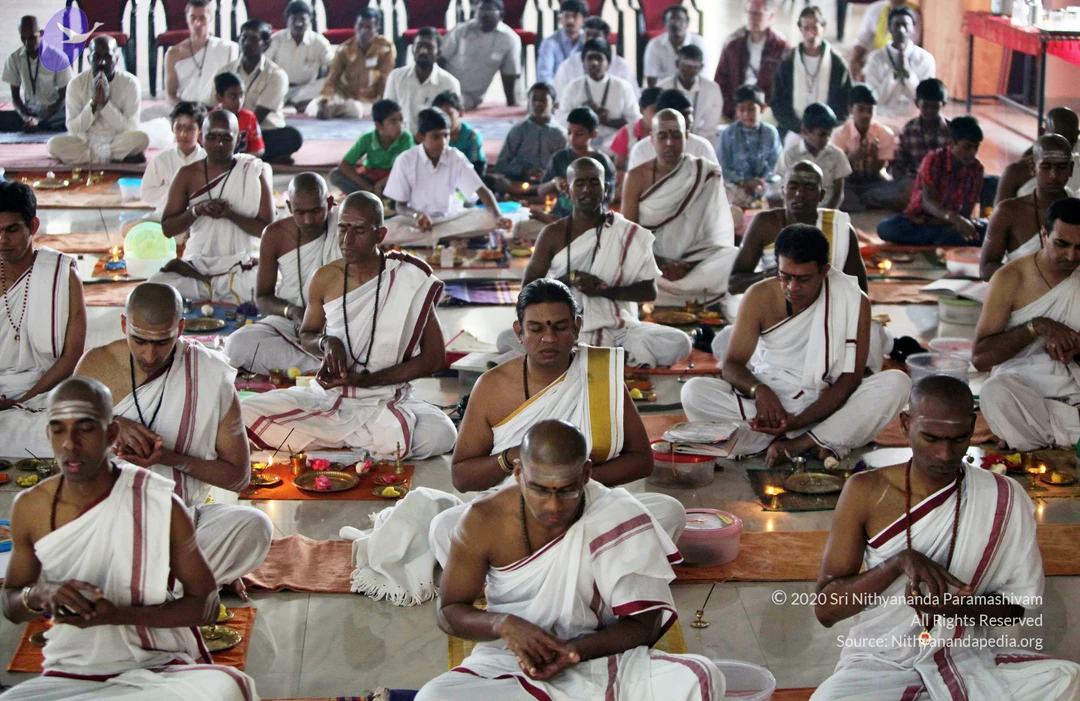
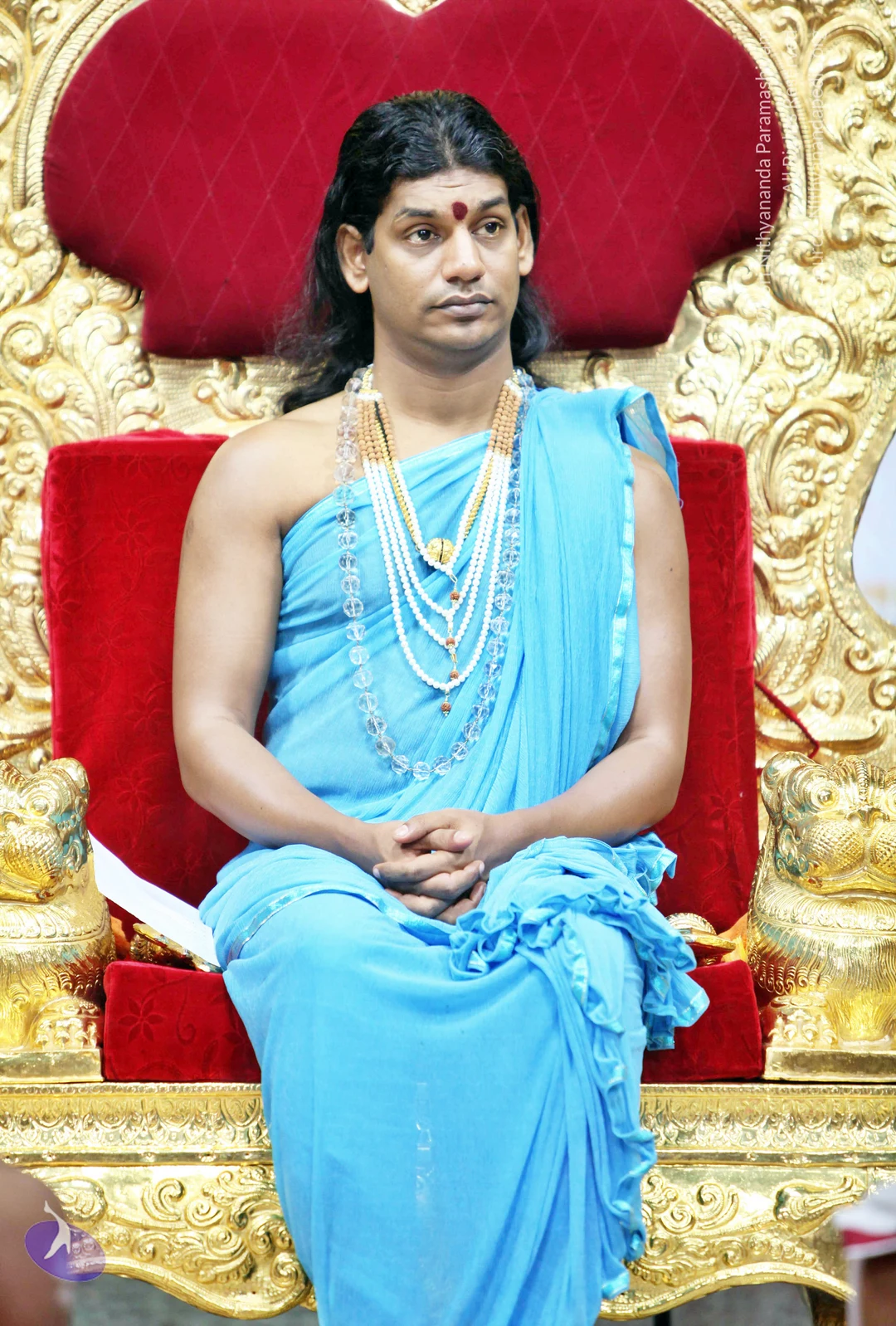
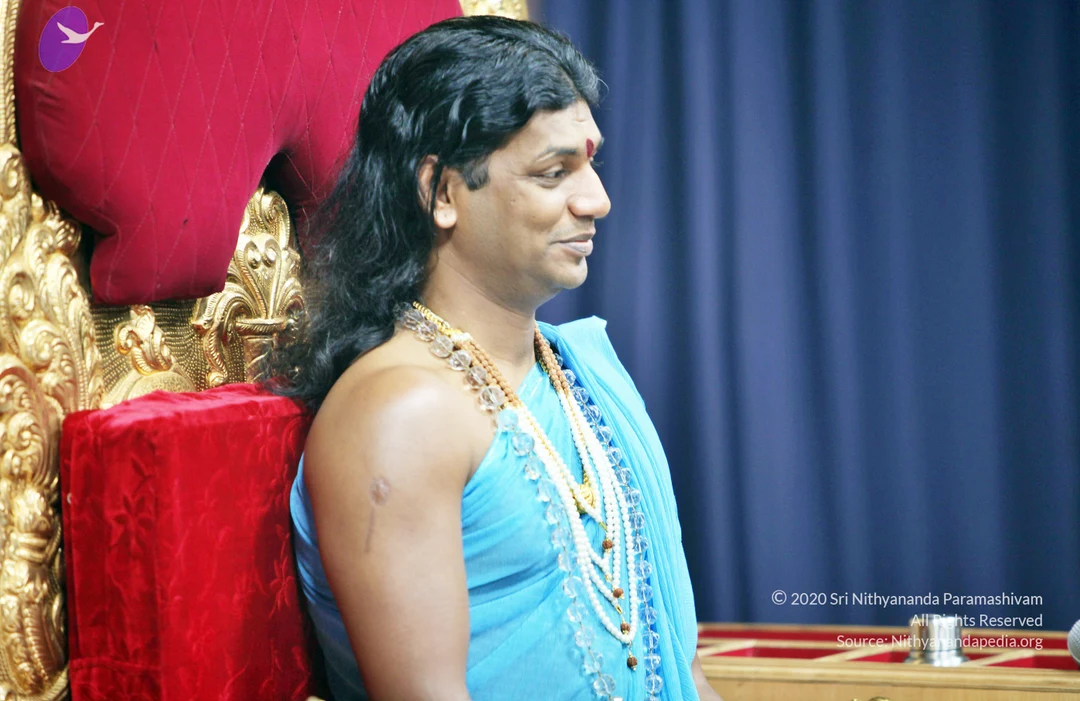
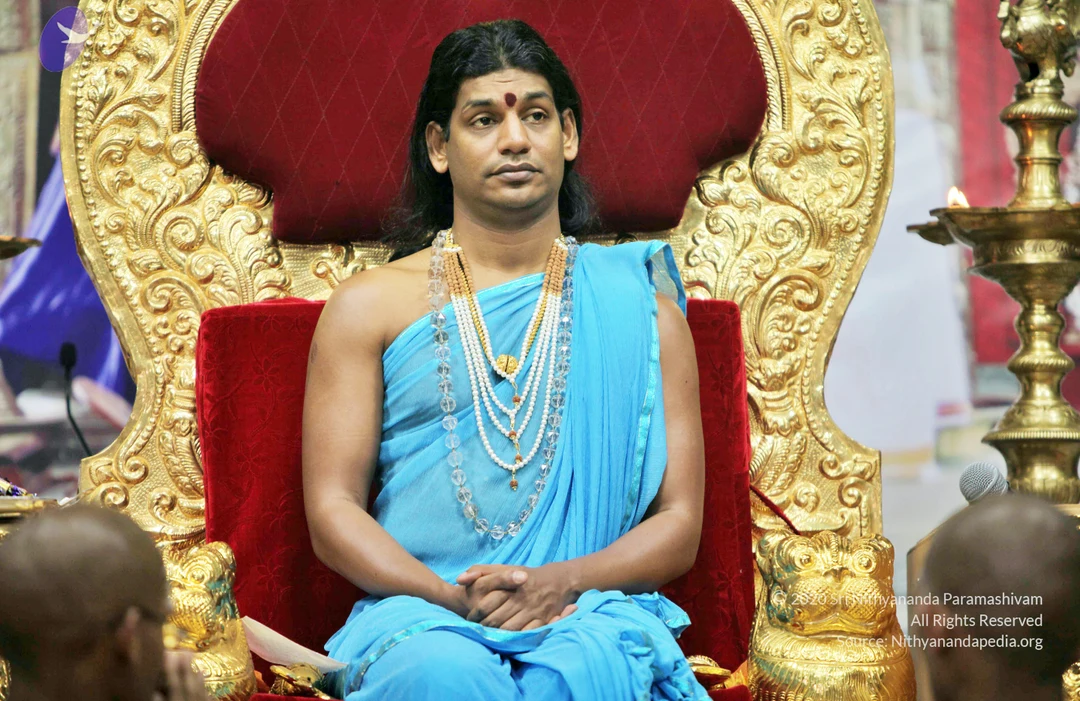
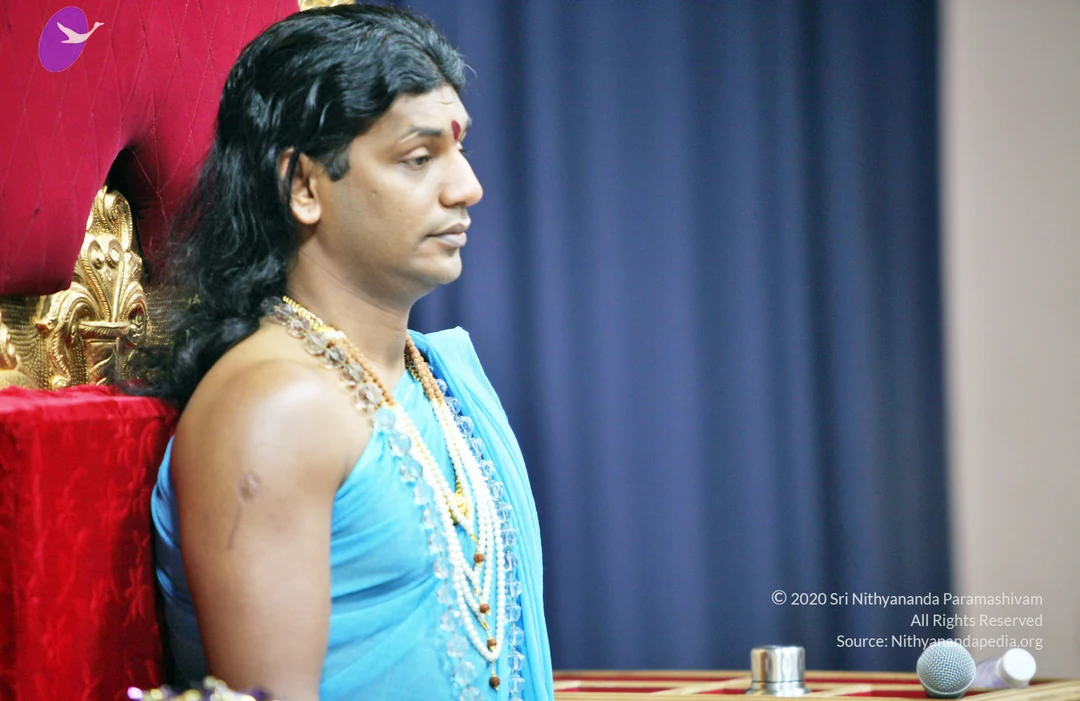
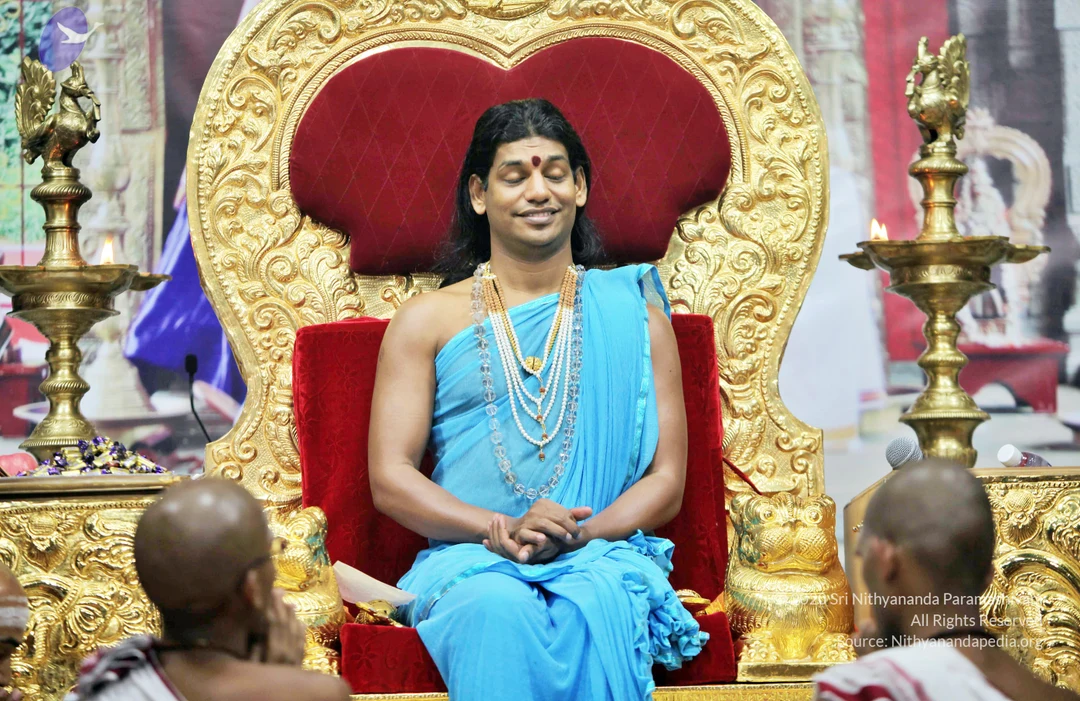
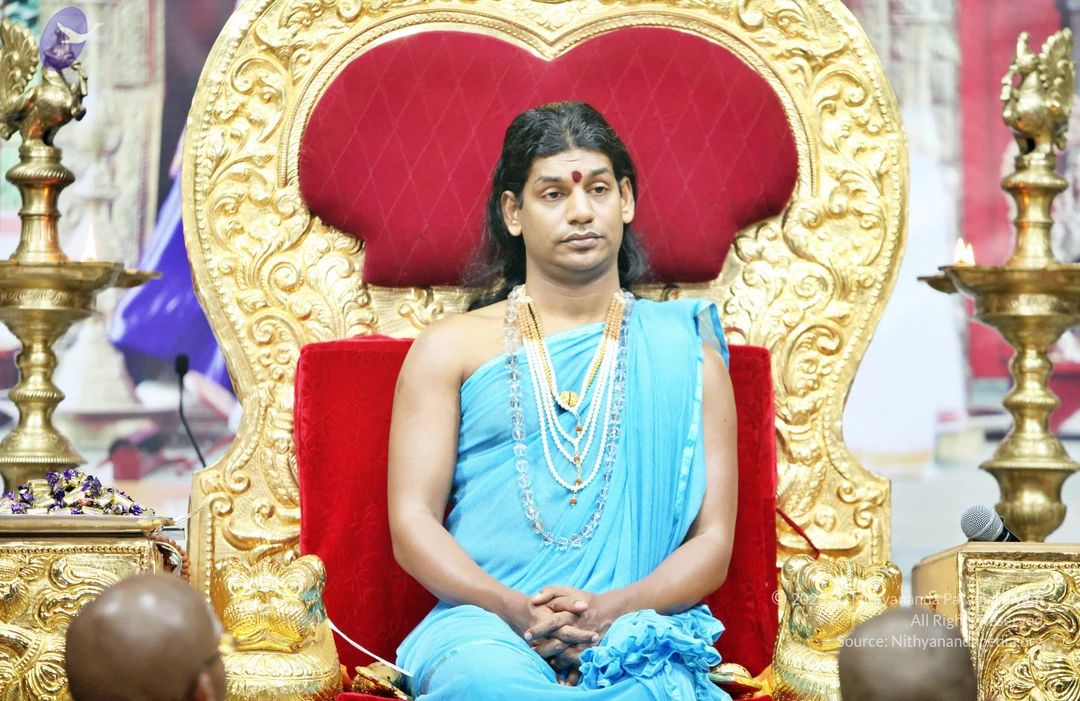
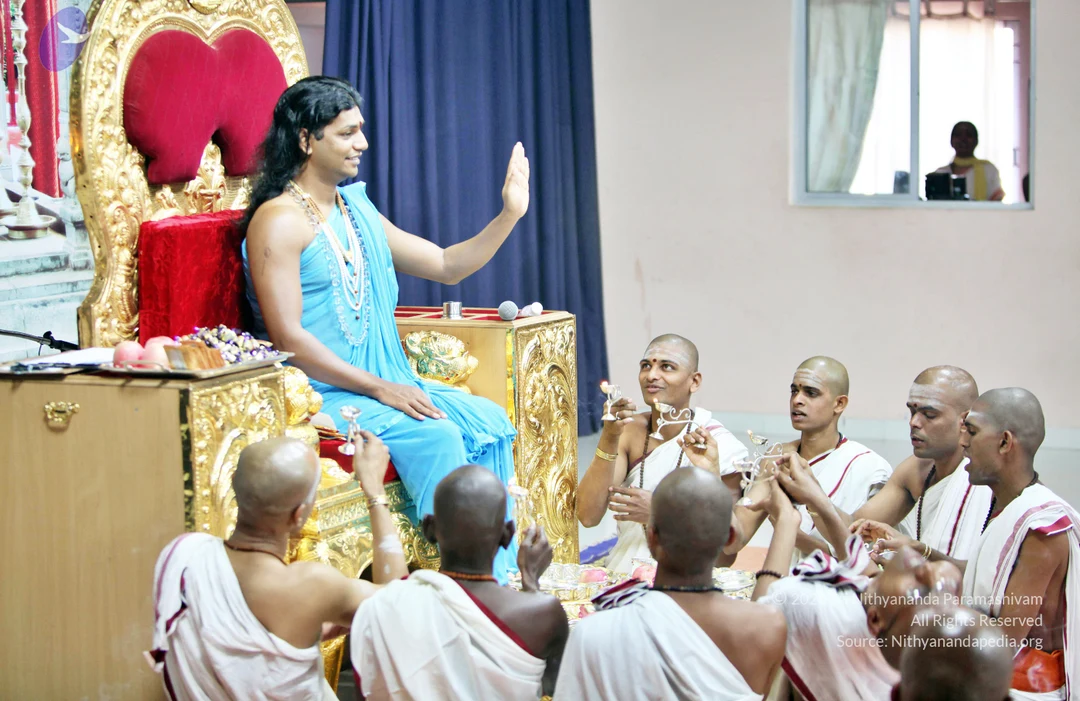
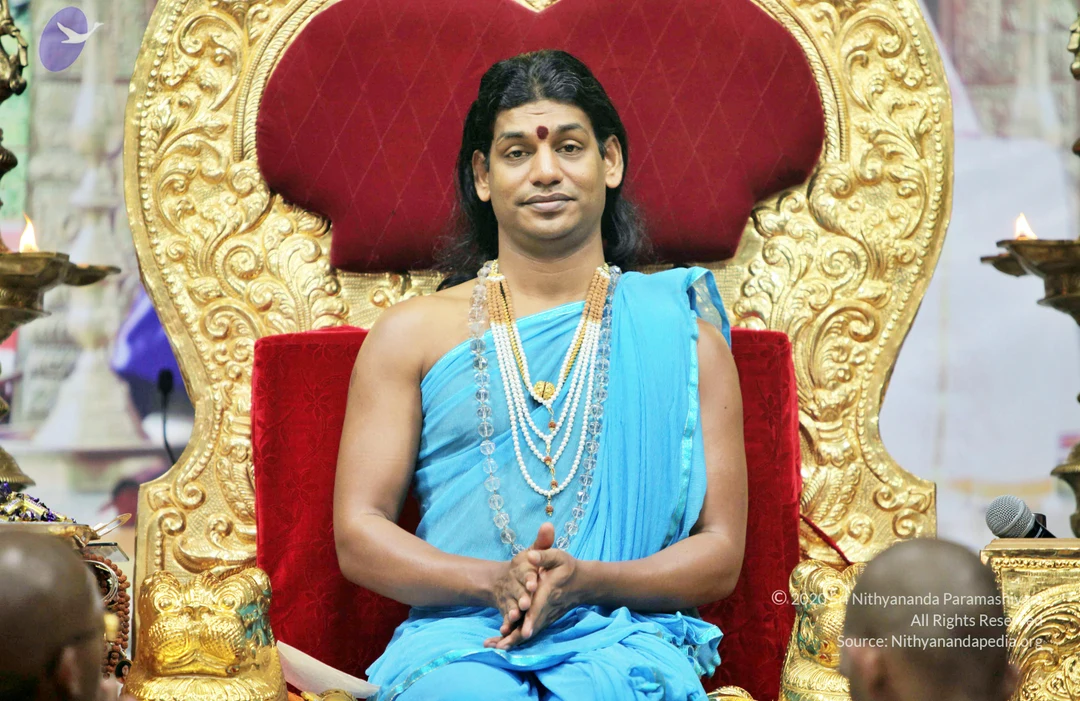
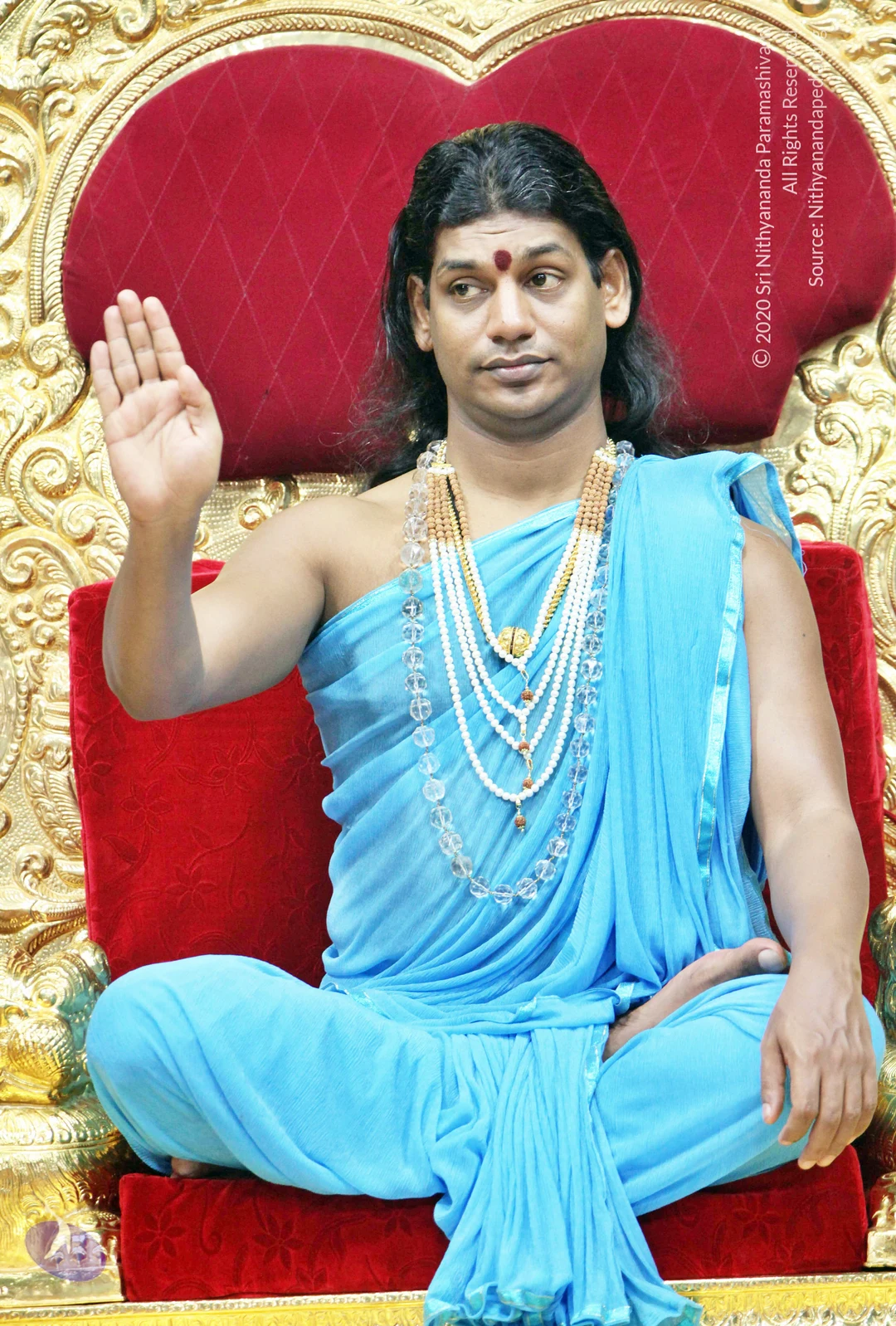
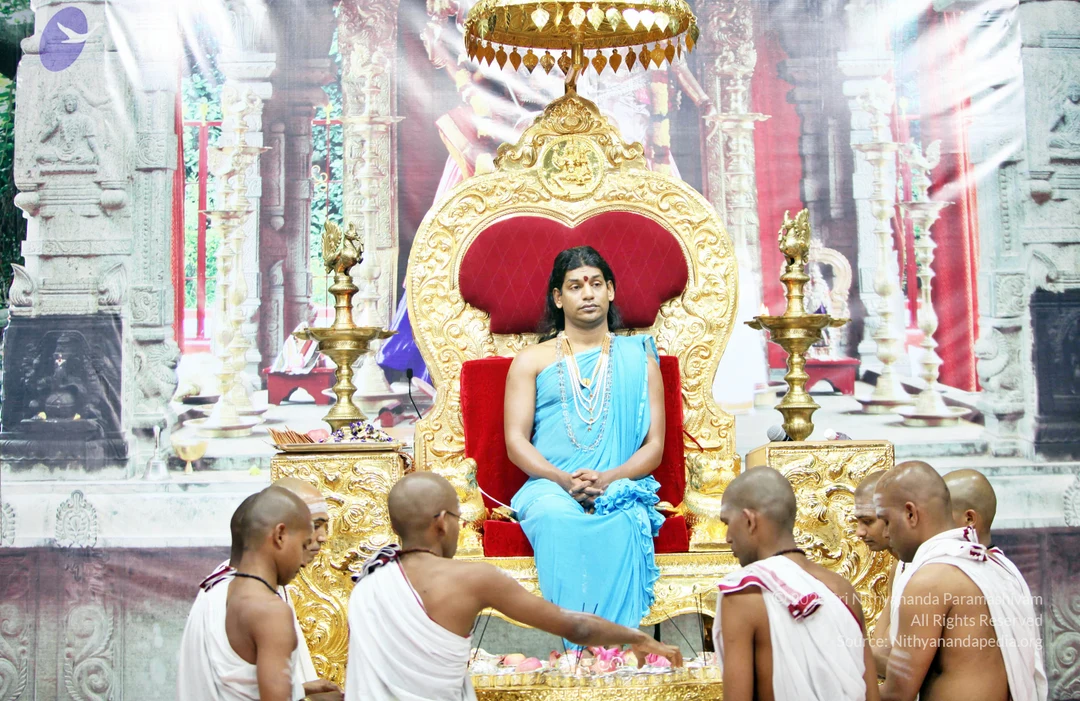
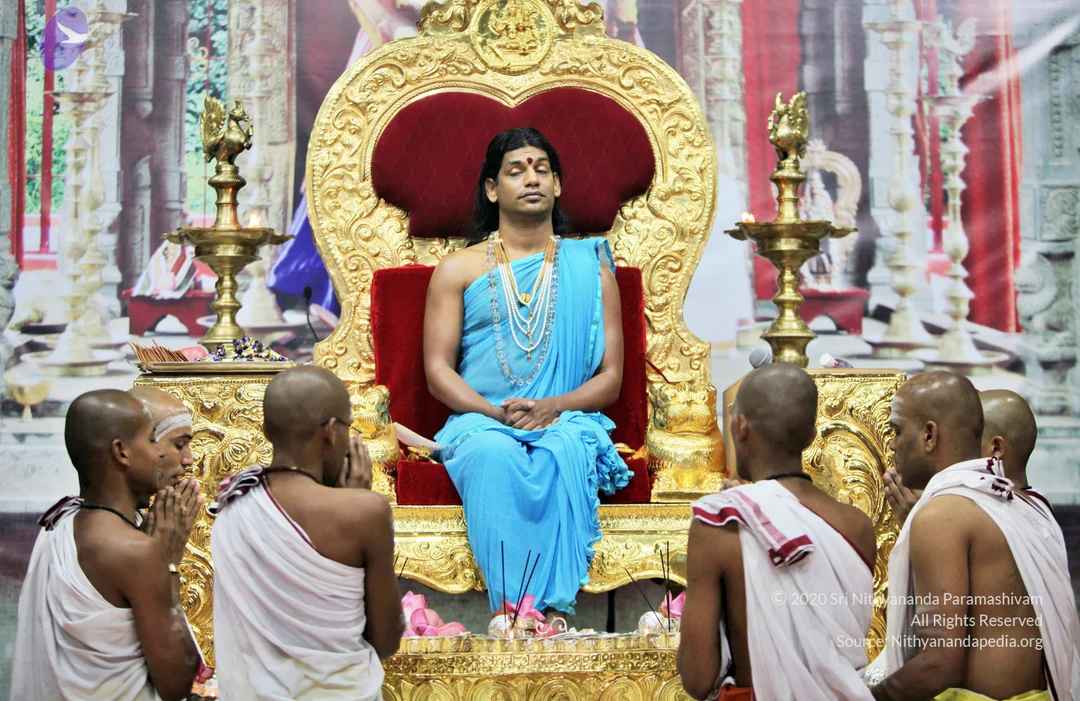
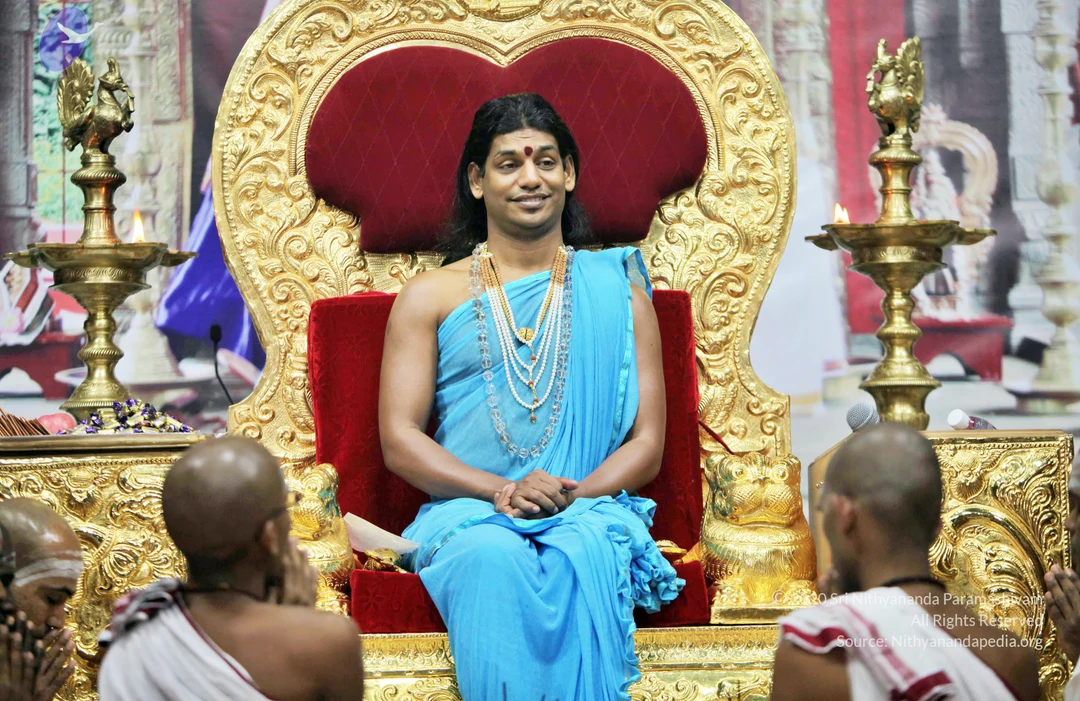
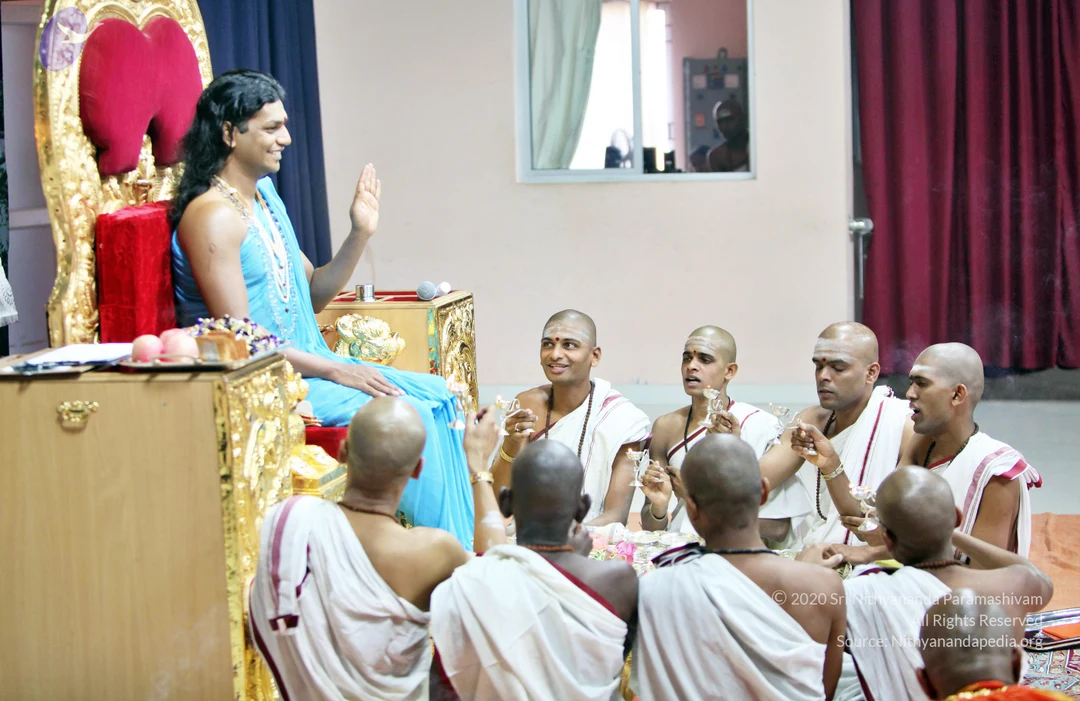
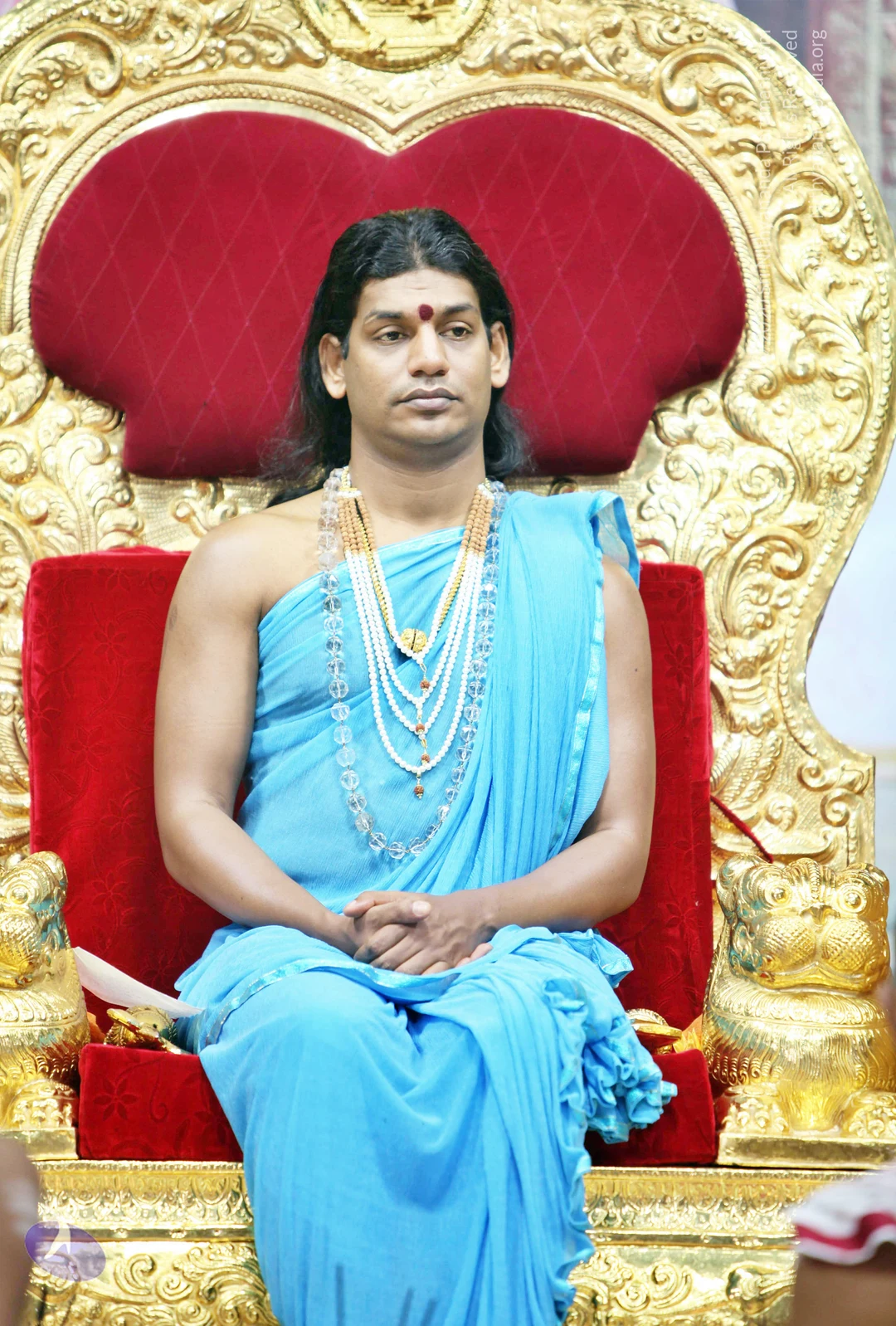
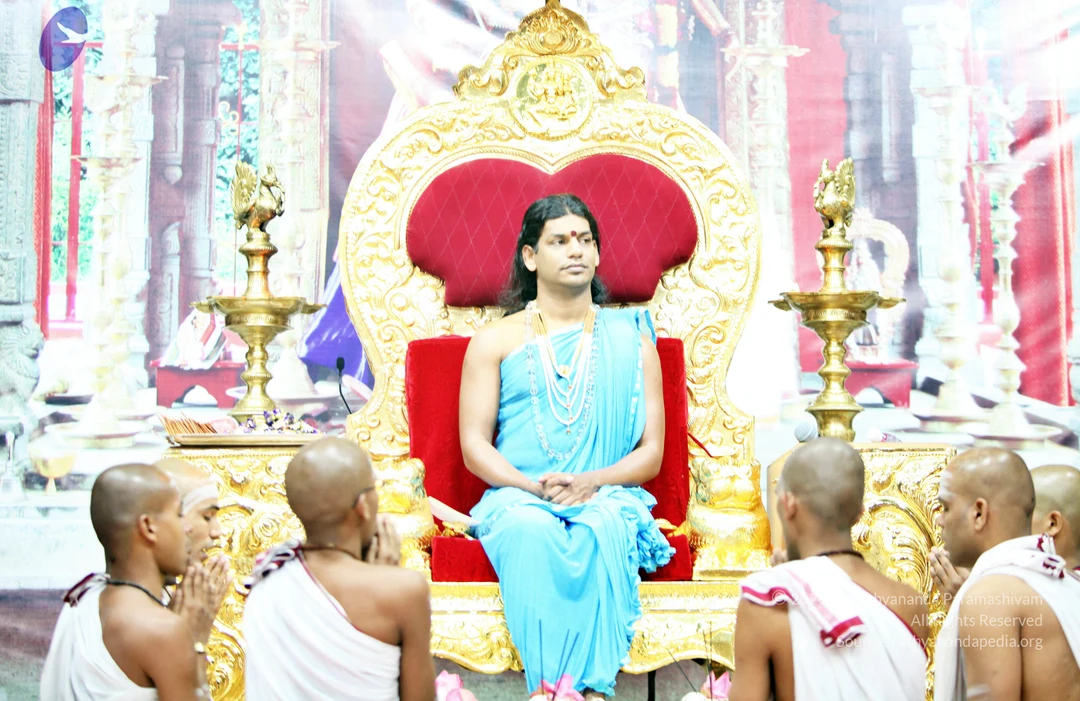
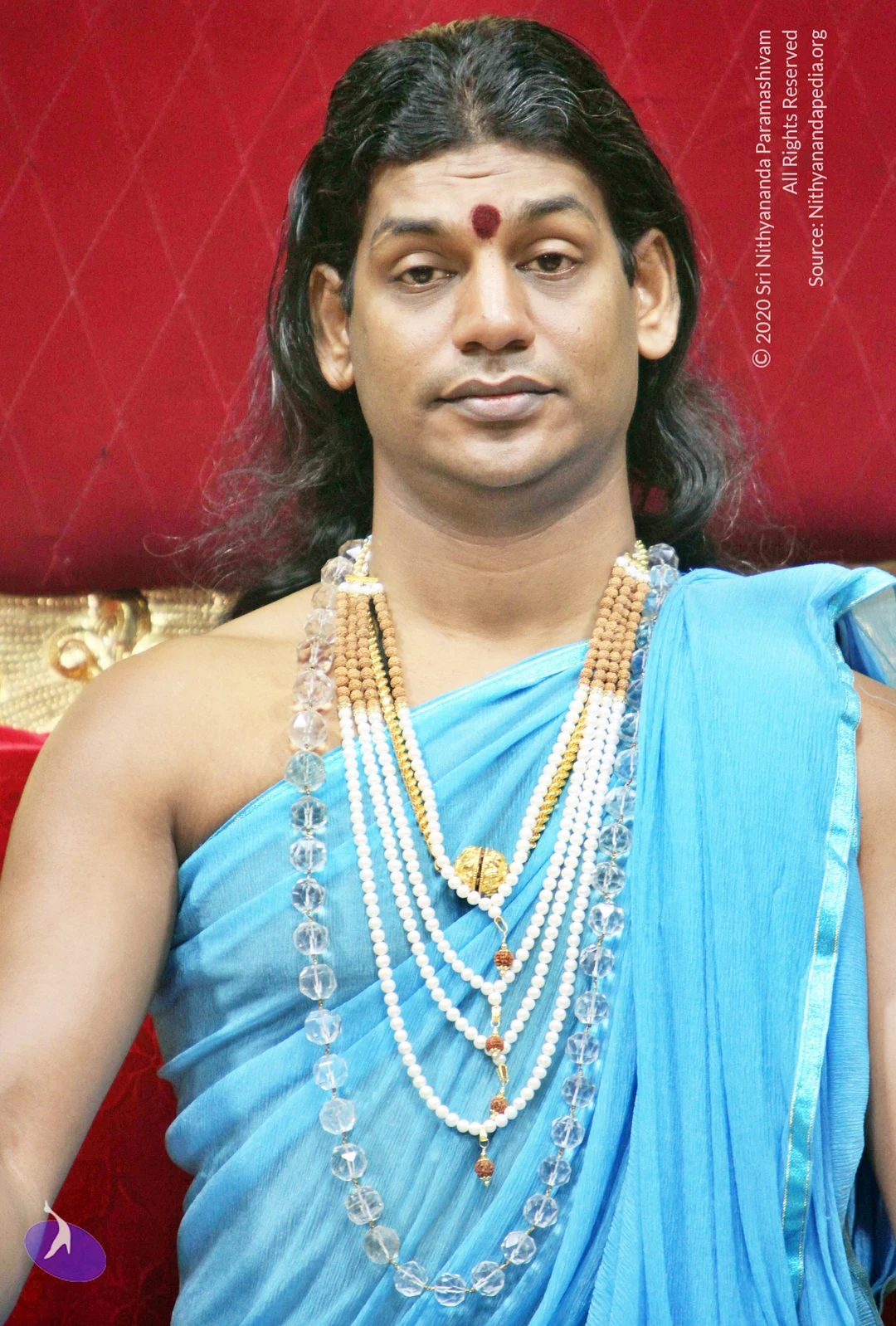
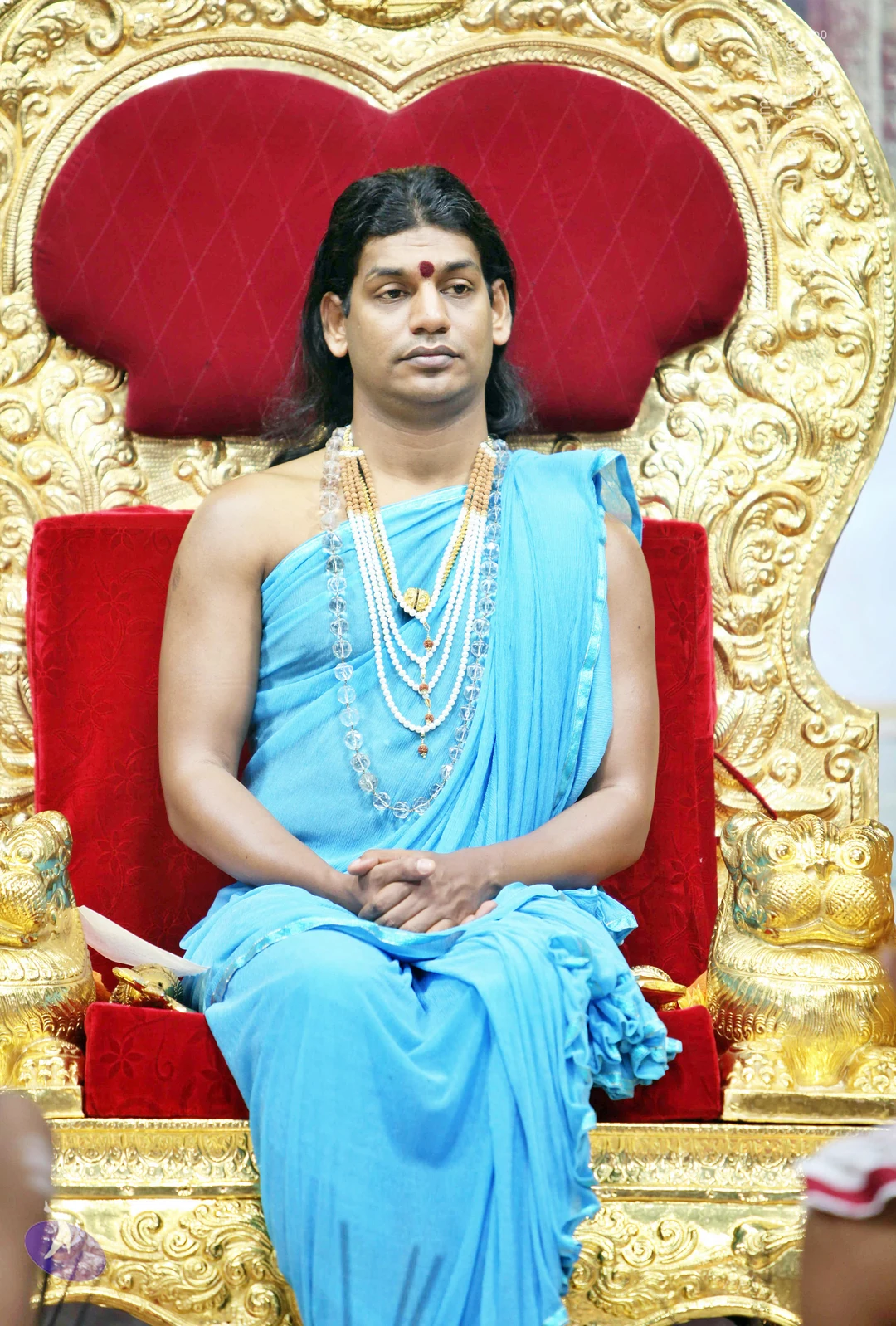
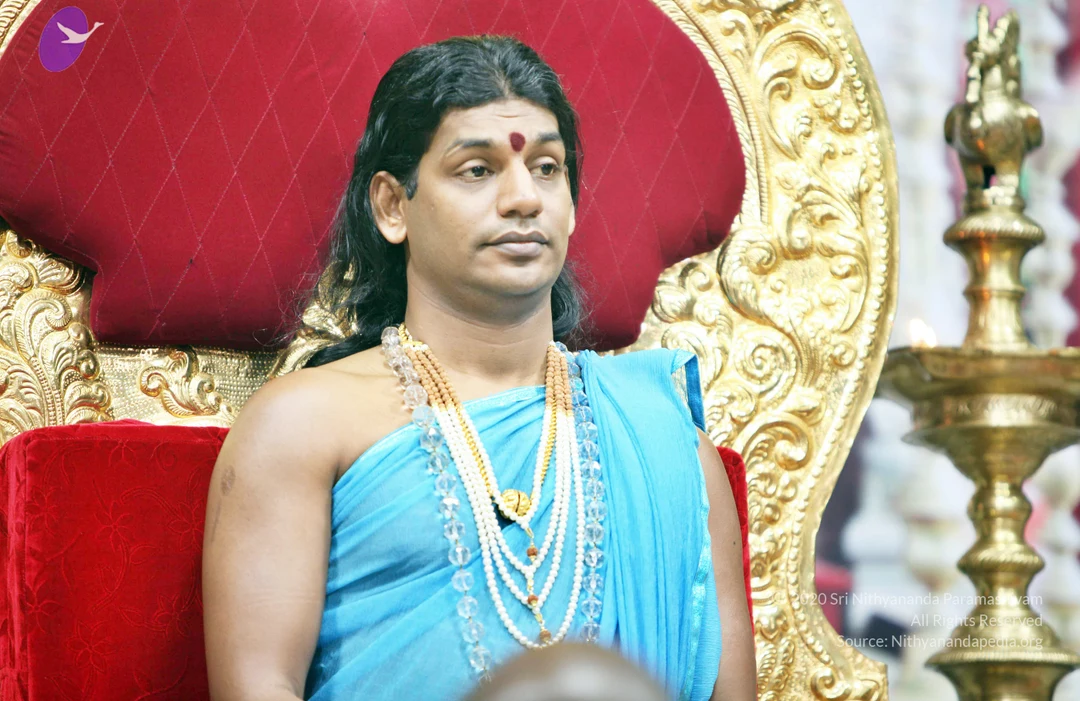
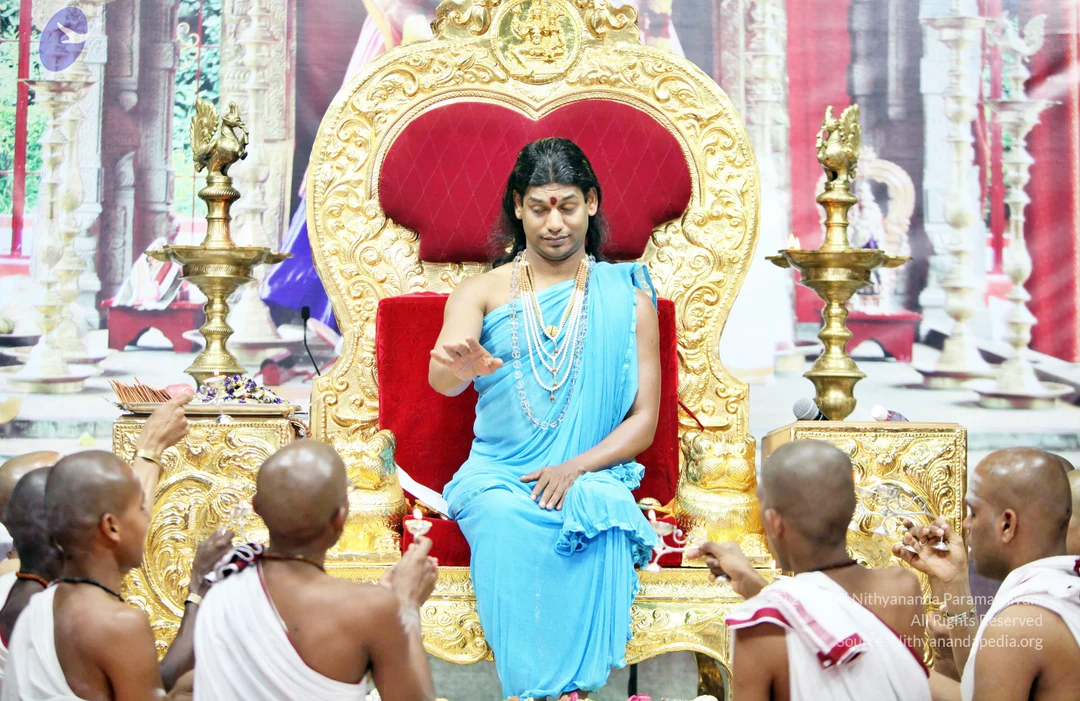
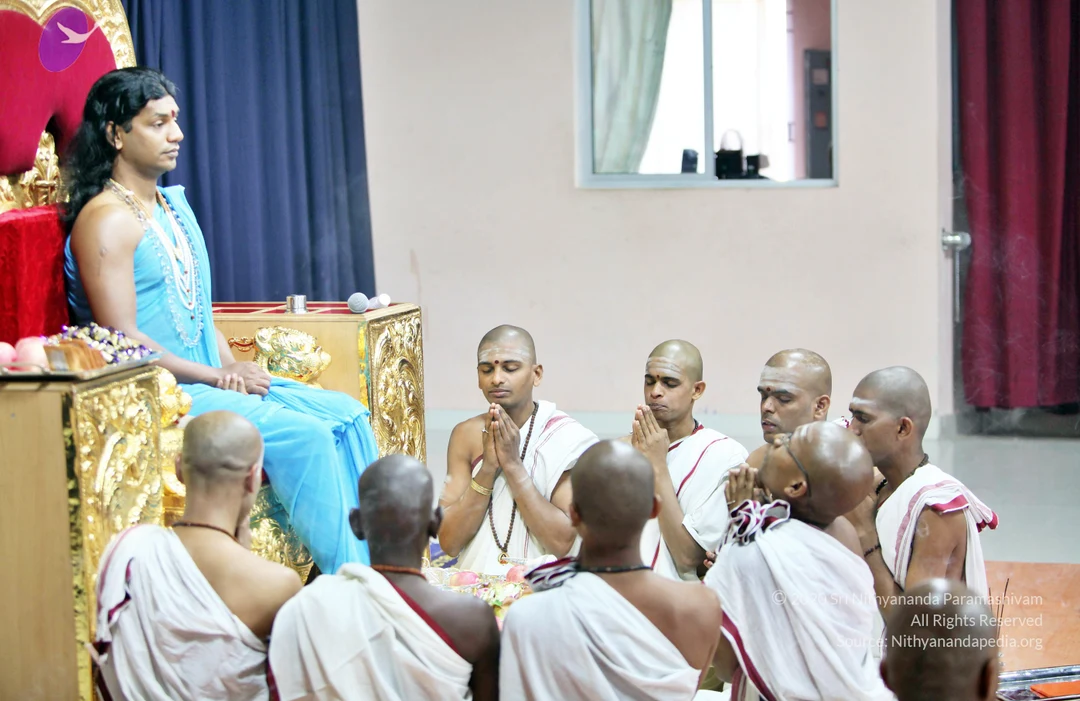
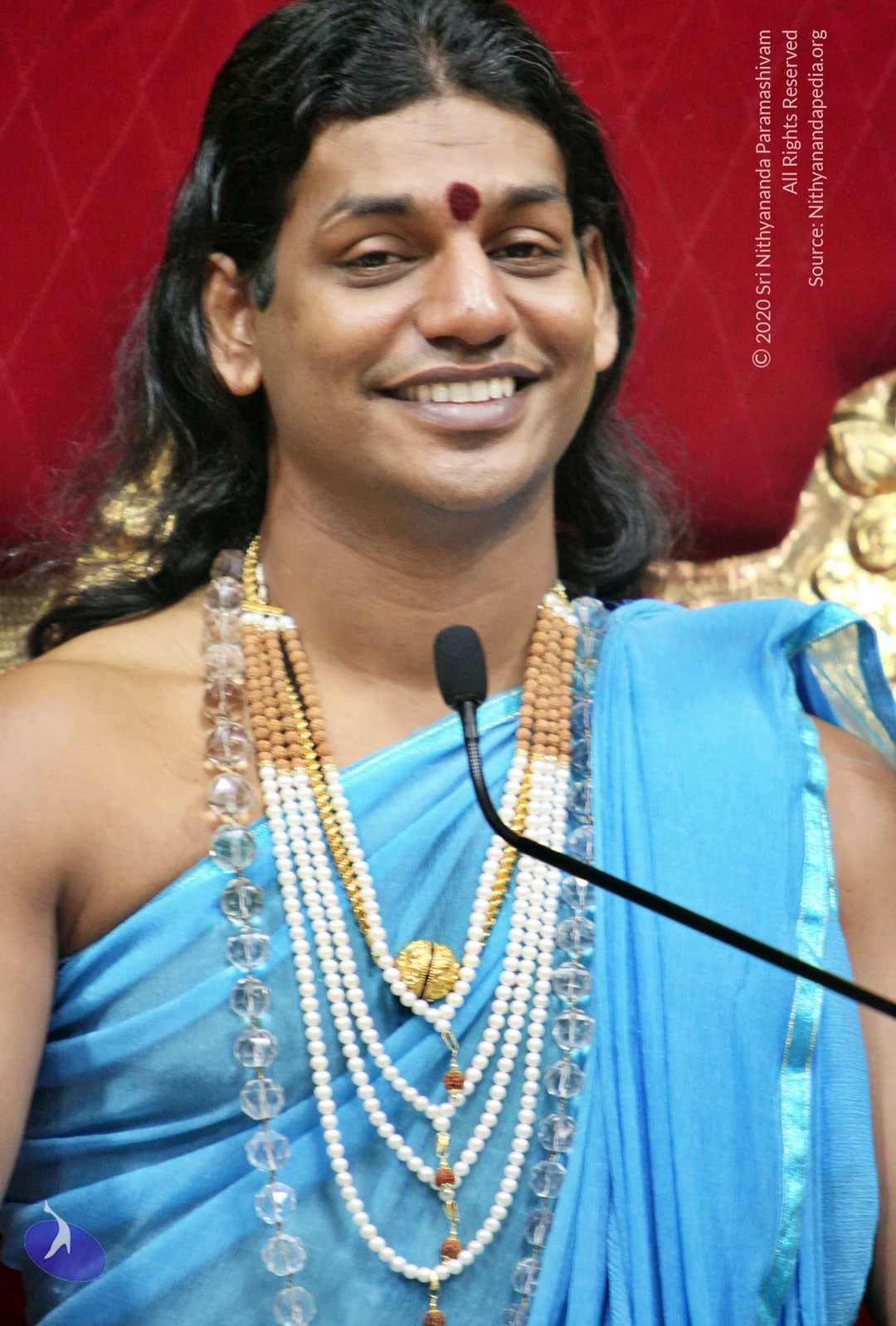
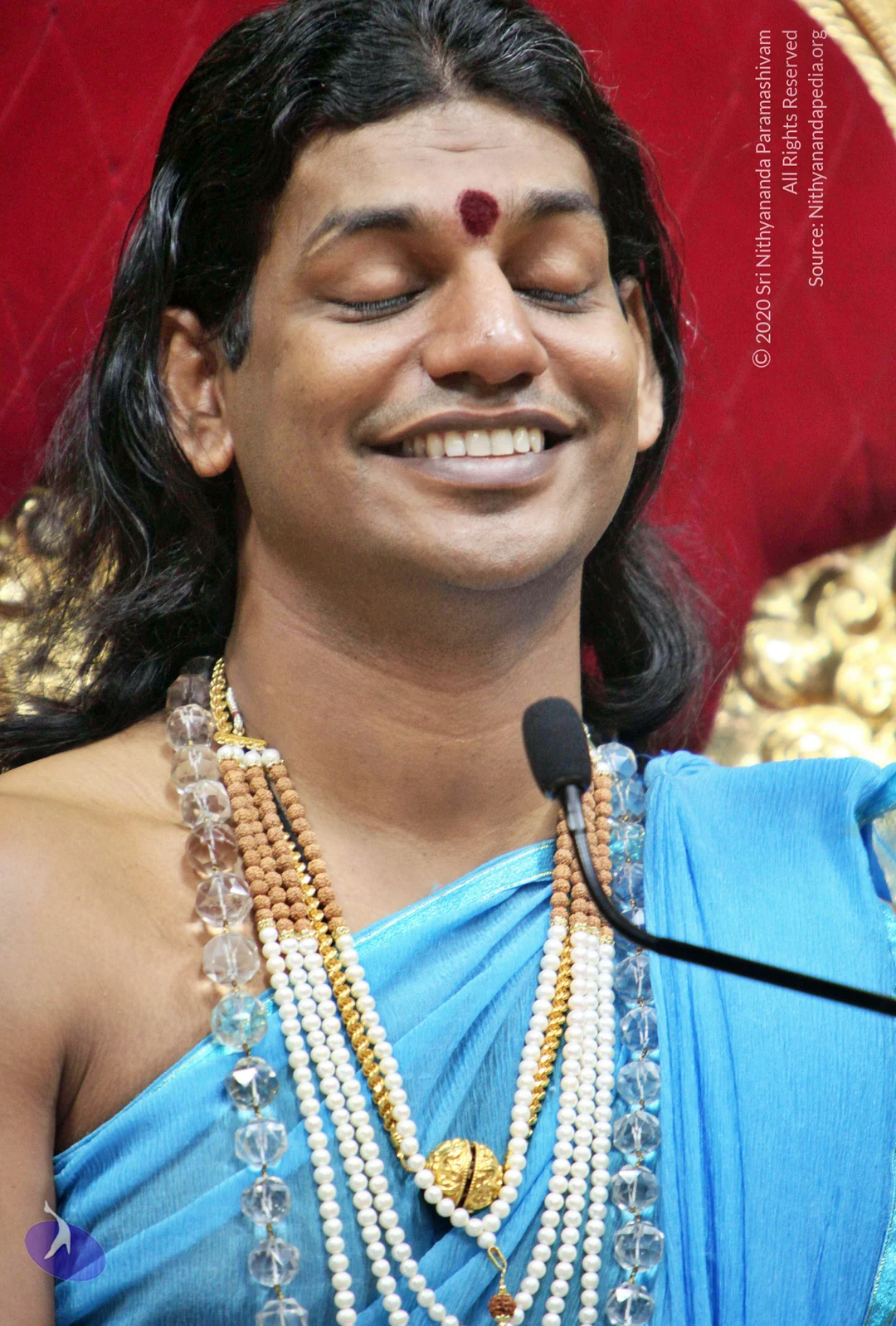
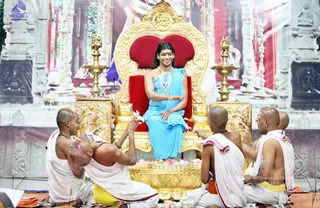
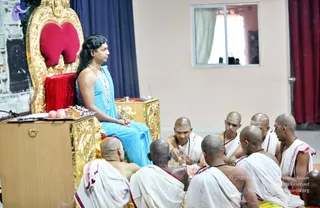
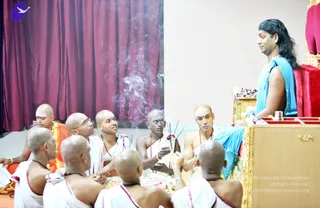
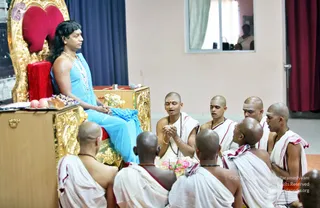
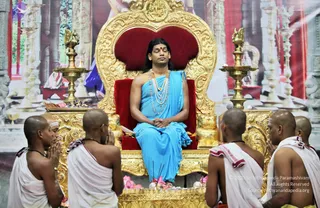
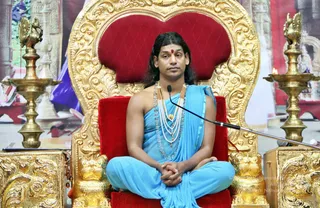
A seated figure in a light blue dhoti-style robe with a multi-strand white bead necklace sits on an ornate gold throne with a red velvet back, flanked by two tall gold oil lamps. Shaved-headed men in white dhotis with red and yellow borders sit on the floor before the dais, one holding a small white flower. Brass pots and offerings lie on the platform in front of the throne, and a large temple-style painted backdrop with columns and carved panels fills the background.A seated man with long dark hair wears a light blue dhoti-style garment, a white bead necklace and ceremonial beaded garlands, sitting on an ornate gold-and-red throne (peetha) with a red velvet cushion. In front of him, a low wooden table holds fruit, flowers and offerings. Around him on the floor, about six shaved-headed priests in white dhotis and white shawls with red borders sit in a half-circle, several with hands in mudra gestures and one holding a sacred item, during what appears to be a satsang or ritual gathering. A curtained window and a backdrop with a temple-style photograph frame the scene.A photograph of a seated group of shaven-headed men in white ritual clothes with red-bordered dhotis and rudraksha malas, gathered before a standing figure at right. The standing man has long swept-back dark hair and wears a blue shawl draped over his shoulders and a white garland, standing beside a carved wooden lectern and a red-draped throne-like seat. Several seated men hold incense sticks and offerings, and smoke rises from incense in the centre. A maroon curtain hangs behind the group. A seated man in orange-saffron wrap sits at far left. The setting appears to be a satsang or puja gathering.A photograph of a seated figure on an ornate golden throne with a red velvet cushion, wearing a turquoise-blue garment and multiple beaded necklaces, with long dark hair swept back and hands resting in lap. Before him, several shaved-headed men in white dhoti-style clothes with red-and-white borders and rudraksha malas kneel in a semicircle; one central man holds a small object in cupped hands and chants while others look on. A side table holds fruit and flowers, and a microphone stands nearby in a plain room with pink walls and maroon curtains.A long-haired figure seated with eyes closed on an ornate golden throne with a red cushioned back, wearing a turquoise-blue draped shawl, multi-strand white pearl necklaces and a red bindi. Hands rest folded in his lap. Before the throne, several shaven-headed men in white dhotis and white shawls with red borders sit with palms pressed together in namaskar. Two ornate golden oil lamps flank the throne, and incense sticks and pink flowers rest on a golden tray below. Behind them is a painted backdrop of temple pillars and deity figures. The figure on the throne matches the appearance cues of the a person, with long swept hair, a bindi, and layered pearl necklaces, seated in a position of honour.A man with long dark hair sits on an ornate gold-and-red throne, wearing a sky-blue draped garment that leaves one shoulder bare. He wears layered necklaces of clear crystal beads, white beads and rudraksha-style brown beads with a gold ornamental pendant, and a red bindi on his forehead. A tall brass oil lamp with a lit flame stands at the right edge, and the blurred shoulder of another person is visible in the lower foreground.

04-Morning-Satsang

30 photosSource gallery
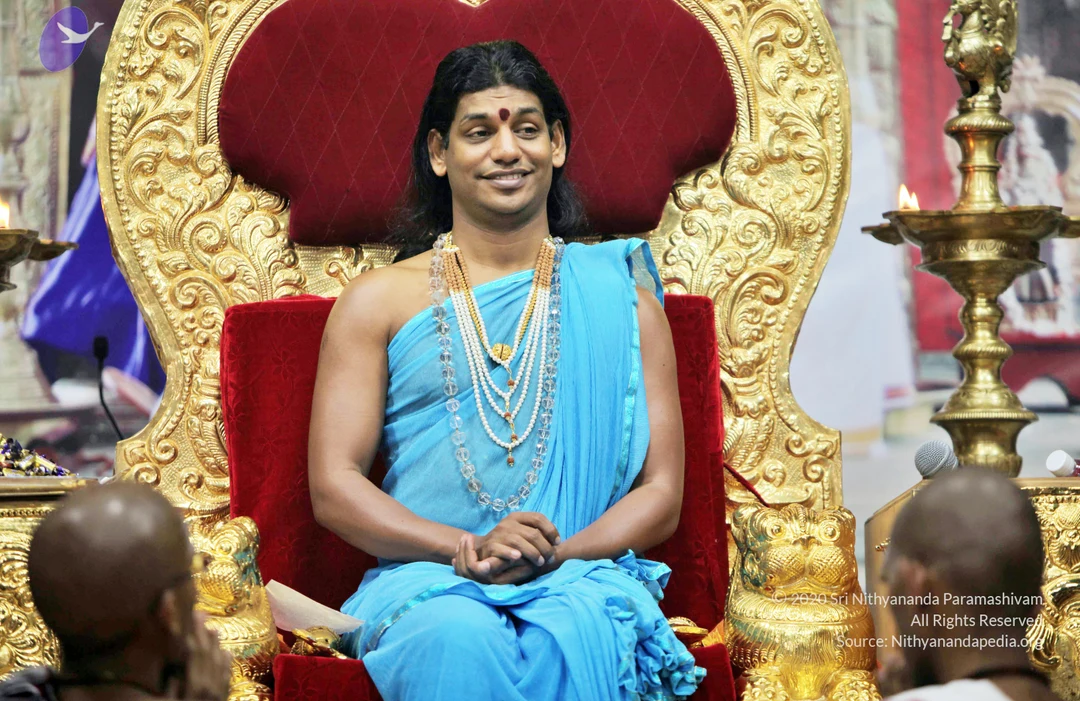
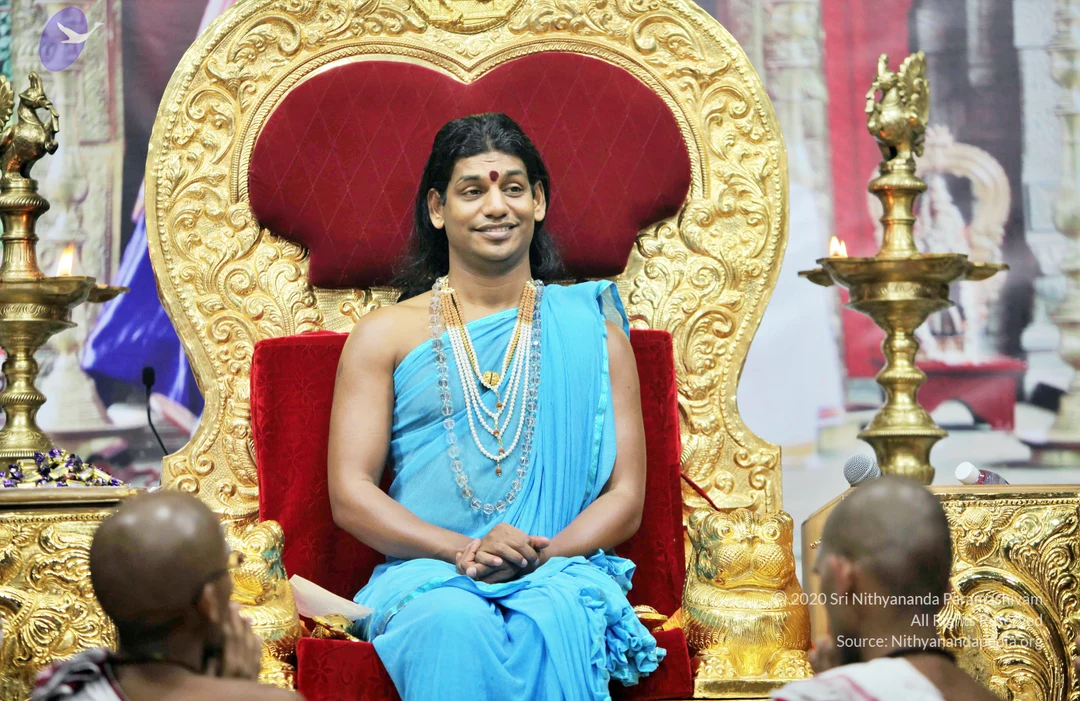
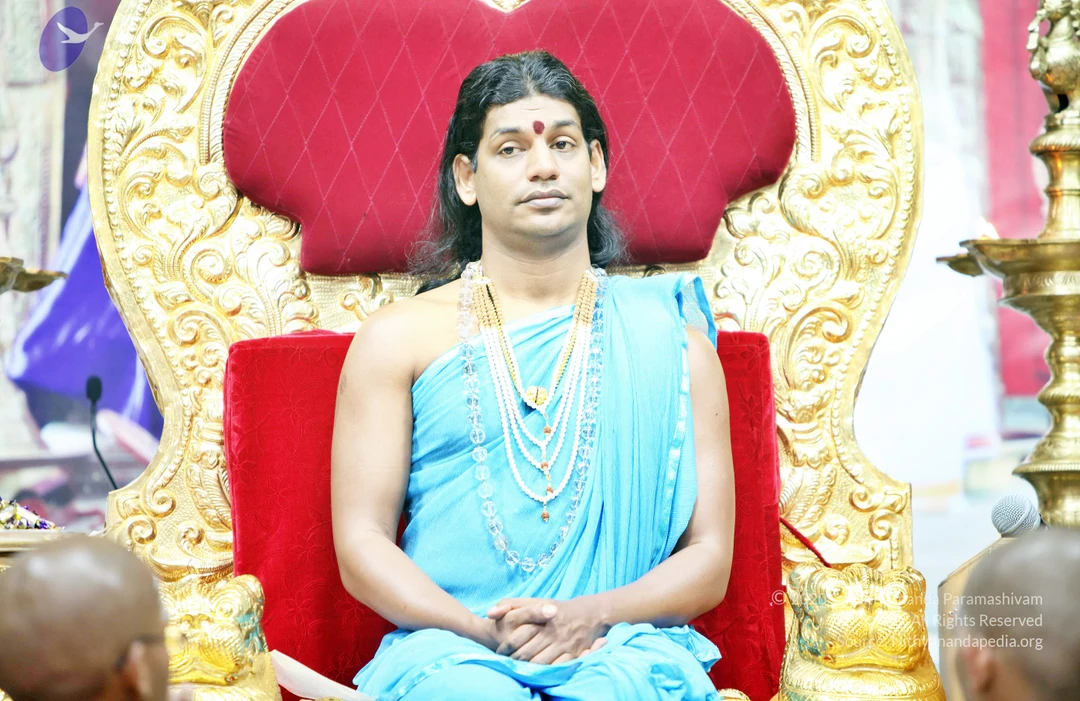
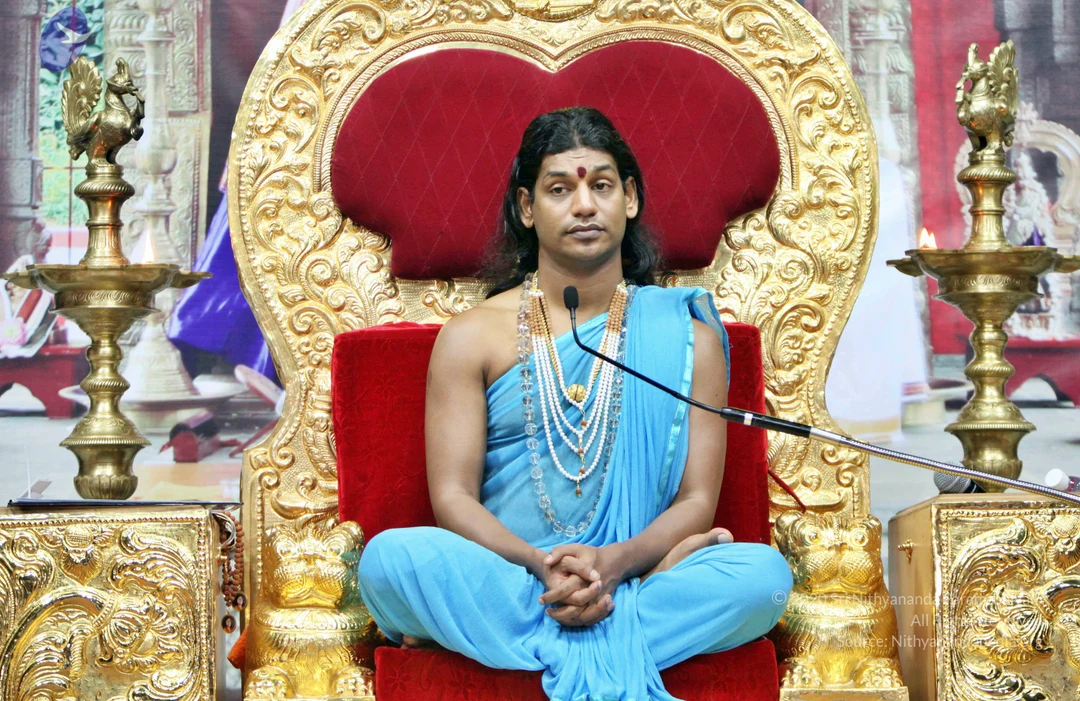
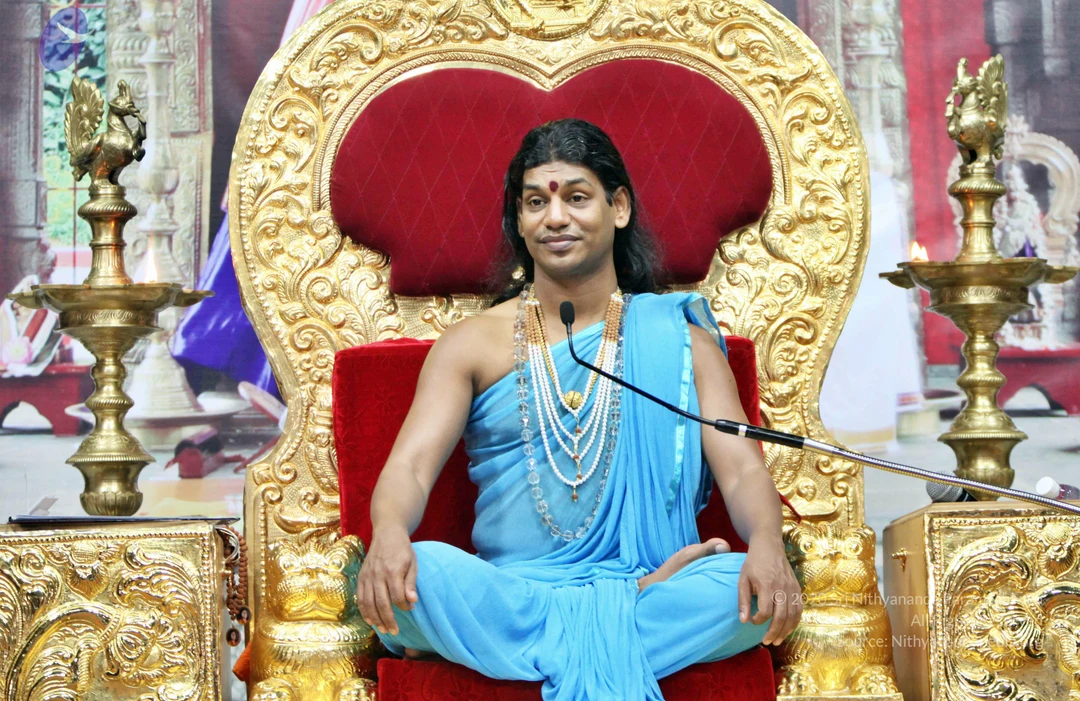
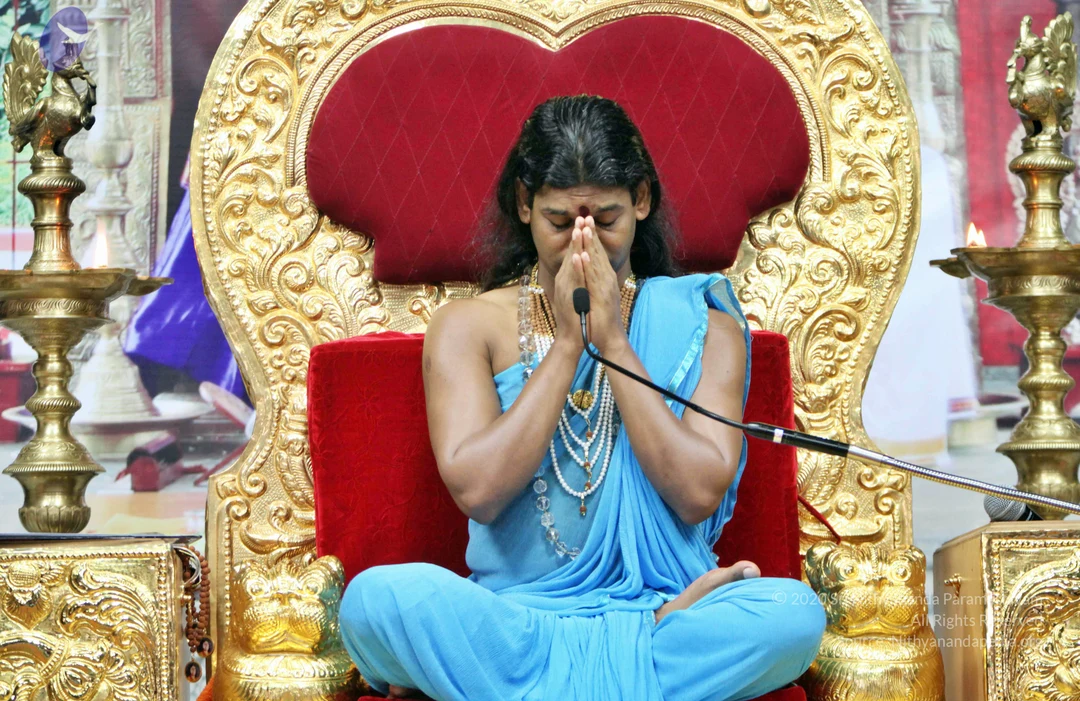
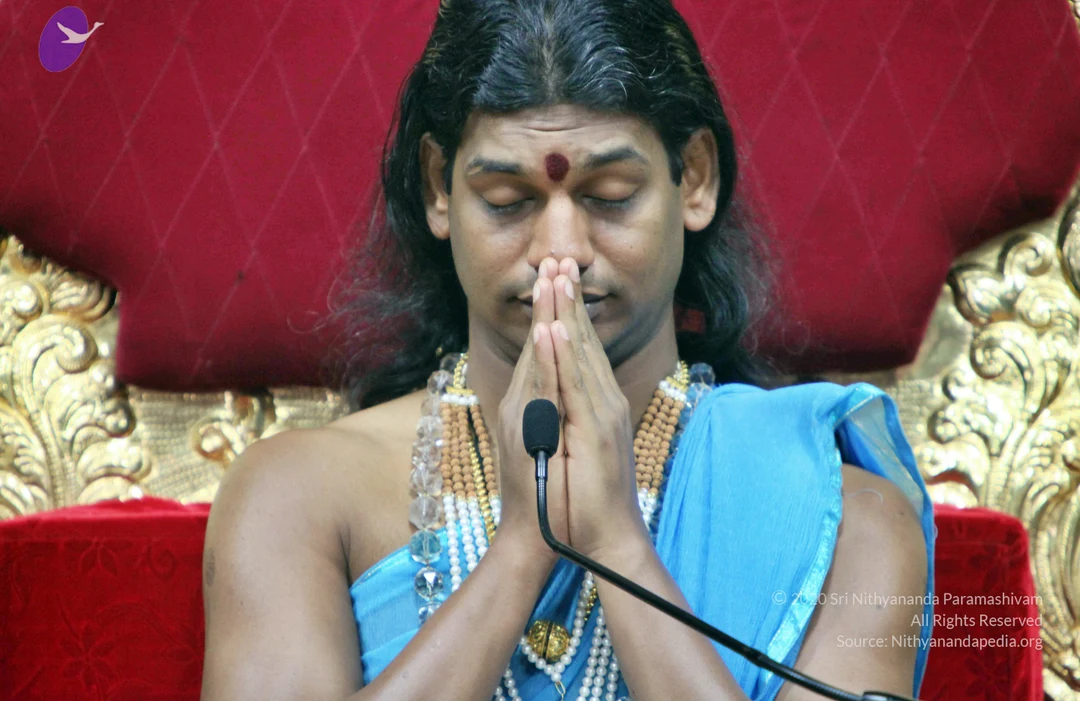
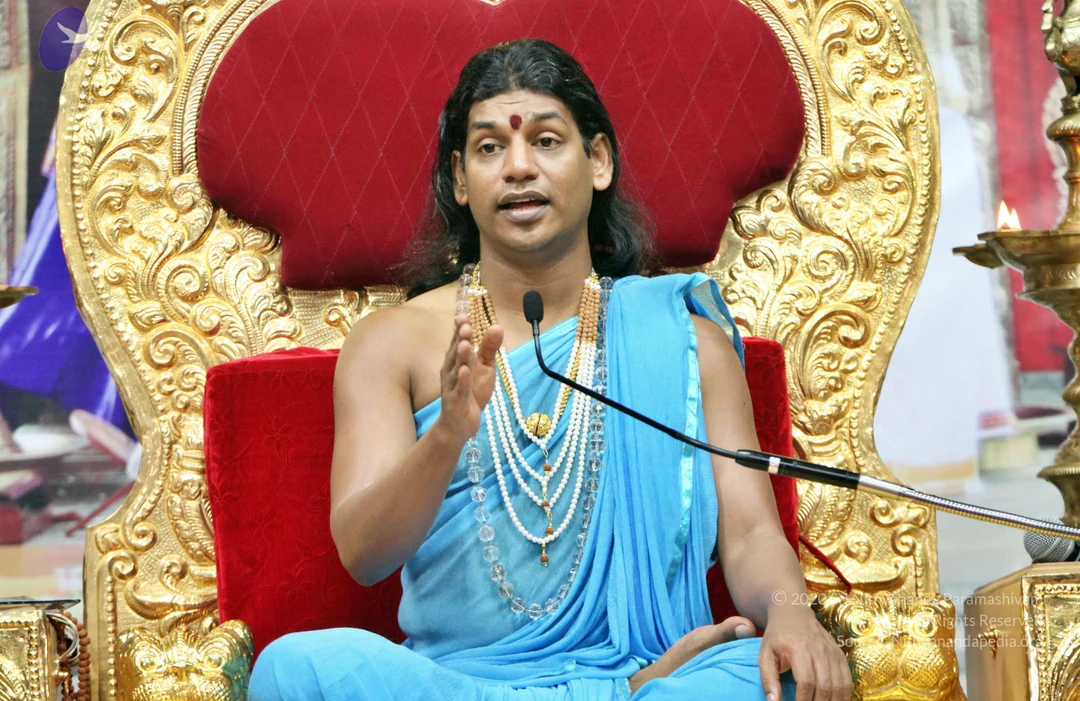
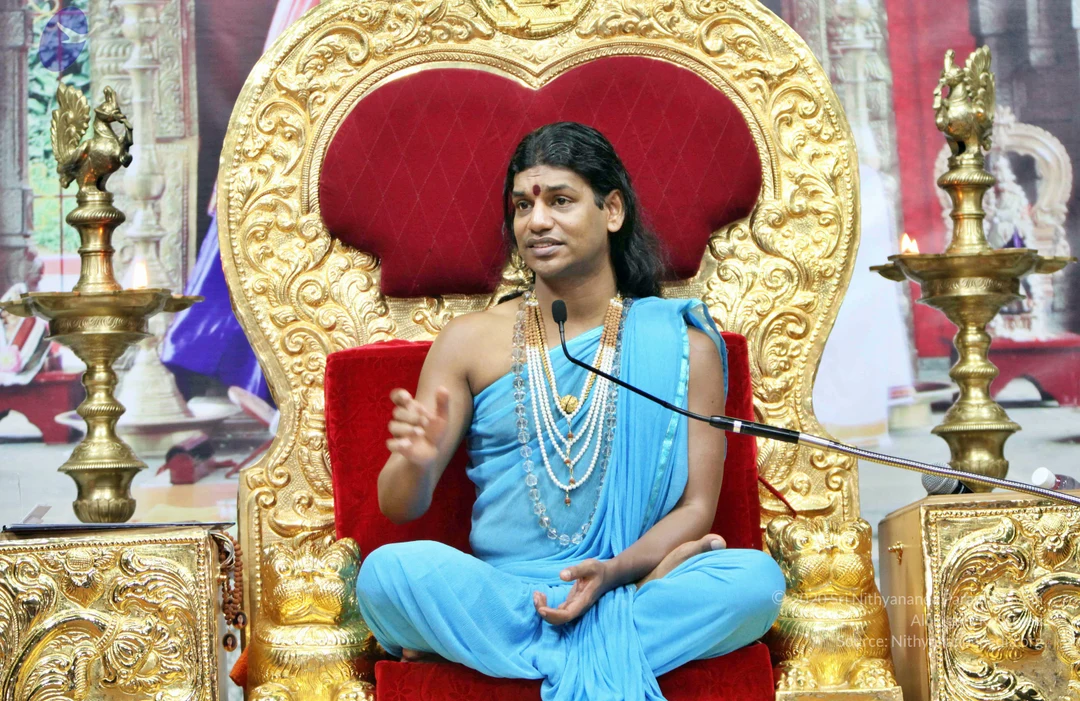
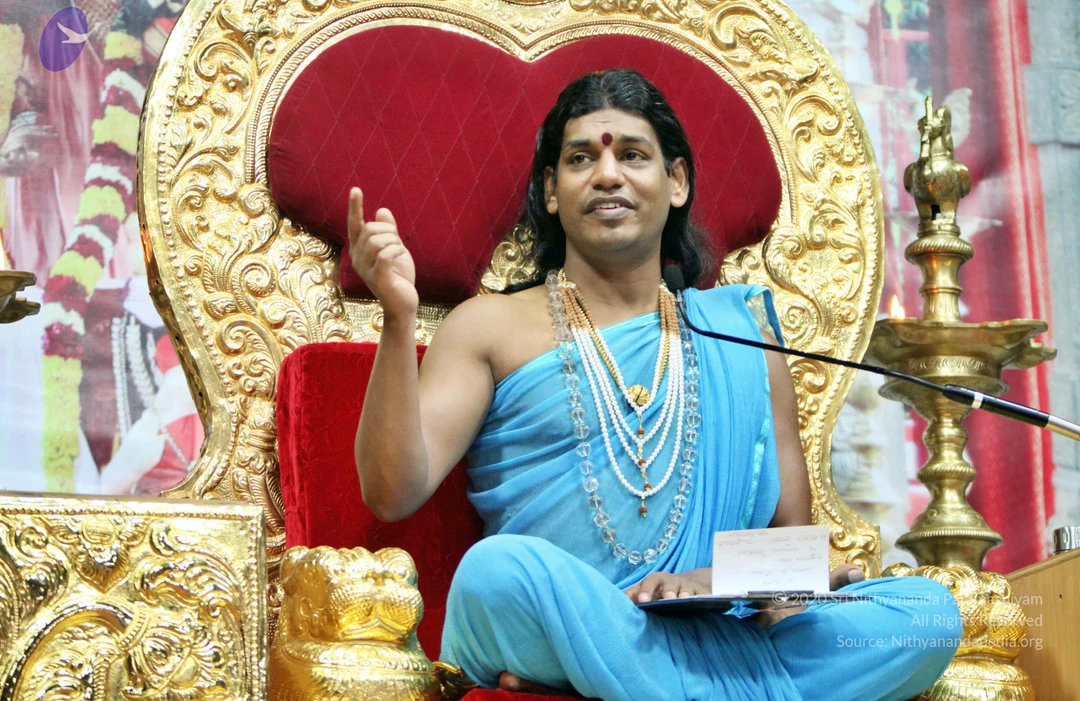
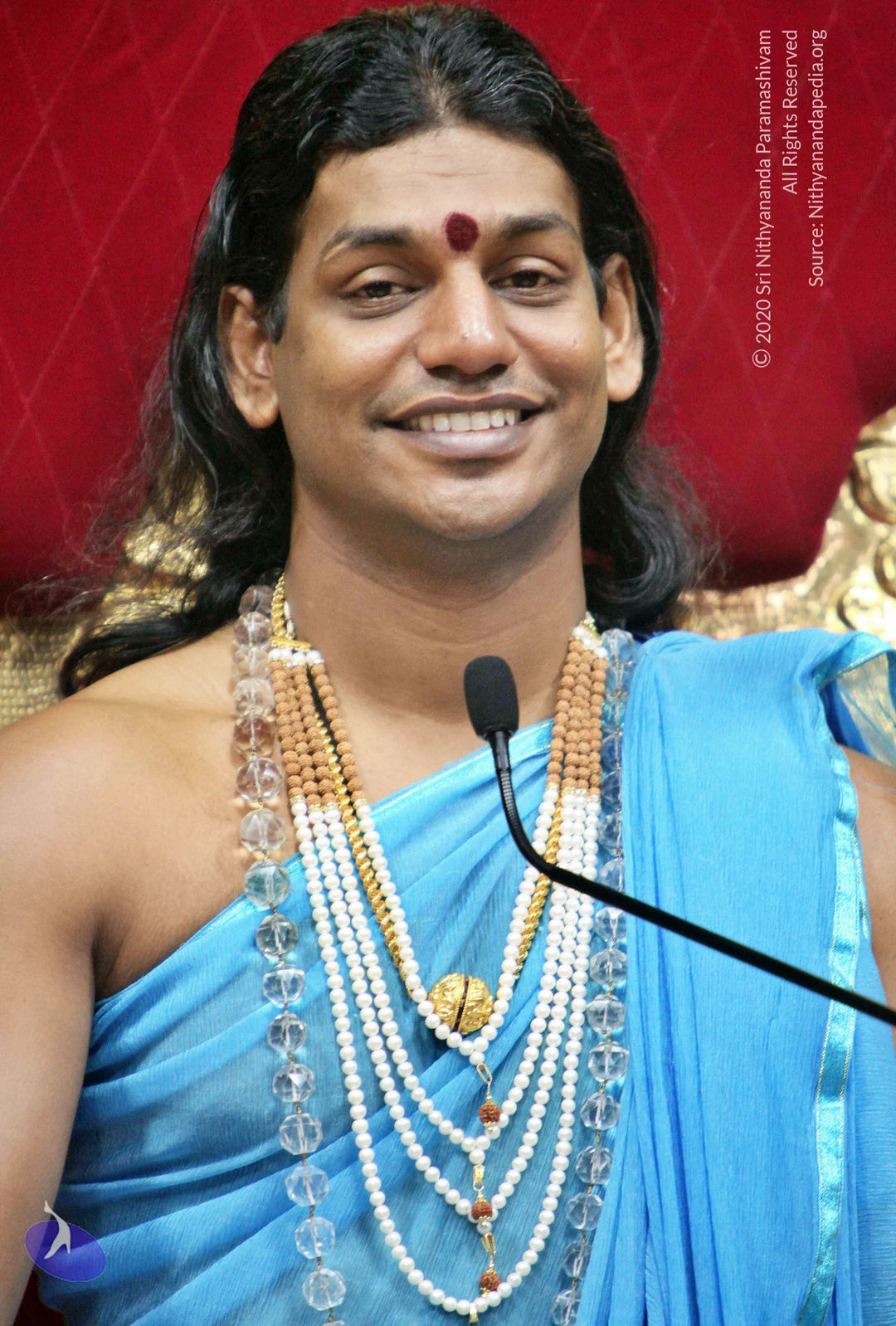
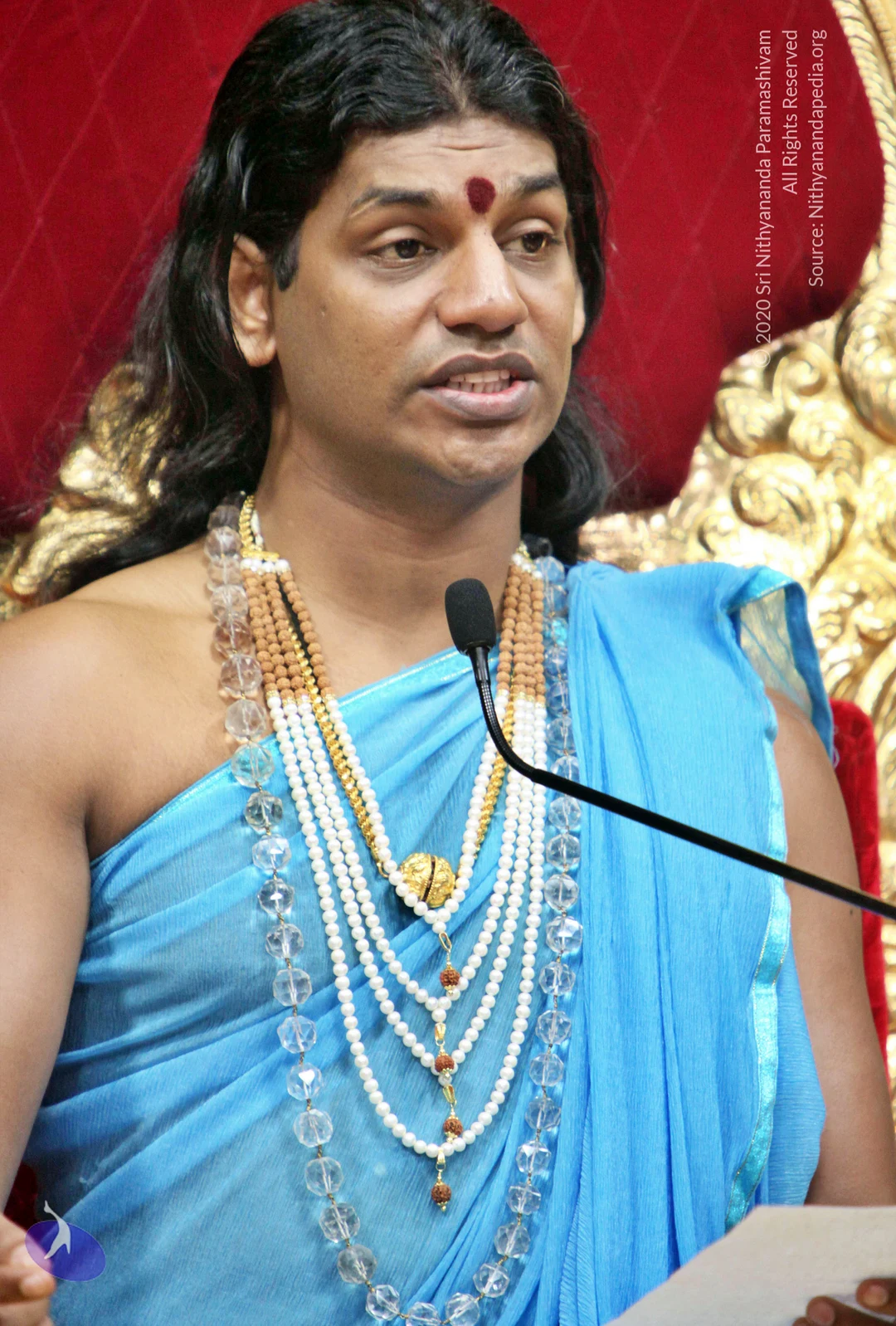
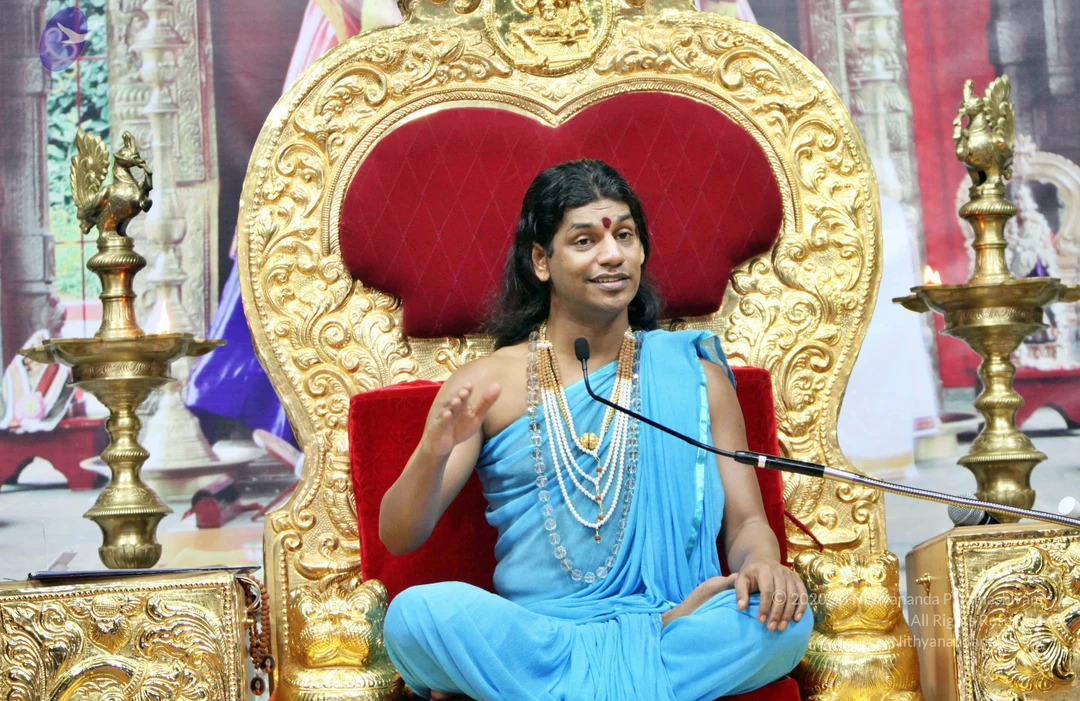
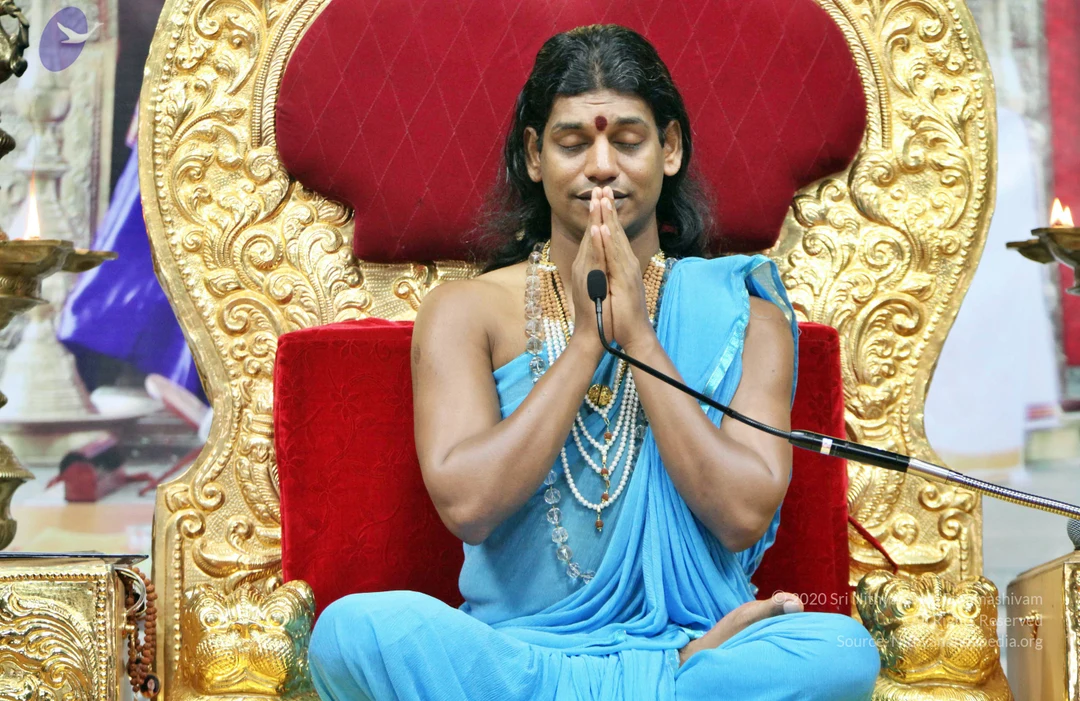
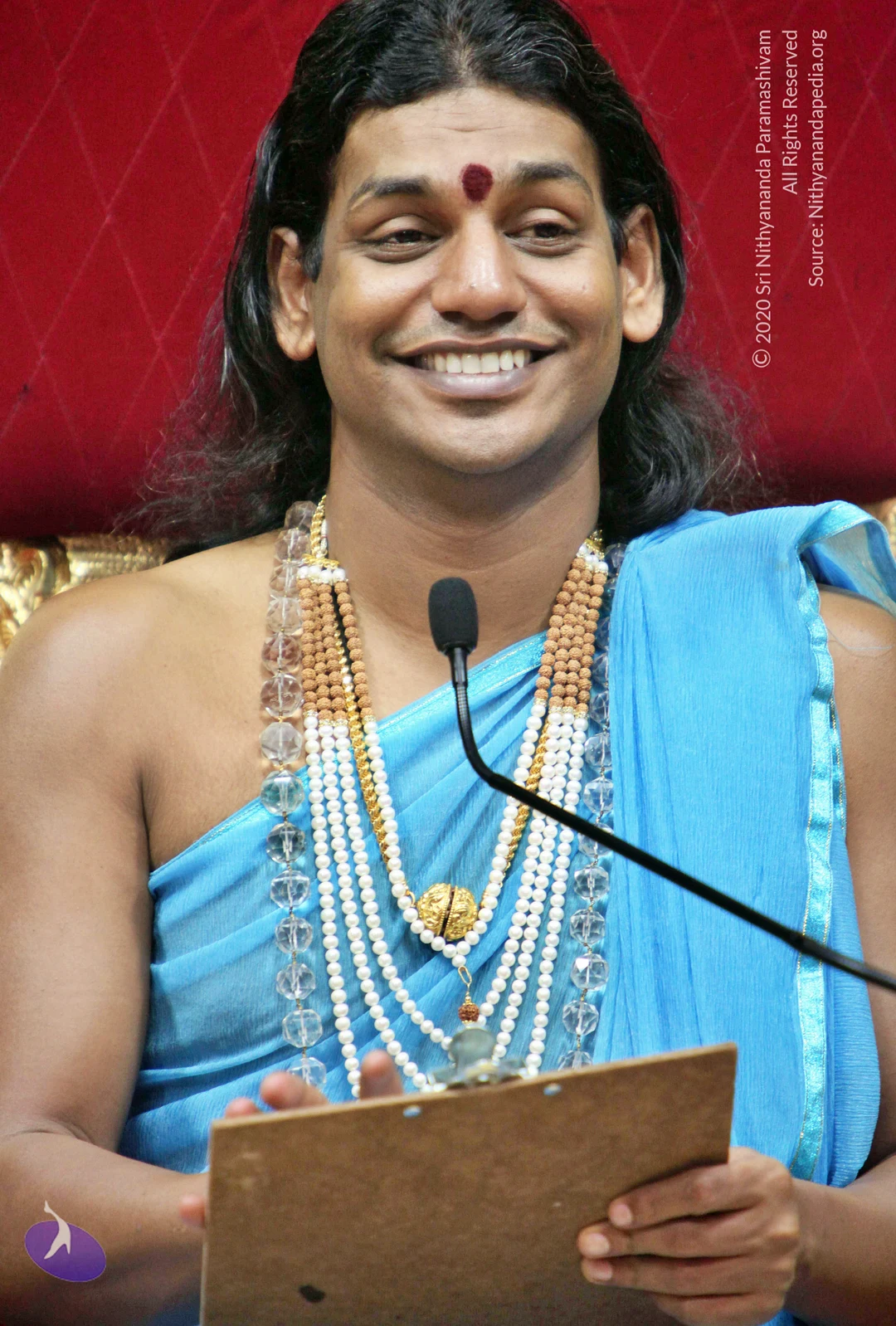
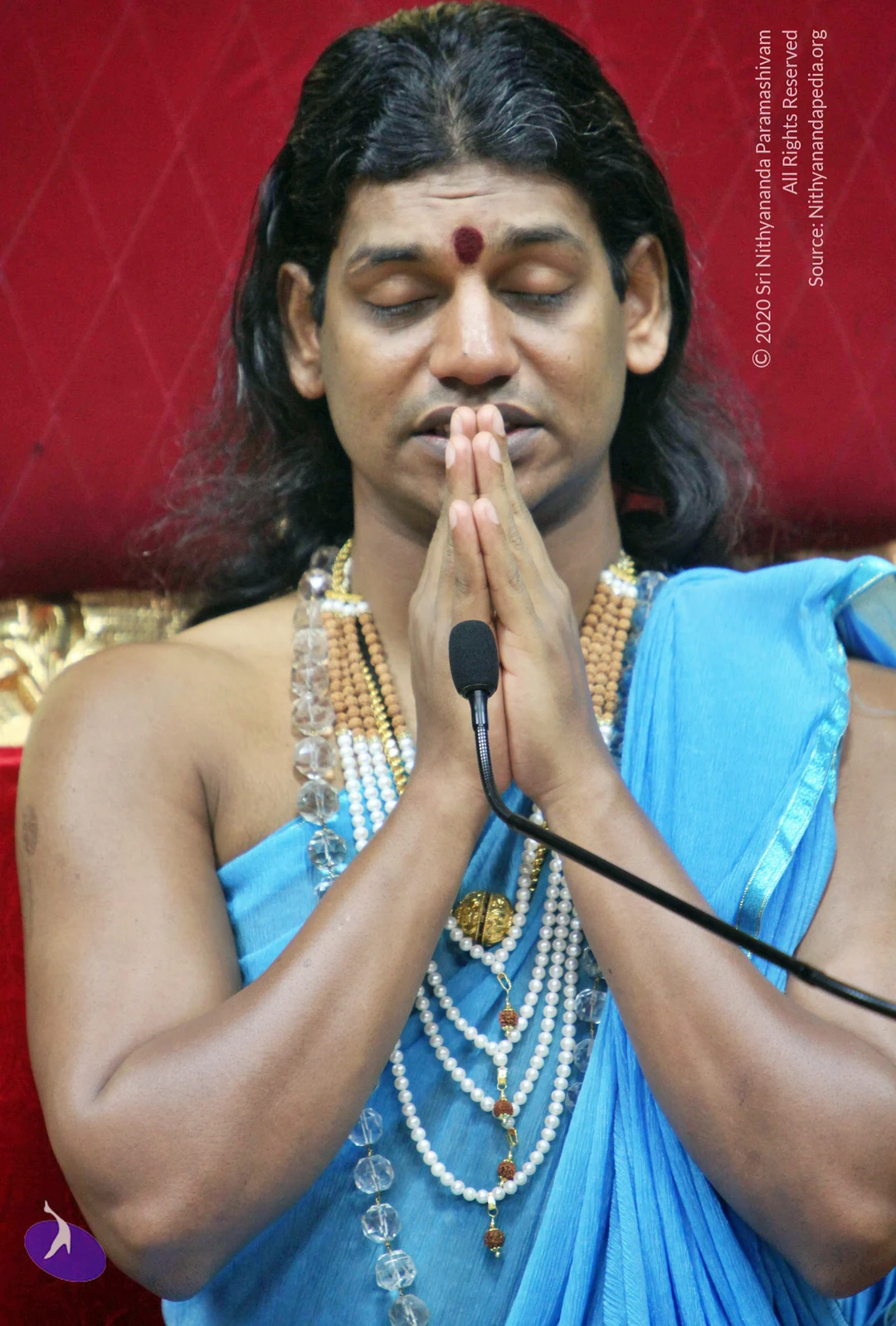
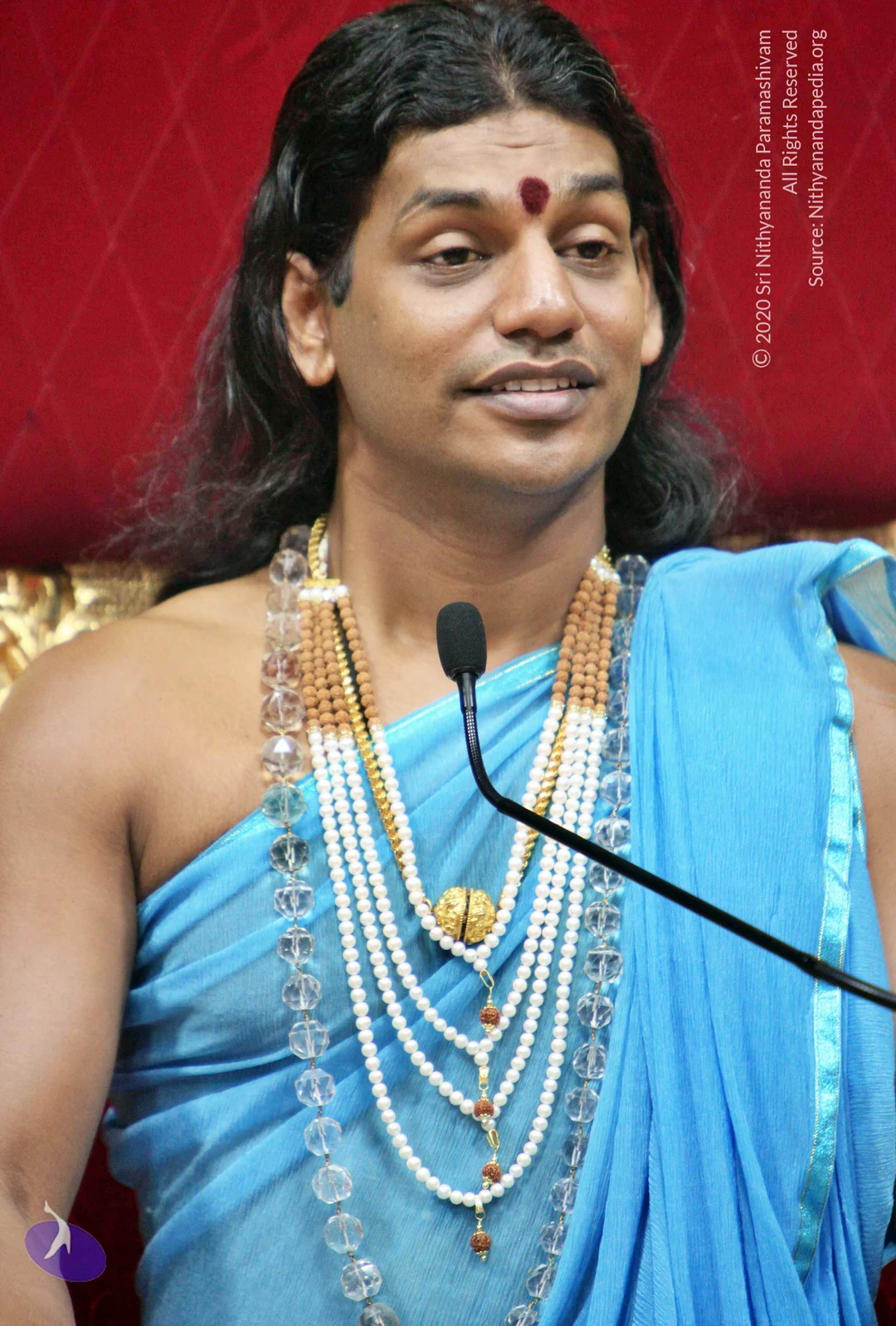
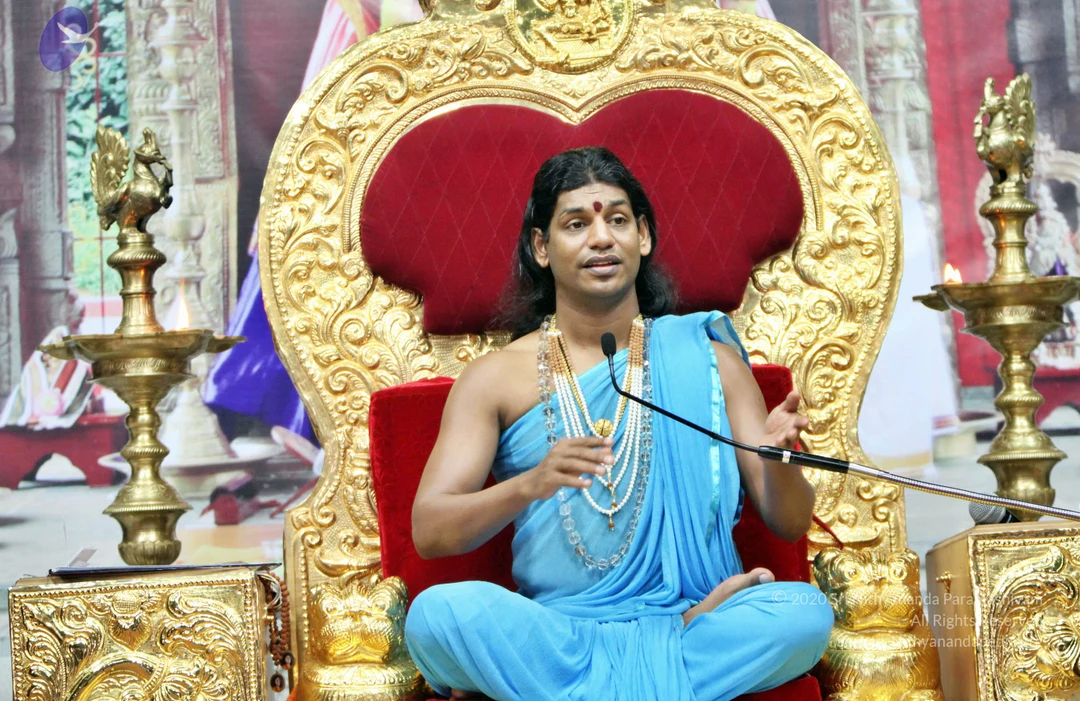
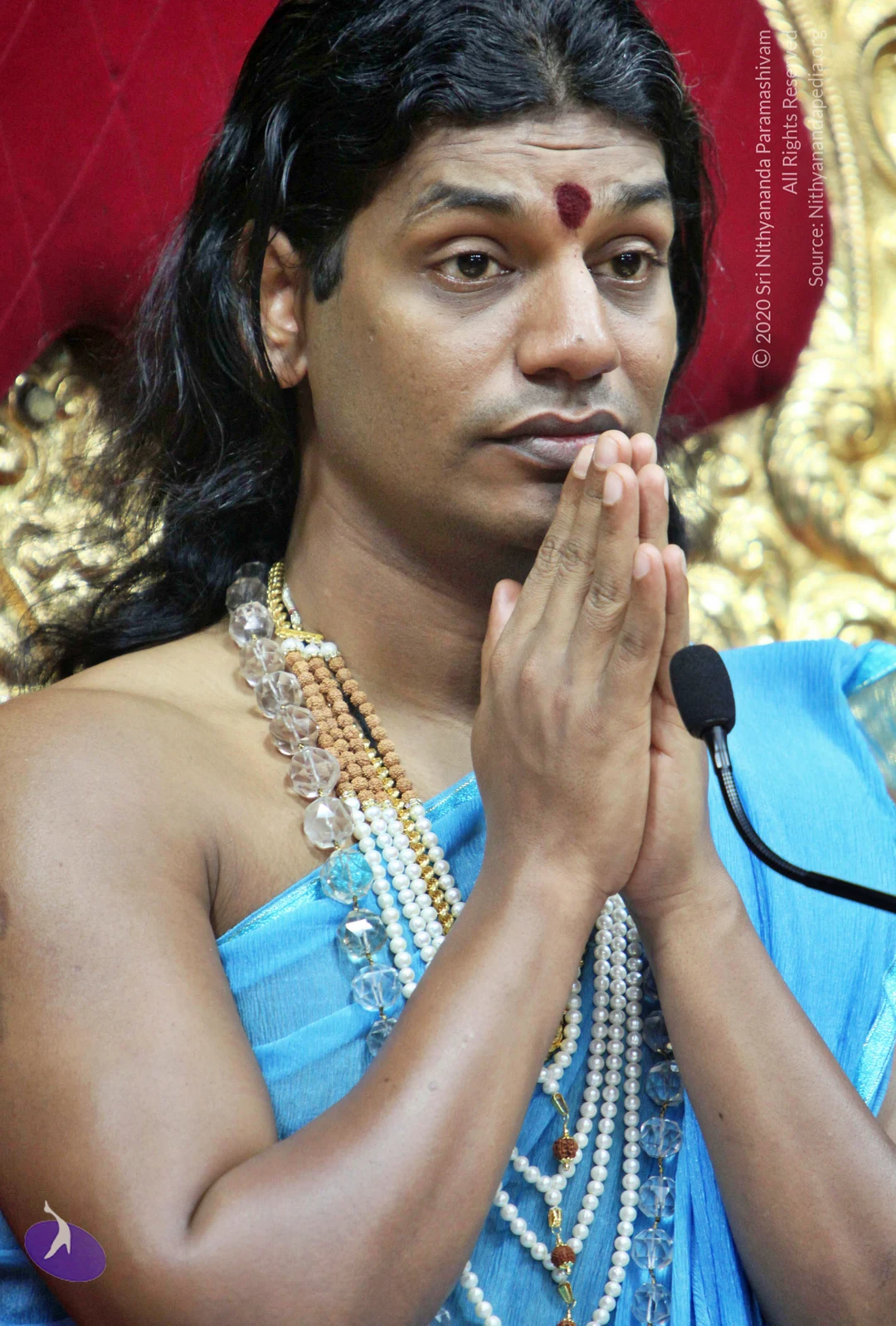
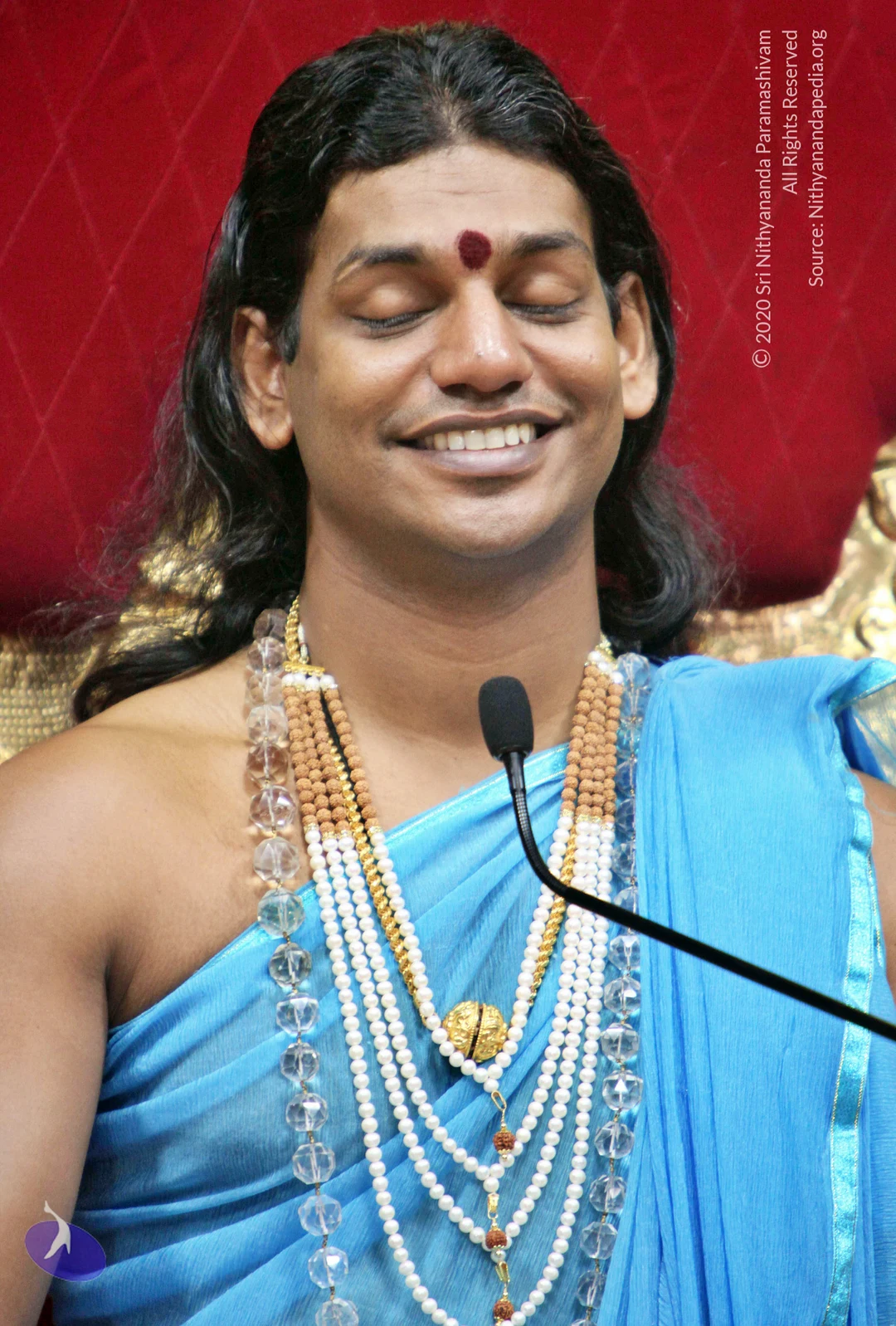
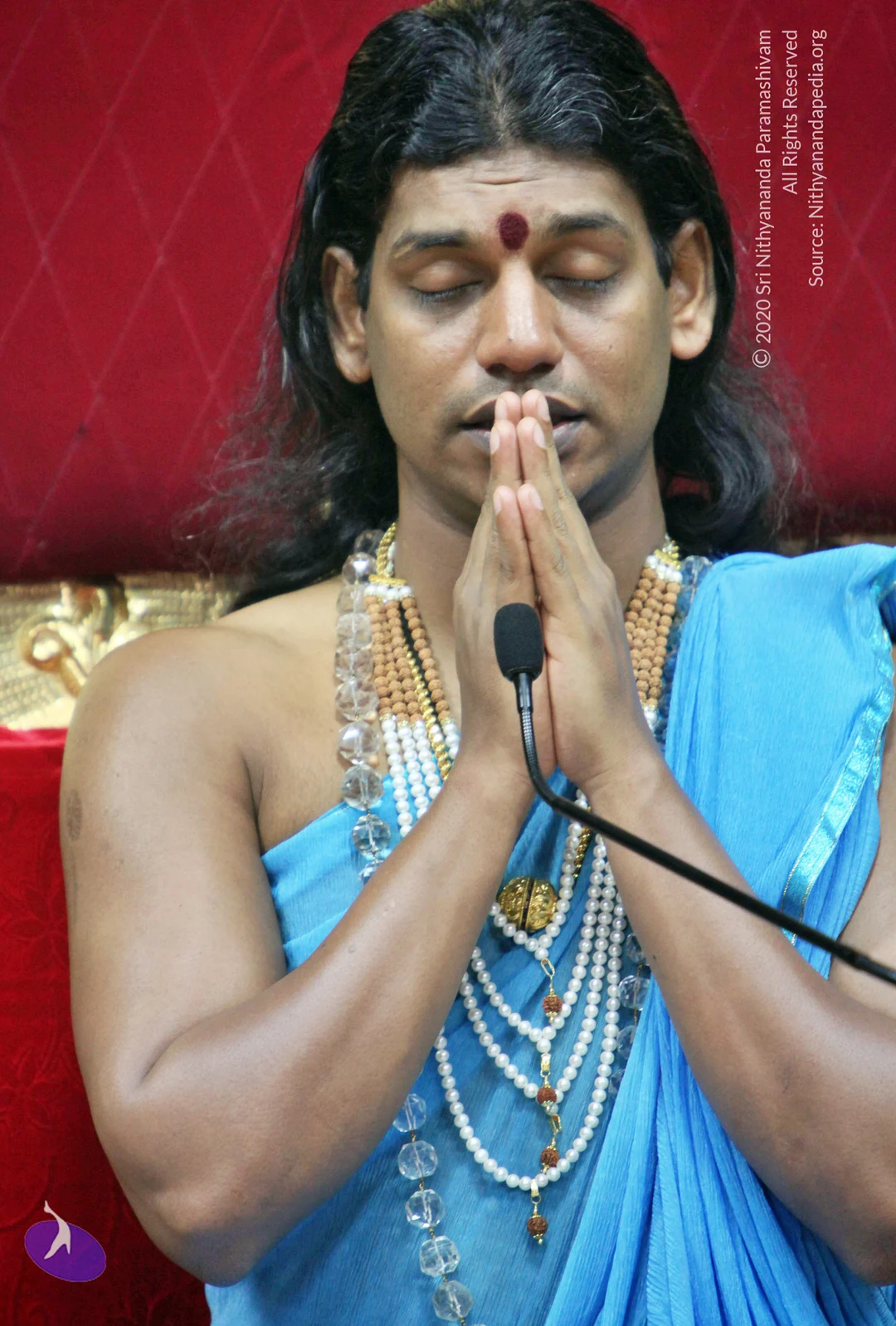
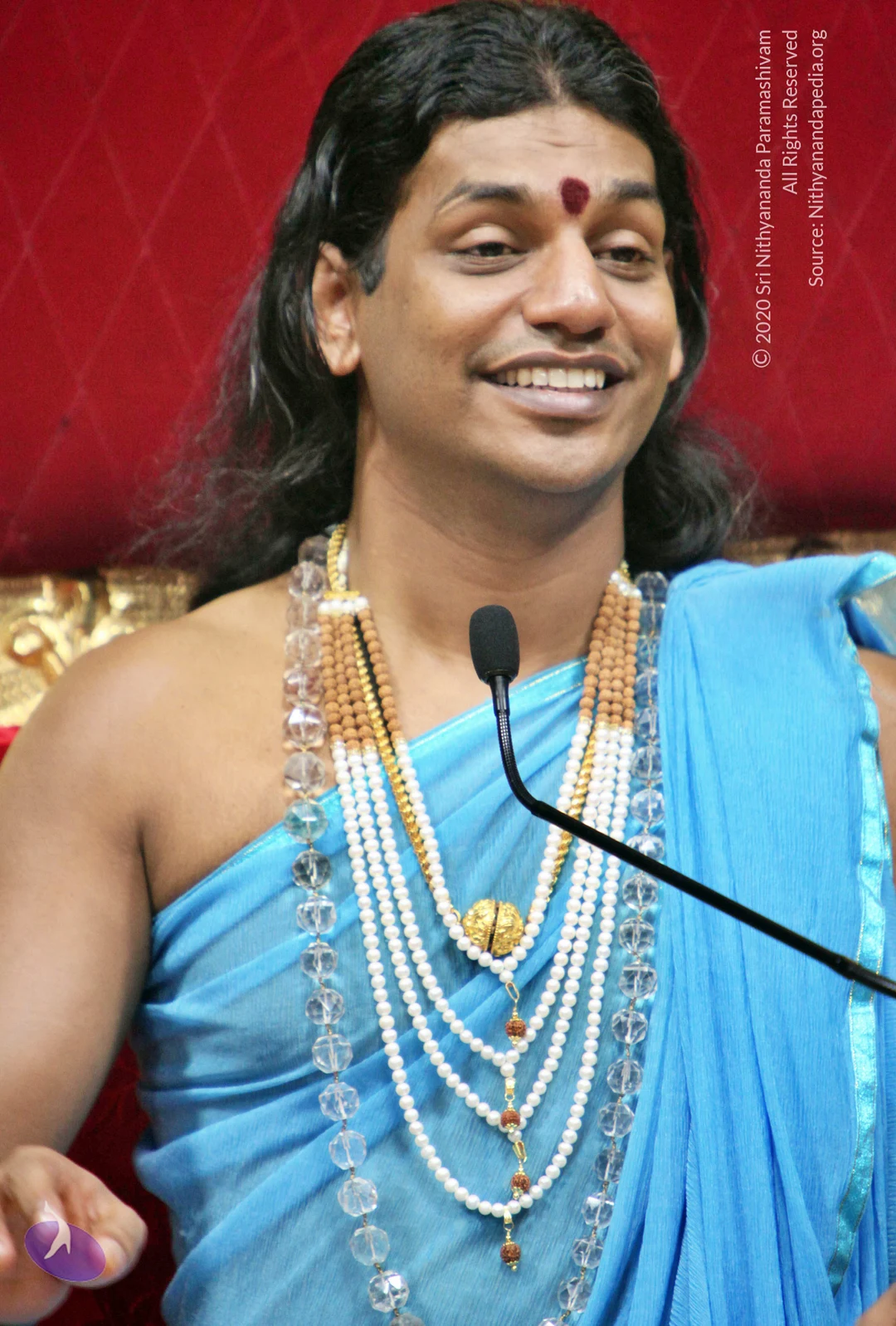
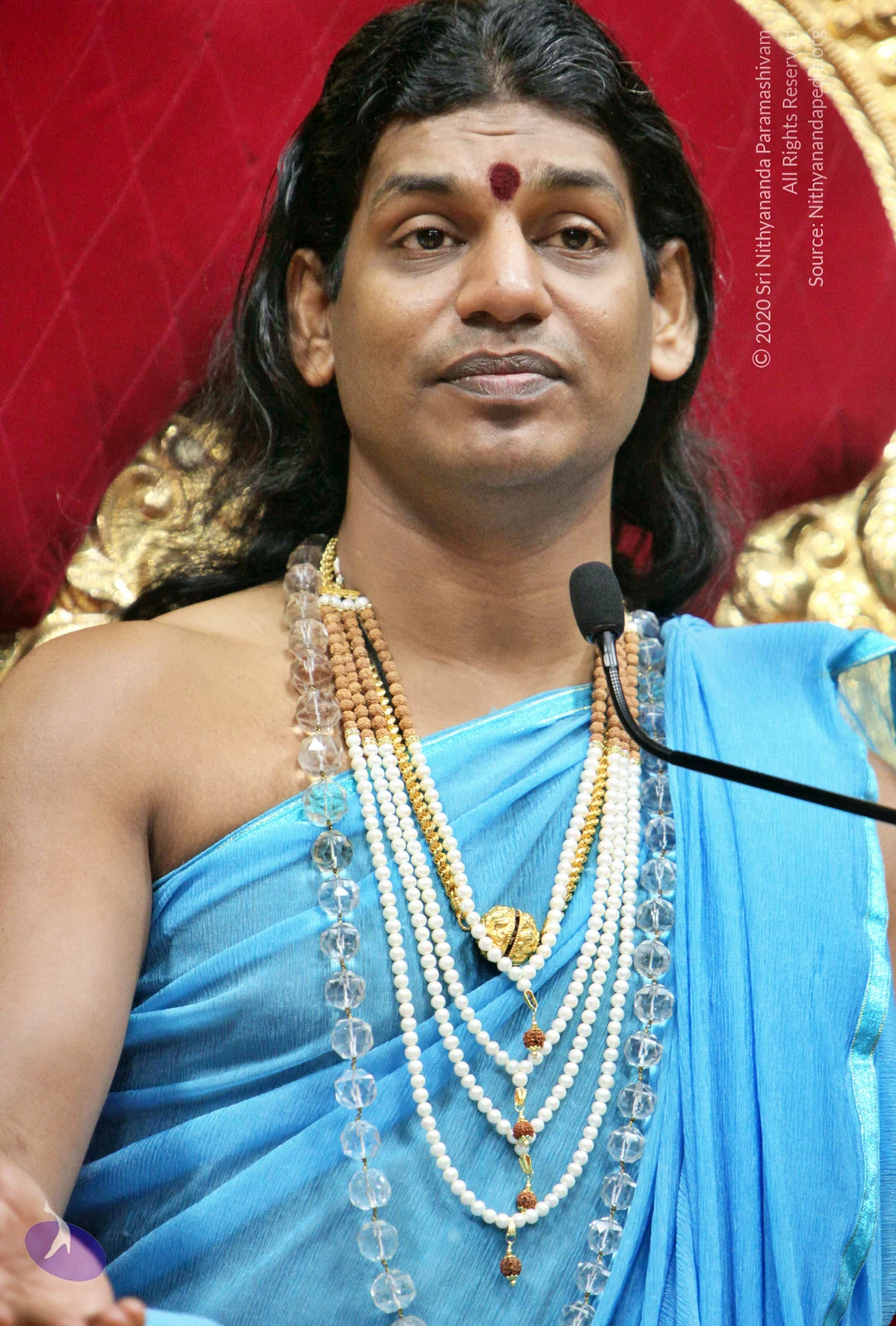
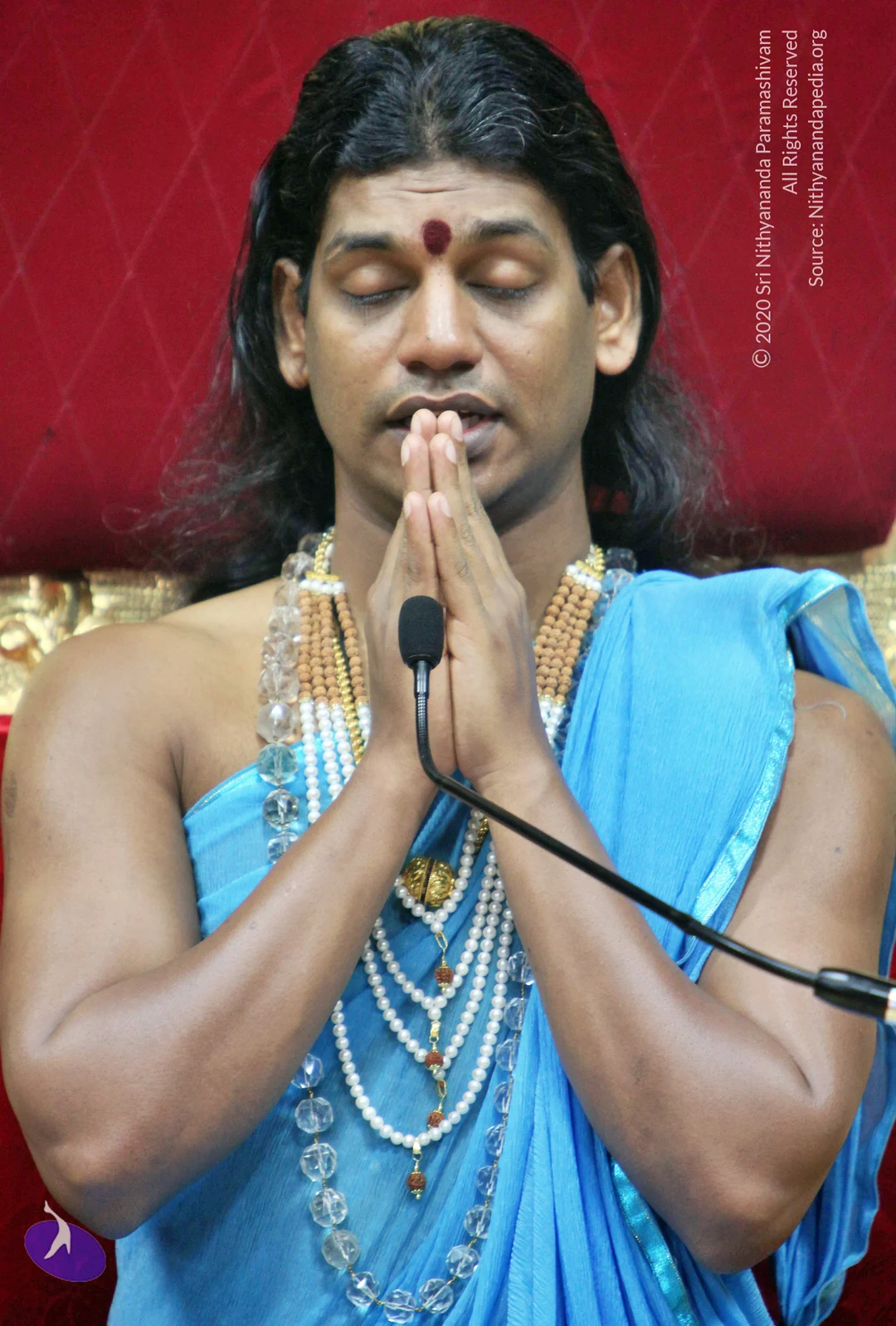
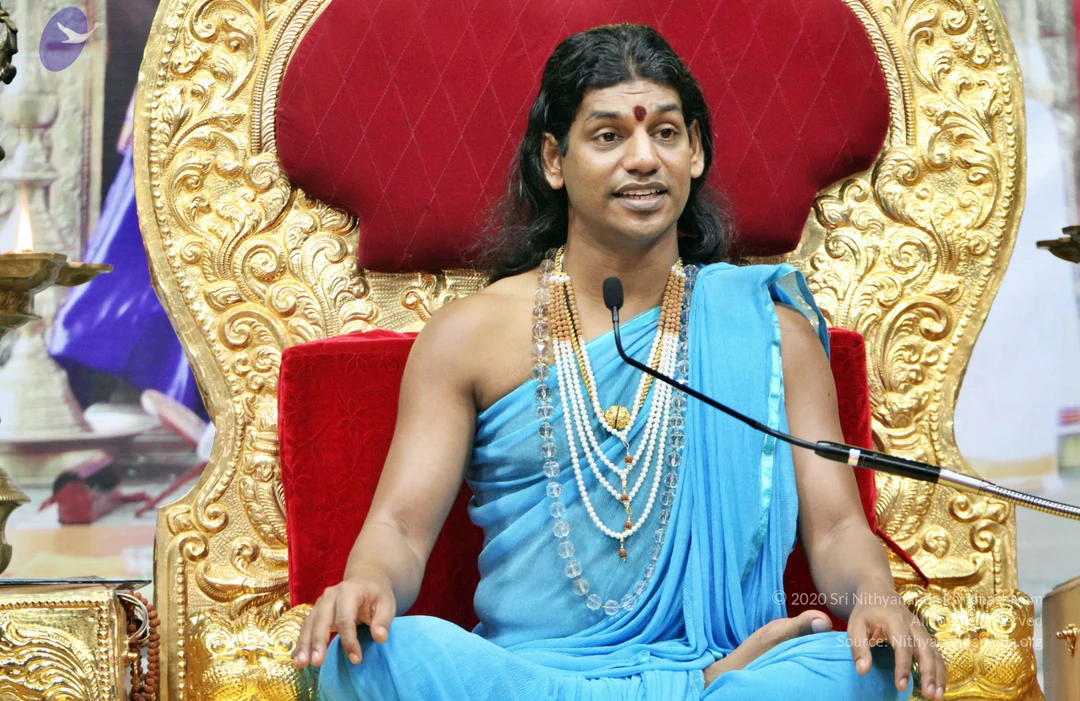
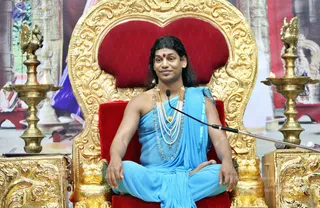
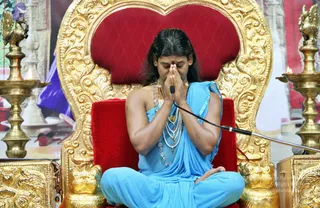
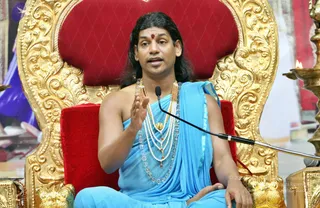
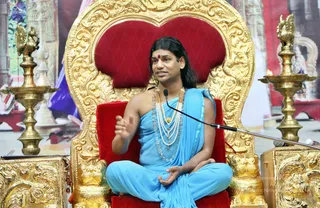
A seated man in blue ceremonial clothing sits cross-legged on an ornate gold-and-red throne, hands clasped in his lap. He wears a blue wrap over his shoulder, multiple strands of white and crystal beads, a gold pendant, and a red dot on his forehead. Long dark hair falls past his shoulders. A microphone stand is positioned at his side. Flanking him are tall gold oil lamps with brass finials and carved gold side pedestals, with a red and gold backdrop behind. This is a discourse setting with a throne and lamps. Swamiji (probable) is shown with long swept-back hair, a blue wrap, and multiple beaded necklaces seated on the throne.A man with long dark hair and a red bindi sits cross-legged on an ornate gold-and-red throne with a carved golden frame and lion-form armrests. He wears a sky-blue draped garment over one shoulder and several strands of white, crystal and amber beads around his neck. A microphone stands in front of him, and gold oil lamps flank the throne. The background shows a painted temple-style backdrop. Swamiji (probable): the long swept-back hair, sky-blue robe and multi-strand bead necklaces match the cues on the page, and he is seated on a throne during a satsang discourse.A seated figure with long dark hair, wearing a light blue draped garment and multiple beaded necklaces of pearls, crystal and rudraksha, sits cross-legged on an ornate gold throne with a red cushioned back. The person presses palms together at the chest with eyes closed and a red tilak on the forehead. A microphone stands at the right. Gold oil lamps with flames flank the throne, and a red and white backdrop is behind. Swamiji (probable): long swept-back hair, rudraksha and crystal malas, and a saffron-free blue draped garment on a gold throne.A man with long dark hair and a red bindi sits with eyes closed and palms pressed together in anjali mudra before a microphone on a stand. He wears a light blue shawl over a bare shoulder and layers of beaded necklaces in crystal, white pearl and rudraksha-style brown beads. Behind him a deep red quilted backrest and gold carved throne frame suggest a dais setting, consistent with a satsang discourse. Only the person in the foreground is visible in the scene.A seated man in a blue dhoti-style wrap and shawl gestures with his right hand while speaking into a microphone on a stand. He wears layered white and clear bead necklaces with a gold pendant, a red bindi on his forehead, and sits on an ornate gold-carved throne with a red velvet back and cushion. A brass oil lamp with a lit flame stands to the right, and a partially visible blue backdrop and red fabric fill the background. The man has shoulder-length dark hair and appears to be giving a talk; this is a discourse setting. Swamiji (probable) is indicated by the throne, long hair, rudraksha-style beads and ceremonial gold necklace, seated as the teaching figure.A man seated cross-legged on an ornate gold and red velvet throne speaks into a microphone during a satsang. He has long dark hair swept back, a small red bindi, and wears a sky-blue draped garment over bare shoulders, layered white pearl and crystal malas, and a gold pendant. His hands are raised in an explanatory gesture. Gold lamps with flame-shaped finials stand on either side, and a colourful backdrop of temple-style imagery is behind him. a person: the long swept-back hair, saffron-free blue clothing and layered malas are cues for a discourse speaker; the throne and microphone indicate he is the teacher. No other people are visible.

05-Sarva-Darshan-&-Final-Blessing
8 photosSource gallery
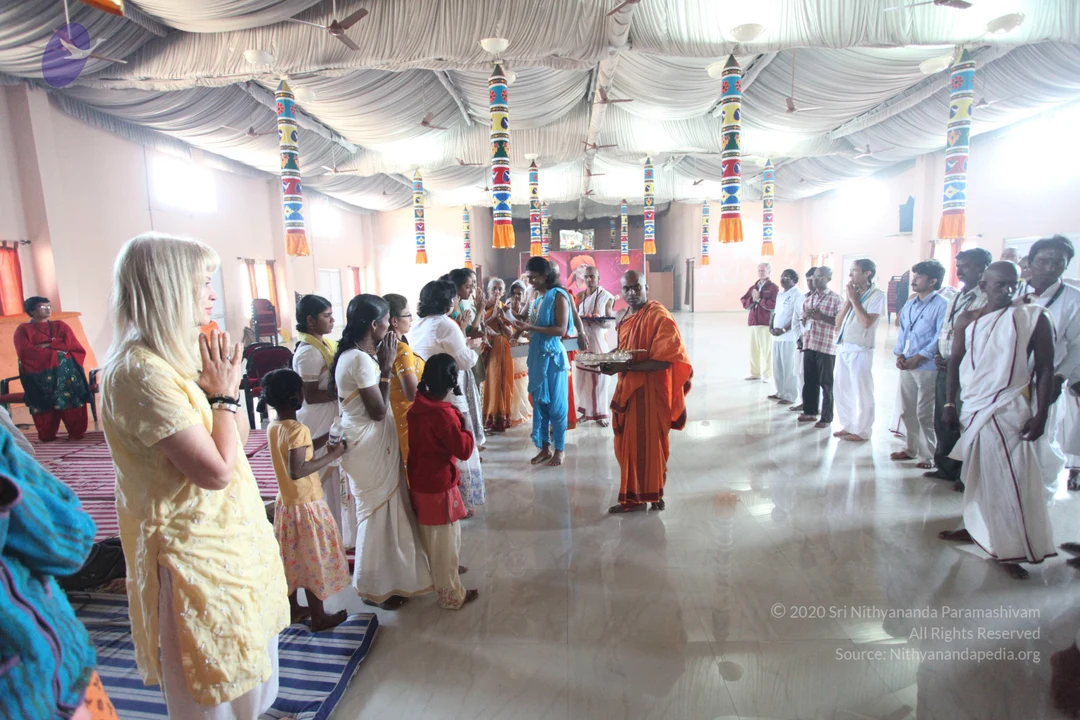
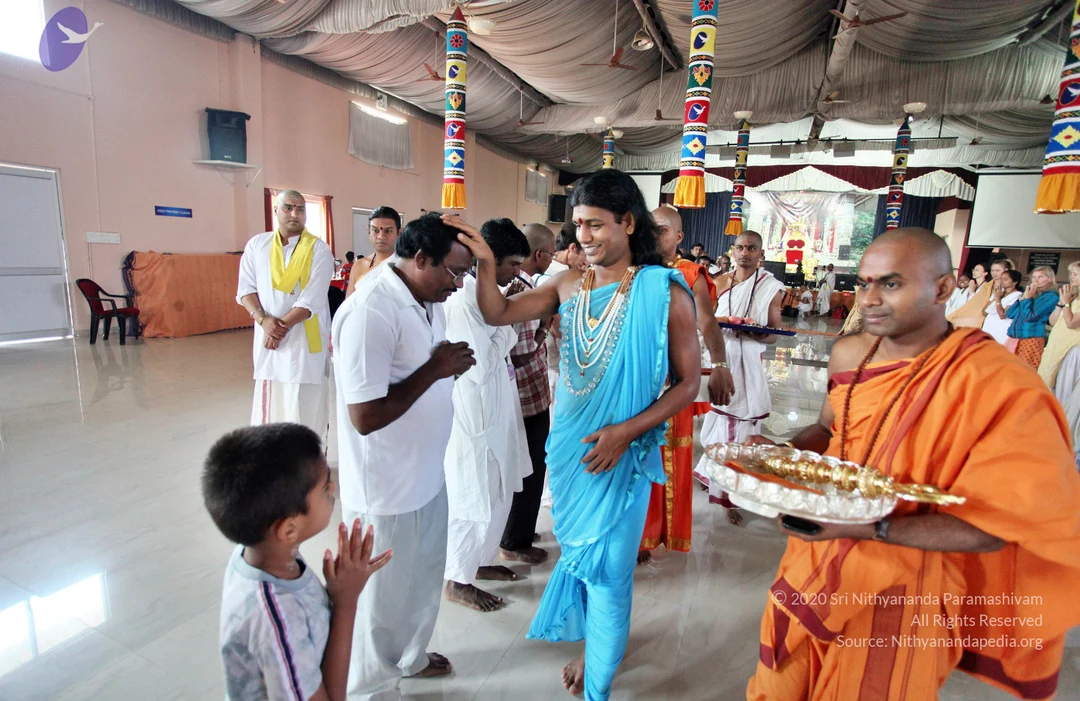
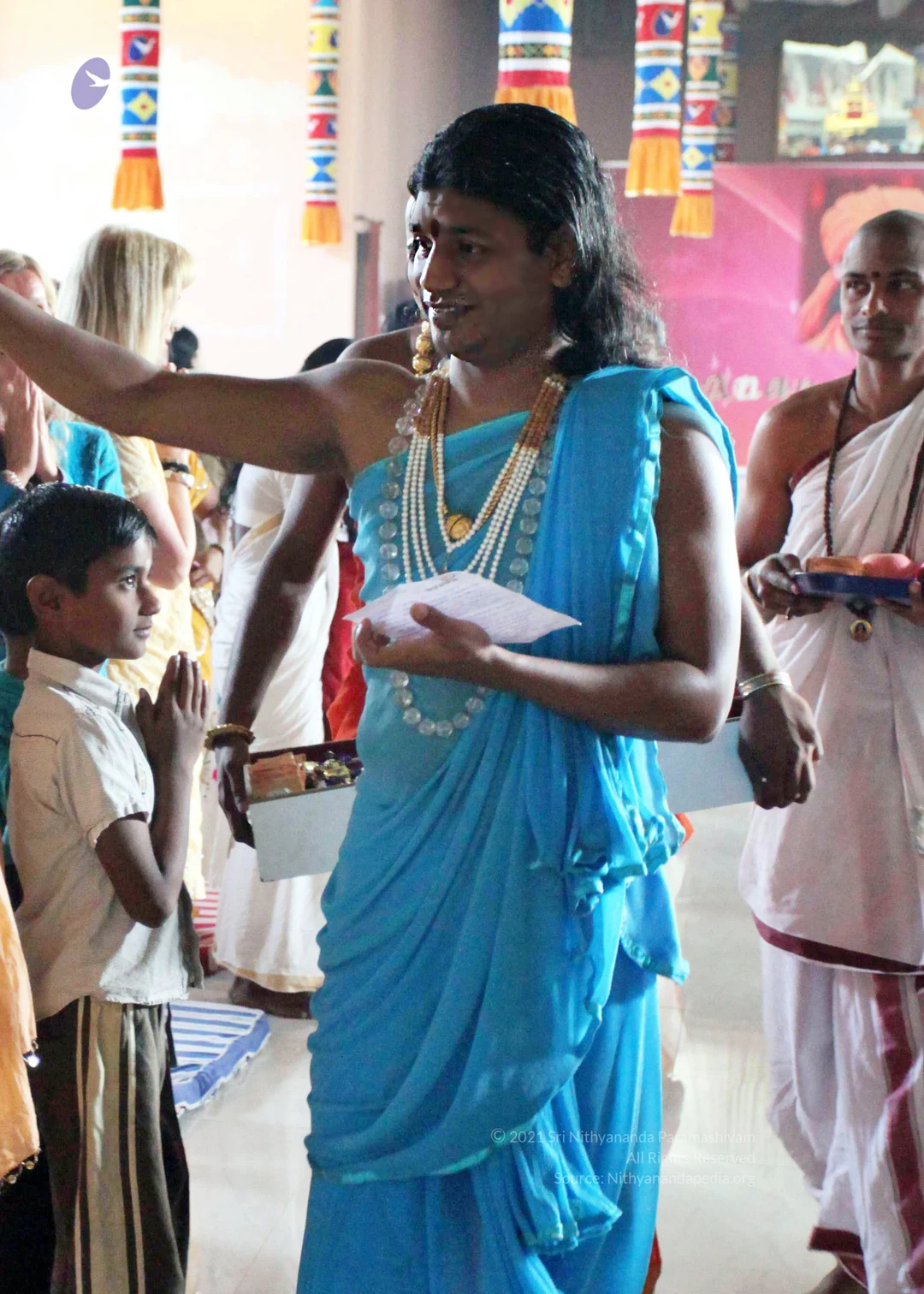
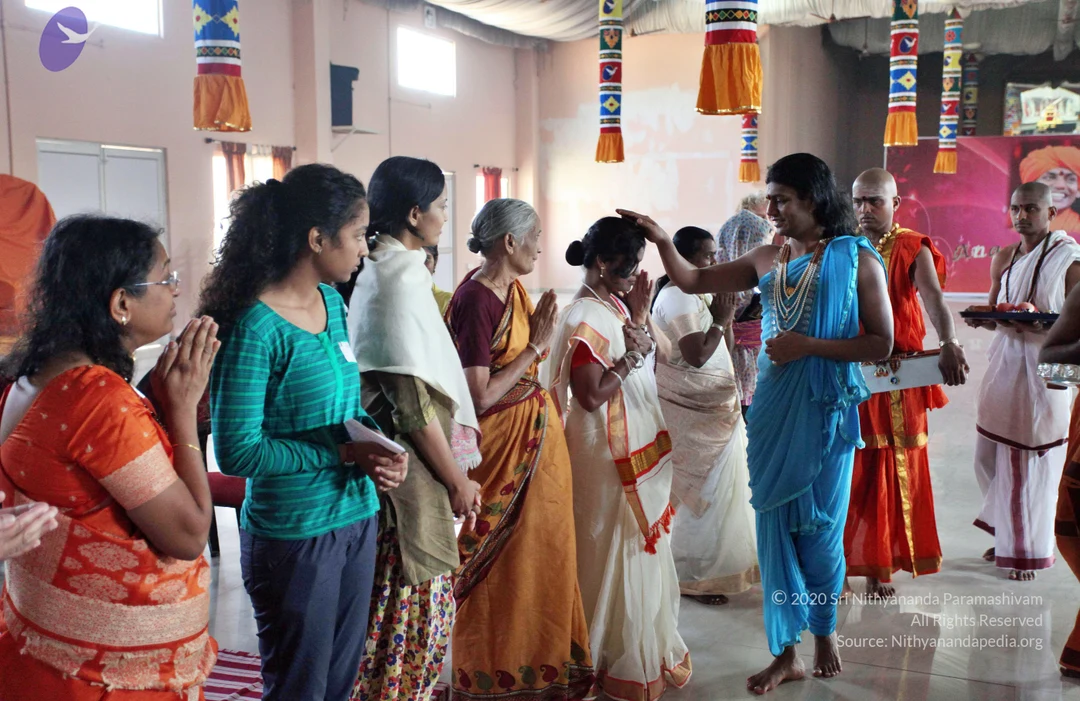
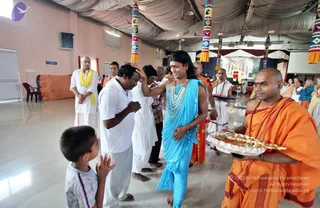
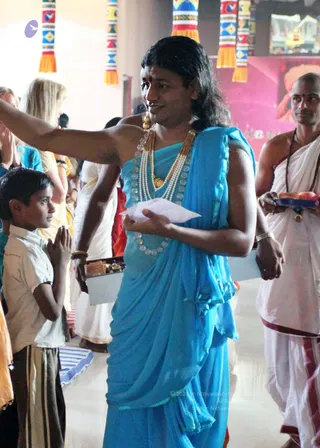
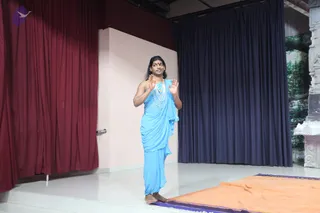
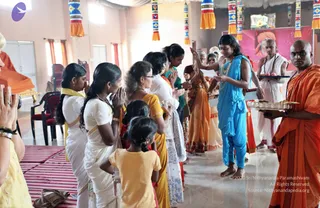
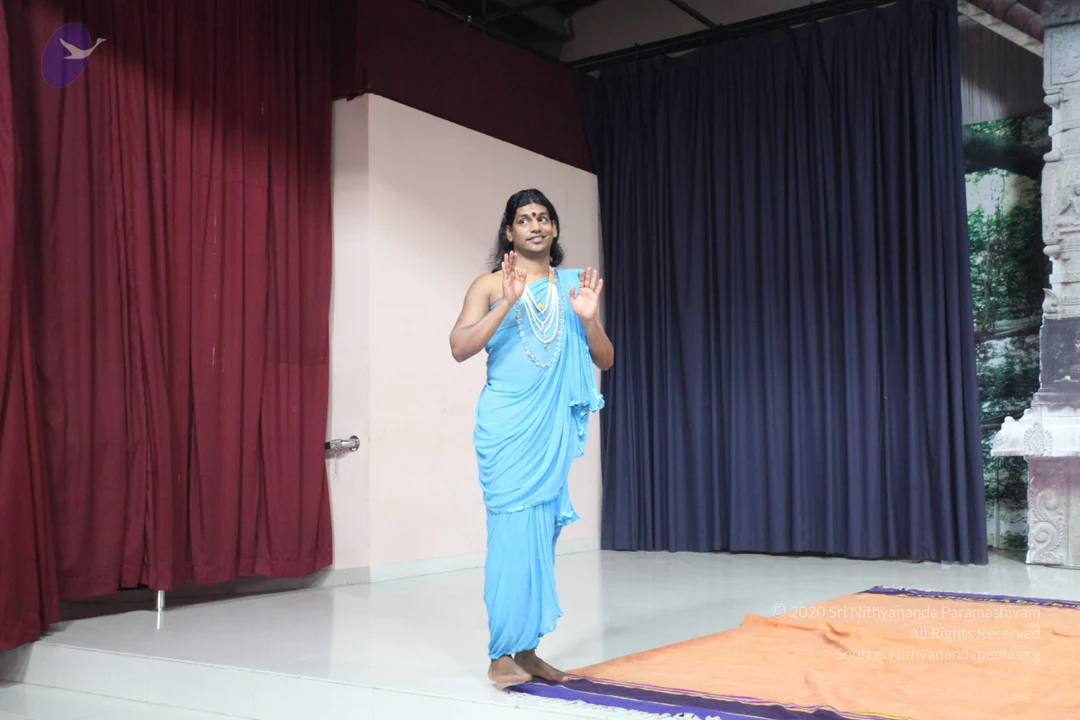
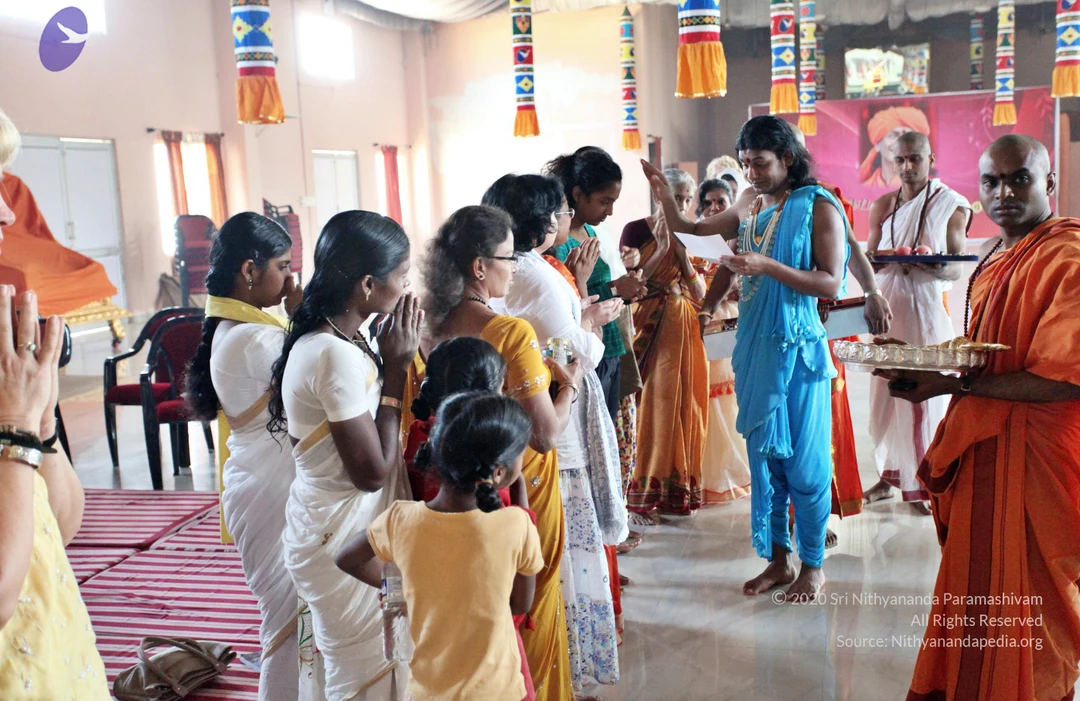
A photograph inside a large hall with a white fabric canopy ceiling decorated with hanging multicoloured cylindrical banners and ceiling fans. A monk in a saffron-orange robe stands holding a tray, while a woman in a blue salwar outfit faces him. Several devotees stand in a line, some with palms pressed together in anjali, including a woman in a yellow top with blonde hair at the left, a girl in a red top and a girl in a yellow dress. Women in white saris and men in white dhotis stand along the sides. A seated woman in a red top sits at the far left, and a bald man in white robes stands at the far right near the back wall, where a pink backdrop and altar are visible.A photograph of a stage with maroon curtains on the left and navy curtains behind. A single person in a sky-blue sleeveless outfit with long dark hair walks barefoot away from the camera across a white stage floor. In the foreground sit folded orange and purple-striped cloths on the stage edge. On the right, an ornate grey stone carved shrine or pillar with figures stands beside a backdrop of green foliage.A photograph inside a hall with a fabric-draped ceiling and colourful striped pillars. A man with long dark hair in a sky-blue sari-style garment, pearl and bead necklaces and a red bindi stands center, placing his hand on the head of a man in a white shirt and white dhoti who bends forward with folded hands. A young boy in a grey shirt stands at lower left with palms pressed together. To the right, a man in orange robes and rudraksha beads holds a silver tray with a brass vessel, while other white-clad attendants and seated devotees in the background watch. A shaved-headed man in a yellow shawl and white dhoti stands at left. The setting suggests a blessing exchange in a satsang-style gathering.A person with long dark hair wearing a turquoise blue saree draped over the shoulders, with multi-strand pearl and beaded necklaces and a gold pendant, stands in a hall holding a folded white paper in one hand and a tray of offerings in the other. A young boy with hands in namaste stands at left, and a bald man in white dhoti with a red border and a rudraksha mala holds a tray of offerings at right. Colorful woven hanging tassels decorate the background and a pink banner is partly visible. Several other people, some in white, stand nearby.A standing man on a stage with maroon and navy curtains and a carved stone pillar at right. He wears a light blue draped garment and a white beaded necklace with a rudraksha-style mala, has a red tilak on his forehead, and holds both palms raised near his shoulders in a gesture of address. An orange and purple cloth lies on the stage floor at right. The background shows a painted forest scene.A photograph of a hall where a line of devotees, mostly women in white and yellow saris and one girl in a yellow top, stand with hands joined in namaskar before a young man in a blue dhoti and blue shawl with a long-haired topknot and beaded necklaces, who holds a small tray and a packet. To the right, a man in orange robes with a rudraksha mala holds a brass tray with small items, and behind him another man in white dhoti and shawl holds a tray. A large orange-robed figure stands at the left edge, and a pink banner with a saffron-turbaned figure hangs on the back wall beside hanging colourful tassels from the ceiling, indicating a ritual reception or prasad distribution.

February 08 2011

39 photosView all
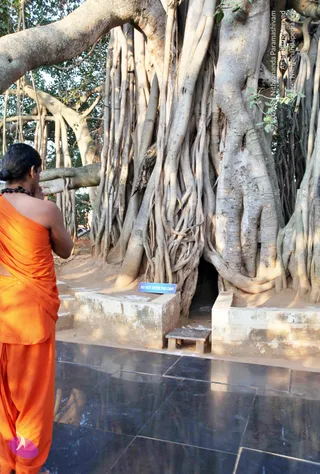
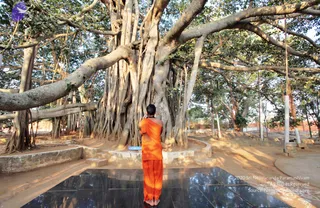
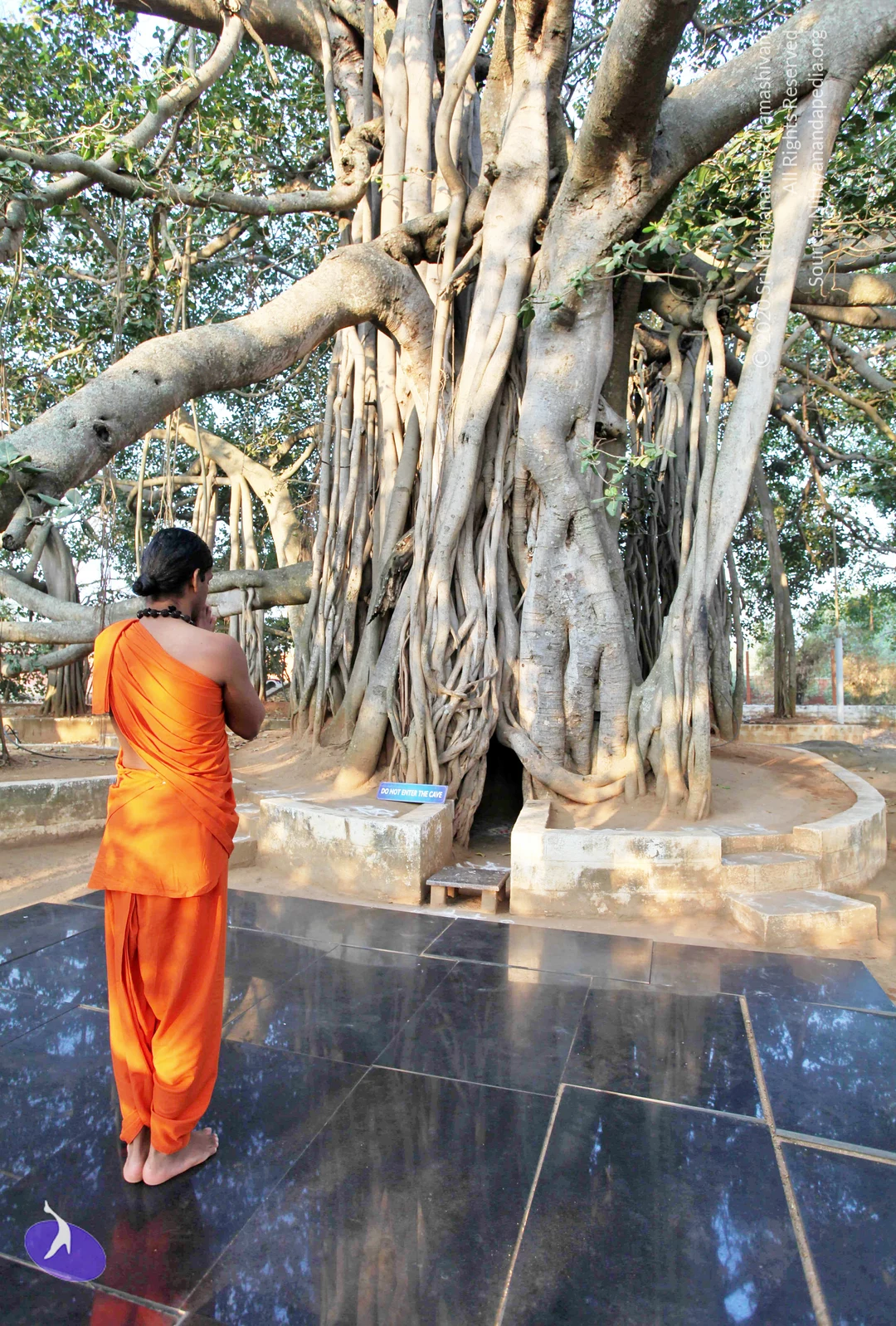
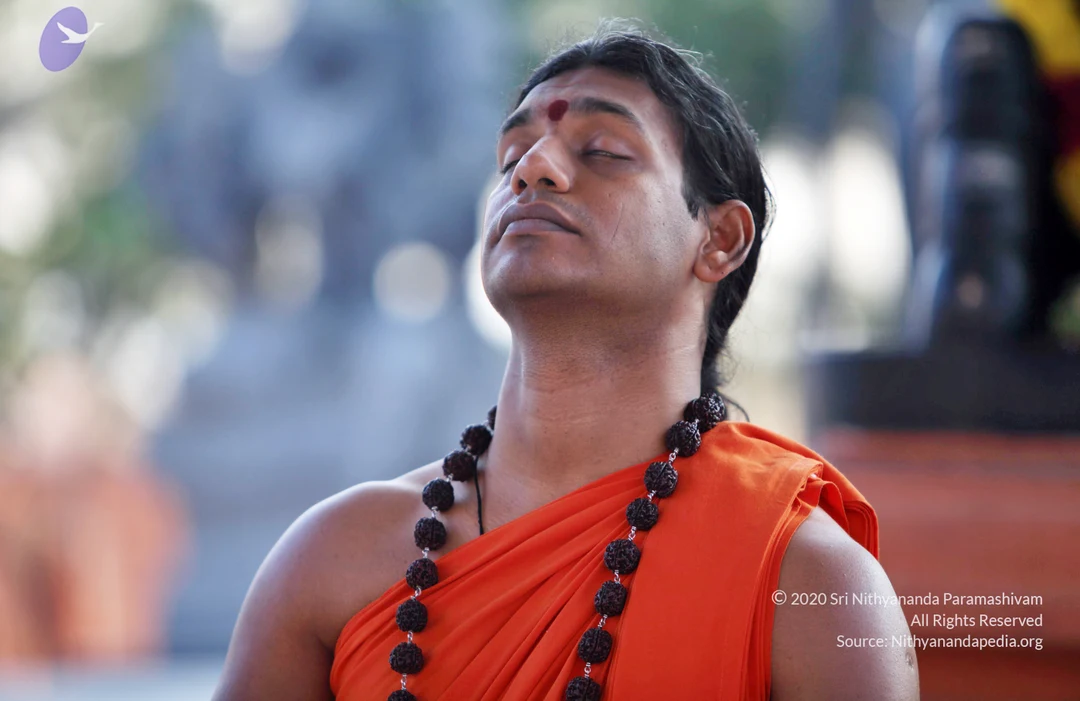
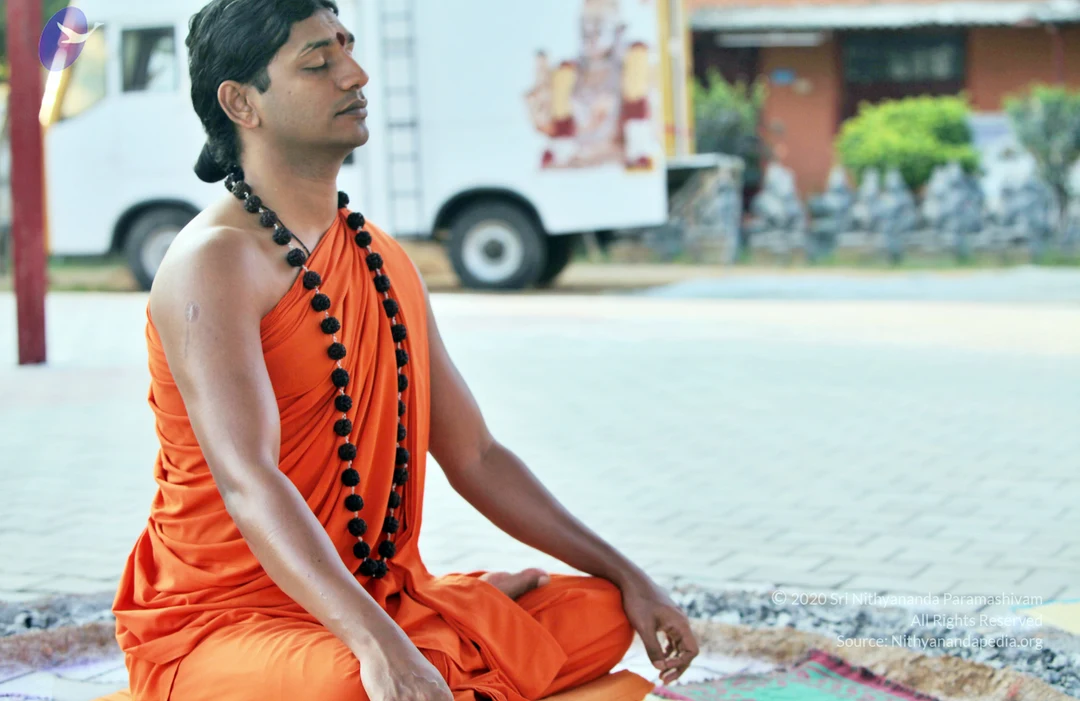
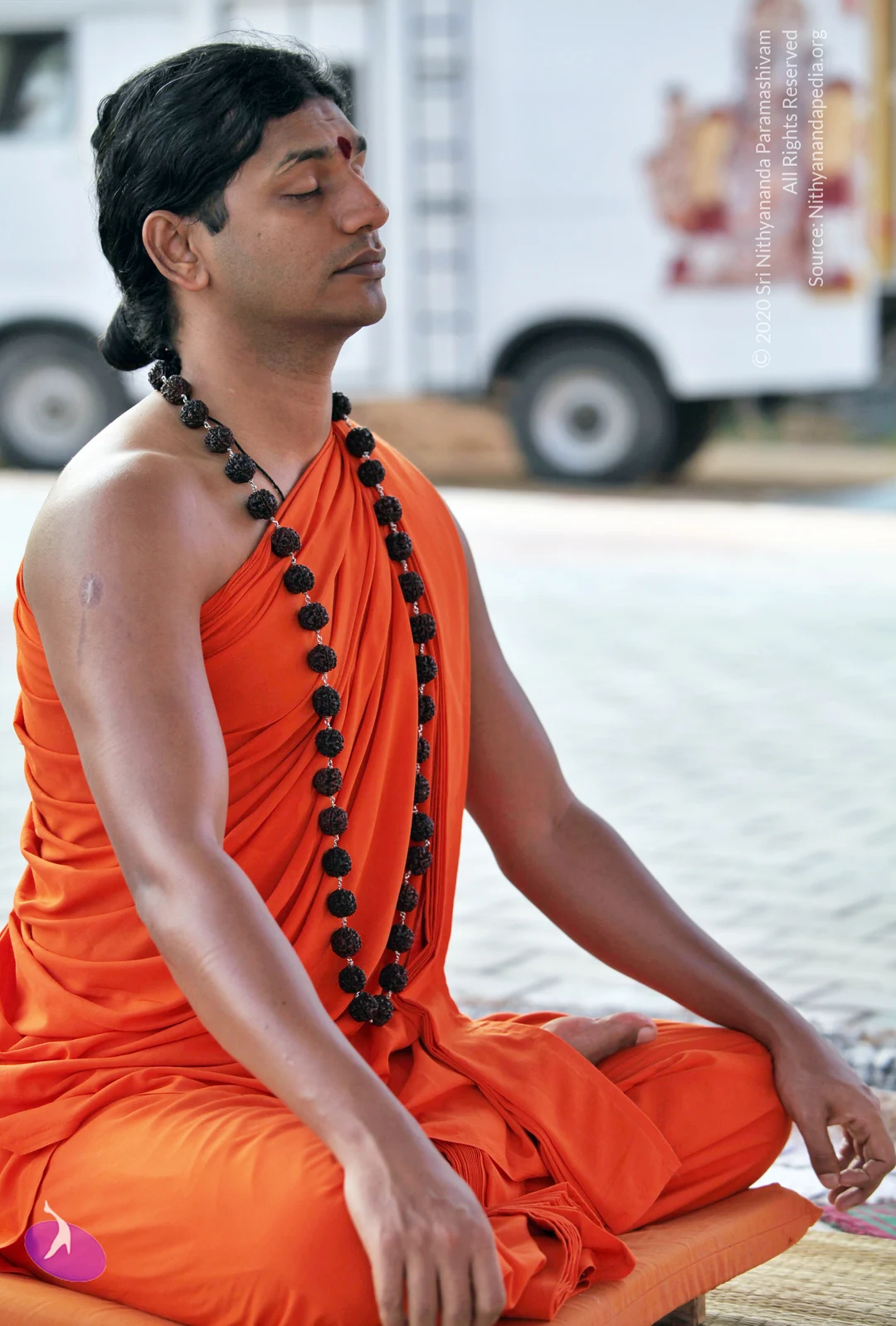
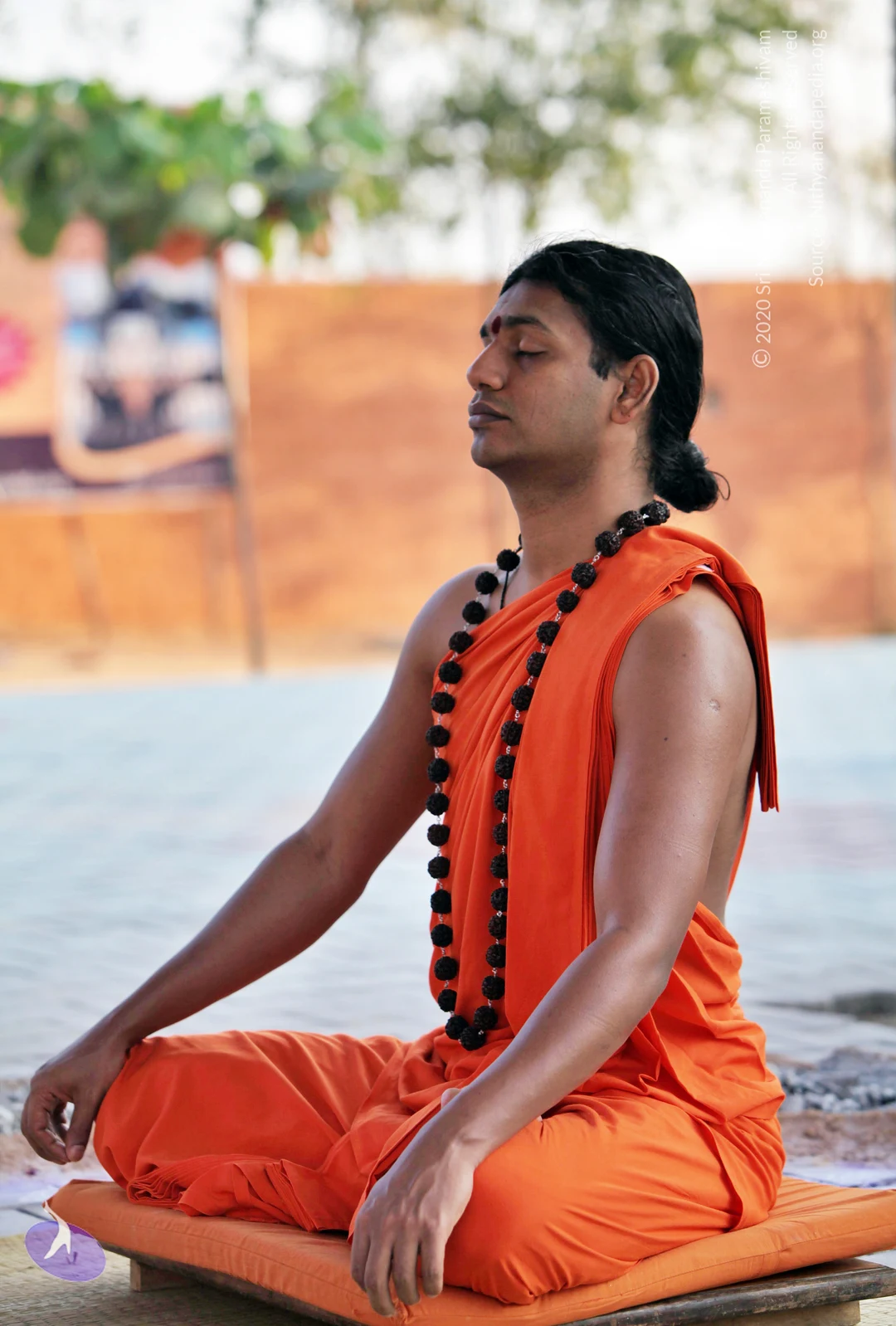
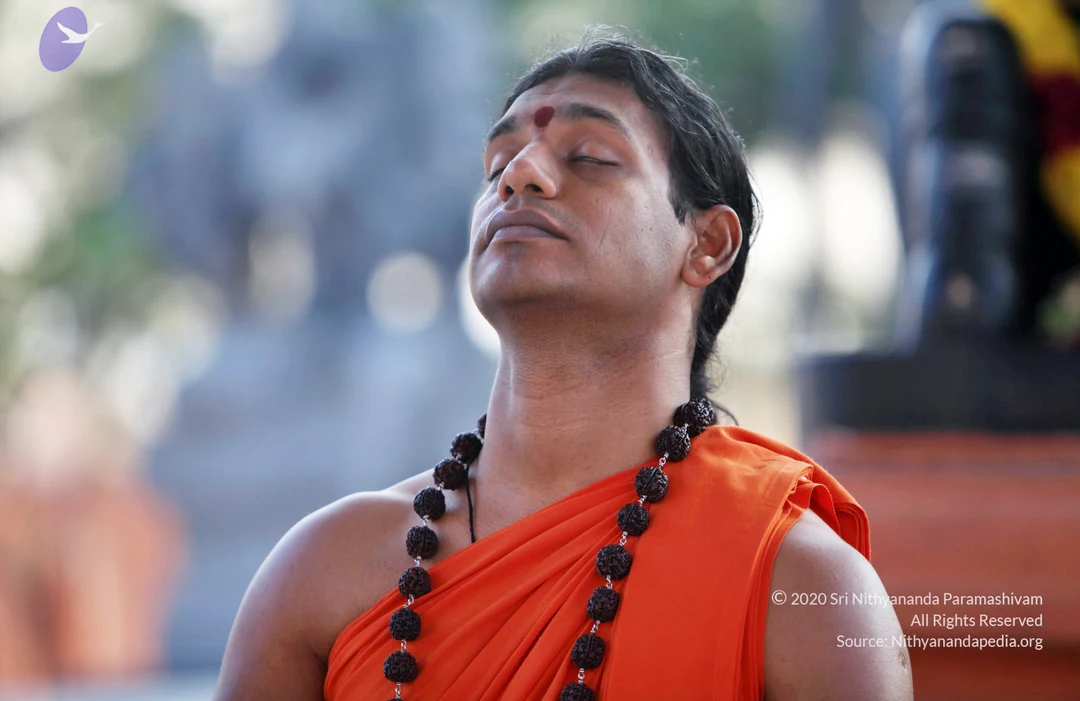
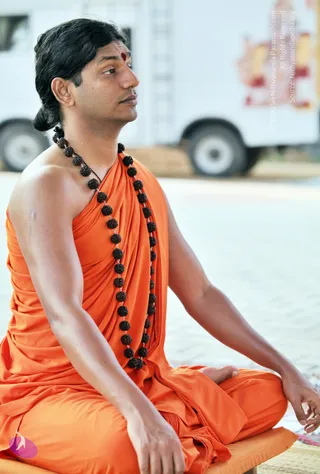
A photograph of a banyan tree with dense hanging aerial roots and a dark cave opening at its base, marked by a blue sign reading "DO NOT ENTER THE CAVE". A person in a saffron-orange robe with a dark rudraksha mala around the neck stands at left, seen from behind, with hands pressed together in prayer. A small stone bench sits before the cave on a paved black stone floor, with a whitewashed stone platform on each side of the entrance.A photograph of a large ancient banyan tree with many aerial roots and spreading branches in an open courtyard. A single person stands with their back to the camera on a dark polished stone platform, wearing a saffron-orange robe wrapped over the shoulders and an orange lower garment, with a dark mala around the neck. The person faces the trunk, which is encircled by a low raised stone platform. A small printed sign sits at the base of the tree. Dry earth, a white pole and a hanging rope are visible to the right, with a red brick wall in the background.A seated man in saffron-orange robes wrapped over one shoulder sits cross-legged on an orange cushion, gazing to the side with a calm expression. He wears a long double-strand necklace of dark rudraksha beads and a small red tilak on his forehead, with long dark hair tied back. Behind him a white vehicle with large wheels and a blurred red-and-gold painted panel stand on a pale paved area. The seated figure matches the Swamiji (probable) cues of long swept-back hair, saffron clothing and rudraksha malas, as a meditating devotee in an outdoor setting.Close side-profile photograph of a man with long dark hair tied back, eyes closed in meditation, wearing a saffron-orange garment that is bare on one shoulder and a long strand of dark brown rudraksha mala beads across his chest and neck. A small red tilak mark is visible on his forehead. The background is softly blurred with muted red and green tones. A pink lotus-style logo appears in the lower left corner.Close side profile photograph of a man with eyes closed in meditation, long dark hair swept back, a small red tilak on his forehead, and a long rudraksha mala of dark brown beads draped over his shoulder. He wears orange clothing and his bare shoulder is visible. The blurred background is warm red and white. Swamiji (probable): long swept-back hair, rudraksha mala and saffron clothing, shown in quiet meditative posture.Side-profile photograph of a man sitting cross-legged in meditation on an orange cushion placed on a woven mat outdoors, eyes closed and hands resting on his knees. He wears an orange saffron-coloured robe draped over one shoulder and a long dark rudraksha mala around his neck, with his long dark hair tied back. A small brass vessel sits at the lower right edge, and a paved courtyard with stones and a red-roofed building forms the background.