Skip to content
Tuesday

1 February 2011

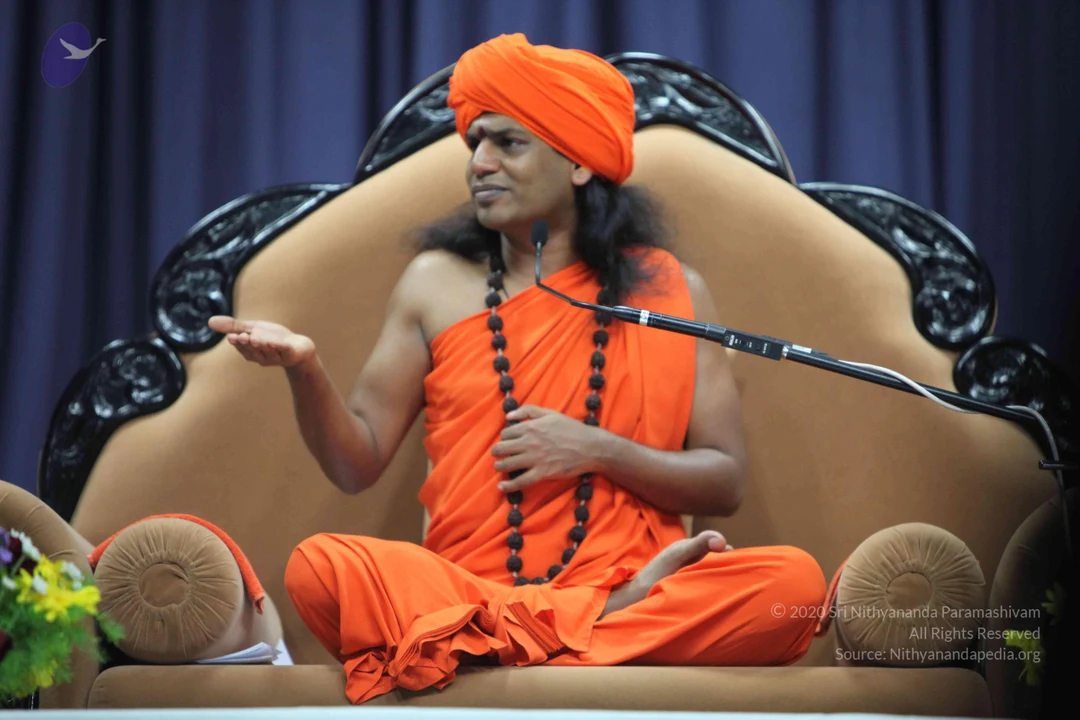
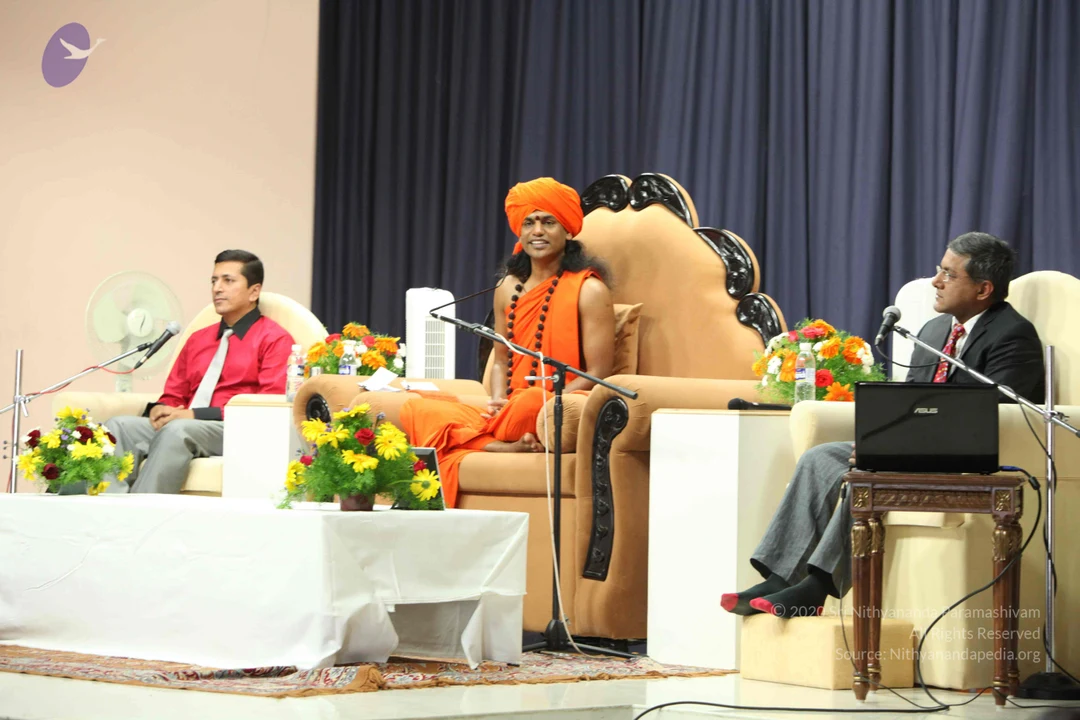
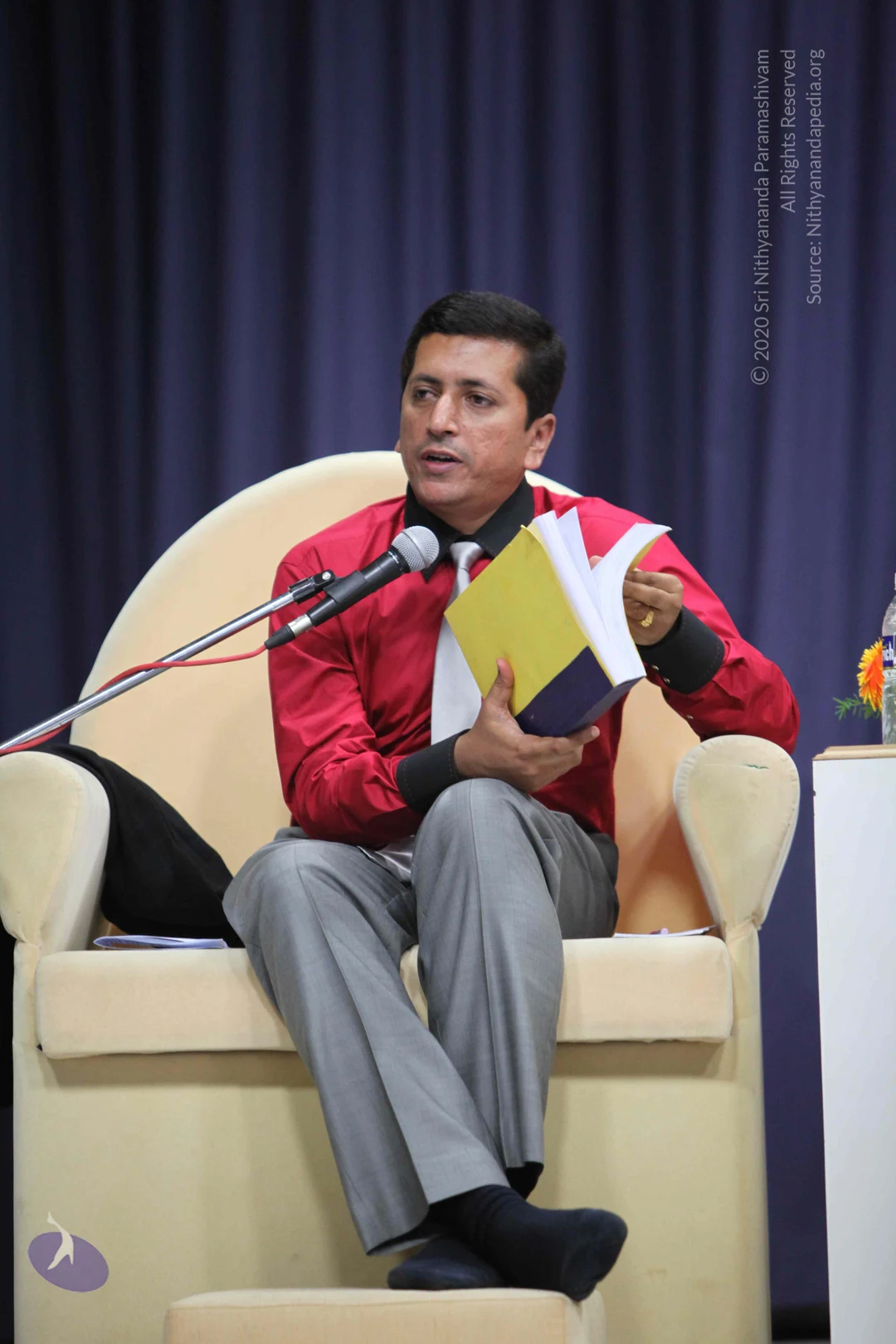
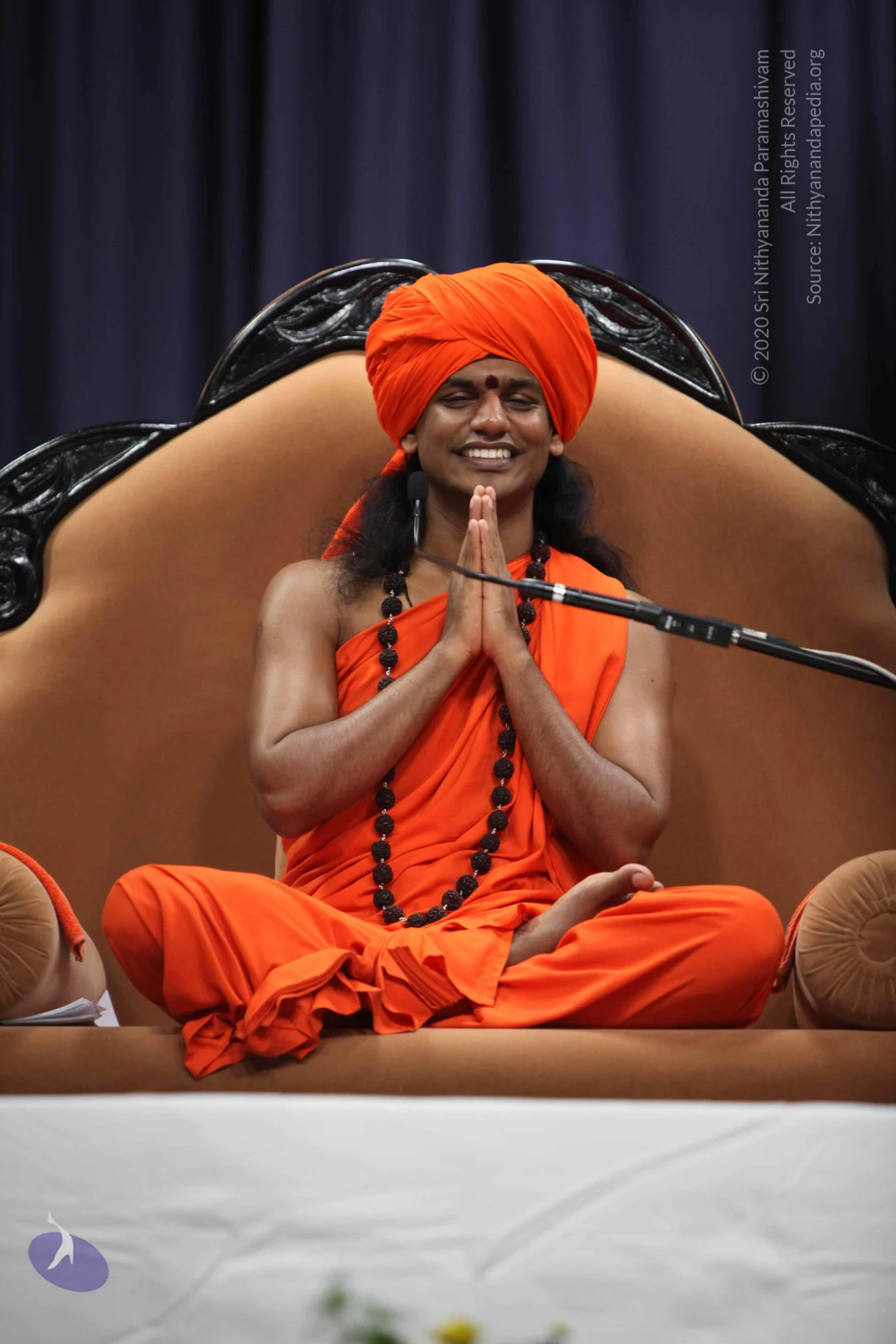
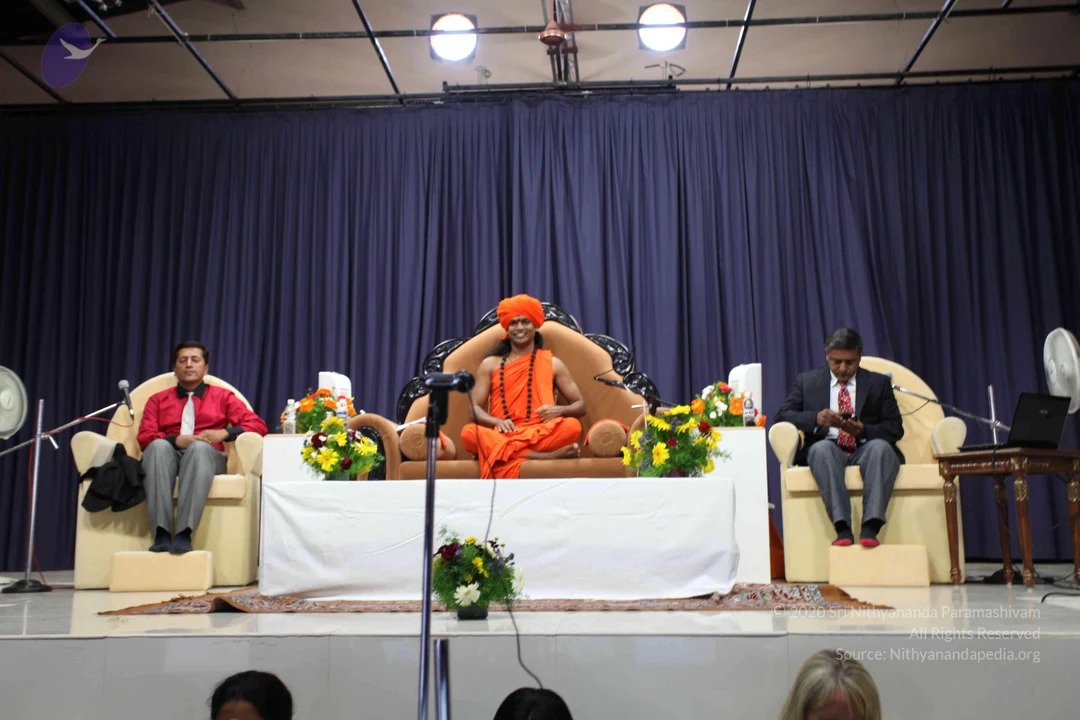
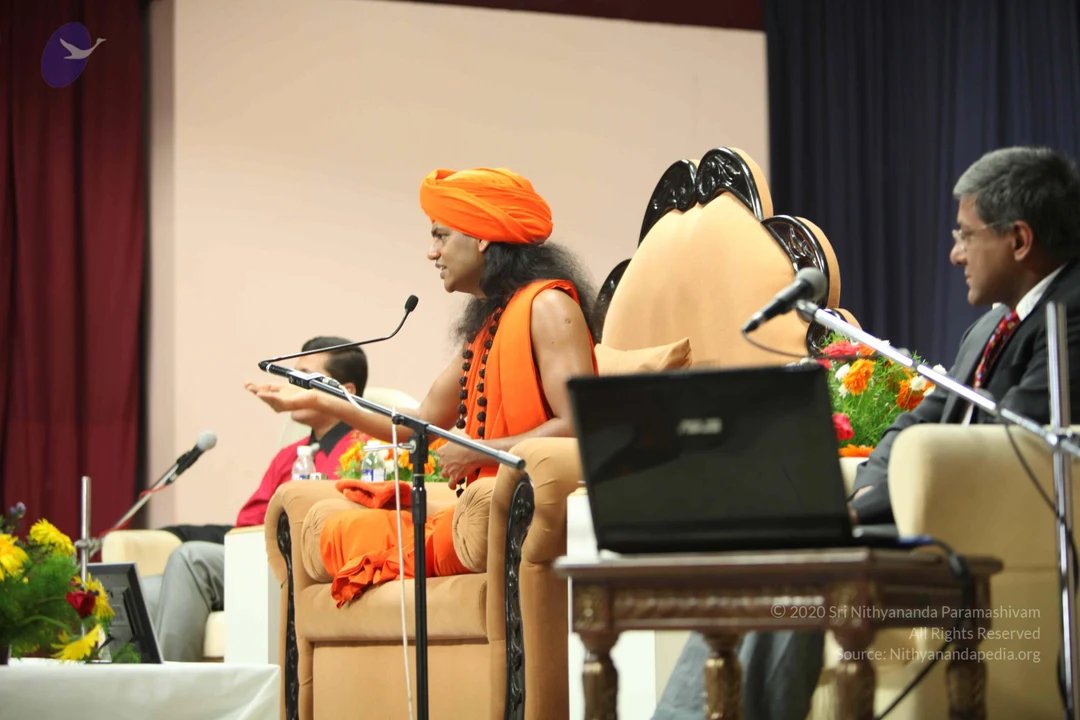
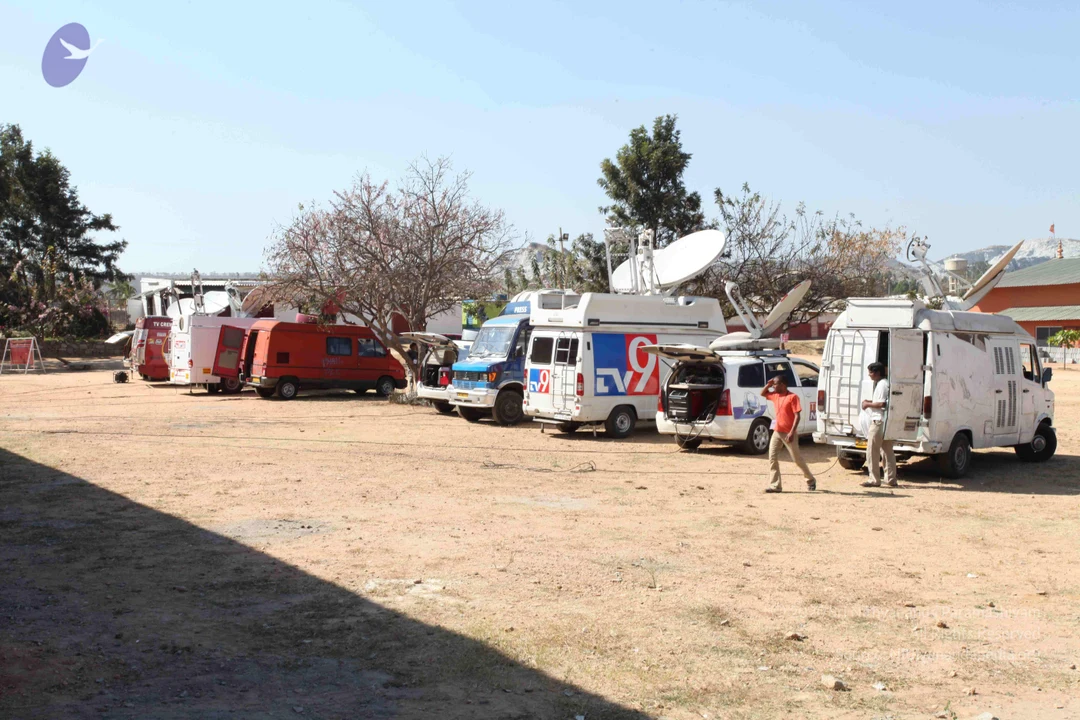
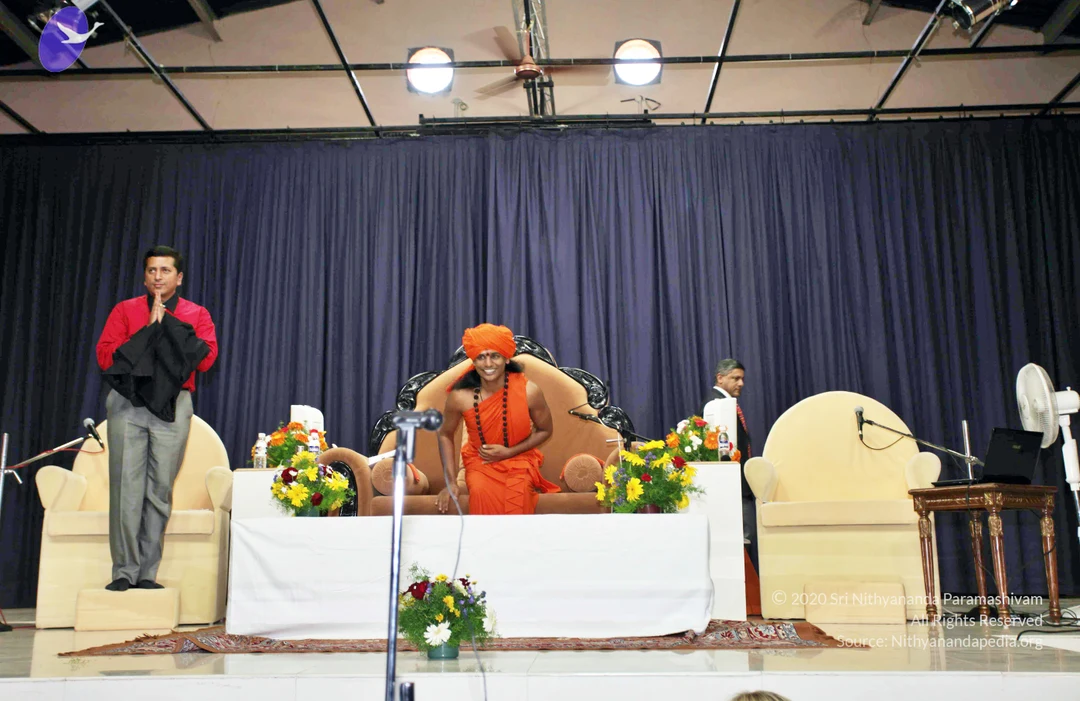
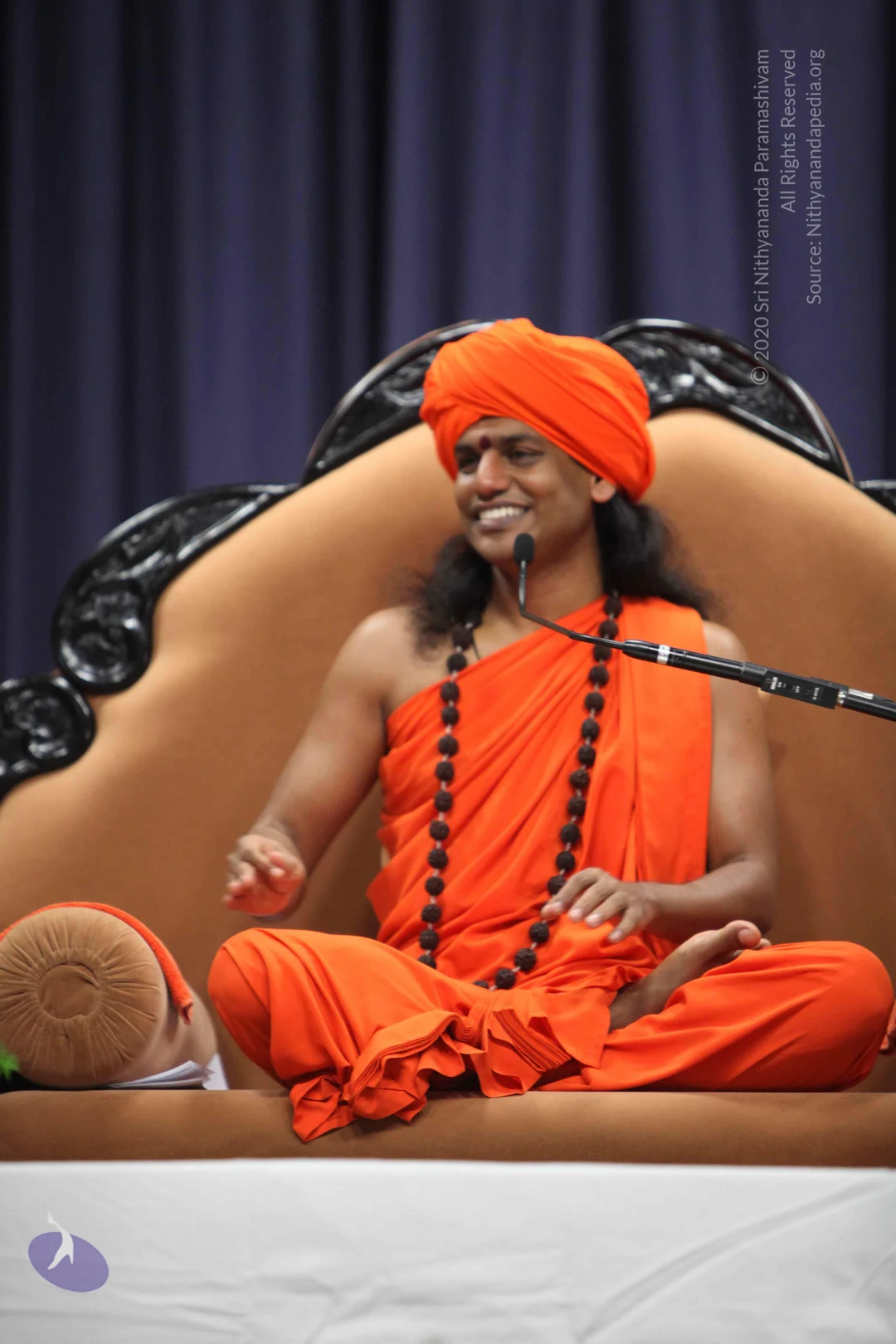
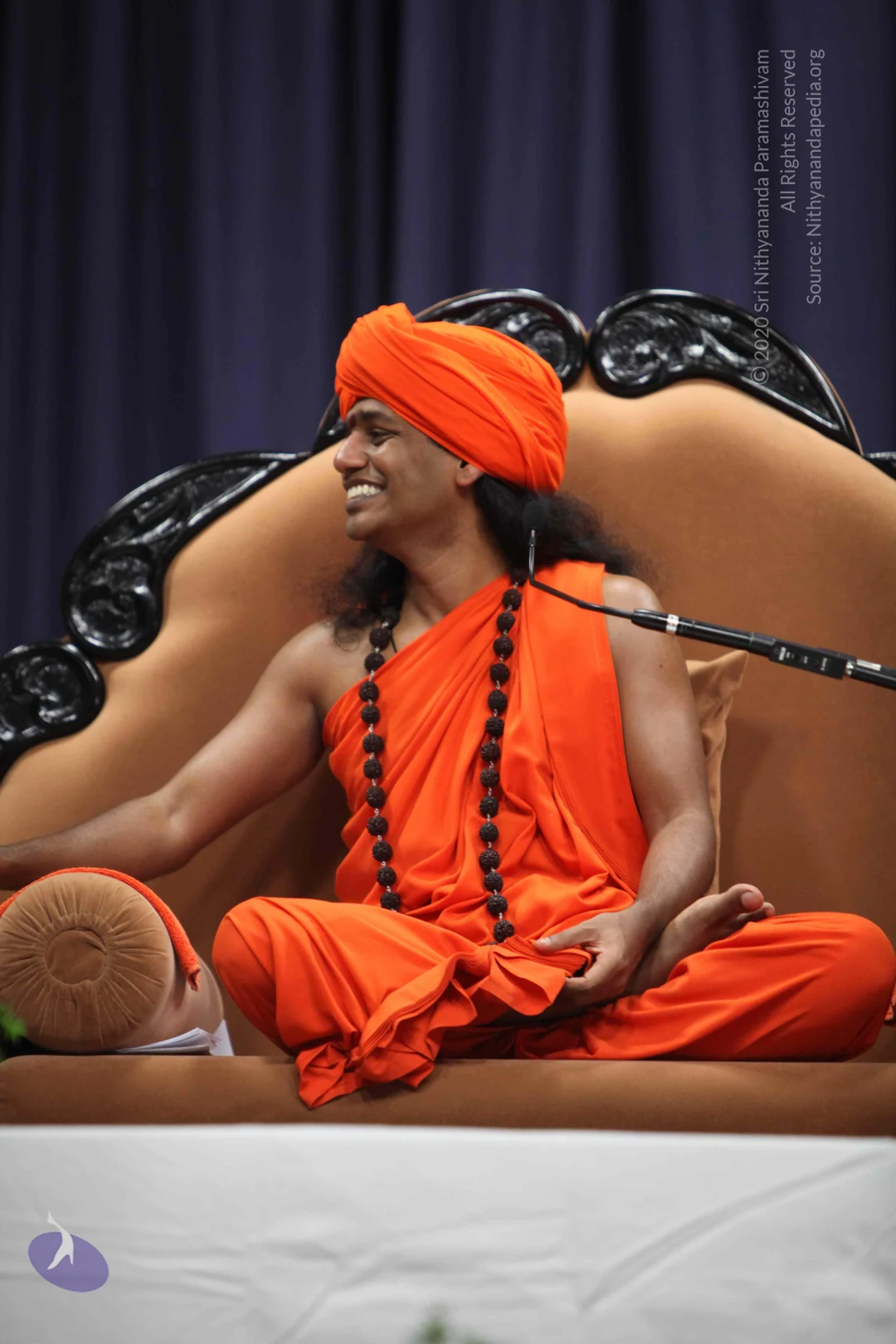
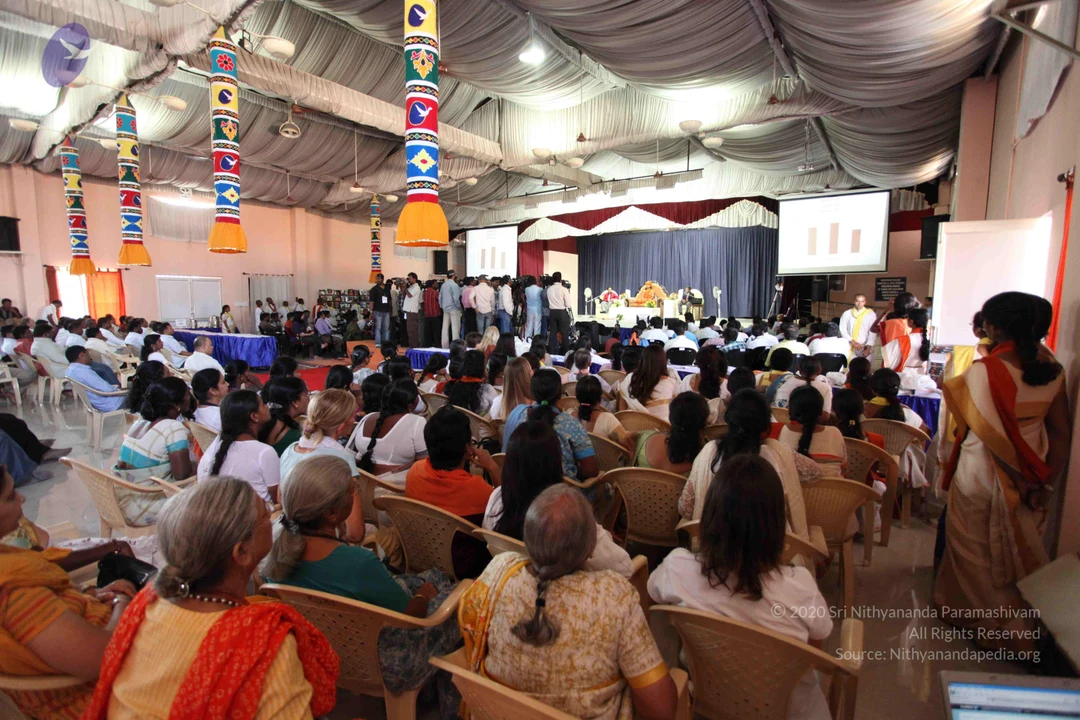
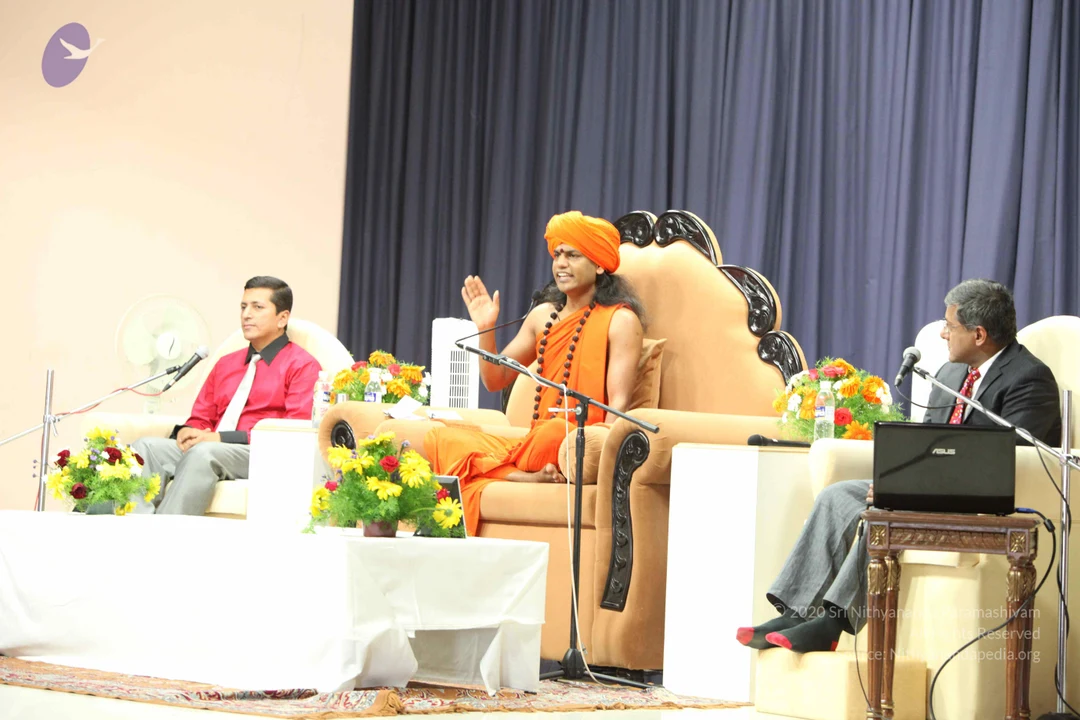
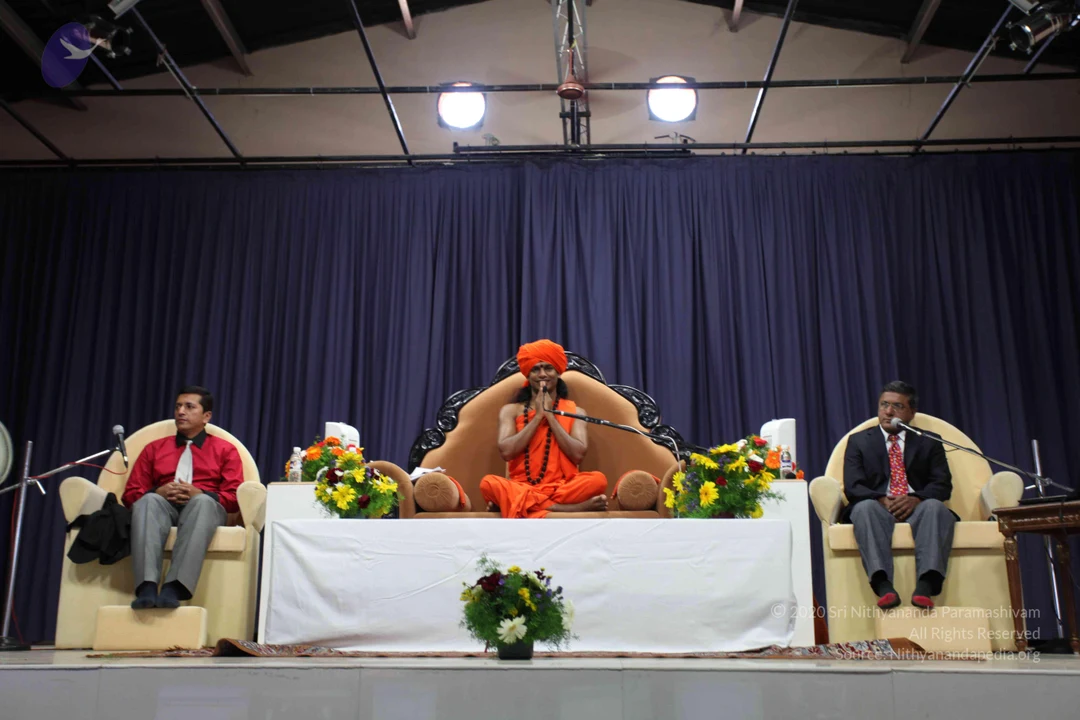
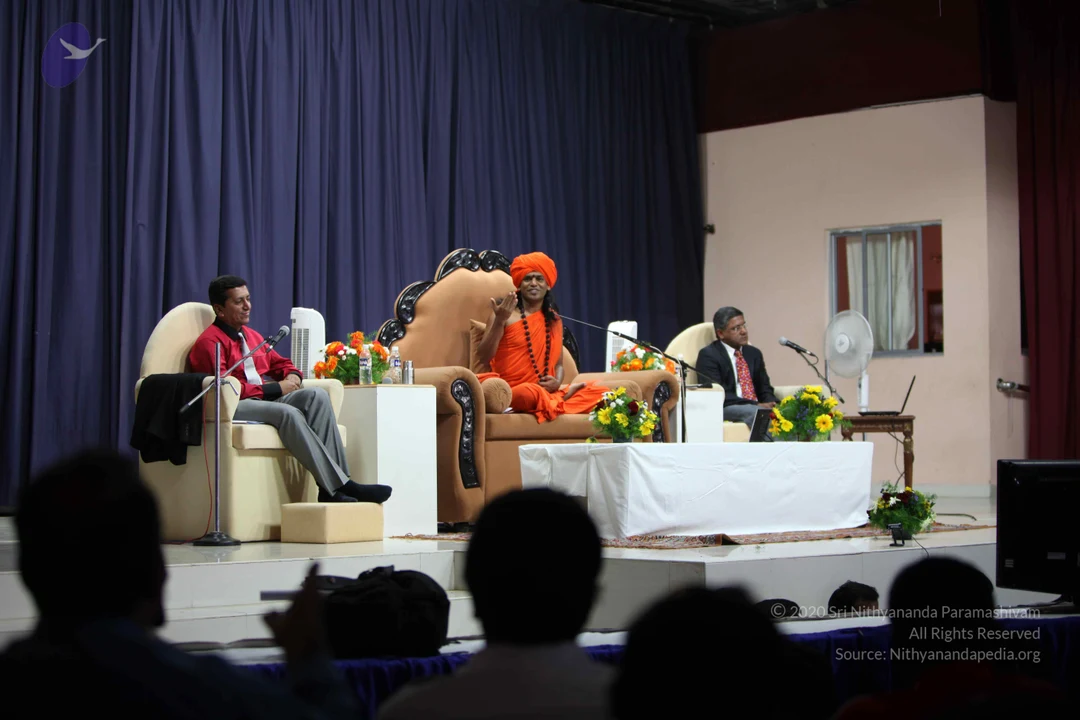
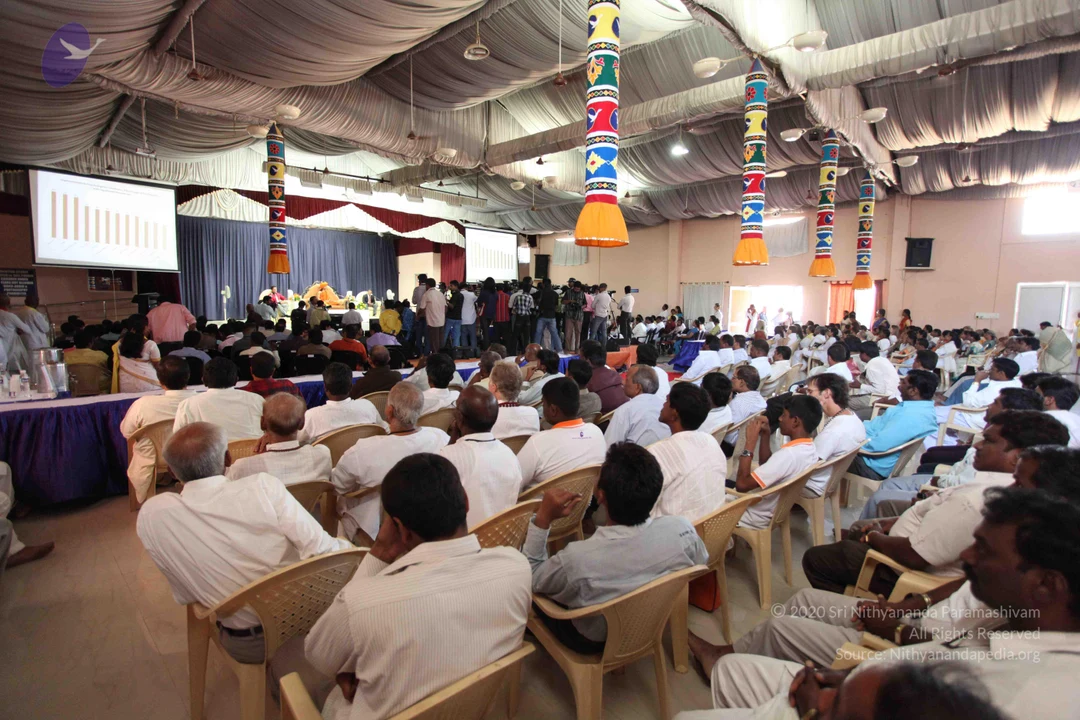
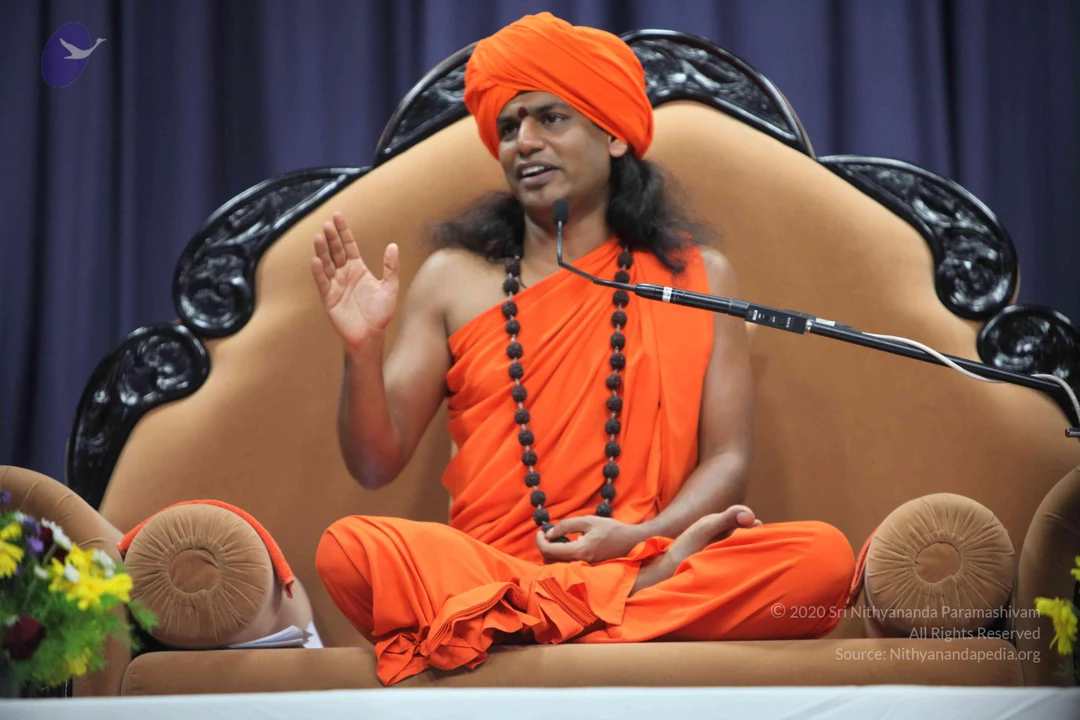
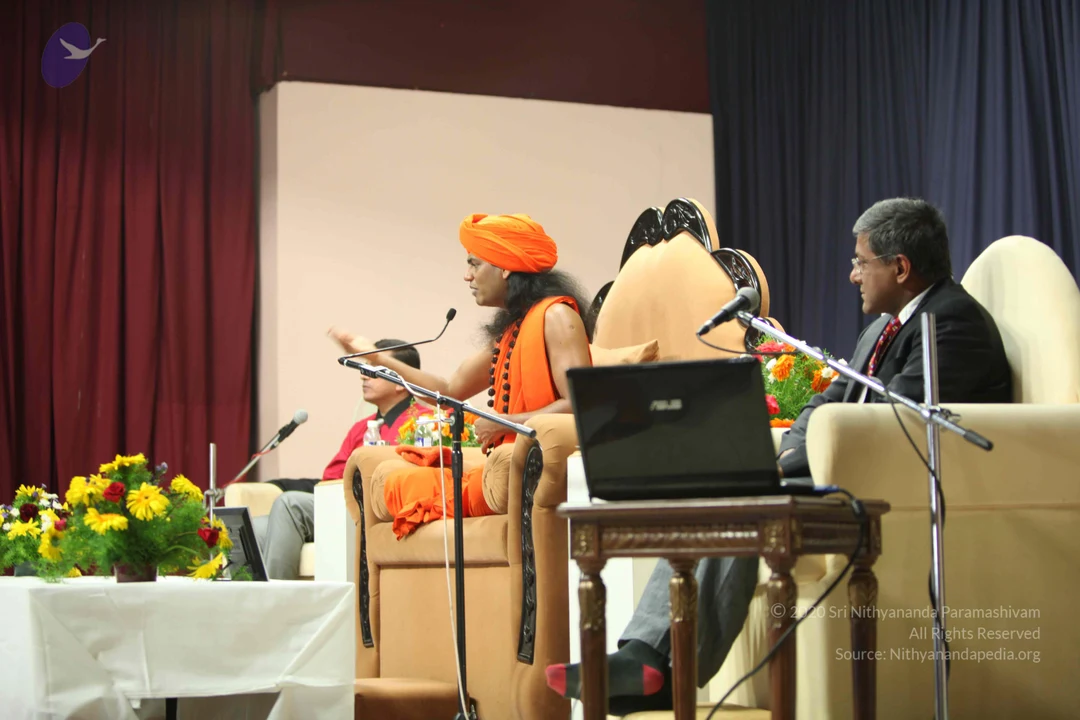
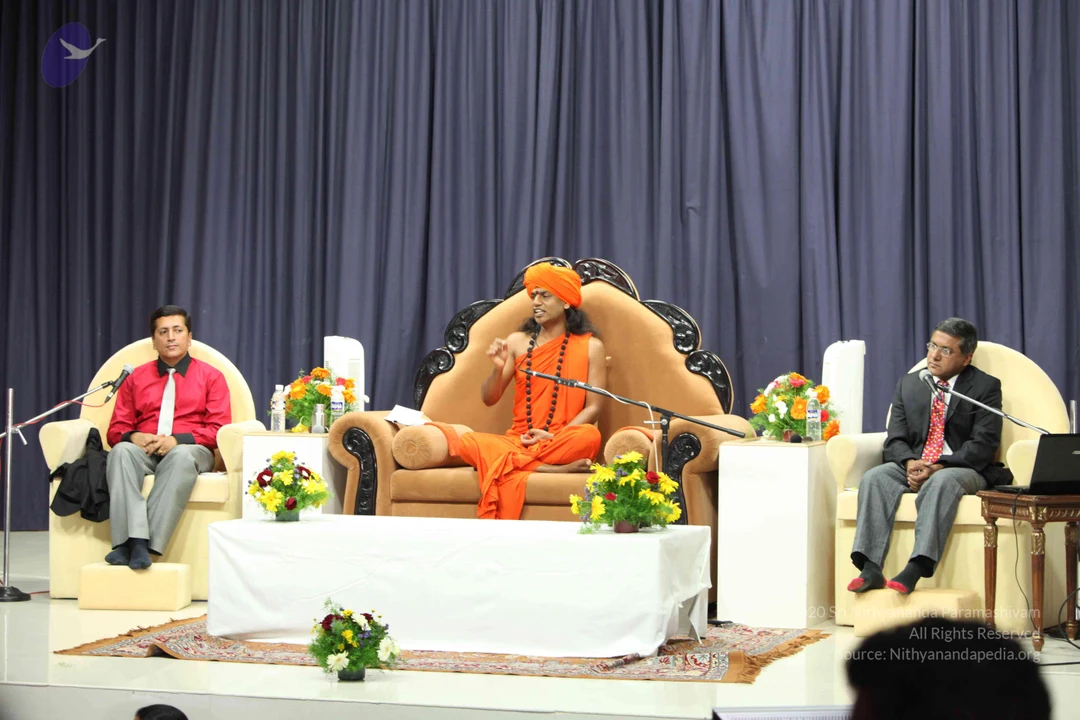
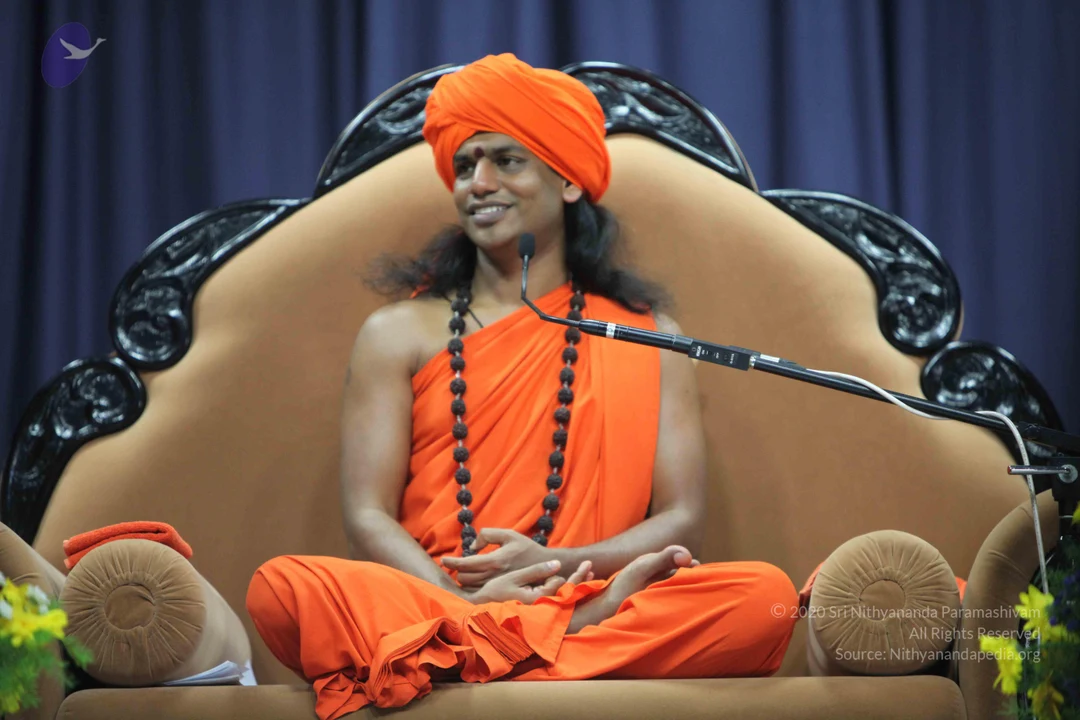
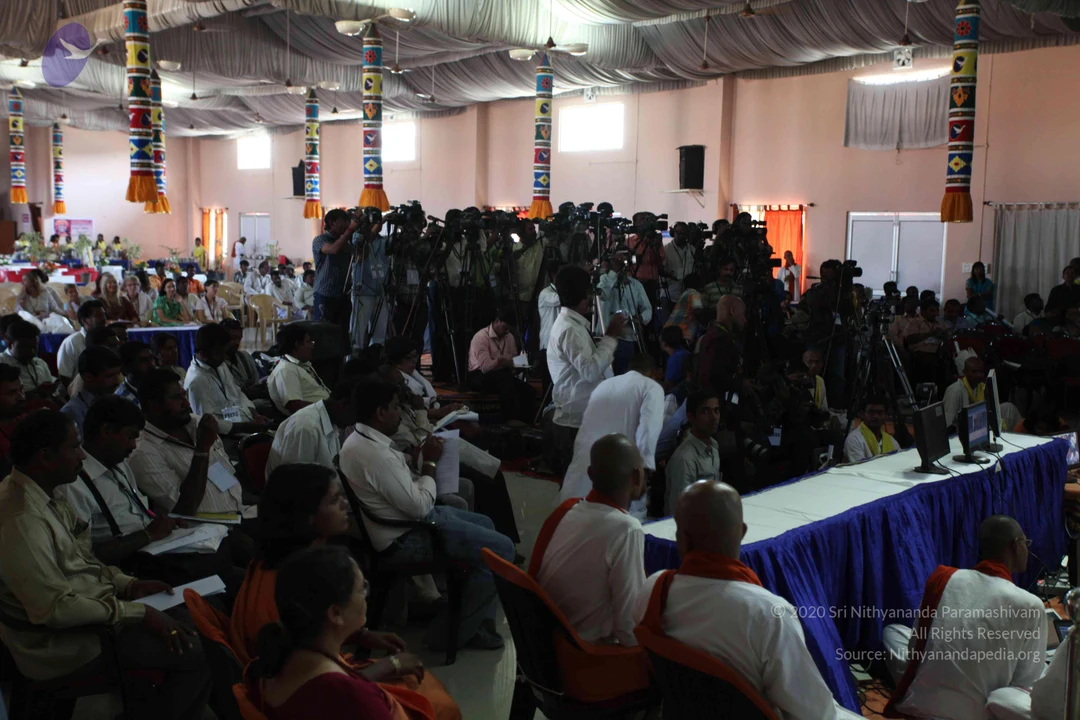
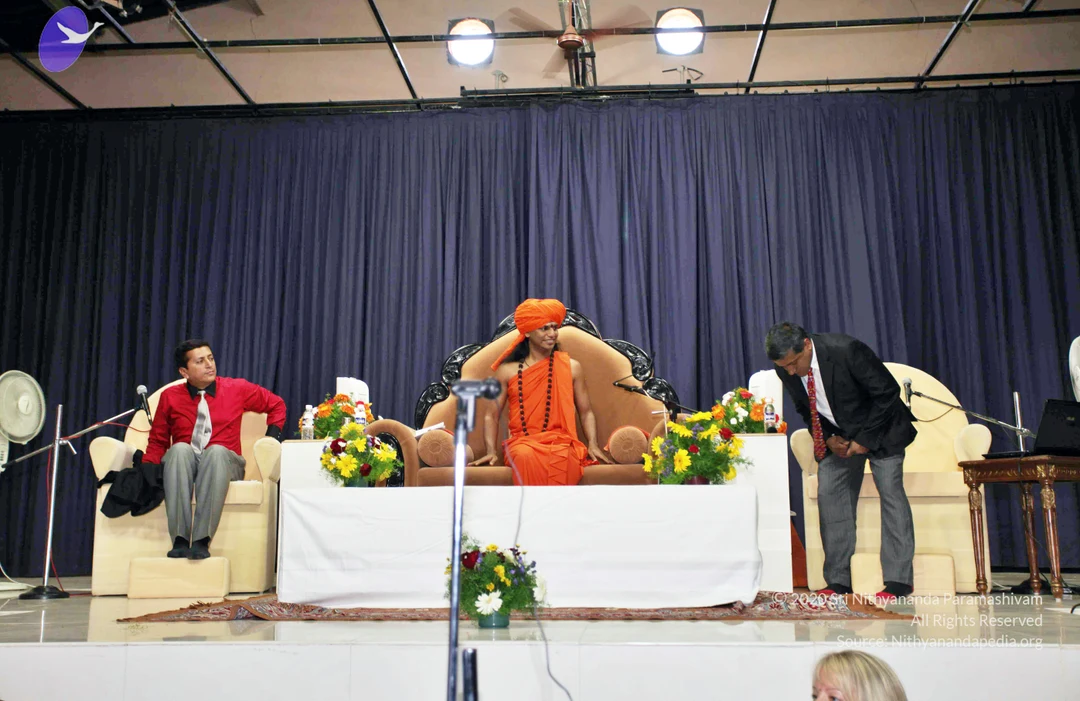
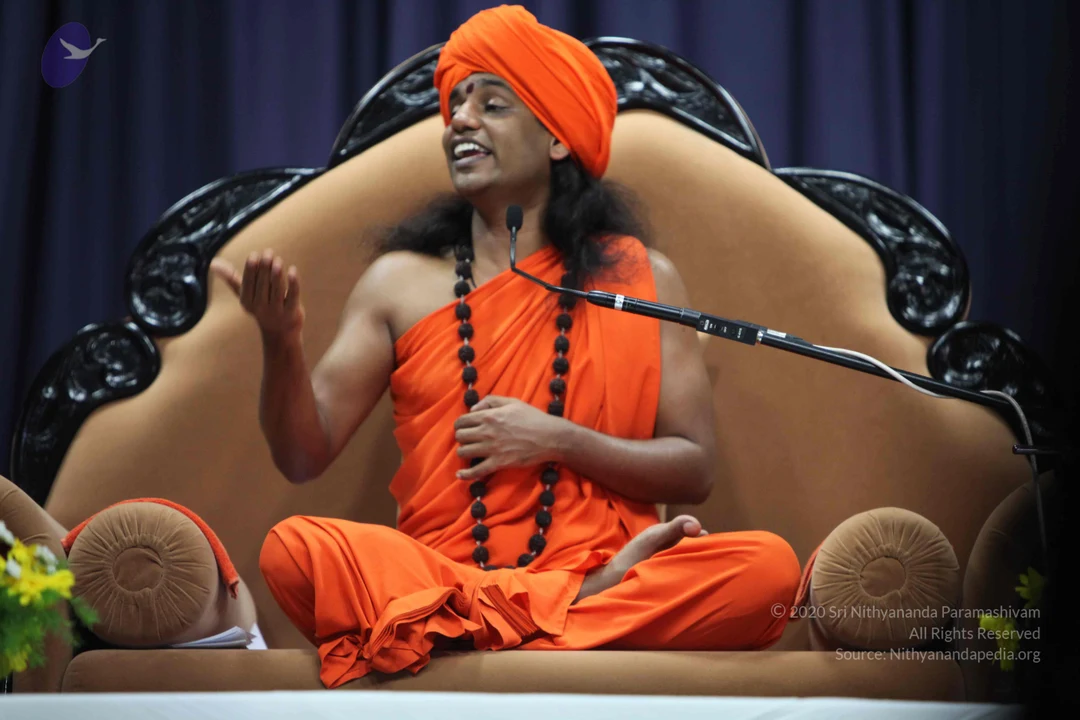
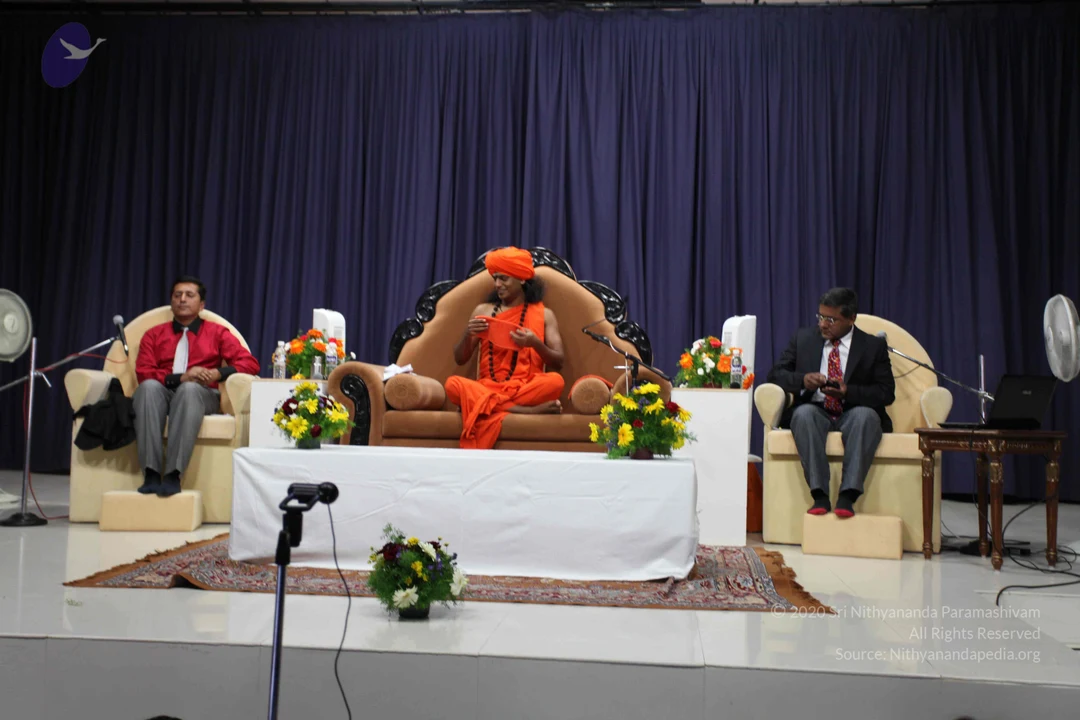
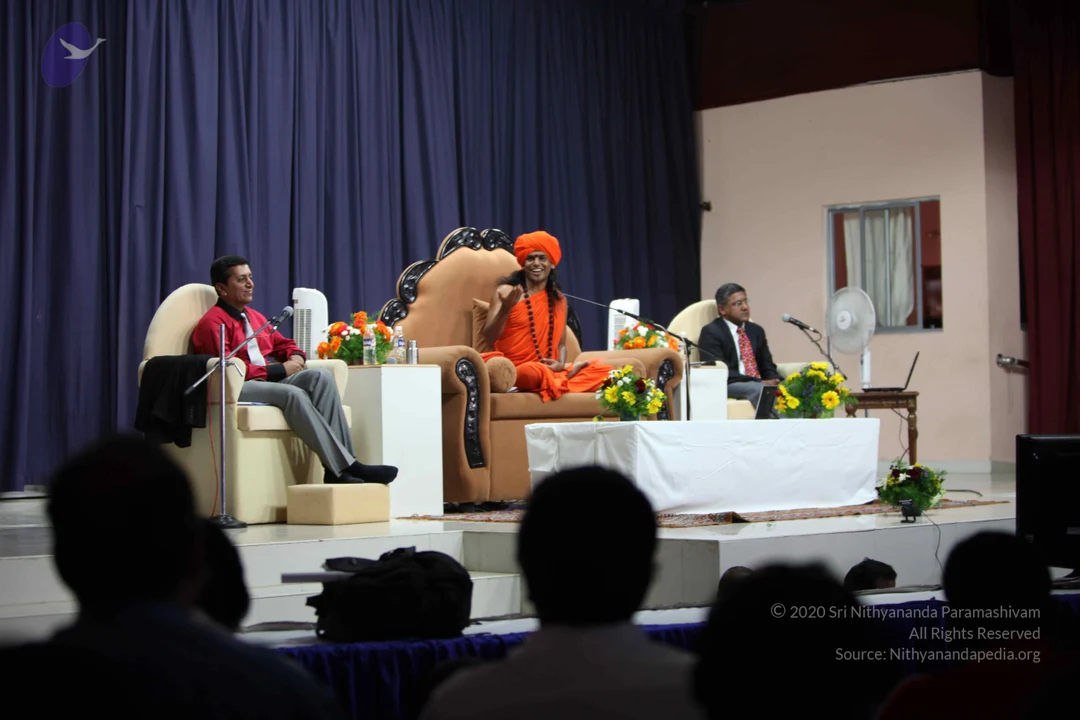
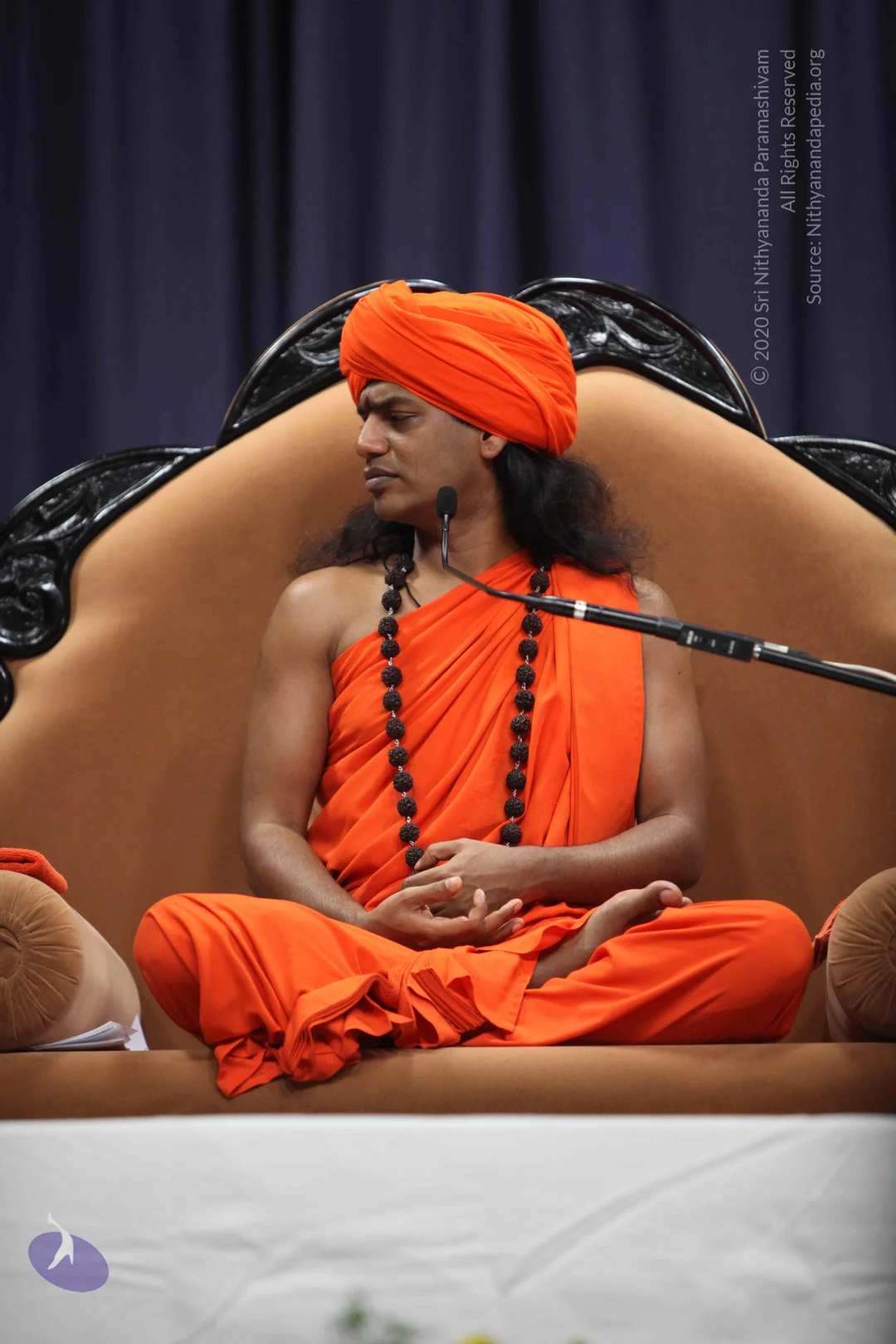
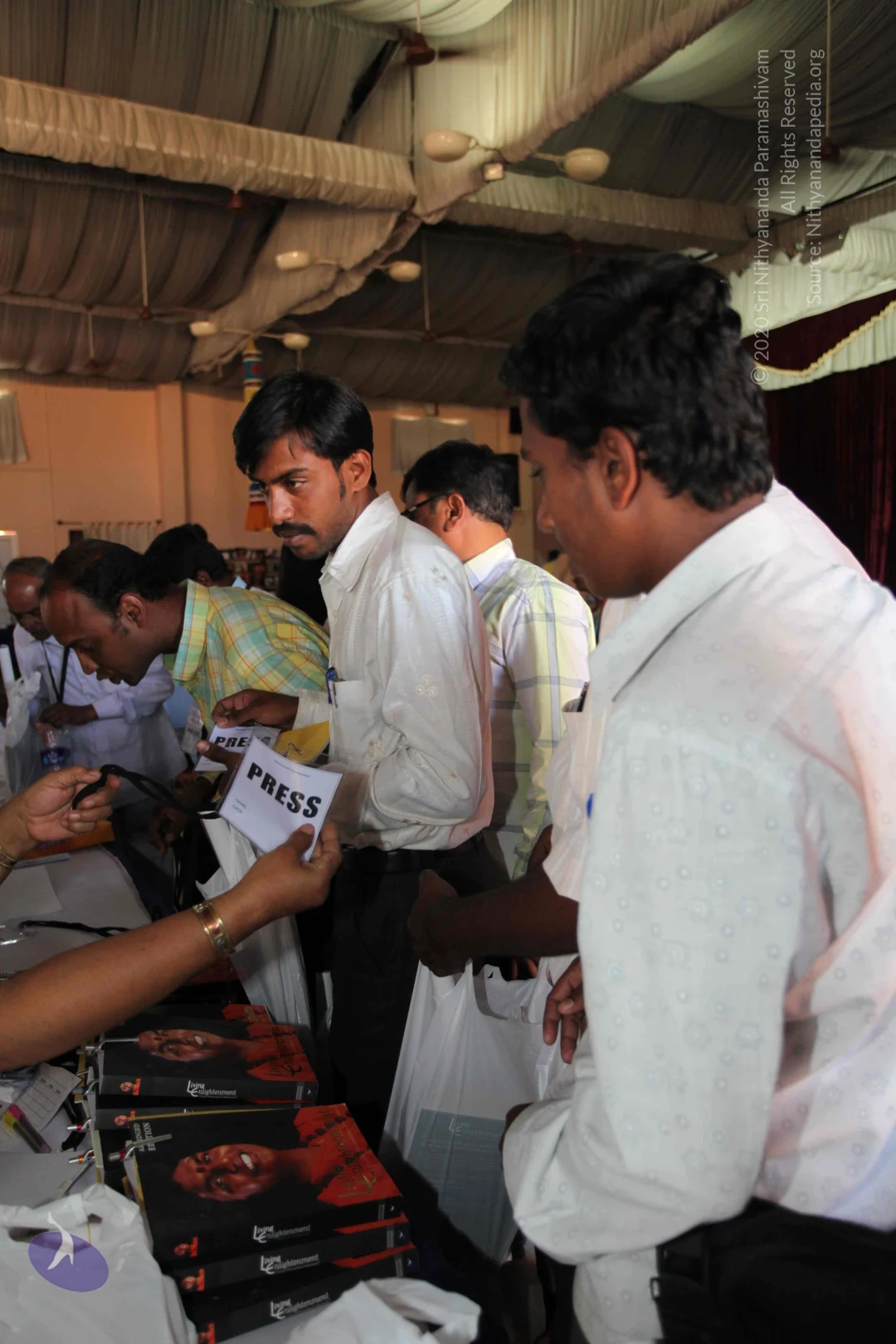
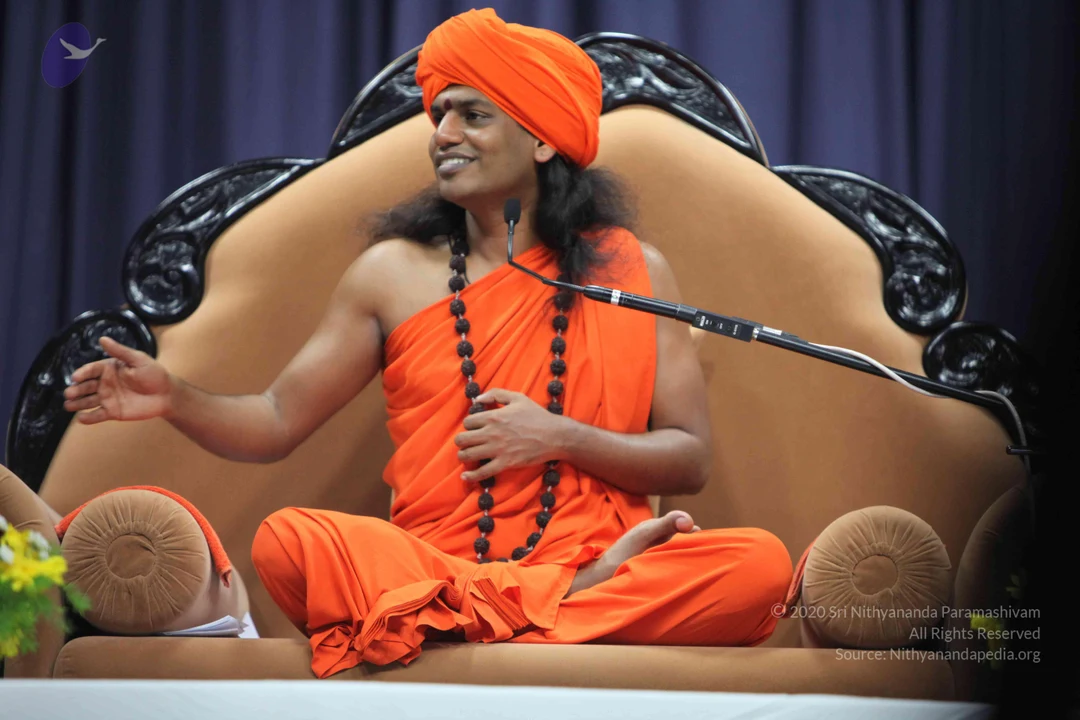
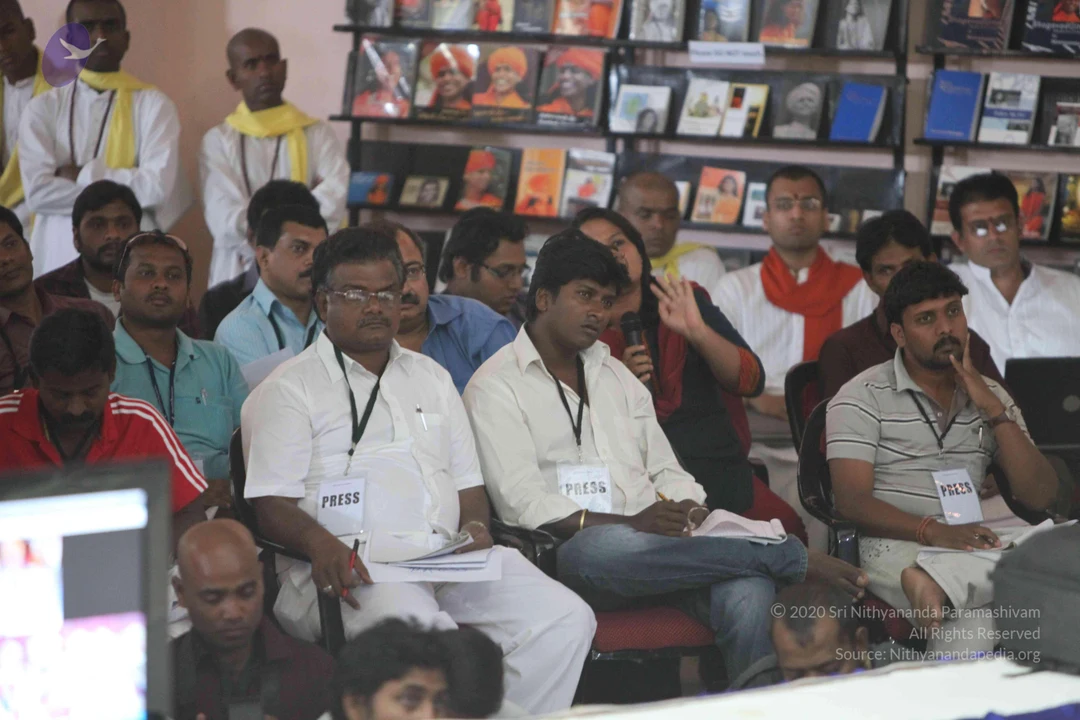
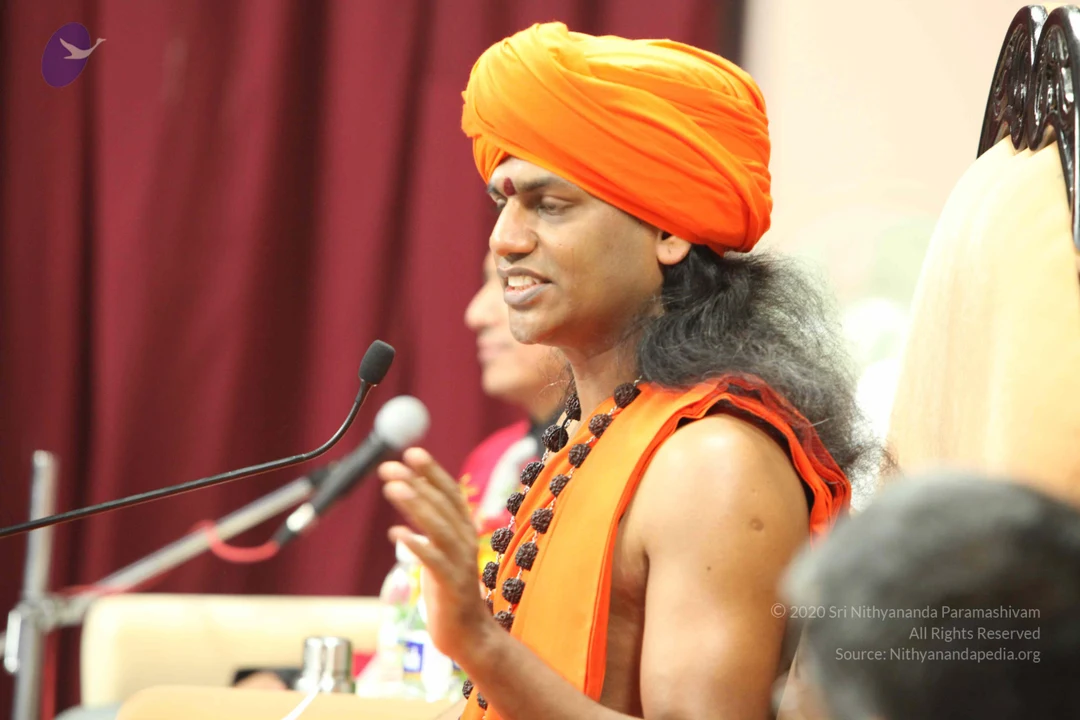
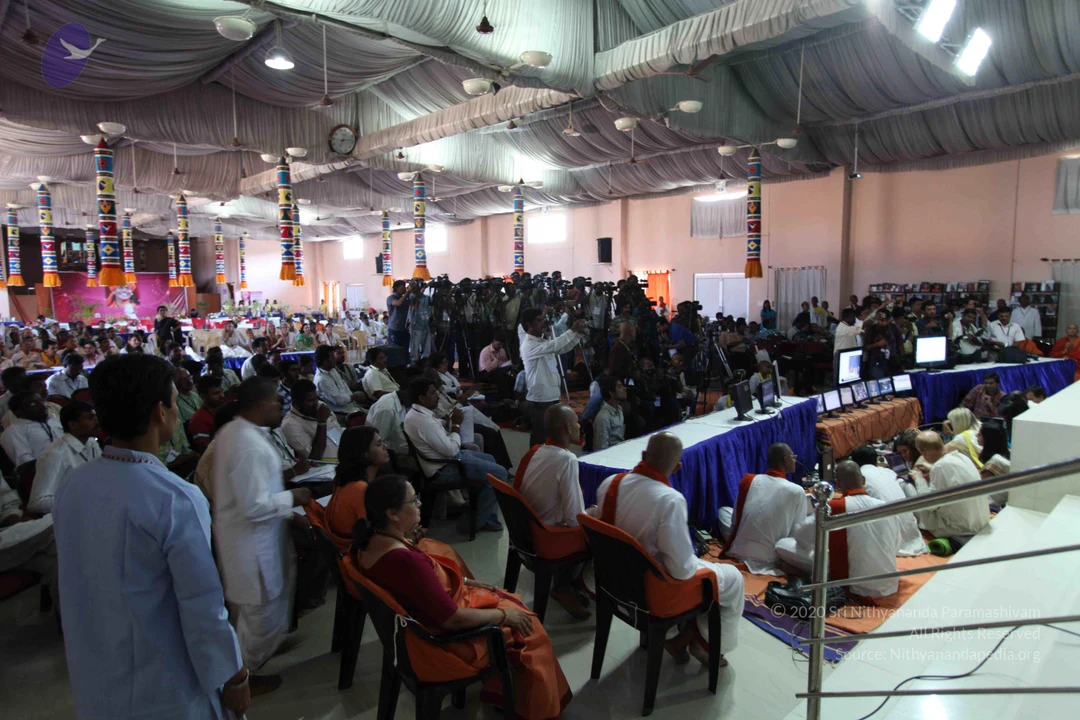
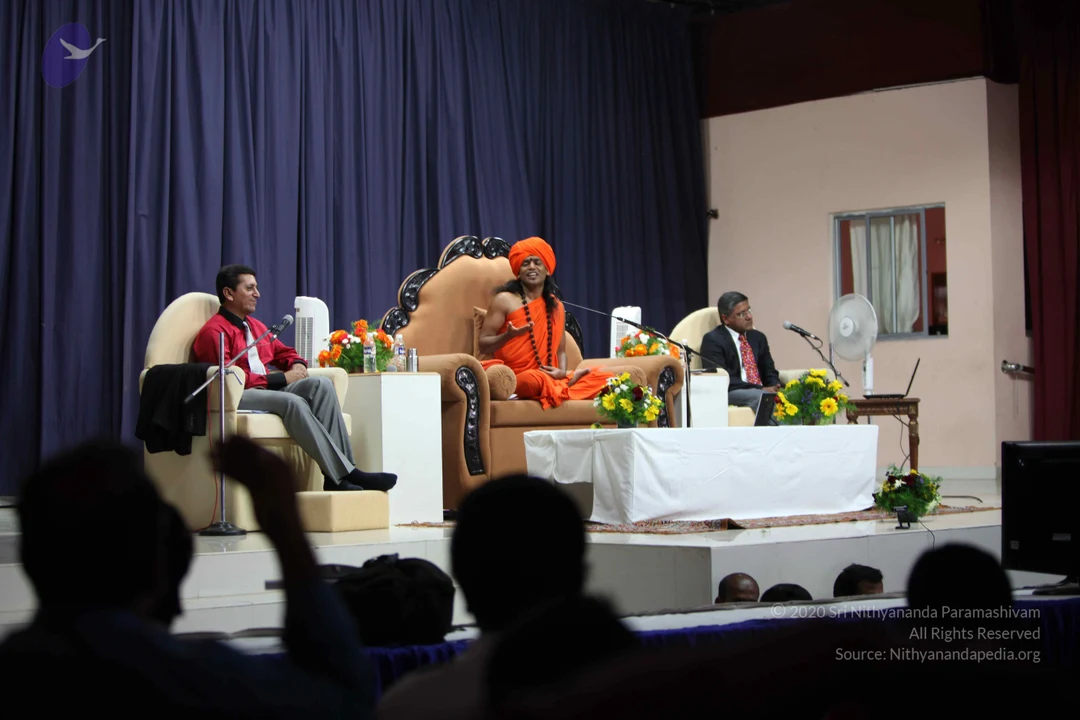
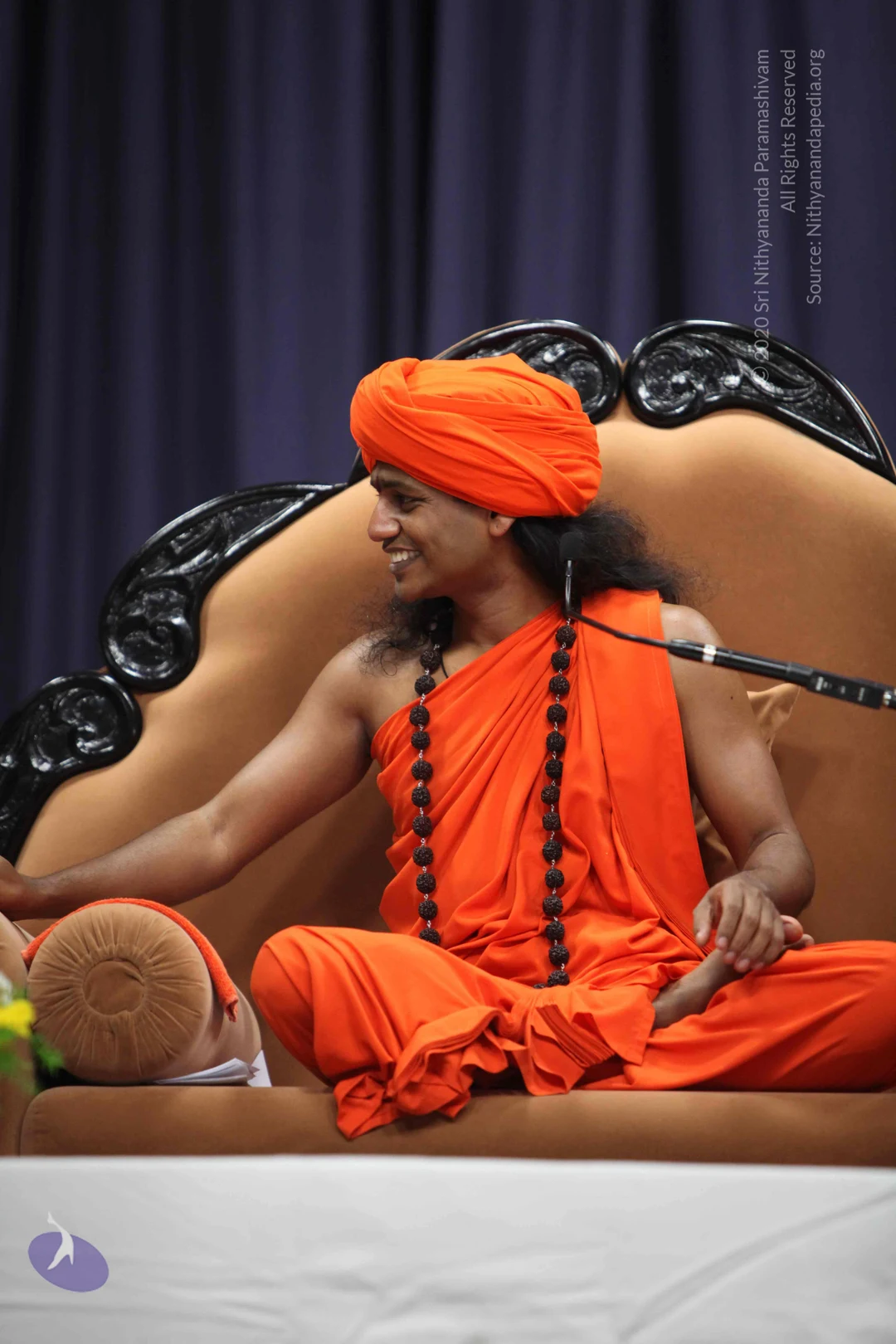
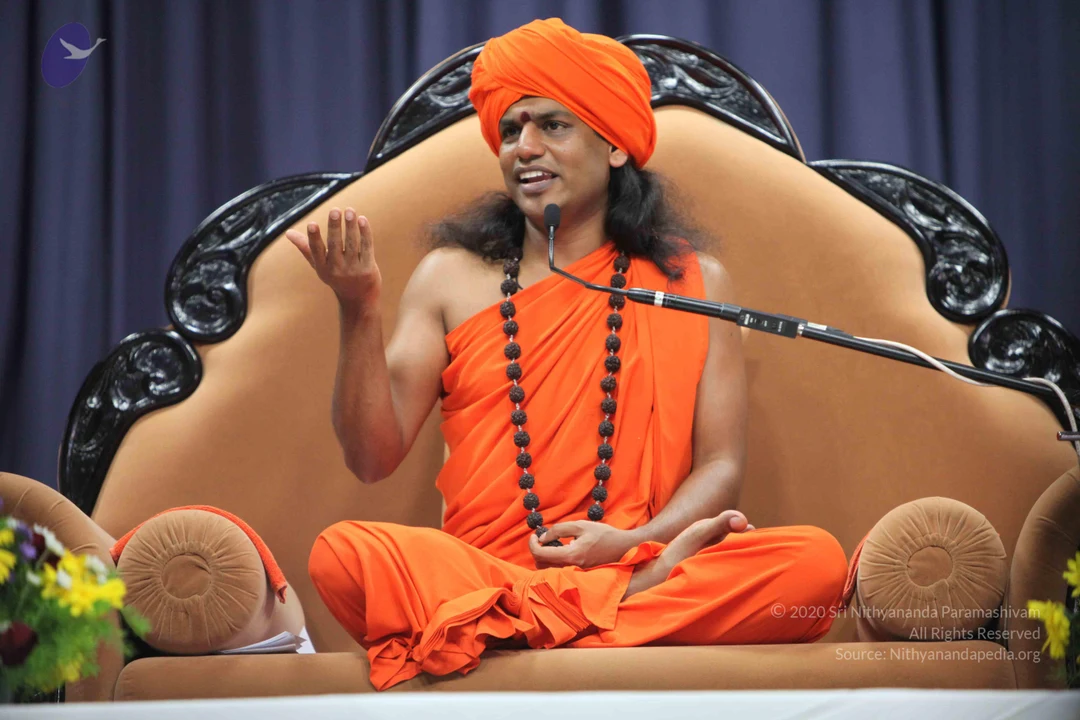
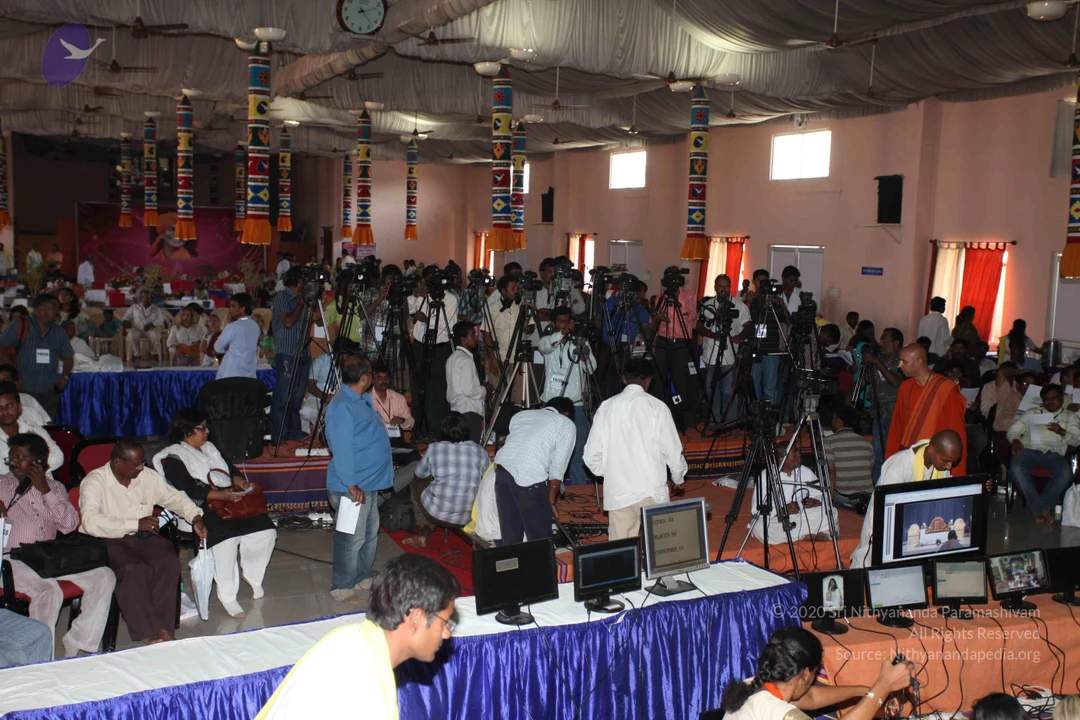
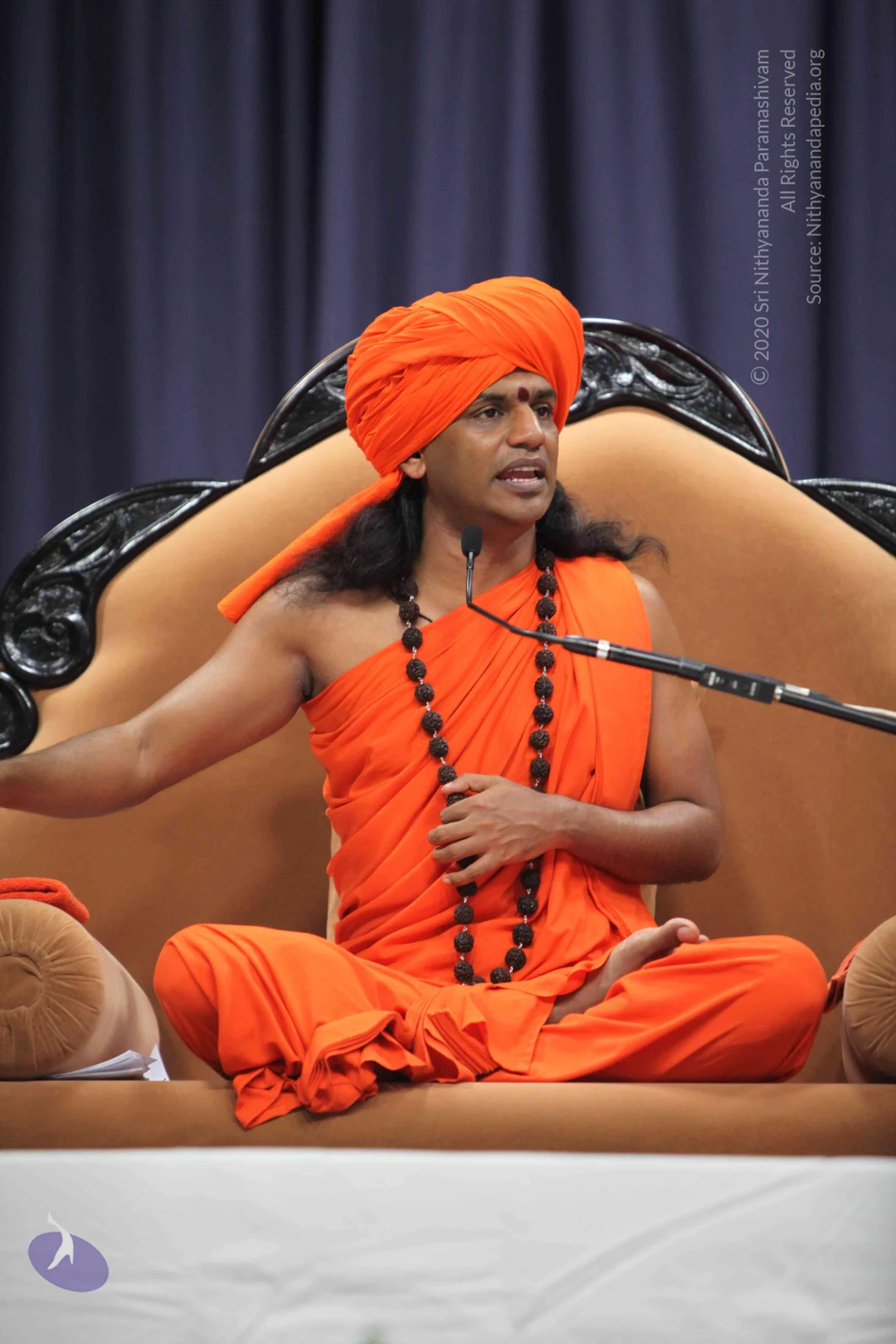
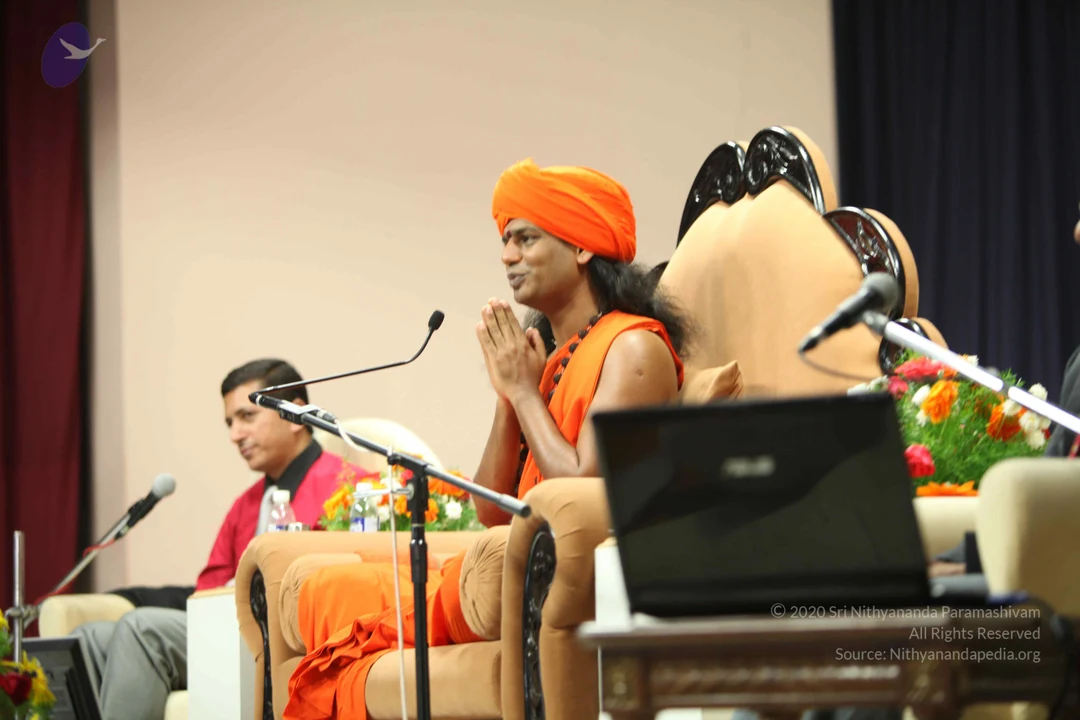
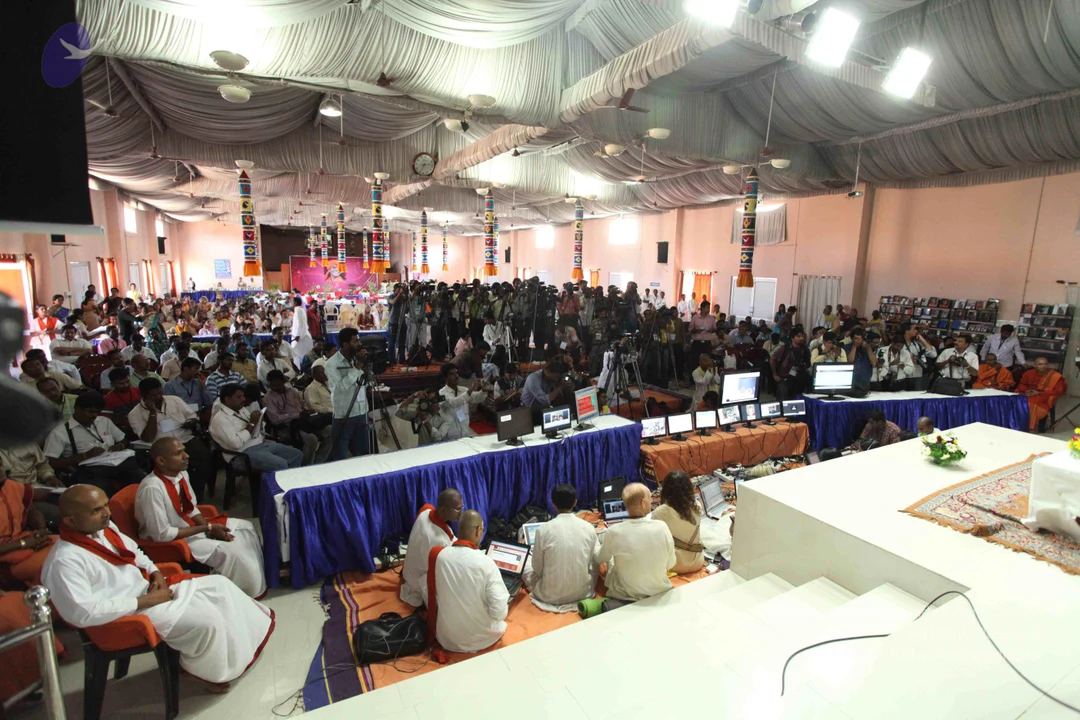
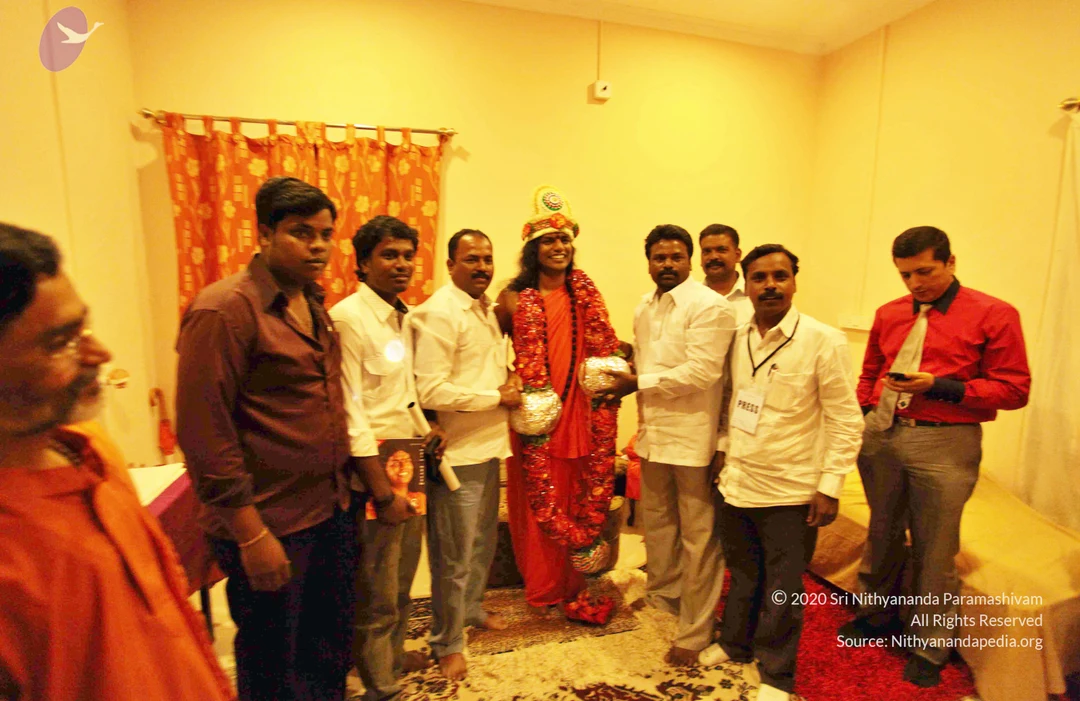
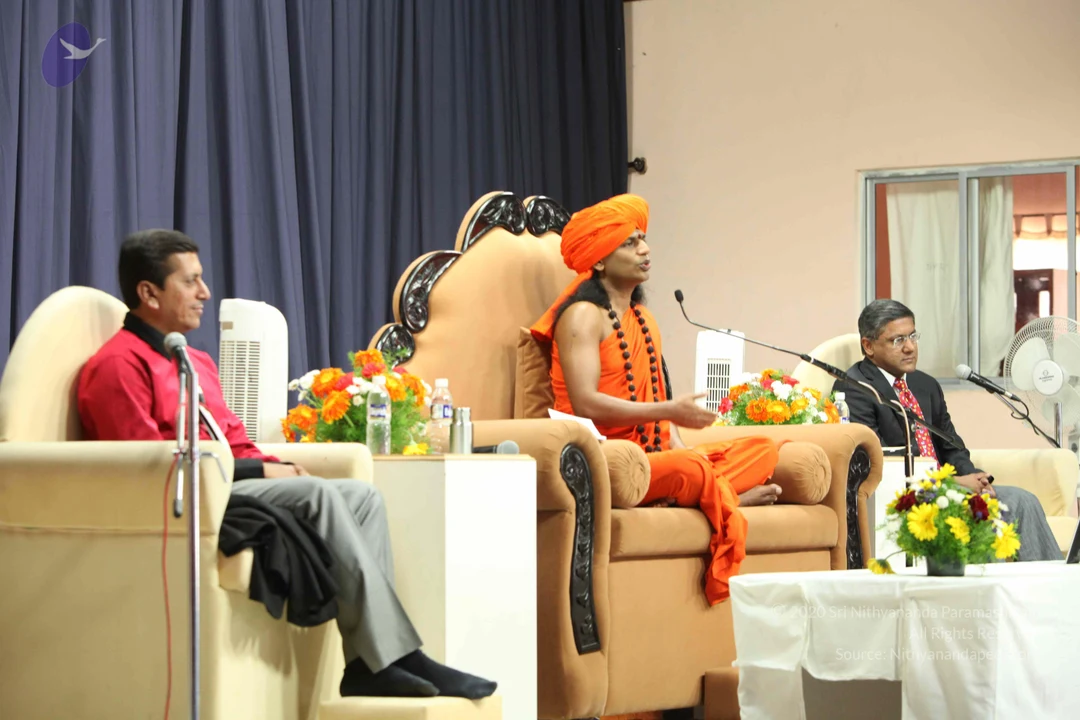
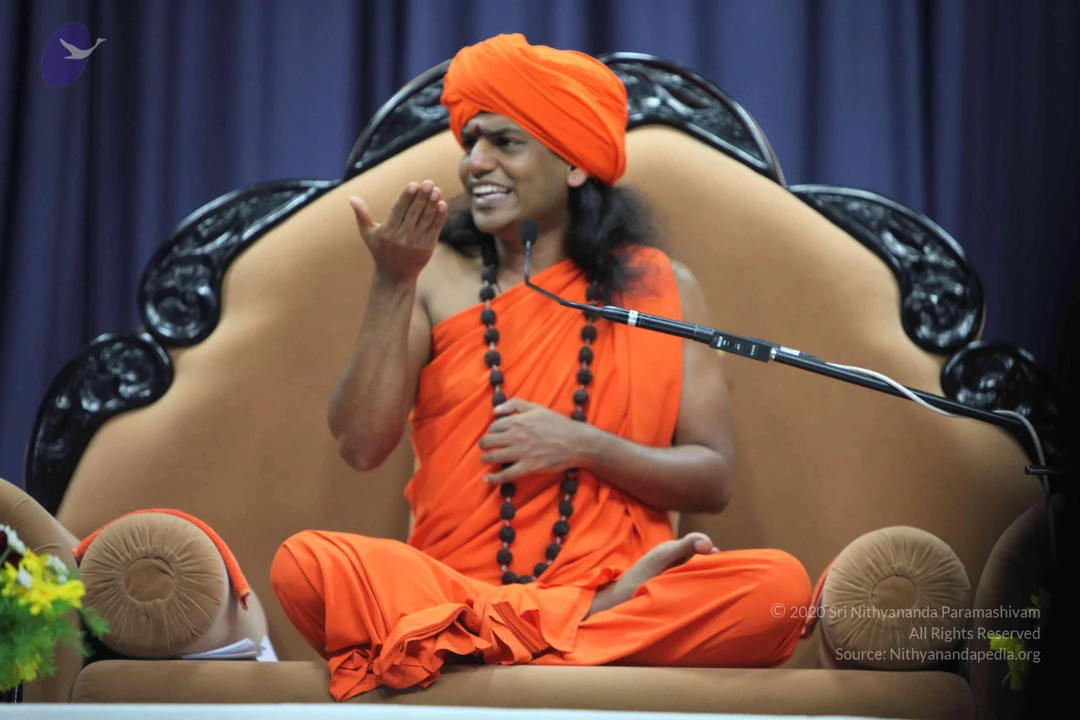
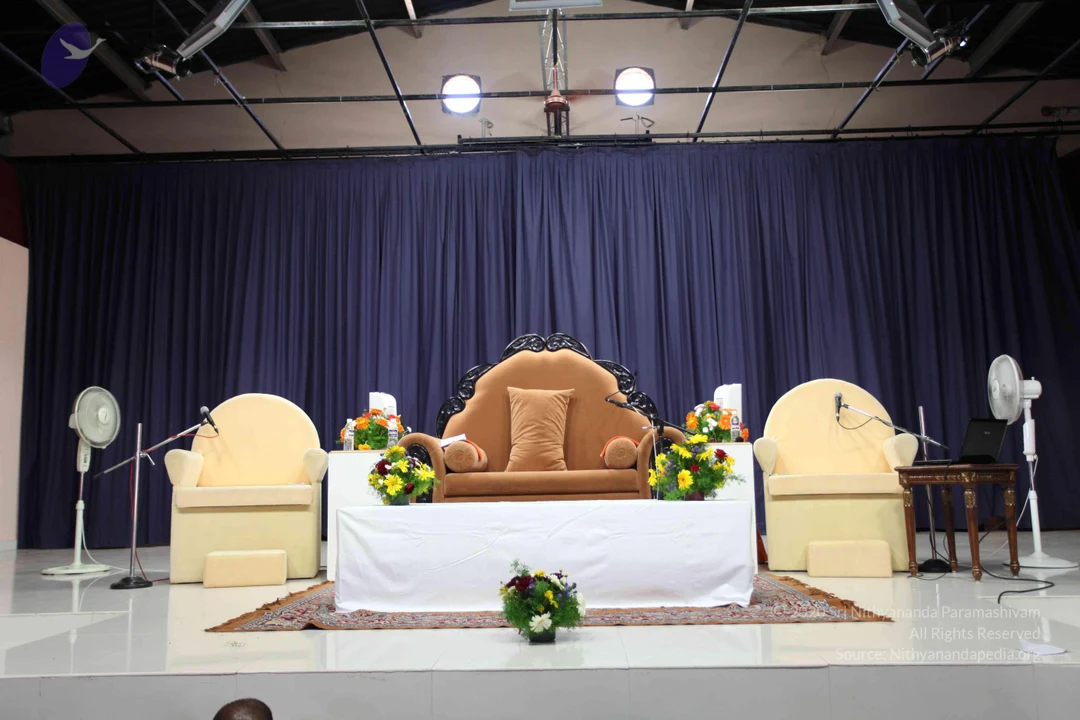
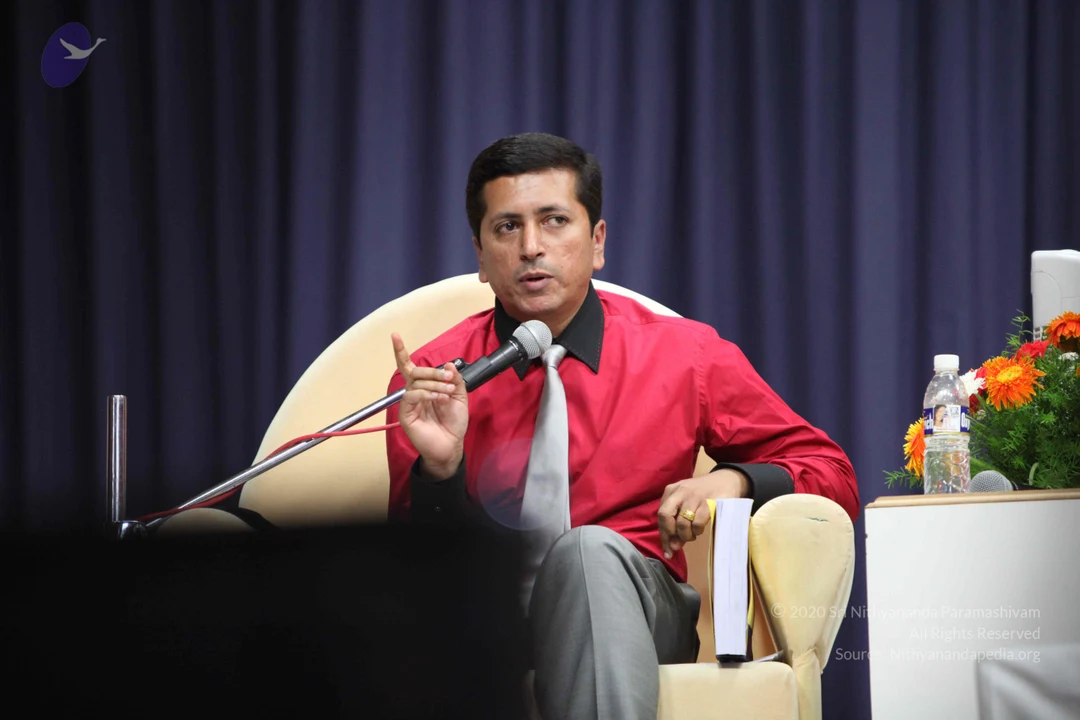
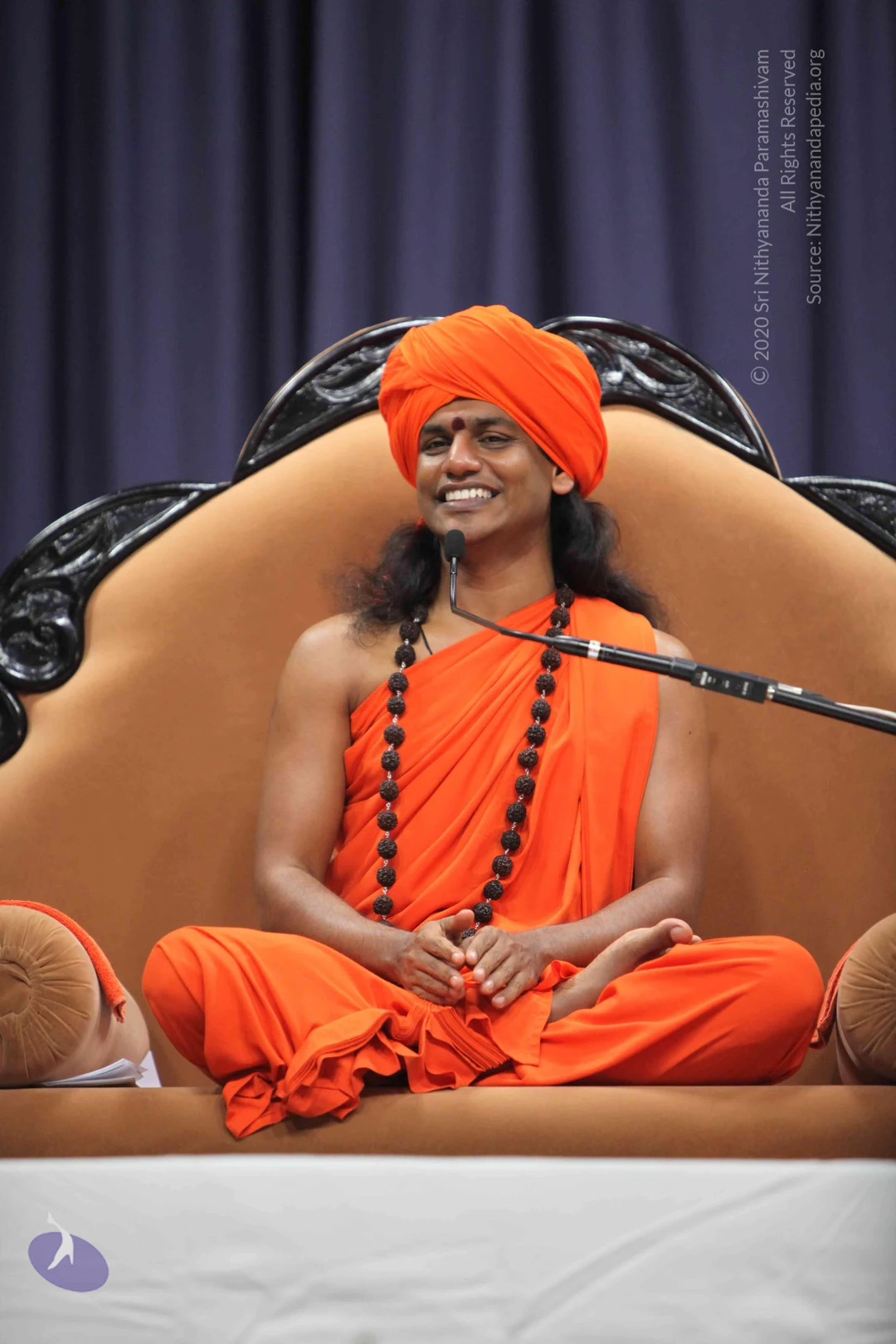
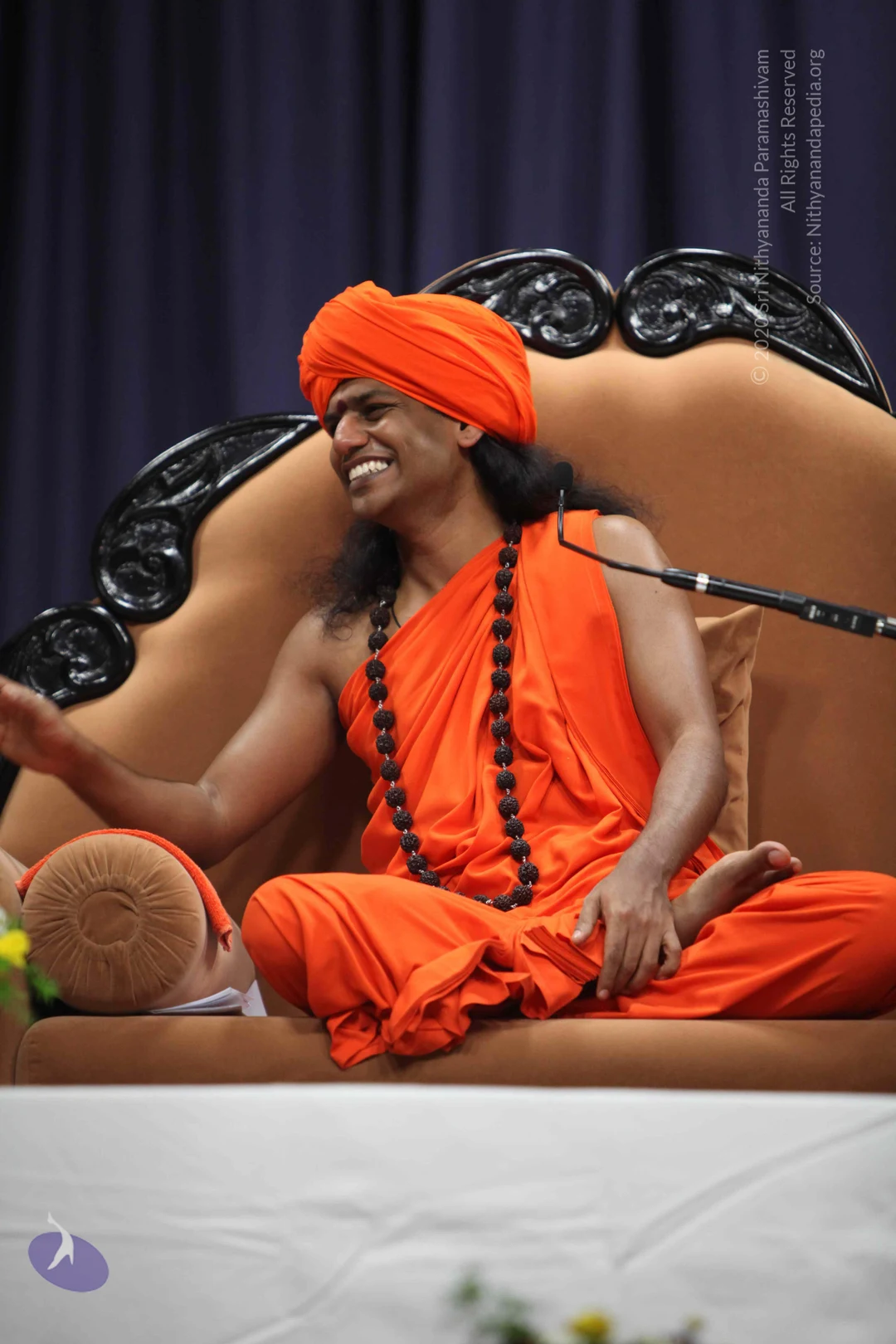
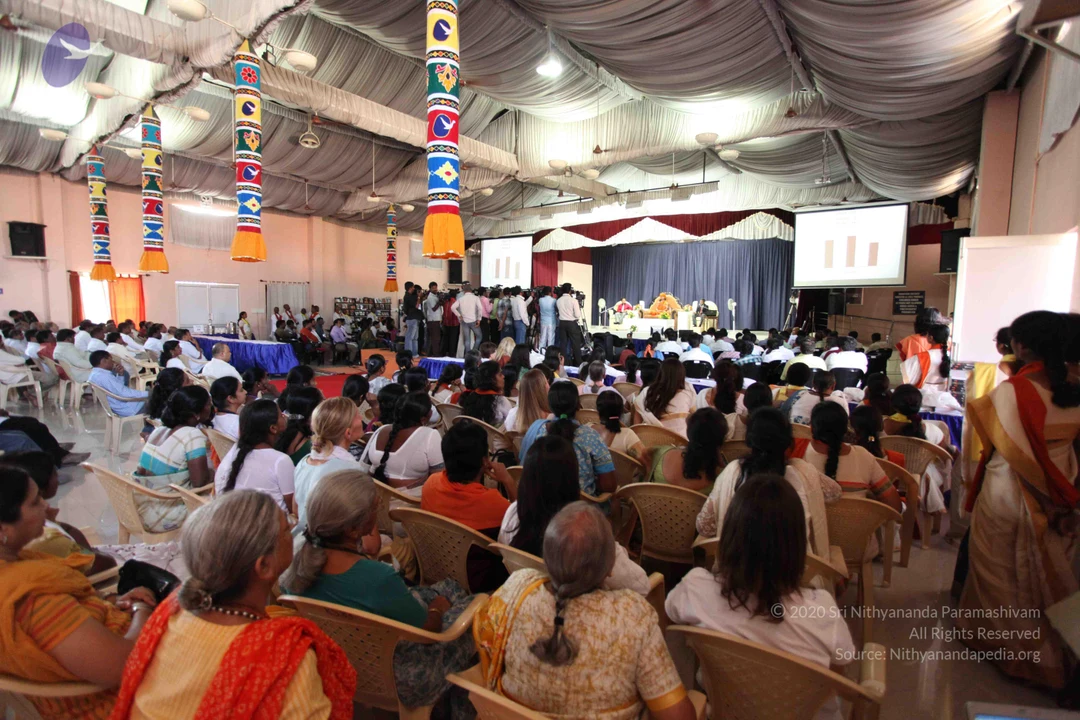
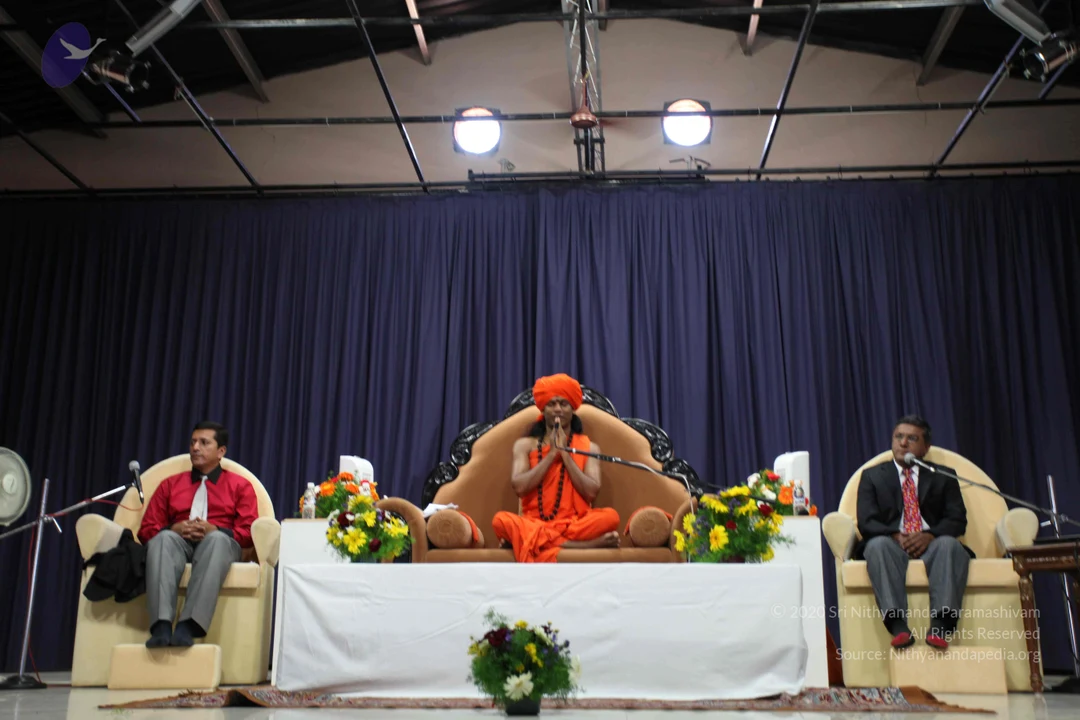
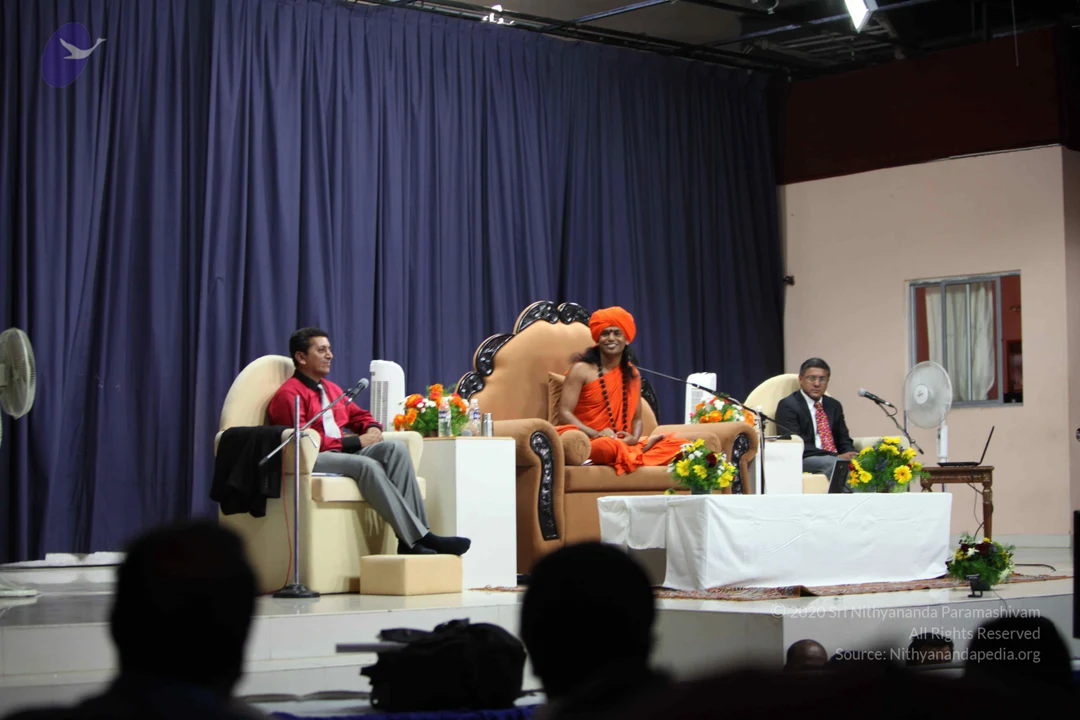
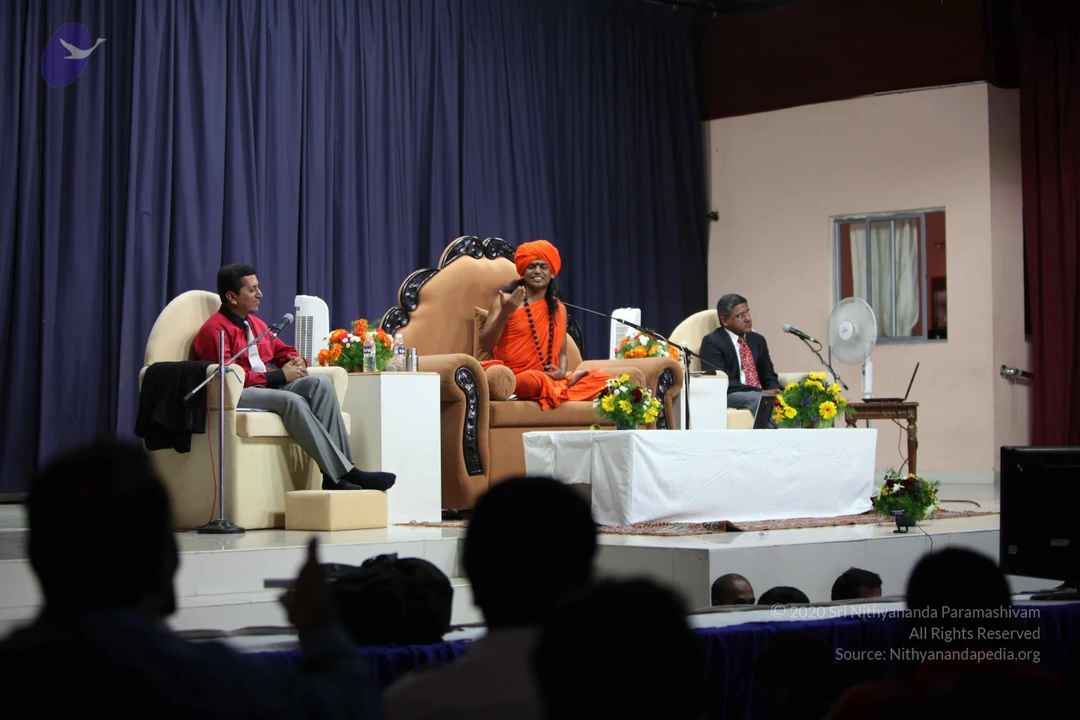
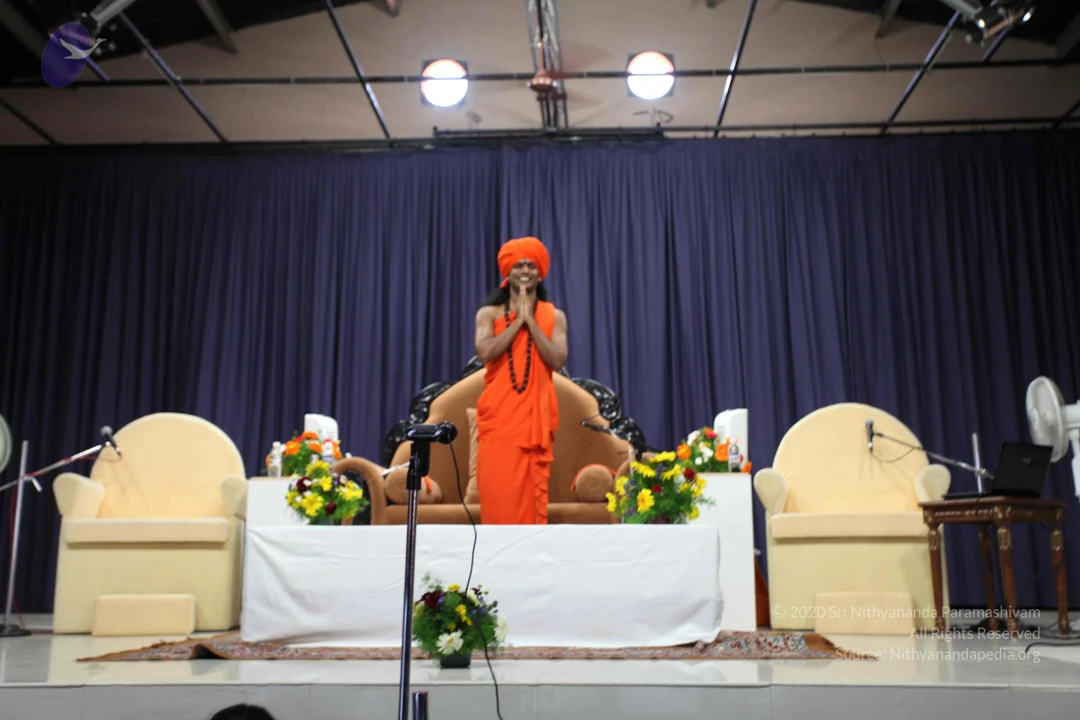
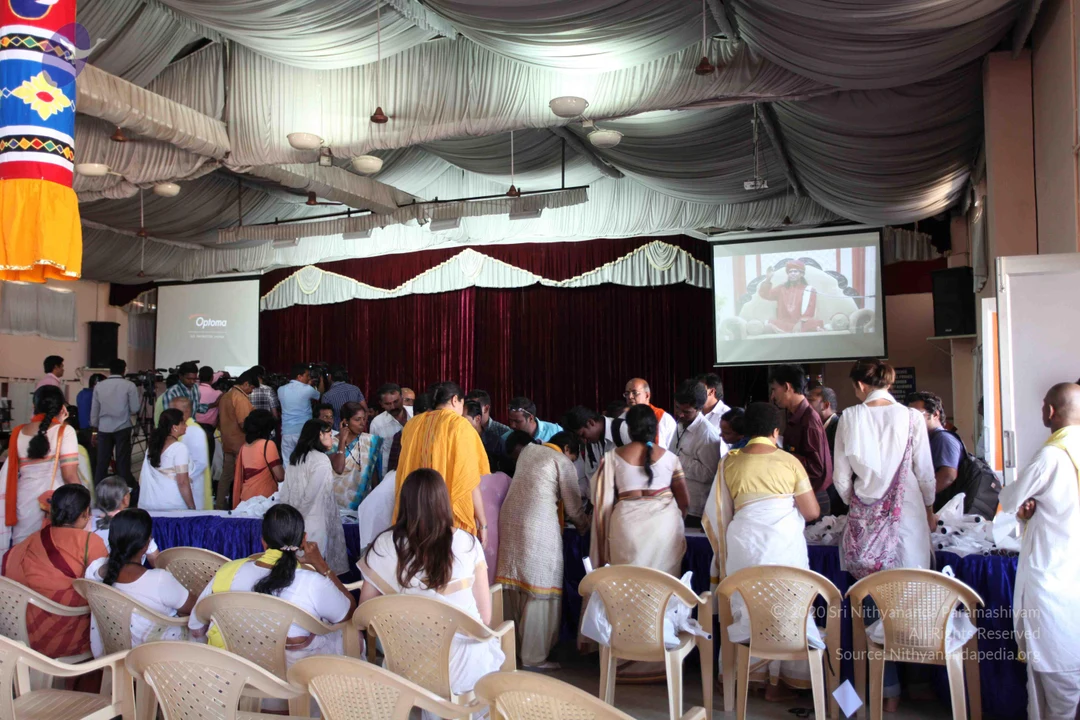
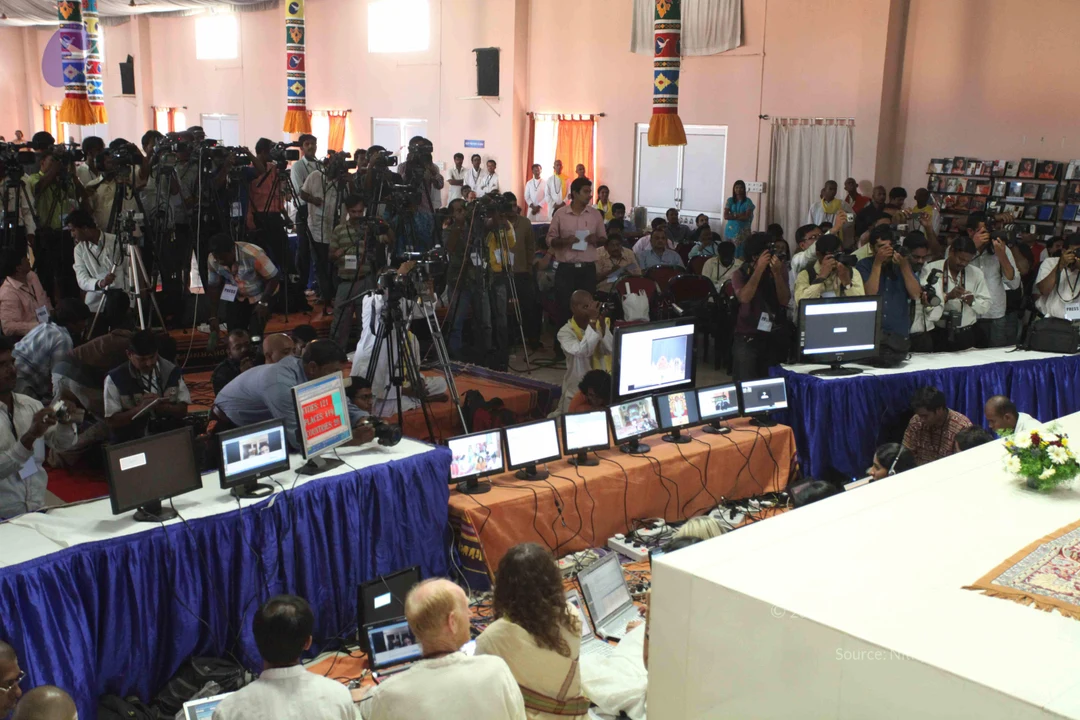
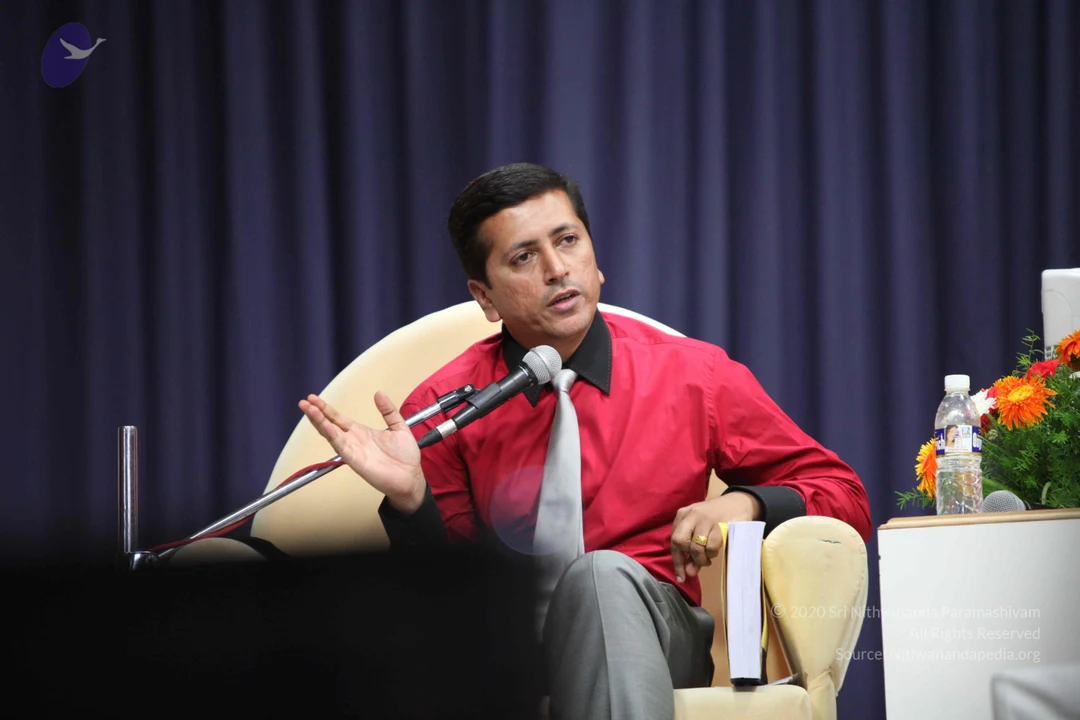
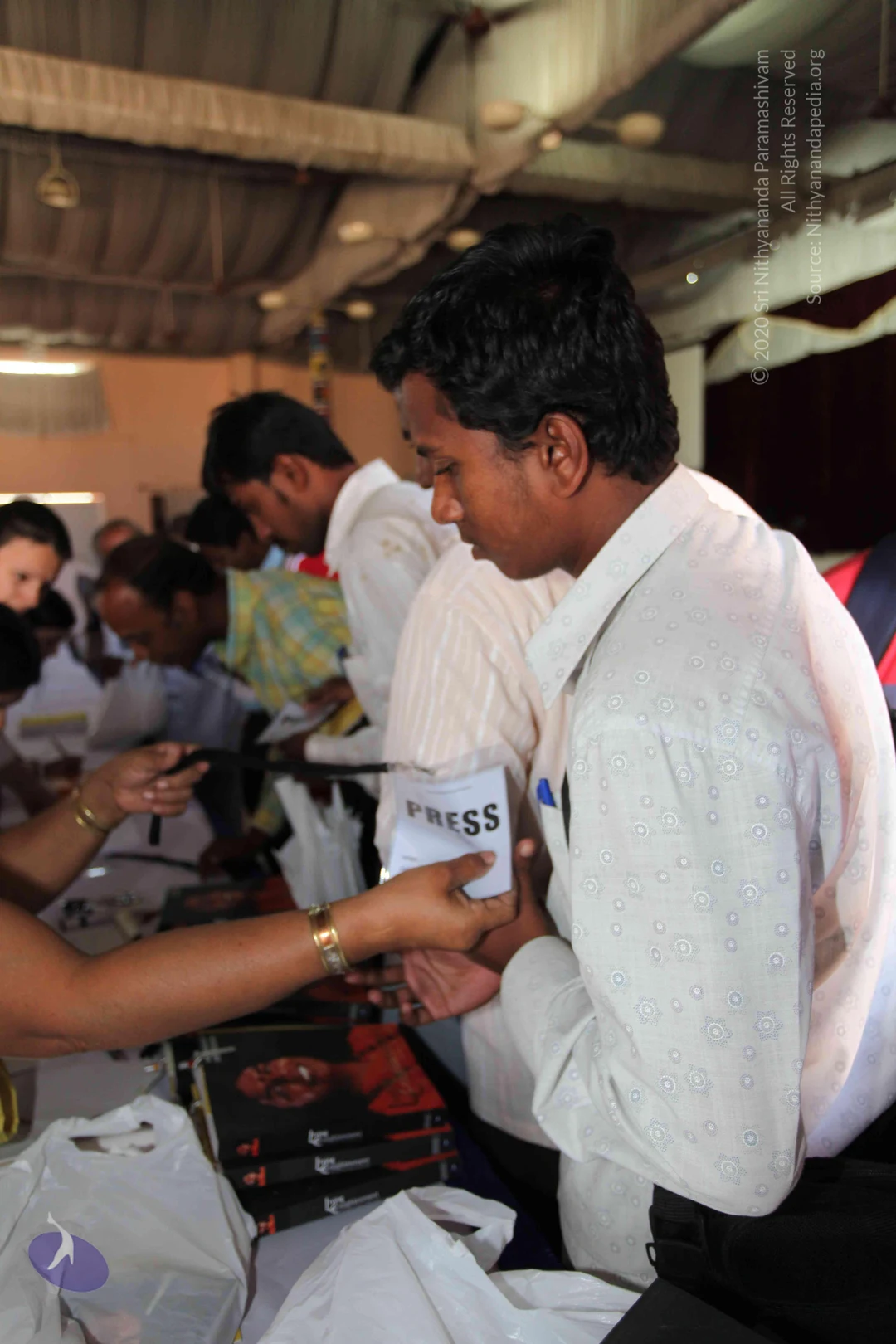
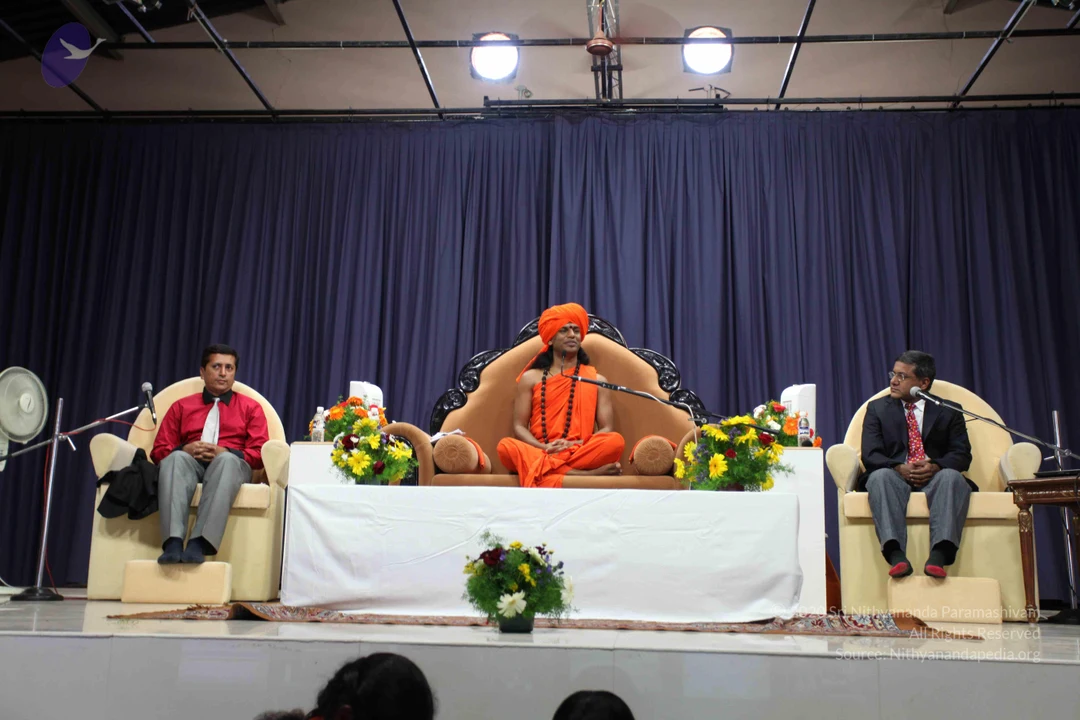
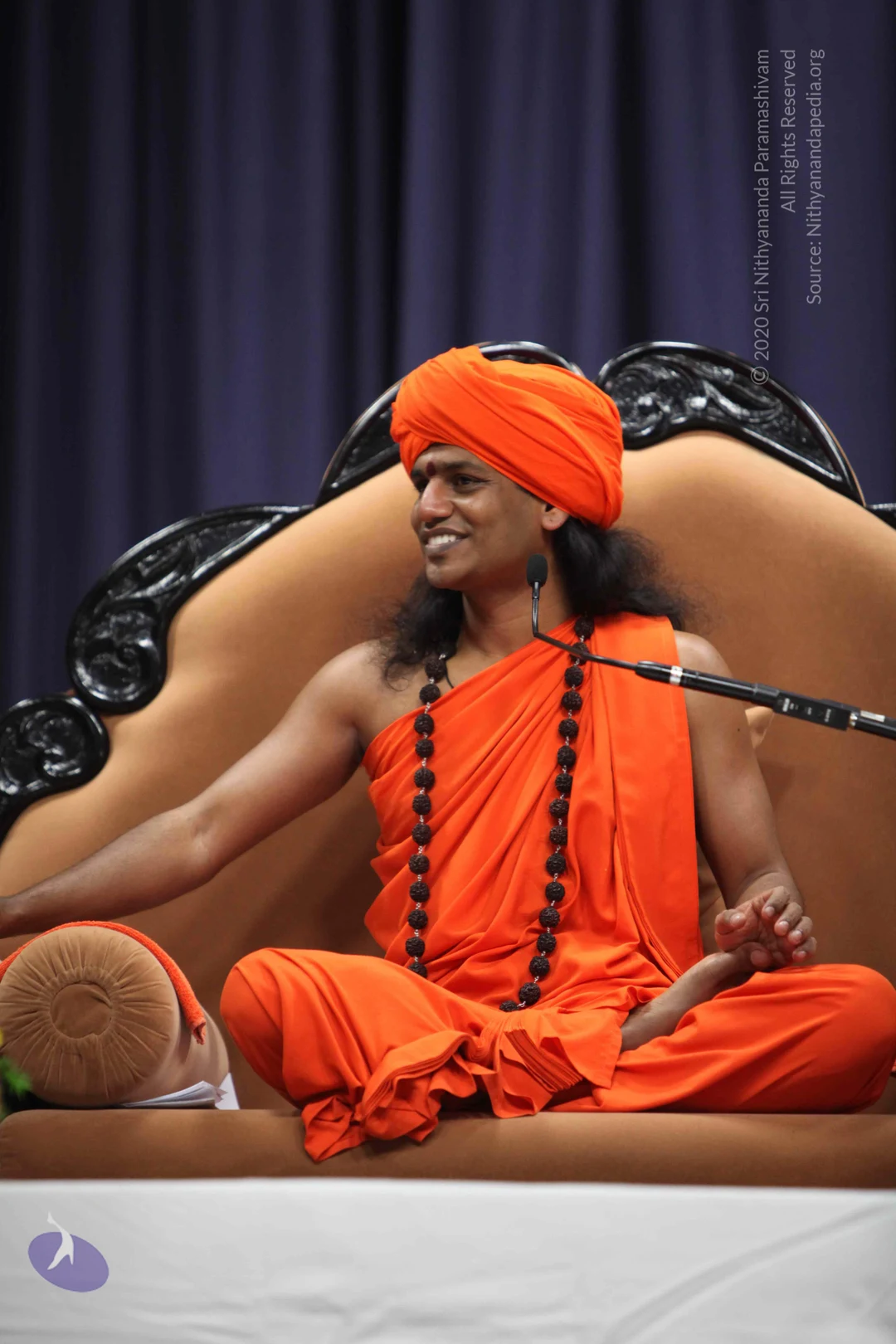
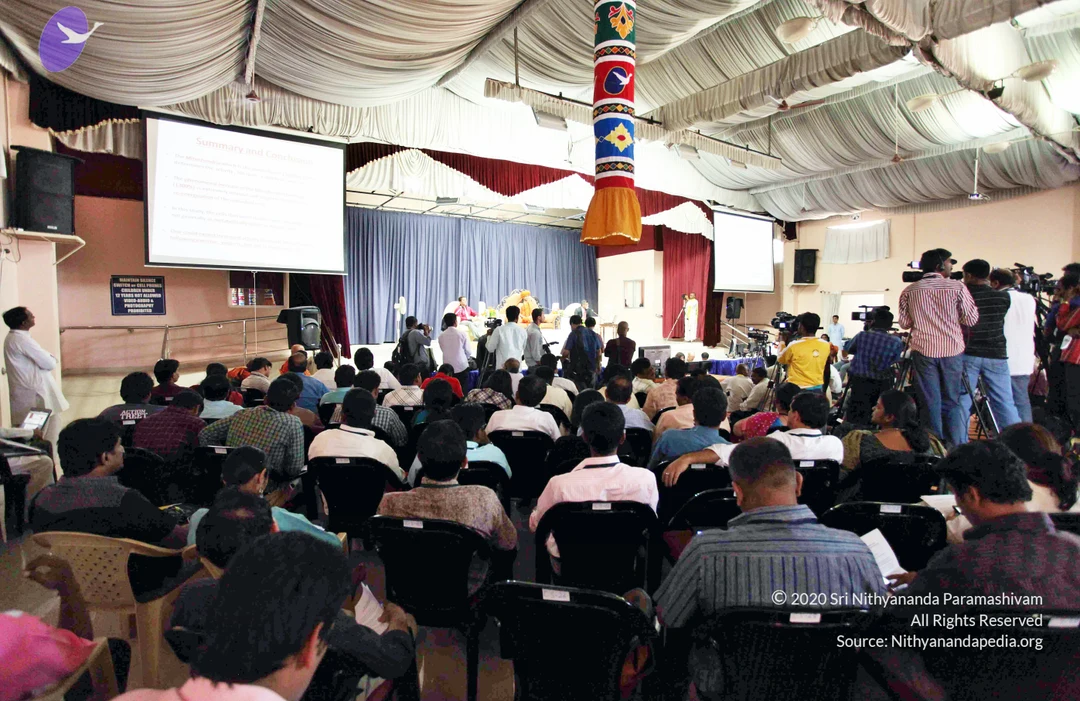
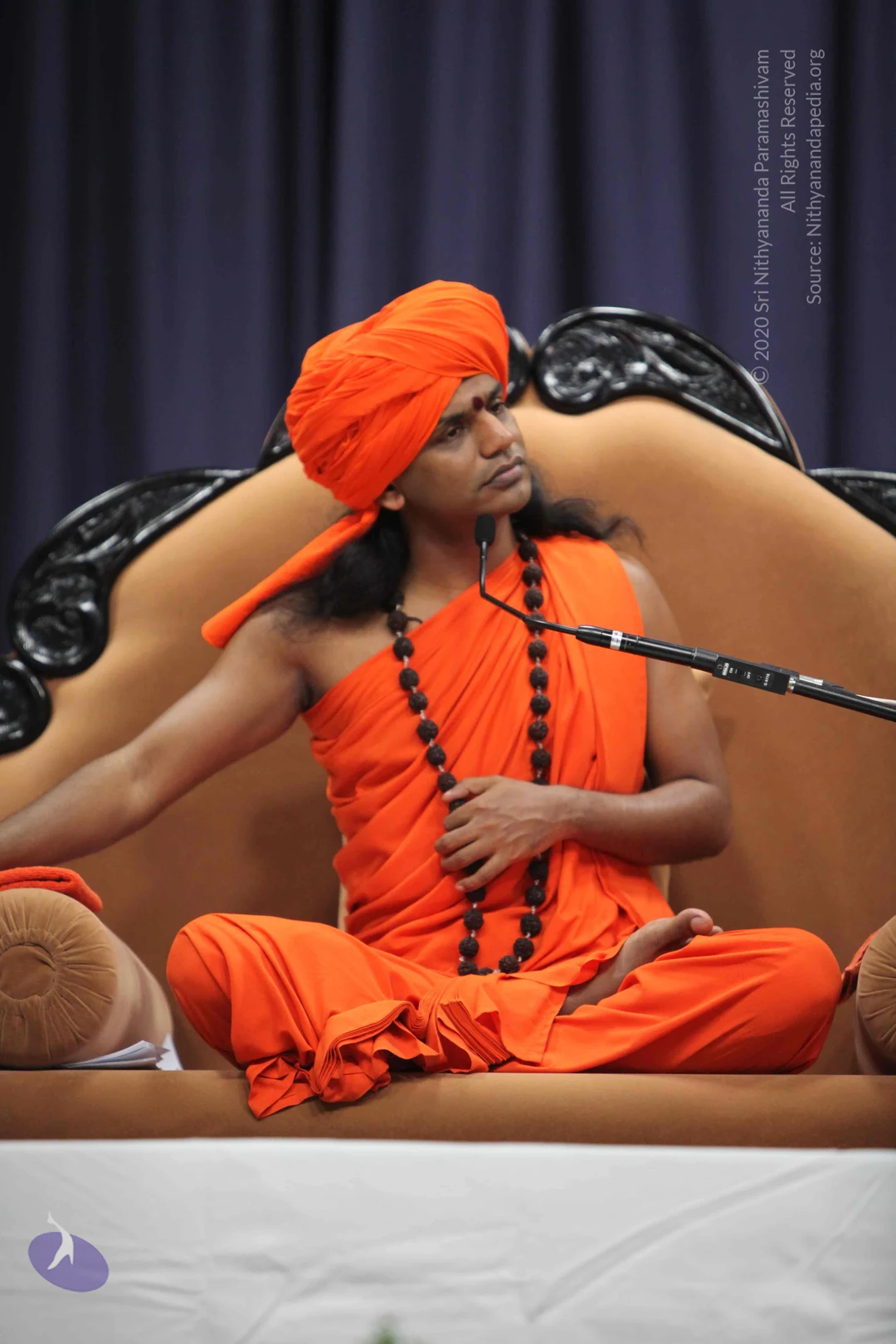
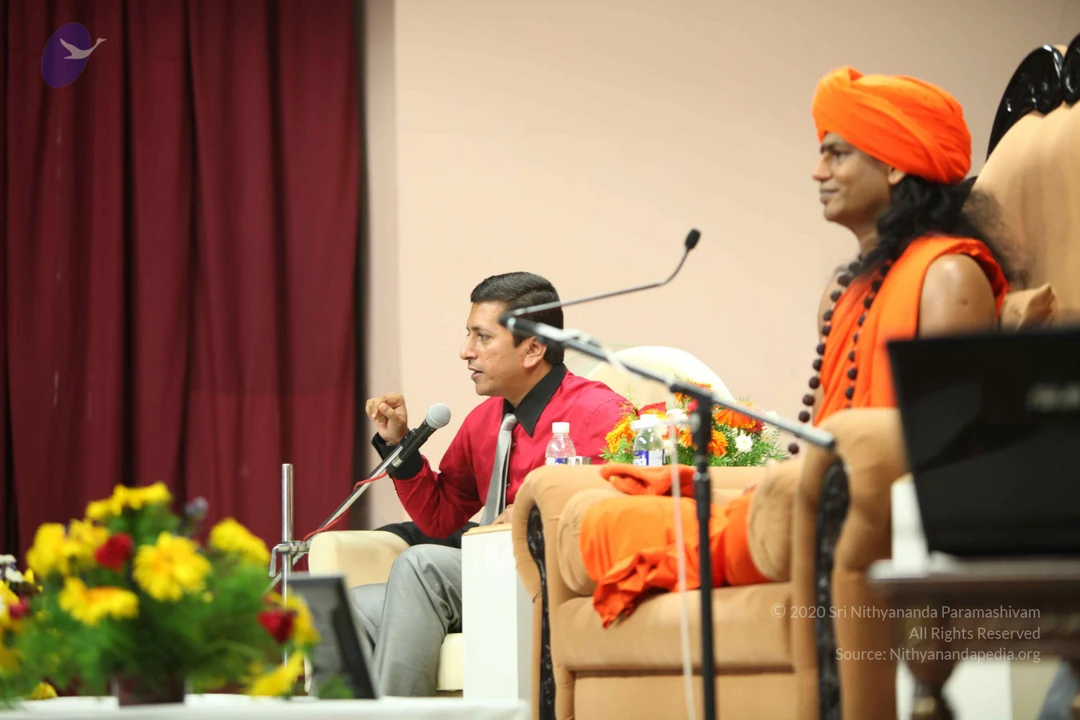
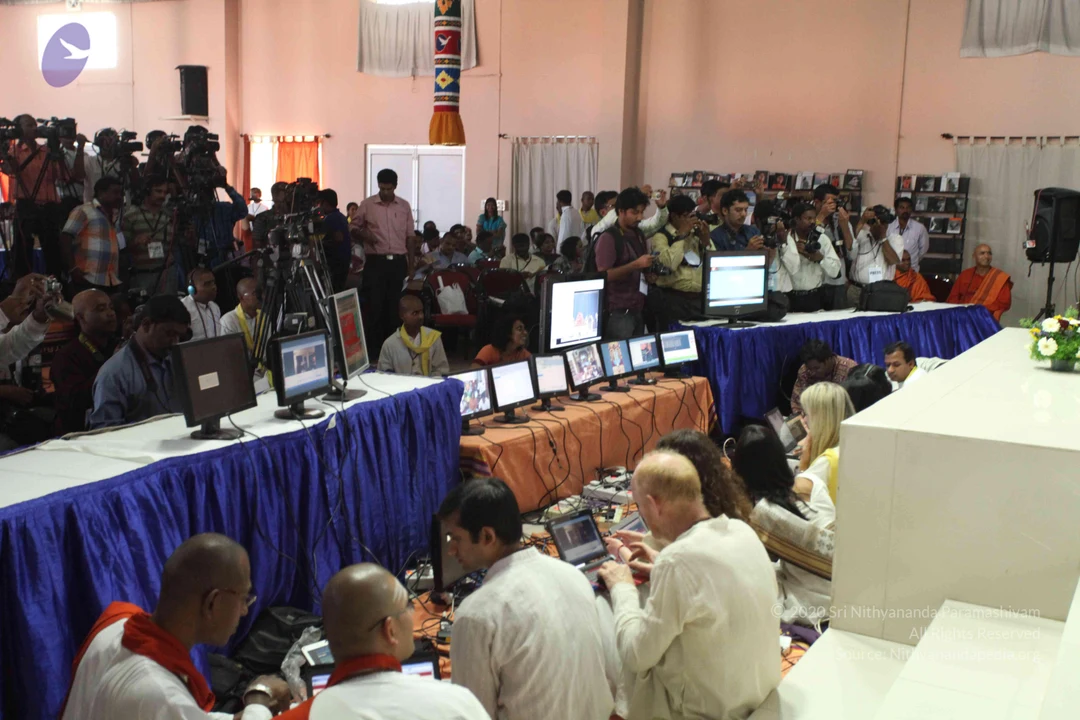
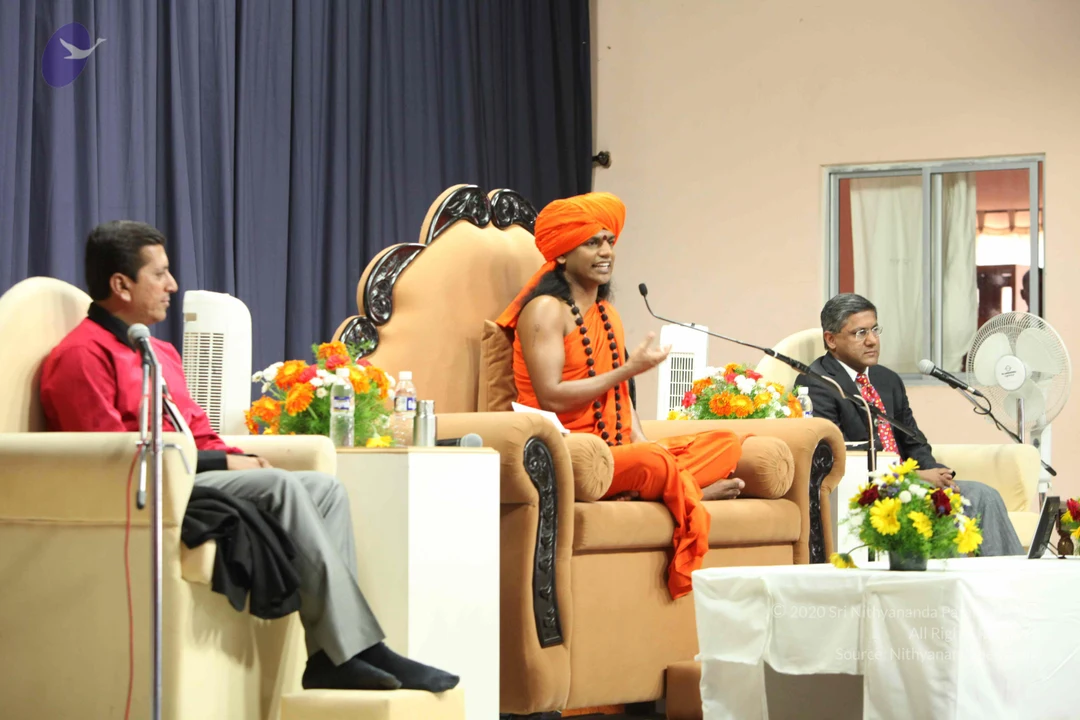
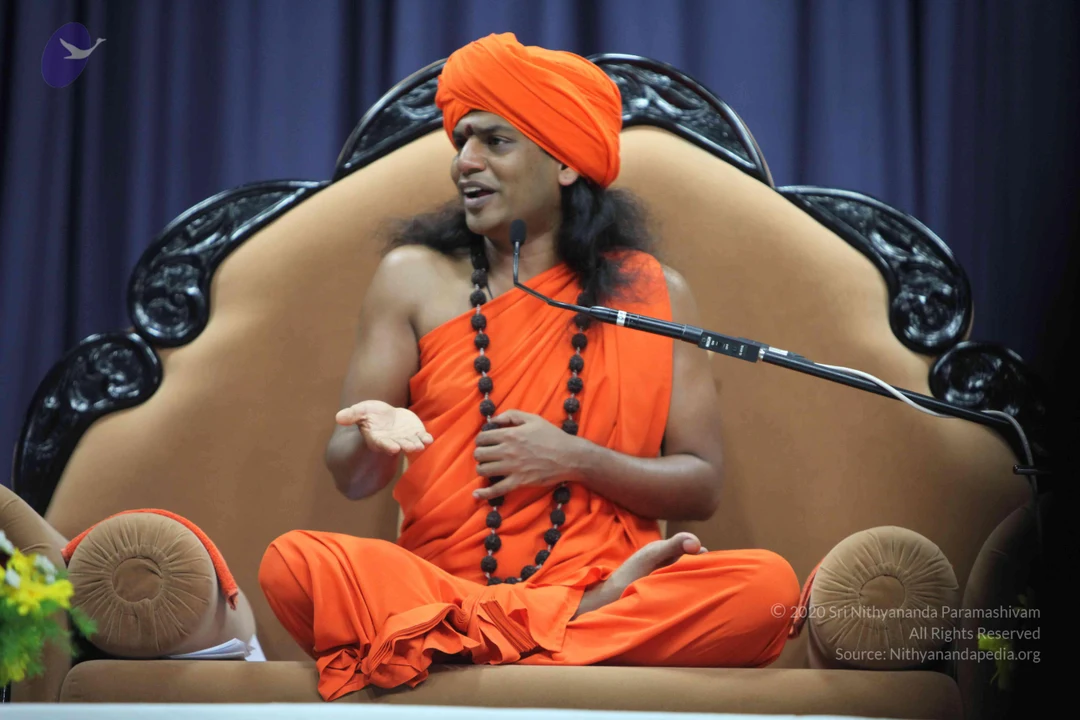
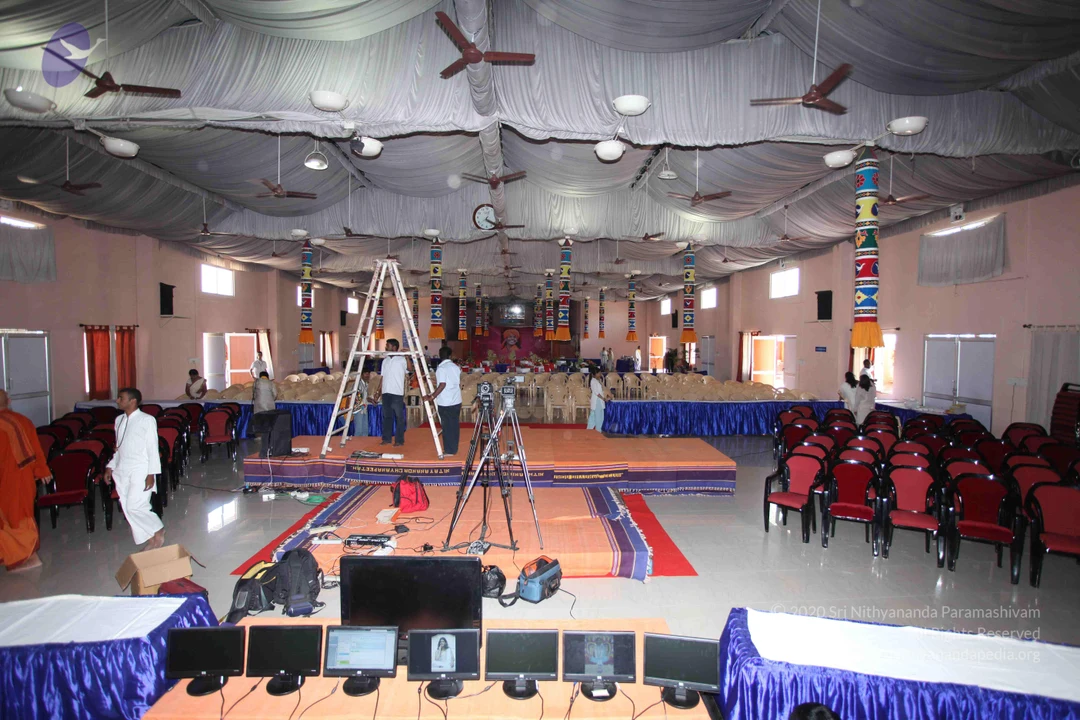
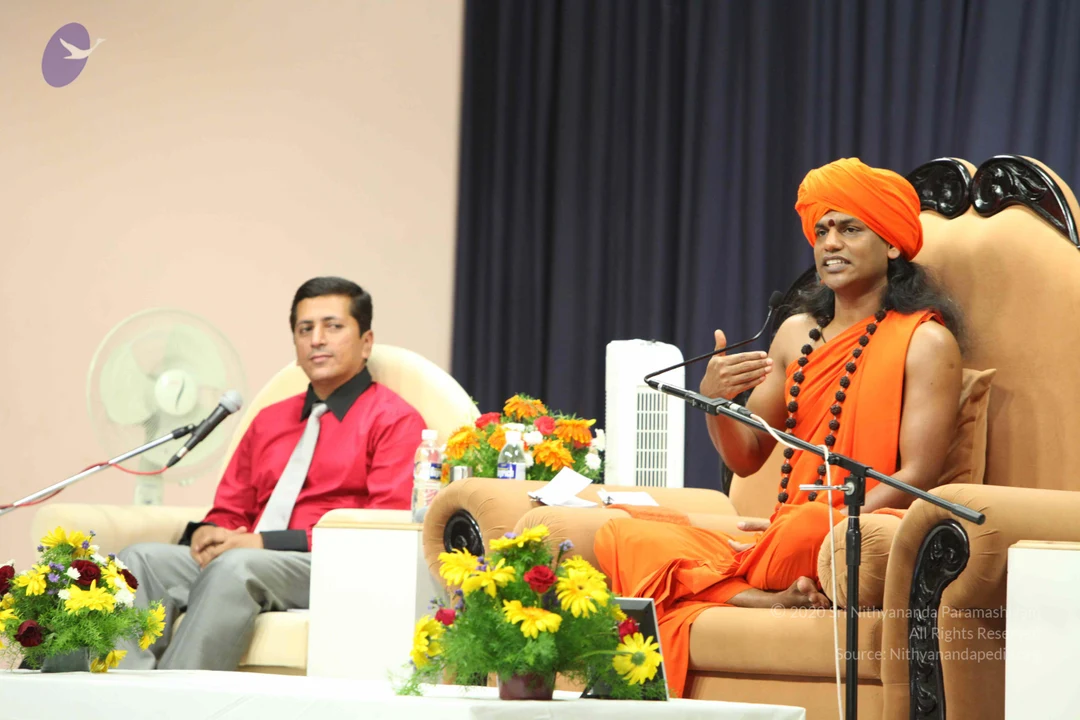
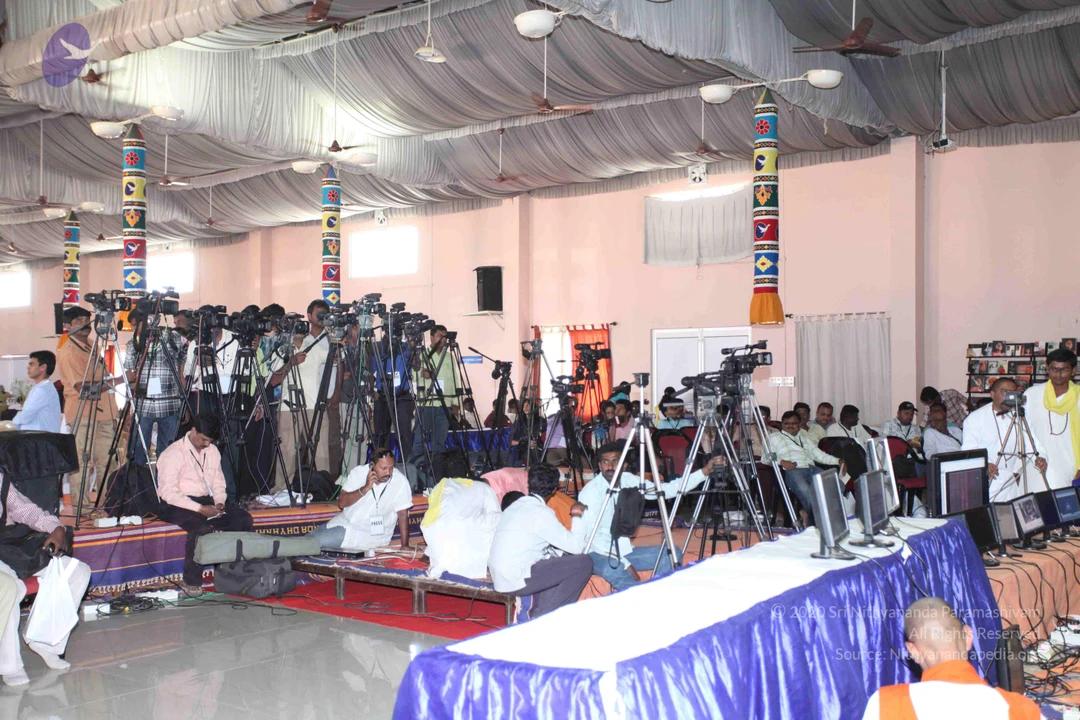
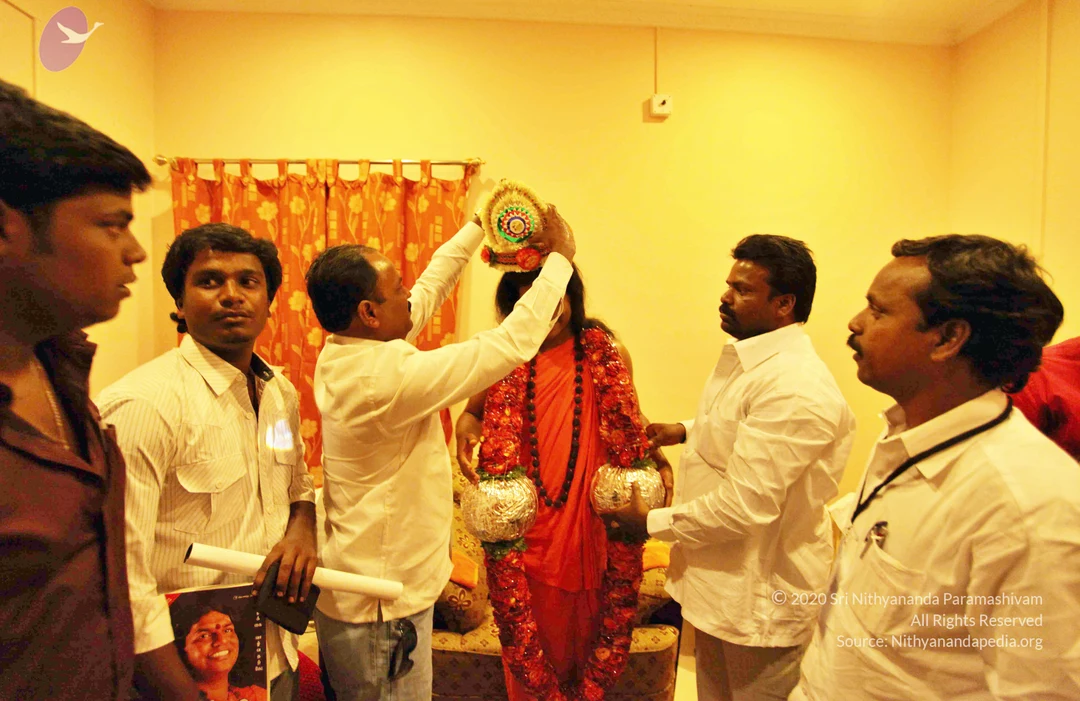
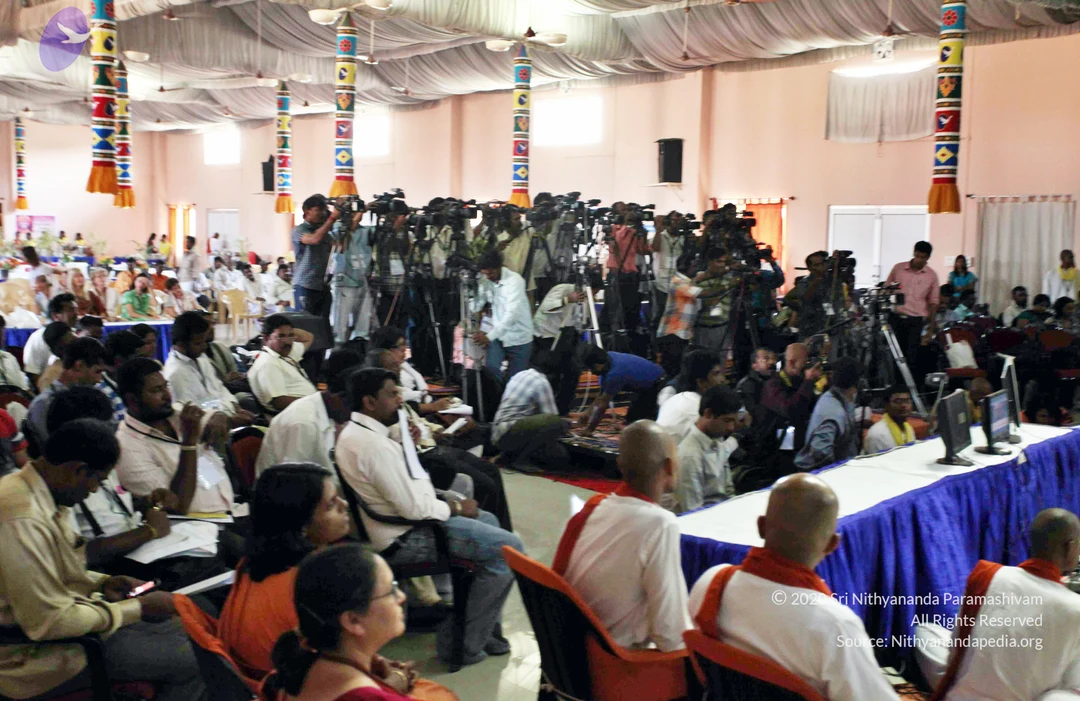
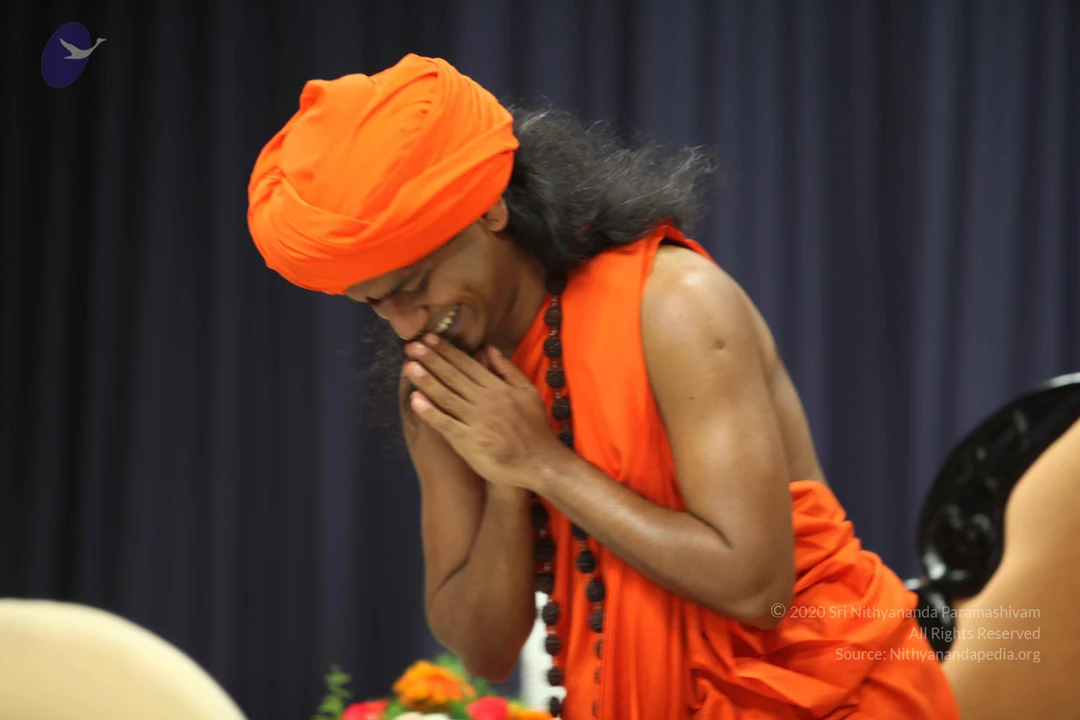
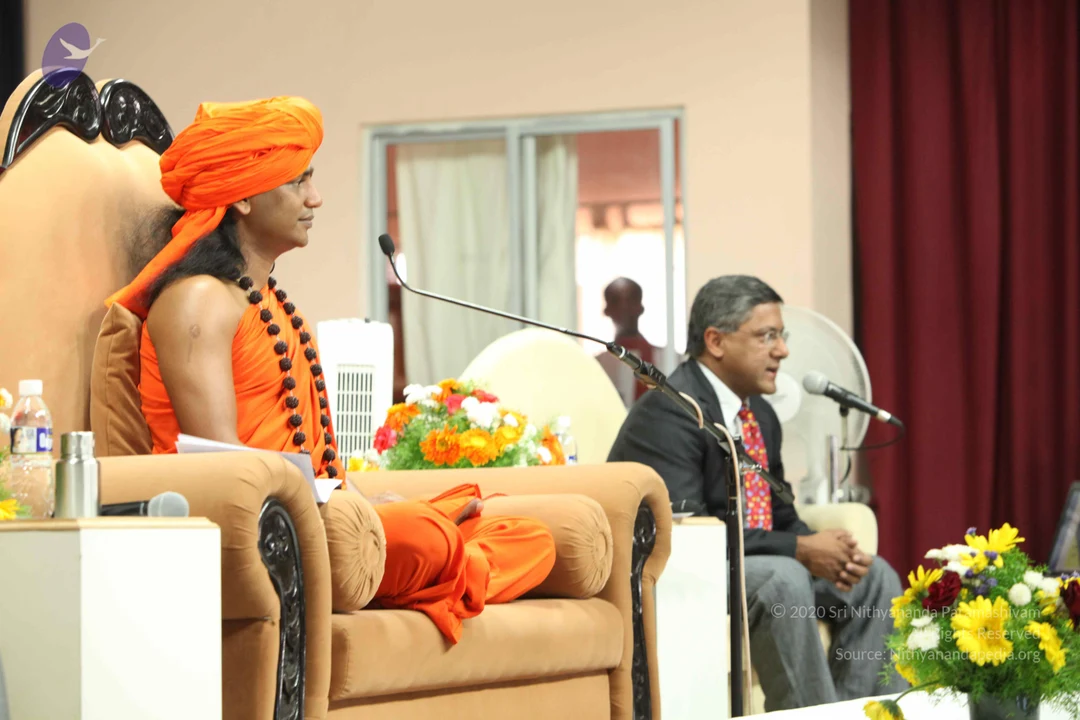
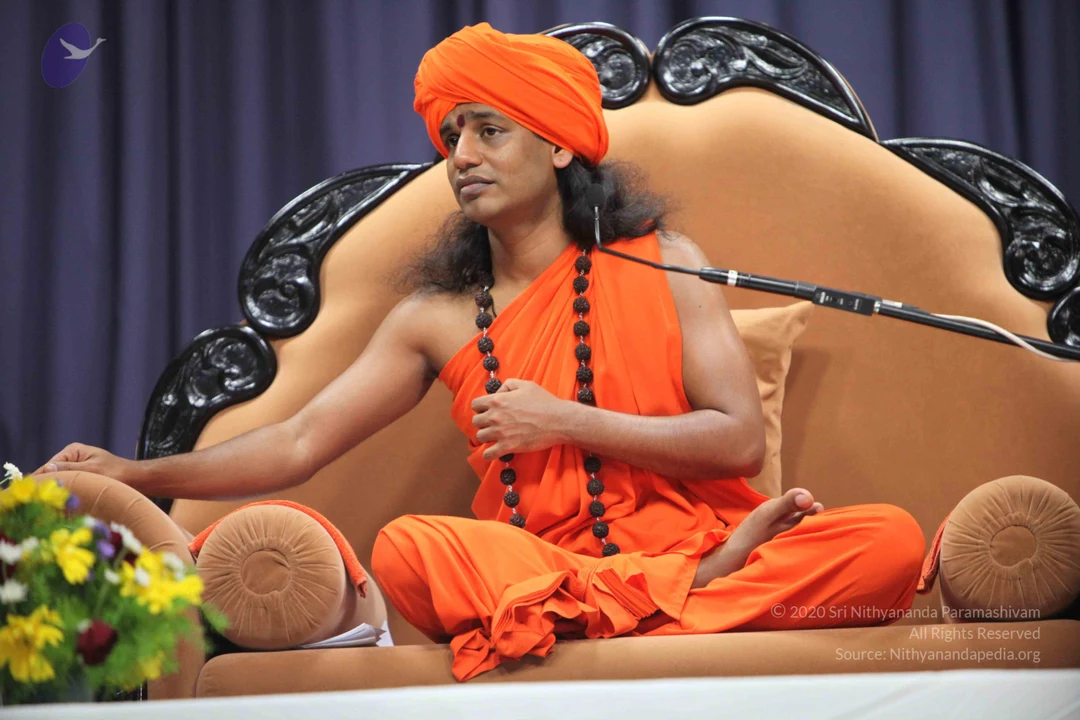
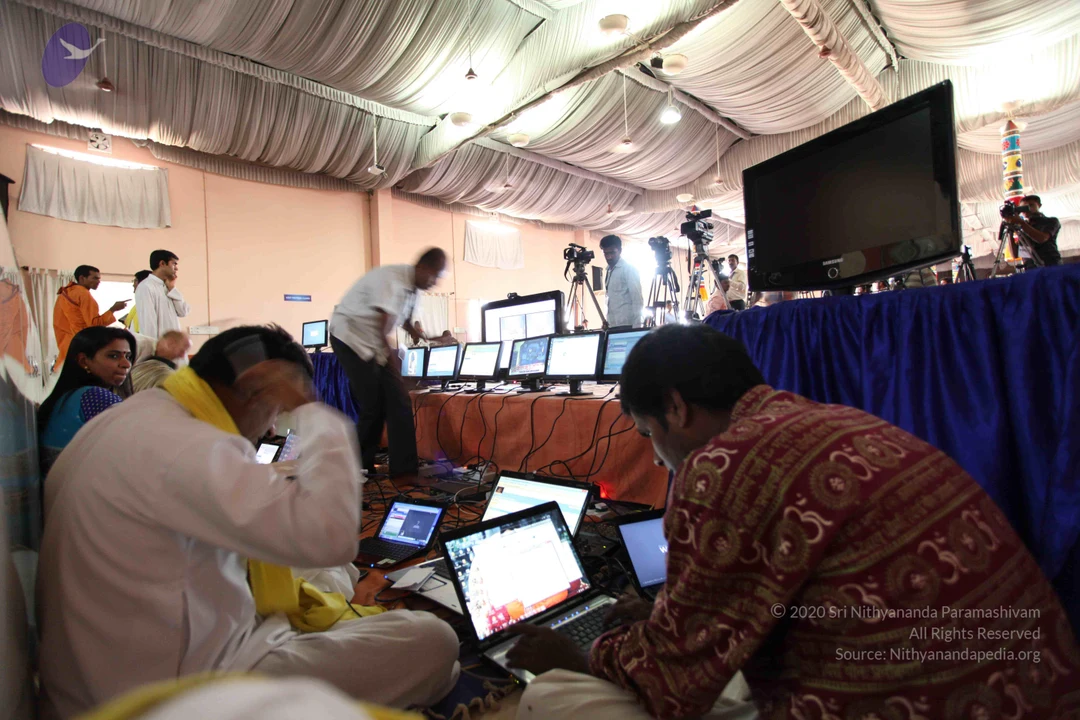
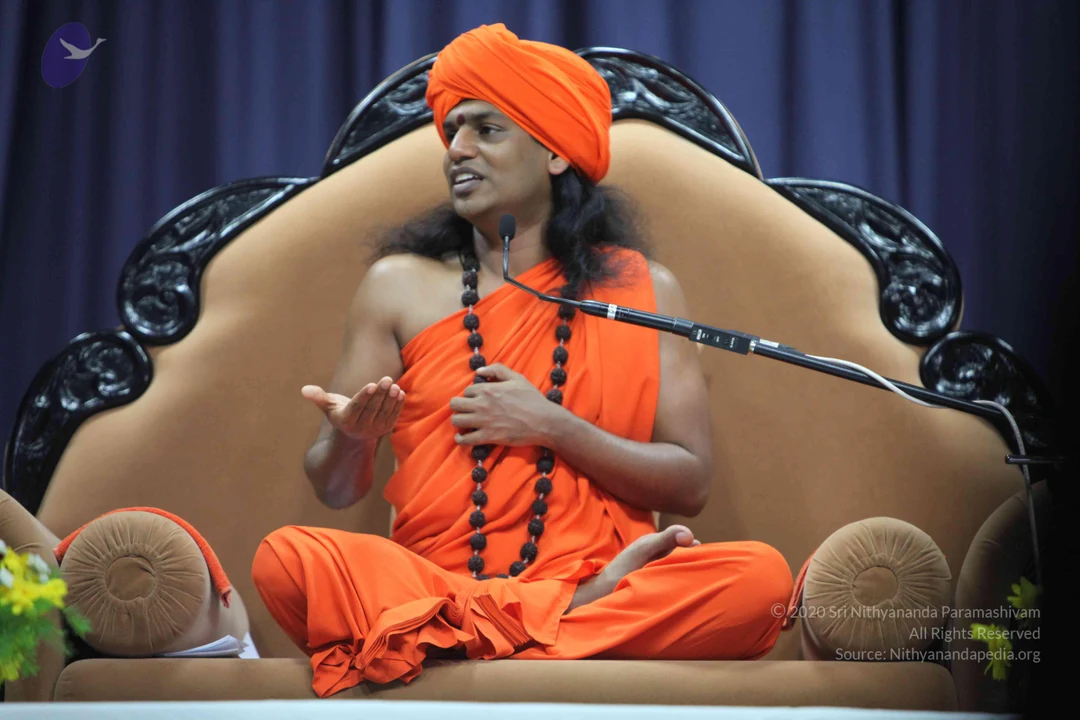
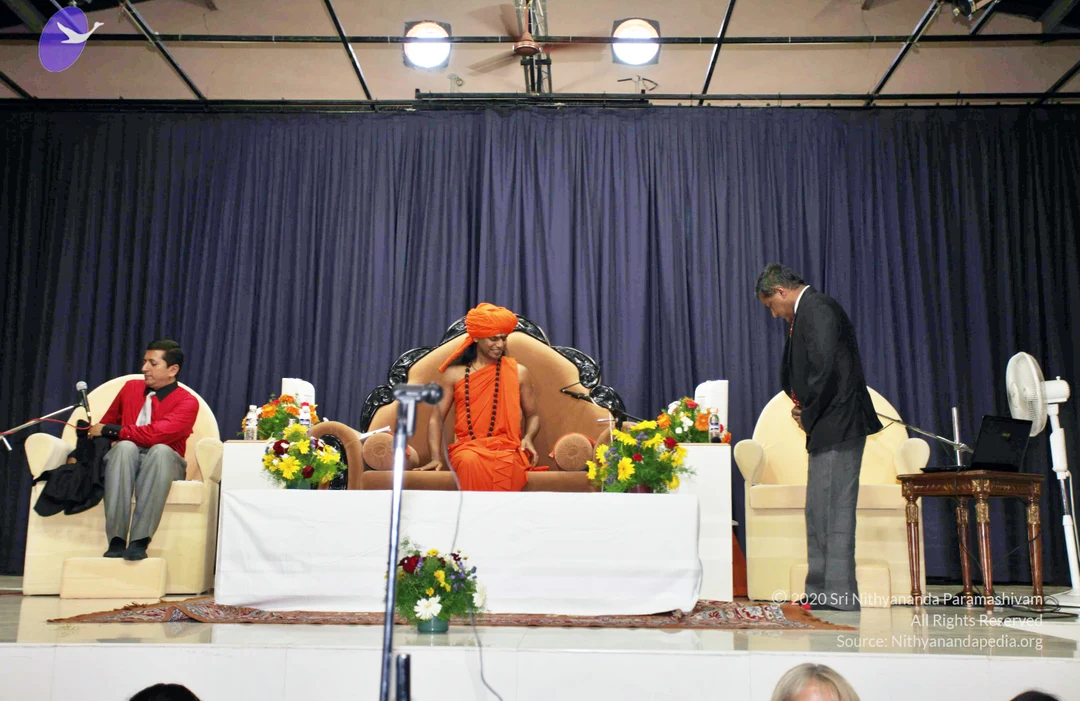
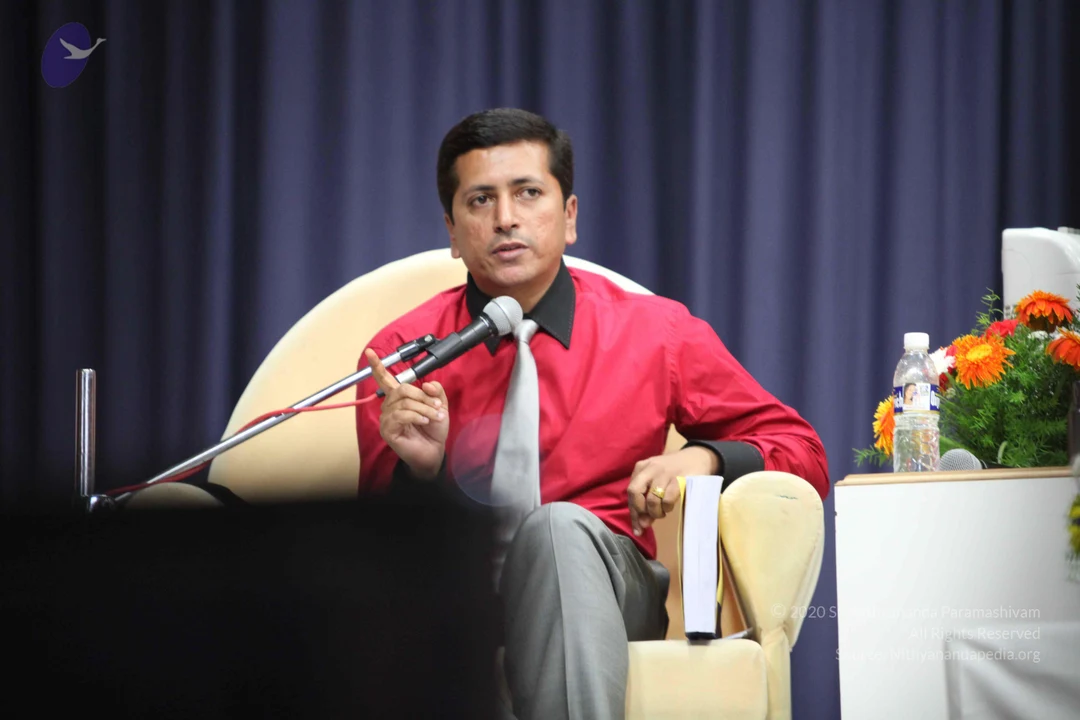
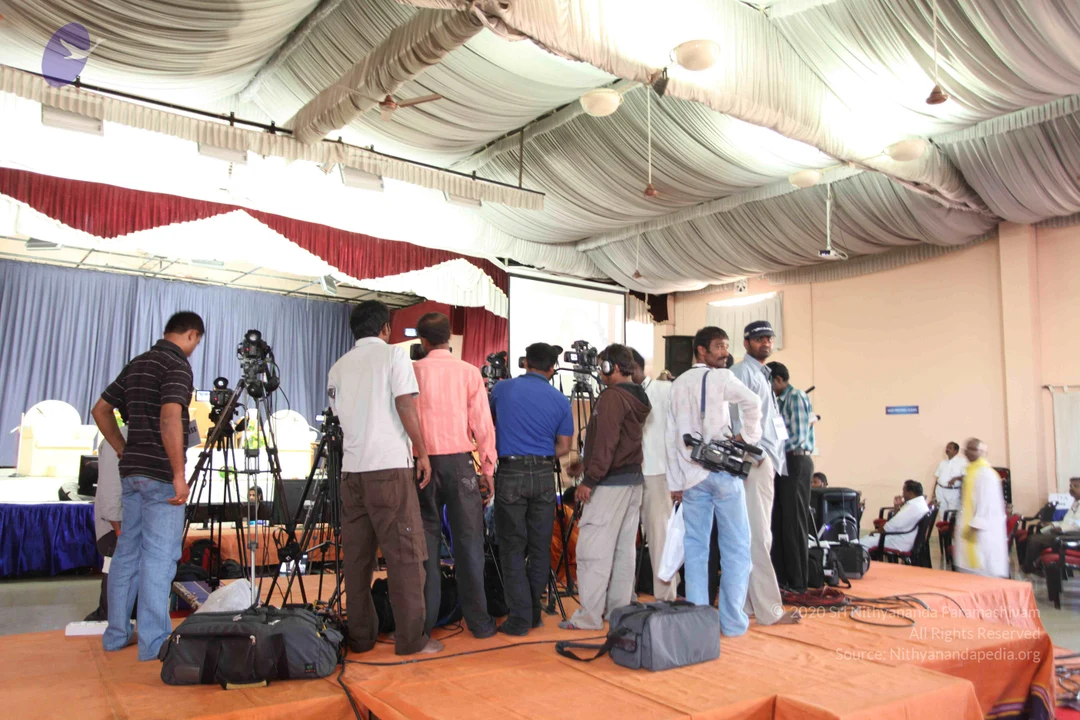
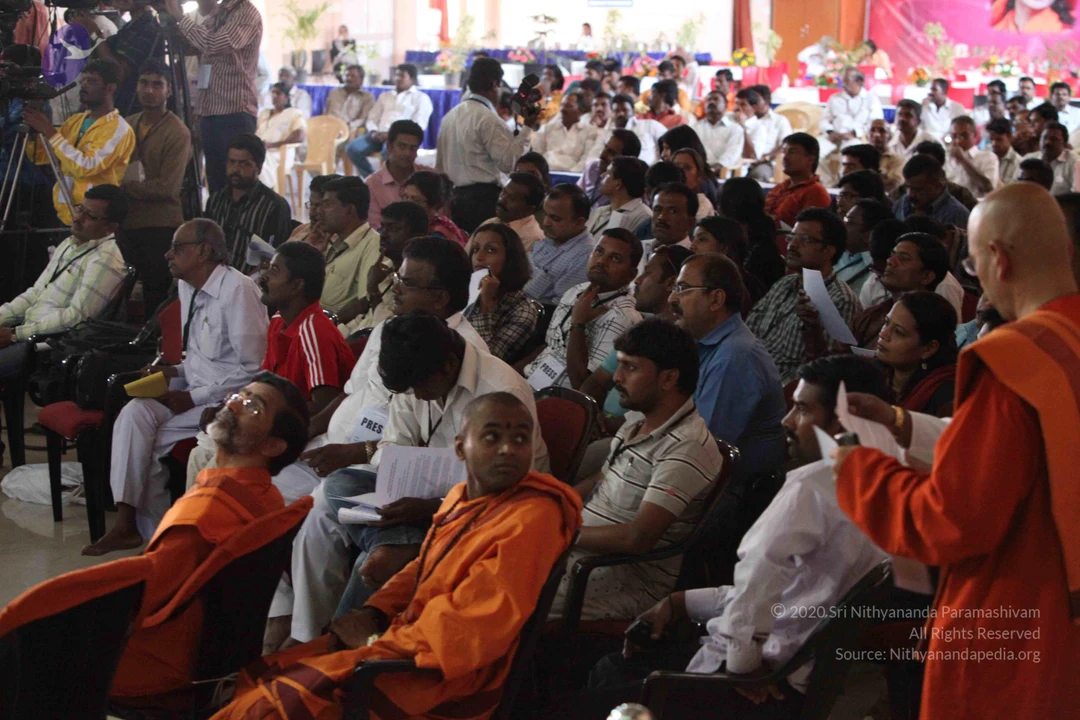
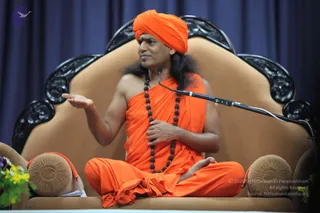
Nithyananda's Press Meet (Part 1) on Inner Awakening Research and Religious Persecution

Dated photos
452
Source pages
1
Media
4
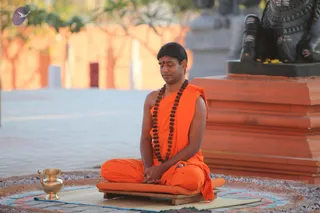
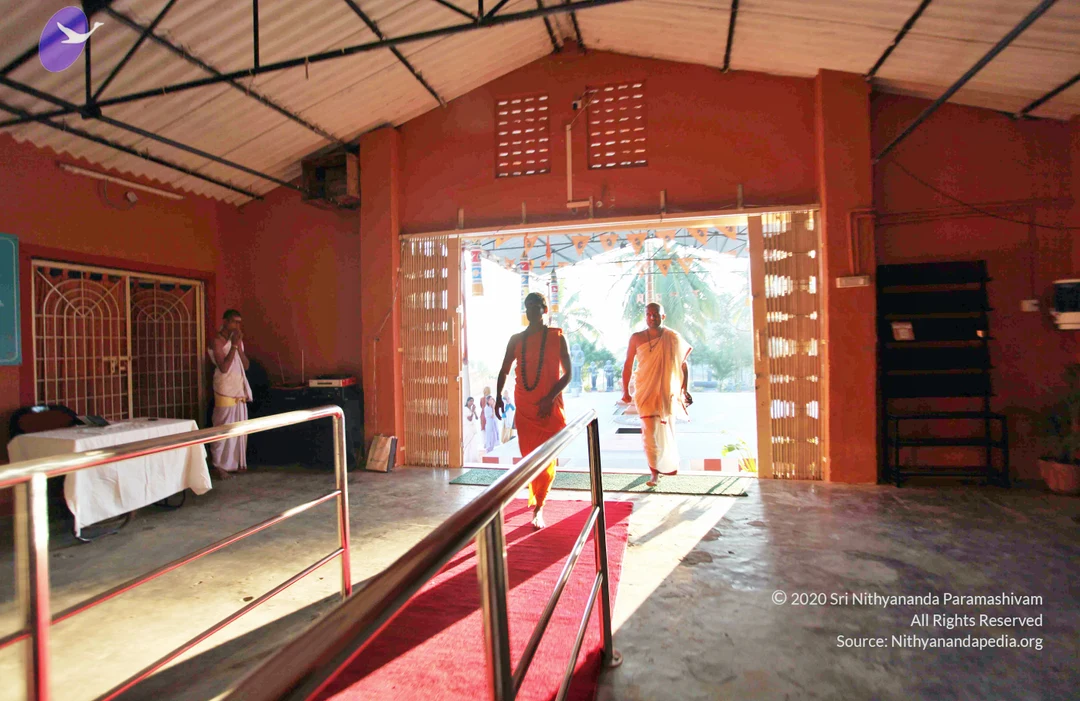
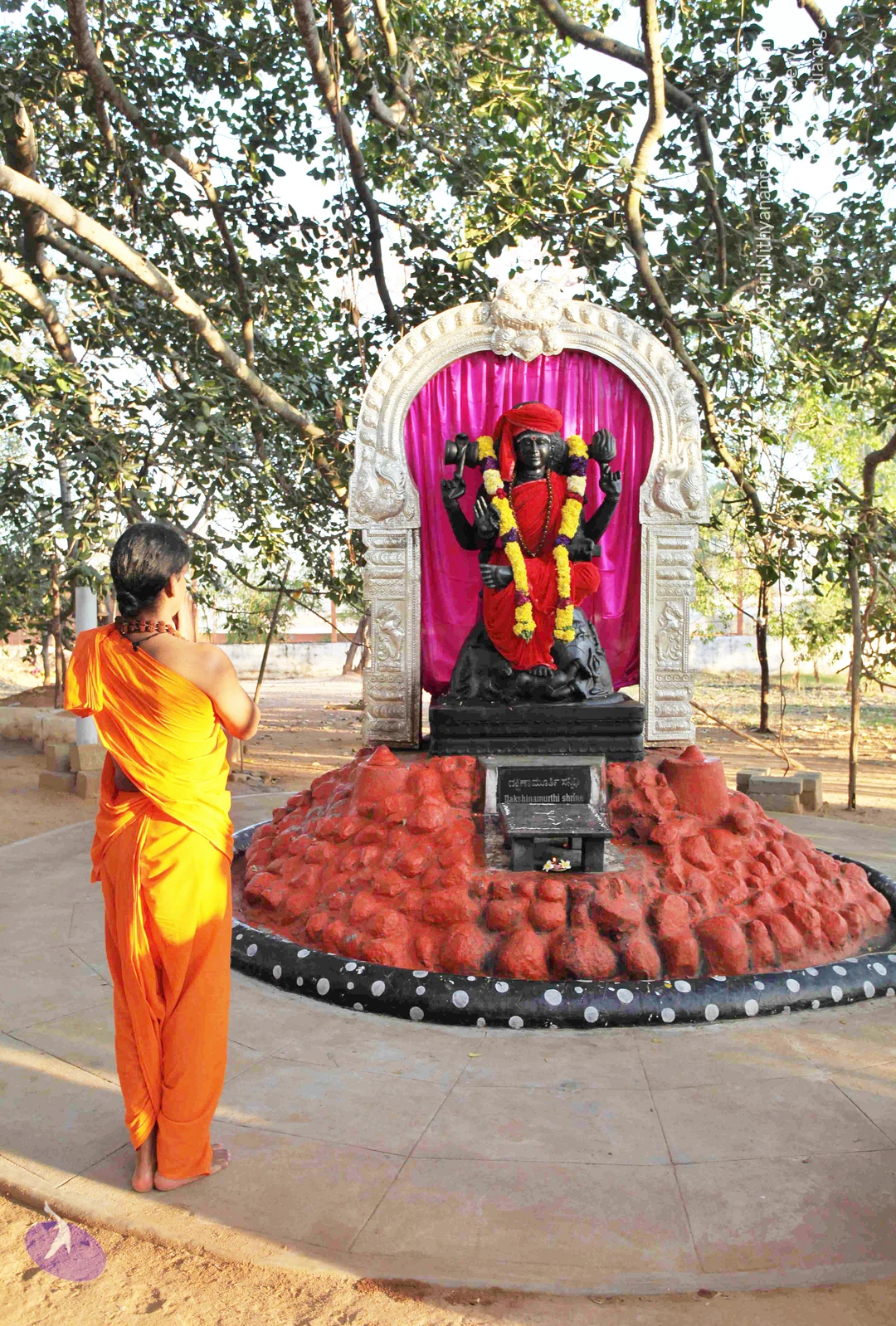
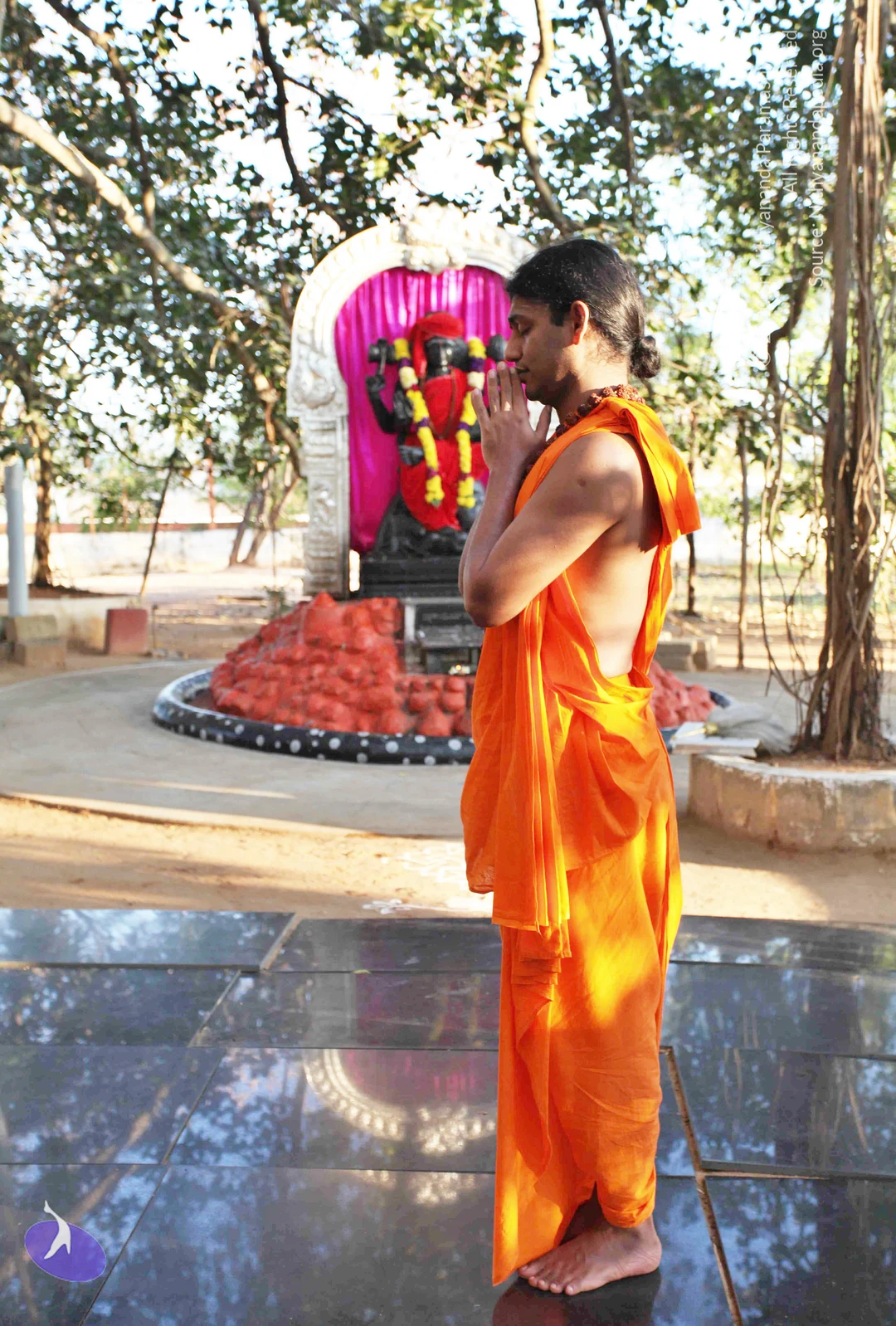
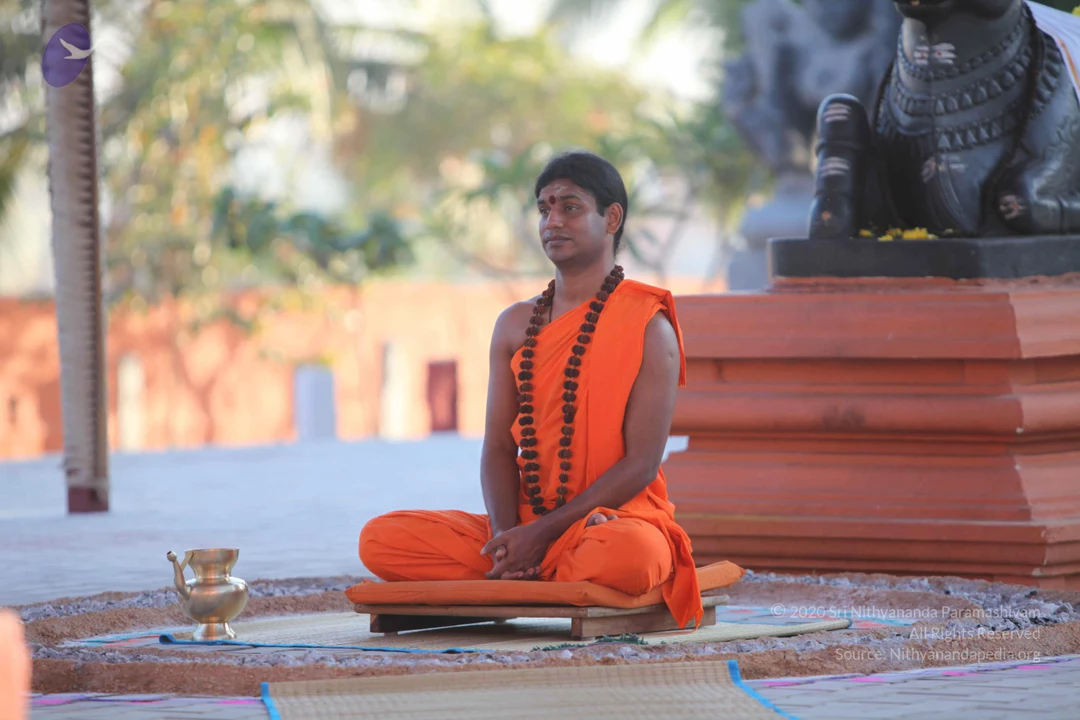
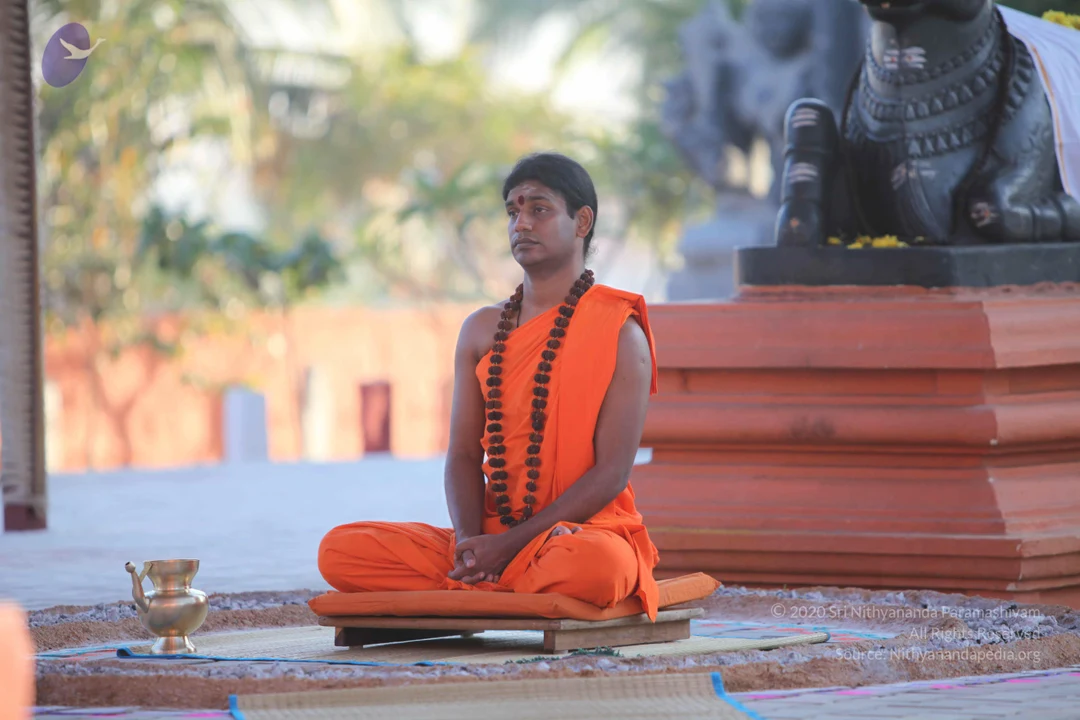
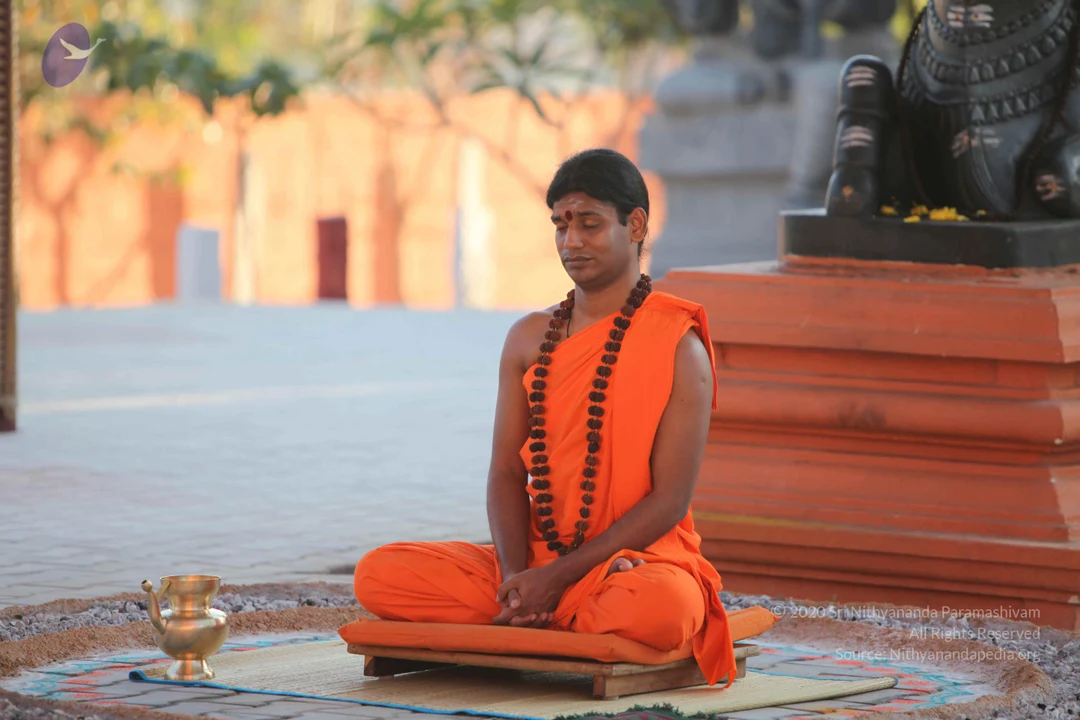
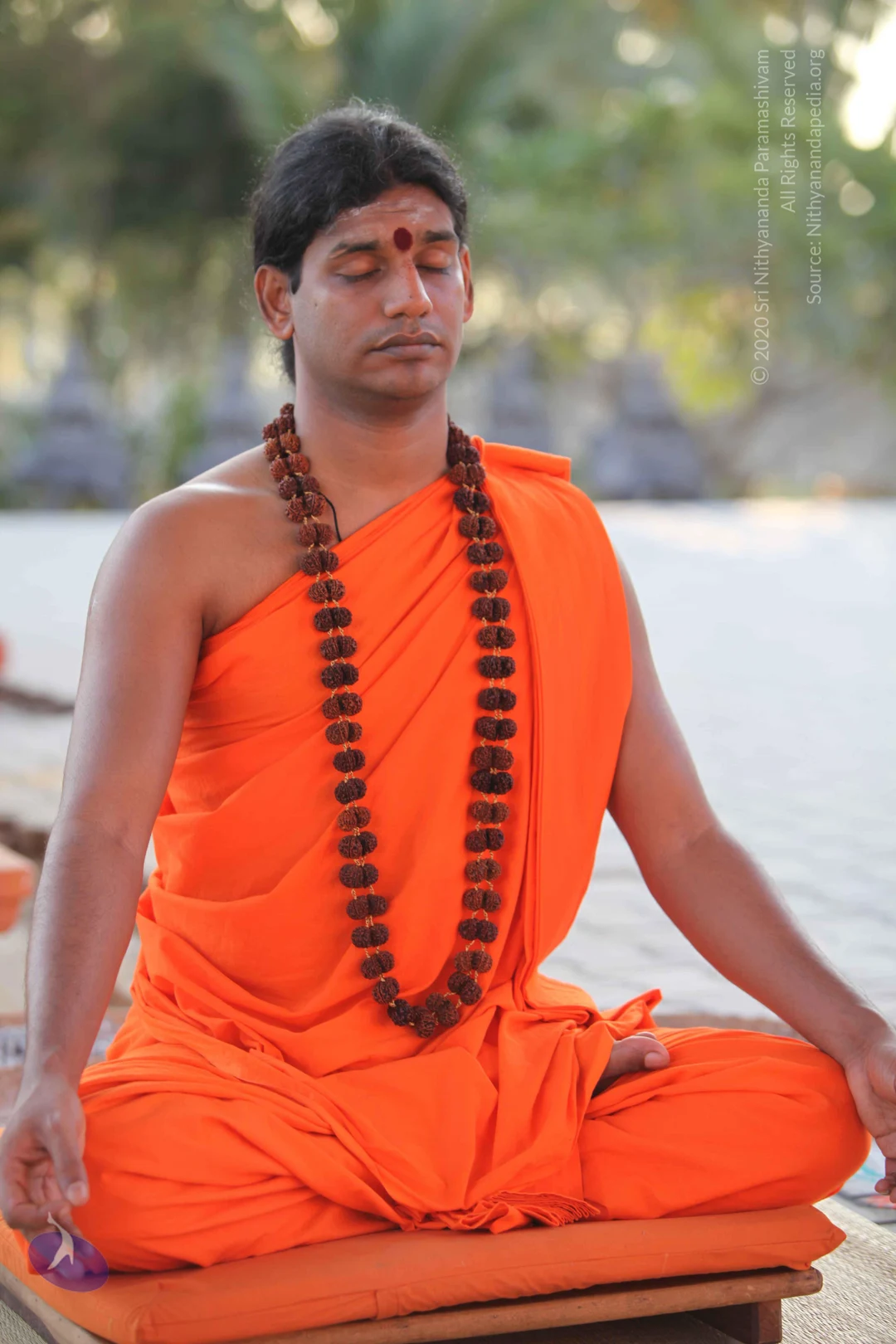
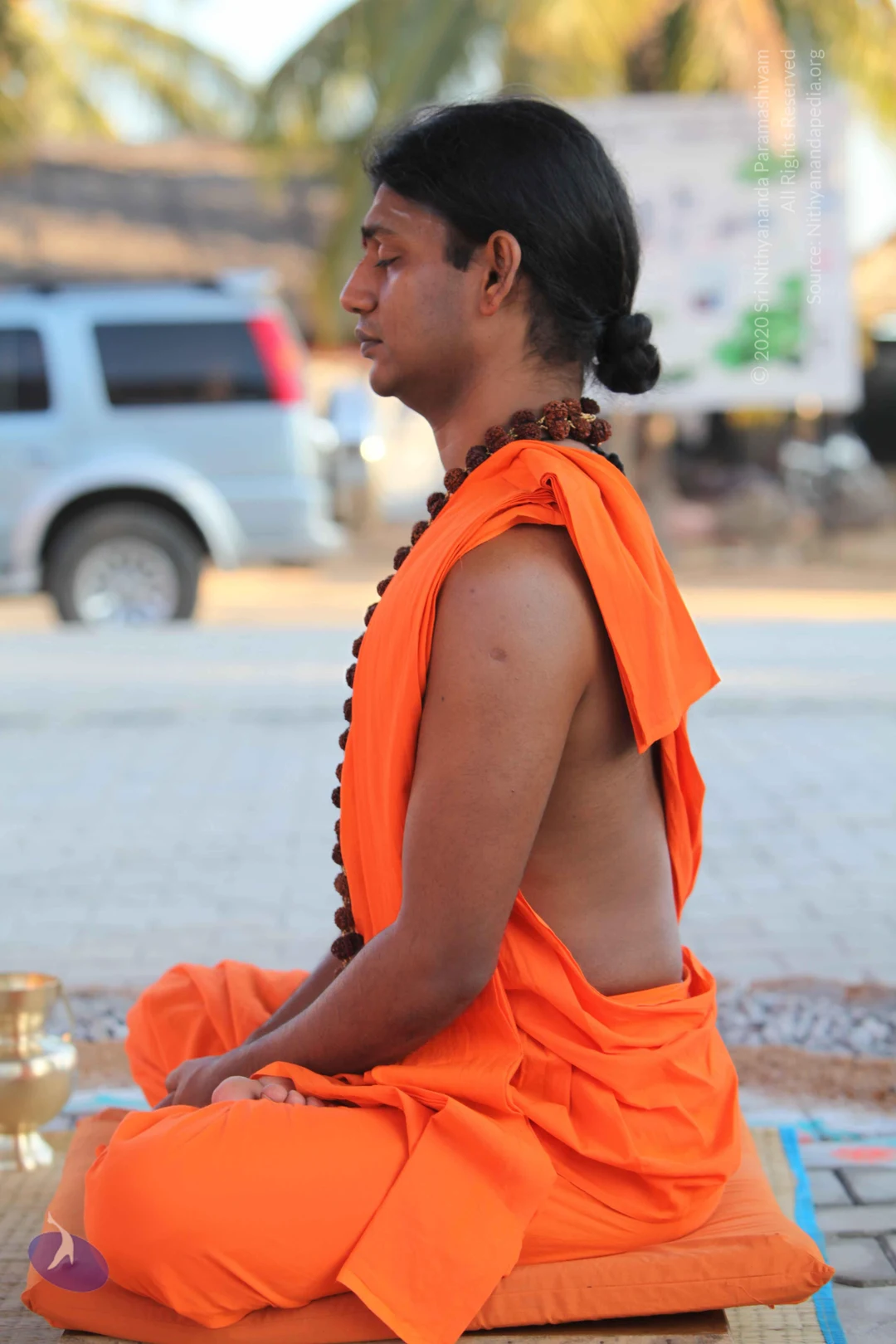
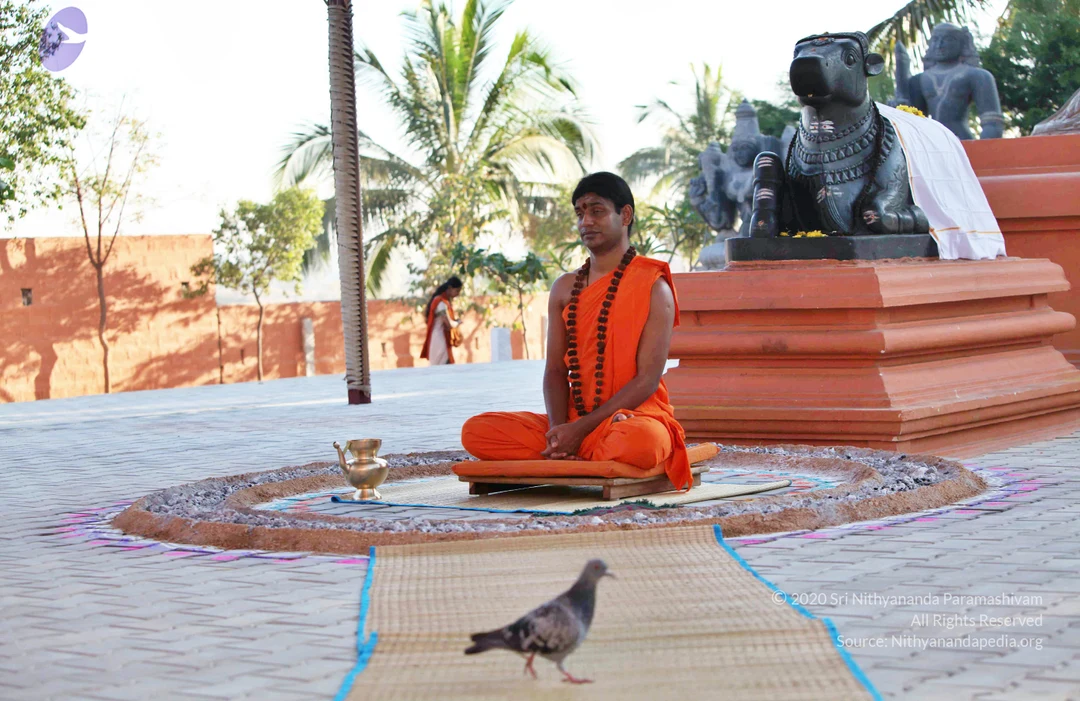
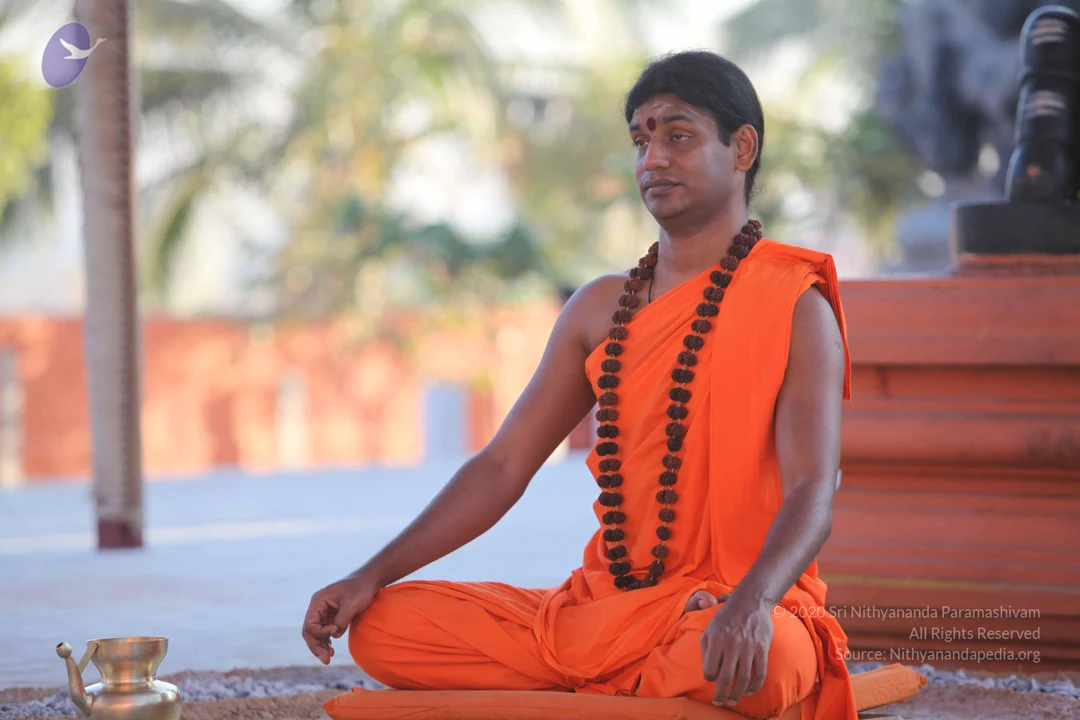
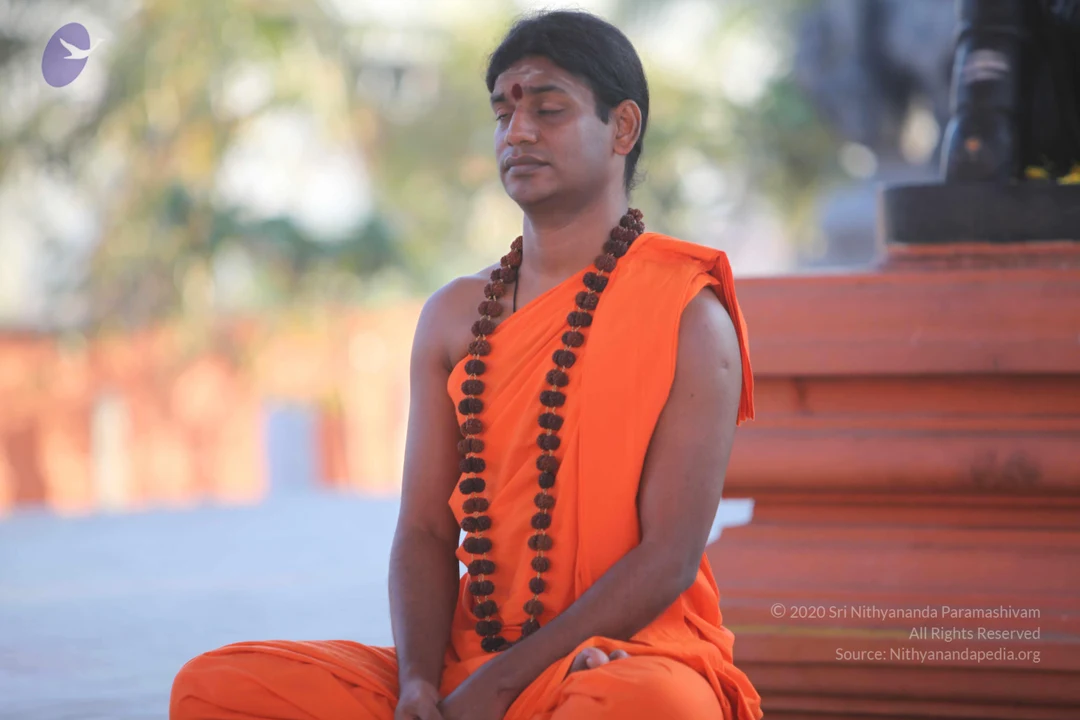
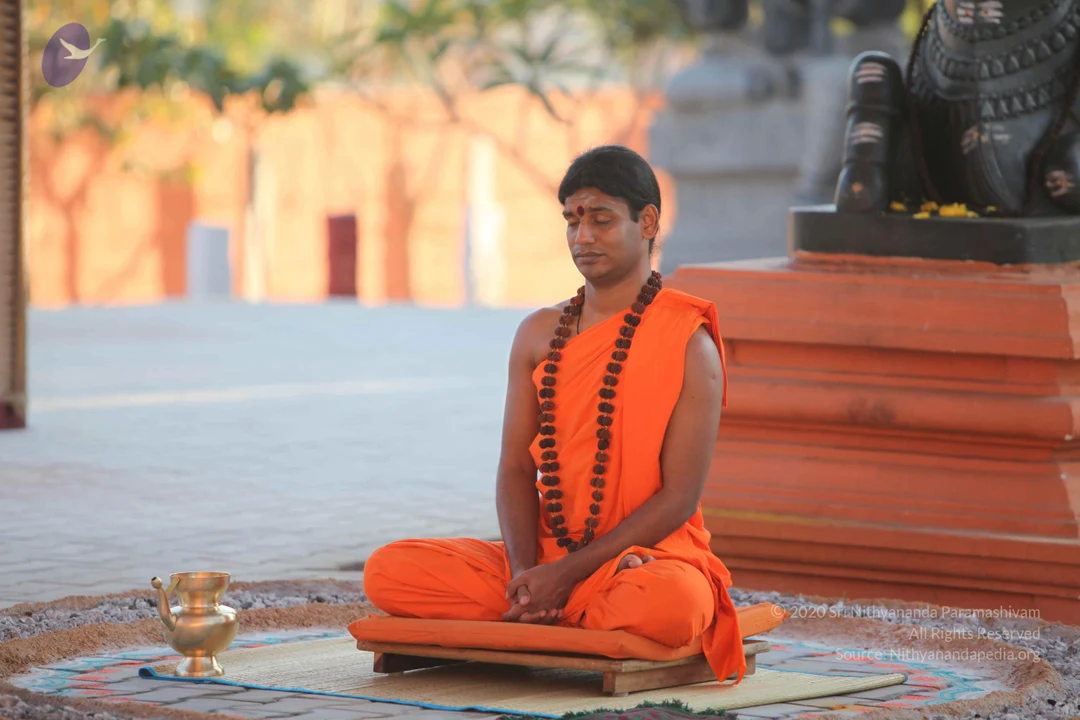
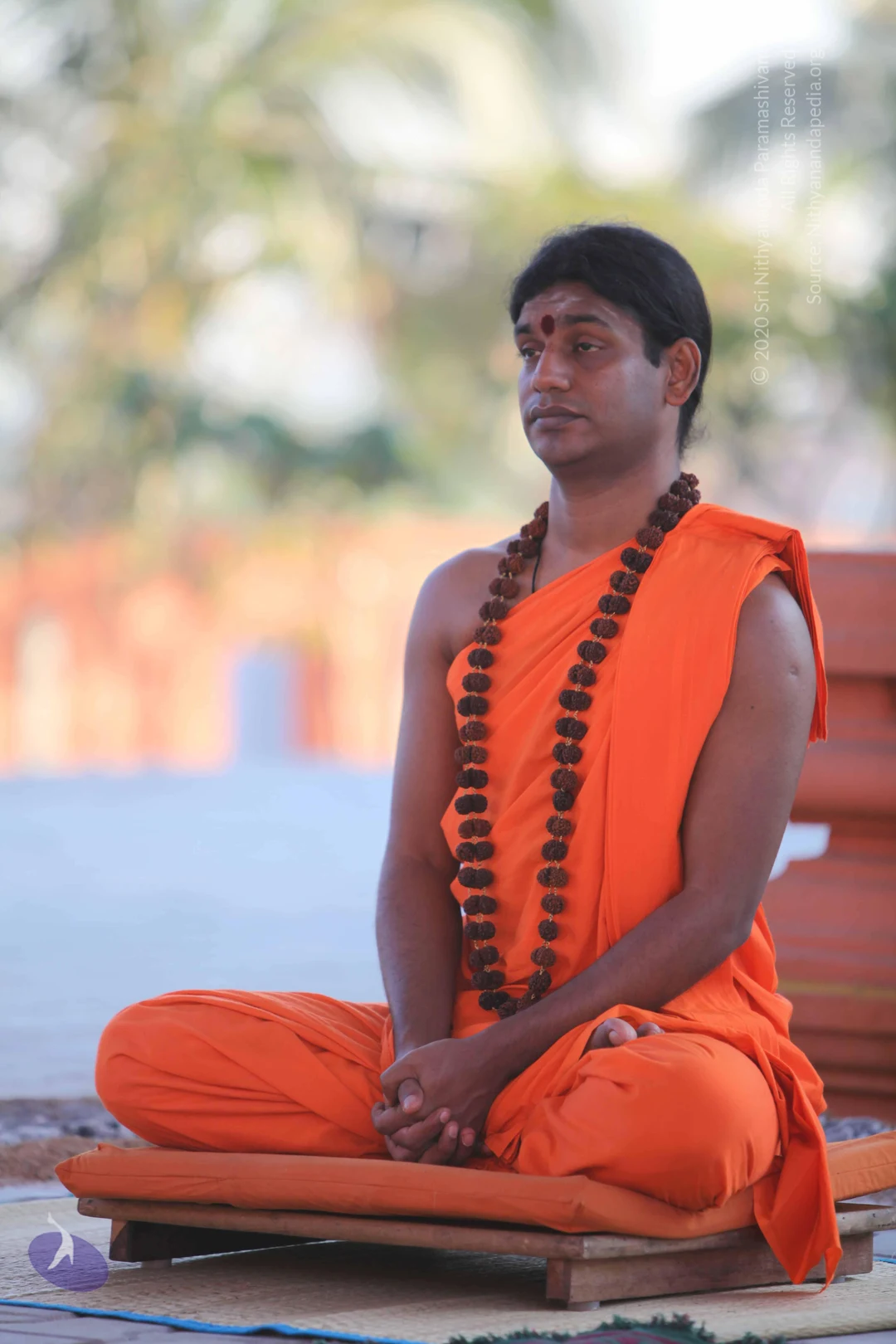
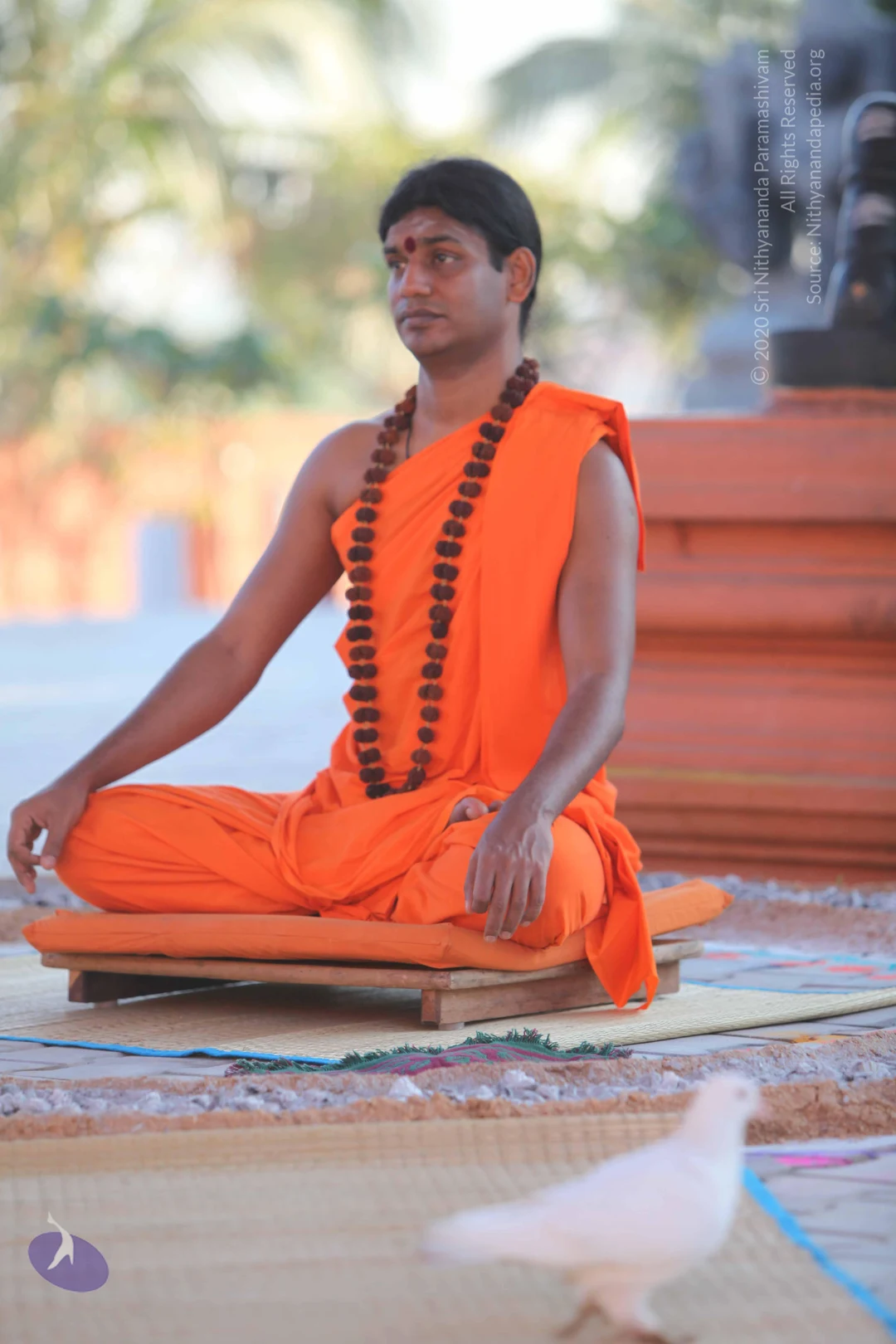
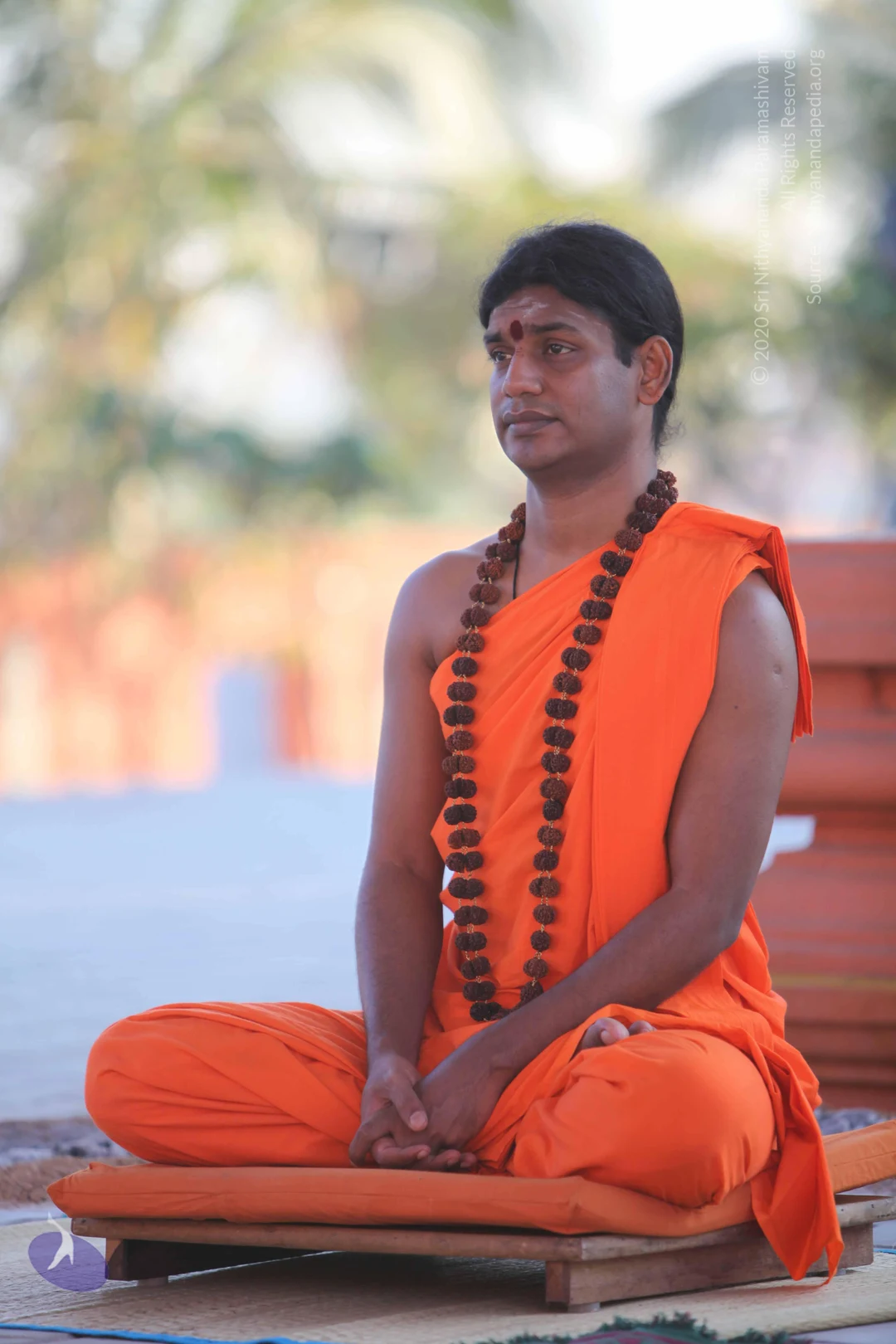
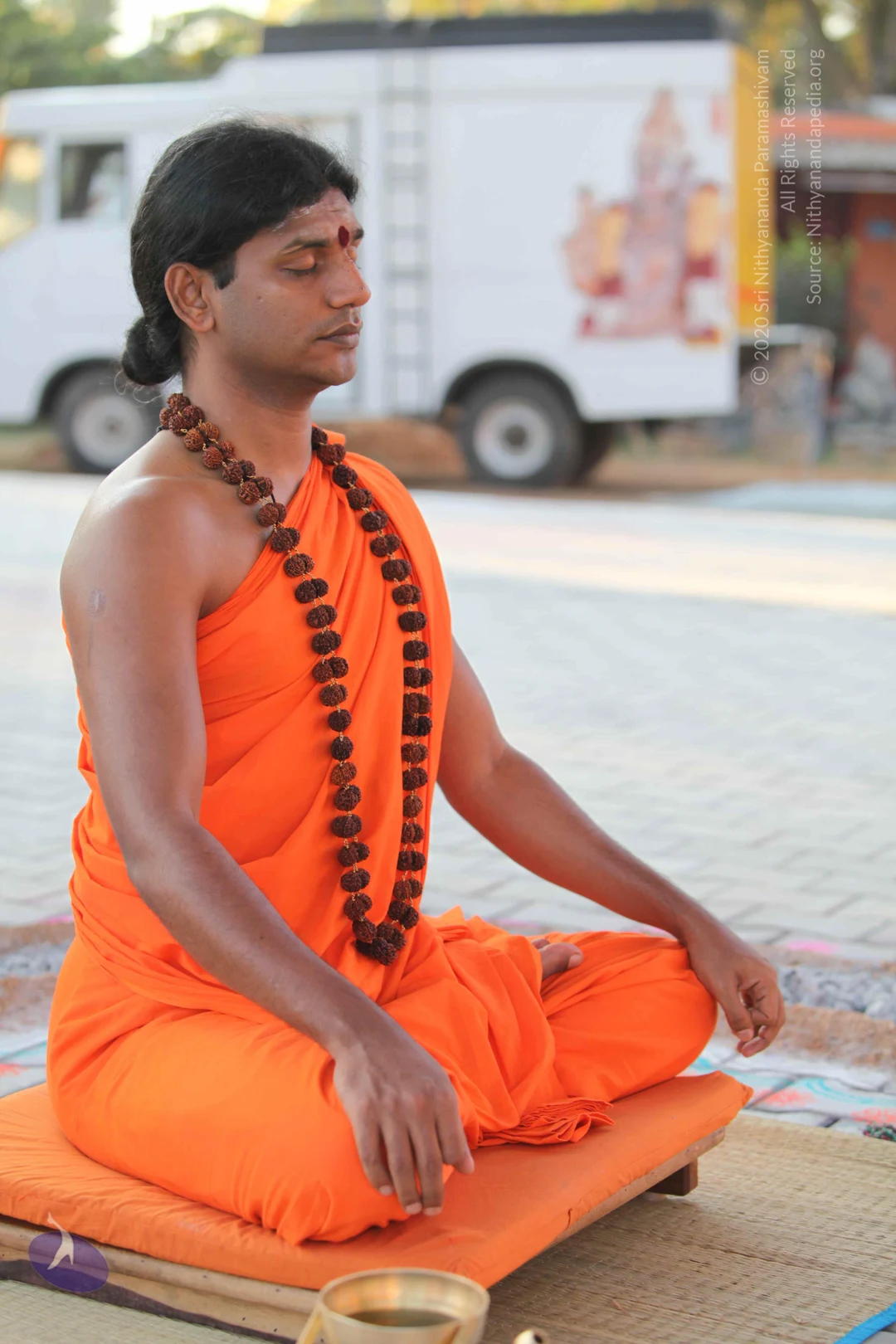
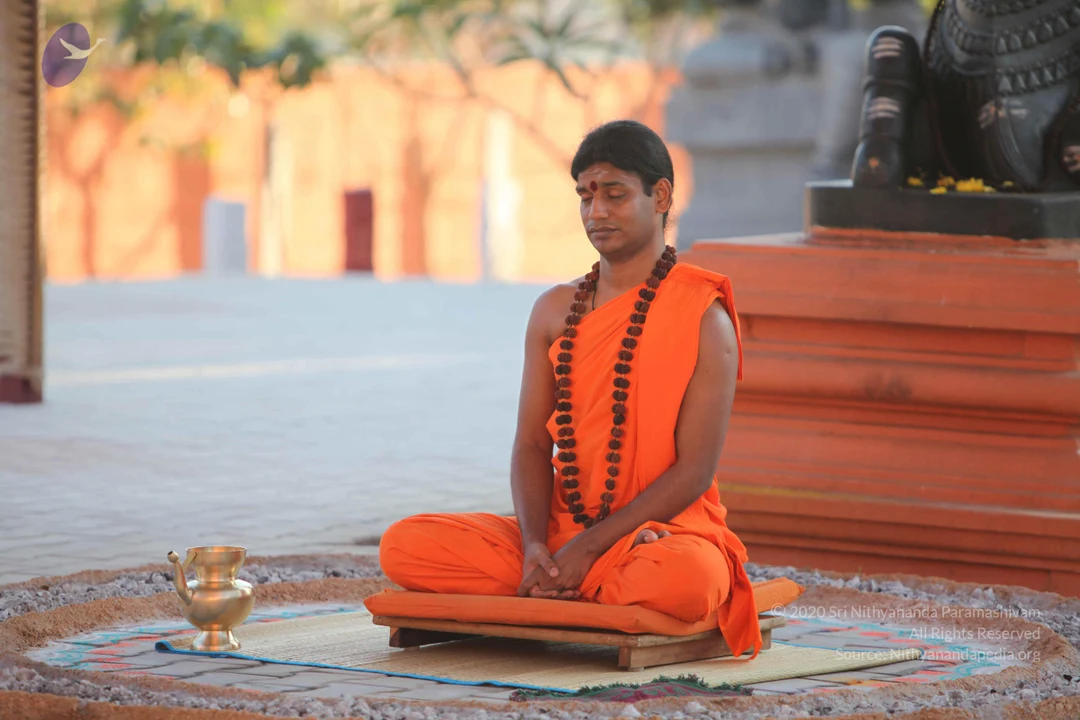
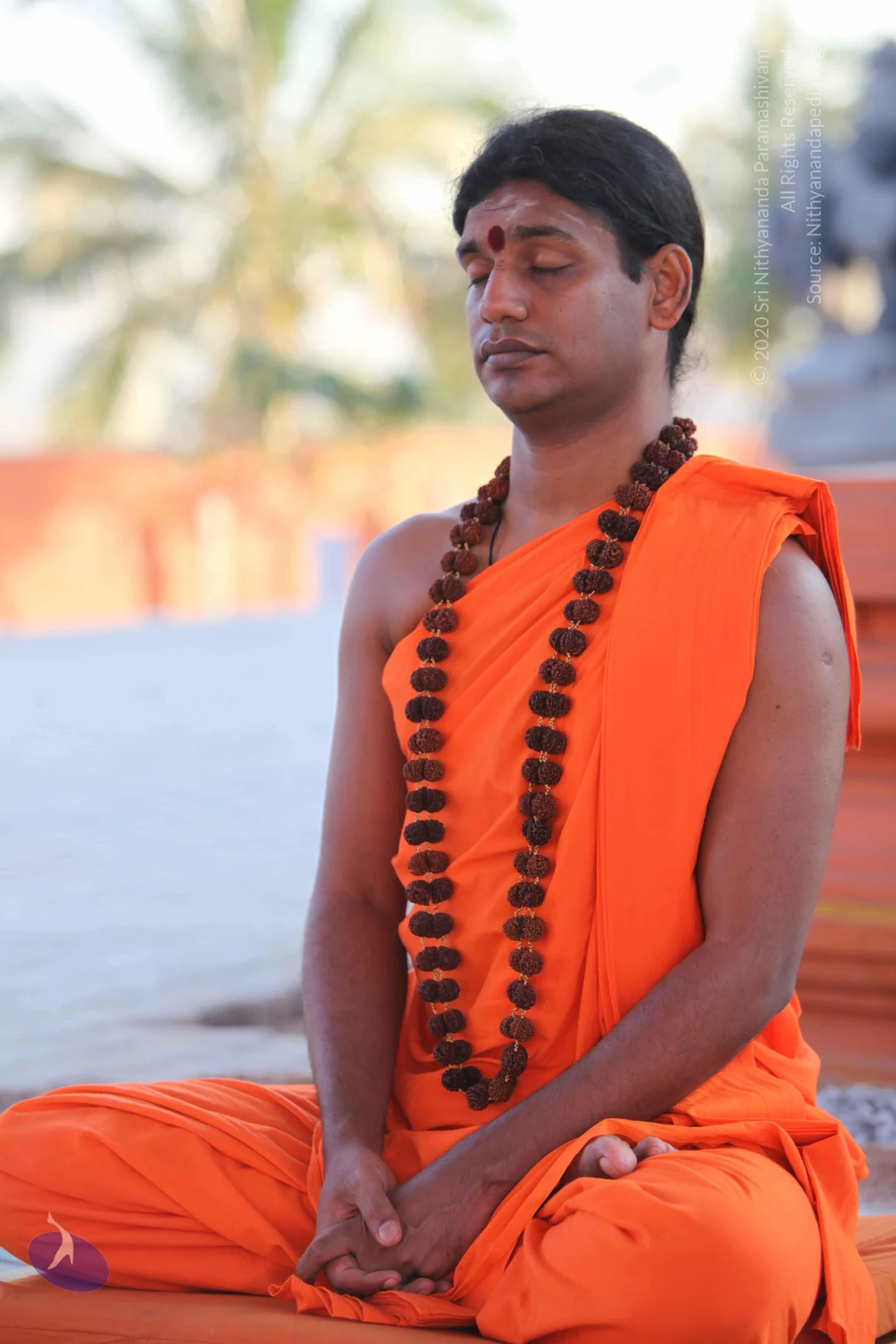
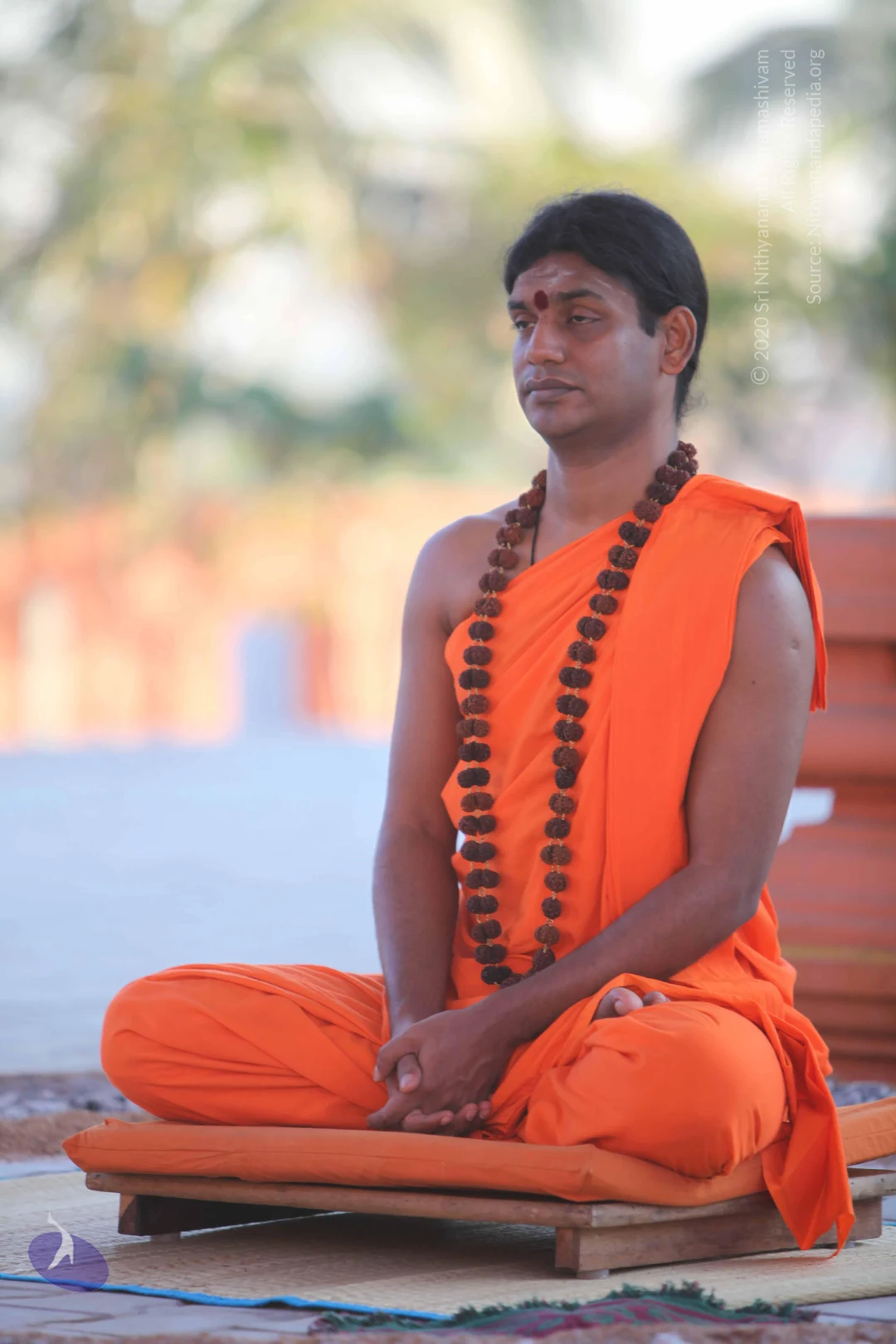
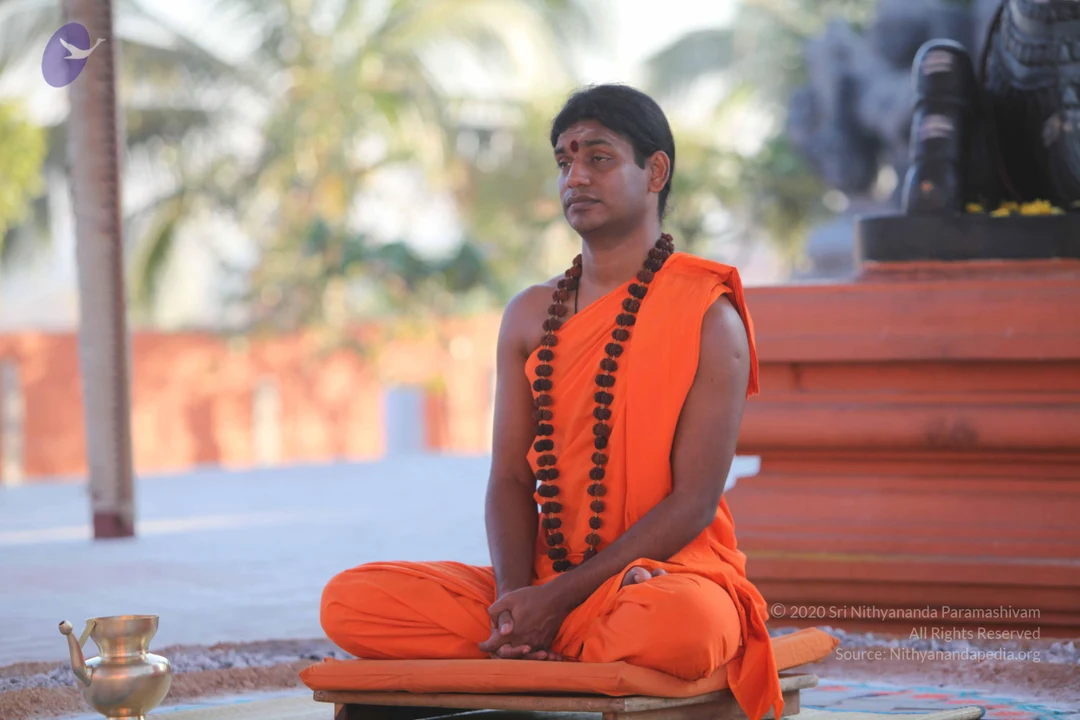
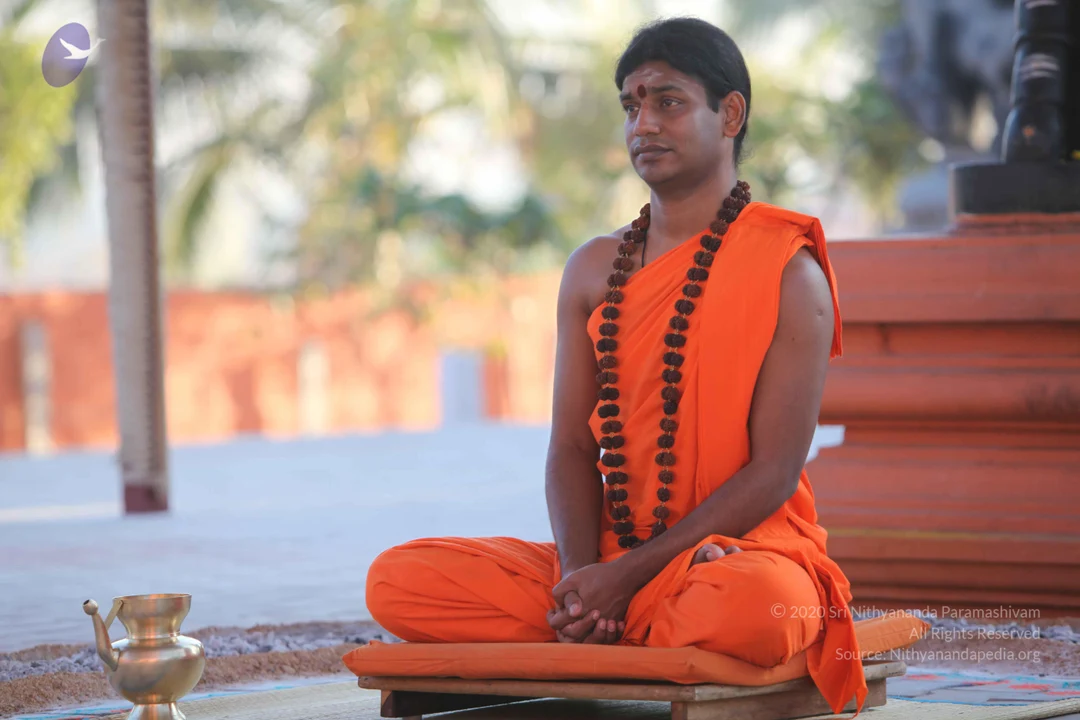
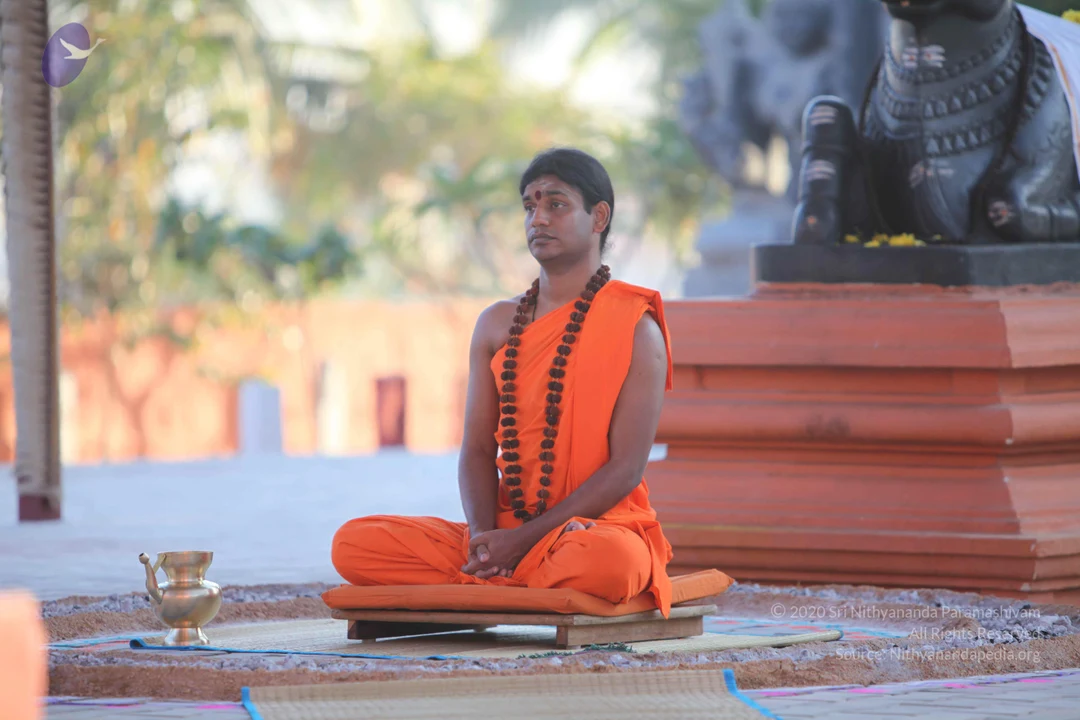
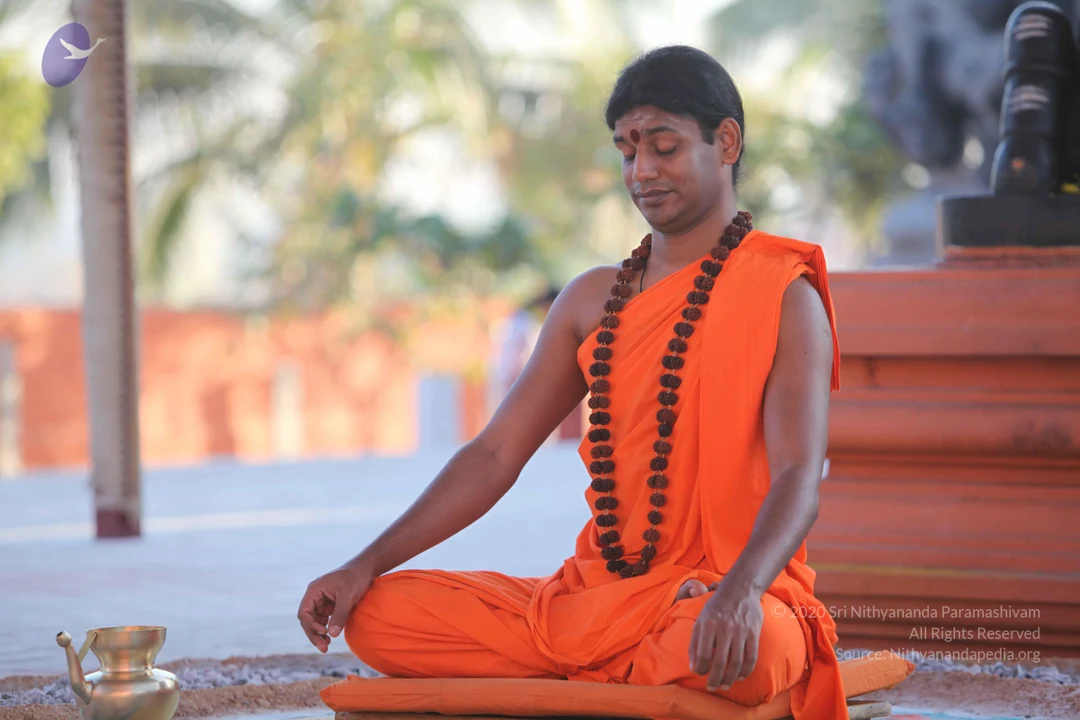
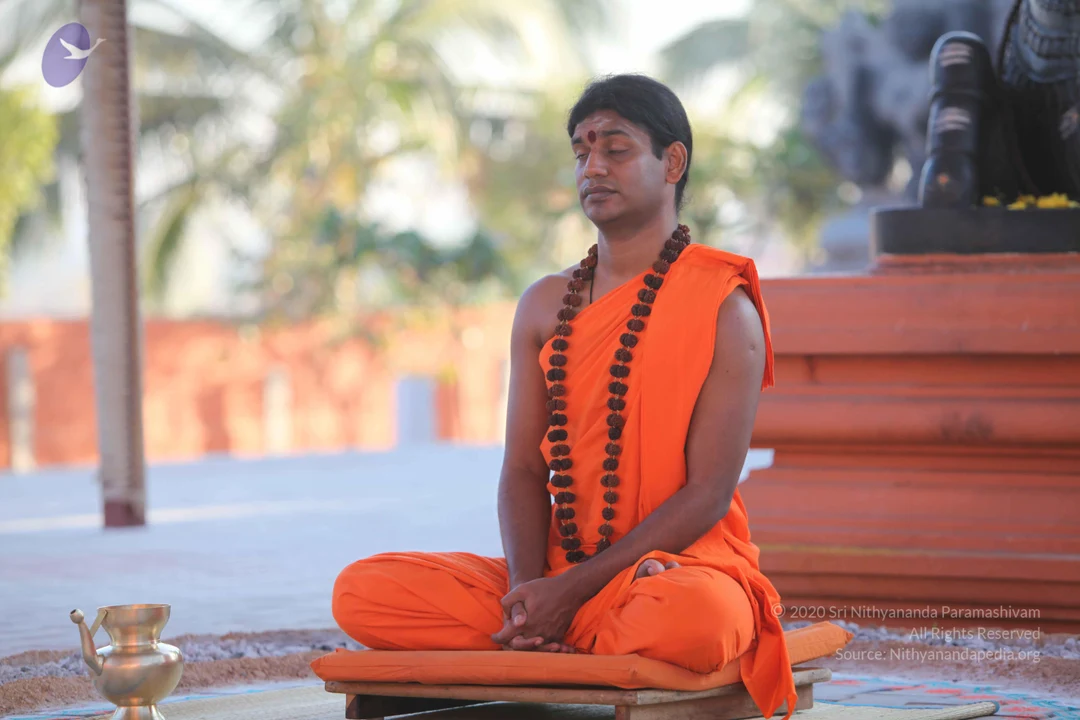
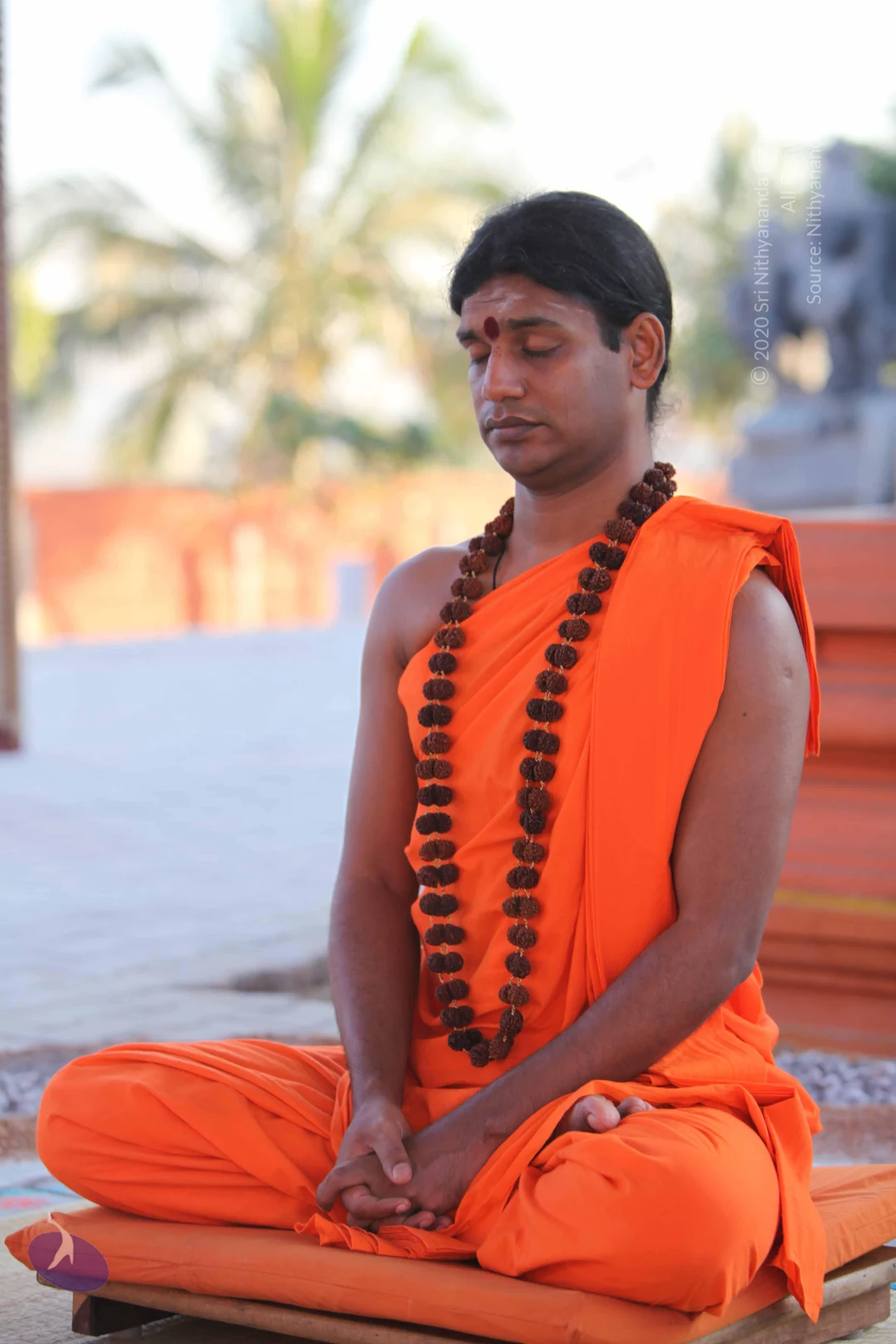
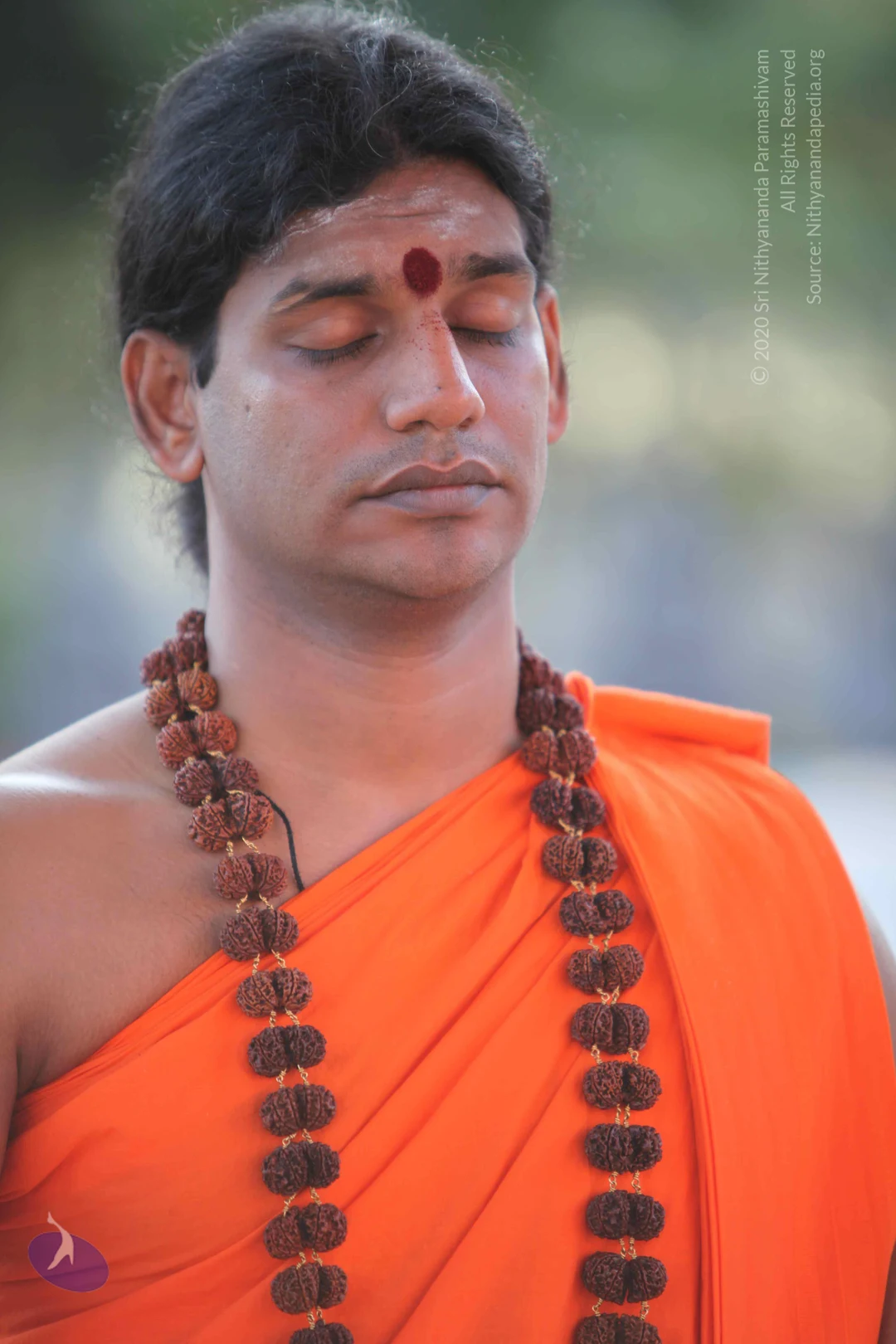
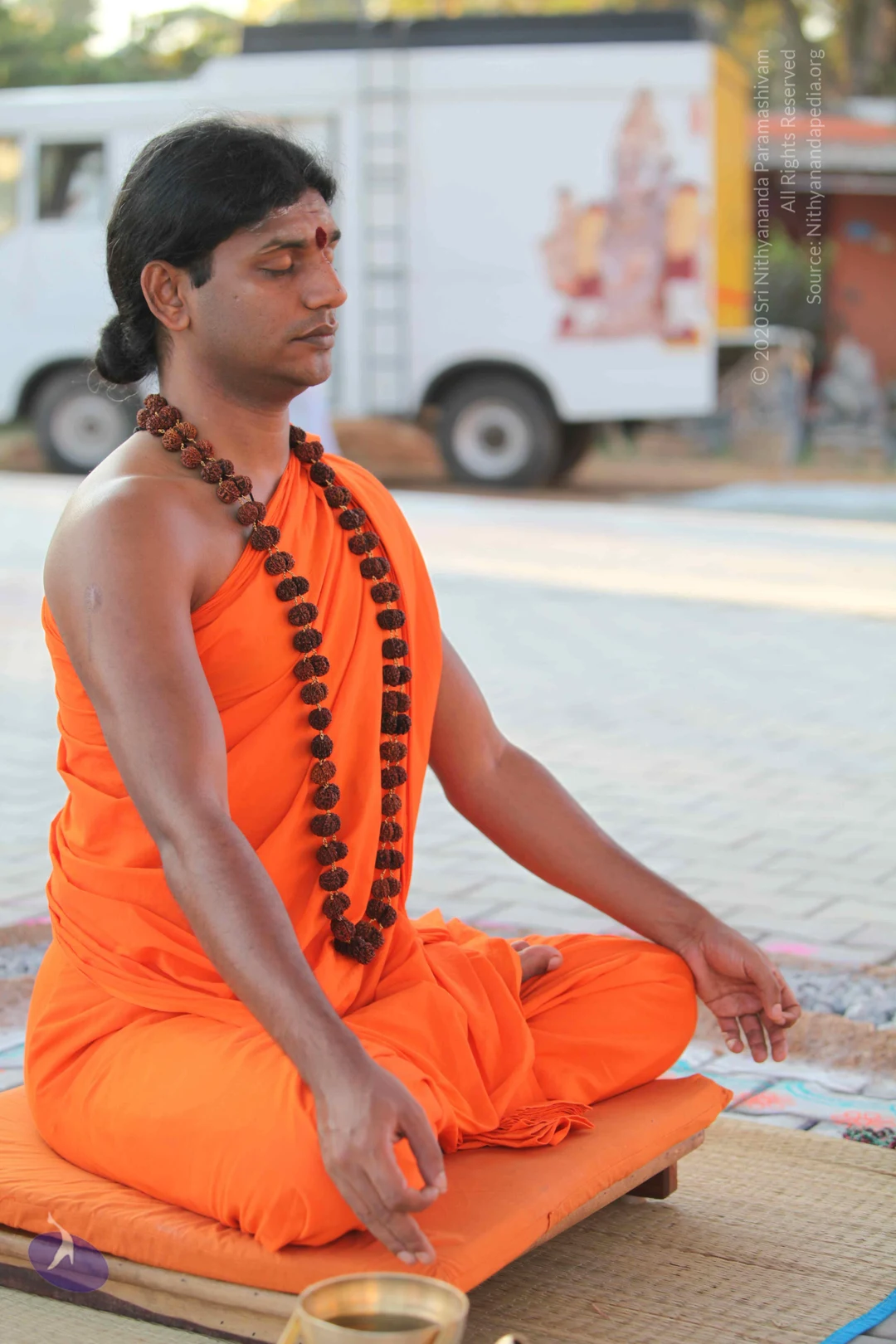
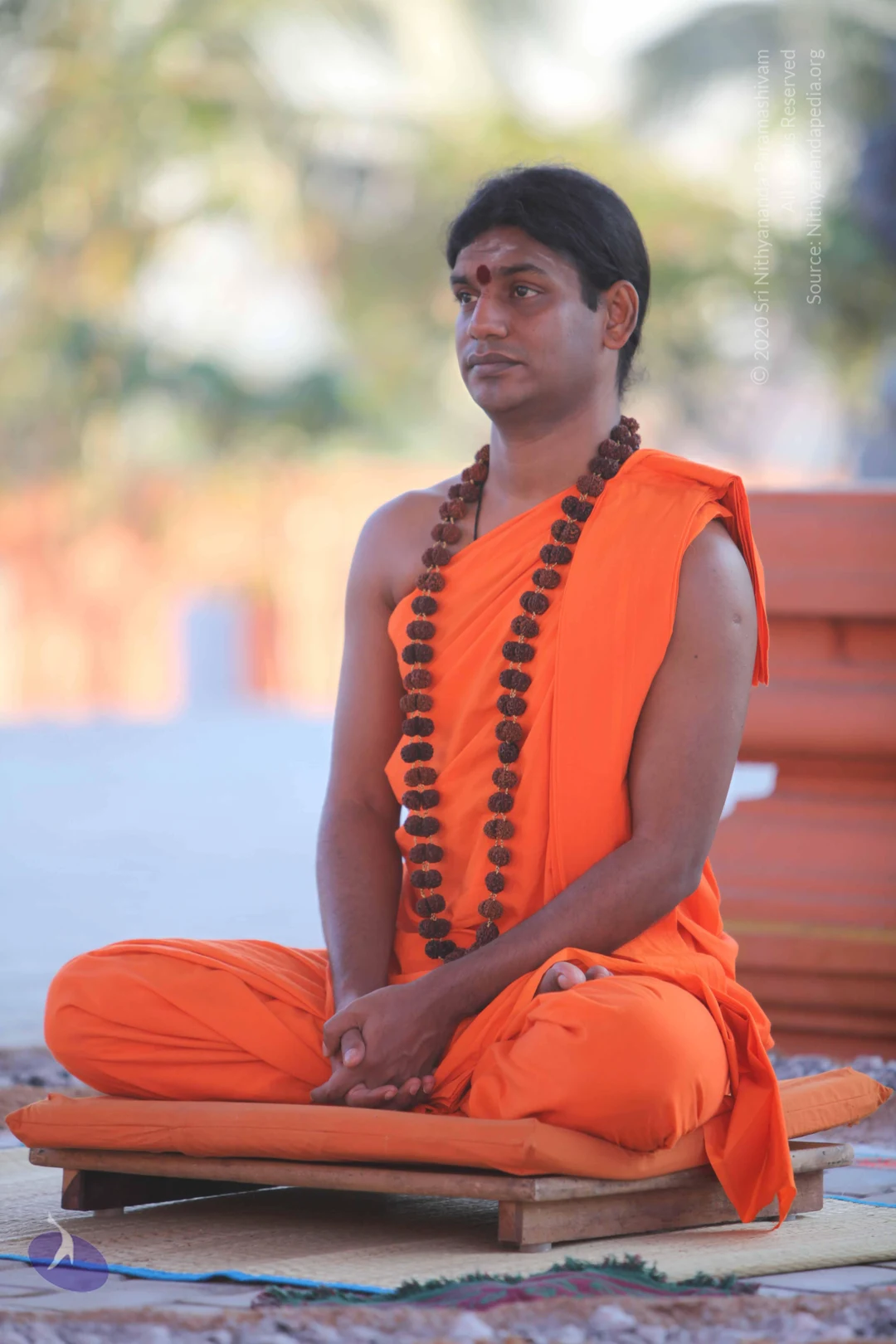
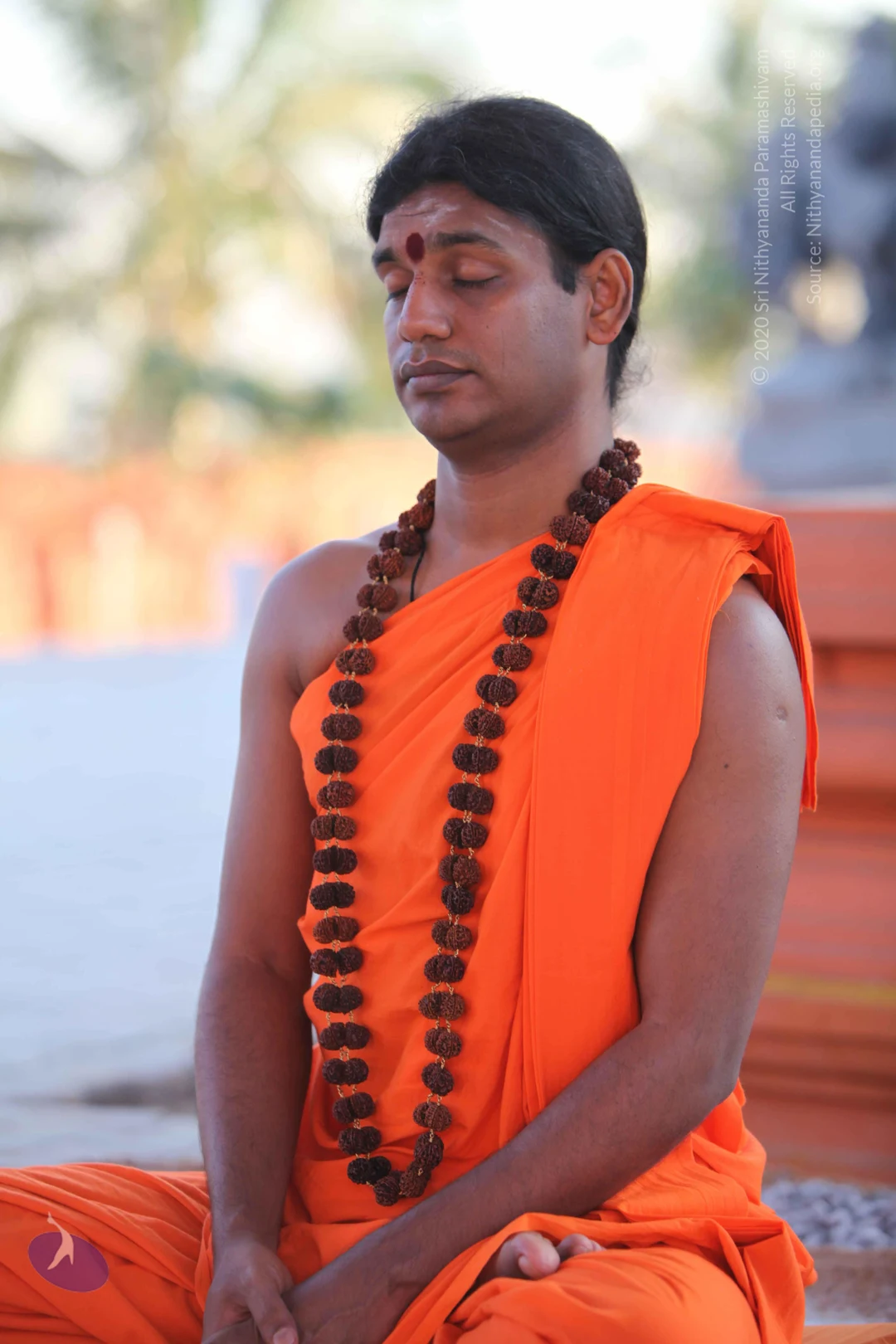
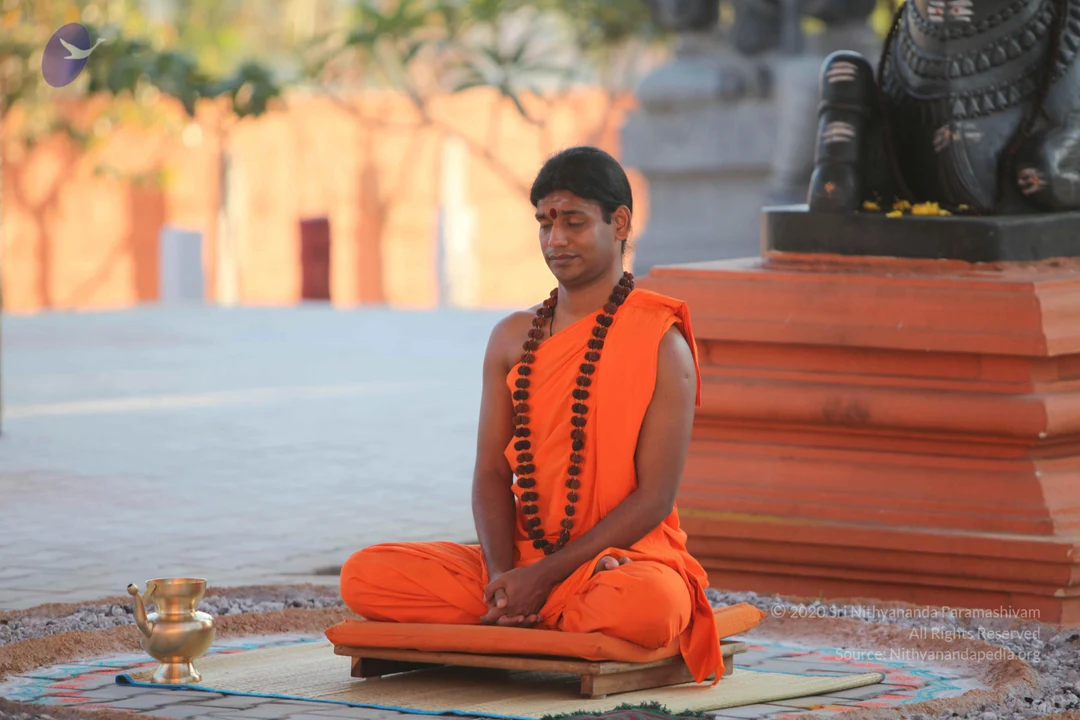
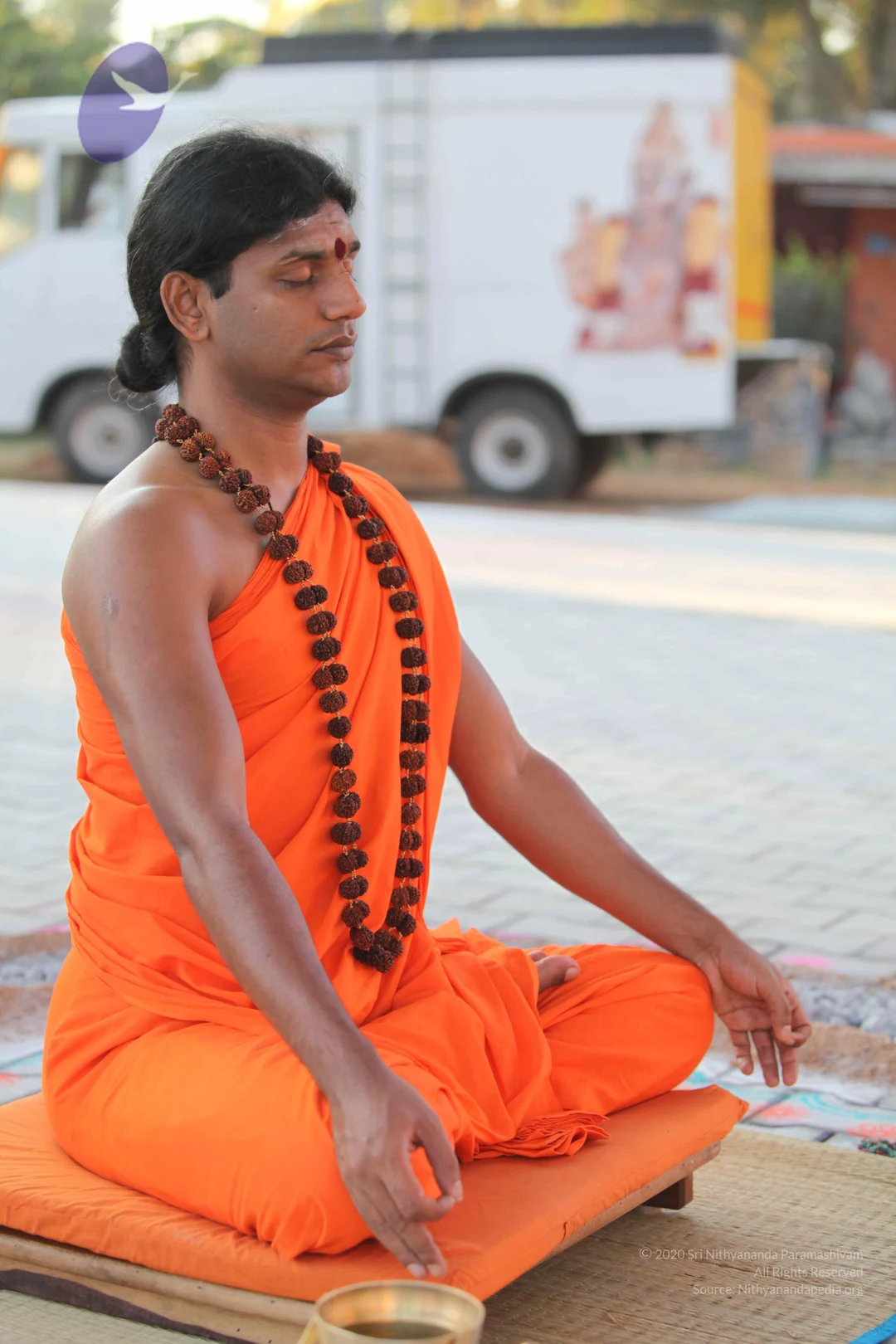
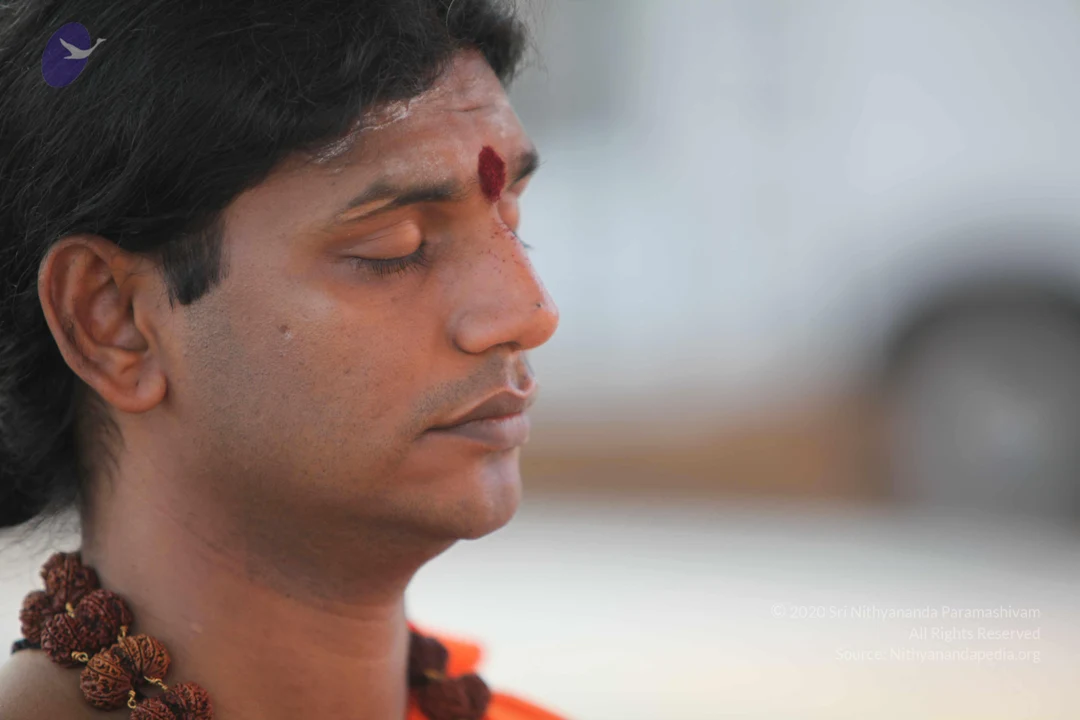
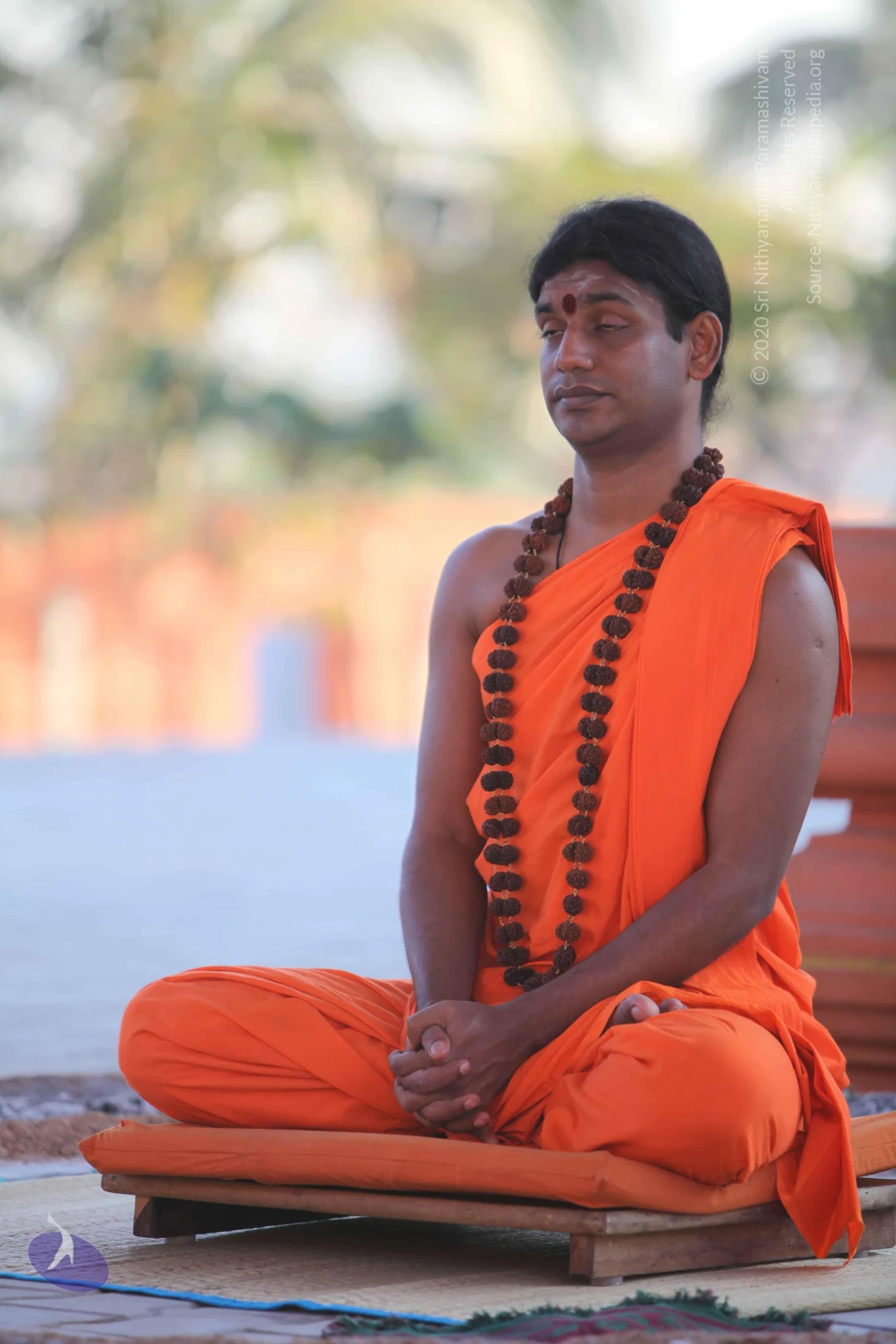
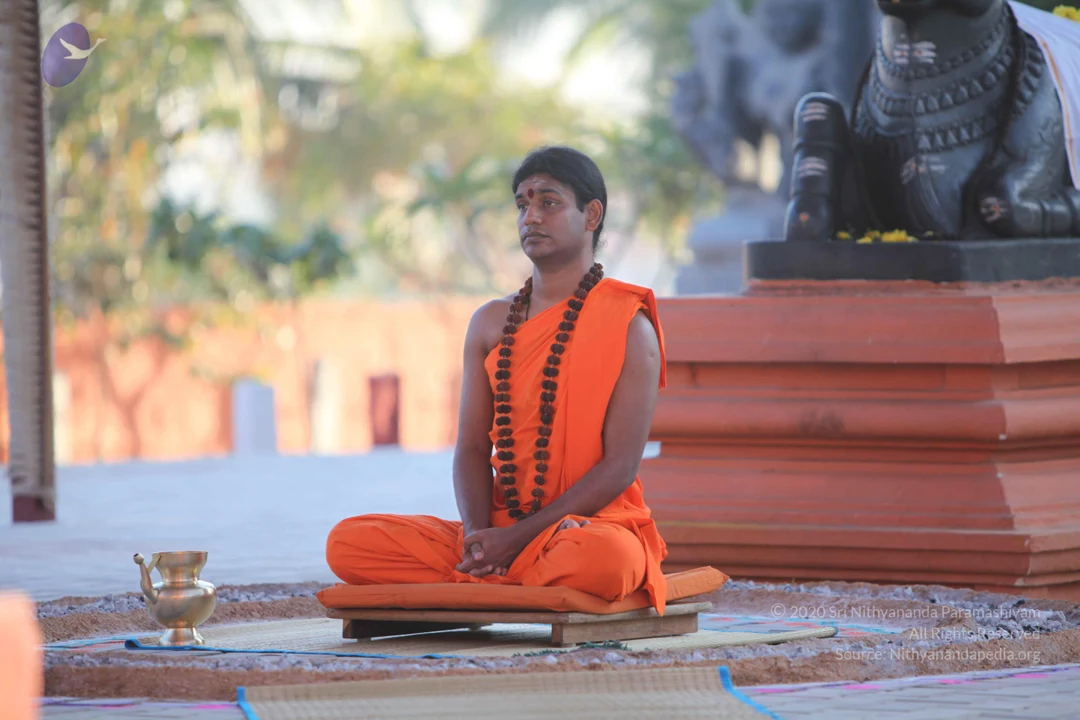
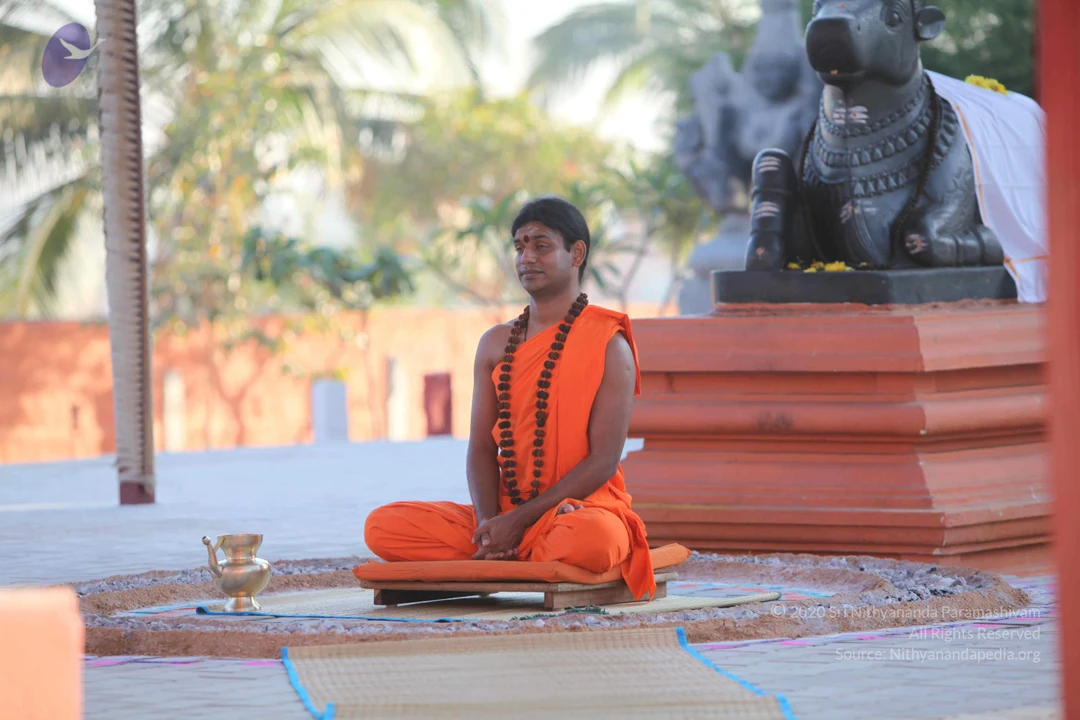
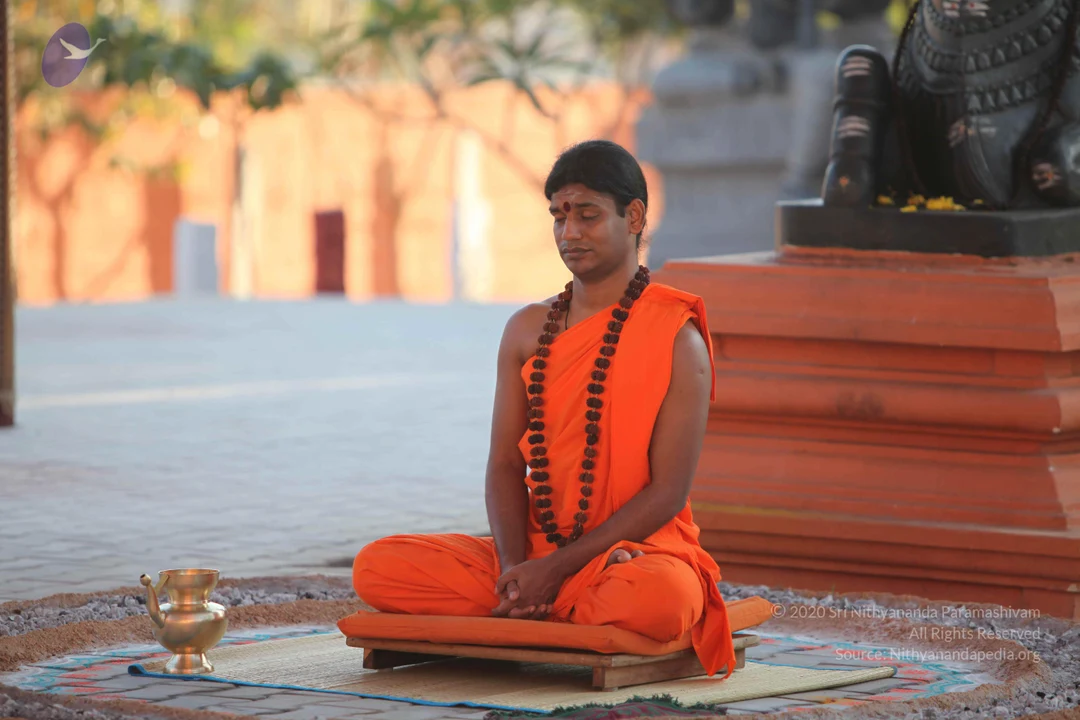
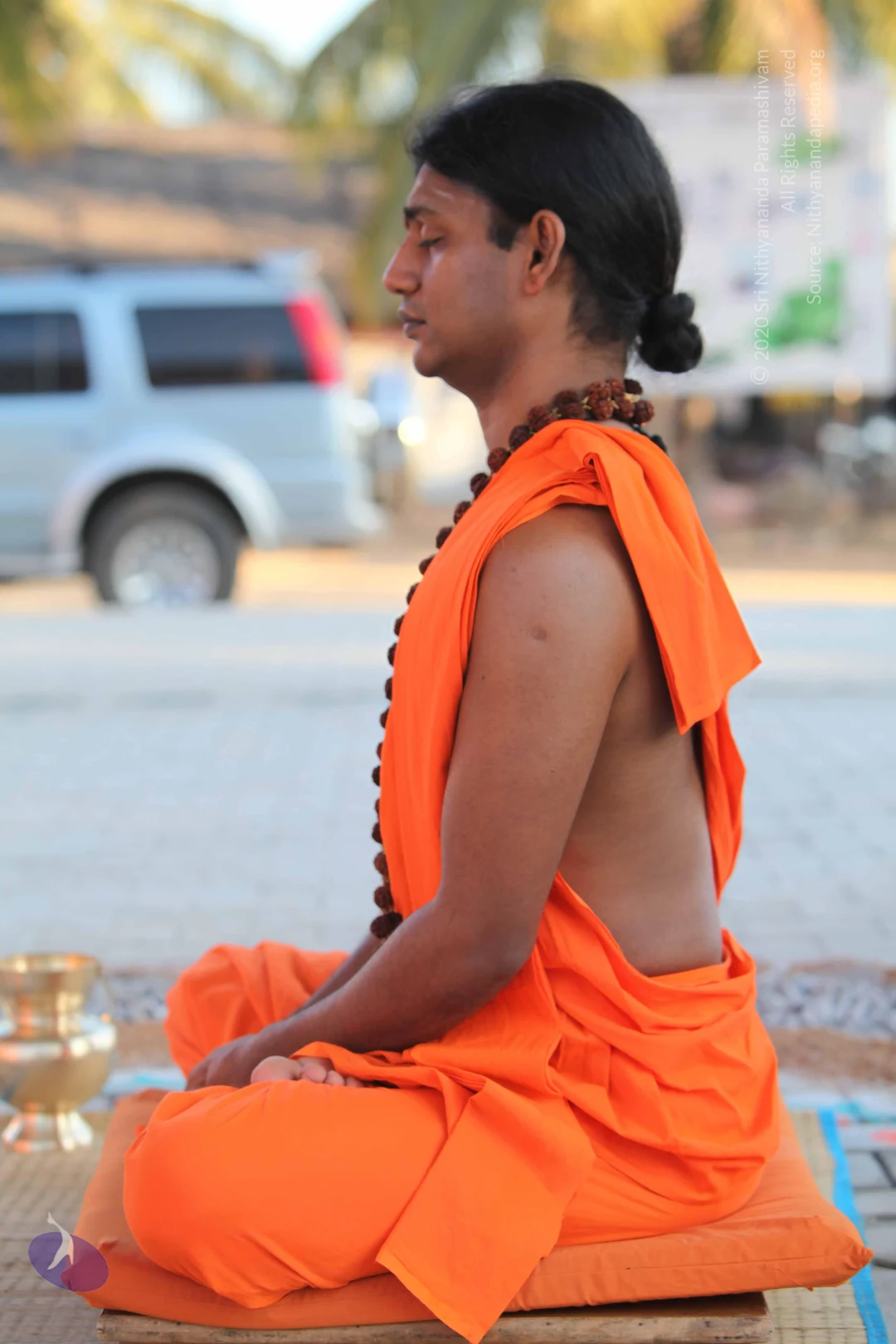
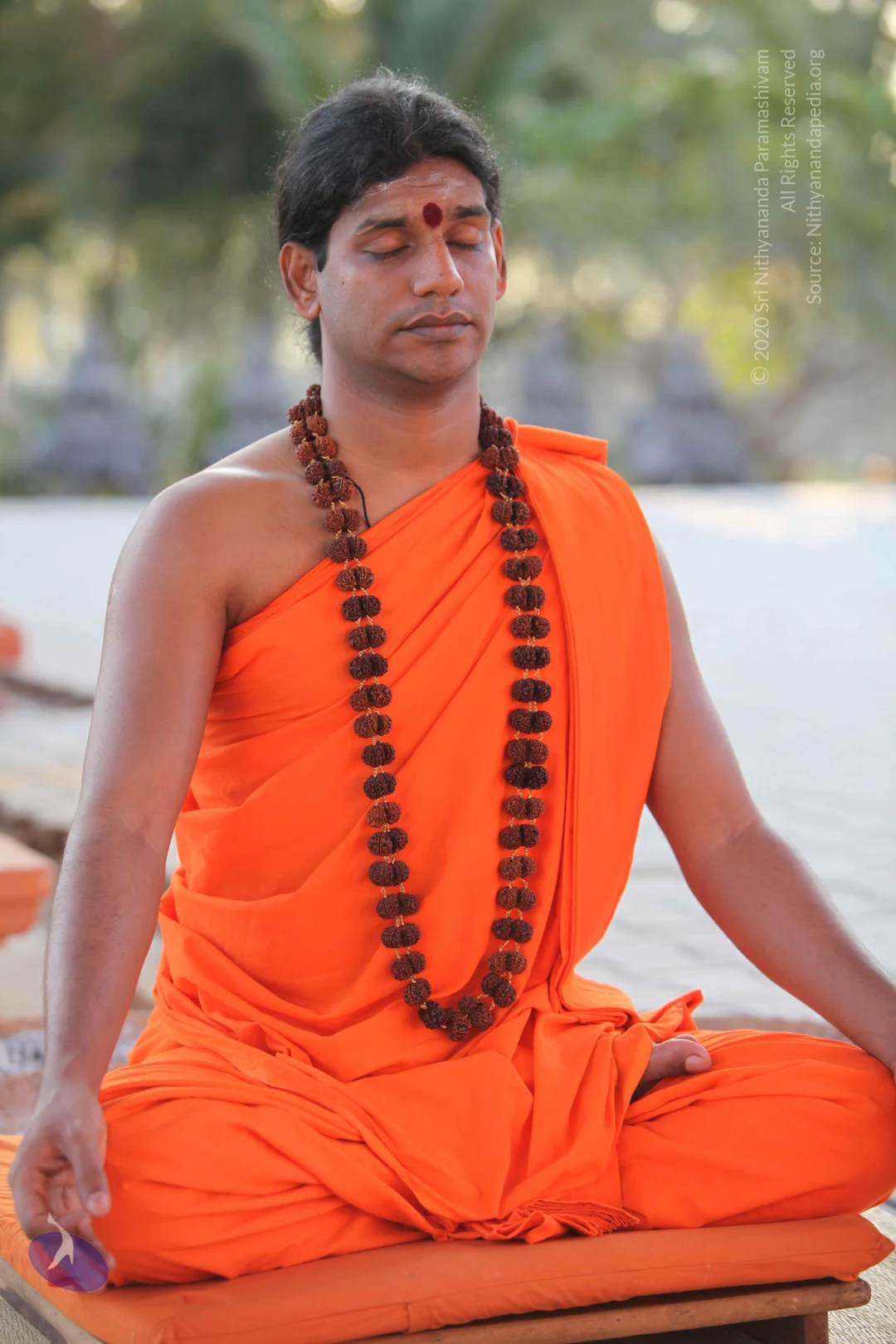
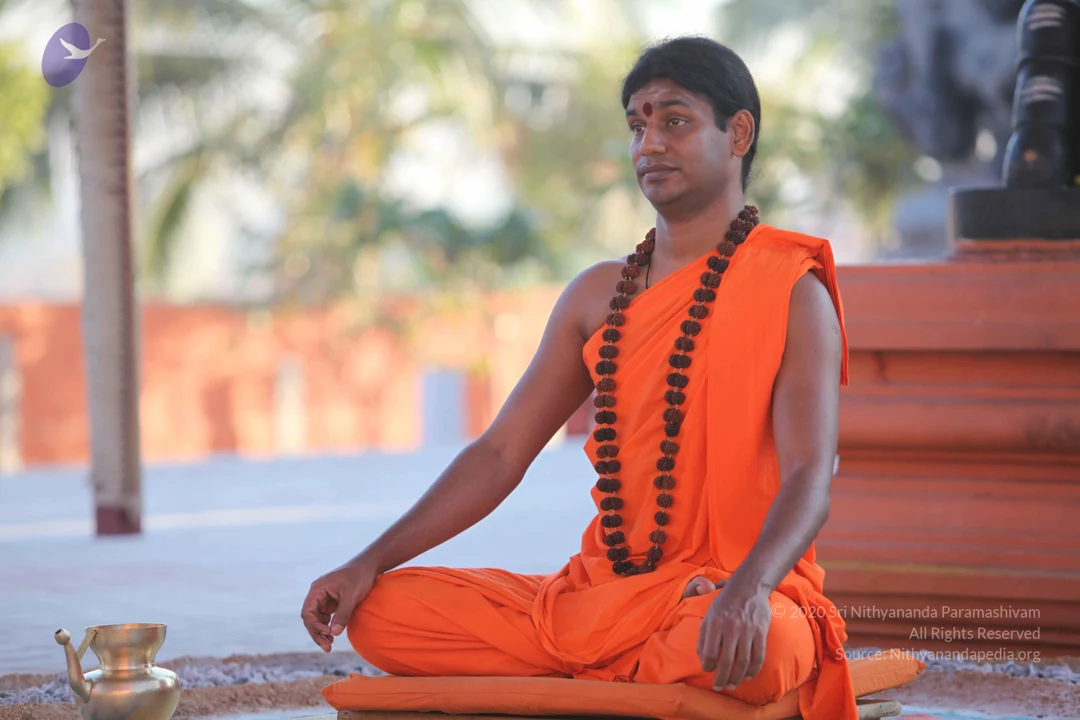
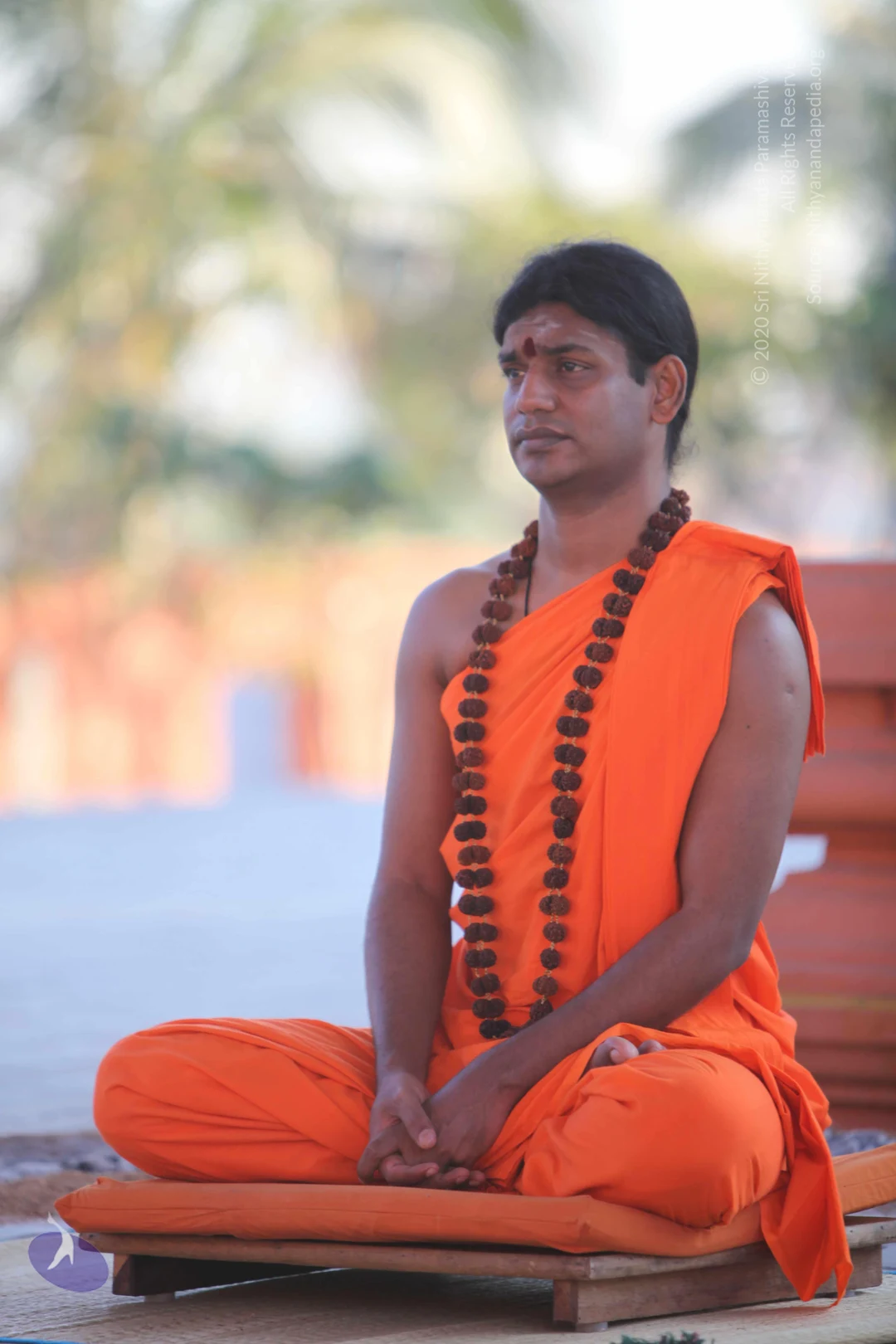
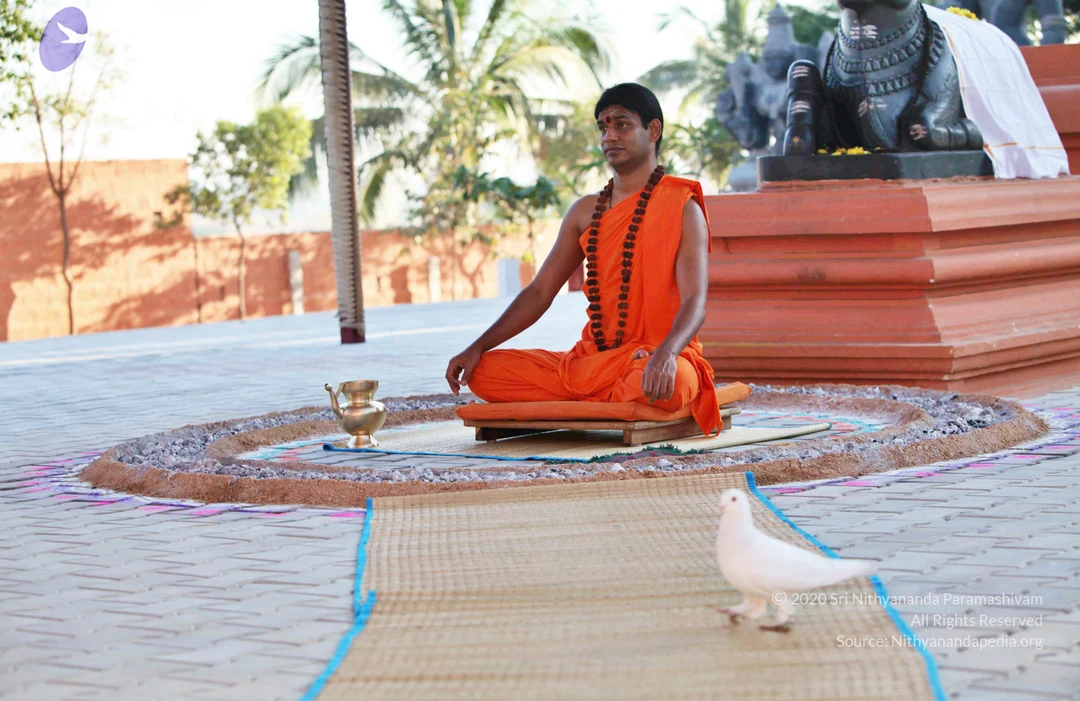
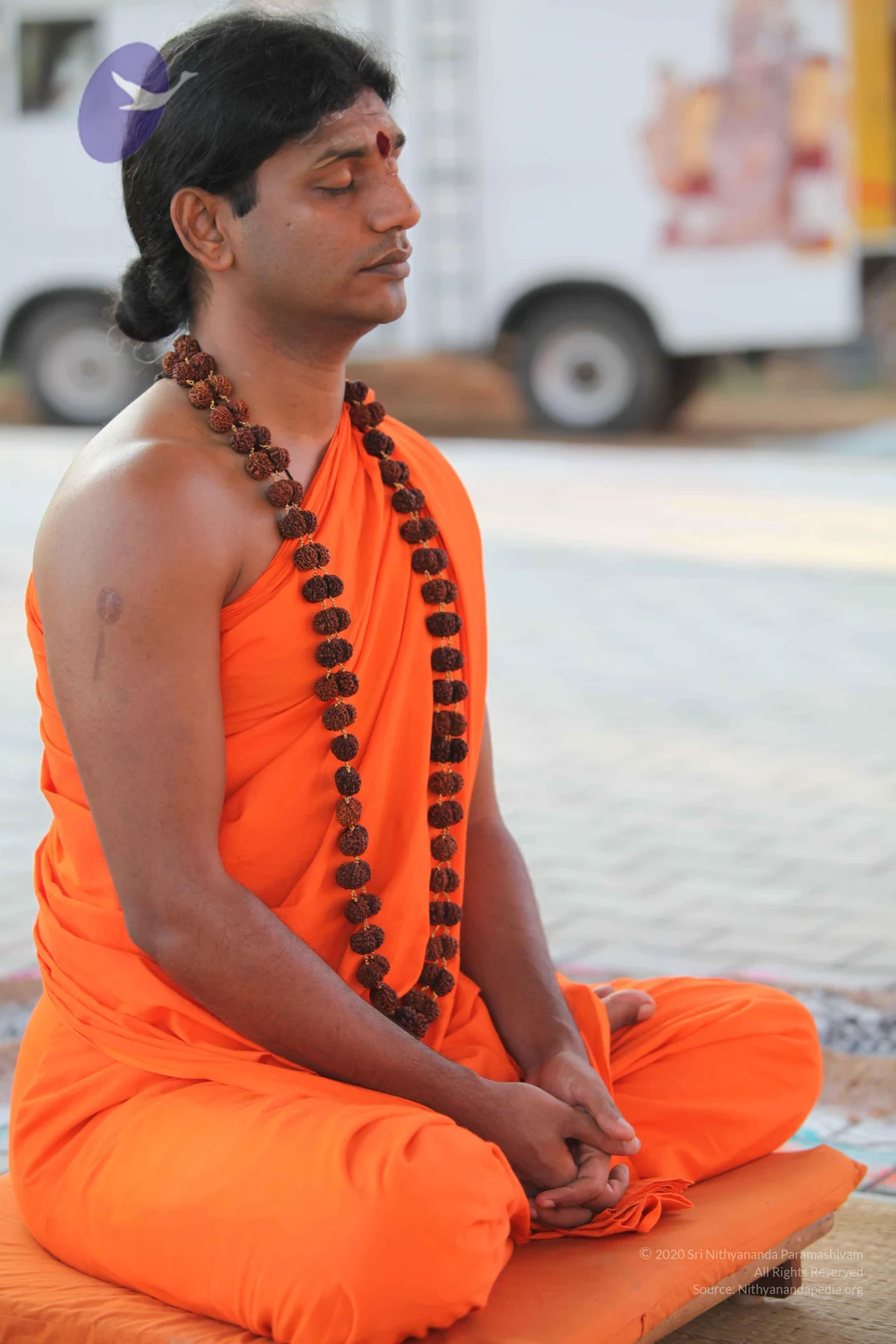
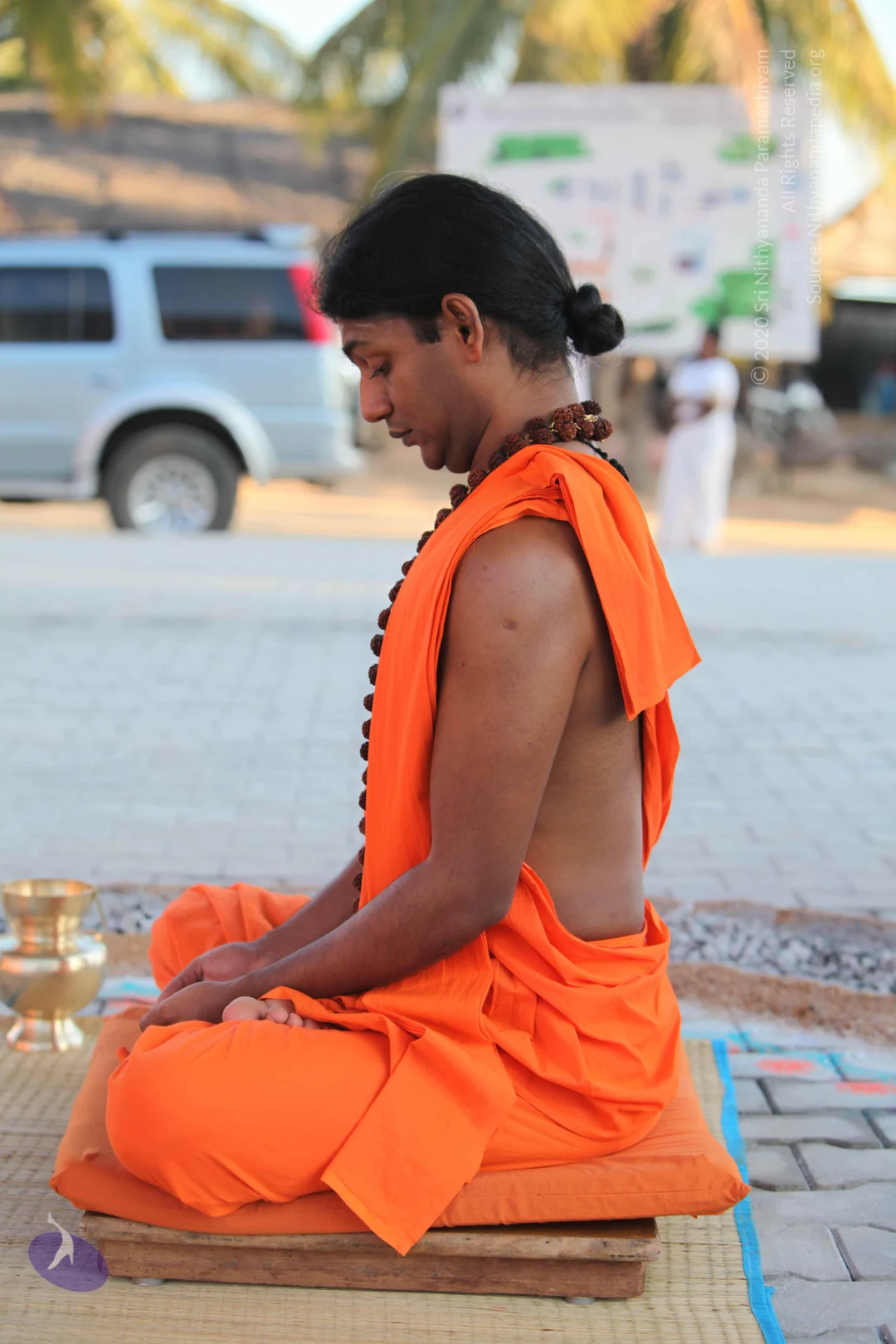
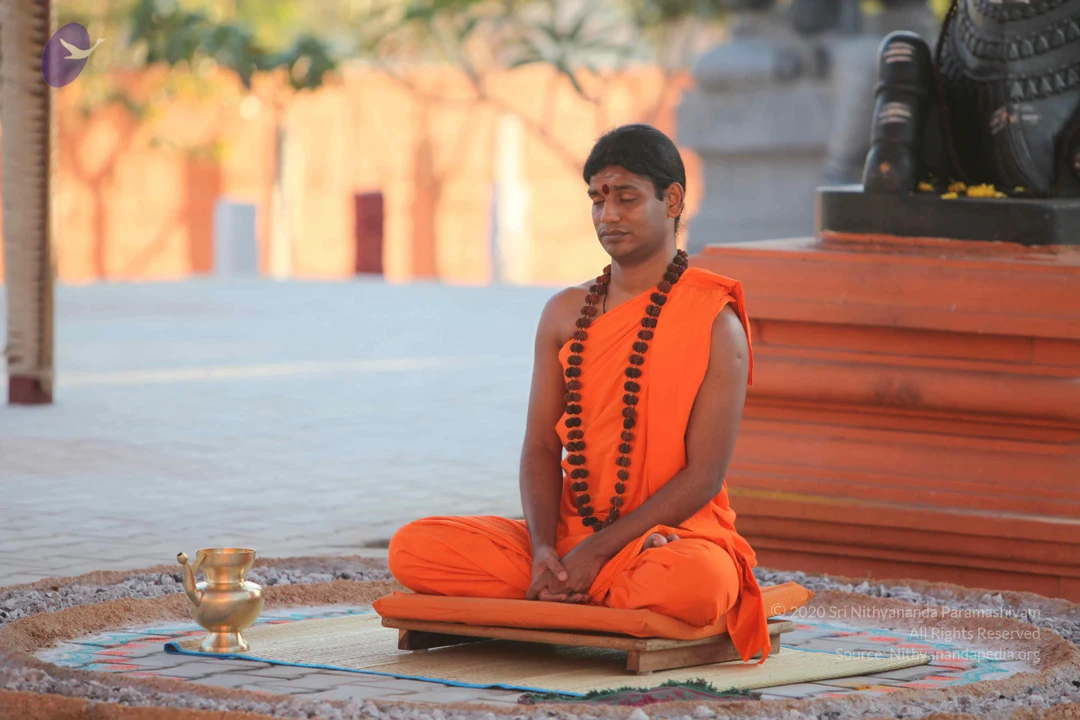
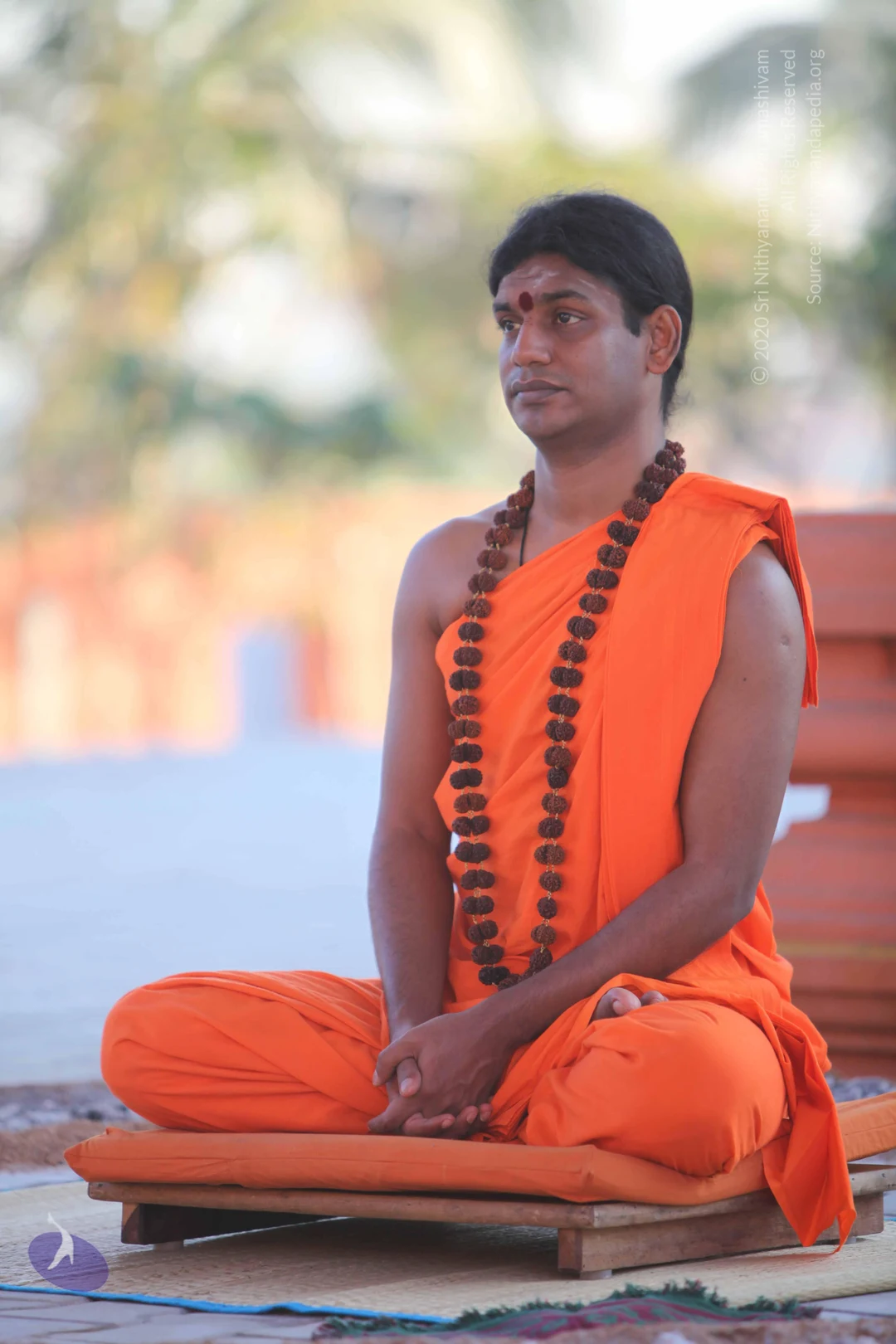
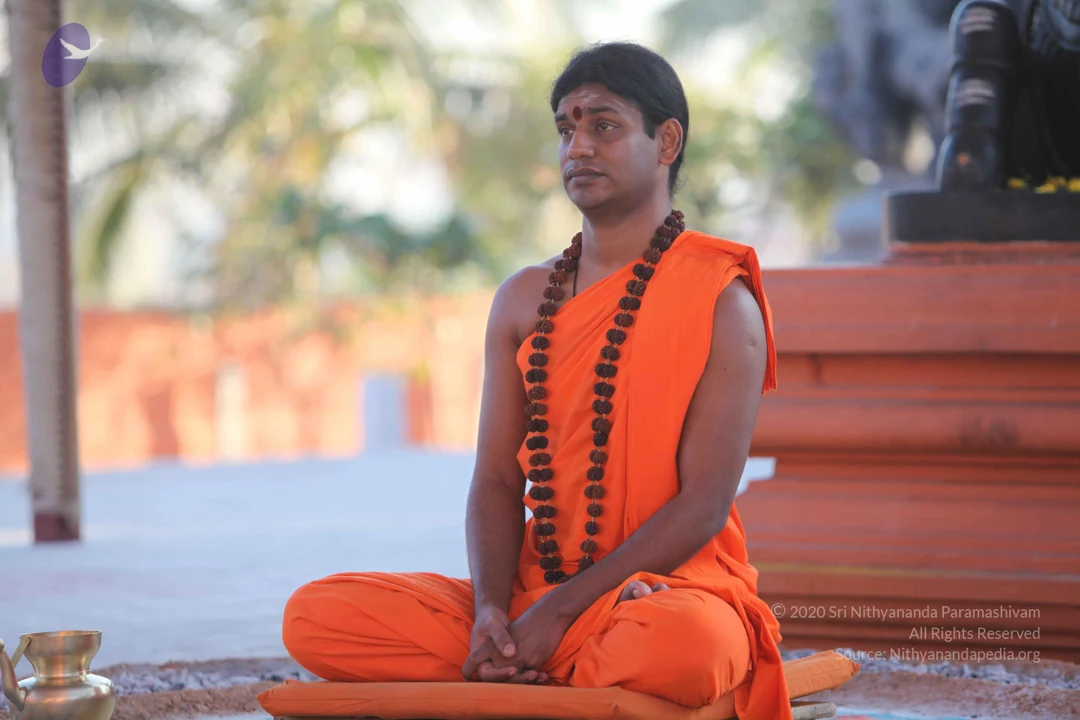
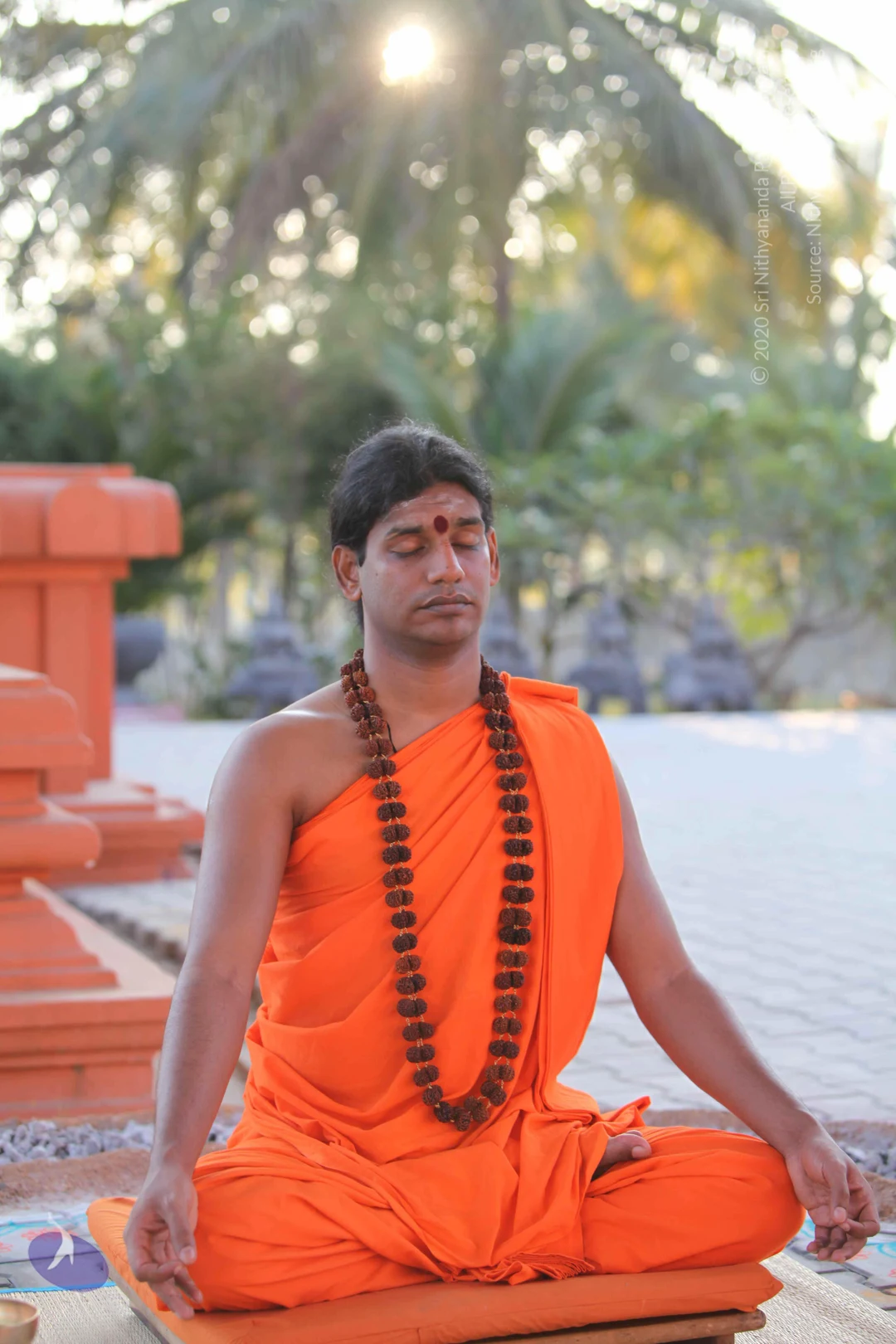
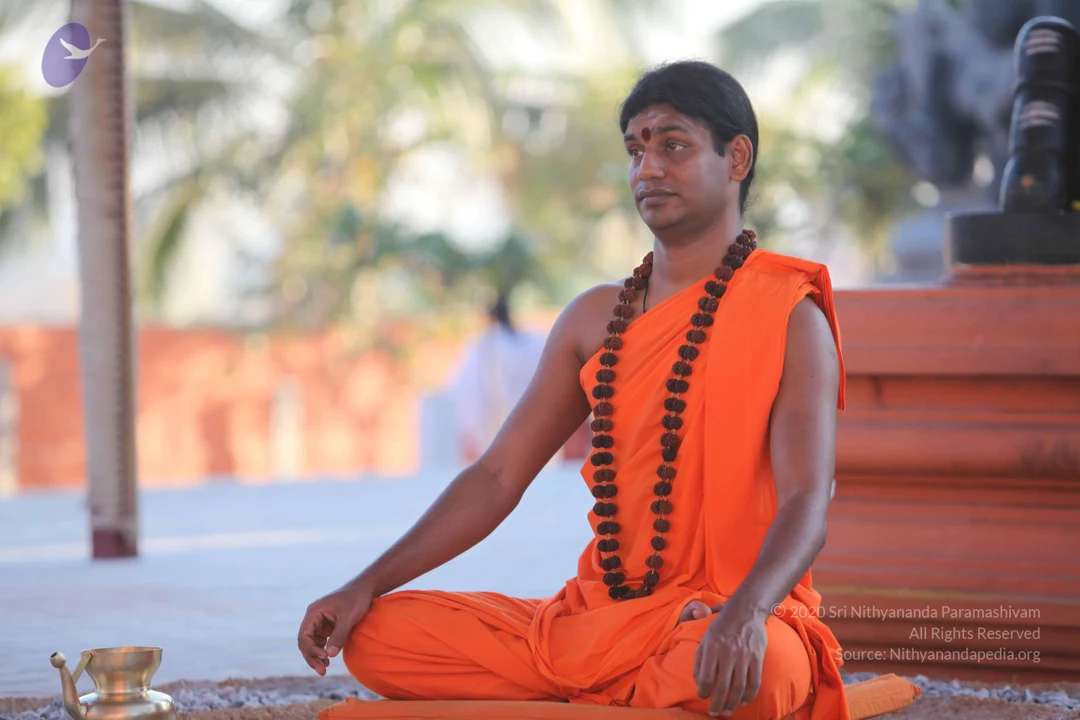
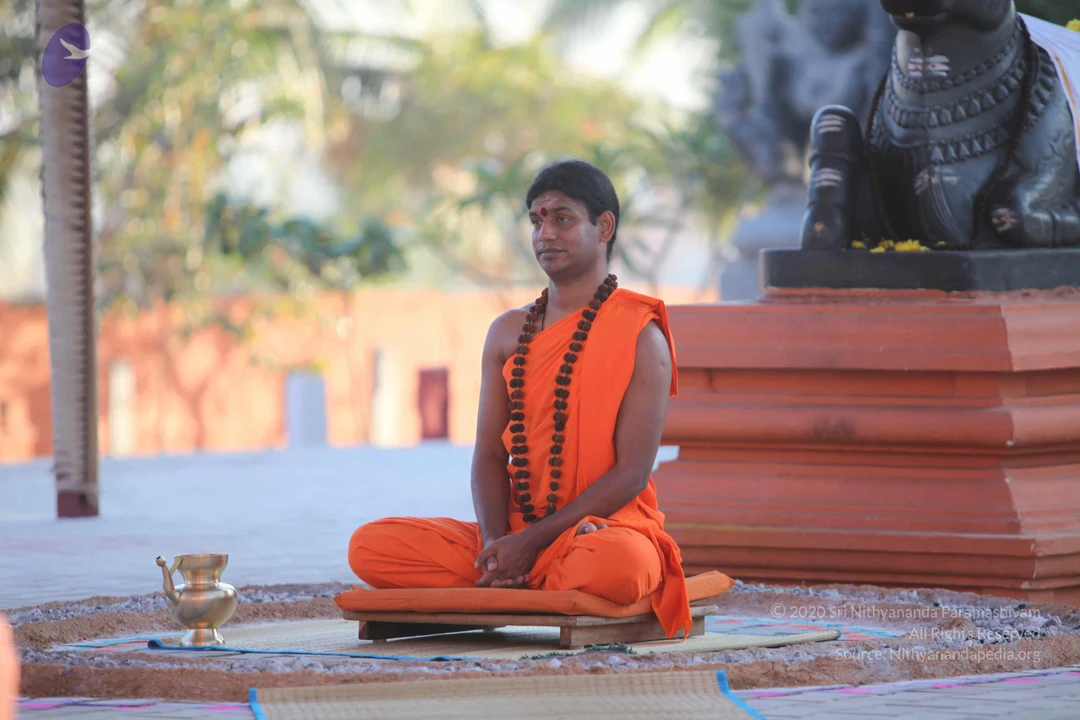
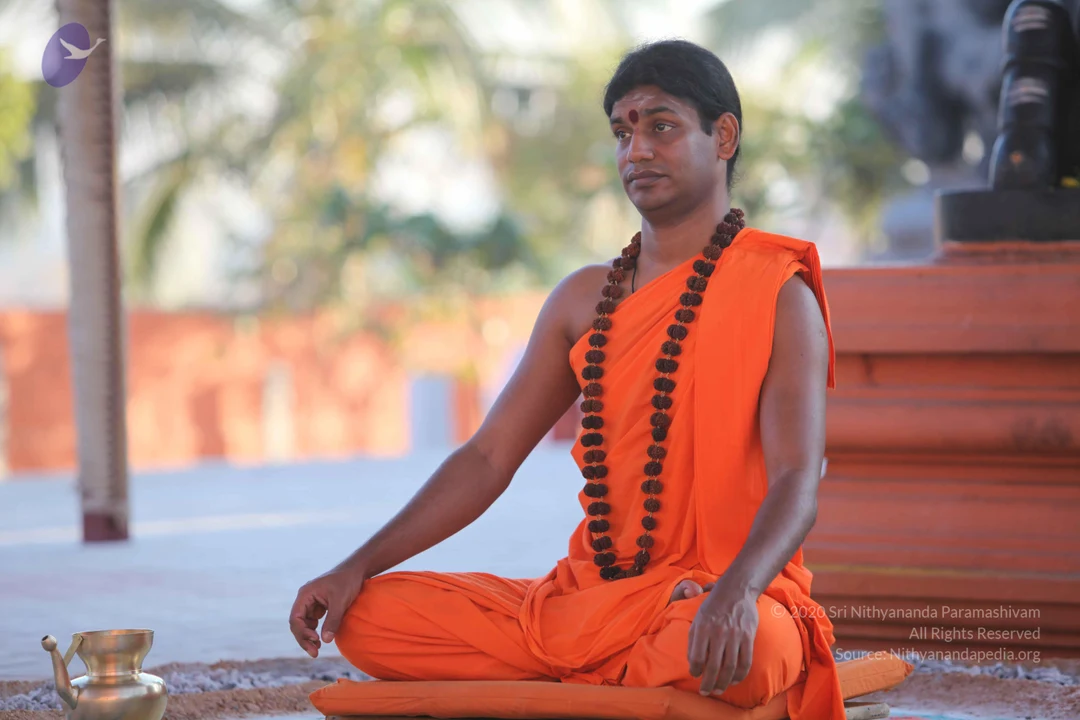
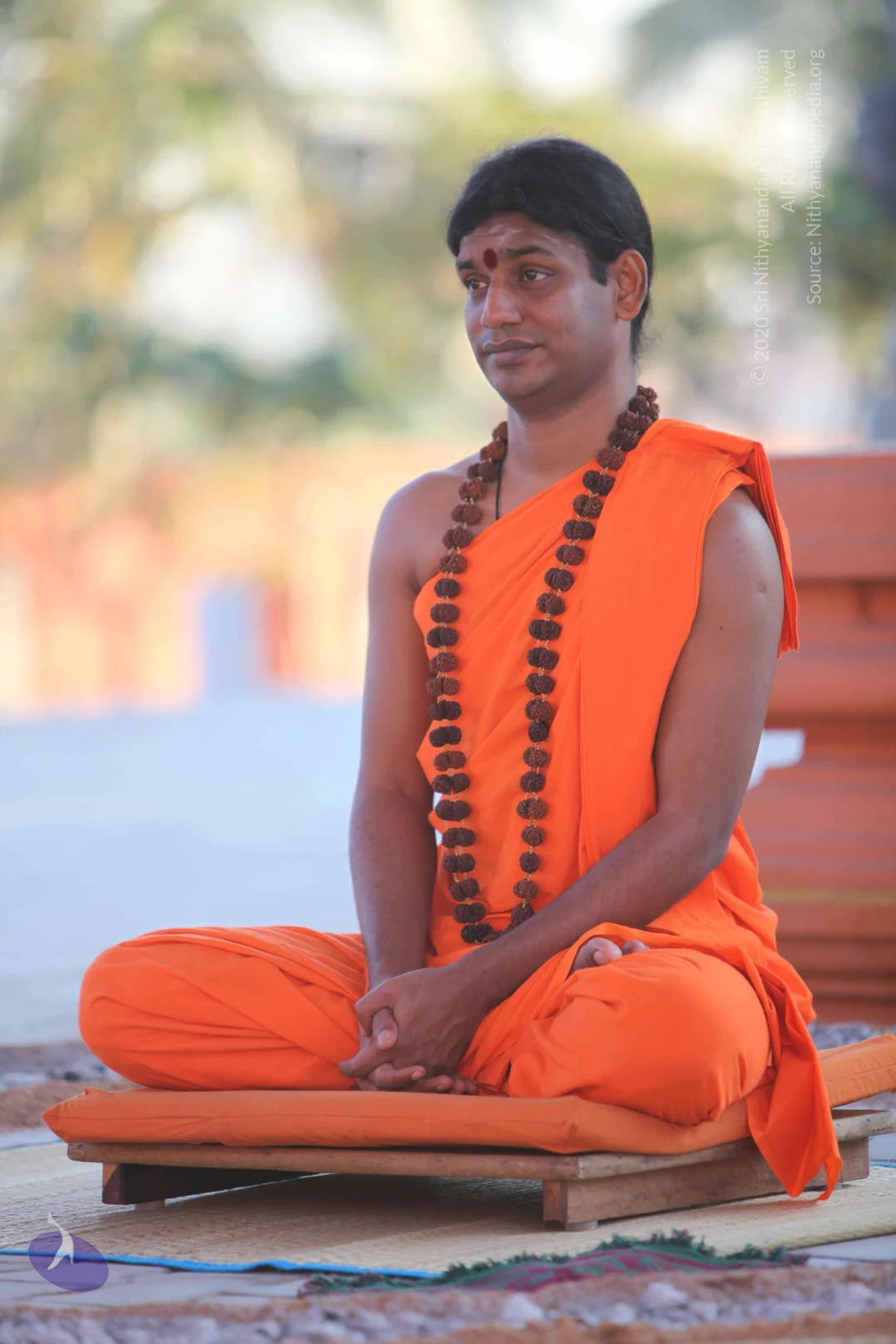
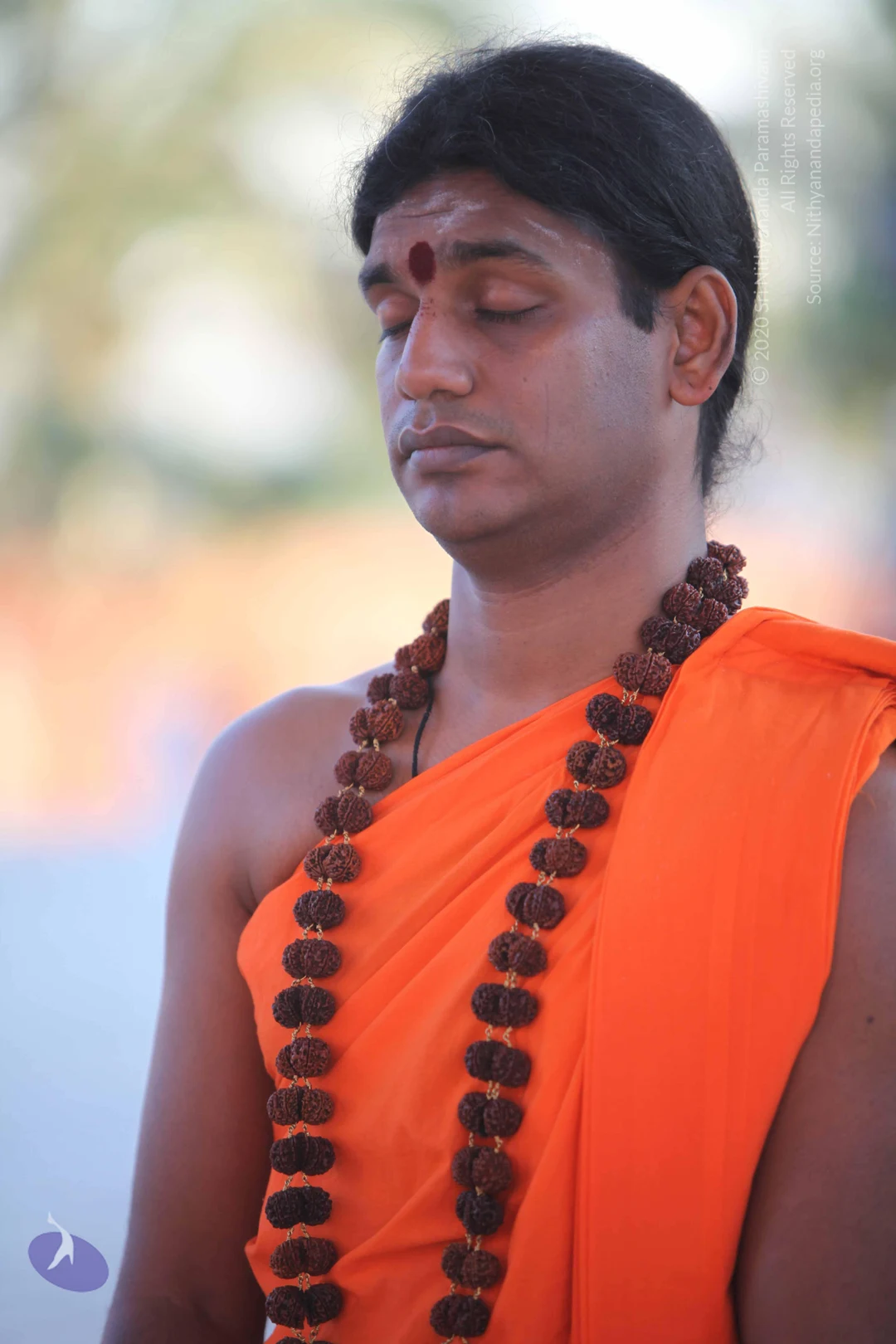
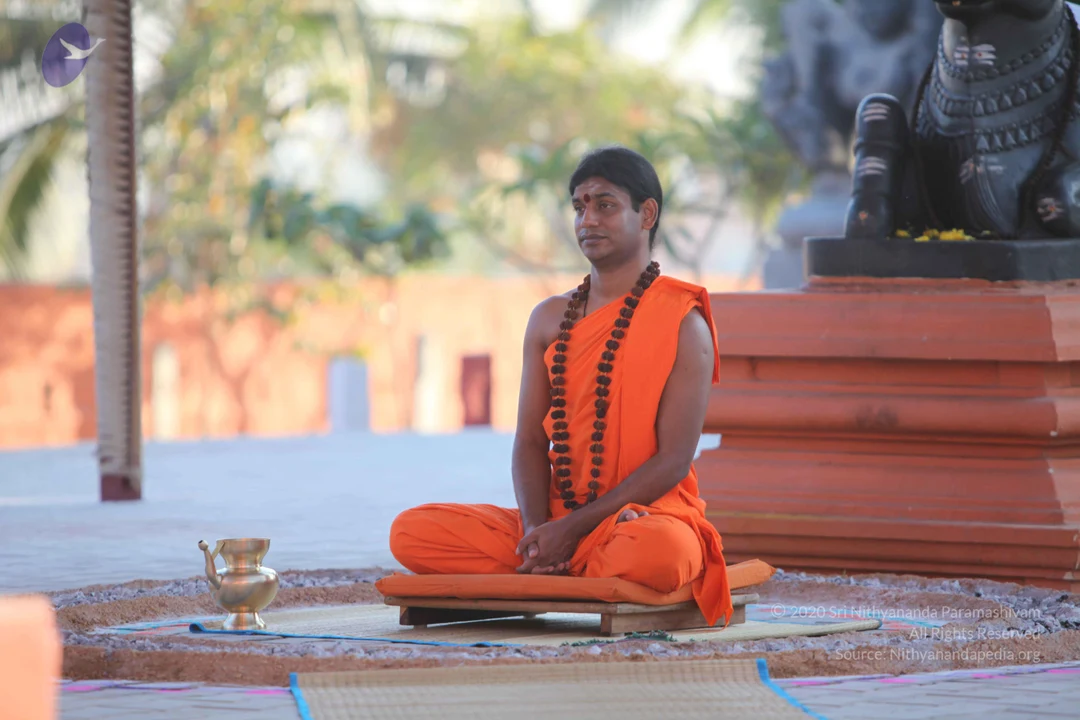
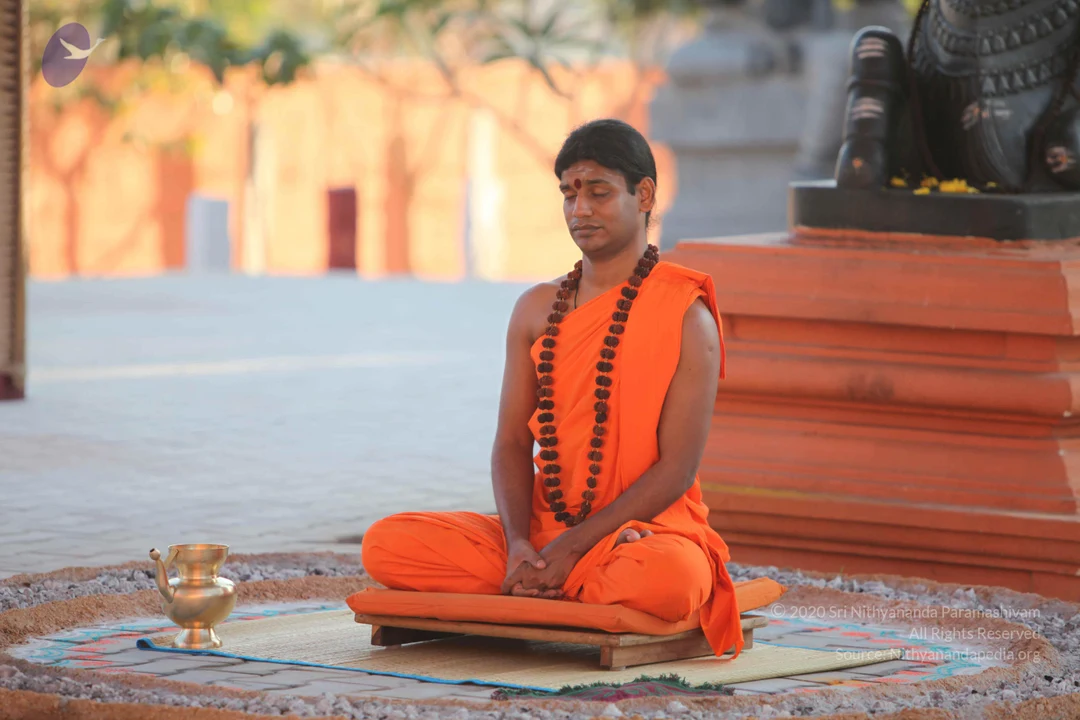
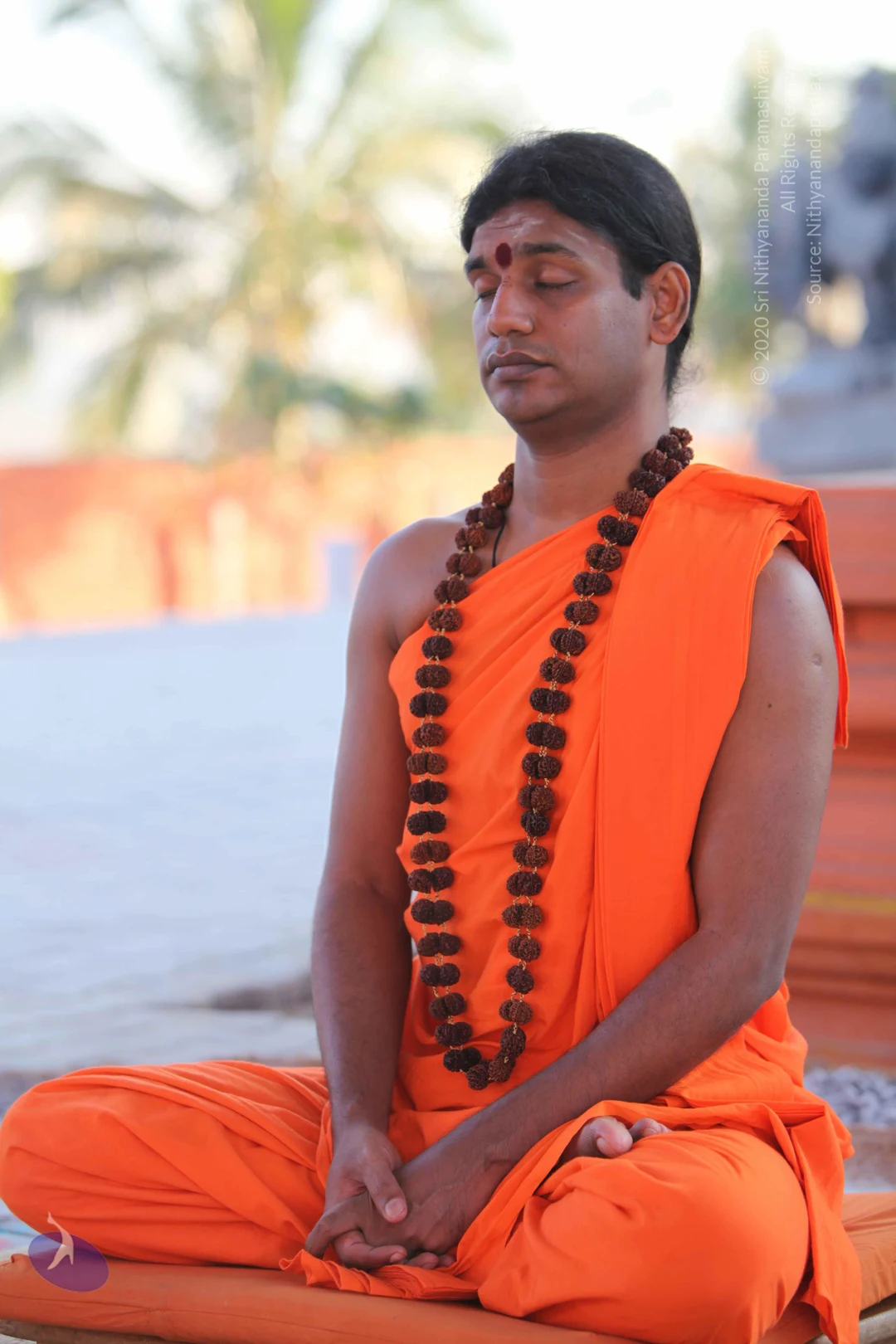
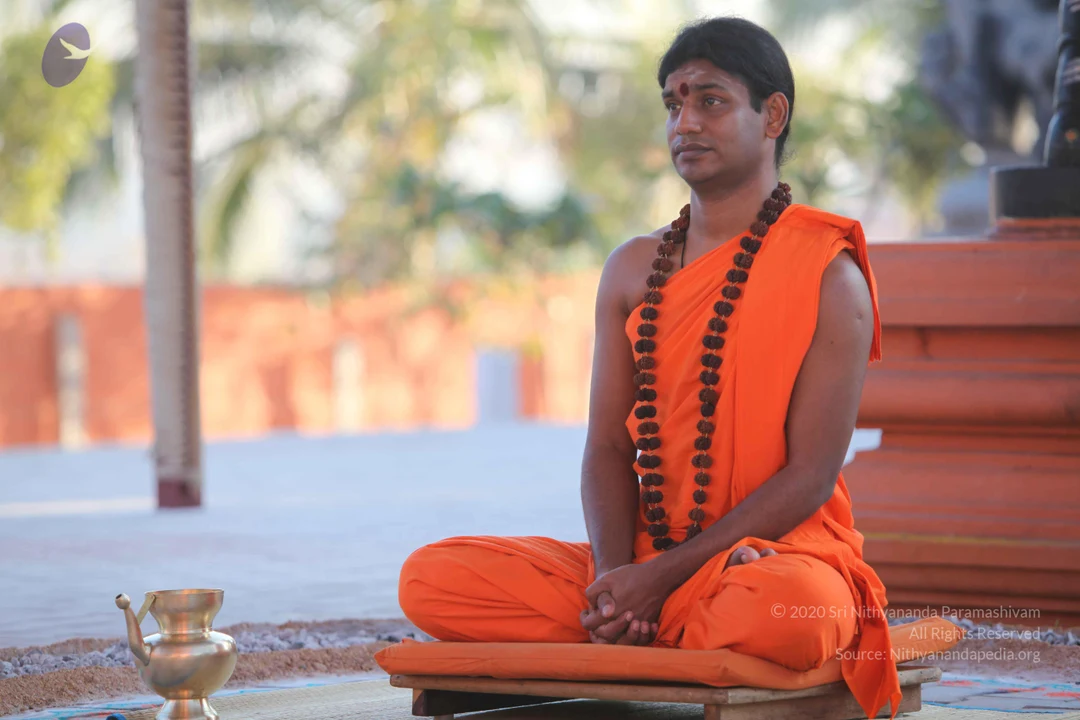
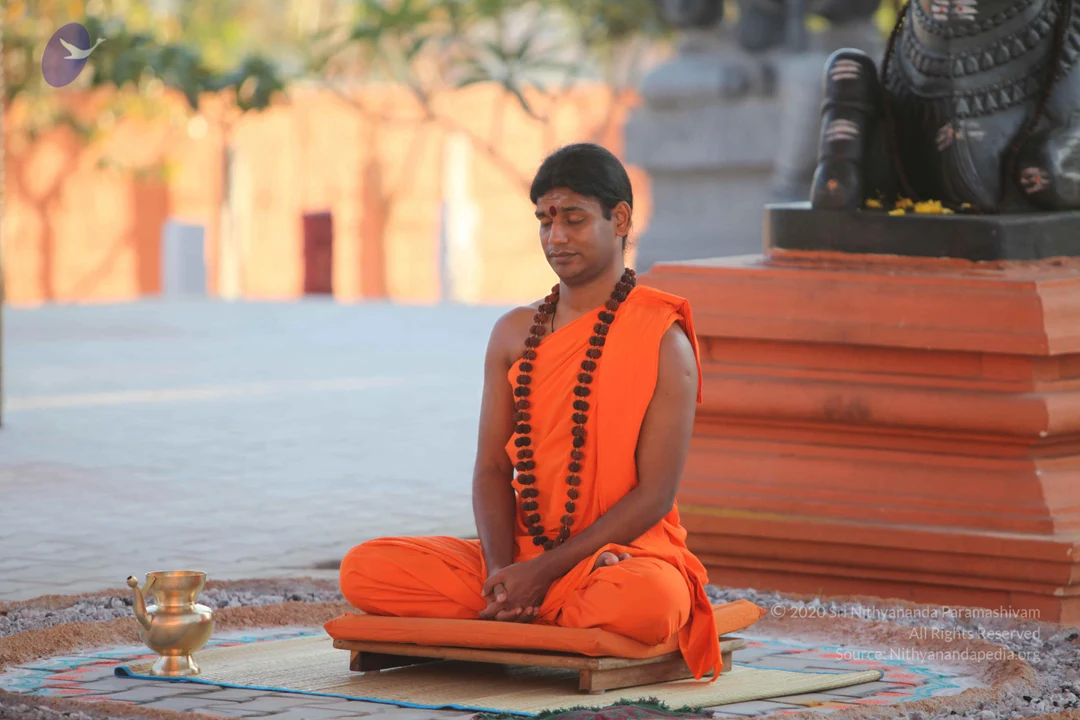
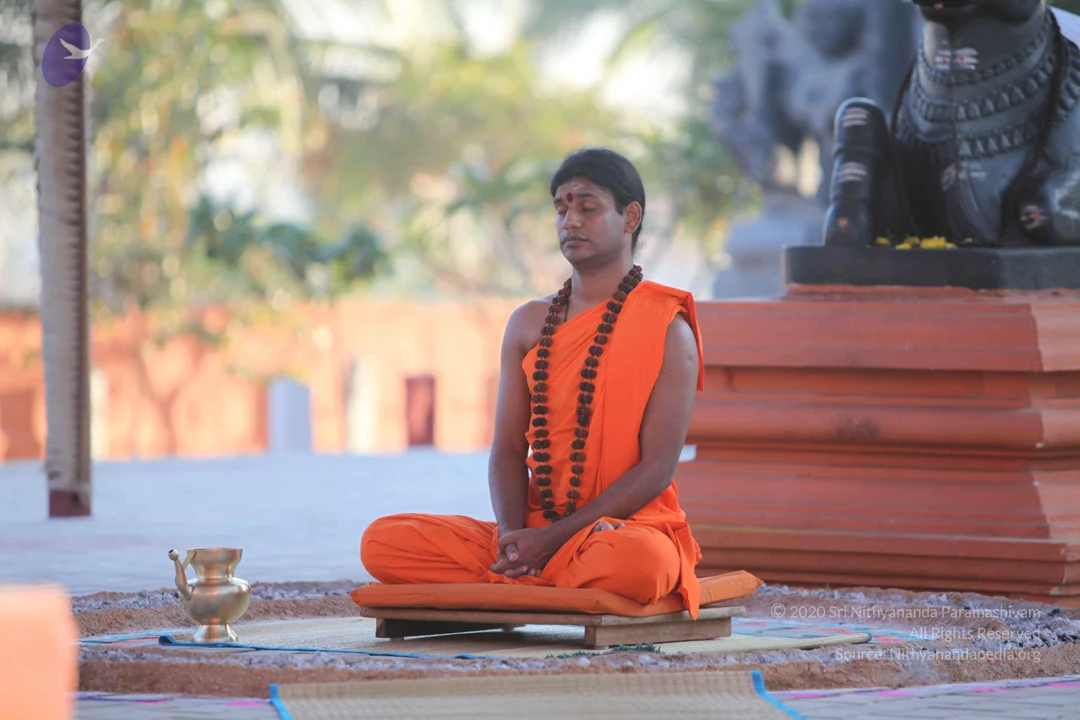
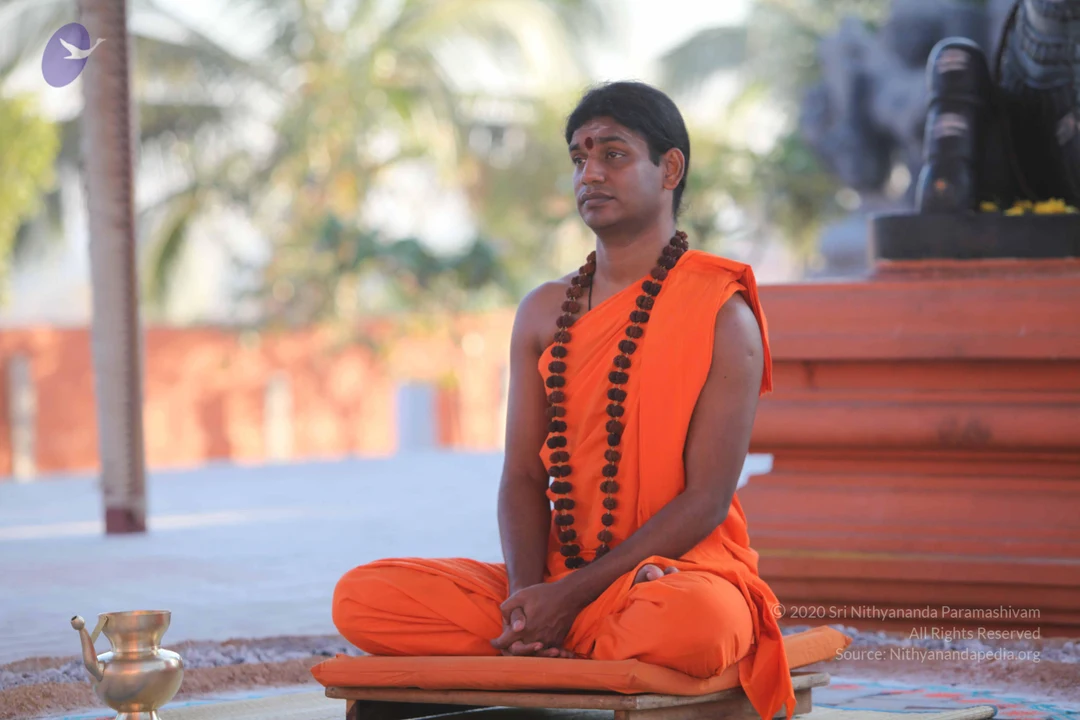
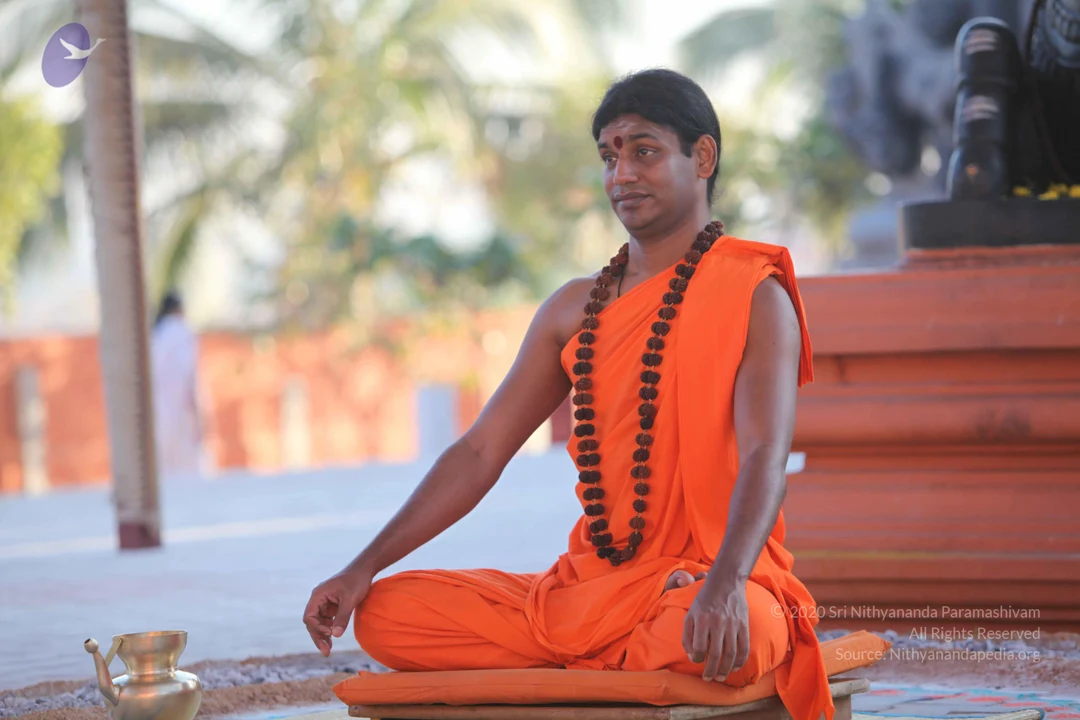
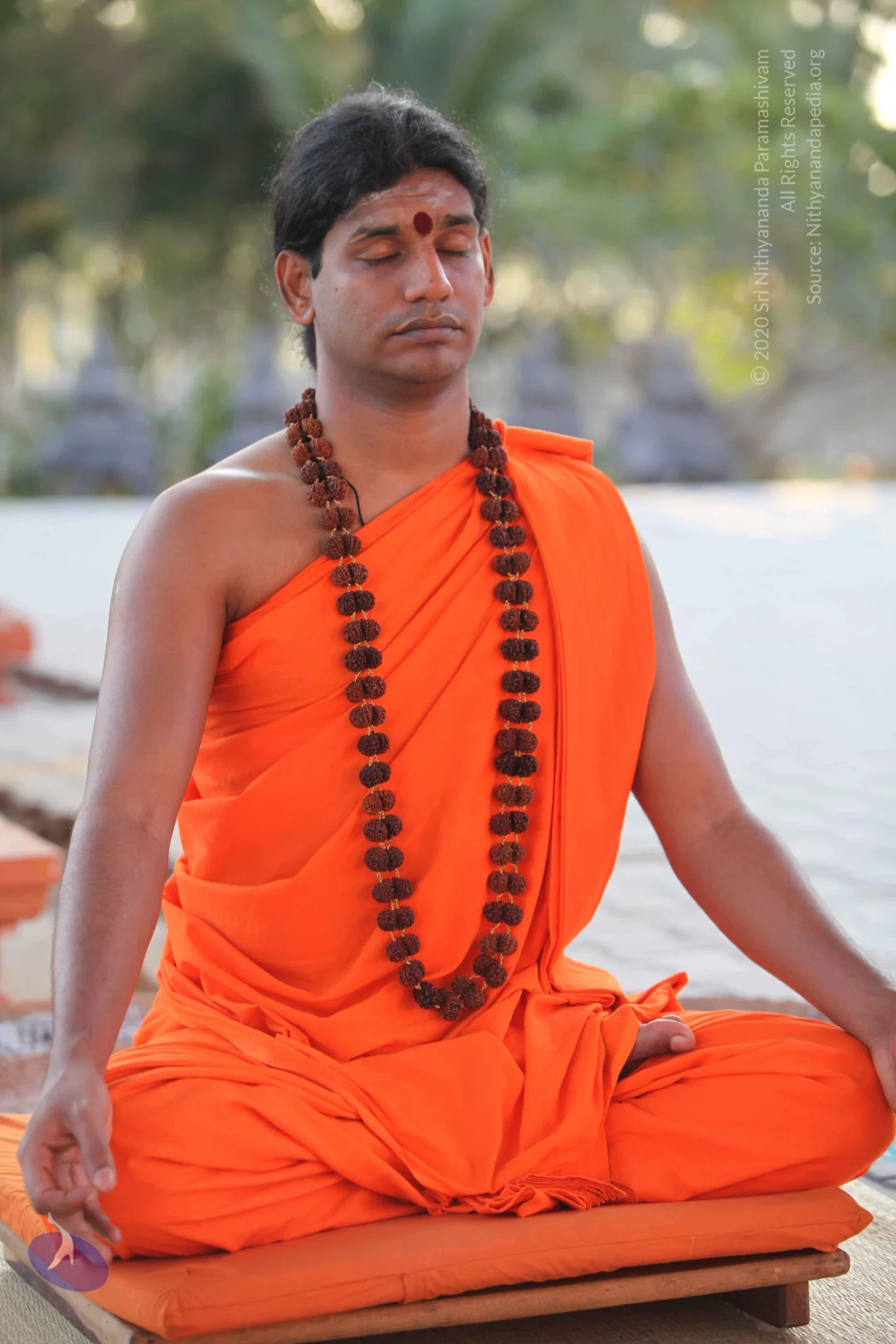
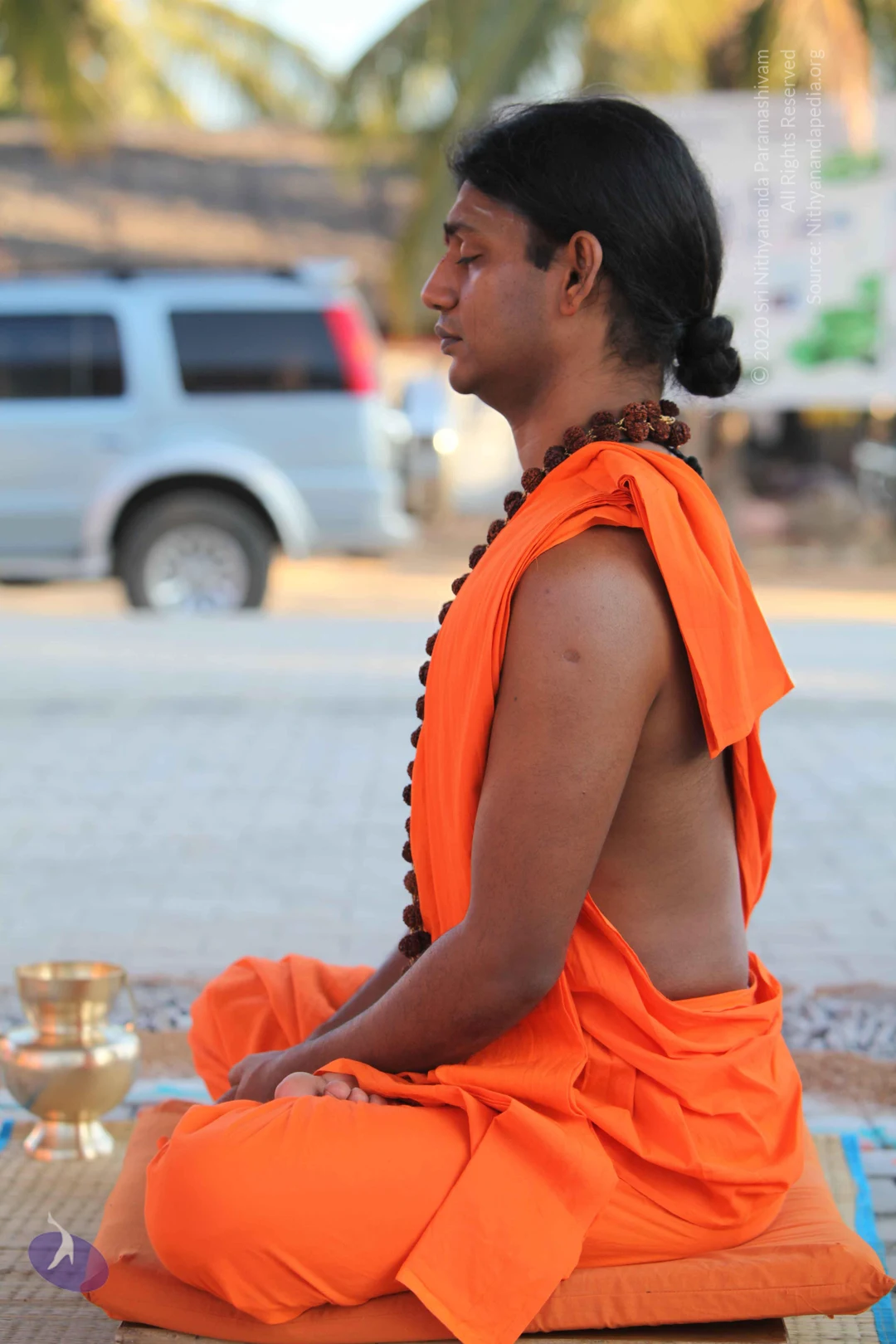
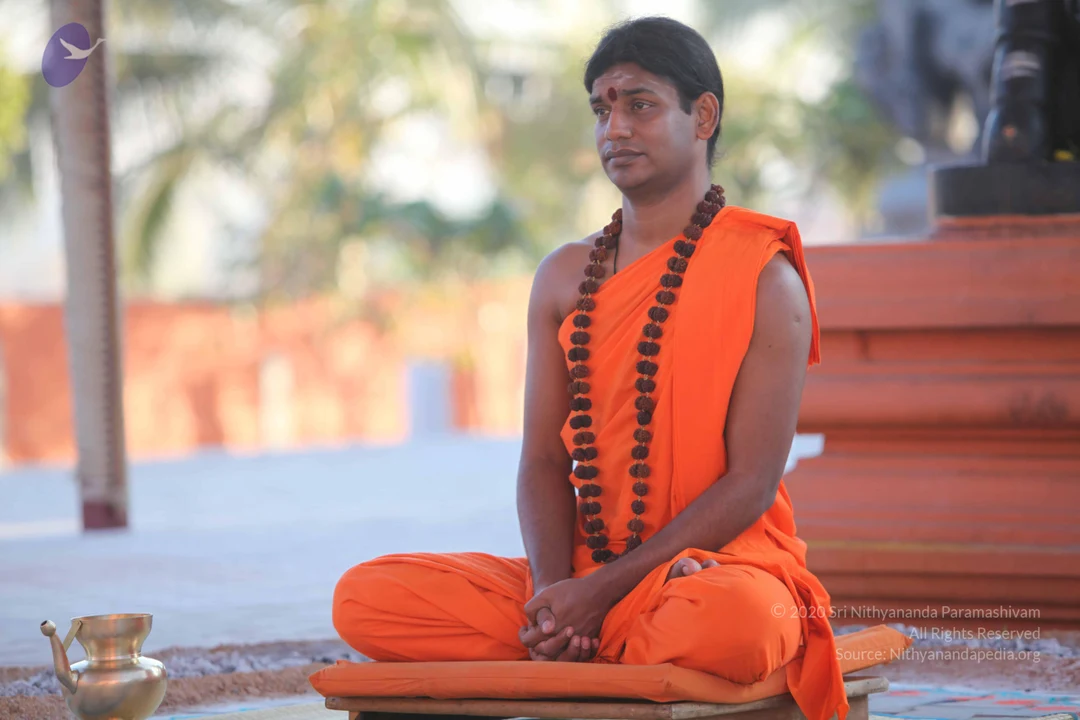
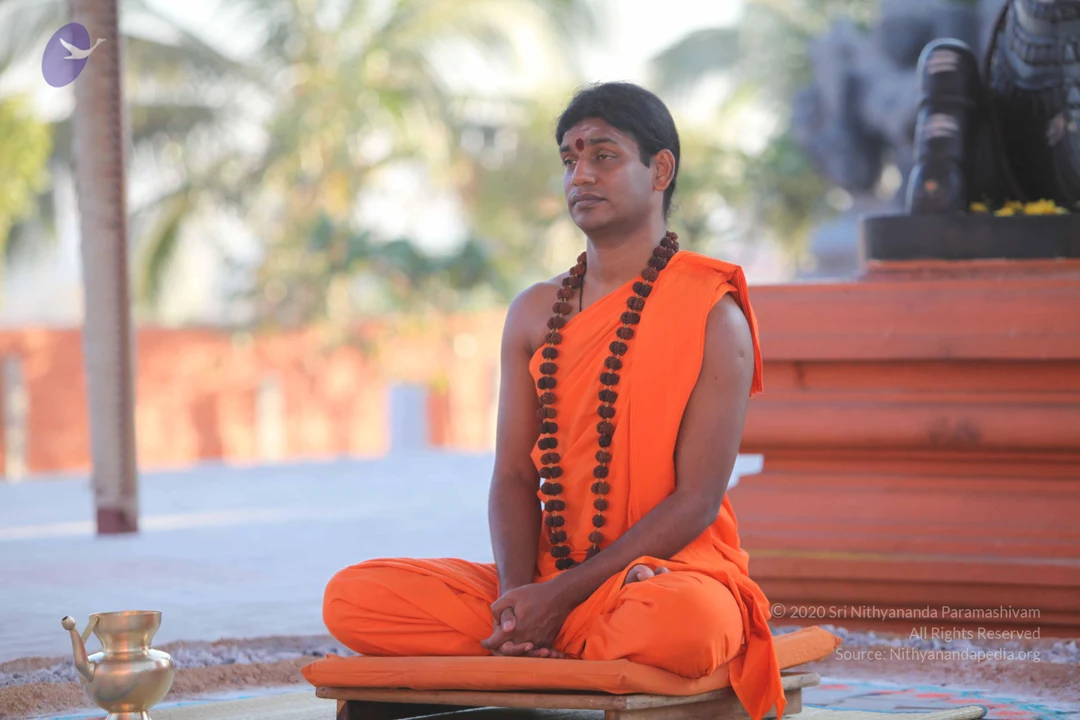
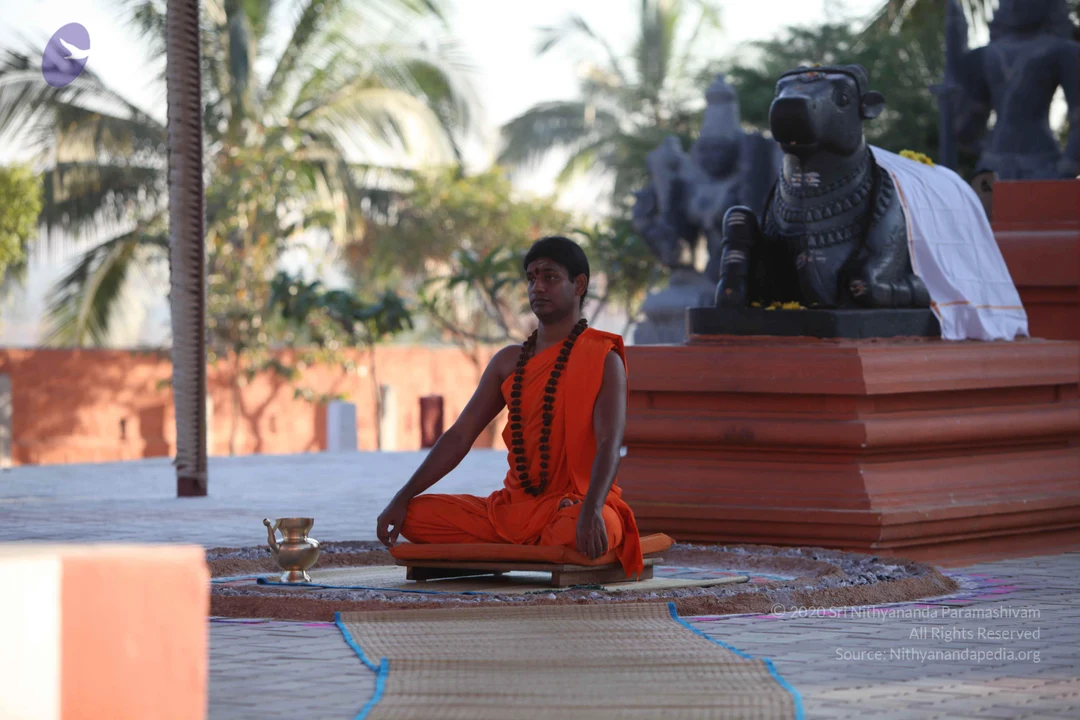
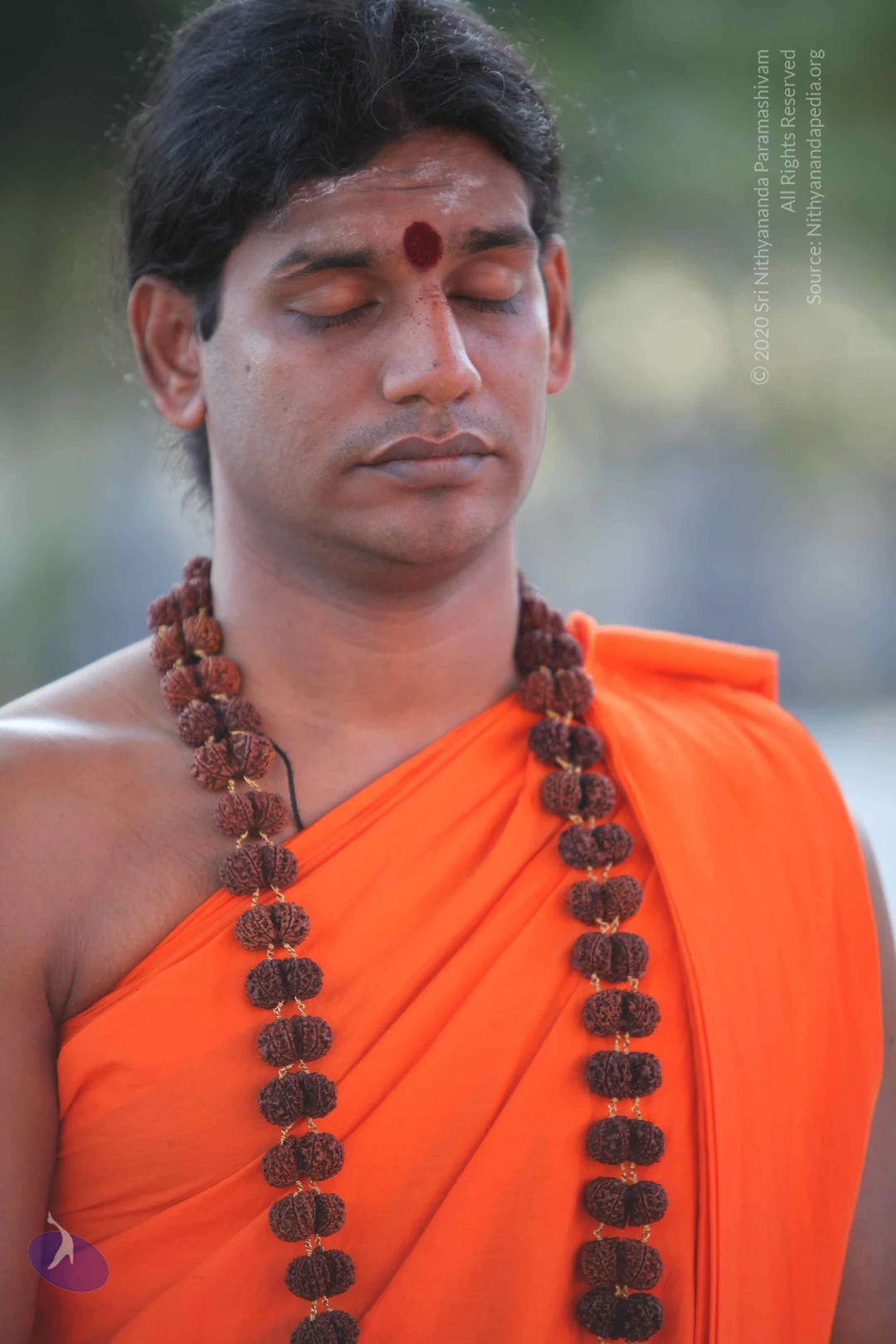
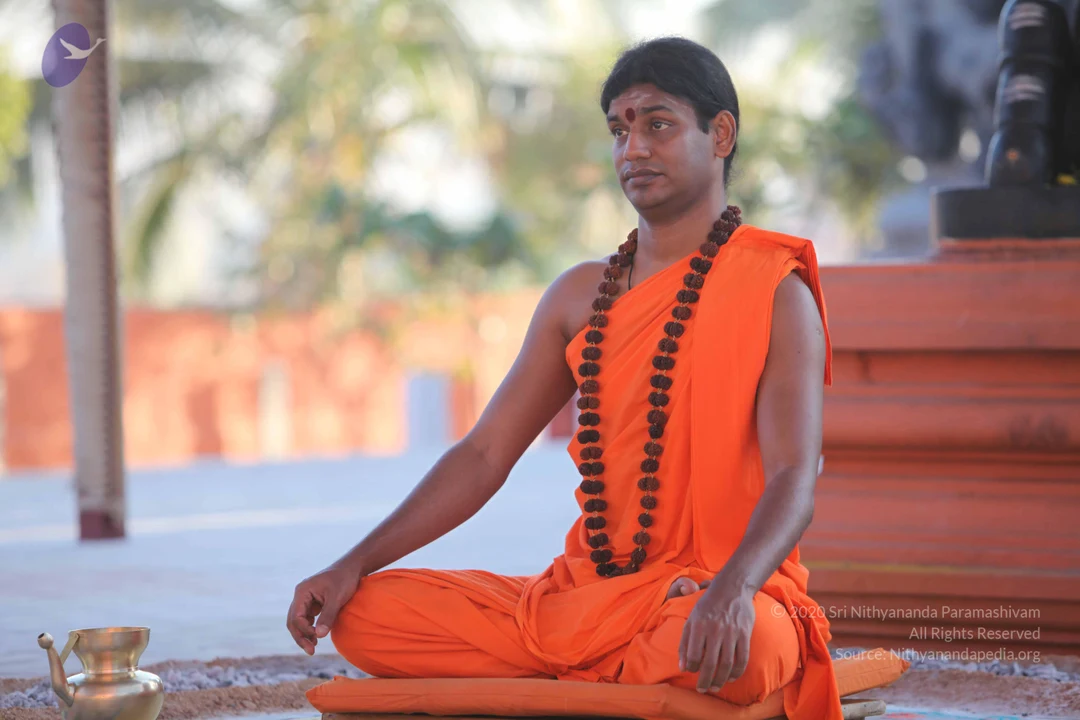
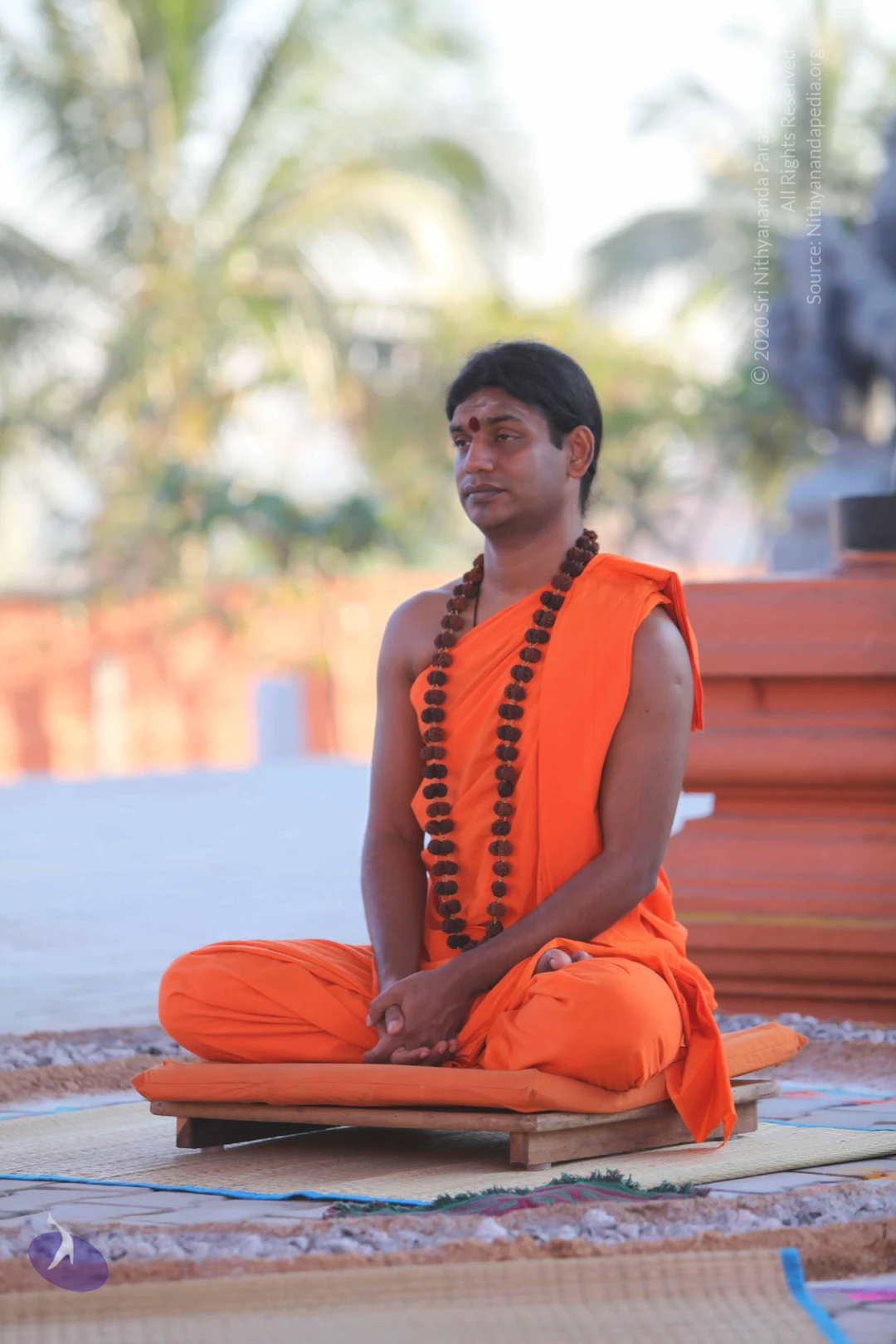
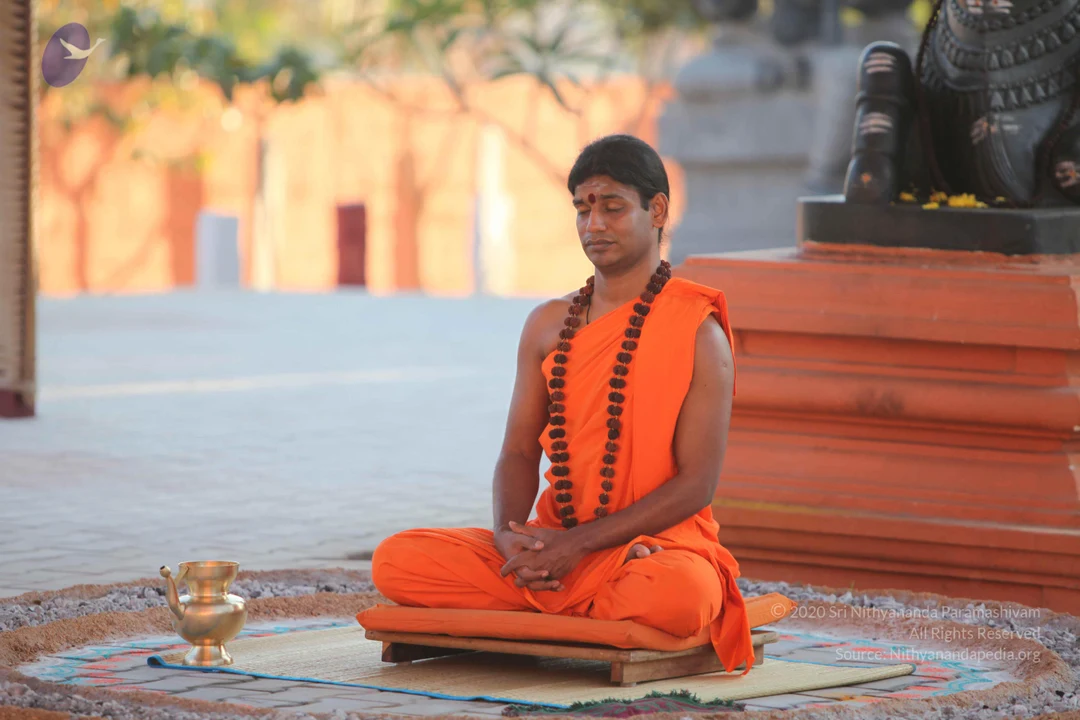
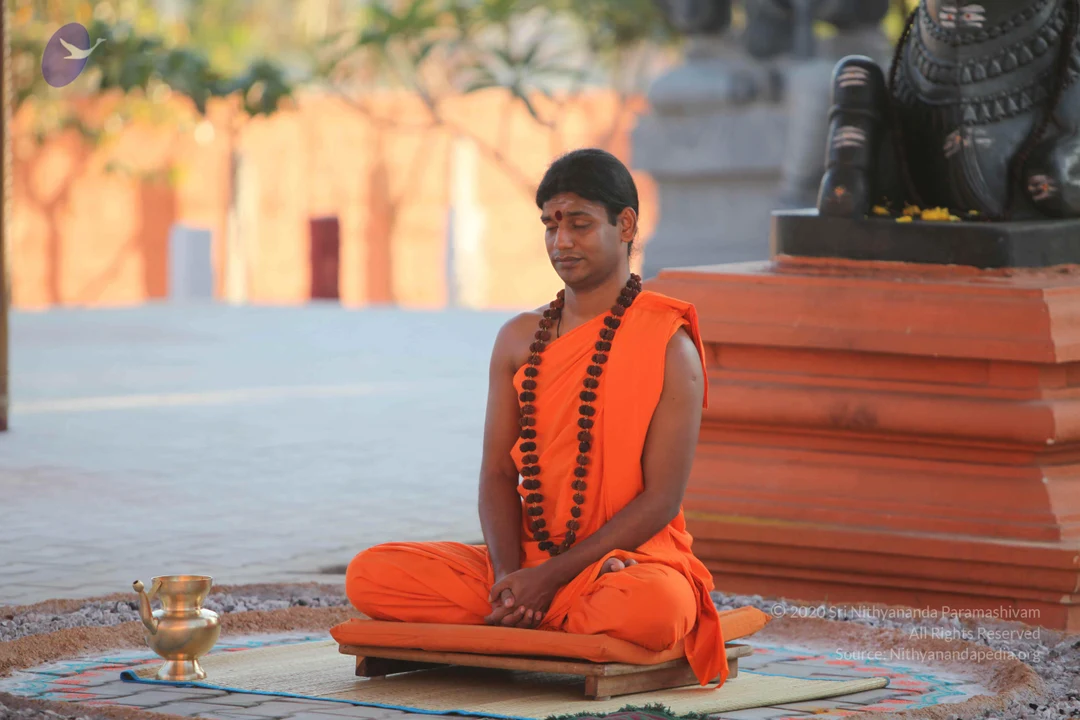
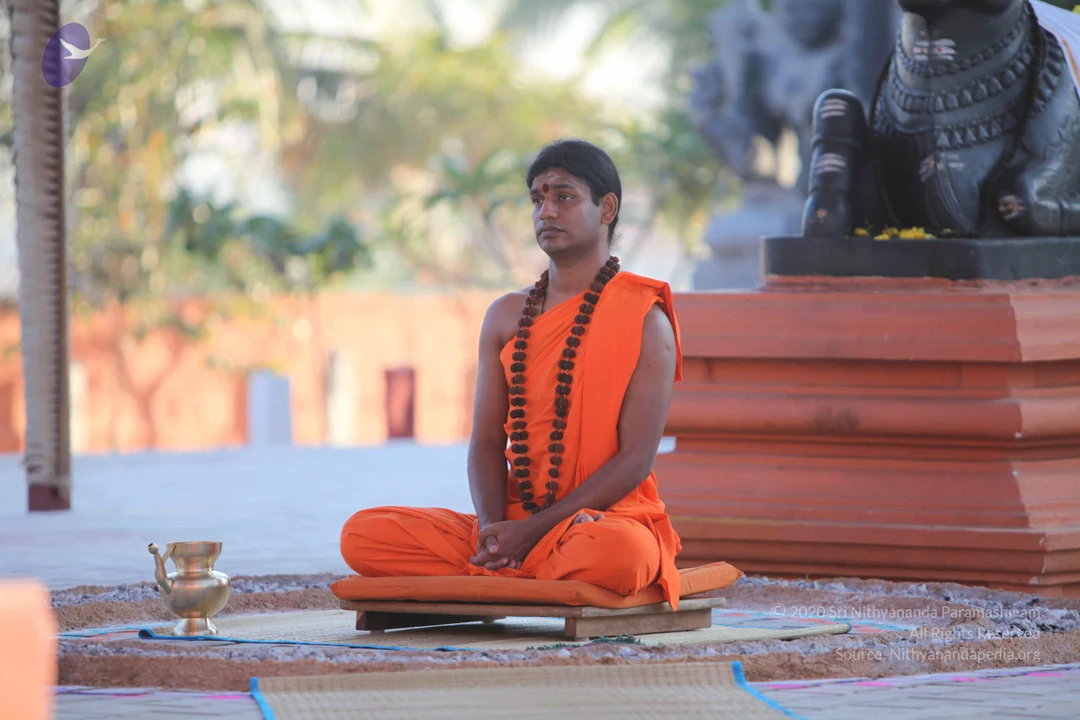
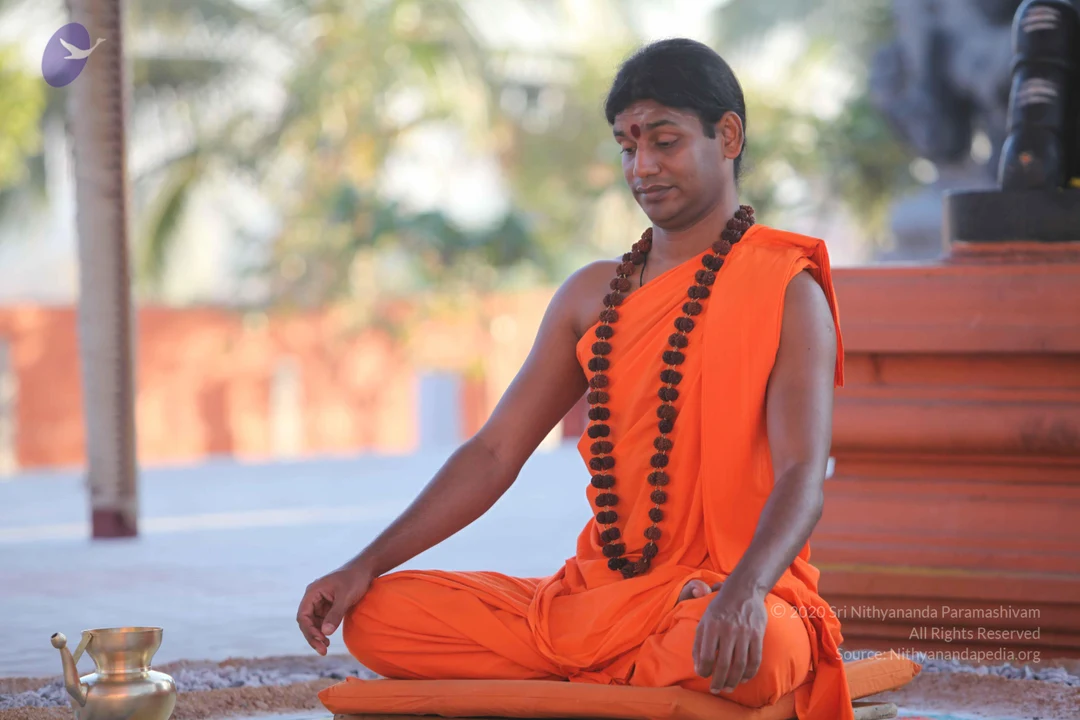
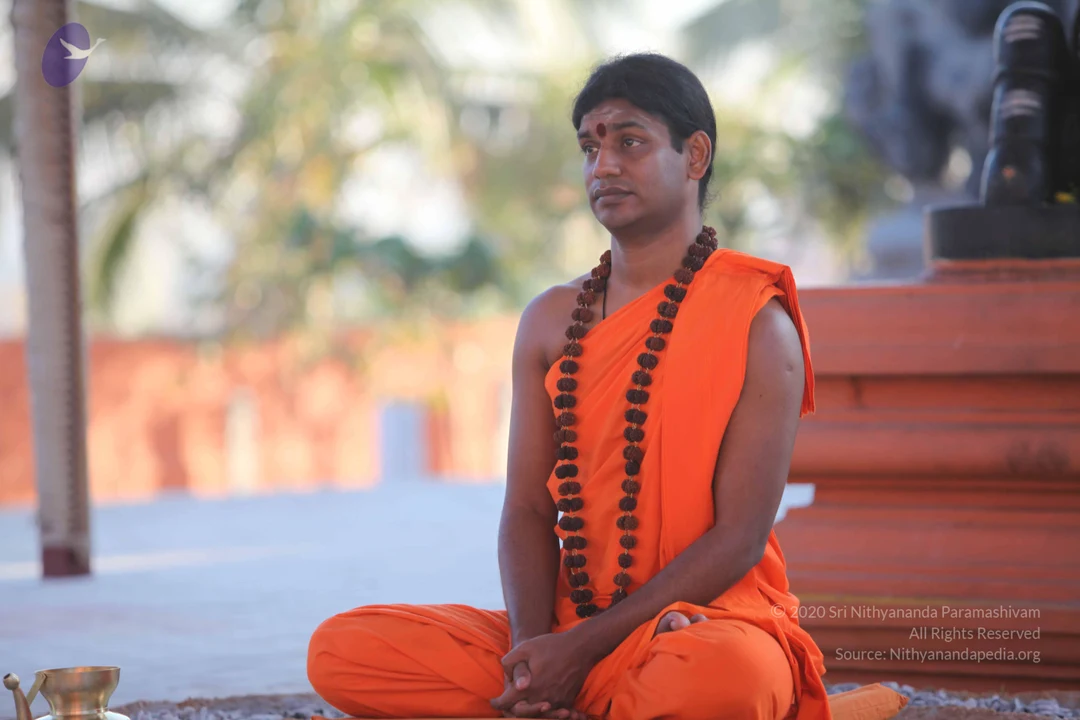
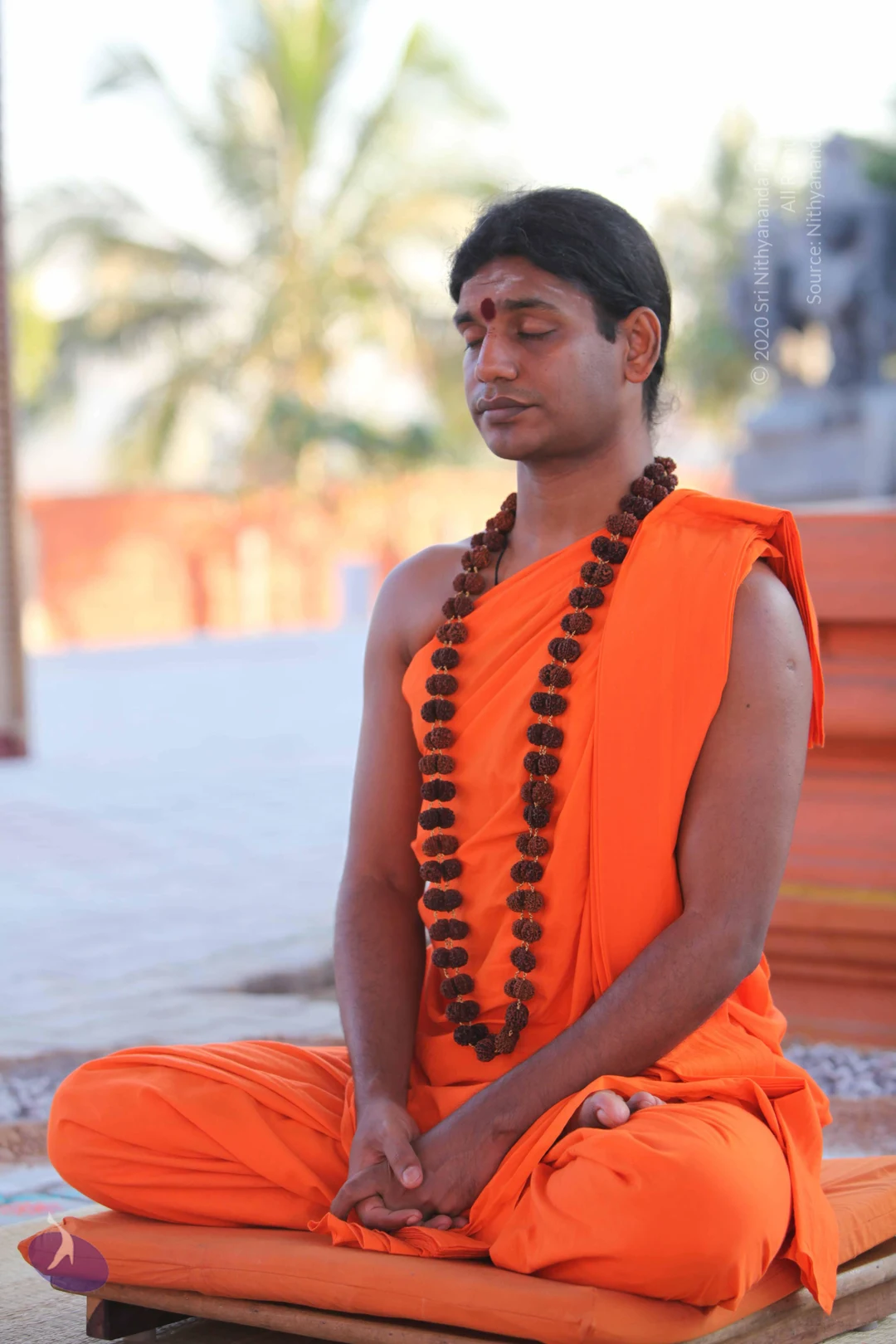
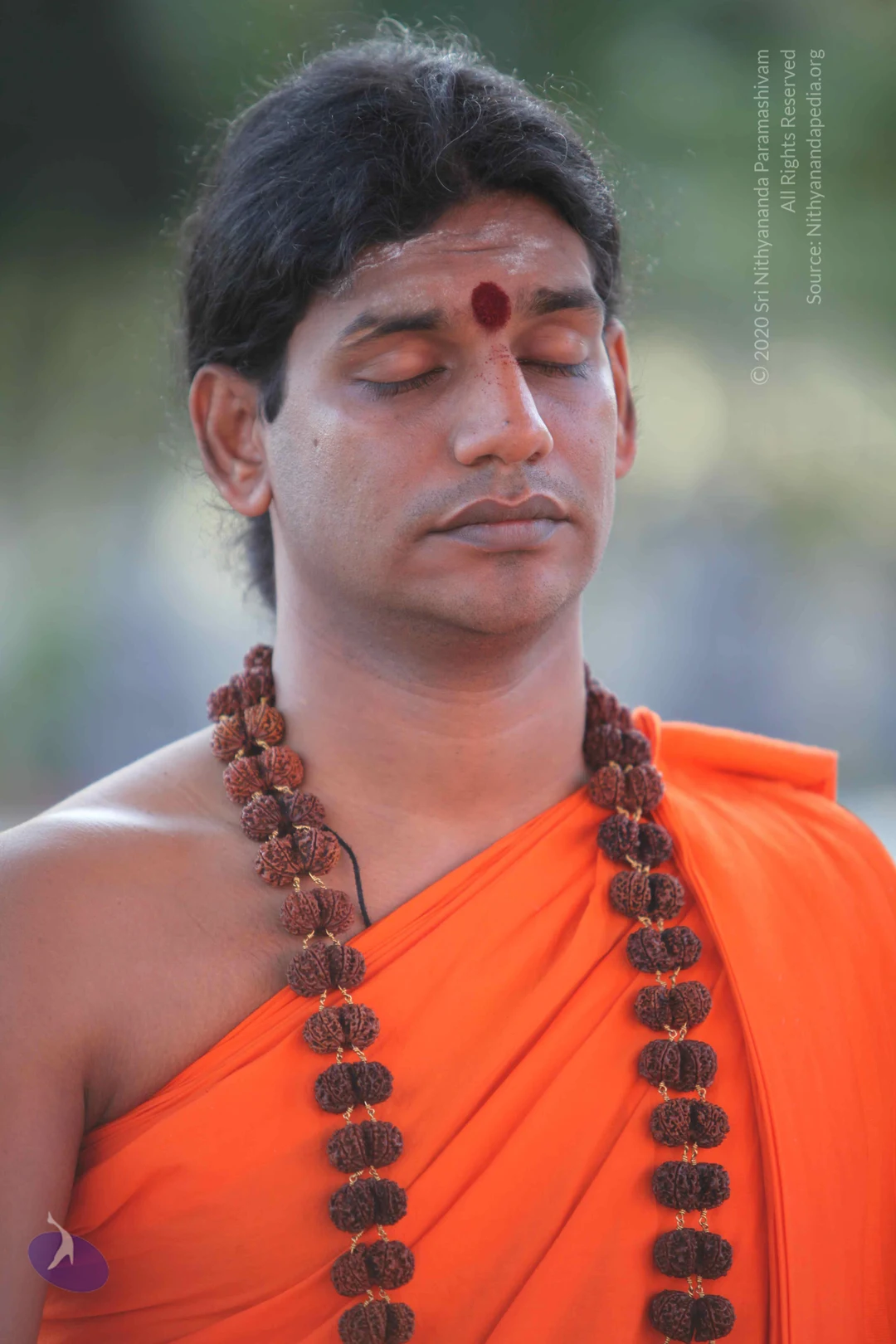
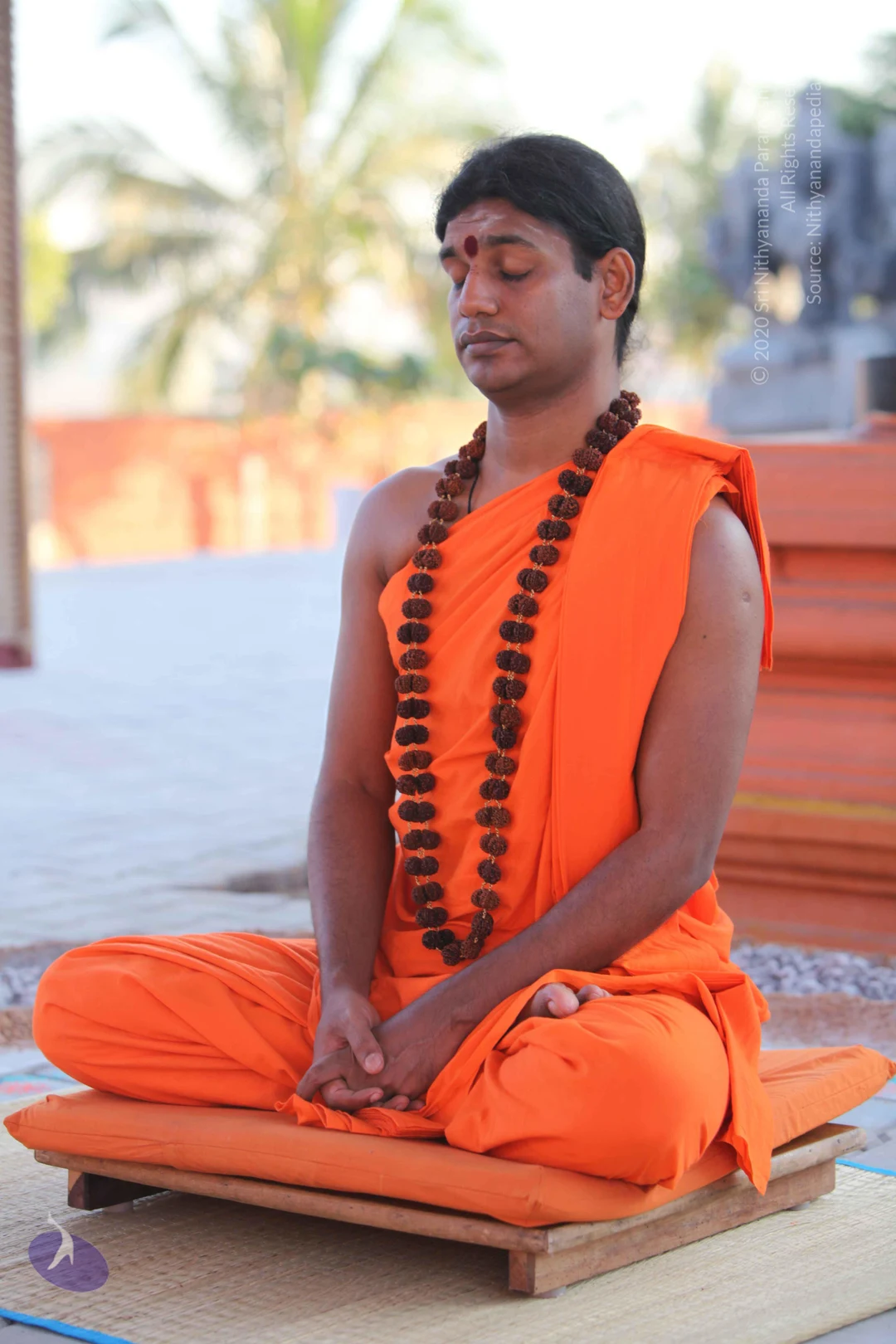
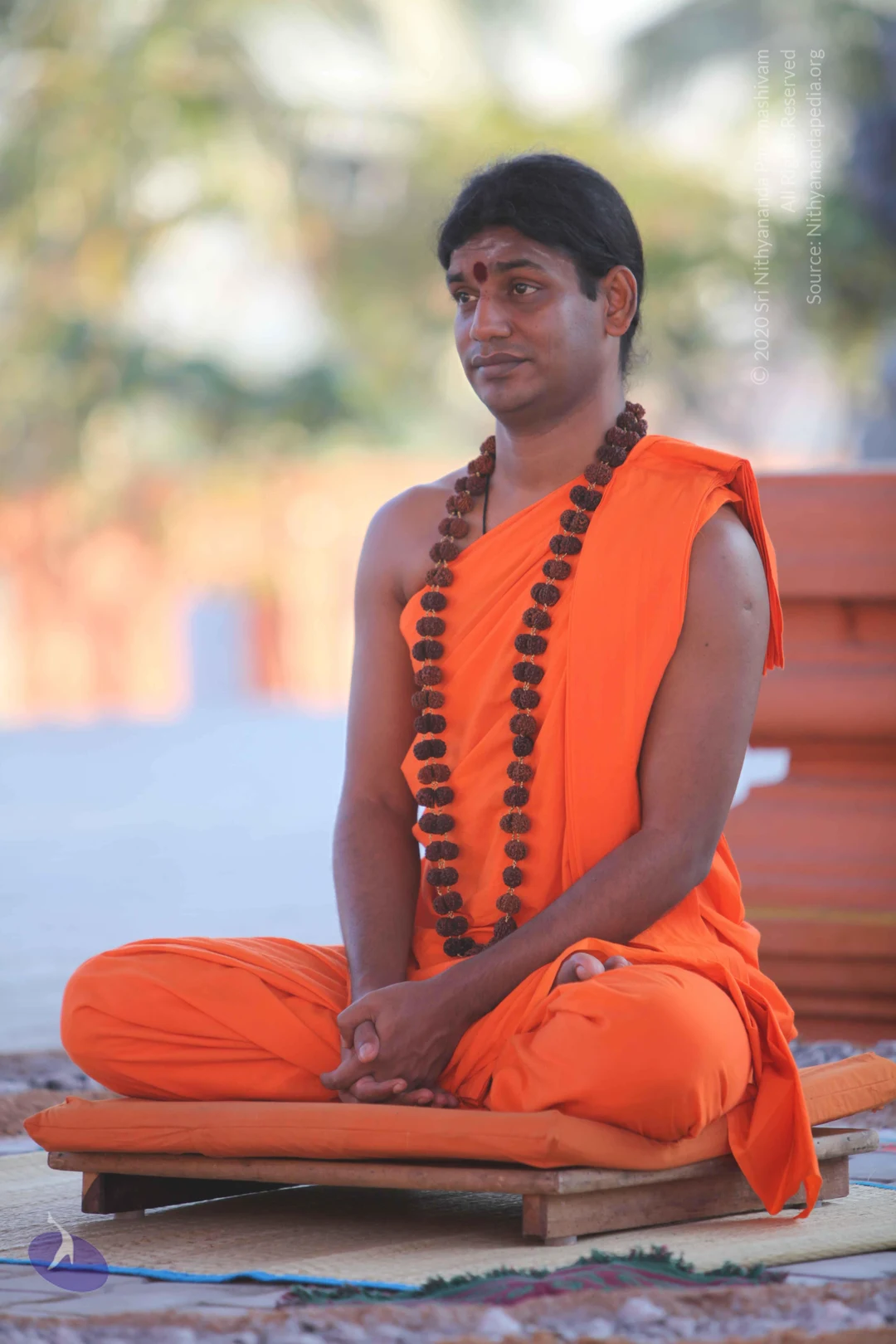
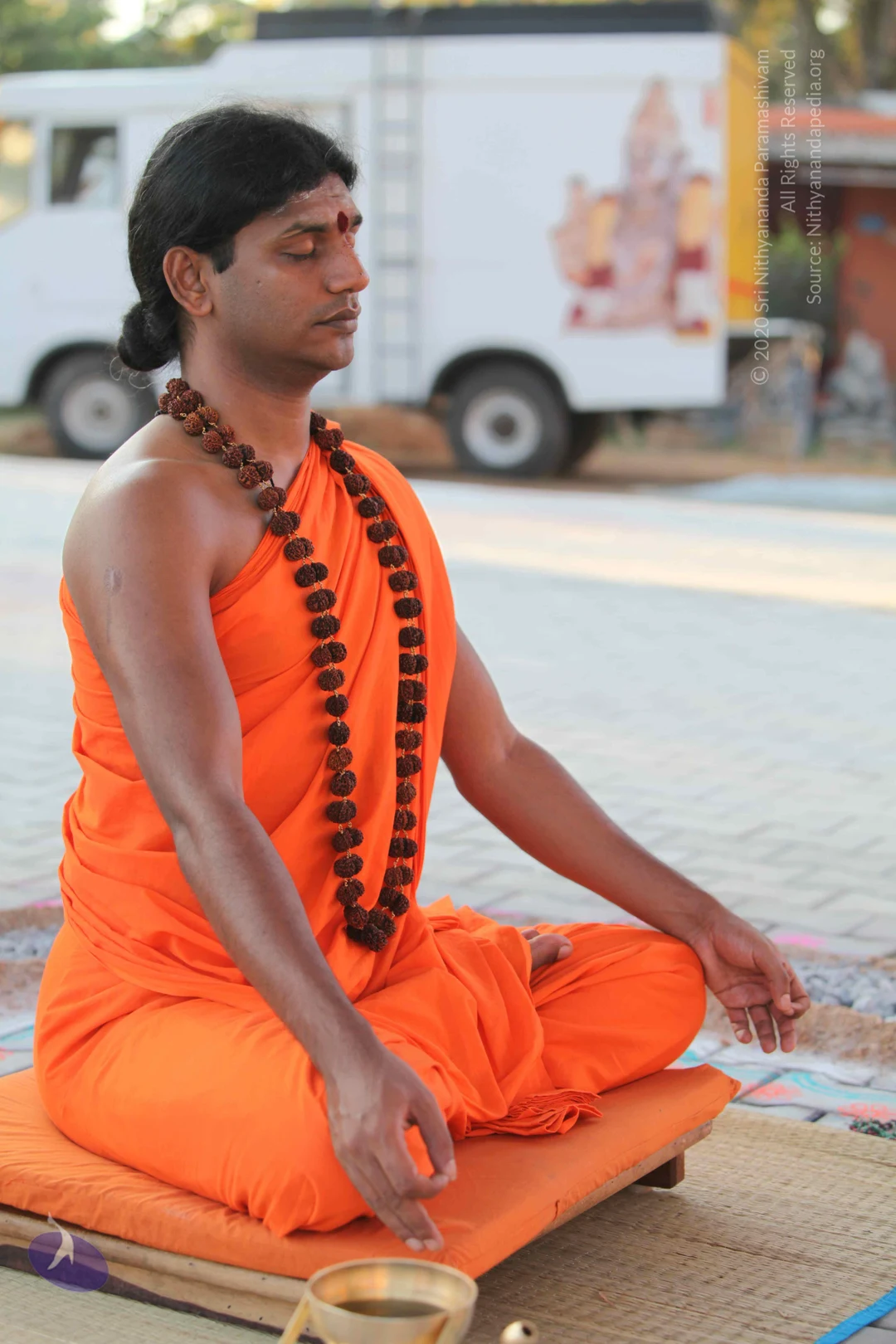
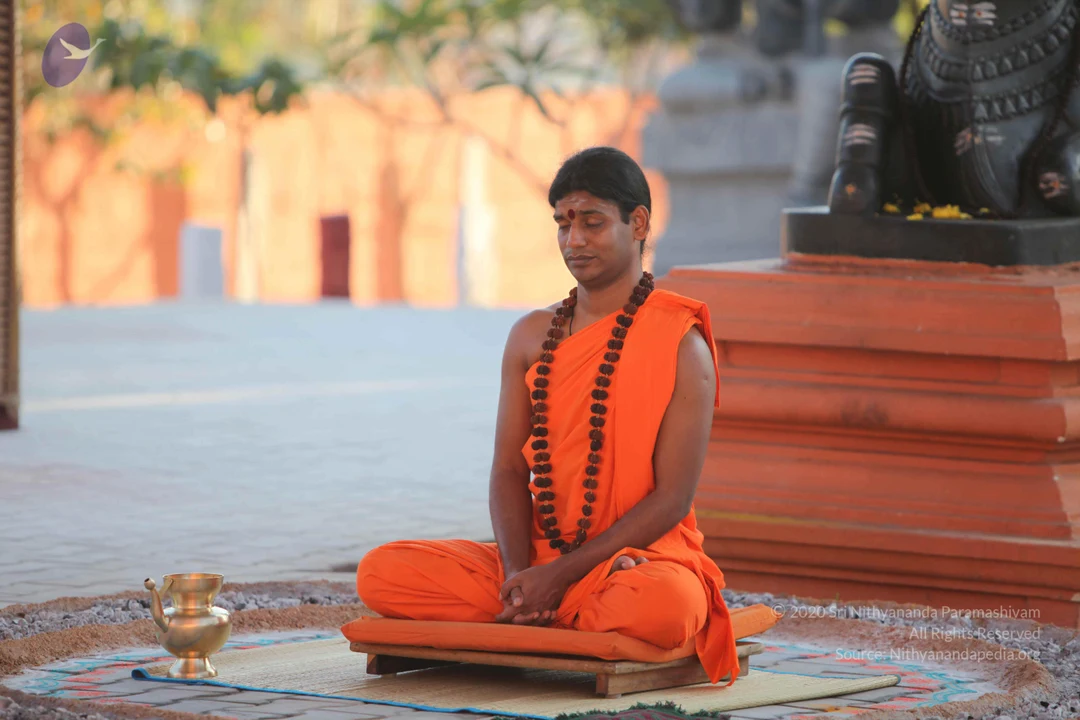
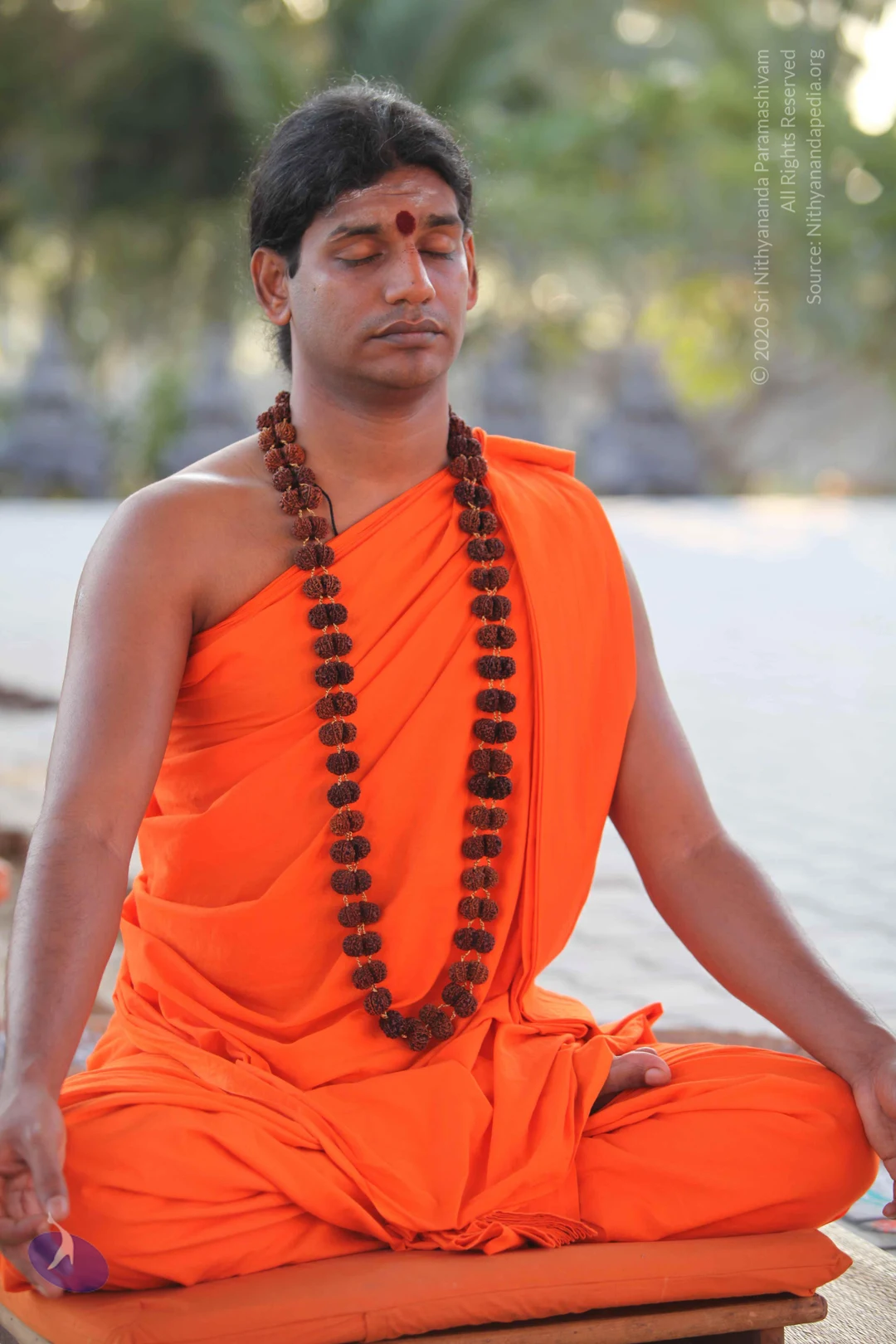
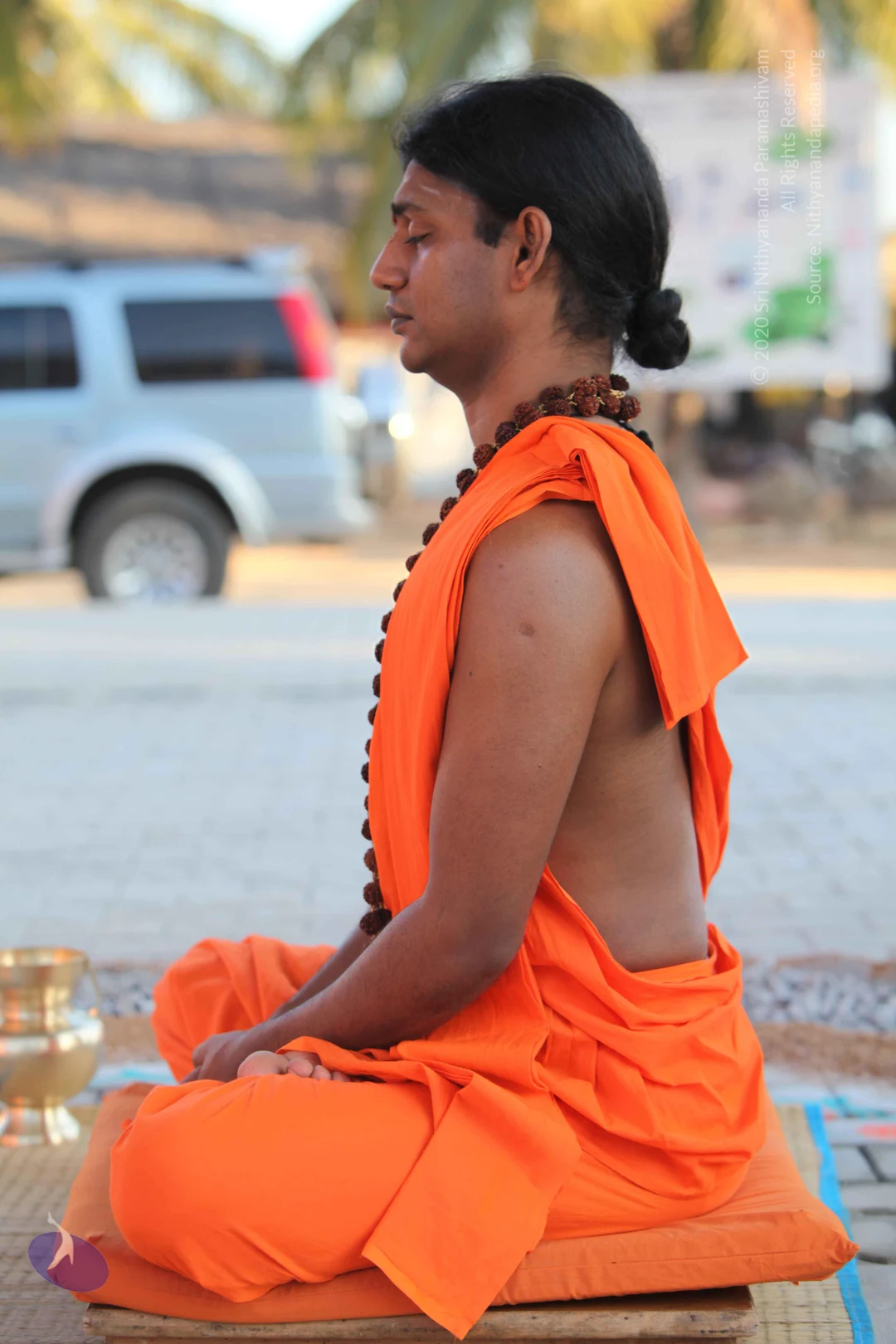
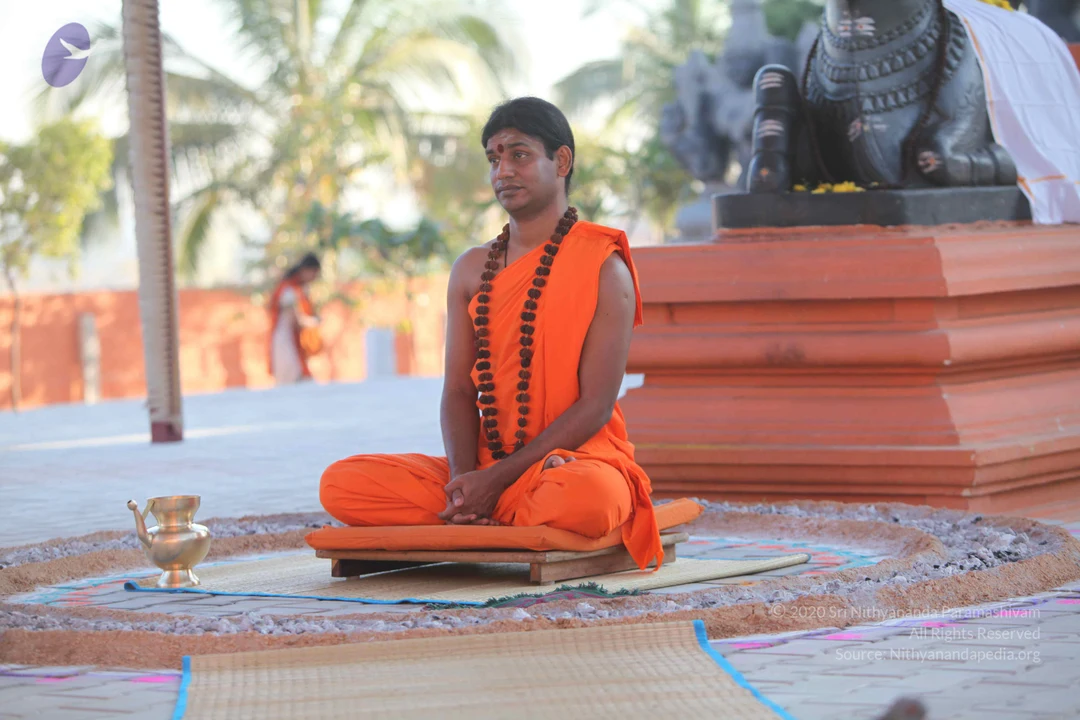
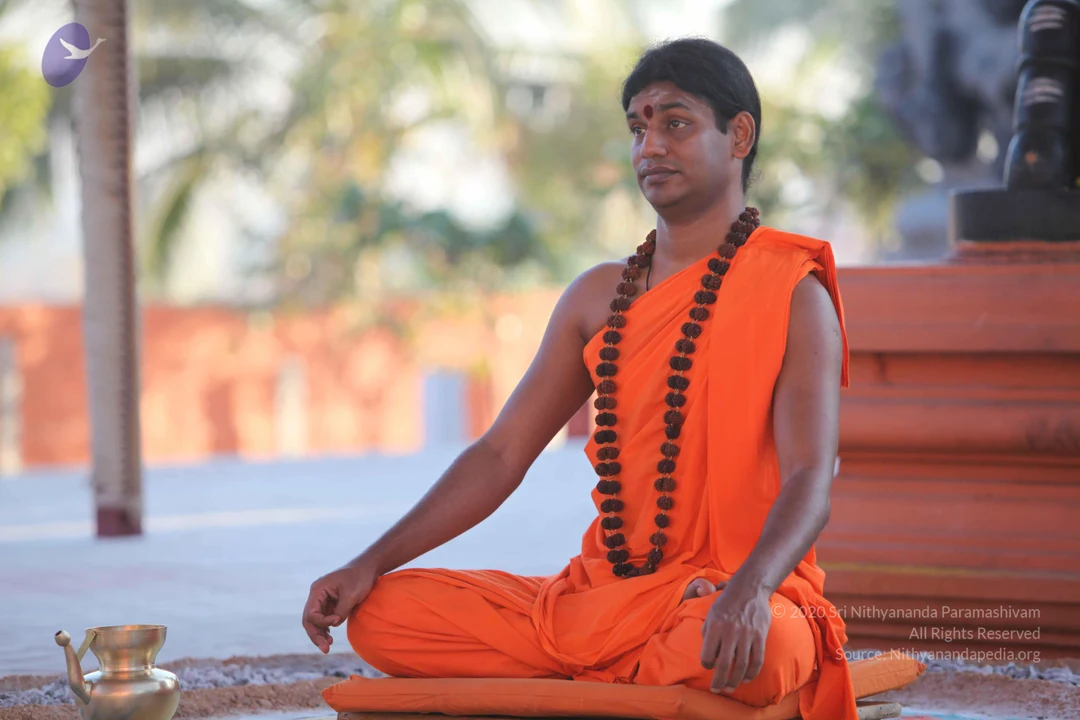
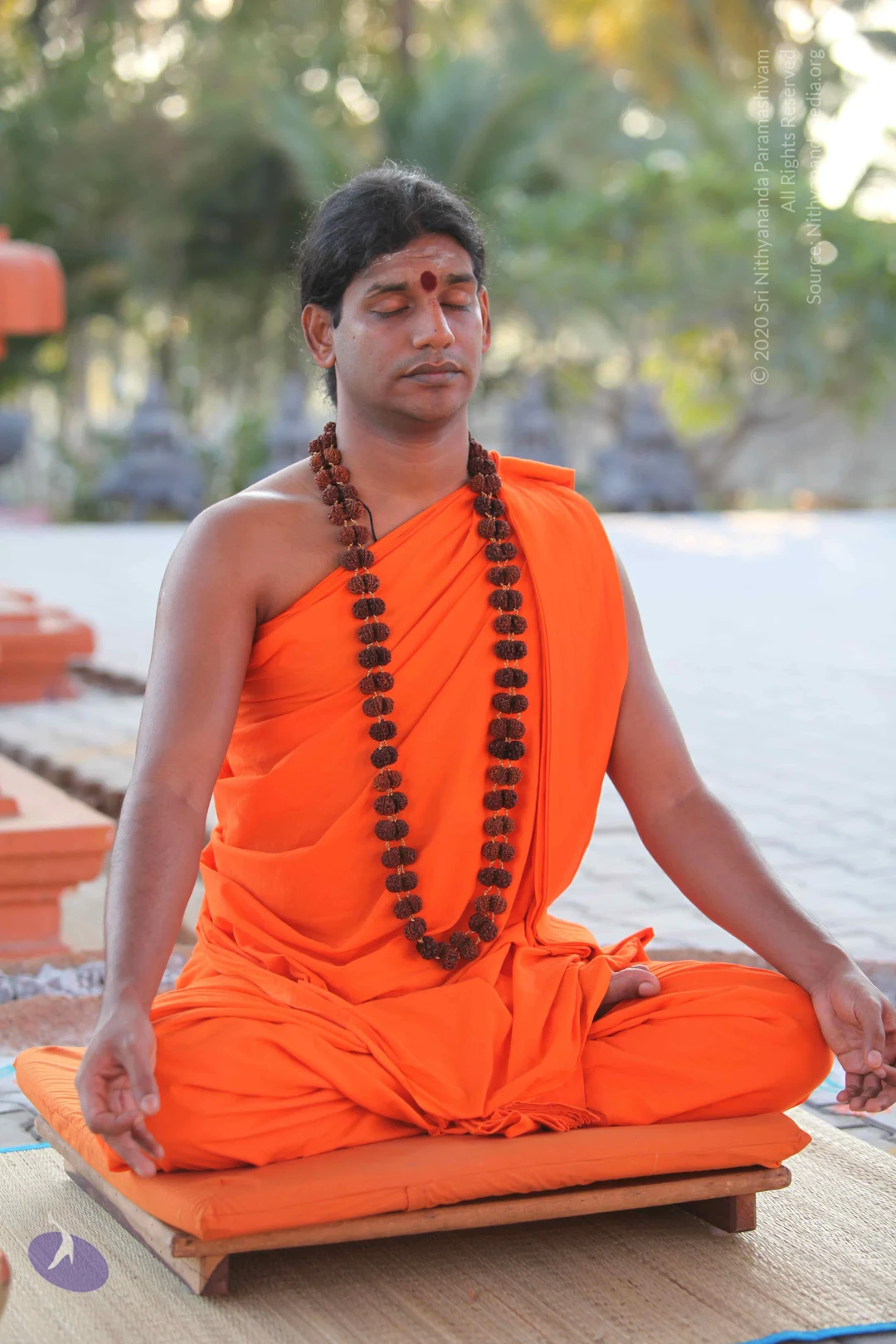
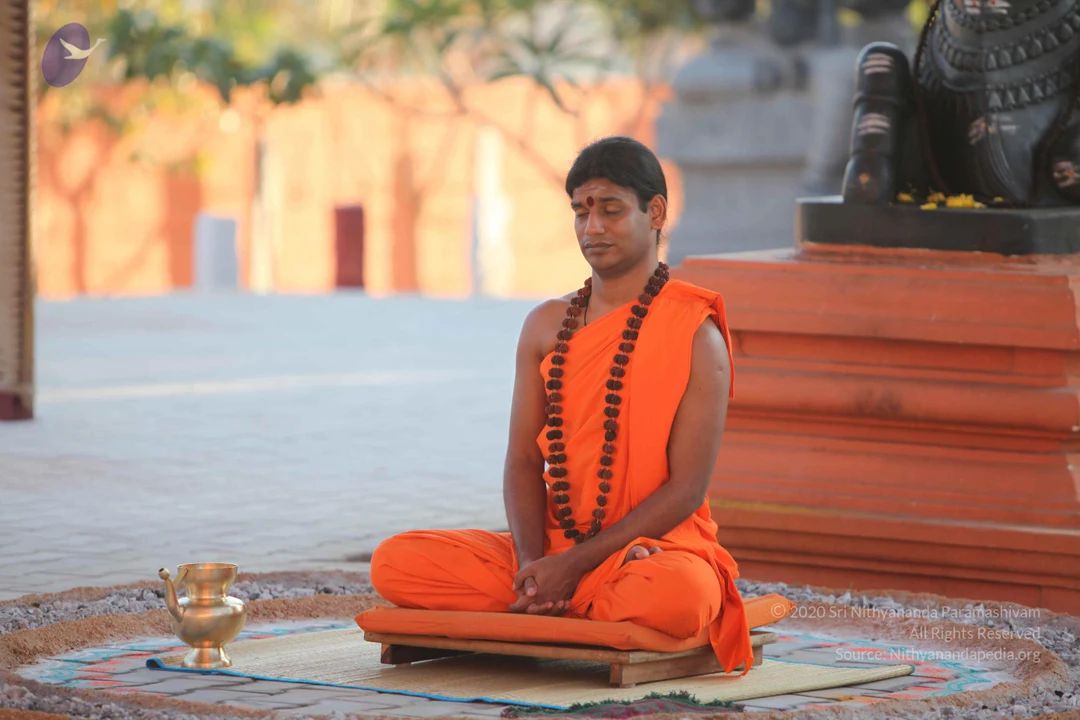
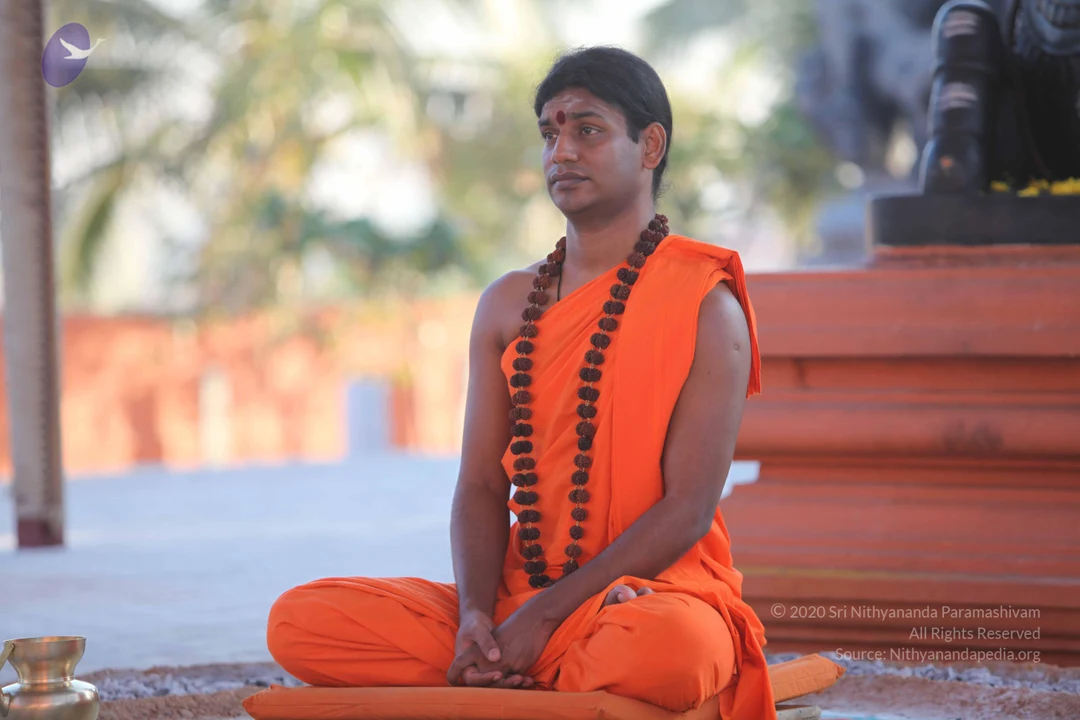
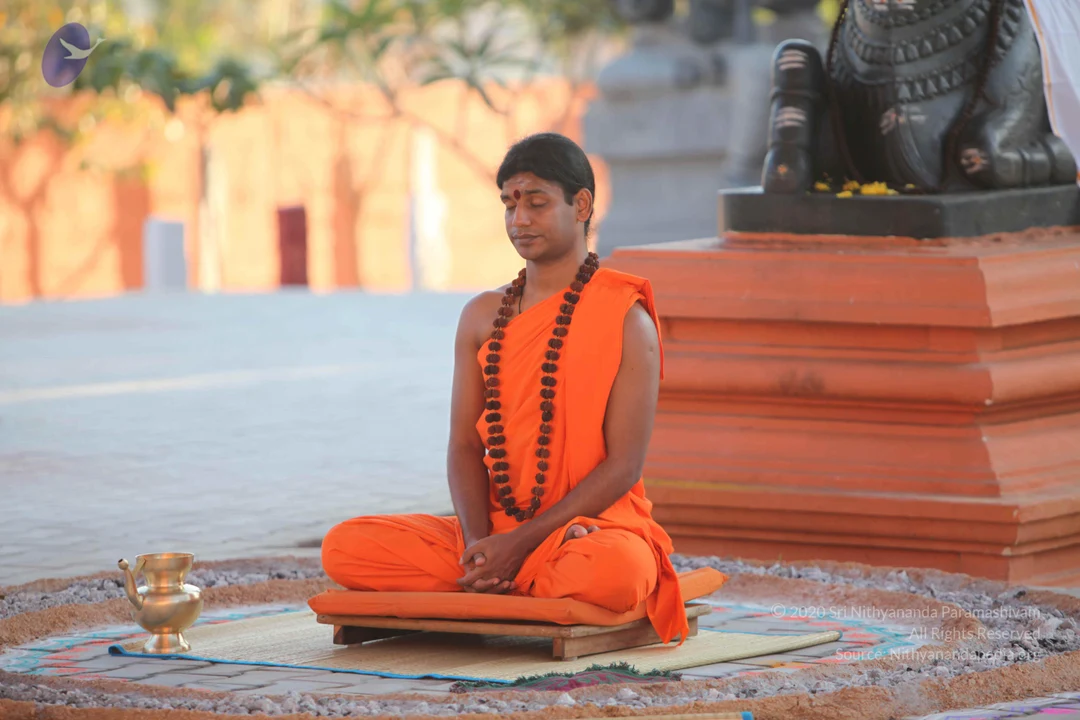
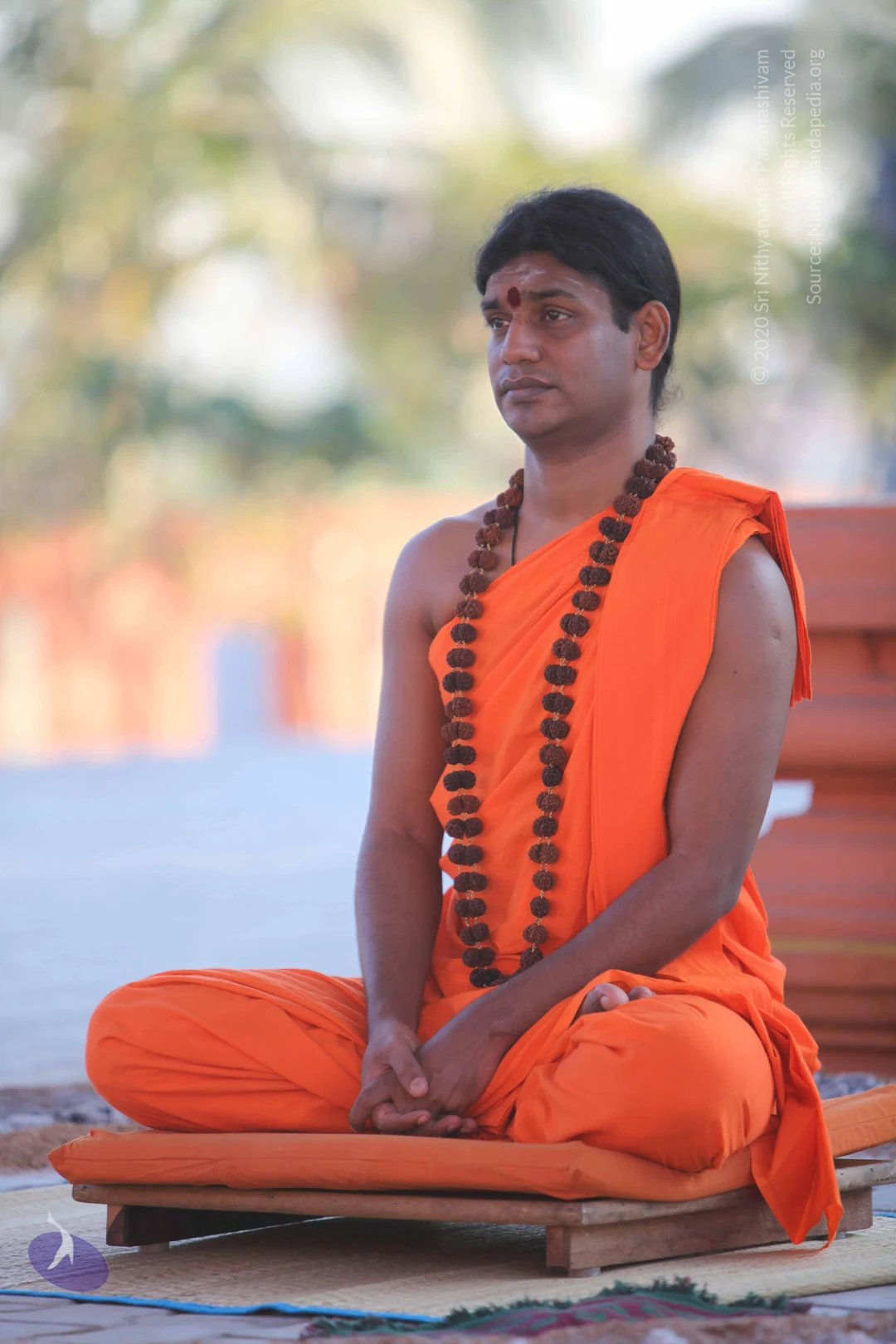
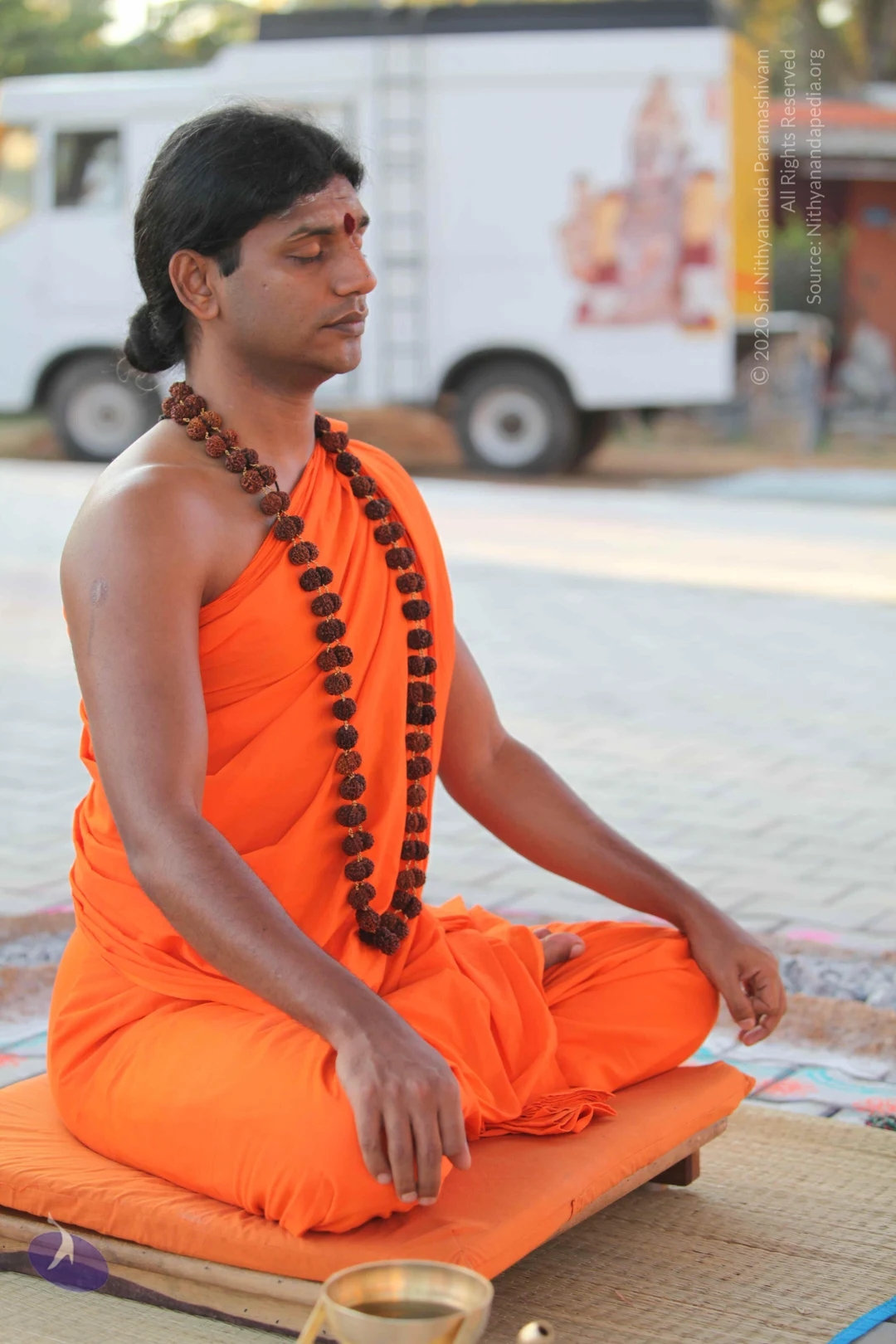
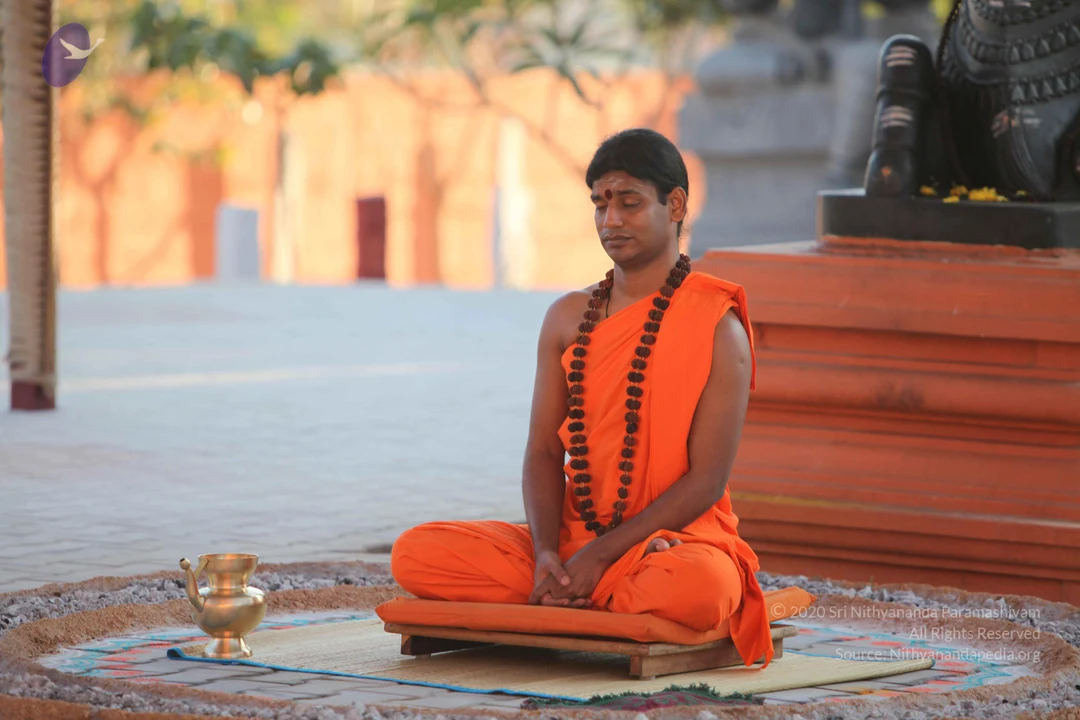
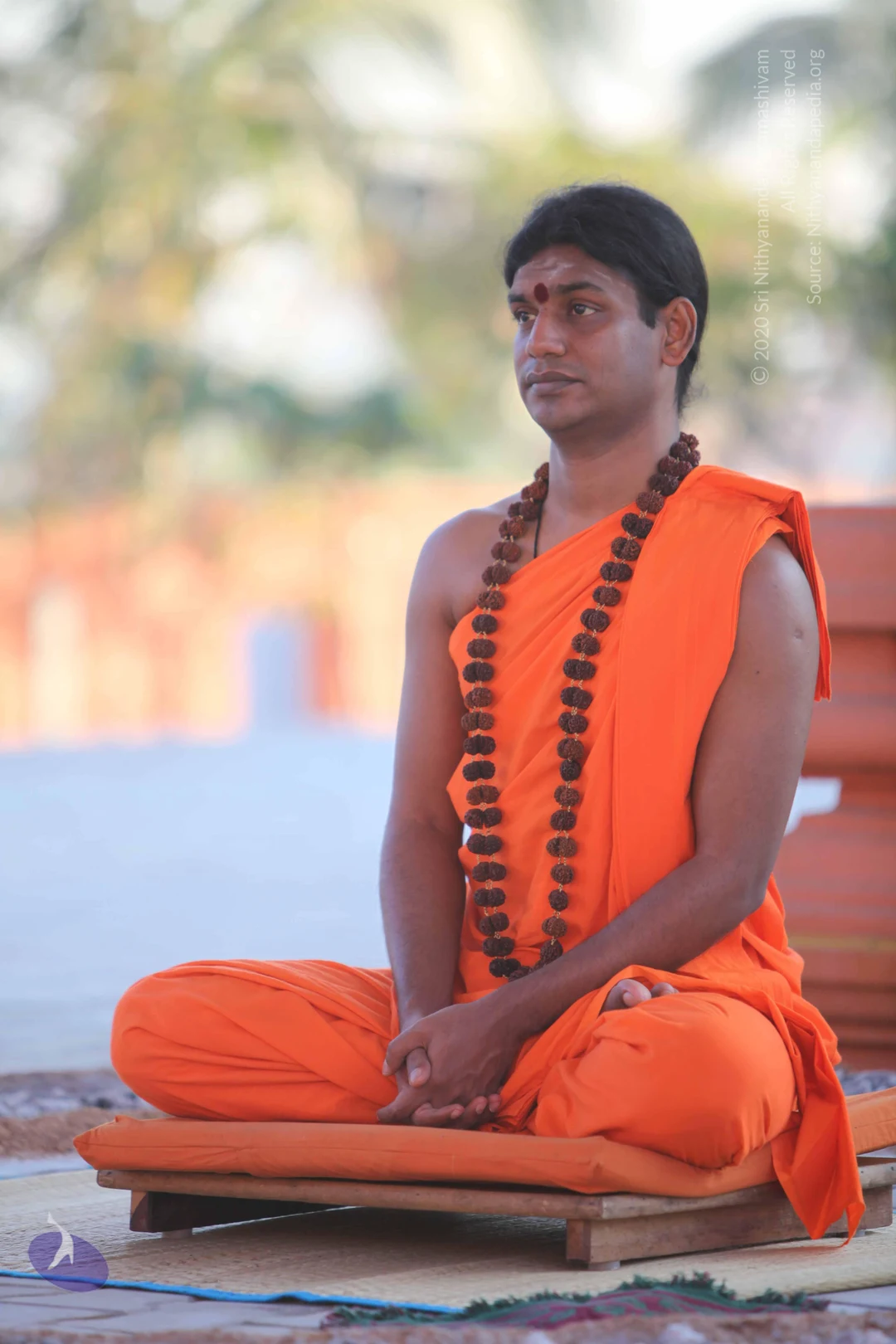
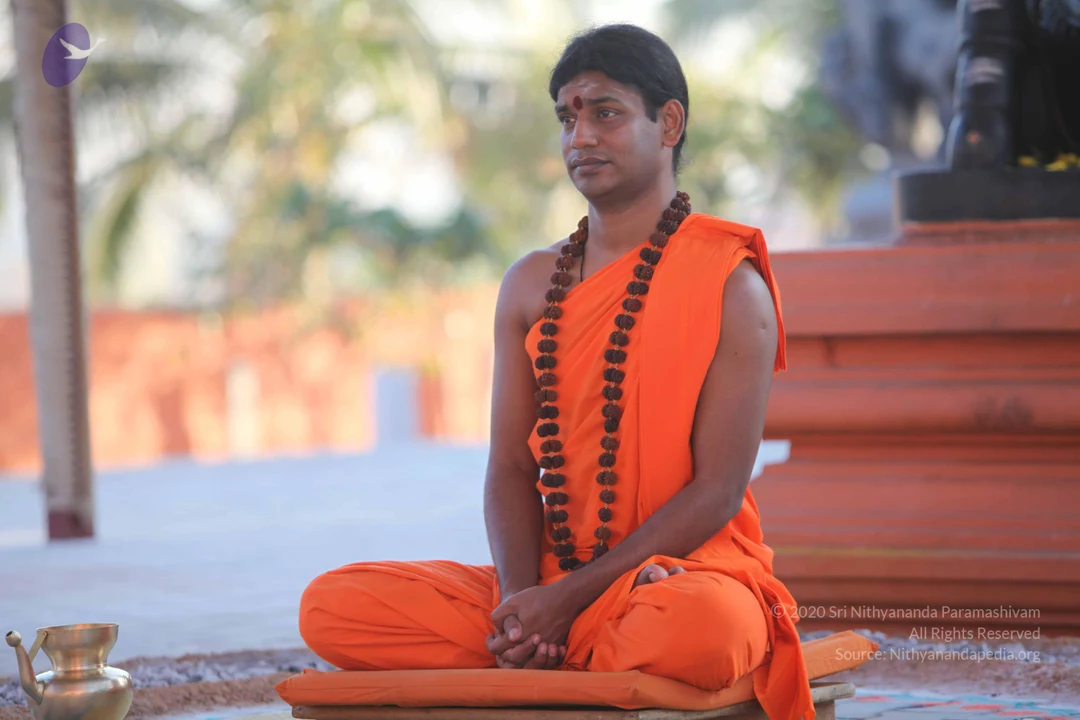
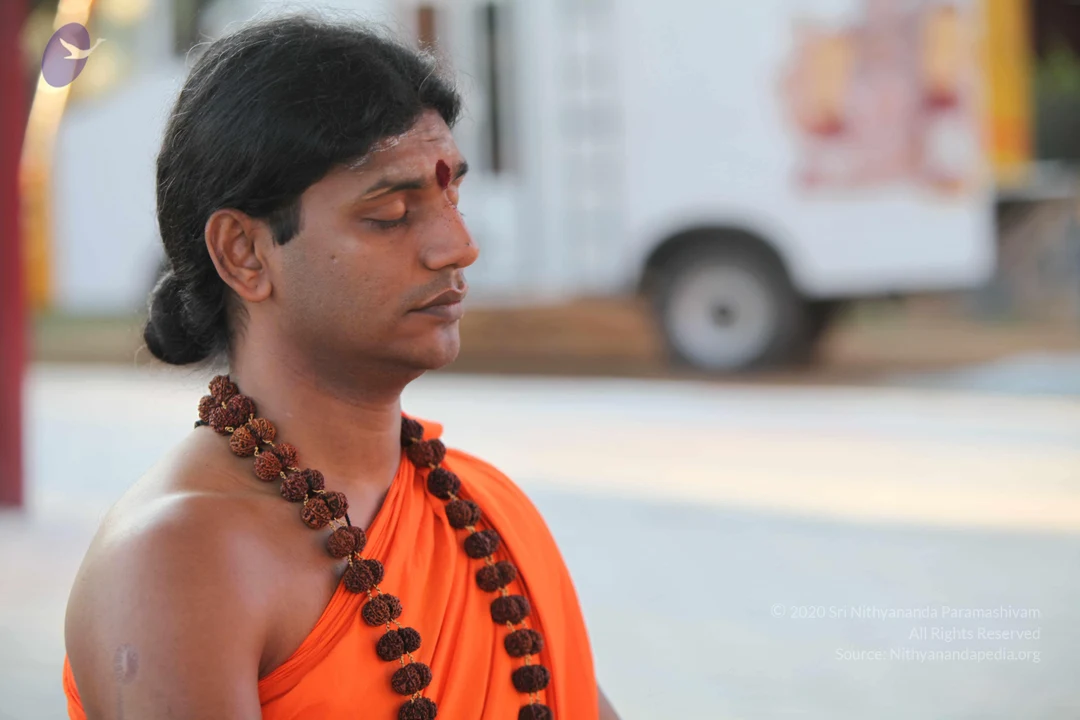
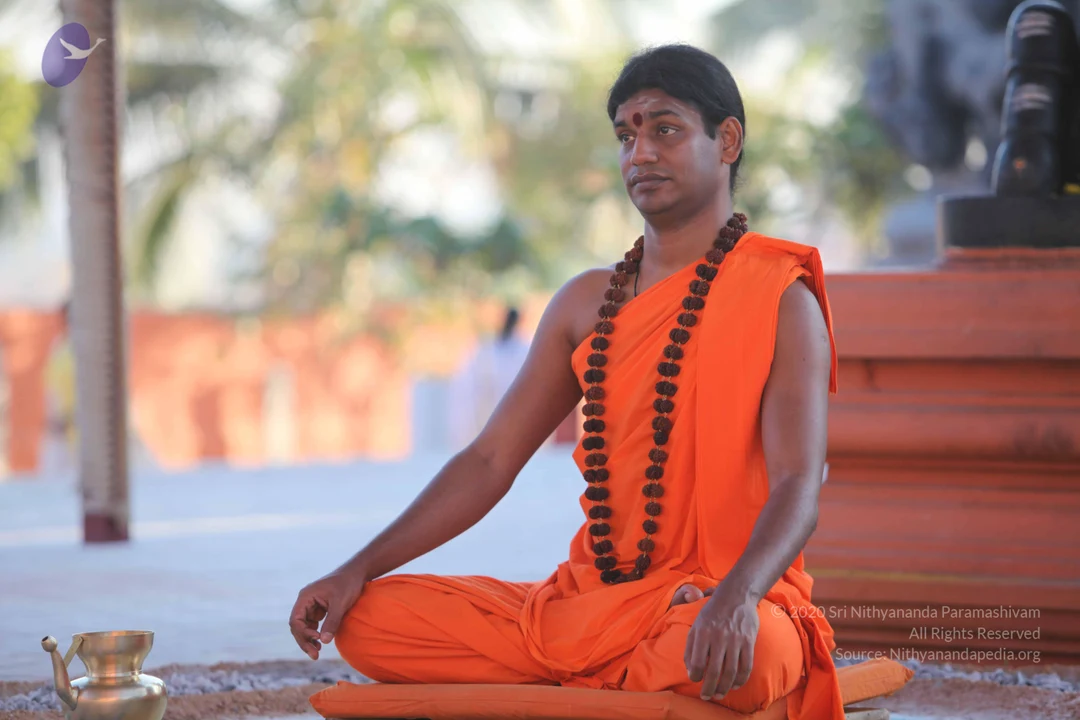
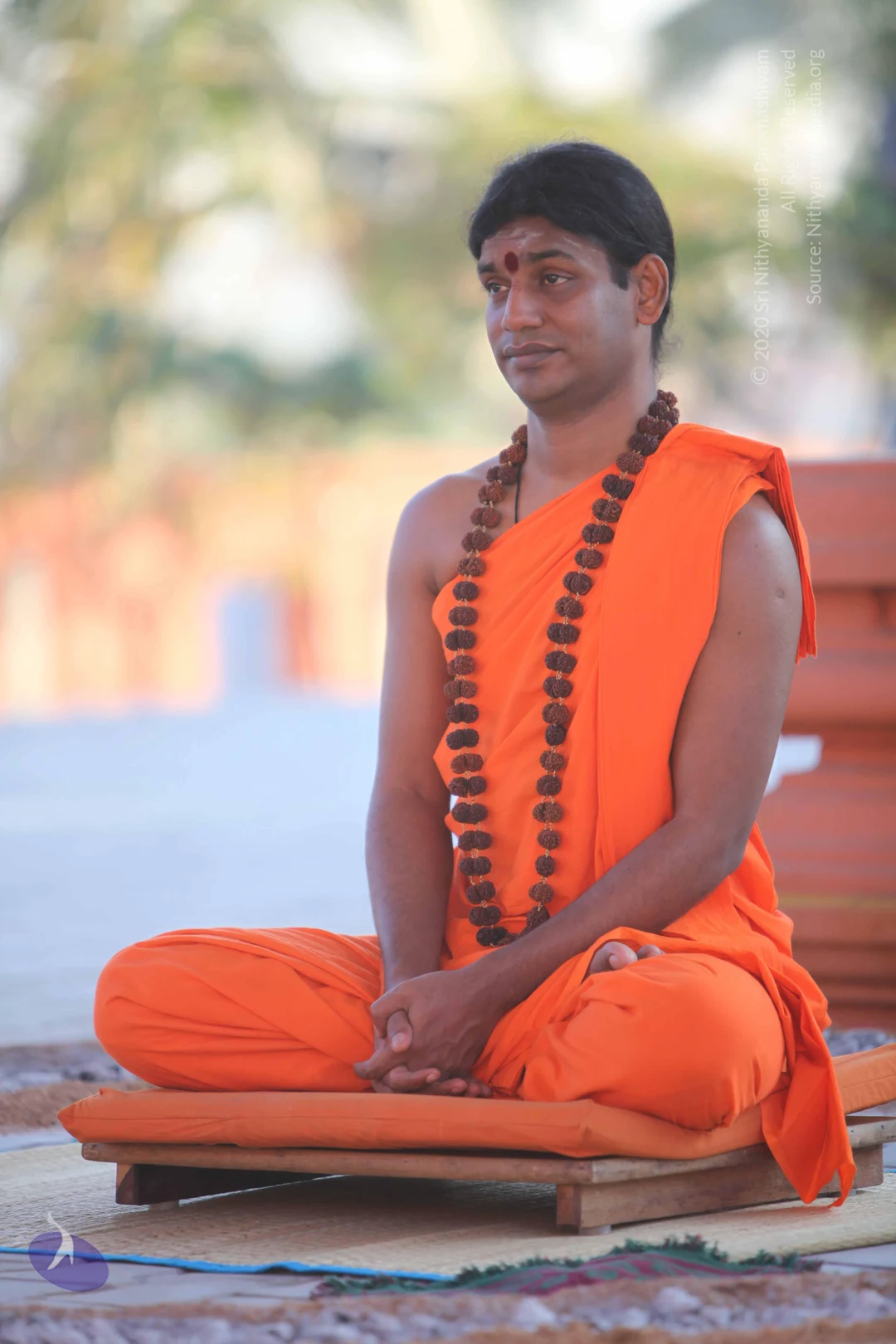
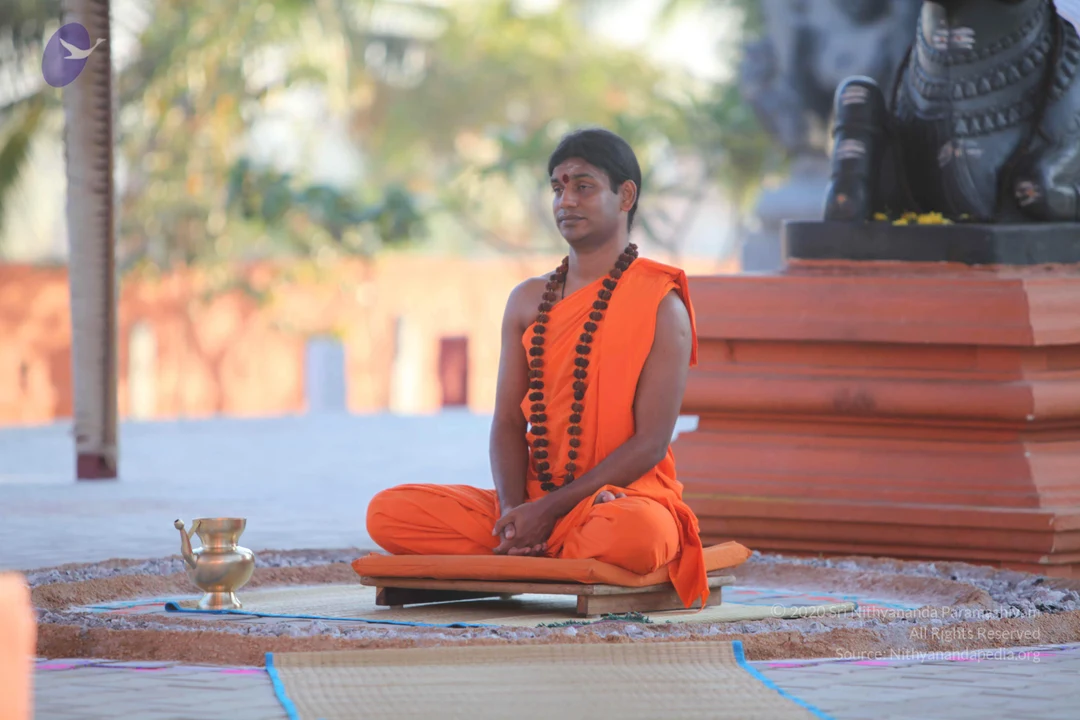
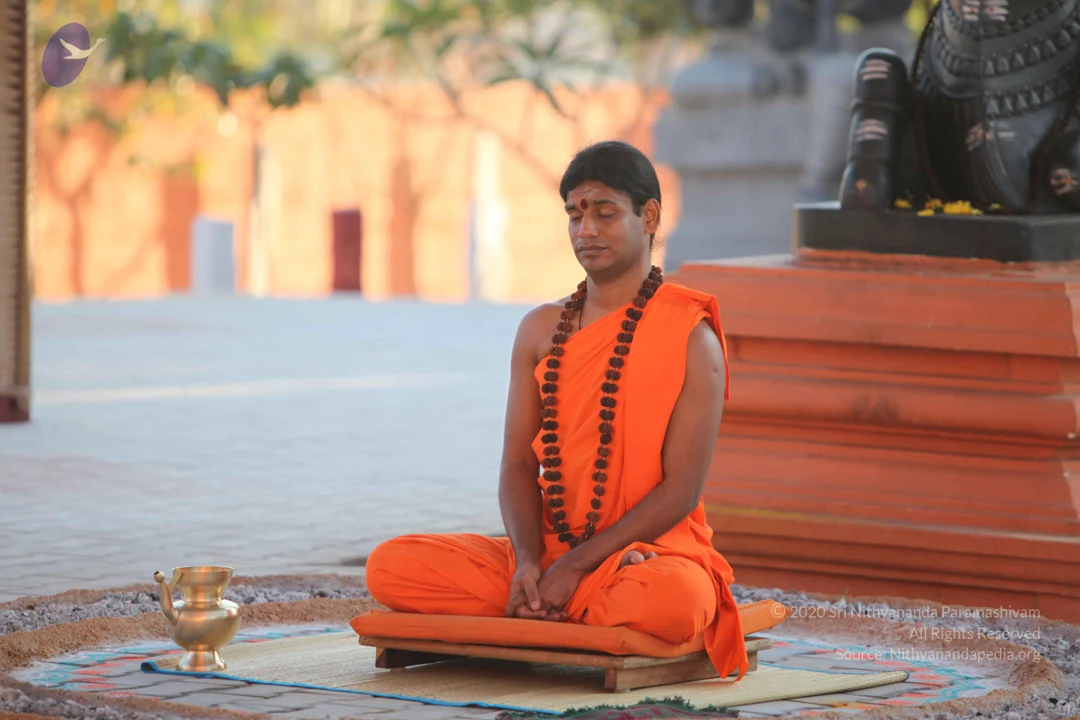
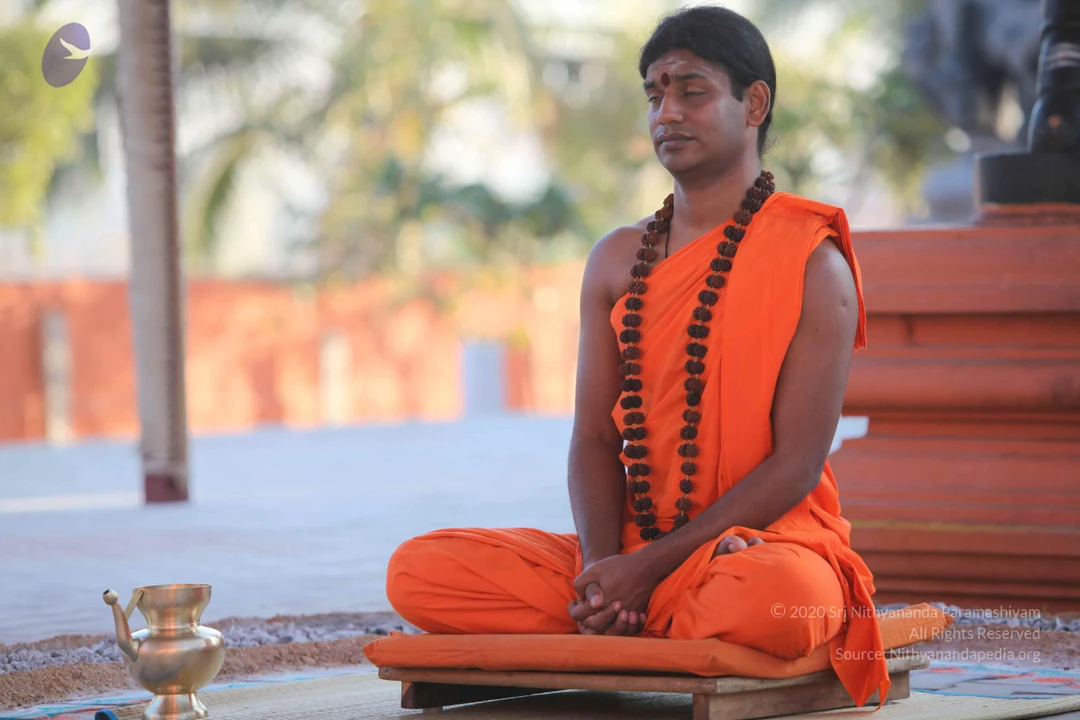
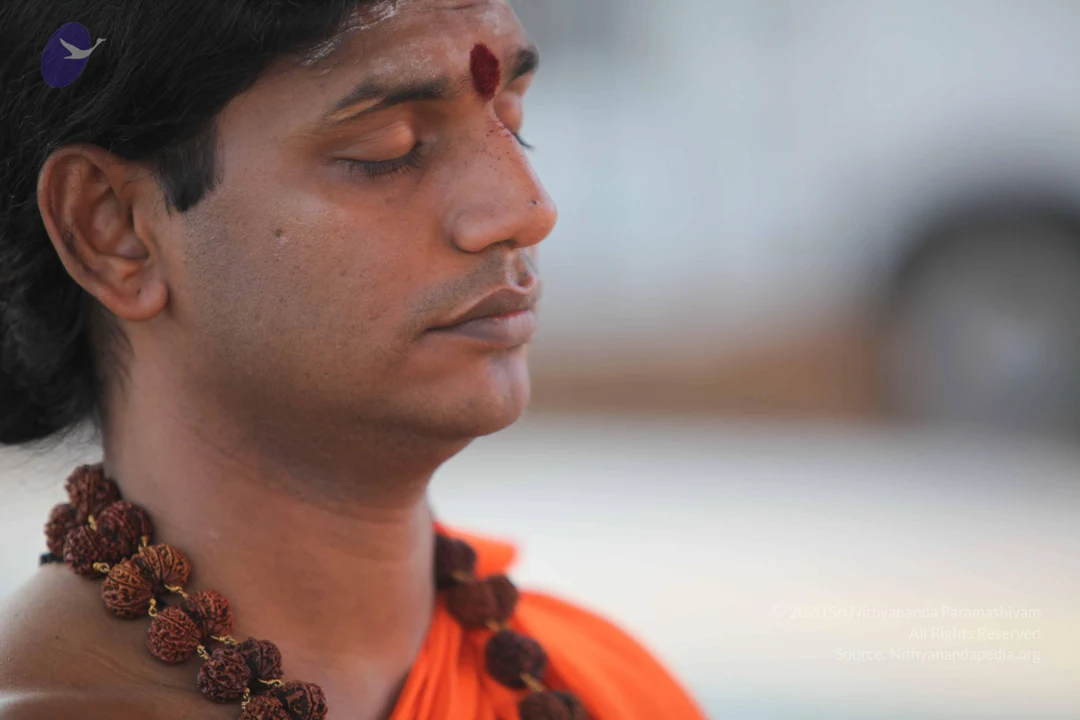
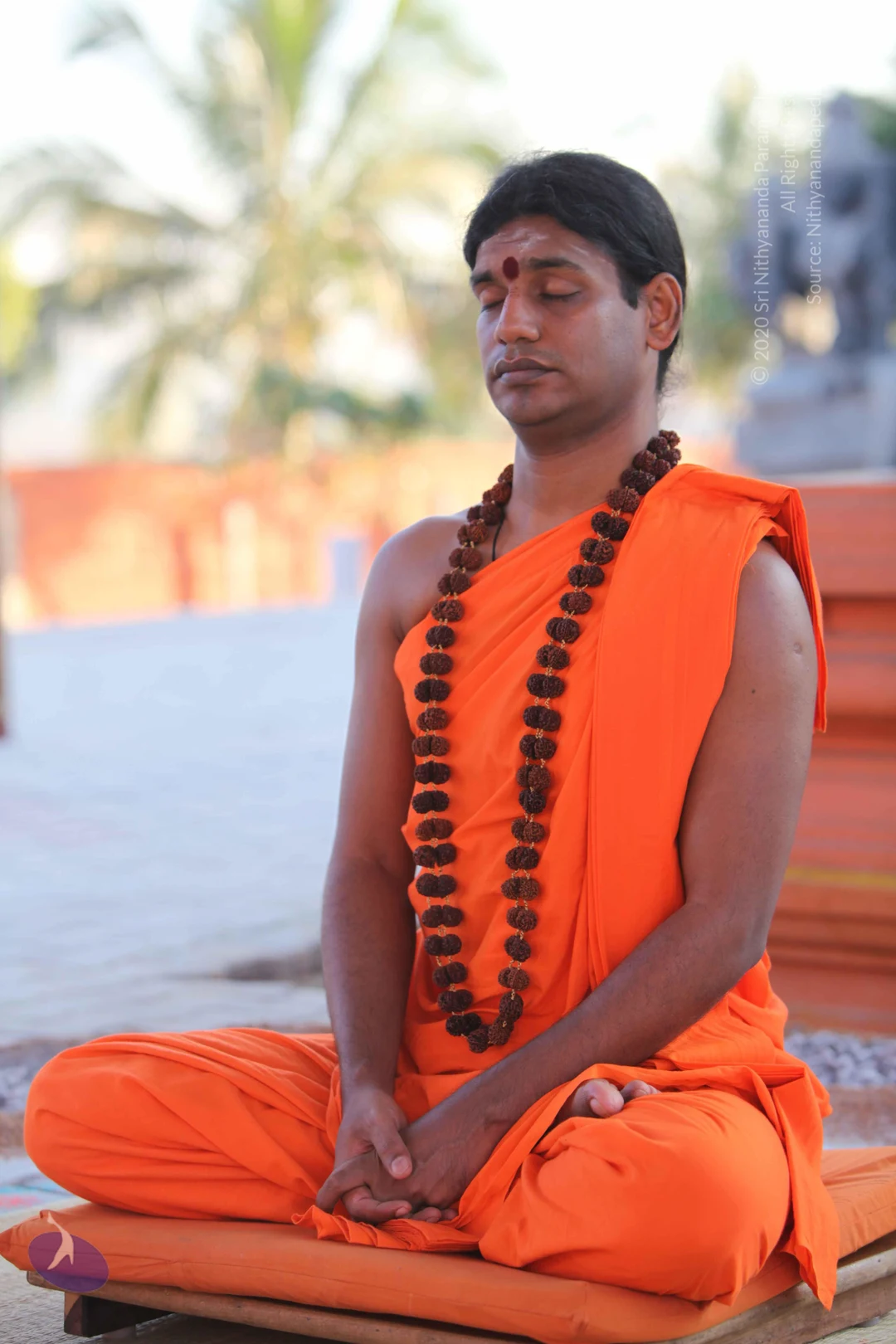
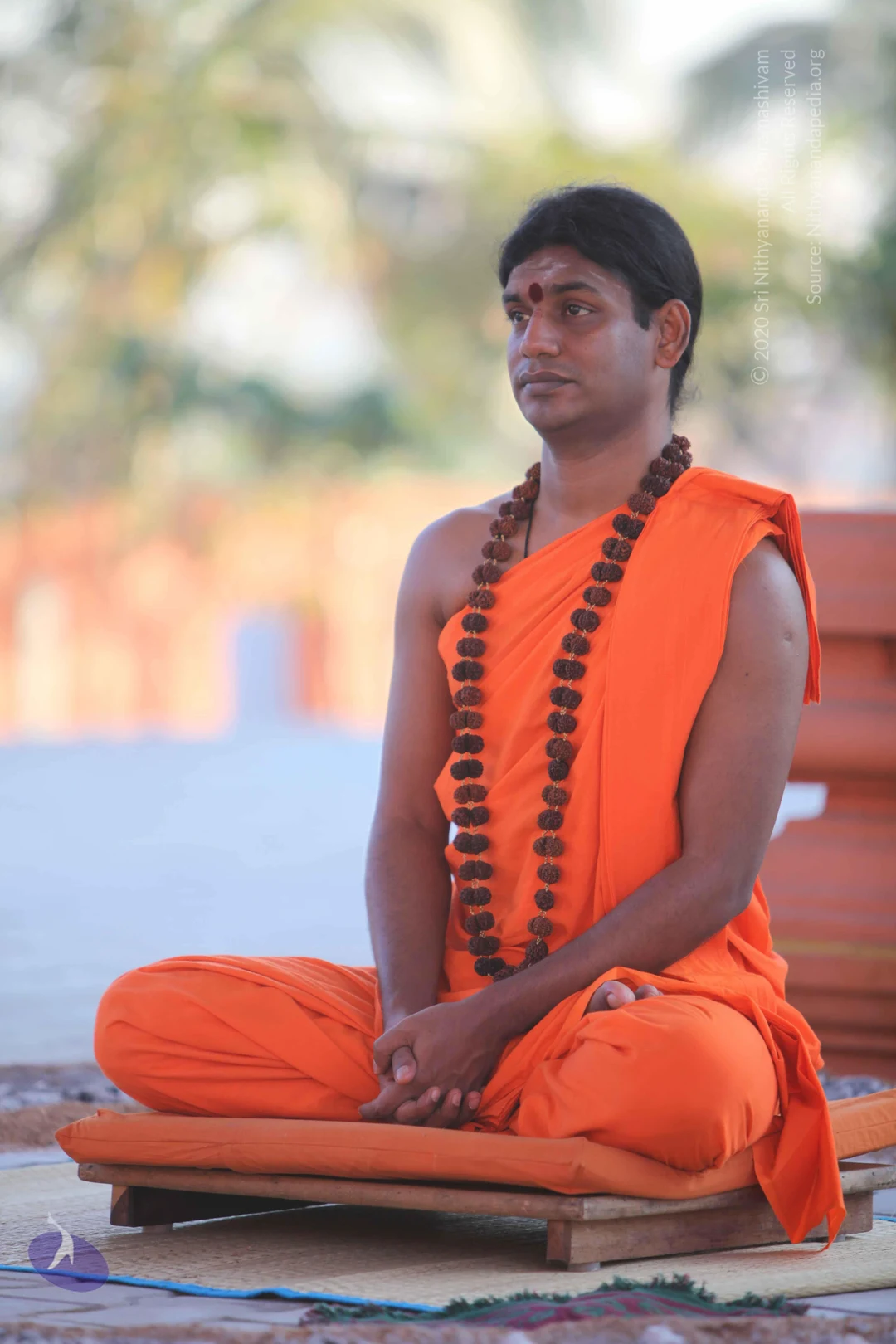
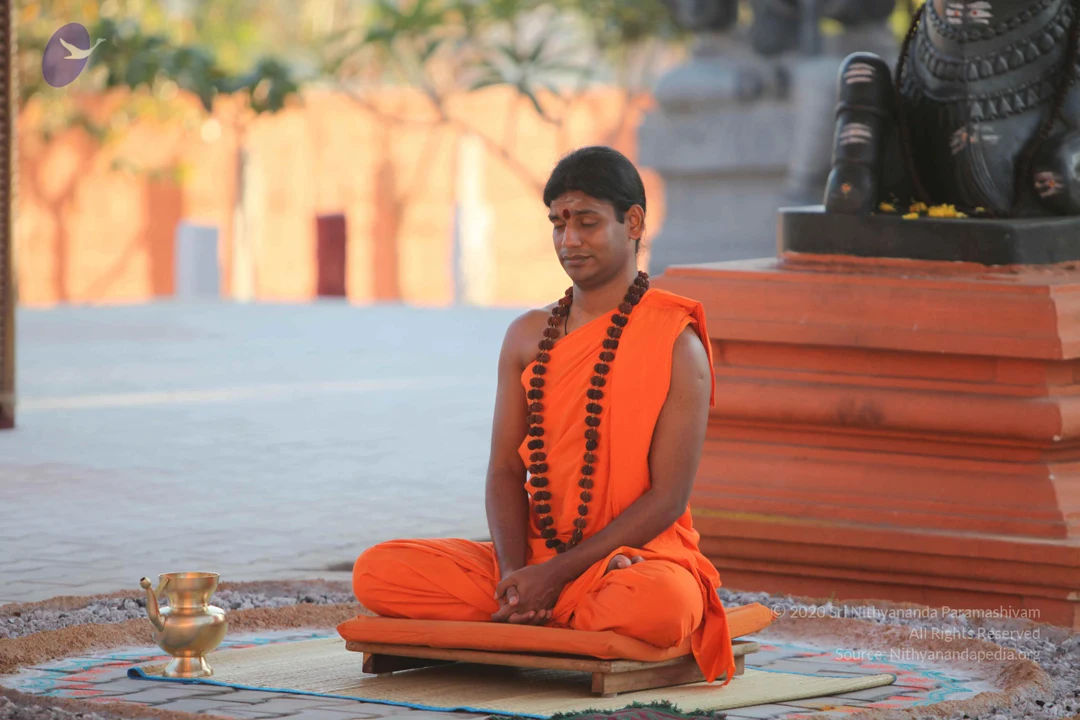
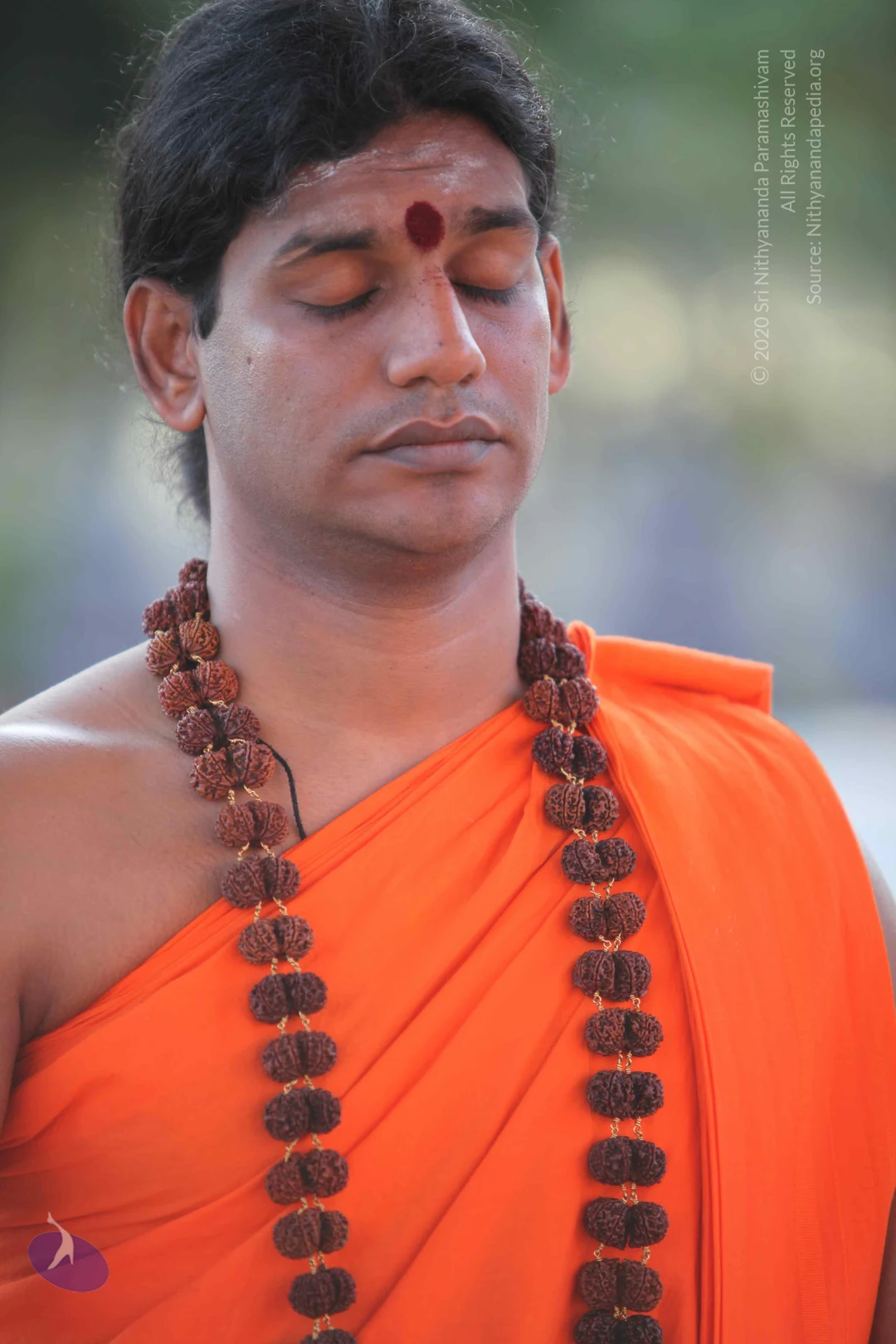
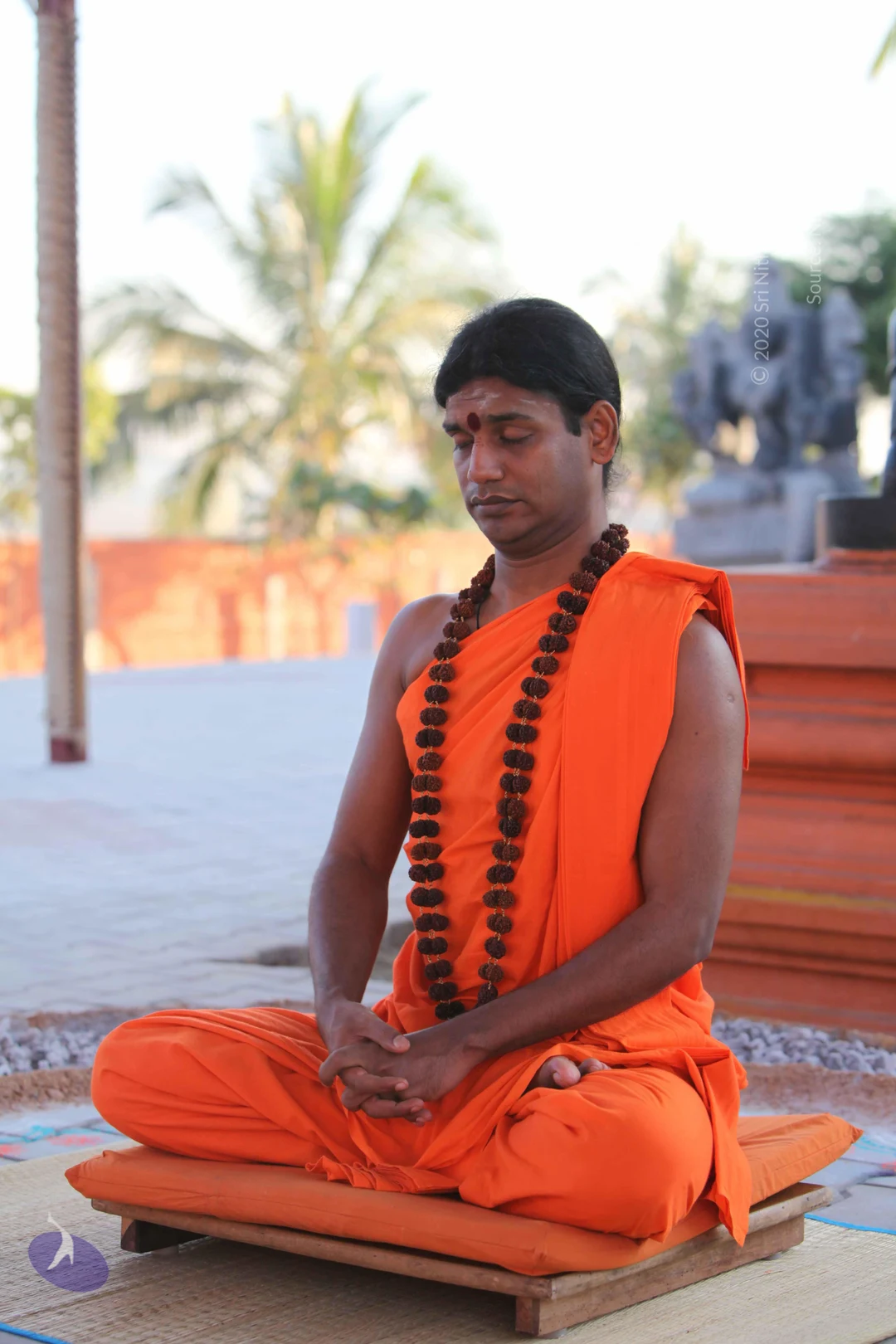
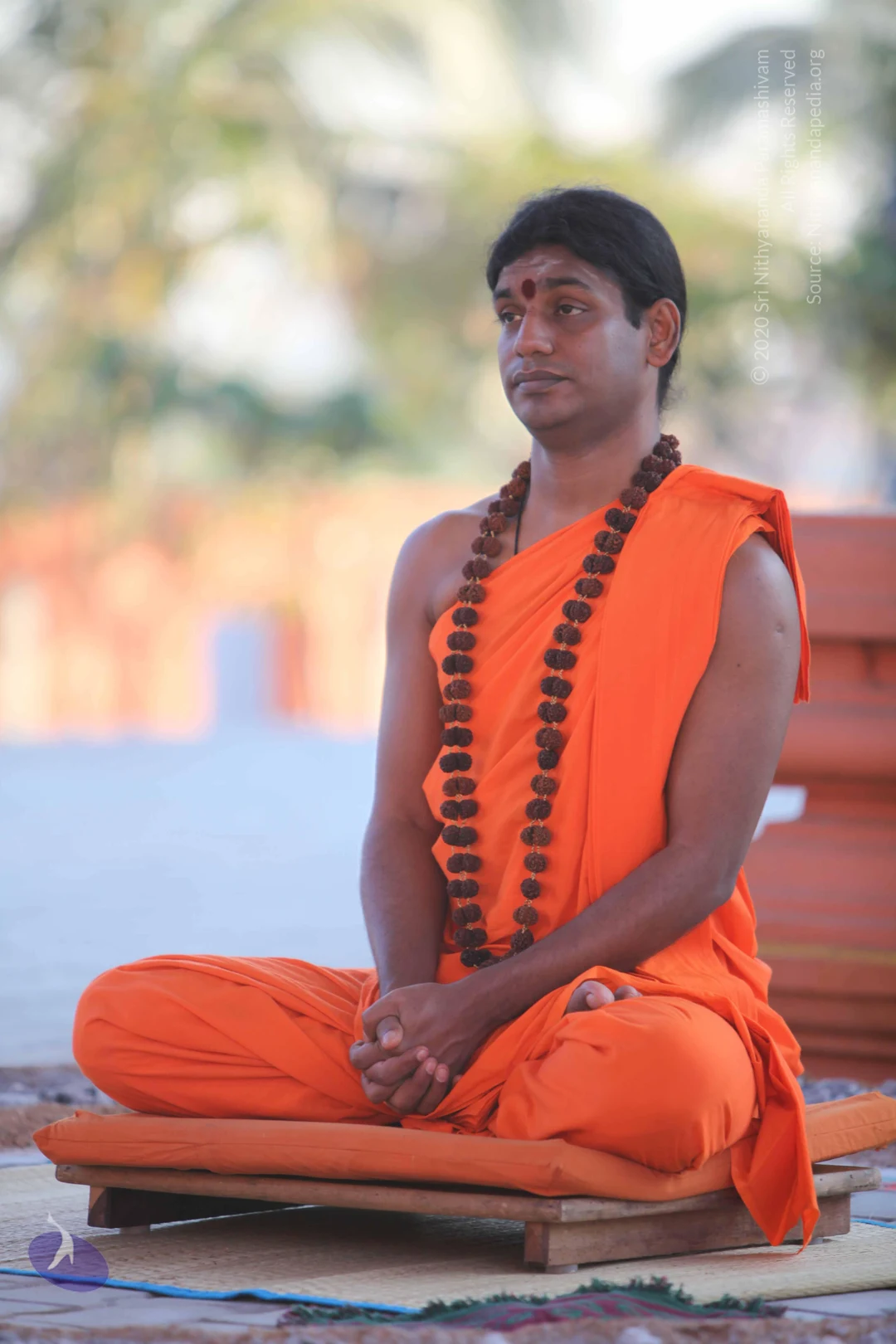
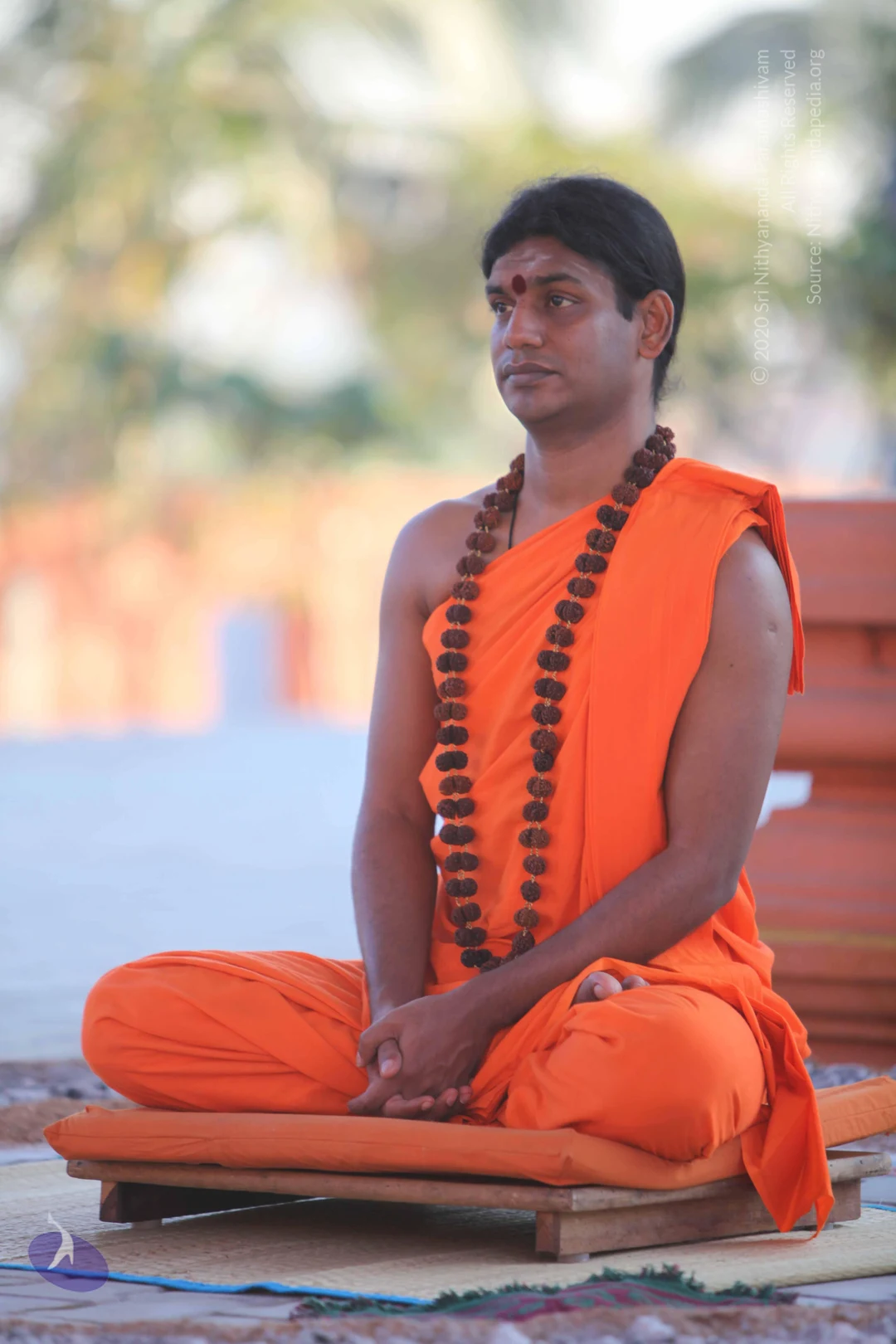
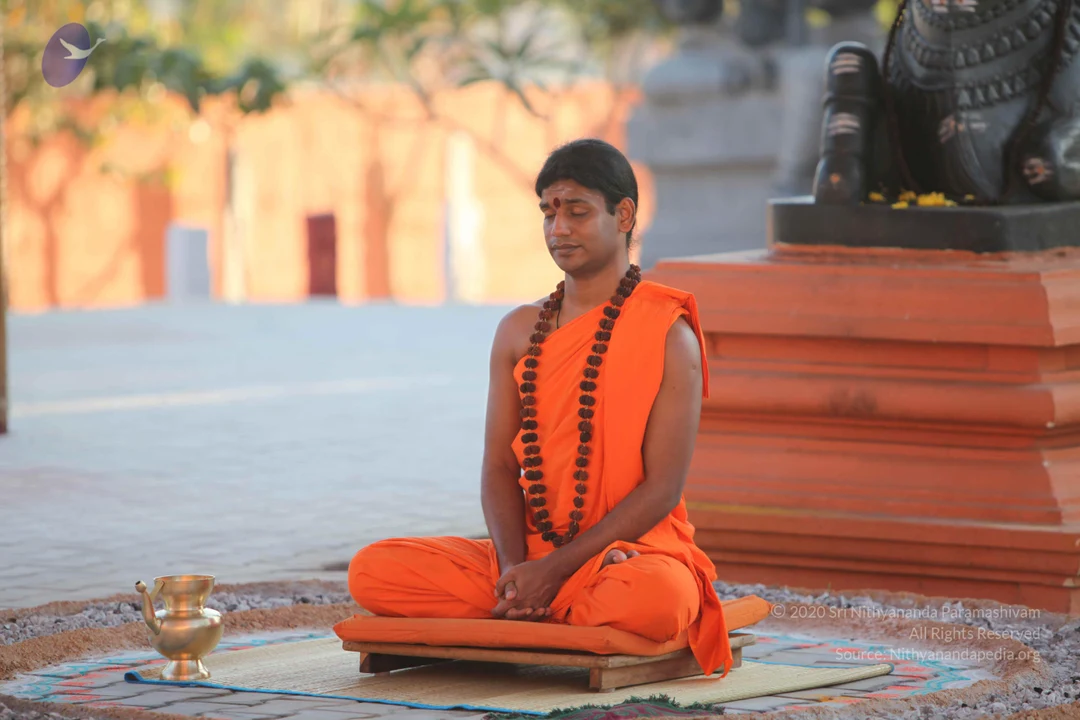
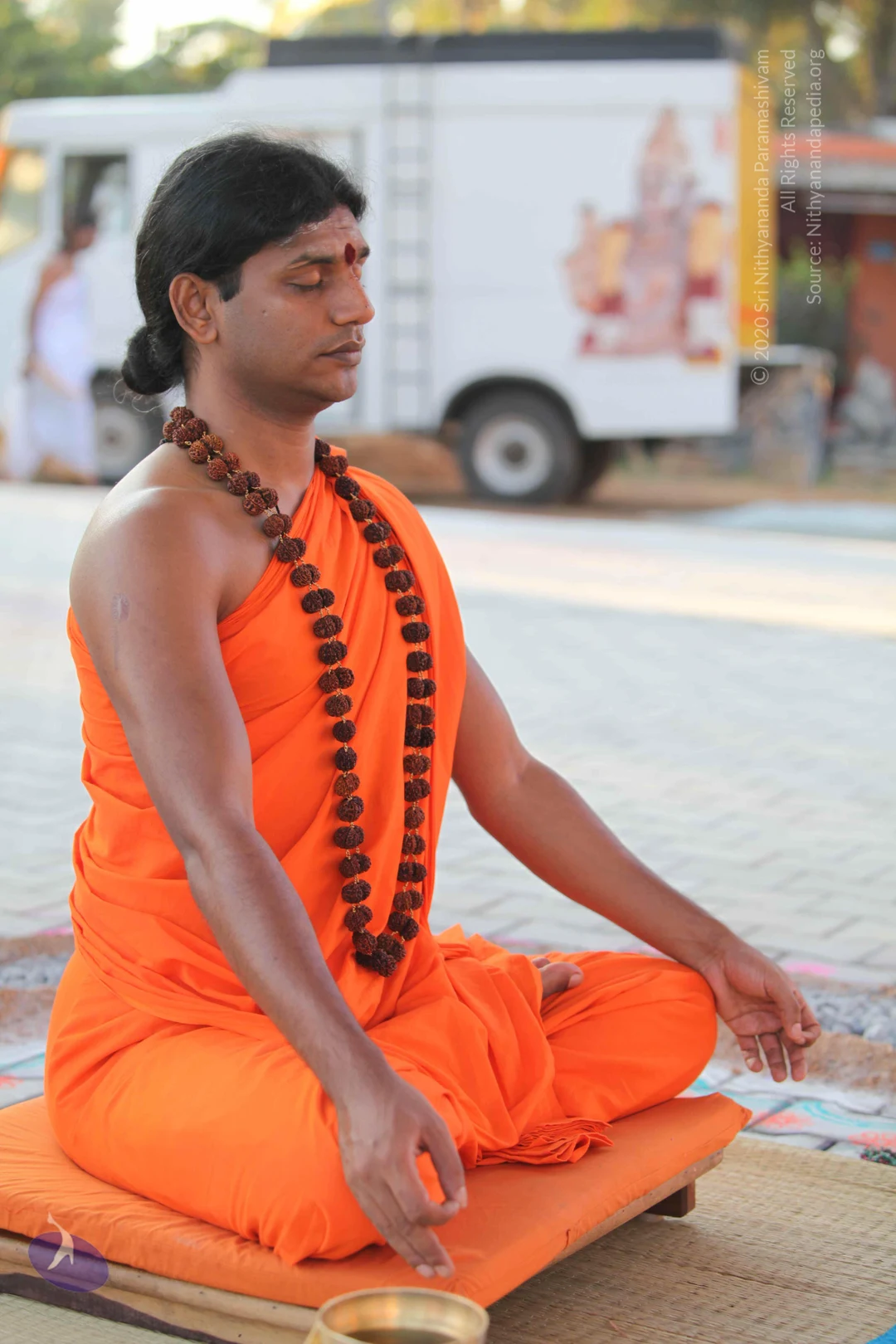
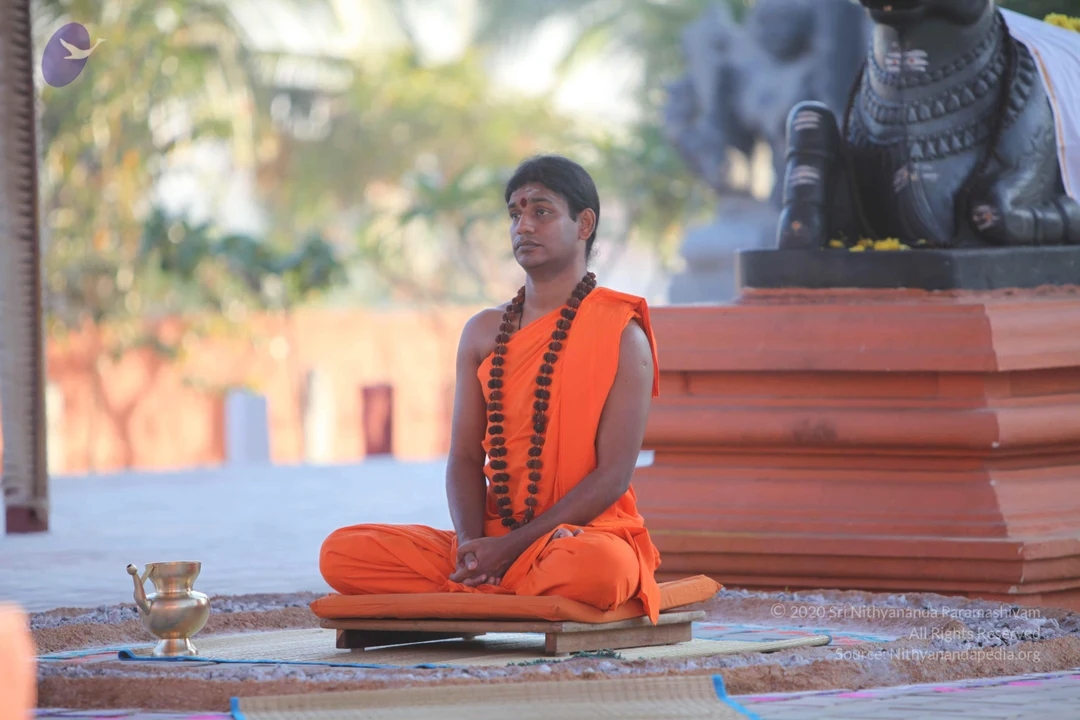
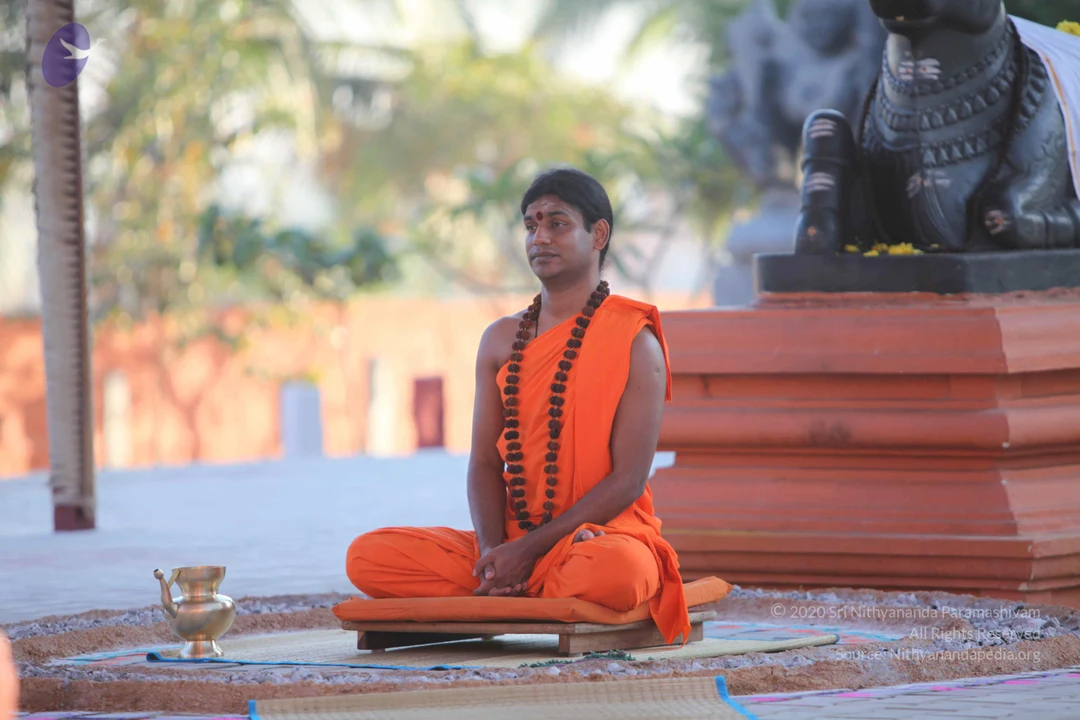
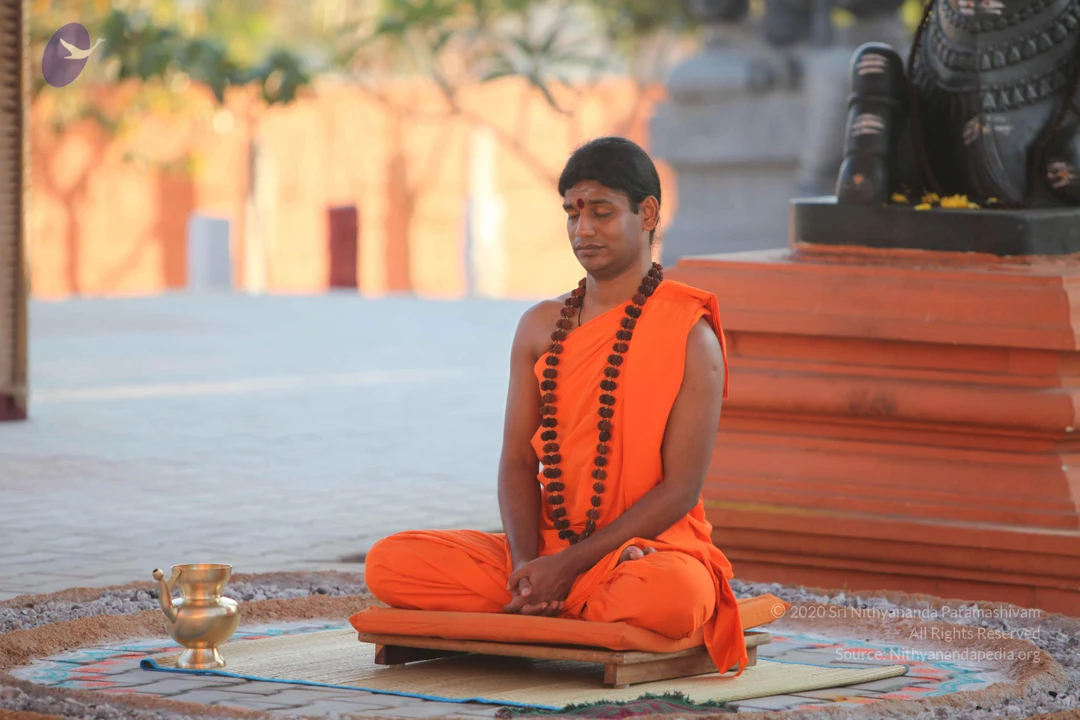
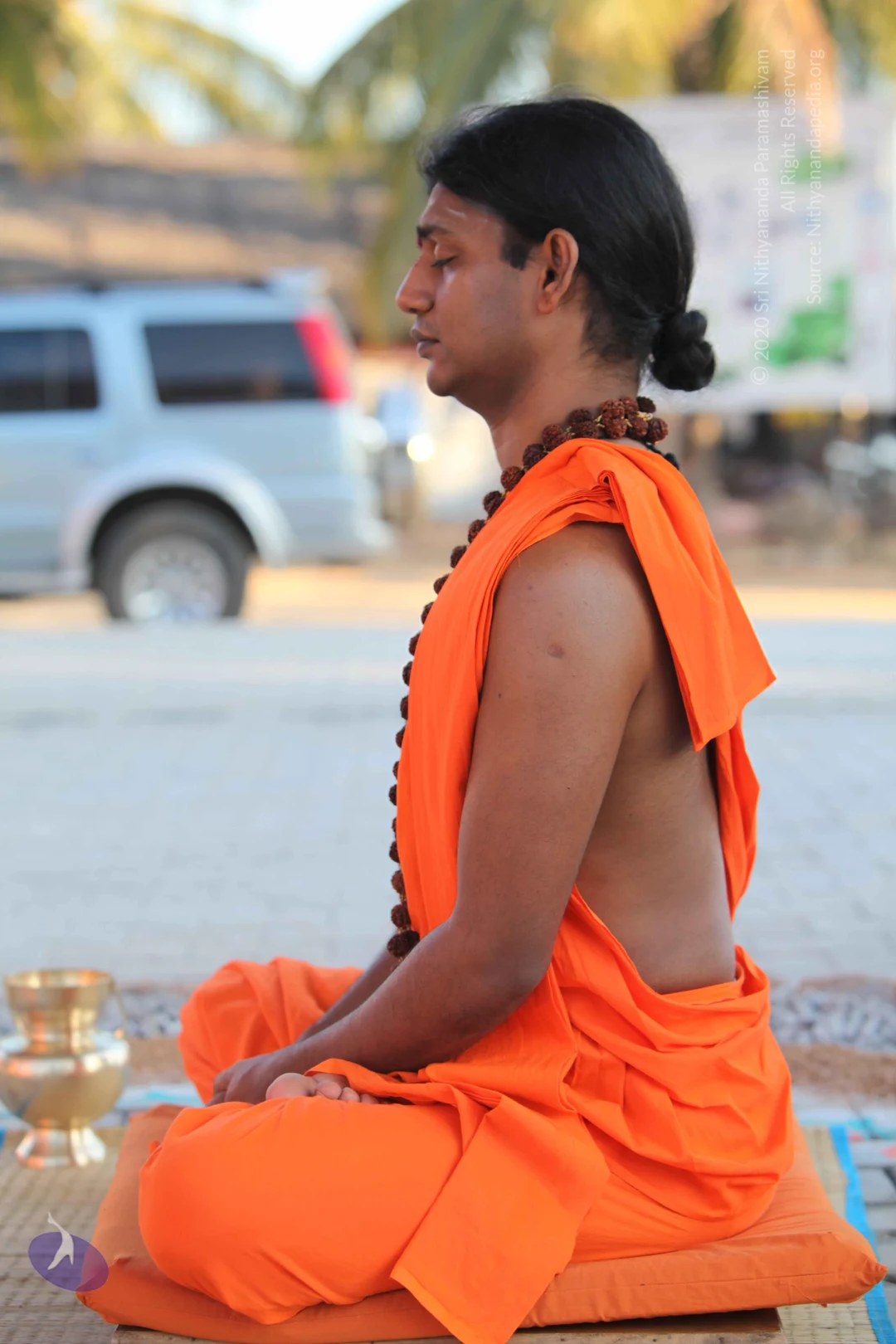
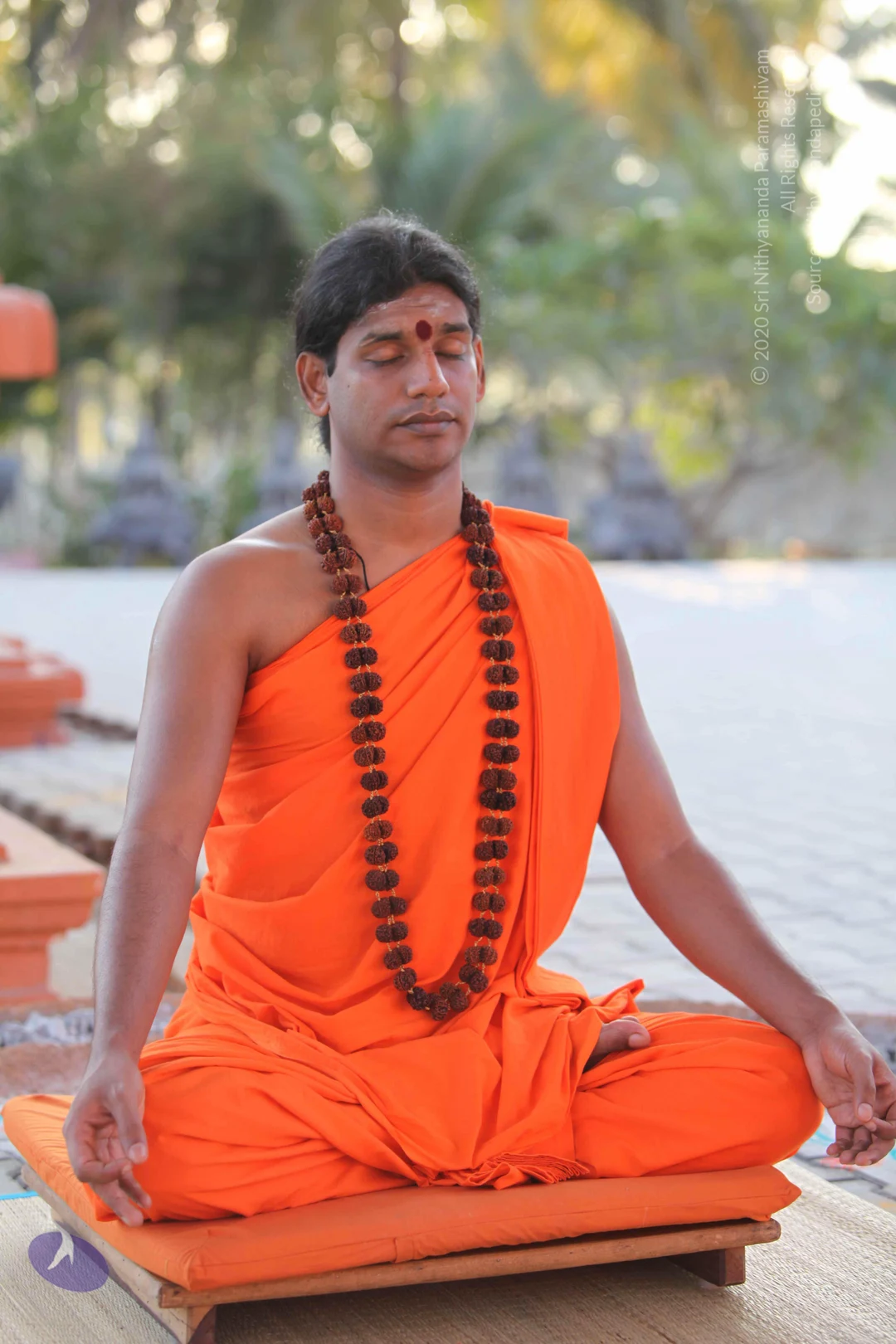
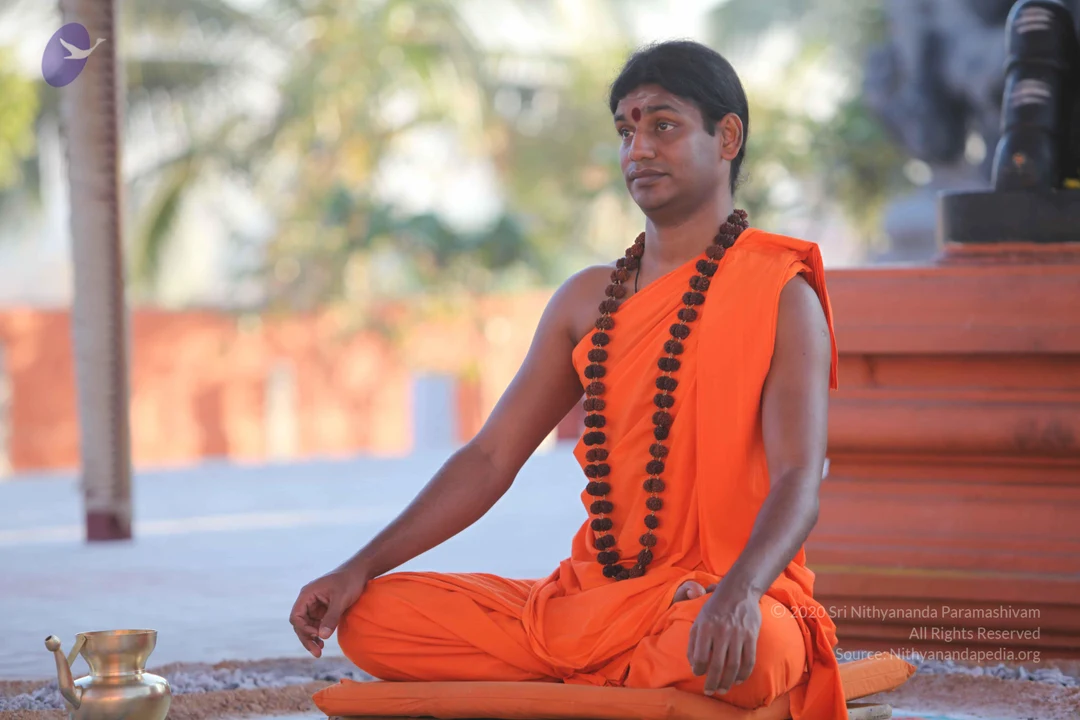
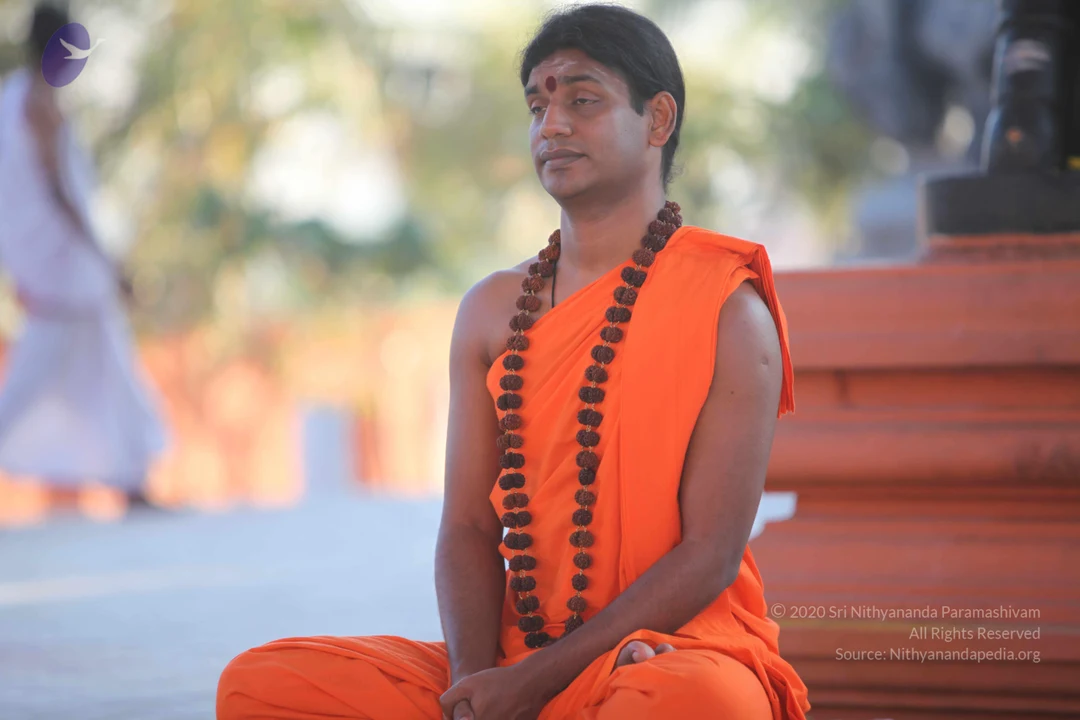
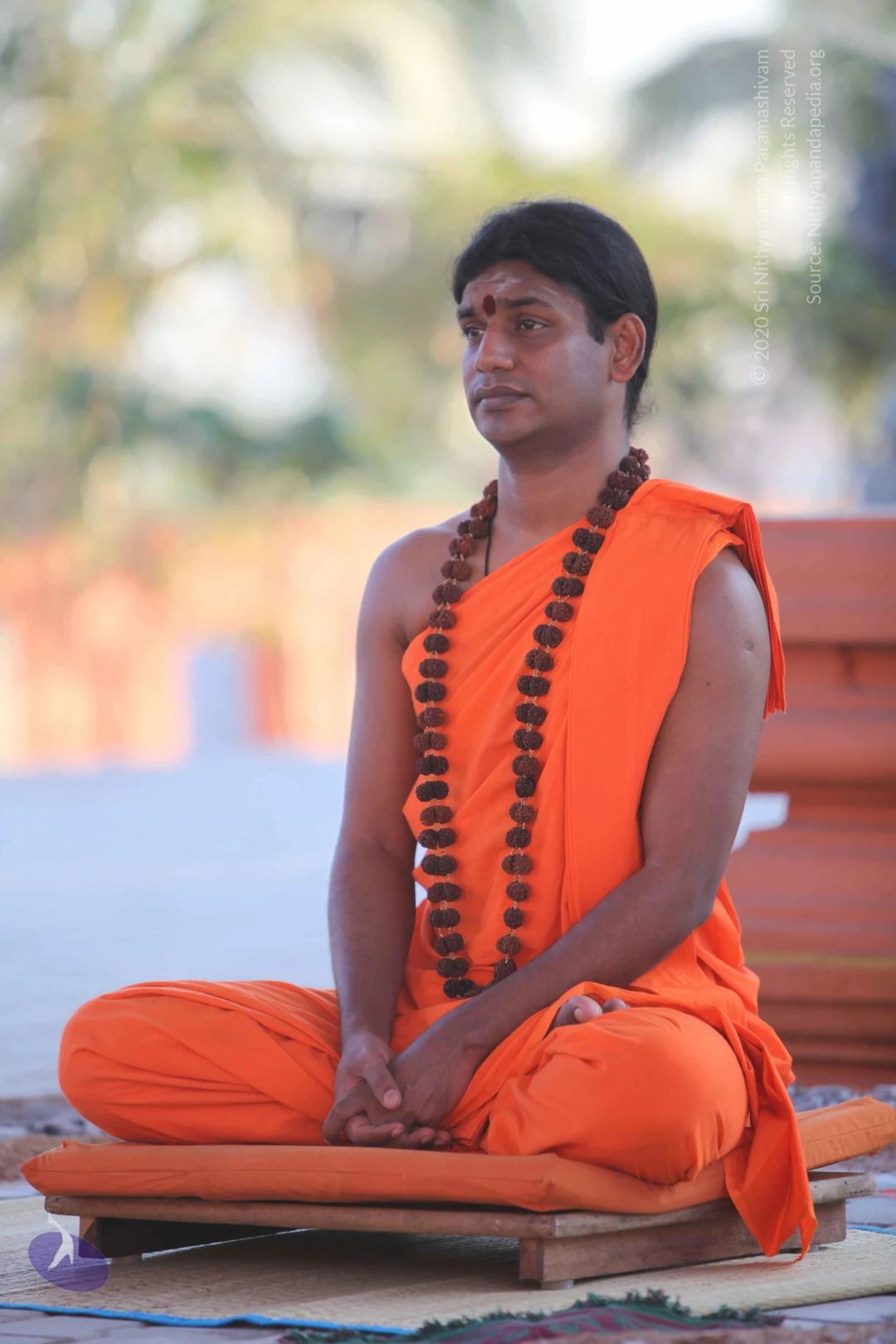
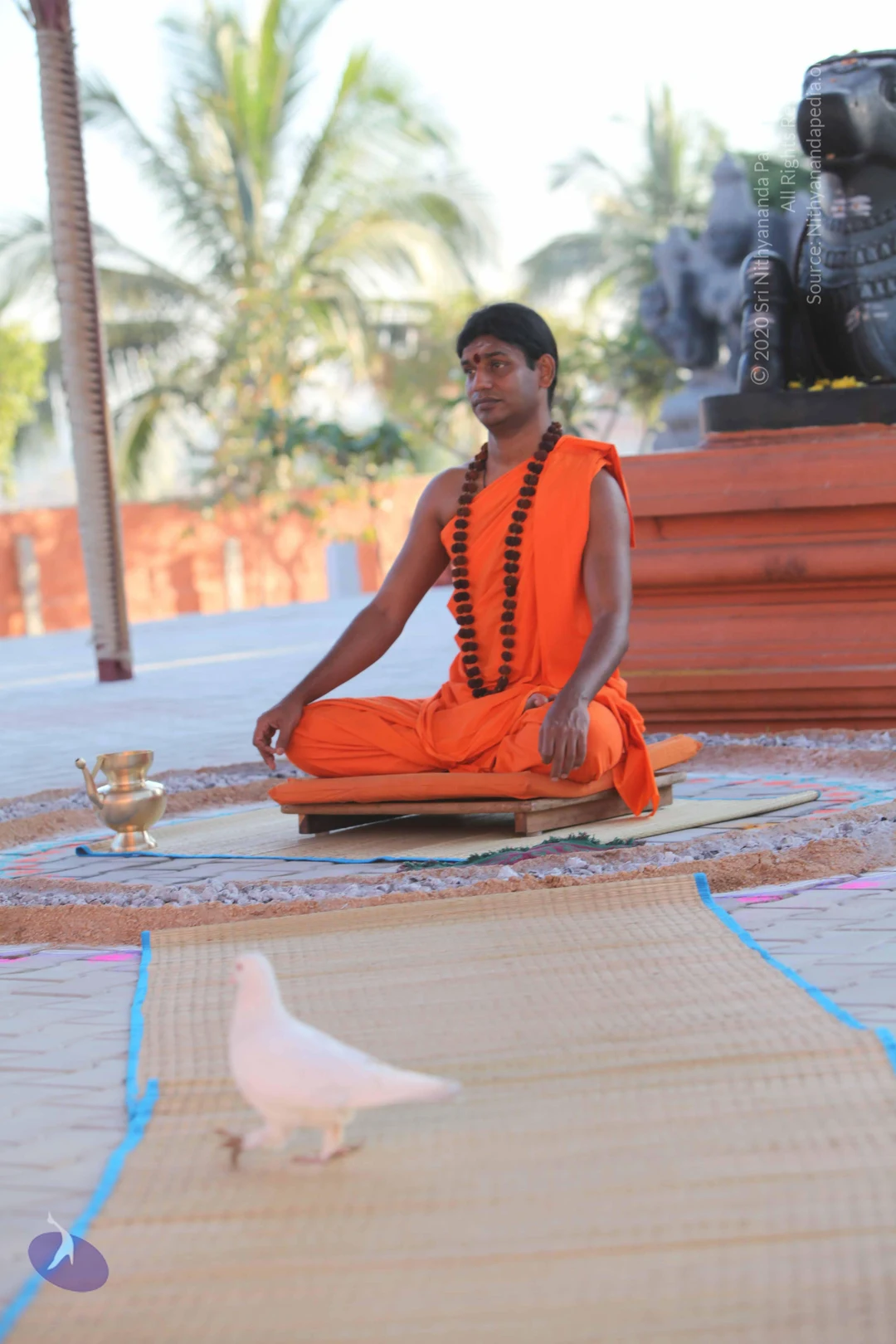
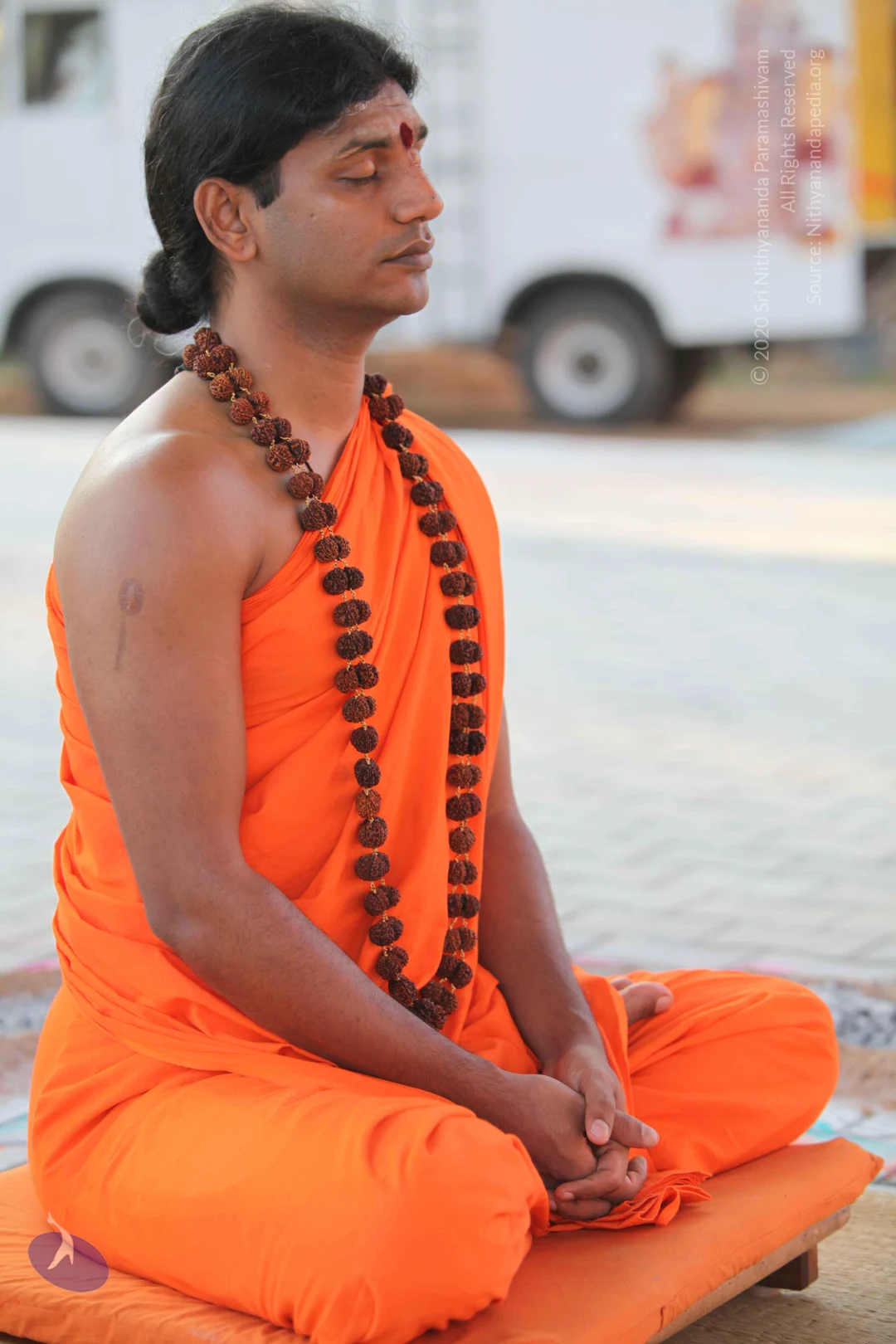
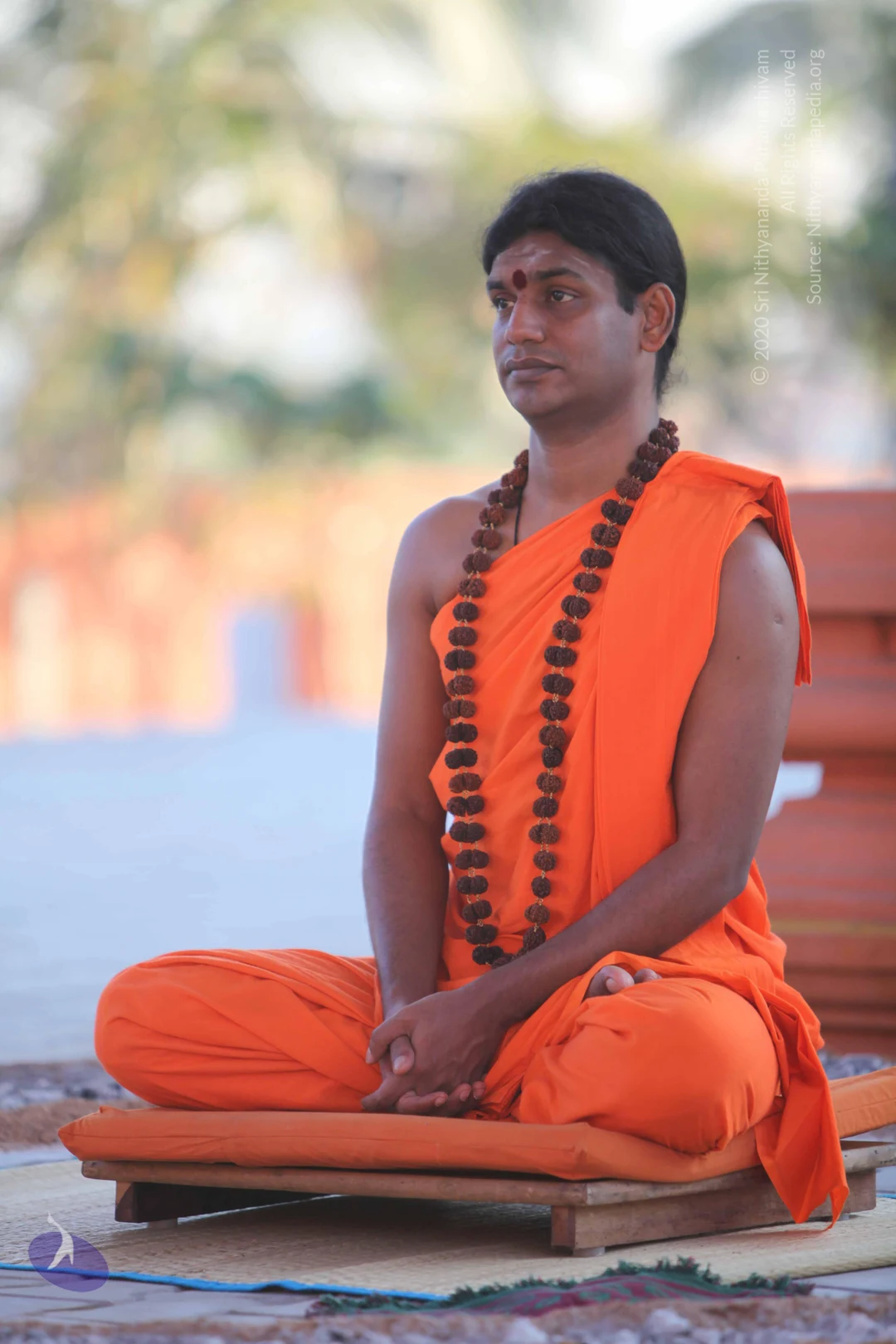
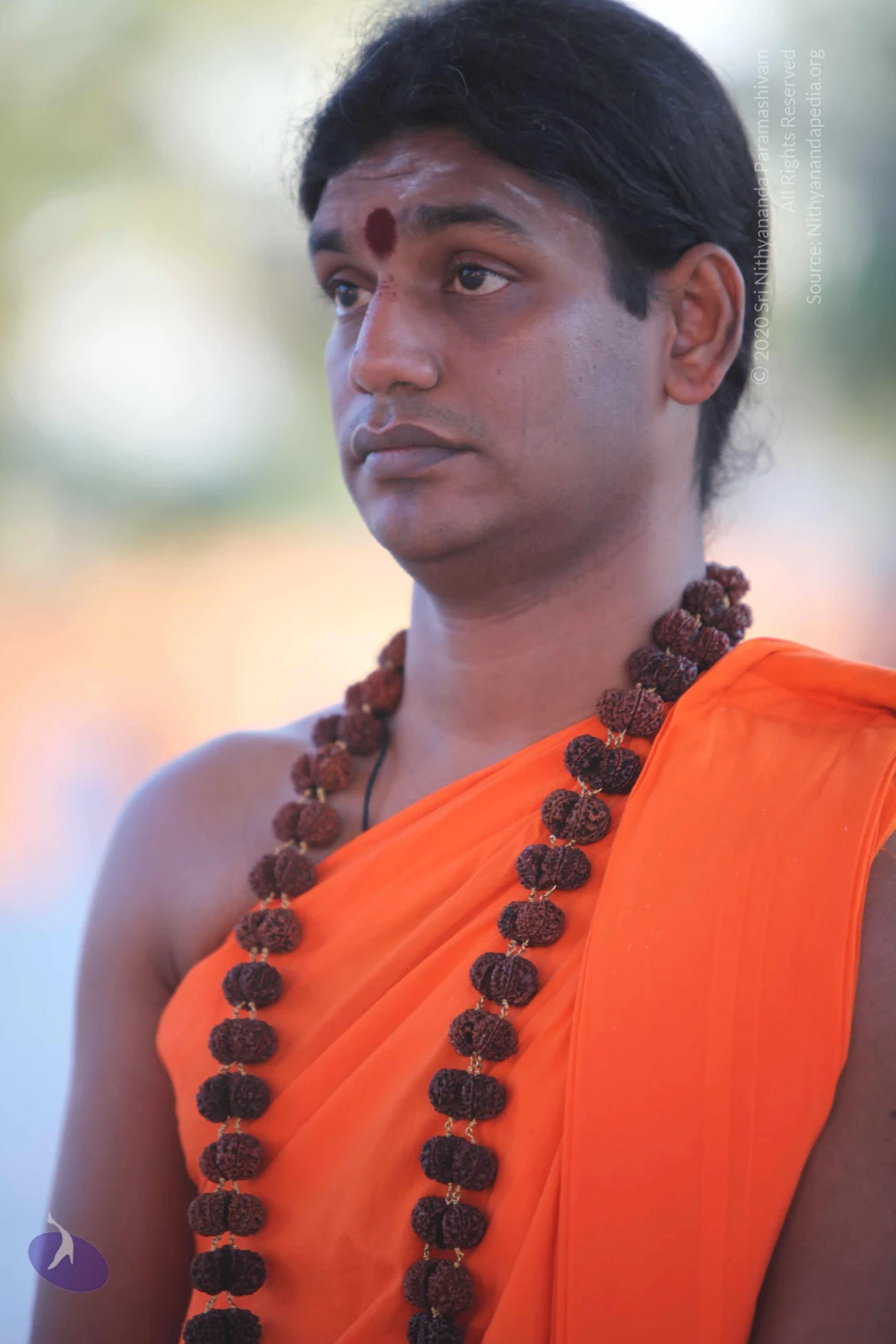
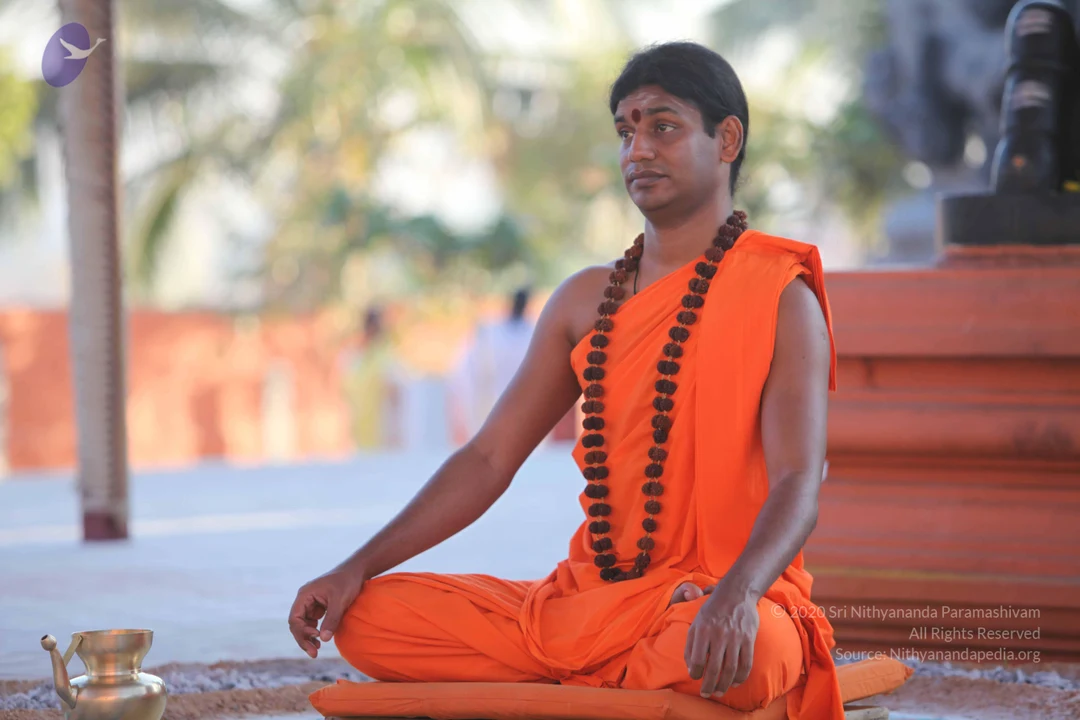
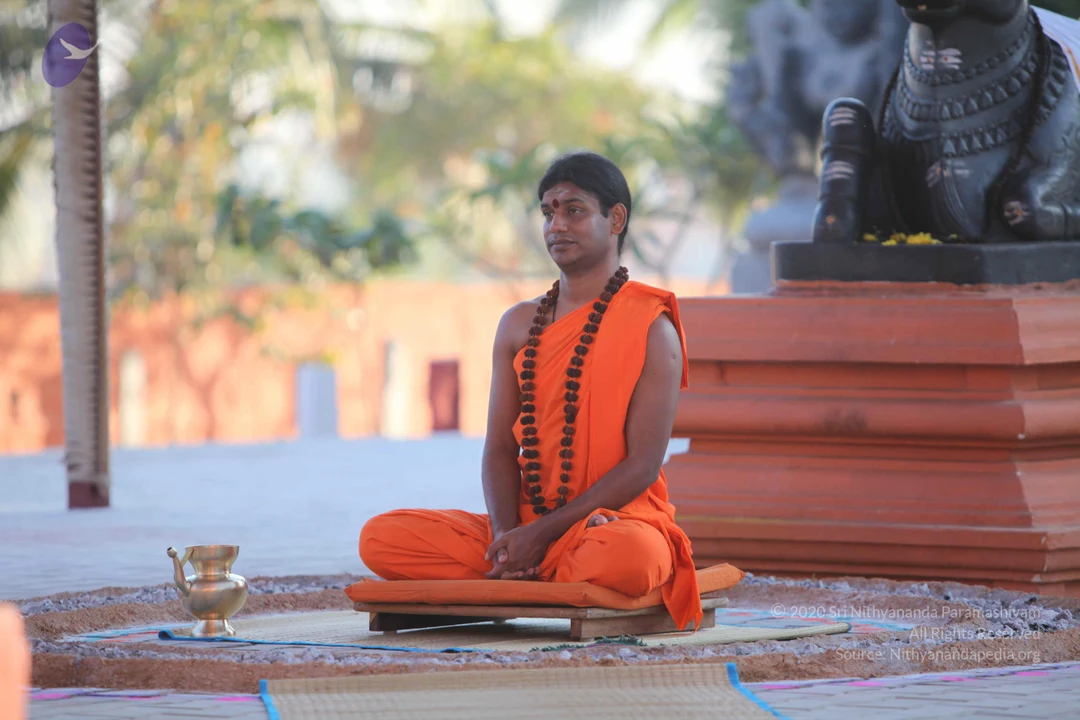
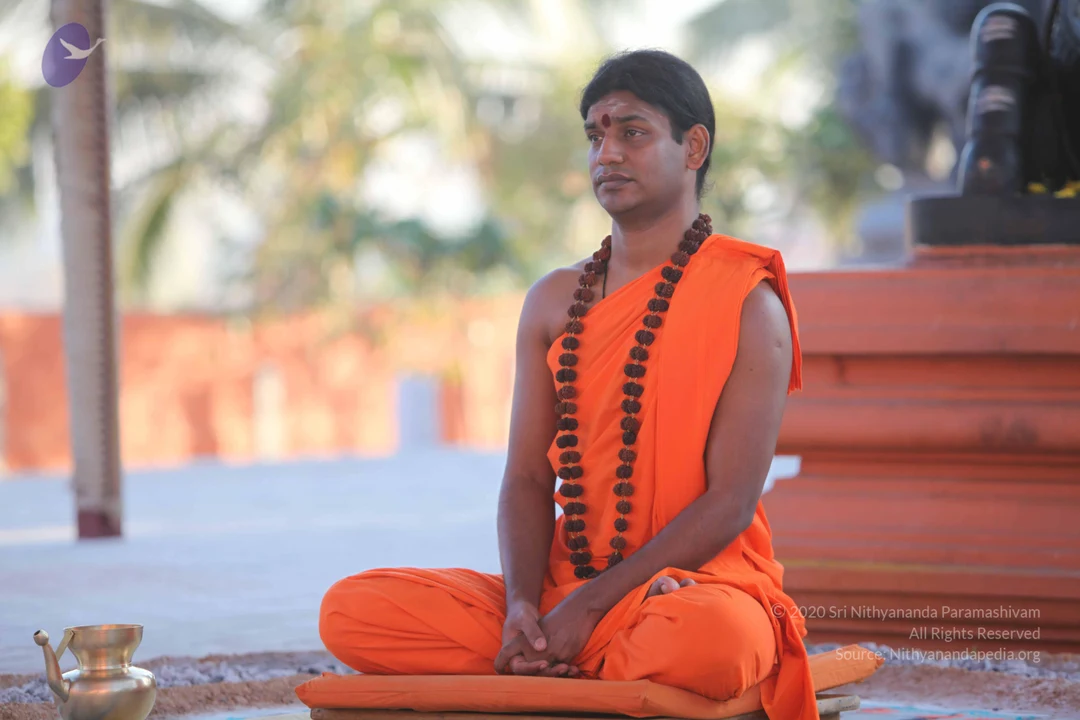
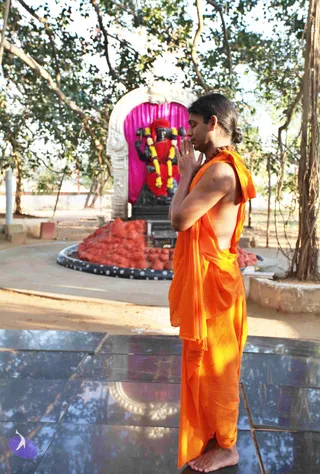
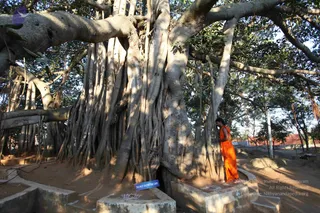
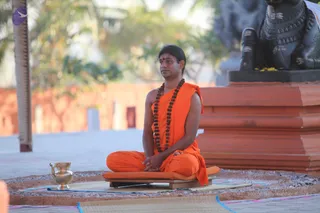
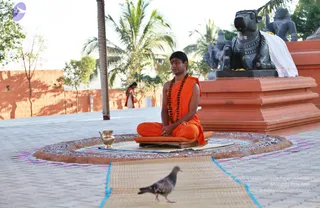
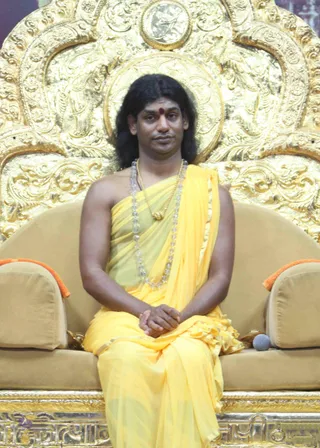
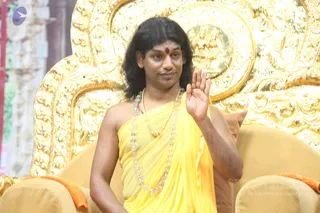
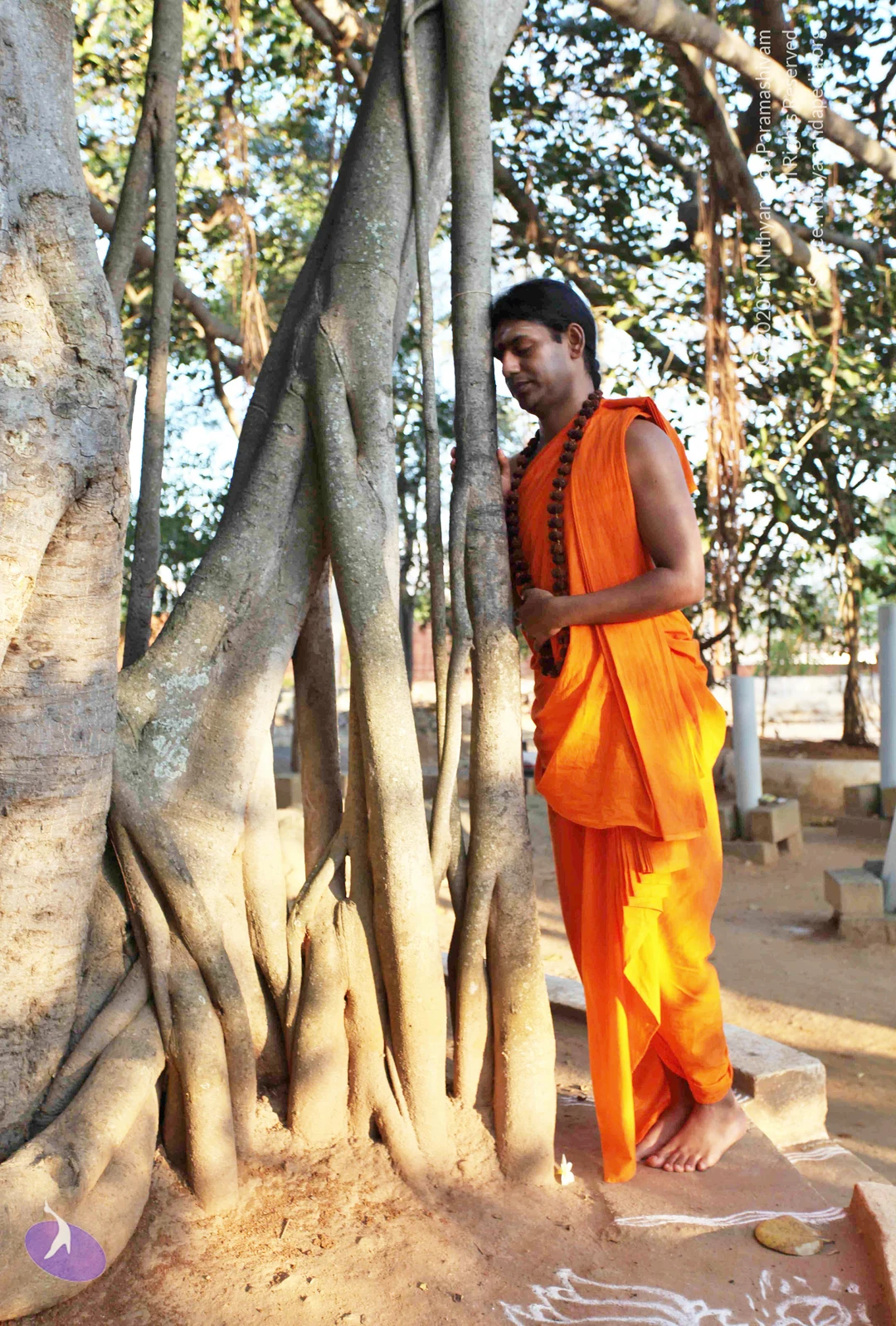
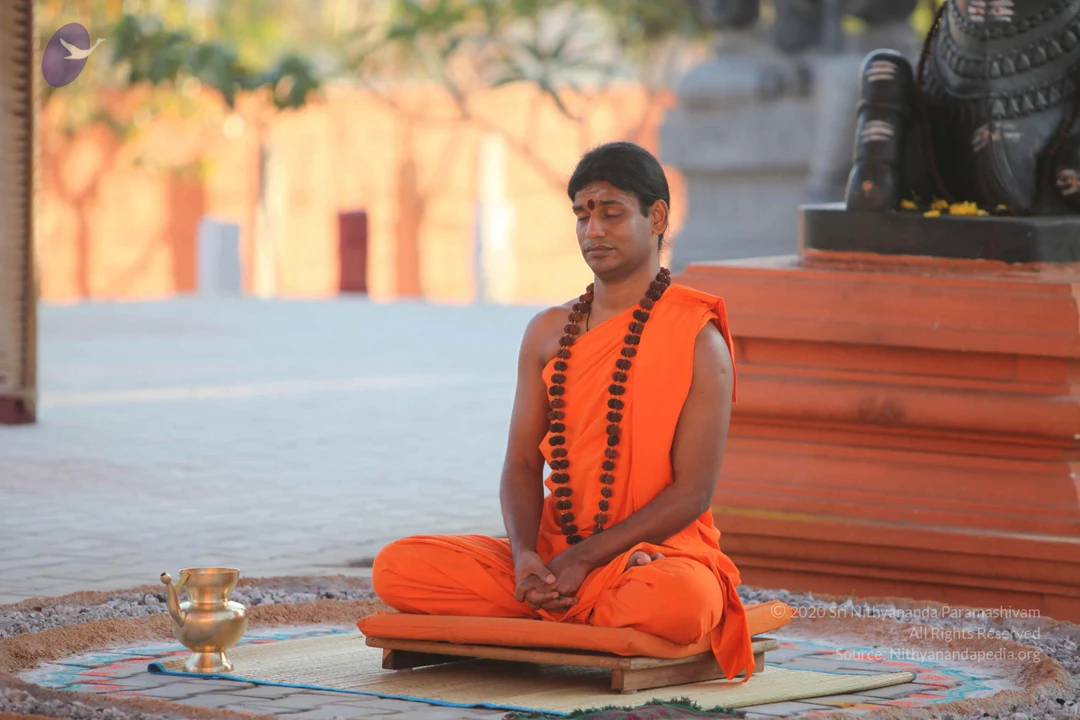
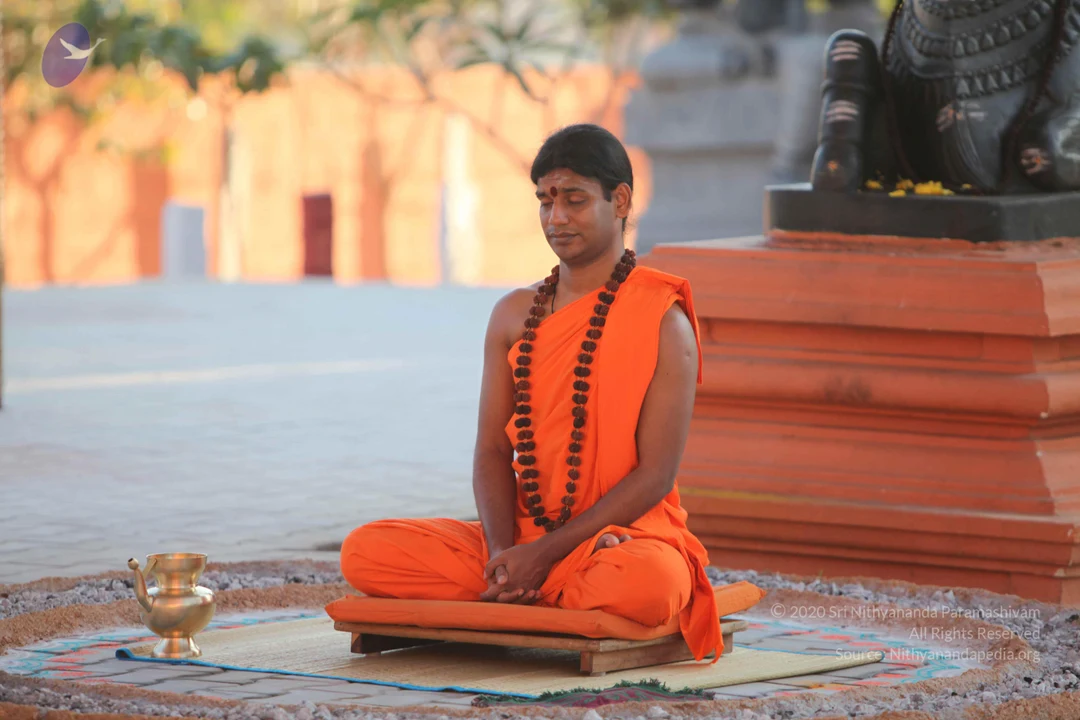
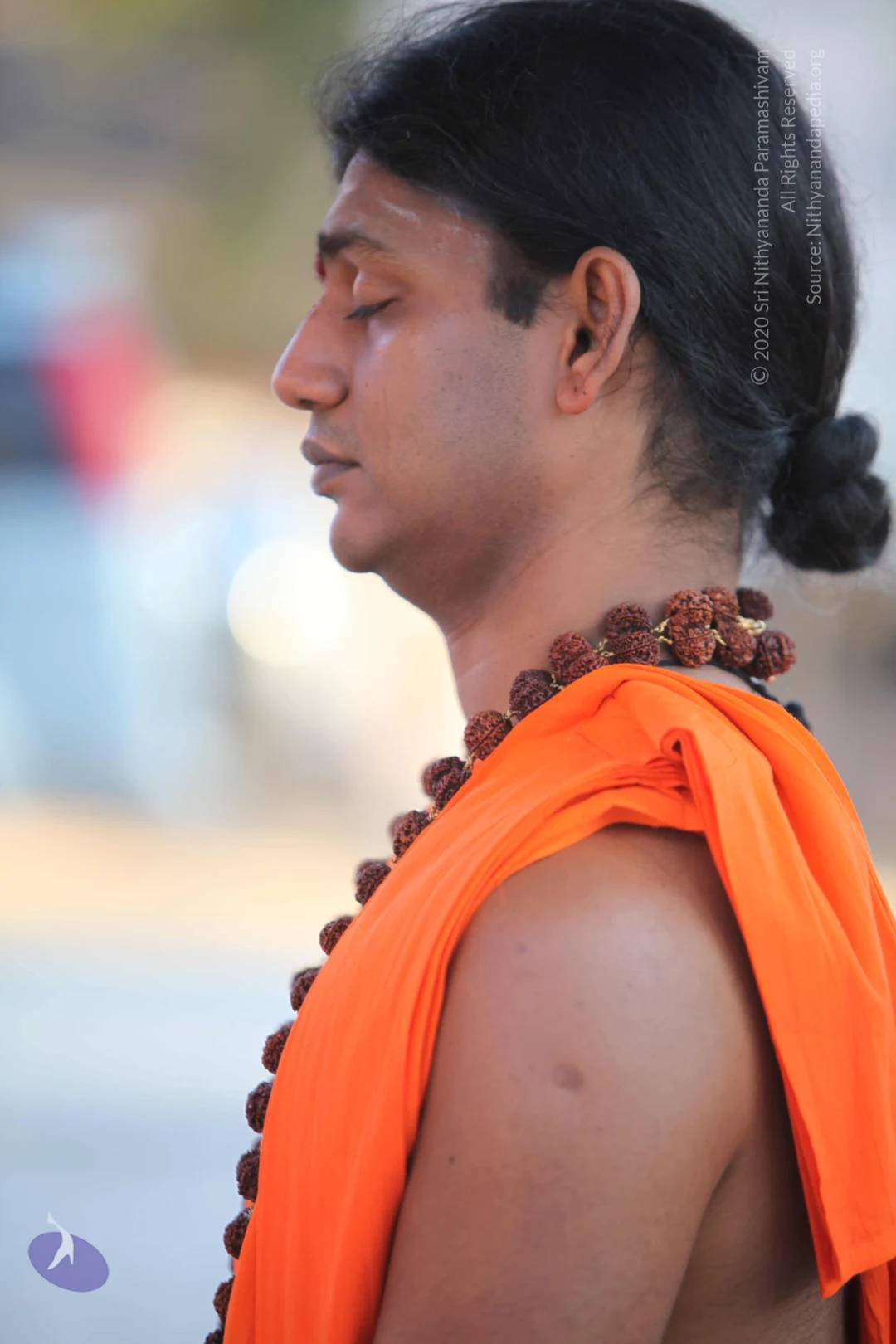
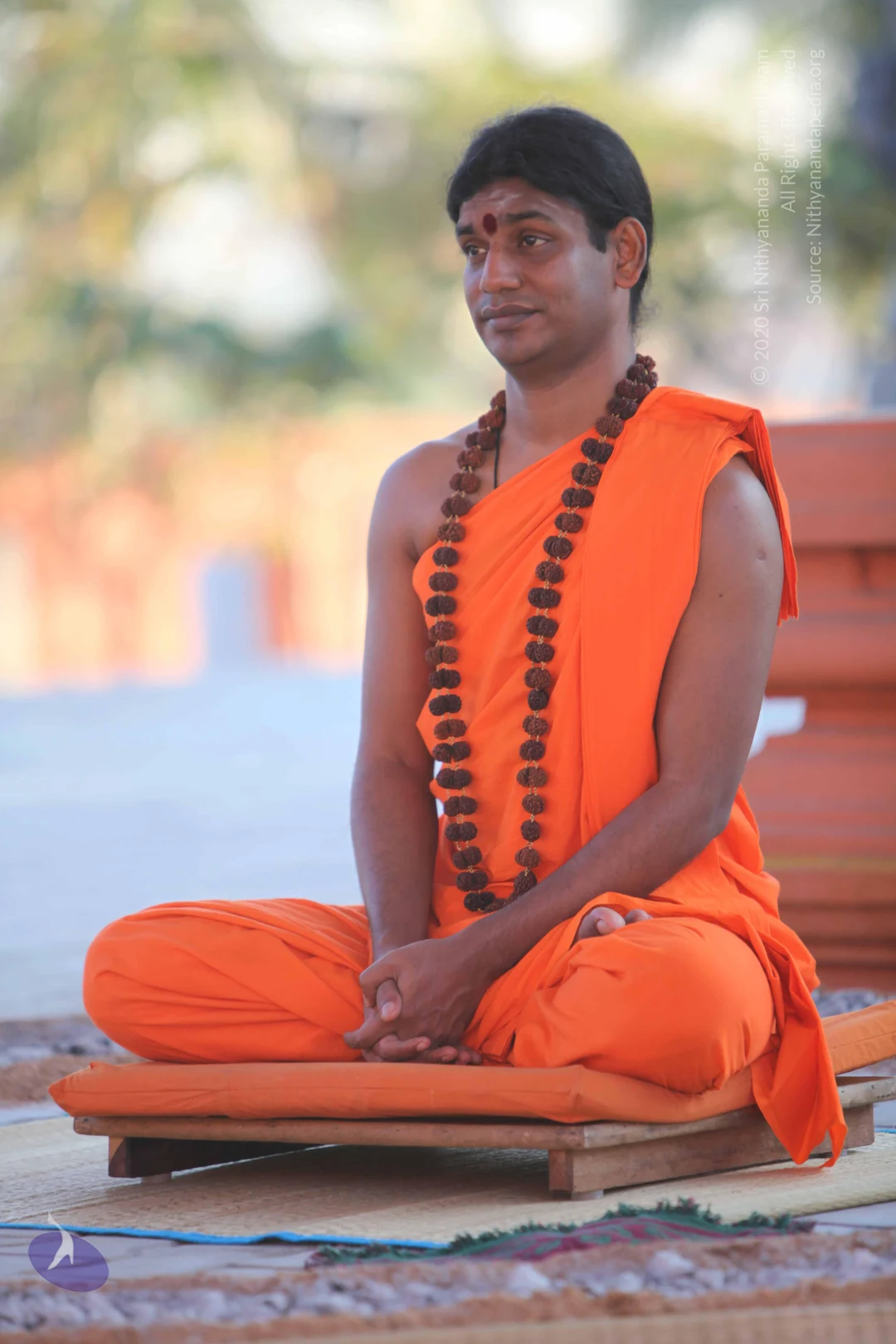
A man sits cross-legged in meditation on a low wooden seat with an orange cushion, on a woven mat over a patterned rangoli-style border of gravel. He wears an orange saffron wrap over his shoulders and bare chest, with a long dark rudraksha mala hanging to his waist and a red bindi on his forehead. His eyes are closed and his hands rest in his lap. Beside him on the left stands a small brass kalasha-style pot, and behind him a dark stone deity murti with yellow flowers rests on an orange pedestal. The background shows orange walls and blurred trees under warm light. The person is a devotee in meditation posture, and no identity is asserted from appearance.A photograph of two men walking along a dirt path shaded by trees in an ashram garden. The man on the left wears an orange saffron robe, a rudraksha mala around his neck, and has his hands joined in front; he appears to be a sannyasi or devotee. The man on the right is bald and wears a white dhoti with a red border and a white upper cloth, walking barefoot. Behind them, another person in white and a figure in orange are partly visible near a red-and-white building. Green shrubs and palms surround the path.A man stands barefoot on a dark polished stone platform in profile, palms pressed together in anjali mudra at chest height. He wears a loose orange saffron wrap draped over one shoulder and orange dhoti-style trousers, with a rudraksha mala around his neck and hair tied in a bun. Behind him stand white pillars and a large banyan tree with aerial roots, and a low circular stone planter sits on dry earth. The person's appearance is not confidently identifiable, so no candidate is asserted.

February 01 2011

Original wiki page
Contents

Title:

Nithyananda's Press Meet (Part 1) on Inner Awakening Research and Religious Persecution

Description:

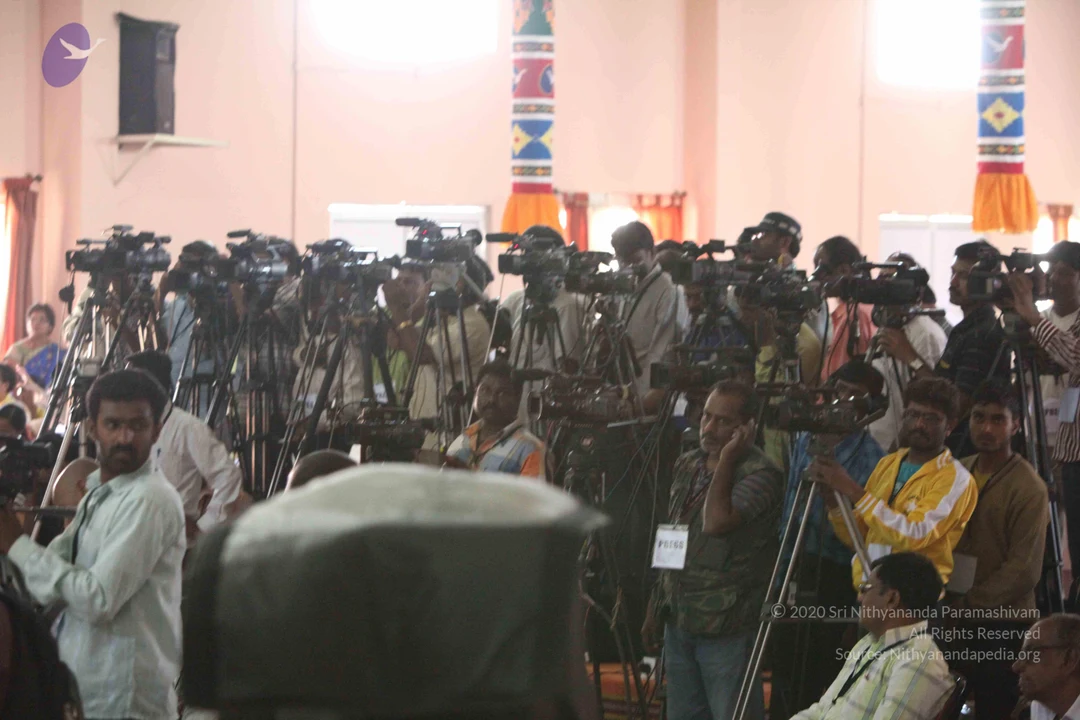
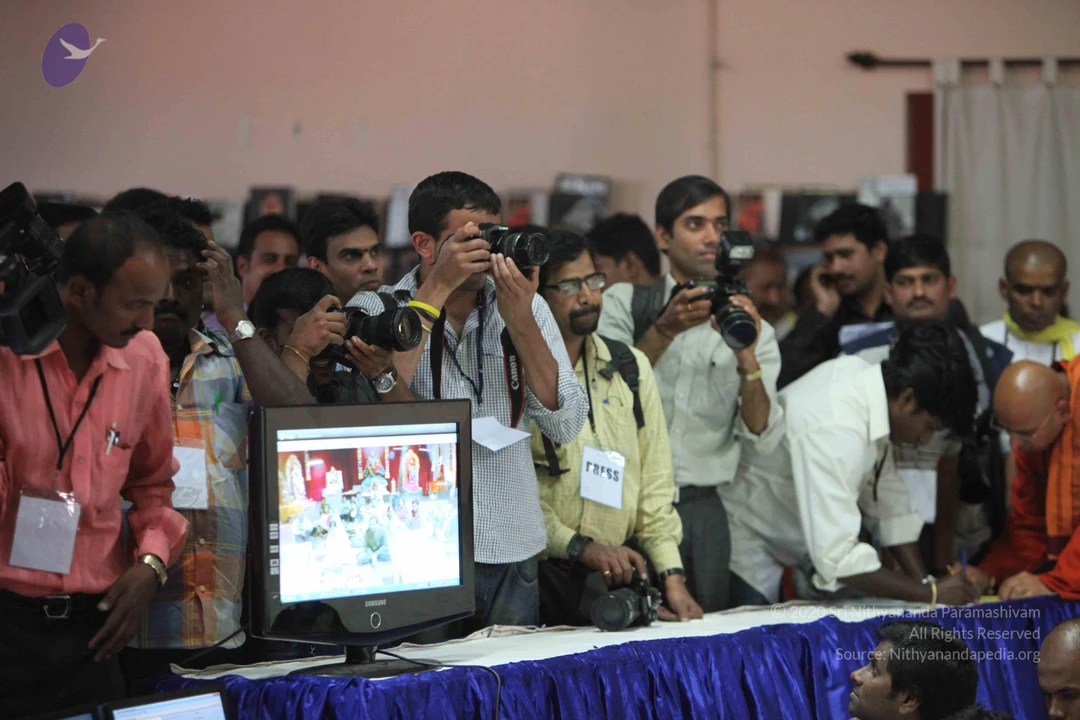
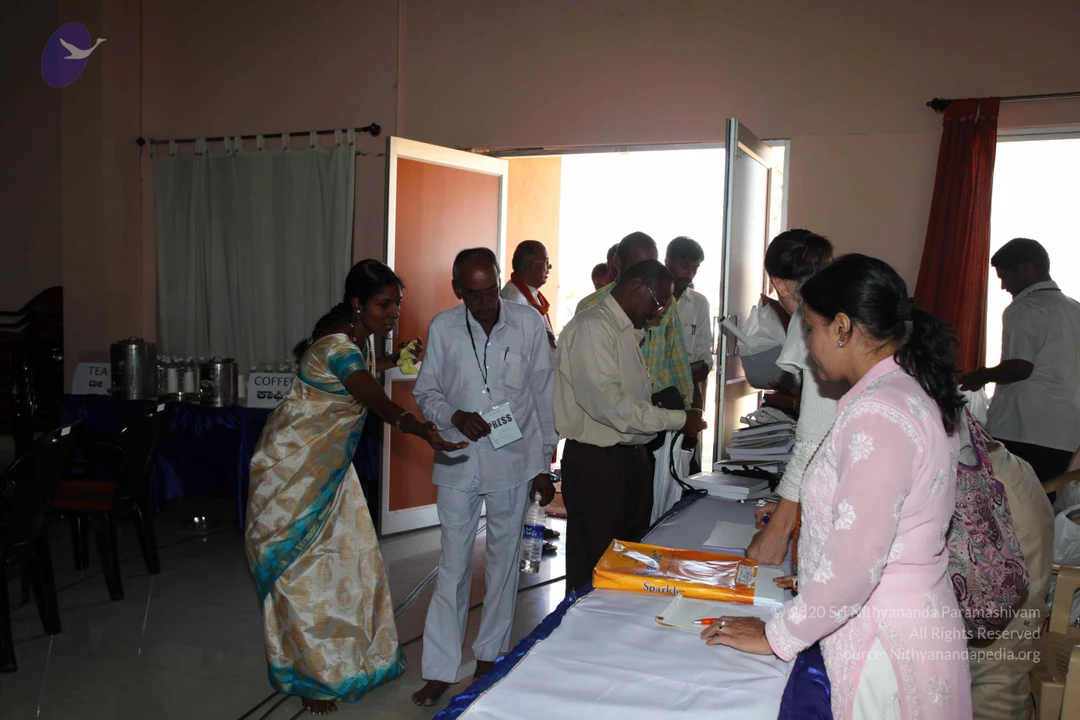
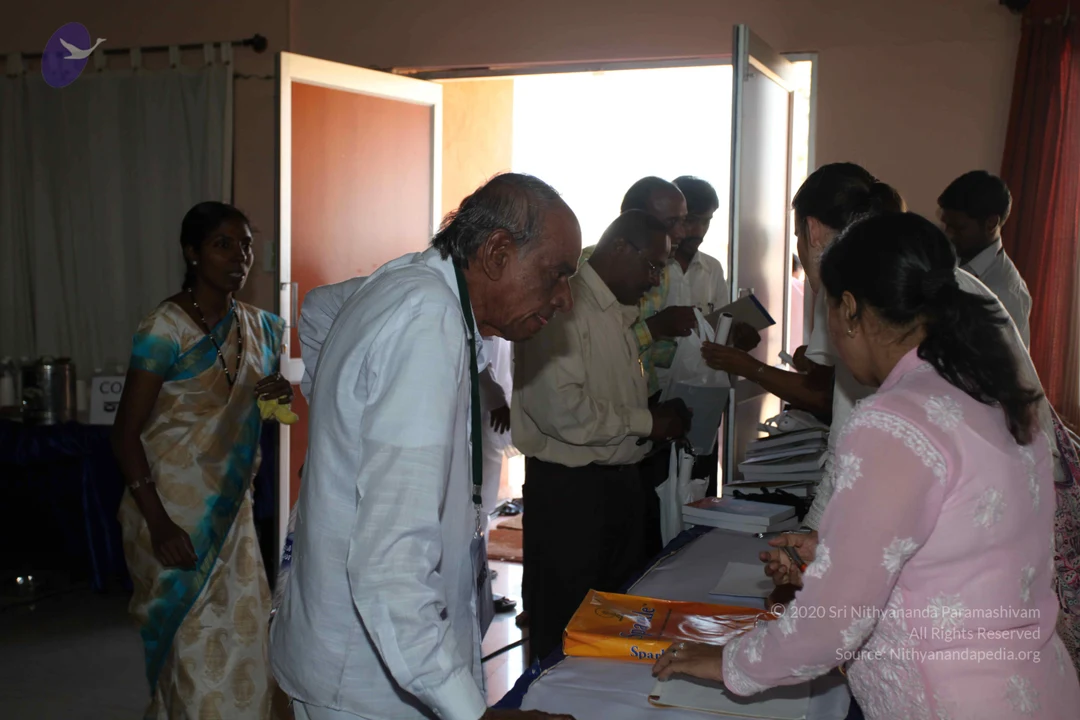
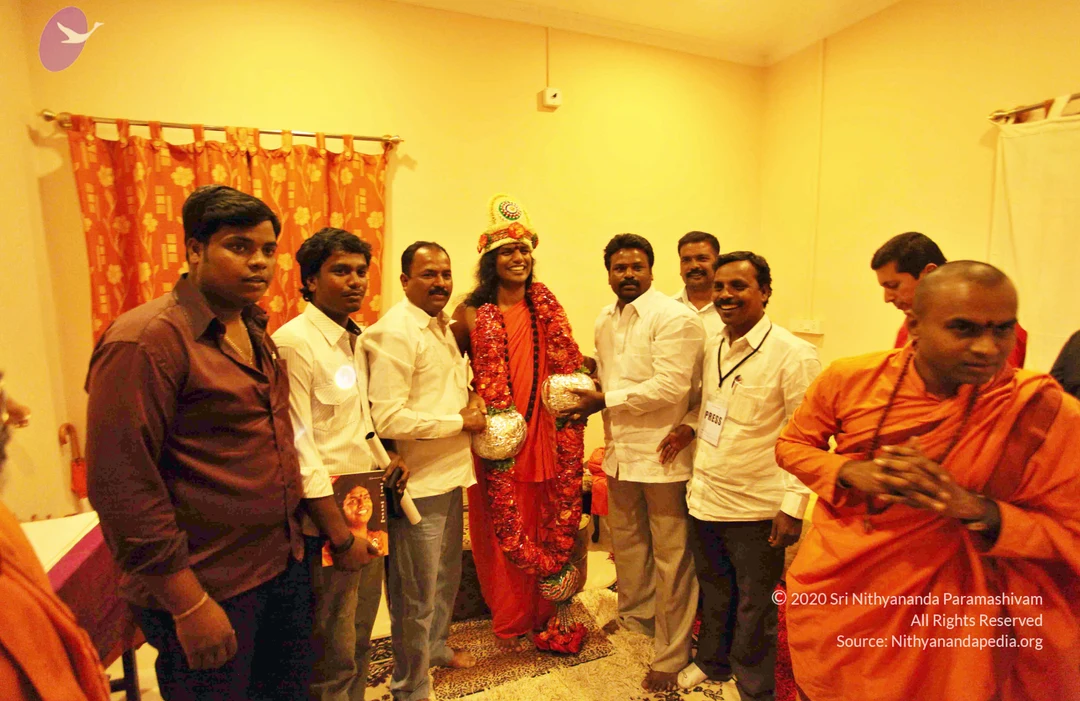
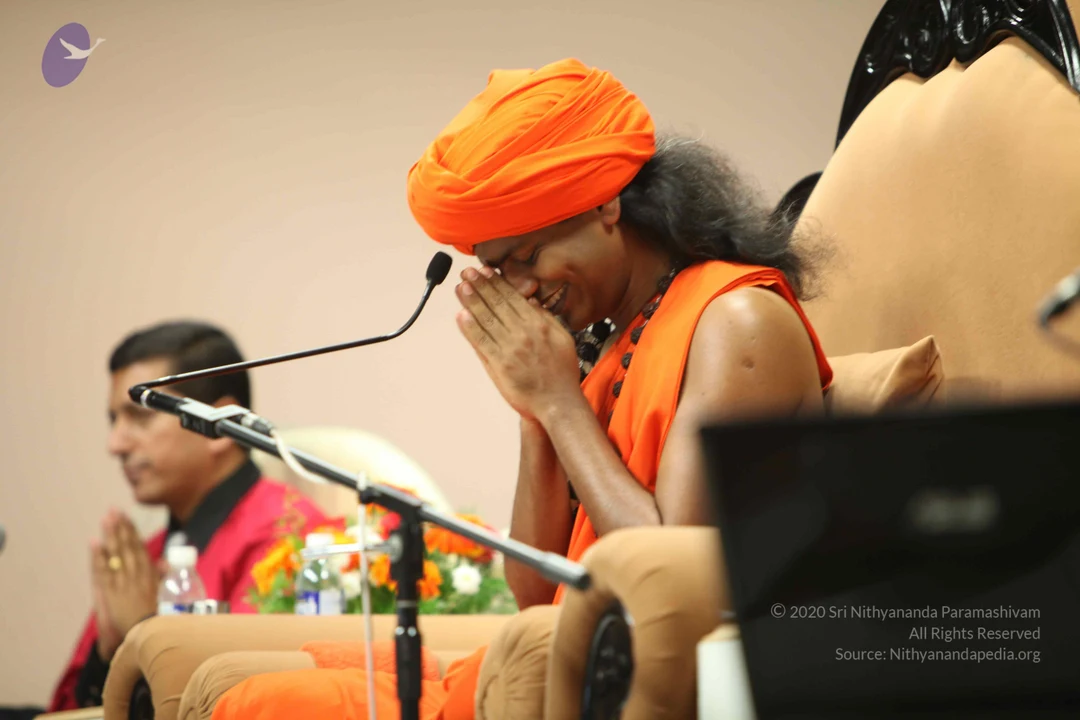
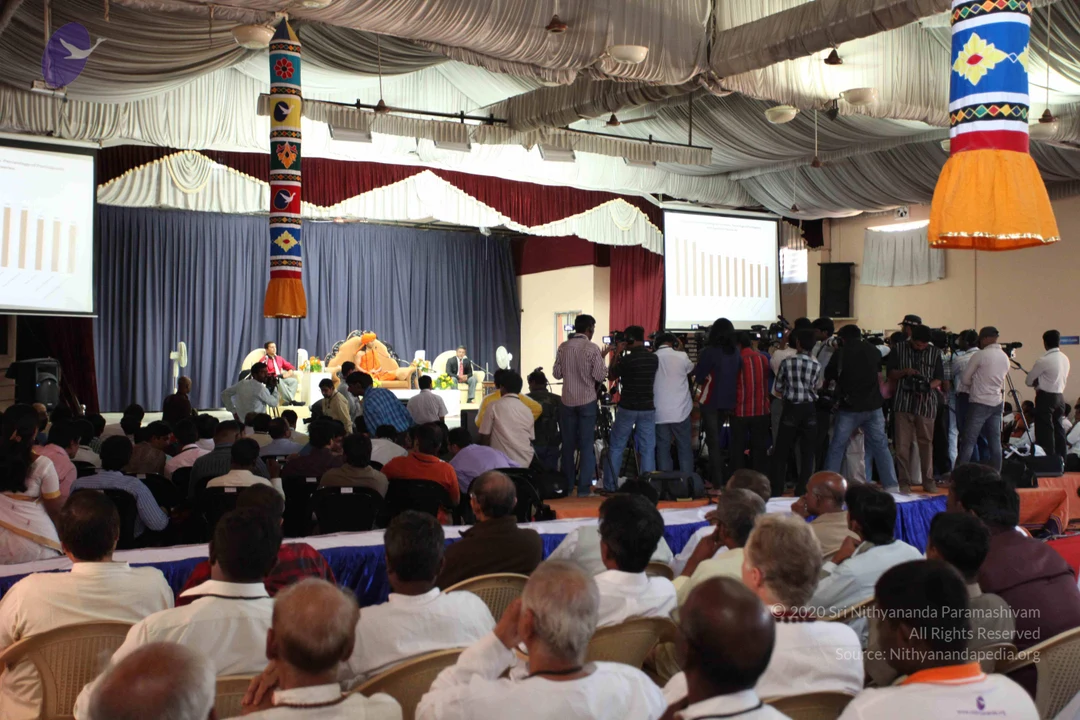
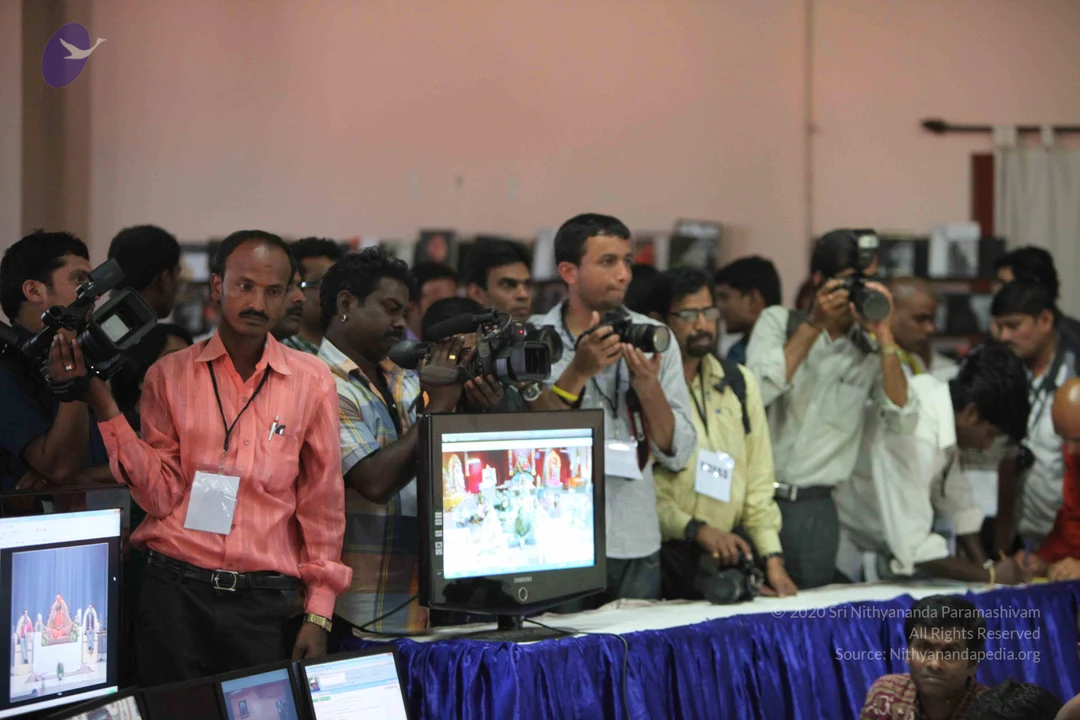
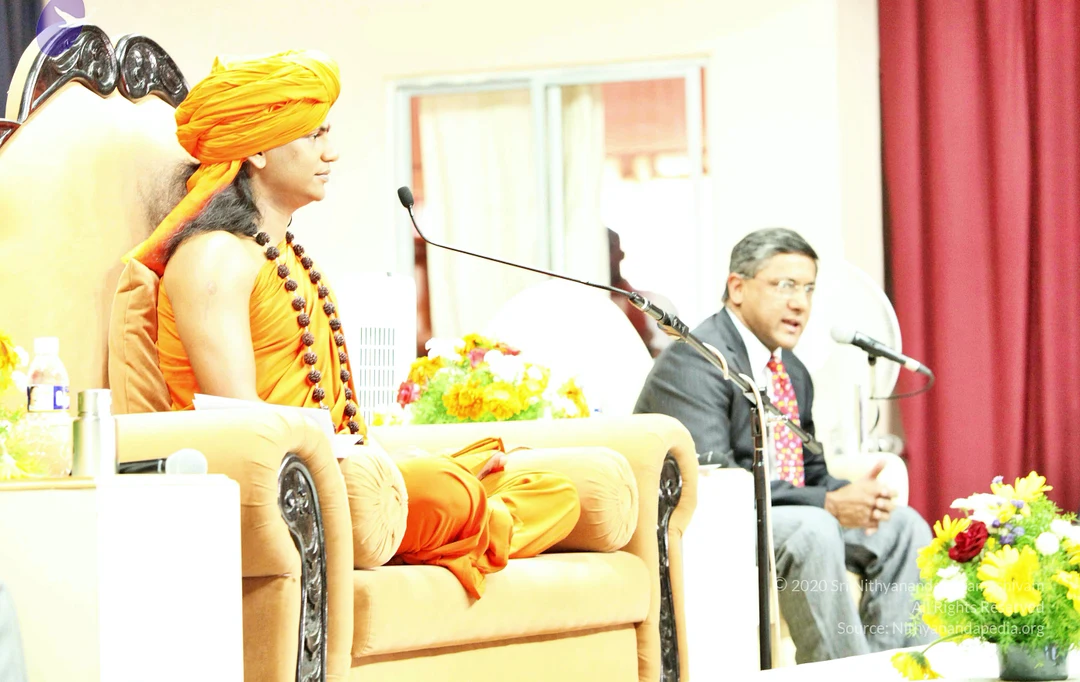
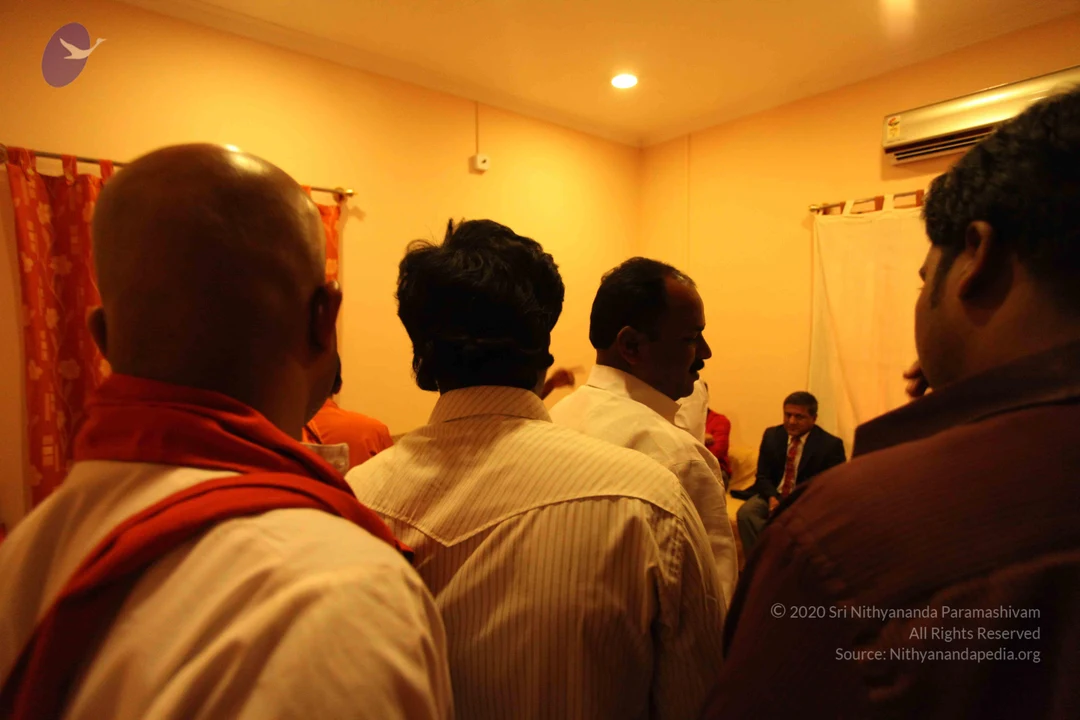
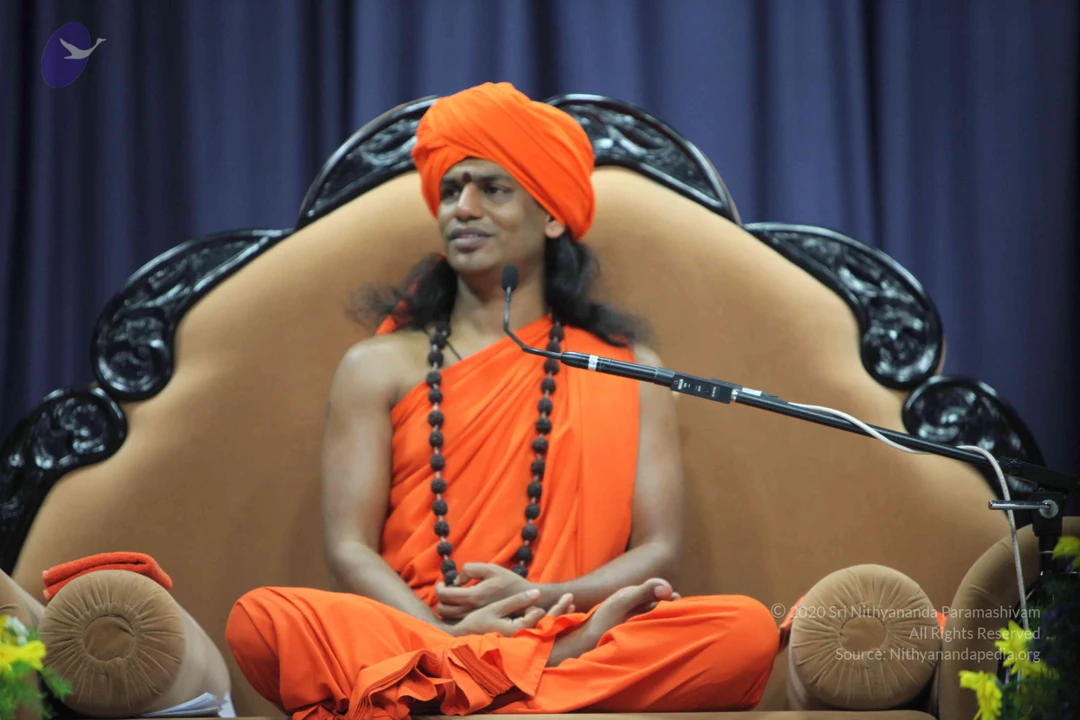
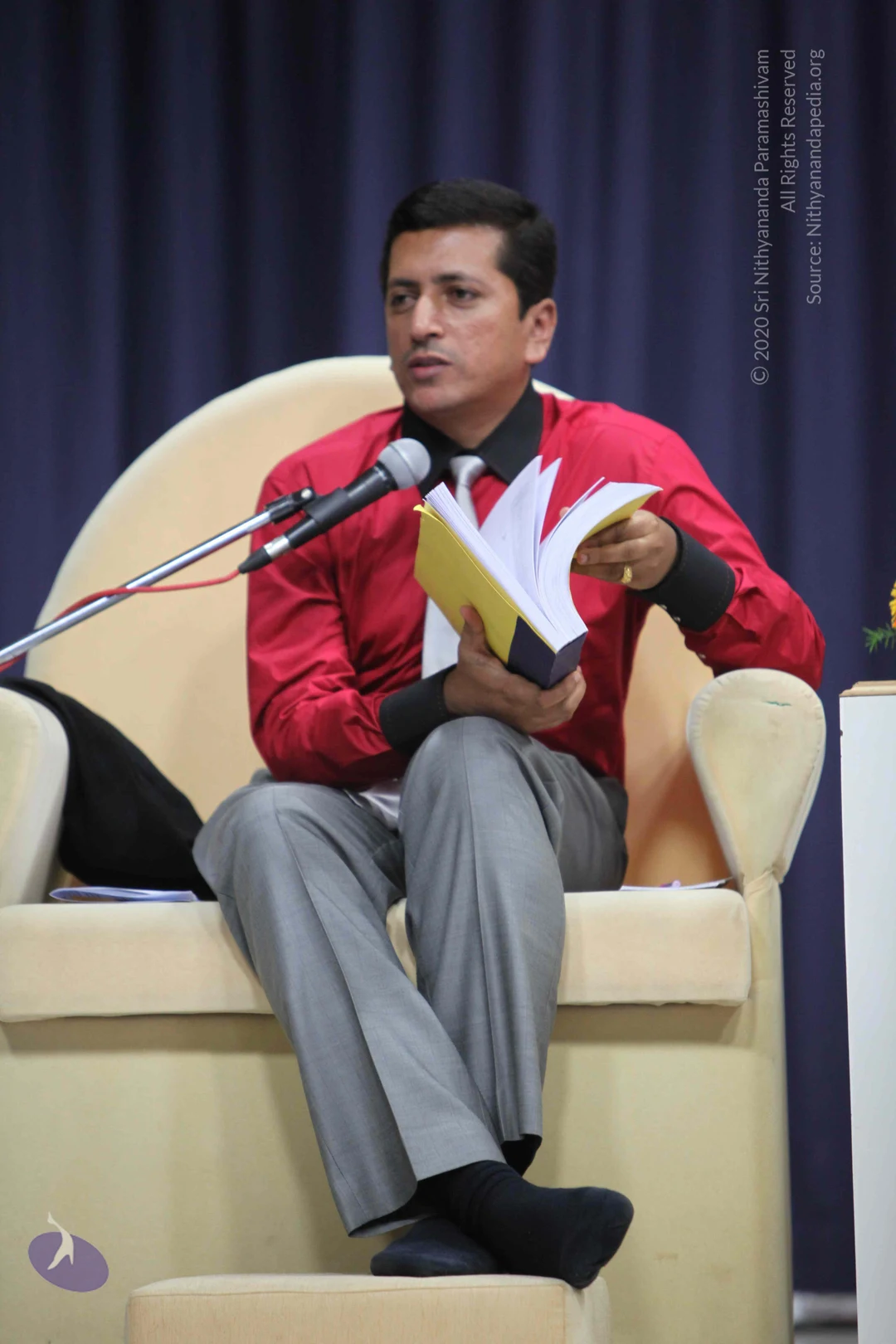
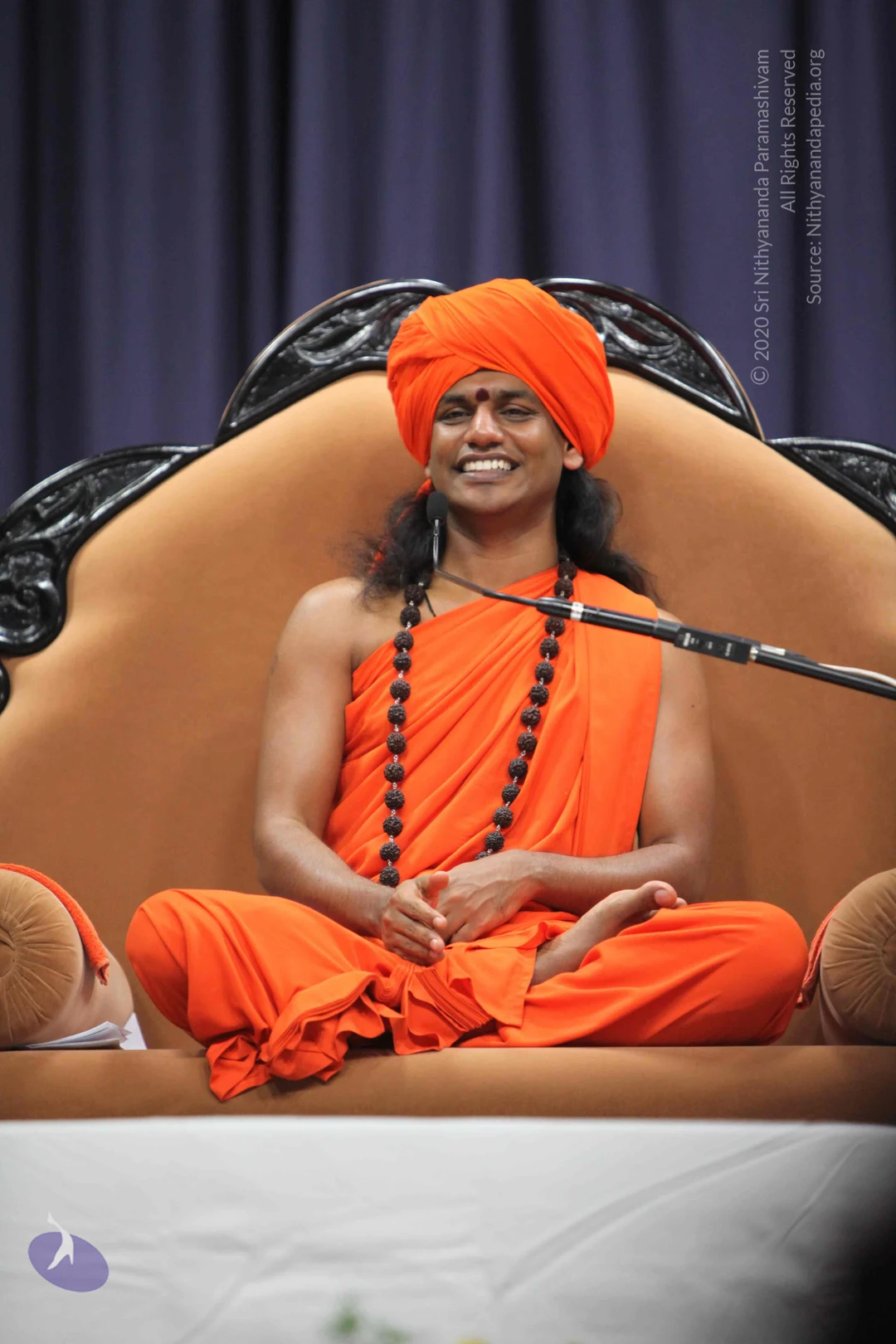
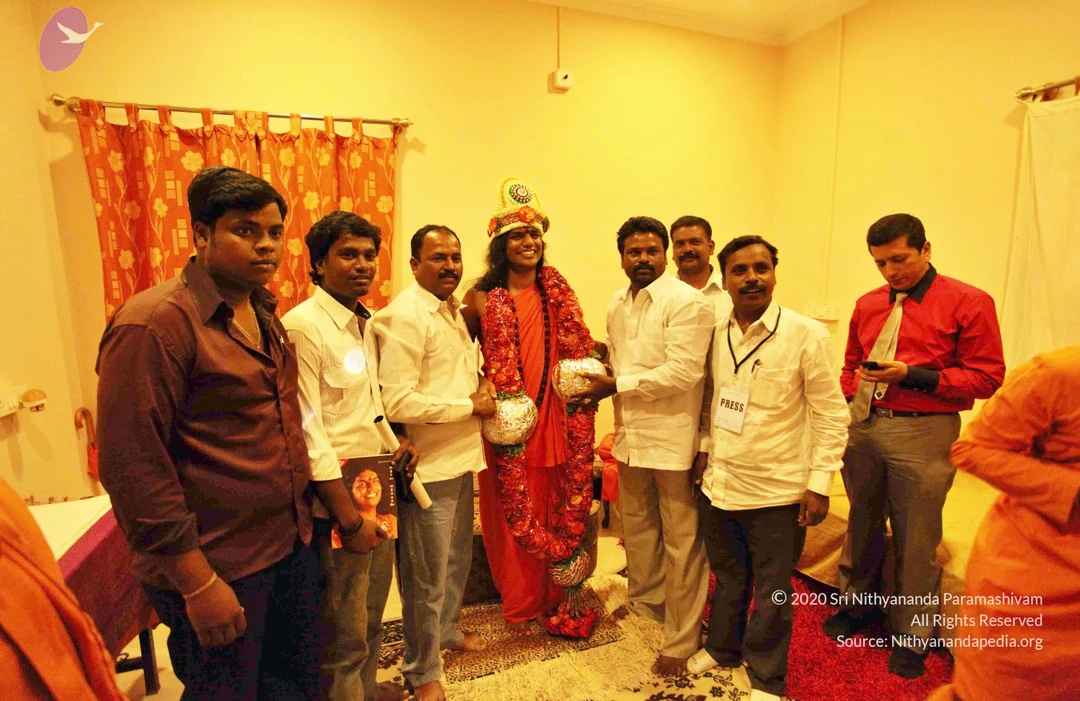
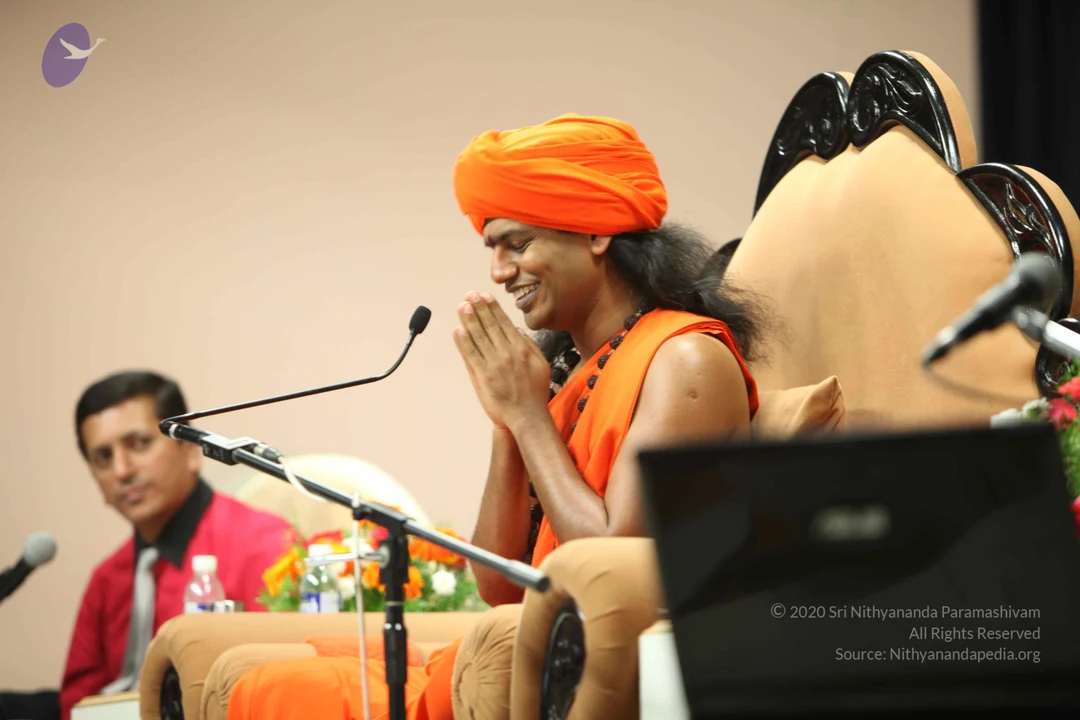
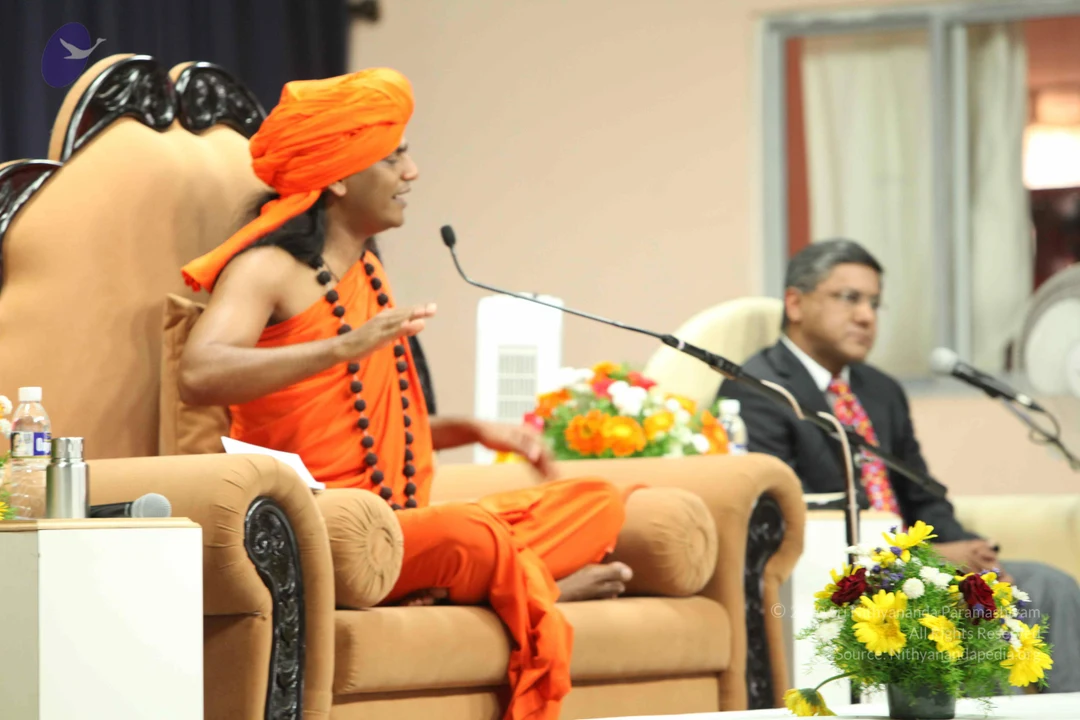
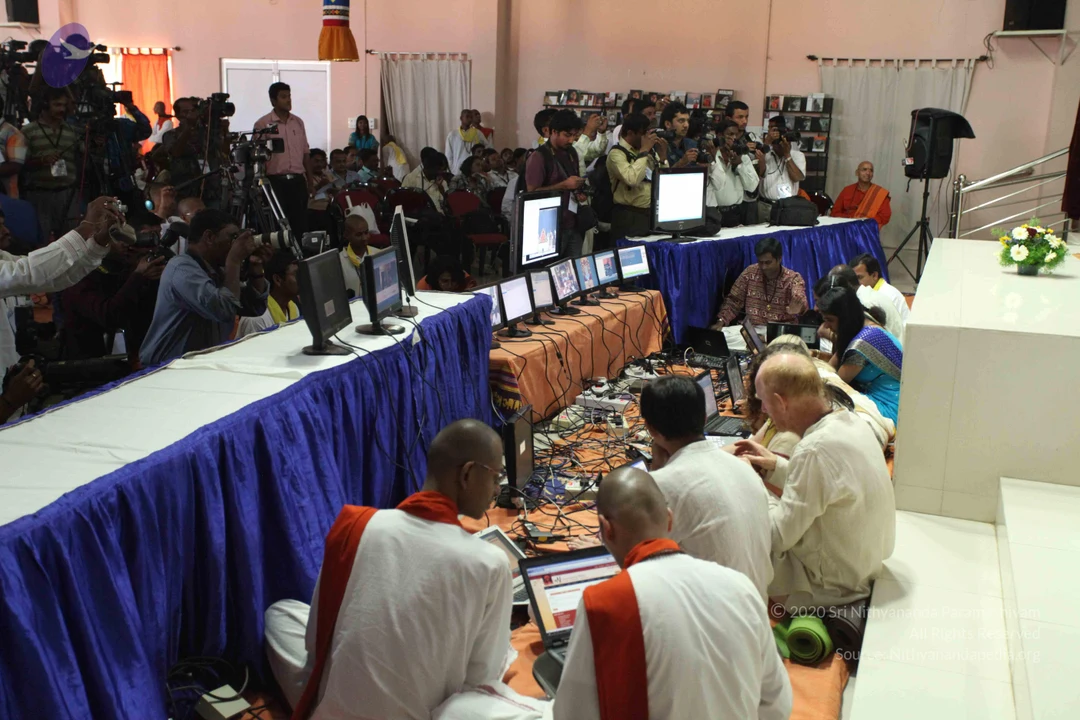
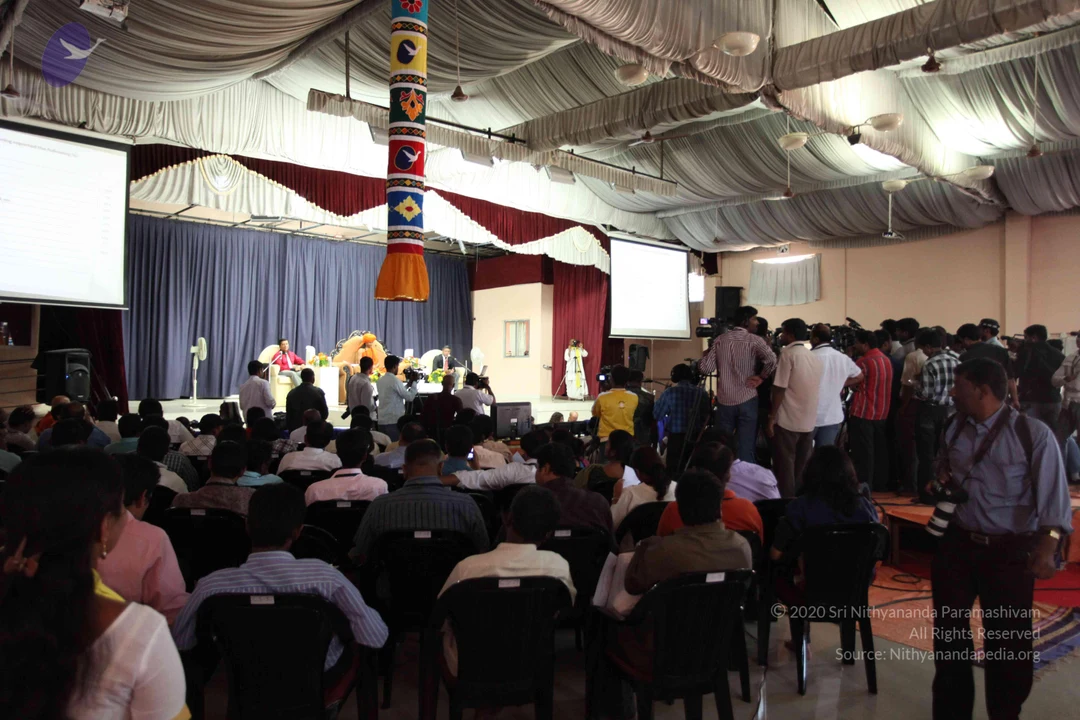
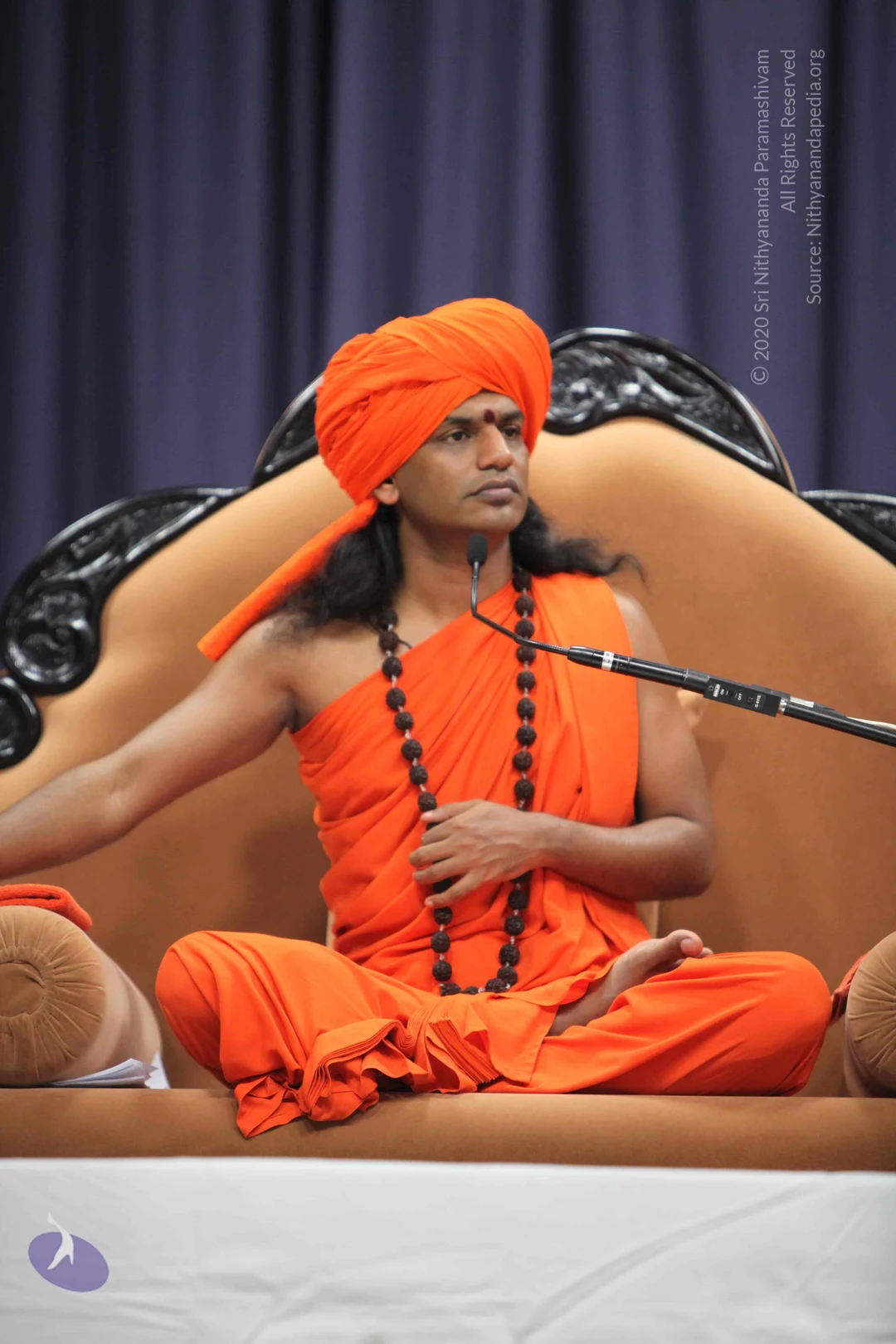
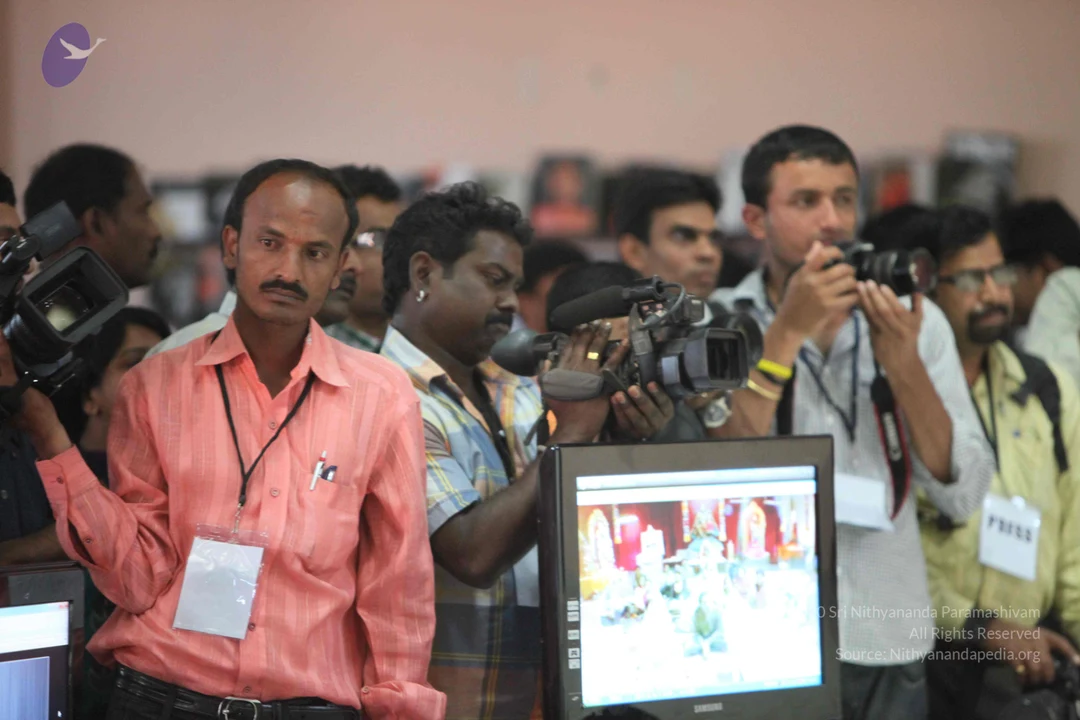
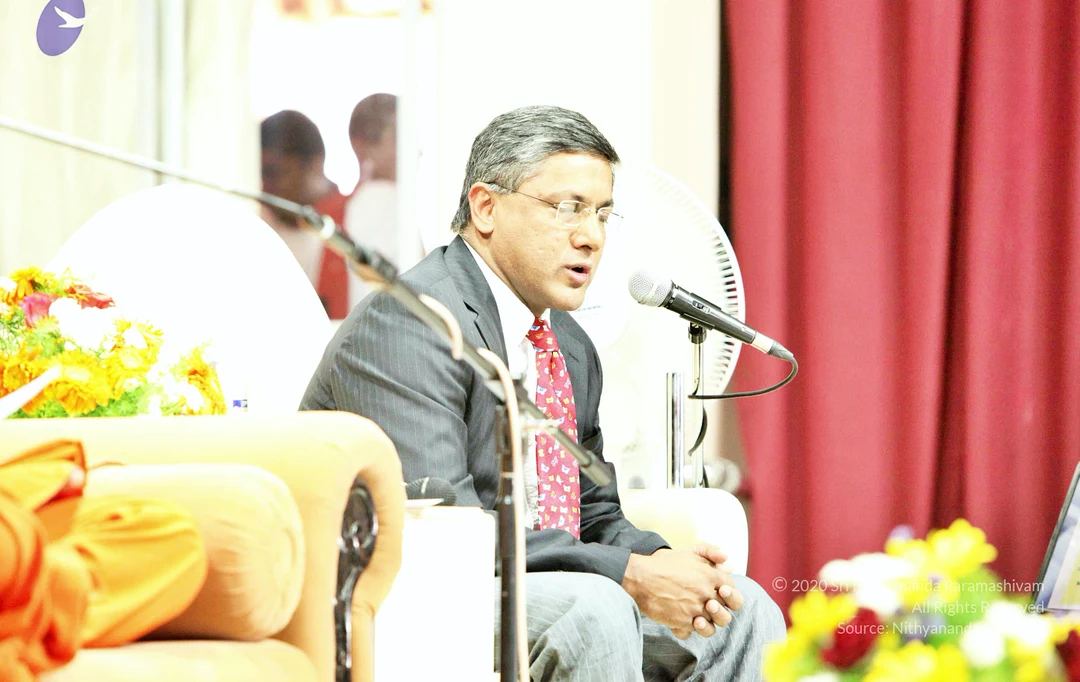
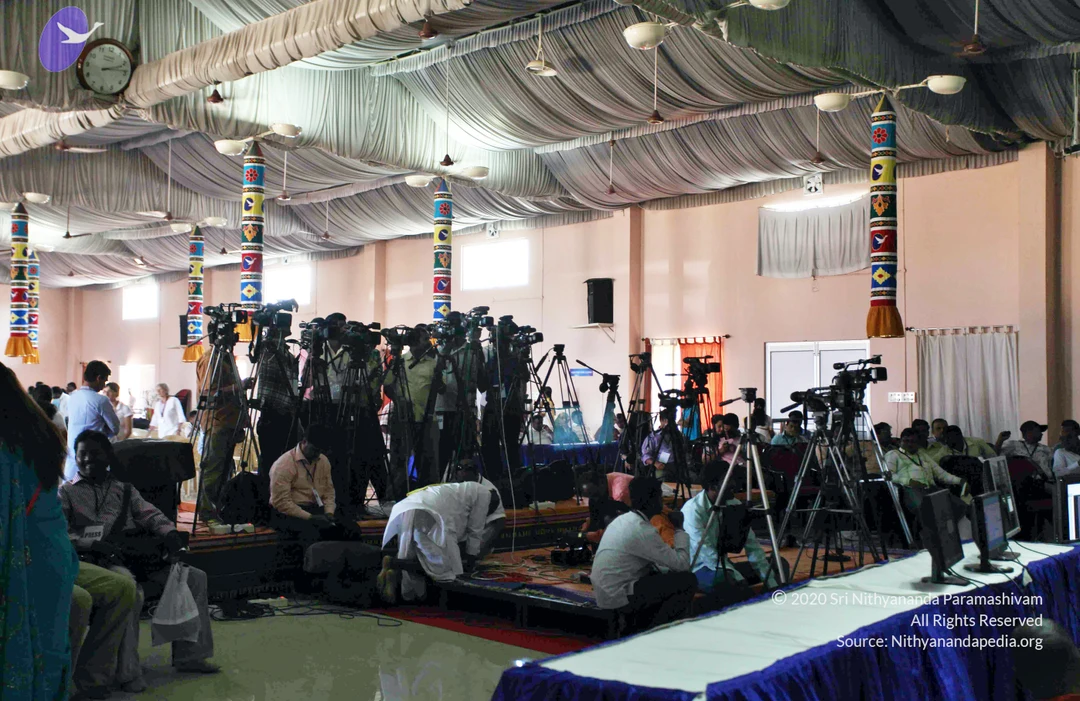
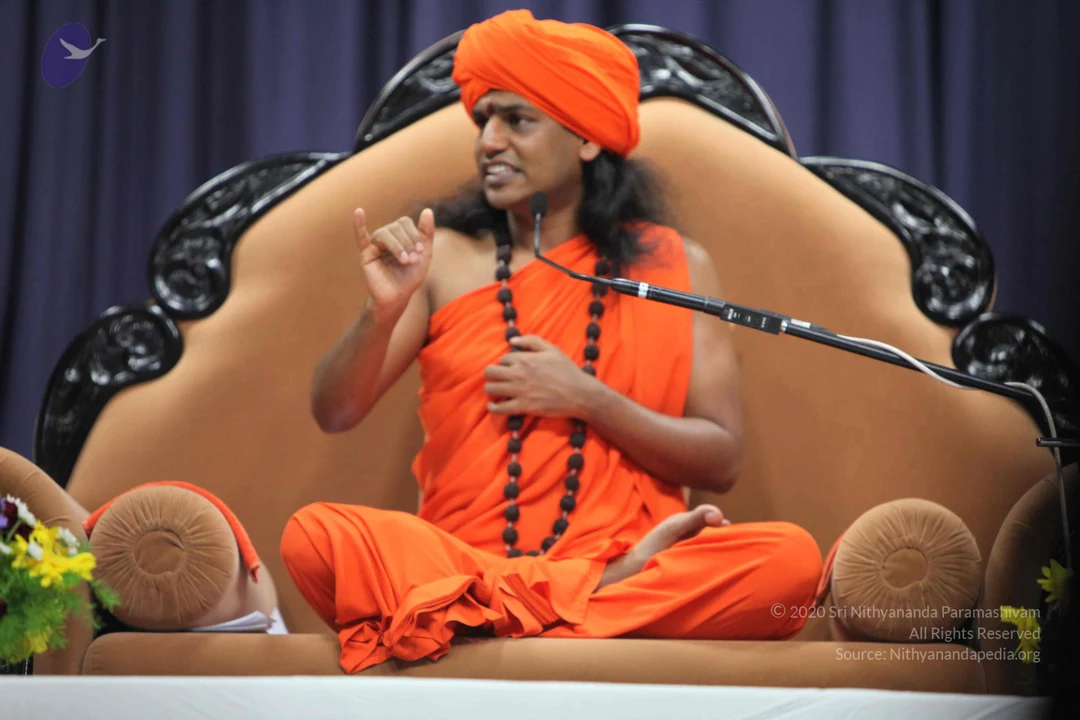
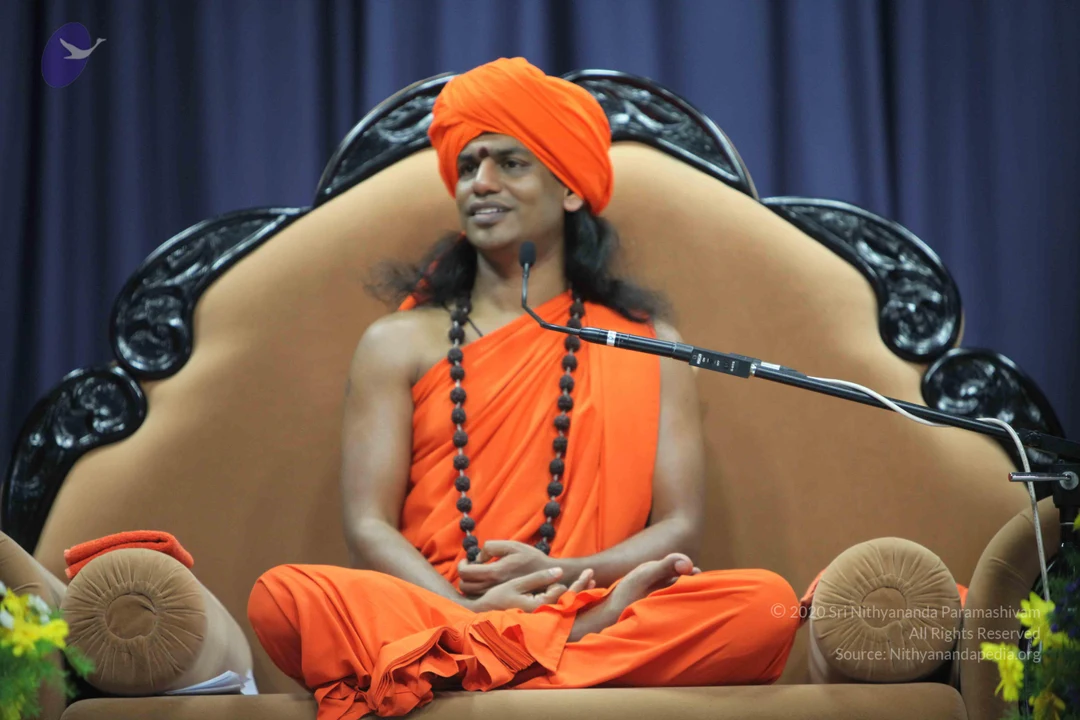
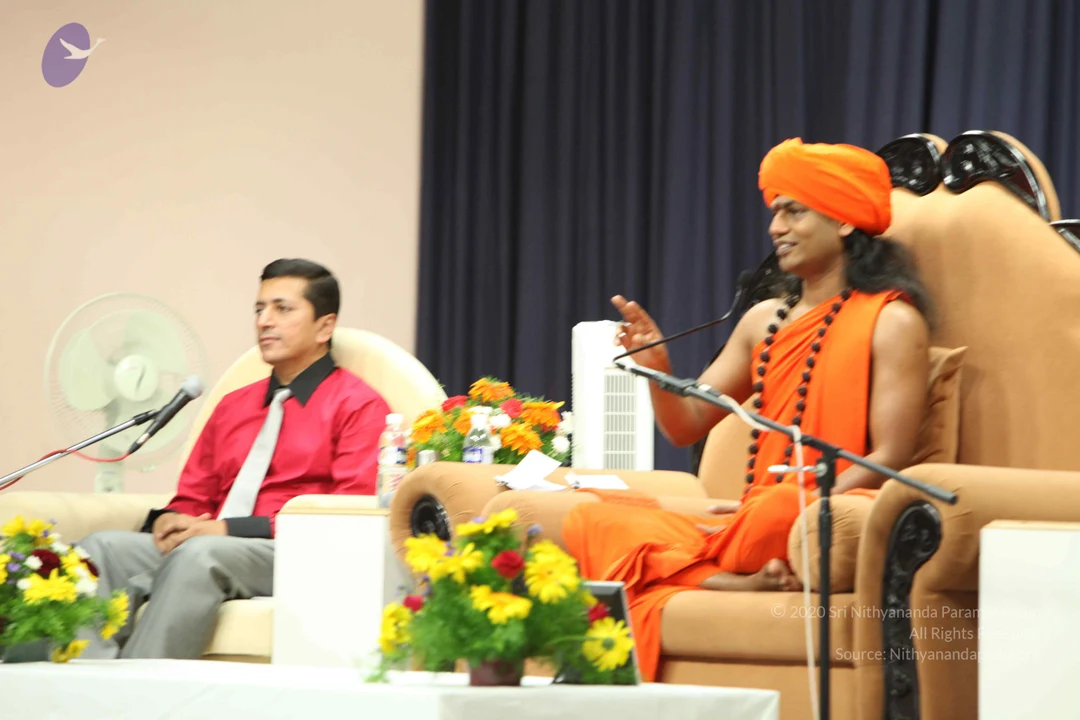
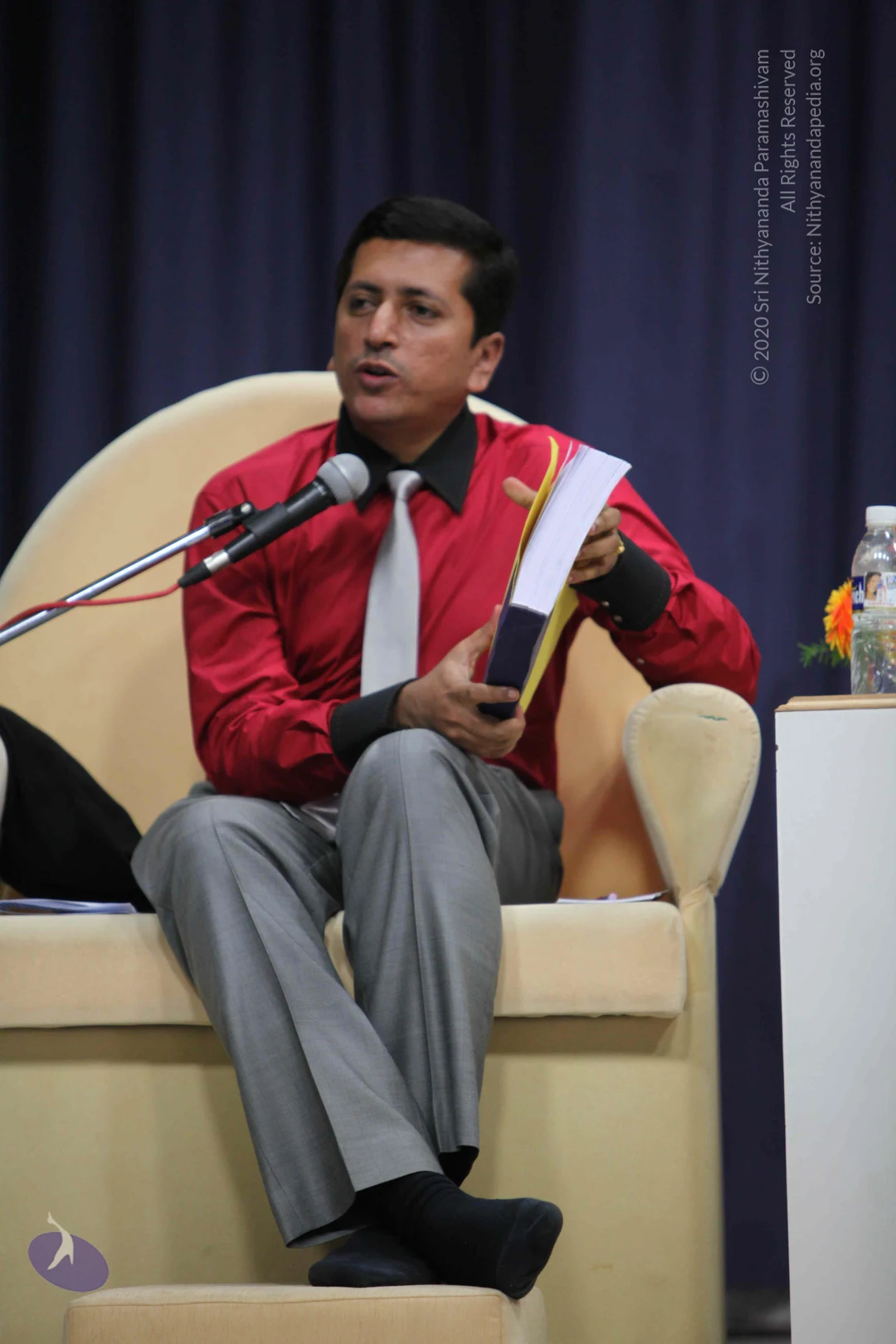
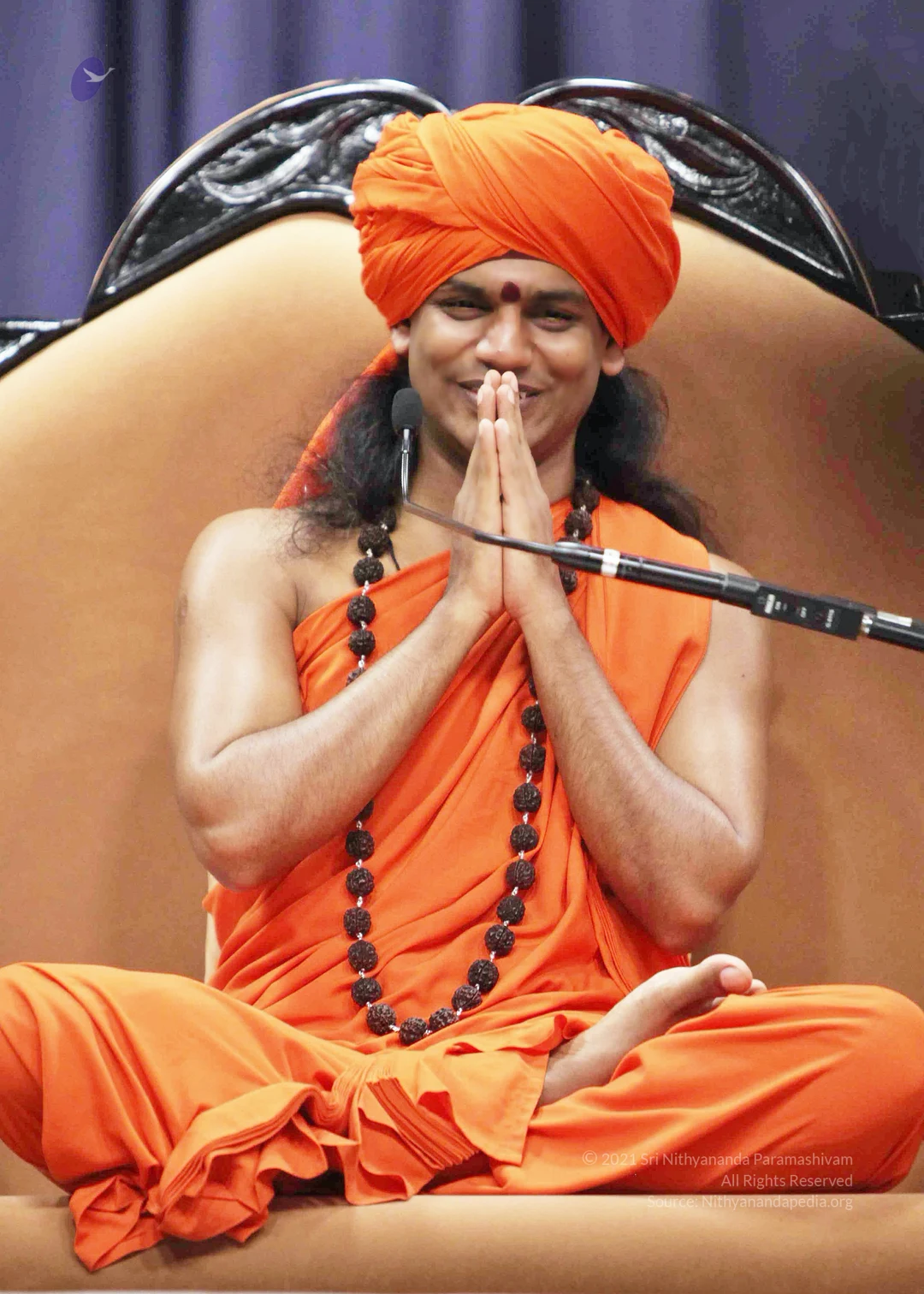
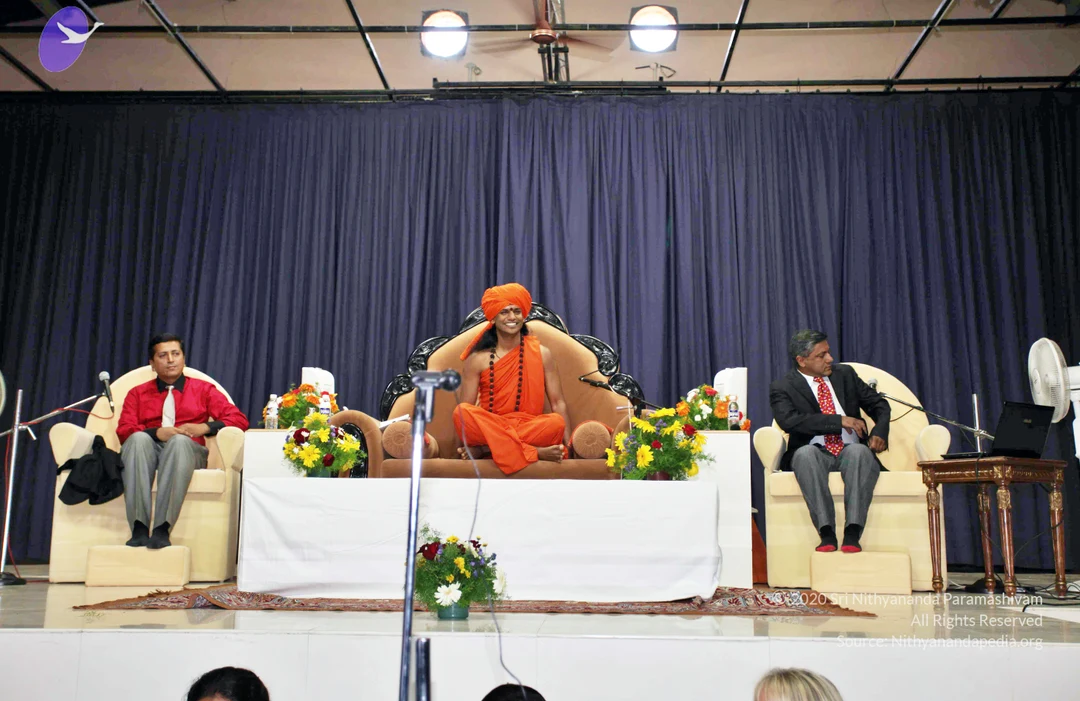
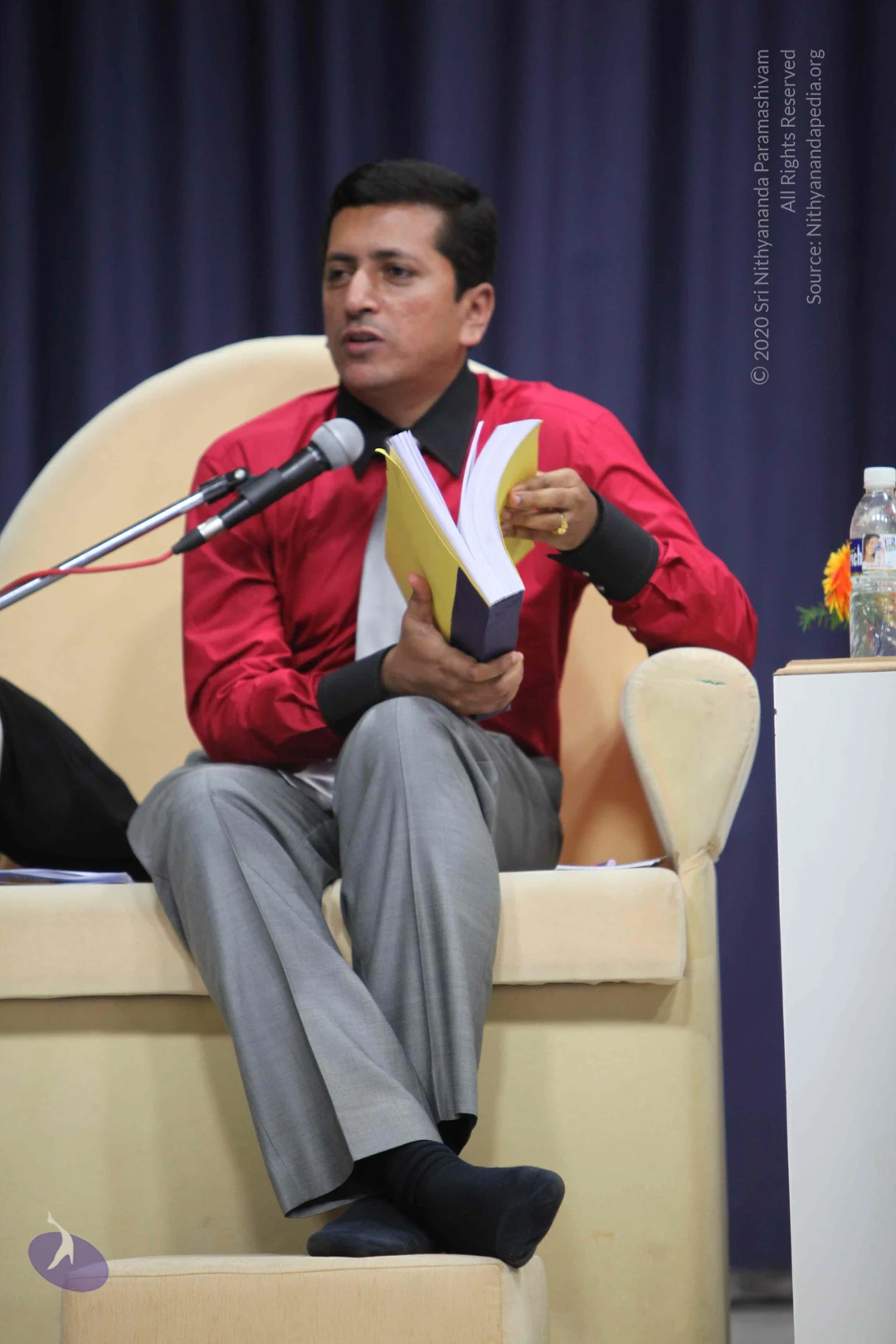
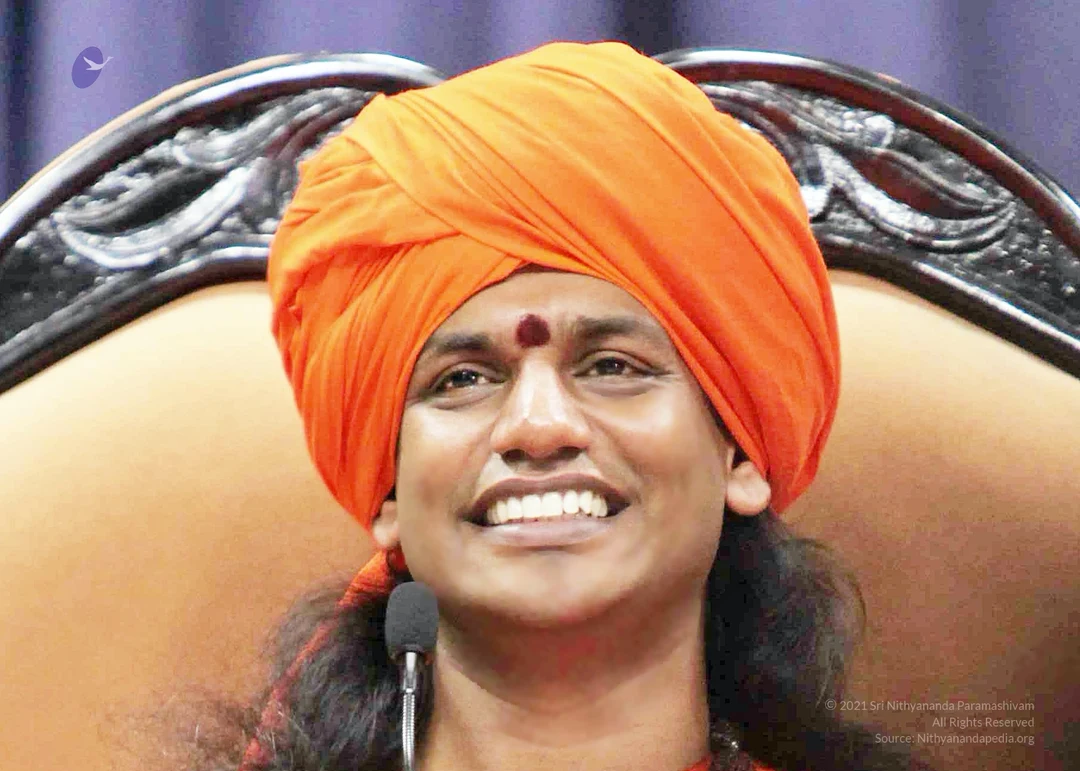
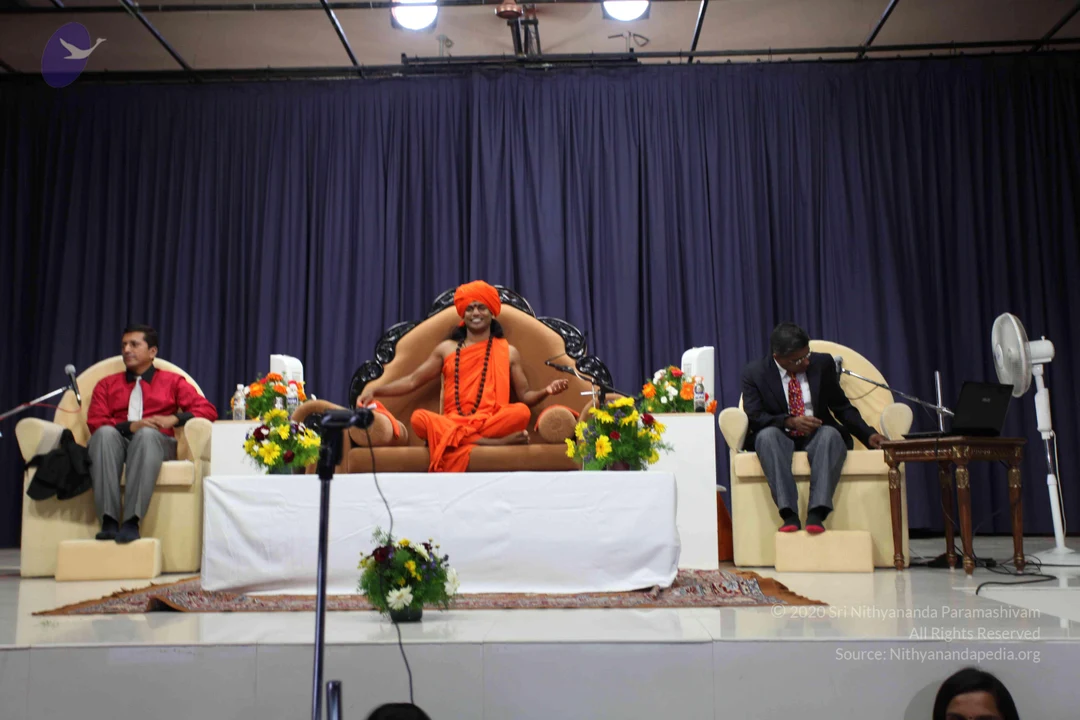
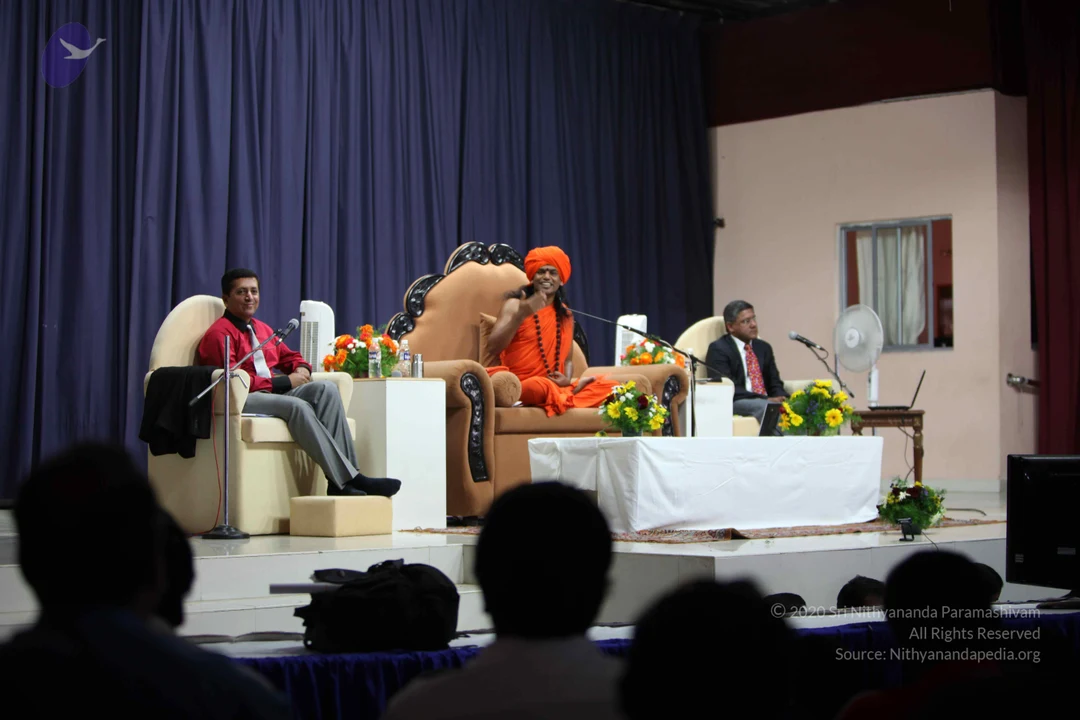
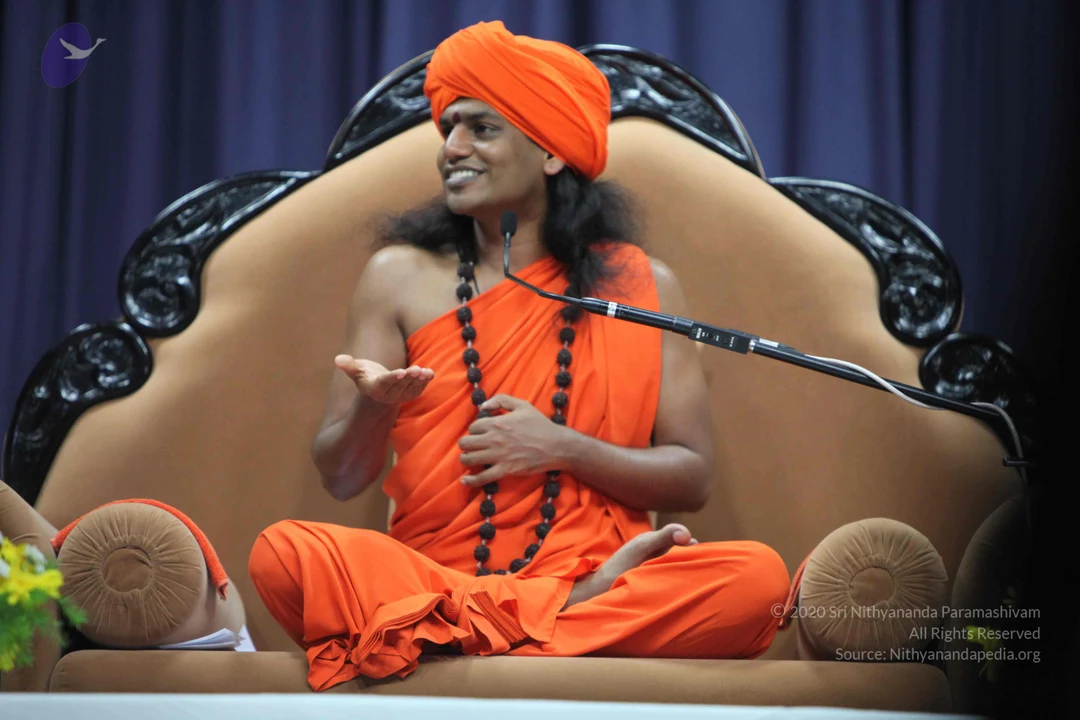
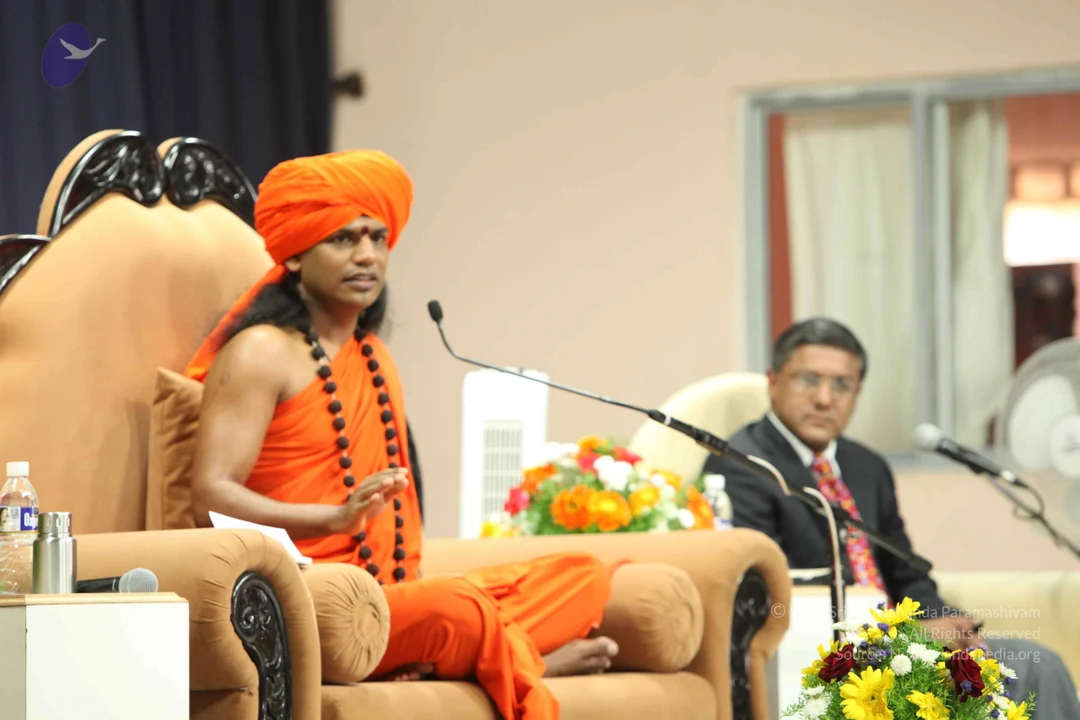
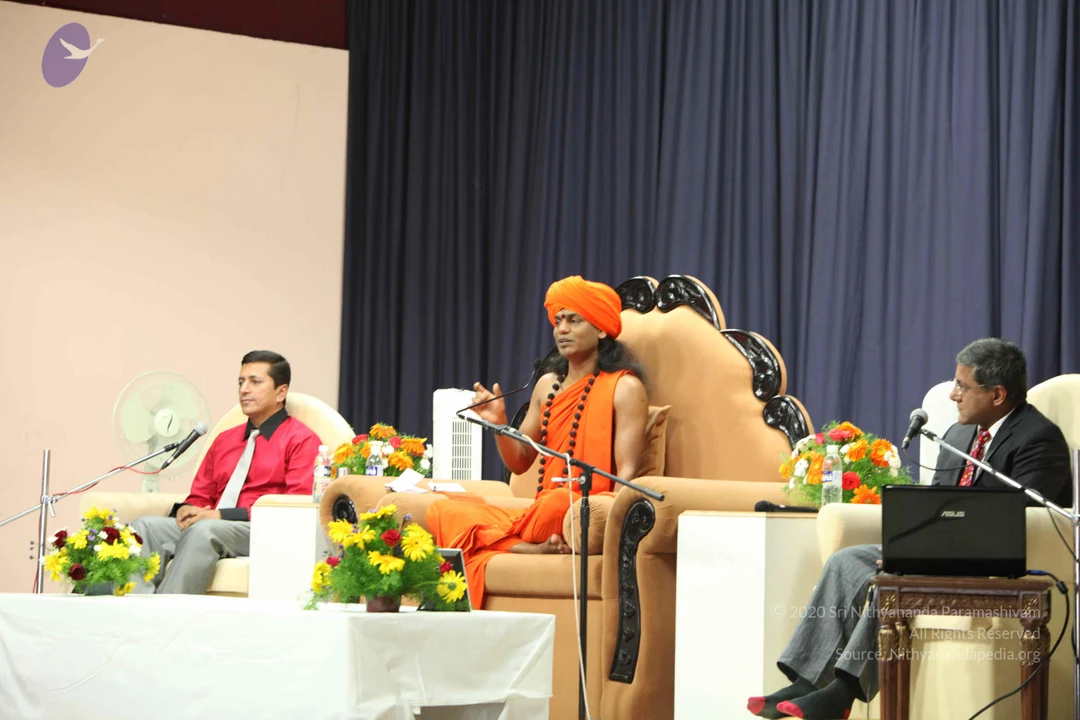
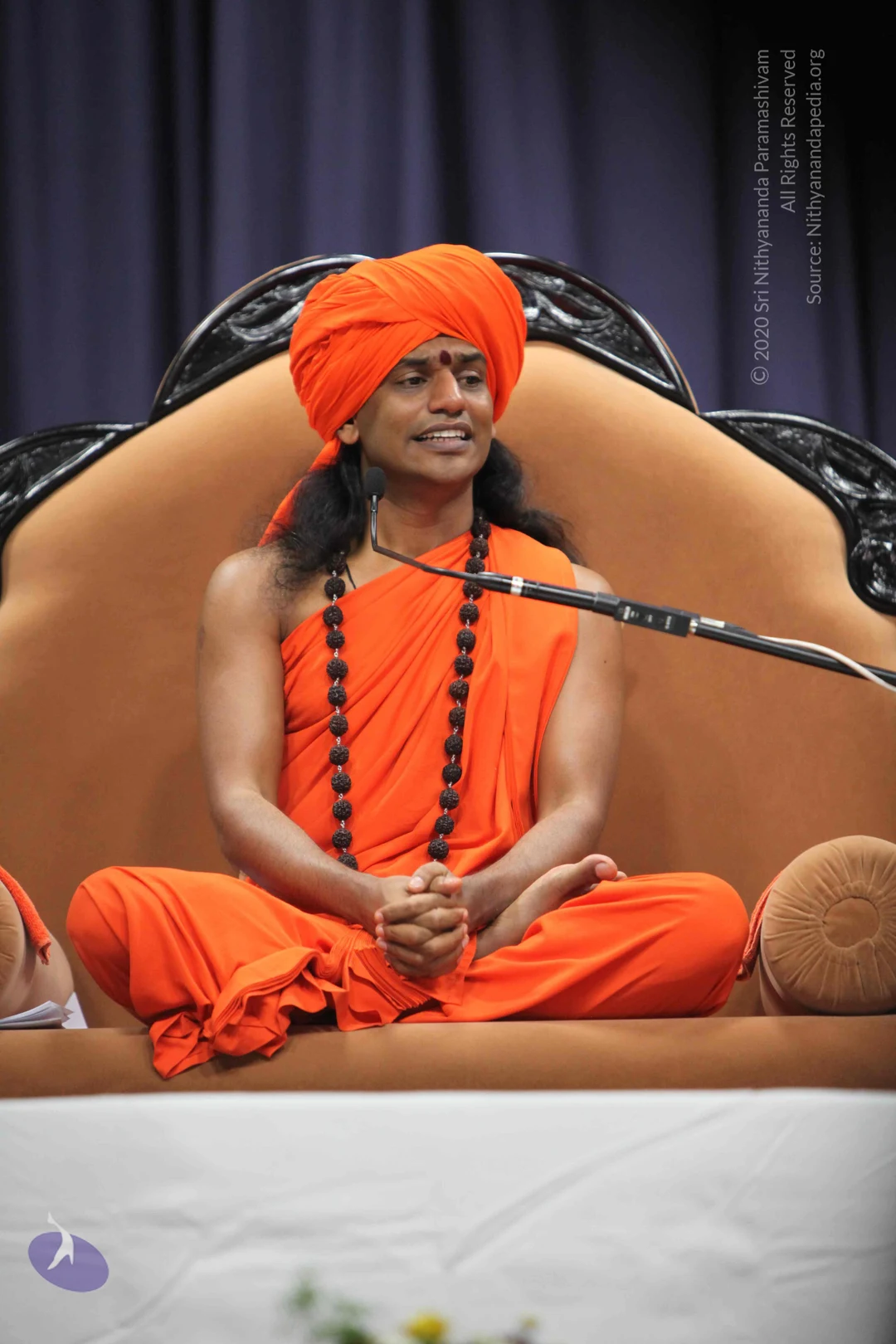
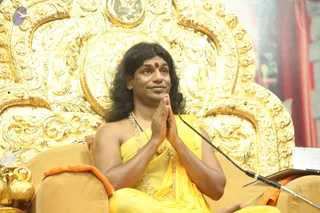
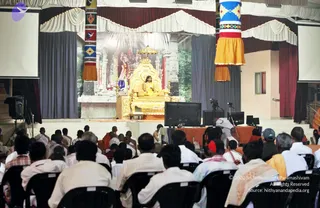
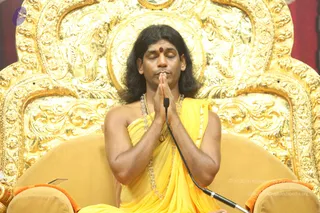
Paramahamsa Nithyananda addressed his 1st Public PRESS MEET today (1st February 2011) at Nithyananda Dhyanapeetam, Bidadi Ashram. The groundbreaking results of scientific research conducted on Paramahamsa Nithyananda's Initiation showed an unprecedented 1300% increase in the energy levels. The energy levels can normally raise only to a level of 30% to 40% through performing Exercises, so the raise experienced by the last Inner Awakening program participants was considered very significant.

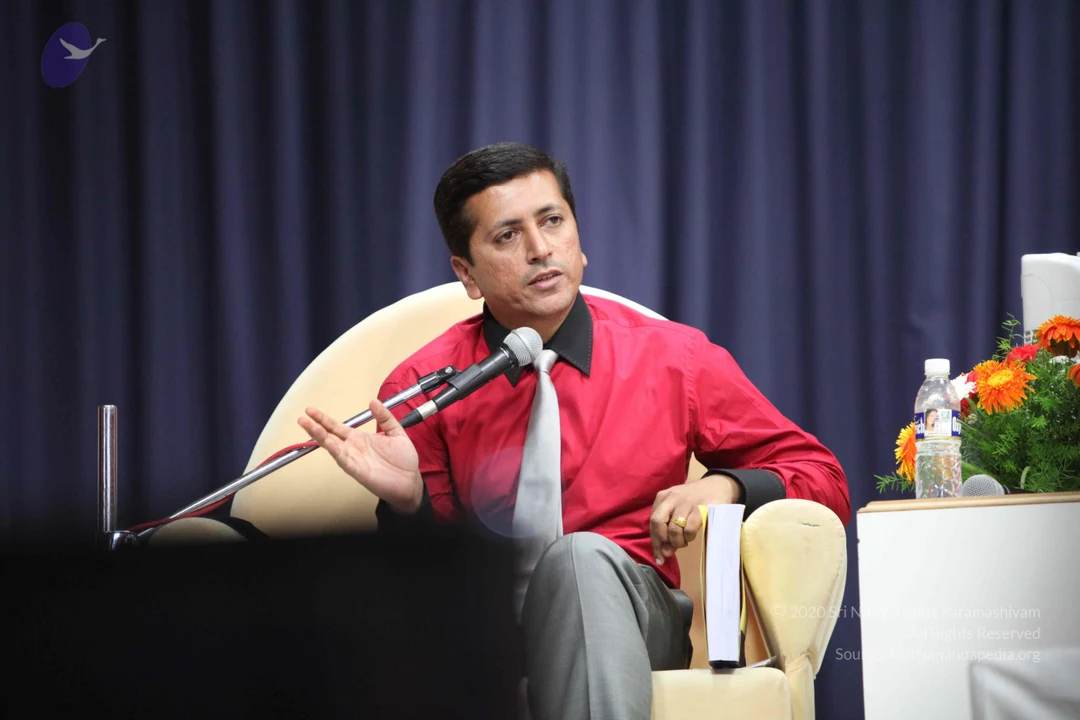
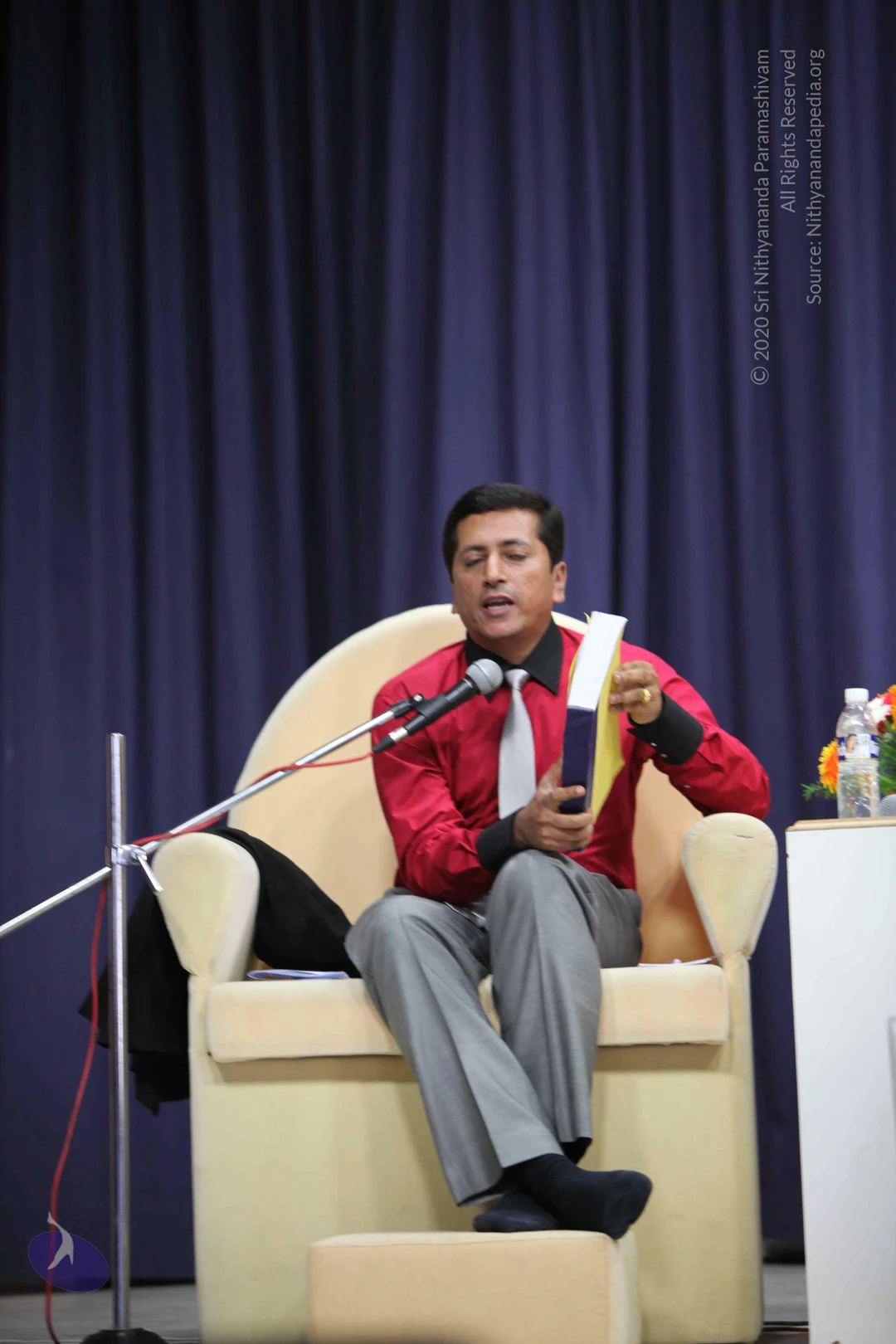
Apart from this, Paramahamsa Nithyananda answered questions from Media.

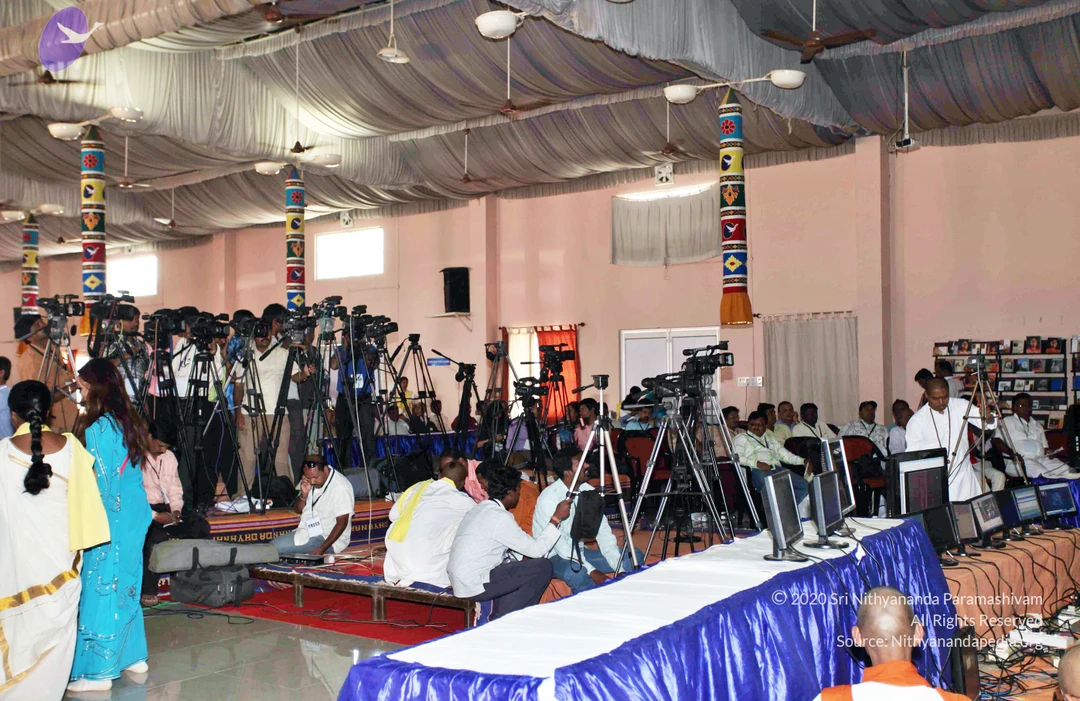
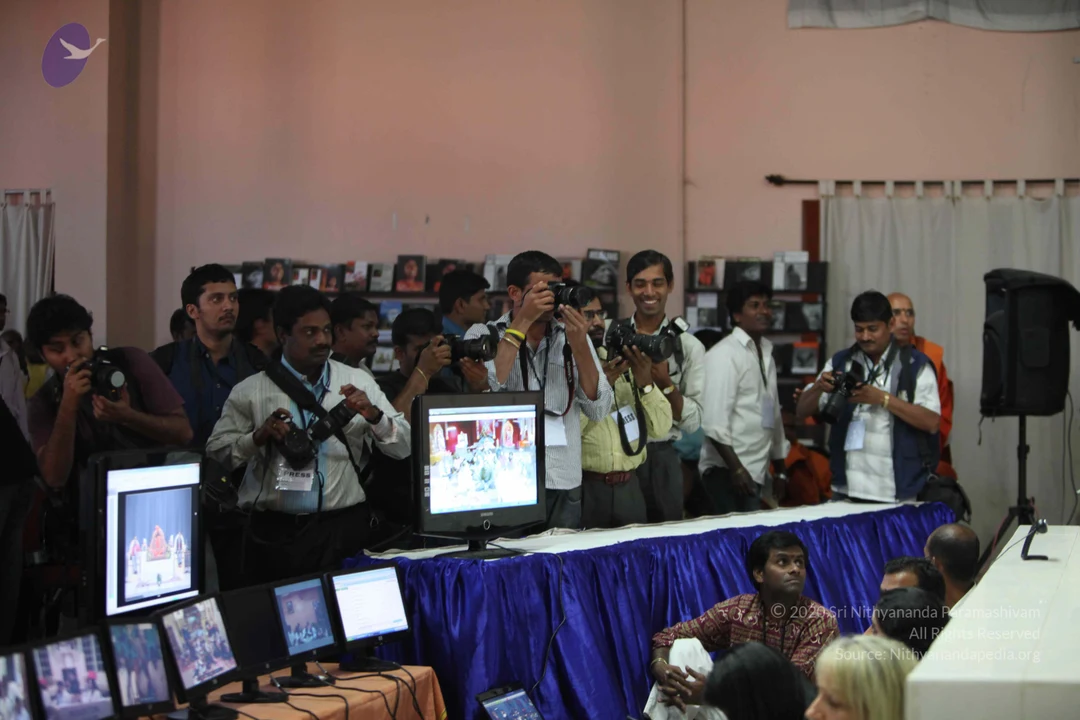
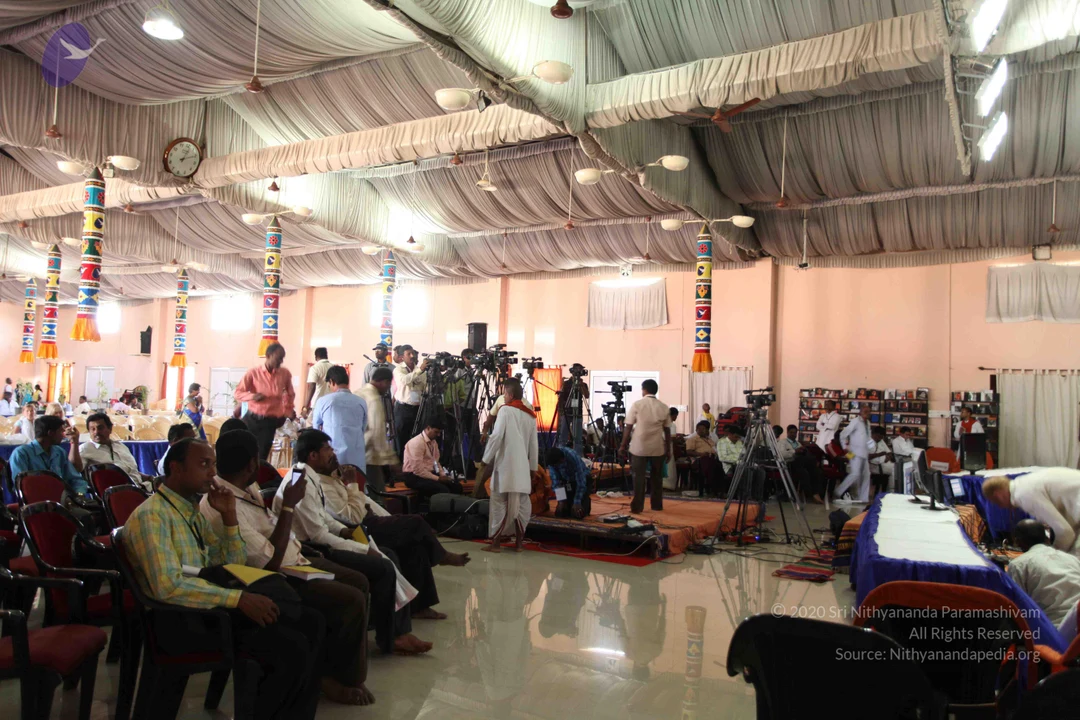
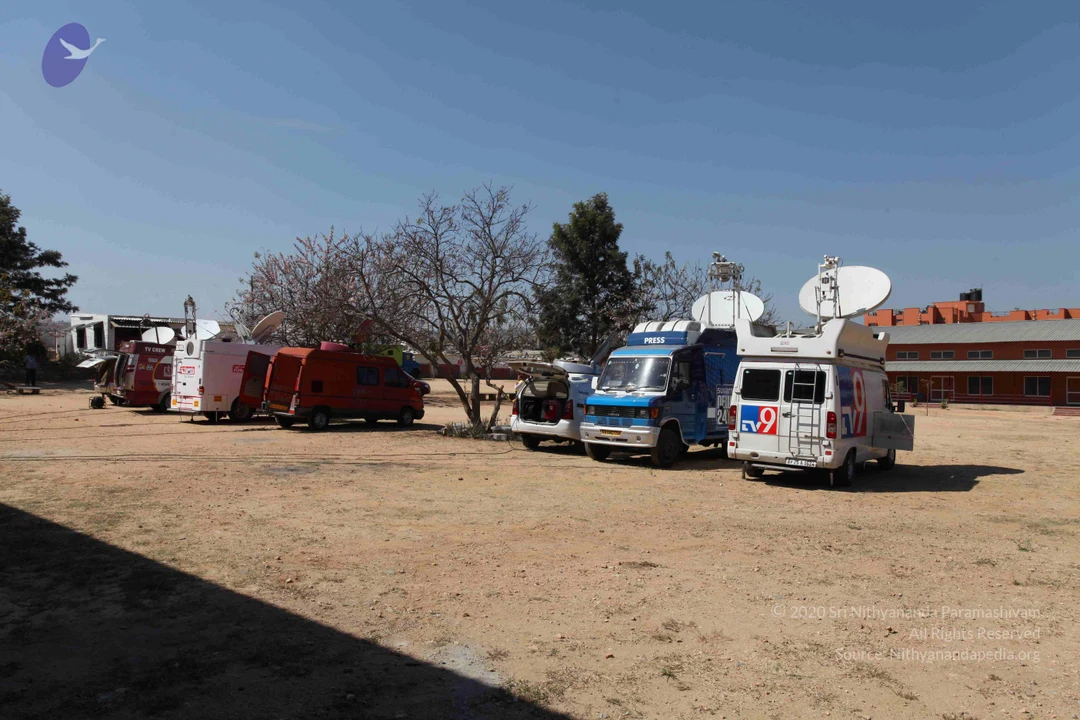
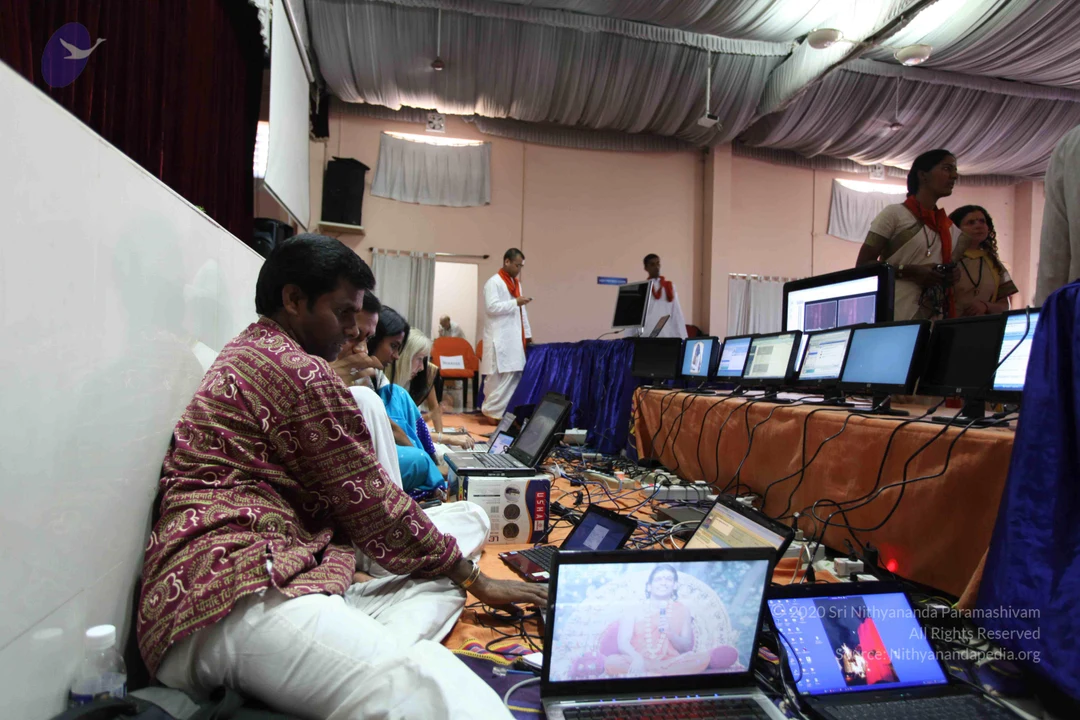
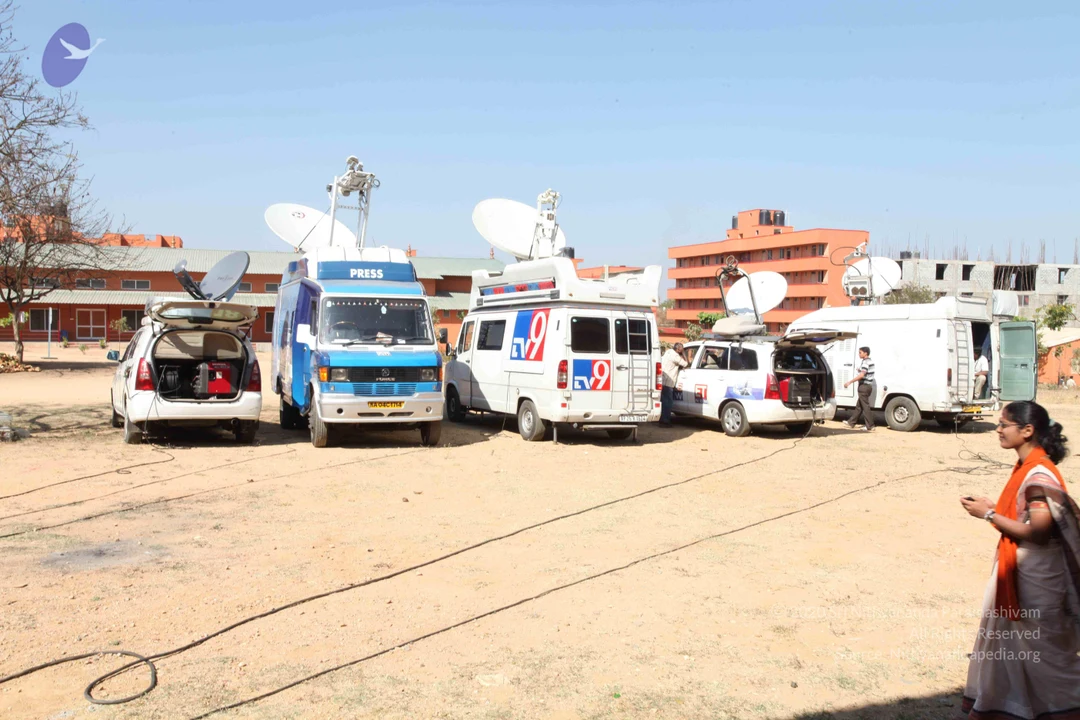
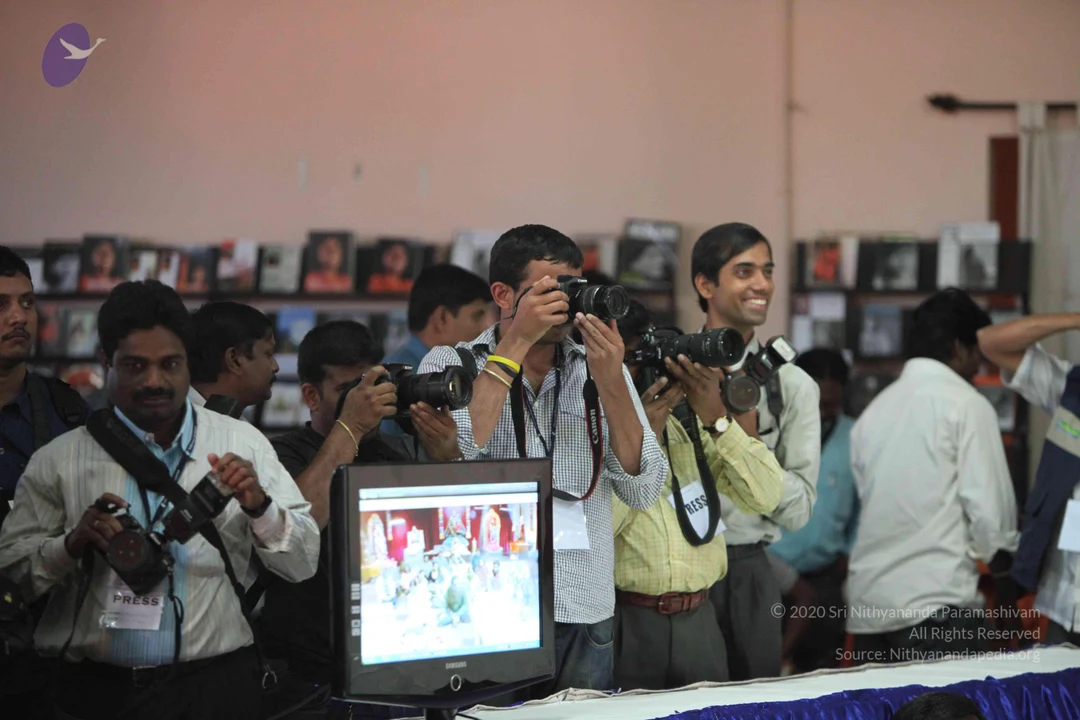
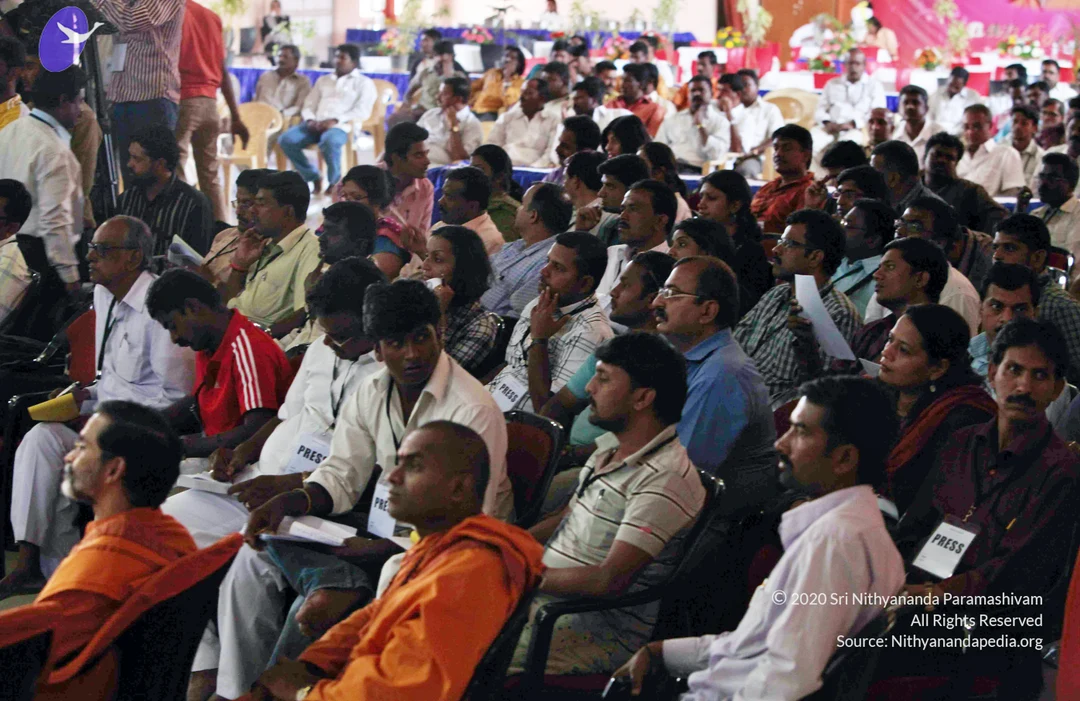
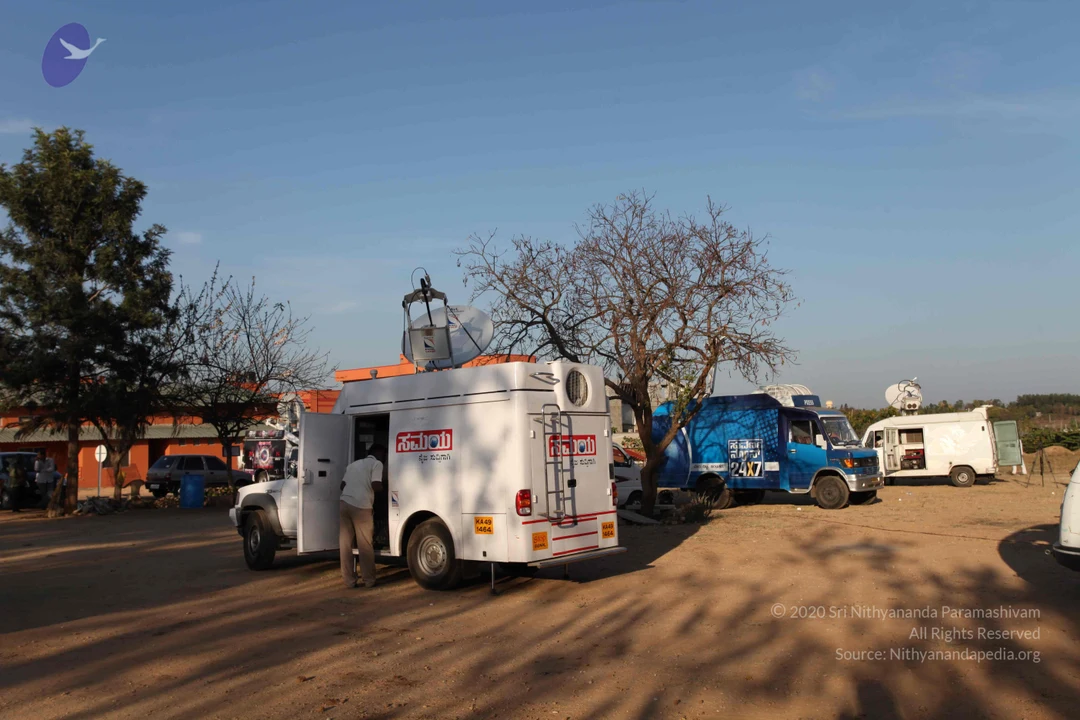
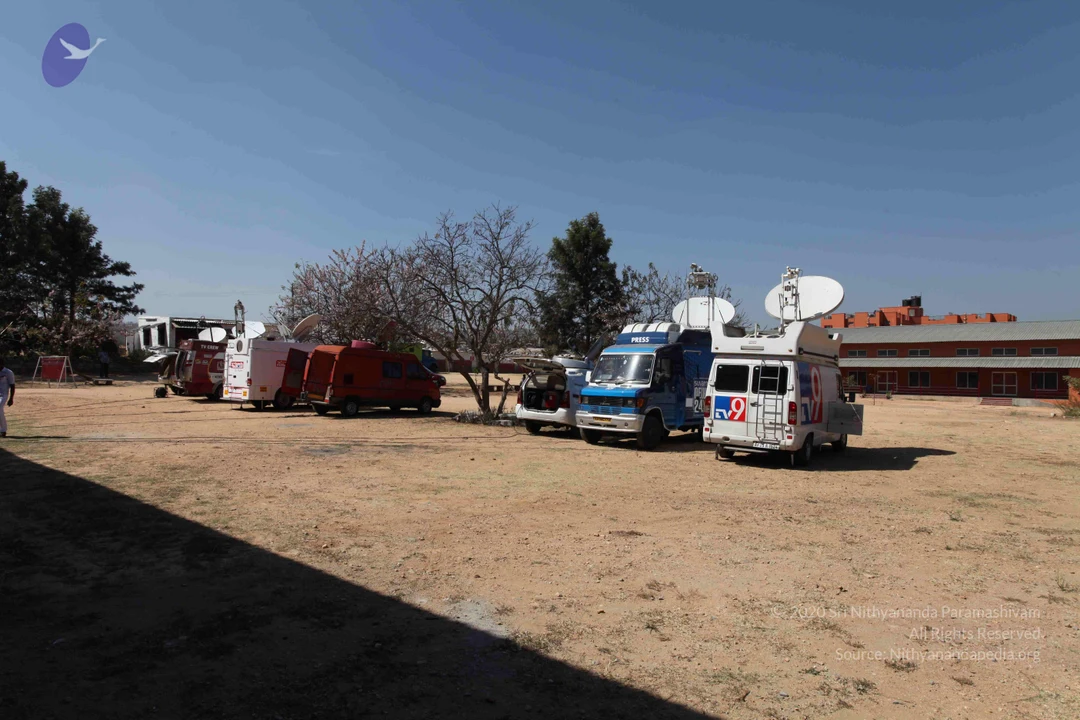
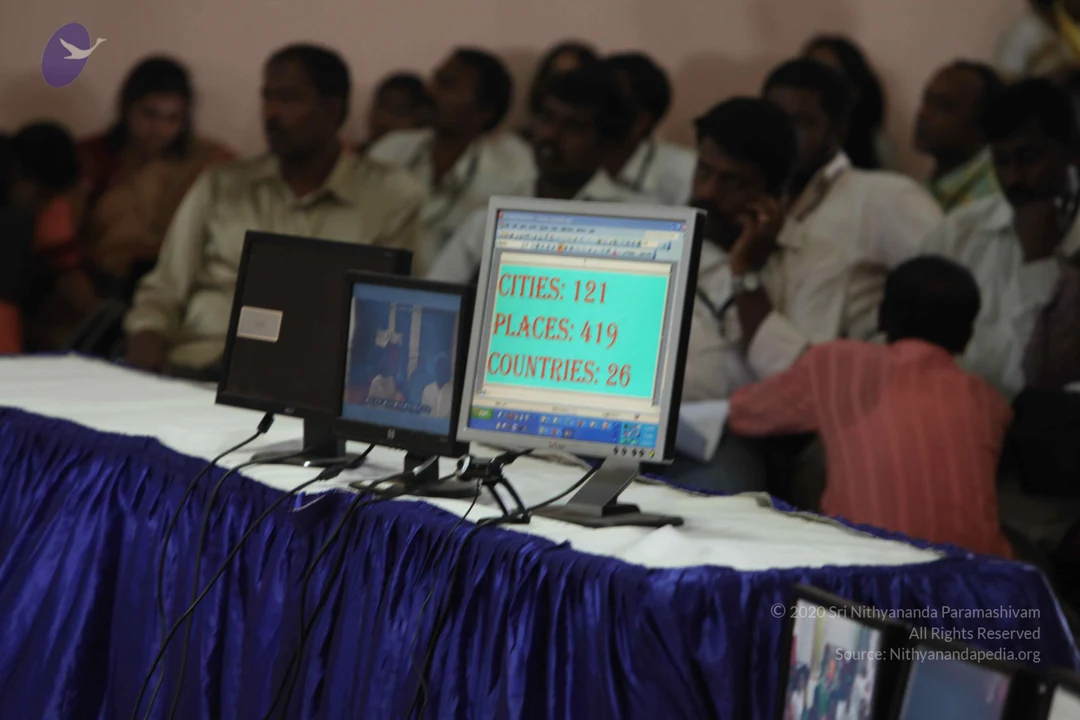
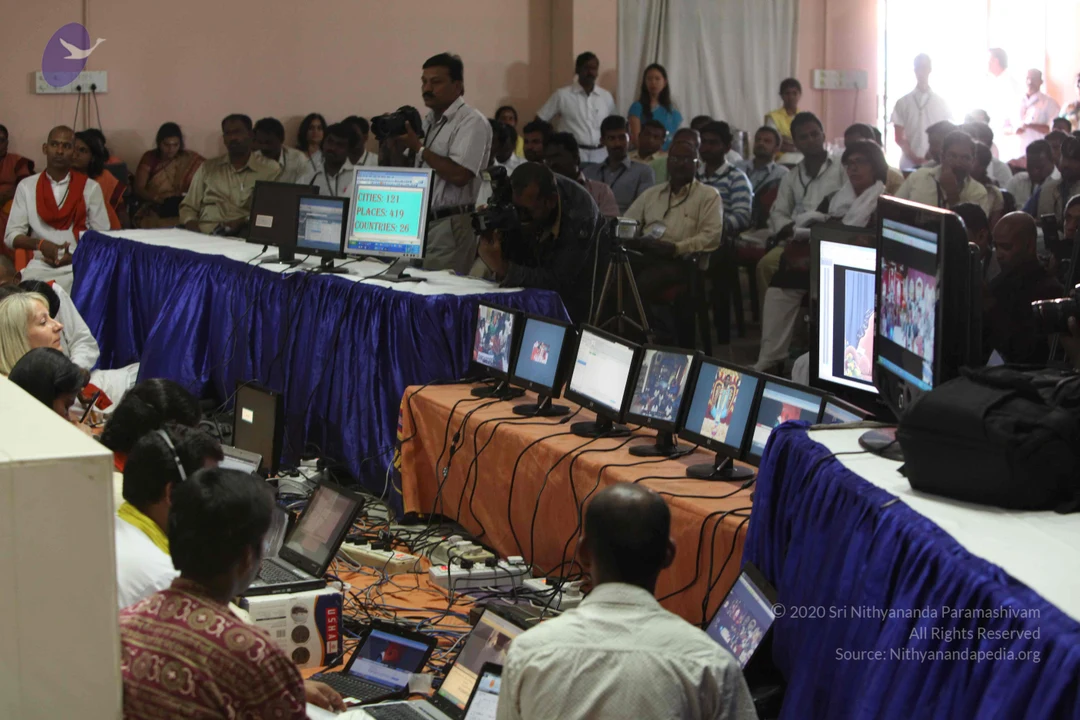
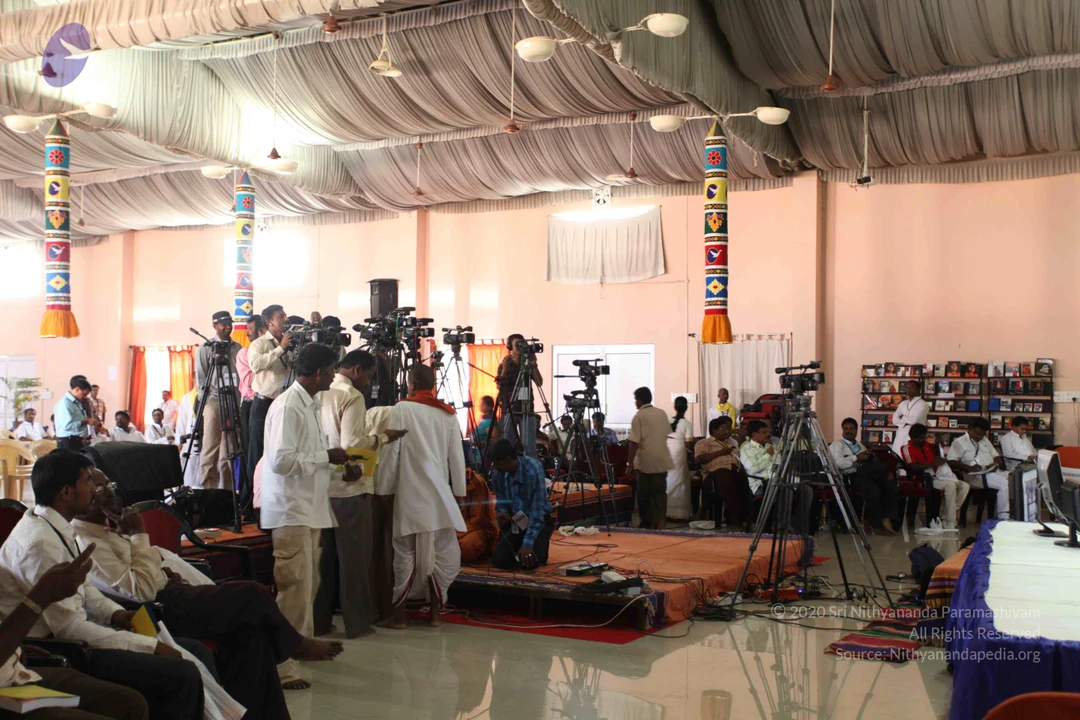
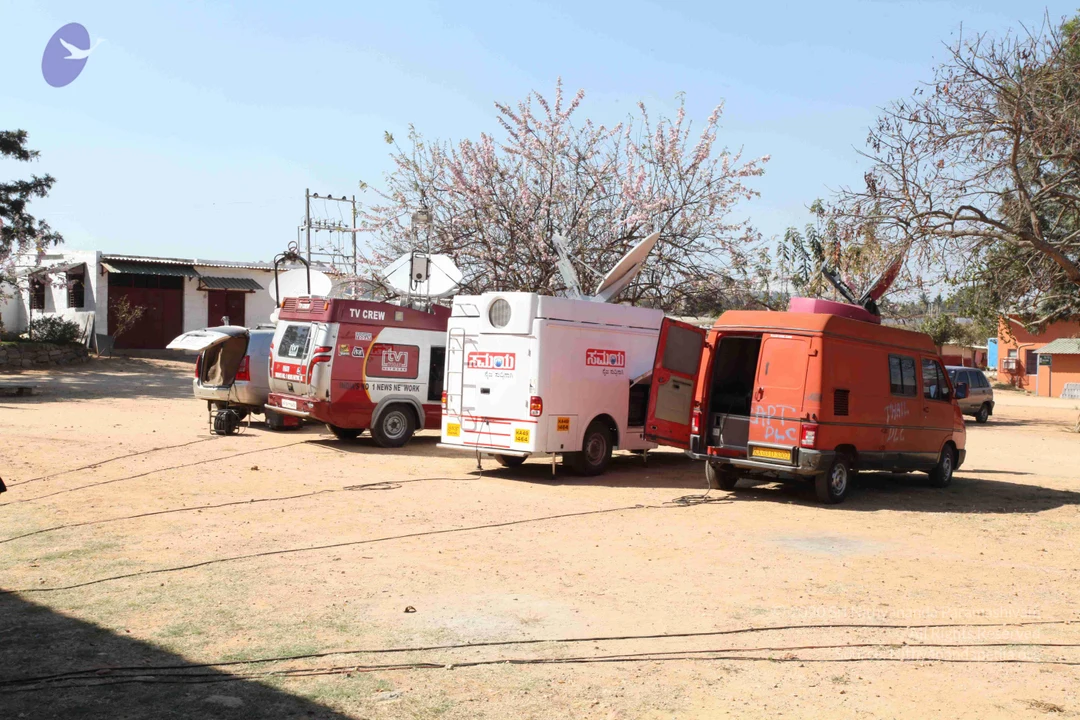
Many leading India TV channels carried the PRESS MEET Live.

Part 2 of this video has the Q&A session

Watch, share and like the videos and Subscribe to our channel to be notified of the next upload. click http://bit.ly/20j90wr to subscribe.

Link to Video:

VideoAudio

Title:

Meditation-Magnificent State of Bliss: Patanjali Yoga Sutra 108

Description:

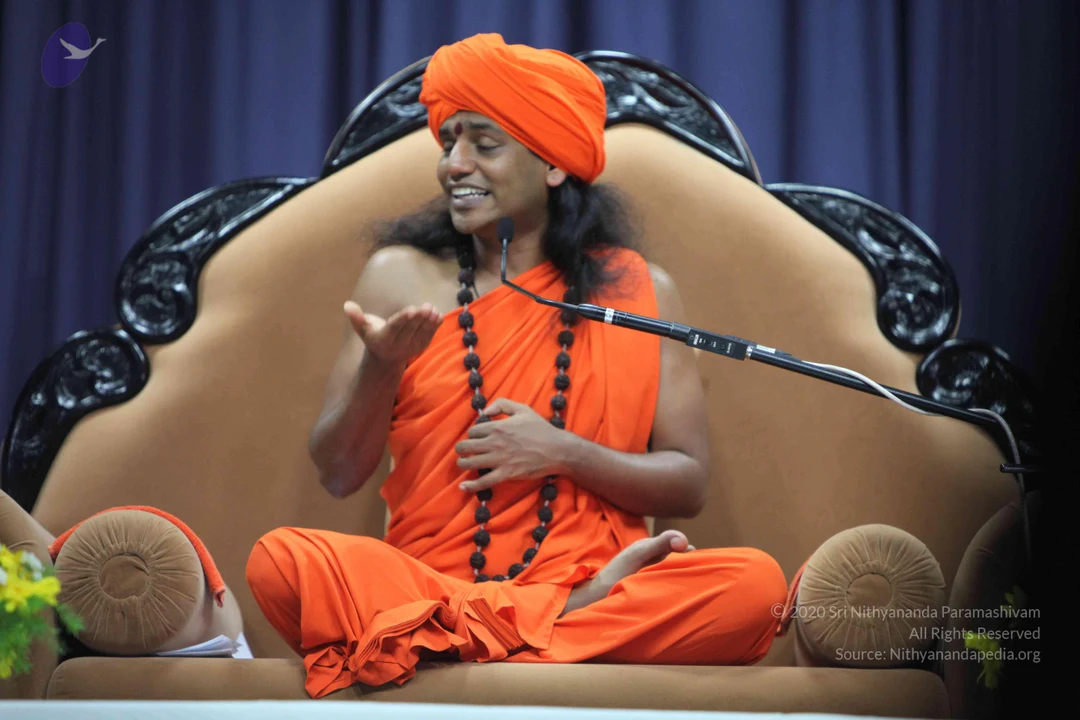
Living Incarnation and Avatar Paramahamsa Nithyananda spoke today on the subtle difference in his translation of the Patanjali Yoga sutra about Dhyaan (Meditation) in Ashtanga Yoga. "Raising the frequency to a certain level so that the object on which the meditation is happening and the mediator both lose their boundary and become one.

If you translate Dhyaan in a very ordinary way, as a flow of the mind etc, then you can meditate on anything but that won't make you enlightened. Then what is the use of the meditation? This is one more Sacred secret. The uninterrupted flowing of mind is not Dhyaan. Dhyana is a state in which both lose their boundary. Even if anyone retains this boundary, Enlightenment cannot happen. You can meditate on anything and if the boundary is lost, you can become enlightened."

Paramahamsa Nithyananda explained that this is a subtle difference but a very important difference. This sacred sentiment behind the word Dhyaan should be understood. Boundarylessness is the goal of meditation, rather than the object of the meditation.

"Right understanding of the cosmic law should be had and it will play a major role in the way you think, strategize and run your life," he emphasized.

"Tatra pratyaya - raising the frequency to the level where the object and the mind lose their independent boundaries. If you think Dhyana is concentrating on one object, you will get into a lot of problems. It's like people taking celibacy vows and then how to maintain the celibacy and their image becomes the main focus. This is a perversion. I have seen people getting into perversions in the name of Dhyana. The purpose will be lost. Suffering and irritation can result."

When you raise your frequency, you will have intense joy, peace, and bliss. Not only the mind but the object on which you have been meditating lose their boundary and become one with the ORIGIN FROM WHERE BOTH CAME OUT. Understand this when you do your Dhyana.

Watch, share and like the videos and Subscribe to our channel to be notified of the next upload. click http://bit.ly/20j90wr to subscribe.

Link to Video:

VideoAudio

Transcription

(00:23)

sadāshiva samārambām shankarācharya madhyamām | asmadācharya paryanthām vande guru paramparām || I welcome you all with My love and respects. I welcome all the centers who are sitting with us now, LIVE. I welcome all the cities, Satsang centers who are sitting with us in two-way and the cities and centers who are sitting with us through webinar around the world.

(01:38)

Today’s subject for the Satsang, “Meditation - Magnificent state of Bliss”. As I said, I am speaking on Vibhuti Pada, 3rd chapter; today is 3rd chapter, 2nd verse and 108th Sutra of Patanjali’s Yoga Sutras. (“tatra pratyayaikatanata dhyanam”) (“tatra pratyayaikatanata dhyanam”) Swami Vivekananda translates this Sutra as, “An unbroken flow of knowledge about that object is Dhyana”. Swami Prabhavananda translates as, “Meditation is an unbroken flow of thought towards the object of concentration”. Swami Sachidananda translates as, “Dhyana is the continuous flow of cognition toward that object”. Osho translates as, “Dhyan, contemplation is the uninterrupted flow of the mind to the object”.

(03:37)

I will translate this word, “Dhyan” as raising the frequency to the certain level; the object on which the meditation is happening and the object which is meditating, both of them lose their boundary and becoming one with each other. This is what I will call as, “Dhyana”. Please understand, I am not just translating. I am giving you the exact meaning. Dhyana means for example if I am meditating, doing Dhyana on this cloth; raising the mind to certain frequency where the mind and this cloth loses the idea of boundary and they disappear into some space where there is no difference; where there is no two exists. It is all about one.

(05:03)

Please understand, if you translate Dhyana in a very ordinary way, like a flow of the mind towards the object in uninterrupted way and all that, is almost you can come to the conclusion if your mind uninterrupted way flows towards this kerchief, it is meditating on this kerchief, this cloth; no, then you can meditate on anything but that will not lead to Enlightenment. Please understand you becoming intensely concentrated on the kerchief is not going to lead you Enlight… to Enlightenment, that is not going to lead you to Enlightenment then what is the use of meditating on this kerchief? You need to know the exact meaning of the meditation.

(06:12)

The word Dhyana means raising your frequency, the mind’s frequency to certain level where you, means the mind and the object on which the mediation is being done, both of them lose it’s boundary and become one, means all oneness is Enlightenment. Please understand, if you meditate on this kerchief, the mind loses the boundary and becomes kerchief, that is not Dhyana. Kerchief and mind, both should lose their boundaries and become one, that oneness is what I call Dhyana. Please understand, it is the… one of the important sacred secret. Unfortunately all orthodox translations have missed it. If you have read orthodox, many translations, you will understand what I am saying.

(07:17)

When you use the word, “Mind flowing uninterrupted way towards an object is Dhyana”. What you will make out? You will think, “Oh, if my mind flows uninterrupted way towards this kerchief, it is Dhyana”. No, it is not! Dhyana is a state where your mind and the object on which you are meditating, both of them lose their boundary, that is the space where you can experience Enlightenment. Even if one thing, either the mind or the object if any one retain their boundary, Samadhi, Enlightenment cannot happen. If both of them lose the boundary, whatever may be the object on which you are meditating, you are Enlightened.

(08:08)

I will give you the difference between the so-called orthodox understanding of Dhyana and what I am revealing the sacred secret as Dhyana. That’s a story in the traditional literatures of Hinduism, “Story of a Rishi Bharata”. This Rishi was supposed to be a renunciant staying in the banks of a river but one day he saw a deer dying giving birth to a small child, baby deer; whatever word you use; you use; calf or baby deer and this guy got very much attached to that baby deer and he started taking care because no mother, he started taking care. Slowly, slowly, slowly the attachment grew so much; at the time of death, this Bharata was continuously thinking of that deer, worried about that deer, so attached to the deer, he died and took birth as a deer and came back to live with the deer. This is what will happen if you understand the word meditation or Dhyan in so-called old way.

(09:42)

What happened here? The uninterrupted flow of a mind of Bharata towards one object has happened but finally what is the result of that? He has to take the birth of deer and come back to live with the deer. No, that is not Dhyana, that is not meditation. Meditation means where the mind which is meditating and the object on which the meditation is done, both lose it’s boundary. When the boundaries are lost, you experience Samadhi, the extraordinary powers and Siddhis and realizations.

(10:31)

I will give you another one example. One suppressed class person, so called untouchable, wanted to have Initiation and want to meditate on God but that village Guru is not interested in initiating him. He said, “No, I will not initiate a suppressed low caste person”. So this low caste person made an idea. Every day that Guru early morning will go to the river bank to take bath. So he was observing, one day that Guru by mistake slipped for some reason then he immediately chanted Ram Ram. Usually in Indian villages if you slip or fall or sneeze they will chant God’s name. So this guy thought, “Yes, this is a nice idea. I will go and lie down in the steps of the river early morning. So naturally this Guru in the early morning darkness he will not see me and he will step on me and he will chant the name, Ram Ram. So I will take his feet touching my head as a Initiation and word he utters as a Mantra”. So he goes and lies down with this plan.

(11:58)

But naturally that Guru is not an enlightened guy. He did not chant that Ram naam… Ram Ram last time with awareness. So many people were around him so he chanted Ram Ram. Now, early morning darkness, nobody is there. He was all alone coming to the river to take bath. Plan almost worked out, that guy really put the foot on the… this low caste person’s head, slipped but unconsciously he shouted, “Buffalo! You buffalo, what are you doing here?”, he shouted. So anyhow the disciple cannot say, “No, no, no. Please change the word and give me the Ram name, Ram Ram”. No, the disciple was a courageous guy, intelligent guy. He decided I will take his feet touching my head as Initiation and the word he uttered buffalo as the Mantra and he sits with the courage and intelligence and confidence, starts raising his frequency of the mind towards the object buffalo.

(13:18)

Please understand, it is not uninterrupted flow of the mind. It is raising the frequency of the mind where the object and the mind both of them lose their boundaries and he experienced that; and the divine appeared in the form of the golden buffalo and his mind and the buffalo idea, both of them loo… lost the boundary and the high frequency was experienced by him as Samadhi. then the local village festival they are trying to bring the deity out of the temple. He sees the deity in the buffalo form. The priest was trying his best to get the deity out. It’s not coming out for some reason. They were all shocked! “Why the deity is not coming out?” Then this low caste man, he shouts, “Eh! It’s because the buffalo’s horns are stuck in the doorway. Little lower it”. He goes and lowers it and immediately deity comes out means, please understand, the power of object and the mind losing its boundary and vibrating in same frequency. It’s a subtle difference, but an important difference.

(14:50)

Please understand subtle but an important difference. This is a very important truth. This is the sacred secret hidden in this Sutra which needs to be revealed. In every Sutra, the sacred secrets are hidden. Understand, Dhyana is not just your mind flowing uninterrupted way towards an object. No, Dhyana is raising your frequency of the mind to certain level where your mind and the object on which your mind is meditating, both of them lose their boundary and merge into the oneness. If the oneness is not the base, meditation leads to unconscious sufferings. Meditation means the constantly being connected to some object. What is the use? No, that’s no way going to help you, that’s not going to help you.

(16:05)

So, the sacred secret behind the word Dhyan has to be understood so that the right practice can happen. I tell you, right understanding of the country law is important to run the country. Right understanding of the cosmic law is important to experience the cosmos. These are cosmic laws. A small misunderstanding or misinterpretation or wrong understanding will lead to misery not to one person or two person, thousands of people, that is why I warn you again and again and again. Listen to those great secrets, internalize these great secrets with lot of care because the cosmic law, the ideas which you internalize is going to play a major role, the way in which you think, the way in which you work, the way in which you do the strategy planning about your life. Wrong strategy is not only dangerous for you, dangerous for everybody.

(17:47)

Let us enter into the technical terms of this Sutra.

(“tatra pratyayaikatanata dhyanam”) Pratyaya; the word, “Pratyaya” can be translated as cognition, awareness principle, awareness perceiving; different words. I will translate that word, “Pratyaya” as raising the frequency to the level where the object and the mind which is meditating, both of them lose it’s independent boundaries.

(19:00)

Please understand, if you think Dhyana is concentrating on one object, you will get into lot of disturbances, lot of problems. Many of the western psychotherapists who started working on the inner space consciousness including this positive thinking and all, got into lot of problems. I have seen these people who teach positive thinking, “Stop worrying. Start living”. This kind of ideas; and if you see their personal life, they are filled with depression because now they have one more worry, how to stop worrying?

(19:46)

It’s like people take Sanyas, celibacy vow to achieve Enlightenment. Finally after few years how to maintain the celibacy vow becomes a major main focus than Enlightenment, that’s a wrong space to be in. It’s like you get into a train to reach Delhi, by the time you get so attached to the train and you brag about your train so much to the whole world, now the whole priority and everything to become how to be inside the train, not to reach the Delhi. Then you decide, “Eh, whether the train goes to Delhi or this side, that side; I will sit in the train itself and we will have to do something to be in the train forever because to the whole world I declared and claimed this my train and all these things”. Now you yourself will fix somebody to stop the train and break the railway track so that the train does not neach… reach Delhi. You are there in the train all the time. This is what I call perversion.

(20:54)

Please understand, I have seen people getting perverted in the name of Dhyan, that’s a most sad part; most sad part. The purpose is lost. It’s really sad. I have seen this people in the name of Dhyan, all kinds of foolish ideas being taught. Understand flowing towards certain object can never be called as Dhyan, that can lead to more and more irritation, agitation, suffering, restlessness. Raising your frequency where your mind and the object loses its boundaries is Dhyan, that is Dhyan; where you have intense joy and peace, bliss. Normally if you meditate, if you concentrate on just some object, what will happen? Your mind will become that object maybe maximum but your mind is not created out of that object. So even if your mind becomes that object it will not have peace. It will not be contented.

(22:29)

For example, if My mind even if it concentrates on this kerchief and becomes this kerchief, it’s not going to feel homely, it’s not going to feel settled, it’s not going to feel the Moksha because the… My mind is not created out of this kerchief. So when will My mind feel the Moksha, Samadhi, homely? Samadhi means becoming the origin. Sama Adi; Adi means the origin, source. Sama means becoming that. When will that happen to Me? If I raise my mind to a certain frequency where not only my mind loses its boundary, the kerchief, the object also loses its boundary, that is where the Sama Adi happens. I will feel homely, settle means the mind has return to the origin or the source from which it came out or created.

(23:29)

So the understanding about Dhyana should be proper so that you can experience the next step, Samadhi. The understanding of Dhyana is wrong, then Samadhi can never happen in you, even if you are put in Samadhi means in Sanskrit we use this word for two meaning; being buried also is called as Samadhi and achieving the Enlightenment is also called Samadhi. If you have not understood the word Dhyan properly even if you are buried, you are not going to achieve Samadhi. If you understand the word Dhyan properly even if you are buried you will be in Samadhi. There is a big difference.

(24:16)

The sacred secret you need to understand in this Sutra is, raise the frequency of the mind to a level where not only your mind loses its boundary, the object on which you are meditating, that also loses its boundary and both enter into the essence from where both came out. Dhyana is raising the mind to a level where my mind and the object, kerchief, on which the meditation is happening, both of them lose the boundary and become one with the frequency from where both came out, that is what will give the eternal peace, the homeliness. Sama Adi, becoming one with the origin, source.

(25:10)

So, I wanted you to contemplate on this sacred secret and how you are missing this one word Dhyana and doing many mistakes in your life. Just contemplate on this one idea. I don’t want to give you too much words today. This one sacred secret can solve many of your problems because whole life, whole day, you are concentrating on something. If you are concentrating with this clarity, your day to day life itself can become Nithya Dhyana. If you are not having this understanding even your Nithya Dhyana will not be a Dhyana. It will be just some concentration leads to more restlessness. So understand this and do your Dhyana, do your Nithya Dhyana, do your life based on this understanding.

(26:10)

I request you all to have this understanding in your Dhyana and I bless you all to achieve, live, experience, express, radiate and share the eternal bliss, Nithyananda.

(26:31)

Photos Of The Day:

1-Temple
2-Panch-Tapas

3-Pada-Puja

4-Morning-Satsang

5-Sarva-Darshan

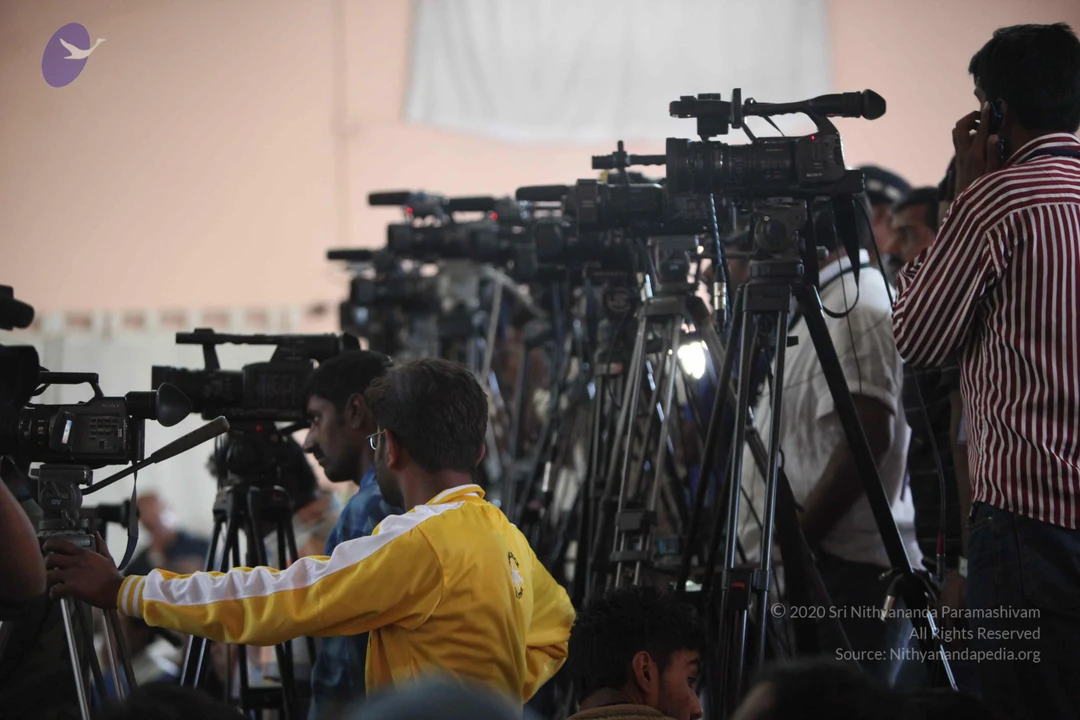
6-SPH-in-Press-Conference

7-Lunch

Photos from this day

View all 452 photos

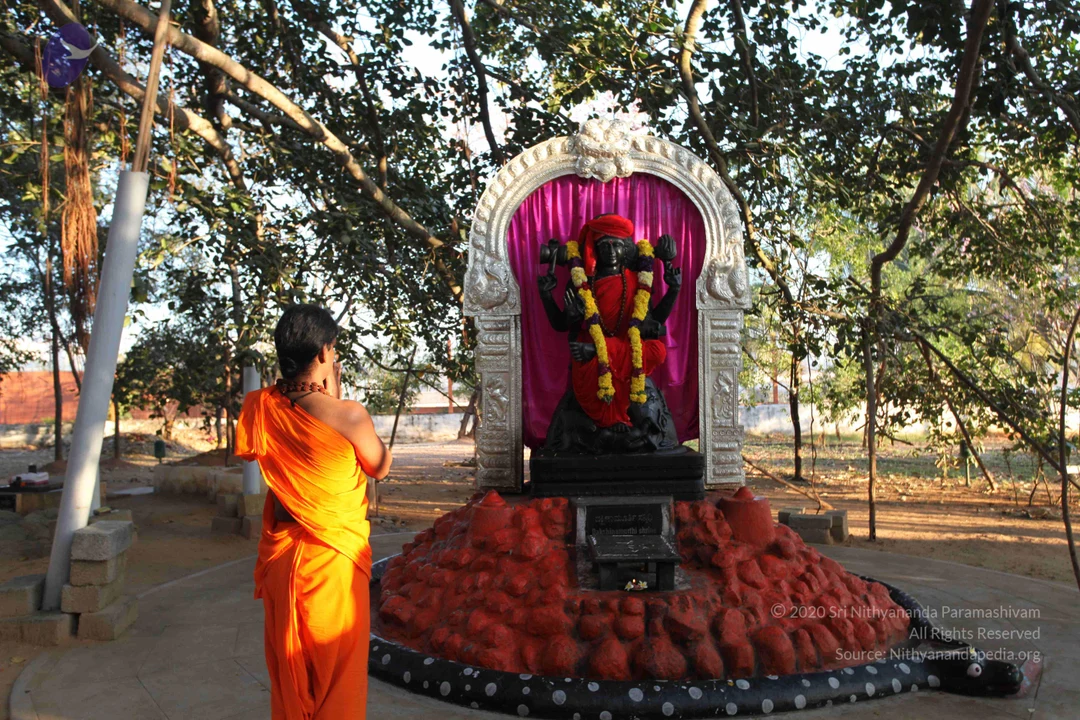
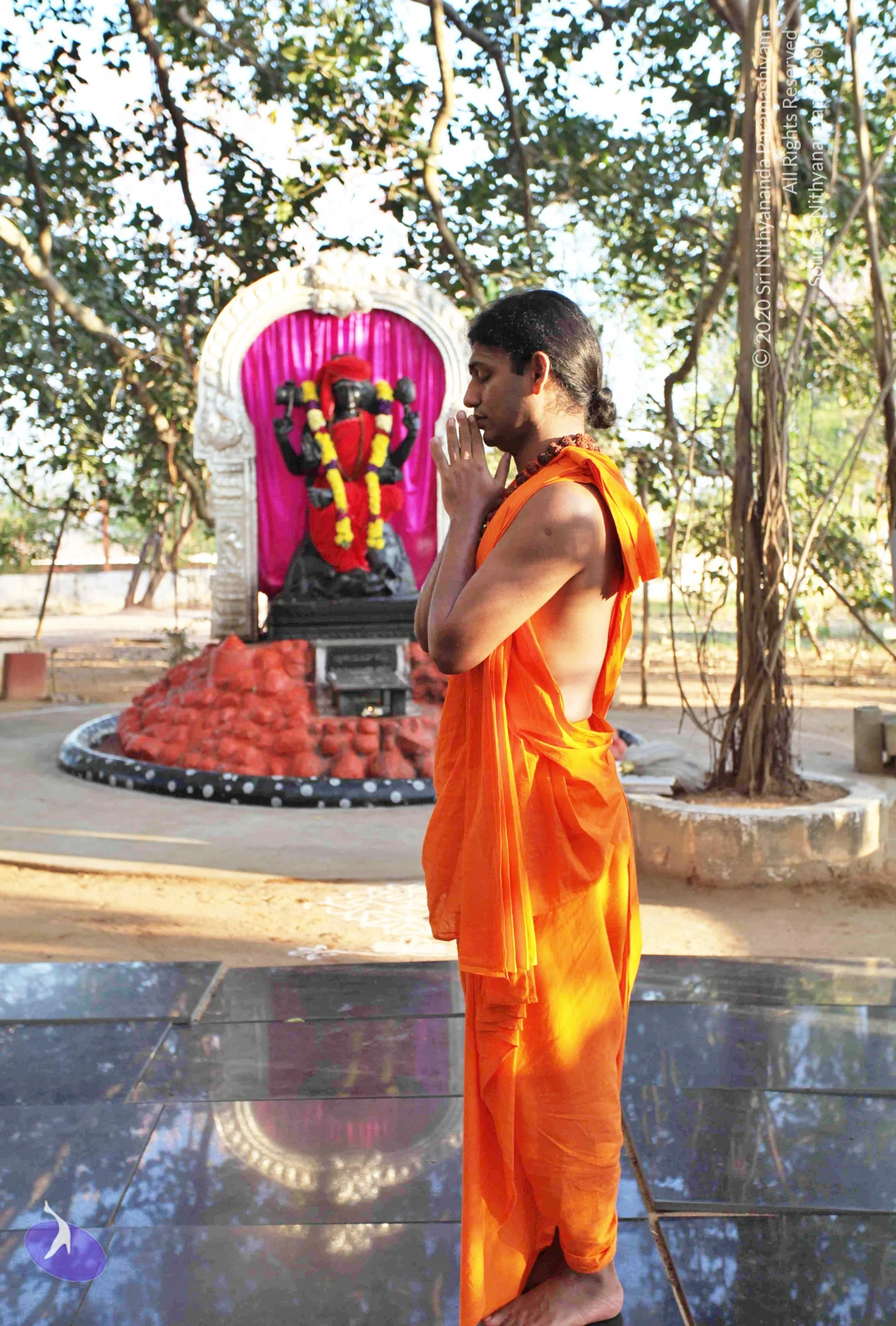
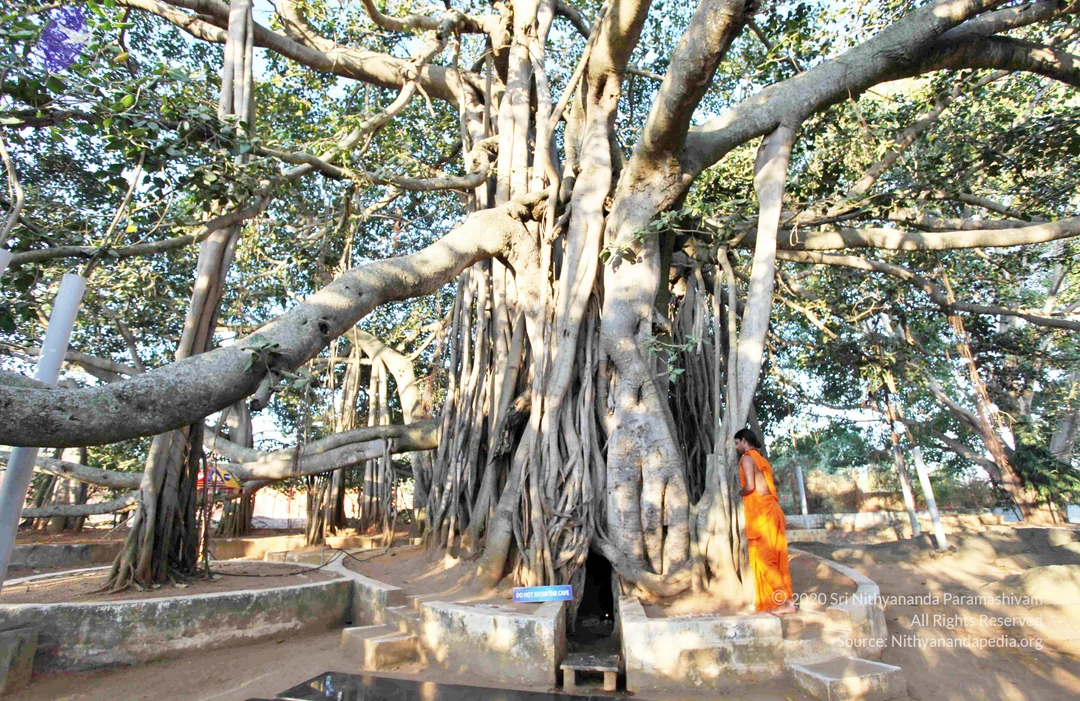
1-Temple
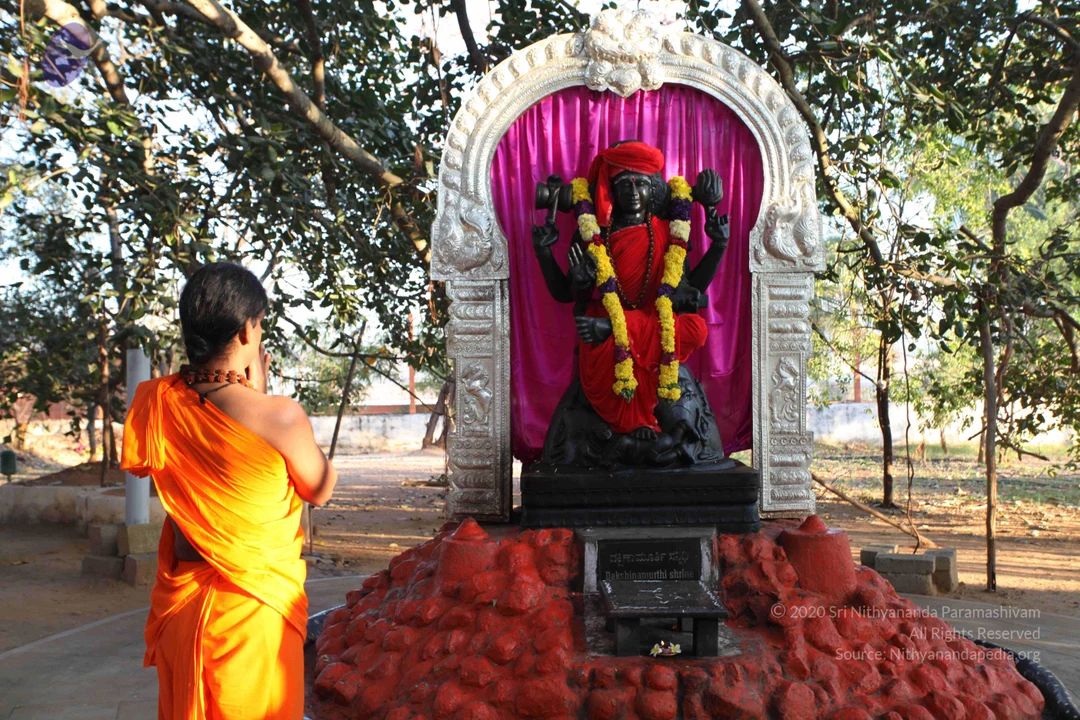
37 photosSource gallery
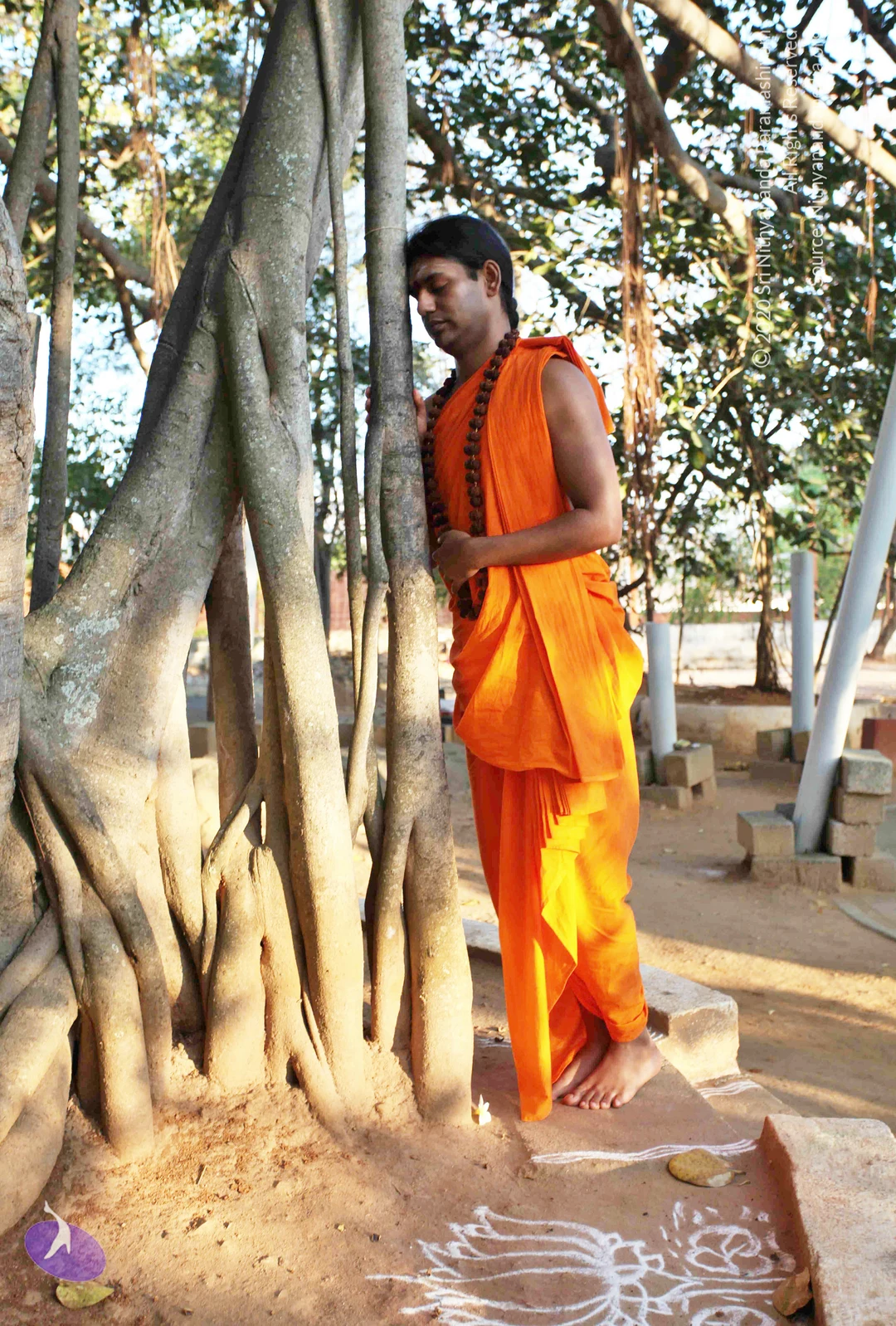
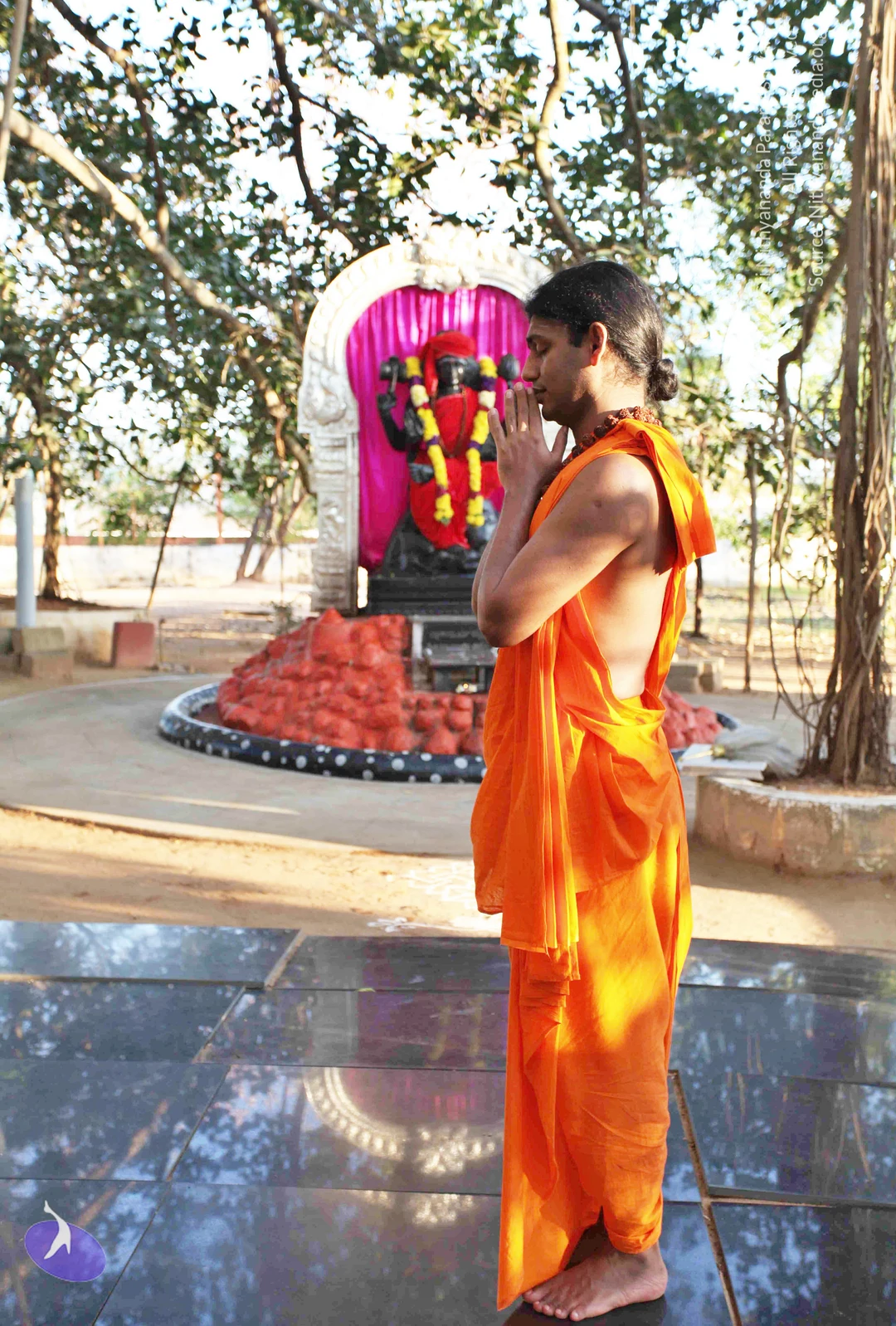
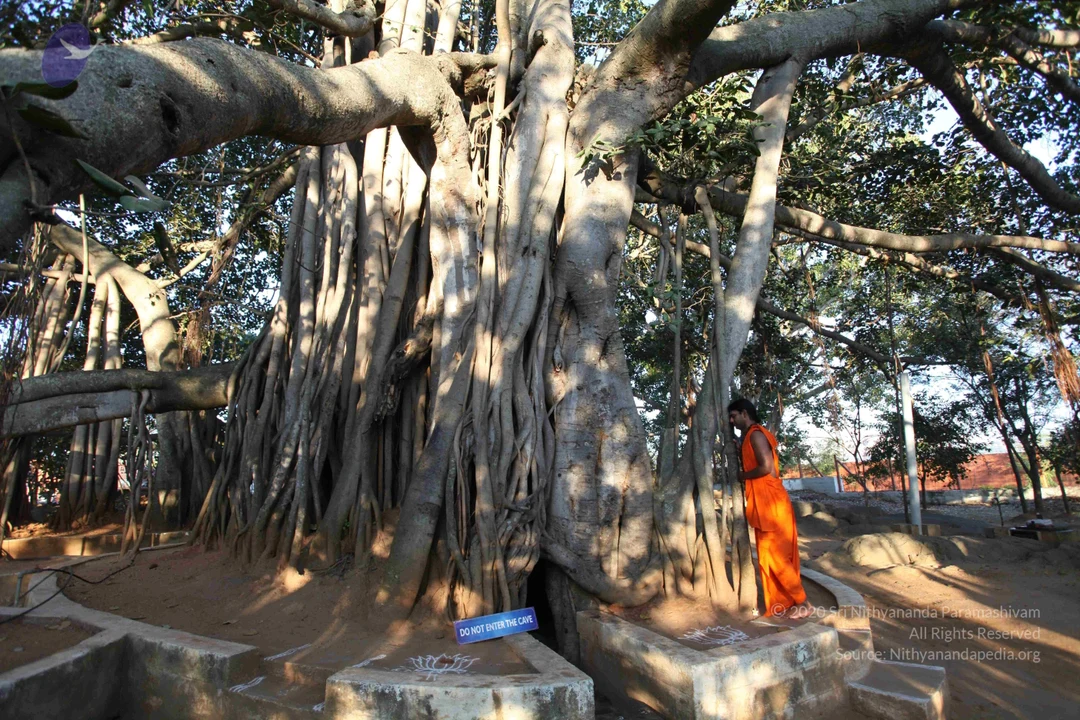
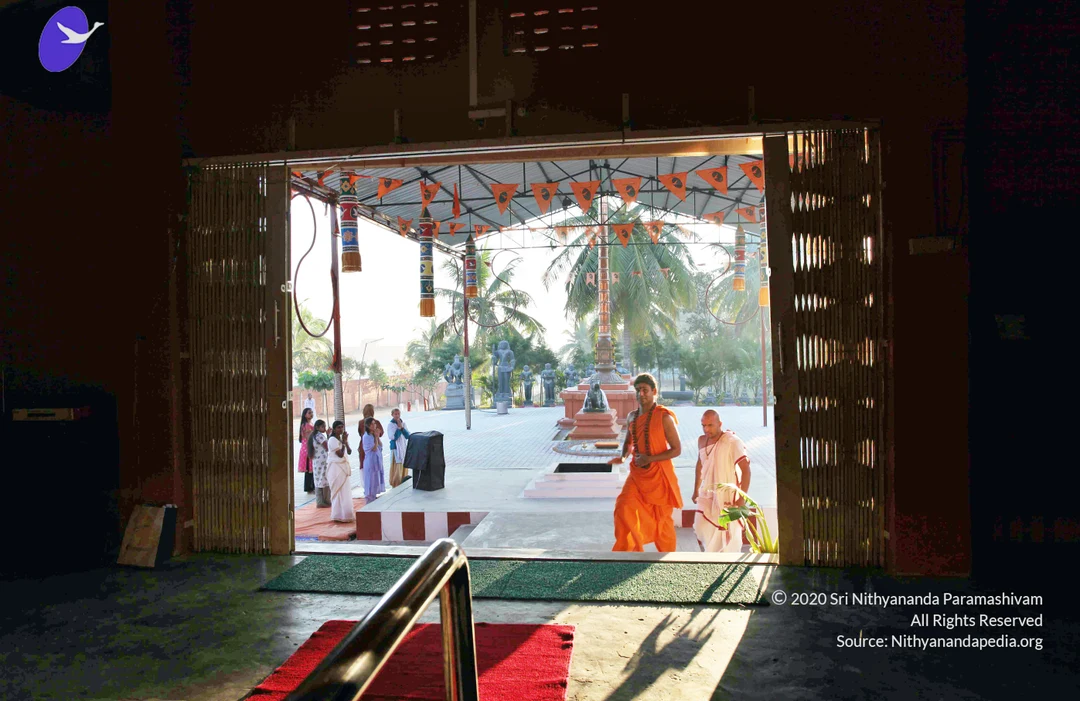
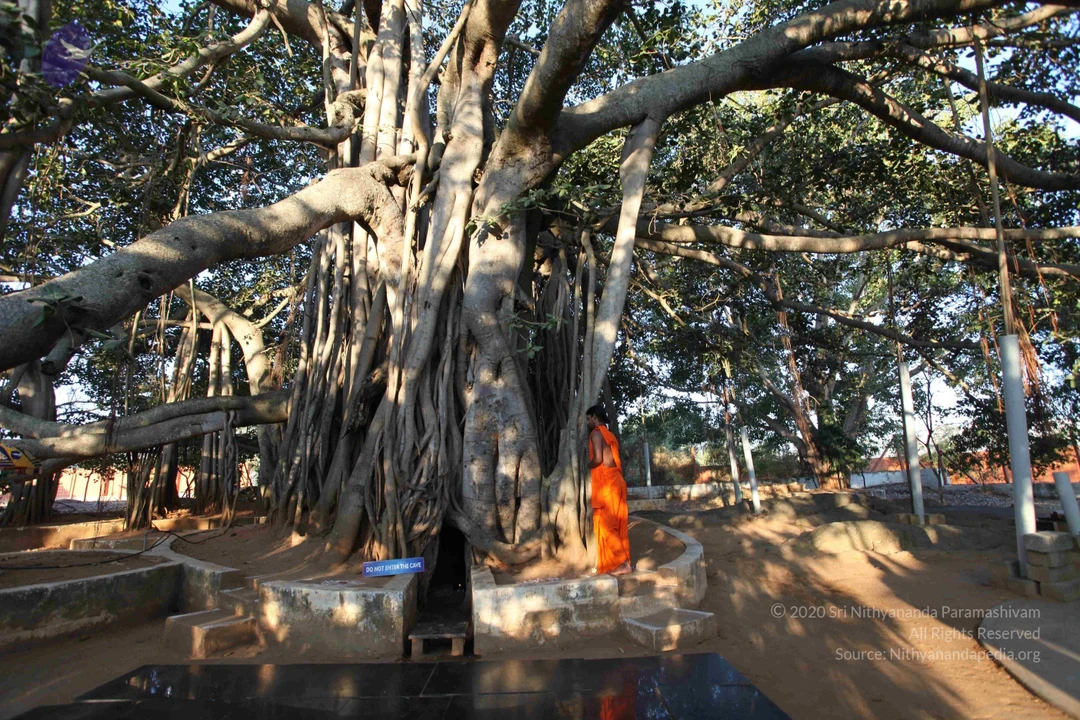
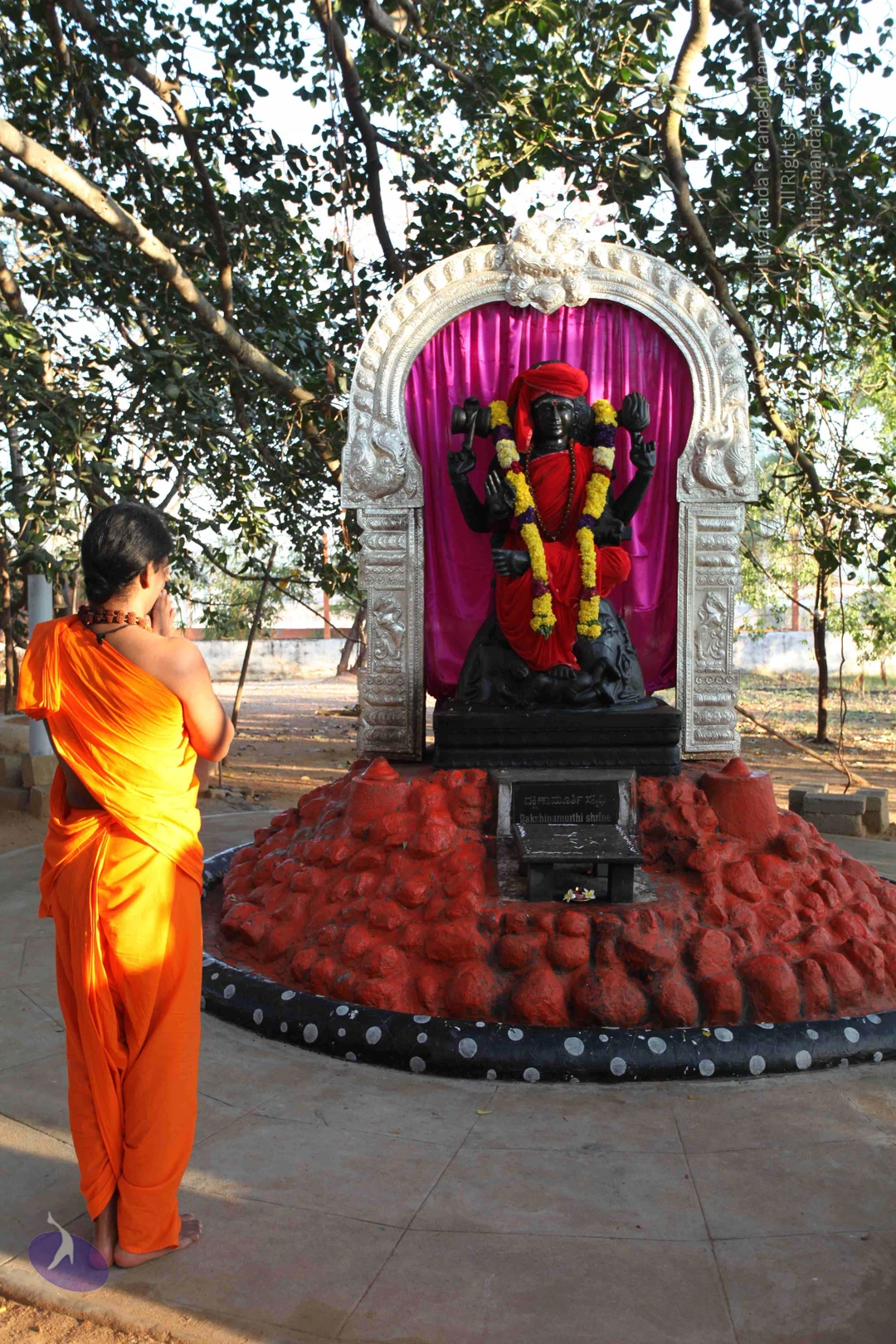
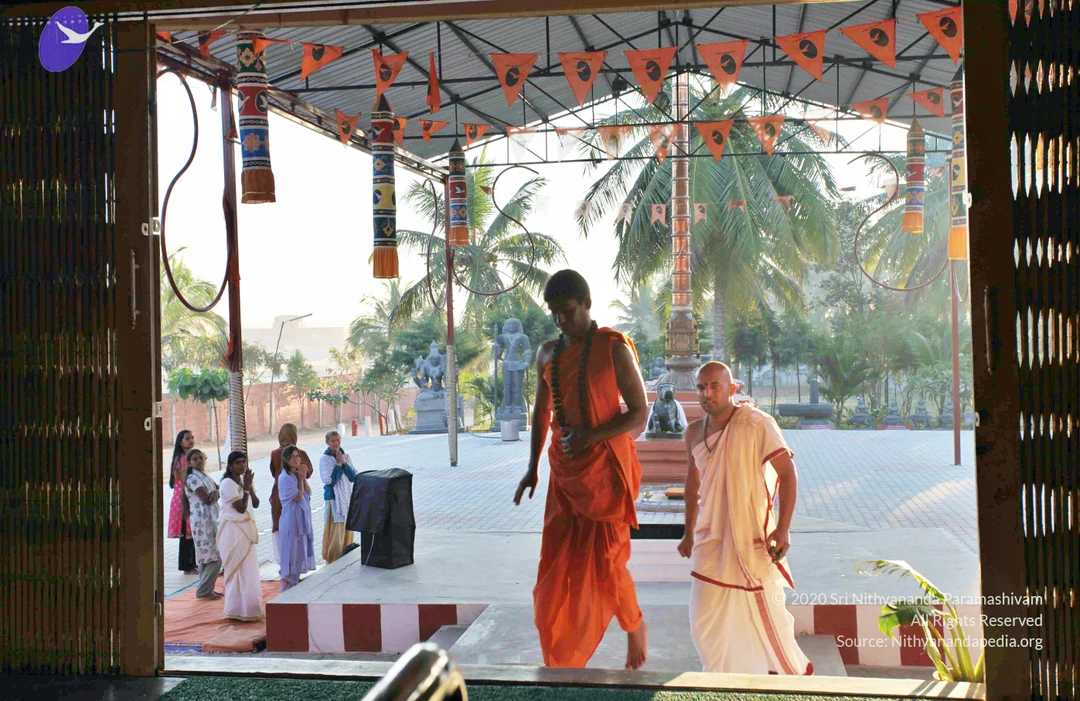
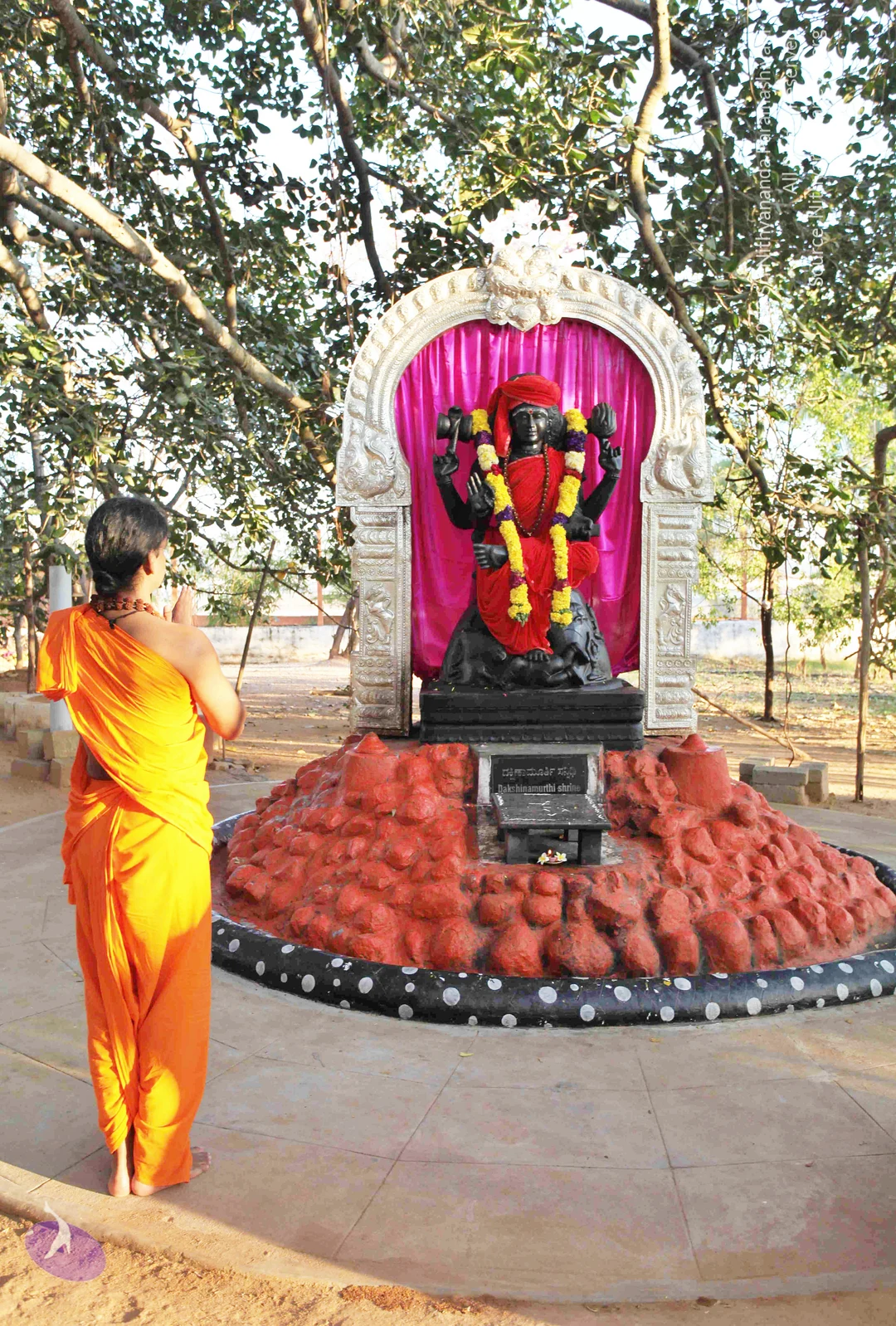
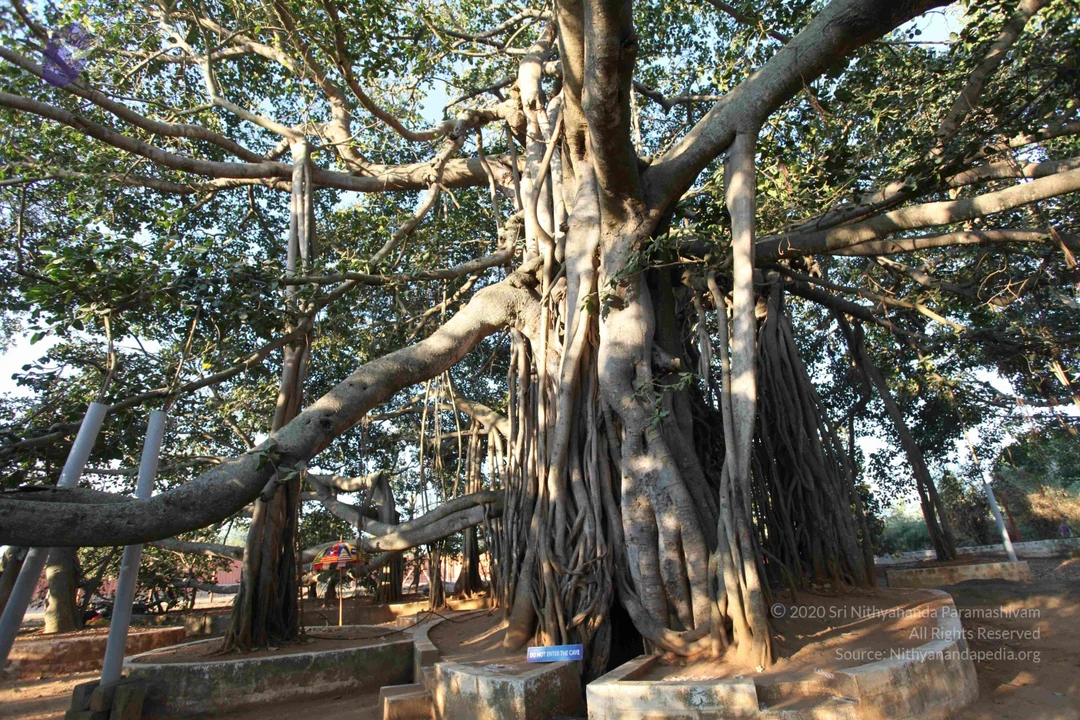
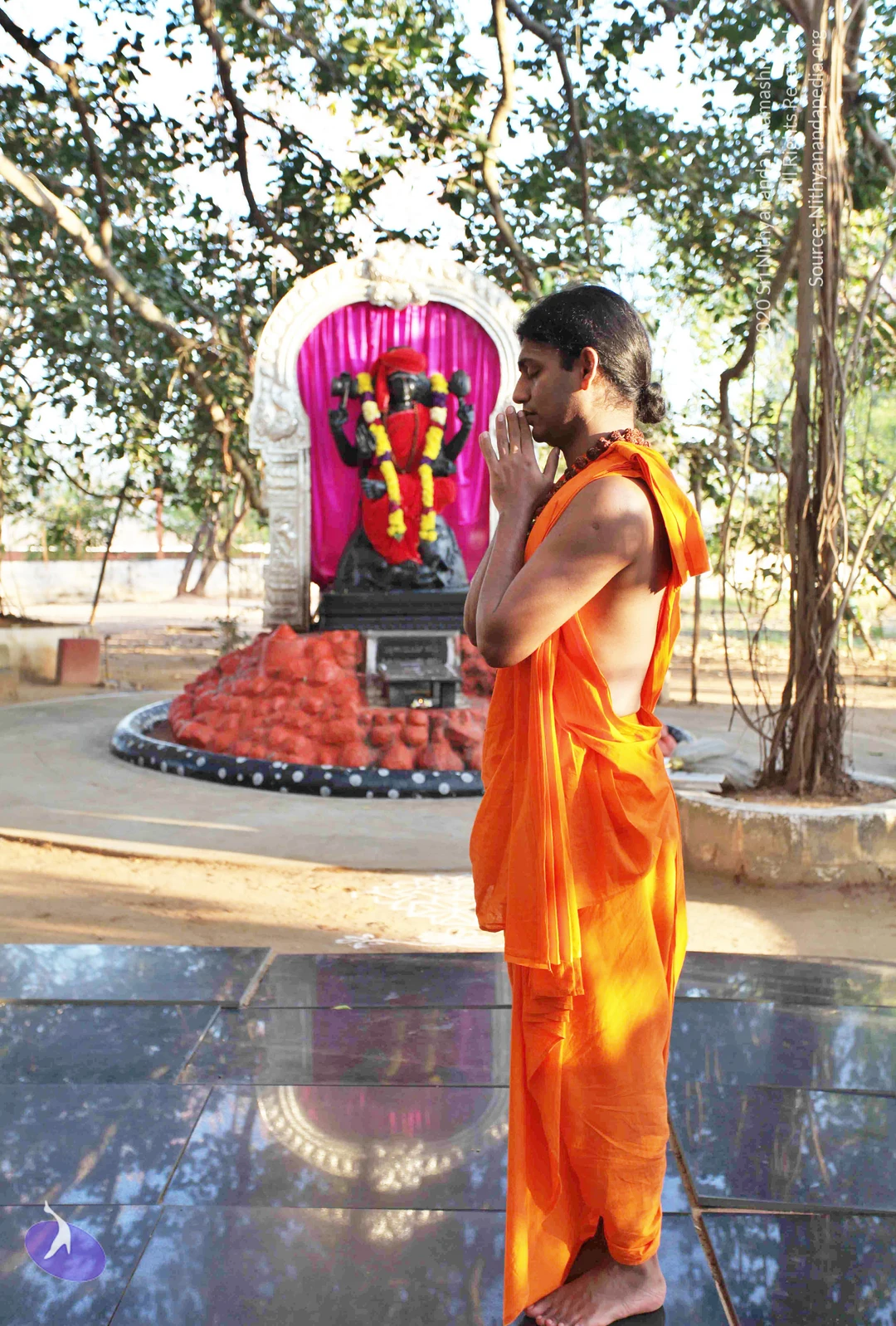
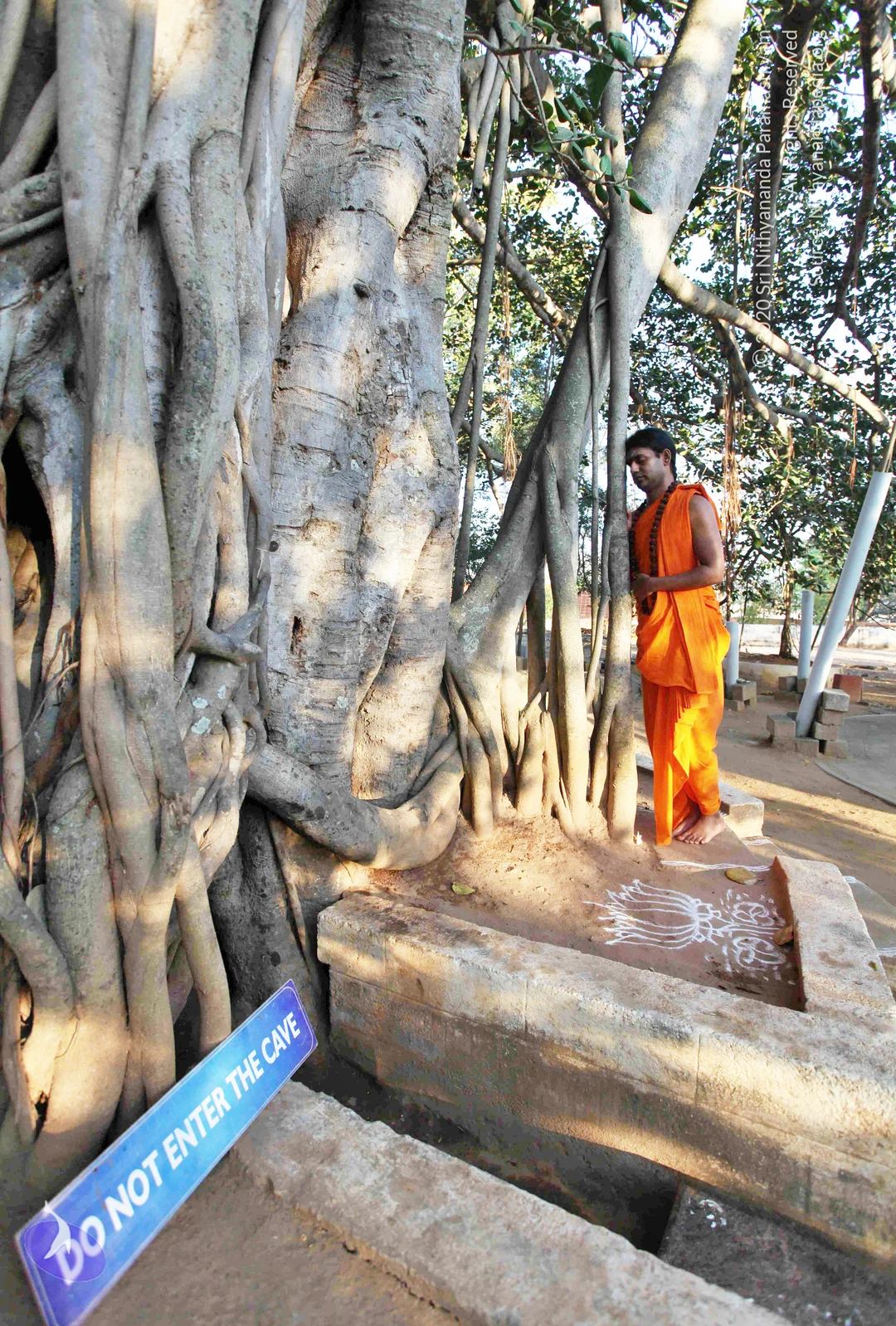
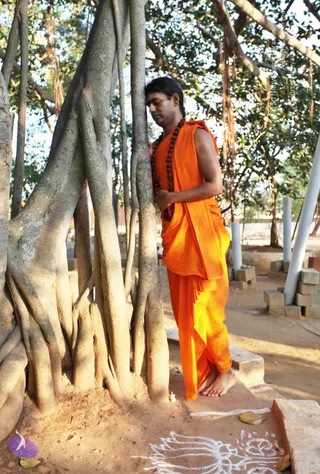
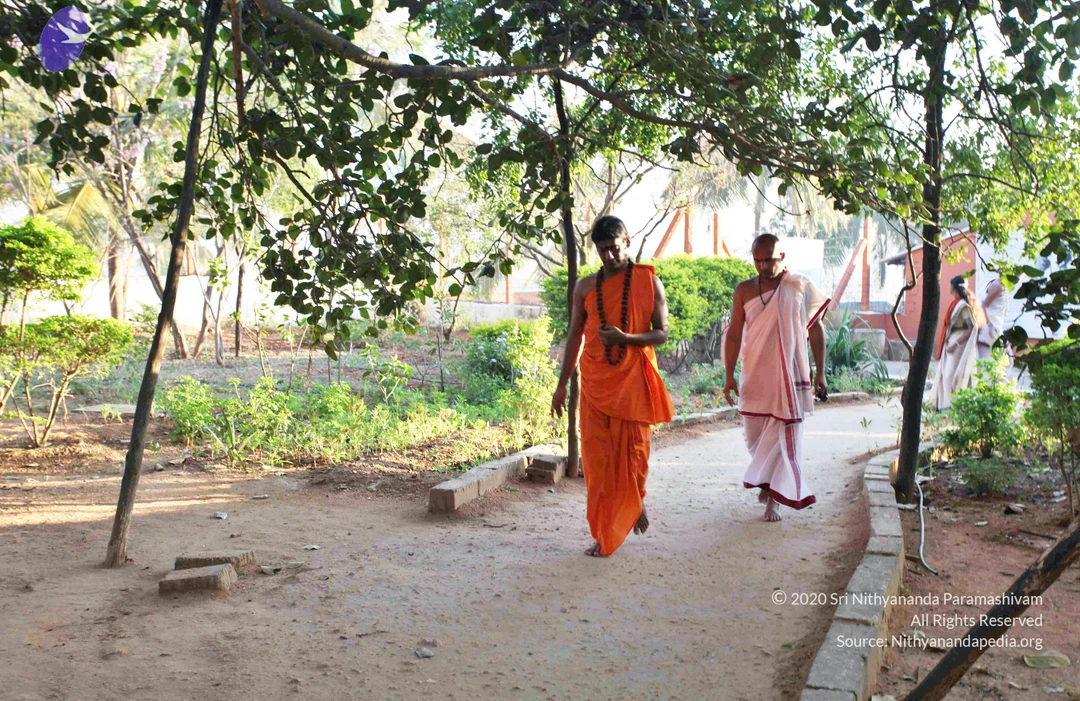
A photograph of two men walking along a dirt path shaded by trees in an ashram garden. The man on the left wears an orange saffron robe, a rudraksha mala around his neck, and has his hands joined in front; he appears to be a sannyasi or devotee. The man on the right is bald and wears a white dhoti with a red border and a white upper cloth, walking barefoot. Behind them, another person in white and a figure in orange are partly visible near a red-and-white building. Green shrubs and palms surround the path.A man stands barefoot on a dark polished stone platform in profile, palms pressed together in anjali mudra at chest height. He wears a loose orange saffron wrap draped over one shoulder and orange dhoti-style trousers, with a rudraksha mala around his neck and hair tied in a bun. Behind him stand white pillars and a large banyan tree with aerial roots, and a low circular stone planter sits on dry earth. The person's appearance is not confidently identifiable, so no candidate is asserted.A man in saffron-orange draped robes stands barefoot beside the thick, buttressed trunk of a large banyan tree, one hand resting on the trunk and eyes closed in meditative stillness. He wears a long rudraksha mala around his neck and a long dark braid falls down his back. At his feet is a white kolam, a chalk floor drawing, on the stone platform, with a single white flower near the base of the tree. Hanging aerial roots and leafy branches fill the background, and a concrete block structure and white pillars sit in the open courtyard.A barefoot man in a saffron-orange dhoti and shawl stands with palms pressed together in namaskar on a dark polished stone floor, facing a shrine. He wears a rudraksha mala around his neck and has his hair tied back in a bun. Behind him, a black deity murti decorated with a red cloth and yellow and purple flower garlands stands inside a white arched niche draped in magenta fabric. A pile of red offerings sits on a circular black-and-white dotted platform beneath spreading trees.A large banyan tree with many thick aerial roots and spreading branches dominates the frame, shading a raised stone platform. A figure in an orange-saffron robe stands at the base of the trunk, leaning in toward a narrow dark opening in the roots, with a blue sign reading DO NOT ENTER THE CAVE fixed near the platform. Lotus motifs are painted on the concrete platforms, and dry sandy ground and a low brick wall lie in the background.Photograph taken from inside a dark doorway looking out onto an open courtyard at an ashram. A saffron-orange festoon of triangular flags hangs across a canopy, with colourful hanging tassels on poles and palm trees behind. In the courtyard, a few people in white and light clothing stand near a low pillared shrine and a row of grey stone statues. Two figures walk toward the viewer through the doorway: one in a full orange-saffron robe with a rudraksha-style mala and a sash, and a bald man in white ceremonial dress with a shawl and beads. The red and green floor mats lead the eye inward. Visible people are not clearly identifiable.

2-Panch-Tapas

171 photosSource gallery
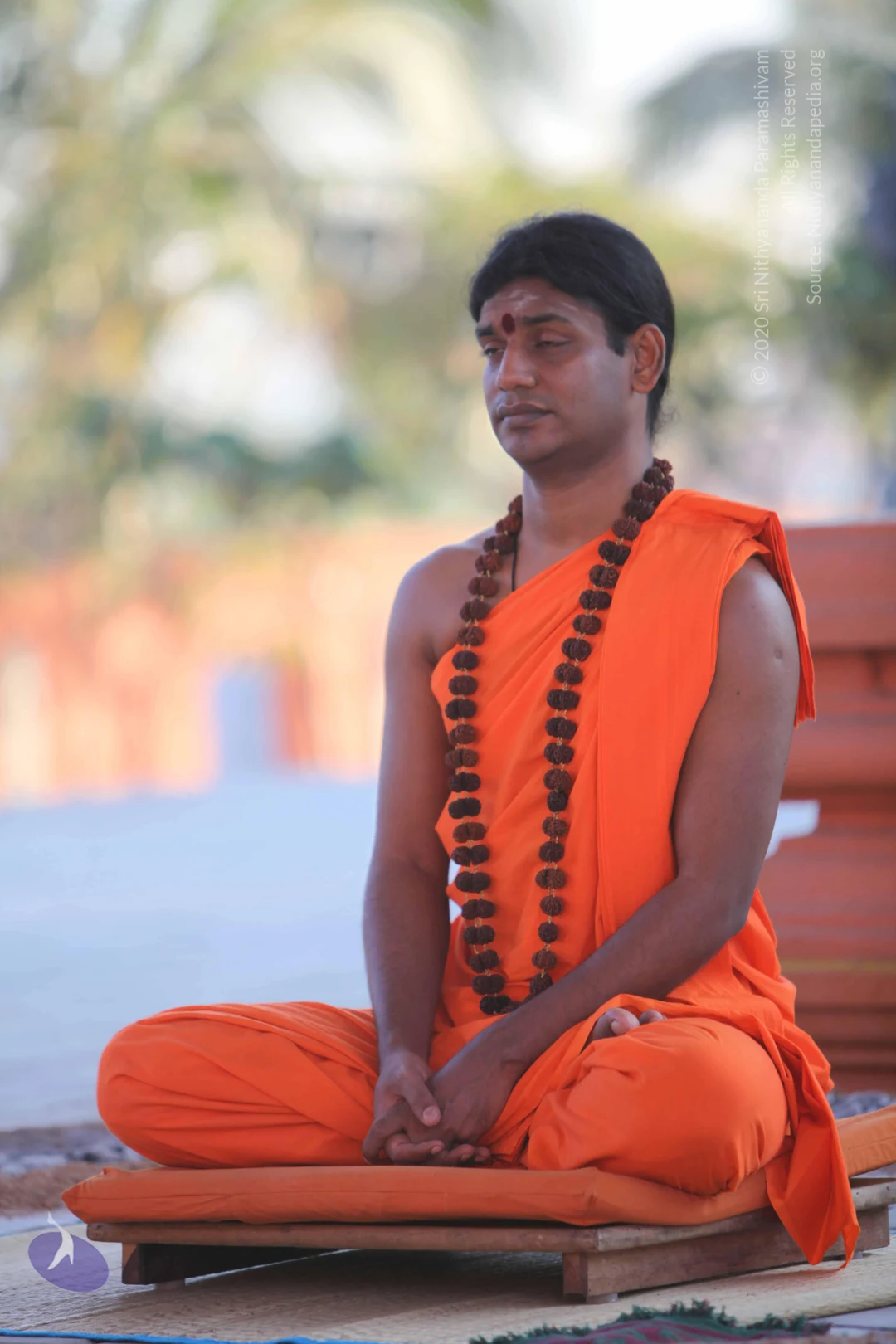
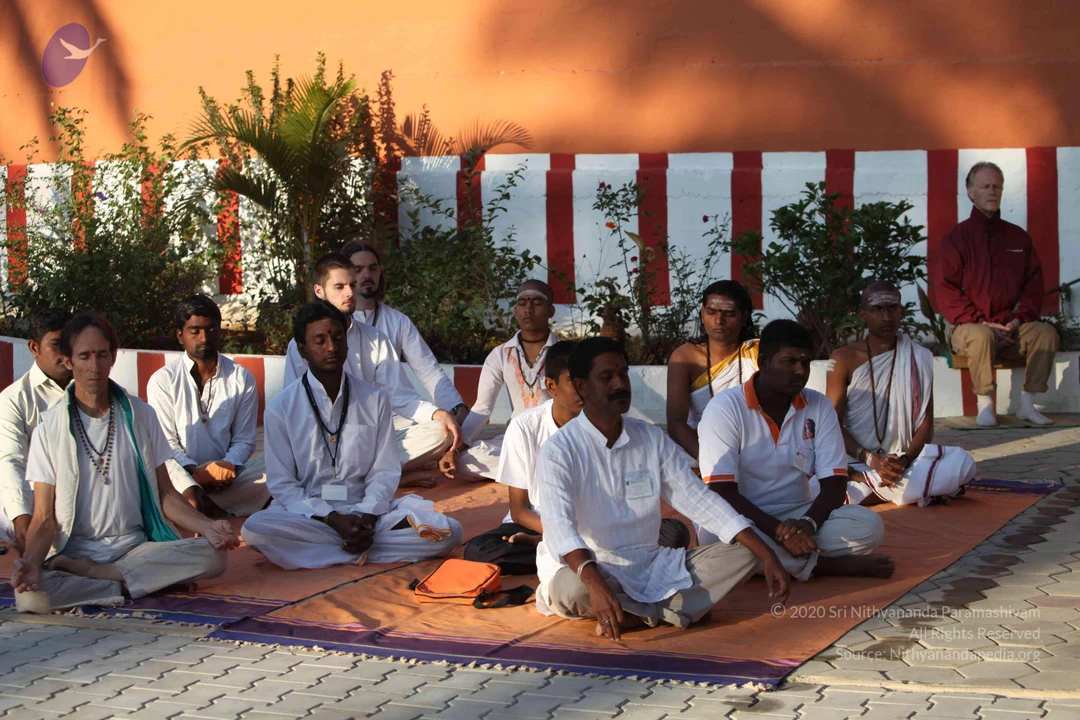
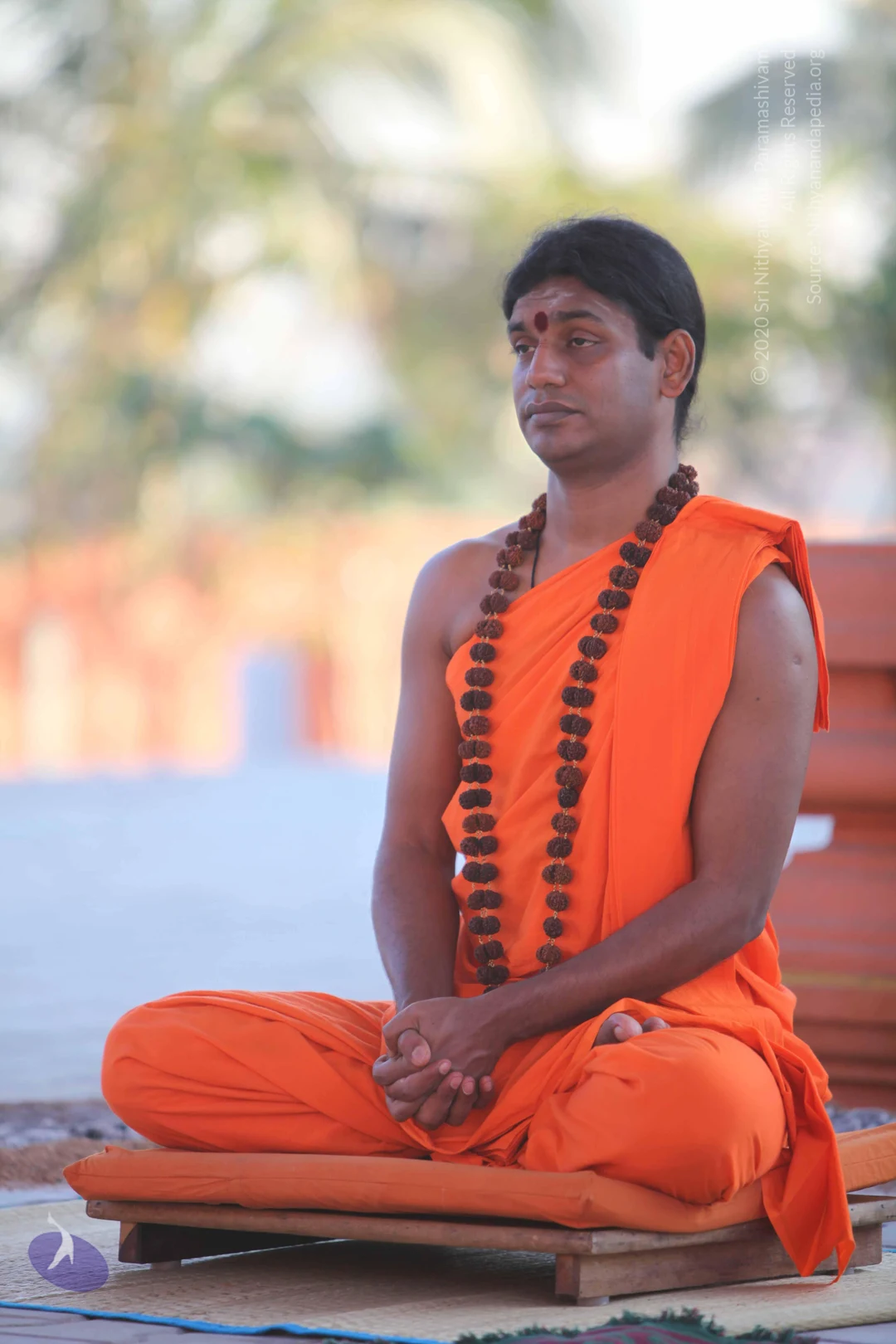
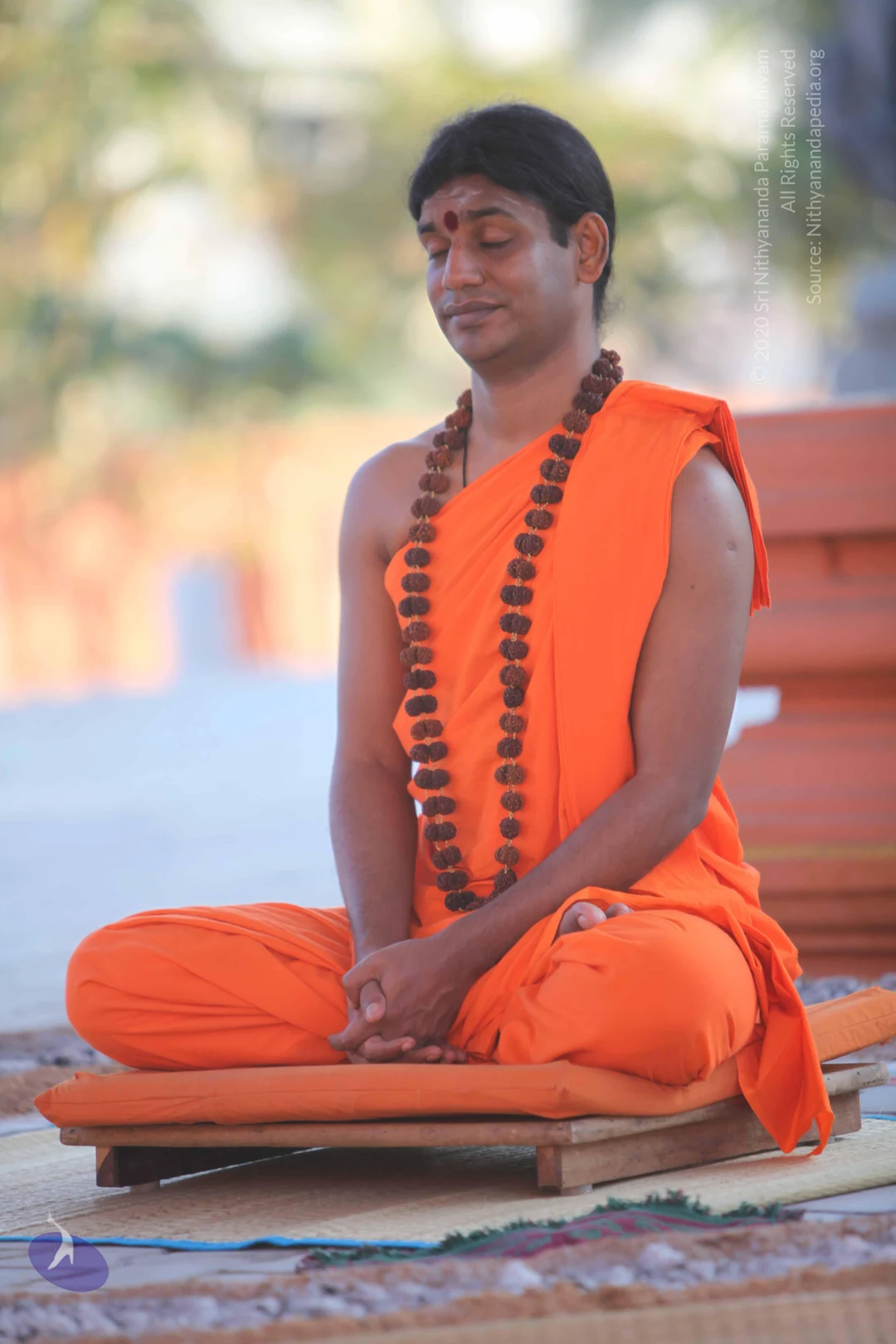
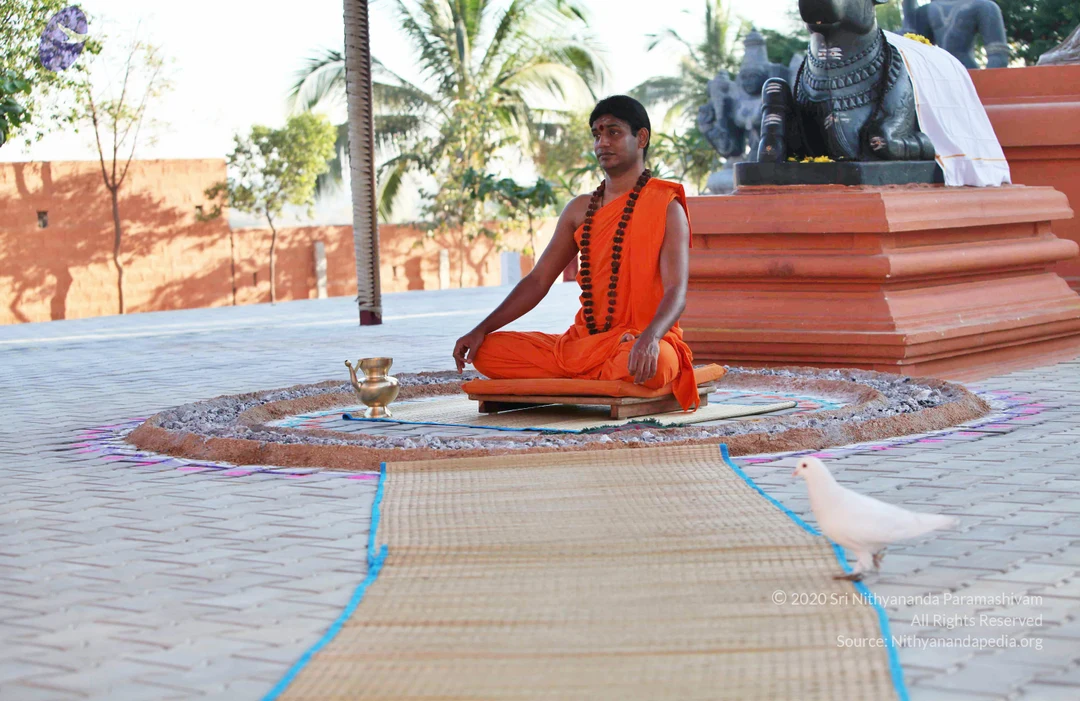
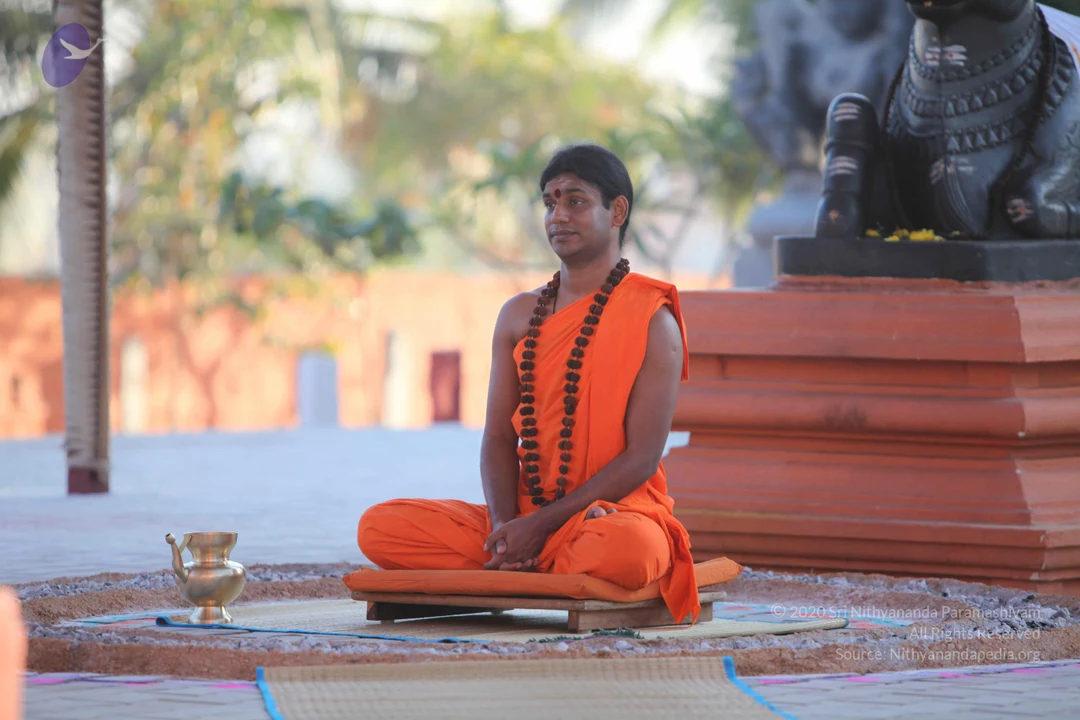
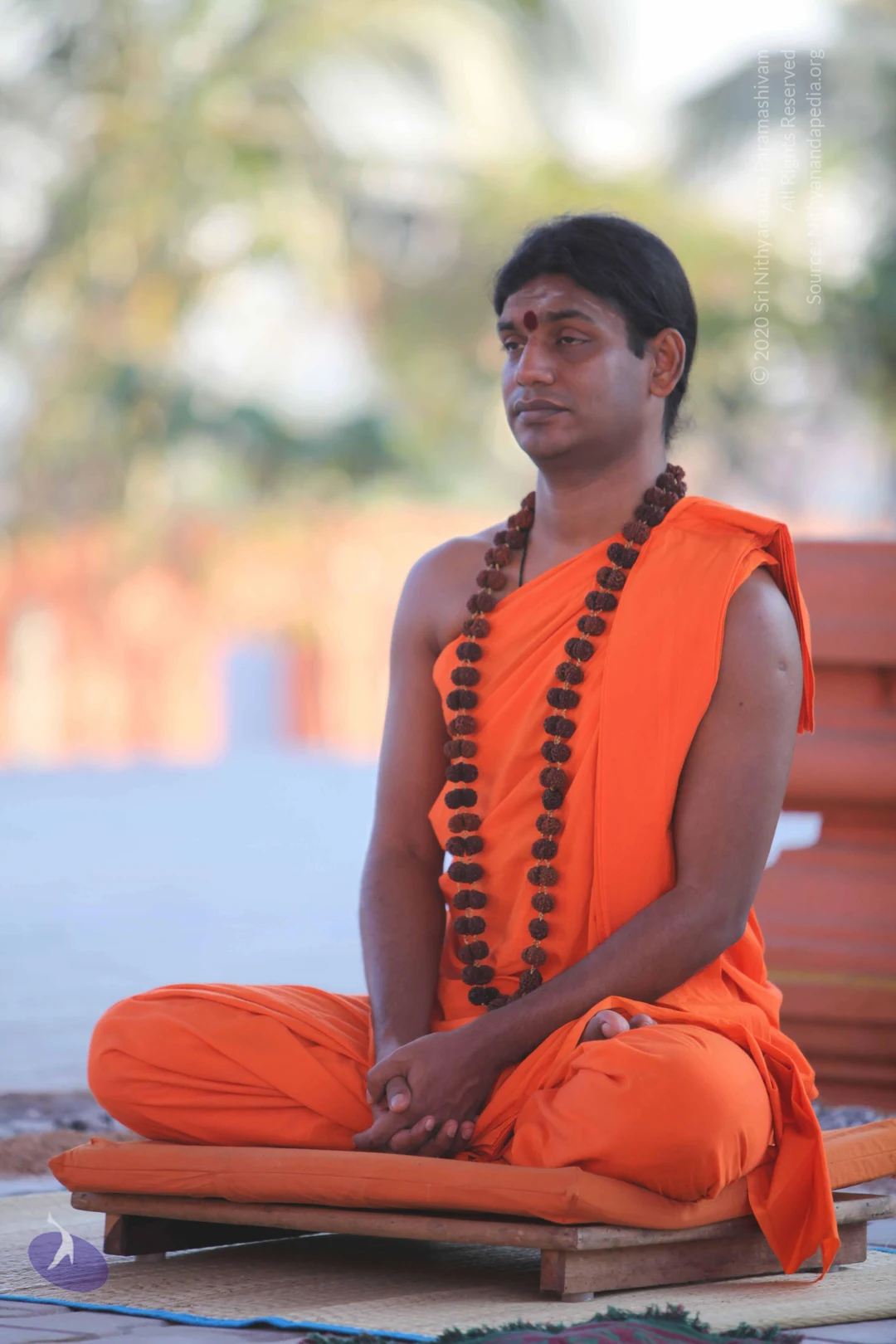
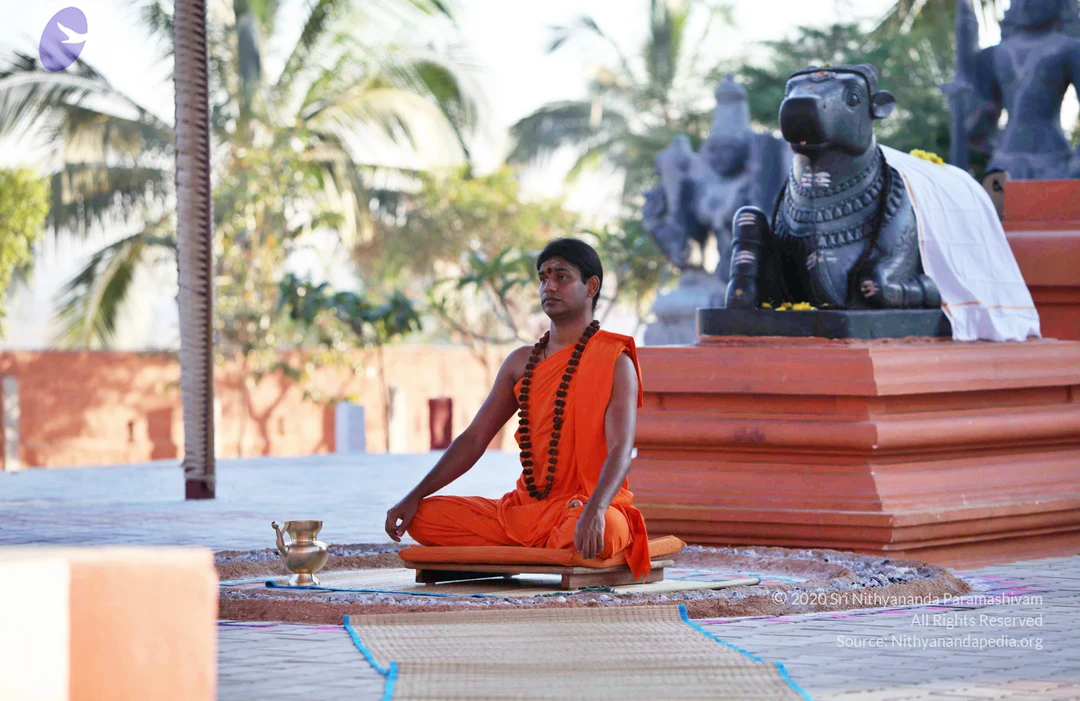
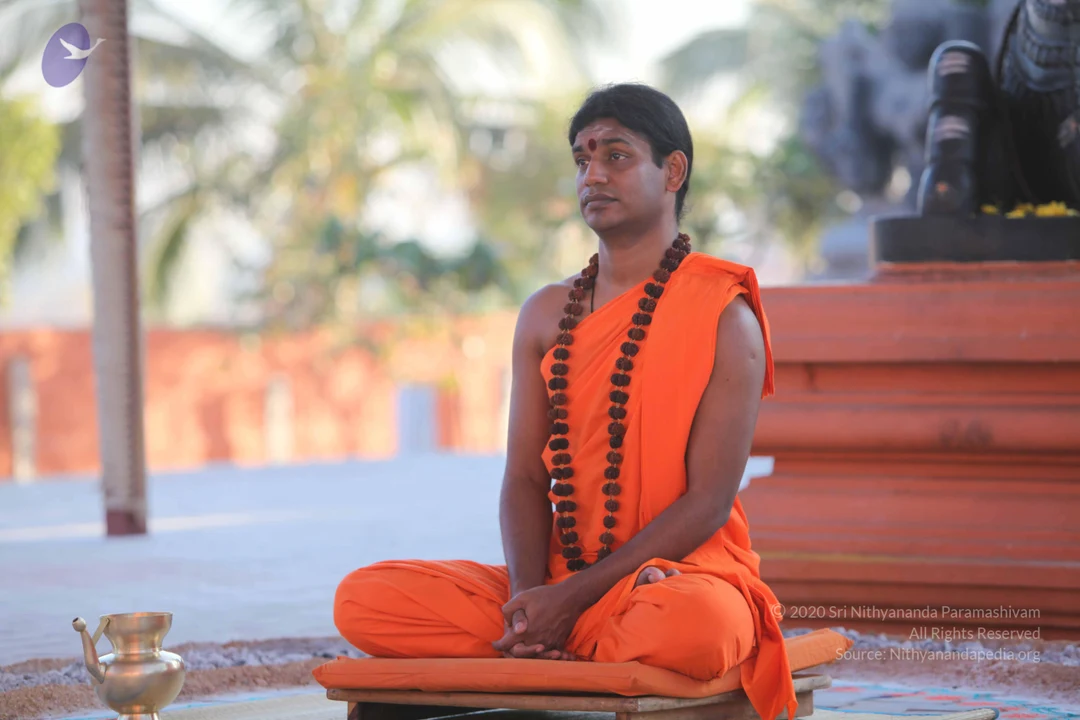
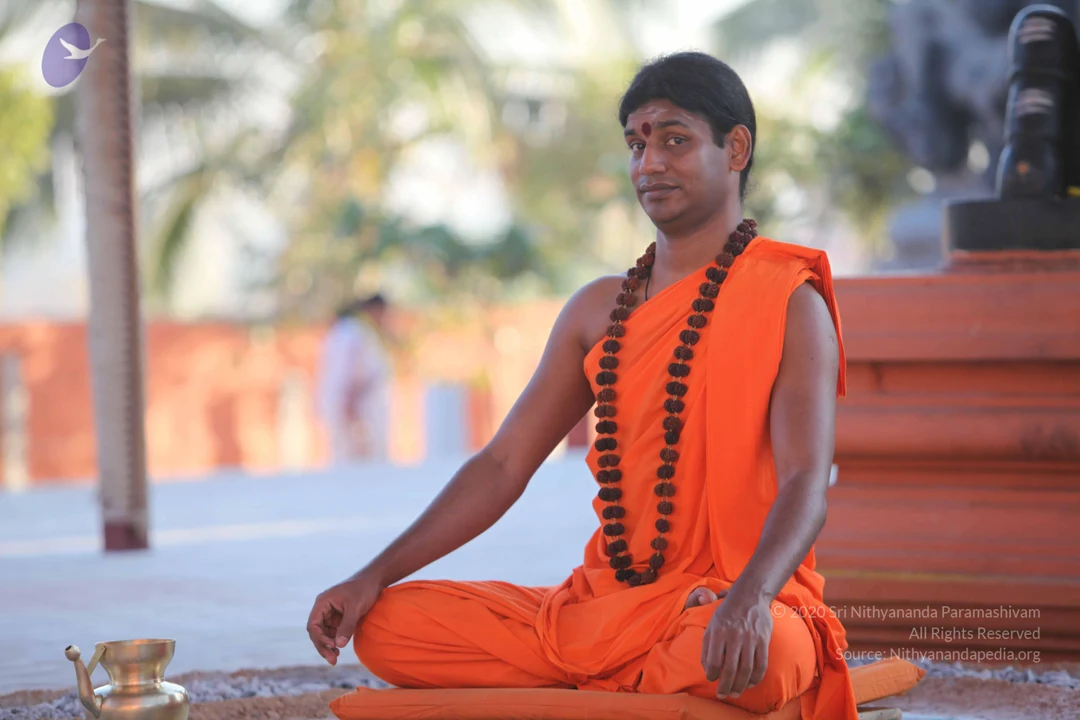
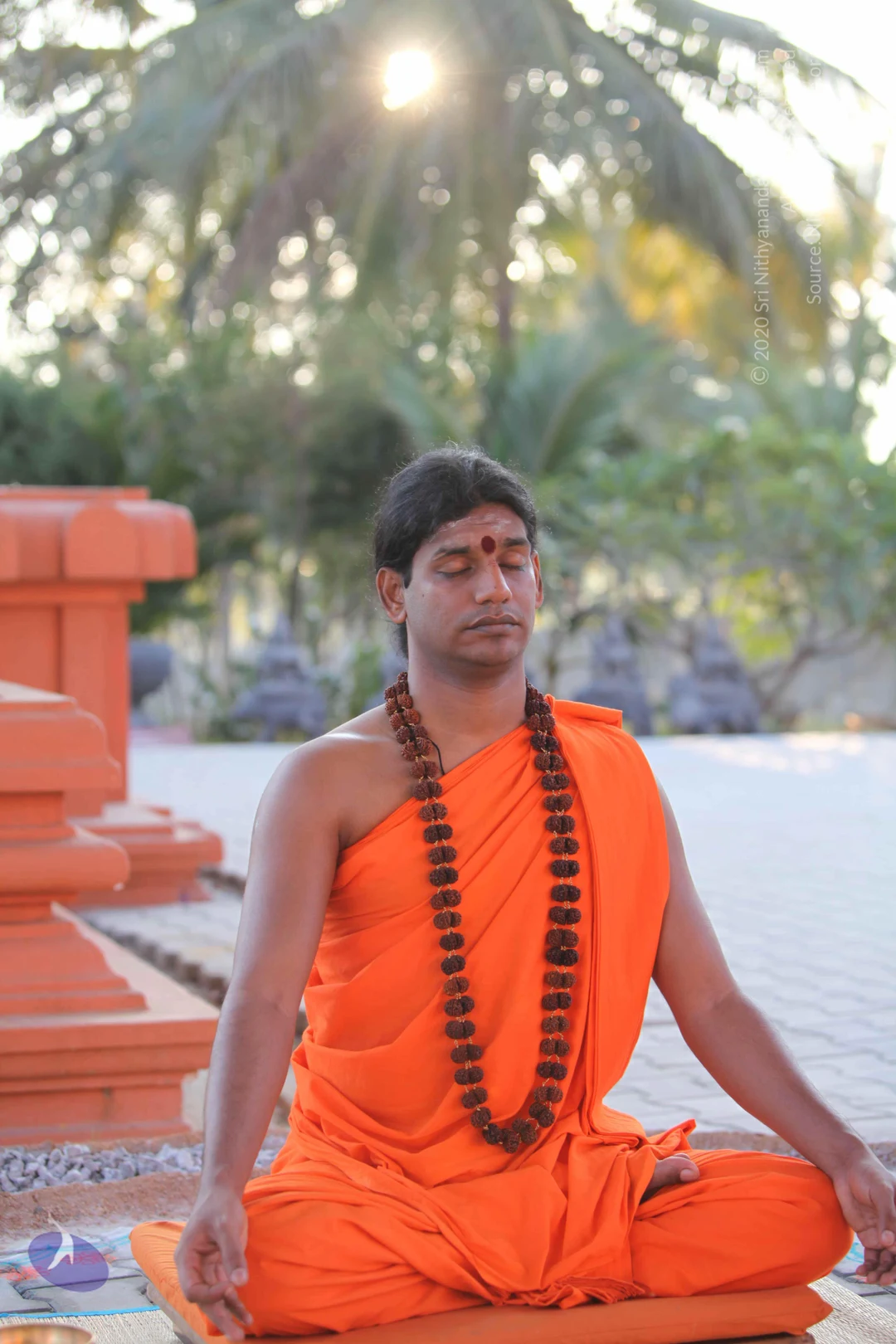
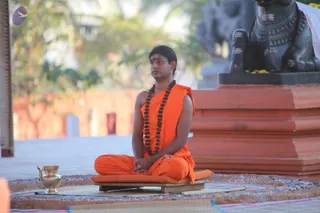
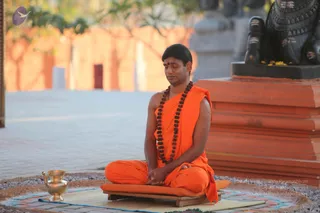
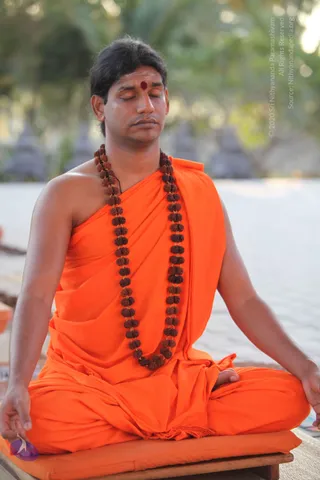
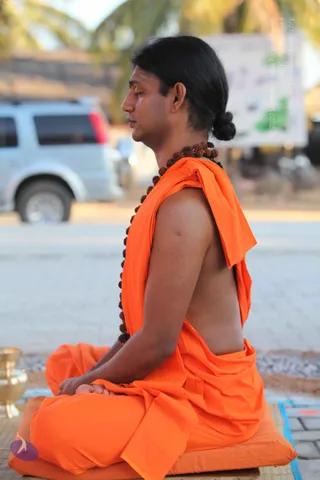
A man sits cross-legged on a low wooden seat on a mat outdoors, eyes lowered in meditation. He wears a saffron-orange robe draped over the shoulders and a long rudraksha mala with a red tilak on his forehead. A brass kalasha-style pot sits on the ground to his left, and behind him a black stone Nandi bull with yellow flowers rests on an orange-red pedestal near a palm tree and terracotta wall. The scene is a meditation setting at an ashram courtyard.A man sits cross-legged in meditation on an orange cushion placed on a low wooden platform outdoors. He wears an orange saffron cloth draped over the shoulders and an orange lower garment, with a long rudraksha mala of dark beads around his neck and a red tilak mark on his forehead. His hands rest in his lap and his eyes are gently open, looking to the side. Behind him stands a large dark stone Nandi bull statue on an orange-red pedestal with yellow flowers at its base. A brass pot with a spout sits on the ground to his left, and a woven mat lies beneath the platform. Trees and a reddish wall form the blurred background.A man in orange saffron robes sits cross-legged in meditation on a low wooden platform over a woven mat, eyes closed and hands resting in his lap. He wears a long rudraksha mala with dark beads and a red tilak on his forehead. Beside him on the mat stands a small brass vessel with a spout. Behind him a large dark stone deity murti rests on an orange pedestal decorated with yellow flowers. The paved courtyard and orange-toned walls are visible in the background.A man sits cross-legged in meditation on an orange cushion outdoors, eyes closed, with a red bindi on his forehead. He wears a draped saffron-orange cloth over one shoulder and a long necklace of dark brown rudraksha beads. His hands rest in his lap in a meditative posture. Blurred green trees and a pale paved area stand behind him. a person is meditating in this image.Photograph of a man seated cross-legged in meditation on an orange cushion outdoors, eyes closed, hands resting in his lap. He wears an orange saffron wrap draped over one shoulder, leaving the other shoulder and back bare, and a long rudraksha mala of brown beads around his neck. His dark hair is tied in a bun at the back. A brass vessel sits at the left edge of the frame, with a white signboard, a silver SUV and palm trees in the blurred background. a person is shown in meditation, a sannyasi in saffron dress with a rudraksha mala.A man in an orange saffron robe and a rudraksha mala sits cross-legged on a low wooden seat on a paved courtyard. A circular raised ring of ash-grey material surrounds the seat, with a brass kalasha-style pot placed at its edge and a woven mat laid in front. Behind him stands a large black stone Nandi bull statue draped with a white cloth and decorated with flower garlands, on a terracotta plinth, with other deity sculptures beside it. A woman in an orange sari walks in the background near a terracotta wall and palm trees, and a pigeon stands on the mat in the foreground. The scene is outdoors in daylight.

3-Pada-Puja

48 photosSource gallery
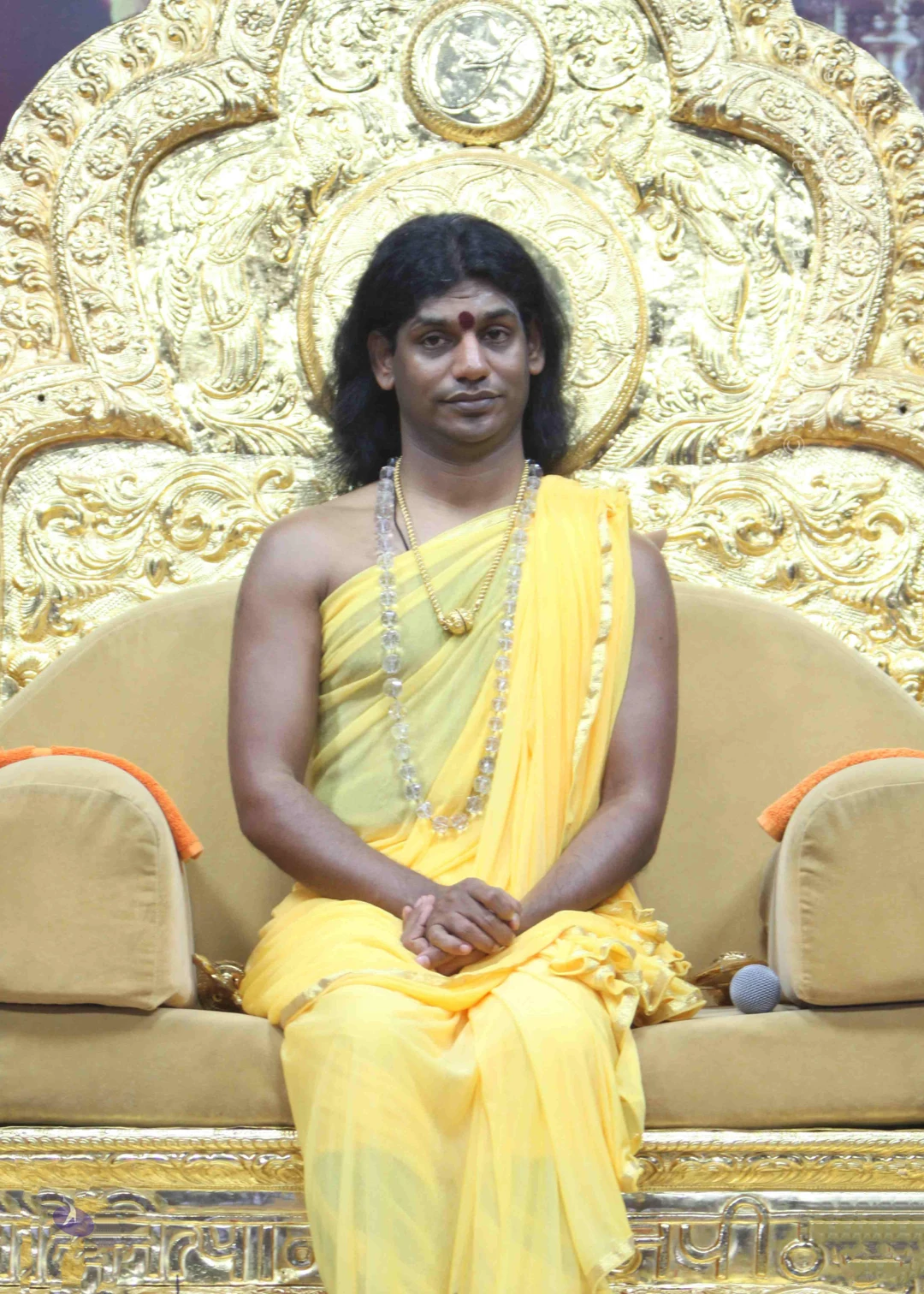
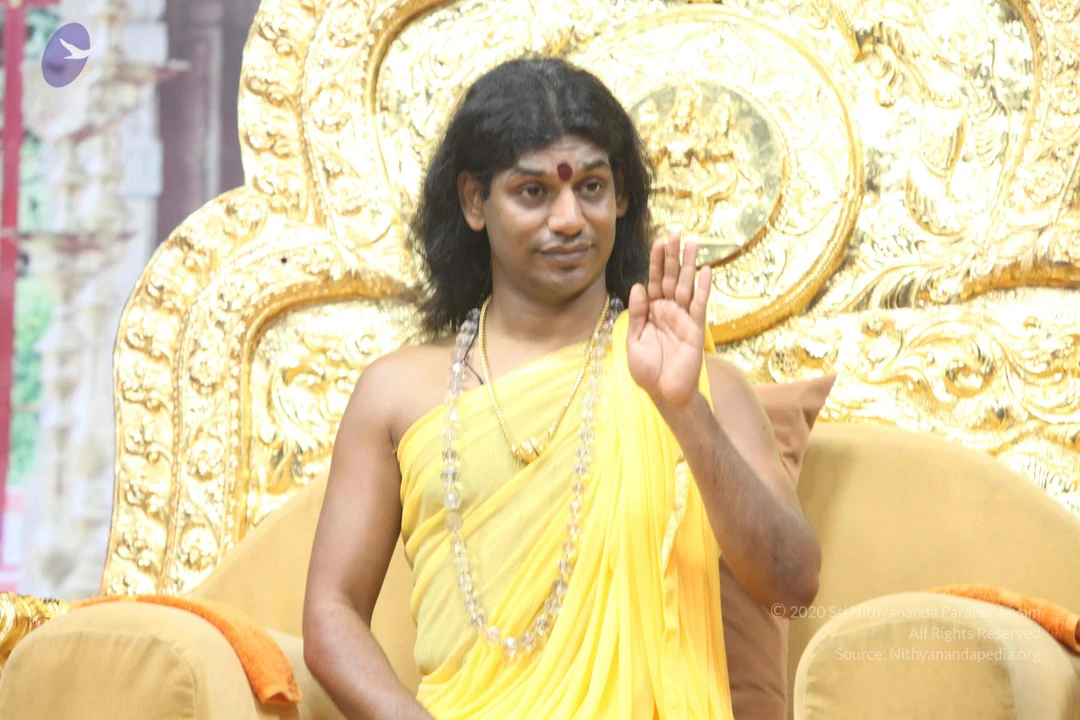
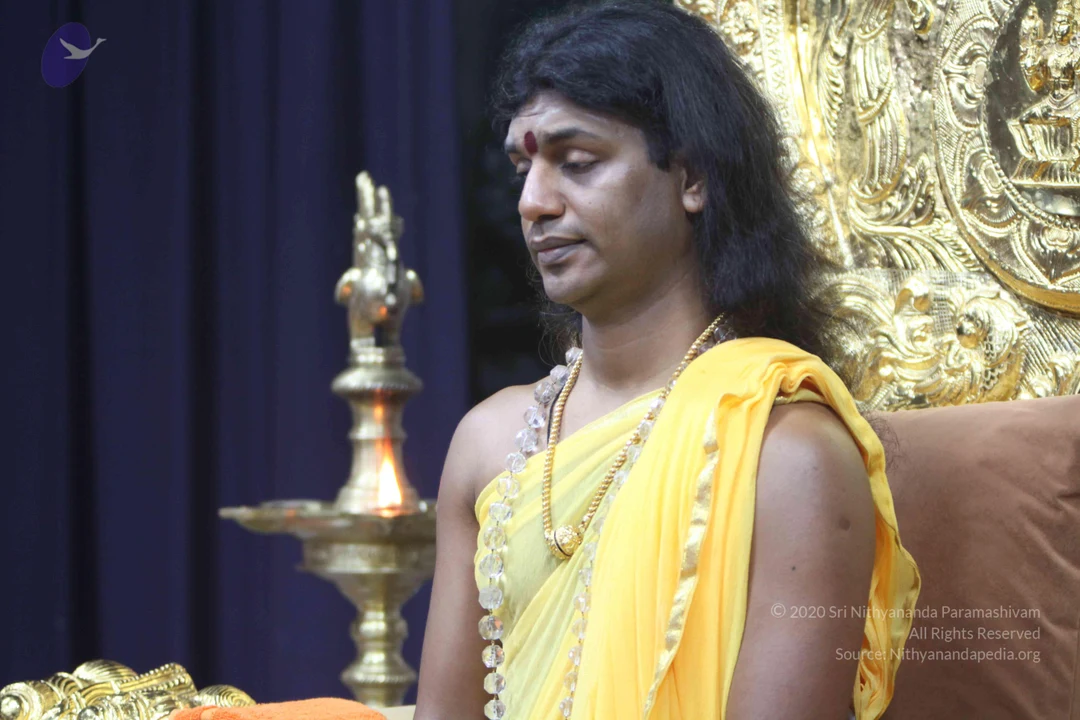
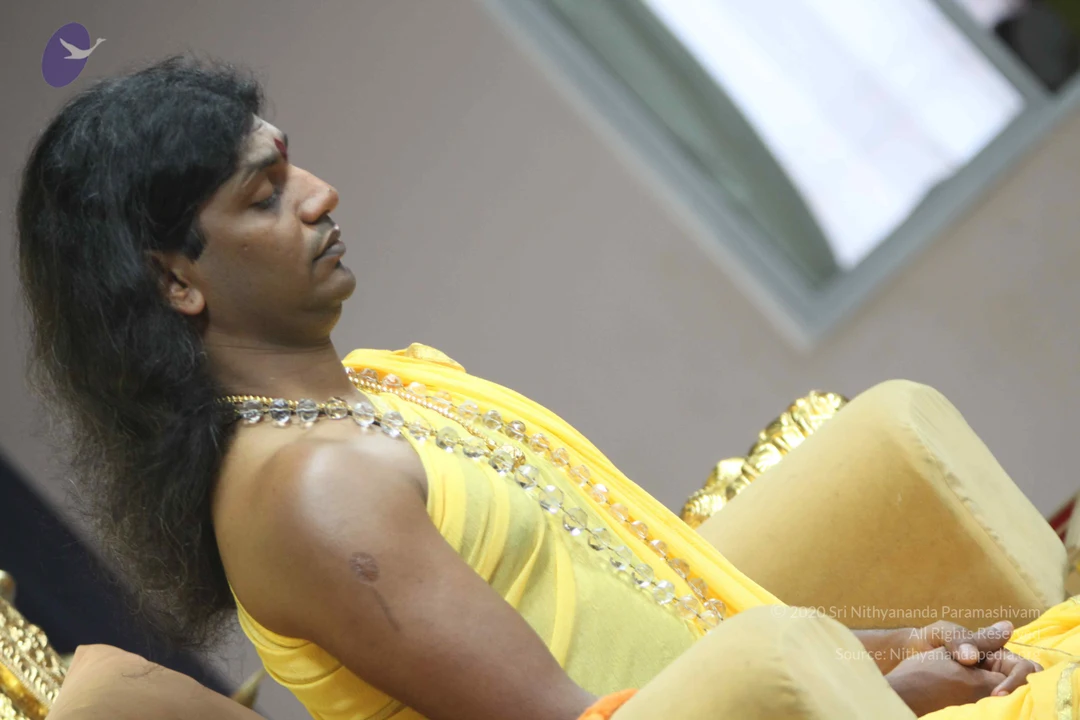
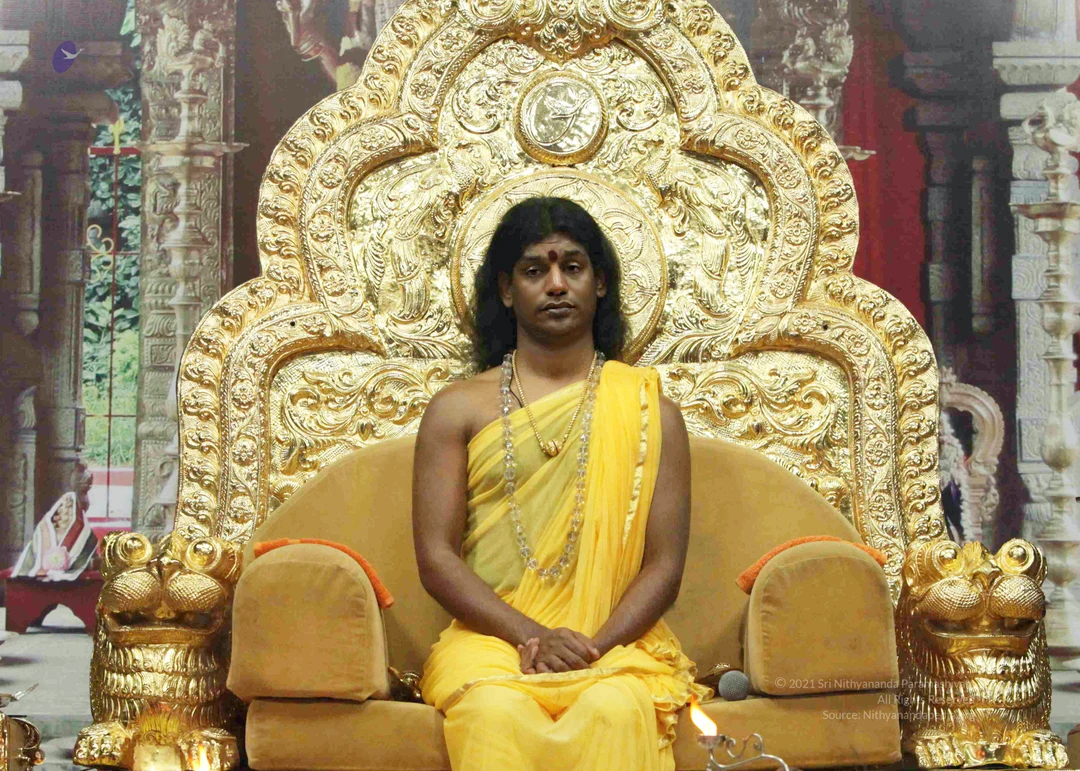
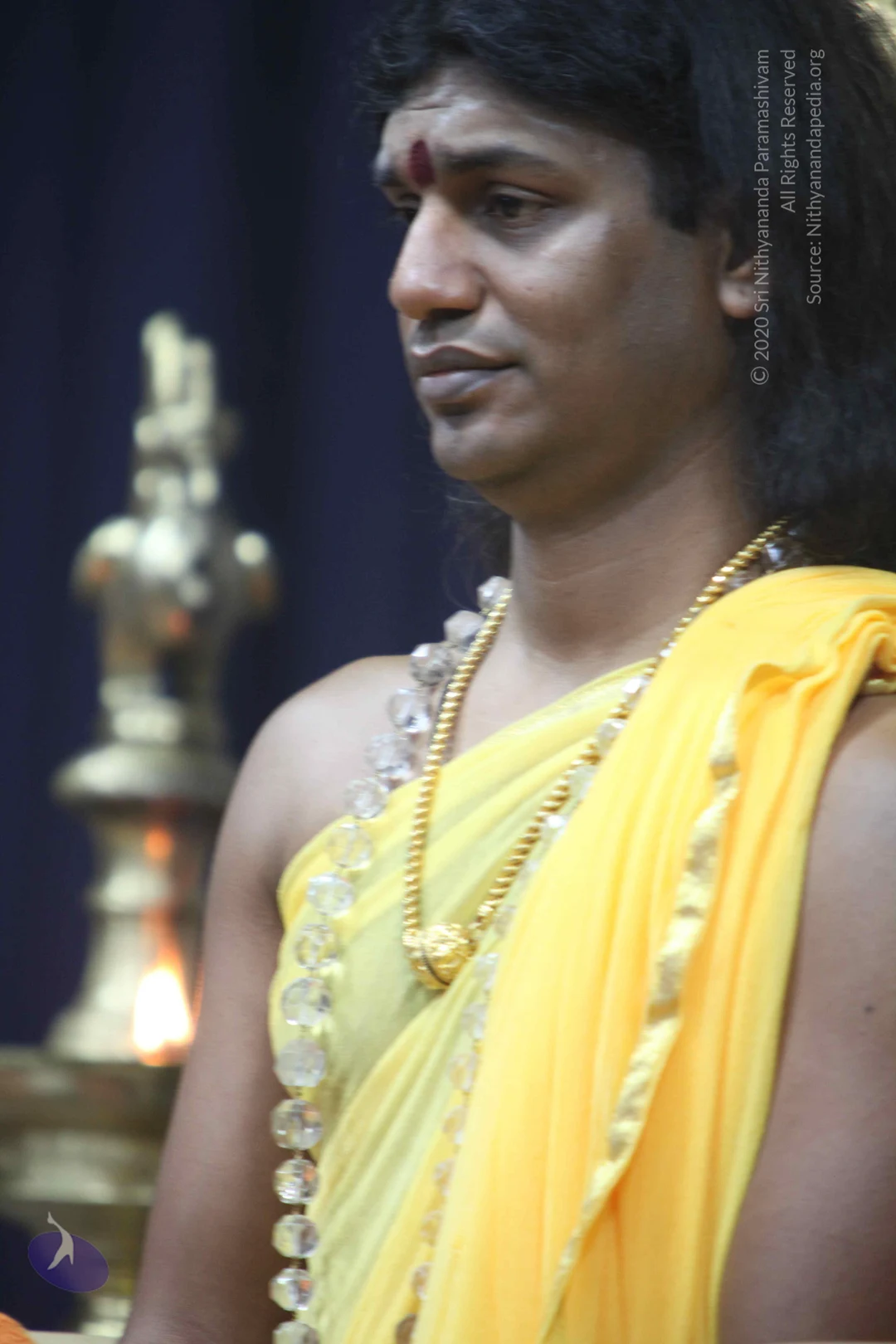
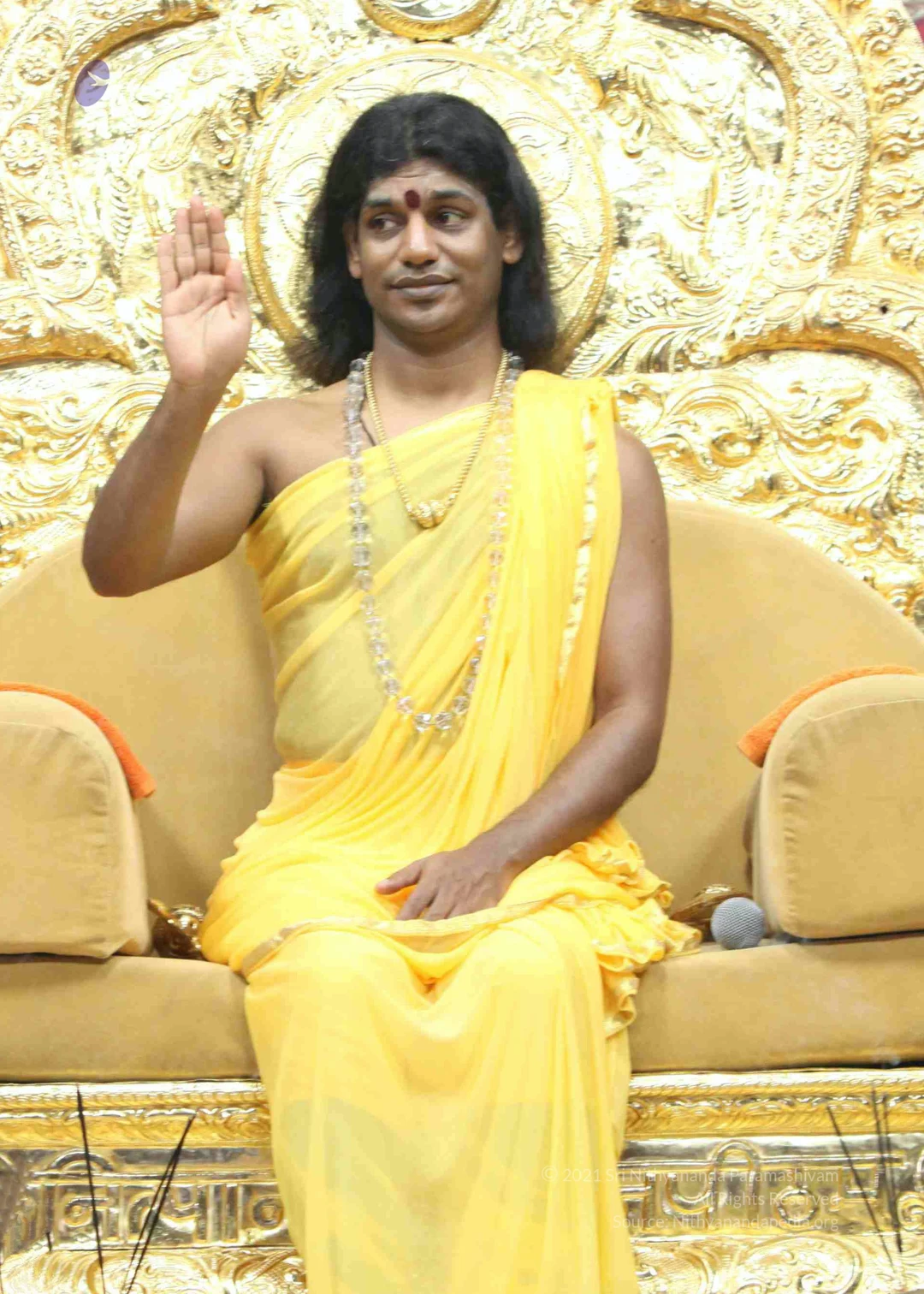
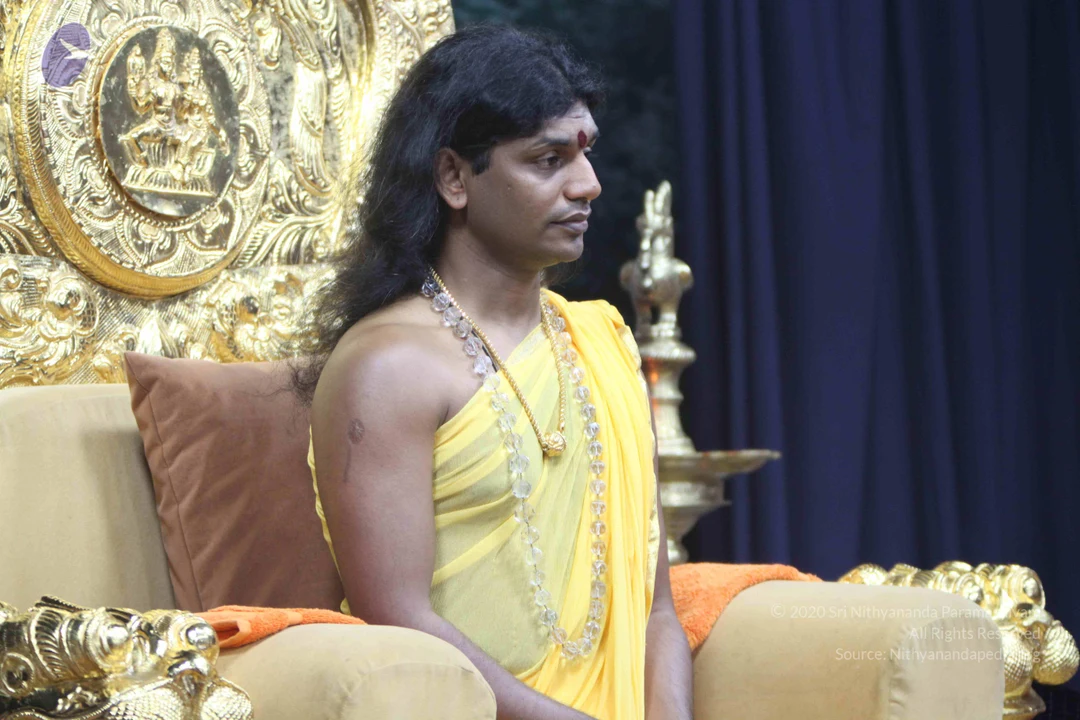
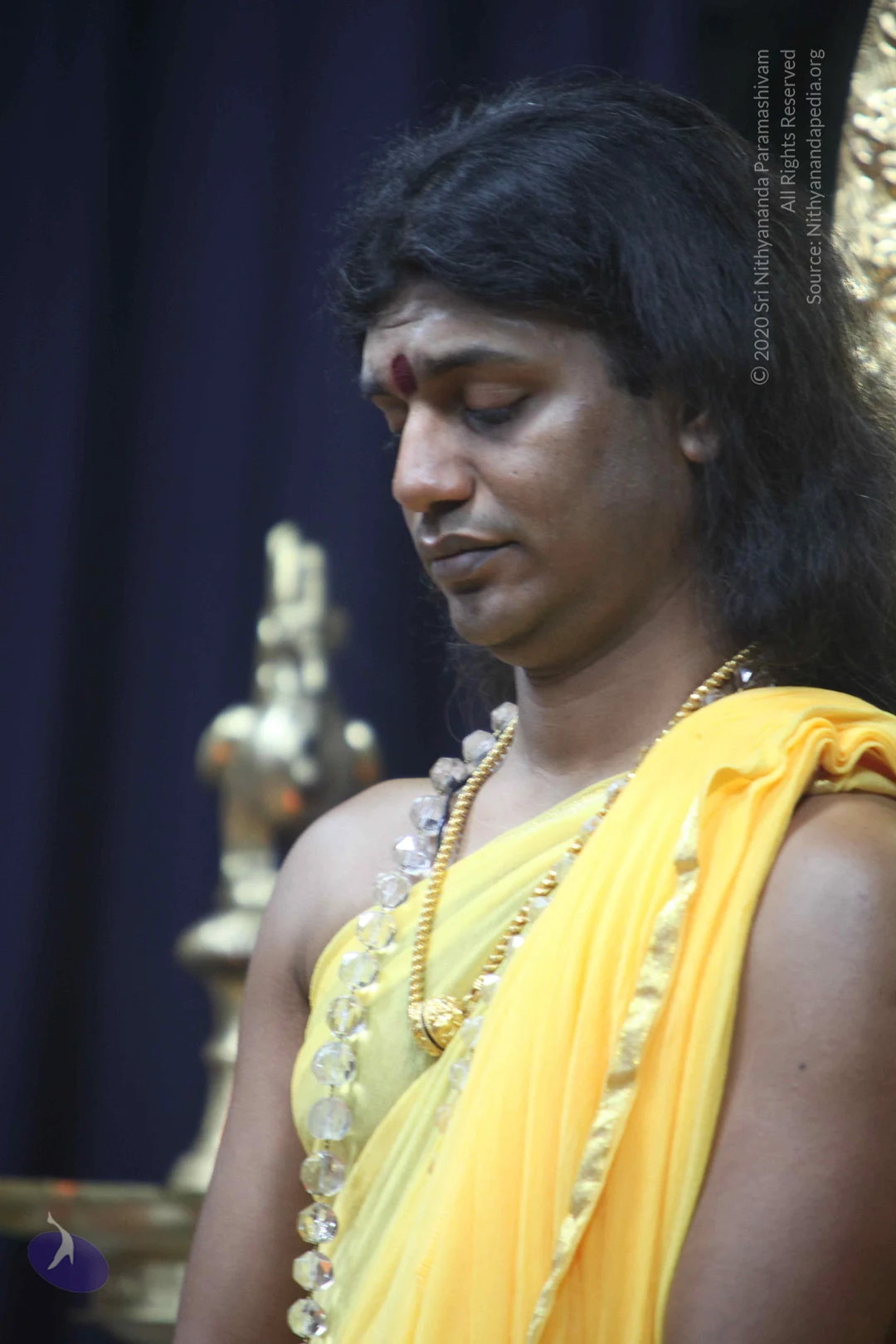
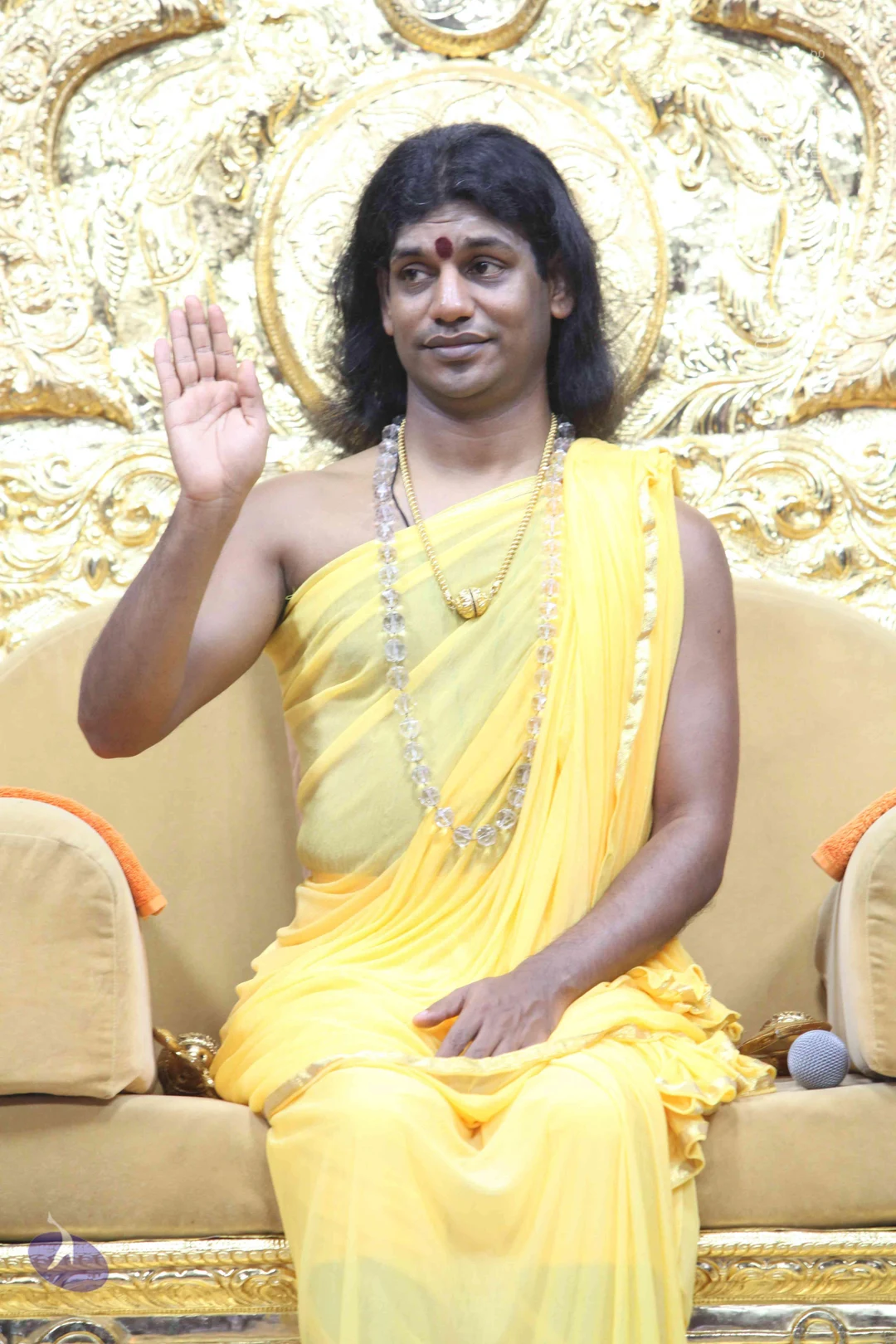
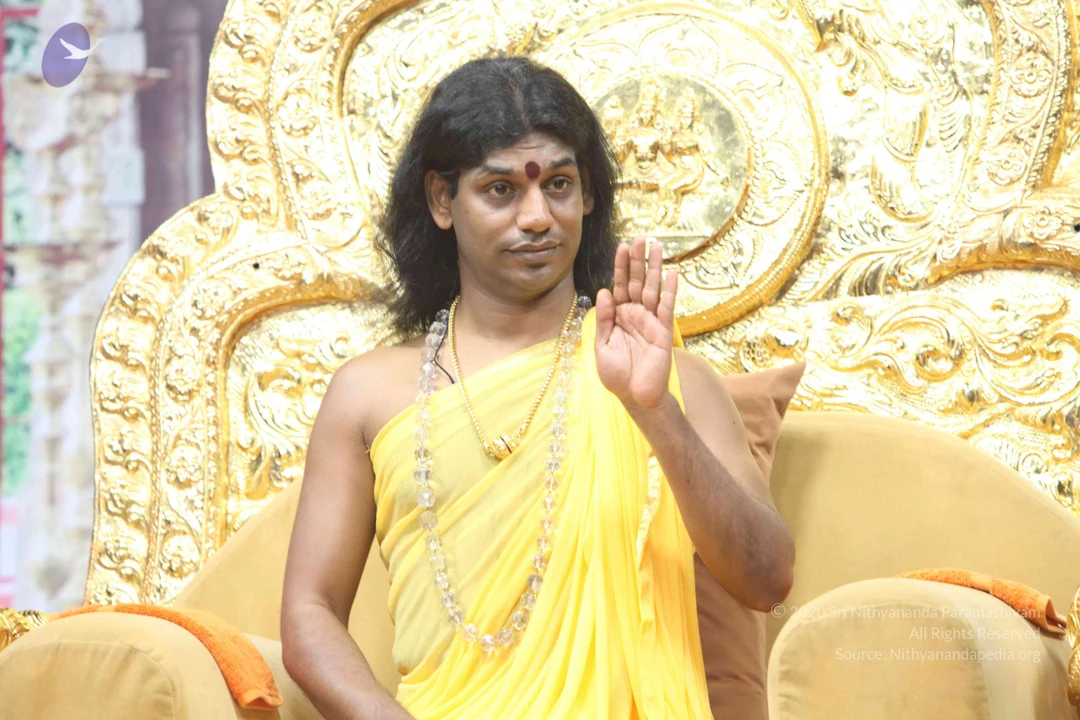
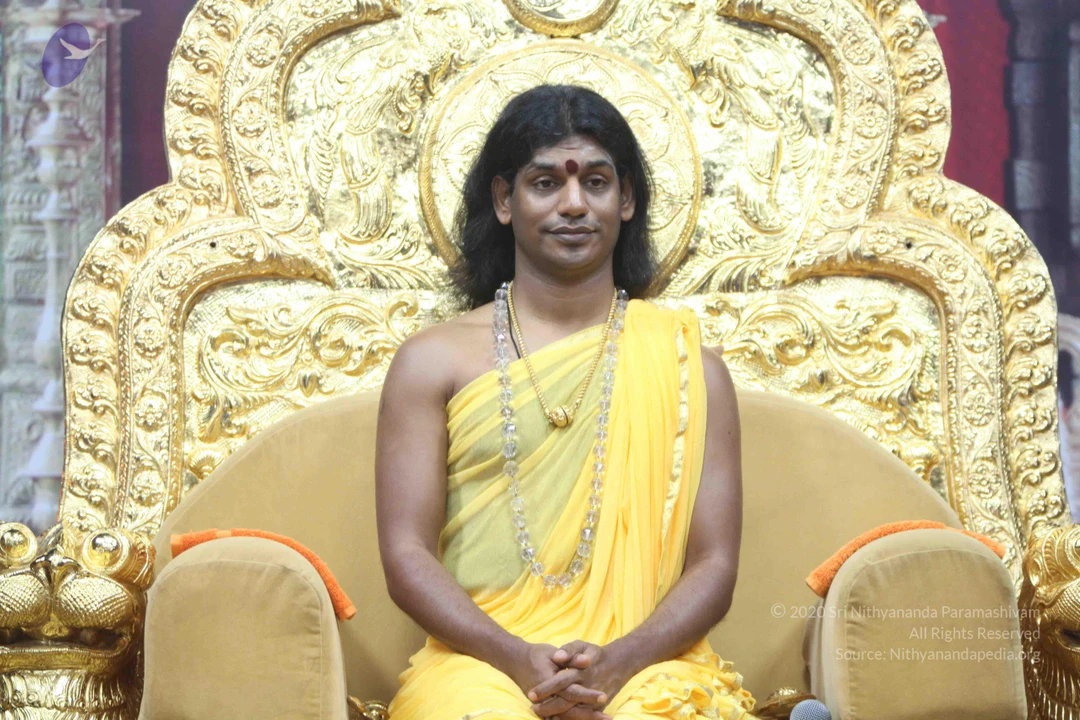
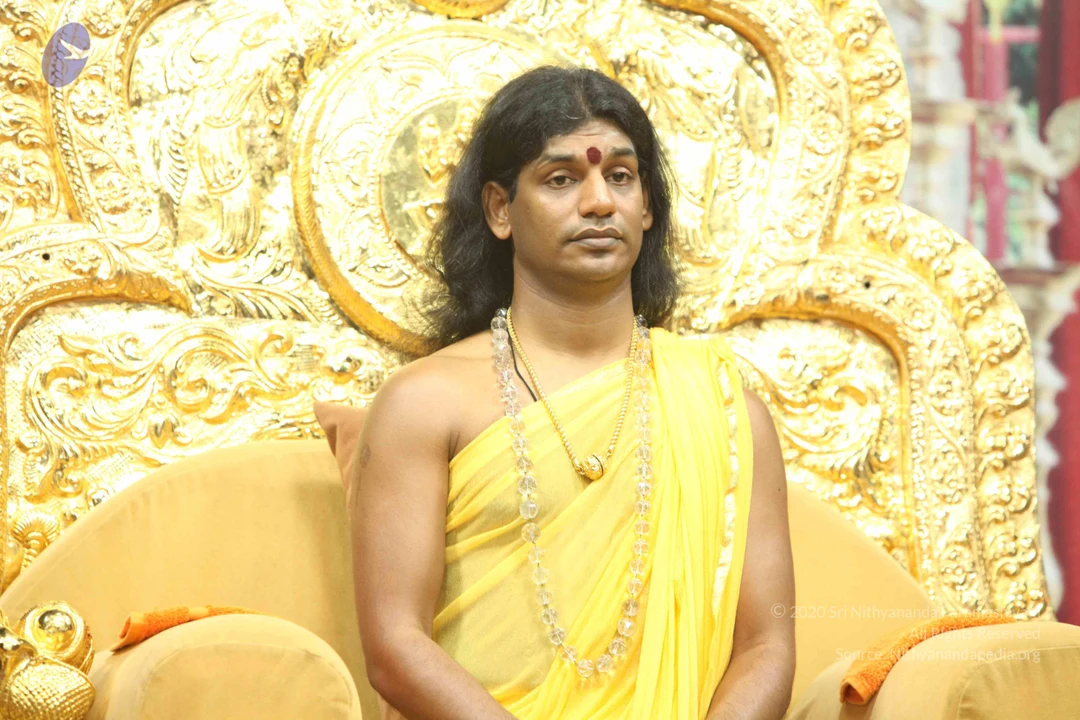
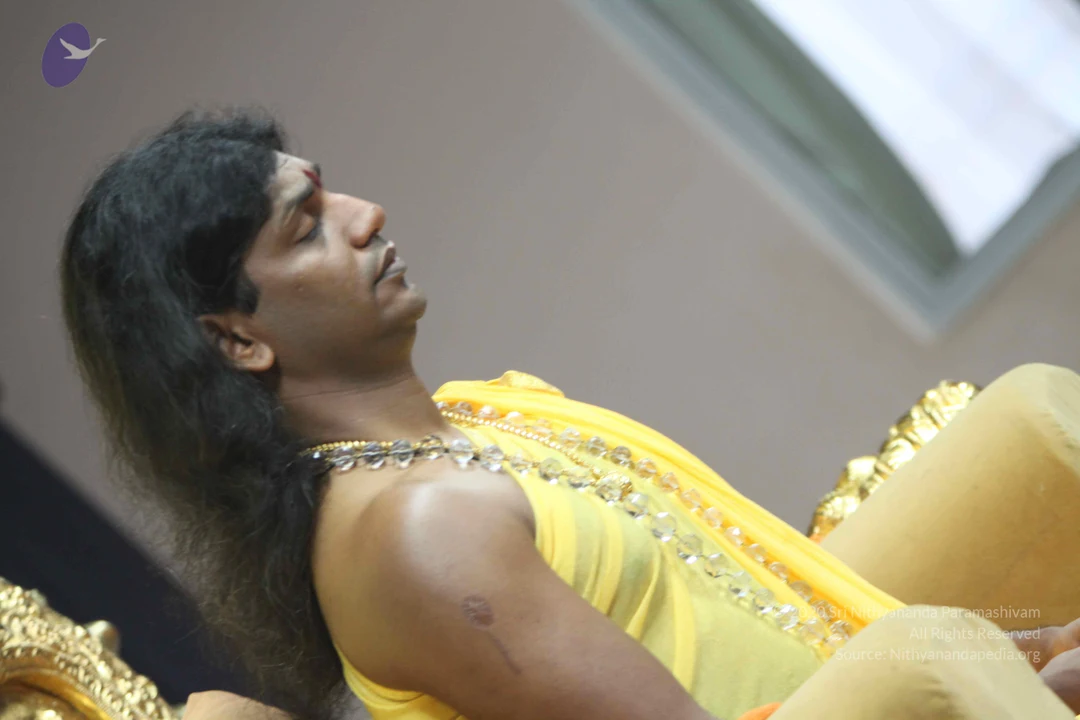
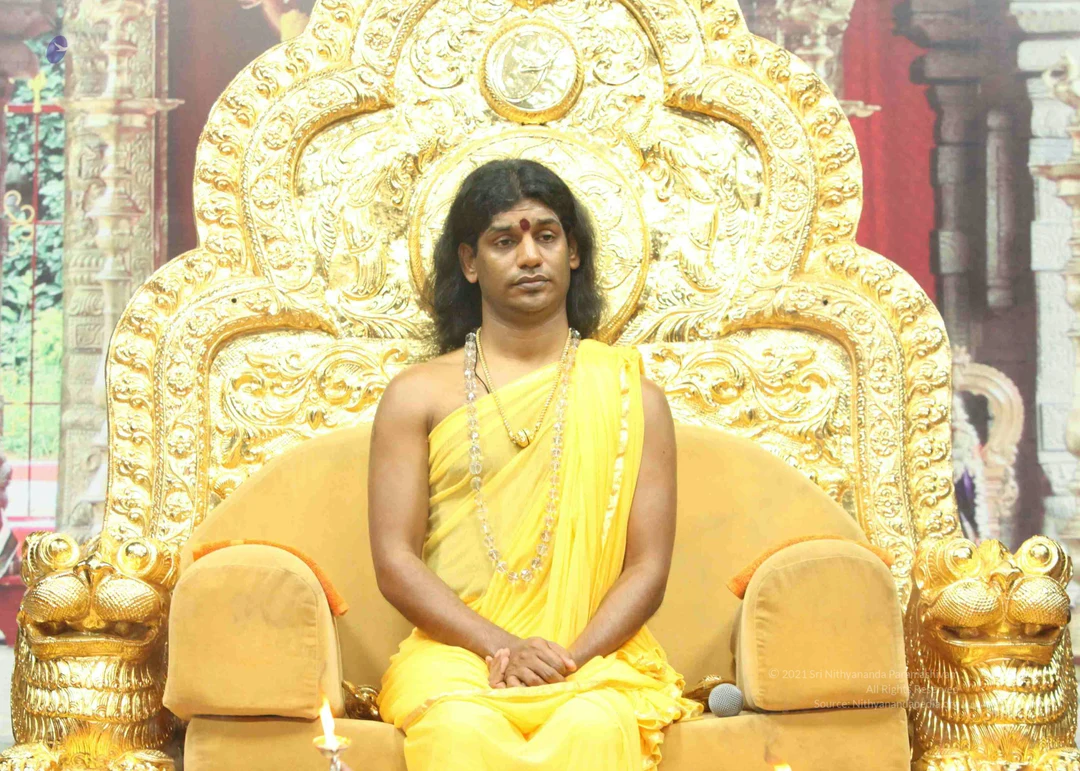
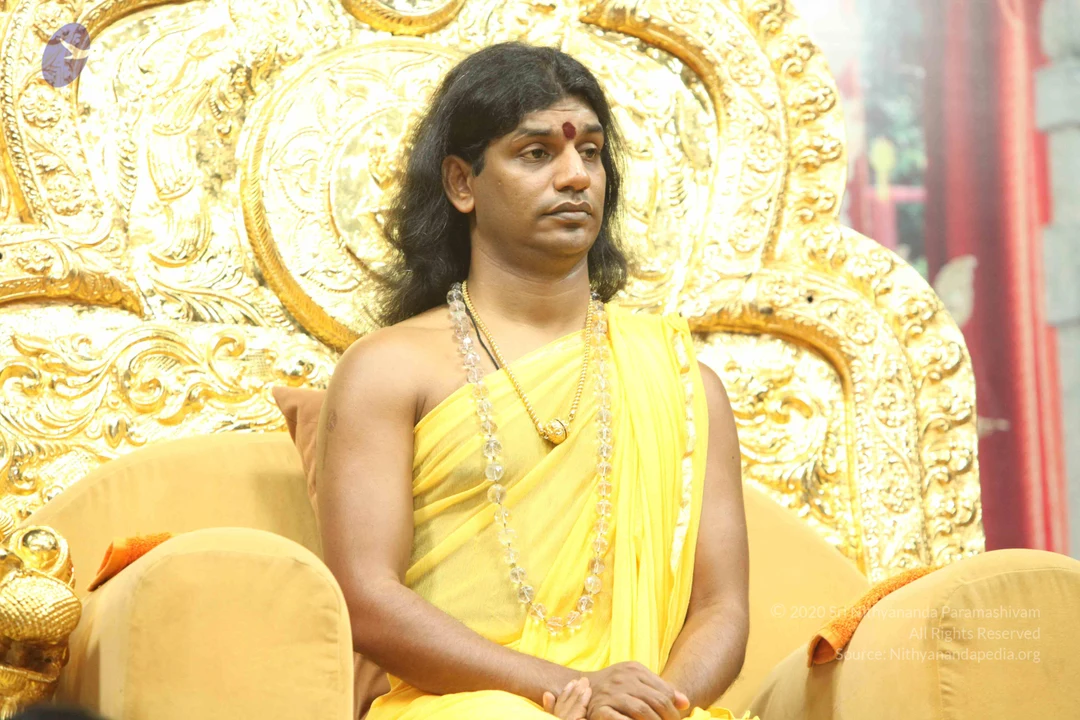
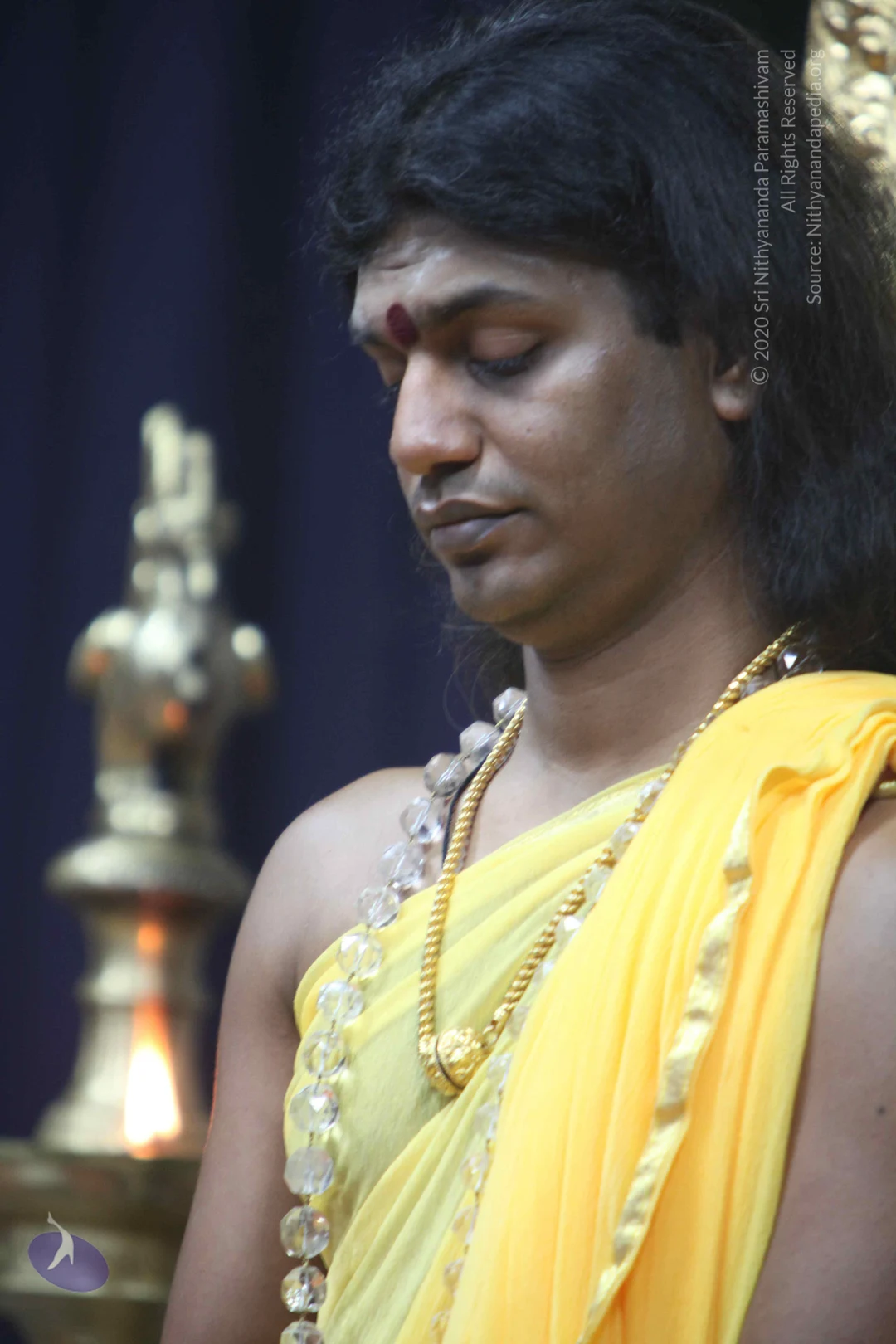
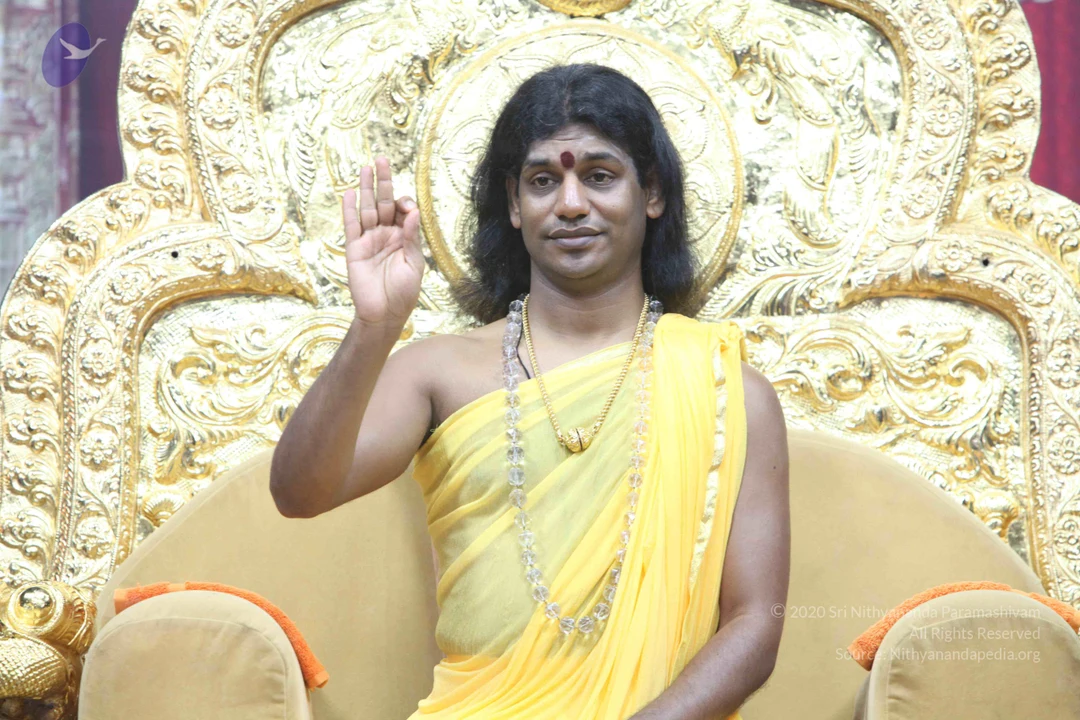
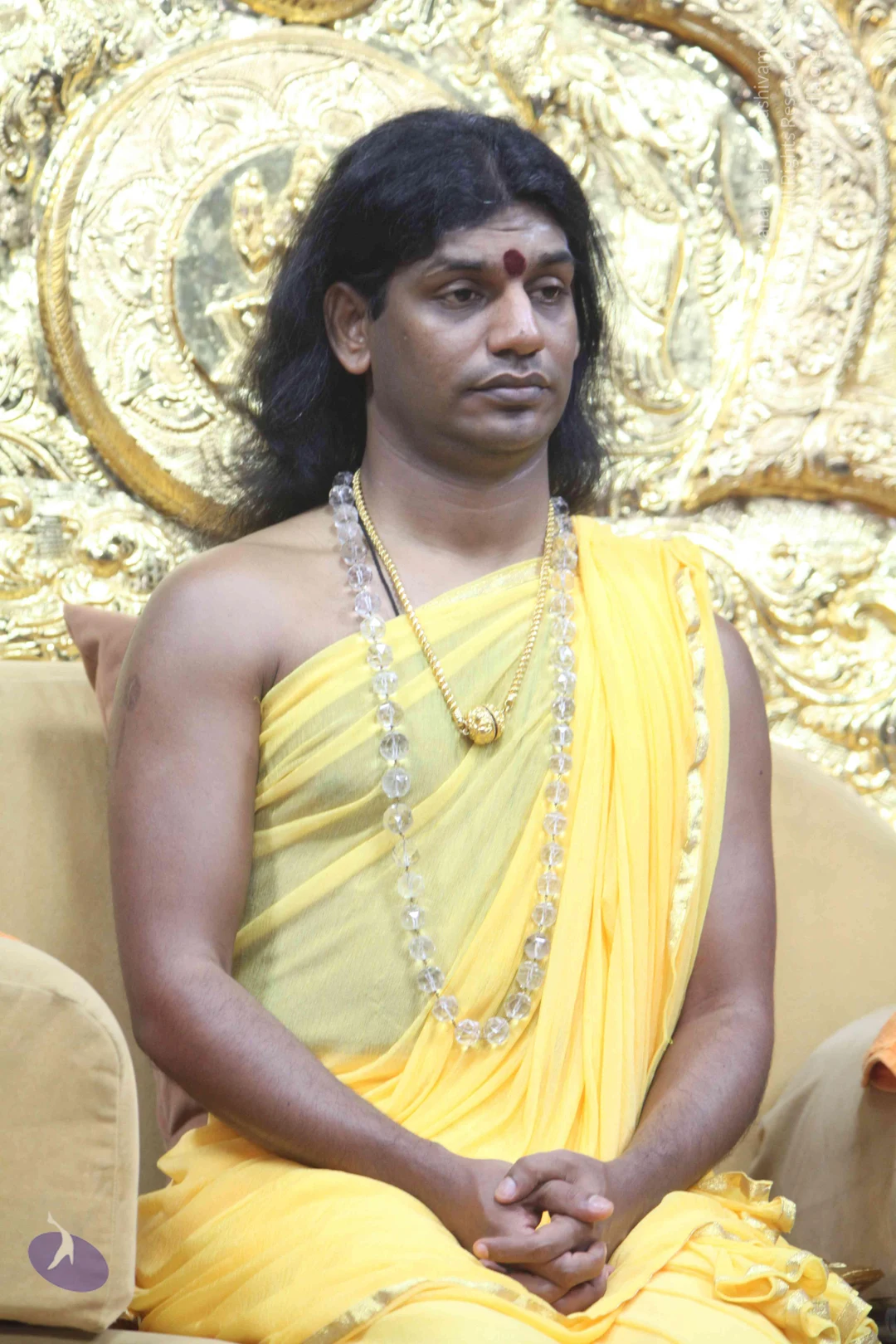
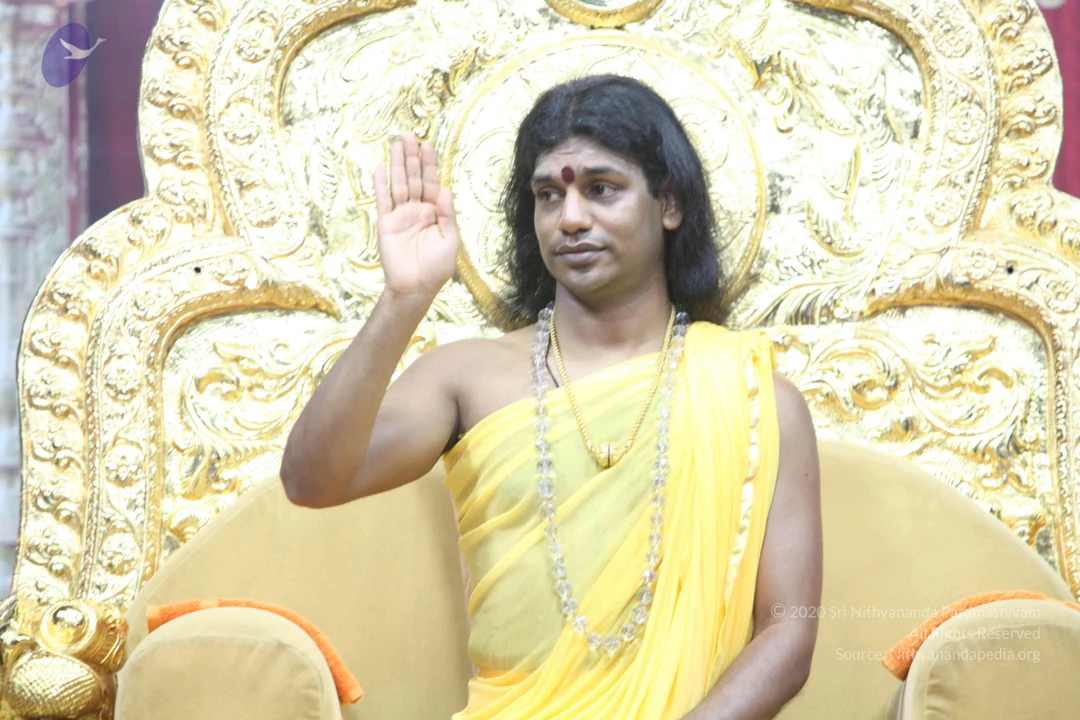
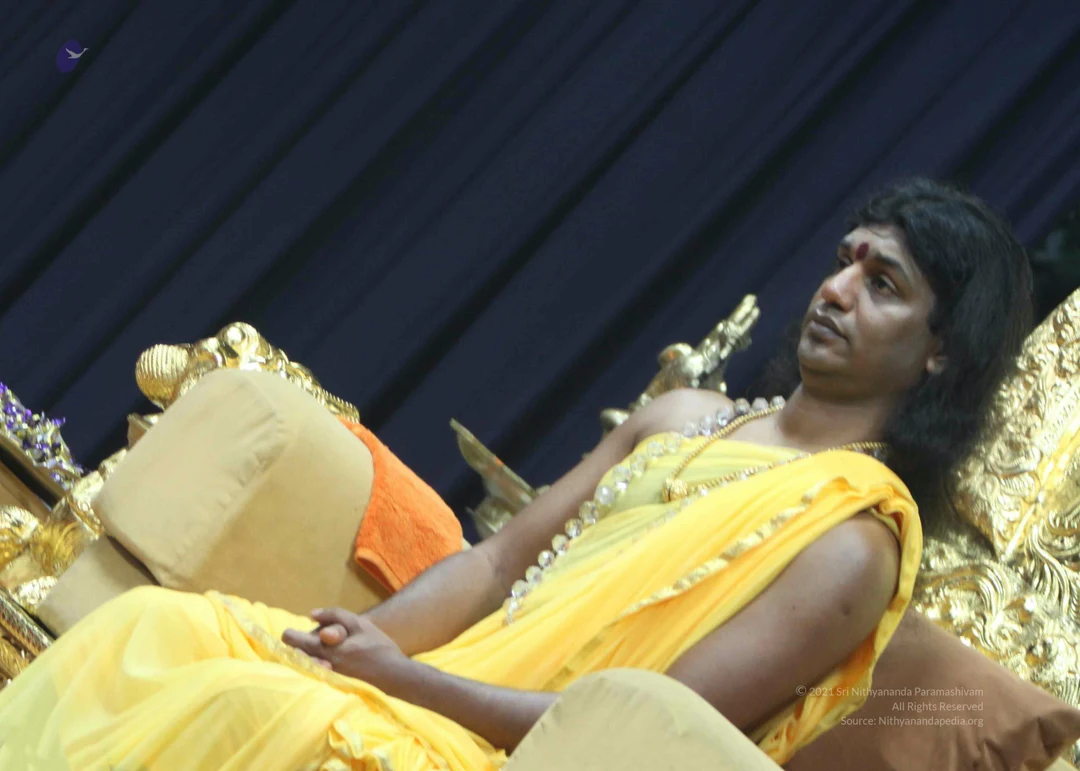
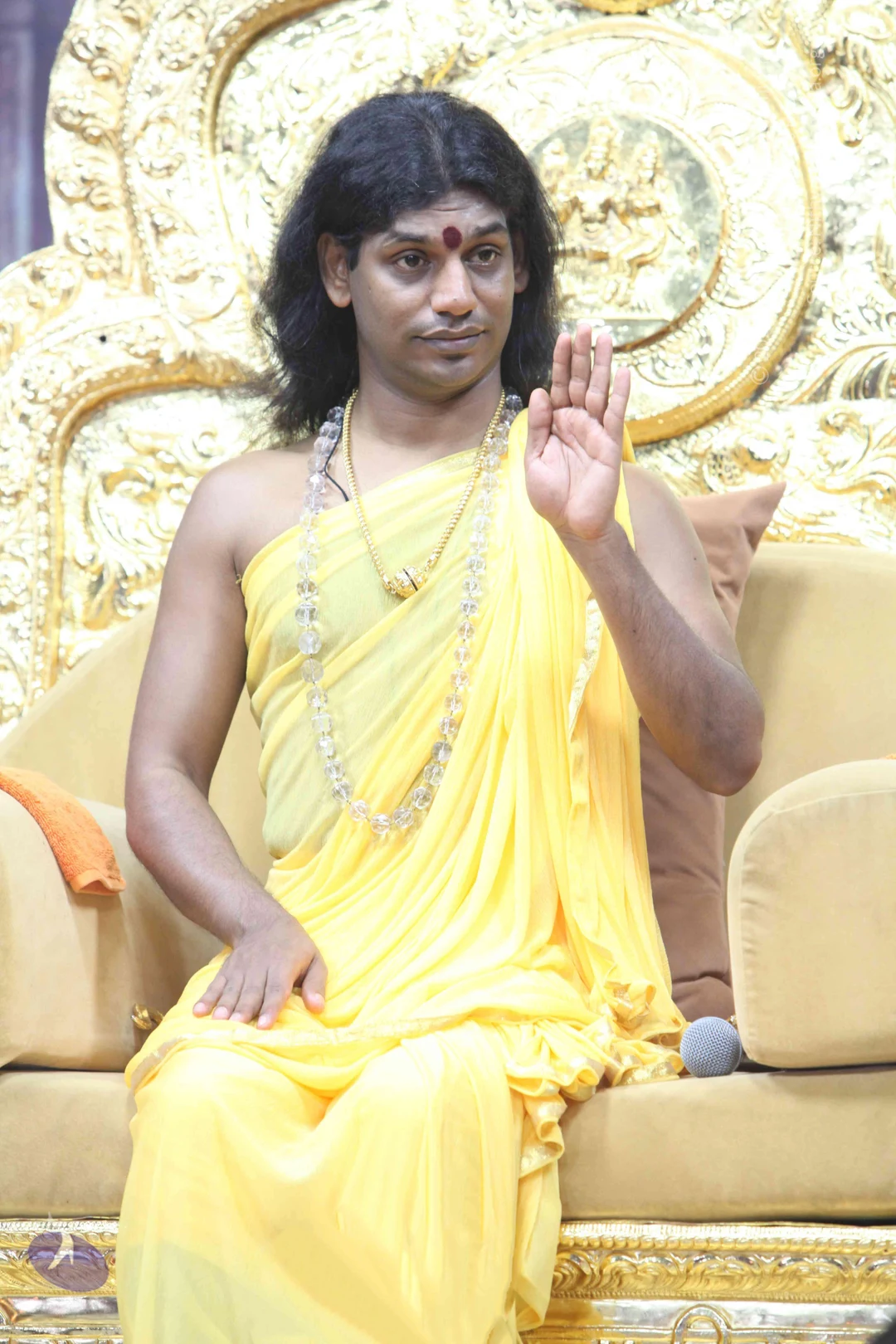
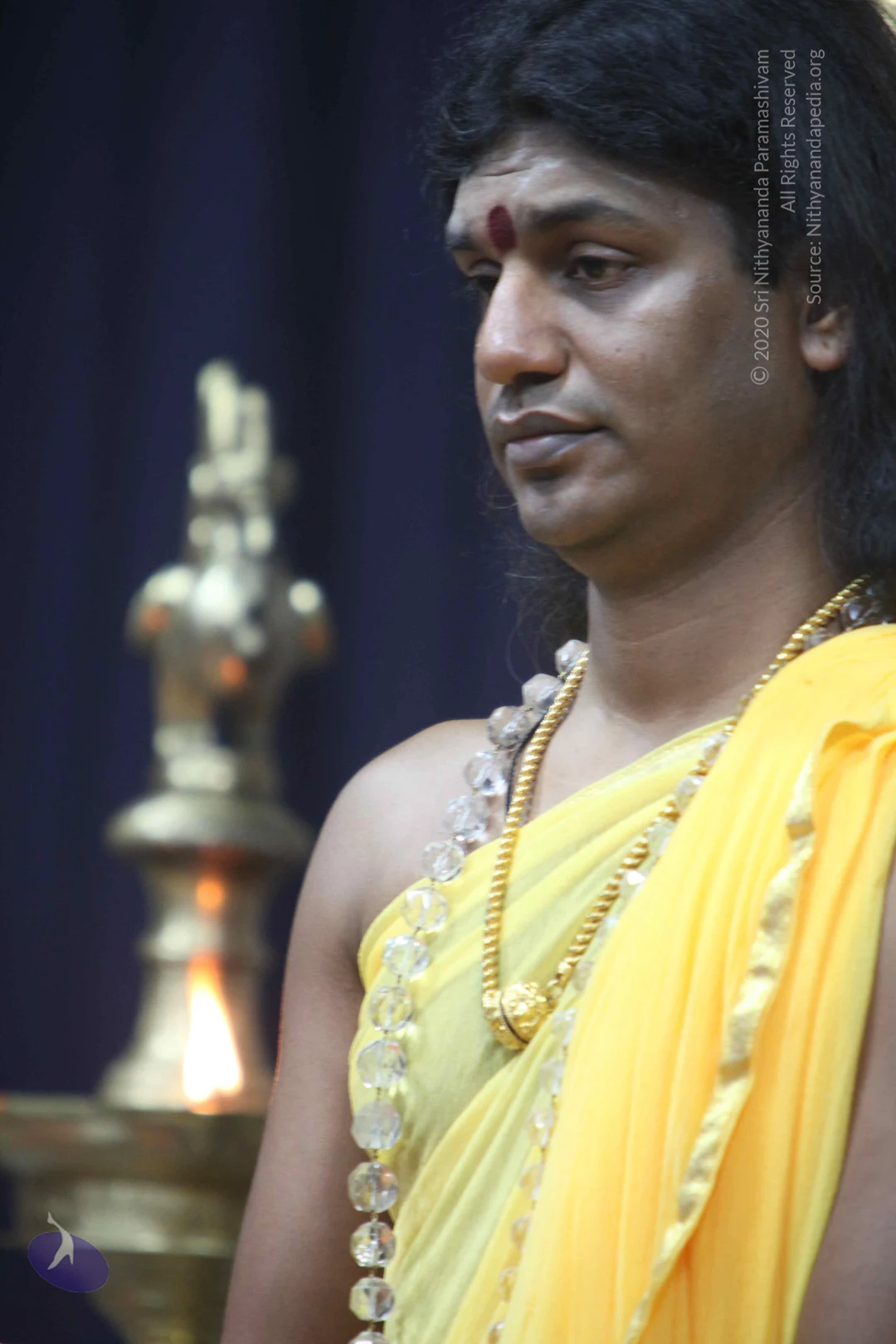
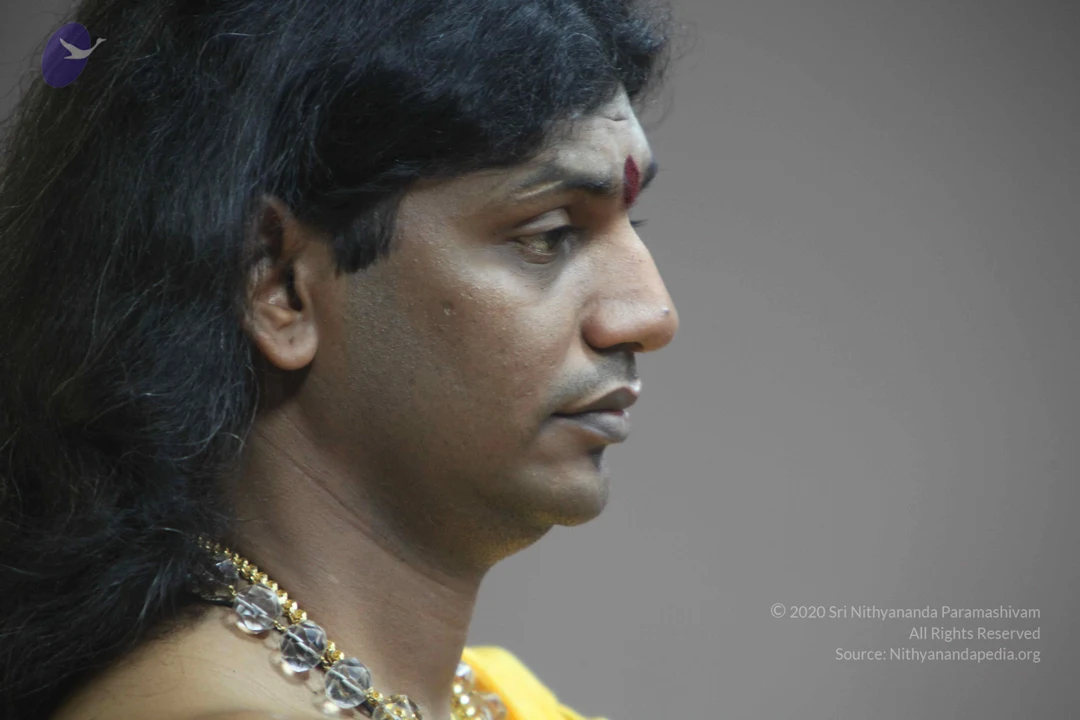
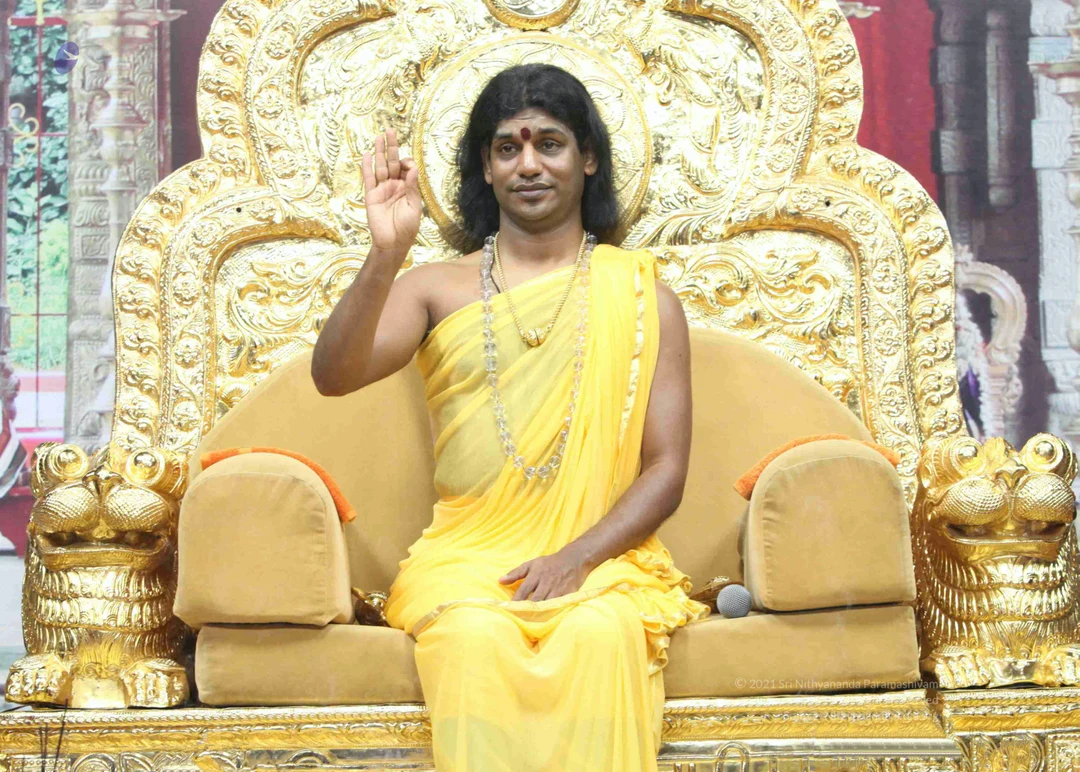
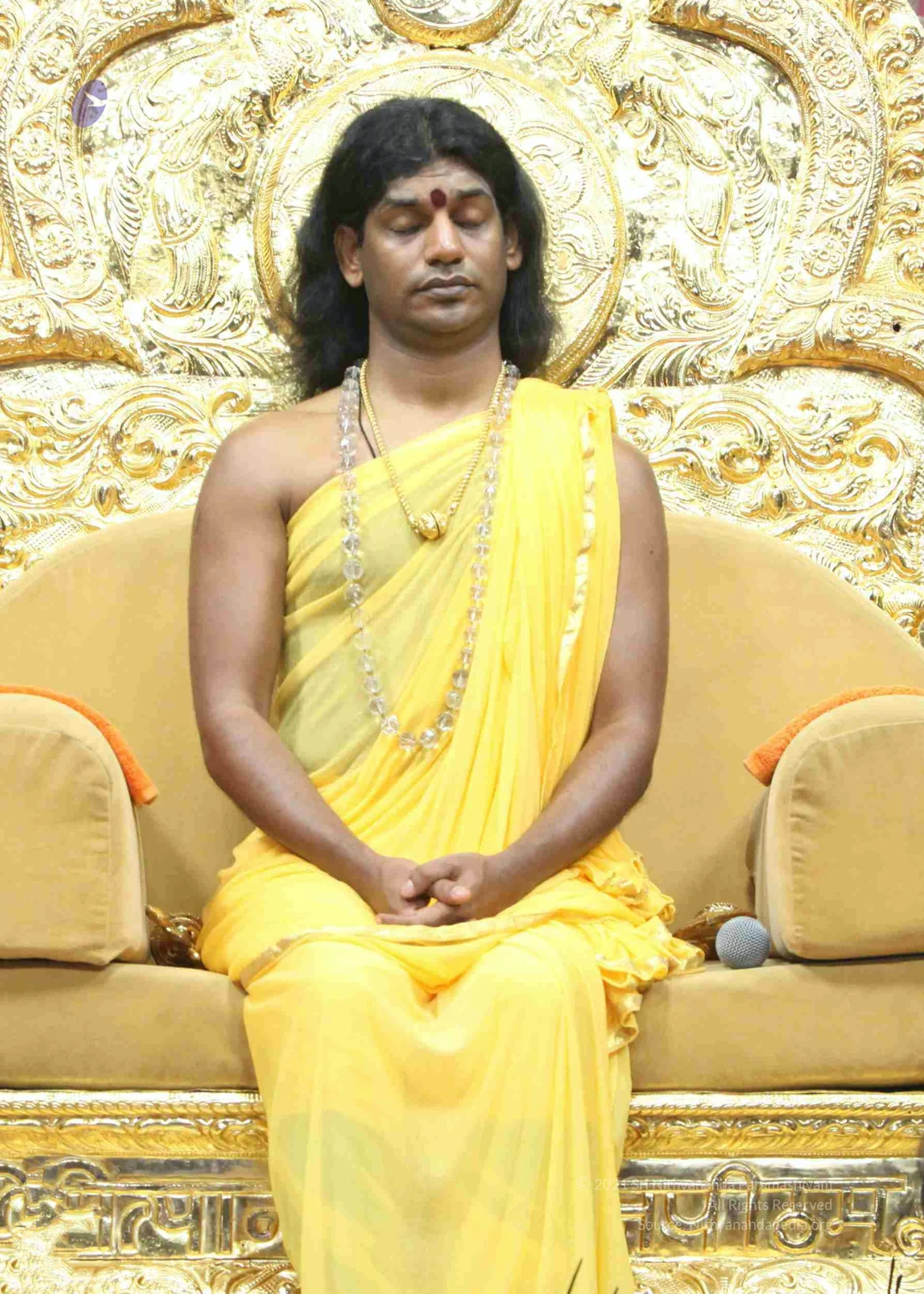
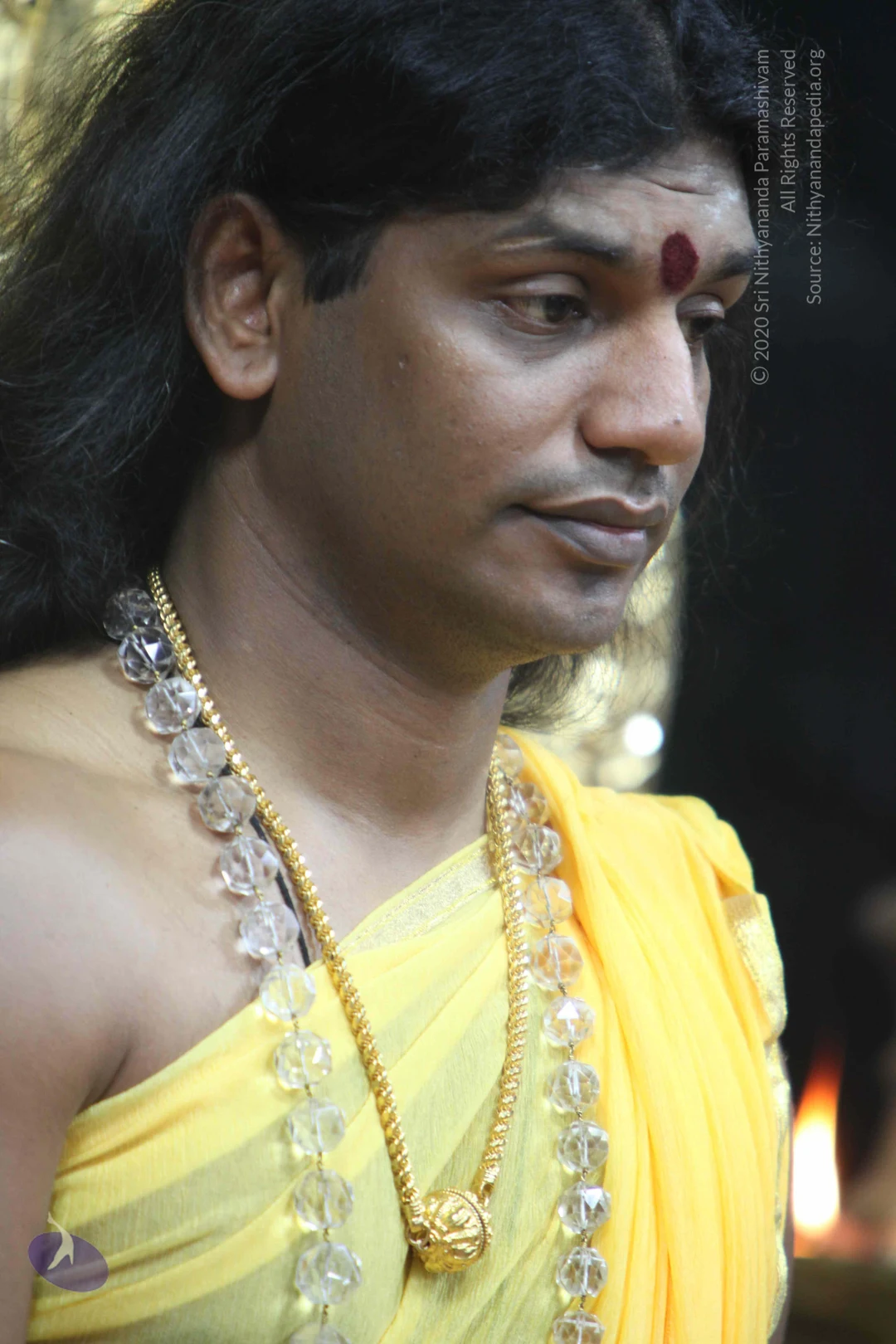
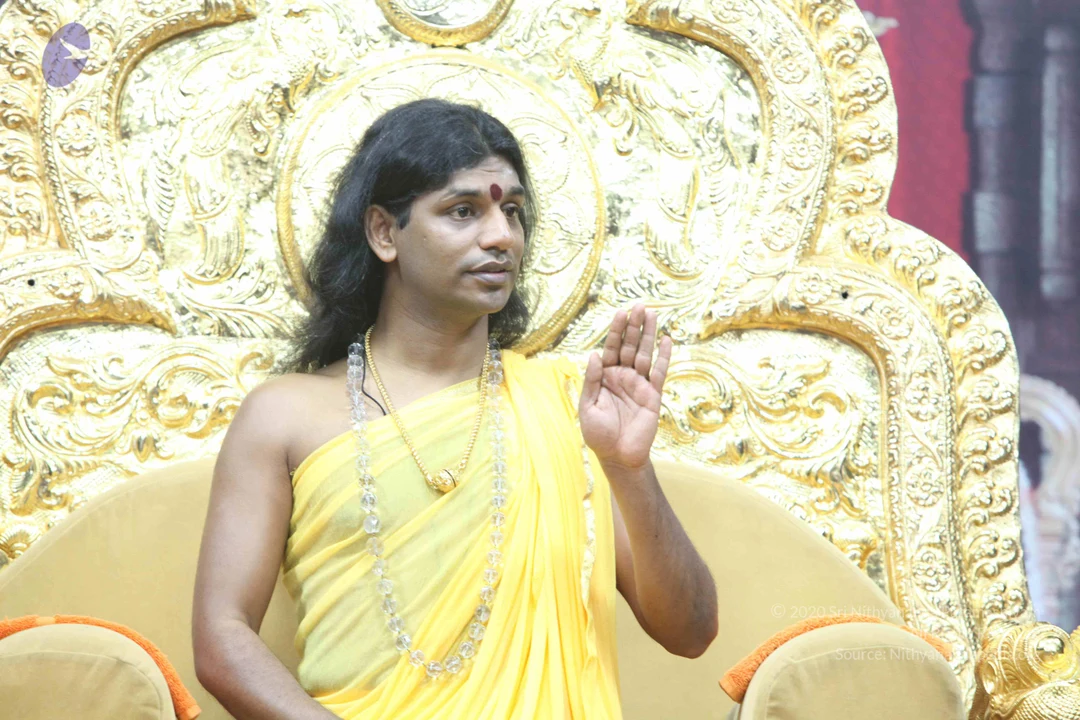
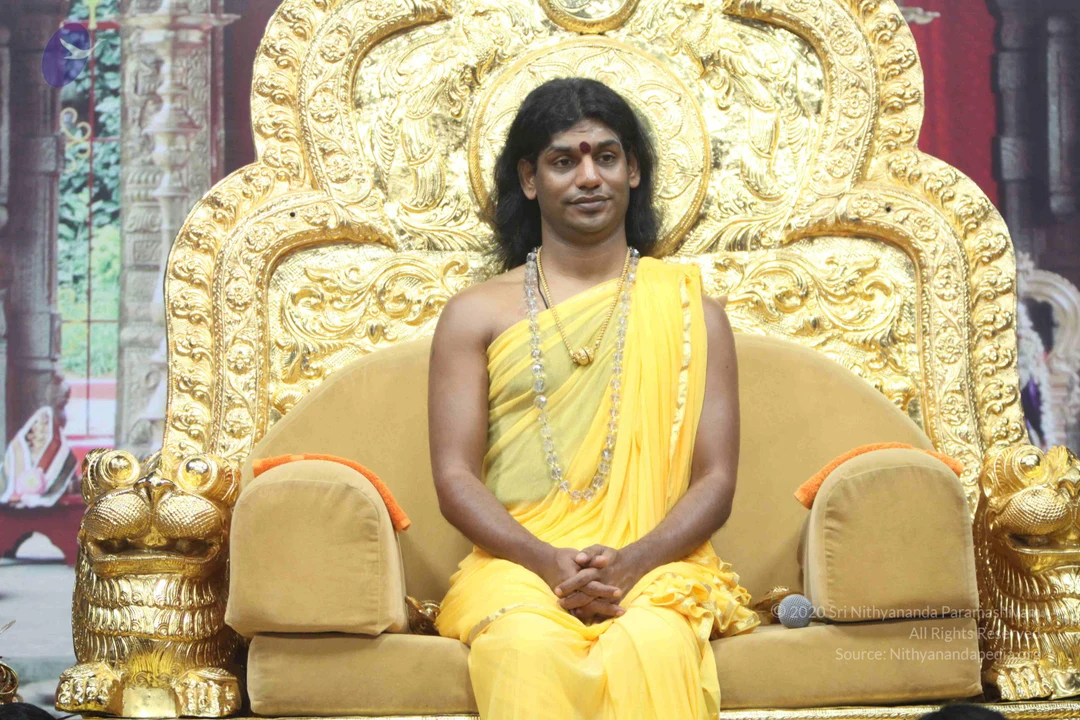
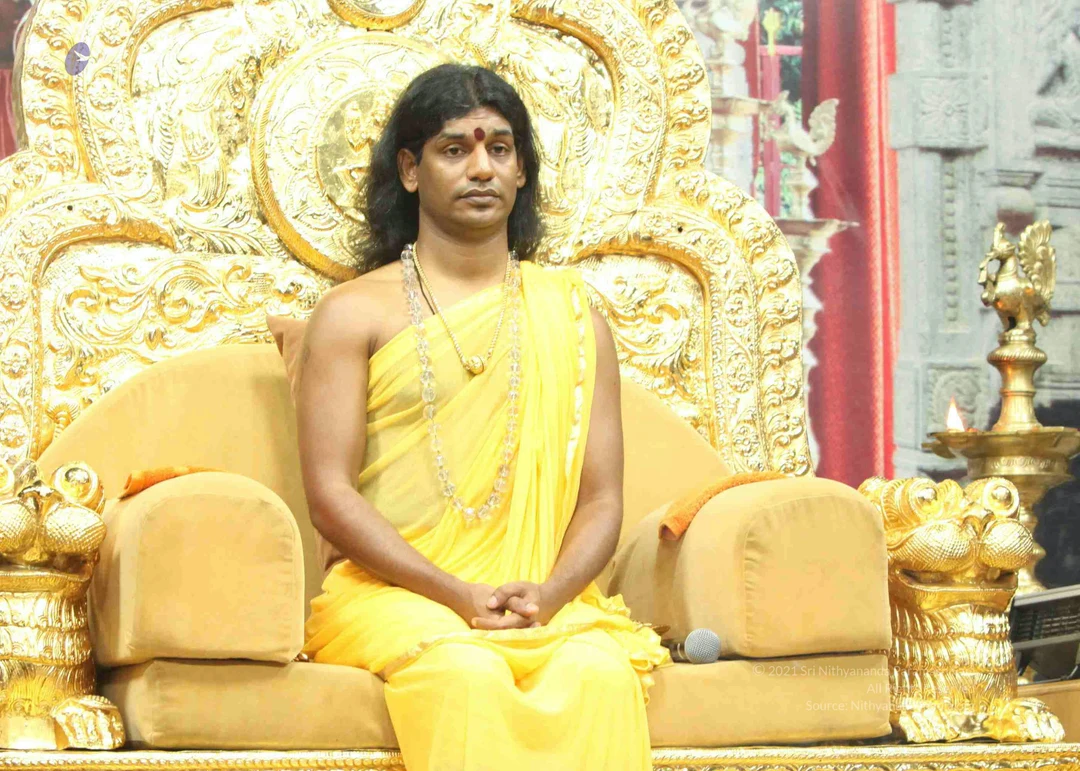
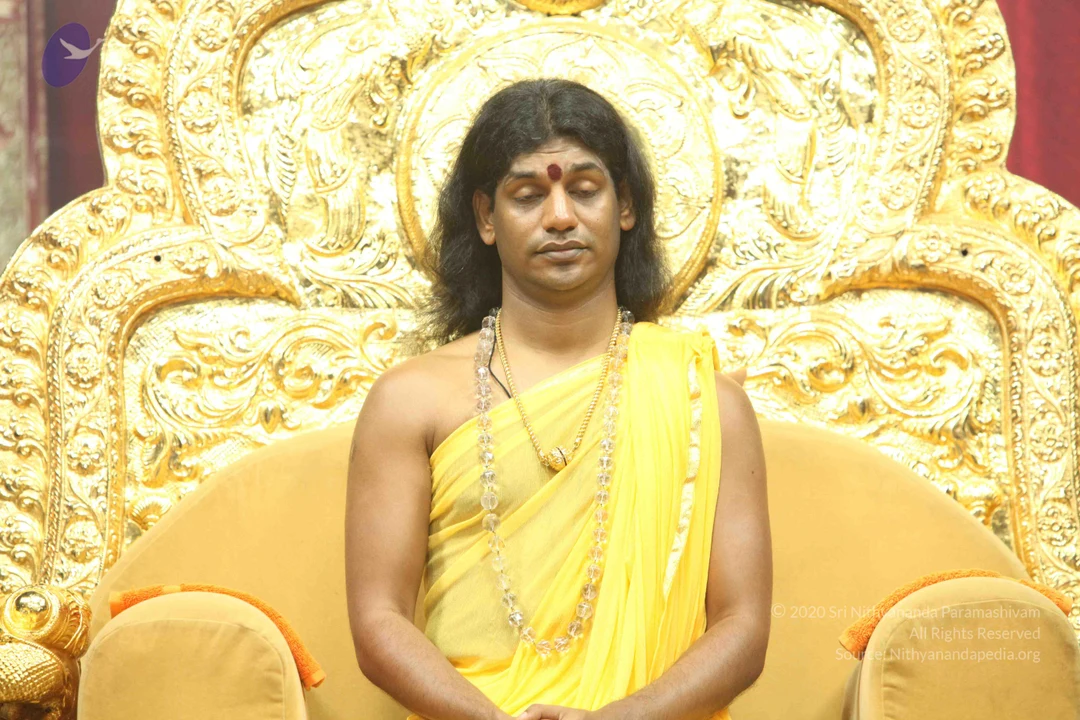
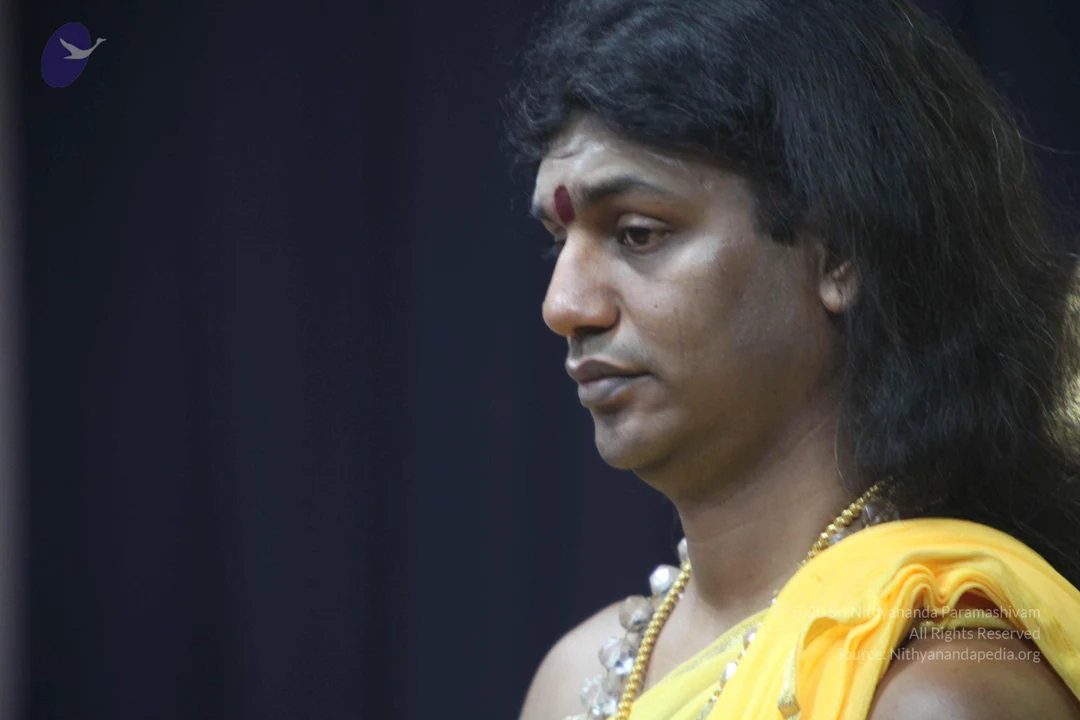
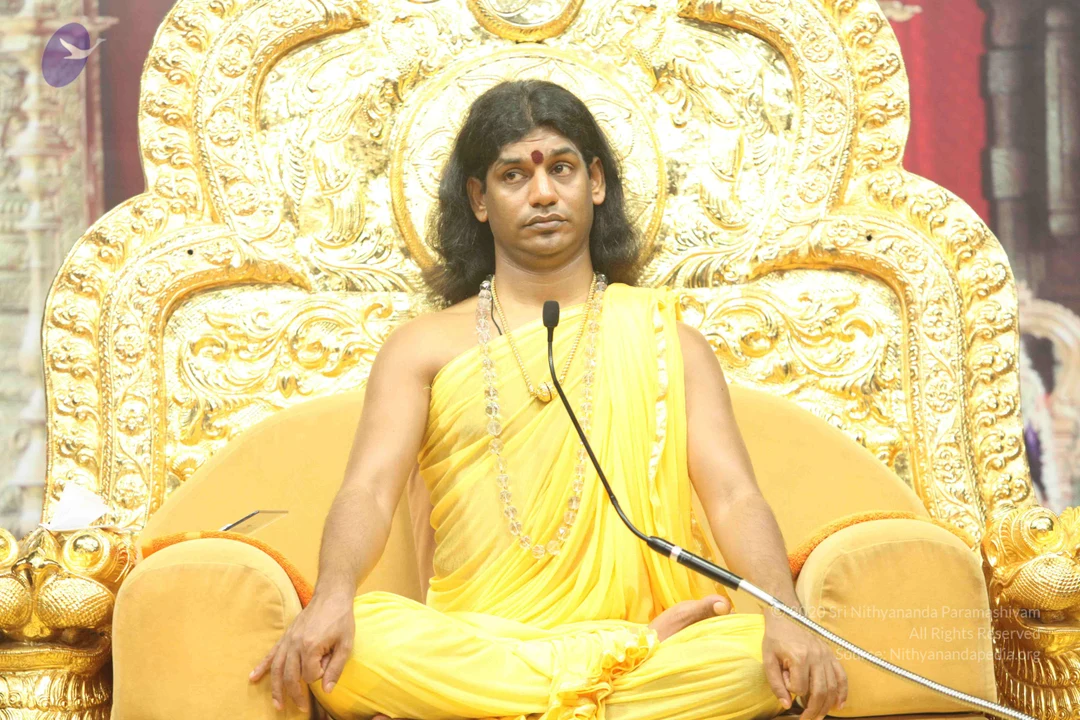
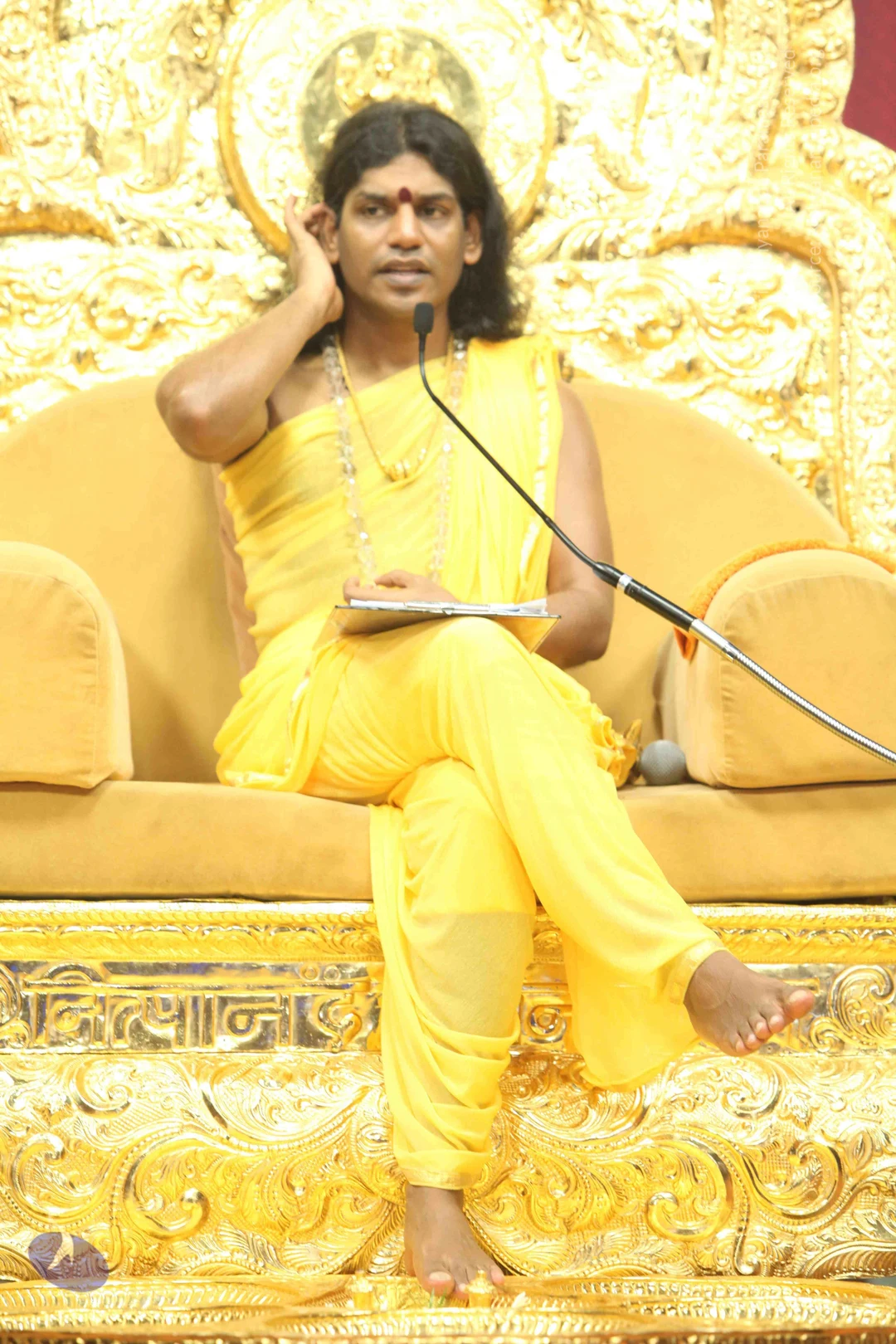
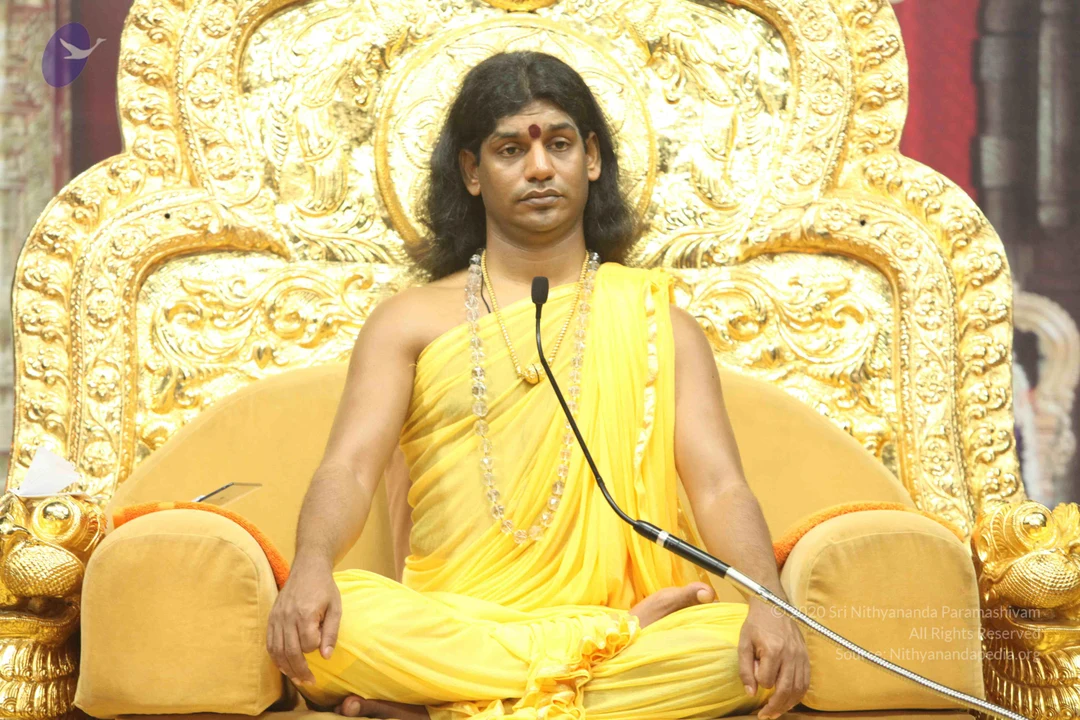
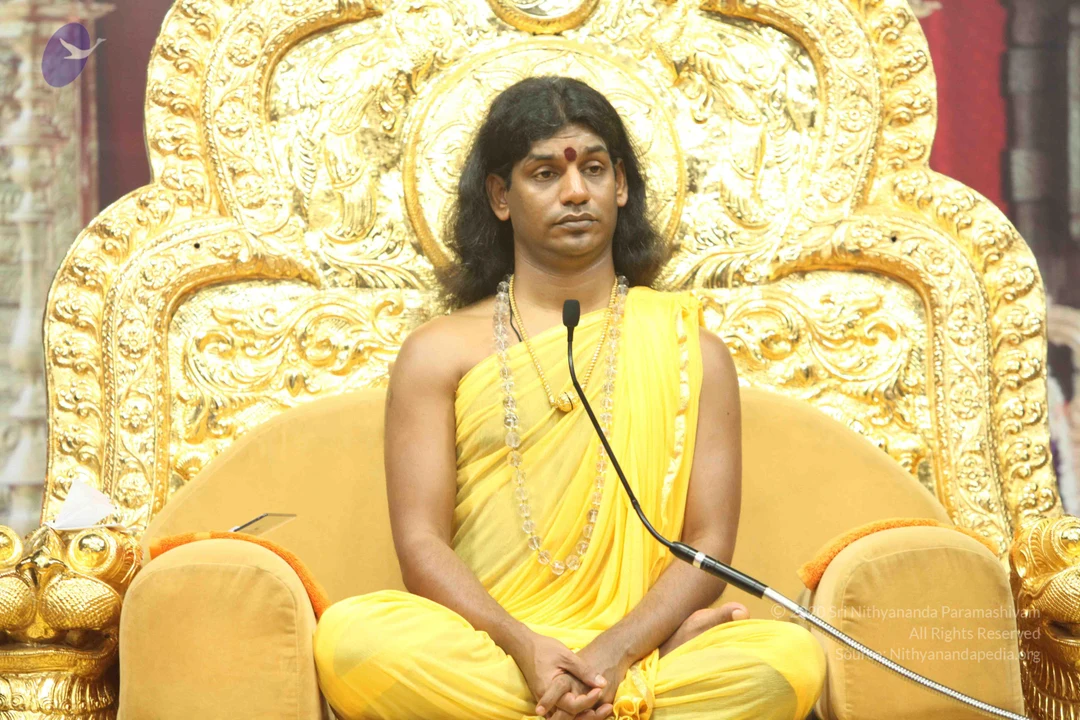
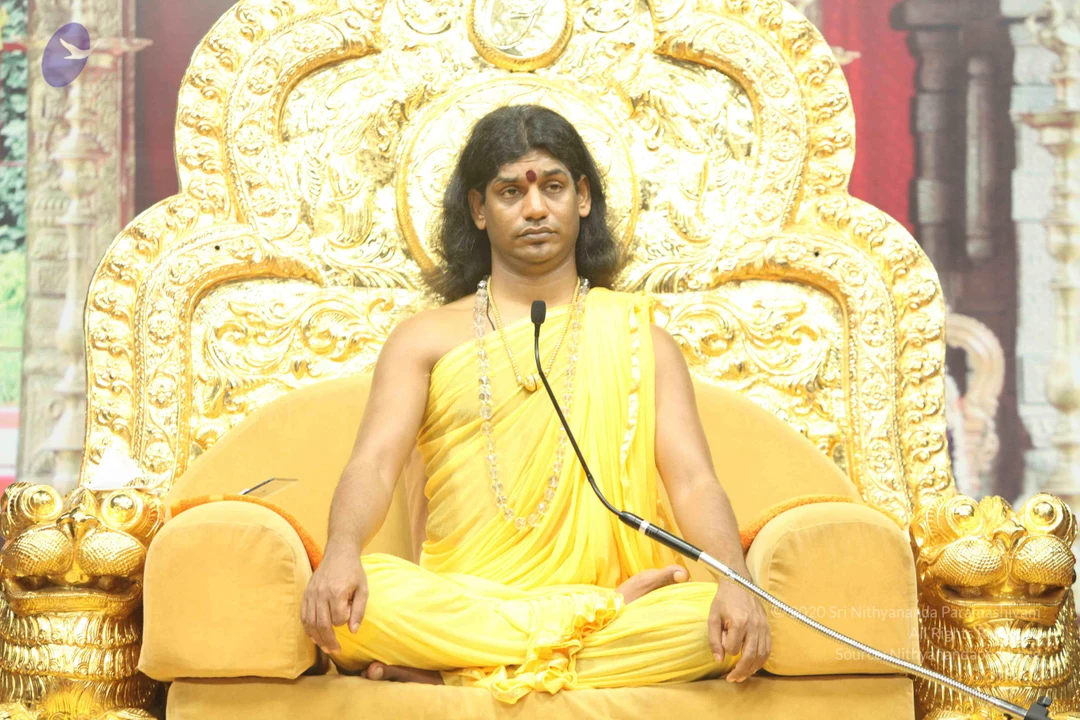
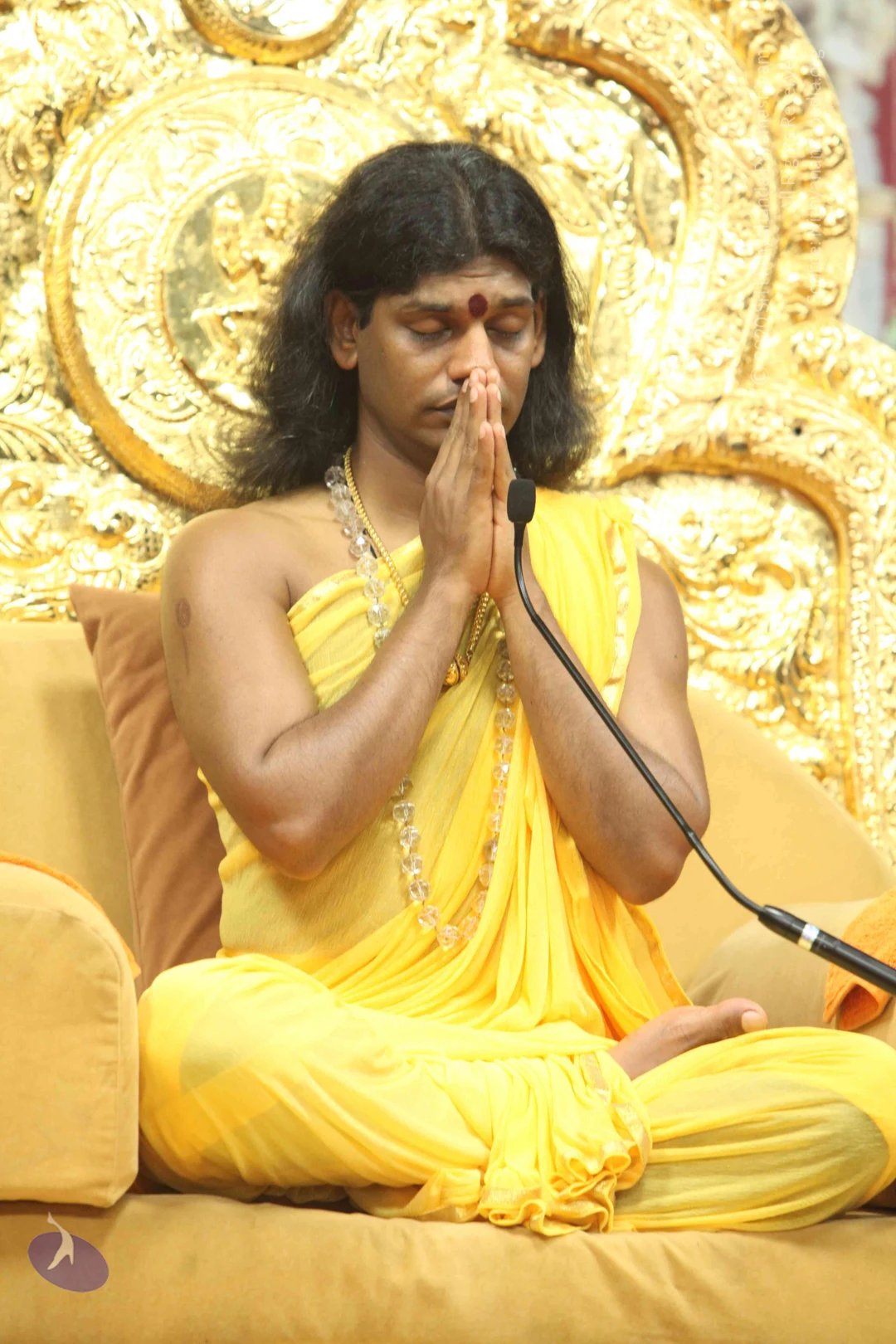
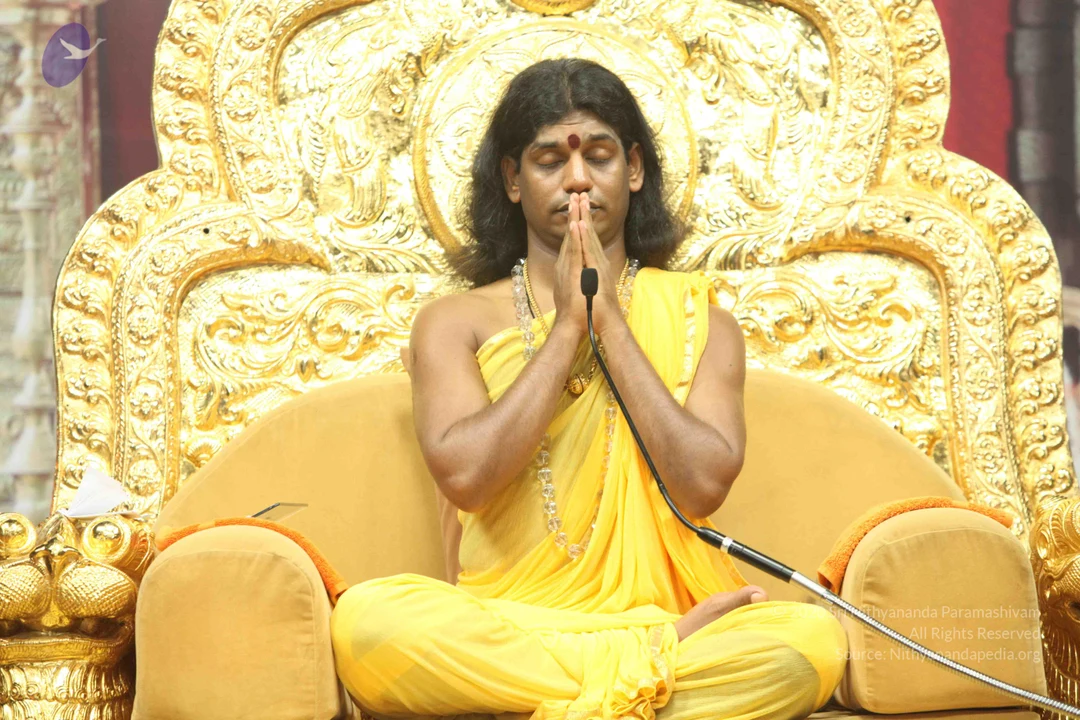
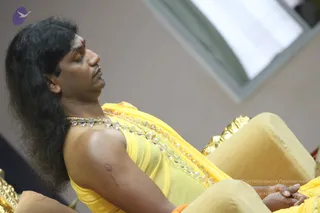
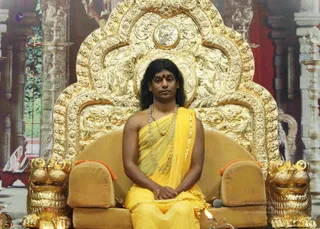
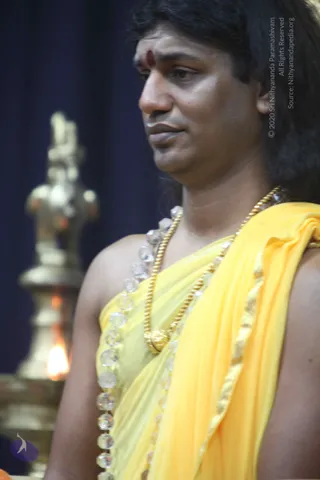
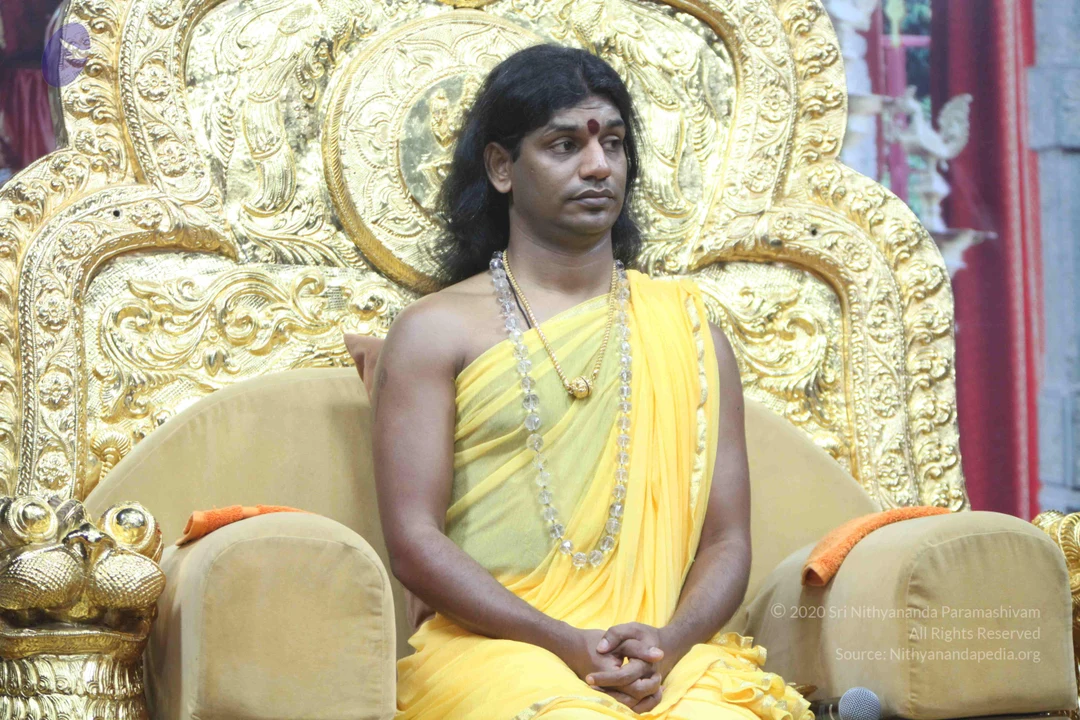
A seated man in a yellow draped garment with a gold-toned sheer border sits on an ornate golden throne with intricate repoussé floral scrollwork and a circular medallion behind his head. He has long dark hair swept back, a red bindi on his forehead, a gold necklace and a long strand of clear crystal beads across his chest. His hands are clasped in his lap and an orange cushion edges the throne. A grey microphone rests on the armrest beside him. Gold lettering runs along the base of the throne.A seated man in a yellow dhoti-style wrap draped over one shoulder sits on an ornate gold throne with carved floral and figural relief. He has long, swept-back dark hair, a red bindi on his forehead, a gold pendant on a chain and several clear crystal beaded malas. His right hand is raised in a palm-forward blessing gesture while he gazes forward. An orange cloth rests on the armrest and a golden cushion sits behind him. a person is seated in front of the throne giving a blessing.A man with long, swept-back black hair sits with eyes closed in meditation on a gold-embossed throne. He wears a yellow-saffron shawl over his shoulder, a gold necklace, and a crystal bead mala, with a red bindi on his forehead. In front of him stands a brass oil lamp with a lit flame, and a blue curtain forms the backdrop. The bare-shouldered figure with a distinctive crystal mala and long hair fits the a person appearance cues, so this is a person seated in meditation.A photograph of a man reclining on a gold-trimmed cushioned seat with eyes closed and head tilted back, in a meditative pose. He has long, swept-back black hair, a small red tilak on his forehead, and wears a yellow garment with a layered crystal-beaded necklace across his chest. A gold-edged cushion and his bare feet are visible at right. The setting appears to be an indoor hall with a window at upper right. a person: long swept-back hair, yellow ceremonial clothing and beaded ornaments match the page's description of a satsang-style sitting. He is seated in a meditative posture.A man in a yellow saffron-toned dhoti and shawl sits on an ornate gold throne carved with floral and mythical motifs, flanked by golden lion-head armrests. He wears a red bindi, a long beaded rudraksha-style mala and a gold chain, and rests his hands folded in his lap. Behind him is a painted temple backdrop with columns and an arched doorway. A small oil lamp burns at the lower right beside a microphone, and a woman in white sits at the far left edge near a red-draped stand. Swamiji (probable): the sitter has long swept-back hair, saffron-yellow ceremonial clothing, a rudraksha mala and a ceremonial necklace, seated on a throne as the presenter.A man with long swept-back black hair and a red tilak on his forehead sits in profile wearing a yellow draped garment with a gold trim, a gold beaded necklace and a clear crystal bead mala across his chest. Behind him is a blurred dark blue backdrop and a brass lamp with a flickering flame.
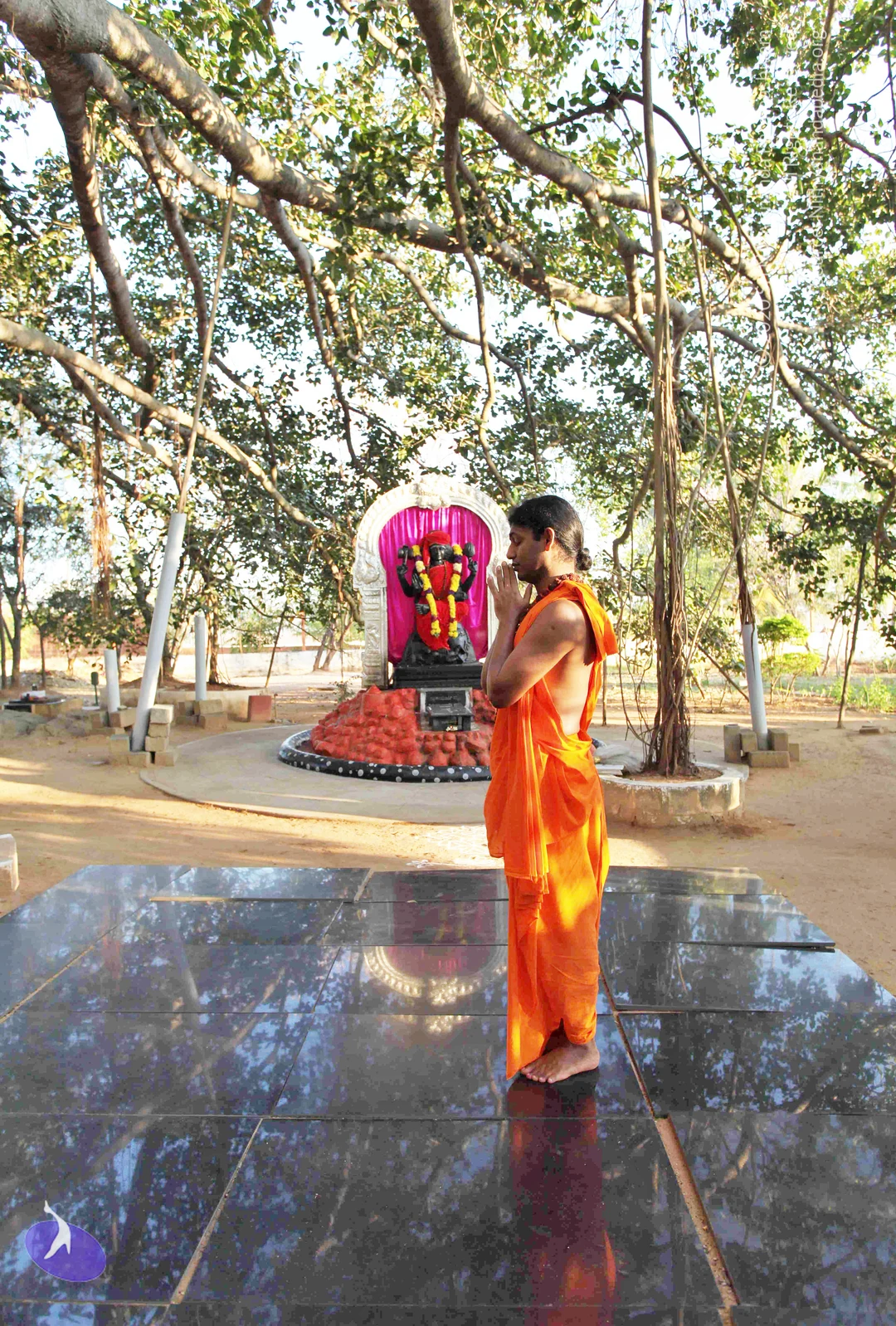
4-Morning-Satsang

23 photosSource gallery
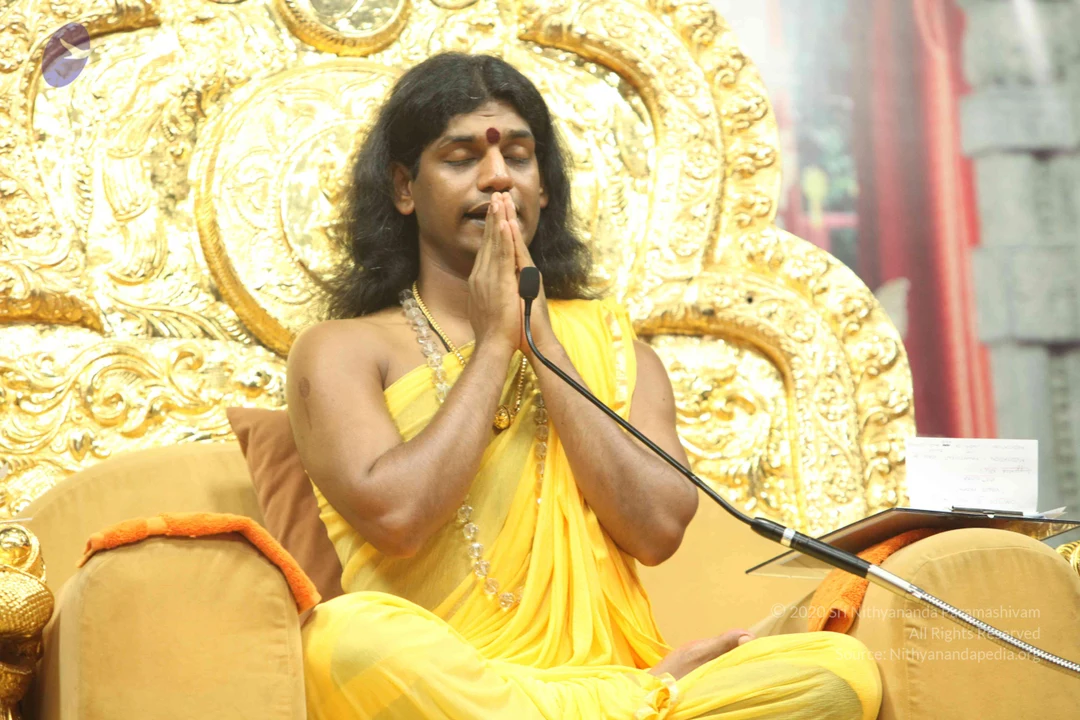
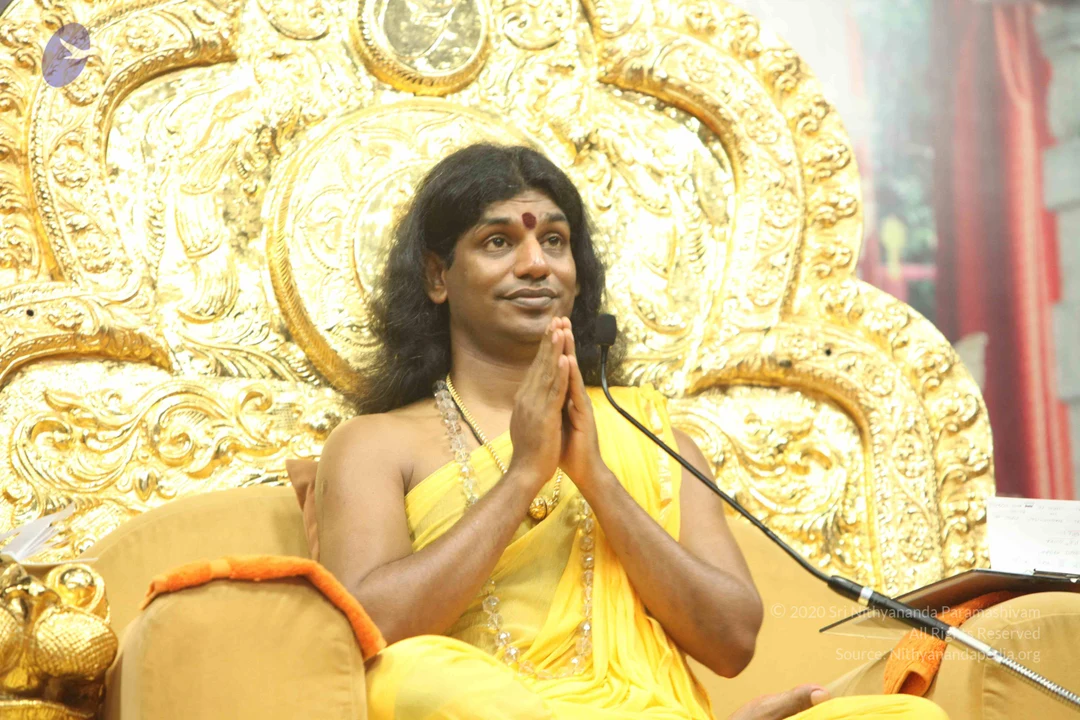
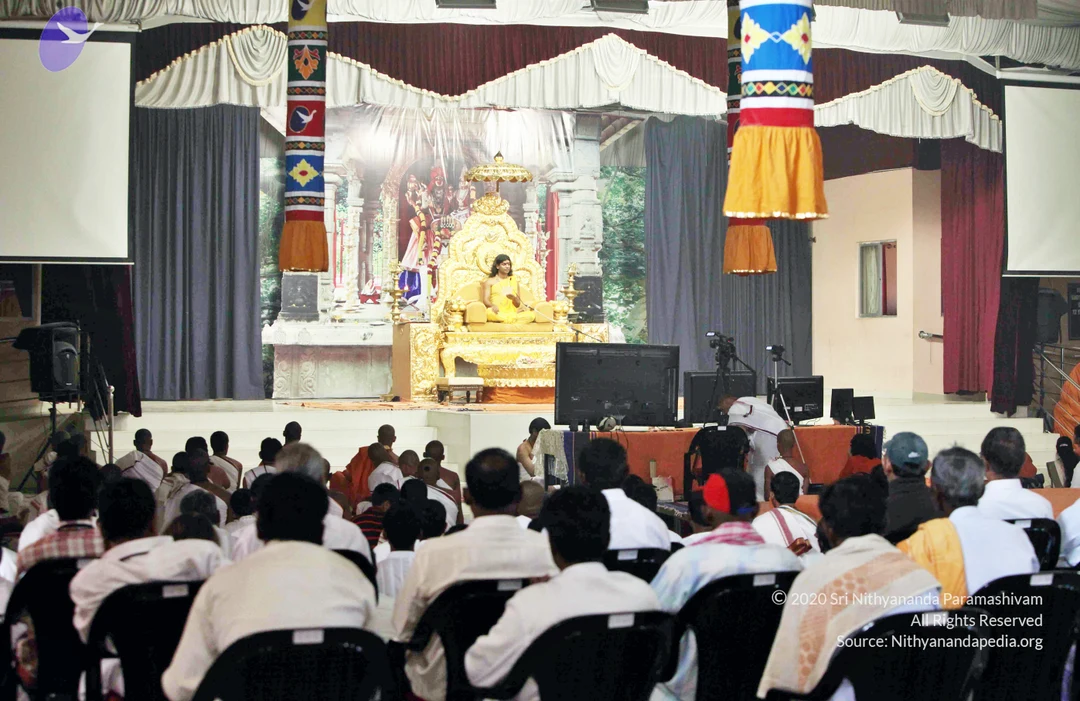
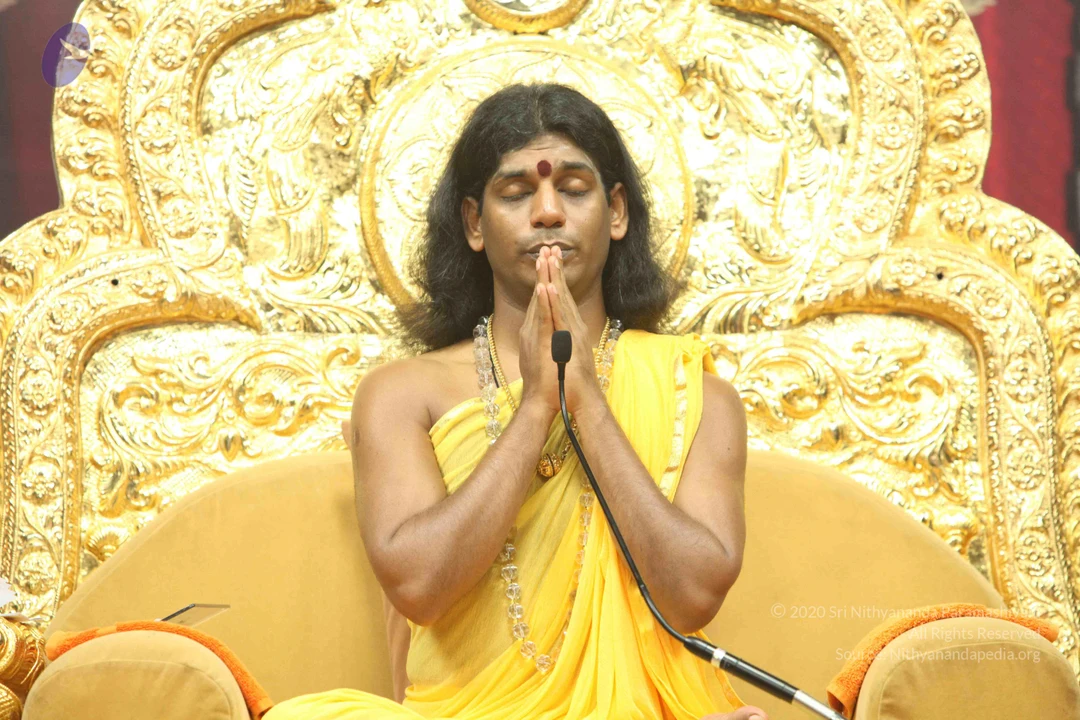
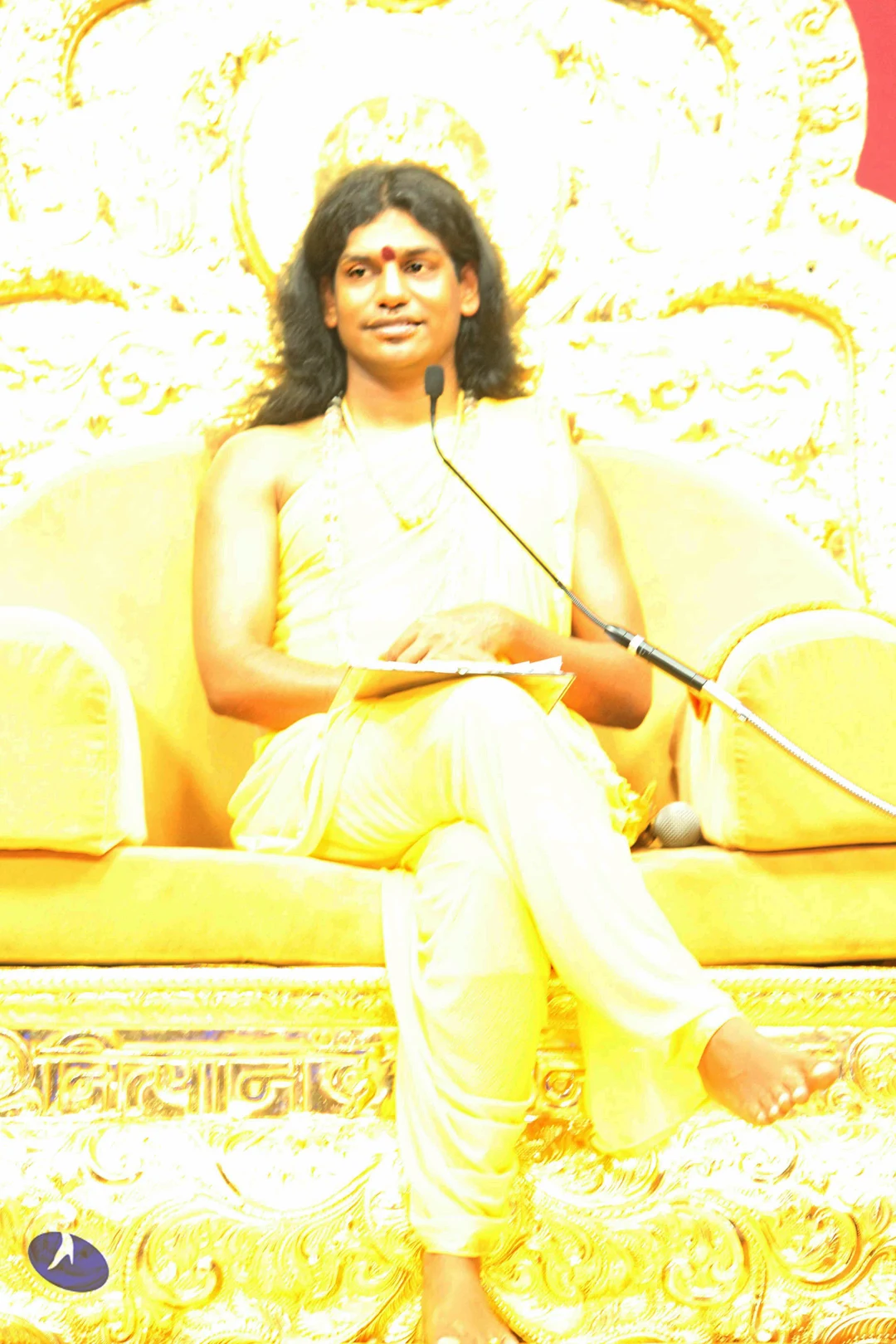
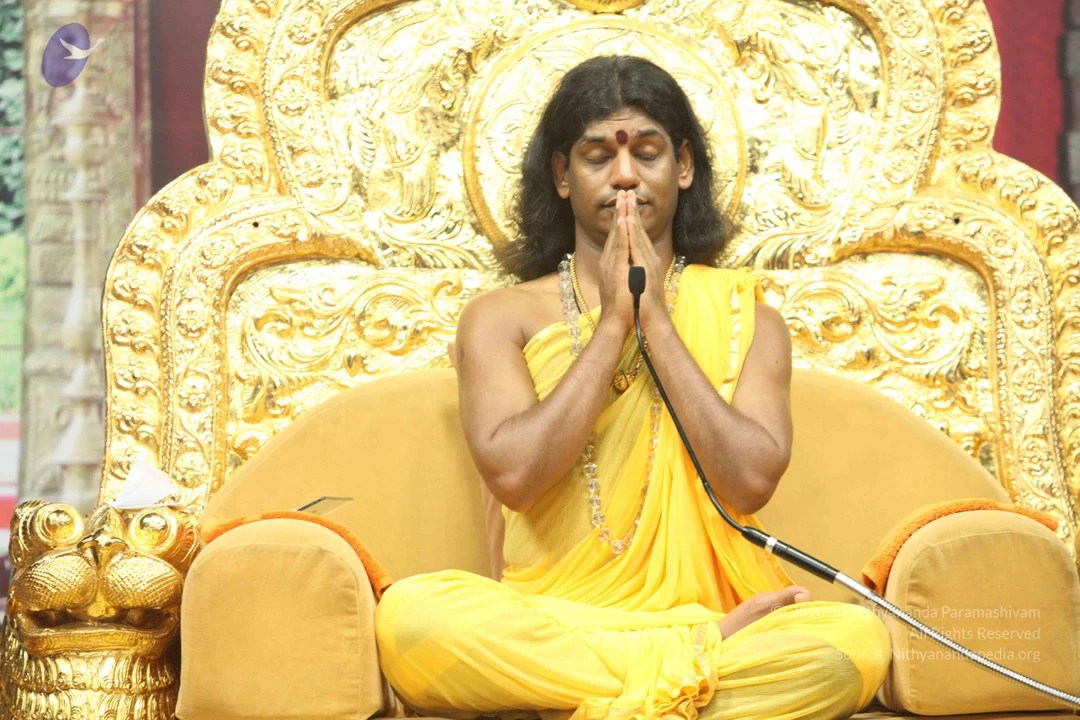
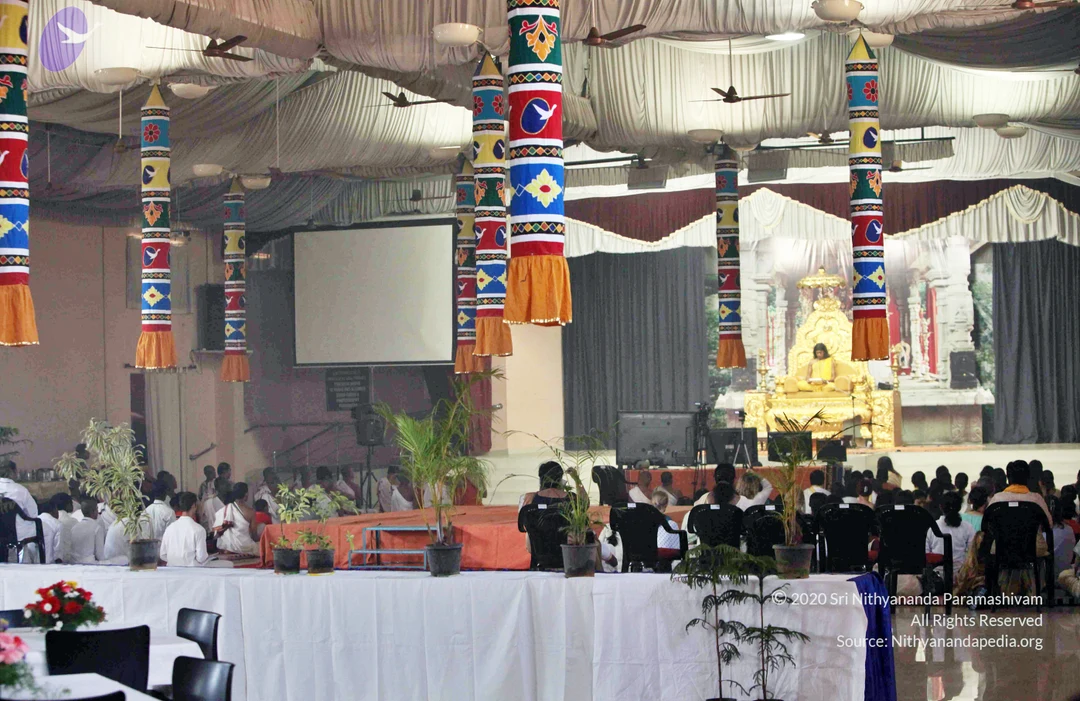
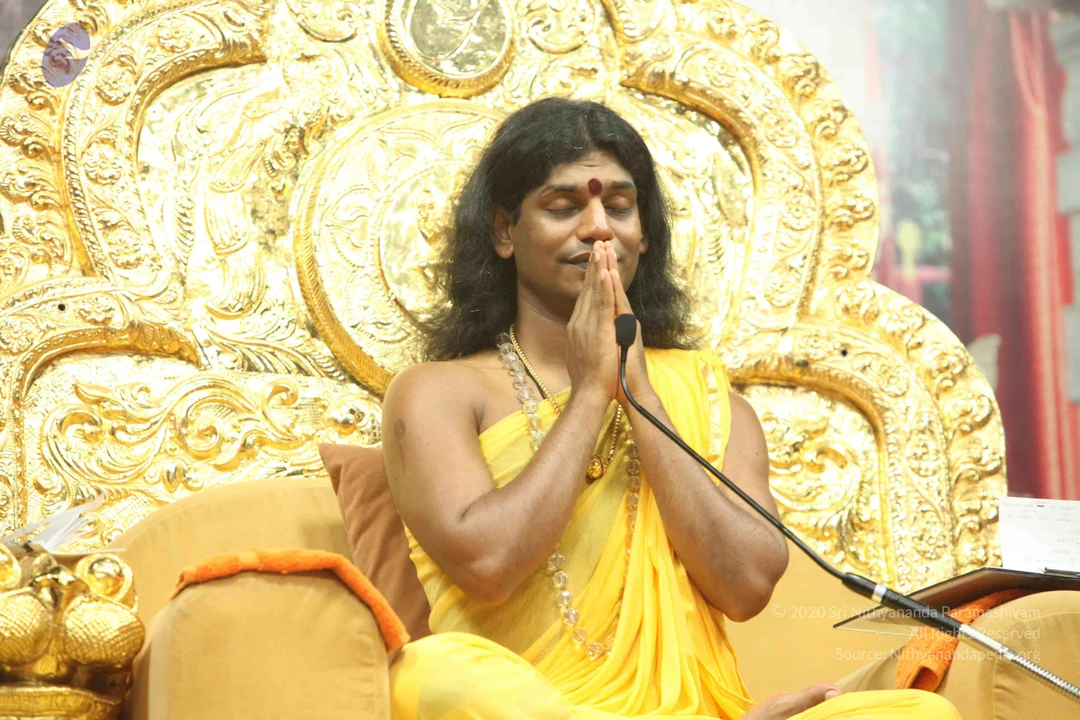
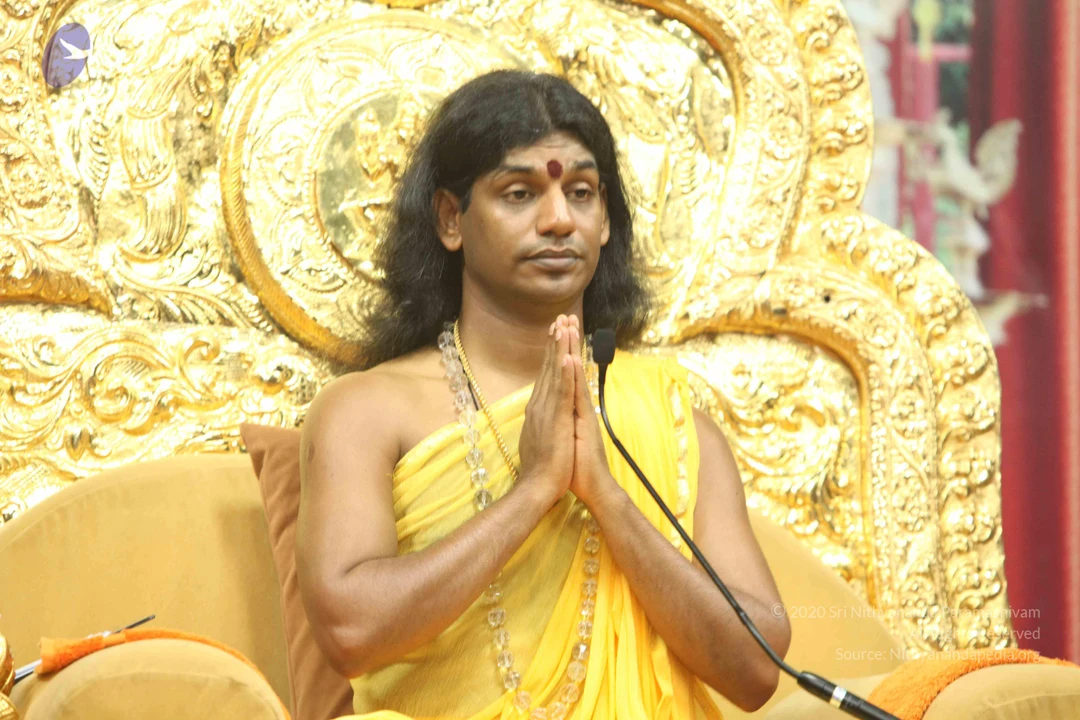
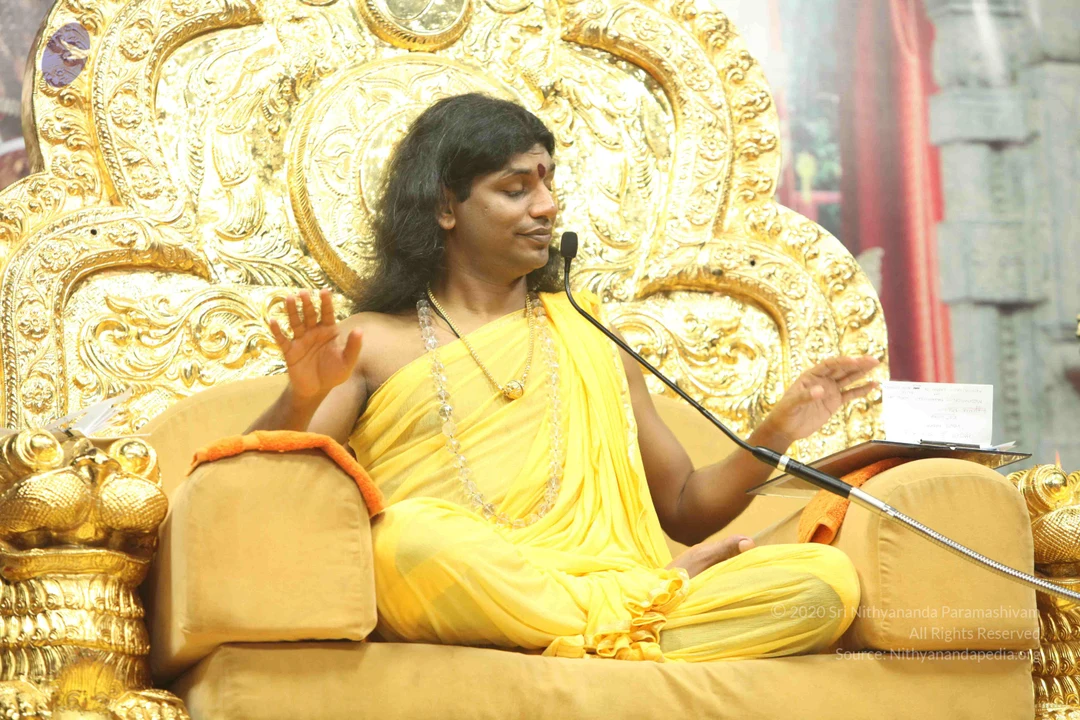
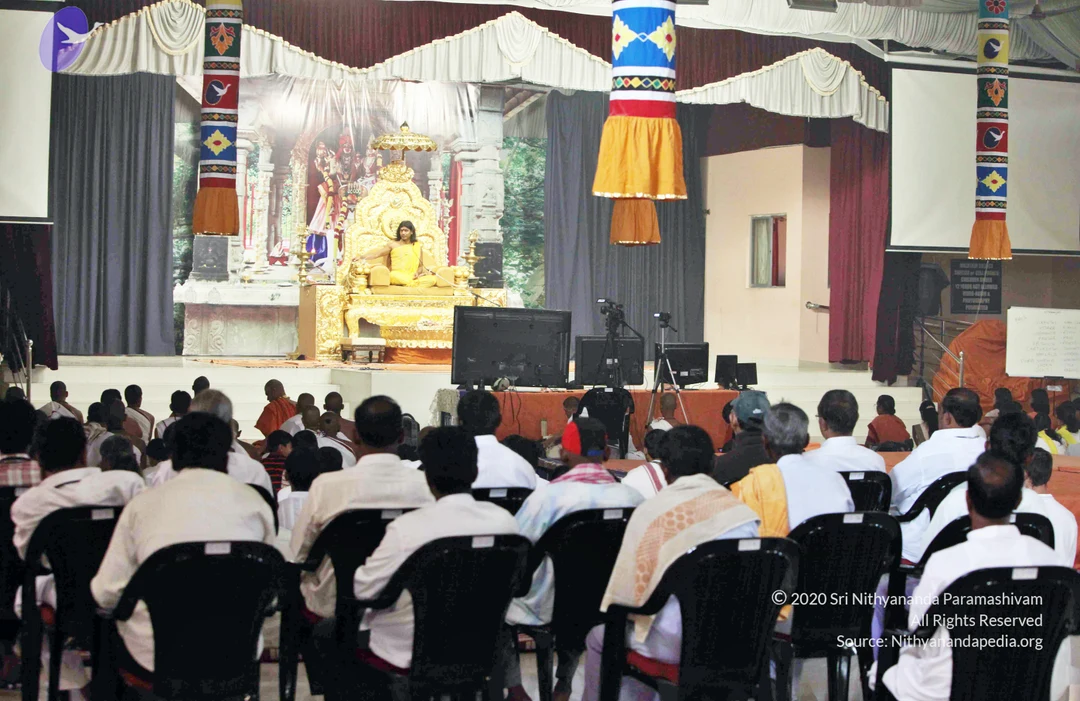
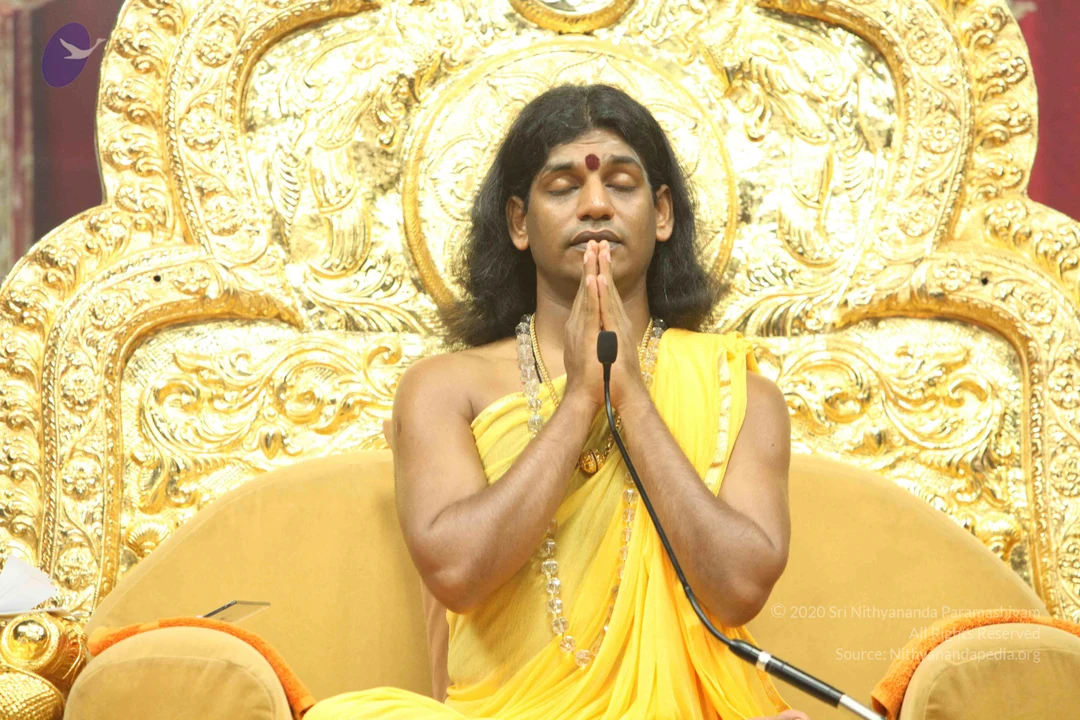
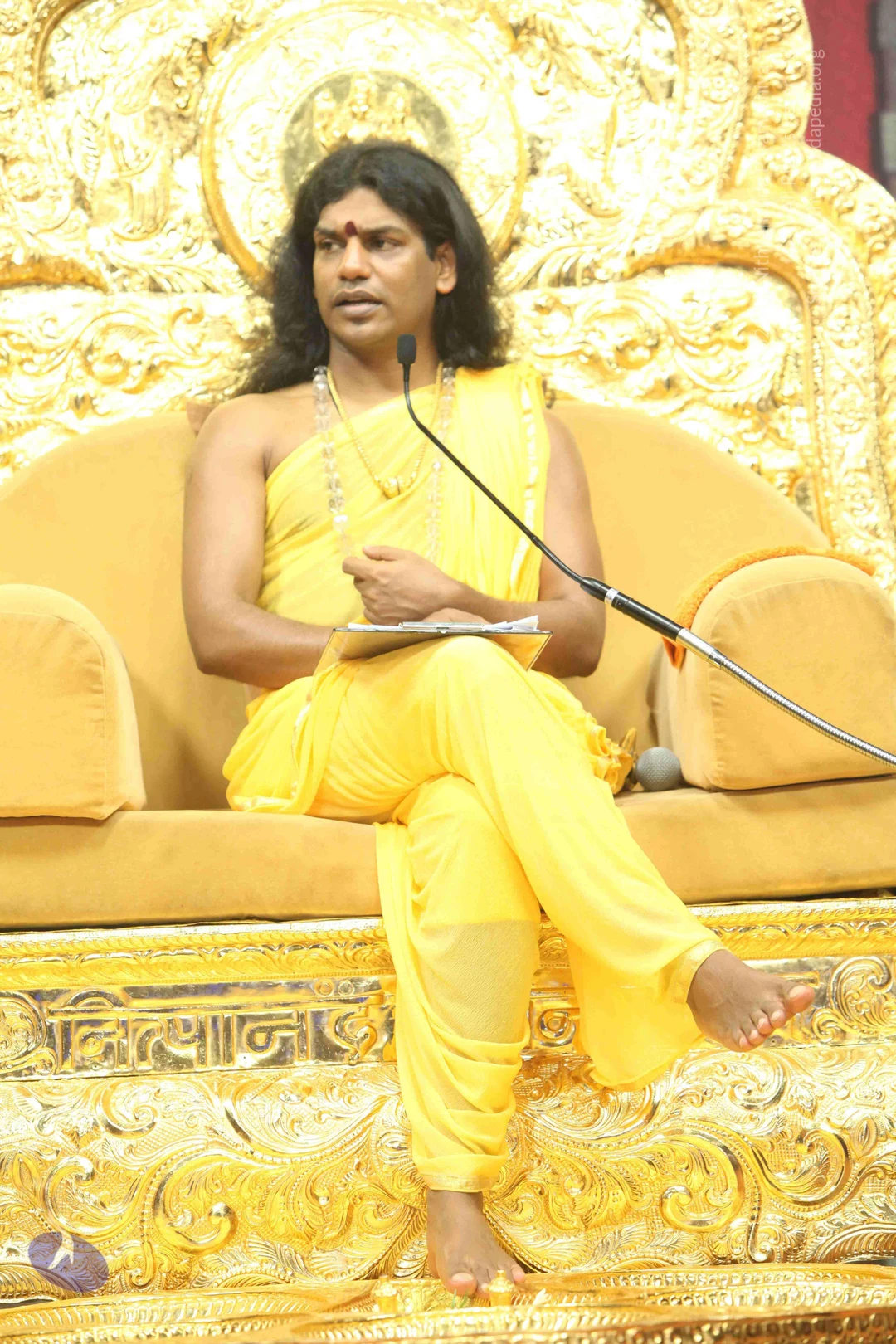
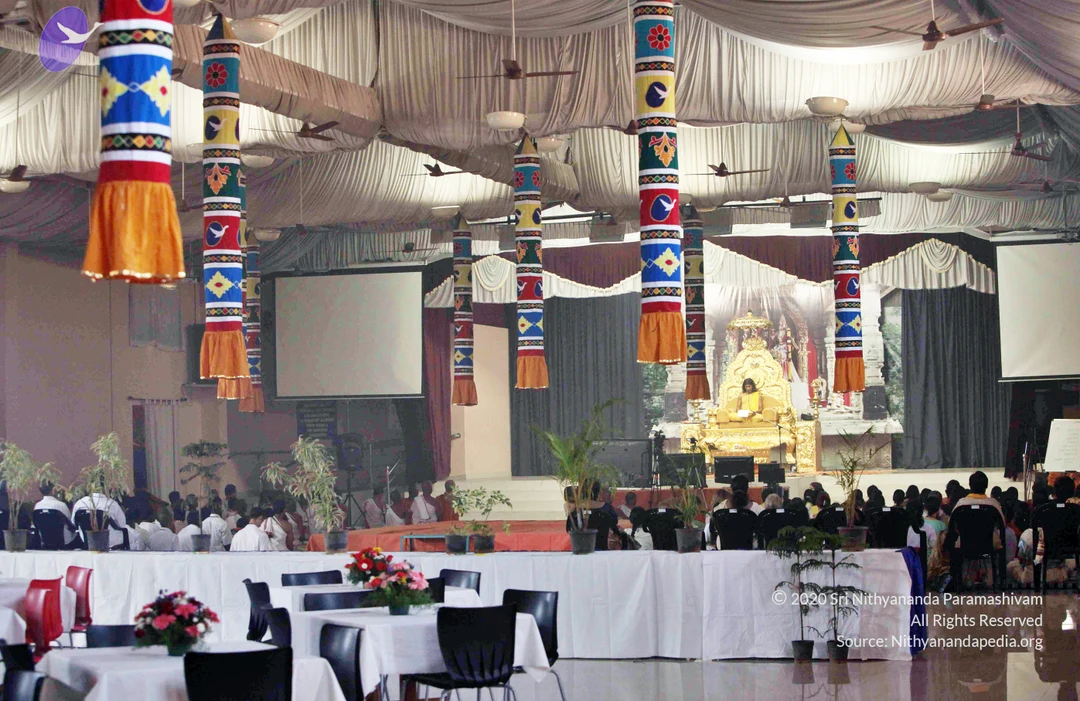
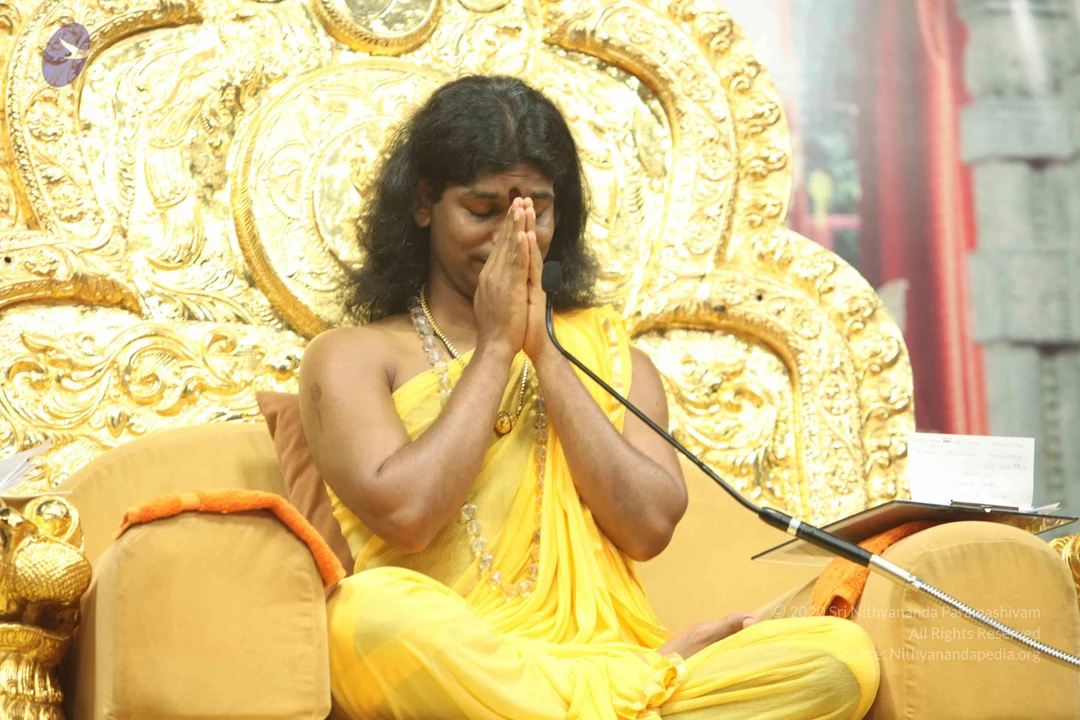
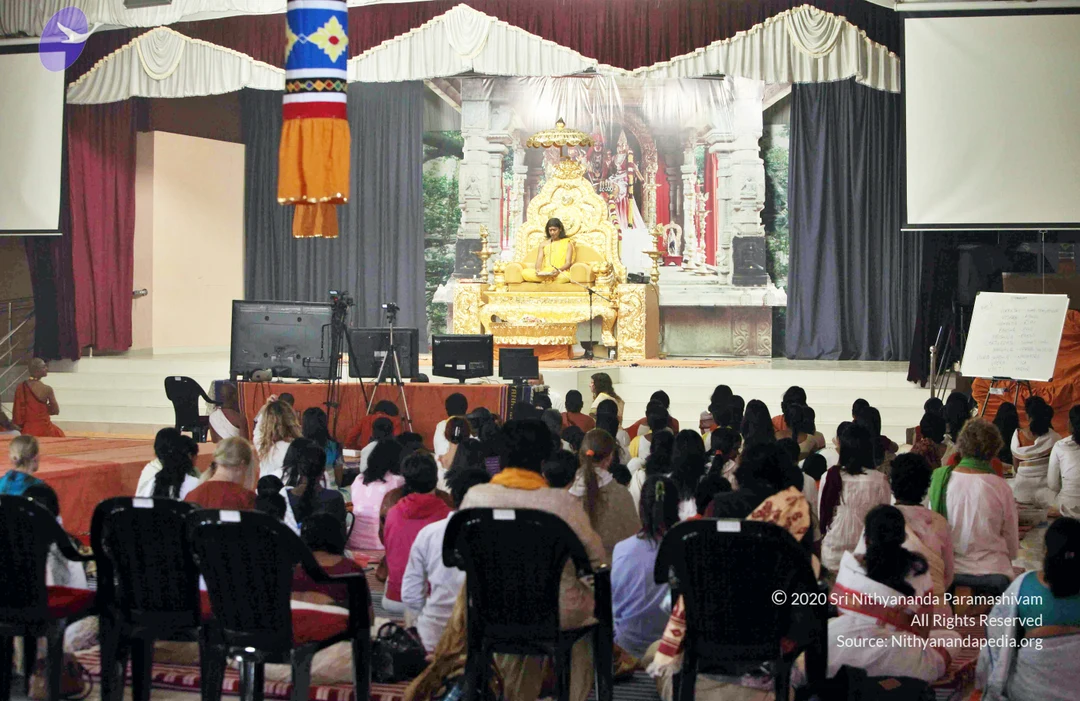
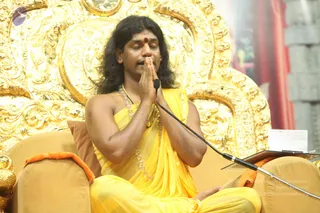
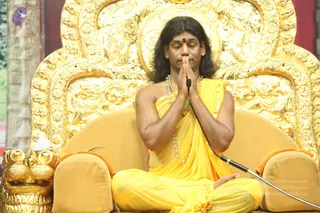
A man seated cross-legged on an ornate gold throne with carved floral gilded backrest, eyes closed and palms pressed together in anjali mudra at chest level. He wears a bright yellow dhoti-style wrap draped over a bare shoulder, a red bindi-like mark on the forehead, layered beaded necklaces and a gold chain. Long dark hair falls to his shoulders. A microphone on a stand and a small lectern with a paper sit beside him, with an orange cloth draped over the armrest. The figure is a person with saffron-yellow clothing, long swept hair and rudraksha-style malas, seated in a discourse.A man with long, swept-back dark hair and a red bindi sits on an ornate gold throne with intricate repoussé carvings, hands pressed together in namaste. He wears a yellow-gold dhoti and shawl, with a rudraksha-style bead mala and a gold necklace. A microphone stands beside him and a small paper or book rests on a stand at right. The setting appears to be a satsang stage with red drapes in the background. He is seated alone, with no other people visible.A seated audience faces a stage in a large hall with white and grey draped valances and tall banners with colourful geometric patterns. On the stage stands an ornate golden throne (peetha) with a canopy, occupied by a figure in a yellow-orange robe seated with hands raised in a teaching gesture. Behind the throne is a painted backdrop of a temple gateway with deity figures. Several people in white dhotis and shirts, some with orange shawls, sit in rows of chairs in the foreground; a few others are in orange and white clothing near the stage. A camera operator and monitors are set up on the right side of the stage. The photo is taken from the back of the hall.A man seated on an ornate gilded throne with elaborate repoussé floral and scroll carving, palms pressed together at chest level in anjali mudra with eyes closed. He wears a yellow-saffron draped garment over bare shoulders, a red bindi on the forehead, and multi-strand beaded necklaces including a gold pendant. A black microphone on a stand is near his face. The posture suggests prayer or meditation. Based on his long swept-back hair, saffron clothing, and bindi, this appears to be Swamiji (probable), shown in person seated on his throne. Watermarked photographs of event imagery.A photograph of a man with long dark hair and a red bindi seated on an ornate gold throne with a carved, embossed backrest and gold-patterned base. He wears a cream-white, draped garment over his shoulder and cream trousers, with a rudraksha-style bead necklace visible at his chest. He holds a small white sheet and a yellow folder on his lap, and a stage microphone on a stand is positioned beside him. The gold base carries a readable name in Devanagari script. The image is heavily brightened and washed out.A man sits cross-legged on an ornate gold throne carved with floral and scroll patterns, with a golden lion-headed armrest at lower left. He wears a flowing yellow robe draped over one shoulder, with beaded white and gold necklaces, and a red bindi on his forehead. He sits with eyes closed and palms pressed together in namaste before a microphone on a stand, in what appears to be a satsang or meditation setting. Probable Swamiji: long swept-back hair, yellow robe and ornate gold throne with multiple beaded necklaces are the qualifying cues, so the figure is identified as Swamiji (probable) seated in meditation.
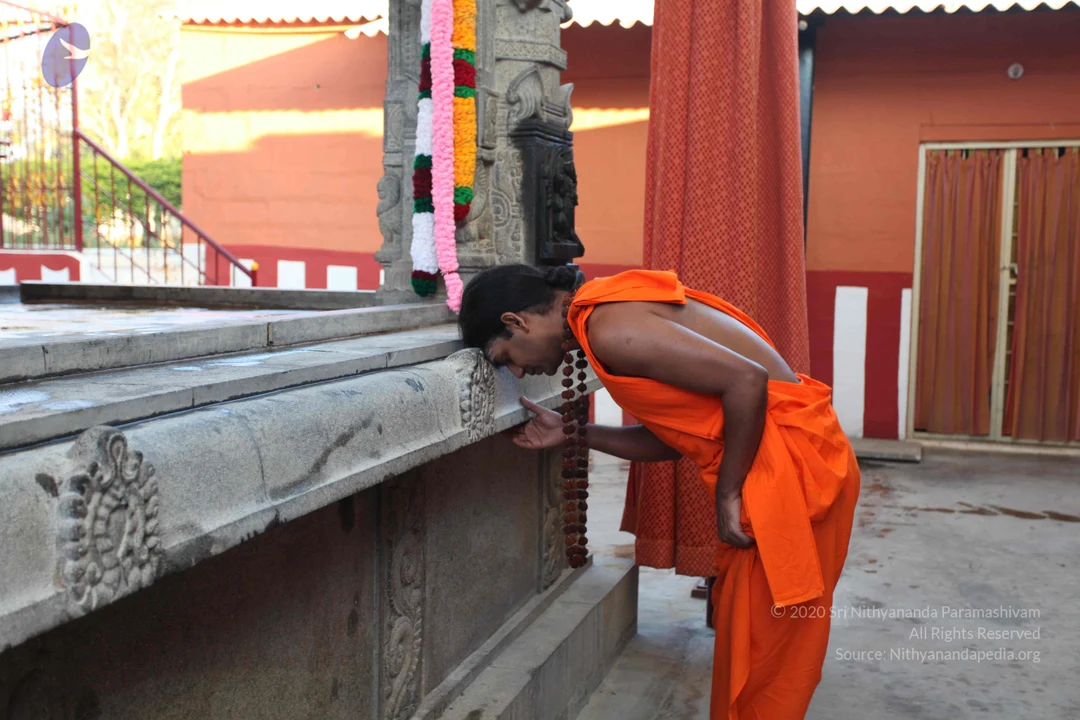
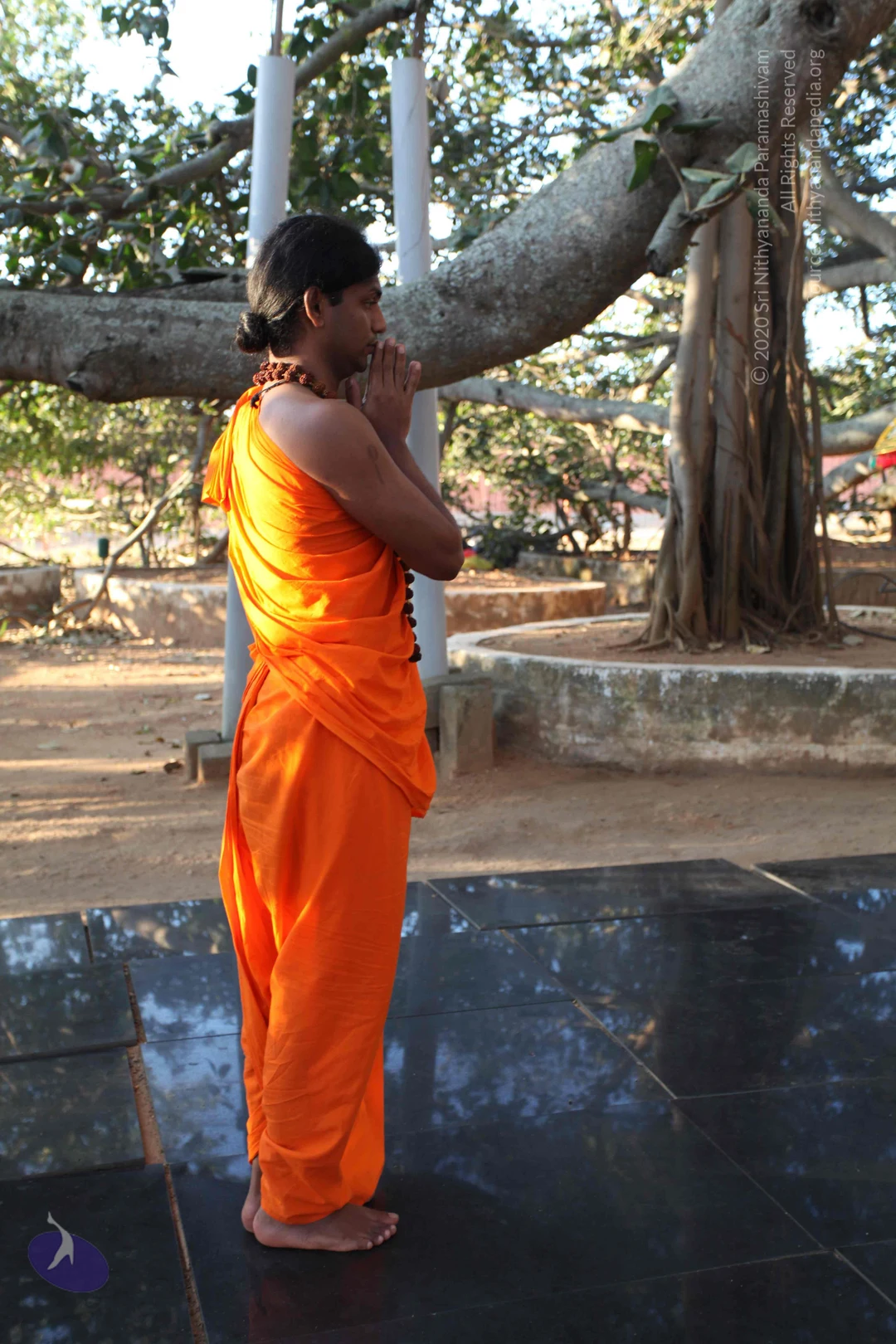
5-Sarva-Darshan

8 photosSource gallery
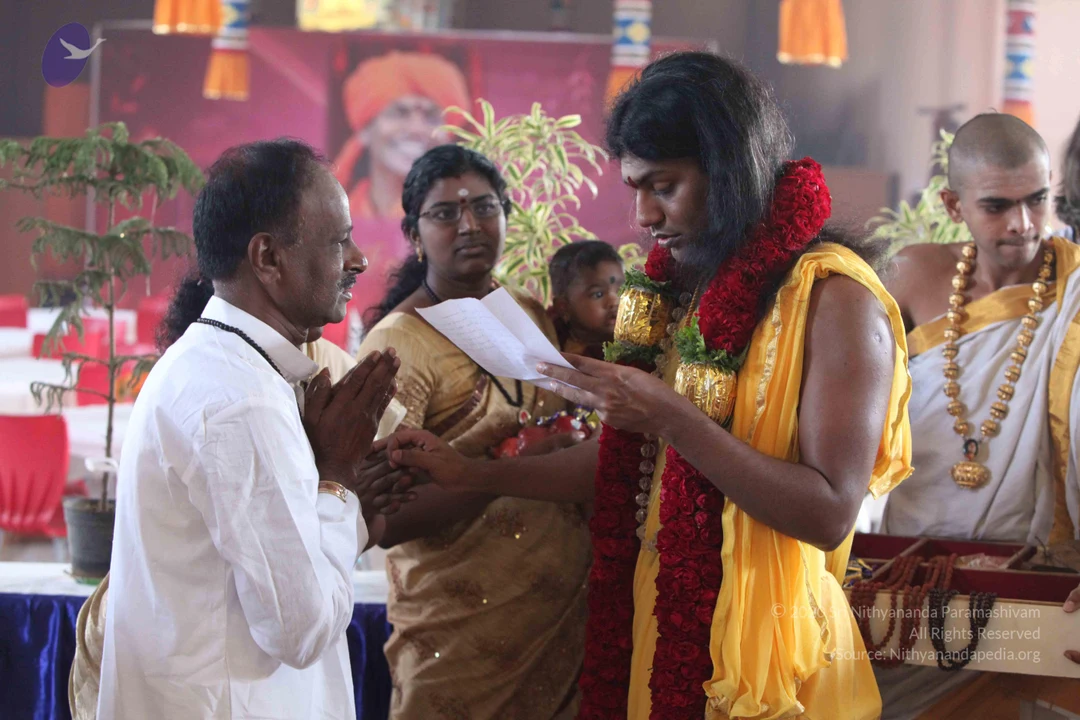
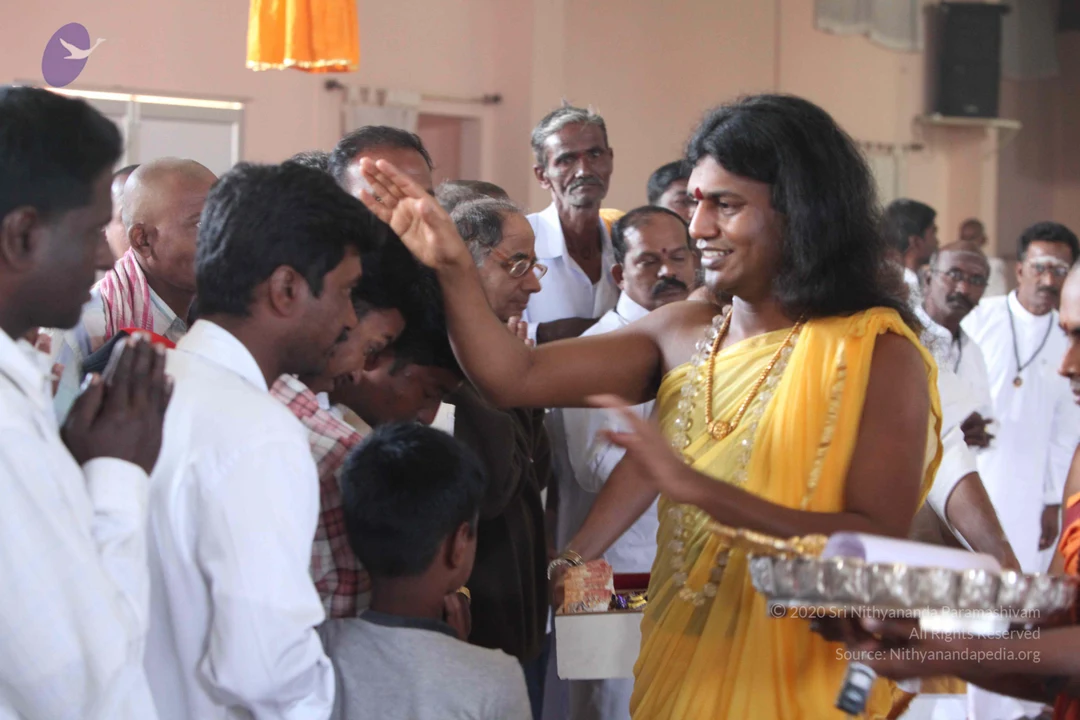
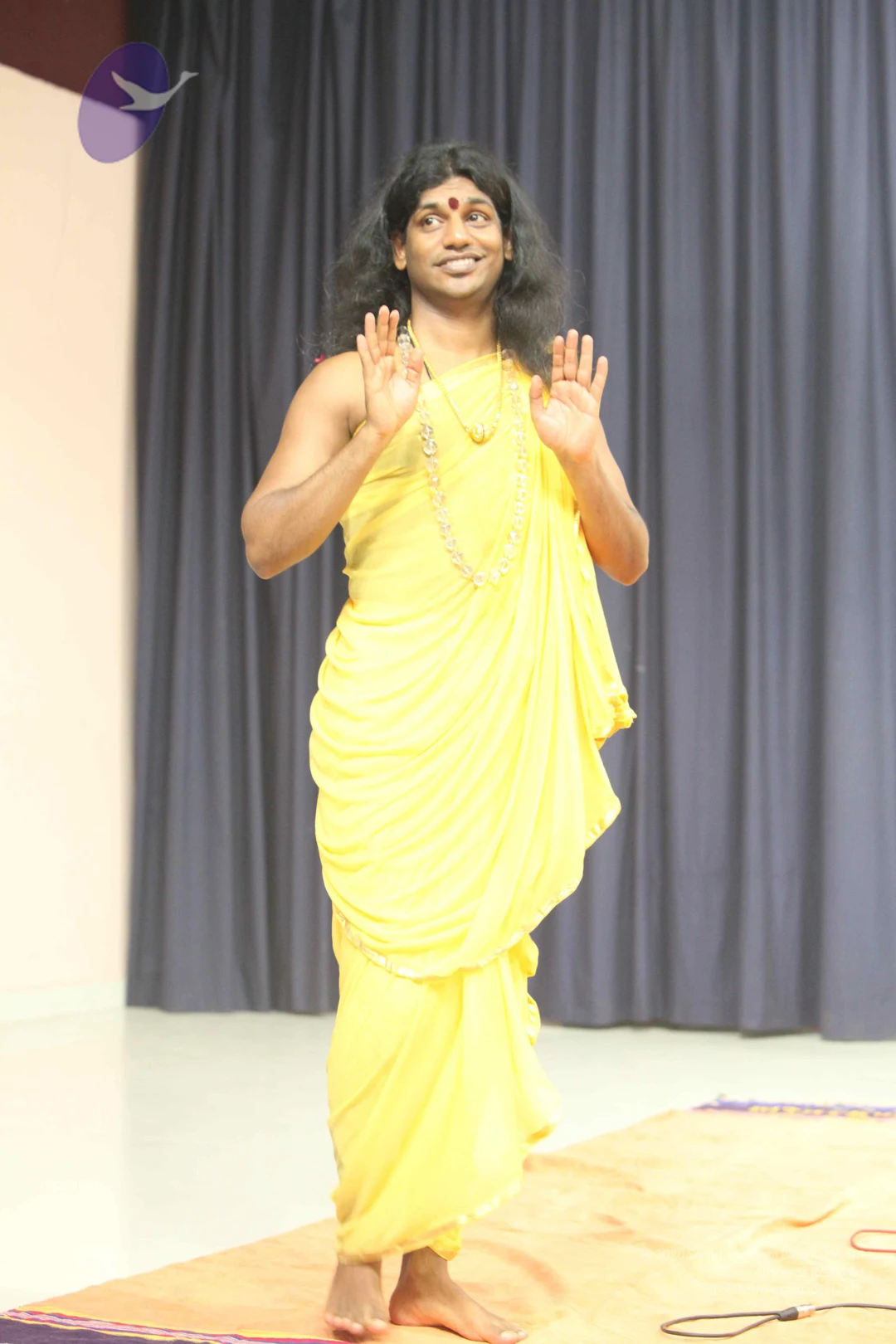
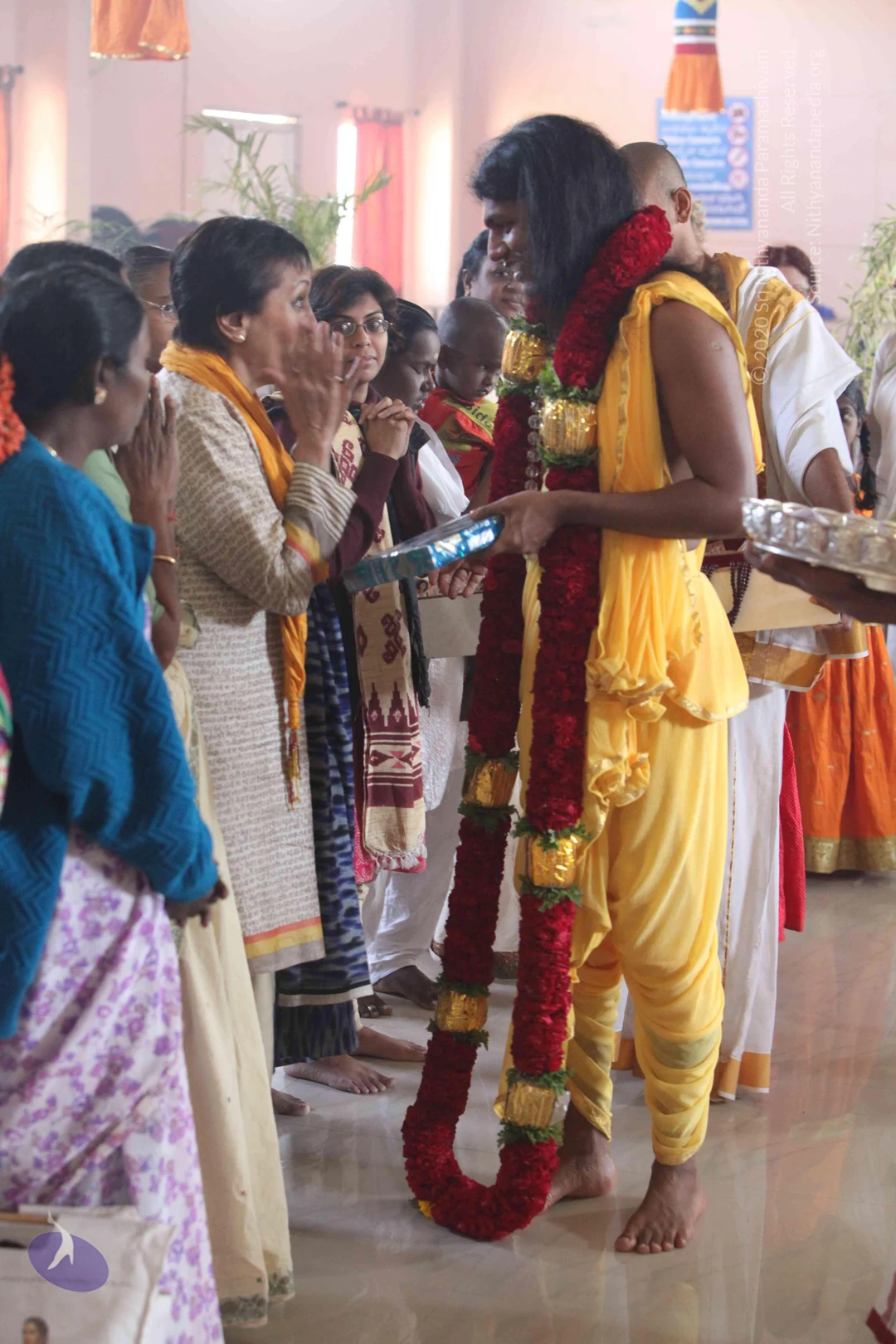
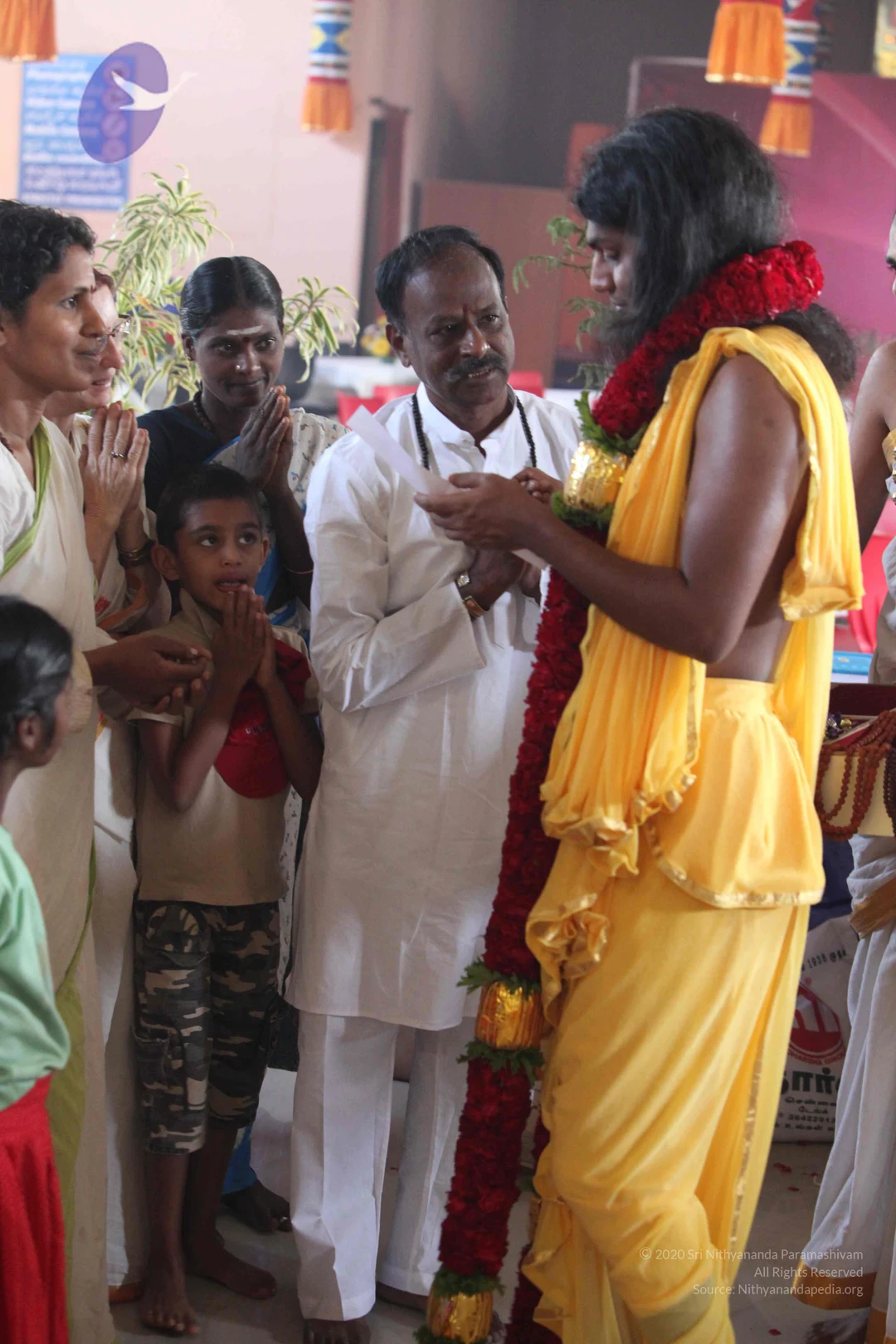
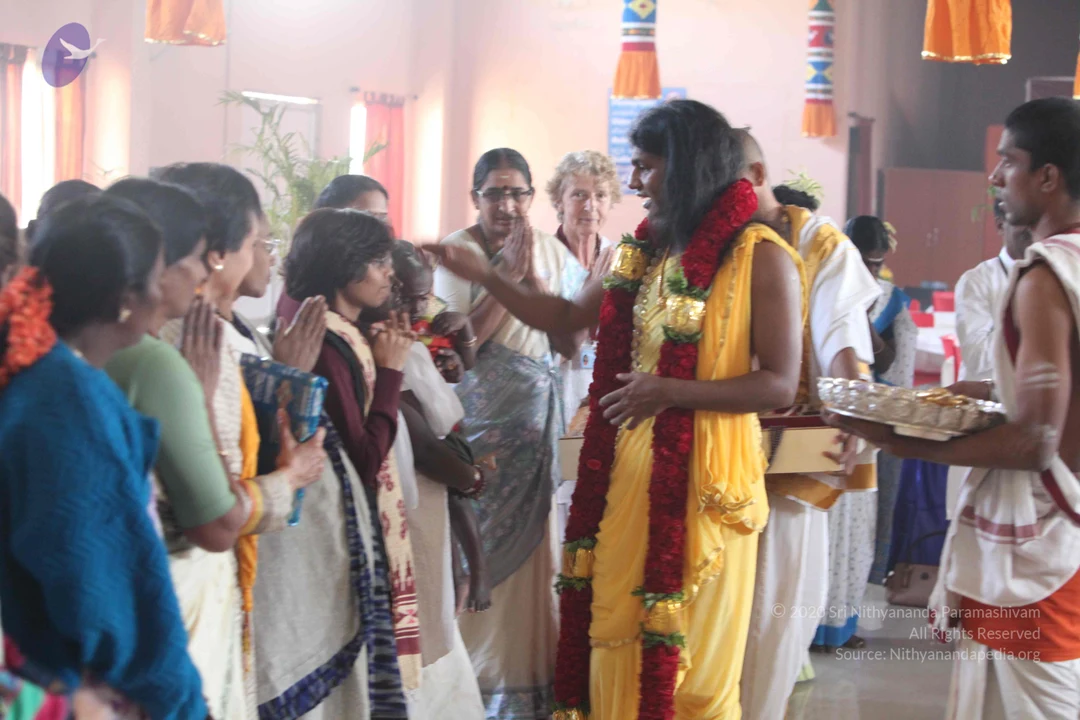
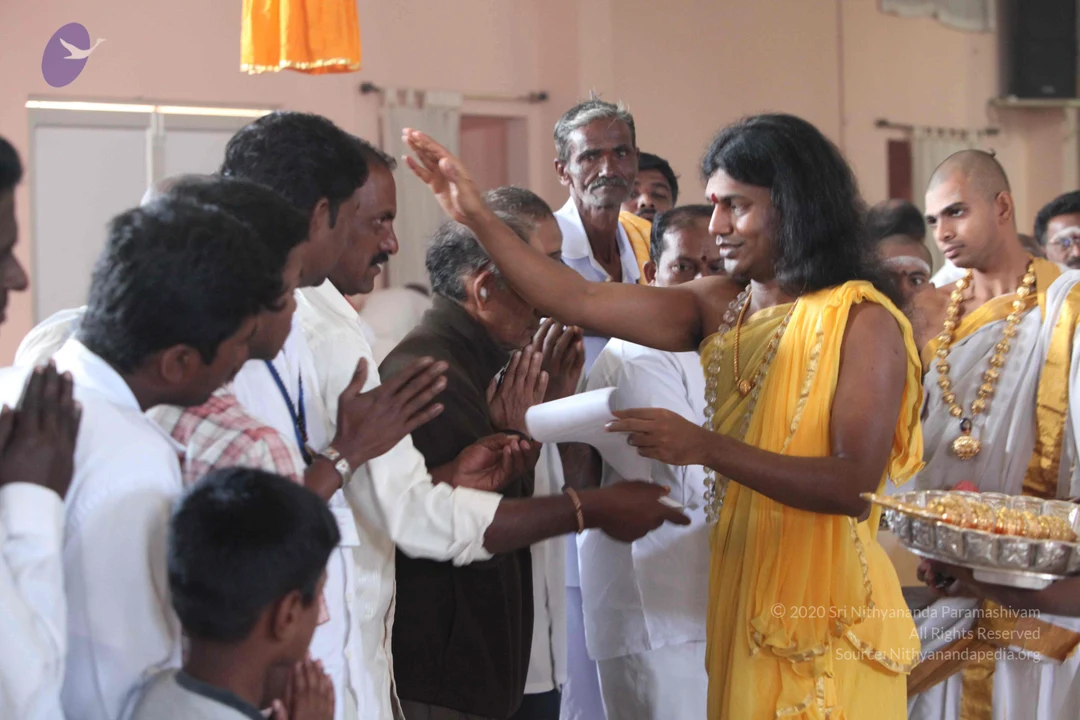
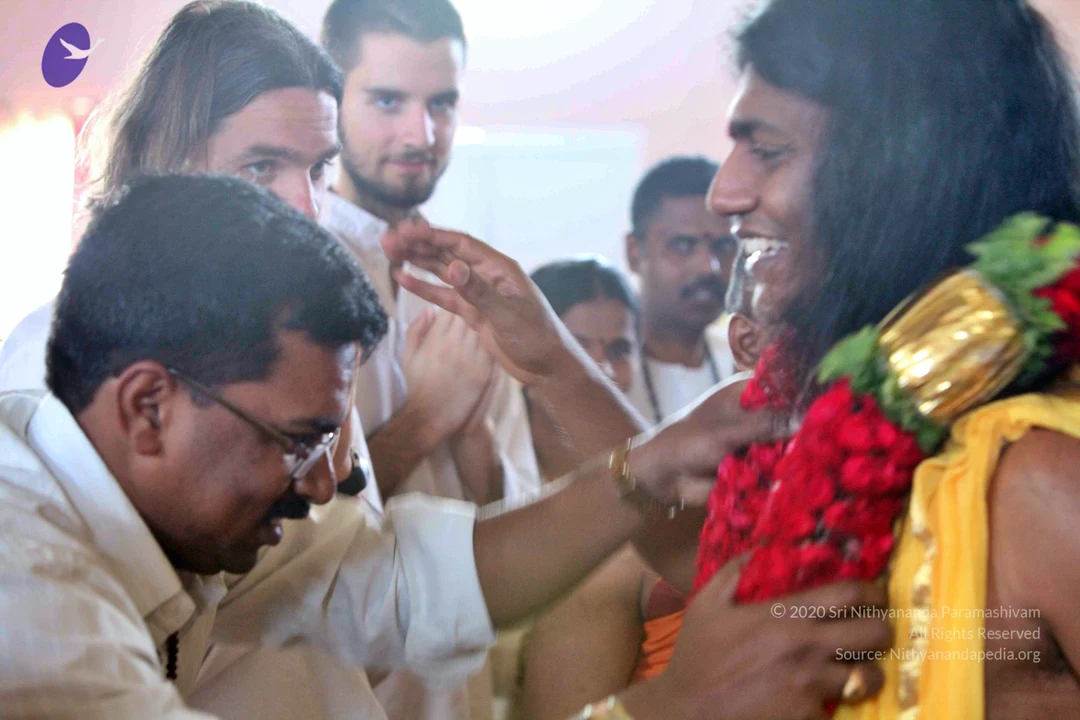
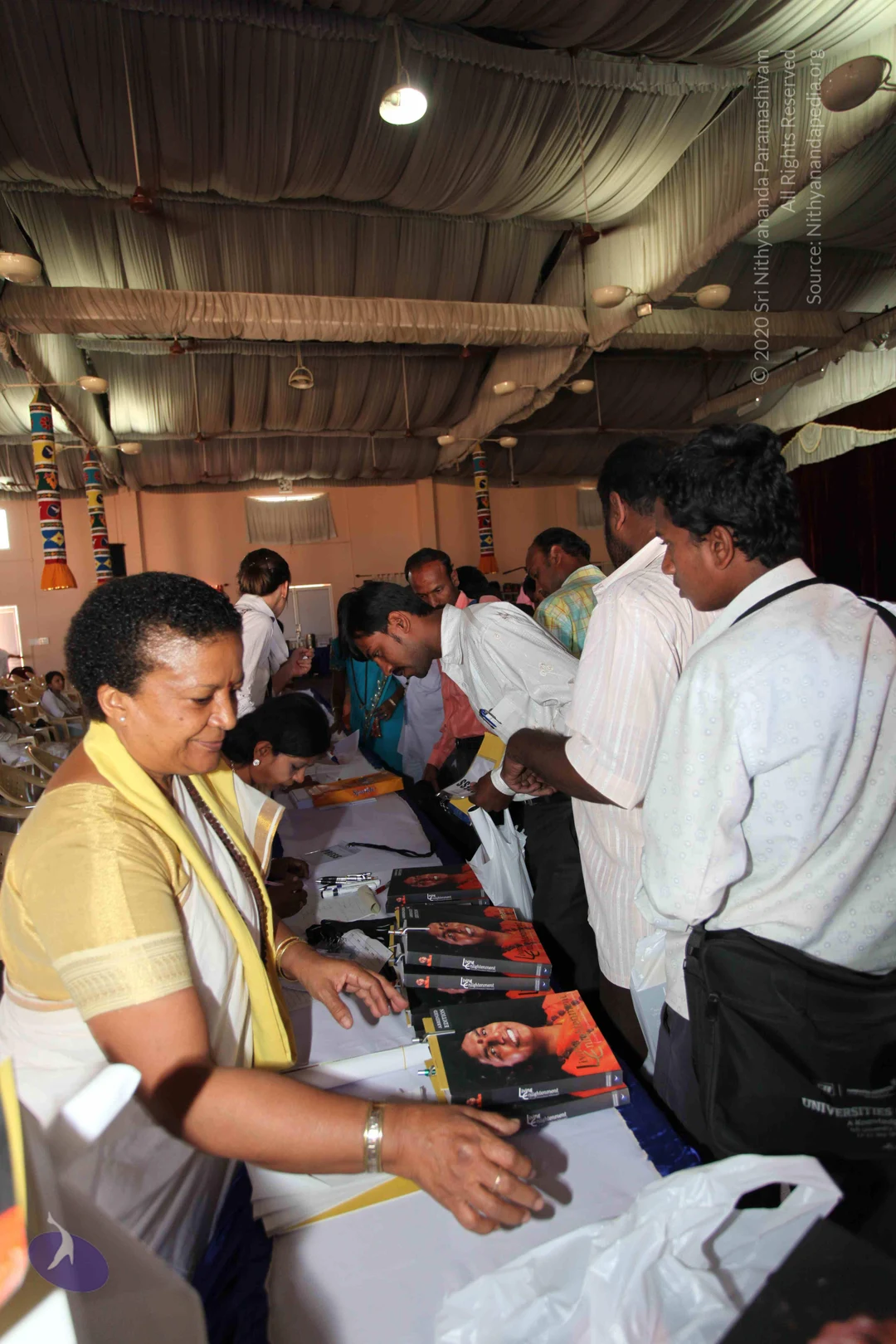
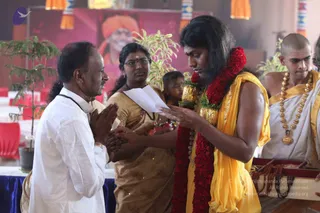
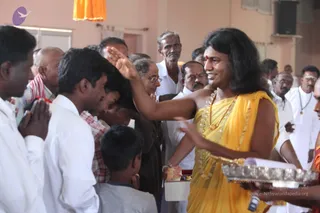
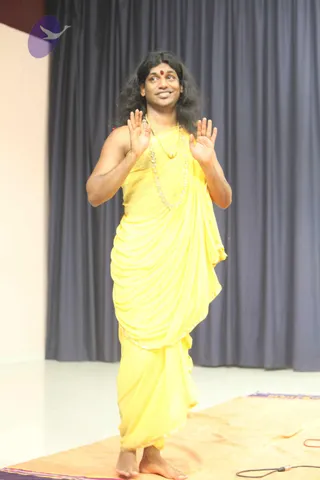
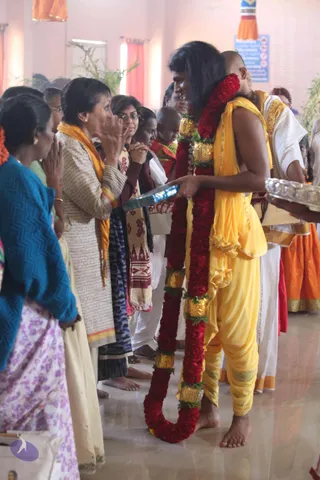
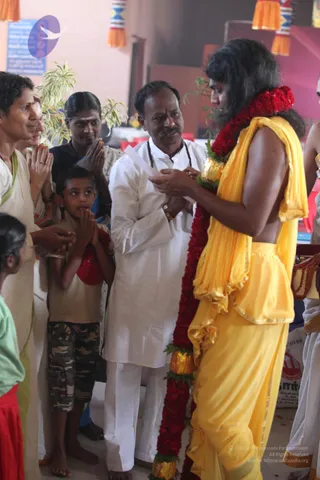
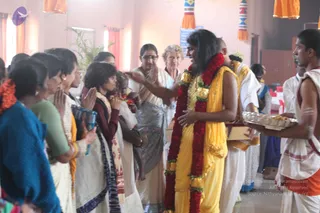
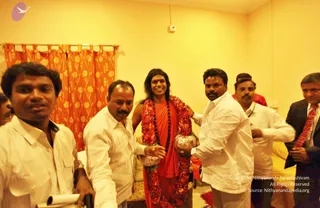
A photograph of a ceremonial moment in an indoor hall. A man in a central position wears a yellow-orange shawl over his shoulders and a large red flower garland, with long dark hair swept back, and he holds a folded paper while looking down at it. Two gold-coloured pot-shaped objects with green leaves hang on the garland. To the left, a man in a white shirt stands with palms pressed together in a namaskar greeting. Beside him, a woman in a gold saree and a small child stand; behind them a banner shows a figure in an orange turban. To the right, a shaved-headed man in white with a large beaded gold necklace stands near a wooden box. Potted plants and red-covered chairs appear in the background.Indoor darshan scene in a plain pink-walled hall with an orange cloth hanging from the ceiling. A person with long swept-back dark hair, a yellow silk saree-style wrap, a multi-strand gold necklace, a rudraksha-style mala, and a red bindi stands at right, raising one hand in blessing toward a crowd. Several devotees in white shirts and dhotis press forward, some with palms joined in namaskar, and a silver tray with offerings is held at lower right. A probable Swamiji candidate matches several cues: long hair, saffron-yellow ornate clothing, beaded and gold adornments, and a blessing gesture. Around 15 to 20 people are visible.A photograph of a single man standing barefoot on a light orange mat on a stage in front of a dark grey curtain. He wears a flowing yellow garment draped over one shoulder and body, with a clear beaded necklace and a pendant, a red dot on his forehead, and long dark hair swept back. He raises both palms outward in a gesture of blessing or teaching while smiling upward. A coiled black cable lies on the mat at lower right, and a purple bird logo appears in the upper left corner. Swamiji (probable): long swept-back hair, yellow ceremonial dress and beaded necklaces, matching the page's listed presence at the event.Indoor photo in a bright hall with pink walls and orange curtains. A figure with long swept-back dark hair wears a yellow shawl and yellow dhoti and holds a long red garland with gold ornaments, extended toward devotees. Nearby, a bald man in white and orange clothing and a woman in a beige shawl with a yellow scarf stand with palms pressed together; another woman in a teal sweater and a woman in a striped shawl look on. Attendees stand barefoot on a polished floor, and a silver plate is visible at the right edge.Indoor photo of a man in a yellow dhoti and bare-chested yellow shawl with a red rose garland, his long dark hair swept back, receiving a folded paper from a man in white kurta and white dhoti wearing a rudraksha mala and a wristwatch. Around them stand devotees with hands folded in namaste: a woman in cream sari, a woman in white with a red-bordered sari, and a young boy in a beige shirt and camouflage shorts. A woman in green top and red skirt stands at the left edge. Potted plants, orange and striped tassels hang from the ceiling, and a bright pink wall forms the backdrop. The yellow-clad figure shows distinctive saffron-style dress, a red garland and a long swept-back hairstyle, consistent with the page's a person reference, though identity is appearance-based and uncertain.A photograph inside a hall with pink walls, orange hangings and colourful tassels. A man with long dark hair and a beard, wearing a yellow saffron-toned shawl, a large red garland and gold ornaments, stands in the centre extending his hand toward a line of women. The line of women on the left, in saris and salwar kameez, have their palms pressed together in greeting or devotion, and one woman holds a small red-and-white flower bundle. Two older women in white, one wearing glasses, stand behind him. On the right, a man in white dhoti and shawl carries a silver tray of offerings, and another man in white stands nearby. Potted plants and red chairs are visible at the back. Swamiji (probable): the centre man wears a long-haired, bearded appearance with a yellow shawl, red garland and gold ornaments, consistent with a saffron-clad guru receiving devotees.
6-SPH-in-Press-Conference

155 photosSource gallery
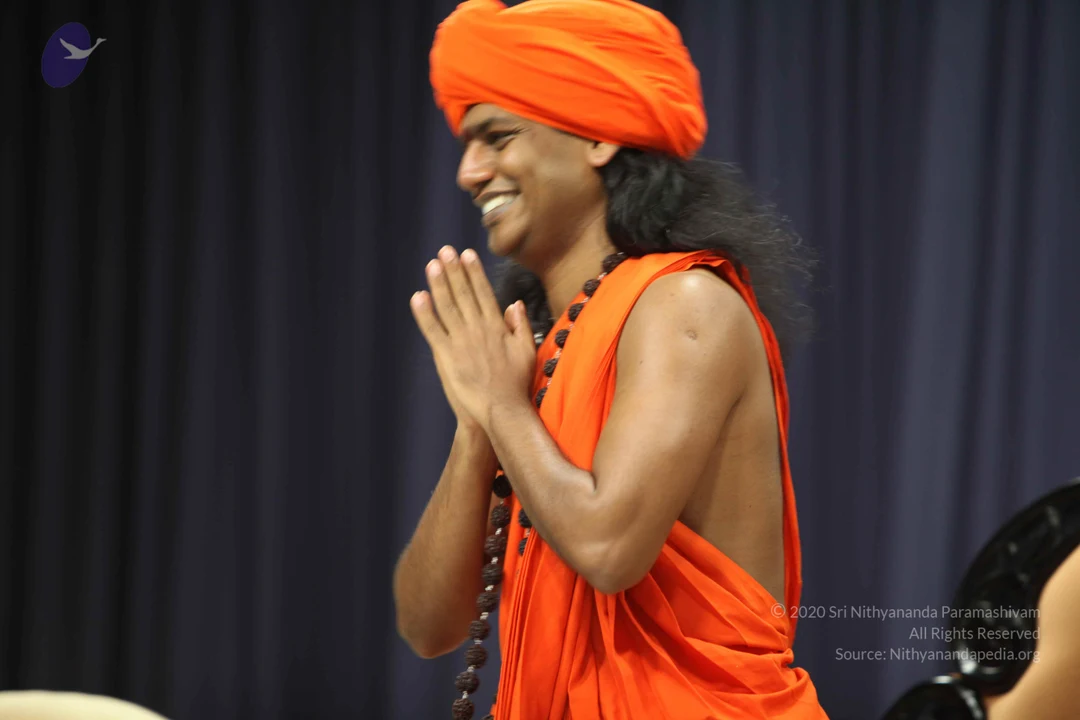
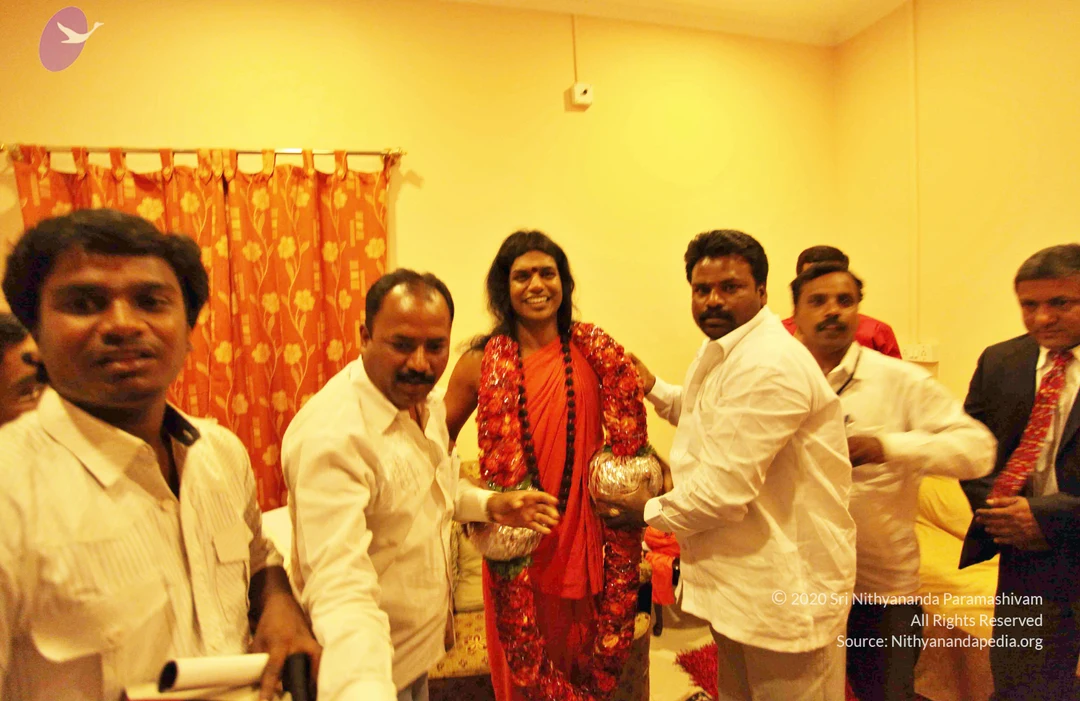
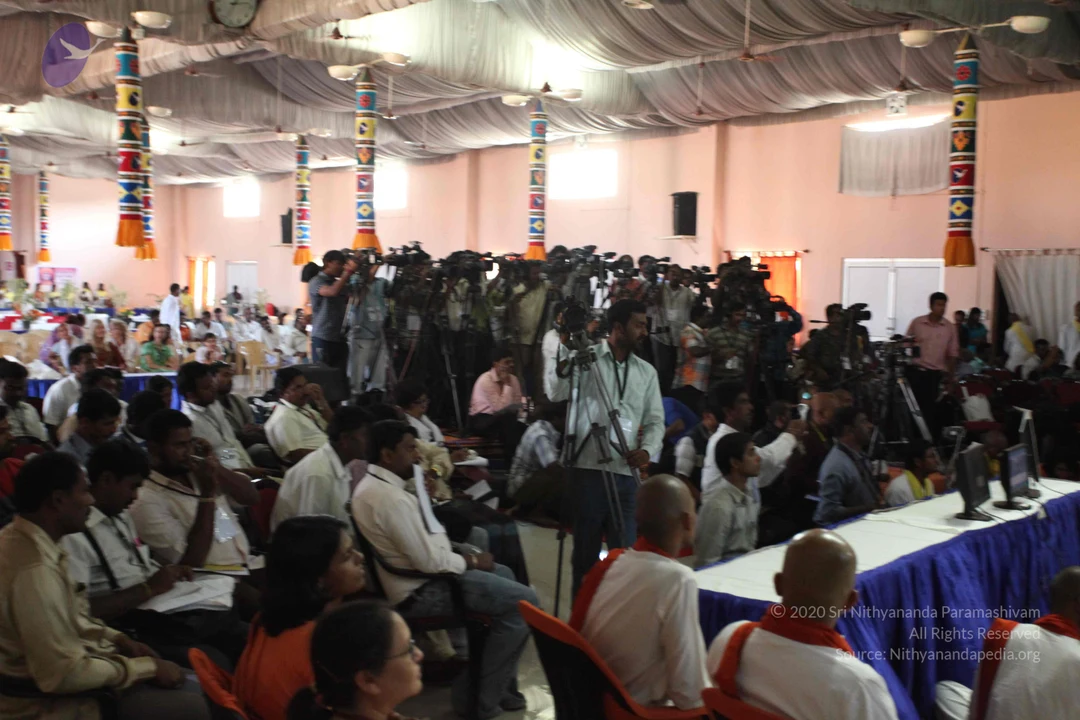
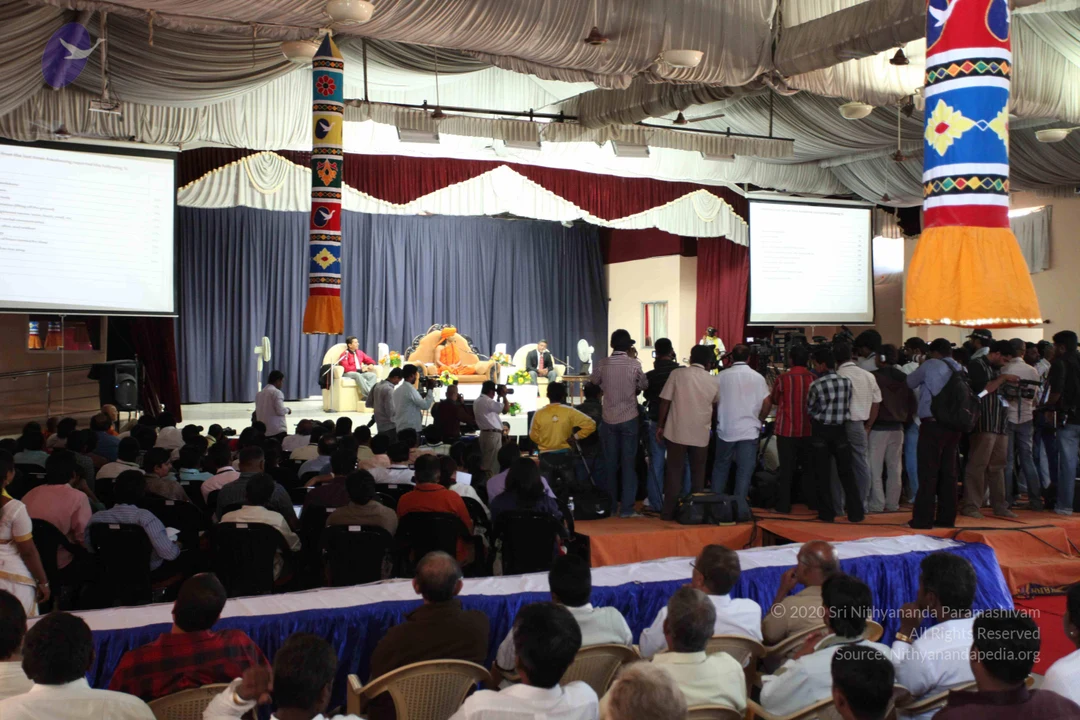
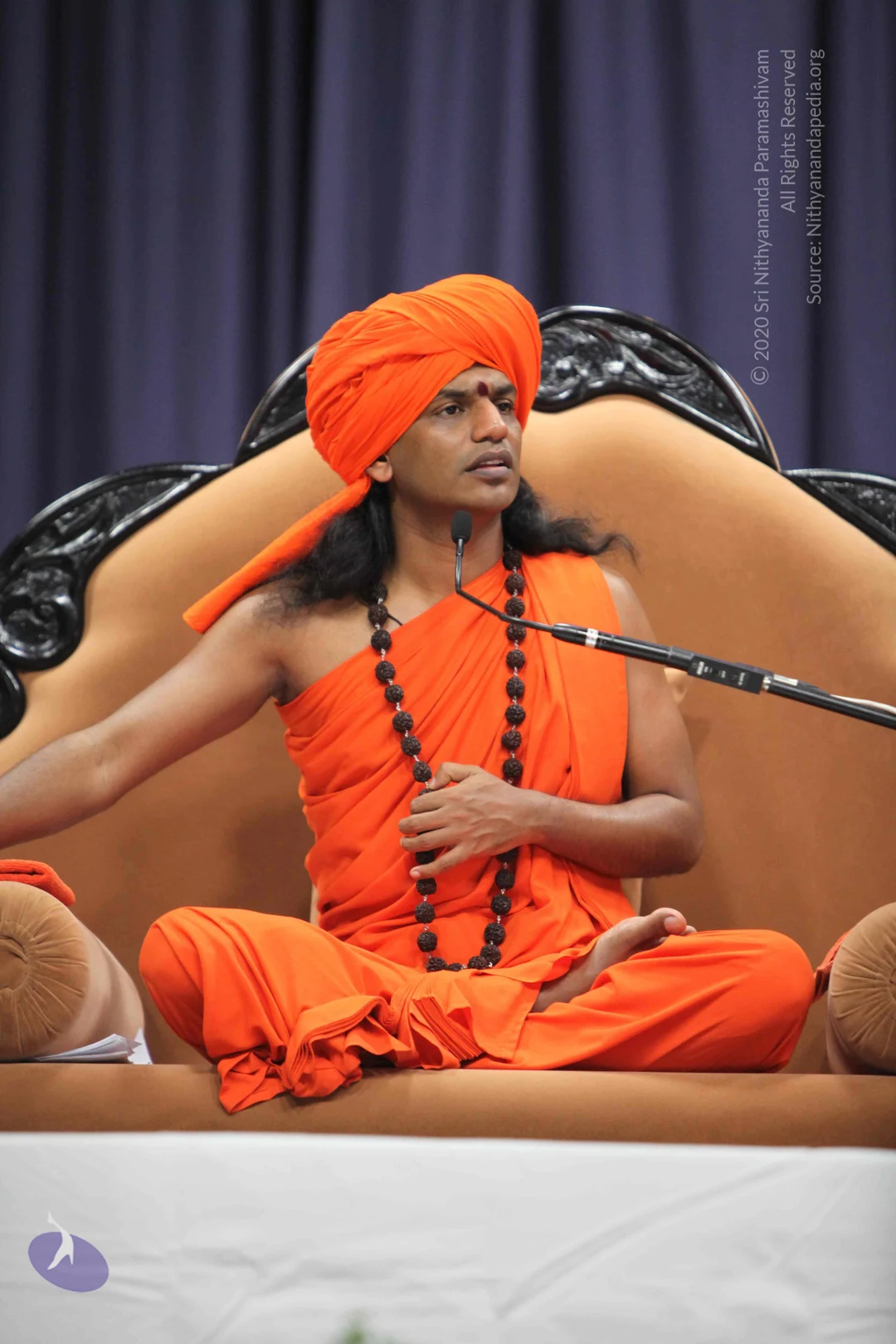
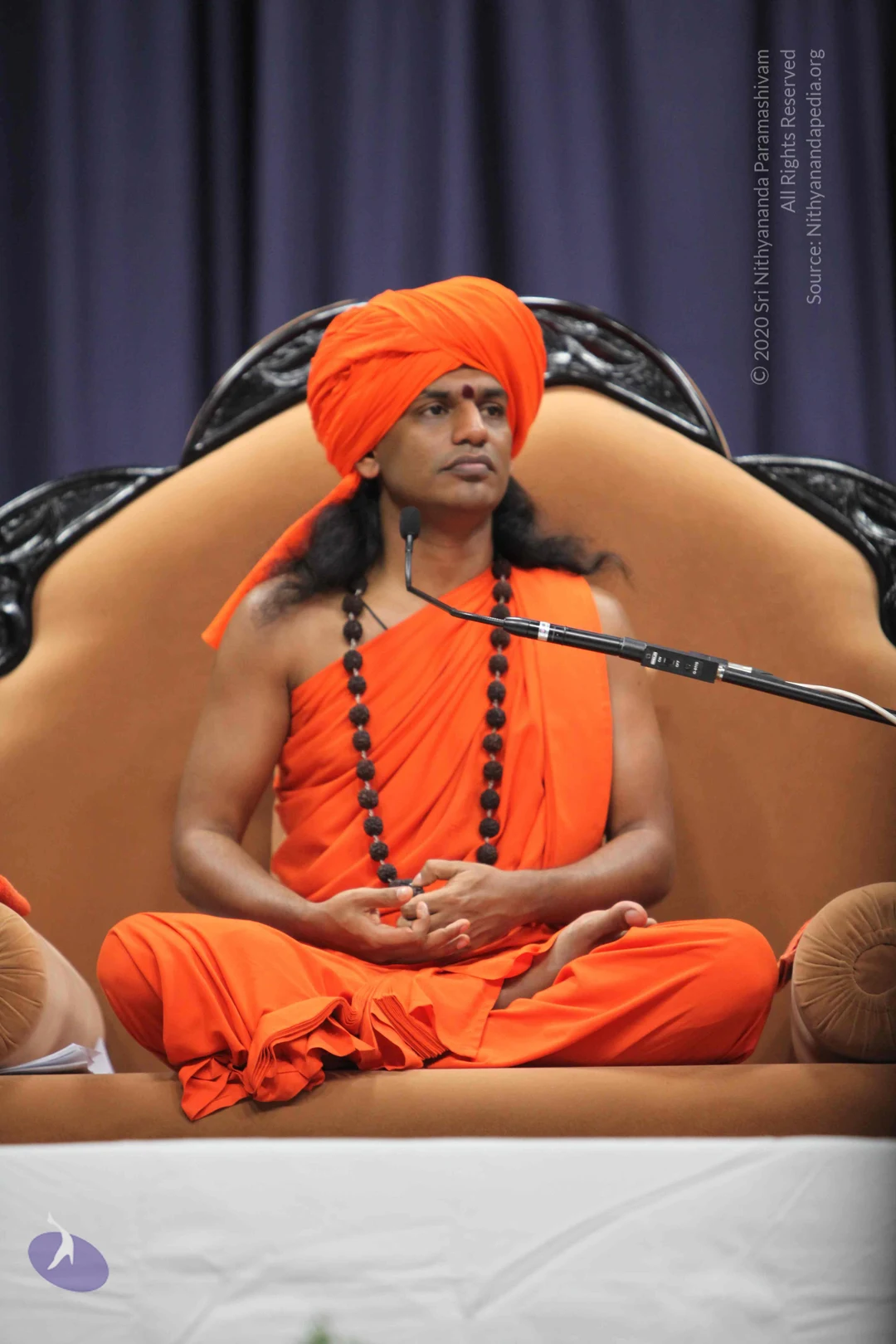
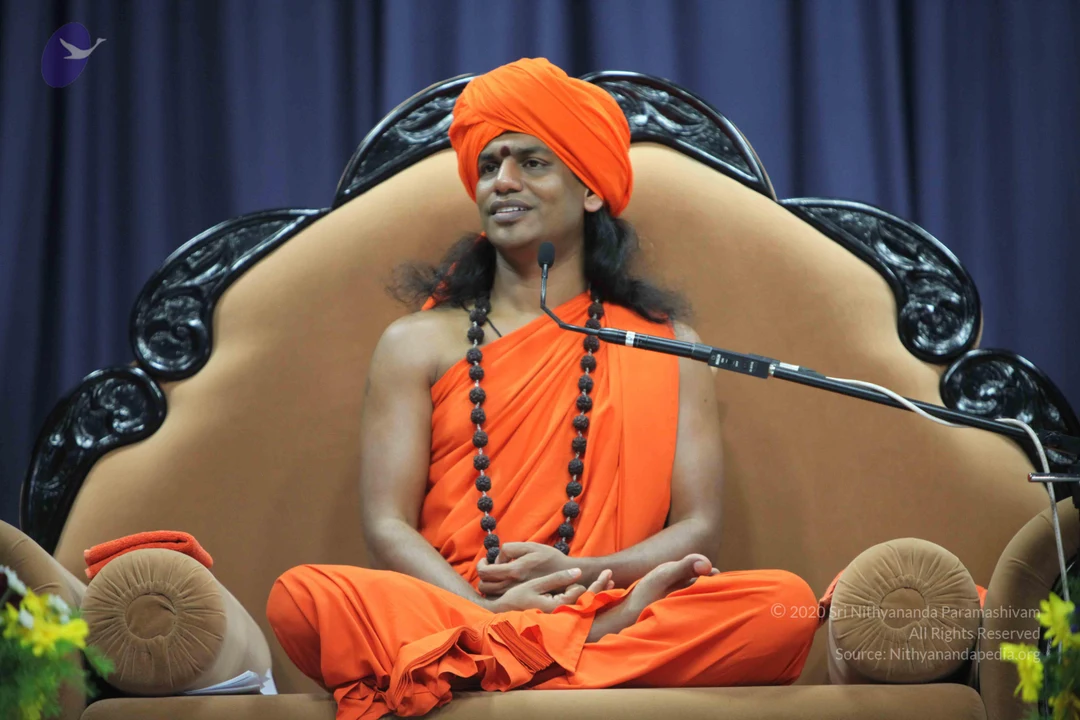
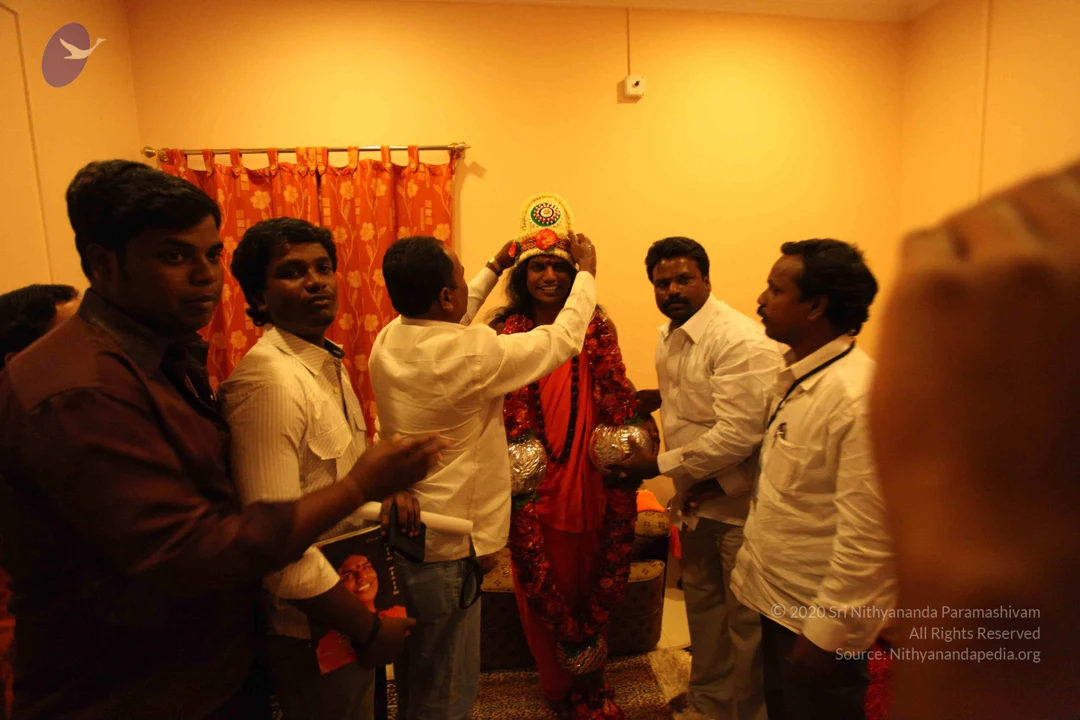
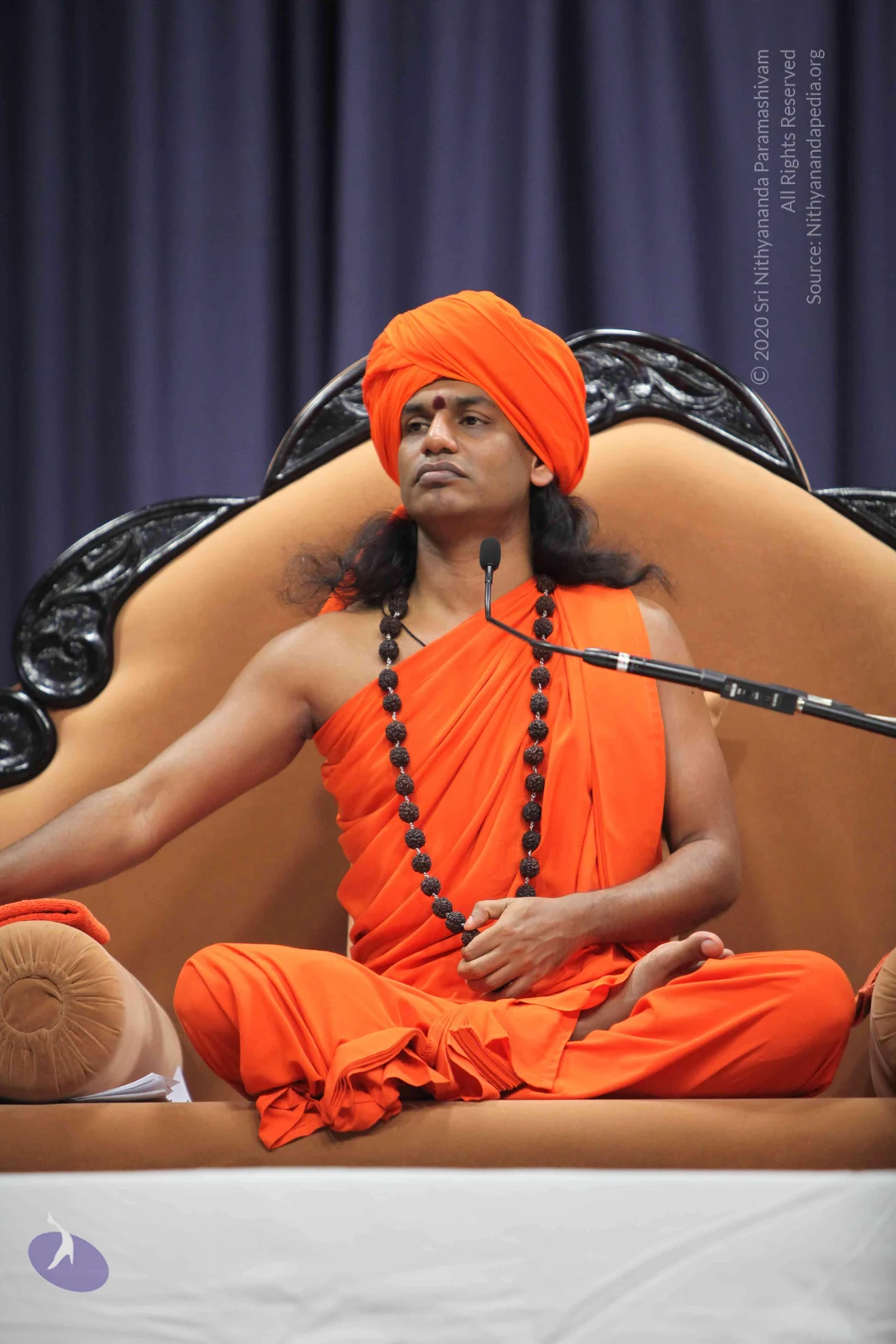
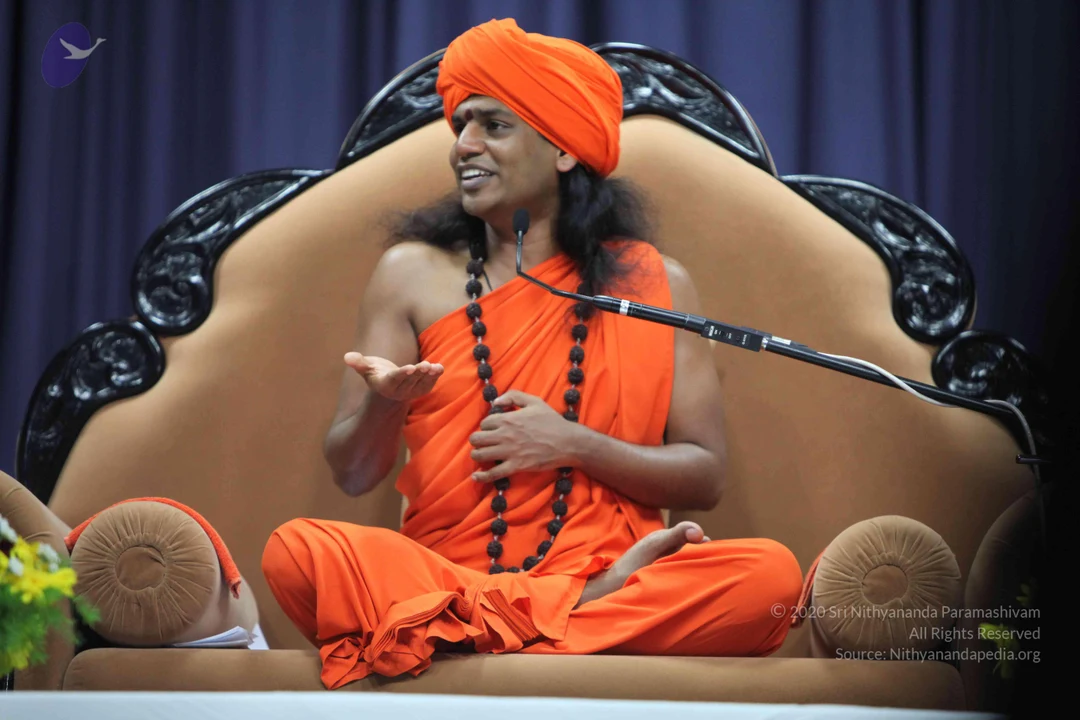
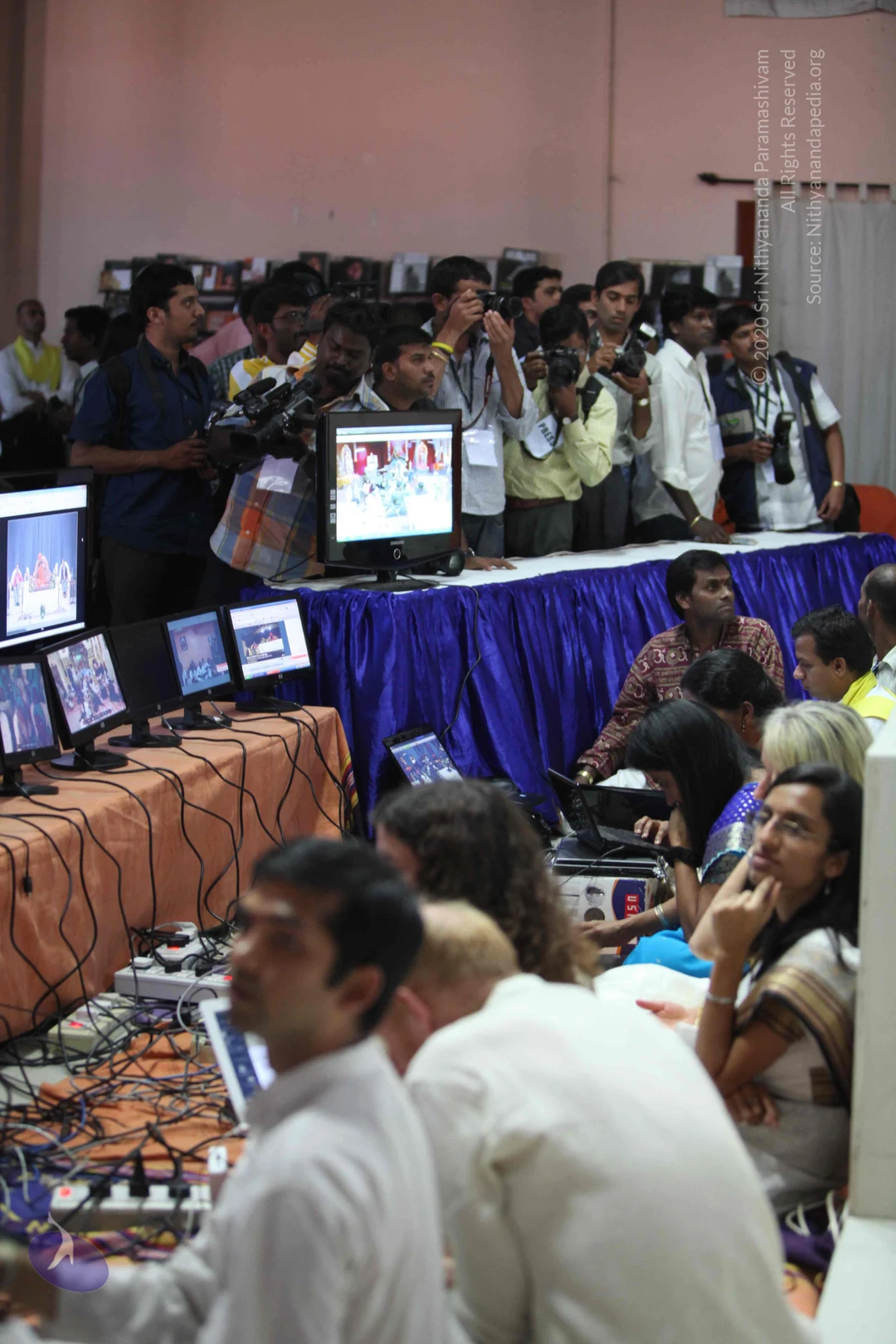
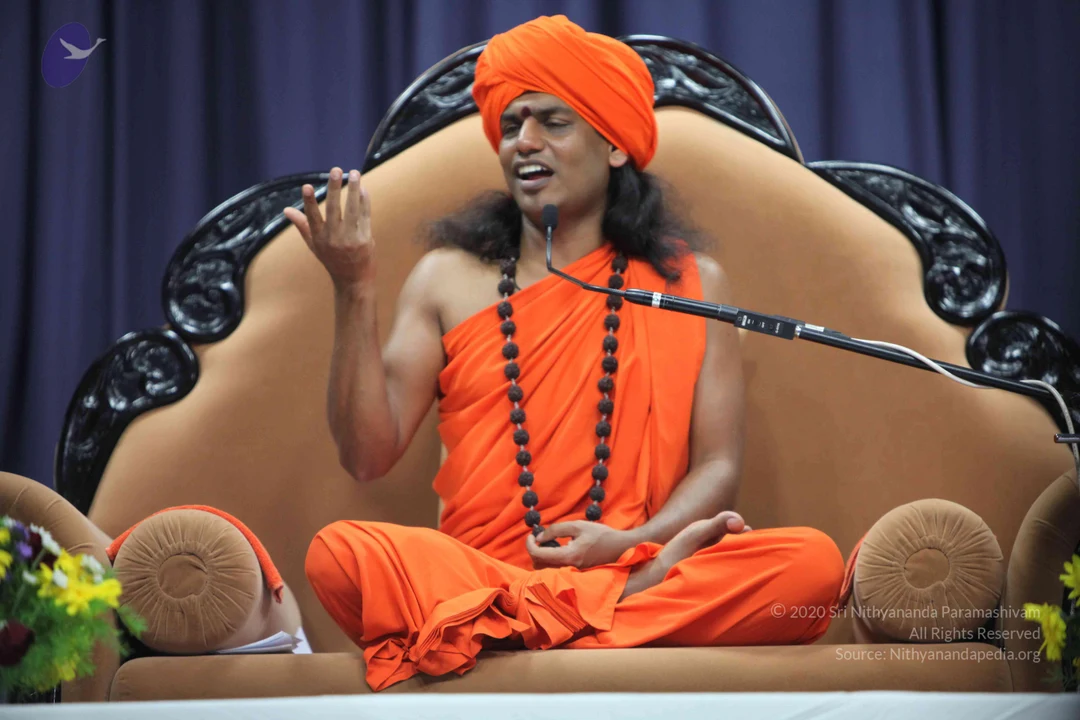
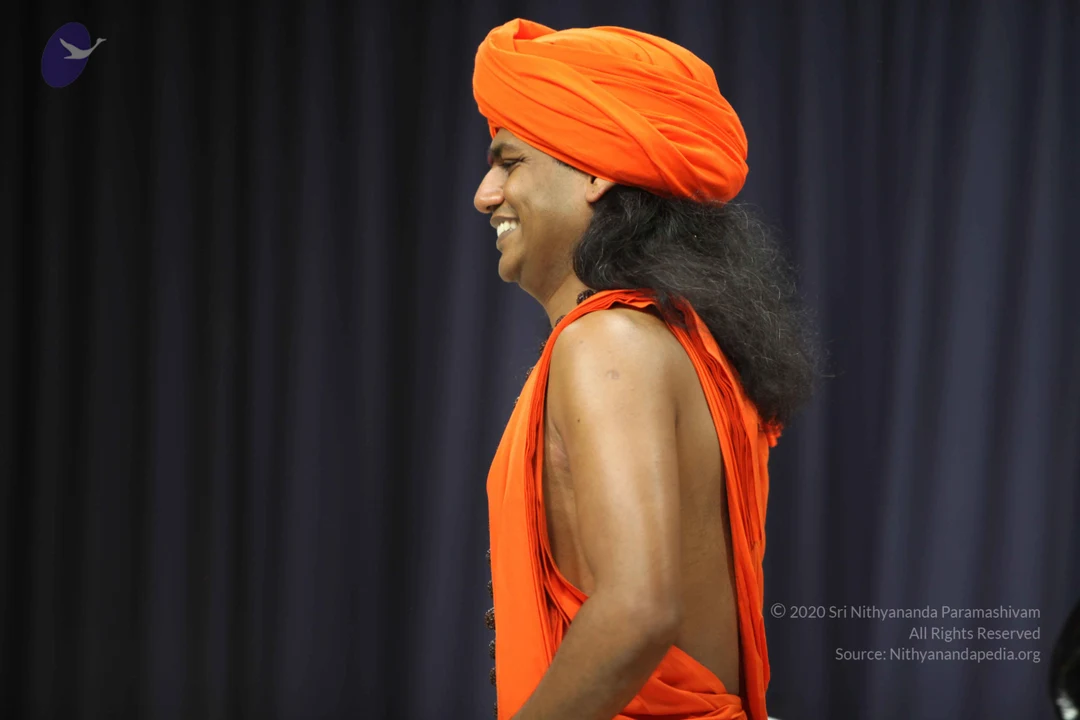
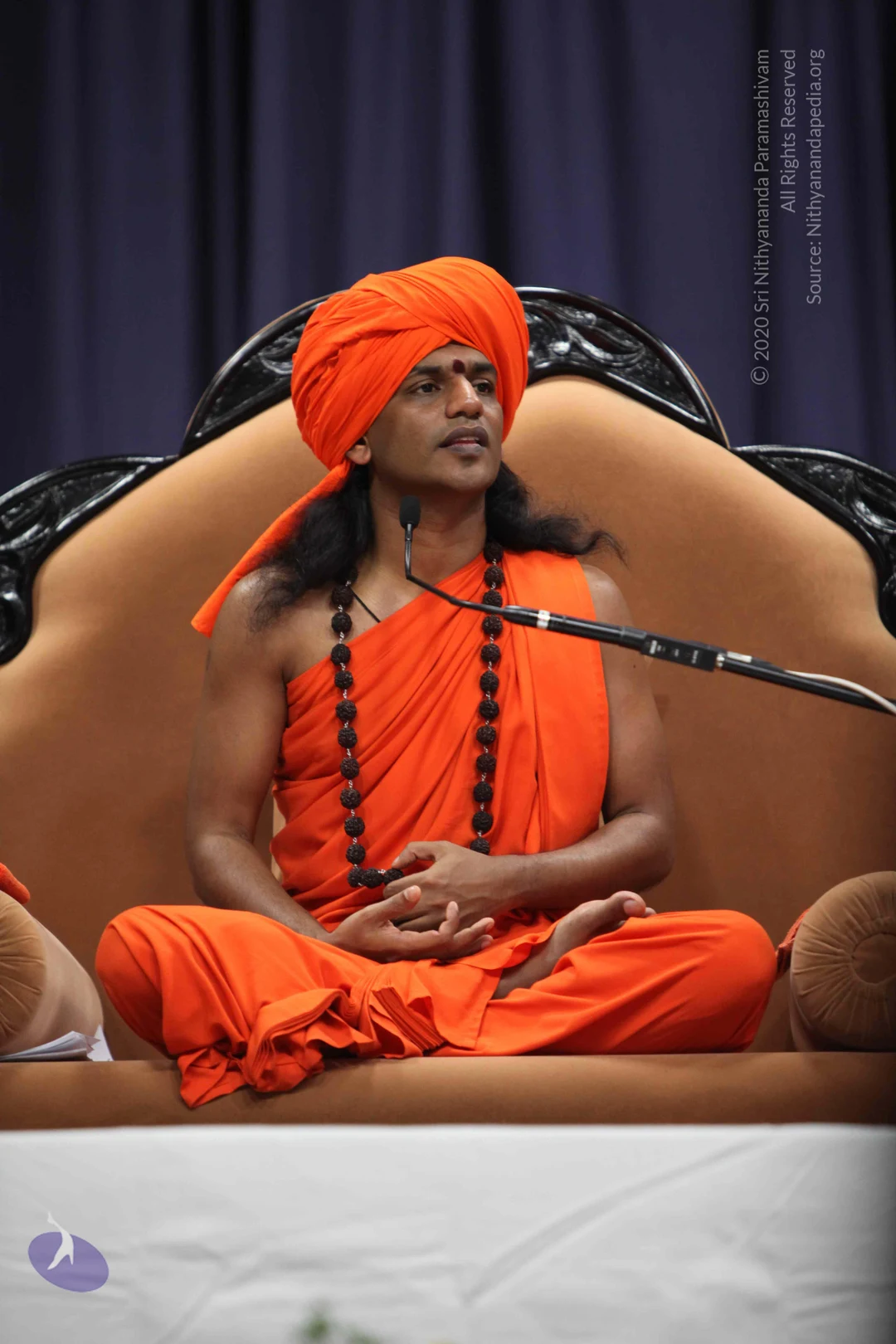
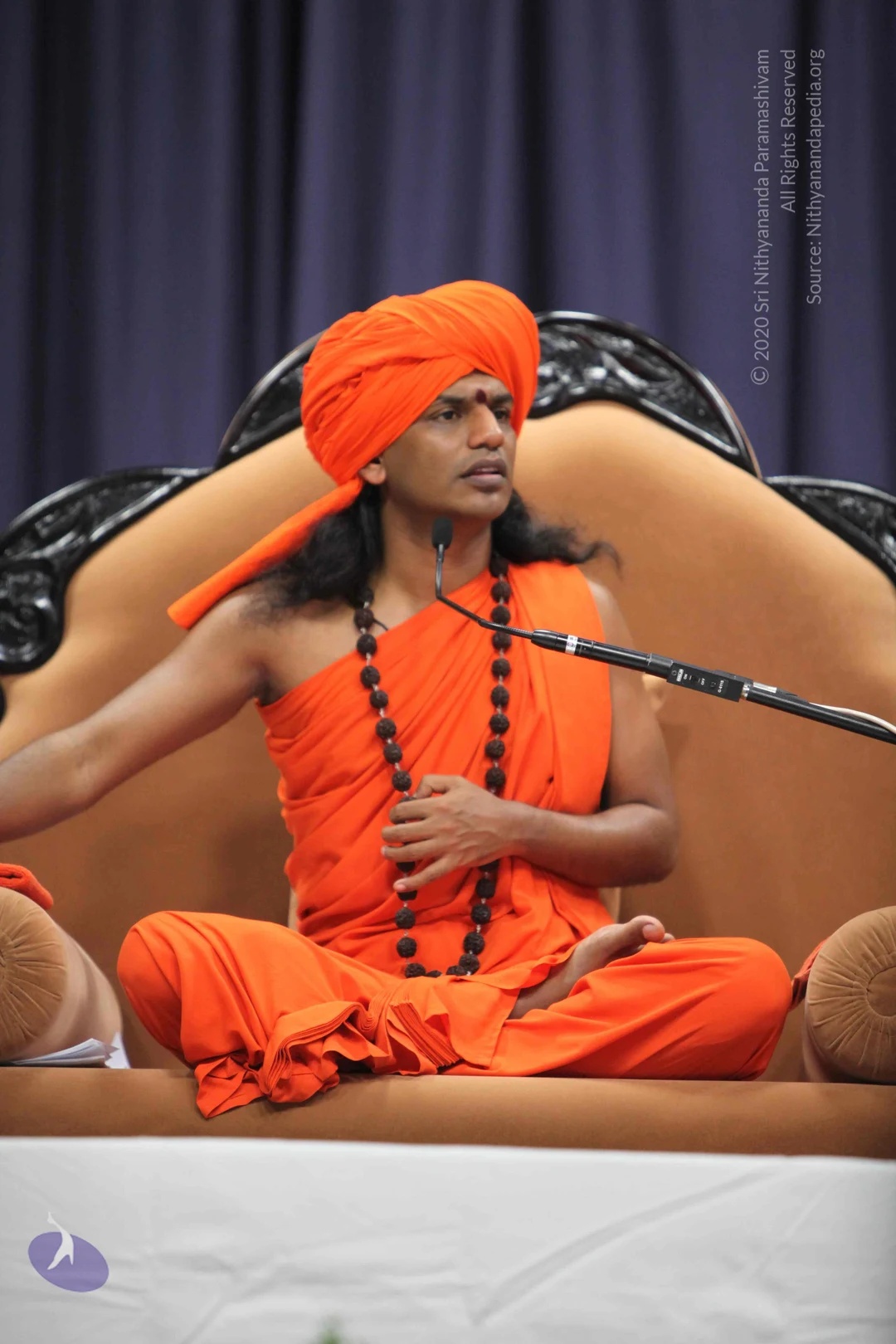
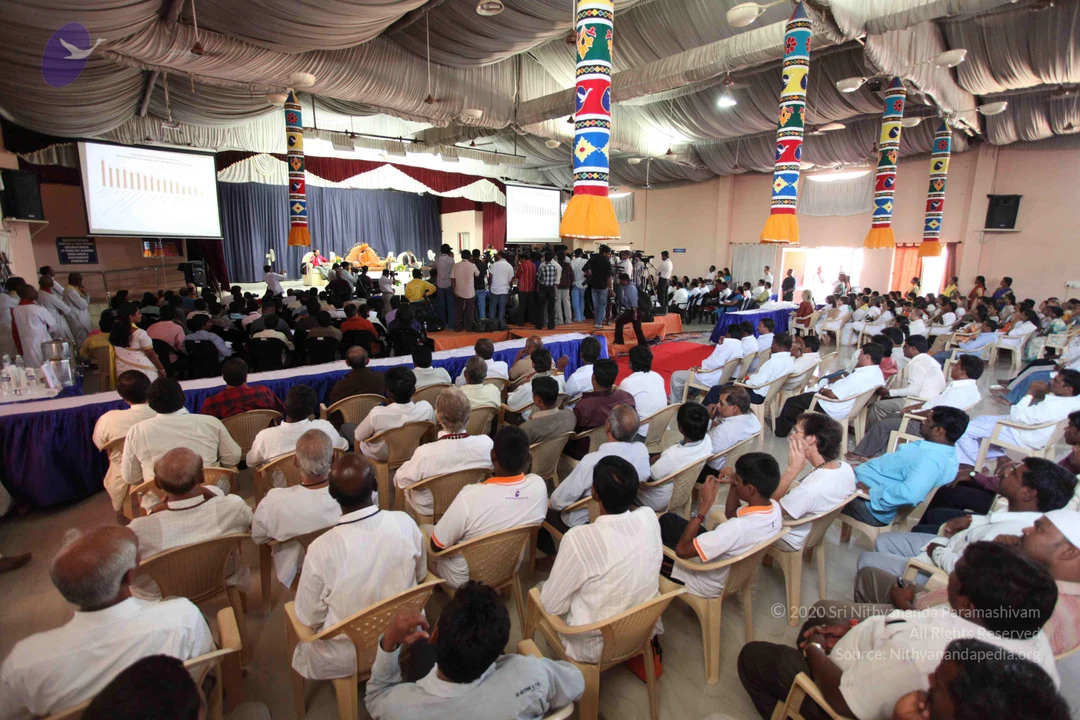
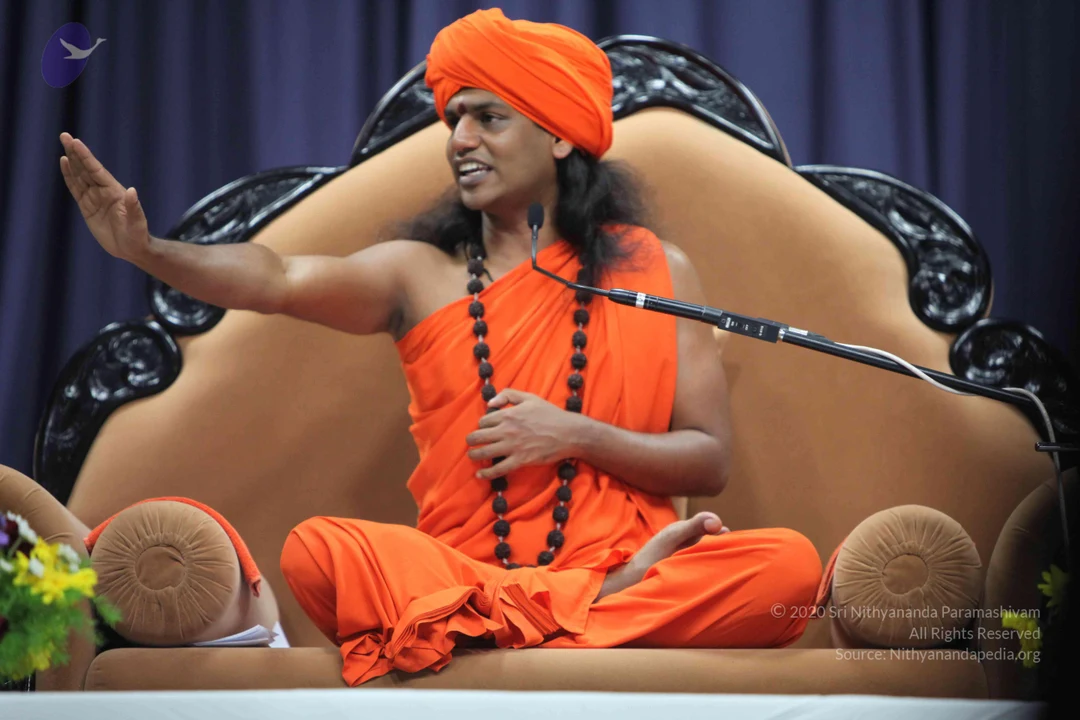
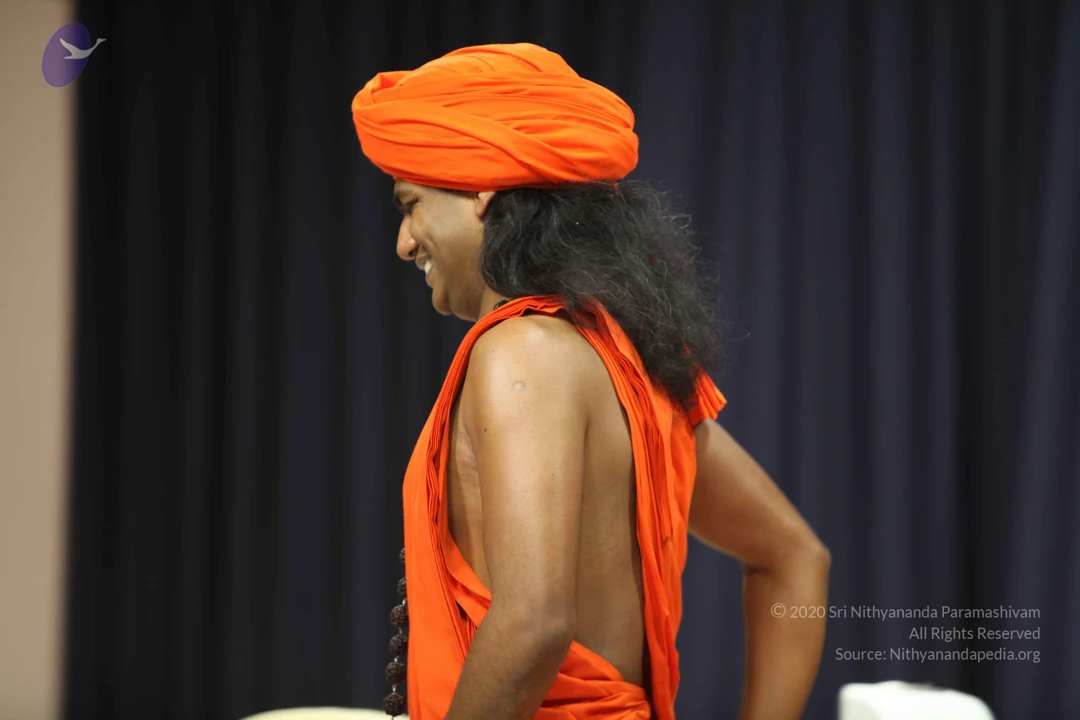
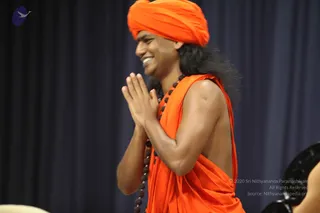
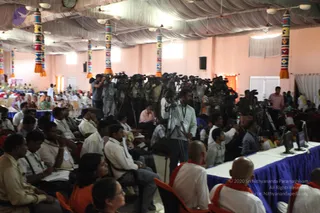
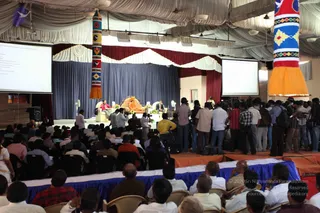
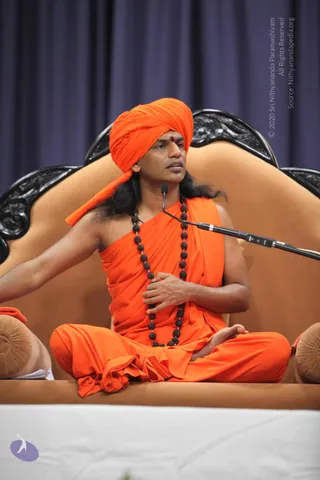
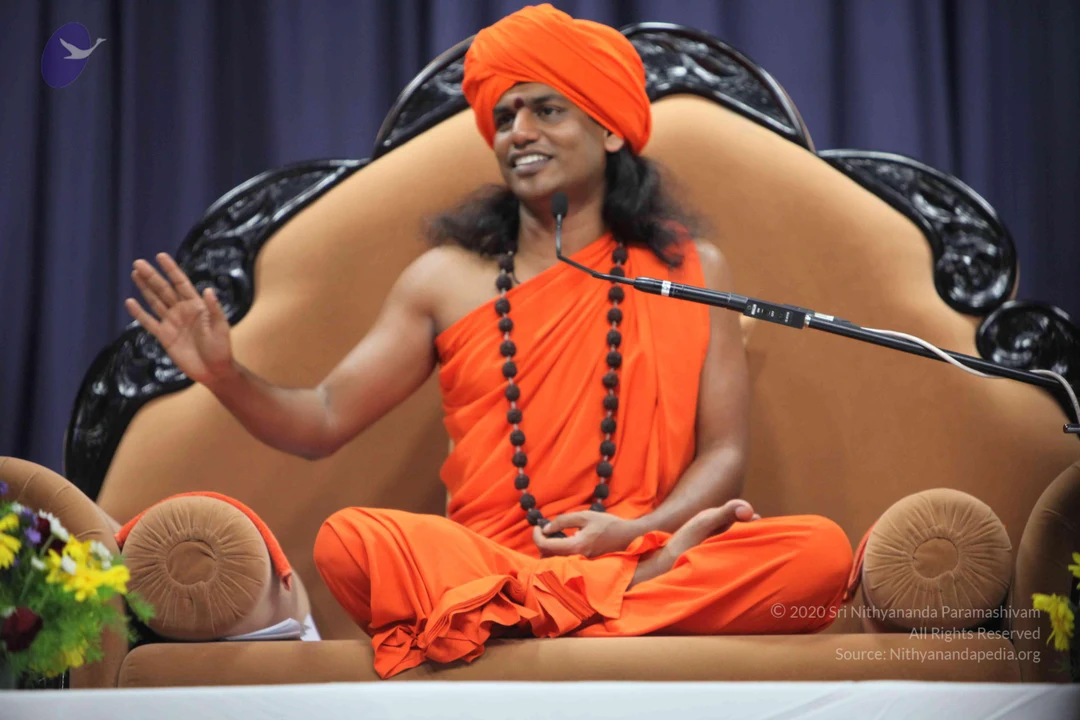
A smiling man stands in profile against a dark navy curtain, pressing his palms together in an anjali namaskar greeting. He wears a bright orange turban and a matching orange draped garment that leaves one shoulder bare, with a dark rudraksha mala around his neck. Long dark hair falls behind him. A partially visible person sits at the right edge of the frame. A small logo appears in the upper left corner.Indoor photograph in a yellow-walled room with orange floral curtains. A central figure wears a red-orange shawl over a saffron-red garment, a long dark rudraksha-style mala, and a thick red floral garland, with long dark hair swept back; this appearance is consistent with a Swamiji (probable) candidate in person. Several men in white shirts surround him, one holding a silver-wrapped offering, another holding a bundle of flowers; a man in a dark suit and red tie stands at the right edge, and a seated figure is partly visible at the far right. Yellow cushions line the bench behind them.A wide photograph of a press meet in a hall decorated with tall painted pillars in red, yellow, blue and white, hanging draped white ceiling fabric and ceiling fans. In the foreground, seated attendees in white shirts and dress and a few people in orange shawls sit in orange chairs, some with their backs to the camera. A long table draped in blue cloth with microphones runs along the right side. Behind the seats, a dense cluster of news photographers and camera operators stand on tripods with lenses raised toward the front. A man in a light blue shirt holds a camera on a tripod near the centre. No identifiable a person figure is clearly visible at the front of the room.A press conference in a decorated hall with draped fabric ceiling and tall banners with colourful geometric patterns. On a raised stage, a central figure sits on an ornate orange-and-gold throne draped with orange cloth, flanked by two men in chairs, one wearing red and one in dark clothing. Two projection screens show slides. In the foreground, rows of seated audience members face the stage, and a large crowd of photographers and camera operators stands at the stage edge holding cameras and recording equipment. The central figure's appearance is not clearly visible enough to confirm identity.A seated man in saffron-orange clothing speaks into a microphone on a stage before an ornate dark-carved brown throne with a purple curtain behind. He wears an orange turban with a small red tilak on his forehead, a long dark mala of rudraksha beads, and an orange wrap over one shoulder with matching orange trousers. He sits cross-legged with one hand resting on his chest and the other arm extended toward the left edge of the frame. The lower stage is draped in white cloth.A photograph of a man seated cross-legged on an ornate dark-wood throne with carved scrolled armrests and a tan cushioned seat, in front of a deep blue draped curtain. He wears an orange-saffron turban, an orange wrap draped over one shoulder and body, orange lower garments, and a long rudraksha mala of dark beads around his neck. He leans slightly forward with one palm open toward the side and the other hand resting on his chest, appearing to speak into a boom microphone angled toward his face. A small floral arrangement of purple and yellow flowers sits at the lower left edge.
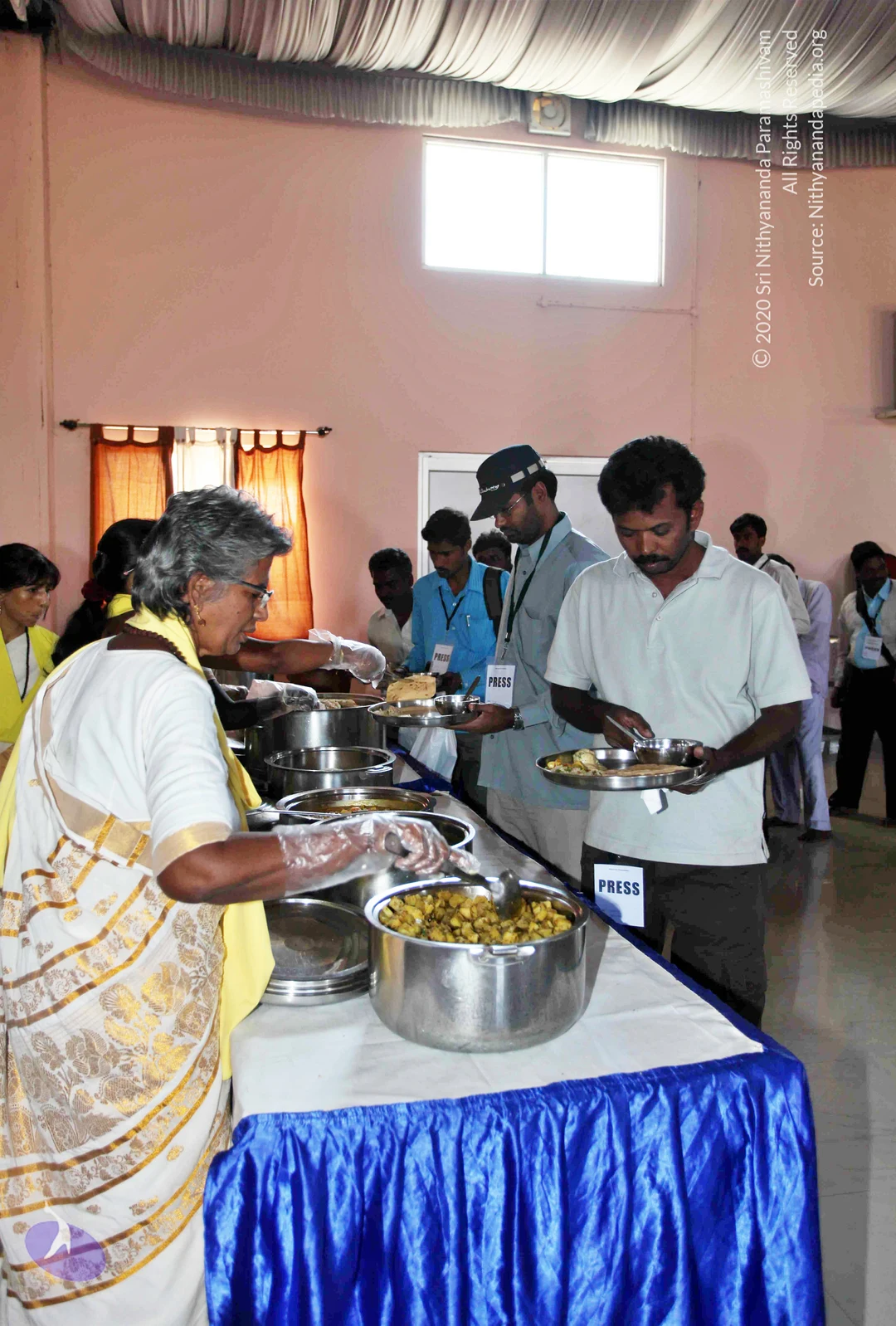
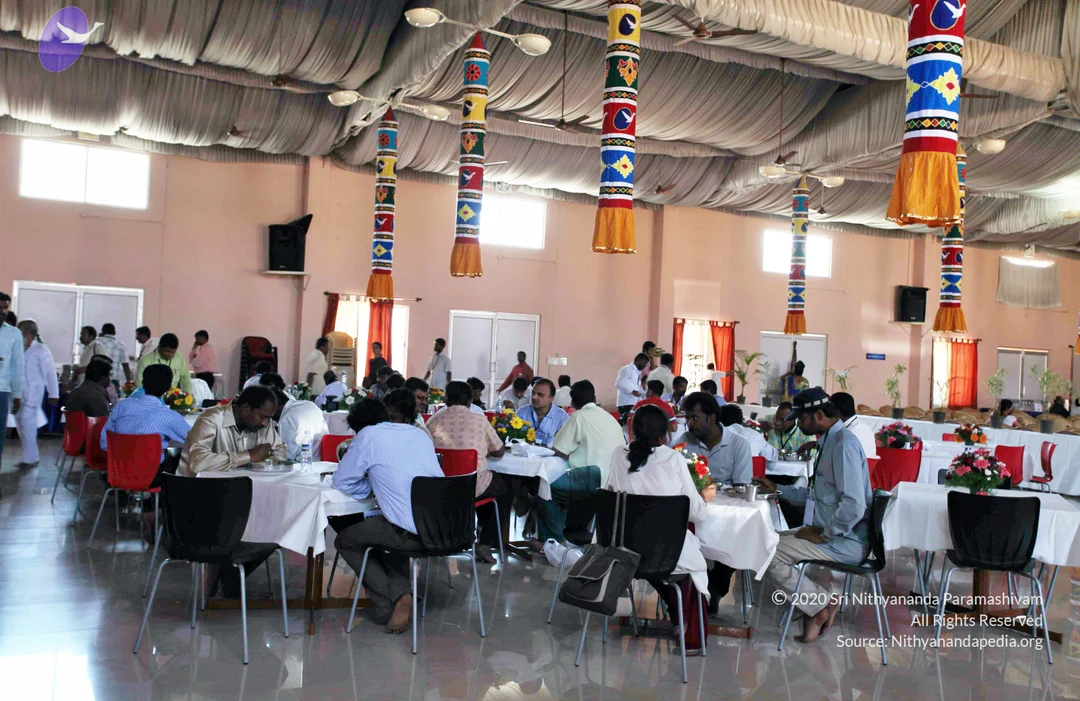
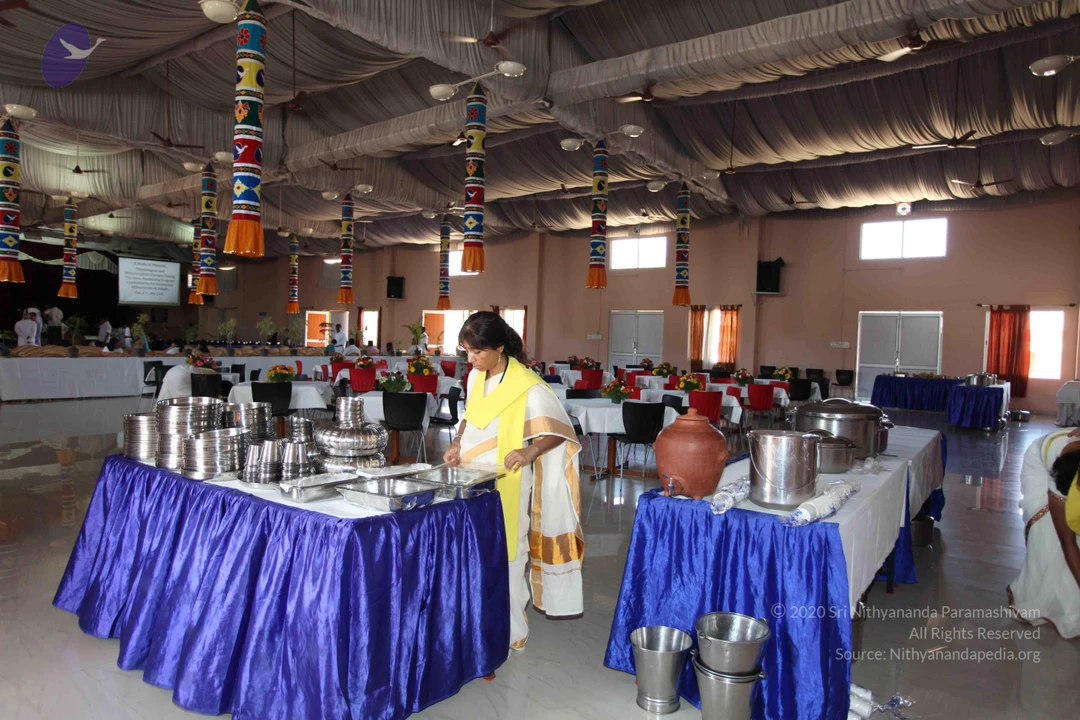
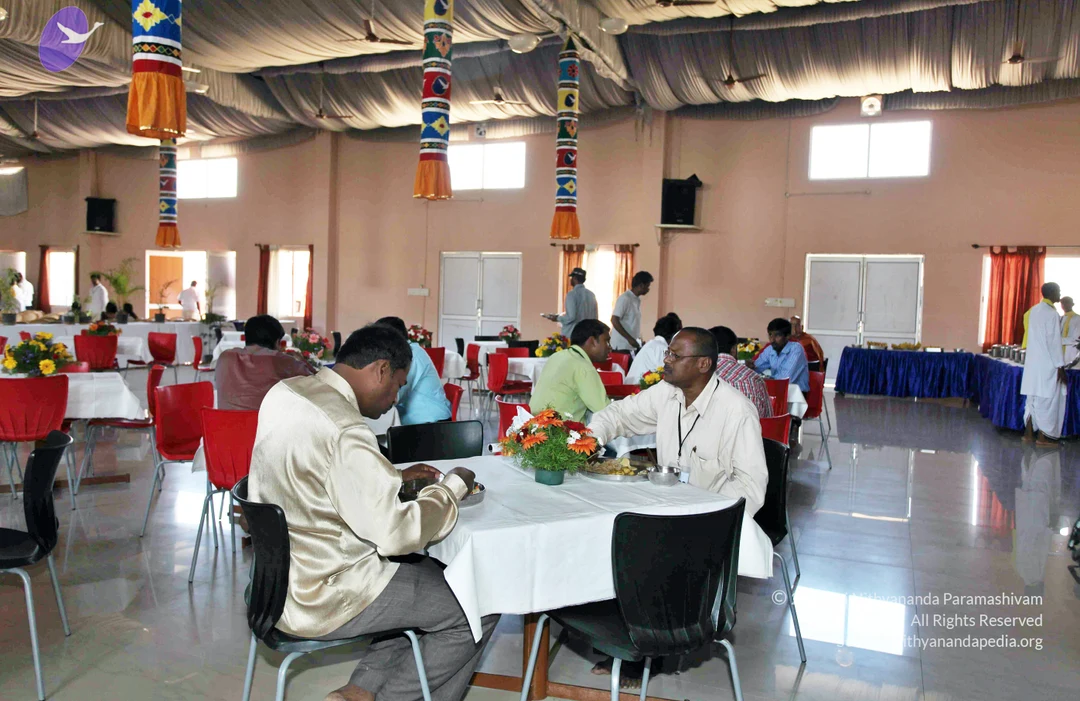
7-Lunch

10 photosSource gallery
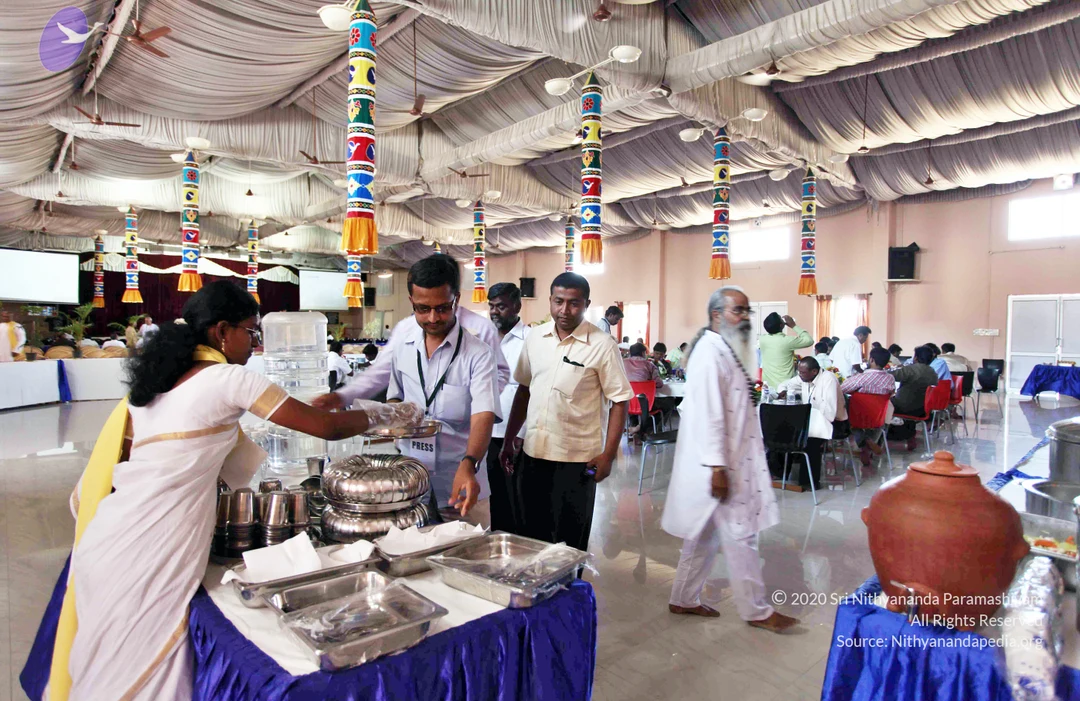
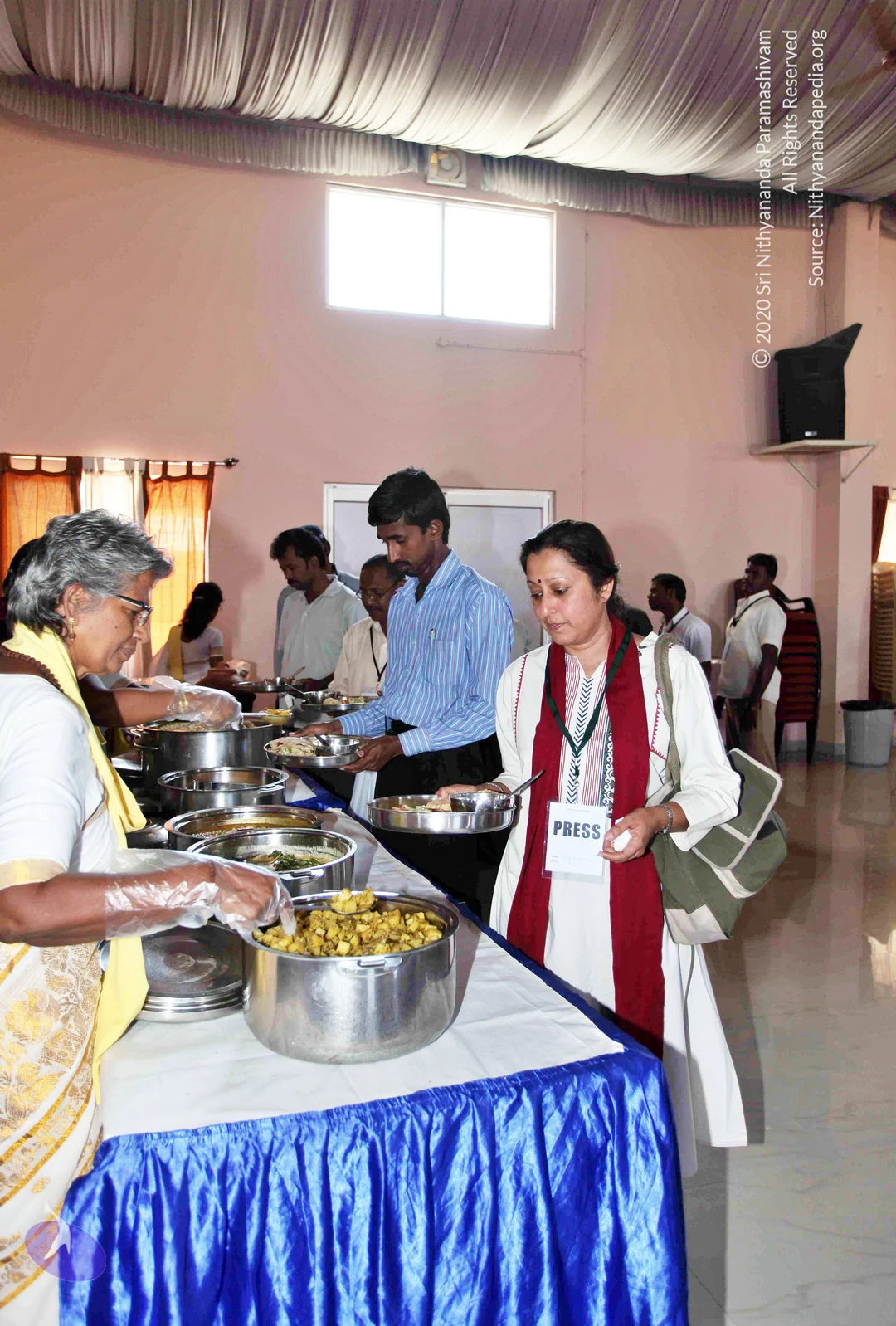
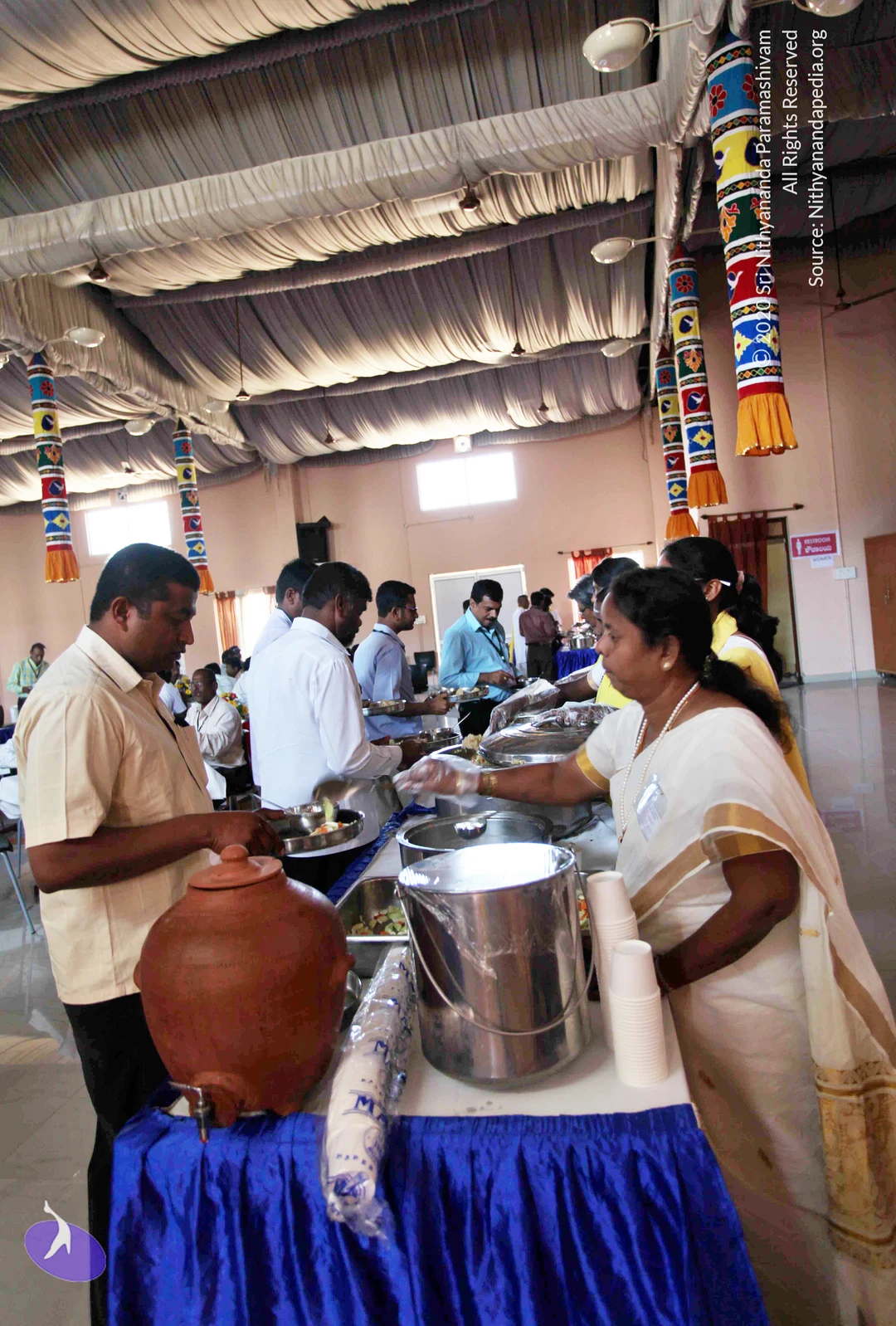
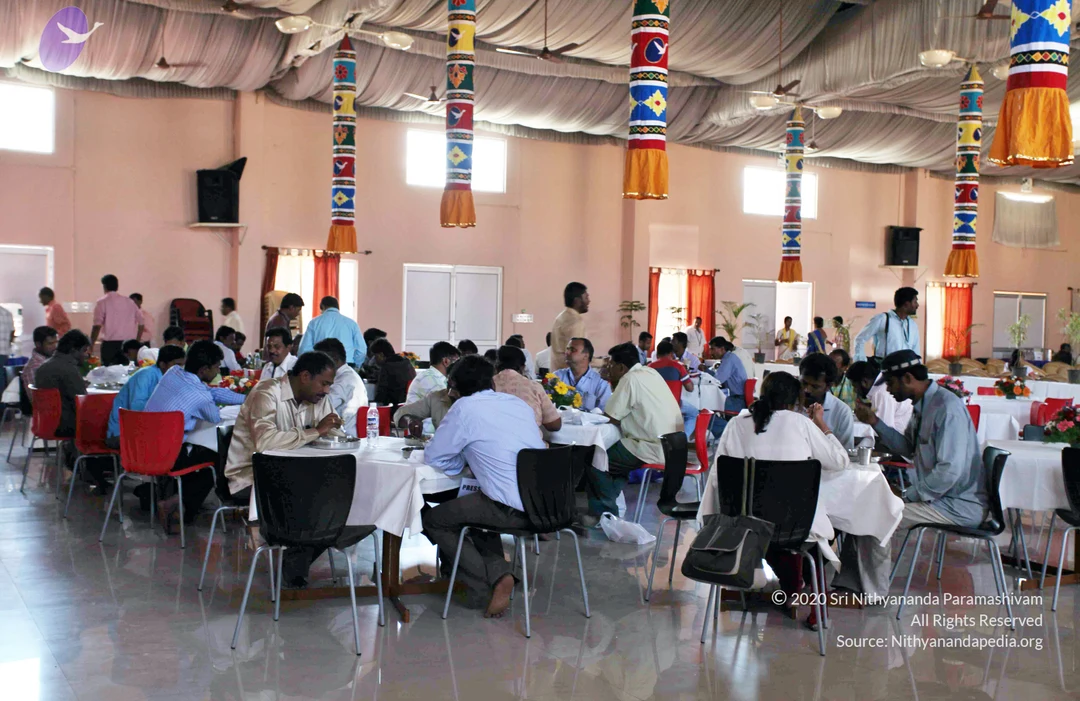
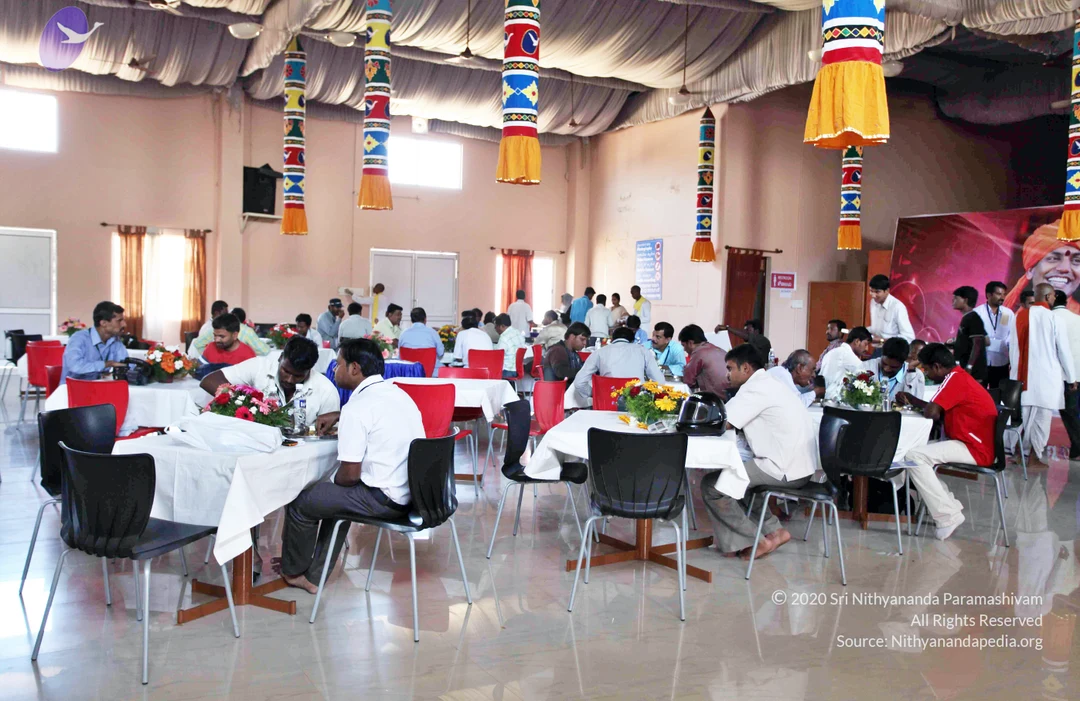
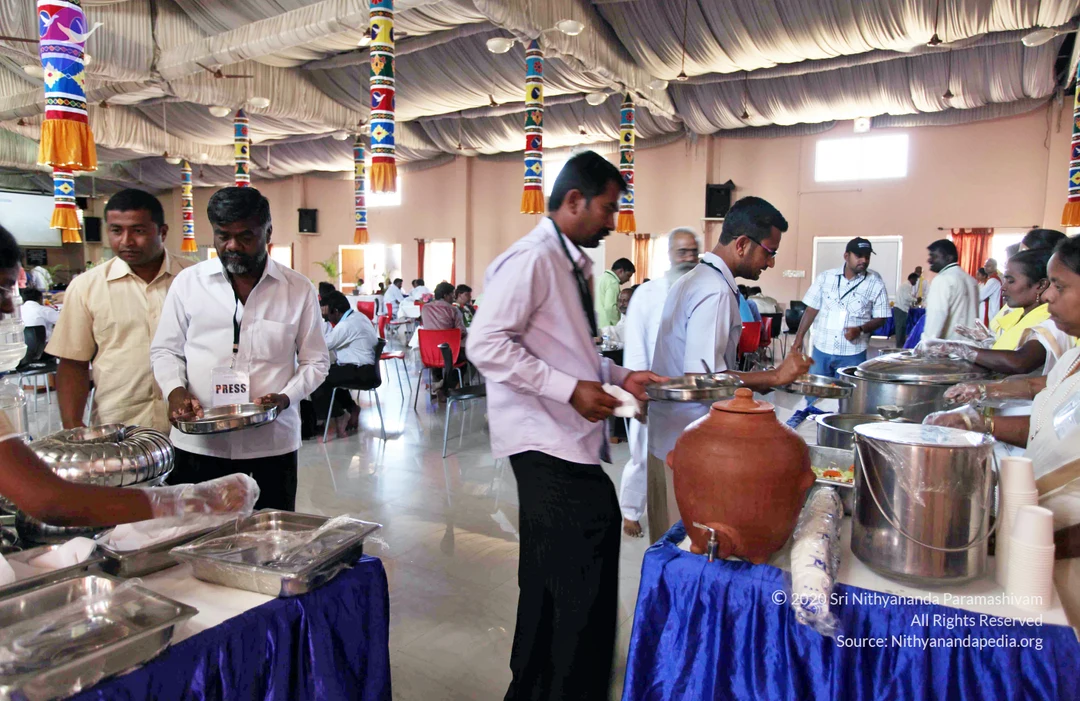
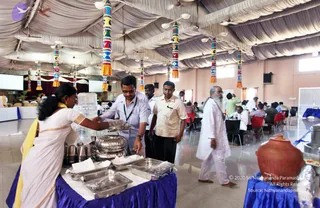
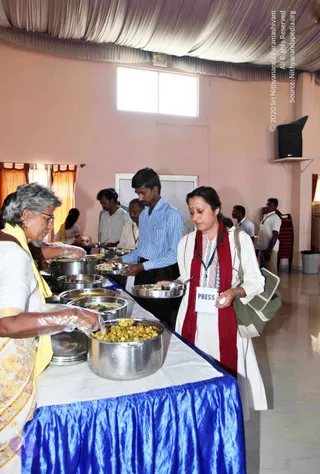
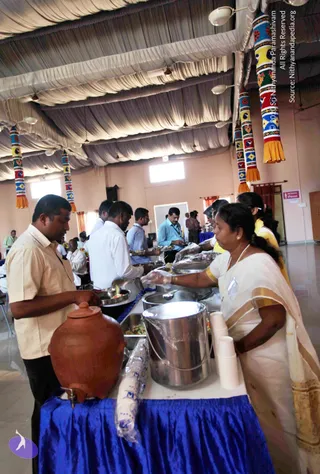
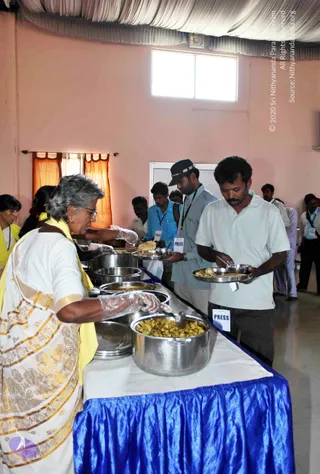
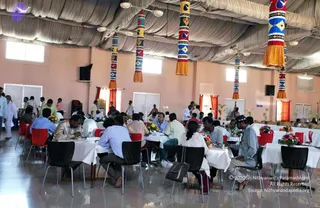
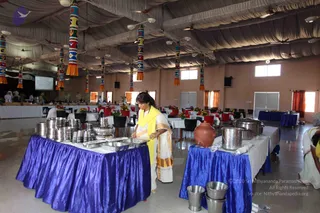
A large tented hall with white draped fabric ceiling and decorative painted colourful pillars with orange tassels. A woman in a white sari with yellow border serves food from a steel tray on a blue-draped table; a man in a white shirt with a lanyard badge labelled PRESS helps serve. Other men in cream shirts stand nearby, and an older bearded man in white kurta walks past. Diners sit at round tables with red chairs in the background, and a terracotta pot and steel containers sit at the right. Projection screens hang at the far left.A photograph of a buffet-style meal service in a plain pink-walled hall with a draped fabric ceiling and blue-skirted serving table. An older woman with grey hair and glasses, wearing a white sari with a yellow border and plastic gloves, serves food from steel pots. A woman in a white kurta with a red stole and a green lanyard marked PRESS holds a steel plate and spoon. A man in a blue striped shirt holds a plate at the counter, and several other men in white shirts stand in the background. Steel containers hold yellow potato curry and other dishes.A photograph of a buffet-style meal service in a large hall with pale pink walls and a draped white fabric ceiling. A woman in a cream sari with a gold border and a string of pearls serves food from a steel pot at the front of the counter, while a man in a cream shirt stands beside a large terracotta water pot with a tap on a blue skirted table. Several men in white shirts and light-coloured shirts queue with steel plates. Colourful striped fabric hangings with tassels hang from the ceiling, and a red restroom sign is visible on the wall. Paper cups are stacked on the counter.A buffet serving line inside a plain pink-walled hall with orange curtains and a white ceiling drape. An older woman with grey hair, glasses and a white sari with gold border and yellow blouse wears clear gloves and serves from a steel pot onto a plate. A man in a white polo shirt holding a steel plate and spoon stands at the line with a PRESS badge on his chest, and a man in a cap and grey shirt behind him also wears a PRESS badge. Further back, several men in blue and white shirts with lanyards queue, and a woman in yellow stands at left. Steel pots of food sit on a table draped with a blue cloth.A large hall with pink walls and a draped white fabric ceiling hung with tall cylindrical decorations in red, blue, yellow and green patterns with orange tassels. Rows of white-clothed tables with red and black chairs and small flower arrangements are set out, and many men in shirts and trousers sit eating from plates while others stand and walk between tables. A few people in white ritual-style clothing move through the room. No identifiable a person figure is visible.A photo of a large dining hall with a draped fabric ceiling hung with tall cylindrical decorations in red, yellow, blue and white stripes with orange tassels. Round tables have white cloths, red and black chairs, and small floral arrangements. In the foreground a woman in a cream sari with a yellow shawl and gold border stands at a blue-draped serving table holding a steel tray, with steel pots, a copper vessel and a clay pitcher nearby. Another person in white is at the far right and staff in white are visible at the back serving tables.