Skip to content
Friday

28 January 2011

Renounce the Mind: Patanjali Yoga Sutras 105

Dated photos
341
Source pages
1
Media
4
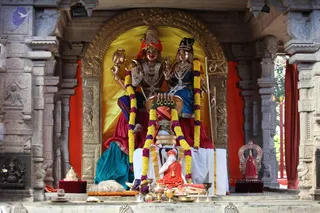
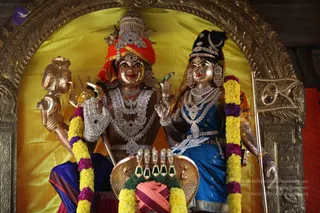
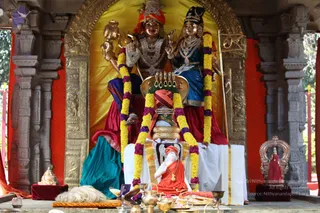
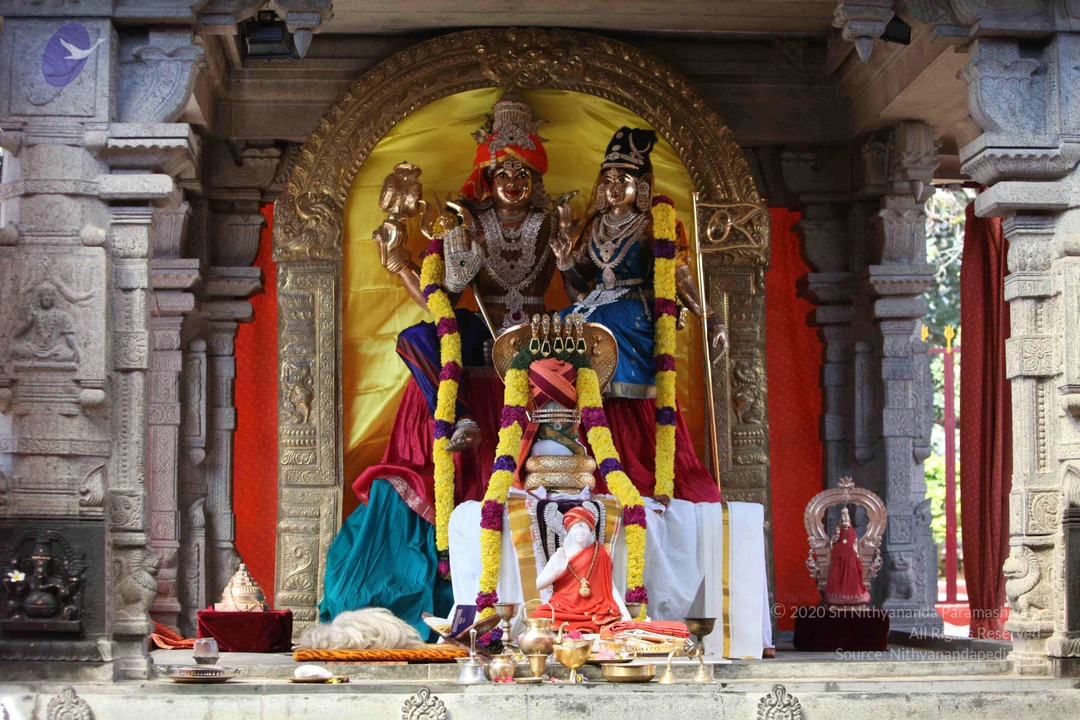
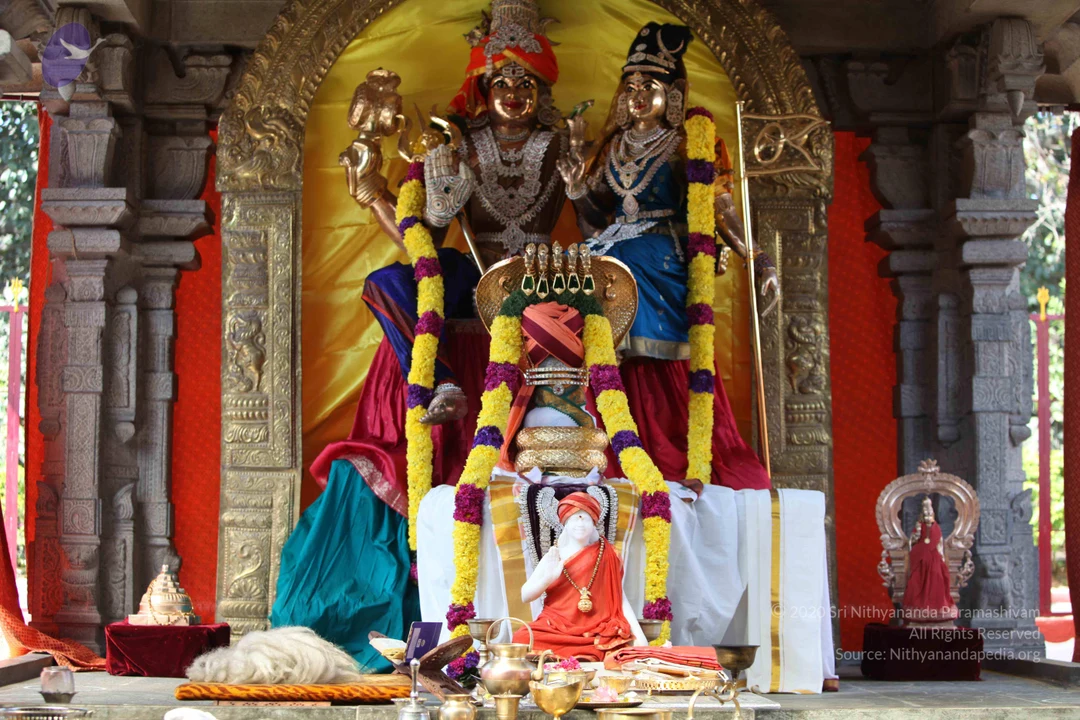
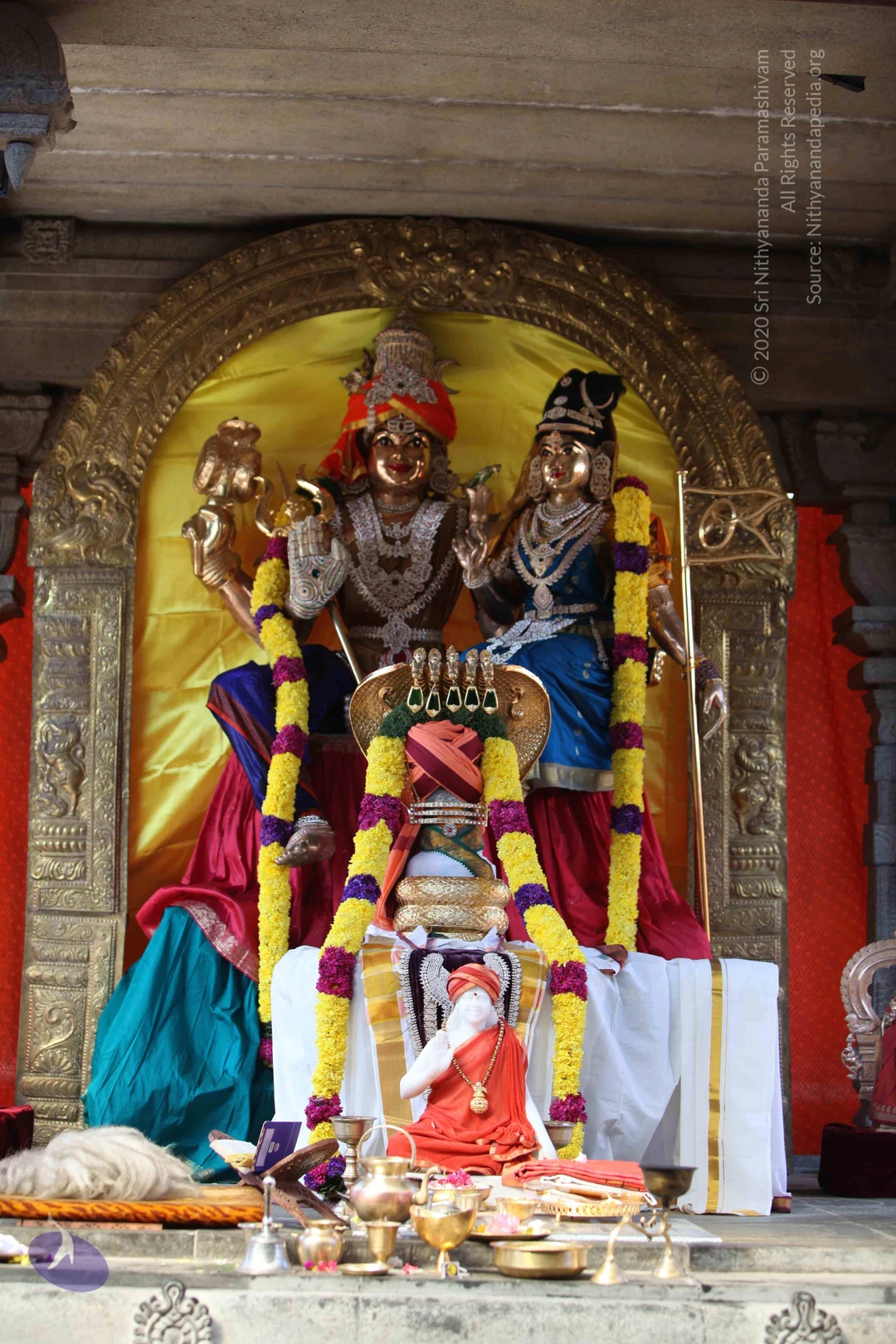
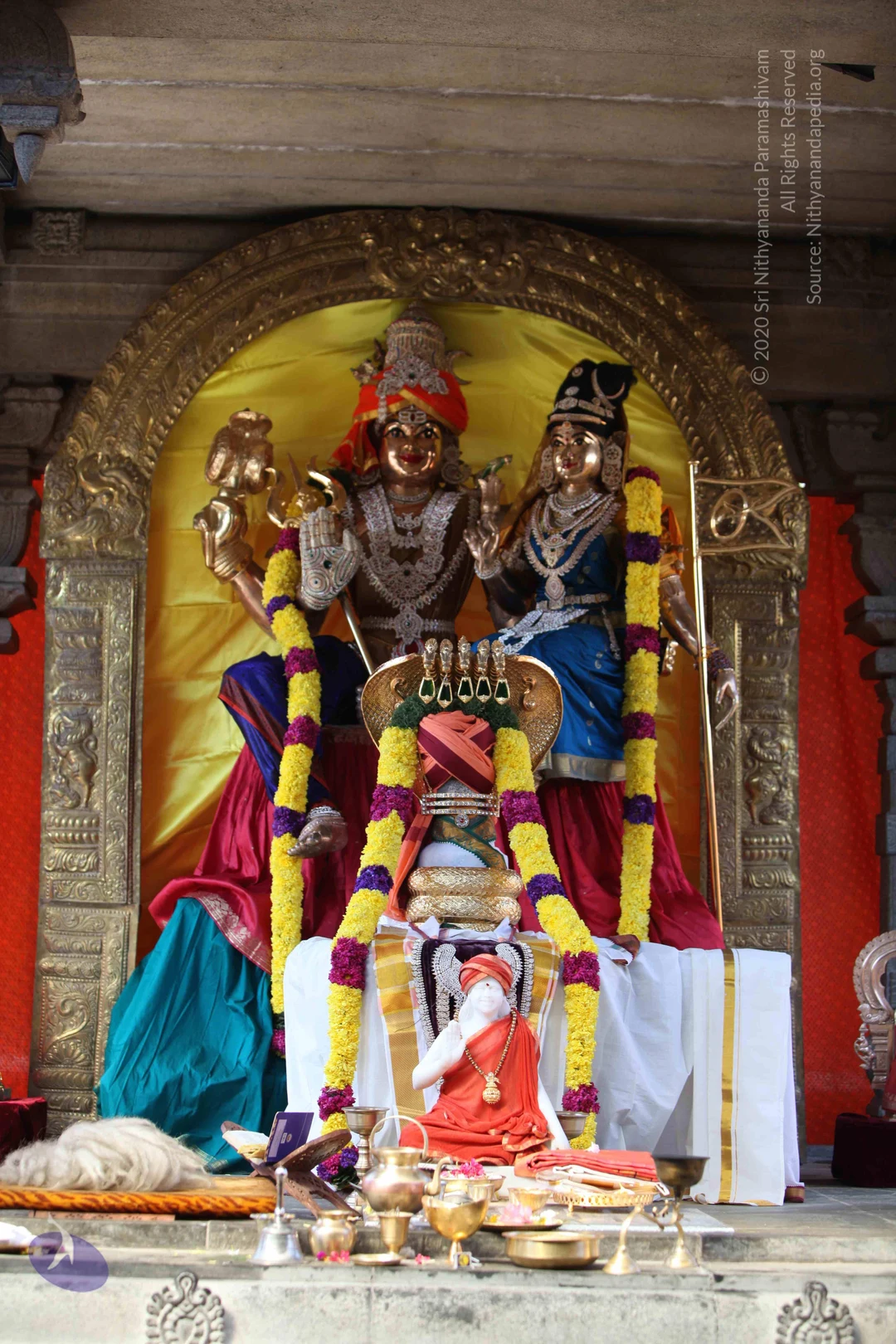
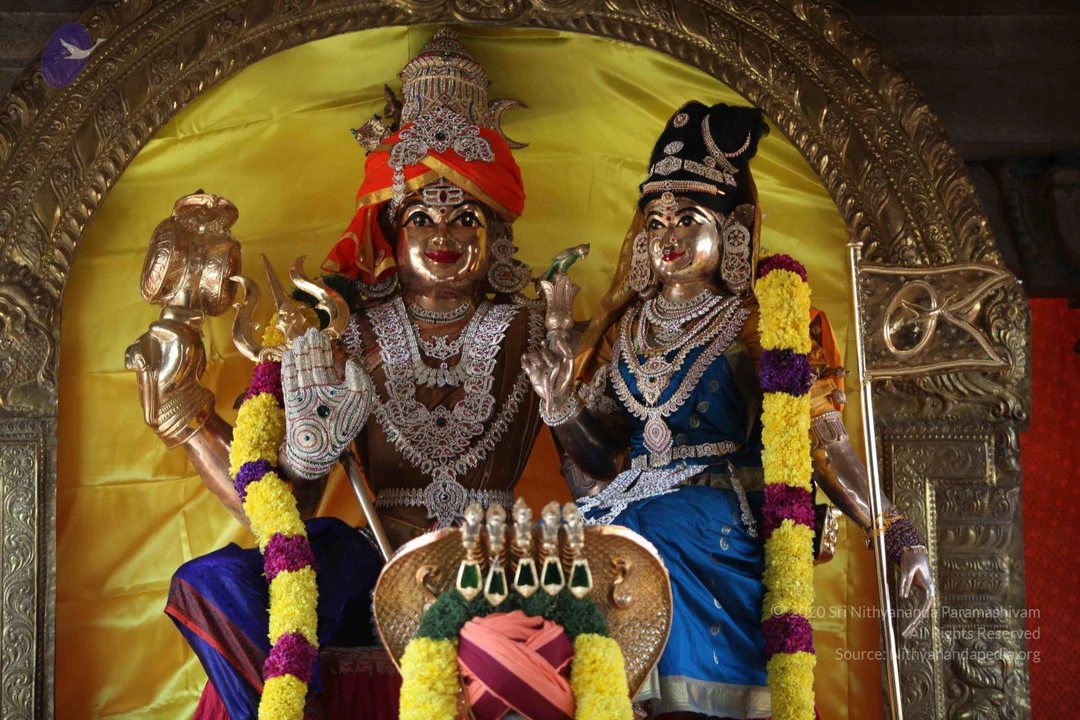
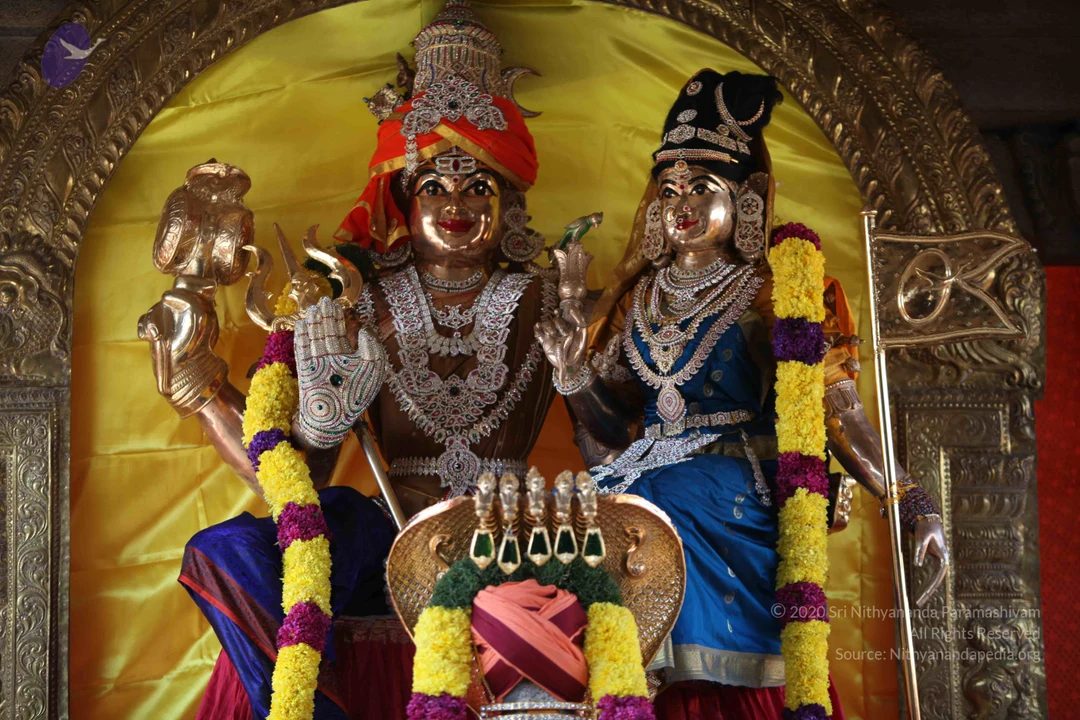
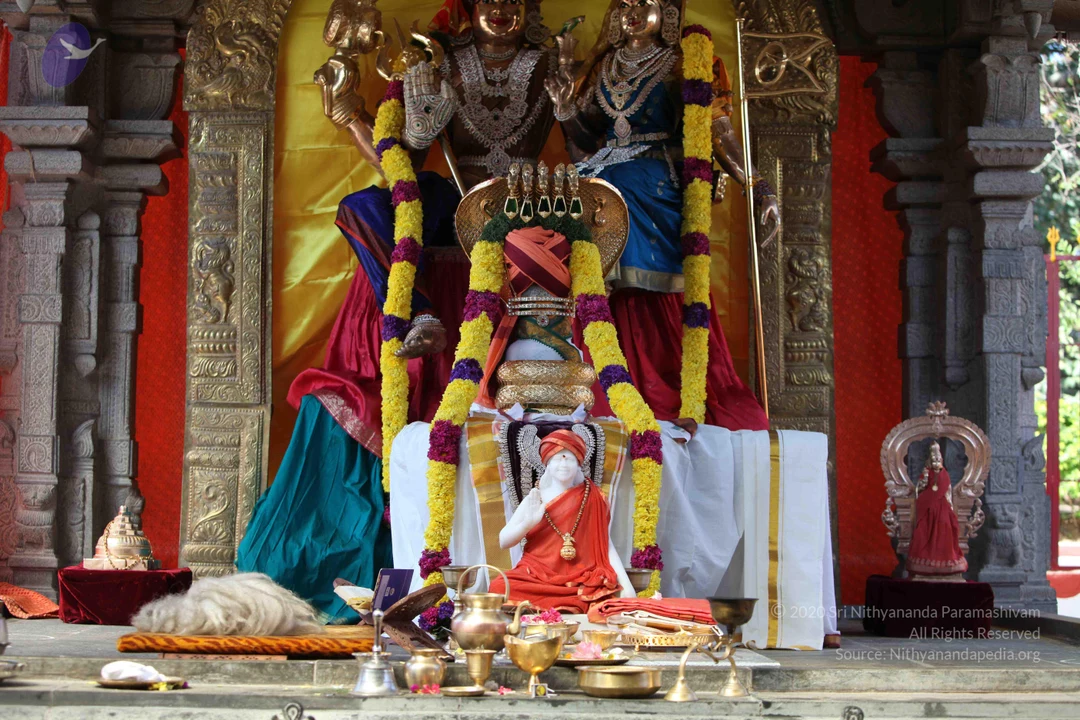
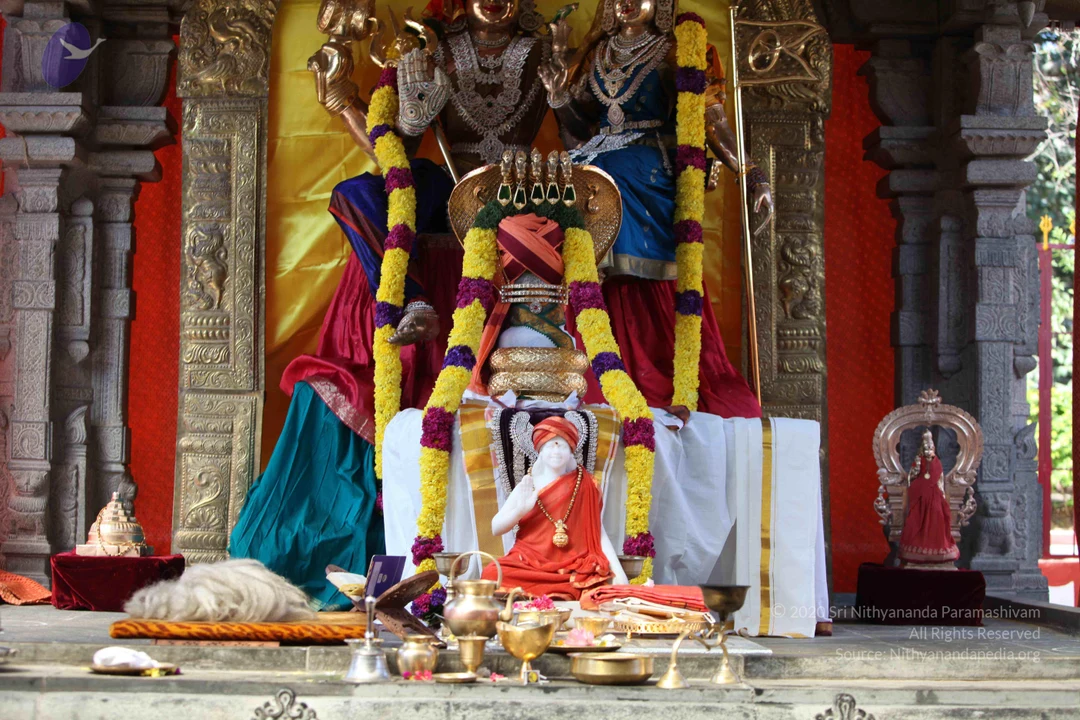
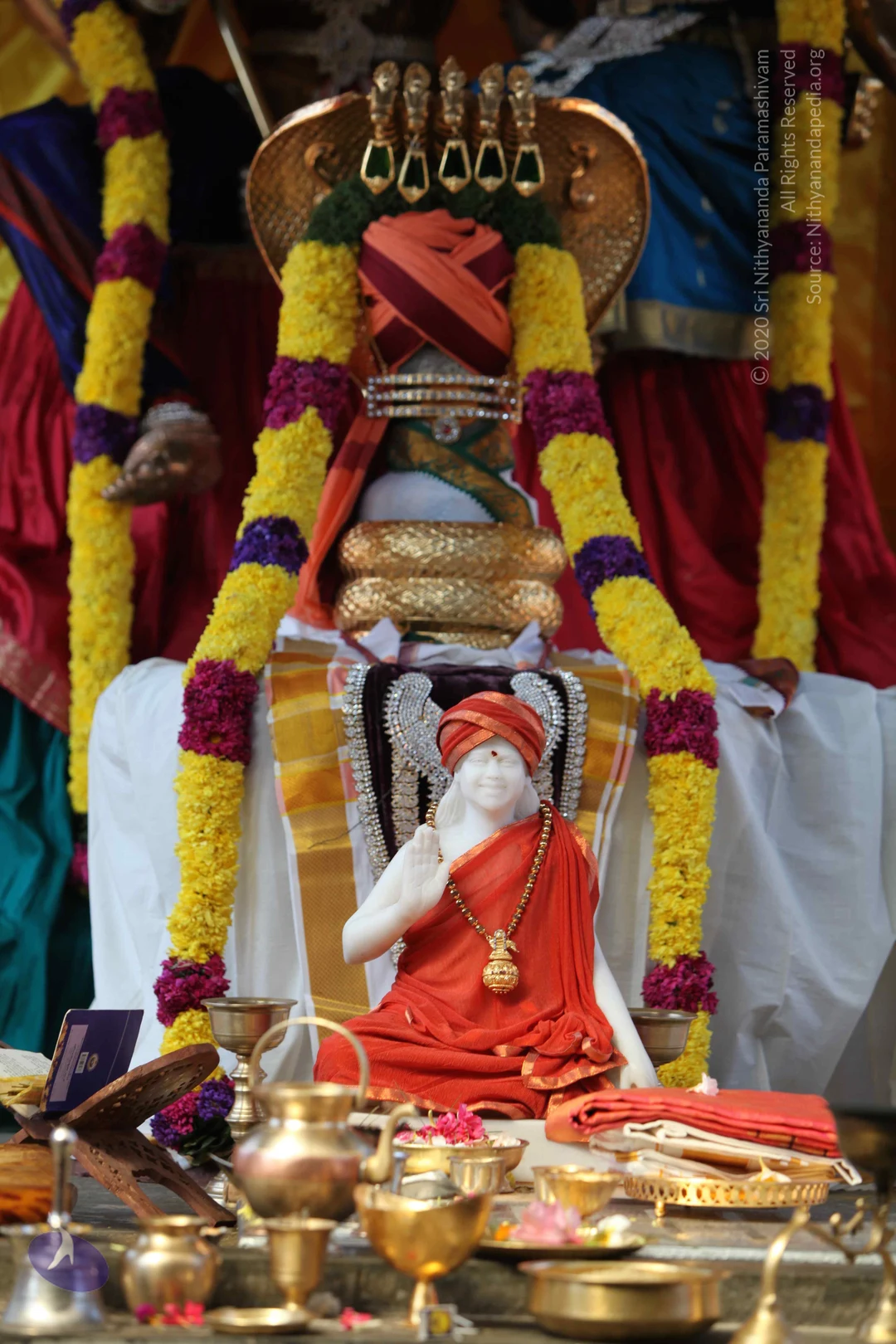
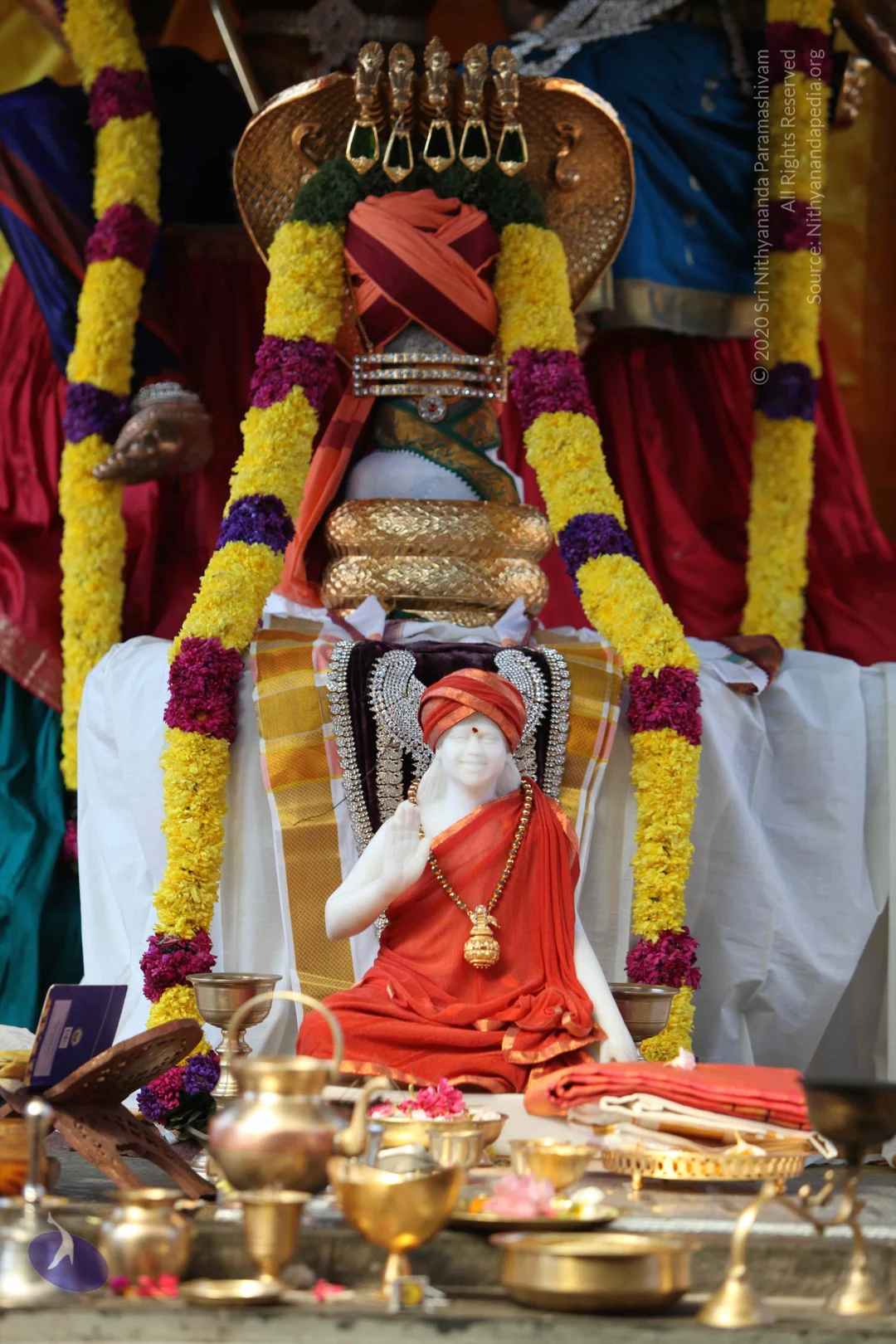
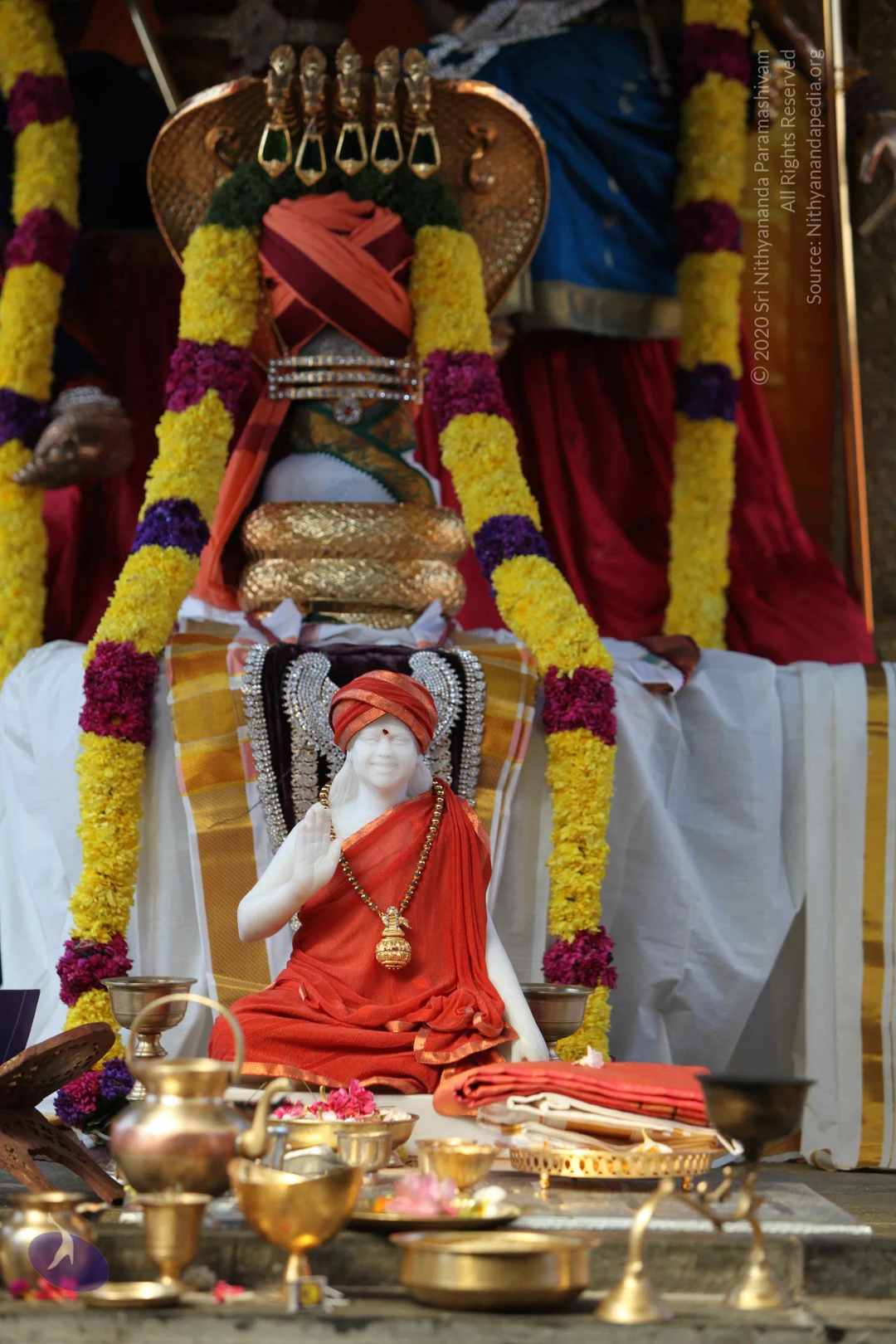
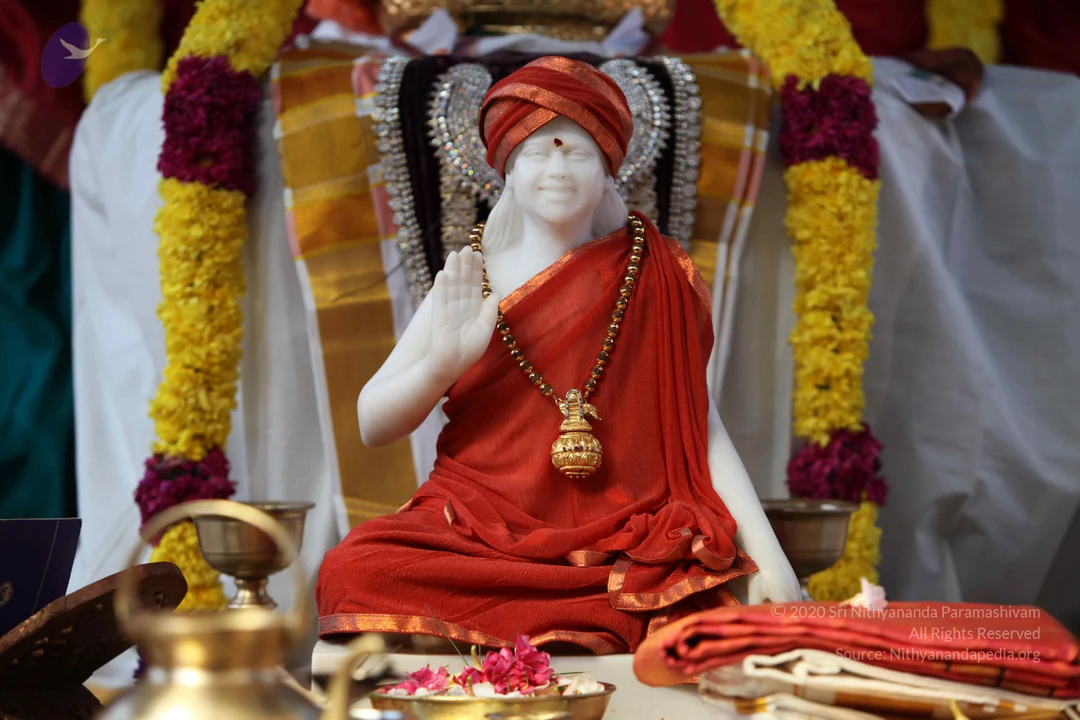
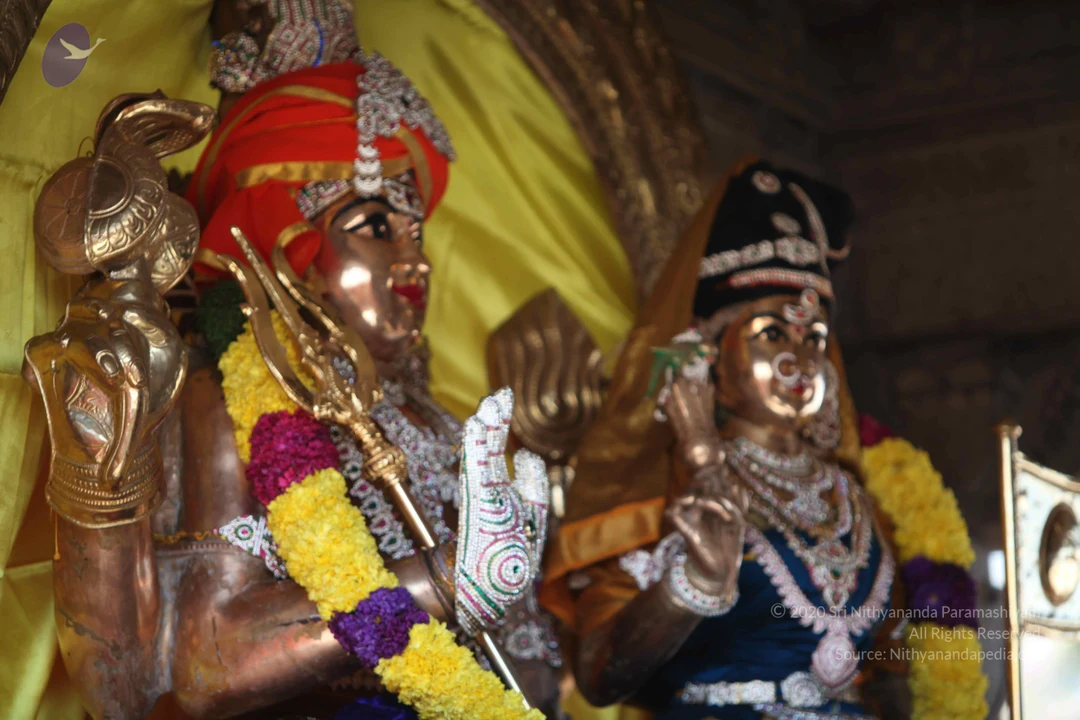
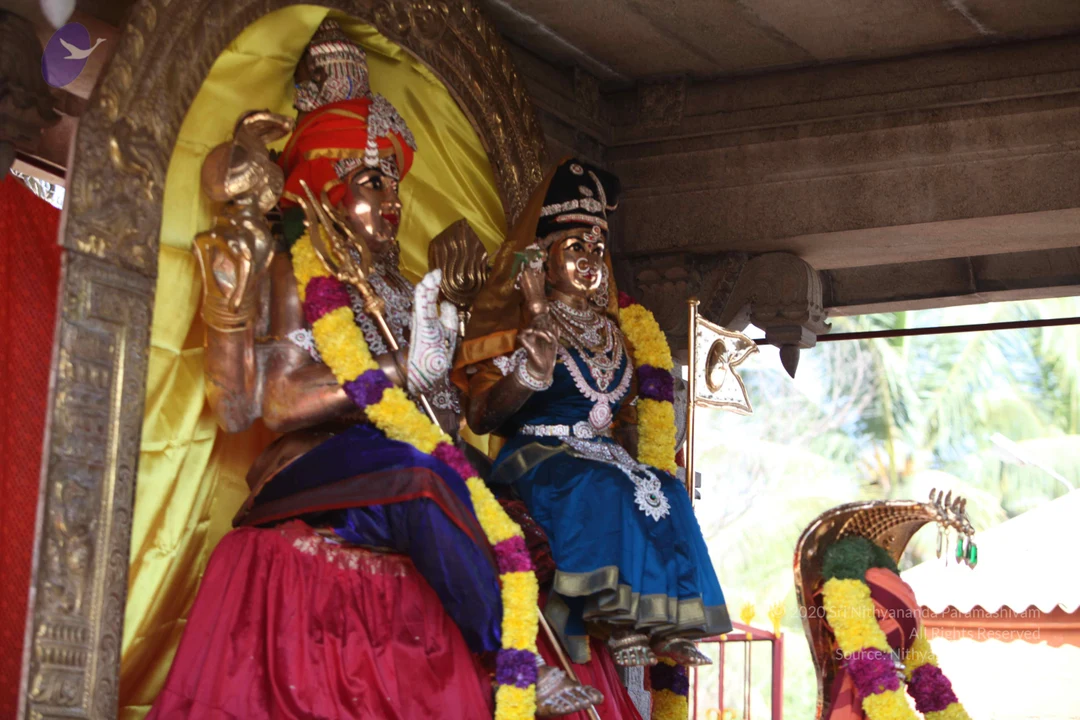
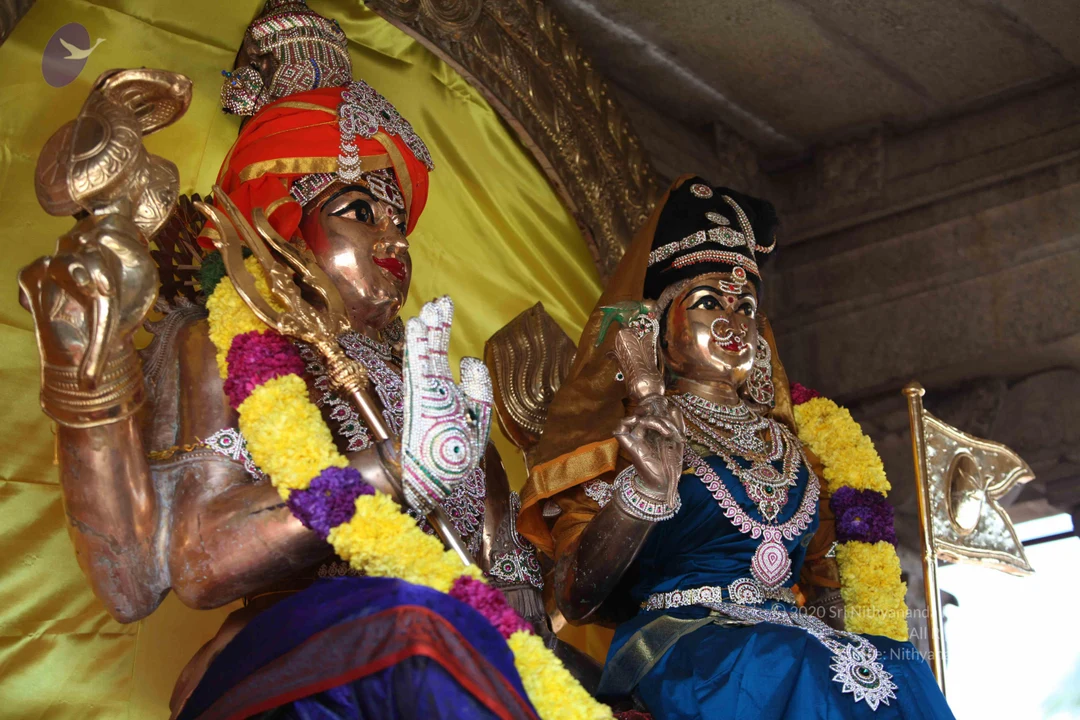
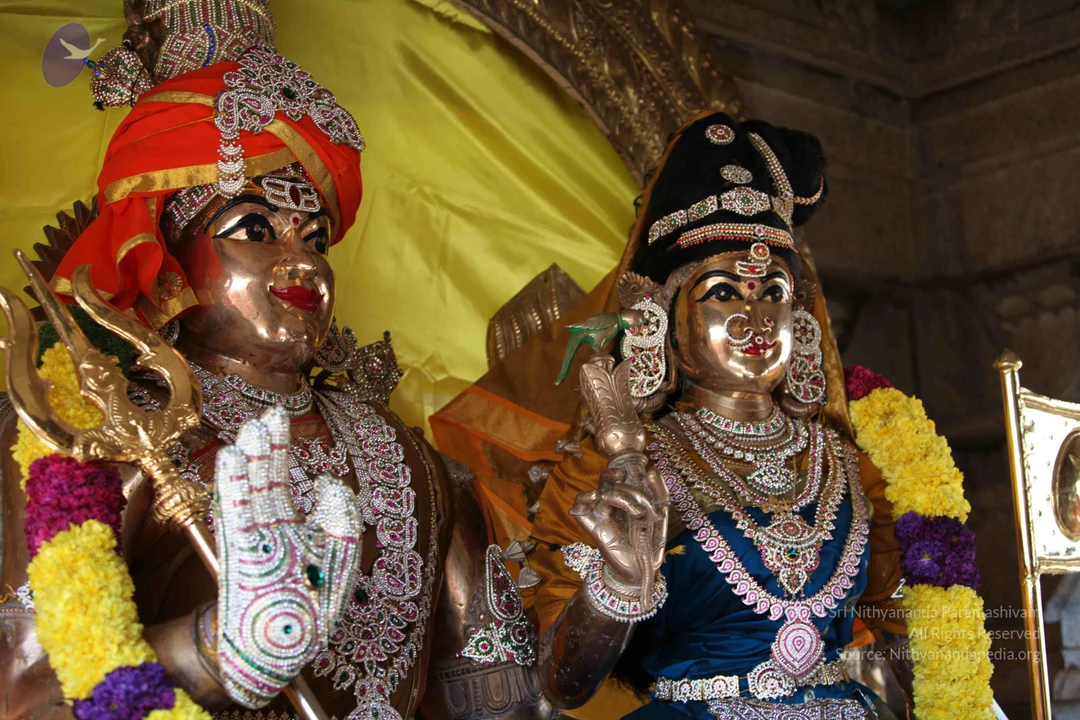
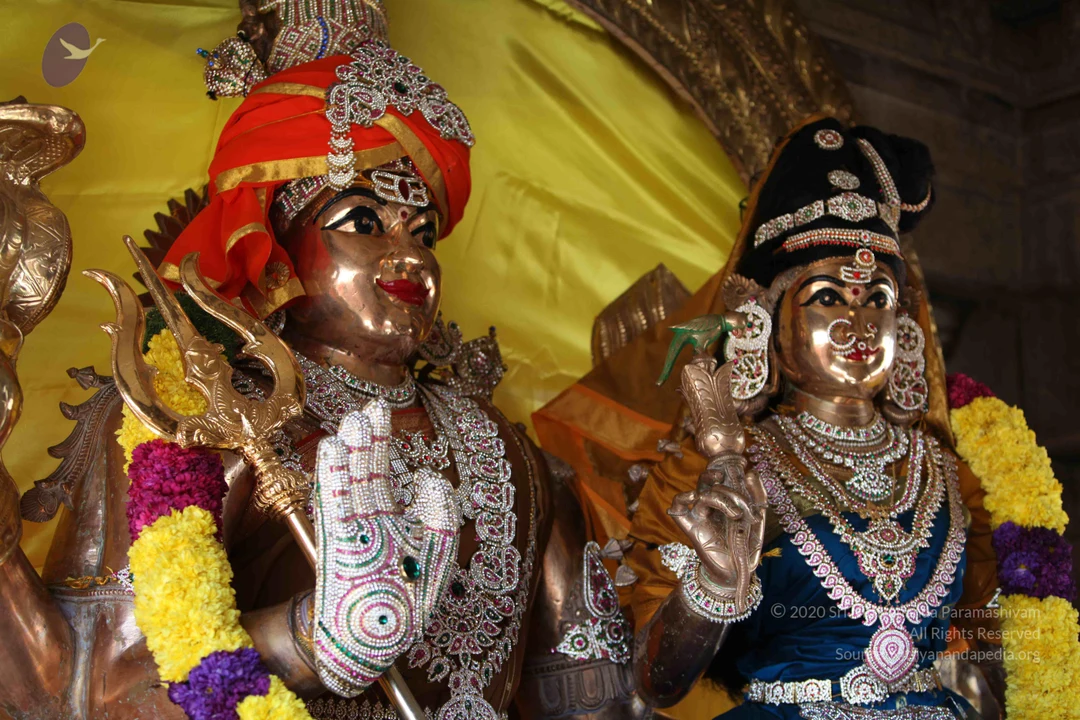
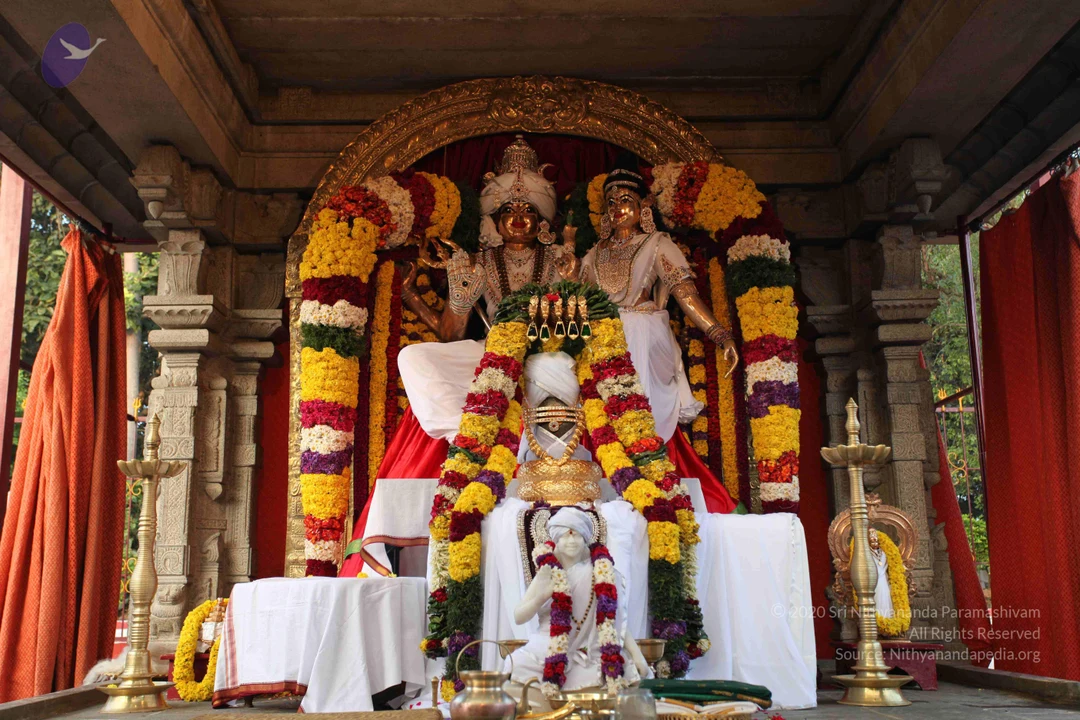
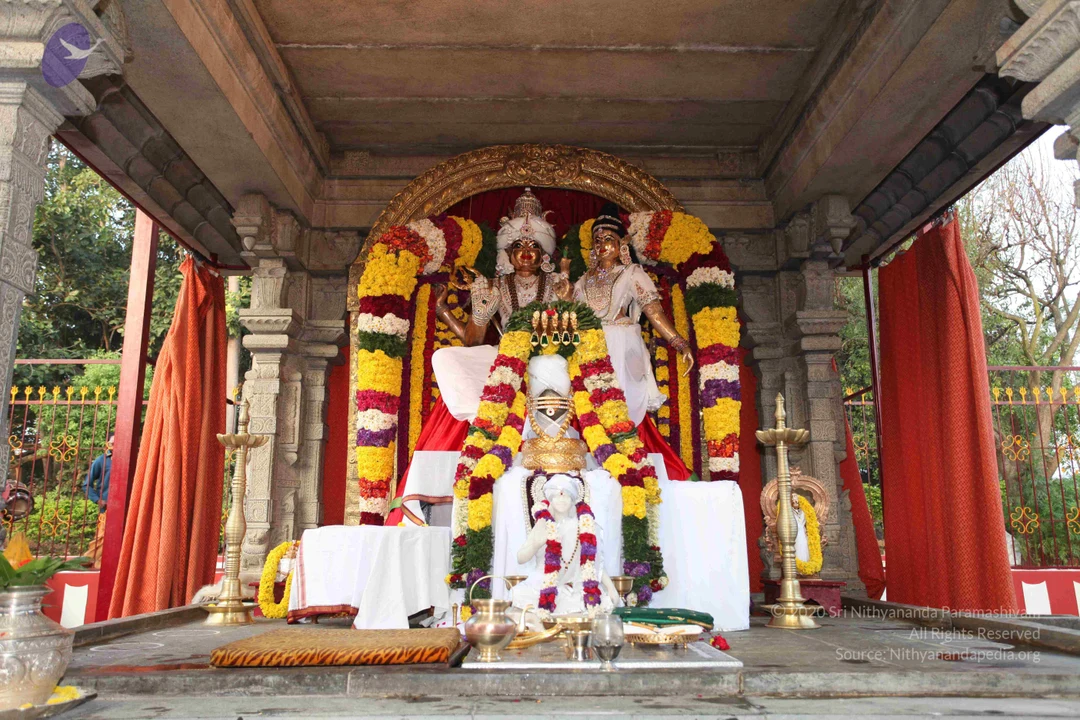
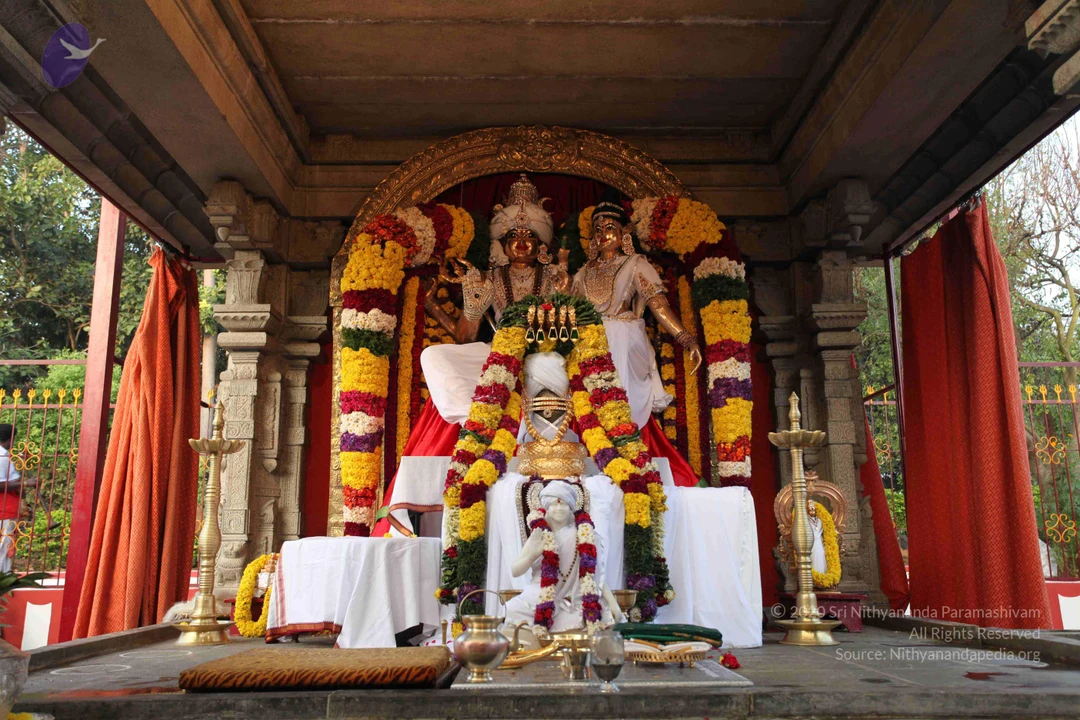
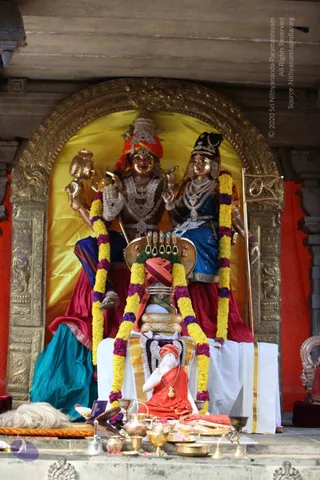
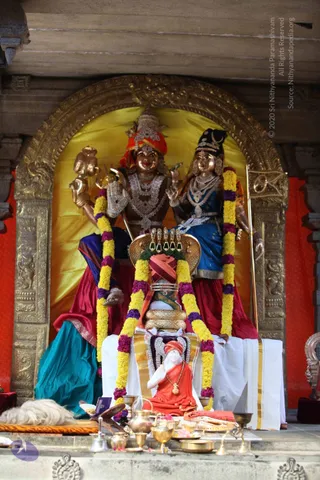
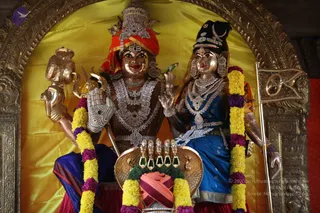
A shrine photograph showing a pair of large golden-brown deity murtis standing under a gilded arch against a yellow backdrop. The left figure wears a red and orange turban, a heavy silver necklace and holds a trident-like weapon and small drum; the right figure wears a dark crown, blue garment and silver jewellery. Both are garlanded with yellow and purple flower garlands. Below, a seated small figure in orange robes and a white shawl sits on a white-draped platform, with a rudraksha-style necklace and a golden pot and offering lamps arranged in front. Brass oil lamps, kalasha pots, flower offerings and a mandala-like tray lie on the platform. Red curtains and carved stone pillars frame the scene. No living people are visible.Two metal murti figures seated side by side on a raised golden-yellow backdrop inside an ornate gilded arch. The figure on the left, with a bronze-gold face, wears an orange-red turban with a crescent ornament, a heavy silver-jewelled necklace and a brown torso garment, holding a trident-like staff and a hand raised in abhaya mudra. The figure on the right wears a black crown with silver crescent ornaments, a blue sari and layered silver necklaces, and holds a small green parrot-like bird. Both are garlanded with yellow marigolds and purple flowers. In front is a brass tray with a pink cloth and small lamps or offerings. Zero physical people appear; the figures are statues.A shrine with two large gilded deity murtis of a crowned male figure and a female figure, both adorned with silver necklaces, garlanded with yellow and purple flower strands. At the front, a seated white-robed figure wearing a saffron-orange turban and an orange robe with a gold pendant holds hands together in namaskar; this is a statue or effigy, not a physical person. Brass kalashas, lamps, a plate of offerings and a white fur-like cloth lie on the altar in front. A small framed image on a side throne stands at right, and red drapes and carved stone pillars frame the scene. No living people are visible.

January 28 2011

Original wiki page
Contents

Title:

Renounce the Mind: Patanjali Yoga Sutras 105

Description:

Avatar and Enlightened Master Paramahamsa Nithyananda continued to speak on the best way to deal with our mind, namely by renouncing it! This Patanjali Yoga Sutra on Ashtanga Yoga uses the keyword Pratyahara. Ahara means absorbing, taking in, Pratyahara means withdrawing, not taking anything in through the five senses. When the Kundalini is awakened, the senses shift, they are no longer ordinary. When the Kundalini awakens, when you experience levitation, you will automatically experience the shifting of senses.

Your senses are matter used by your inner space. Your mind works through your senses and experiences the world through sensual pleasures or pain. Now, if your mind withdraws from sensory activities and returns to the source, restoration, that is what Swamiji calls Pratyahara.

Withdrawing the senses, restoring them to space where constant joy is happening without any happening, is the ultimate goal! If you see anything new, your senses will come alive. How cunning your senses are. How it easily it gets attached or excited.

Somehow your mind catches things to get excited. Excitement has nothing to do with the object, it's something to do with your ideas. Being attached to anything is important, whether to a steel plate or silver plate or mud plate. The attachment is to be renounced.

The process of the mind going through the senses is the constant distraction. A conscious decision has to be made, to withdraw the mind and restore it to the original stuff out of which it's made, without going through the different happenings of the 5 senses and being in the space of joy which happens without happening.

"So decide not to go through the useless sensory distractions, get into space where the ultimate joy, peace, and bliss is happening, without happening."

Watch, share and like the videos and Subscribe to our channel to be notified of the next upload. click http://bit.ly/20j90wr to subscribe.

Link to Video:

VideoAudio

Transcription

(00:37)

Today's subject: "Renounce the mind to realize your Self". In Patanjali yoga sutra: 105th sutra, the 2nd chapter, 54th verse. "sva-viṣaya-asamprayoge cittasya svarūpa-anukāraḥ iva indriyāṇām pratyāhāraḥ"

(01:37)

Swami Vivekananda translates this as: "pratyāhāraḥ or the drawing in of the organs is affected by their giving up their own objects and taking as it were the form of mind stuff". Swami Prabhavananda translates as: "When the mind is withdrawn from the sense objects and sense organs also withdraw themselves from their respective objects and thus are said to imitate the mind. This is known as pratyāhāraḥ".

Swami Satchidananda translates as: "When the senses withdraw themself from the objects and imitate as it were, the nature of the mind stuff is pratyāhāraḥ".

(02:34)

I'll try to translate this sutra. Please understand the word pratyāhāraḥ. That's the key word. āhāraḥ means absorbing, taking in, pratyāhāraḥ means withdrawing, not taking anything in. āhāra means through five sense you absorb; like seeing, listening, eating... sorry tasting, that’s the right word than eating, tasting, smelling, touching. These are āhāra - five senses. pratyāhāra means not taking anything through the five senses.

(03:52)

As Ma Nithyatma was saying in her experience, when the kundalini is awakened, the senses are shifting. They are no more ordinary! Actually when the kundalini awakens, when you experience levitation, you will automatically experience pratyāhāra. Let me explain pratyāhāra - how the senses are working, how the āhāra happens and pratyāhāraḥ happens, how the kundalini awakening directly impacts and influences the pratyāhāraḥ. First thing, your senses are matter used by your inner space, your mind. Your mind works through your senses and experiences the world through sensual pleasures or pains like seeing, listening, smelling, tasting, touching.

(05:35)

Now the stuff out of which your mind is made, if it withdraws from the senses activities, sensory activities and returns to its source, restoration, returning to the source - that is what I call pratyāhāraḥ. Withdrawing the senses, restoring them into the space where intense excitement and joy is a constant happening, without any happening.

(06:26)

Please understand. The joy and excitement happens in your senses only if there is something is happening outside. If your cell phone rings, excitement - Oh!! Maybe some friend; if you get an email - Oh! Excitement - Maybe some good news!! If you see food, Aaaw!! Come on... Now the tongue is alive!!! If you see anything new, immediately excitement!!

(07:01)

Yesterday I saw, all bramhacharis and bramhacharinis were asked to eat in the mud plate to experience renunciation. Of course eating in the mud plate is very good for your health also; especially the plate which is made out of Ganges mud. We use that's what in our ashram, the plates made out of Ganges mud. When you put the hot food, hot rice into it and mix with sambar and eat in hand, that is something totally different! The energy and quality and even the chemistry of the food is different!! It works with your body like anything.

(07:50)

In sanyas training, there is a life called ‘Ganga based’ . They will morning take bath in Ganges water, drink Ganges water, use the Ganga mud to brush the teeth and the sticks which is collected from the trees which grows out of Ganga water, with that stick they will burn and cook their food in the pot made up out of Ganga mud; and the rice grown in the Ganga field and eat that and sleep in the breeze of Ganga and do their spiritual practices sitting in the banks of Ganga. The Ganga based life is a spiritual training.

(08:43)

So that is the reason I asked all my bramacharis and bramhacharinis to eat in the plate made out of Ganga mud. Even in that I saw these bramachari, especially one bramacharini, five times she wrote her name. I thought, "Oh God!! To avoid the excitement only the Ganga mud plate, but the plate has become such a big excitement". Then I went round and checked in the kitchen almost in ever plate five names... five times names are there.

(09:22)

In Pattinatar's disciple Badragiriyar, there was a great siddha Pattinathar in Tamilnadu from a very... He is from a very charitable community. He is born and brought up in a community which does business 'nagarathars'. So he is a highly charitable minded person. He had some renunciation experience. So he gave away all the property and became a sadhu. Because he became a sadhu, actually he used to give, lend money even to kings. Suddenly, he became sadhu.

(10:02)

One king, king of Badragiri who used to borrow money from this Pattinathar , he was shocked!! Somebody who can lend money to me, king, has become a sadhu... renounced all the wealth! He was shocked and he came to see the Pattinathar. Pattinathar just gave two three great teachings, essence of life; that clicked with Badragiriyar, Badragiri king and he also renounced everything and came and started staying at the feet of Pattinathar. So Pattinathar always used to take food from the hand and eat. But this his disciple after all he was a king, so he decided to have a small mud plate to eat. But Pattinathar did not like the idea of having a mud plate to eat. But king after all poor guy, it’s too much to eat from the hand , he needs at least the basic comfort to eat from a plate. He got a mud plate.

(11:18)

Naturally when there is a mud plate, you will take the food little more than what is required because you do not know how much is enough. With hand if somebody gives you will eat, eat. When the stomach is full you will say, “No, enough go back”. So person who brought the food has to take the remaining back. Who came to give you alms, he will give how much you want and after that he will go back with the remaining food. So, no problem. But when you have a plate, naturally they will dump the food and go away. And this guy everyday he saw remaining there was little food.

(11:59)

One day one small dog came to him and he gave that food to that dog. And continuously like this few days when he gave the food to the dog, the dog got attached to him and it started staying with him. And after few days he started taking automatically little more food for the dog also. Earlier whatever was excess he started giving. So accepting the excess; the first fall!! The second fall, now for the dog also he started taking more food.

(12:38)

One day Shiva himself came down as a sadhu; as a siddha to Pattinathar and asked. "Oh Lord! Please give me something". He asked for alms. Pattinathar looked up and said, he understood it is Shiva. "I am a paradesi, I don't have anything to give. Maybe in the other side of the temple one of my disciple who is a samsari is sitting. Go and ask him something. He will give you".

(13:13)

So Shiva went to the Badragiriyar, the disciple who was king, the ex-king and asked the Badragiriyar, "Please give me something I am a sadhu". Then he looked up and said, "I am also a sadhu". Then the....Then Shiva said, "No, no. I went to your guru who is sitting in the eastern side of the temple, Pattinathar. He said he is a sadhu, he doesn't have anything but his disciple Badragiriyar.... he mentioning you that you are a samsari, grihasta, householder, he asked me to come and beg from you.”

(13:57)

Then suddenly it clicked to that king, the Badragiriyar, Oh God! oodum tirunayyum yenae samsari aakeeyado he excites, he cries in Tamil, “this begging bowl and the dog which eats my remaining.... this too can it make me a householder, a bound man, a grihasta! Oh God!! What have I done?” It clicks. That idea clicks with him and he throws that mud plate on the dog. The plate breaks and the dog dies and he is liberated.

(14:39)

Please understand how cunning your senses are. The things the life is created around you so that the external excitements are avoided but you are excited even about those few things. I have seen these sadhus, they will leave everything and go away to Haridwar or Rishikesh and stay outside some temple, beg and eat but after two three months they will be attached to the place. Even when they go out they will put a towel that no other, nobody else should come and sit in that place.

(15:16)

That’s exactly getting a mud plate to eat. What for? So that you will not have other excitement attachment; and writing 5 times your name and making all kinds of kolam and flower garlands in that. I thought, "Oh God!! All these things are created so that the mind will avoid going through the senses too much and stop the getting excitement. But somehow our mind catches even these things and start getting excited".

(16:07)

So the excitement has nothing do with the object. It is something to do with your ideas. Whether you are attached to the 5 acre land or 2 feet land outside the temple to sit and beg is not important. You are attached is important. Whether you are attached to a silver plate or steel plate or to the mud plate is not important; you are attached. Even in the silver plate nobody used to write the name.

(16:54)

Mind going through the senses is the constant distraction. A conscious decision to withdraw the mind and restore it in its original stuff out of which it is made without going through the different happenings of the five senses, being in the space of constant excitement and joy which happens without happening is pratyāhāraḥ. So decide not to let the mind to go into the useless sensory distractions. Get into the space of ultimate excitement, peace and joy; without happening. Space where ultimate joy, peace, bliss is happening without any happening. Get into that. That is what I call pratyāhāraḥ!!

(18:41)

I bless you all to experience, achieve, express, live, radiate and share the eternal bliss, Nithyananda! Thank you.

(19:02)

Title:

Love, Sex and Kundalini Awakening Nithyananda - Q&A

Description:

Question and answer session by Paramahamsa Nithyananda

Watch, share and like the videos and Subscribe to our channel to be notified of the next upload. click http://bit.ly/20j90wr to subscribe.

Link to Video:

VideoAudio

Transcription:

Sadāshiva samārambām shankarācharya madhyamām Asmadācharya paryanthām vande guru paramparām.

(00:46)

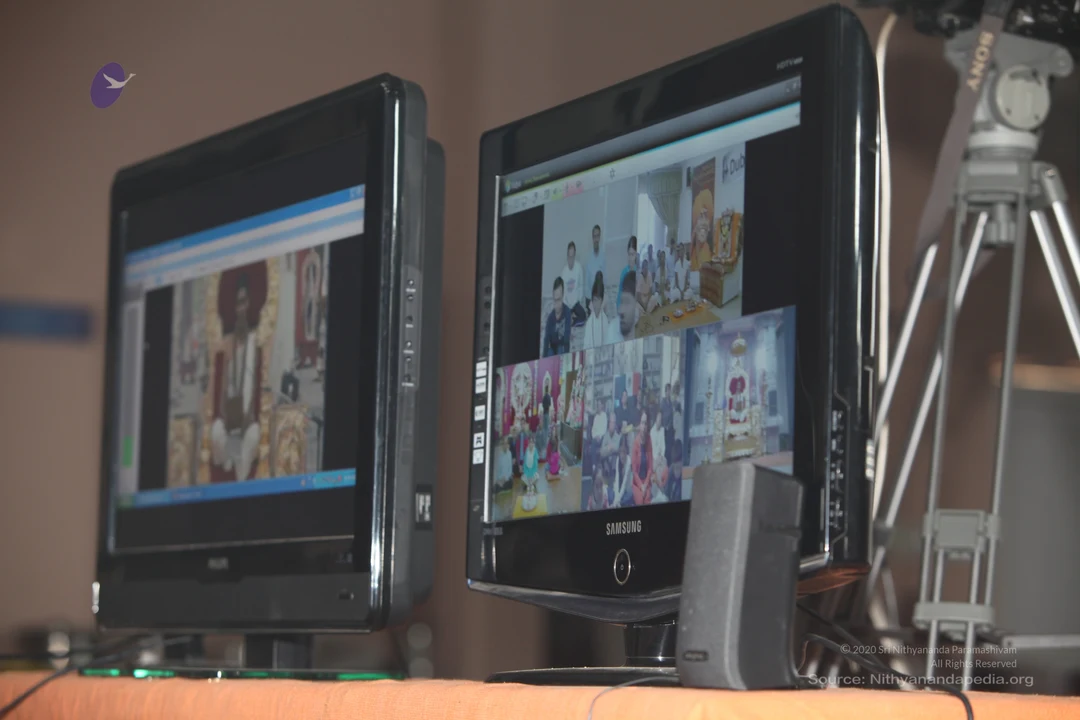
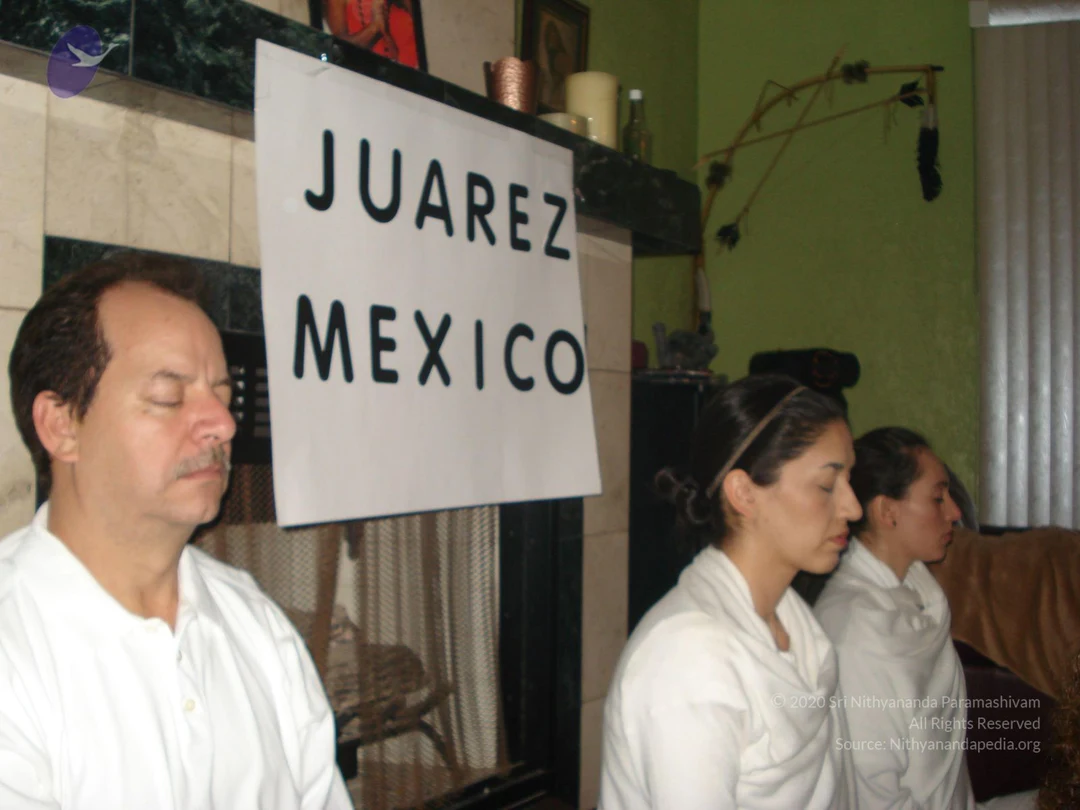
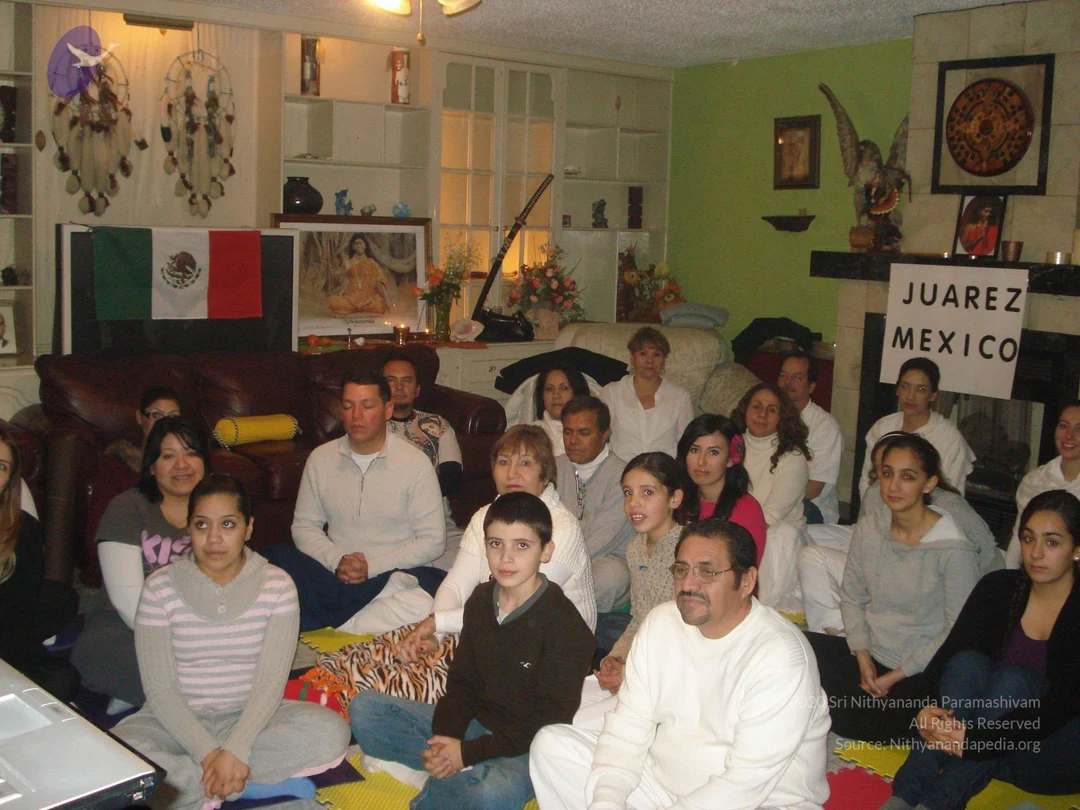
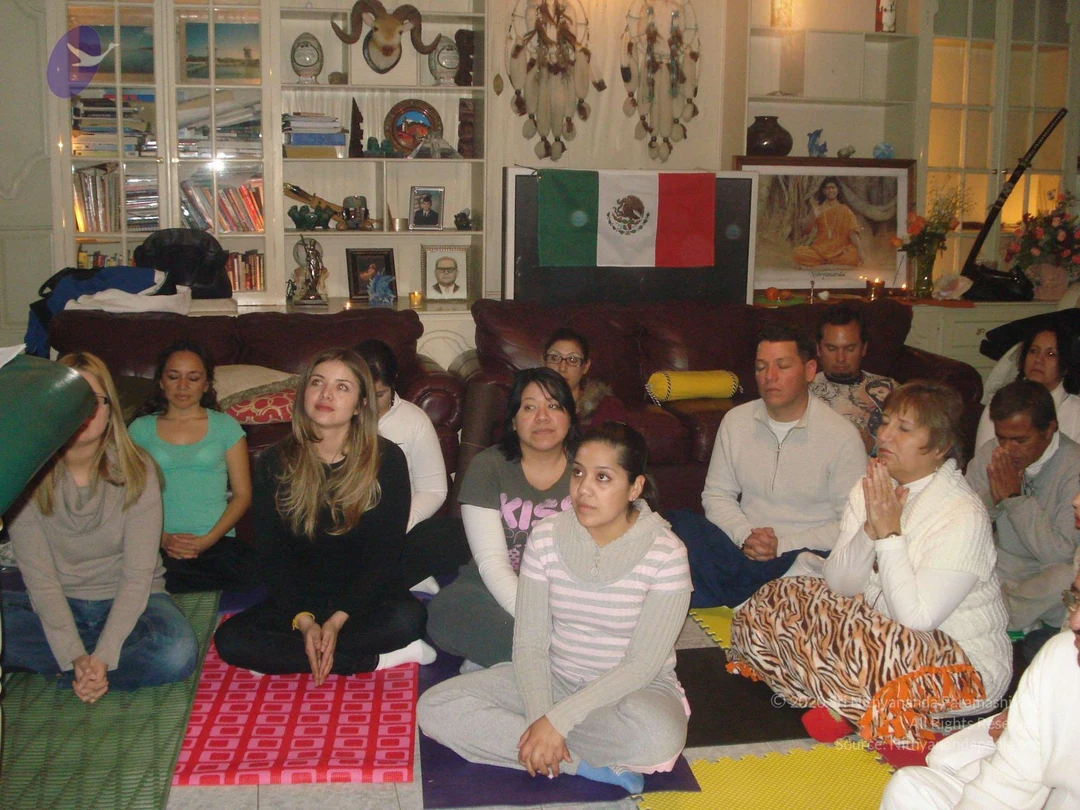
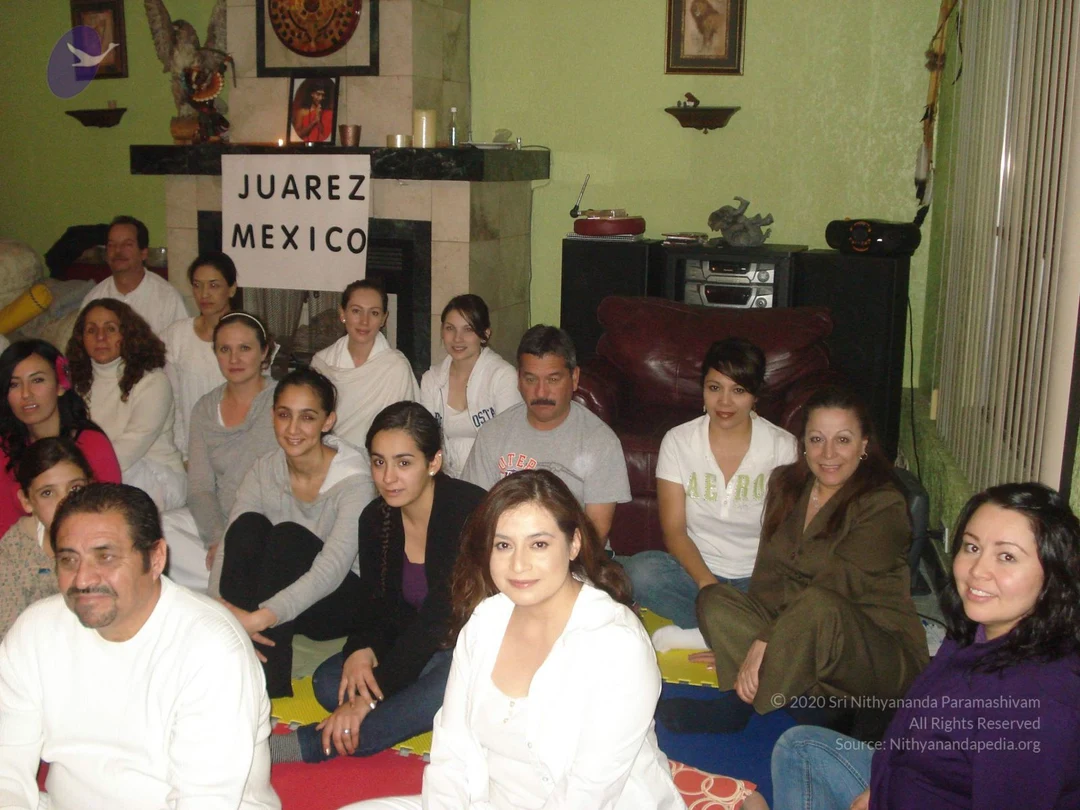
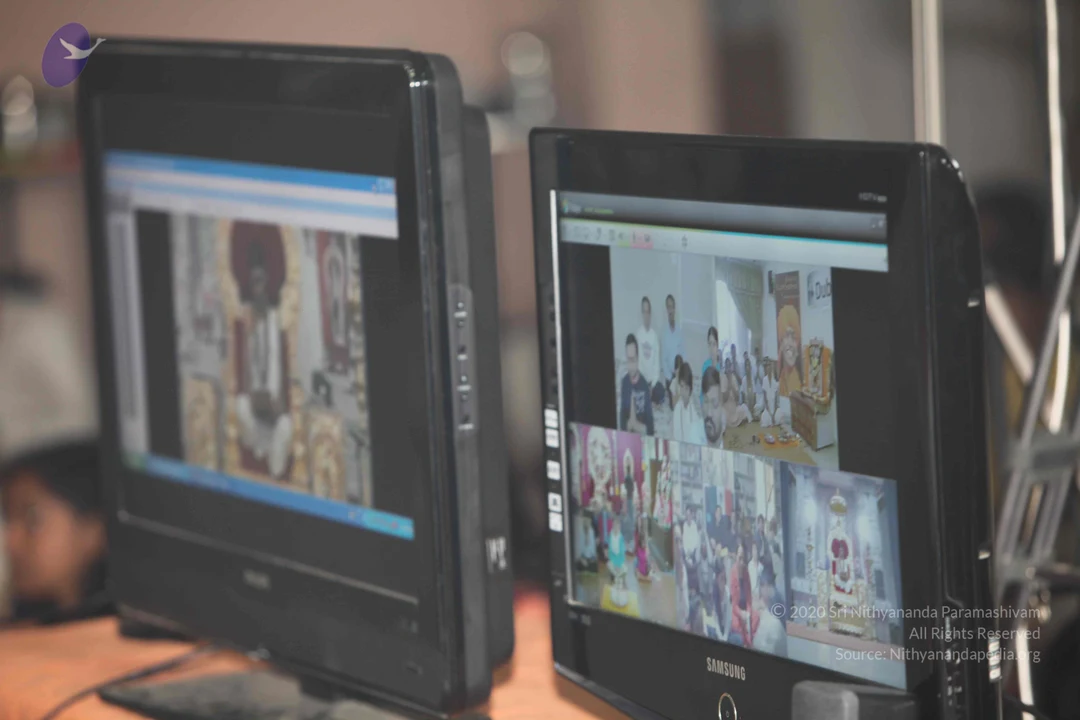
I welcome you all with My Love and Respects. I welcome all the devotees who are with us around the world at this moment. Dubai, Seattle, New York, LA, Dallas, Juarez Mexico, Vancouver, and all other individuals who are sitting with us and small satsang groups who are sitting with us through the eN TV. I welcome you all with My Love and Respects. Before entering into today's subject, satsang, I'll answer some of the questions. I'll respond to some of the questions.

(01:51)

It’s a question from Vanaja, New Jersey satsang center coordinator: "I had an epiphany coming from home, coming home from NSP today. I asked You yesterday if I could help heal people and you gave me Your blessings. I realized today there is so much more involved. I want to be able to talk to trees, insects, people in their own language, mountains, flowers, my car, animals; absolutely everything. When I do a healing, I want to be able to see their inside their body or frame to see what diseases they need to self heal. I want to see the CNS and be inside the bark of a tree and communicate and listen to everything. I also want to be able to download any information from the cosmos, so I have clinical evidence to support my findings and speak intelligently with all of God's creations. I want to be able to understand how they feel, see what they need to survive and most of all I want everything including tables and chairs to trust me to help them. I want to be one with nature. This sounds beyond logic and little crazy. But I know in my heart of heart this is the meaning behind my name and the path that You have chosen for me. Am I right? If the answer is 'yes', please give me Your blessing. I am so excited about this".

(03:15)

HDH: “Vanaja answer is 'YES'. The way is: constantly heal and unclutch. Healing, our healing process is based on love so when you radiate love, love is the emotion which is immediately reciprocated by cosmos. Sex is the emotion which is immediately contradicted by cosmos. Please understand. Love is the emotion which immediately responded by anything in the cosmos. When you feel love, within few moments you will see it comes back to you from the cosmos. Immediately cosmos responds to it. The tree, the flower, mountain, nature everything responds to it. The sex, even your own body will be against it. See, when it is awakened, even your own body immediately will resist. Our whole healing process is love based. So understand it is completely love based. So continue, continue, continue, intensely radiate love. You will see and experience whatever you are asking”.

(04:56)

Next question from Ma Nithya Atma, LA, VEDIC TEMPLE: "Last night's satsang and this morning's repeat of it via eN TV, you were giving us a strong kundalini experience. I experienced a very intense shaking from root to crown and at times I was levitating while I watched from home this morning. I then had to go to teach yoga class, and during one pose I had to stop because I thought it would take me back into the spiralling movement which could lead to levitation. Also the five senses are shifting. All the five senses are different and it is not all that easy to relate to life around me. So is it better to withdraw while this shift is going on or should I just move with the flow of everyday life activity, even though it feels strange and different. Are we bound to have public displays of spontaneous activity like levitation? Every day I give so much gratitude for what you are giving us all. If only everyone knew the great gift you are sharing.

(06:05)

HDH: Nithya atma, you need to understand two things. First, what you are going through now, the senses are shifting. Actually today exactly this is the same sutra Patanjali is giving us, I am going to express. When the senses are shifting, because of levitation and kundalini experience, it is good to withdraw at least for 3 months, so that your body gets completely matured, established in kundalini. Please understand yogic body is made of unclutching, intense tapas, kundalini and protein. When you are going through this levitation experience, unclutching... unclutch as much as possible. When your rajas, means the restlessness is exhausted by unclutching, when you are feeling tamas, take up intense body building activities like yoga or weight lifting. Confuse the muscle by infusing the sweet pain of yoga and weight lifting. The third very important thing, bring joyful blissful mood to your muscles again and again by the kundalini awakening.

(08:05)

Please understand, whenever your kundalini is awakened, when you experience levitation by the Master’s presence, all your muscles feel joyful, ecstatic, blissful! That is why even if you have one dose of kundalini experience; I can call one dose means maybe 10 minutes of the Master’s presence, next at least seventy two hours three days that will go on be staying in your muscle memory. Means, your muscle memory, muscles are being soaked into the honey. It constantly stays inside you. So please understand, let your body be built during the initial periods of kundalini awakening with this four material. One: Intense yoga and body building activities like a weight lifting, all the things which creates sweet pain inside the body; of course with proper instructions, first. Second: Intense unclutching as much as possible. Third: Masters presence as much as possible. Fourth: Protein; Means a disciplined sattvic diet; no animal protein. Please understand. When your kundalini is awakened add only vegetable protein; protein through vegetarian means. Do not add animal protein. This four is enough to create a complete Yogic body and Vedic mind.

(10:13)

So, I will recommend anybody who has started experiencing kundalini and levitation; three months if you retire from all other activity and work intensely, you will create a perfect yogic body and vedic mind. Then go to the world and show. Do all the circus. You are asking here, "Are we bound to have public displays of spontaneous activity like levitation"? After establishing yourself, go round and show not just levitation, even teleportation!! Nothing wrong; but I will sincerely recommend any sincere seeker who wants to establish themselves into this kundalini experience permanently, when you are experiencing kundalini, when you started experiencing, within a month decide - three months back out from the normal activity and regular life . Either come and stay in the ashram; I am creating ambience just for that. See it’s like a.... Our ashram is like a 'green house of consciousness', 'nursery for new man'. So when the kundalini experience happens in you, when you start levitating, the best thing is come to the green house of consciousness, nursery of new man. And all four are provided for you here and something more for growing consciousness, to nurture your consciousness, to make you a new man. New being!

(12:12)

So try, whoever is experiencing the awakening. So I'll sincerely recommend come and be here at least for 3 months. It is just a beautiful, intense, amazing, experience! And create a new body and new mind. It can really help you. It can really awaken your whole being!

(12:54)

Photos

Paadapooja
Nithyananda-Satsang

Sarvadarshan

Photos Of The Day:

eN-Kriya-in-Mexico

Photos Of The Day:

01-Temple

02-Pada-Puja

03-Satsang

04-Sarva-Darshan

05-Session-with-Swamiji

Photos from this day

View all 341 photos

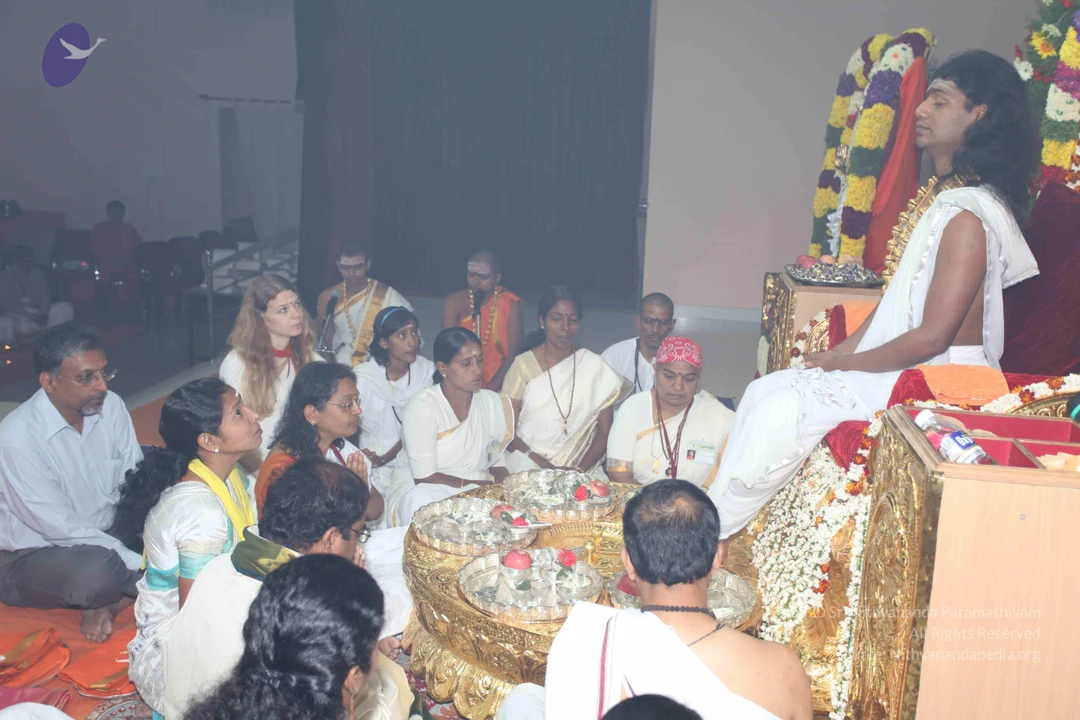
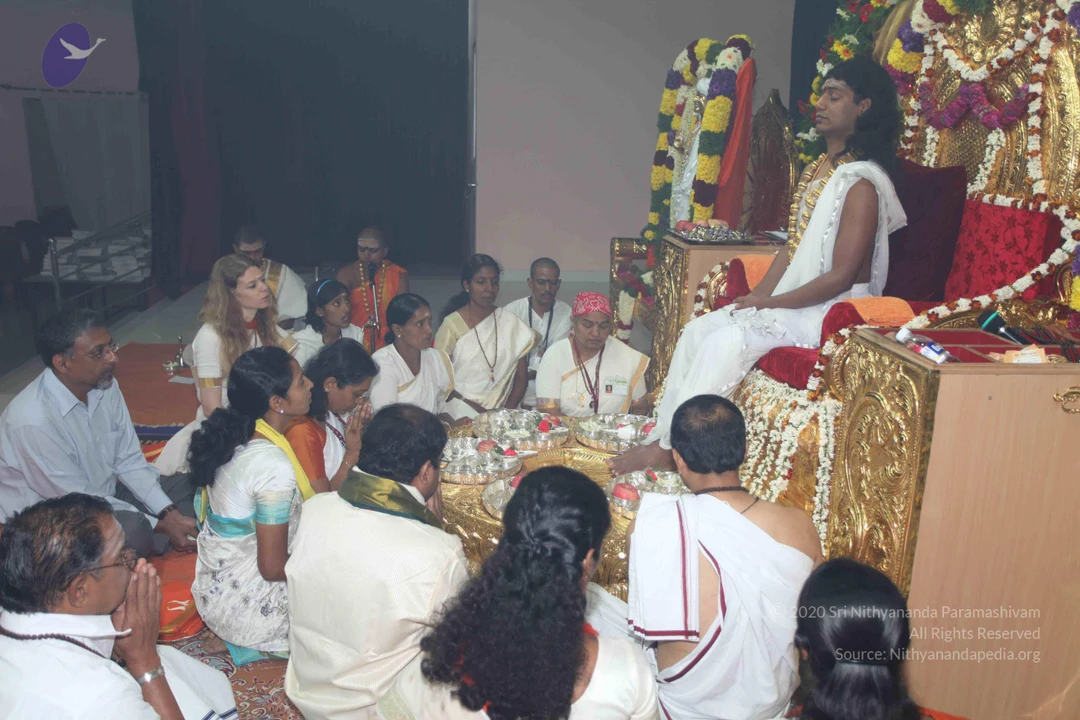
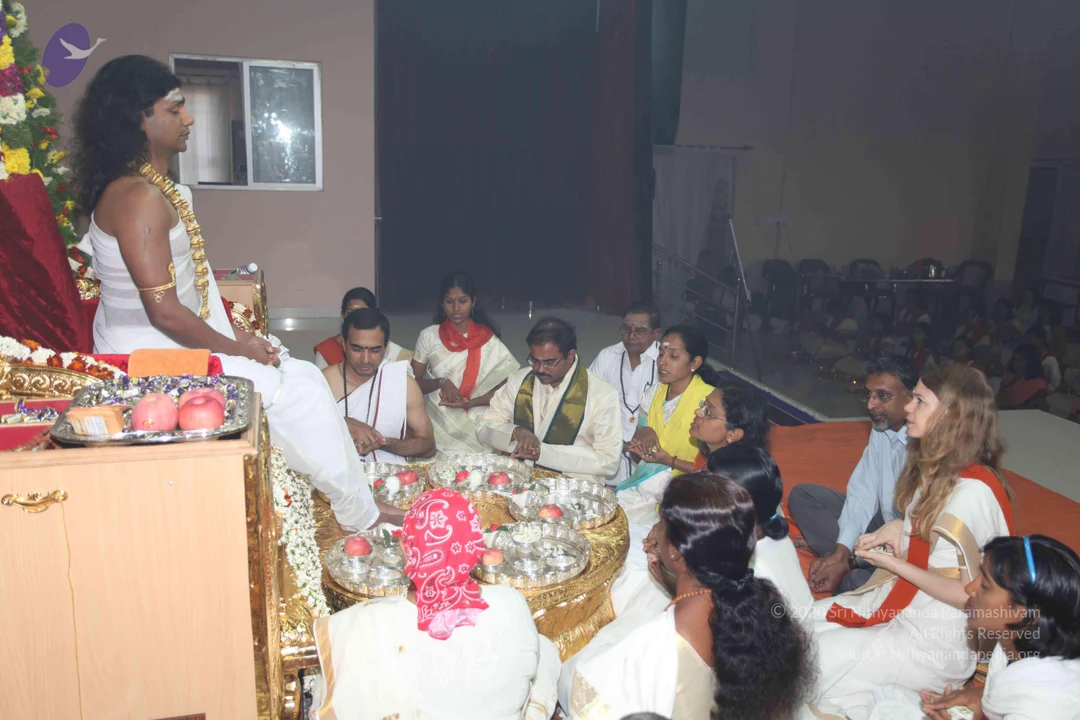
Paadapooja
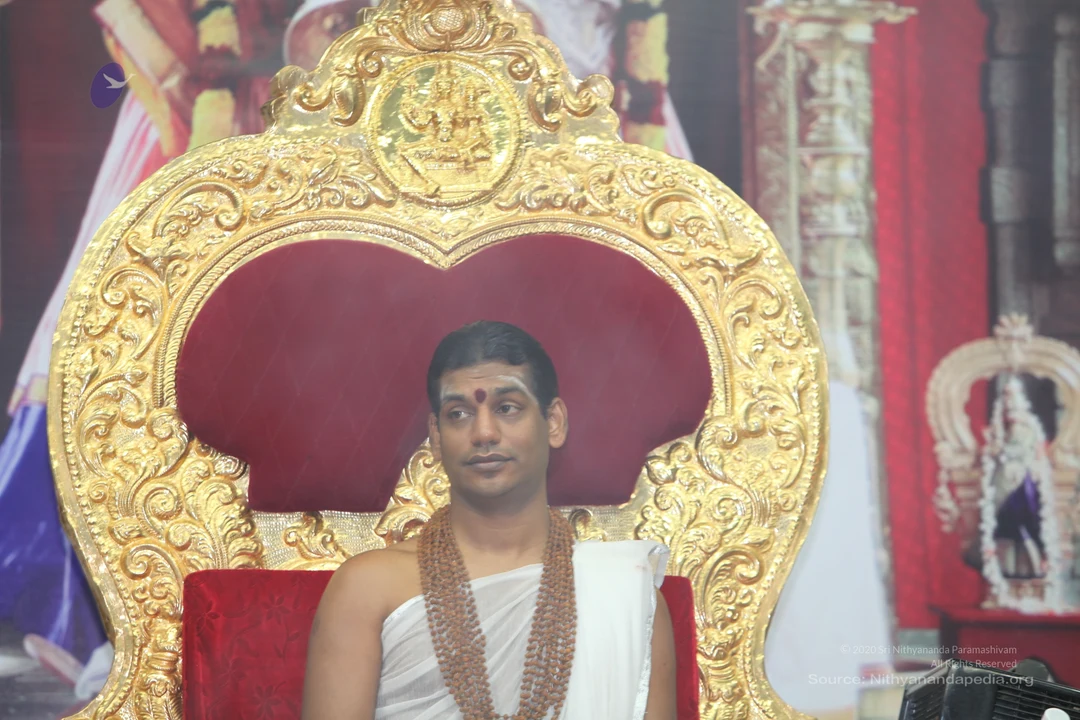
2 photosSource gallery
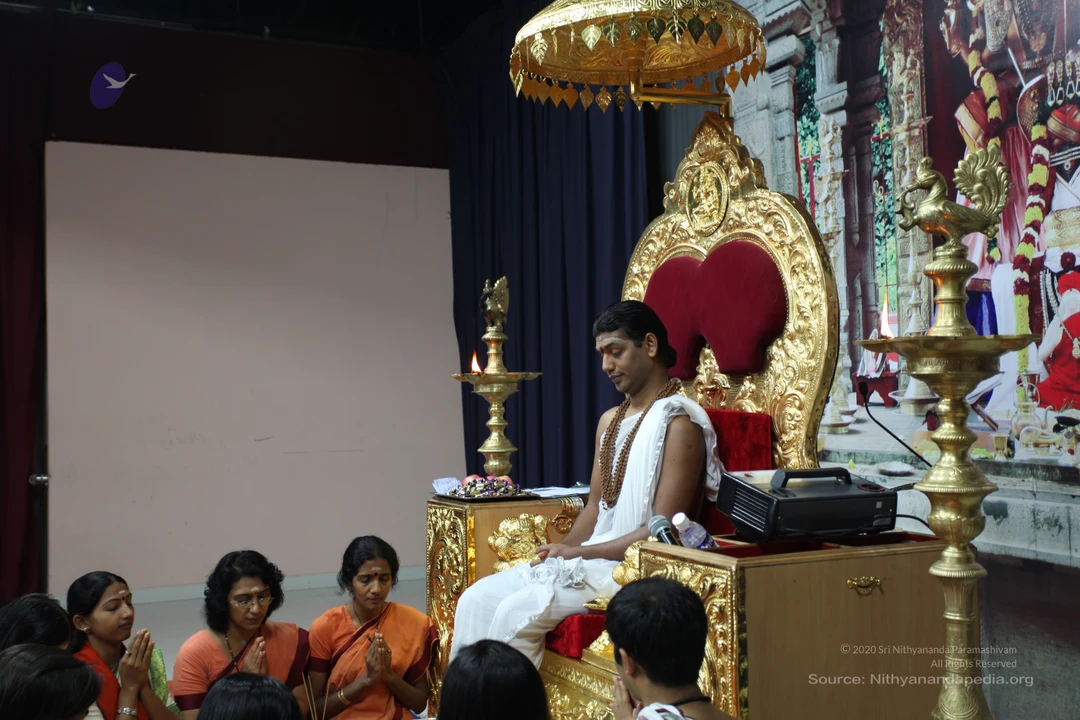
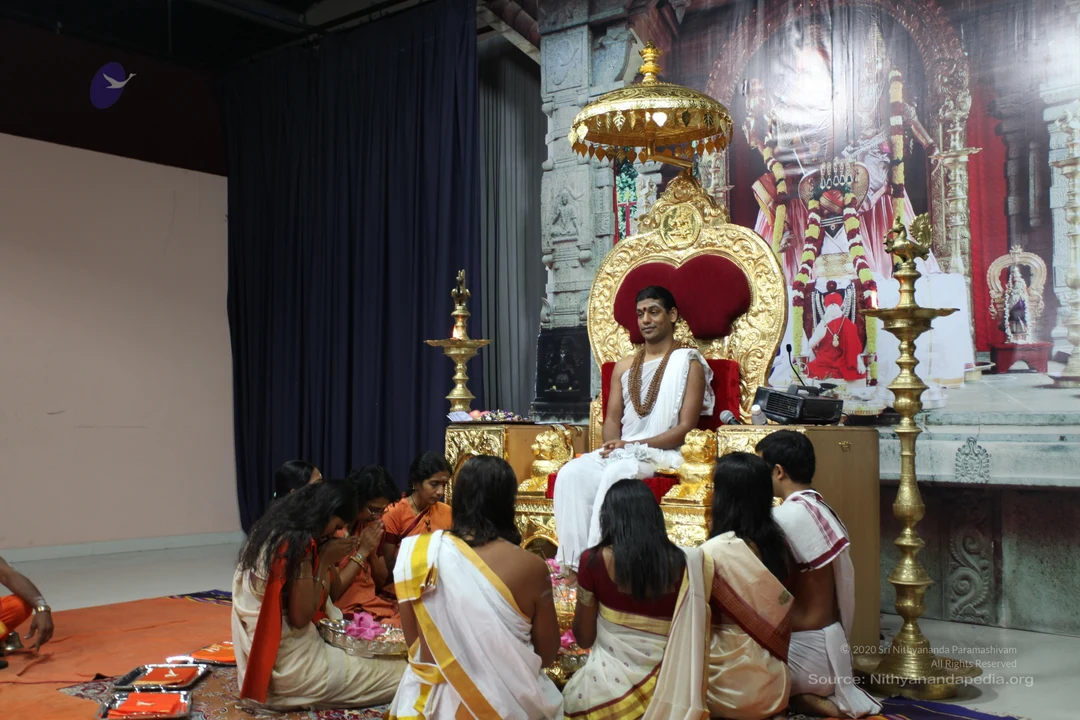
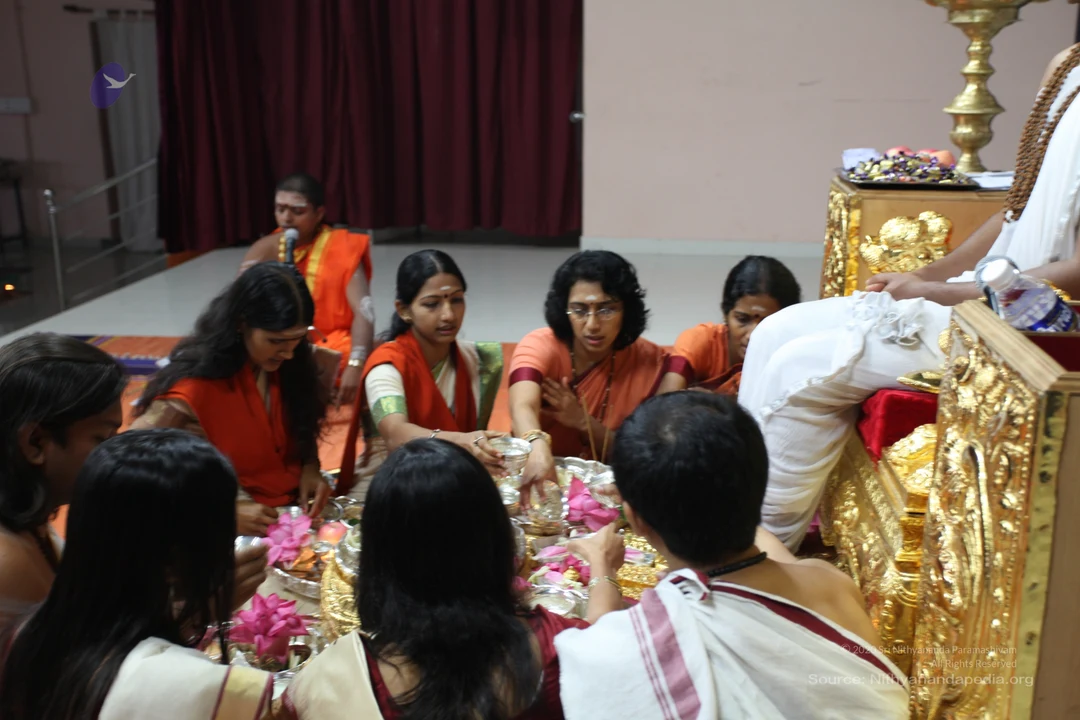
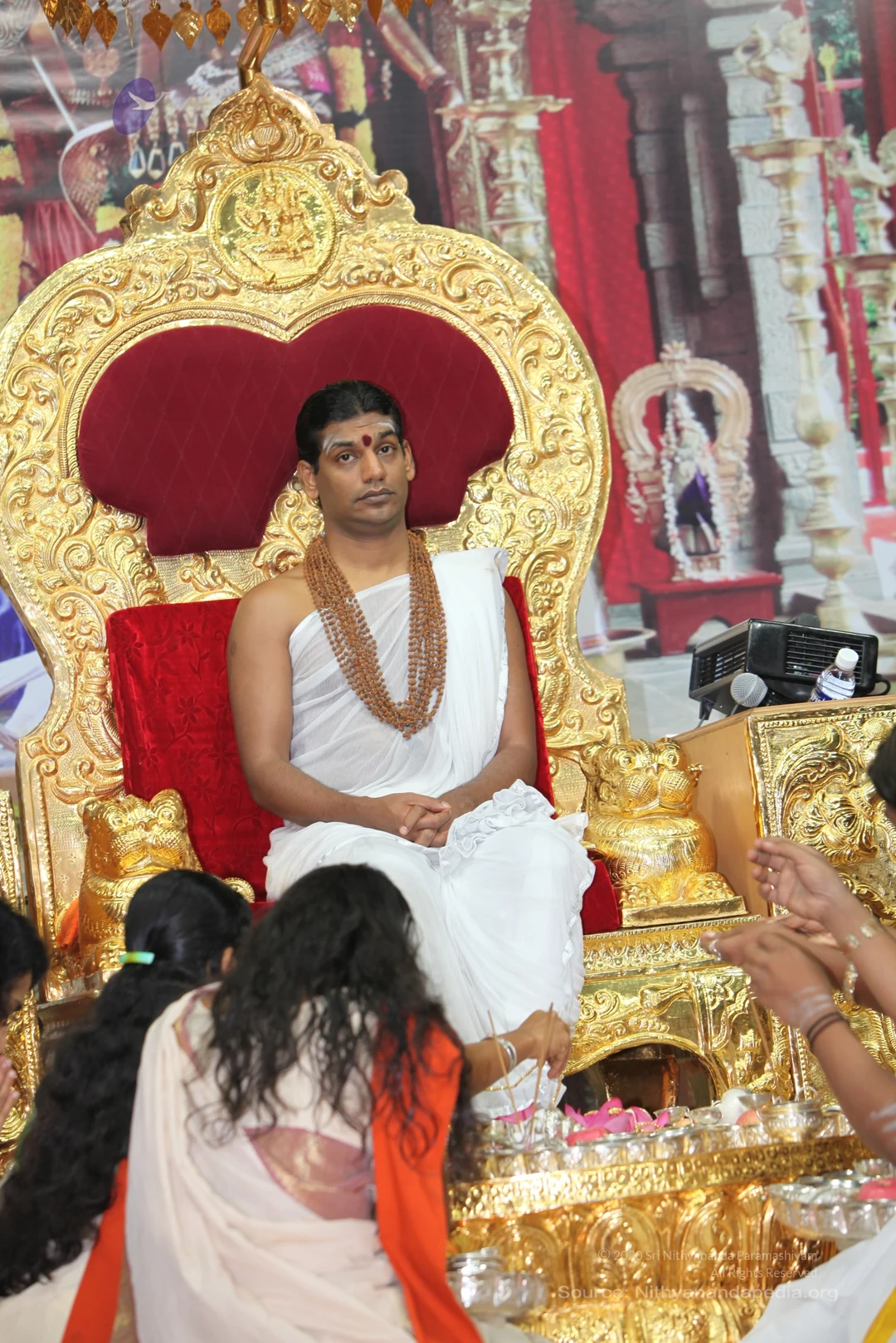
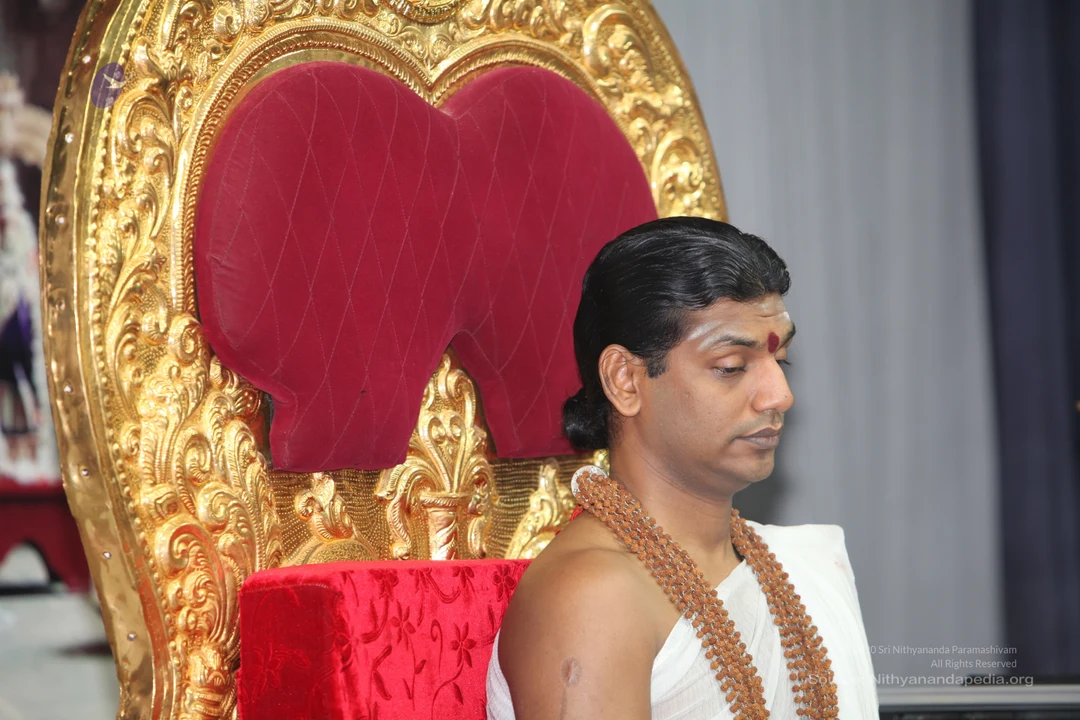
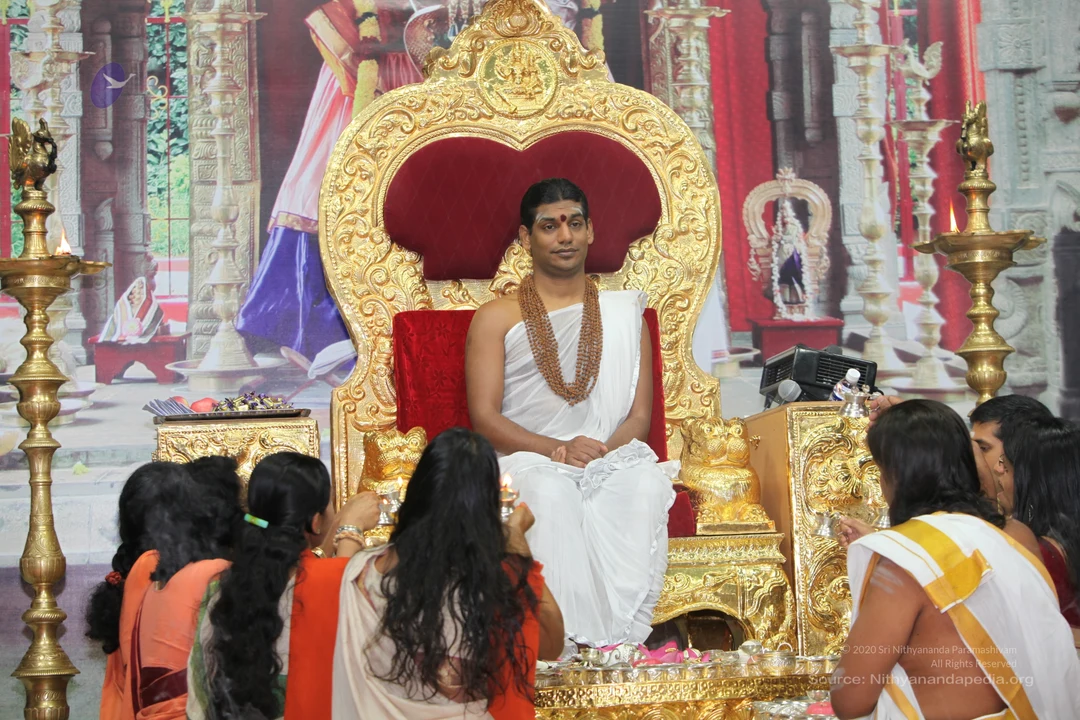
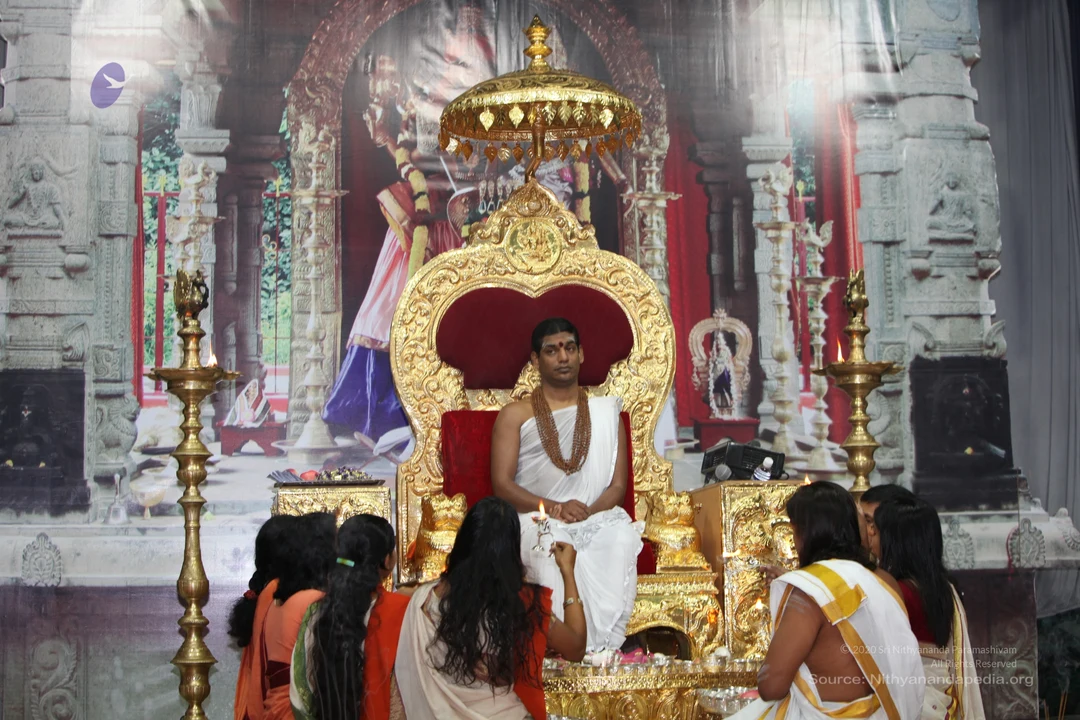
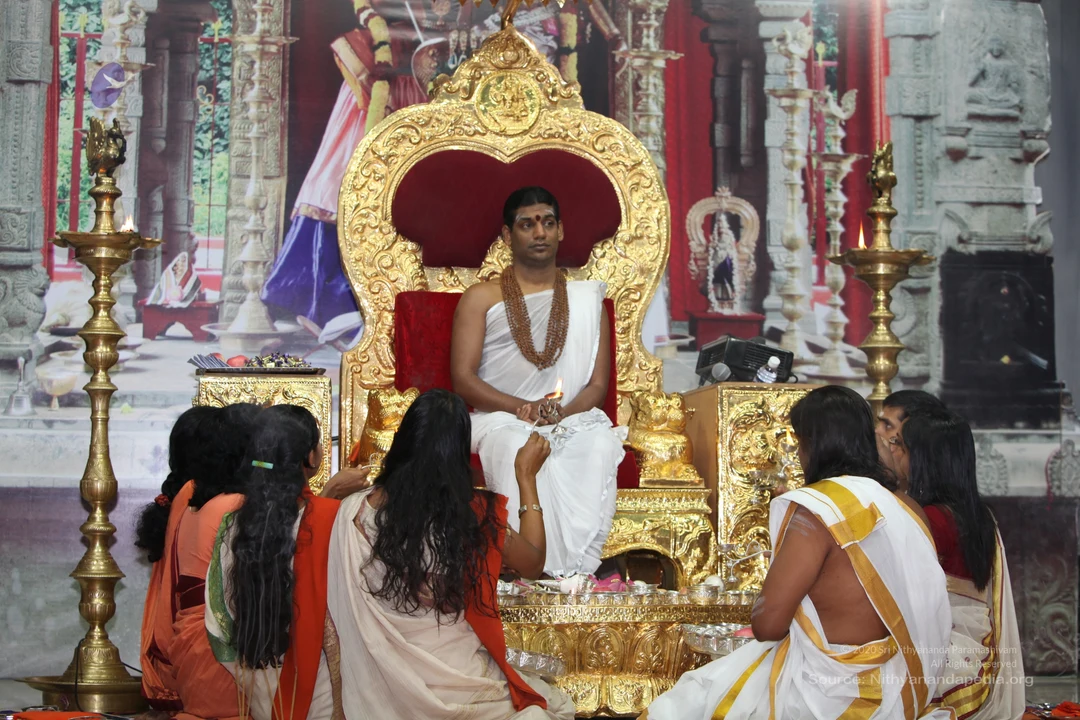
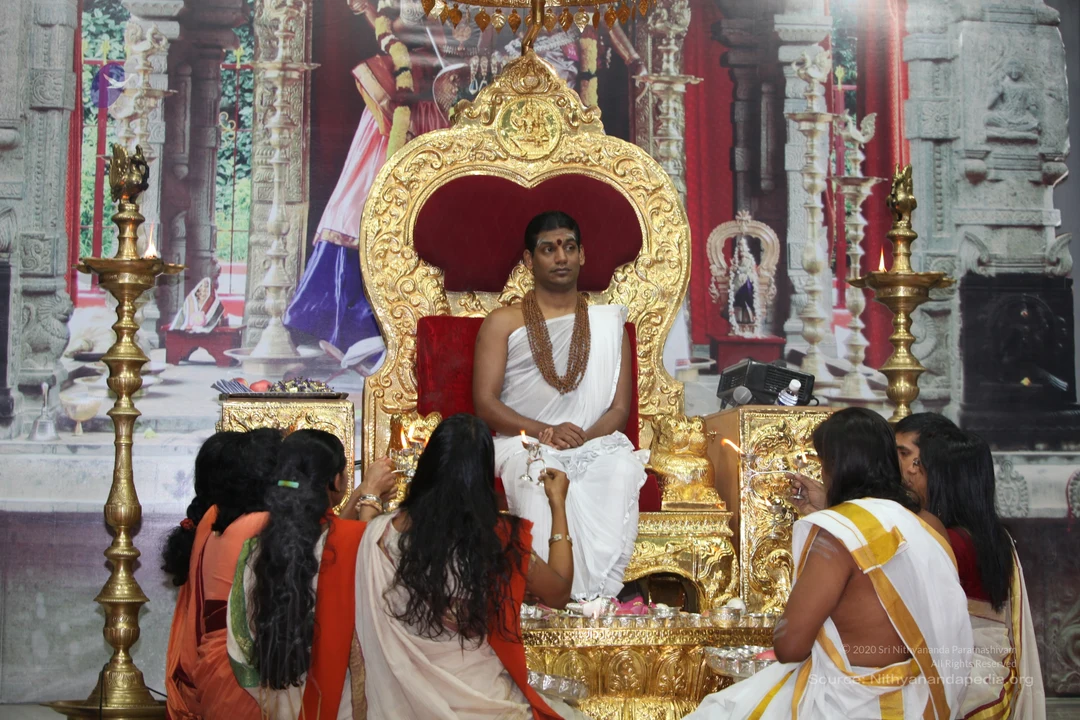
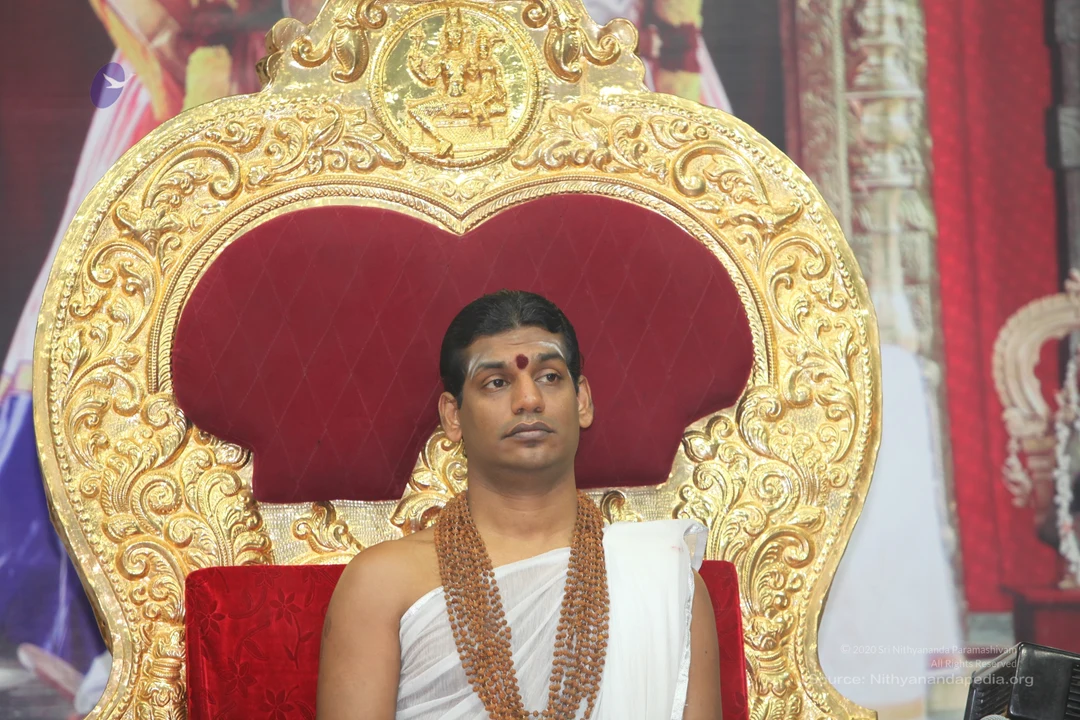
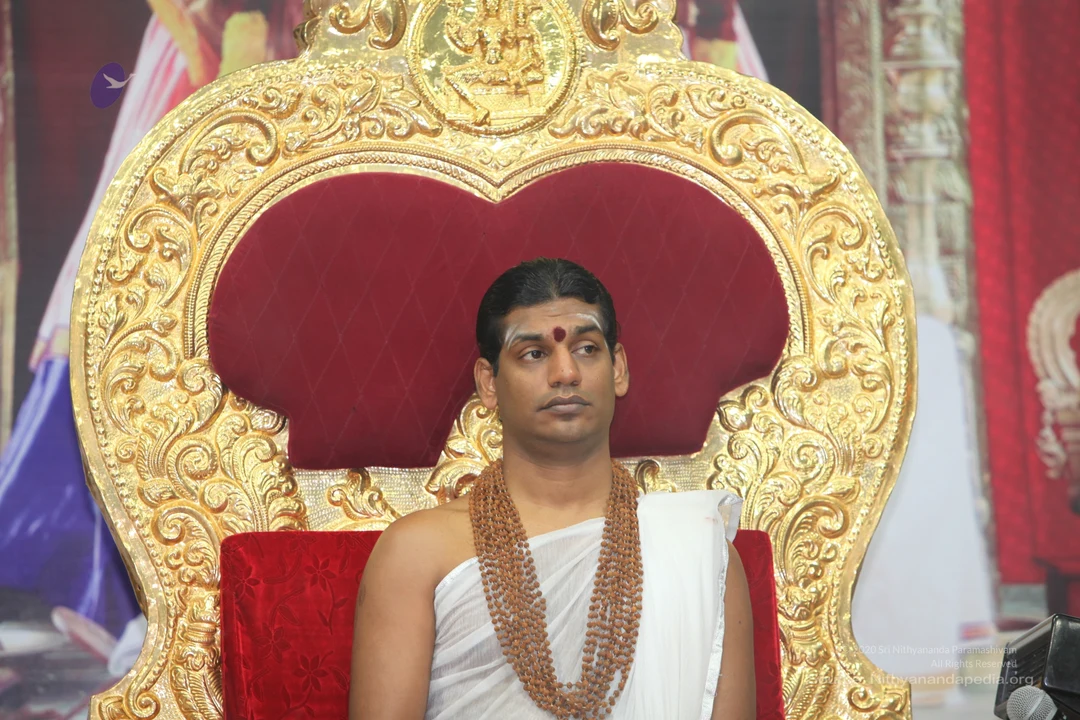
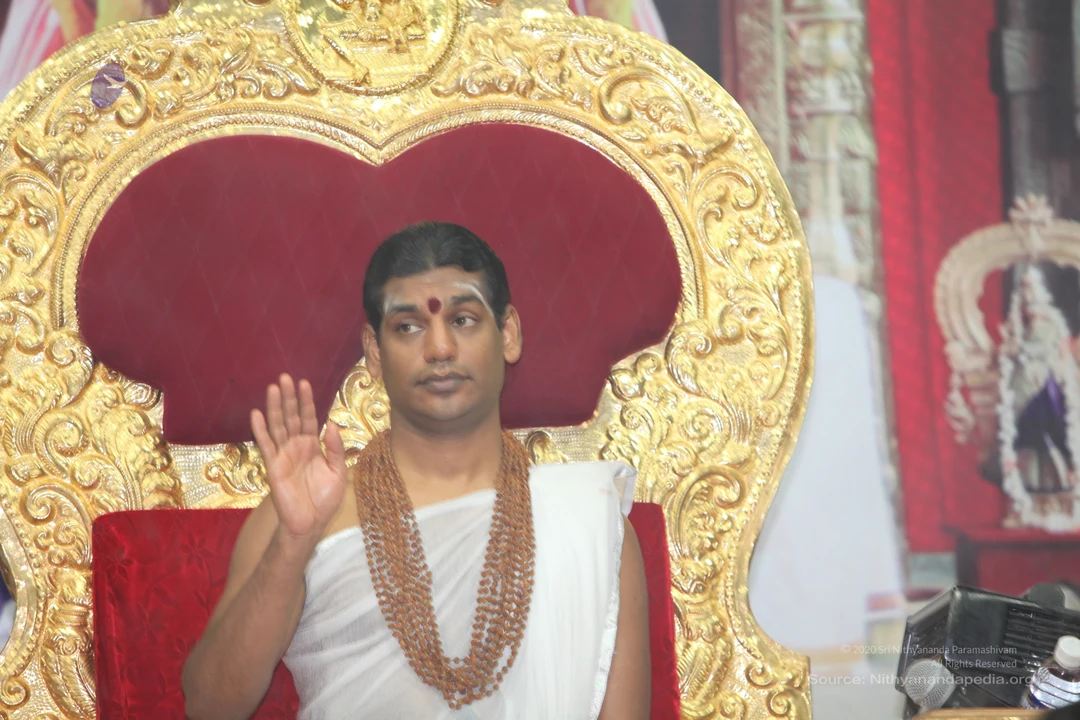
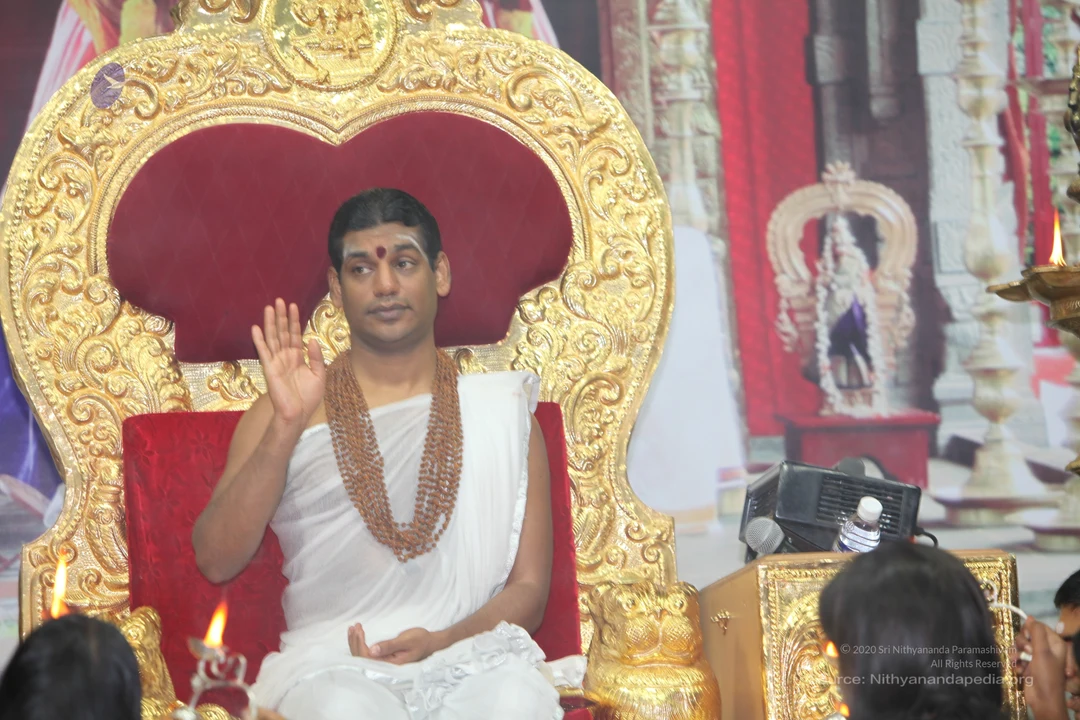
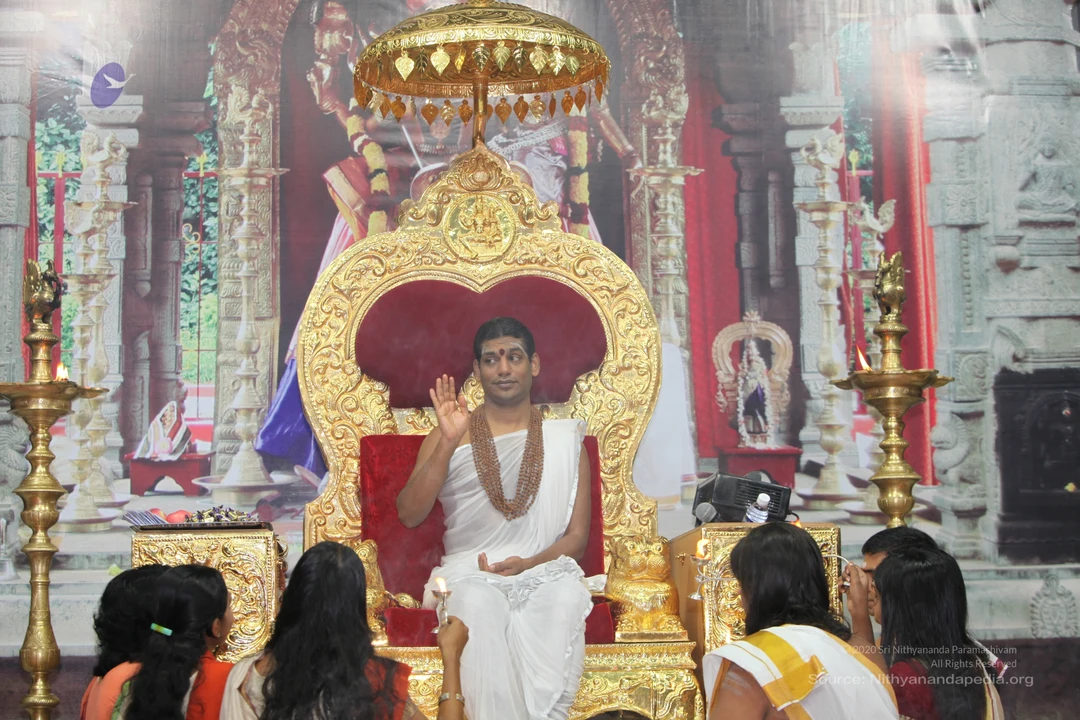
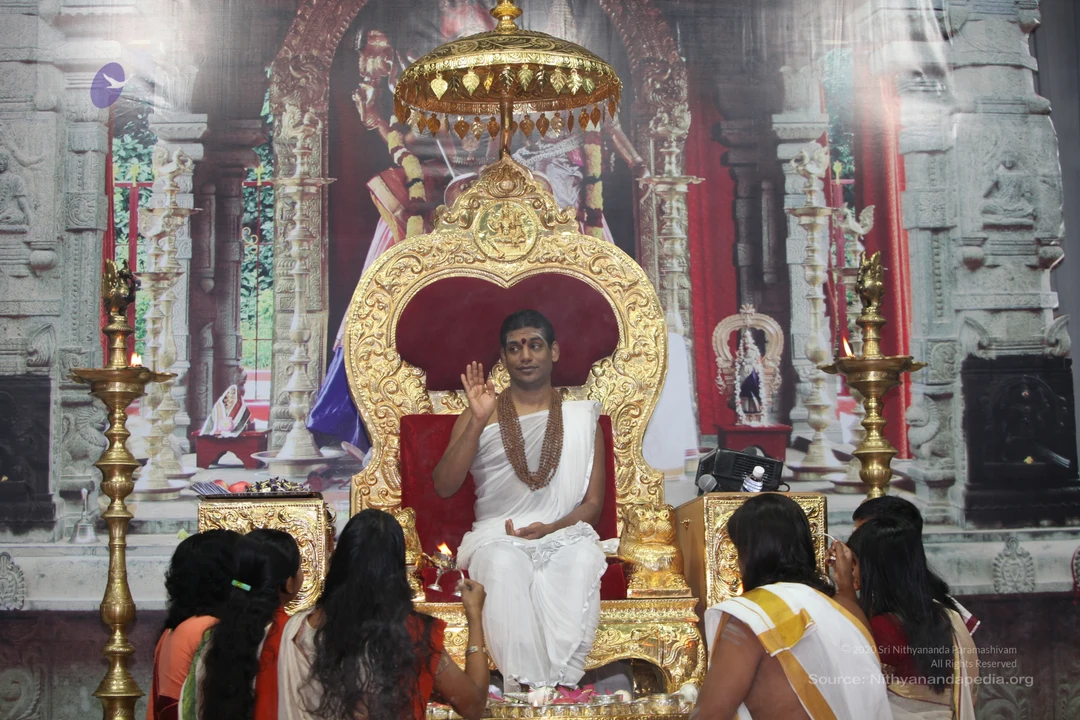
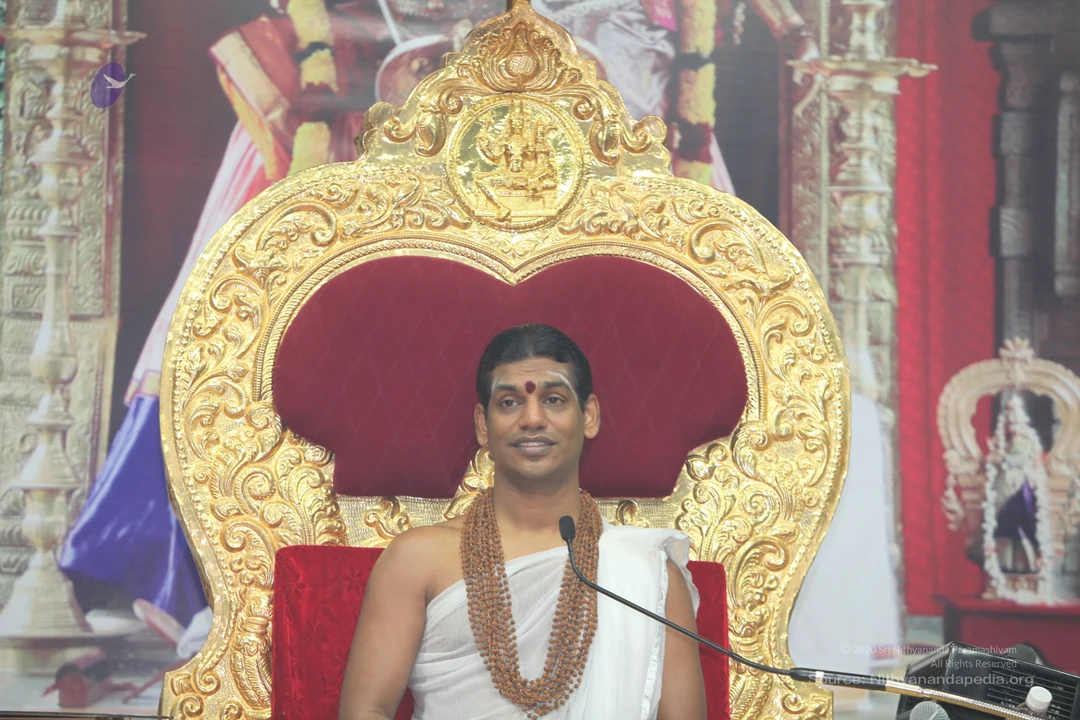
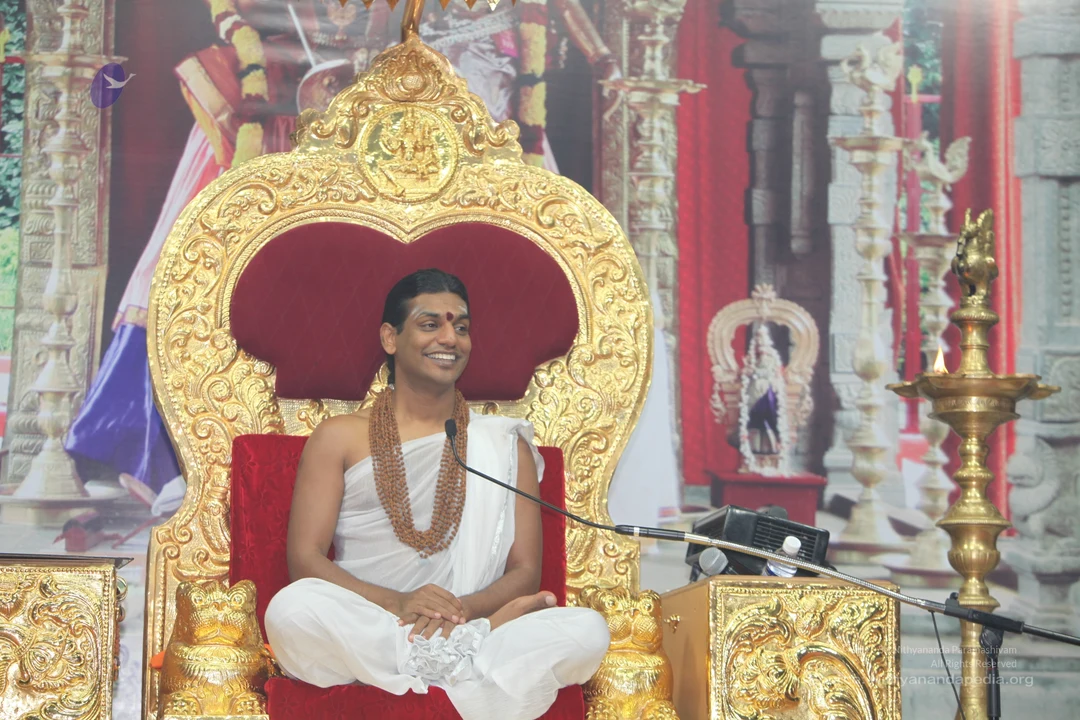
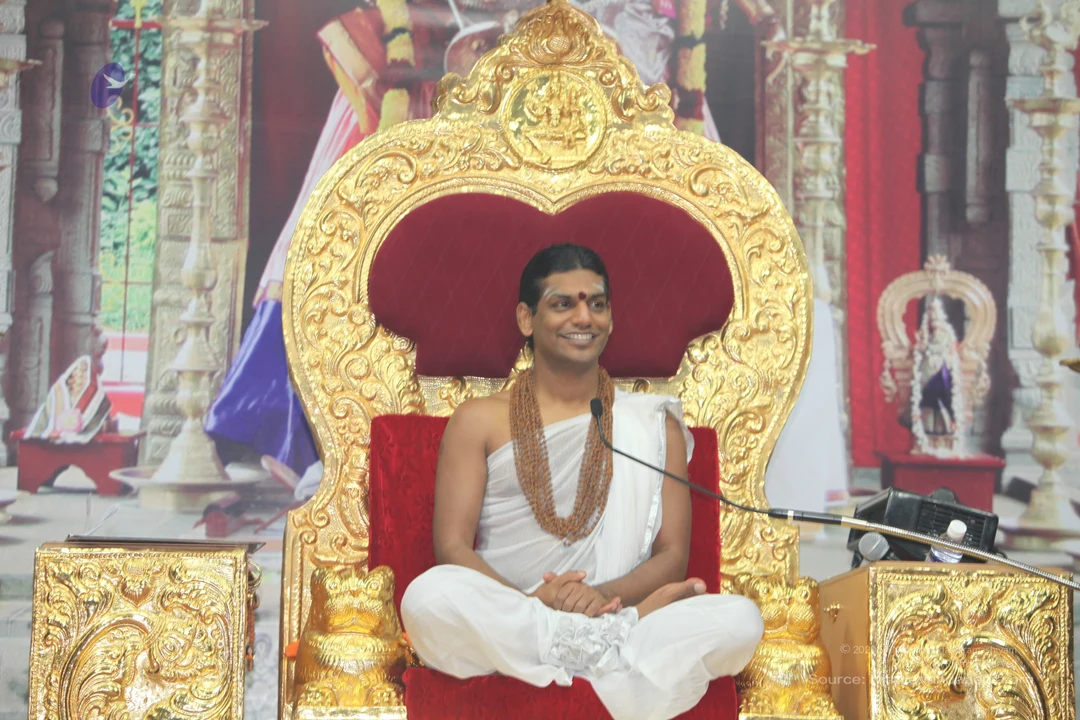
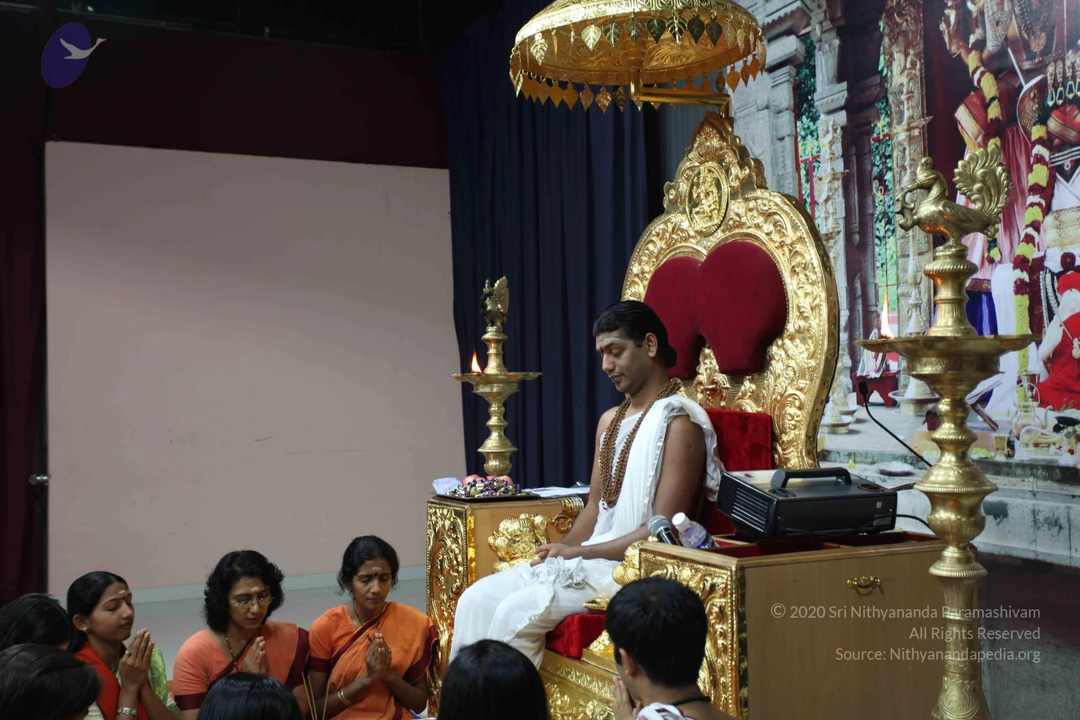
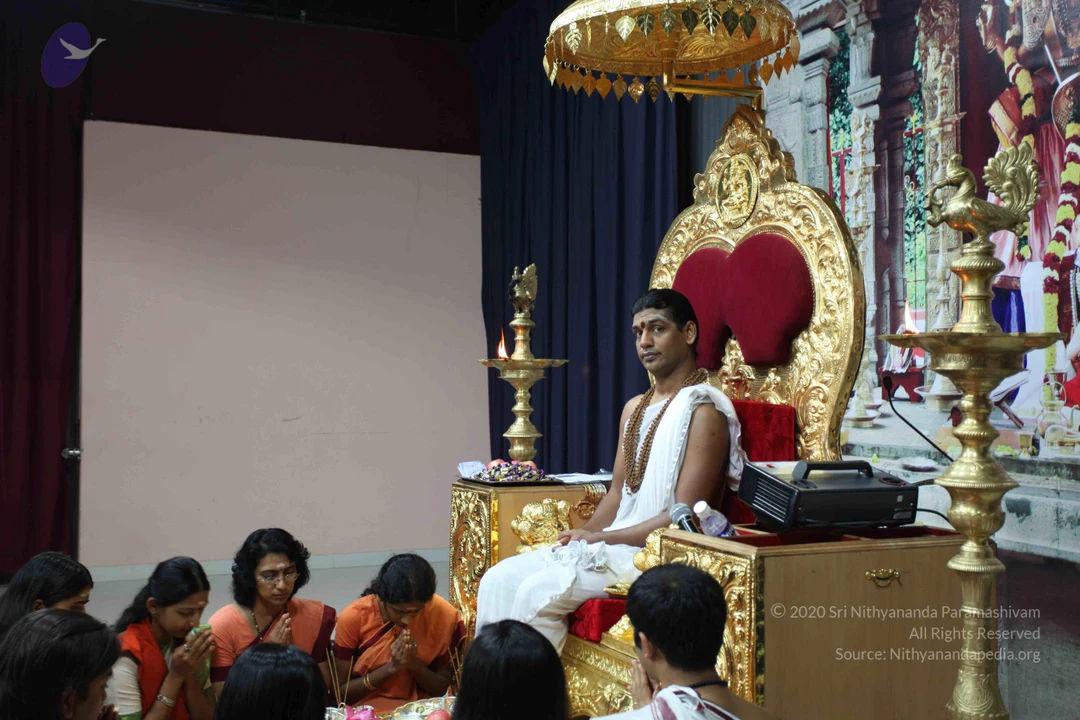
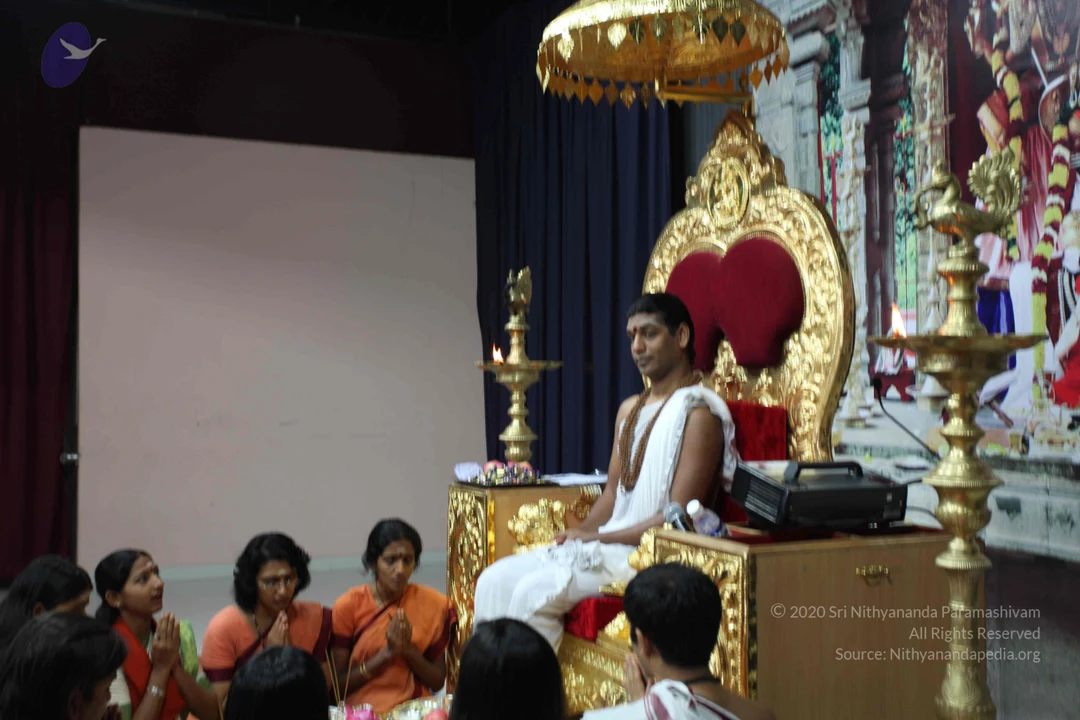
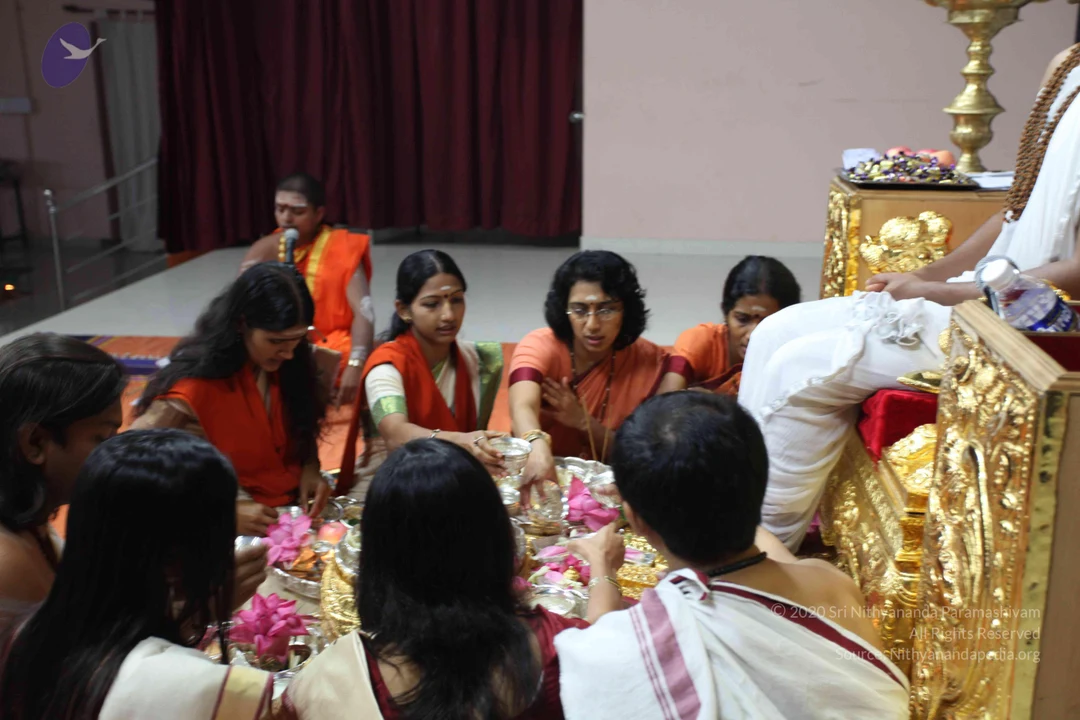
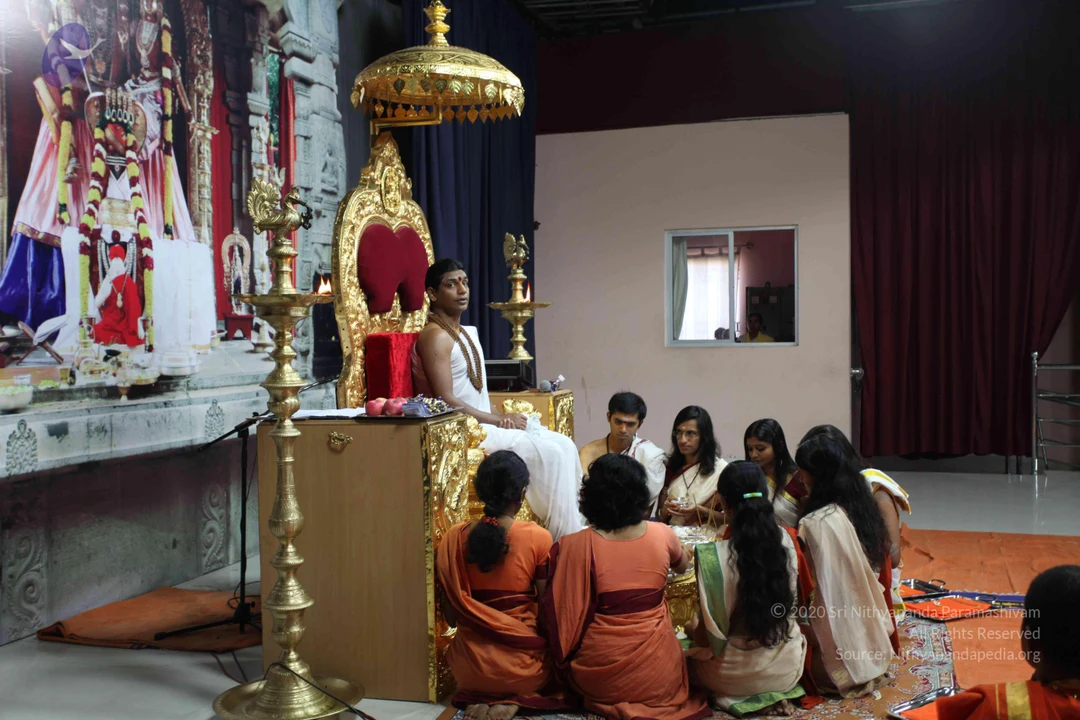
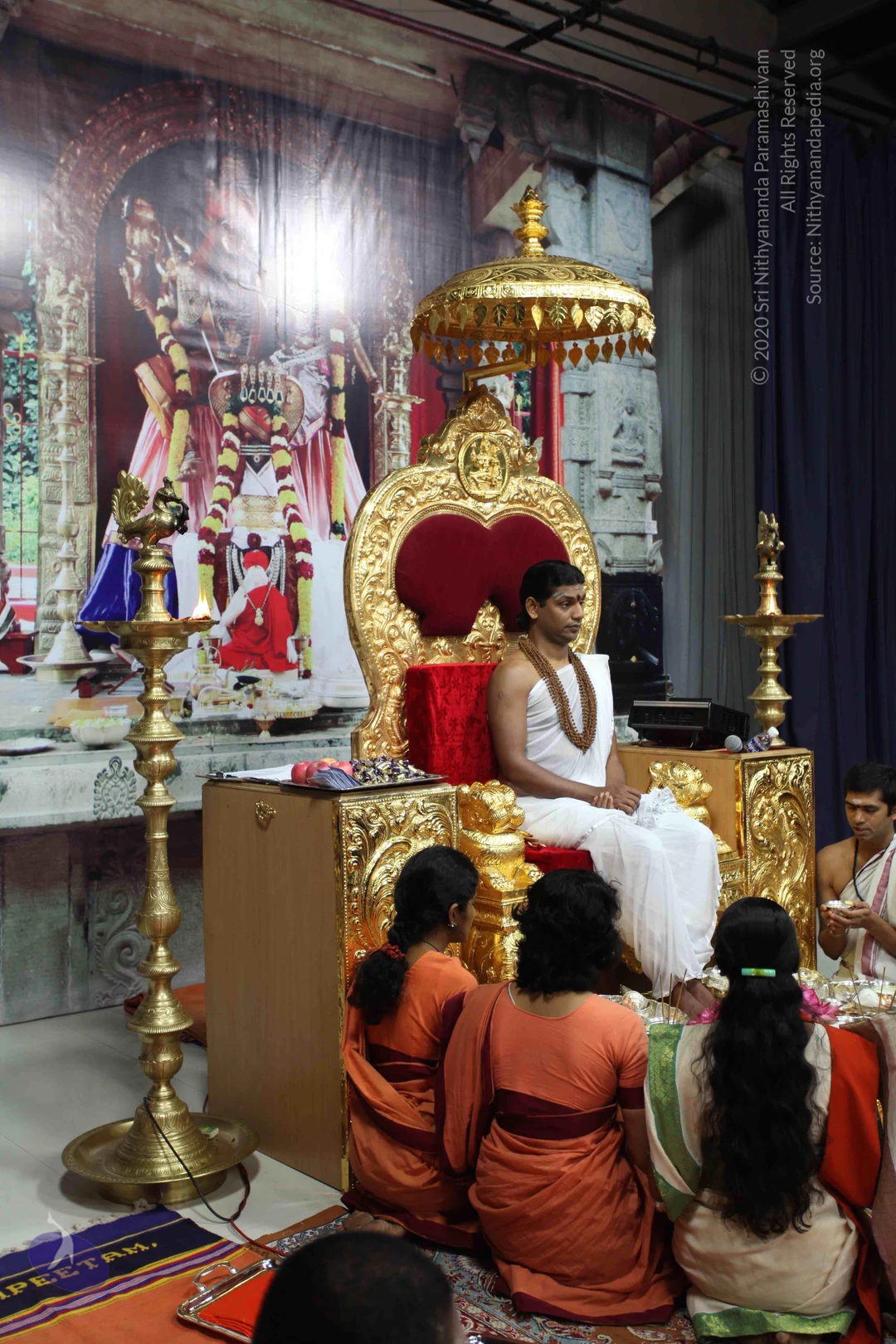
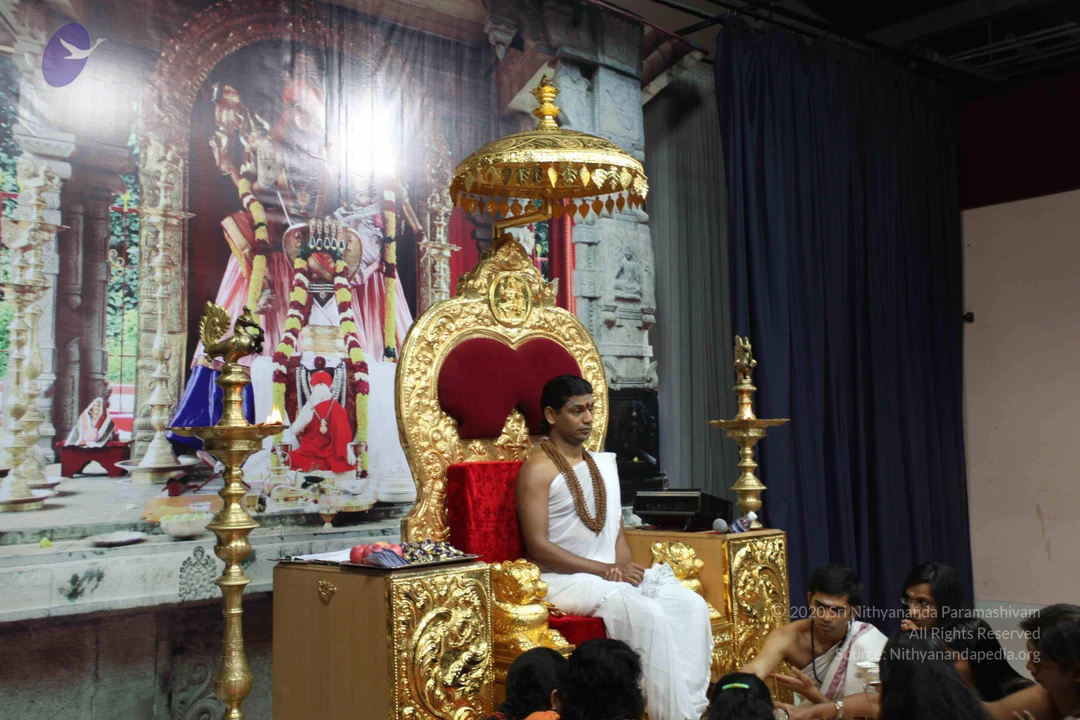
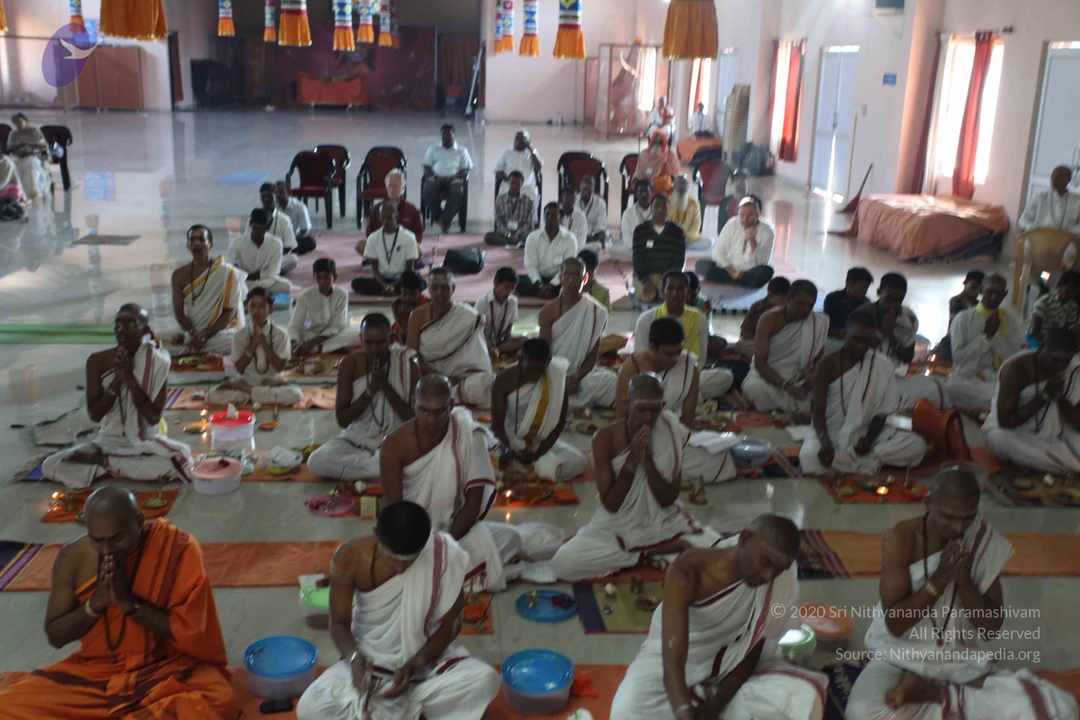
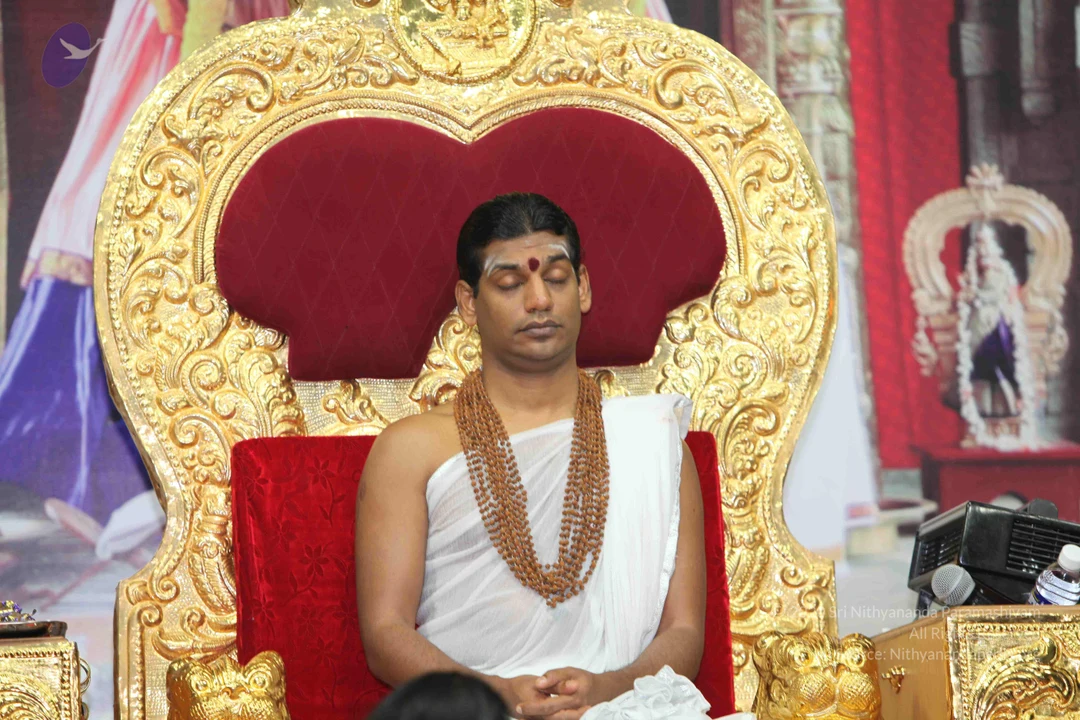
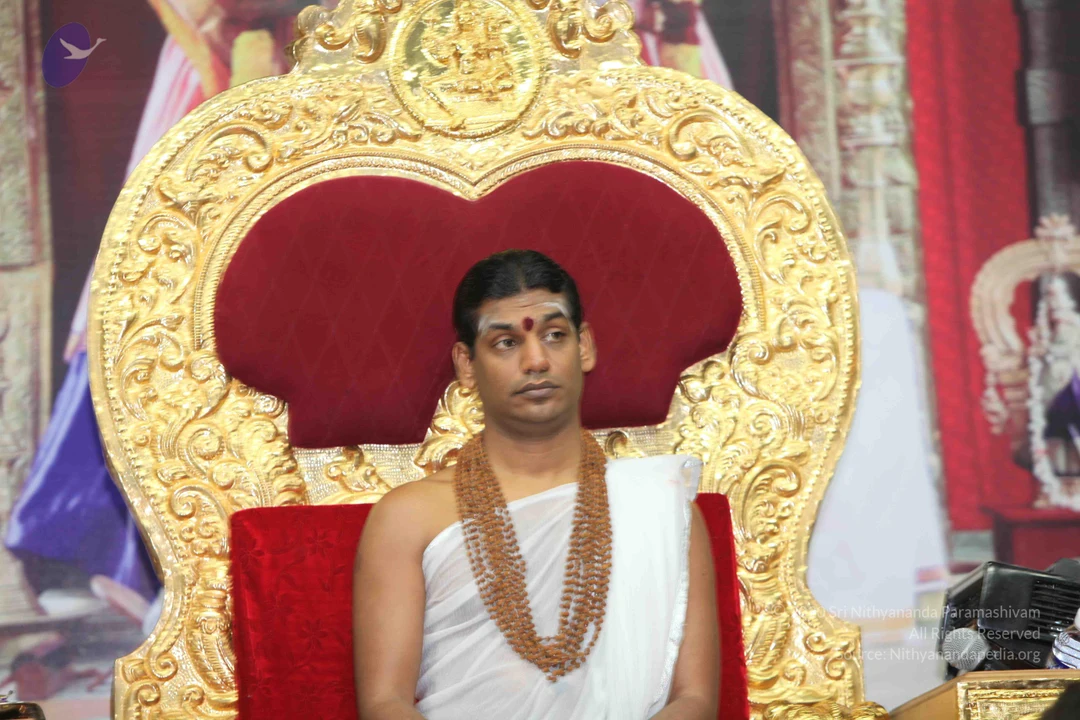
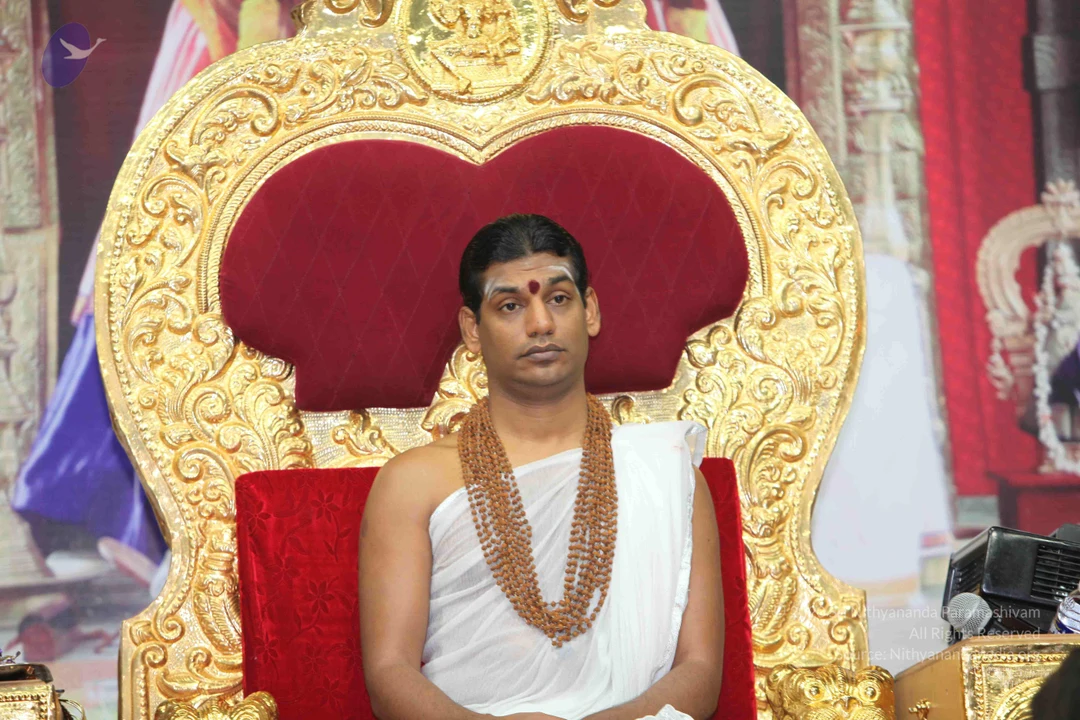
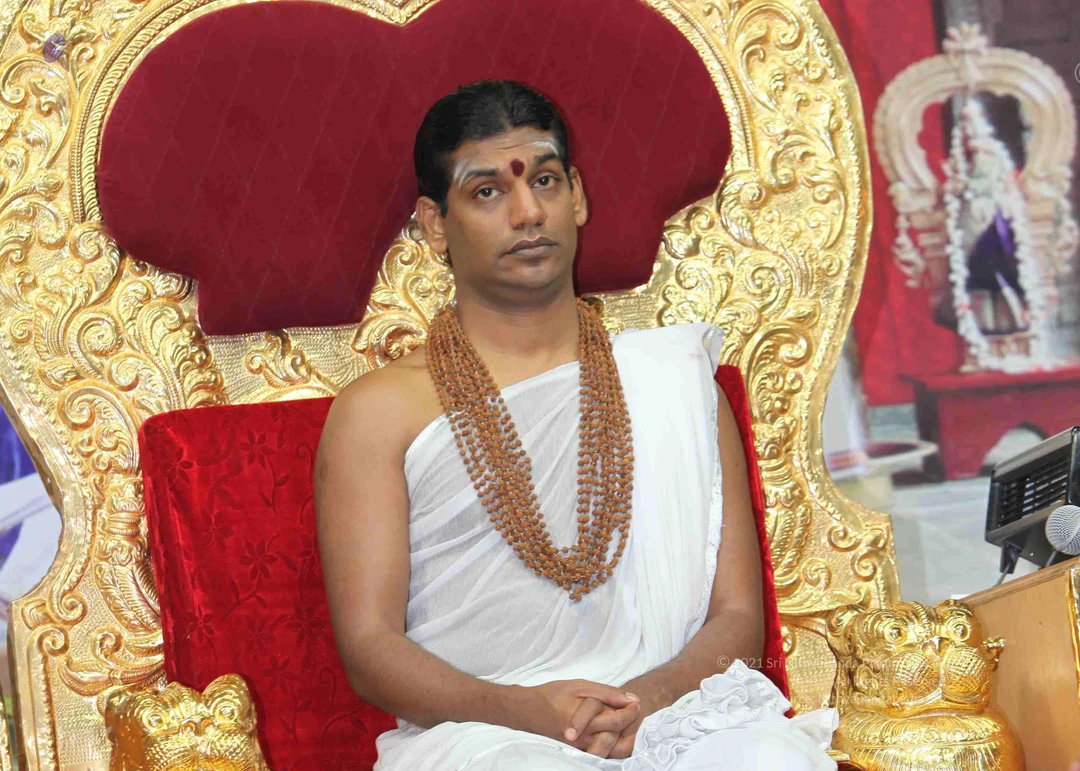
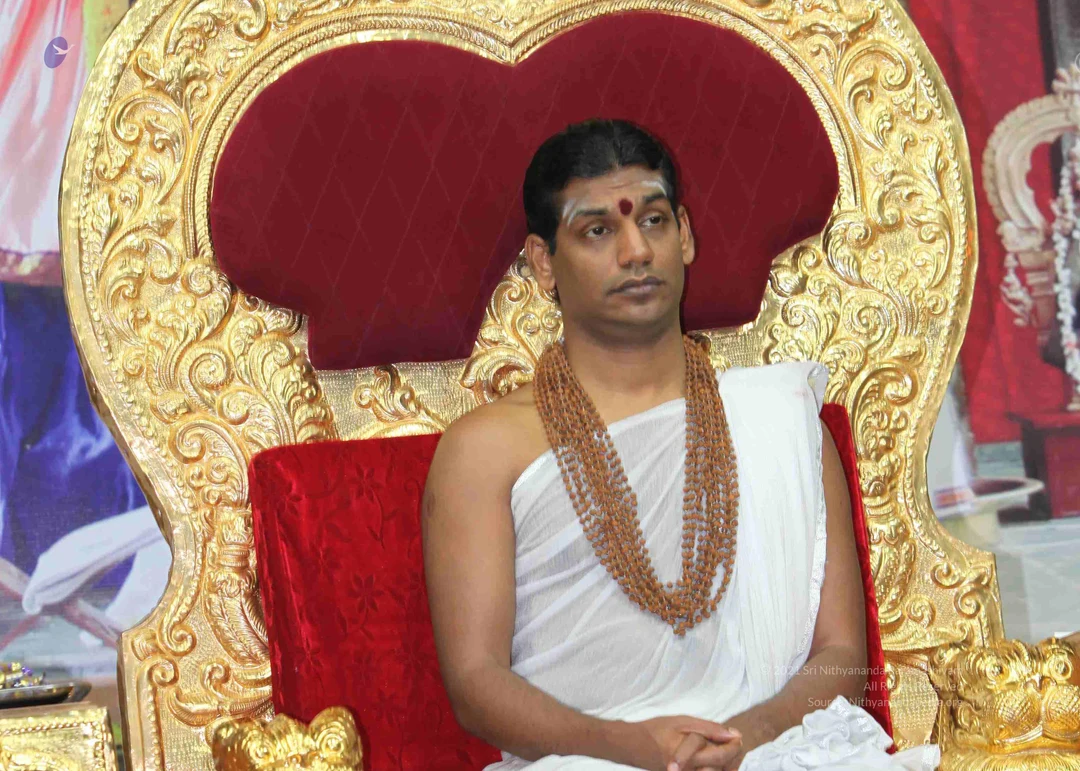
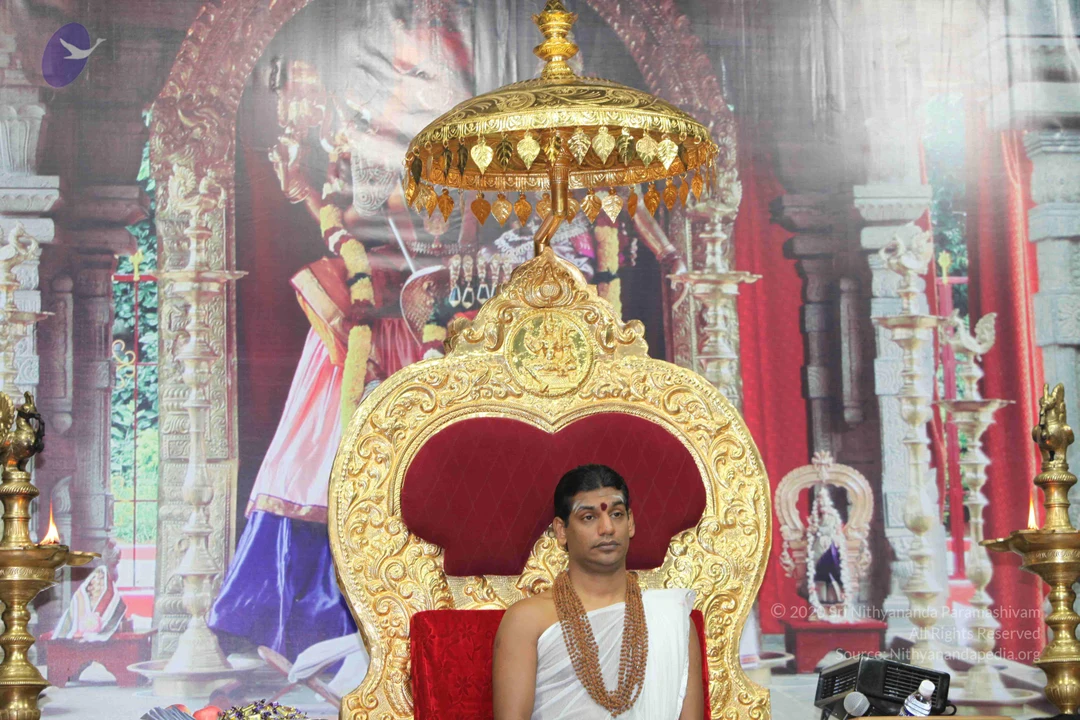
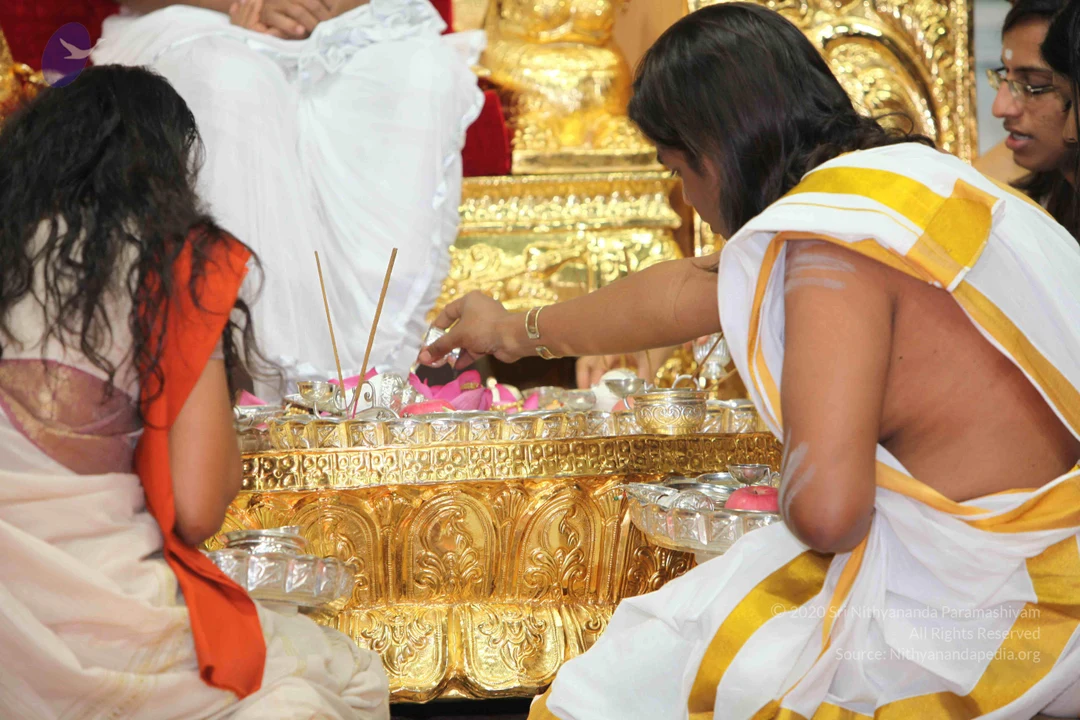
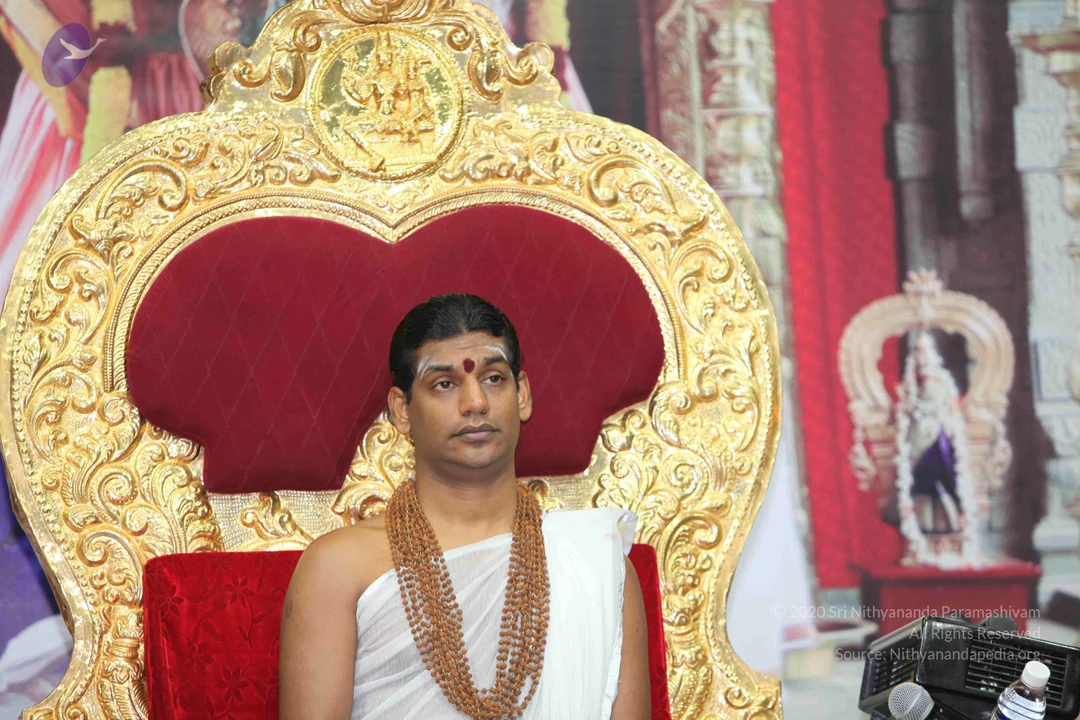
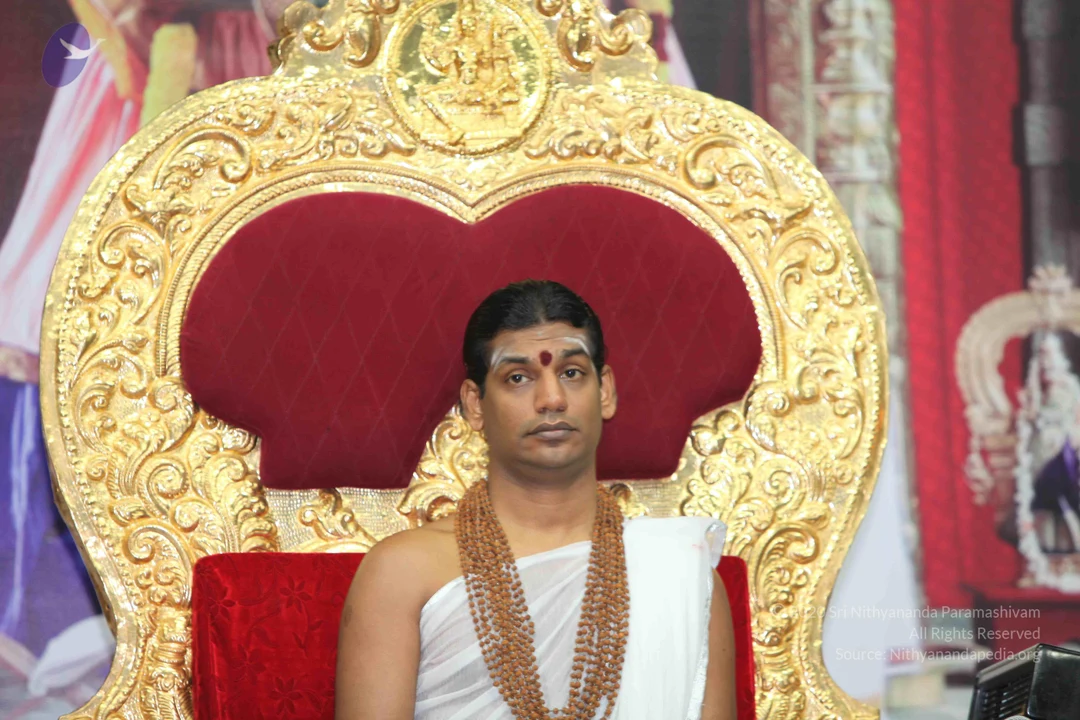
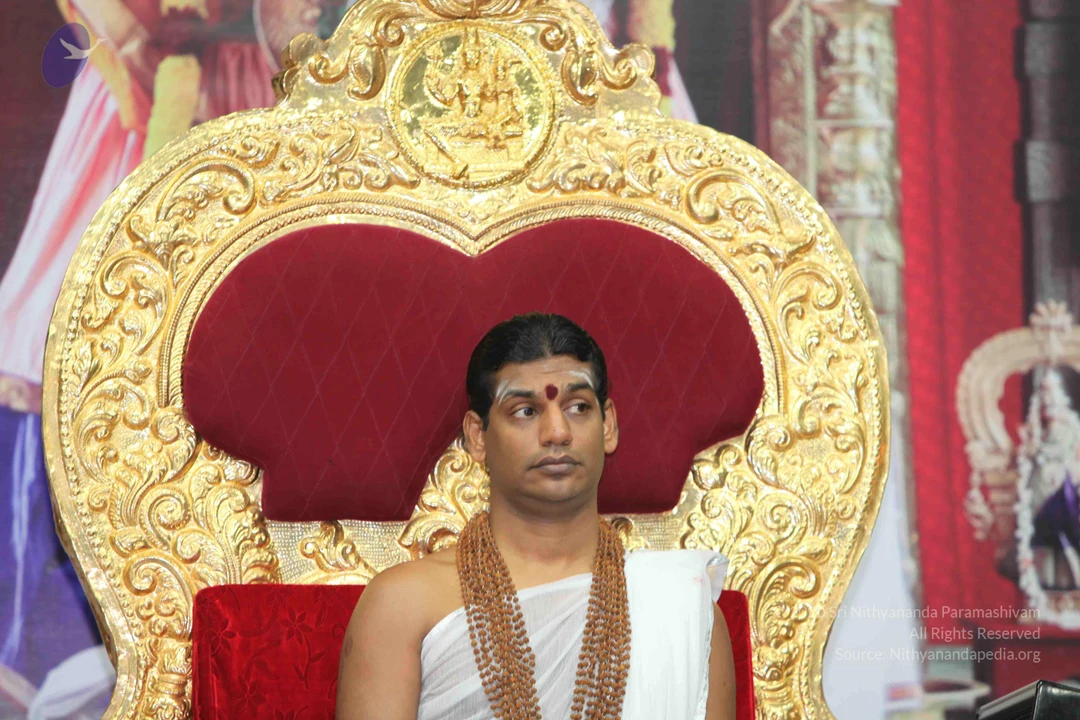
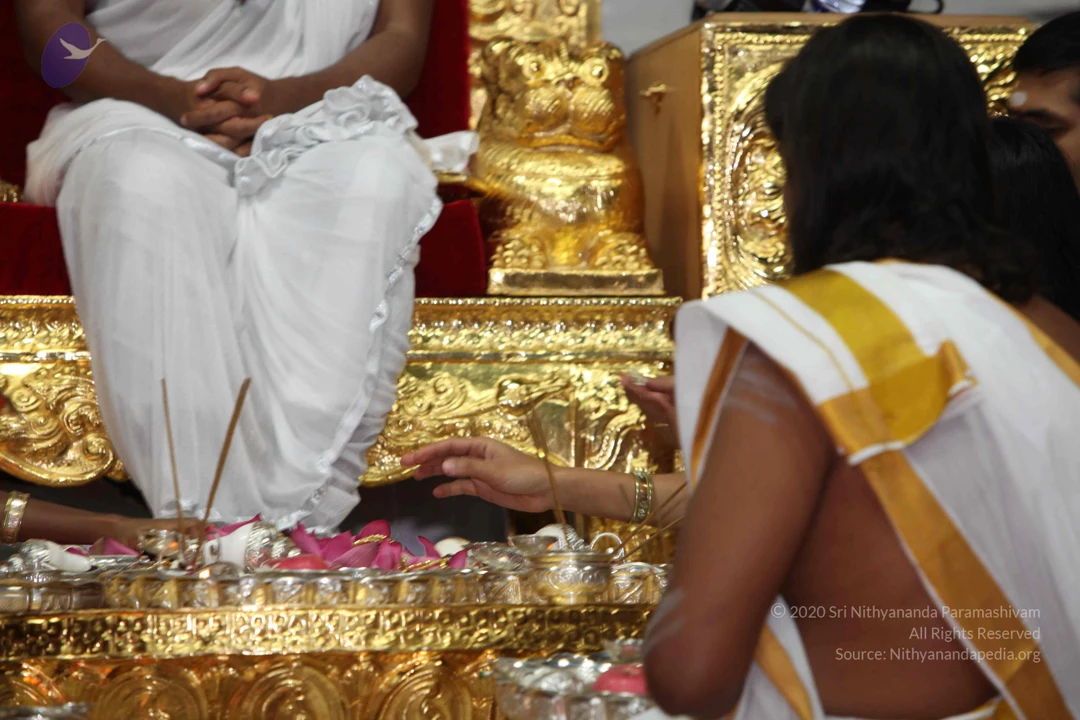
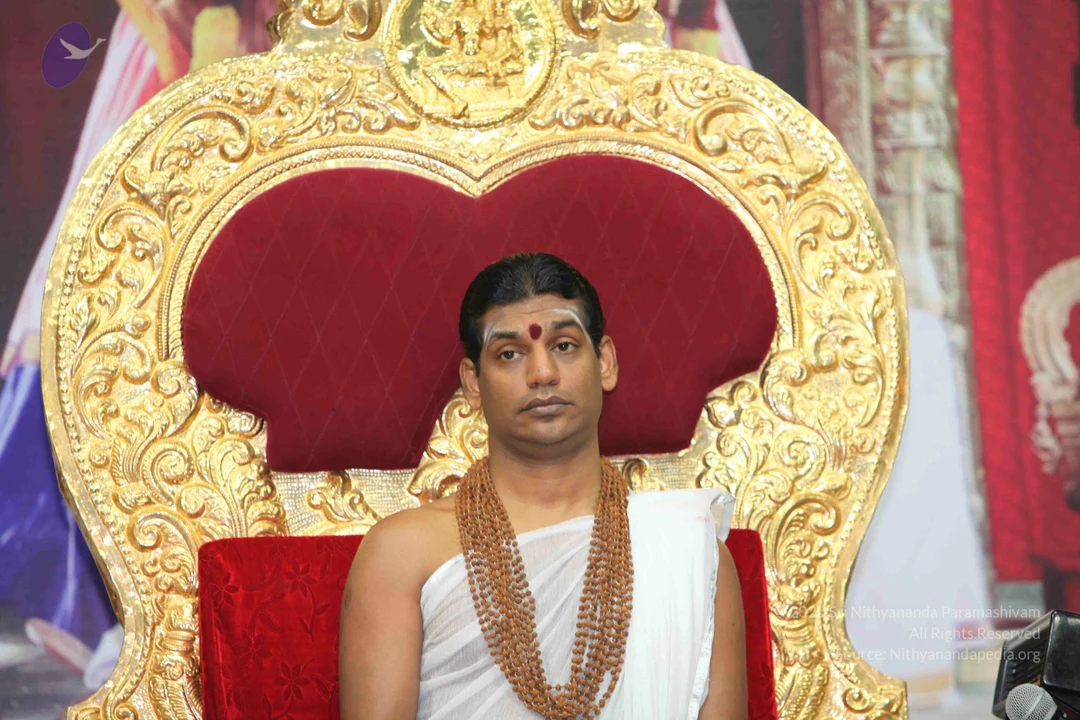
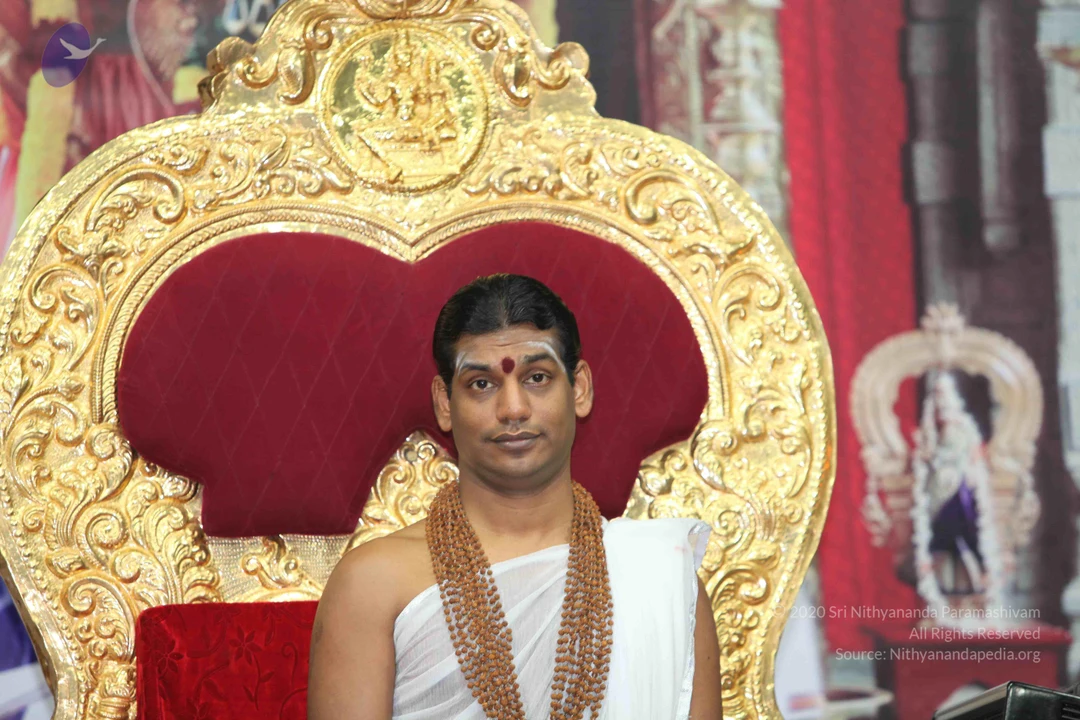
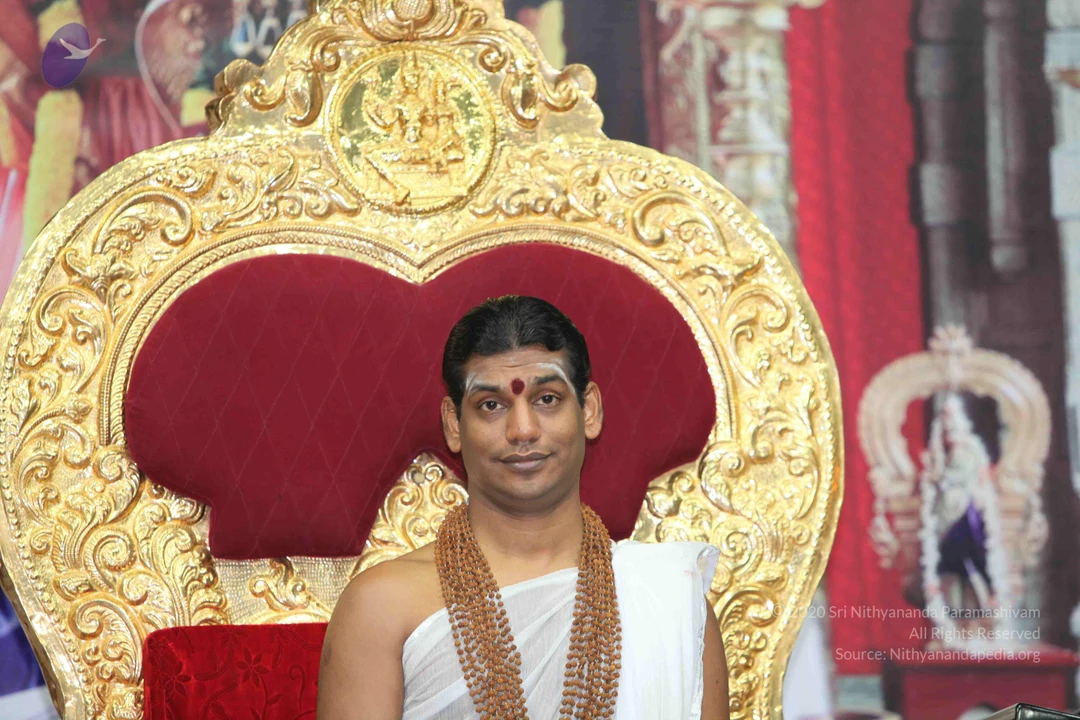
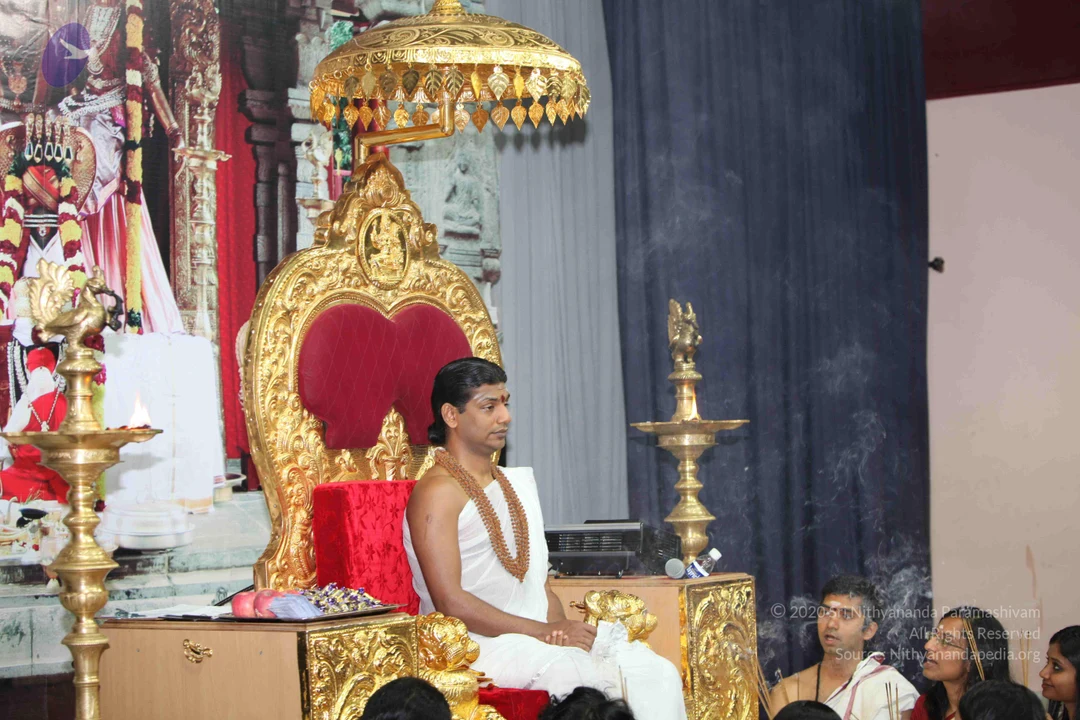
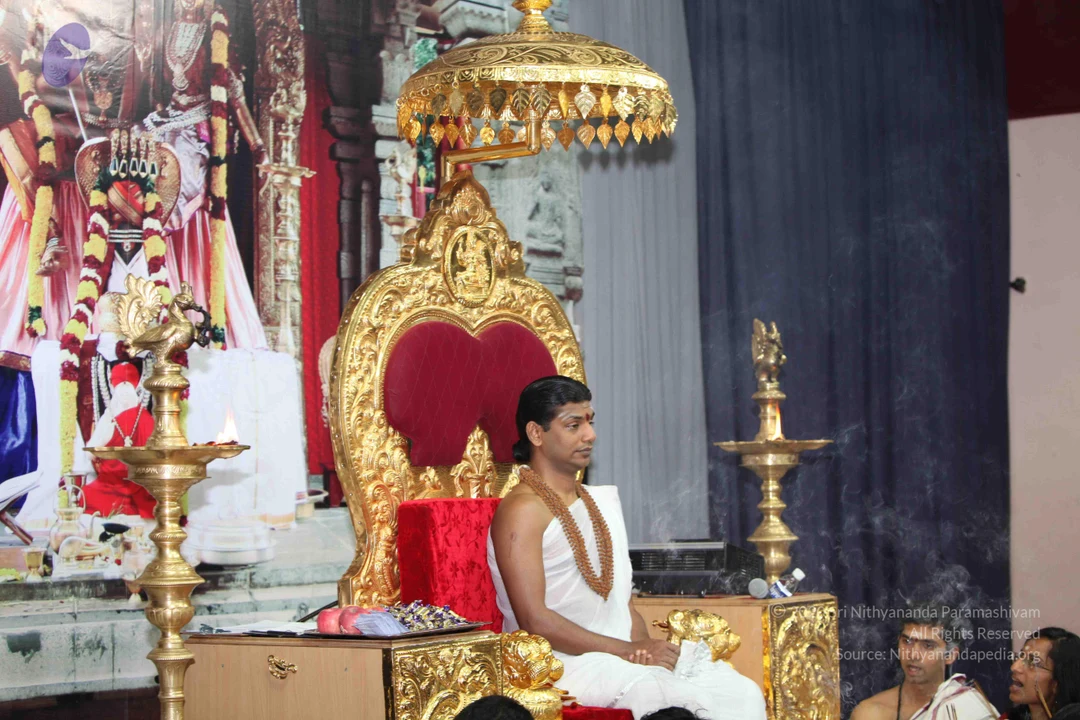
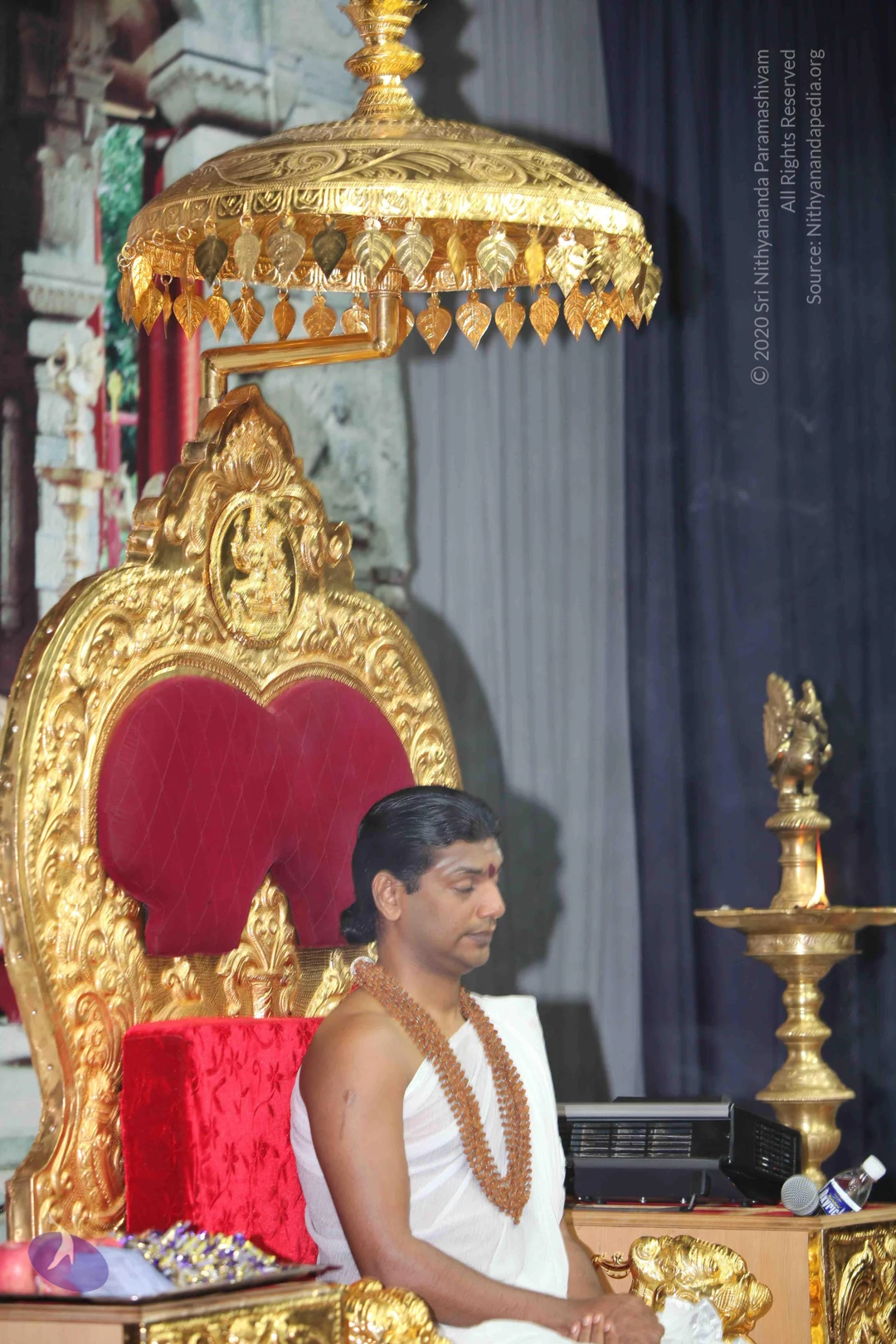
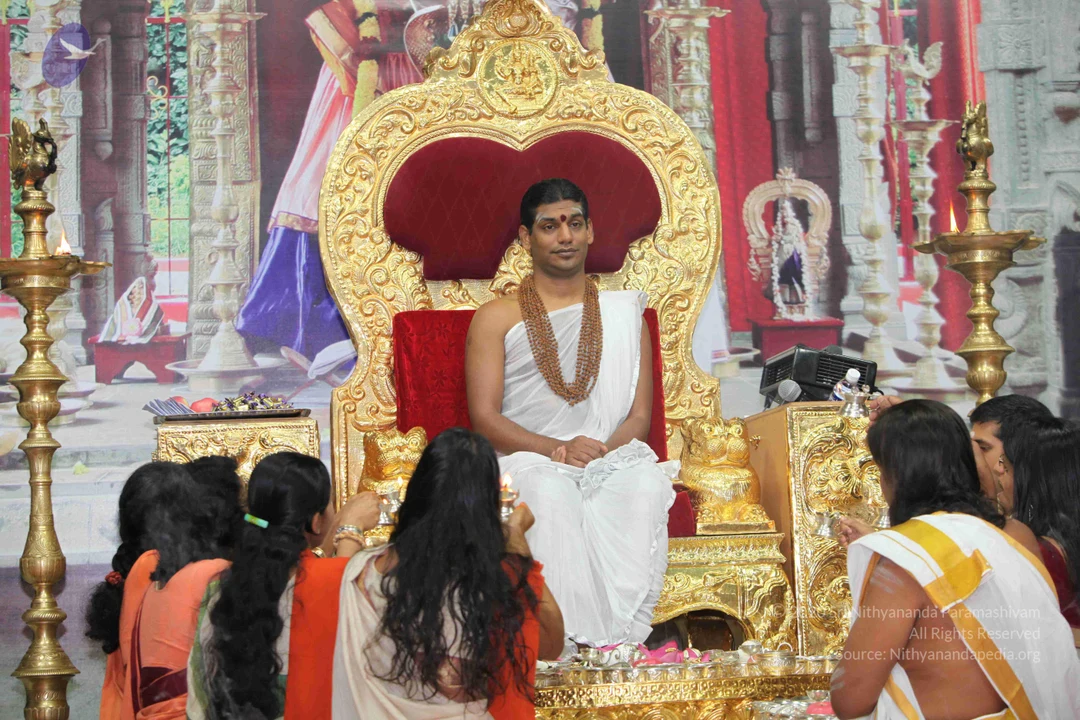
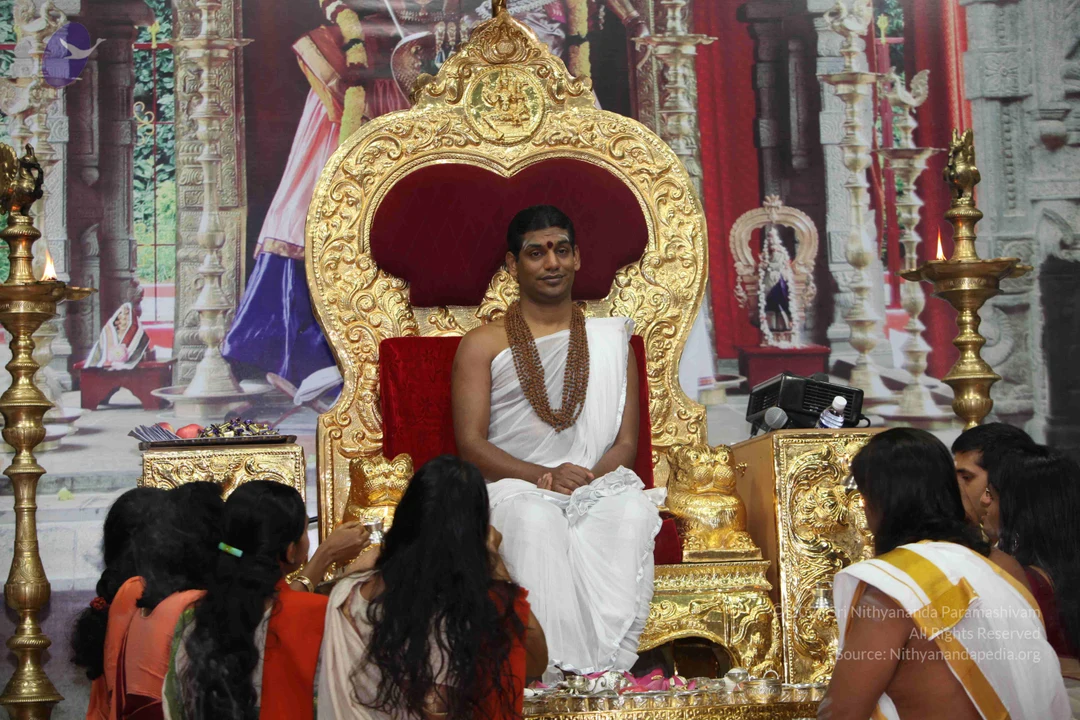
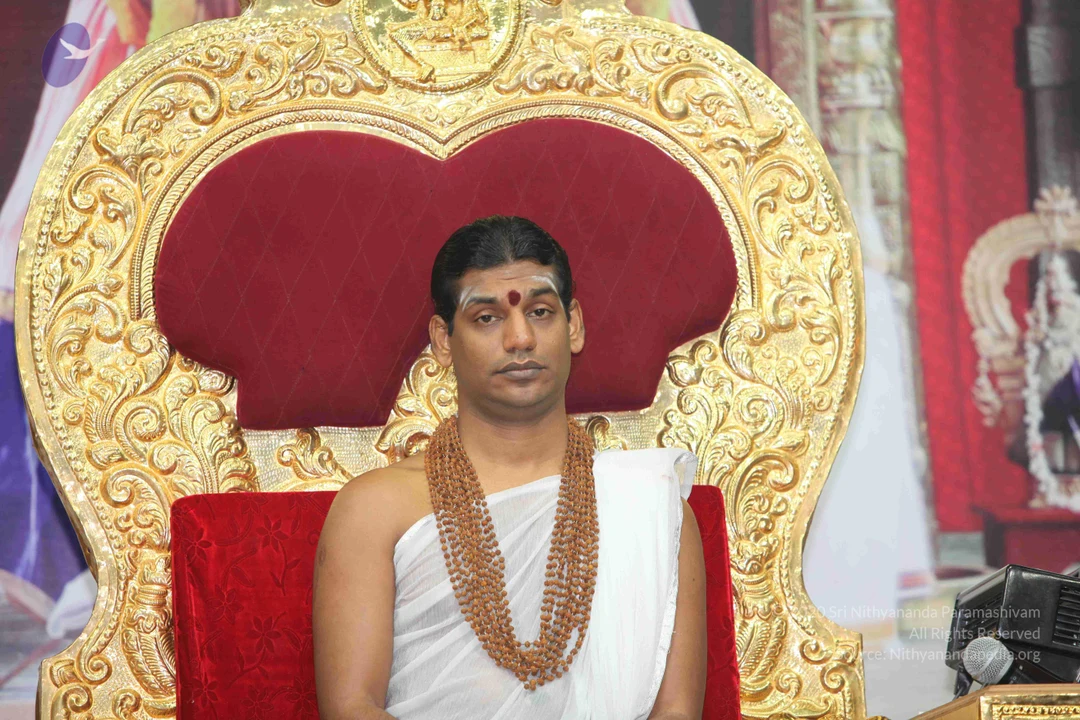
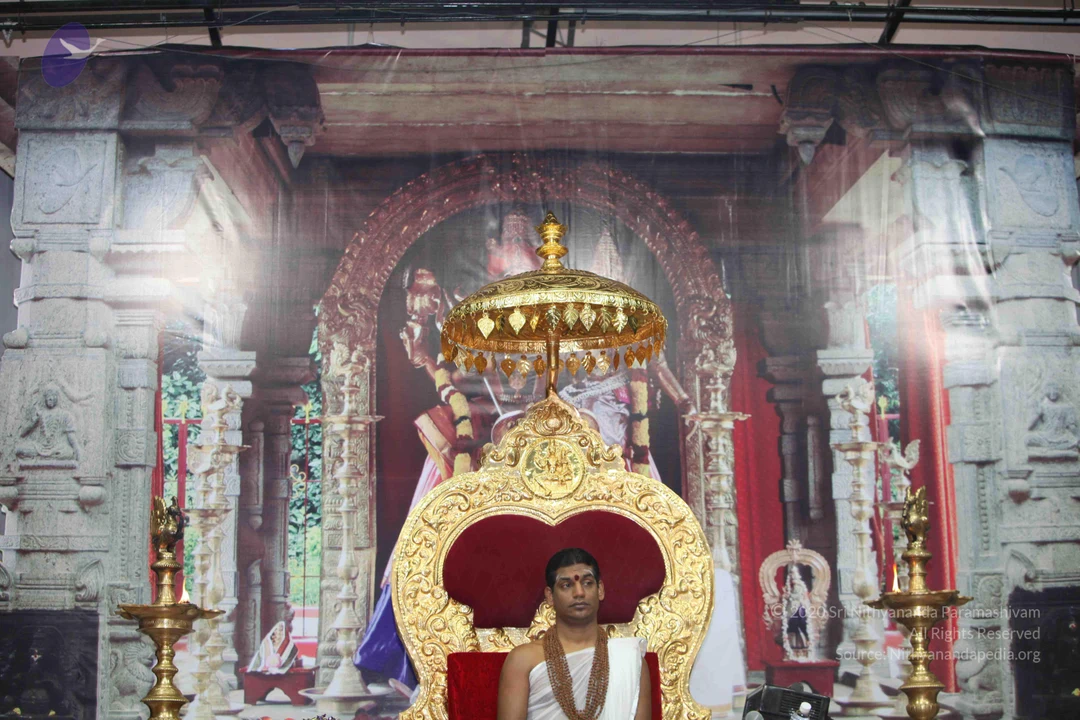
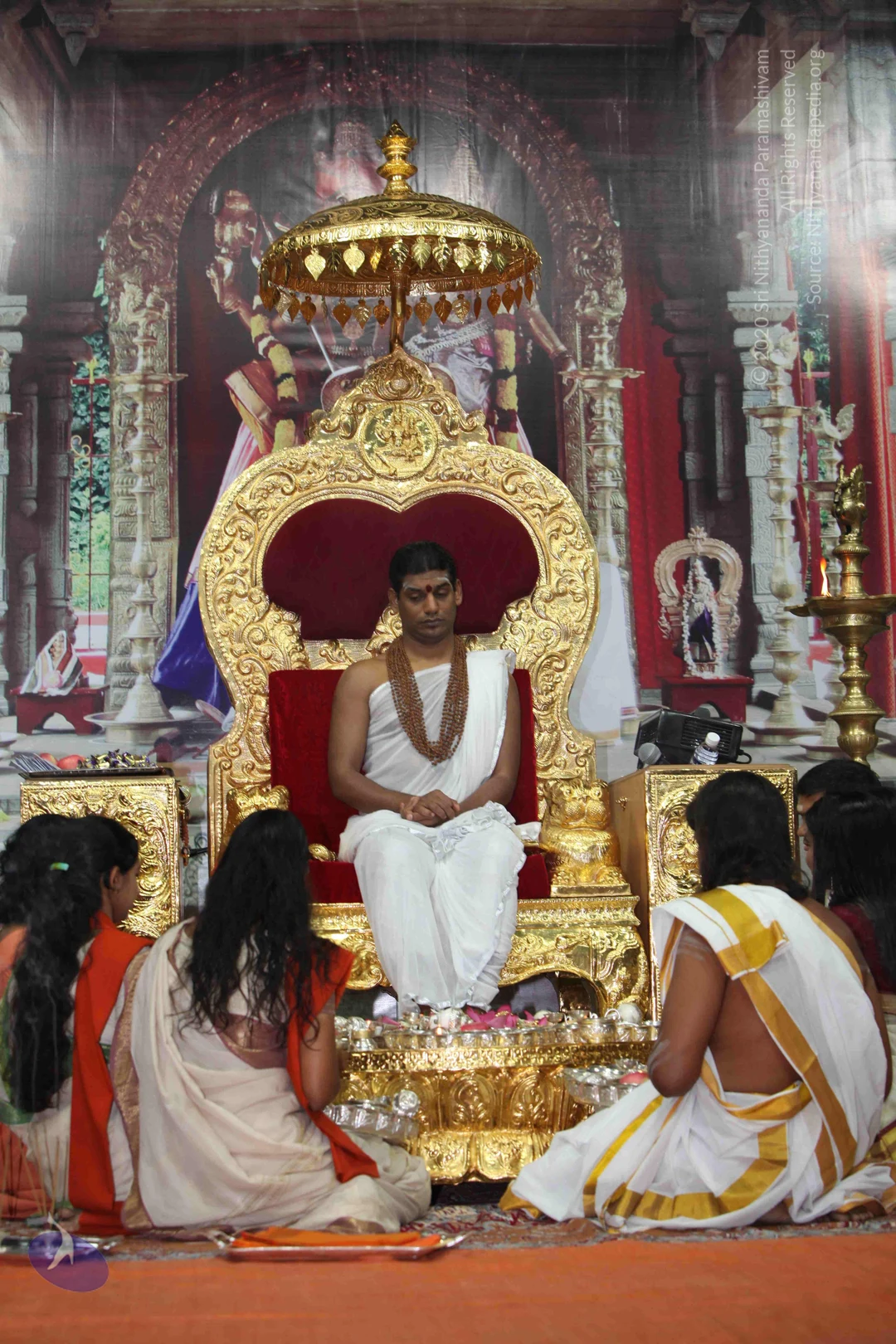
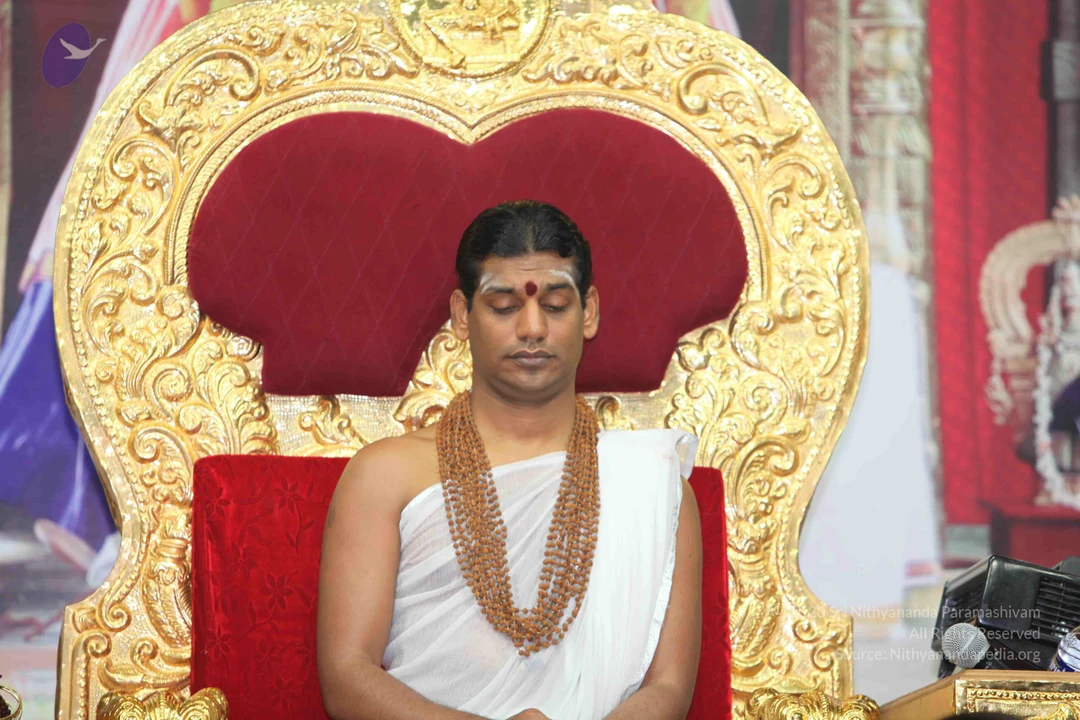
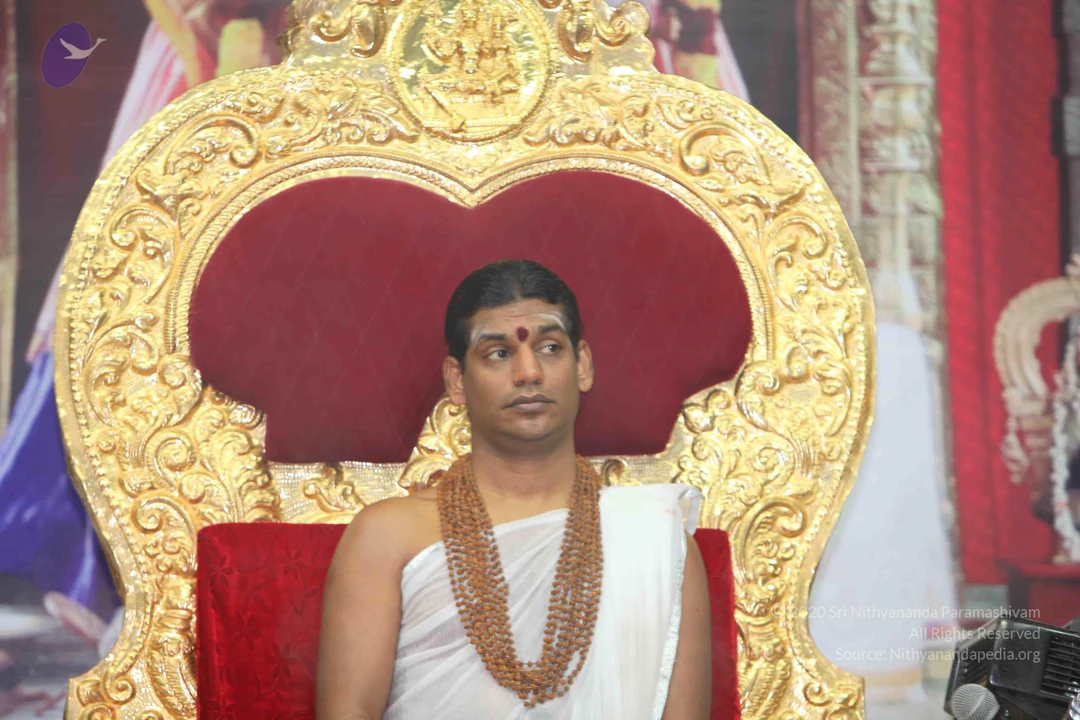
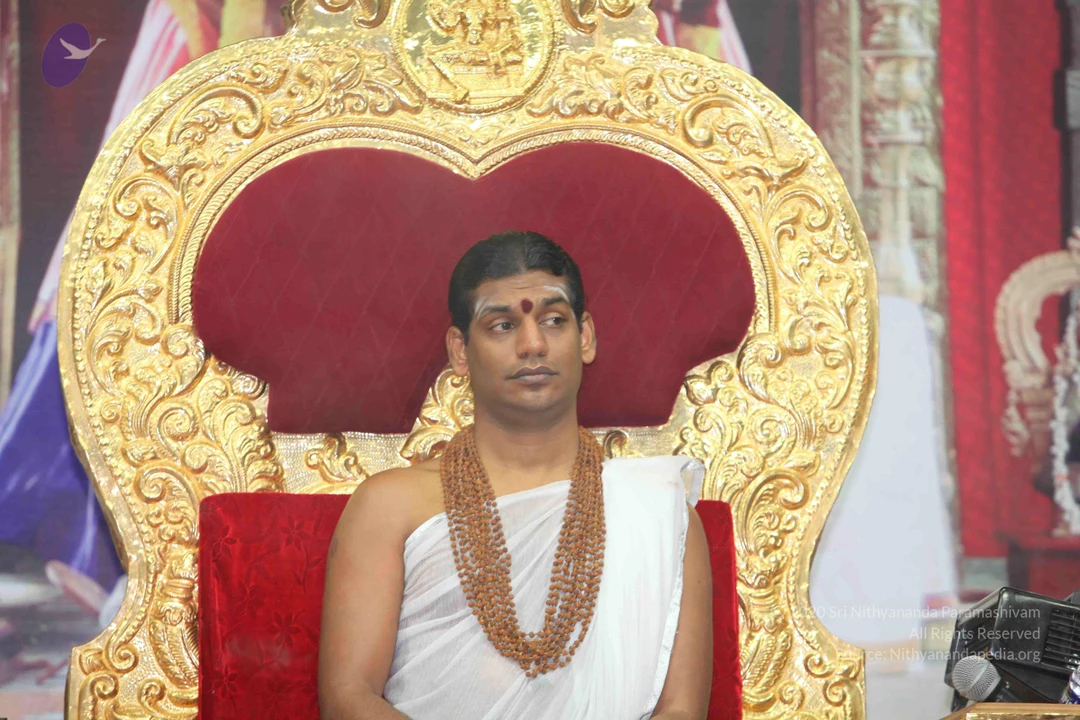
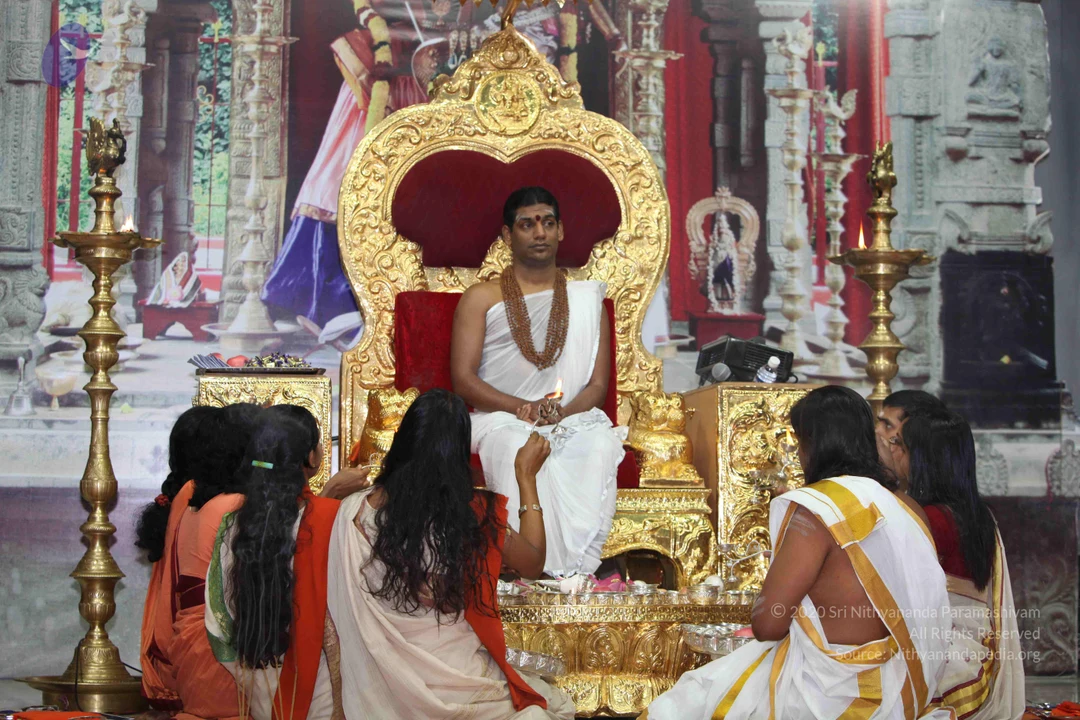
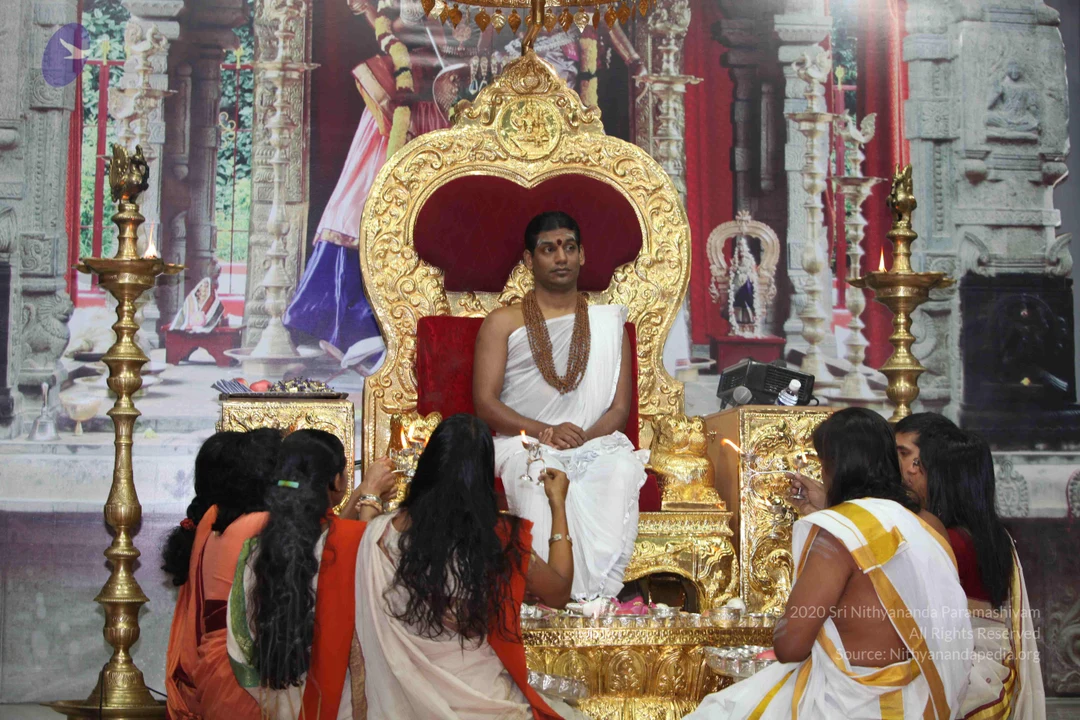
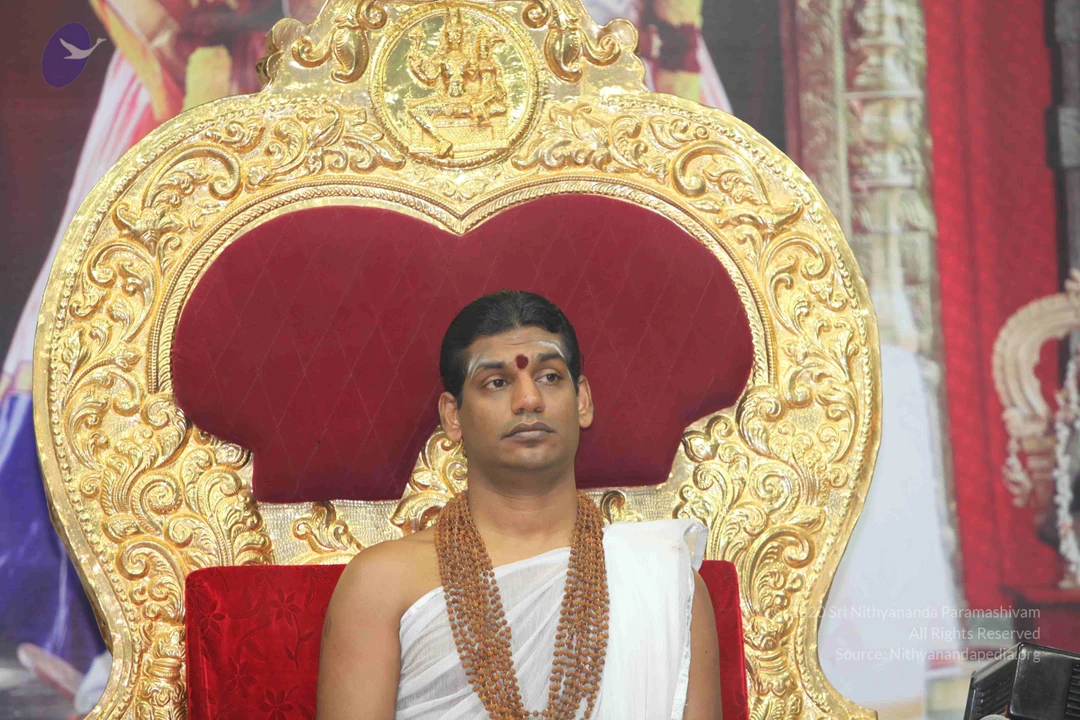
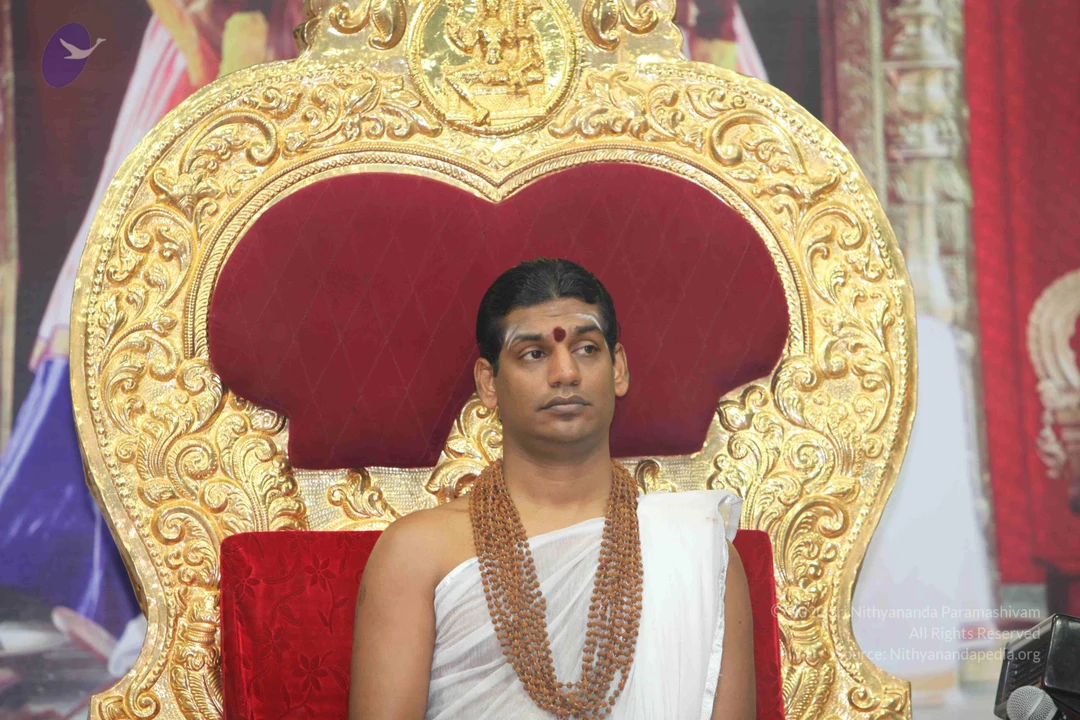
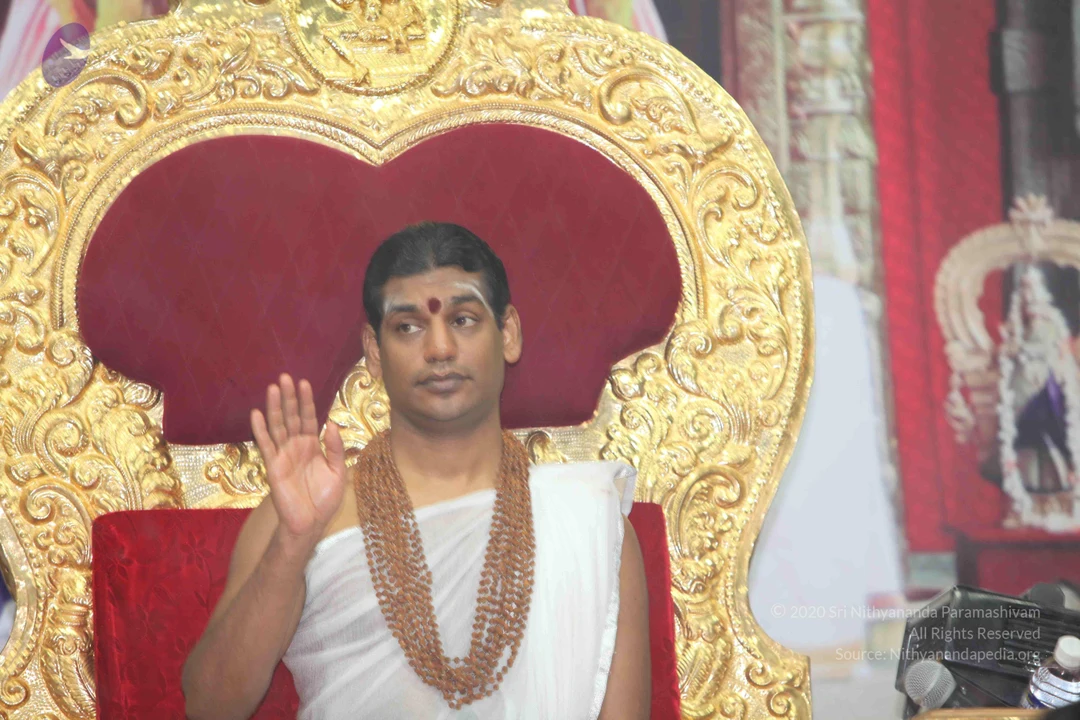
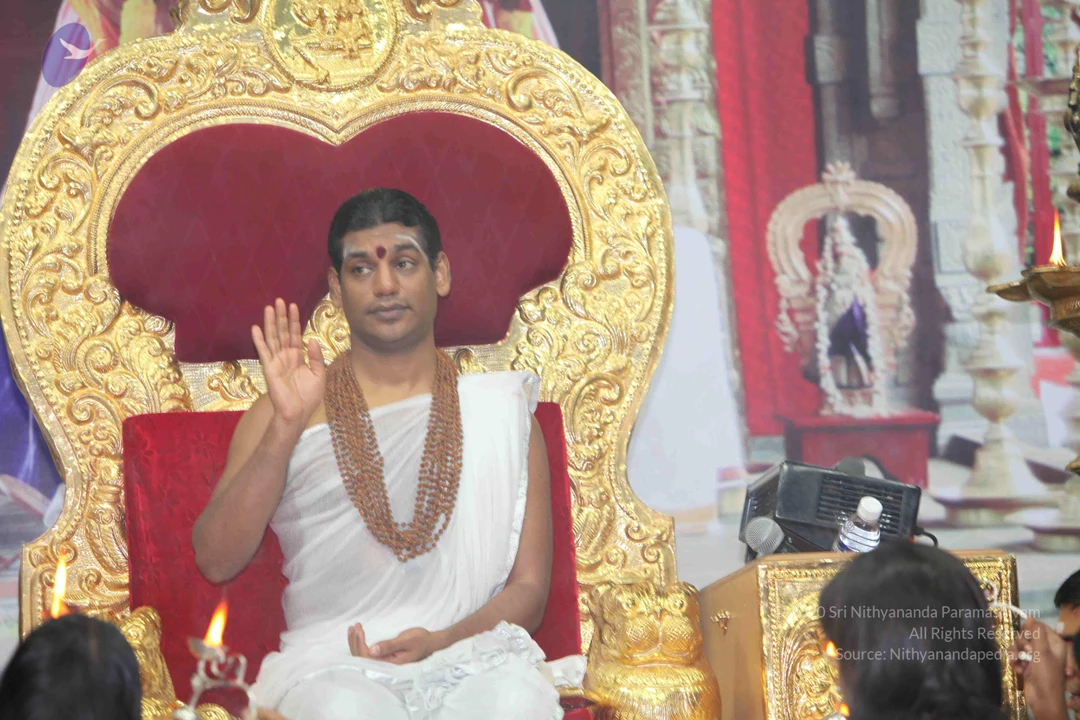
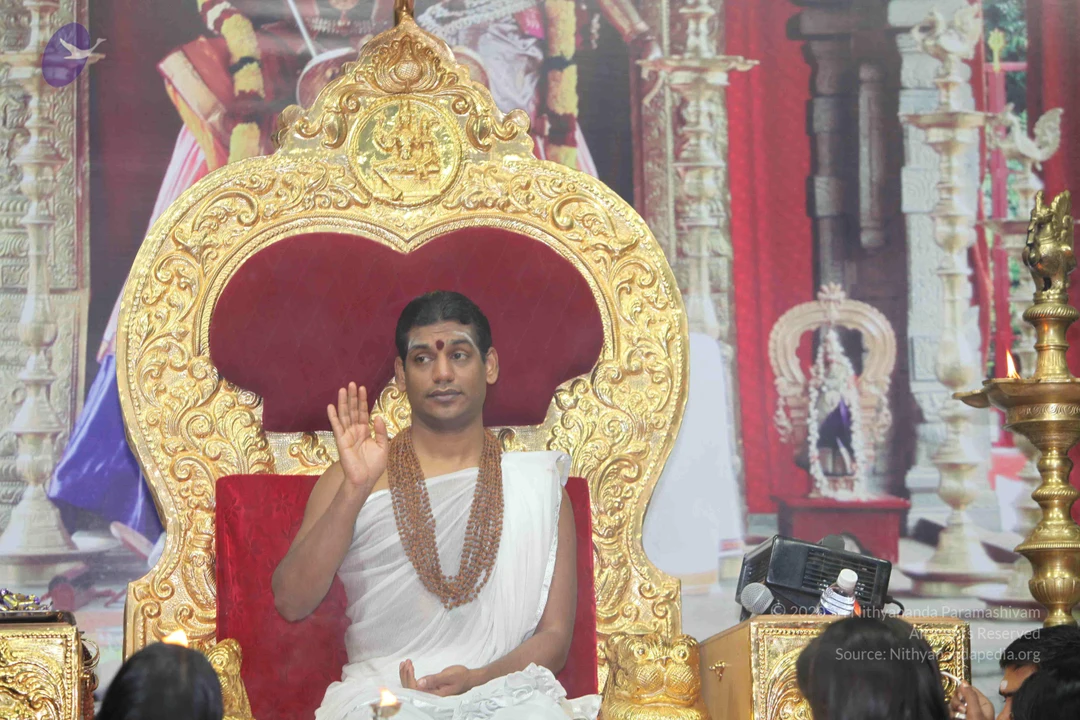
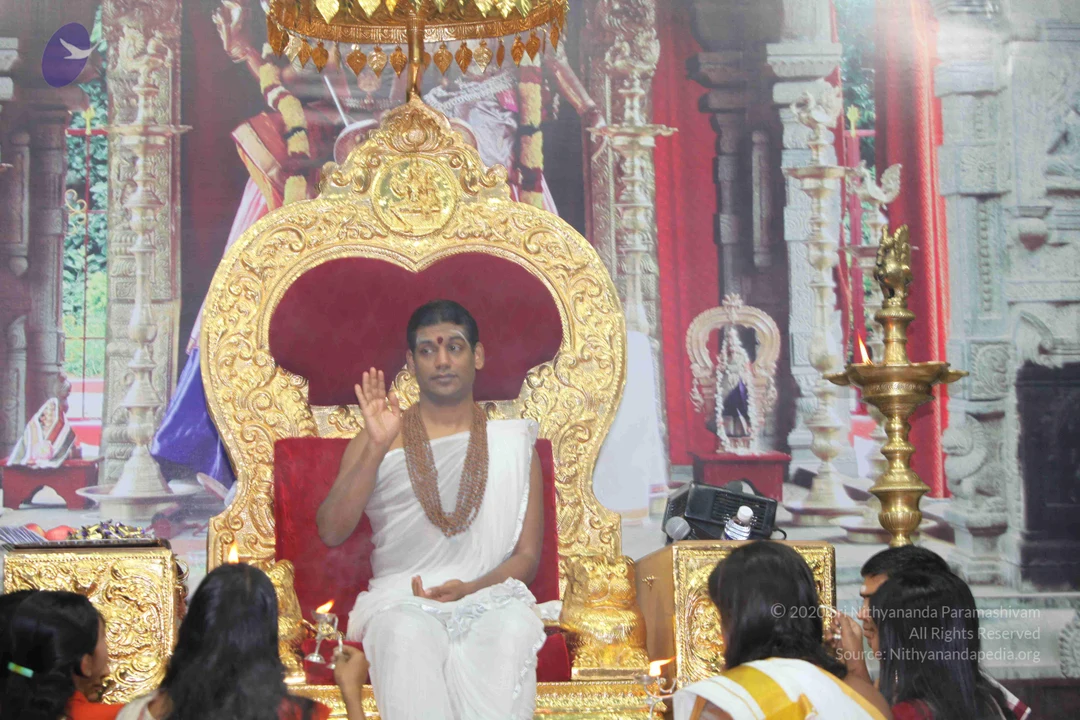
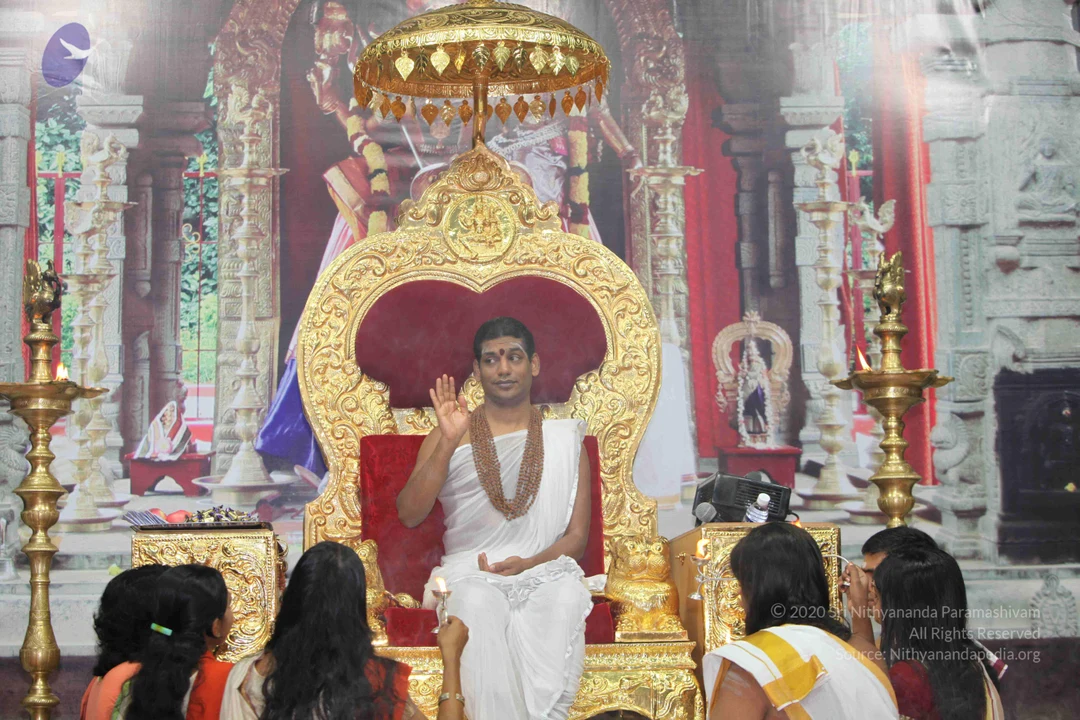
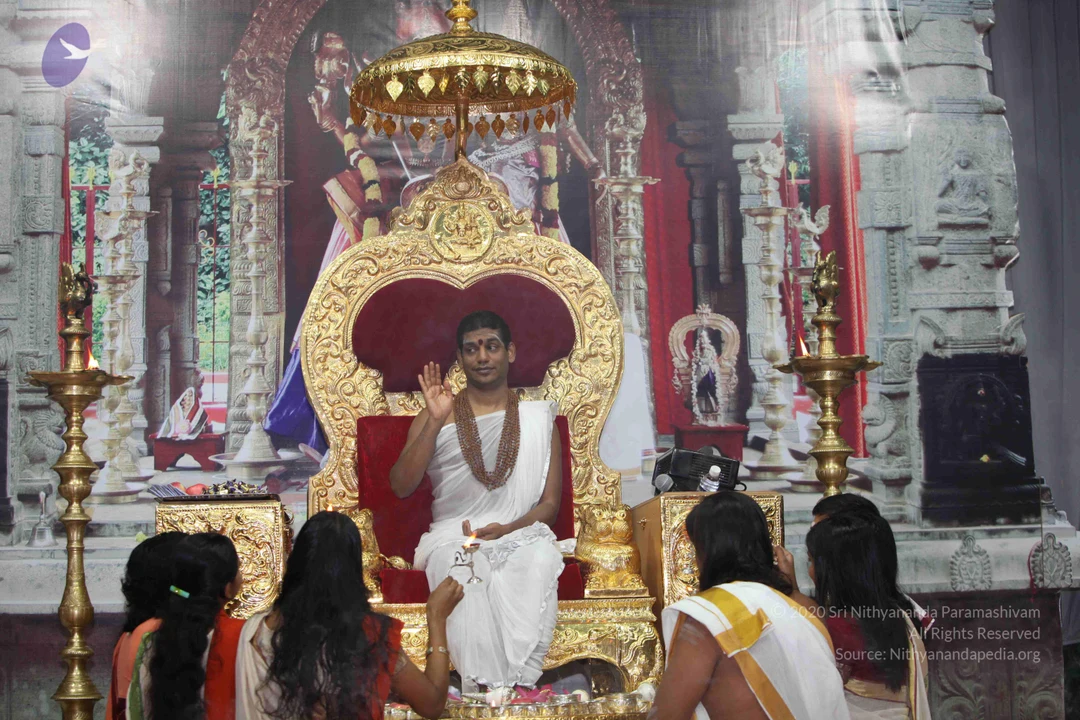
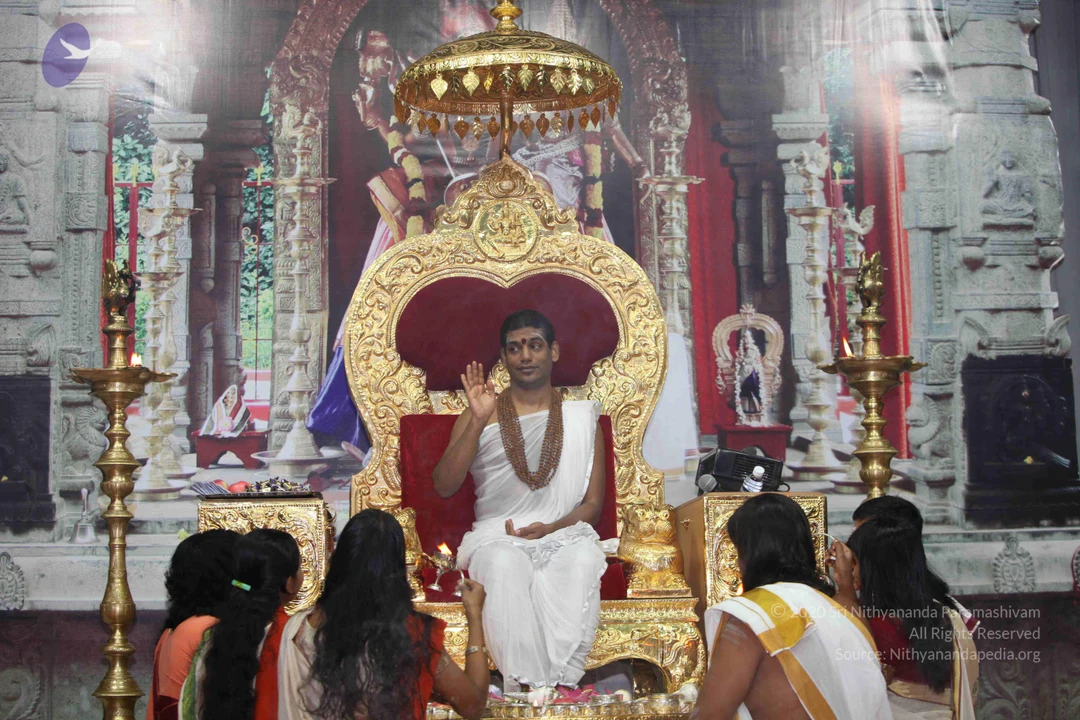
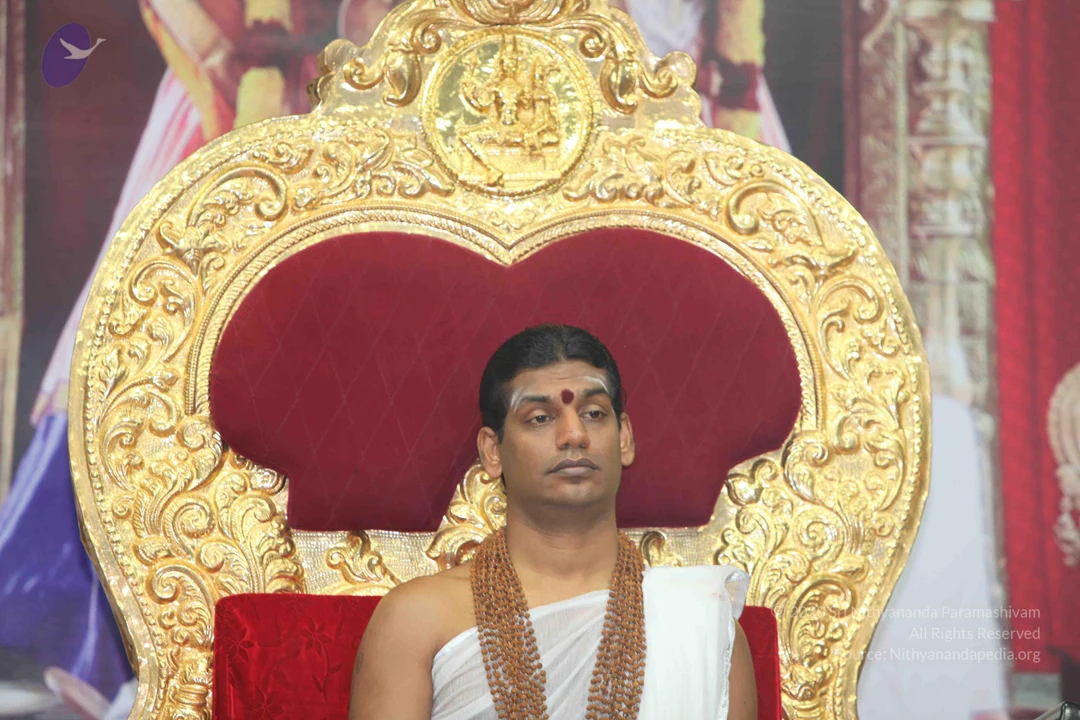
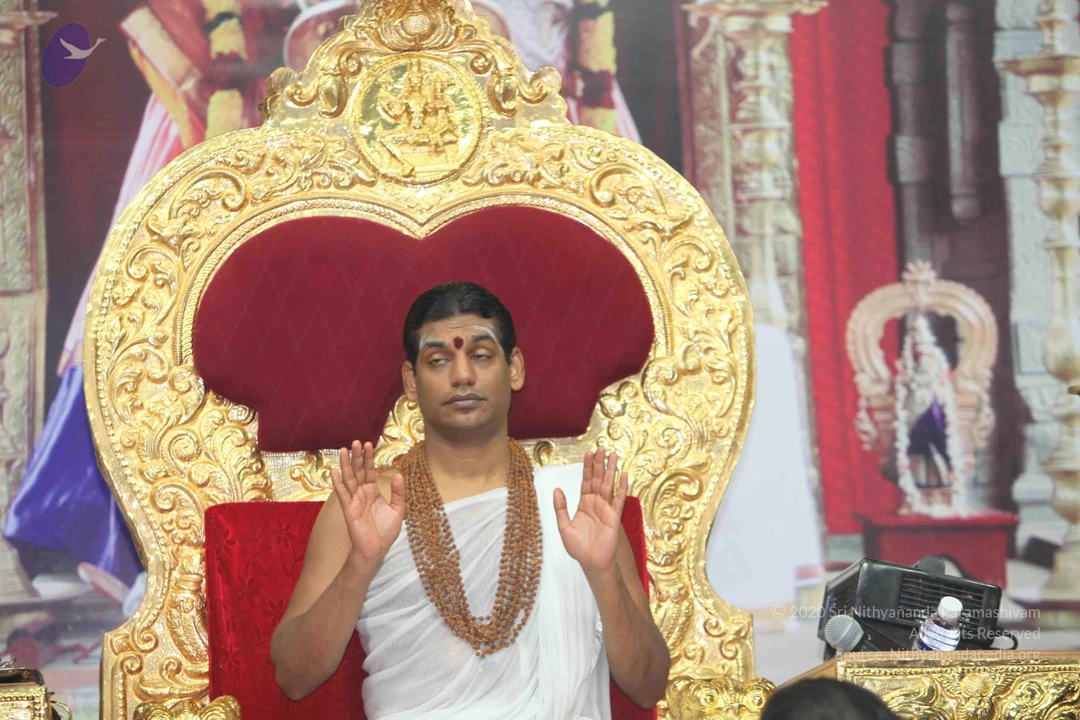
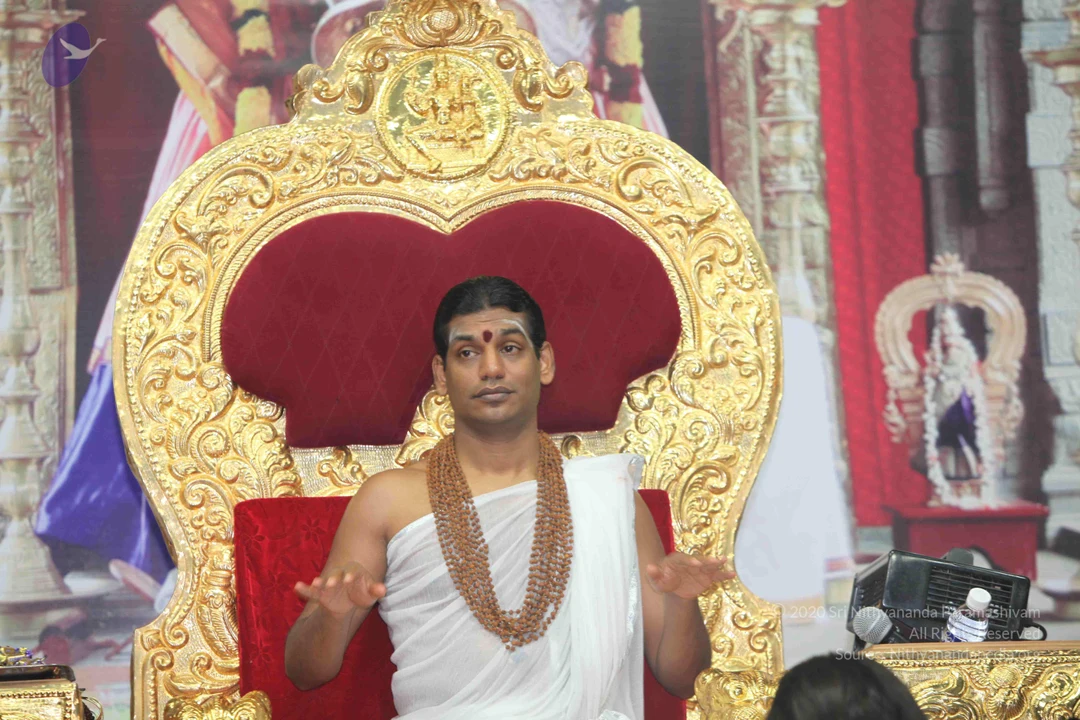
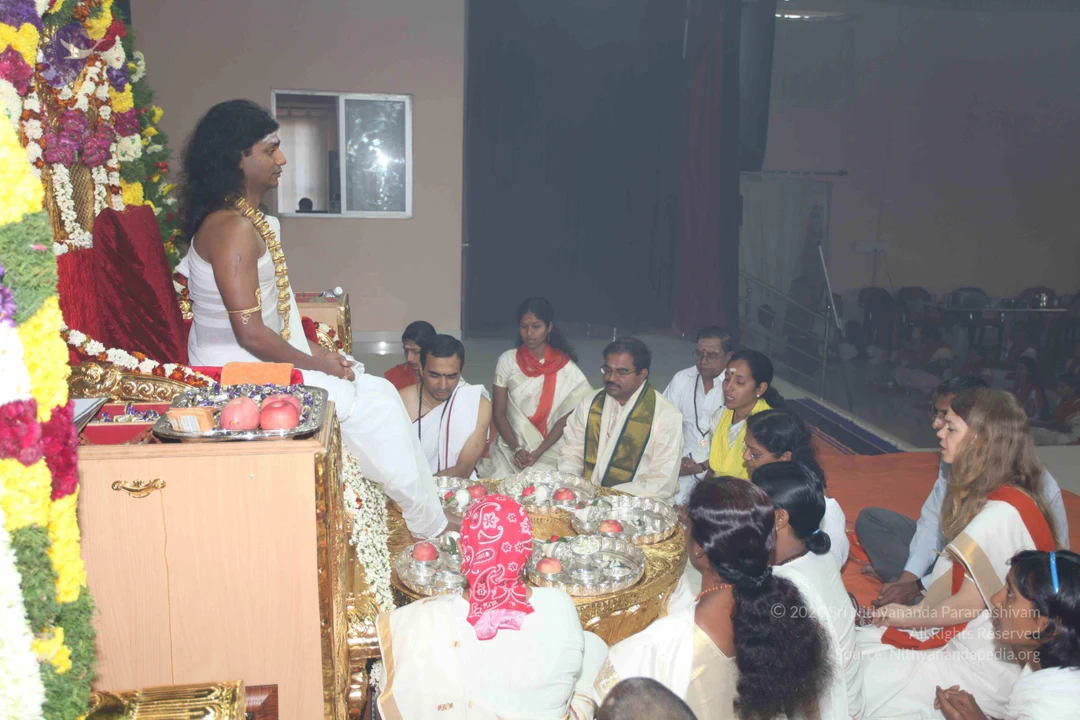
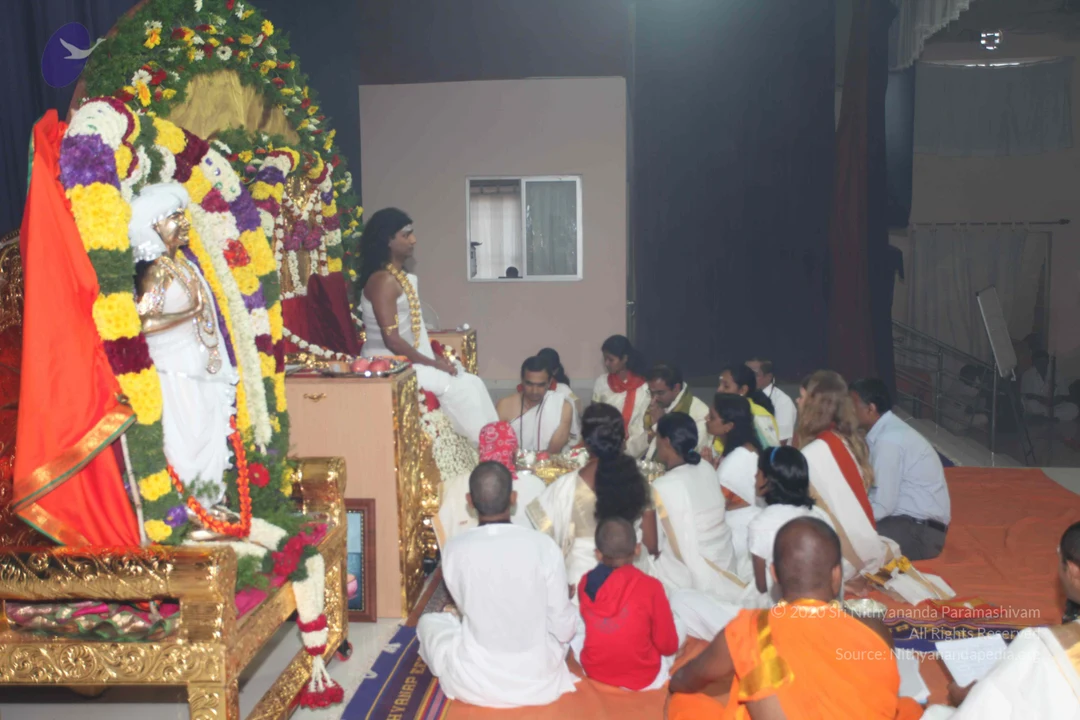
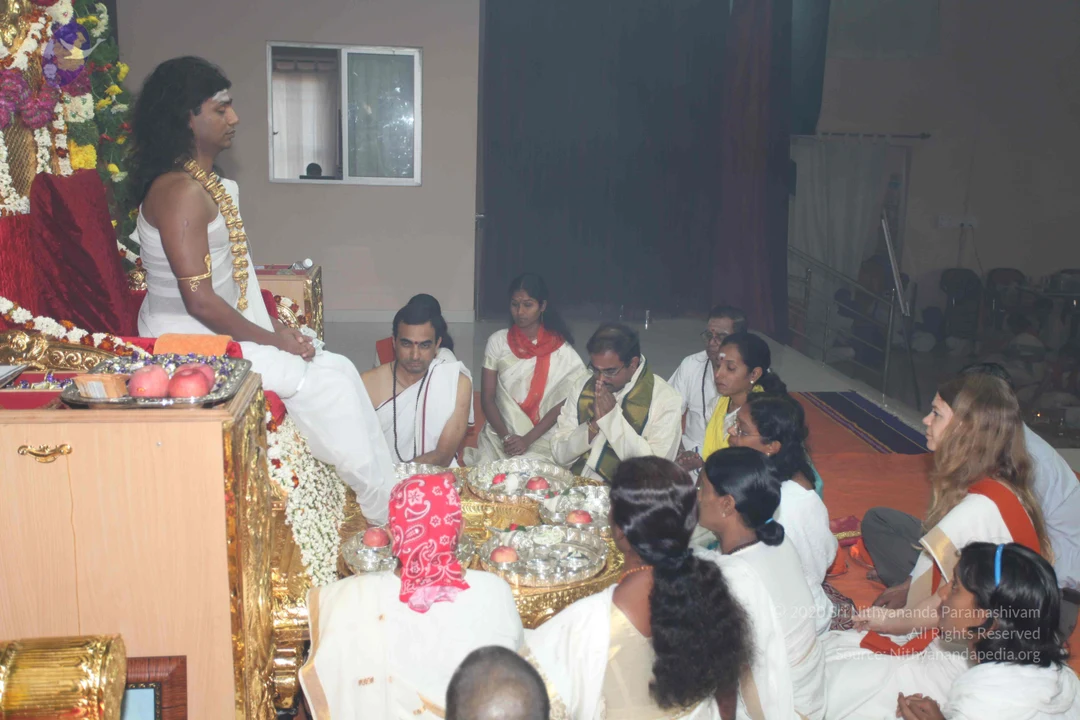
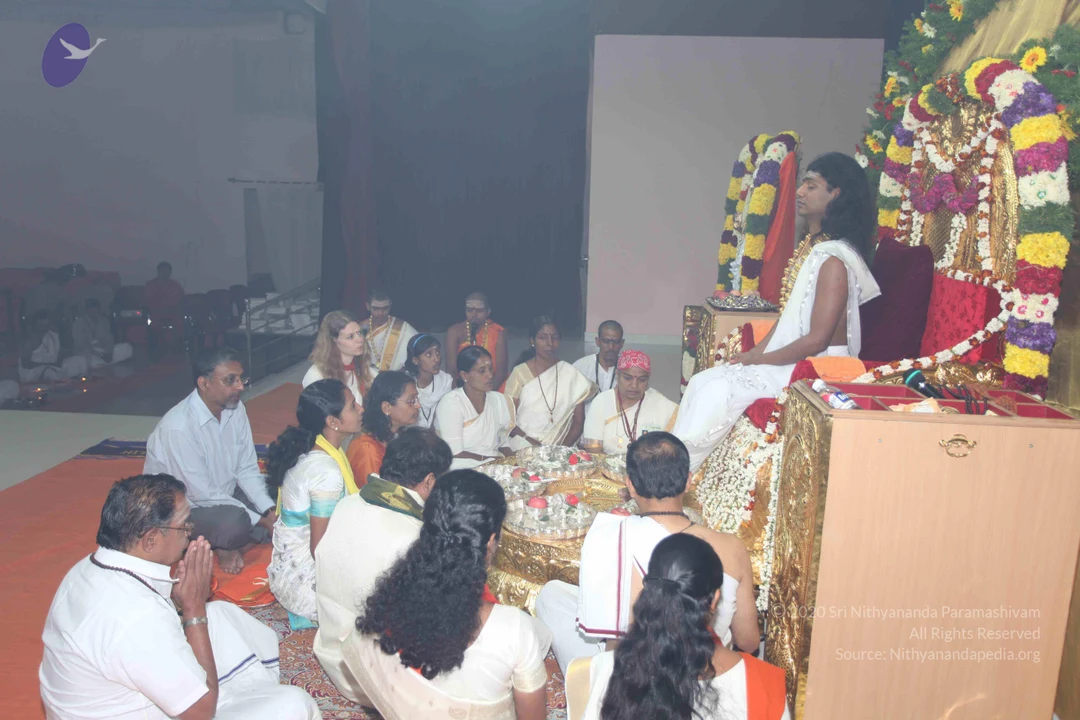
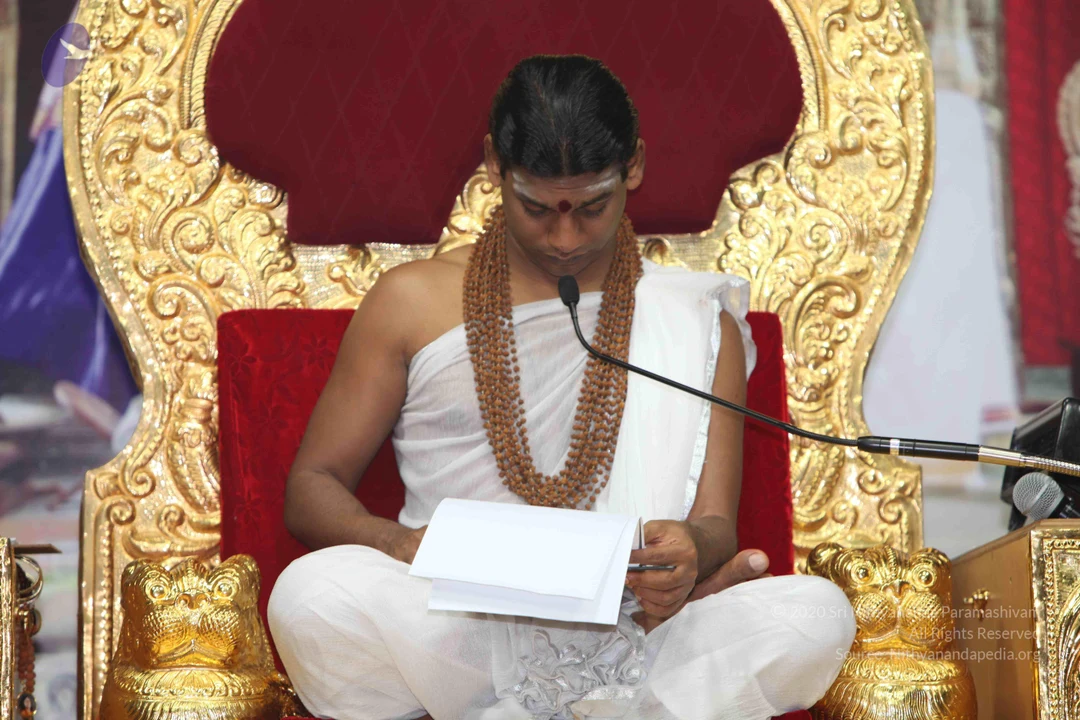
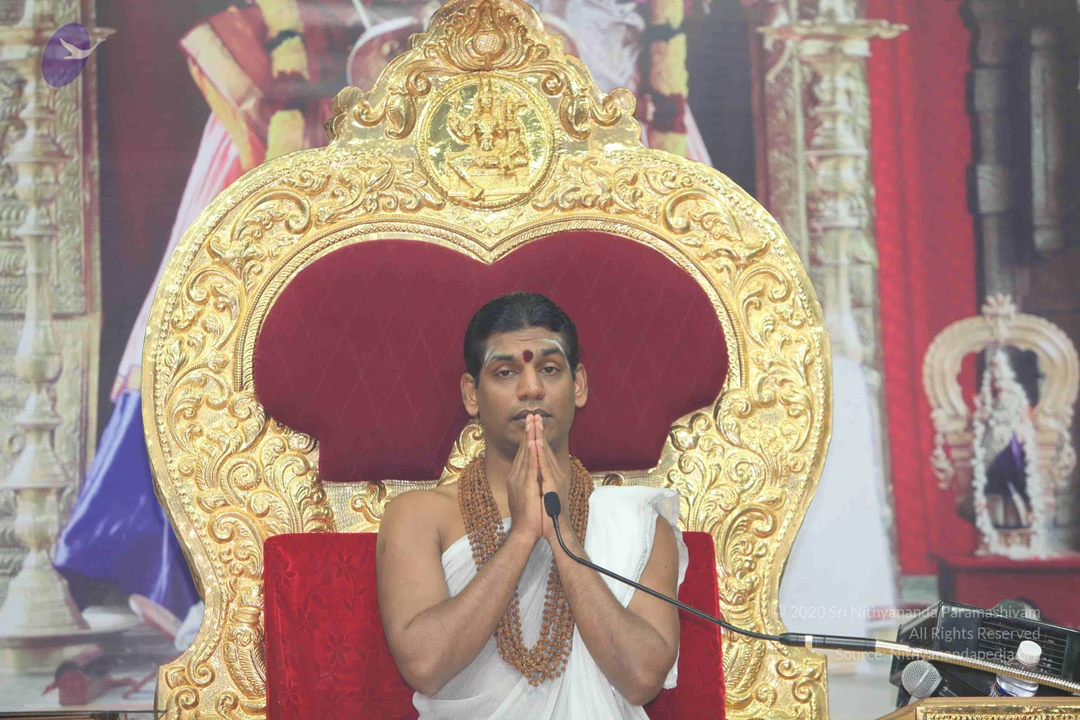
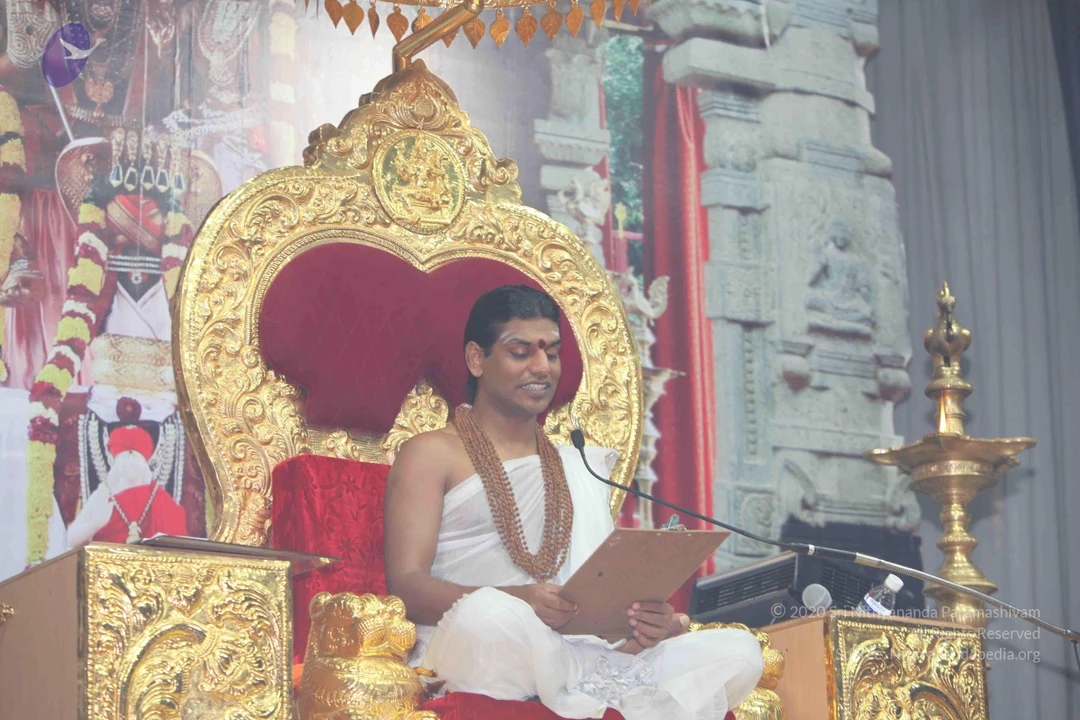
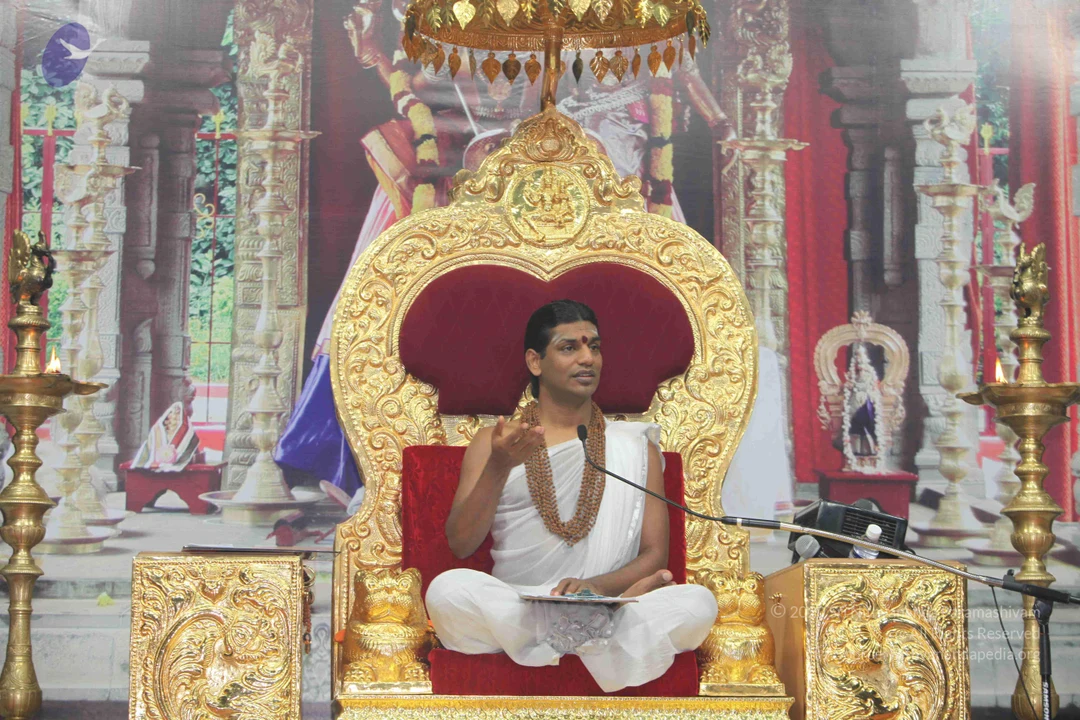
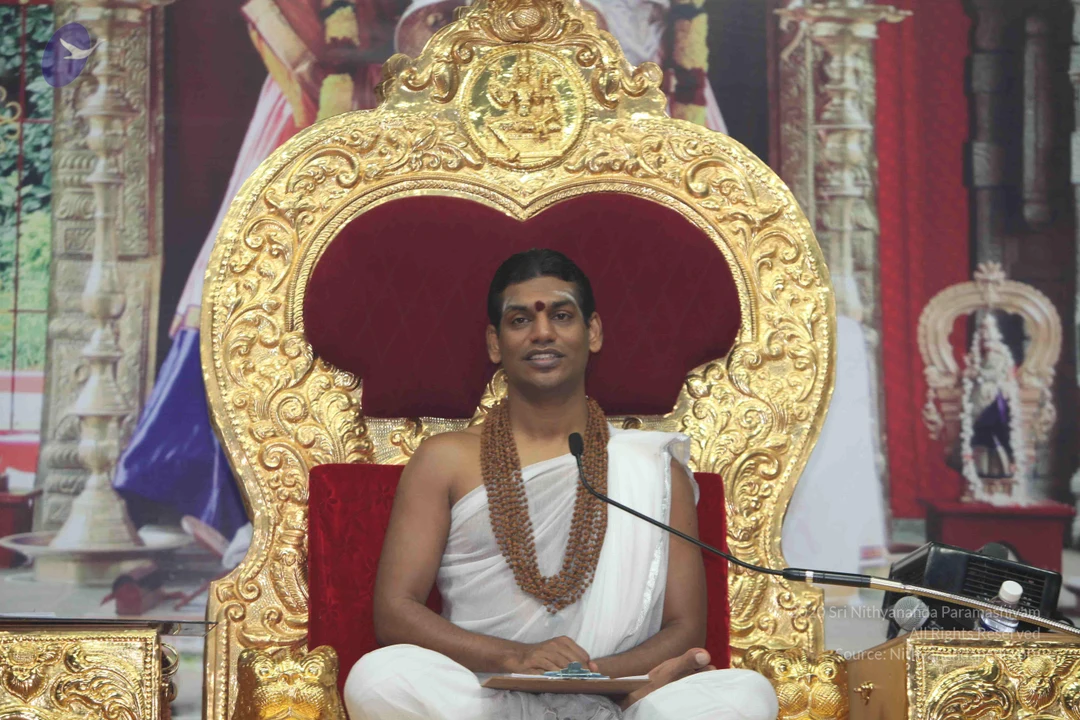
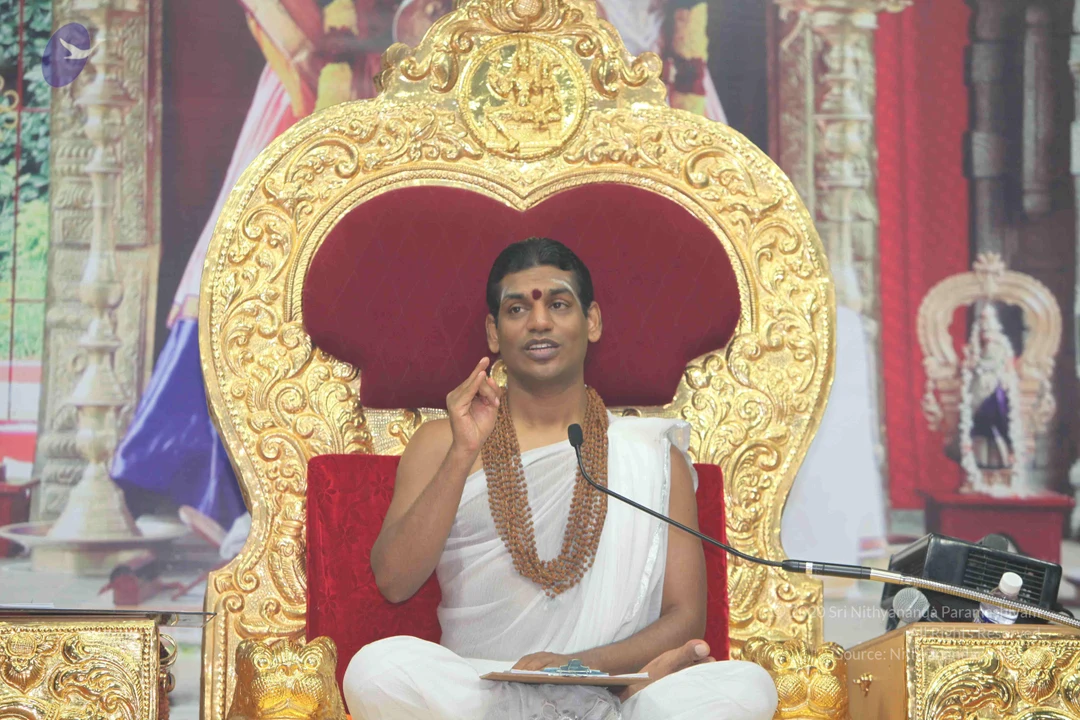
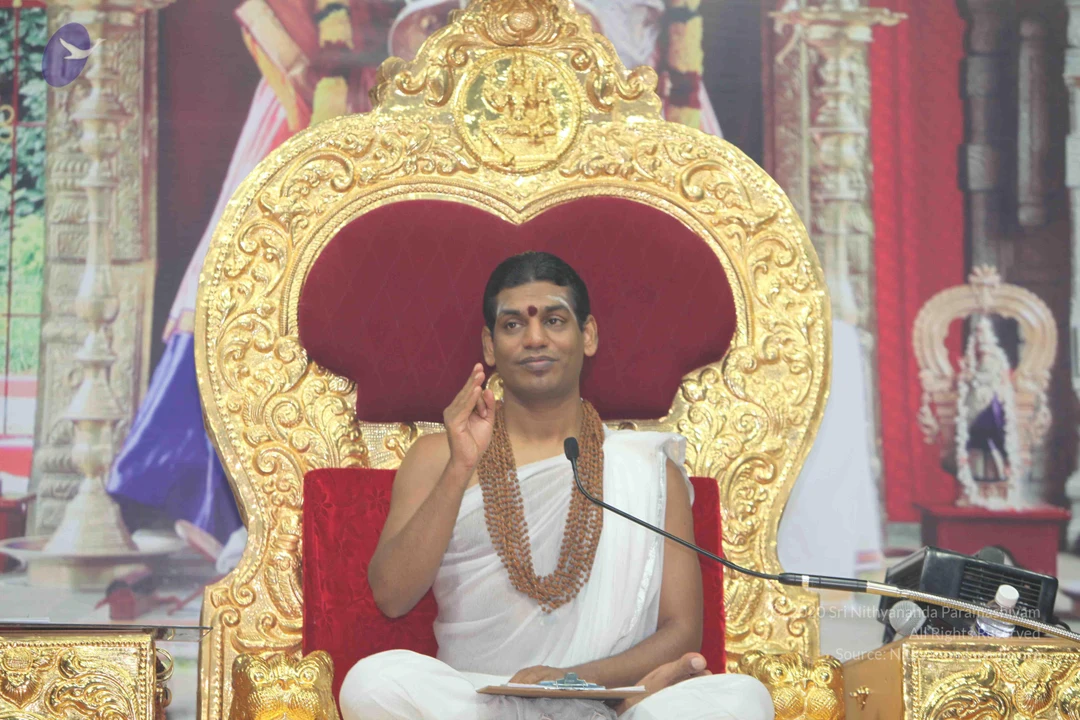
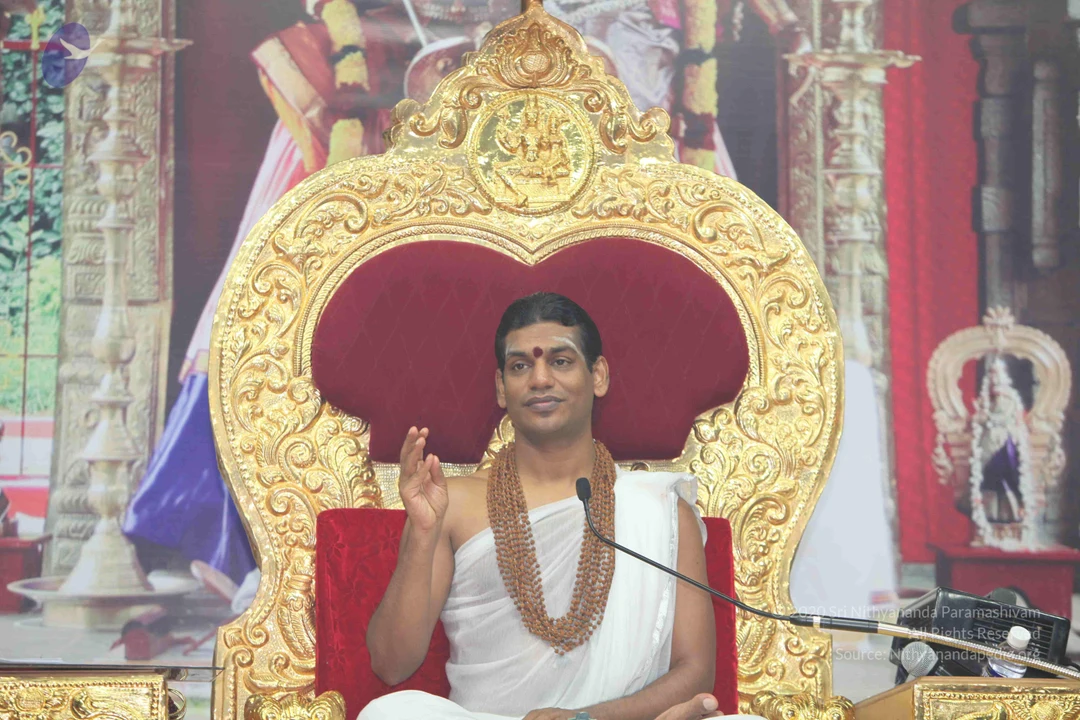
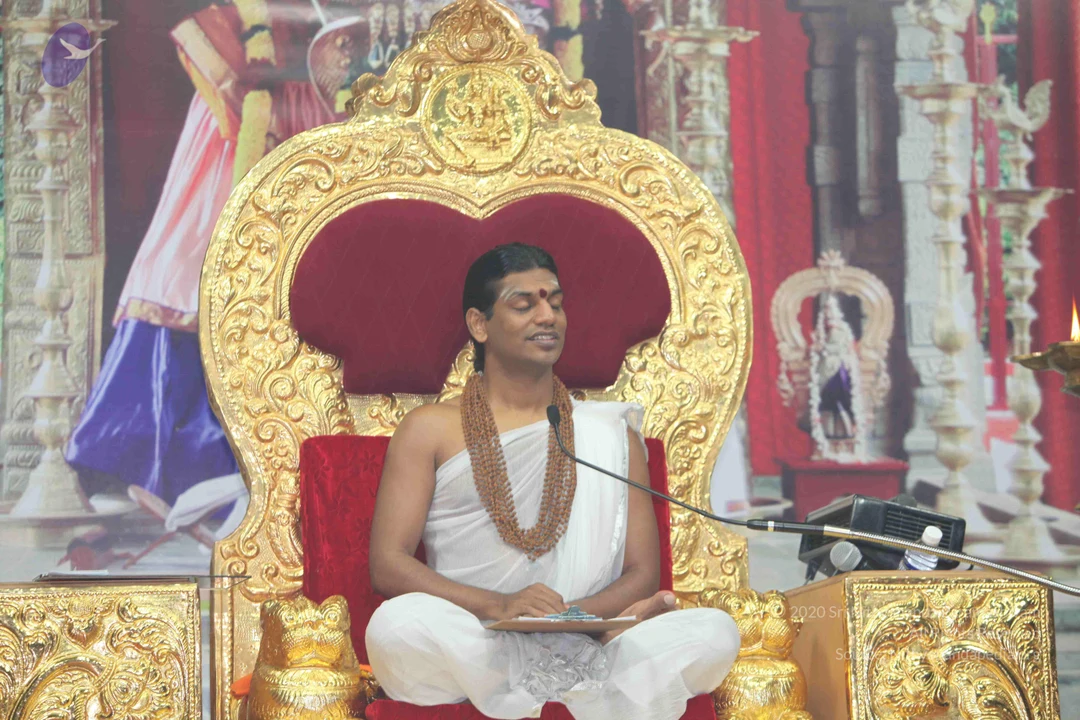
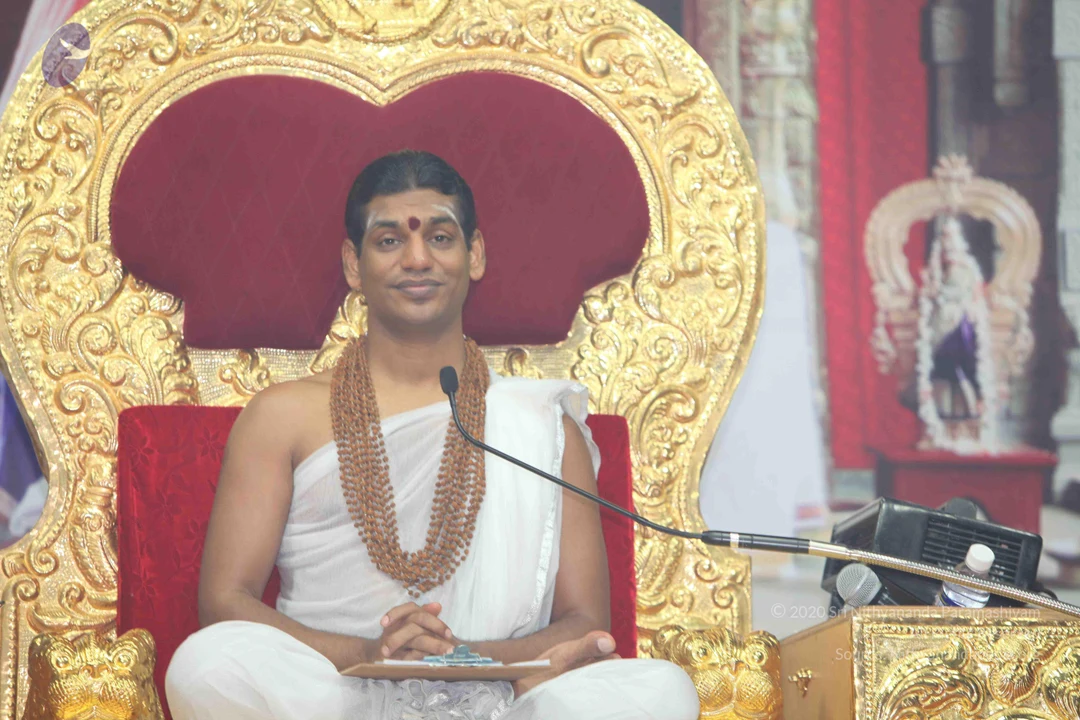
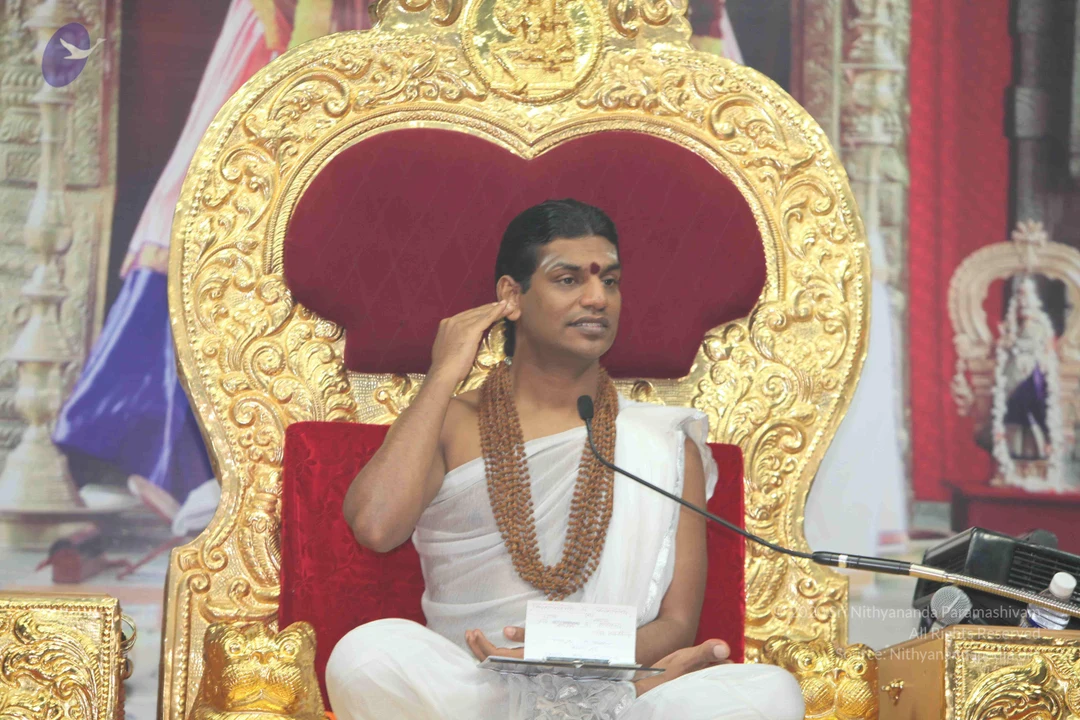
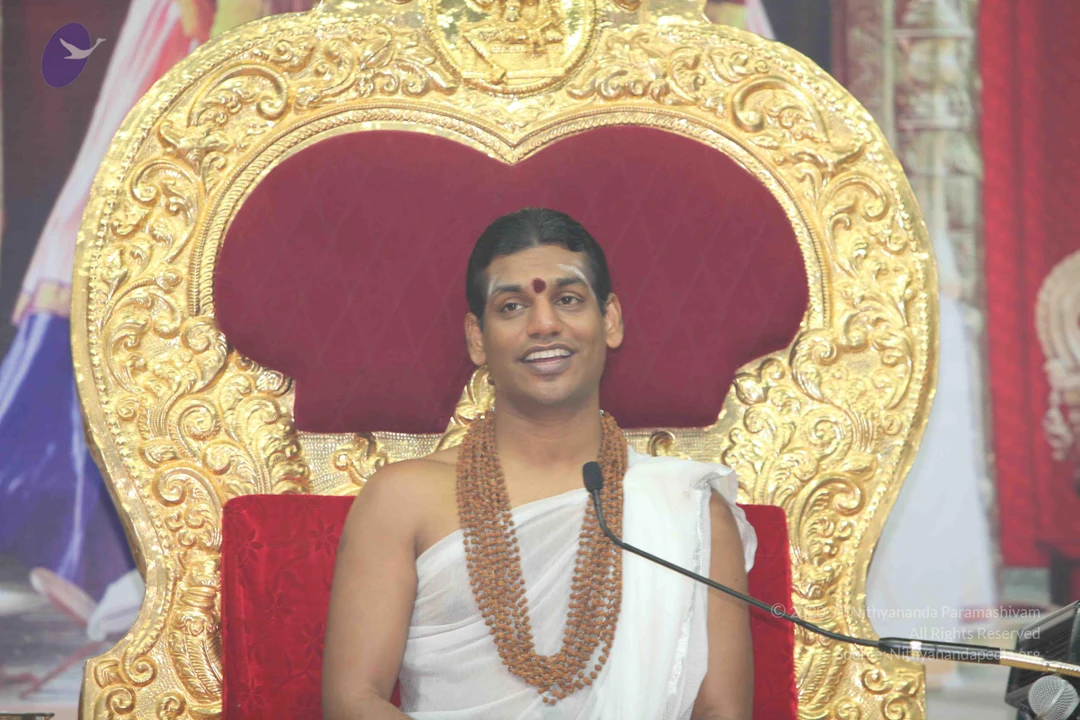
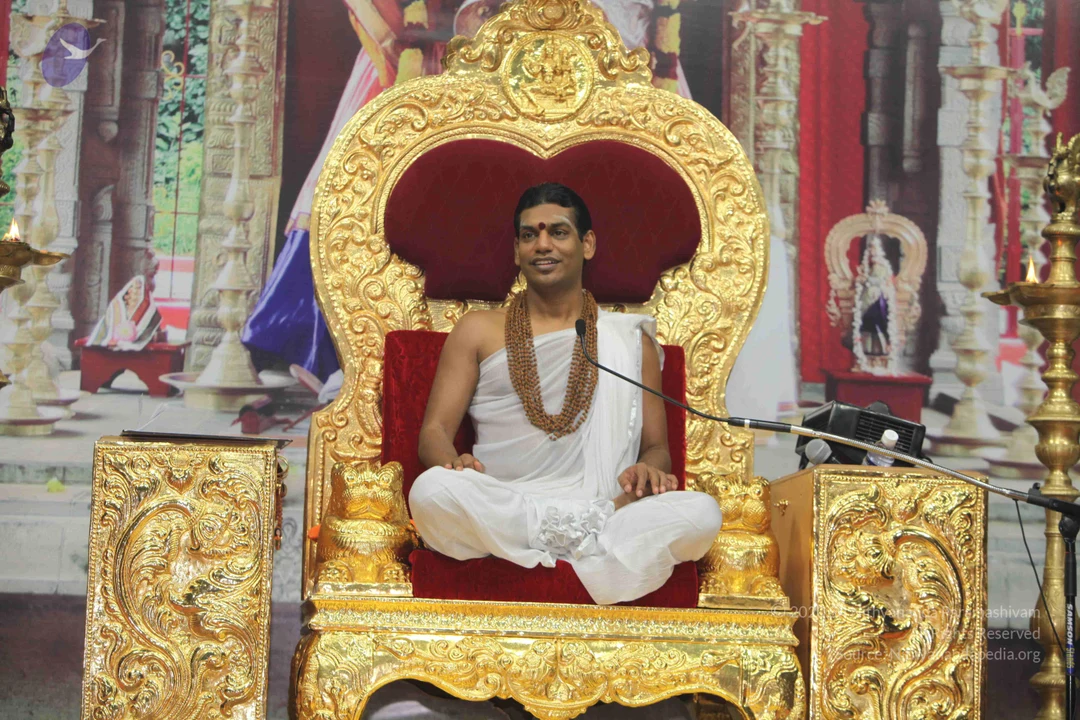
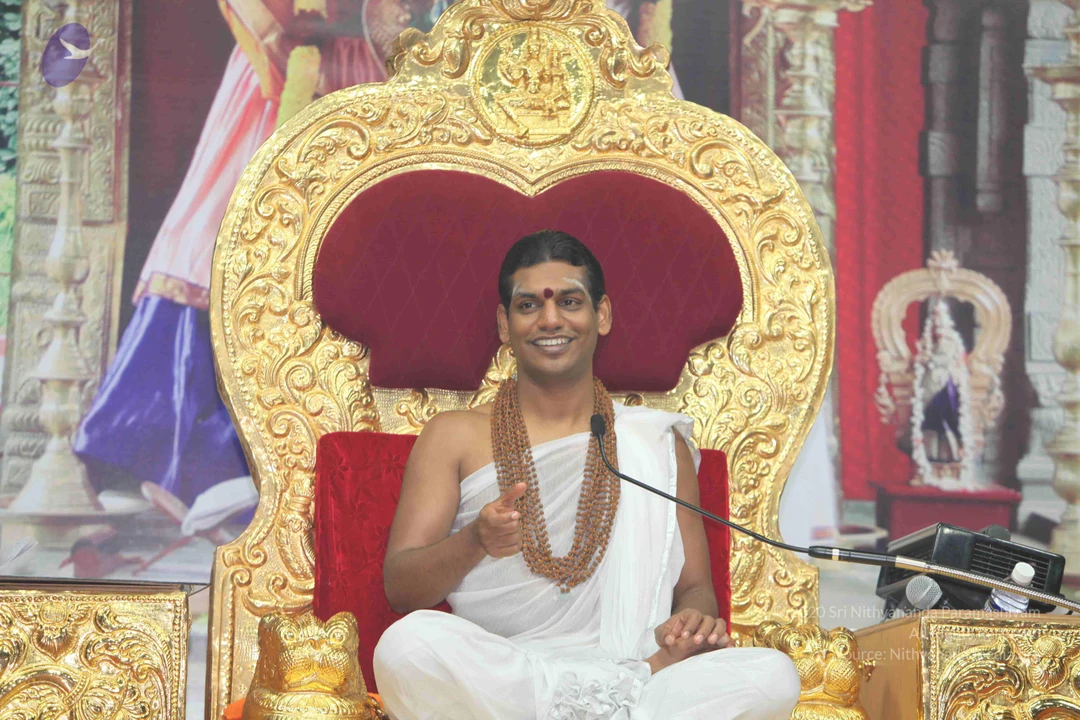
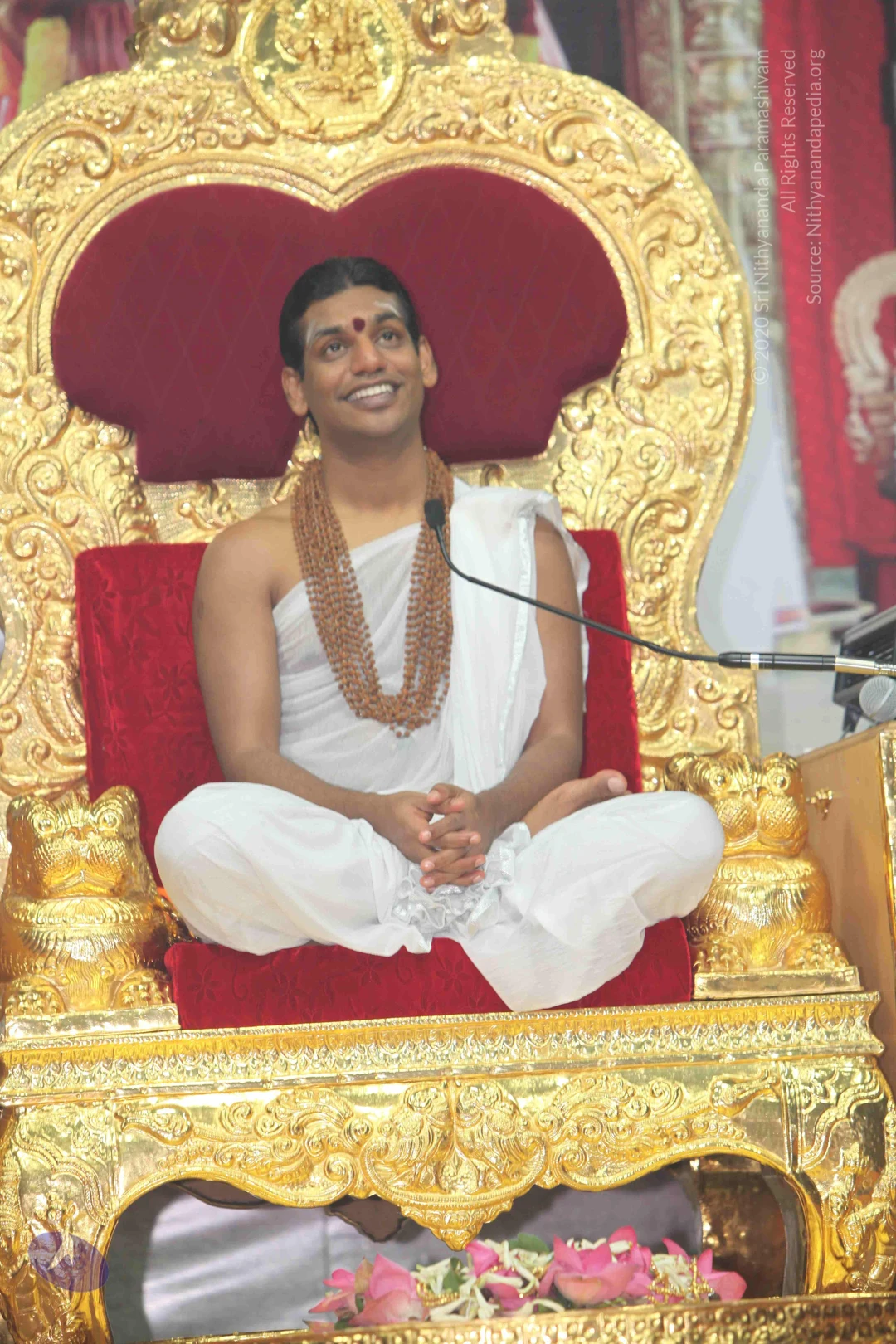
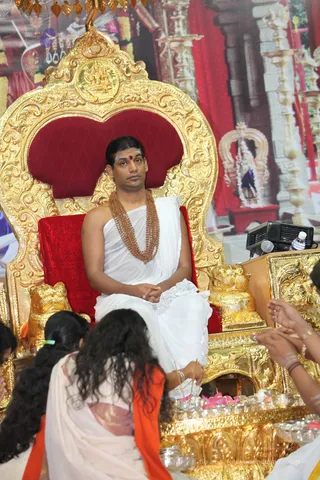
A seated man in a white dhoti-style garment with a white shawl wears multiple strands of rudraksha beads around his neck and a red bindi with white tilak on his forehead. He sits on an ornate gold throne with red velvet cushioning, hands folded in his lap, while a few women in white and orange clothing kneel in the foreground with brass and glass offering bowls holding flower petals. Behind him is a backdrop with gold pillars, red drapes and a small deity murti. A microphone and a water bottle rest on the right side of the dais. a person: the rudraksha mala and white ritual dress are visible cues, and the throne and setting are consistent with a discourse.A man seated on an ornate gold-carved throne with a red cushioned back and red seat, raising his right hand in a gesture of address during a discourse. He wears a white unstitched cloth draped over his shoulders and a red bindi on his forehead, with multiple strands of rudraksha beads around his neck. Behind him hang red drapes and a framed image of a deity with a crown. A microphone and water bottles sit at the lower right. The figure's appearance is consistent with the page's reference to a person, with cues including the rudraksha malas and ceremonial throne, though the face is not clearly distinctive enough to confirm identity.

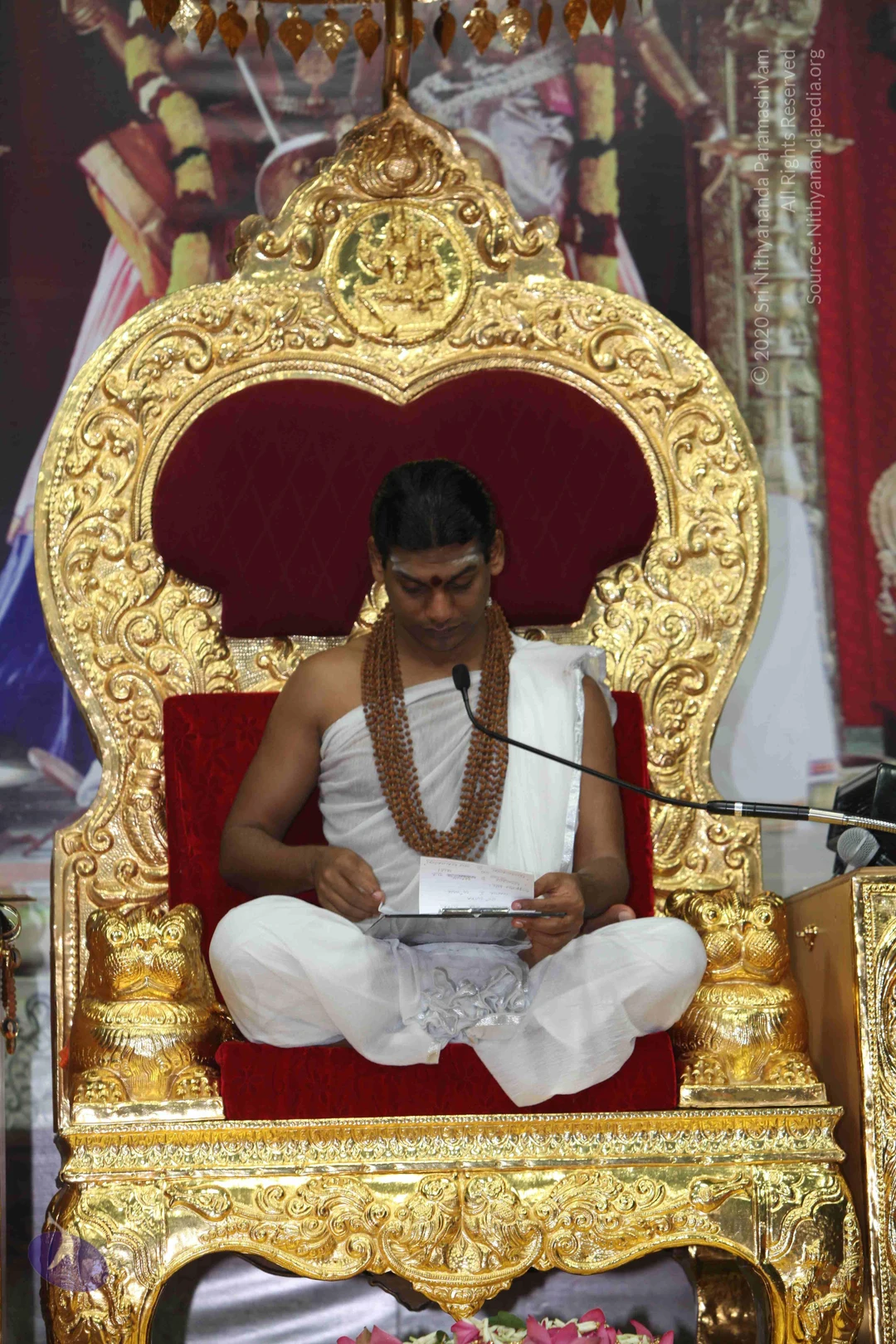
Nithyananda-Satsang
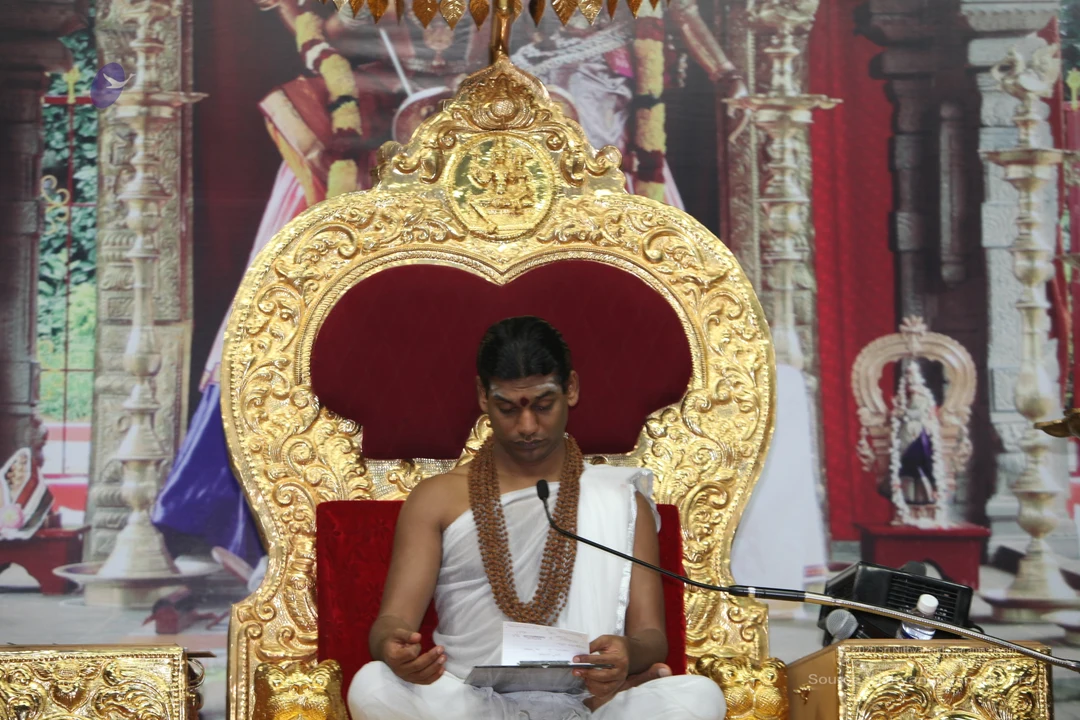
4 photosSource gallery
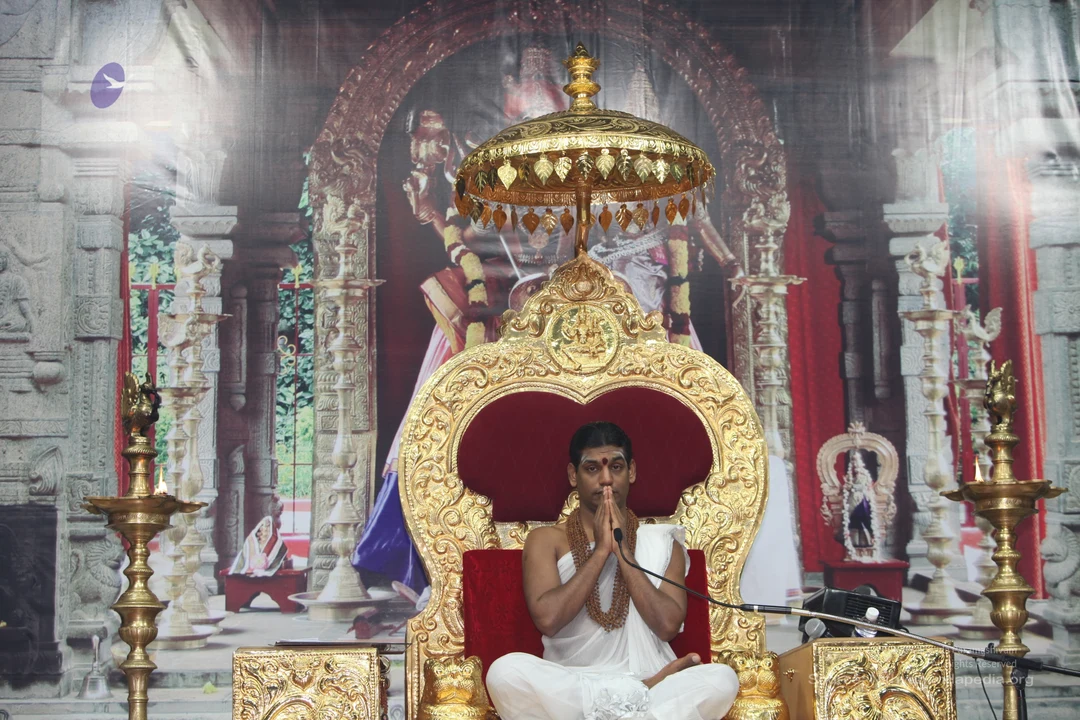
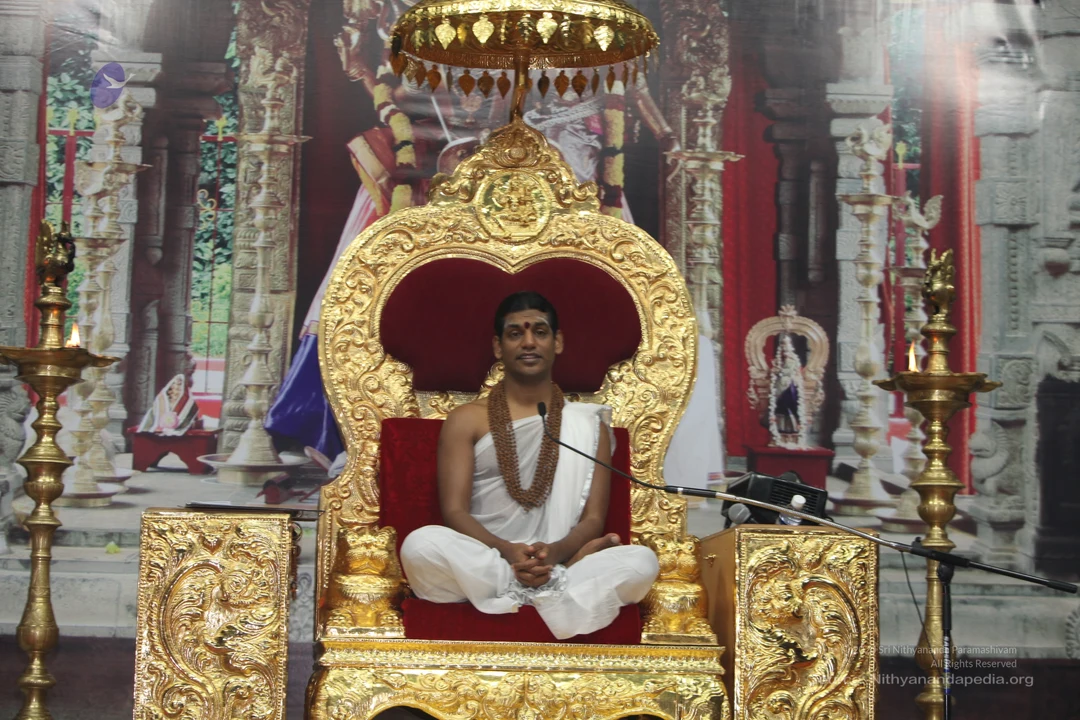
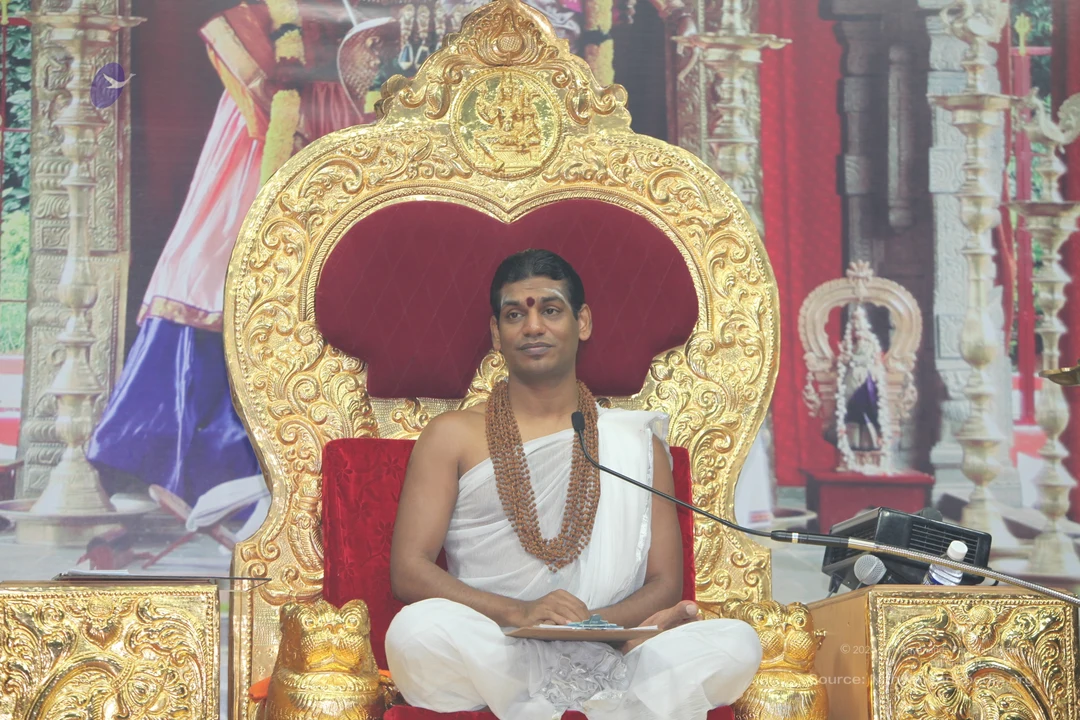
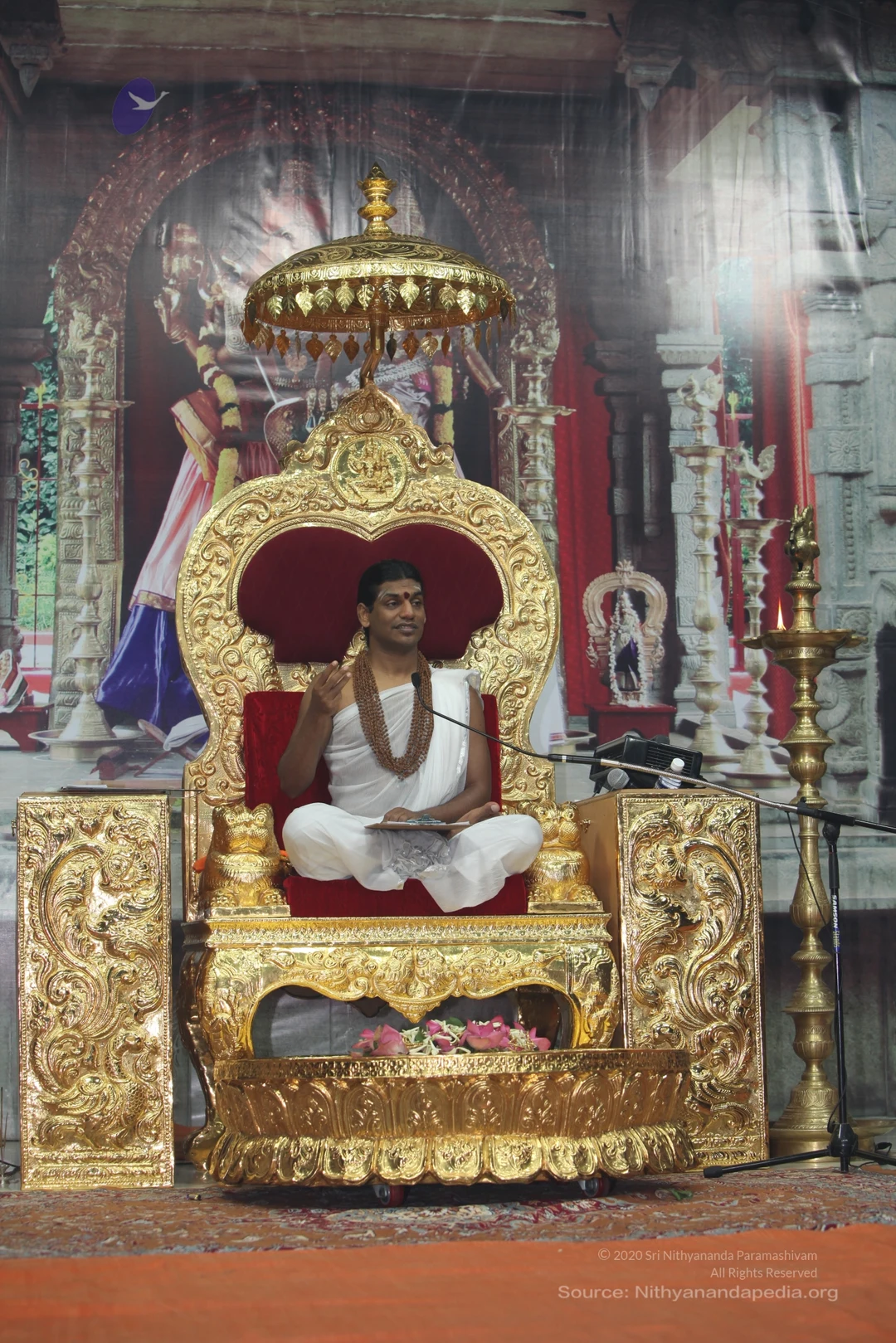
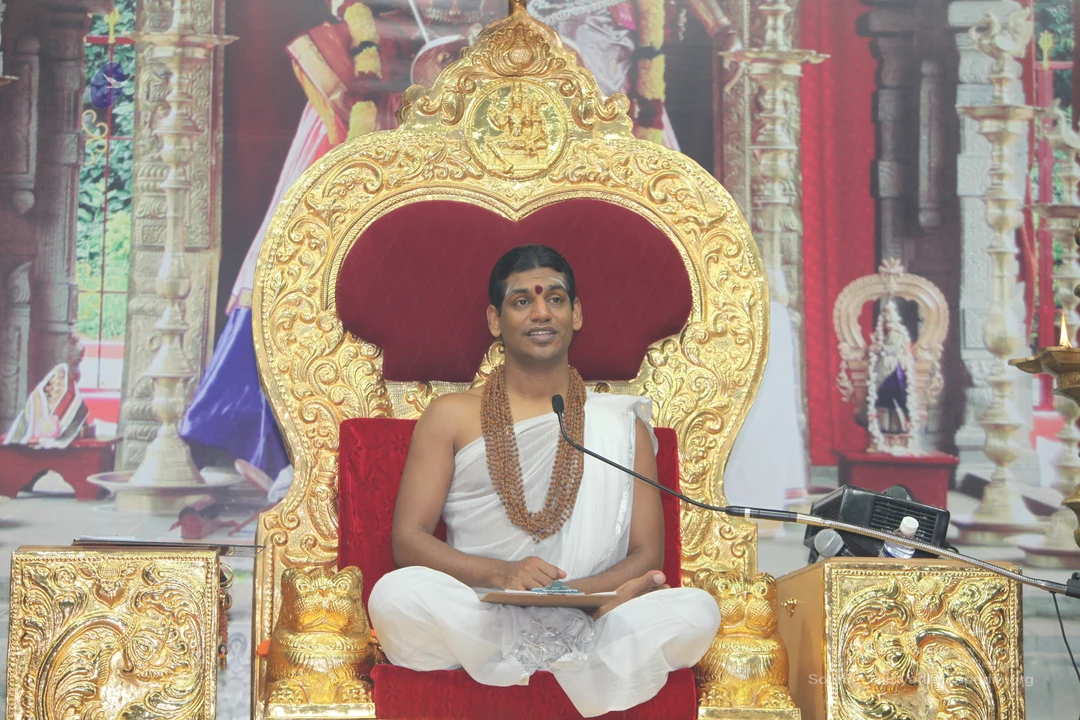
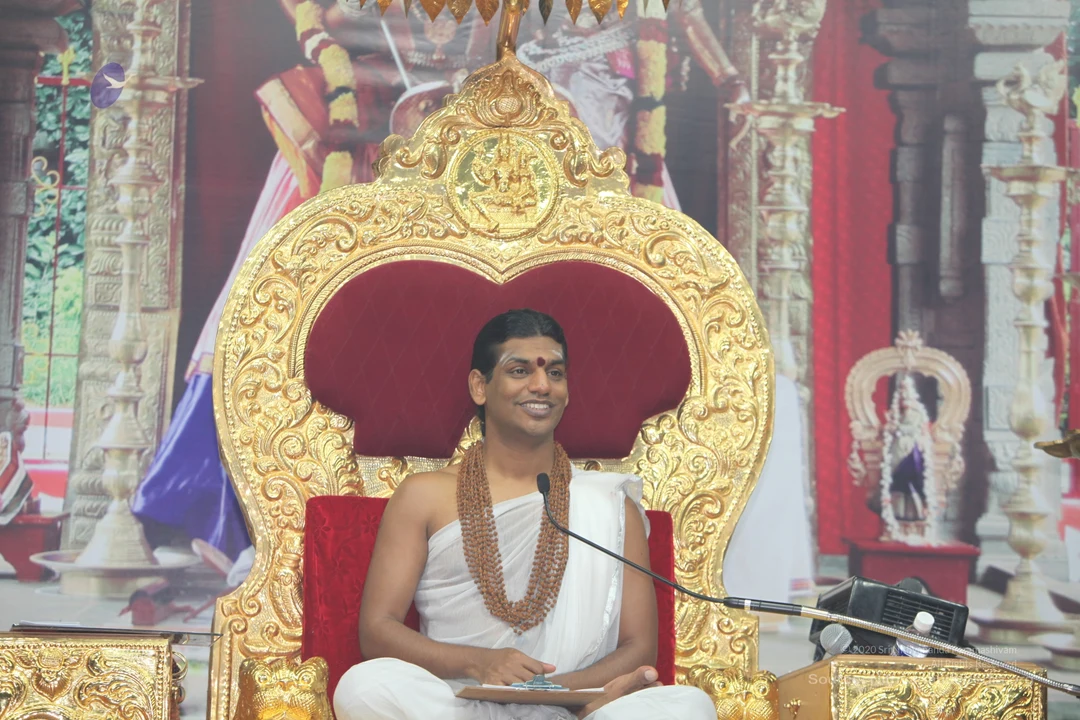
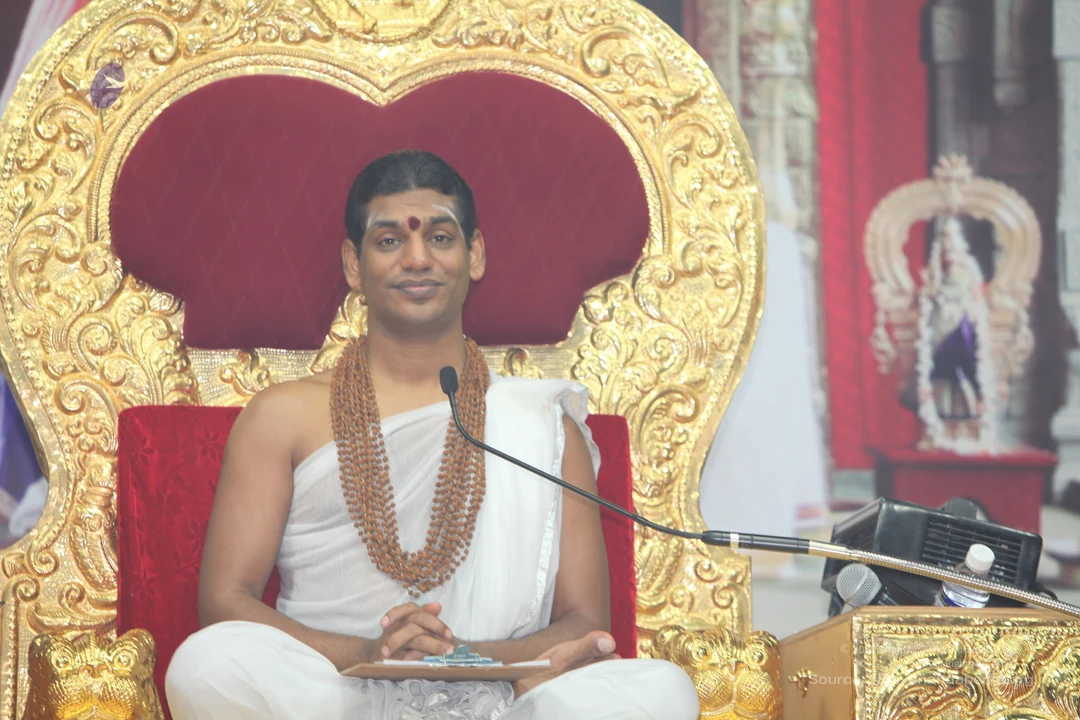
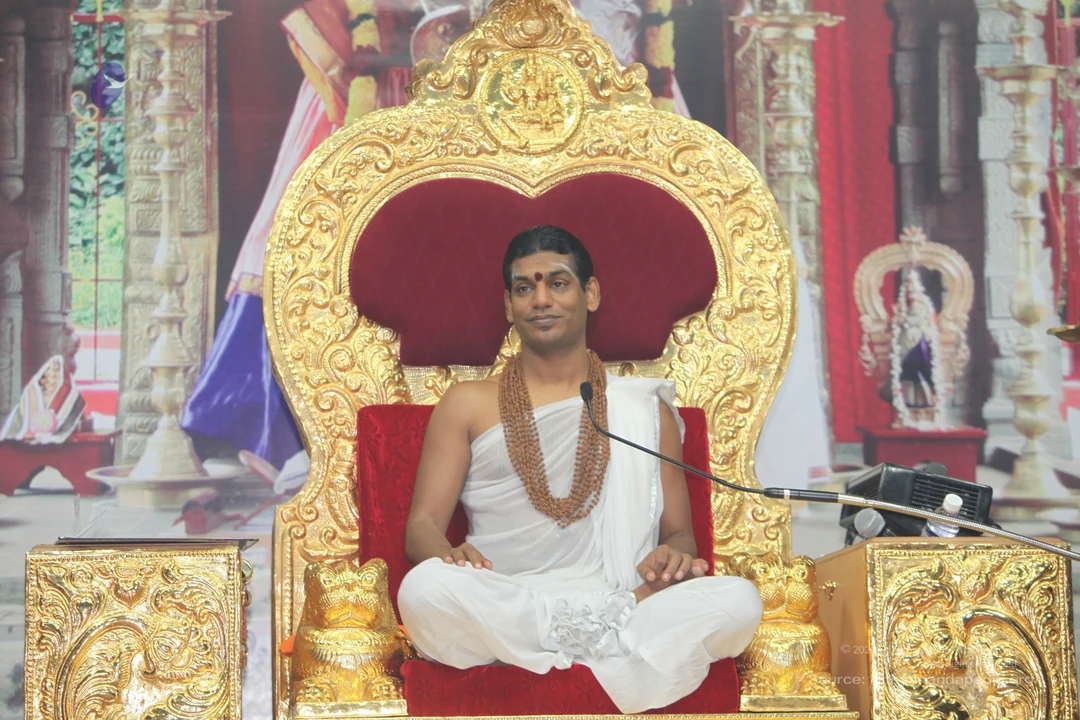
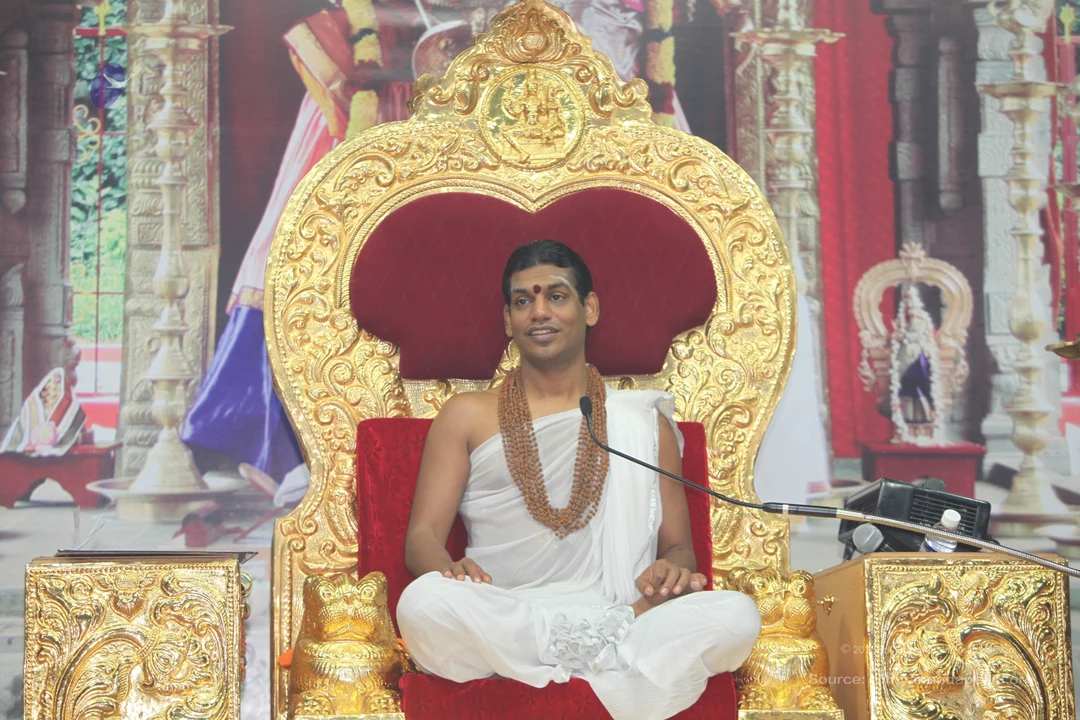
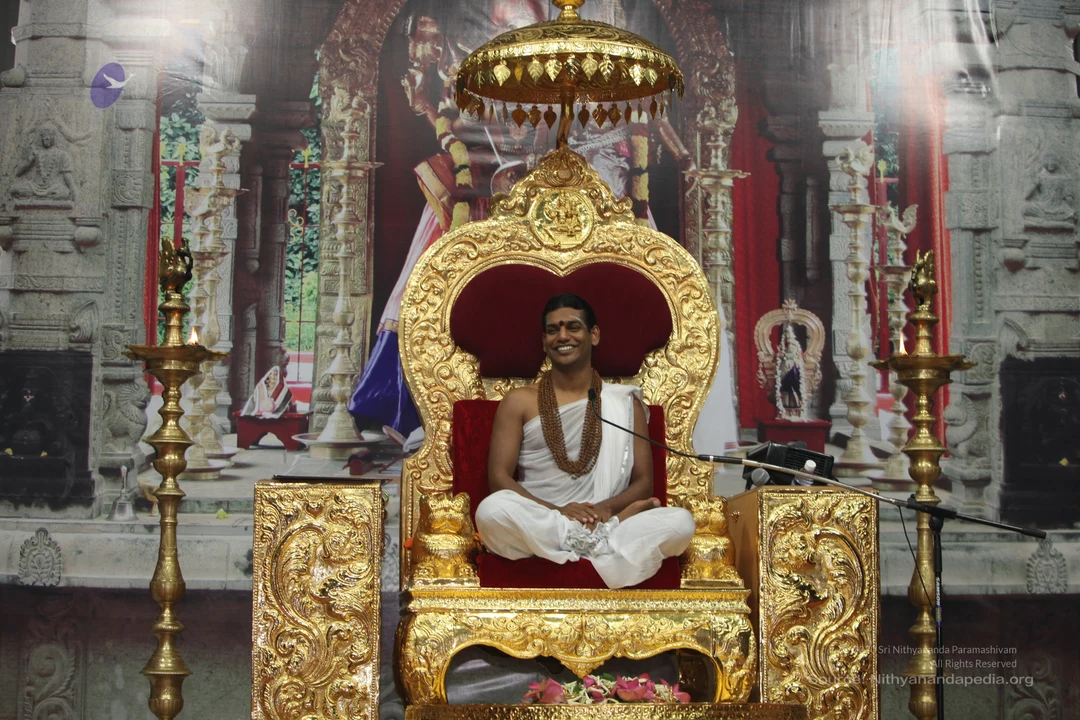
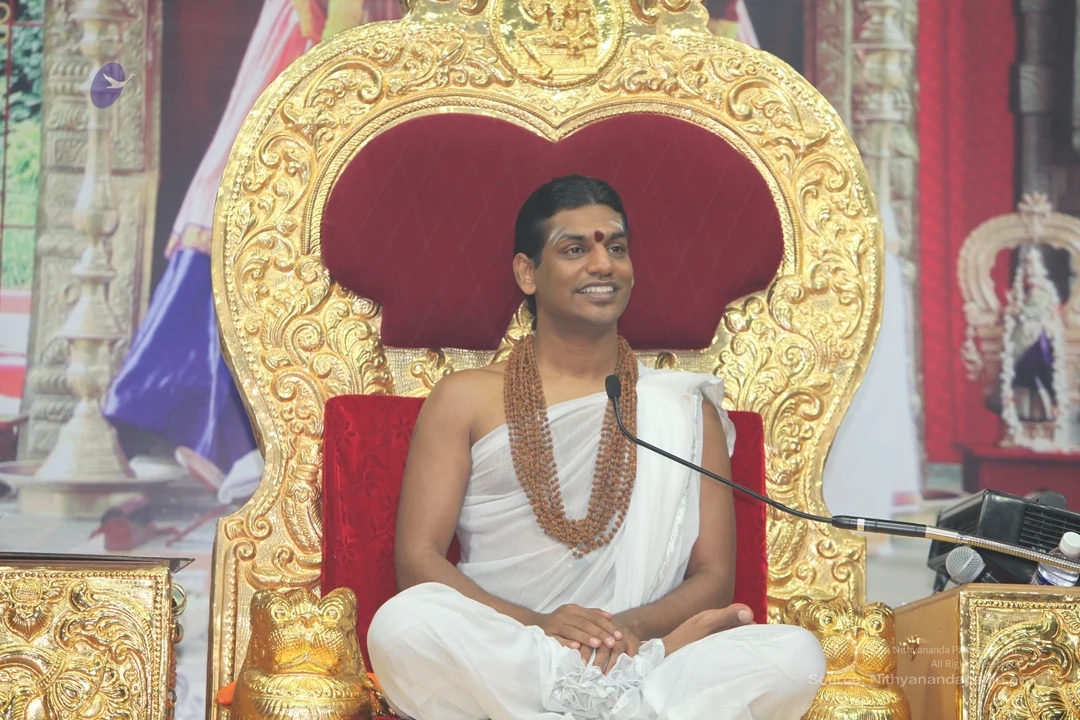
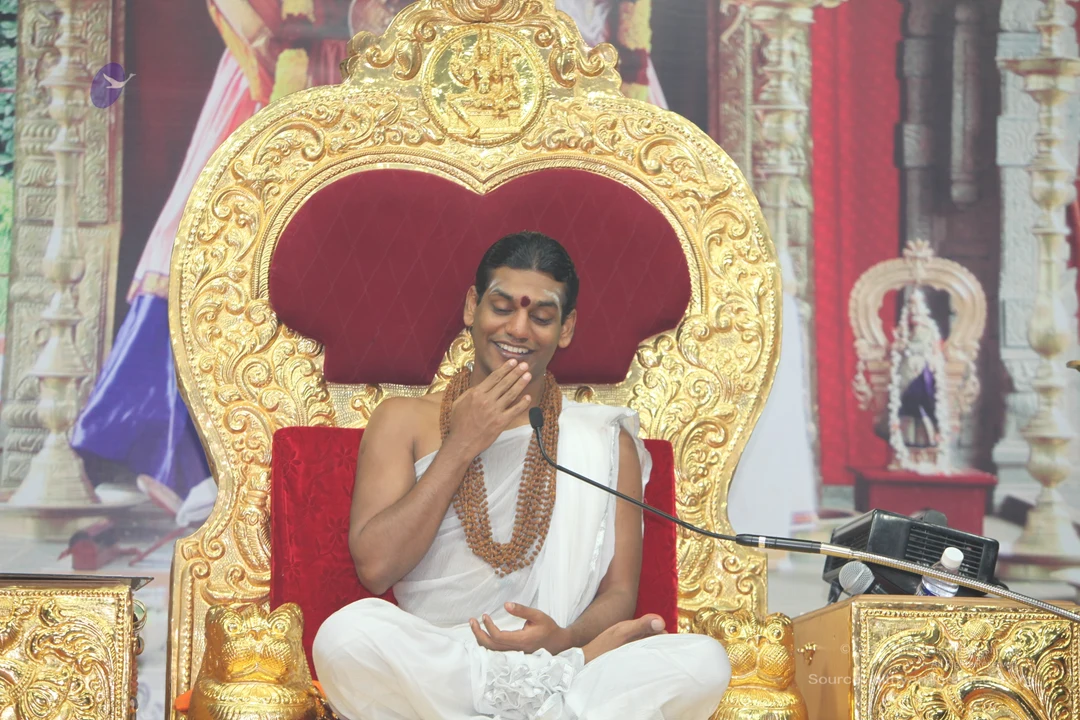
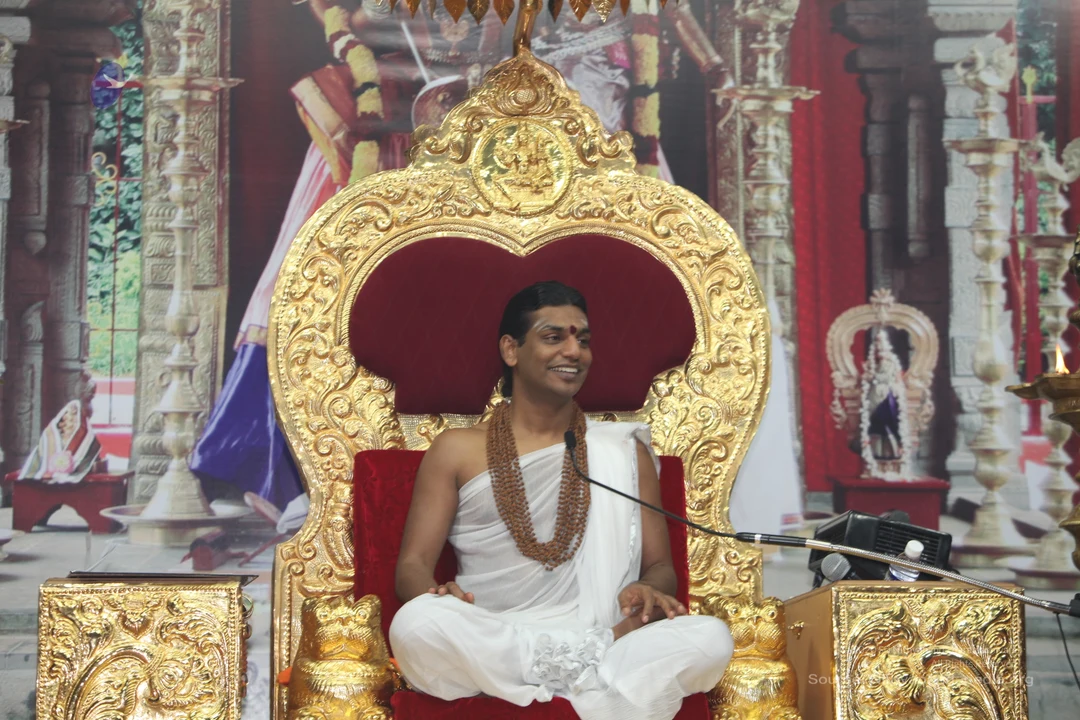
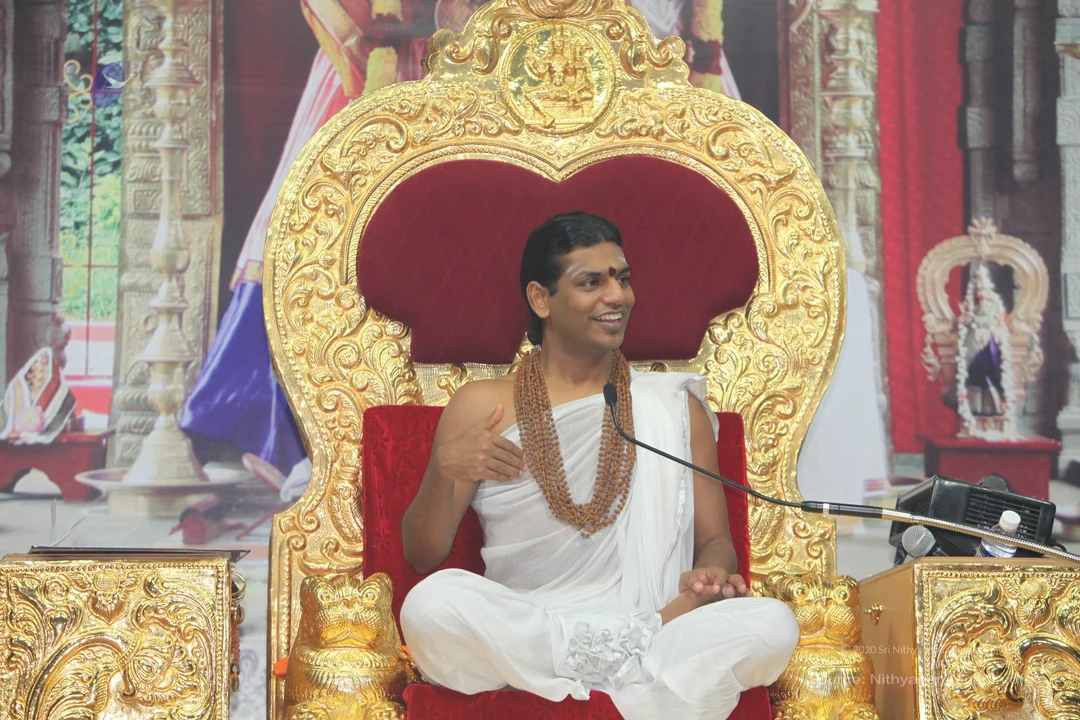
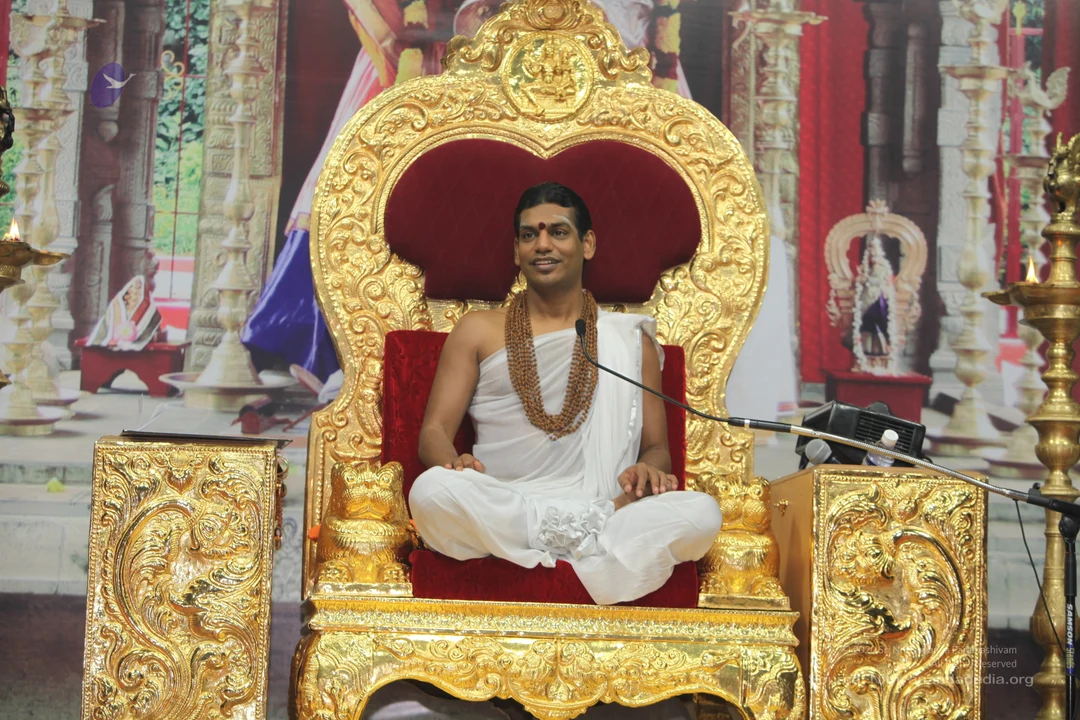
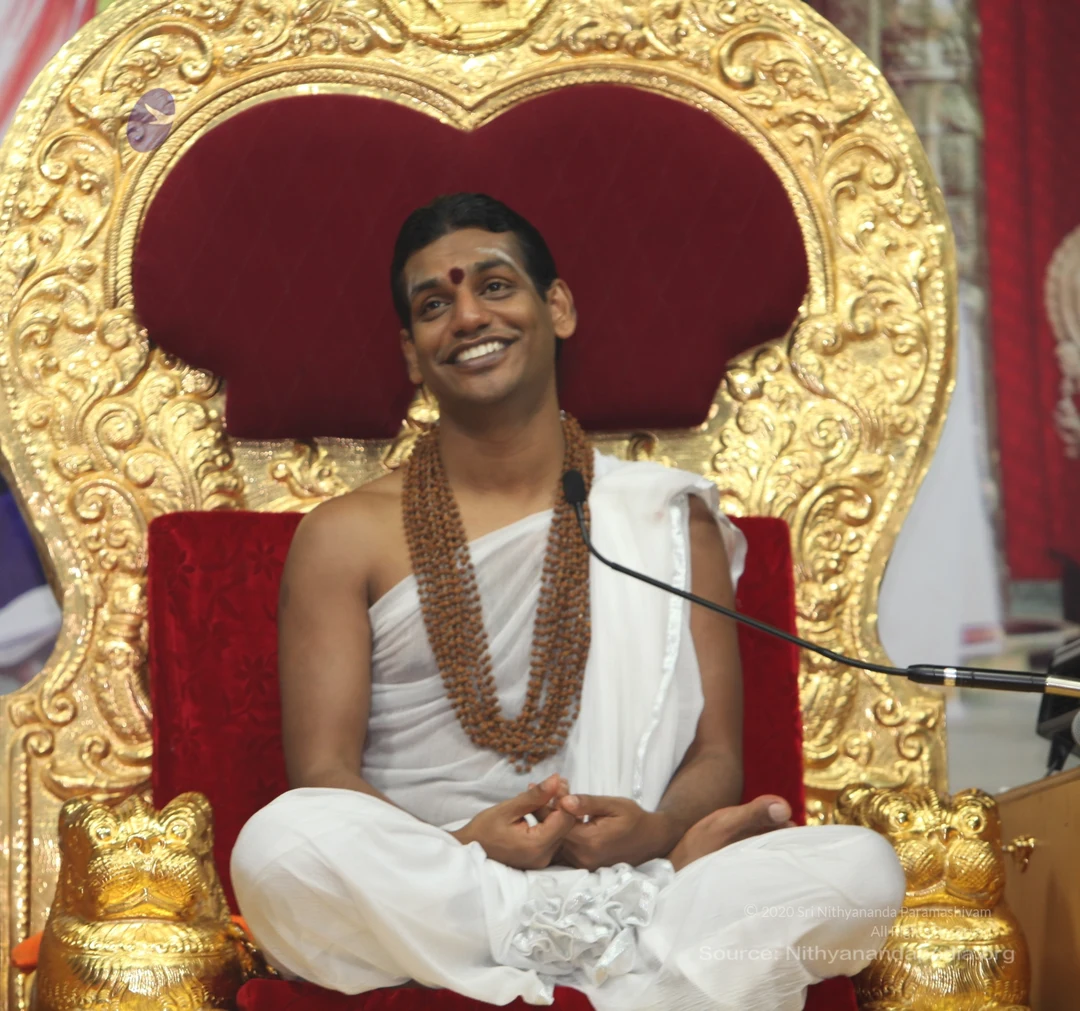
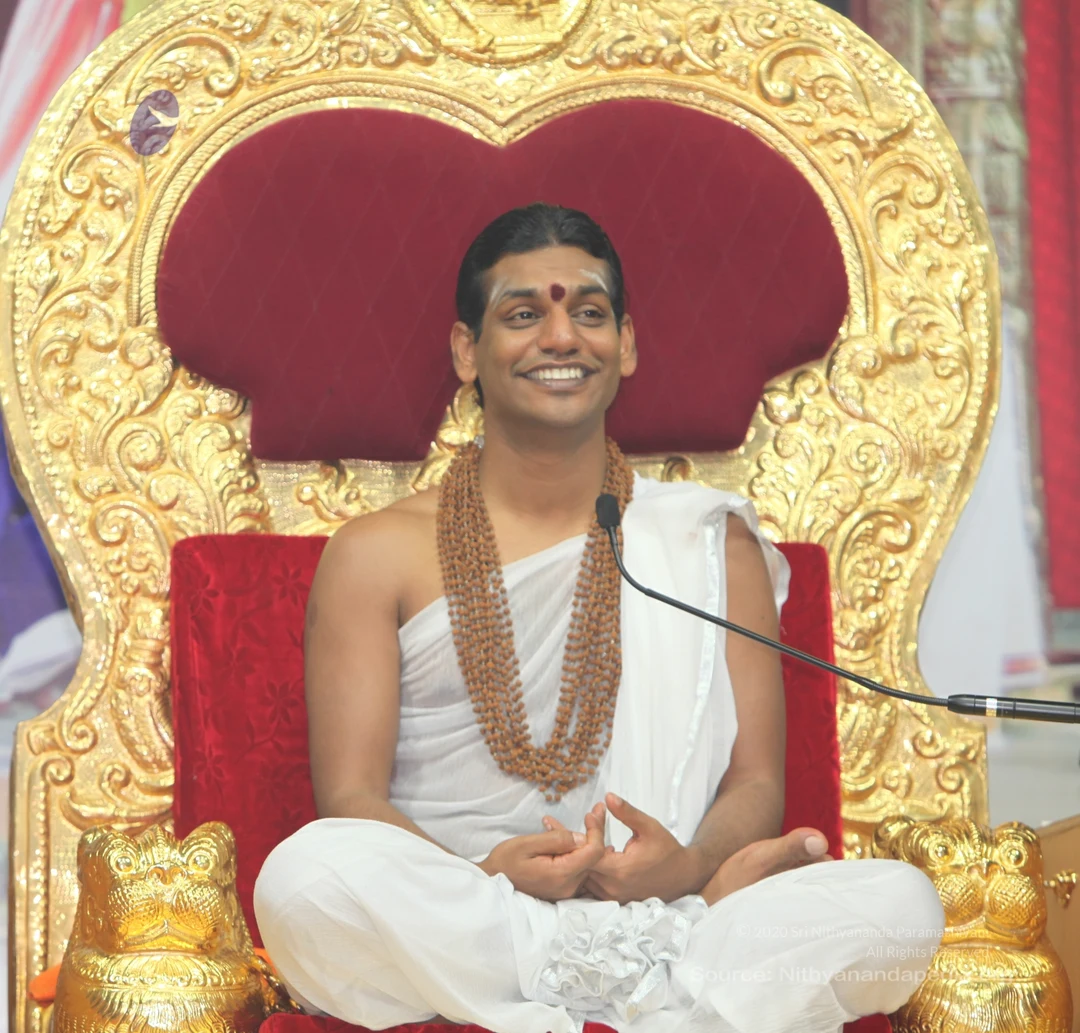
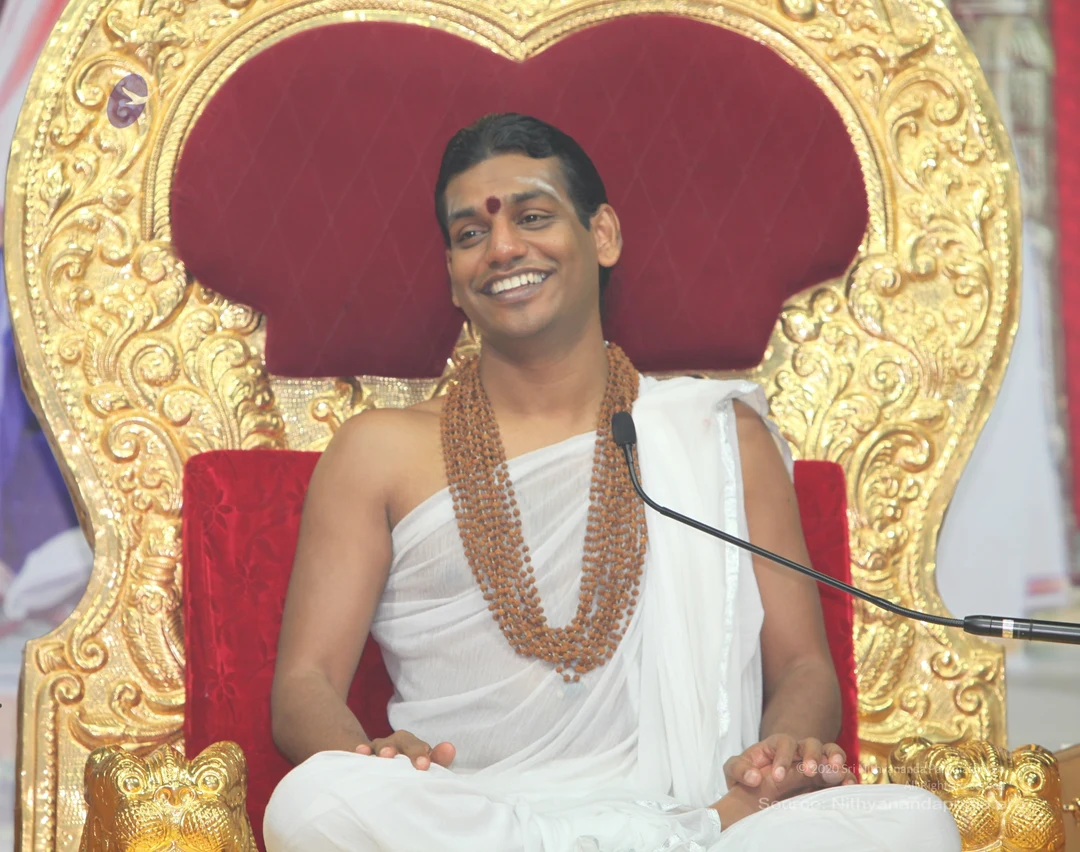
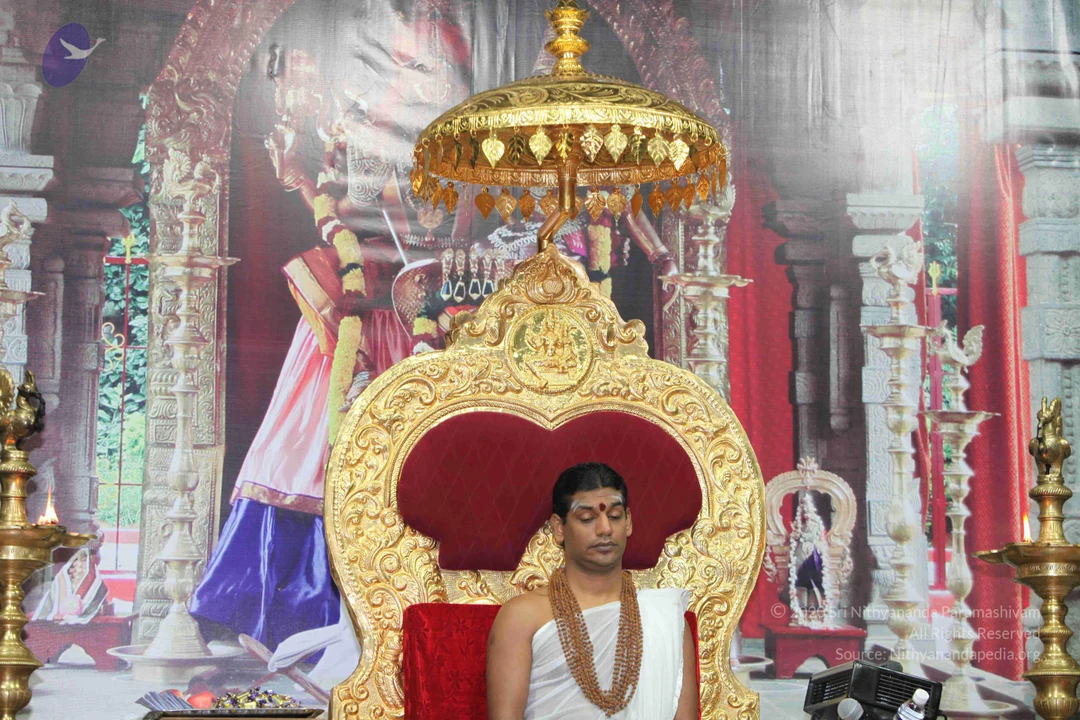
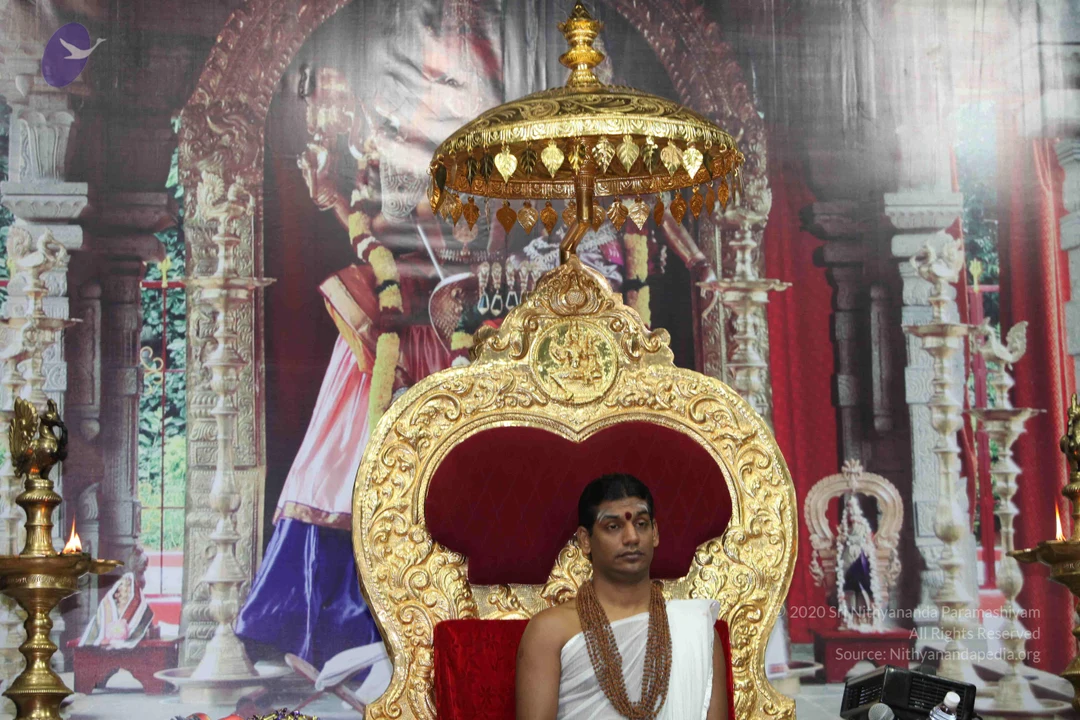
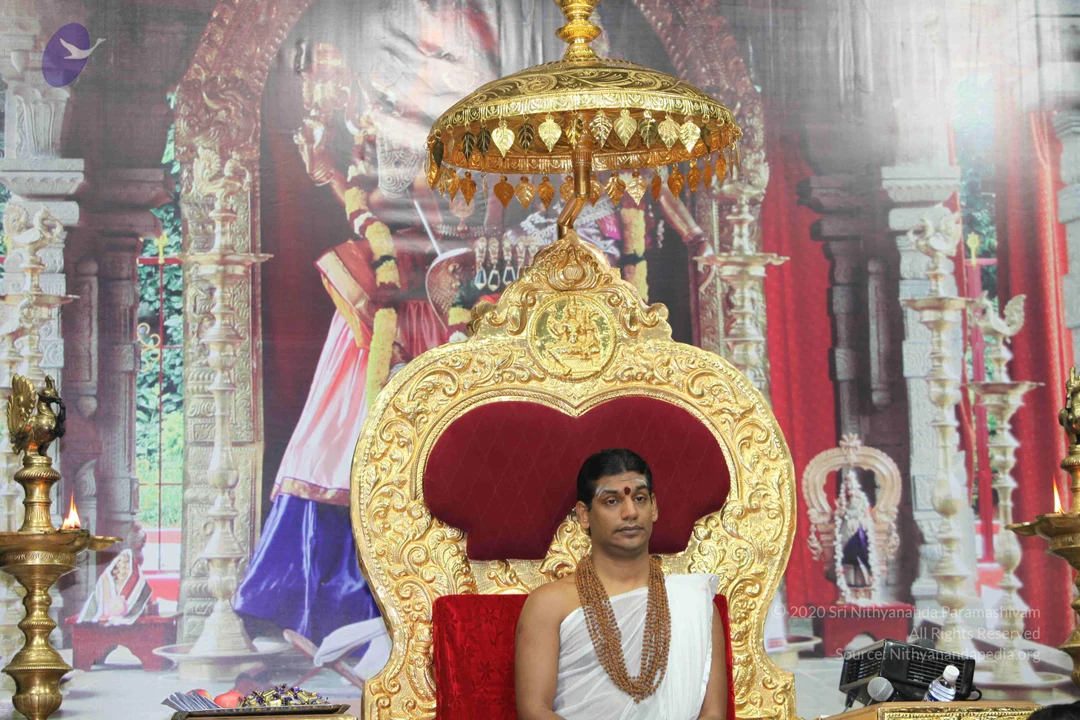
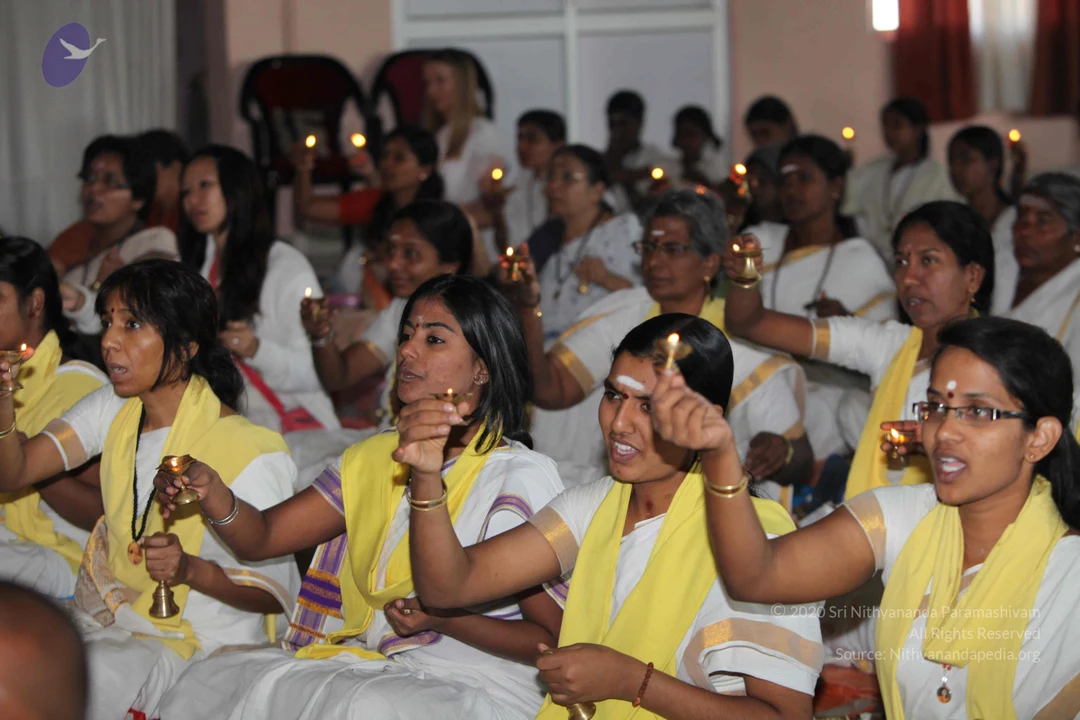
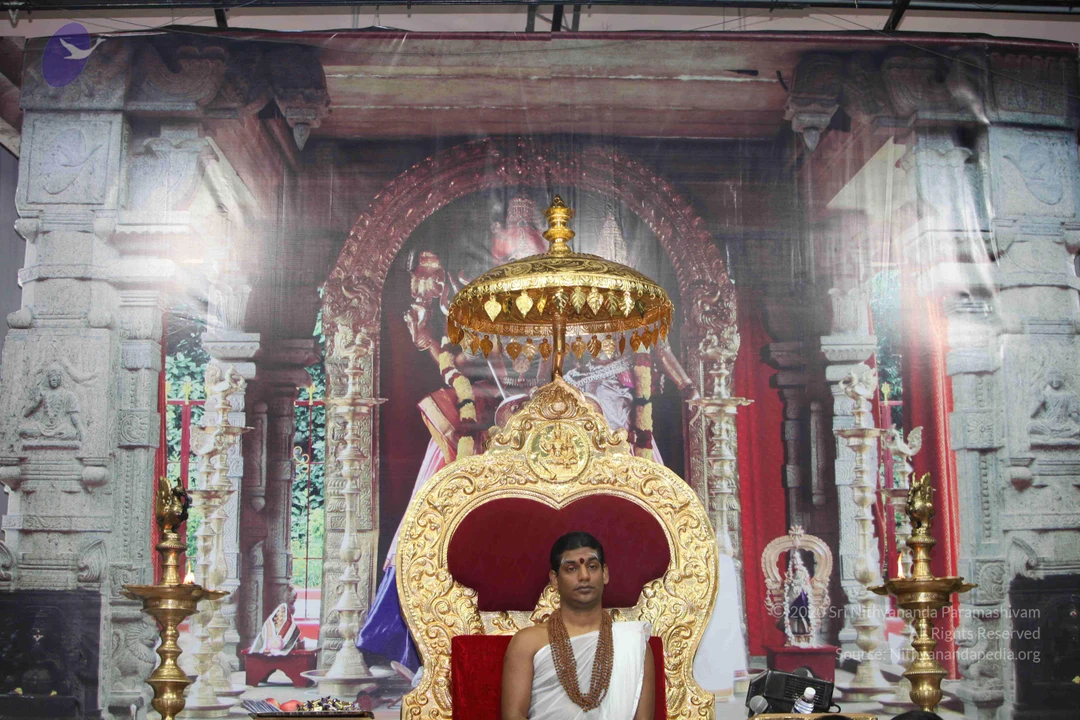
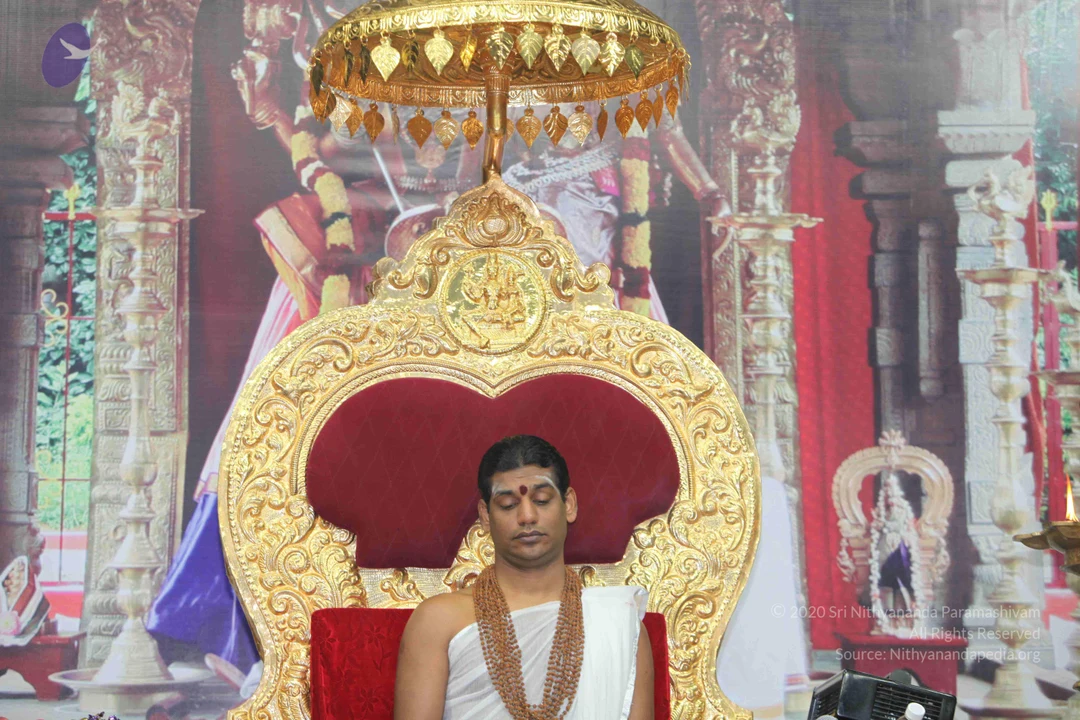
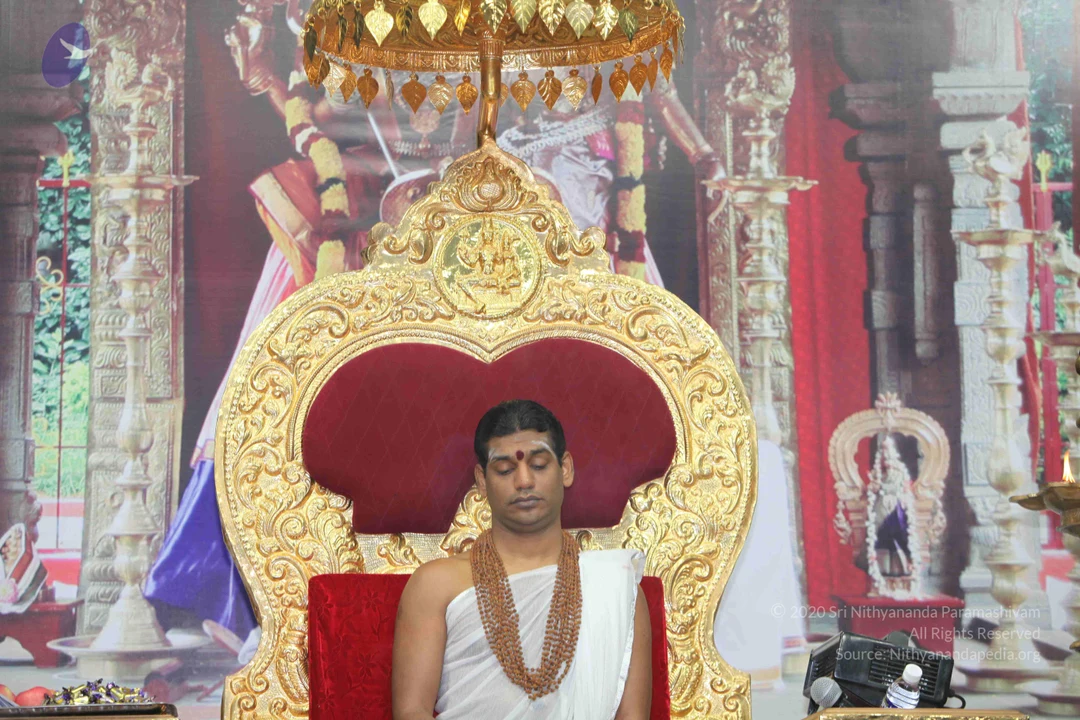
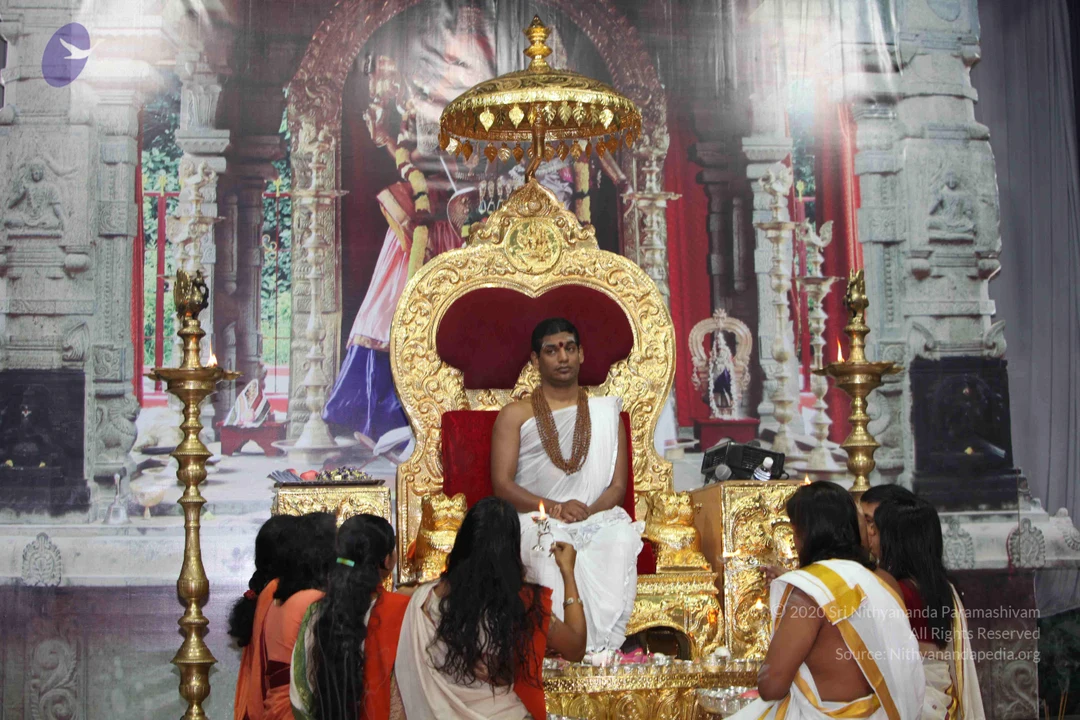
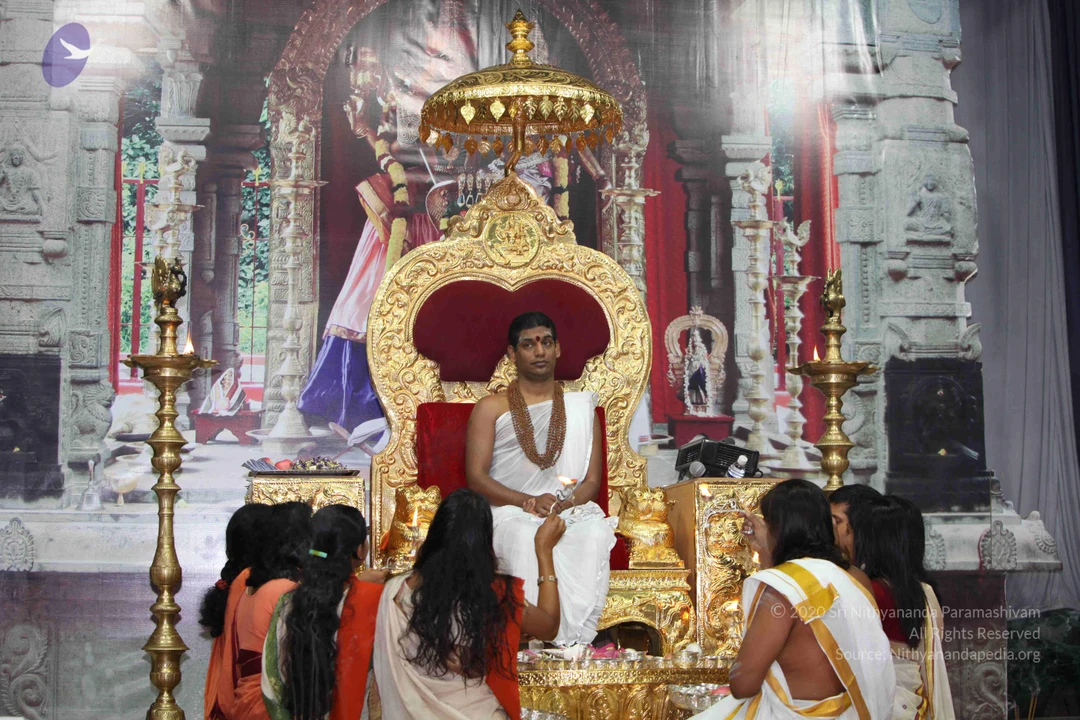
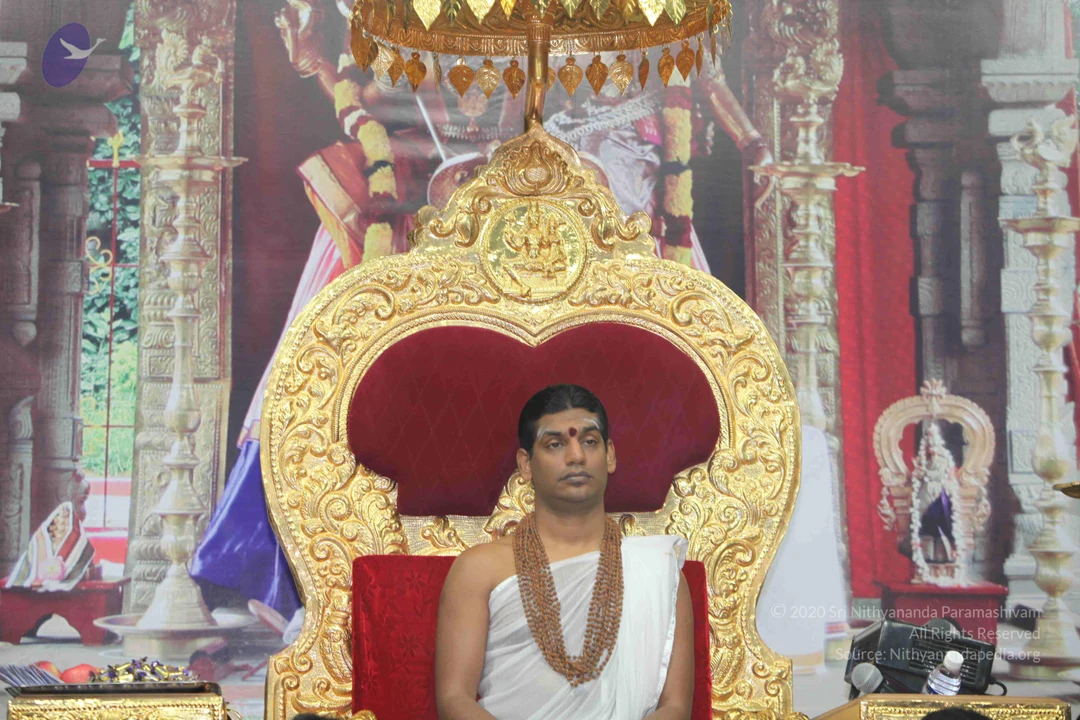
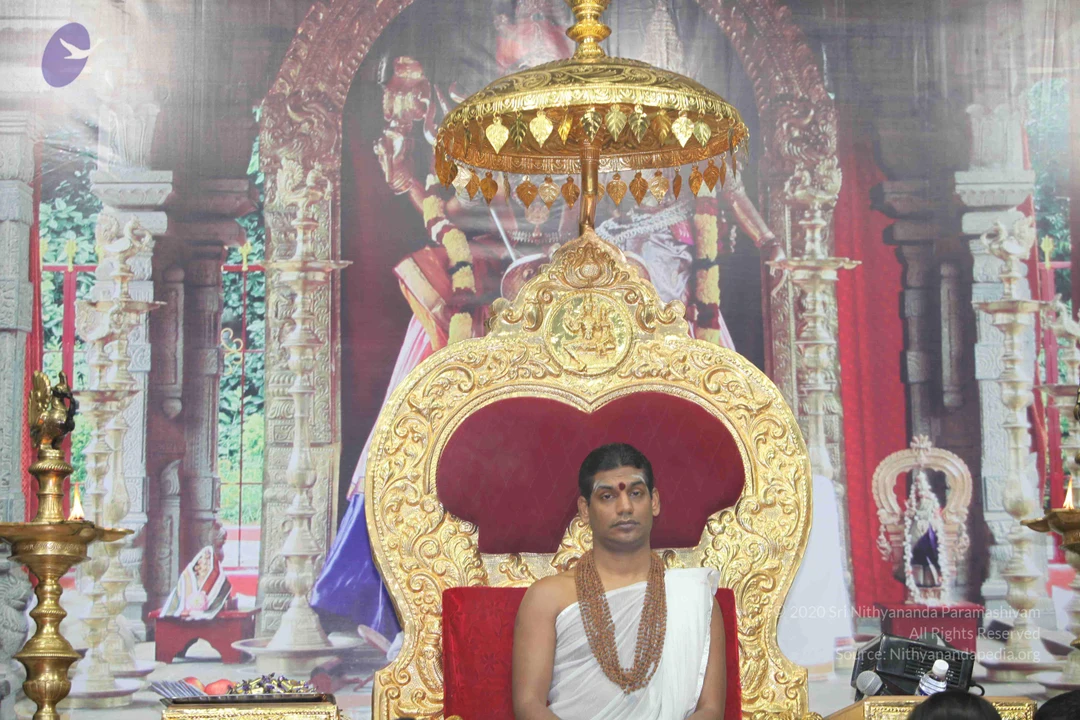
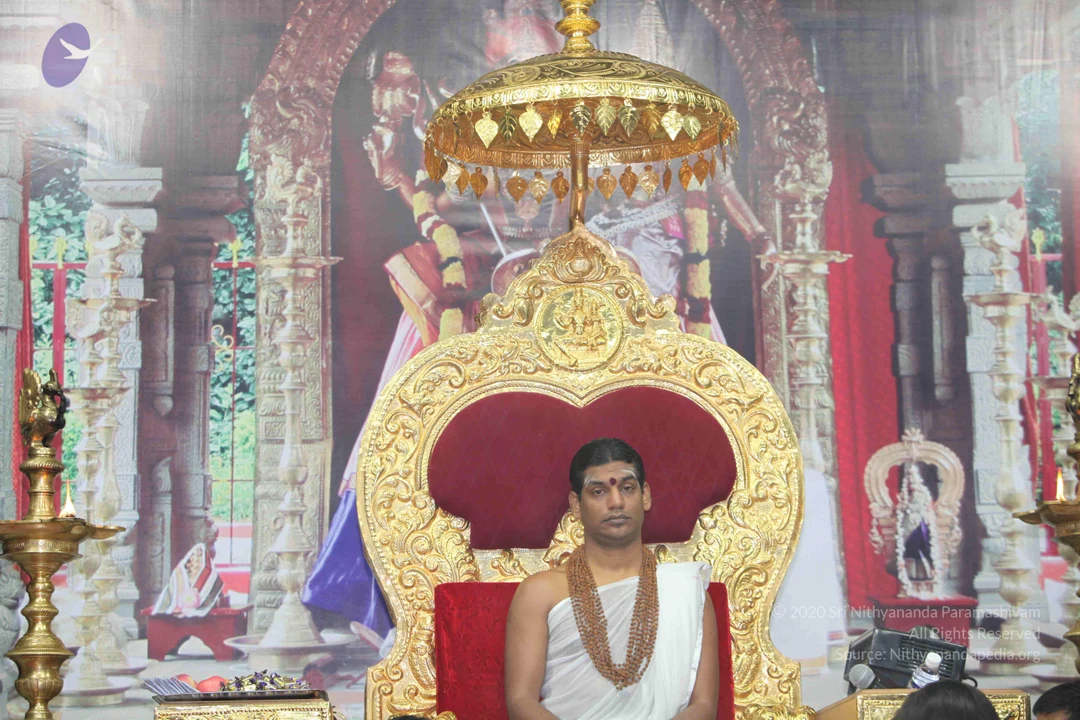
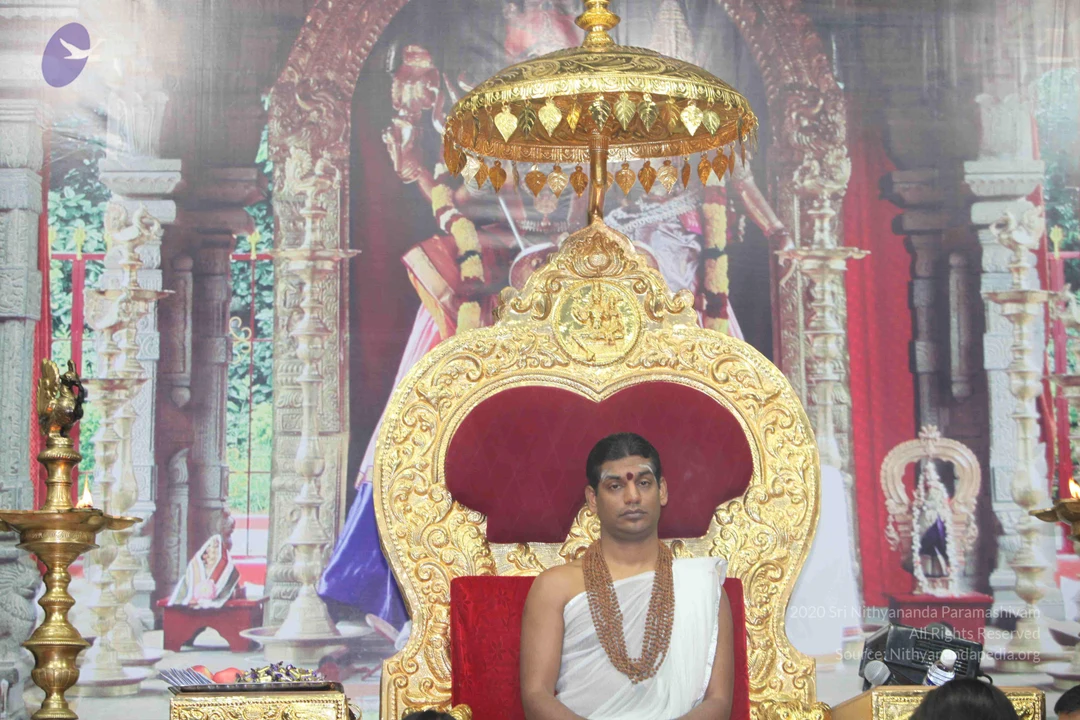
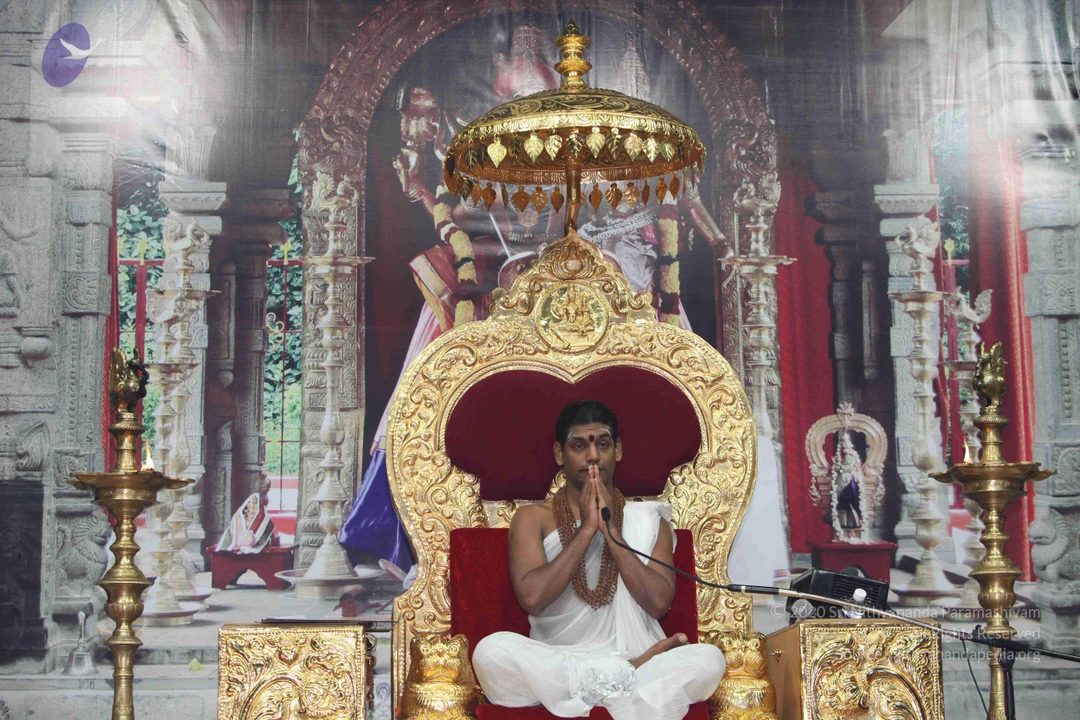
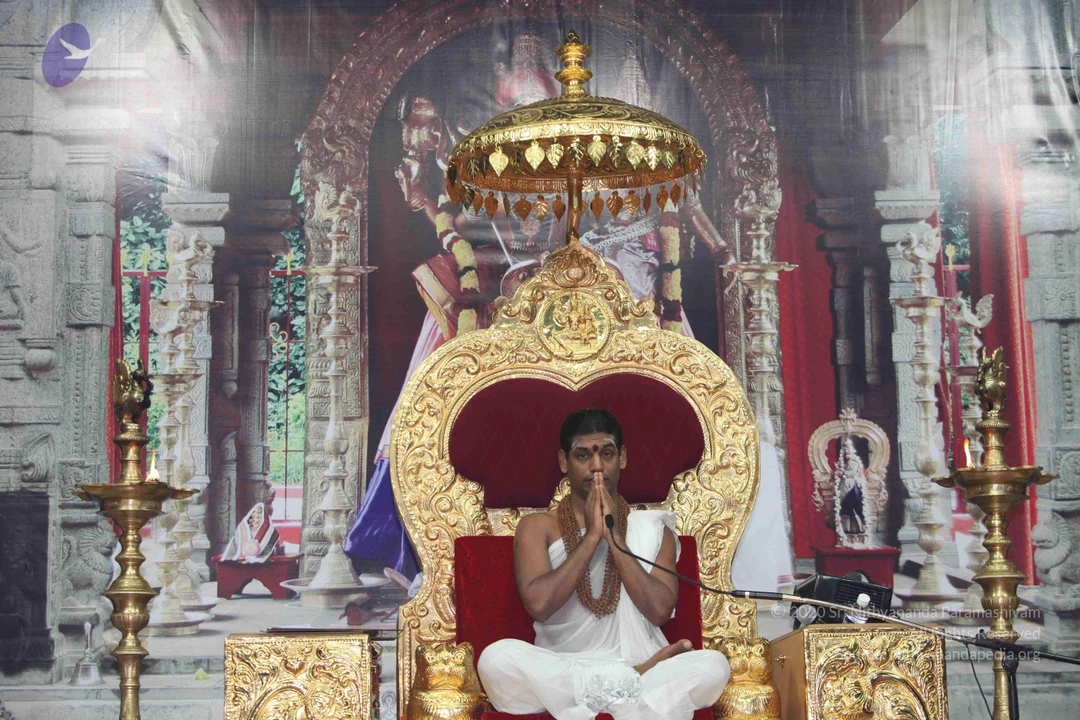
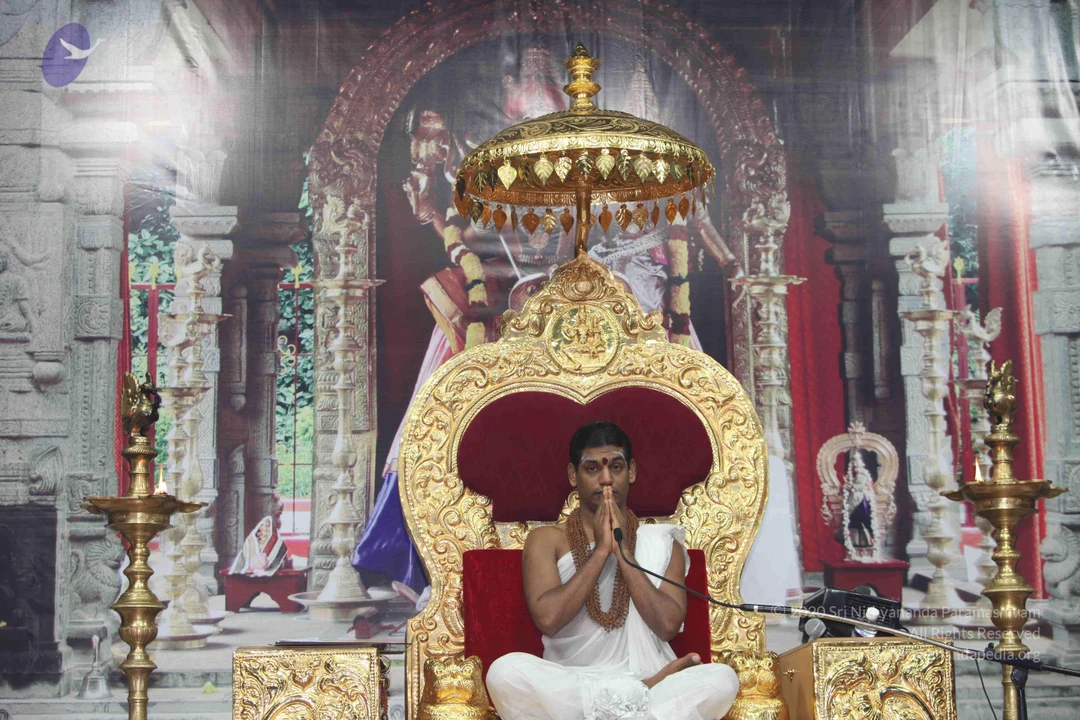
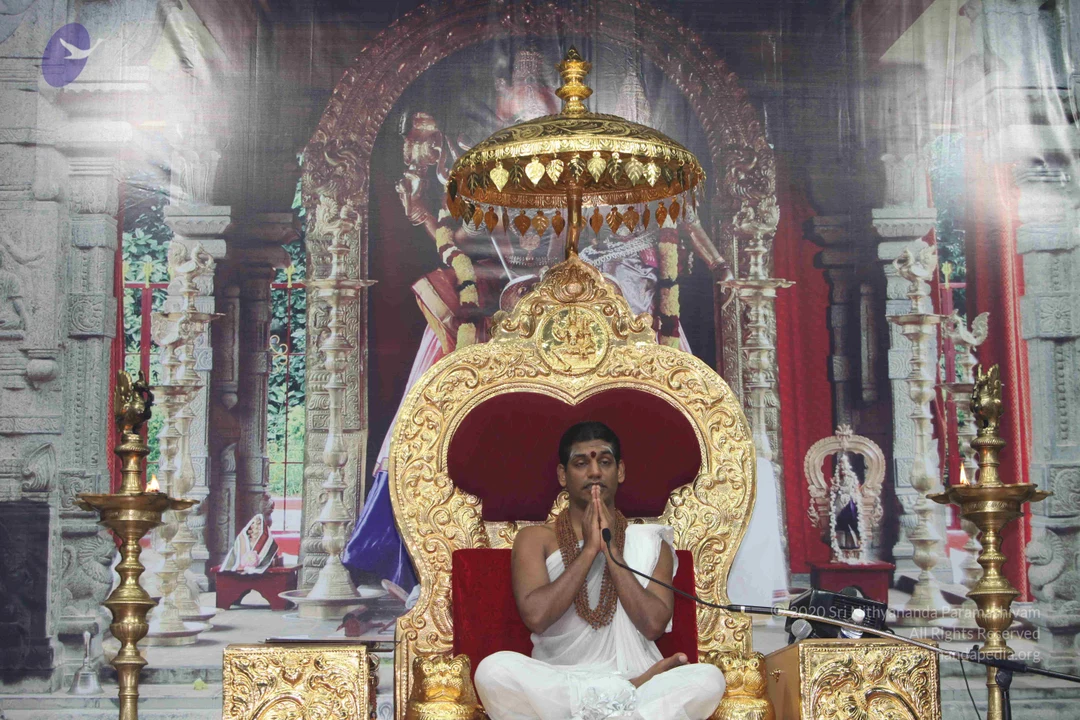
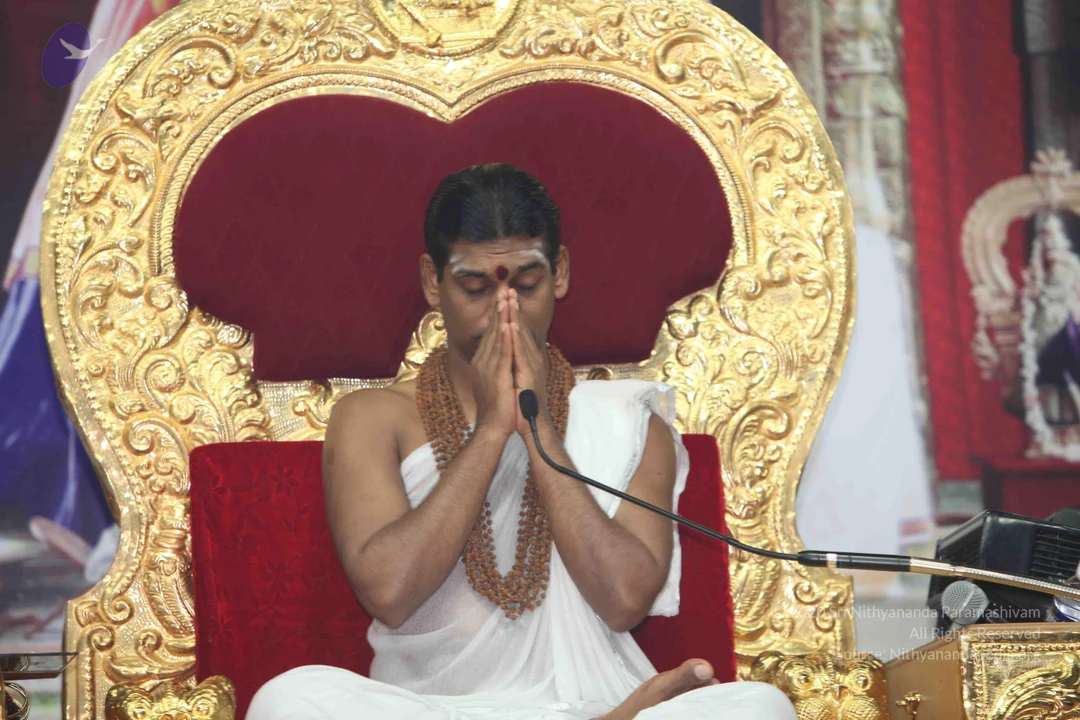
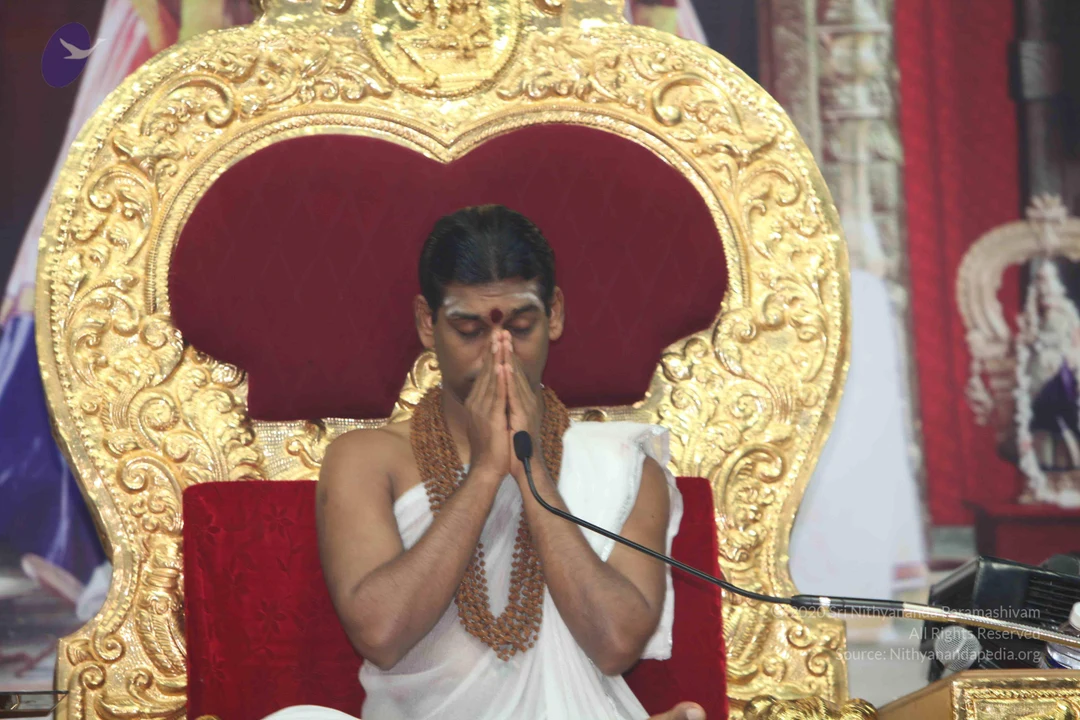
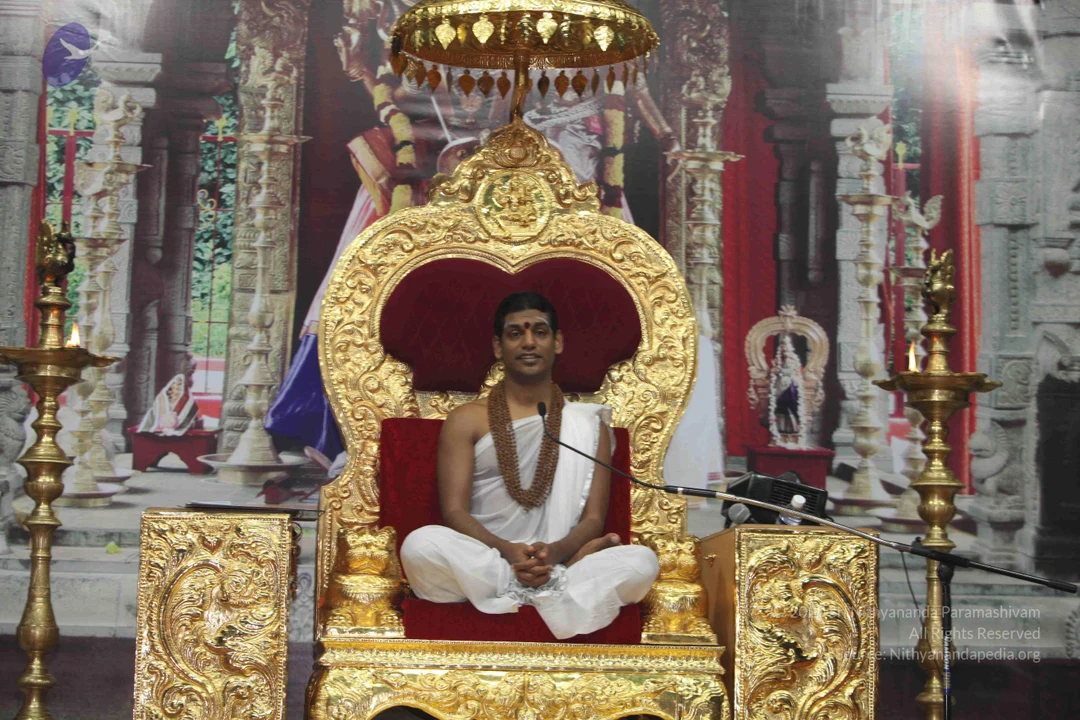
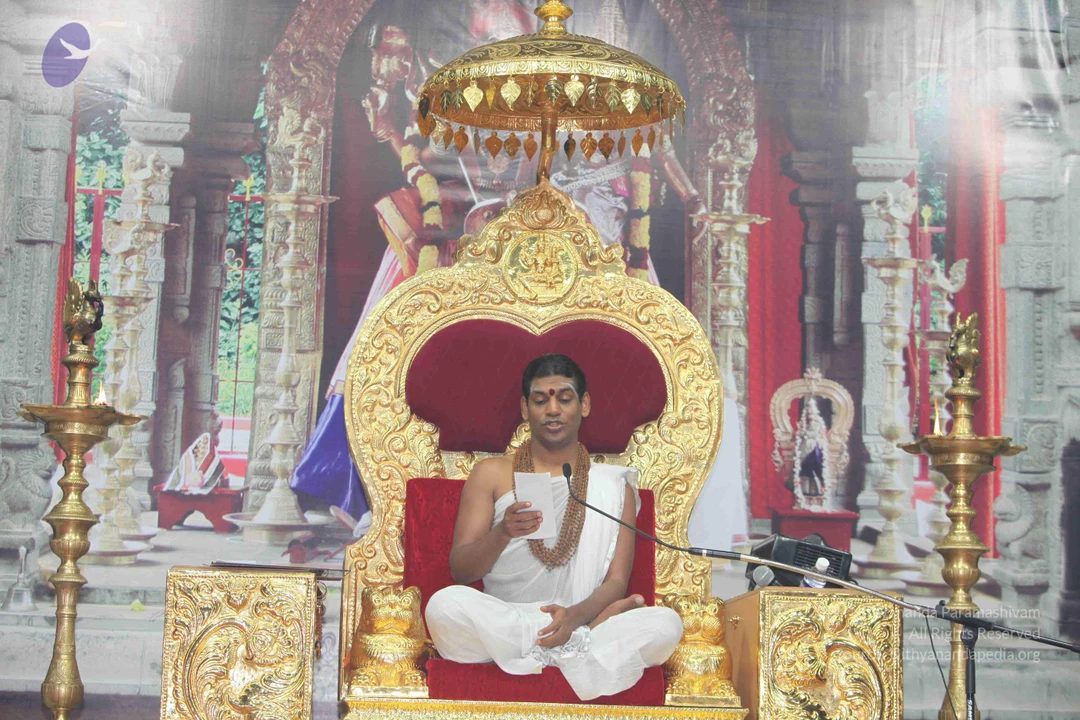
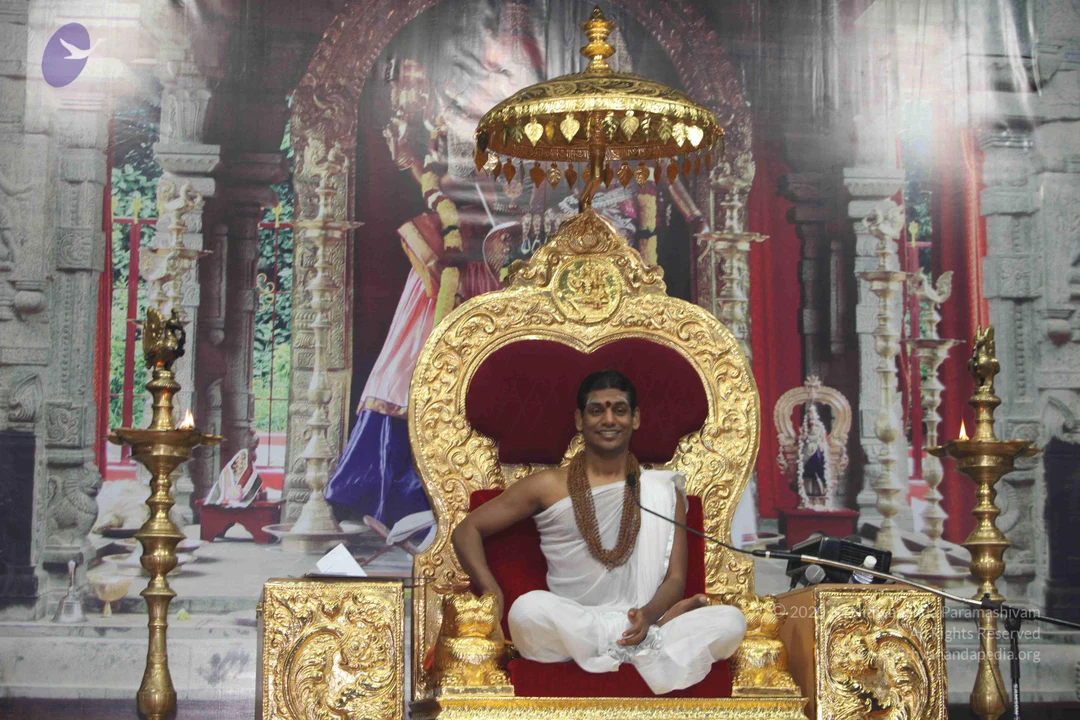
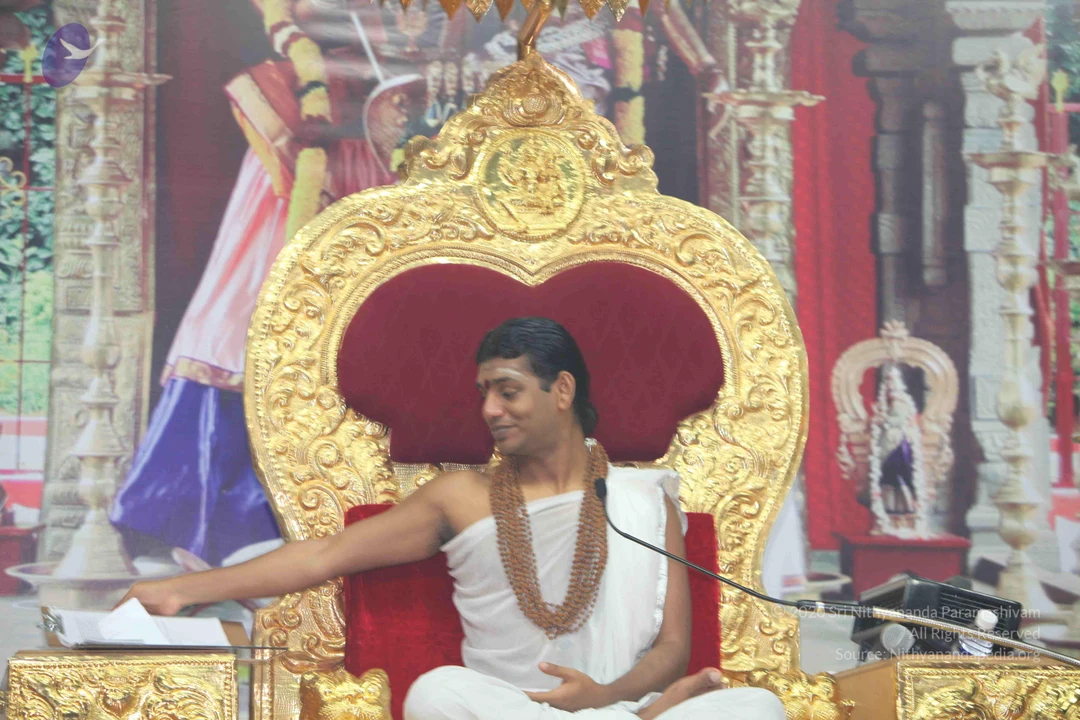
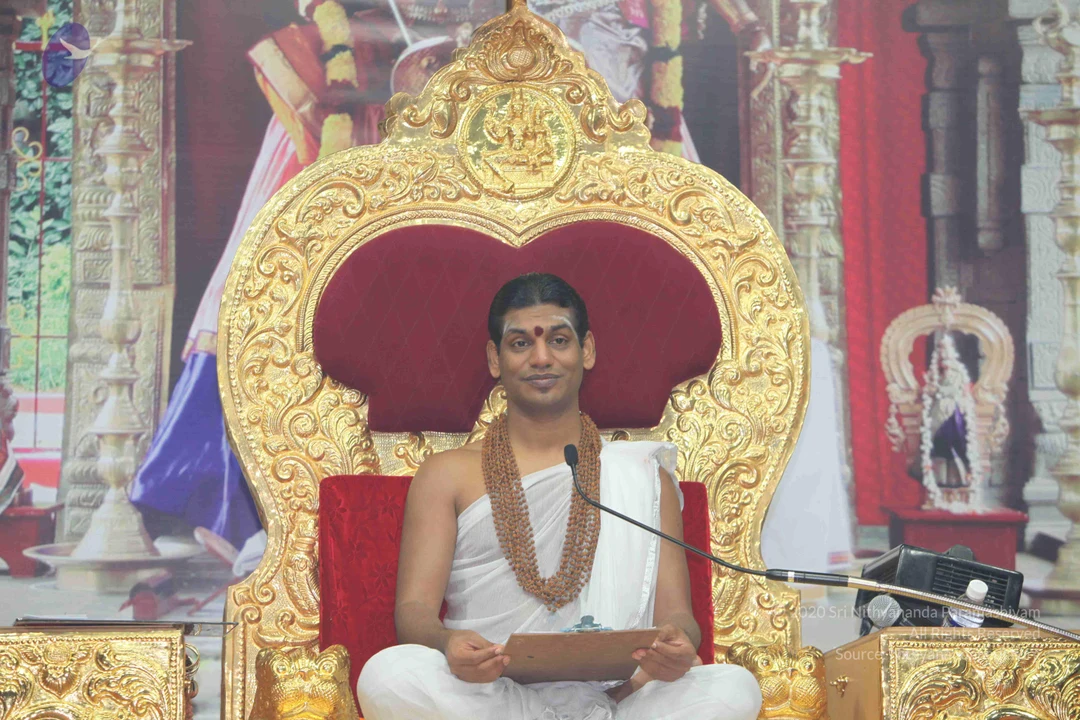
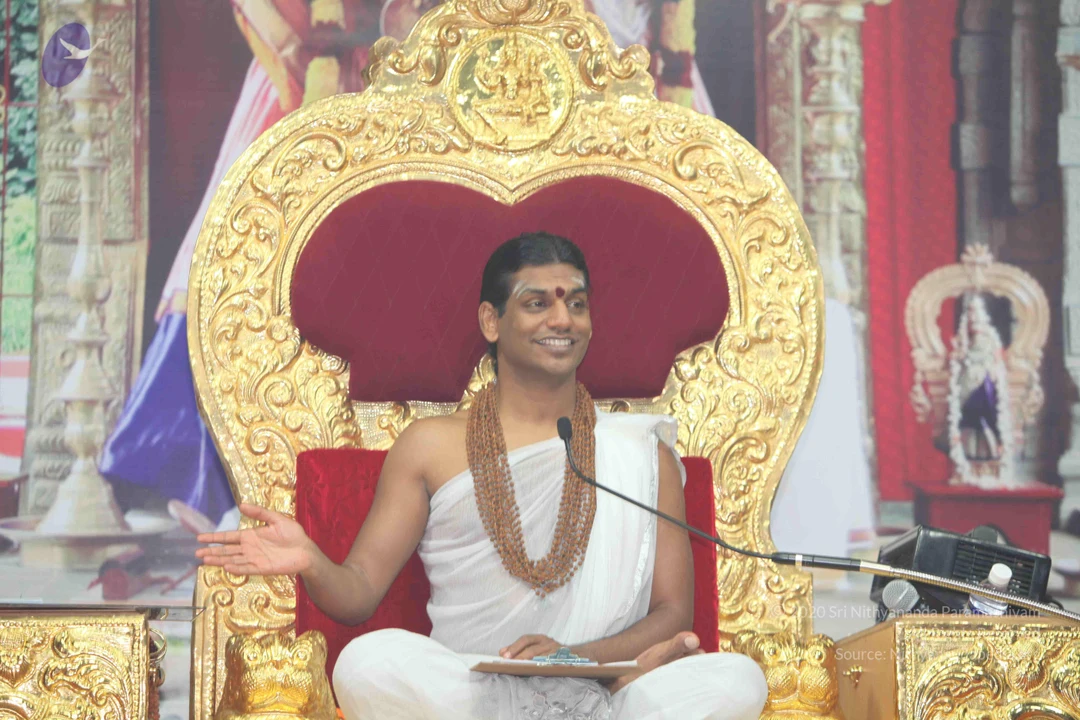
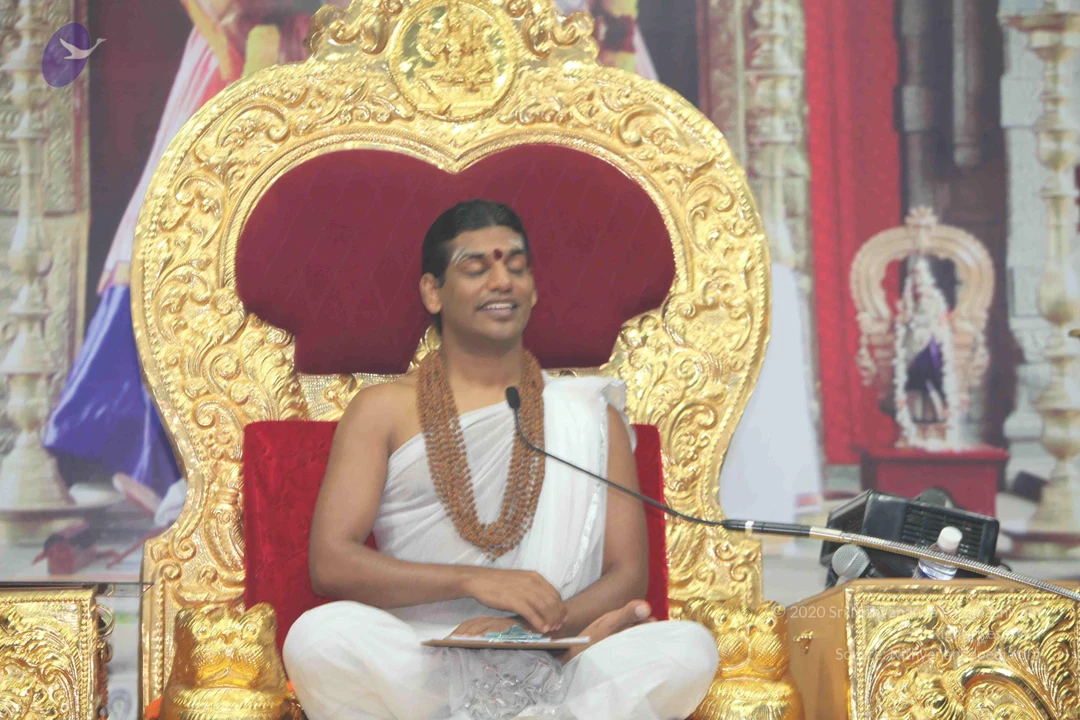
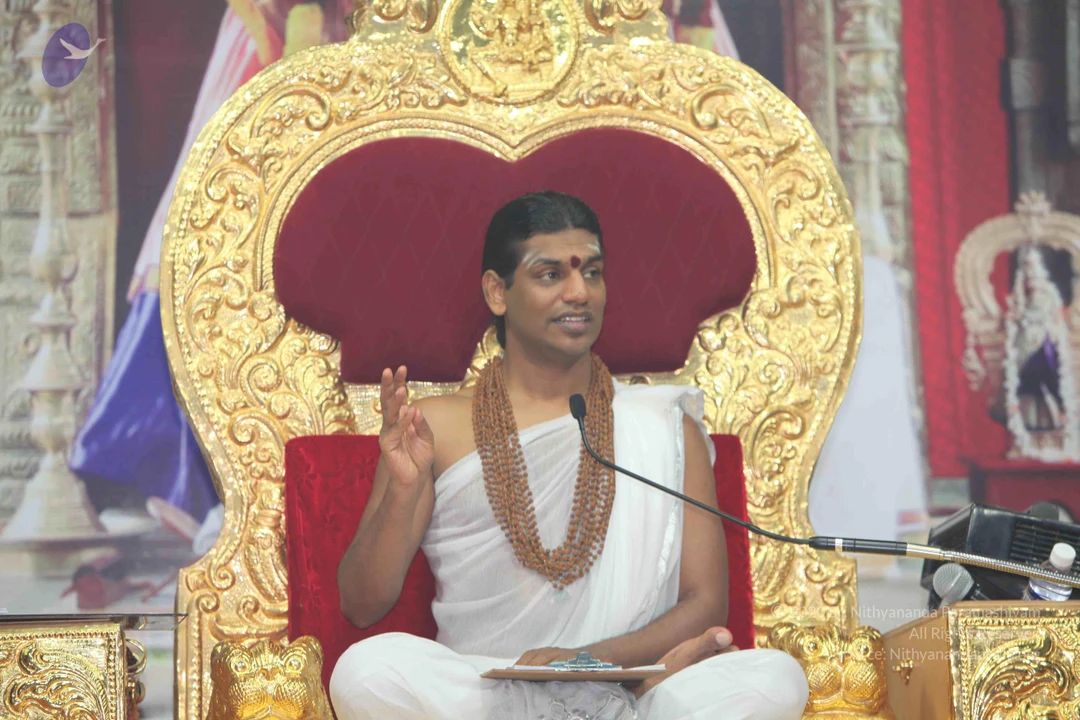
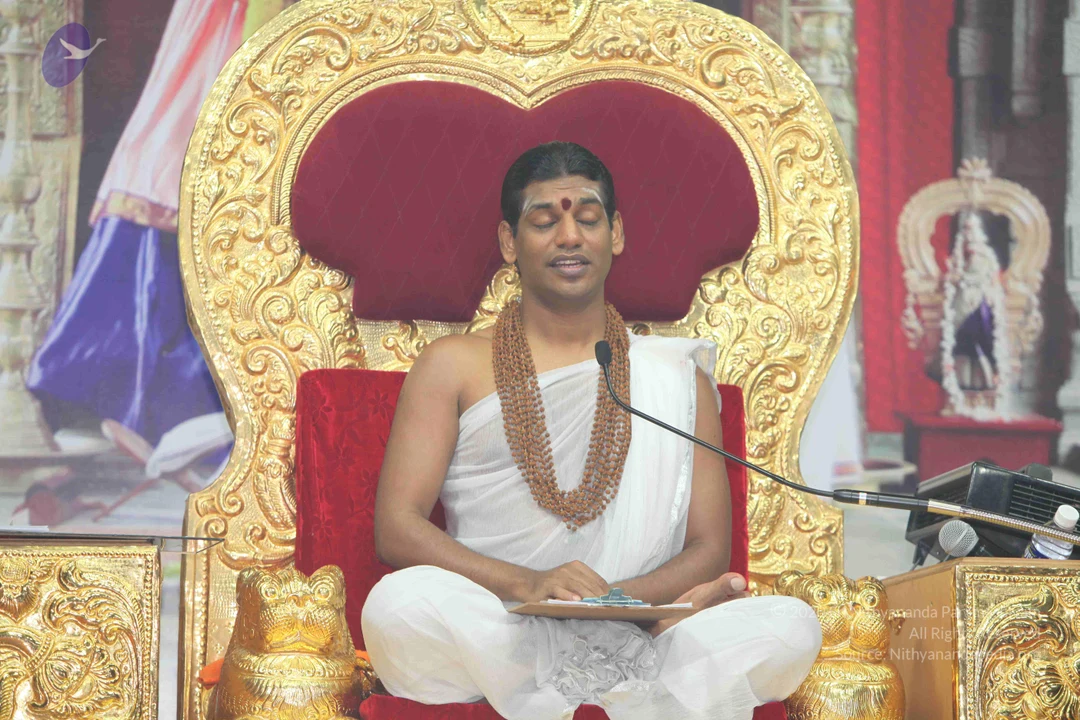
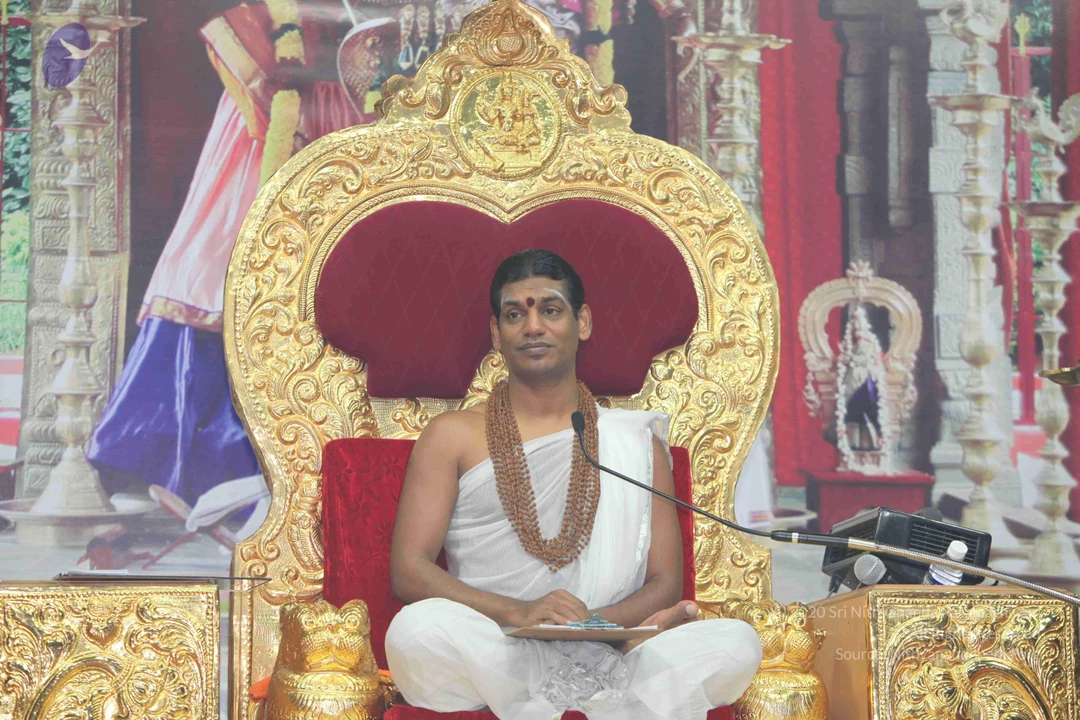
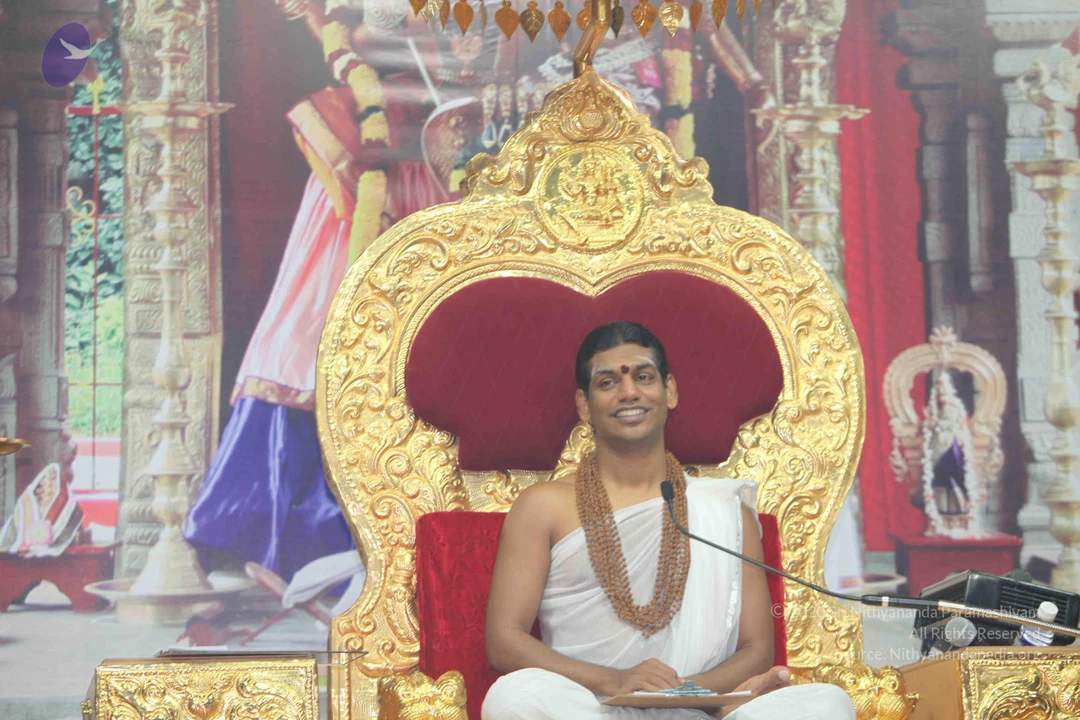
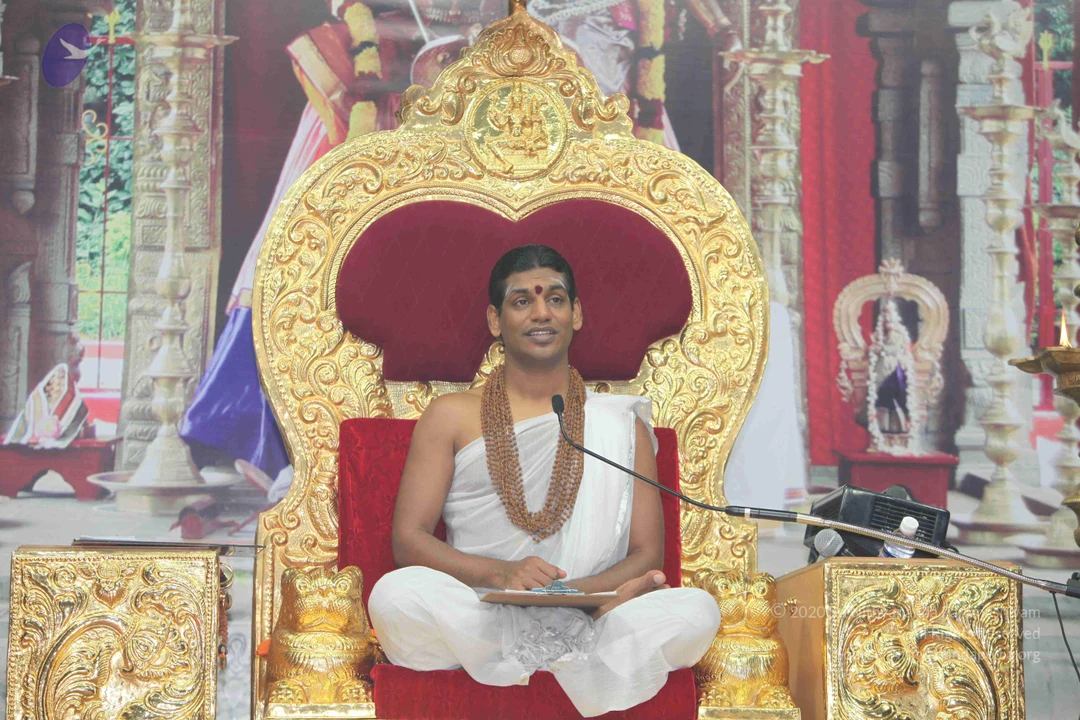
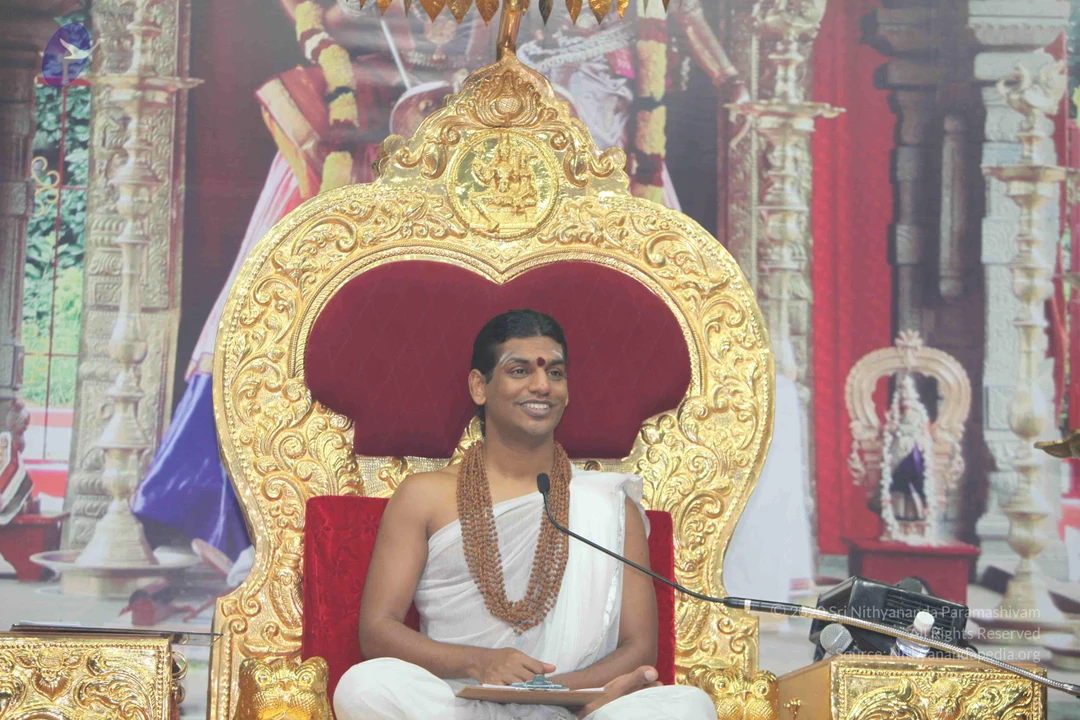
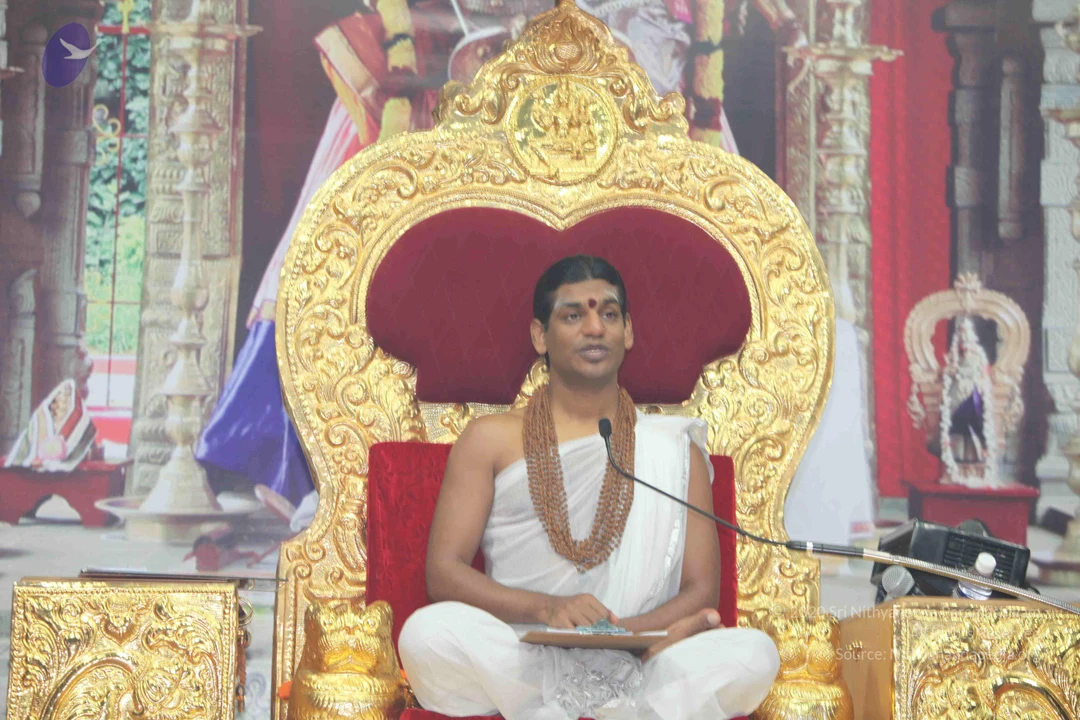
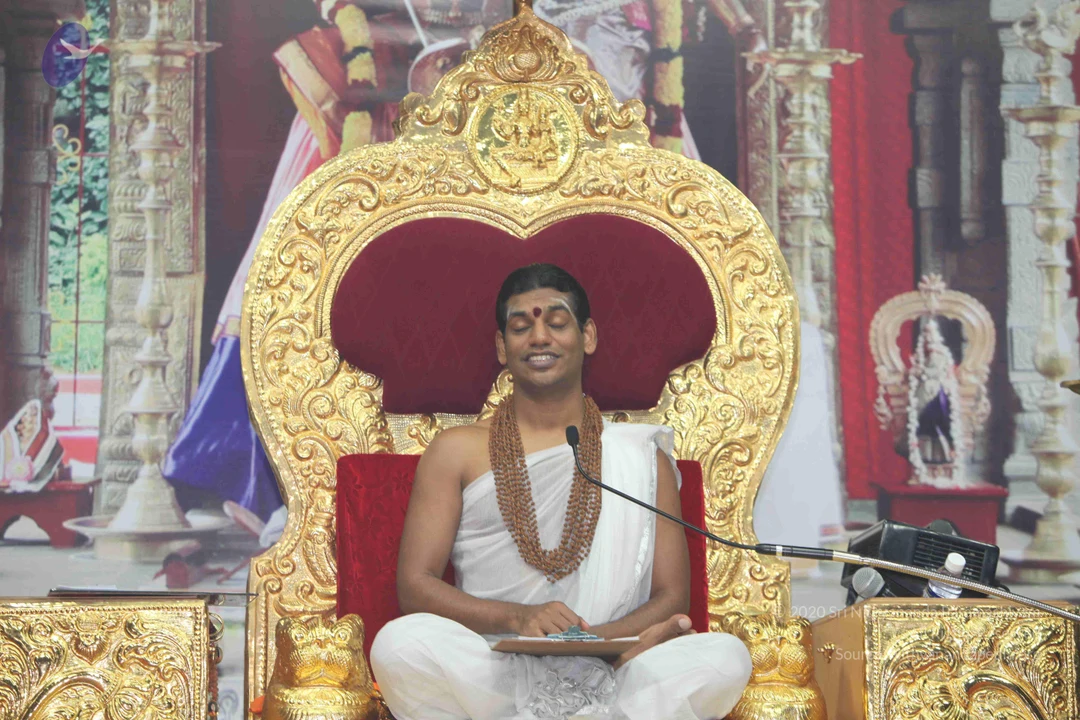
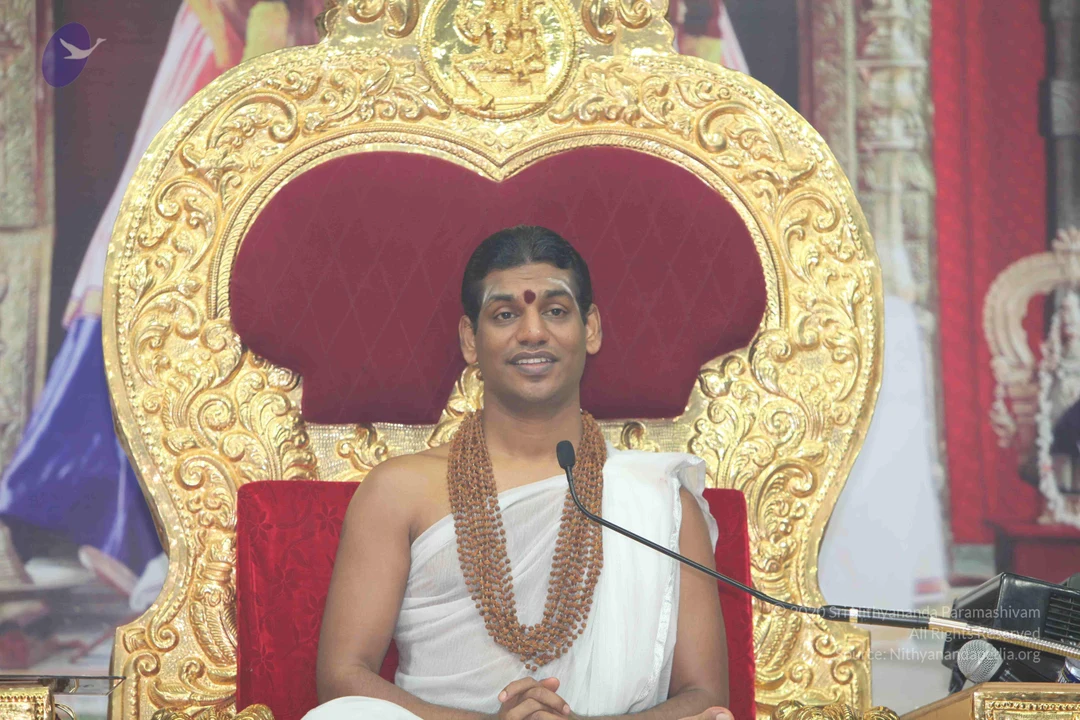
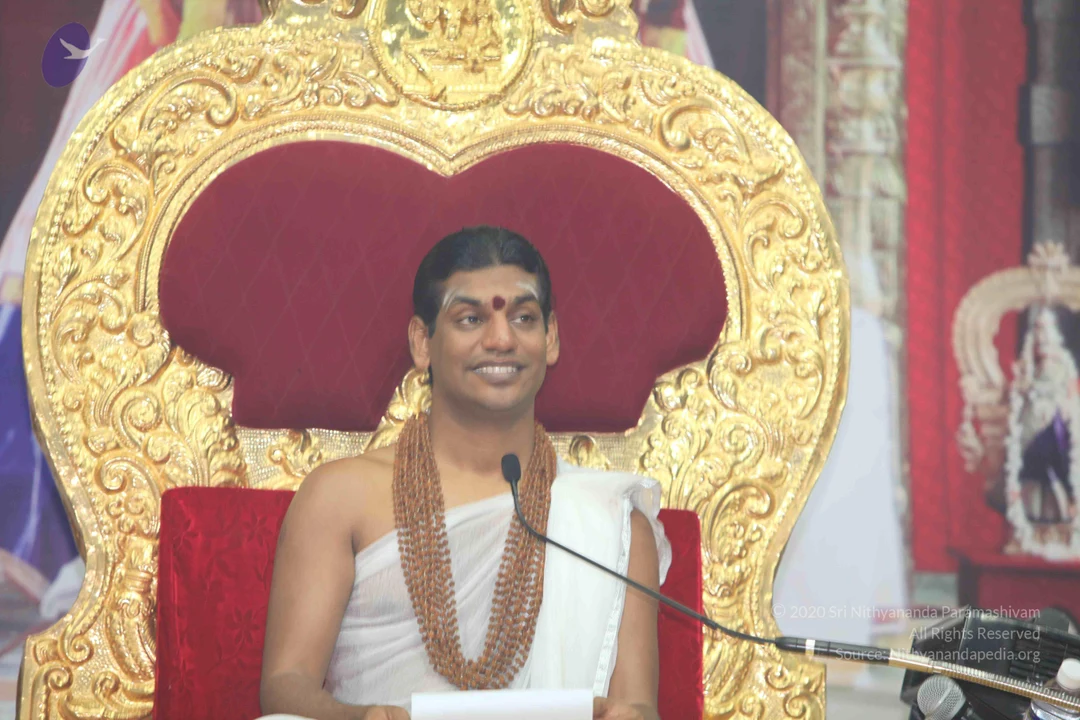
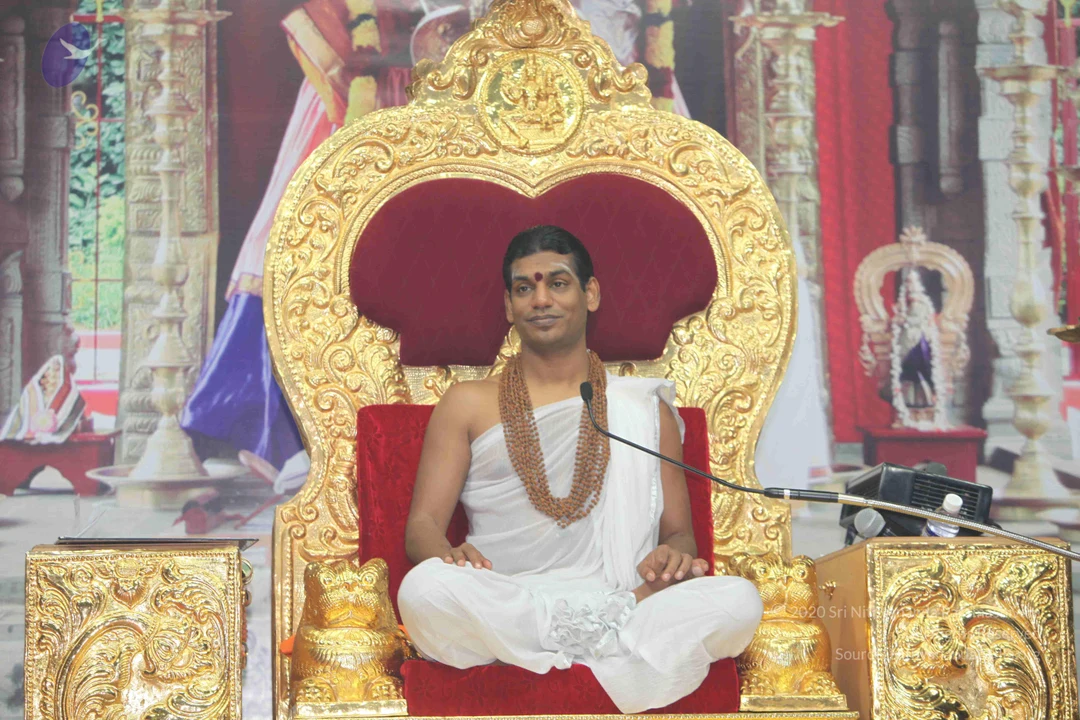
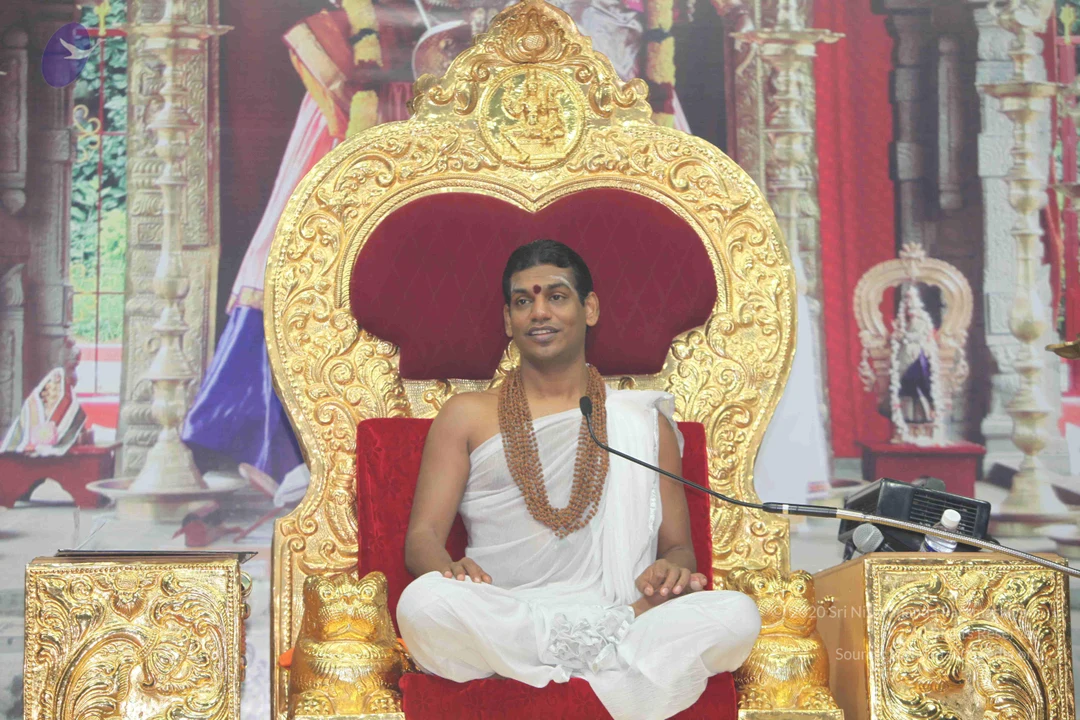
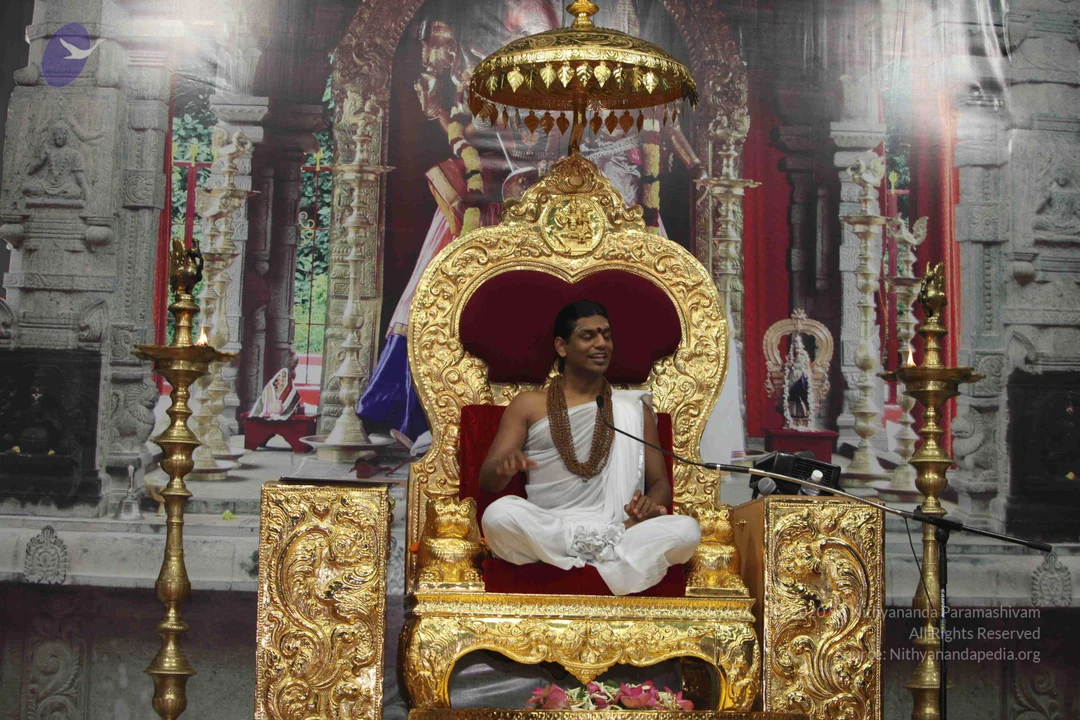
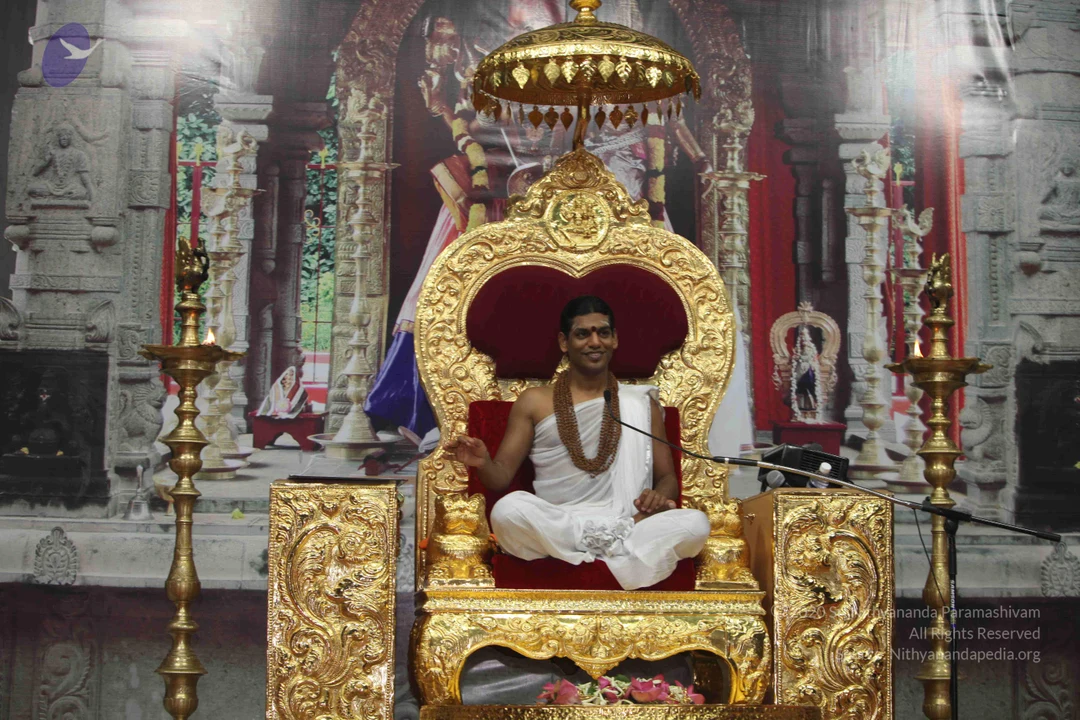
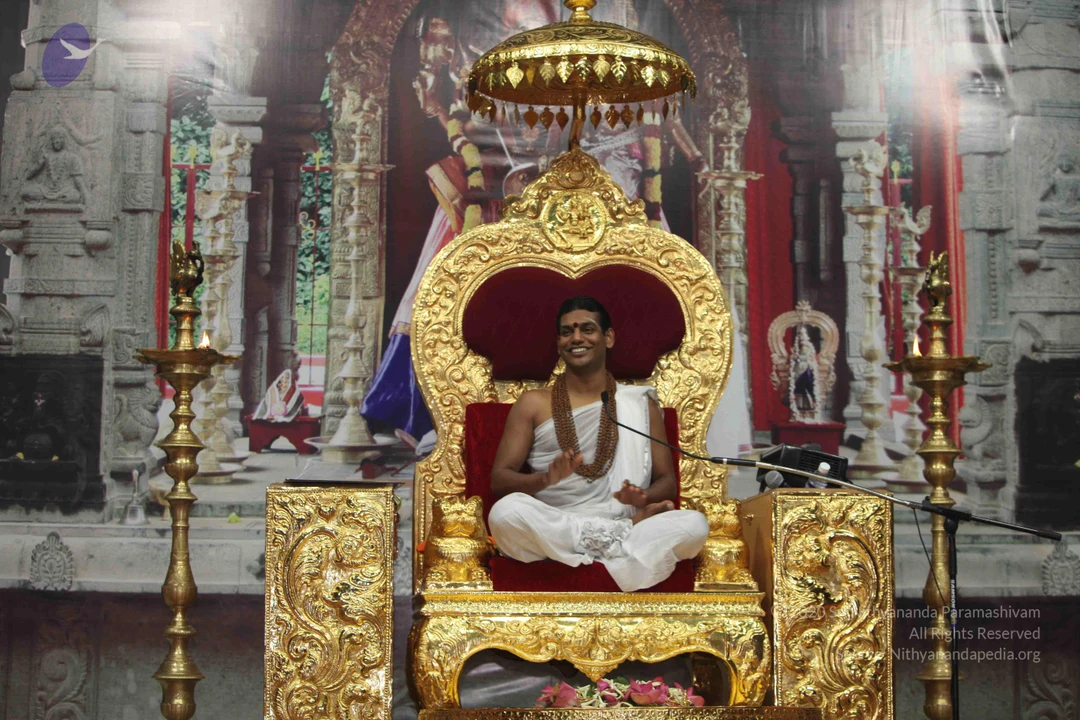
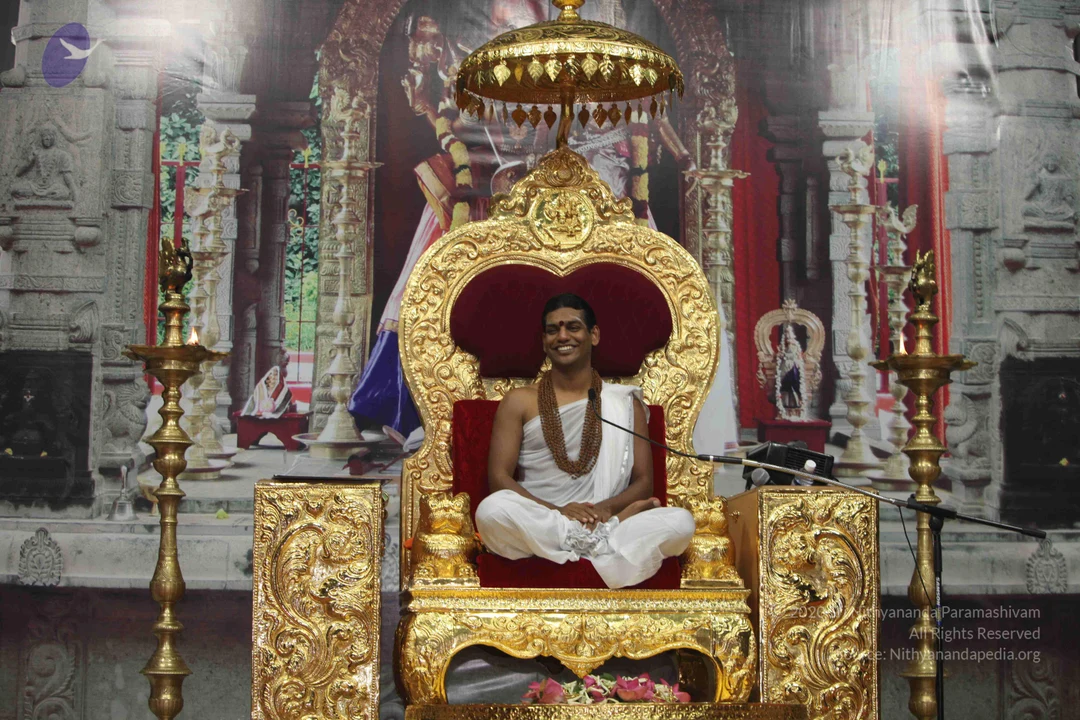
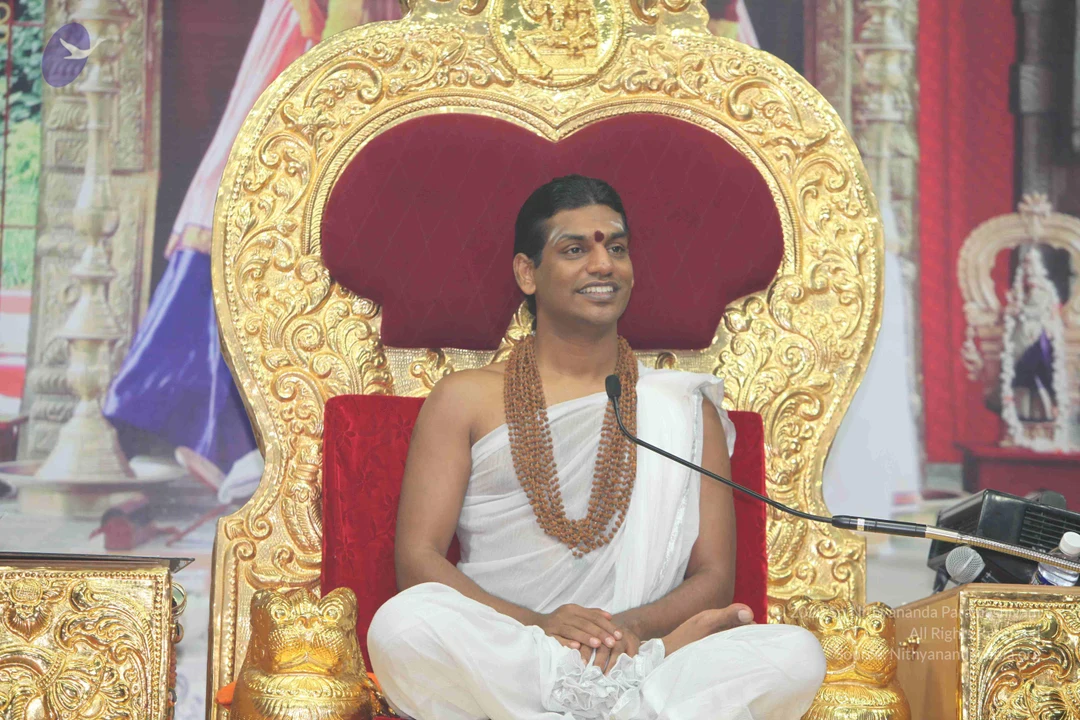
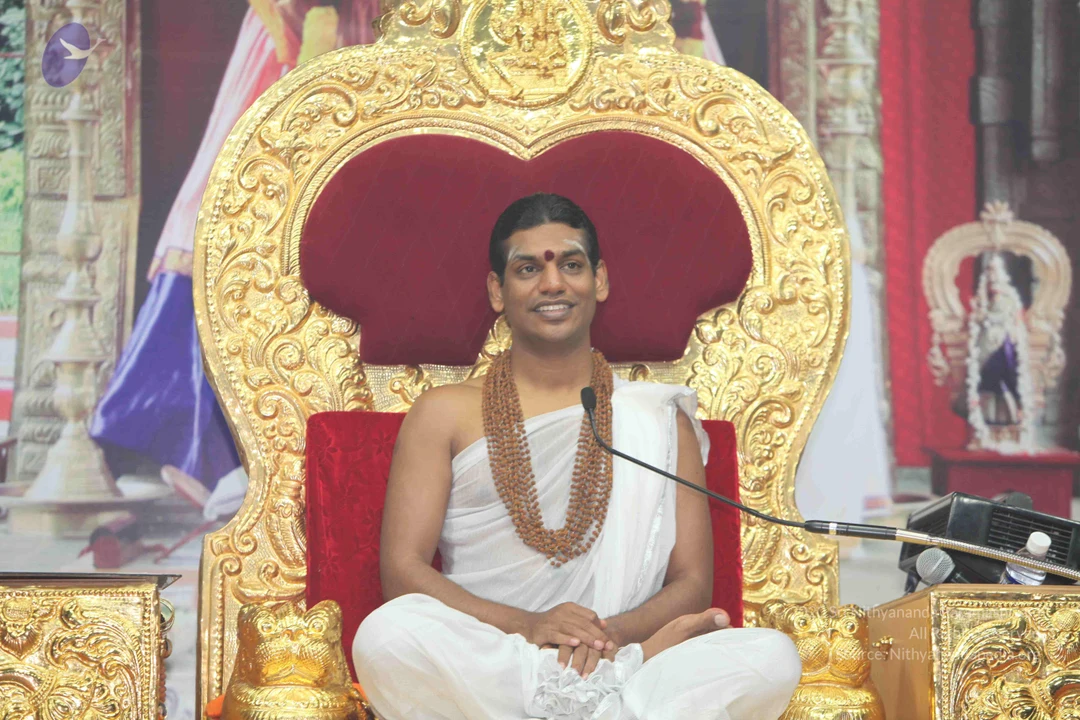
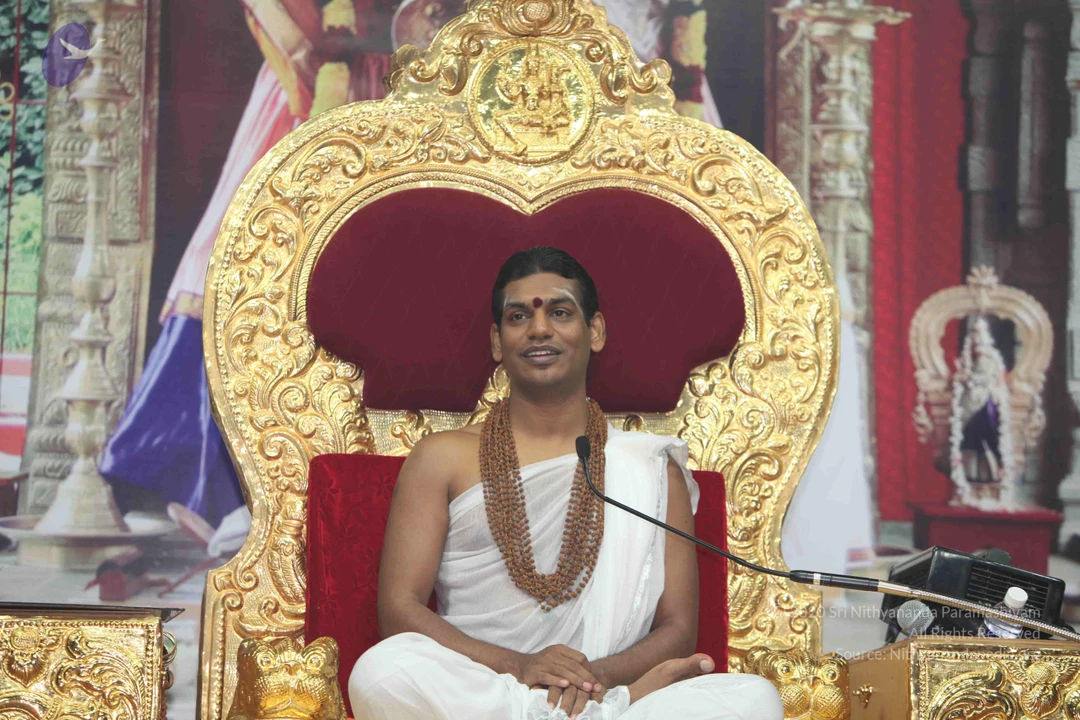
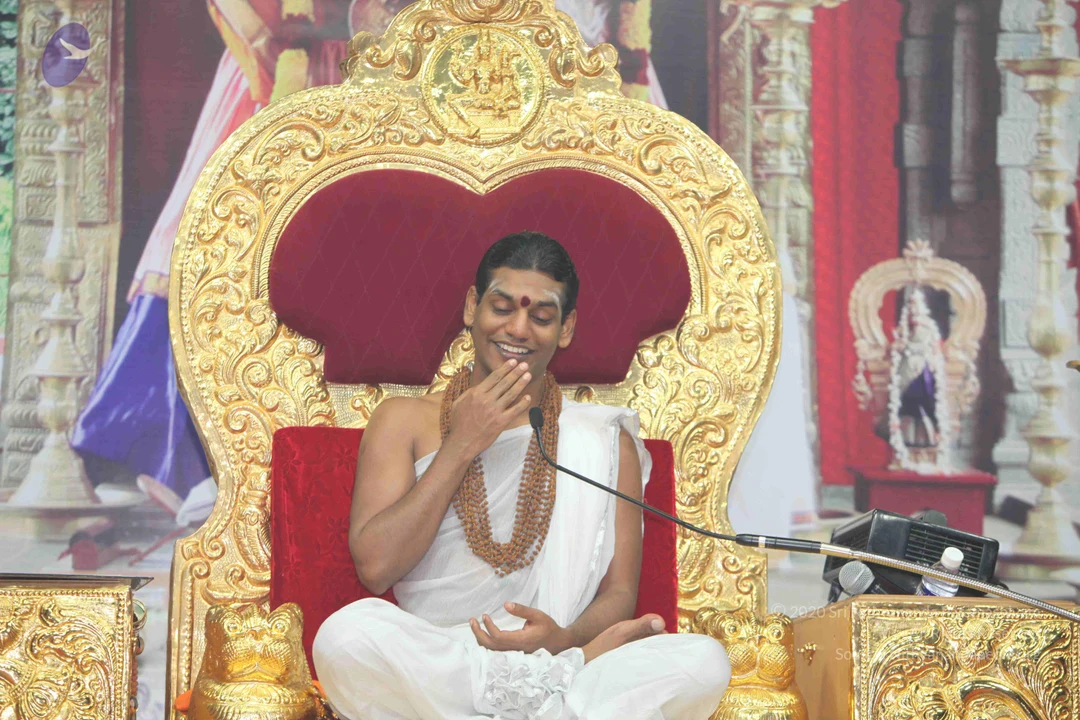
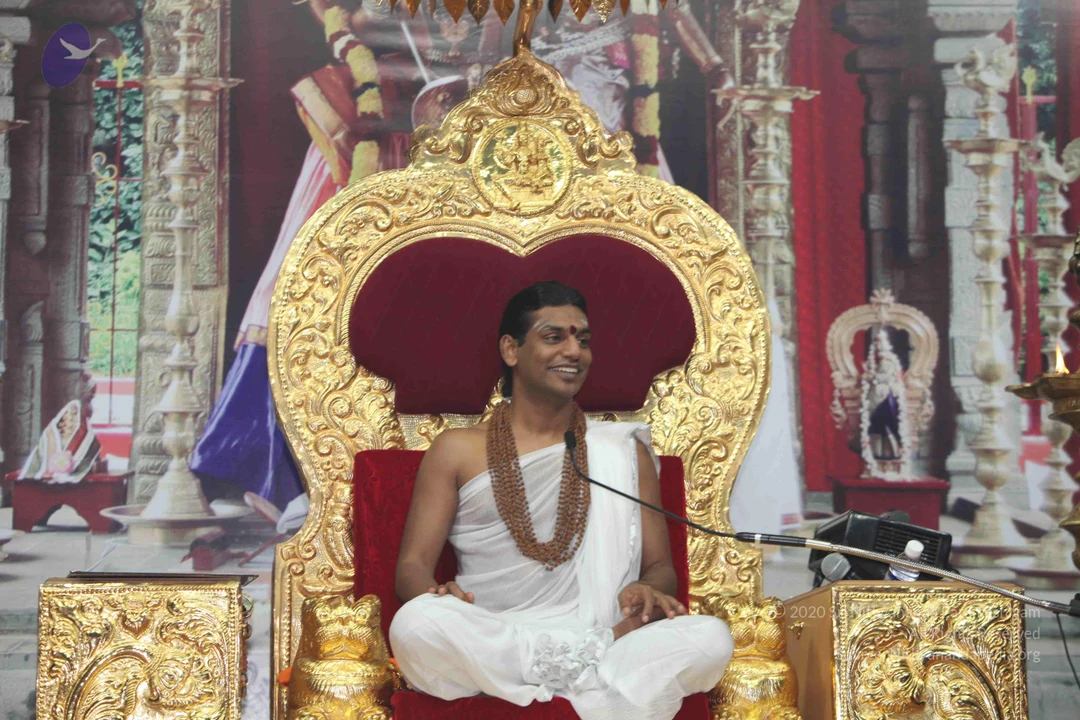
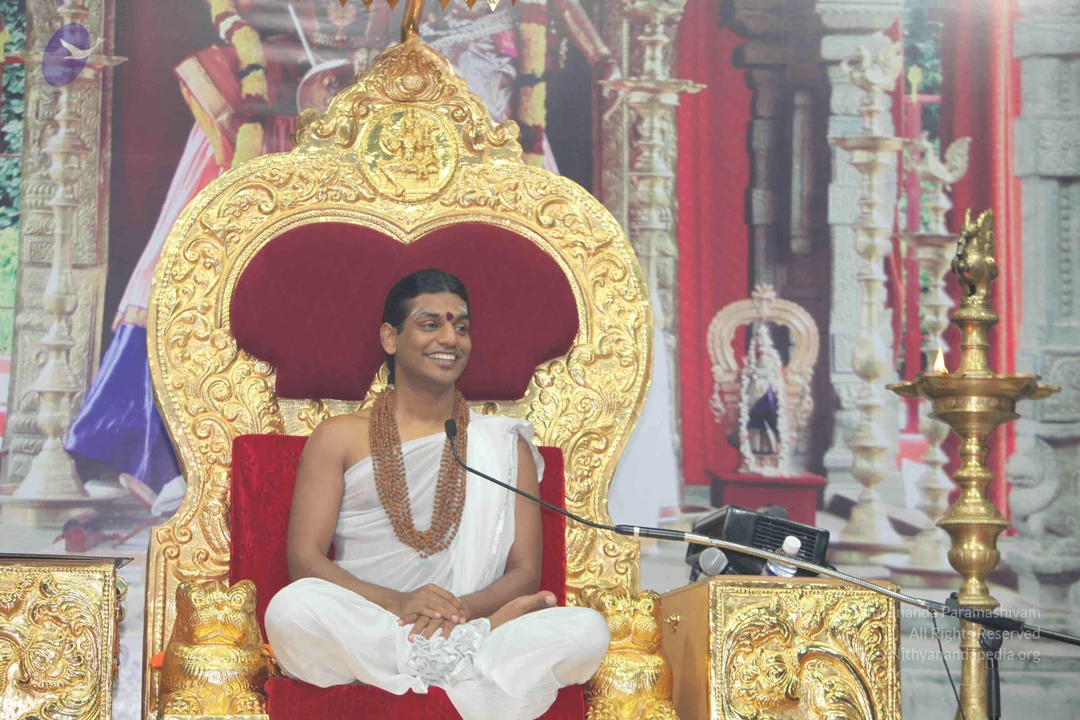
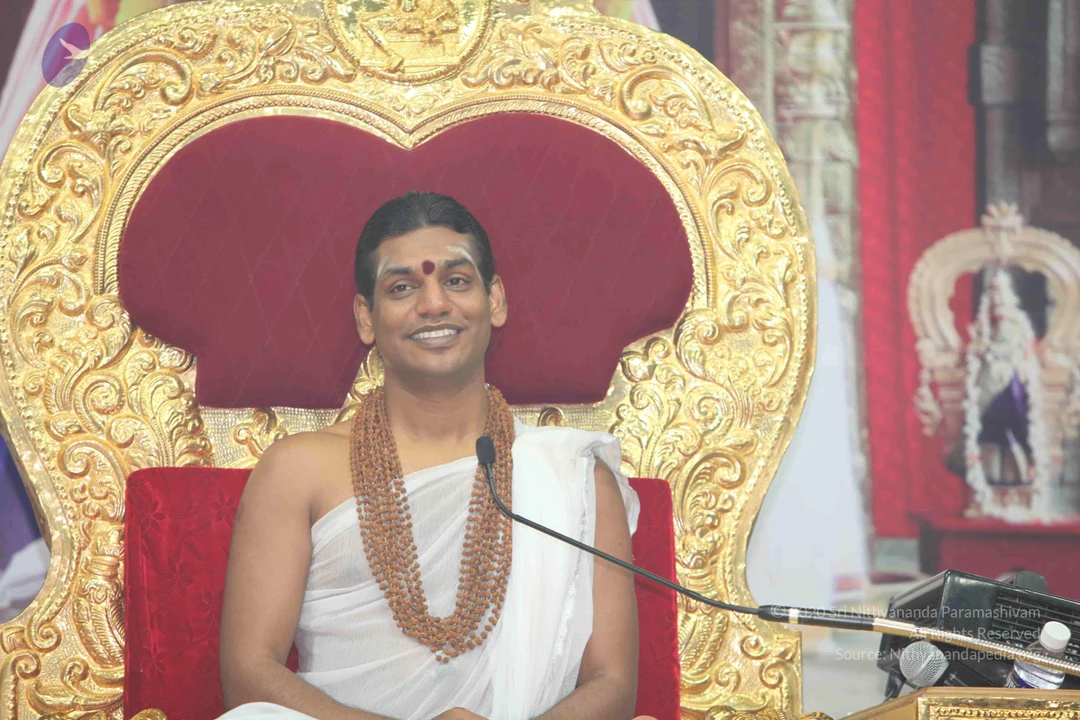
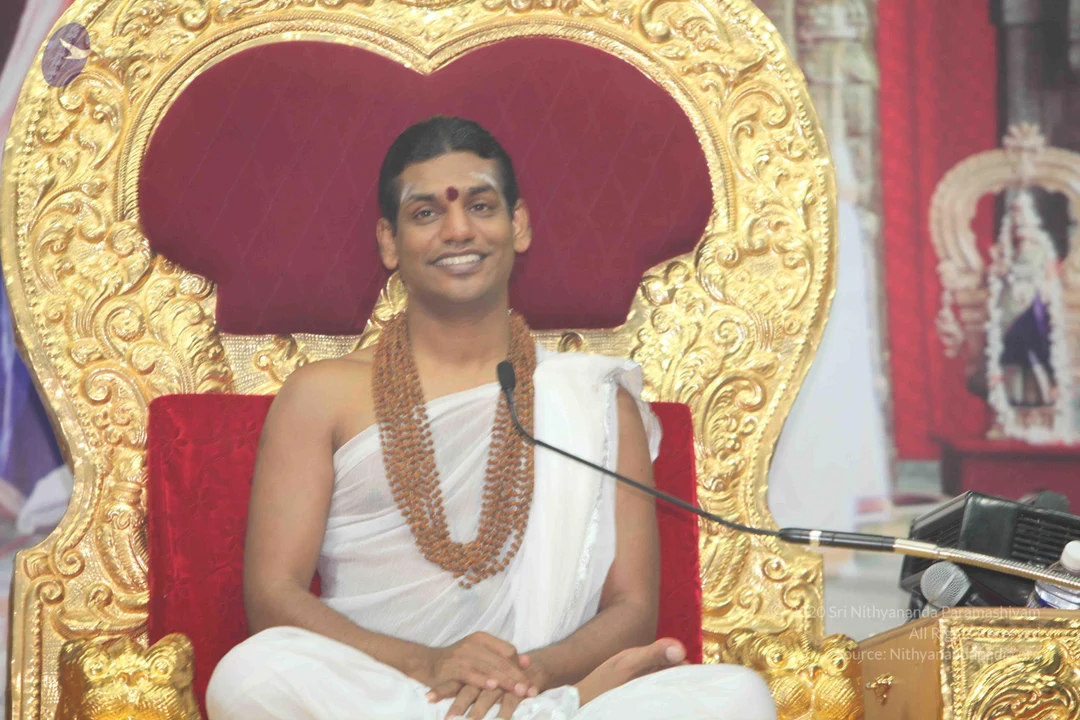
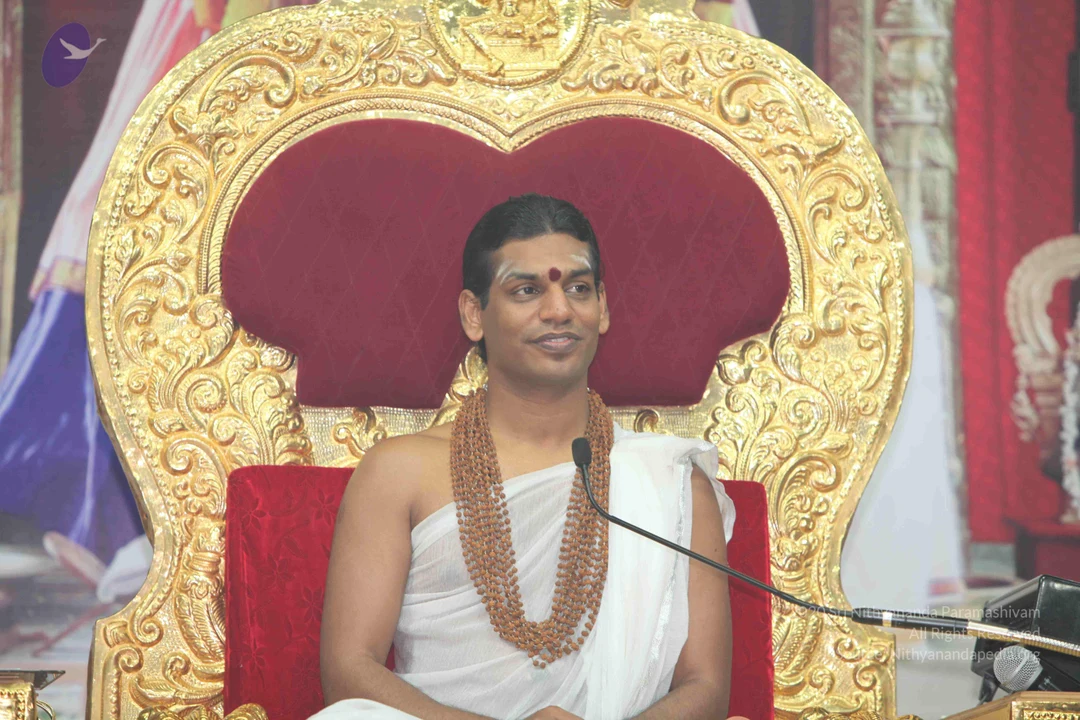
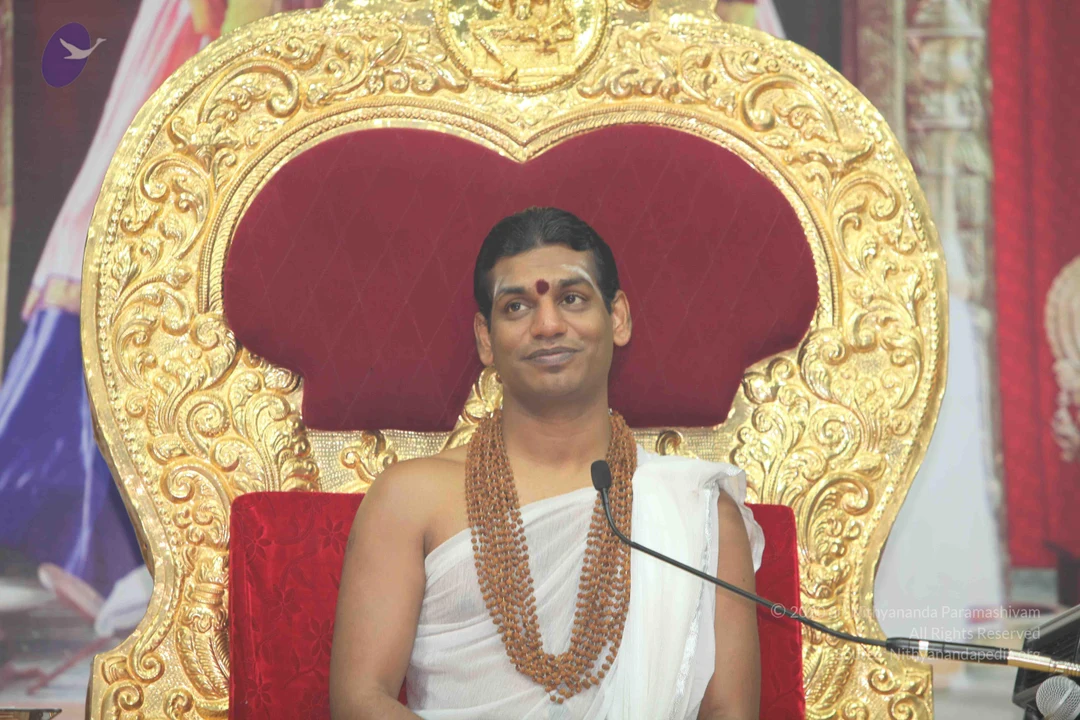
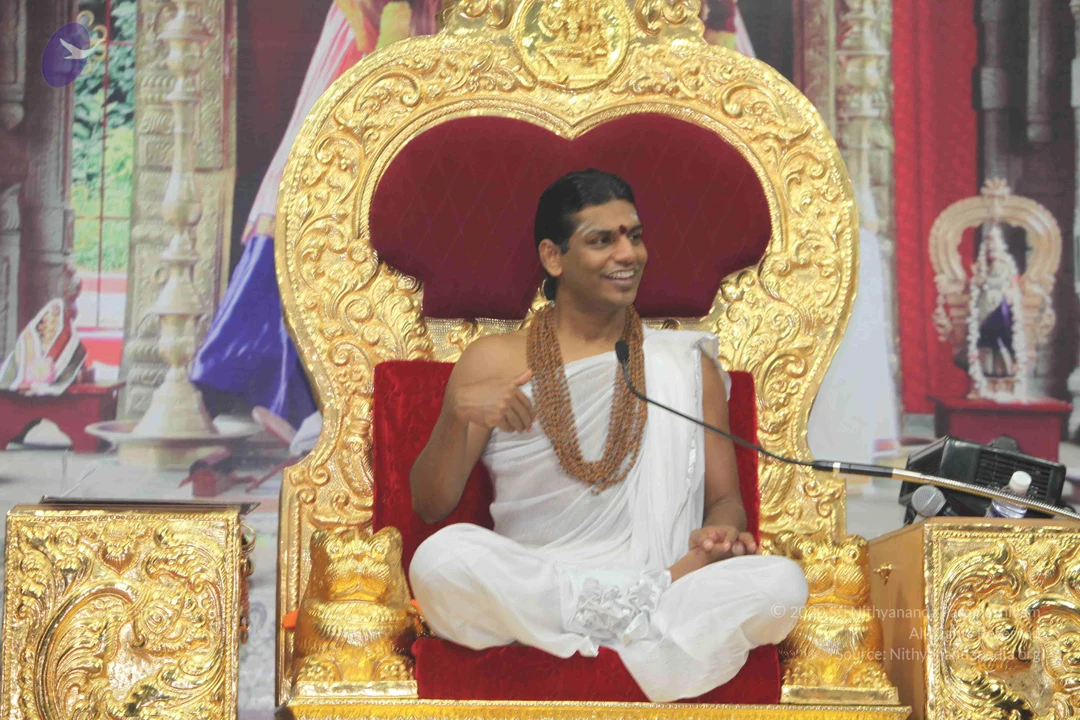
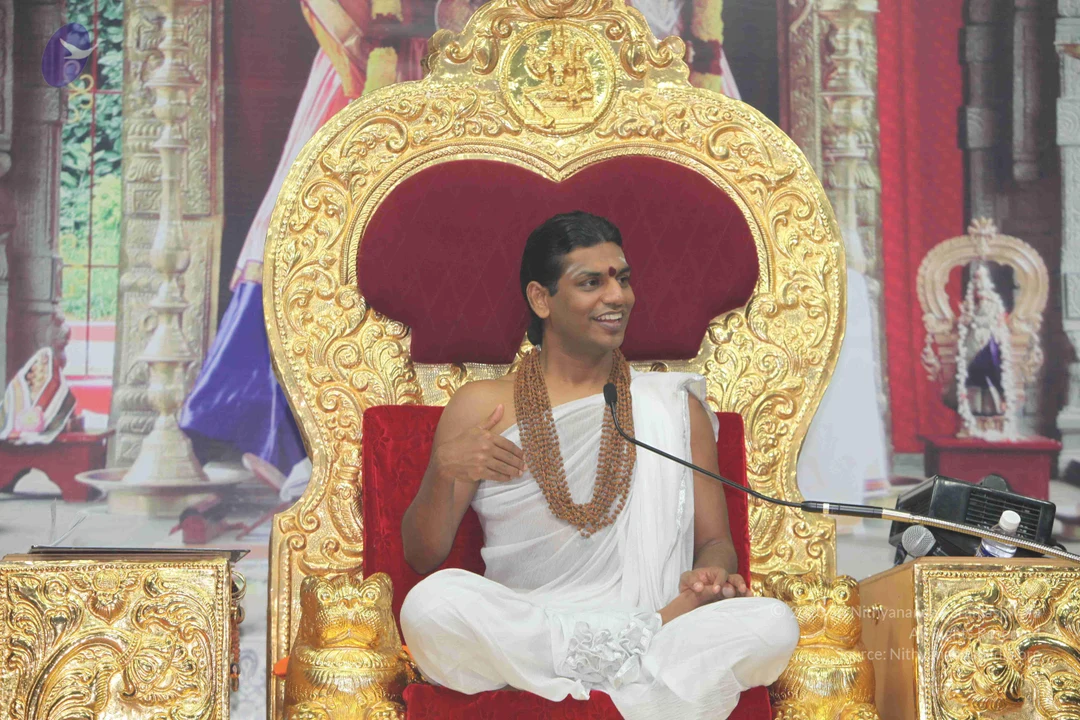
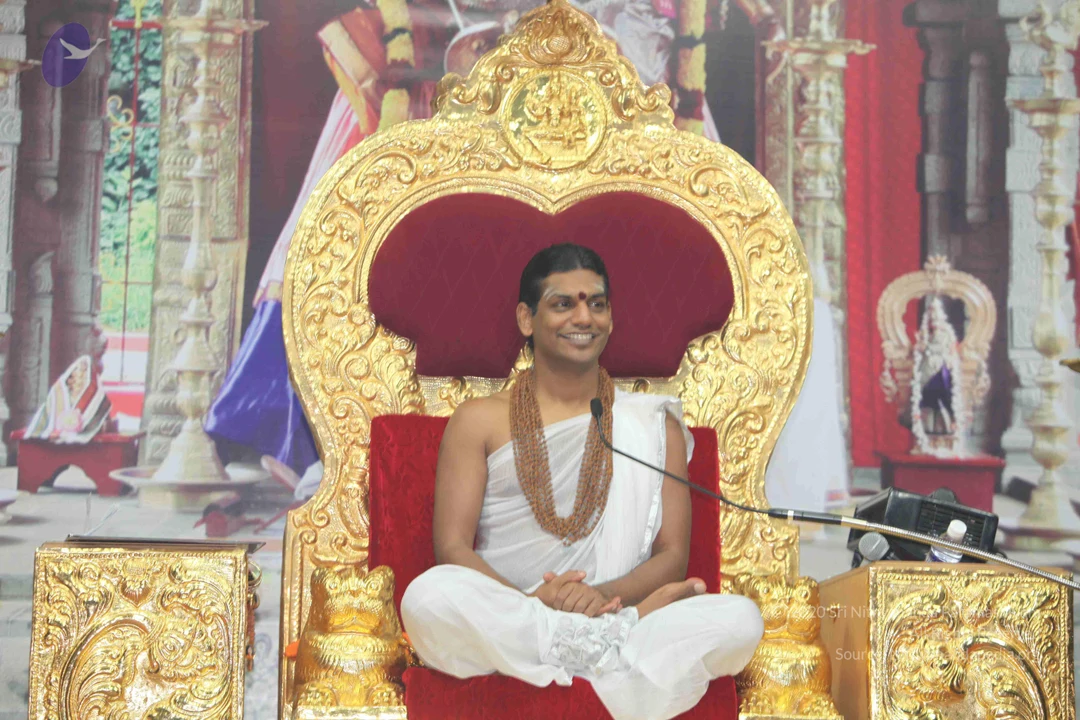
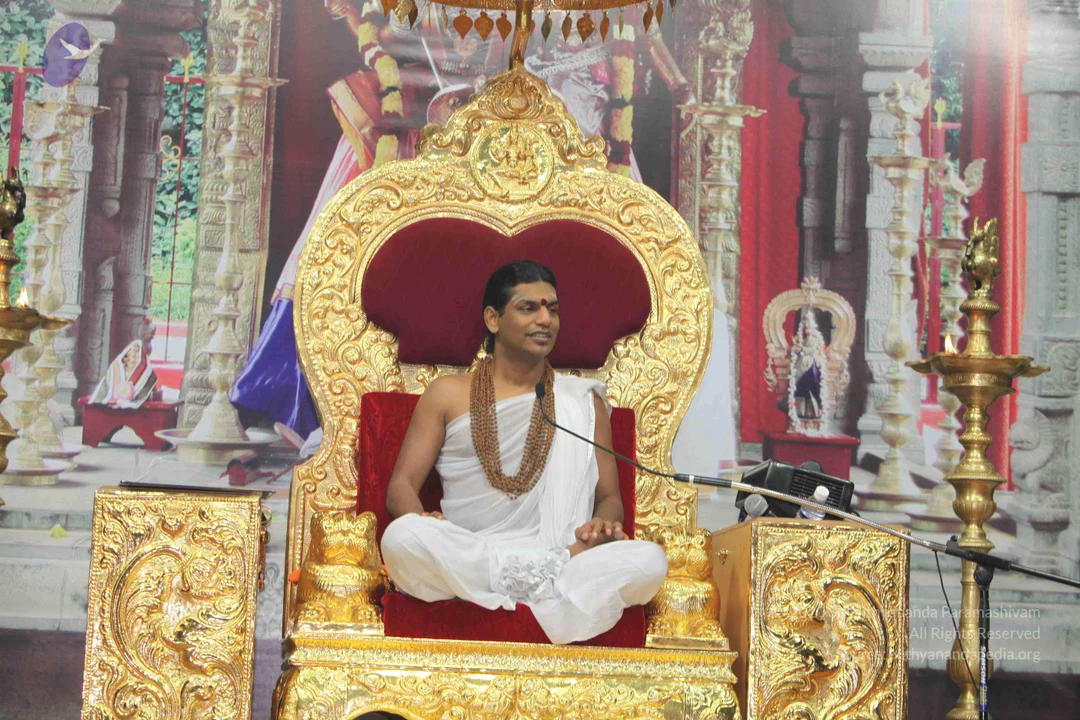
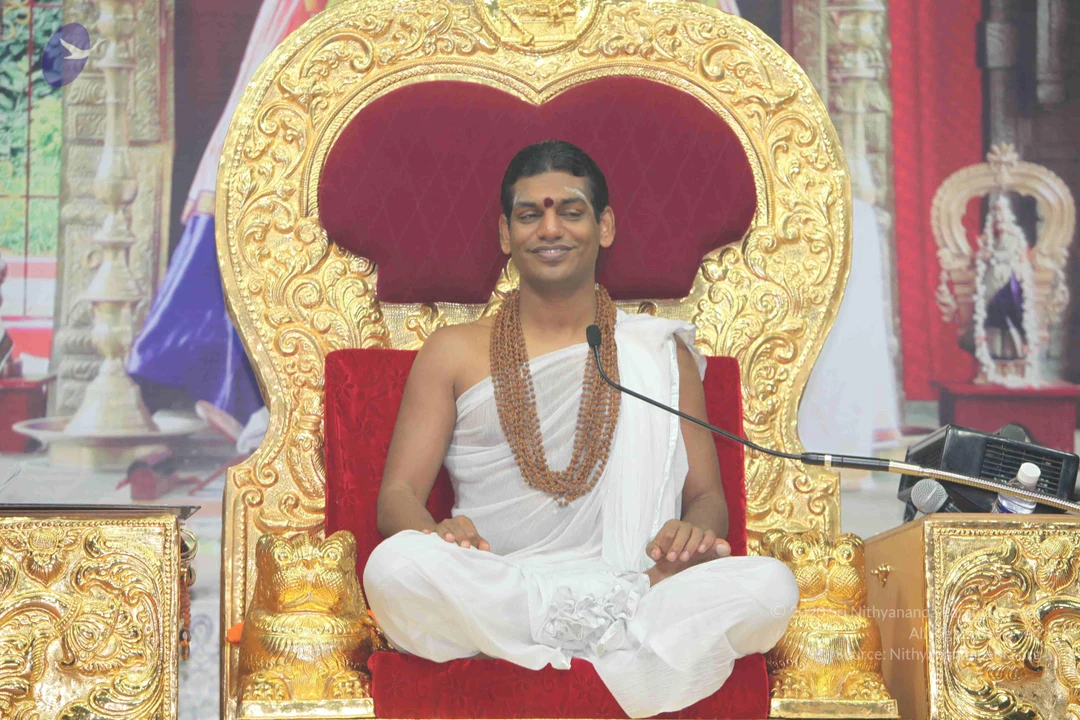
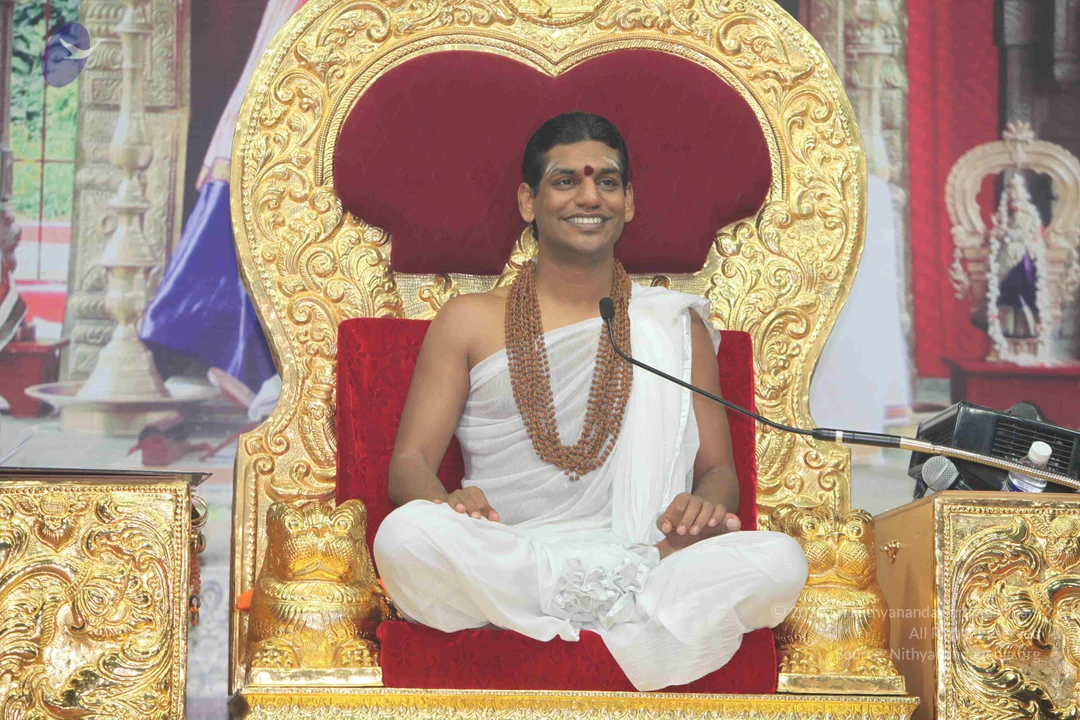
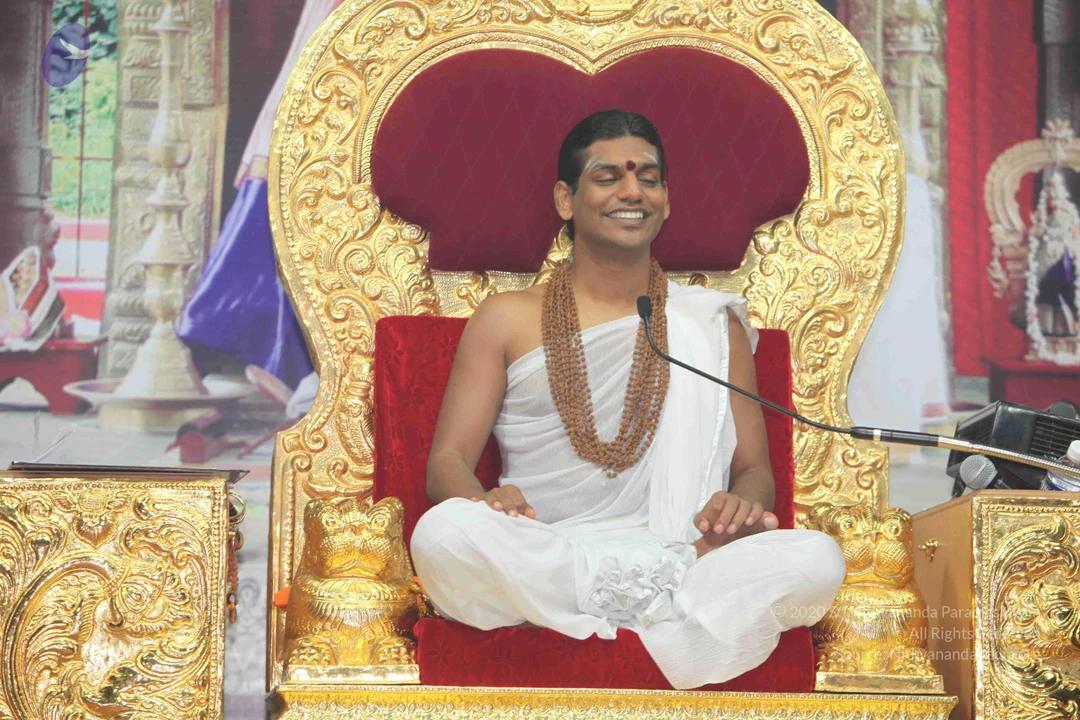
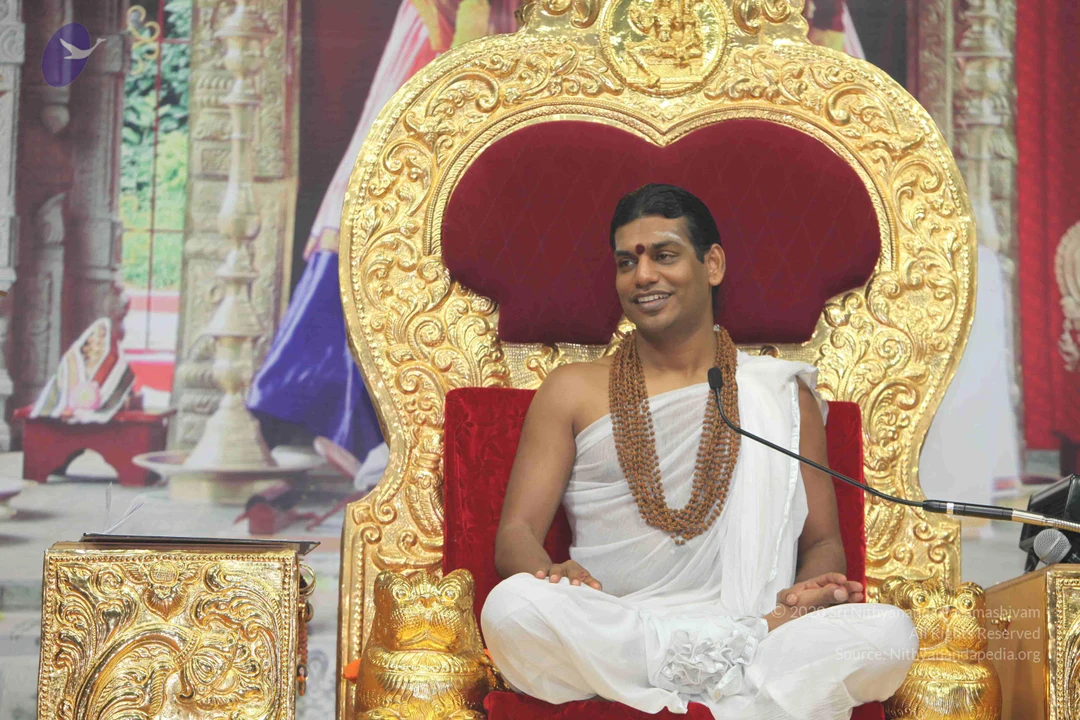
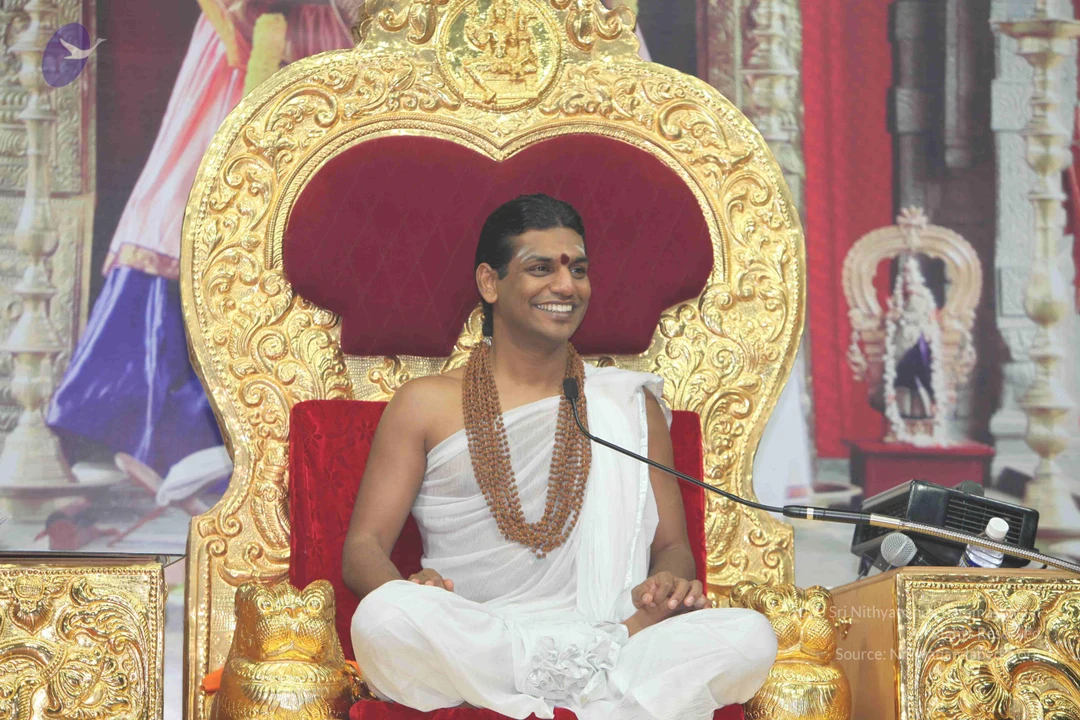
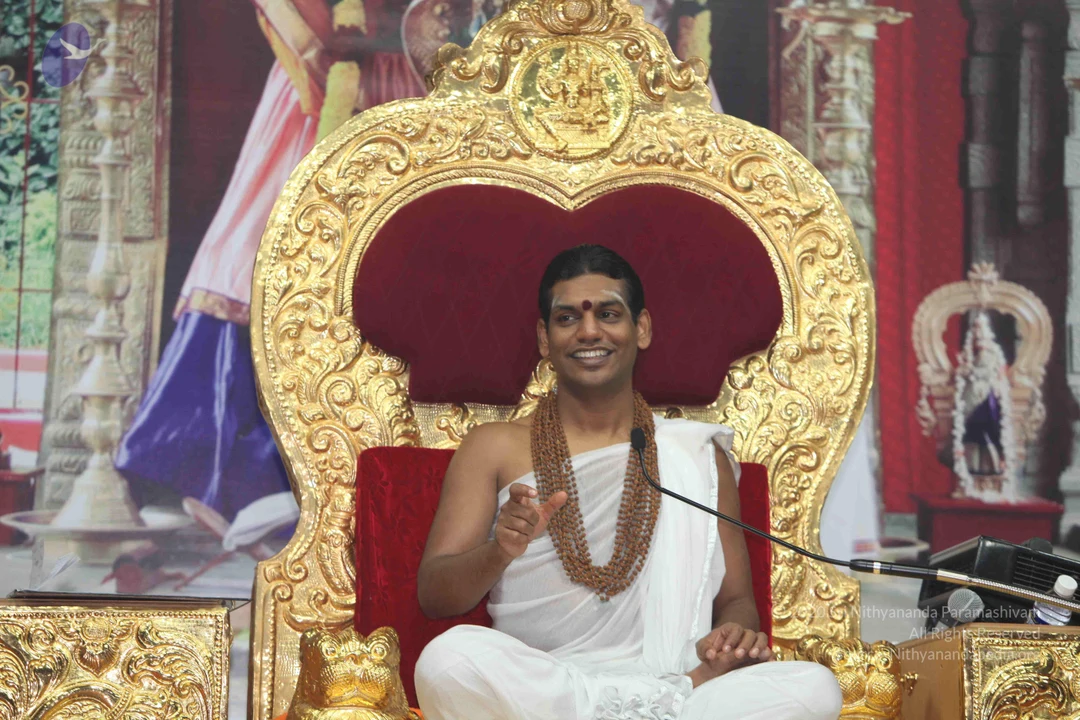
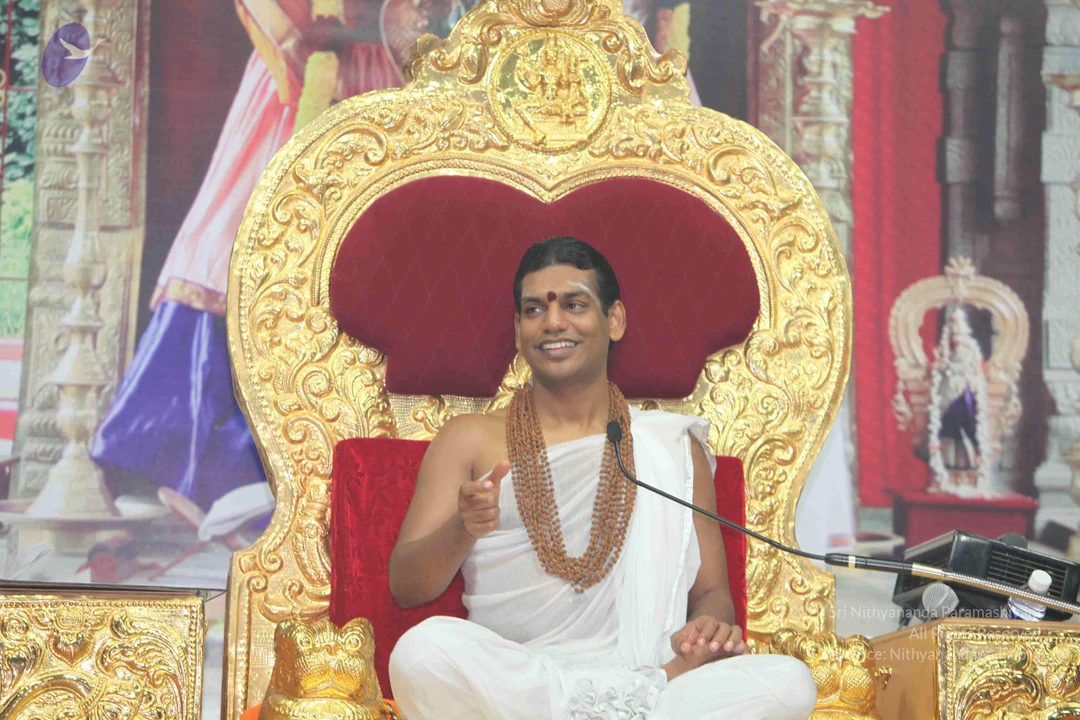
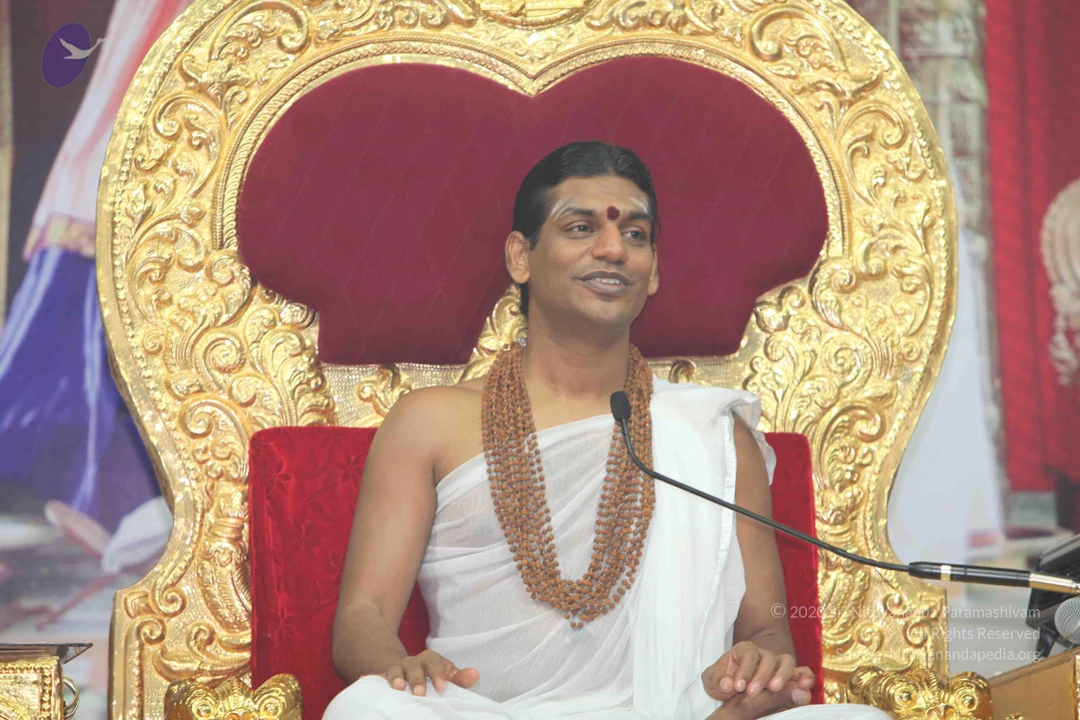
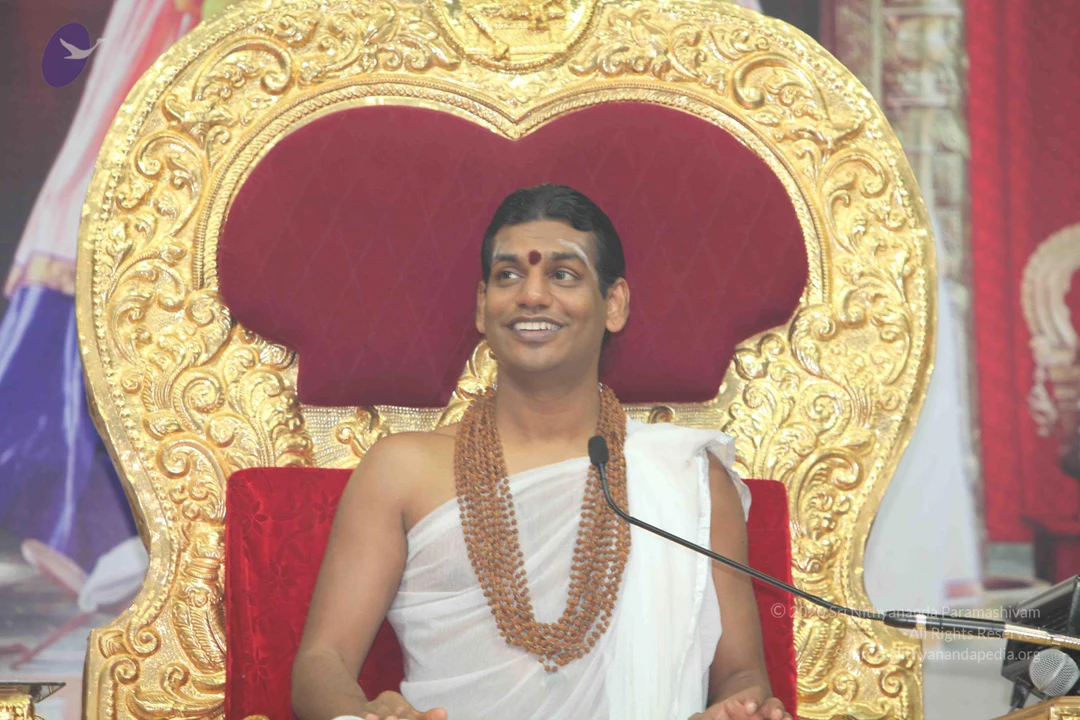
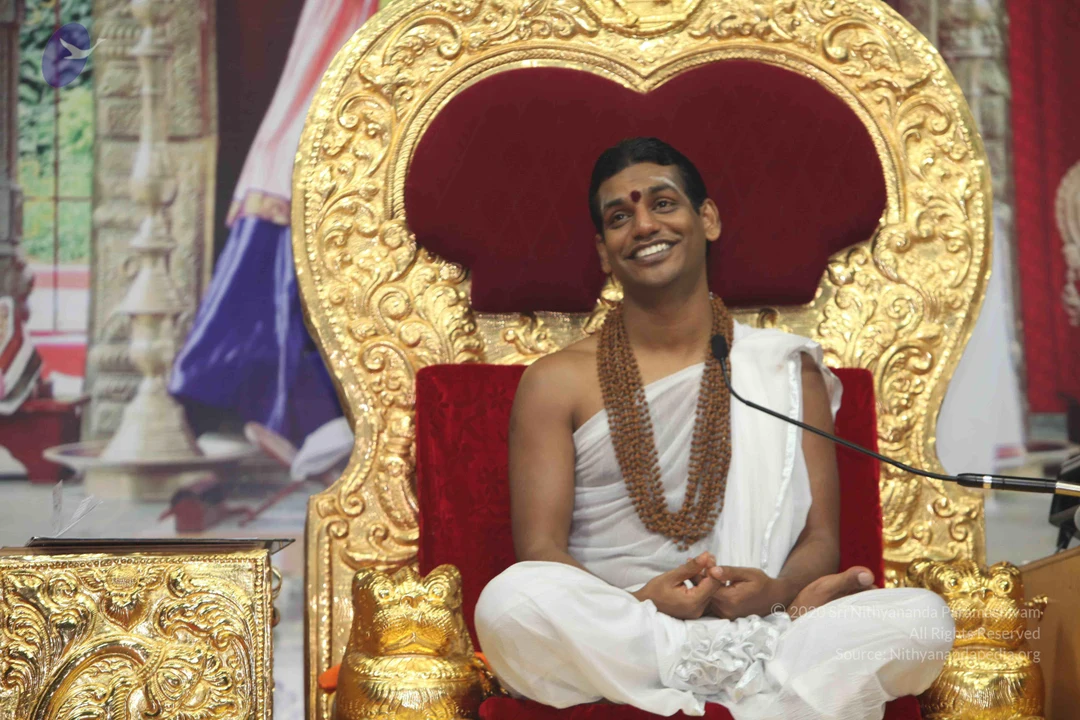
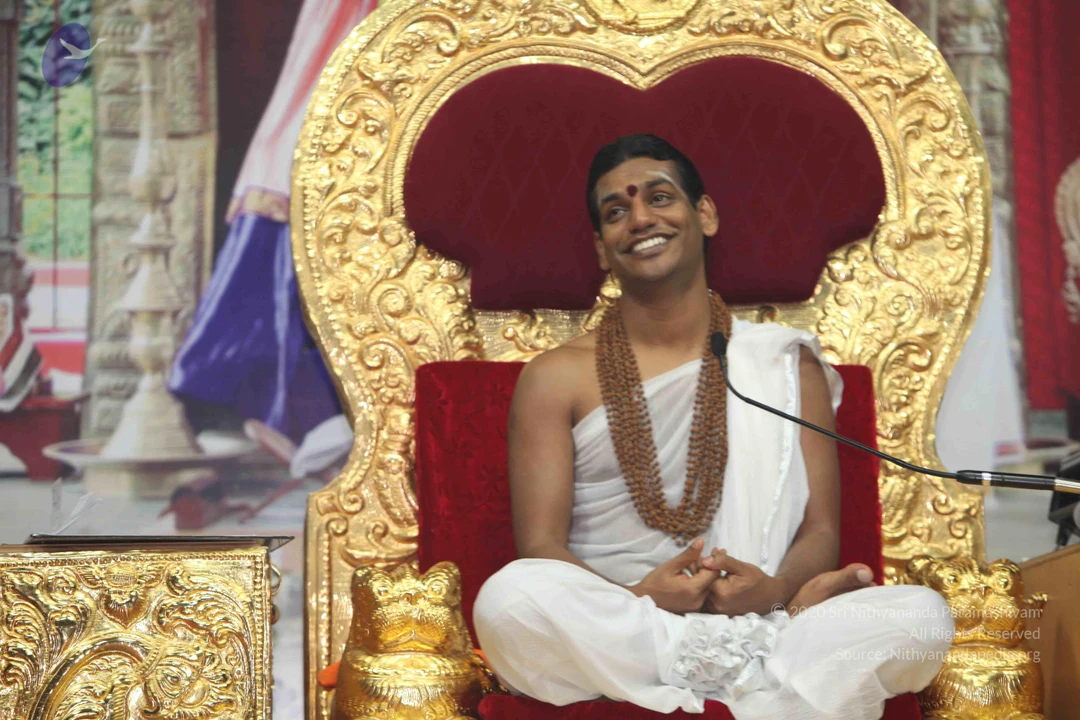
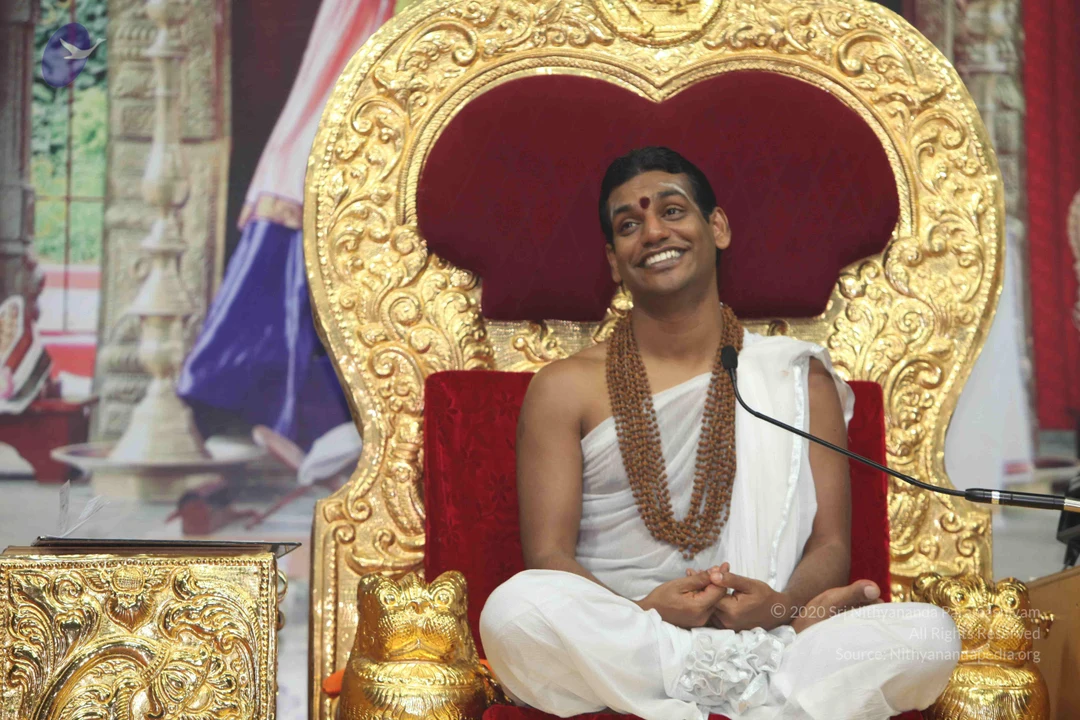
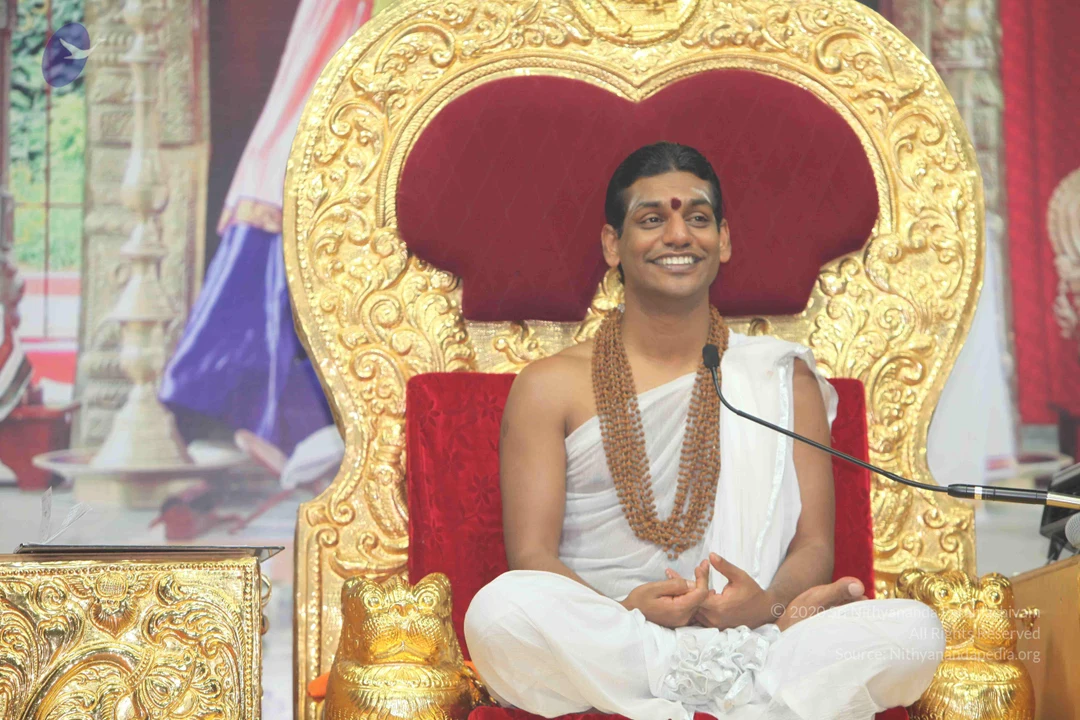
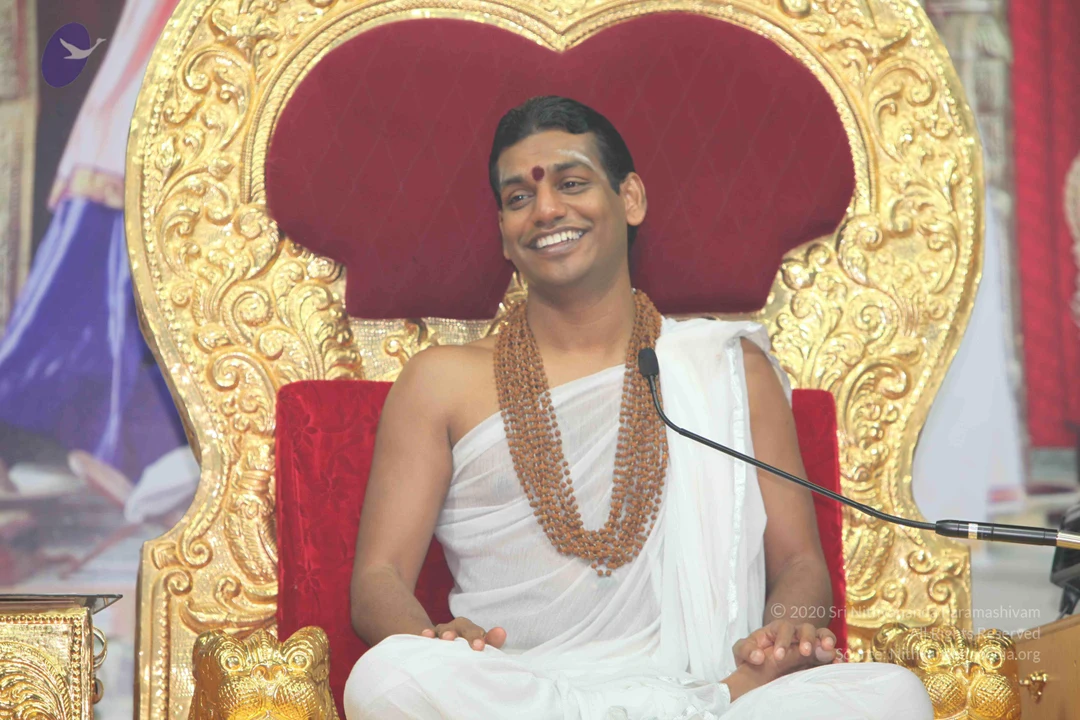
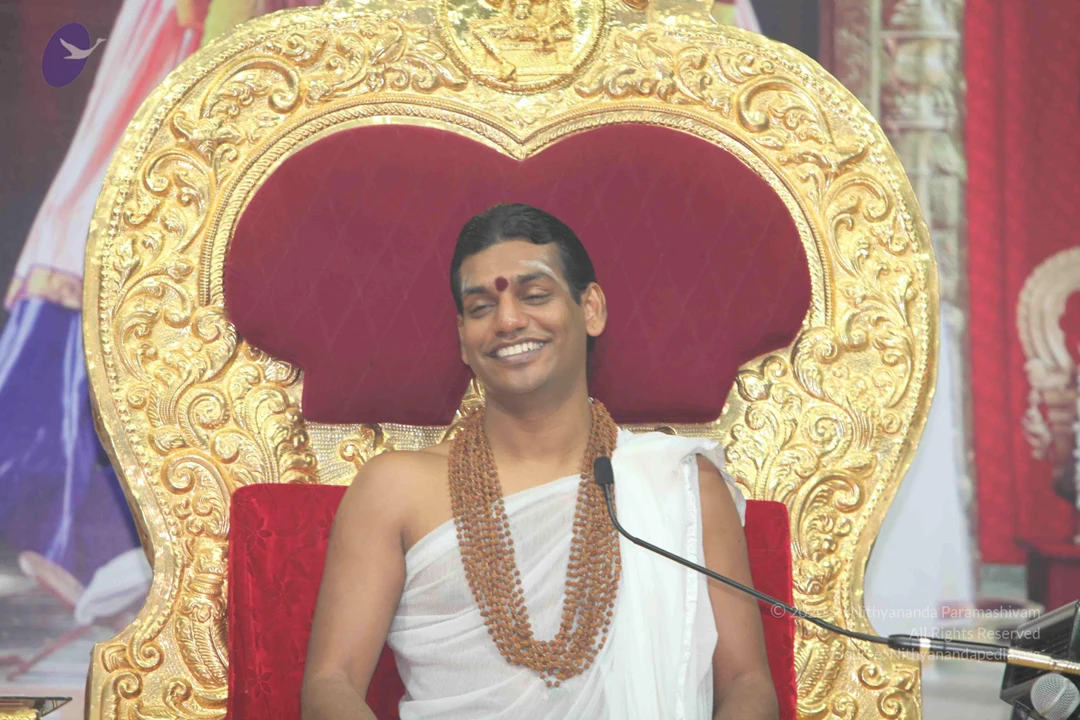
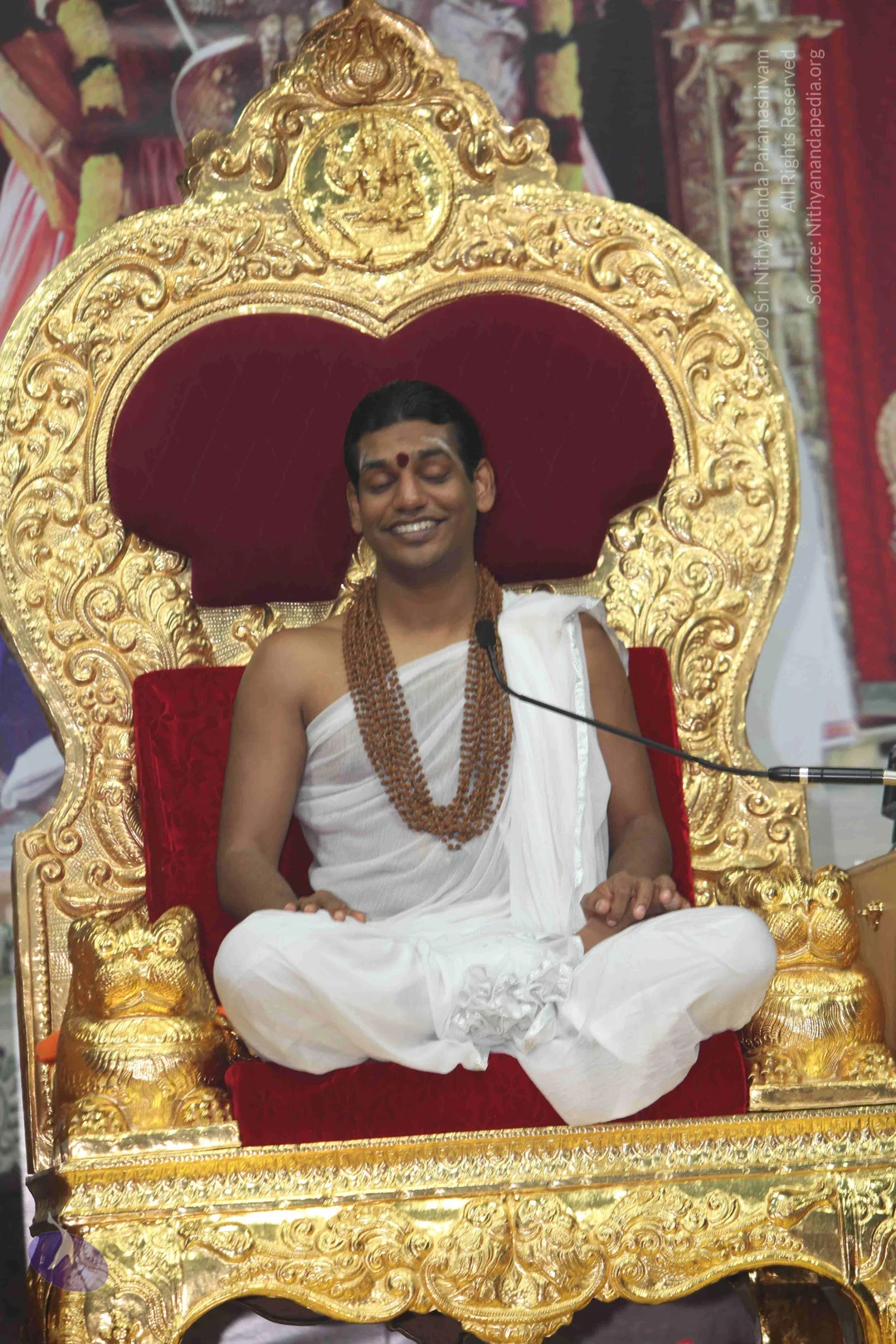
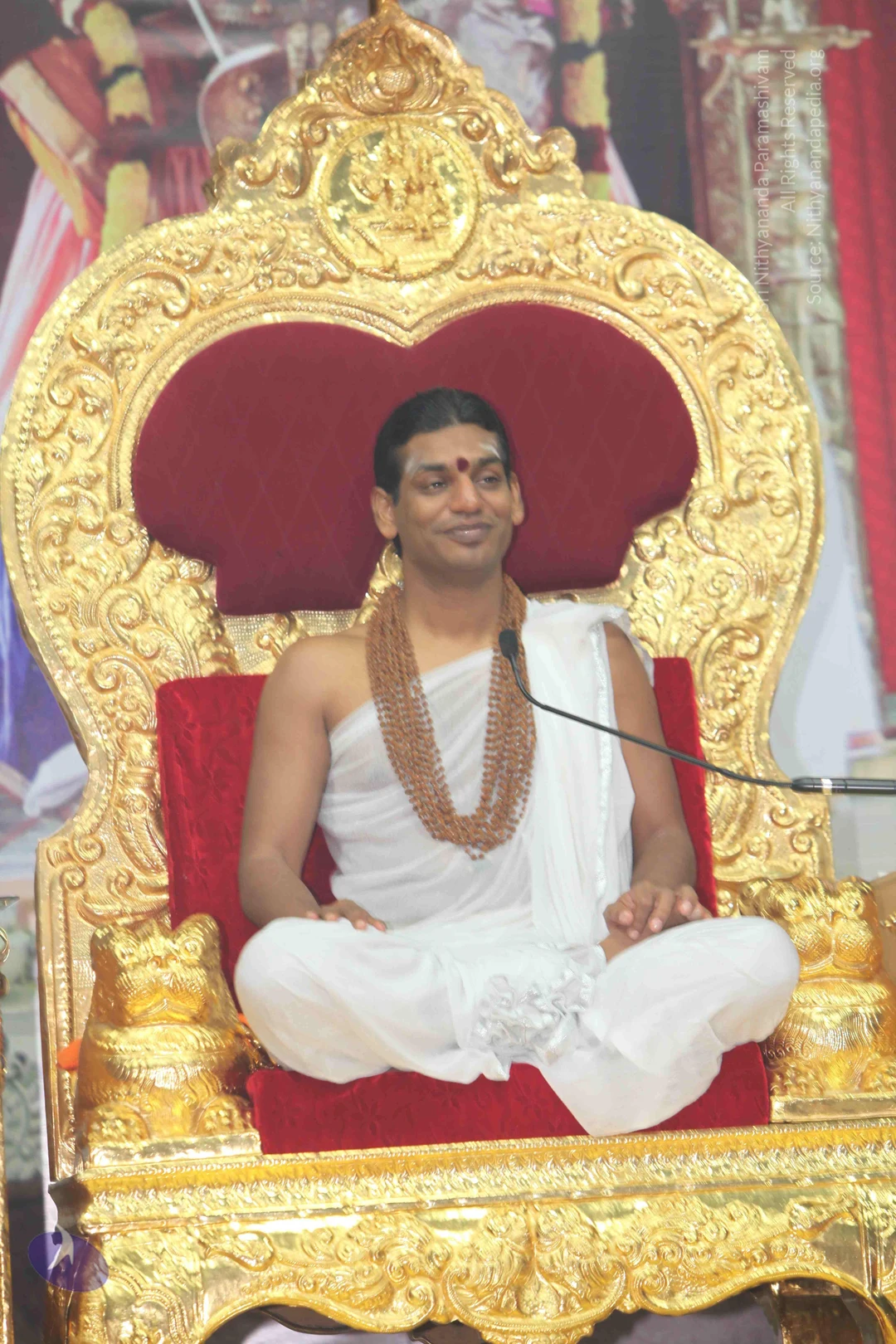
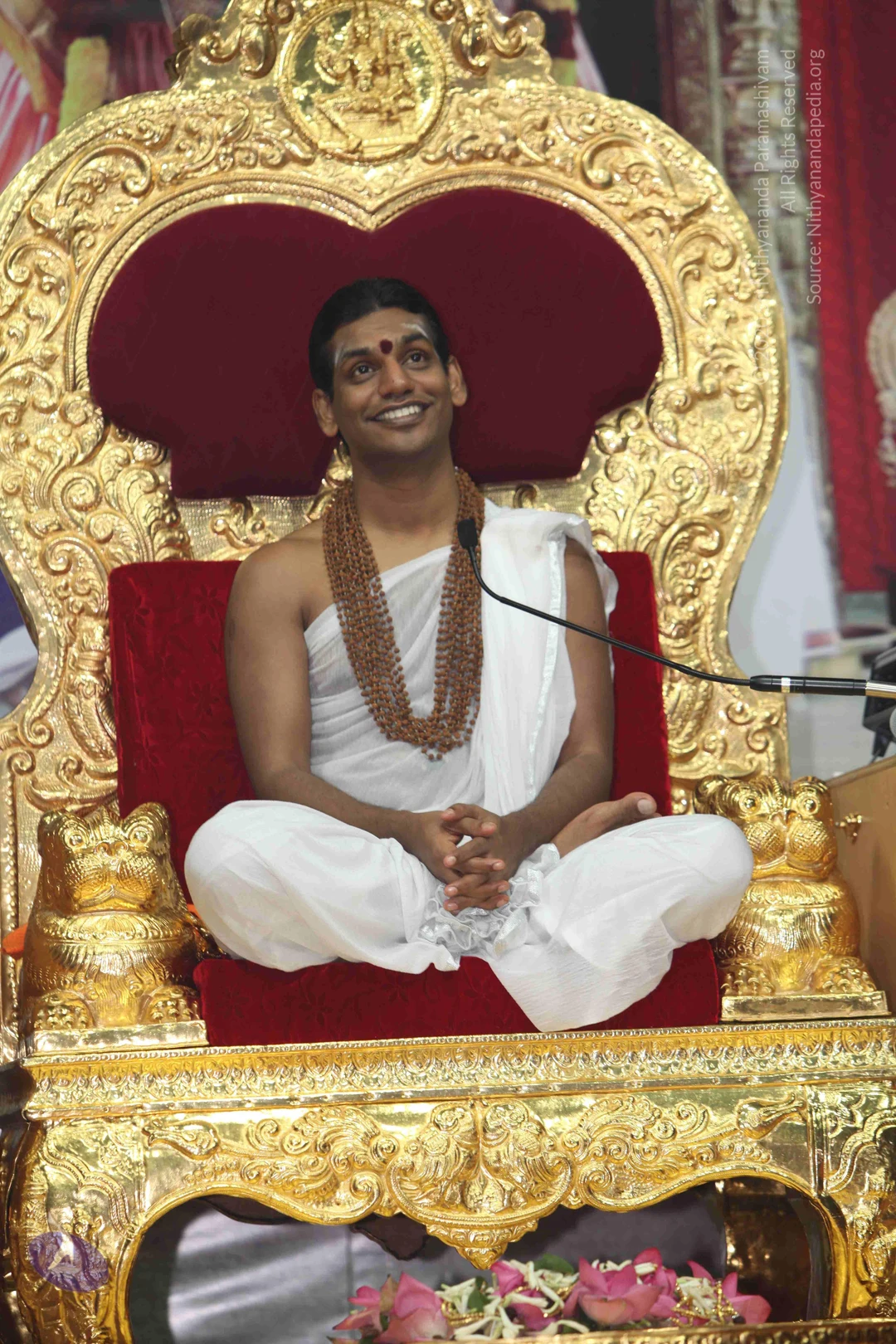
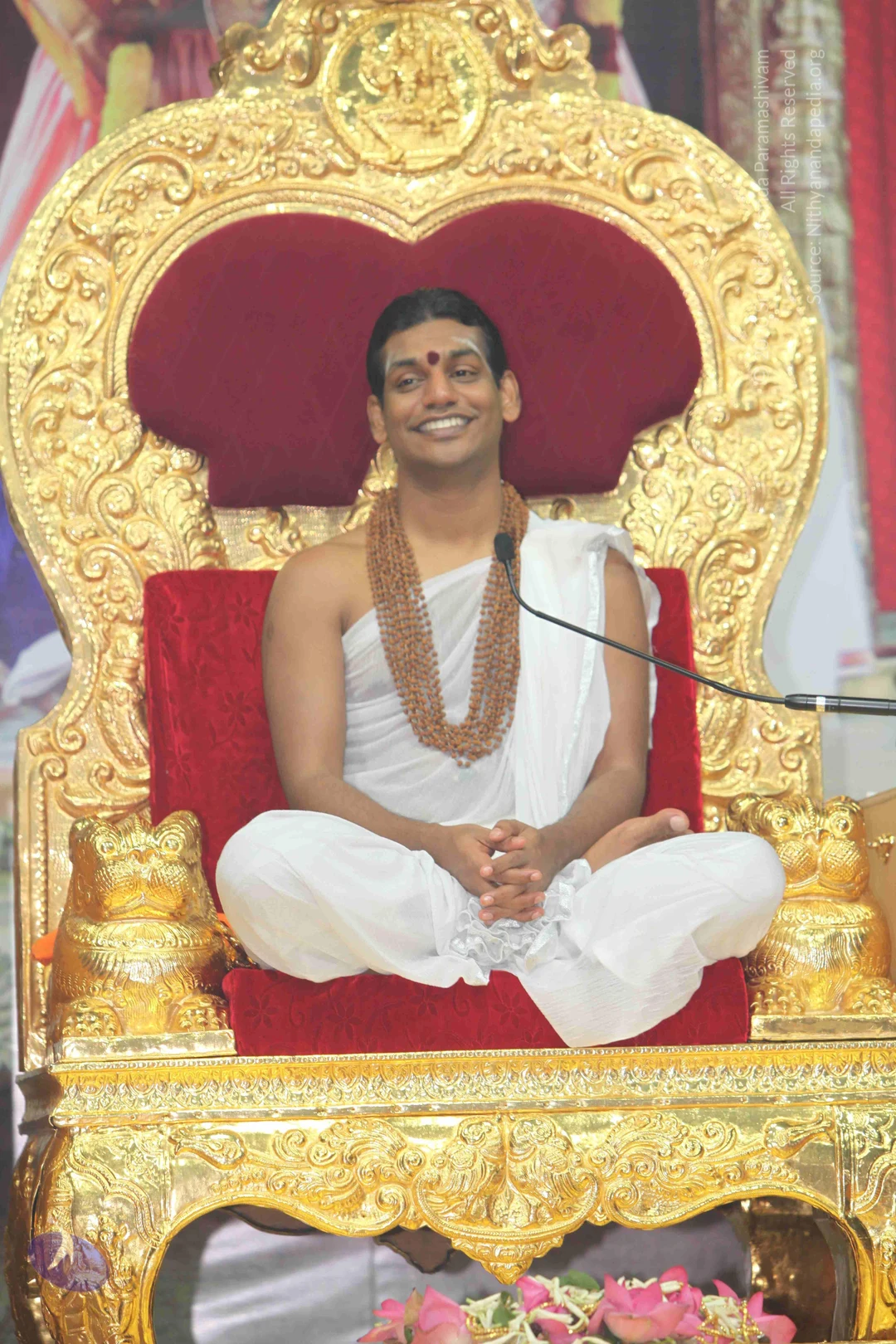
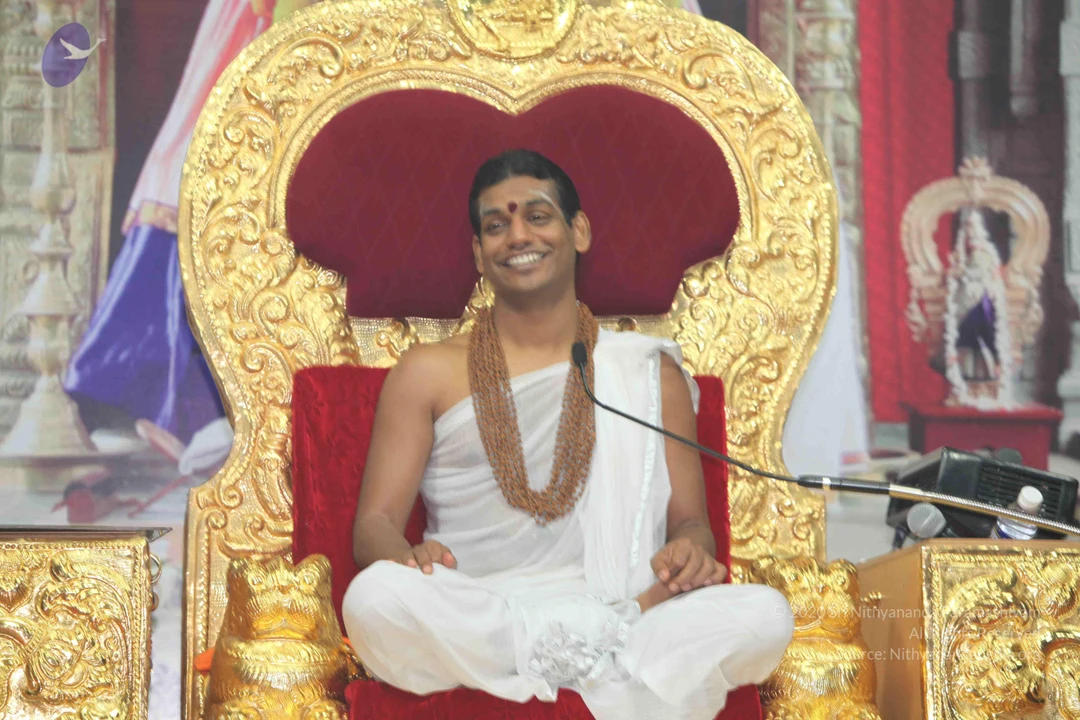
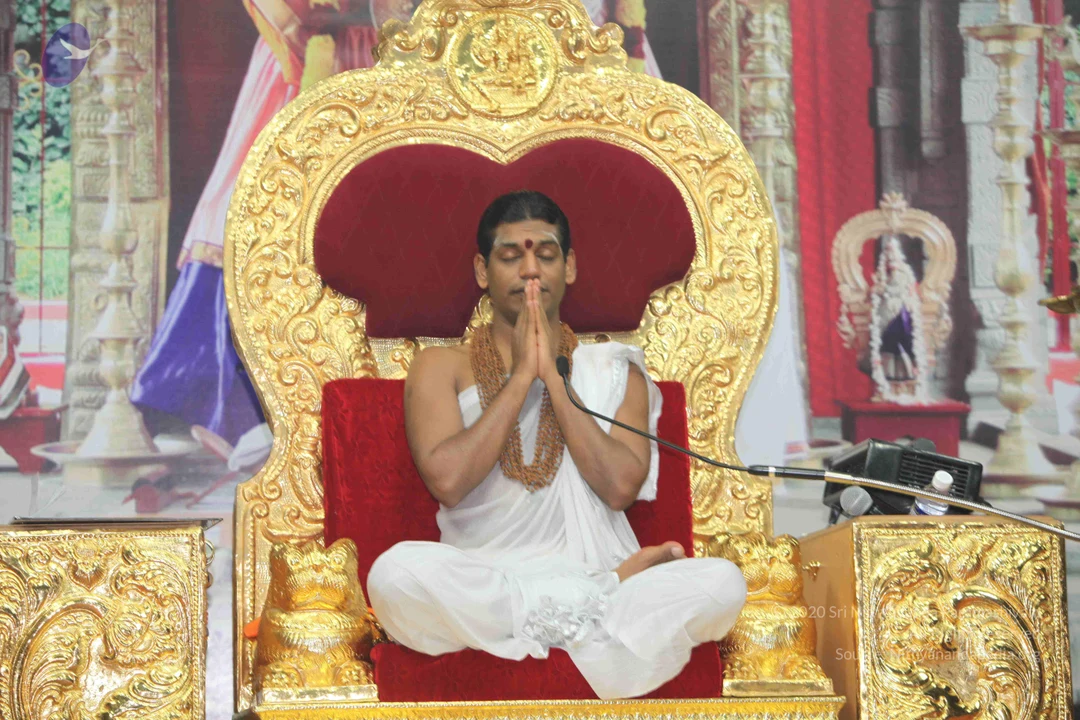
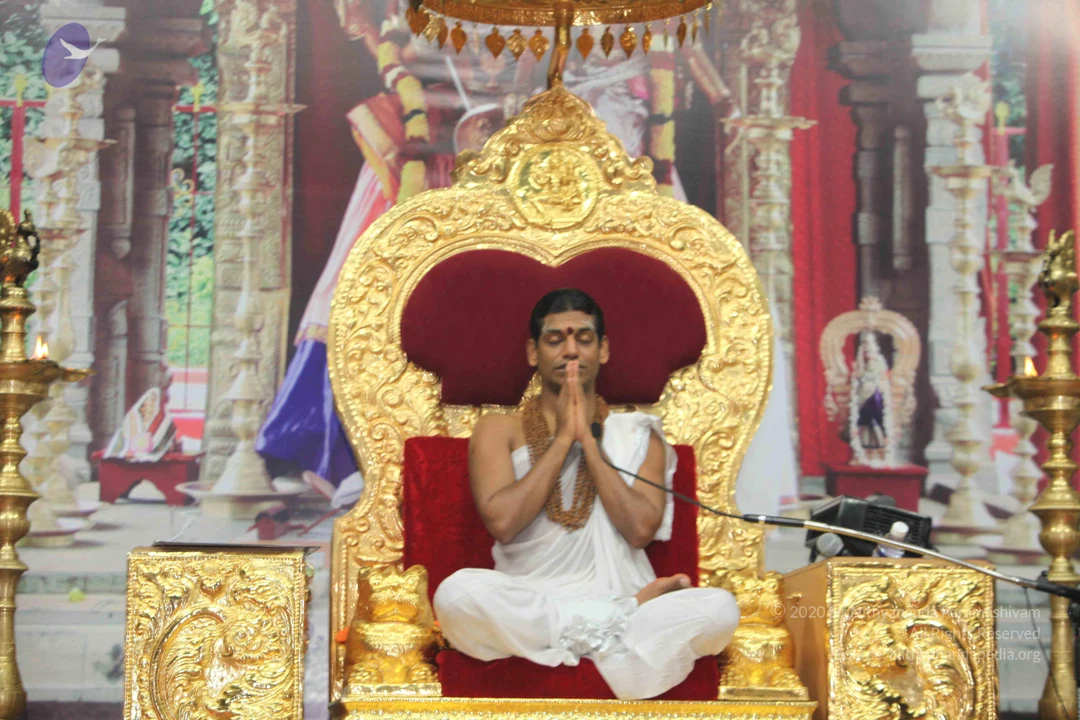
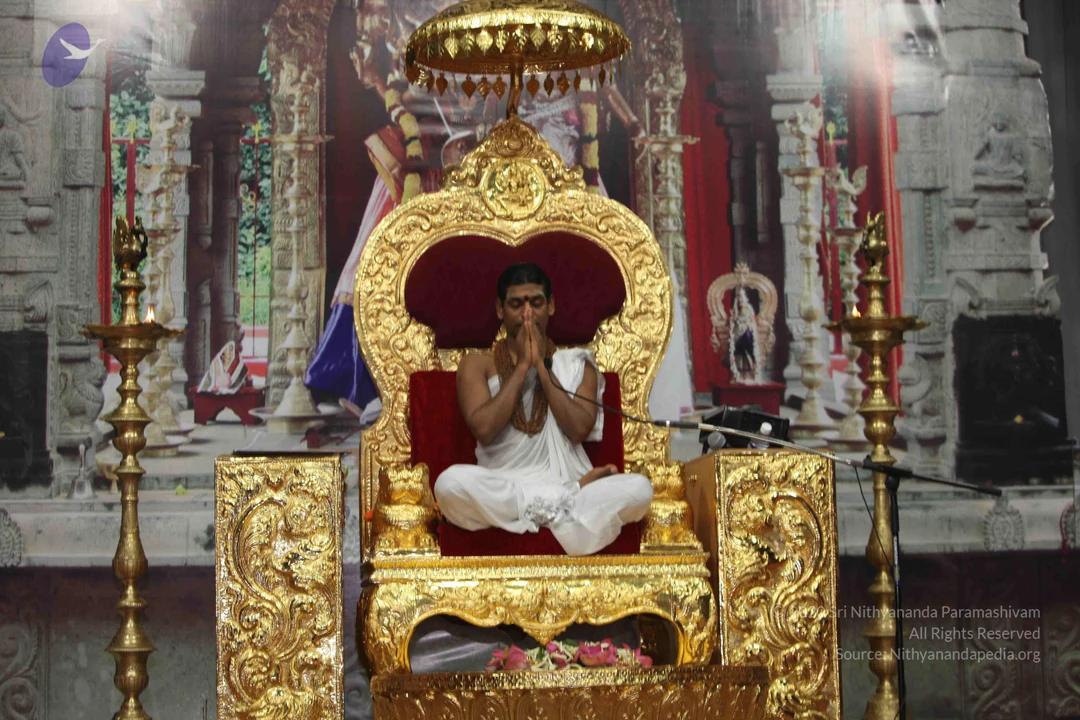
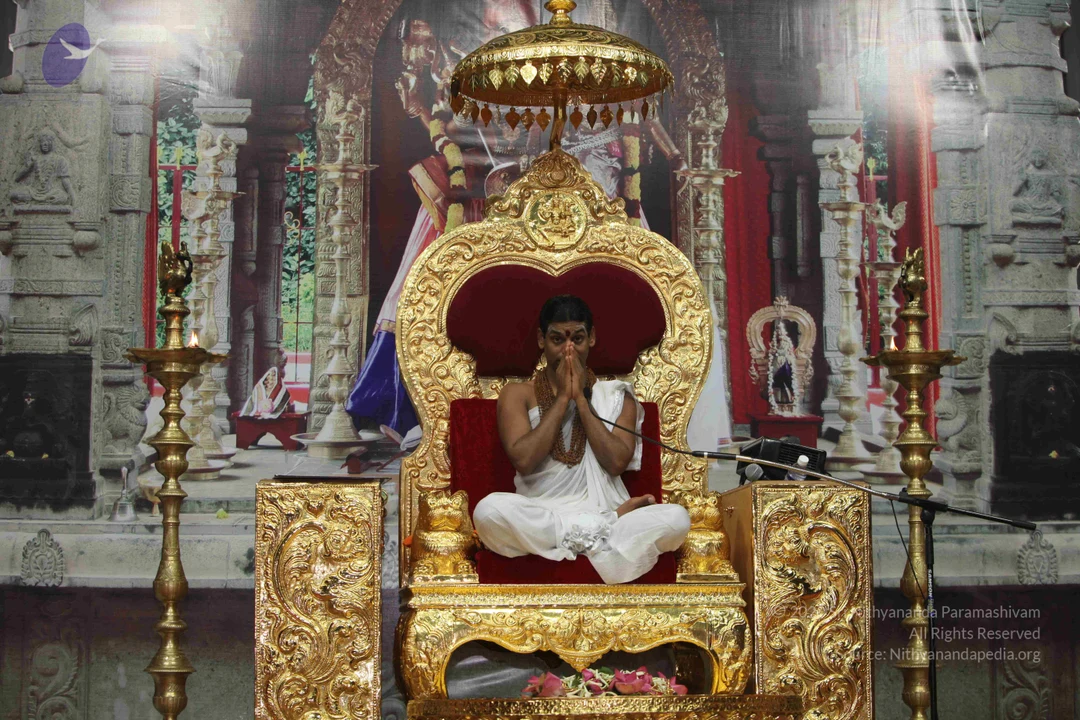
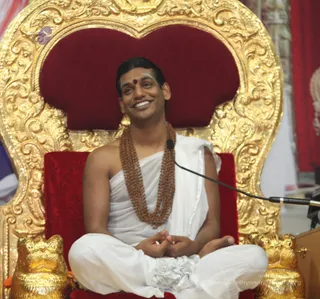
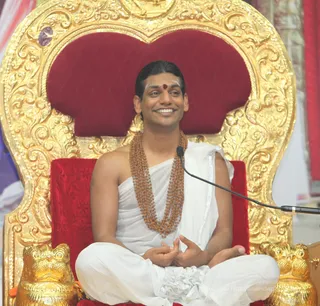
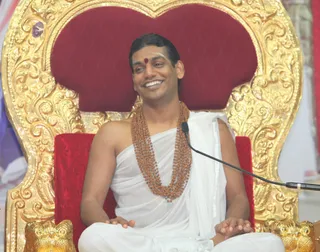
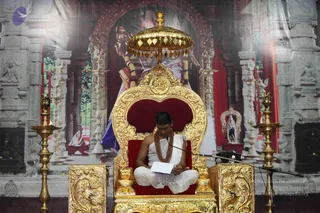
A bare-chested man sits cross-legged on a large ornate golden throne with a red velvet seat and back, hands pressed together in namaste at chest height. He wears a white dhoti and long rudraksha mala beads, with a red tilak on his forehead, and a microphone stands in front of him. A golden umbrella with hanging leaf-shaped ornaments canopies the throne. Behind him is a painted temple backdrop with stone pillars, and tall brass oil lamps stand on either side. Garlands hang on a deity murti in the background, and a second golden seat sits at the lower right. The person's appearance matches the page's a person reference through the rudraksha mala and ornate setting, though identity is uncertain.A smiling man with short dark hair and a red bindi sits cross-legged on an ornate gold-and-red throne with carved gilt scrollwork and lion-head armrests. He wears a white unstitched wrap over his shoulder and white lower garment, with multiple strands of brown rudraksha beads around his neck, and his hands rest in a meditation mudra in his lap. A microphone on a black stand is positioned beside him. Behind the throne hang red drapes. a person is seated as a teacher on the throne, with rudraksha malas and white ritual clothing as visible cues.A smiling man with slicked-back hair, a red bindi and white tripundra marks sits cross-legged on an ornate gold throne with a red velvet cushion and gold lion-head armrests. He wears a white dhoti and white shawl draped over one shoulder, with multiple strands of brown rudraksha mala beads around his neck, and his hands rest in a mudra in his lap. A black microphone stand is beside him. The setting appears to be a formal discourse hall with red and white drapes behind him. Appearance-based a person cues: the swept-back hair, rudraksha malas and ceremonial throne seating.A smiling man sits cross-legged on an ornate gold-carved throne with a deep red velvet back and red seat cushion. He wears a plain white dhoti and shawl draped over one shoulder, multiple strands of brown rudraksha beads around his neck, and a small red bindi with a white tilak on his forehead. His hands rest in his lap. A black microphone on a stand is positioned beside him. Gold lion-like figures decorate the base of the throne, and a red curtain is visible behind him.

Sarvadarshan
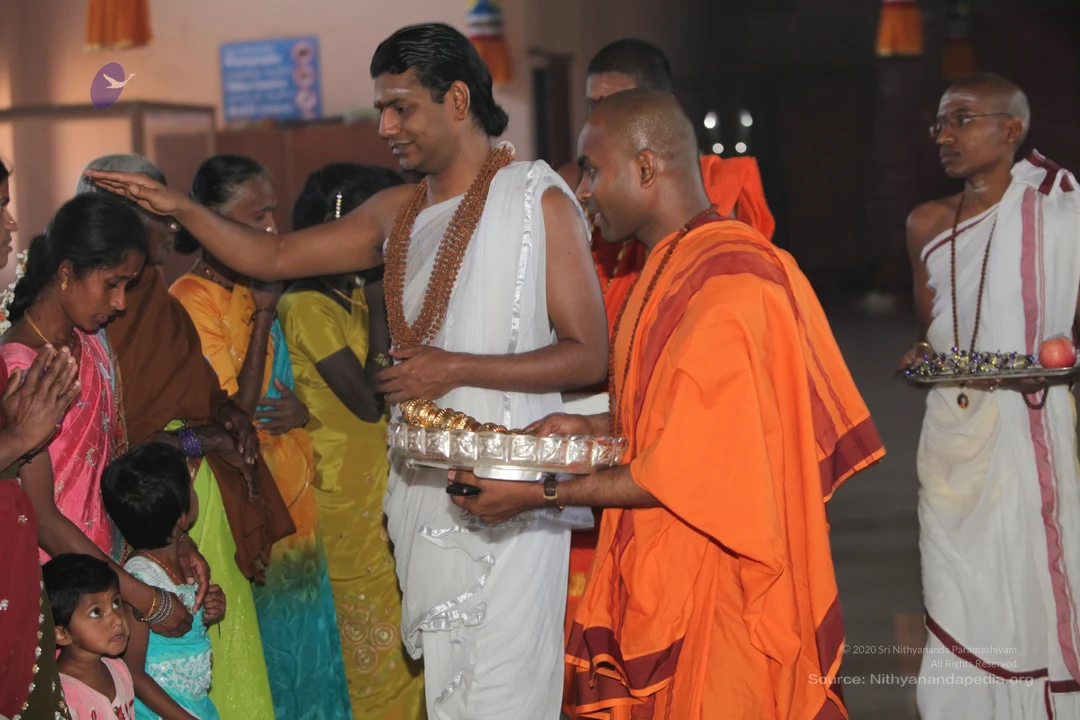
1 photoSource gallery
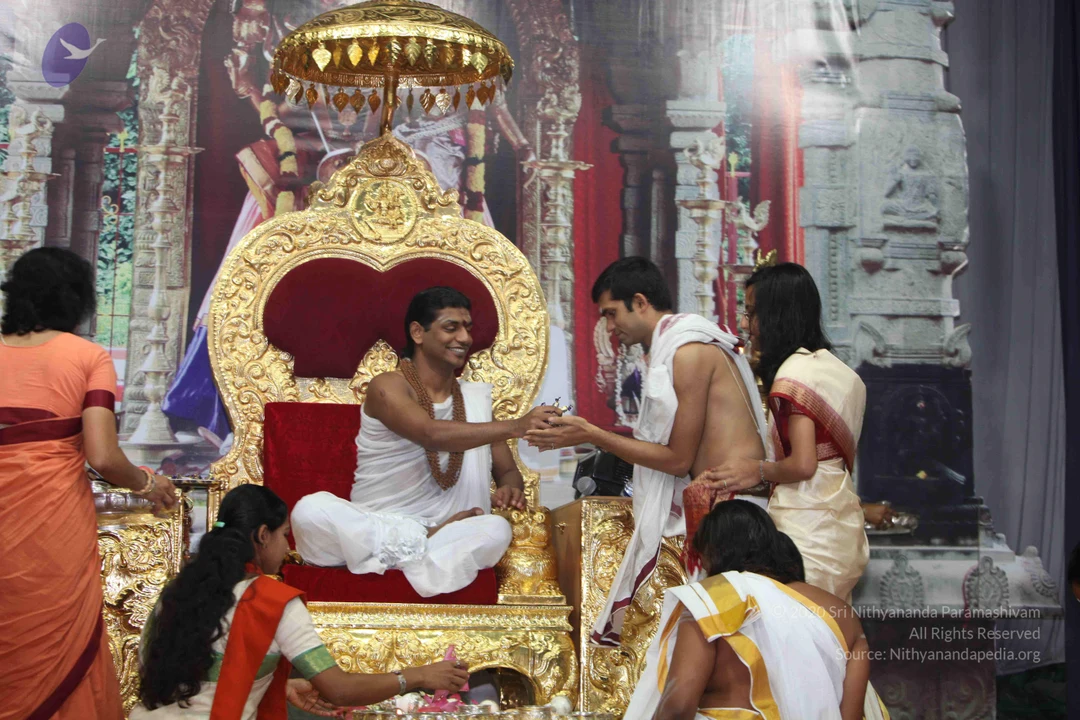
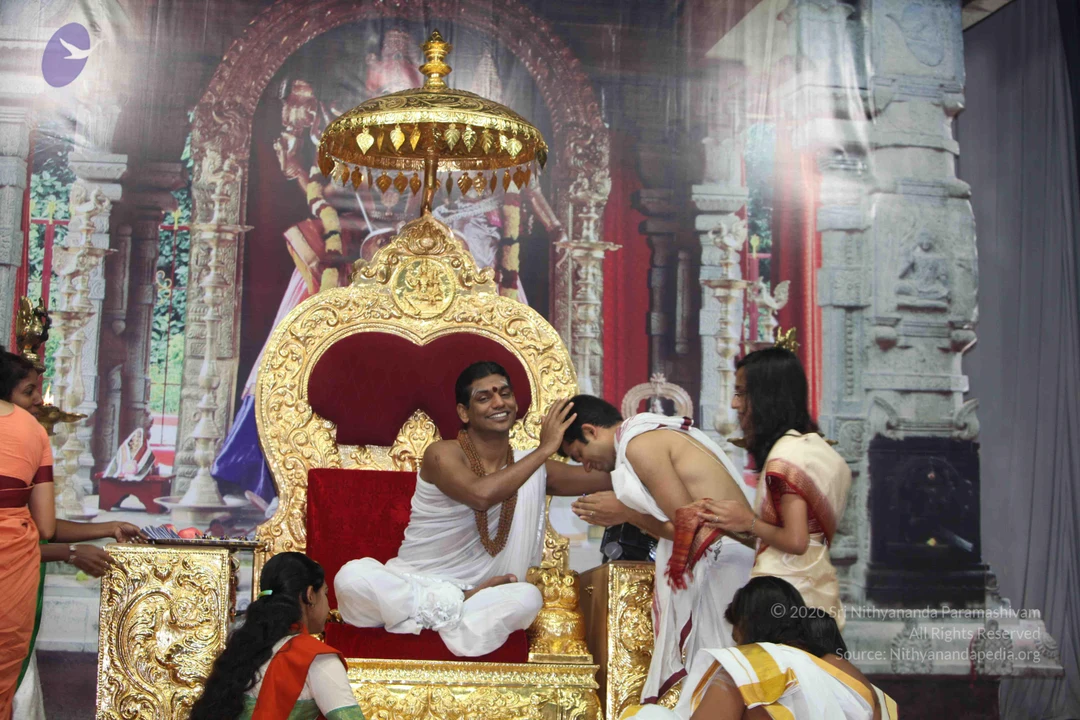
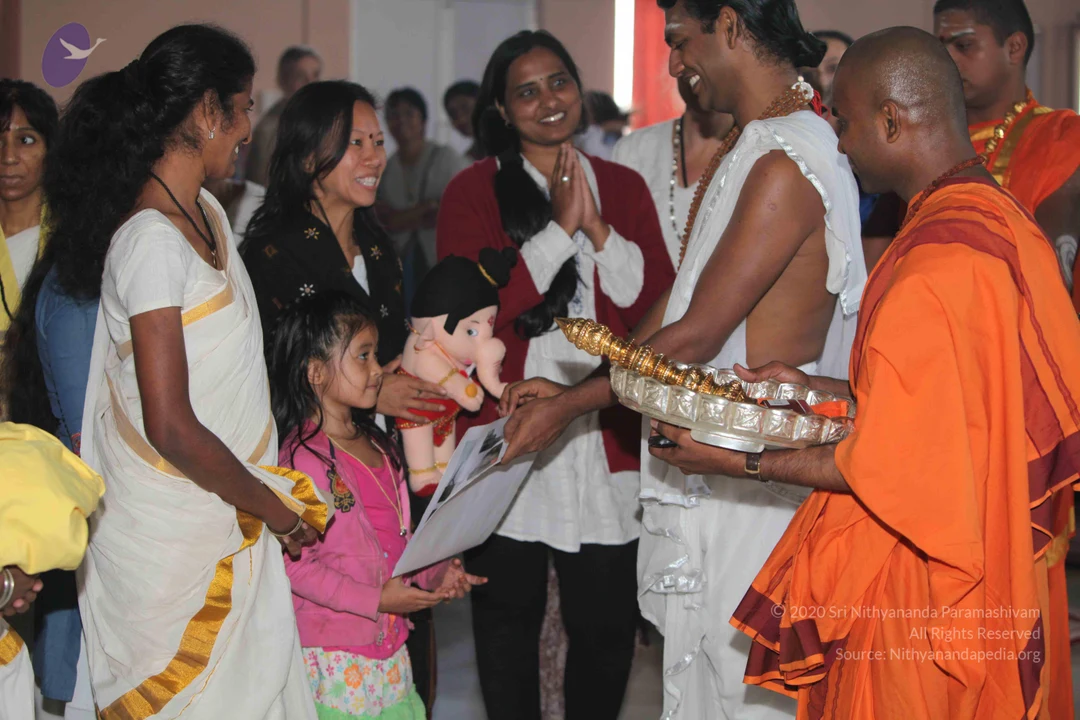
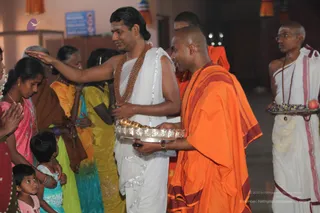
A photograph of an evening ritual inside a temple hall. A man in a white dhoti with silver-edged cloth and a rudraksha mala raises his right hand in blessing over the head of a woman in a pink sari with folded hands. Beside him, a bald man in orange robes with a rudraksha mala holds a silver tray with gold ornaments. To the right, a man in white dhoti with a red-bordered shawl holds a tray of flowers and fruit. Women in yellow, green and orange saris and children stand in the line of devotees, with a small child in the lower left. The scene suggests darshan or blessing.

eN-Kriya-in-Mexico

18 photosSource gallery
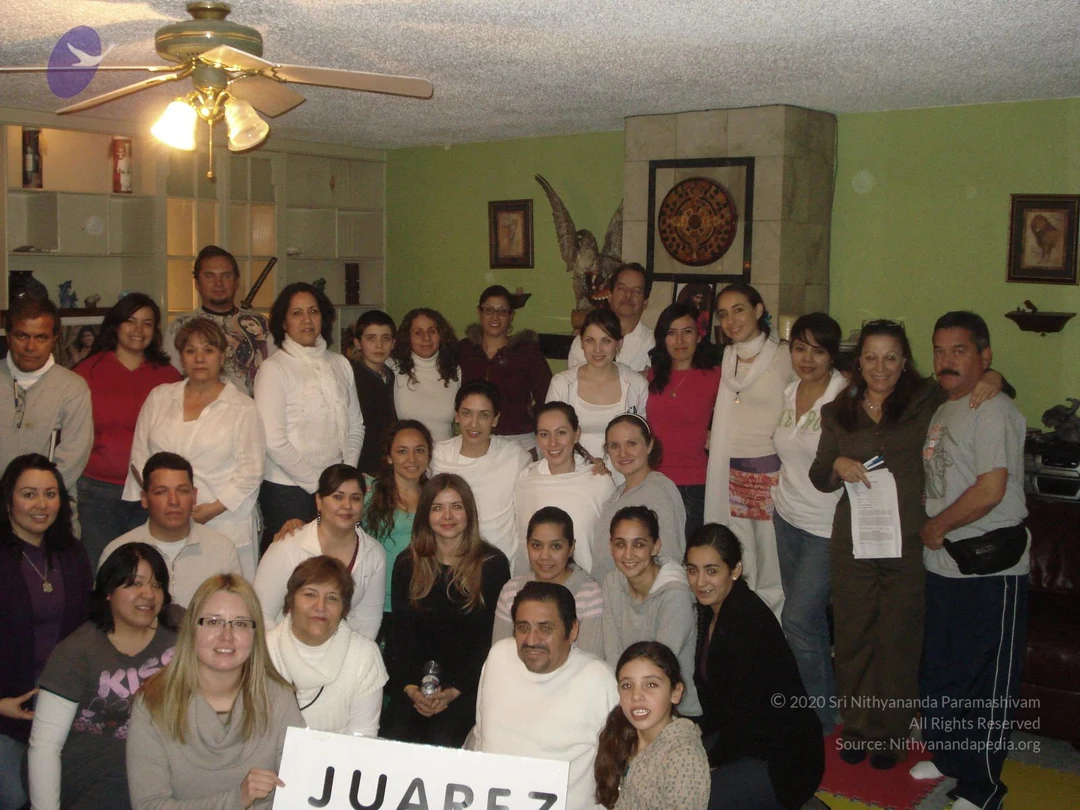
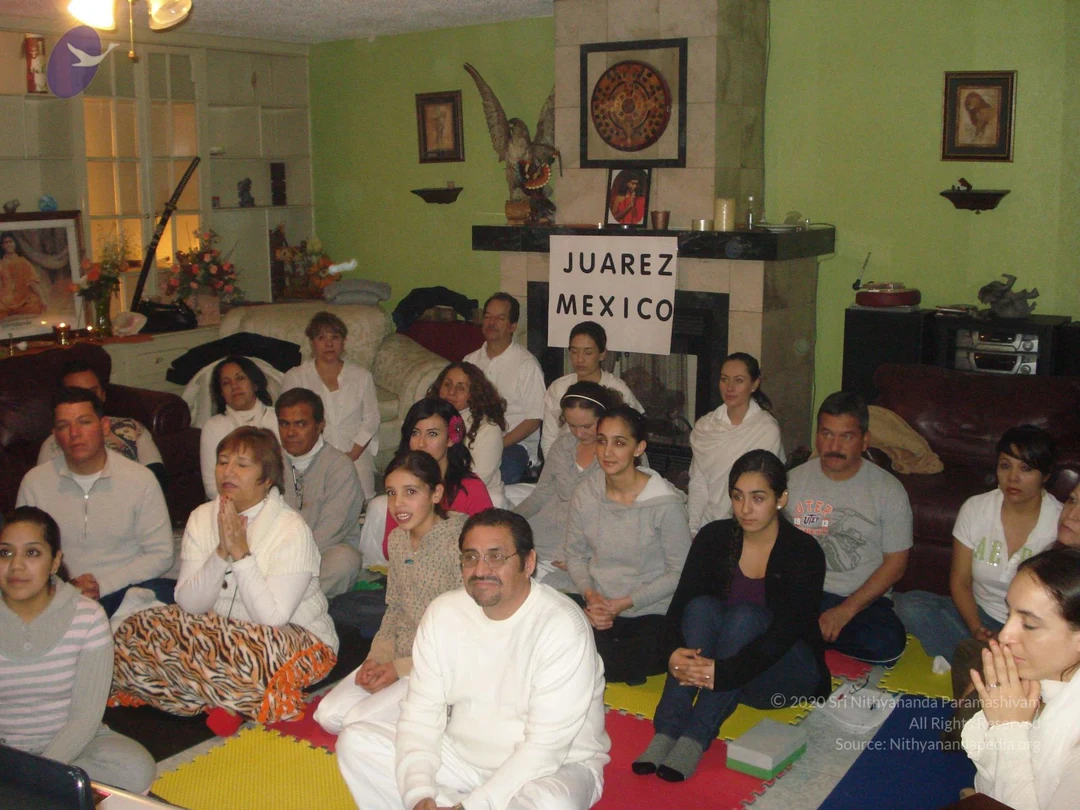
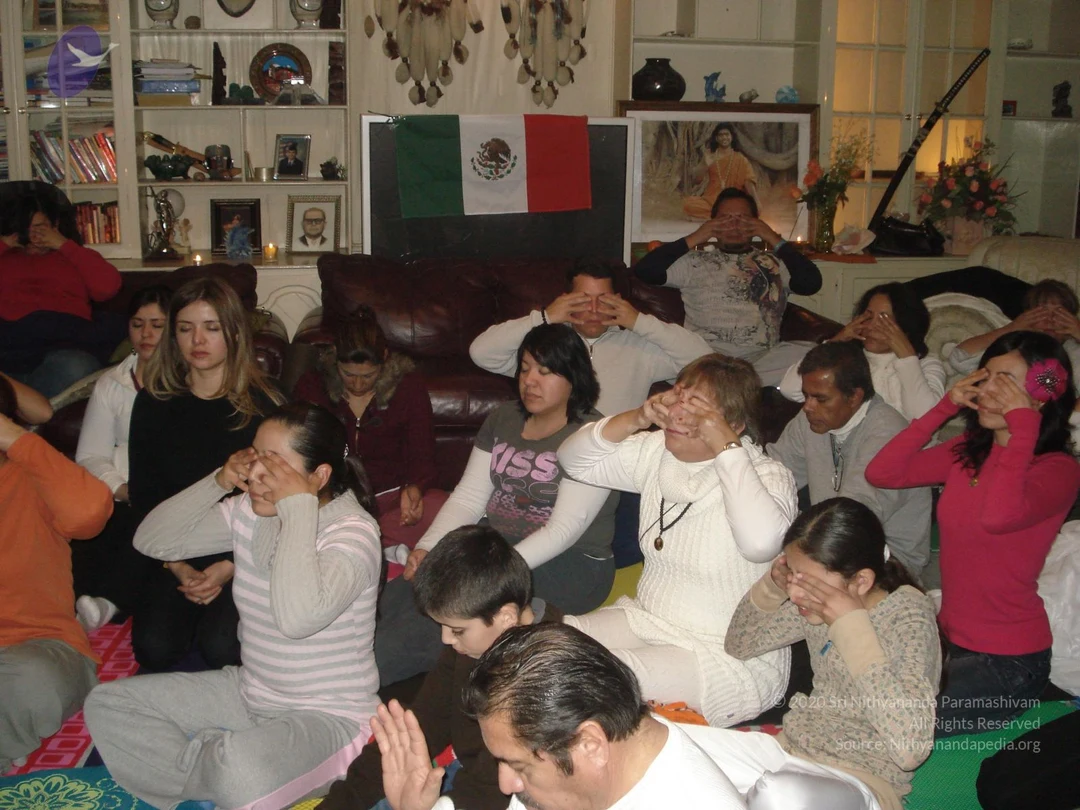
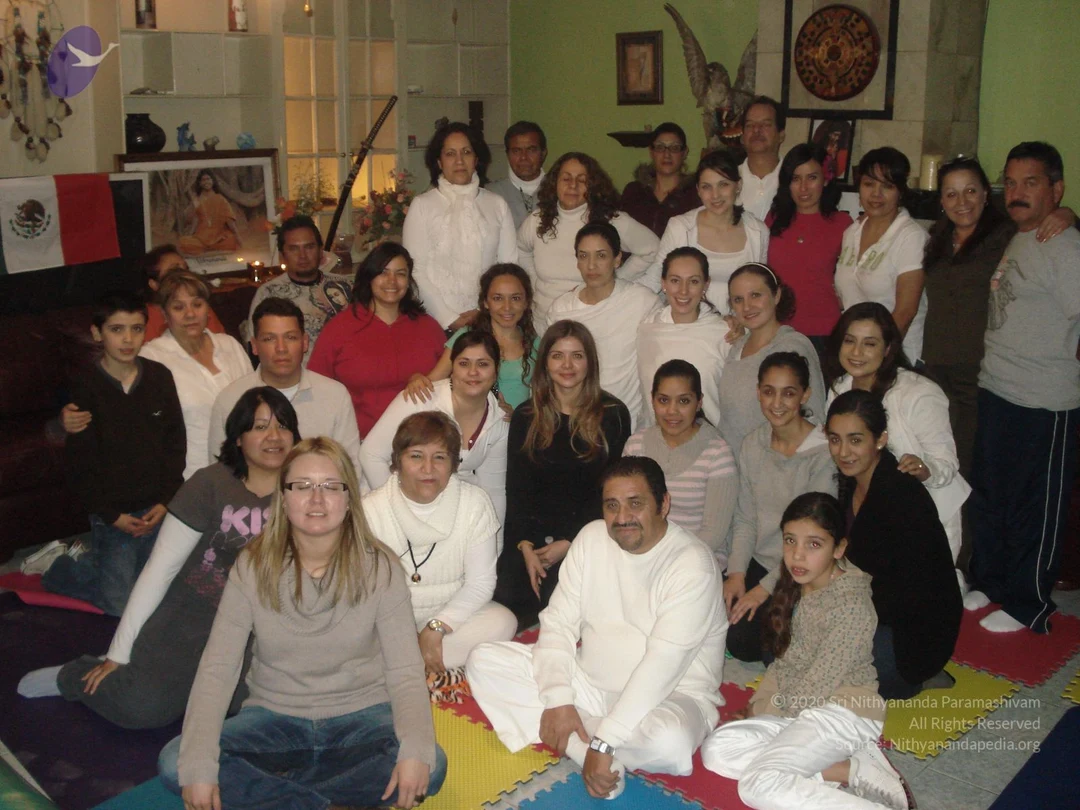
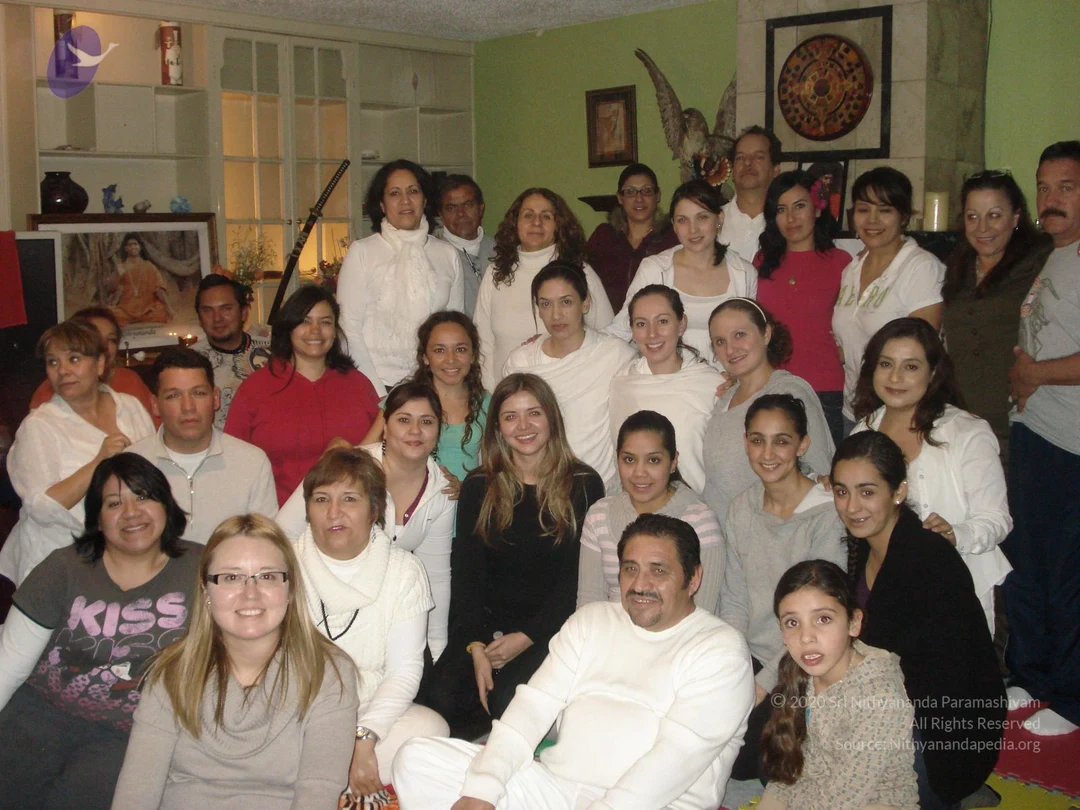
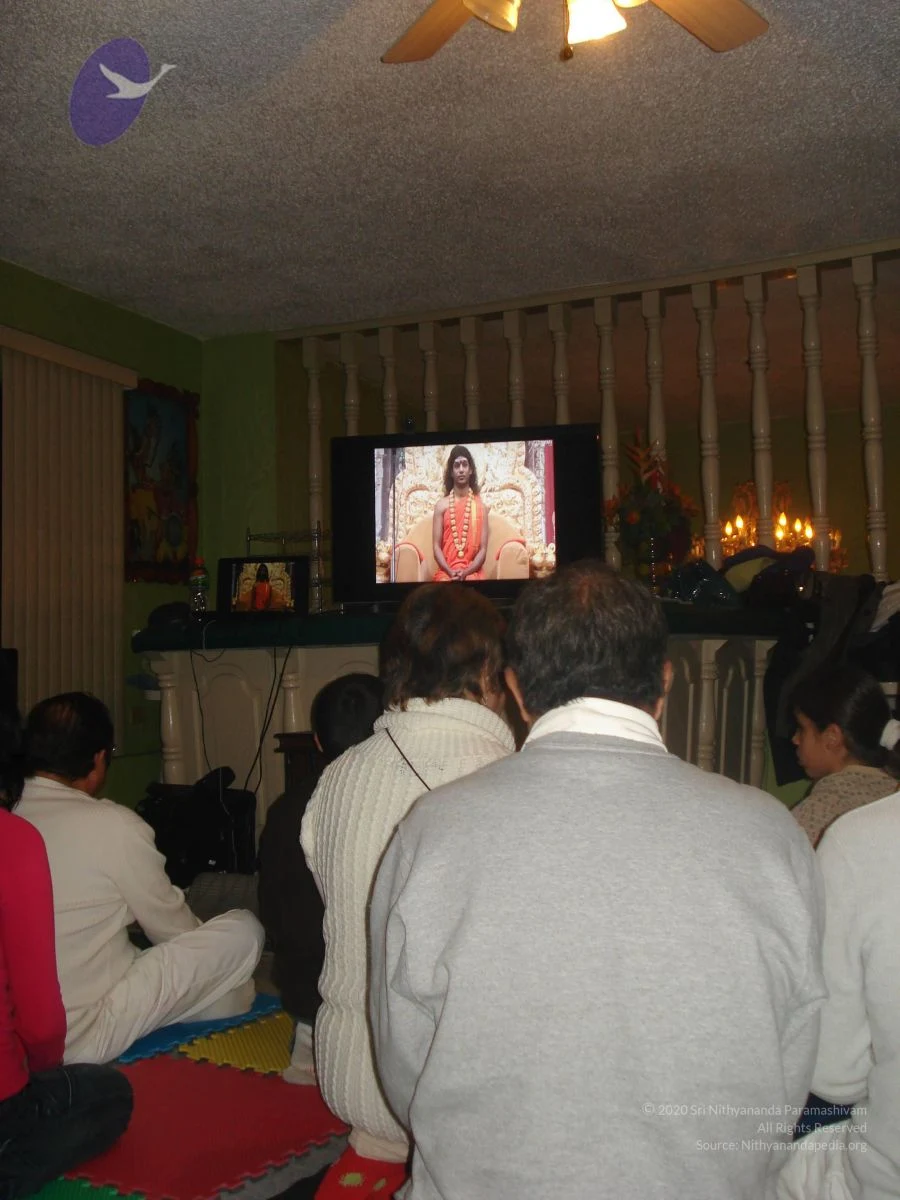
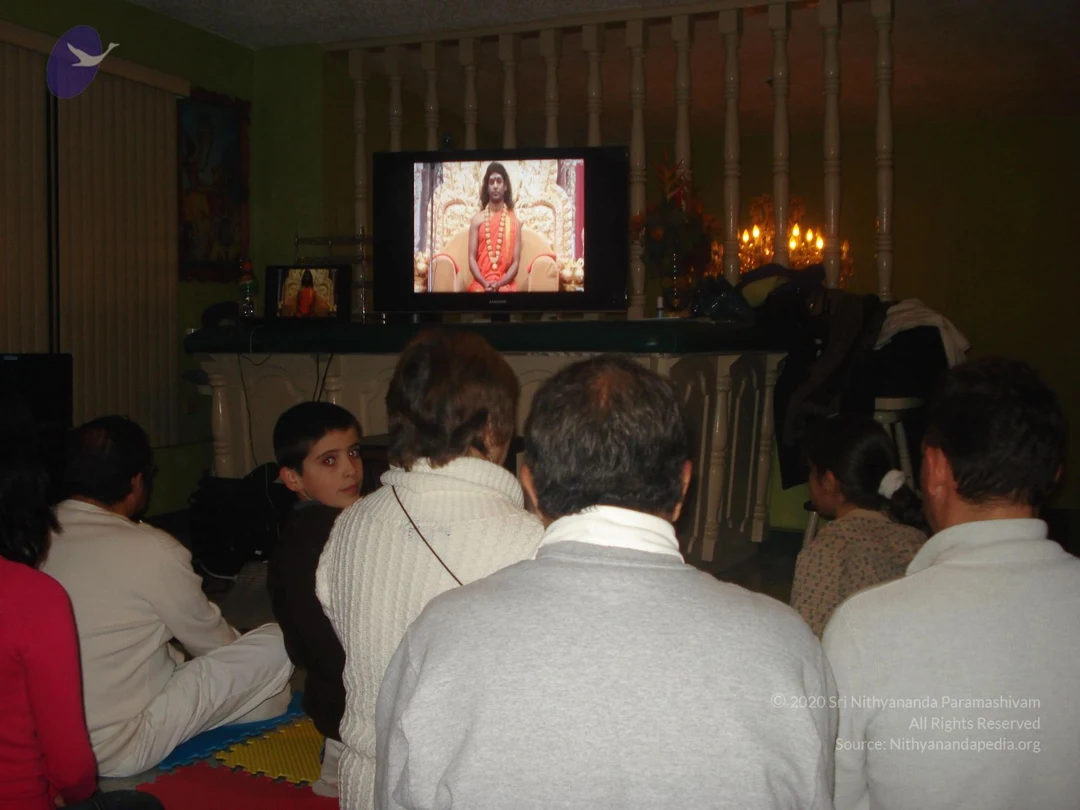
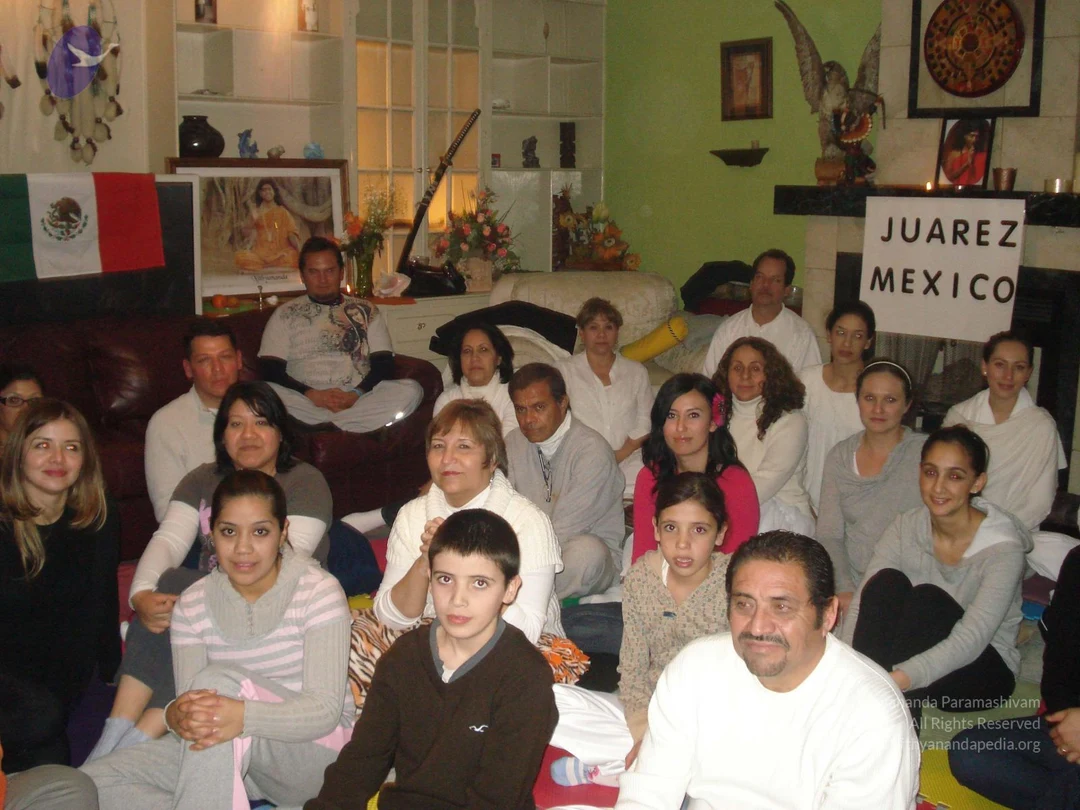
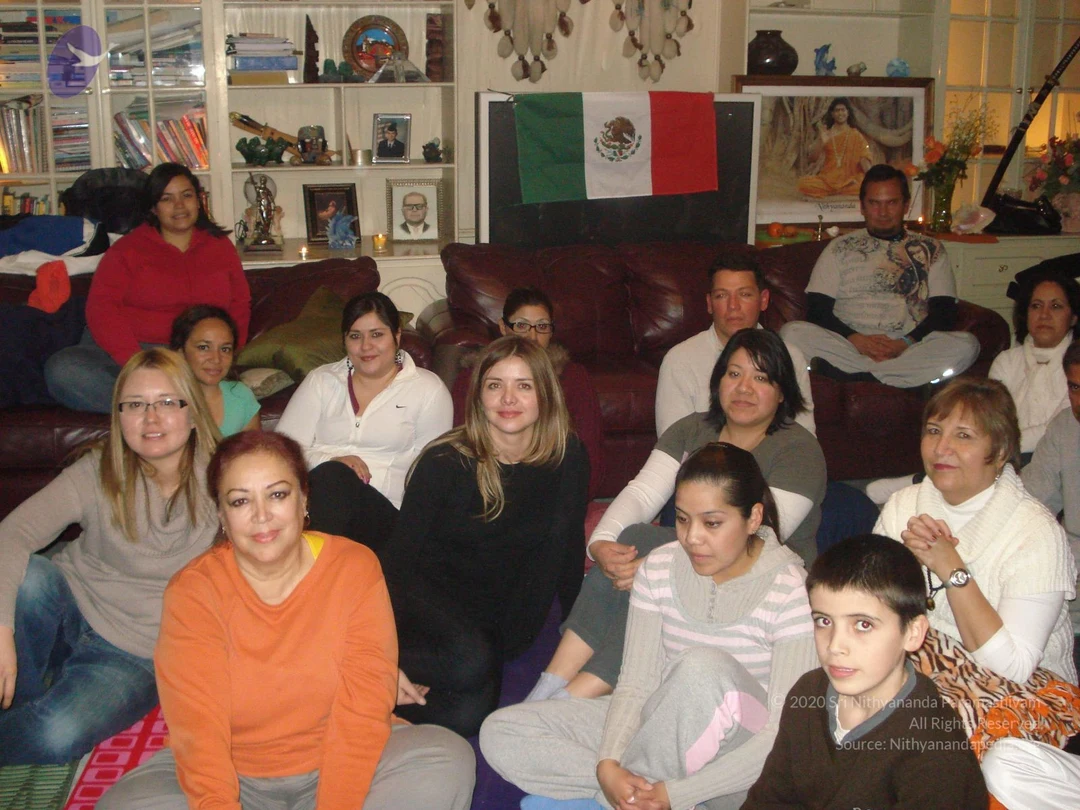
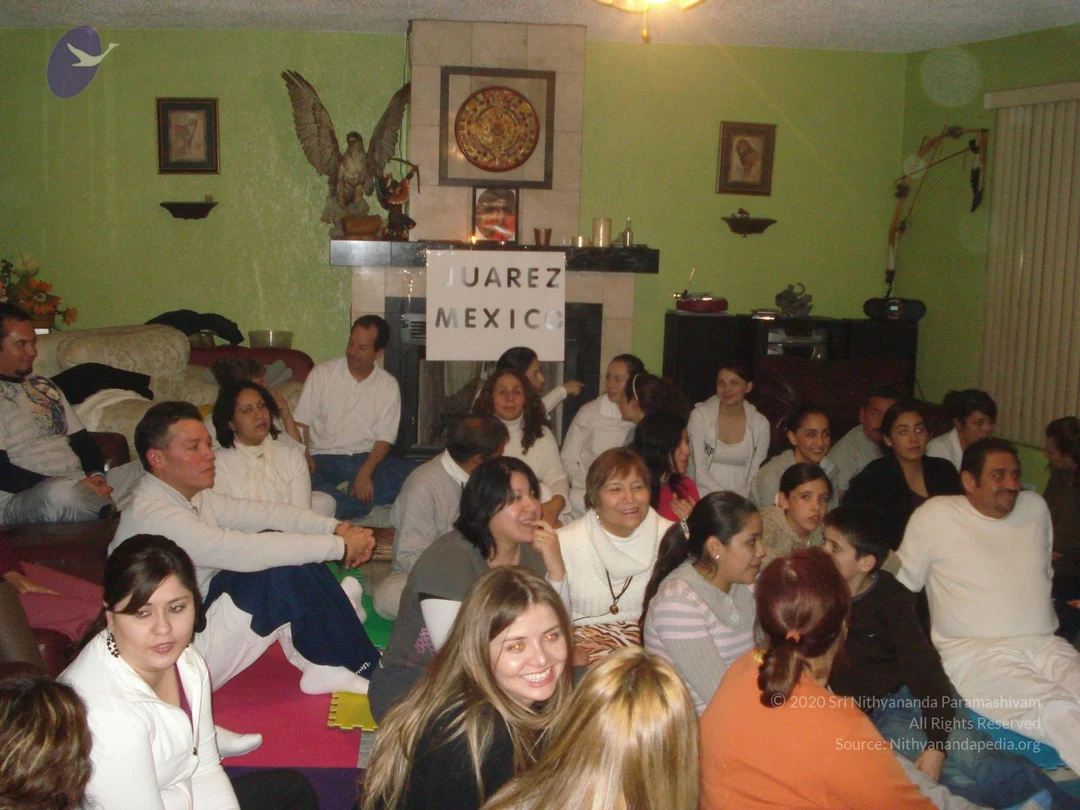
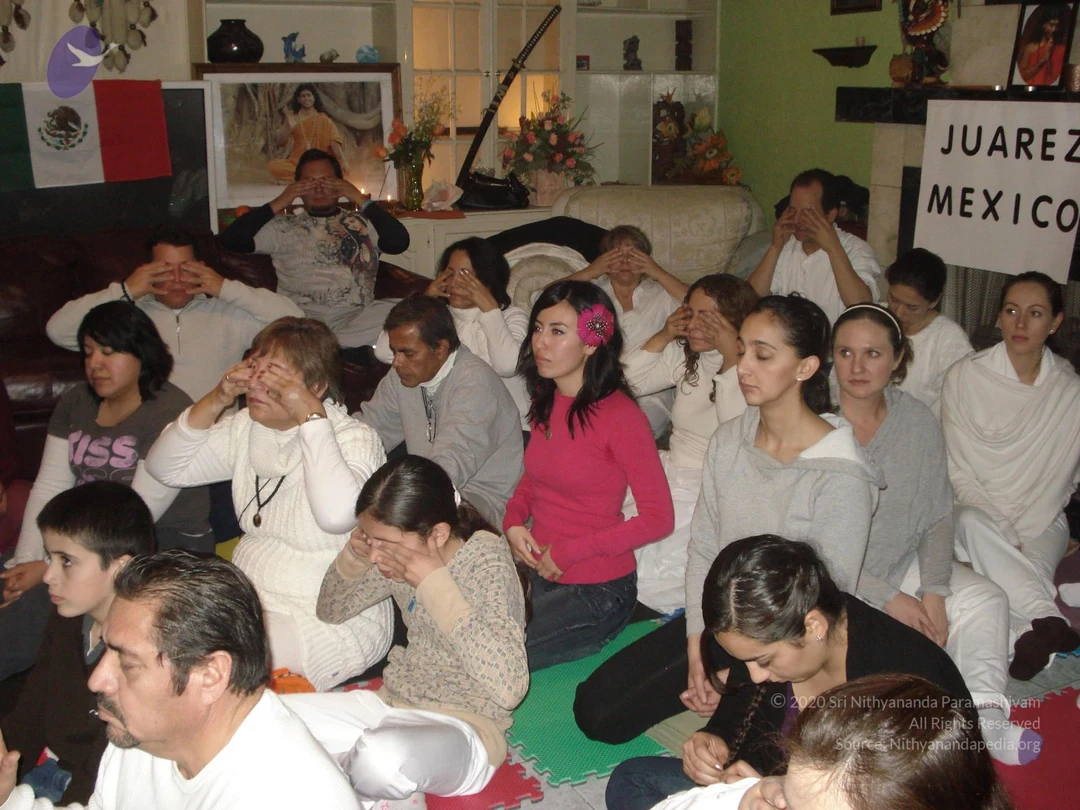
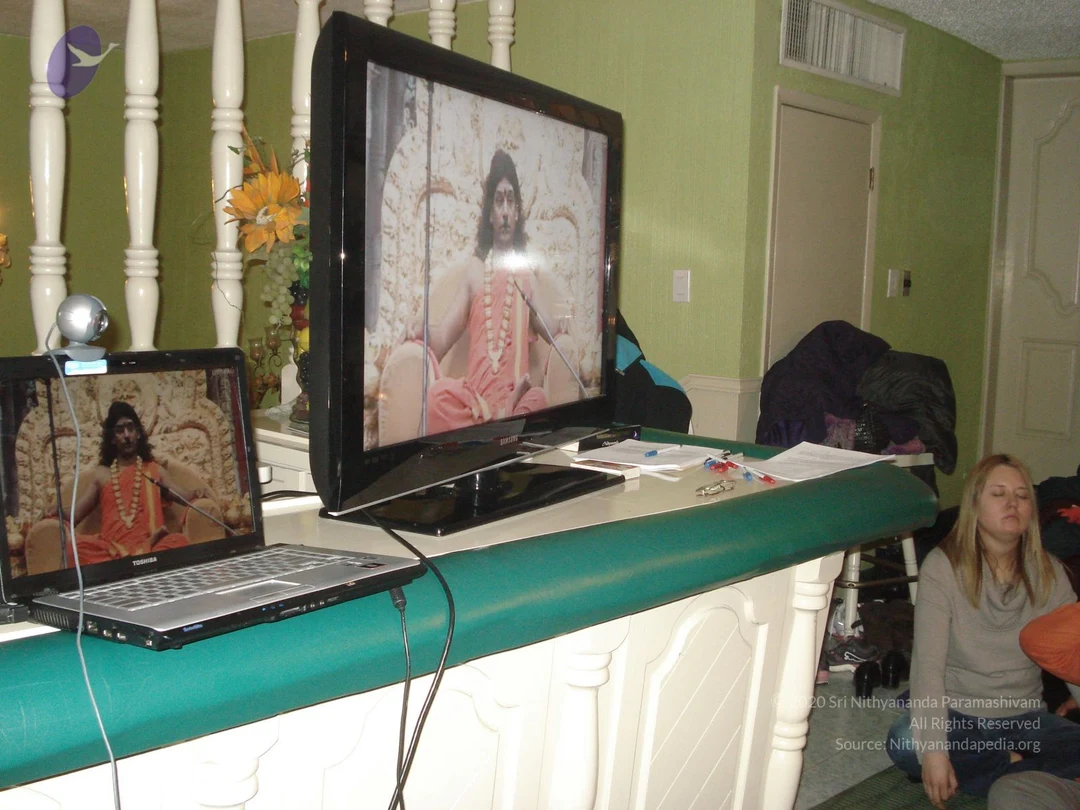
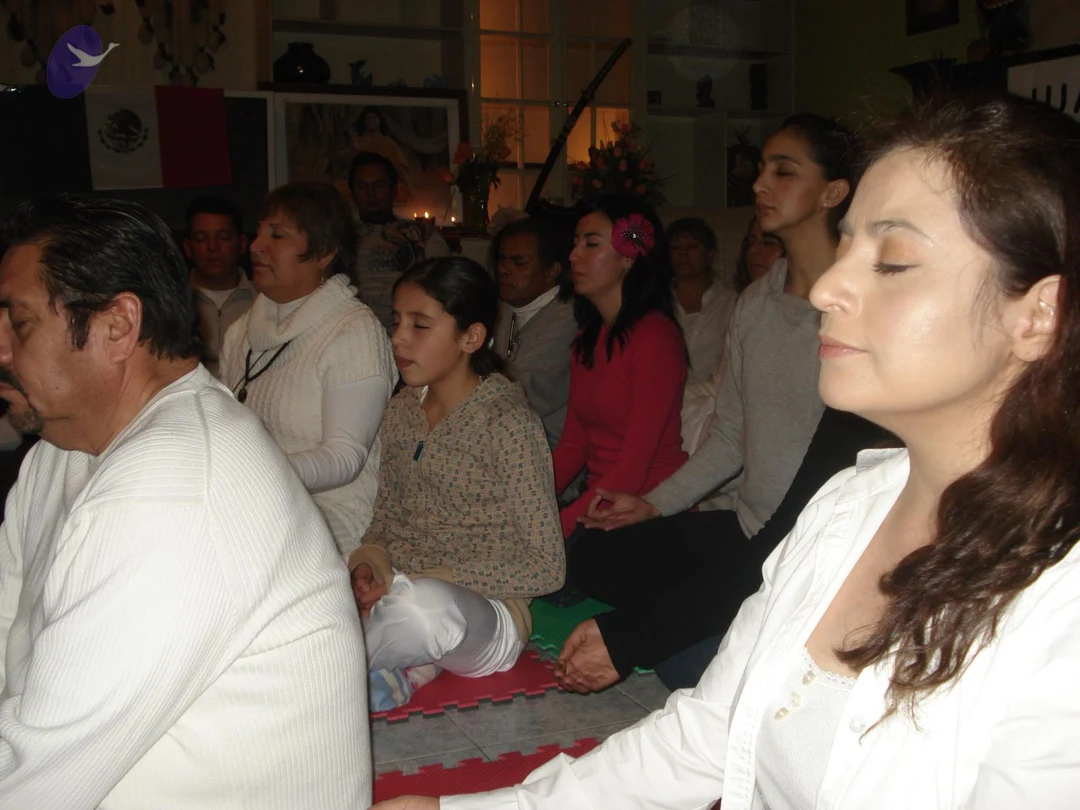
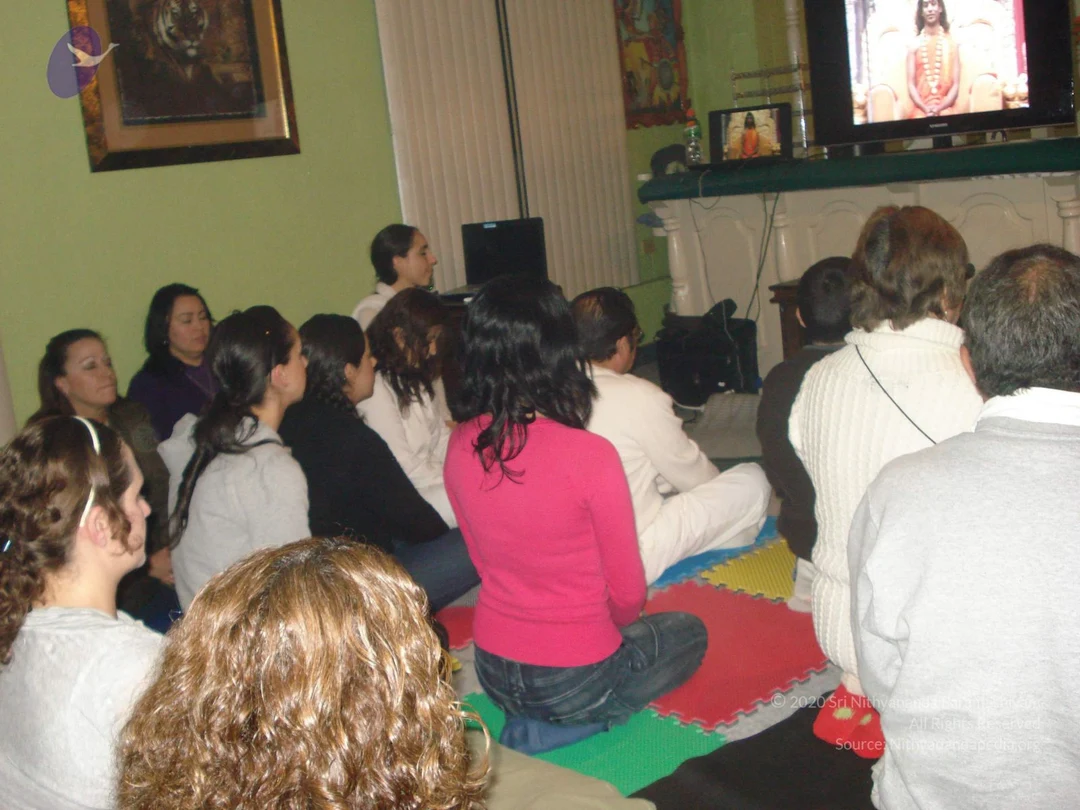
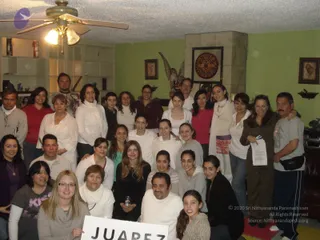
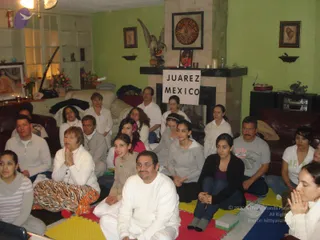
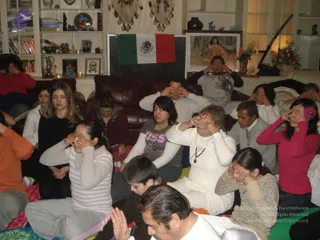
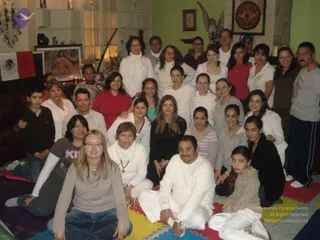
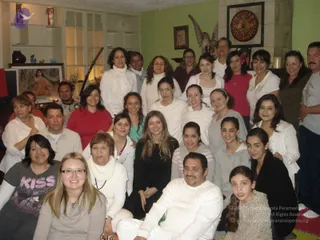
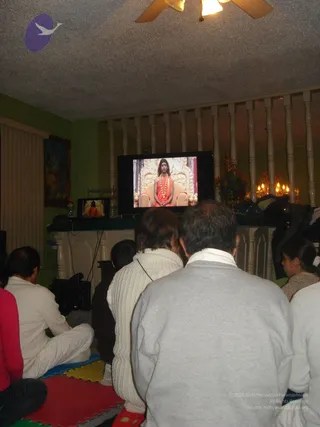
A large group of about forty people crowded together in a home living room with lime-green walls, posing for a group photograph. Many women wear white or cream tops and shawls, others wear red, black or grey. A man in a white sweater kneels in front holding a white sign reading JUAREZ, with a young girl beside him. A ceiling fan and a stone fireplace with a round decorative plaque and a carved wooden bird sit in the background. No one is identified as the a person in this image.A group of about twenty-five people sits on the floor of a green-walled living room in a group satsang or meditation session, many on coloured foam floor mats in yellow and red. A man in front wears a white shirt and glasses, another woman in the foreground wears a white top with a tiger-print skirt and presses her palms together. Others wear white, grey and dark sweatshirts. Behind them a sofa, a fireplace with a stone surround, a decorative eagle figurine, framed pictures and flower arrangements fill the room. A white paper sign on the fireplace reads JUAREZ MEXICO. A framed portrait on the left wall shows a robed figure.A group of about fifteen people sit on the floor and sofas in a living room, performing a yoga or meditation practice with palms covering their eyes. A Mexican flag hangs on the wall behind them, and a framed painting of a figure in orange robes is visible. Shelves hold books, framed photos and decorative objects. Several participants wear casual sweaters, a woman in a white knit sweater sits near the front, and a man in white and grey clothing is seated in the foreground with hands pressed together.A group photo of about 30 people posed indoors in a living room with a green wall, a Mexican flag, a framed portrait of a woman in orange, and a bird sculpture on a shelf. In the front, a man in a white long-sleeved top and white trousers sits cross-legged on a multicolored foam mat, flanked by women in white and grey. Several women wear white tops and scarves, while others wear red, black and grey. A young girl in a grey patterned top sits at the lower right. A large dream catcher hangs at the upper left.Indoor group photo in a home living room with a green wall, a stone fireplace with a round decorative plaque, and a large framed painting of a seated figure in orange. Many people, mostly women and some men, pose close together in white, grey, black and red clothing; the front row sits on a colourful floor mat, a man in white sits centre front, and a young girl in grey sits at lower right. A wooden bird sculpture stands on the mantel and a sword hangs on the left wall near a bookshelf.A photograph of a family seated on the floor of a living room, watching a flat-screen television mounted on a mantel. On the screen, a figure in orange robes with a beaded mala necklace stands before a gilded ornate chair, shown as a broadcast. Beside the TV sits a small framed picture, and a vase of flowers and a lit candelabra decorate the mantel. Viewers in the foreground wear white, grey and cream sweaters and pale clothing, with one child at the right. A ceiling fan and a green wall frame the room.

01-Temple
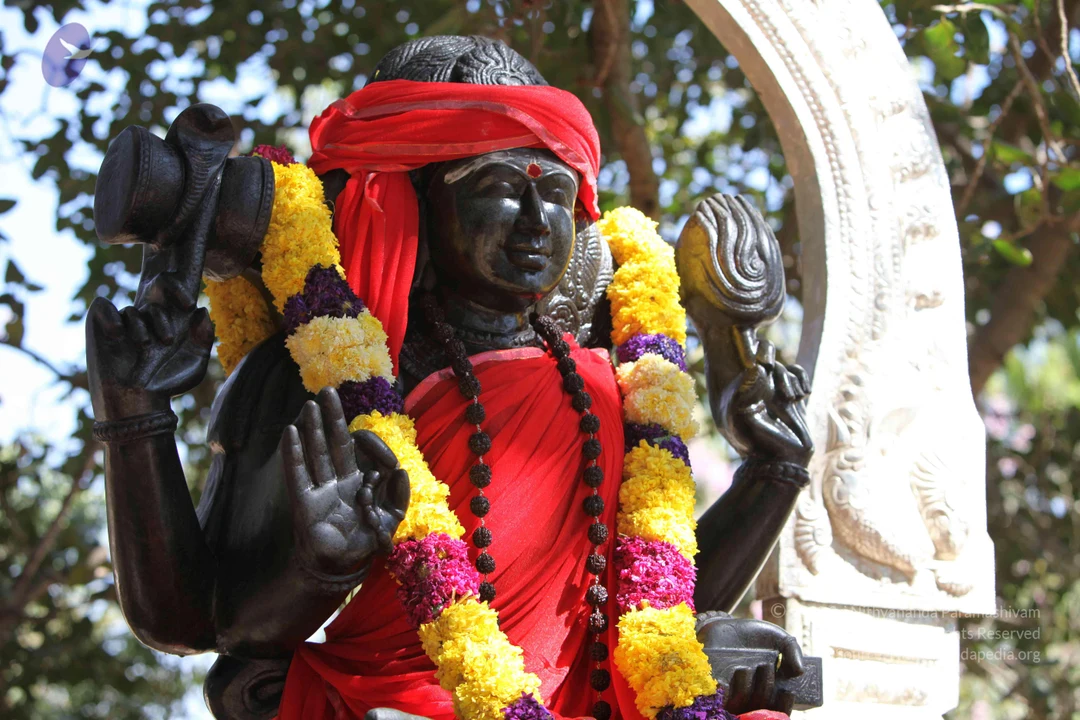
54 photosSource gallery
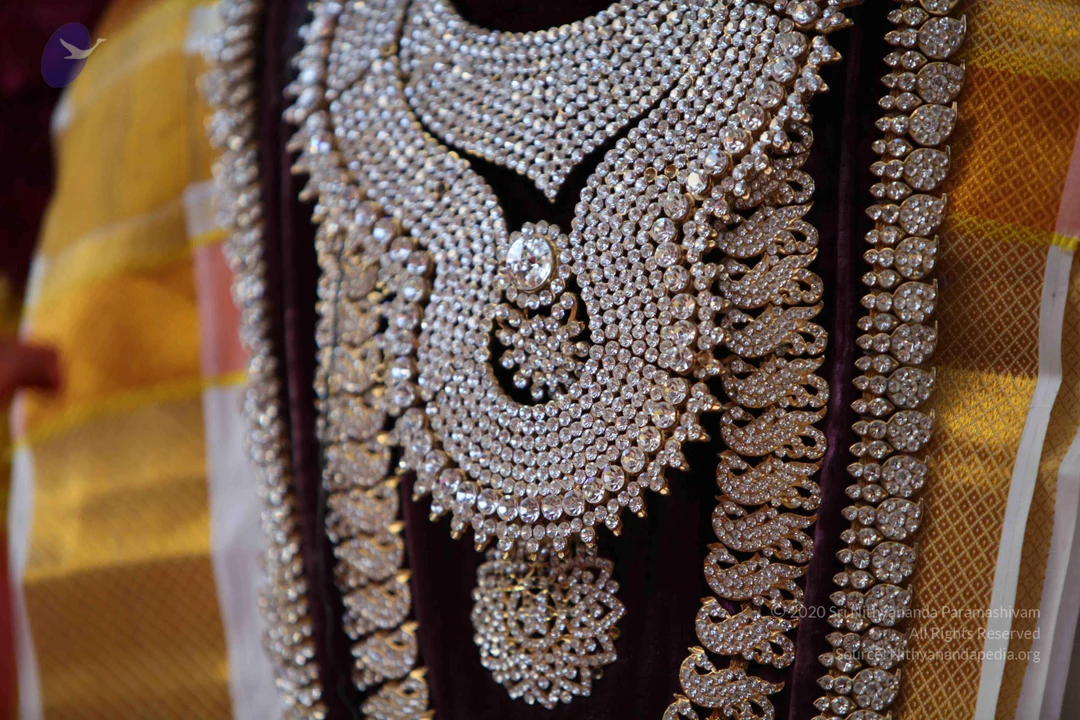
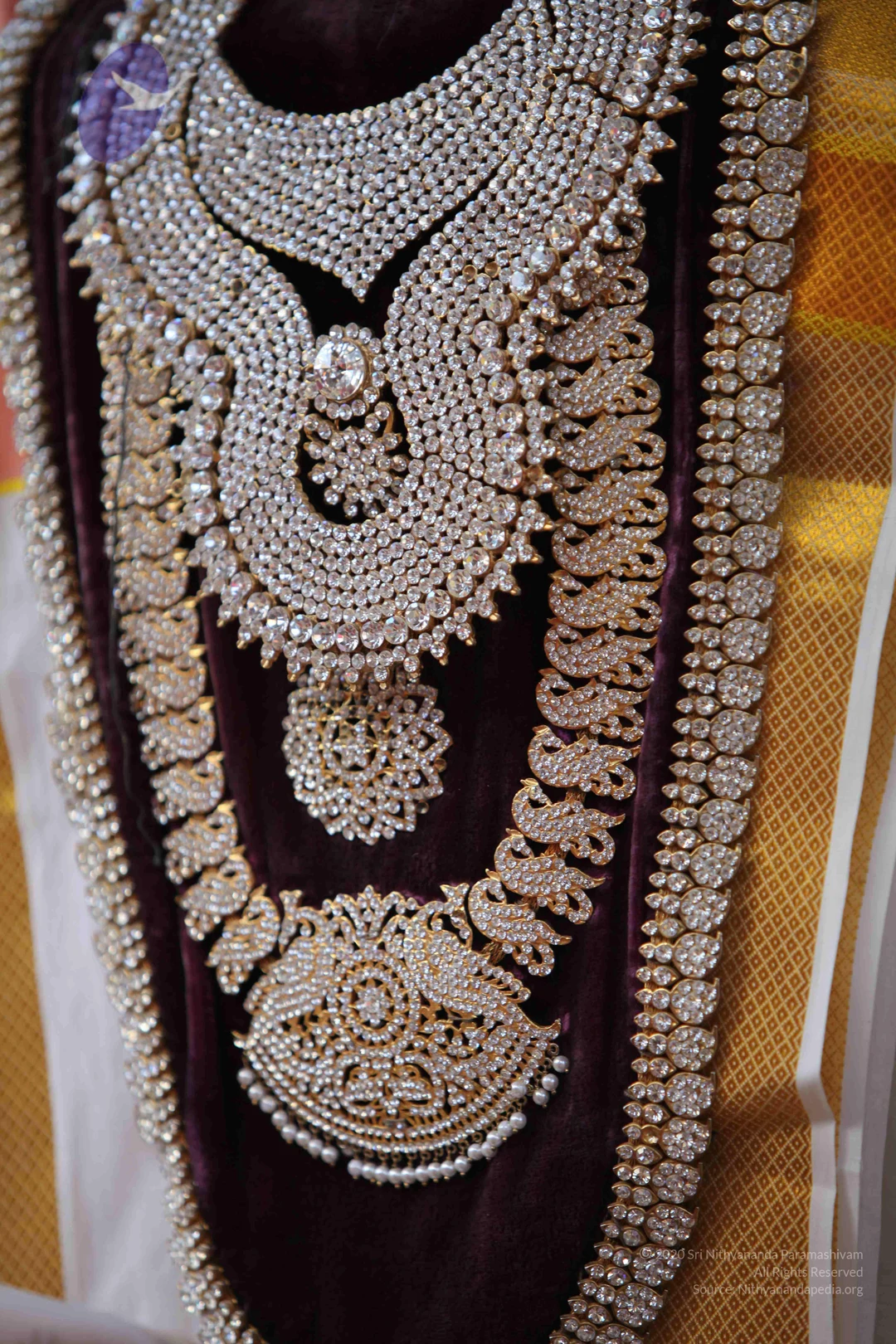
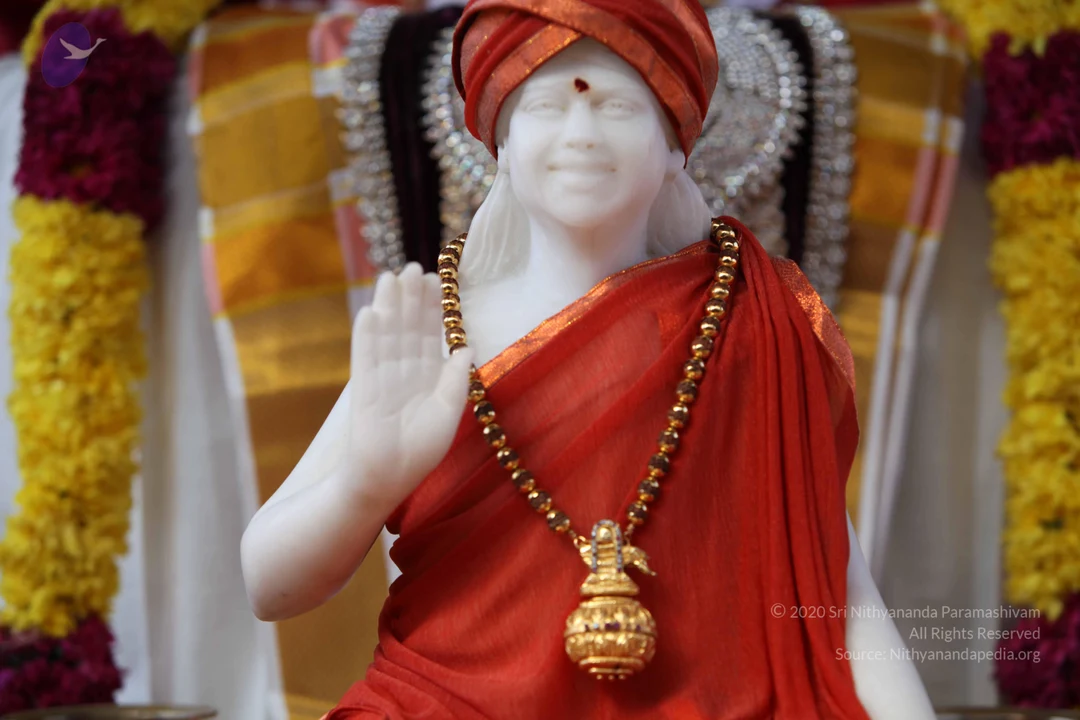
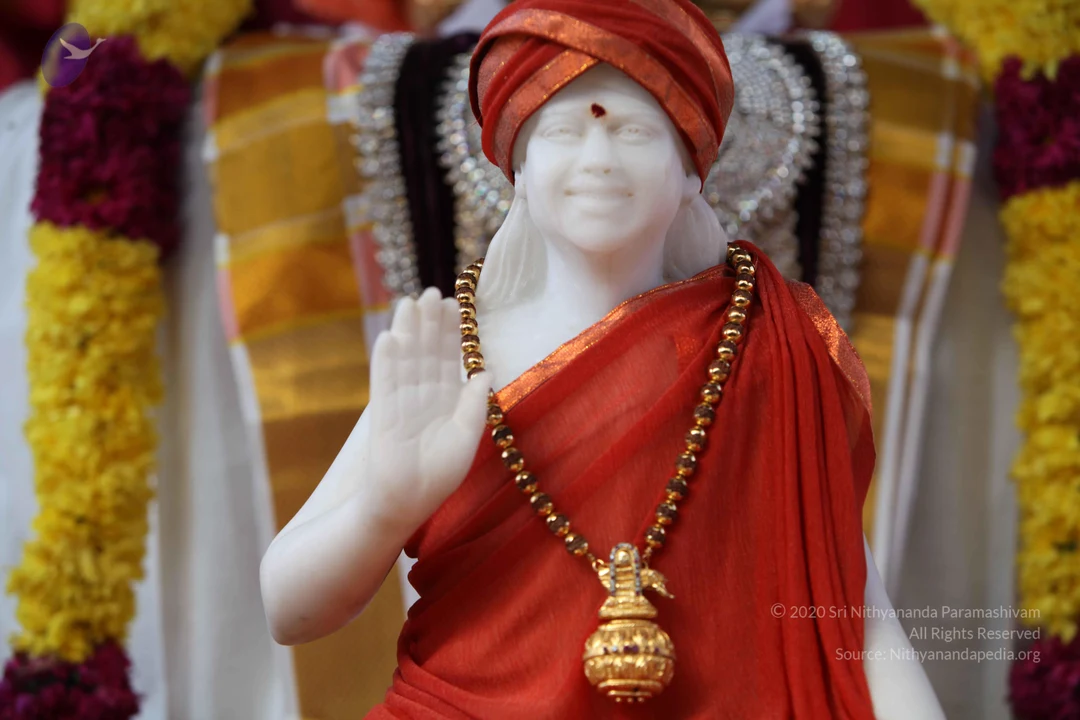
A shrine photograph showing a pair of large golden-brown deity murtis standing under a gilded arch against a yellow backdrop. The left figure wears a red and orange turban, a heavy silver necklace and holds a trident-like weapon and small drum; the right figure wears a dark crown, blue garment and silver jewellery. Both are garlanded with yellow and purple flower garlands. Below, a seated small figure in orange robes and a white shawl sits on a white-draped platform, with a rudraksha-style necklace and a golden pot and offering lamps arranged in front. Brass oil lamps, kalasha pots, flower offerings and a mandala-like tray lie on the platform. Red curtains and carved stone pillars frame the scene. No living people are visible.A shrine with two large gilded deity murtis of a crowned male figure and a female figure, both adorned with silver necklaces, garlanded with yellow and purple flower strands. At the front, a seated white-robed figure wearing a saffron-orange turban and an orange robe with a gold pendant holds hands together in namaskar; this is a statue or effigy, not a physical person. Brass kalashas, lamps, a plate of offerings and a white fur-like cloth lie on the altar in front. A small framed image on a side throne stands at right, and red drapes and carved stone pillars frame the scene. No living people are visible.Photograph of a shrine niche framed by ornate gilt arch with a golden yellow backdrop. Two large metallic deity murti stand behind, a male figure with crown and red-orange headwear, and a female figure in blue with ornate necklaces and a tall dark headdress, both holding ritual implements. Between them sits a white marble seated figure of a man in orange robes and an orange turban, hands folded, wearing a long gold necklace, set on a throne-like seat with a golden canopy of green-jeweled hoods. Yellow and purple flower garlands drape the figures and throne. Brass puja vessels, a bell, lamps, flowers and a bowl sit on the platform in front, with an orange cloth folded beside them.A photograph of a shrine niche with two large golden-brown deity murti seated under a gilded arch against a yellow backdrop. The left figure wears a red-and-gold crown and holds ritual objects; the right figure wears a blue skirt, a black crown and layered silver-toned necklaces. In front, a white-marigold garland with yellow and purple blossoms frames a seated white marble statue in orange robes and an orange turban, with a rudraksha-style pendant, hands raised in a gesture. Before it stand brass lamps, a bell, kalasha pots and offering bowls with flowers on a white cloth. No living people are visible.Two metal murti figures seated side by side on a raised golden-yellow backdrop inside an ornate gilded arch. The figure on the left, with a bronze-gold face, wears an orange-red turban with a crescent ornament, a heavy silver-jewelled necklace and a brown torso garment, holding a trident-like staff and a hand raised in abhaya mudra. The figure on the right wears a black crown with silver crescent ornaments, a blue sari and layered silver necklaces, and holds a small green parrot-like bird. Both are garlanded with yellow marigolds and purple flowers. In front is a brass tray with a pink cloth and small lamps or offerings. Zero physical people appear; the figures are statues.A photograph of a pair of metal deity murtis seated side by side within a gilded arch against a yellow satin backdrop. The male figure wears an orange-red turban, silver and gemstone necklaces and a dark blue lower garment, and raises one hand in blessing while holding a trident. The female figure wears a black crown, silver jewellery and a blue garment. Both are decorated with yellow and purple flower garlands, and a copper vessel and a fan-shaped plate with lamps appear in front. No people are visible.

02-Pada-Puja

116 photosSource gallery
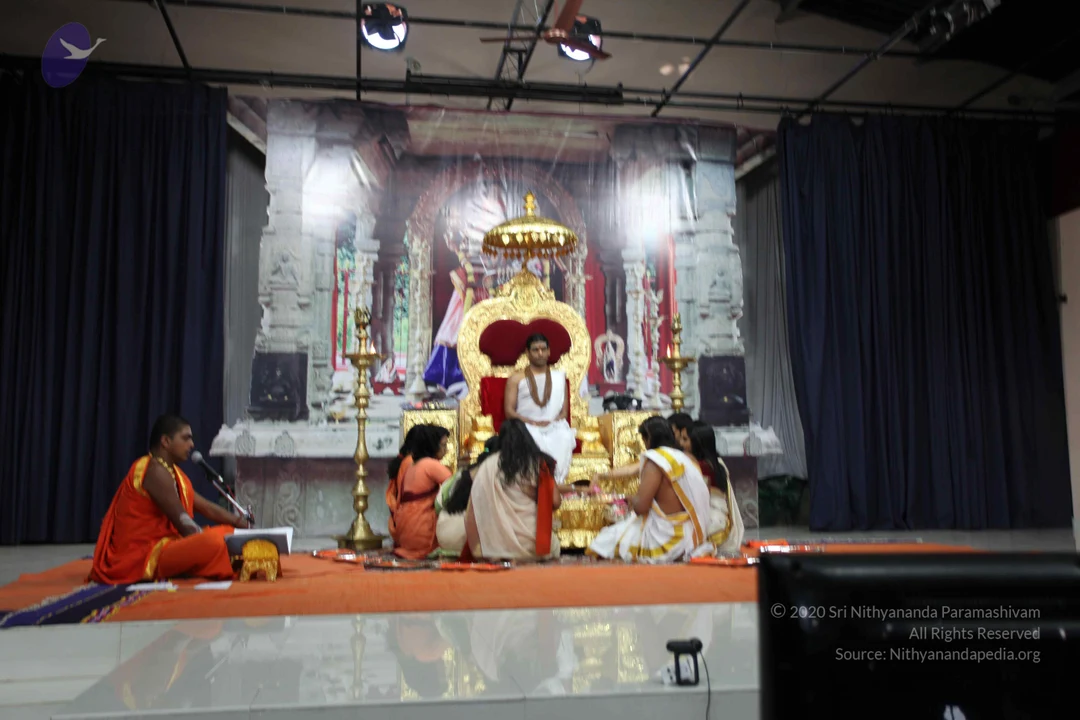
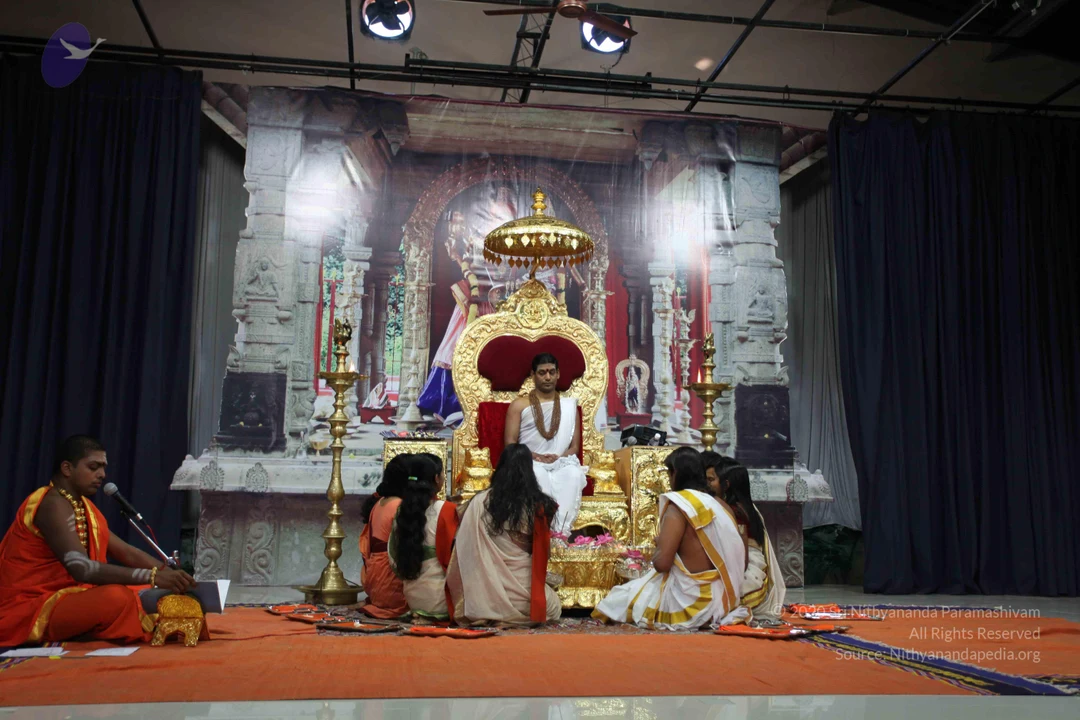
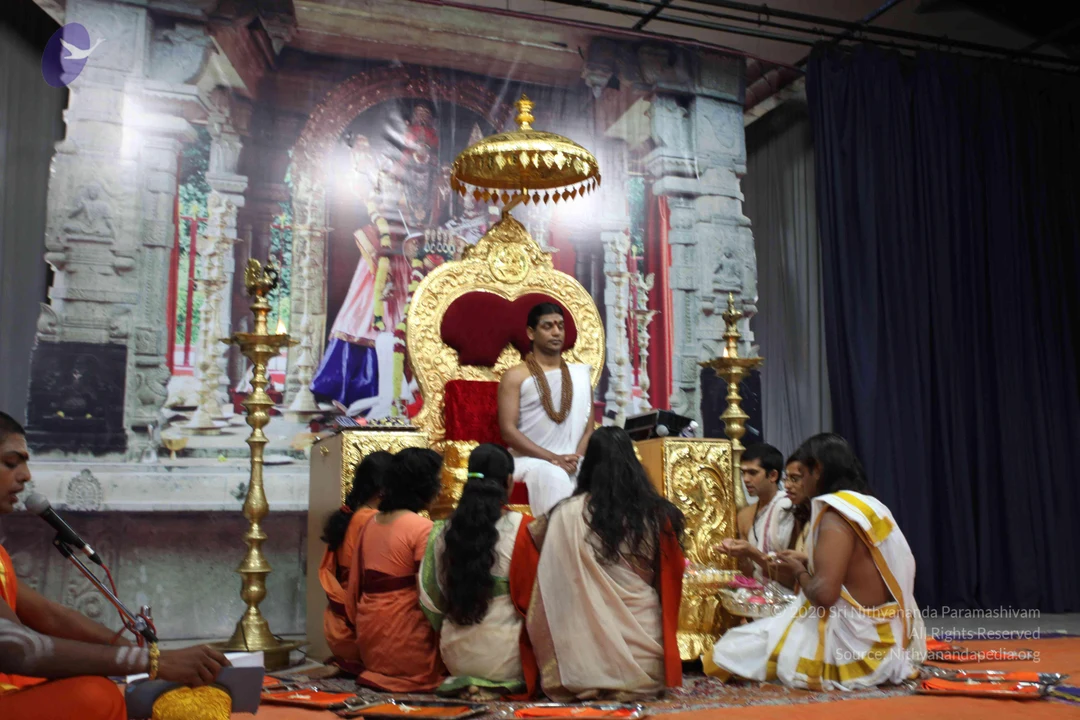
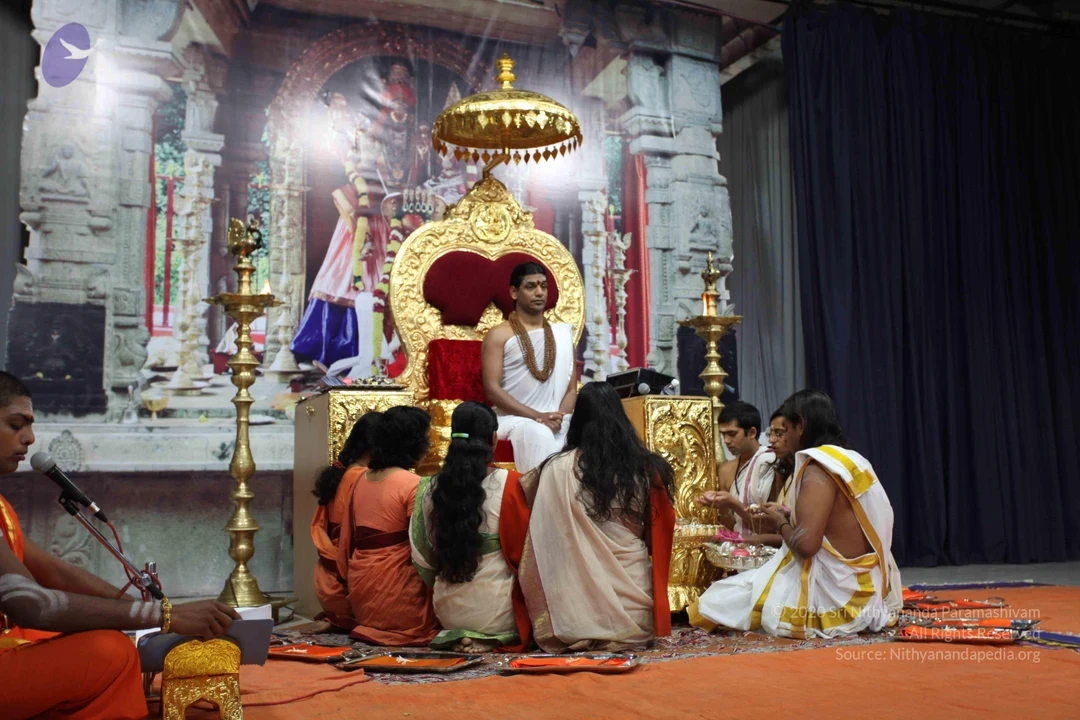
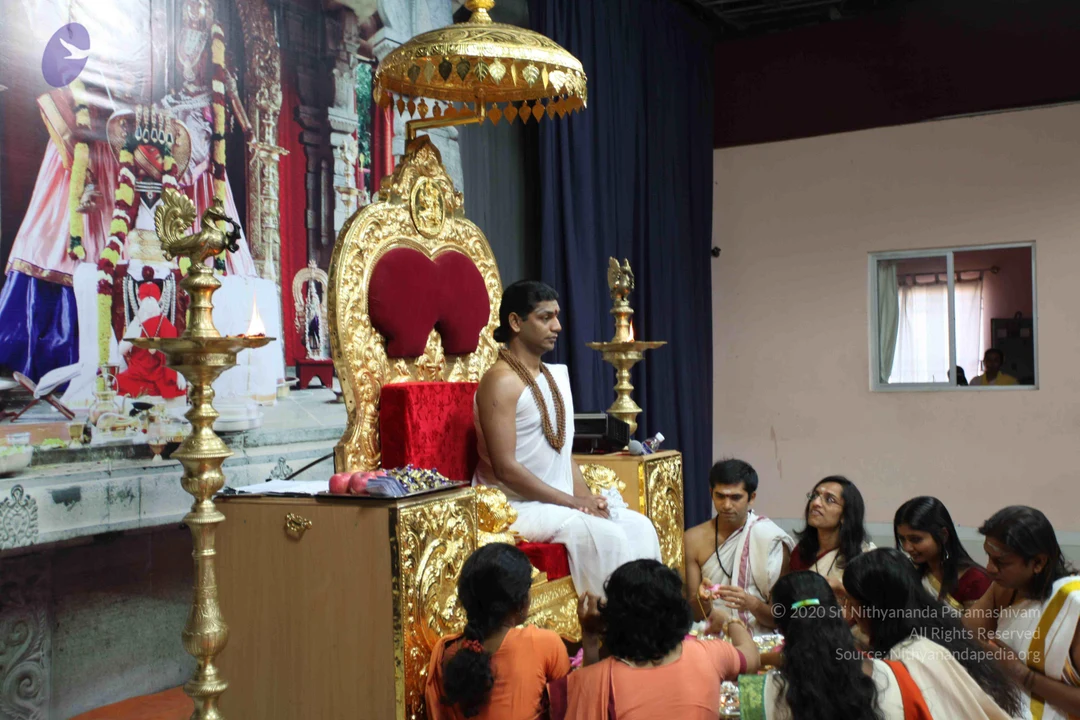
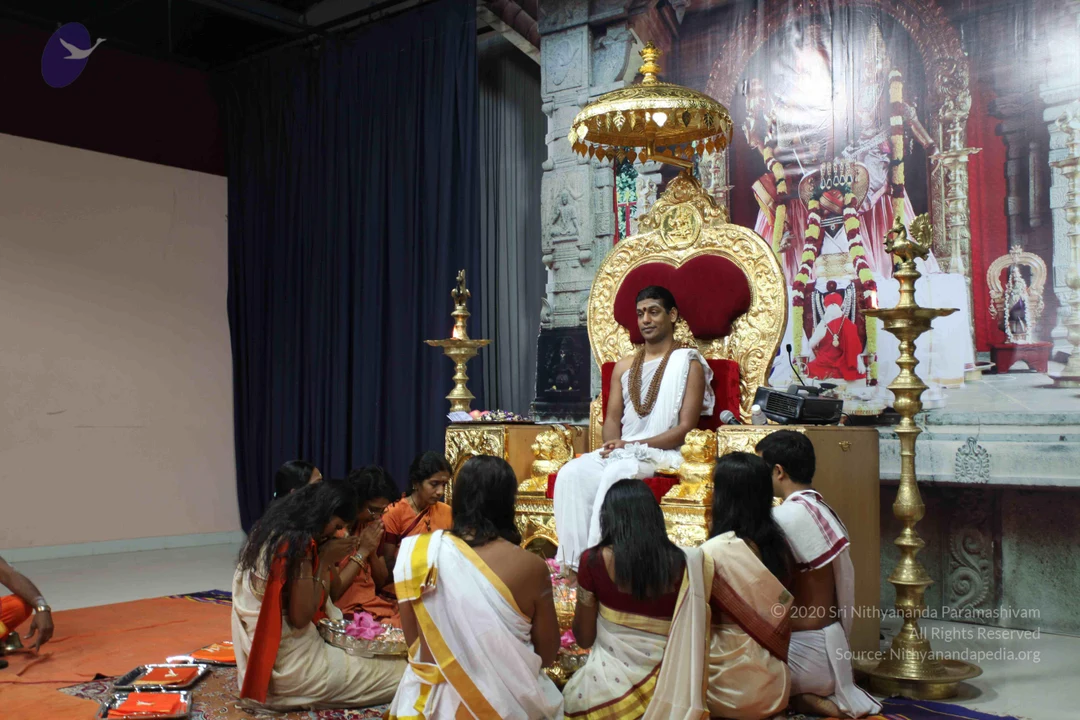
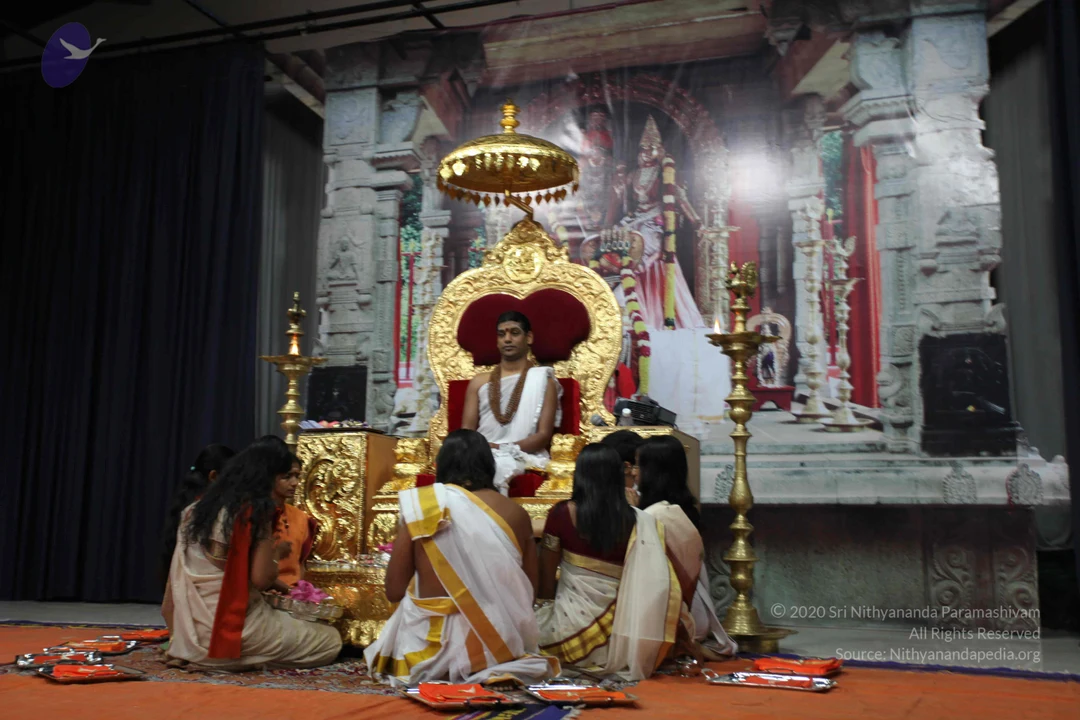
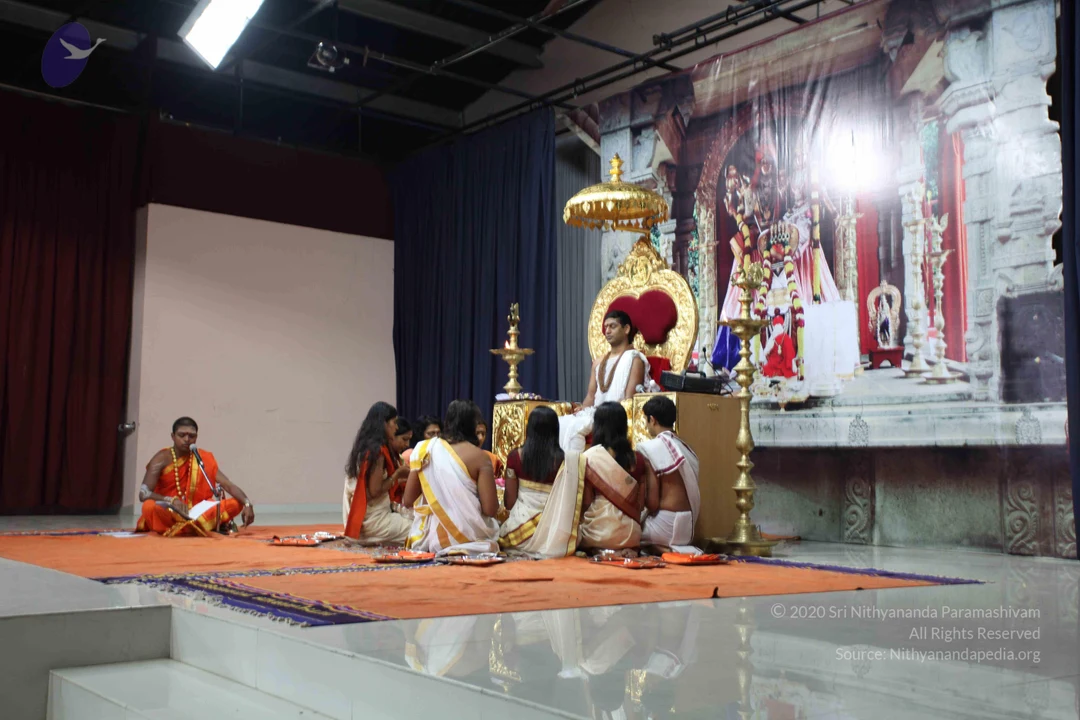
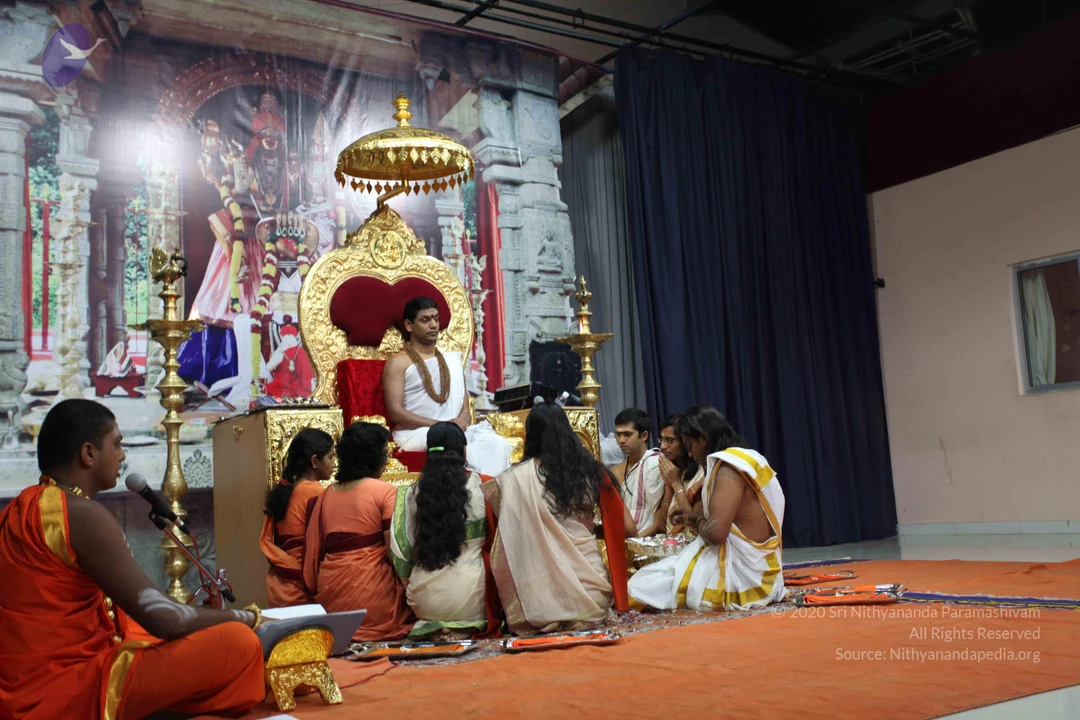
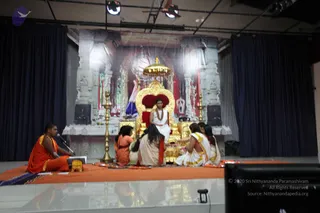
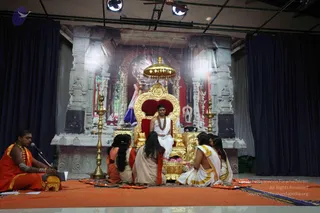
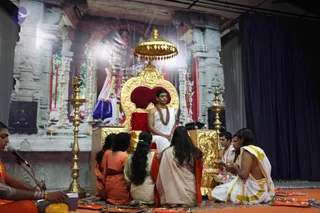
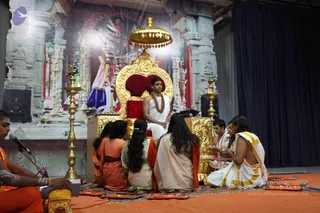
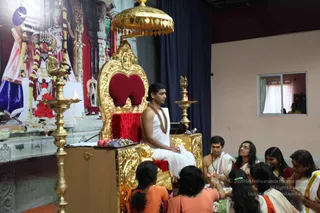
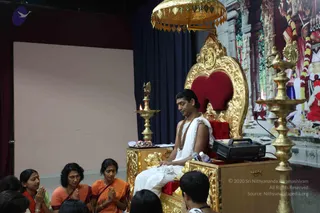
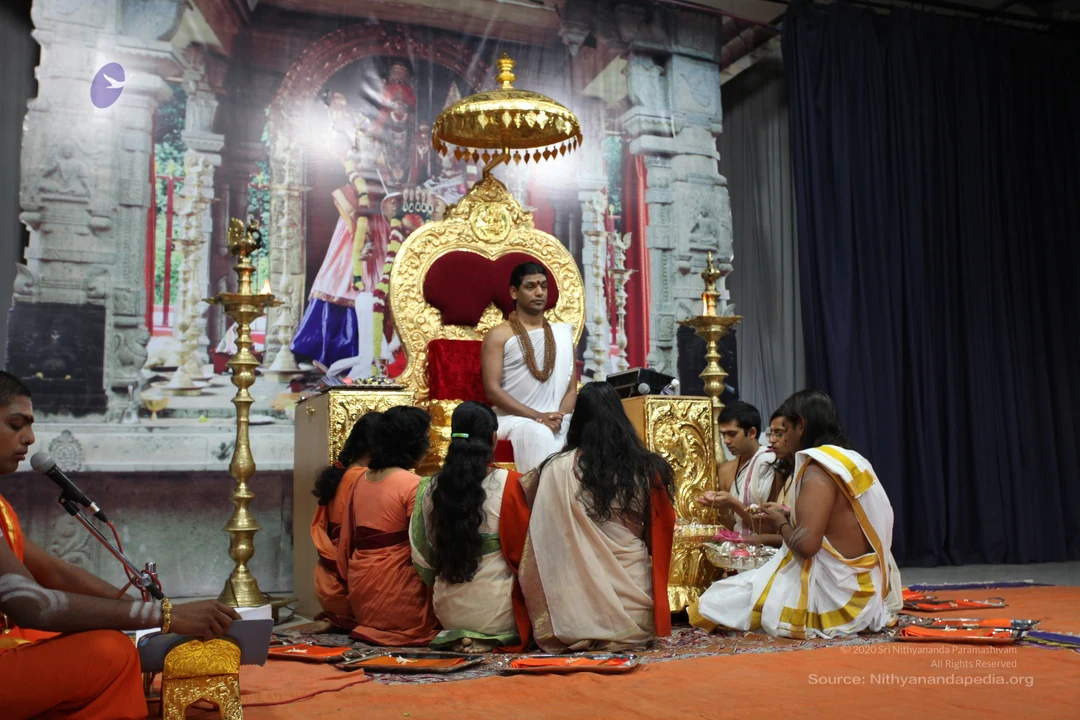
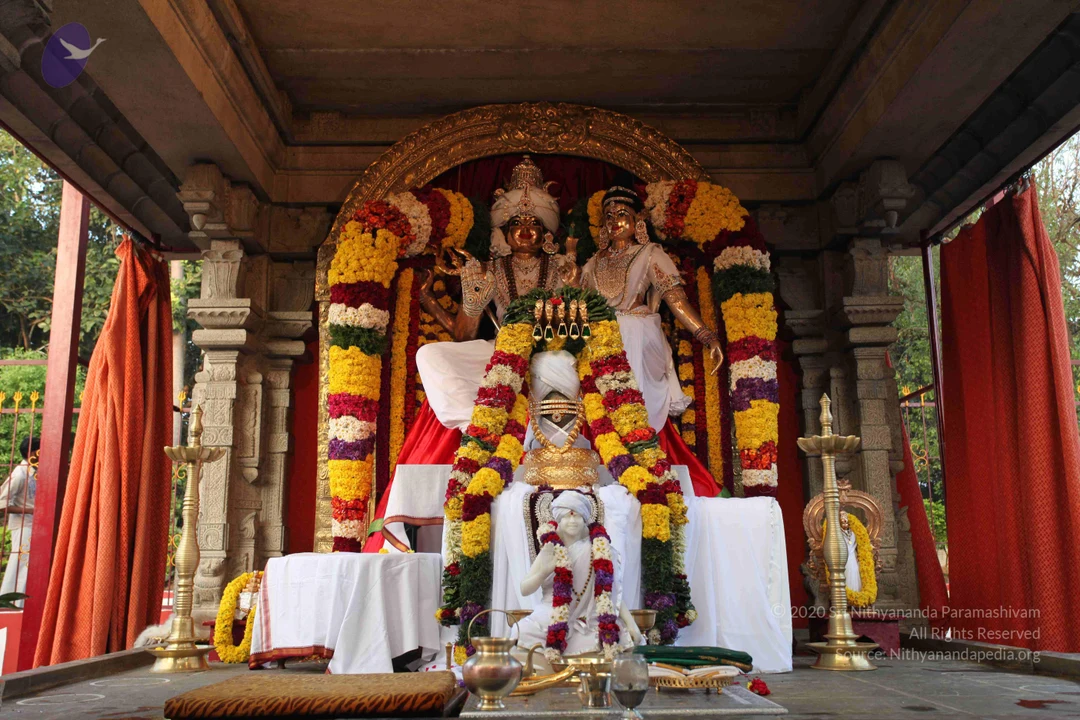
Photograph of a padapuja-style ceremony on an orange-carpeted stage. A man in white dhoti and white shawl with a beaded necklace sits on an ornate gold throne with a red cushion and golden canopy, in front of a large printed backdrop of a stone temple gateway. Several people in white and cream saris and orange-and-white garments sit on the floor before the throne, some holding plates or offerings. On the left, a man in orange robes with gold-trimmed shawl sits behind a microphone reading from papers. Gold oil lamps stand on either side of the throne, and dark blue curtains frame the stage.A stage ceremony in a hall with a large backdrop of a stone temple gopuram and columns. A man in white ritual cloth with a rudraksha mala sits on an ornate gold throne with a red seat and a golden canopy above. Four women in white and cream saris with gold borders kneel on orange mats before the throne, facing it with their hands joined. Brass oil lamps stand on either side, and pink flowers lie on the golden platform. On the left, a man in orange robes with a microphone sits and speaks, while mats and offerings are arranged on the orange floor. The scene resembles a padapuja or satsang.A photograph of a ceremonial stage in front of a large painted backdrop of a stone temple gateway with carved pillars and a deity figure. A man in plain white dhoti and a long beaded necklace sits on an ornate gold throne with red cushioning, under a gold canopy with tassels. Two tall brass oil lamps stand on either side of the throne. Seated on the floor in front are several people: a woman in peach sari with an orange border, women in orange and green garments, and men in white dhoti with gold borders, one holding a tray of flowers. At left a man in orange garments with white body markings speaks into a microphone. The floor is covered with orange cloth. A trimmed rudraksha-style necklace is visible on the seated man. Pada puja style seating is implied by the devotees at the feet of the throne.A seated man in white ritual dress with a rudraksha mala and a red bindi sits on an ornate gold and red throne beneath a golden parasol, facing a group of devotees on an orange carpet. A devotee on the left in orange robes with white tilak marks holds a microphone and a sheaf of papers. In front, several women in orange, green and cream saris sit with their backs partly toward the camera, and to the right a man in a white dhoti with gold borders sits with a brass tray of flowers and offerings beside a standing man in white. Brass oil lamps flank the throne, and a large temple-style backdrop with carved pillars and deity figures fills the background. a person is a probable match only by the rudraksha mala and throne setting, but his face is not visible enough to confirm, so identity is unsure.A seated man in plain white dhoti and shawl sits on an ornate gold throne with a red velvet cushion beneath a gold canopy, wearing a long rudraksha mala. Brass oil lamps flank the throne, and a large framed backdrop behind shows a decorated deity murti with garlands and red-and-white drapery. Several women in saris sit on the floor in front of the throne, some holding flowers or offerings, while a bare-chested young man in white sits among them. A pink wall, navy curtain and window appear at right. The seated figure has long swept-back hair and rudraksha beads, a person cue, while the scene reads as a pada puja gathering.A seated man in white dhoti and shawl, wearing a rudraksha mala, sits on an ornate gold throne with a red velvet cushion and a golden canopy above. Before him, several women kneel with palms pressed together in namaskar, two in orange saris and one in red. Brass oil lamps with a lit flame stand beside the throne, a small tray of flowers rests nearby, and a projector sits on a wooden stand. Behind is a backdrop with a painted temple and deity imagery. a person candidate is seated on the throne, identified by the rudraksha mala and white ritual clothing. Seated attendees are visible at the lower edge of the frame.
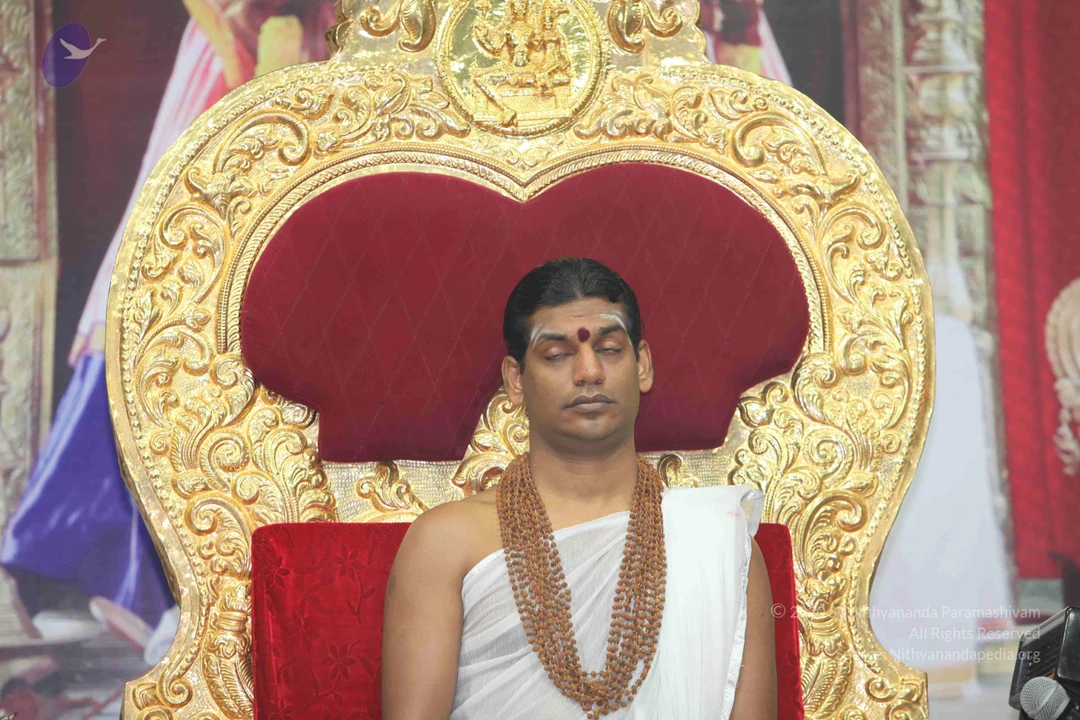
03-Satsang
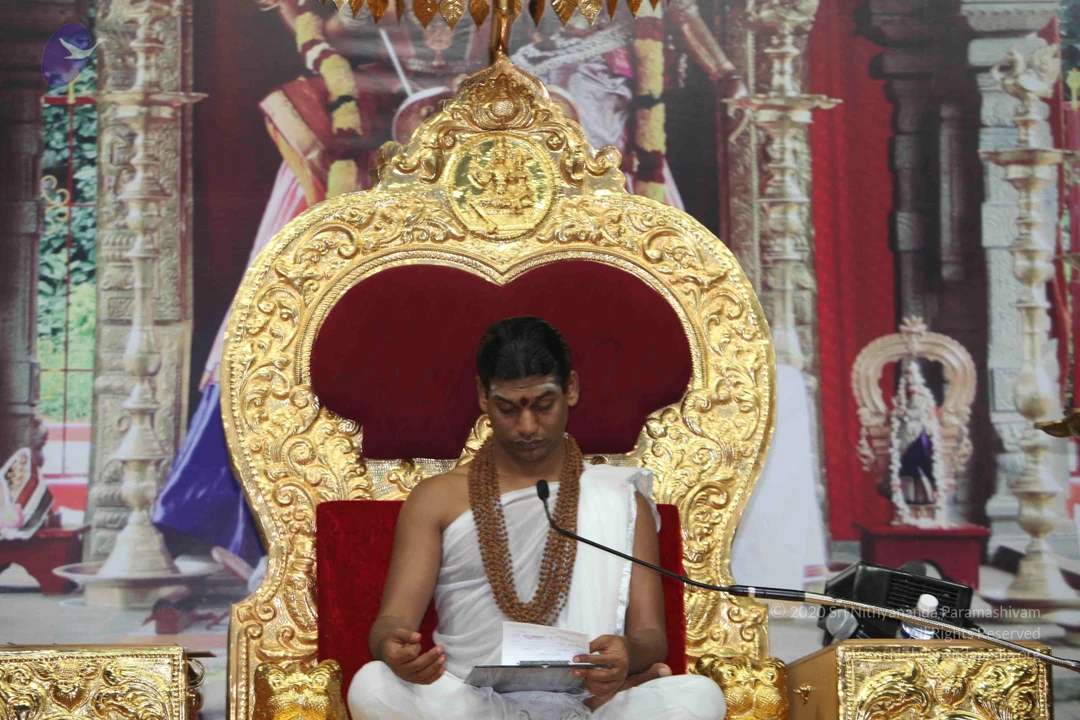
115 photosSource gallery
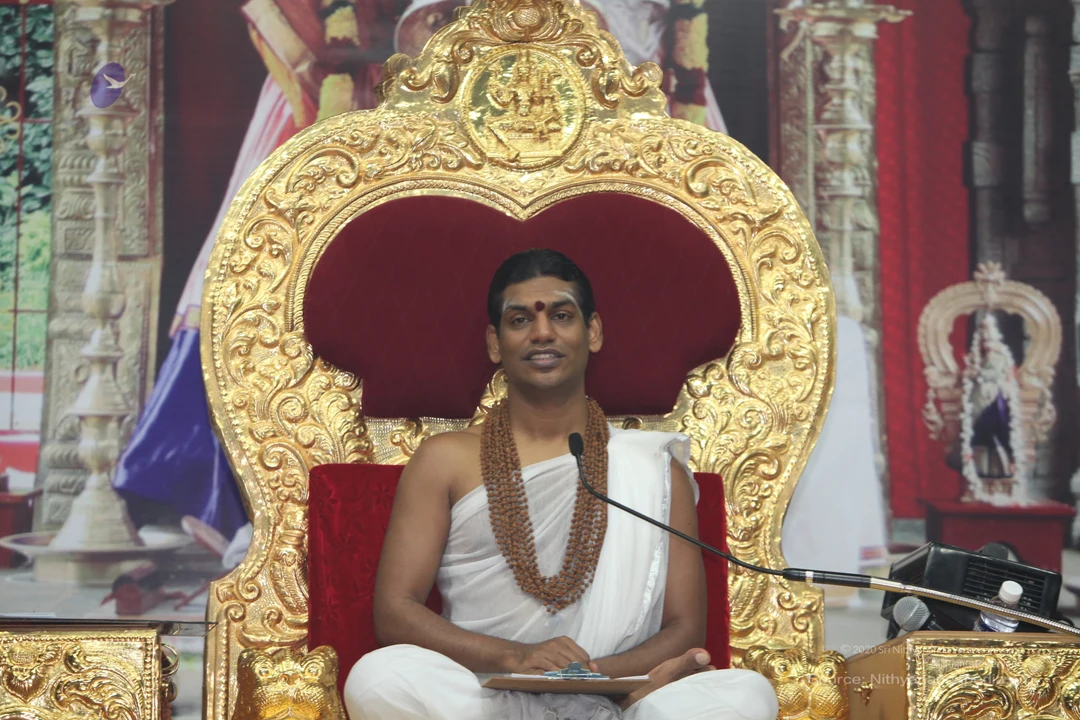
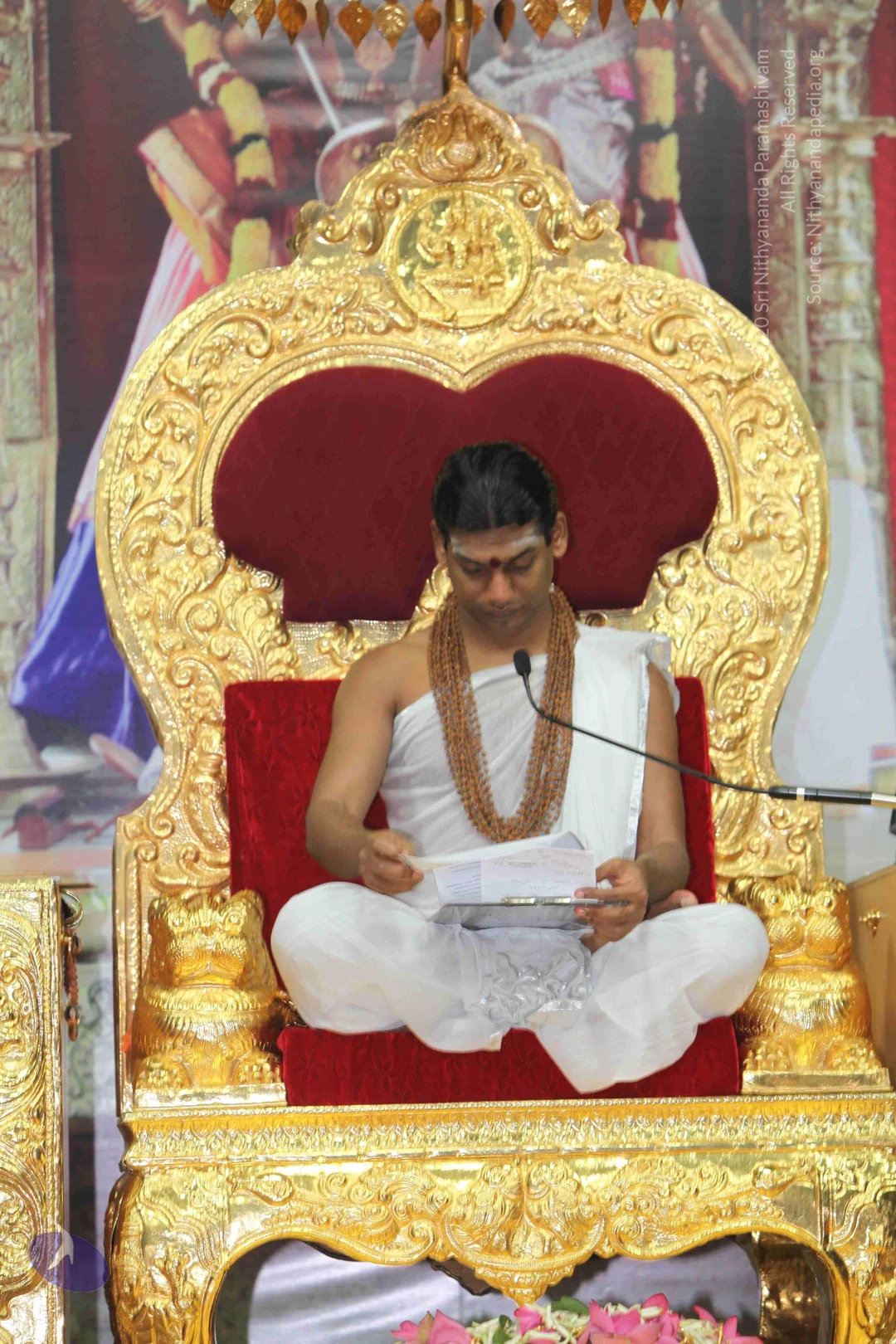
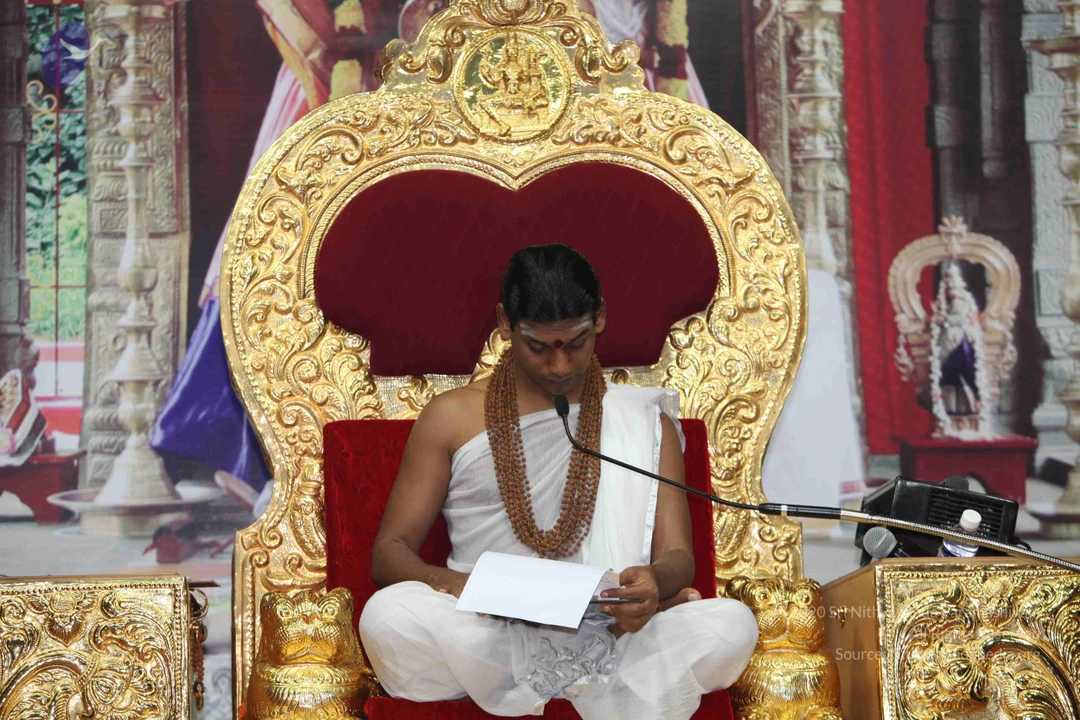
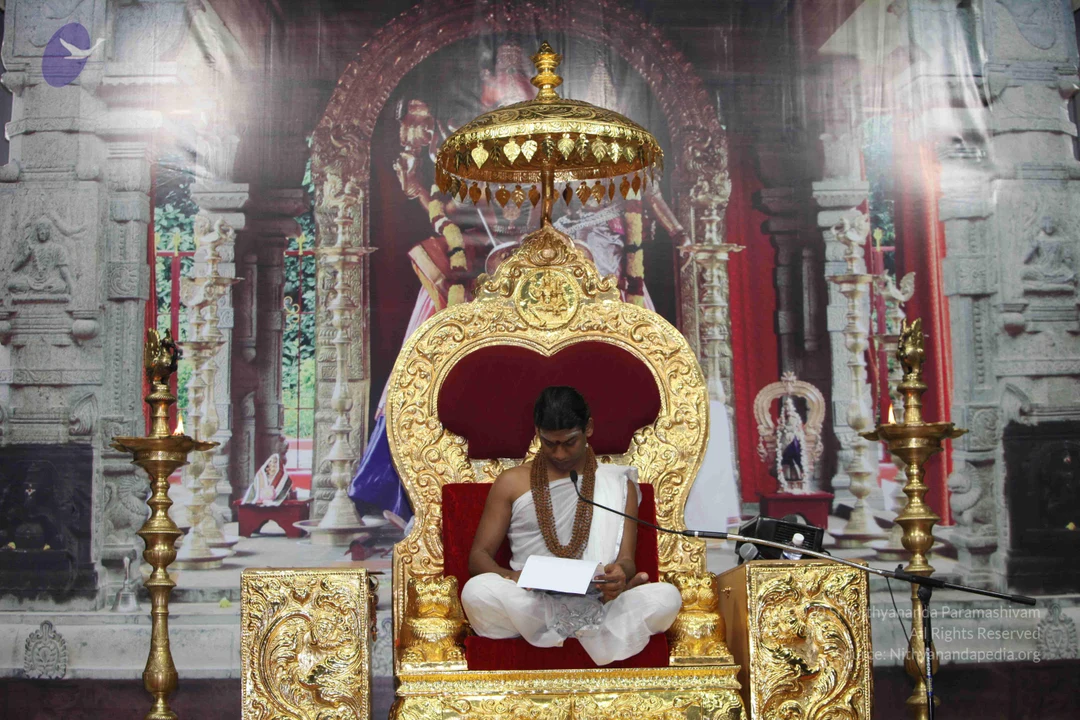
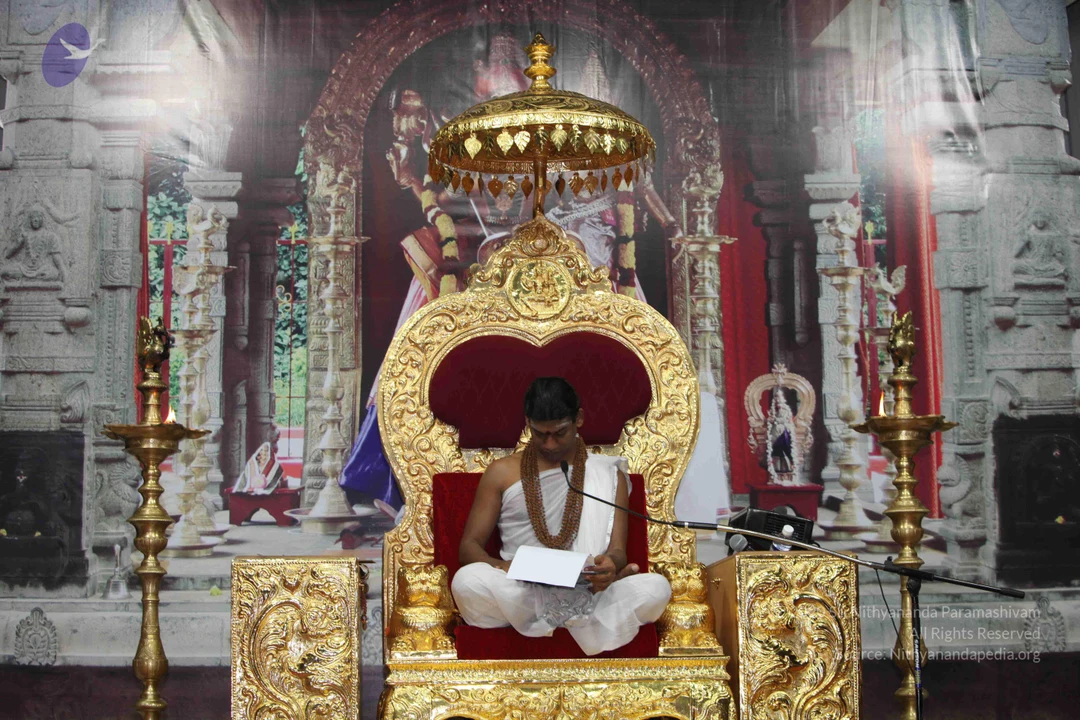
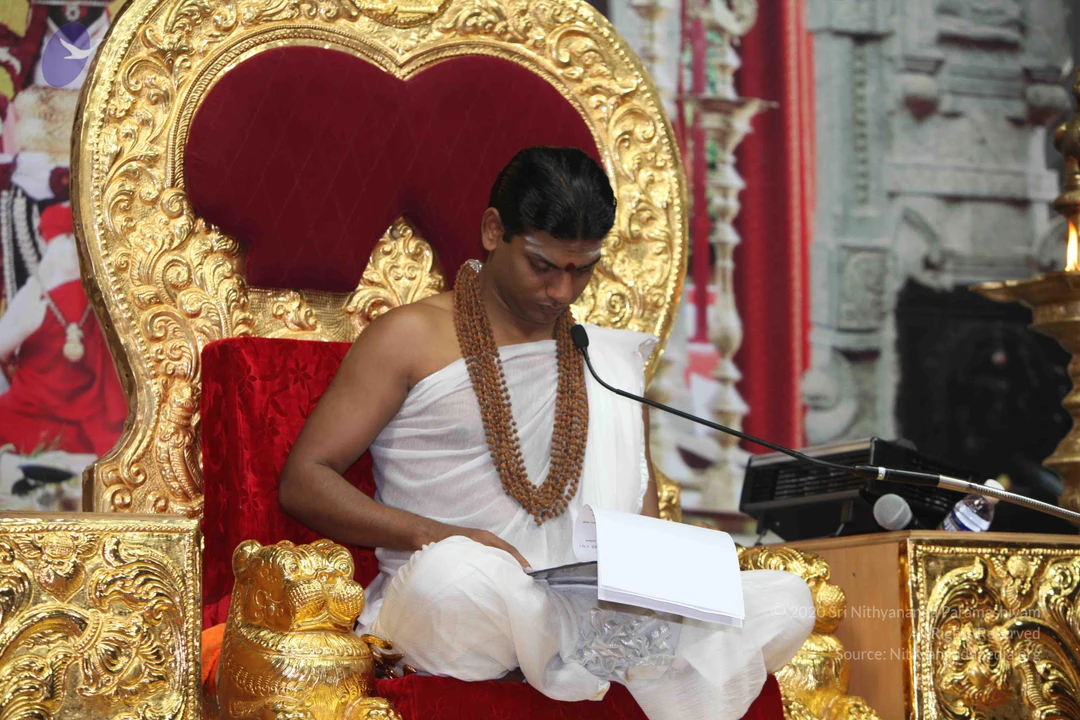
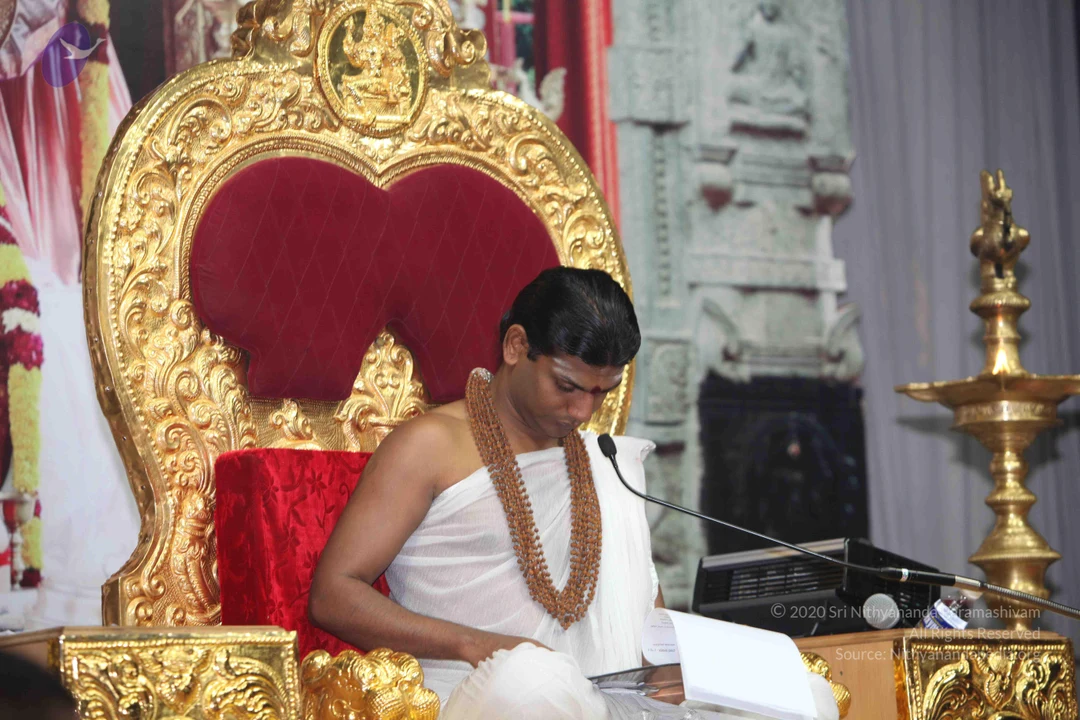
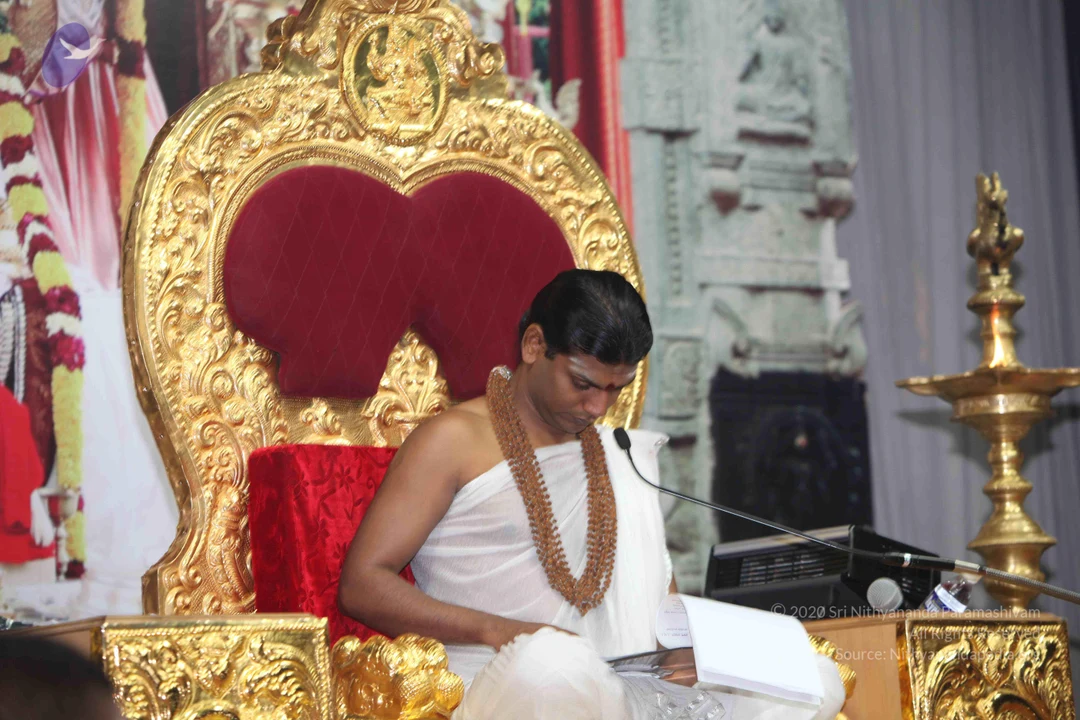
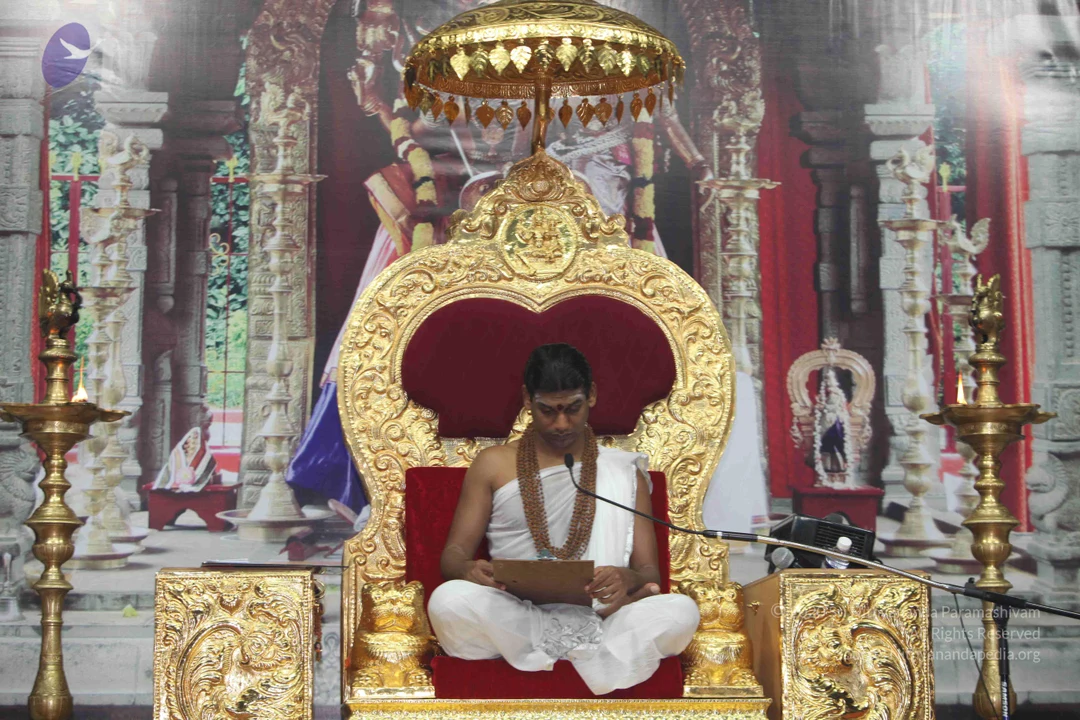
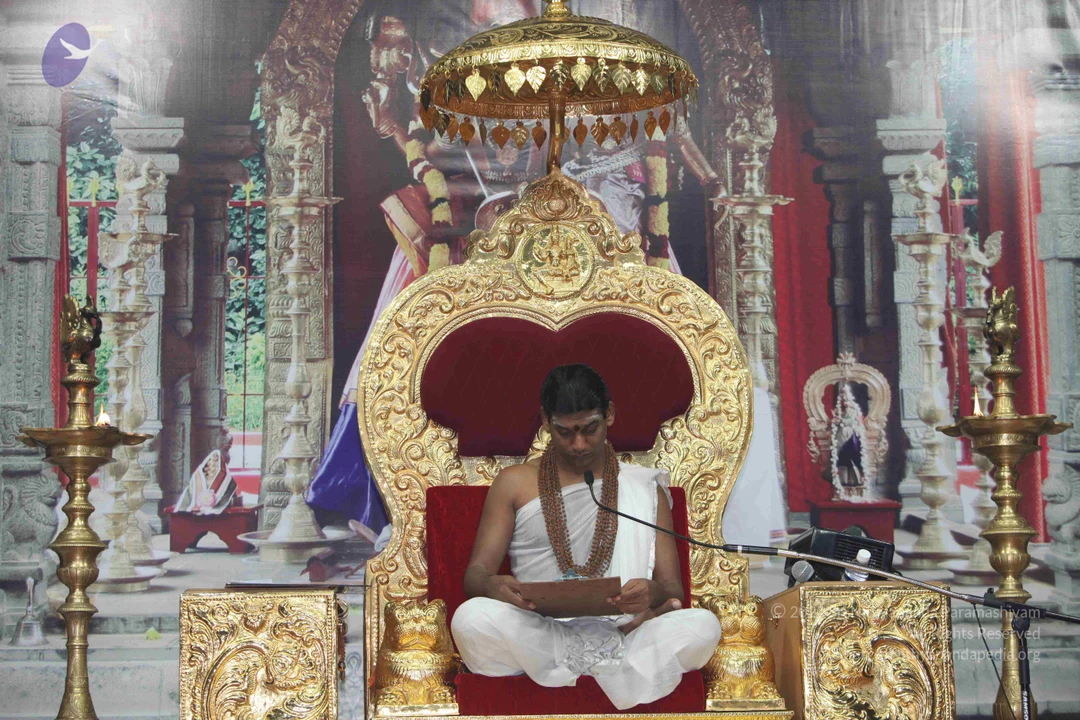
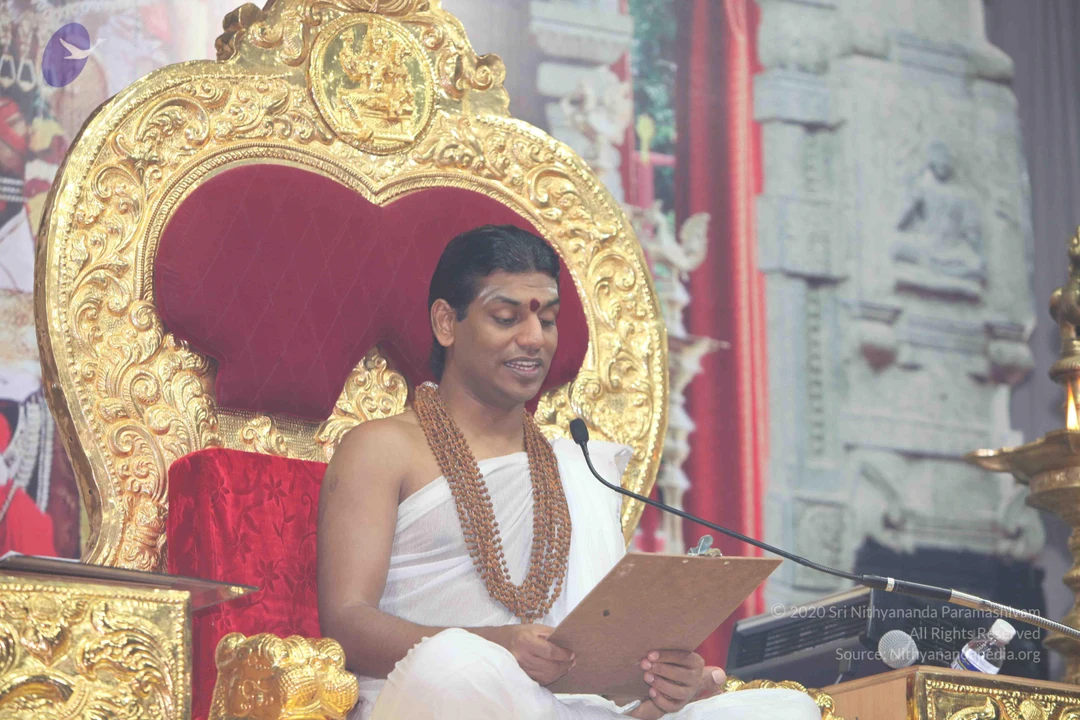
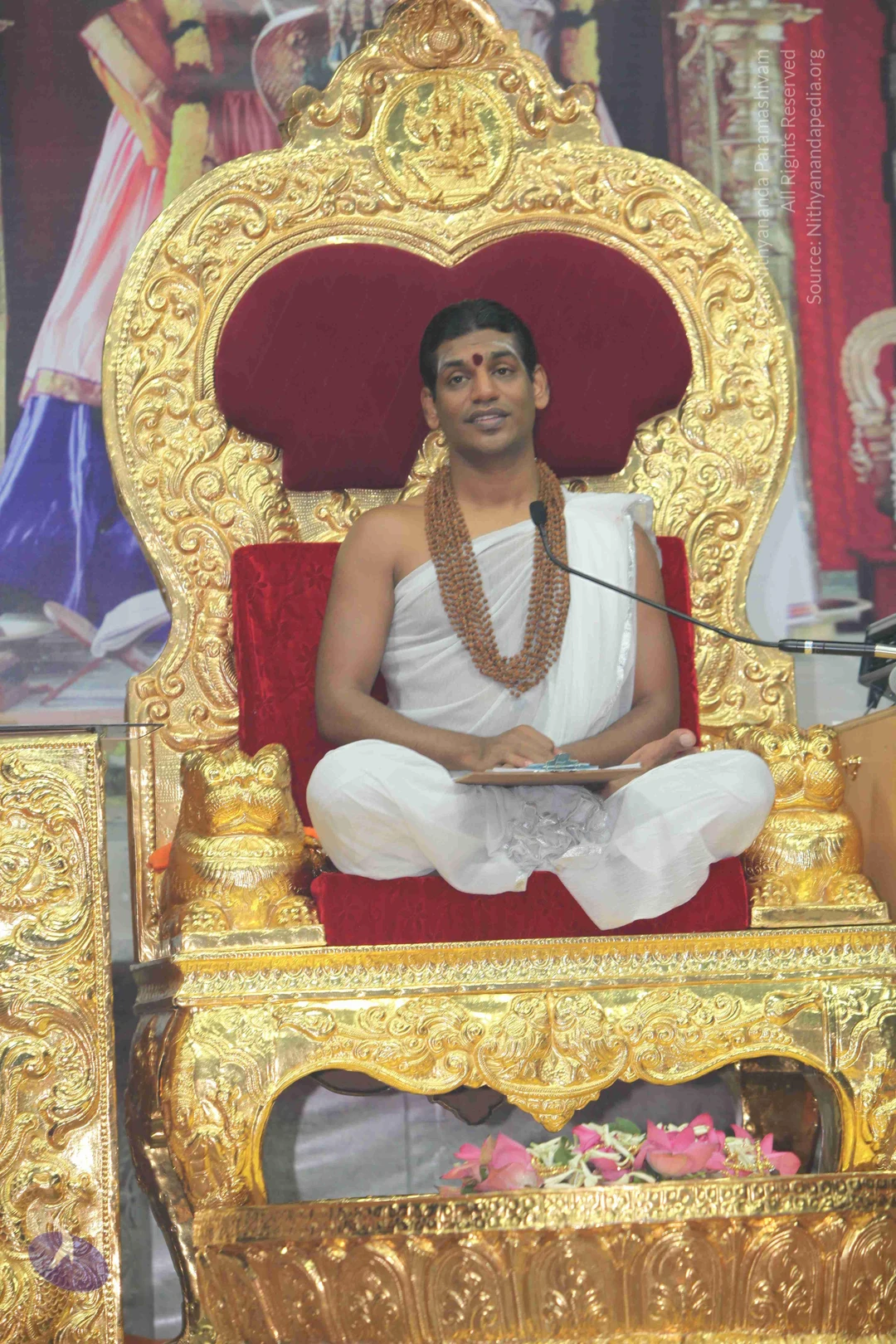
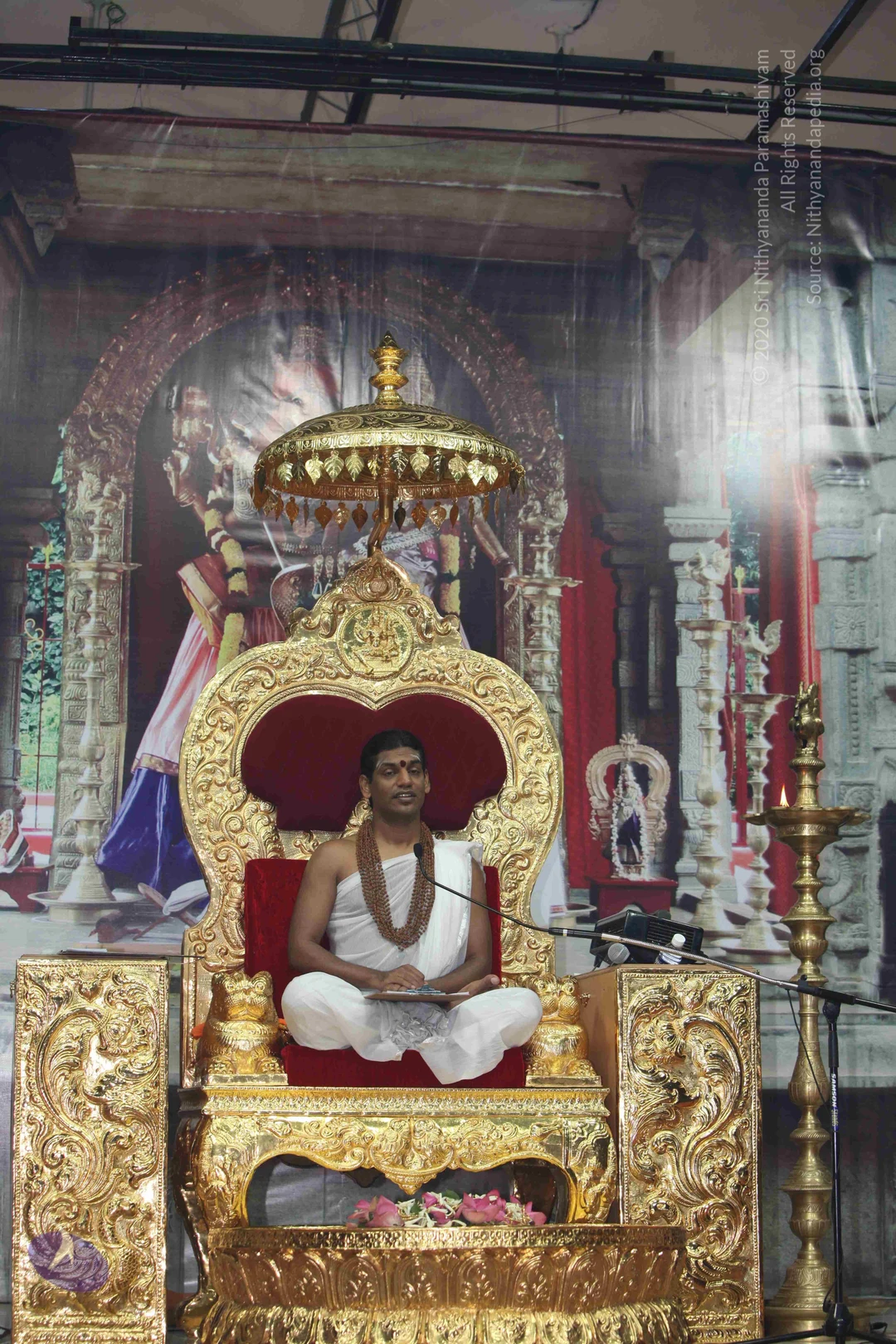
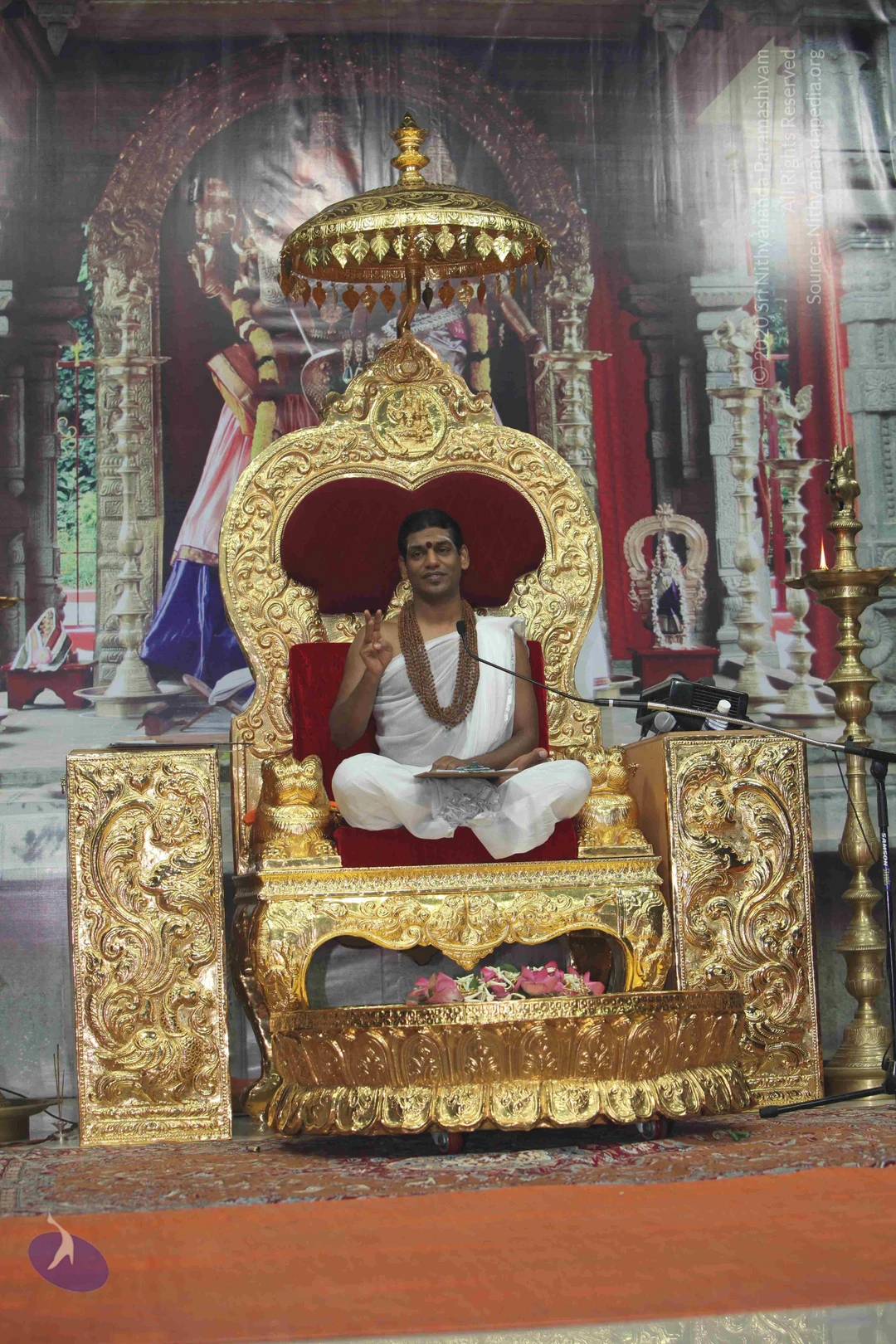
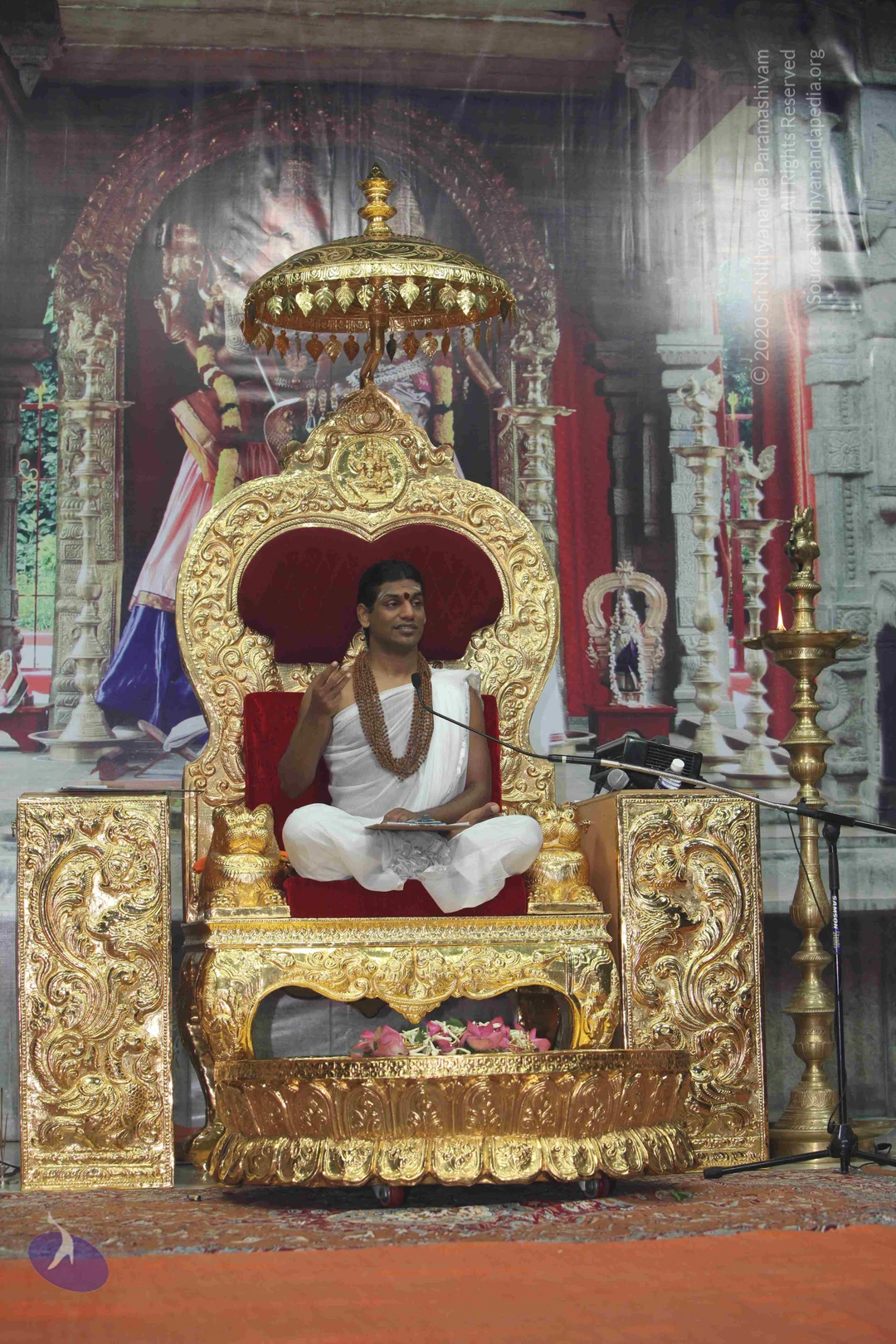
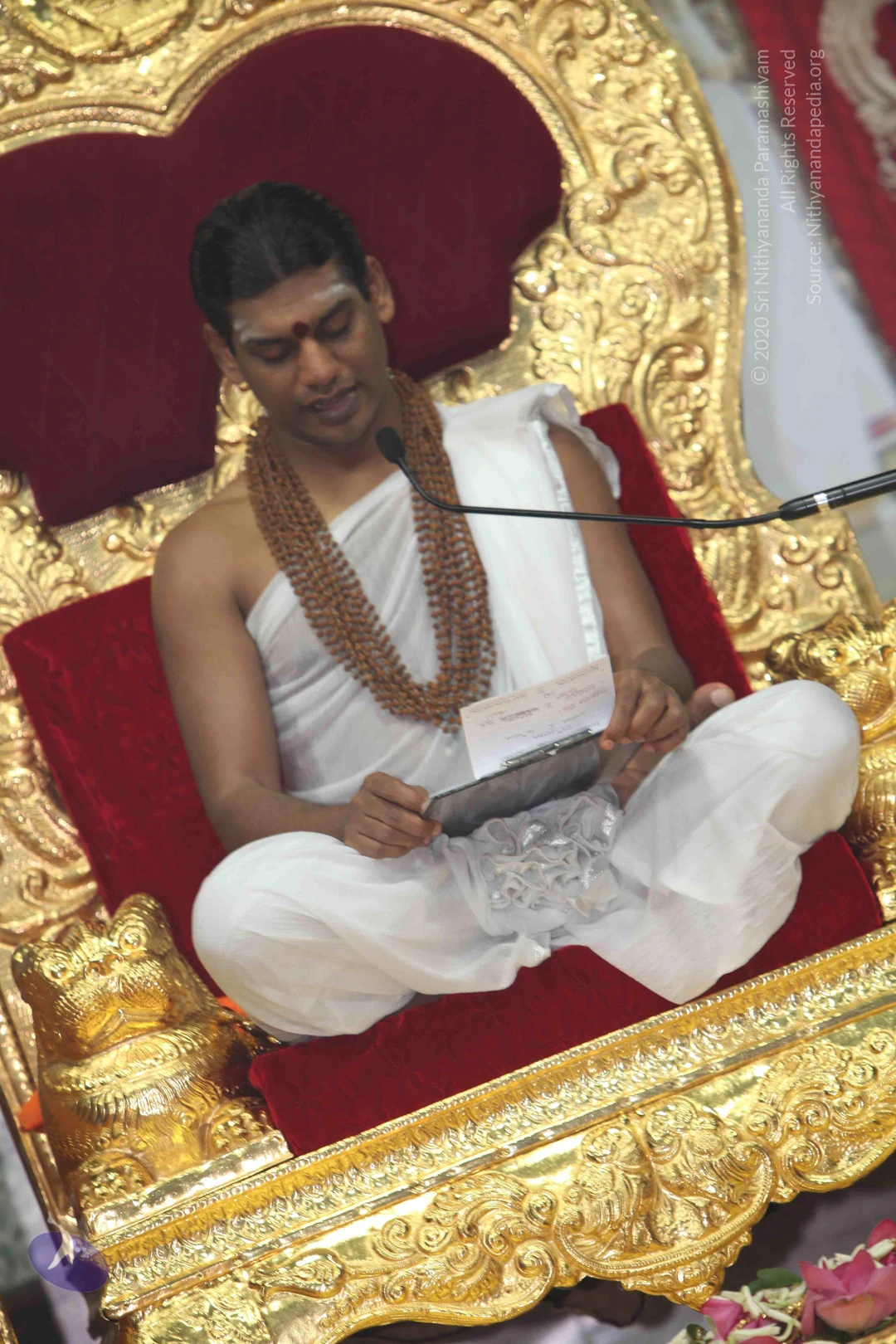
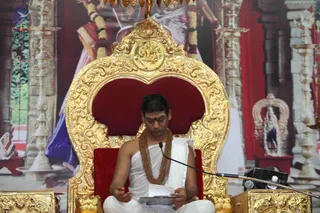
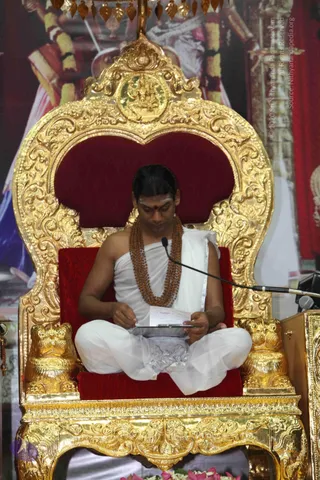
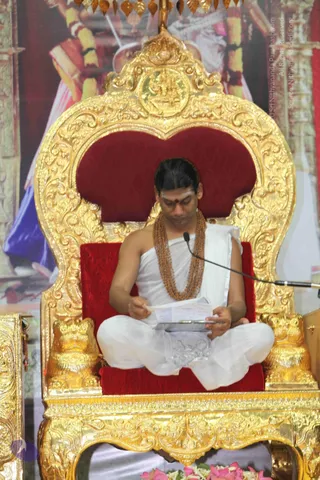
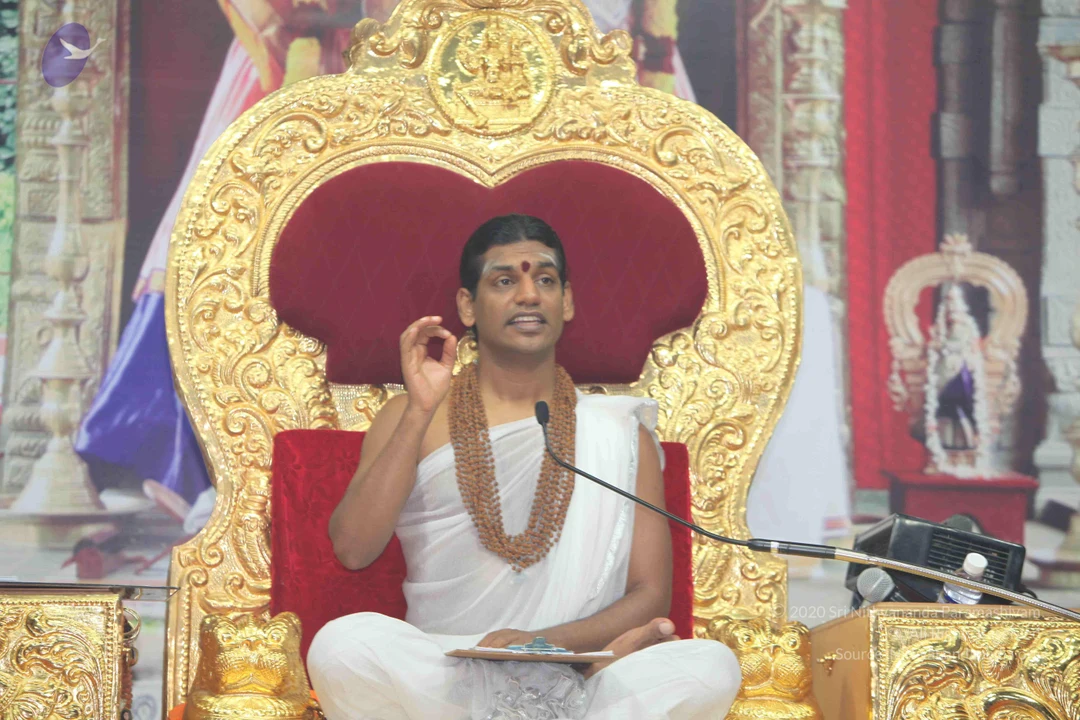
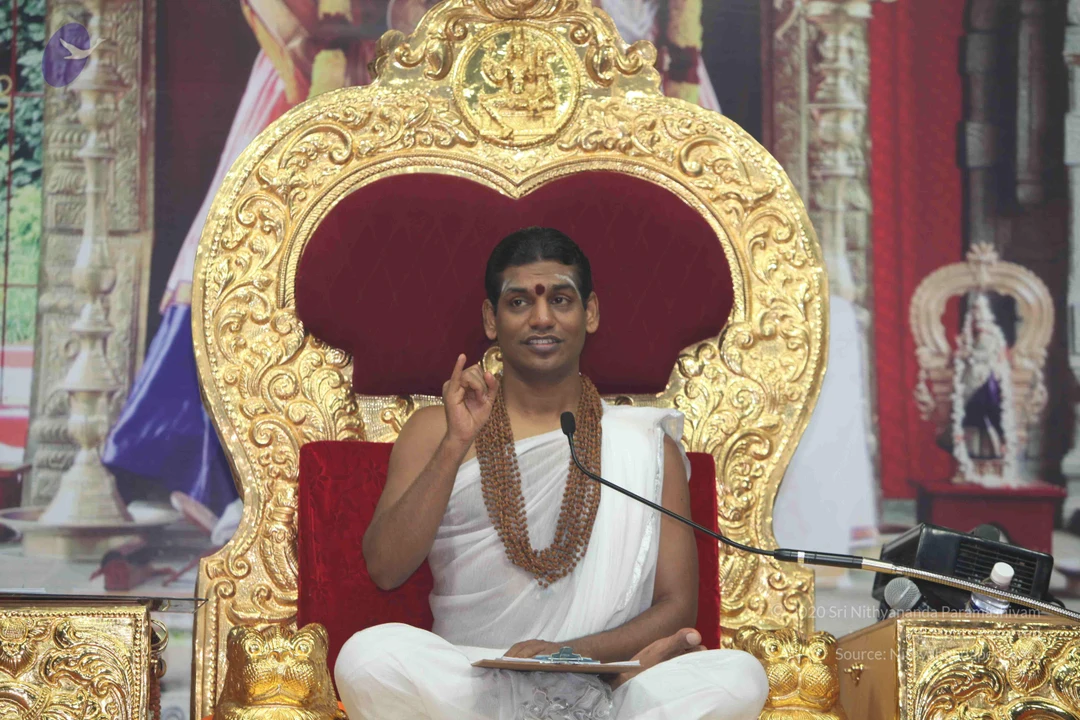
A seated man in white dhoti and shawl sits cross-legged on an ornate gold throne with a red velvet back and seat, reading from a sheet of paper on a tablet held in his lap. He wears multiple rudraksha malas around his neck, a red bindi and white tilak markings on his forehead. A microphone stands before him. Behind the throne, a large backdrop shows painted figures in ornate costumes with garlands, flanked by golden lamp stands, and a small framed deity murti sits to the right. The setting resembles a satsang discourse stage.A seated man in white ceremonial dress sits cross-legged on an ornate gold throne with red velvet cushions and carved lion-shaped armrests. He wears a white dhoti and white shawl over the shoulder, multiple strands of rudraksha beads around his neck, and a red bindi with white tilak marks on his forehead. He looks down and holds a sheet of paper in both hands. A microphone on a stand is beside him, and a red and gold backdrop with a painted image of dancing figures stands behind the throne. Lotus flowers are visible at the bottom edge of the frame.A man seated cross-legged on an ornate gold throne with red velvet cushions, carved lion figures at its base, reading from loose printed sheets held in both hands. He wears a white dhoti and white upper cloth, multiple strands of rudraksha beads around his neck, and a red bindi and white forehead markings. A microphone stands beside him, and pink flowers lie at the base of the throne. Behind him a large backdrop shows painted figures in pink and red garments with garlands.A man sits cross-legged on an ornate gold throne with a red cushioned seat and carved lion-head armrests, reading a sheet of white paper. He wears a white dhoti and a white shawl draped over one shoulder, with a red bindi on his forehead and a long rudraksha mala around his neck. A microphone stand is positioned in front of him. Behind the throne is a large backdrop with painted temple pillars, a red curtain, and a small shrine niche with a deity murti decorated with white flowers. The throne bears a gold emblem at its top. Only one physical person is visible.A seated man sits cross-legged on an ornate gold throne with a red velvet cushion and a gold canopy with leaf-shaped pendants above him. He wears a white dhoti and a white shawl draped over one shoulder, with a long rudraksha mala around his neck, and holds a sheet of paper while reading or speaking into a microphone on a stand. Flanking the throne are tall brass oil lamps. Behind him is a large backdrop printed with a stone temple gateway, carved pillars and sculpted figures, and a deity murti with garlands. The scene is an indoor satsang discourse.A man sits cross-legged on an ornate gold throne with a red velvet seat and back, beneath a gold ceremonial canopy with hanging leaf-shaped tassels. He wears white dhoti-style clothing, a white shawl, and a long rudraksha mala around his neck, and he reads from a sheet of paper while a microphone stands before him. Brass oil lamps with lit flames flank the throne. Behind him is a large backdrop of a temple-like arched shrine with carved stone pillars, a painted deity figure, and a small red-draped altar with a figure. Two gold armrest panels decorate the throne's sides.
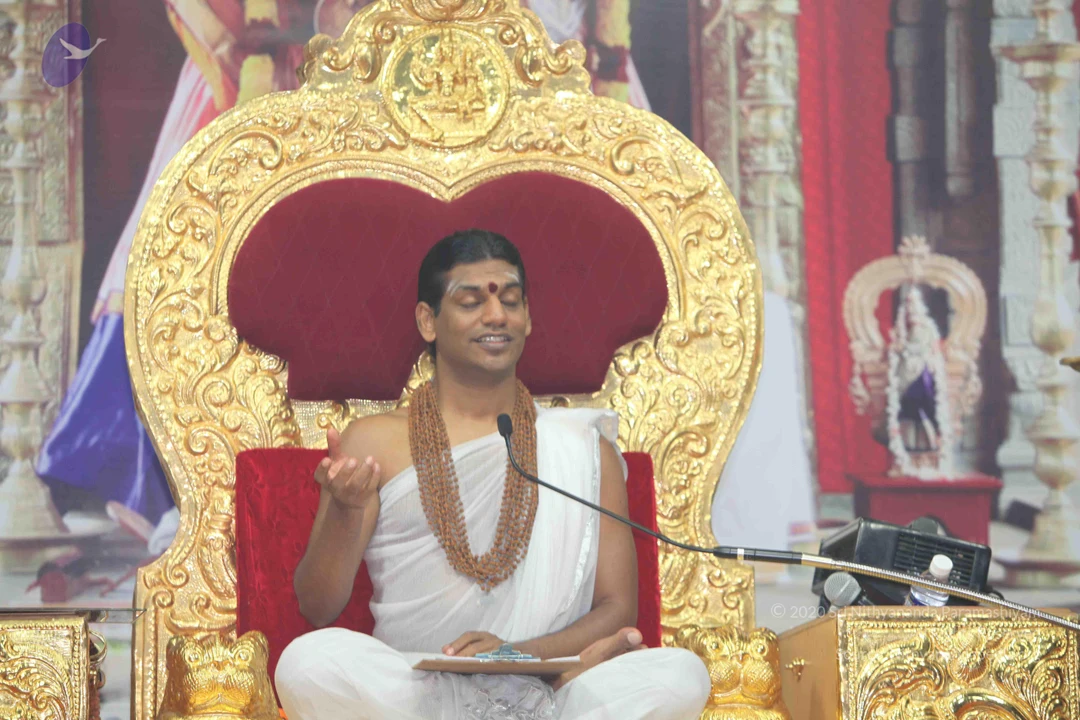
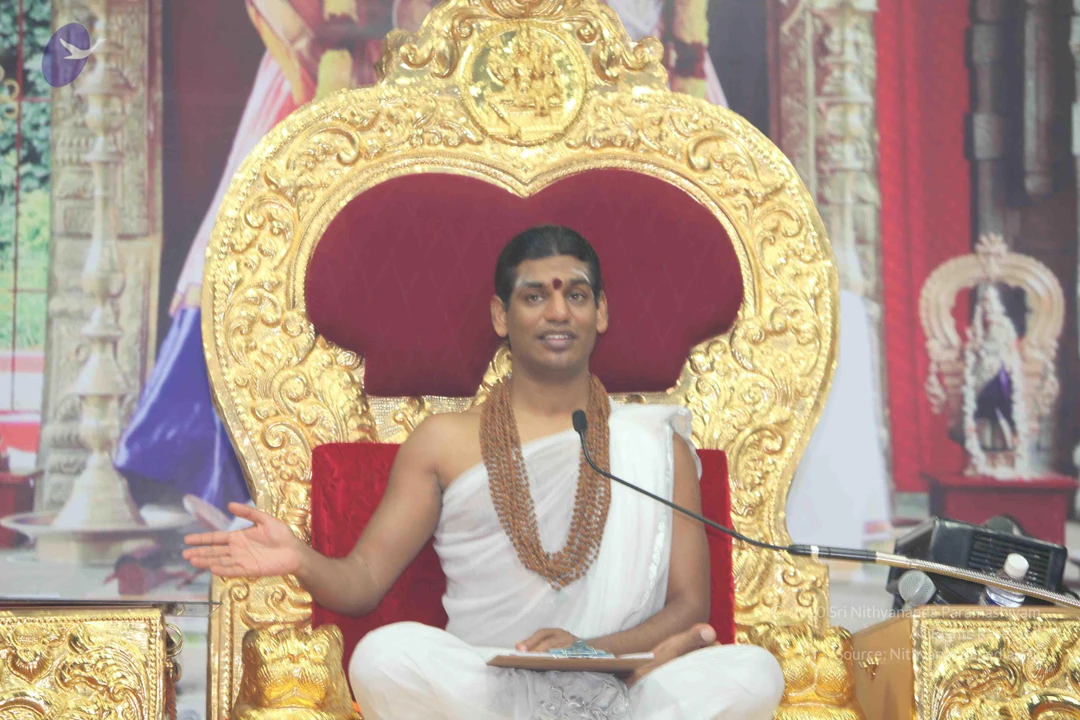
04-Sarva-Darshan

13 photosSource gallery
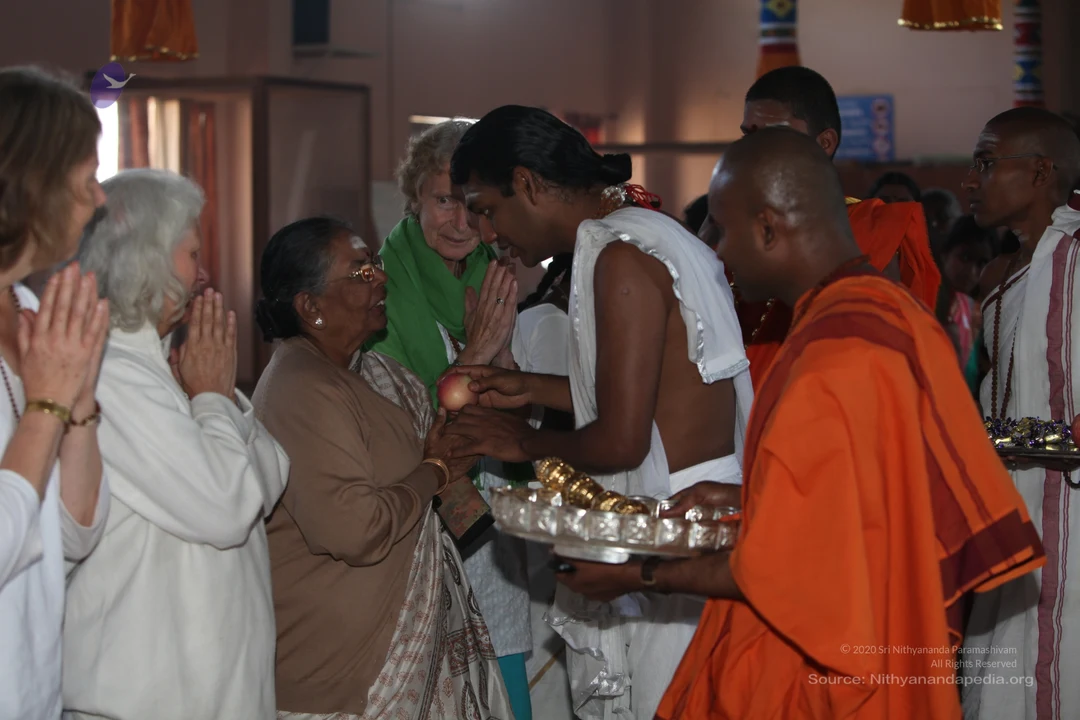
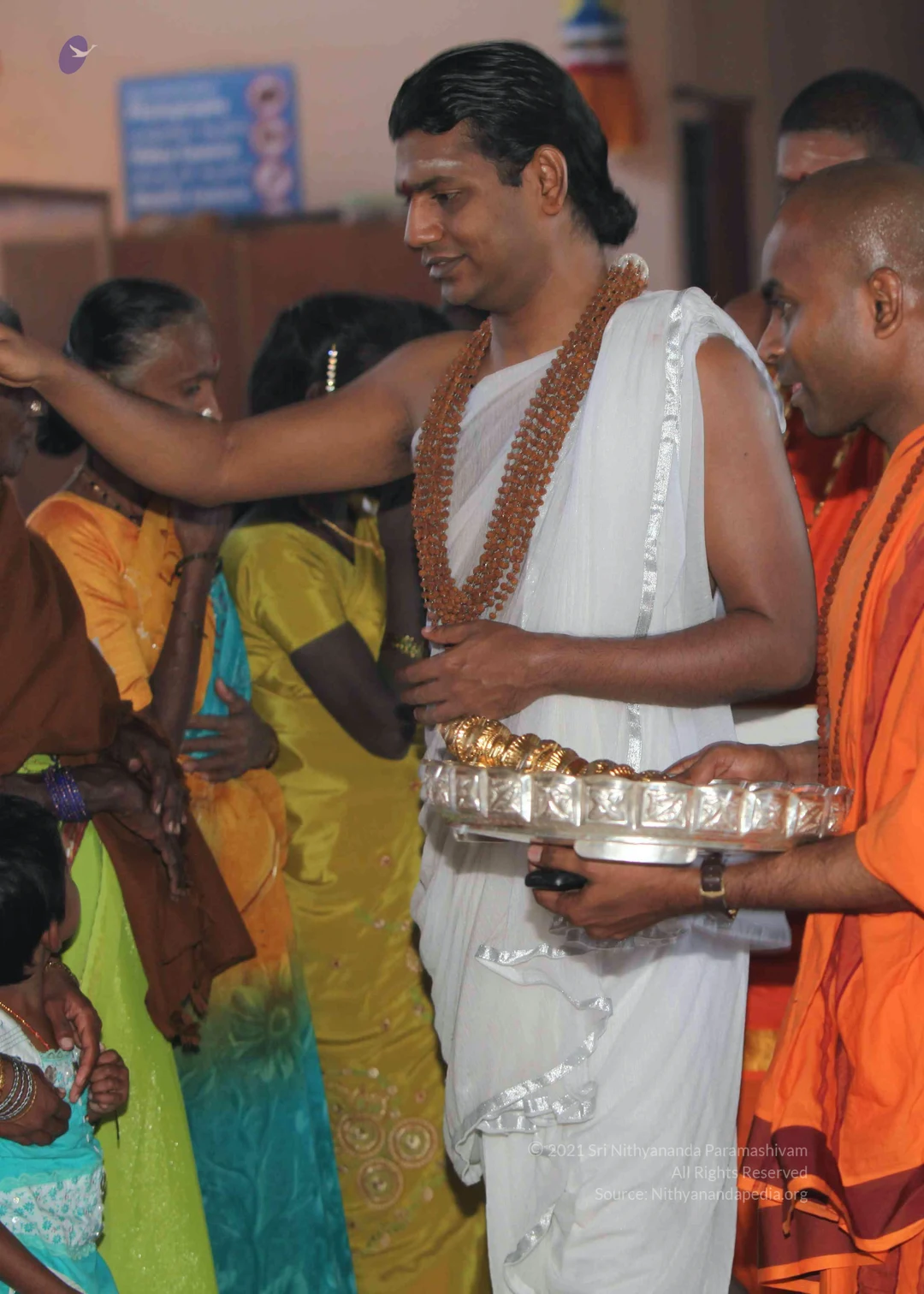
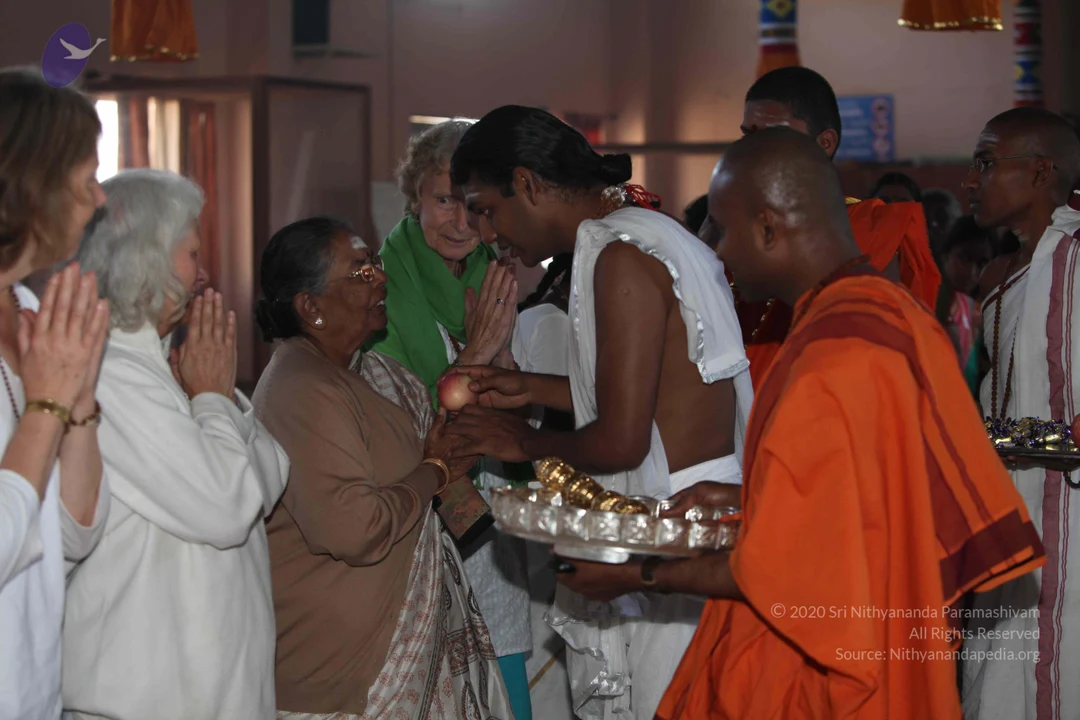
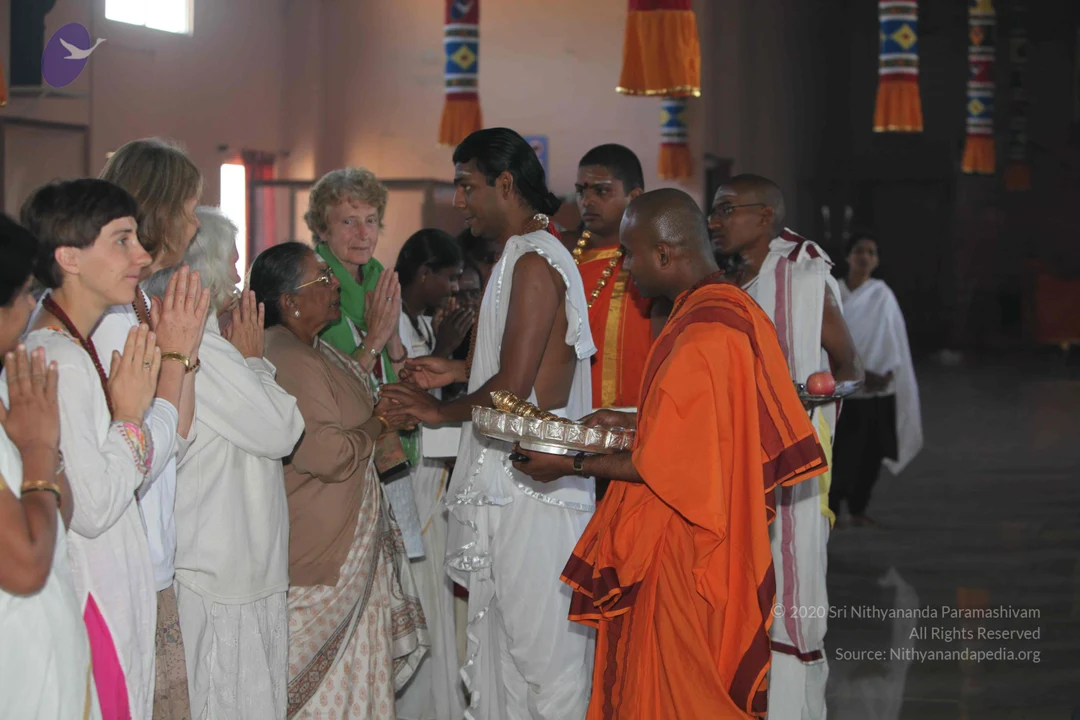
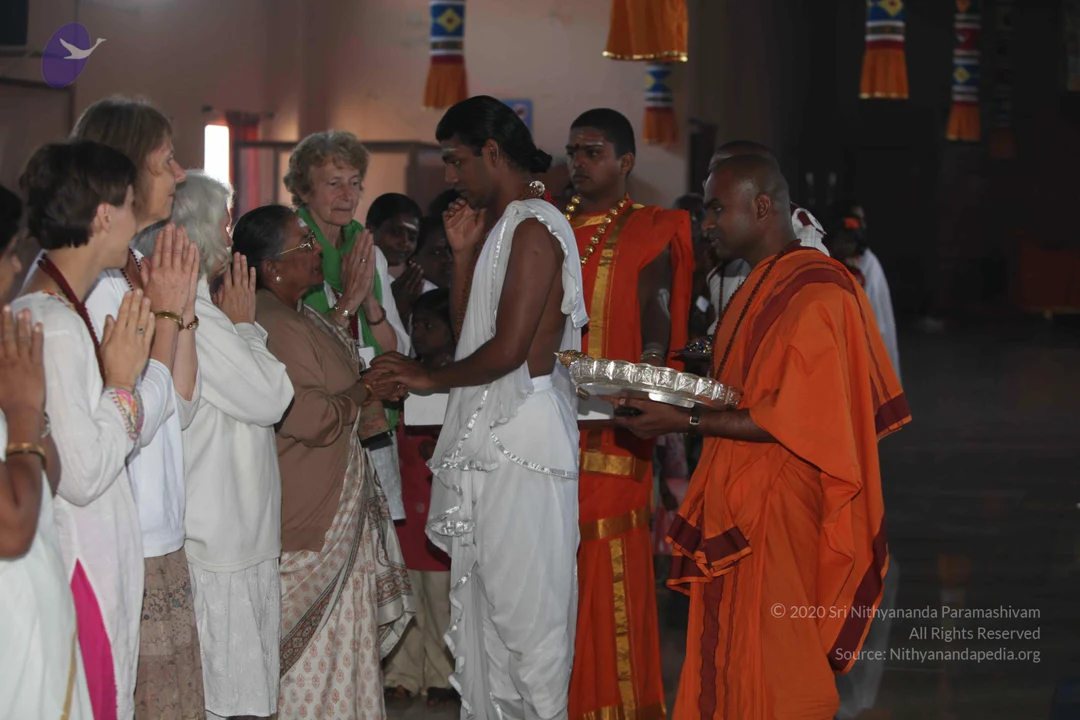
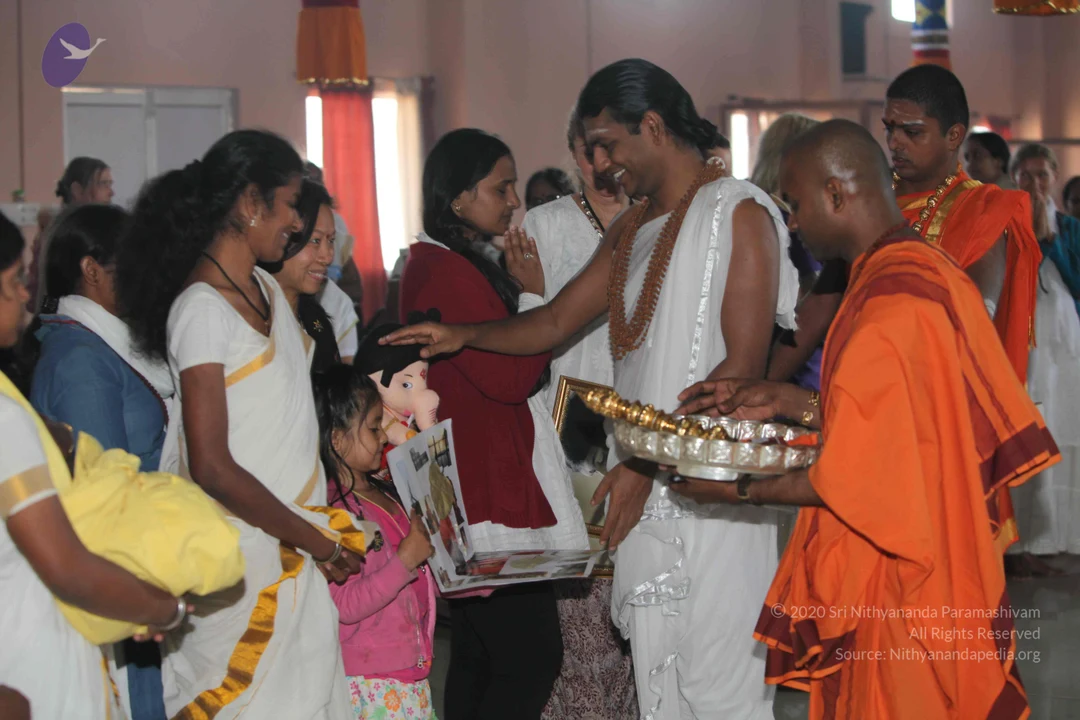
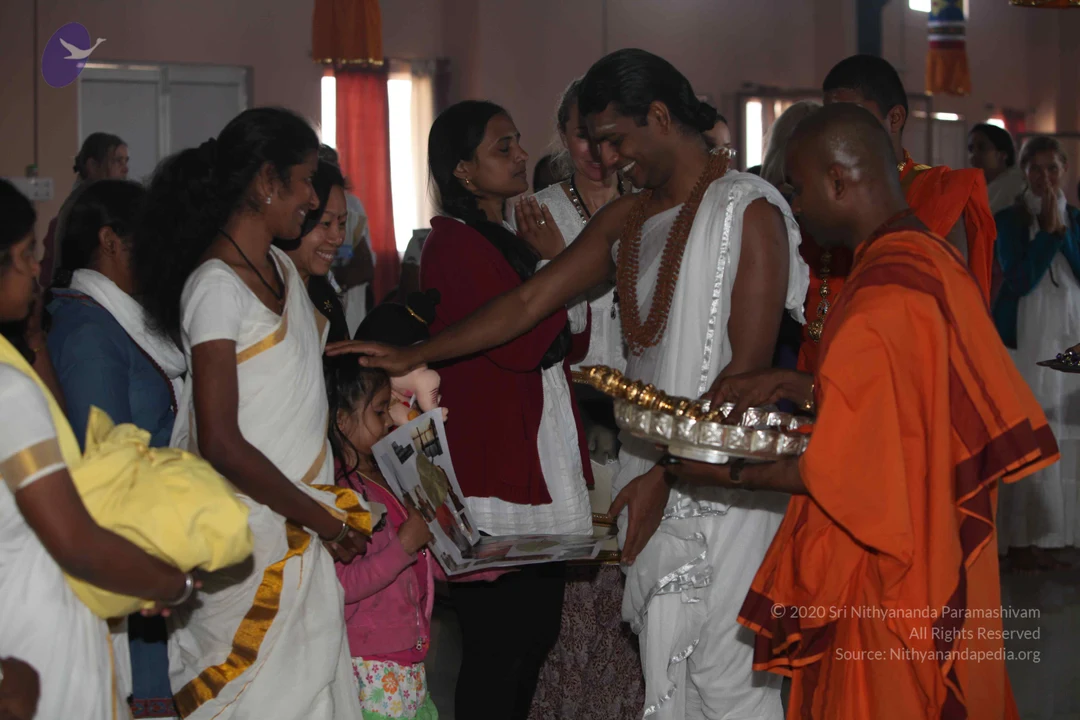
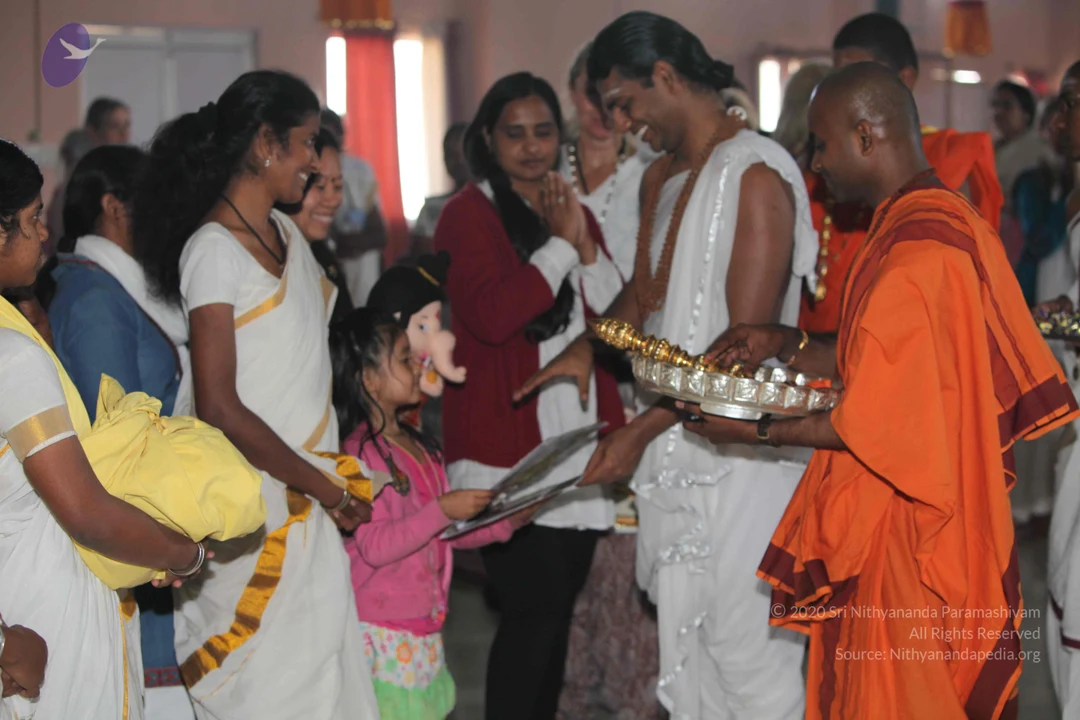
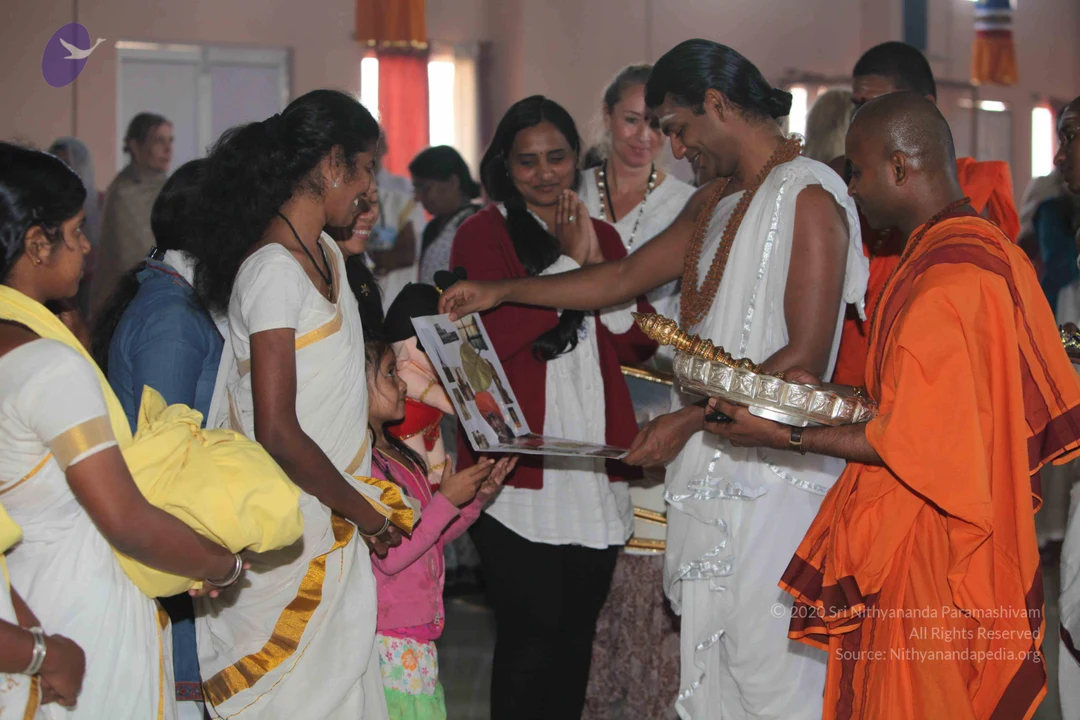
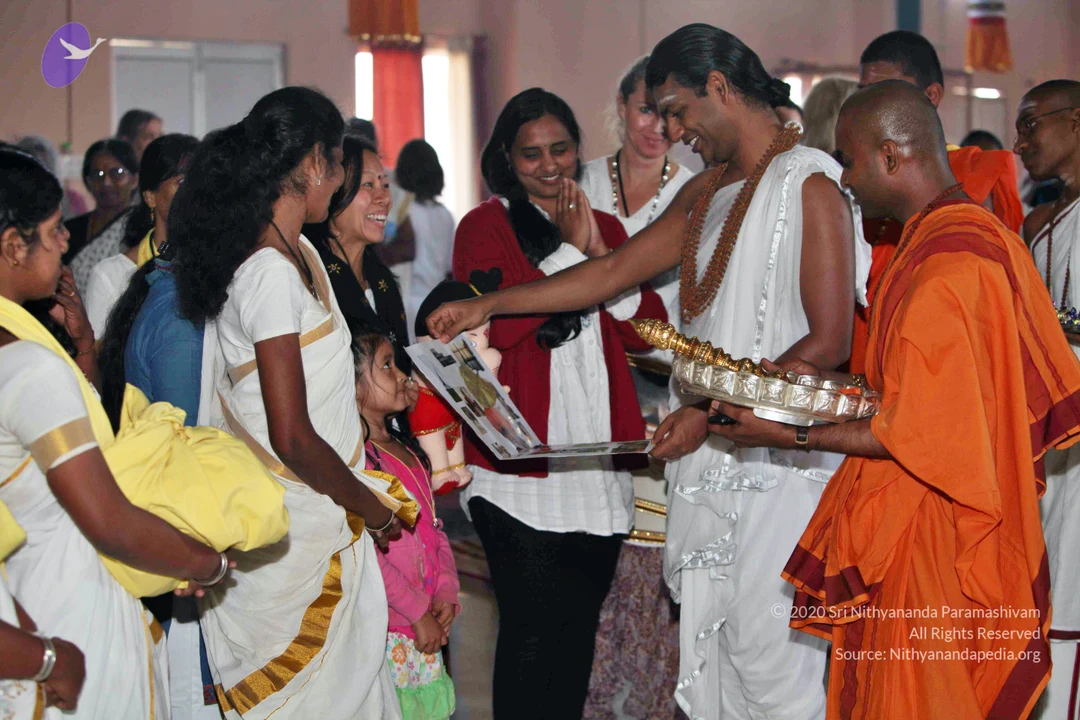
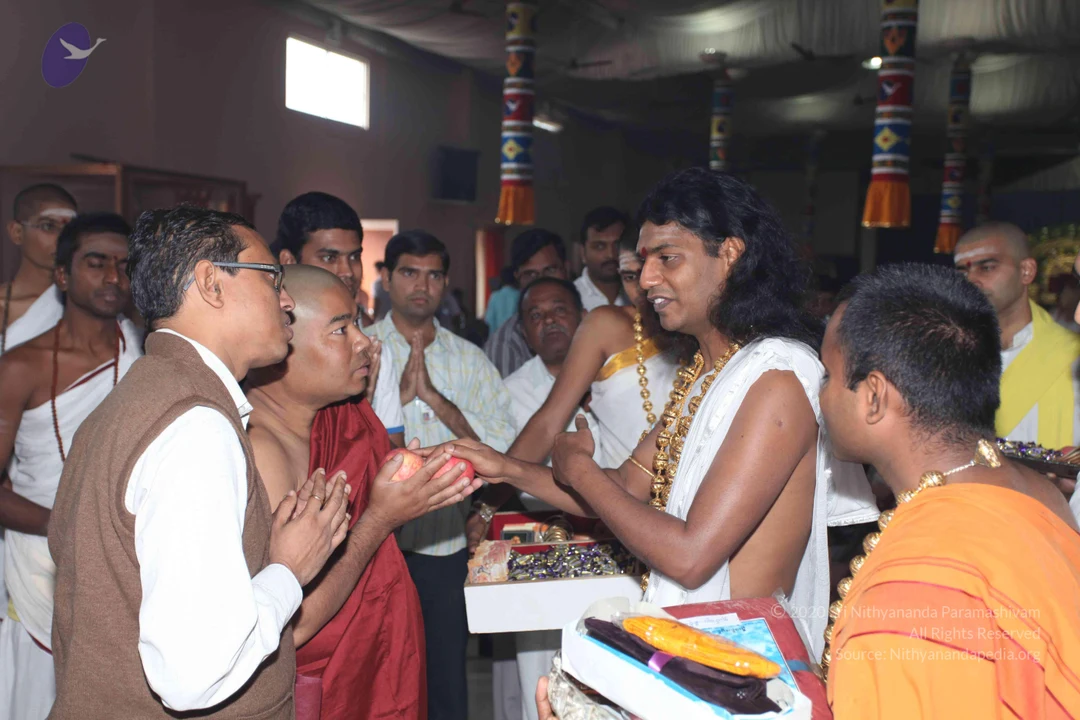
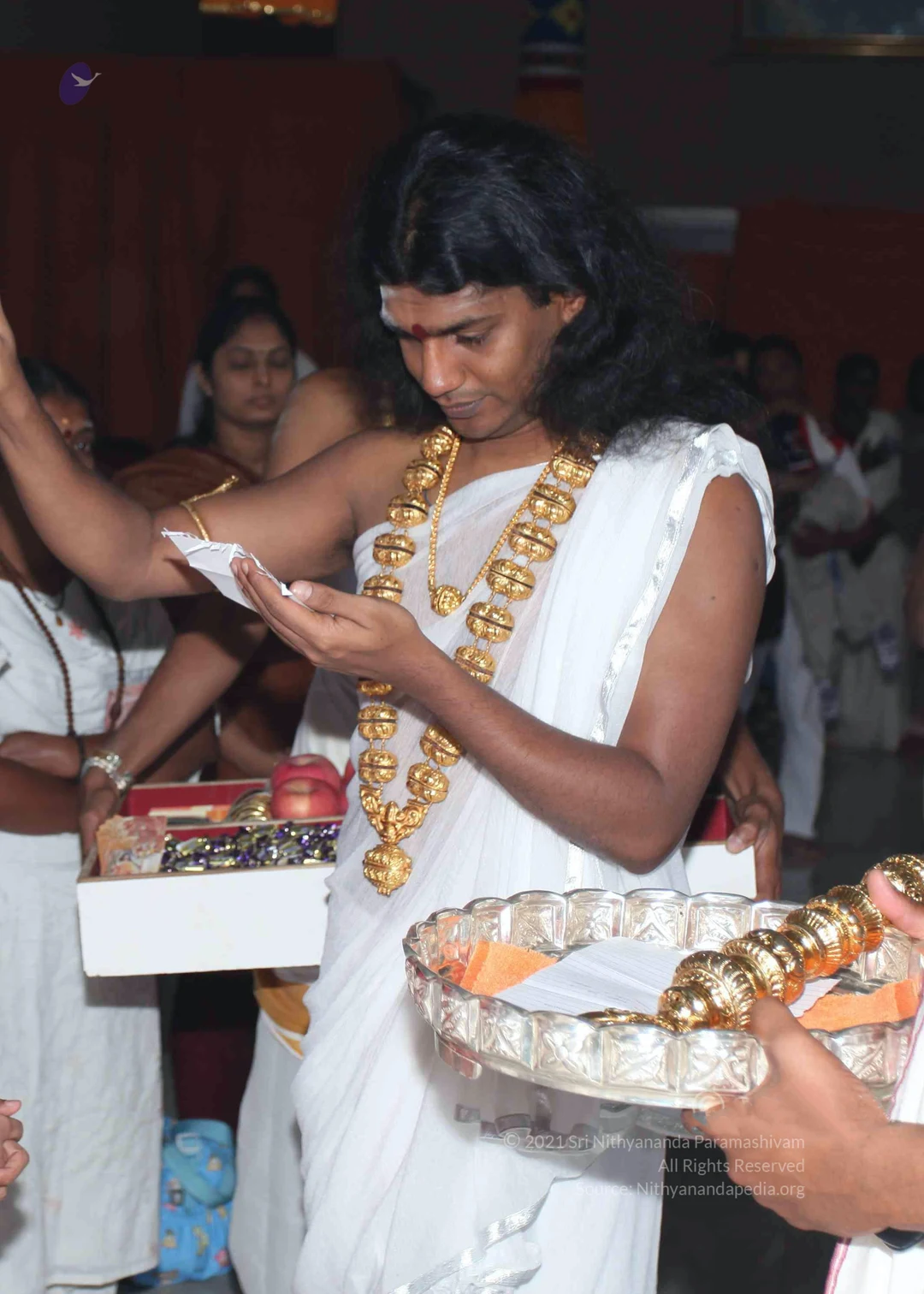
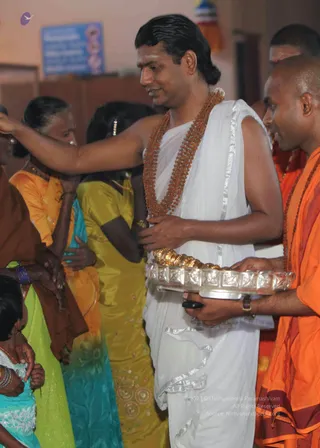
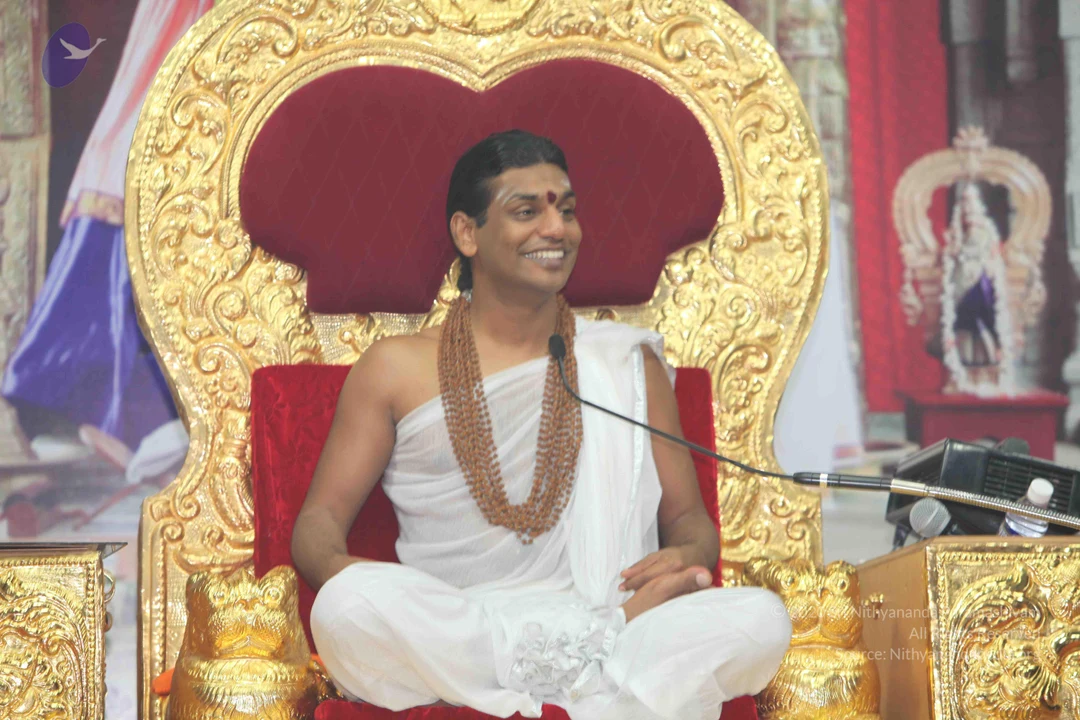
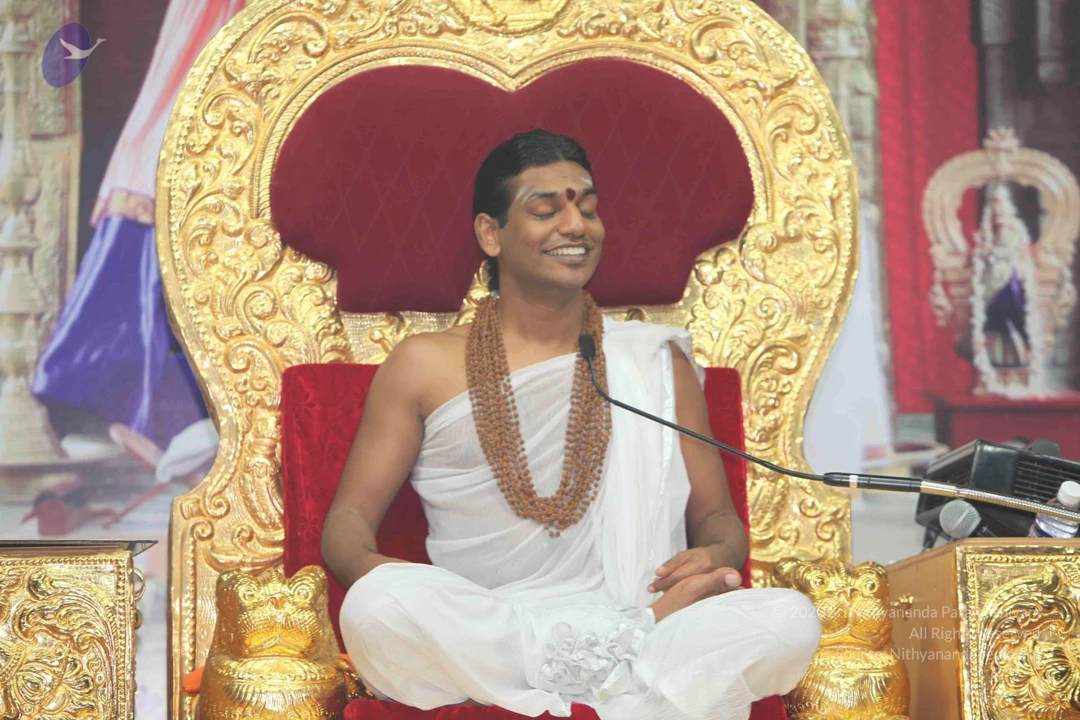
A photograph of a ritual blessing in an indoor hall. A man with swept-back dark hair and a vertical tilak on his forehead wears a white dhoti-style garment with silver border and multiple rudraksha malas. He holds a silver tray of gold-coloured items and stands among women in orange, yellow and teal saris and a green sari; one woman reaches to touch his arm. Beside him a shaved-headed man in saffron-orange robes holds the tray's edge. A blue wall sign is visible behind.Indoor darshan scene in a hall with pale walls and orange hanging decorations. A young man in white dhoti and shawl, bare-chested with a red garland, bows forward and receives a red fruit from an elderly woman in a beige top and white sari with a sindoor mark, her hands clasped toward him. Beside them a woman in a green shawl and a woman in white press their palms together in namaste. A monk in orange robes holds a silver tray with gold ritual items and a flower garland. Another man in white and saffron-striped robes stands at right, and several other devotees in white crowd the background.A hall with hanging colourful woven tassels and orange fabric banners. A bare-chested man with long swept-back black hair, wearing a white dhoti and white shawl with gold ornaments, stands at centre receiving a tray or plate from a shaven-headed man in an orange robe with a dark red border. Several white-clad devotees stand on the left with palms pressed together in namaste, including a woman in a green shawl and an older woman in a tan top and patterned sari. Other men in white dhotis and a man in a saffron-coloured garment stand nearby. A brass or silver tray with a red fruit or offering is visible in the foreground.A photograph of a devotional greeting in an indoor hall with hanging orange and colourful tassel decorations. On the right, a shaved-headed priest in saffron-orange robes with a rudraksha mala holds a silver tray. Beside him, a younger man in orange and gold-bordered dhoti with a gold necklace stands. In the centre, a man in white unstitched cloth with a silver border and dark hair tied back presses palms together in anjali. On the left, a group of women in white and brown saris and salwar, several with palms pressed together, stand in a line, one wearing a green scarf. Some are greeting with folded hands while others watch.A photograph of a devotee gathering at an indoor hall. A man with long swept-back dark hair, rudraksha mala beads and white ceremonial clothing with silver trim stands centre-right, extending his hand toward a woman in a red top. Beside him a shaved-headed attendant in saffron-orange robes holds a silver tray with an oil lamp. Women in white saris with gold borders and a girl in a pink jacket hold a picture book and a plush toy nearby. Several other people in white stand behind, and a pink wall and orange drapes frame the room.A photograph of a crowded indoor gathering in a hall with pale walls and hanging orange and red banners. In the centre, a man in a white dhoti-style garment with a silver border and a long rudraksha mala stands smiling while a woman in a dark red top touches his head in blessing. He holds a brass tray with a lamp and offerings. To the right, a monastic in an orange robe holds the tray as well. Around them women in white saris with gold borders, one holding a yellow cloth, and a small girl in a pink jacket hold a printed booklet. Several onlookers stand in the background, some with hands folded in namaste.
05-Session-with-Swamiji
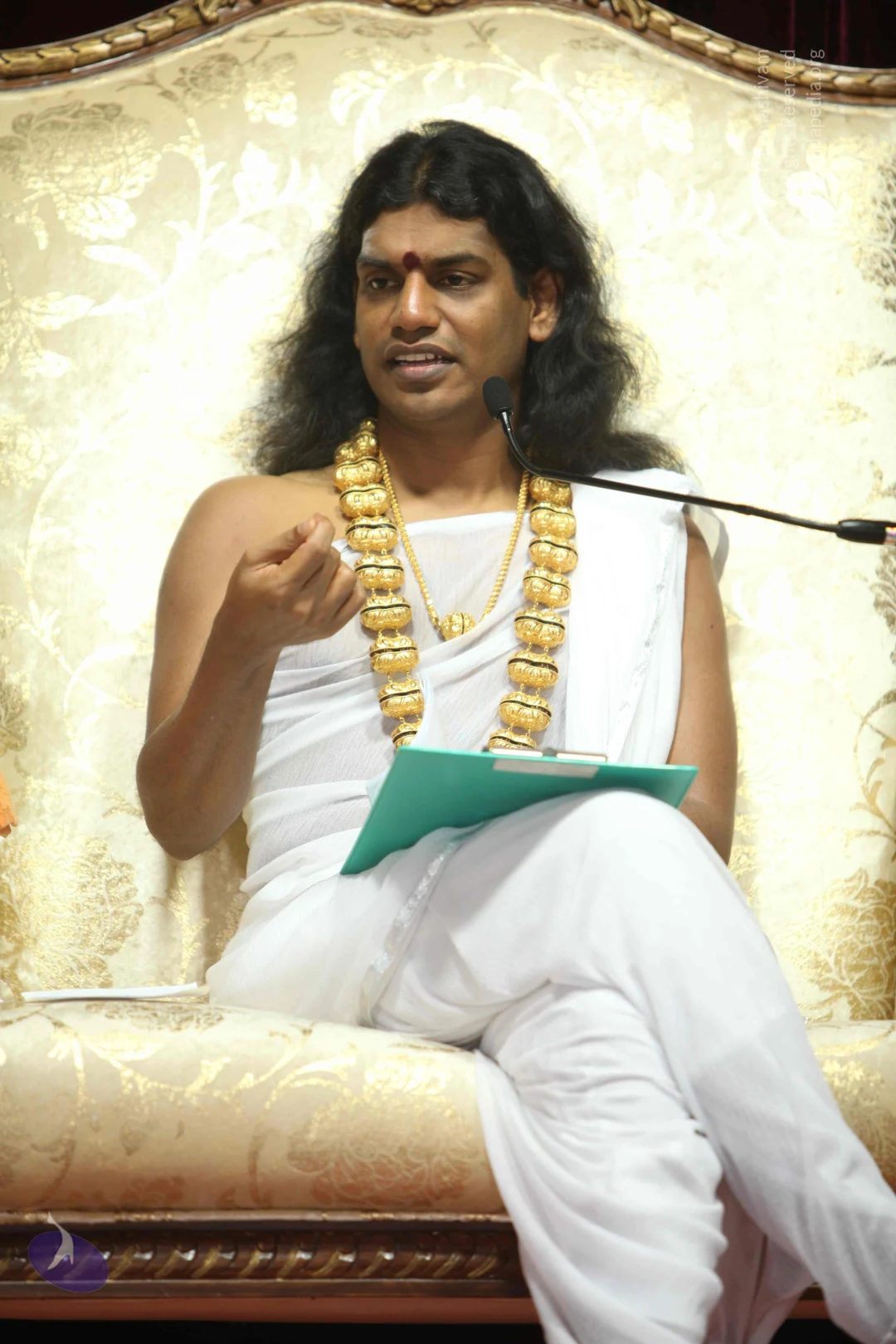
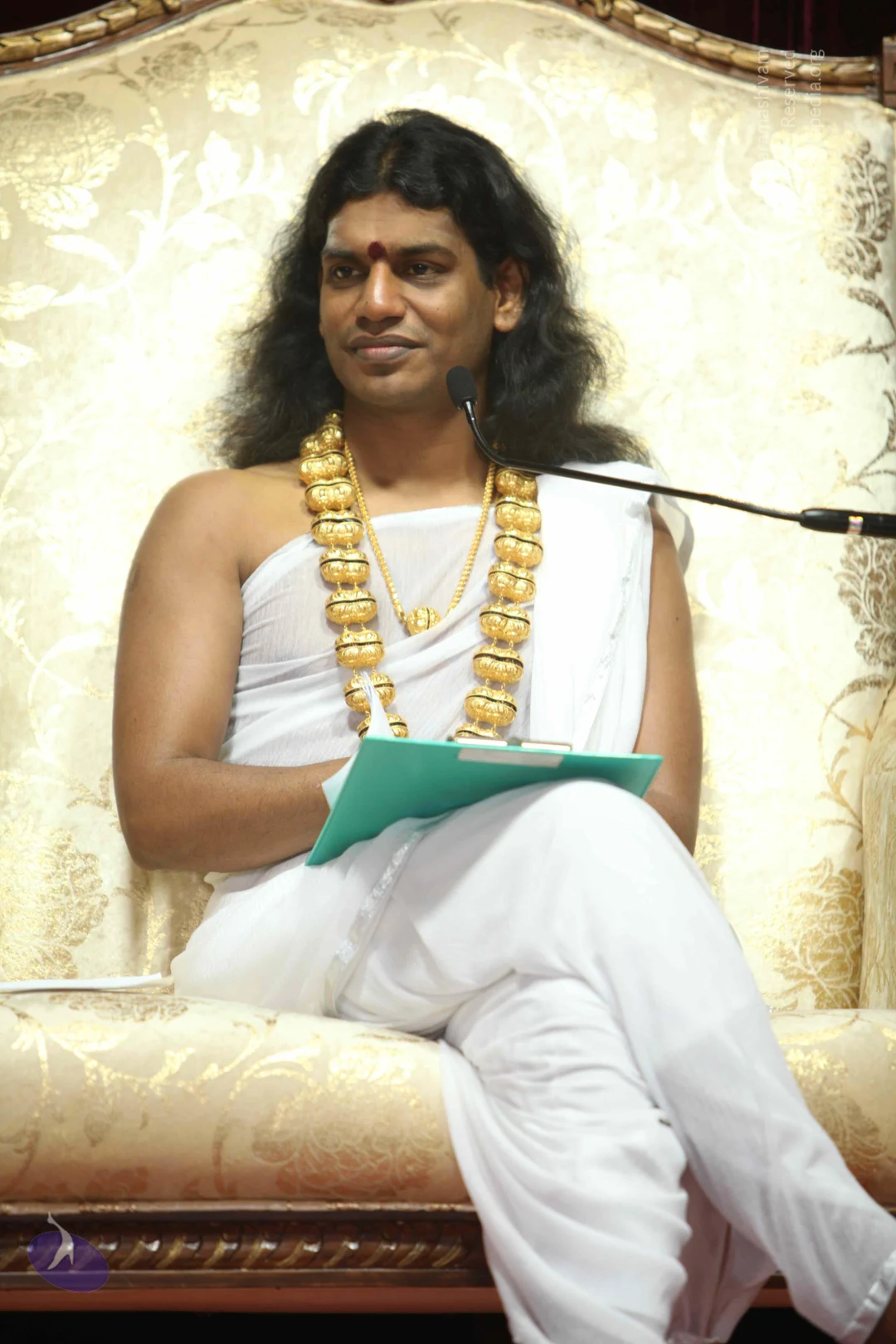
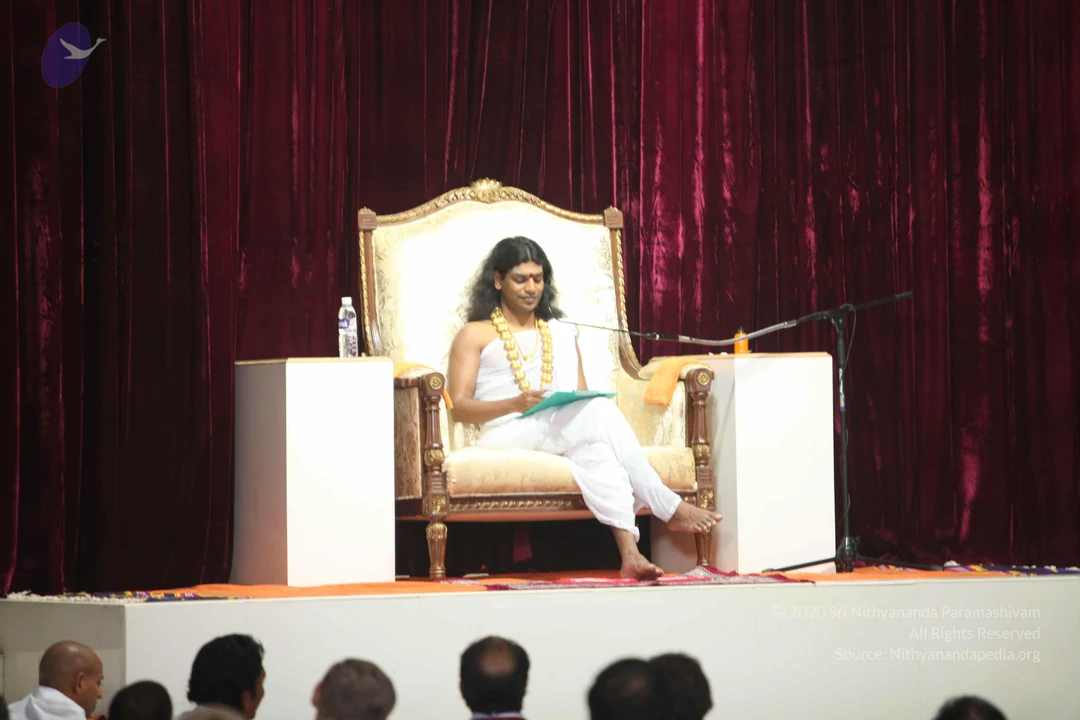
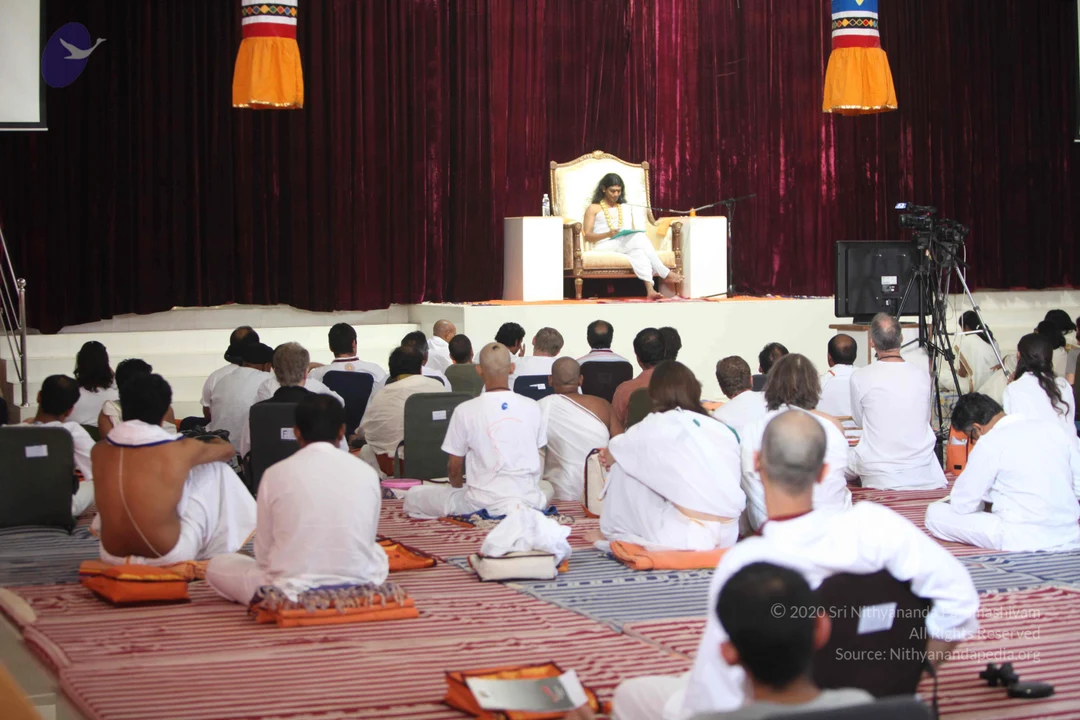
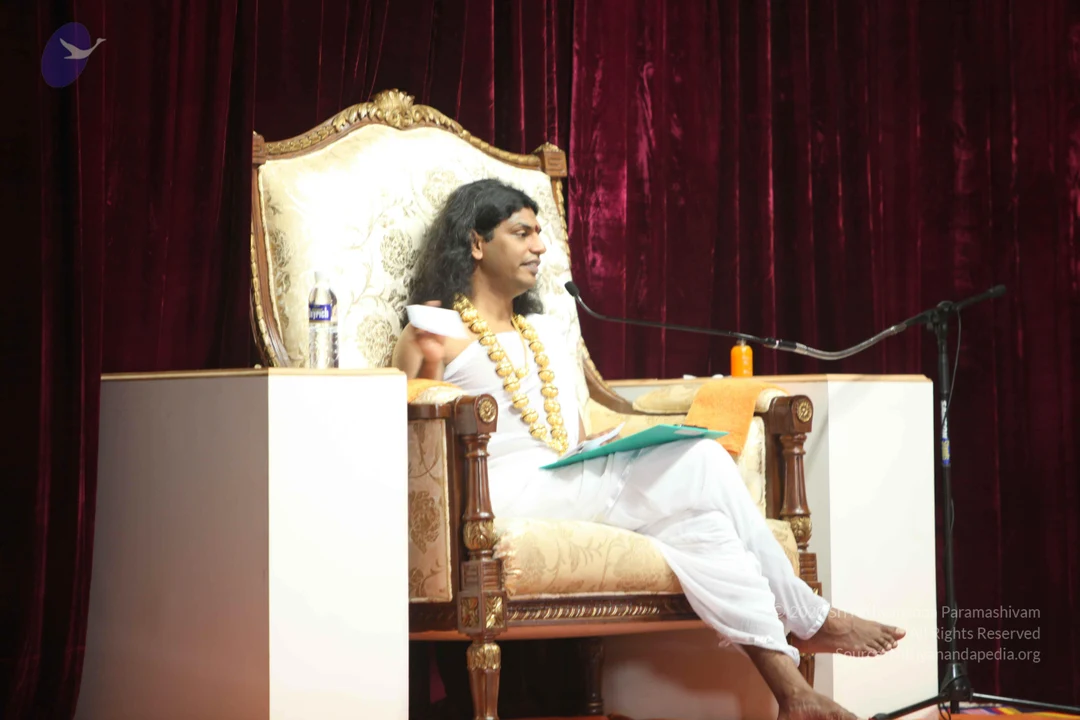
18 photosSource gallery
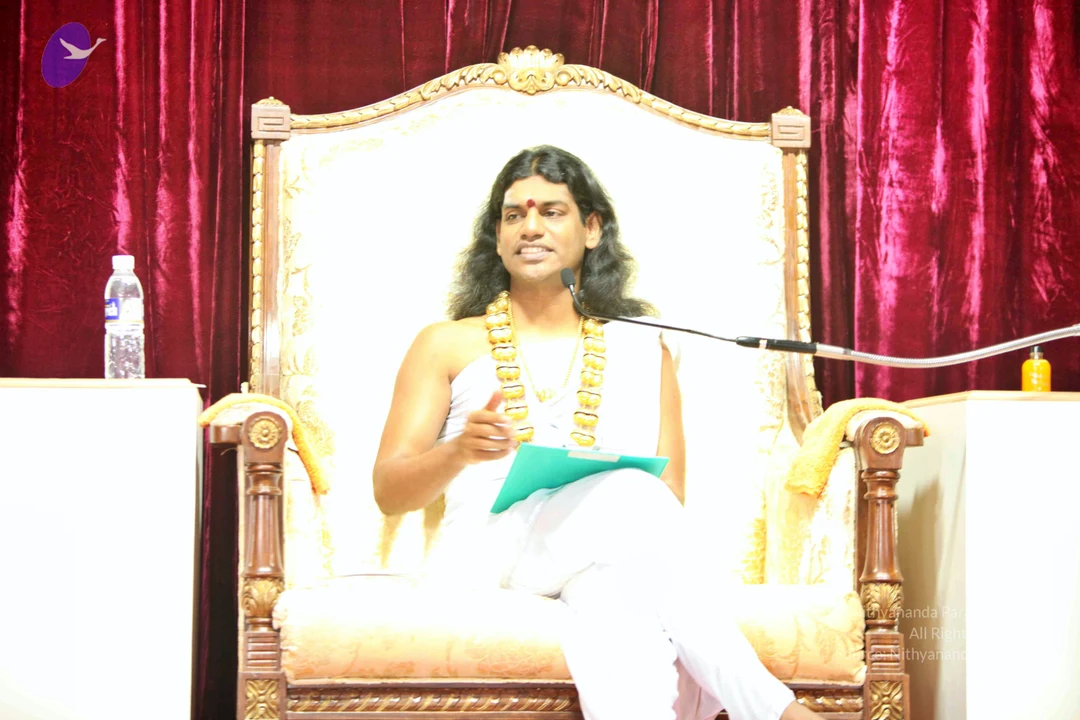
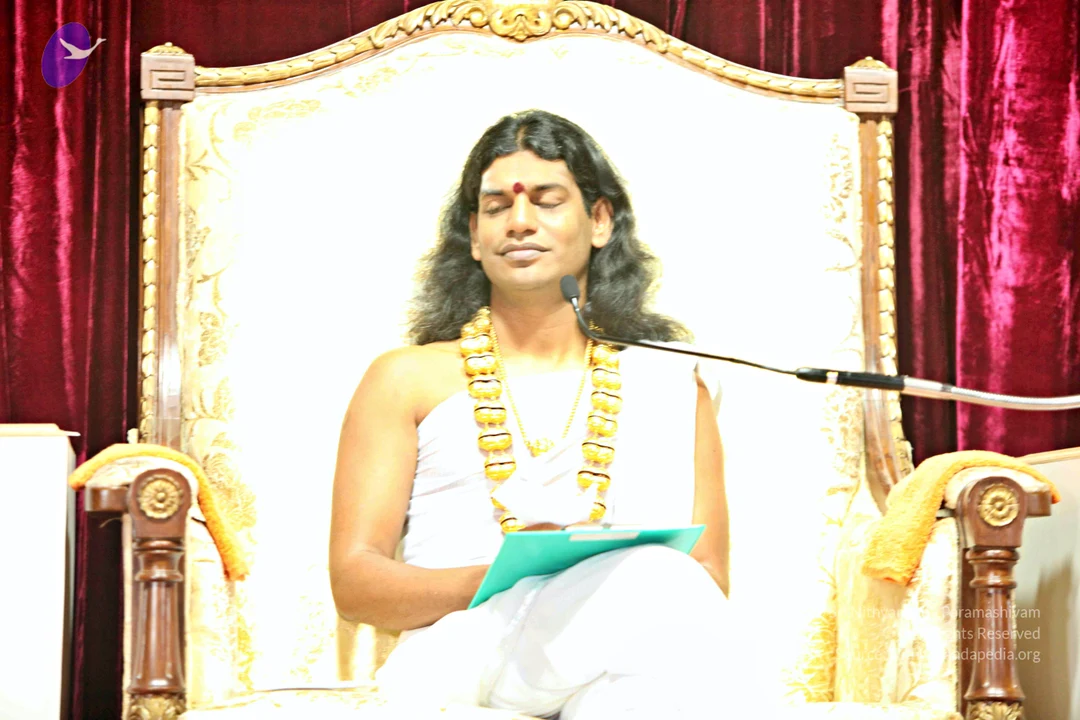
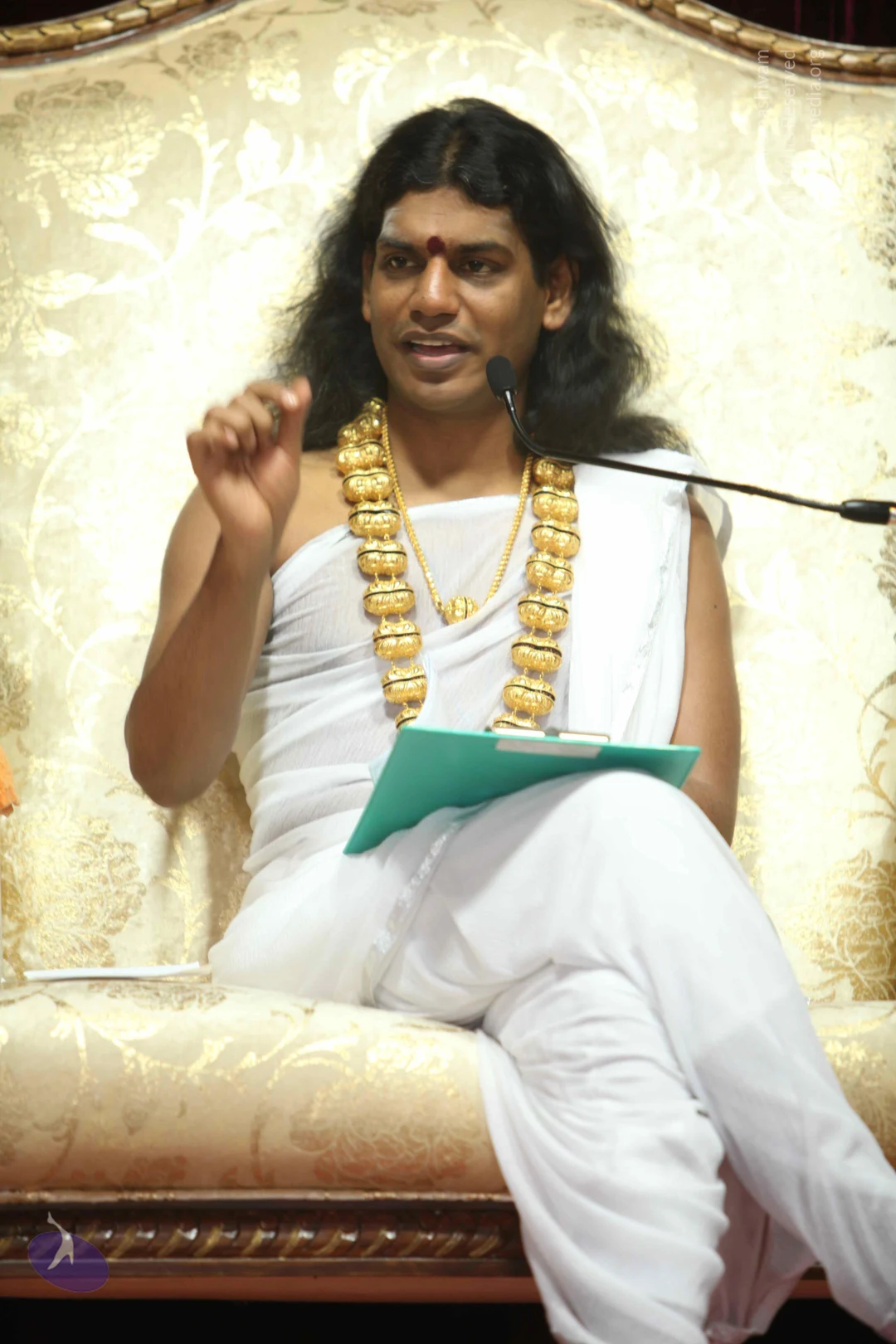
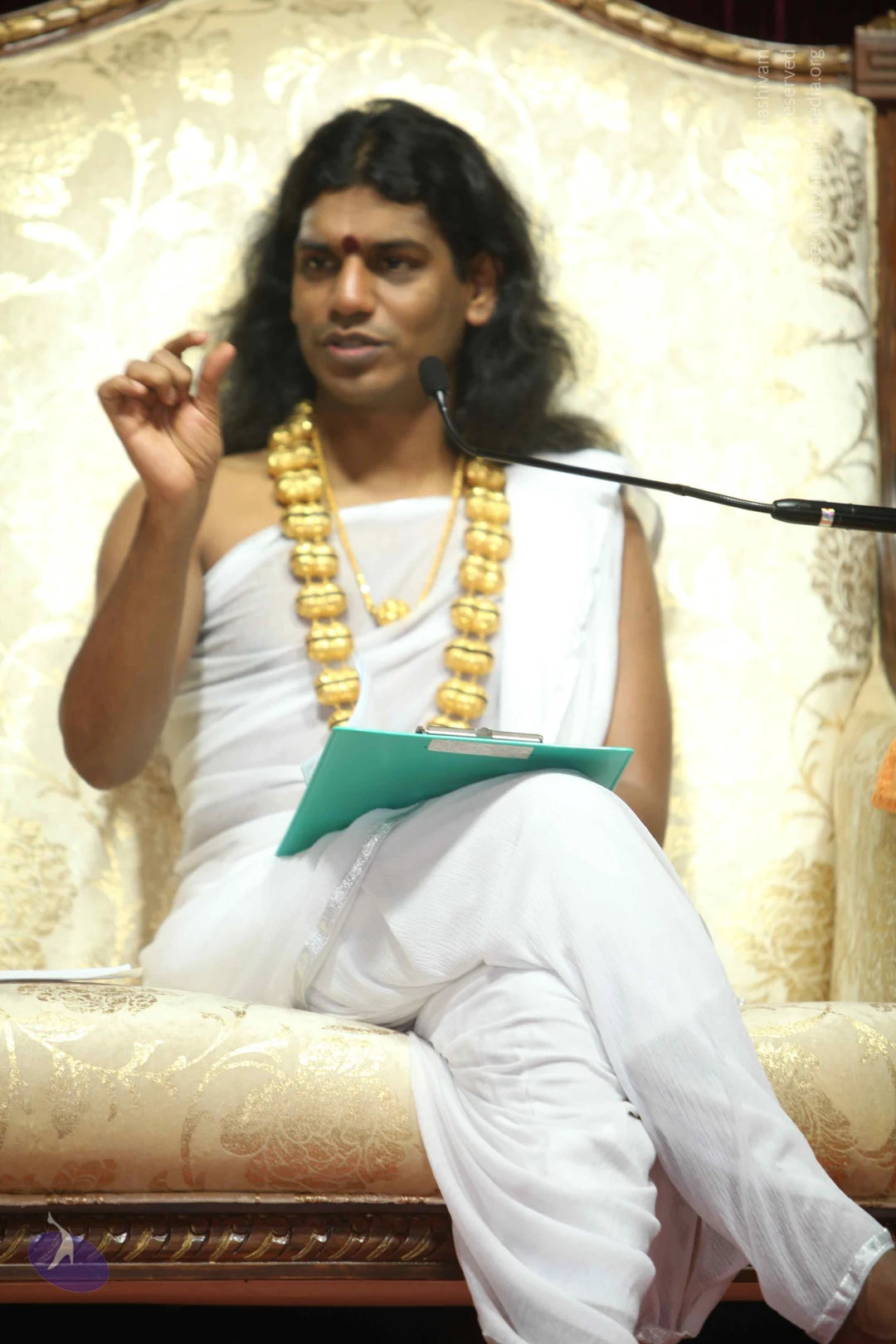
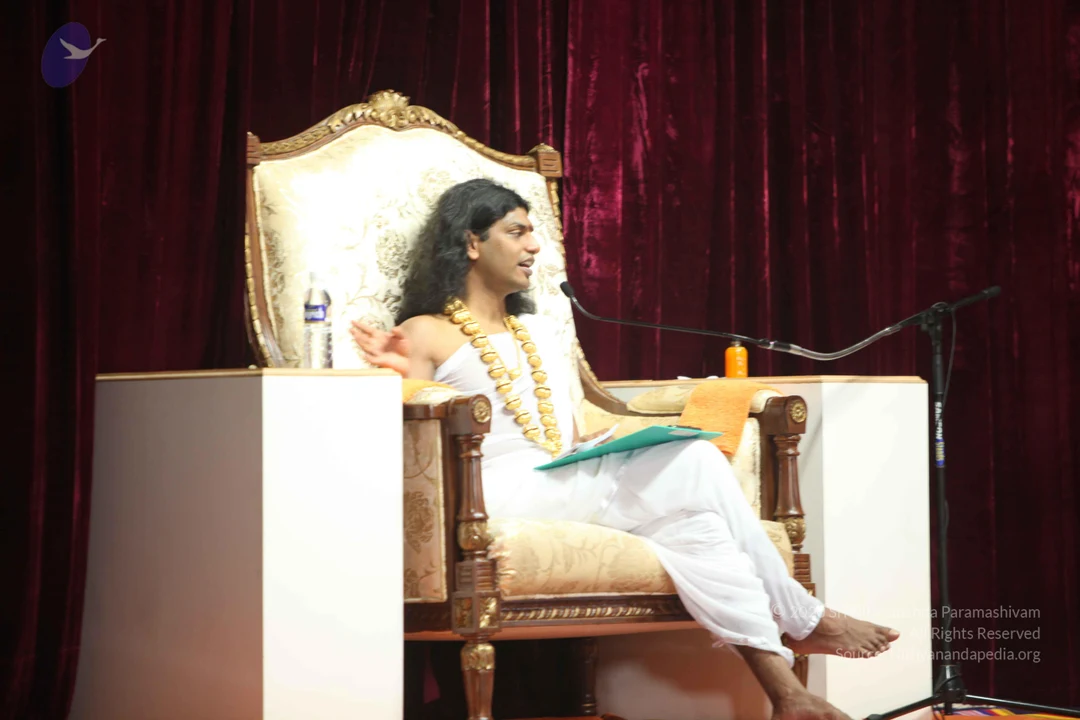
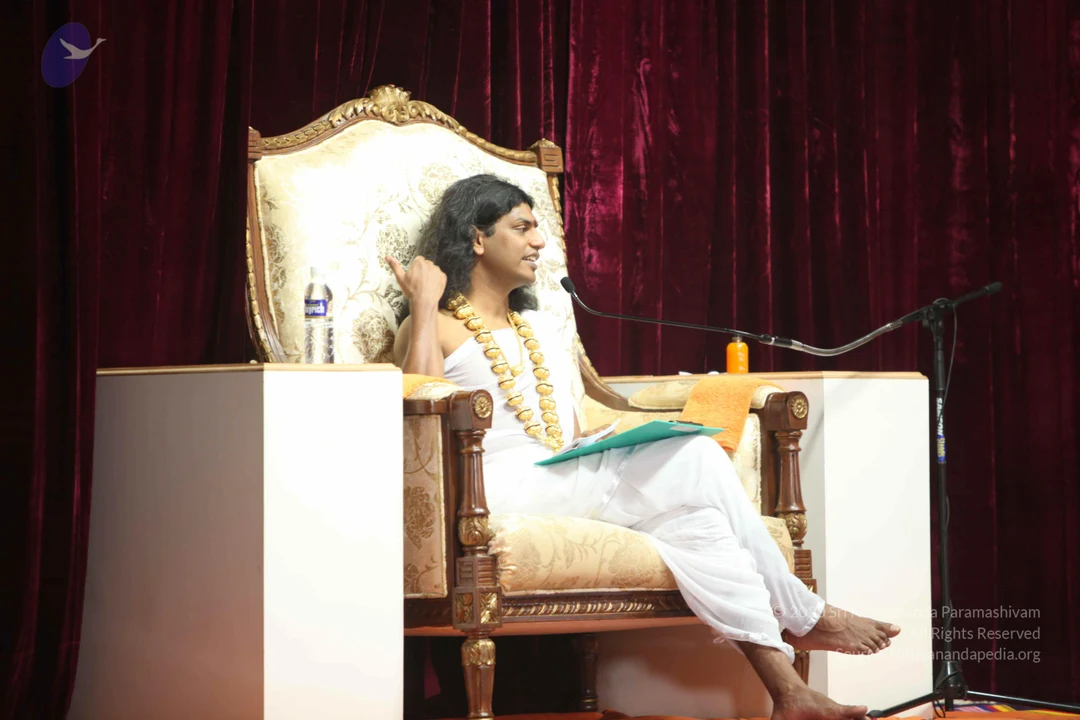
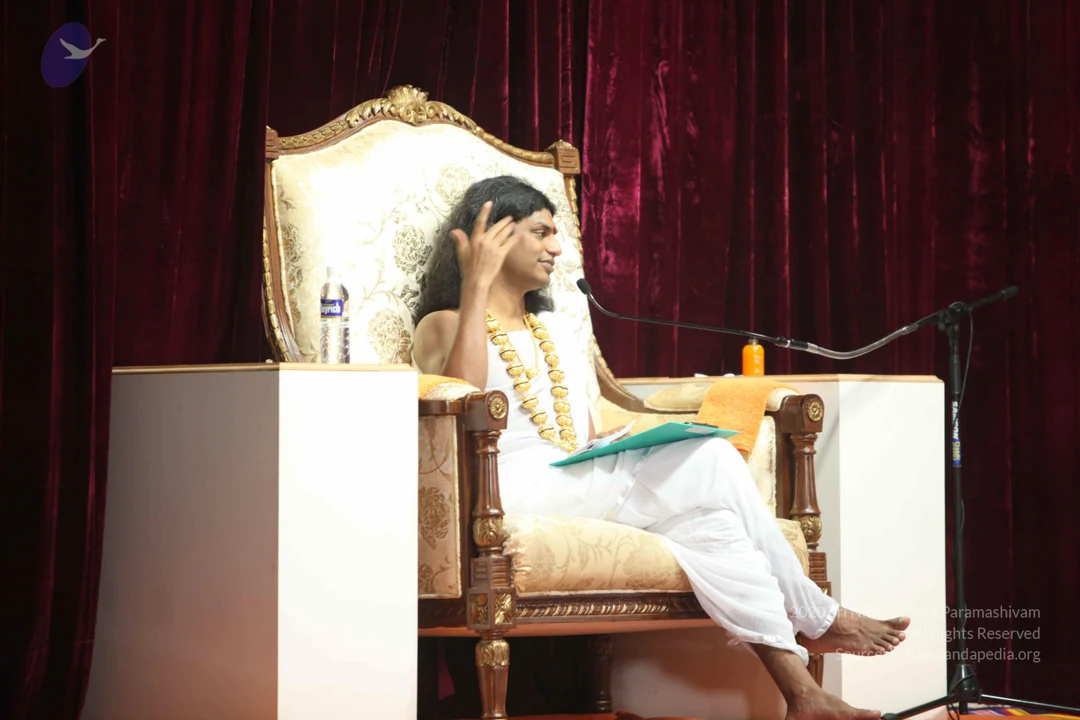
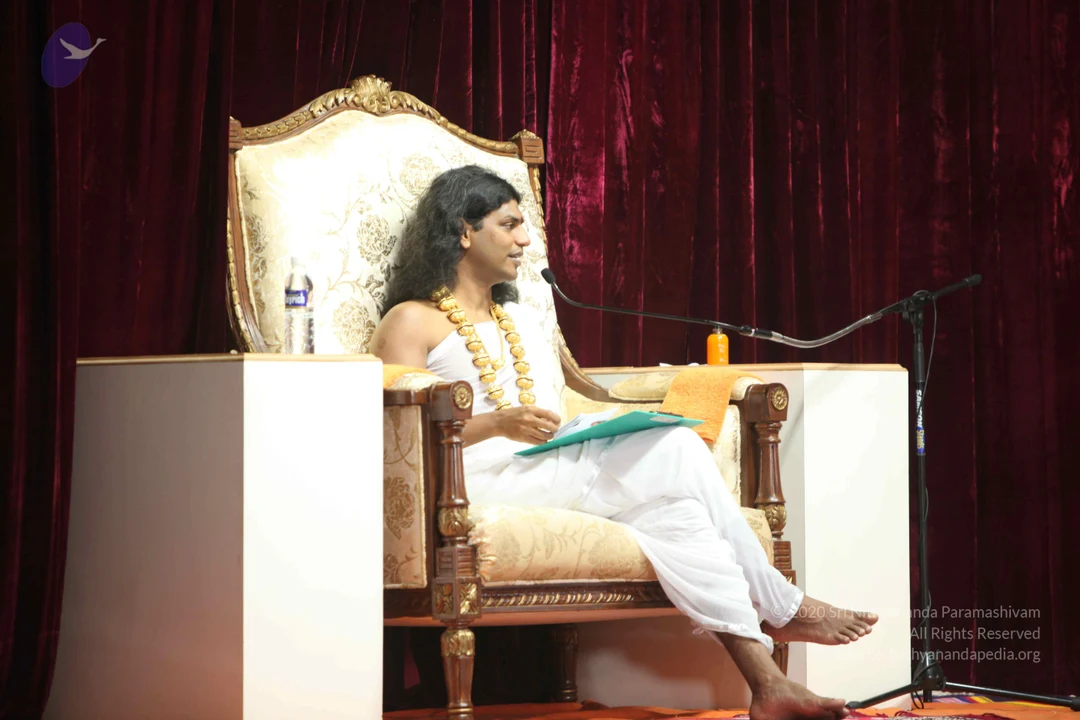
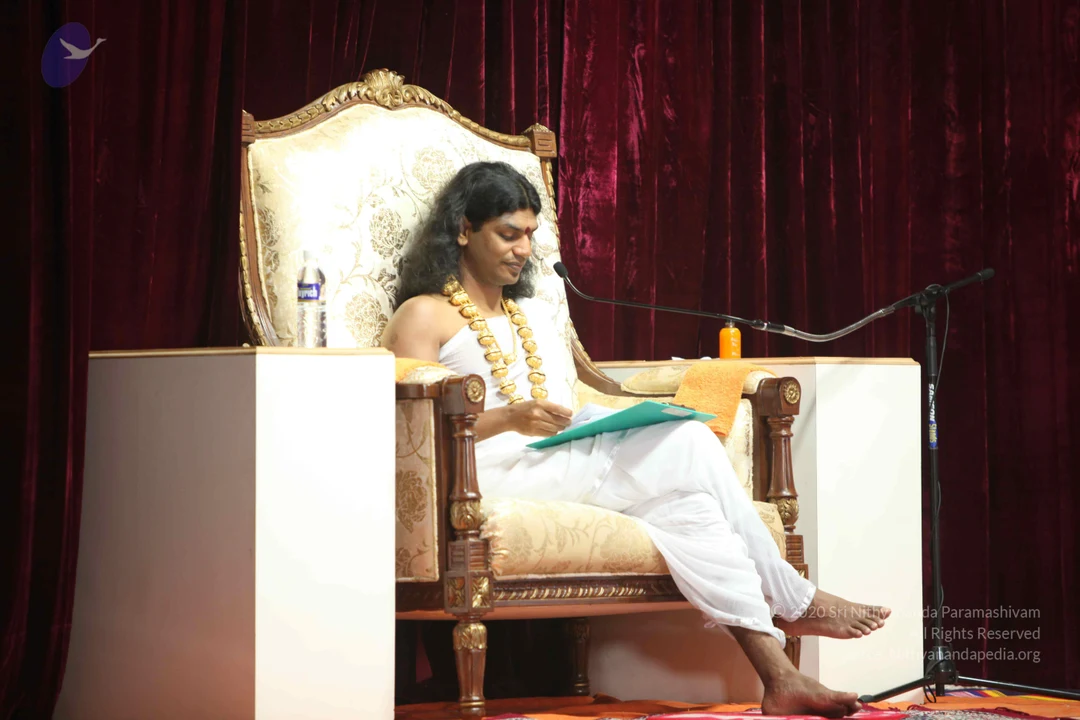
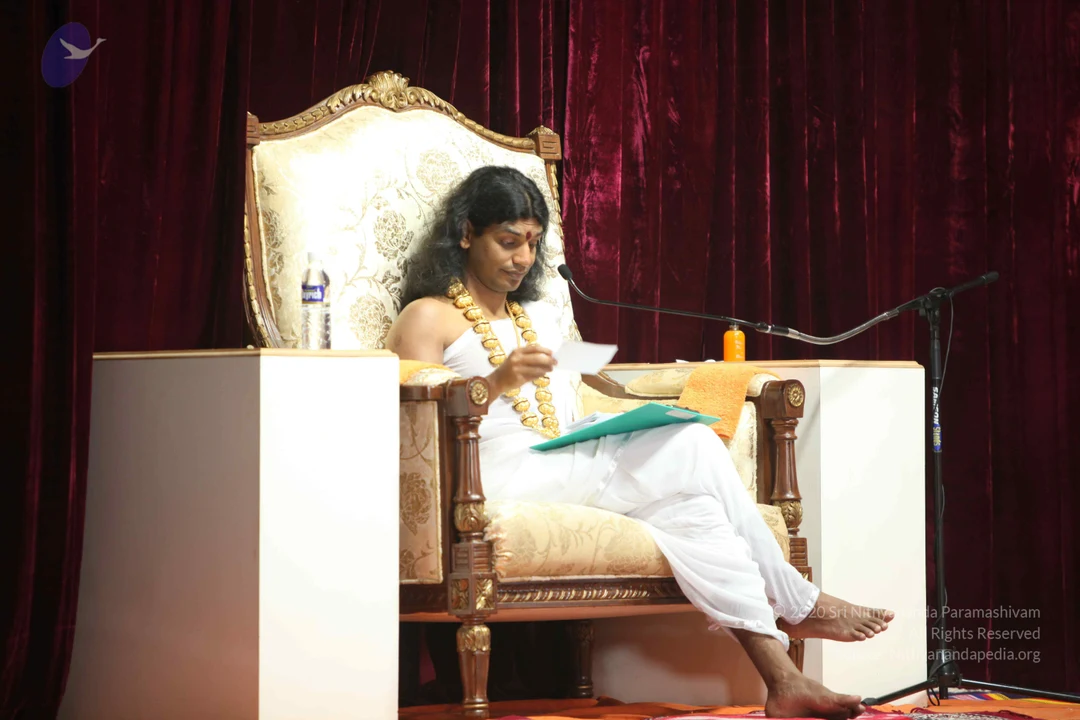
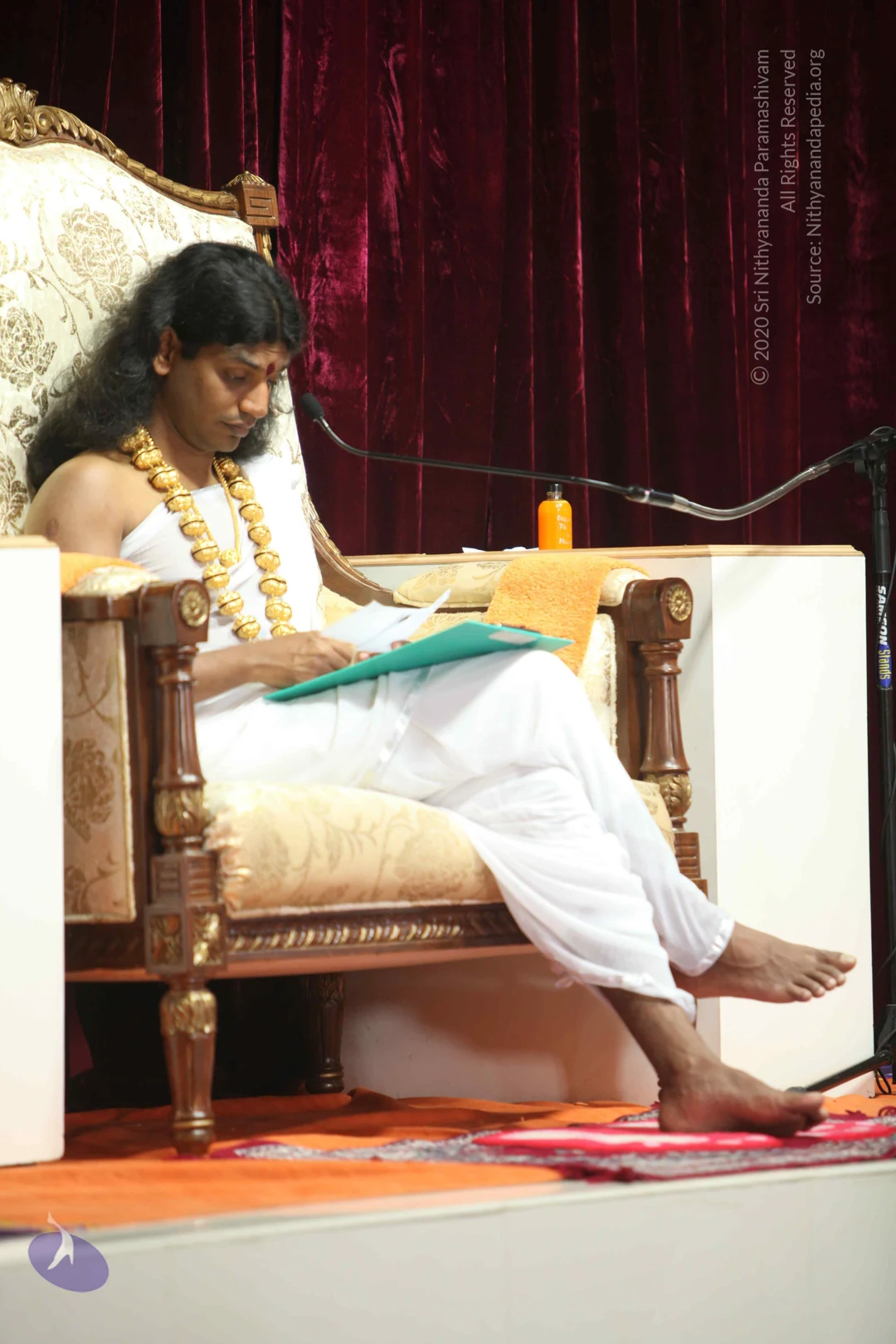
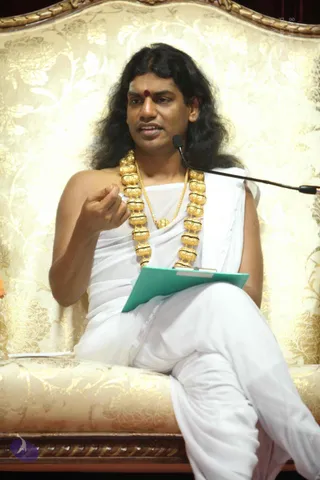
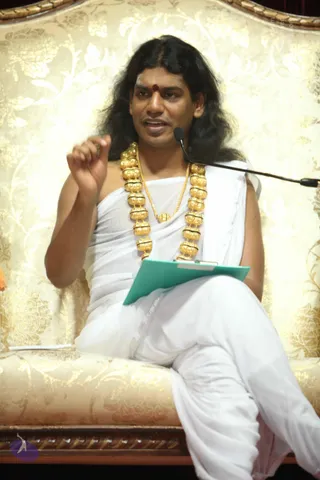
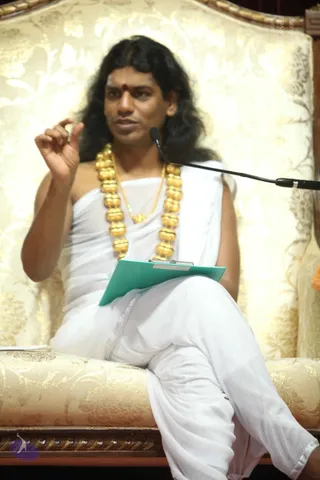
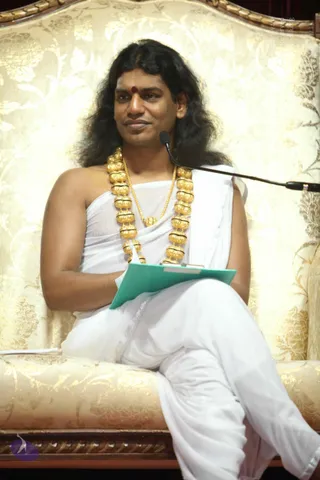
A photograph of a man seated on an ornate carved wooden throne with a cream upholstered back and gold-trimmed frame, in front of deep red velvet drapes. He wears a white dhoti-style garment with a white shawl draped over one shoulder, a red bindi on his forehead, and a long multi-strand gold beaded garland. He has long swept-back dark hair, holds a green folder in one hand while gesturing with the other, and speaks into a microphone on a stand. A water bottle sits on a small white table to the left. Swamiji (probable) appears as the seated speaker, with long swept-back hair, a gold garland and white ceremonial clothing, giving a discourse.A man with long, swept-back dark hair and a red bindi sits eyes-closed on an ornate cream and gold throne-style chair before a red velvet drape. He wears a white upper garment and white dhoti, with a thick yellow-and-gold beaded garland and a gold chain. He rests a teal clipboard on his lap and a microphone stand is positioned beside him. Gold-trimmed armrests hold yellow cloth draped over them.A man with long, swept-back dark hair and a red bindi sits on an ornate cream-and-gold brocade throne-style chair, speaking into a clip microphone. He wears a white shawl-style wrap over a white garment and a heavy multi-strand ceremonial gold necklace with a gold pendant. He holds a teal clipboard across his lap with one hand gesturing mid-discourse. Cues of long hair, ornate gold adornment and a seated teaching posture are present, but the appearance is not conclusive, so the candidate is marked uncertain.A man with long, dark, swept-back hair and a red bindi sits on an ornate gold-and-cream floral upholstered throne-like chair while speaking into a microphone on a stand. He wears a white draped garment over one shoulder and white dhoti-style cloth, with a heavy gold bead garland and a gold chain around his neck. He holds a teal clipboard on his lap and raises one hand with fingers gently curled in a gesture of explanation. Warm light falls on the golden backdrop.A man with long dark hair and a small red bindi sits on an ornate gold-and-cream upholstered throne-style chair, speaking into a microphone on a boom stand. He wears a white draped garment over his shoulder and white loose trousers, with a thick necklace of large gold beads and a gold chain. He holds a teal clipboard on his lap and raises his right hand in a gesture while talking.A seated man with long, wavy dark hair and a red bindi on his forehead sits in an ornate cream and gold floral armchair, one leg crossed over the other. He wears a loose white shawl draped over one shoulder and white trousers, with a heavy gold bead necklace and a gold chain. He holds a teal clipboard or notepad on his lap and looks off to the side, with a microphone on a stand beside him. The auditorium background is dark red and blurred.