Skip to content
Monday

29 November 2010

Siddha Tradition Awaken To Higher States of Consciousness Nithyananda Morning Satsang 29 Nov 2010)

Dated photos
18
Source pages
1
Media
2
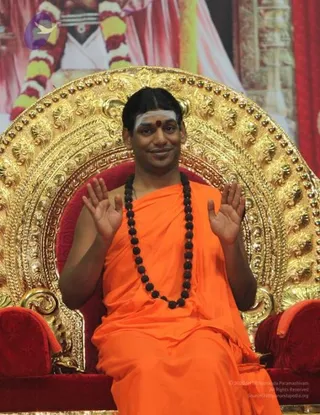
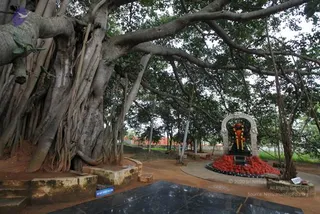
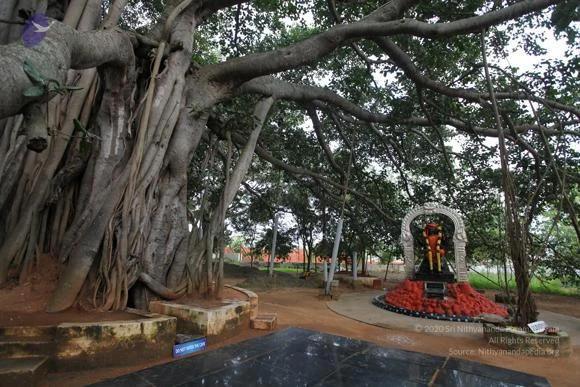
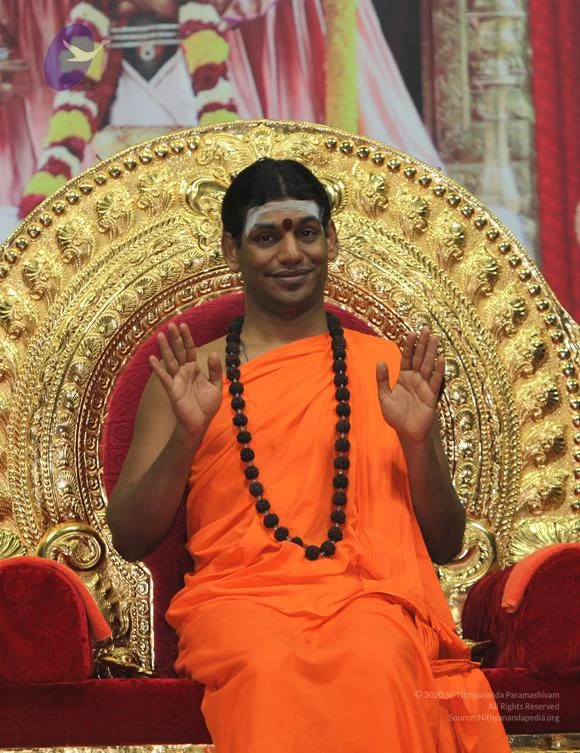
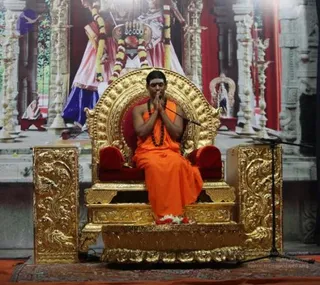
A seated man in saffron-orange robes sits on an ornate gold-carved throne with red velvet cushions, raising both open palms toward the viewer in a teaching gesture. He wears a long black rudraksha mala around his neck, a white sandalwood line marking on his forehead and a red bindi. Behind him, a backdrop shows a deity murti draped in red and white with a garland of yellow and white flowers. a person: the orange robes, long swept-back hair, rudraksha mala and ceremonial throne match the page's description of a satsang talk, so this is a.A photograph of an outdoor shrine beneath a large, sprawling banyan tree with many hanging aerial roots and dense green canopy. At the centre stands a small shrine structure with a white arched frame, decorated with red and orange flowers and garlands, containing a deity murti or sacred stone image. The ground around the shrine is ringed with a bed of red flowers and a paved circular platform. A dark stone slab with a blue plaque sits in the foreground, and a brick building is visible in the background. No people are visible in the scene.

November 29 2010

Original wiki page
Contents

Title

Siddha Tradition Awaken To Higher States of Consciousness Nithyananda Morning Satsang 29 Nov 2010)

Narration

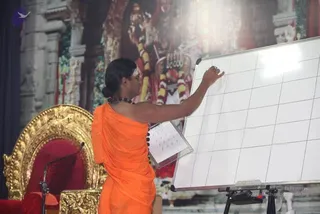
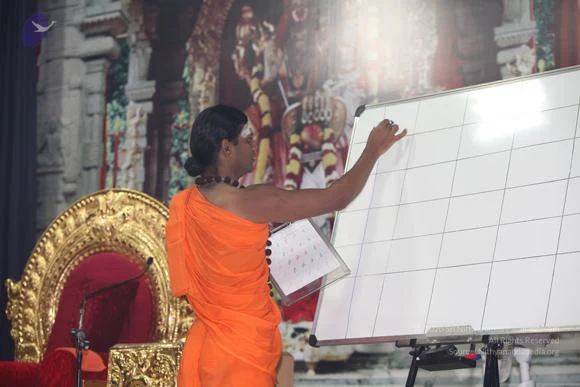
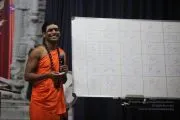
The Supreme Pontiff of Hinduism, Jagatguru Mahasannidhanam, His Divine Holiness, Bhagavan Nithyananda Paramashivam, expounded on the Cosmic Principles of the Siddha Tradition during the everyday live public talk - Nithyananda Satsang. In this talk entitled [[Siddha Tradition Awaken To Higher States of Consciousness, His Divine Holiness went into detail the 25 states of Consciousness, showing how each of the five (5) states overlap with each other; the five states; Waking, dreaming, sleeping, awareness and consciousness or in Tamil Jagrat, Swapna, Sushupti, Turiya, Turiyatita. His Divine Holiness revealed a powerful truth which is if one understands the table (which he projected for all to see), one can become enlightened now. He physically pointed to the table and shared that the Waking Waking, Dream Waking, the Sleep Waking, Awareness Waking, Conscious Waking; these all can be encouraged, and waking dreaming, dreaming dreaming; these are supposed to be discouraged. He shared details about the state to be discouraged expressing that unfortunately a normal human being spends 90% of his time only in these 6 stages. His Divine Holiness concluded that in the following satsang He will disclose more about the states to be encouraged.

Video and Audio

Siddha Tradition Awaken To Higher States of Consciousness Nithyananda Morning Satsang 29 Nov 2010)

VideoAudio

Photos Of The Day:

nithyananda-bidadi
Photos from this day

View all 18 photos
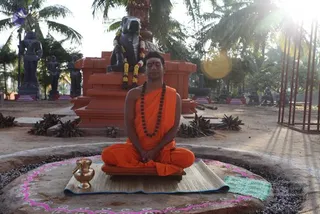
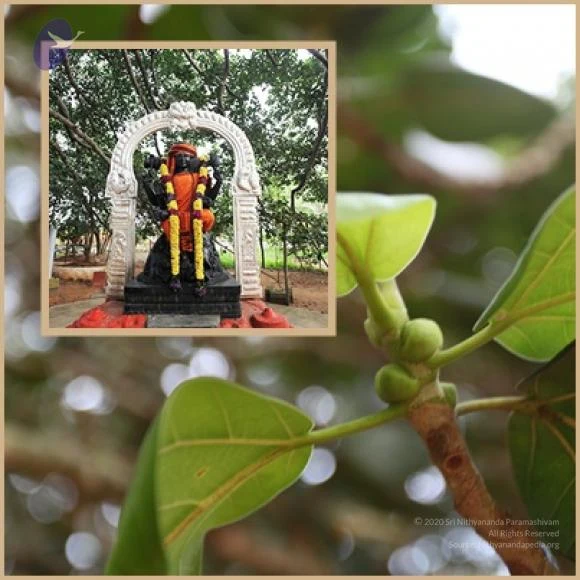
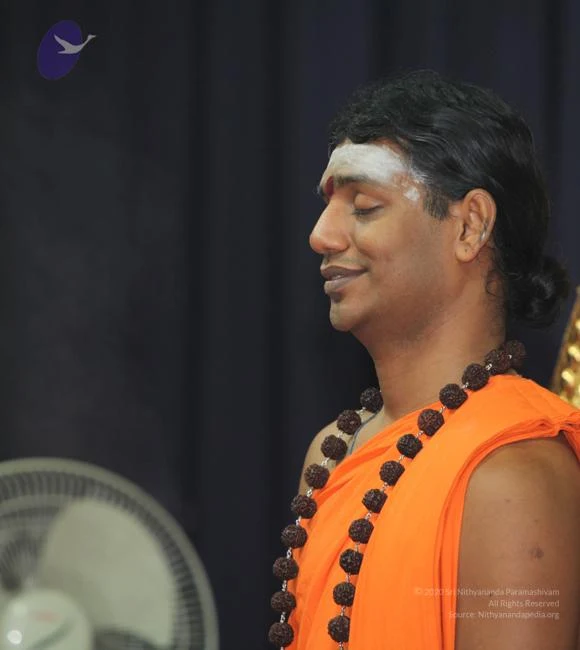
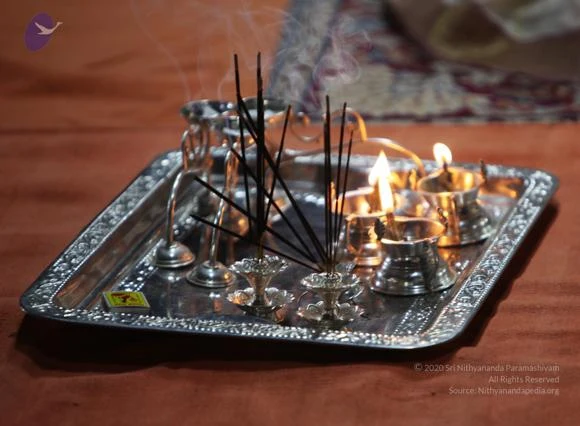
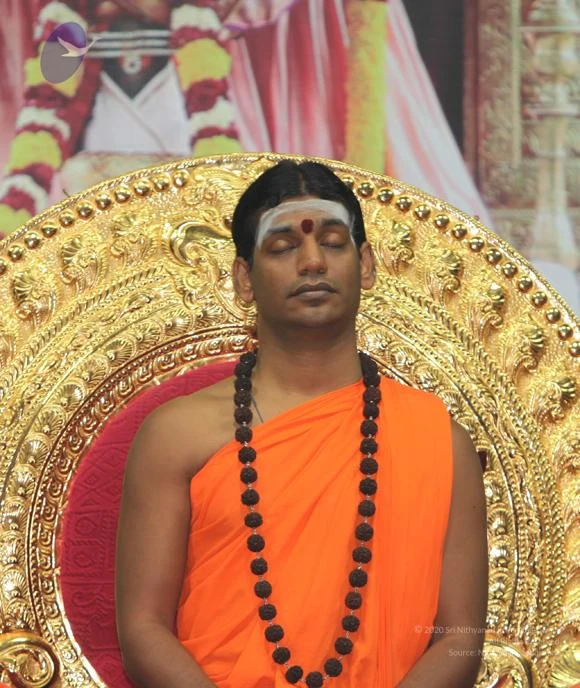
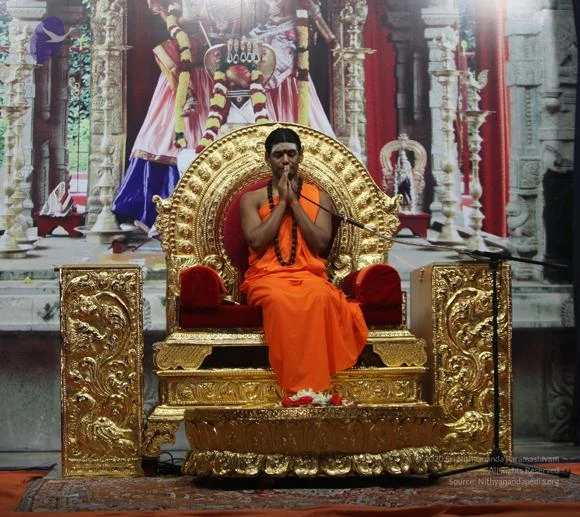
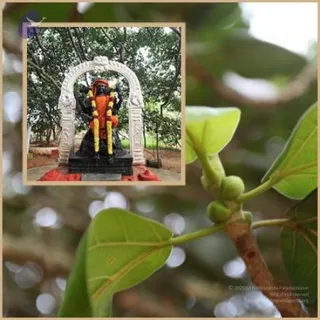
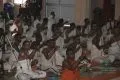
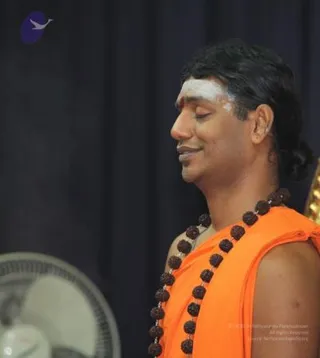
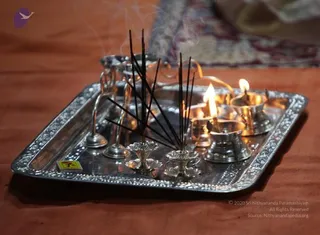
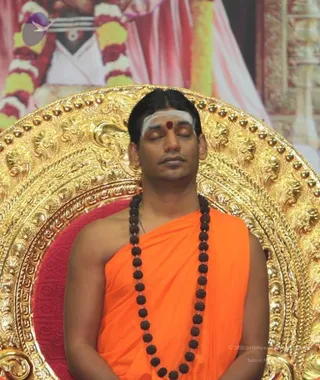
A graphic composite of a framed photograph of a temple shrine set against a blurred green background with a yellow cosmos flower in the lower right. Inside the framed photo, a deity murti with multiple arms and a crown sits centrally in a golden arched niche with a red curtain behind it, flanked by two standing figures in pink and blue garments wearing colourful flower garlands. A seated figure in orange robes sits in front of the central murti on a white cloth. Small offerings and lamps are on the lower platform. The image is a decorative quote-style graphic with a small logo at upper left.A collage-style graphic showing a small outdoor shrine inset over a blurred background of green fig leaves and unripe green figs on a brown branch. The inset photo shows a black stone deity murti standing in an arched white stone niche, draped with orange and yellow marigold garlands, set on a red-painted base amid shady trees. No physical people are visible.A photograph of an outdoor shrine beneath a large, sprawling banyan tree with many hanging aerial roots and dense green canopy. At the centre stands a small shrine structure with a white arched frame, decorated with red and orange flowers and garlands, containing a deity murti or sacred stone image. The ground around the shrine is ringed with a bed of red flowers and a paved circular platform. A dark stone slab with a blue plaque sits in the foreground, and a brick building is visible in the background. No people are visible in the scene.A photograph of a seated audience at an indoor satsang. Many people in white clothing sit closely together on the floor, filling the frame from the lower left to the upper right. Several rows of heads and shoulders are visible, with a few people wearing white shawls and an orange-clad figure near the lower centre. The setting appears to be a hall with dim lighting. No speaker is clearly visible, and no single figure can be confidently identified as a person.A photograph of a man in profile with eyes closed and a slight smile, seated against a dark blue curtain. He has long dark hair swept back, white vibhuti marks with a red kumkum dot on his forehead, and wears a saffron-orange garment over his shoulder with a long rudraksha mala hanging across his chest. A white electric fan is visible at the lower left. Appearance-based label: a person, seen in person, in a satsang setting.A photograph of a rectangular polished silver puja tray with embossed border set on a dark red cloth. On the tray stand several black incense sticks in small silver holders with smoke rising, beside a silver kalasha-style vessel and three lit oil lamps with flames. No people are visible in the scene.A man seated on an ornate gold throne with a red cushioned seat, eyes closed in meditation. He wears a saffron-orange robe draped over his shoulders and a long rudraksha mala of dark beads reaching his chest. He has a white vibhuti tripundra and a red kumkum dot on his forehead. Behind him a backdrop shows a garlanded deity or portrait image in pink and white draping with yellow and red flower garlands. The appearance and throne with a rudraksha mala and saffron robes are consistent with a person, seated in a satsang setting, though the identification is uncertain.A seated man in saffron-orange robes sits on an ornate gold-carved throne with red velvet cushions, raising both open palms toward the viewer in a teaching gesture. He wears a long black rudraksha mala around his neck, a white sandalwood line marking on his forehead and a red bindi. Behind him, a backdrop shows a deity murti draped in red and white with a garland of yellow and white flowers. a person: the orange robes, long swept-back hair, rudraksha mala and ceremonial throne match the page's description of a satsang talk, so this is a.A seated man in an orange-saffron robe sits on an ornate gold-and-red throne with carved gold side panels, palms pressed together in greeting. He wears a rudraksha mala around his neck and a microphone stand is at his right. Red flower offerings lie at the base of the throne. Behind him a large backdrop shows painted figures in red and white garments with garlands, and gold pillars frame the stage. A caption on the photo reads Nithyananda Paramashivam and , and the swamiji field reflects a candidate seated in the throne with distinctive saffron robe and rudraksha cues, appearance-based and uncertain