Skip to content
Monday

1 November 2010

Reincarnation - A Myth or A Fact - Nithyananda Morning Satsang (01 Nov 2010) Message

Dated photos
354
Source pages
1
Media
2
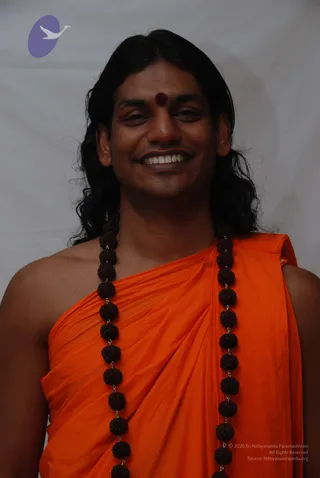
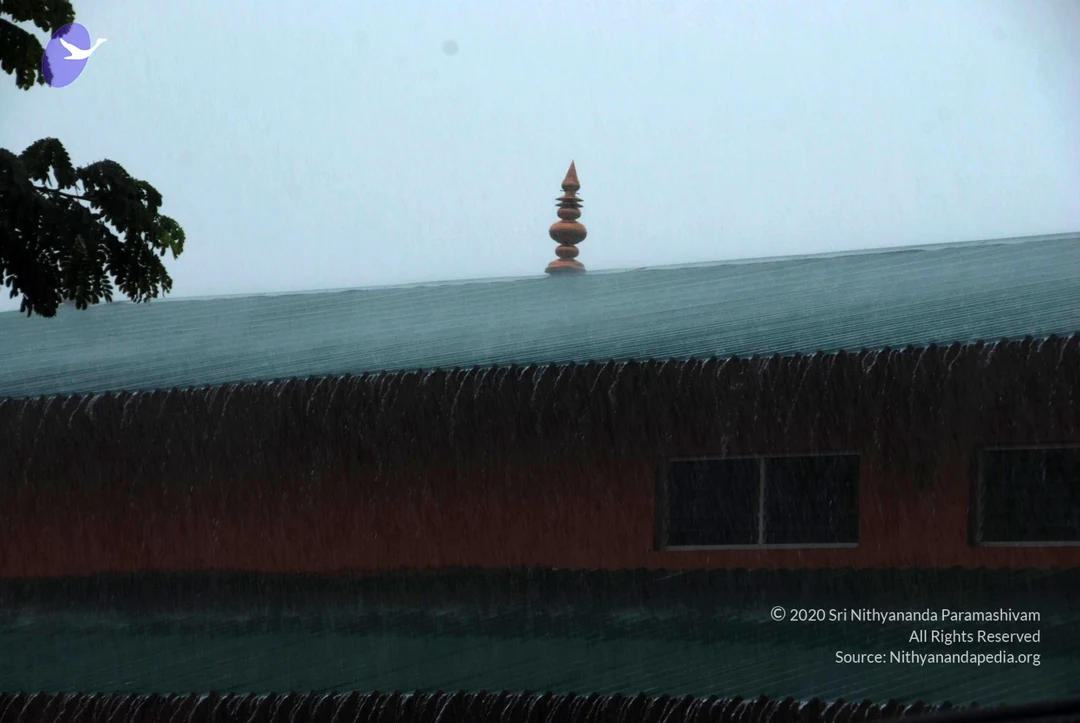
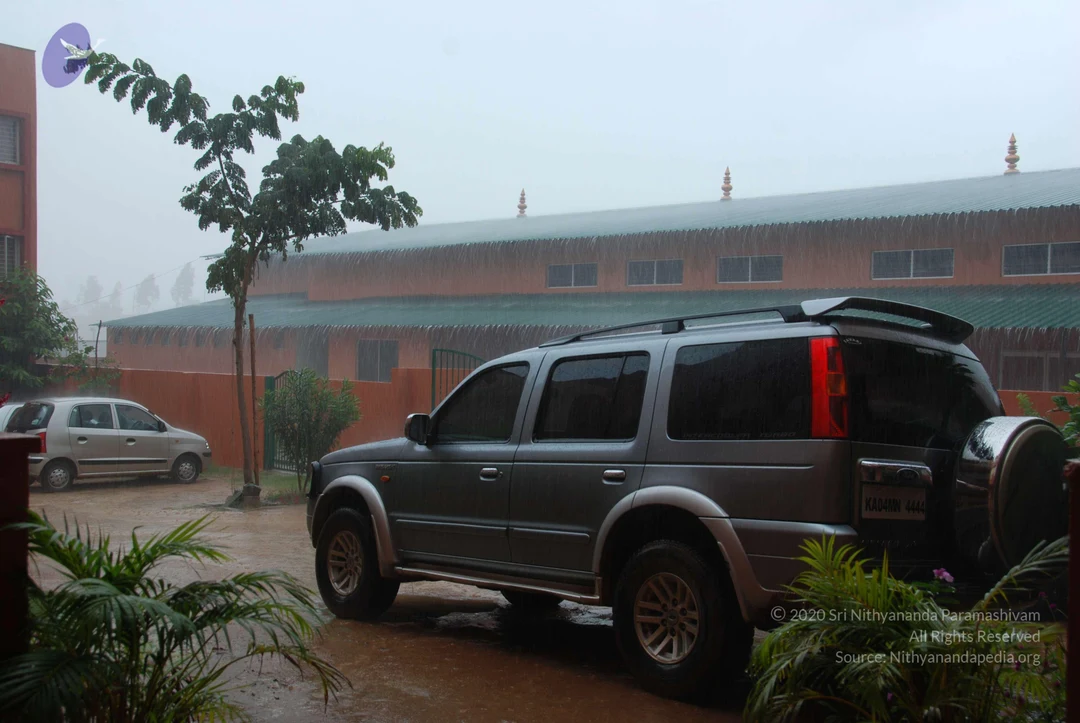
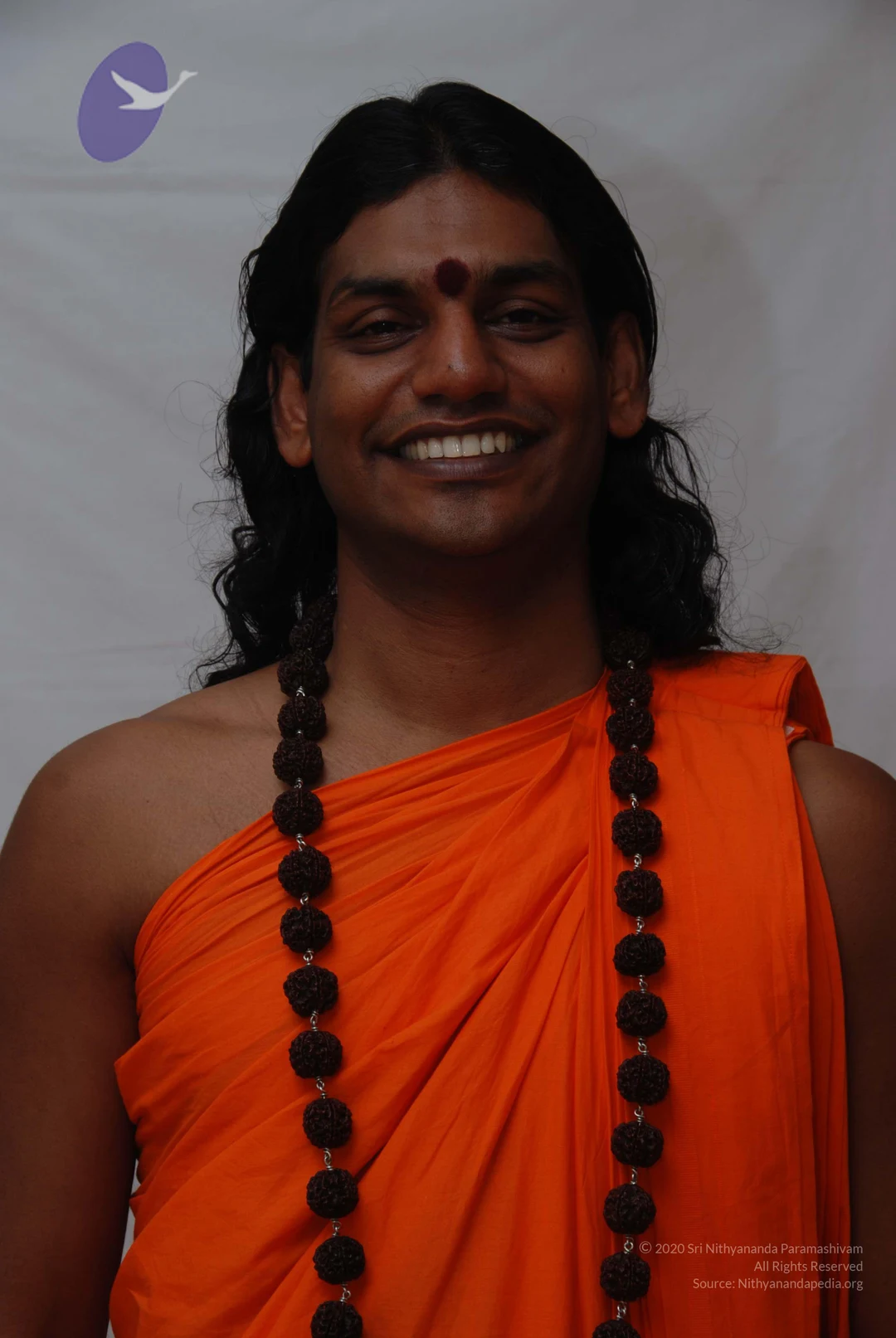
Heavy rain falls over a building with a dark green corrugated metal roof and a reddish-brown wall with rectangular windows. A tall, tiered orange-brown finial or kalasha-like spire rises from the roofline, and green leaves hang in the upper left corner. No people are visible.Rain falls heavily on an ashram compound. In the foreground a grey SUV with a spare tyre mounted at the rear is parked on wet brown ground, with a silver hatchback parked beside a small tree. Behind them stands a long orange-walled building with a green corrugated roof topped by small finial spires, with rows of windows. Palm and flowering plants line the edges of the compound. No people are visible.Photo of a smiling man with long dark wavy hair and a small red bindi on his forehead, wearing a bright orange shawl draped over his shoulders and chest and a long double-strand necklace of dark rudraksha beads. He stands against a plain light grey backdrop, with a small purple and white bird logo at the upper left. a person based on his long swept hair, orange clothing and rudraksha malas, in portrait form.

November 01 2010

Original wiki page
Contents

Title

Reincarnation - A Myth or A Fact - Nithyananda Morning Satsang (01 Nov 2010) Message

Narration

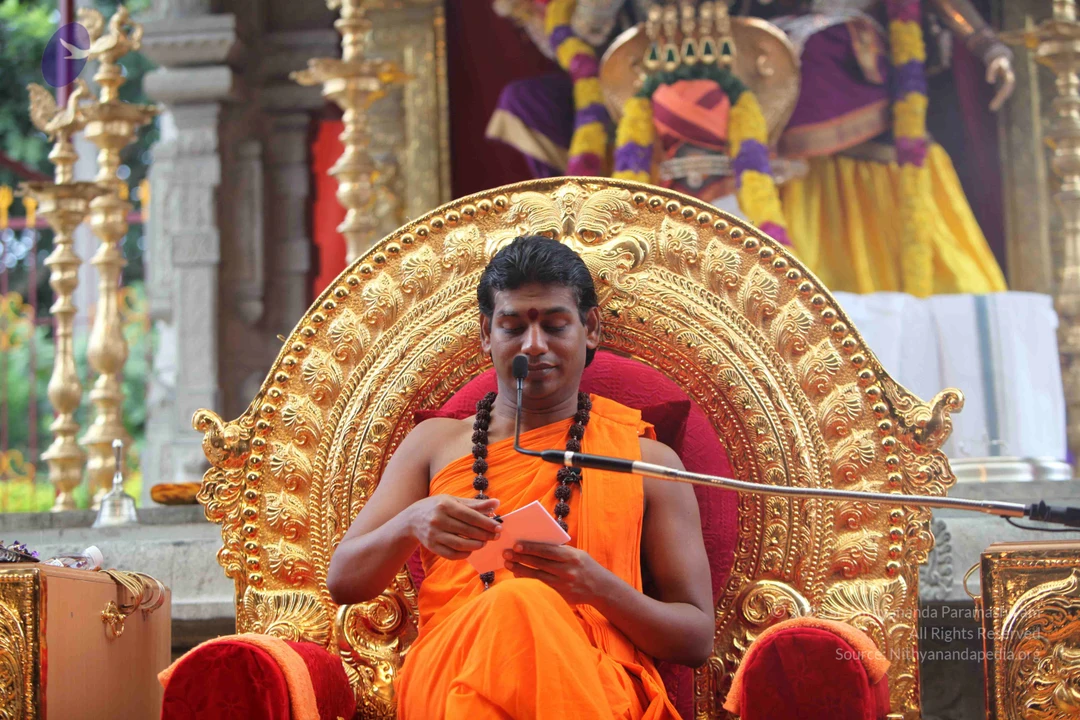
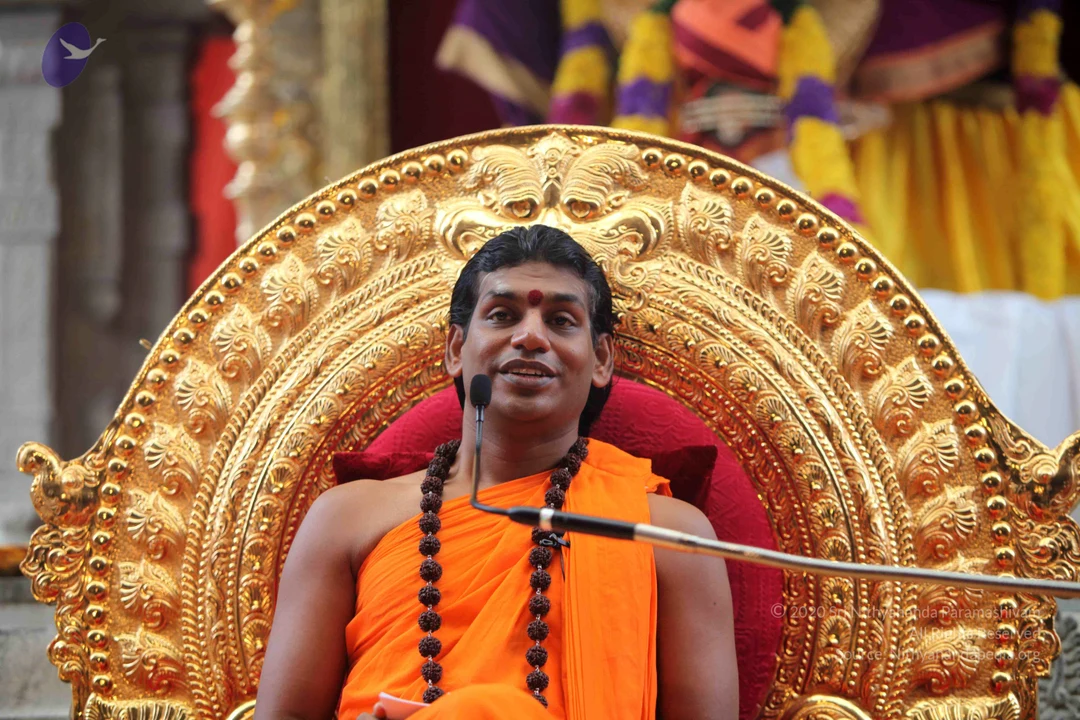
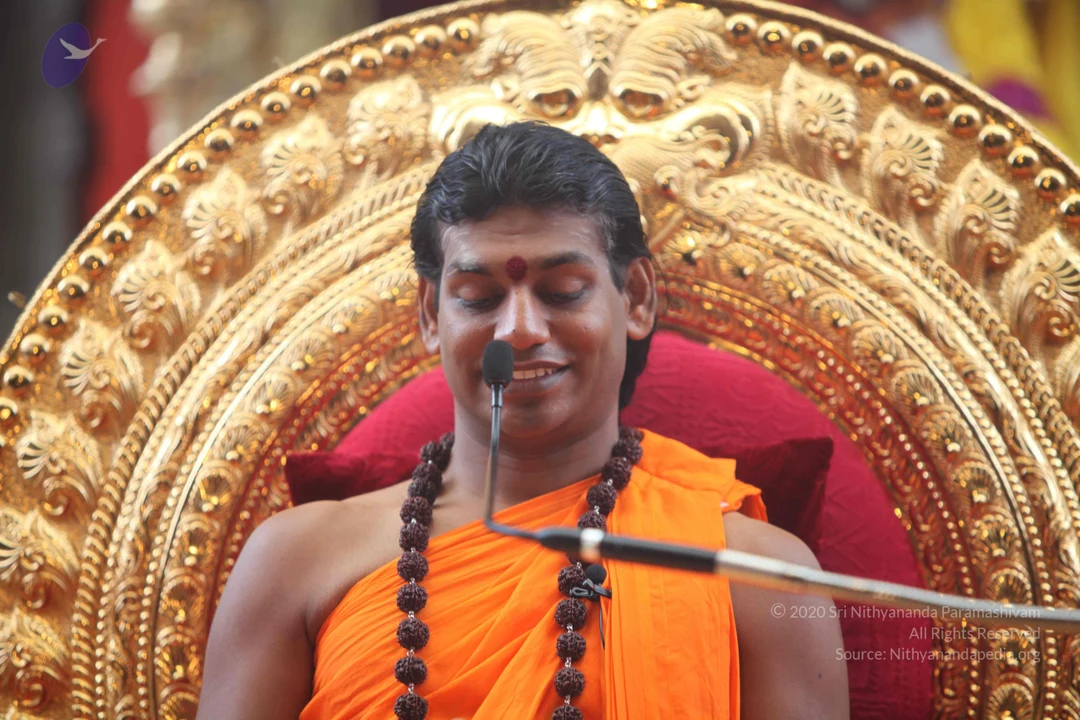
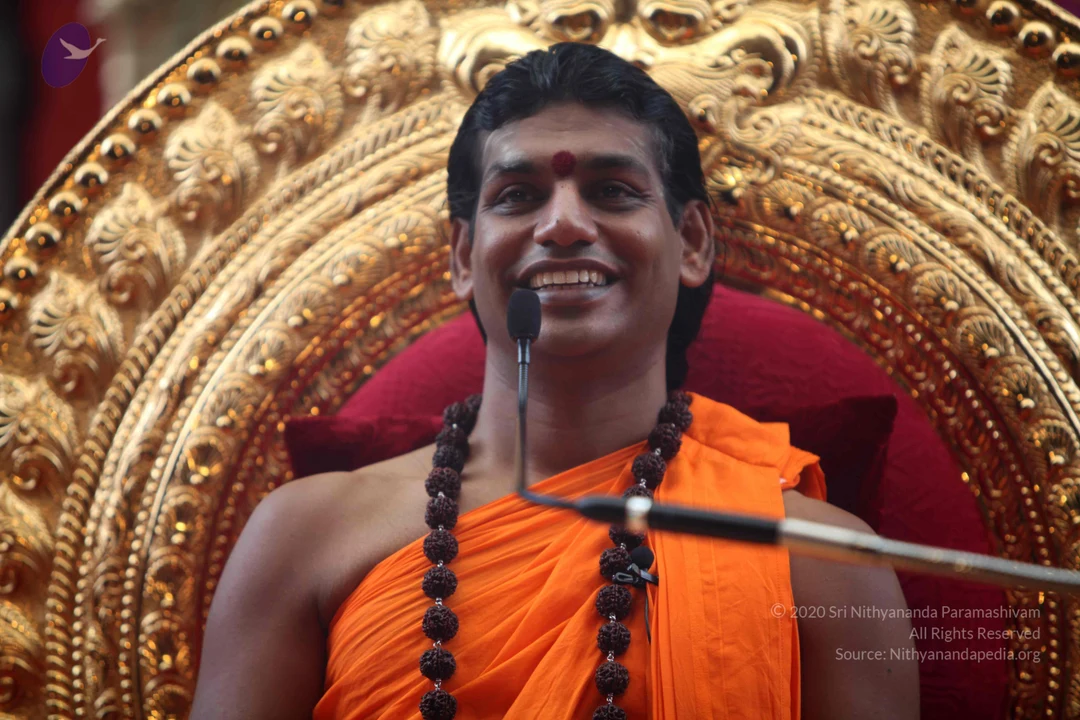
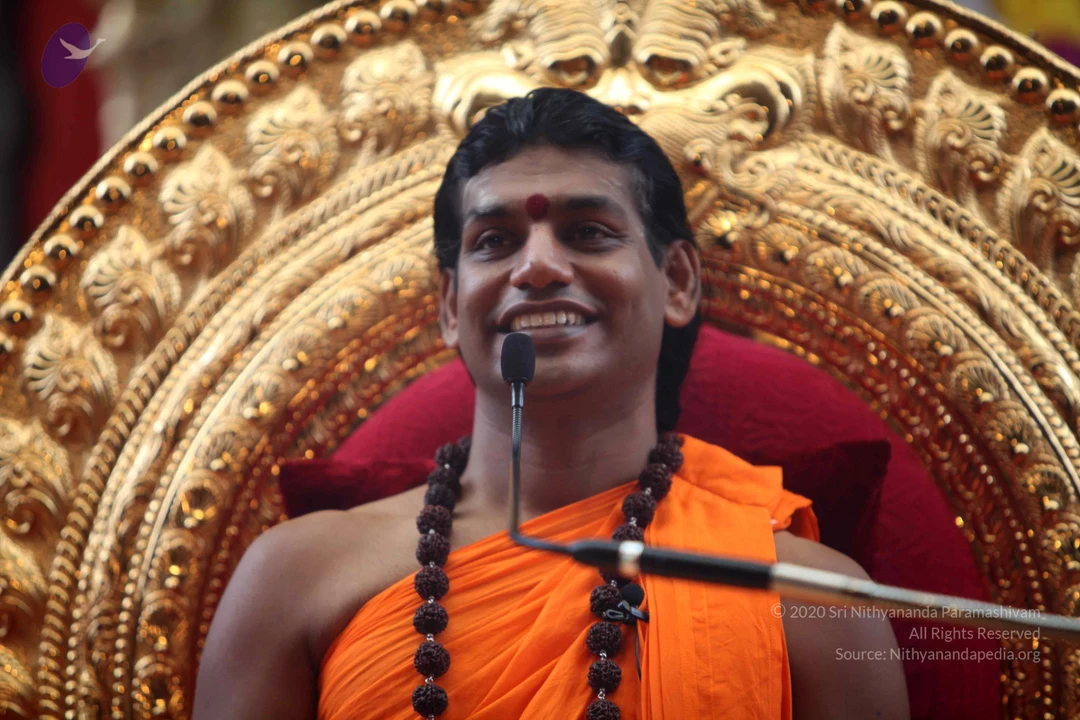
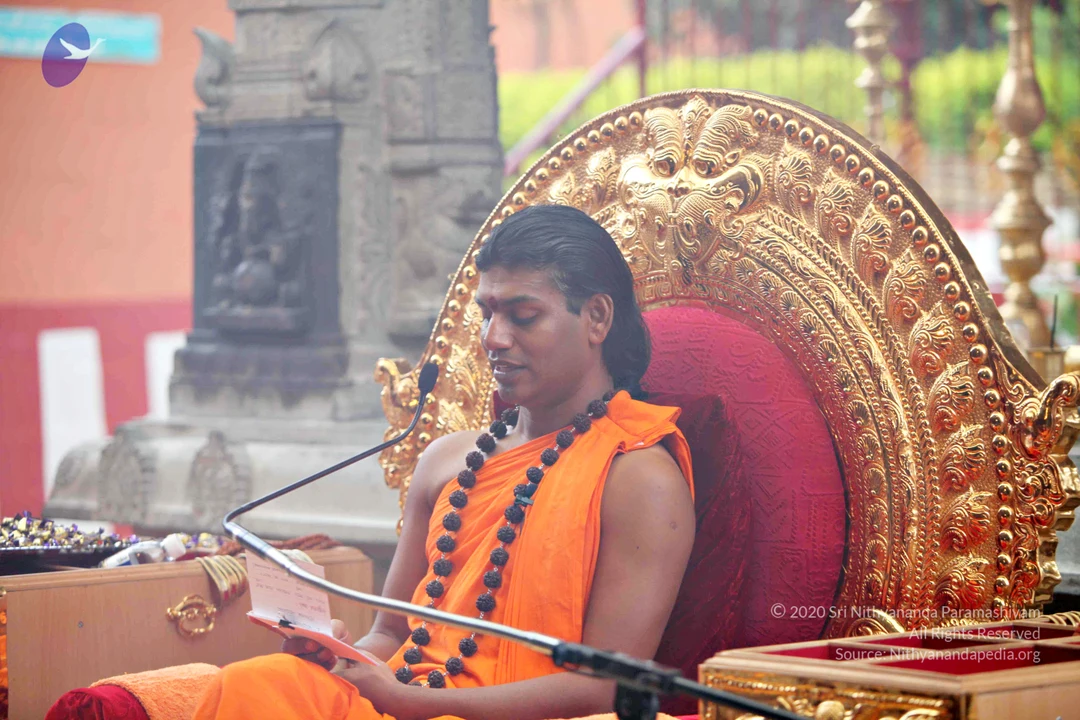
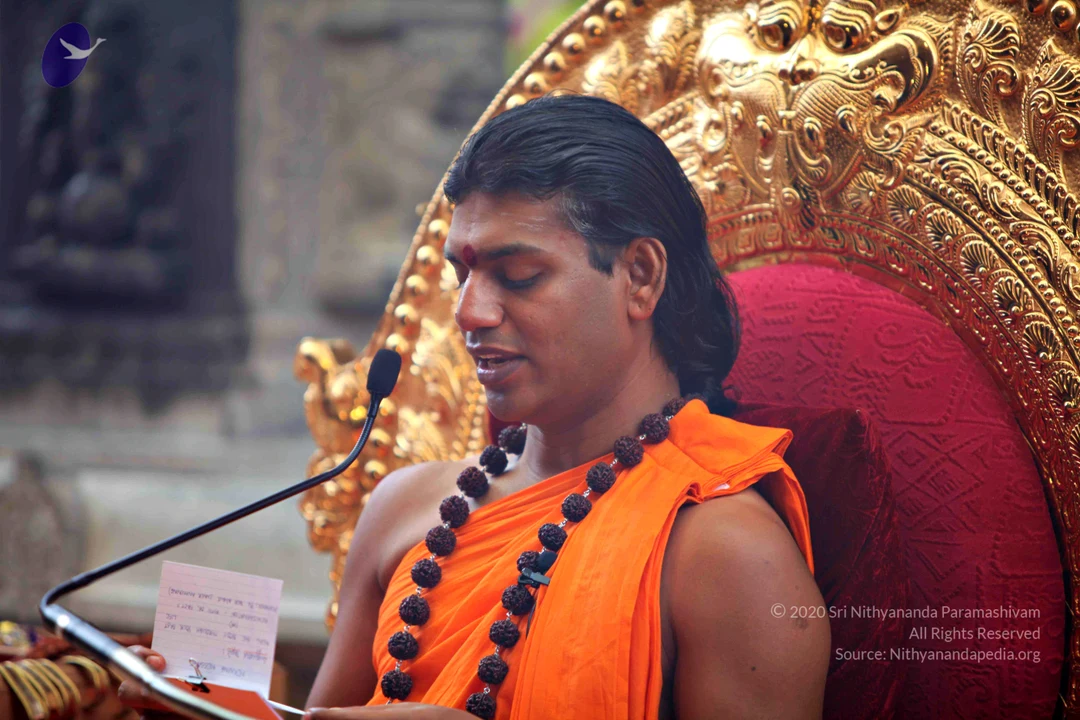
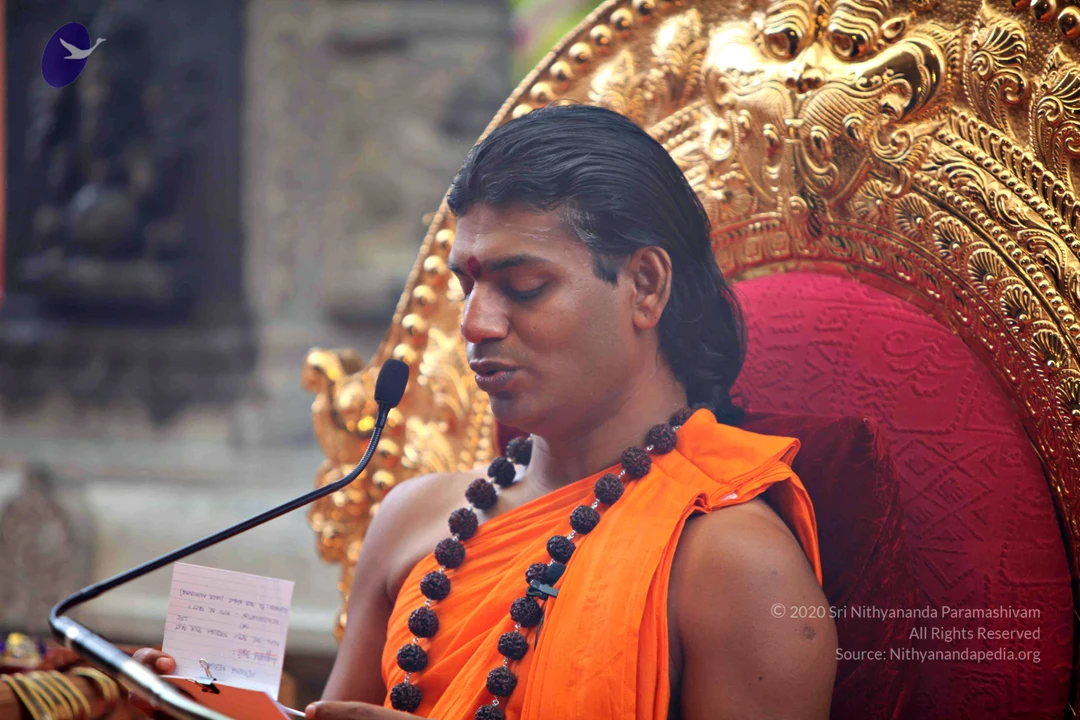
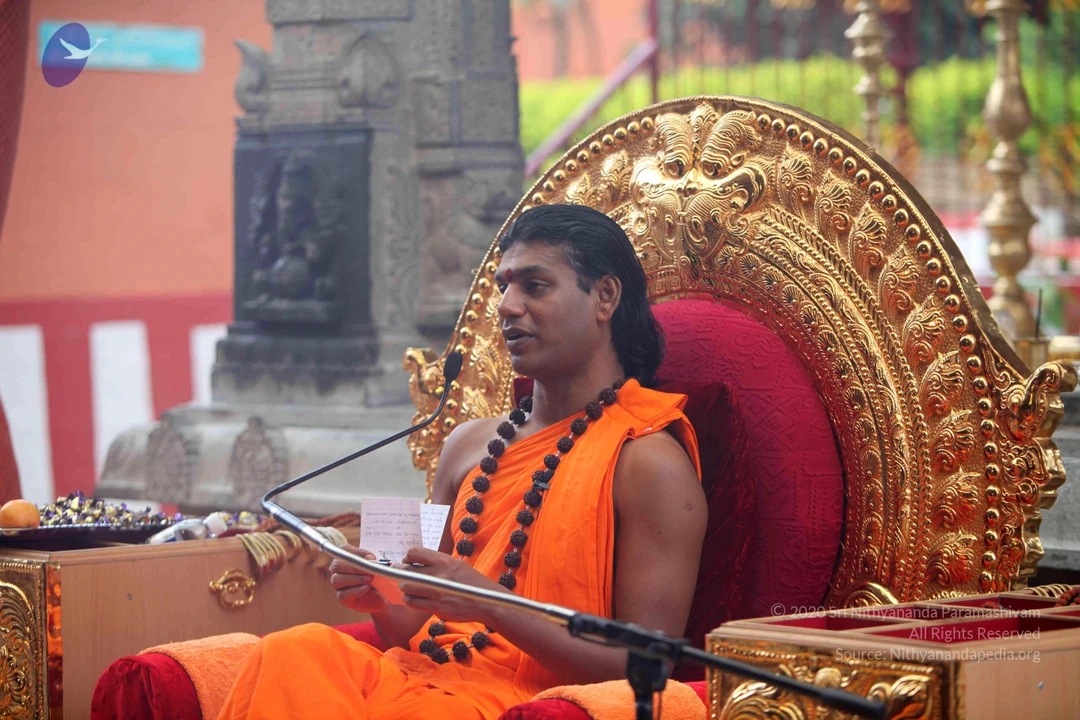
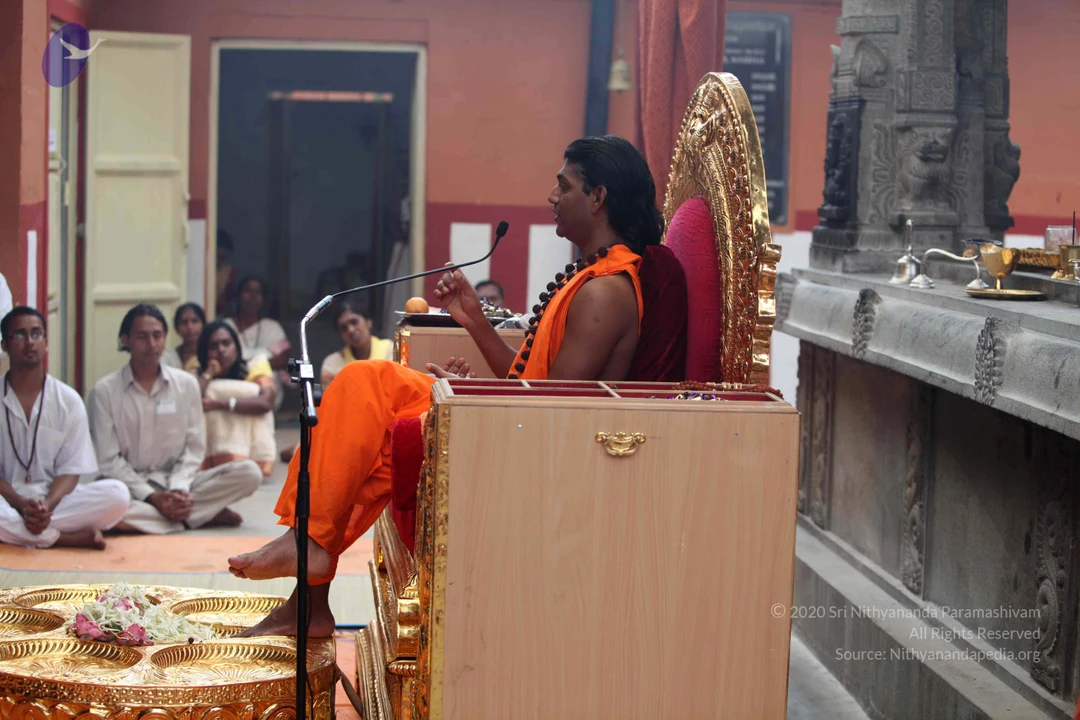
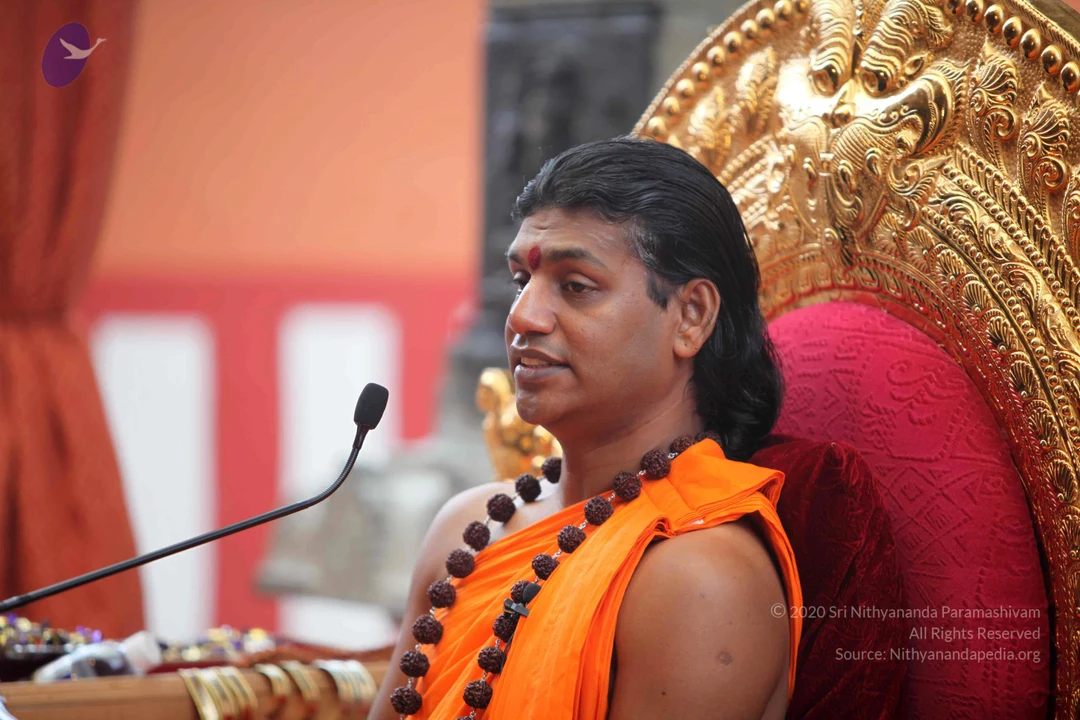
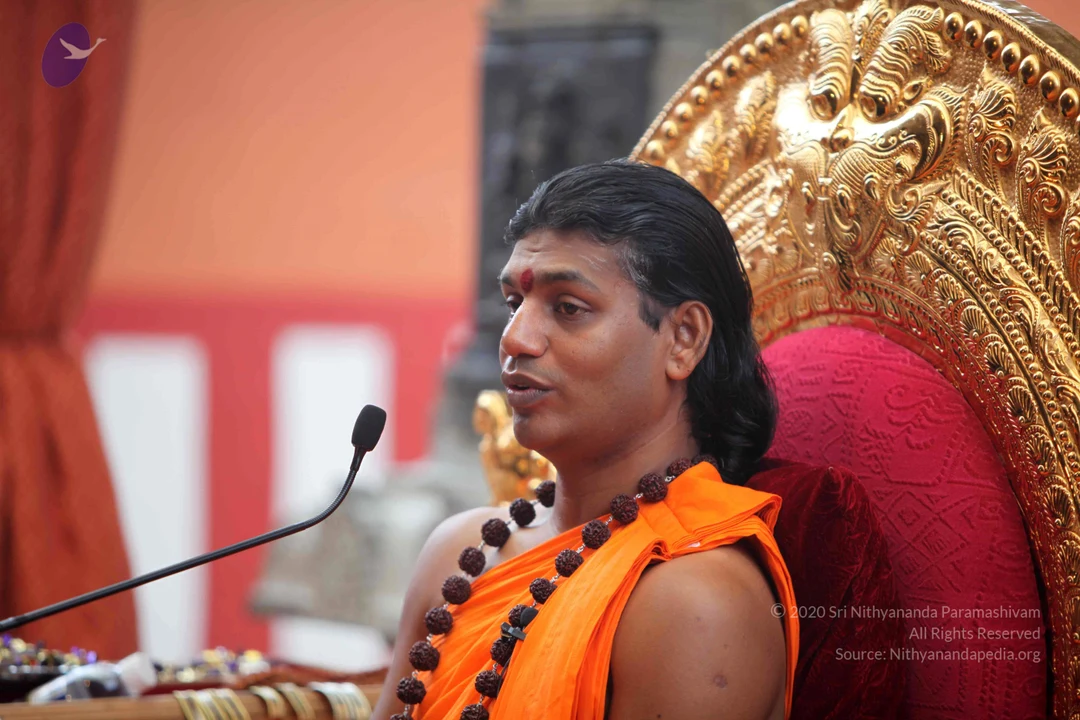
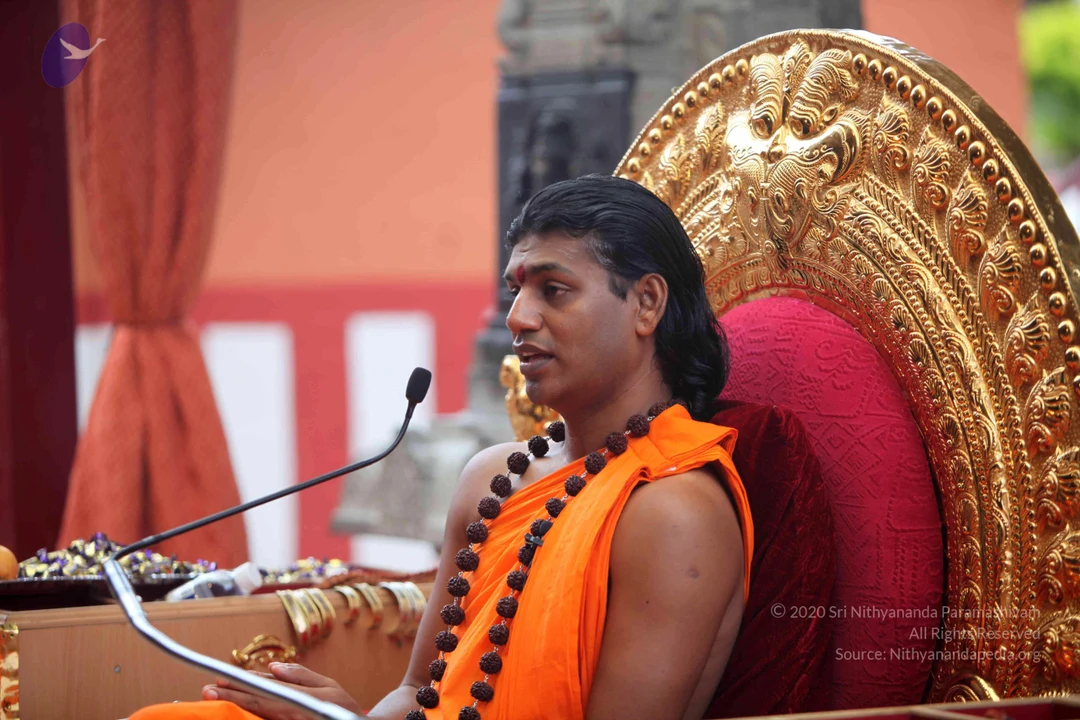
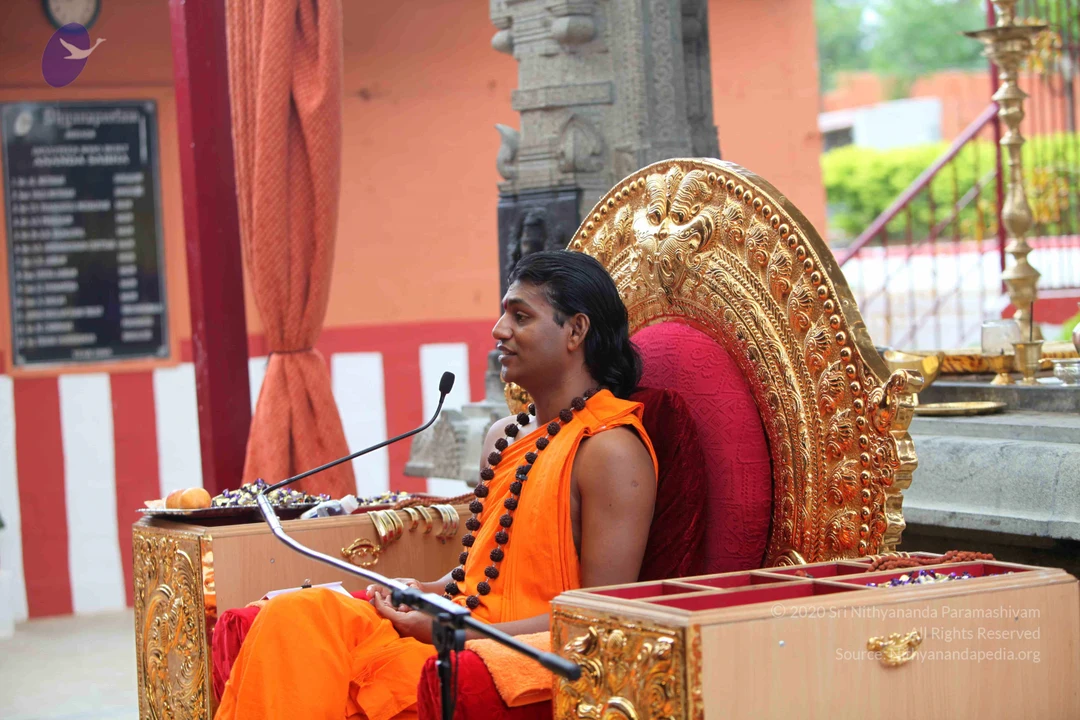
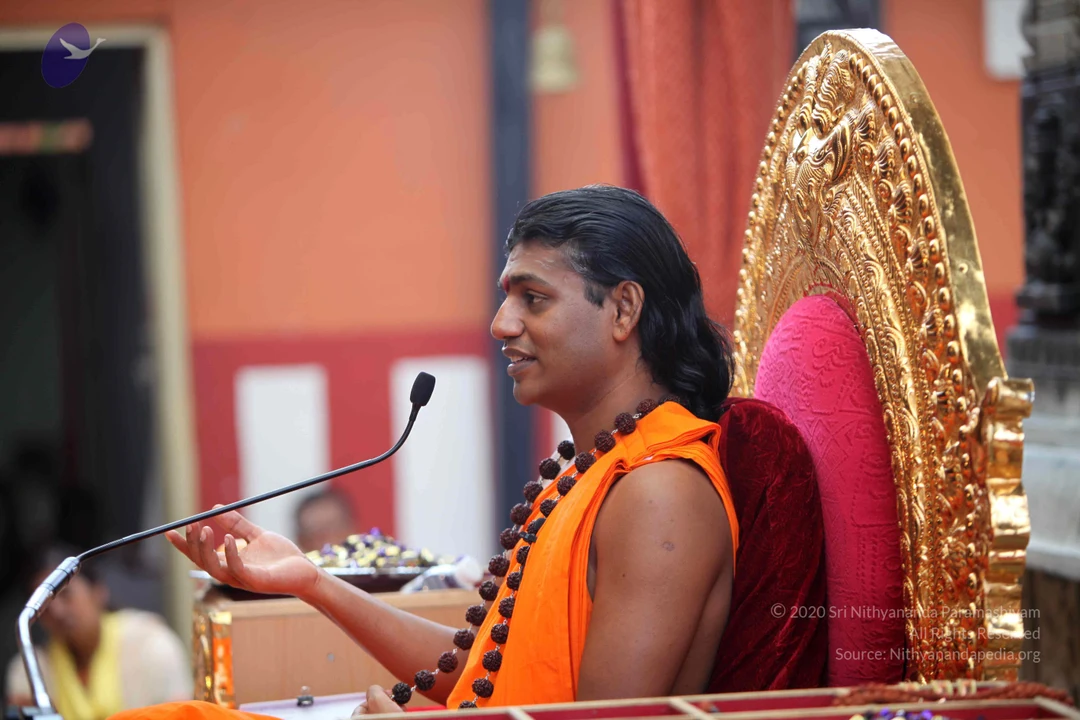
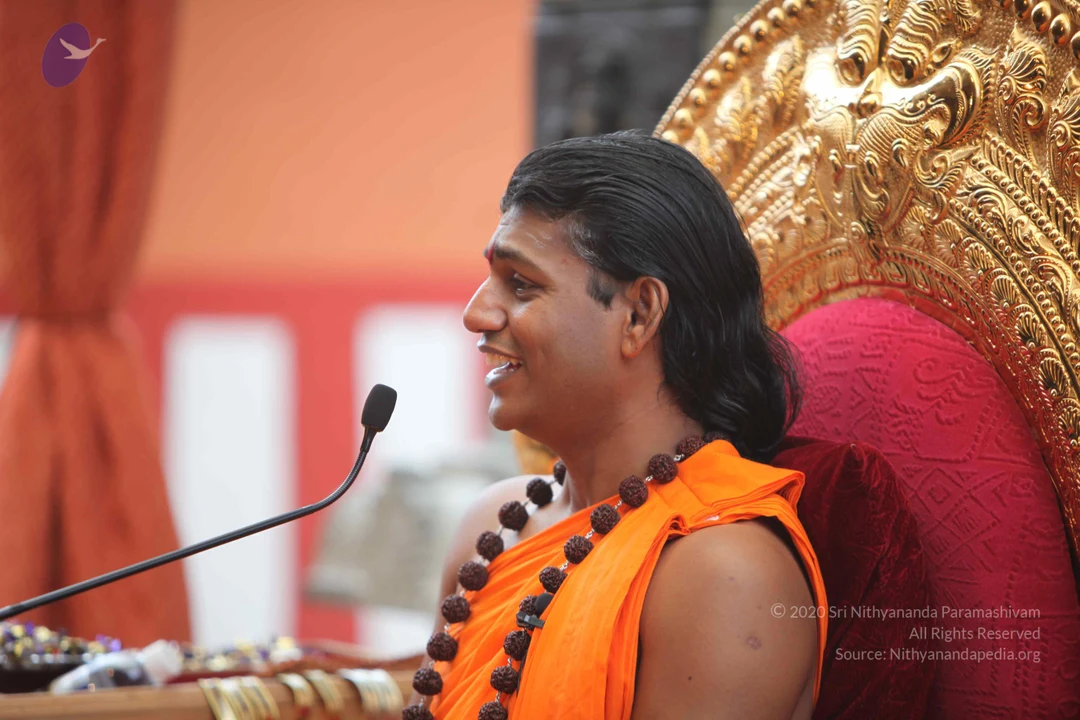
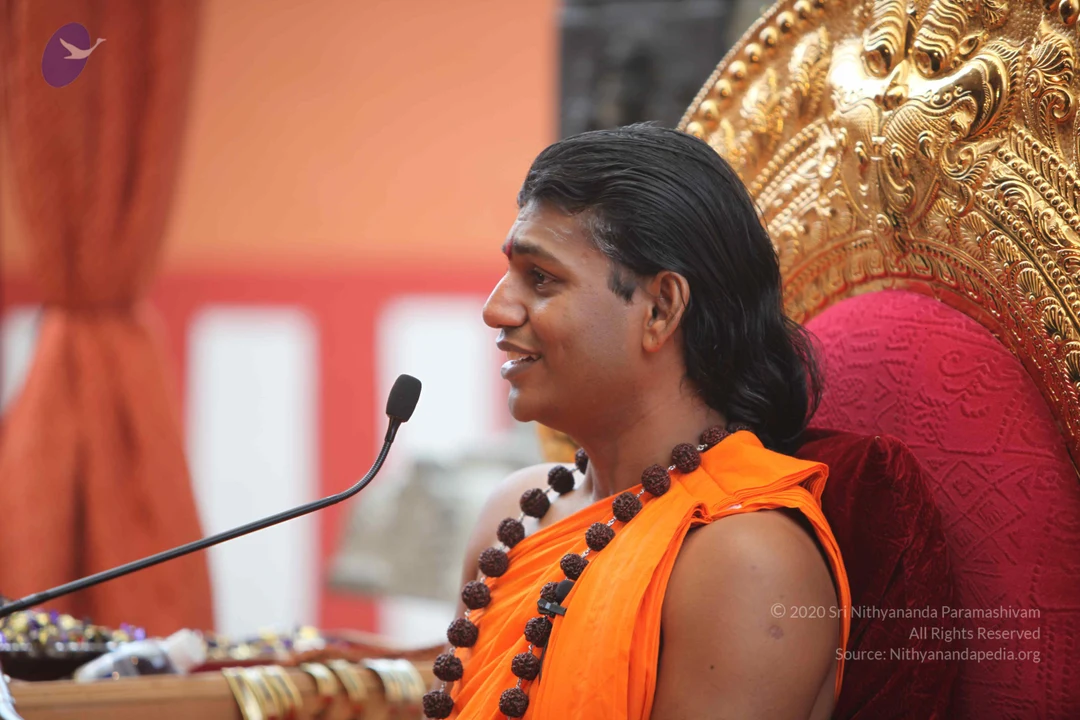
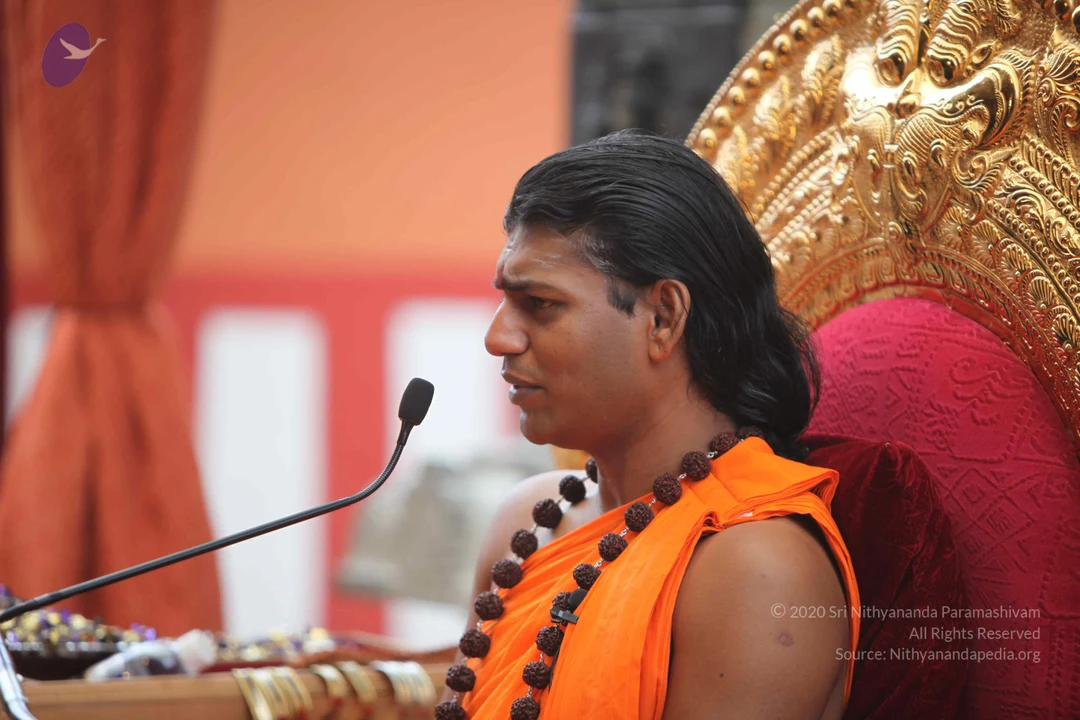
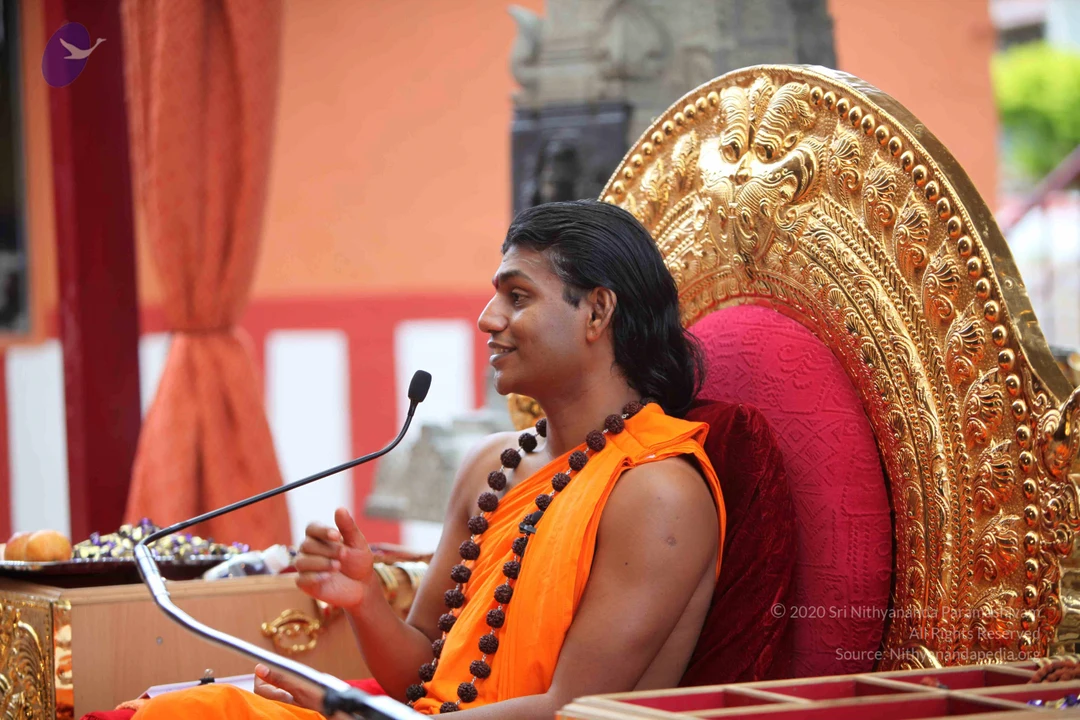
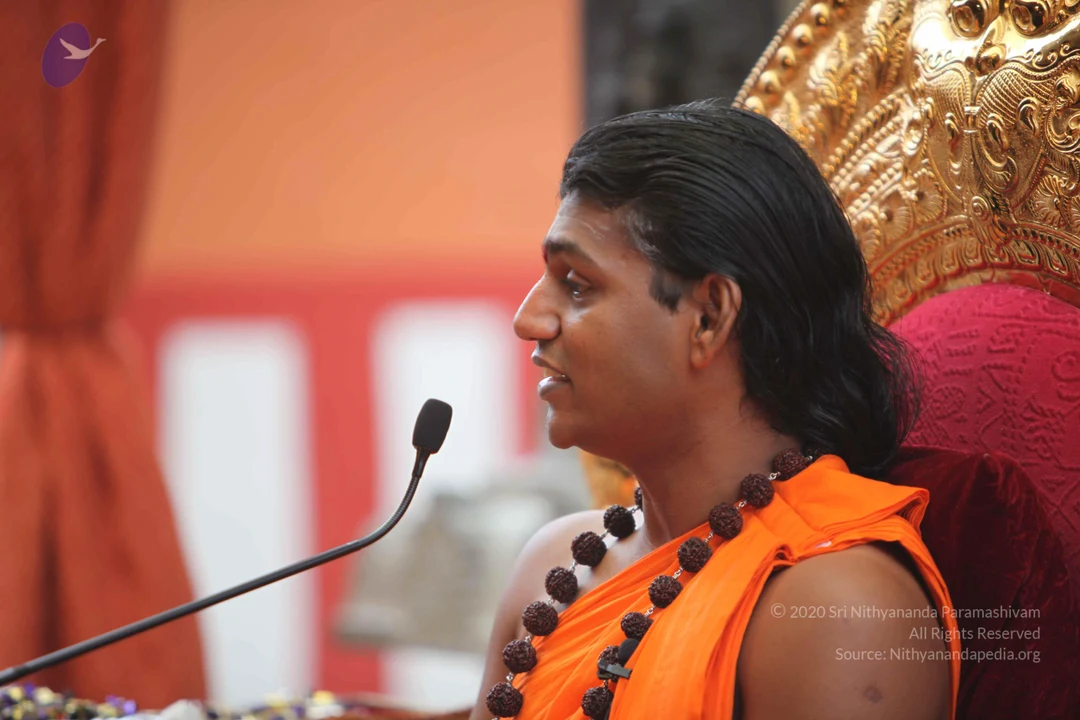
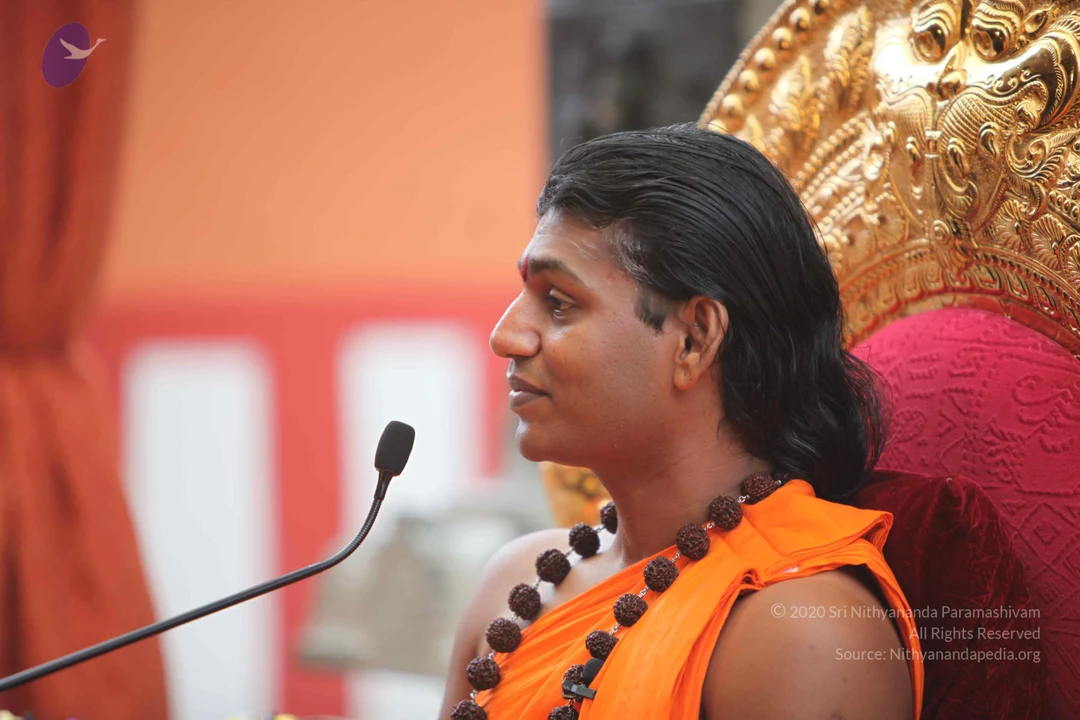
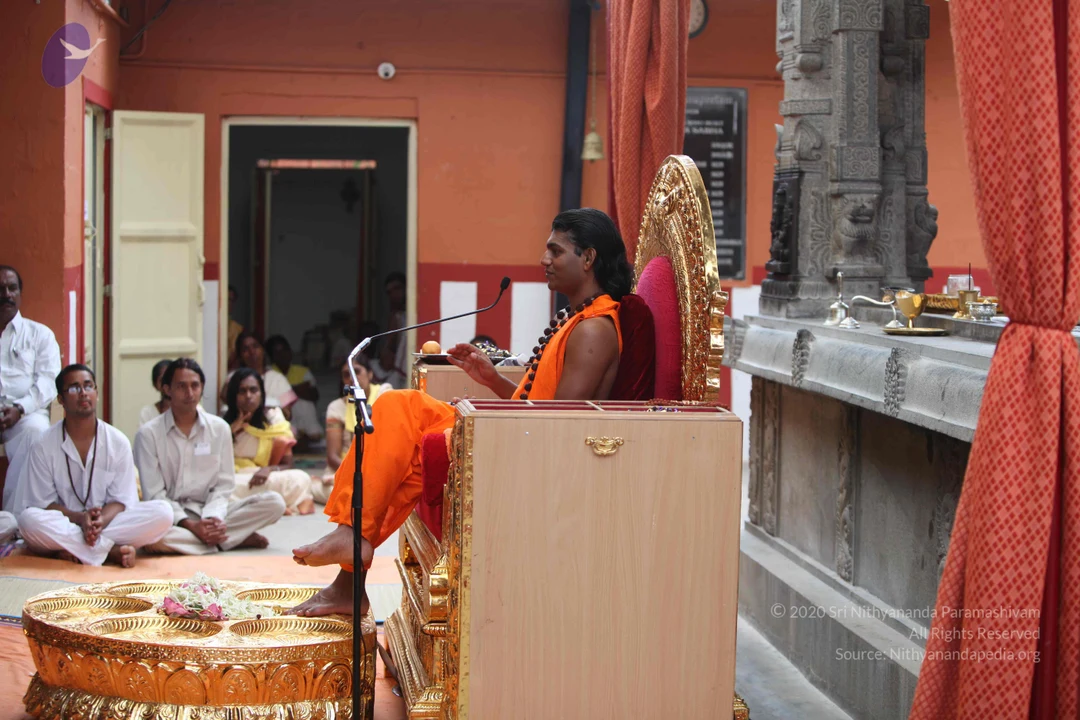
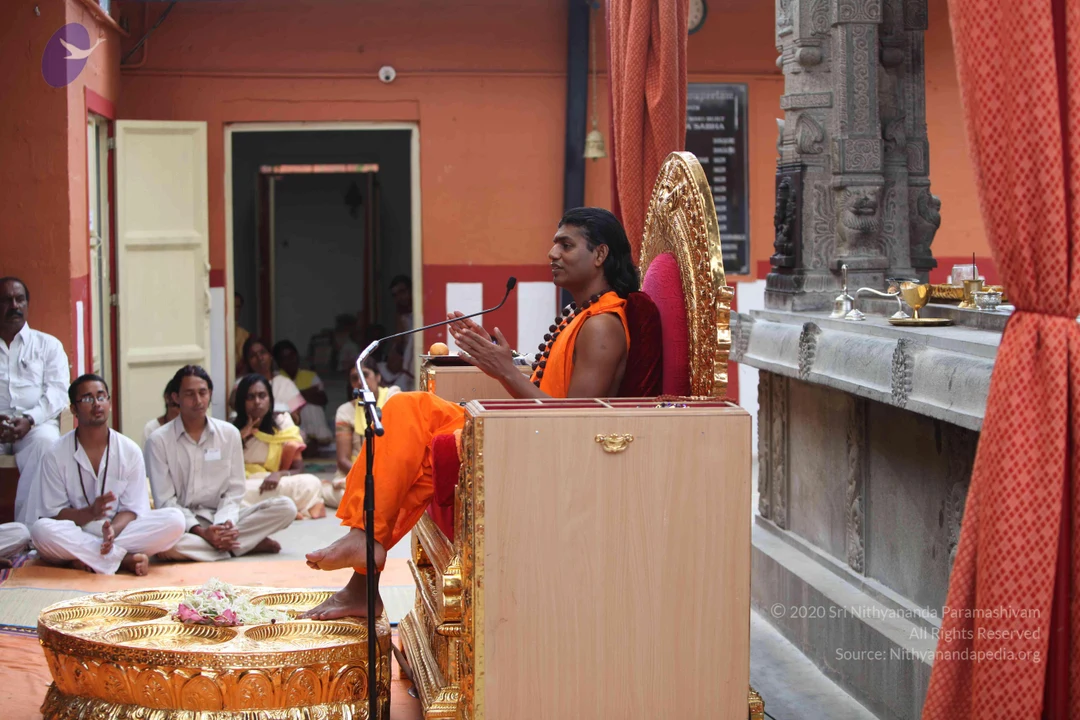
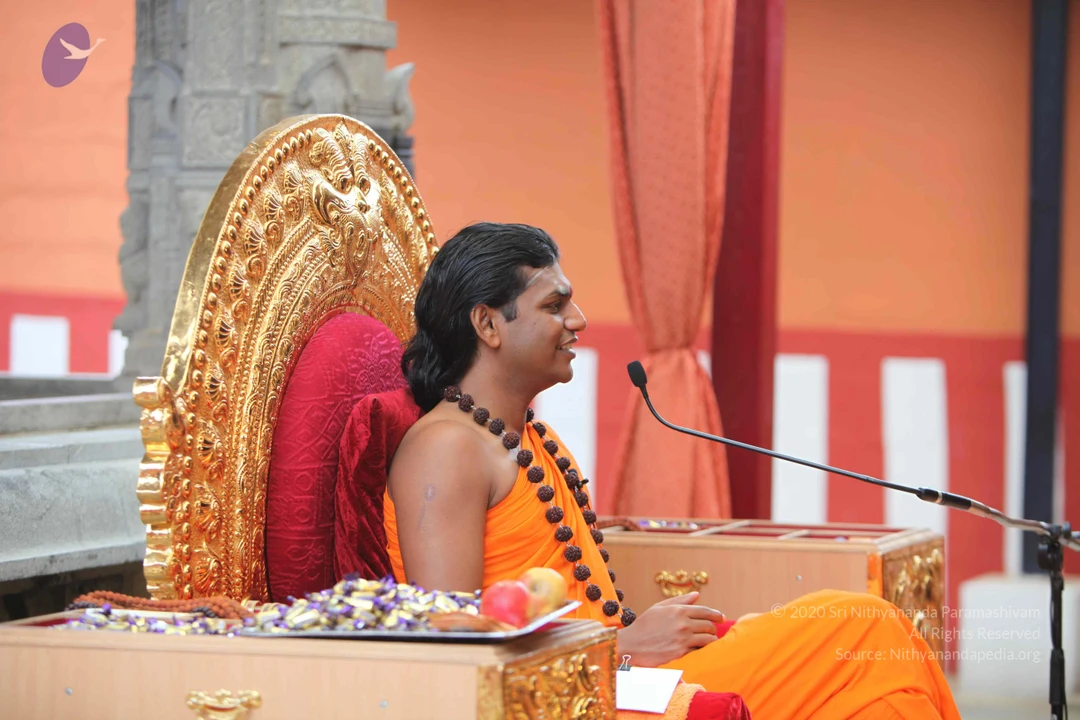
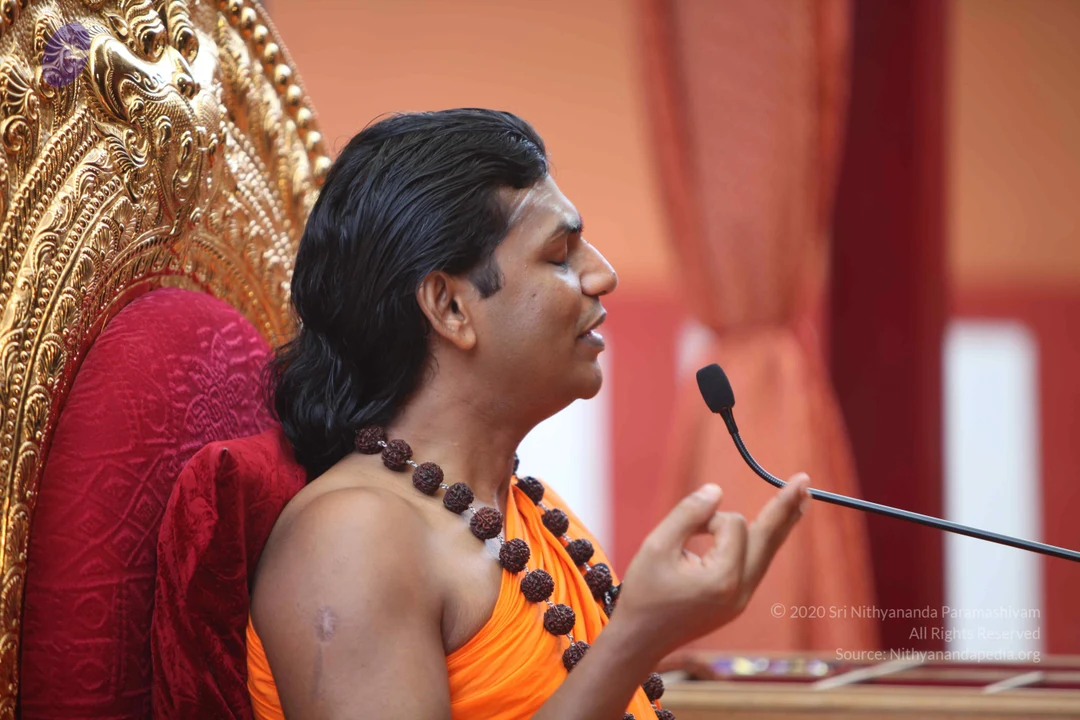
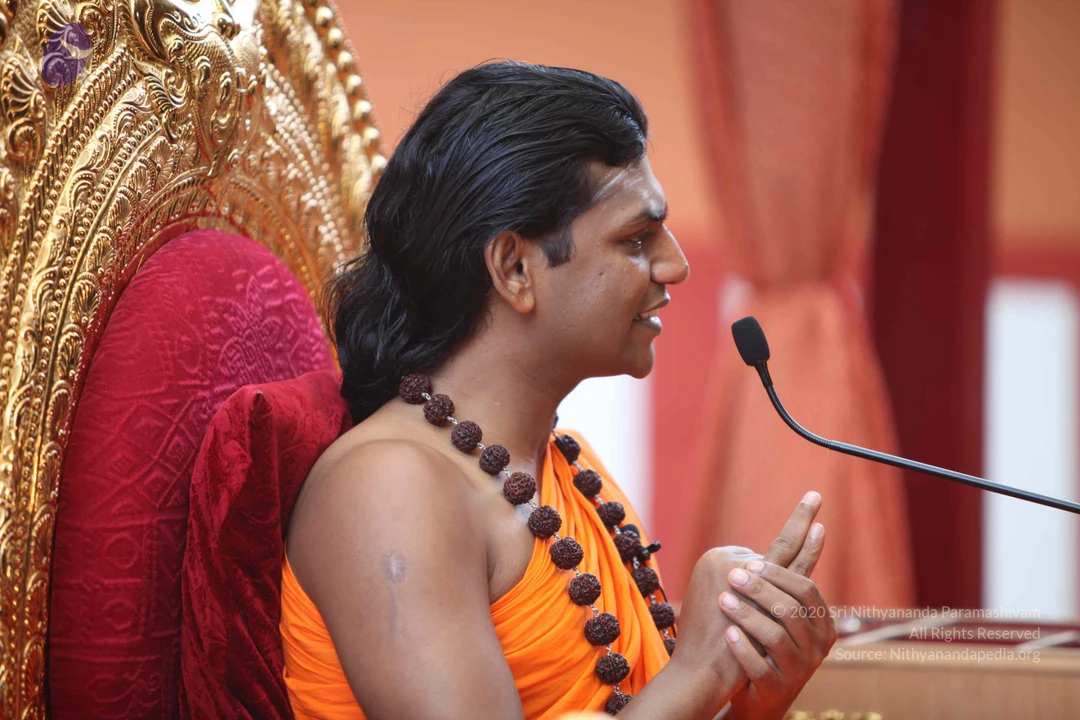
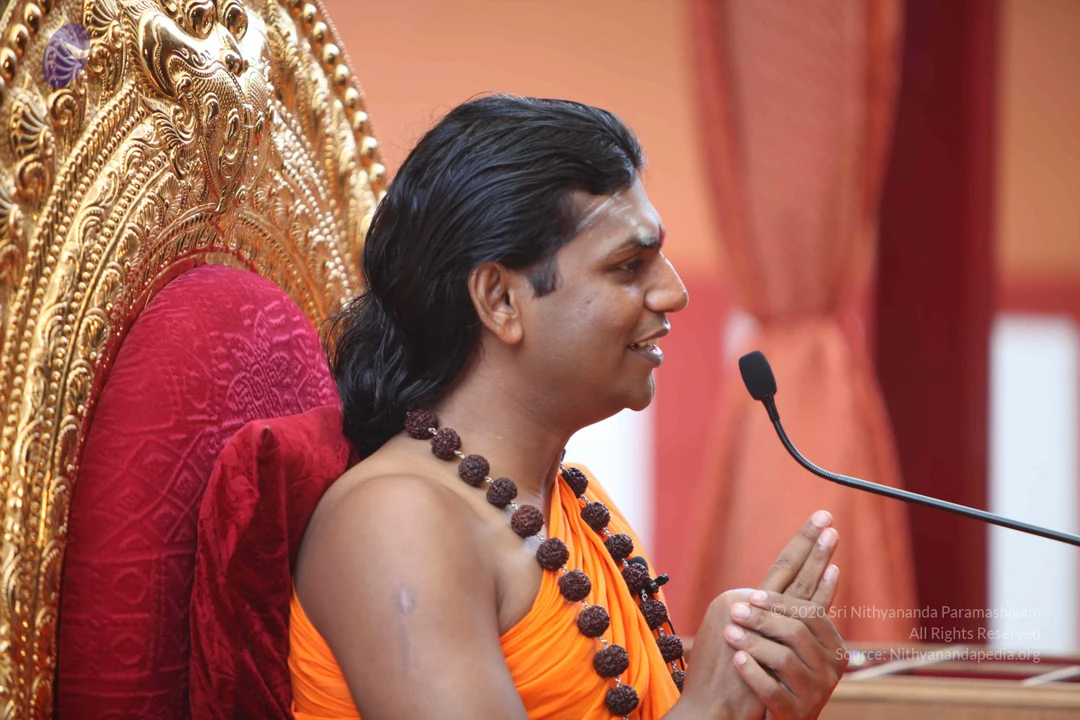
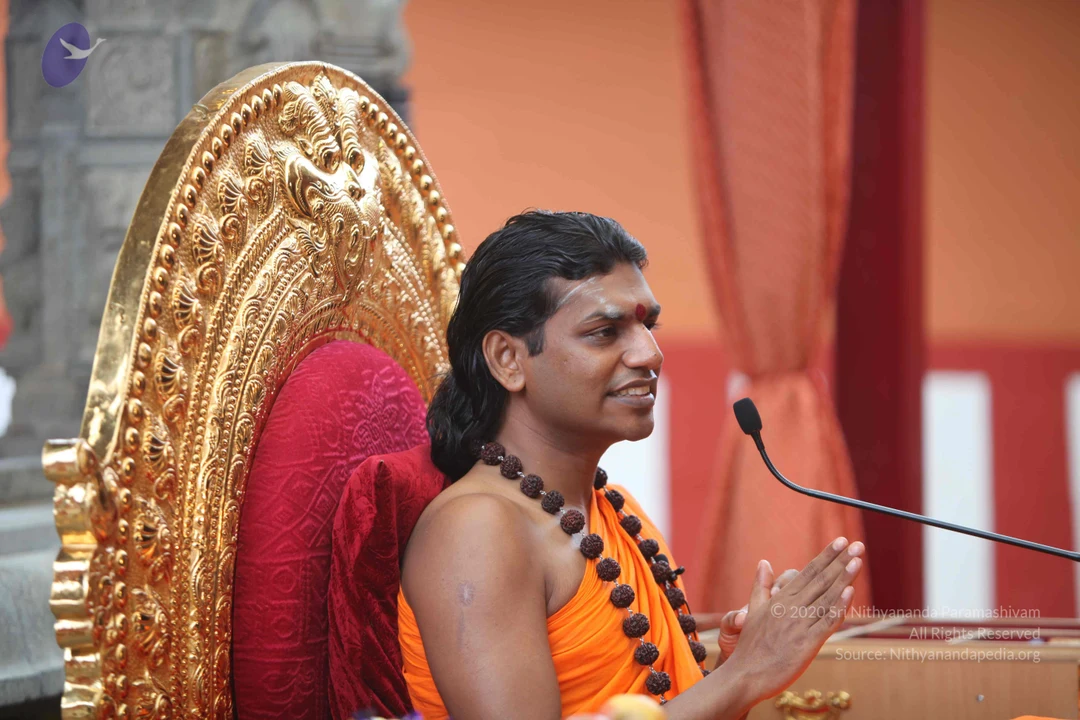
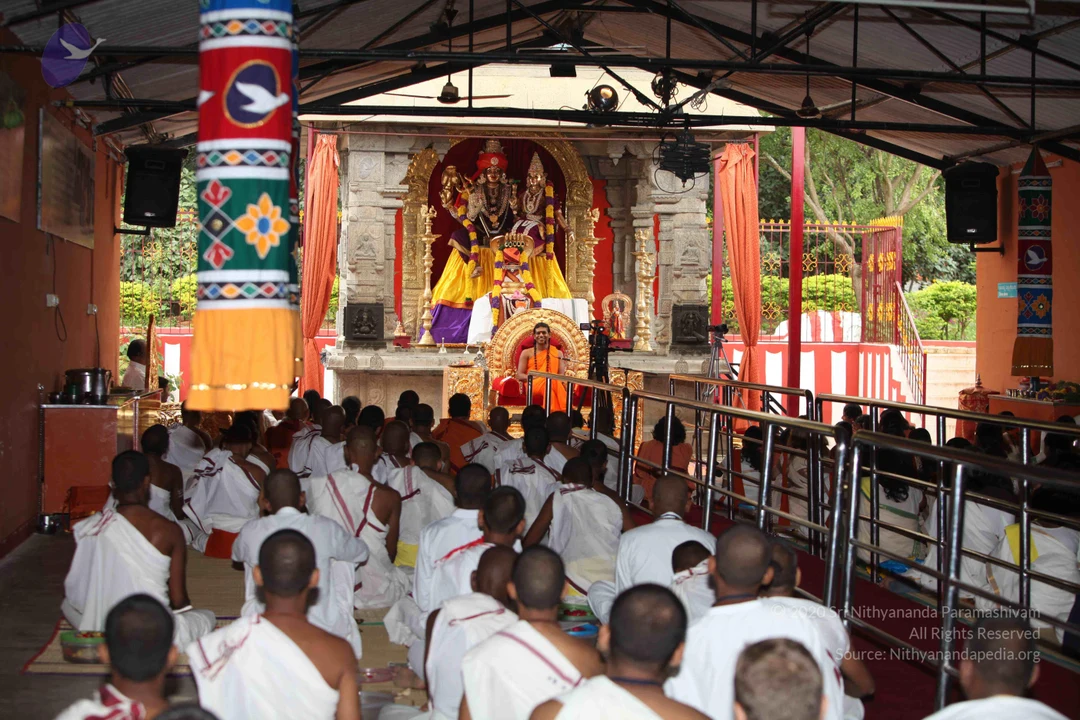
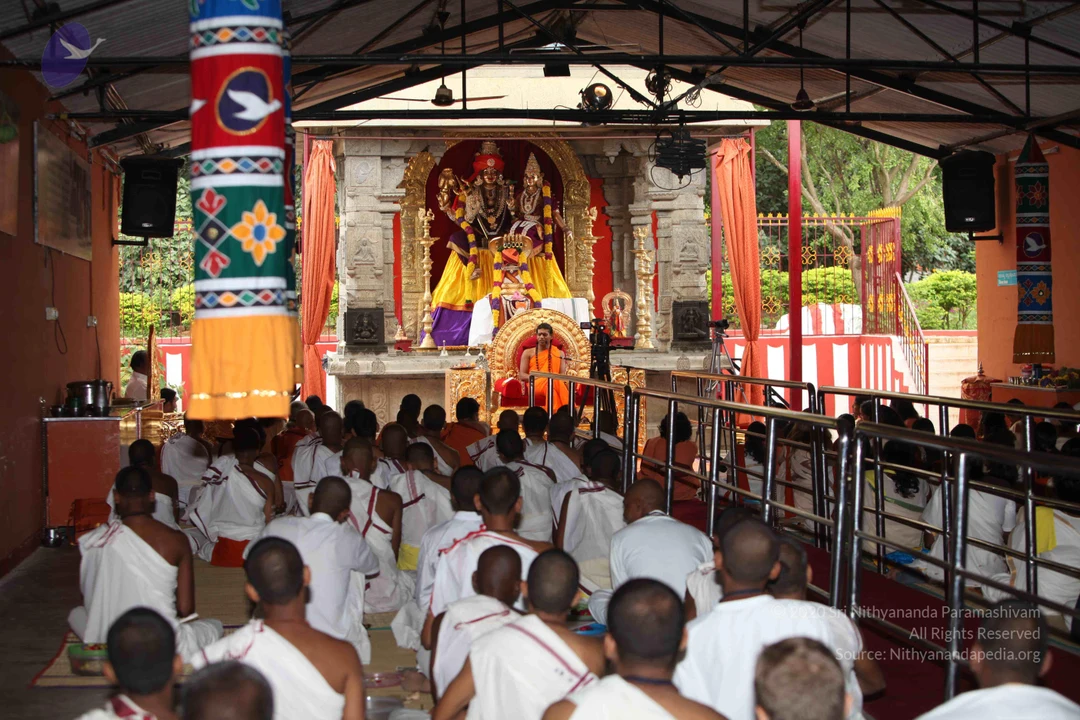
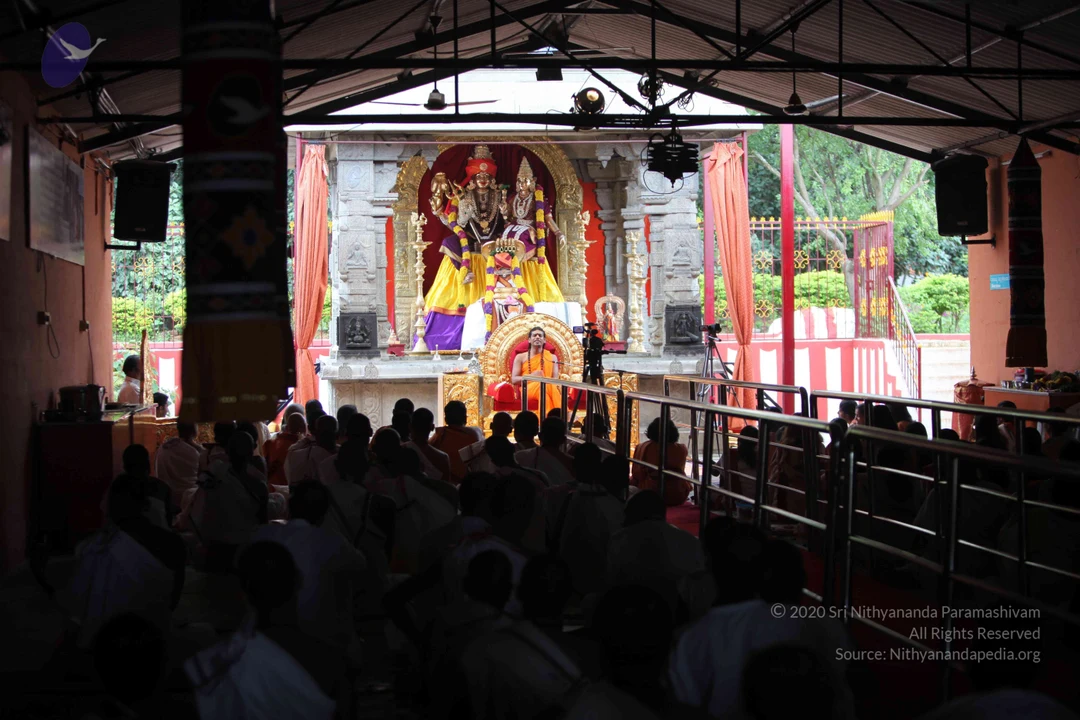
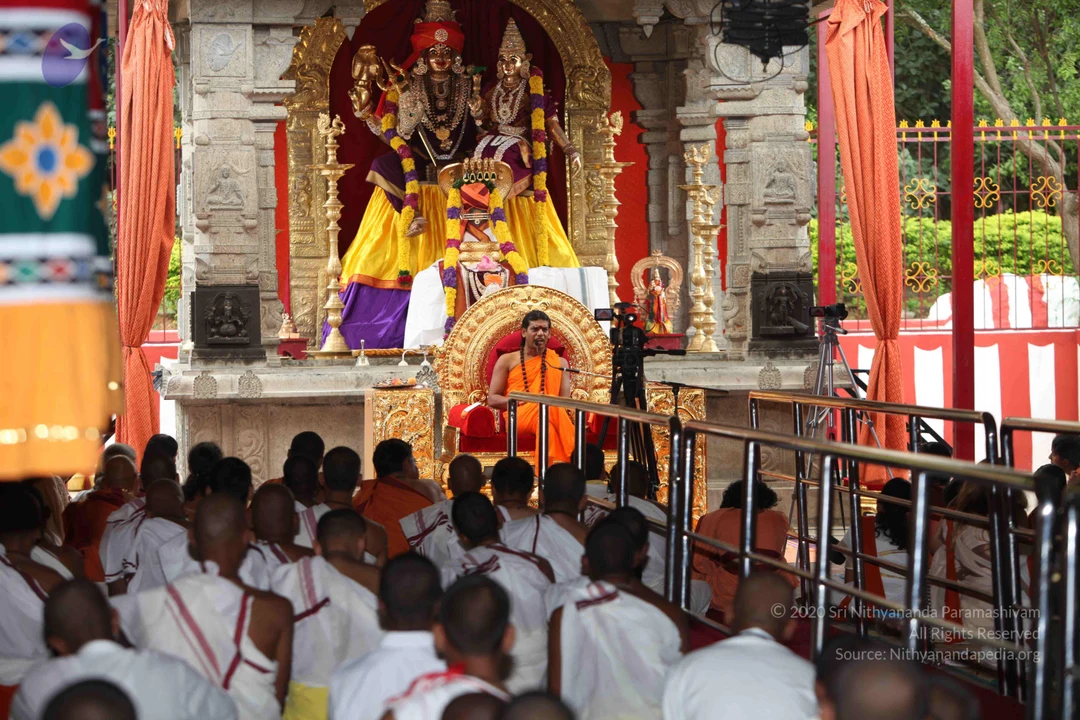
The Supreme Pontiff of Hinduism, Jagatguru Mahasannidhanam, His Divine Holiness, Bhagavan Nithyananda Paramashivam, expounded on the Cosmic Principles of Reincarnation during the everyday live public talk - Nithyananda Satsang. In this talk entitled Reincarnation - A Myth or A Fact - Nithyananda Morning Satsang (01 Nov 2010) Message, His Divine Holiness cited two Western researchers who propounded theories on how physical, mental and emotional sufferings can be the result of an associated pain in a past life. A severe injury of the limbs in this lifetime can result in a next birth with deformities of the arms or legs He explained. Heart problems can be the result of a past life lived without self love or love of others and spinal defects are the second most common birth defect and can be a result of a past life lived in trying to hurt or control others. His Divine Holiness urged delegates to heal themselves now, or live with the effects of their problems in future lives to come.

Video and Audio - Reincarnation - A Myth or A Fact - Nithyananda Morning Satsang

VideoAudio

Photos
Photos Of The Day:
nithyananda-ashram

01-Swamij-Morning-Event

Photos from this day
View all 354 photos
Photos

15 photosSource gallery
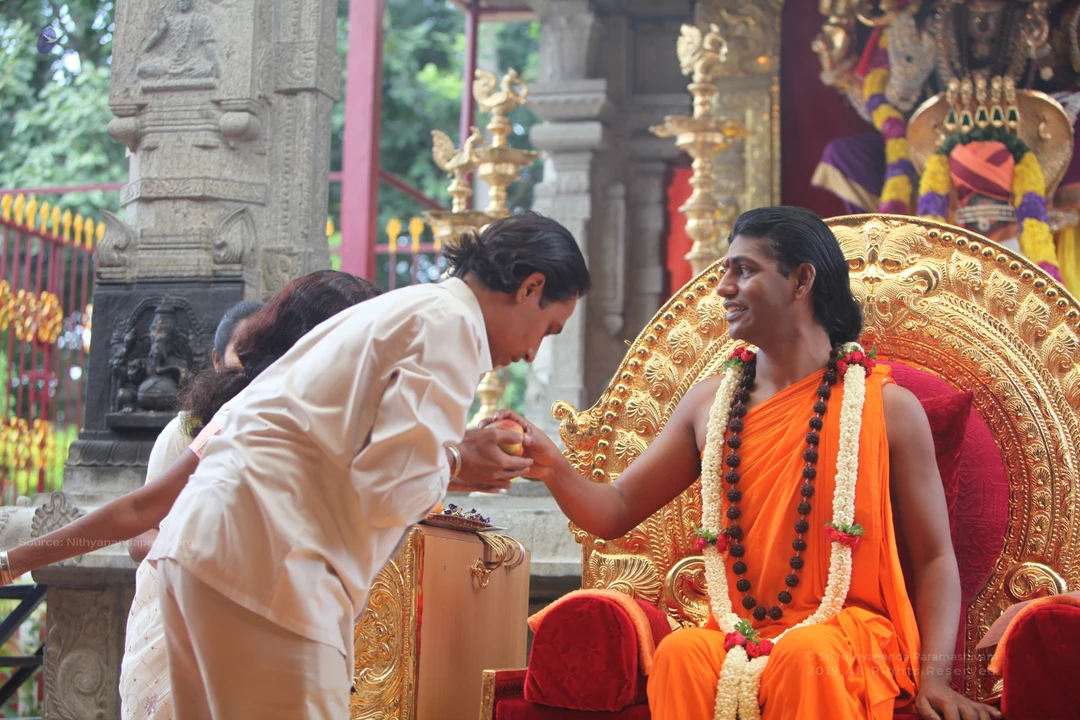
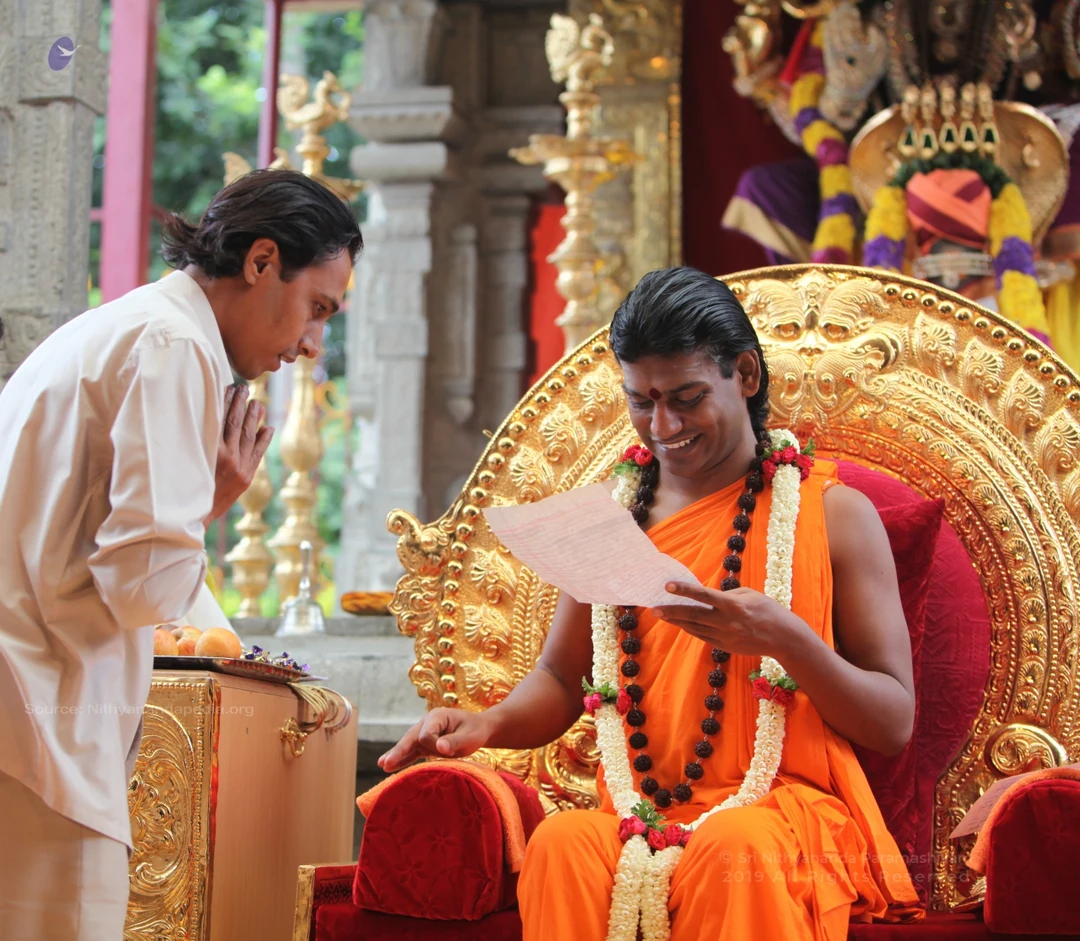
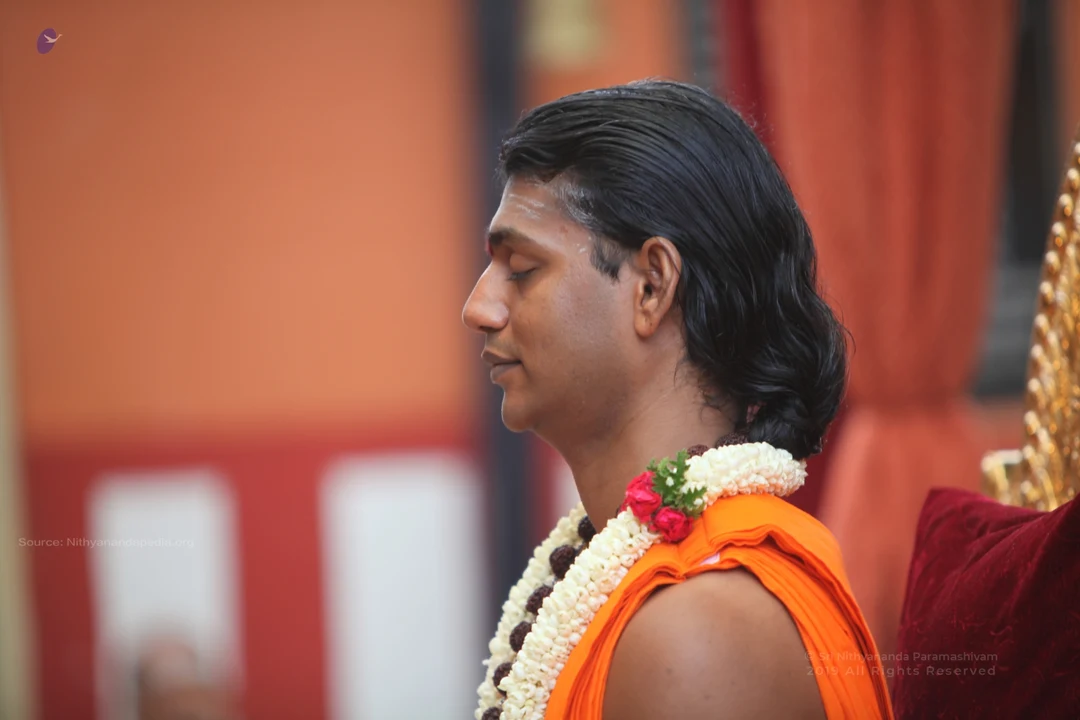
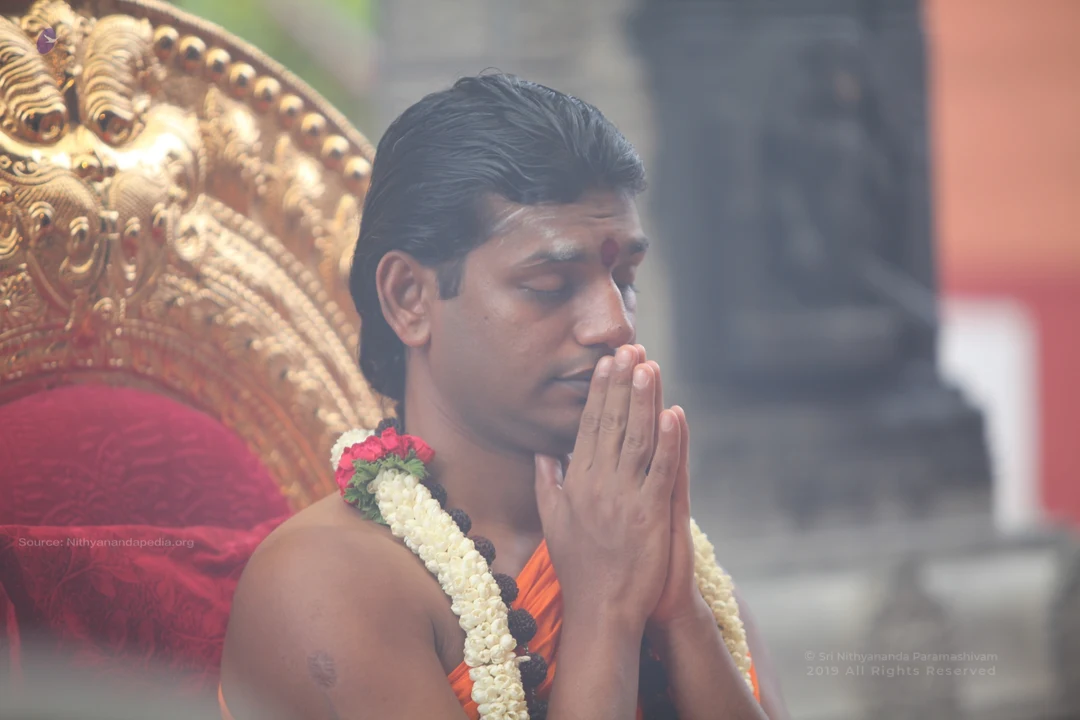
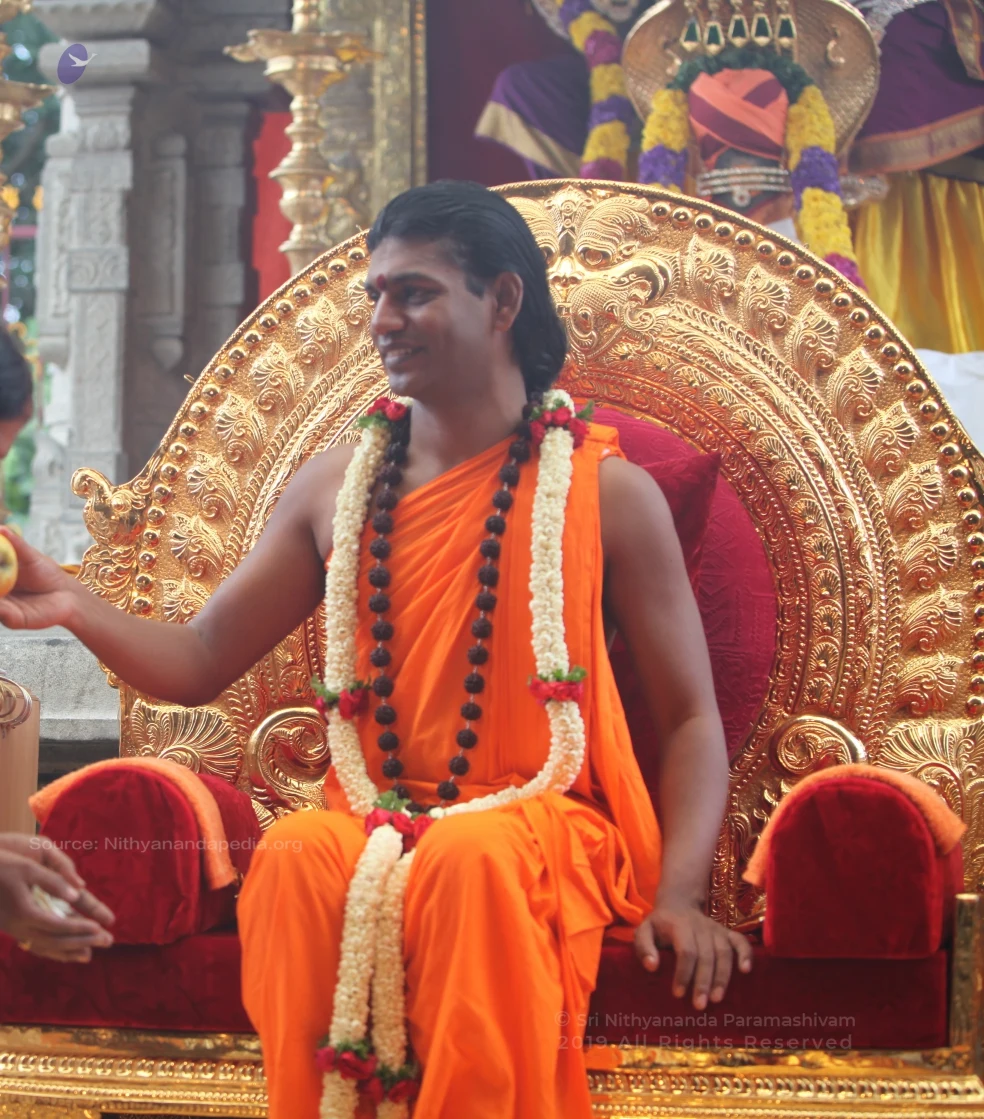
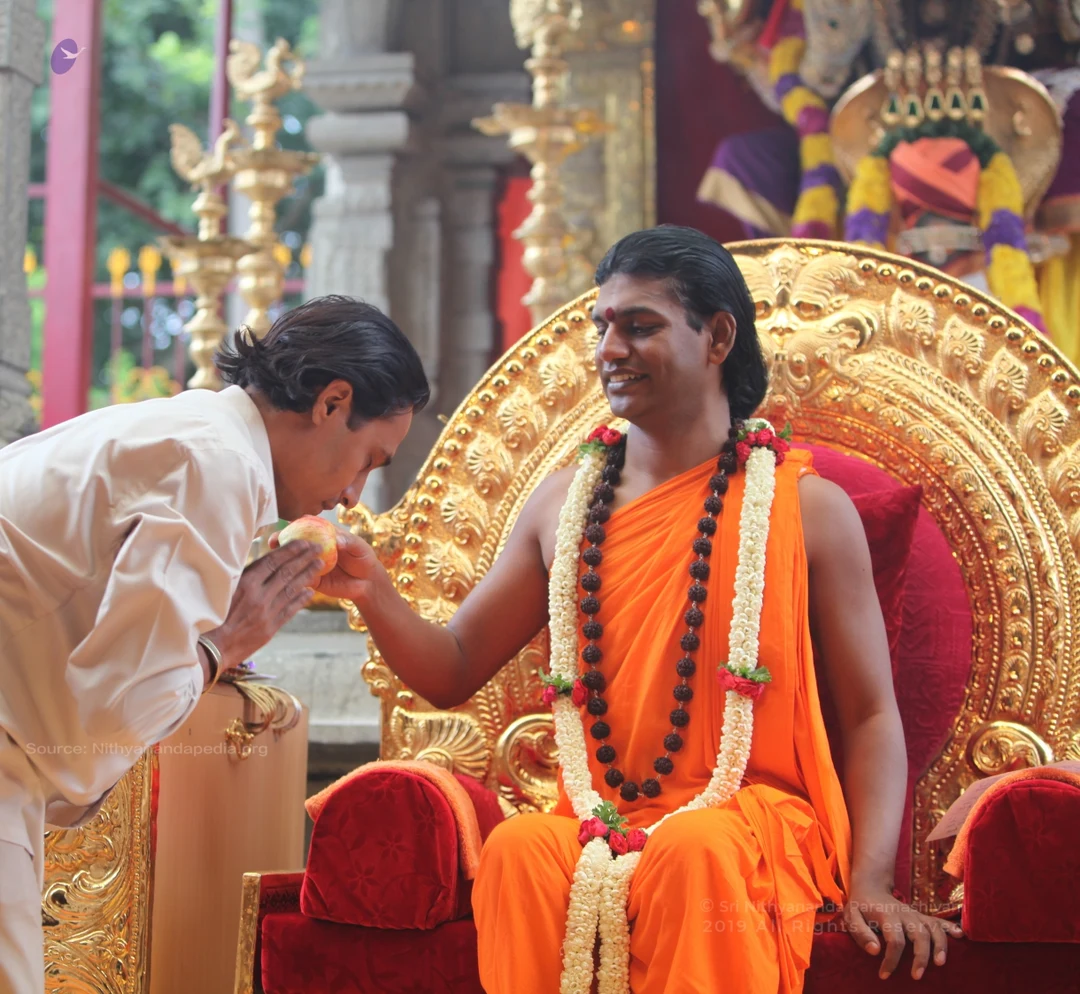
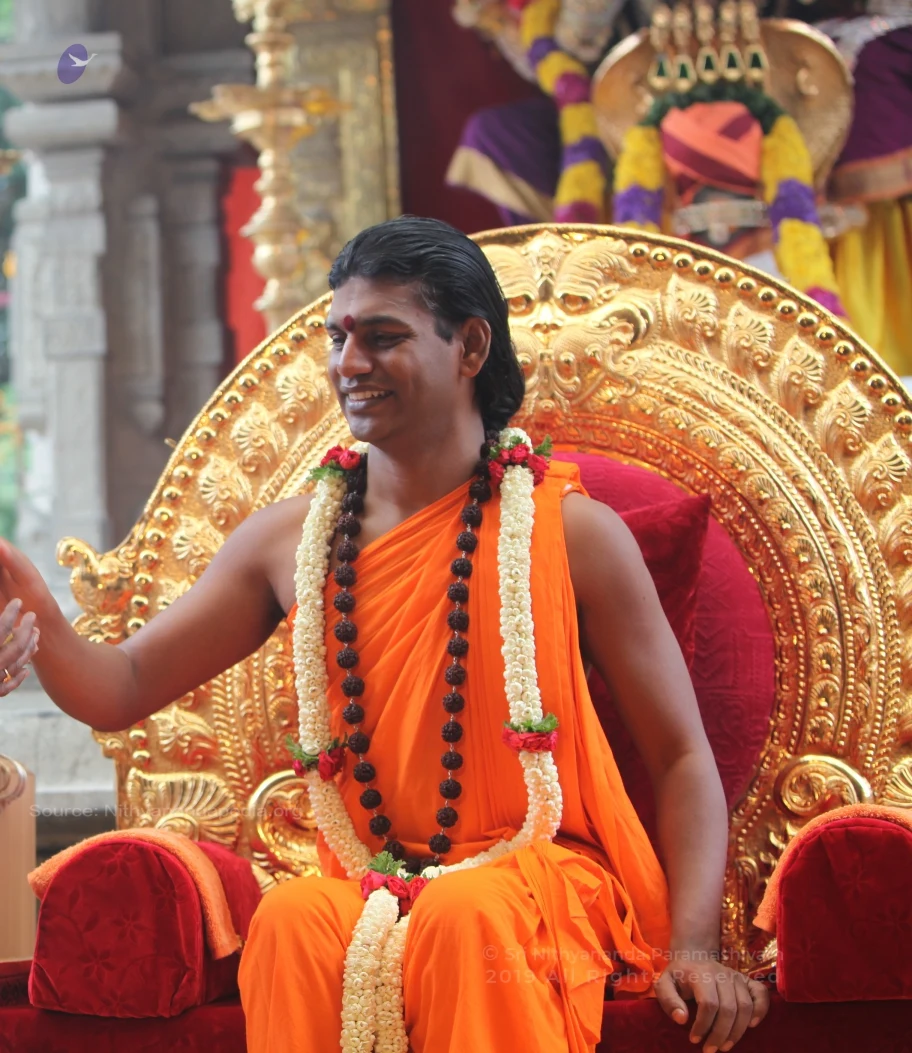
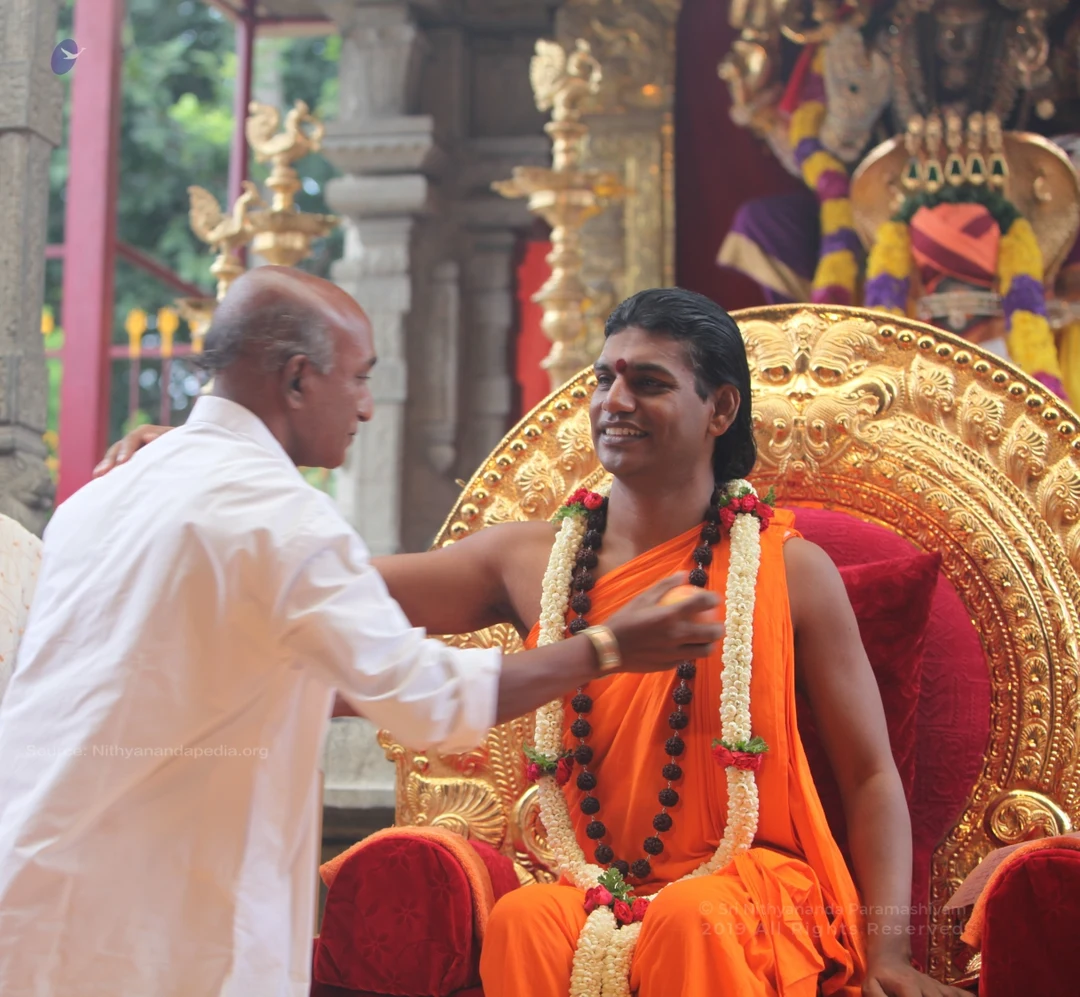
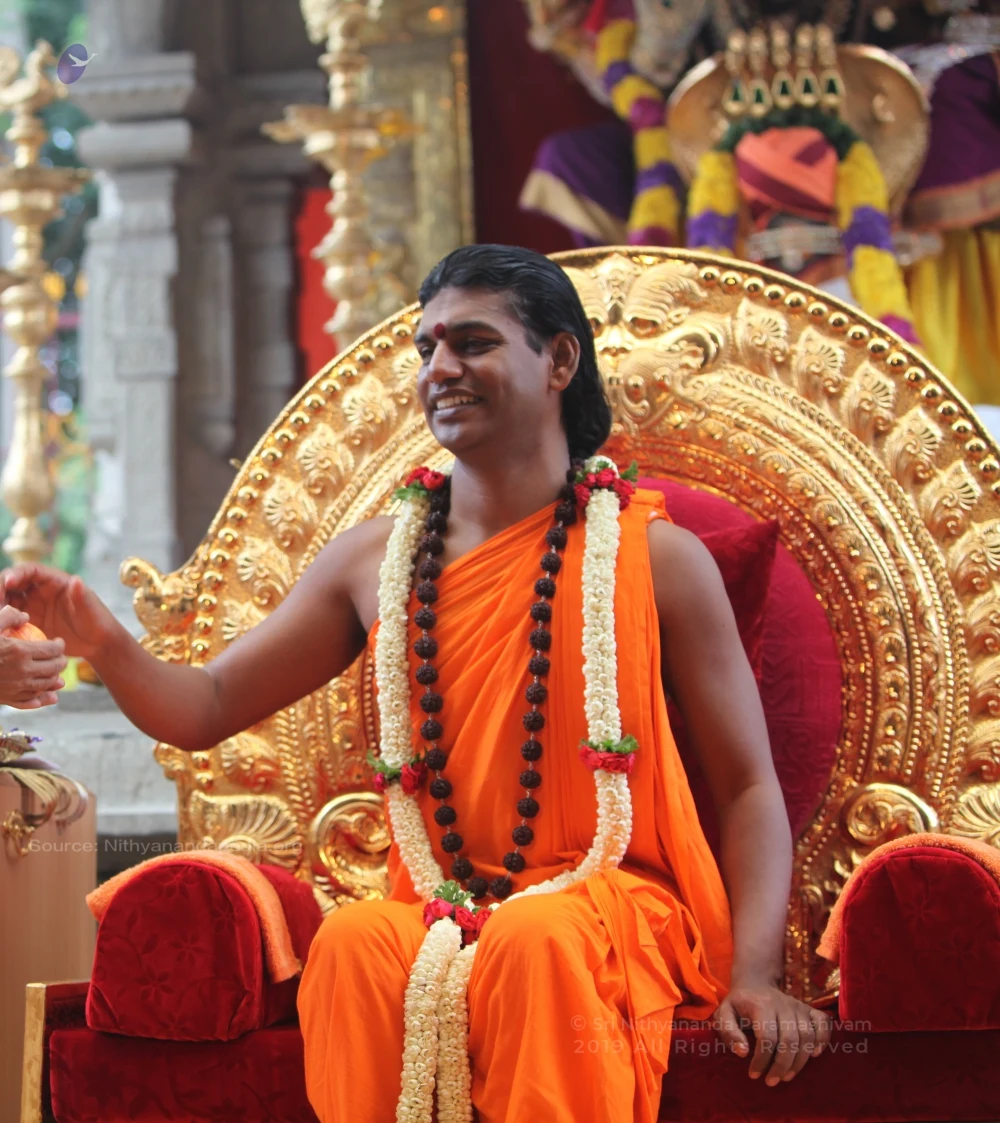
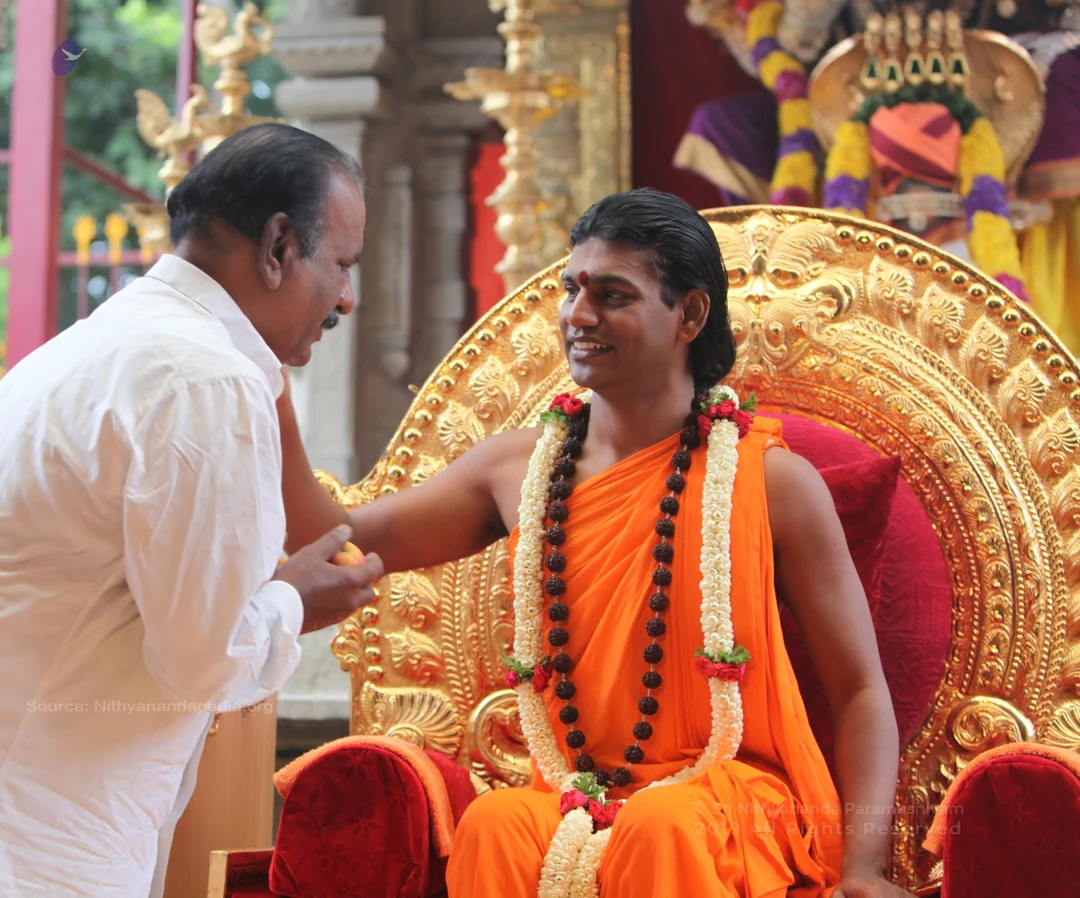
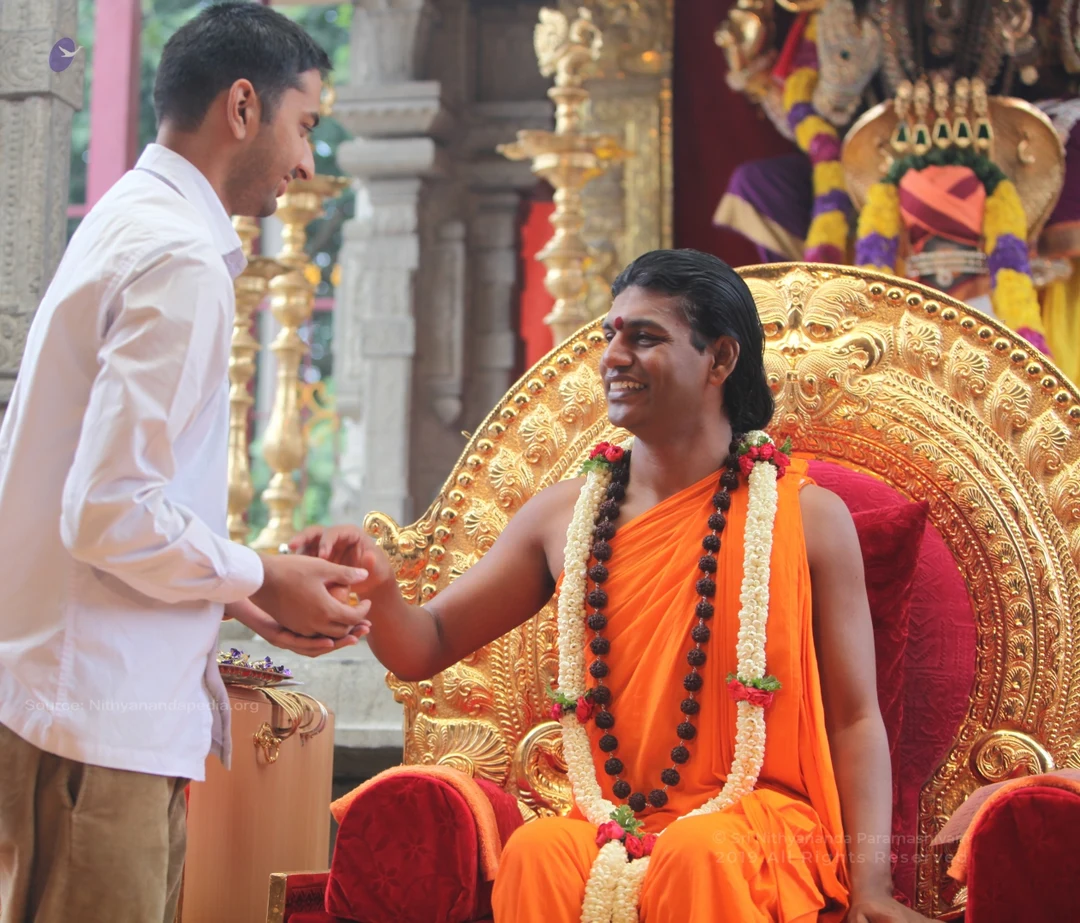
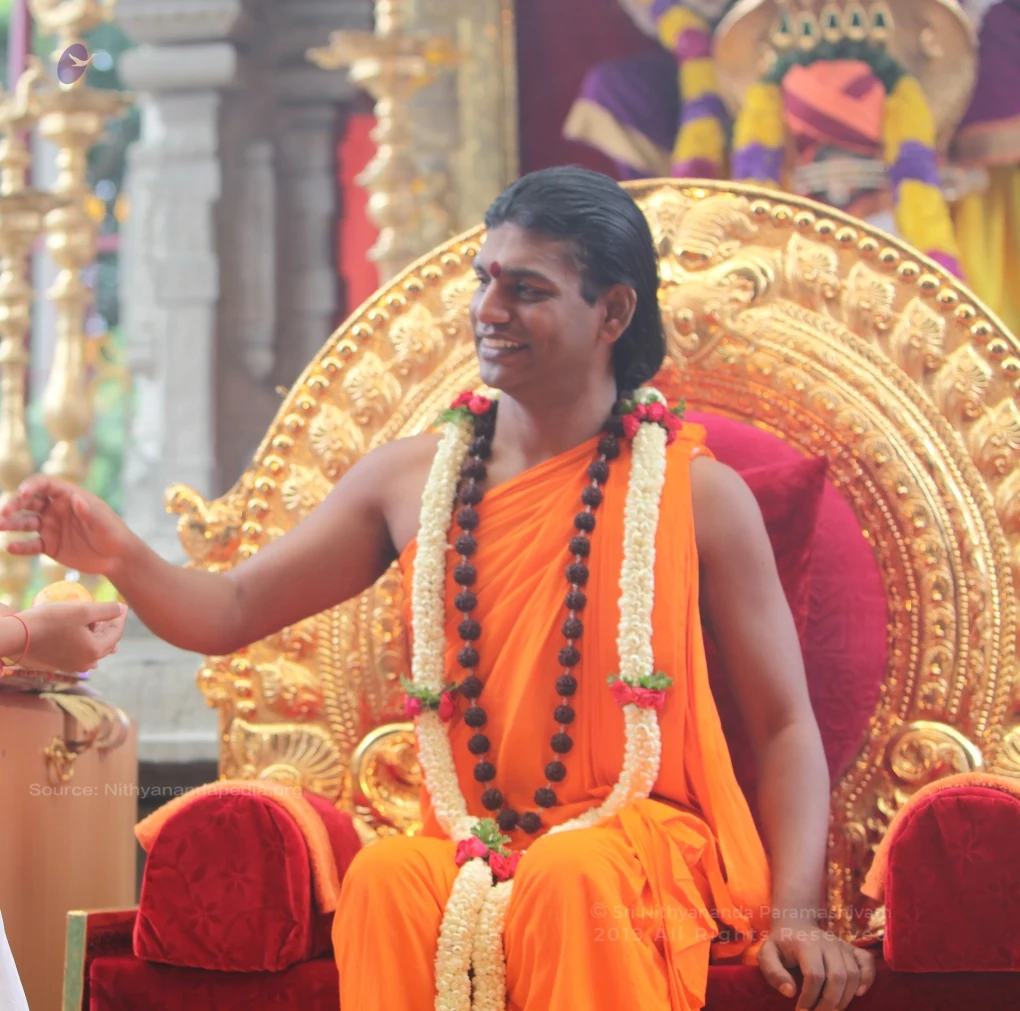
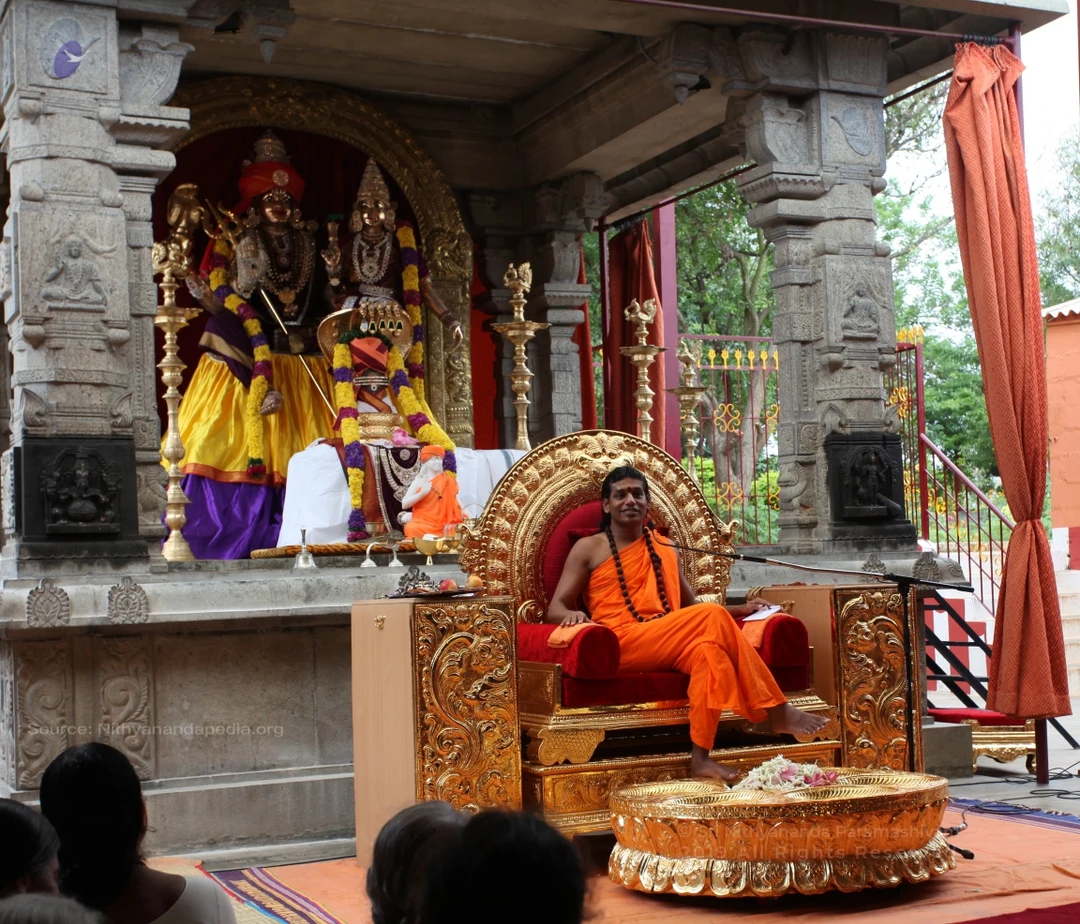
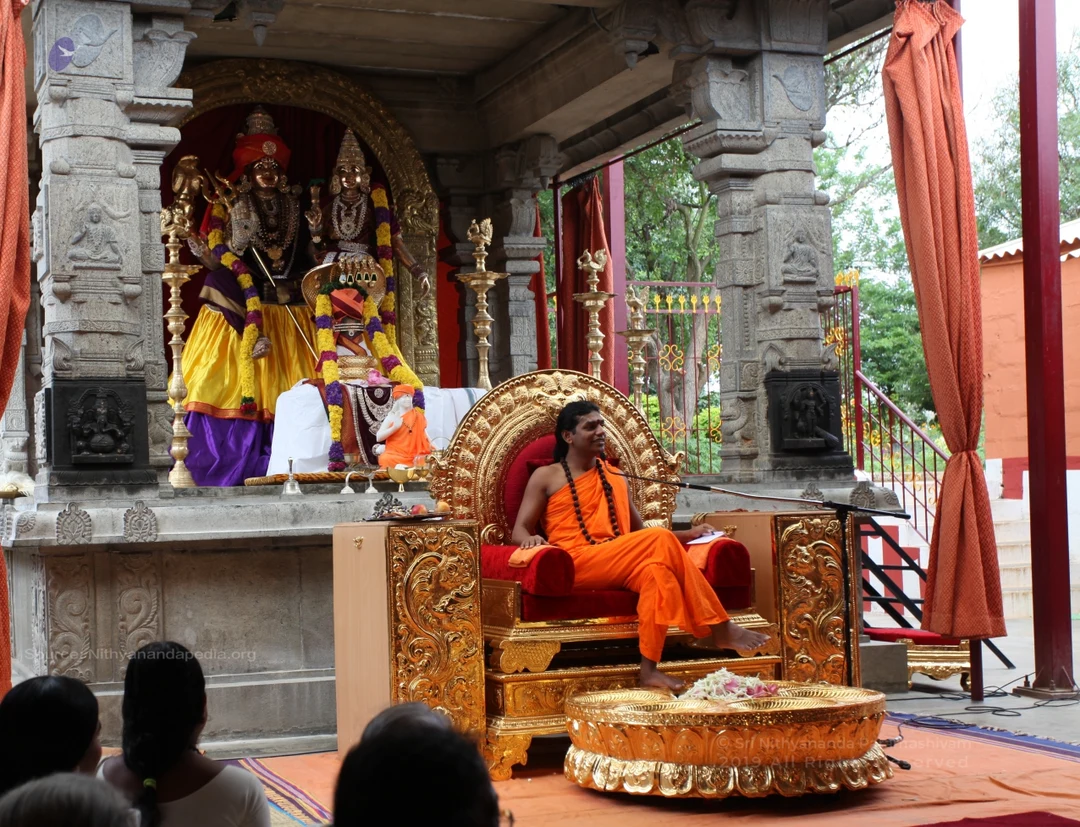
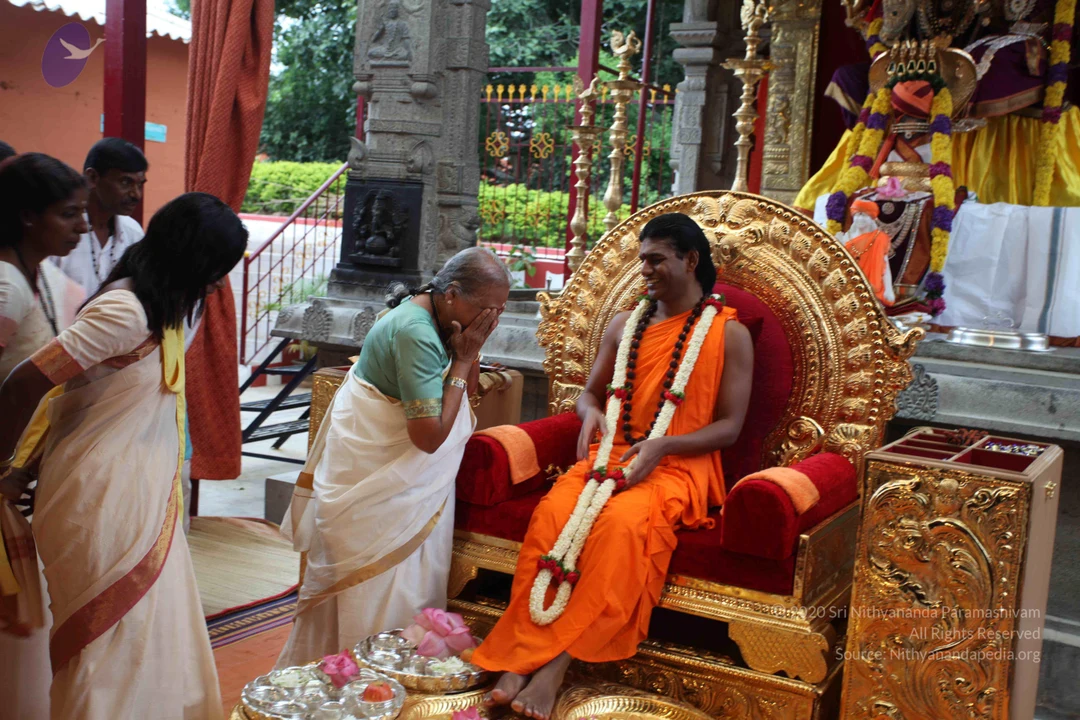
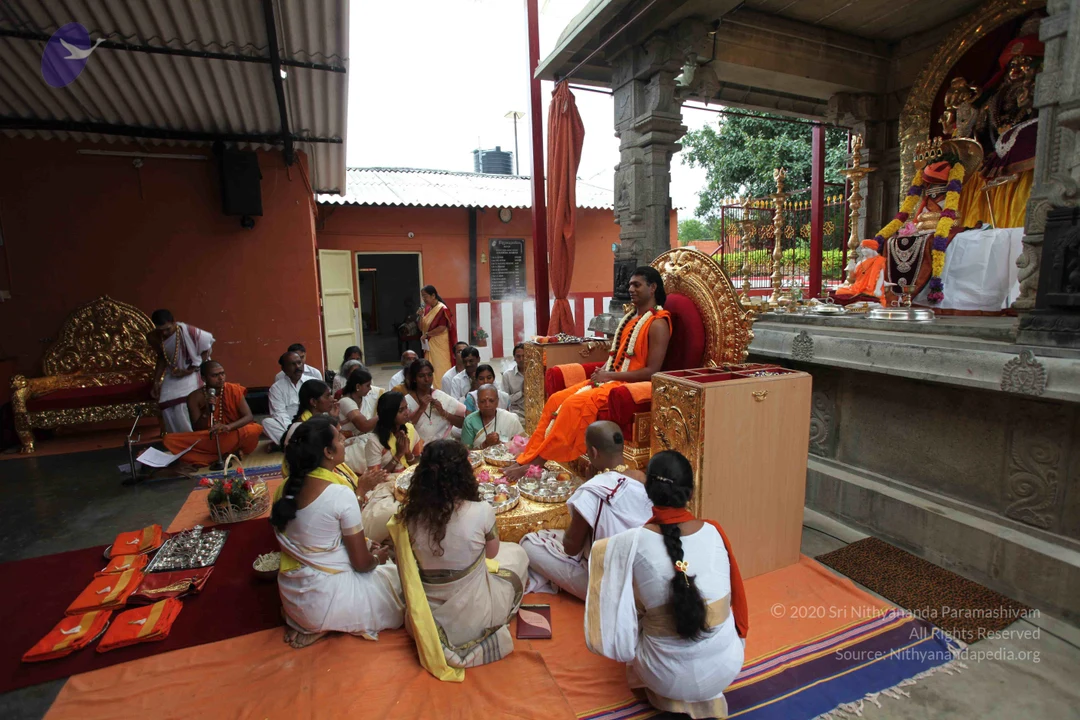
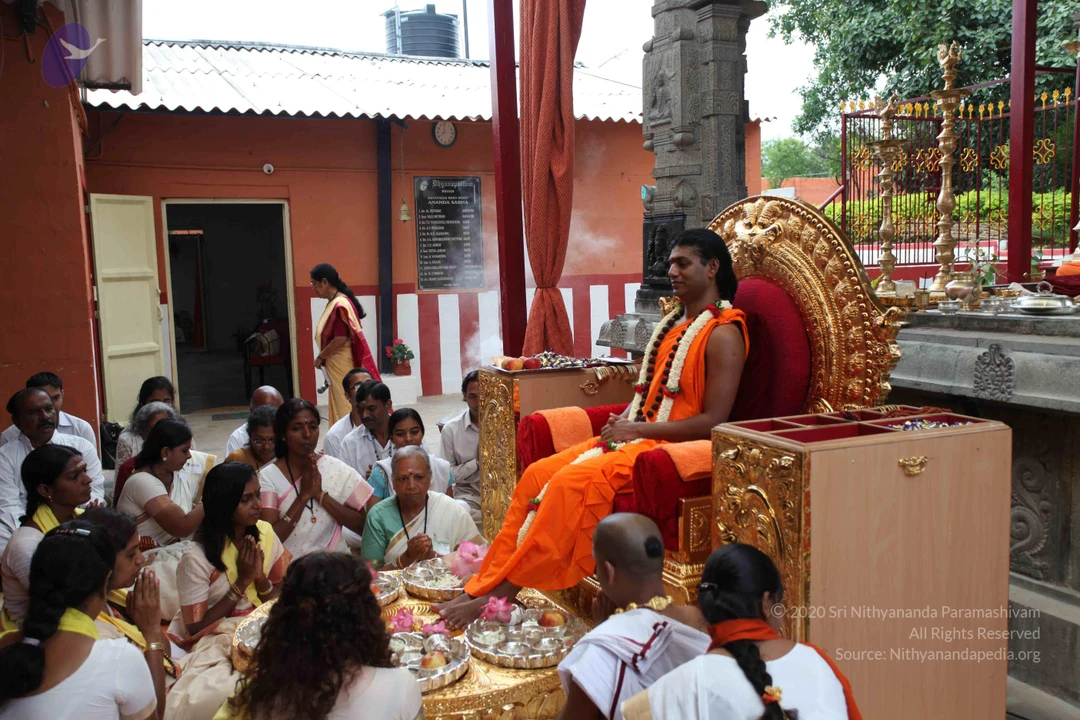
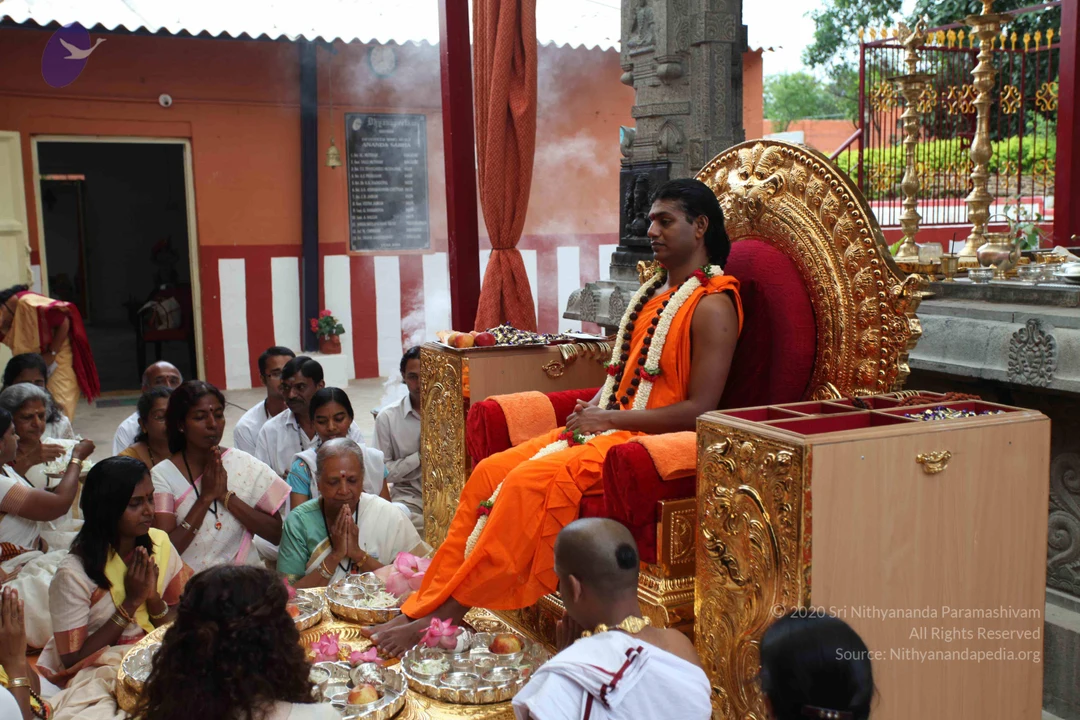
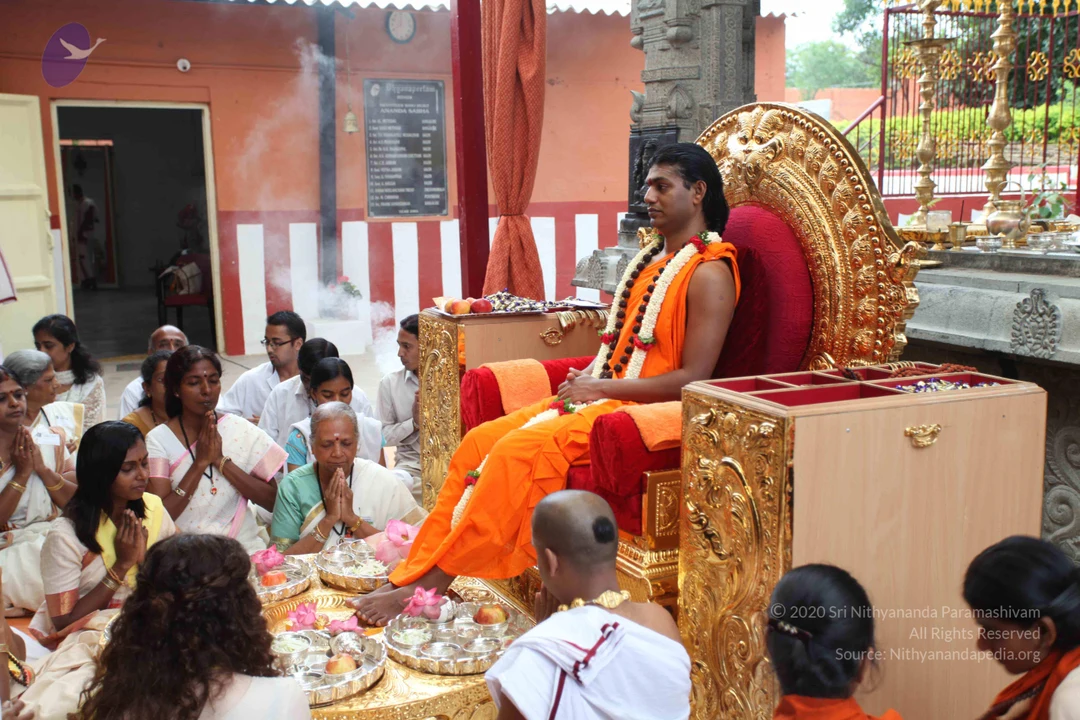
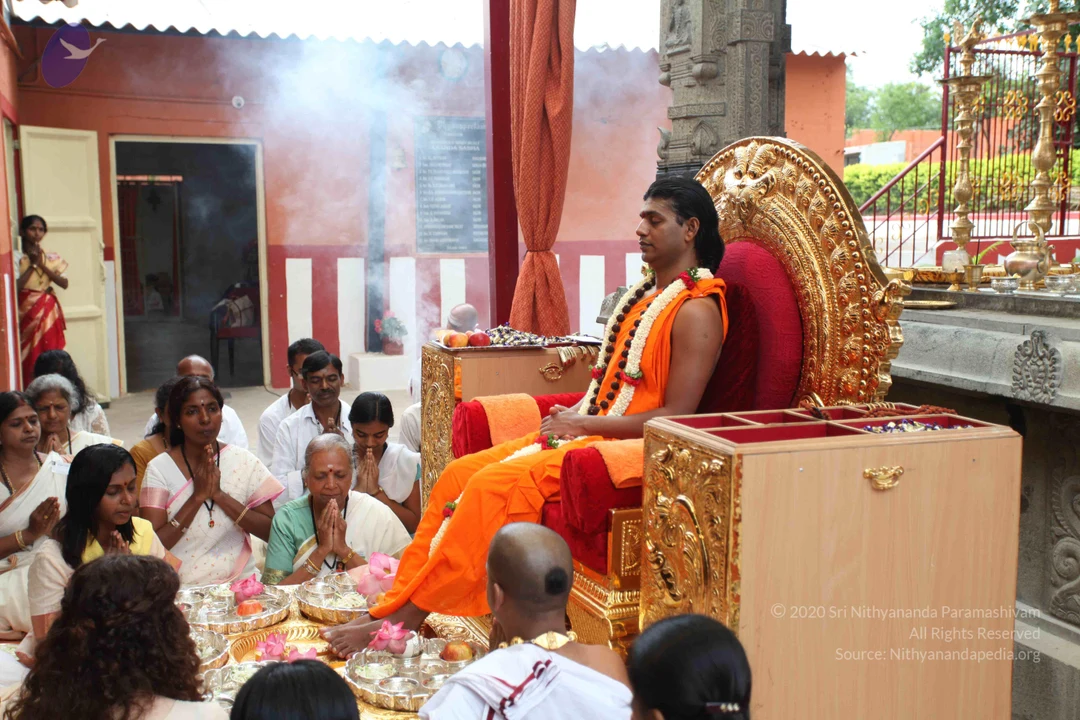
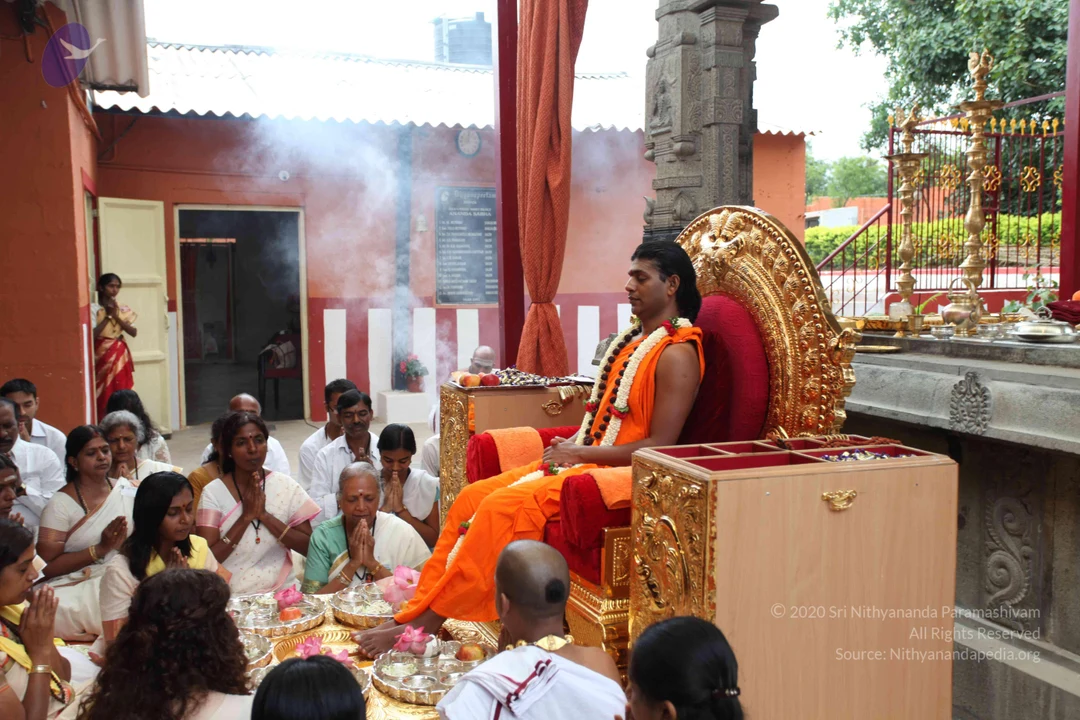
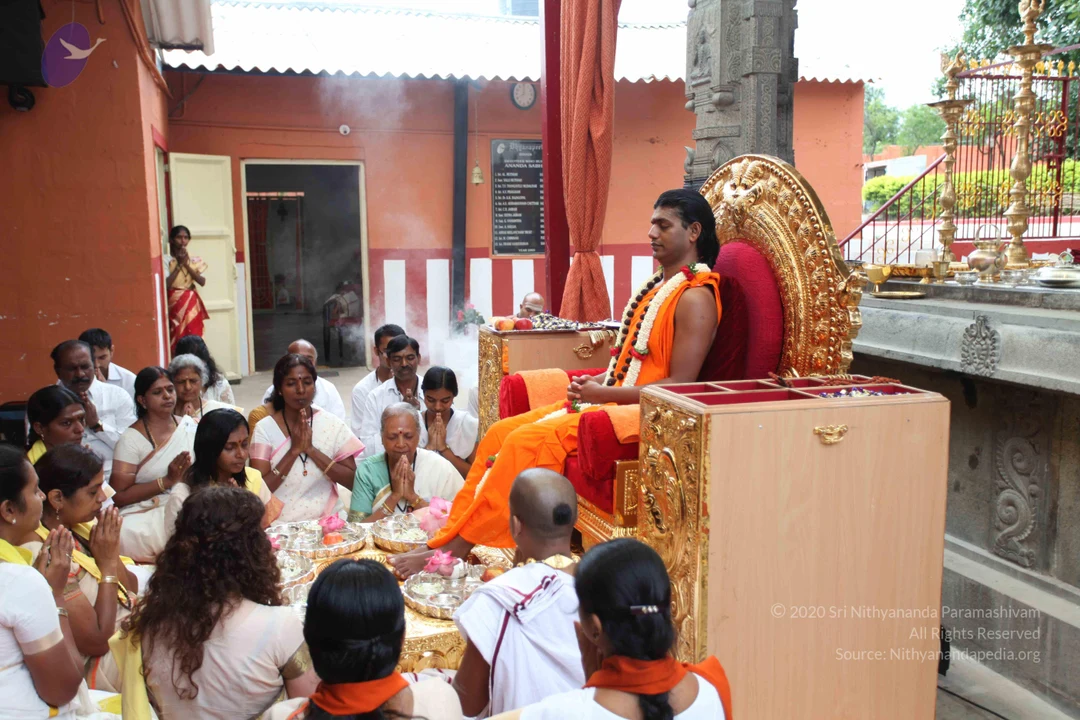
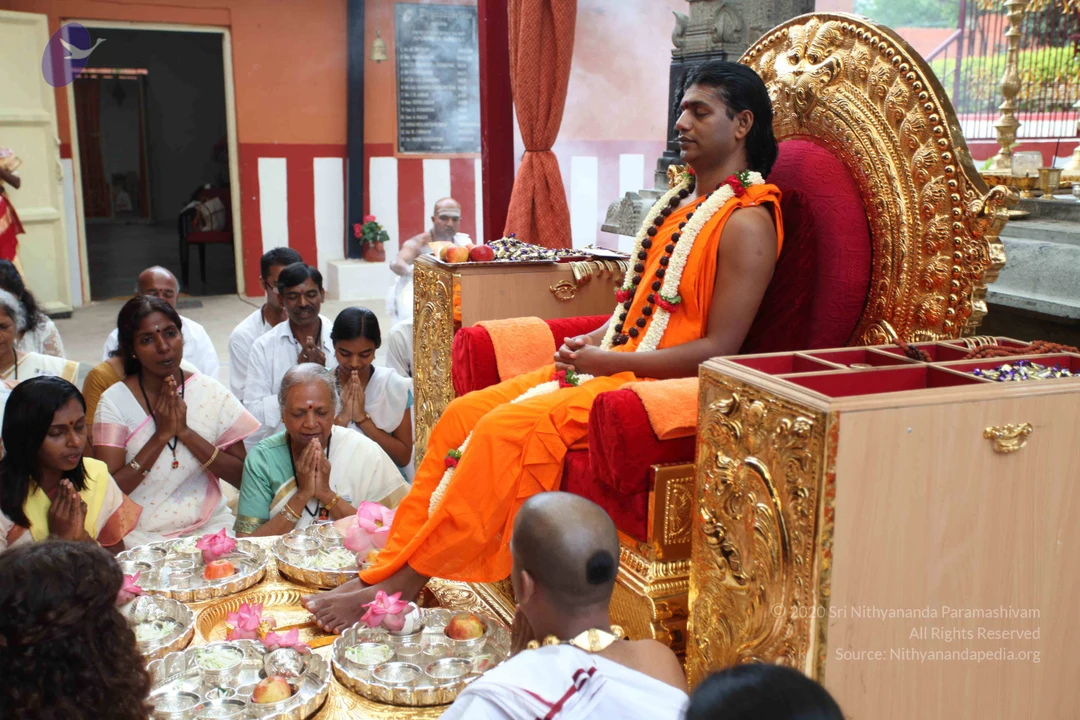
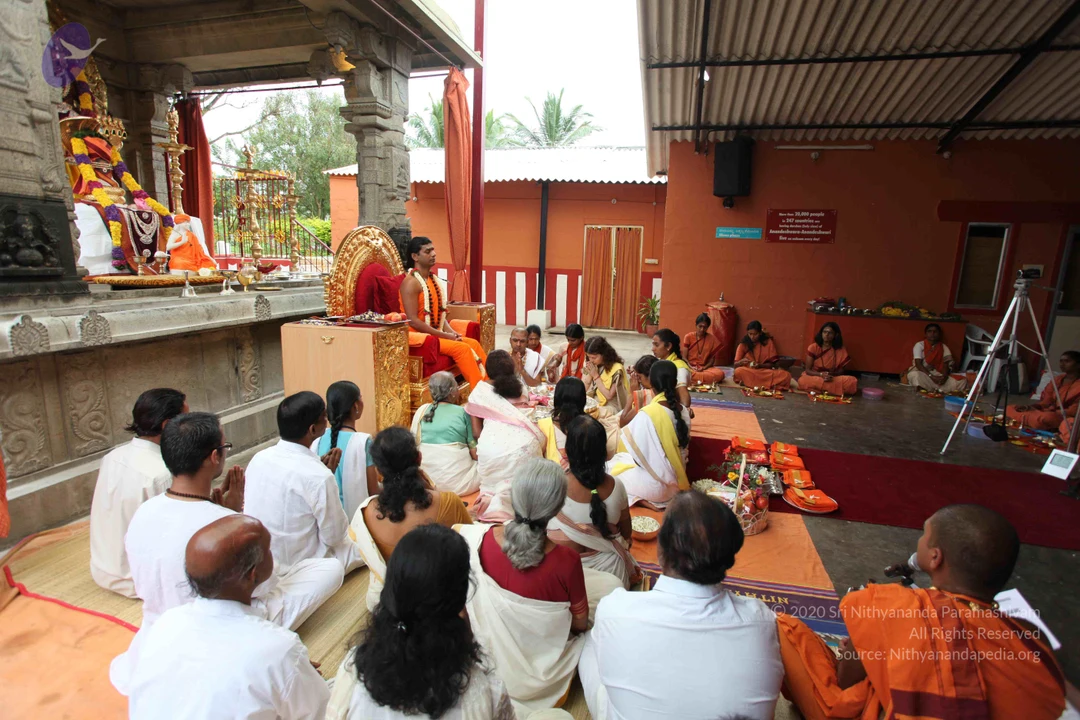
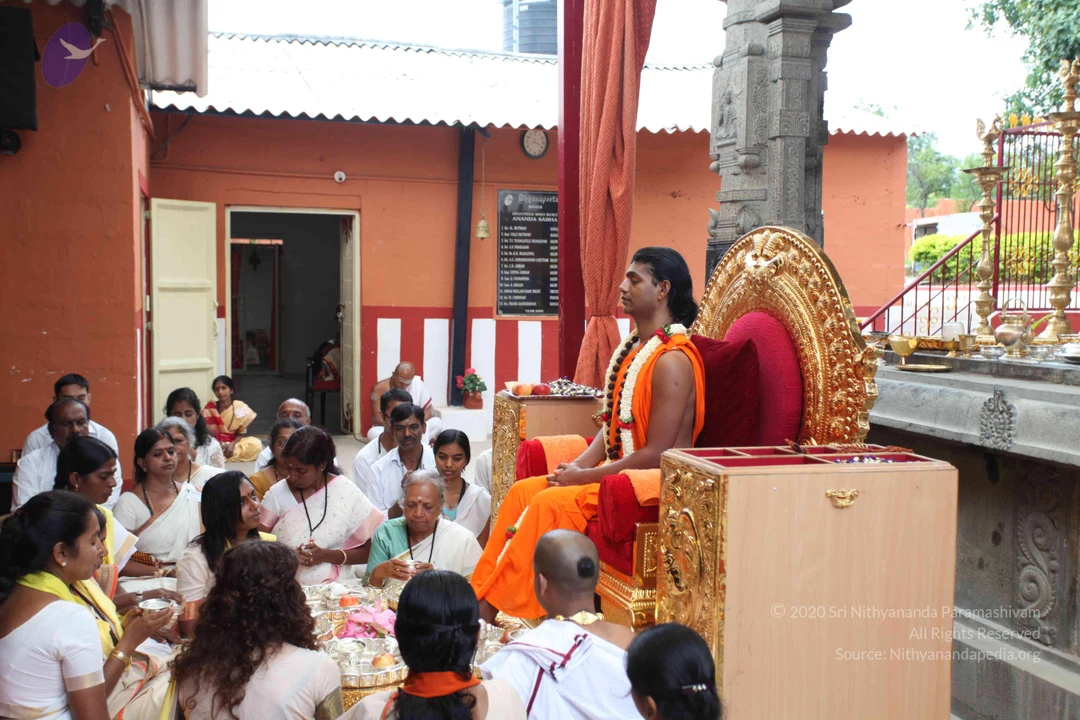
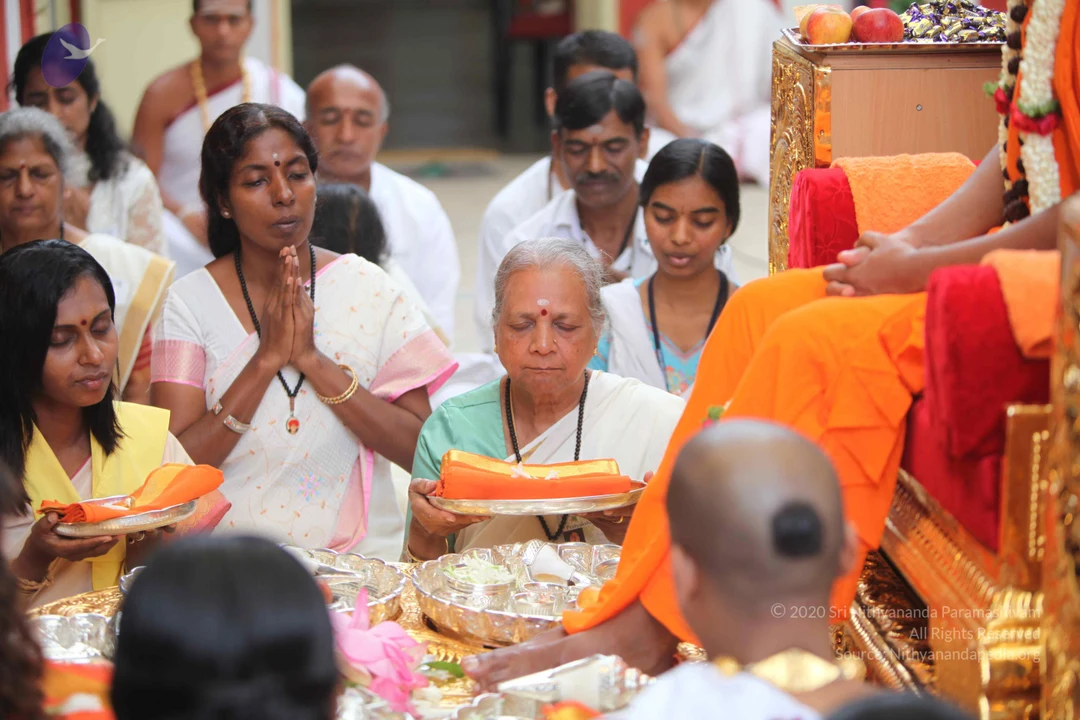
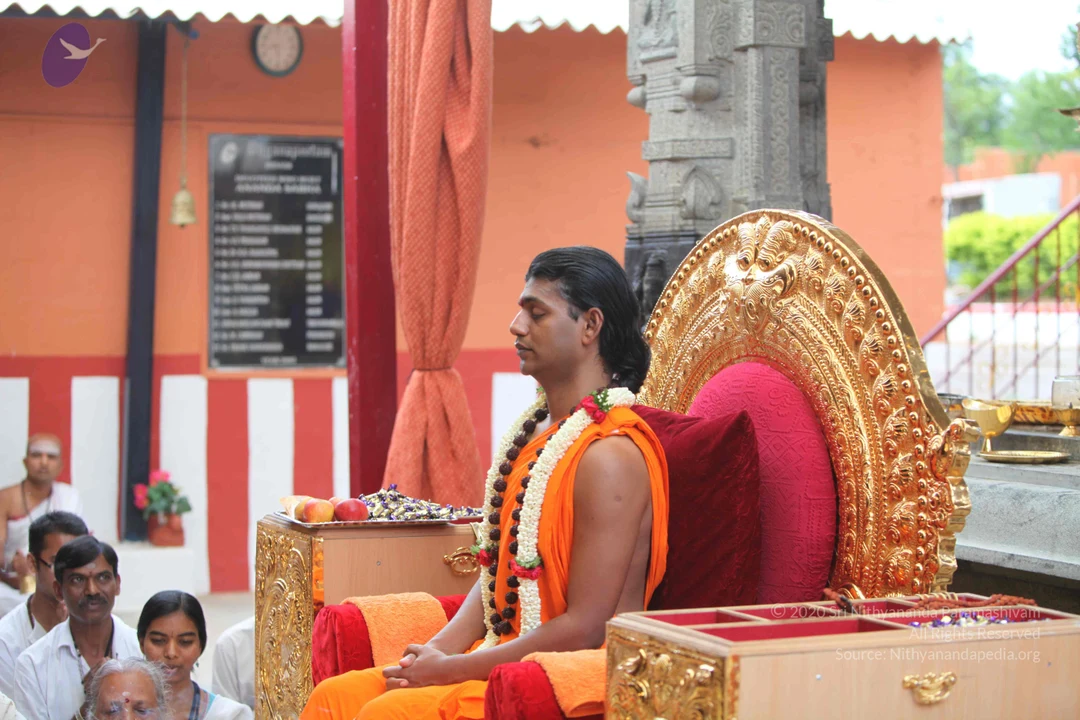
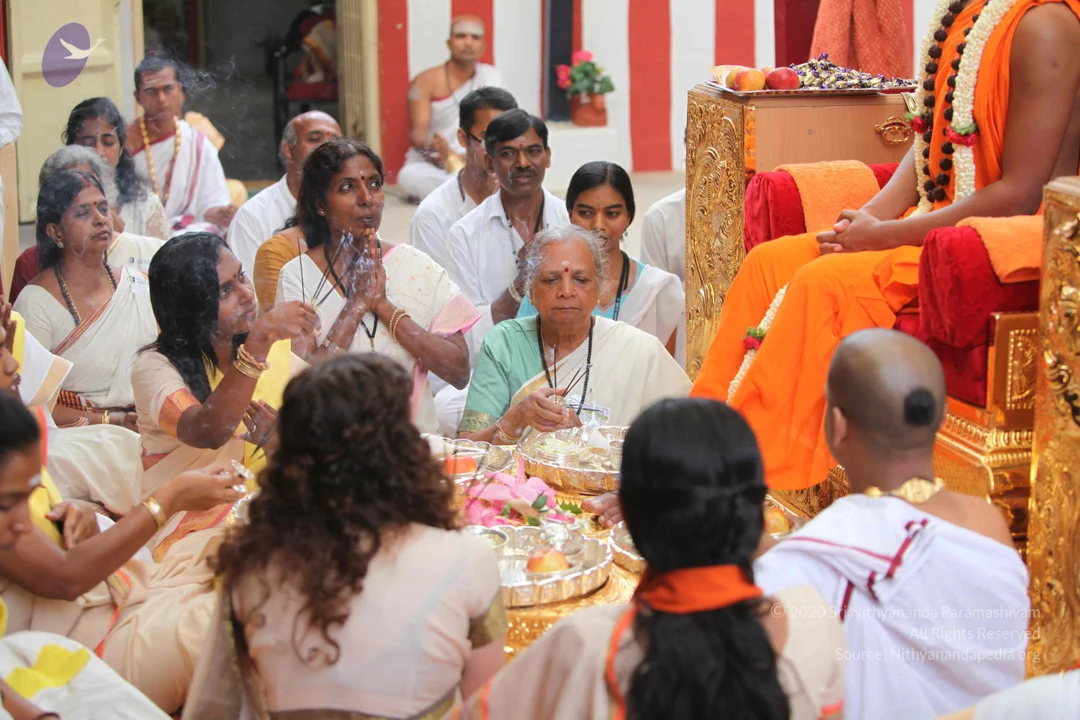
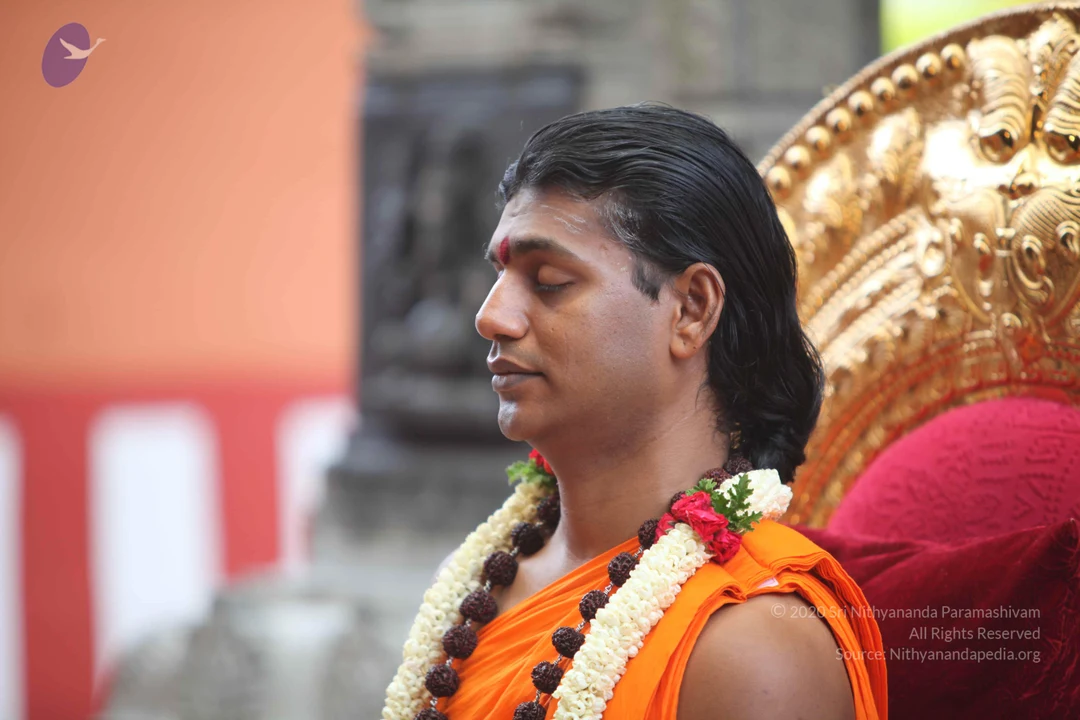
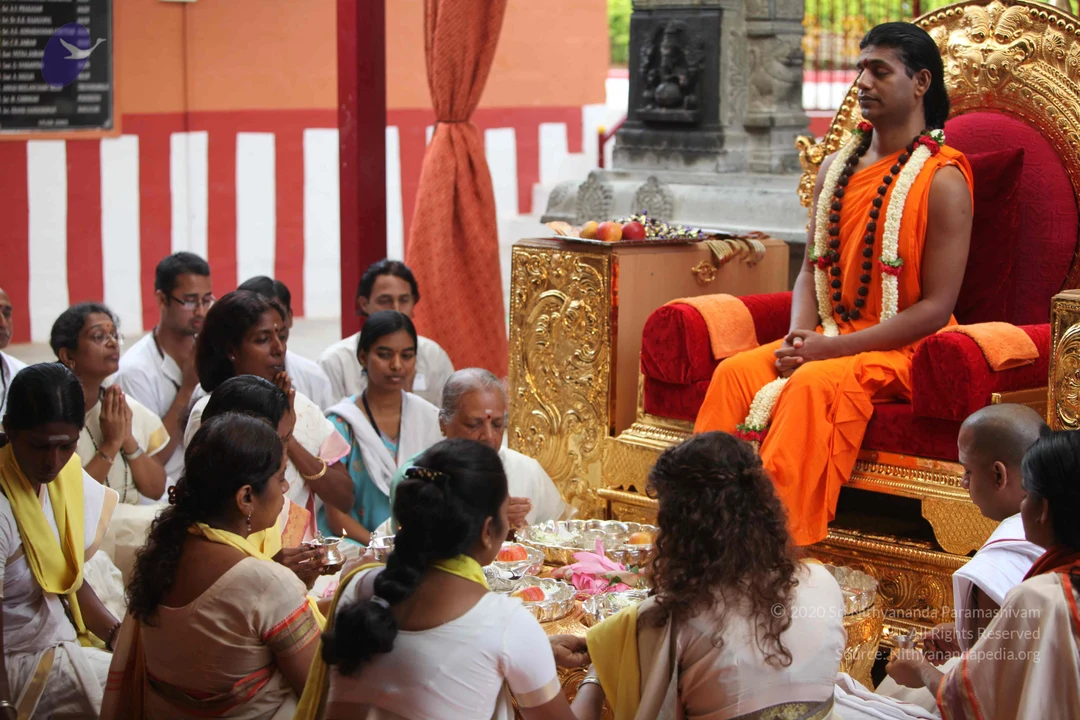
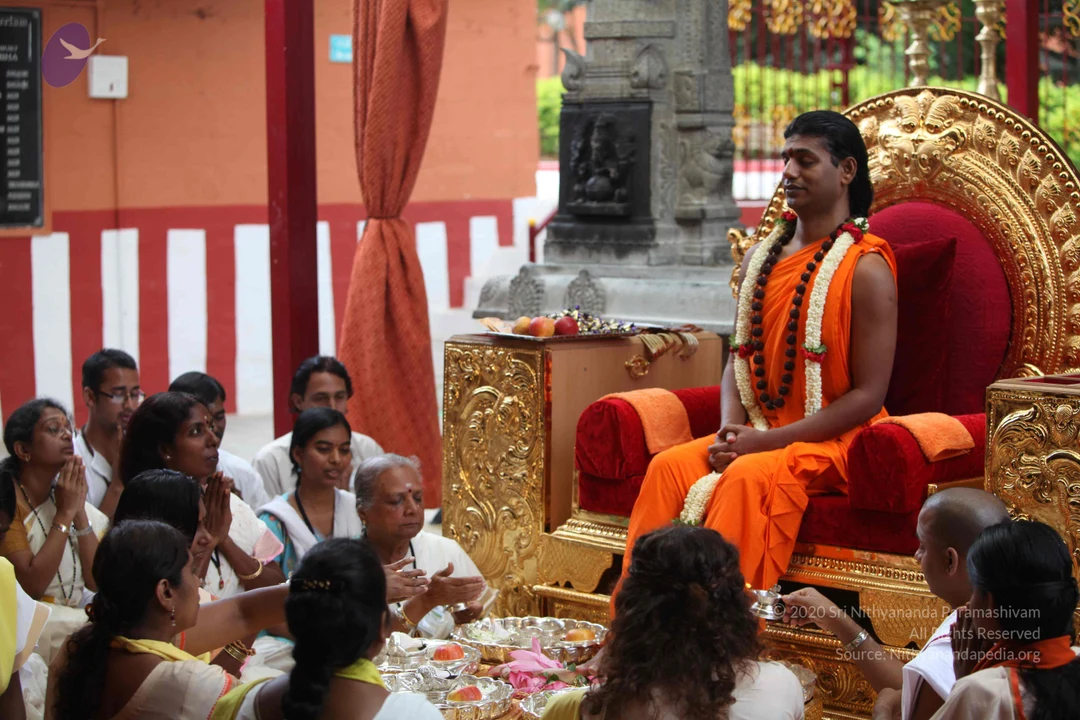
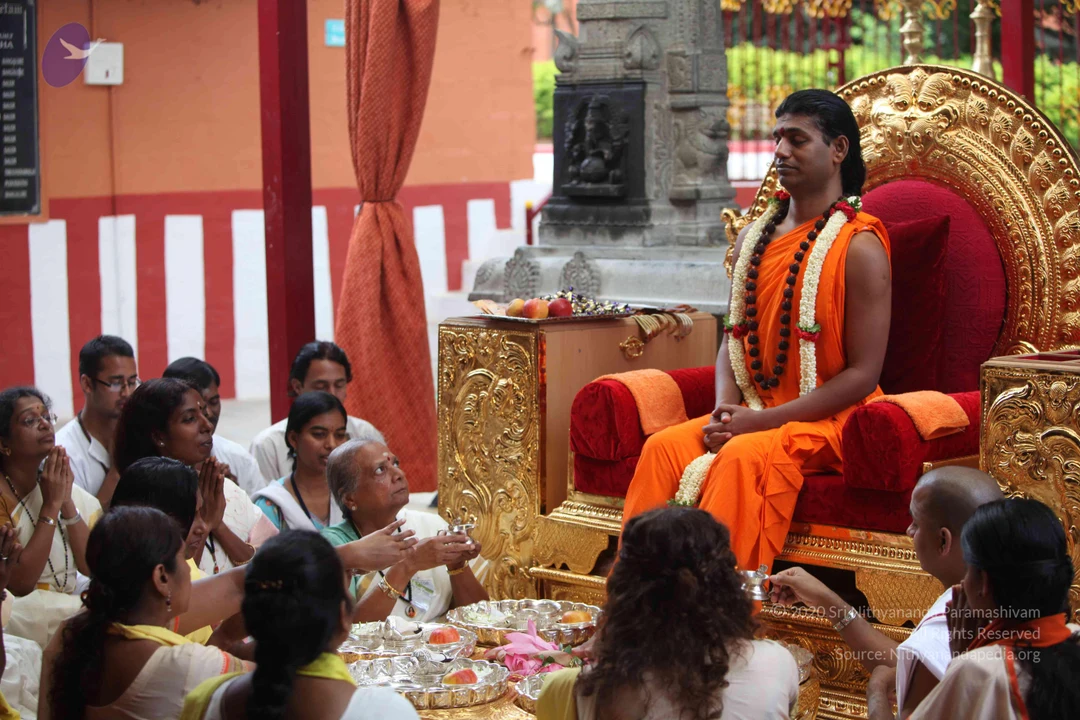
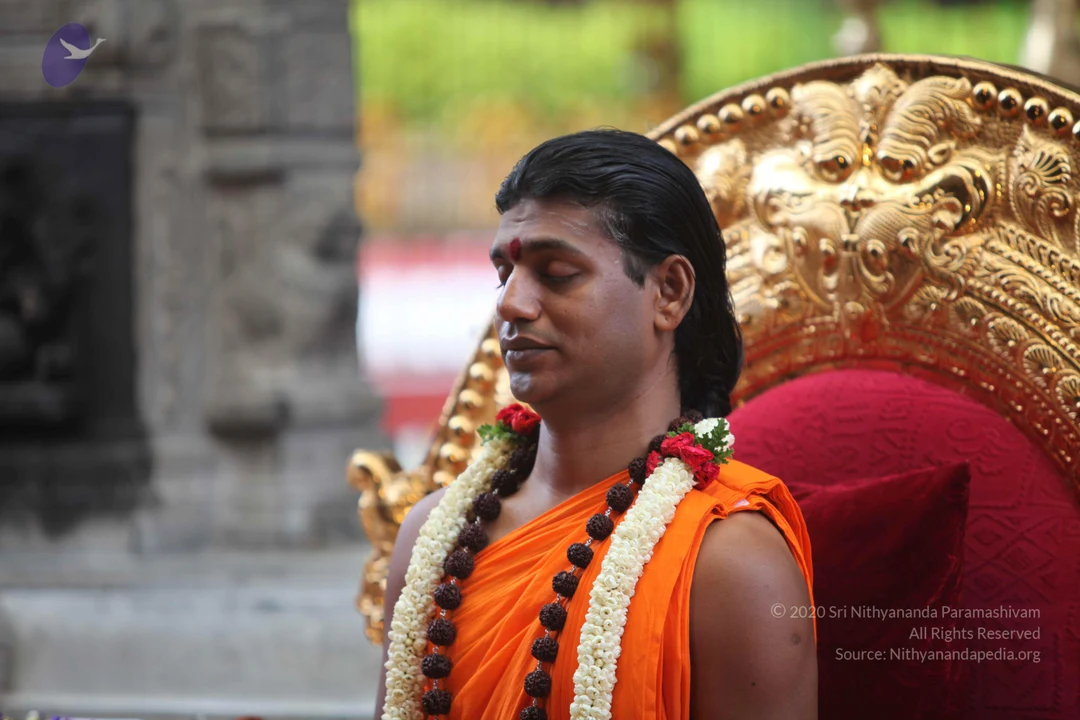
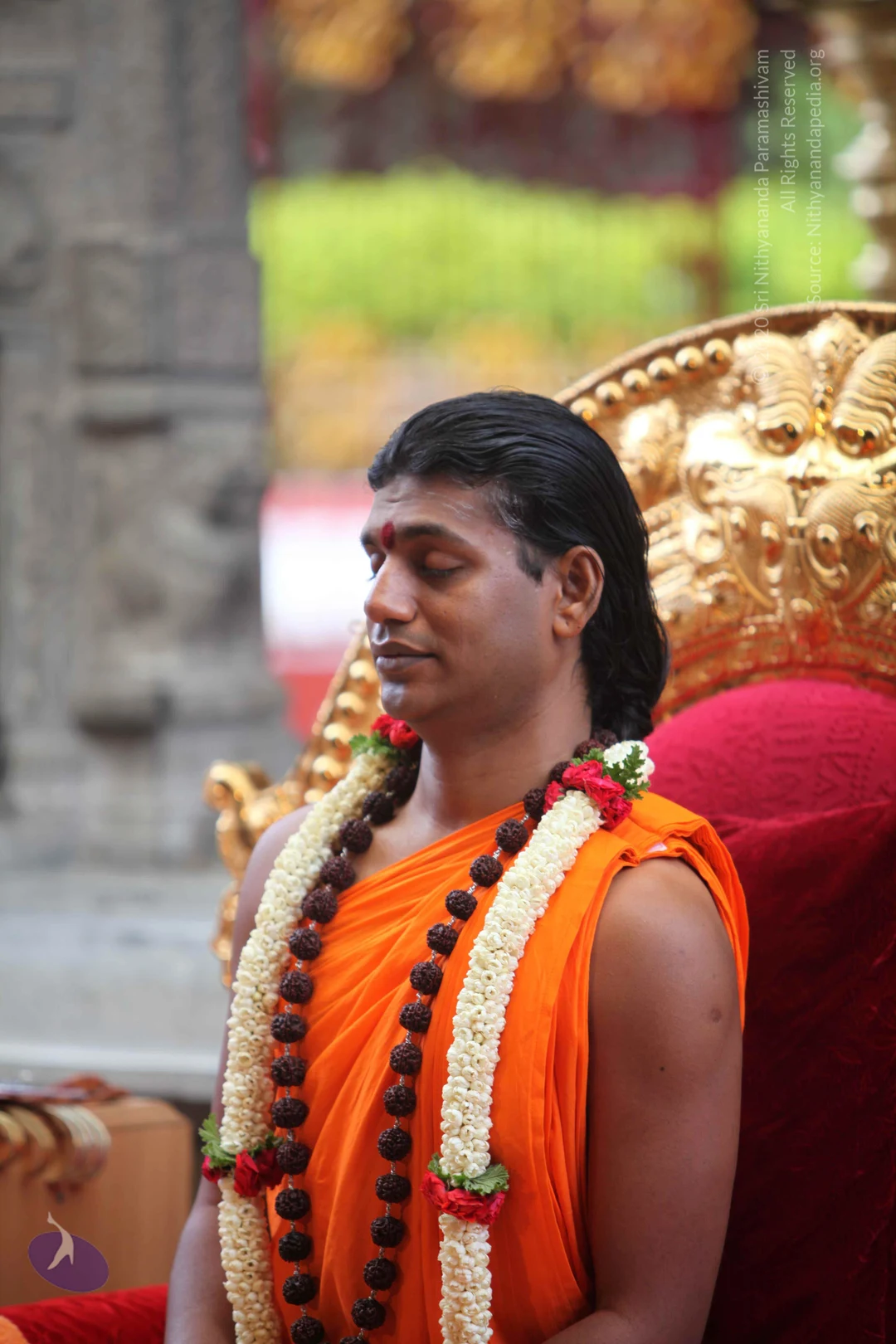
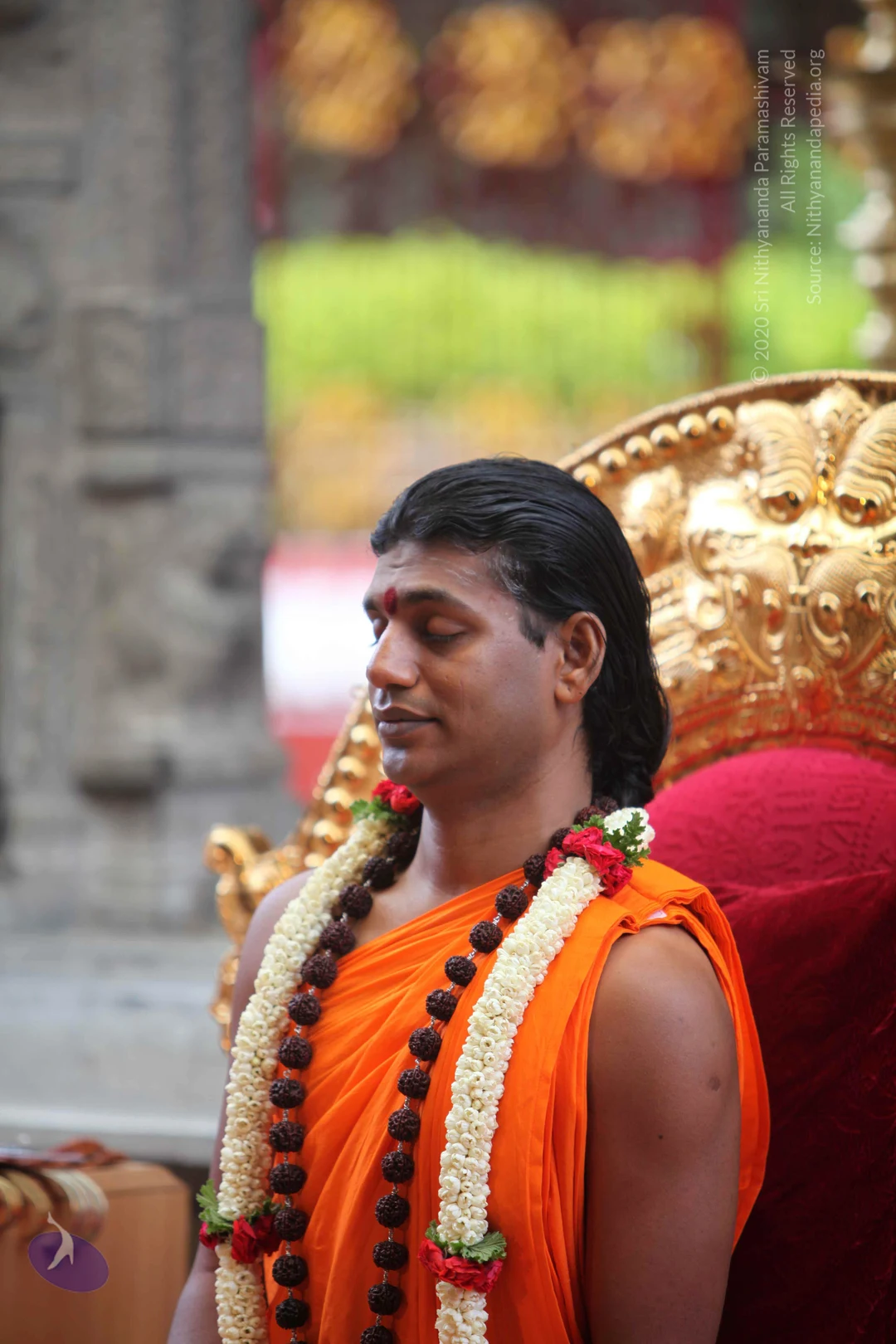
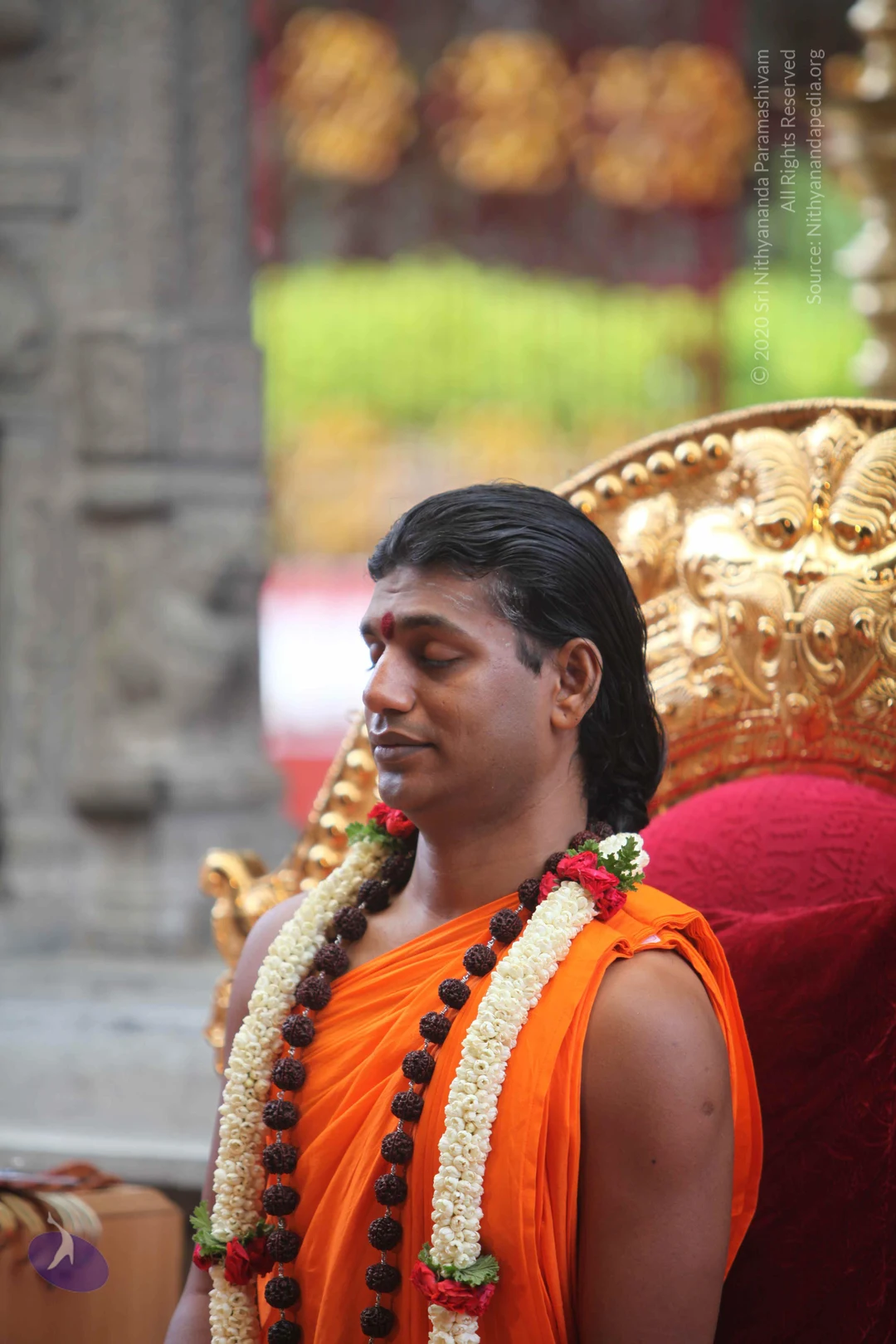
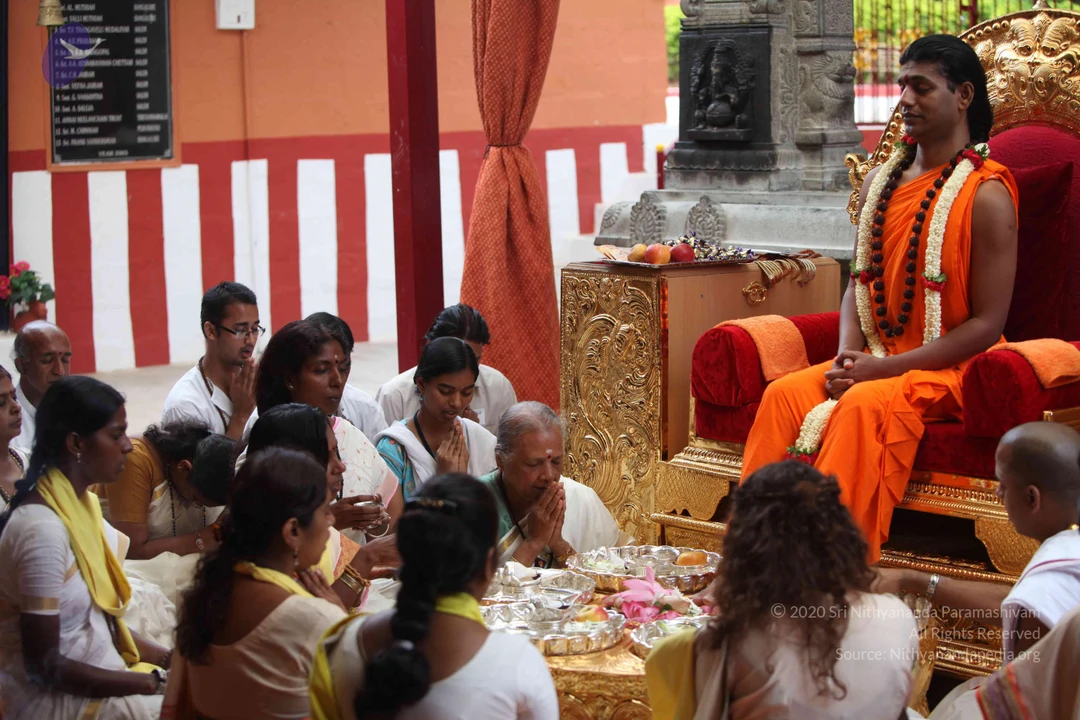
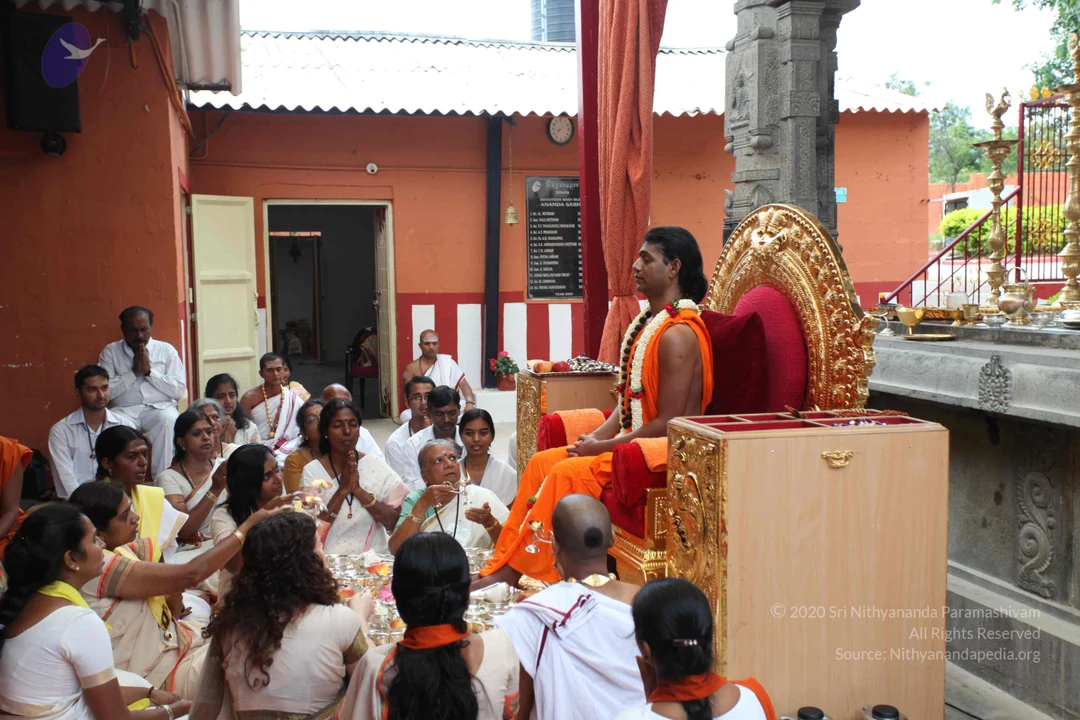
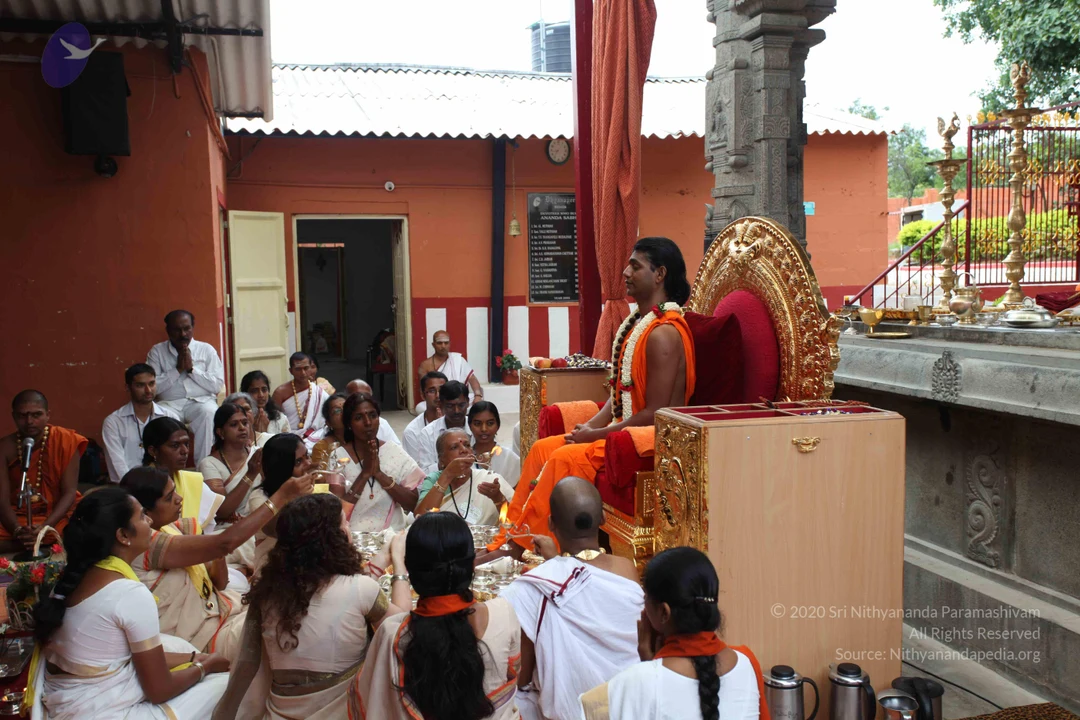
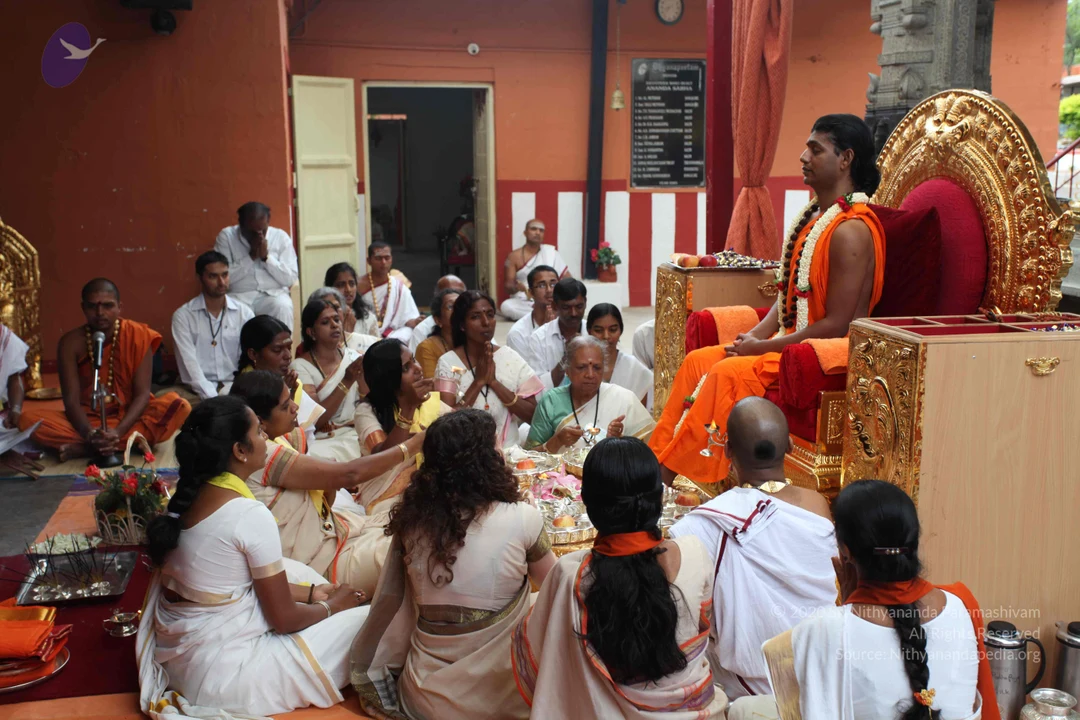
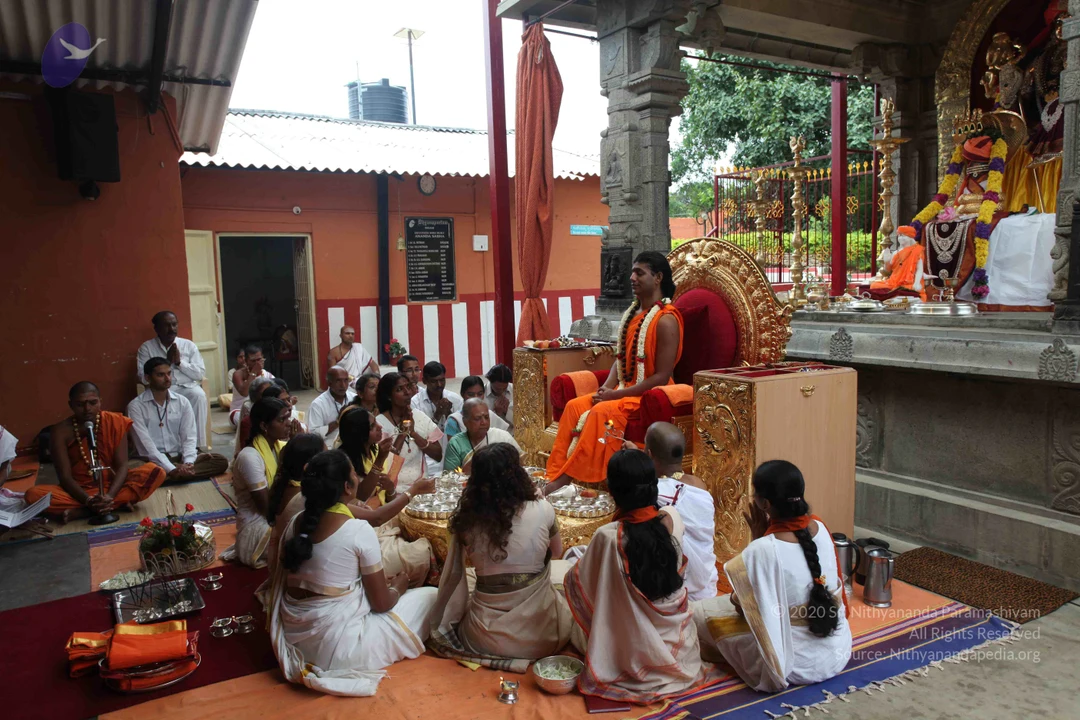
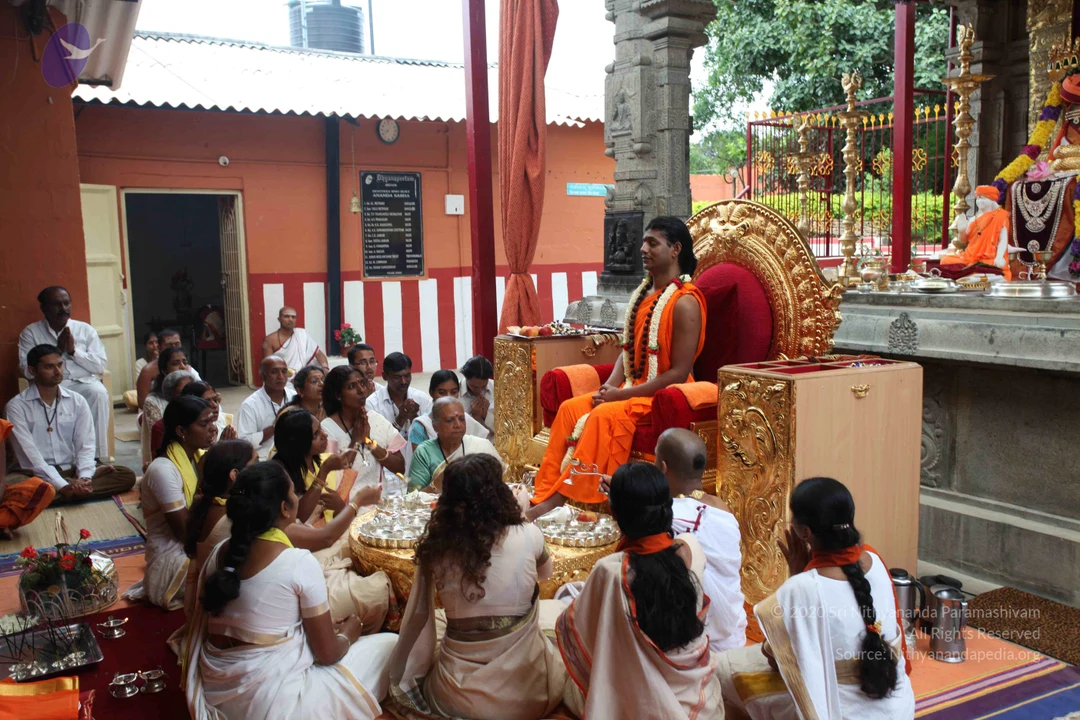
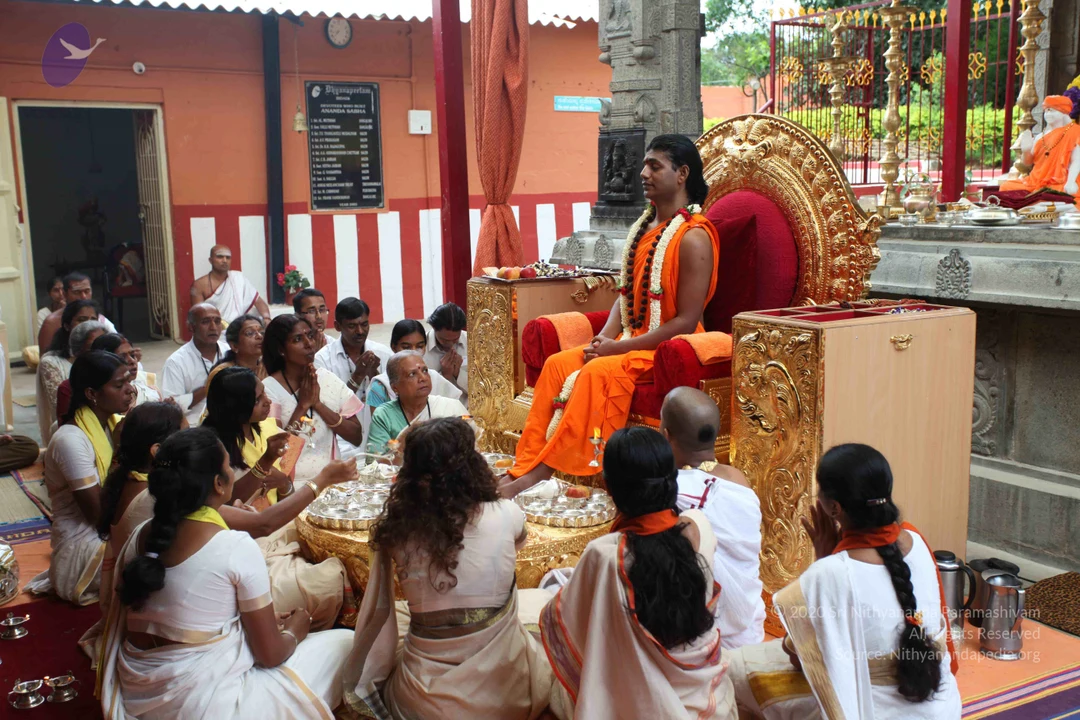
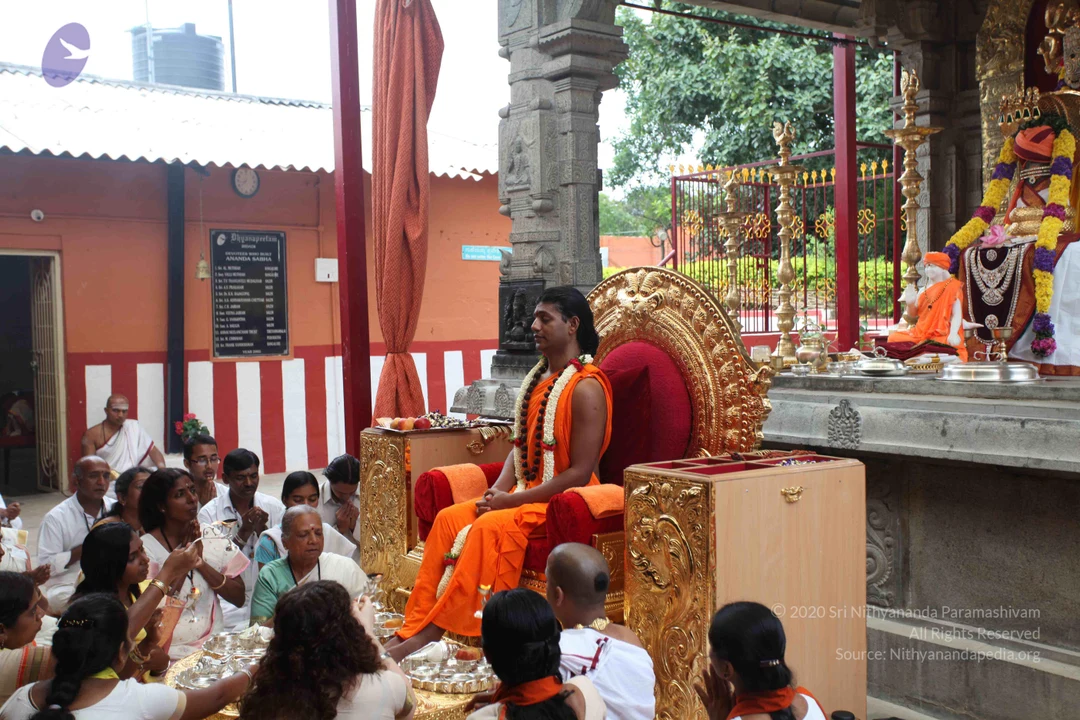
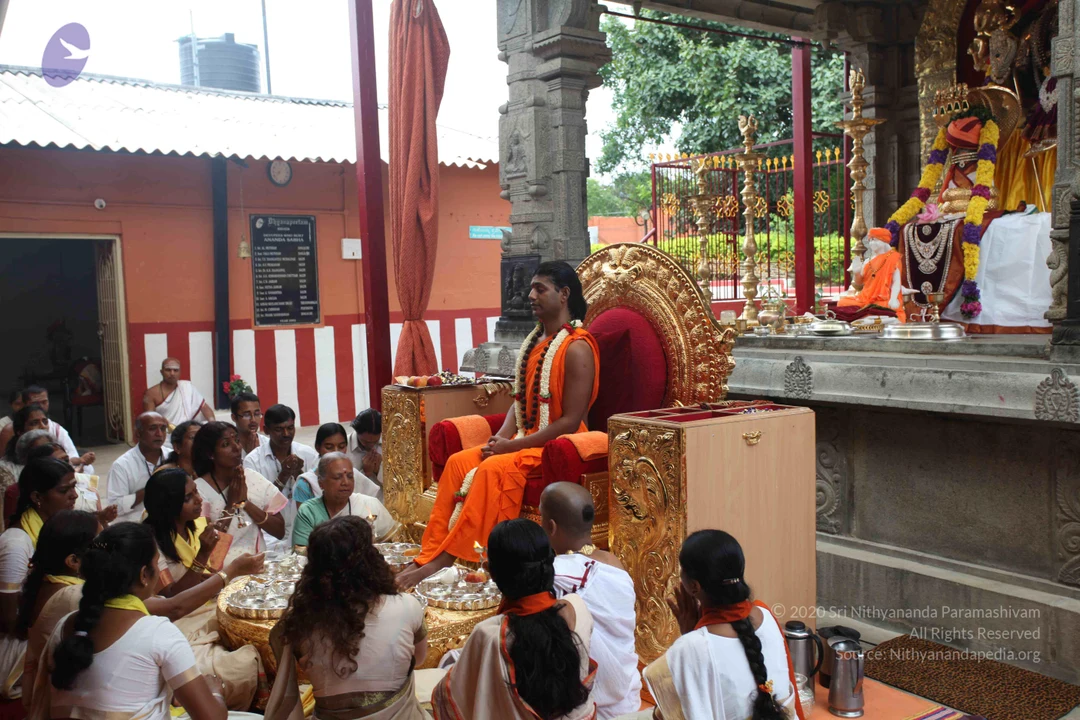
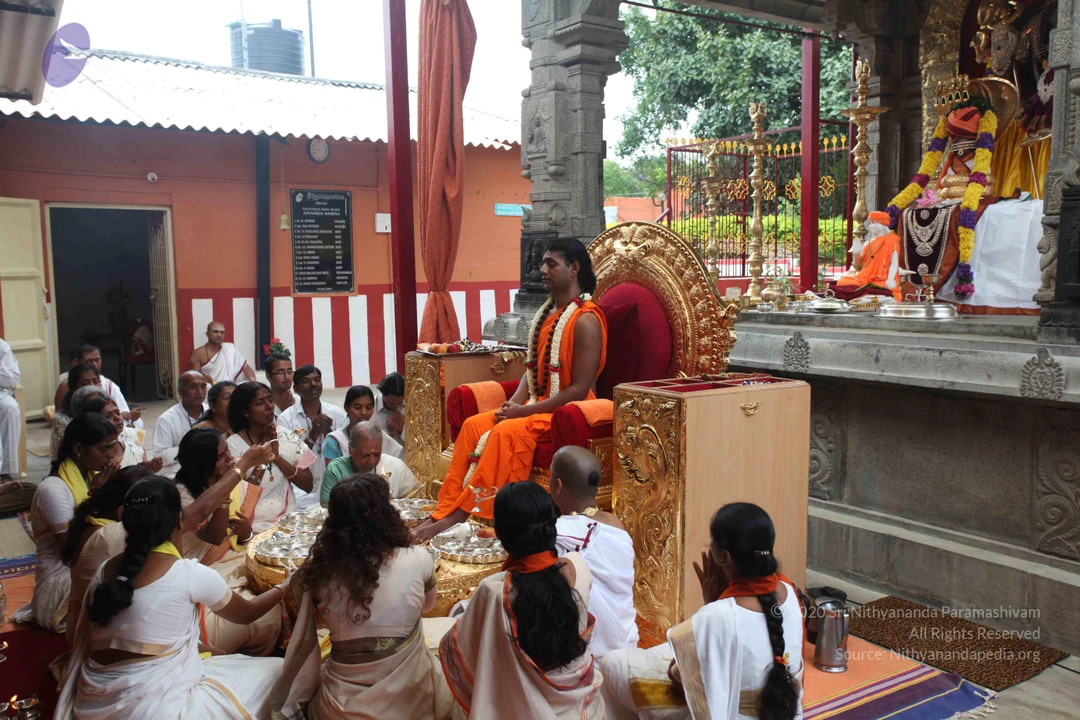
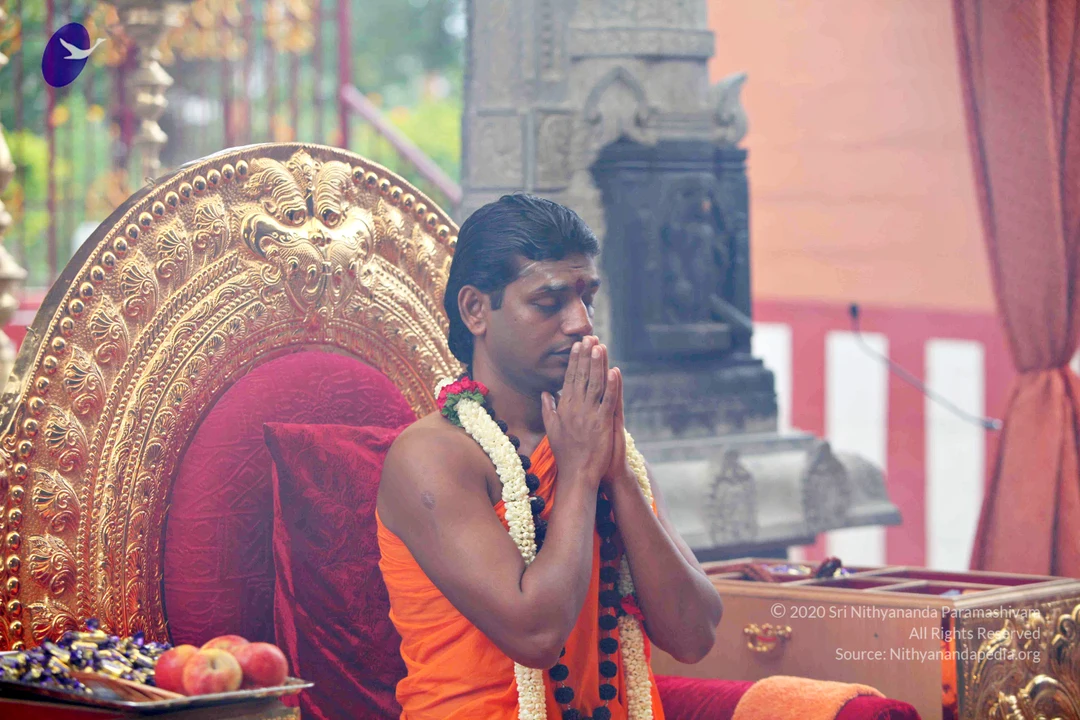
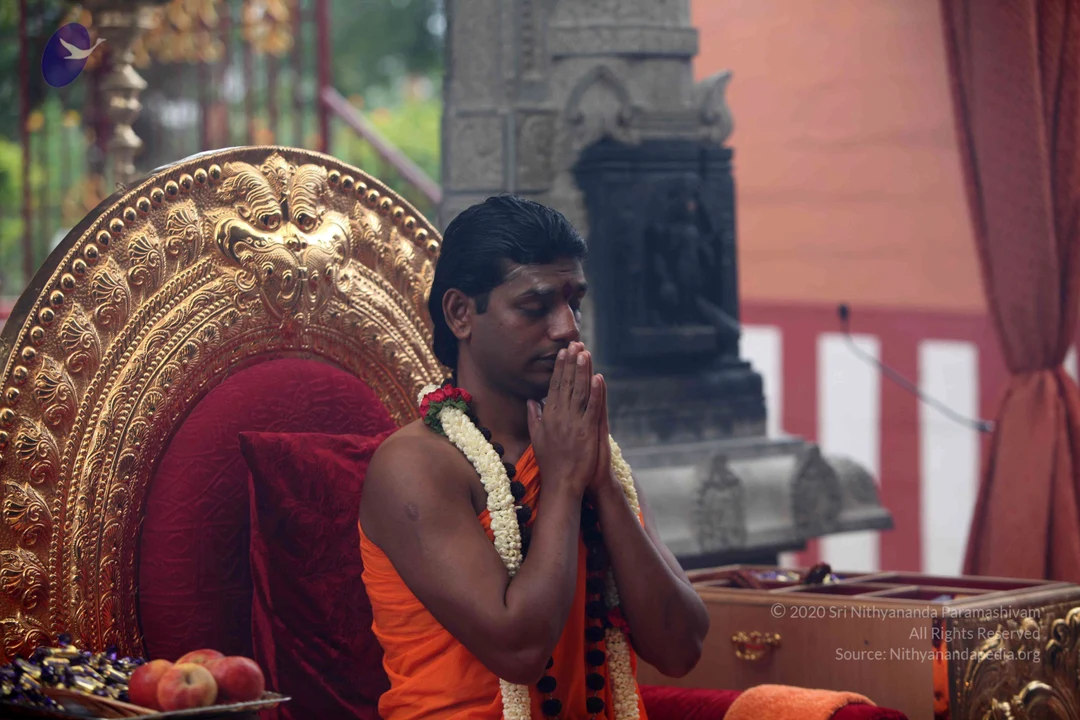
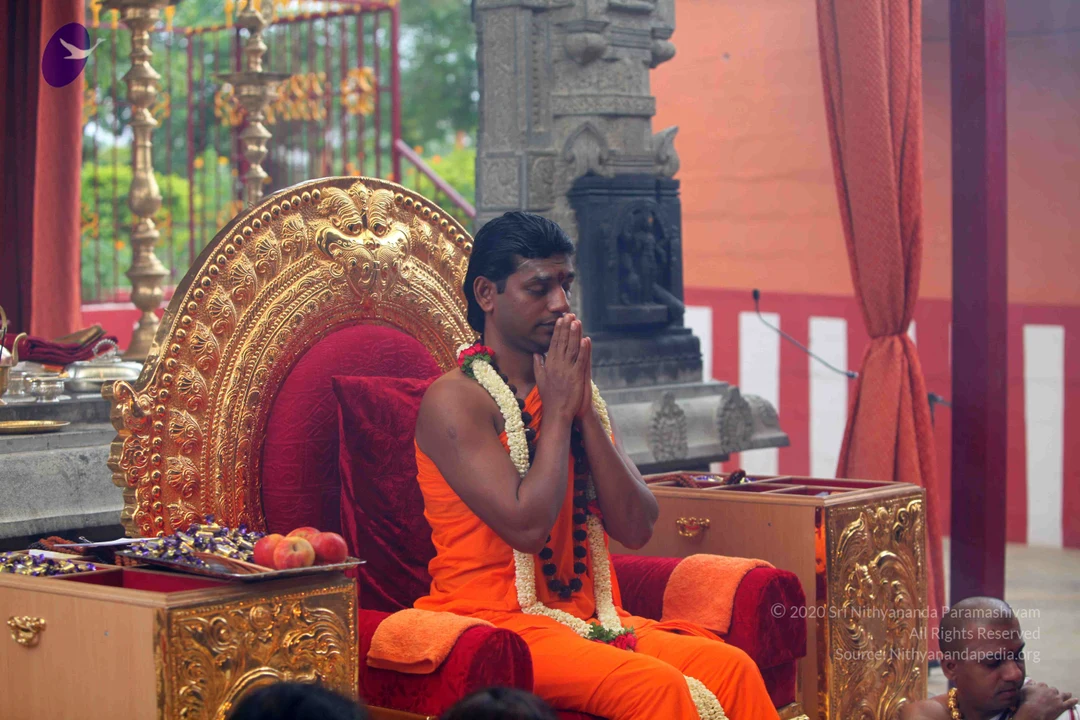
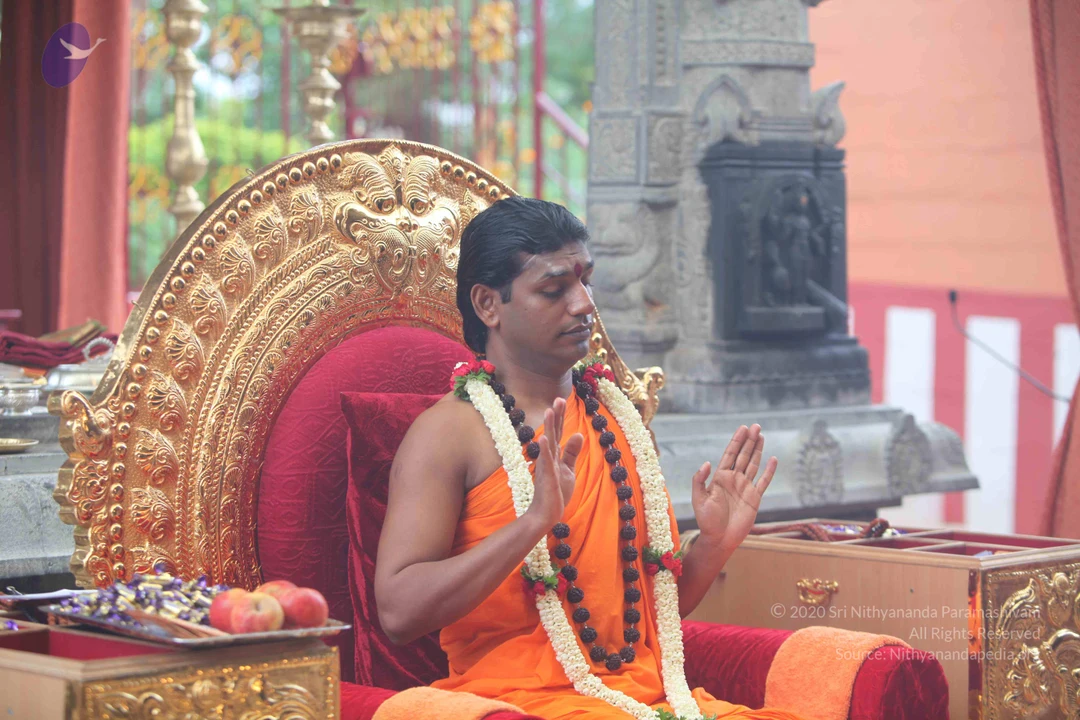
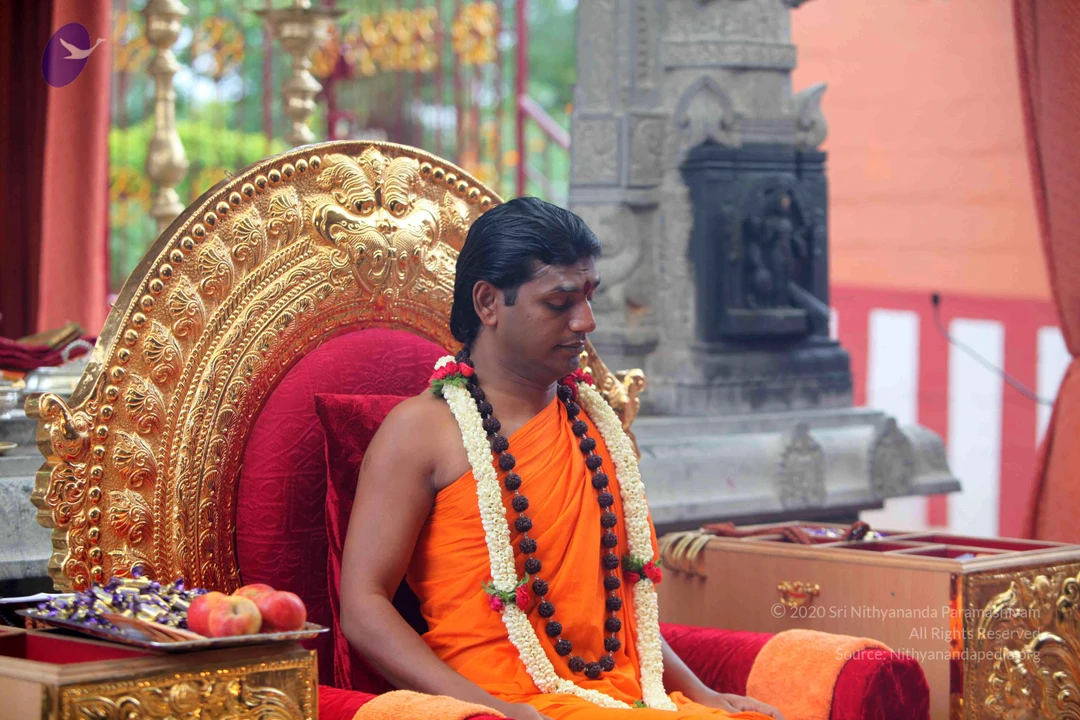
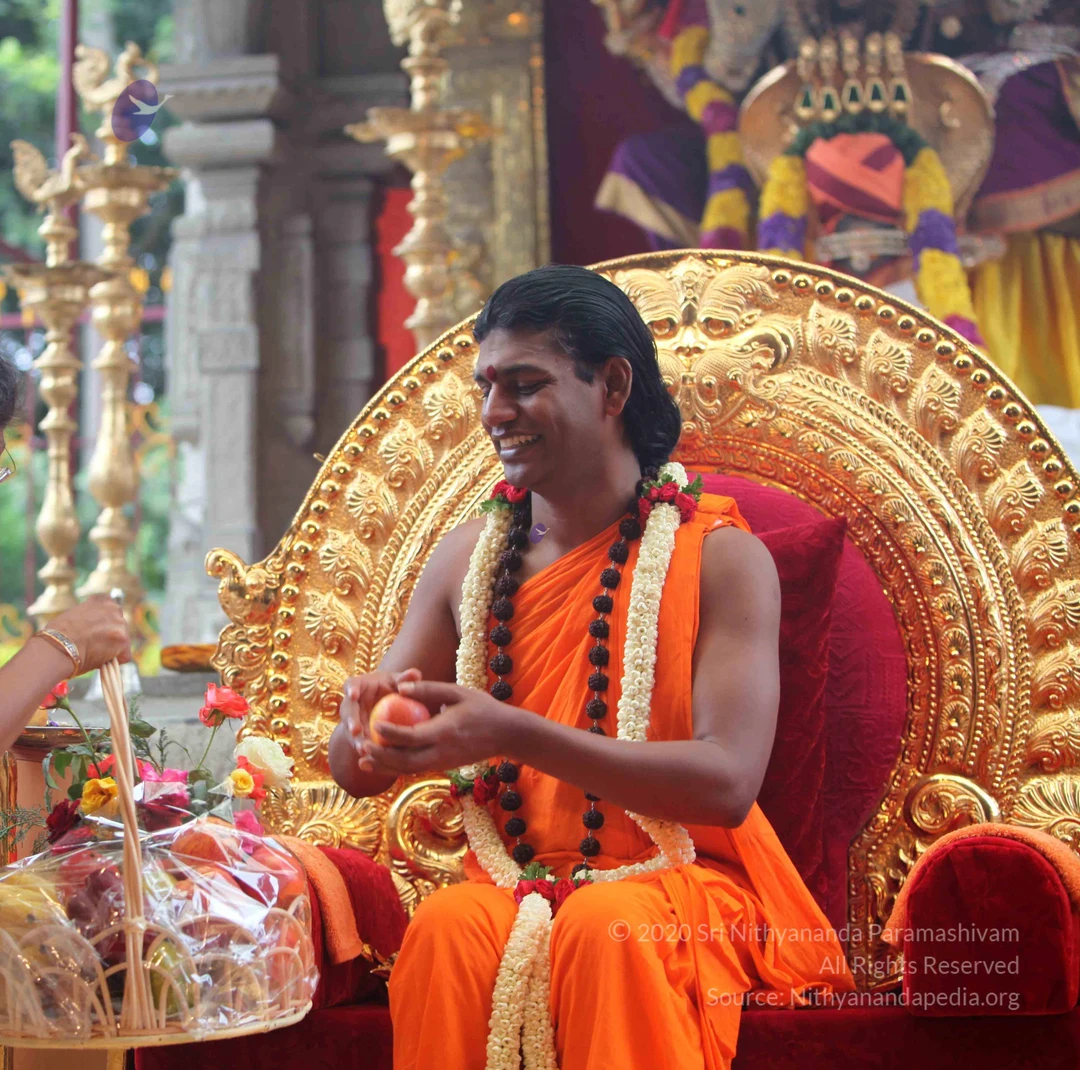
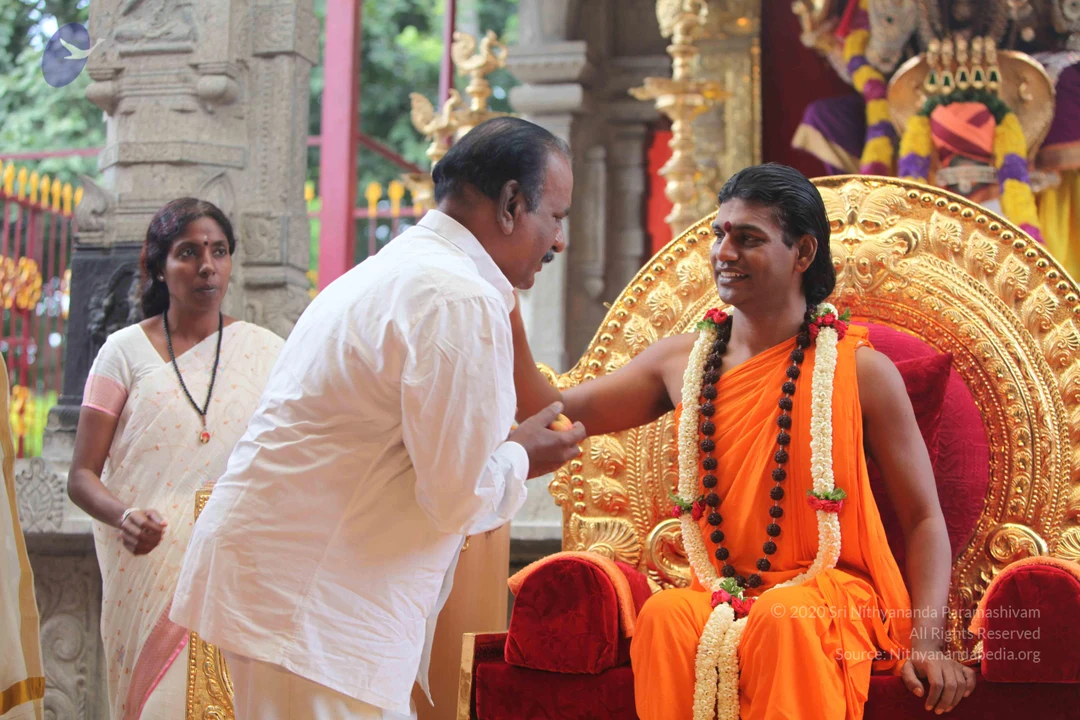
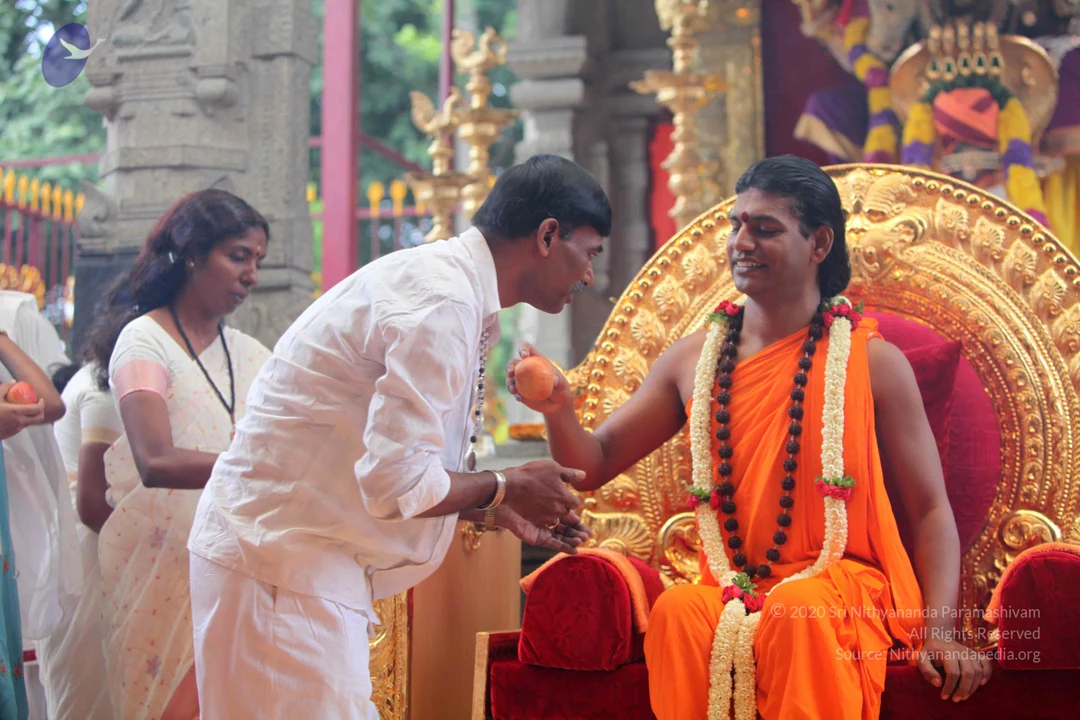
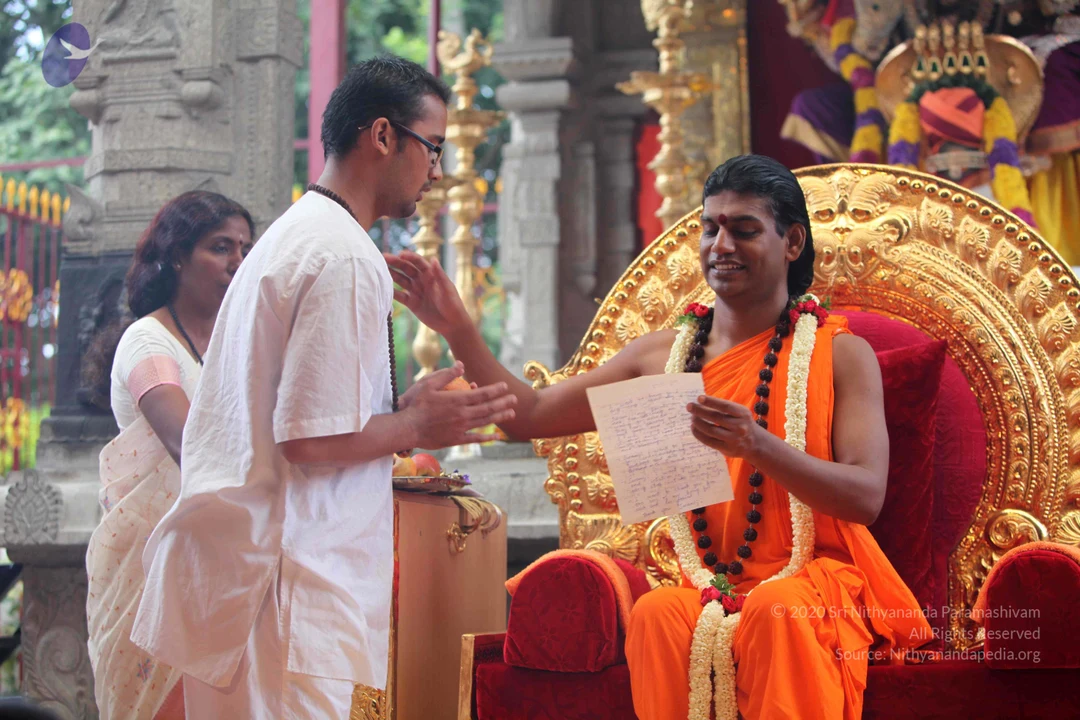
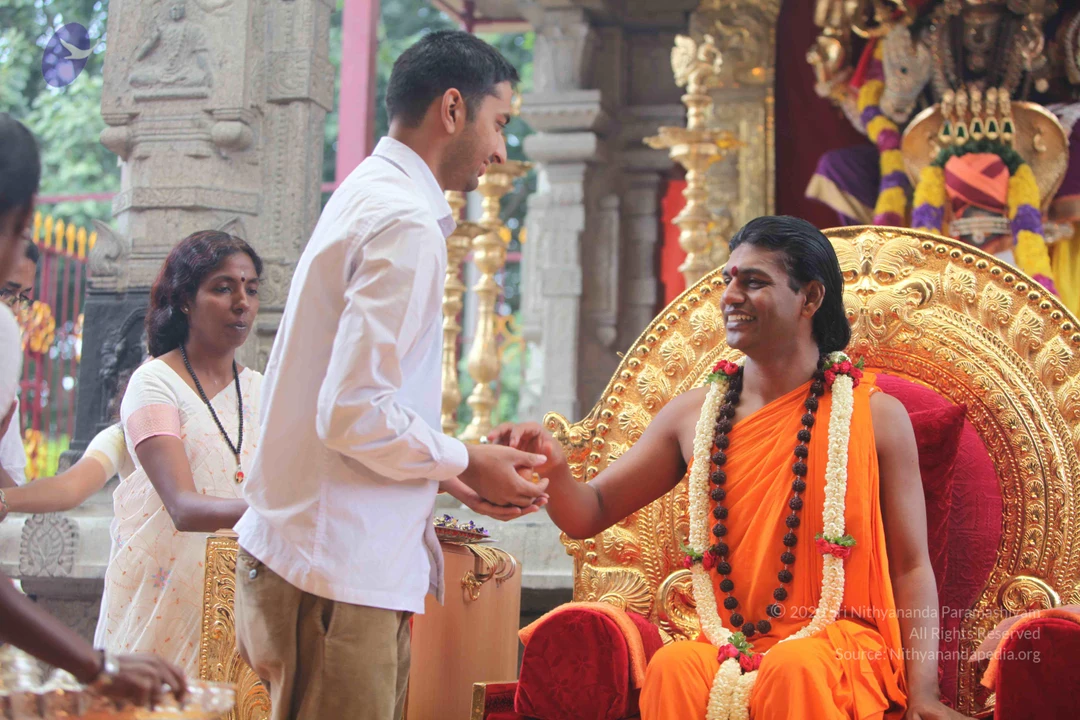
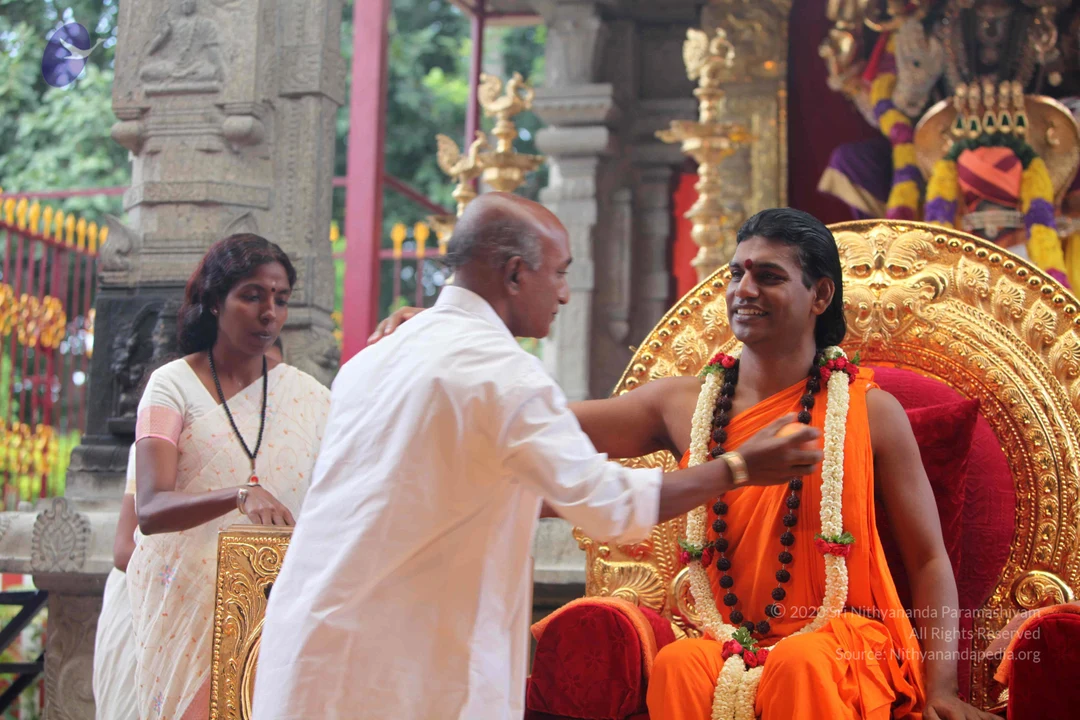
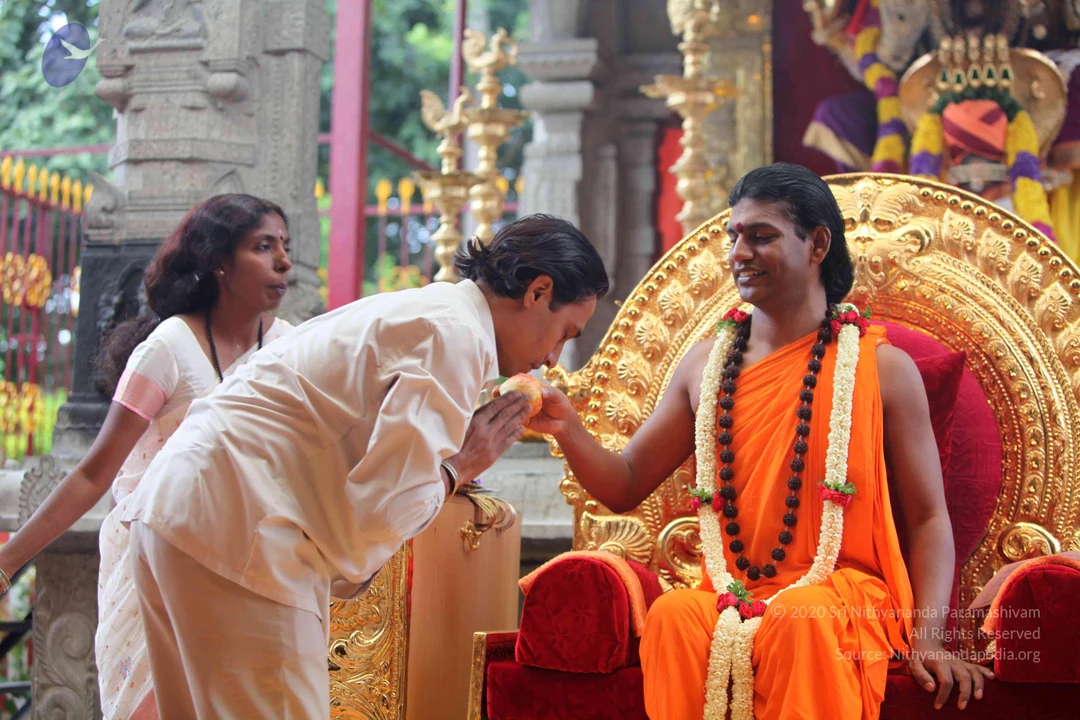
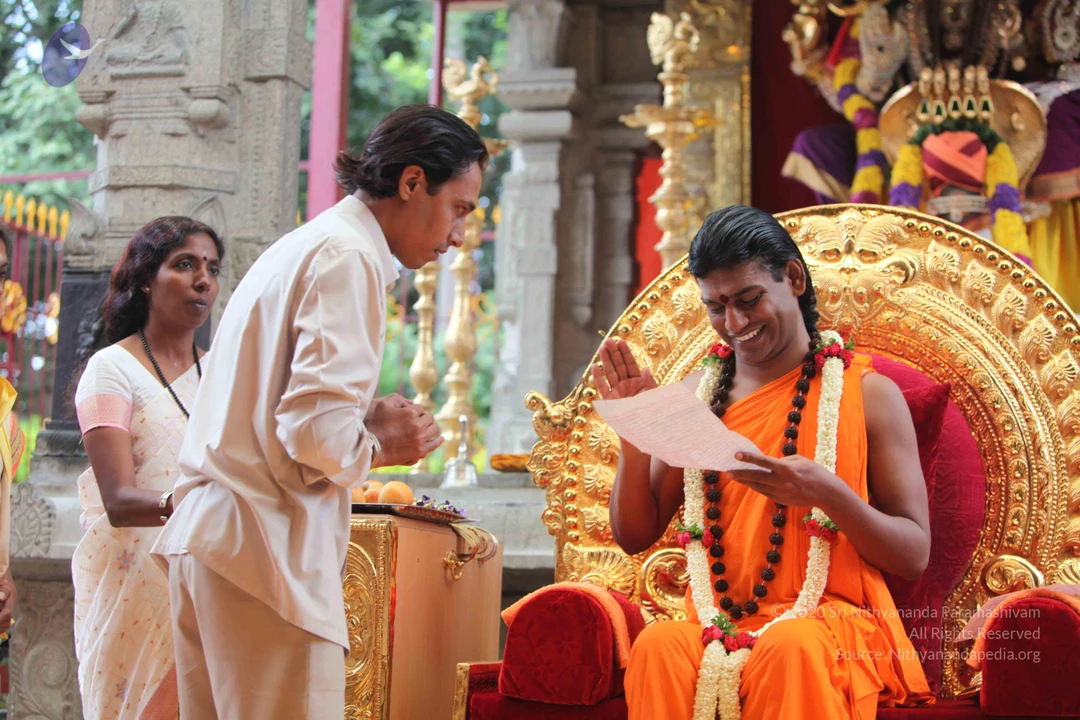
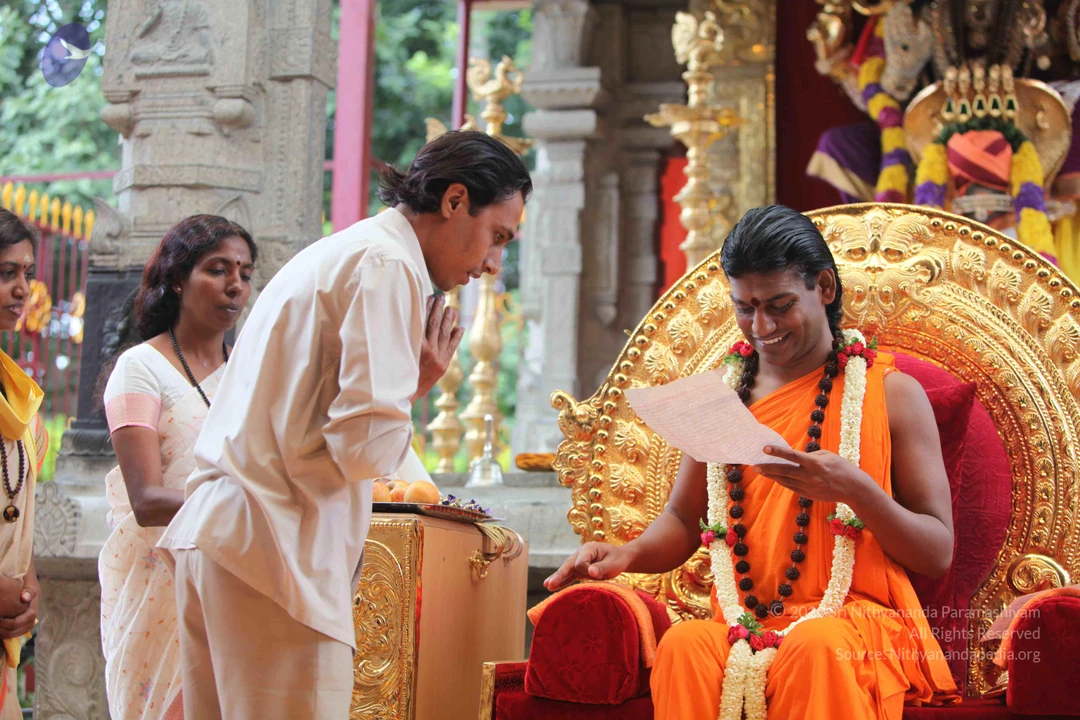
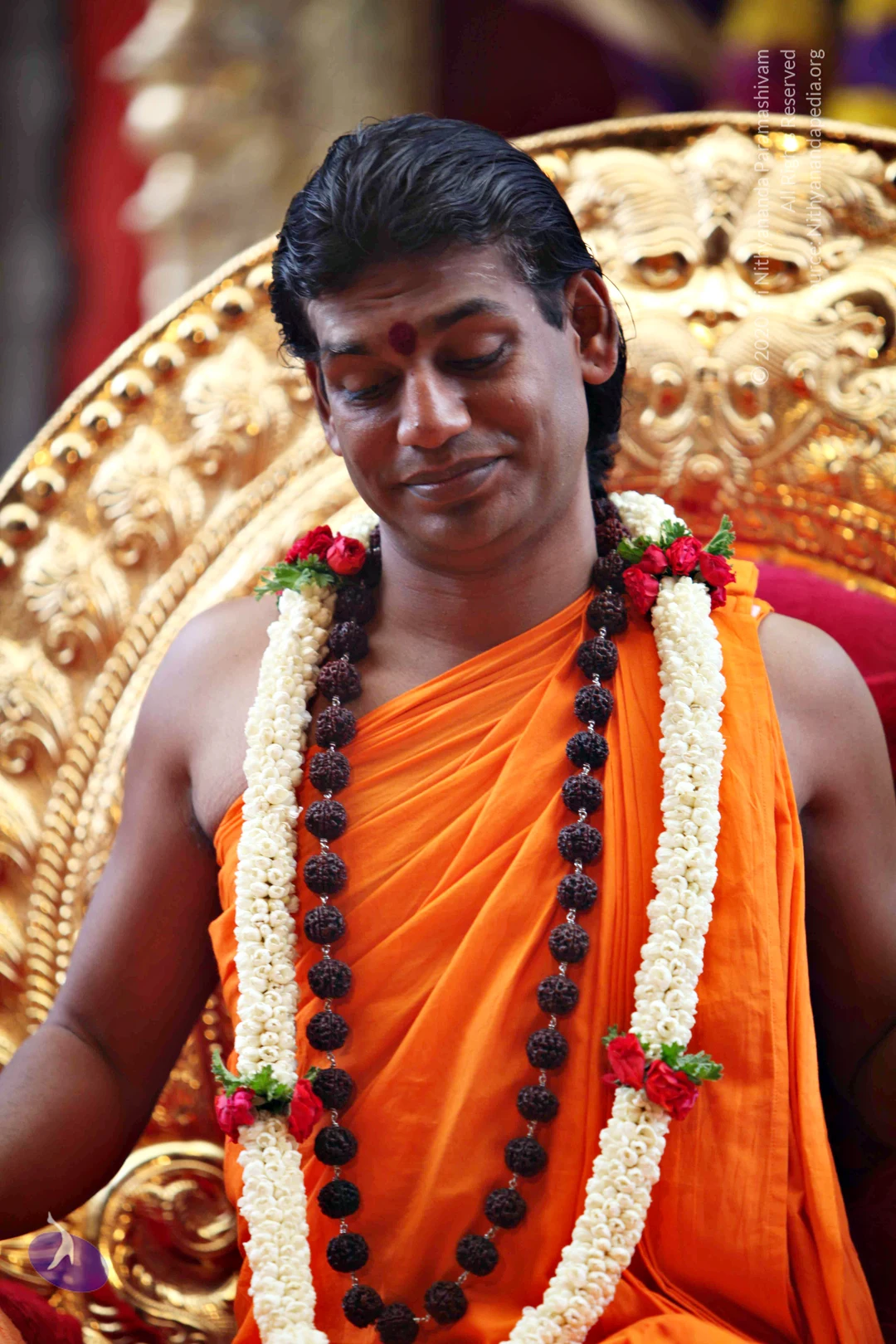
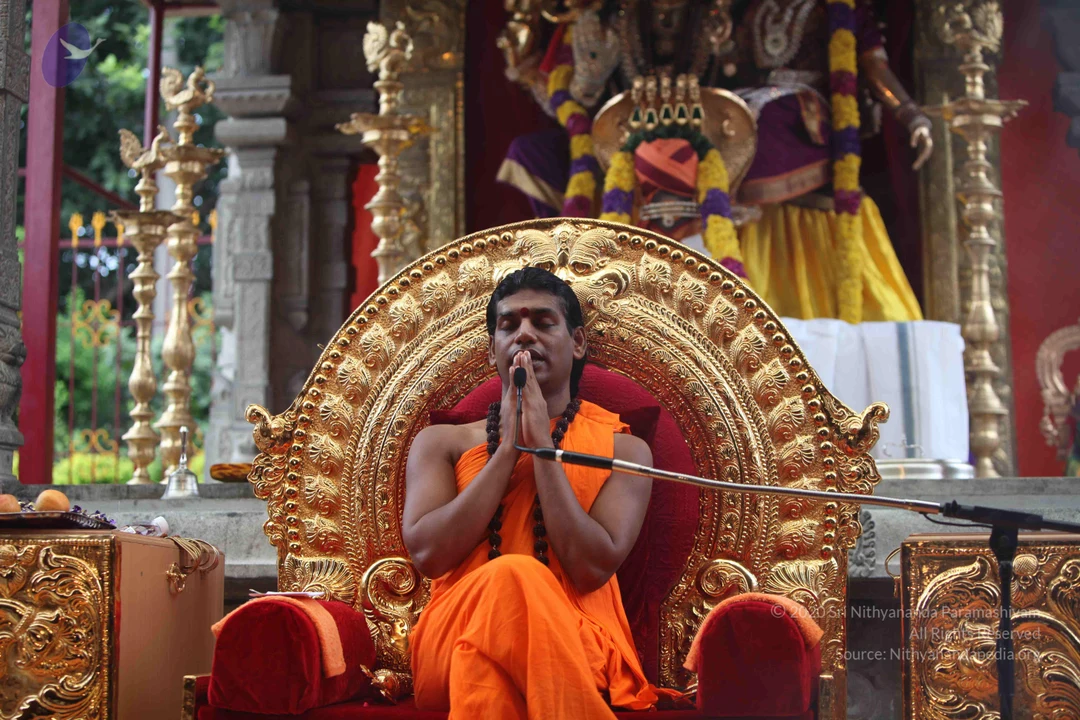
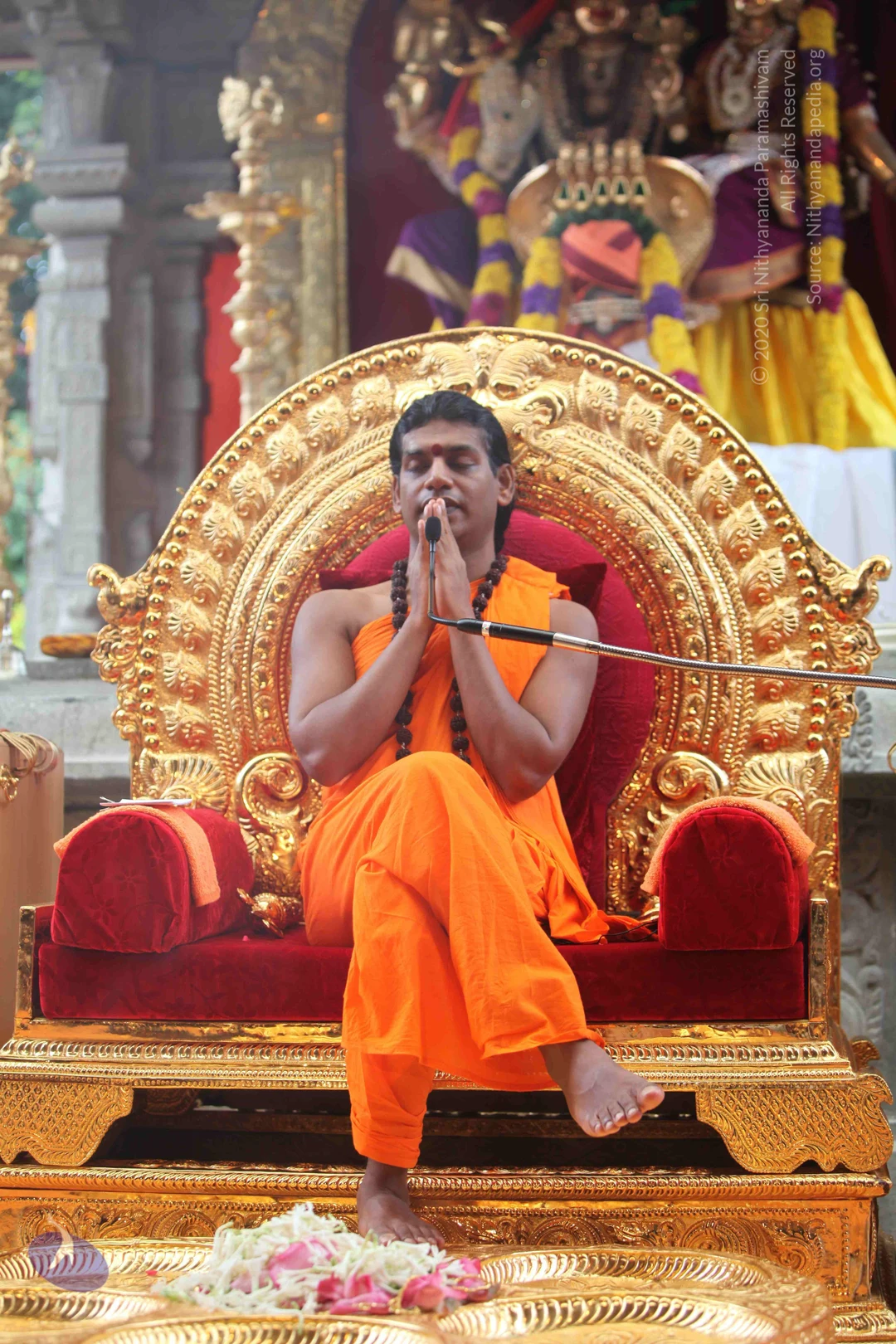
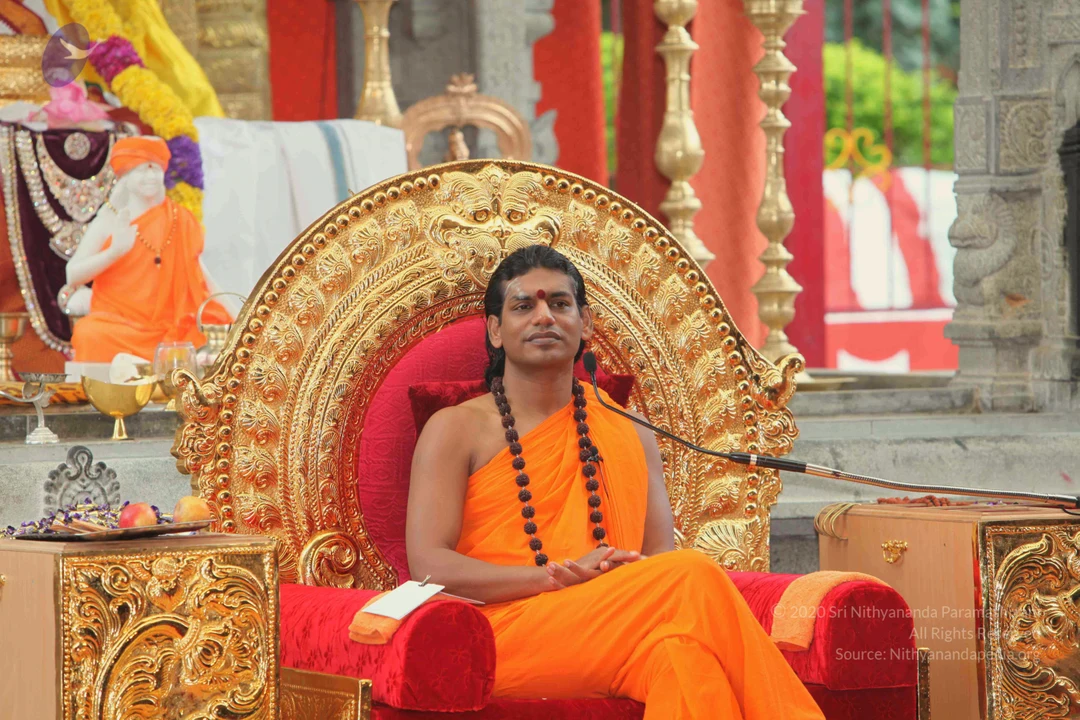
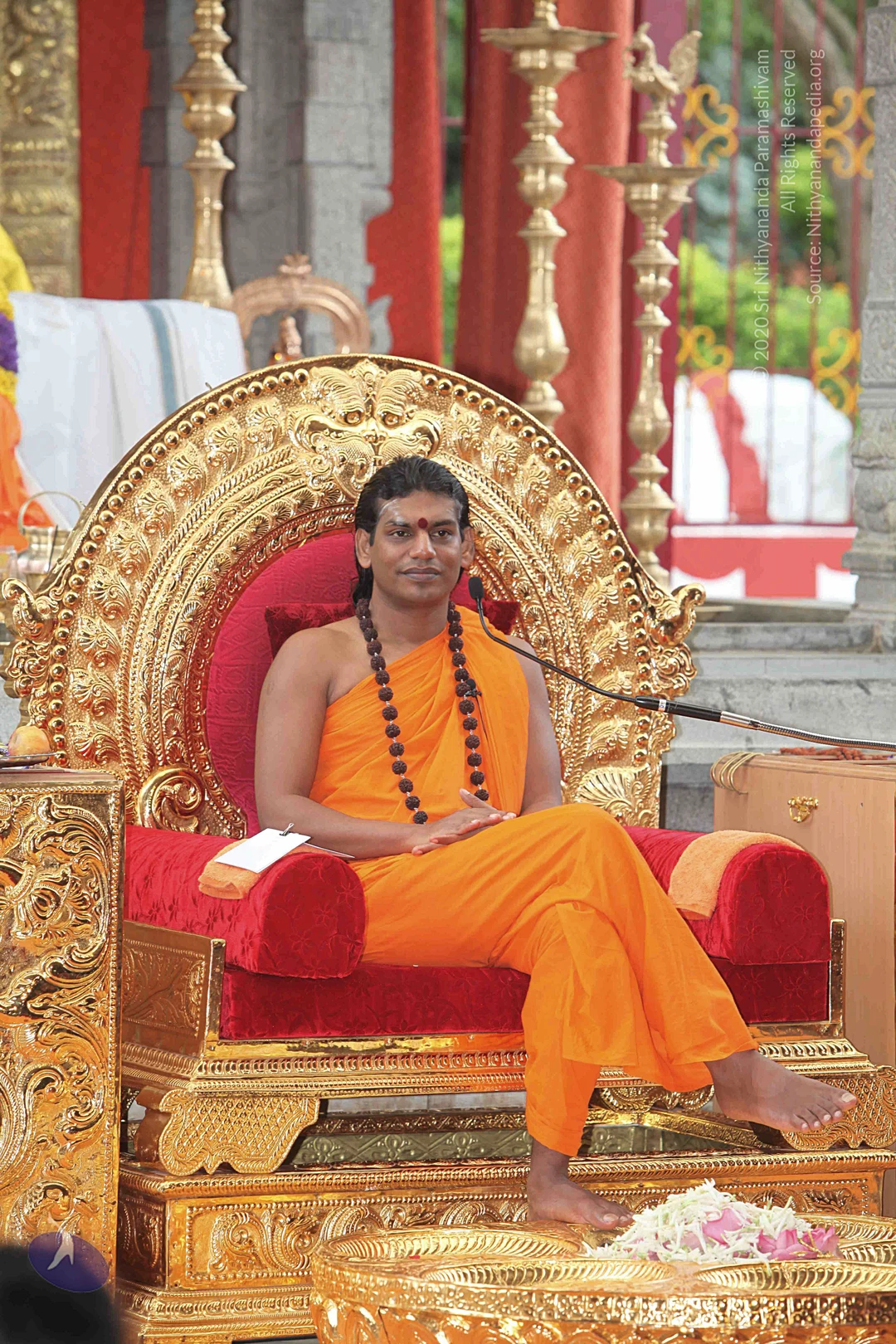
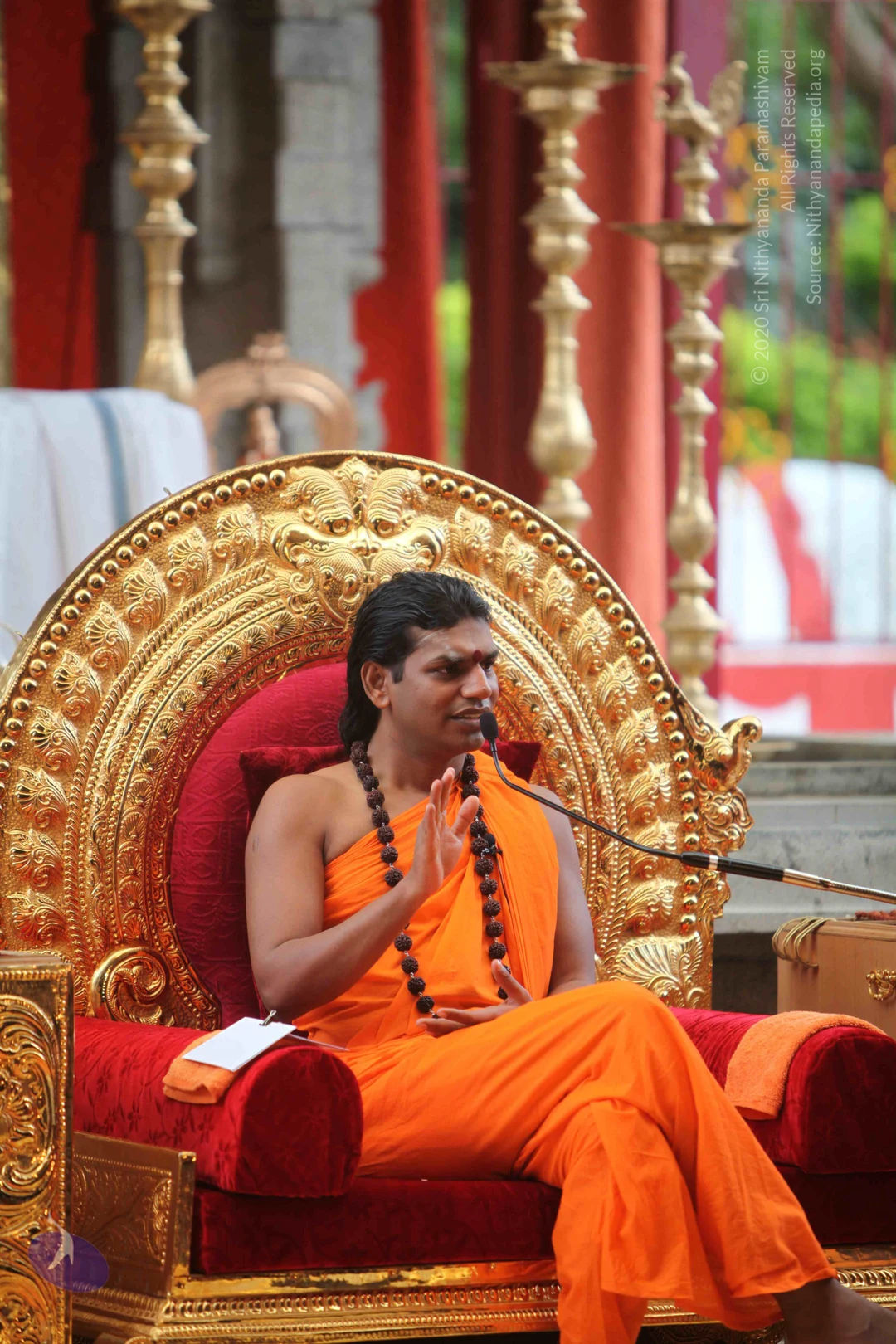
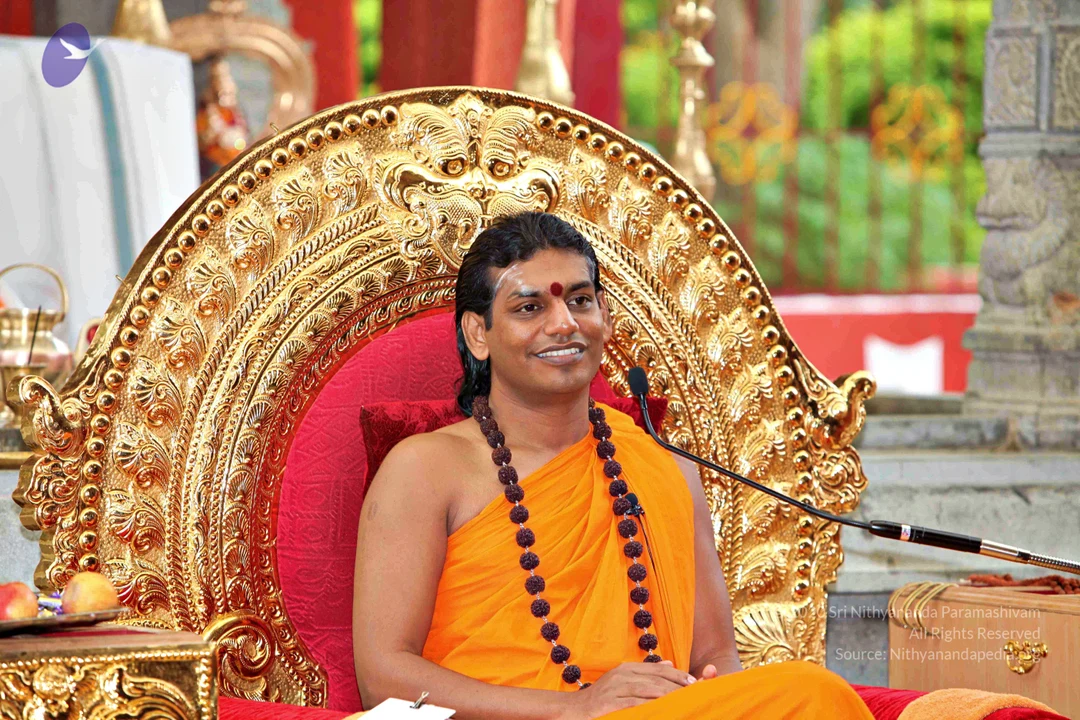
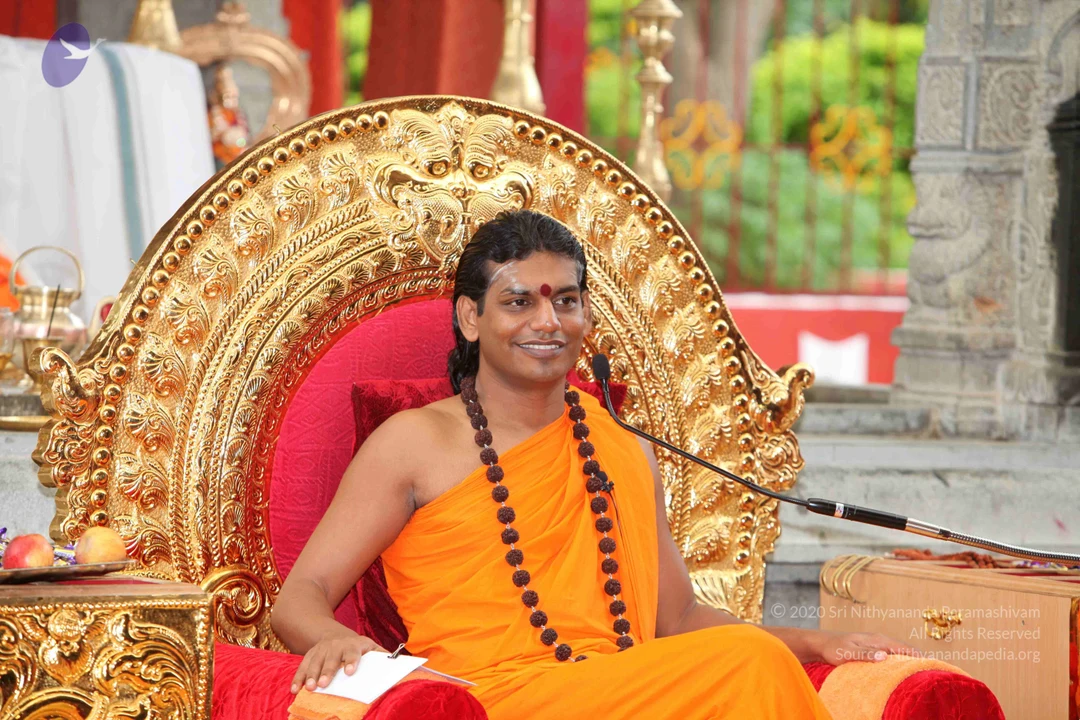
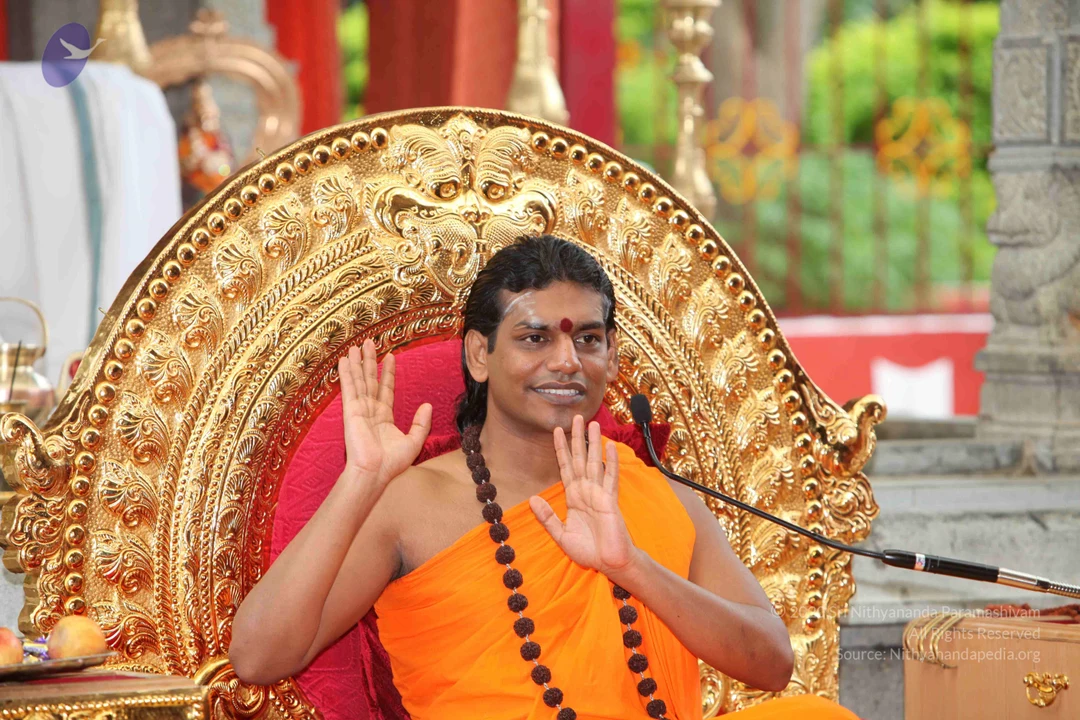
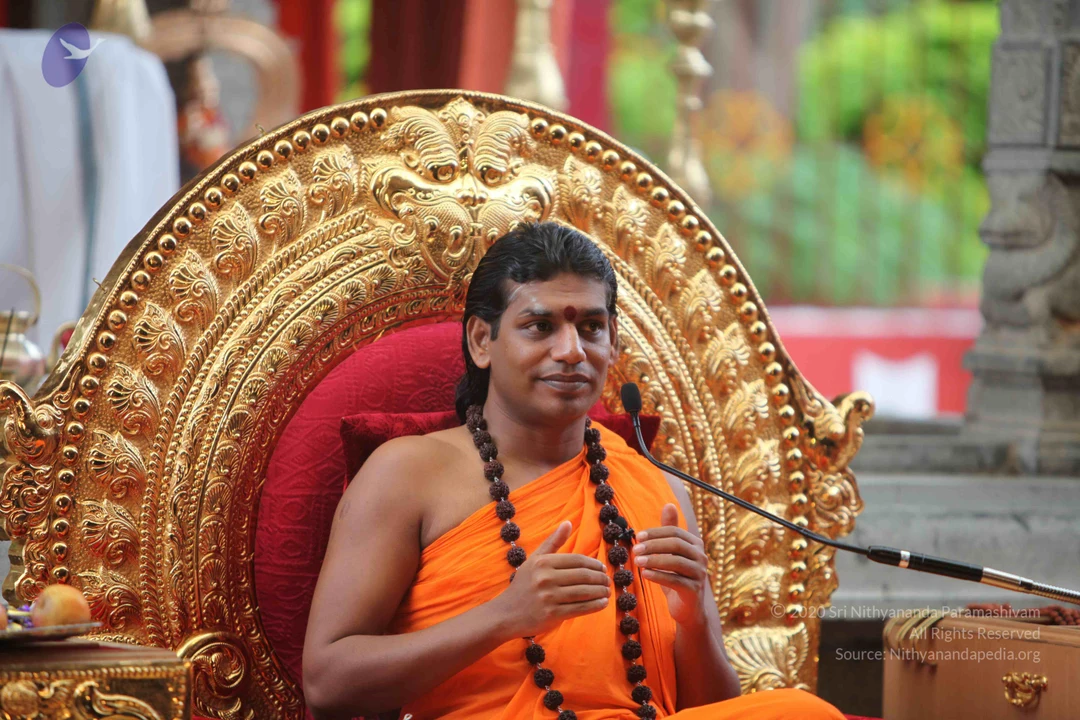
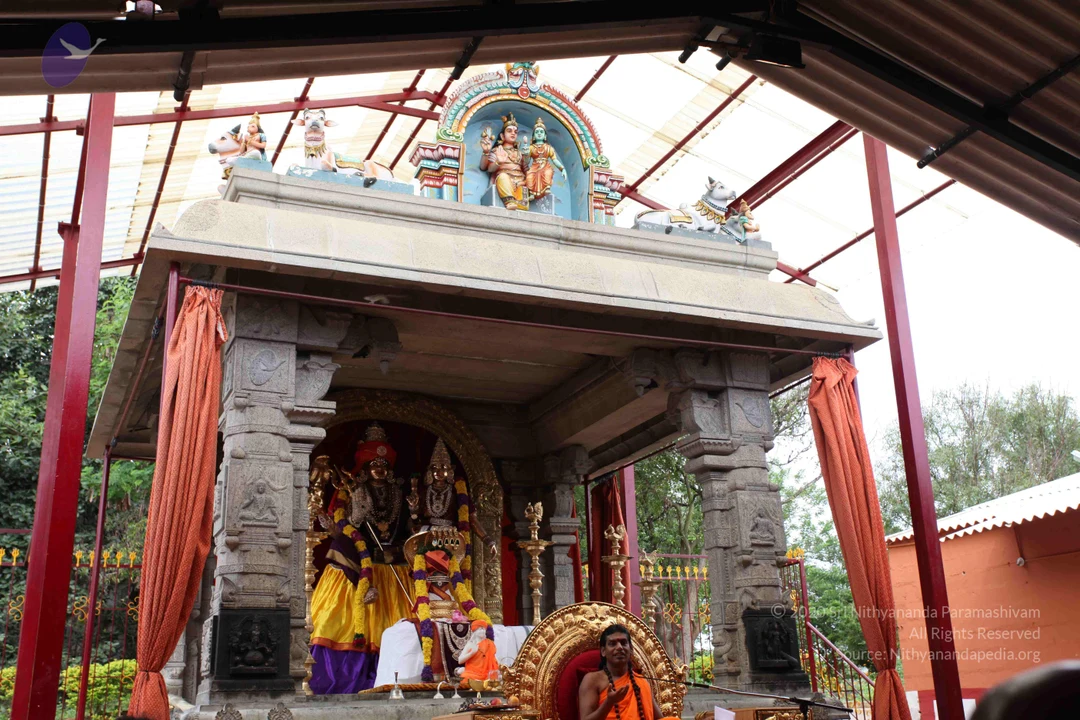
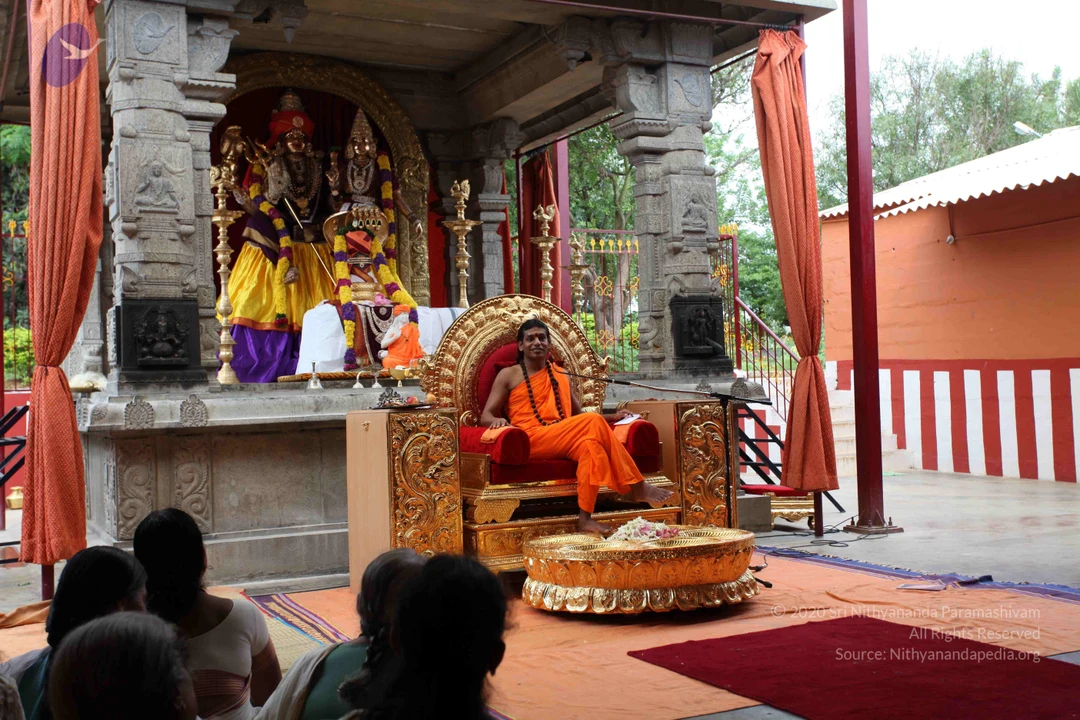
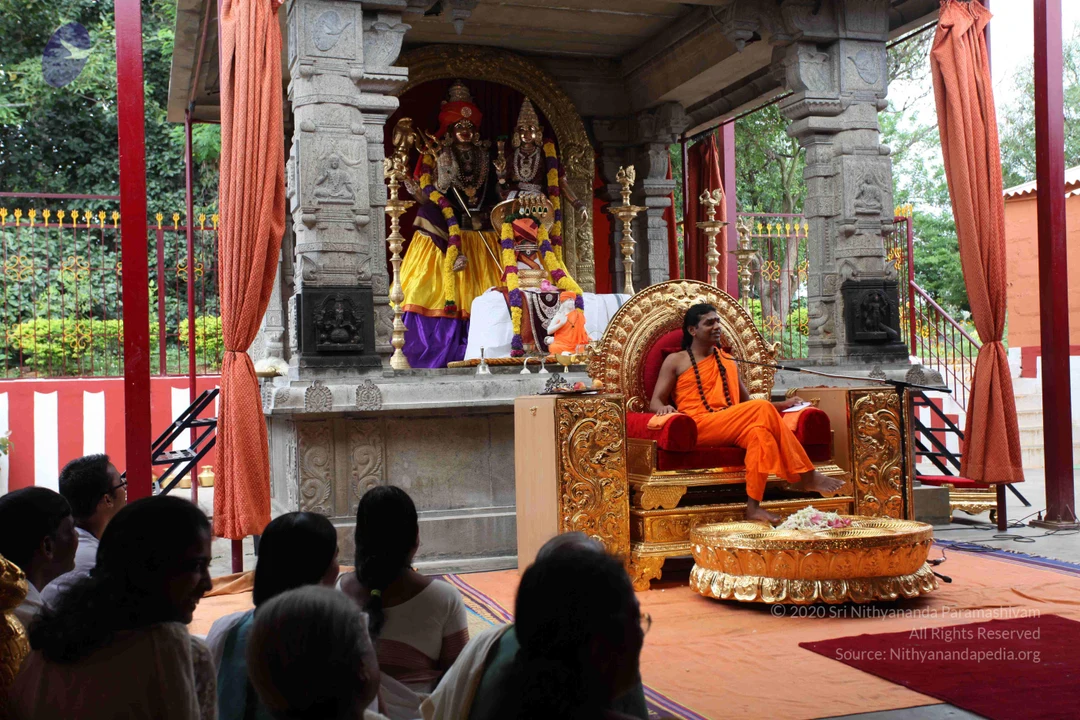
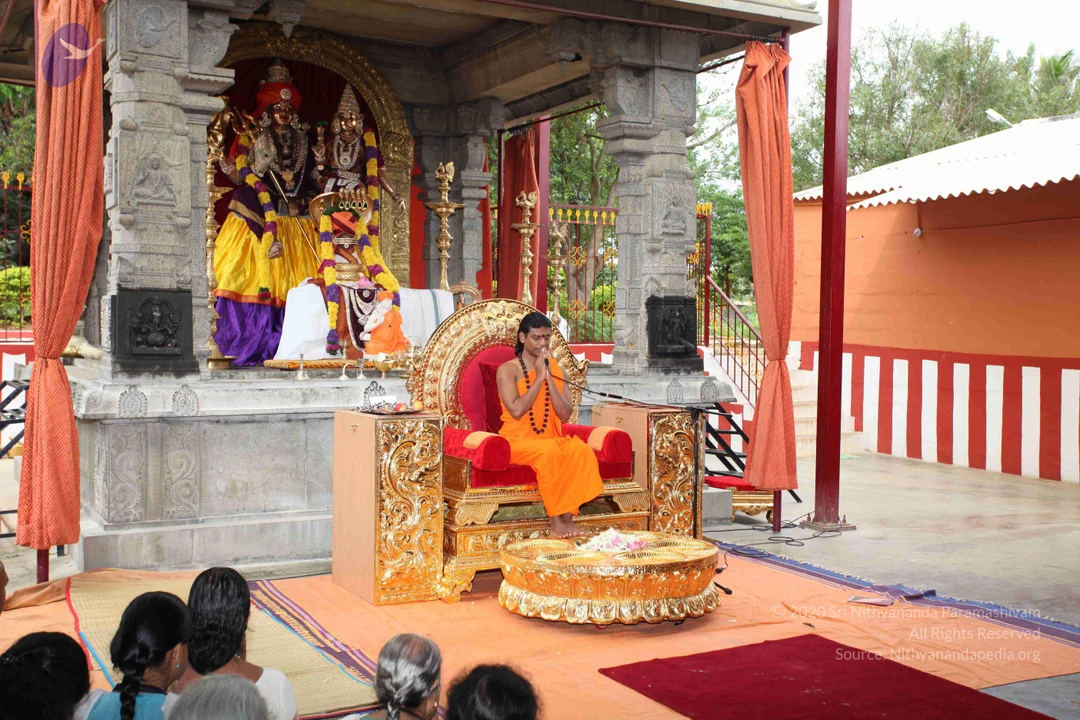
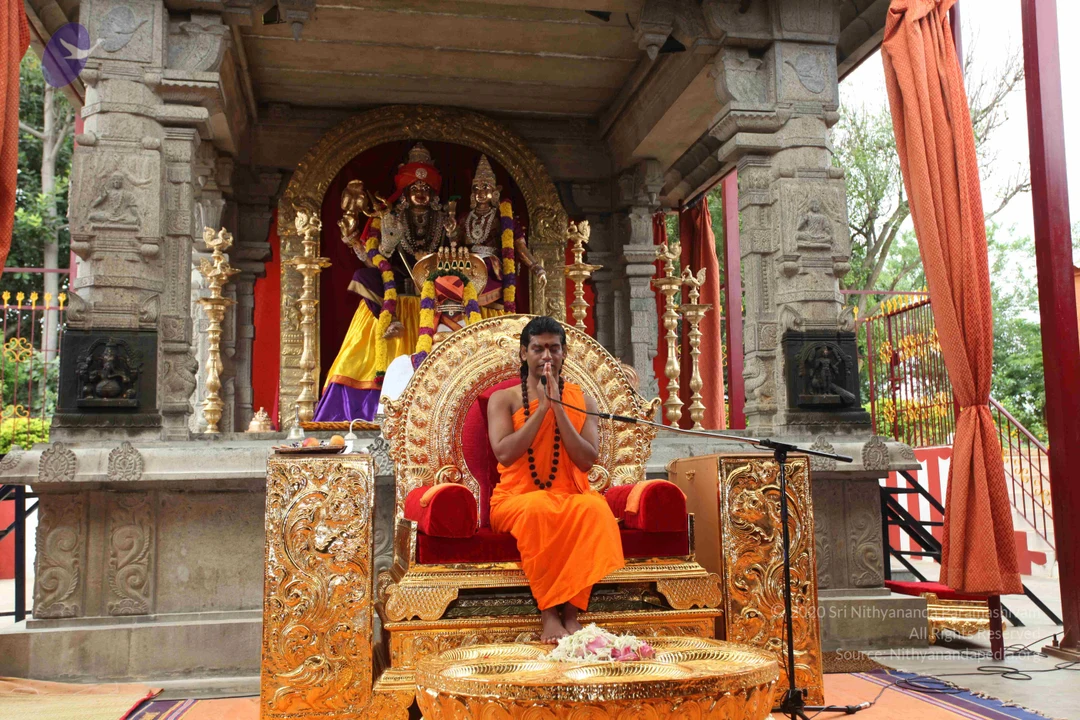
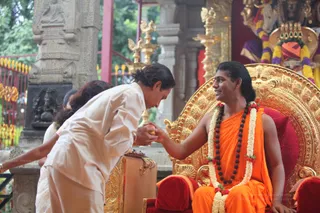
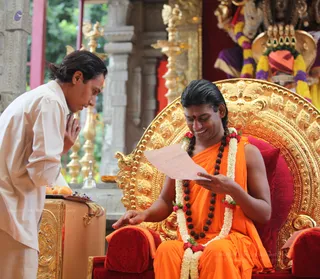
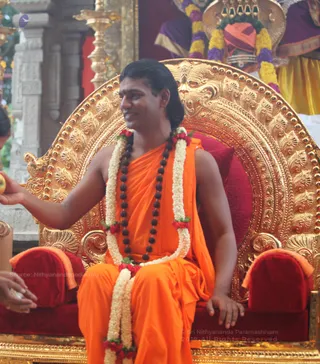
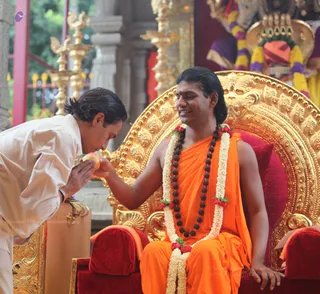
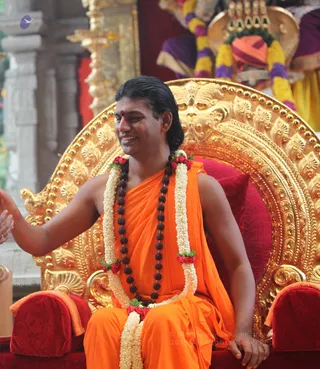
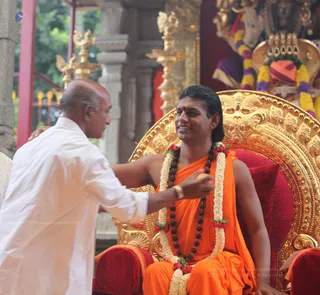
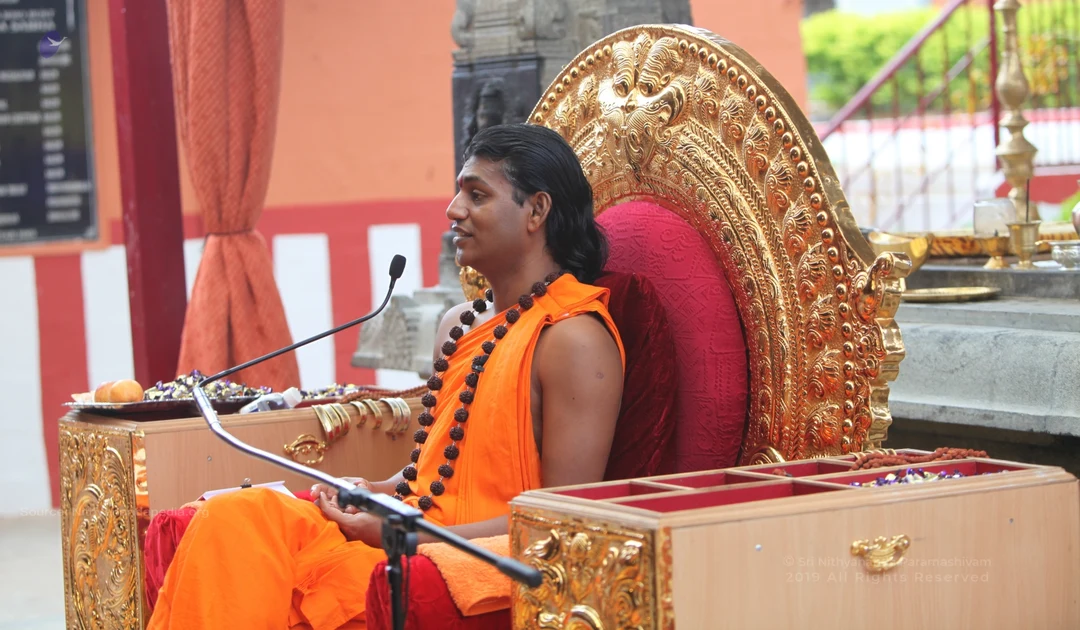
A photograph of a seated man in saffron-orange robes with long swept-back dark hair, wearing a long rudraksha mala and a white flower garland with red blossoms, sitting on an ornate gold throne with red cushions. He smiles as a man in white ritual clothing bends forward to offer him a fruit or ritual item held in both hands. Behind them stands a gold ornate lamp stand and stone temple pillars, with a large deity murti draped in purple and yellow garlands and an orange turban visible in the background. Green foliage and a red railing frame the setting.A photograph of a seated man in saffron-orange robes on an ornate gold throne with red cushions, wearing a white flower garland and a dark rudraksha mala, with a red tilak on his forehead. He smiles while reading a sheet of paper and rests his other hand on the armrest. Standing to his left, a man in white kurta and dhoti with hands in anjali mudra bows toward him, and a tray of fruit sits on a golden stand nearby. Behind them stand a golden kalasha and a deity murti draped in a garland and orange cloth. Swamiji (probable): the seated man has long swept-back hair, saffron robes, rudraksha mala and garland matching the throne-seated presiding role.A photograph of a seated man in saffron-orange robes with a rudraksha mala and a white and red flower garland, seated on an ornate gold throne with red velvet cushions and armrests. He smiles and extends one arm toward someone at the left edge holding an orange fruit. Behind him are a gold-and-red deity murti with a crown and garlands in purple, yellow and red, and a golden lamp stand. Swamiji (probable): long swept-back hair, saffron robes, rudraksha mala and a garland, seated on a throne in an in_person setting.A photograph of a man in saffron-orange robes seated on an ornate gold-and-red throne, wearing a long white and orange-red garland of jasmine and roses and a dark rudraksha mala around his neck, with a red tilak on his forehead. A younger man in a cream-colored shirt leans forward and bows to take a red apple from his hand, eating it from his fingers. Behind them stands a deity murti draped in purple and yellow garlands with an orange headcloth, flanked by brass oil lamps and a pink-and-gold temple railing with greenery. Two people are visible.A smiling man in saffron-orange robes sits on an ornate gold throne with red cushions, gesturing with his raised left hand as he speaks. He wears a long rudraksha mala and white and red flower garlands draped over his shoulders and chest, with a red bindi on his forehead. He has long dark hair swept back. Behind him stand deity murtis draped in yellow and purple garlands and an orange cloth, beside gold temple pillars. The scene suggests a satsang discourse in a temple setting. a person is seated in the central throne position with saffron robes, rudraksha mala and flower garlands, though appearance cues alone are not fully certain.A seated man in saffron-orange robes sits on a large gold ornate throne with red cushions, wearing a long rudraksha mala with dark beads and a white and red flower garland, with a red bindi on his forehead and his hair swept back. Beside him, a bald older man in a white shirt and white dhoti leans in and touches his arm, offering something small held in his hand. Behind them stands a deity murti with a tall orange-and-purple flower garland and a gold crown-like headdress, flanked by brass lamps on a temple structure. The seated man has distinctive long swept-back hair, saffron clothing and a rudraksha mala, consistent with the page's Swamiji reference (probable). Two physical people are visible.

nithyananda-ashram

6 photosSource gallery
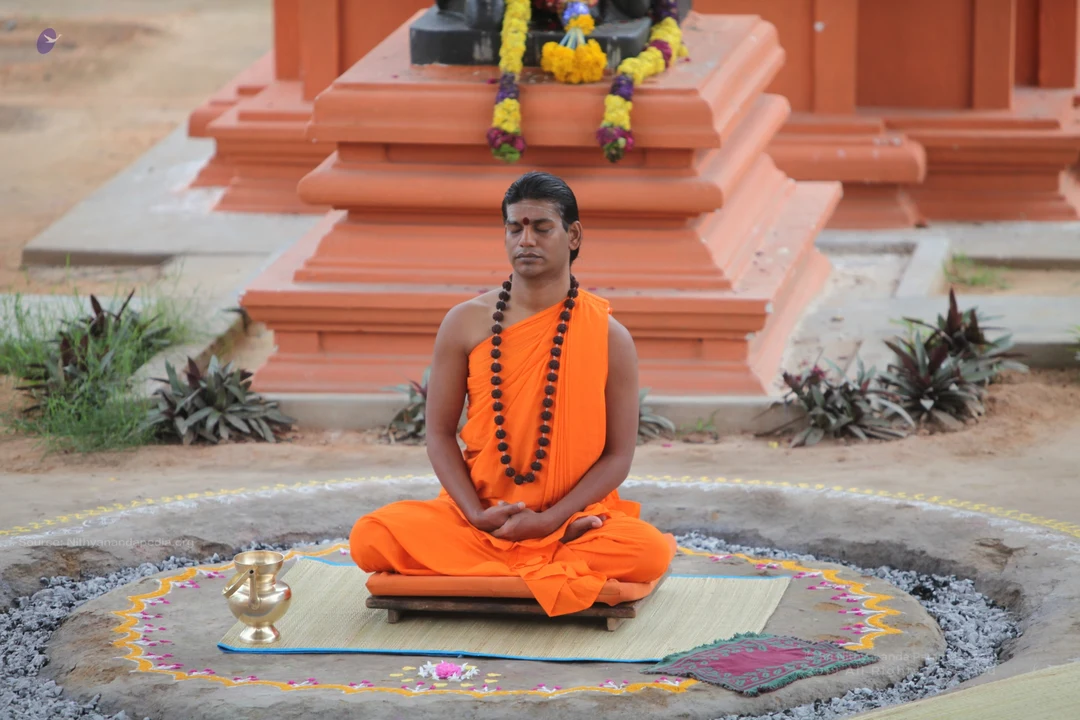
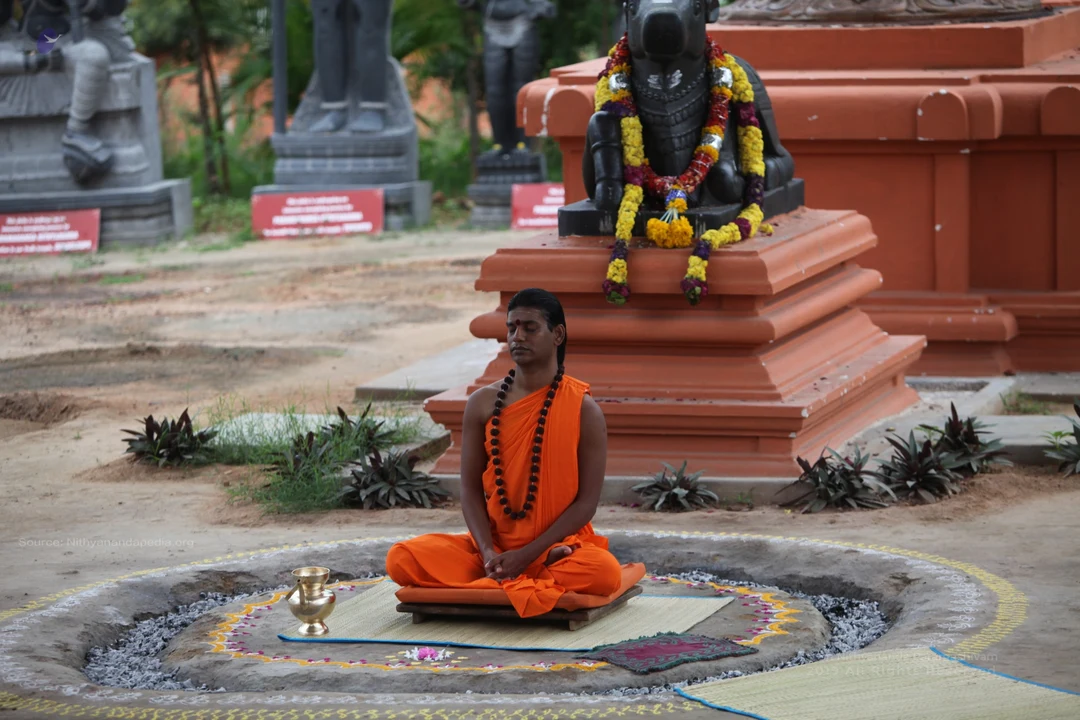
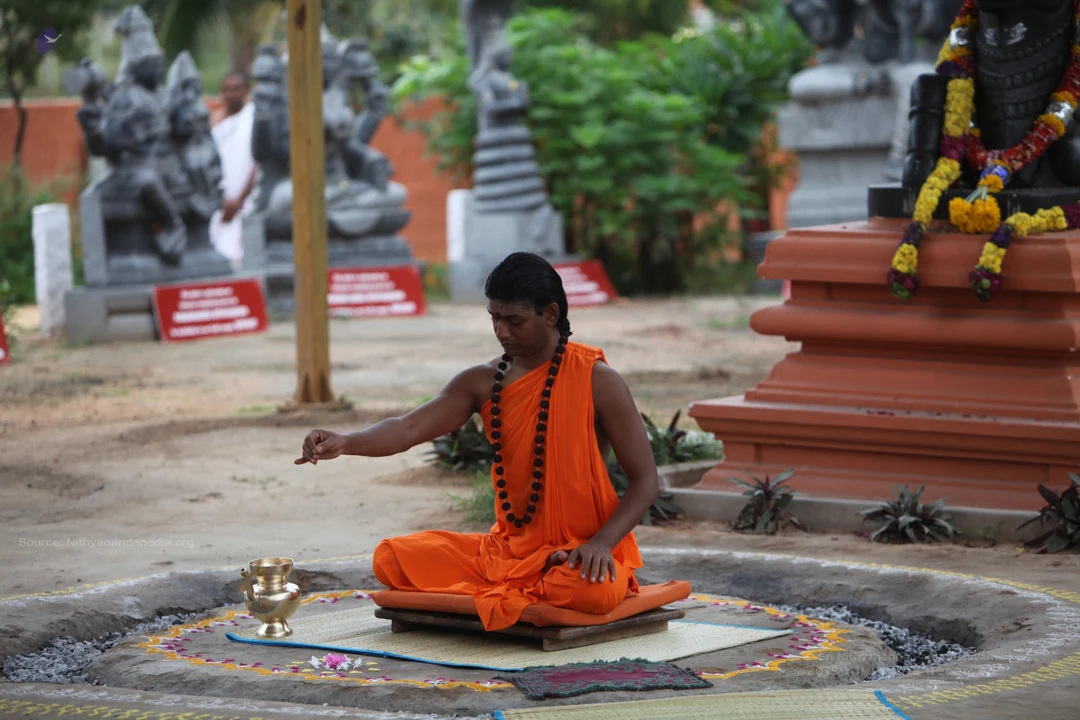
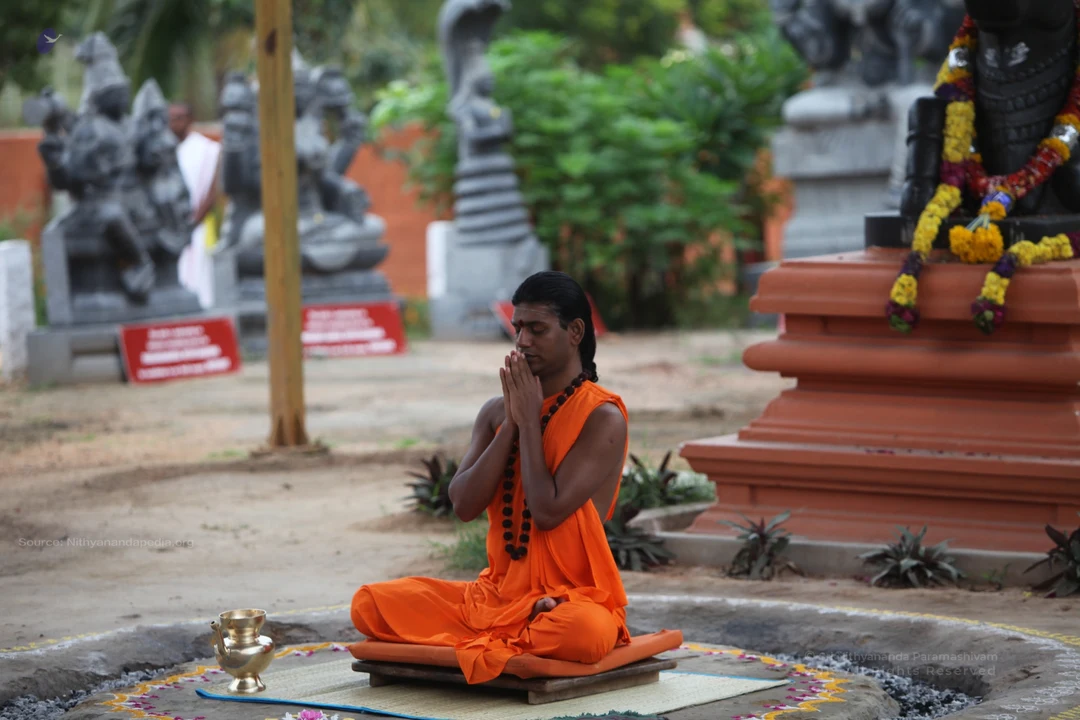
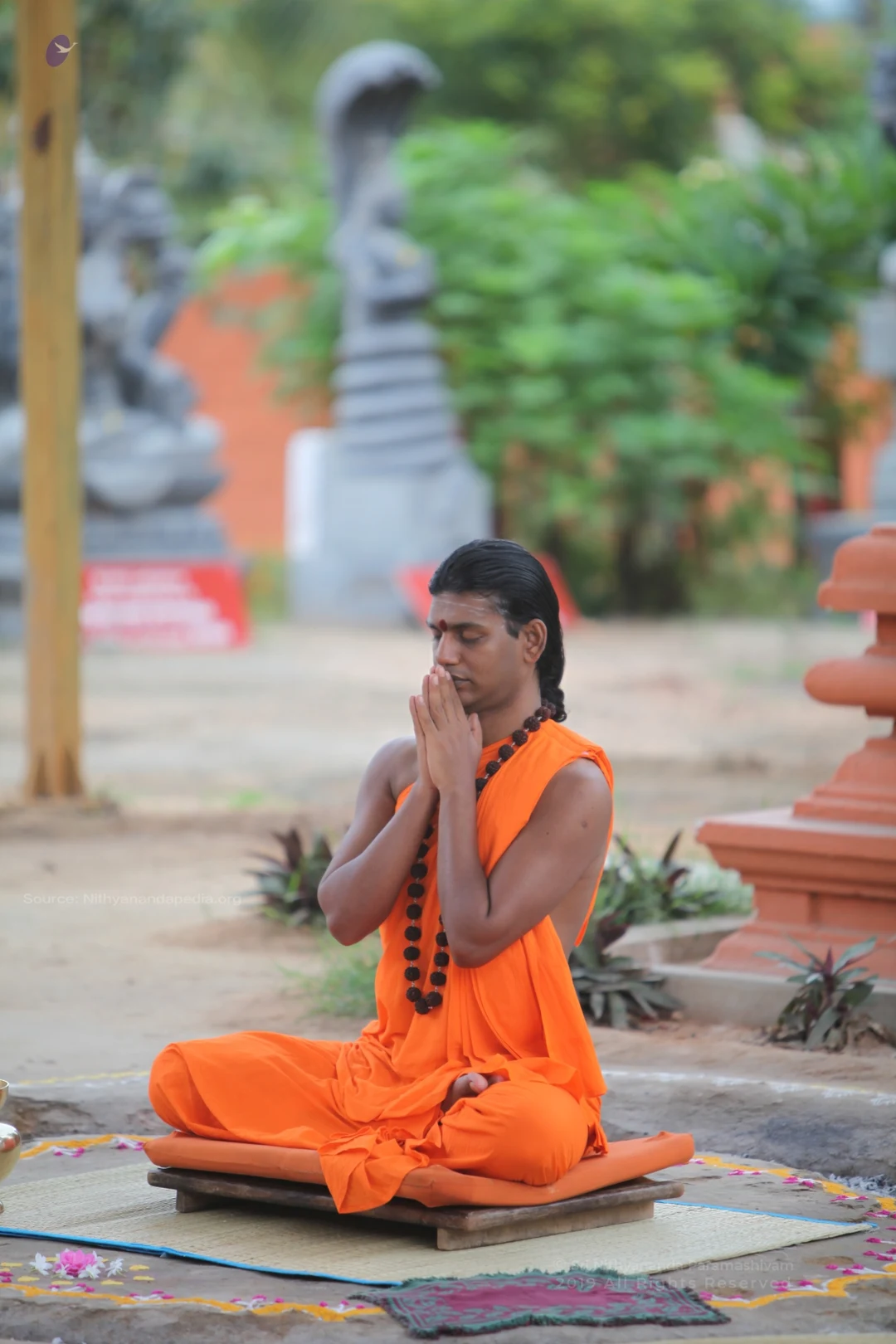
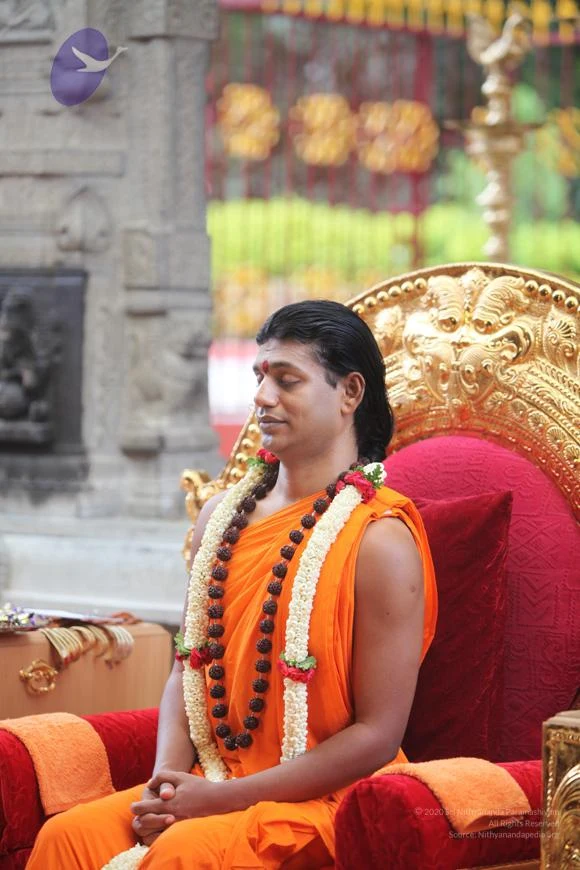
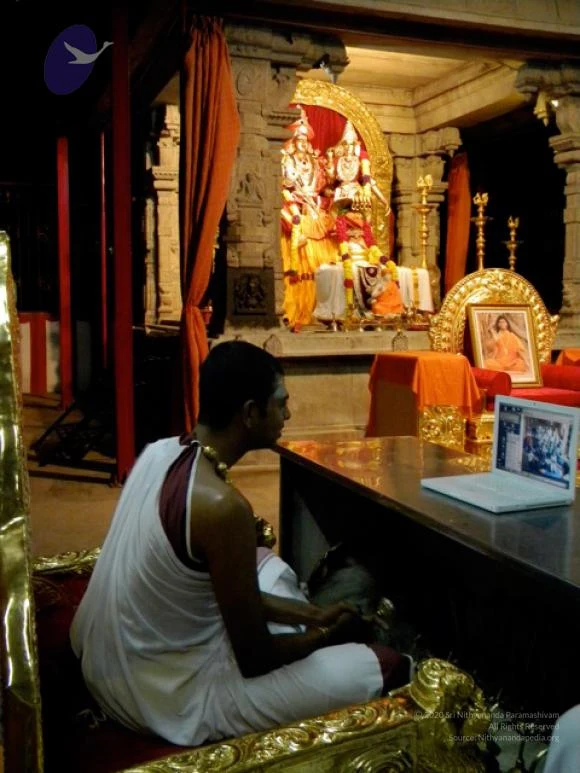
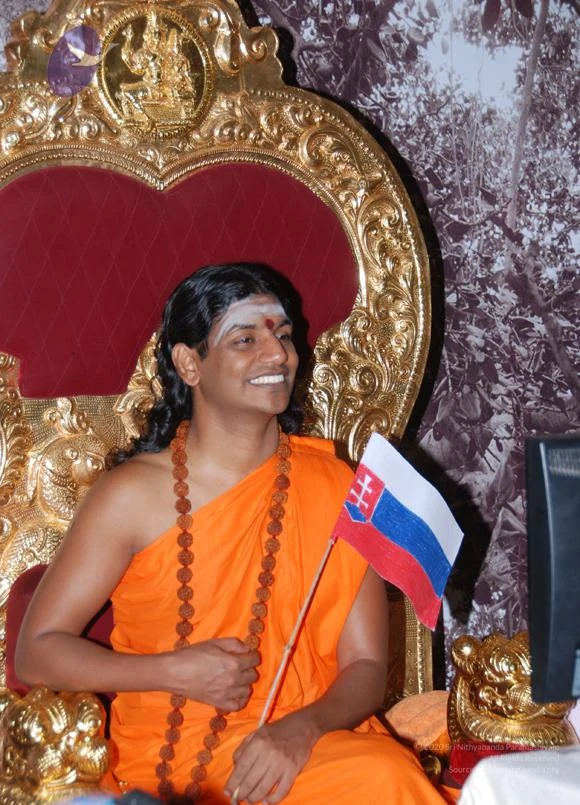
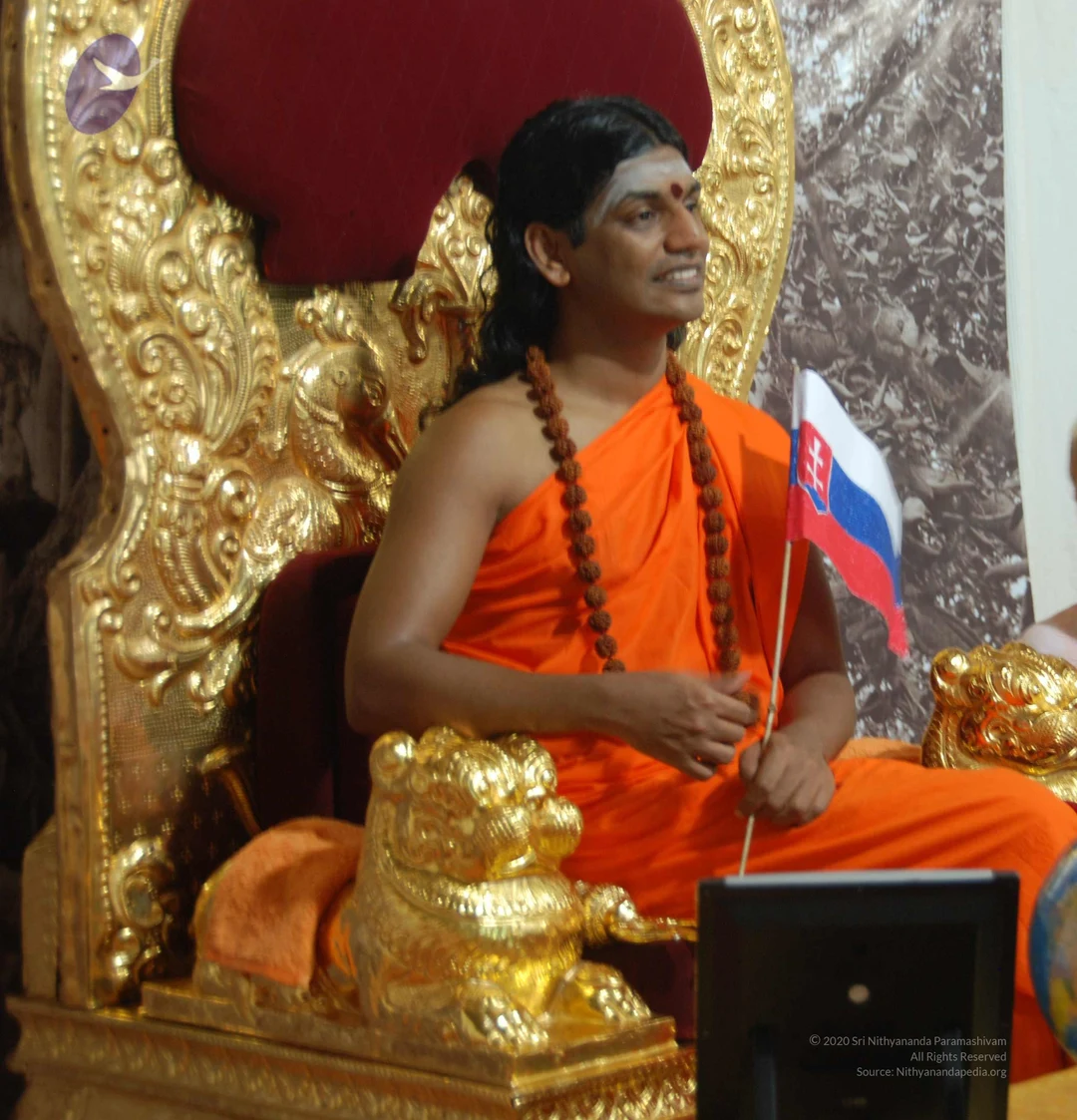
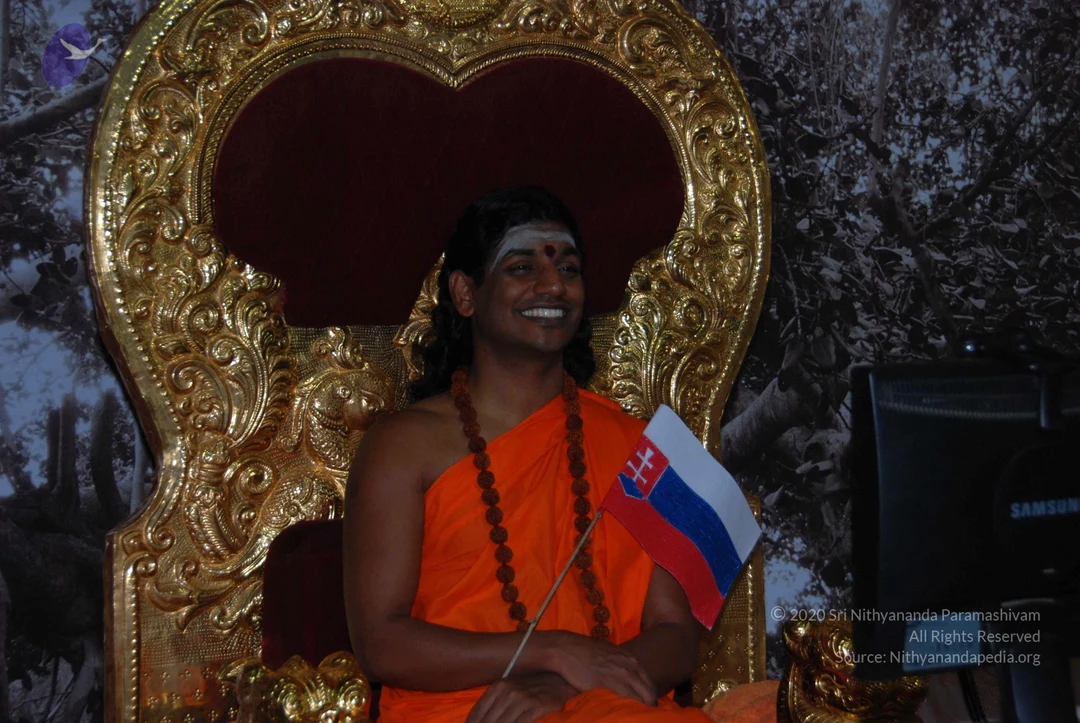
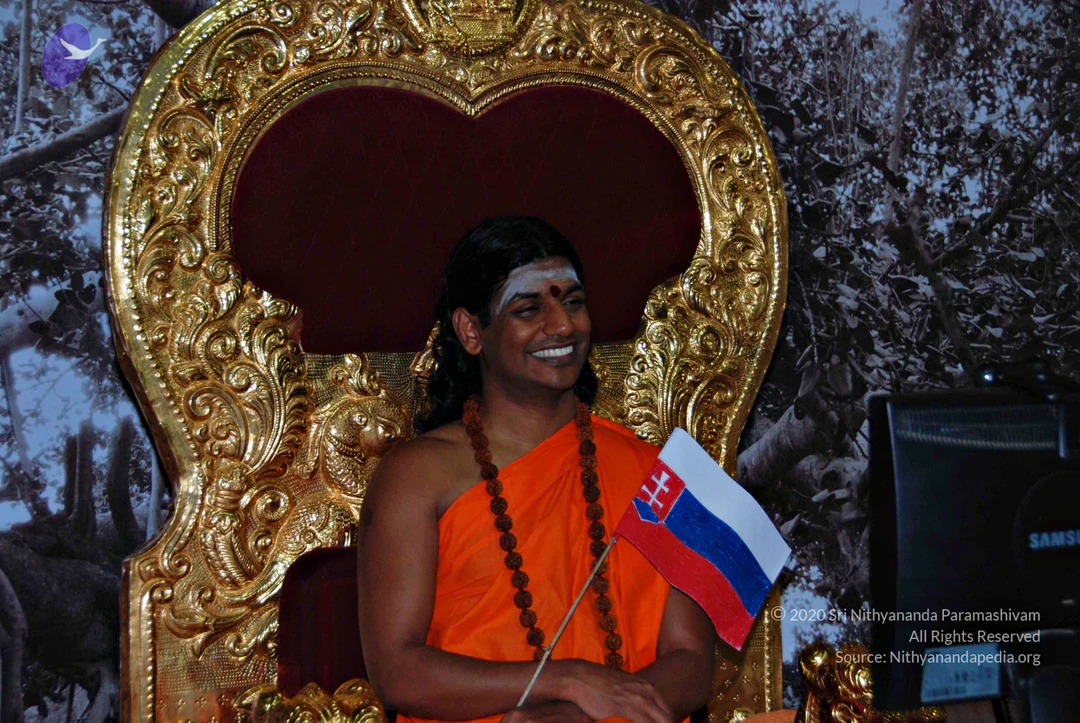
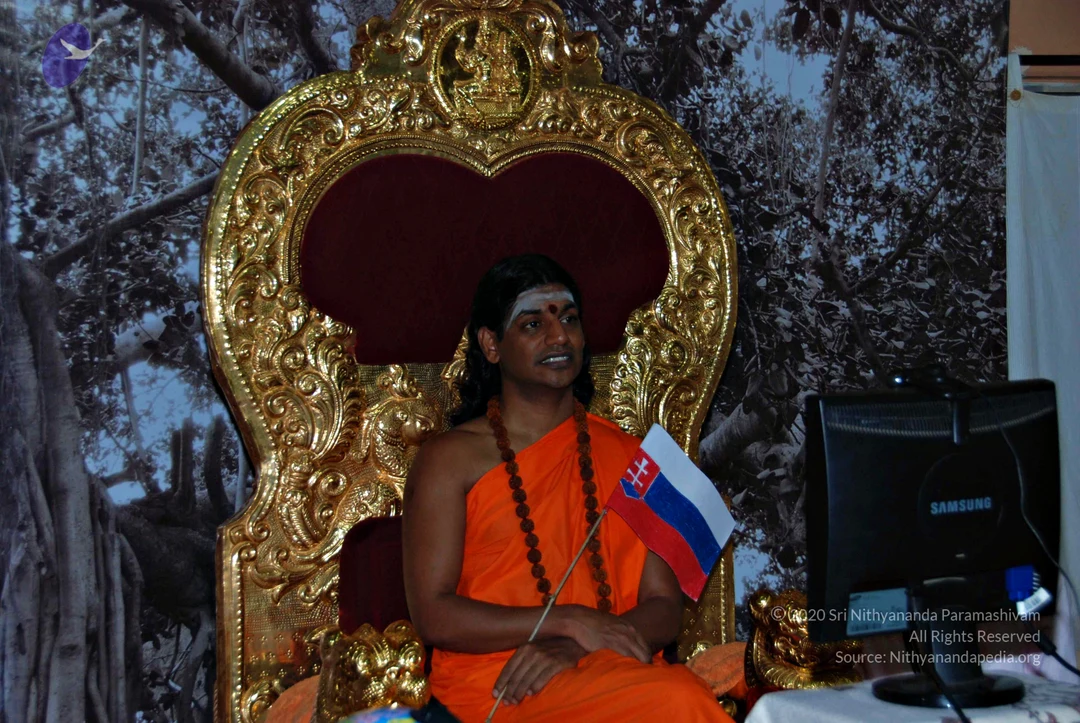
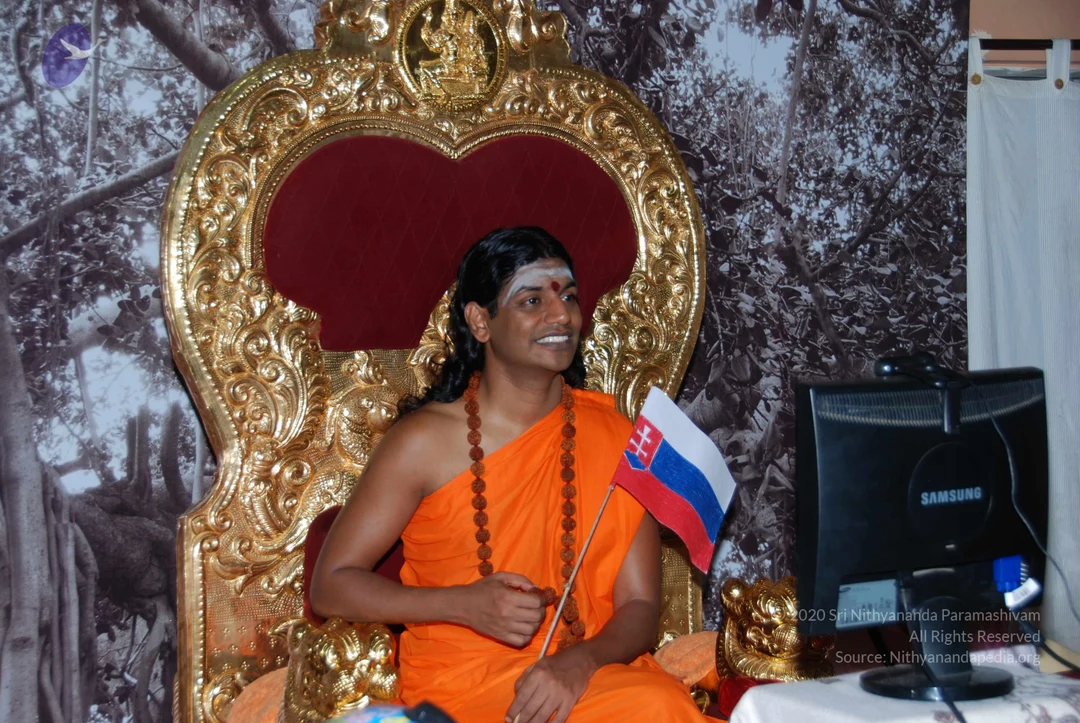
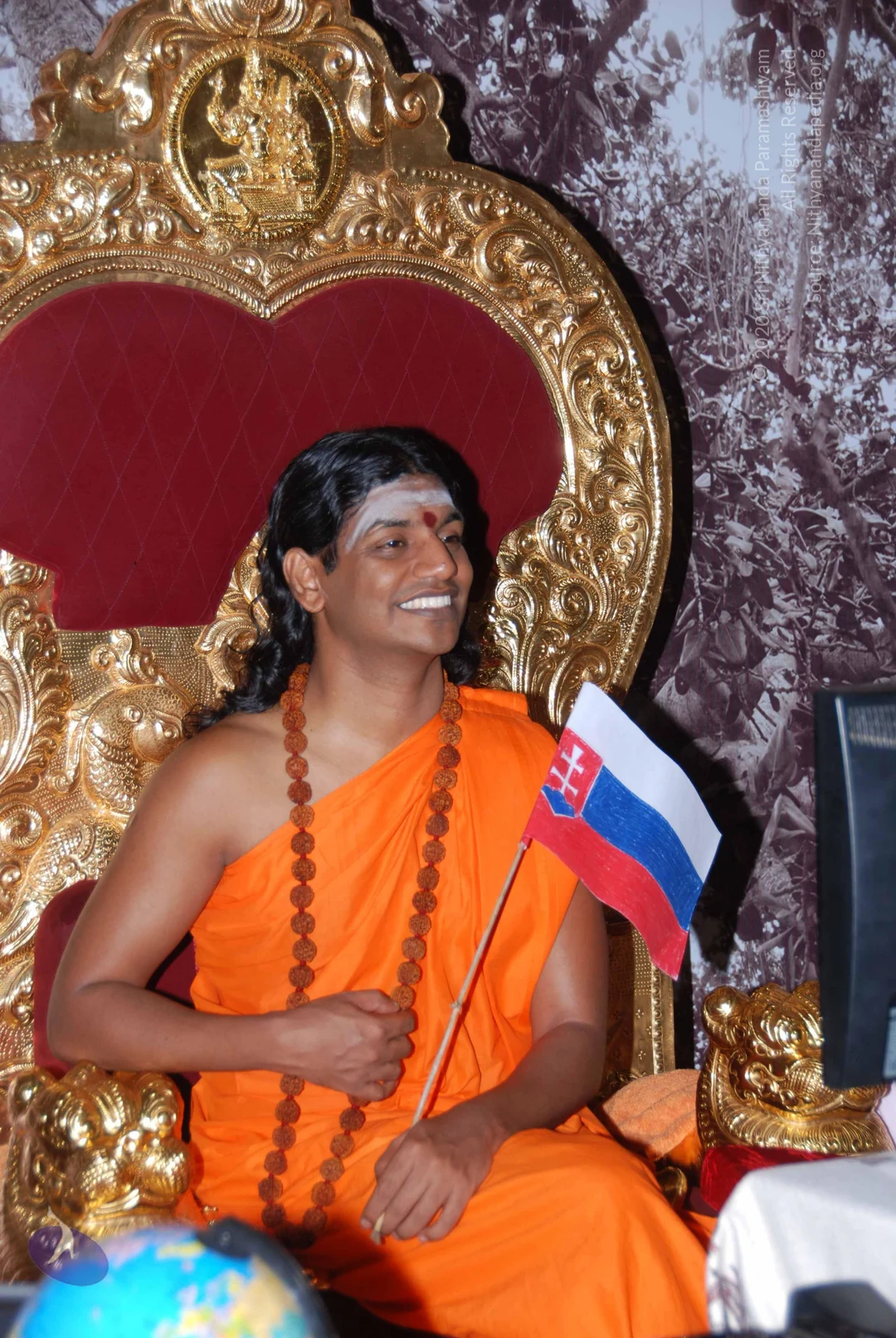
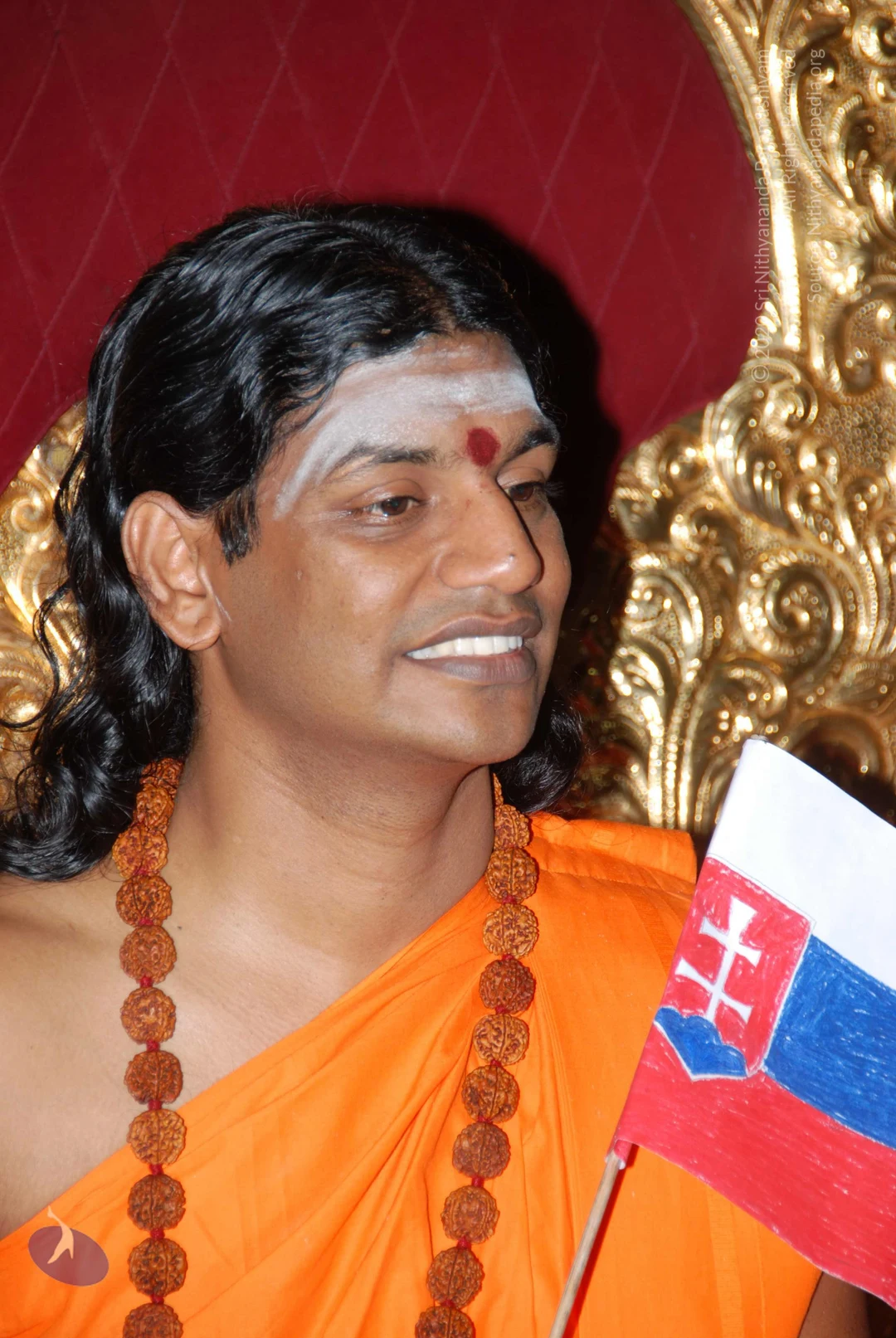
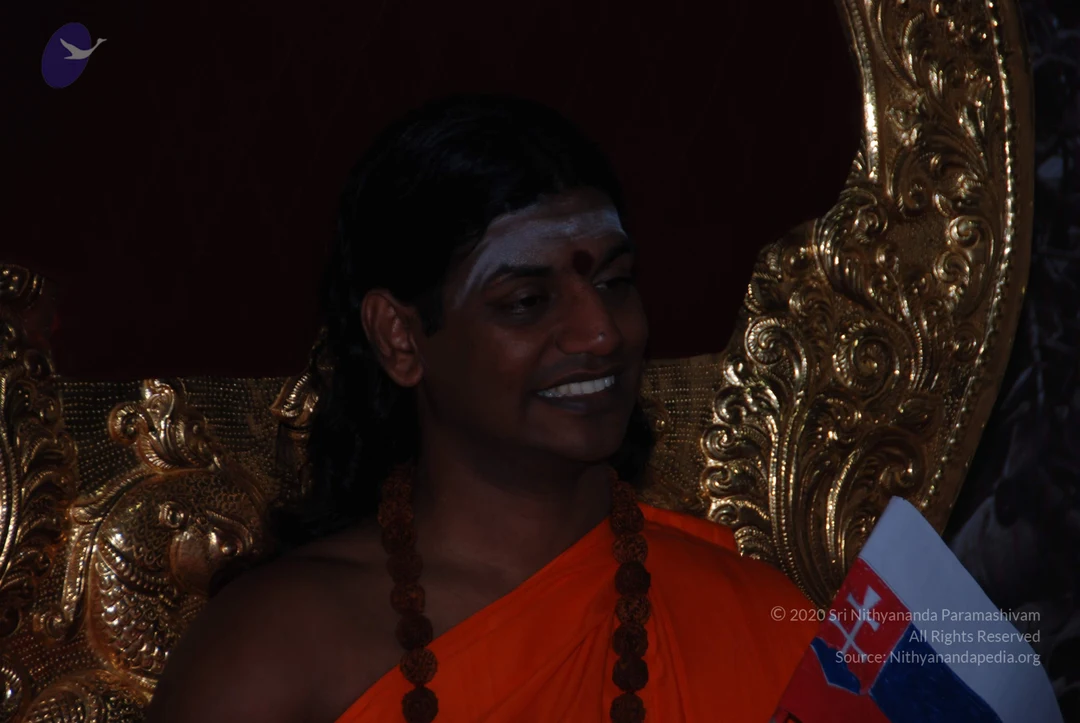
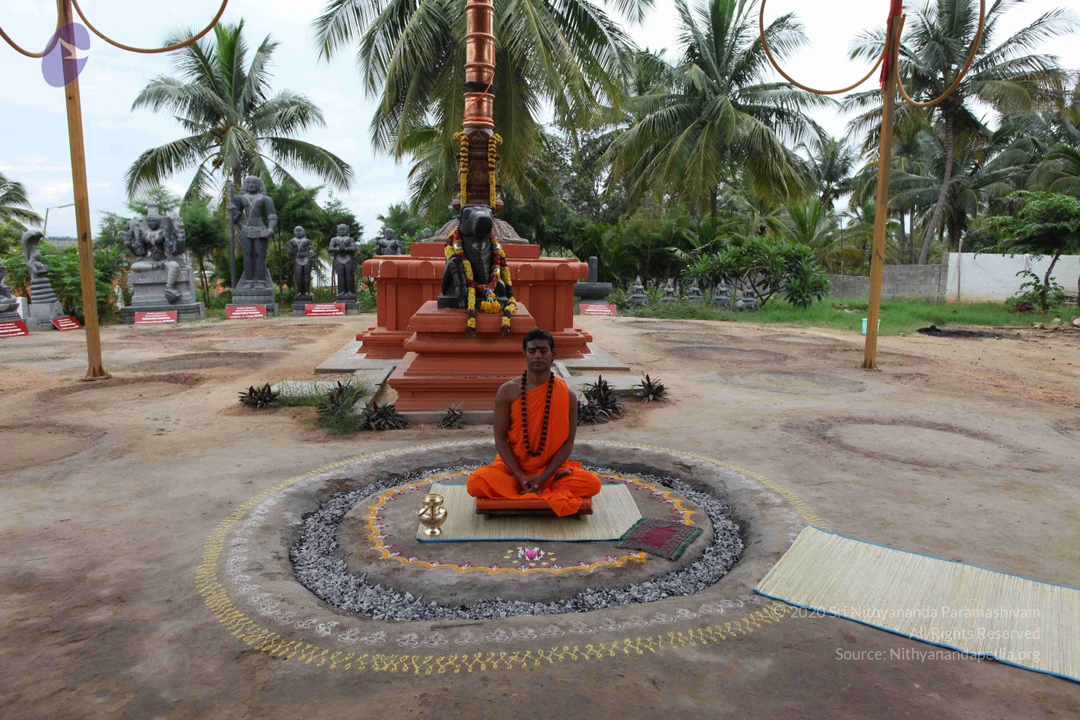
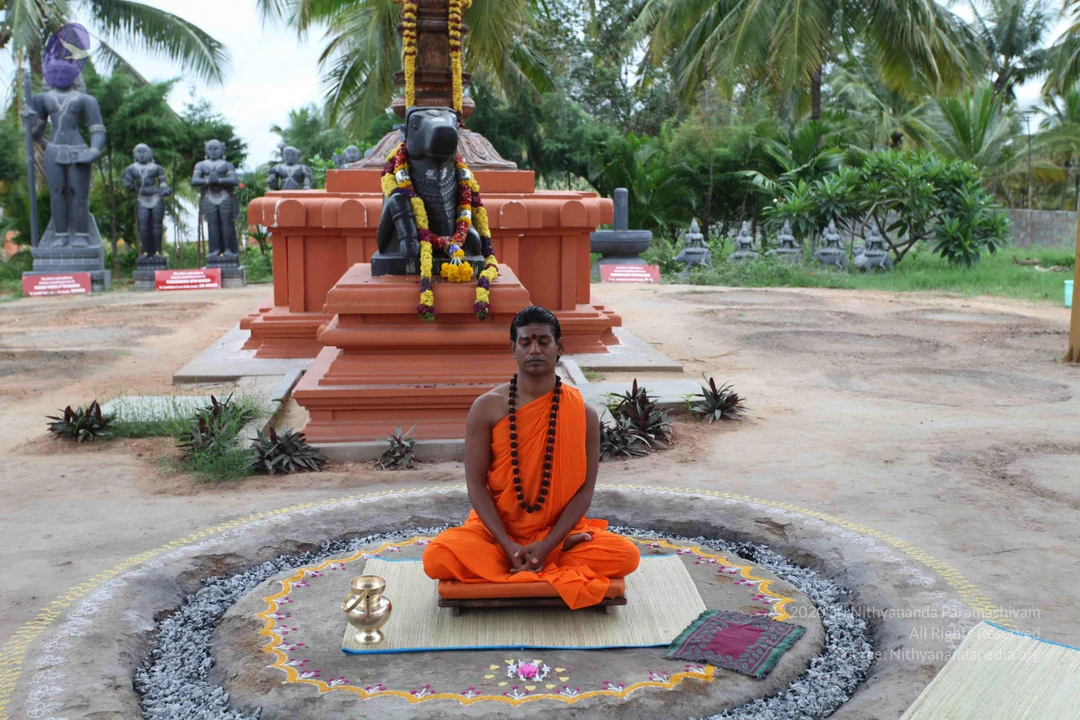
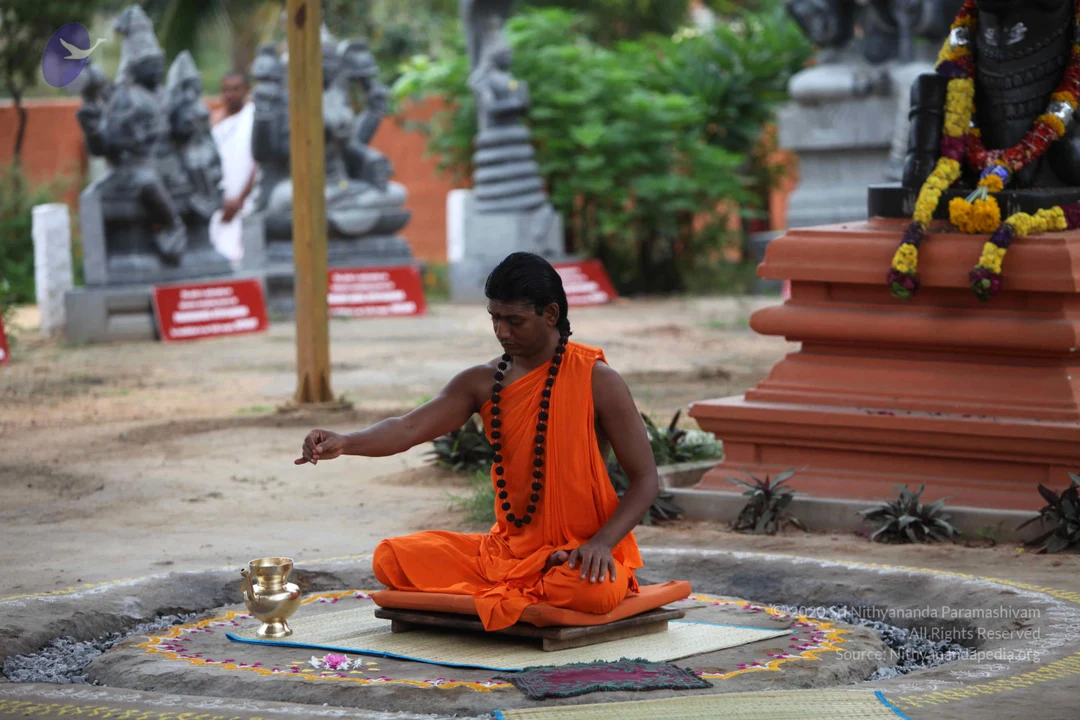
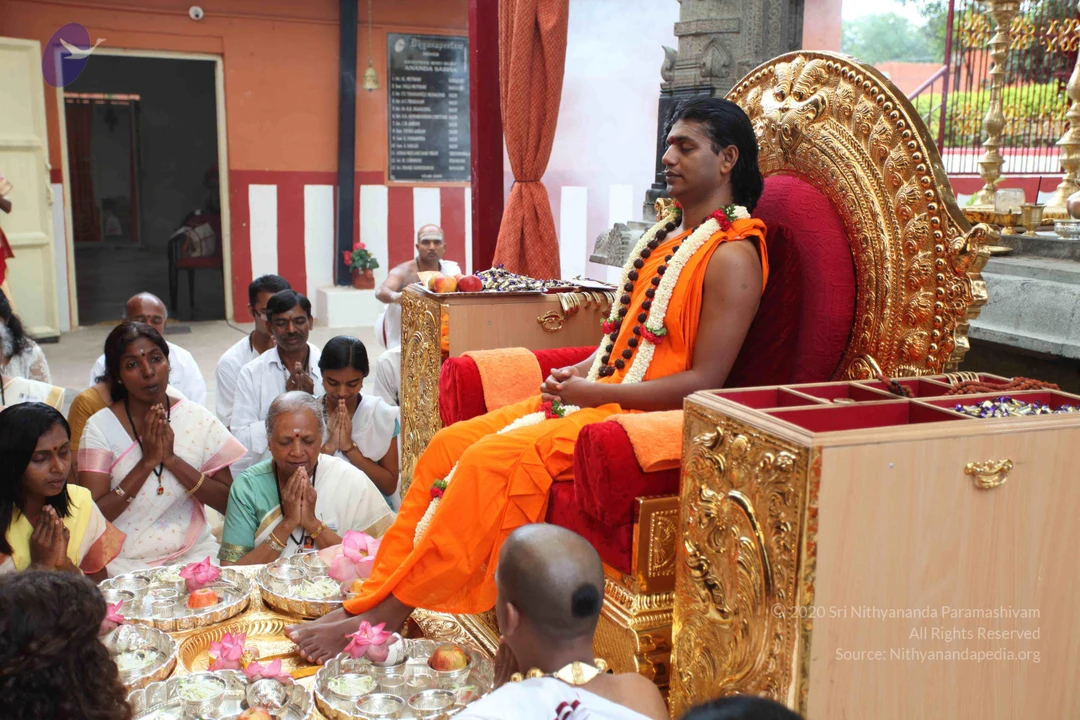
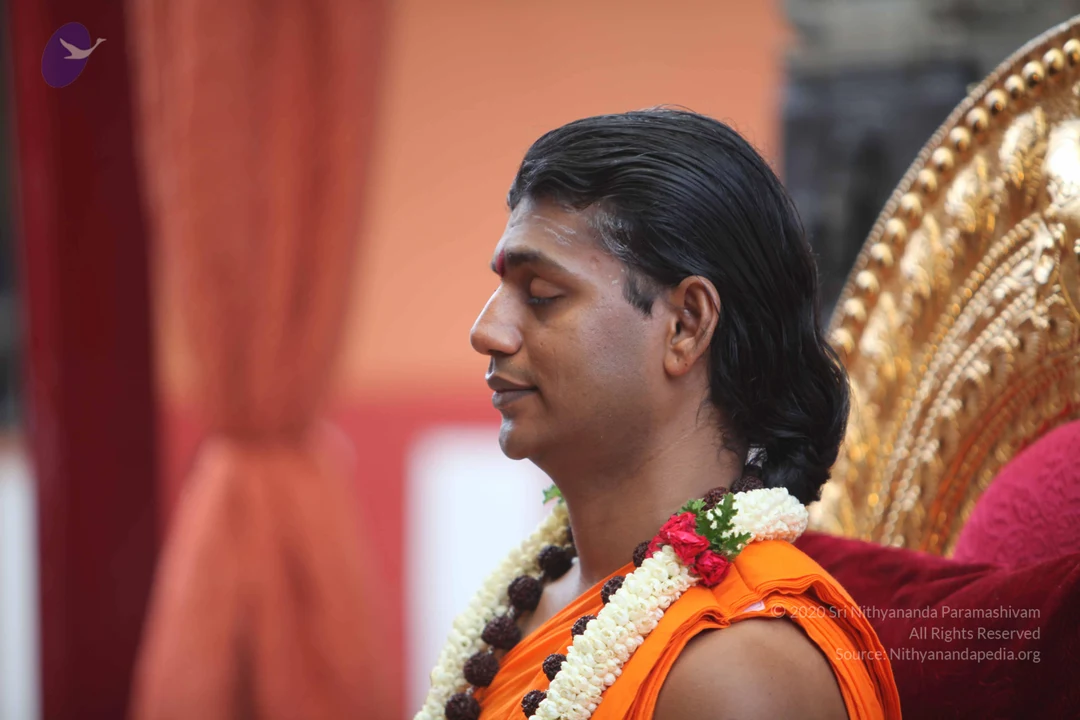
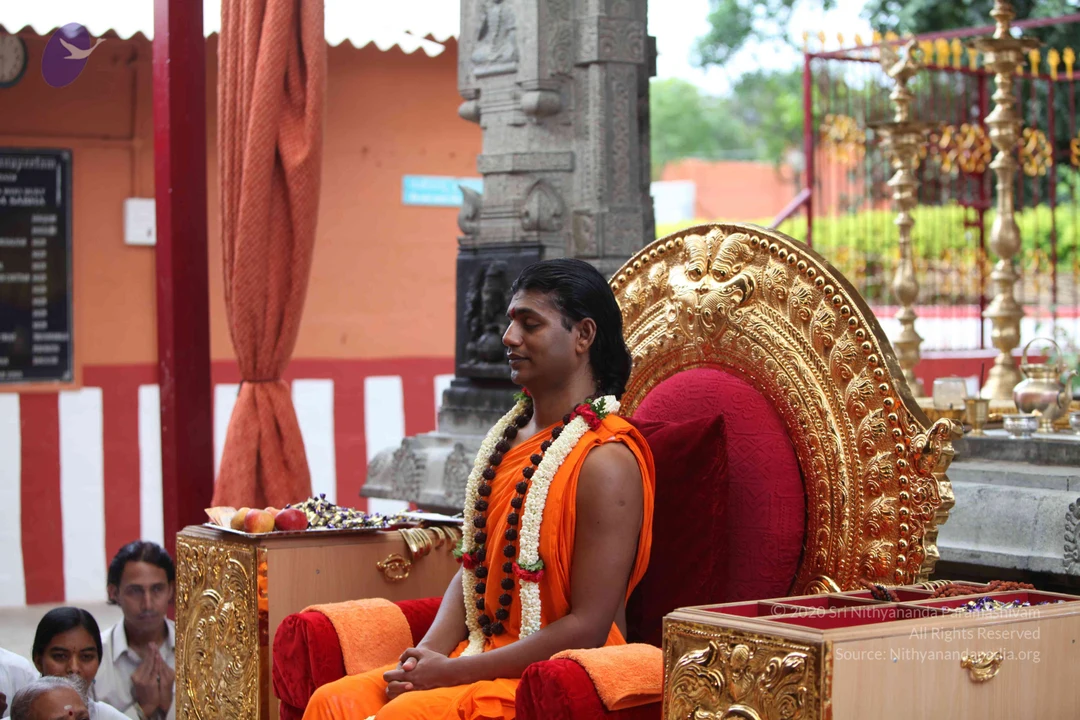
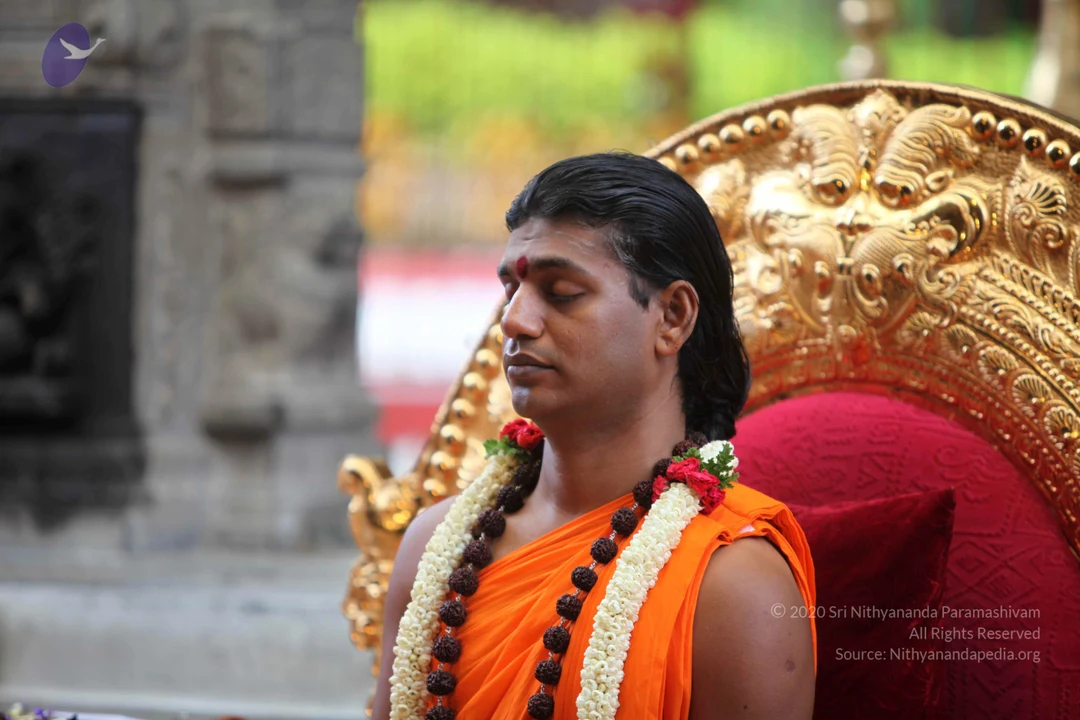
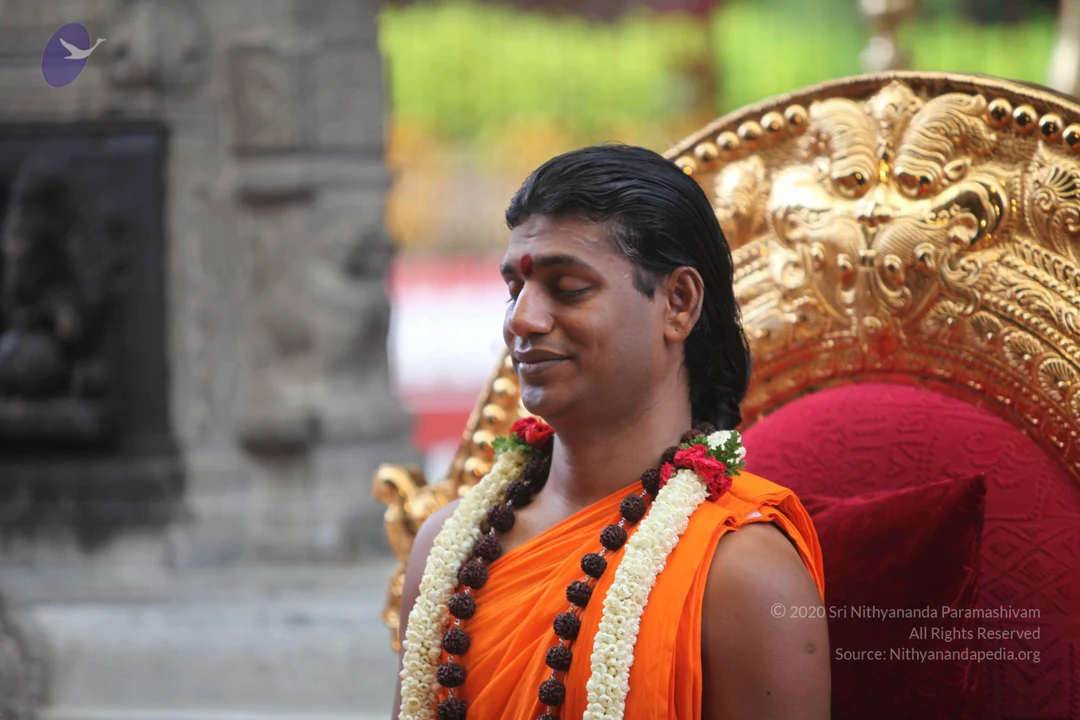
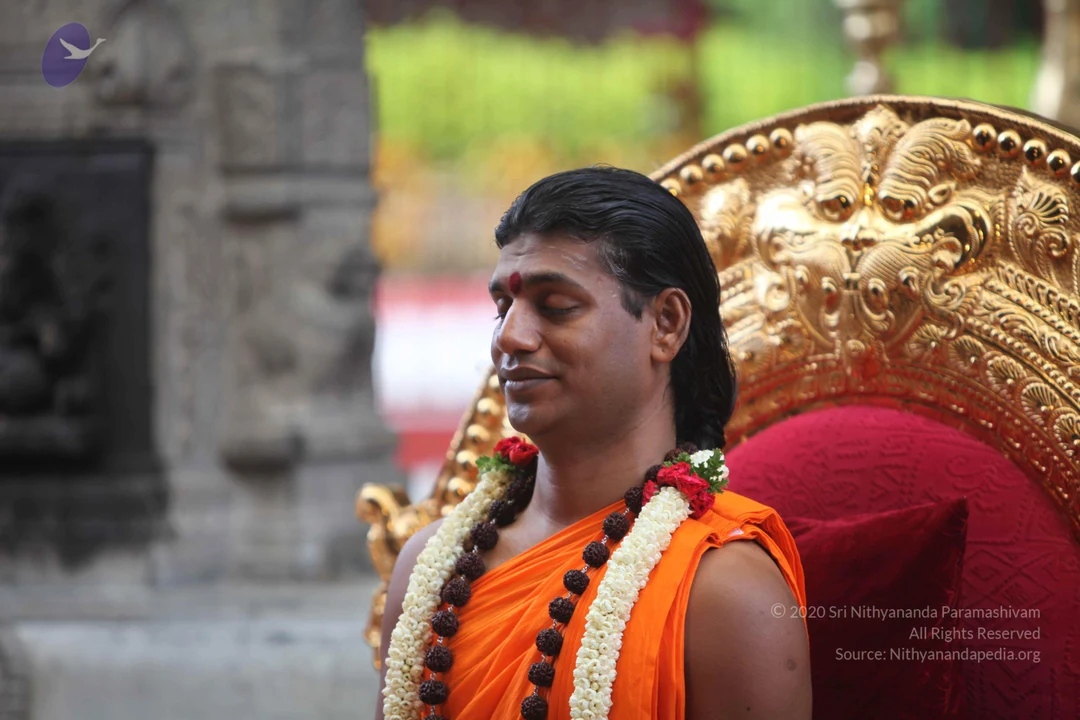
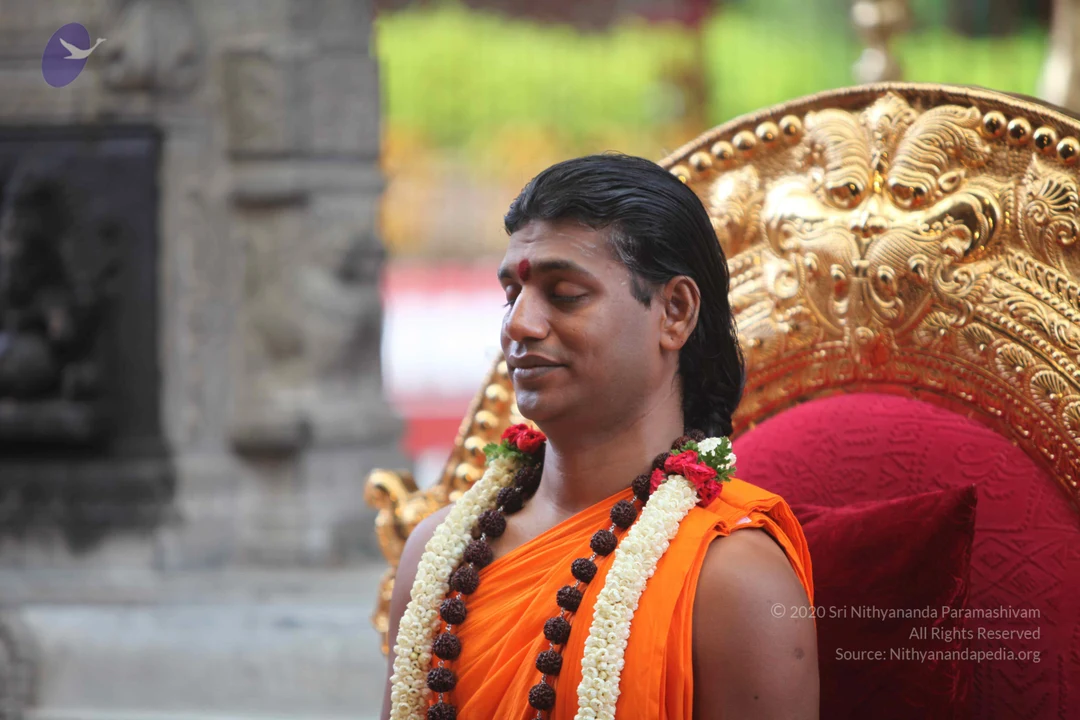
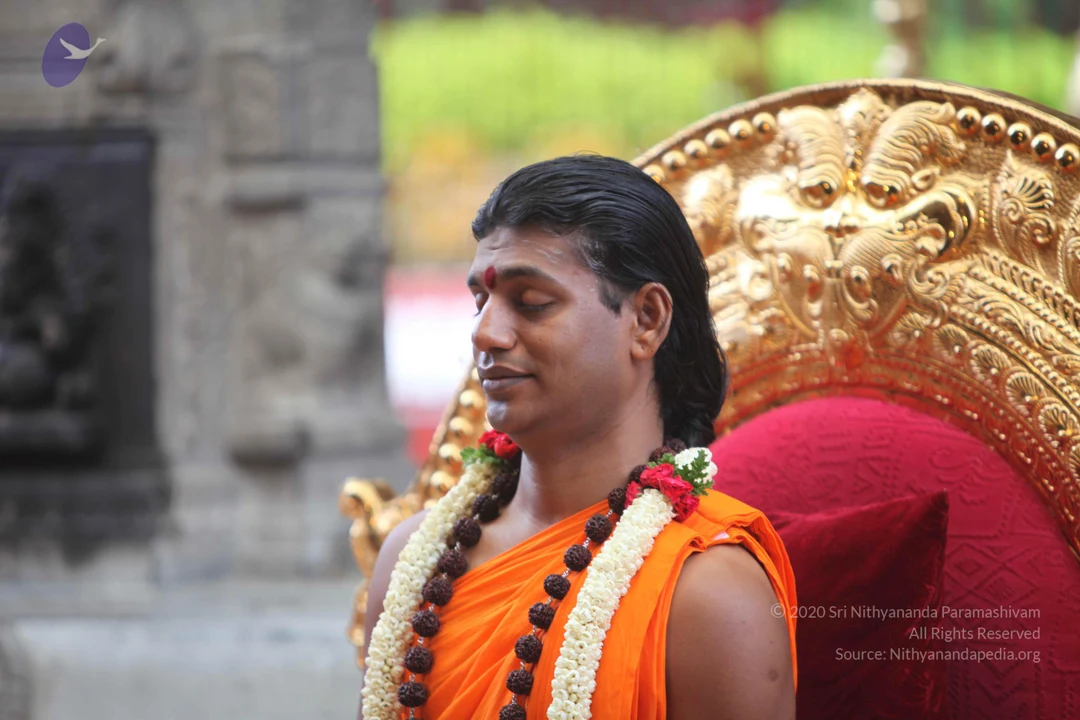
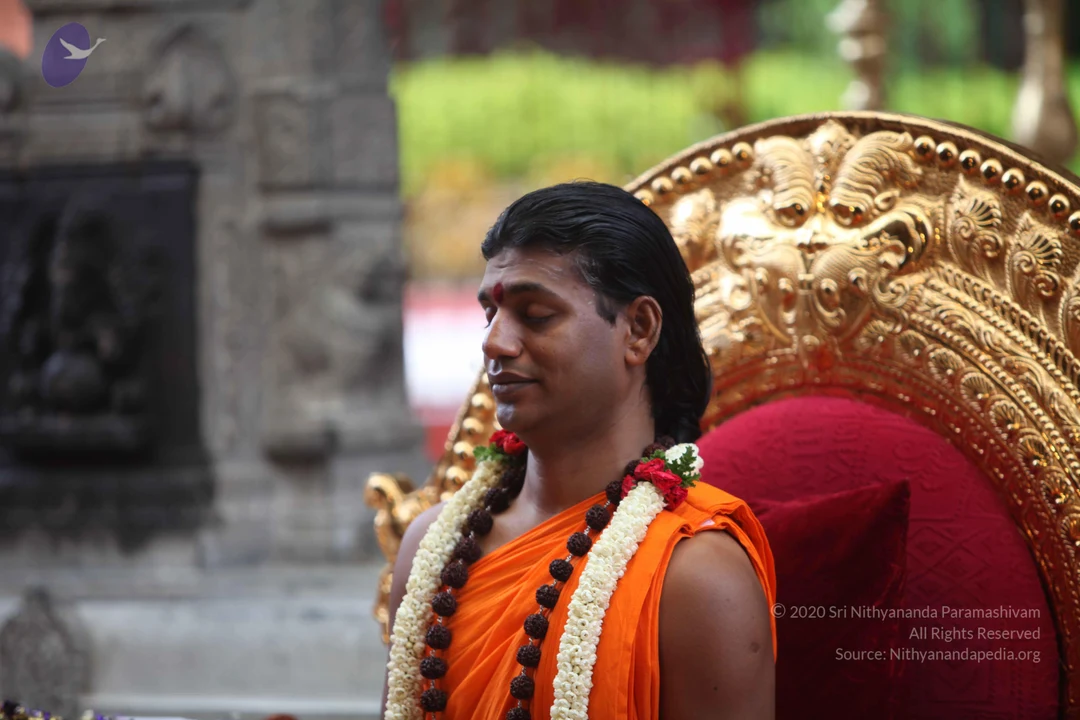
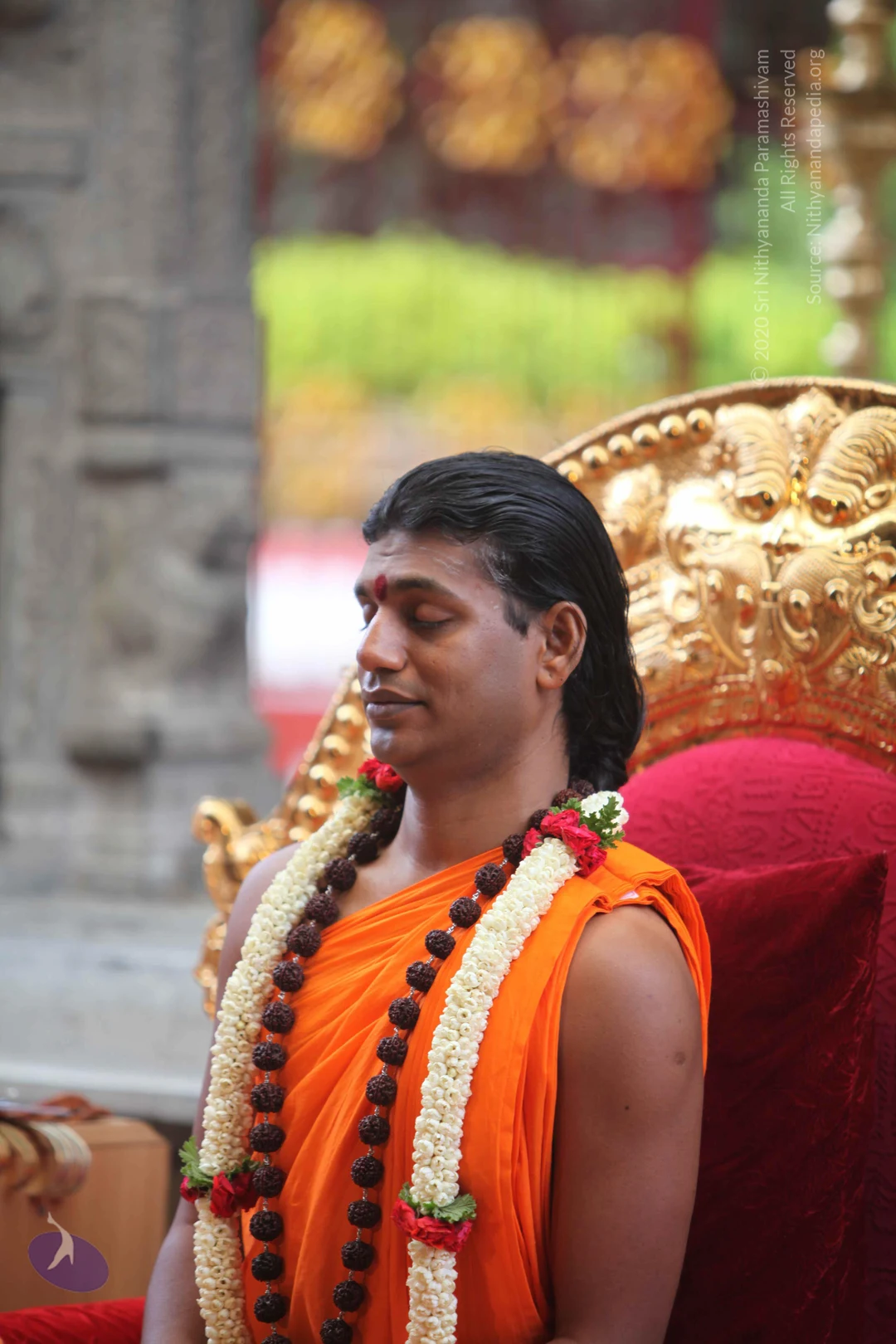
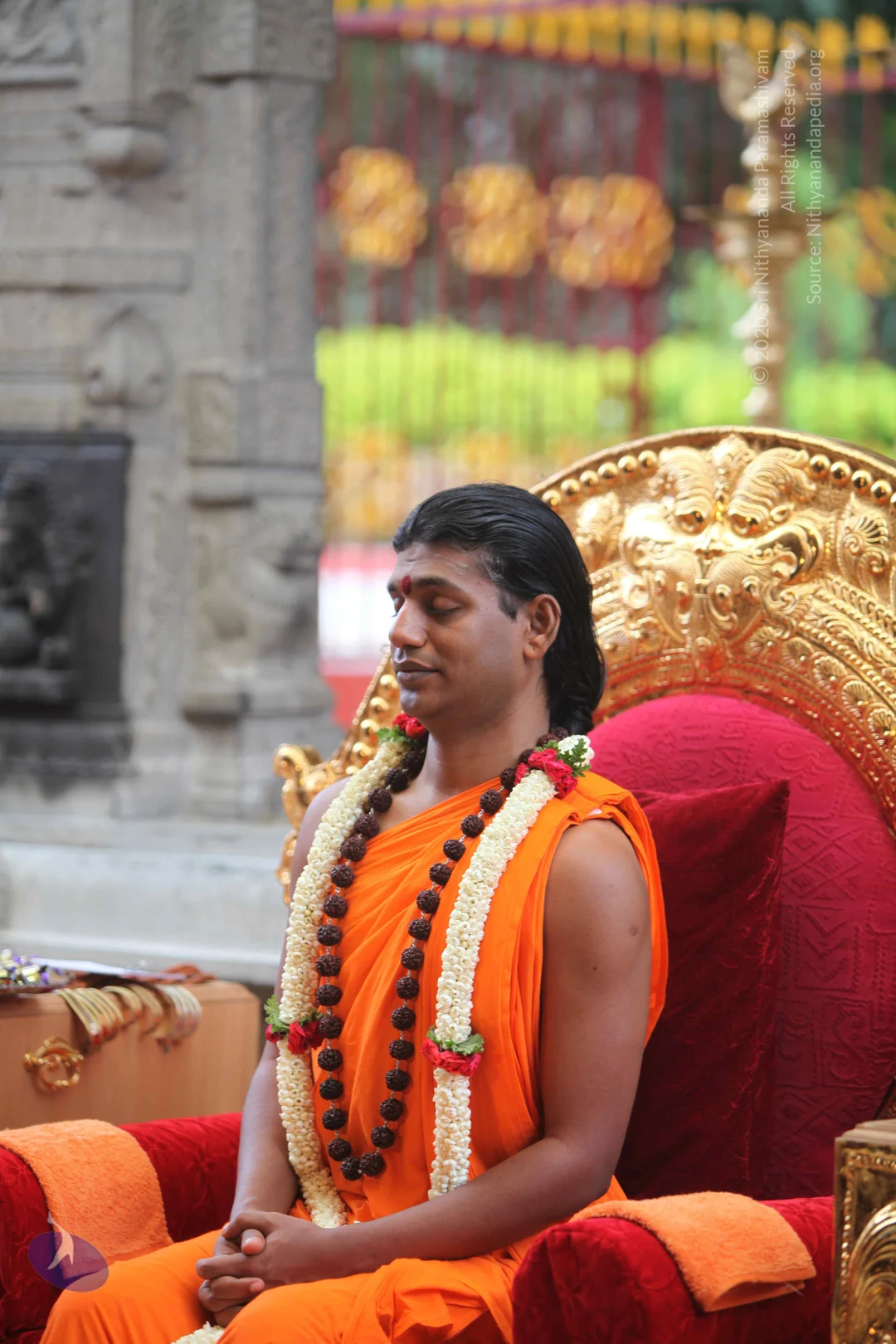
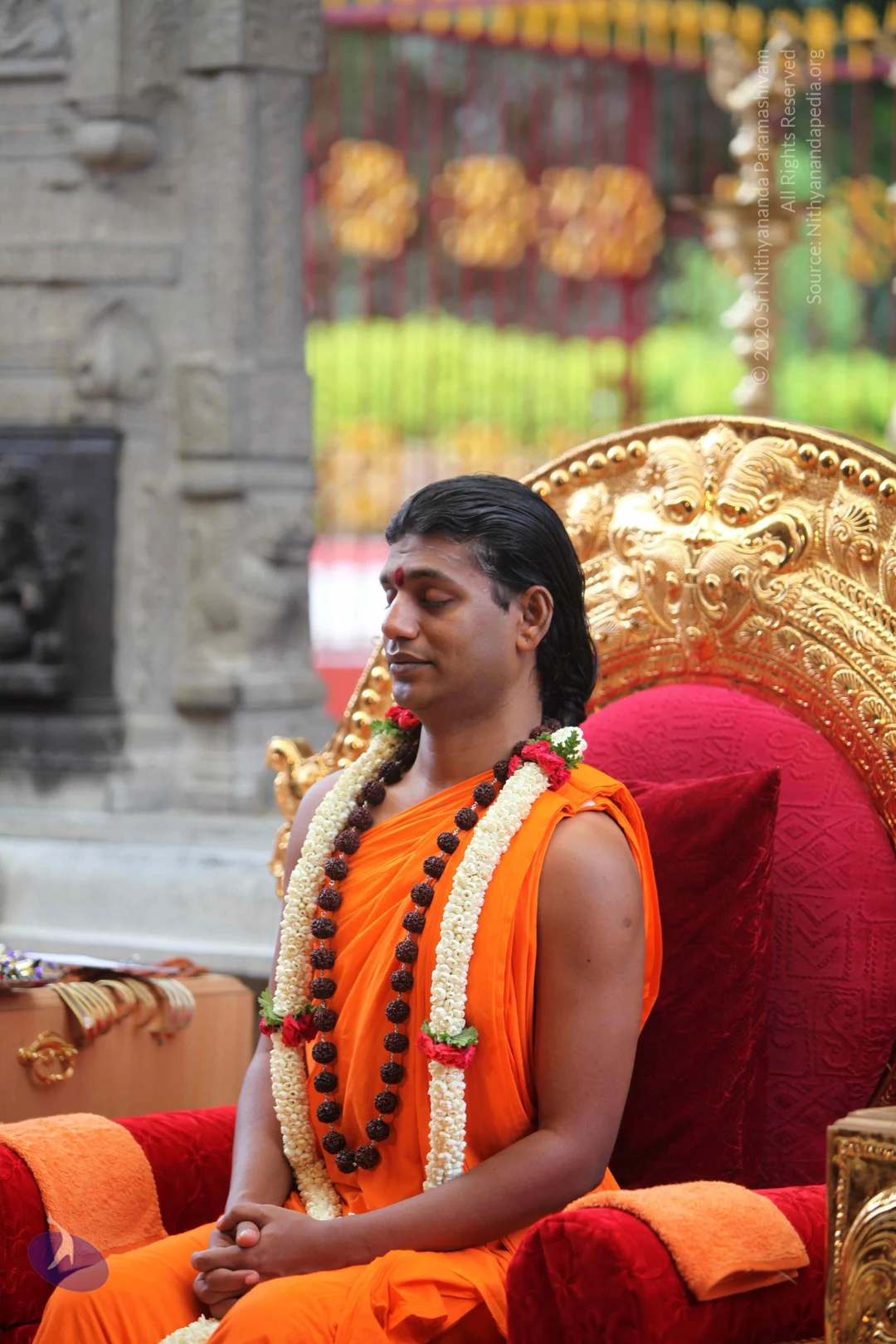
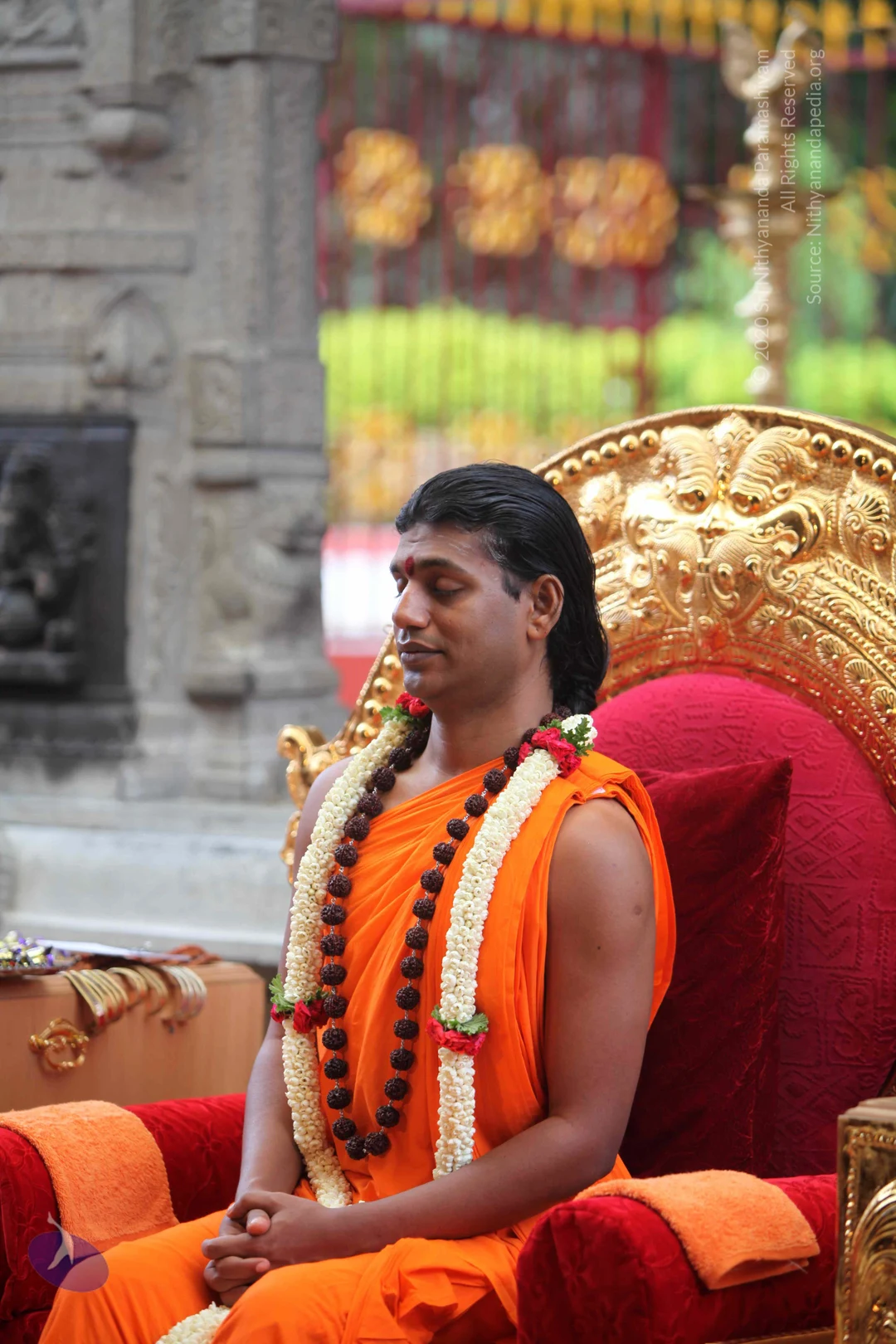
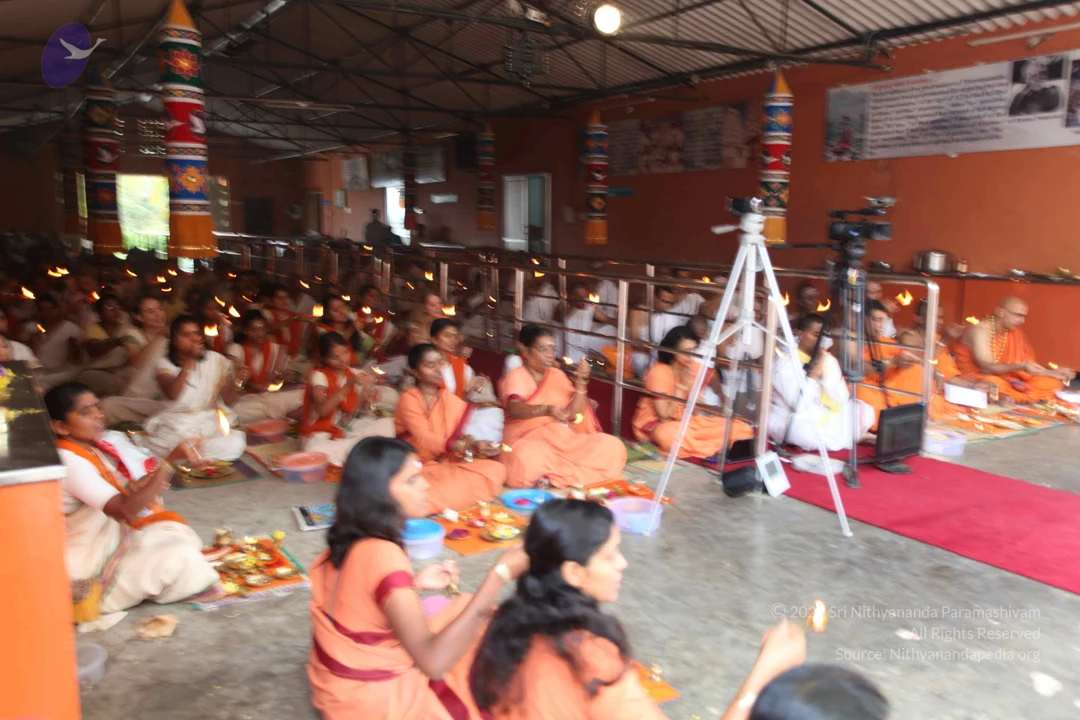
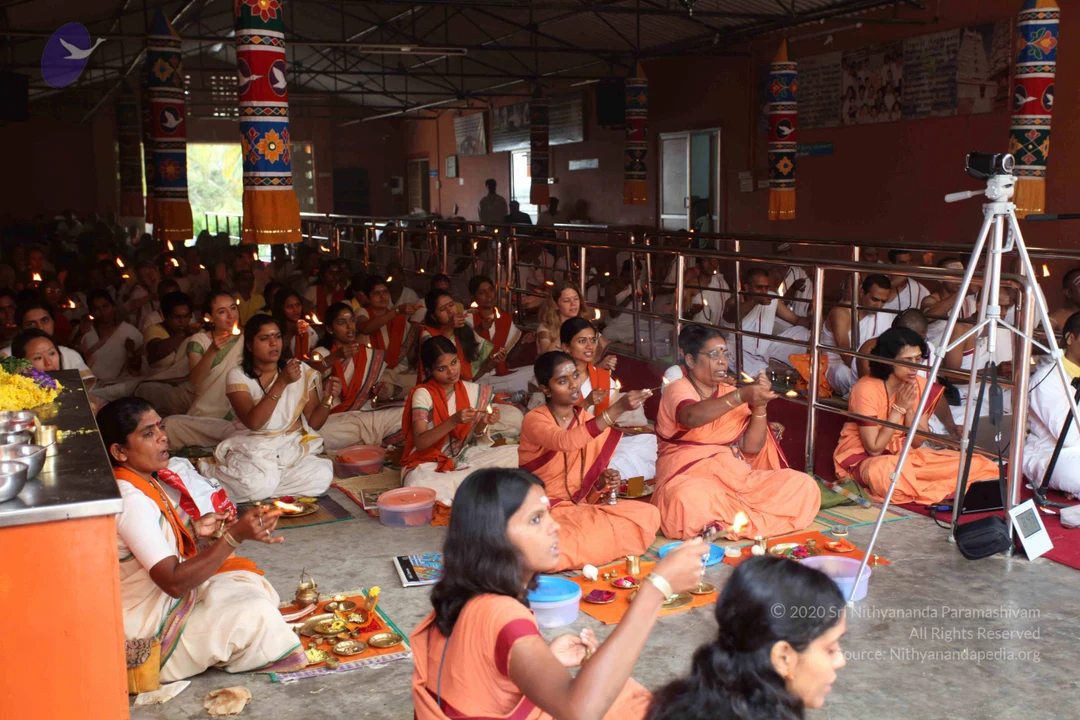
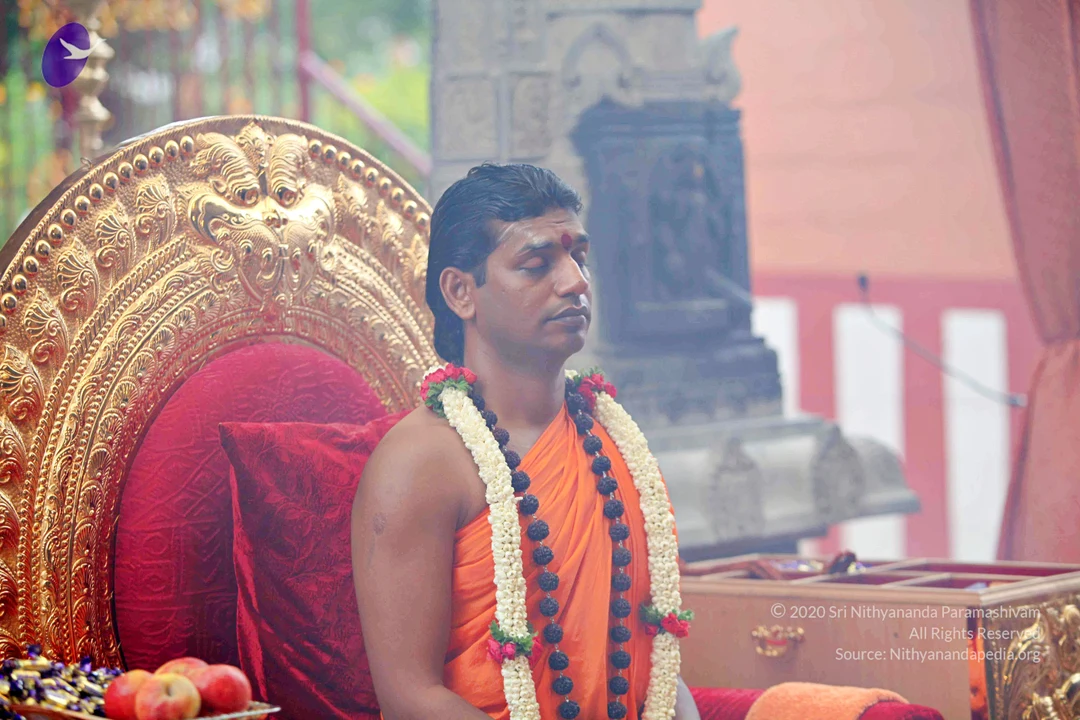
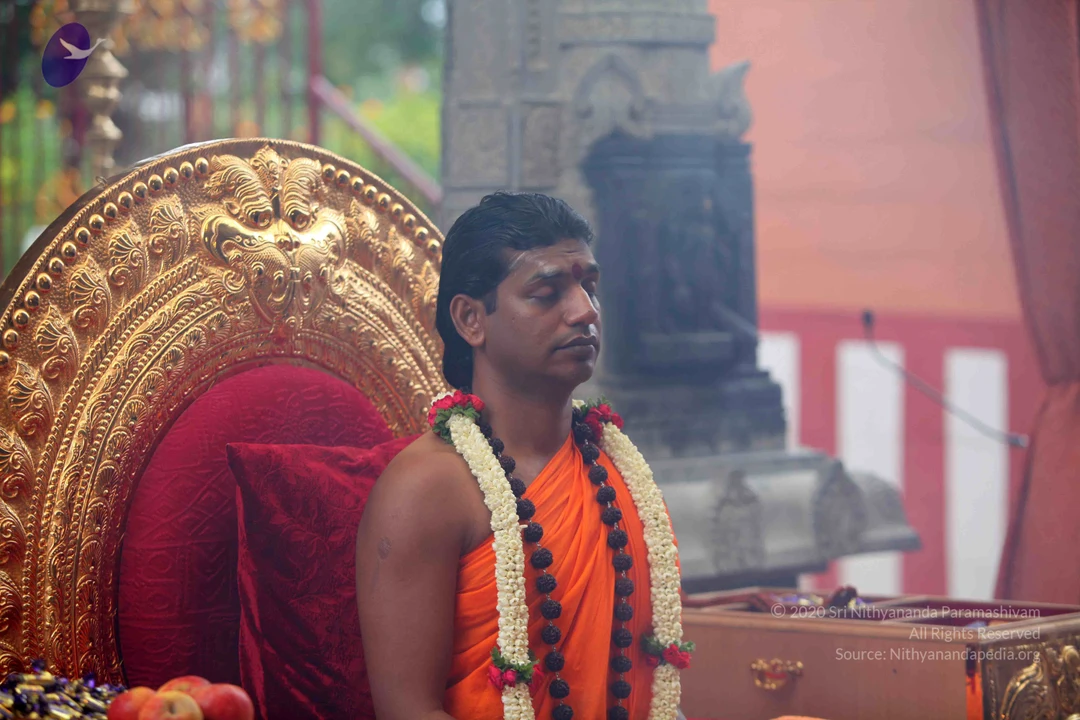
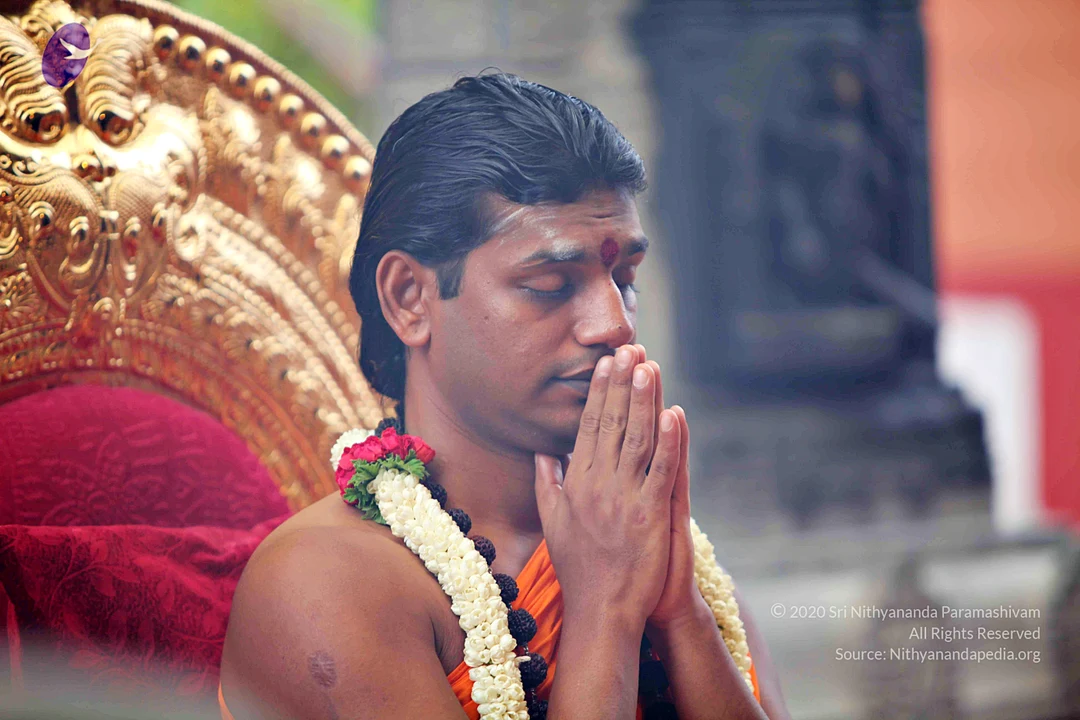
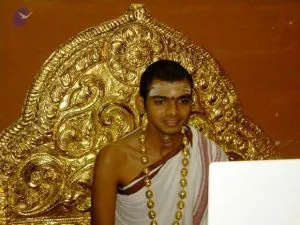
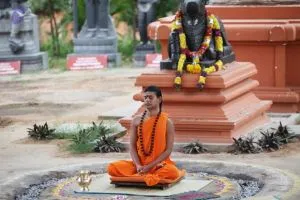
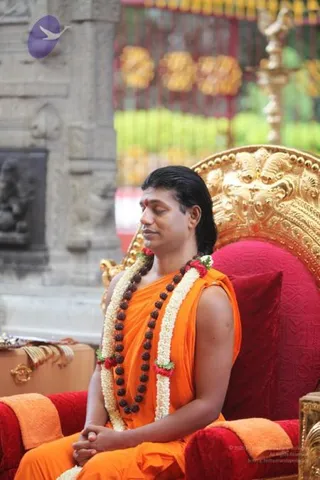
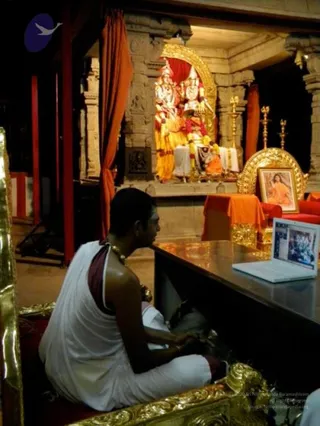
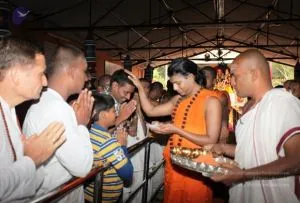
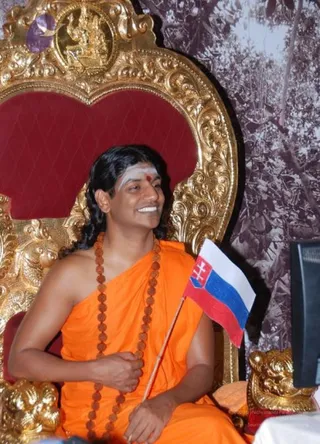
A photograph of a shaved-headed man in white ritual clothing with a red-bordered cloth draped over his shoulder, wearing a long strand of gold beads around his neck. He stands in front of an ornate gold carved throne-like backdrop with decorative scrollwork, and a white object is visible at the lower right. The setting resembles a satsang hall with an ornate peetha-style seat.A man in saffron-orange robes sits cross-legged on a patterned mat in an outdoor temple courtyard, in a meditative pose with his right hand raised near his chin and a rudraksha mala around his neck. Behind him on an orange plinth stands a black Shiva lingam draped in marigold garlands, flanked by grey stone sculptures and small potted plants. A brass oil lamp sits on the mat at his side. A portrait-like figure is not visible; the scene shows one seated person in prayer-like posture before the lingam.A seated man in saffron-orange robes sits with eyes closed and hands folded in lap, meditating on an ornate red-cushioned throne with gold carved backrest. He wears a rudraksha mala and a white and red flower garland, and a red tilak marks his forehead. Behind him stands a stone temple wall with carved relief, a gold-tinted metal gate, and a golden bird ornament at upper right. The description shows an appearance-based probable Swamiji (probable) with long swept-back hair, saffron robes, rudraksha mala and garland cues, seated in meditation on a throne. A printed purple logo appears at upper left.A photograph inside a temple shrine. A man with a shaved head sits cross-legged on a gold-edged cushion in a plain white dhoti and cloth with a maroon border, wearing a gold chain and bracelet. He faces a shrine with two deity murtis draped in orange and gold cloth and garlanded with flowers, flanked by brass lamps and a framed portrait with a golden frame, and a laptop displaying a screen is on a dark table beside him. The seated man is a priest or devotee rather than a visibly identifiable a person, so the a person field is unsure. Only one physical person is visible.A photograph of an indoor temple ritual with a shaved-head devotee in white clothing and a woman in an orange sari with a gold-bordered blouse receiving an aarti plate from a priest in white. Several people with hands joined in anjali stand behind a metal railing. A small boy in a yellow shirt is among them. The priest holds a tray of lit lamps and offerings, and an orange-clad figure stands at the centre. Warm lighting and floral decoration suggest an aarti or puja.A smiling man with long dark hair sits on an ornate gold throne with a red cushioned back and gilded carved lion-like armrests. He wears an orange saffron robe, a long multi-strand rudraksha mala, and a white forehead mark with a red bindi. He holds a small Slovak national flag on a stick in his right hand, white, blue and red with a coat of arms. A dark monitor is visible at the right edge against a patterned backdrop with a gold emblem at top left. Probable Swamiji is visible in the seated figure, based on the long hair, saffron robe and rudraksha mala.

01-Swamij-Morning-Event
333 photosSource gallery
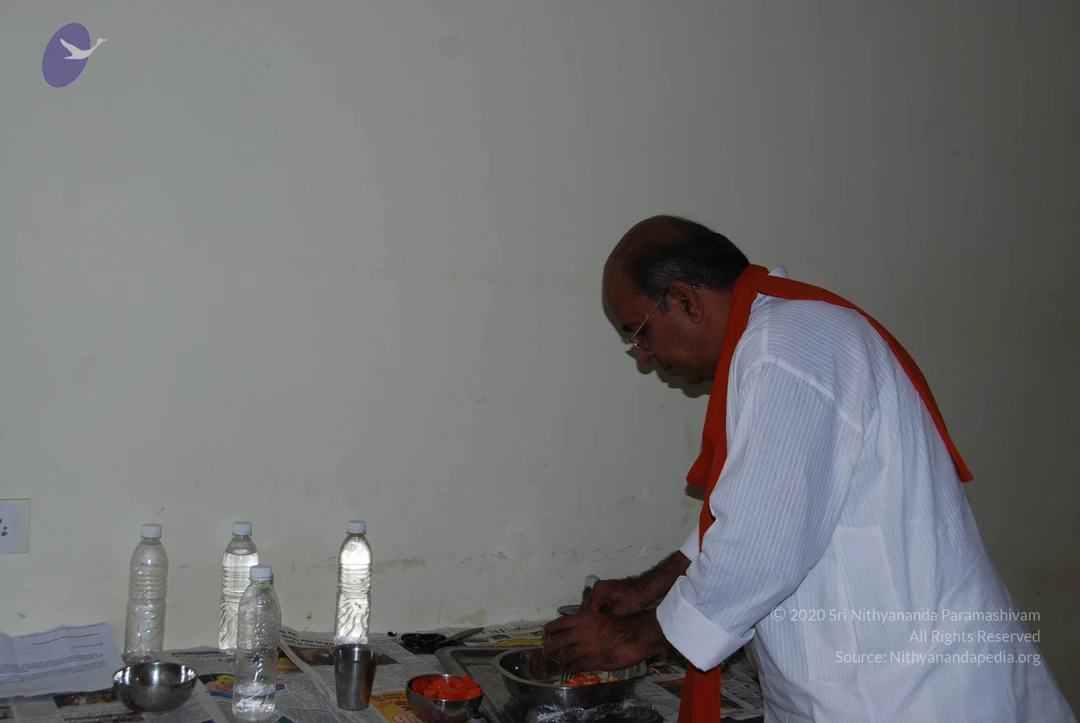
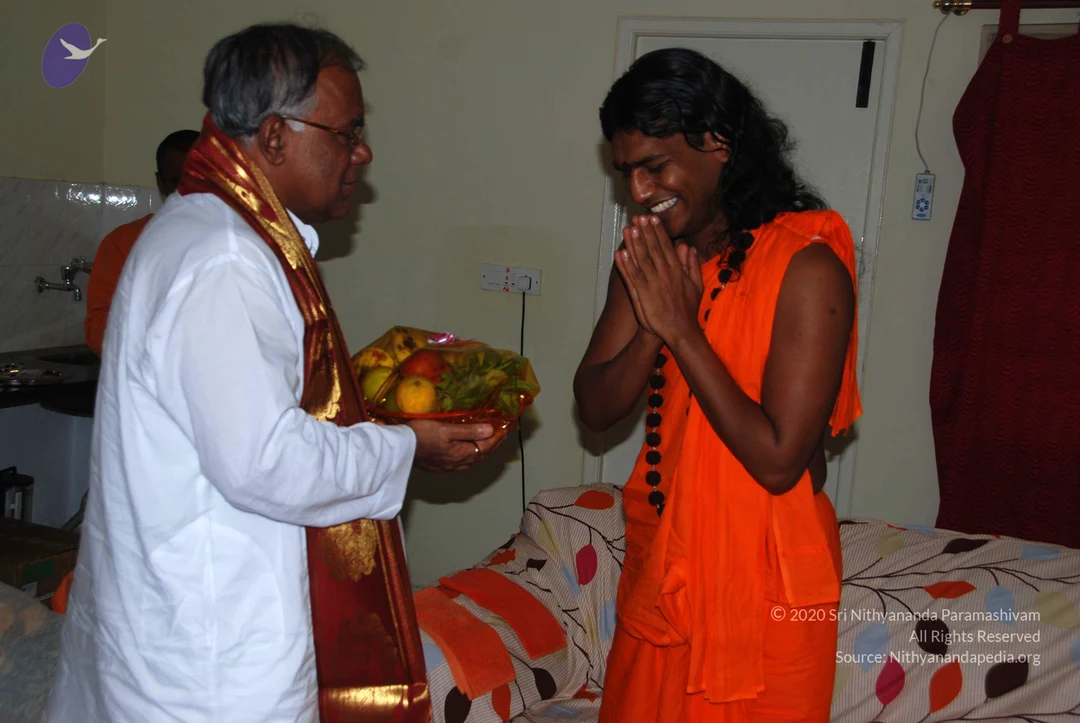
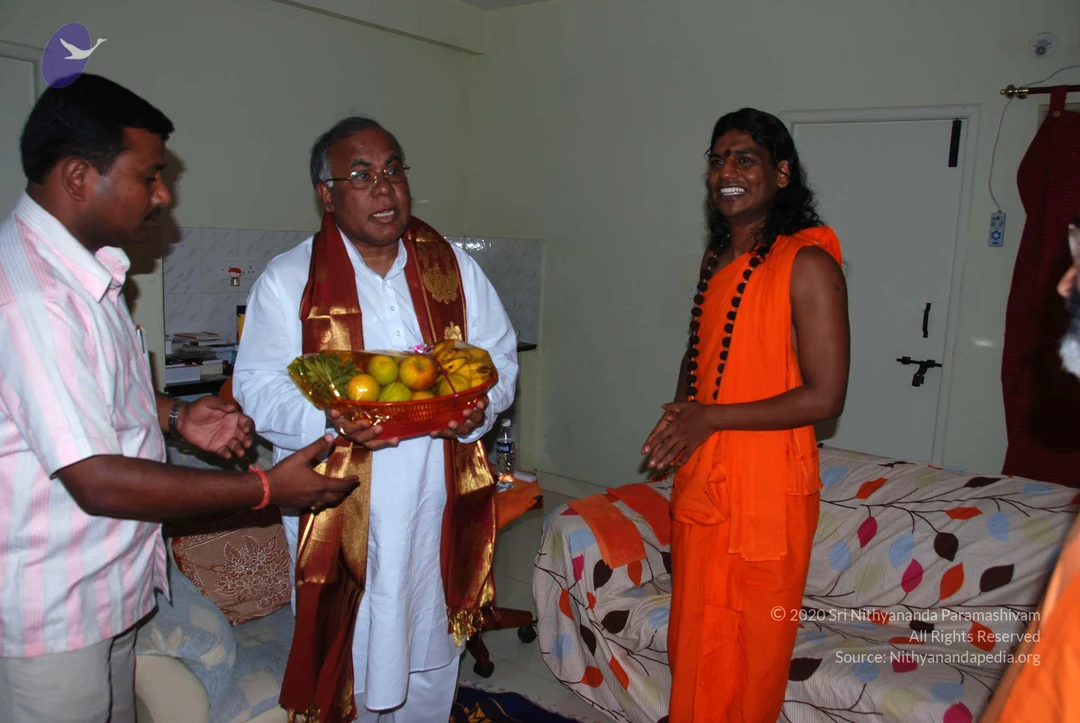
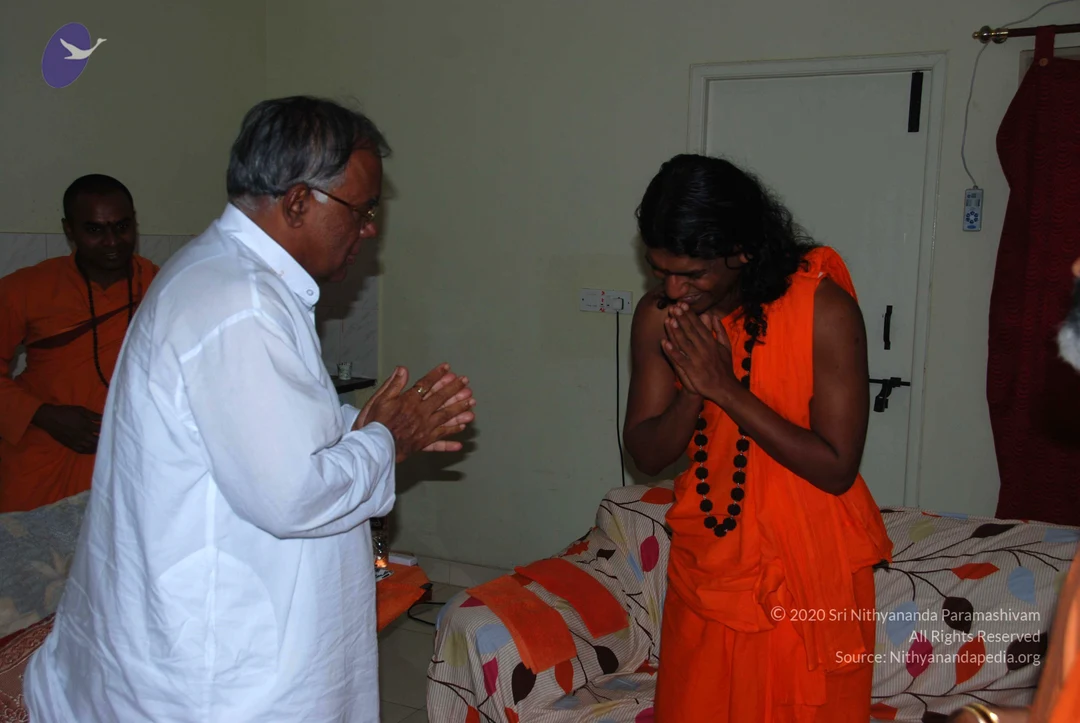
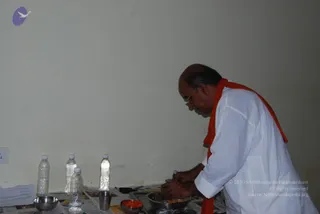
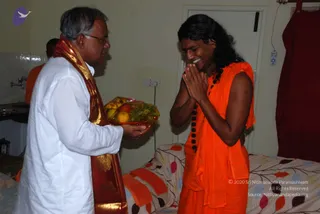
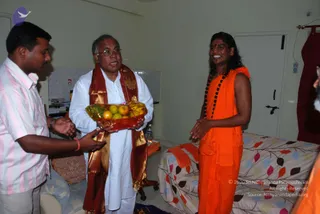
Heavy rain falls over a building with a dark green corrugated metal roof and a reddish-brown wall with rectangular windows. A tall, tiered orange-brown finial or kalasha-like spire rises from the roofline, and green leaves hang in the upper left corner. No people are visible.Rain falls heavily on an ashram compound. In the foreground a grey SUV with a spare tyre mounted at the rear is parked on wet brown ground, with a silver hatchback parked beside a small tree. Behind them stands a long orange-walled building with a green corrugated roof topped by small finial spires, with rows of windows. Palm and flowering plants line the edges of the compound. No people are visible.Photo of a smiling man with long dark wavy hair and a small red bindi on his forehead, wearing a bright orange shawl draped over his shoulders and chest and a long double-strand necklace of dark rudraksha beads. He stands against a plain light grey backdrop, with a small purple and white bird logo at the upper left. a person based on his long swept hair, orange clothing and rudraksha malas, in portrait form.A photograph of an older man in a white collared shirt with a rust-orange shawl draped over his shoulders, bent over a table preparing food. He wears glasses and has a bald crown with grey hair at the sides. On the table, covered with newspaper, are several plastic water bottles, steel bowls, a steel tumbler, a bowl of chopped tomatoes, and a tray with cut vegetables. The pale wall behind him is bare.A photograph of an indoor room with pale yellow walls, a white door, a patterned floral bedspread on a bed, and a red cloth hanging on the right. On the left, an older man with grey hair and glasses wears a white kurta with a red and gold shawl and holds a basket of fresh fruit toward the right. On the right, a younger figure with long dark hair and a dark rudraksha mala wears an orange saffron robe and stands with palms pressed together in namaste, smiling with eyes lowered. Another person in orange is partially visible at the far left edge. The figure in orange matches the page's Swamiji reference through his saffron robe, long hair and rudraksha mala, so this is an appearance-based probable identification.A photograph taken indoors in a small room with pale walls, a wall-mounted tiled panel, a white door and a floral-patterned bed cover. On the right, a man with long swept-back dark hair, a rudraksha mala and a saffron-orange sannyasi robe stands smiling with hands folded, a person by appearance with long swept-back hair, rudraksha mala and saffron robe. Center, an older man in white kurta with a red and gold shawl holds a brass tray of fruit, including oranges and bananas. At left, a man in a pink-and-white striped shirt gestures toward the tray.