Skip to content
Saturday

30 October 2010

Explore Your Past to Explode Your Future: Nithyananda Morning Satsang Message

Dated photos
315
Source pages
1
Media
2
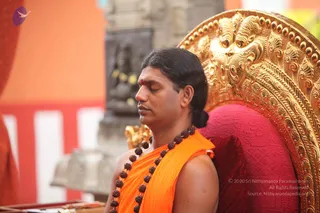
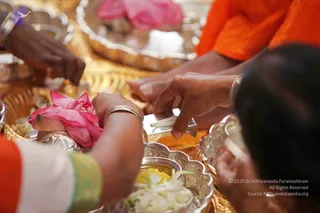
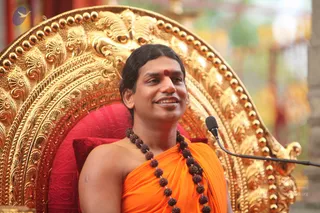
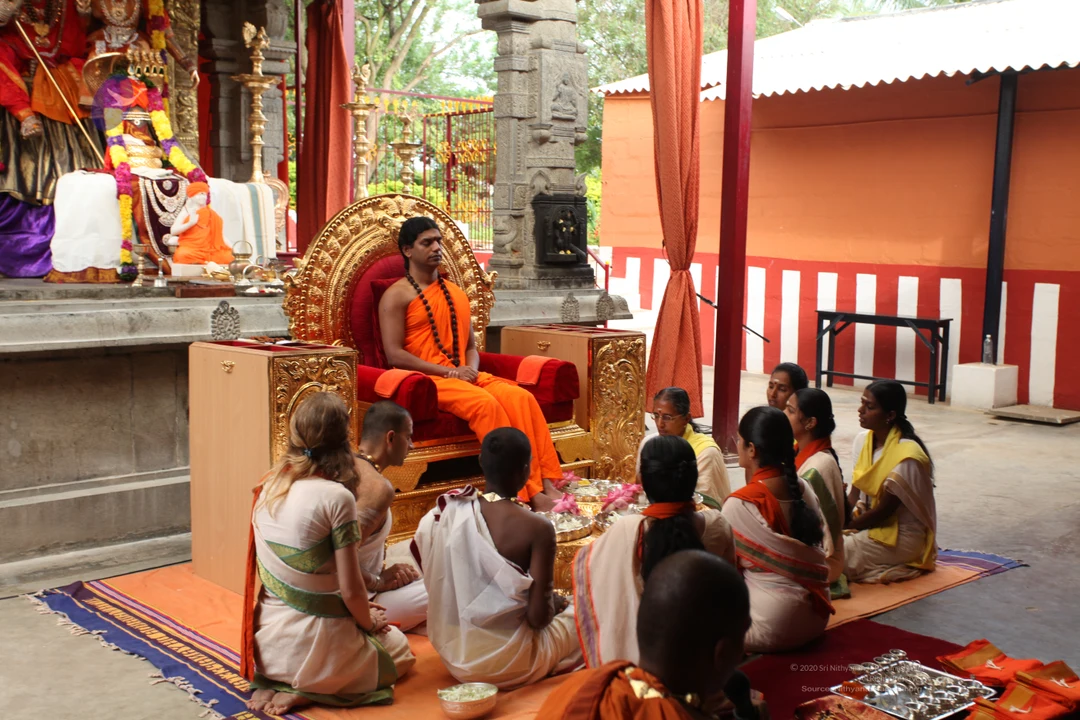
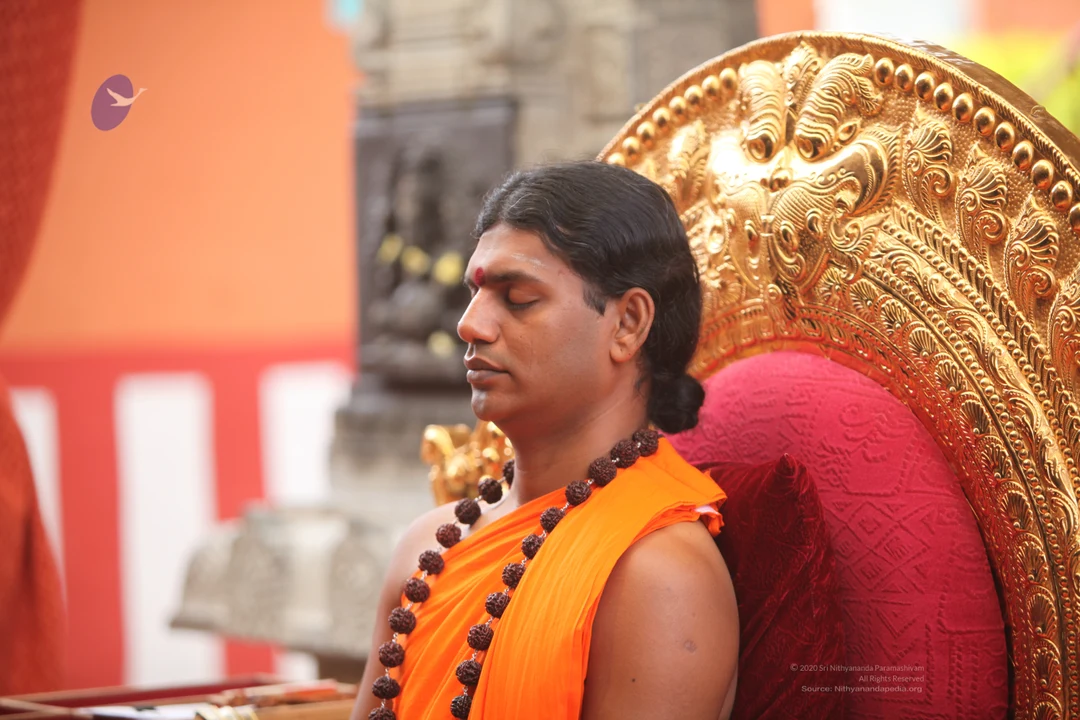
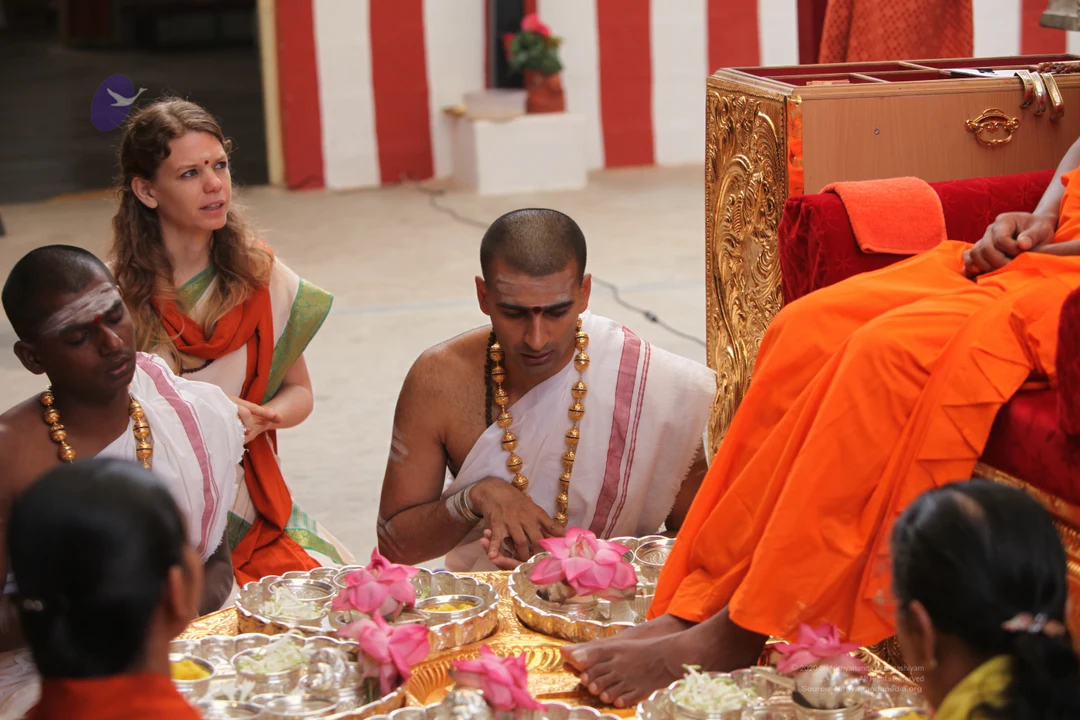
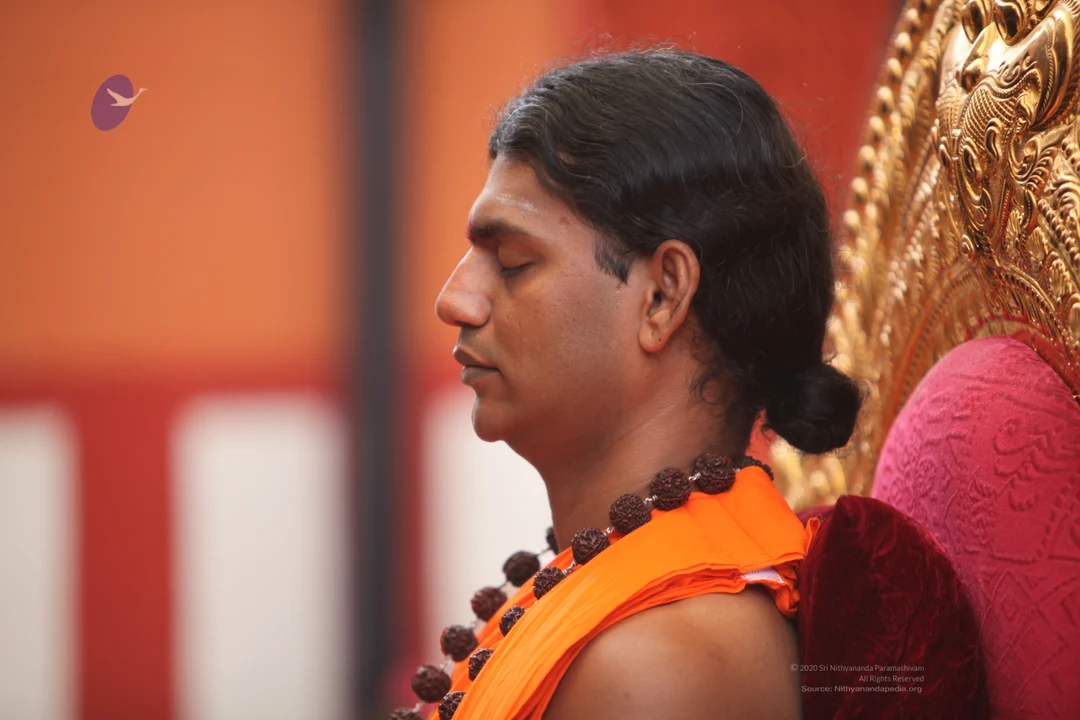
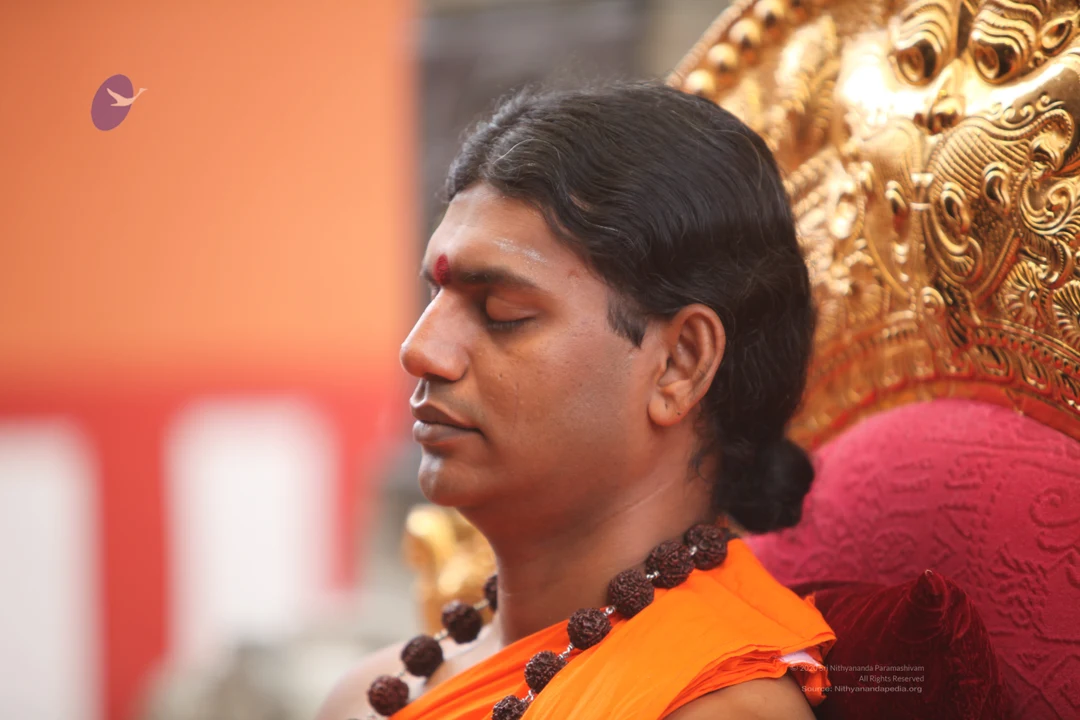
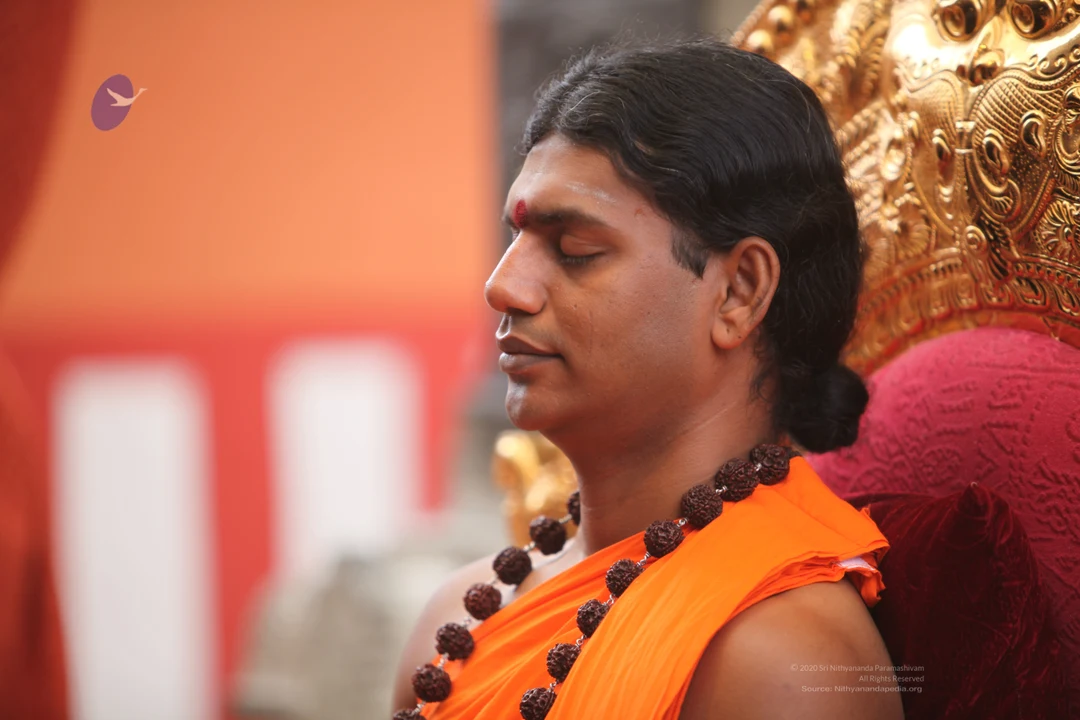
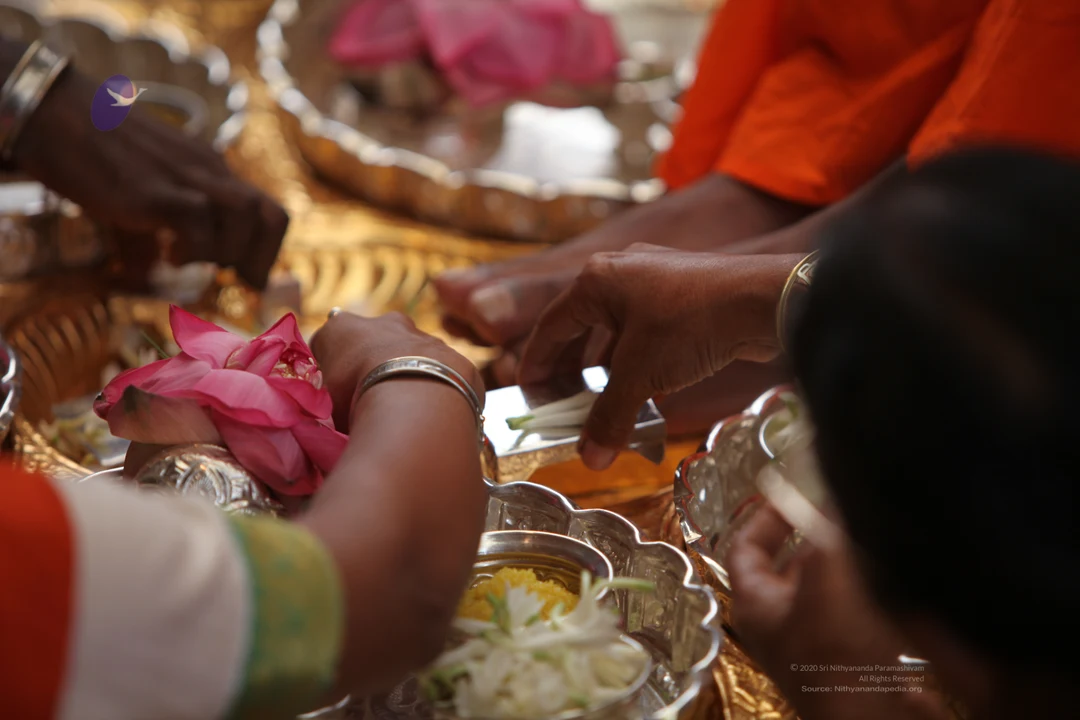
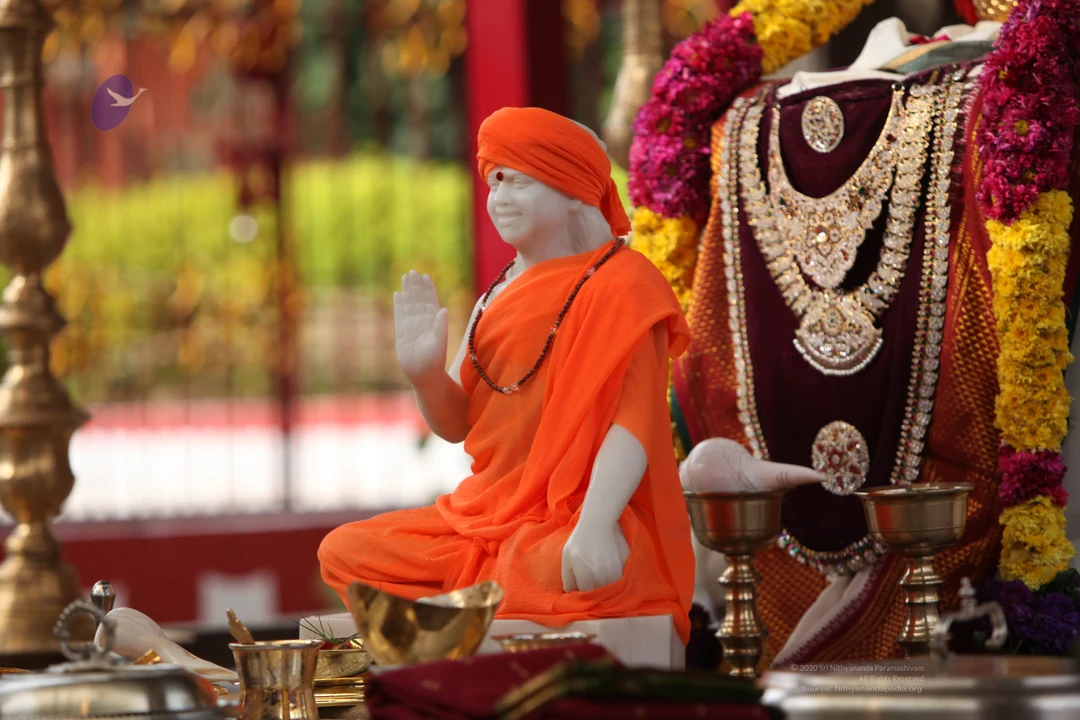
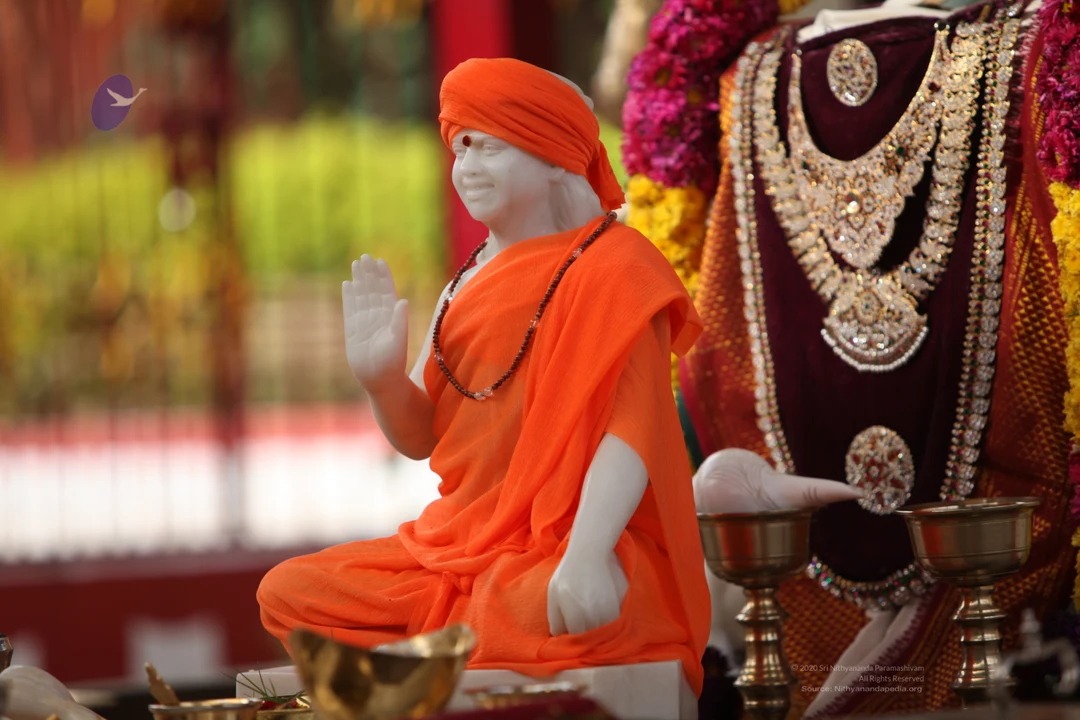
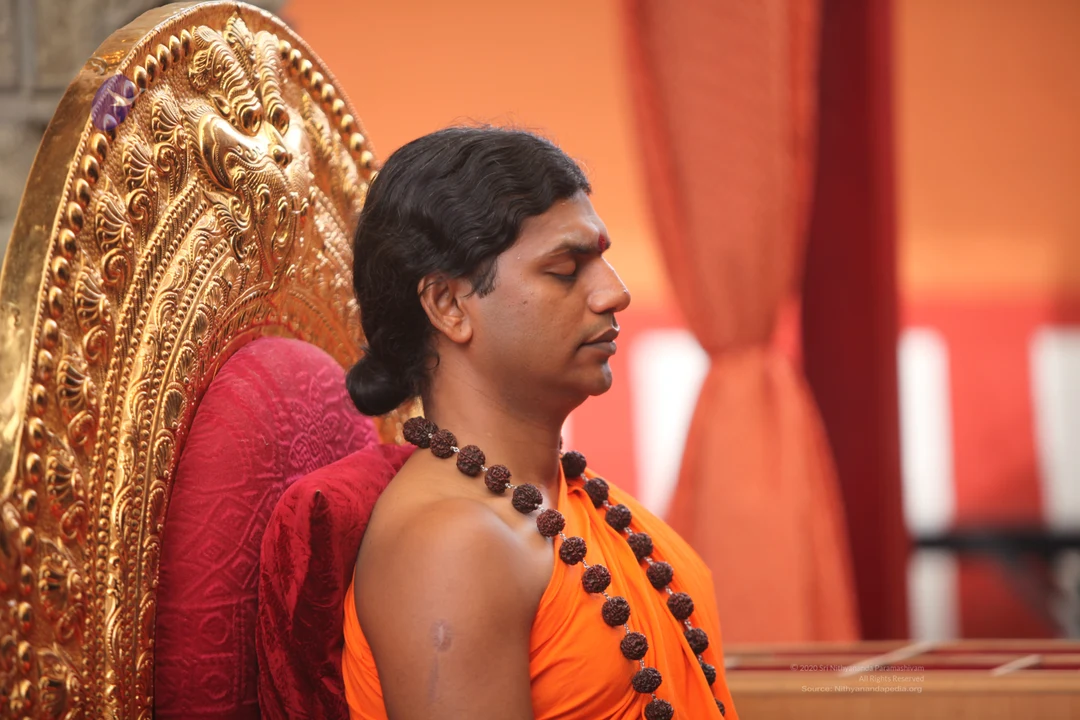
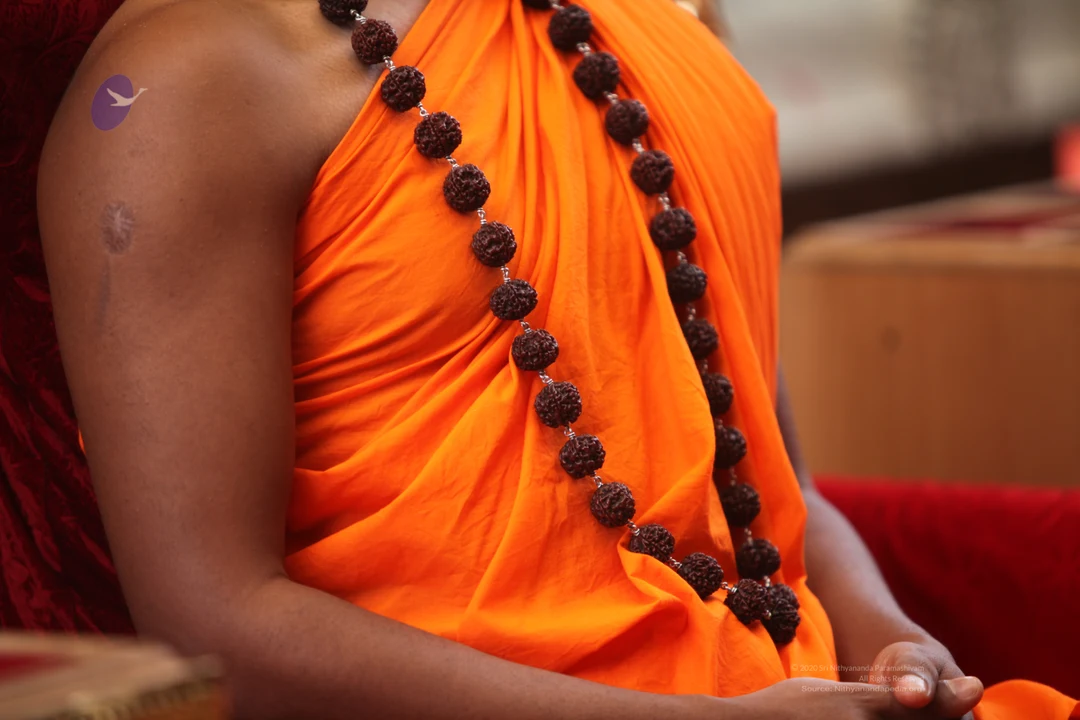
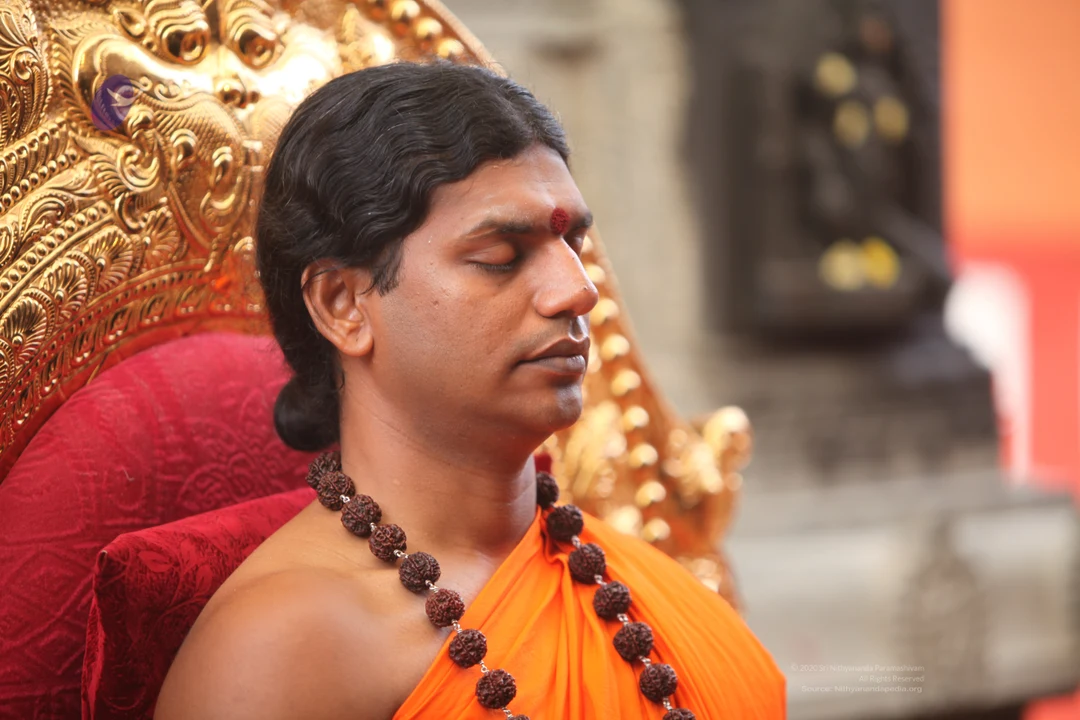
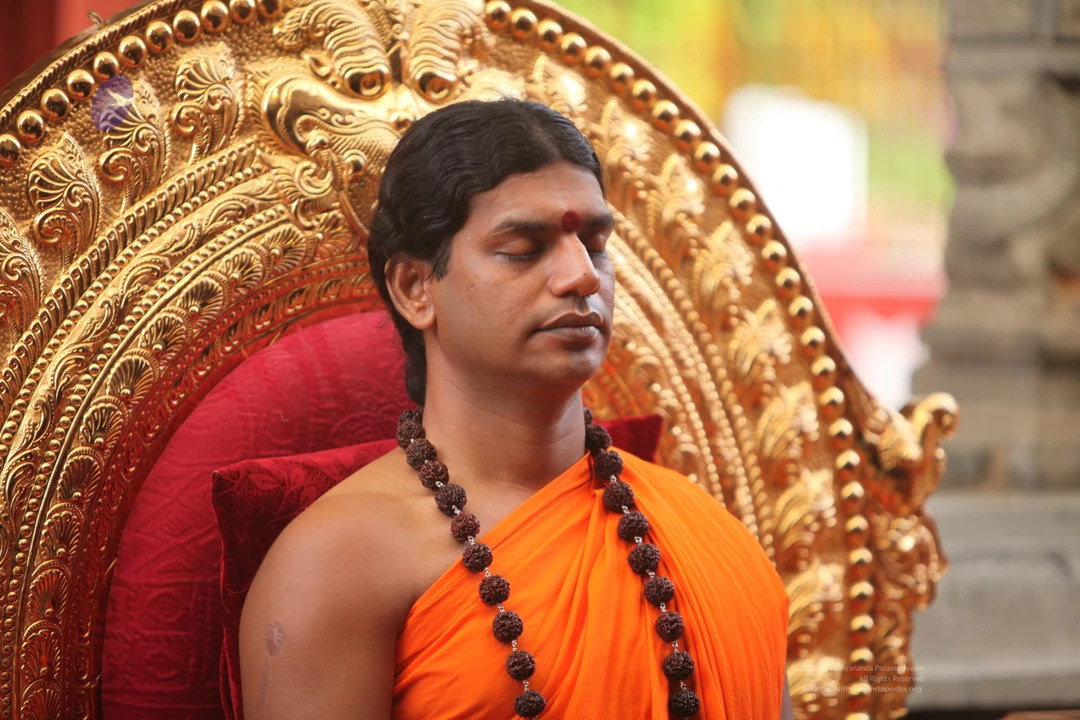
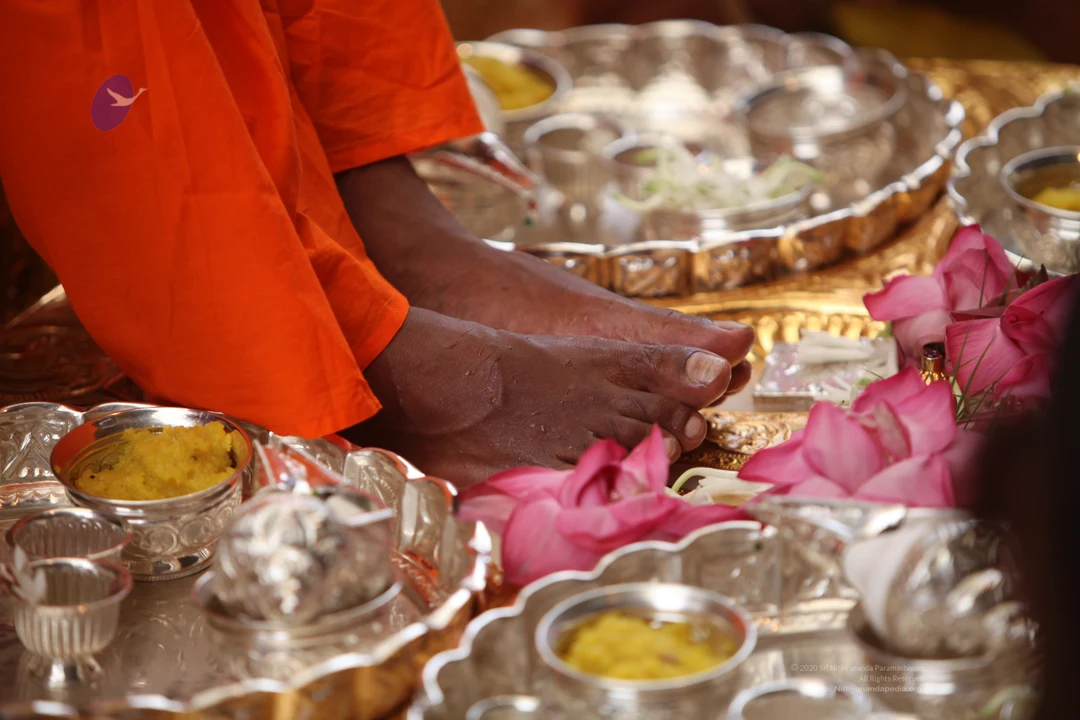
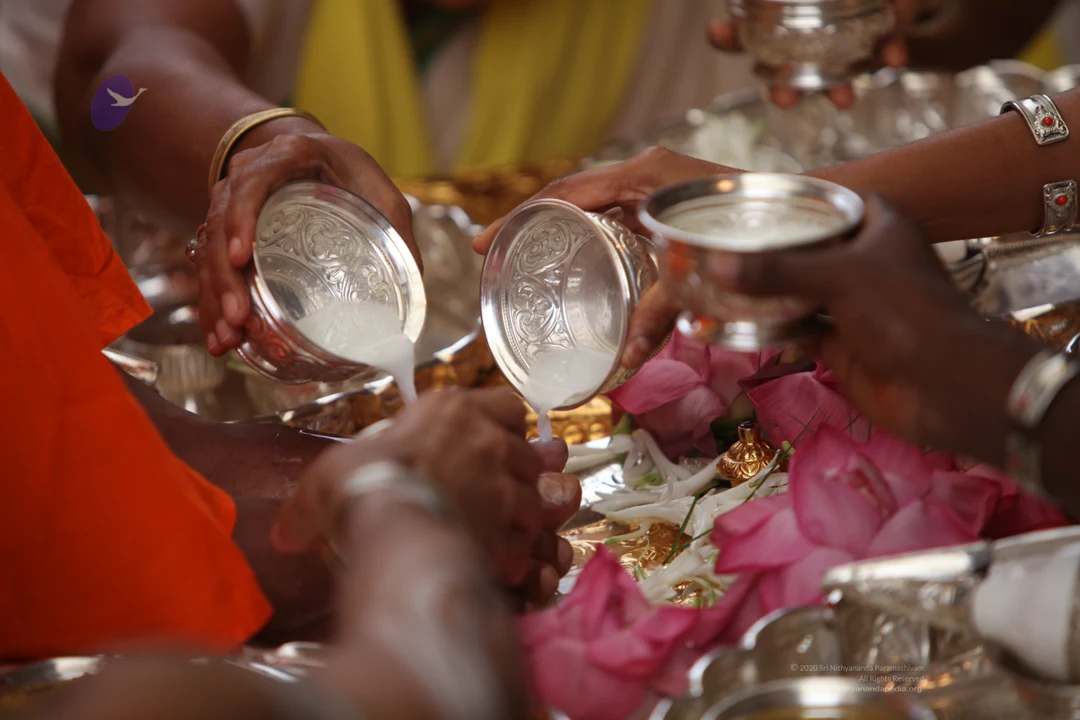
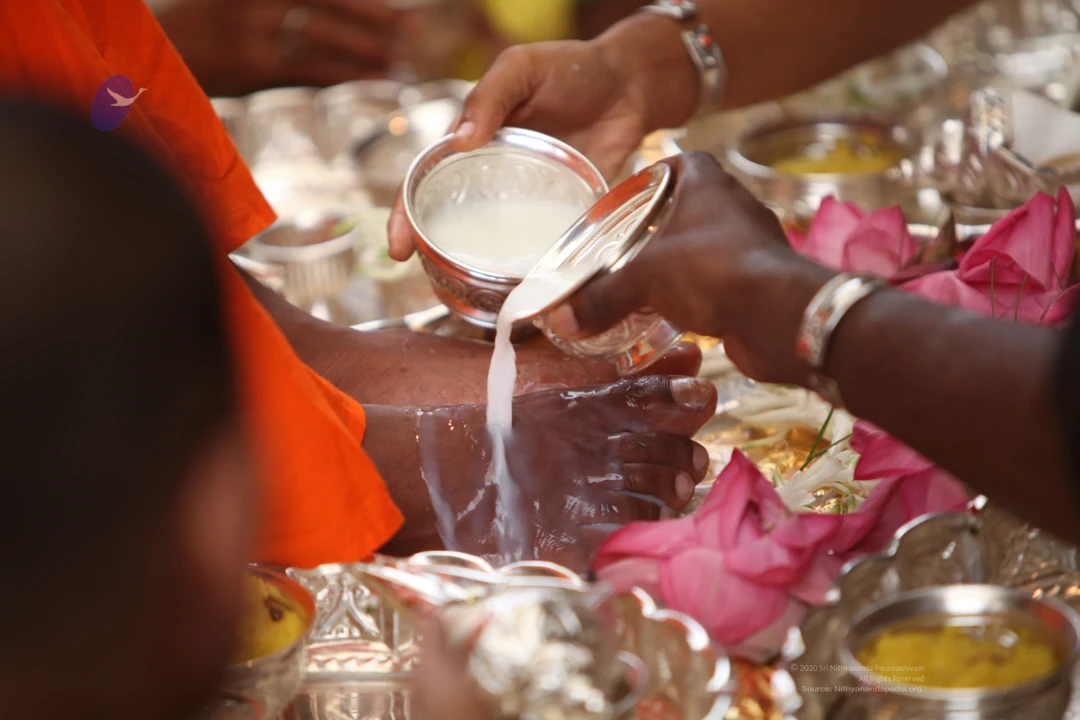
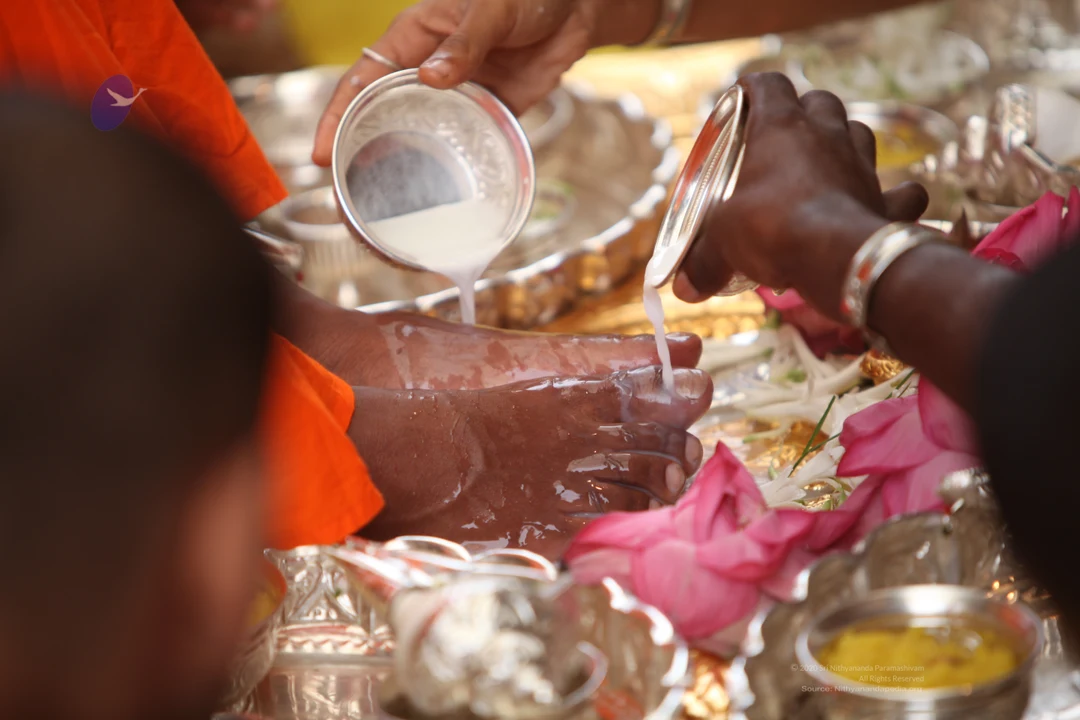
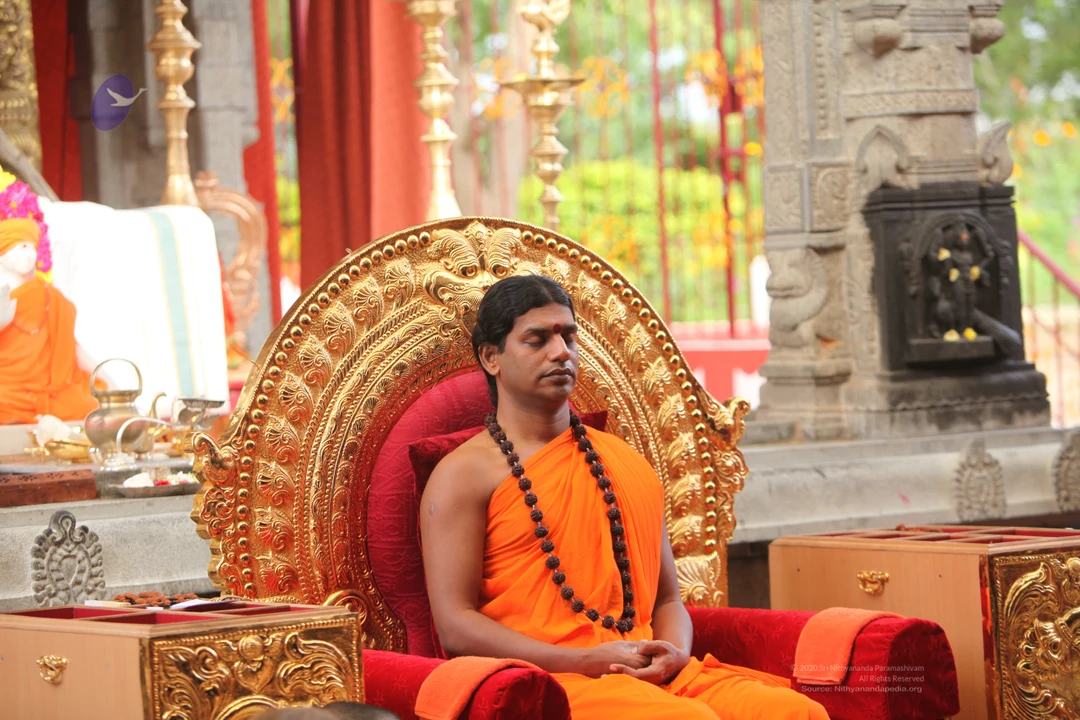
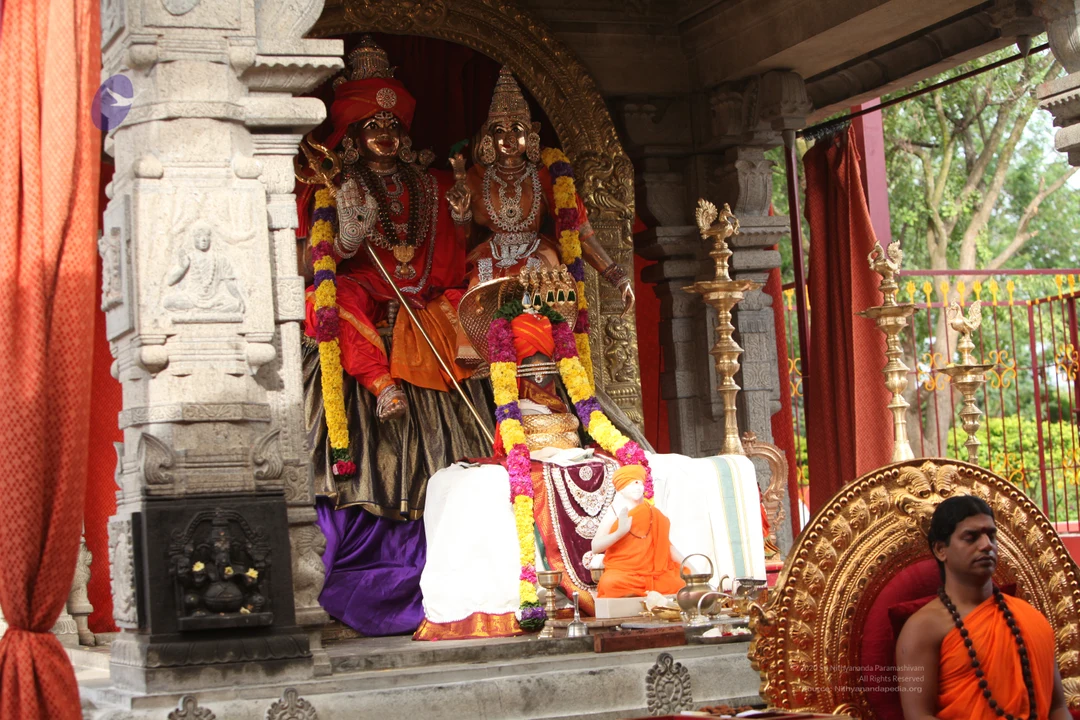
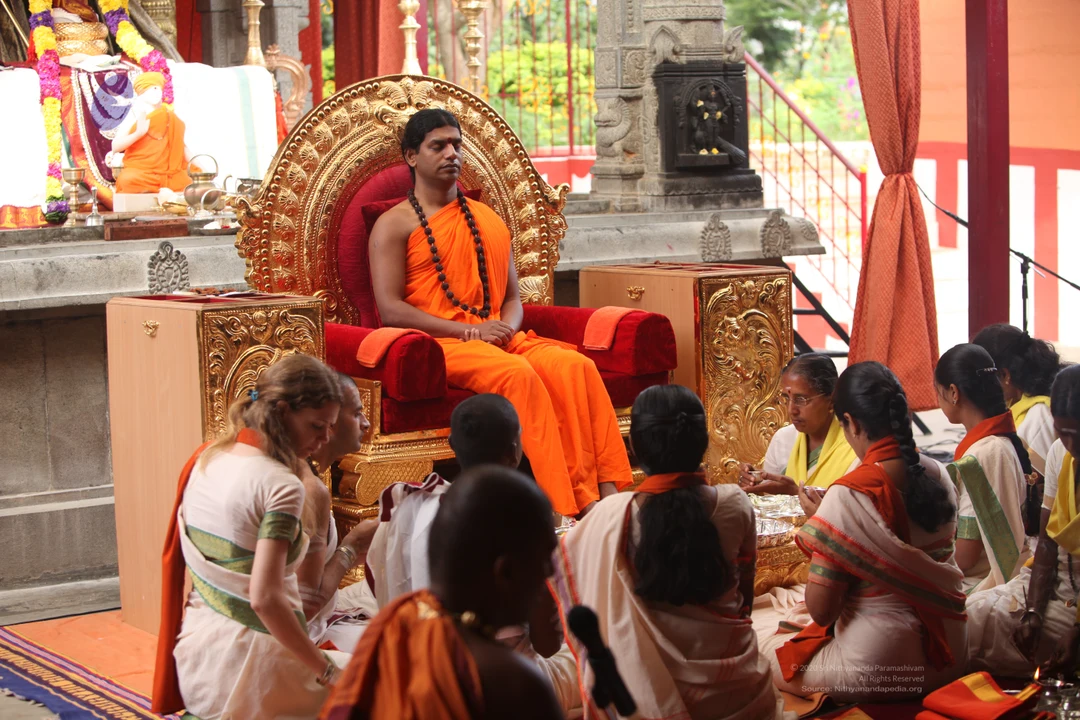
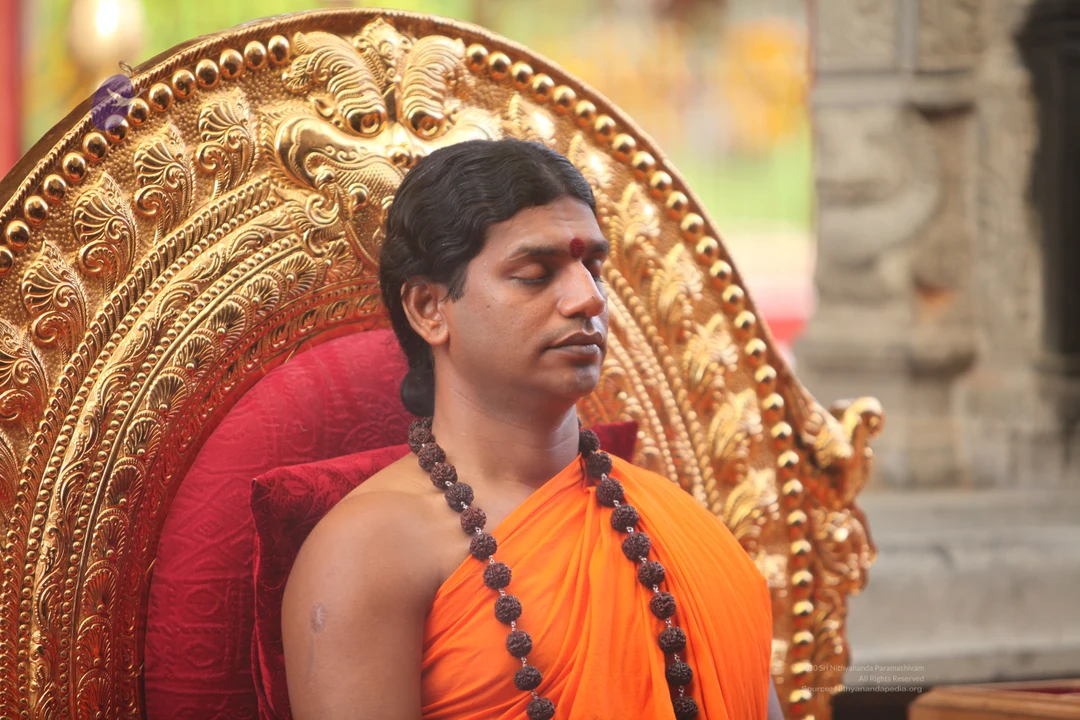
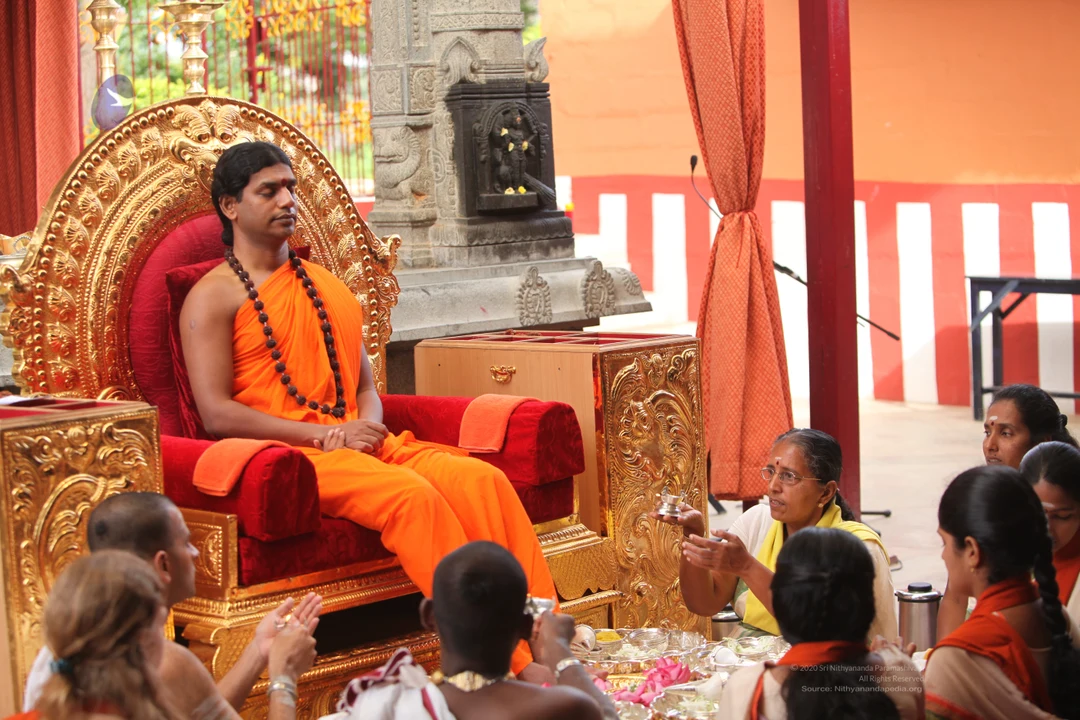
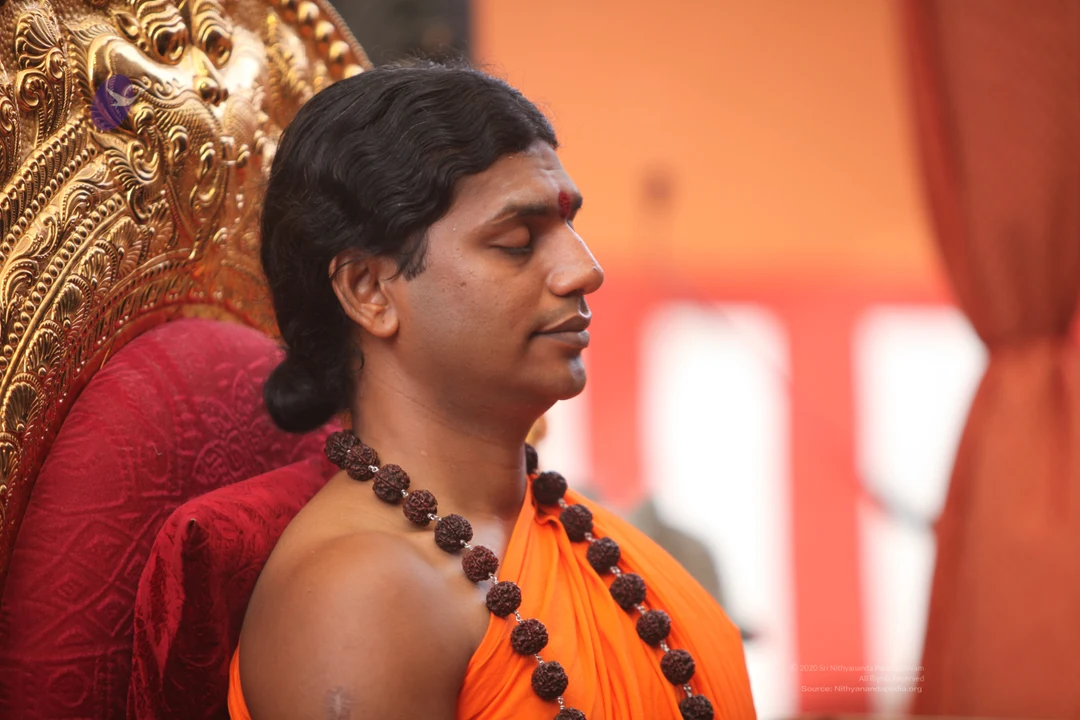
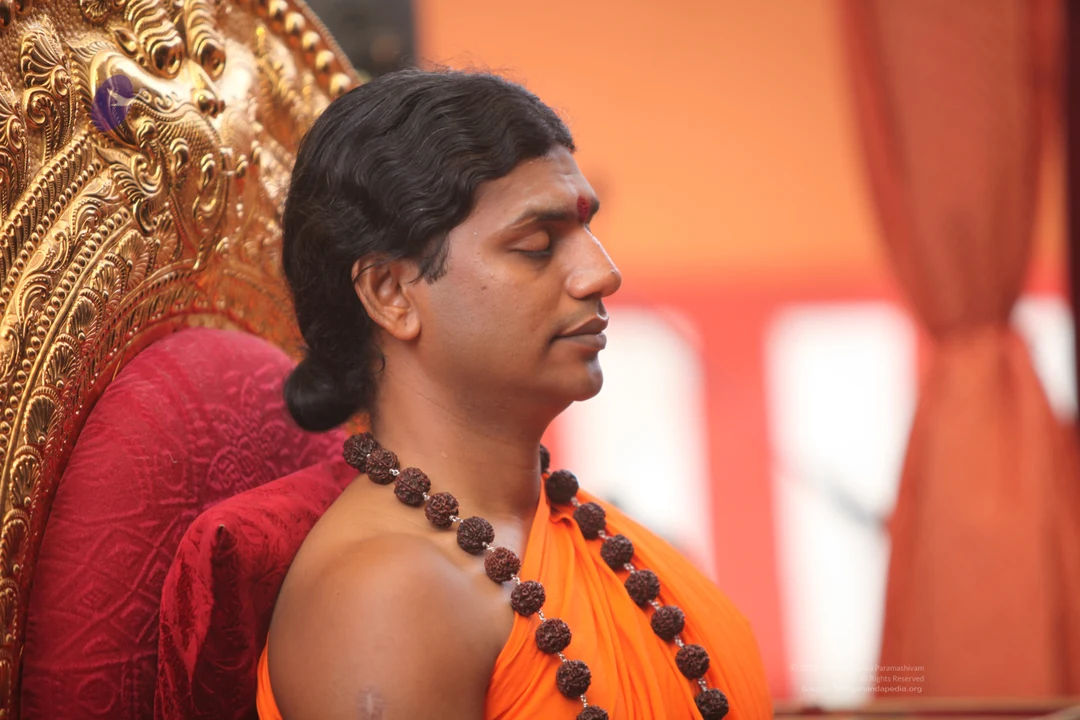
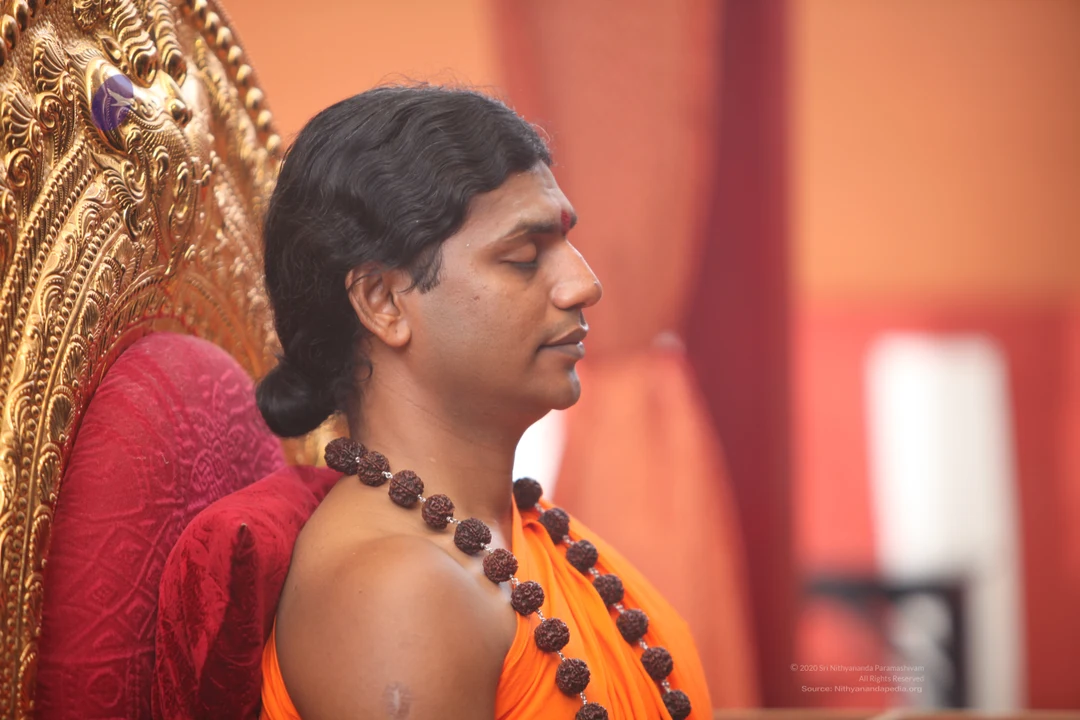
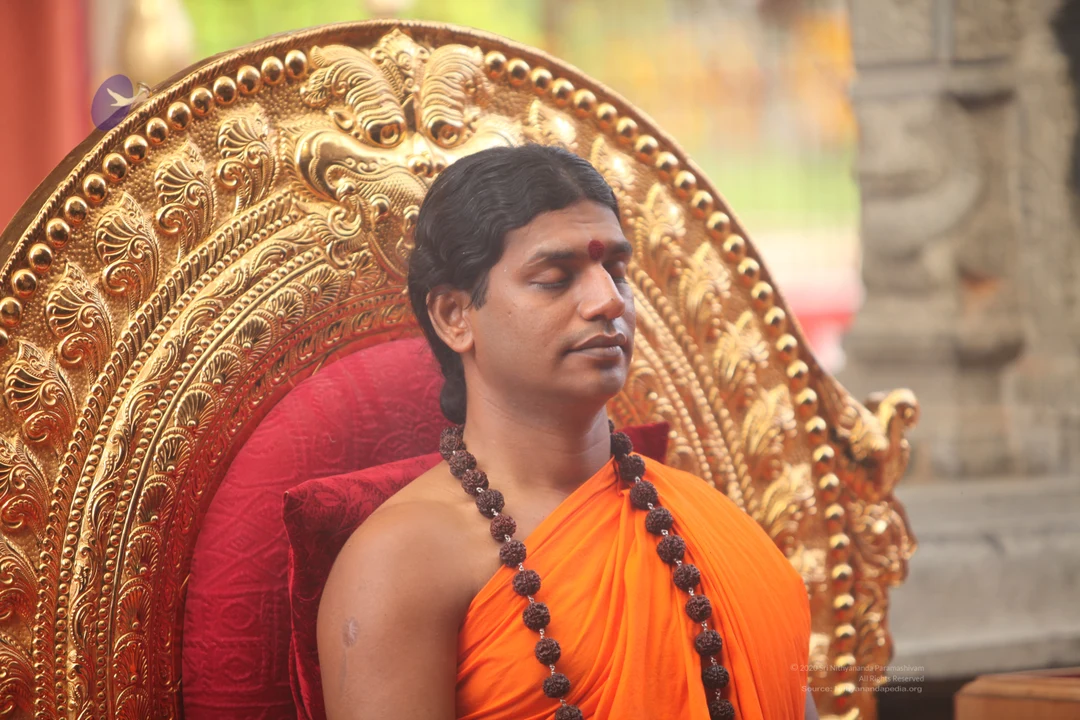
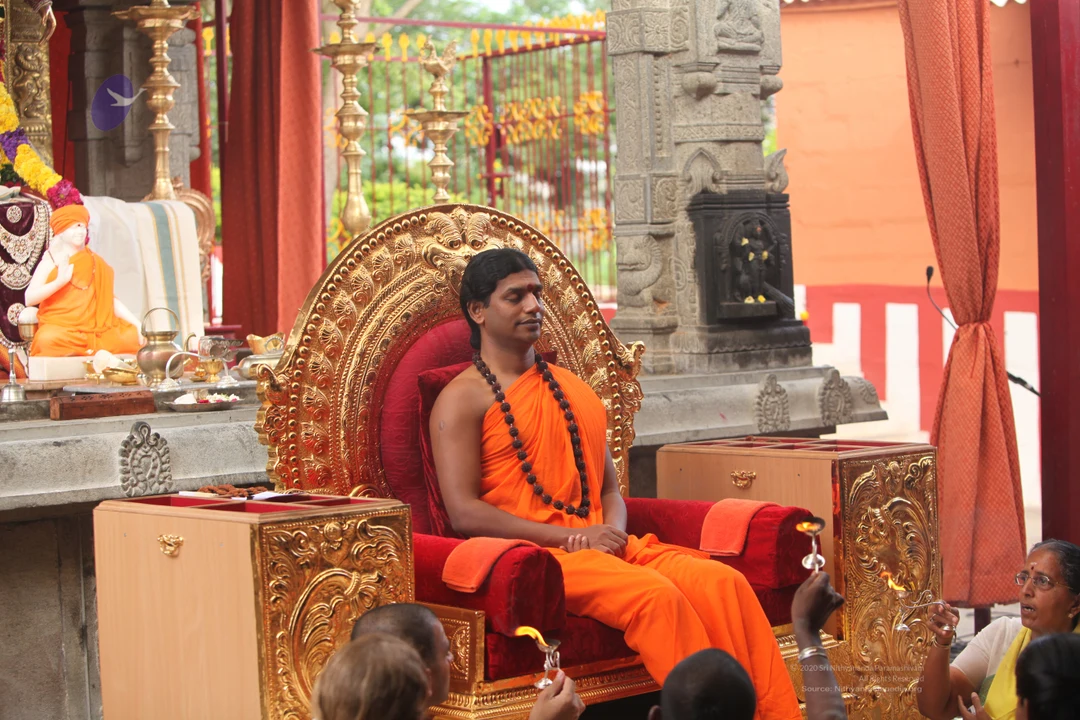
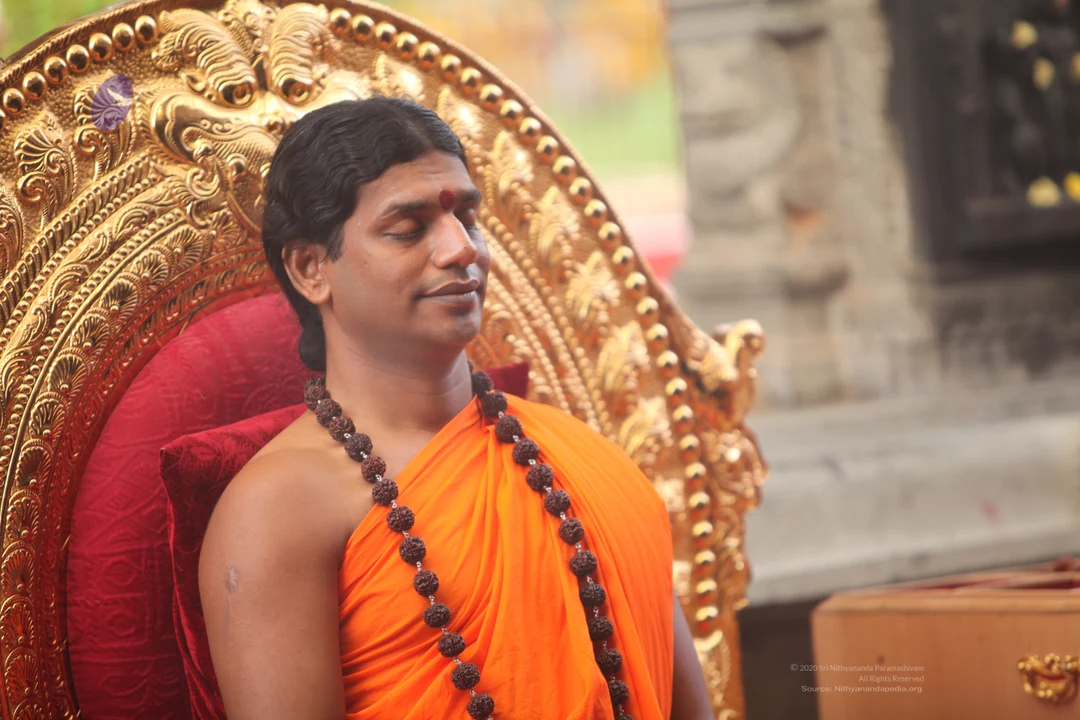
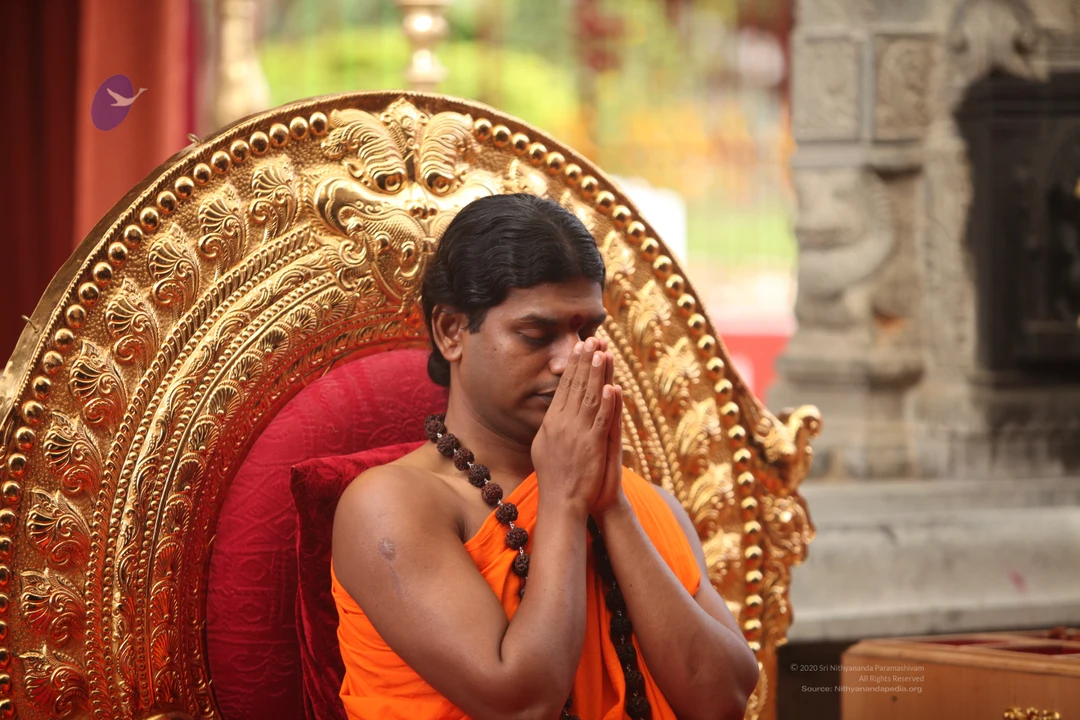
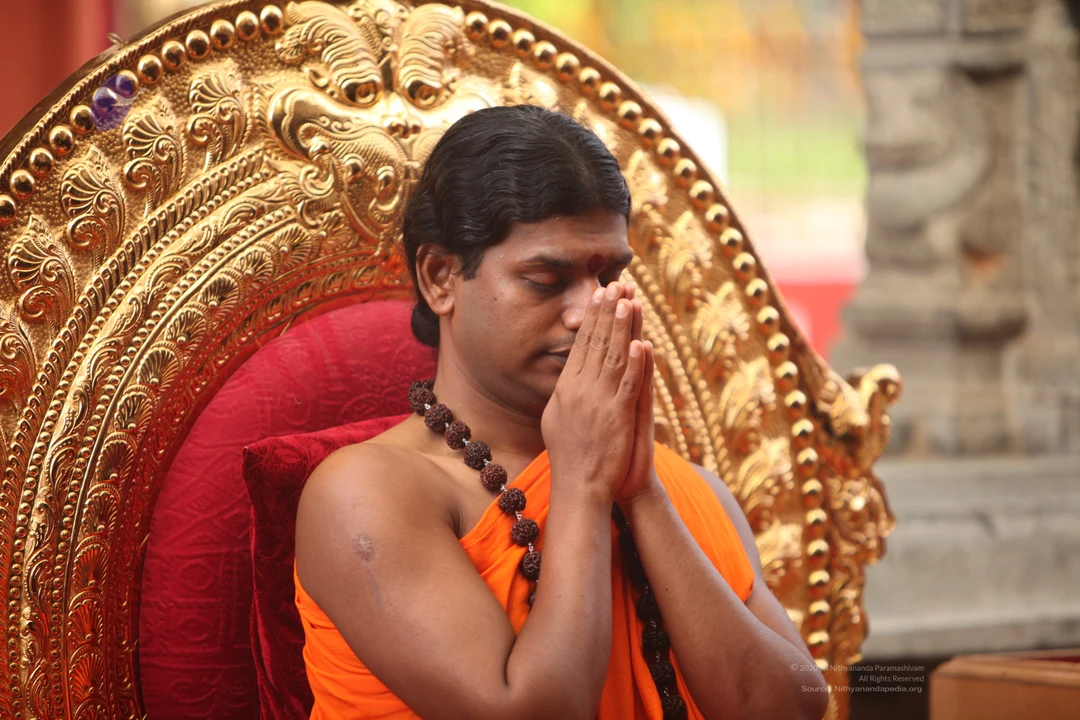
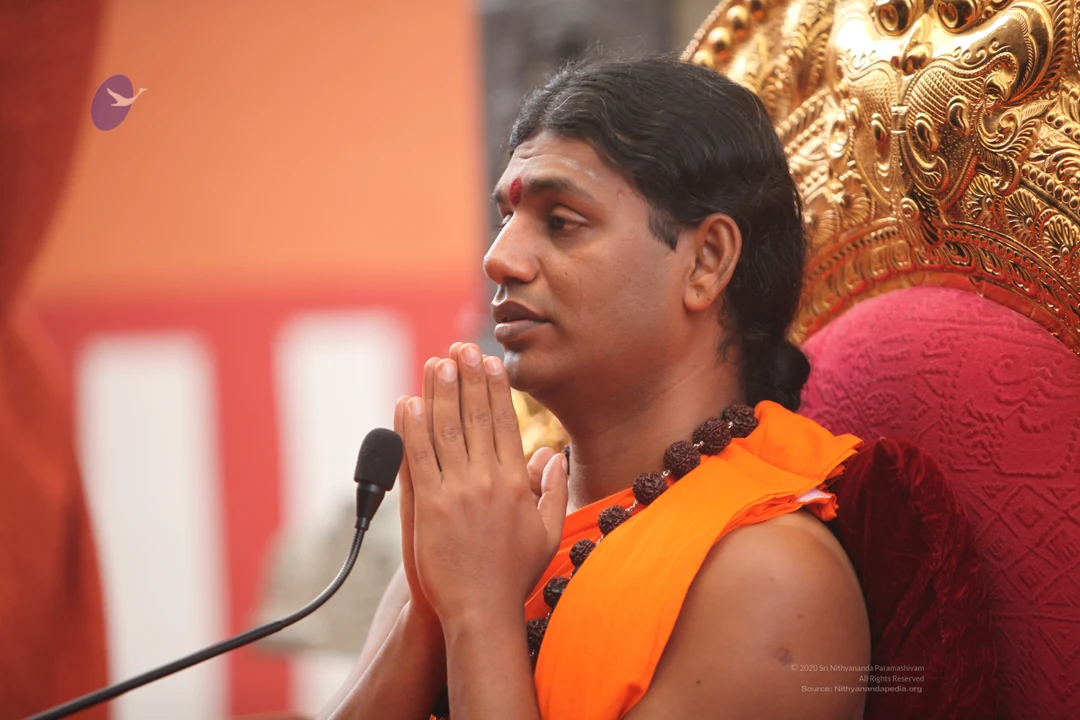
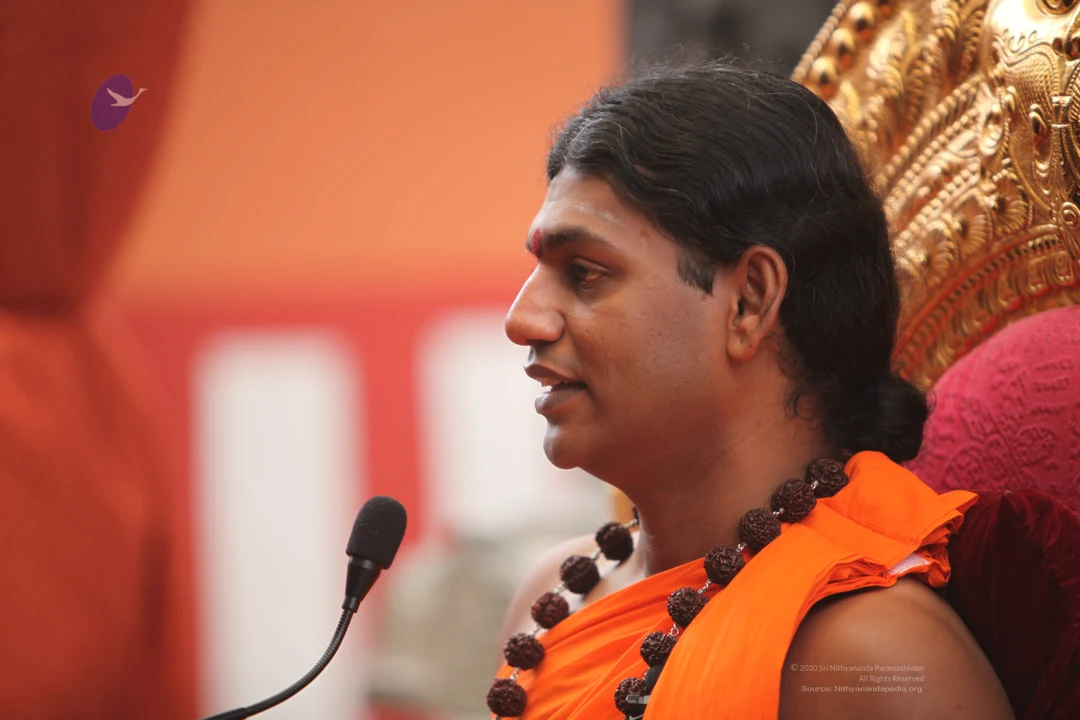
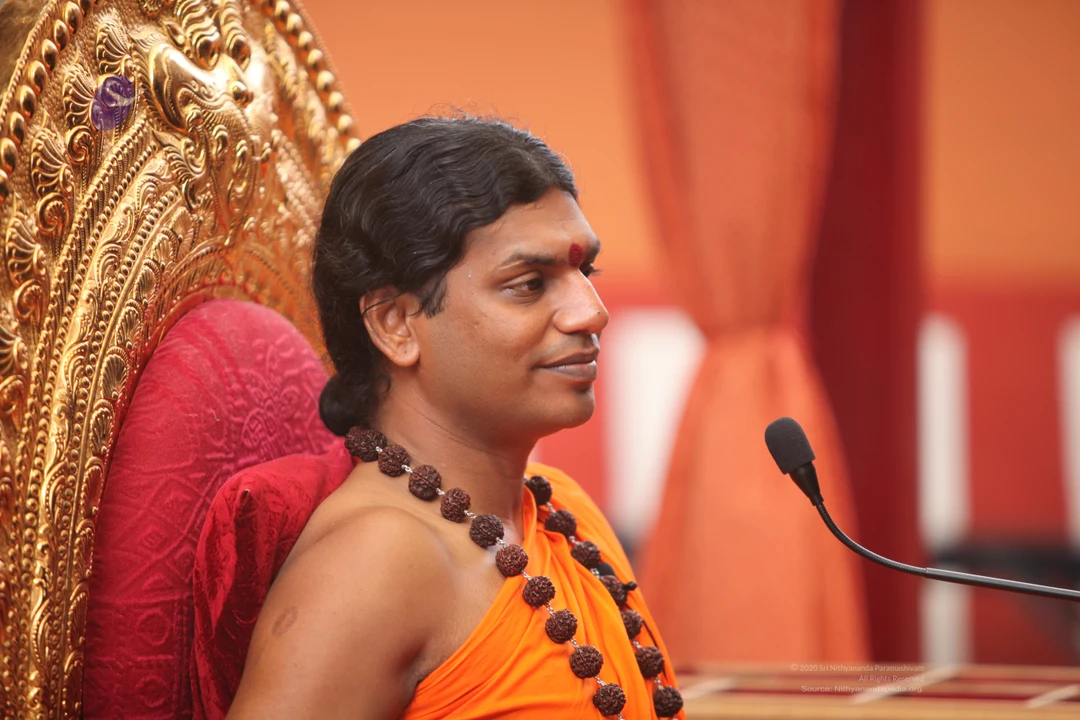
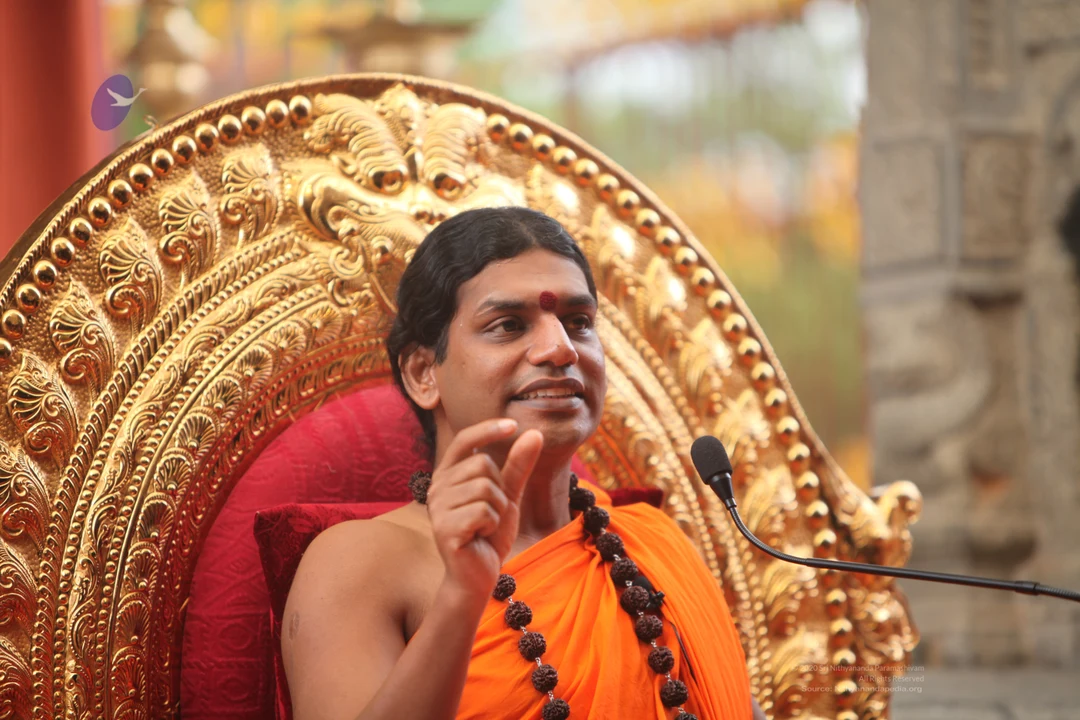
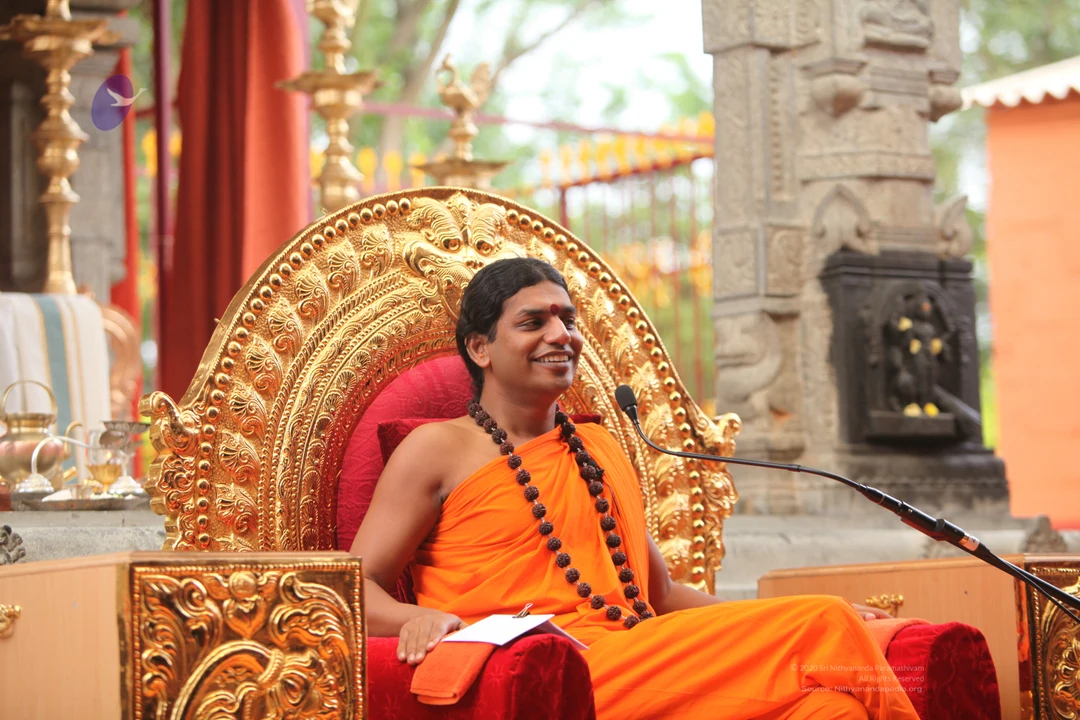
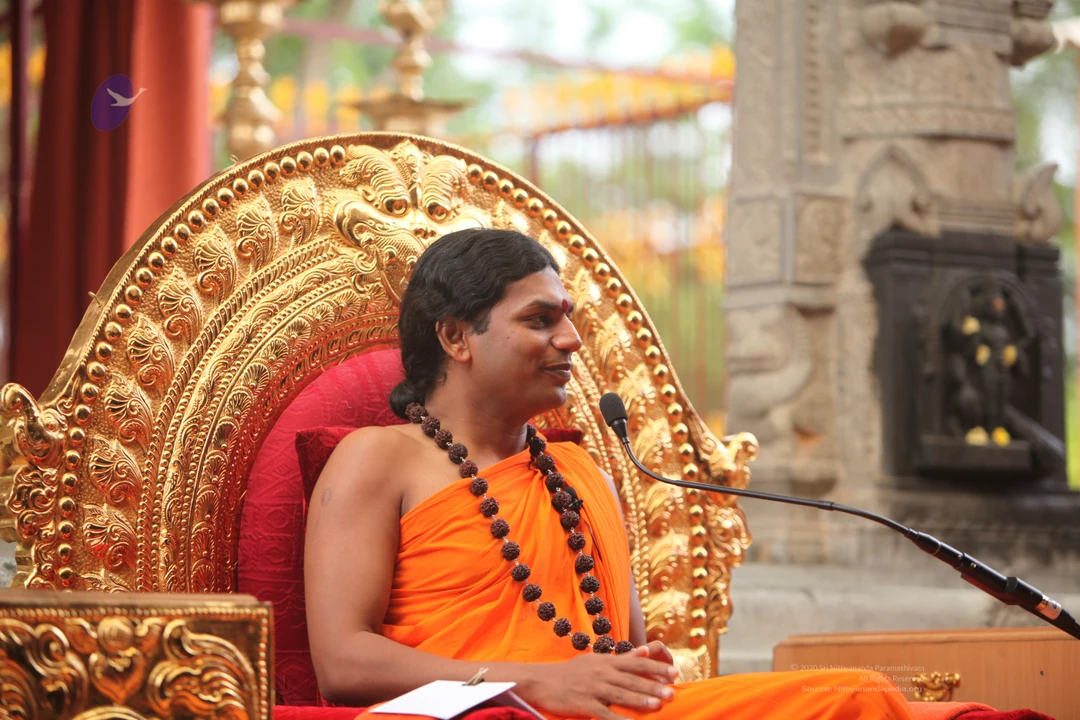
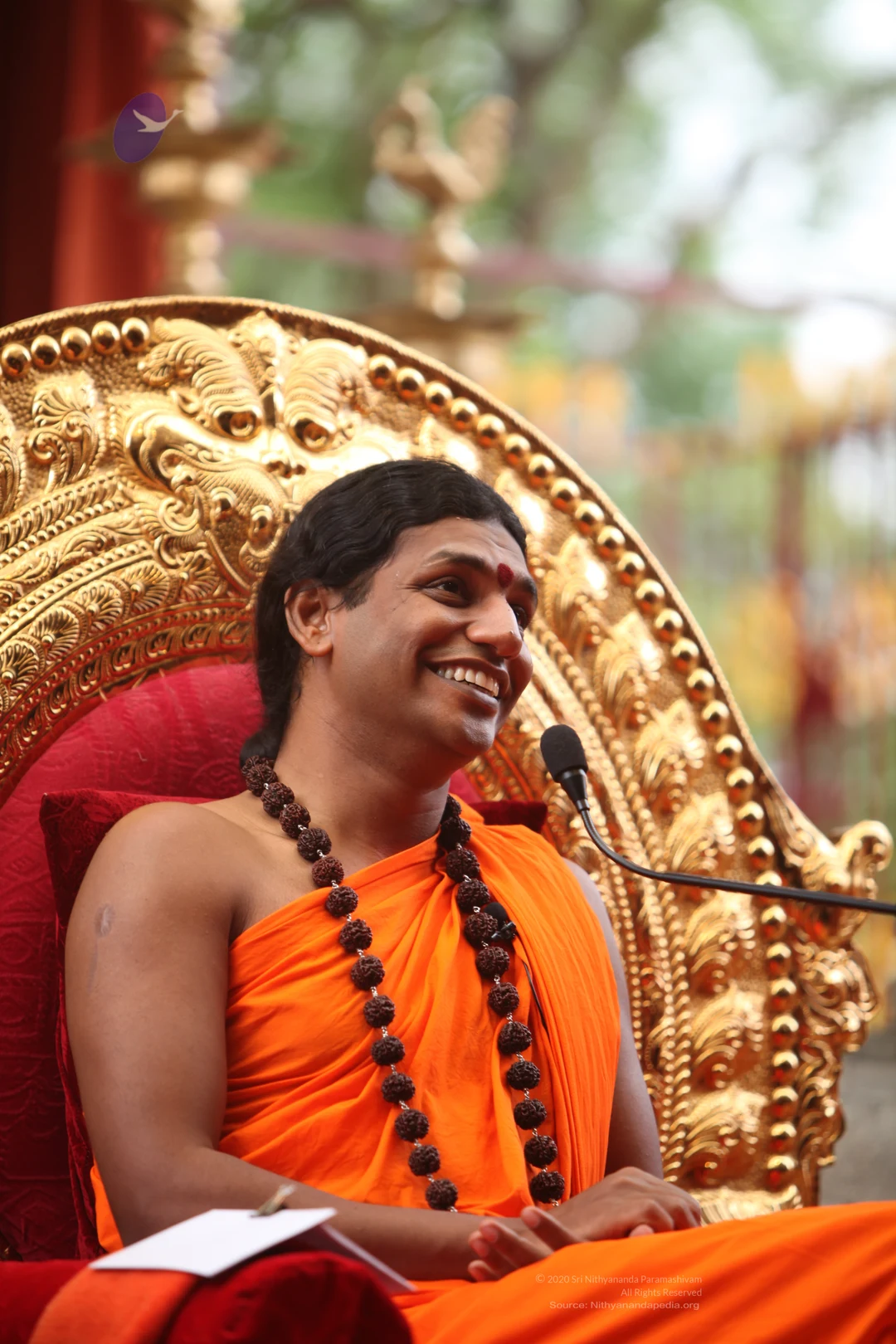
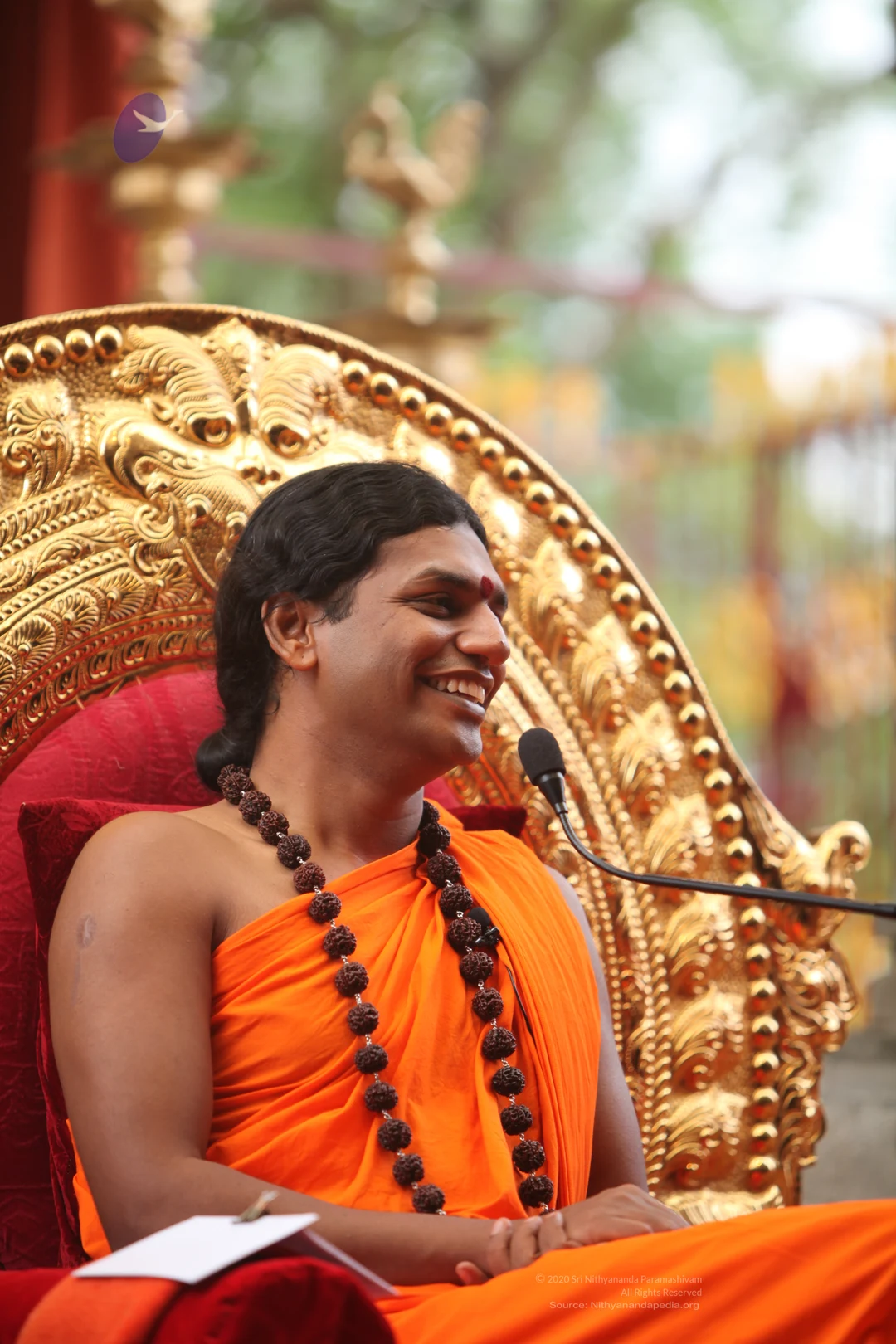
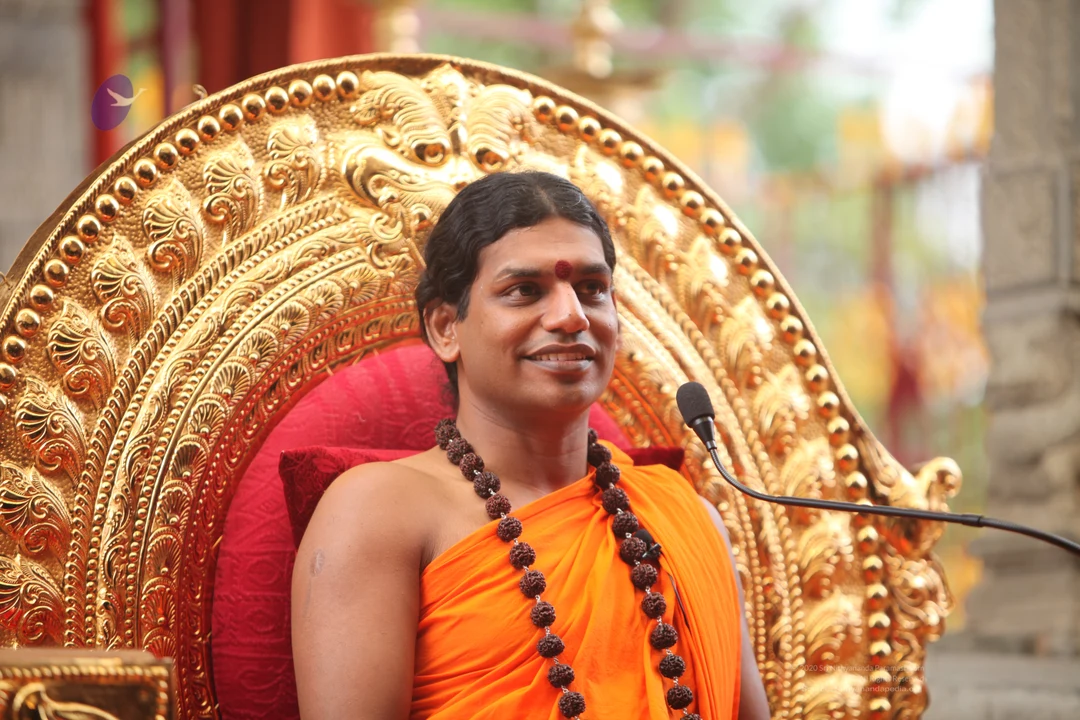
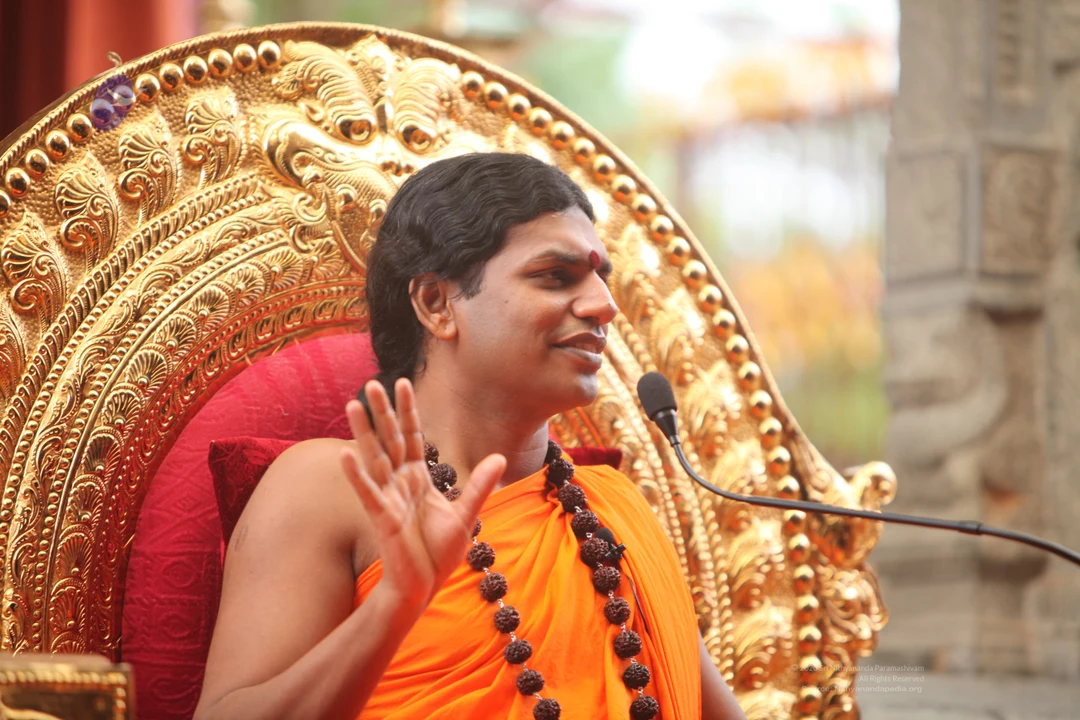
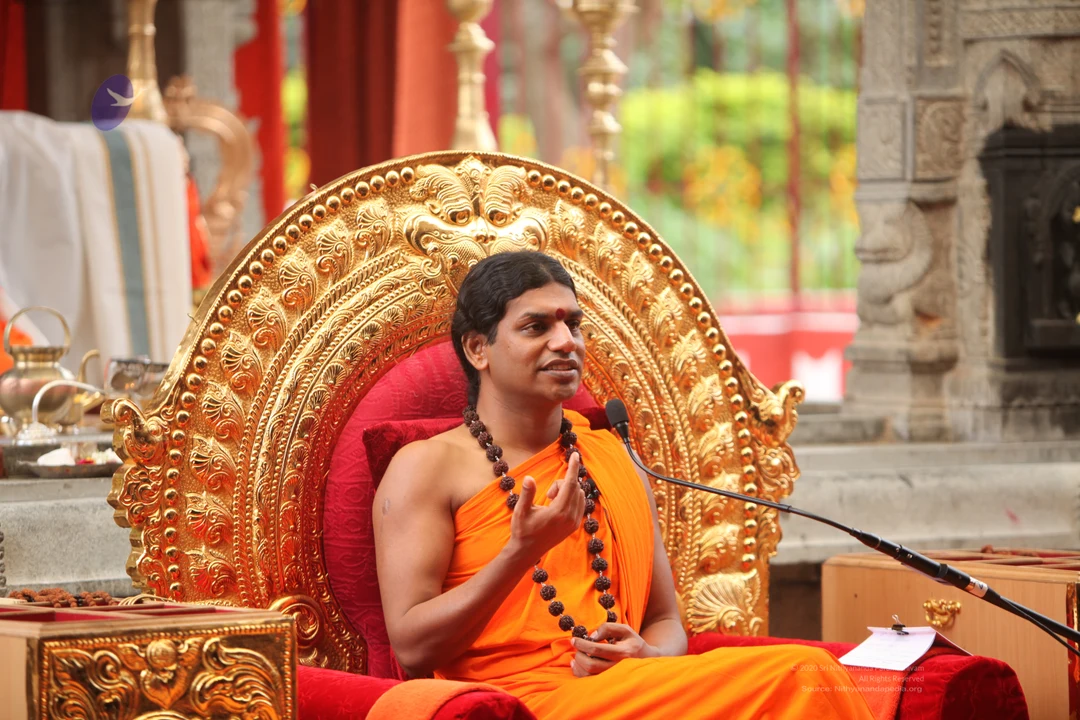
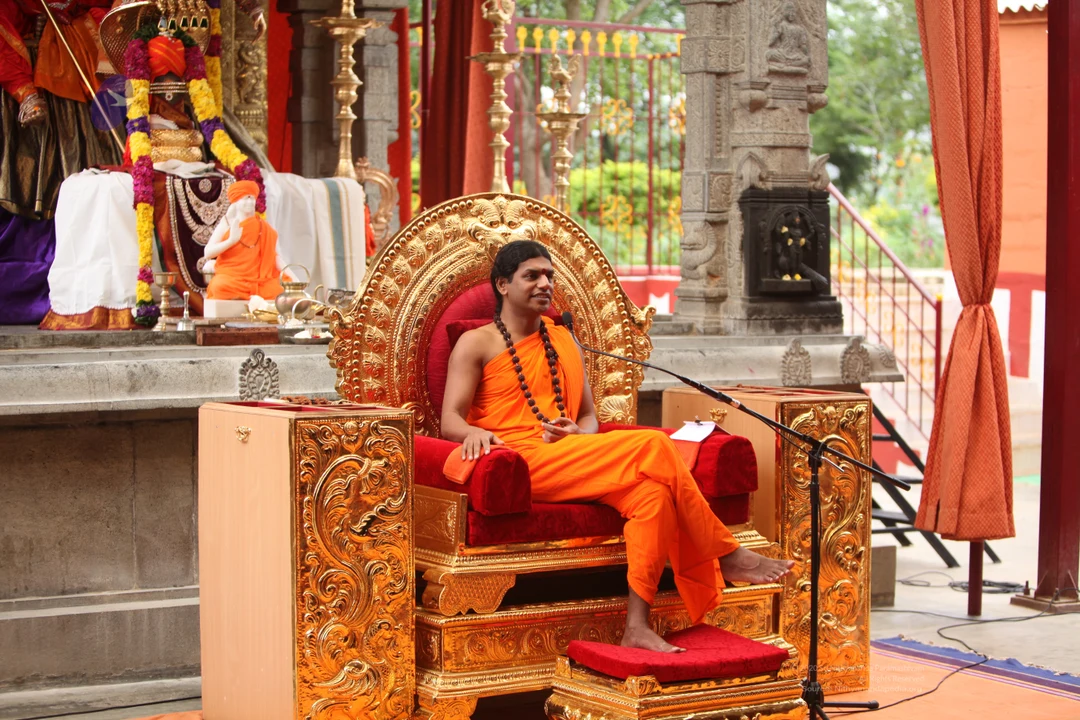
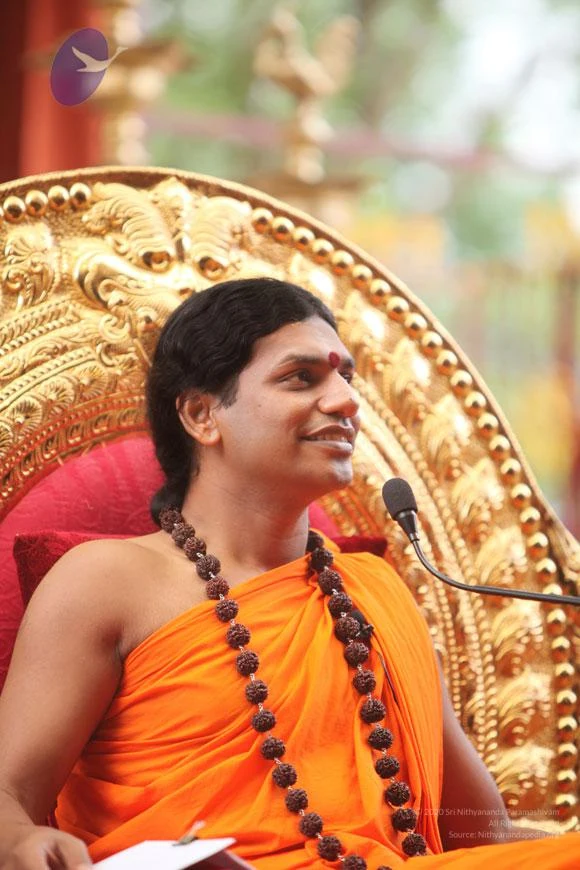
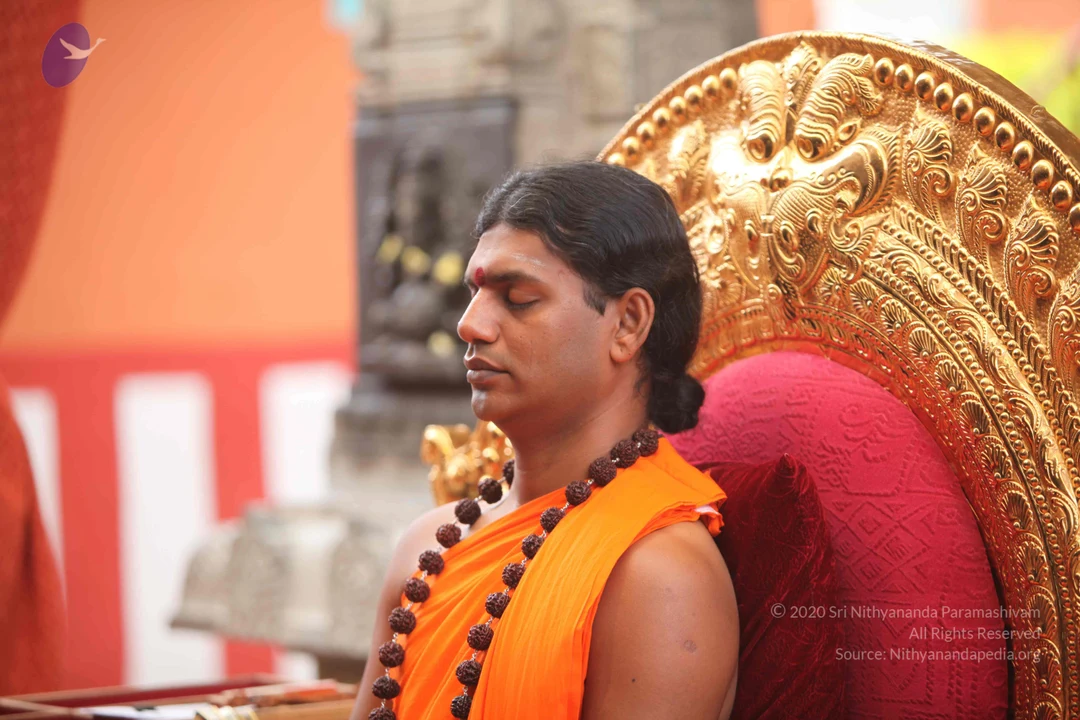
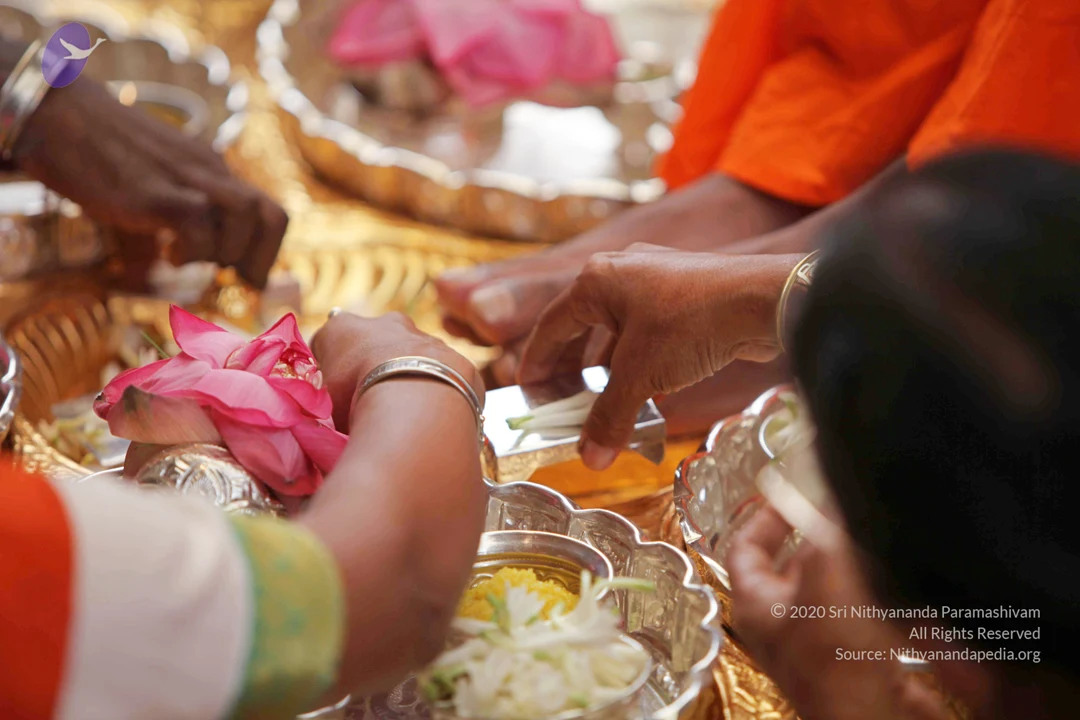
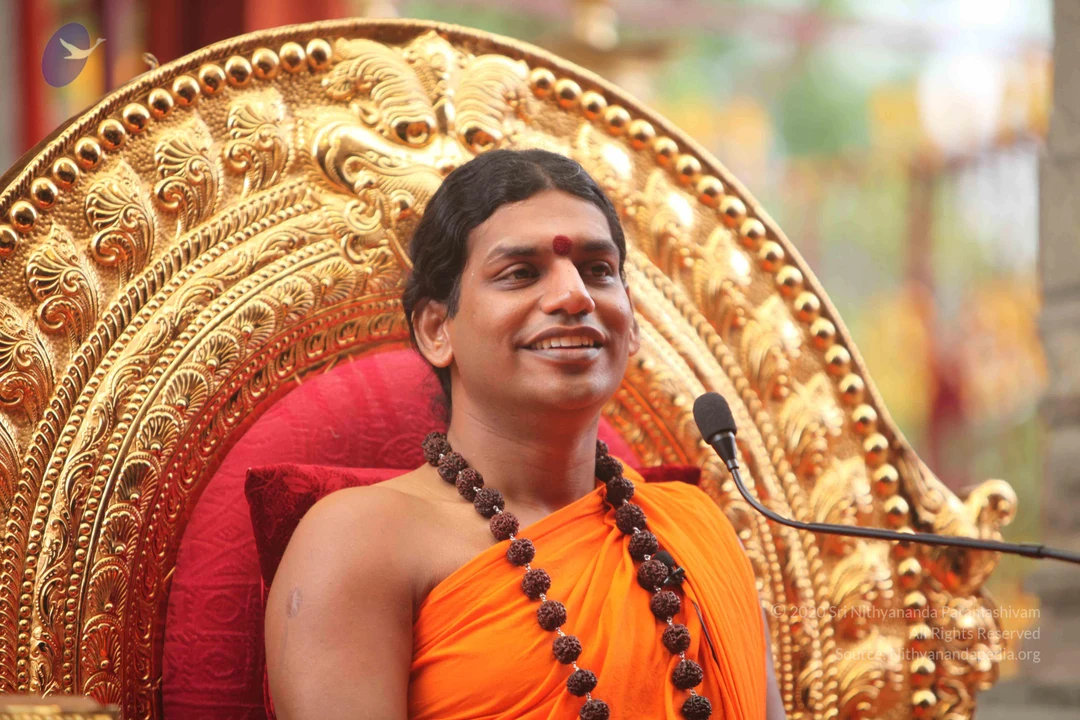
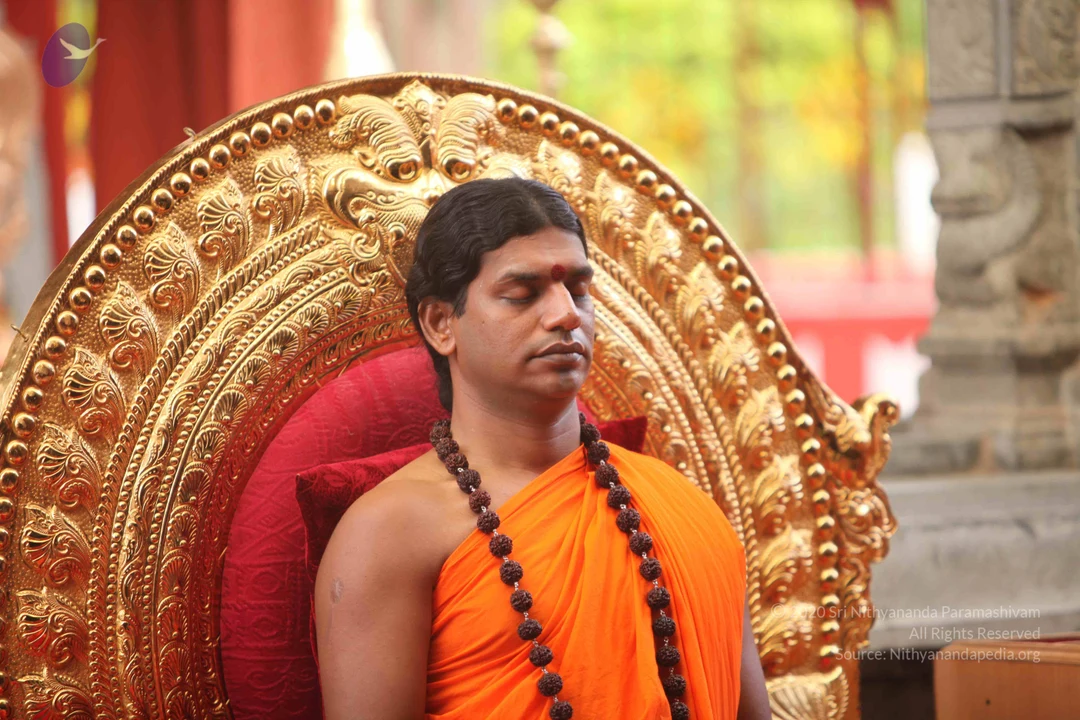
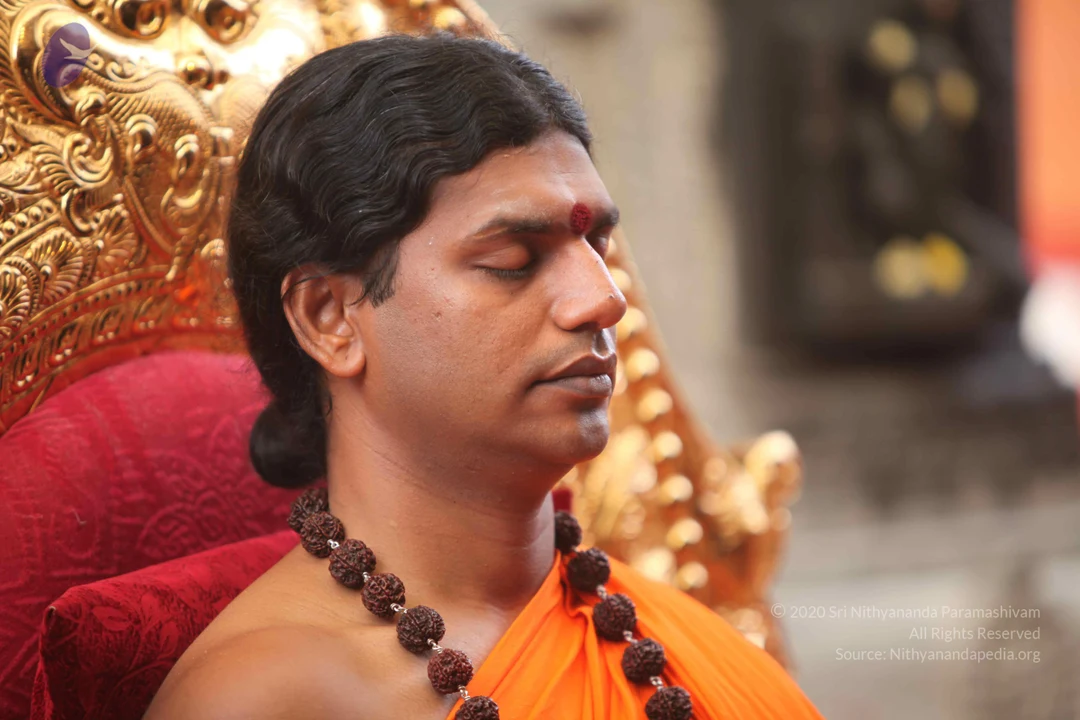
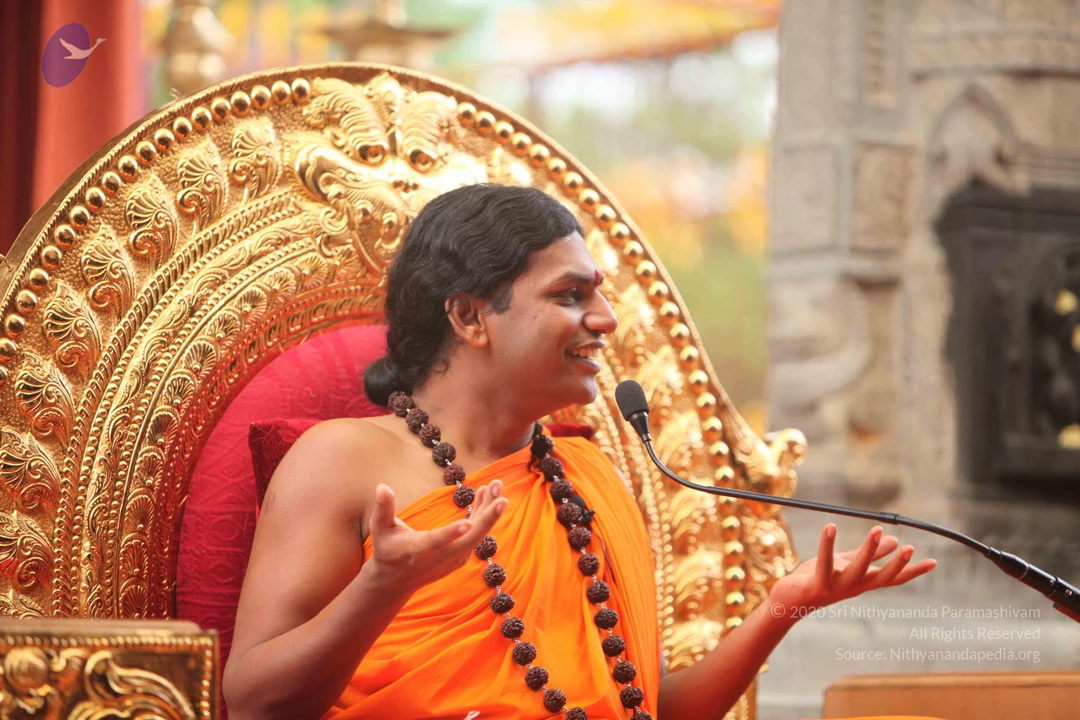
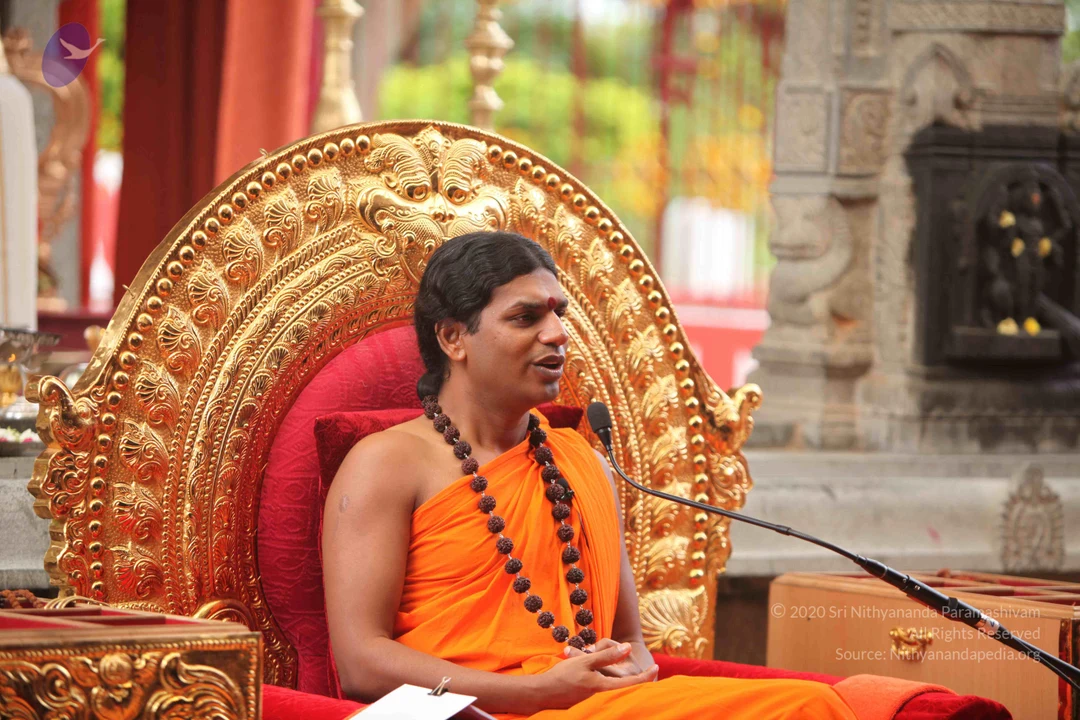
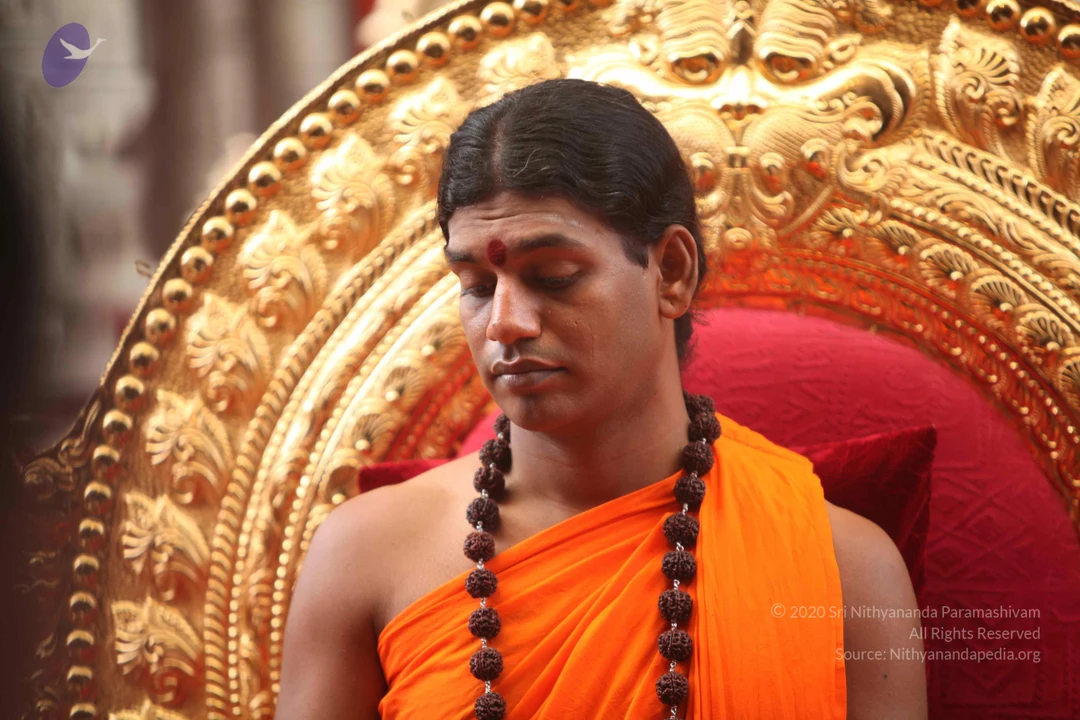
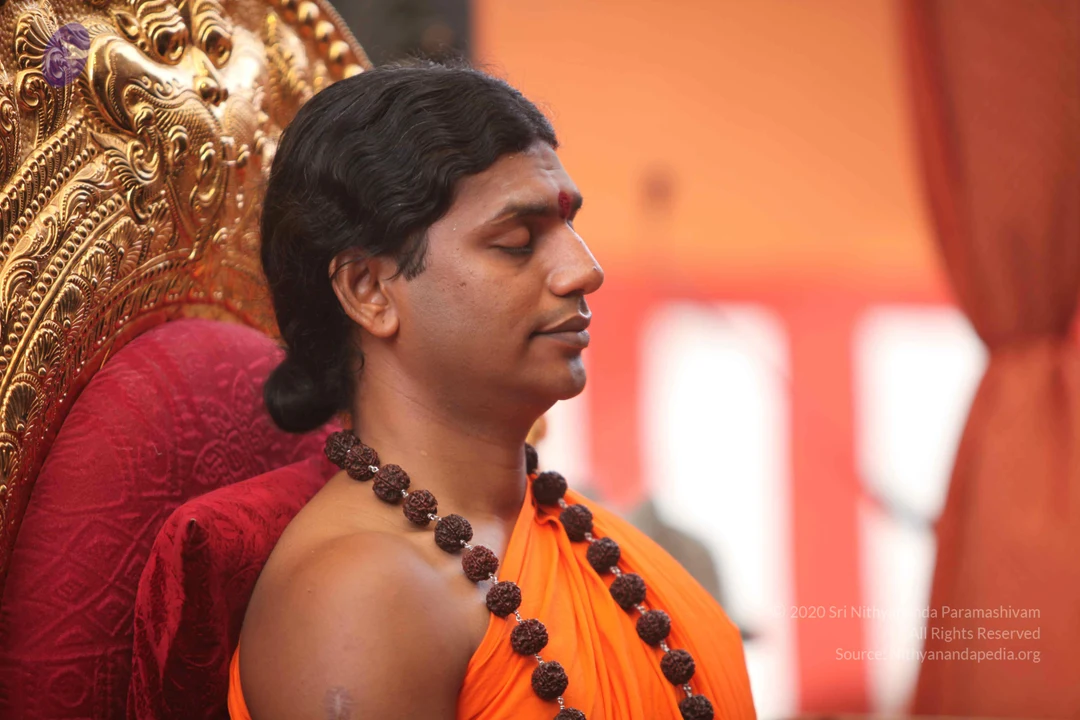
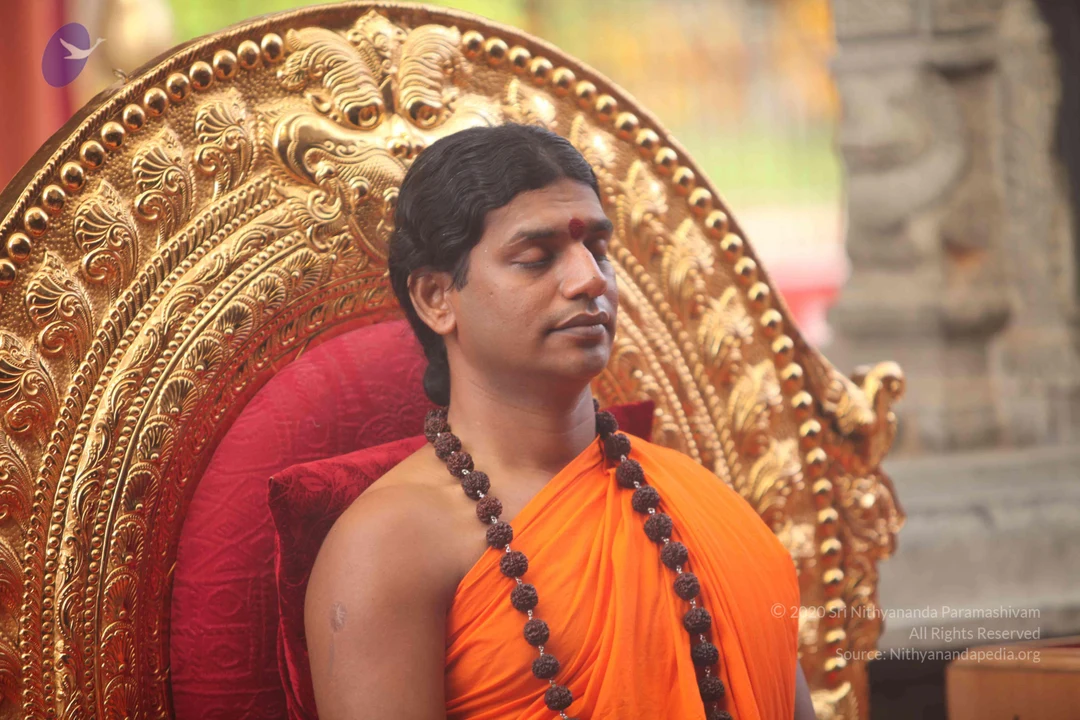
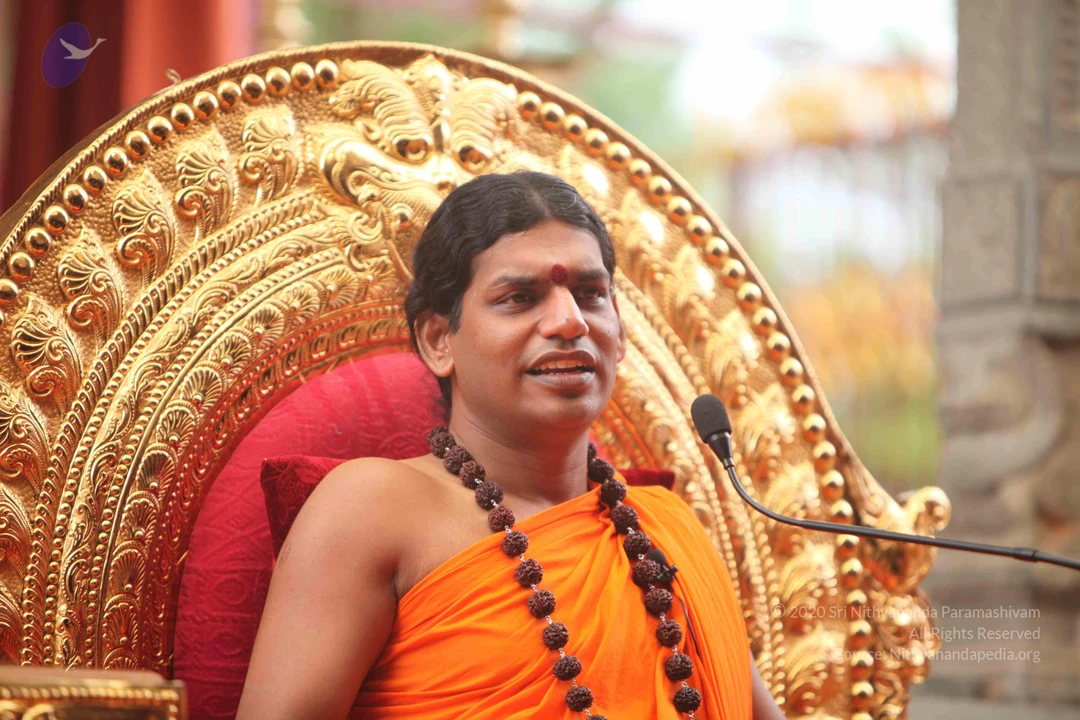
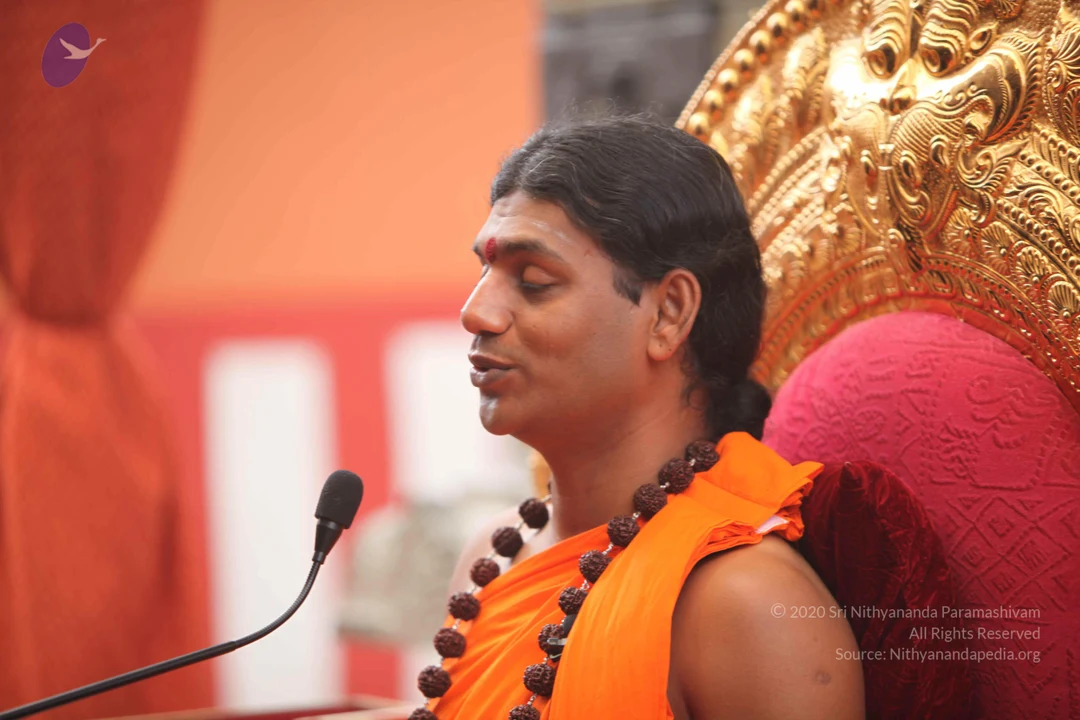
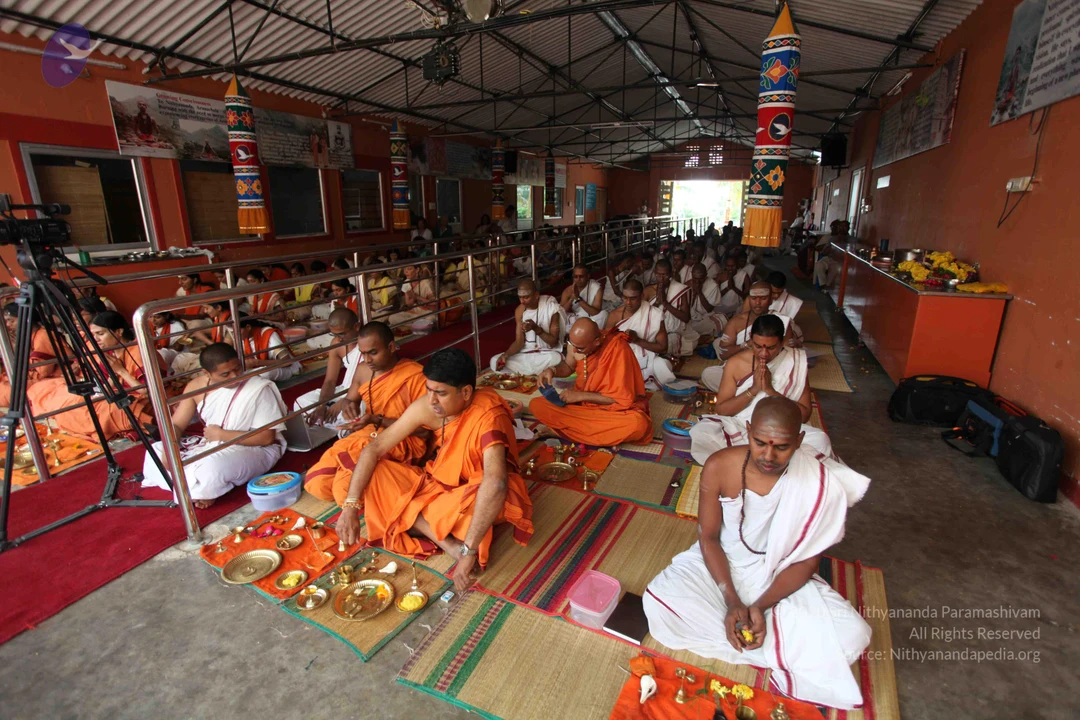
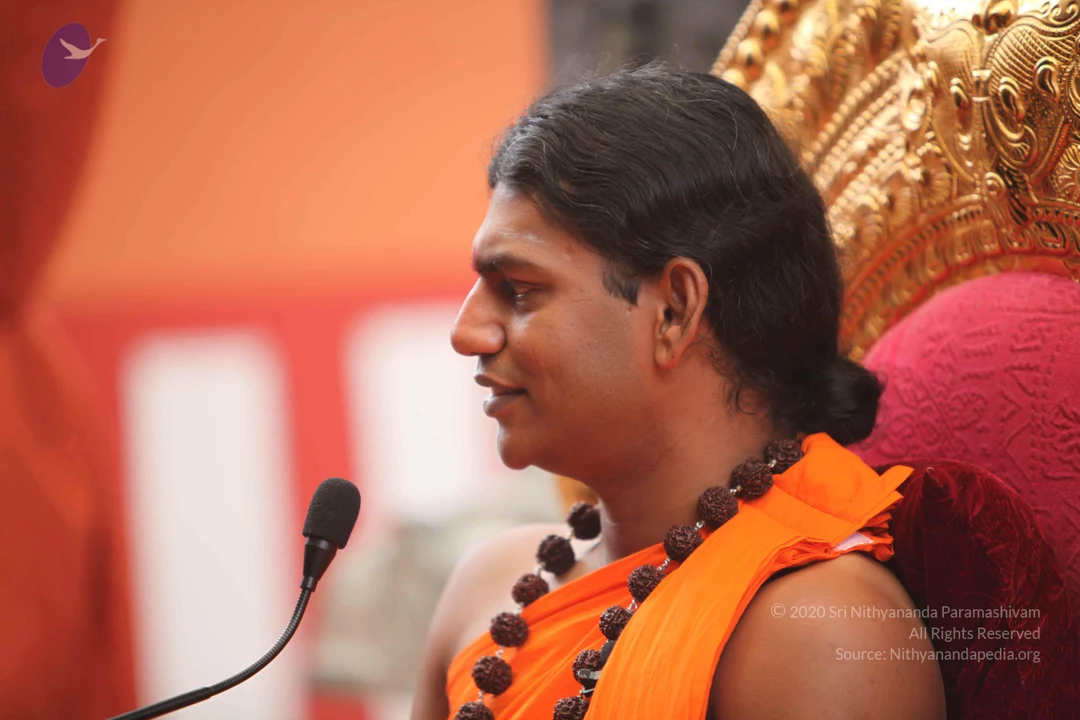
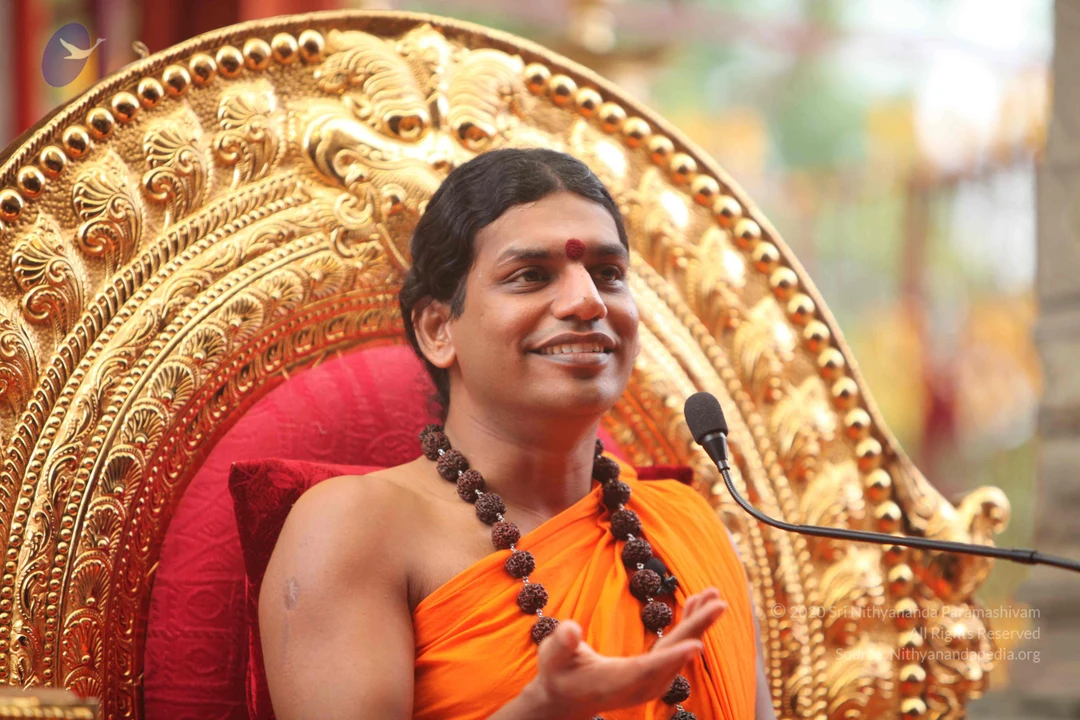
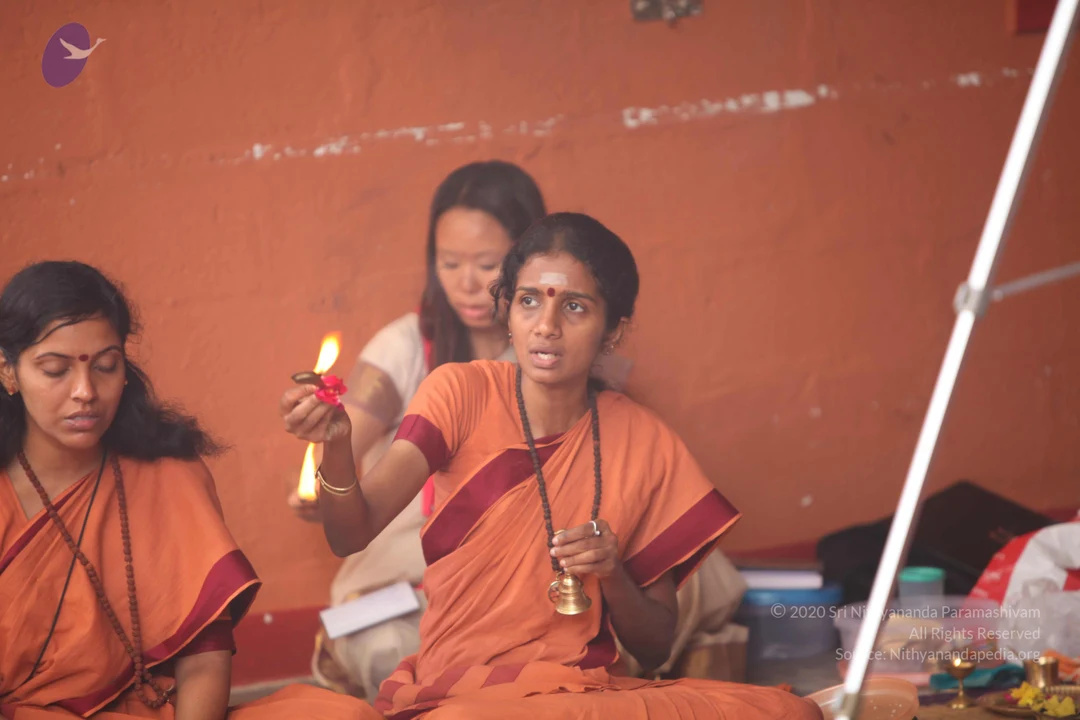
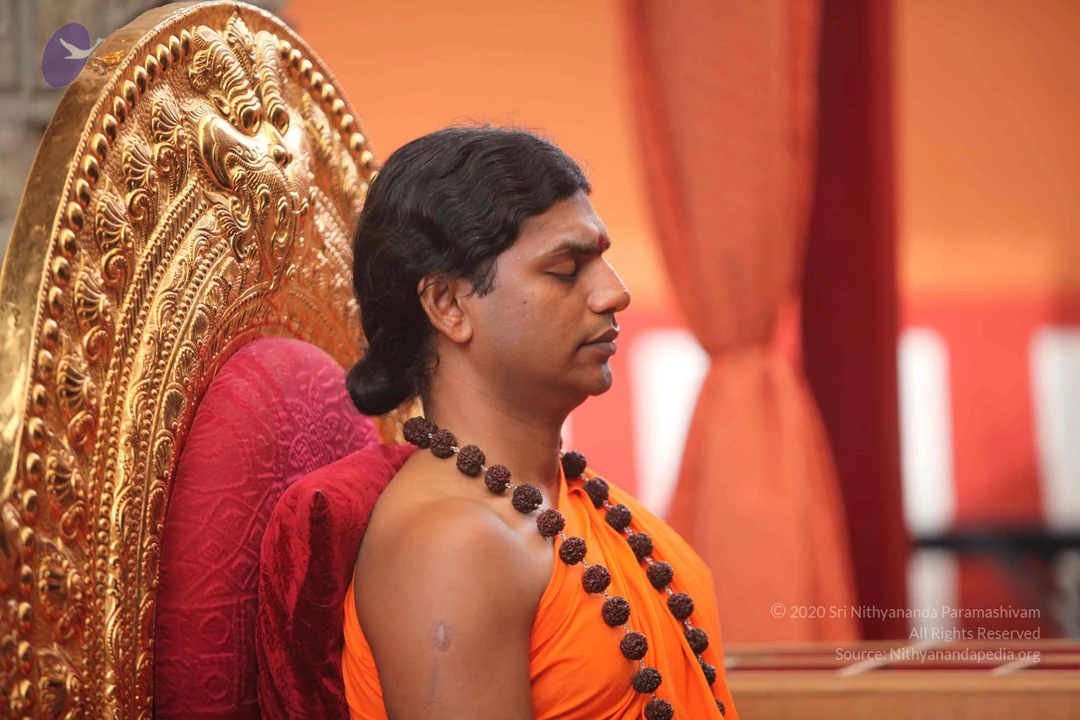
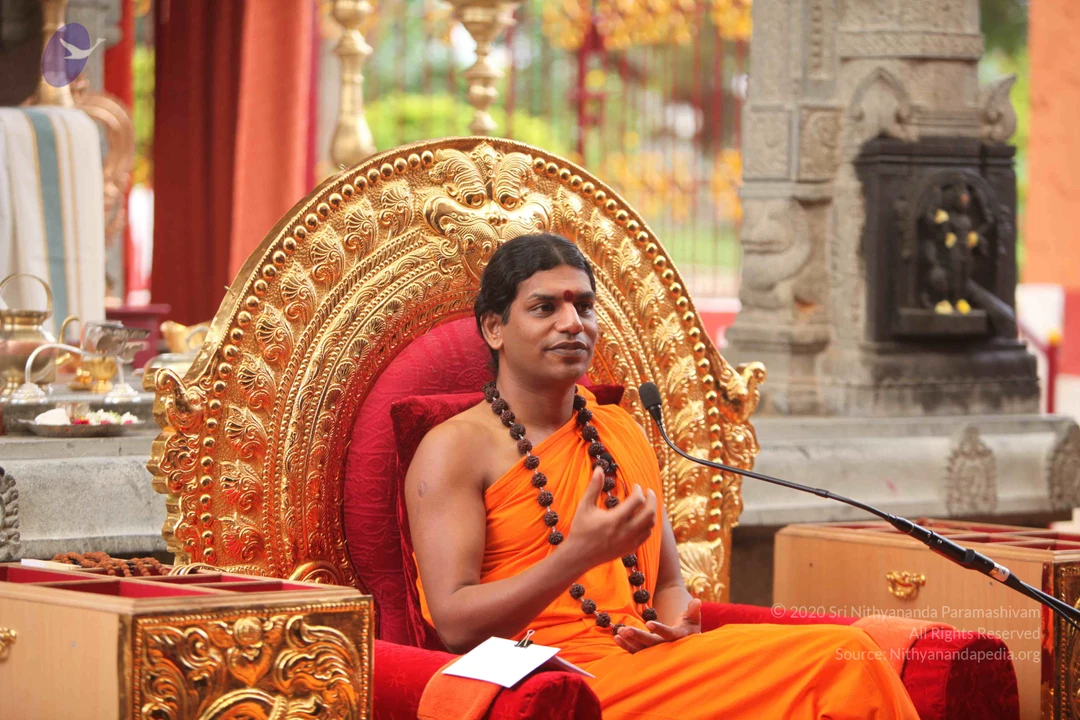
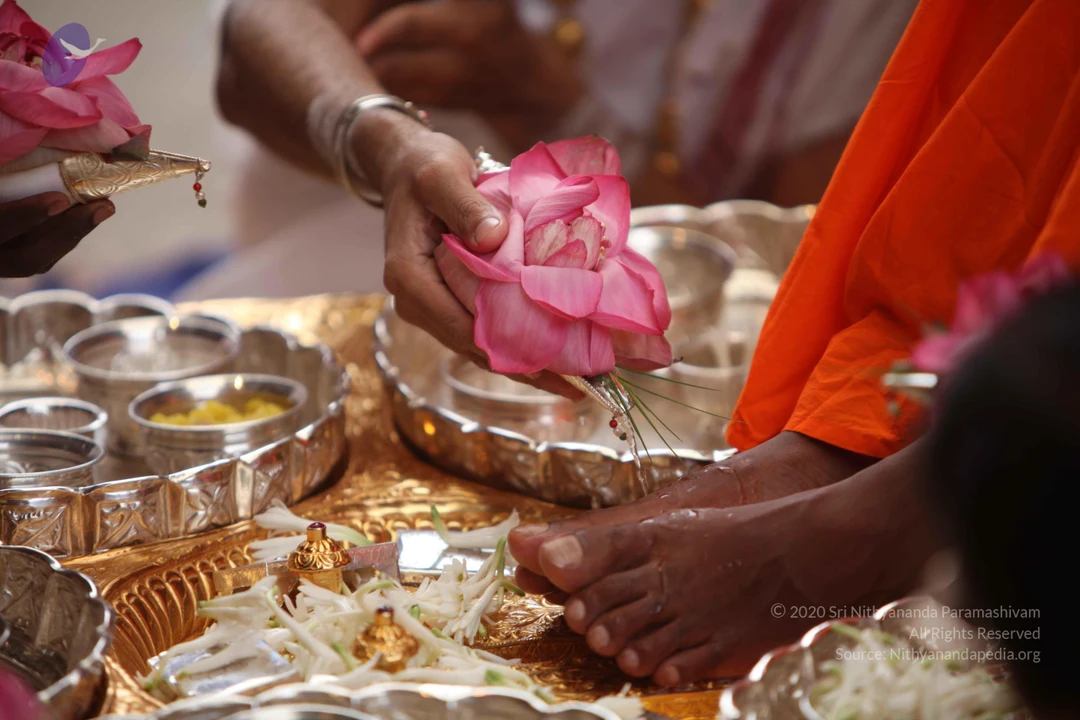
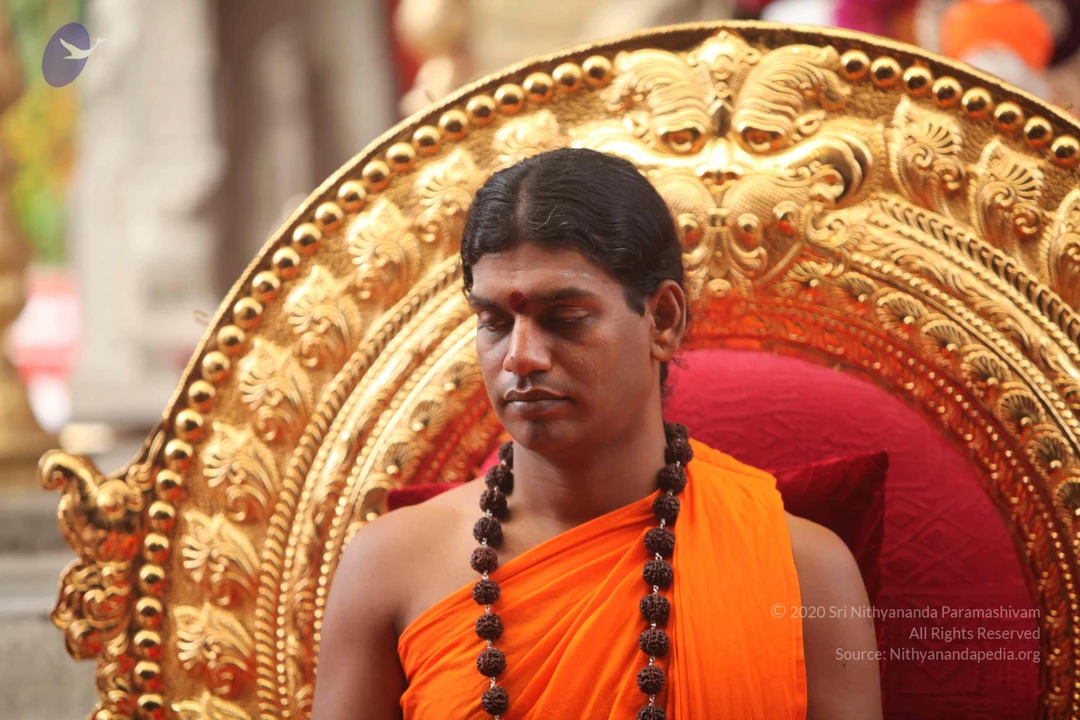
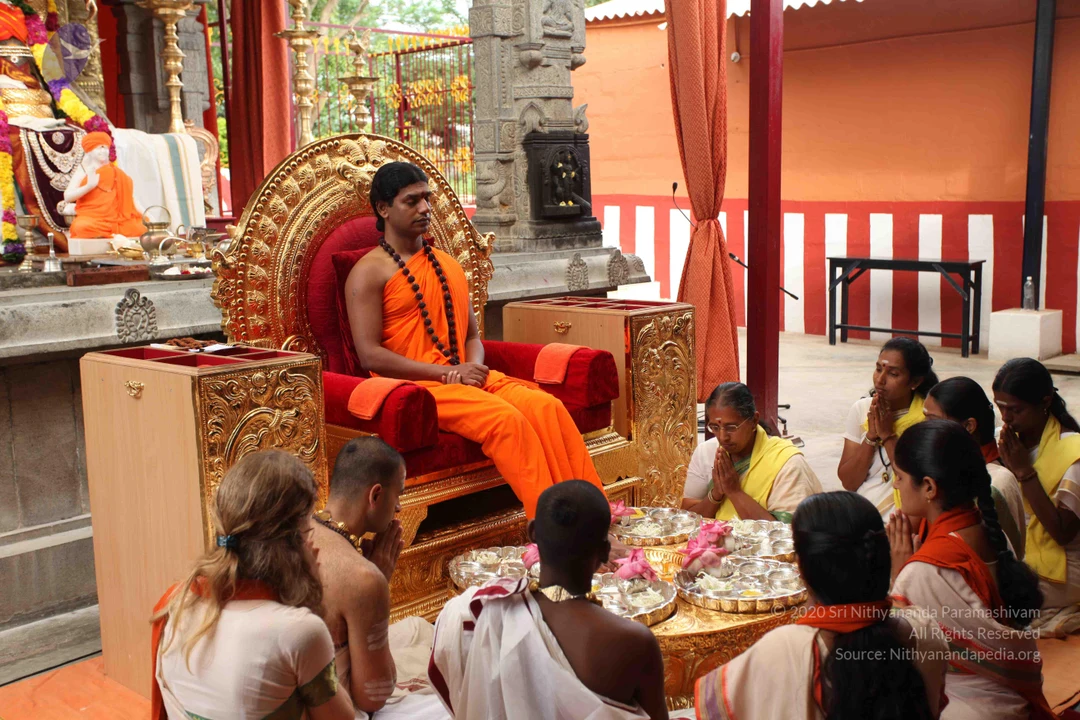
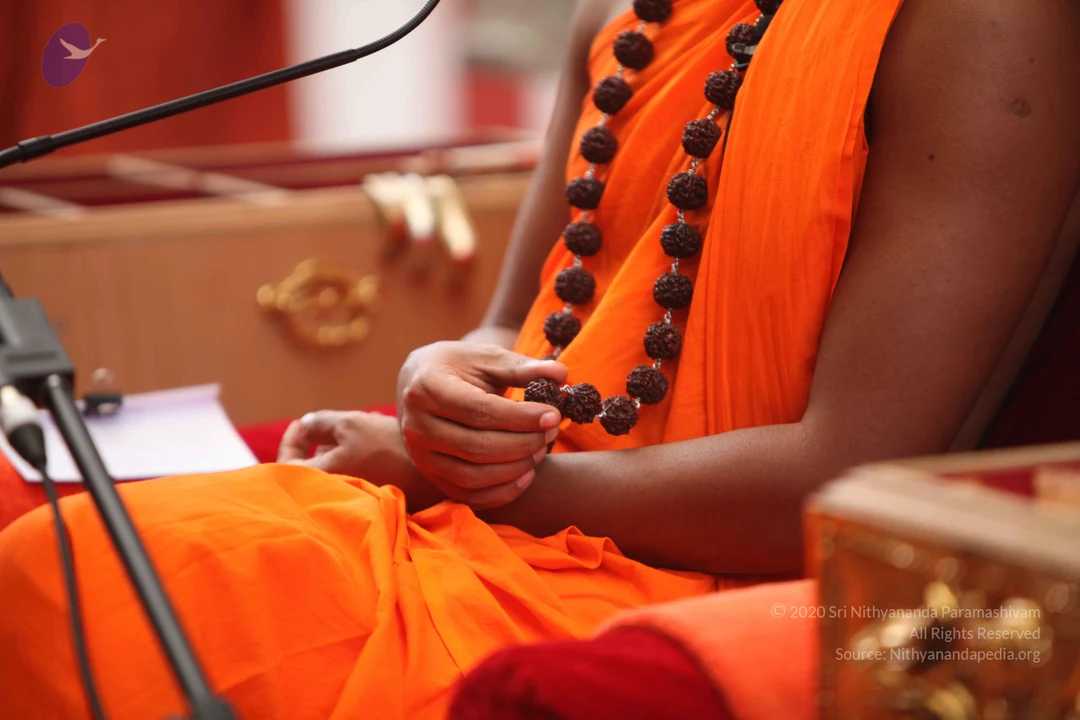
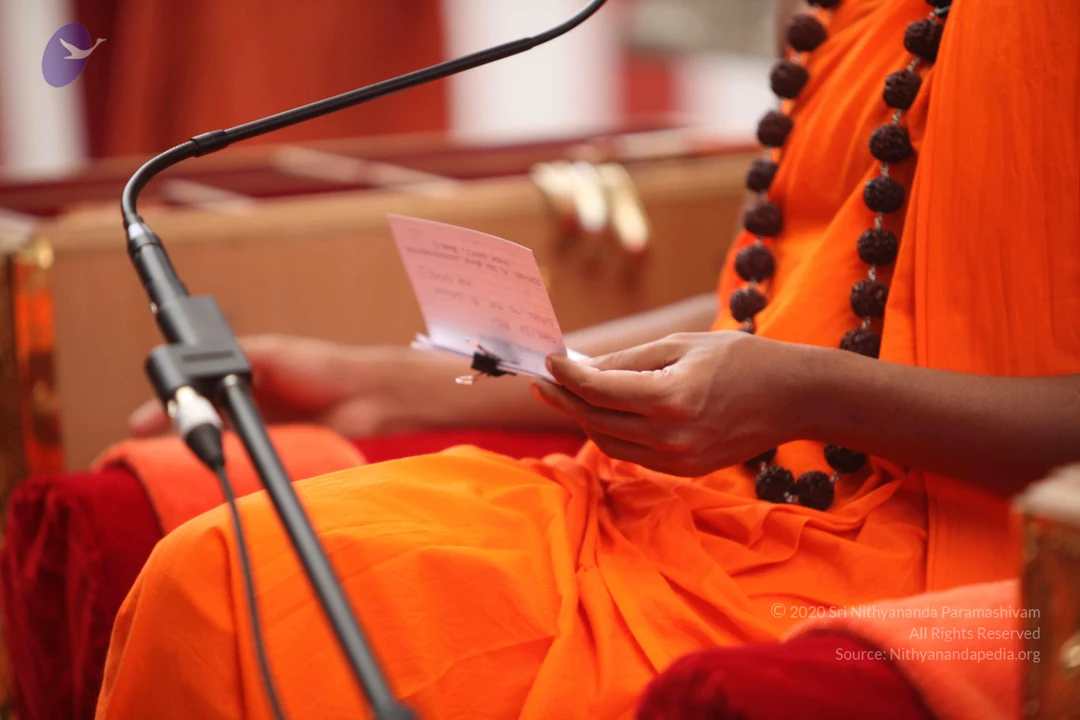
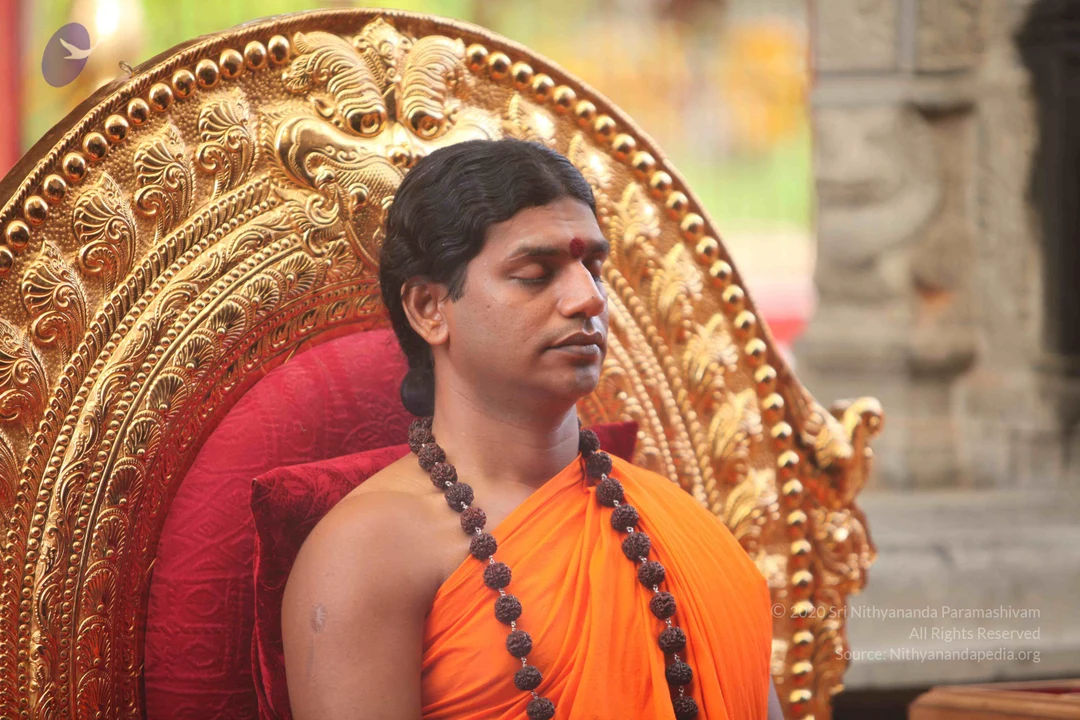
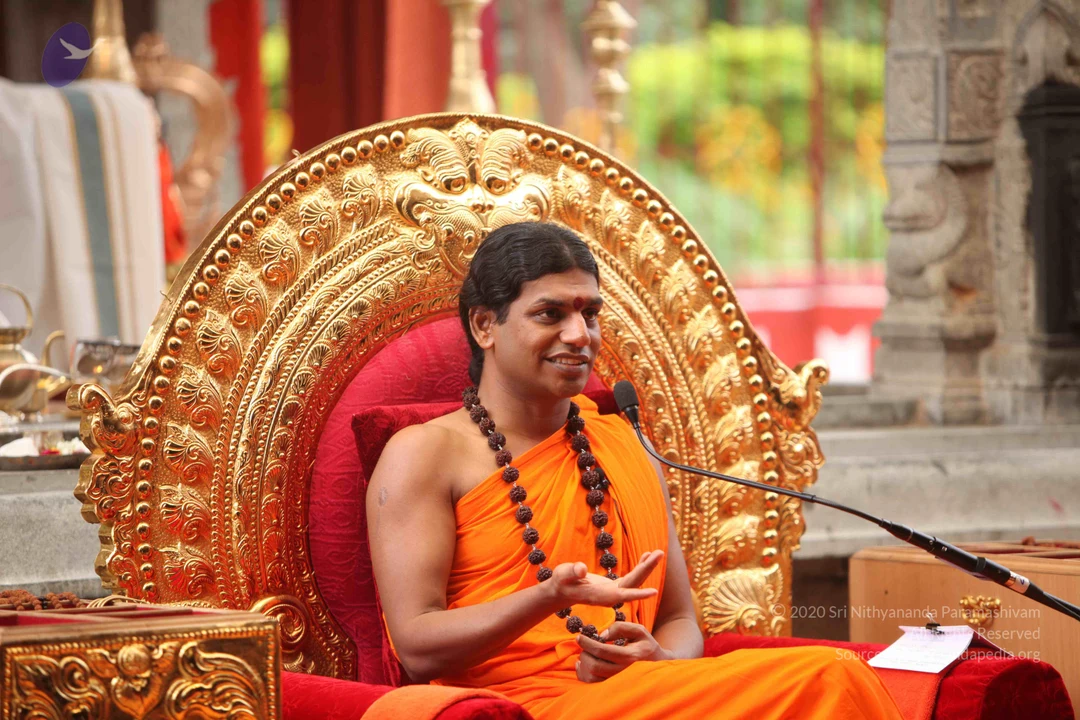
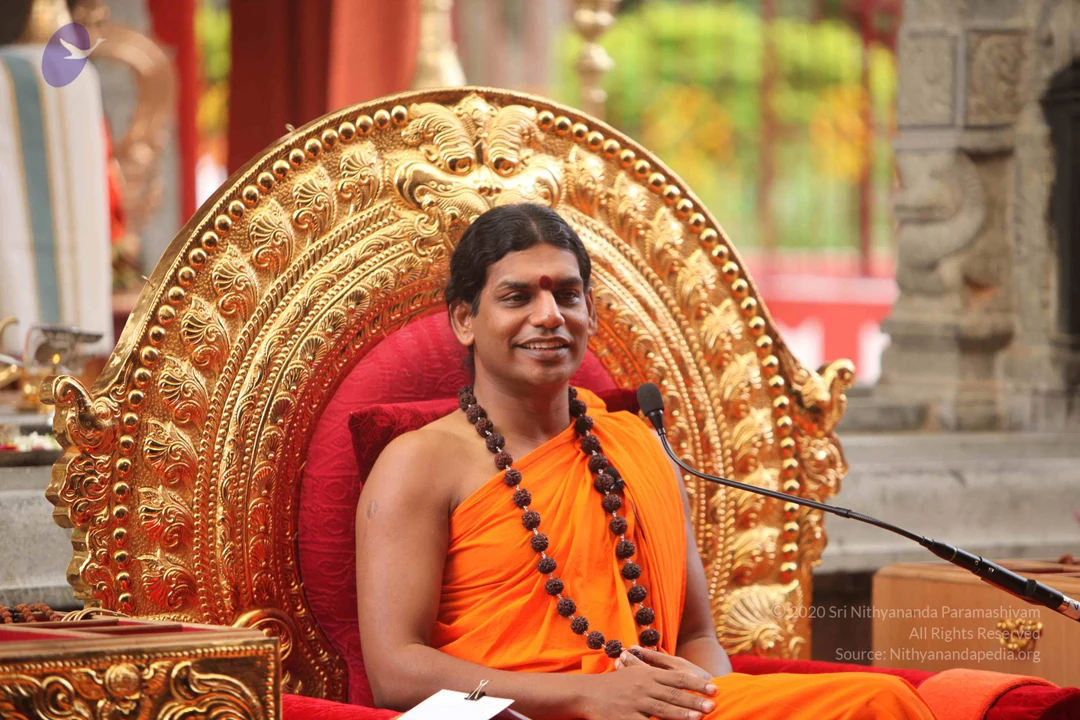
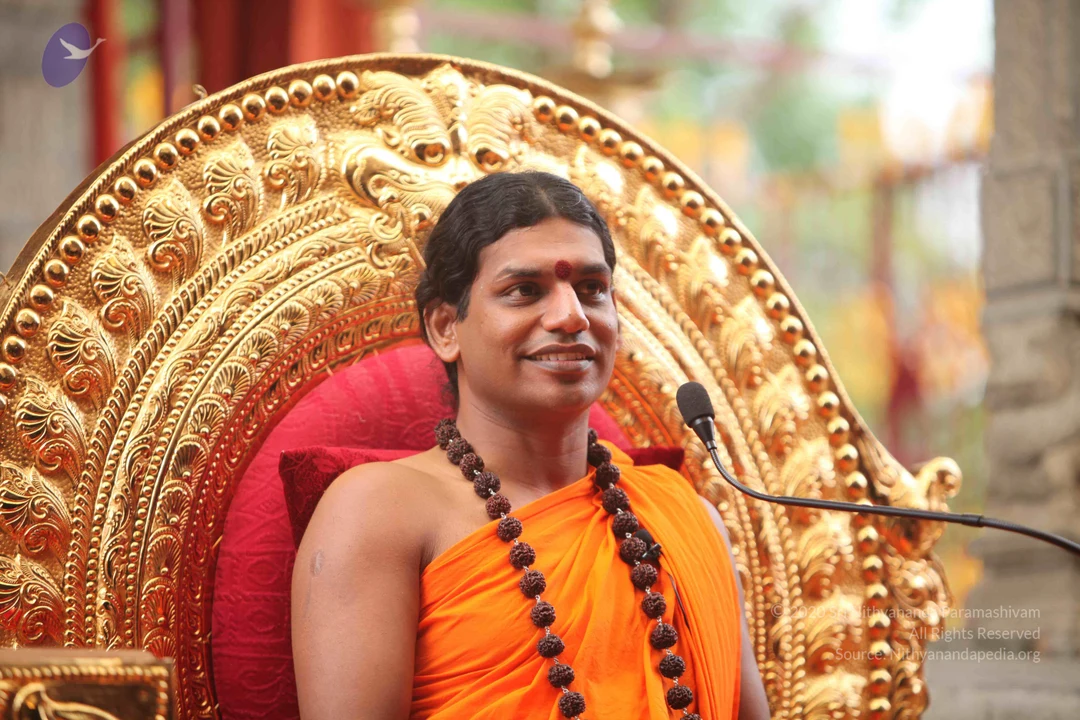
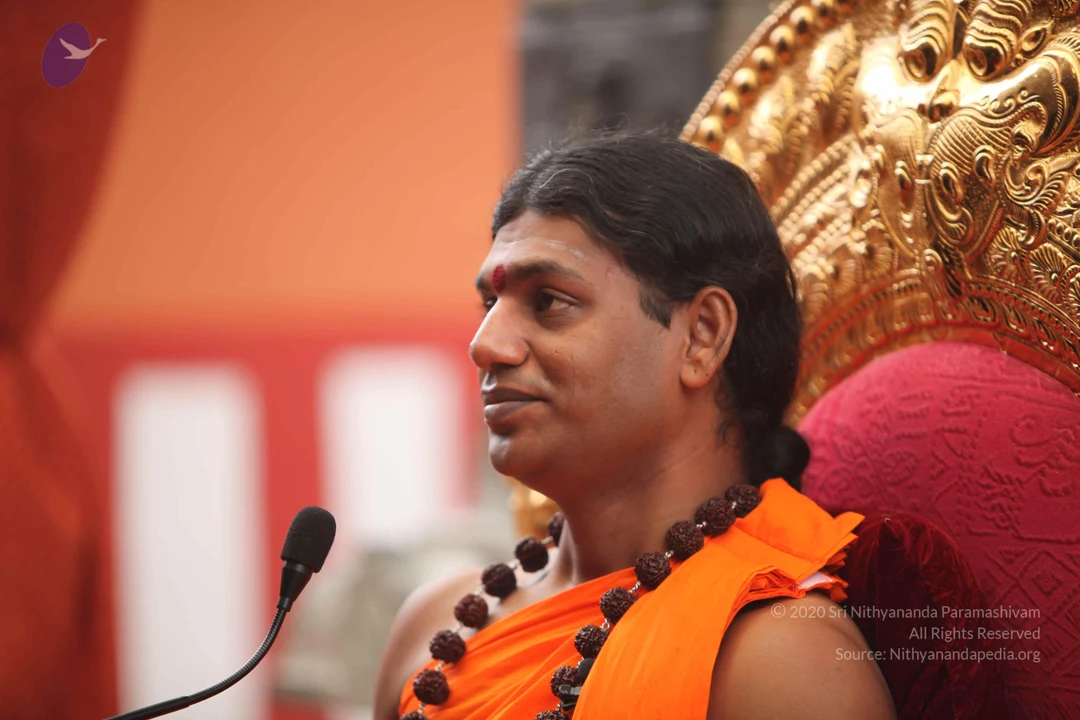
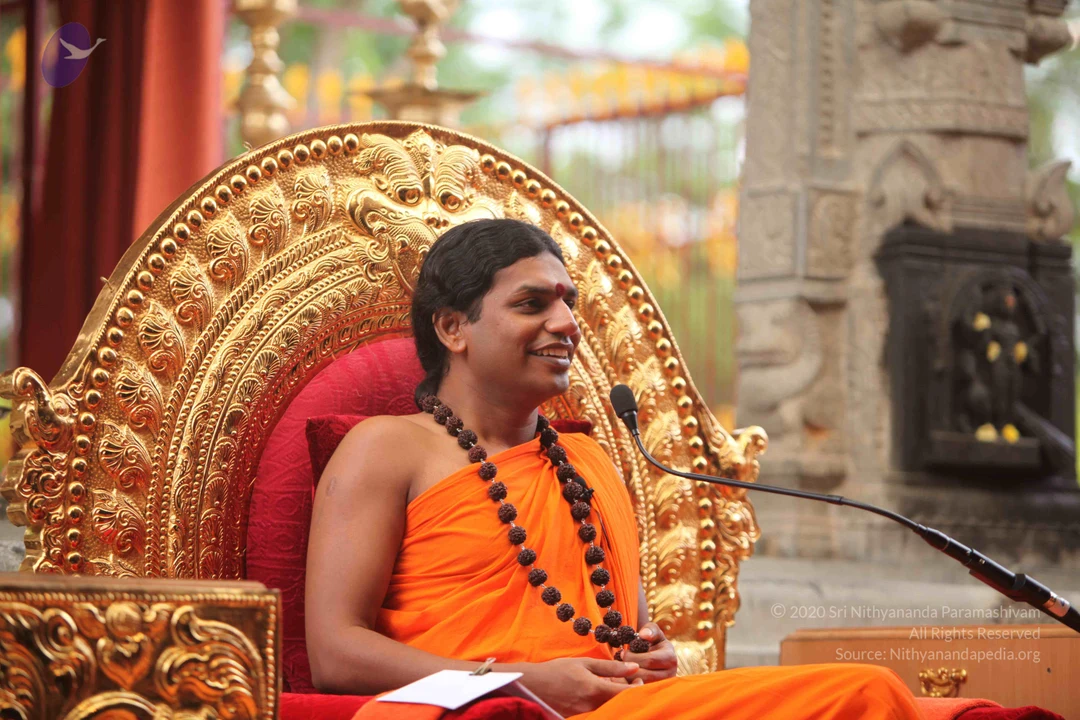
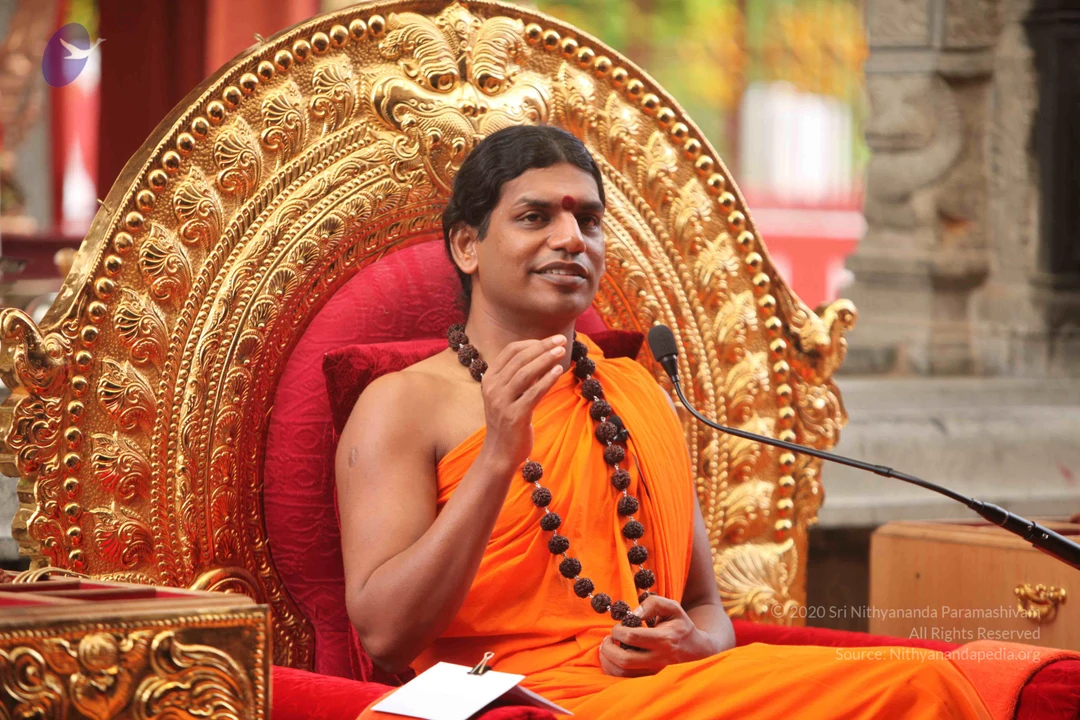
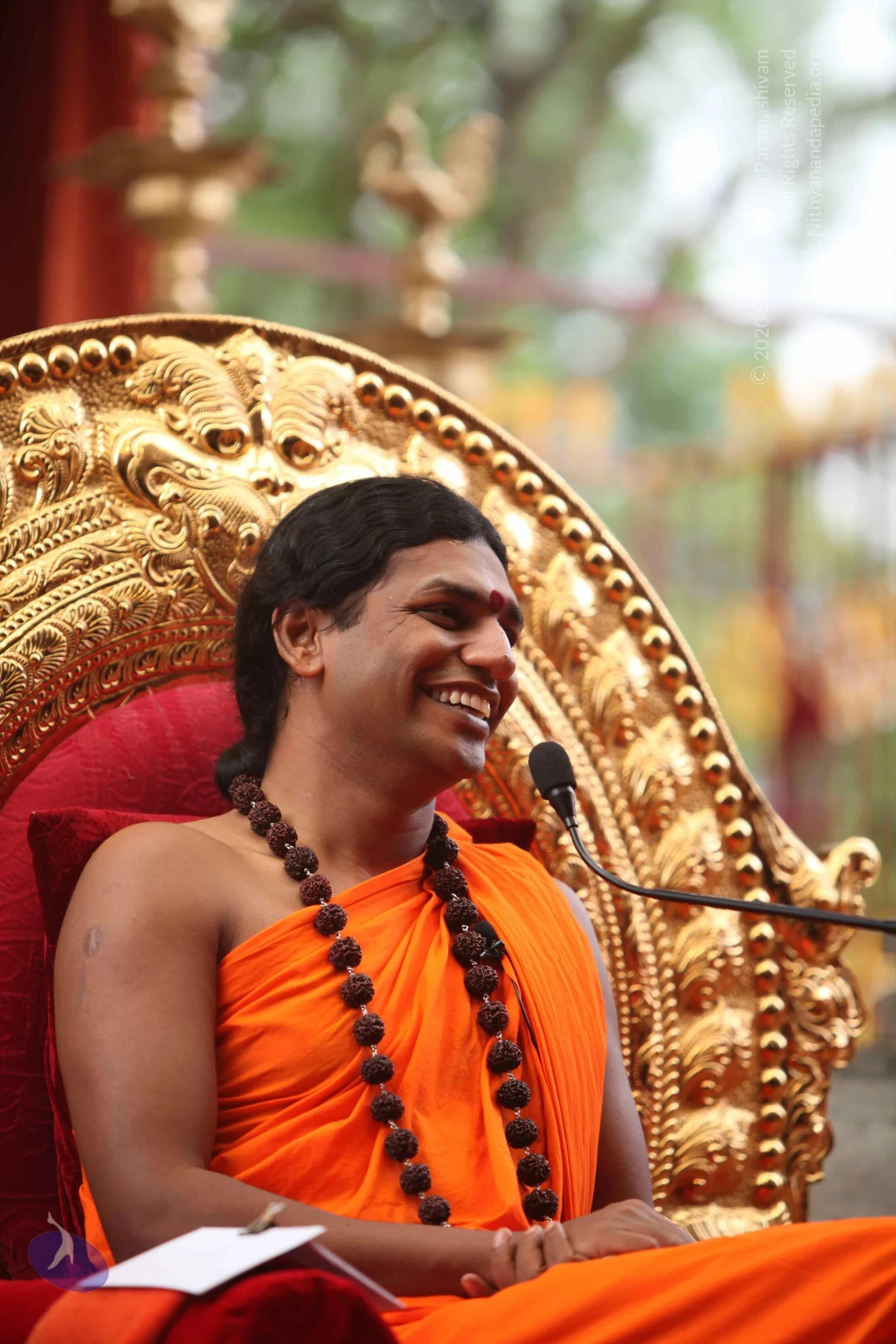
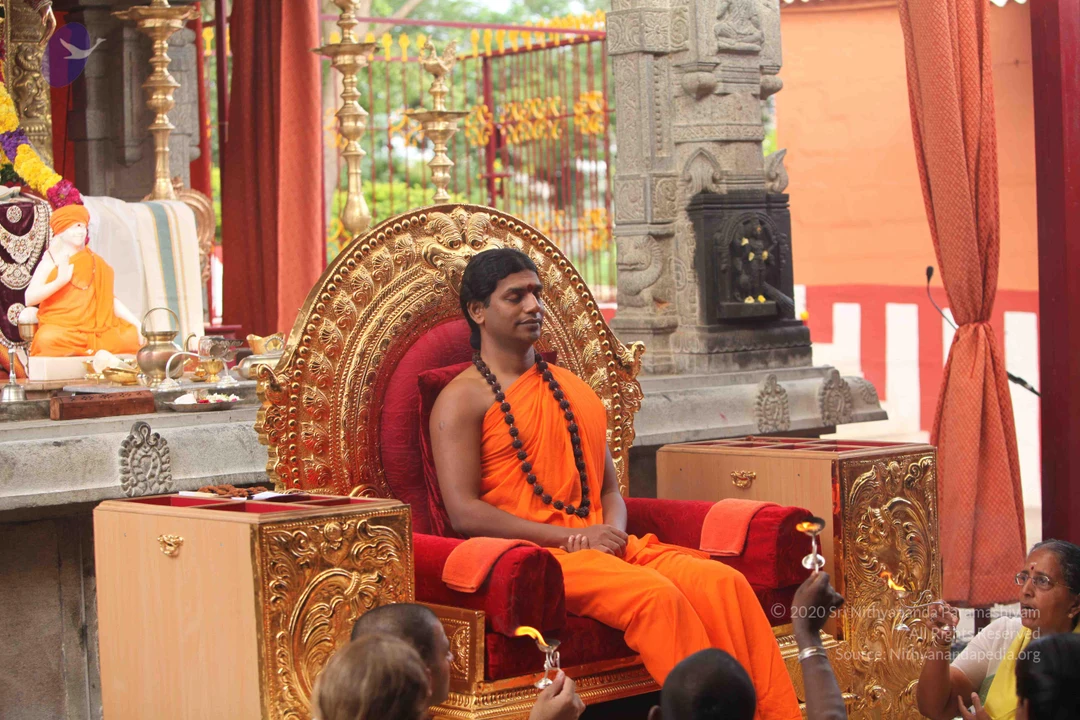
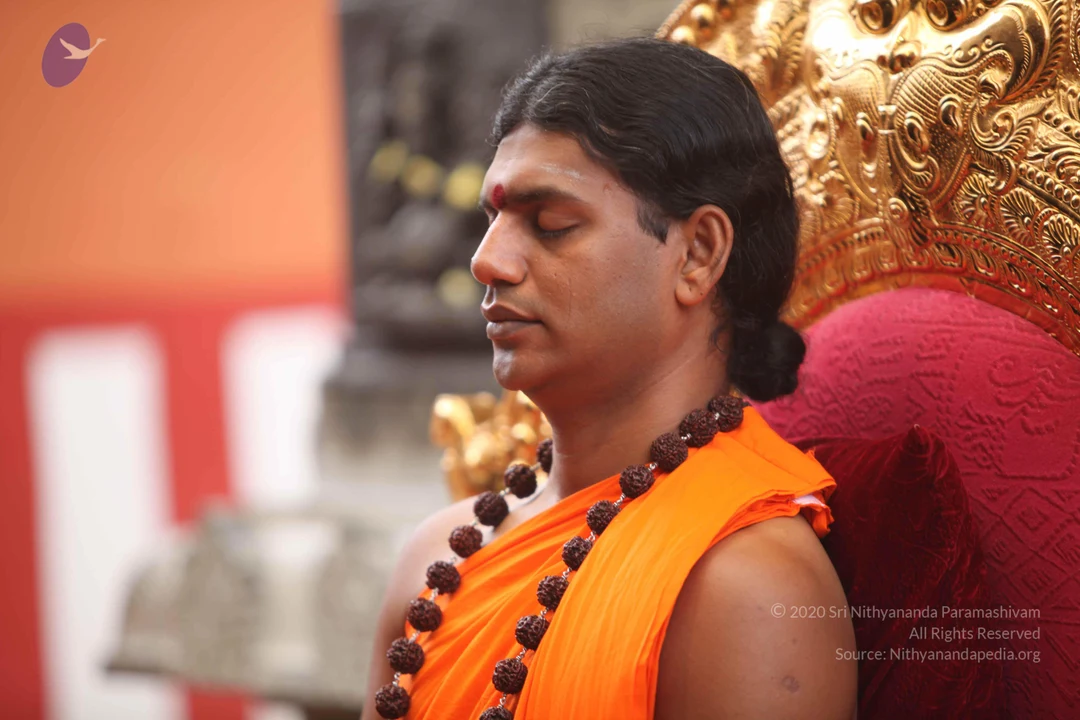
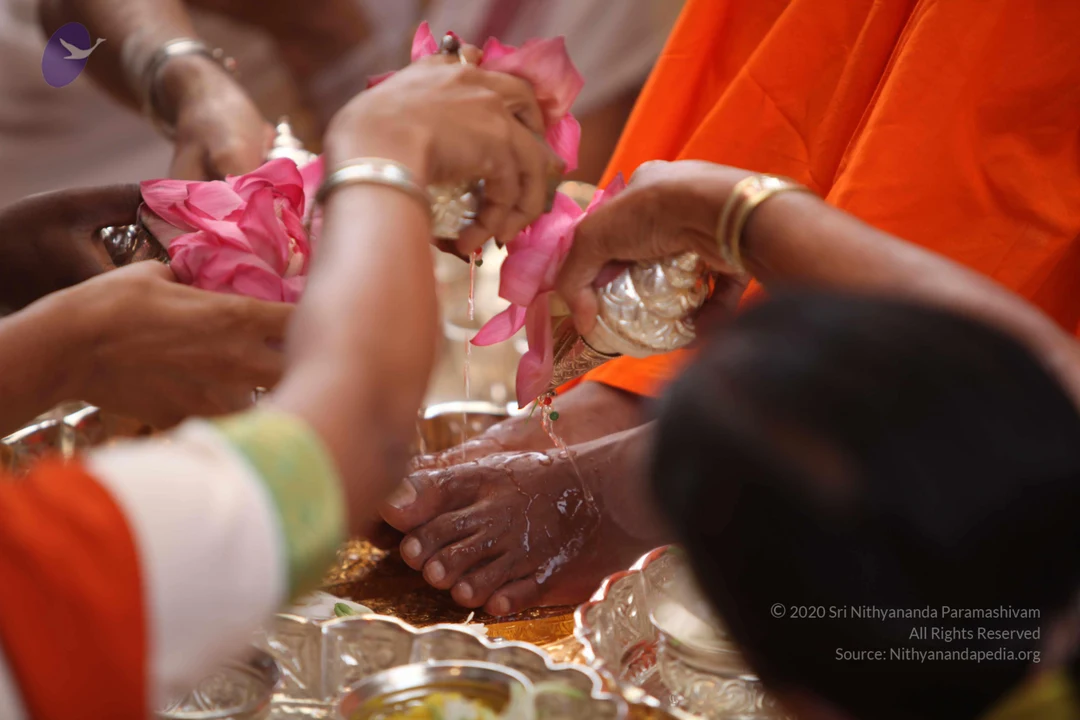
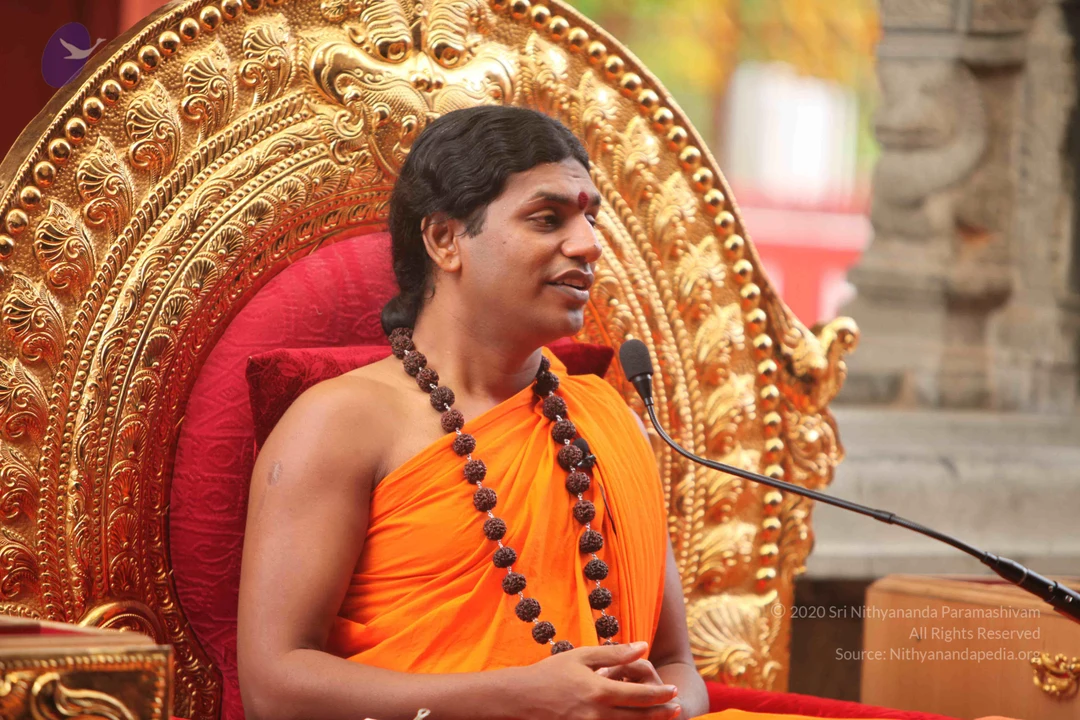
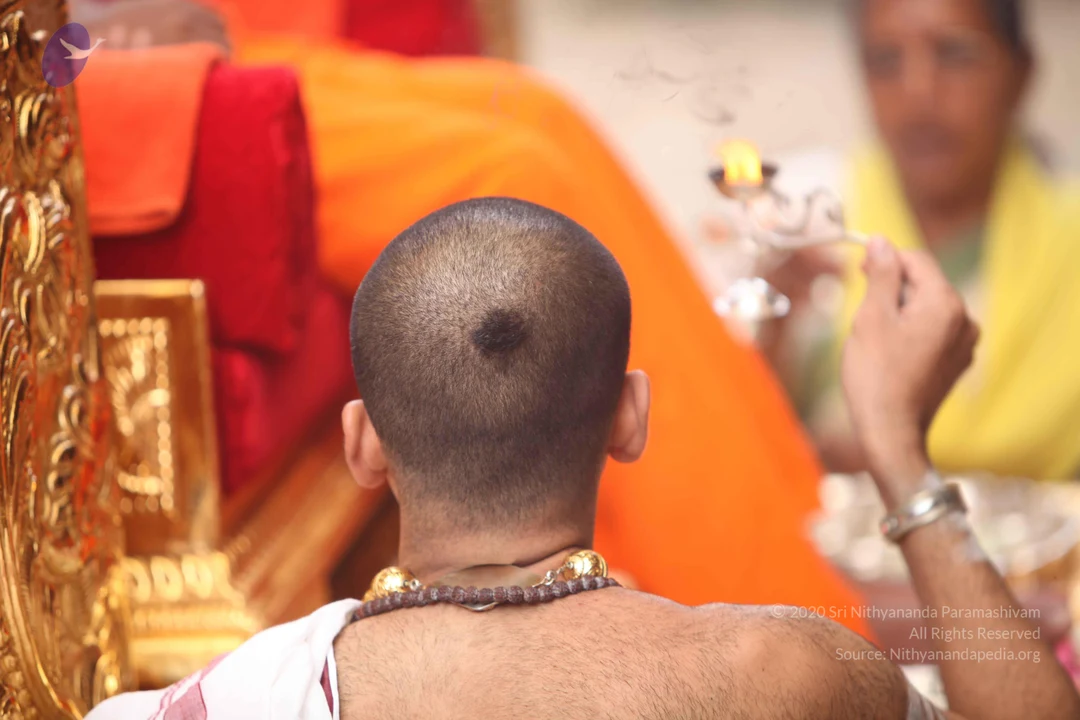
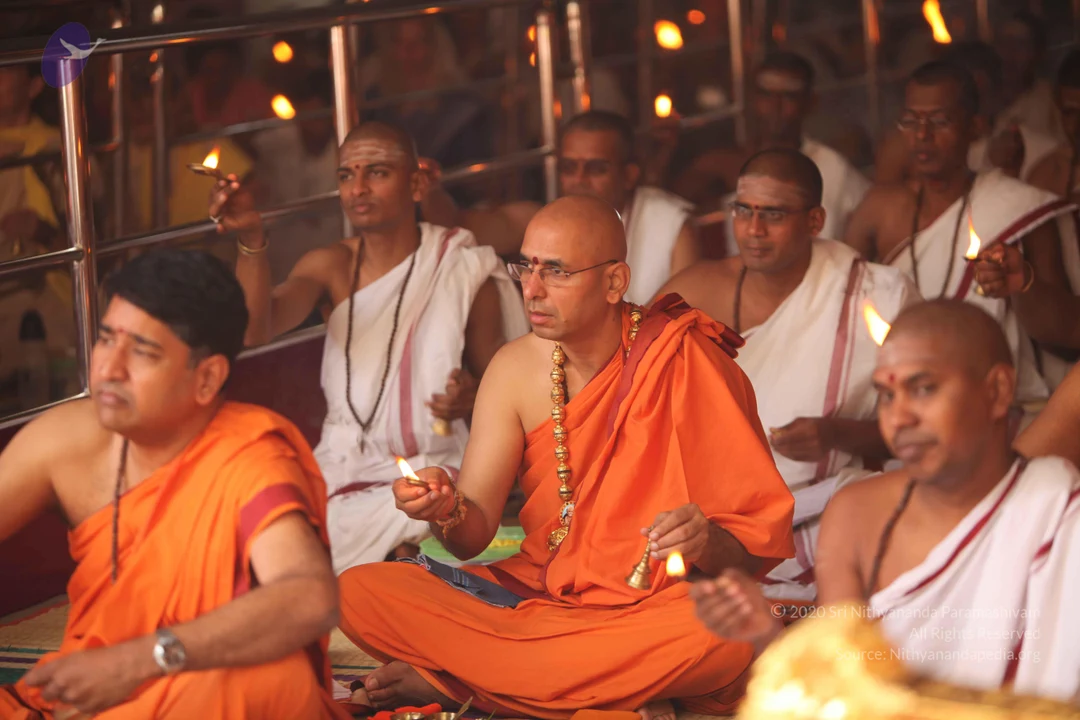
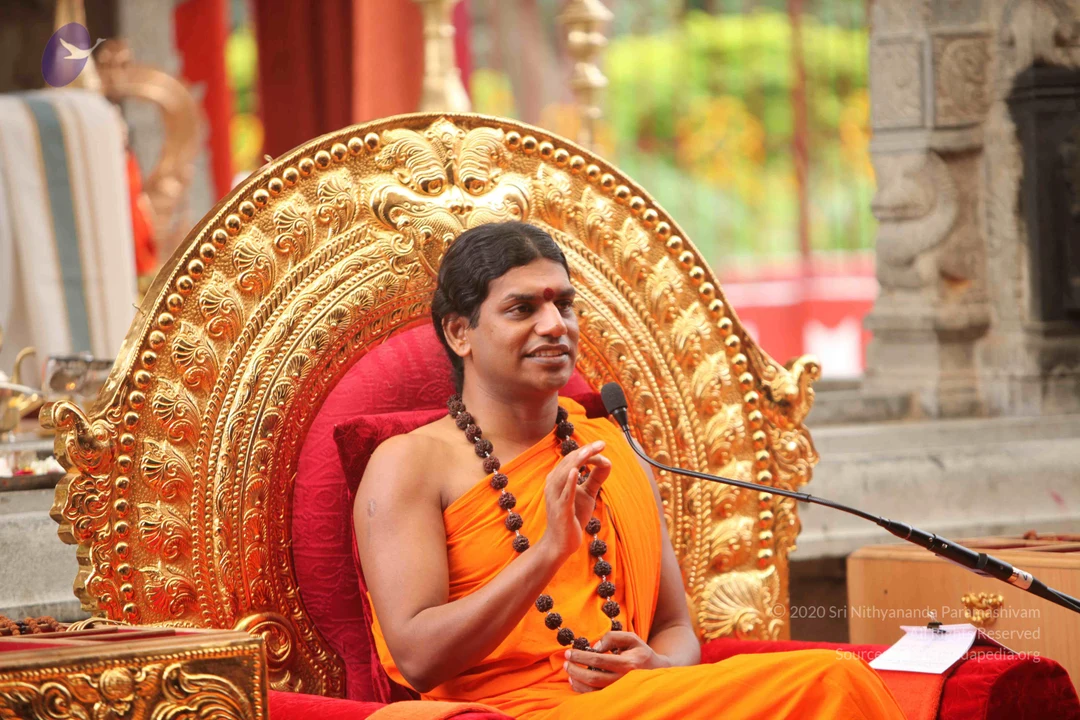
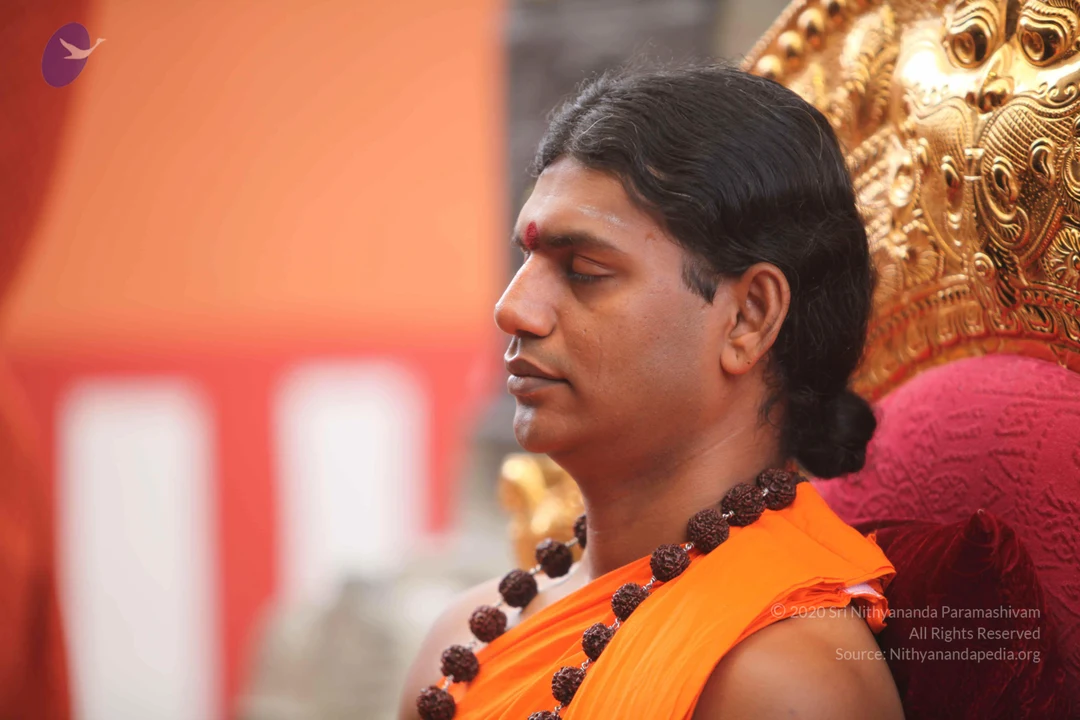
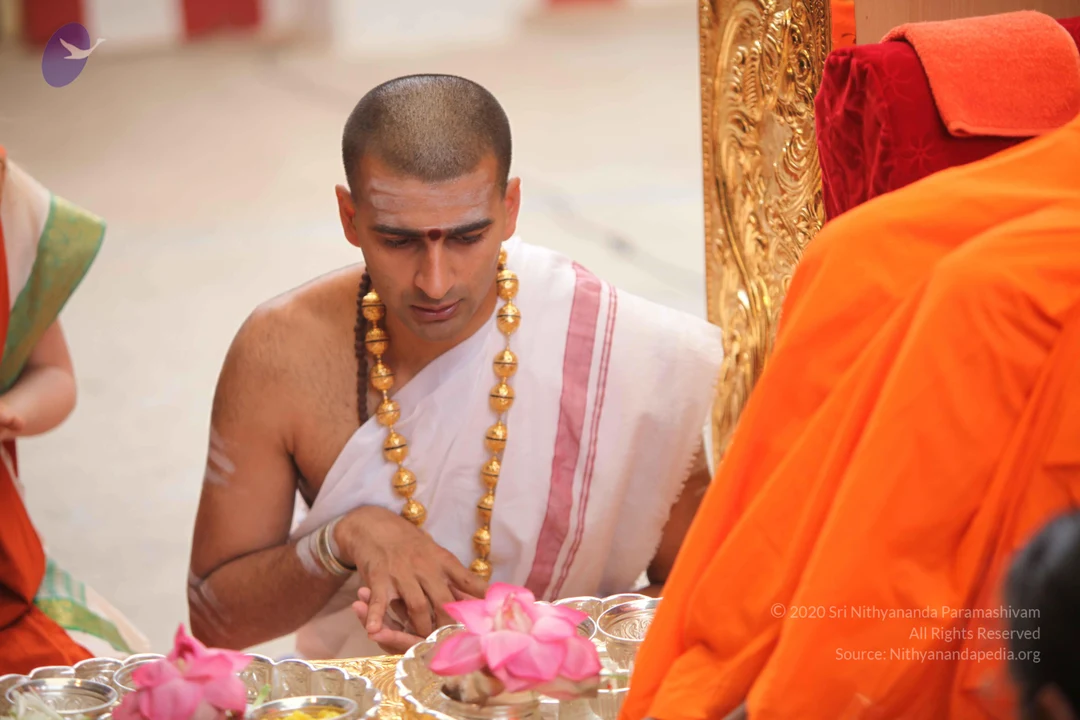
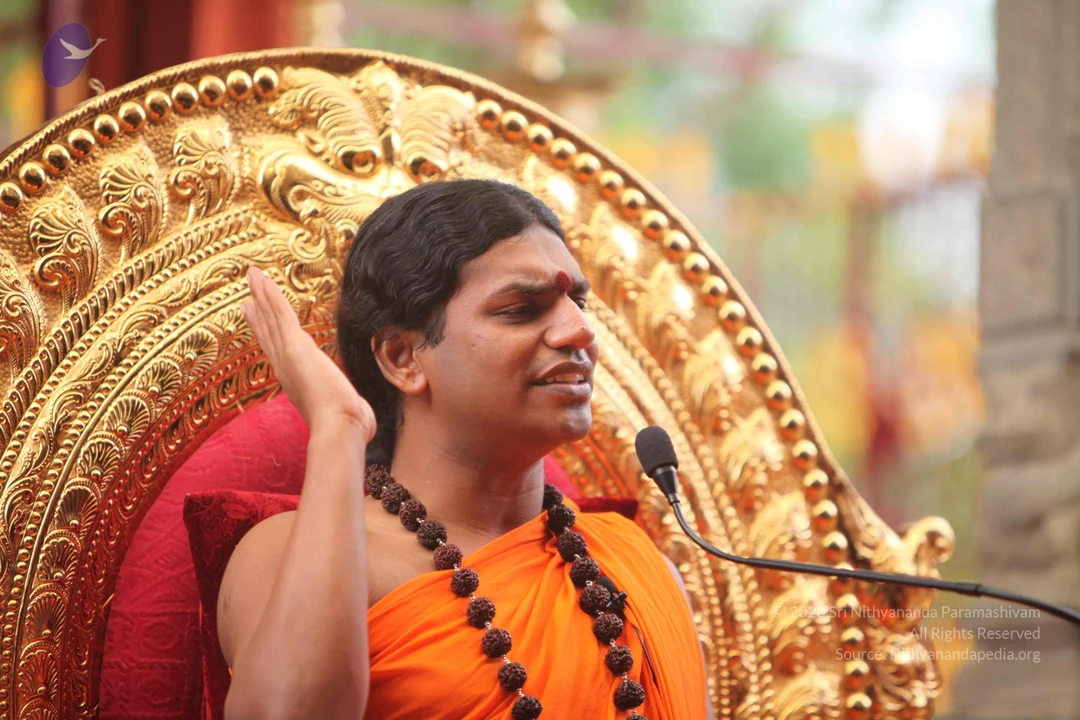
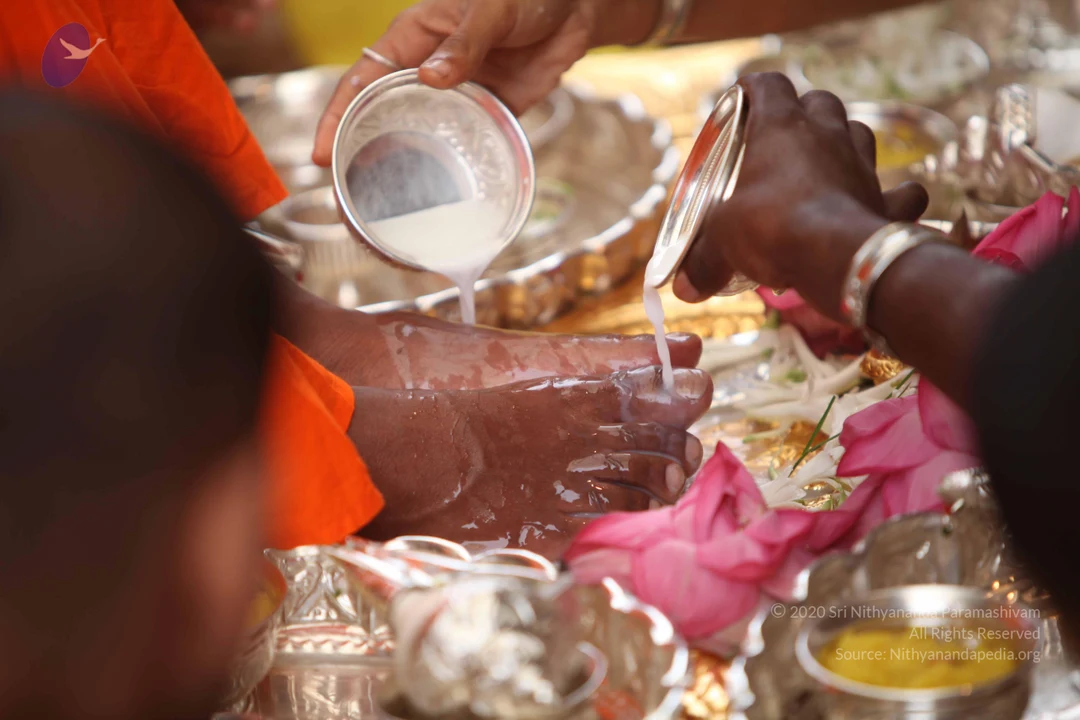
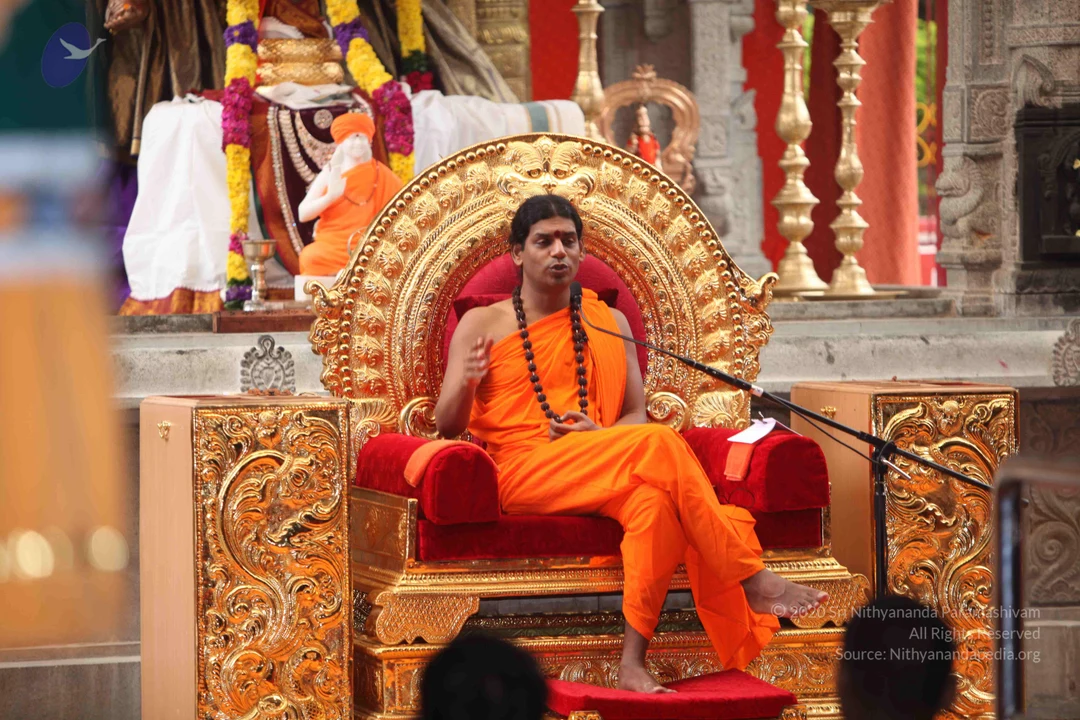
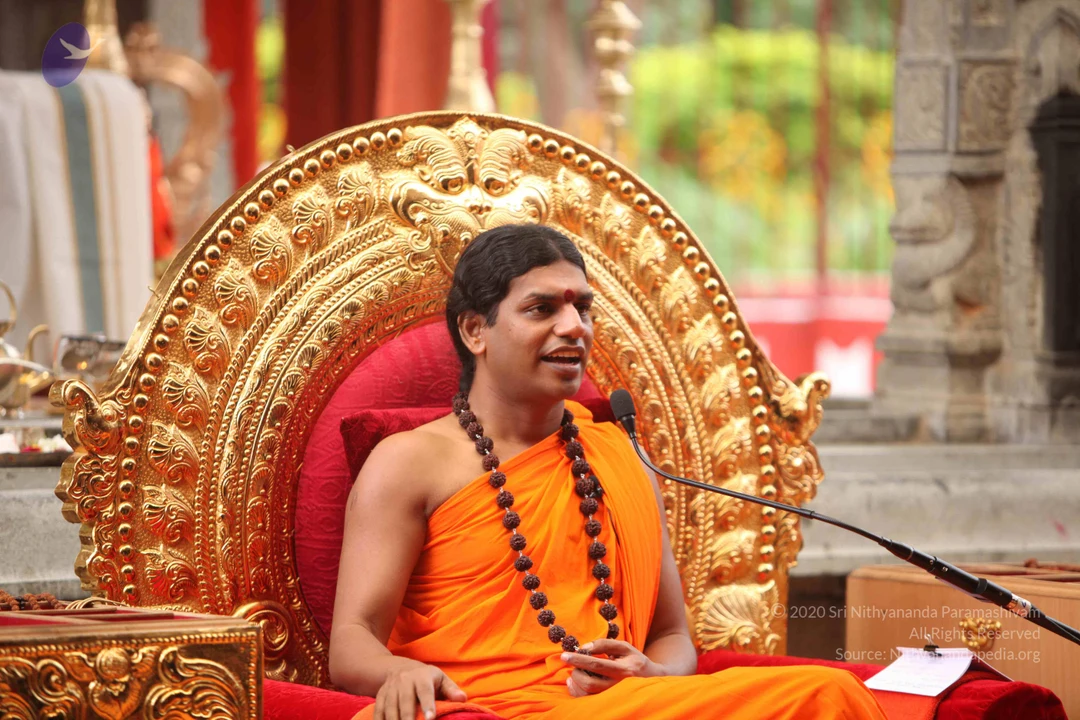
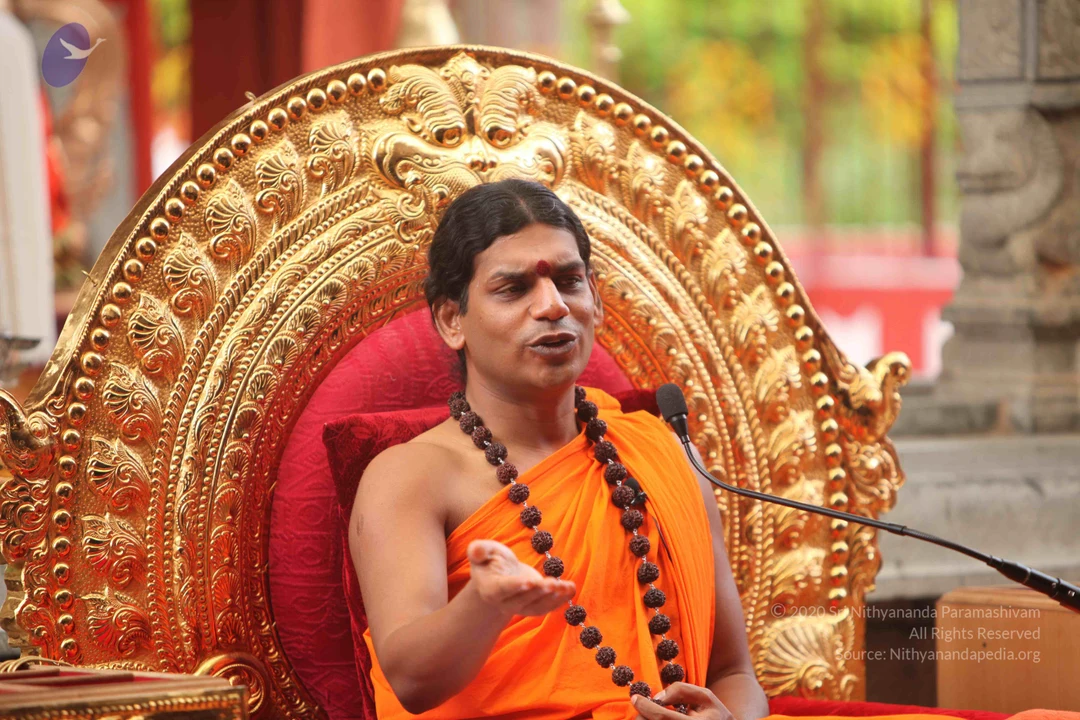
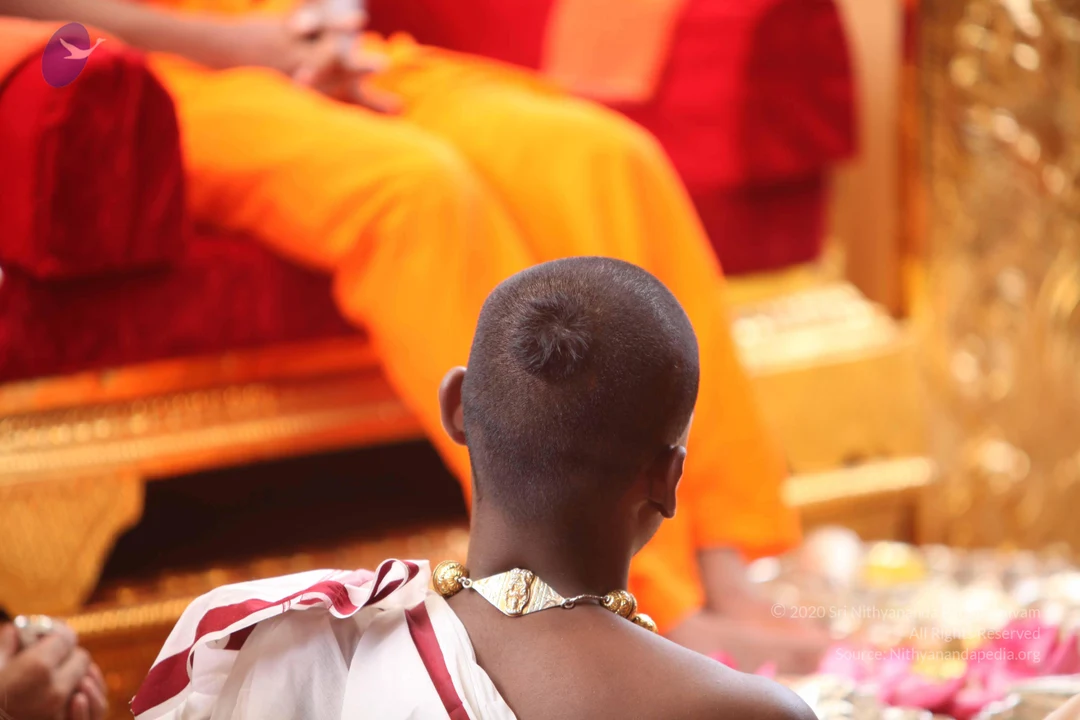
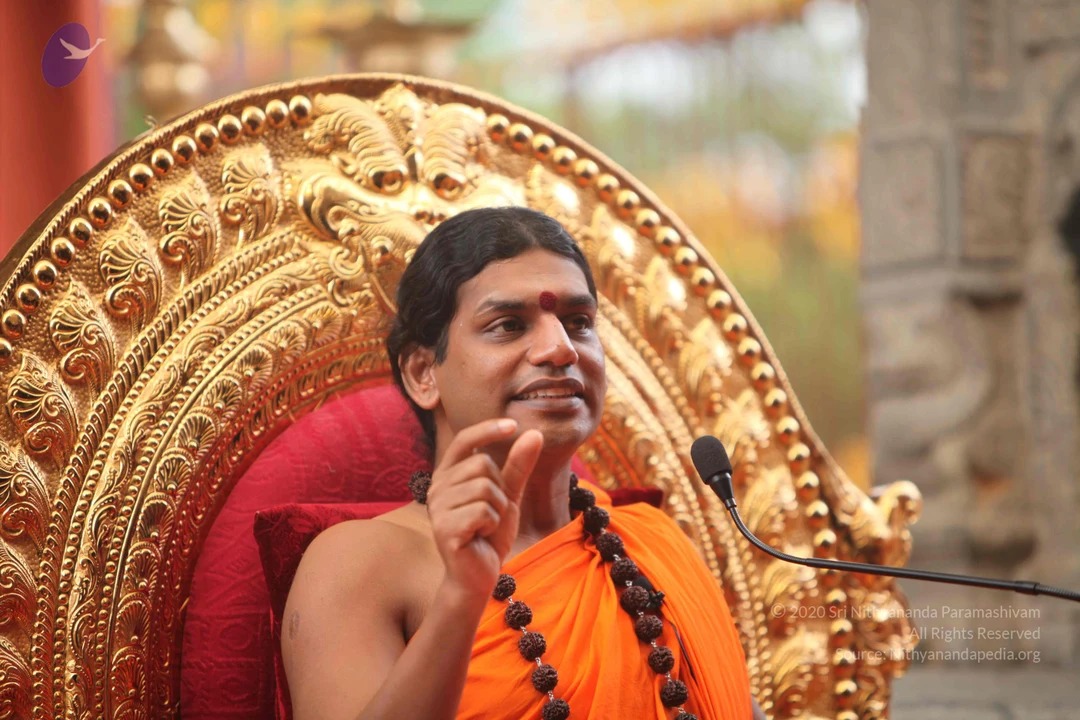
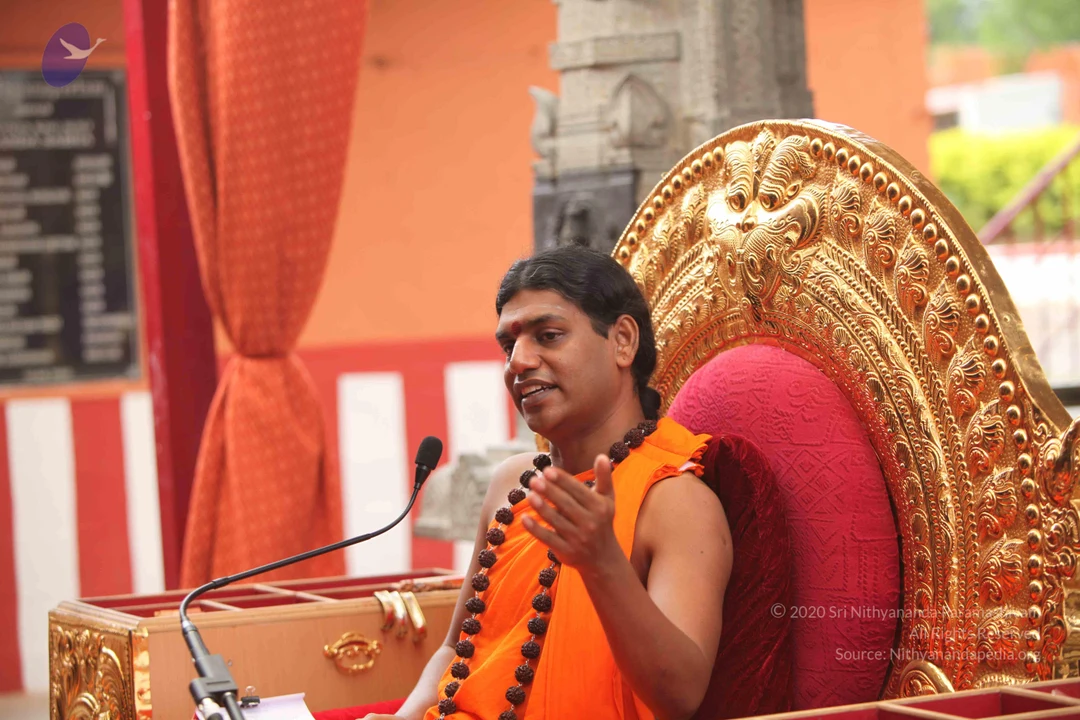
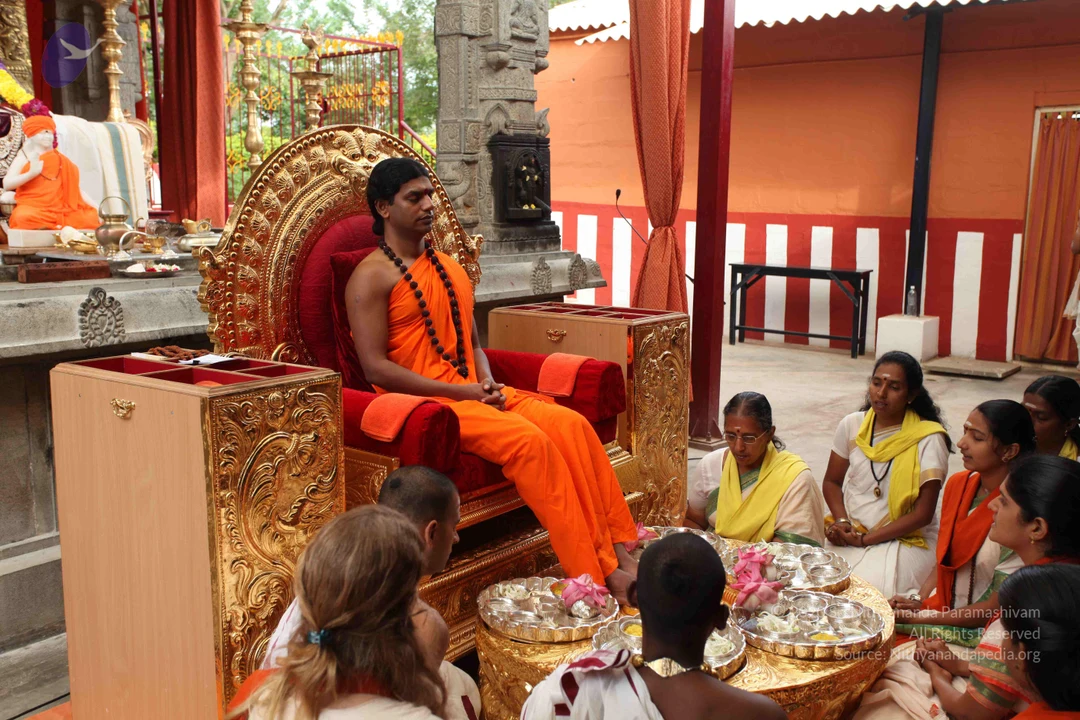
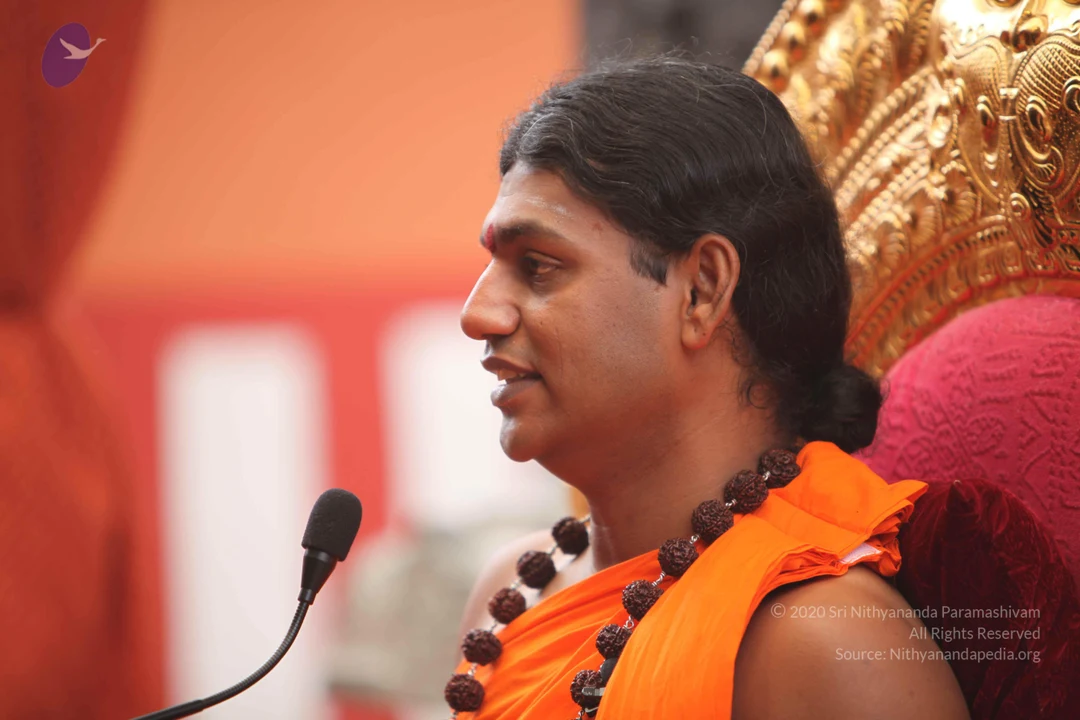
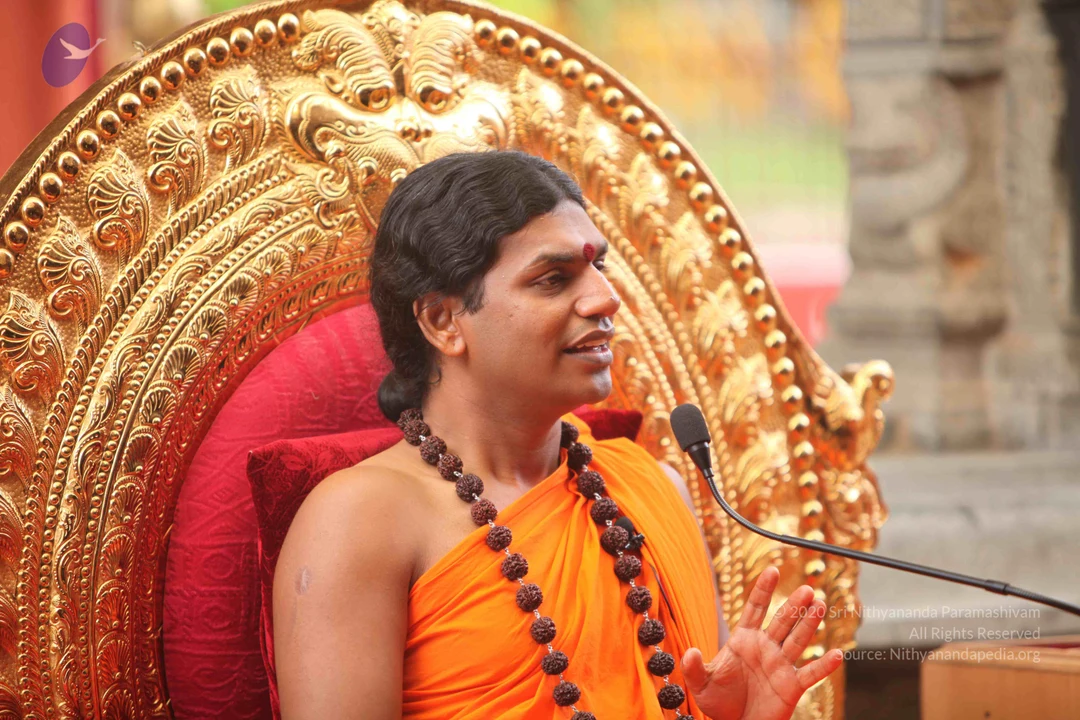
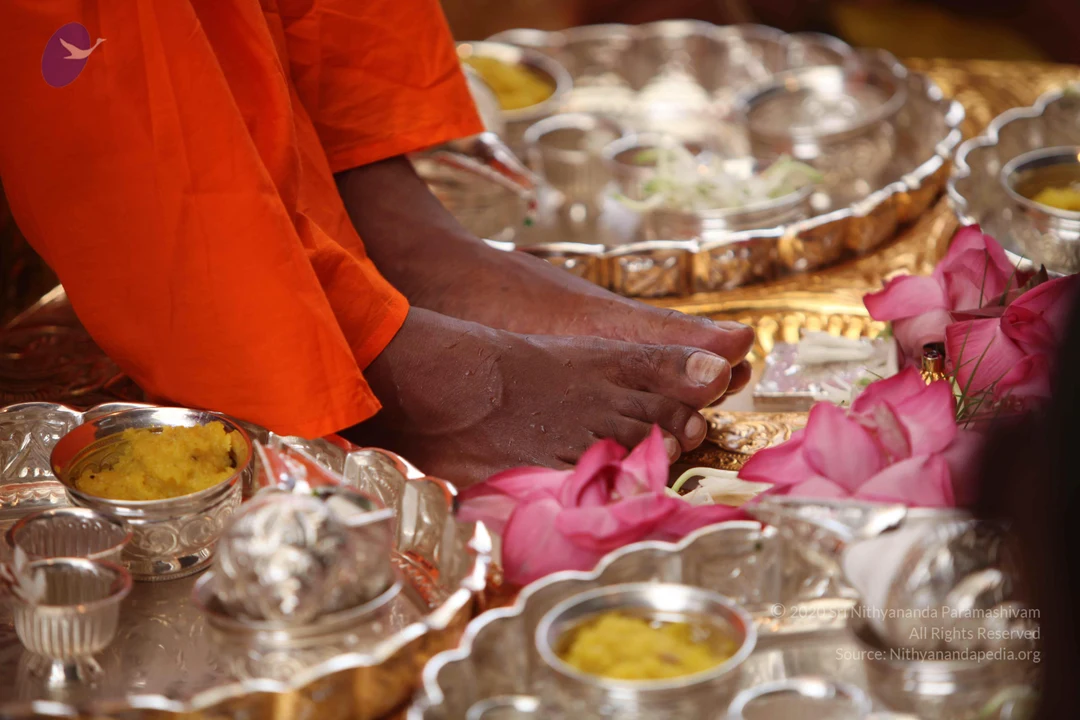
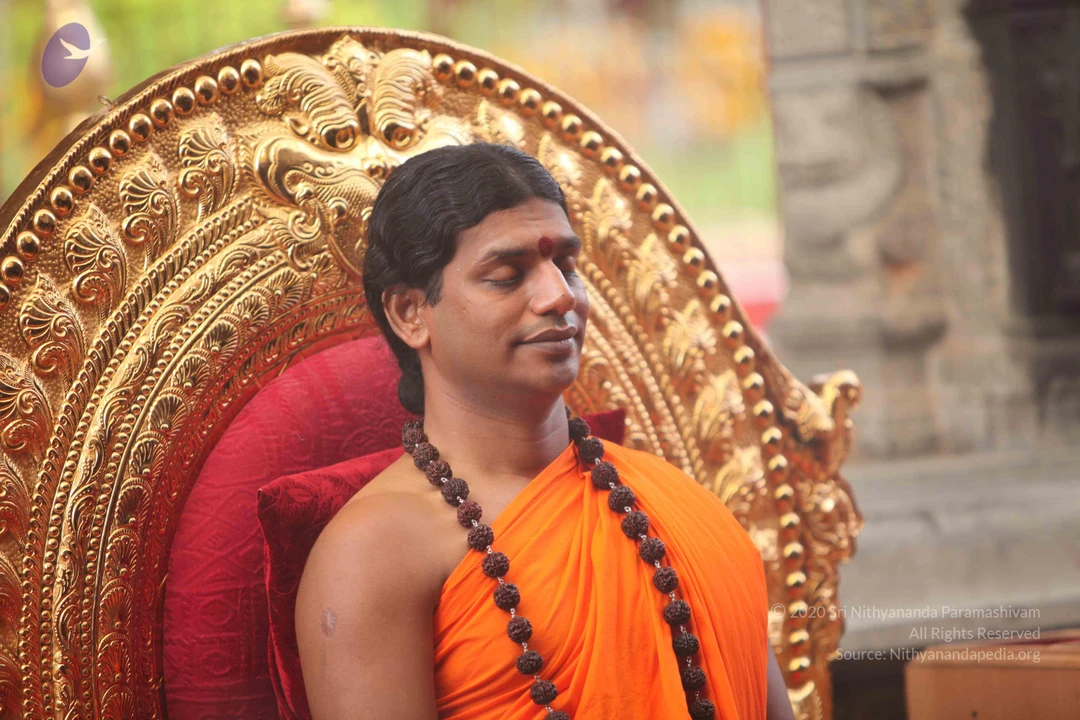
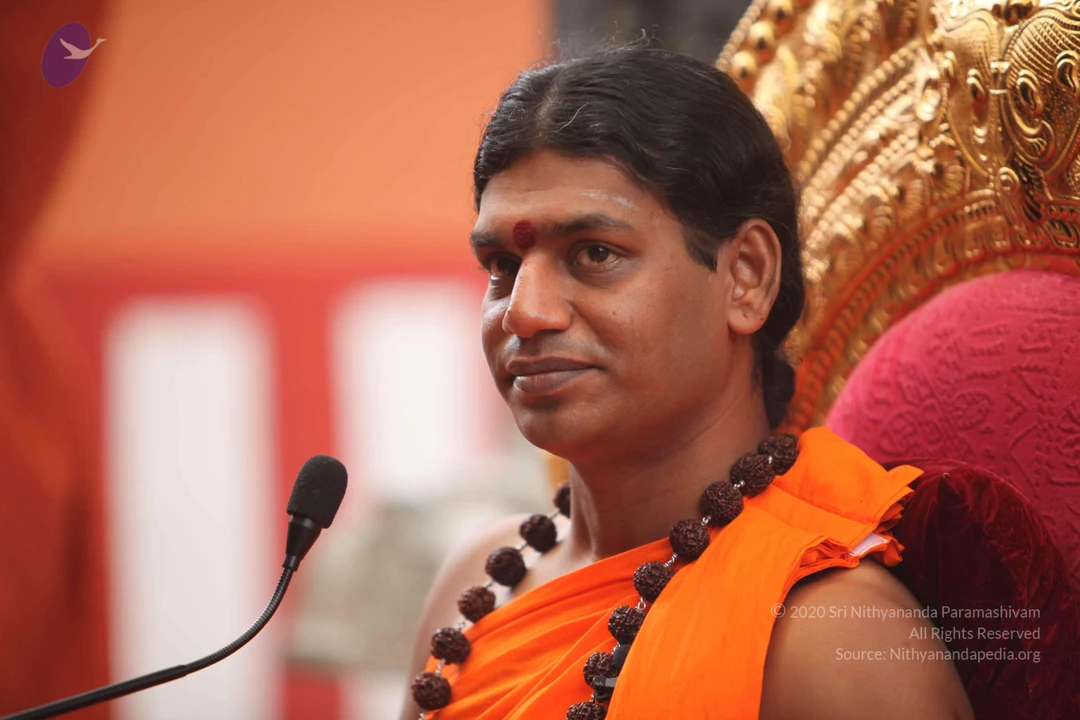
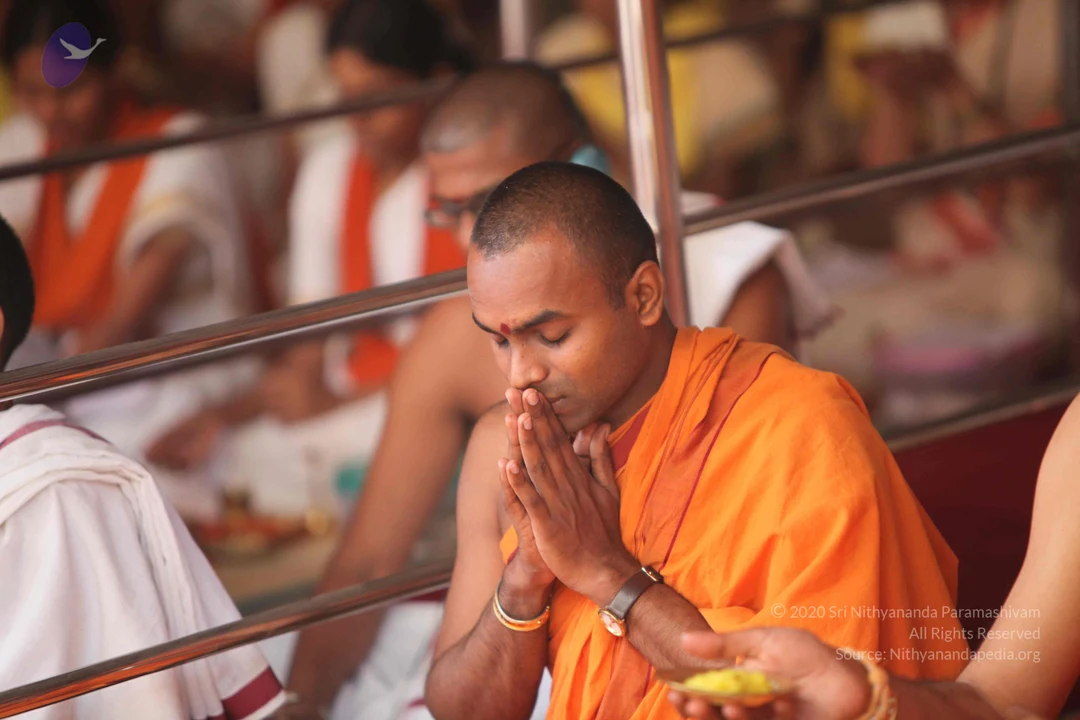
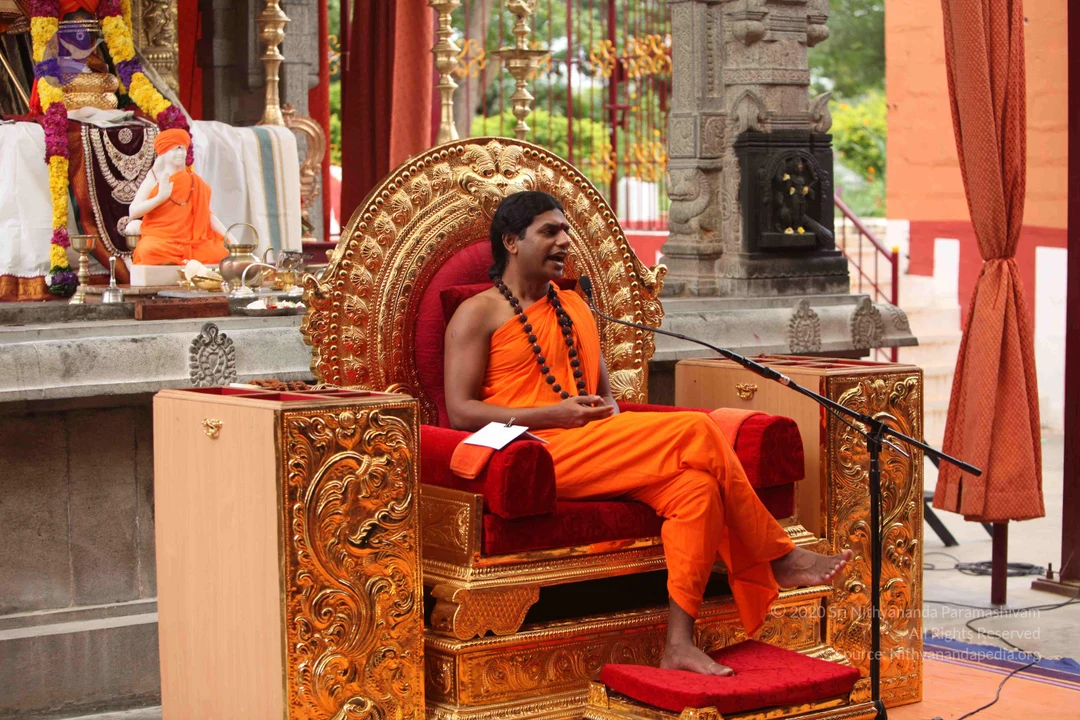
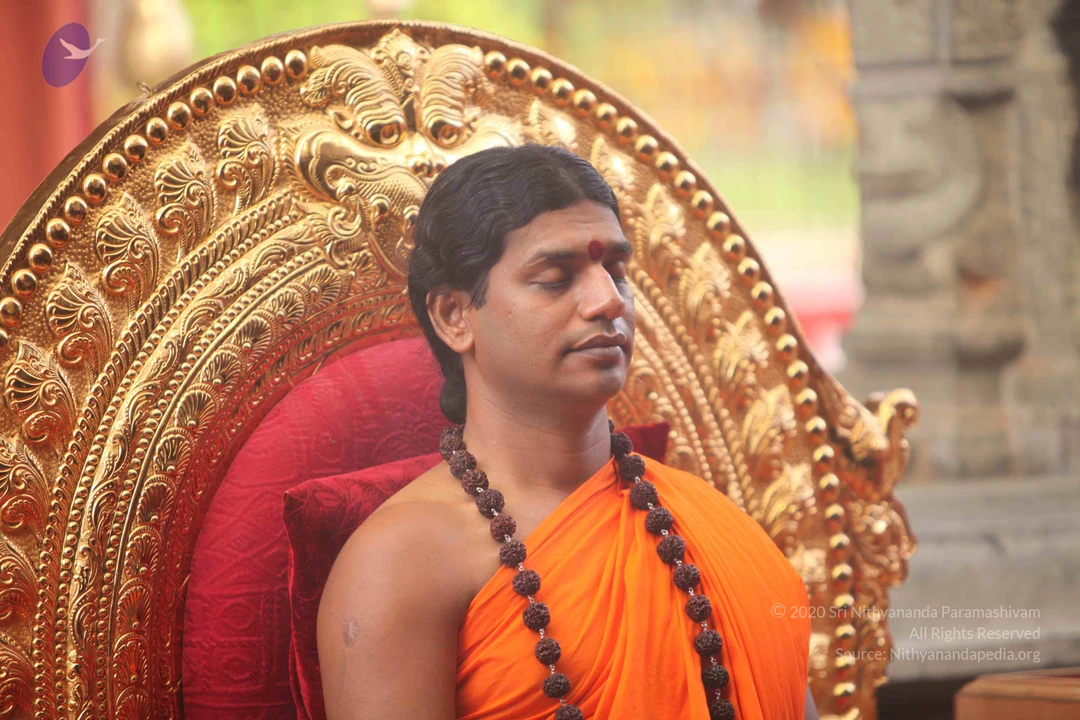
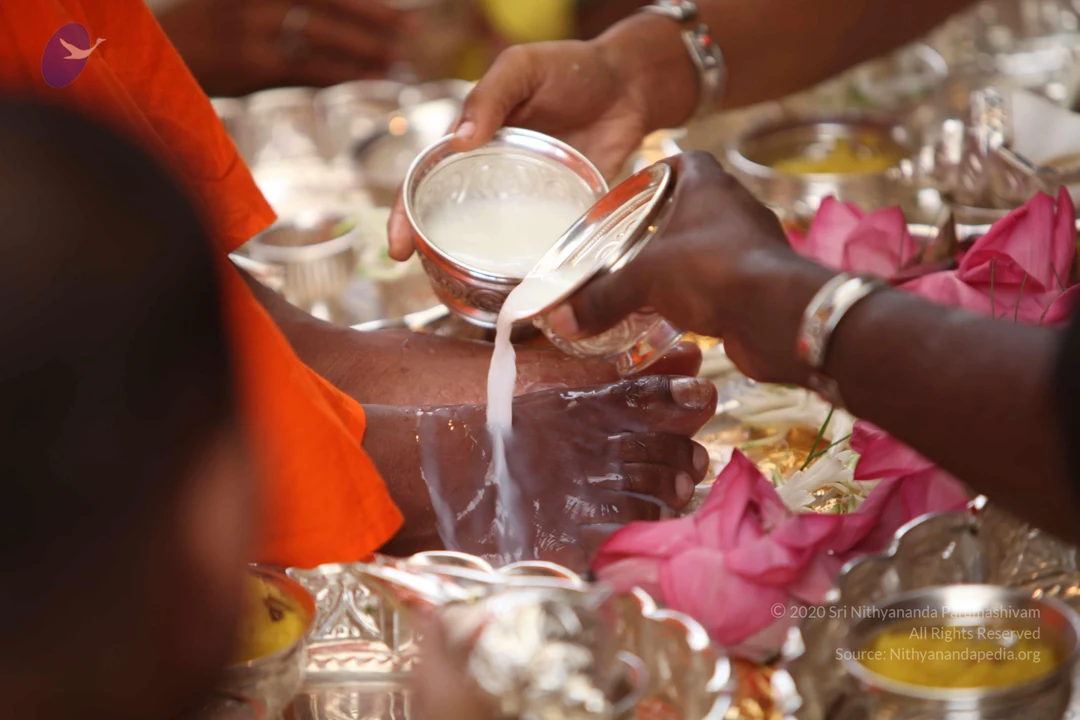
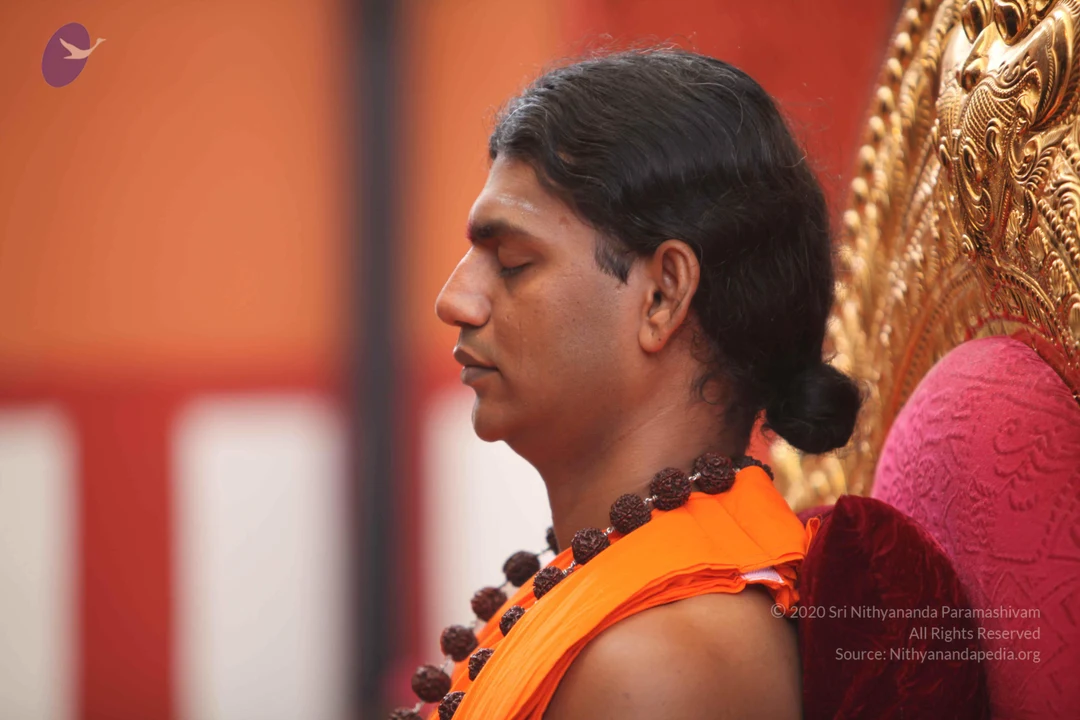
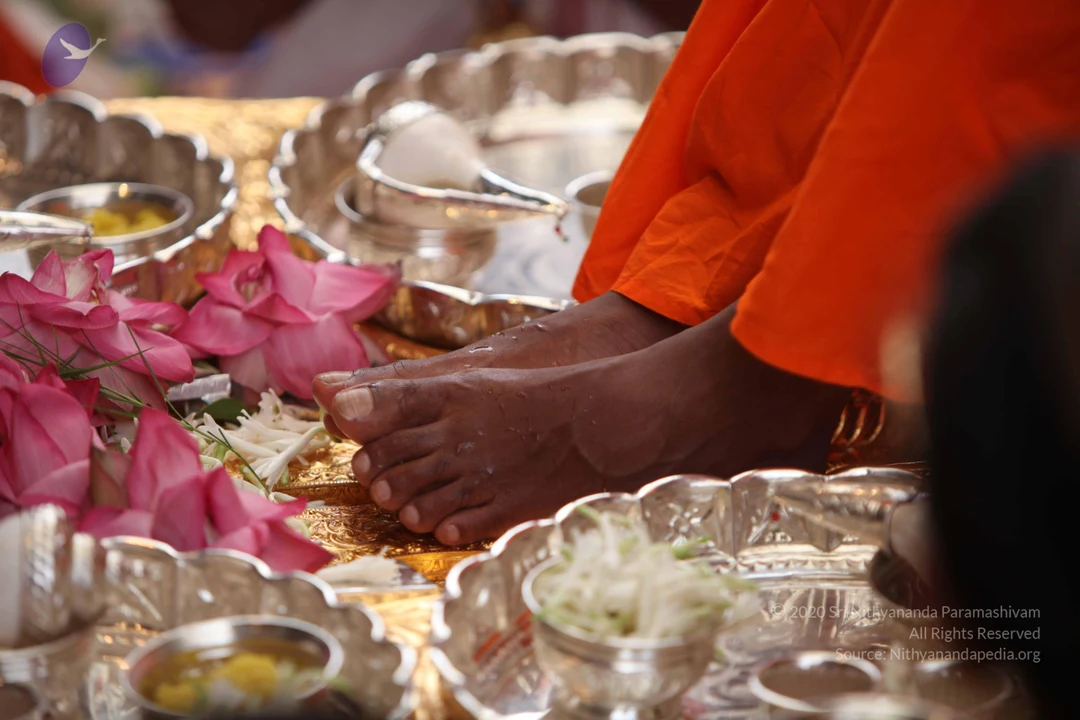
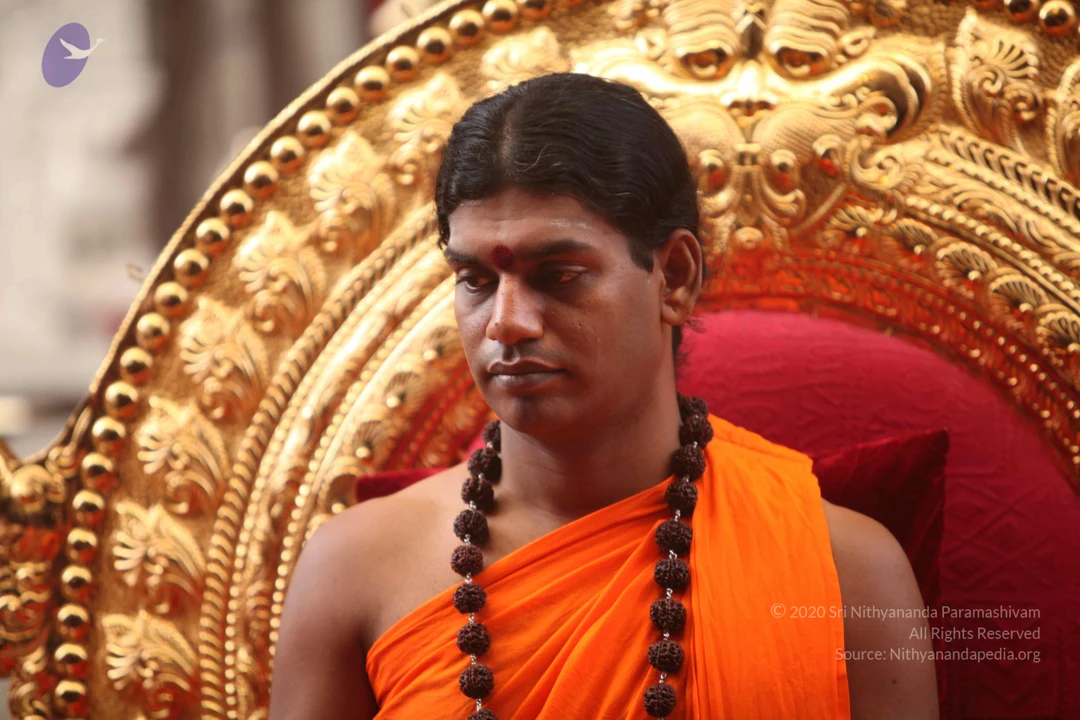
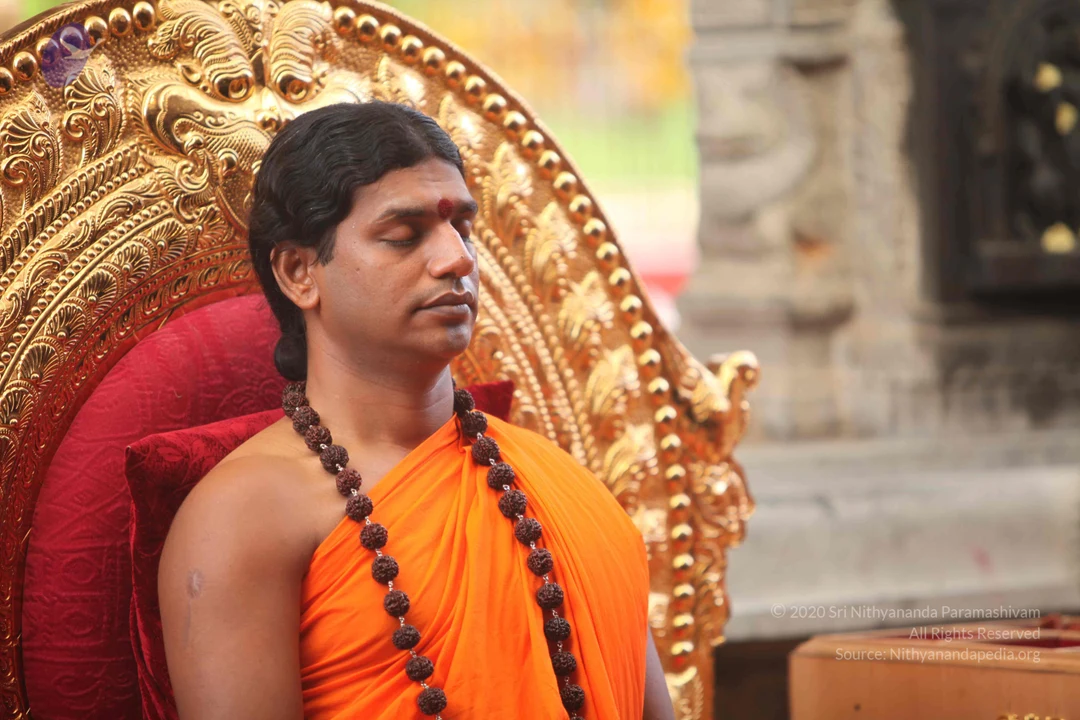
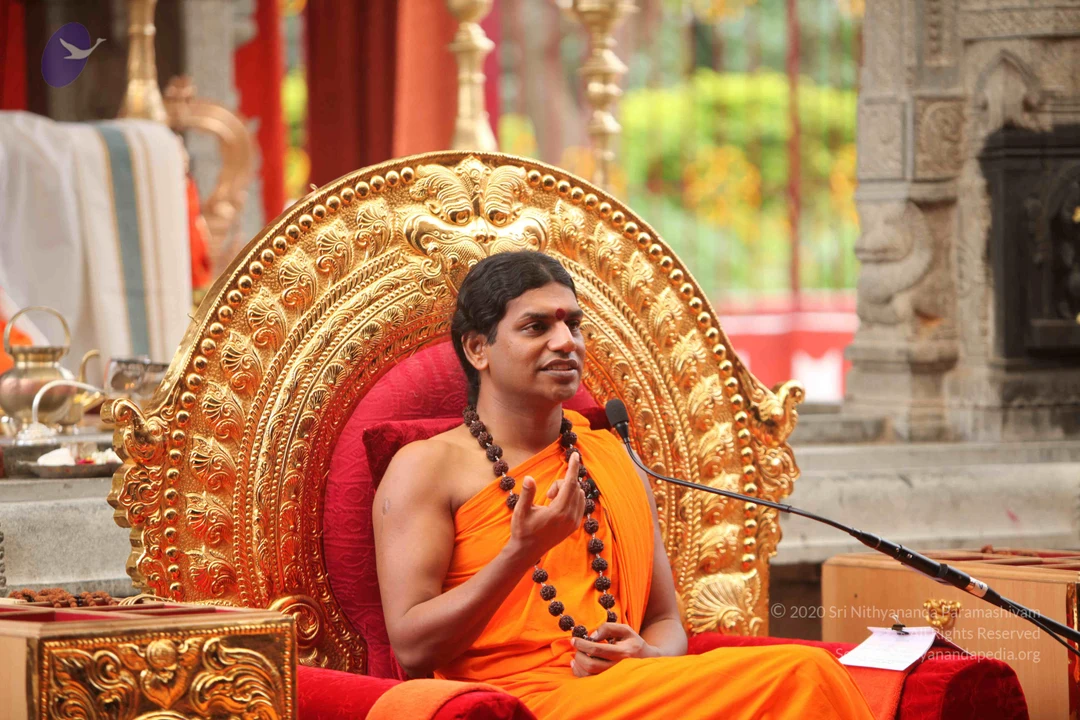
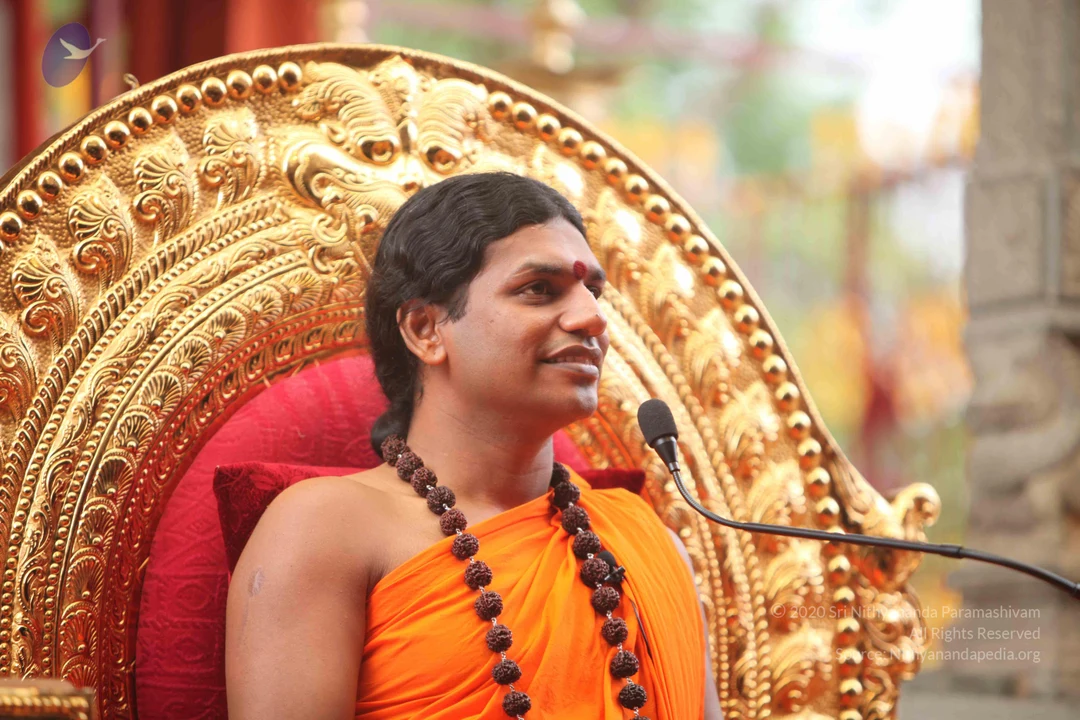
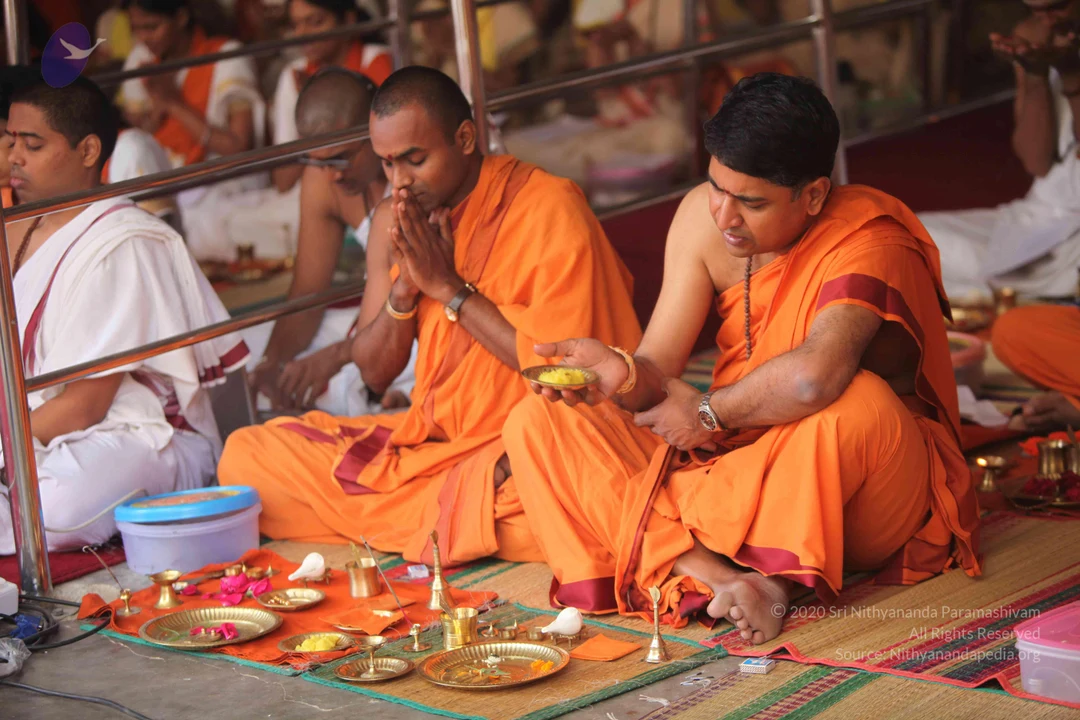
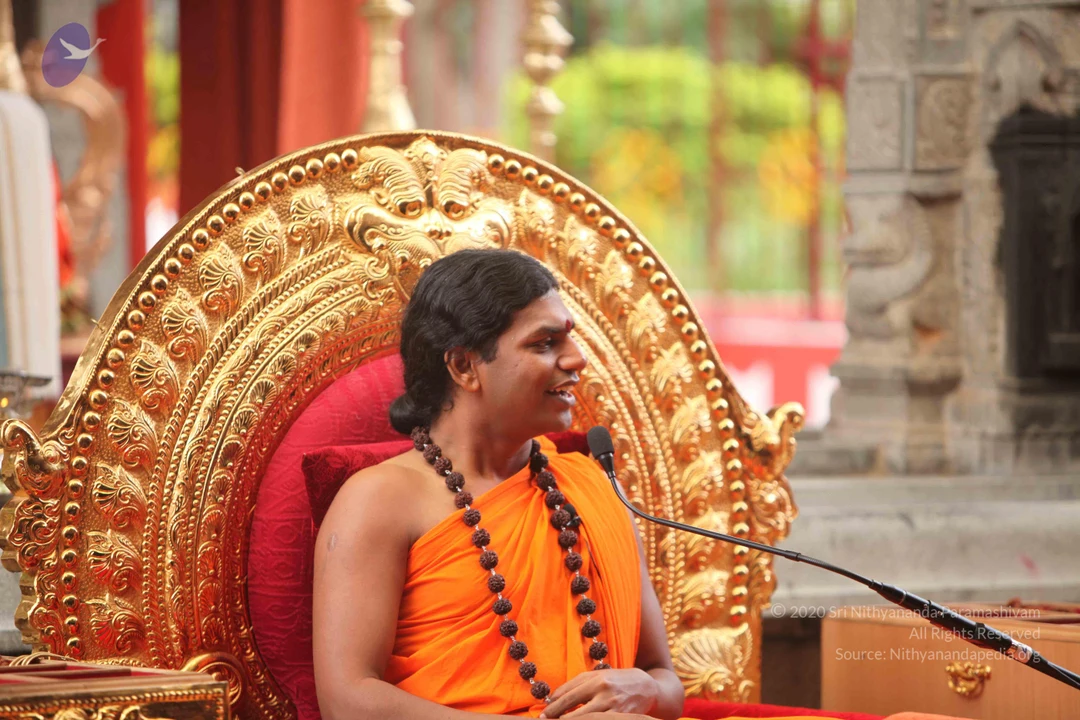
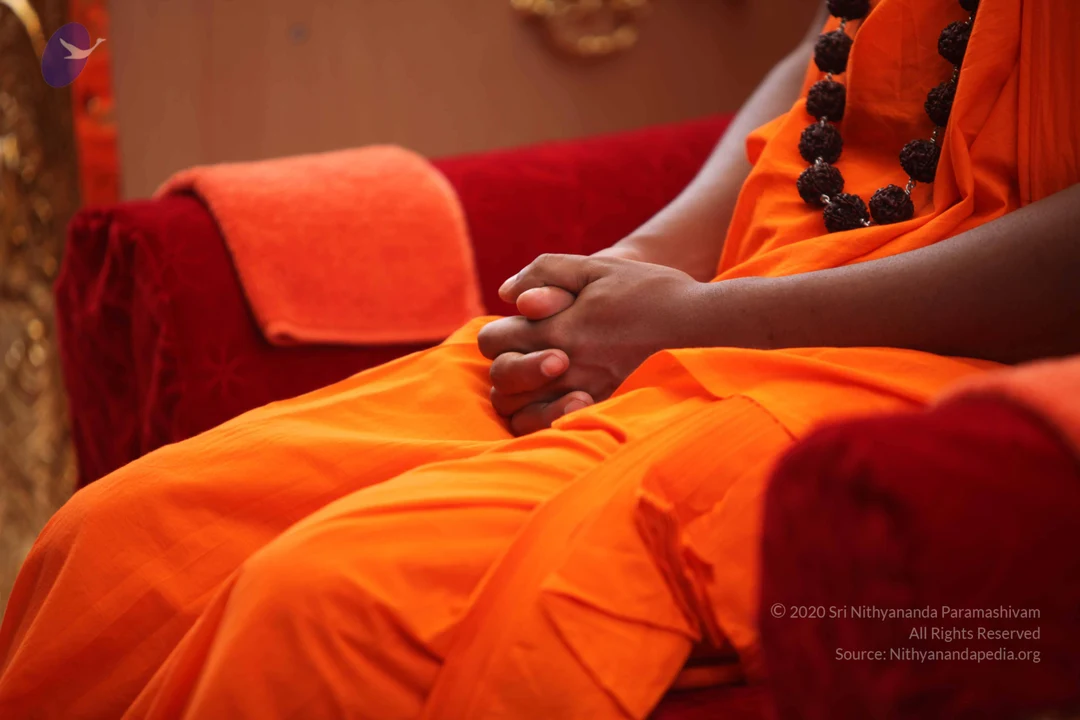
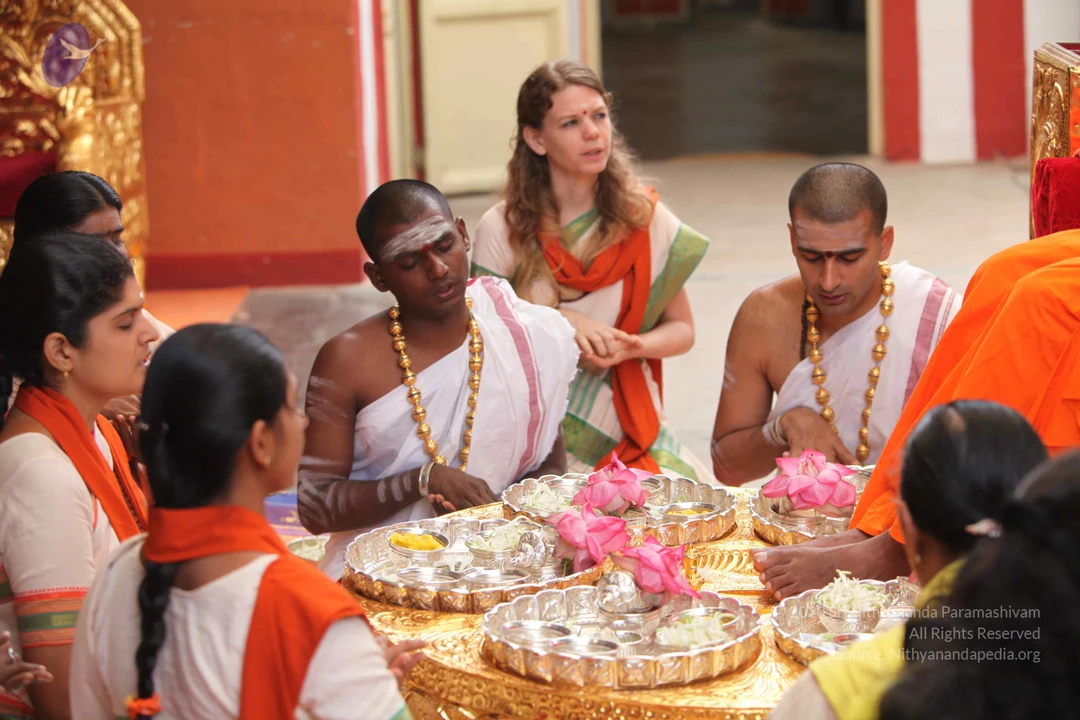
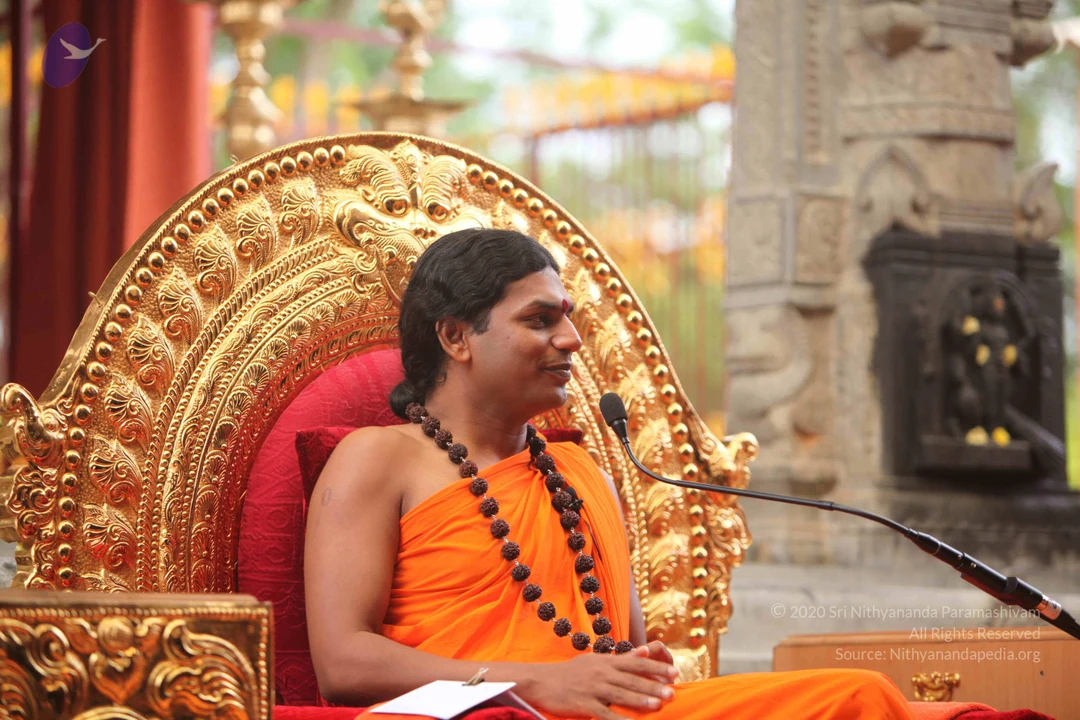
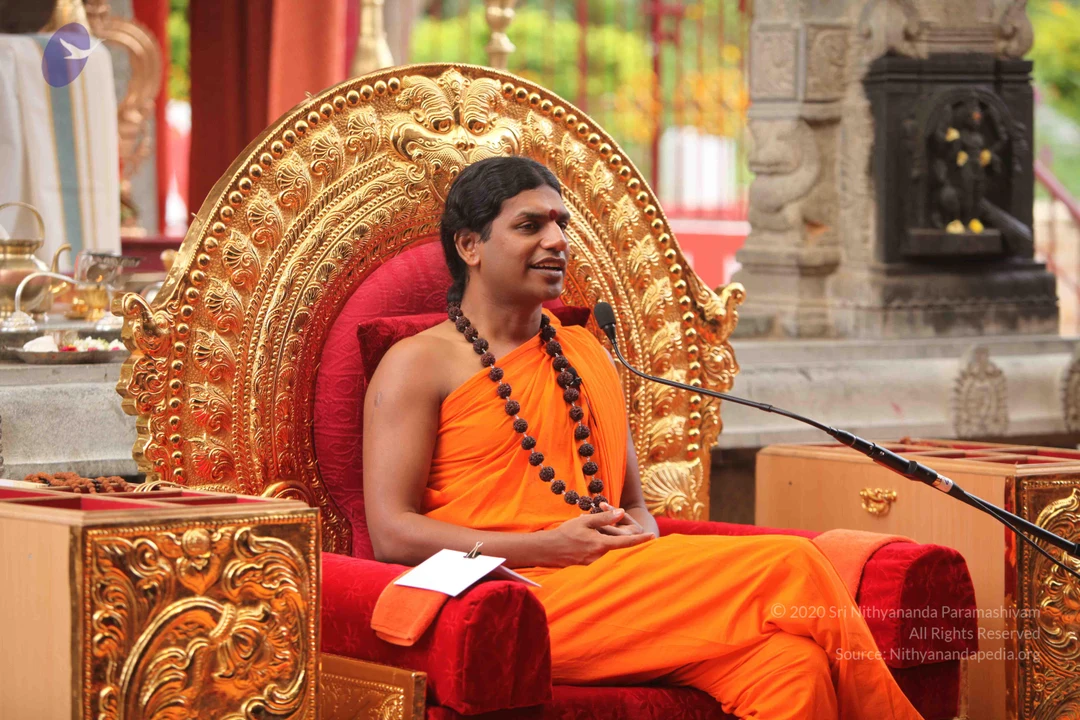
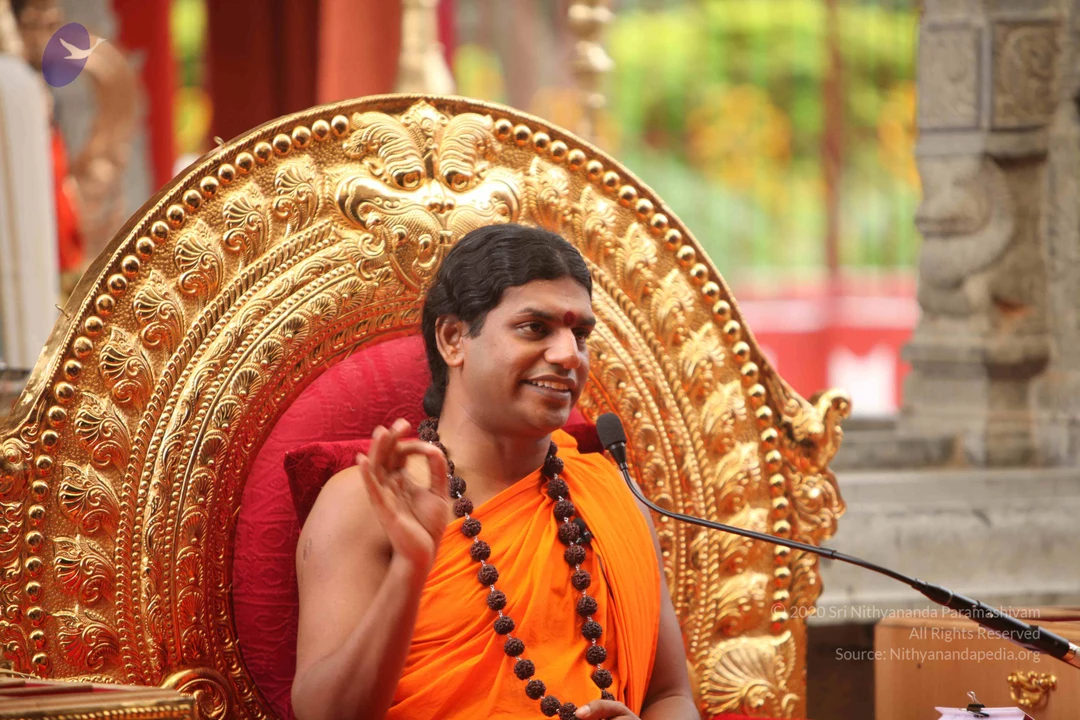
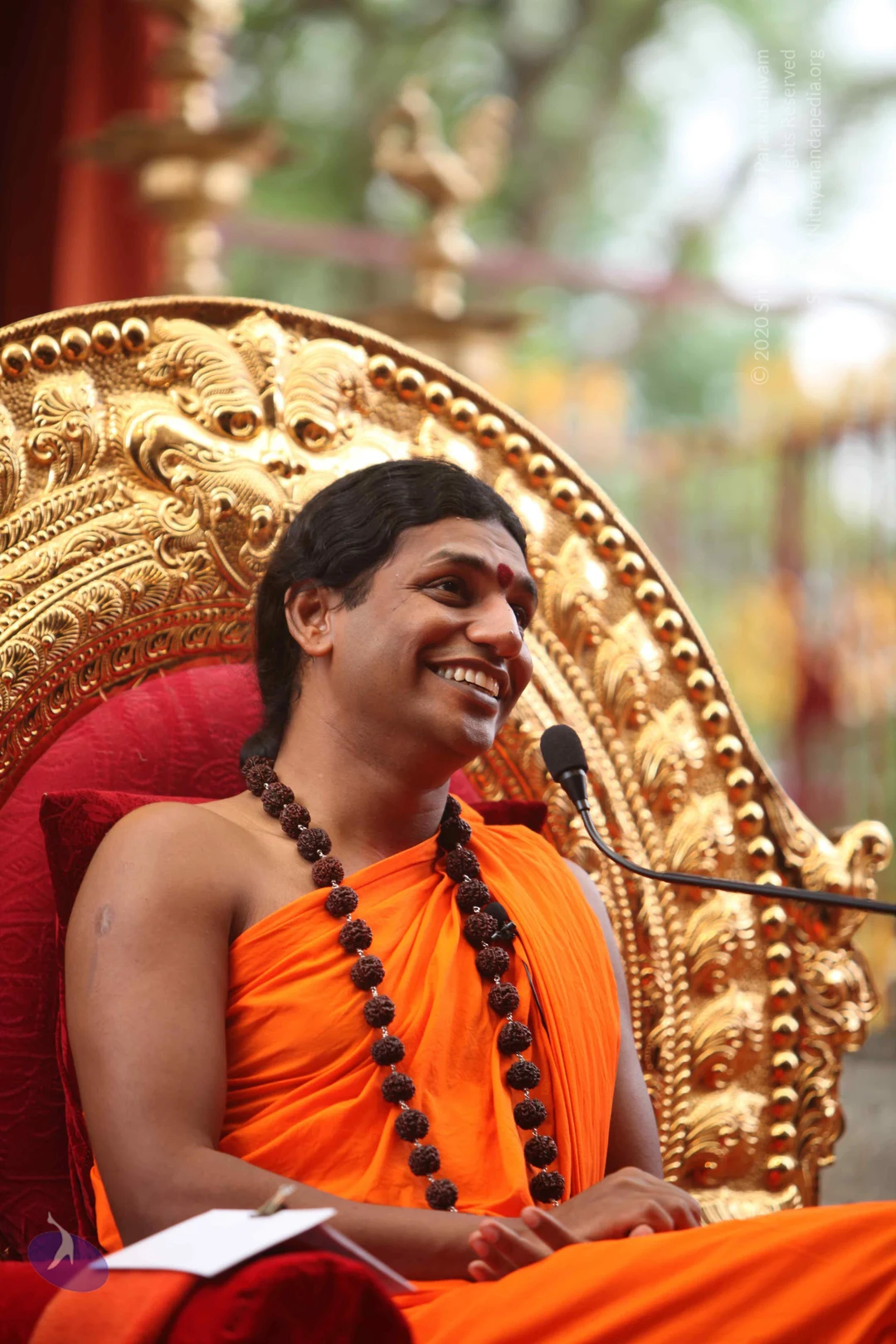
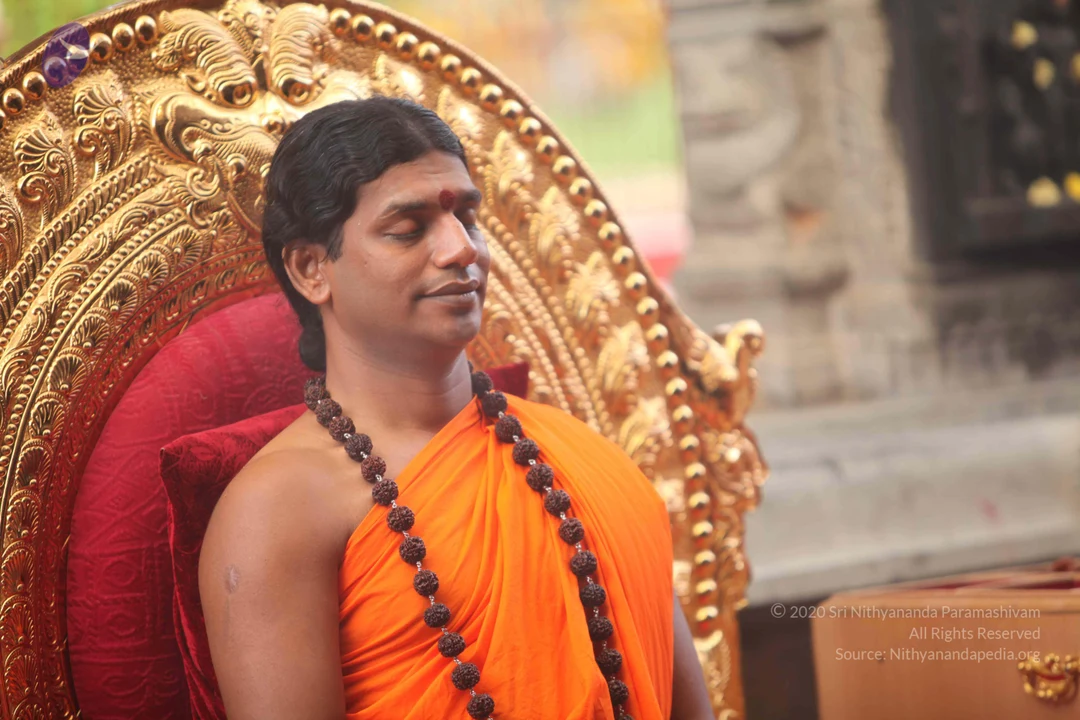
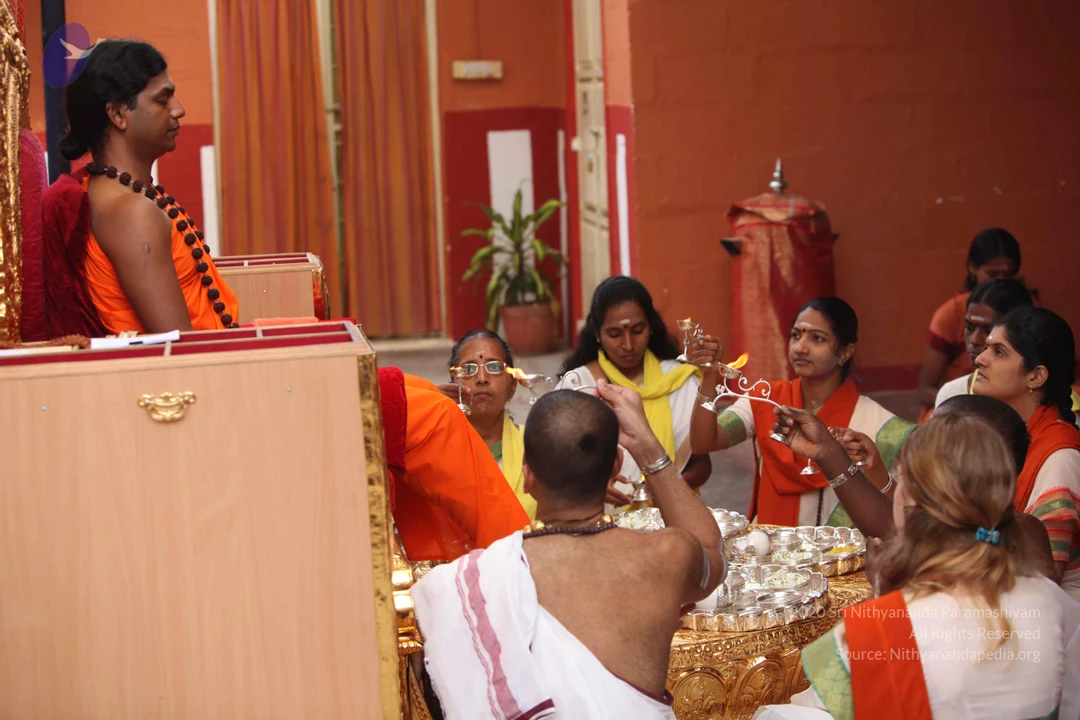
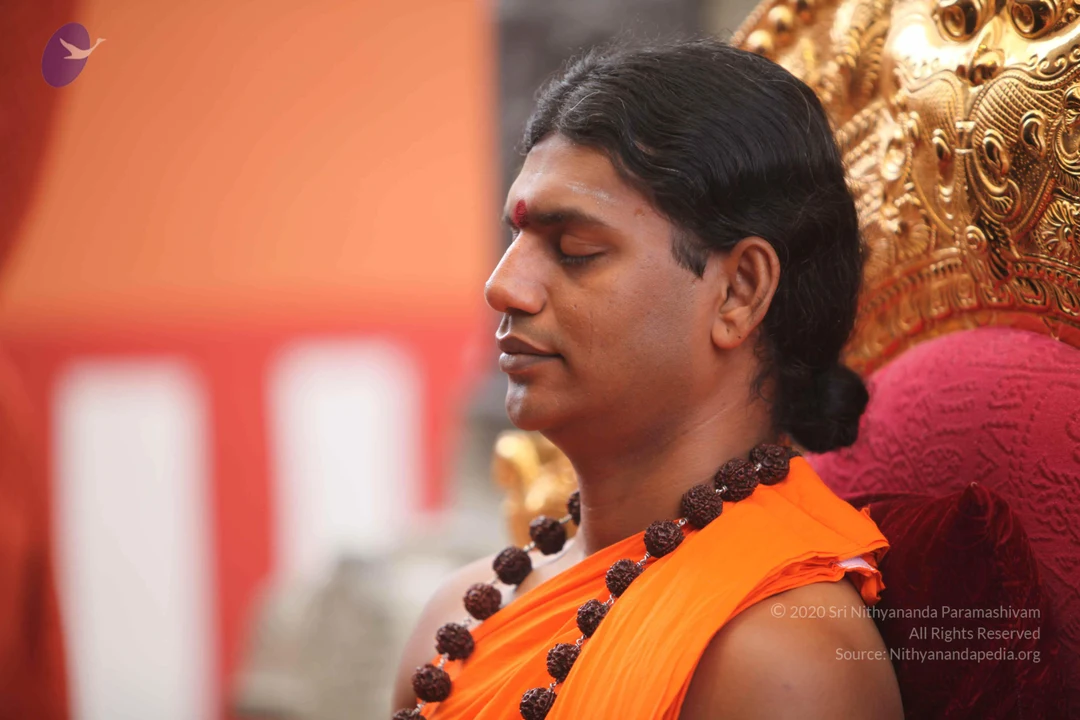
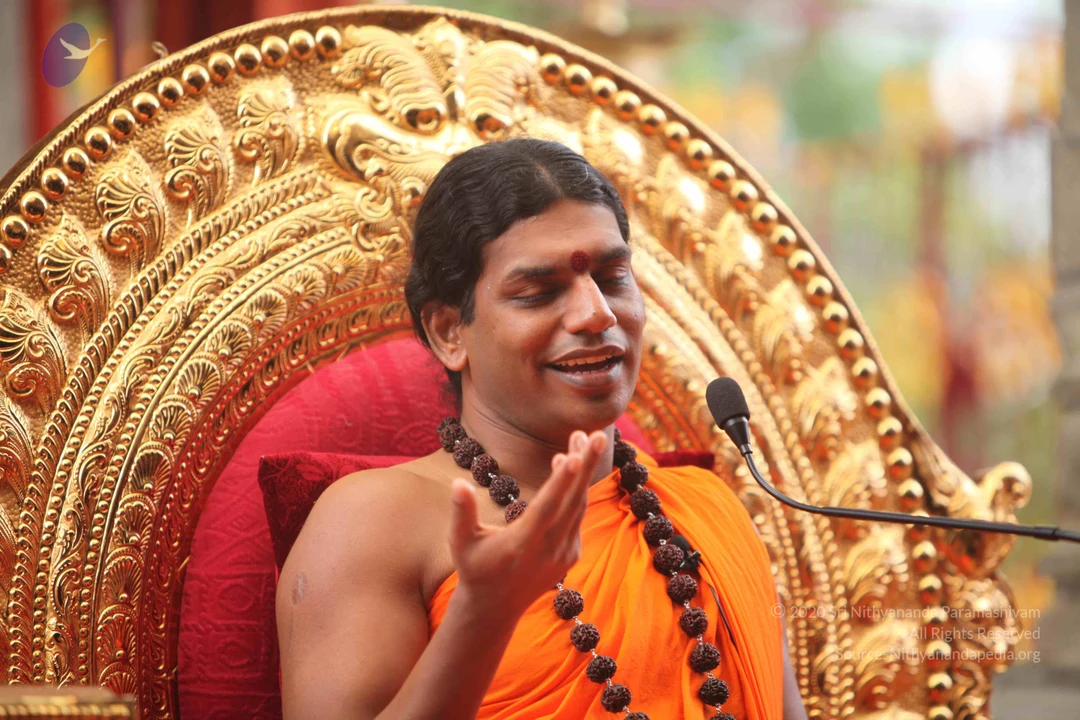
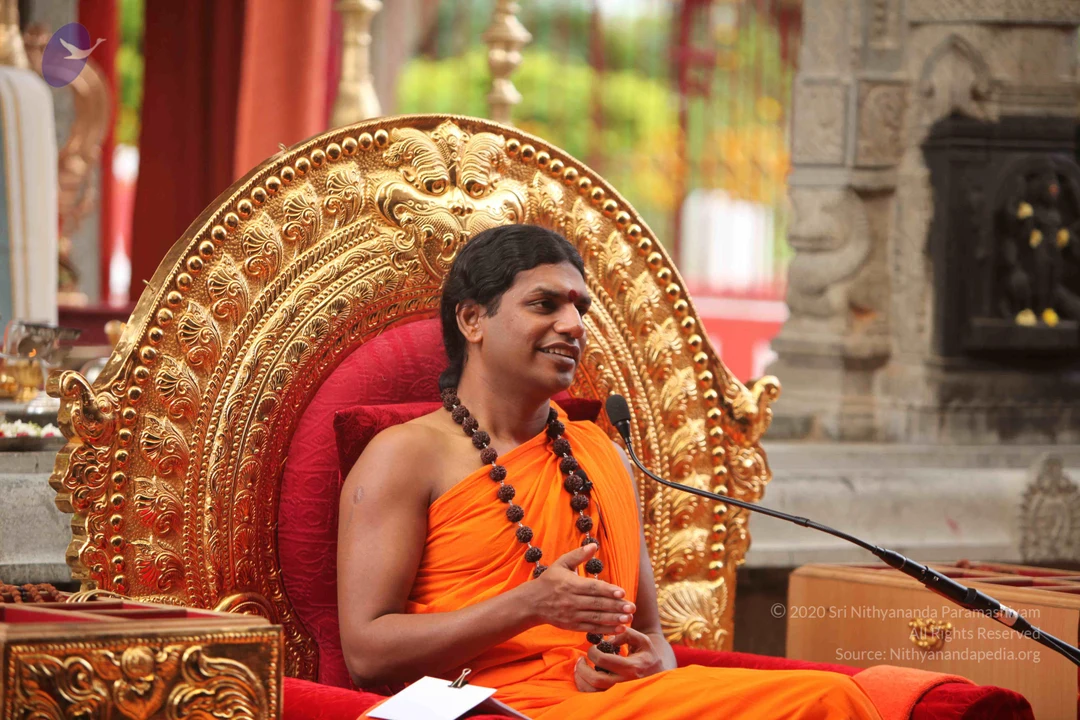
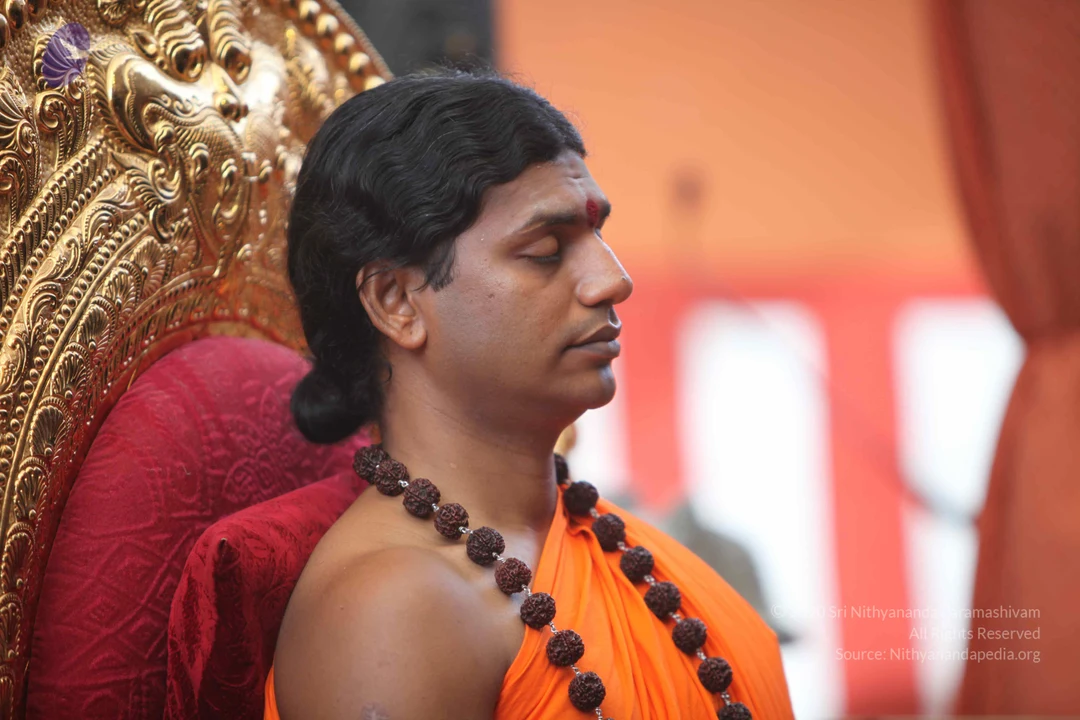
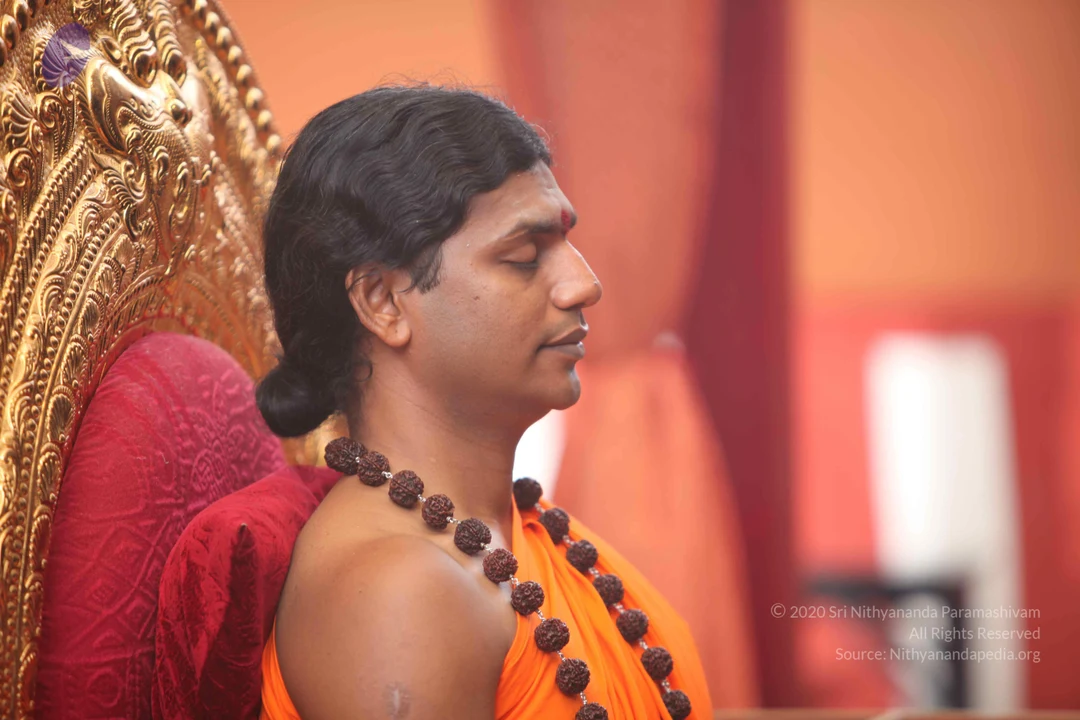
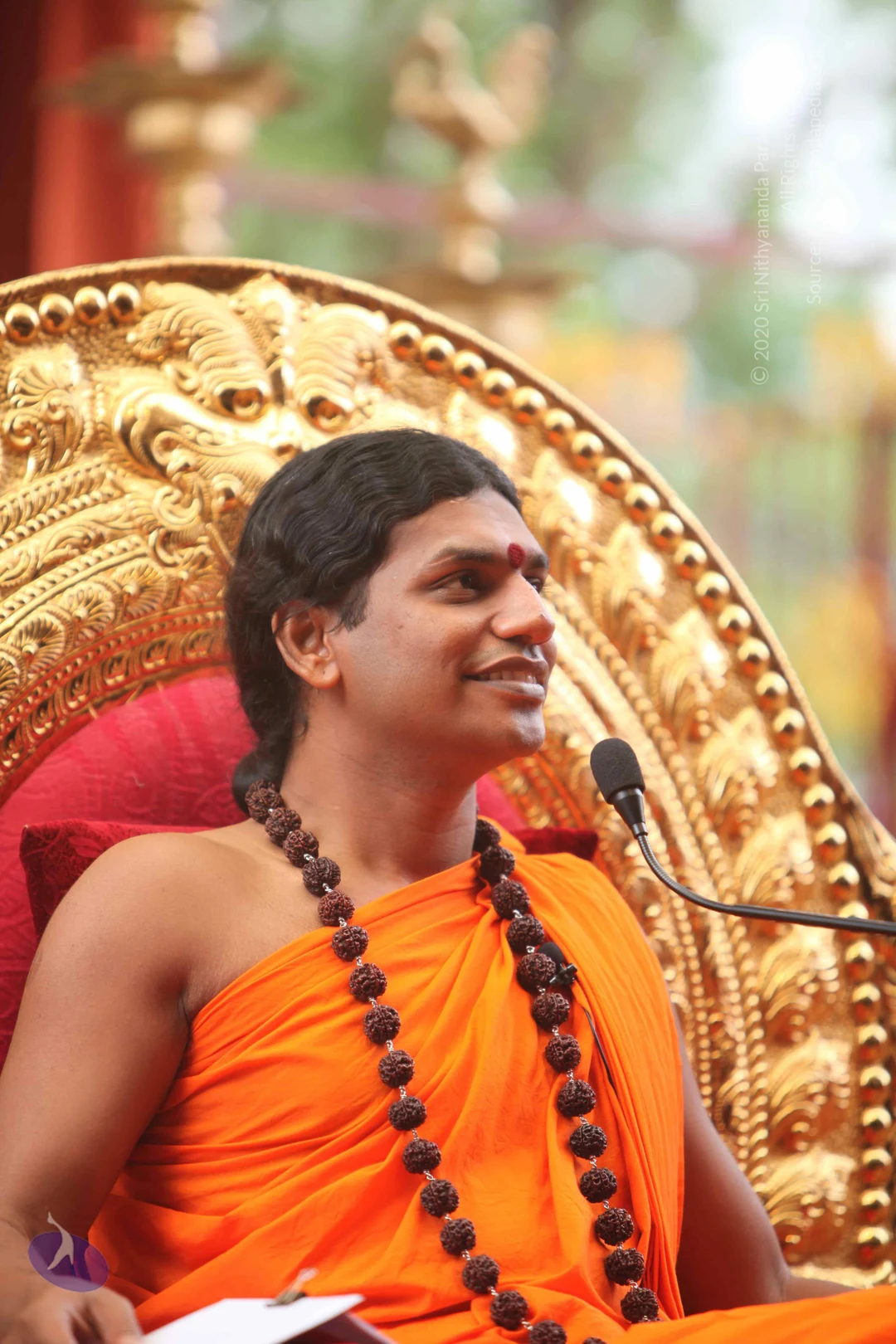
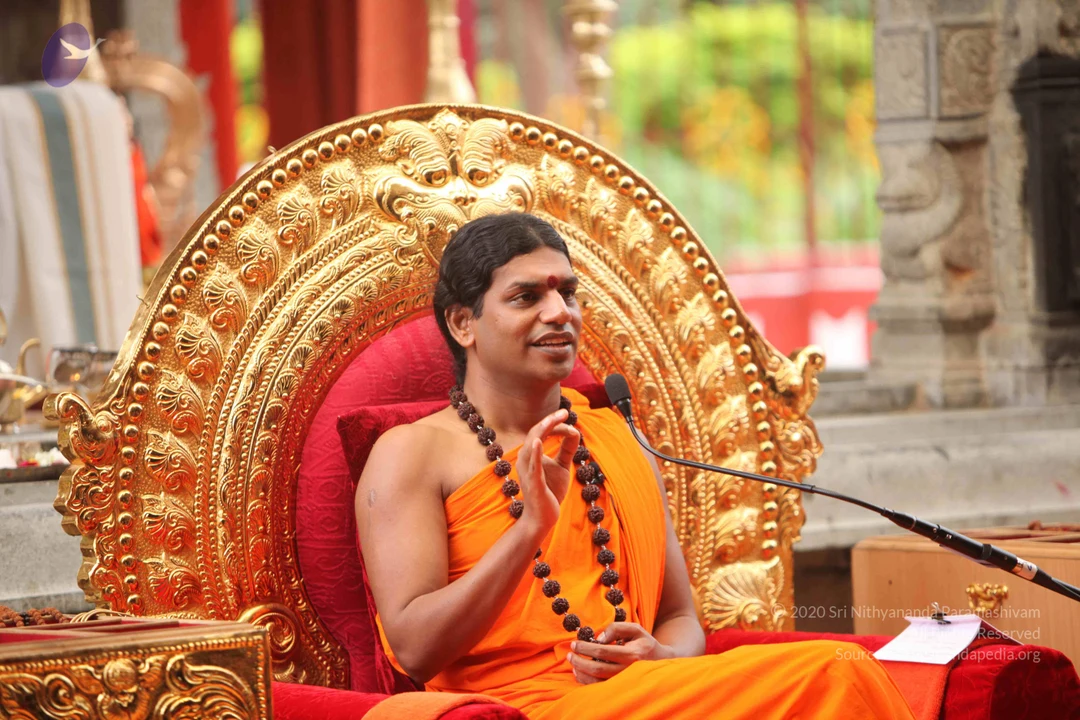
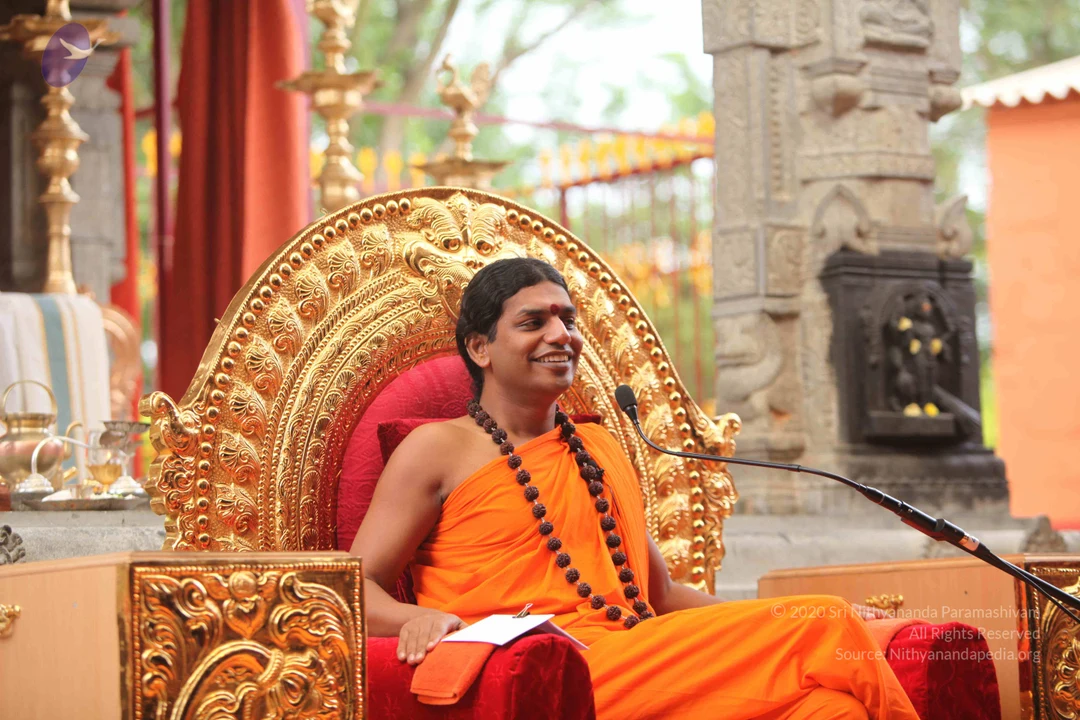
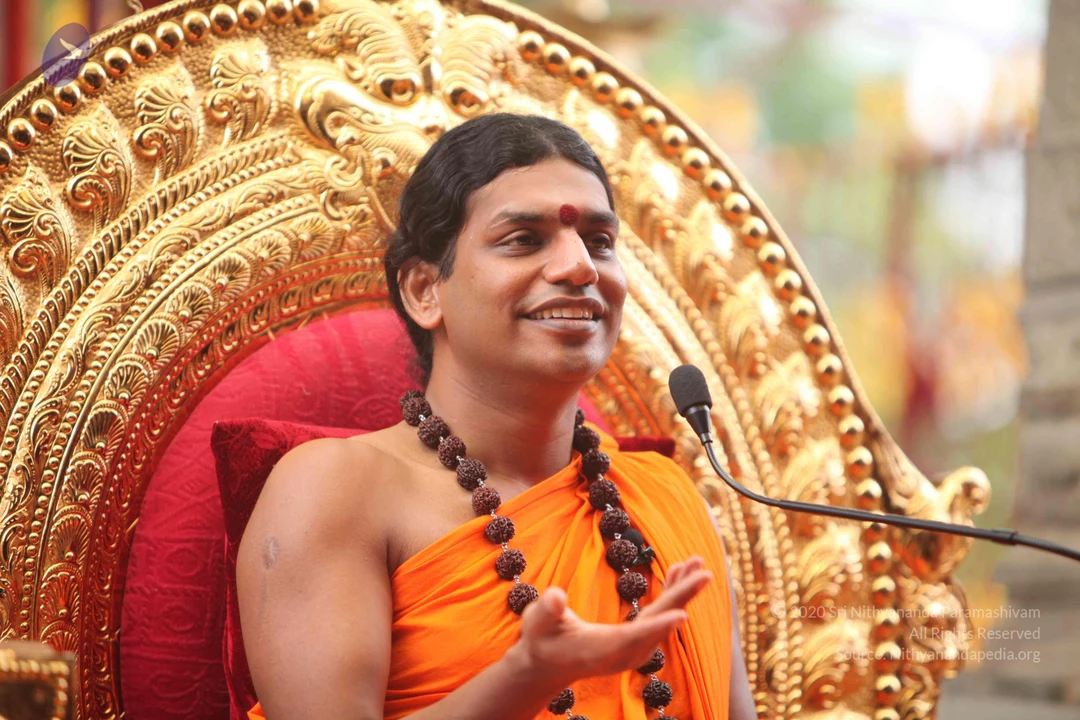
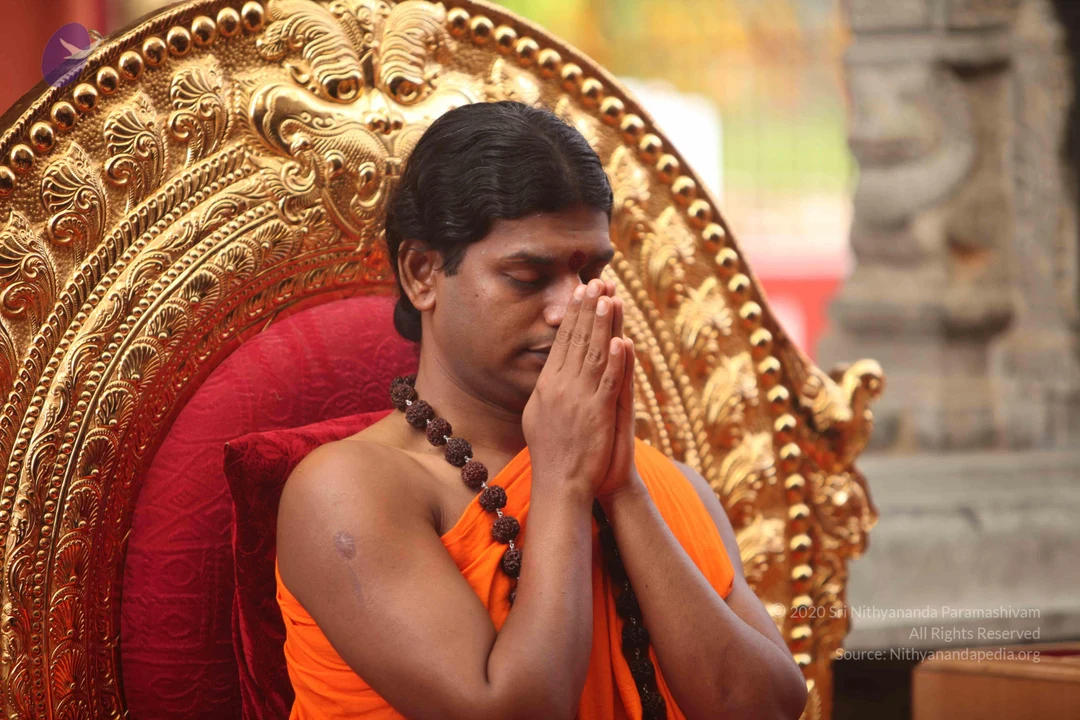
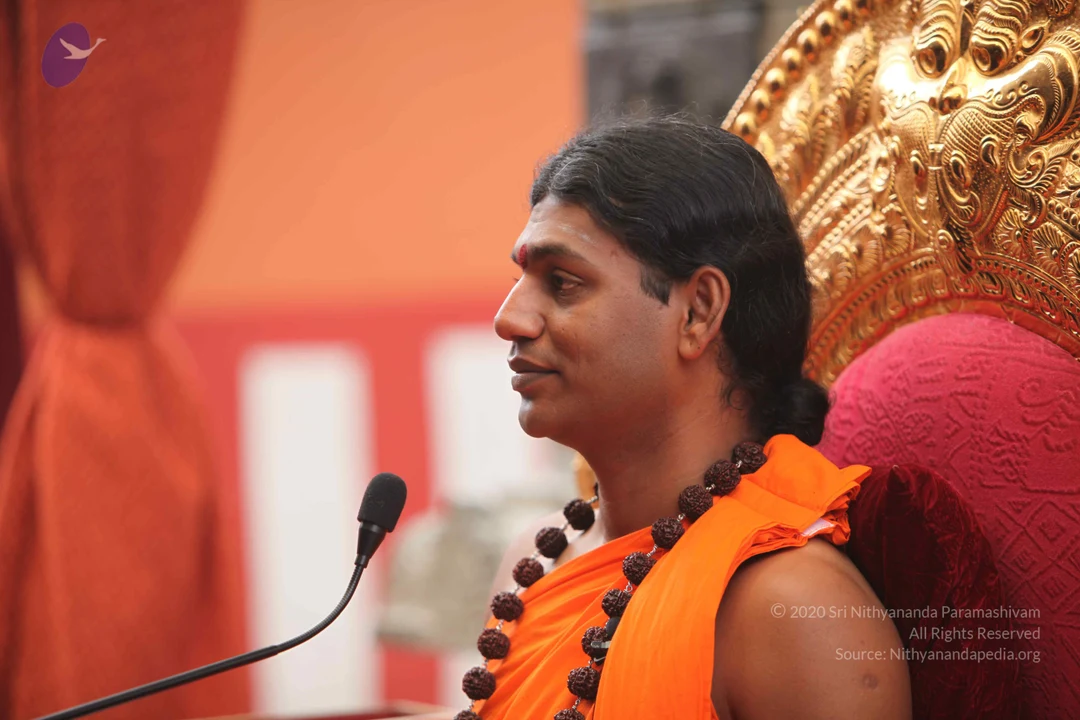
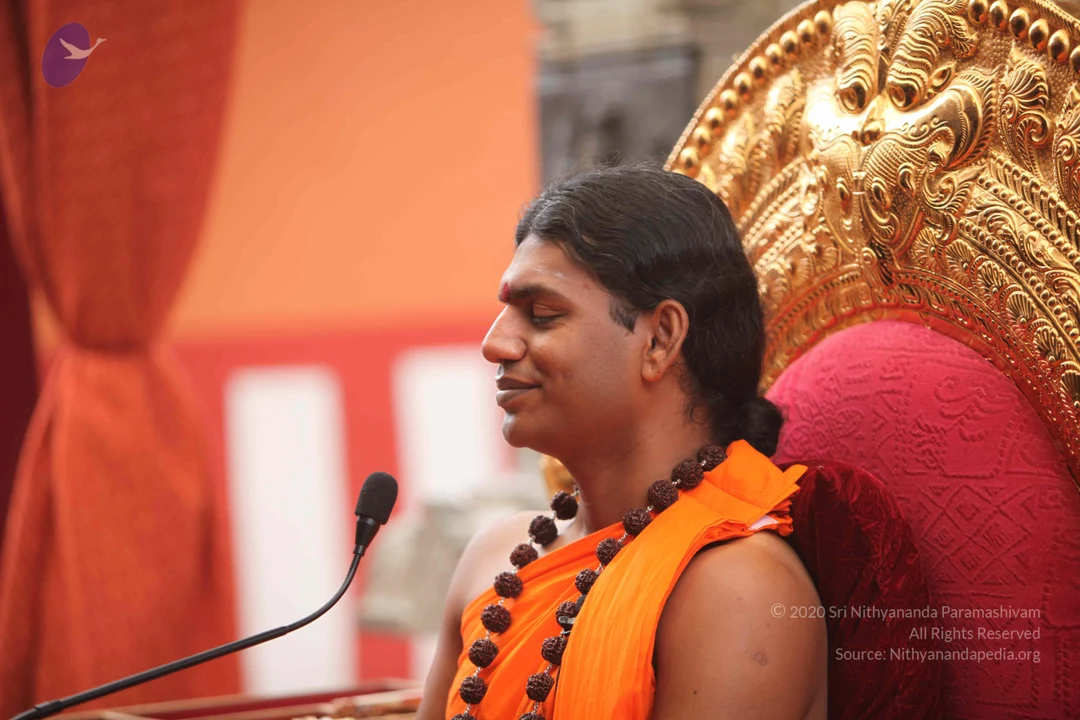
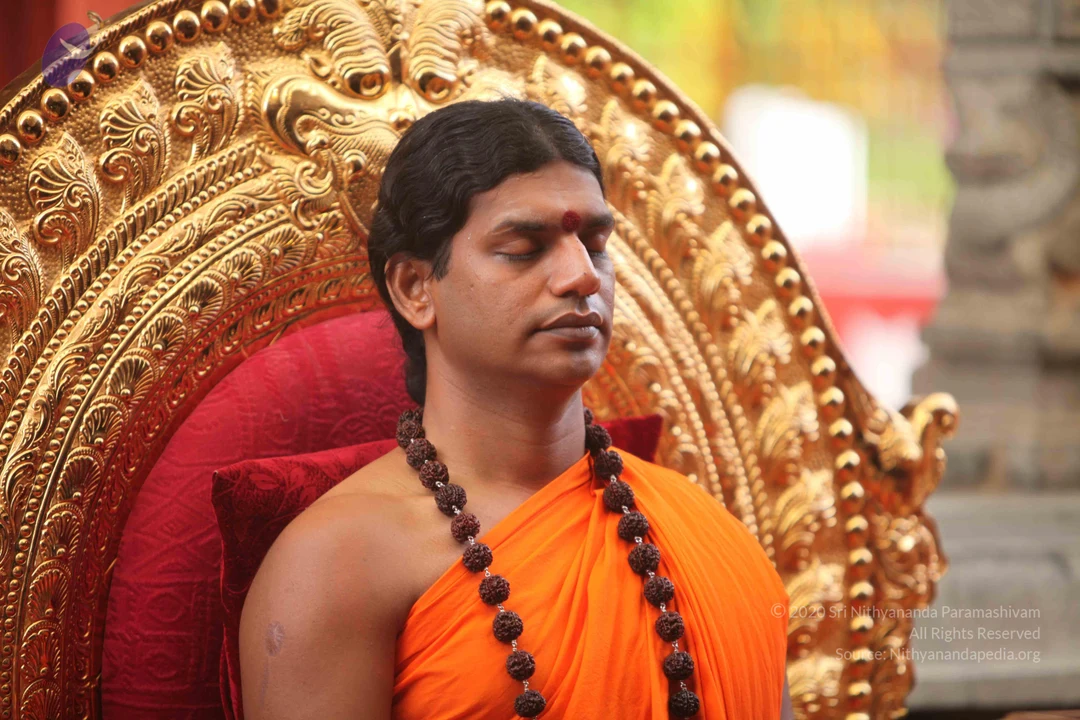
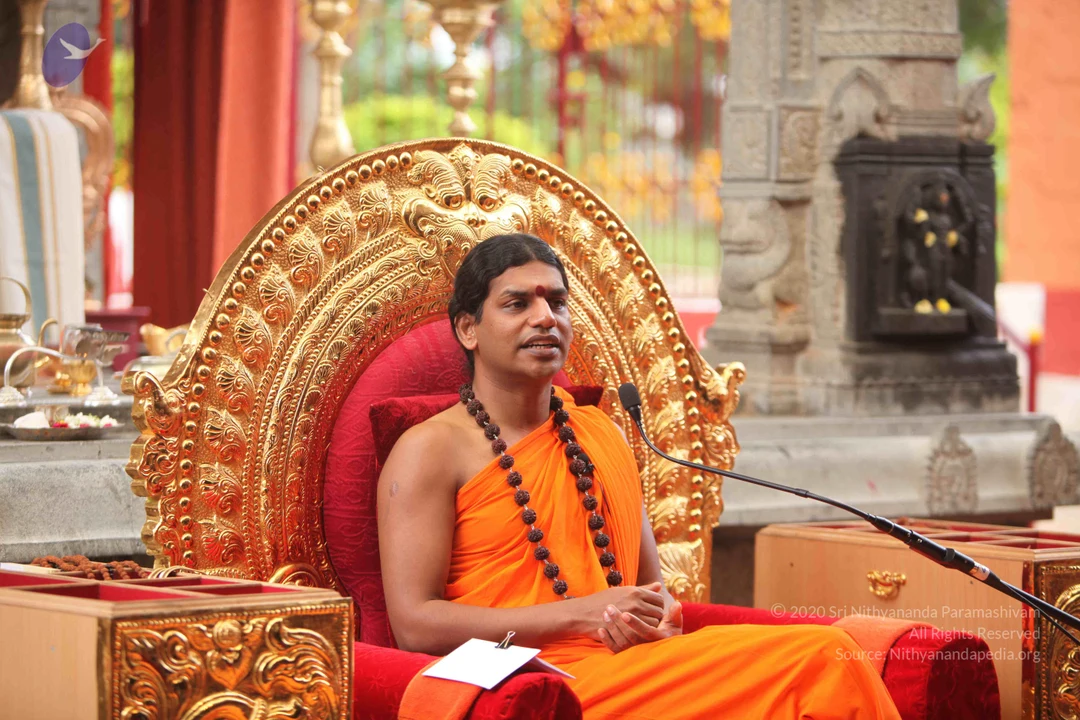
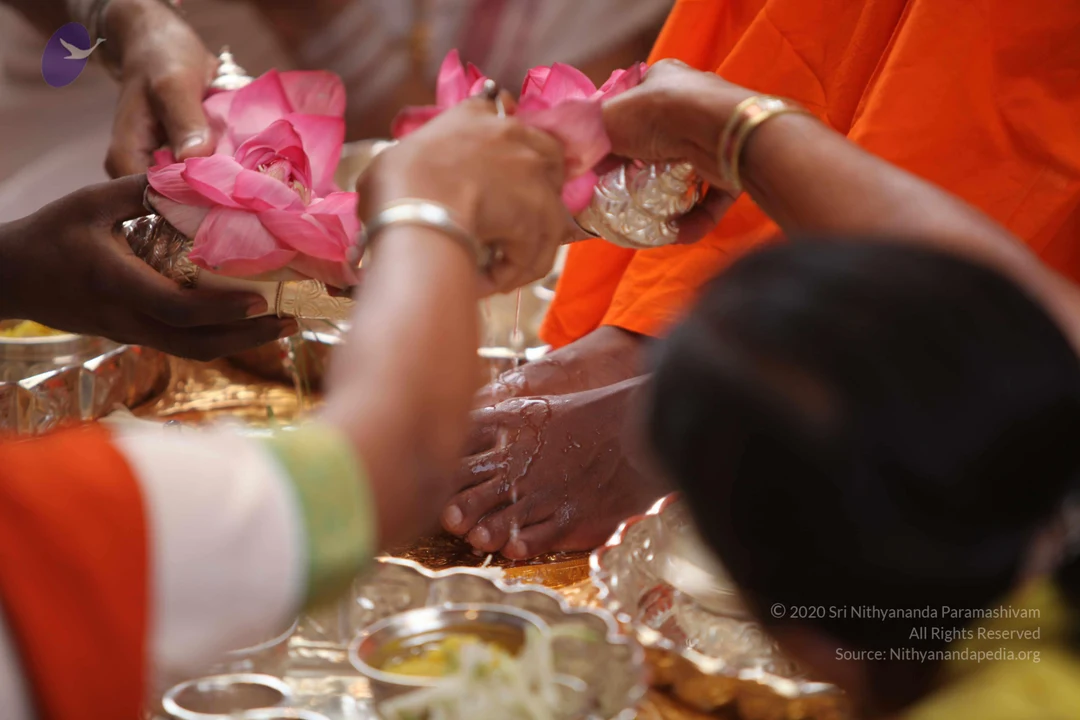
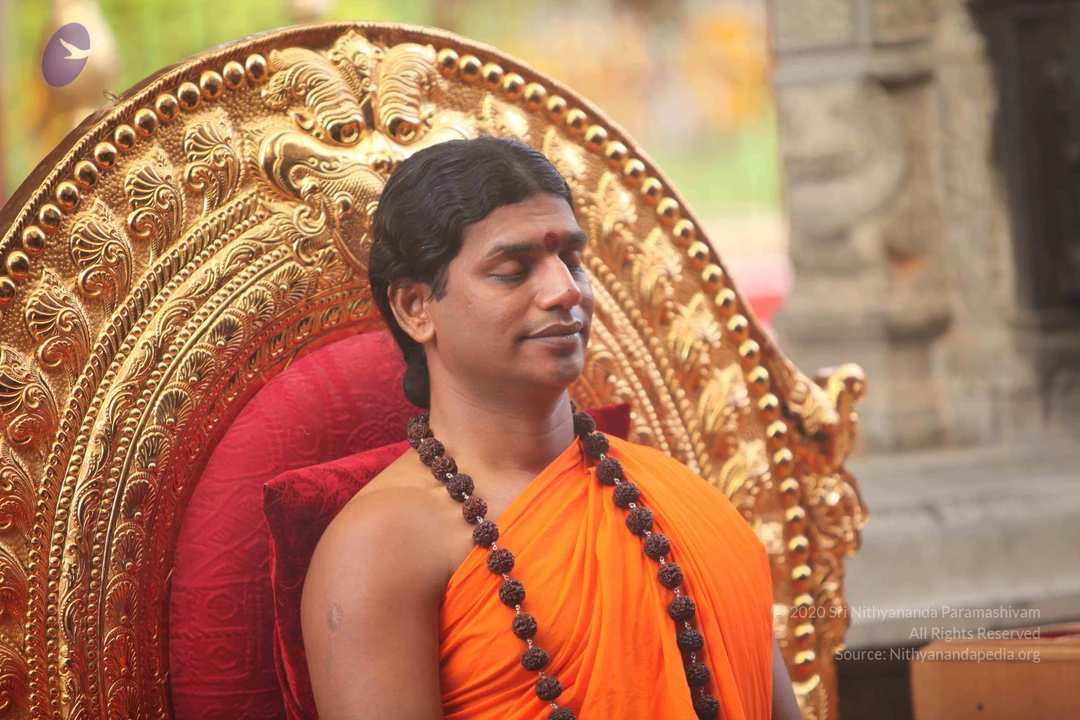
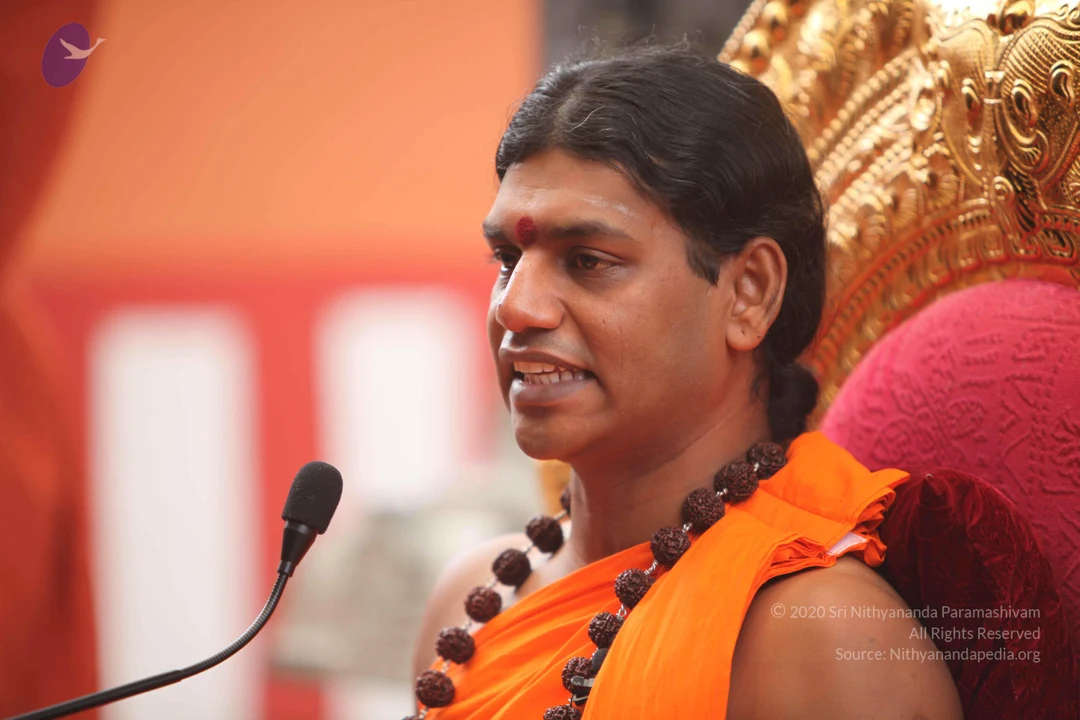
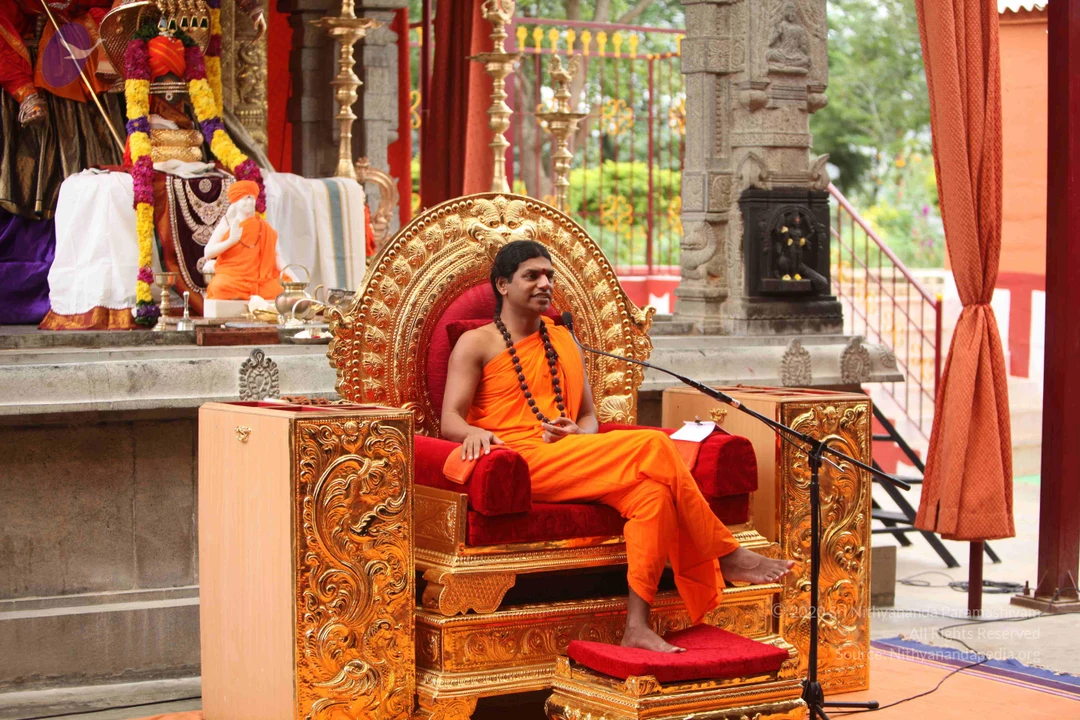
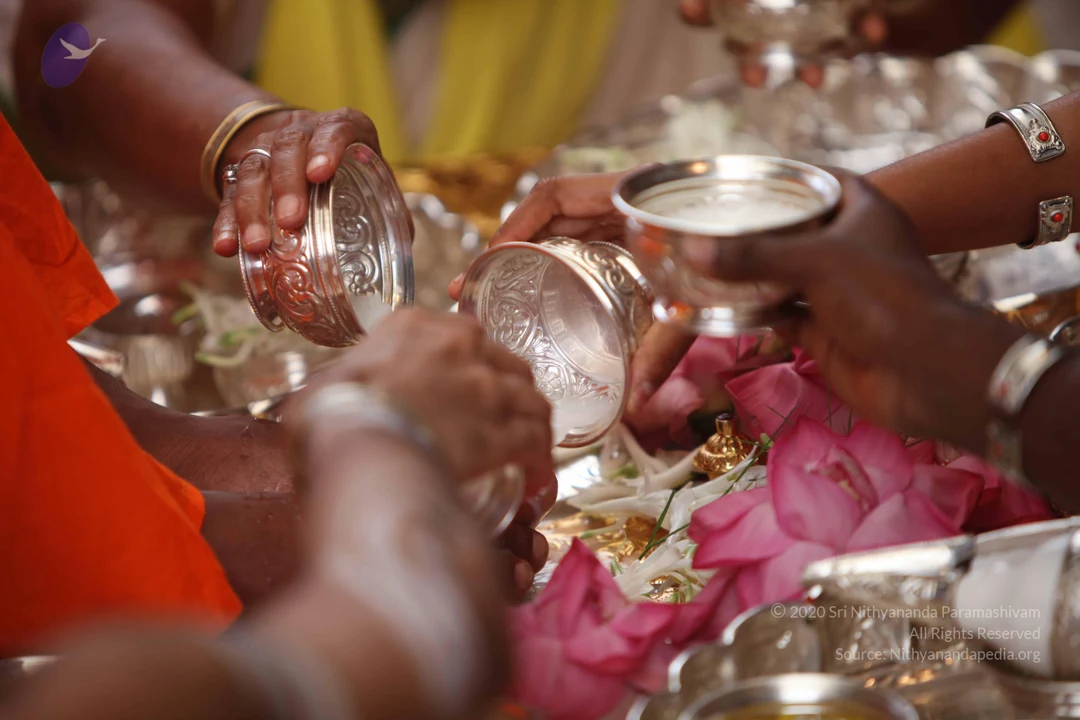
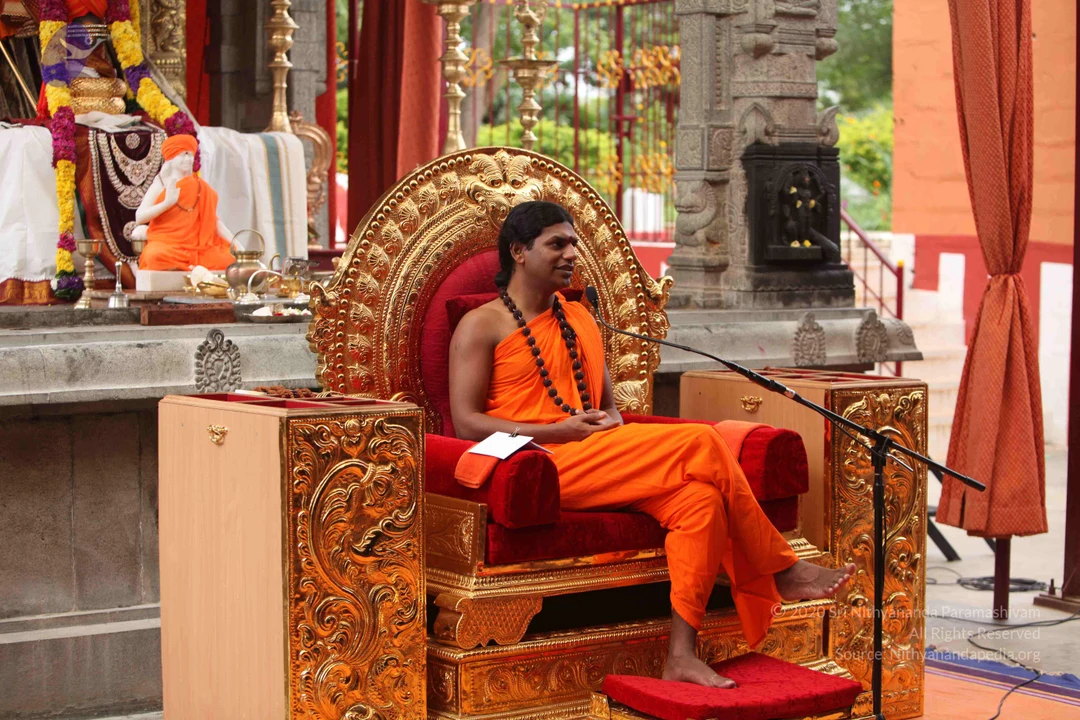
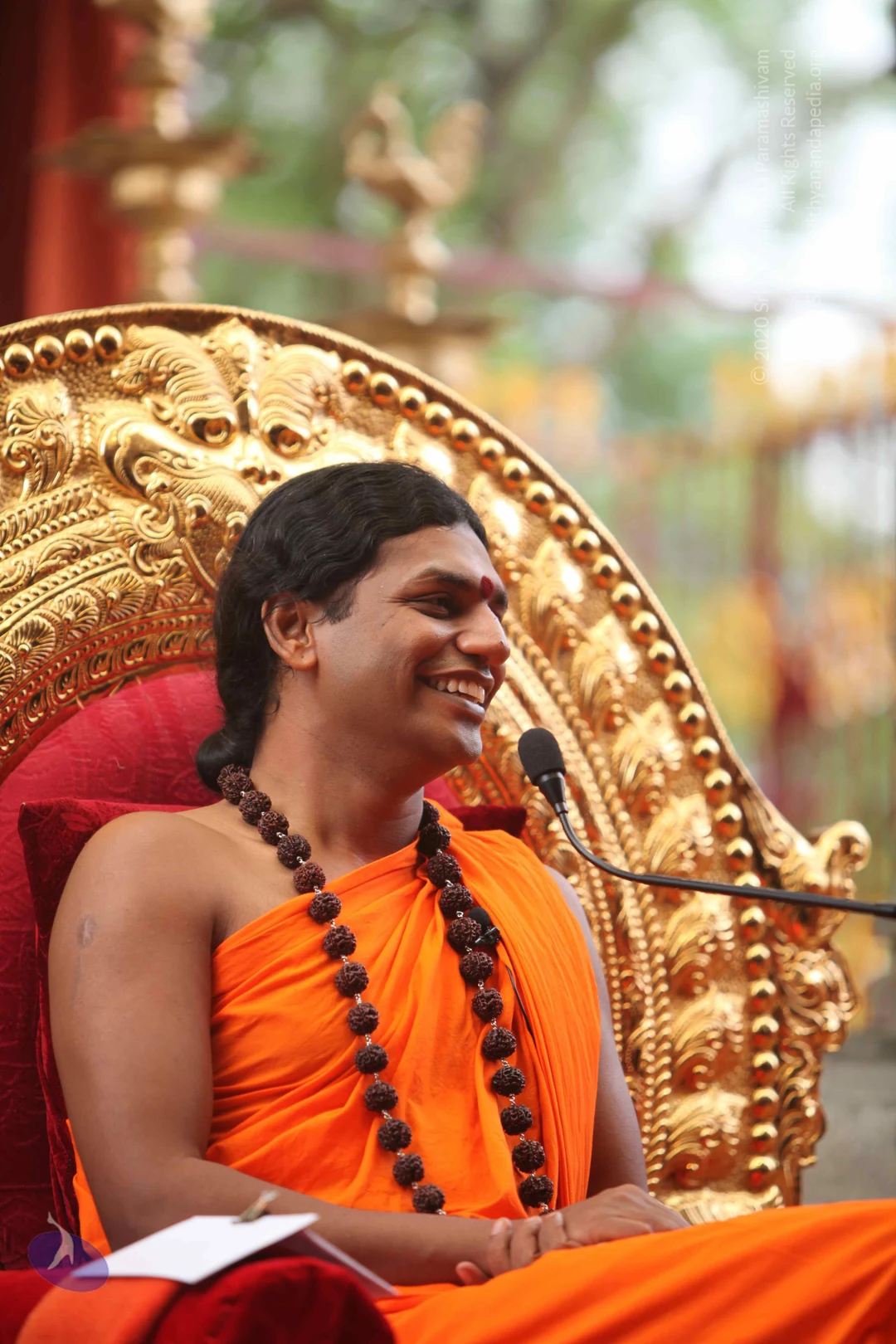
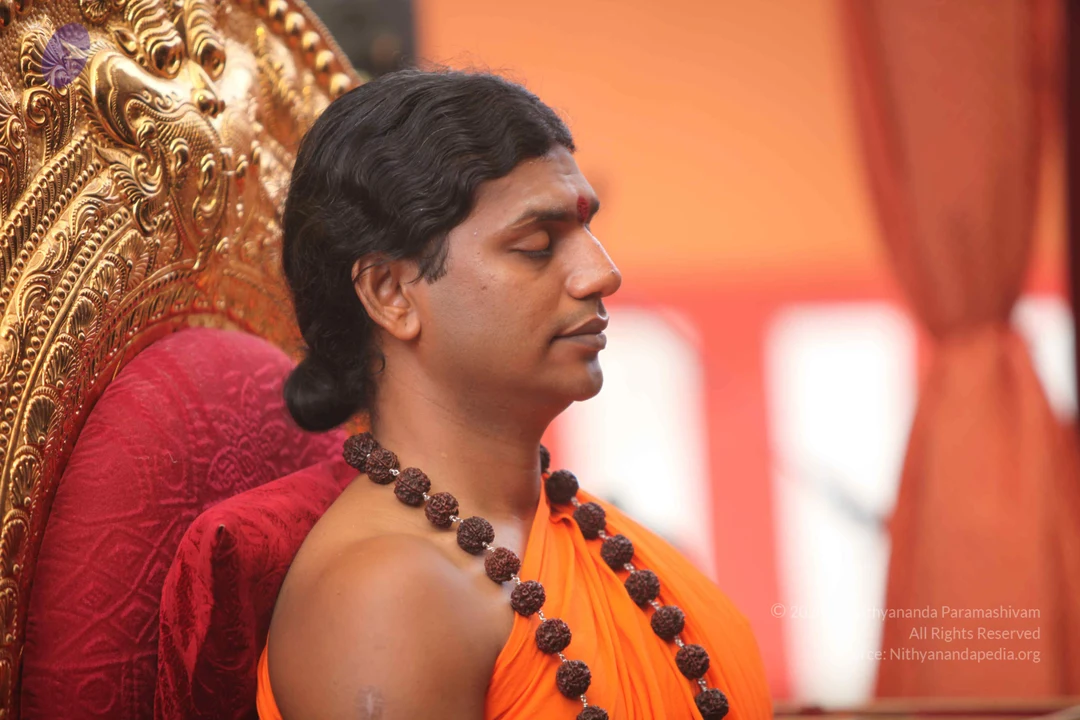
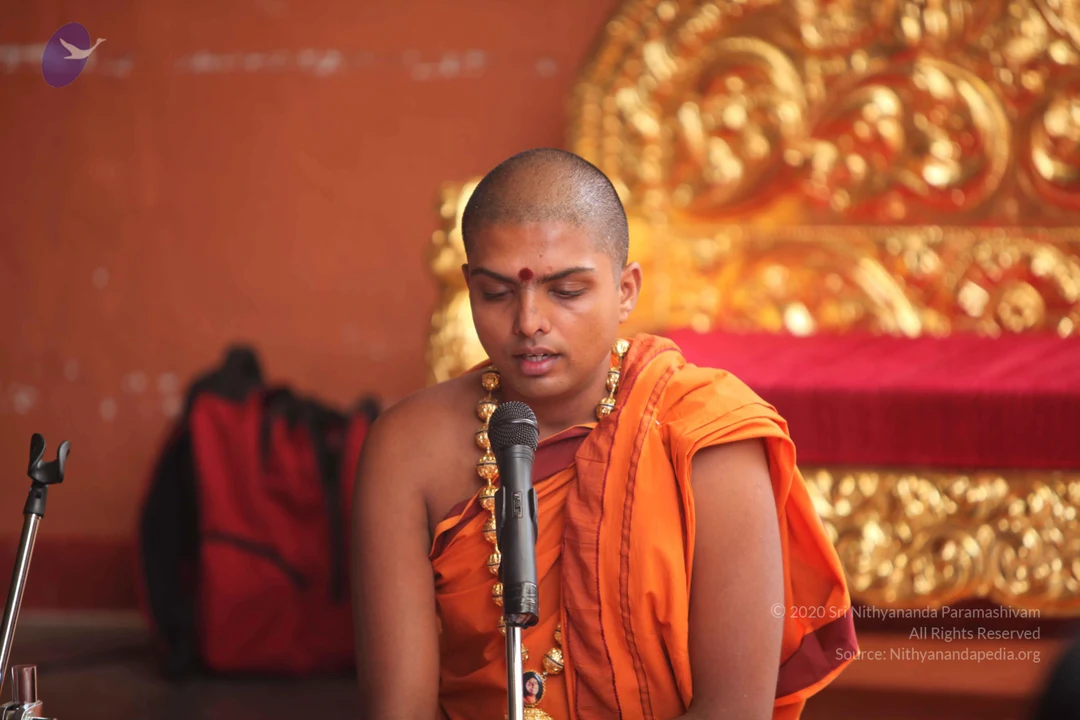
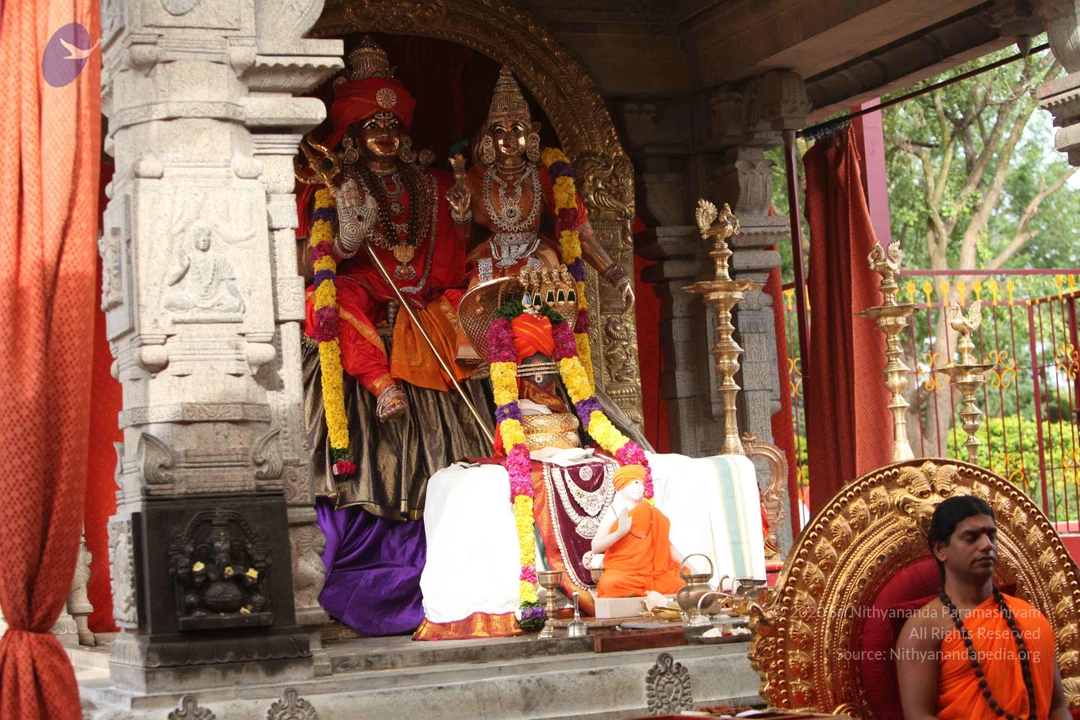
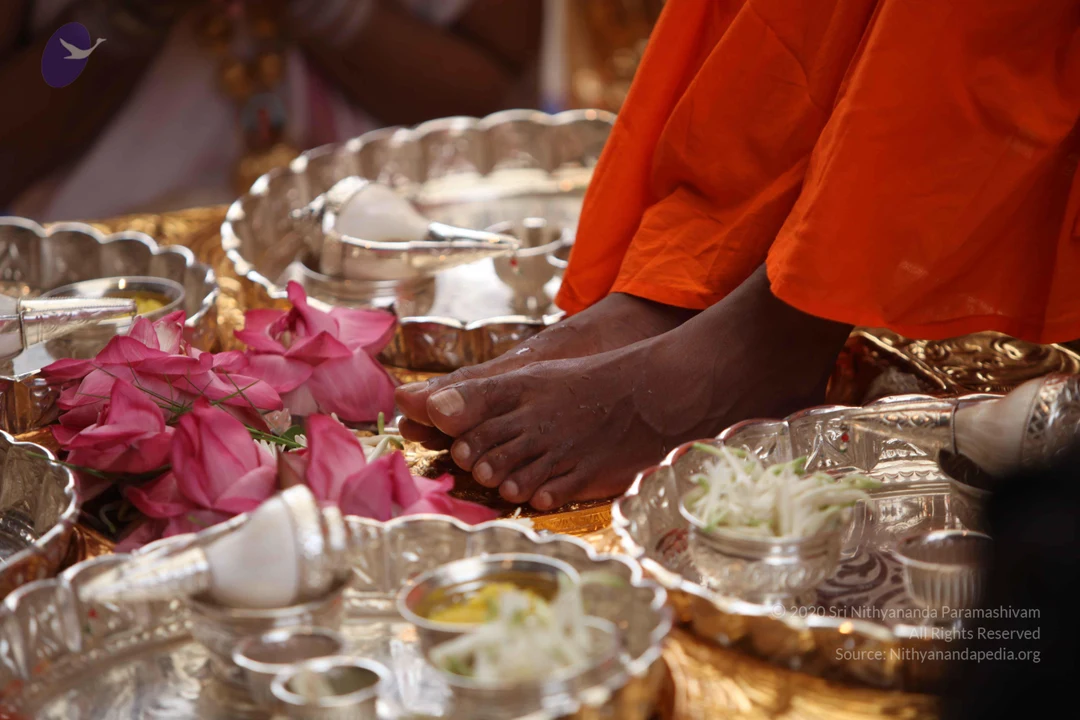
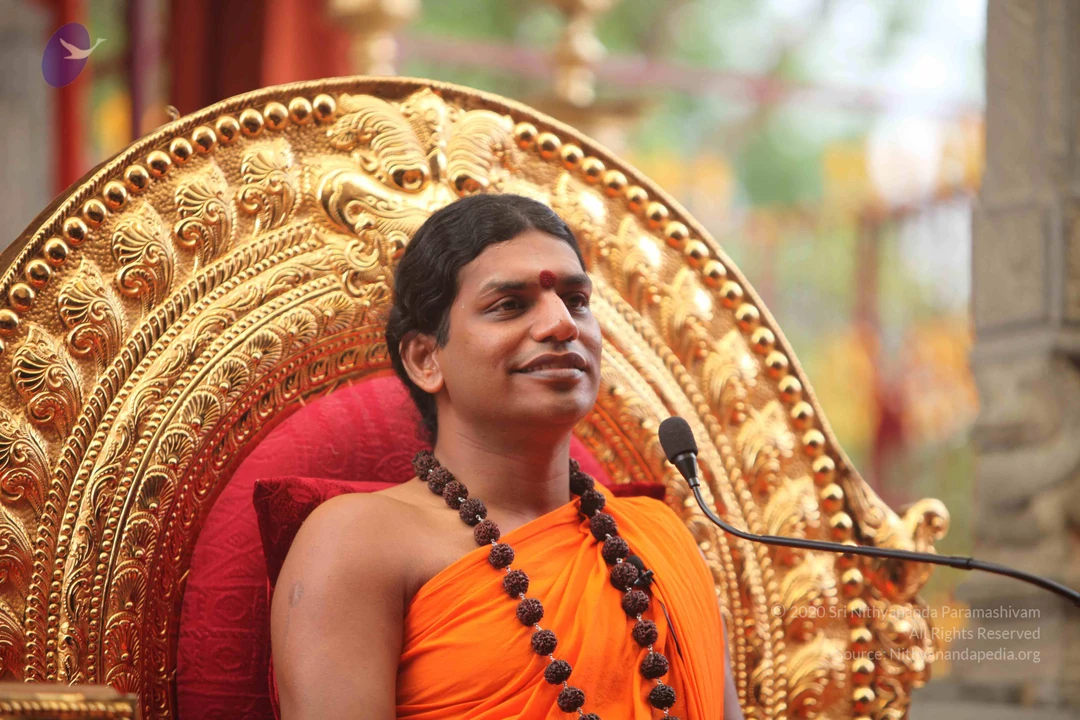
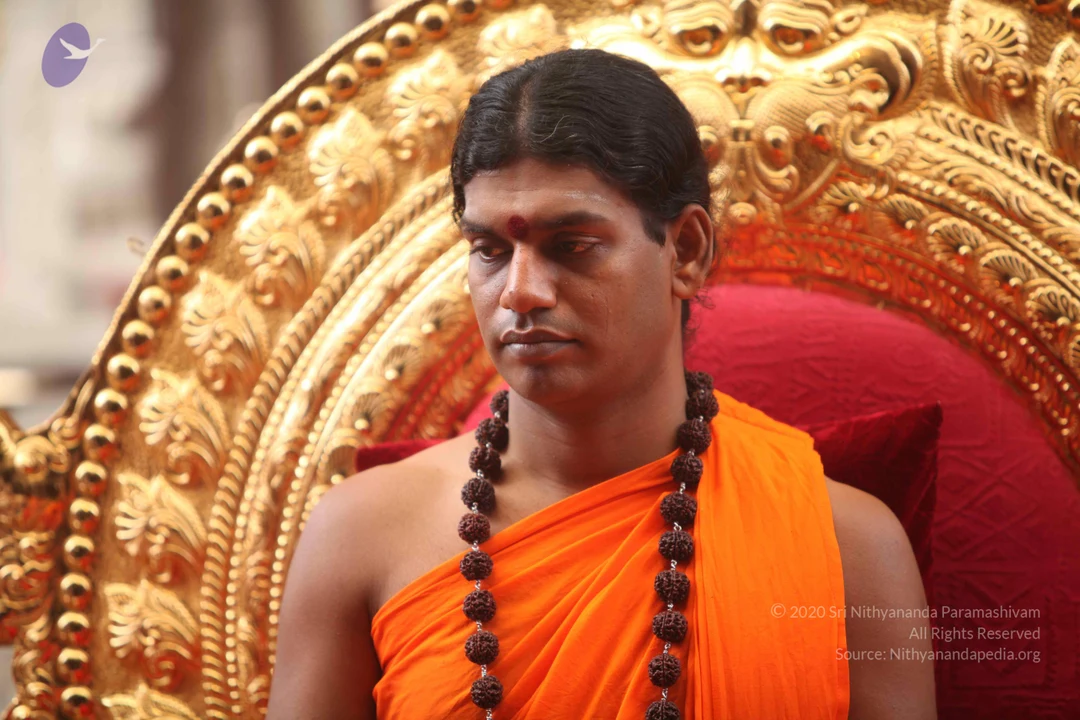
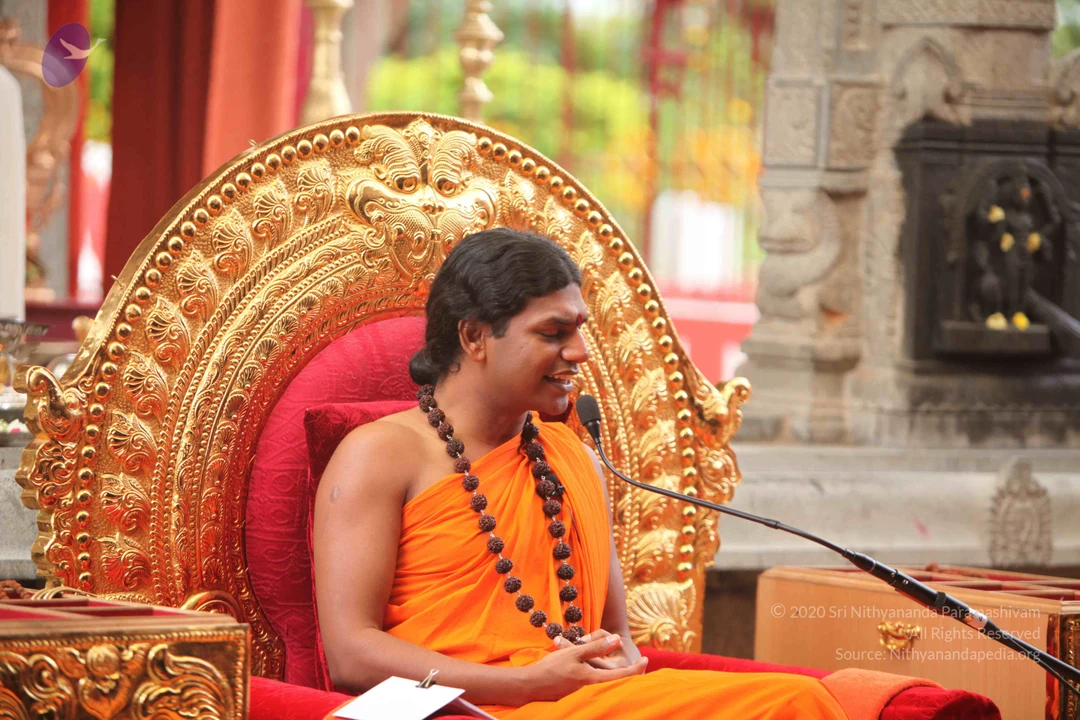
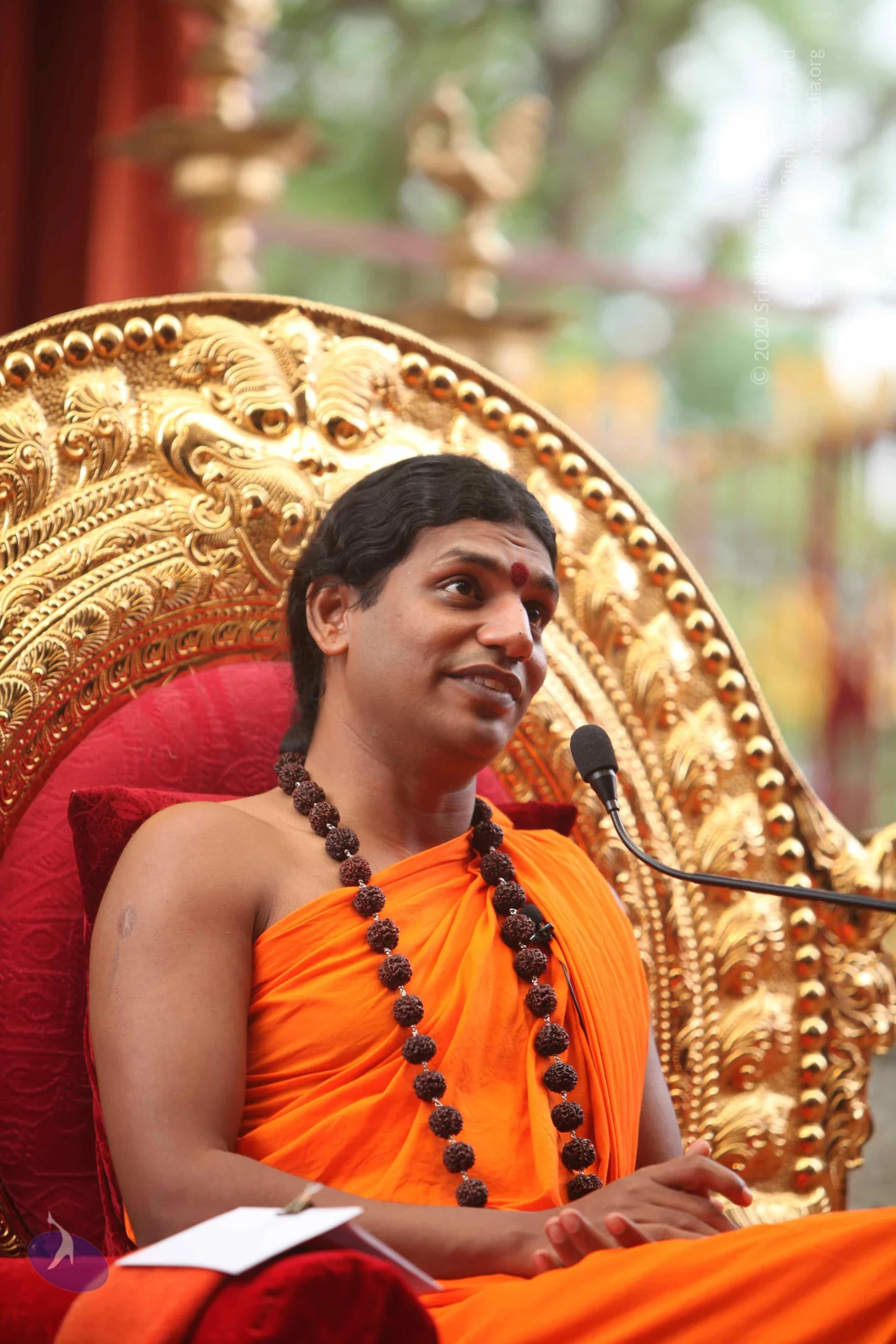
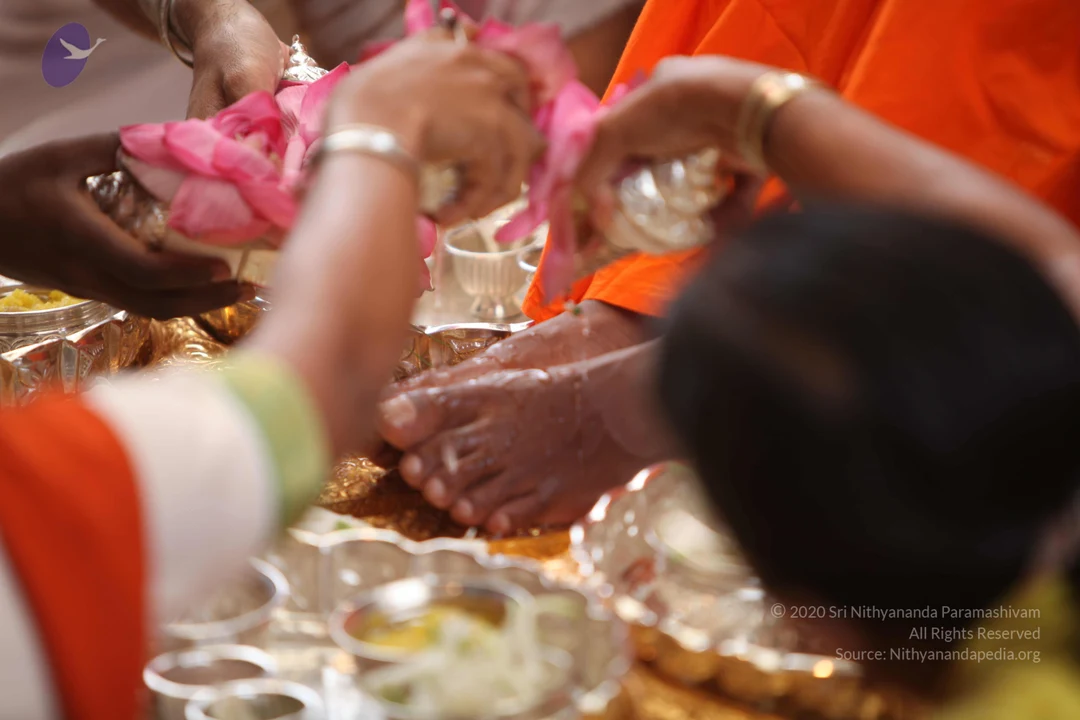
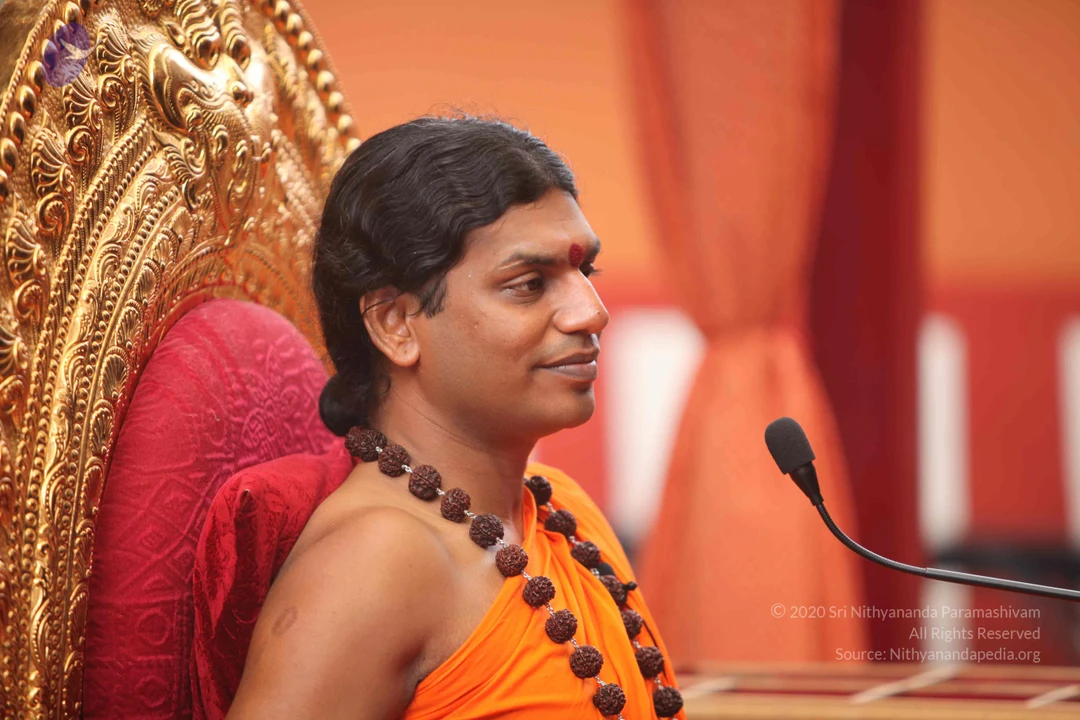
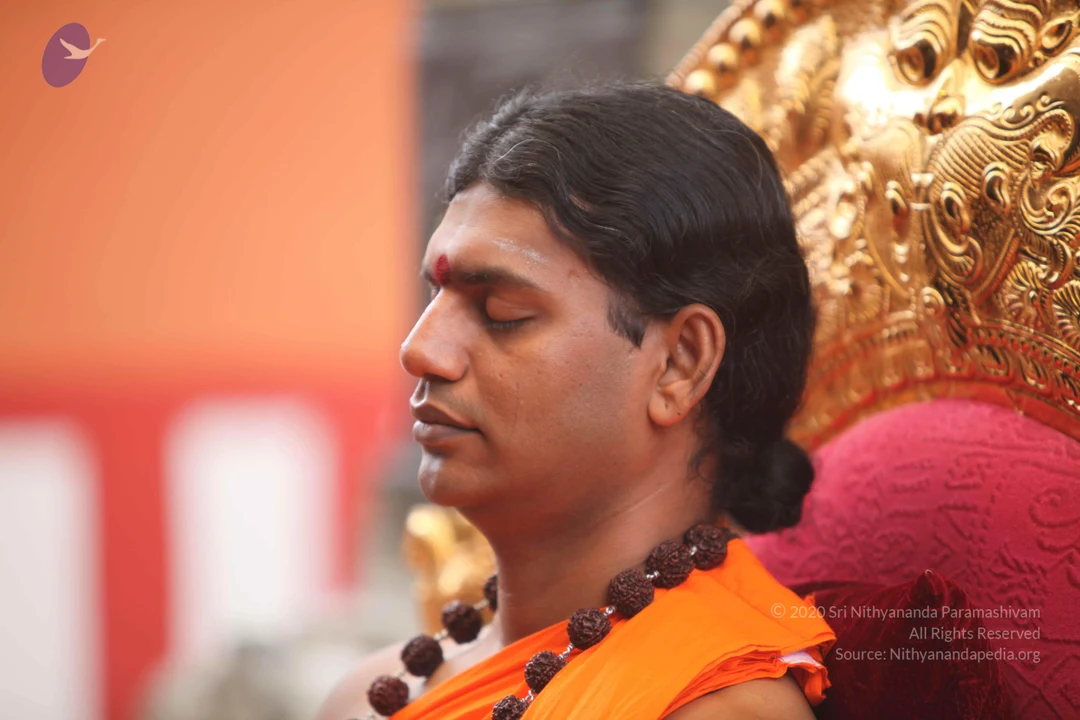
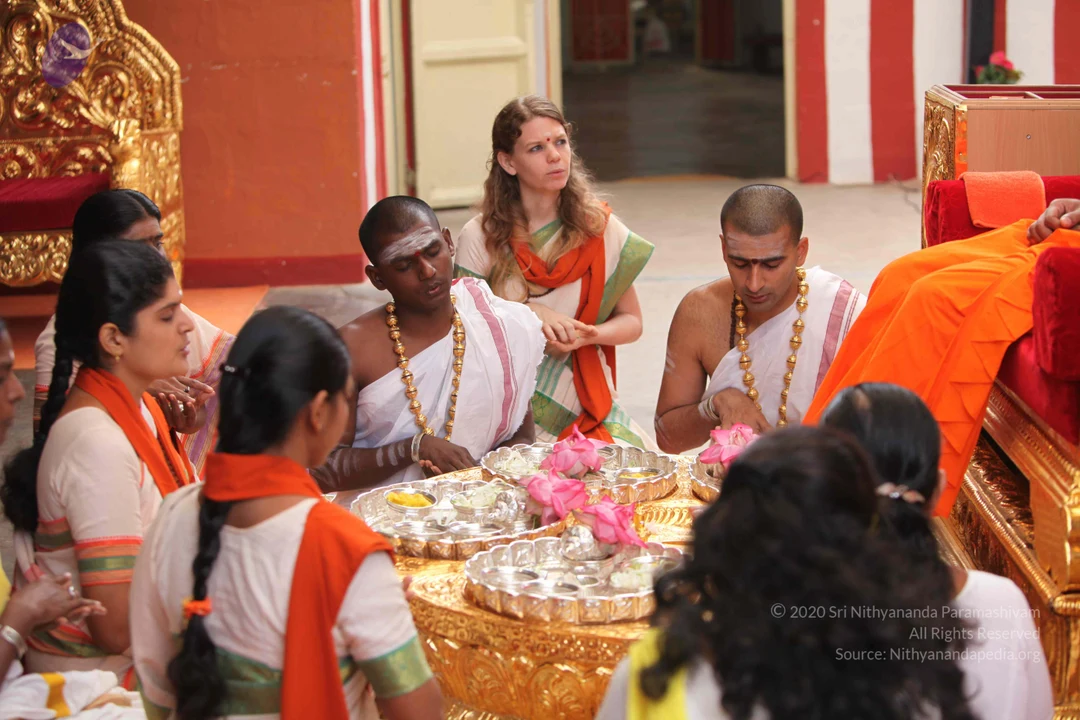
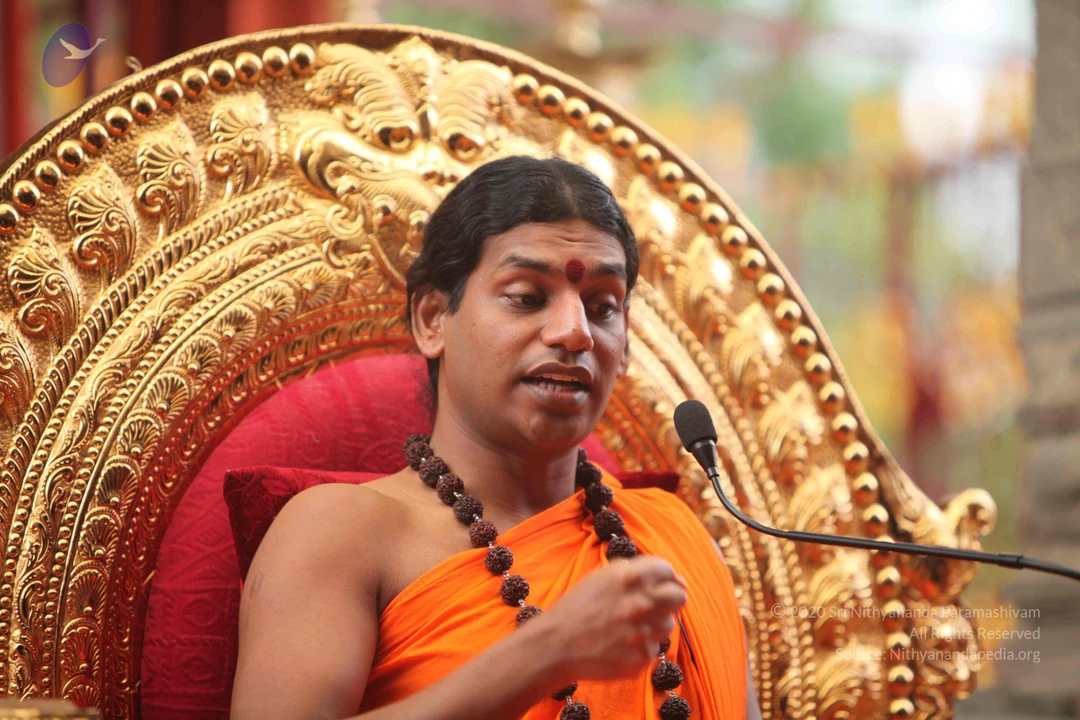
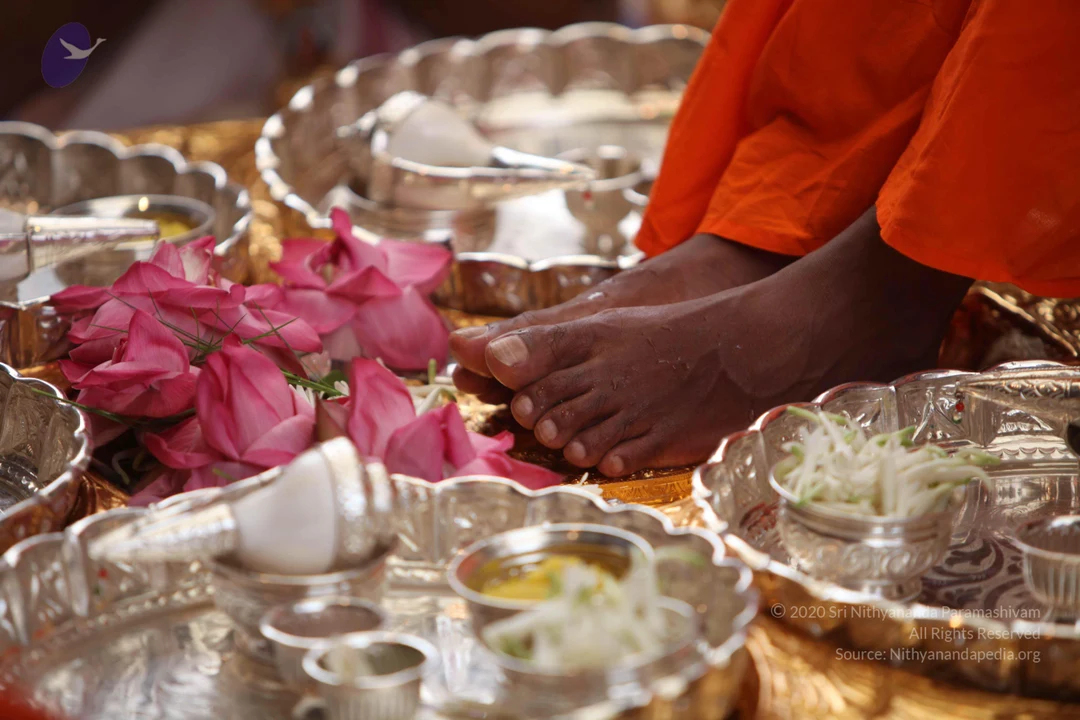
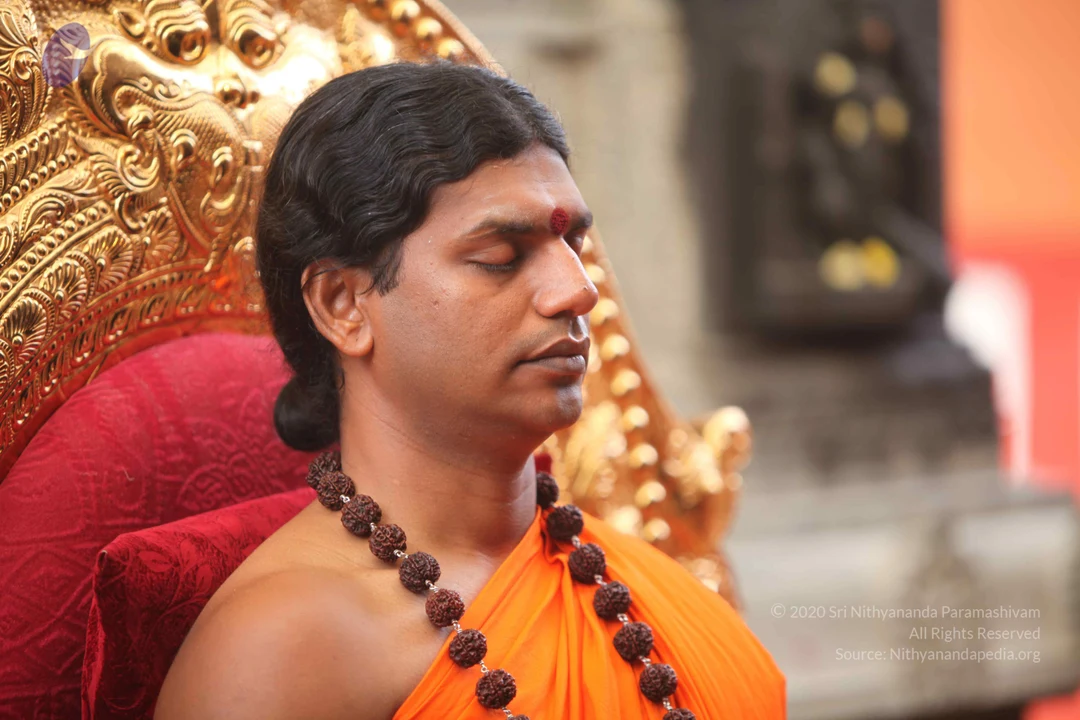
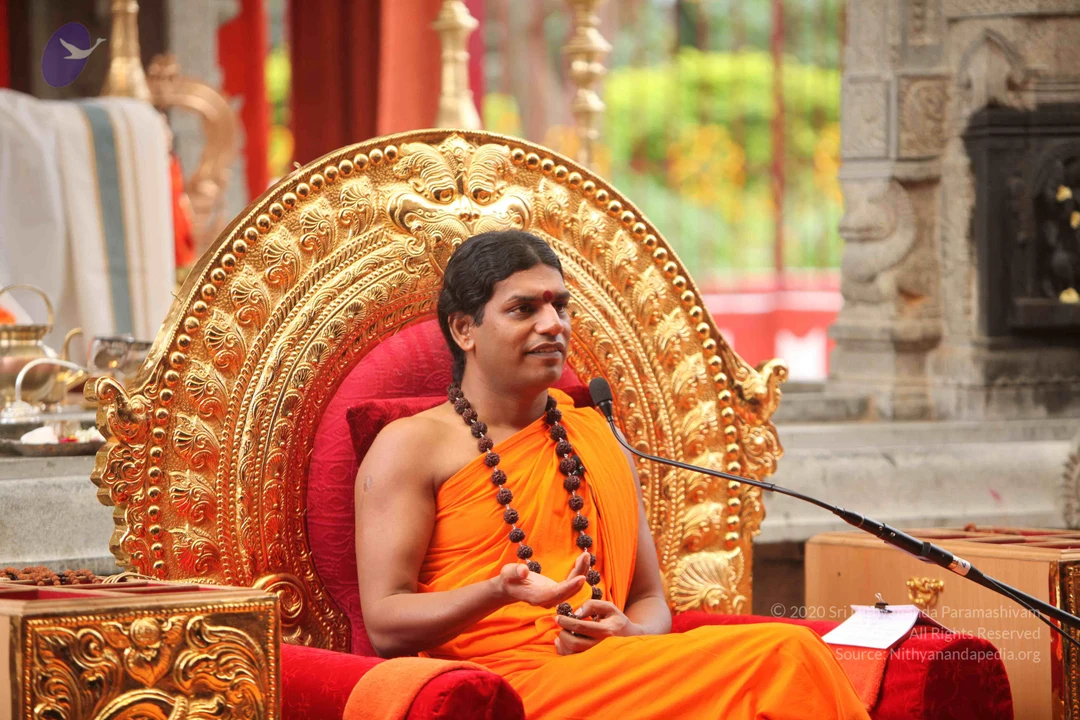
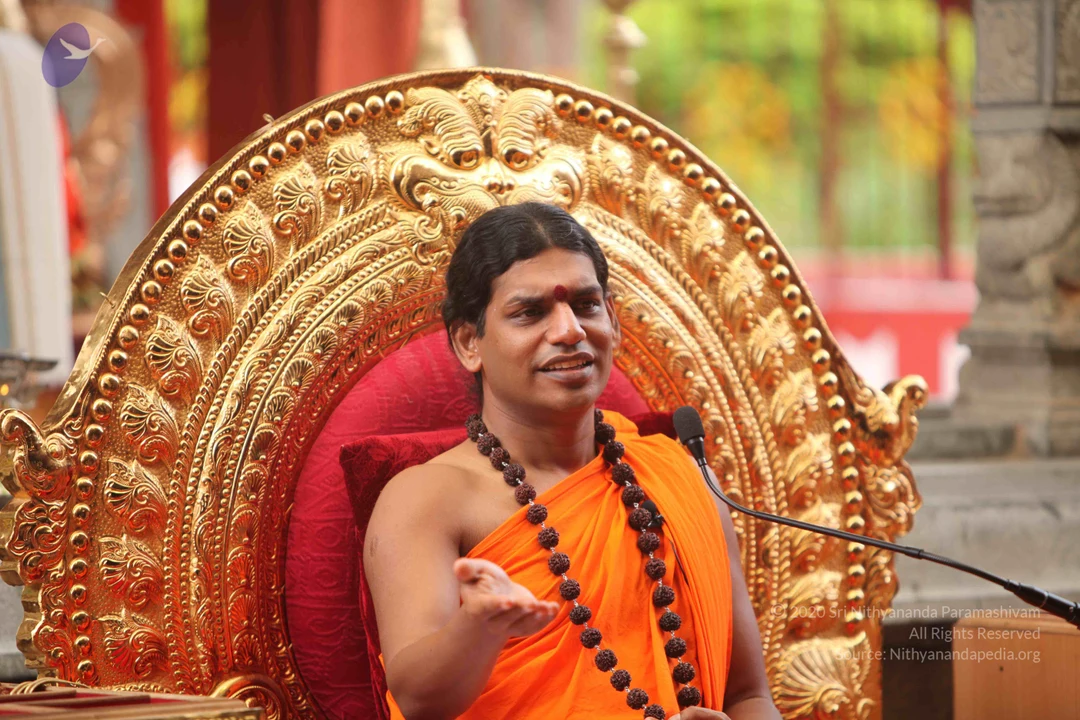
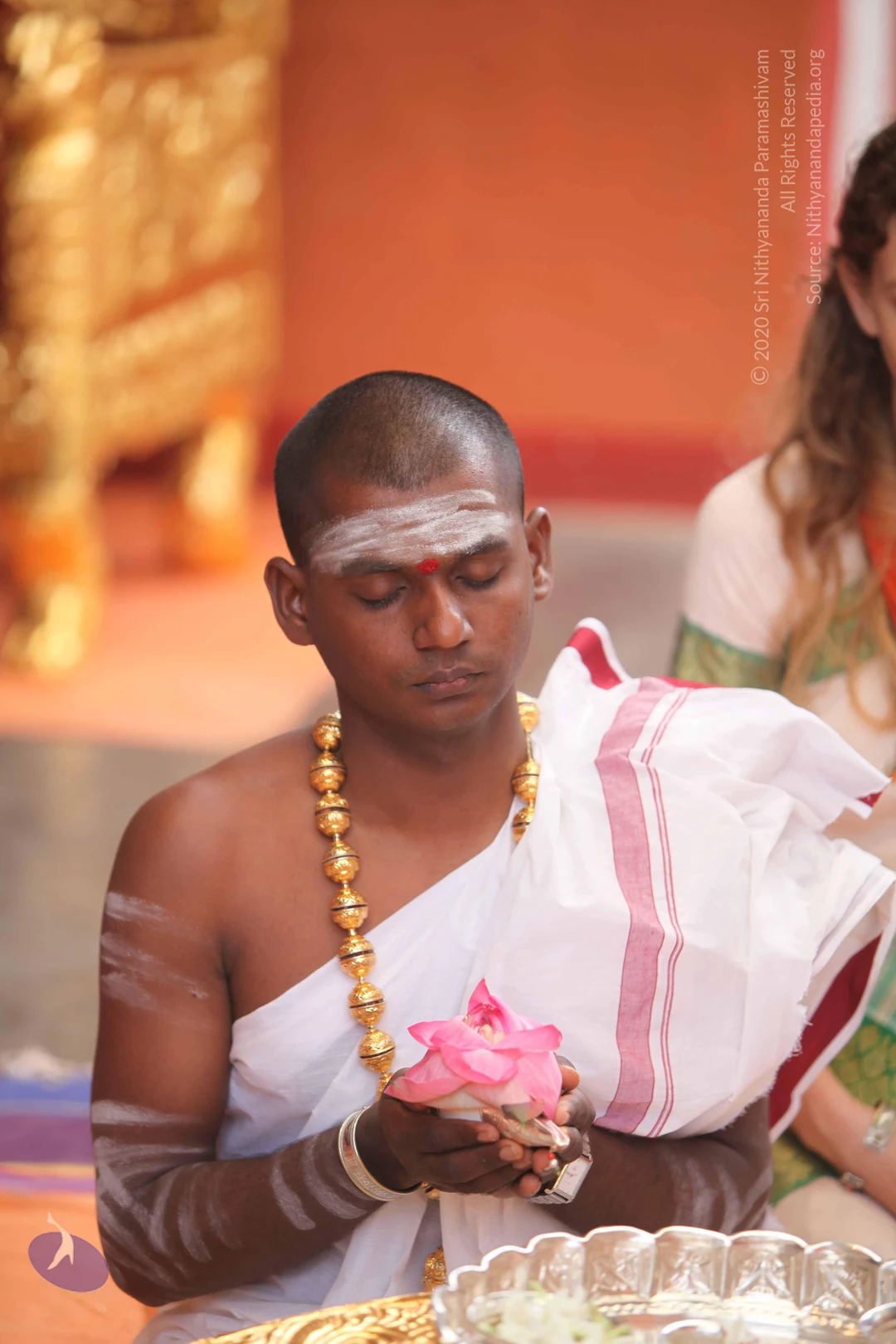
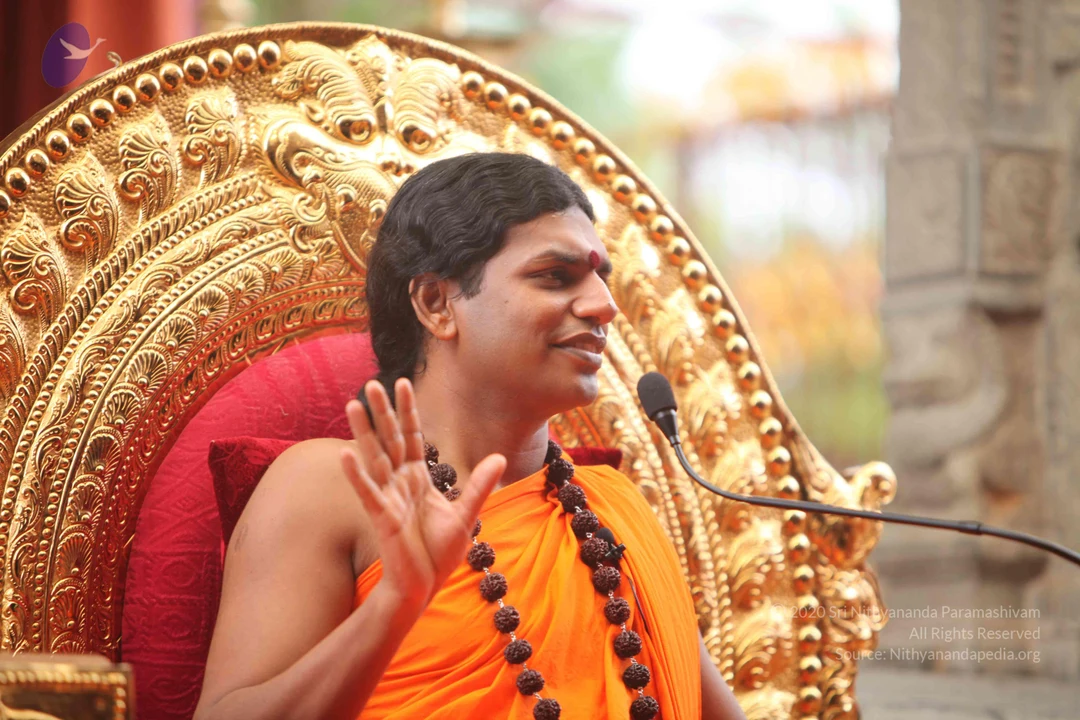
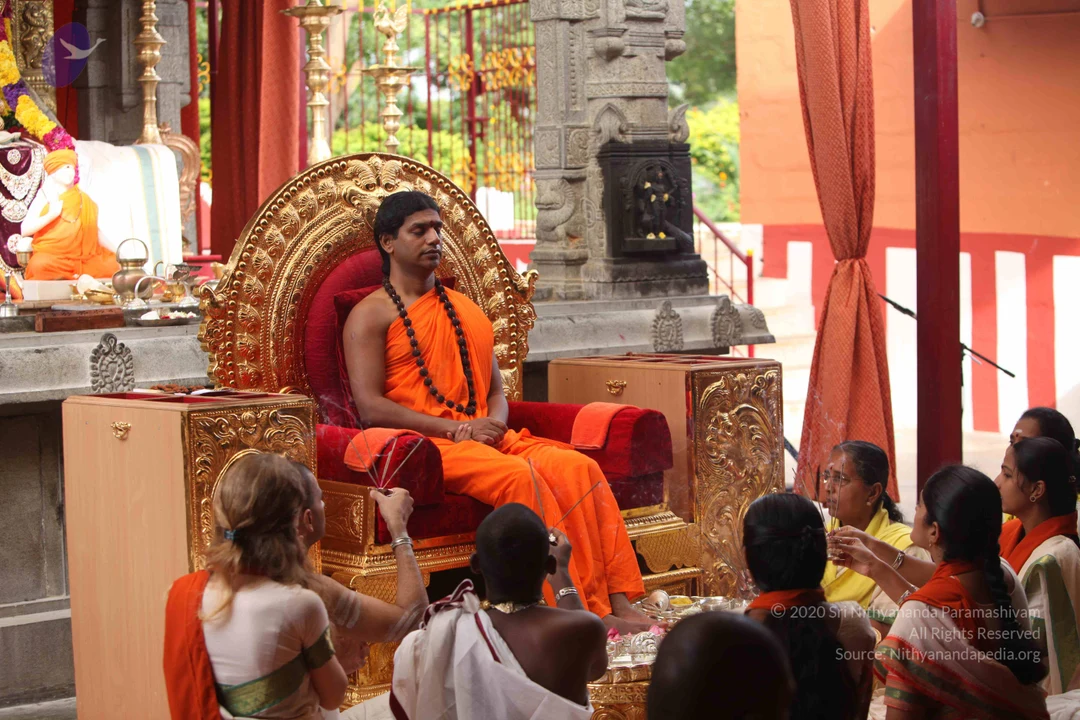
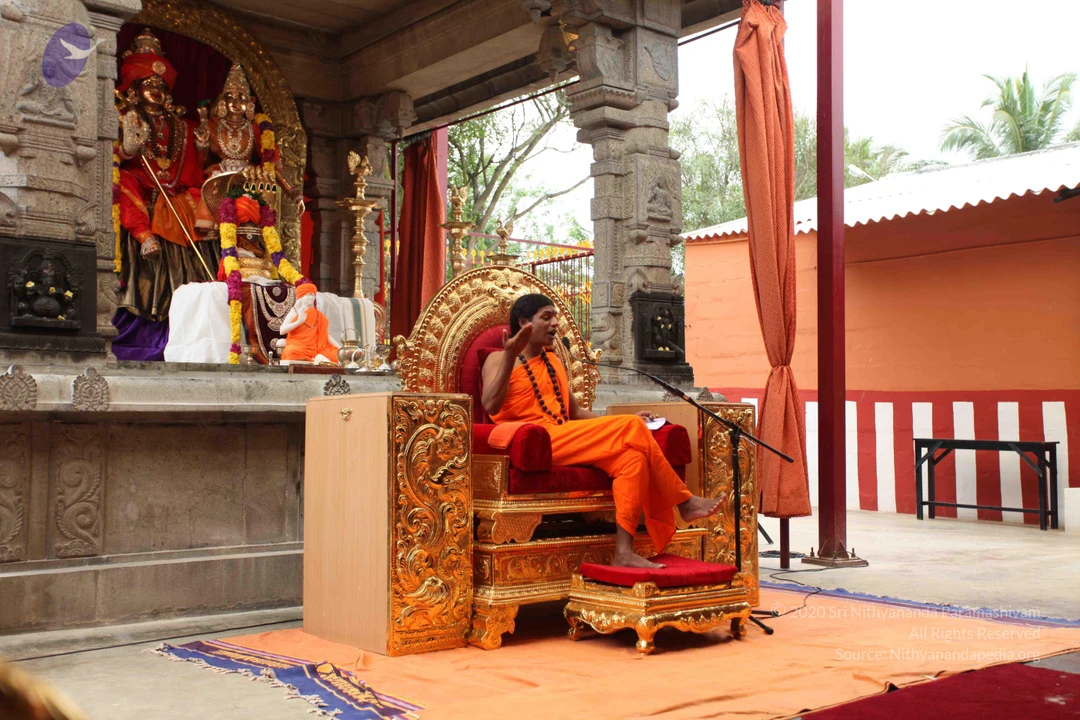
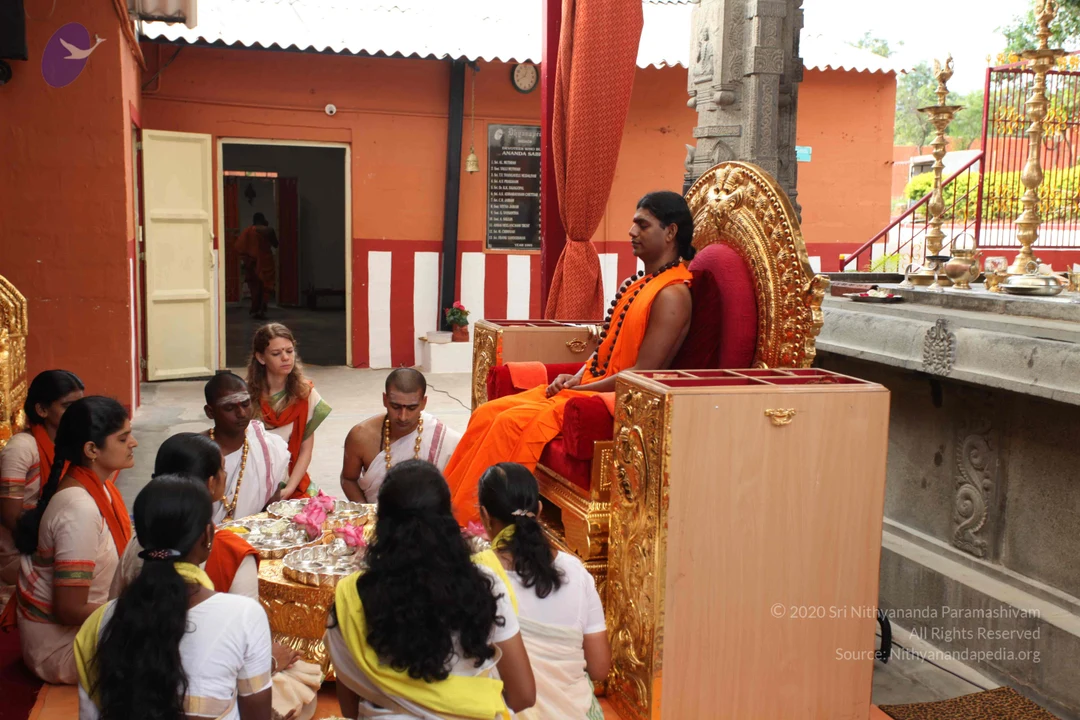
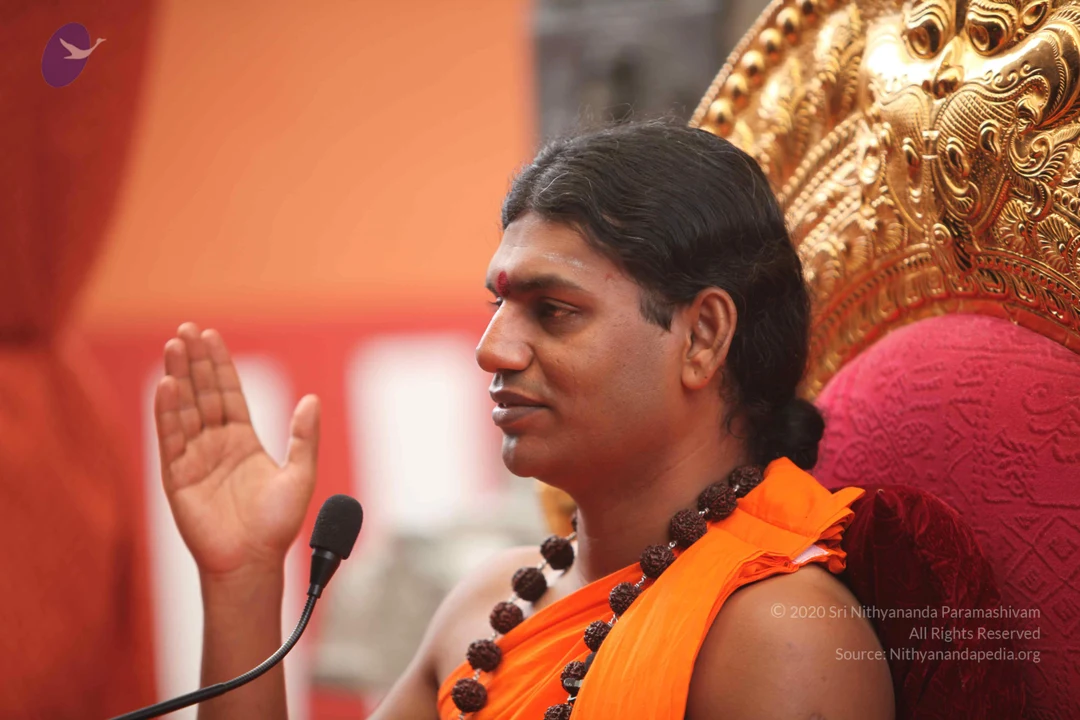
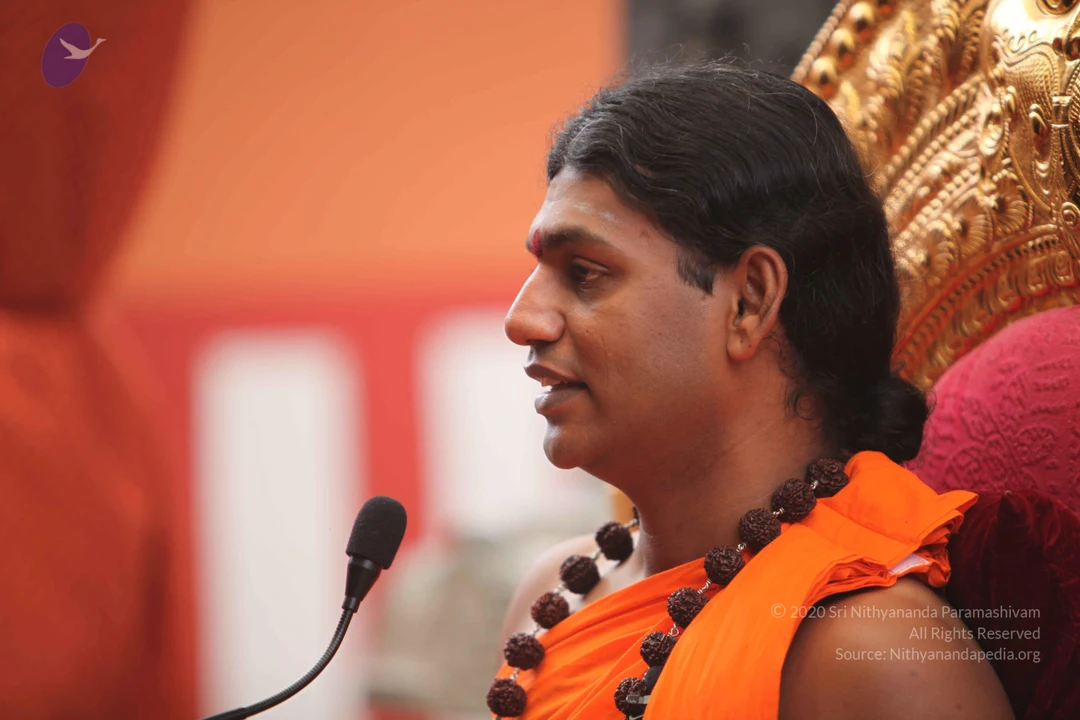
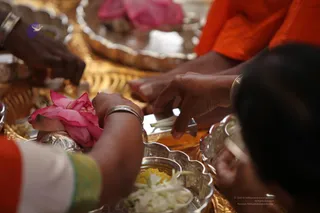
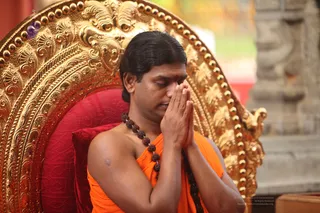
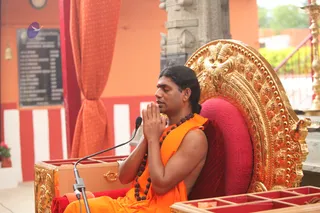
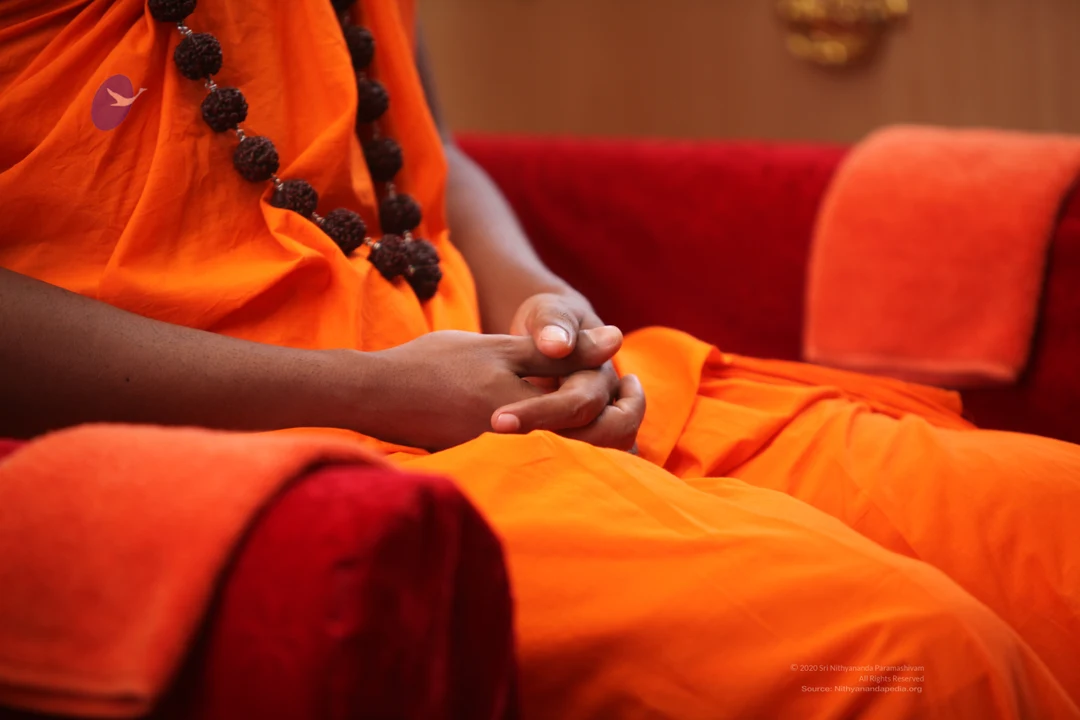
A photograph of a man seated with eyes closed in meditation on an ornate golden throne with a red cushion. He has dark hair tied back in a low knot, a red tilak on his forehead, and wears an orange saffron shawl draped over the shoulder with a long necklace of dark rudraksha beads. Behind him stands an orange and red backdrop and a dark stone deity murti. a person appearance cues include the saffron shawl, rudraksha mala and throne seating; he is presented as the seated central figure of the satsang setting. The shot is taken in a temple-style hall with warm orange tones.Close-up photograph of hands working over ornate silver and gold ritual trays during a puja. A woman's bare arm, with silver bangles, holds a pink lotus flower above a silver bowl of white flowers and yellow turmeric or kumkum. Another hand in the frame reaches toward a small silver vessel, and a person in orange robes is partly visible at the top, seated behind the trays. A dark-haired head appears at the right edge. The shallow focus leaves the background soft, with more gold trays and offerings beyond. The scene suggests offerings being prepared for a ritual.A man seated on an ornate gilded throne with a red cushioned back and gold beaded scrollwork sits smiling and gazing to the side. He wears an orange saffron shawl draped over his bare shoulder and a long multi-strand rudraksha mala with brown beads, and has a red bindi on his forehead and swept-back dark hair. A microphone on a stand is in front of him. The background is softly blurred with warm colours.

October 30 2010

Original wiki page
Contents

Title

Explore Your Past to Explode Your Future: Nithyananda Morning Satsang Message

Description

Over the next few days, Avatar Paramahamsa Nithyananda would be delving into the area of past lives or the second layer of past memory stored in each of us. He had already talked about the first layer, the layer of memory from our current incarnation.

He was surprised to discover that of all the modern-day Rishis doing research in this field, the most cynical were from India! He thinks they feel that by mimicking western cynics, they will appear great. But Paramahamsa Nithyananda was encouraged to see that Rishis, scientists, from other parts of the world were carrying on the noble tradition of research into this field.

It is a subtle science, pulling past life memories out of a person. Paramahamsa Nithyananda emphasized that great care and respect must be shown to the subject, or they will shut down. Too many researchers in the field are aggressive and panic the person they are interviewing, destroying any chance of getting accurate information.

Very few people can remember what they did yesterday, let alone in another life. The details are often obscure, with only the most impactful events being remembered. Violent death is often noted with a birthmark where the fatal wound occurred. The location of these birthmarks, notes Paramahamsa Nithyananda, gives him important information as to what emotions need to be removed and healed from the body. Most researchers are only finding violent past life memories. The romantic, happy memories are subtler and often hidden beneath the fear memories.

When working on a past life healing, a loving environment must be established. First, the major engrams (emotional memory) must be found, and all memories connected with it must be dugout. This first step encourages the subject and gives them the confidence to open up even more. The first layer of past life memory is very hard to get out. A researcher must be very patient to help the person with this process.

Paramahamsa Nithyananda extended an open invitation to all past life researchers to come to the ashram in Bidadi, India, and he would assist them in learning the technique for uncovering these memories. He announced that this would be one of his life missions, to educate the world about past lives and their usefulness in our healing. In addition, knowledge of past lives would help in planning society's infrastructure, economy and education to name a few.

Paramahamsa Nithyananda was drawing on his own experience on this topic, as he was already well versed in the Upanishads and Bhagavad Gita before the age of ten, reflecting his past lives as an Enlightened Master. His upbringing in his small village had not exposed him to any of these texts.

Video and Audio

Explore Your Past to Explode Your Future

VideoAudio

Photos

Paadapooja
Morning-Satsang-And-Sarvadarshan

Photos Of The Day:

Adikailaasa-Temple

Photos Of The Day:

Acharya-Toronto-Canada-Nithya-Dhyan

01-HDH-Morning-Event

Photos from this day

View all 315 photos

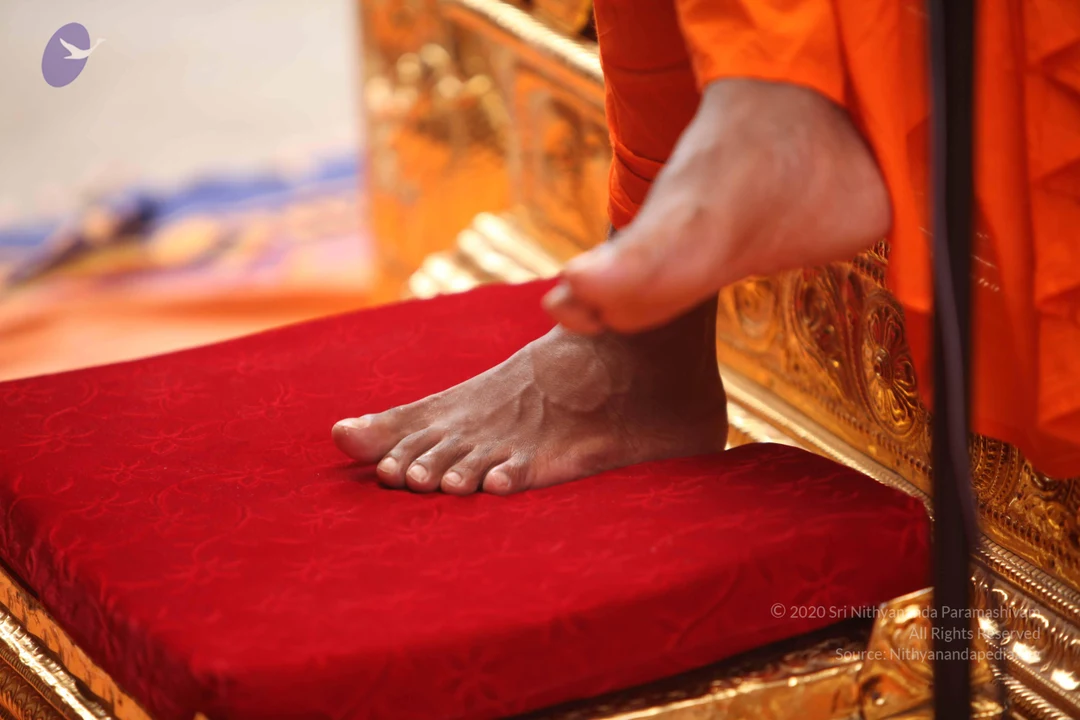
Paadapooja
5 photosSource gallery
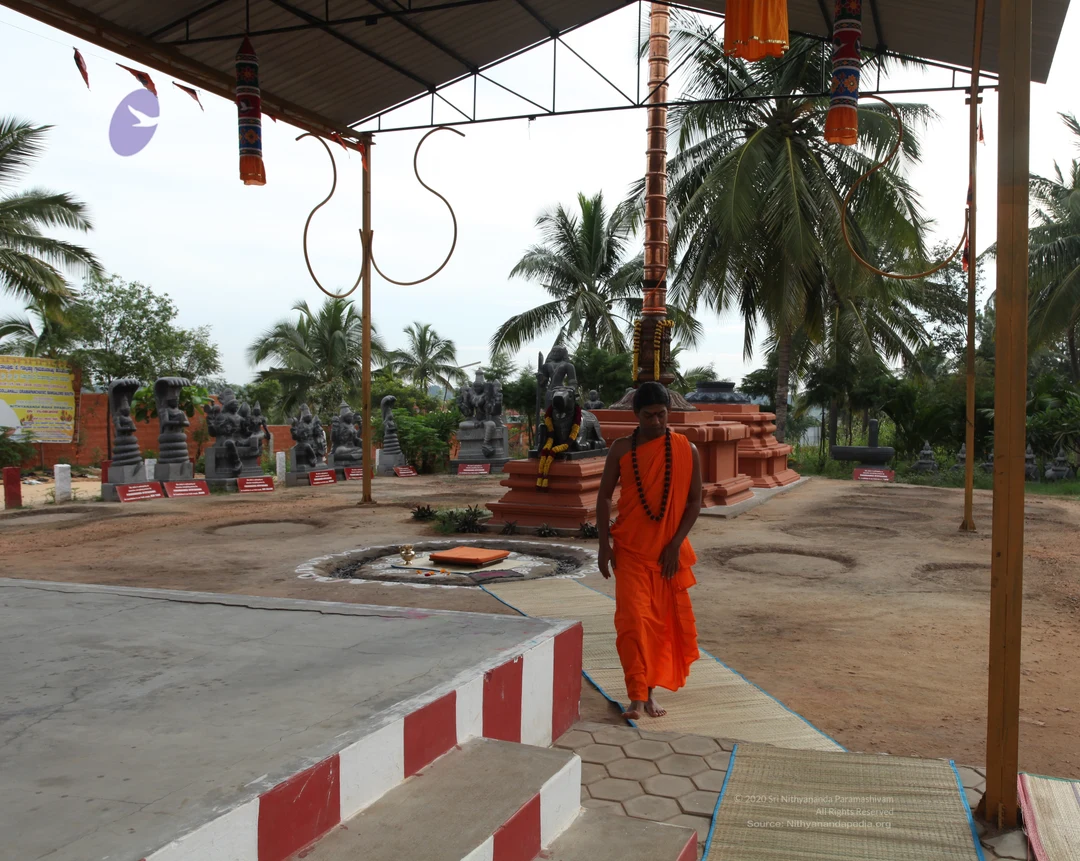
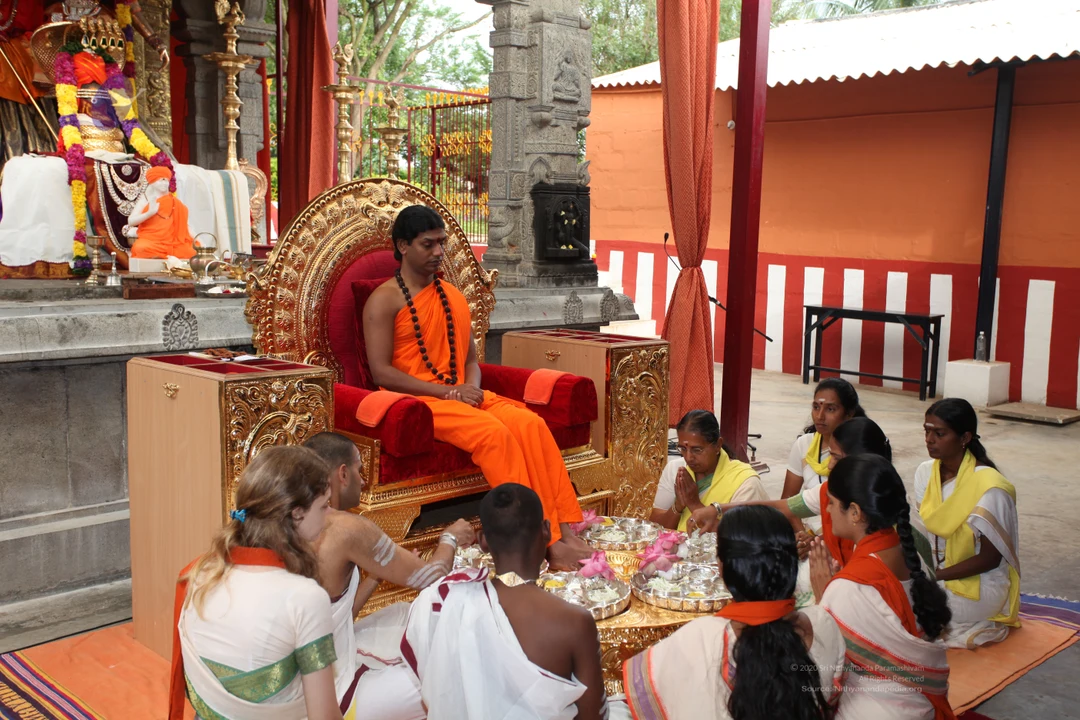
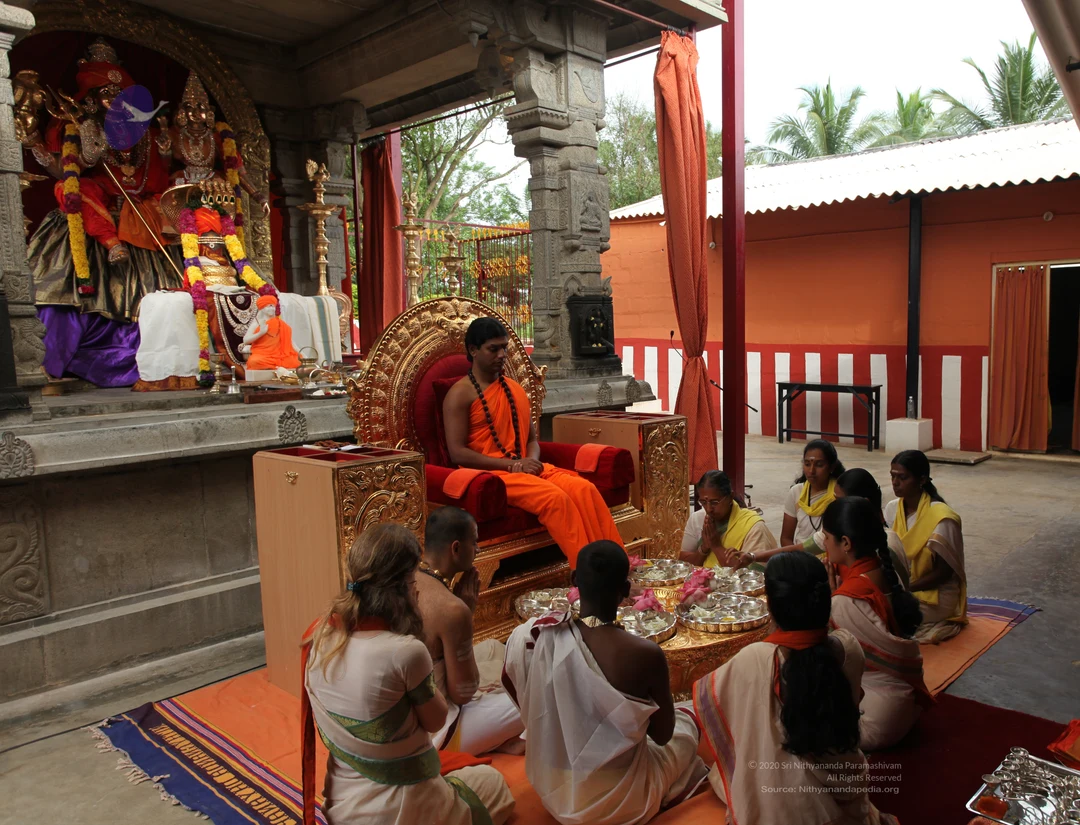
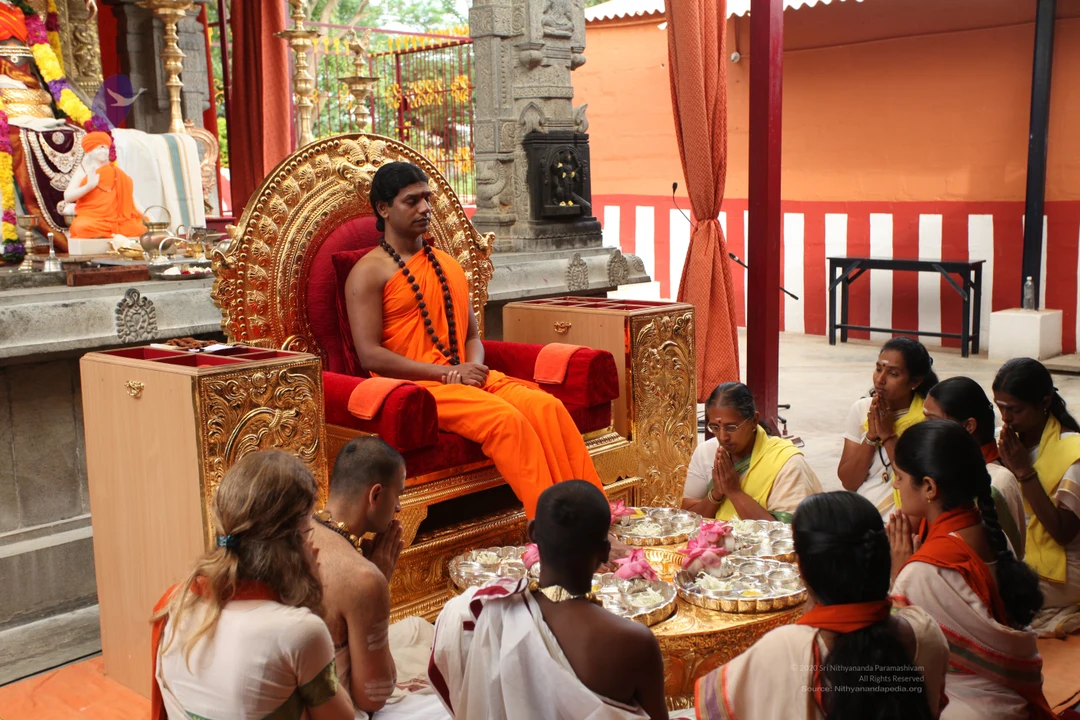
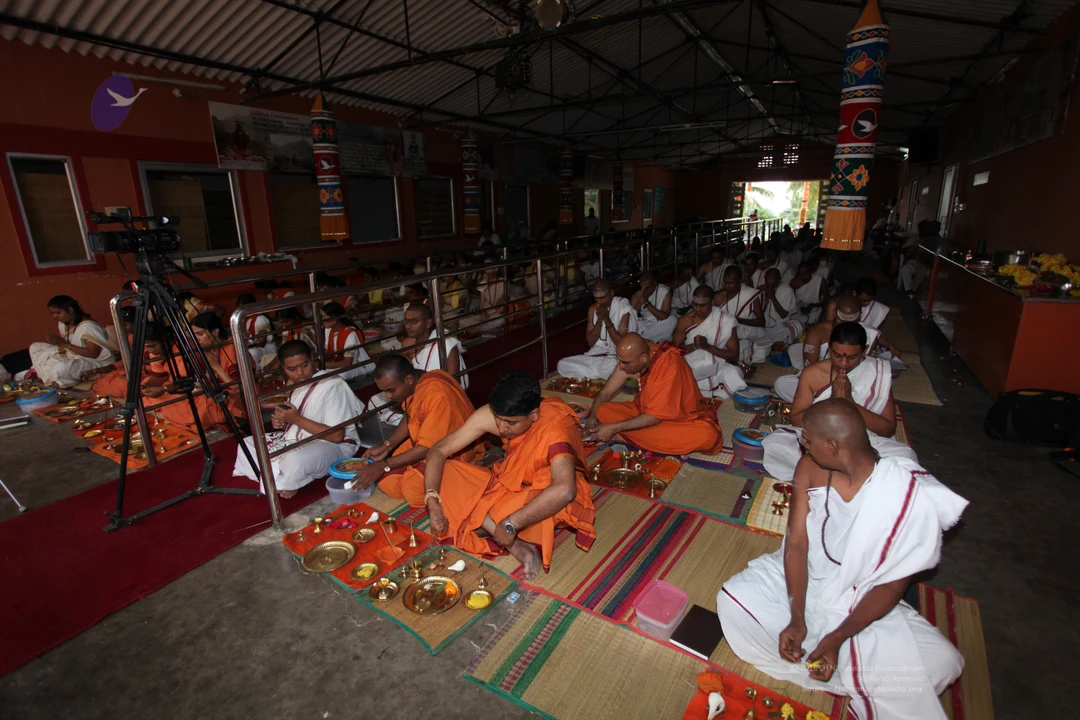
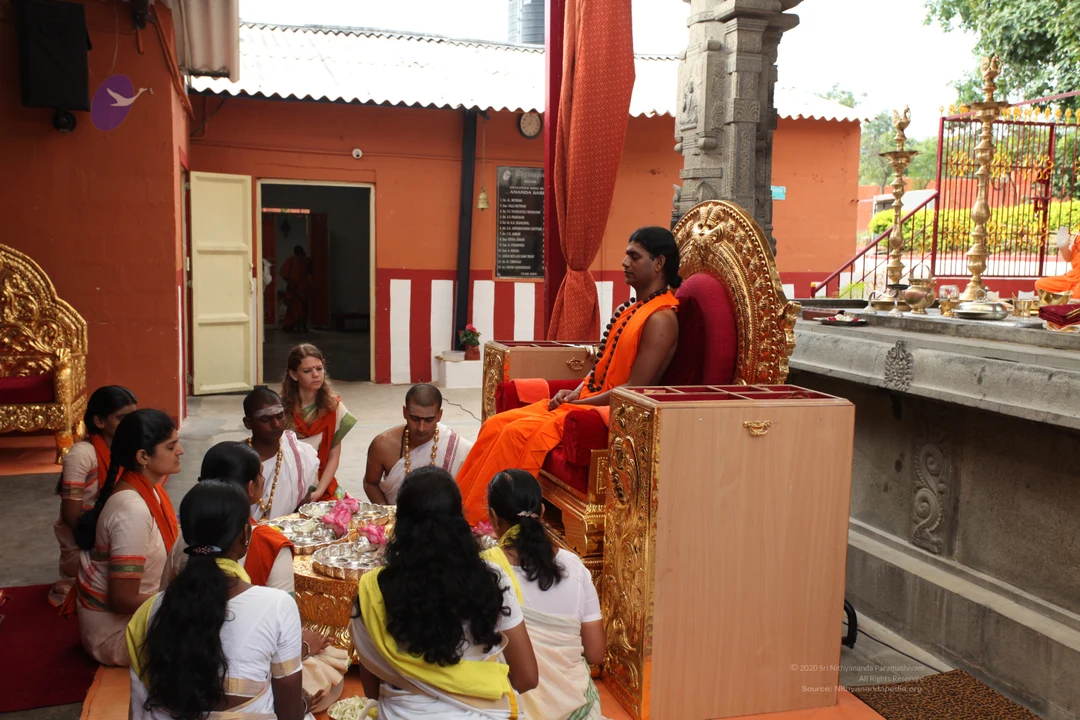
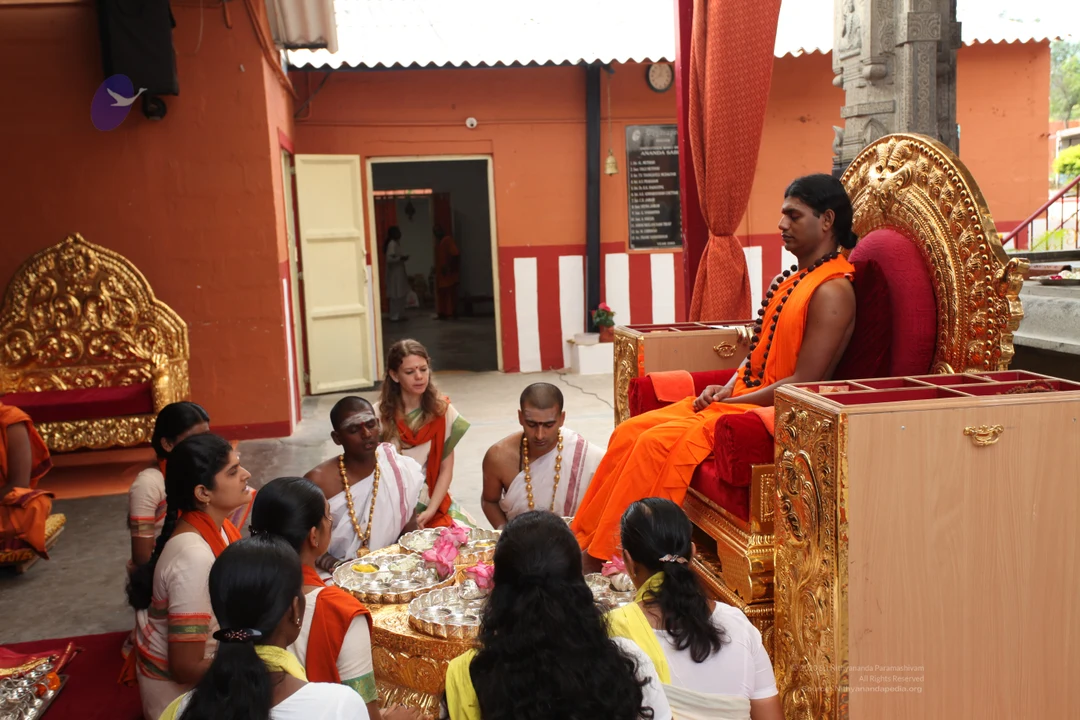
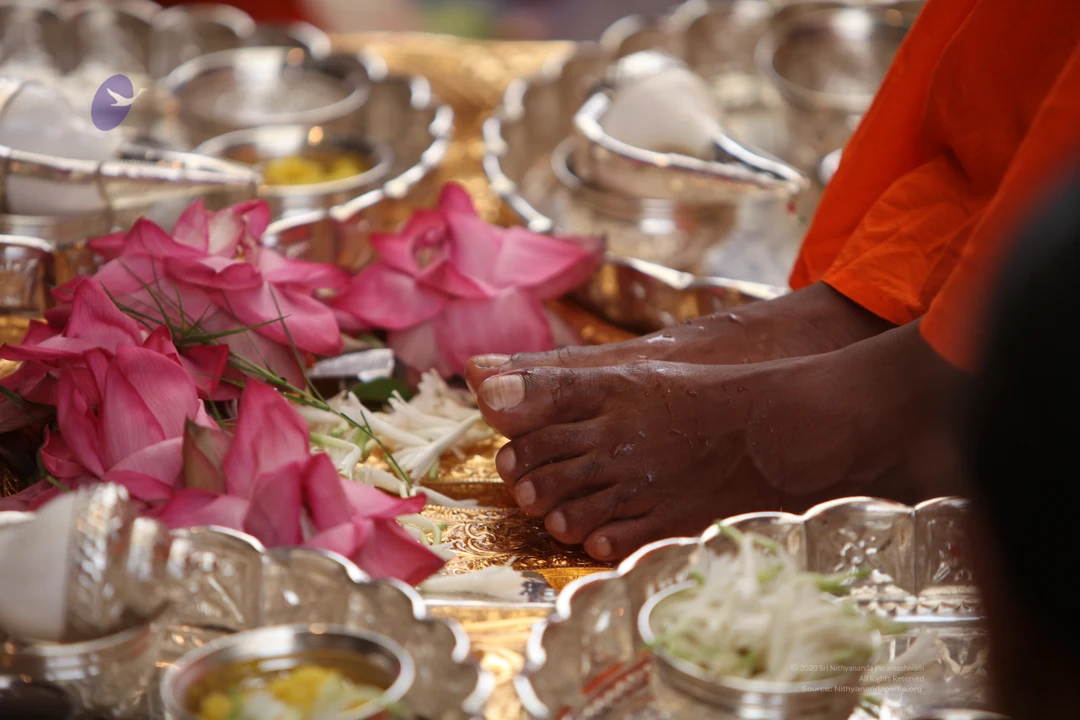
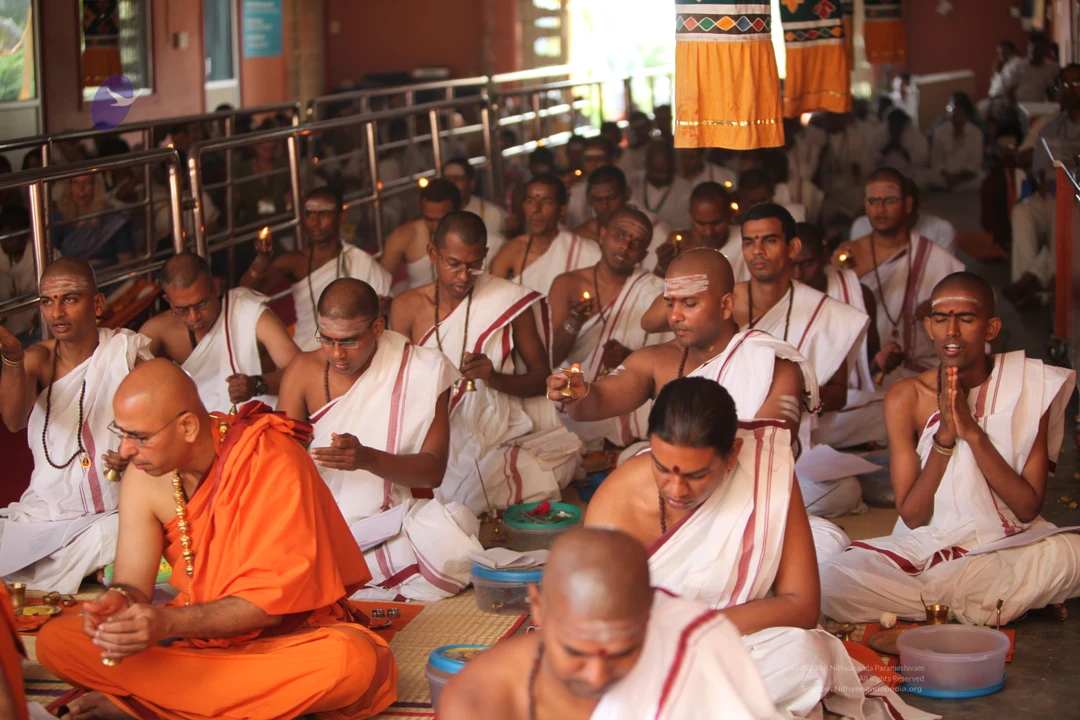
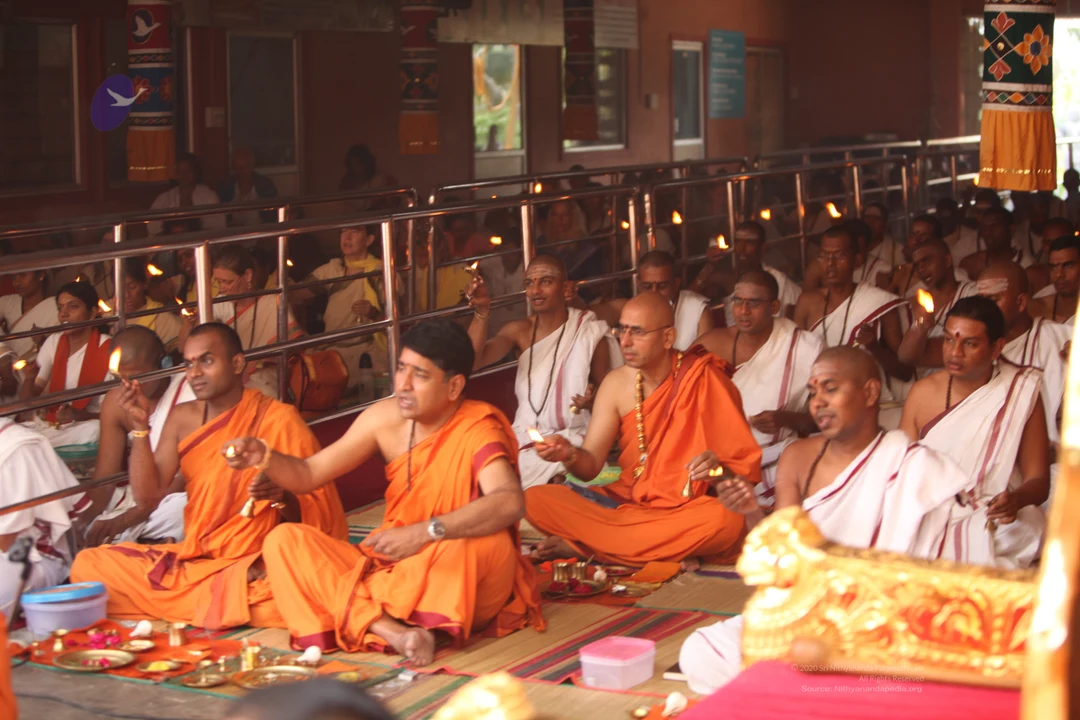
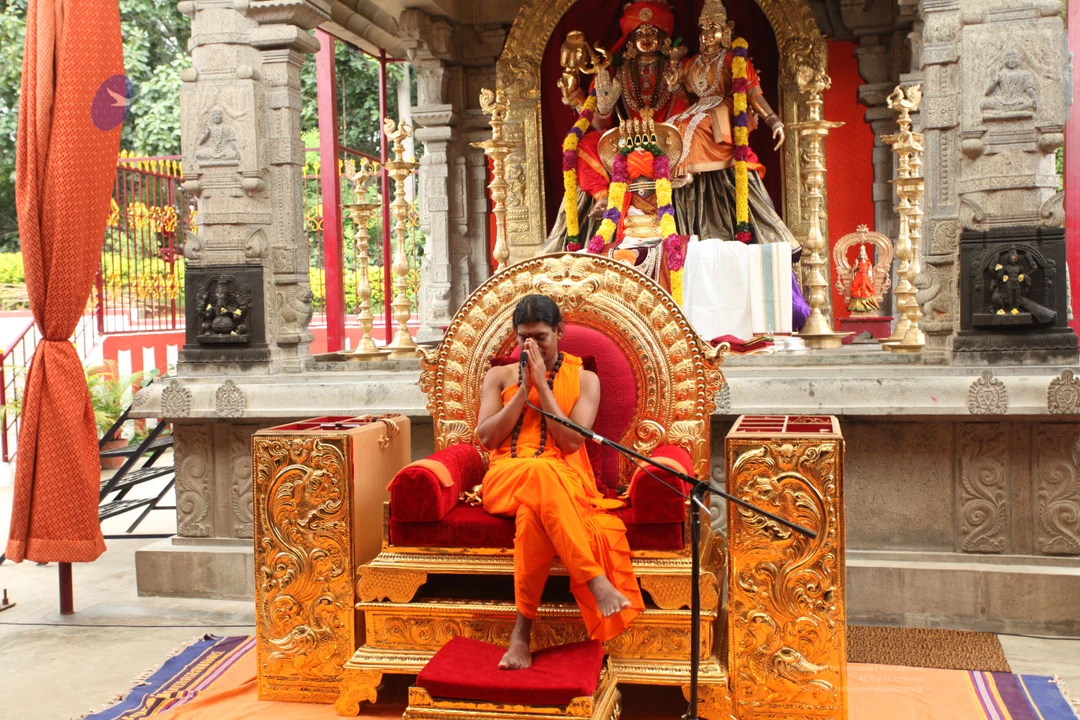
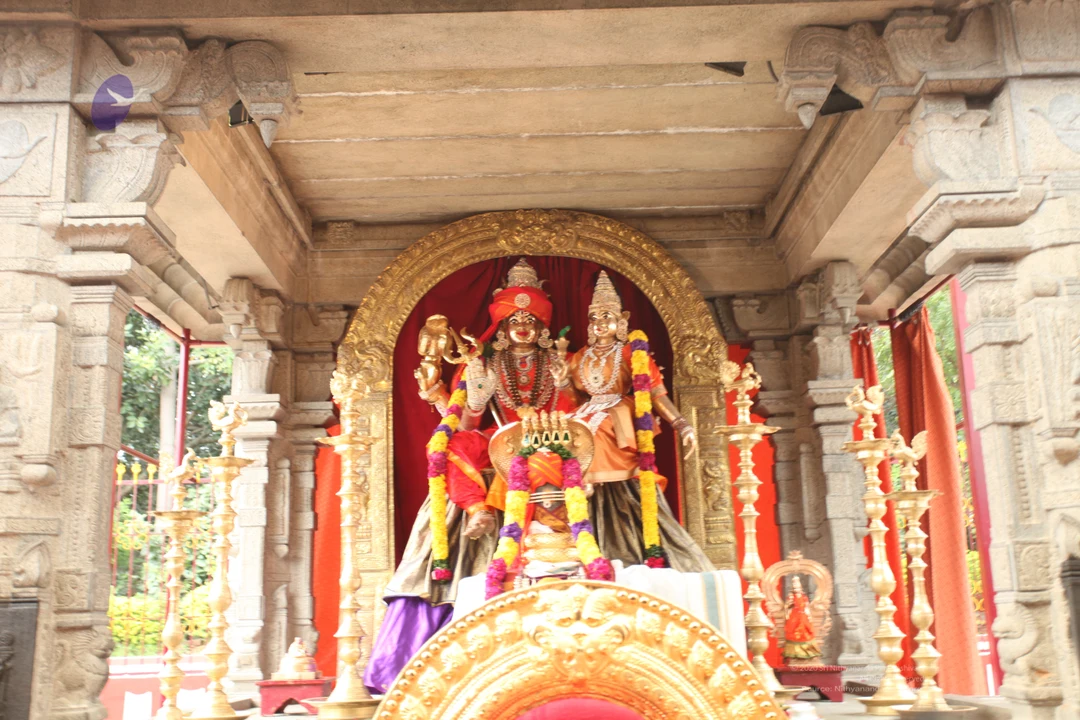
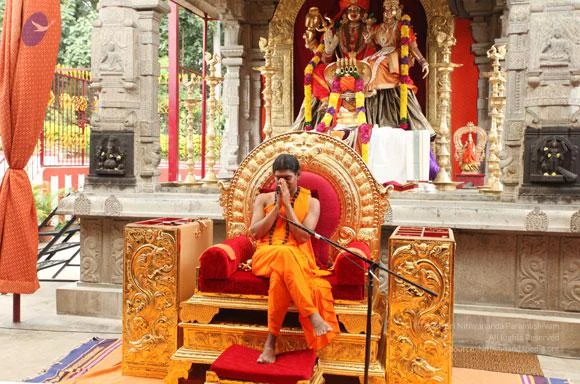
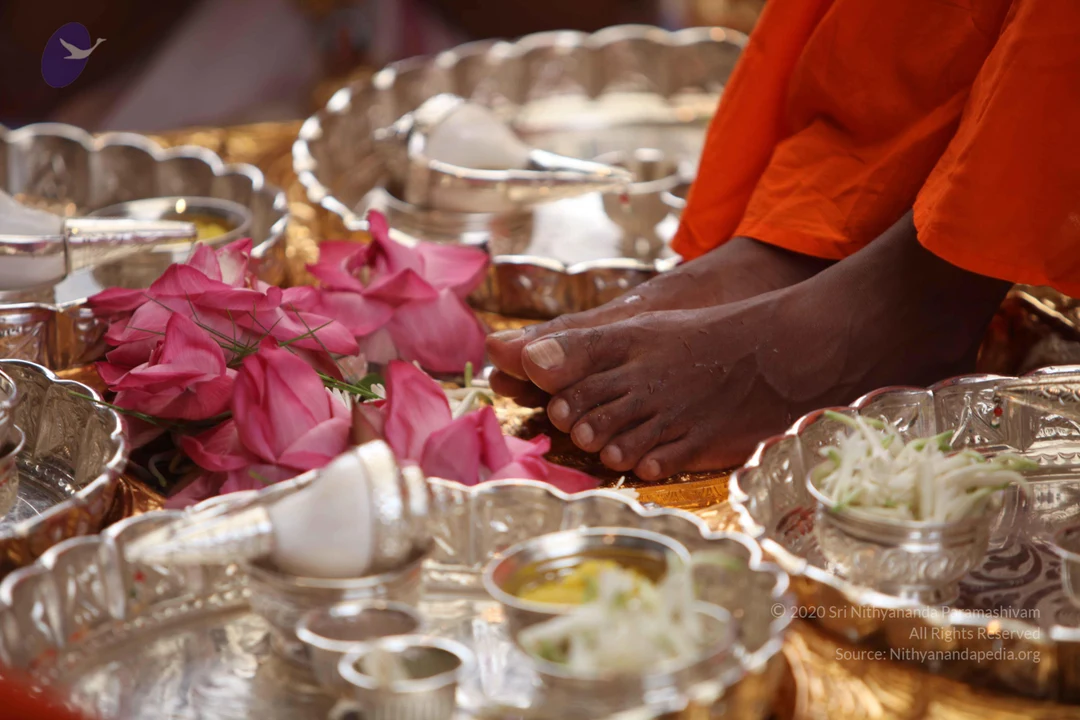
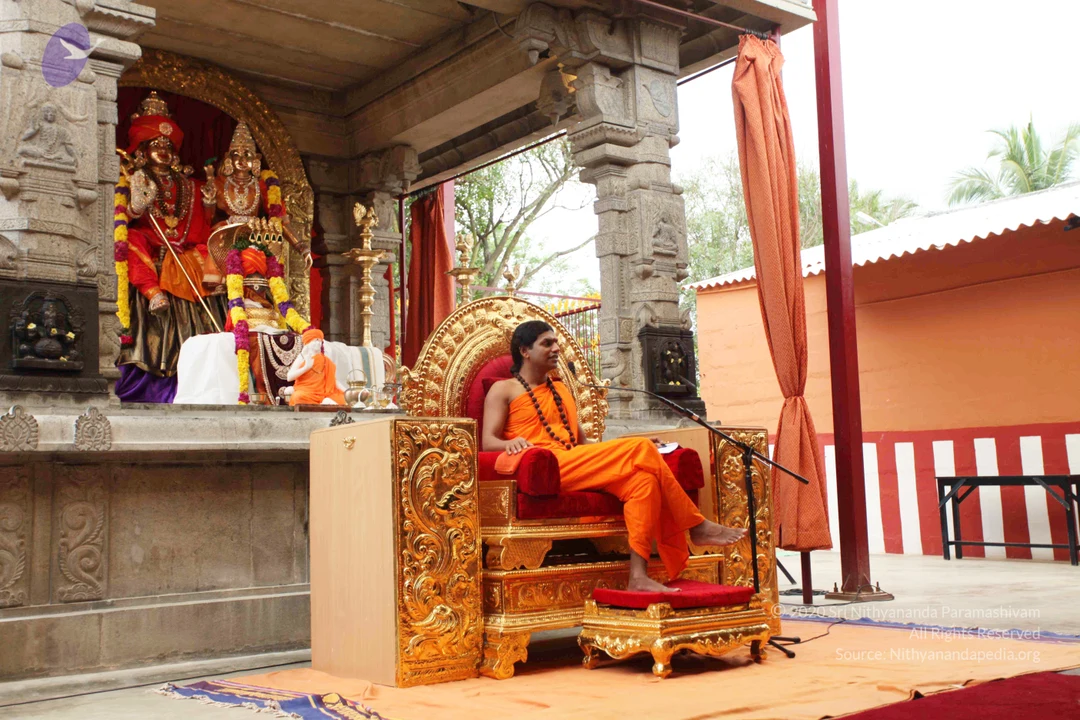
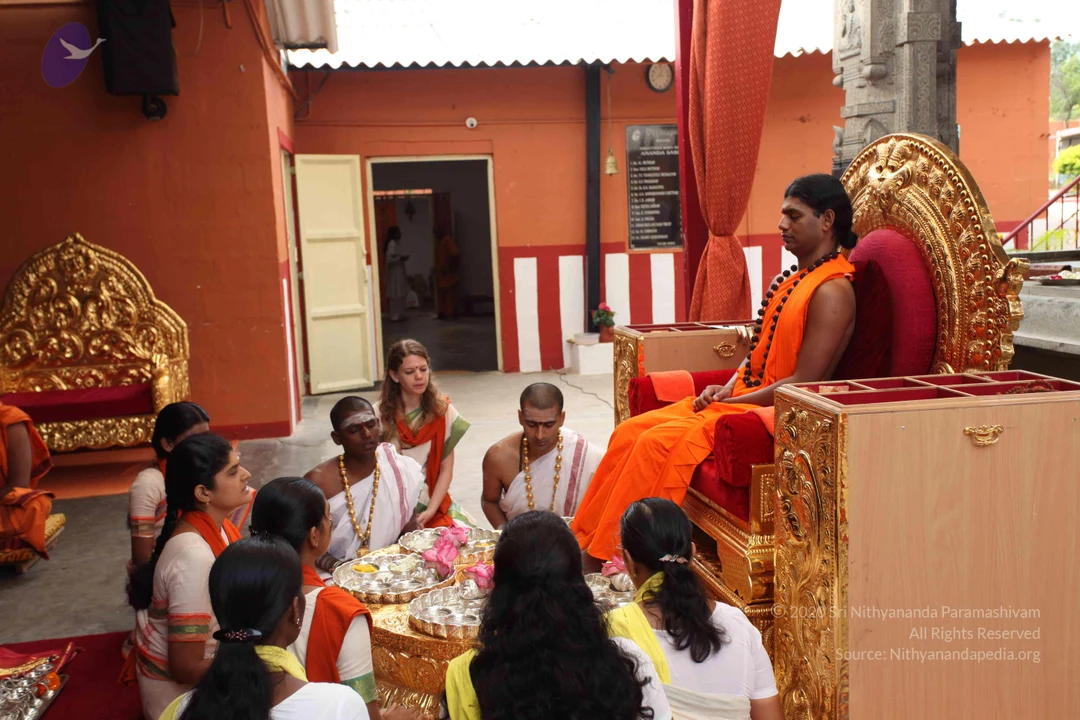
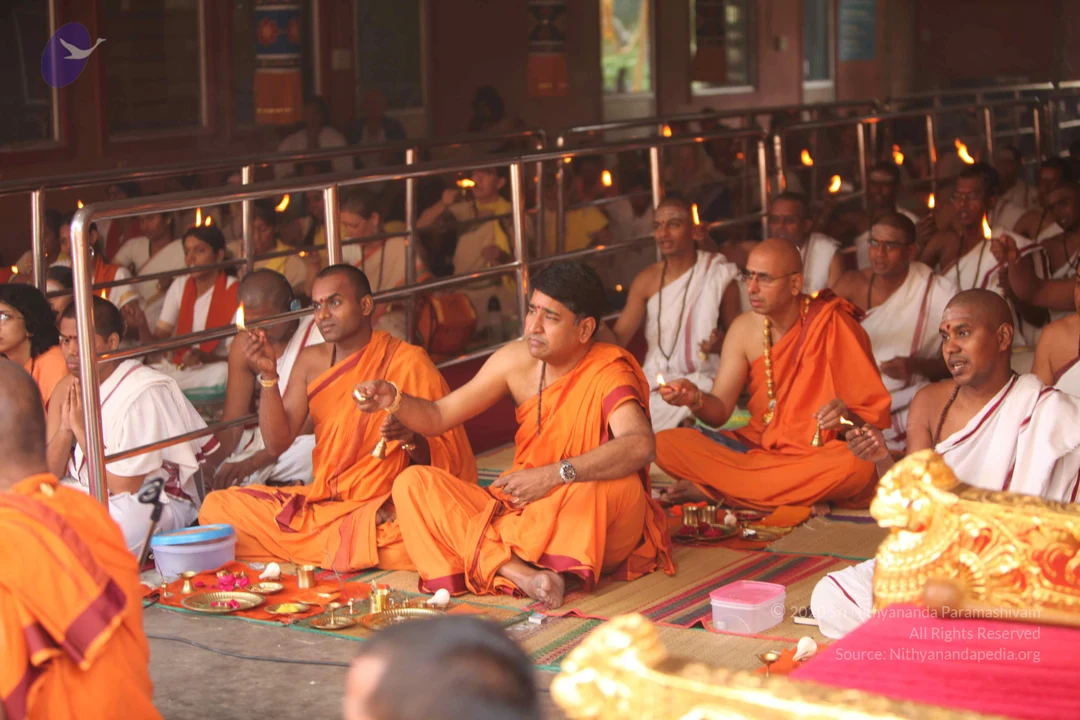
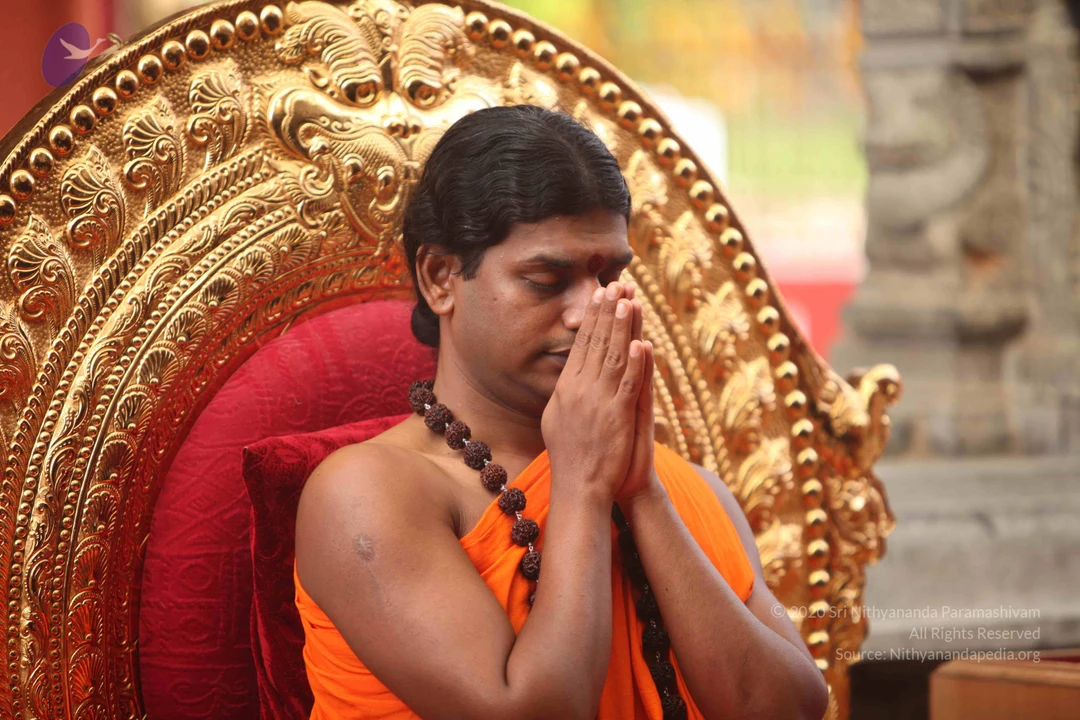
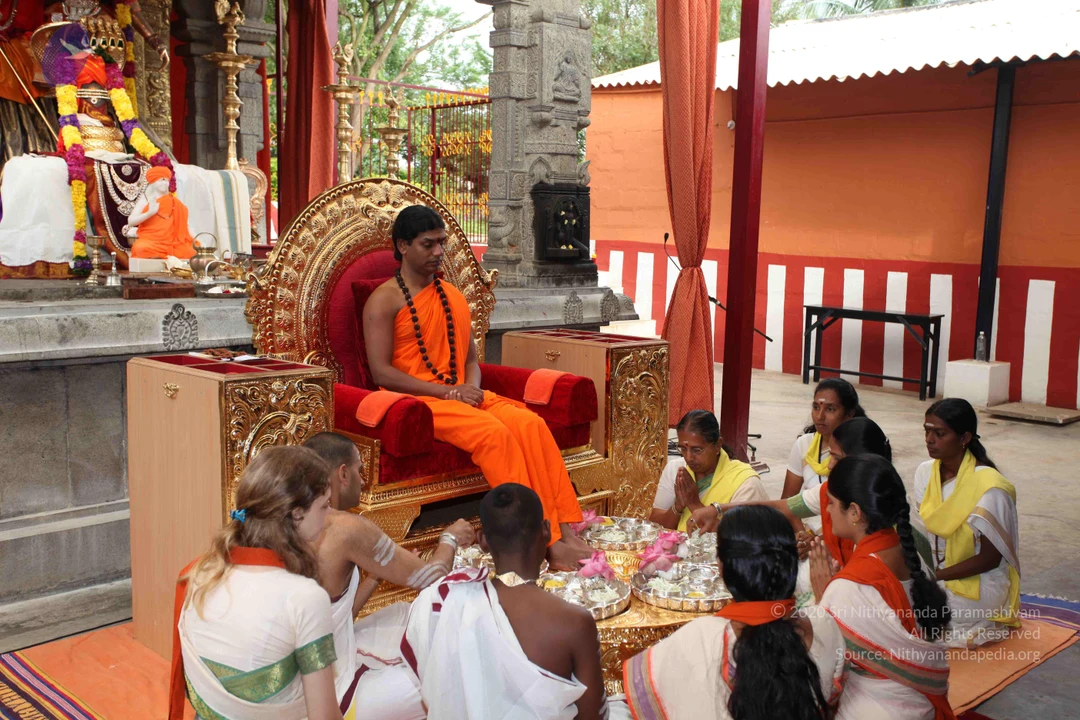
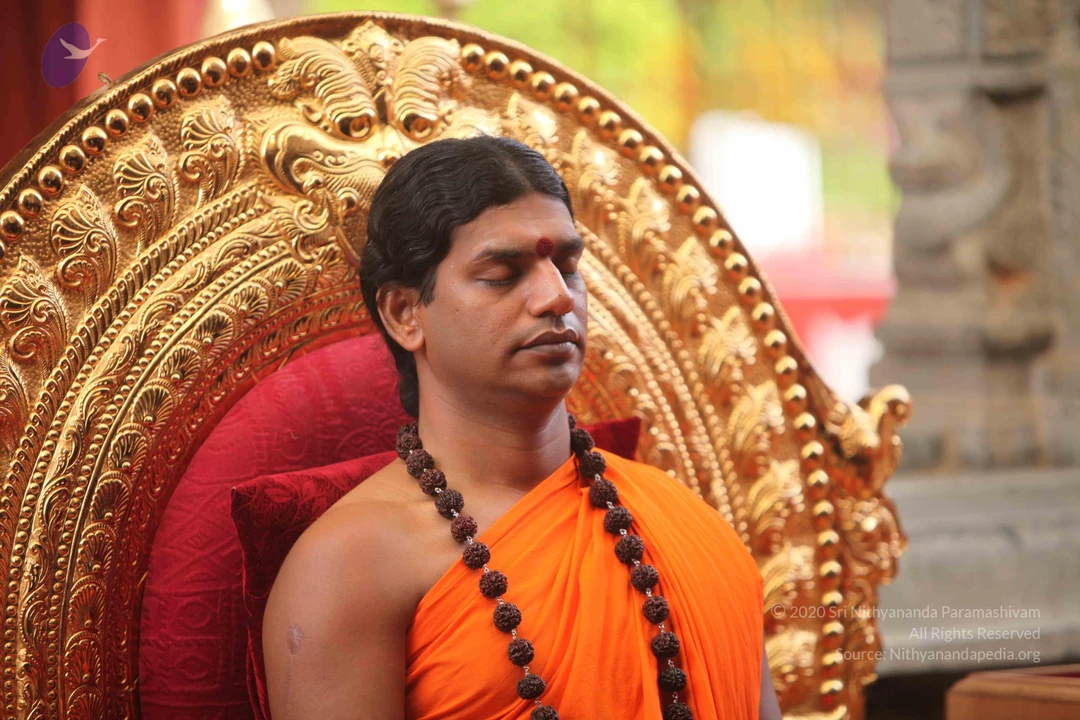
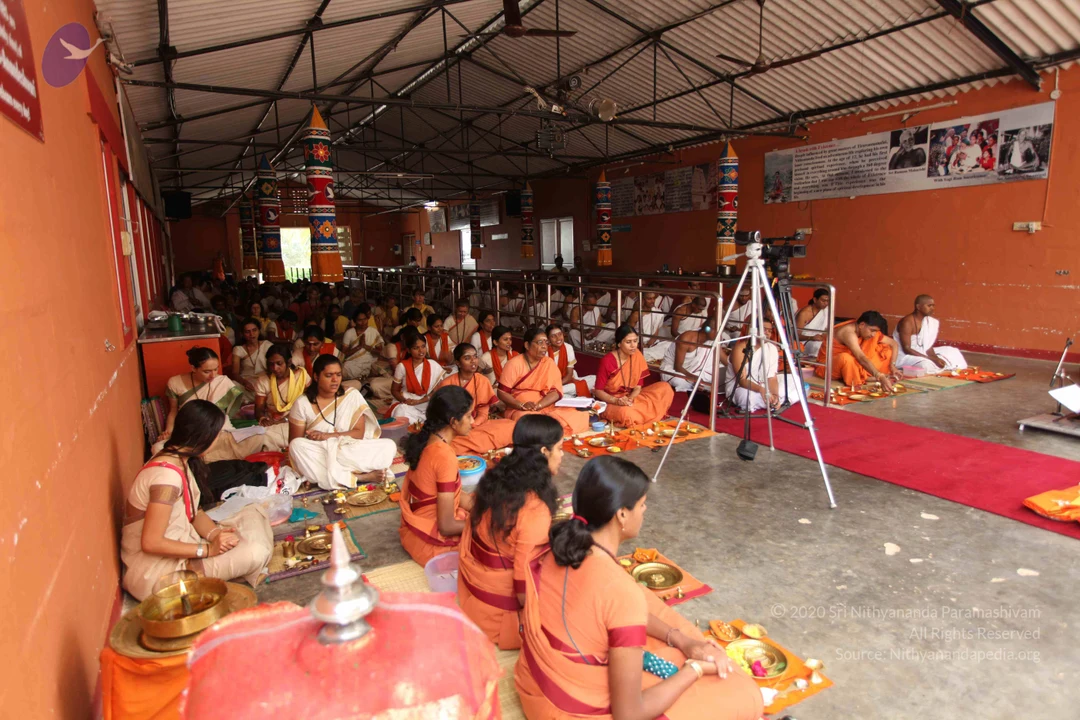
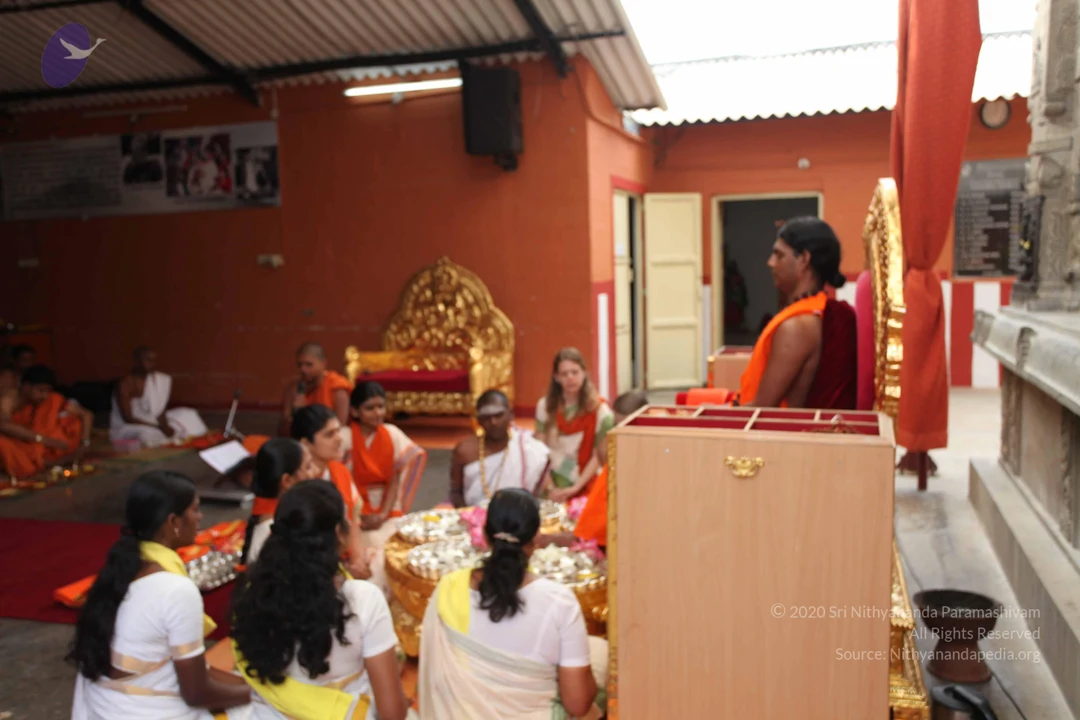
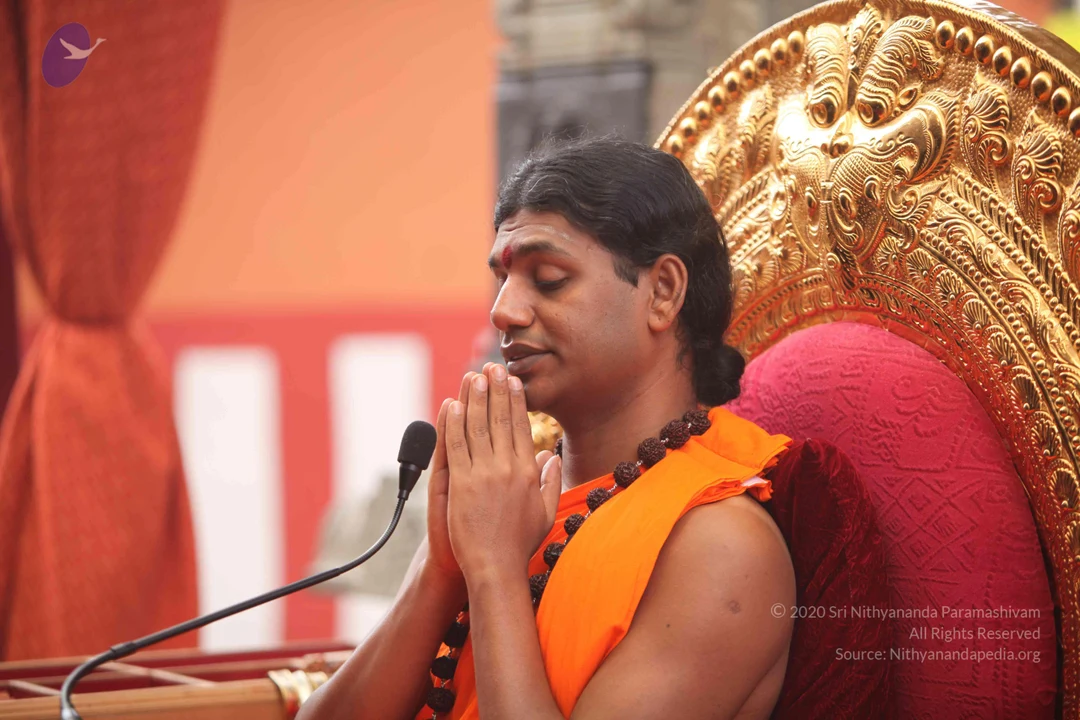
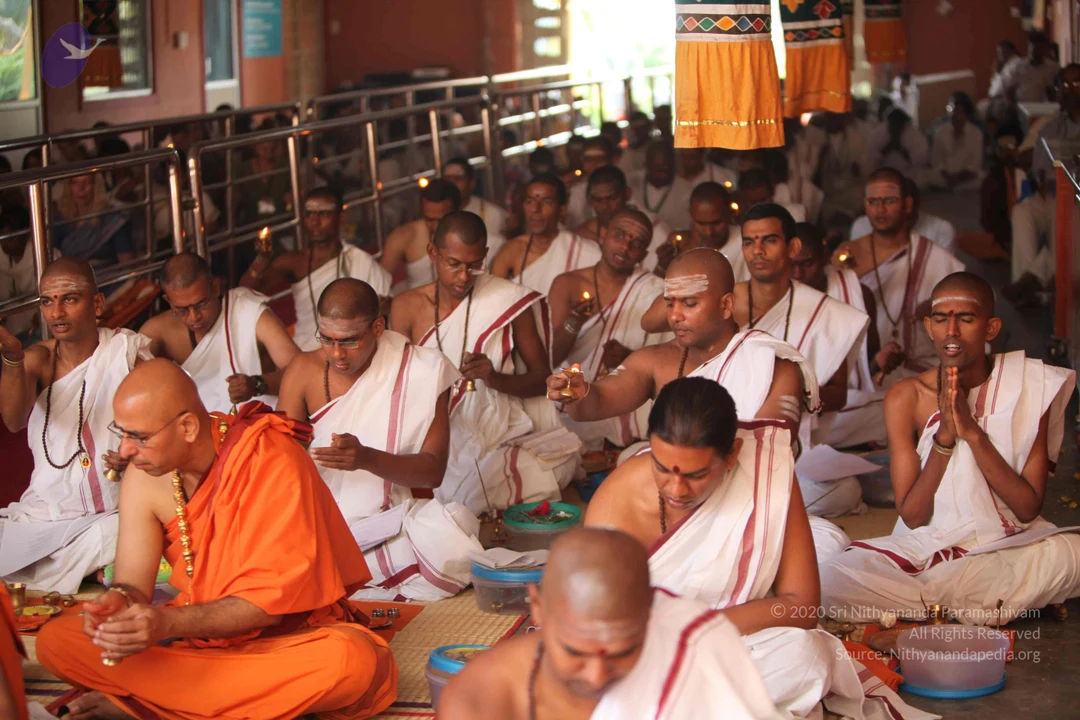
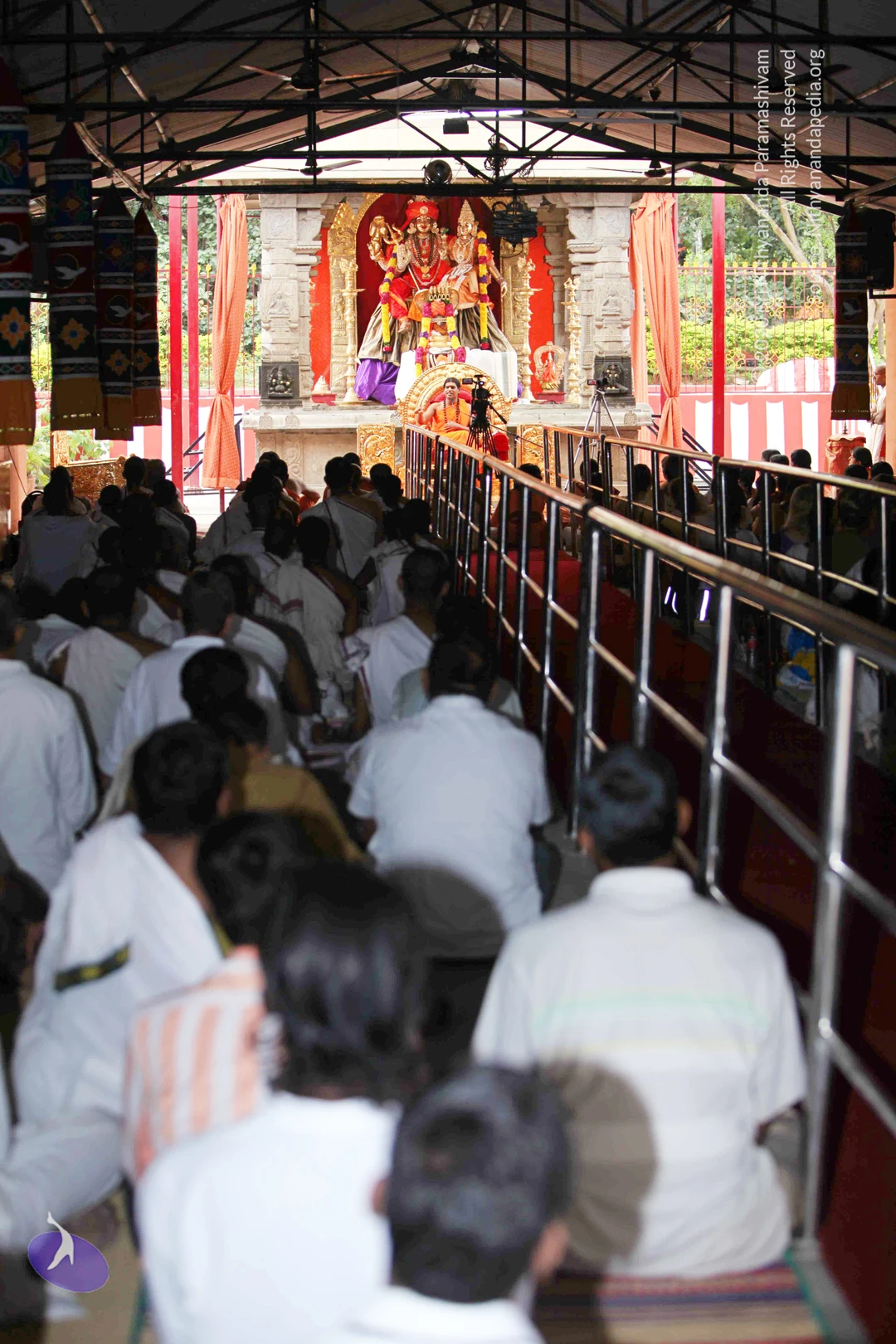
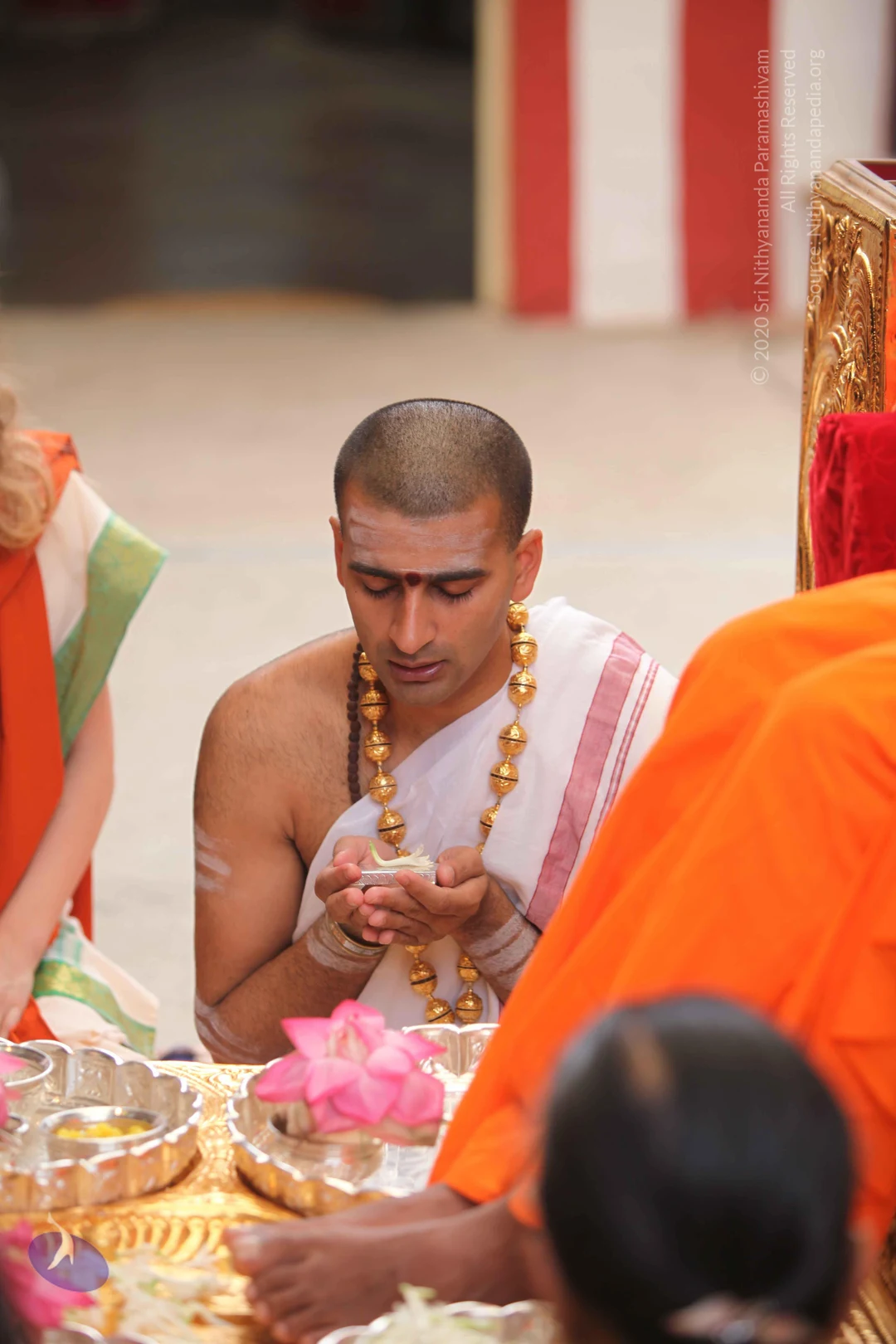
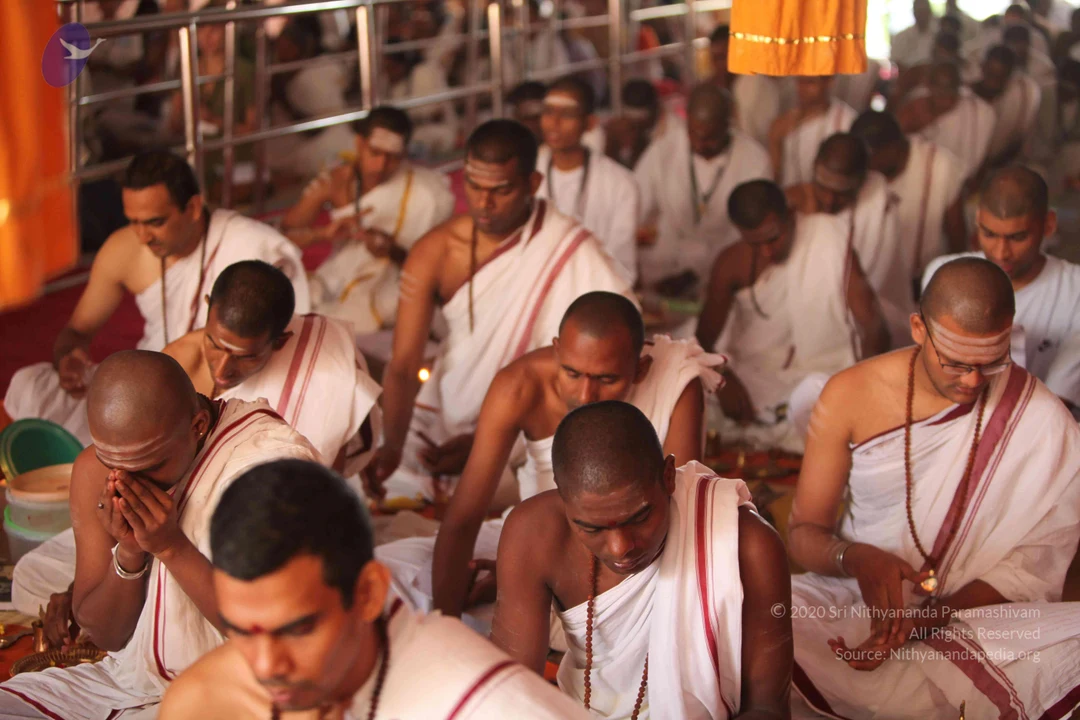
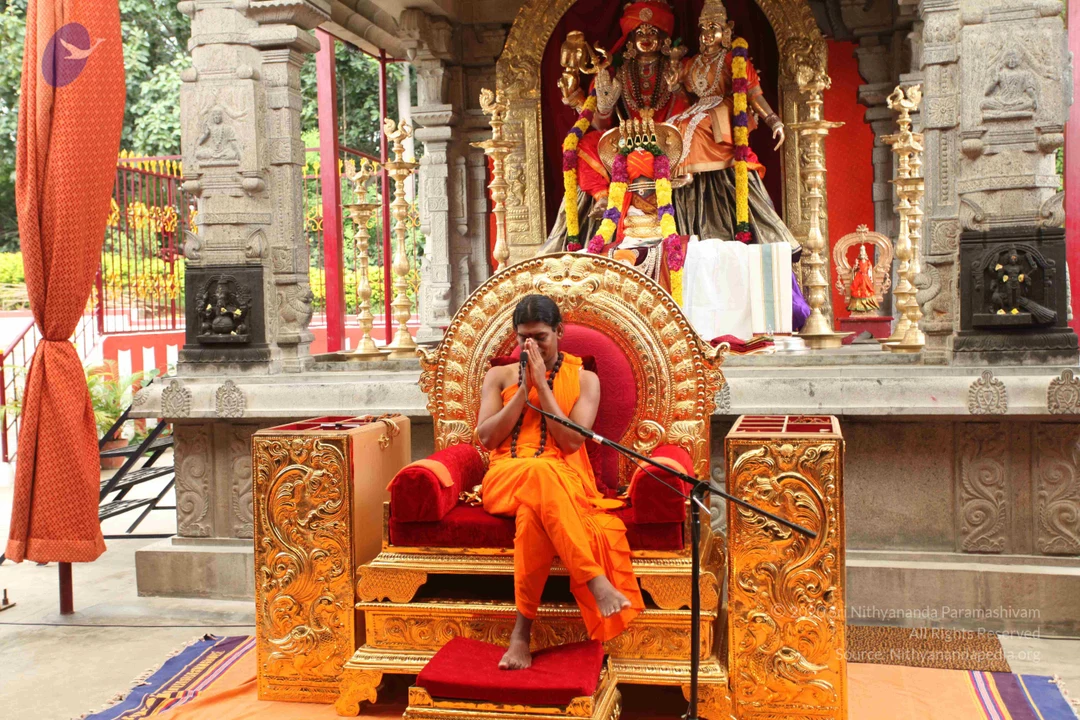
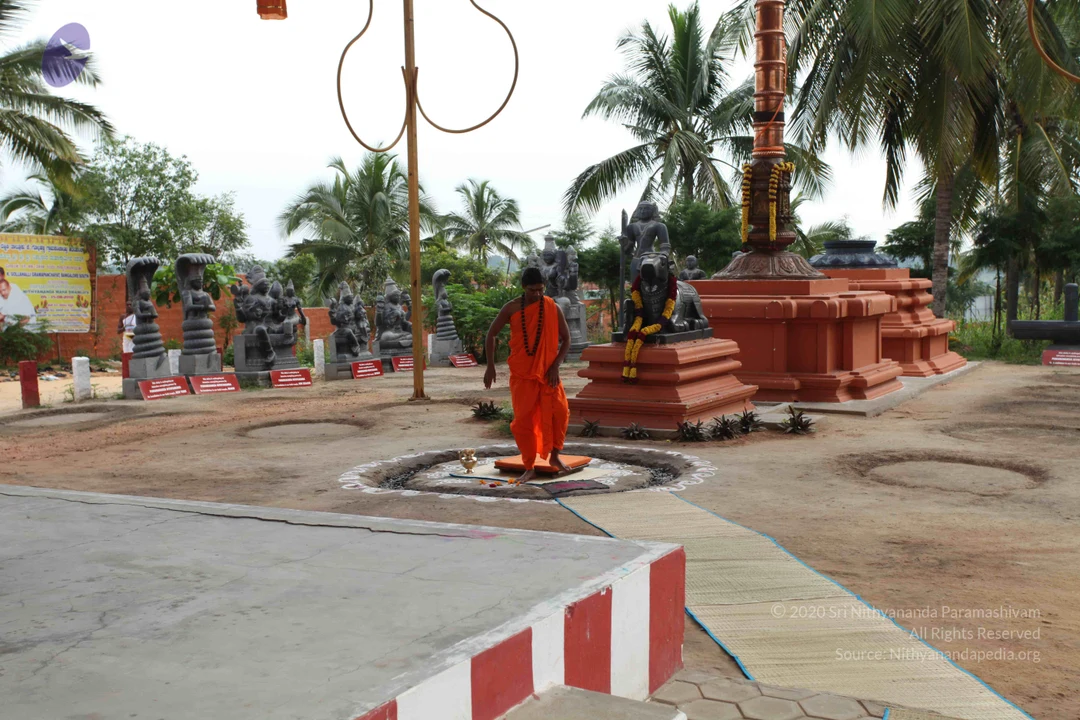
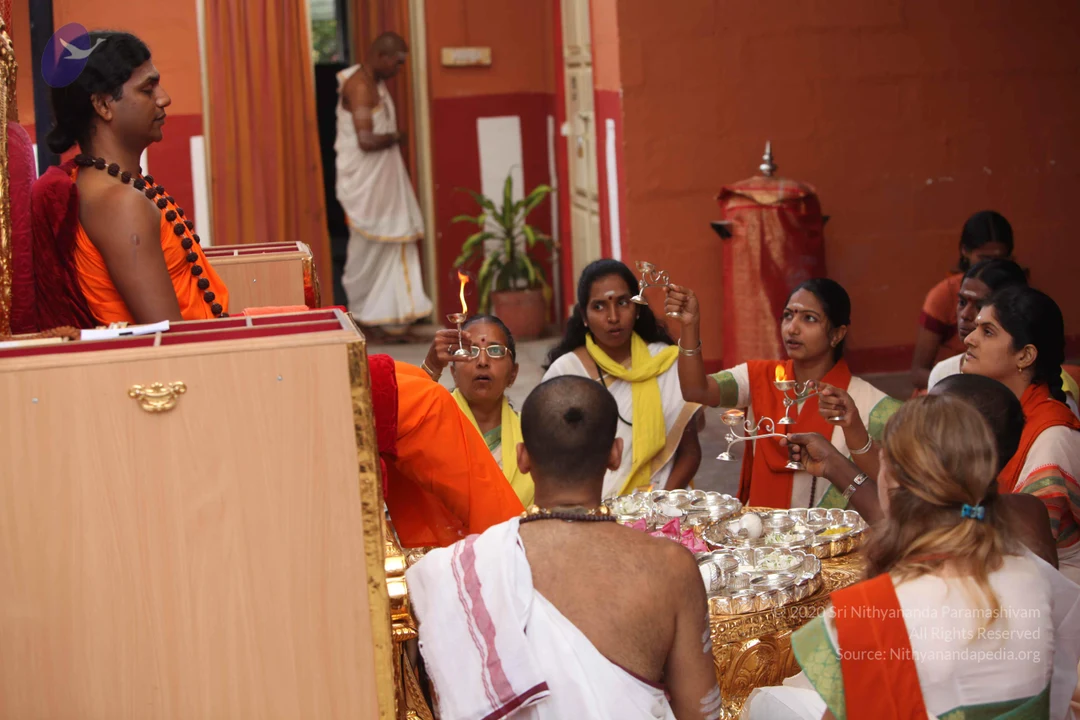
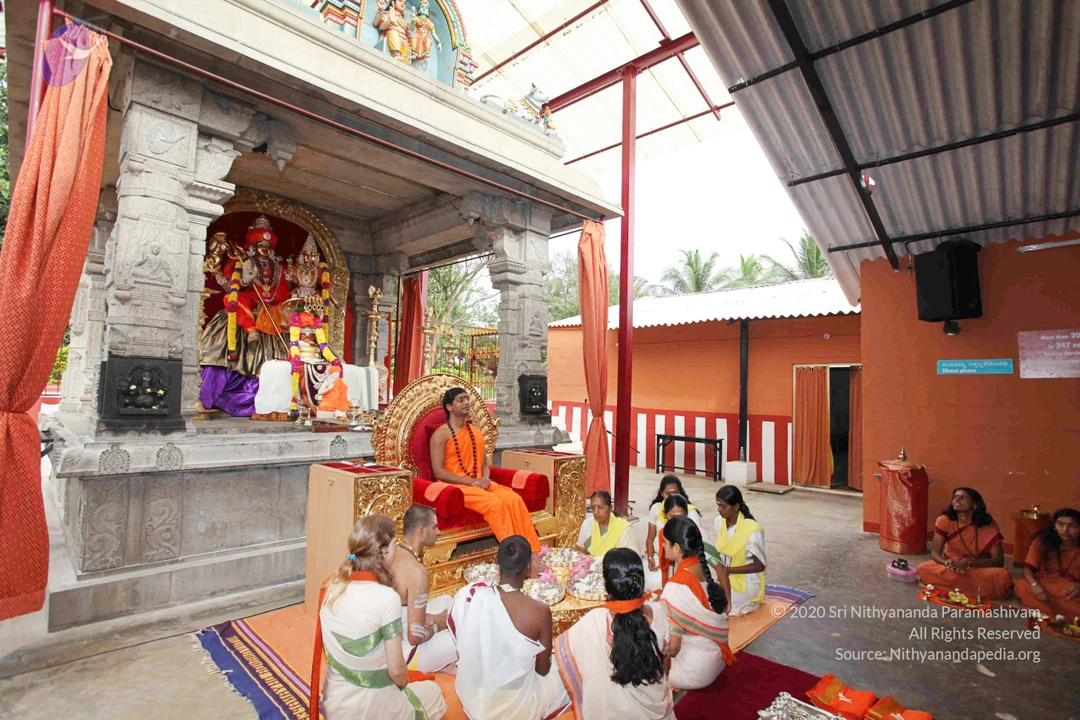
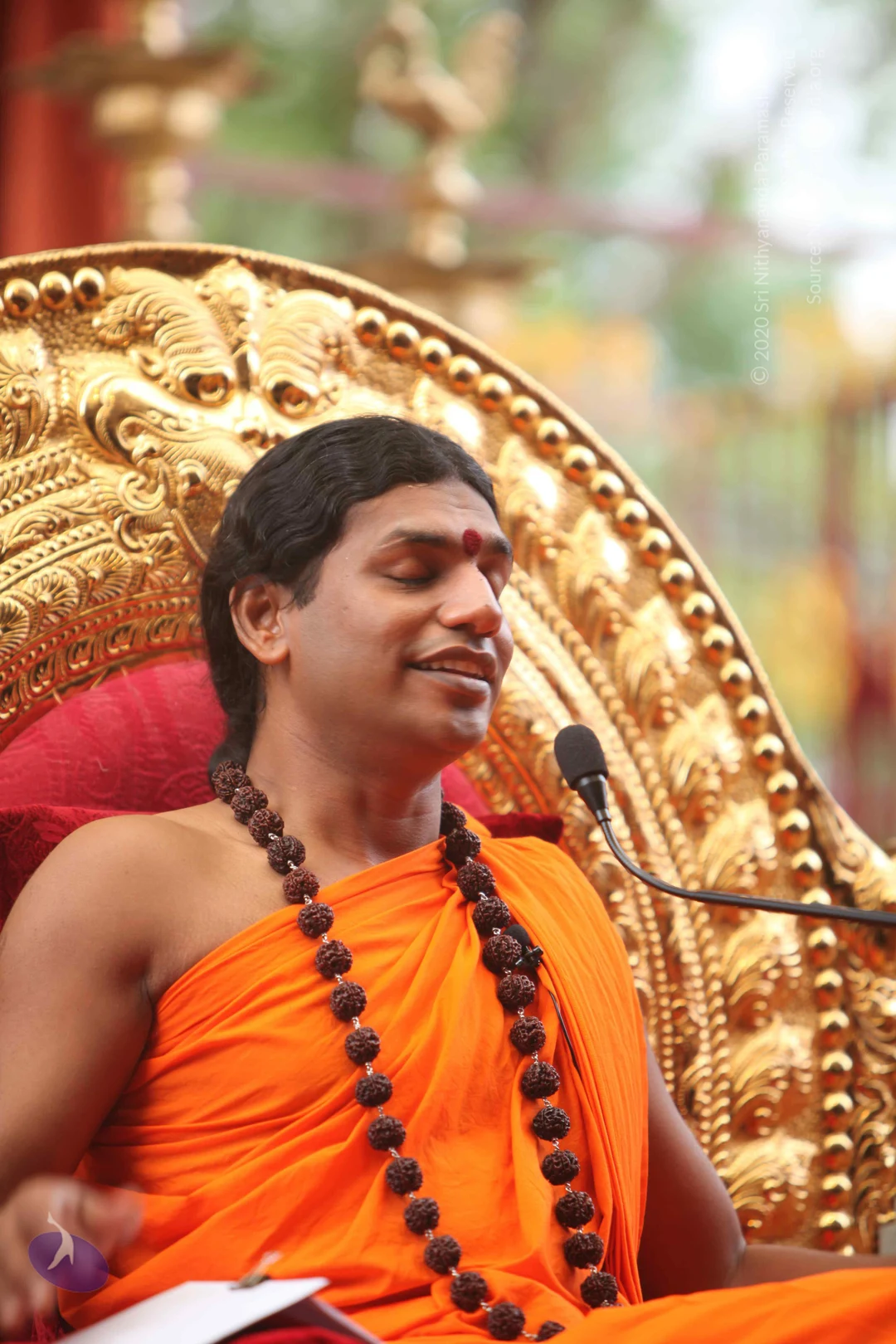
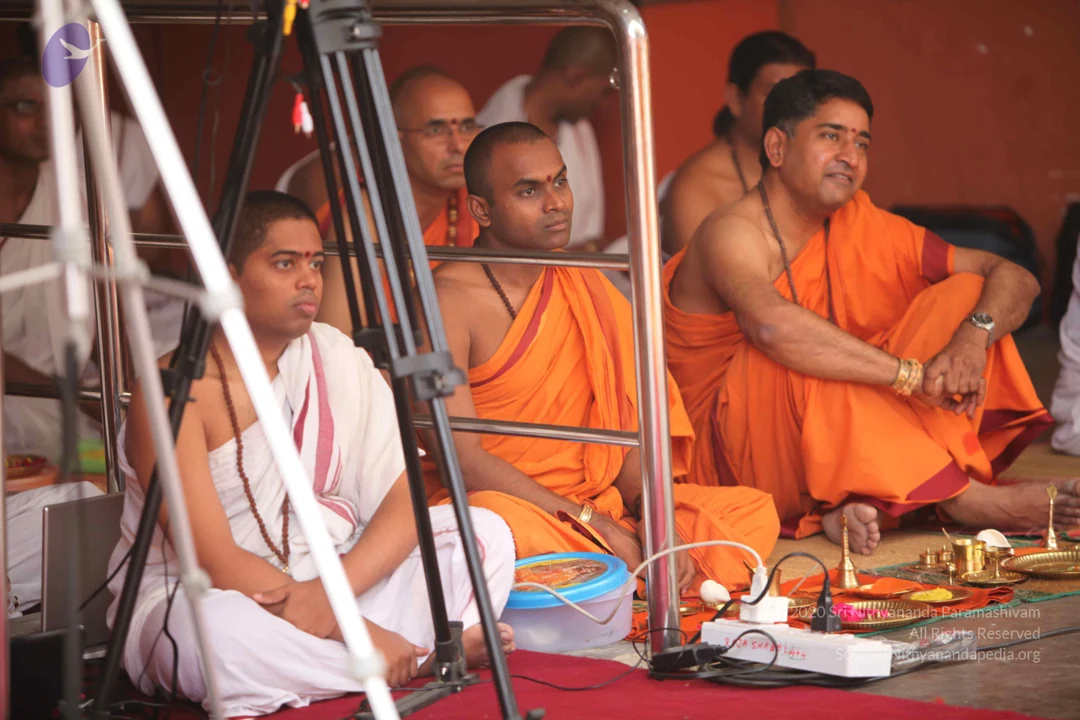
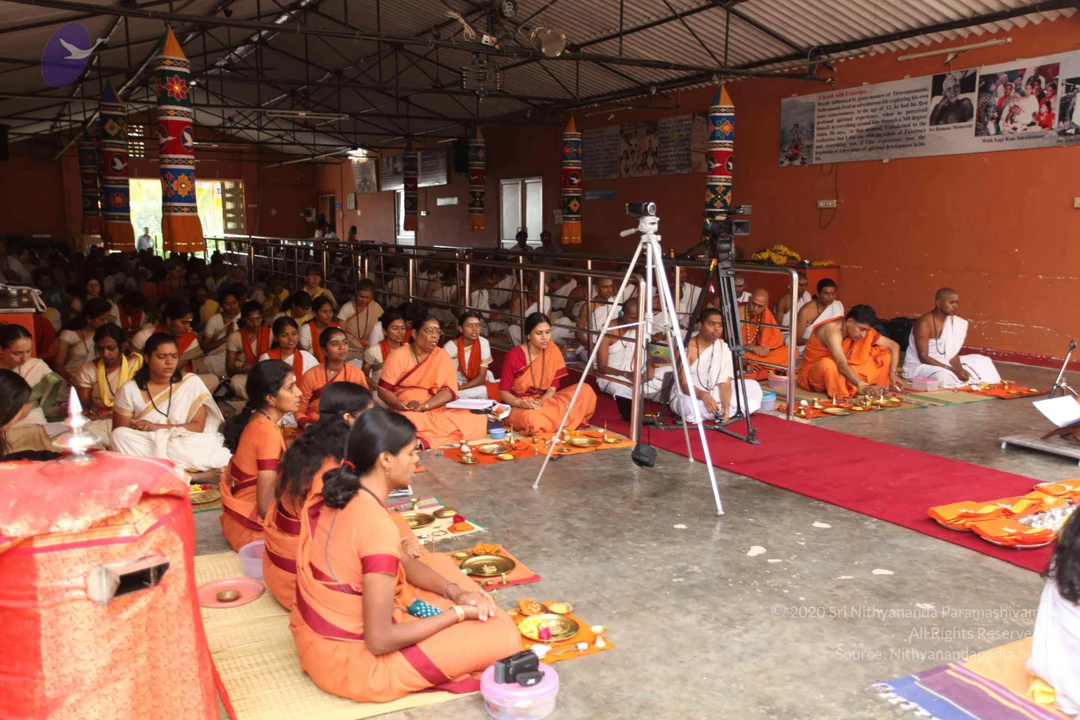
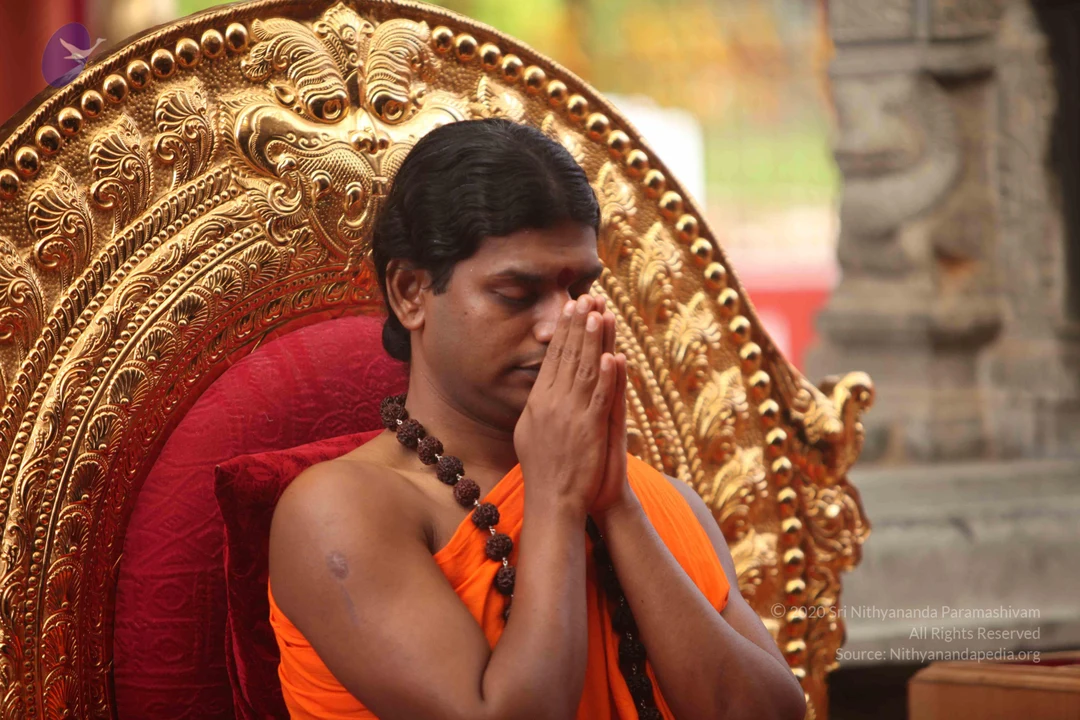
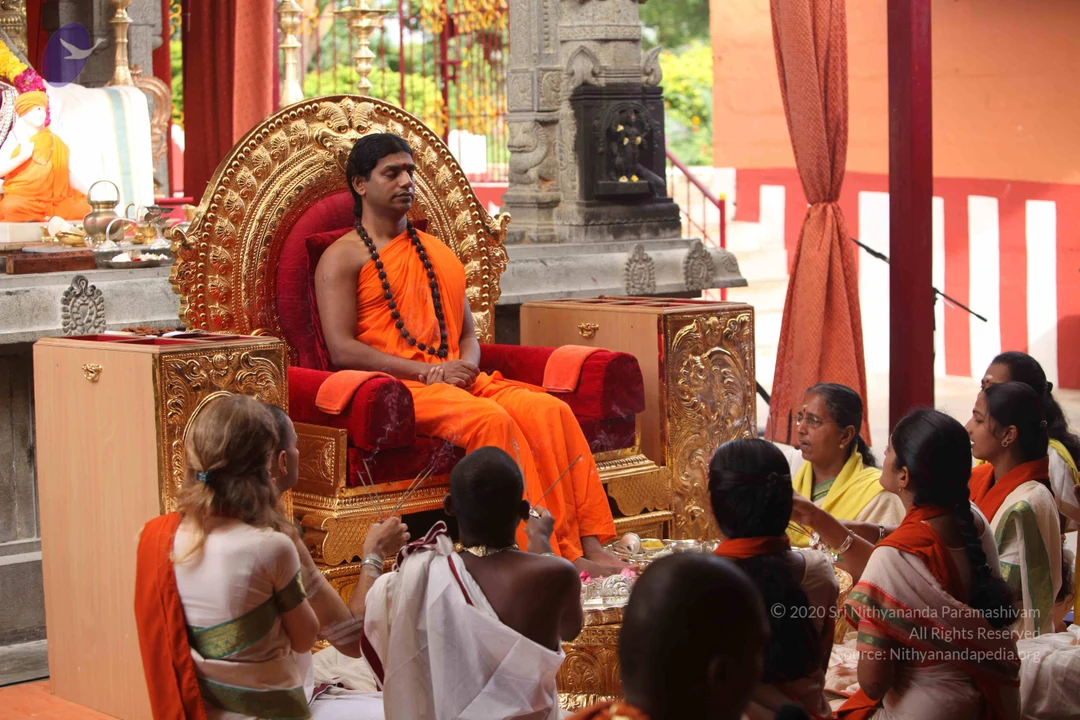
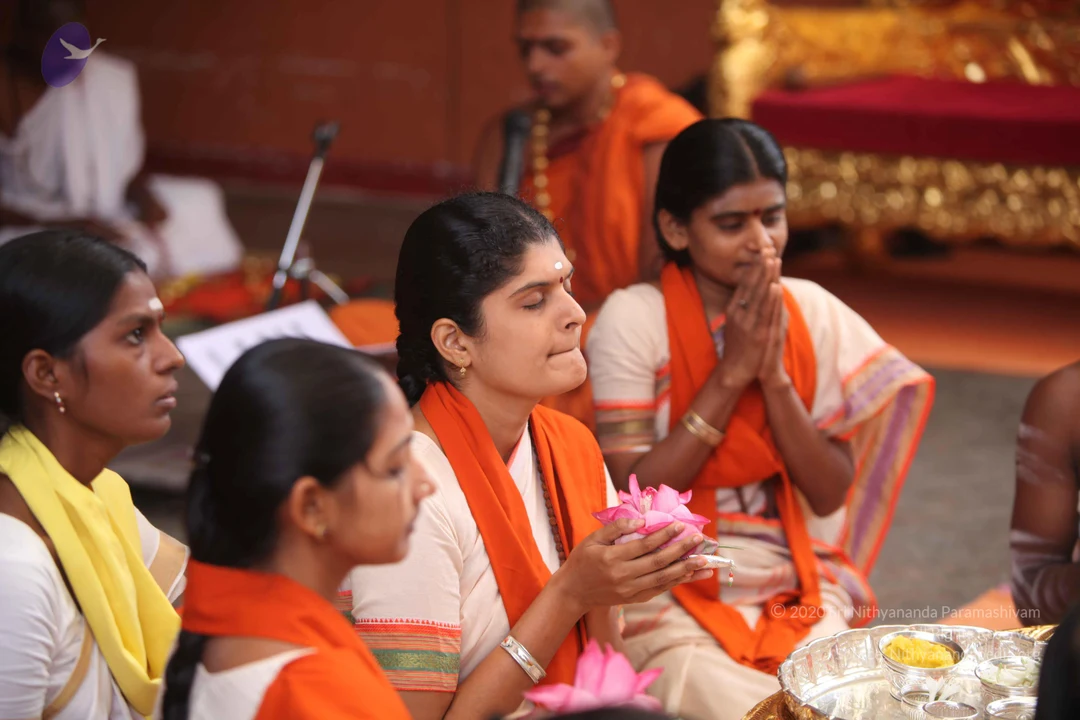
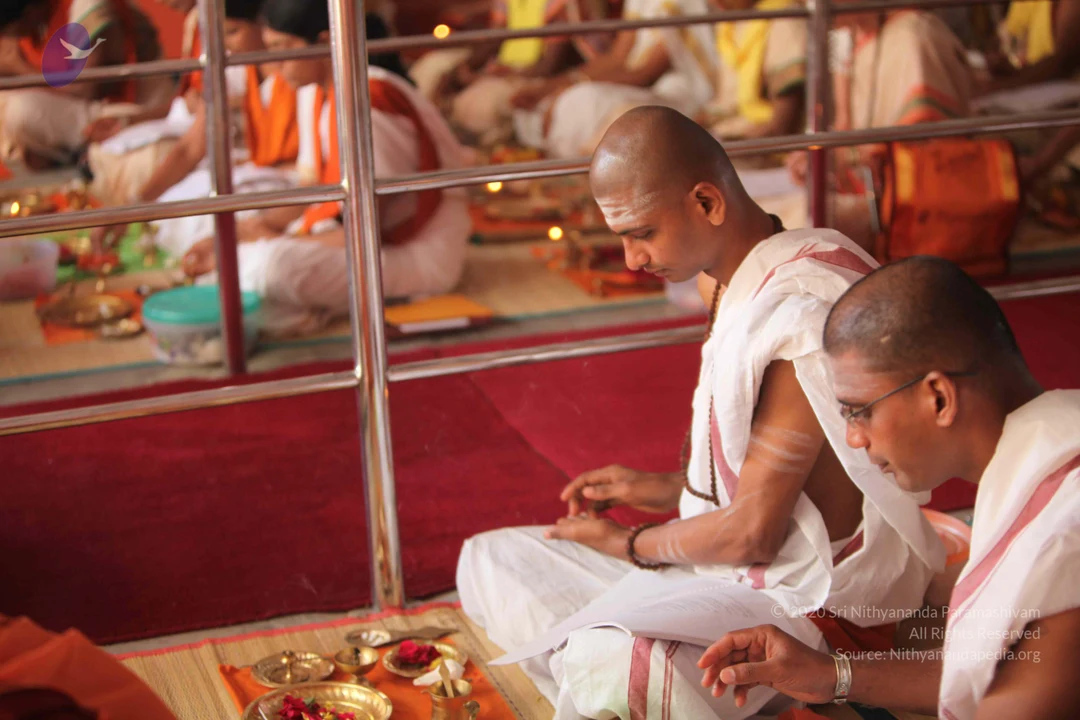
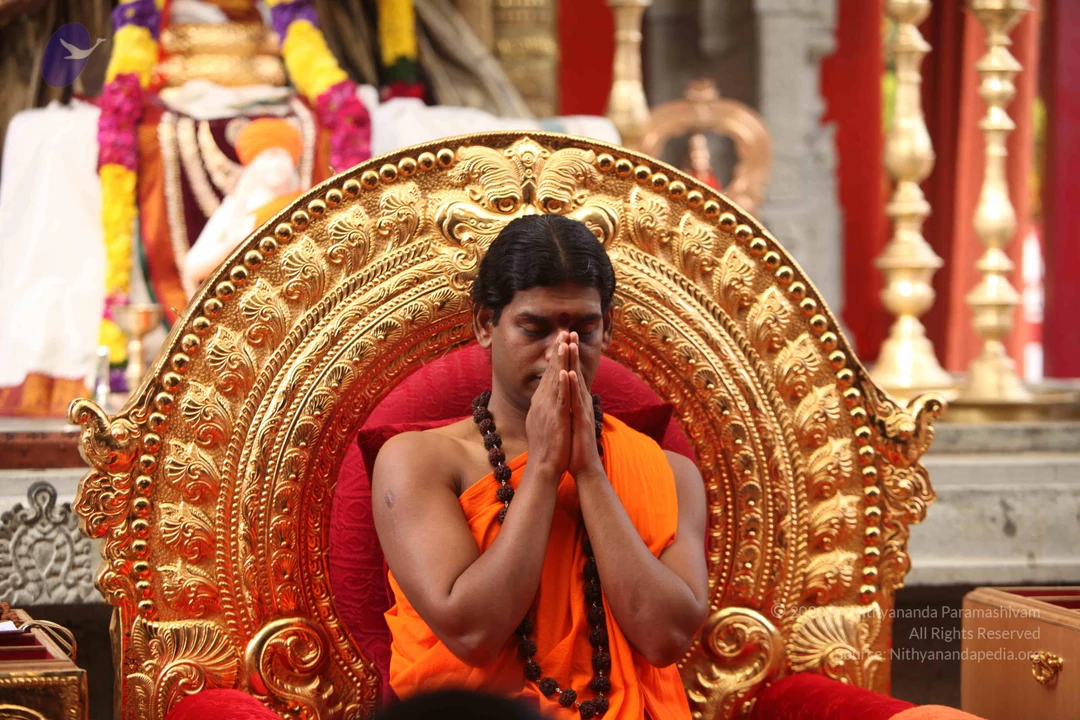
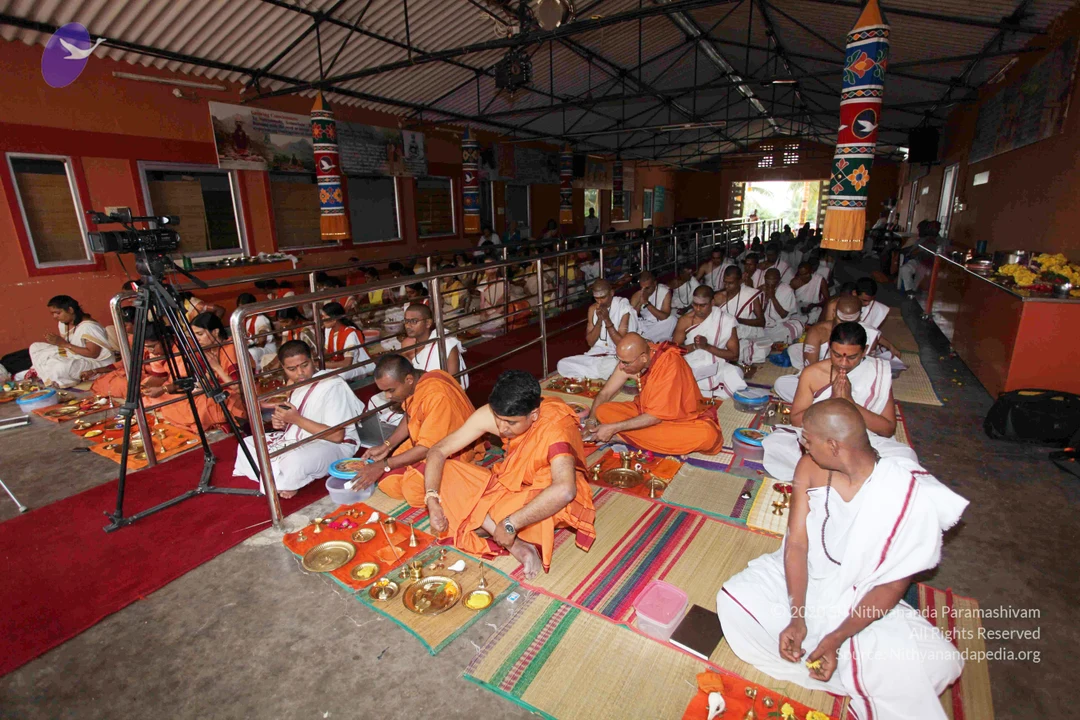
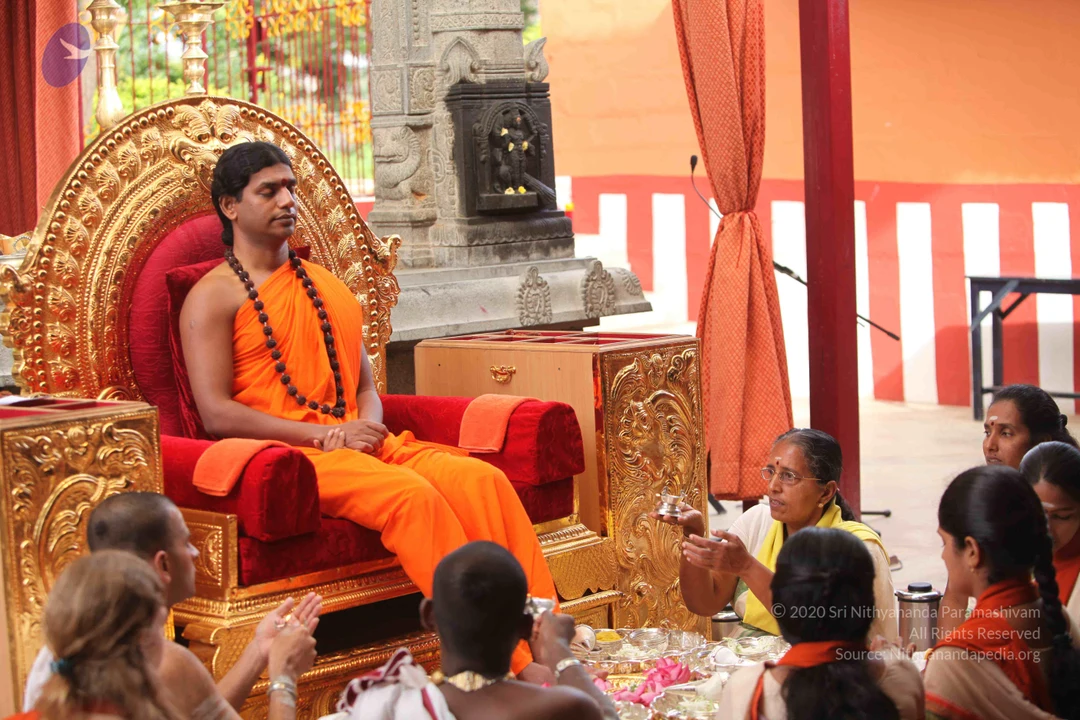
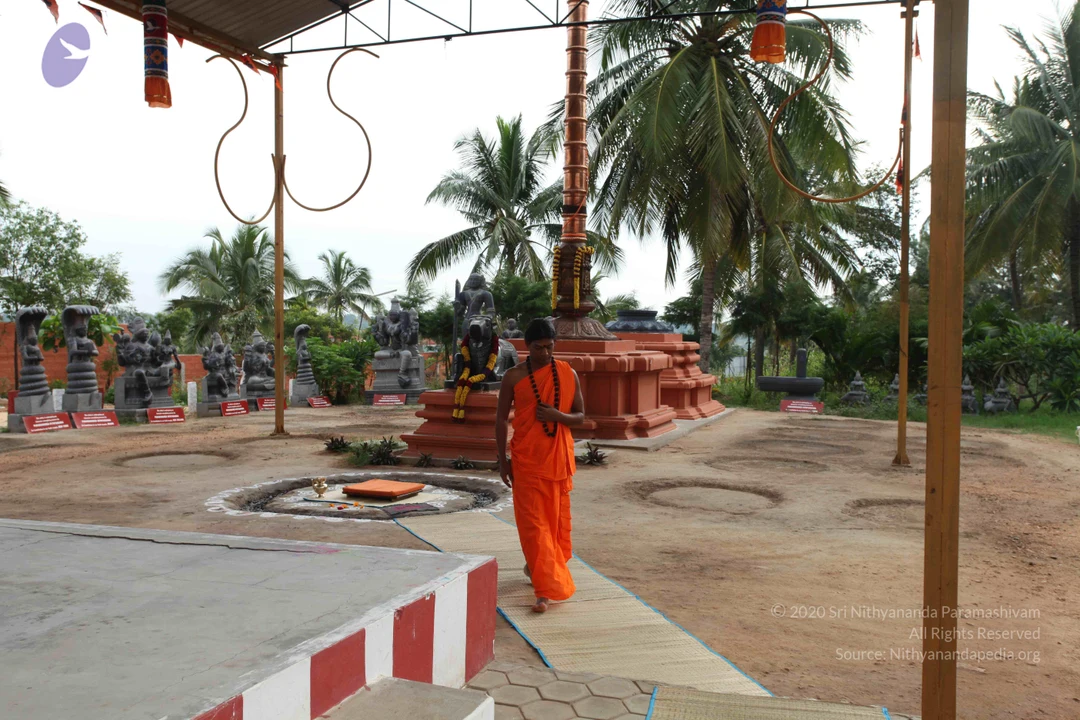
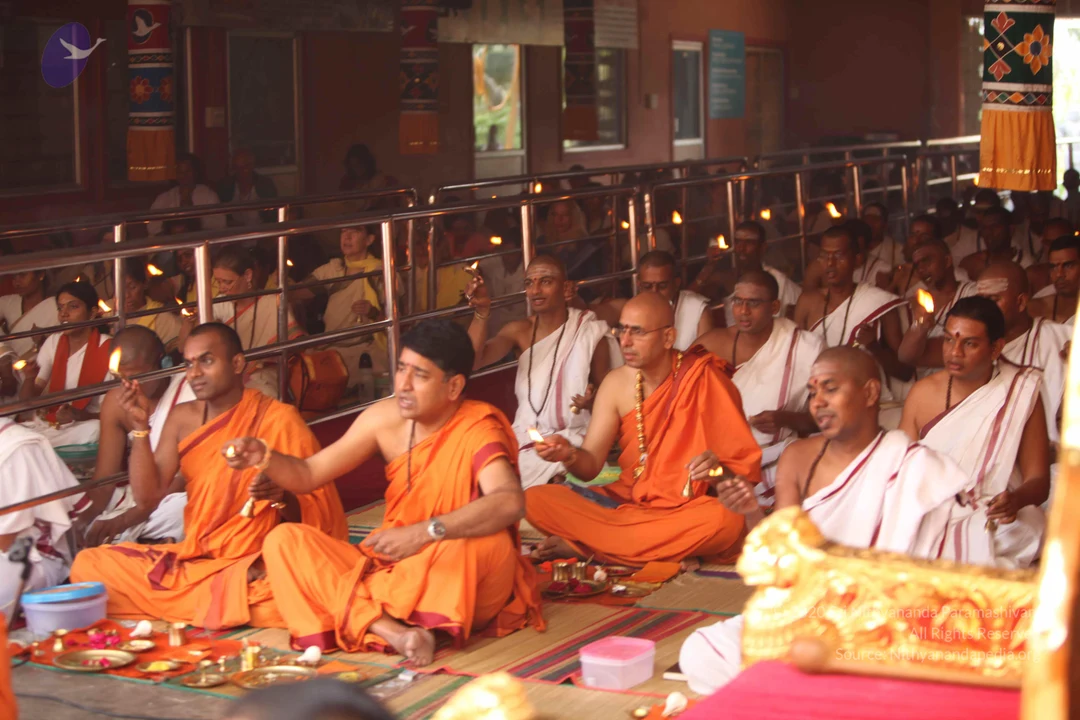
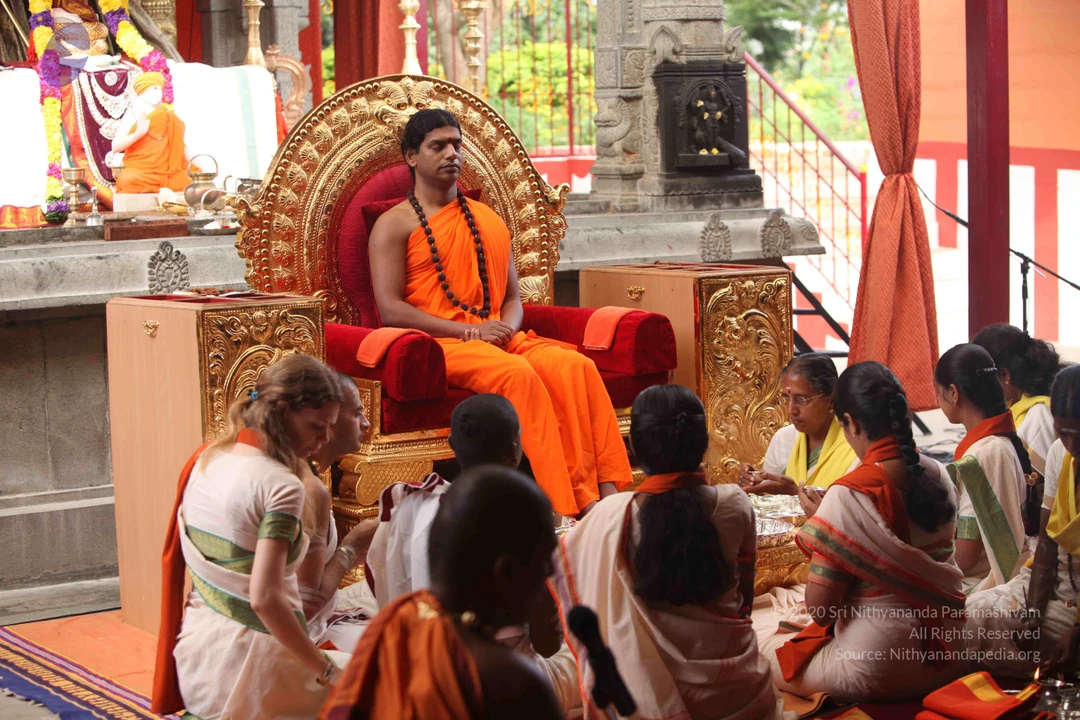
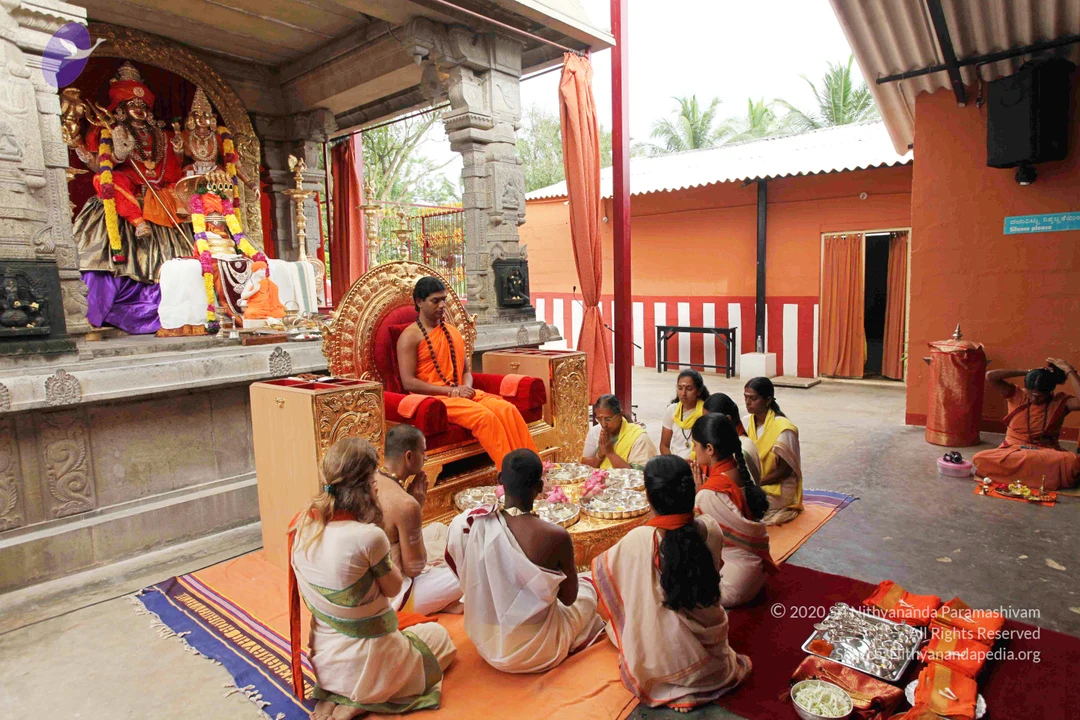
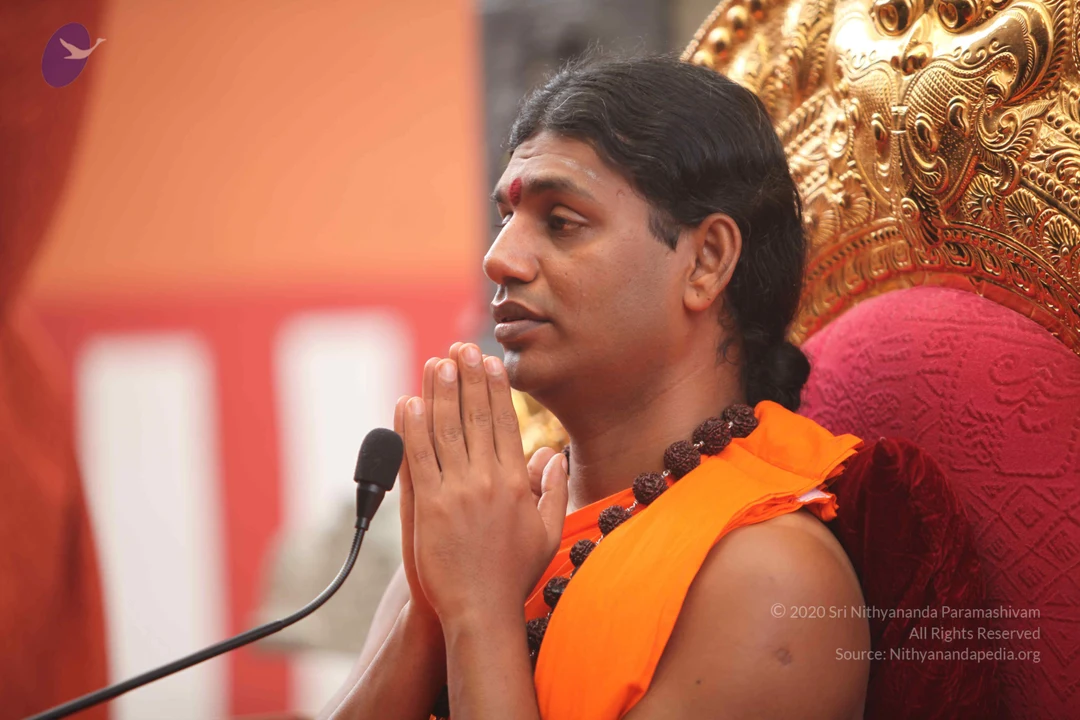
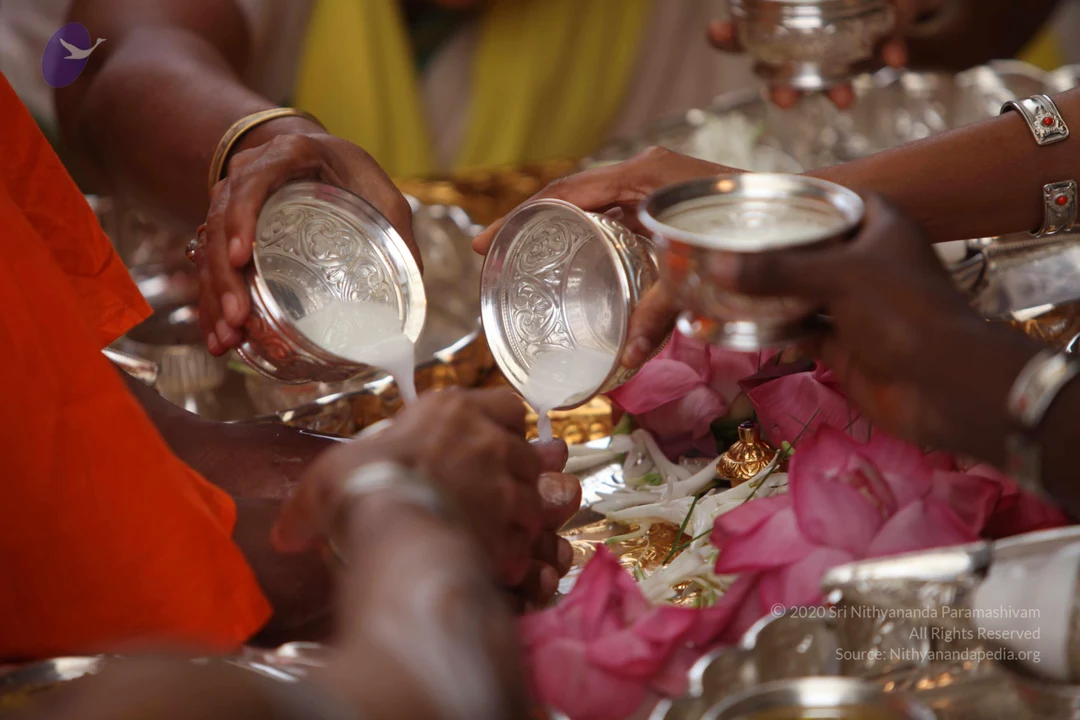
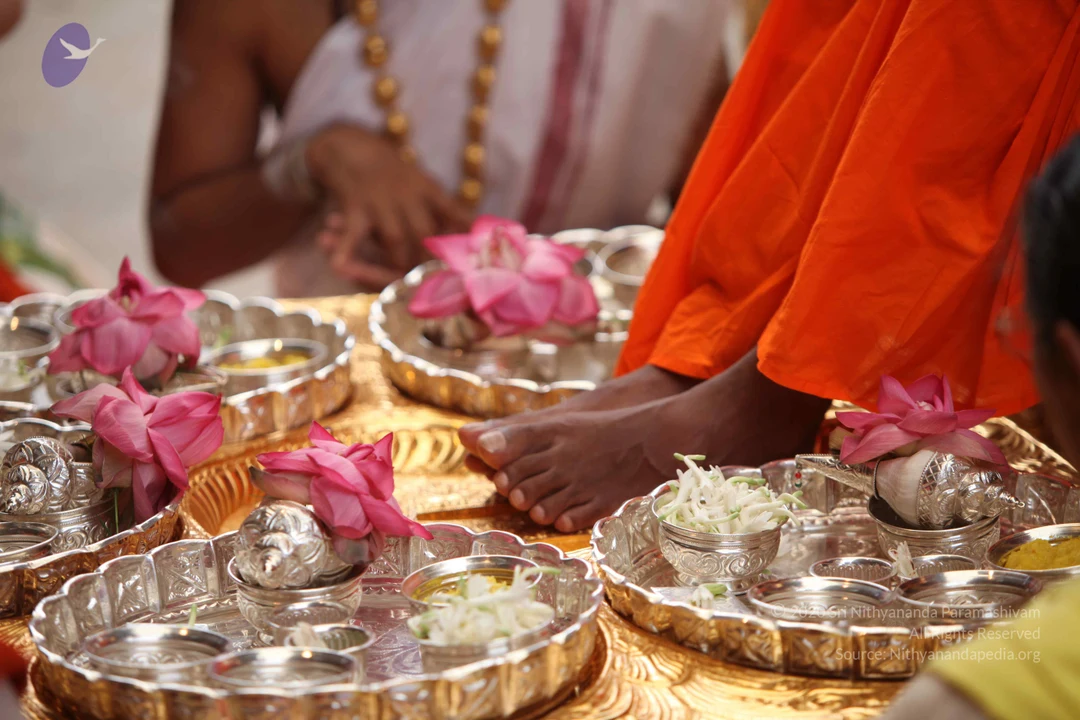
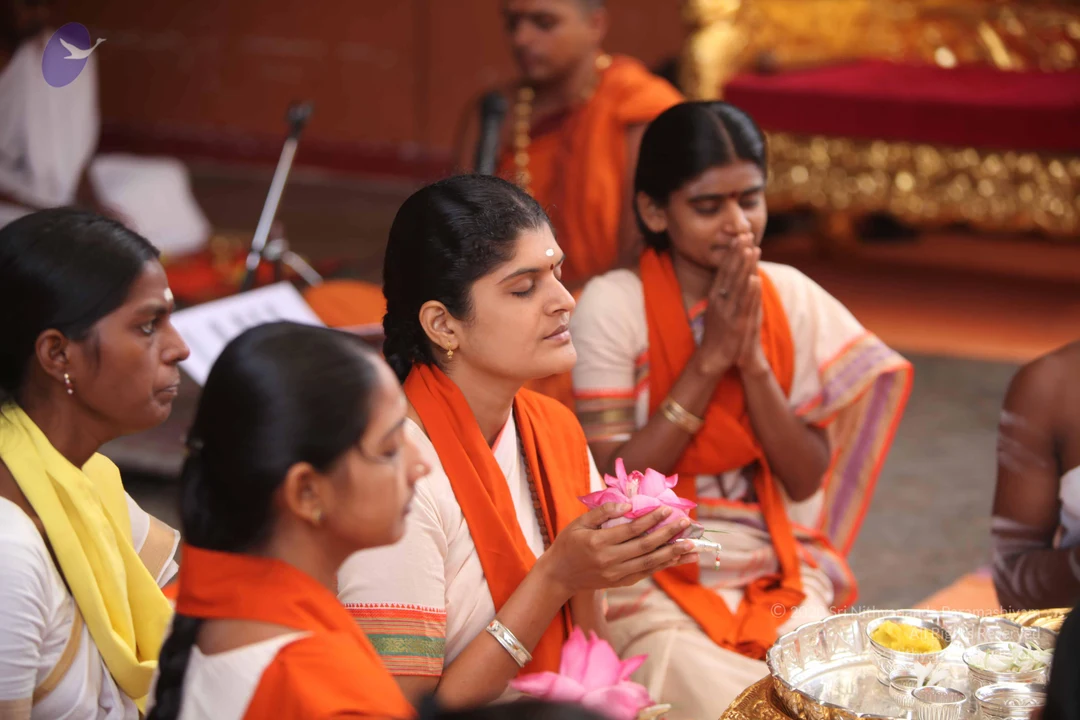
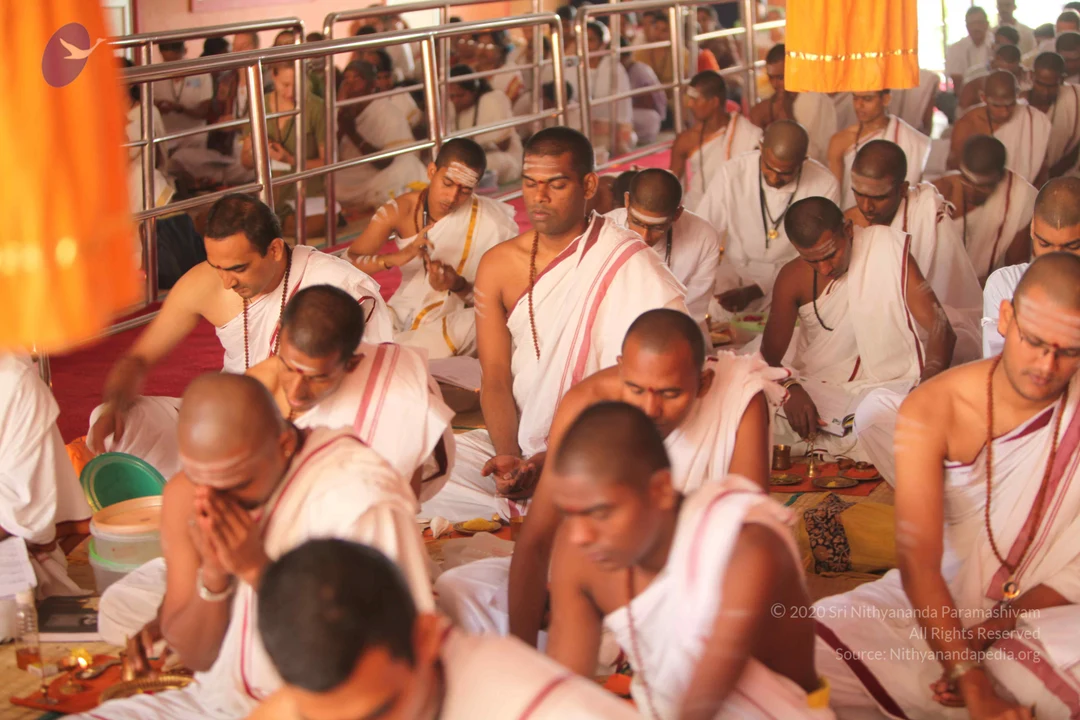
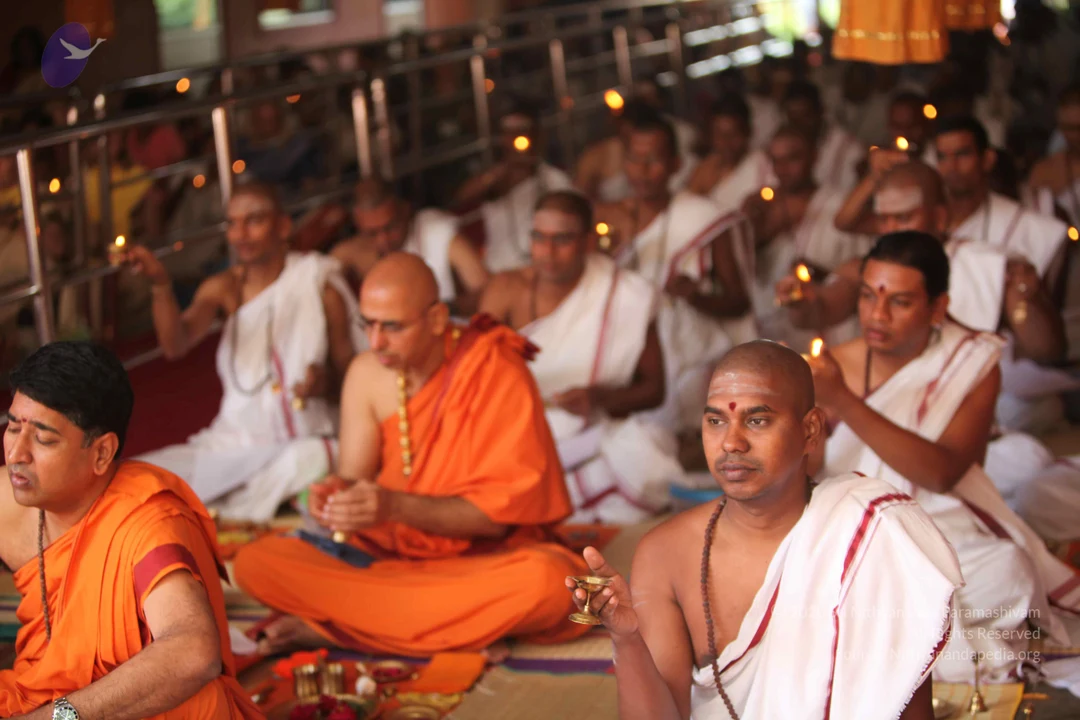
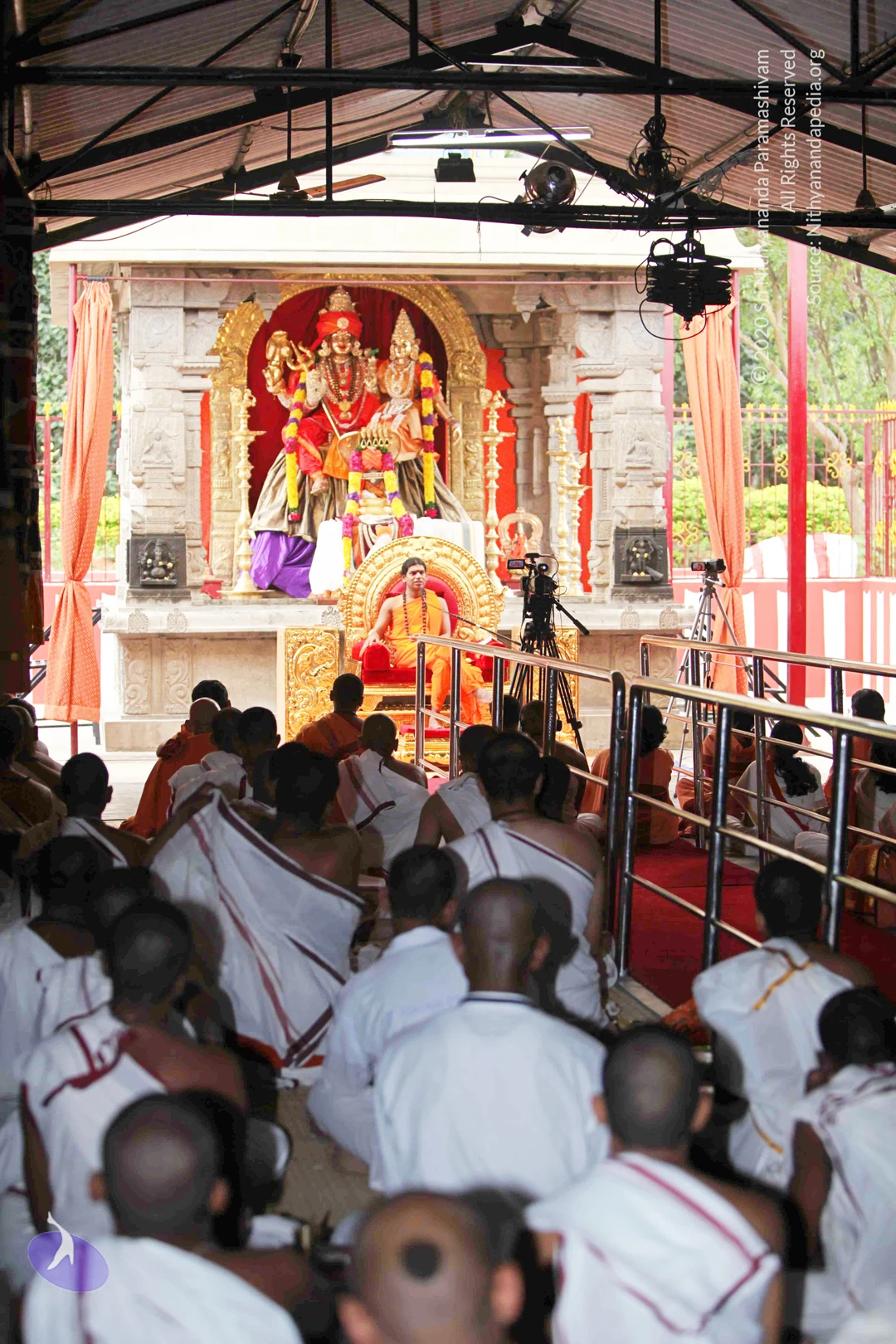
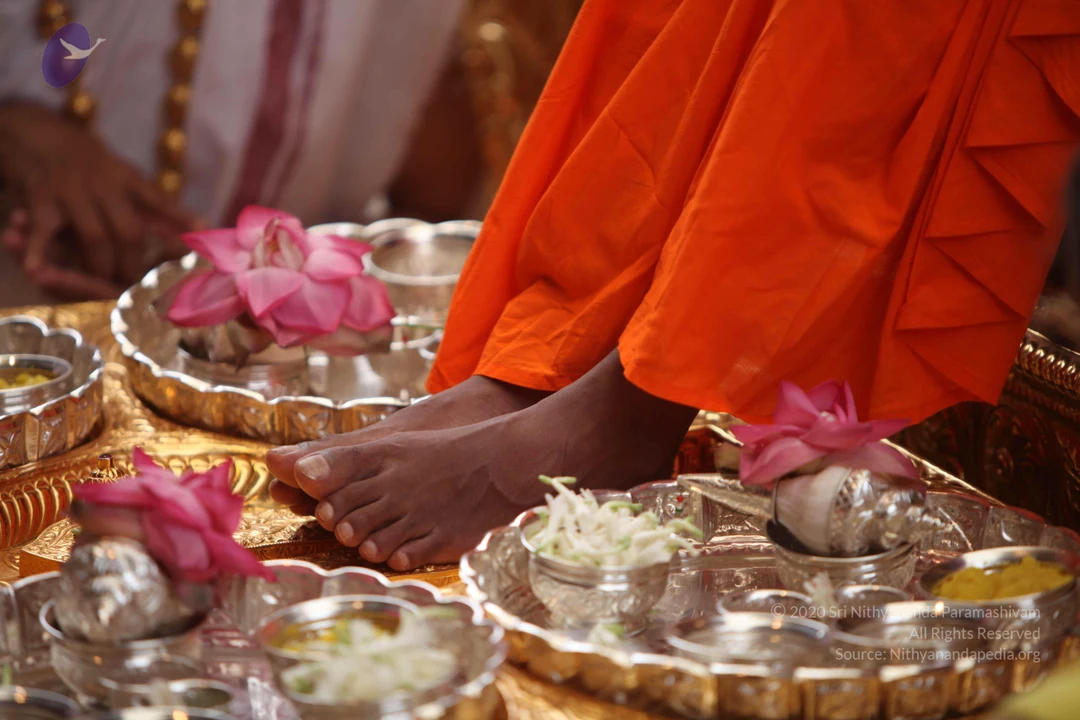
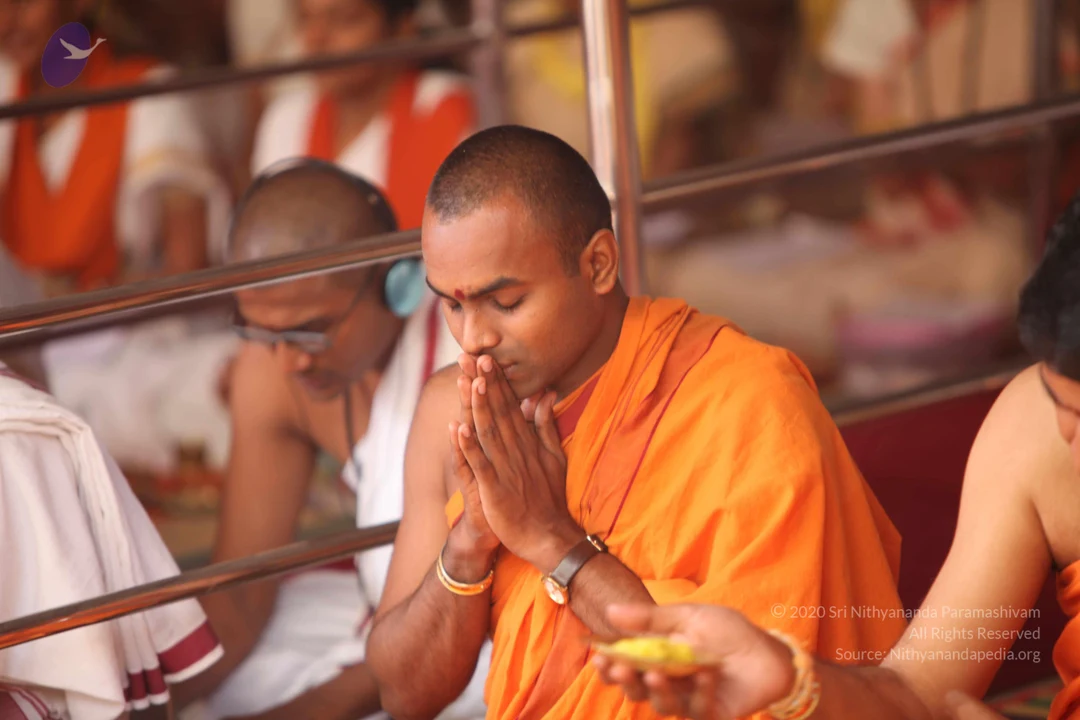
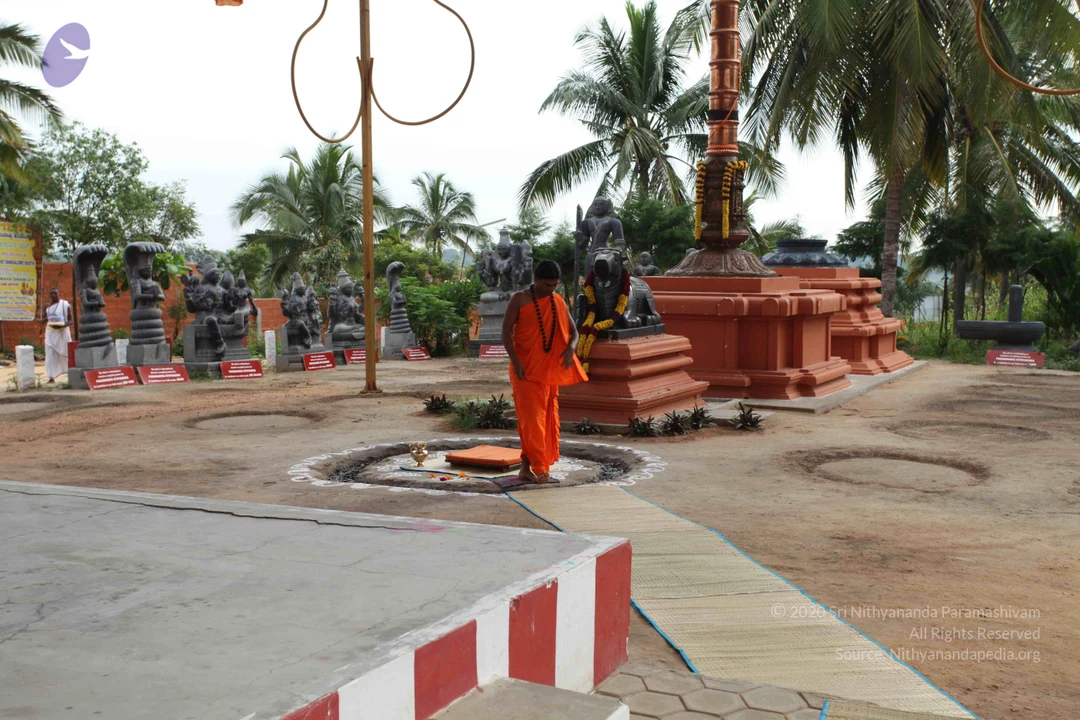
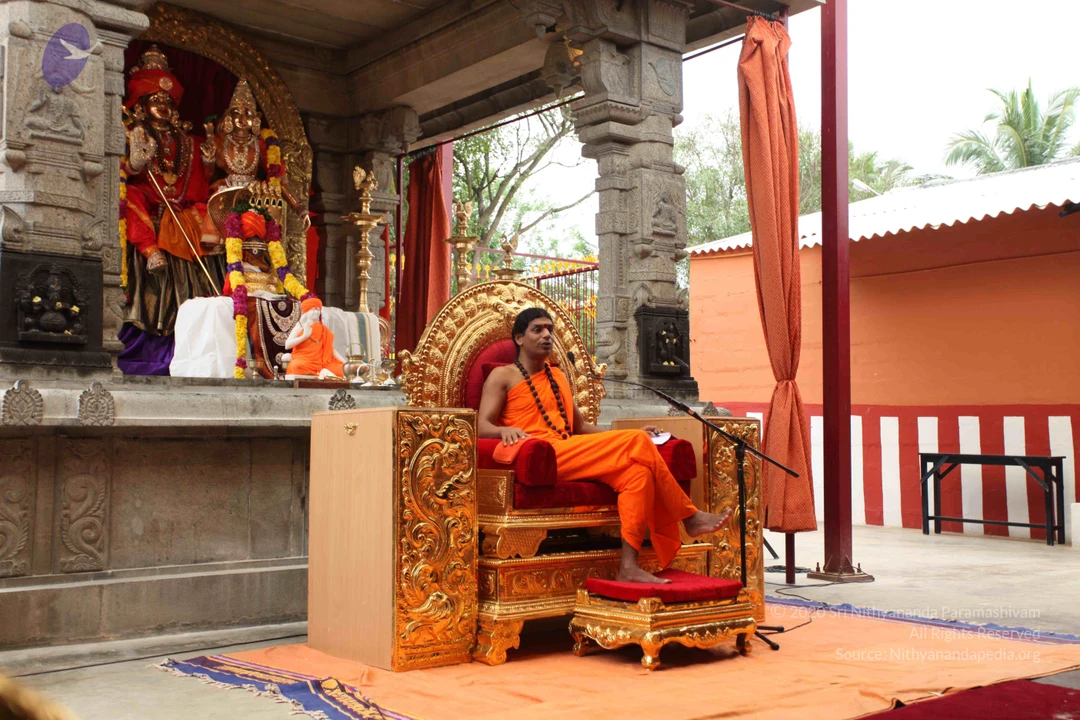
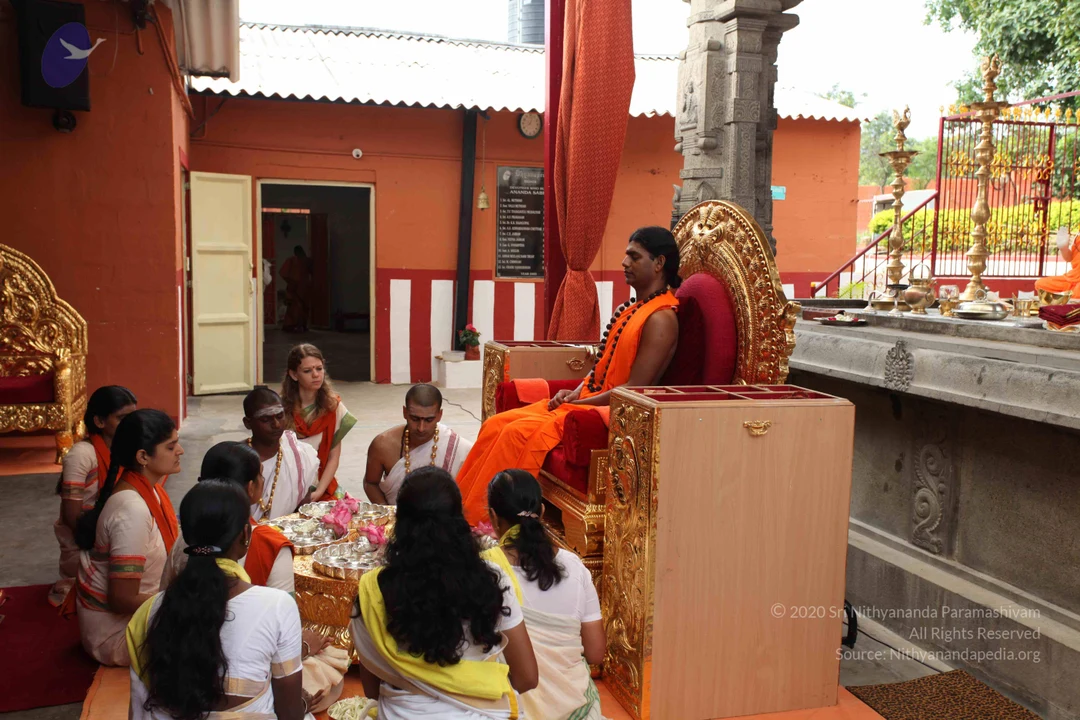
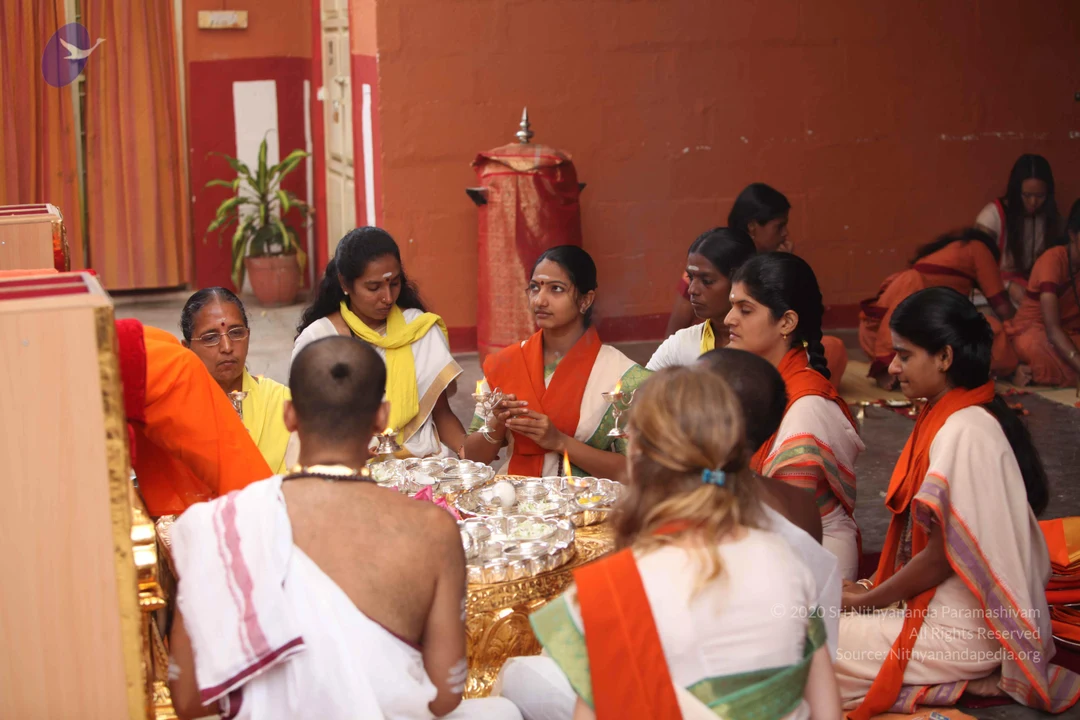
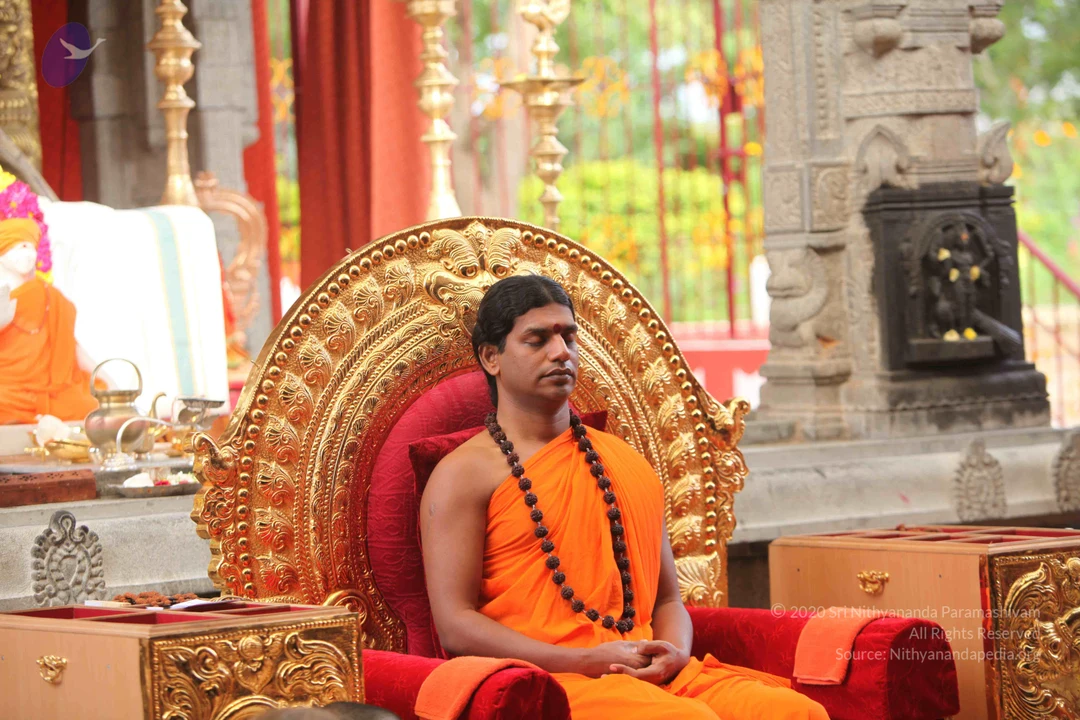
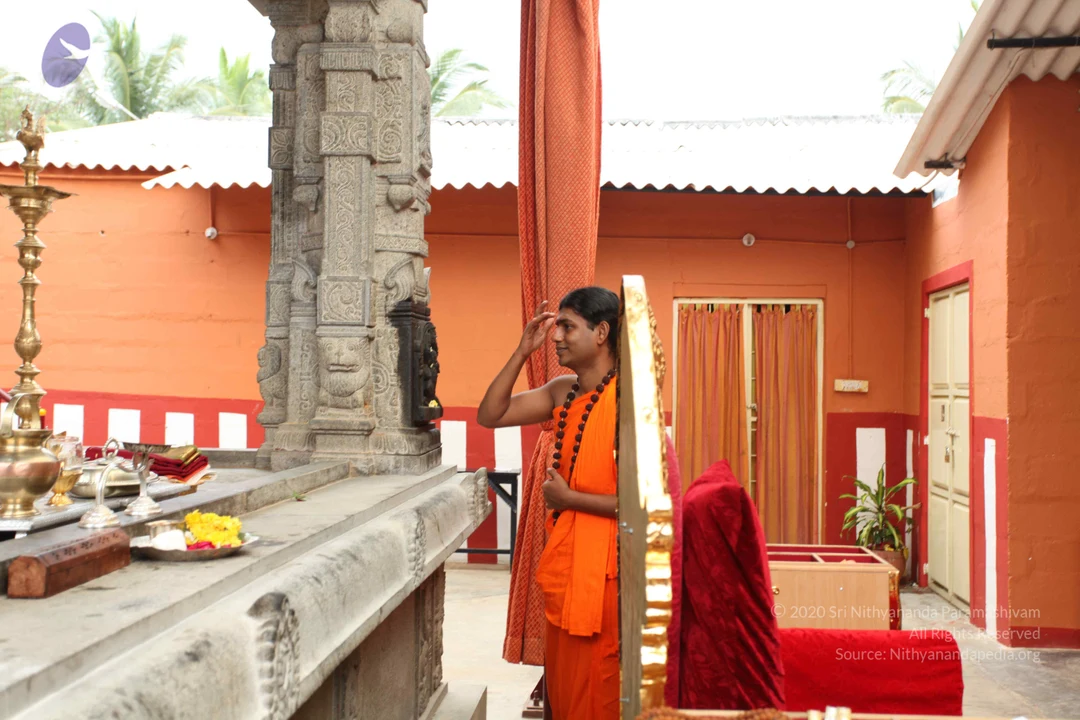
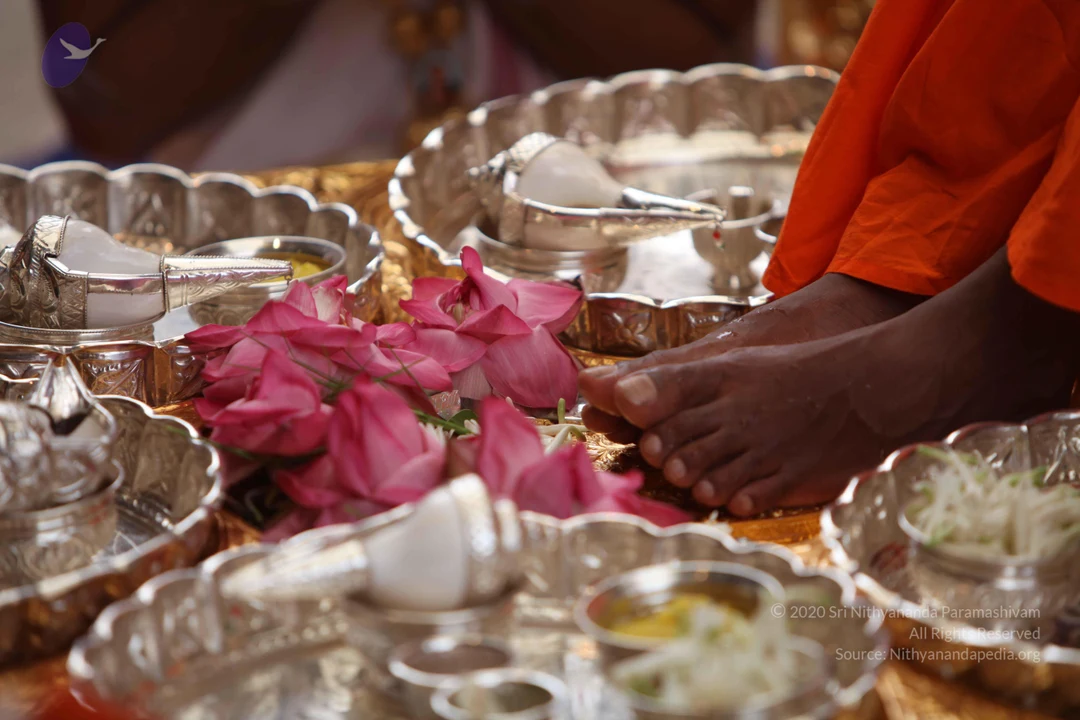
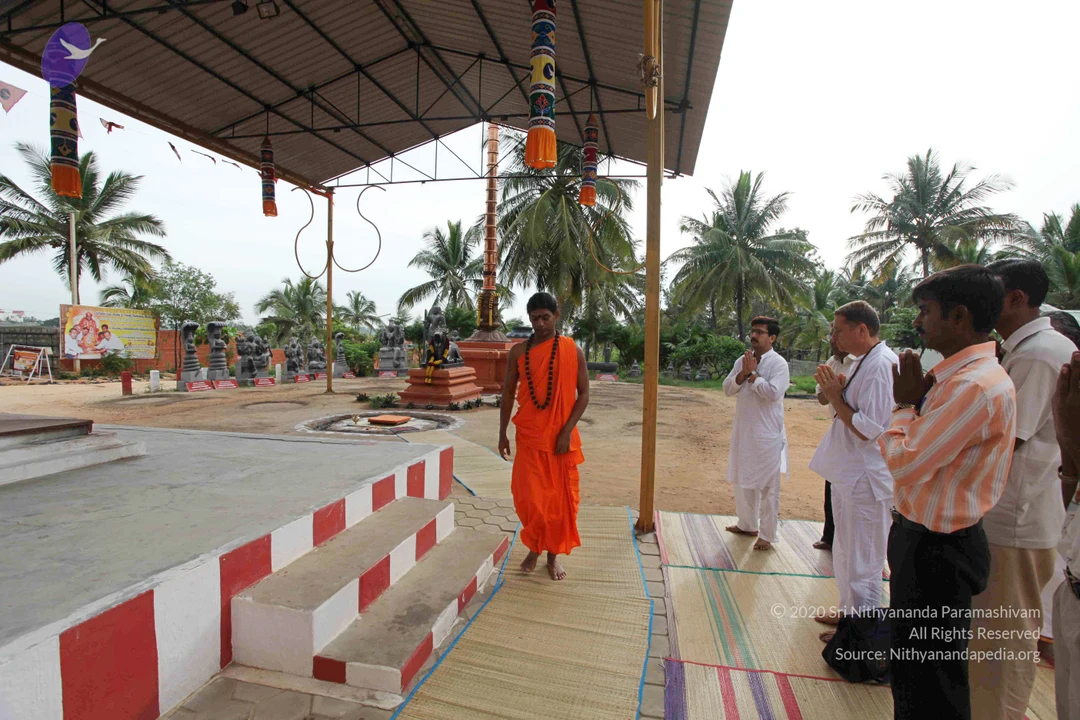
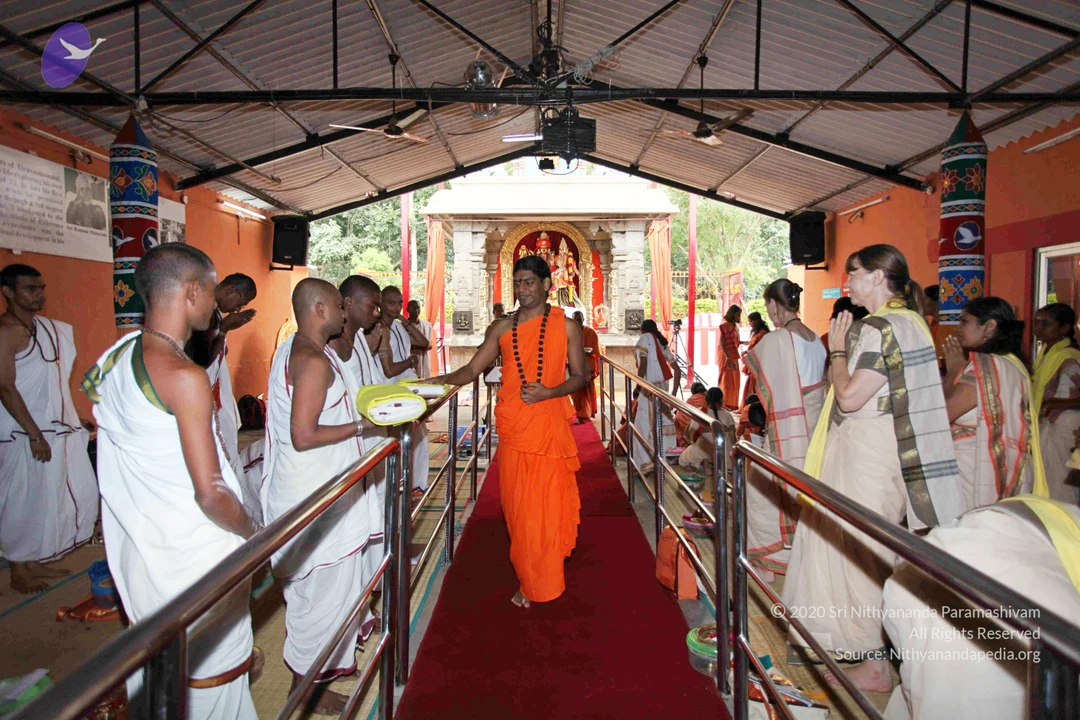
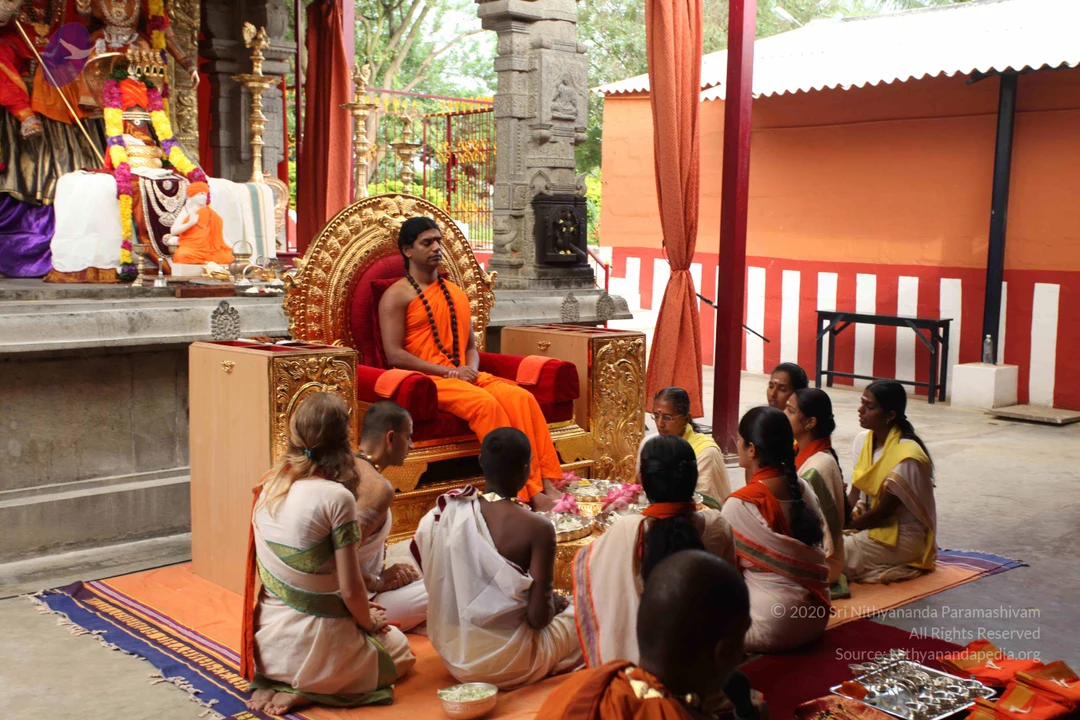
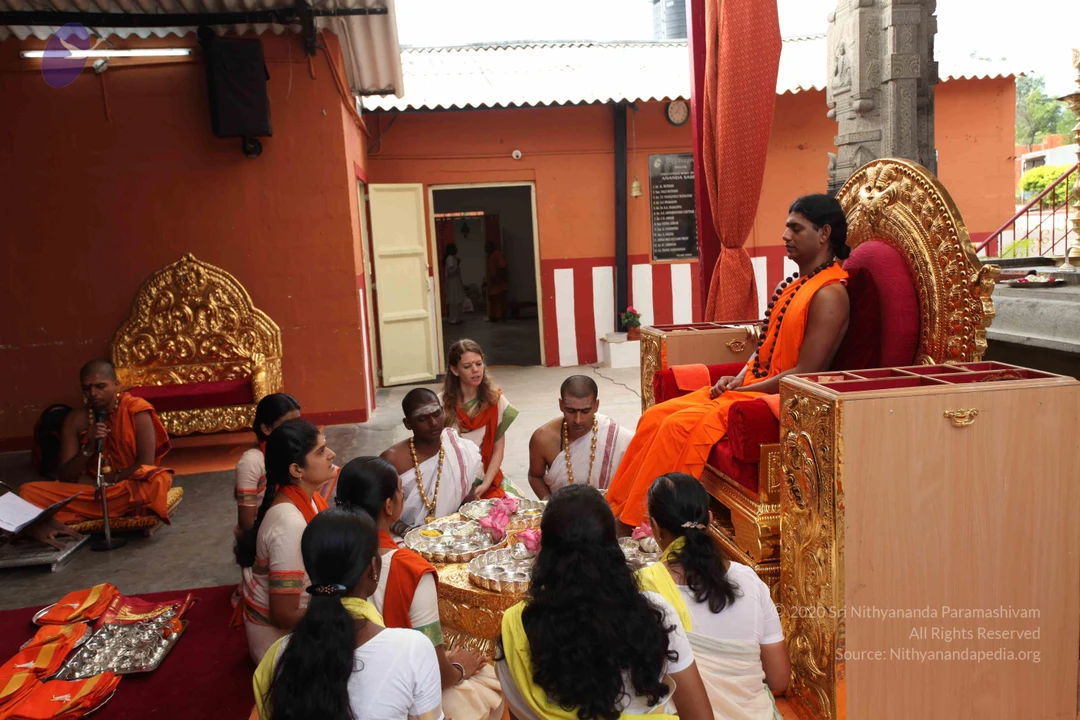
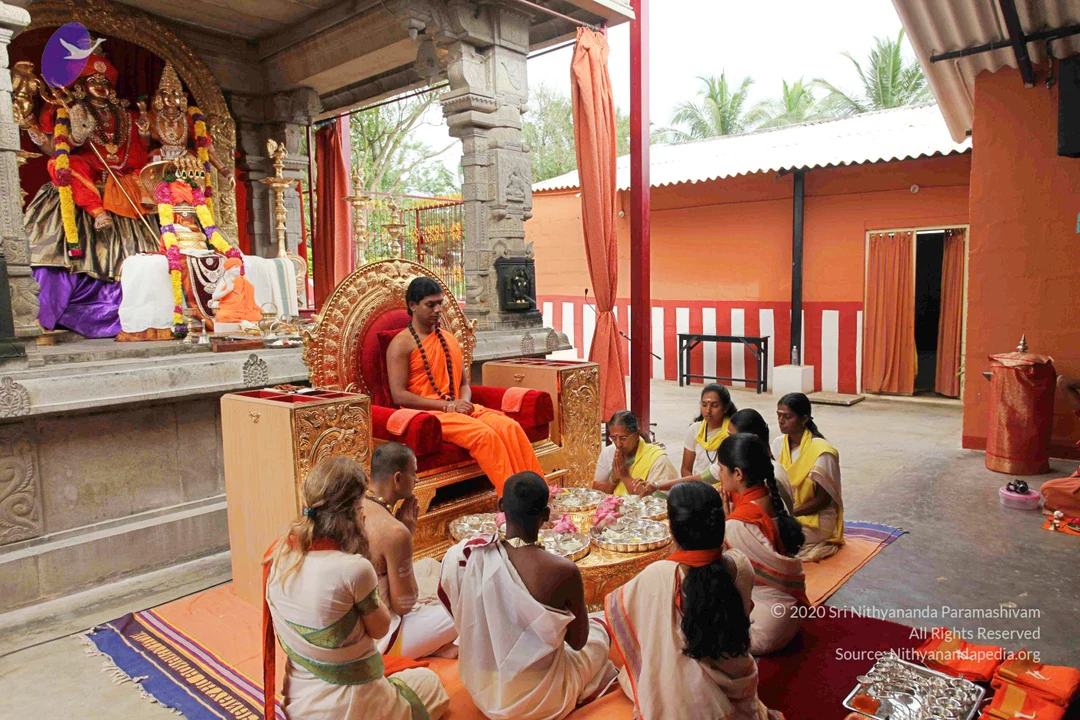
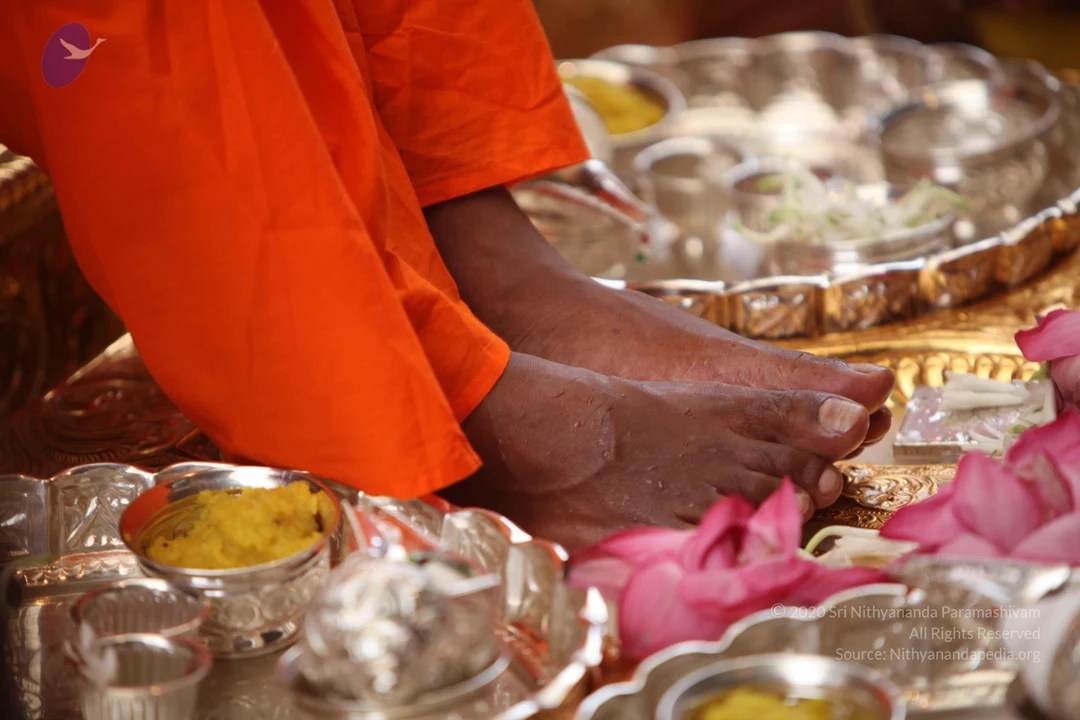
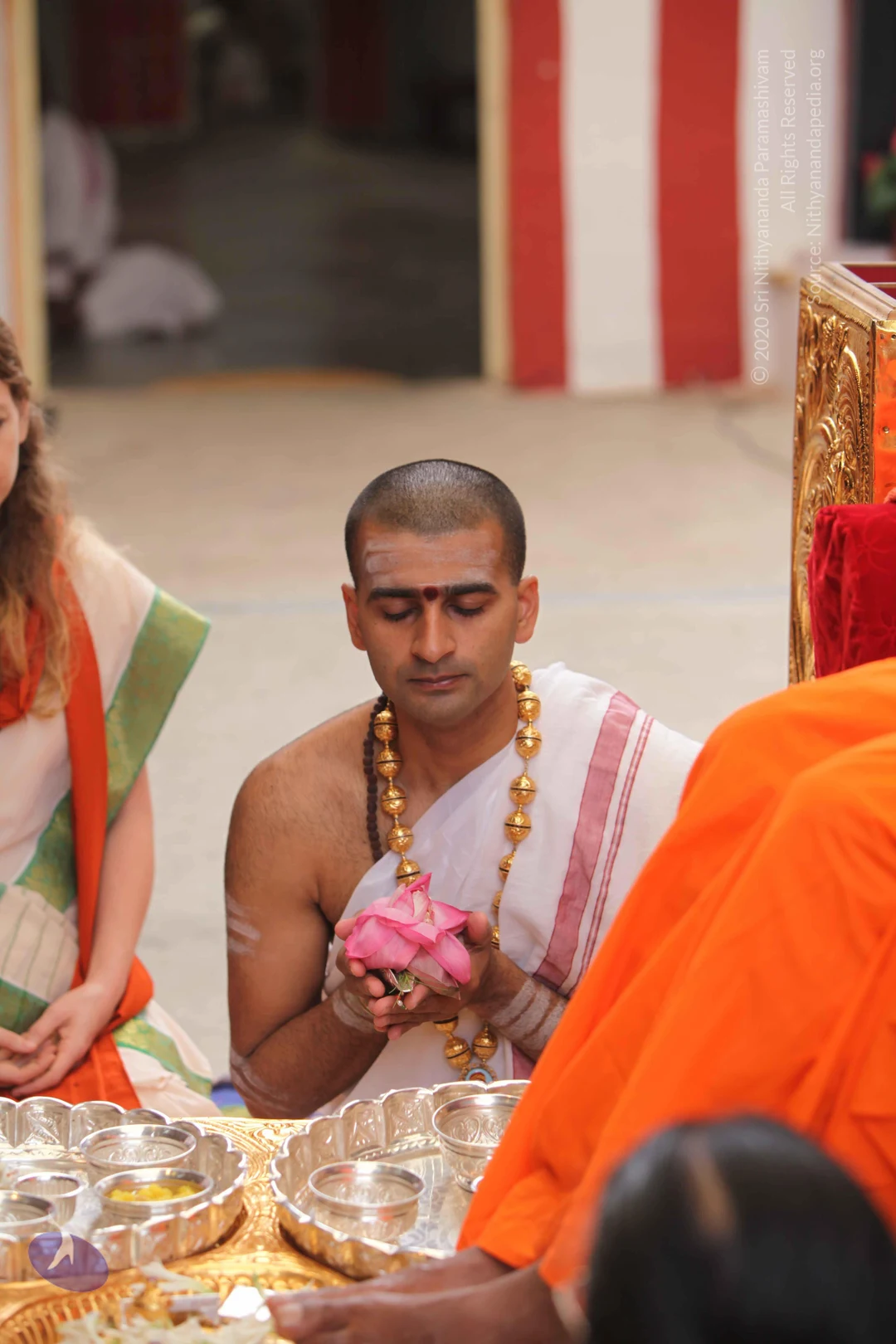
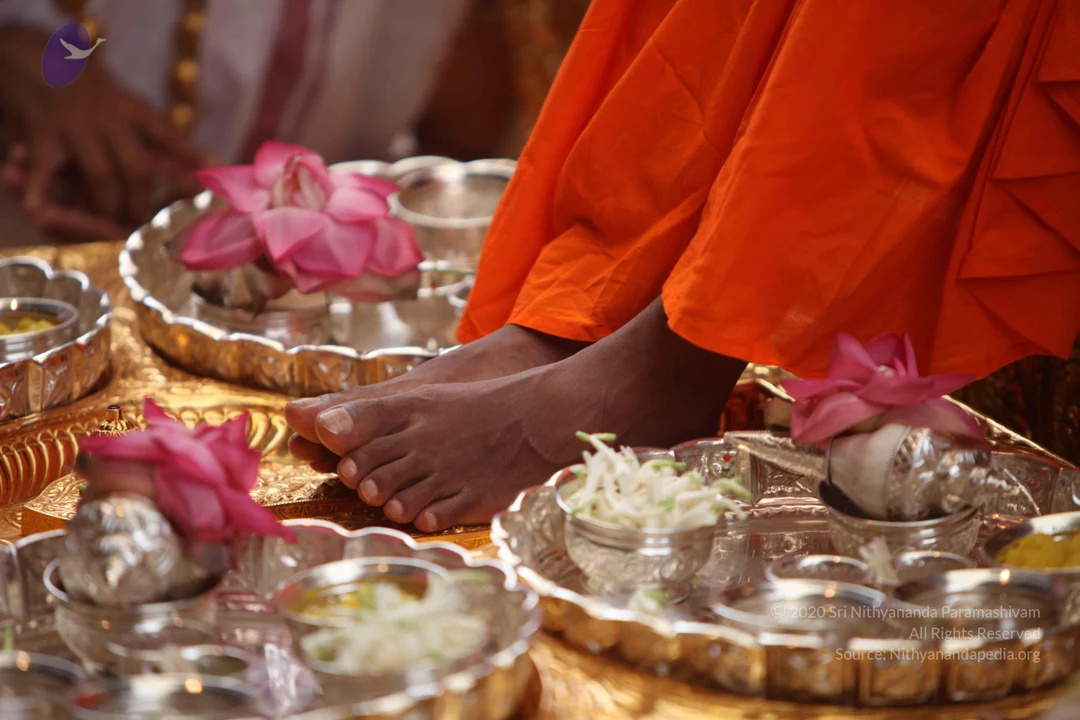
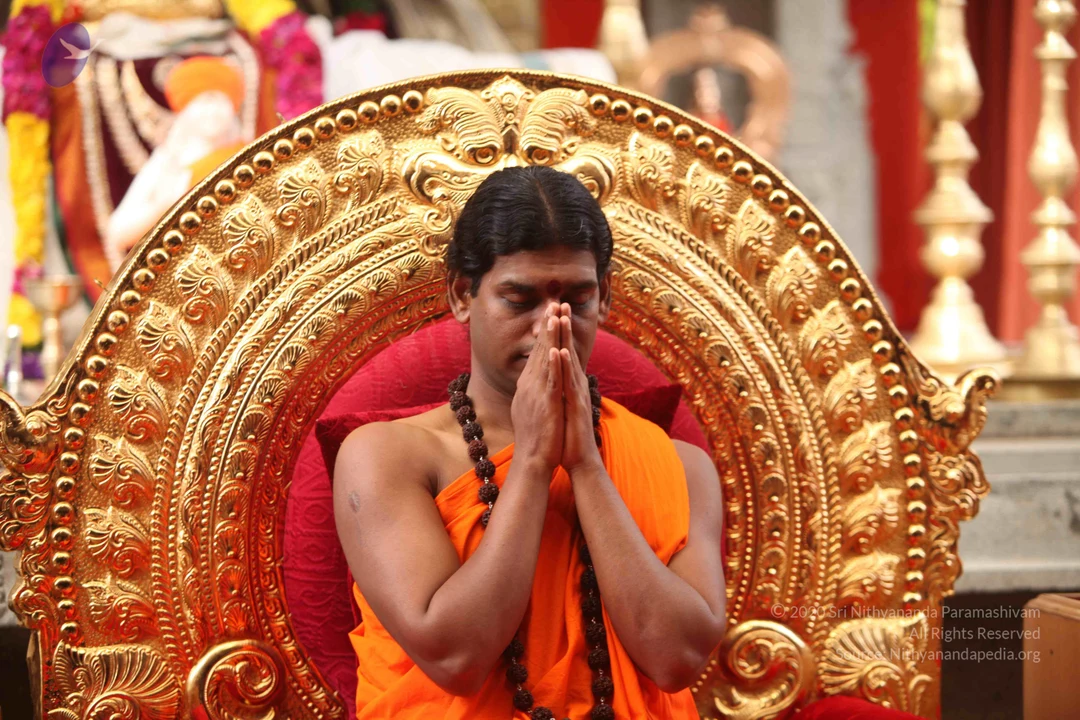
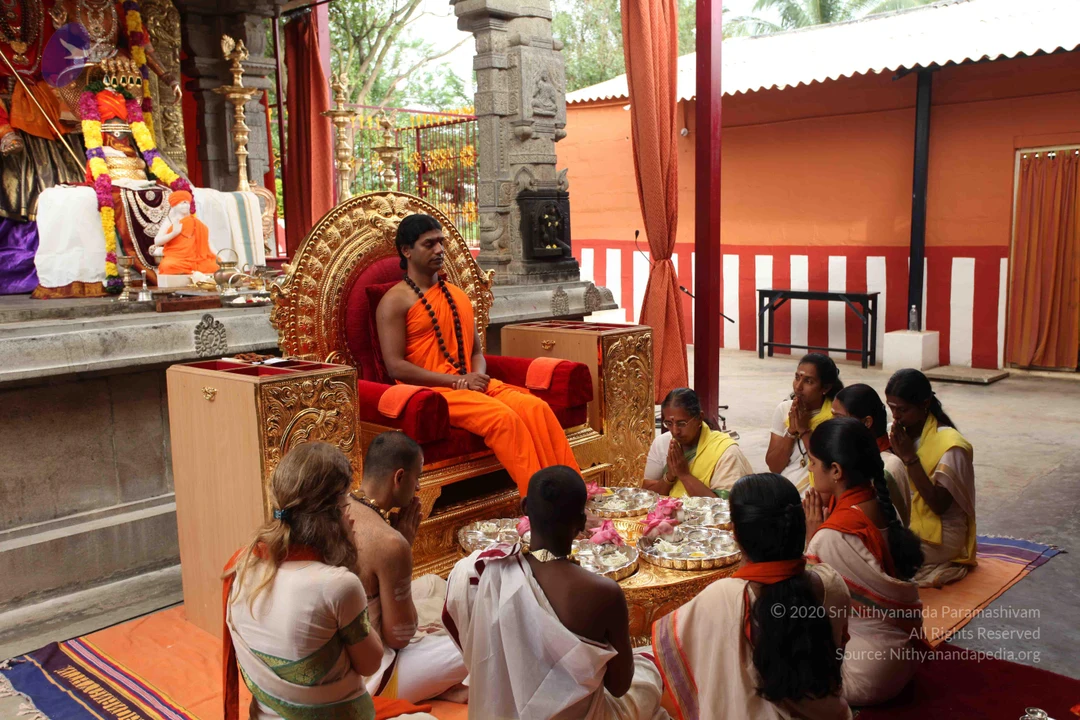
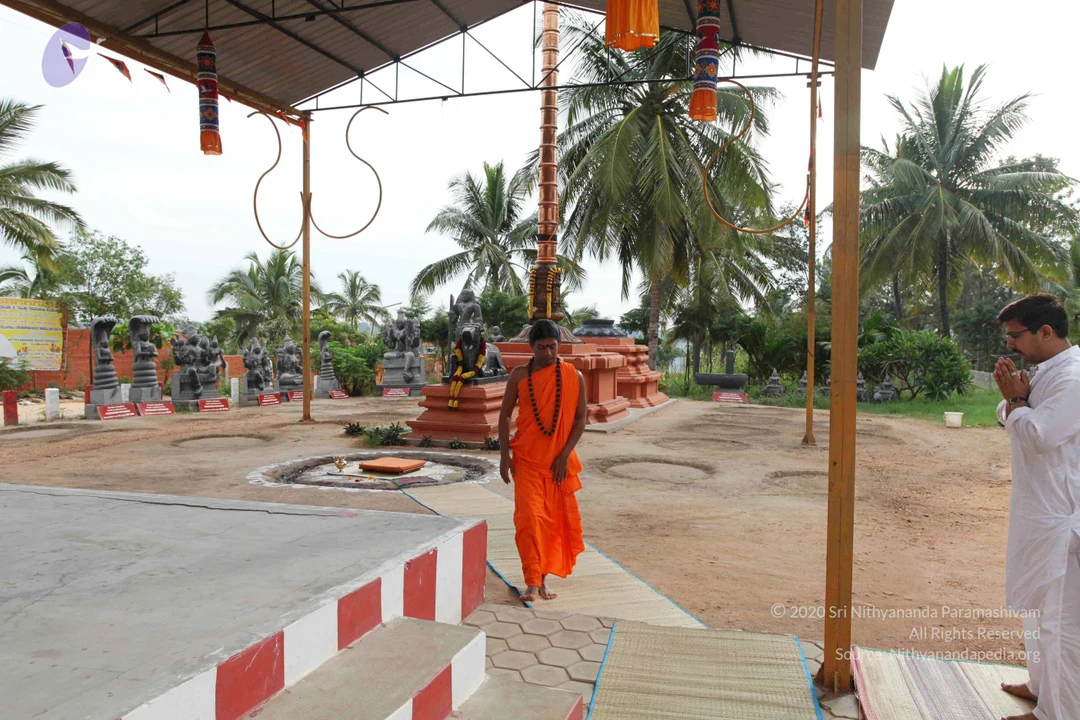
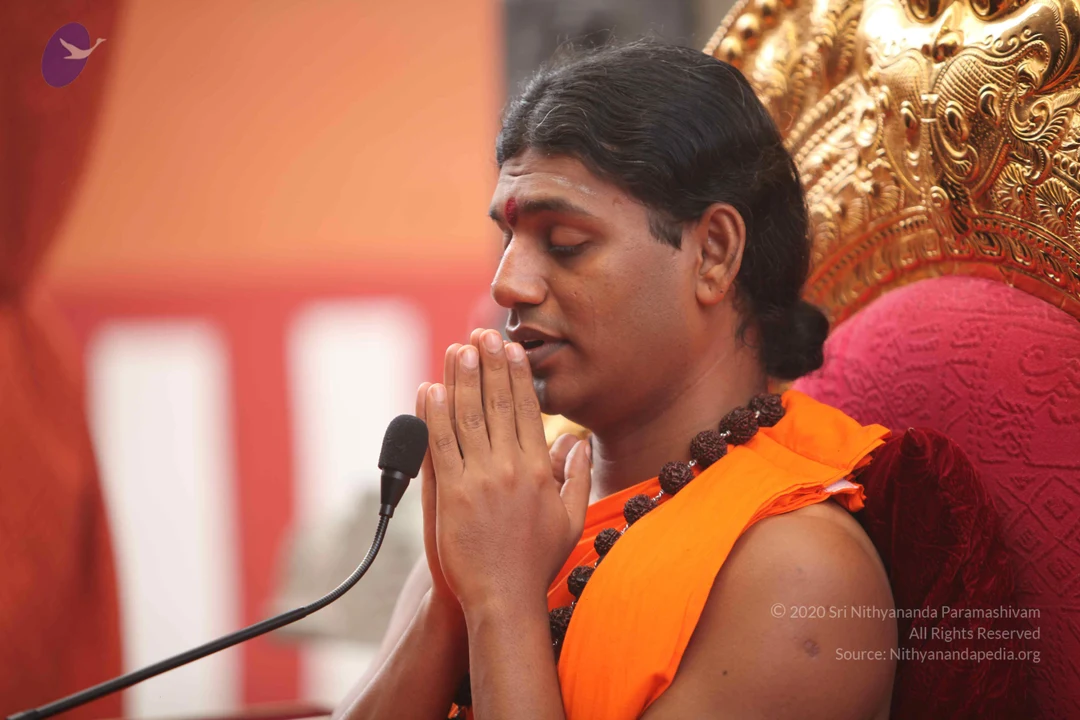
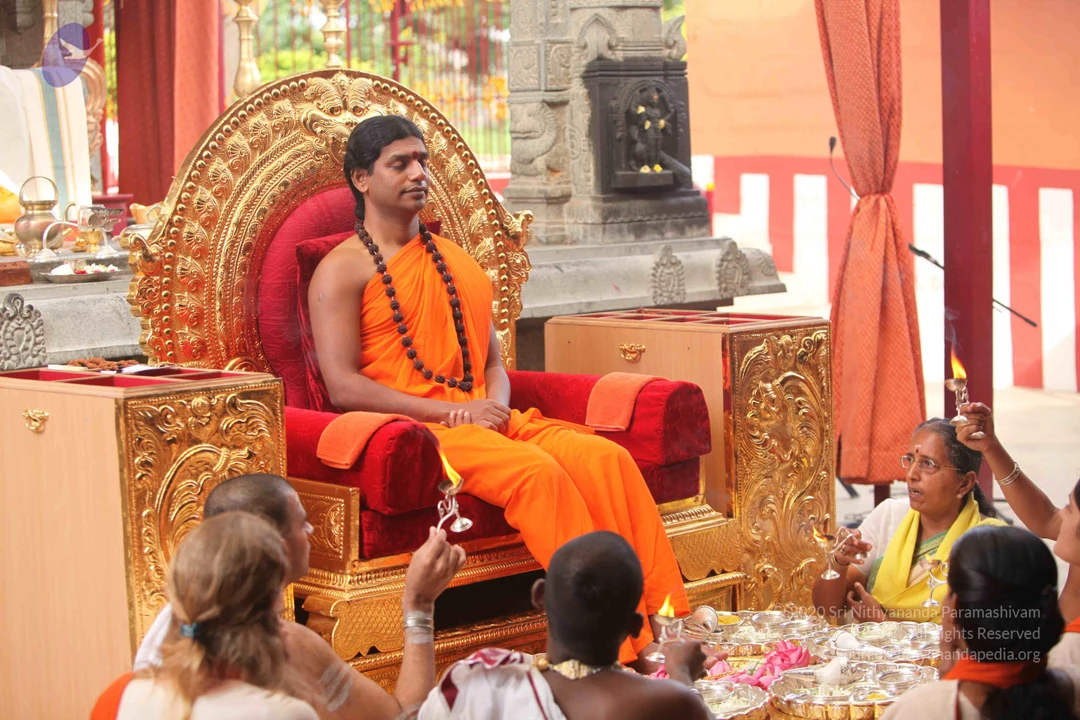
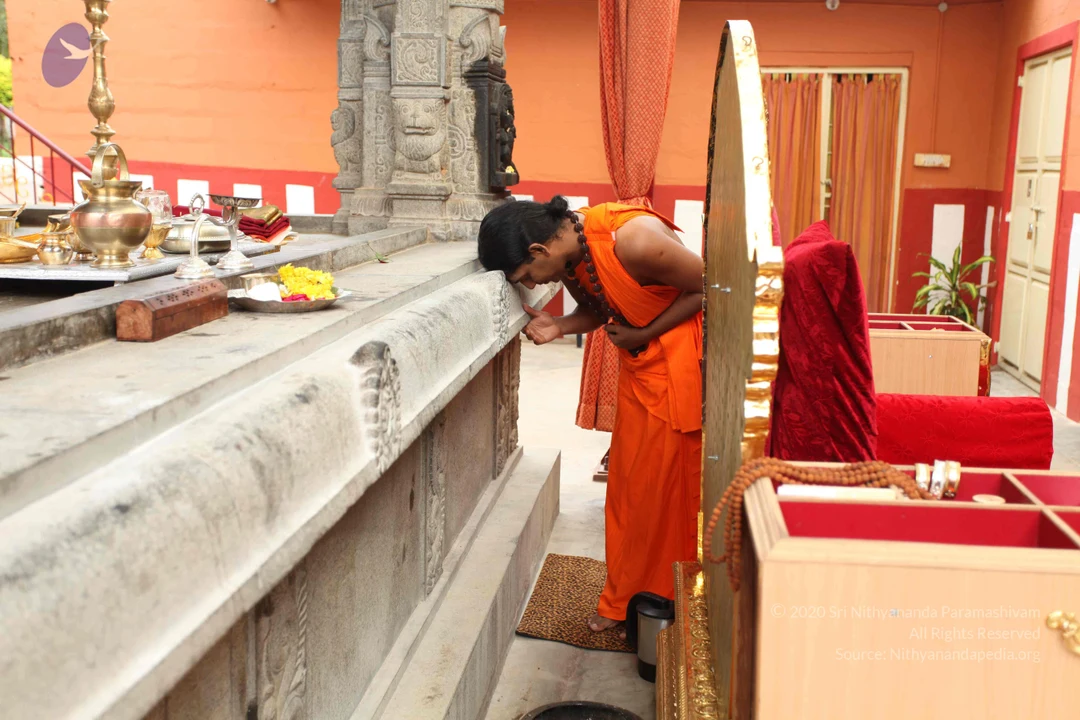
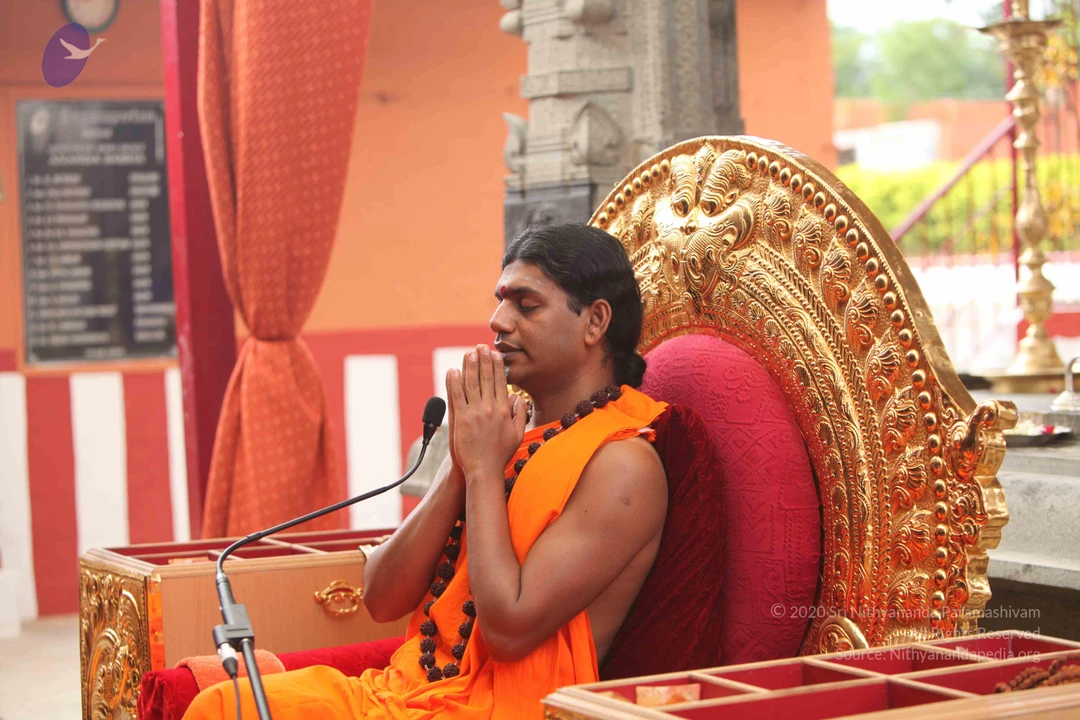
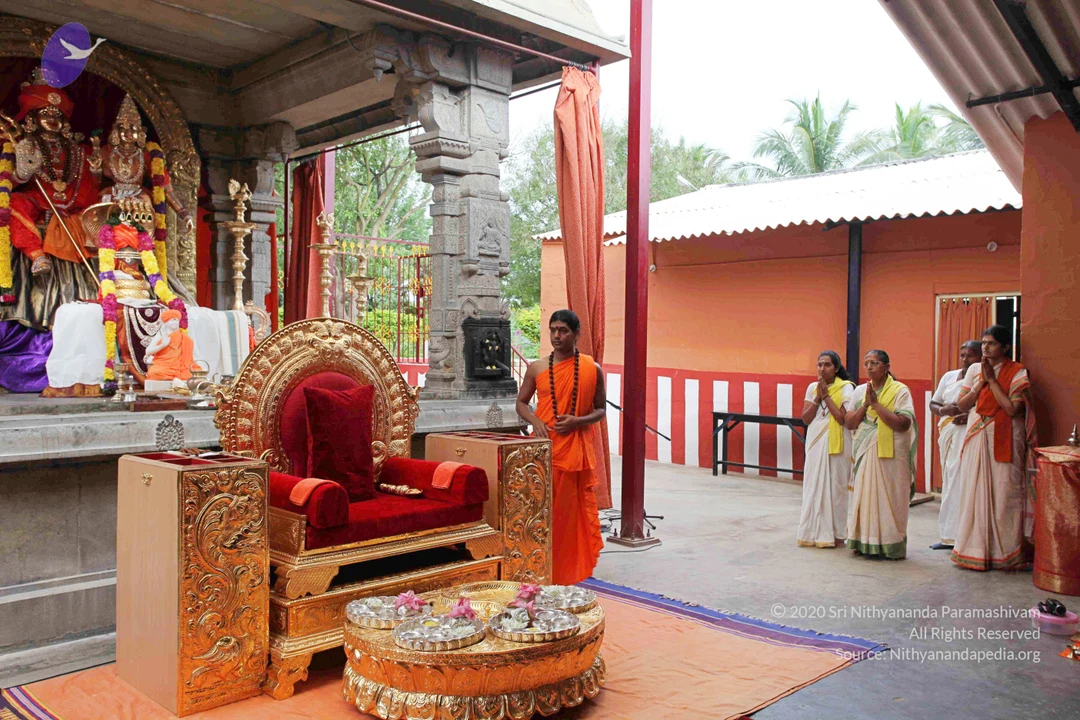
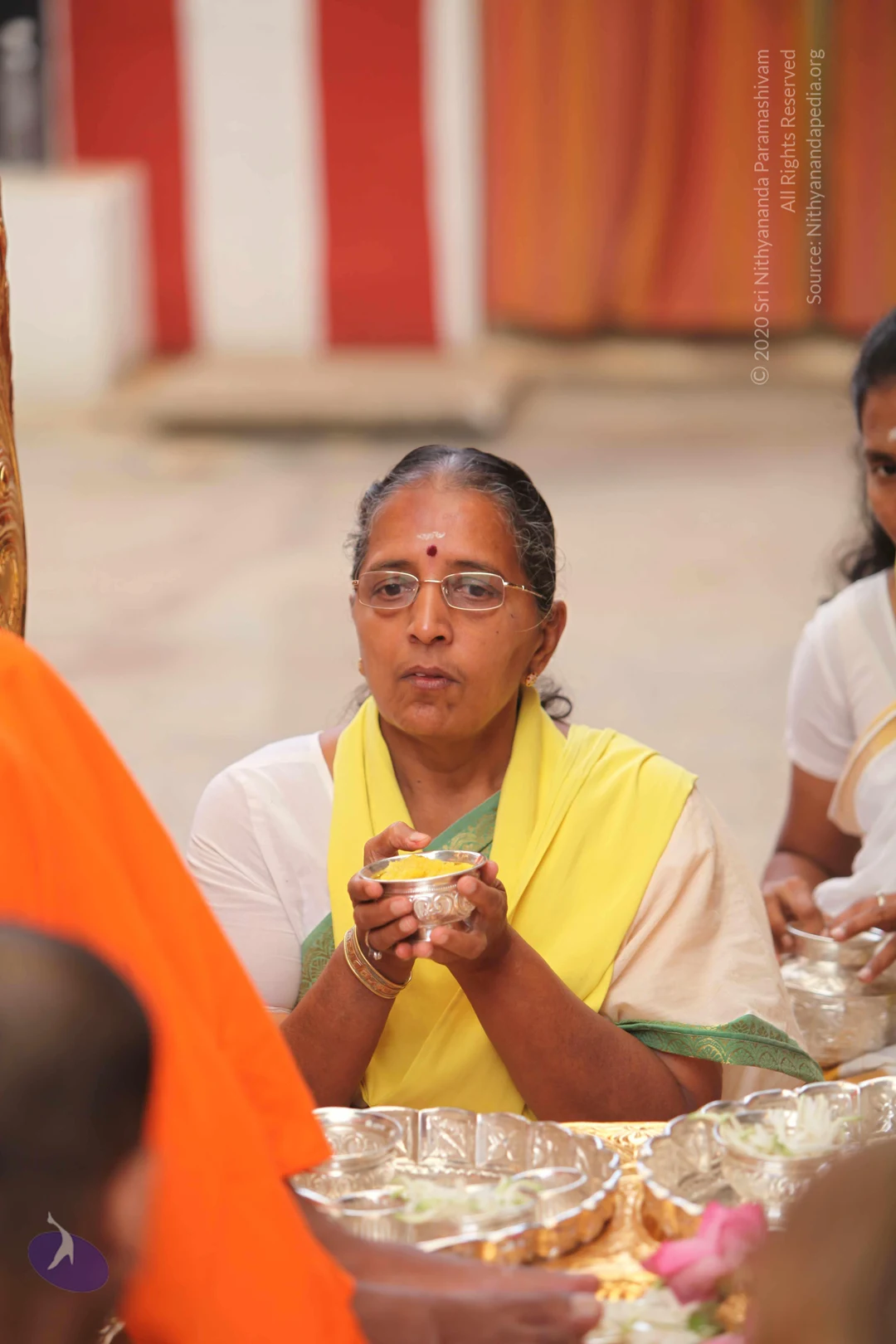
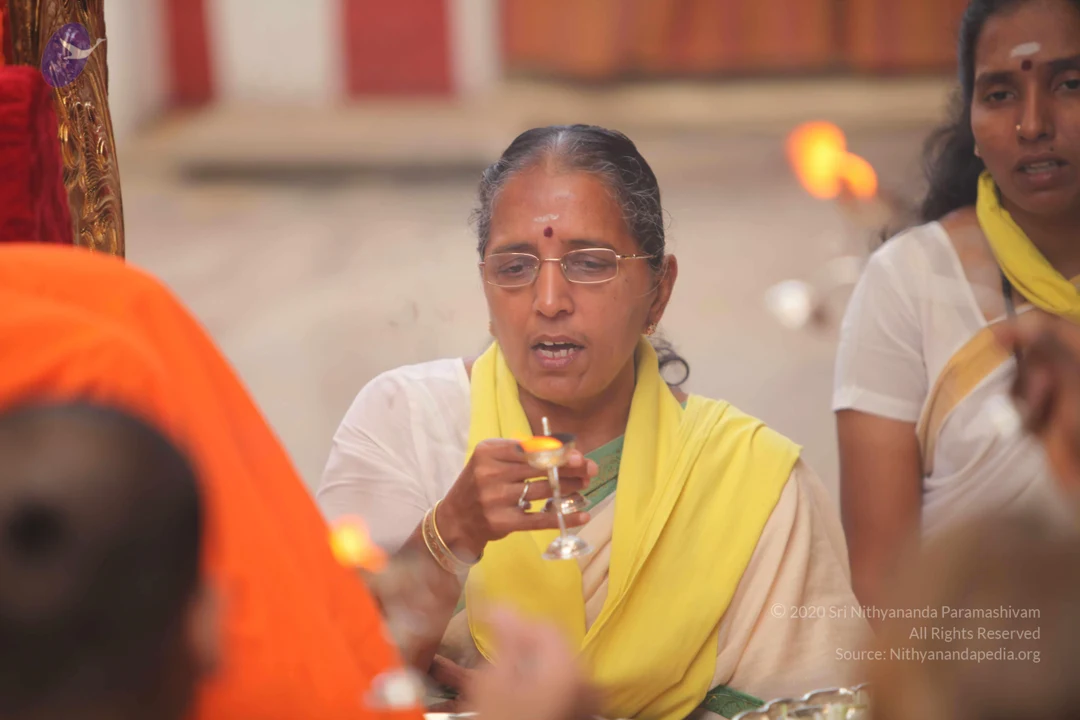
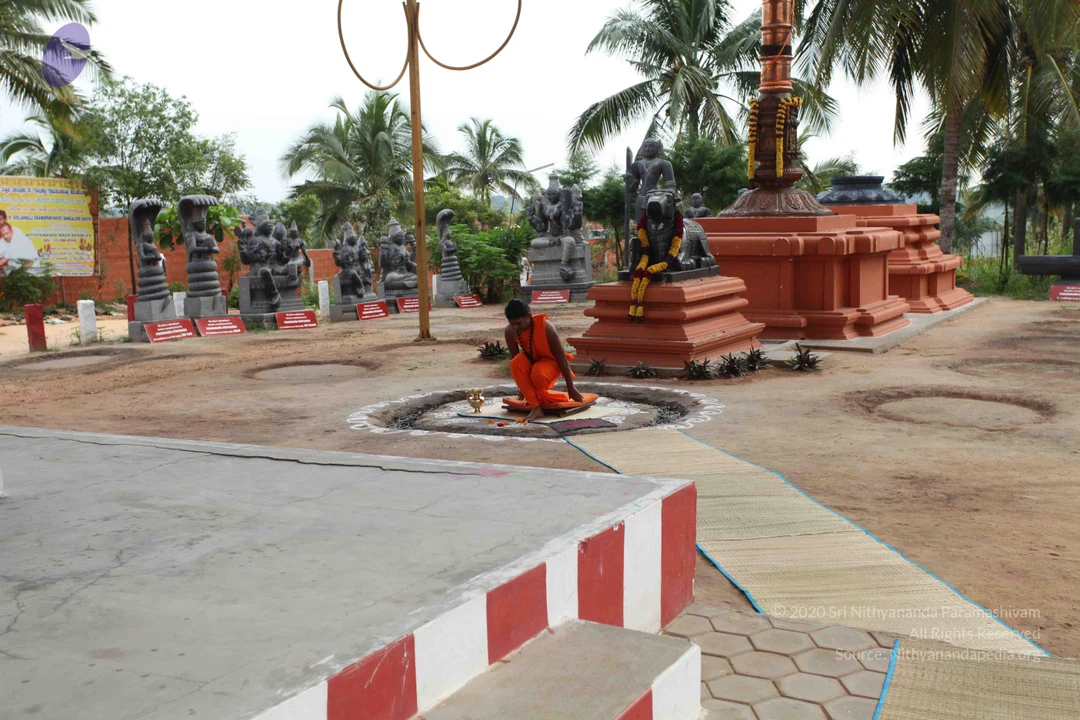
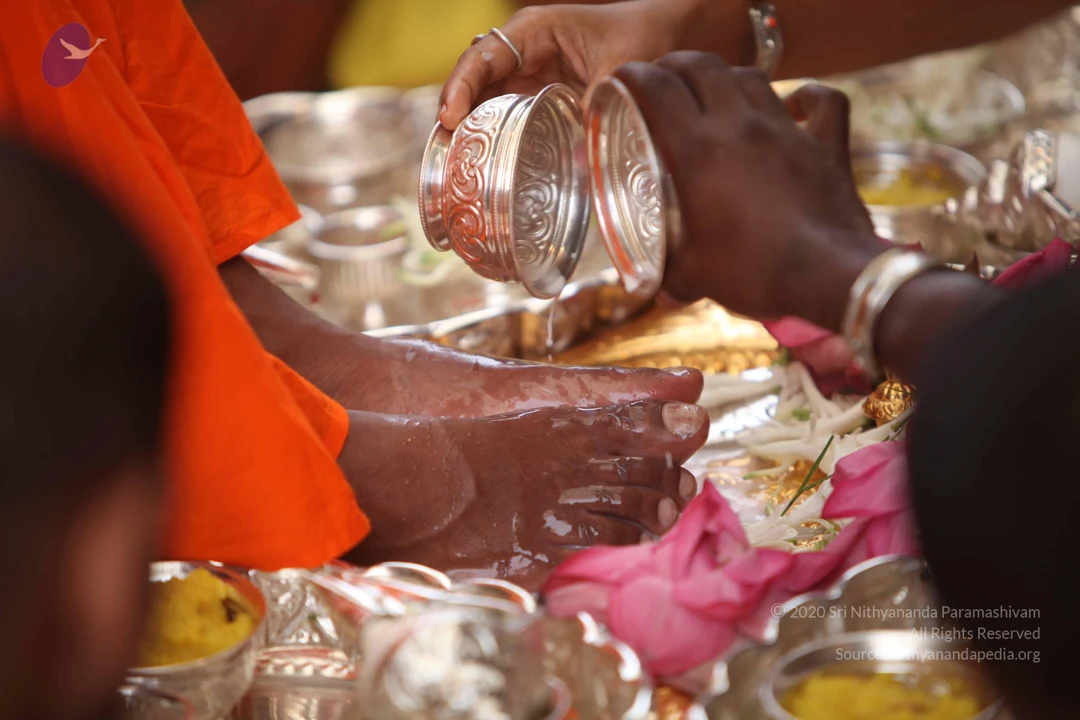
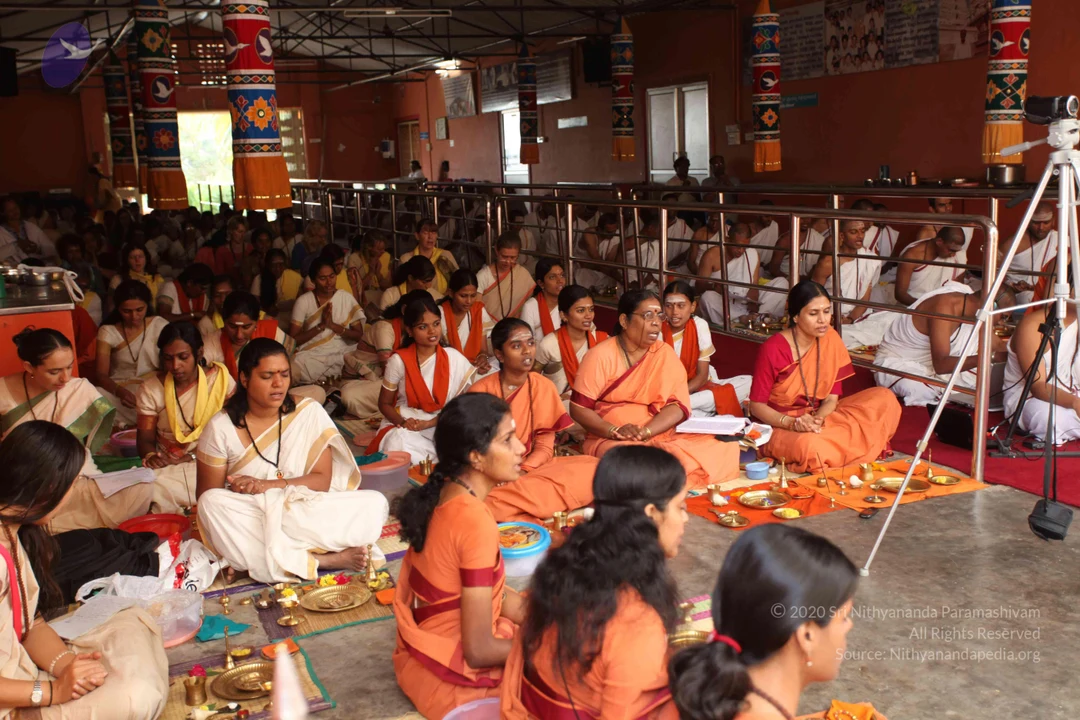
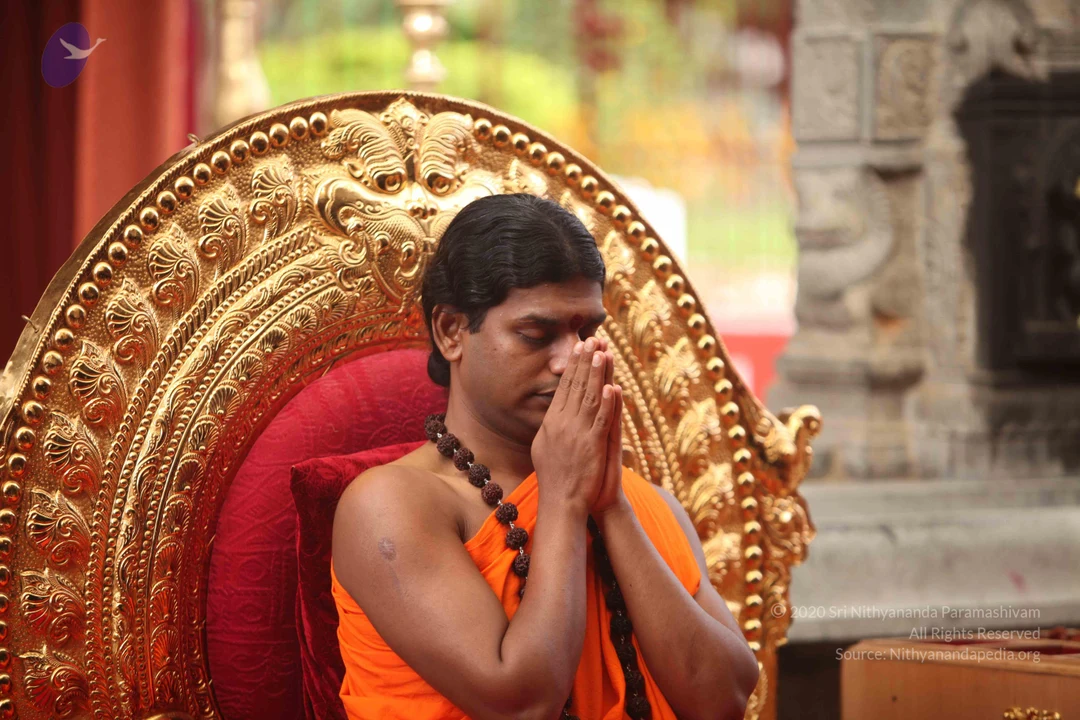
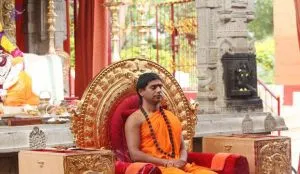
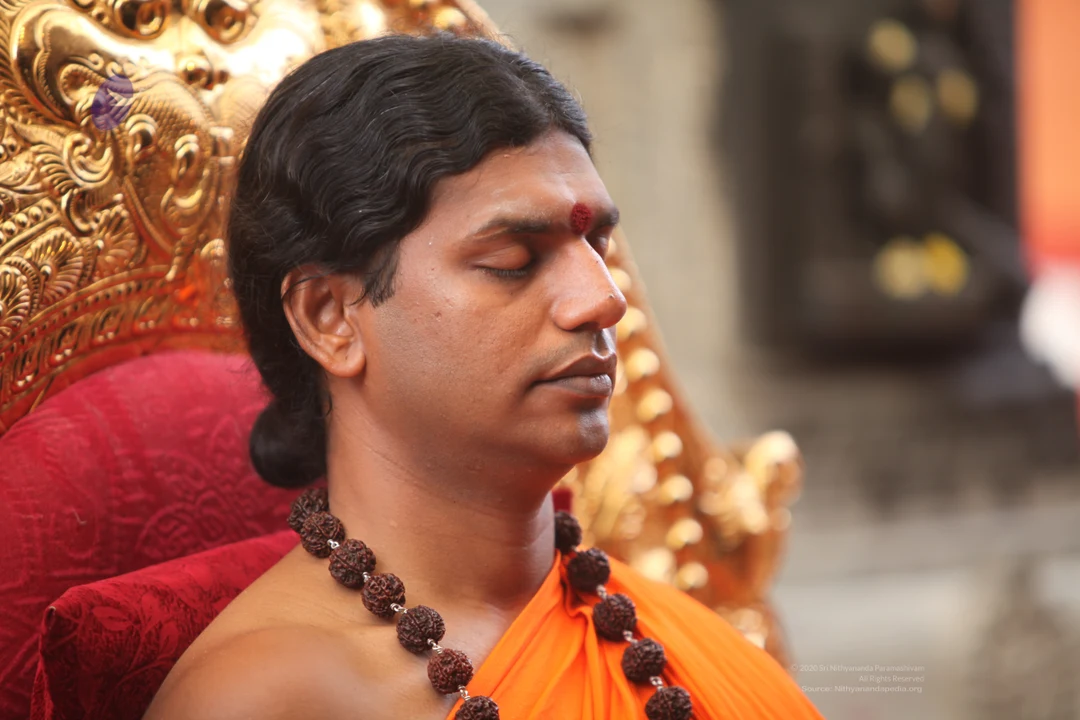
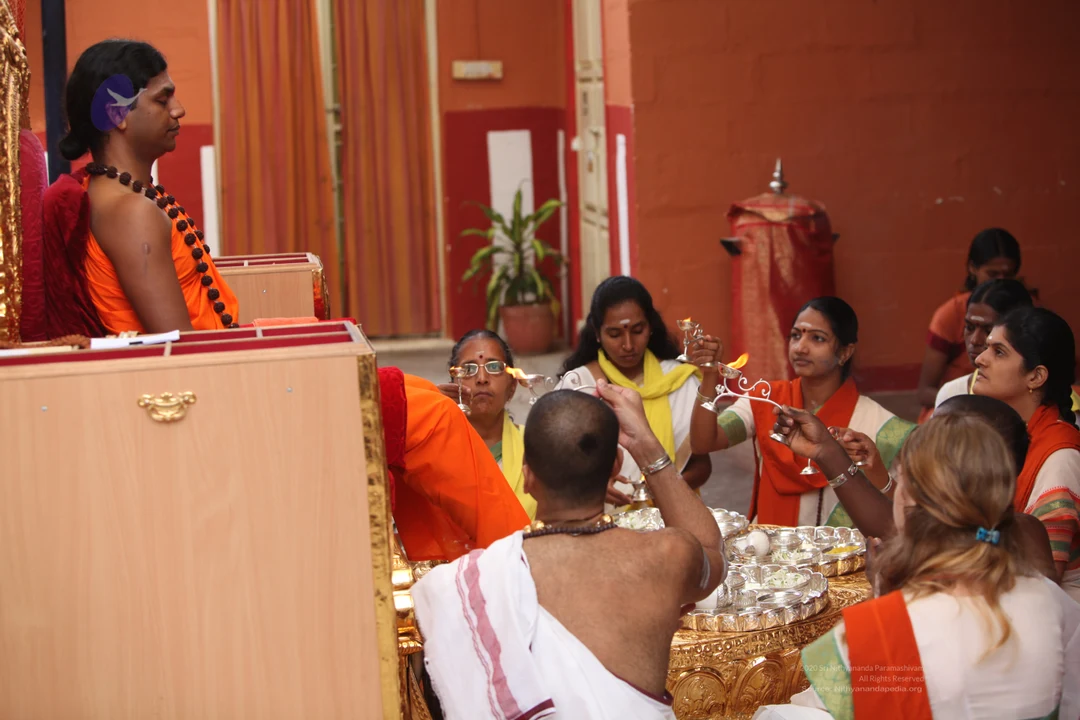
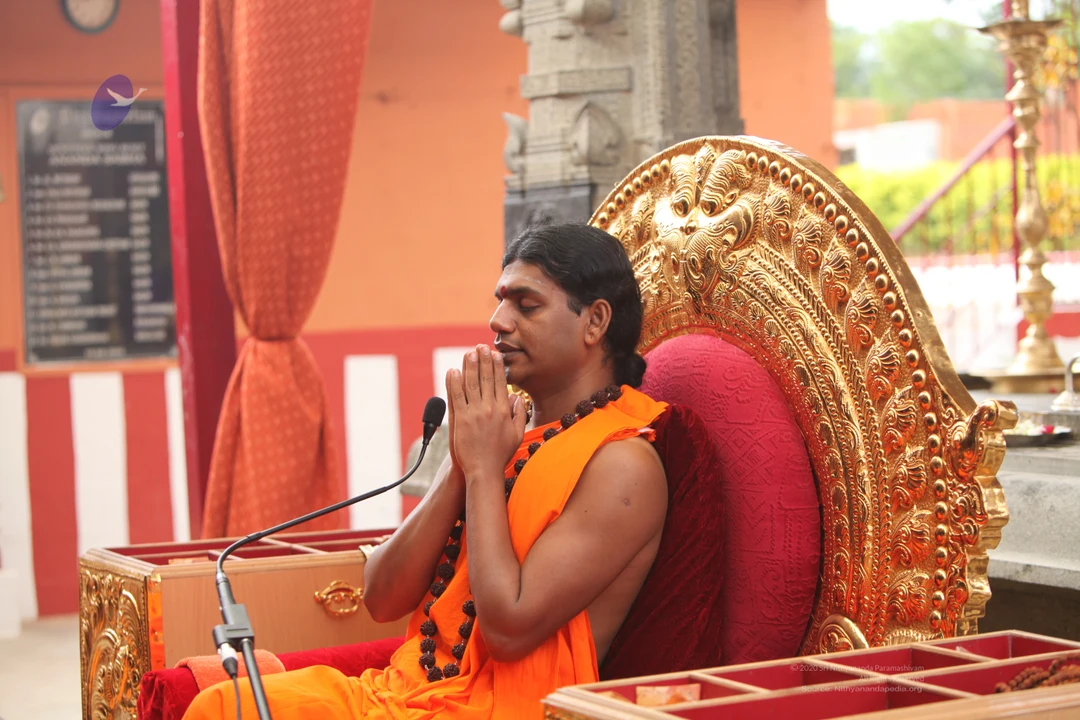
Outdoor temple grounds under a corrugated roof with palm trees behind. A person in orange saffron robes and a dark rudraksha mala walks barefoot along a woven mat path toward the right. Behind them stands a red stone shrine base holding a black deity murti draped with orange and yellow garlands, flanked by a tall copper kalasha. A circular fire pit with offerings sits in the sandy courtyard, and rows of black stone statues with red placards line the grounds. Colourful hanging cloth banners and brass rings hang from the roof poles. The walking person's identity cannot be determined from appearance here.Outdoor temple pavilion with a red and gold deity murti garlanded with yellow and orange flower strings, a brass lamp stand and palm trees beyond. A man in orange robes and a beaded mala sits on an ornate gold-and-red throne. Around him in orange cloth and white dhotis, a group sits on an orange mat facing him, with brass plates of flowers and offerings in front; several women wear yellow shawls, some with palms joined. a person cues: long dark hair and a rudraksha mala on a seated figure in orange robes on a throne, though the appearance is only partly clear.A long covered hall with a corrugated roof, orange walls and hanging banners in red, yellow and blue. Dozens of men sit on woven mats in rows, many wearing white dhotis and shawls, others in saffron/orange robes. Several are seated before brass plates, oil lamps, small bowls and flower-filled trays on orange cloths, performing puja with folded hands. A camera on a tripod films the rows from the left, and a long red carpet runs along the side. Marigold garlands and offerings sit on a counter at the right.Close-up photo of hands performing a ritual offering over silver and gold-rimmed brass trays. A hand in a silver bangle holds a pink lotus bloom over a tray, while another hand pours or sprinkles from a small spoon over a bowl of white flowers and yellow petals. Orange-robed arms and a dark-haired head are visible at the edges, with more gold plates and flower offerings in the foreground. a person is not visibly identifiable in this frame.A man seated in a large ornate gold throne with a red cushioned back sits with eyes closed and palms pressed together in anjali mudra. He wears a plain orange saffron cloth draped over one shoulder, a rudraksha mala of dark beads around his neck, and a red bindi on his forehead. Swamiji (probable): long swept-back hair, saffron clothing and rudraksha mala are visible cues, and the page places him at this event, so the candidate is present in person. The gilded throne with carved floral and scroll details stands in a temple-like setting with a stone pillar at right.
Morning-Satsang-And-Sarvadarshan
12 photosSource gallery
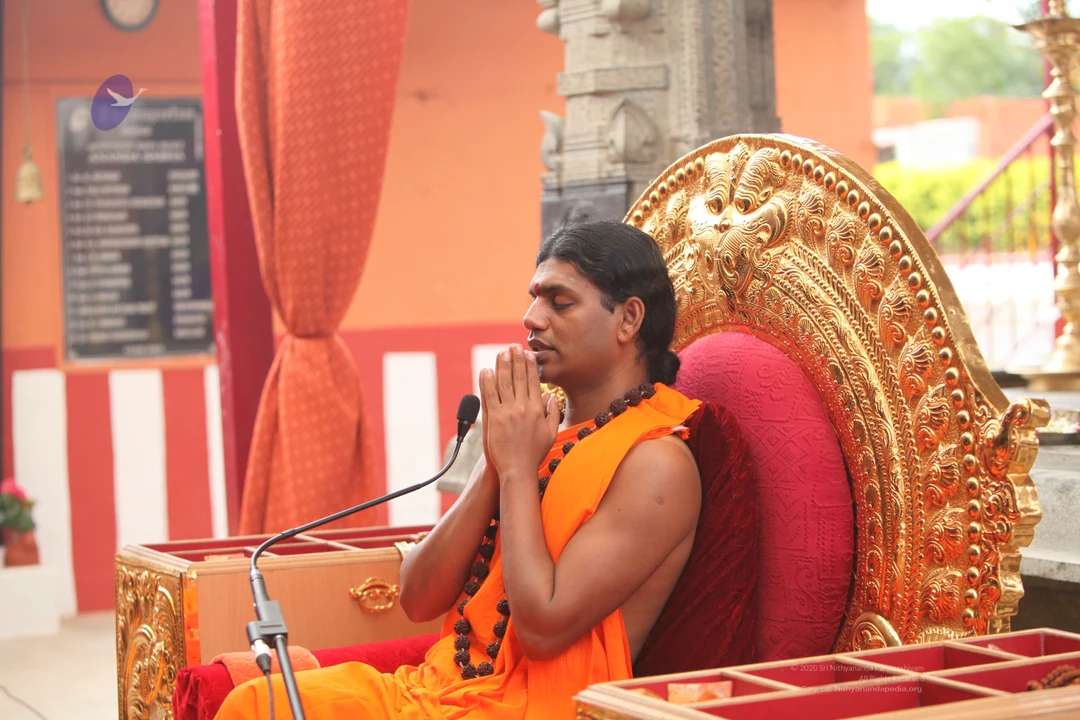
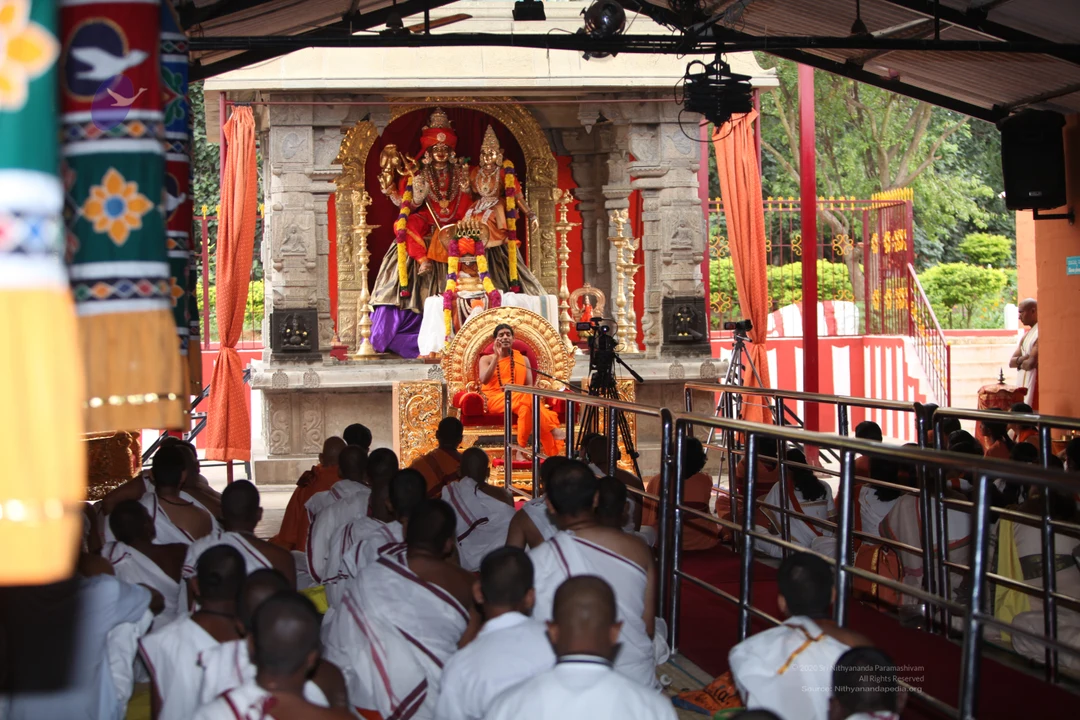
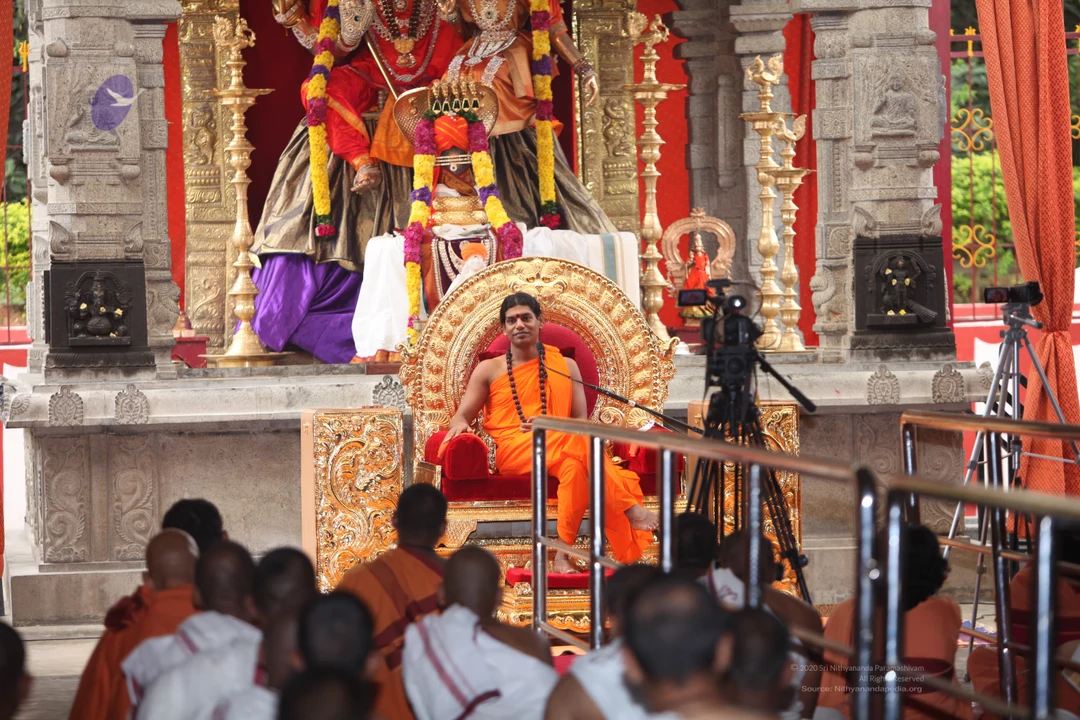
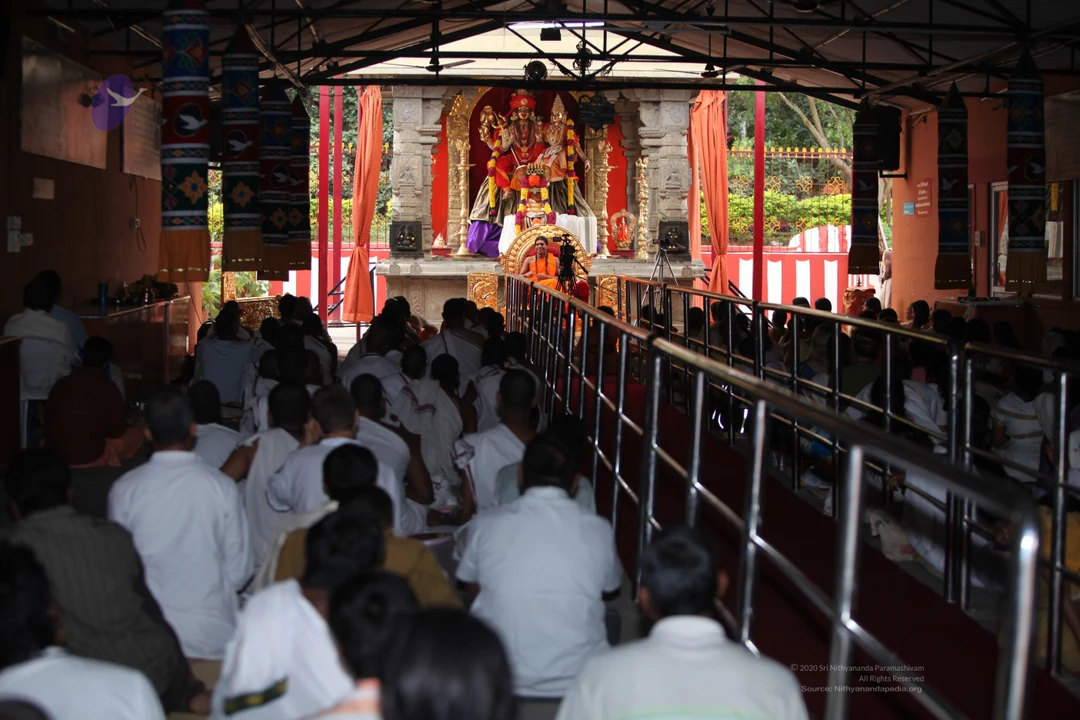
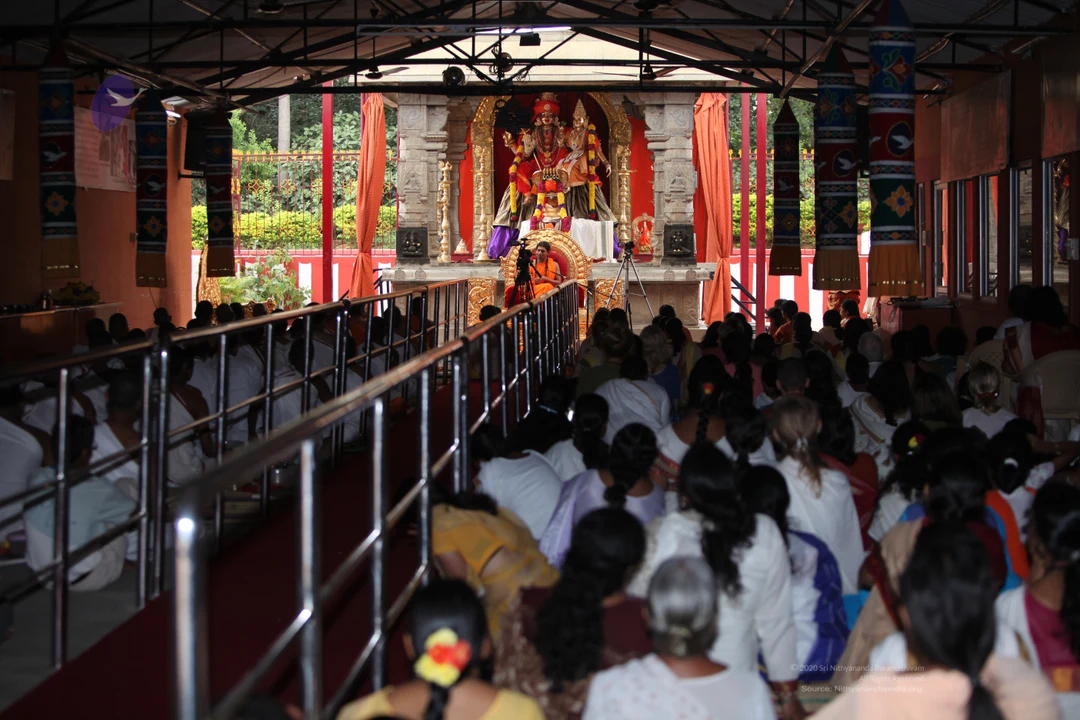
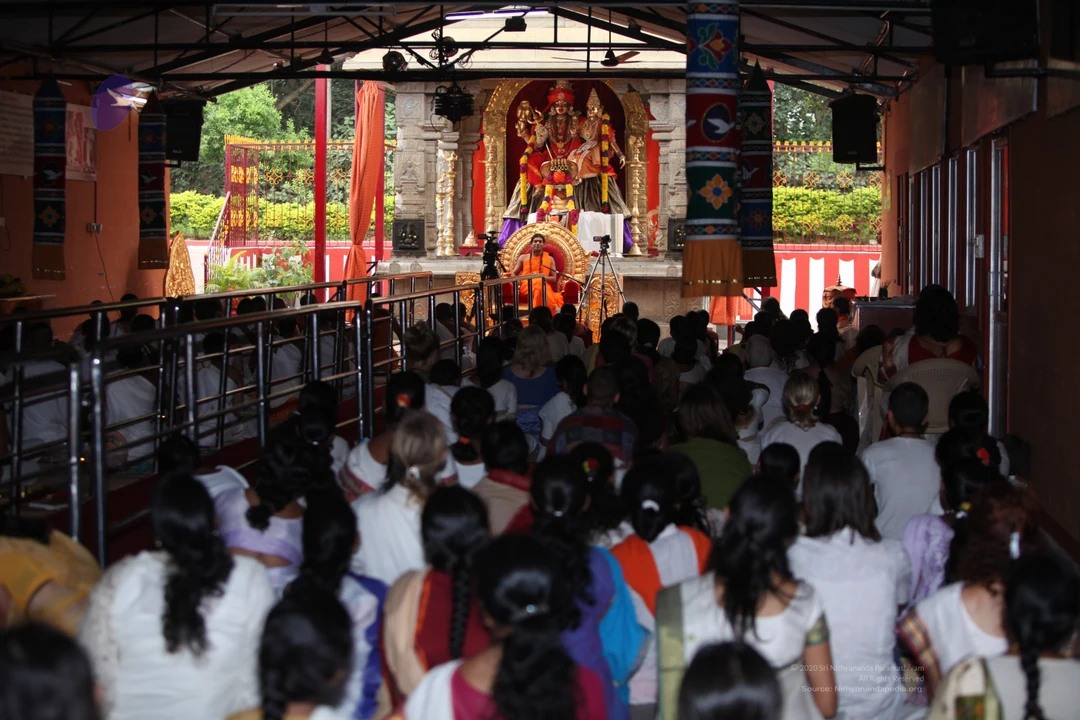
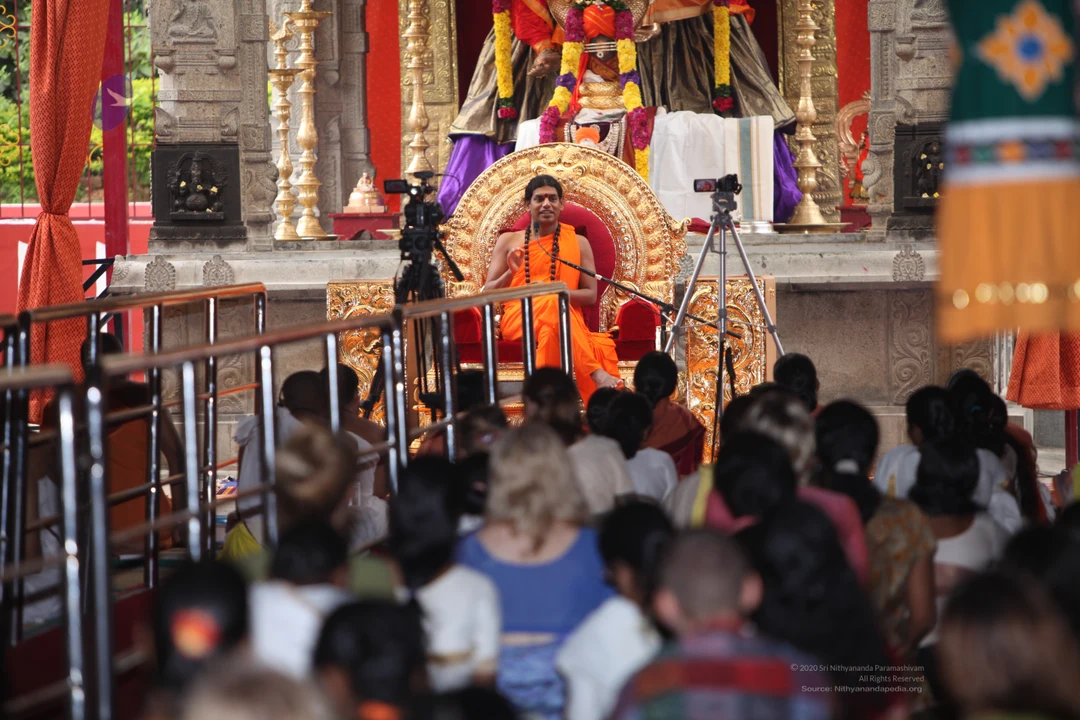
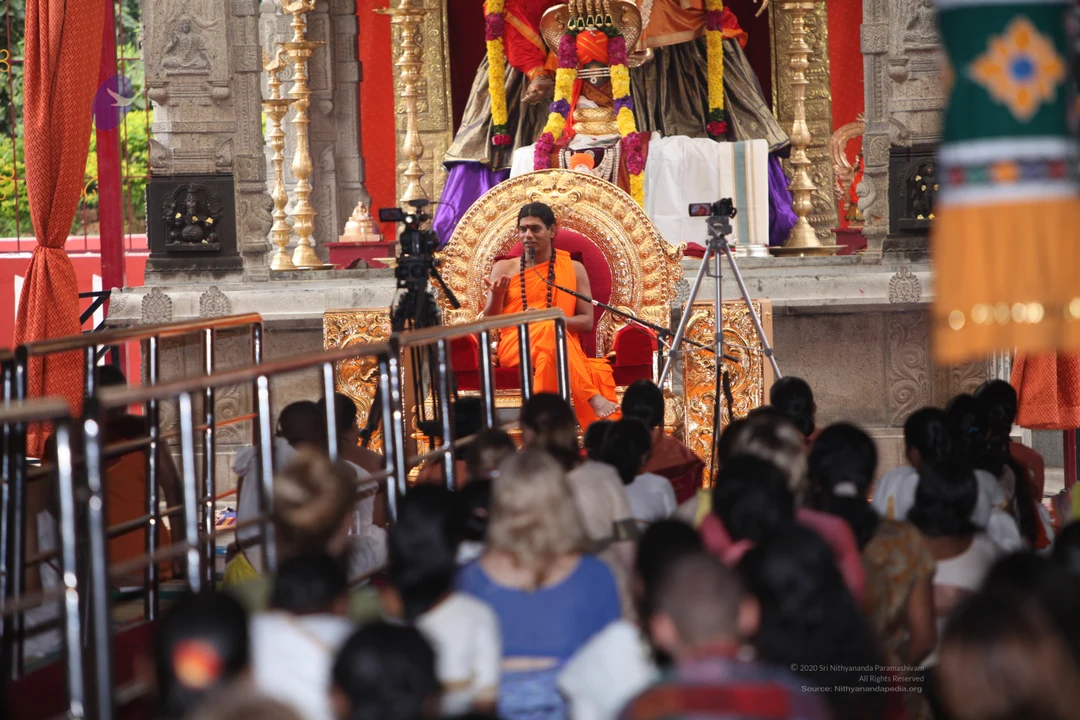
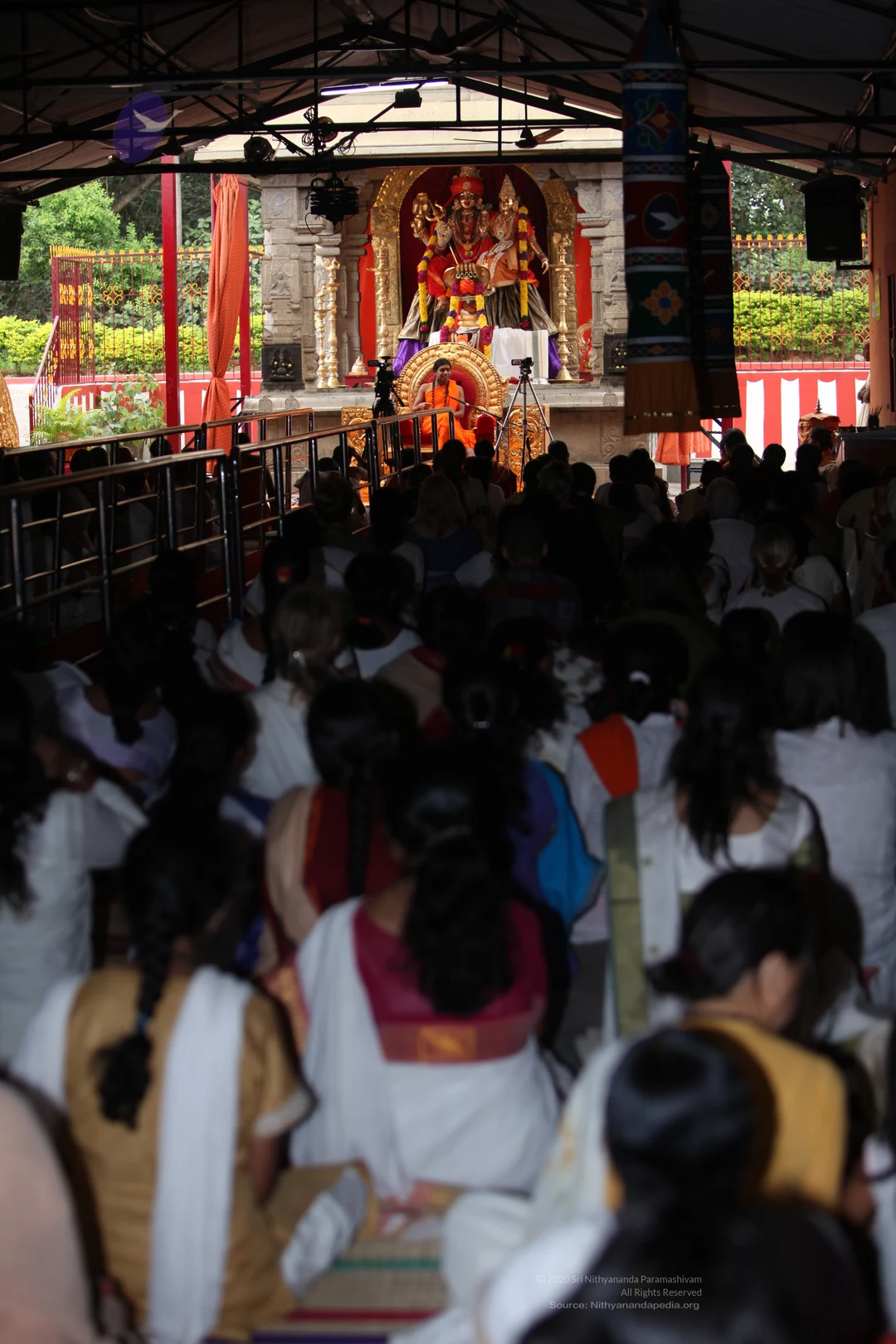
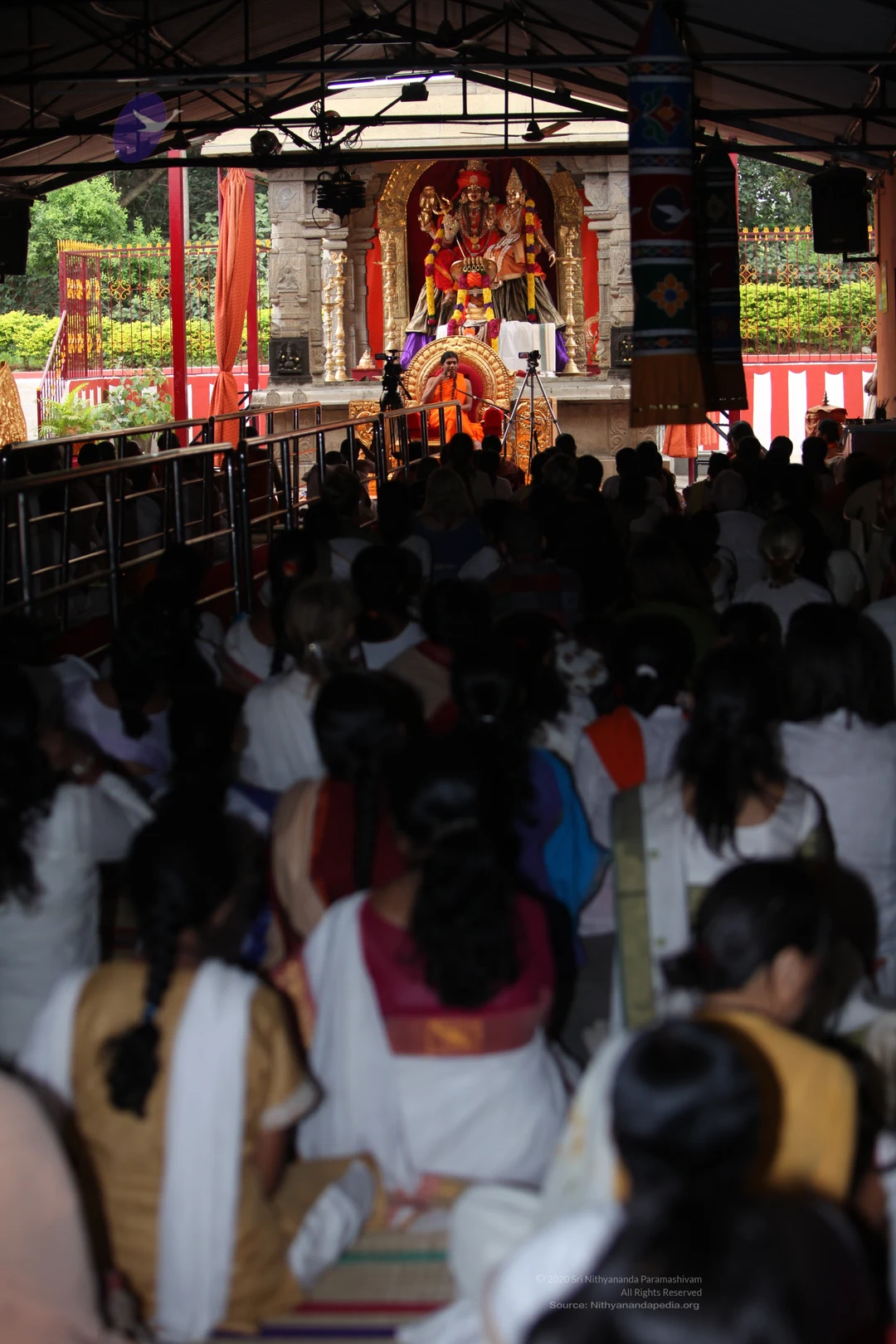
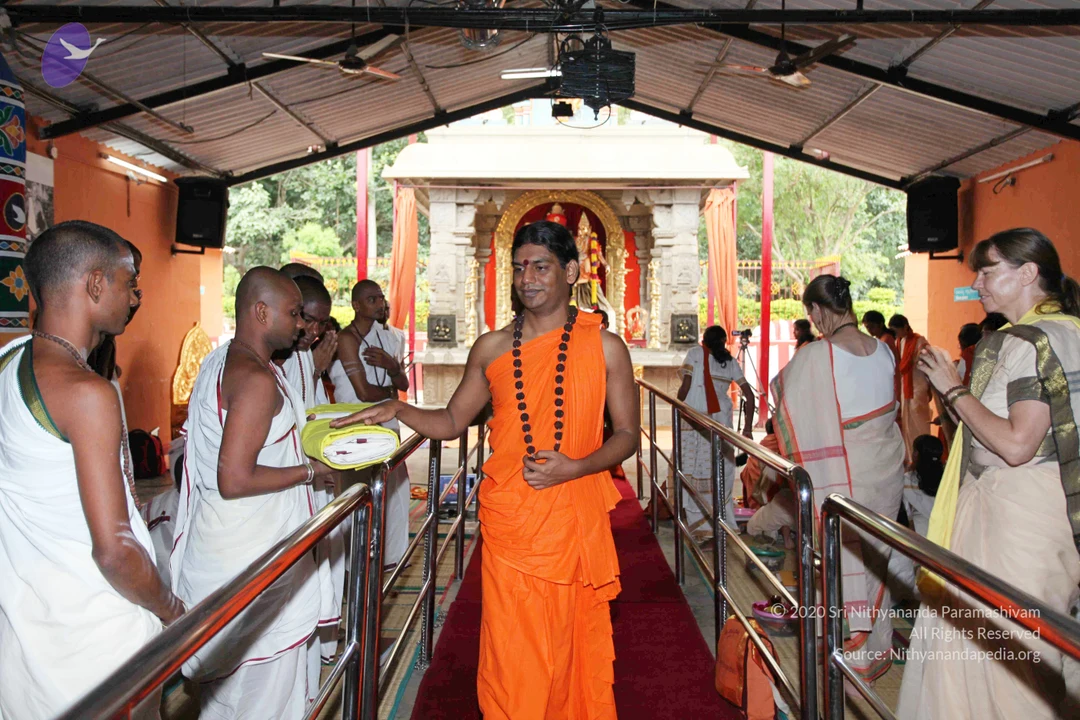
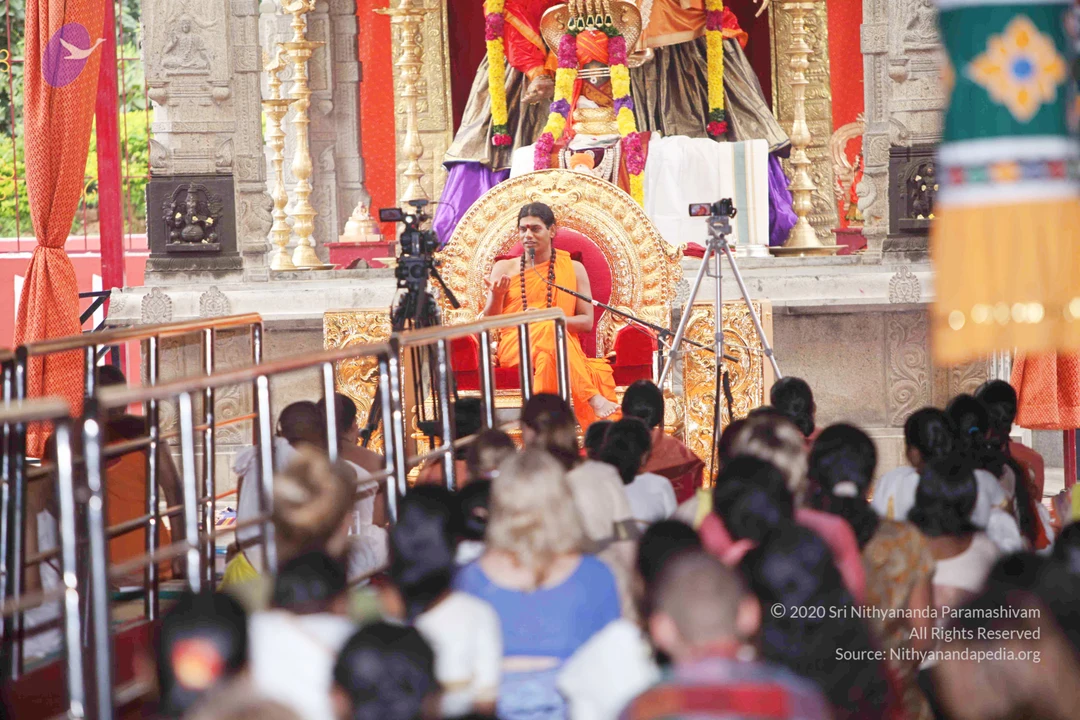
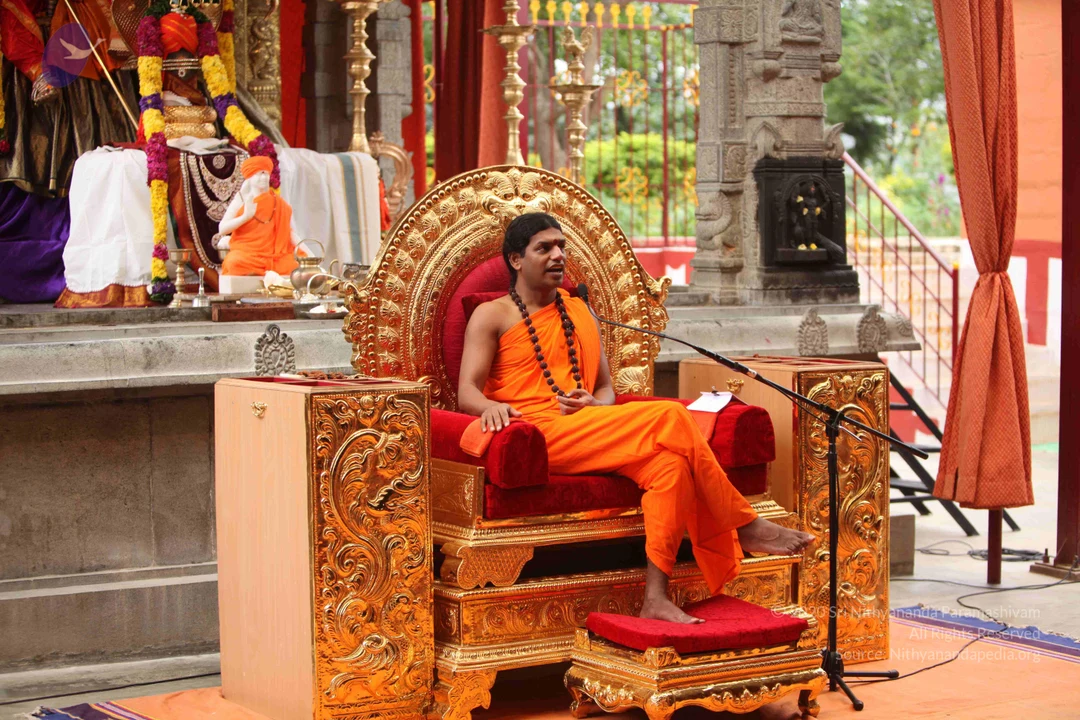
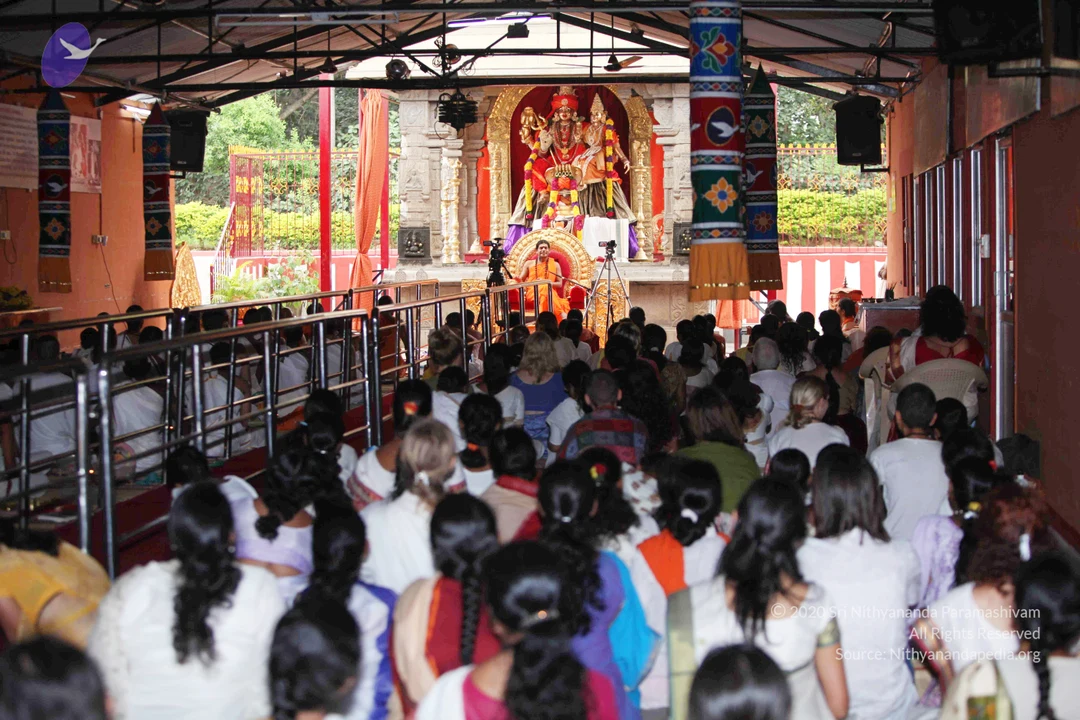
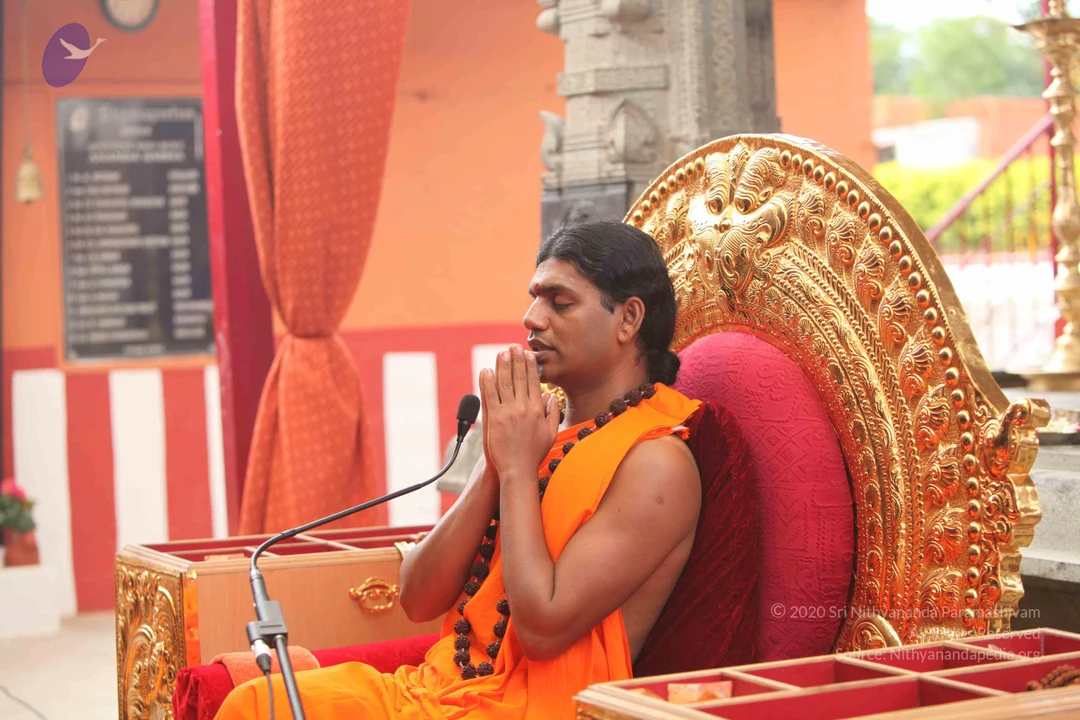
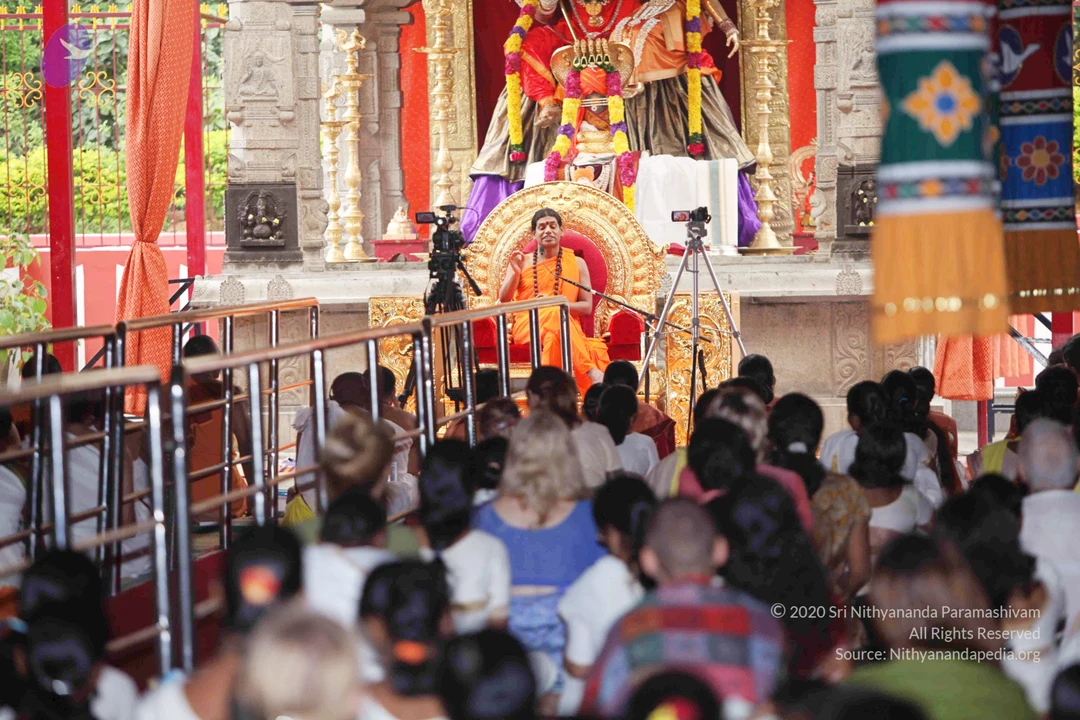
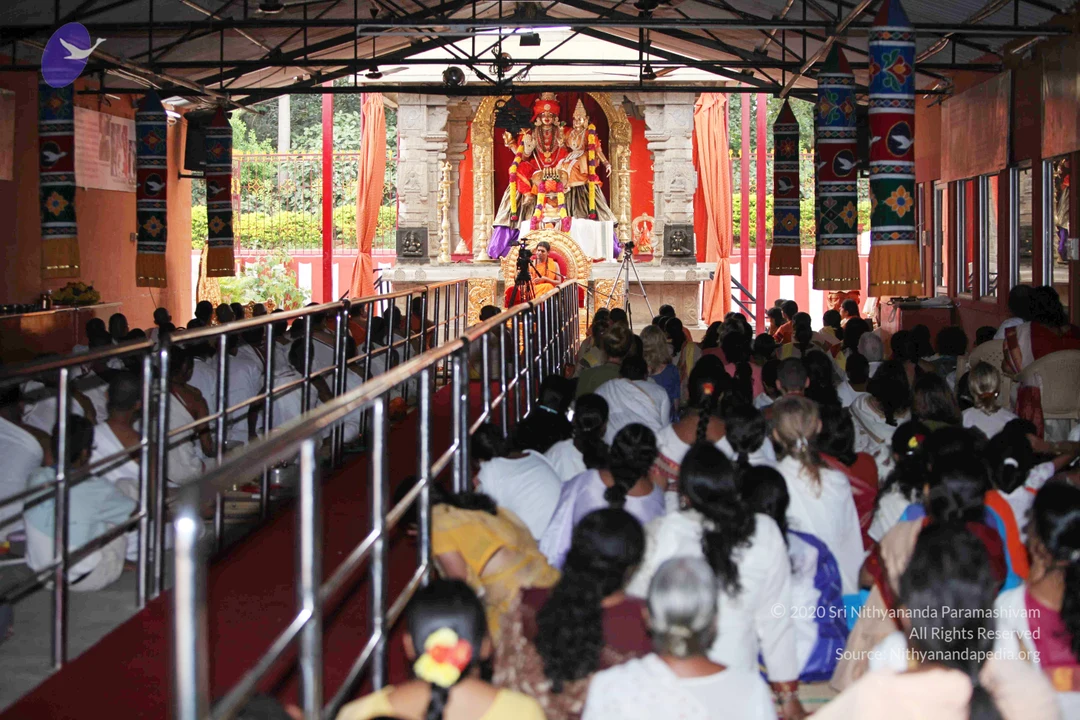
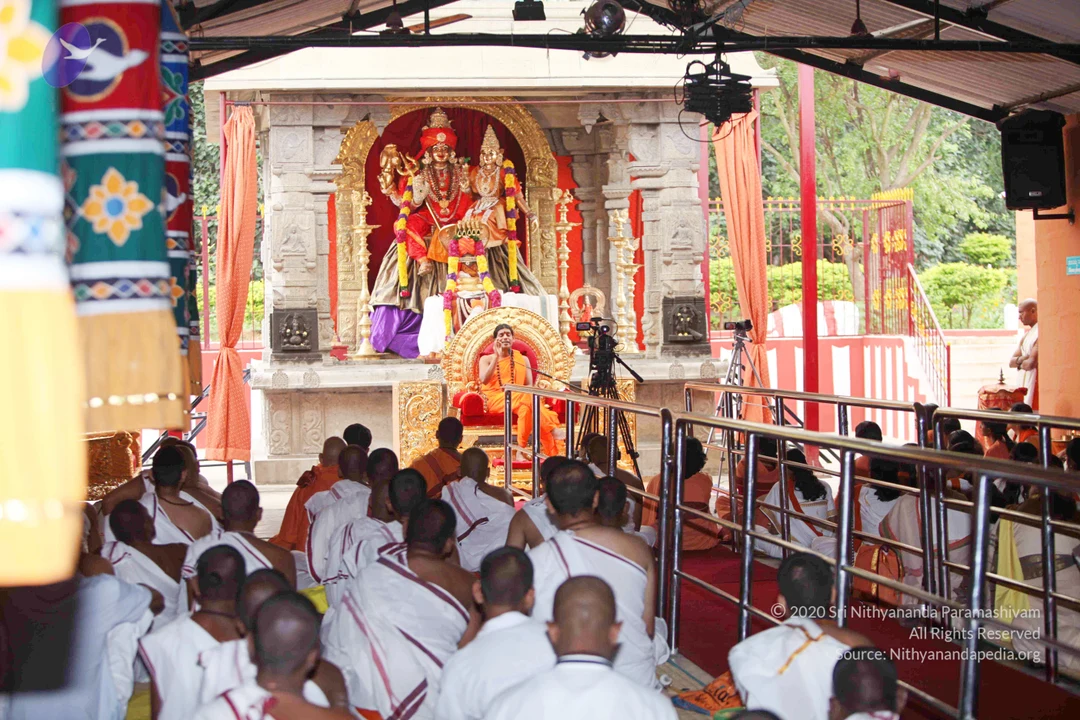
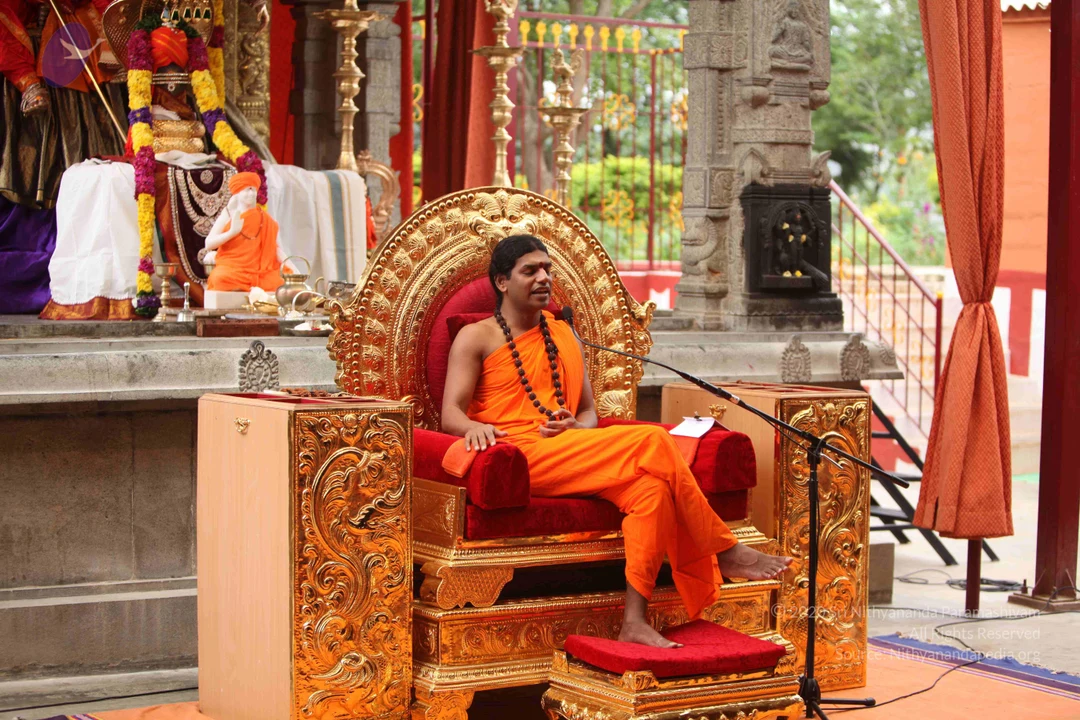
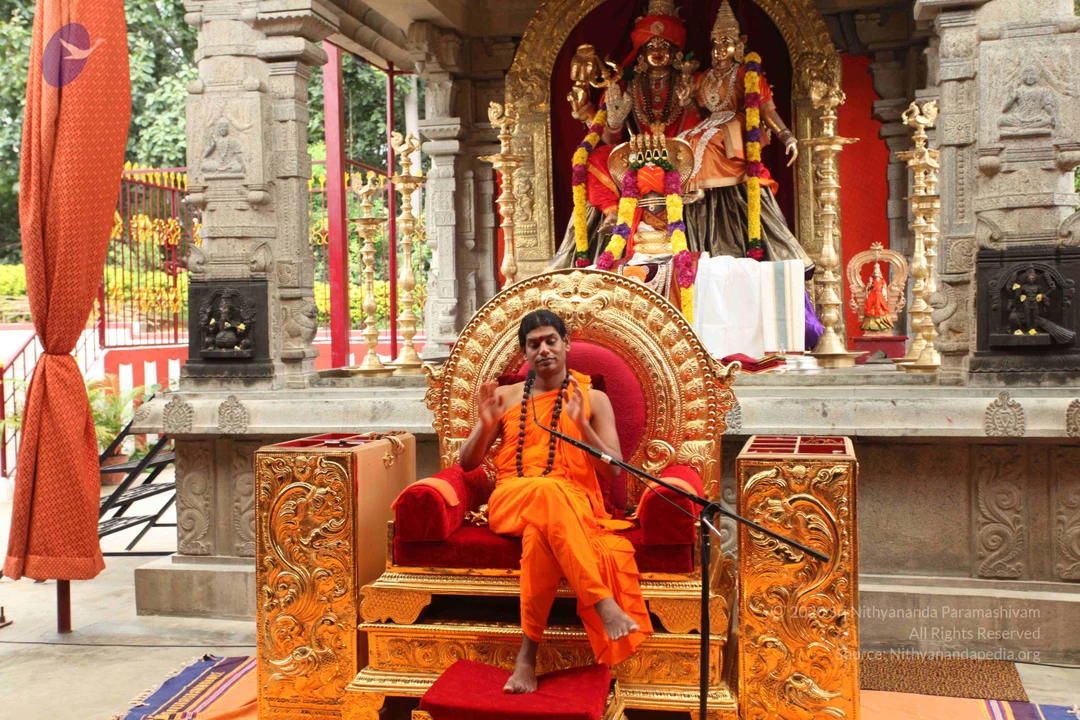
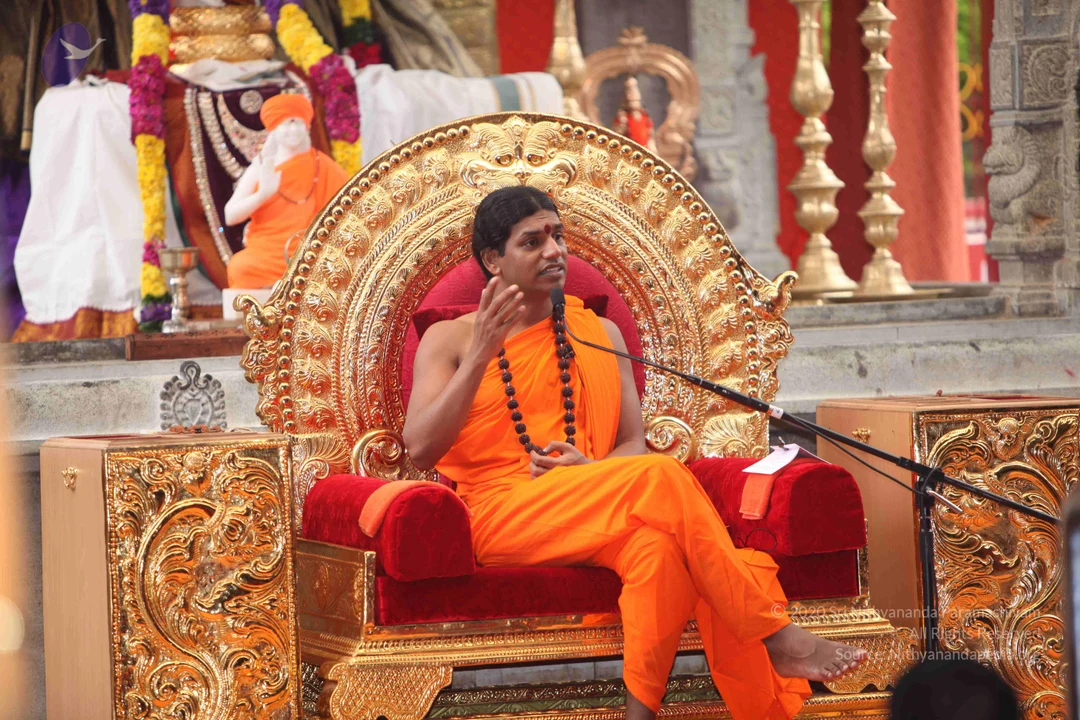
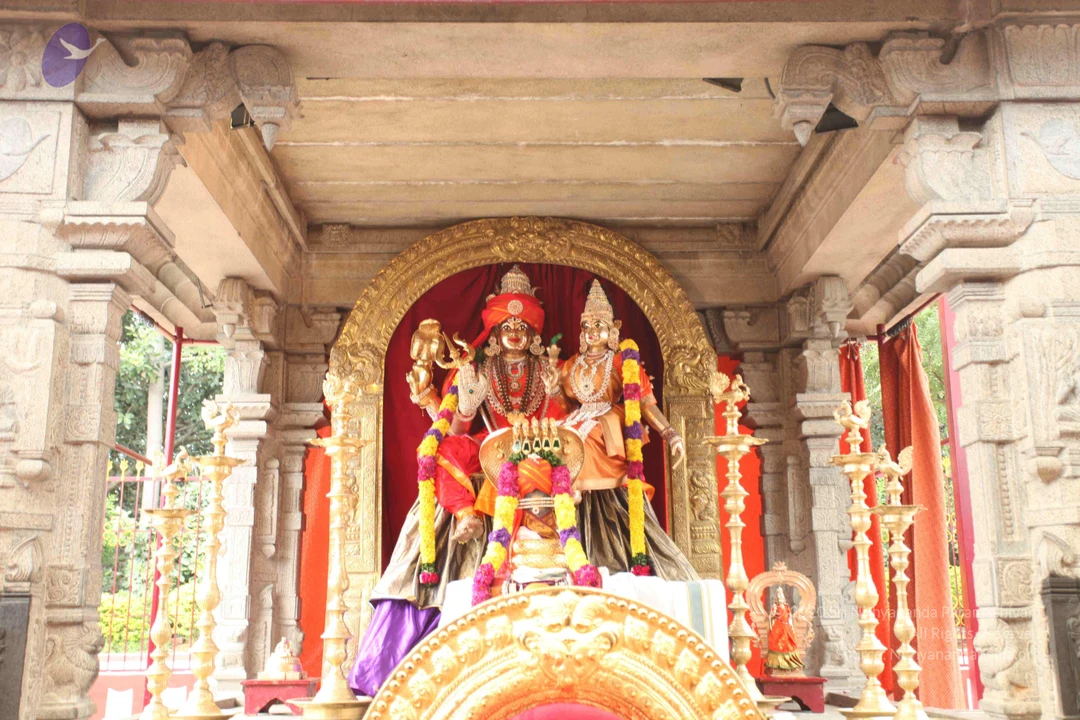
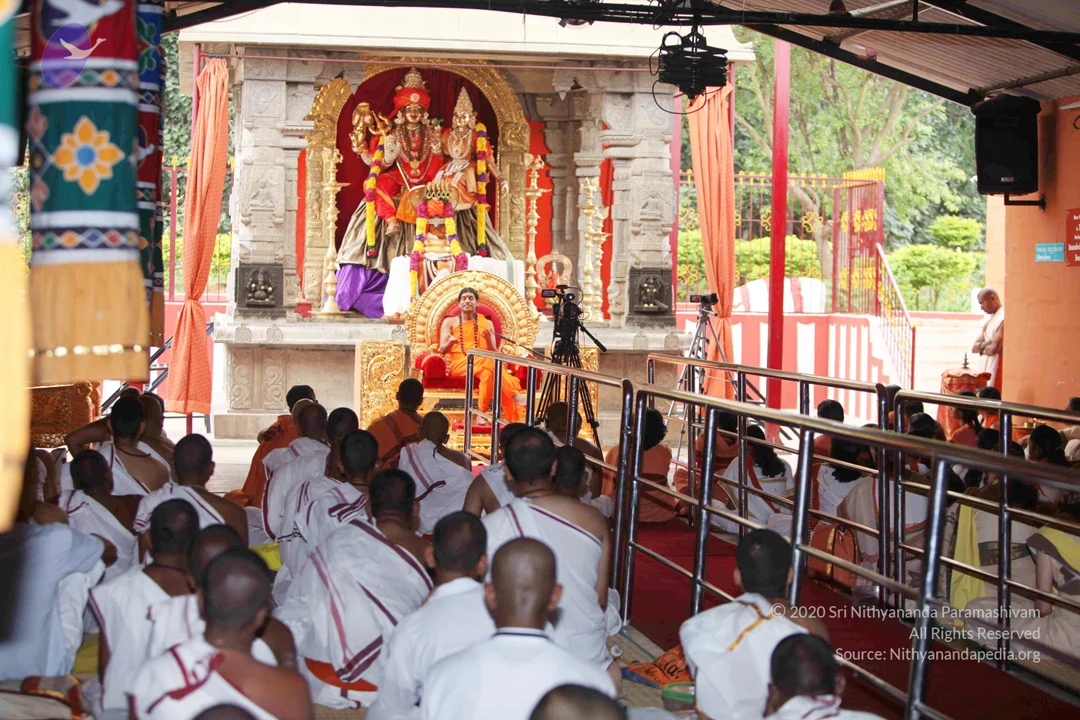
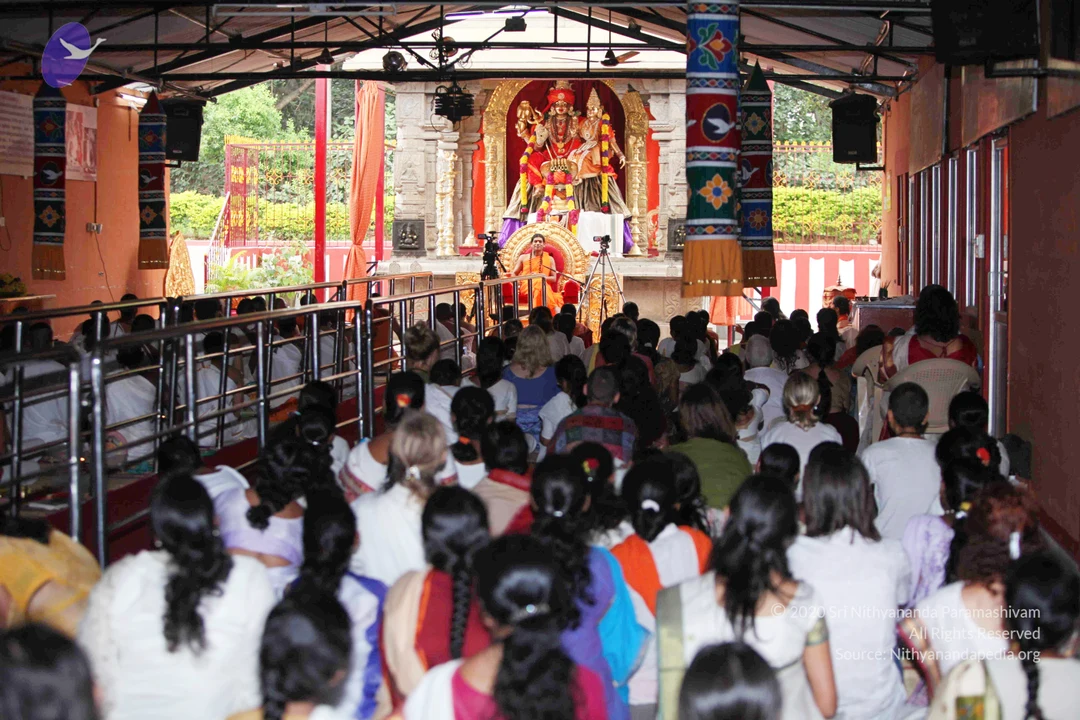
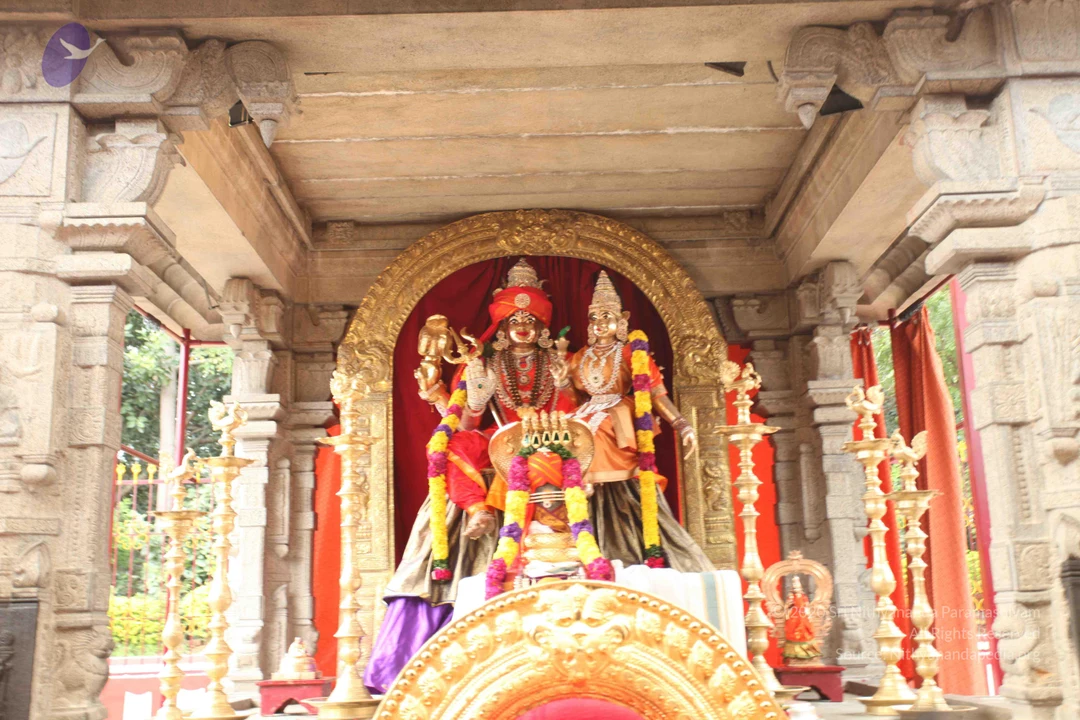
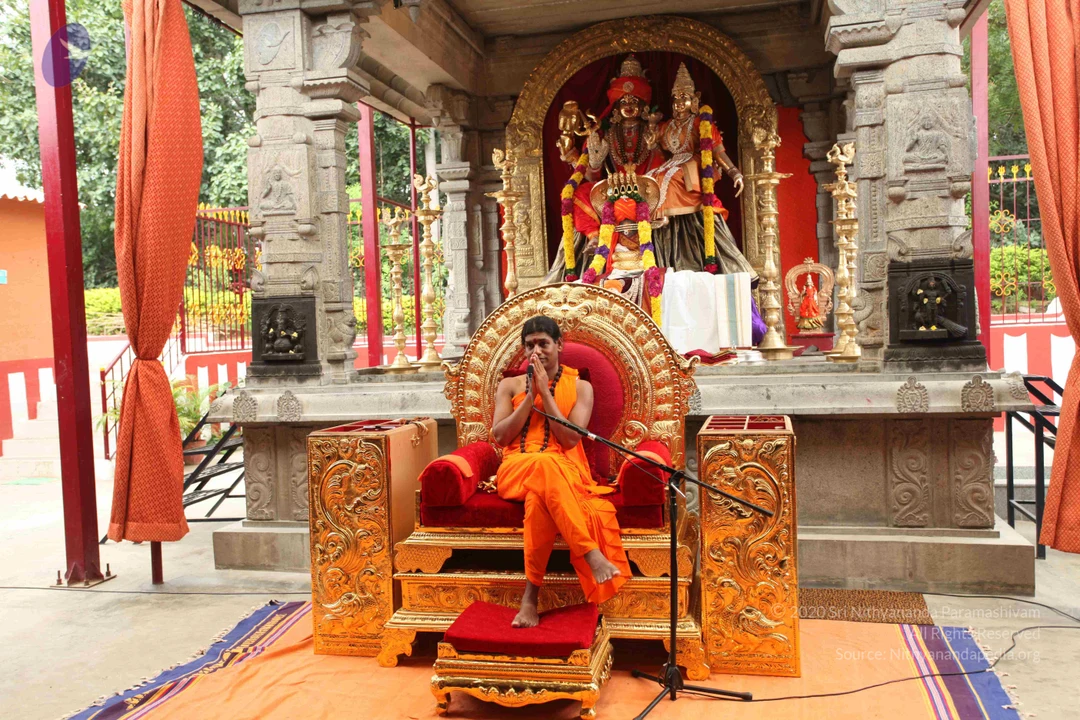
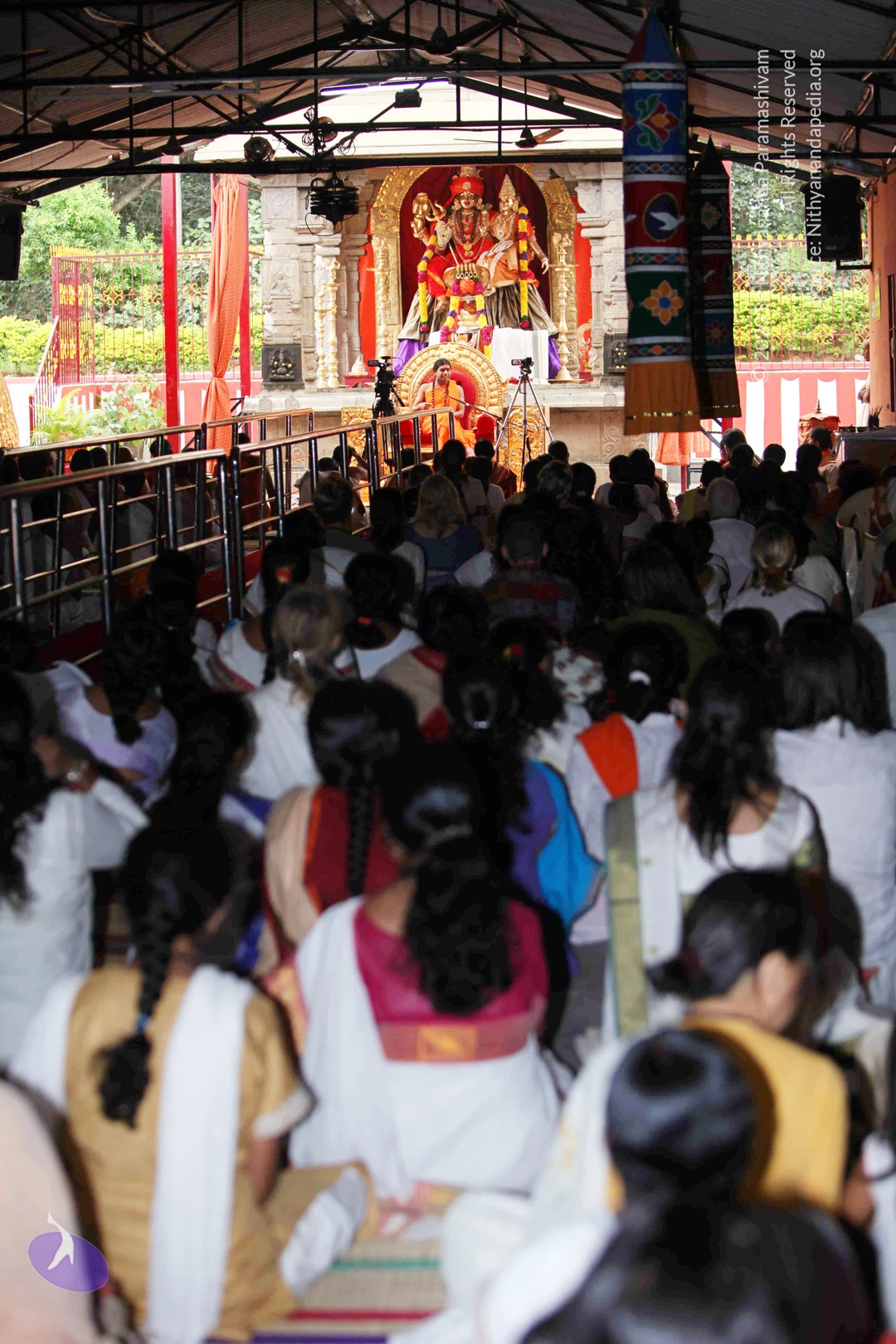
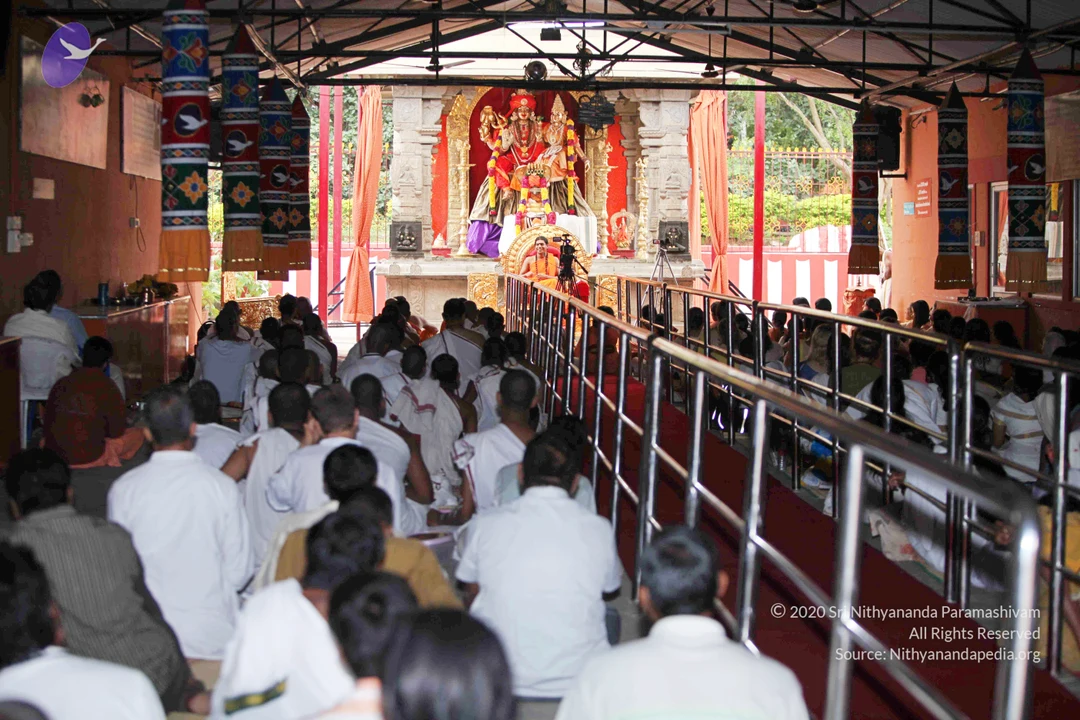
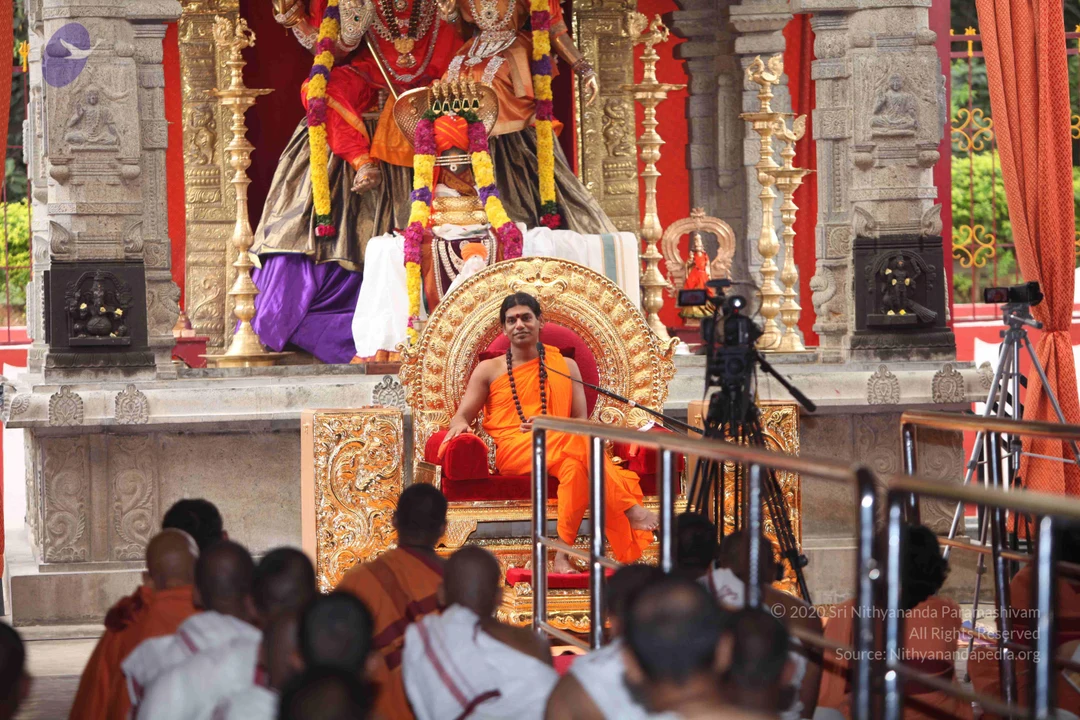
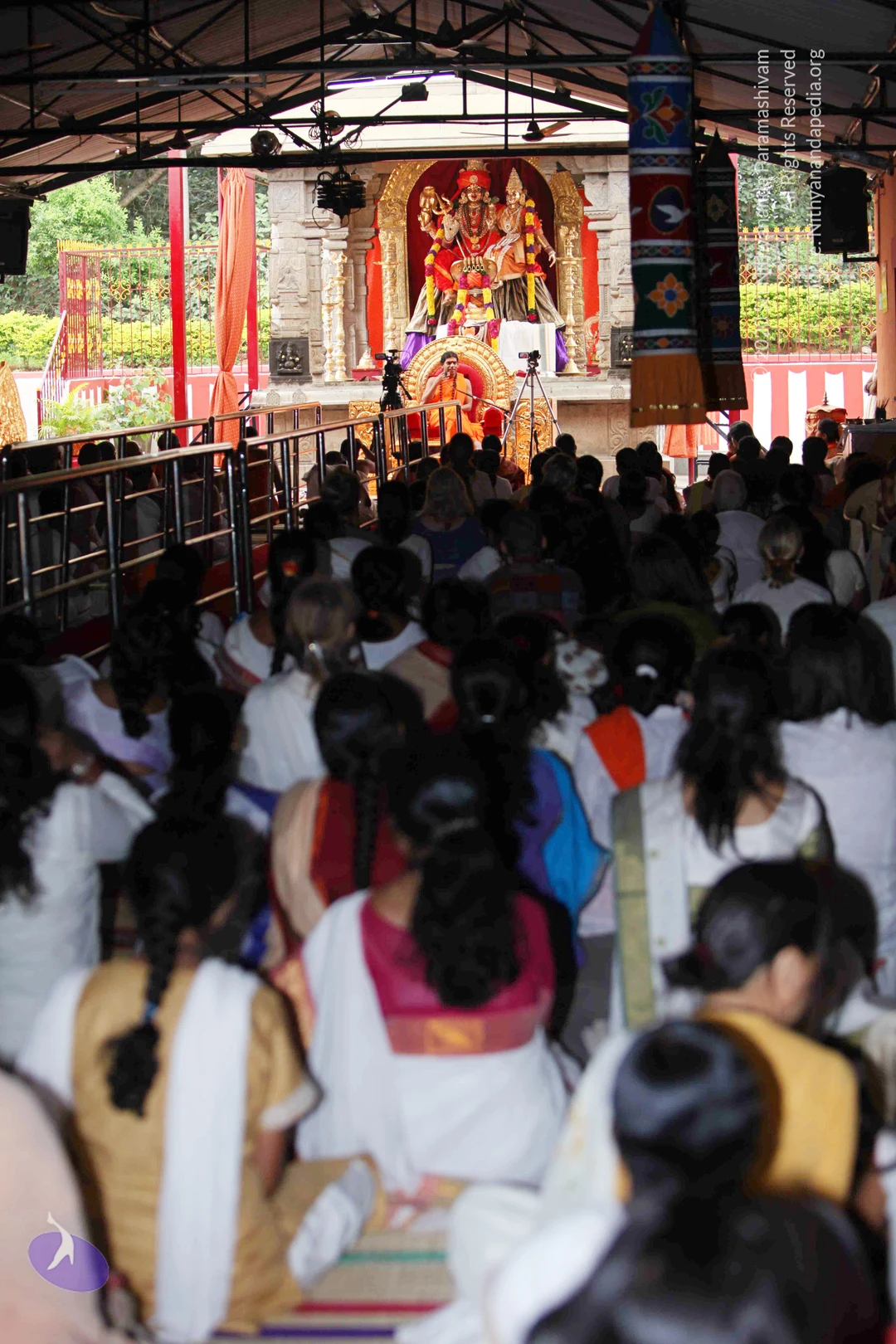
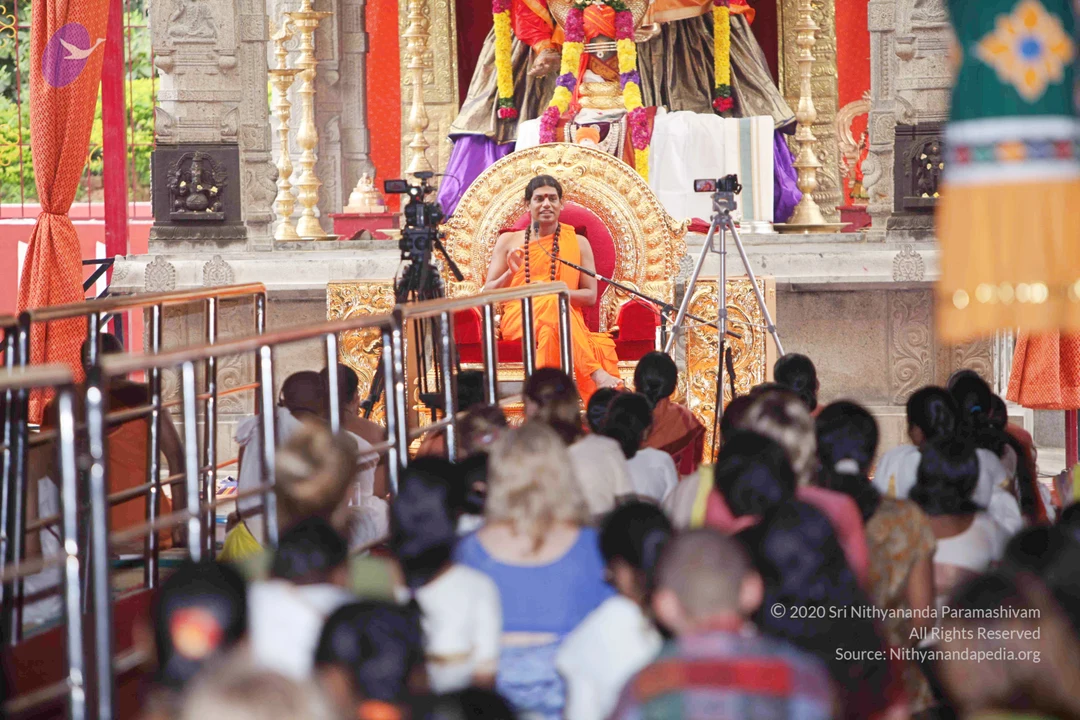
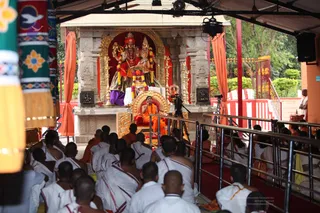
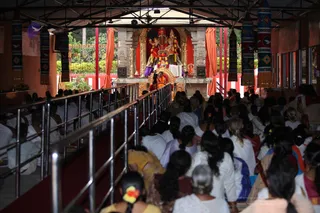
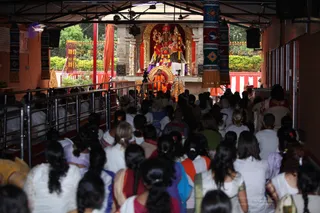
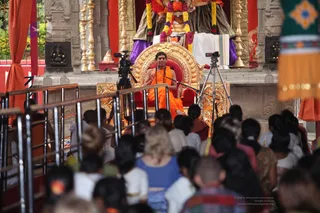
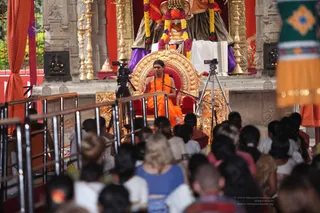
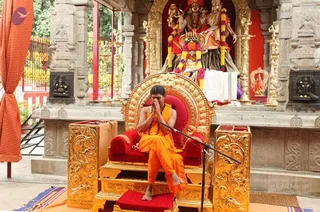
A man seated on an ornate gilded throne with red cushioning, hands pressed together in namaste at chest level, eyes closed. He wears an orange-saffron garment draped over one shoulder and a rudraksha mala of dark beads around his neck, with a red-and-white tilak mark on his forehead. He has long dark hair swept back, and a microphone on a stand is positioned in front of him. Behind him hang orange and red curtains beside a red and white striped wall, with a stone pillar and a brass lamp stand visible. This appears to be a satsang or discourse setting; the figure is an appearance-based probable Swamiji with long swept-back hair, saffron clothing and rudraksha mala, seated on a throne in a discourse pose.A photograph of an outdoor temple-style pavilion with a central shrine holding two seated deity murtis draped in red and garlanded with flowers, and a golden canopy above. In front, a man in orange robes sits on an ornate golden-red throne, facing an audience of many men in white dhotis with maroon shoulder cloths, seated on the floor in rows, and a few people in orange and yellow saris at the right. A video camera on a tripod records the scene. Orange and red curtains, and a red-and-white striped wall frame the setting, with trees behind. A visible bronze lamp and pillars with colourful painted panels surround the hall. The seated man in orange appears to be a candidate for a person, based on orange robes and his central throne position, though the appearance is not certain enough to confirm.A photograph of a covered open-sided hall with red and orange drapes and a tall deity murti, dressed in red and gold with a crown and garlands, seated on a golden throne in an arched shrine. In front, a seated figure in orange robes sits on a low golden seat beside a camera on a tripod. Rows of devotees in white and pastel saris and kurtas sit on the floor facing the shrine, many with hair pulled back, separated from the aisle by a metal railing. Hanging woven banners with geometric patterns line the sides, and greenery is visible through the open walls.A photograph of a large seated congregation facing a raised dais in an open-sided hall. On the dais a figure in orange robes sits on an ornate golden throne before a shrine with a red-and-gold deity murti decorated with flower garlands. Many devotees in white and mixed-colour saris and kurtas sit on the floor in rows, with long braided hair visible, while camera tripods stand near the stage. Colourful woven banners hang at the pillars and a metal railing separates the front seating. a person appears as a probable candidate from the orange robes and seated throne position, though the appearance is only partly visible.A large crowd of devotees sits in rows facing a raised golden throne in a temple hall. A man in saffron-orange robes and a rudraksha mala sits on a red-and-gold throne, with a microphone in front of him and a video camera on a tripod nearby. Behind the throne stands a large deity murti draped in purple cloth and garlanded with marigolds, with brass lamps and red curtains framing the scene. Several cameras on tripods film the discourse, and the foreground shows devotees' backs and heads.A photograph of a satsang at an ornate temple-style stage. A man in saffron-orange robes with a rudraksha mala sits on a gold-and-red throne with a golden arched backrest, speaking into a microphone. Behind him stand two large deity murtis draped in purple and white cloth, adorned with marigold and red flower garlands, with brass lamp stands and kalasha-style decorations flanking them. Two video cameras on tripods film him. Seated devotees in the foreground, many with their heads visible from behind, face the stage, and a metal railing runs along the left side. a person: the seated man wears saffron robes, a rudraksha mala and is given a throne-style seat, appearance-based identification only.

Adikailaasa-Temple

8 photosSource gallery
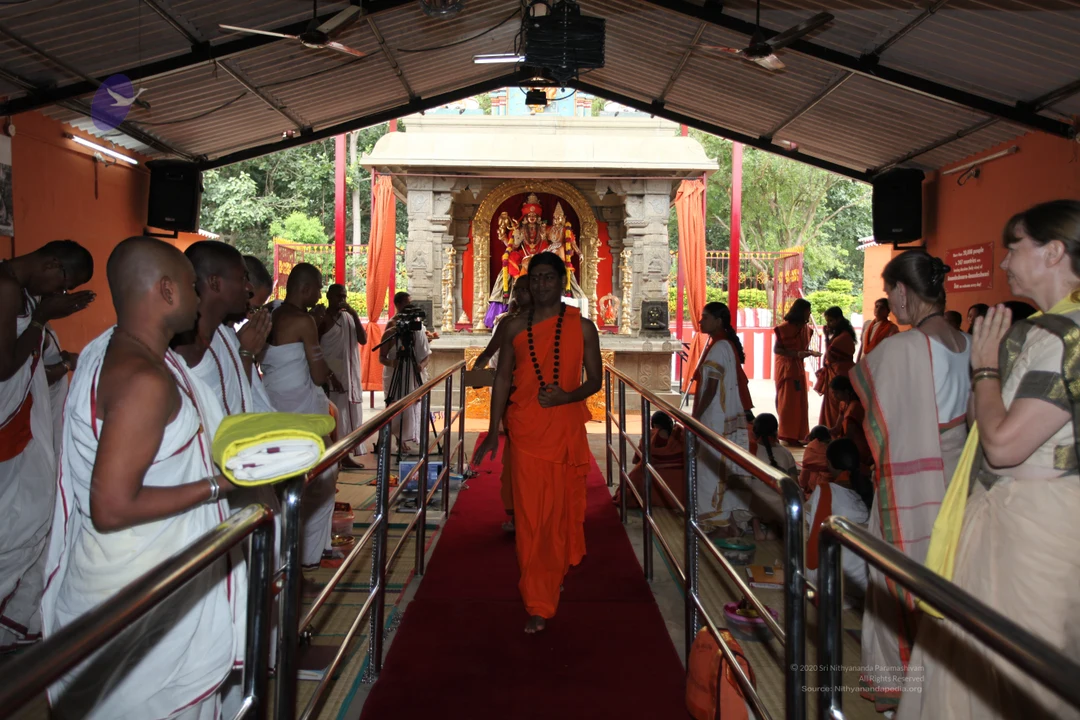
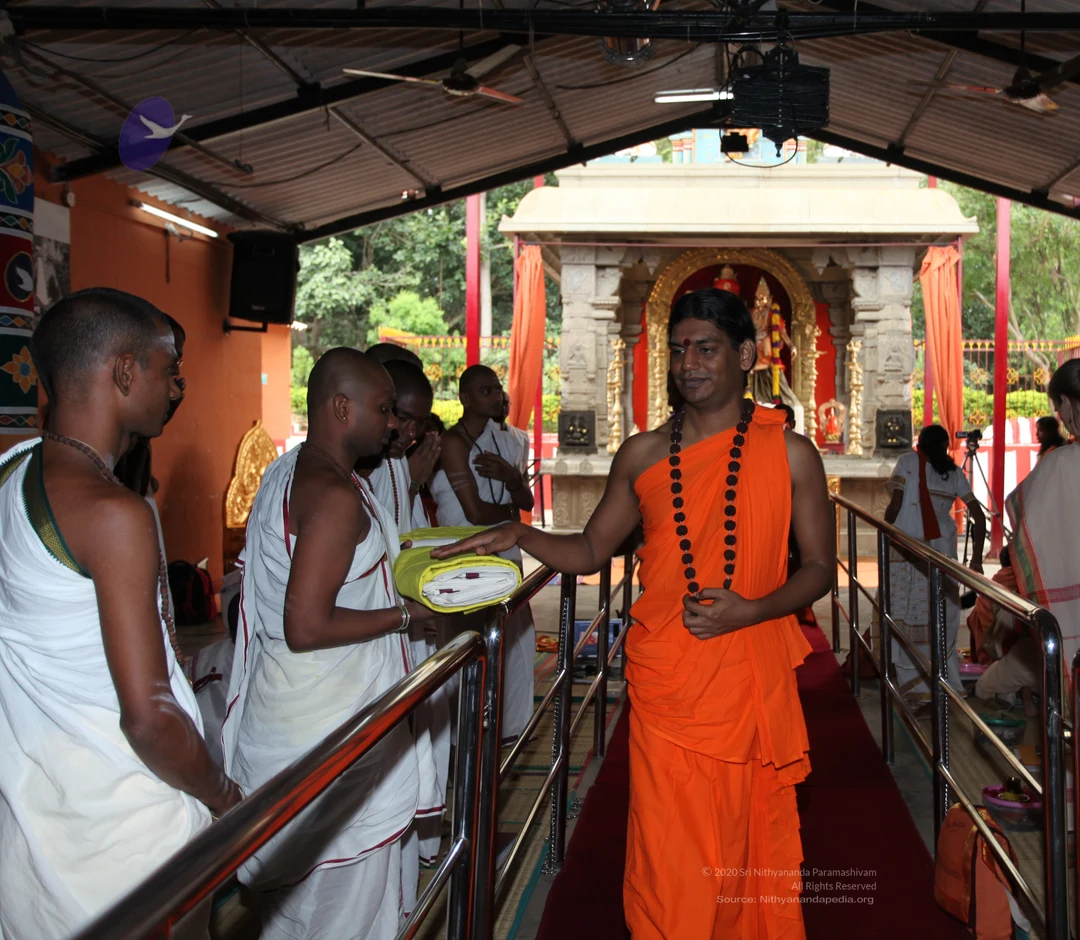
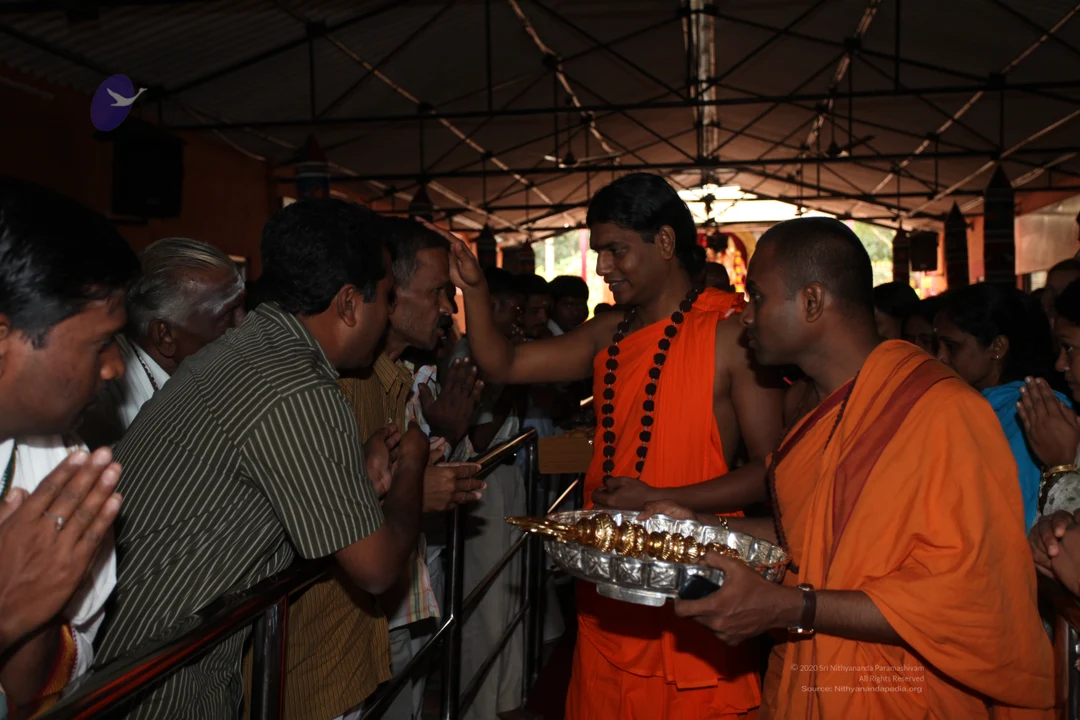
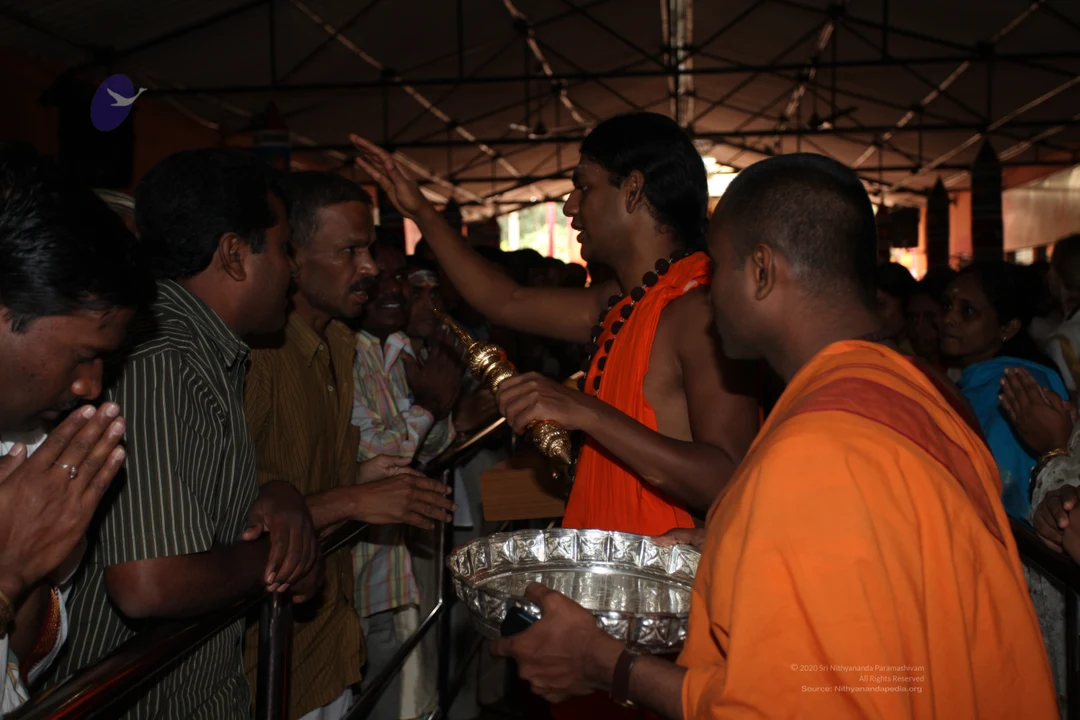
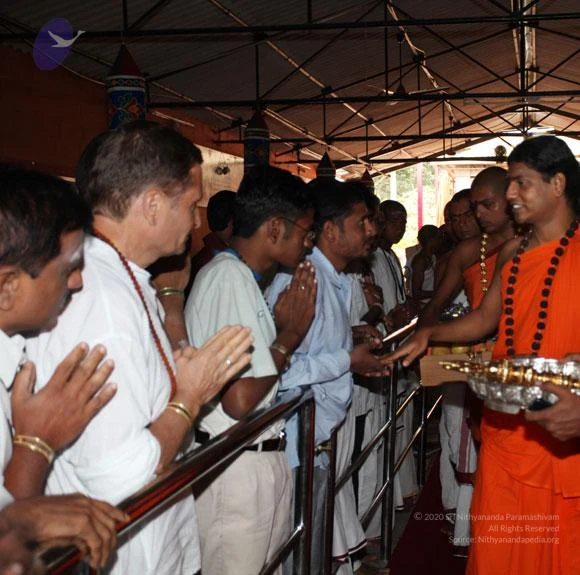
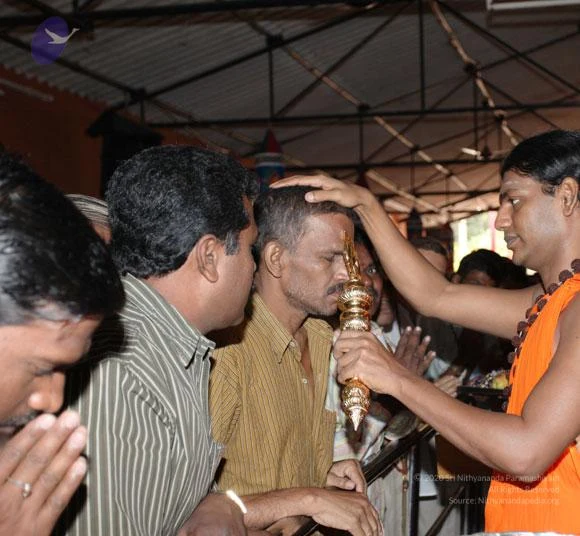
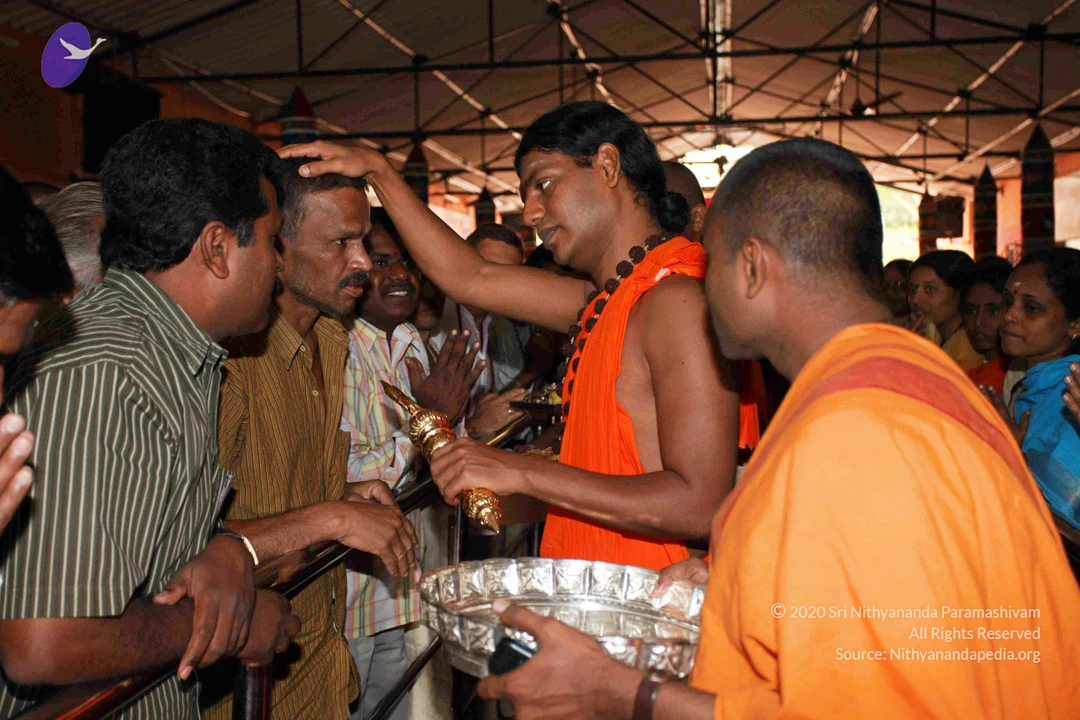
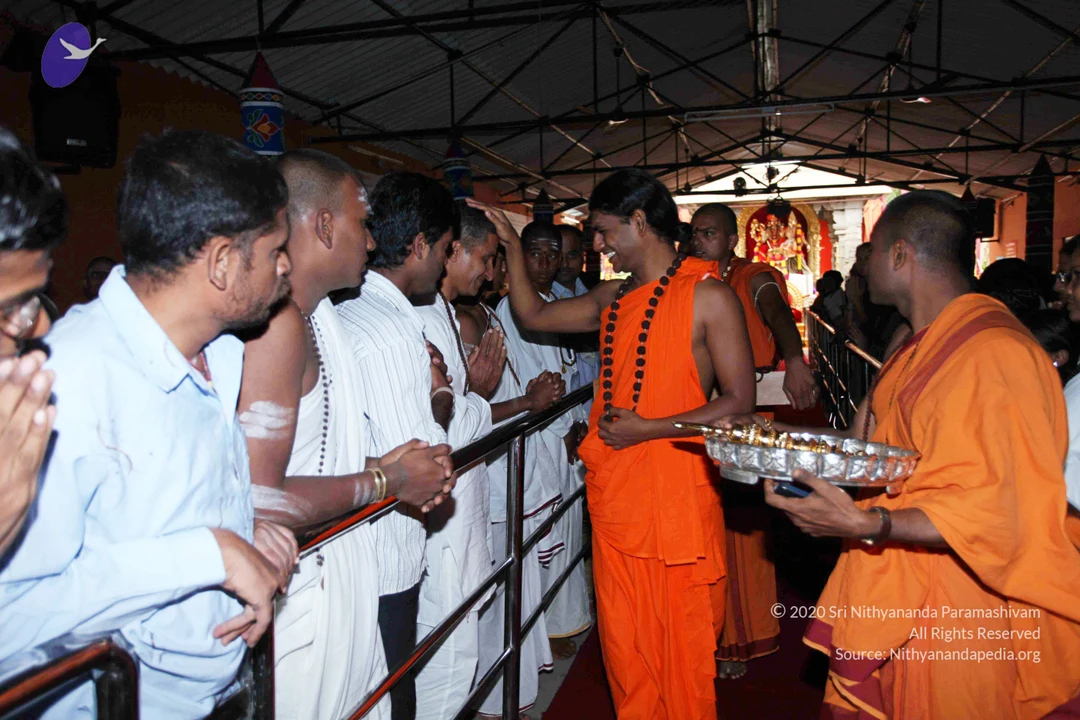
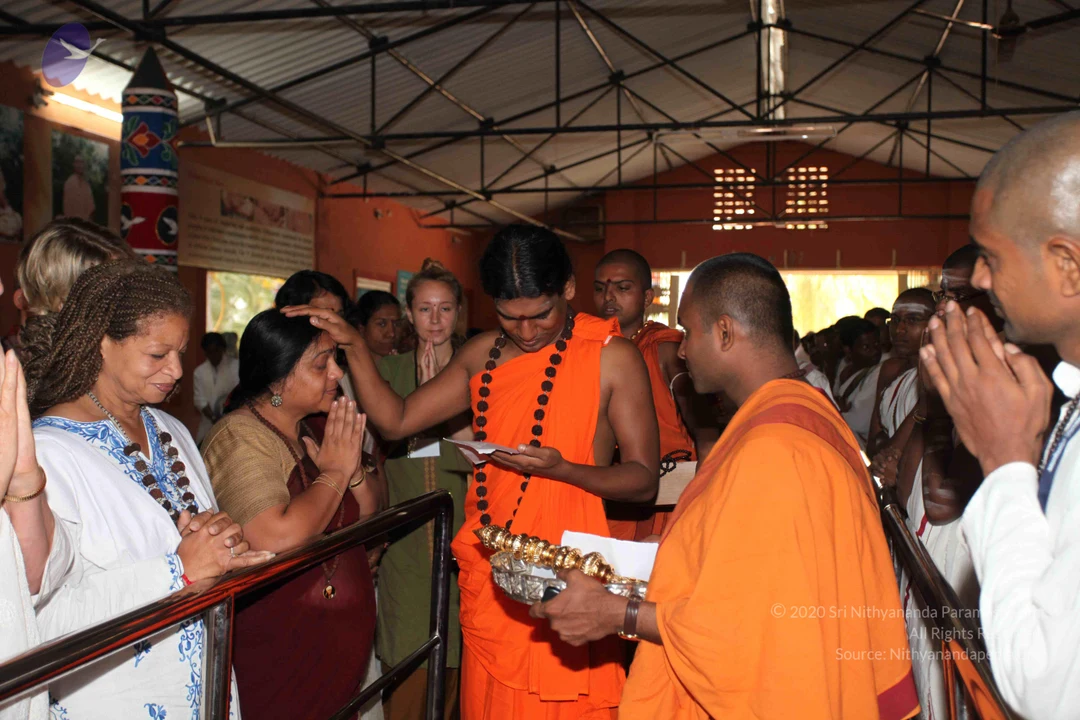
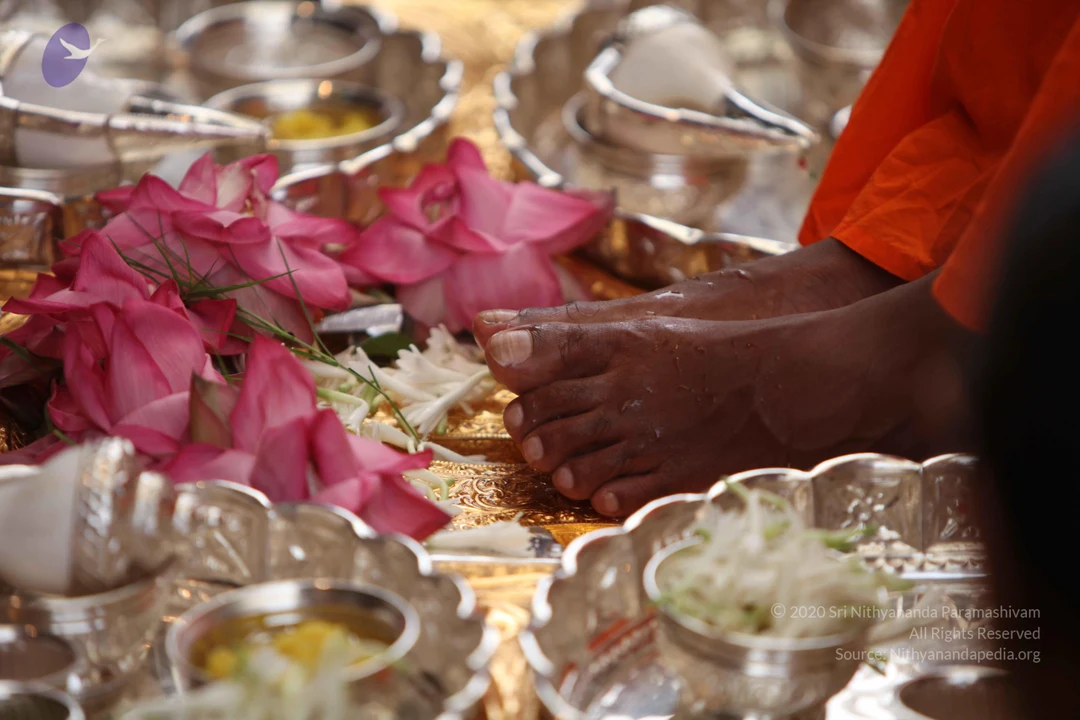
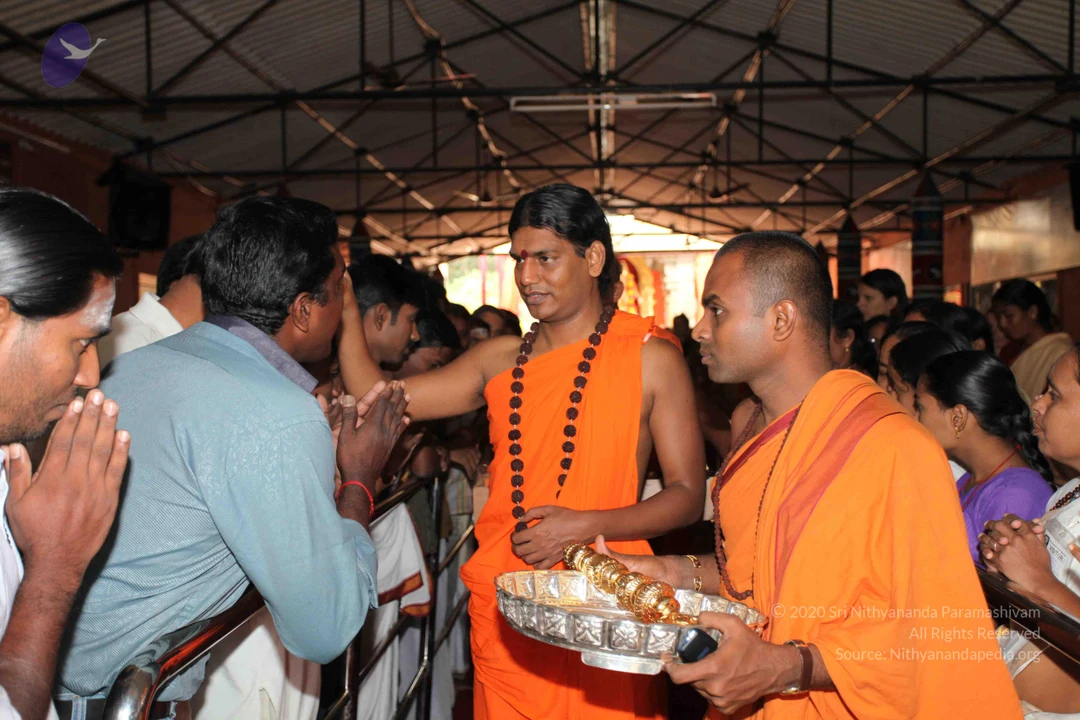
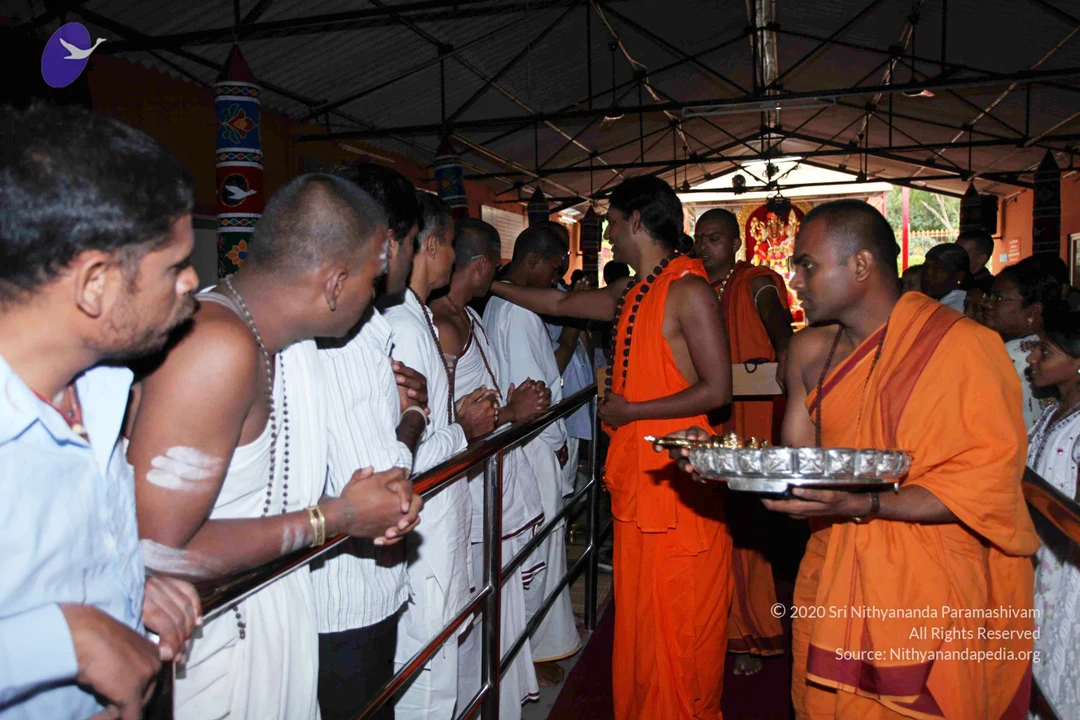
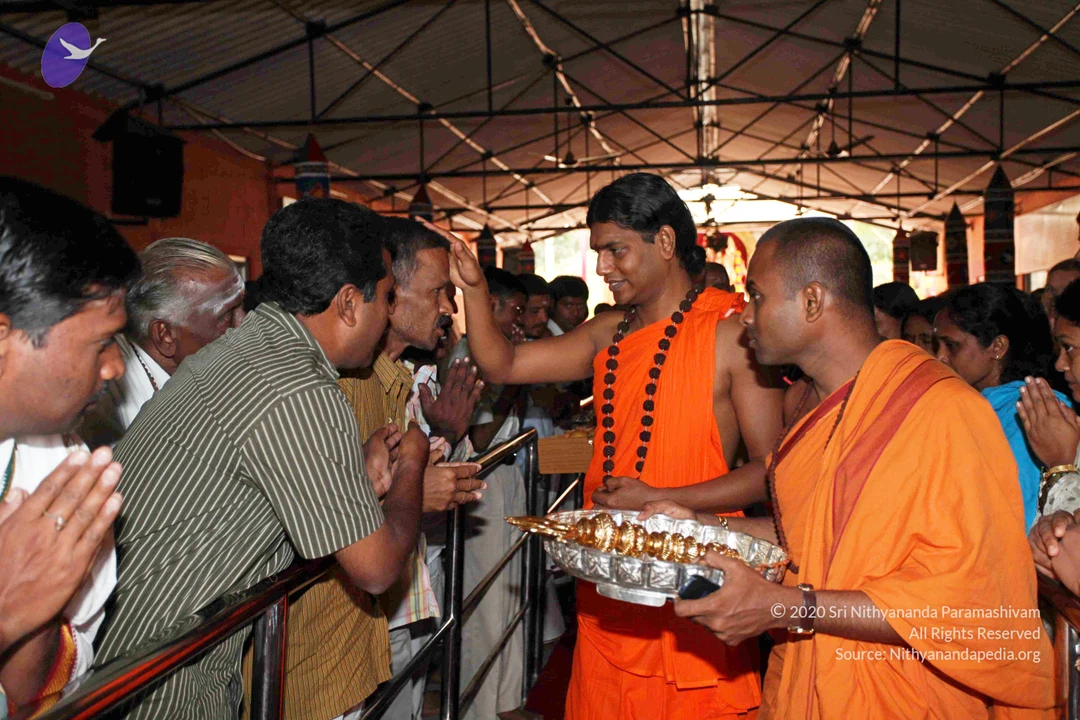
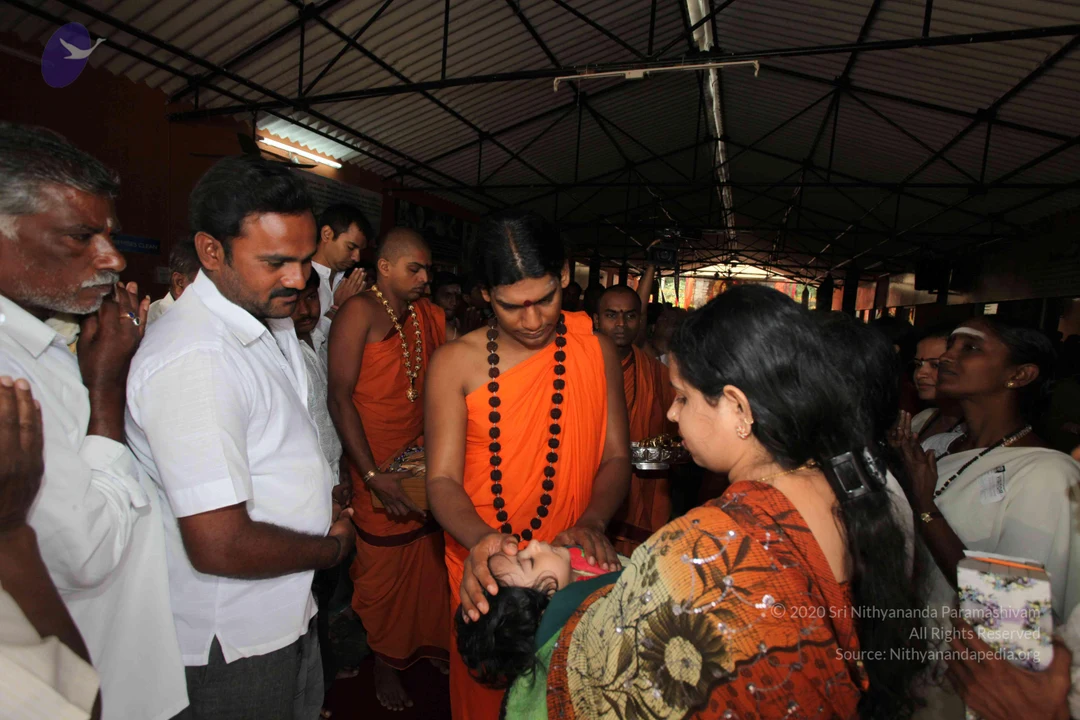
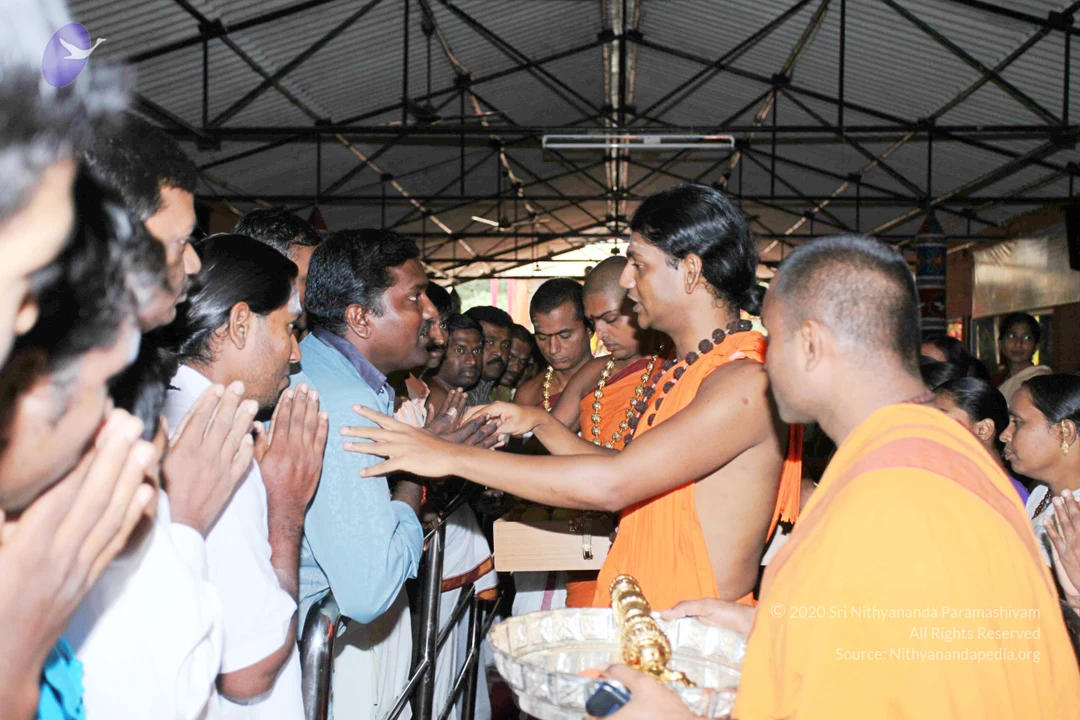
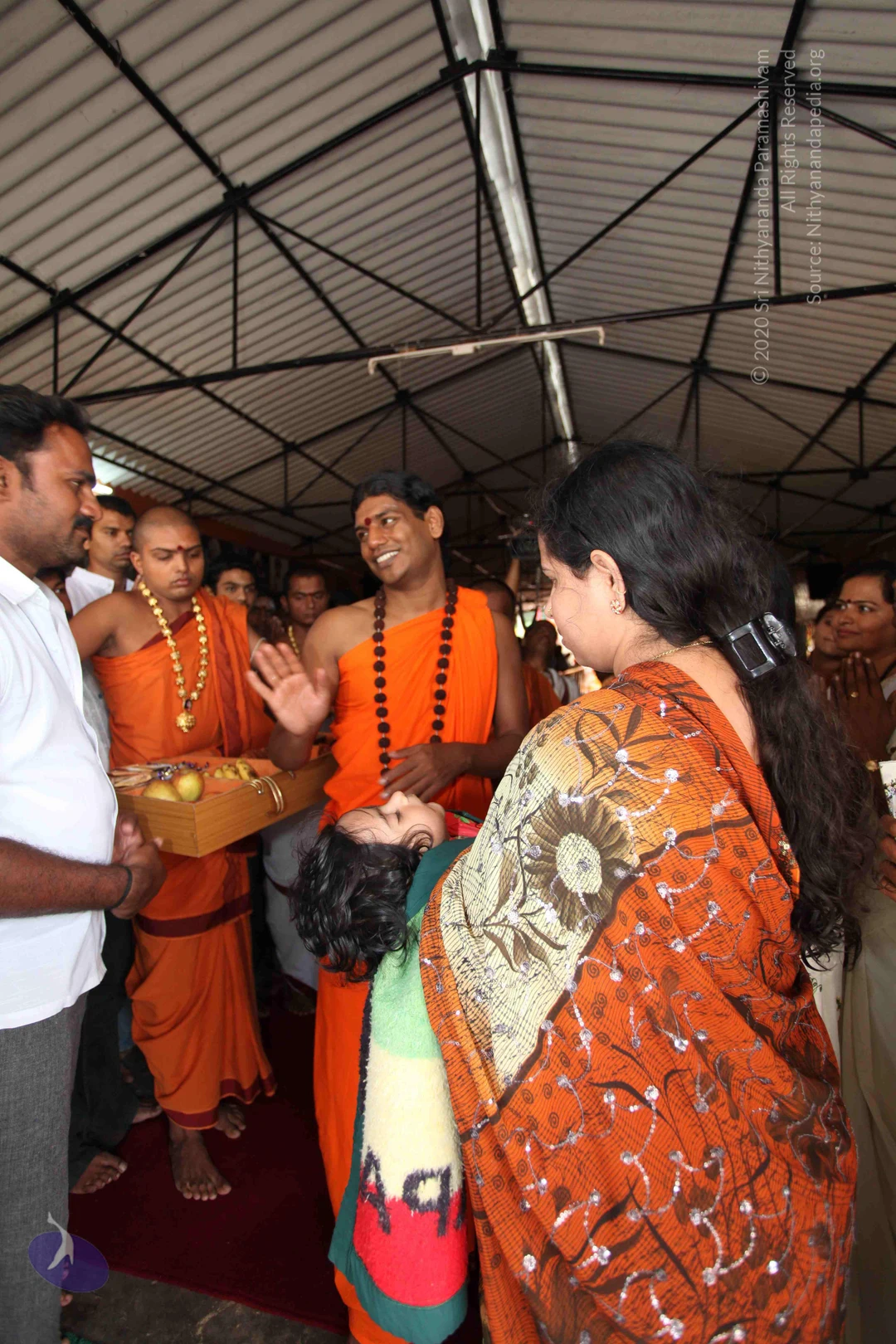
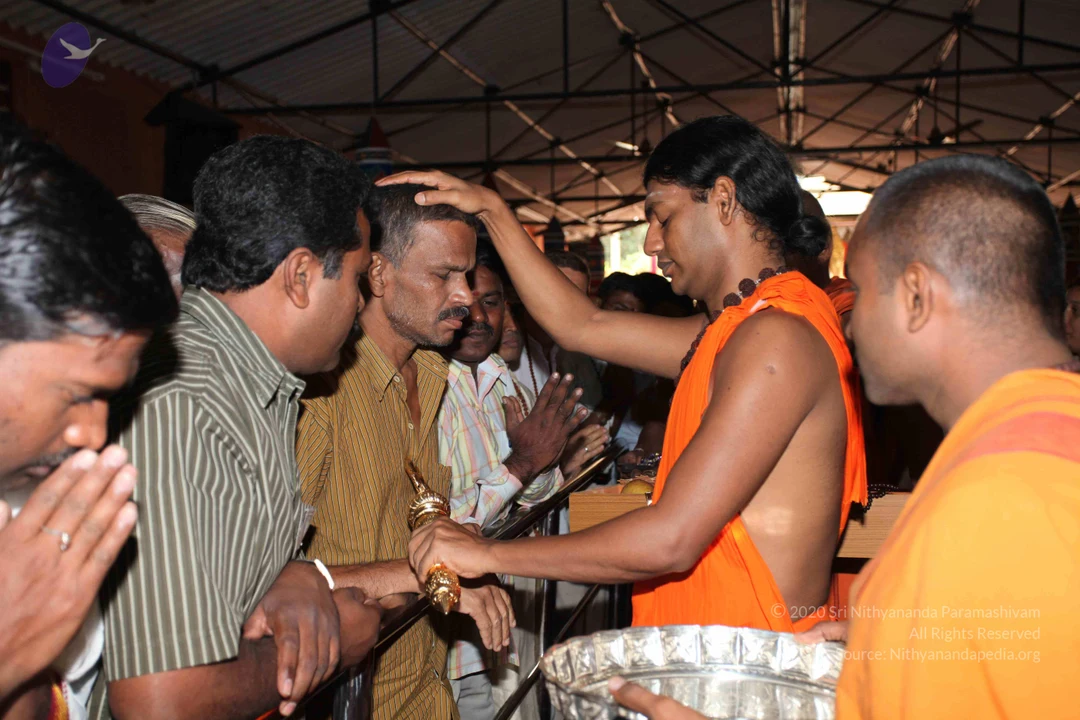
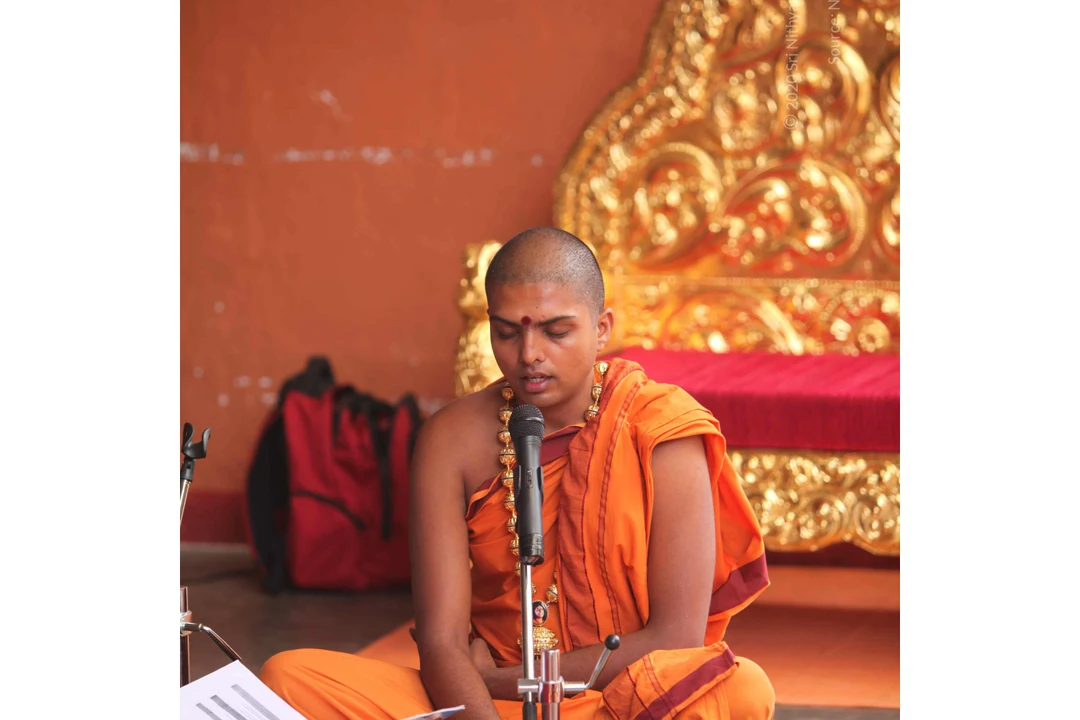
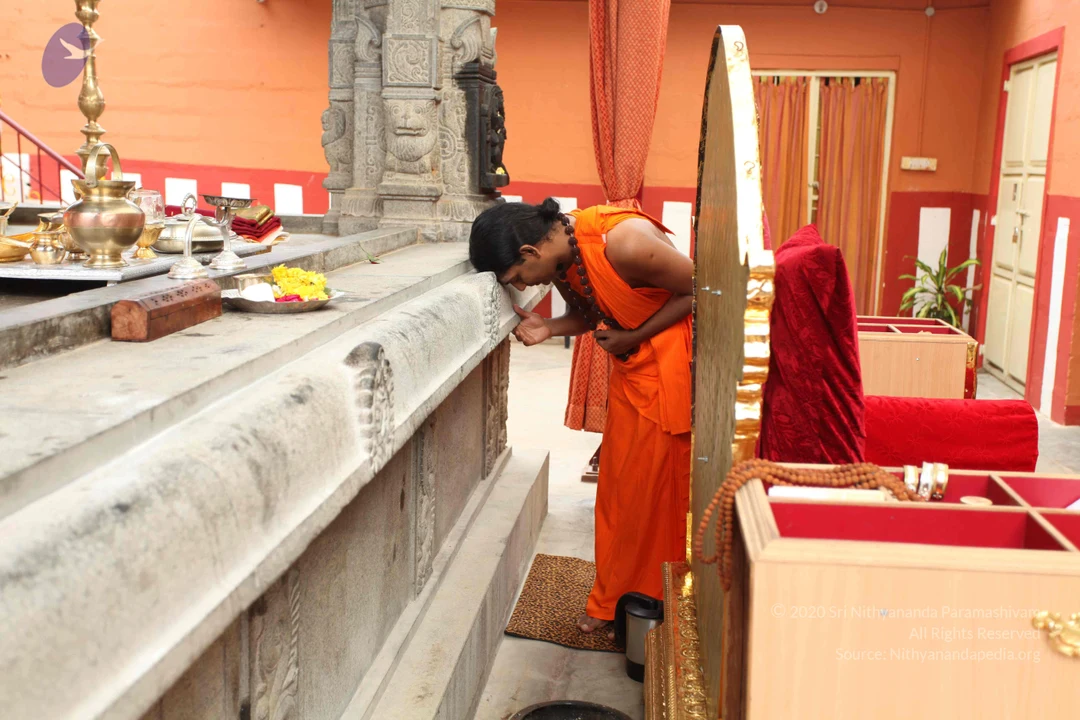
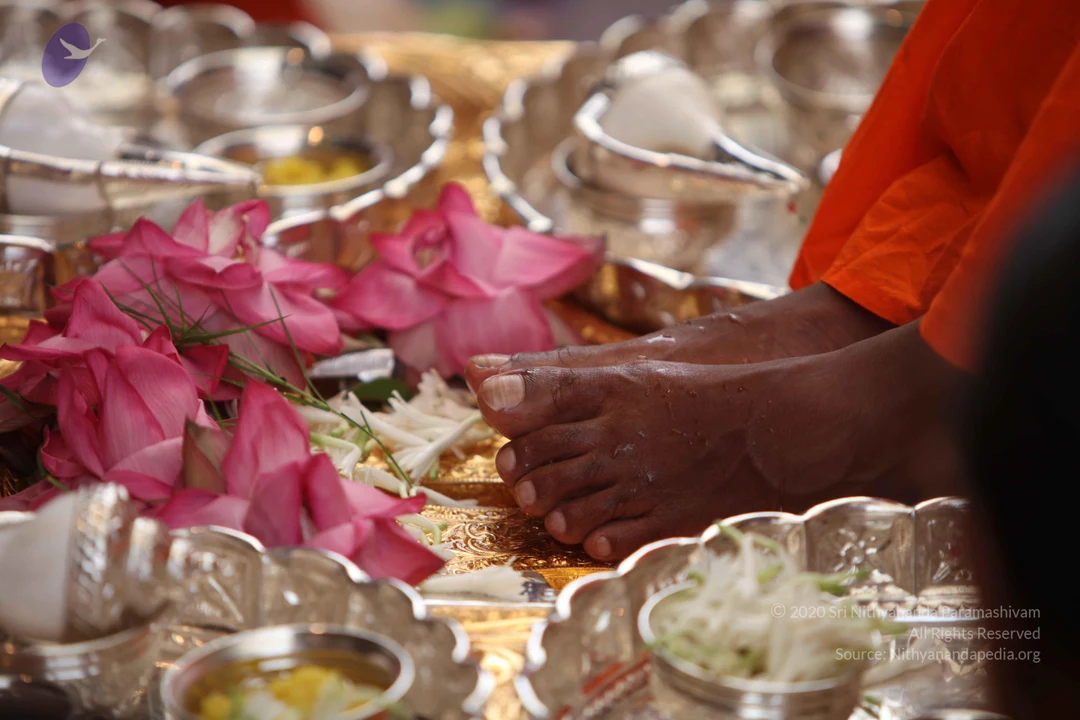
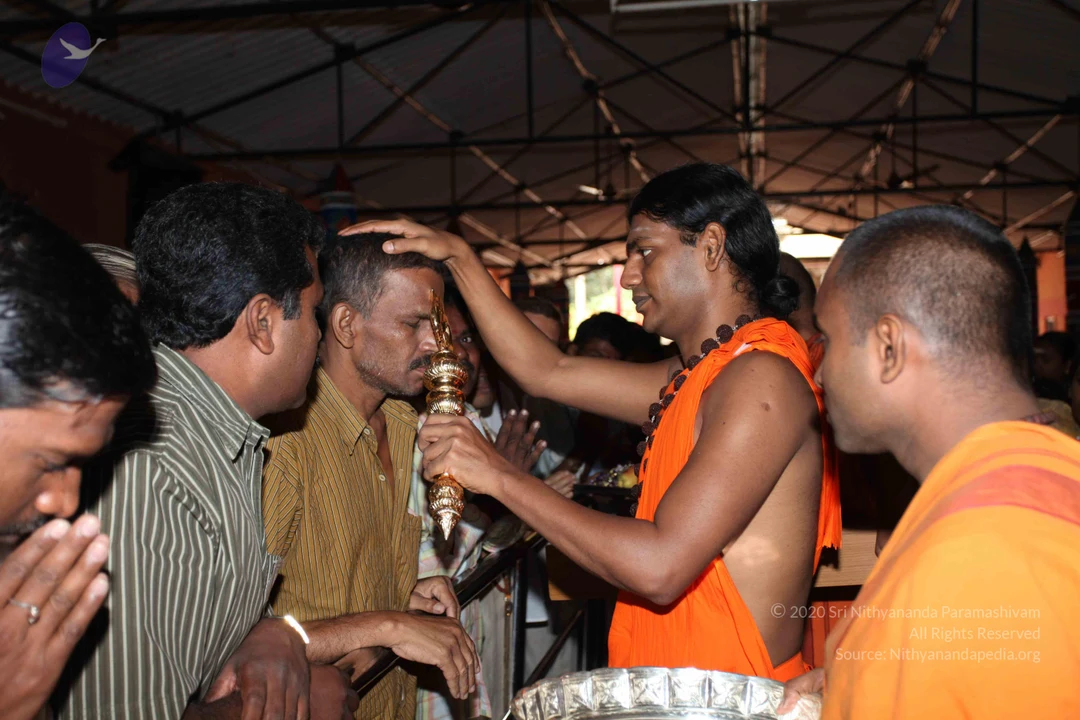
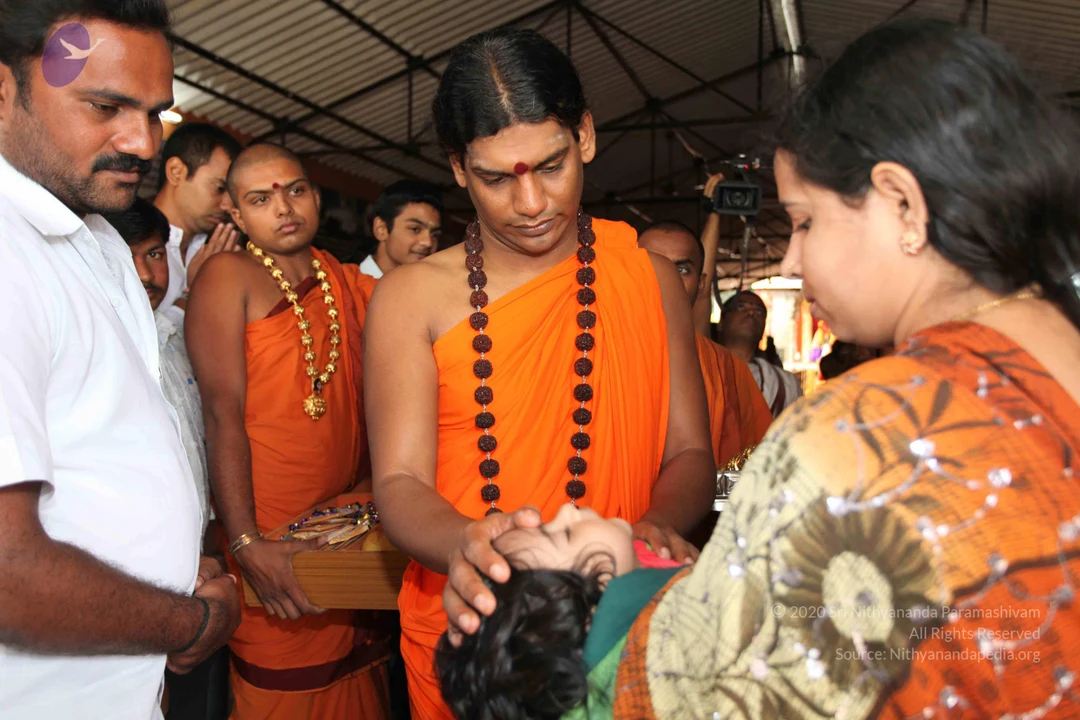
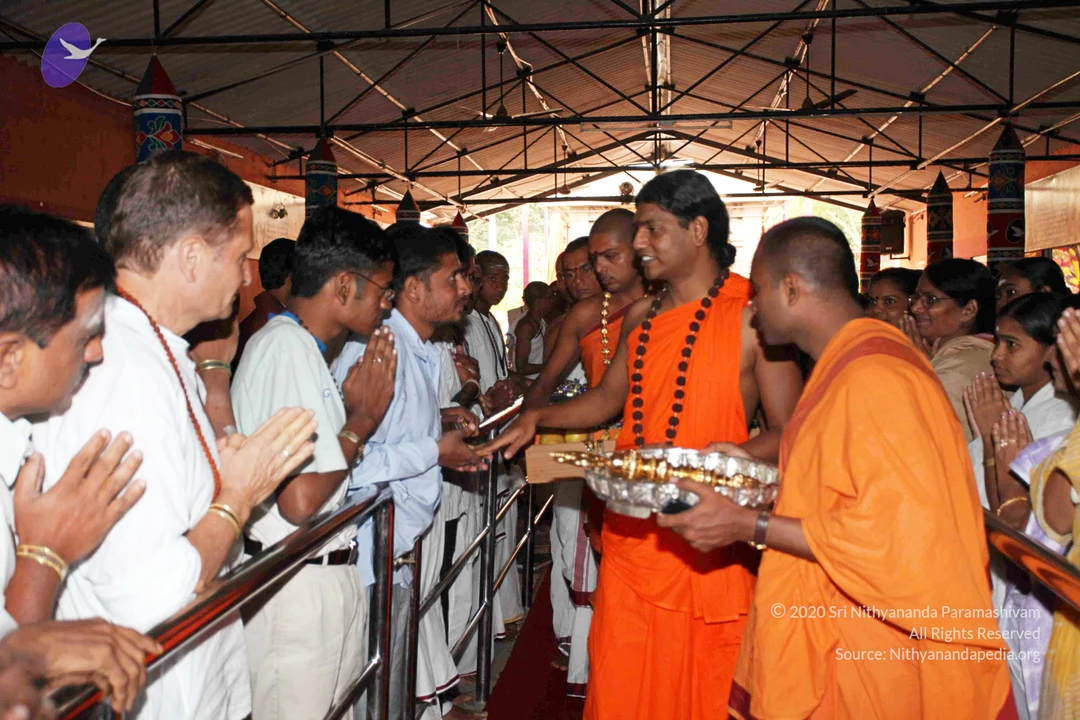
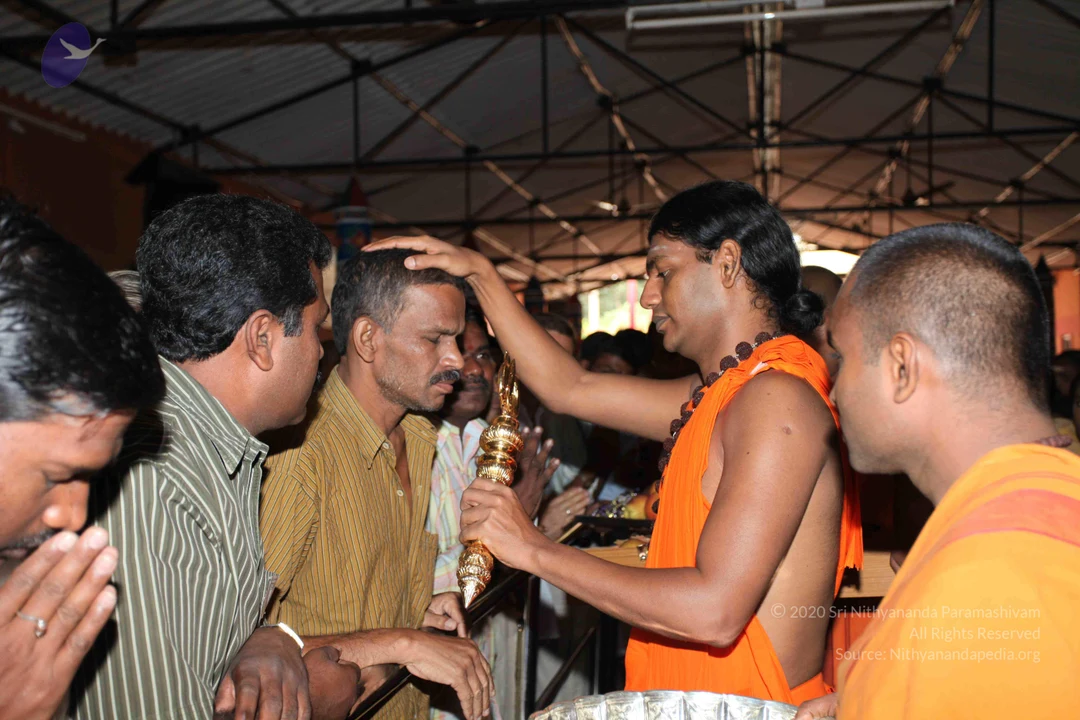
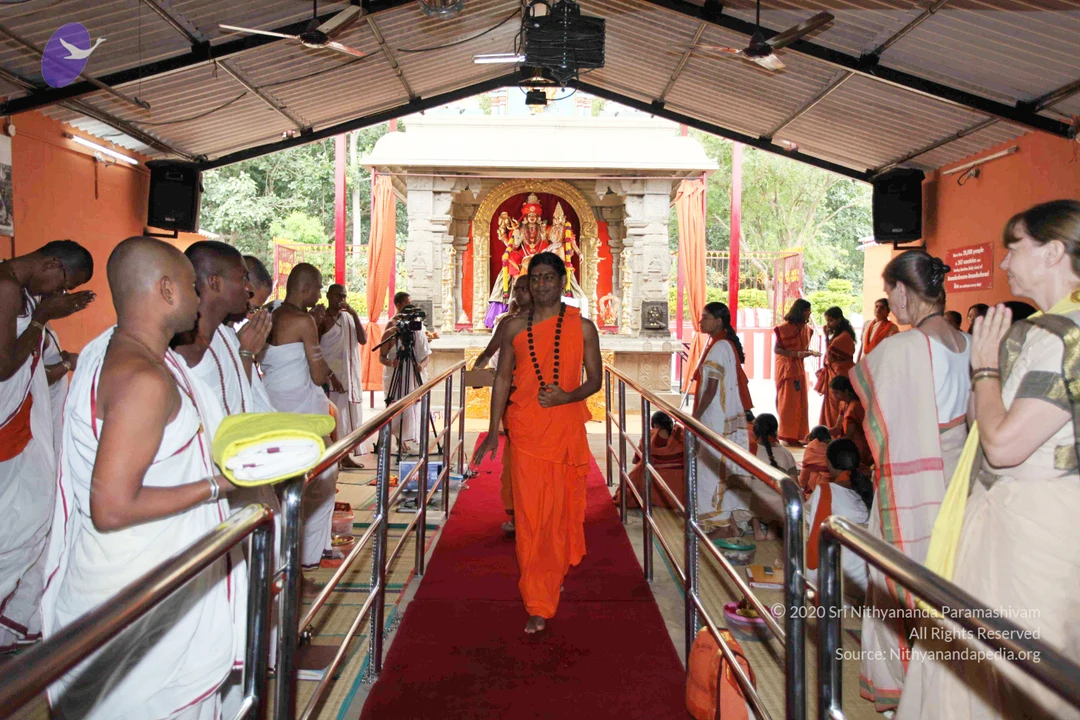
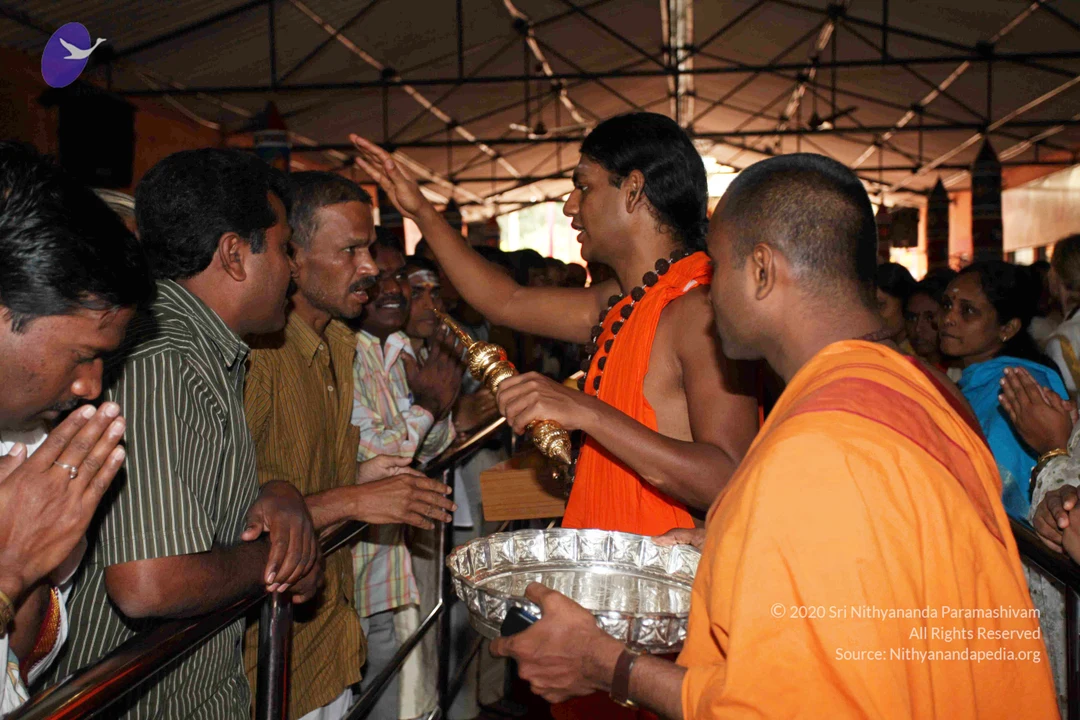
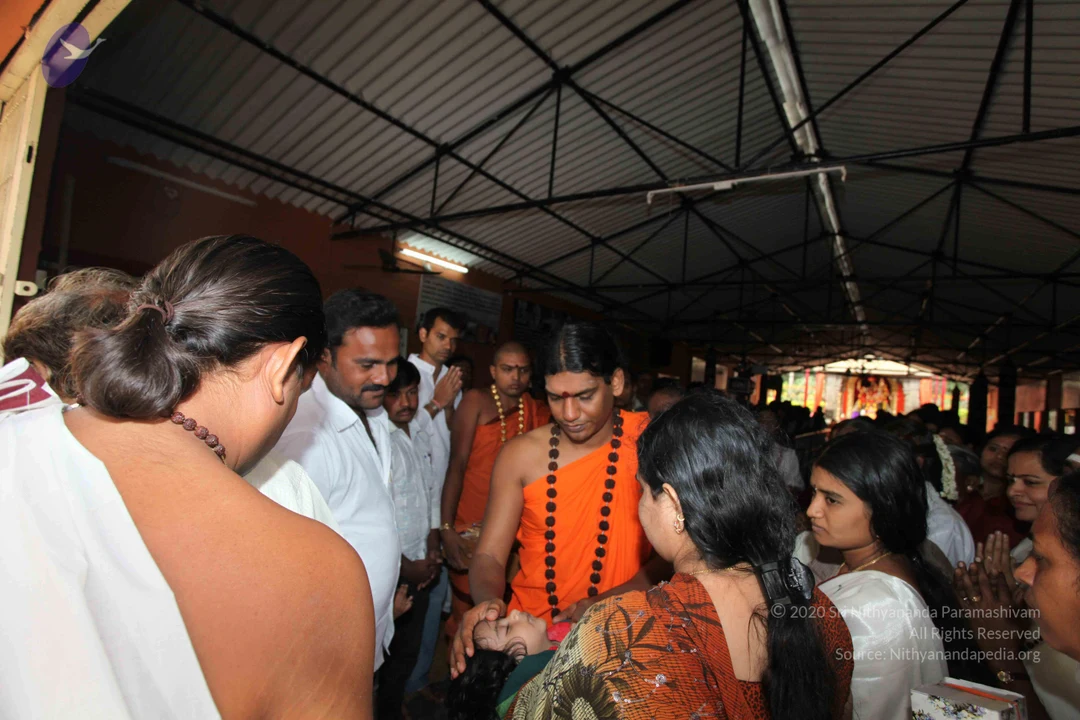
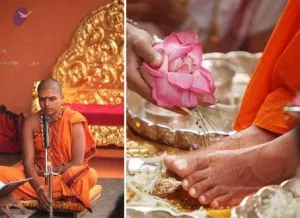
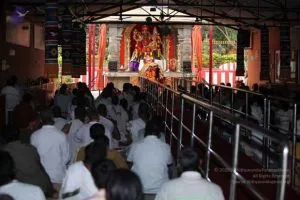
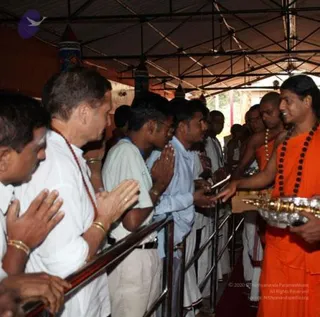
A man seated on an ornate golden throne with red cushioning, wearing saffron-orange robes and a rudraksha mala around his neck, with hands resting on his lap. He sits on a raised platform before a temple shrine with gold-coloured deity figures and stone carvings, a metal gate behind, and a small wooden side table with offerings. The setting is a temple hall with golden and red decorative details.Split-view graphic with two panels. Left panel: a shaved-headed man in orange robes sits cross-legged before a microphone on a stand, in front of an ornate gold-toned backdrop. Right panel: close view of bare feet resting in a metal basin while a hand holds a pink lotus flower above them, a padapuja style washing ritual with orange robes visible at the edge. No readable text is visible in the image, and no identification of the seated man is made from appearance.A close photograph of a bare foot in an orange-saffron garment resting among shallow silver plates or trays filled with pink and white flower petals. The foot is being washed or honoured with petals in a padapuja-style ritual. The setting appears to be an indoor ritual space; no face is visible, and only the lower leg and foot of the person are shown.A man seated on an ornate gold-and-red throne with a carved gold frame, placed before a stone shrine containing deity murti adorned with garlands. He wears saffron-orange robes, a rudraksha-style neck mala and has bare feet, palms pressed together in namaste. A microphone stands in front of him, and a red and gold curtain hangs at the left. Behind the throne, a red-and-gold shrine holds deity statues with red flower garlands and lit oil lamps. Stone pillars and a carved stone wall frame the scene. Watermarked archive photograph of a satsang setting.Devotees line up behind a metal railing under a tin-roofed pavilion to receive blessings. Men in white shirts and dhotis stand with palms pressed together in anjali, and a man in a white shirt with a red thread around his neck and gold bangles stands at the front. On the right, a man in saffron-orange robes with a long rudraksha mala holds a silver tray with offerings, presenting it to the line. Several other saffron-clad sannyasis and a shaved-headed man in white stand nearby, and a red carpet runs along the walkway.

Acharya-Toronto-Canada-Nithya-Dhyan

4 photosSource gallery
A photograph of a satsang session in a yellow-walled room with a white vertical blind and a whiteboard. A shaved-headed man in orange robes stands at left, facing a seated group on blue yoga mats. Seated participants include a woman in a dark top with long dark hair in the centre, a man in a light blue shirt, a woman in a black top, and a woman with blonde hair at right, with a person's head in the foreground at bottom. The orange-robed figure is a teacher addressing listeners, with no visible identifying cues to confirm a person's presence, so the identity is uncertain.A photograph of a satsang or meditation session in a bright room with yellow walls, a white vertical blind, a piano and a whiteboard. A shaved-headed man in saffron-orange robes stands at the left, gesturing as he speaks. Facing him on blue yoga mats, several seated participants listen: a woman in a black top and dark sweatpants kneels at right, a woman with dark hair sits cross-legged in the centre, another person sits on a mat near the middle, and a man sits on a chair at the back. An Om symbol is mounted on the wall at the top right. Four people are visible, one of them partly.A photograph of two people standing side by side in an indoor room with a pale grey wall behind them. On the left, a woman with long dark hair wears a black top and holds one edge of a printed booklet. On the right, a shaved-headed man in a saffron-orange robe holds the other edge of the booklet, which shows a red-toned cover image and printed text, and he smiles.A seated group meditation session in a studio with pale yellow walls and a wooden floor. In the foreground, several people sit cross-legged on blue mats facing the front. Two shaven-headed men in saffron-orange robes sit near the center, one leaning forward slightly, with a wooden chair and a mirror on the right wall. Around them, attendees in casual clothes sit in rows, some in white and grey tops, and a dark-haired woman in a dark top sits at the right edge. The scene suggests a meditation or satsang gathering. No readable text is visible.

01-HDH-Morning-Event
286 photosSource gallery
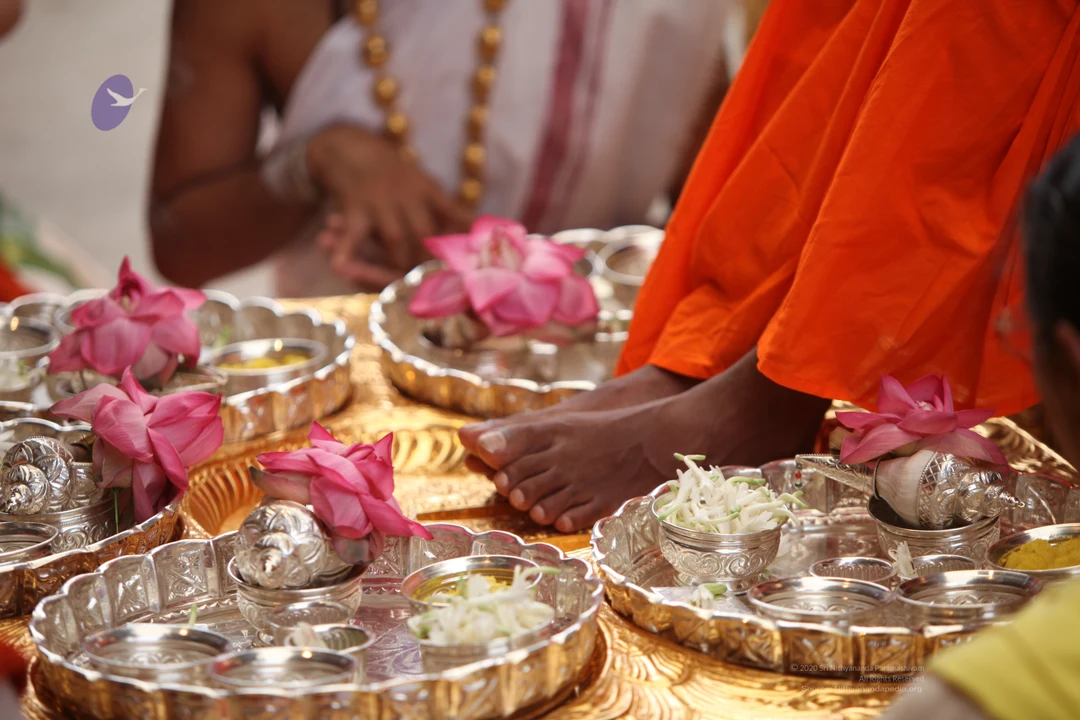
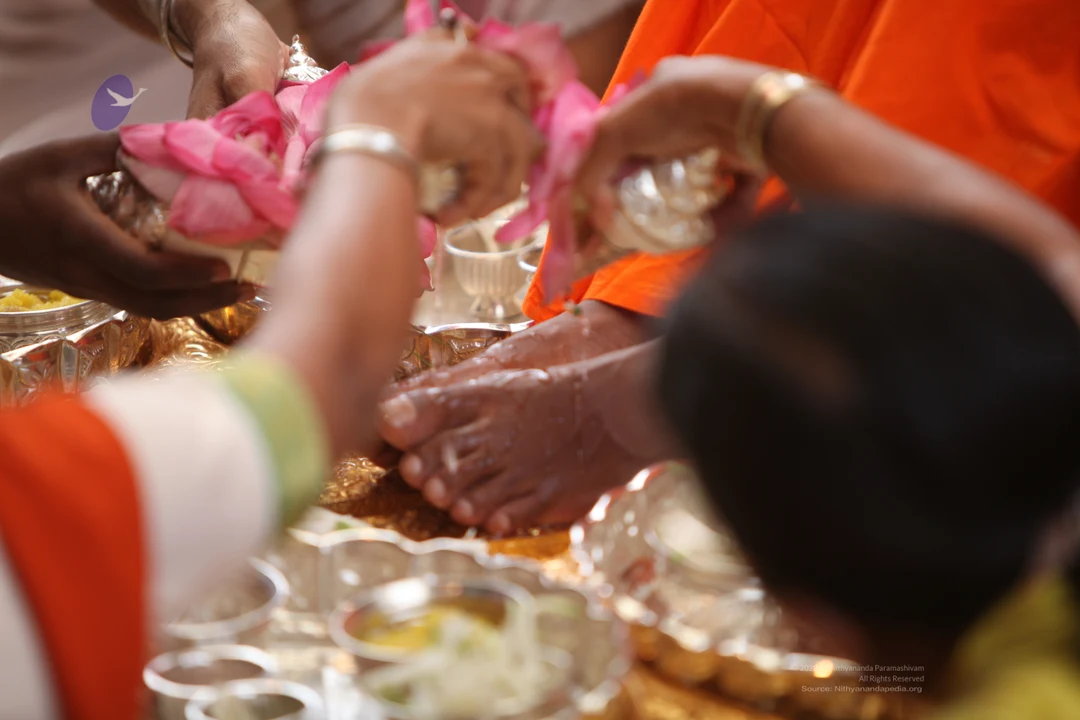
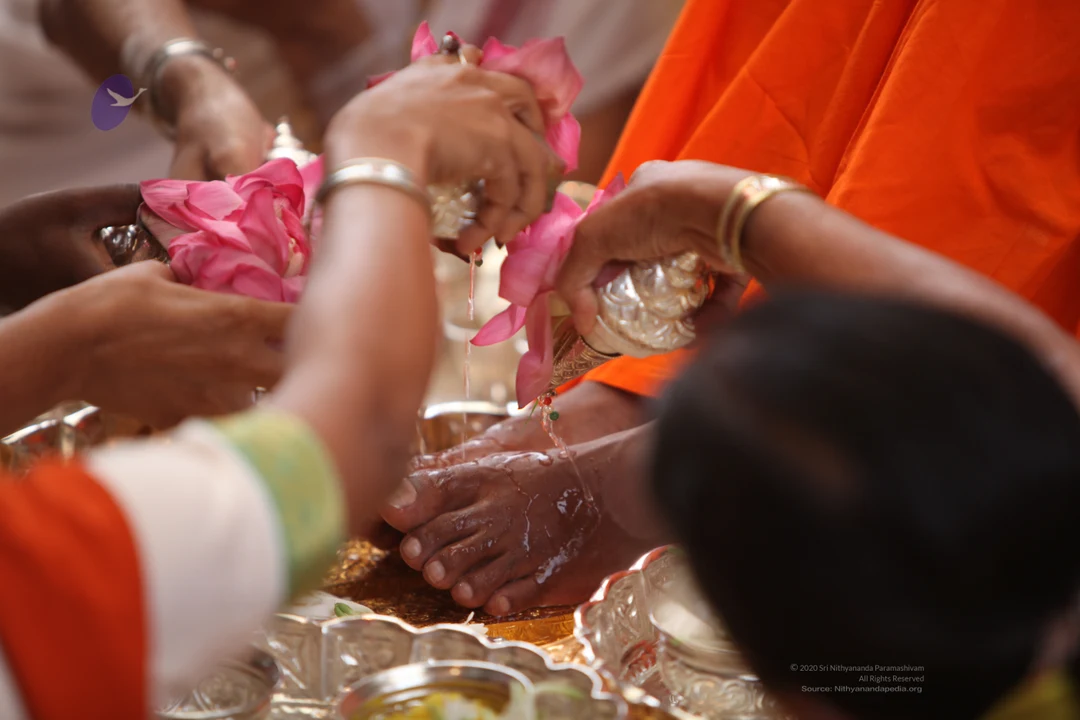
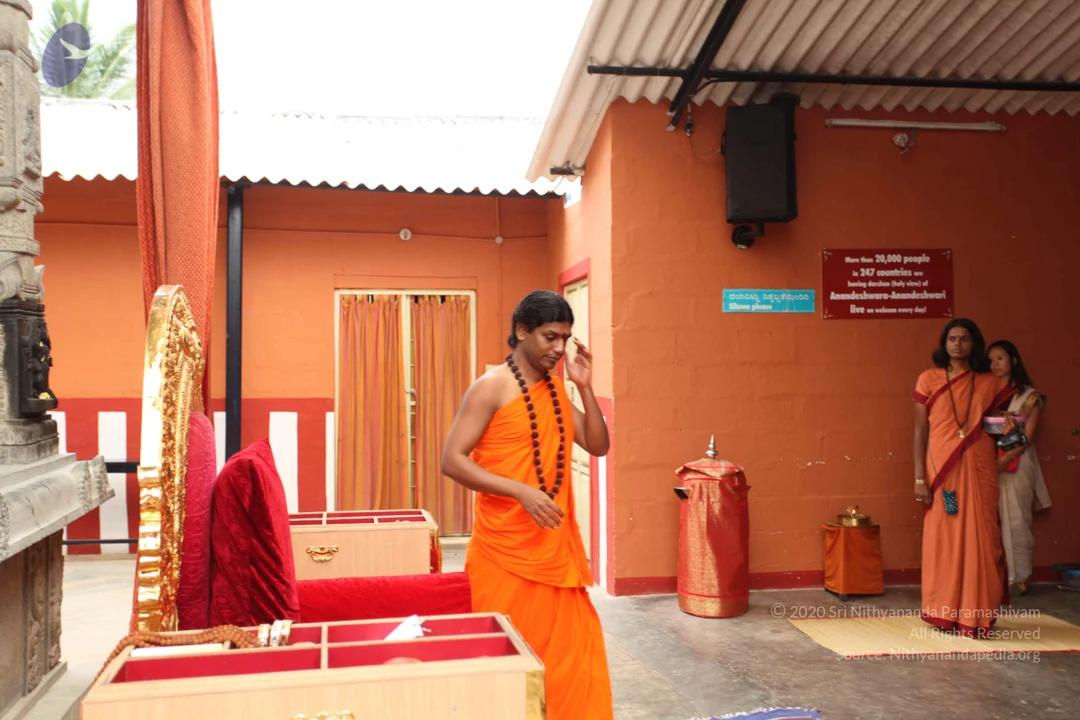
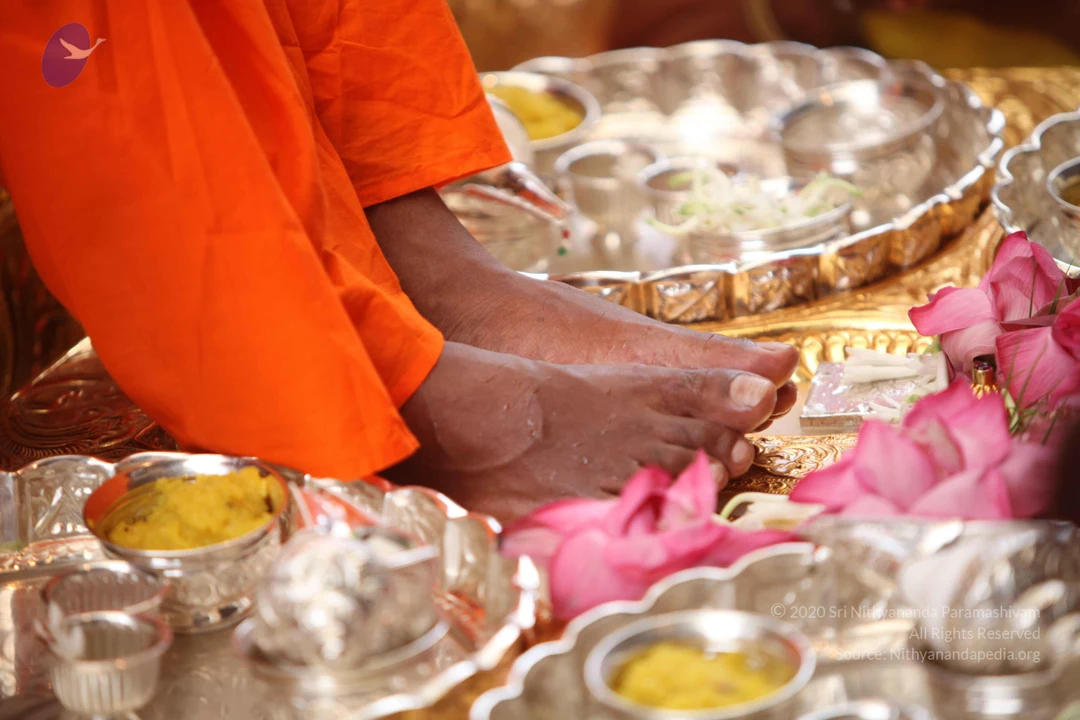
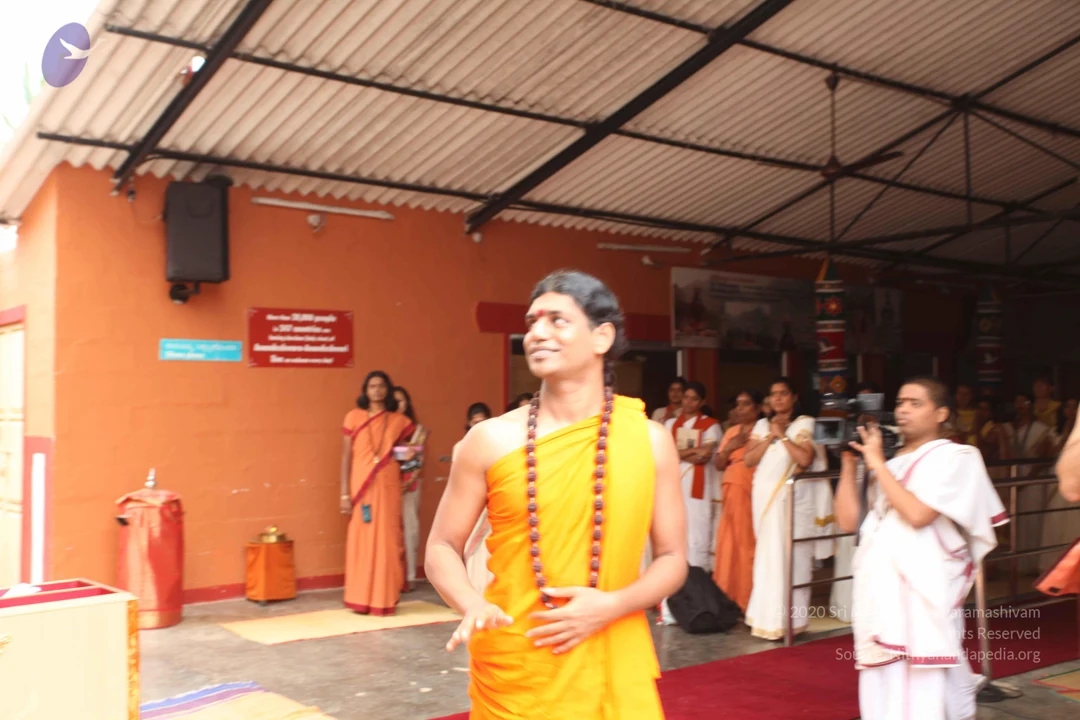
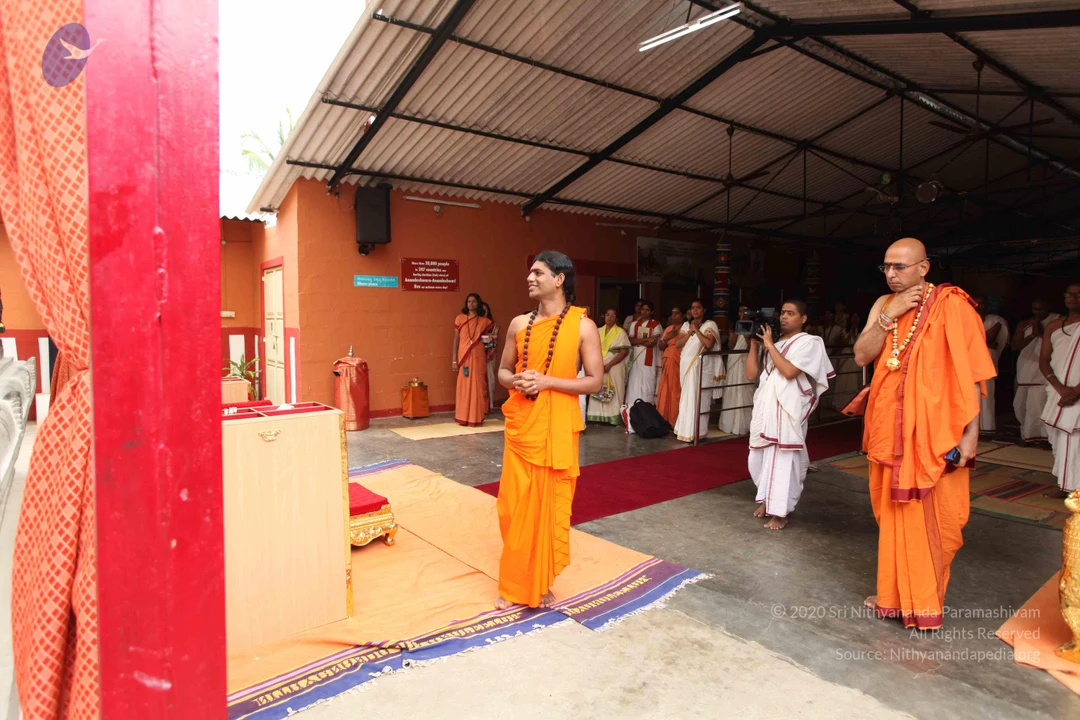
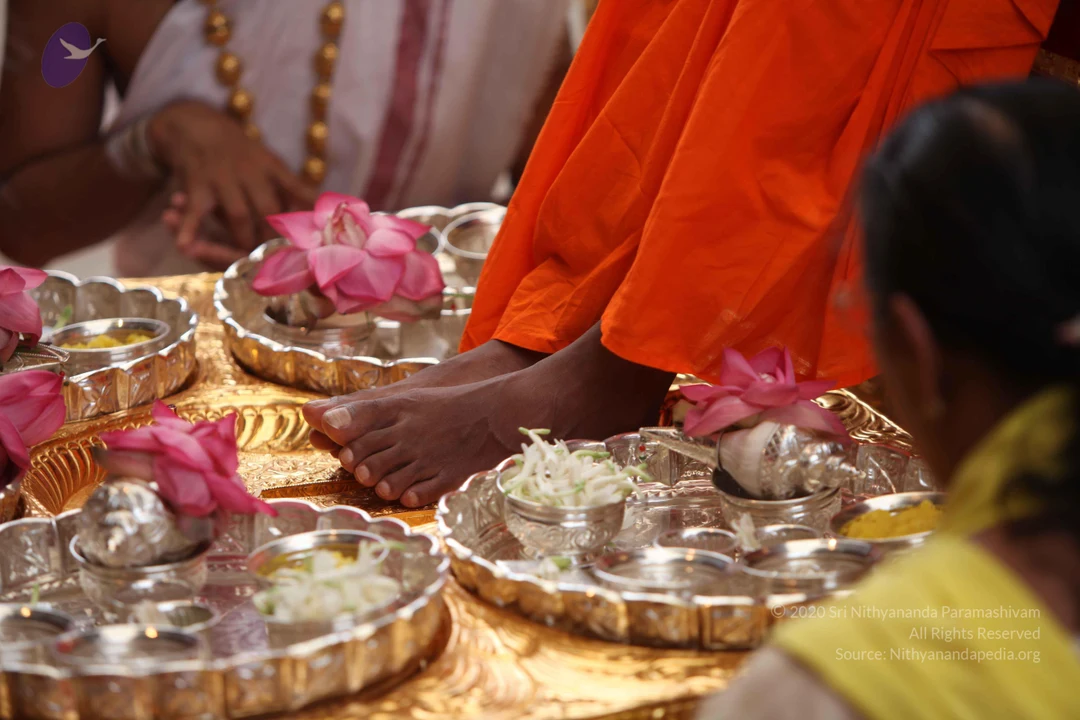
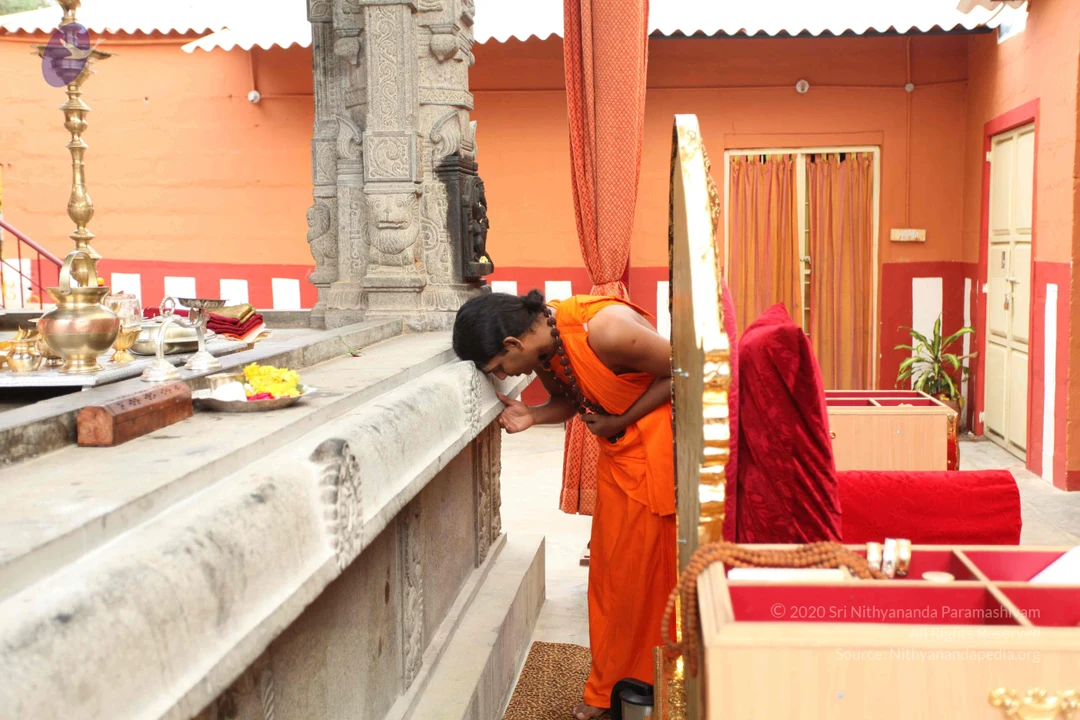
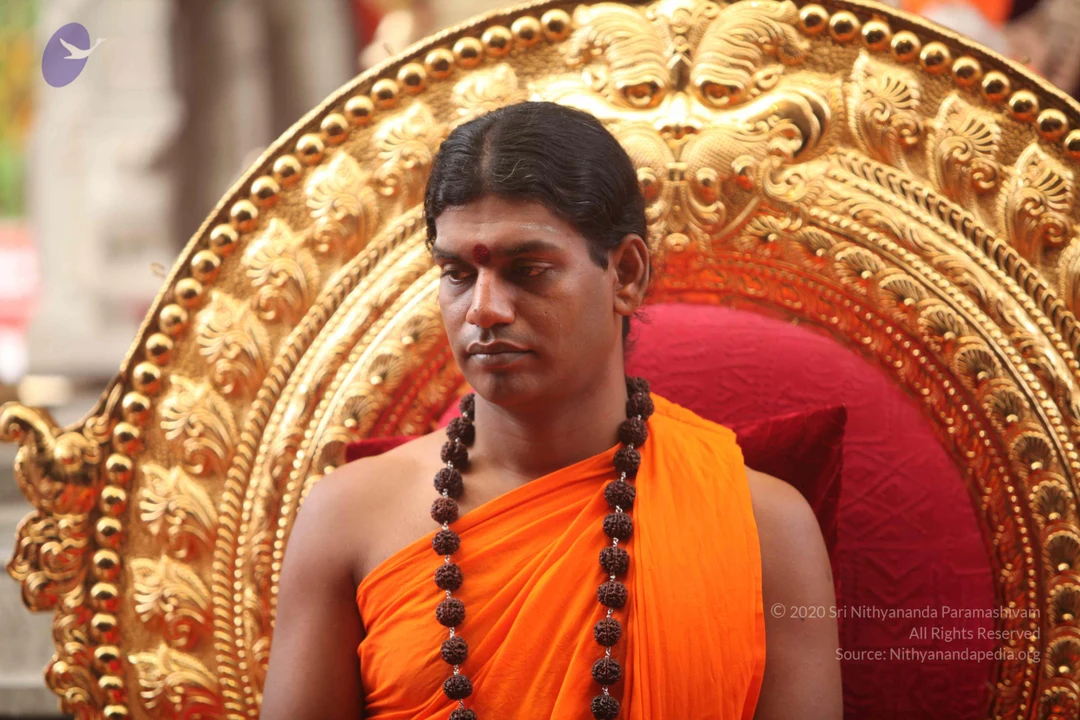
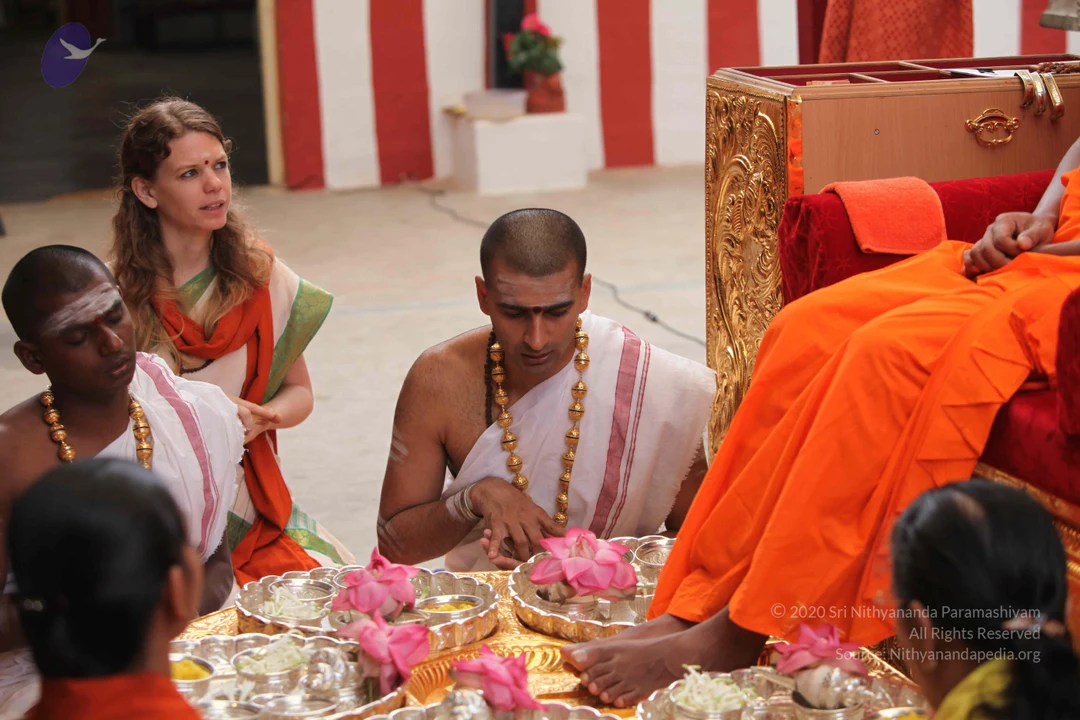
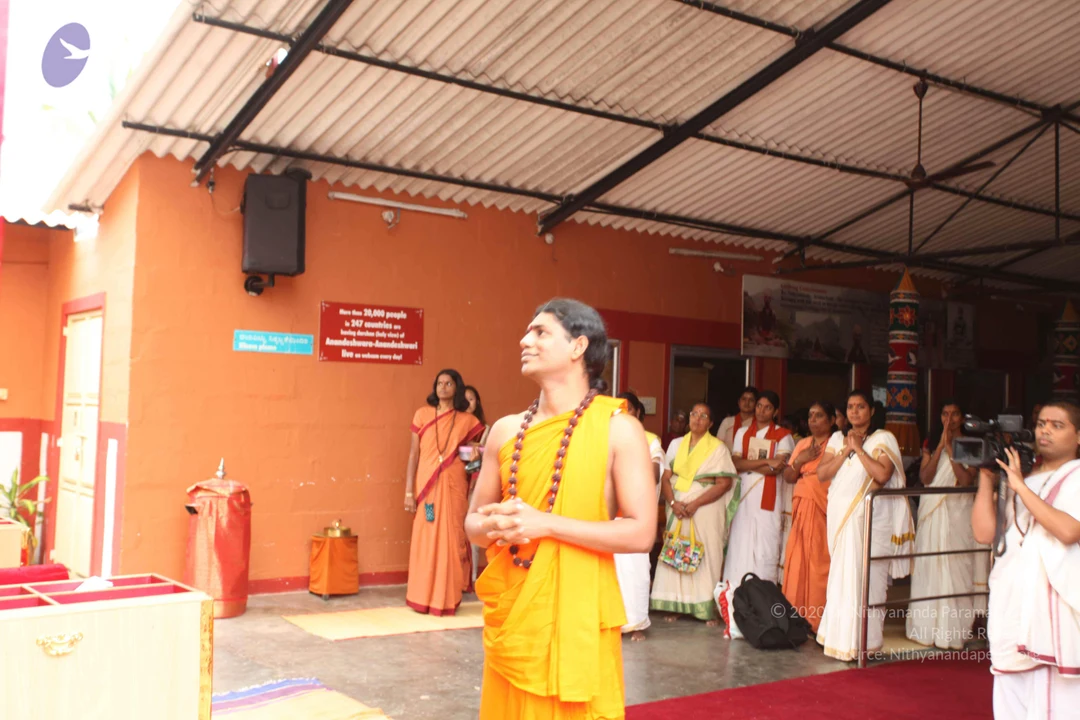
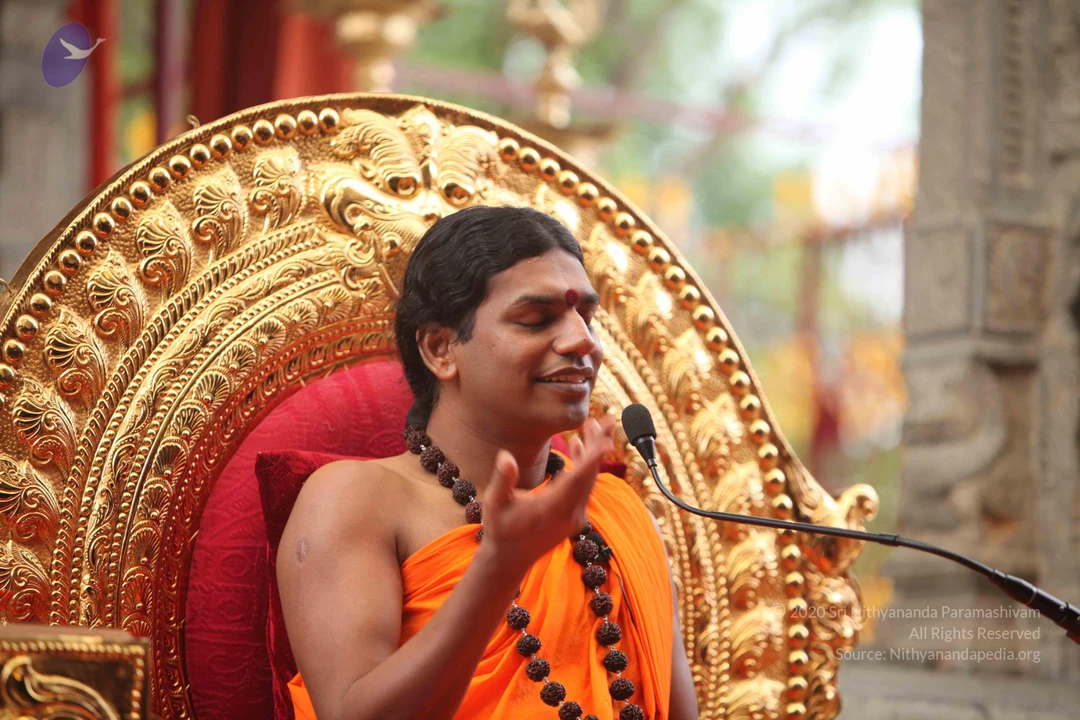
A photograph of a man seated with eyes closed in meditation on an ornate golden throne with a red cushion. He has dark hair tied back in a low knot, a red tilak on his forehead, and wears an orange saffron shawl draped over the shoulder with a long necklace of dark rudraksha beads. Behind him stands an orange and red backdrop and a dark stone deity murti. a person appearance cues include the saffron shawl, rudraksha mala and throne seating; he is presented as the seated central figure of the satsang setting. The shot is taken in a temple-style hall with warm orange tones.Close-up photograph of hands working over ornate silver and gold ritual trays during a puja. A woman's bare arm, with silver bangles, holds a pink lotus flower above a silver bowl of white flowers and yellow turmeric or kumkum. Another hand in the frame reaches toward a small silver vessel, and a person in orange robes is partly visible at the top, seated behind the trays. A dark-haired head appears at the right edge. The shallow focus leaves the background soft, with more gold trays and offerings beyond. The scene suggests offerings being prepared for a ritual.A man seated on an ornate gilded throne with a red cushioned back and gold beaded scrollwork sits smiling and gazing to the side. He wears an orange saffron shawl draped over his bare shoulder and a long multi-strand rudraksha mala with brown beads, and has a red bindi on his forehead and swept-back dark hair. A microphone on a stand is in front of him. The background is softly blurred with warm colours.Outdoor temple courtyard with orange-painted walls and a corrugated roof. A man in saffron-orange robes and a long rudraksha mala walks past a red-cushioned seat near an ornate golden seat back. Behind him, a woman in orange sari with a rudraksha mala stands beside another woman in a light sari. On the wall, a red sign reads that more than 20,000 people in 247 countries have darshan of Anandeshwara-Anandeshwari, and a blue sign reads Sthree Pravesha. A red-and-gold kalasha sits on a stand near a brass vessel on a mat. Swamiji (probable): the man in saffron robes with long swept-back hair and a rudraksha mala appears to be the figure the page associates with Swamiji, depicted as a sannyasi in orange with a rudraksha mala.A man with short dark hair and a red bindi sits with eyes closed on an ornate gilded throne with carved floral and lion-like motifs, backed by red cushions. He wears an orange-saffron shawl draped over one shoulder and a long necklace of dark rudraksha beads. The setting appears to be an outdoor temple-style area with a stone pillar and blurred greenery behind him. a person: the saffron clothing, rudraksha mala and seated throne position are cues, but the appearance is not distinctive enough to confirm identity from the image alone.Close photograph of bare feet resting on a golden tray of silver ritual vessels, part of a padapuja. The feet belong to a person wearing orange-saffron robes, visible at the upper right. Pink rose petals and stems are scattered at left, with silver bowls holding oil, shredded white flower or grain offerings, and a silver spouted vessel. The feet are being washed or honoured with the offerings arranged around them.