Skip to content
Tuesday

19 October 2010

Super DNA - Gateway to 2012: Nithyananda Morning Message (19 Oct 2010)

Dated photos
364
Source pages
1
Media
6
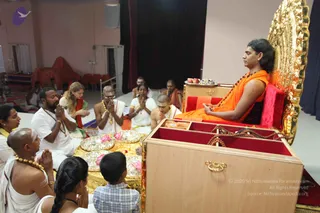
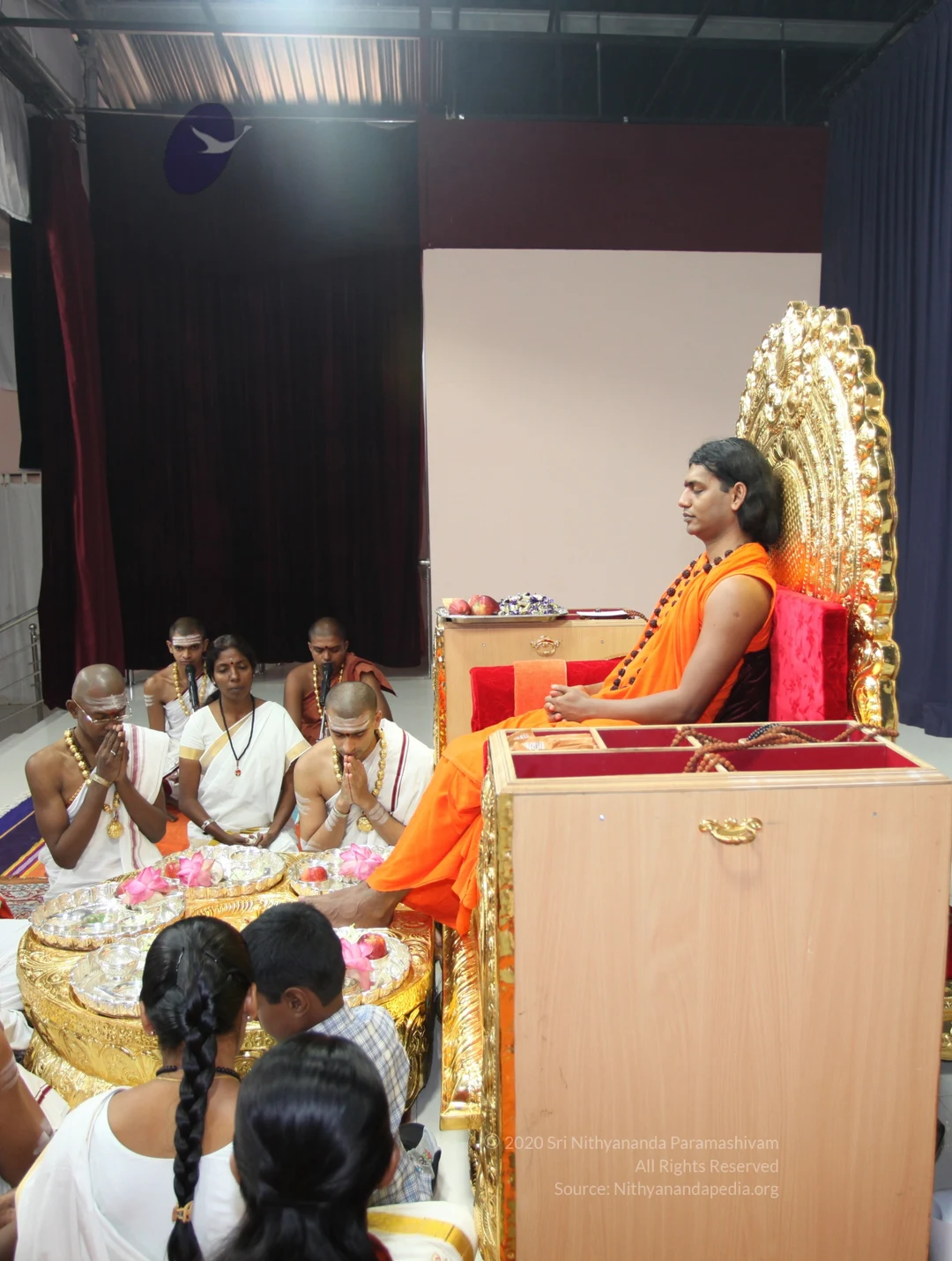
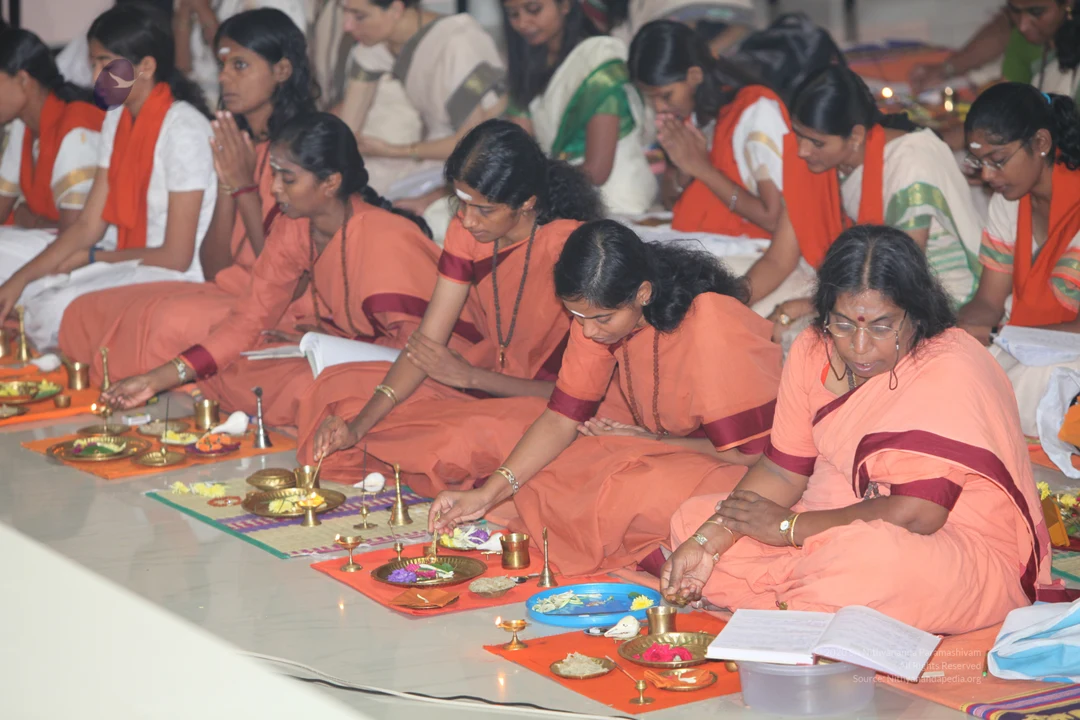
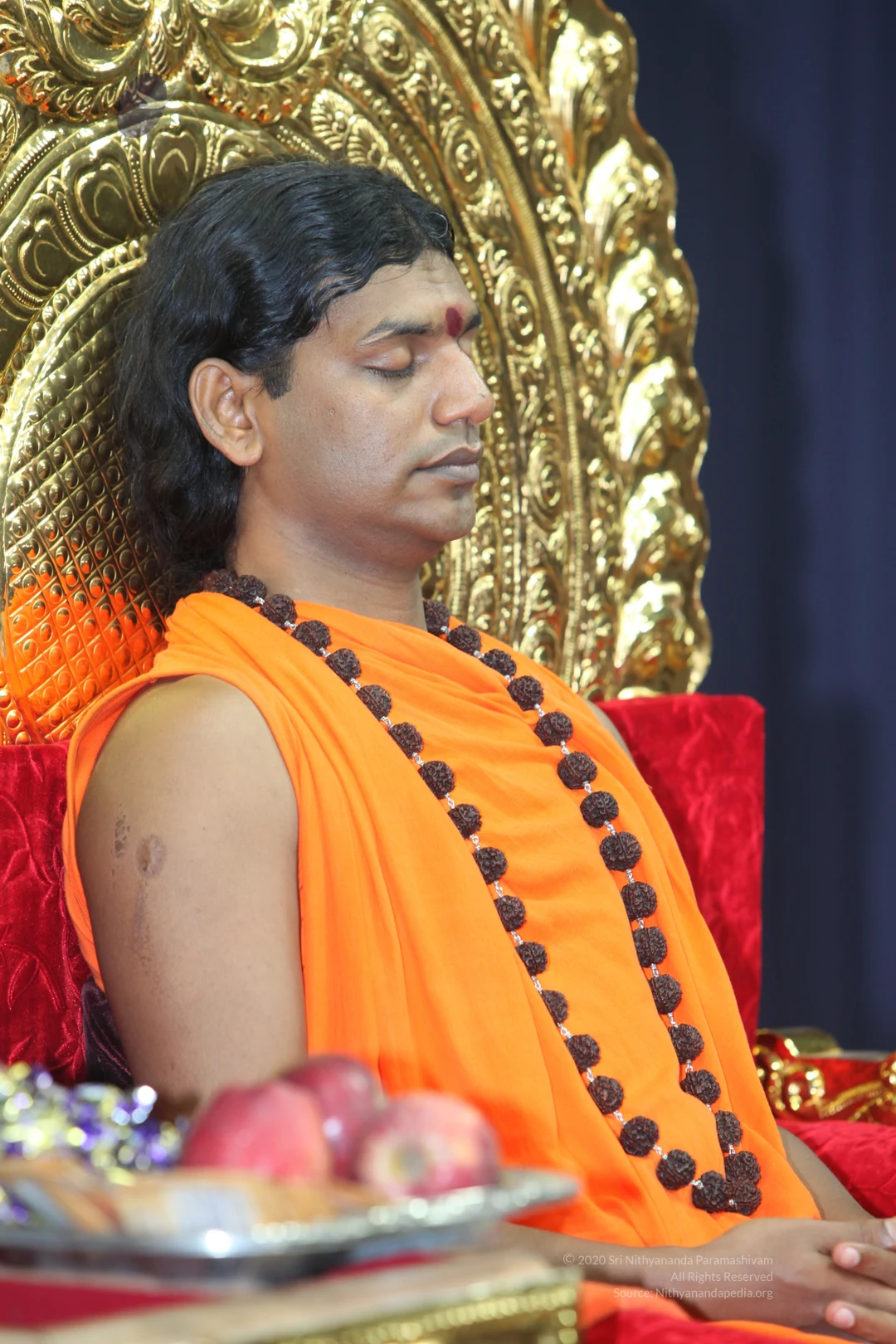
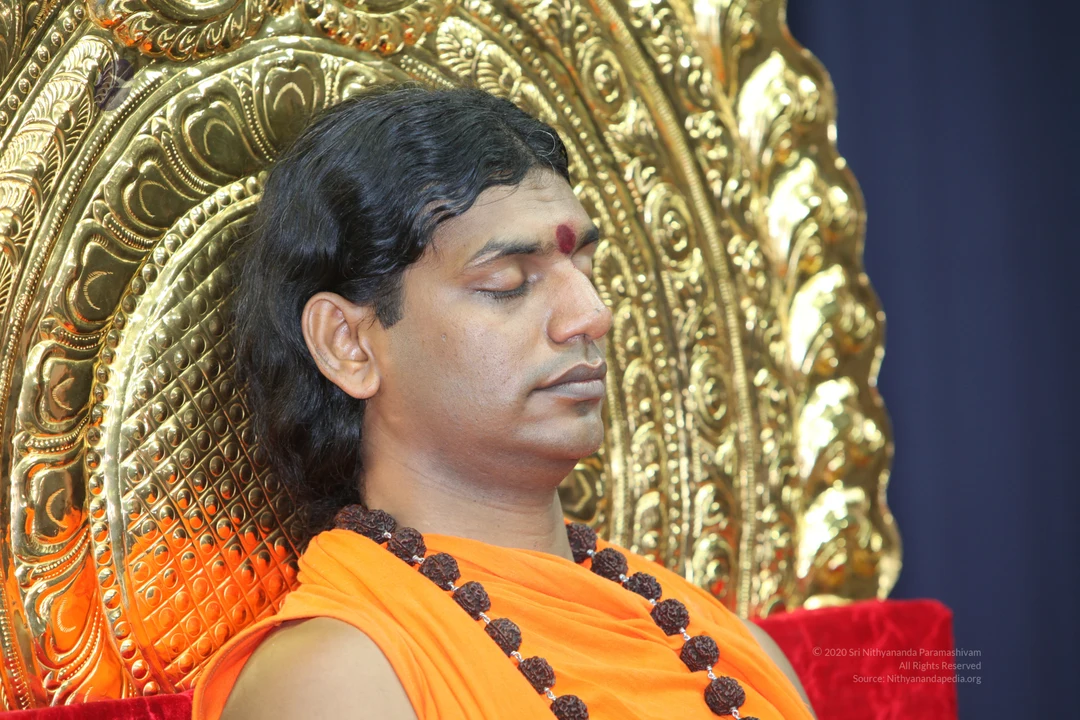
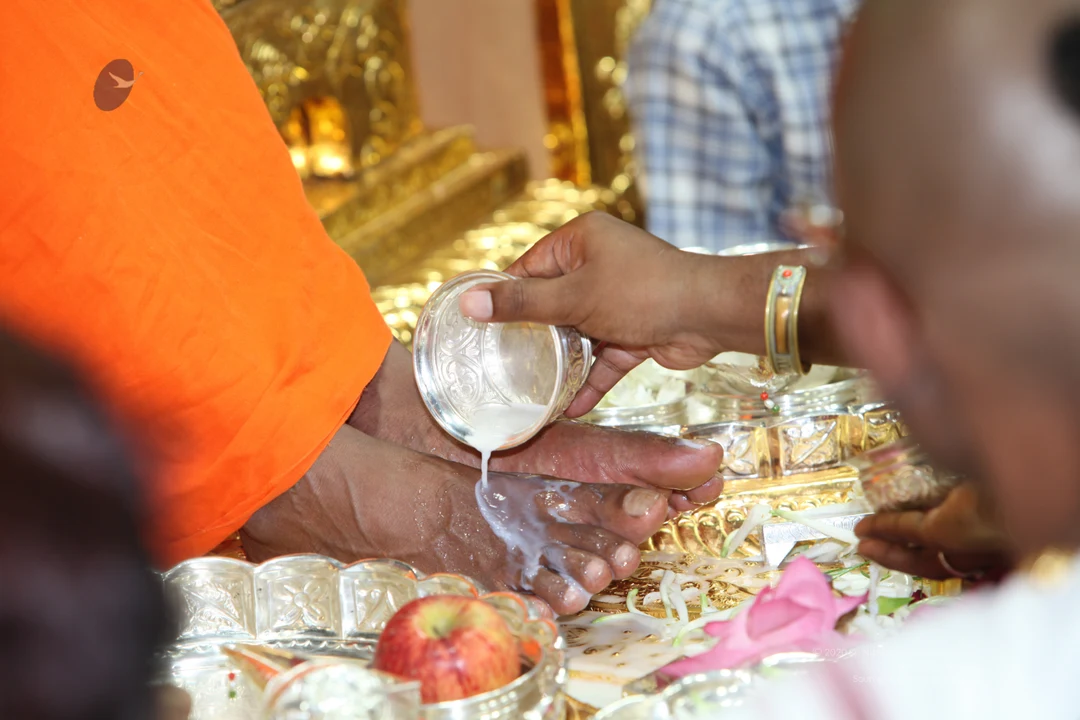
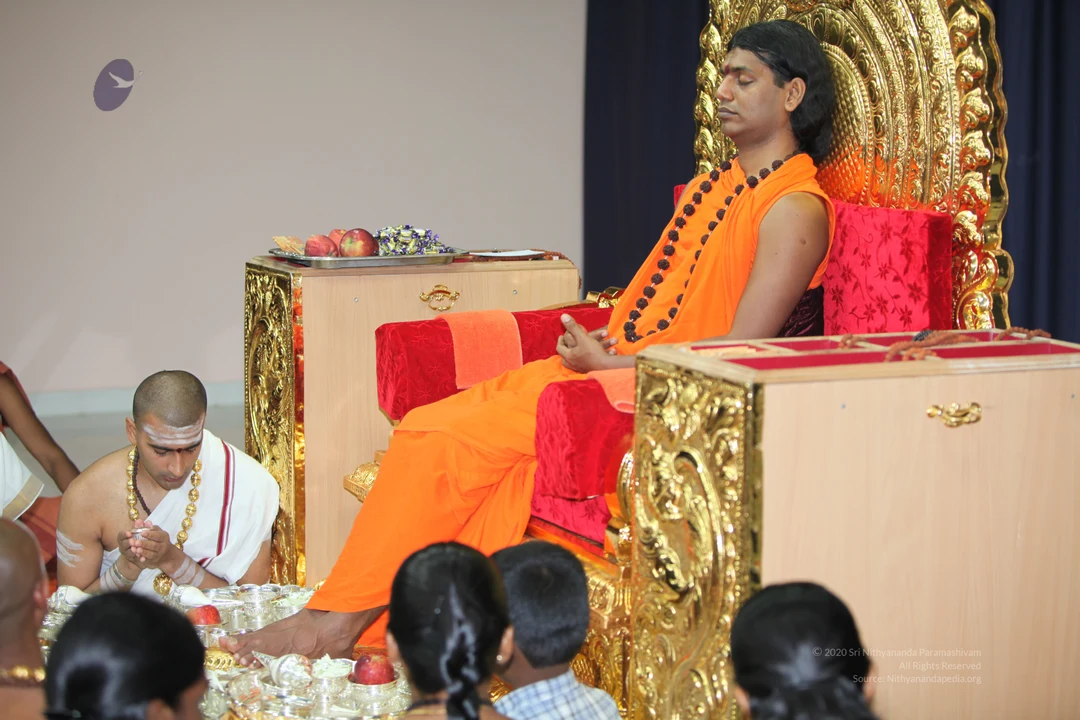
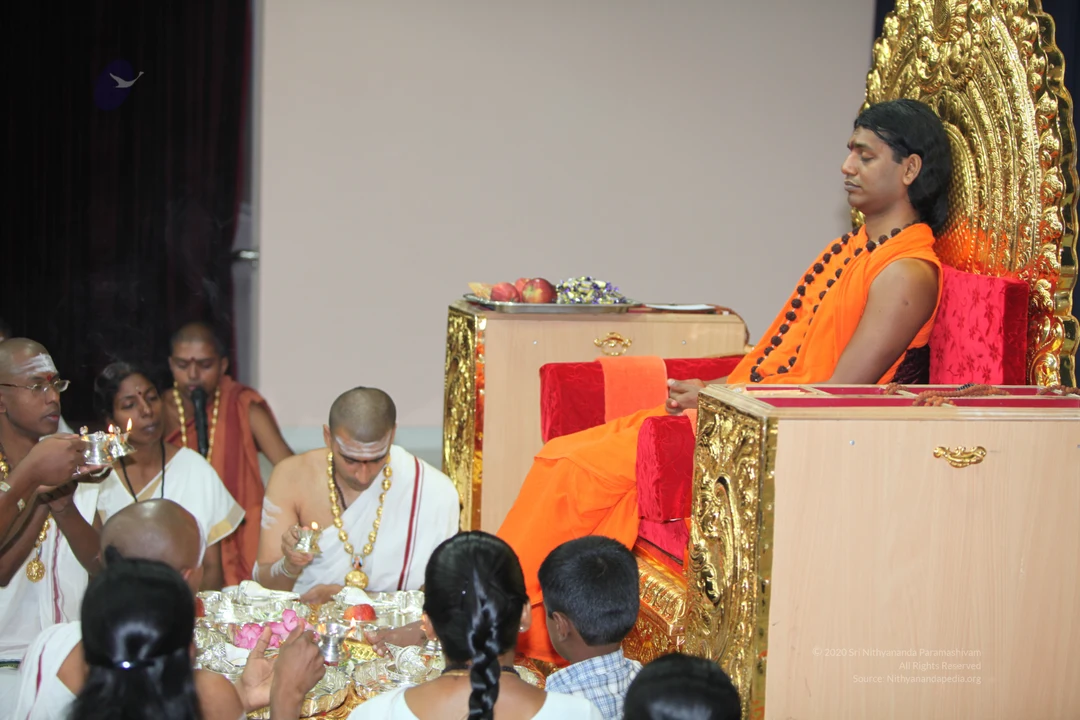
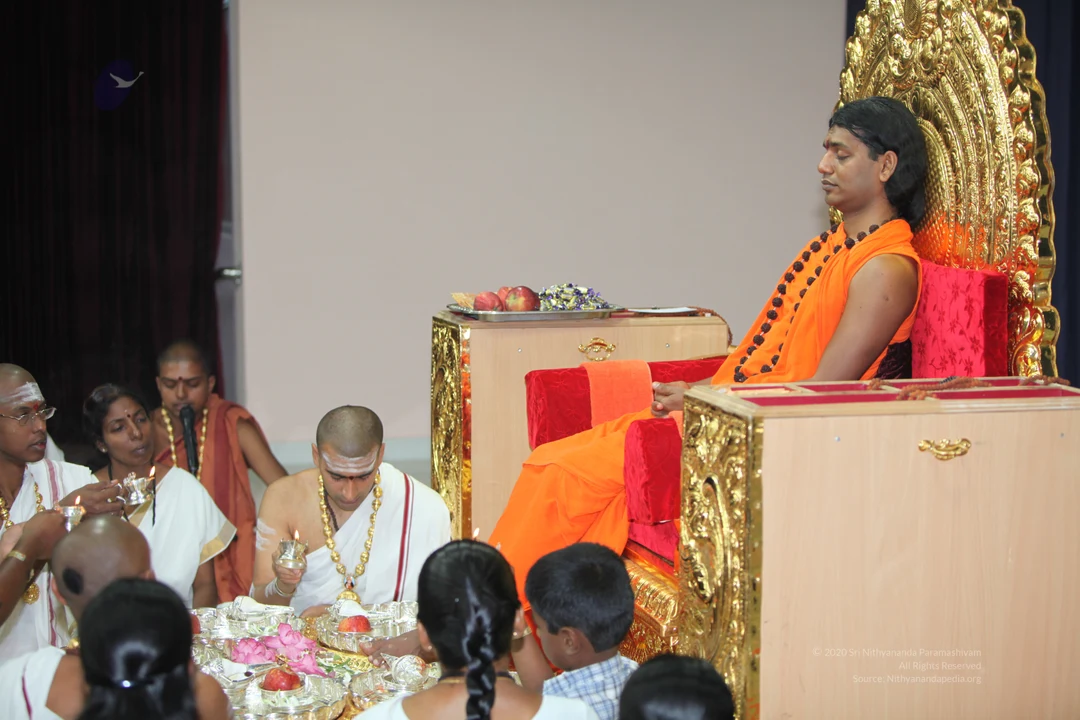
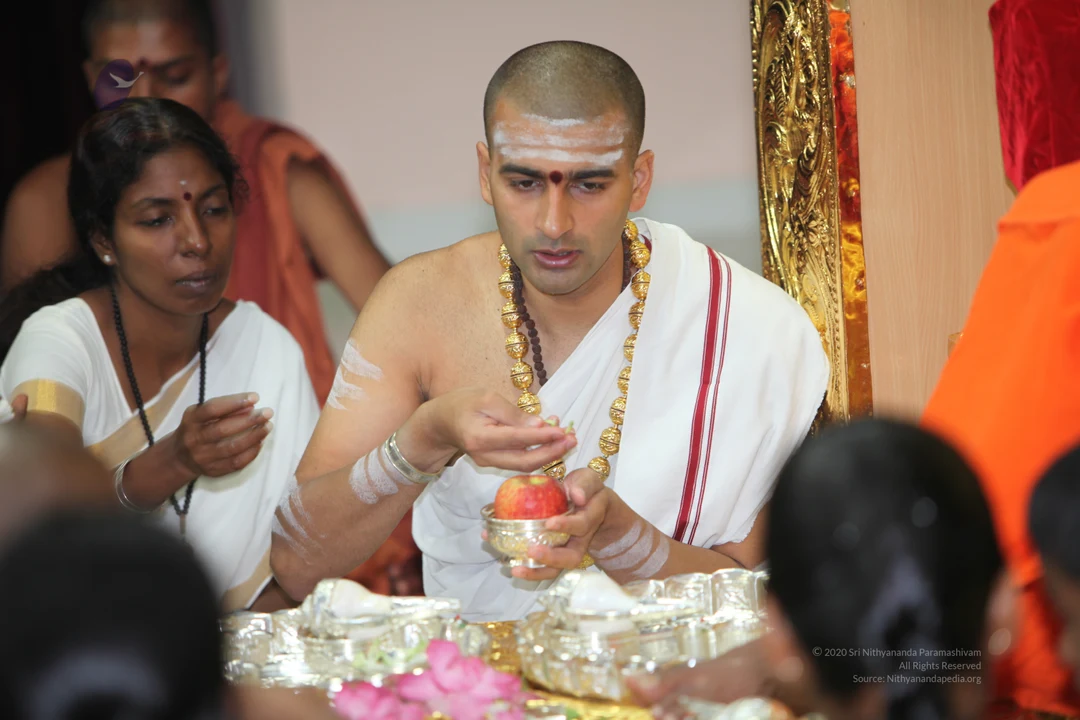
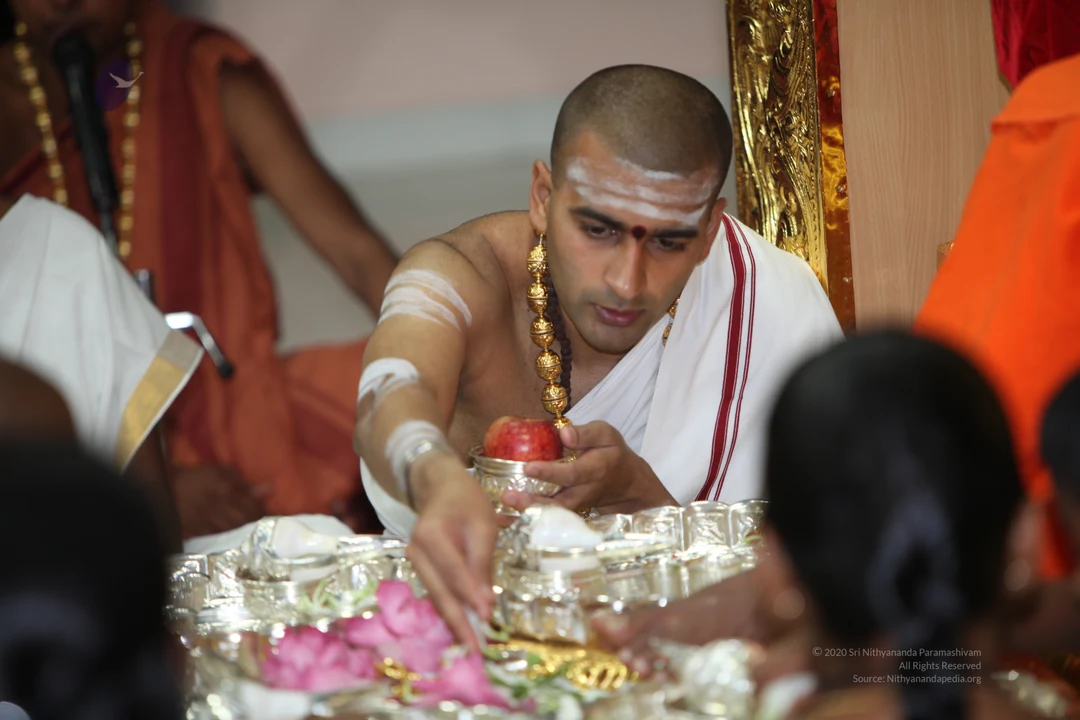
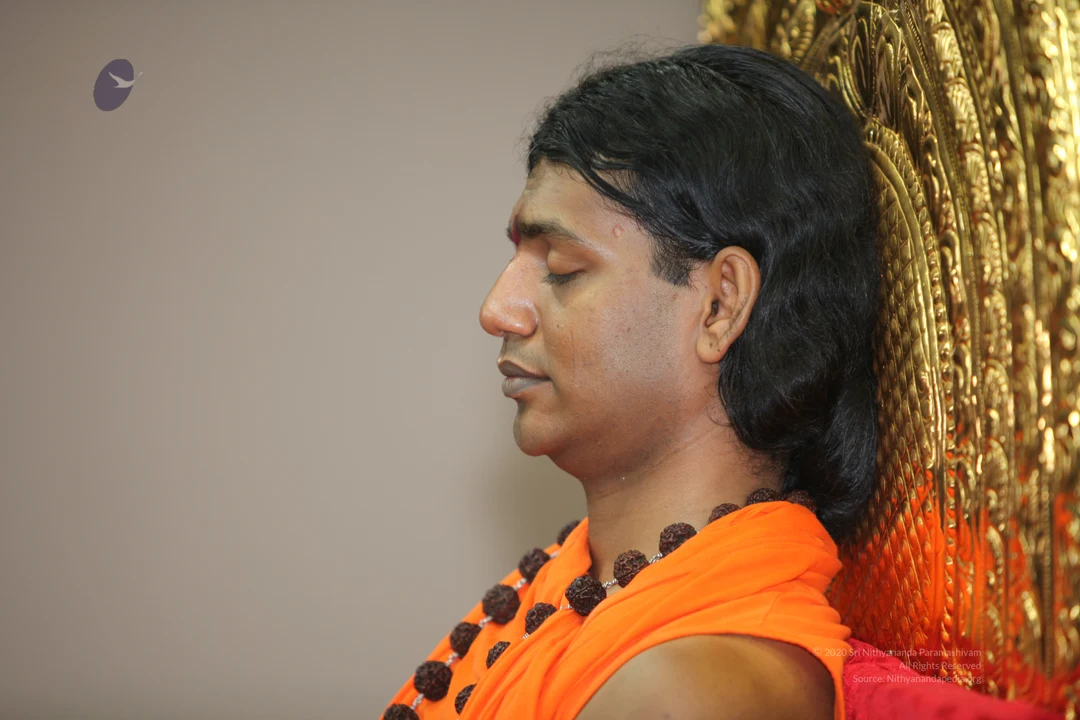
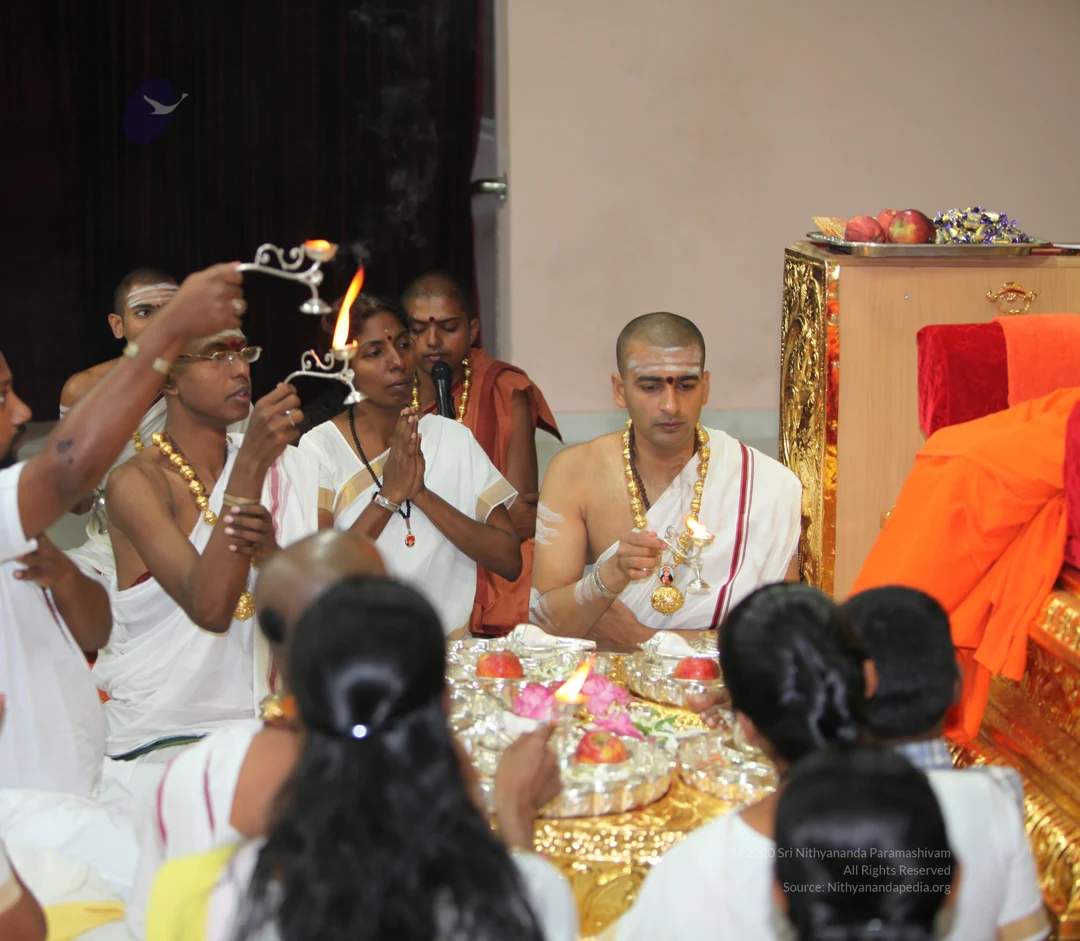
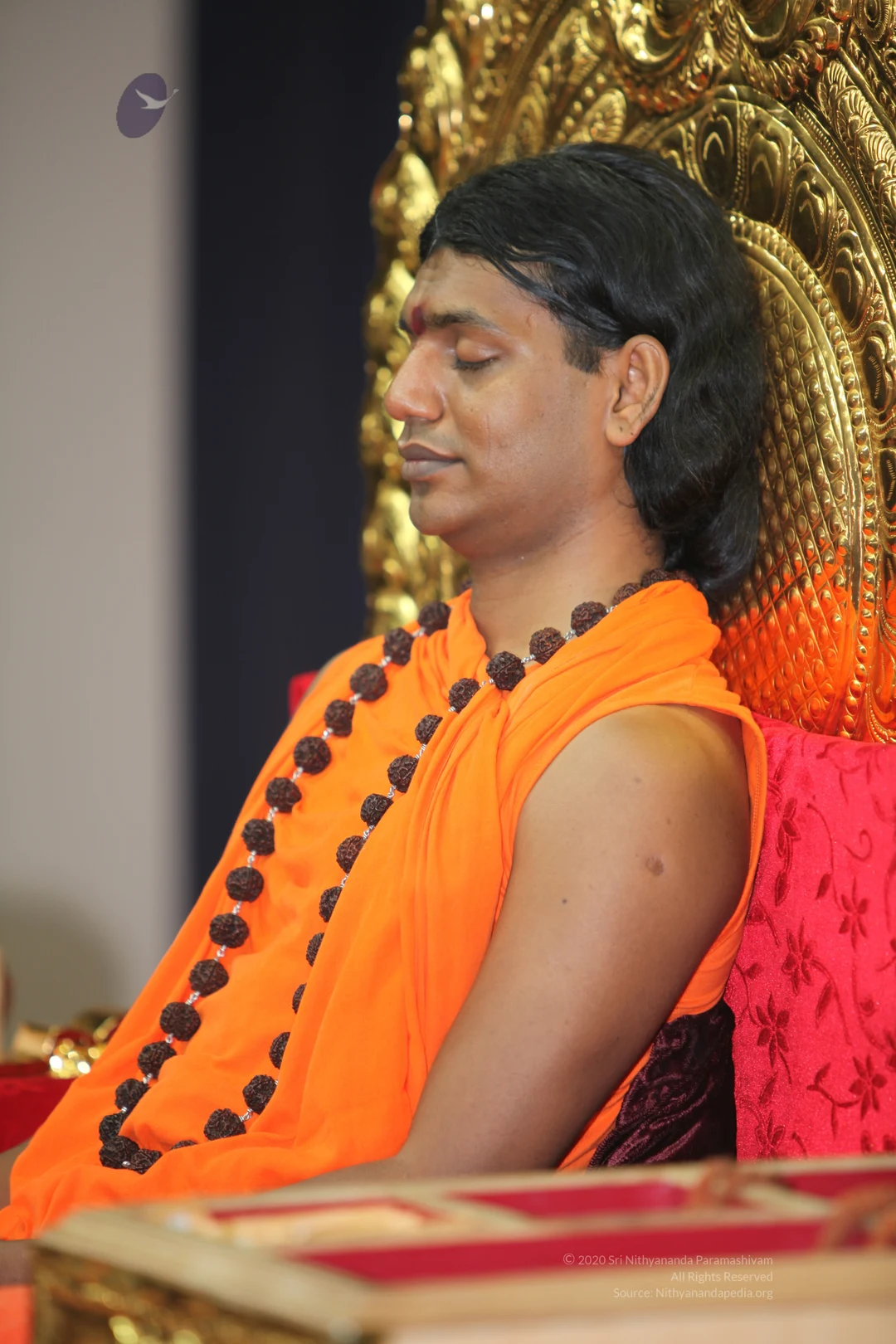
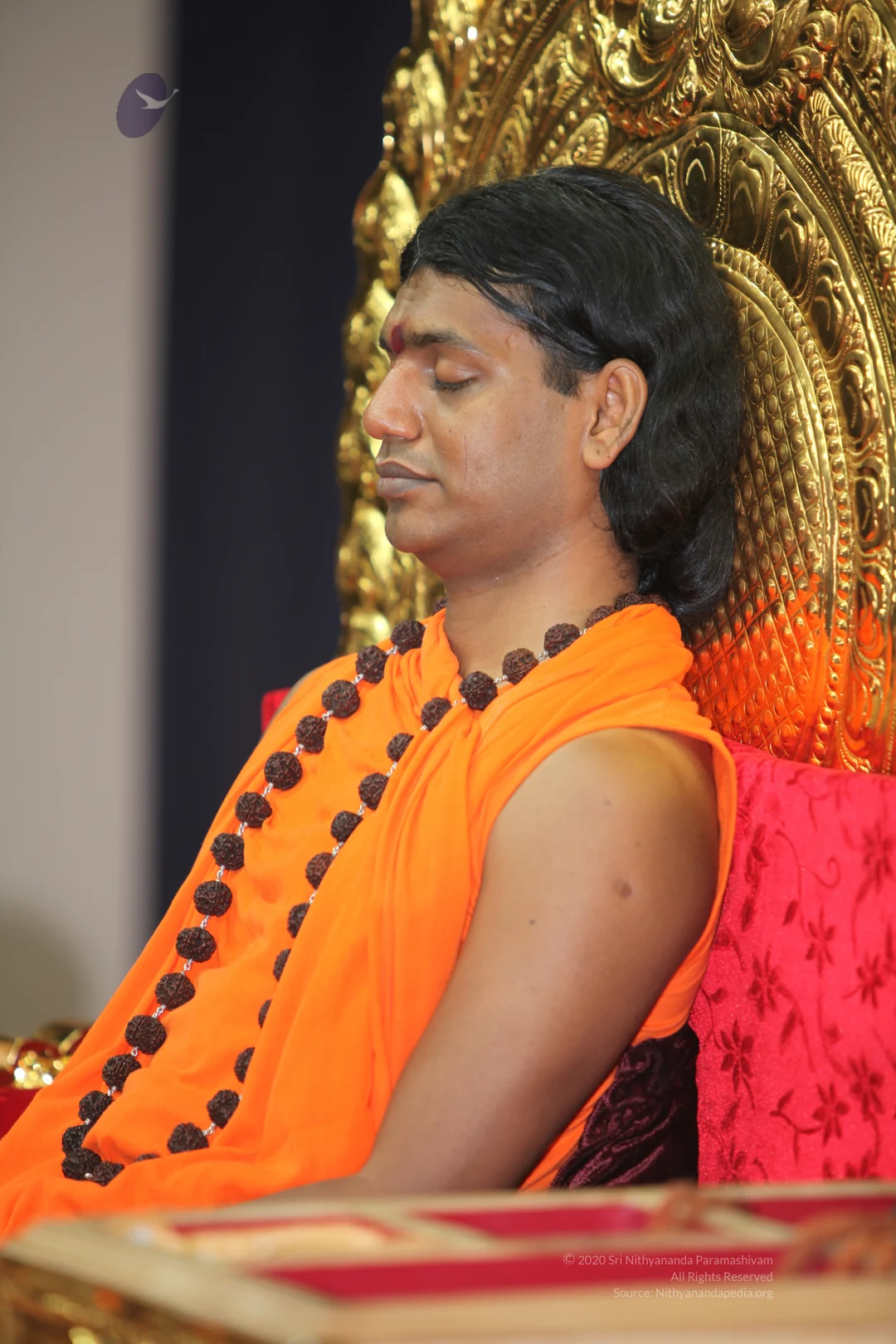
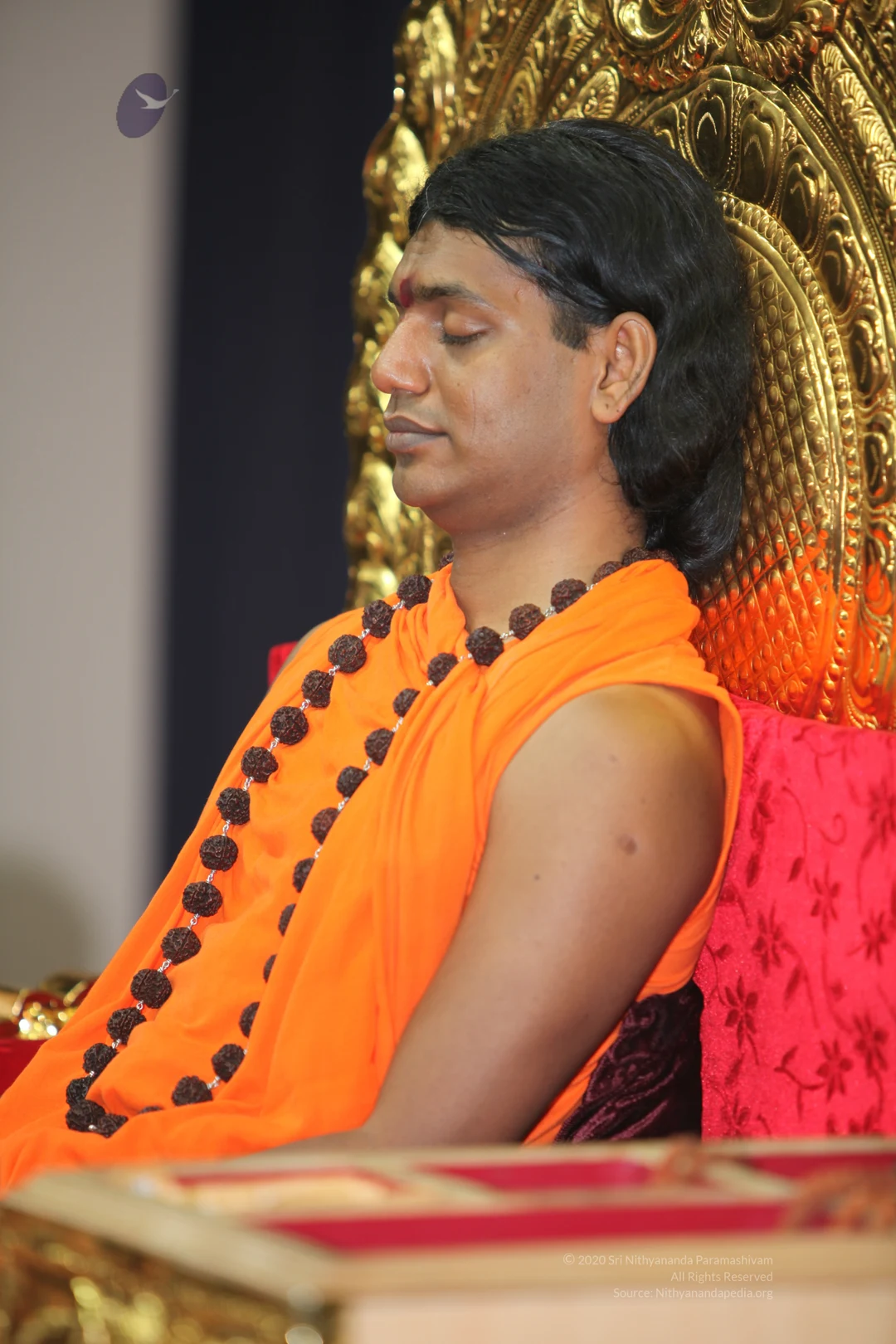
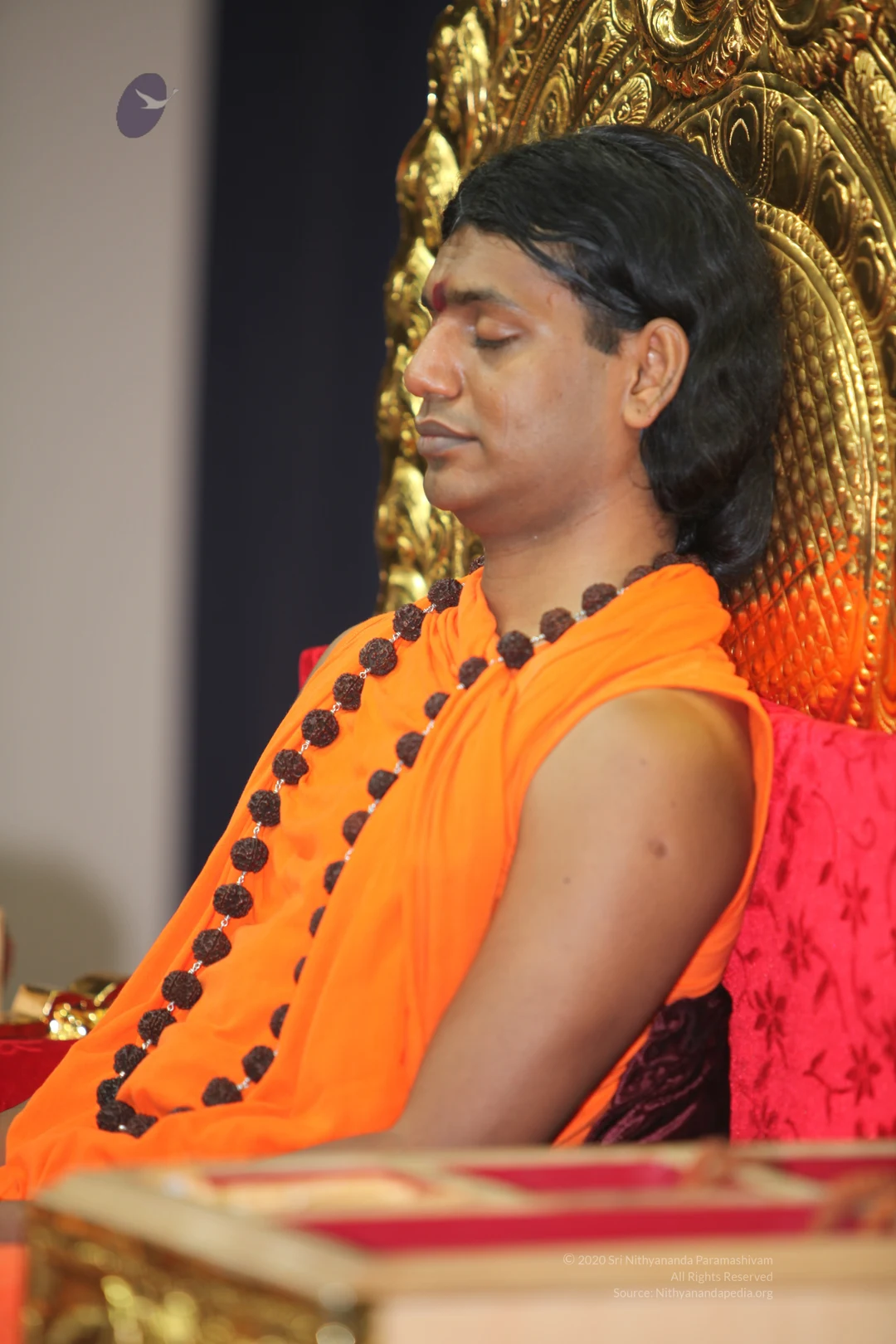
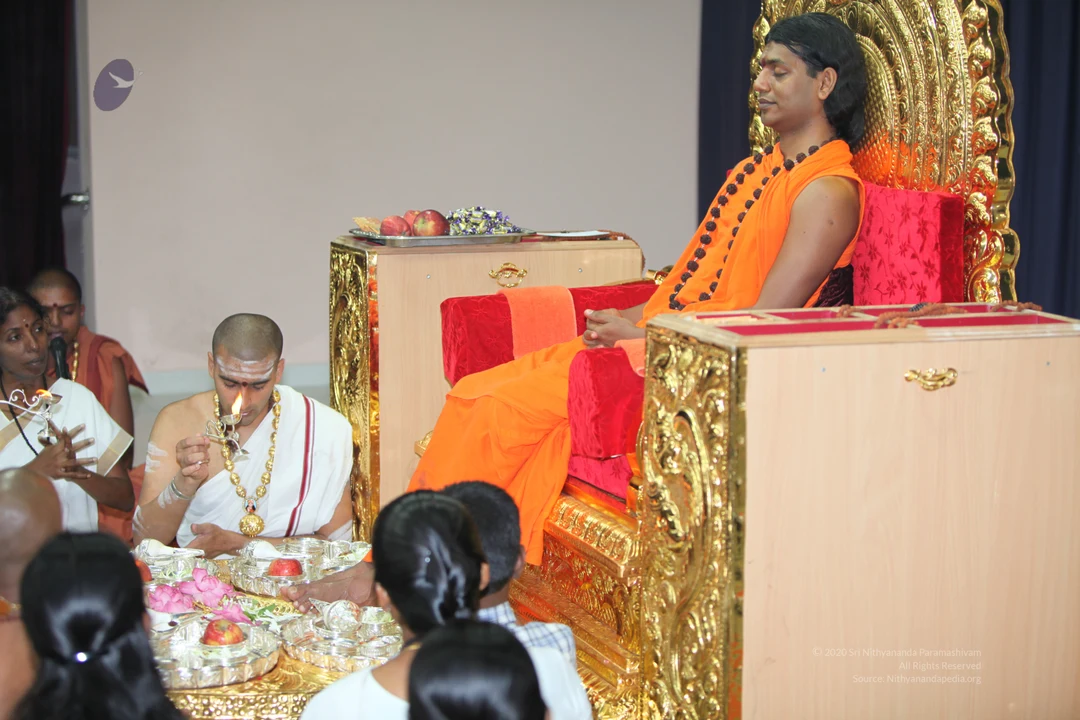
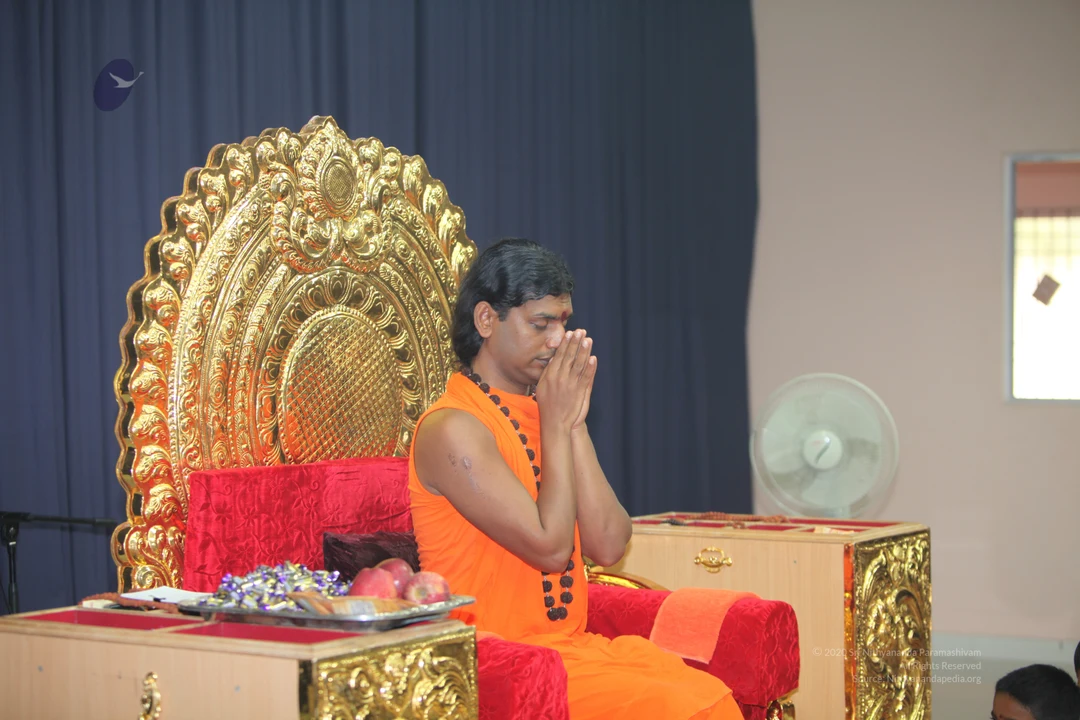
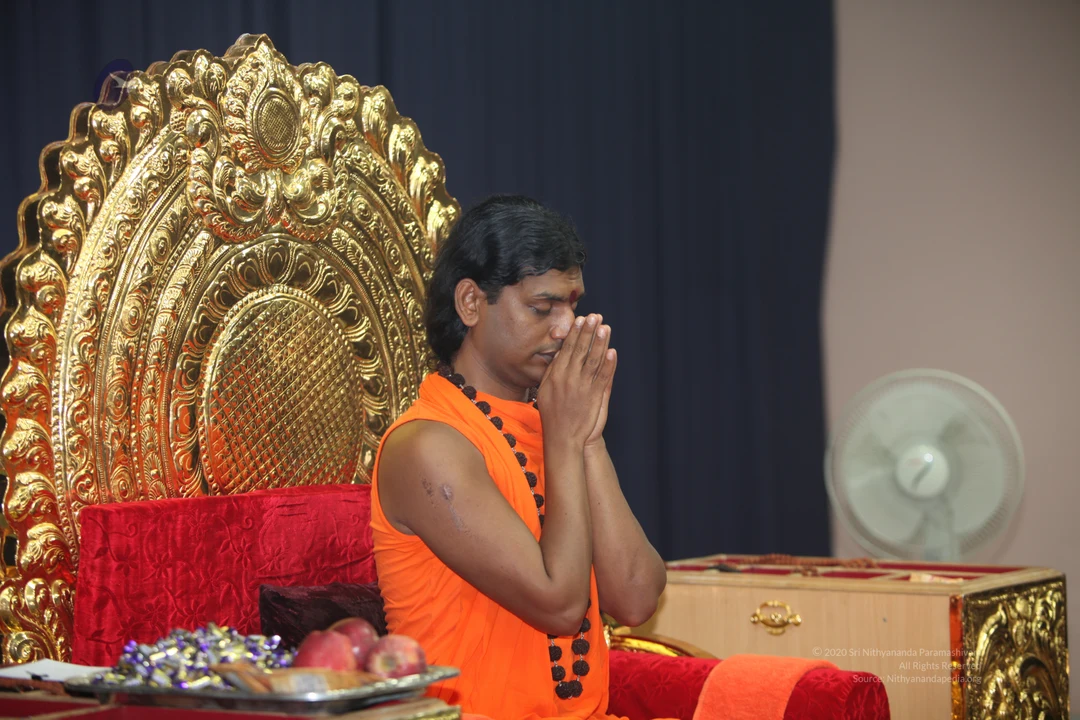
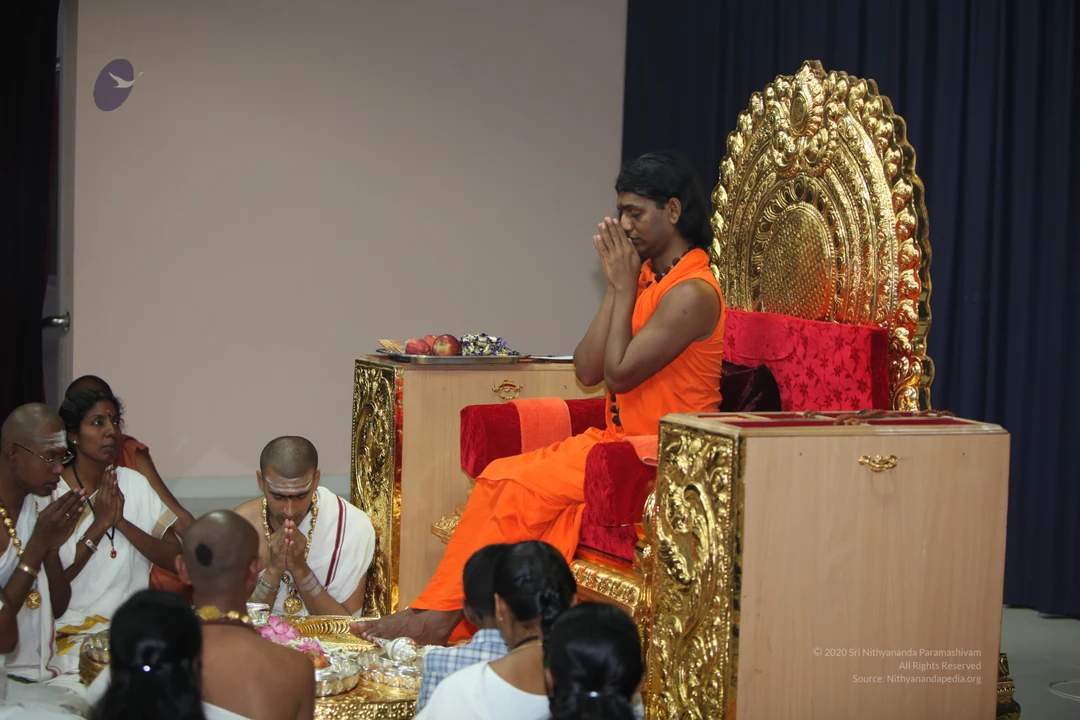
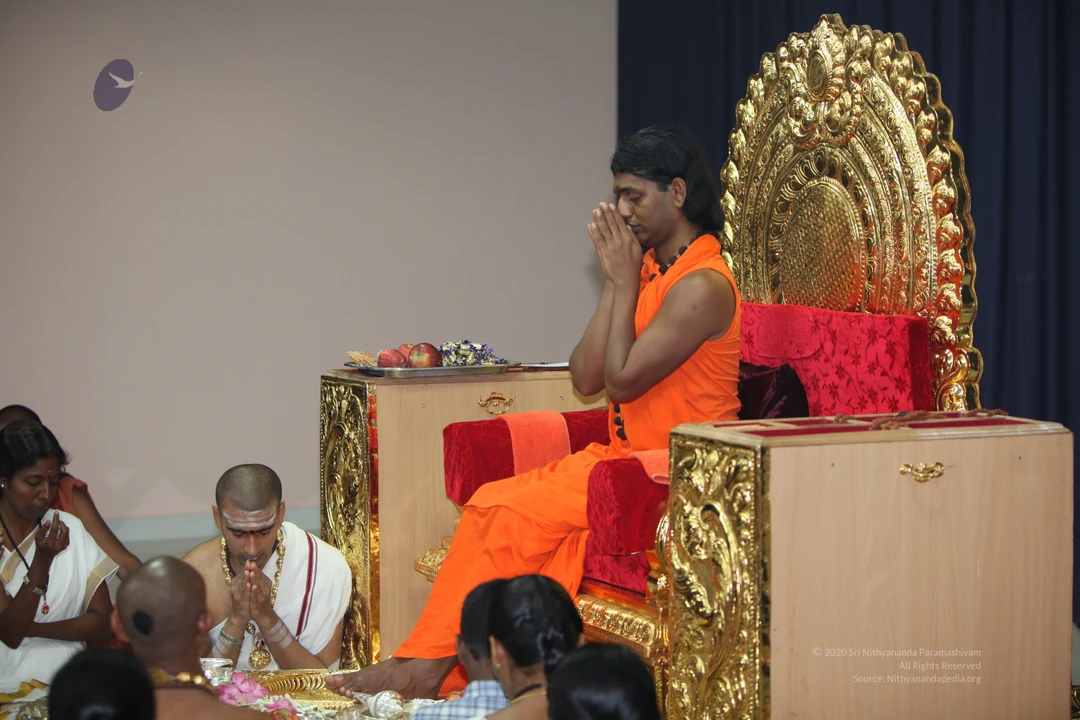
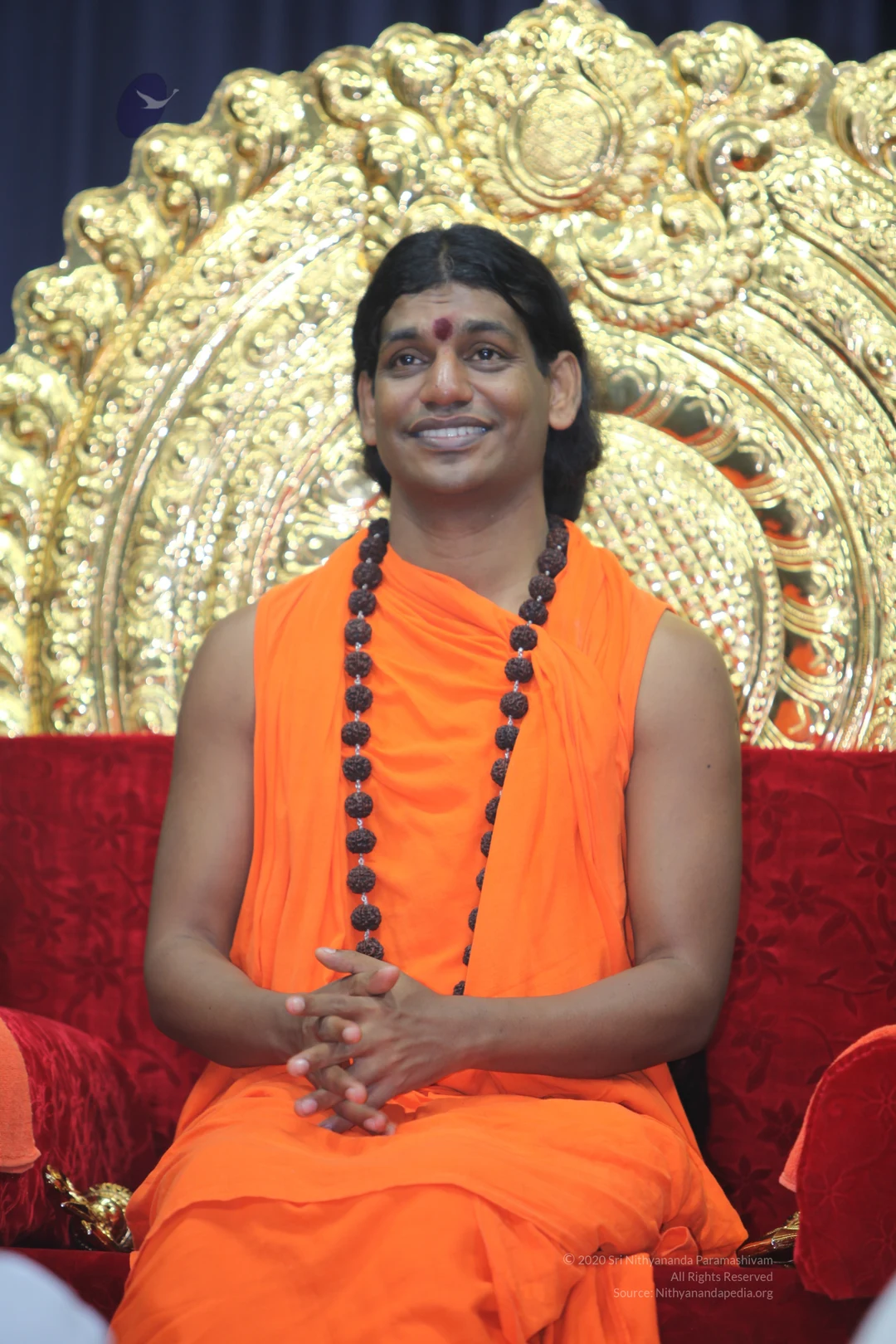
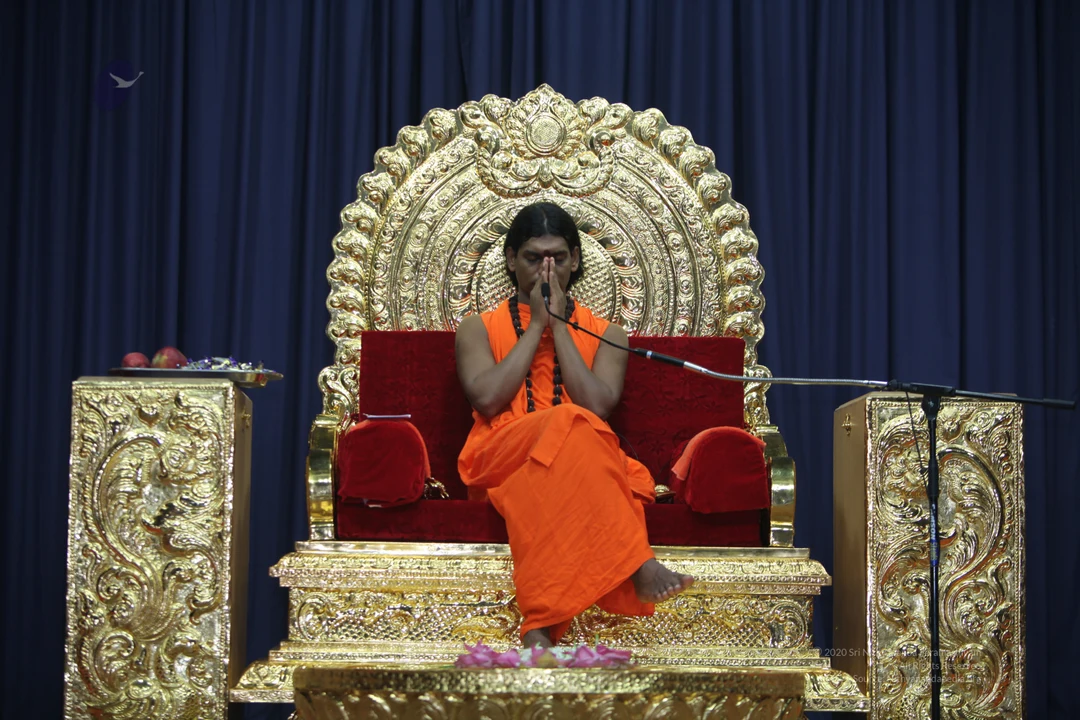
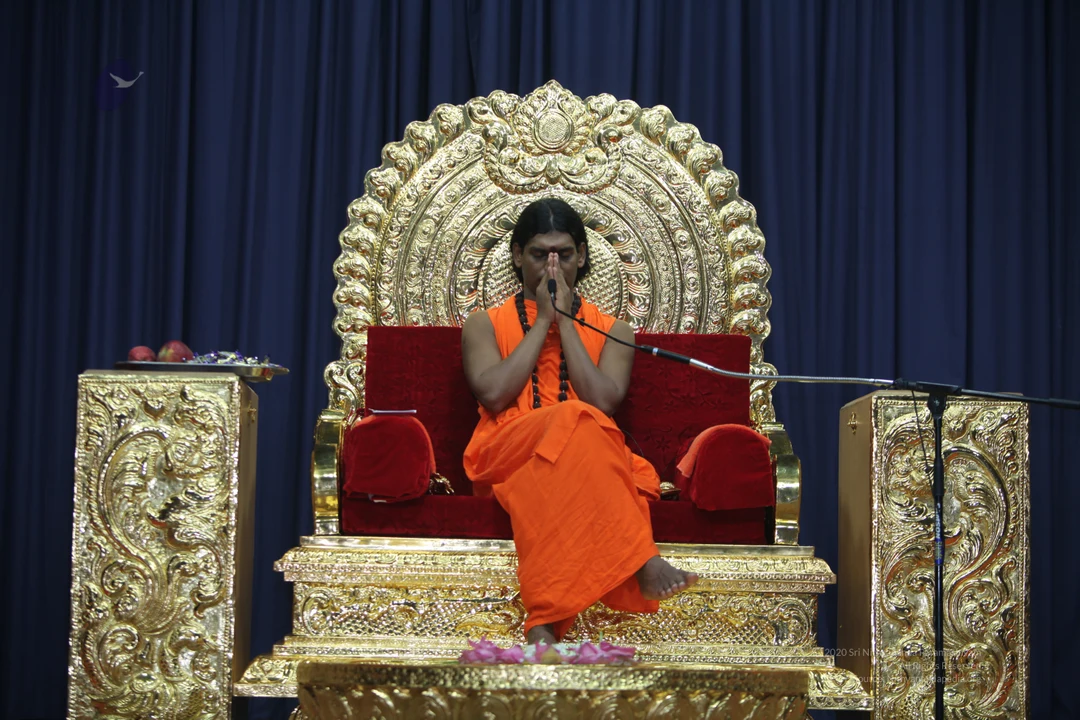
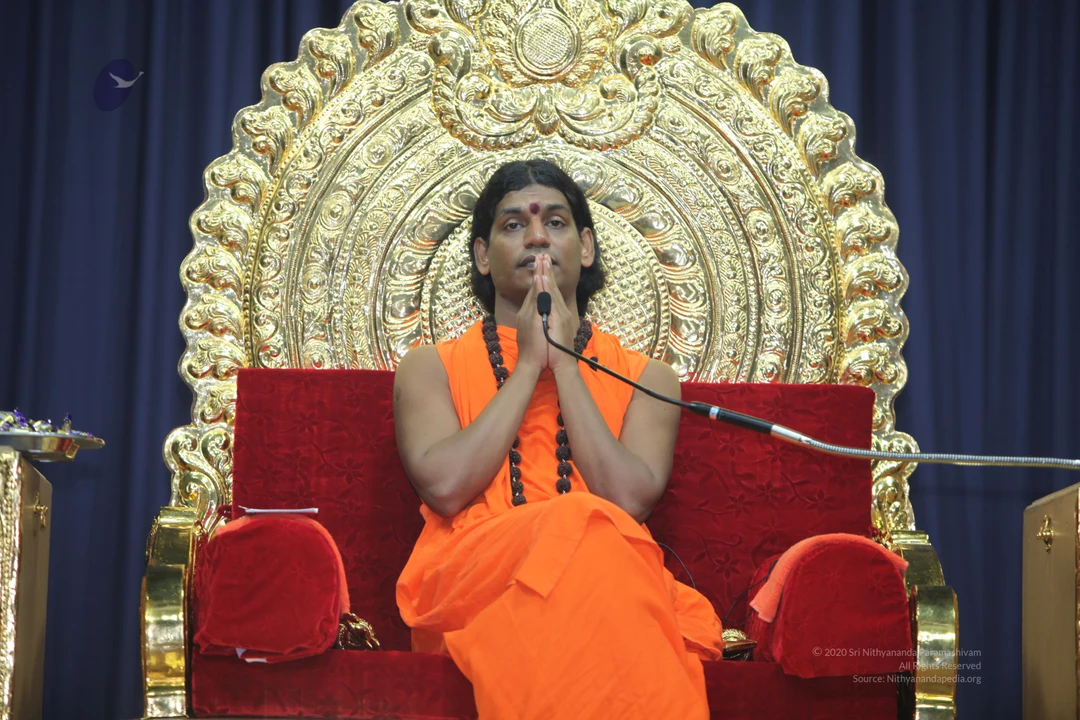
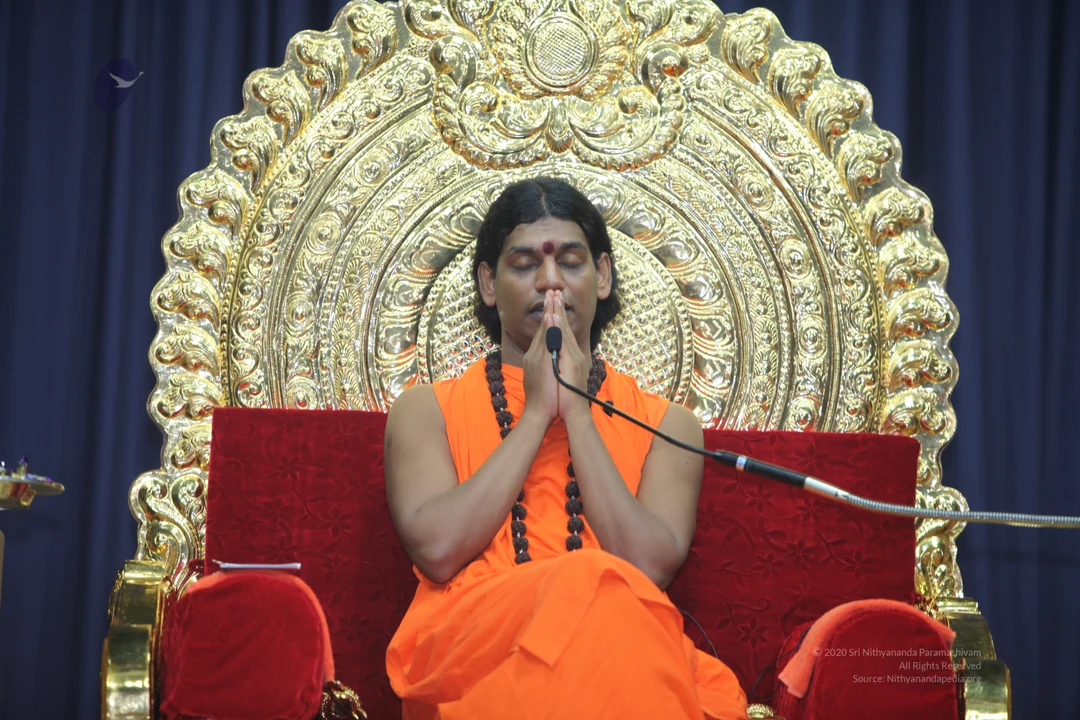
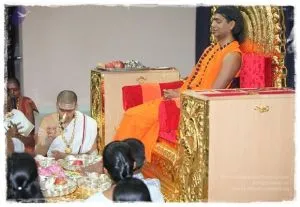
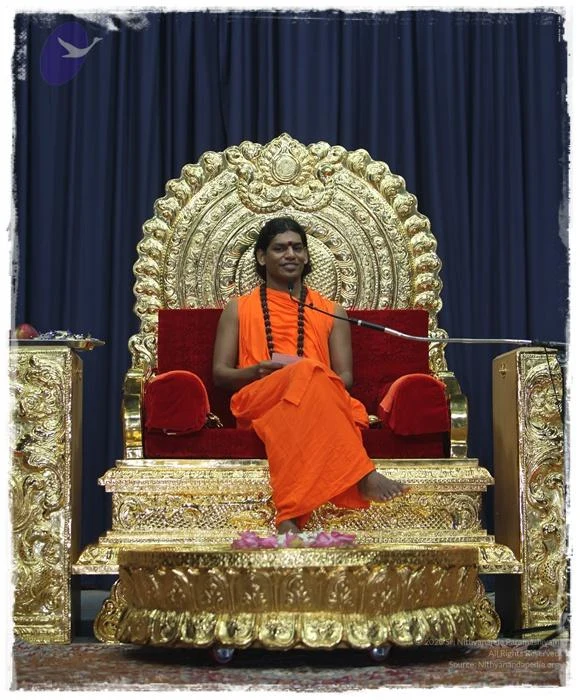
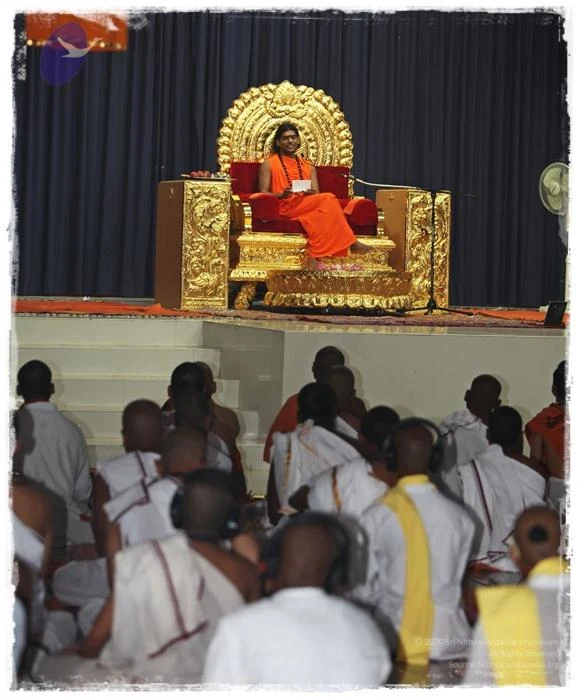
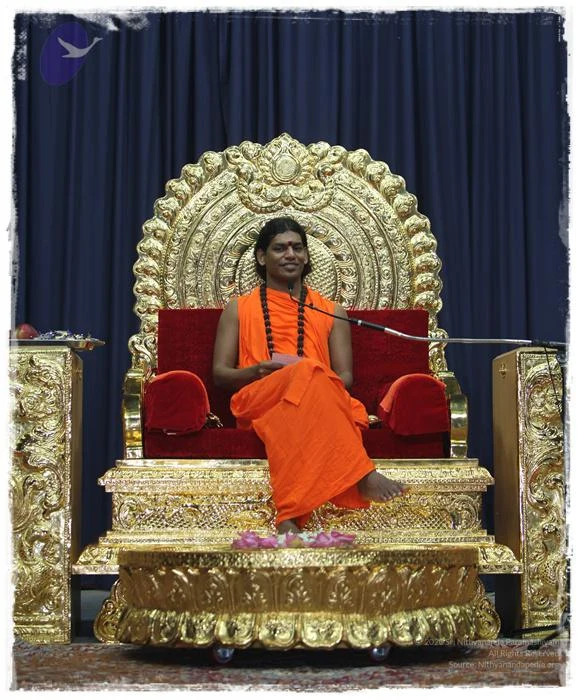
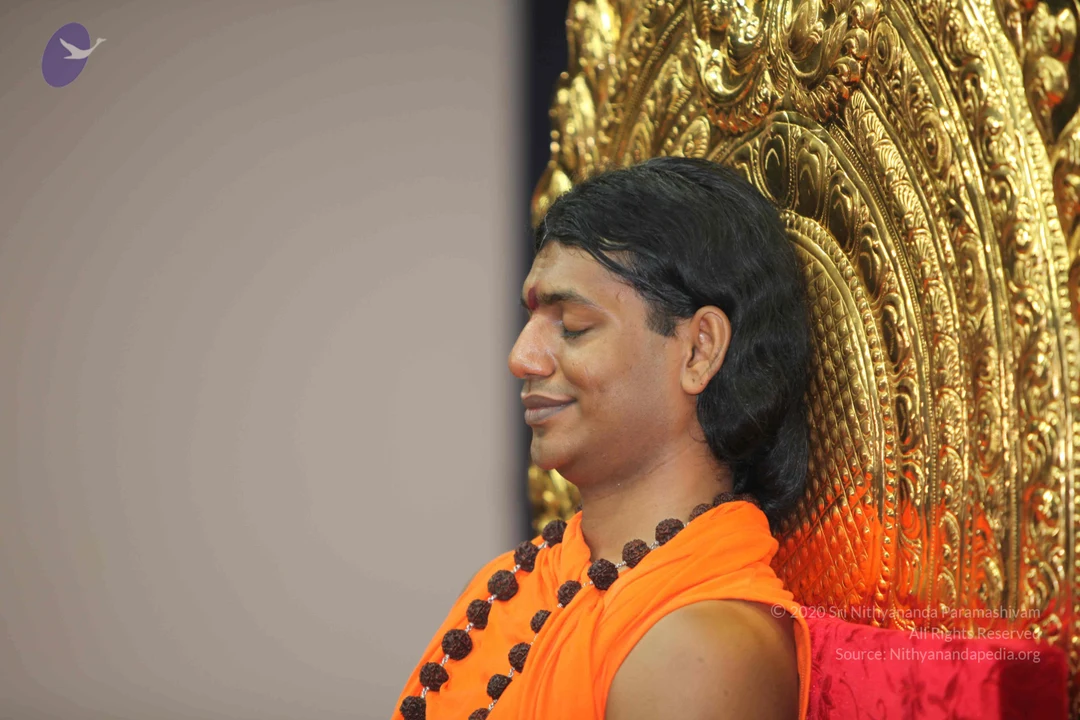
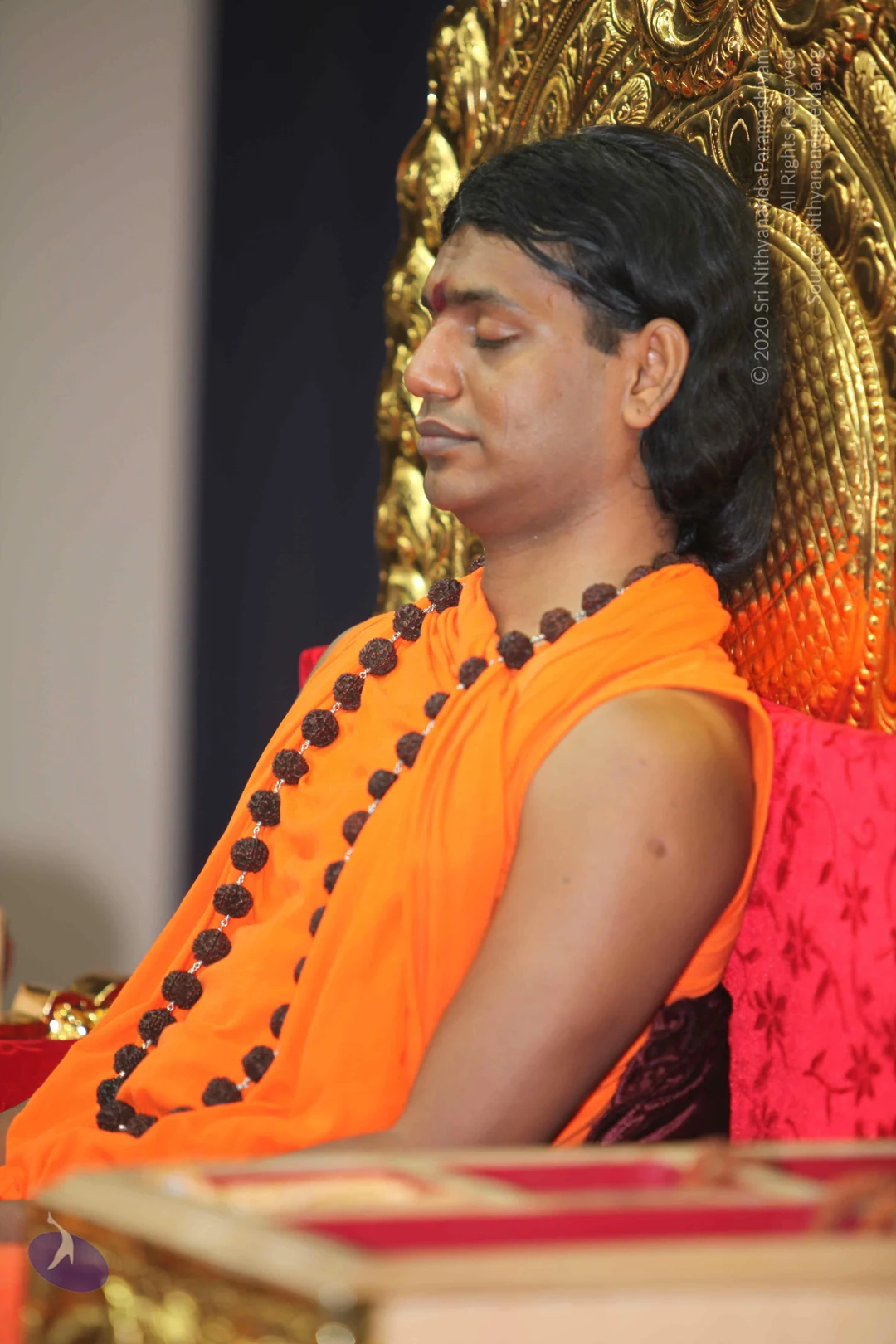
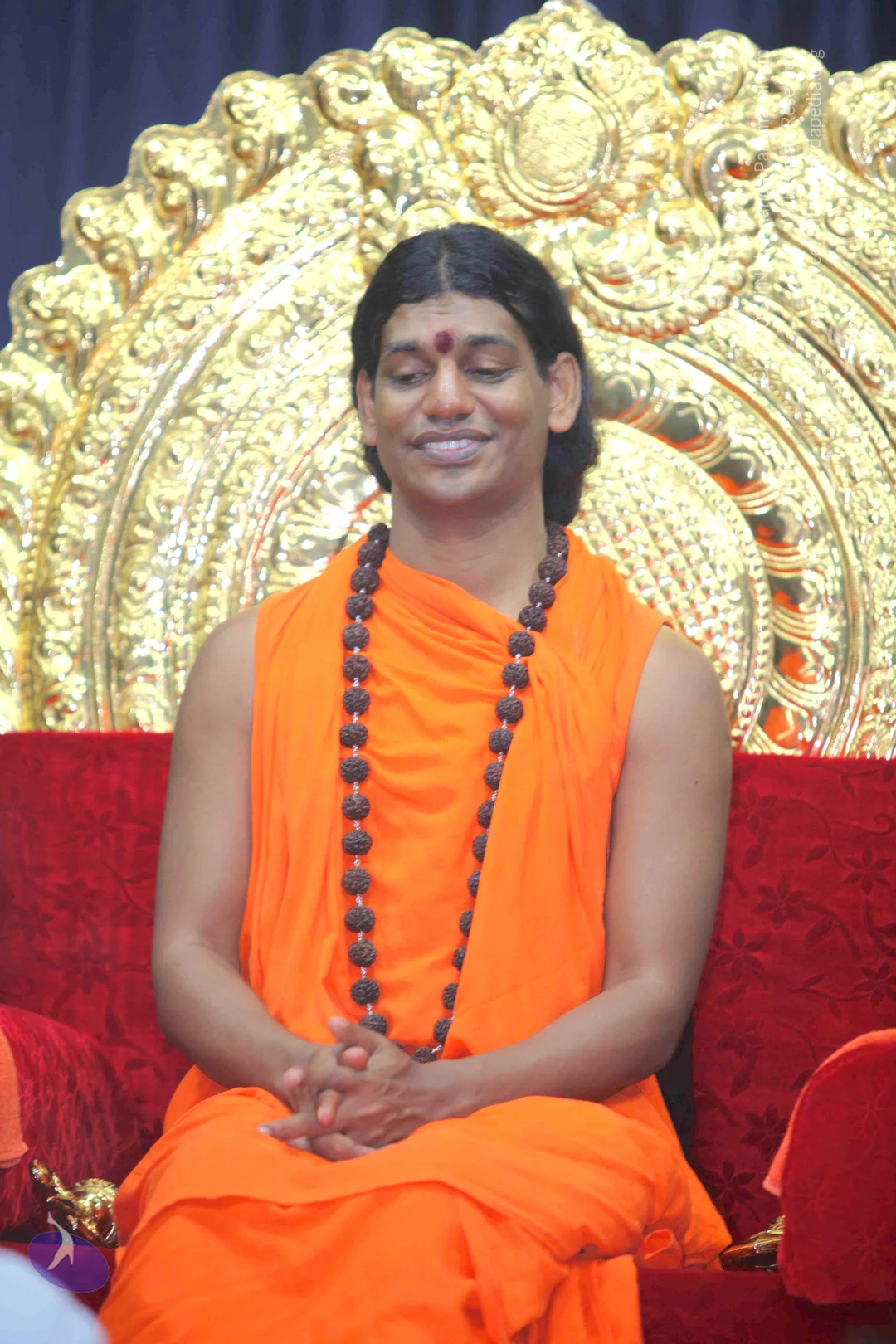
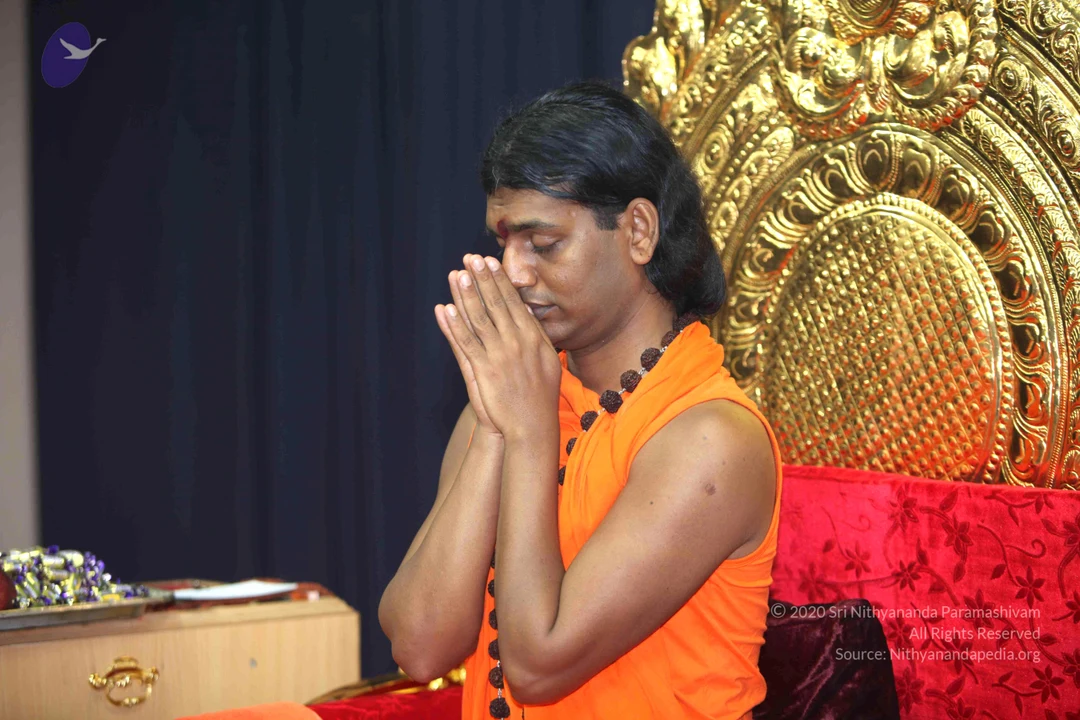
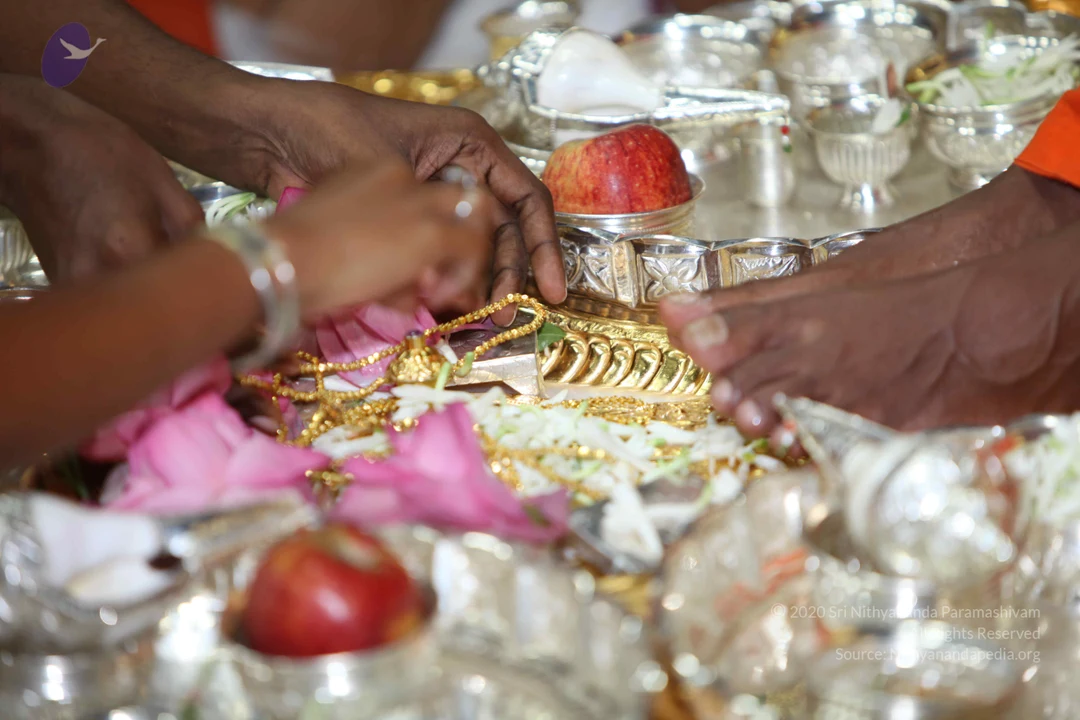
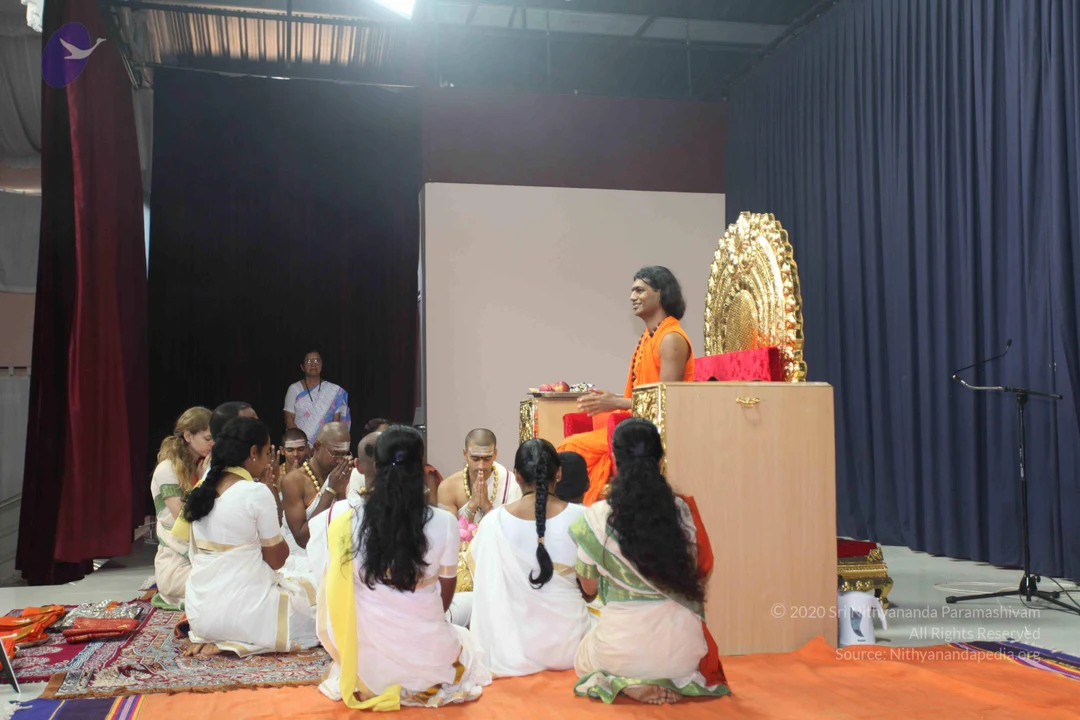
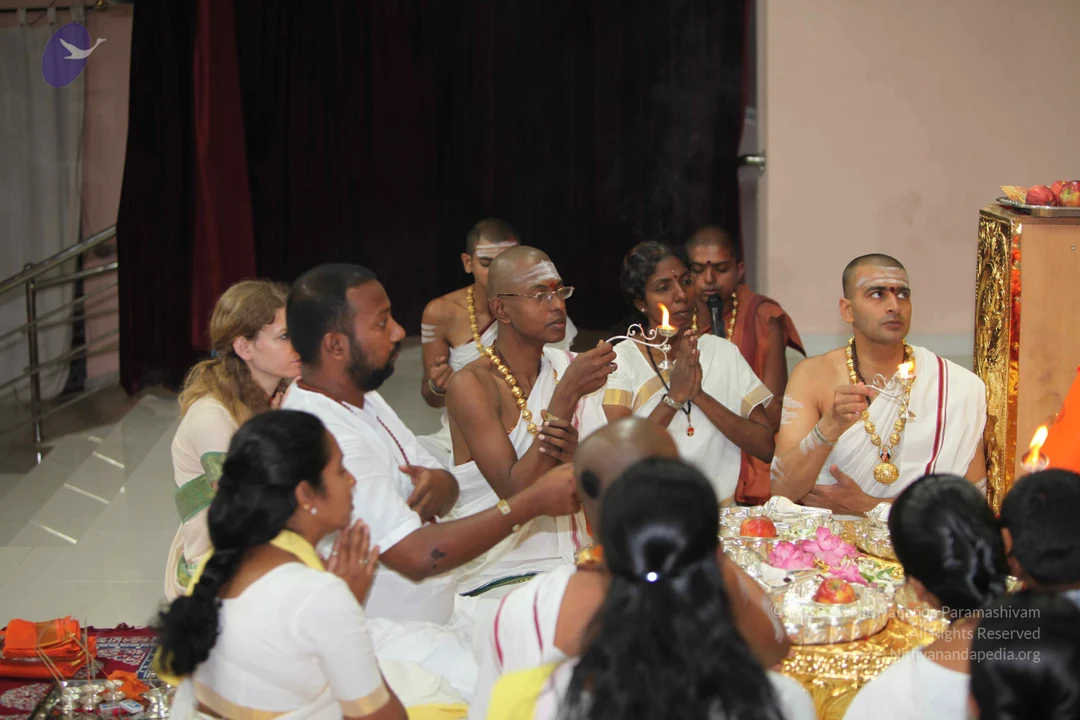
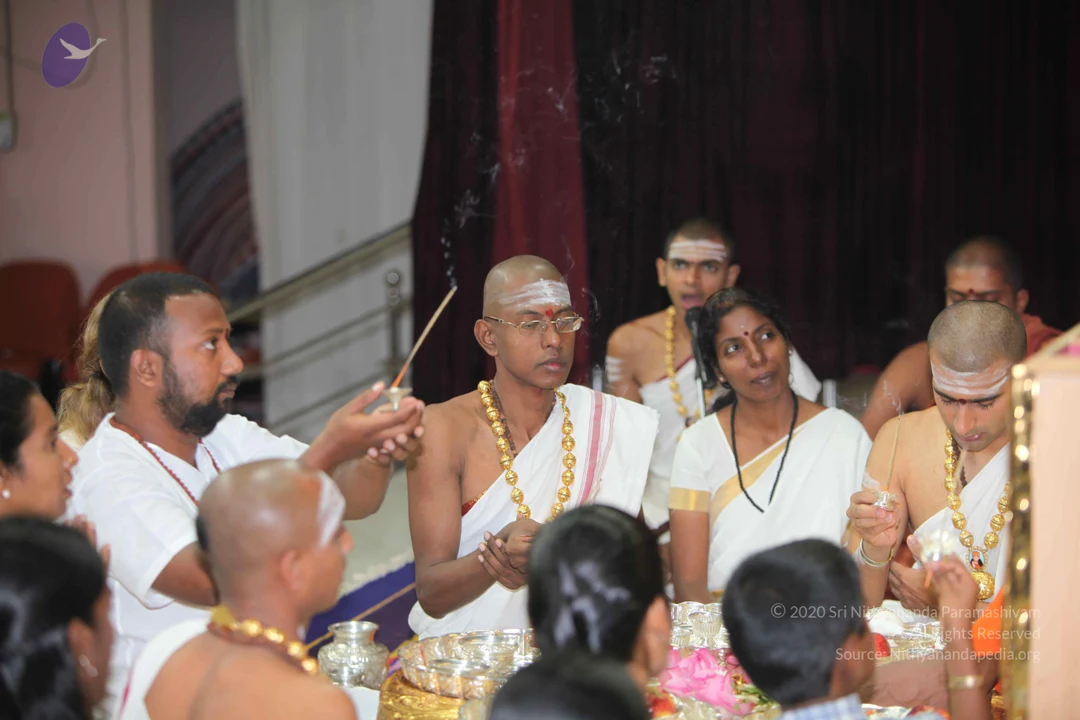
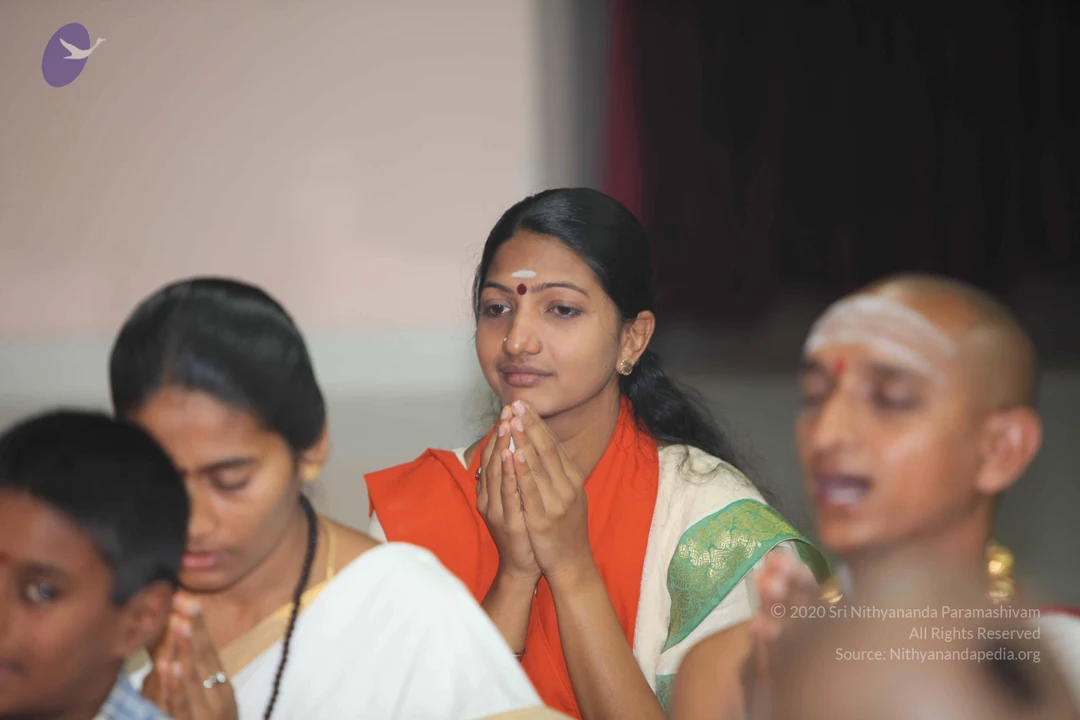
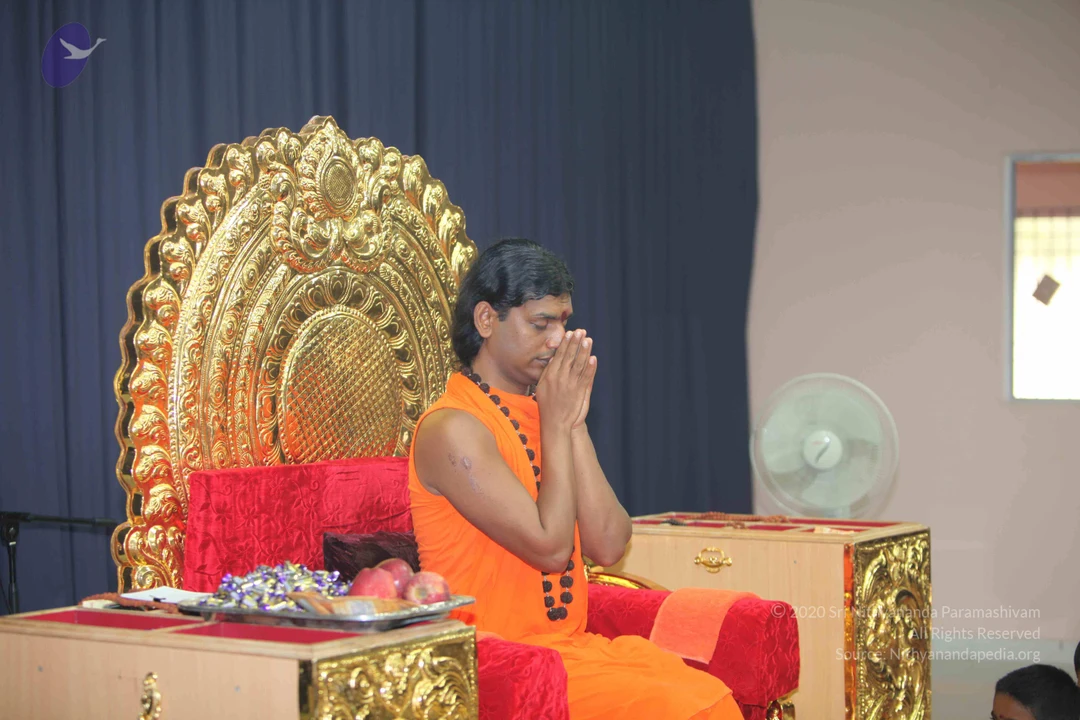
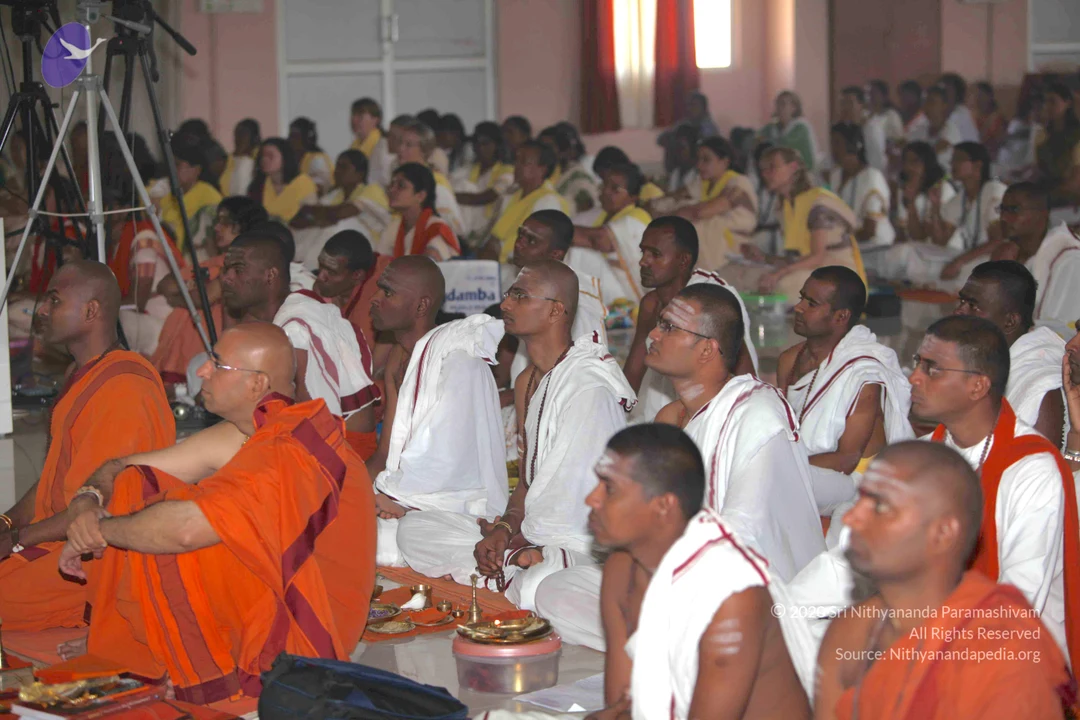
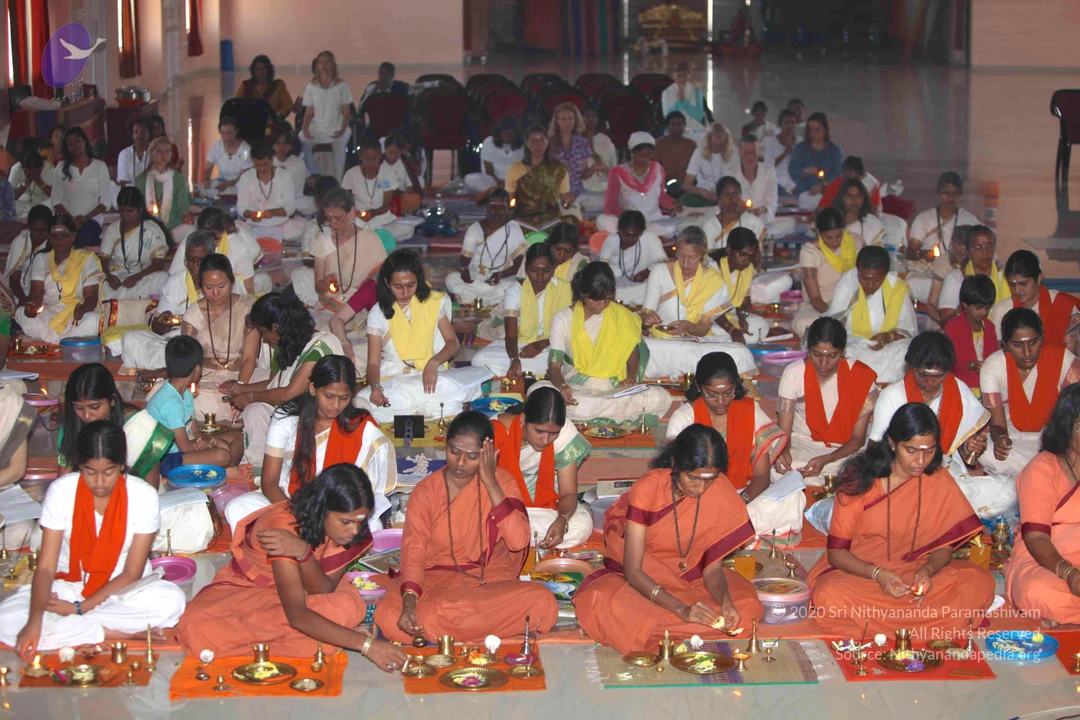
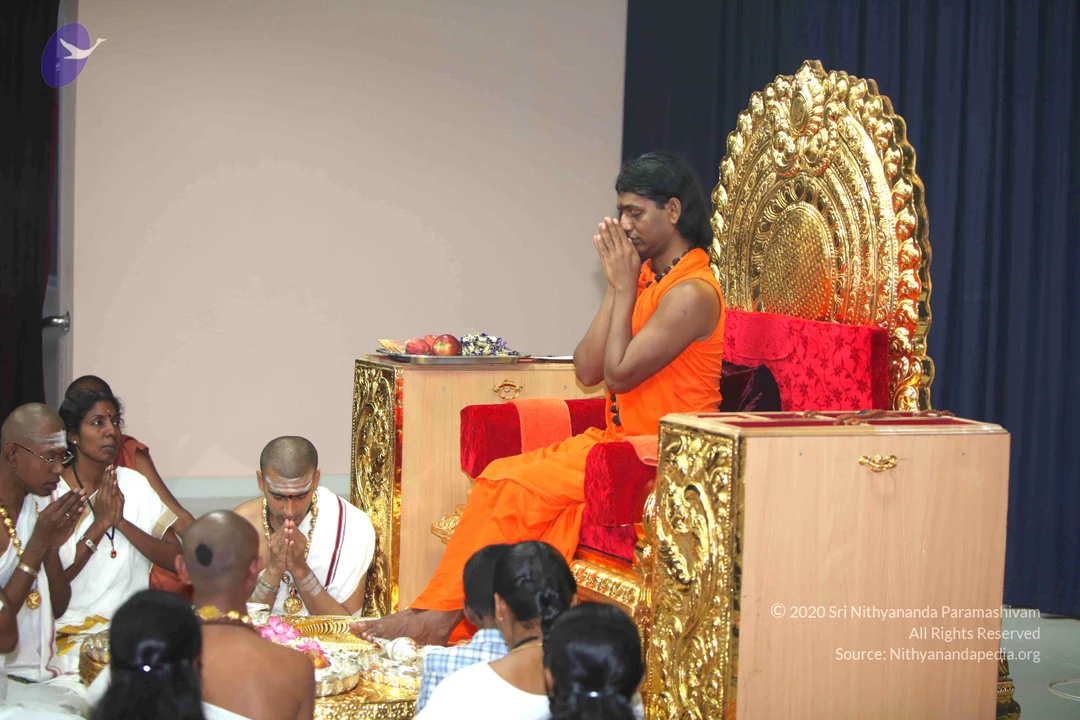
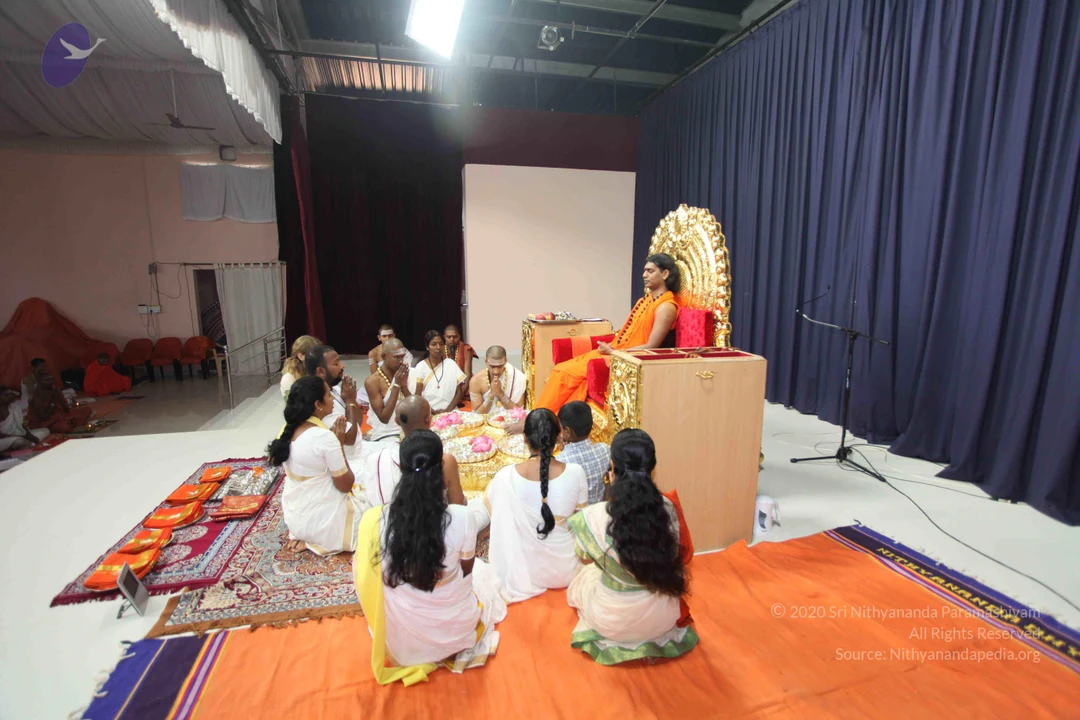
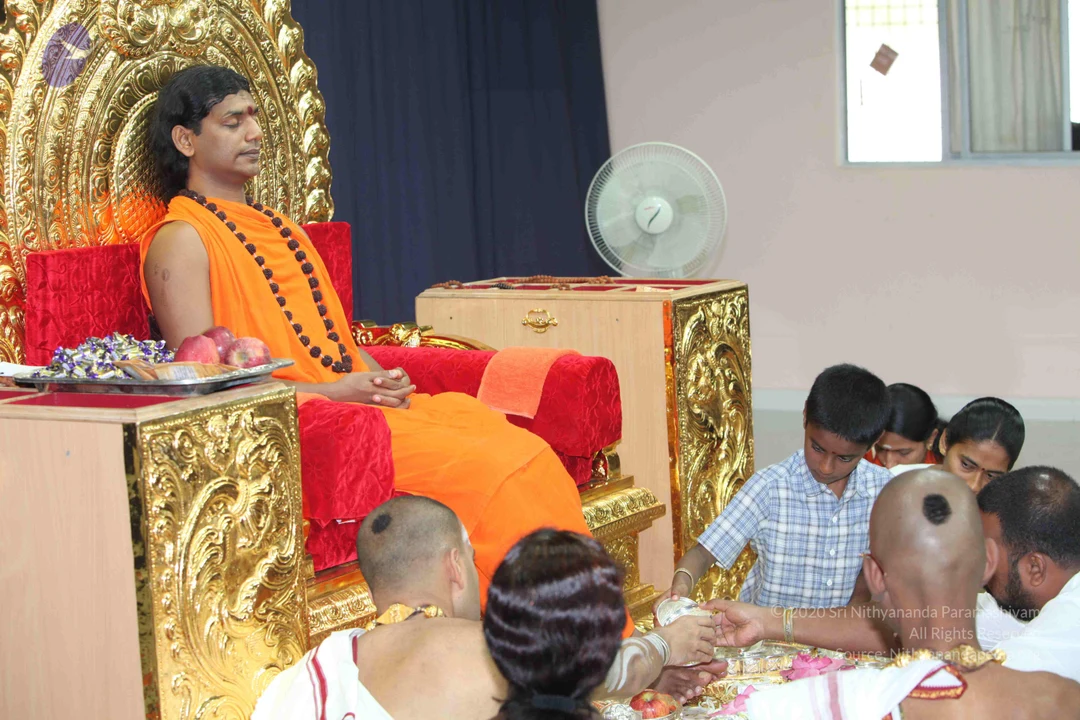
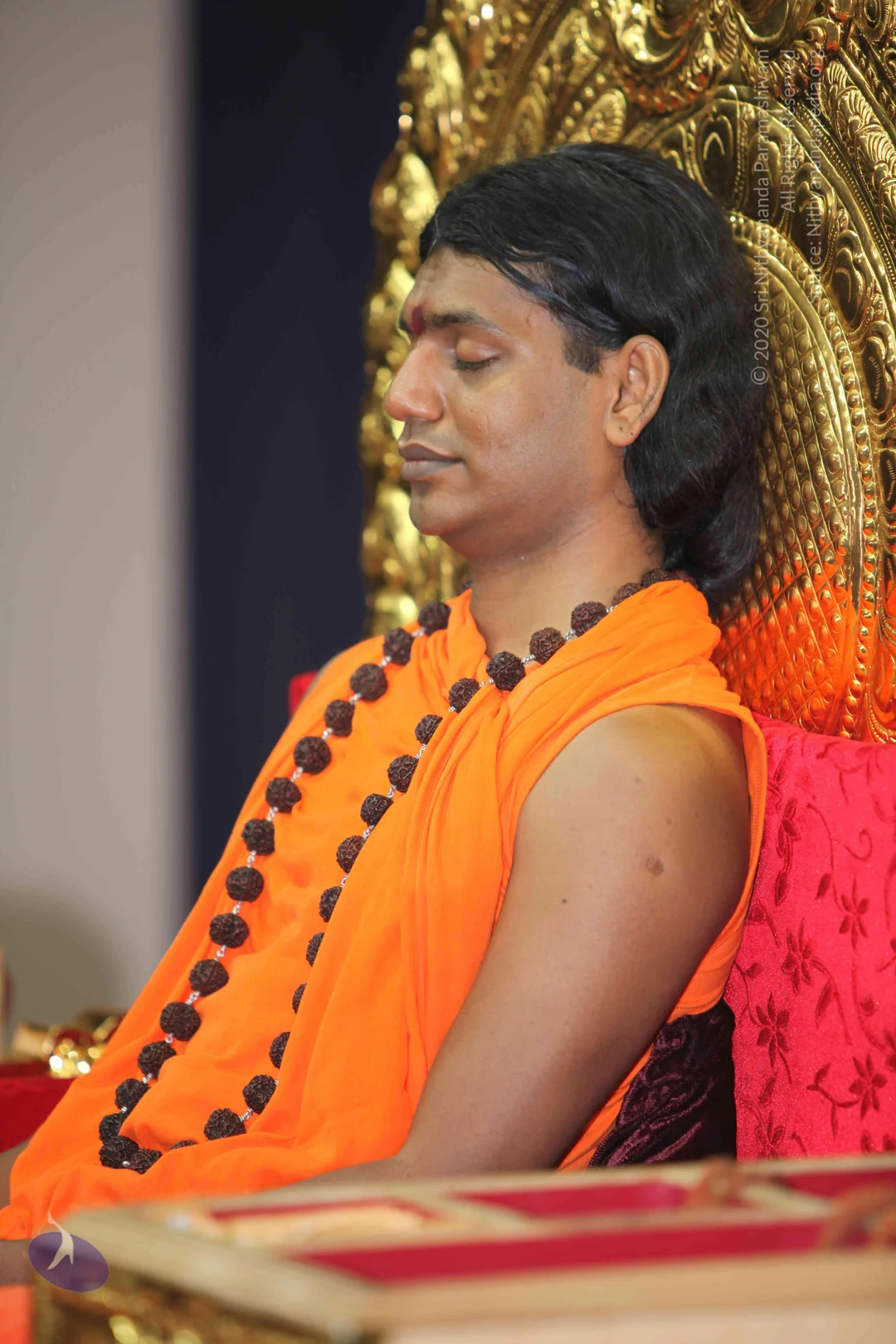
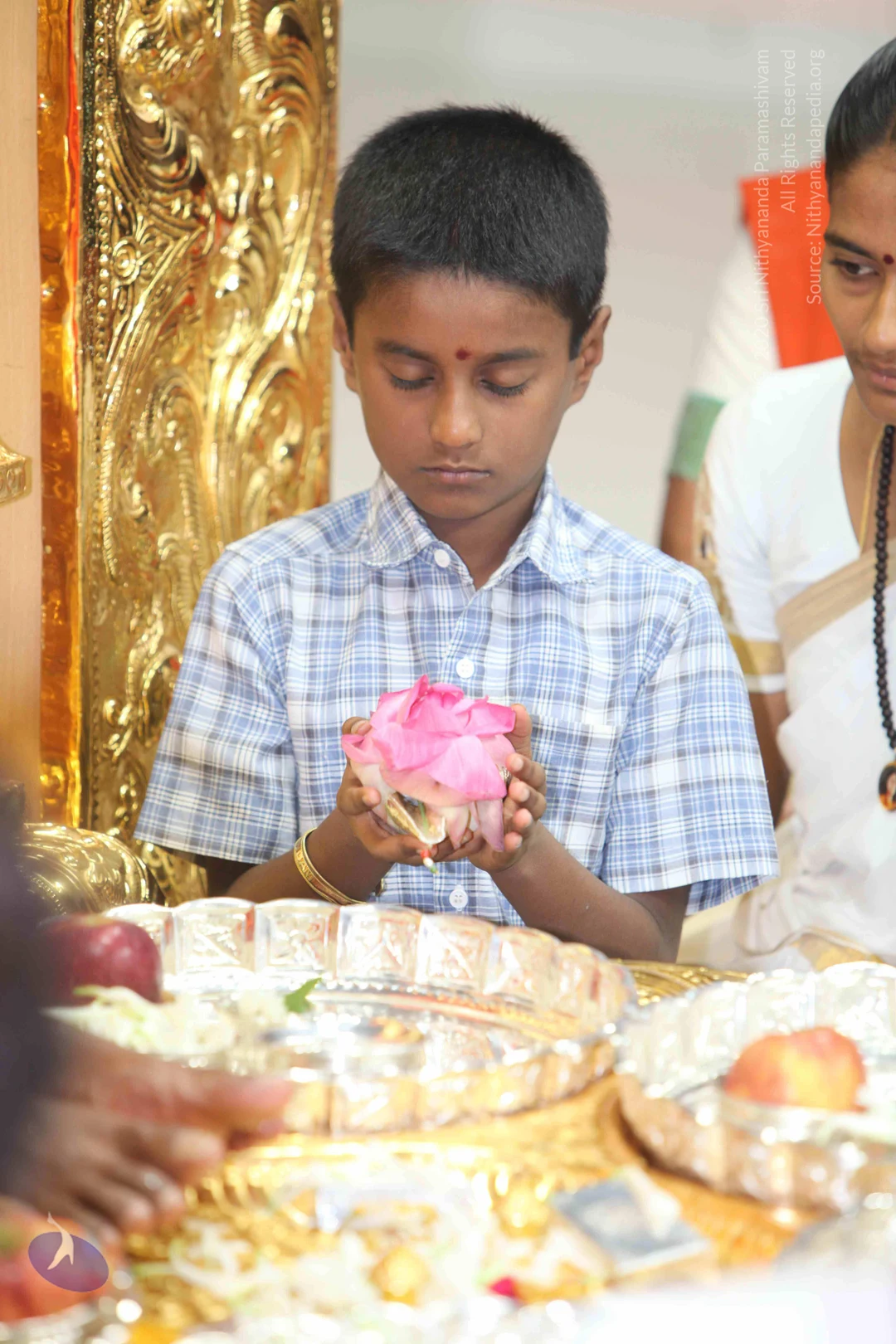
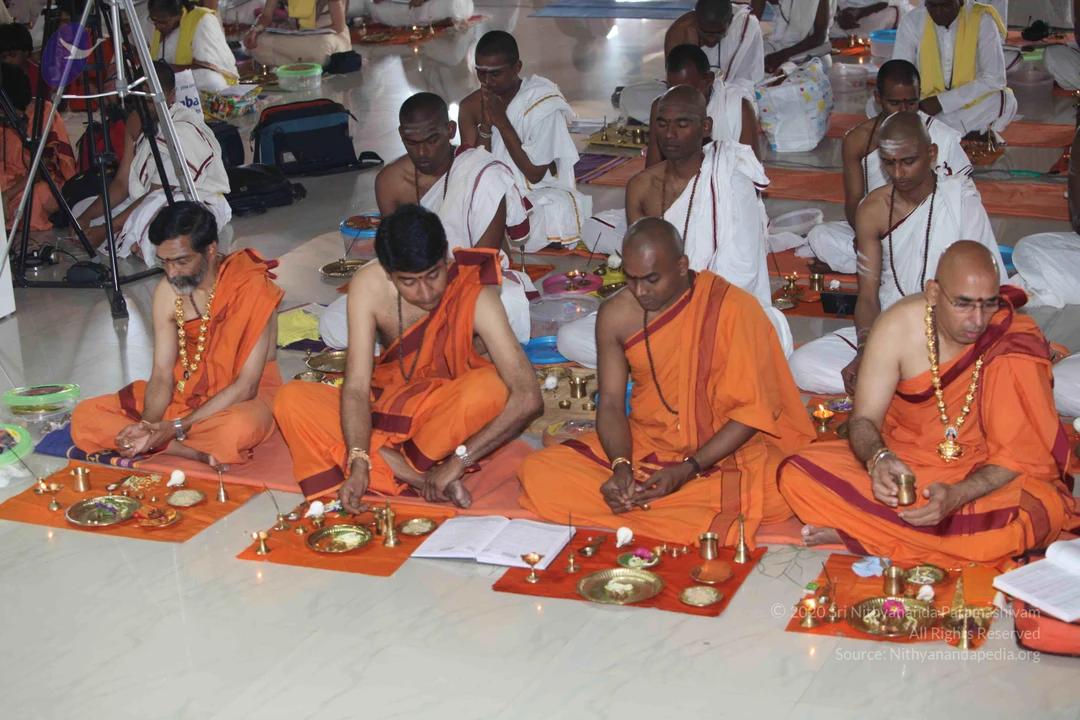
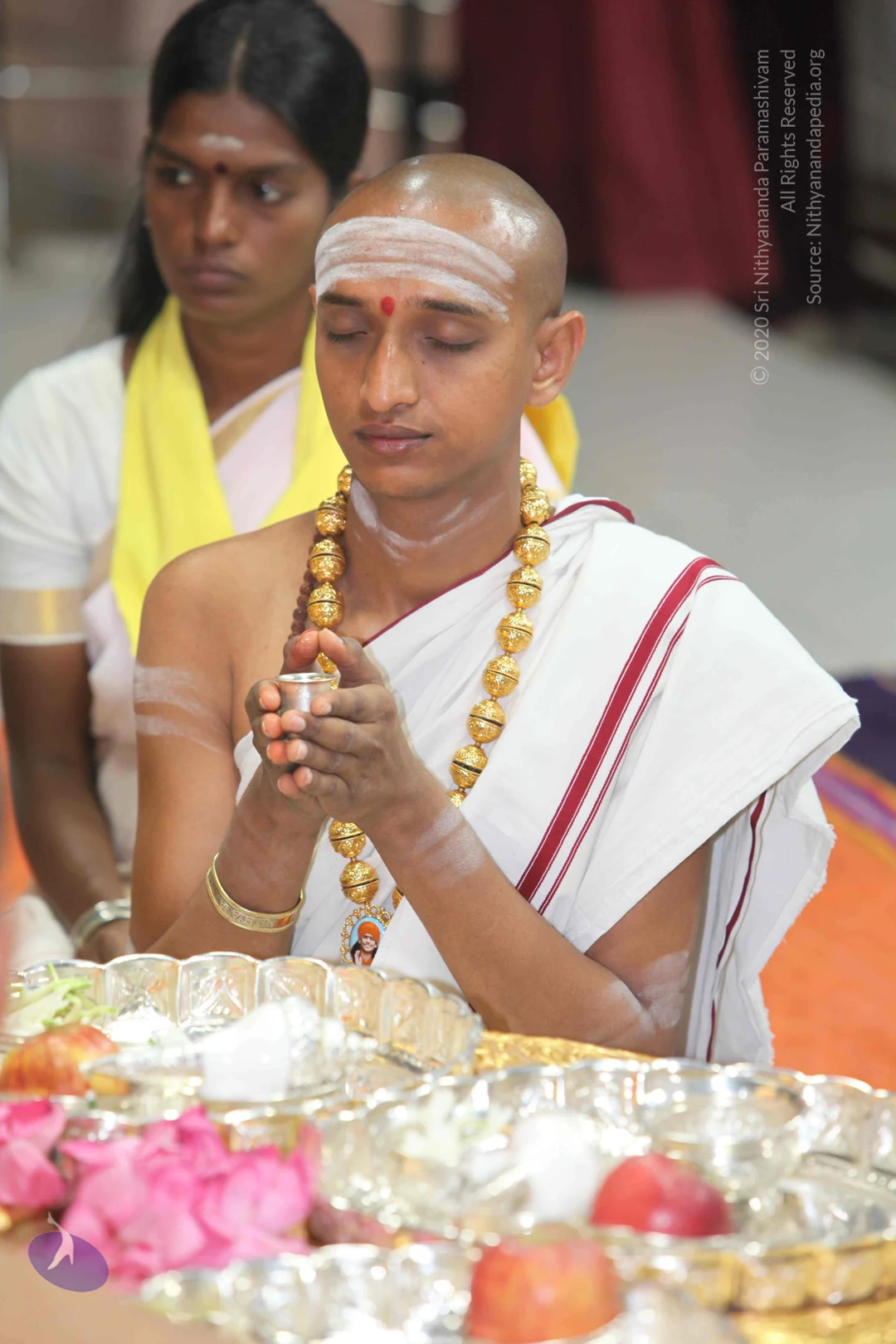
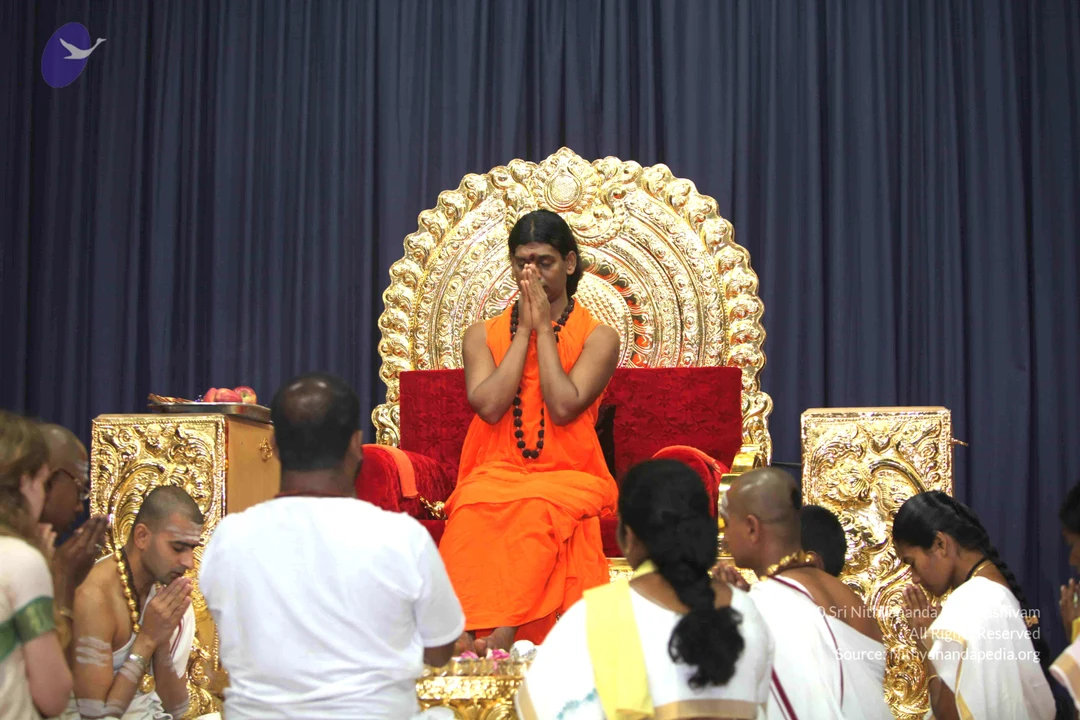
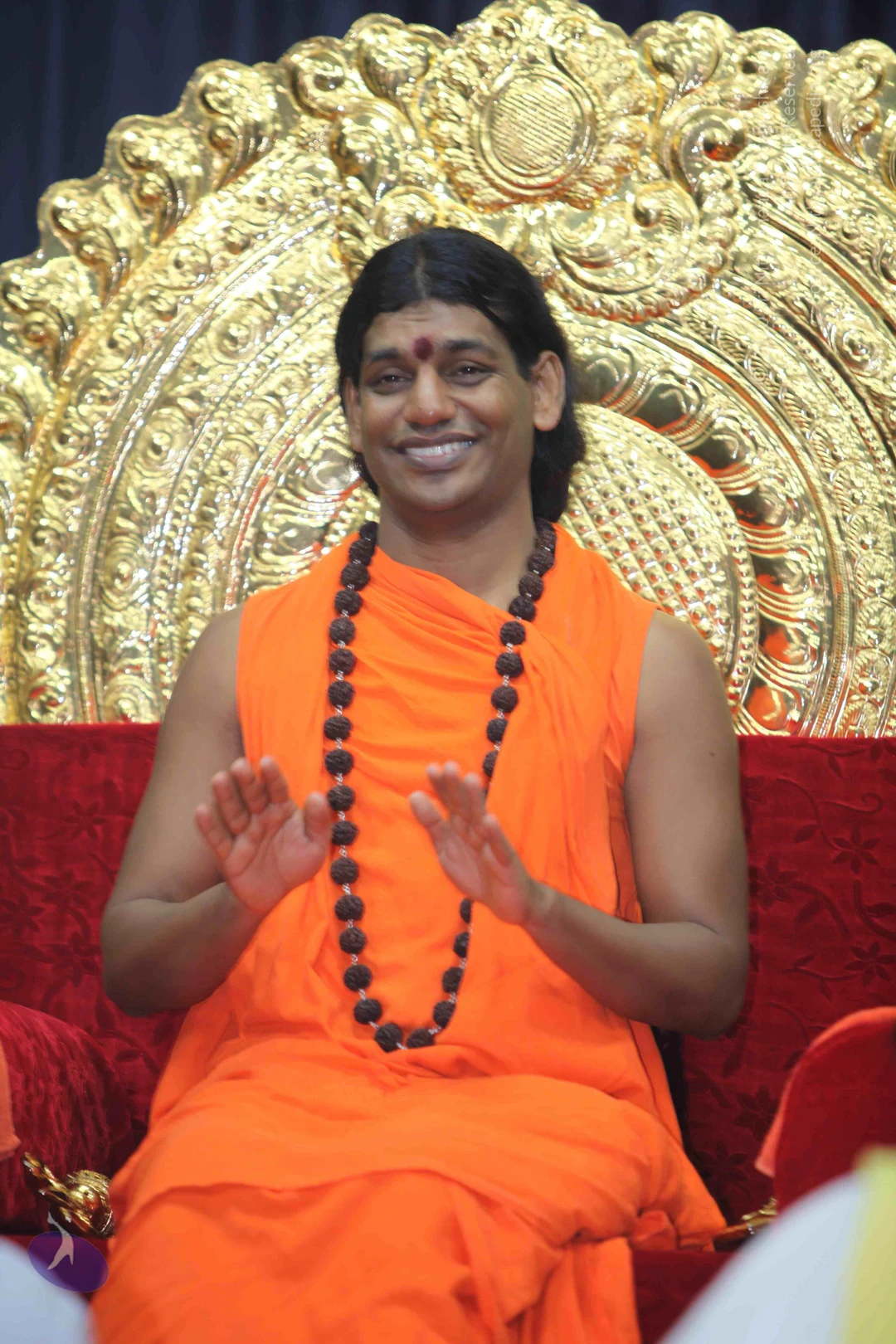
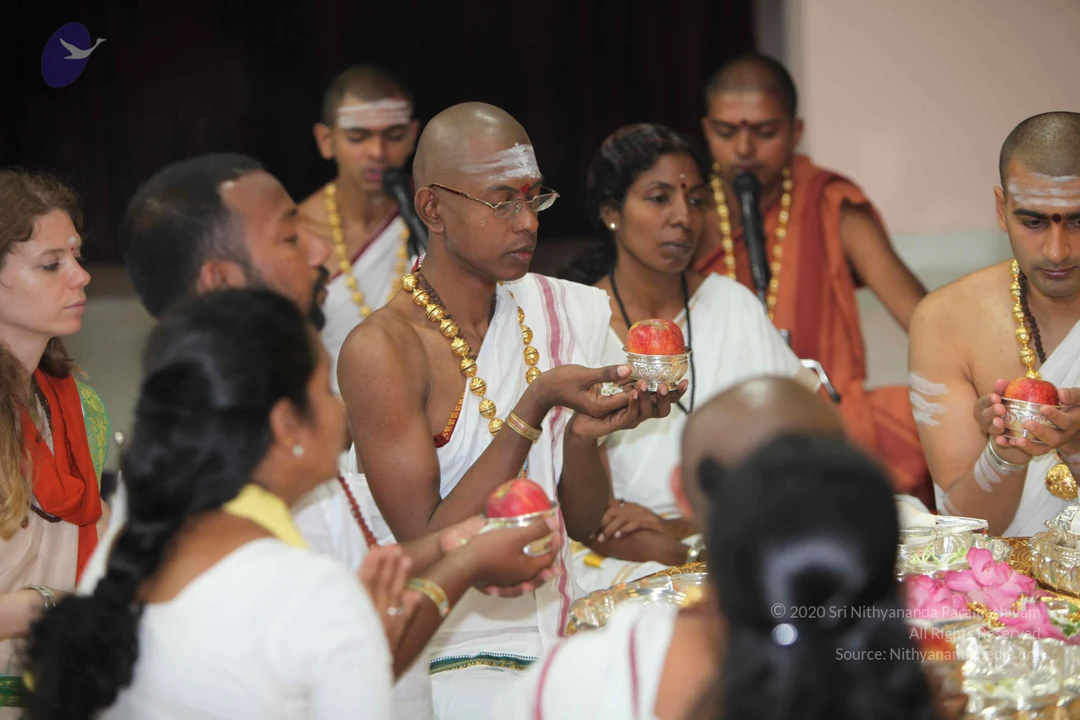
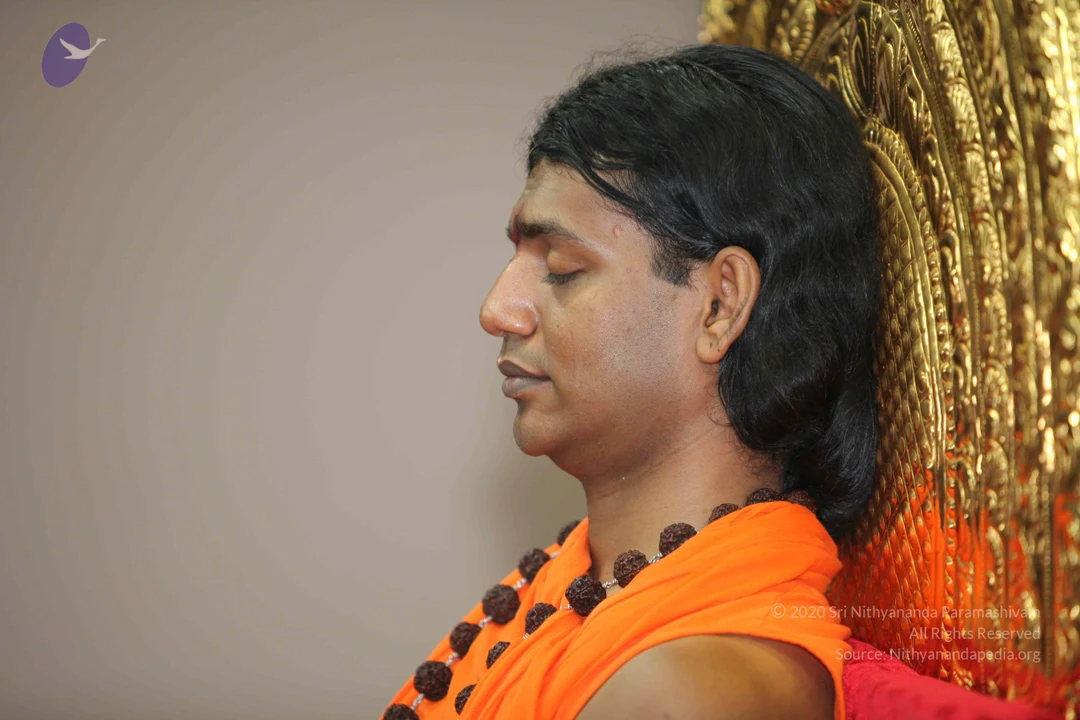
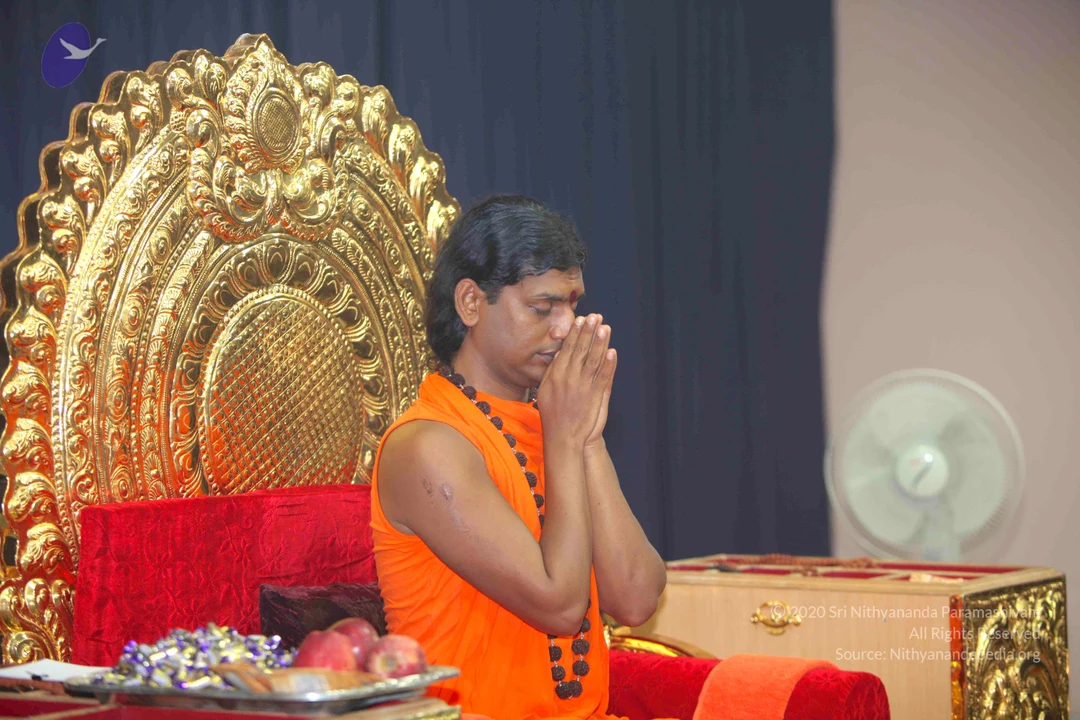
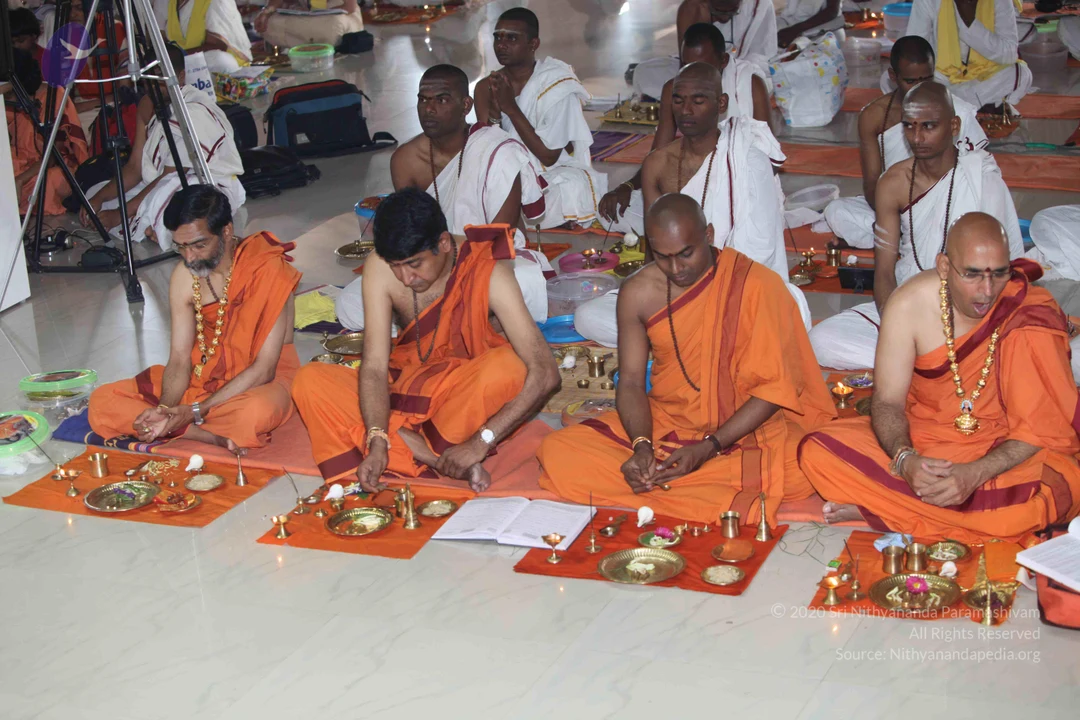
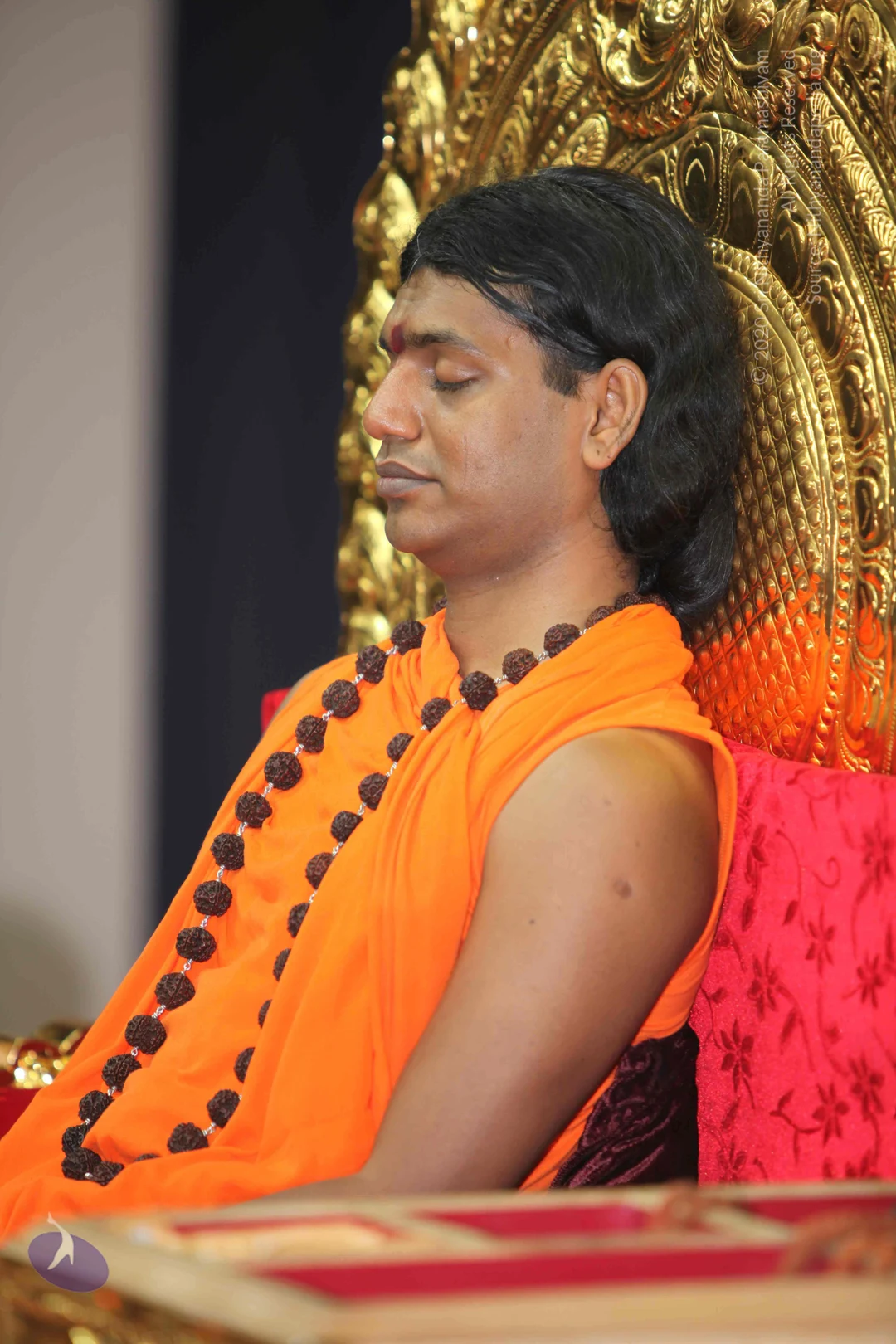
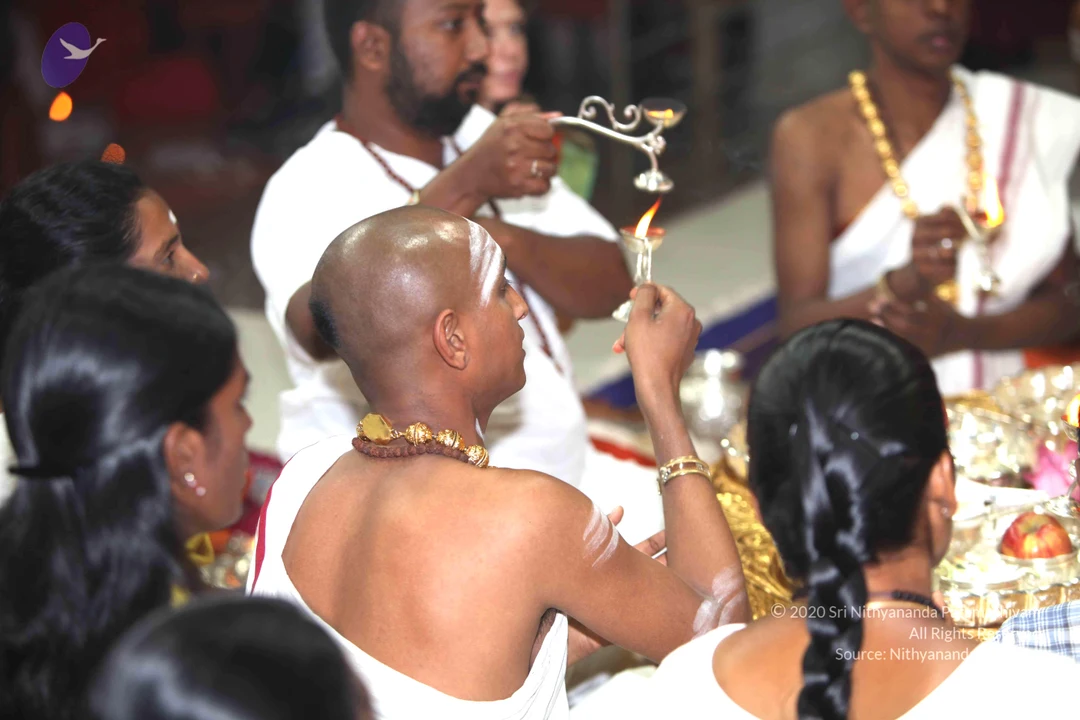
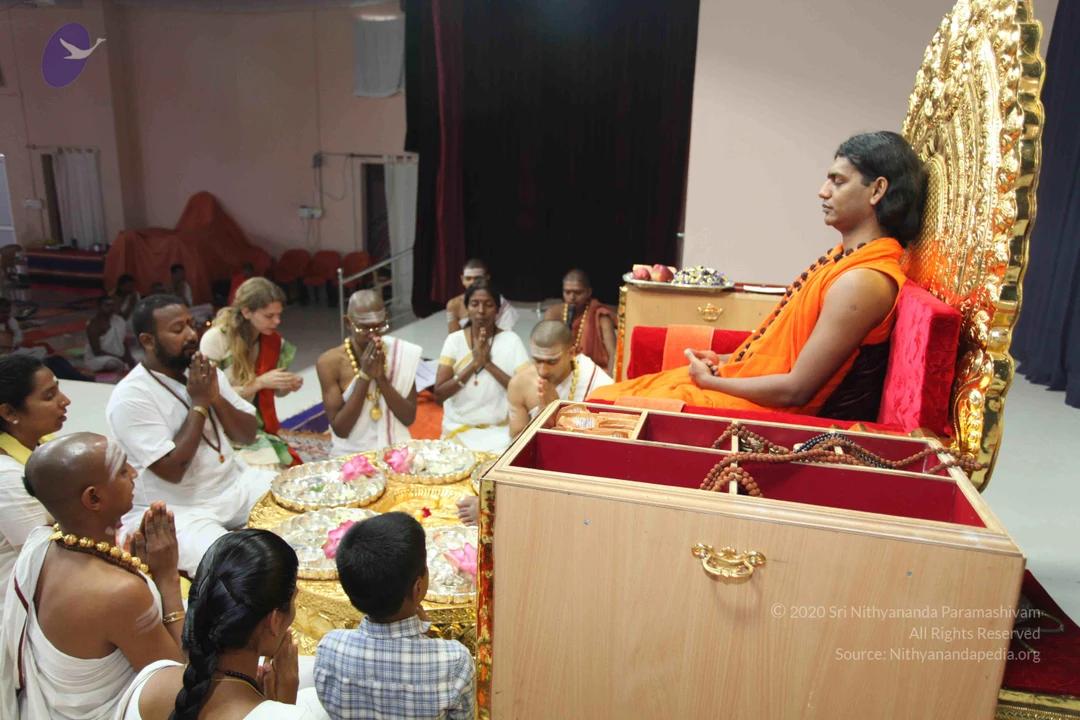
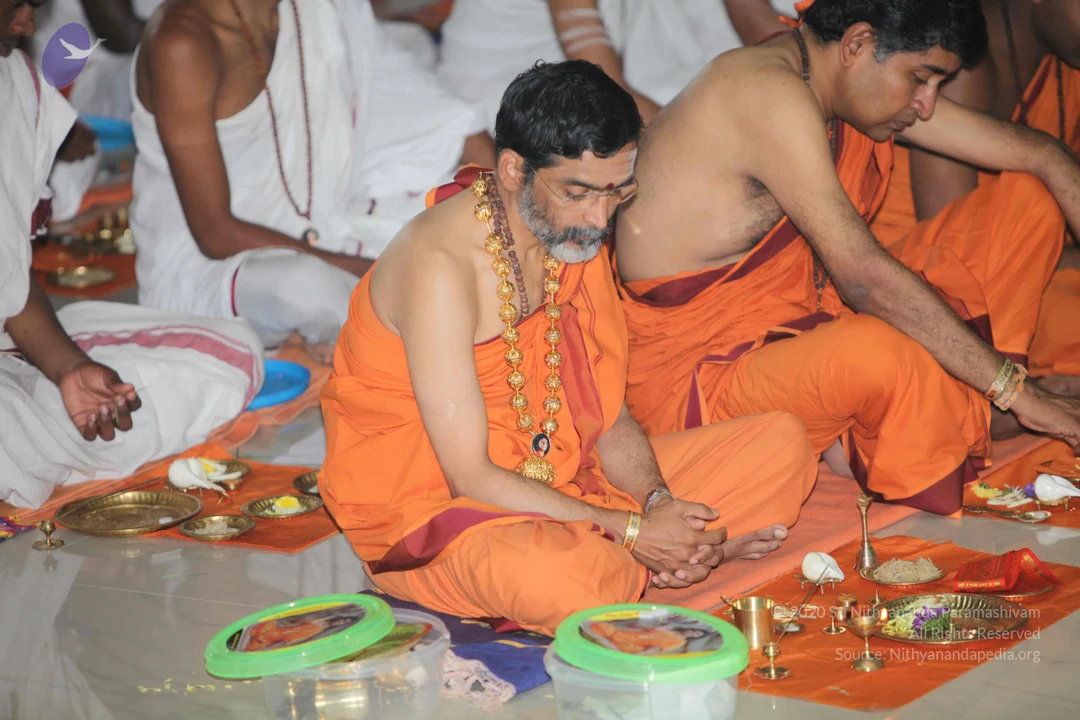
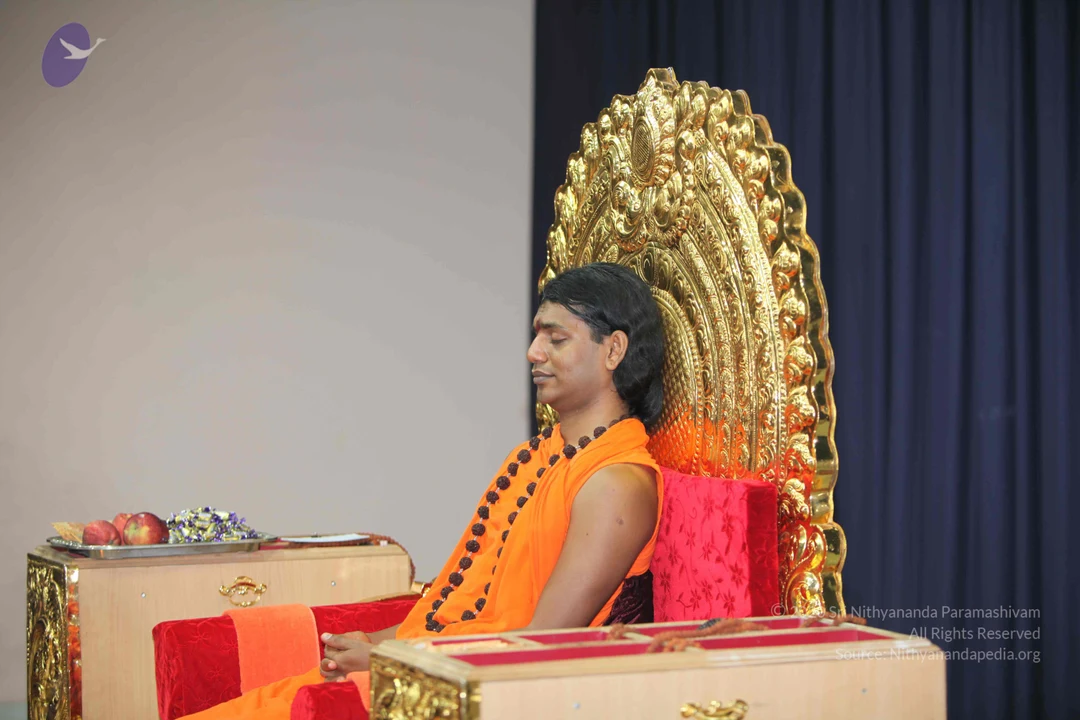
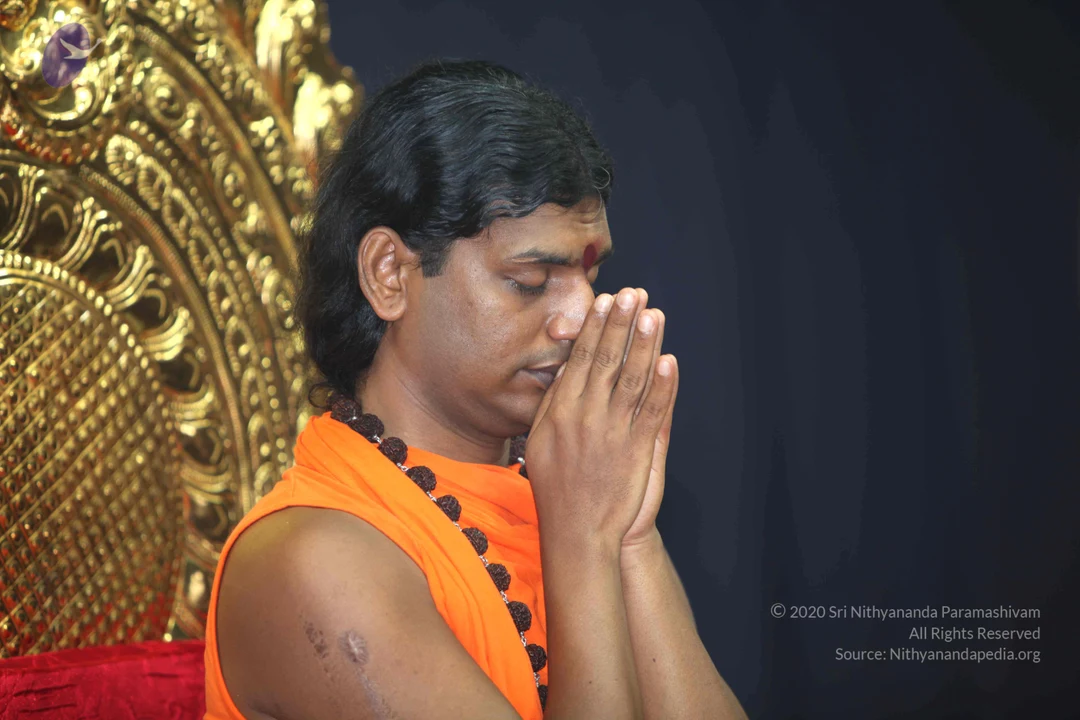
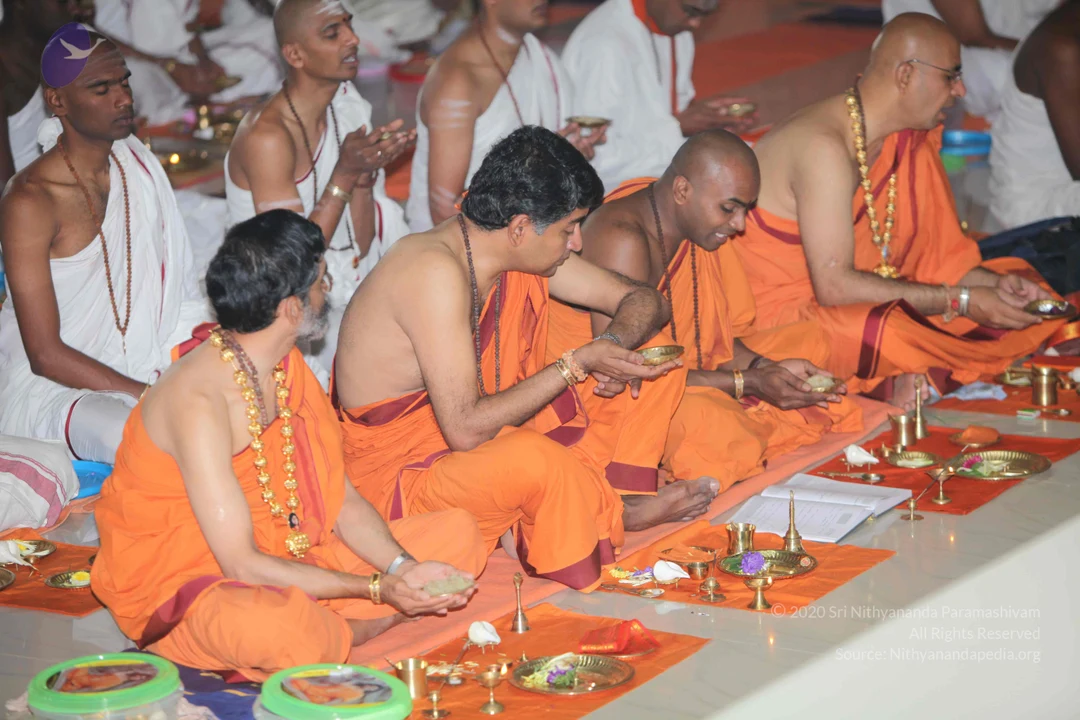
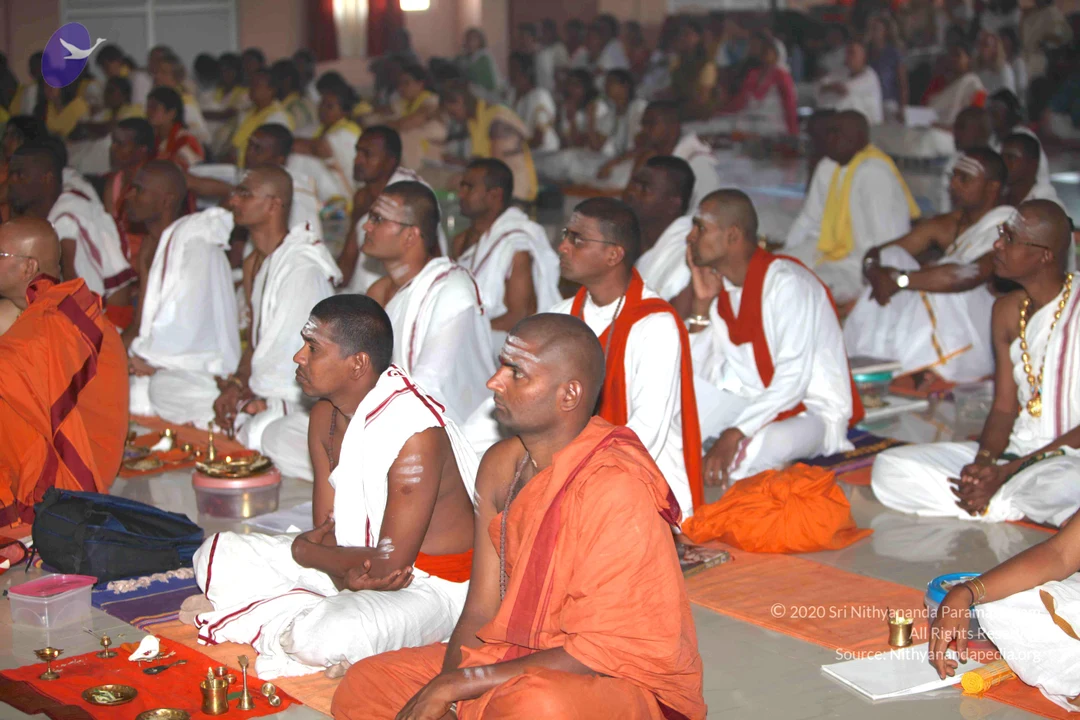
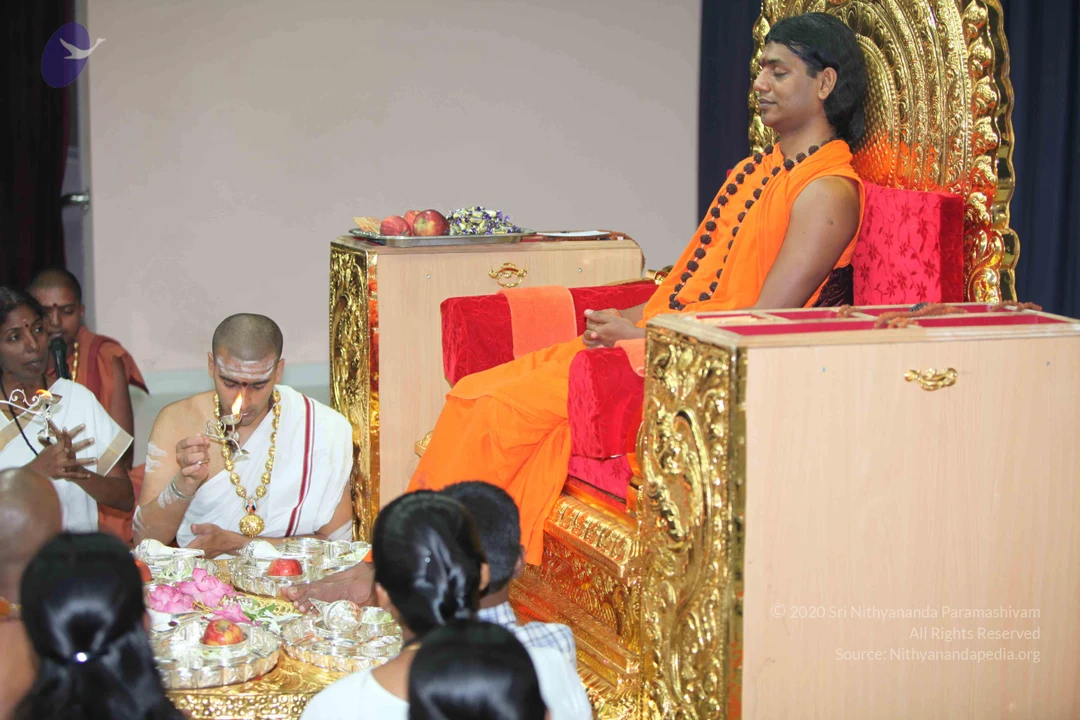
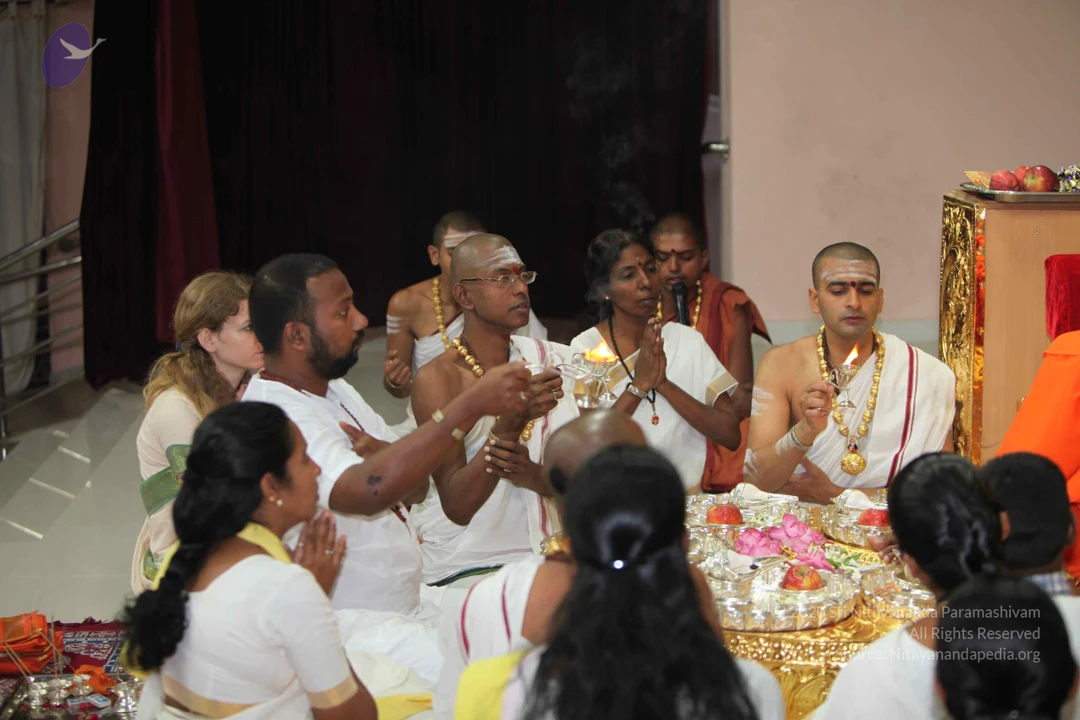
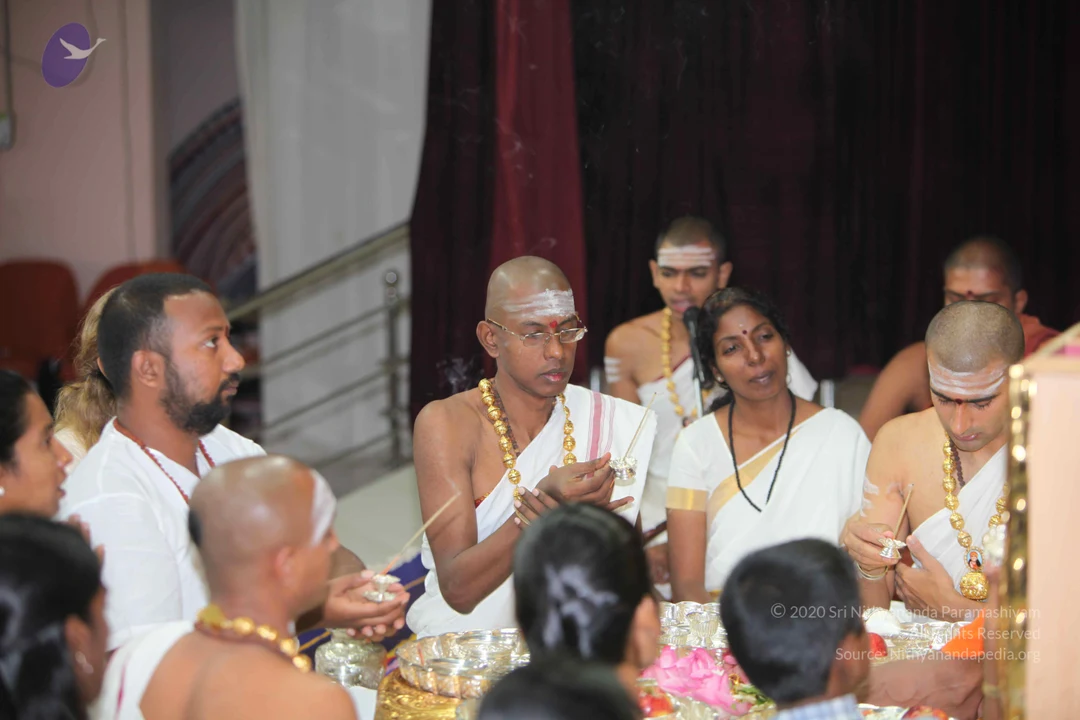
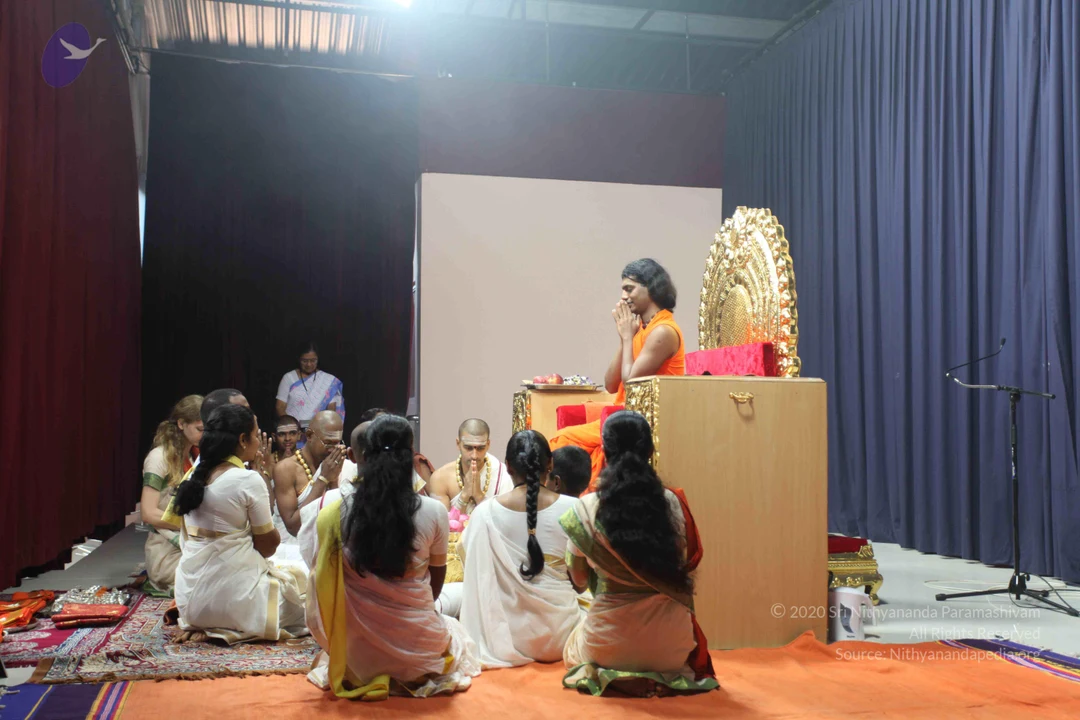
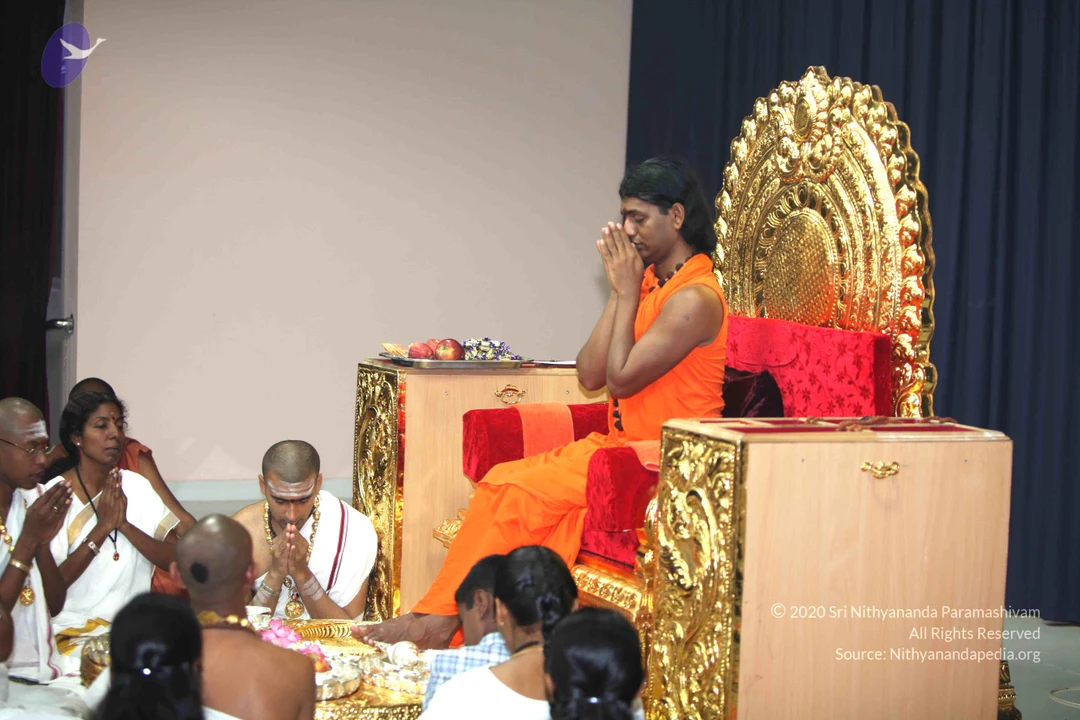
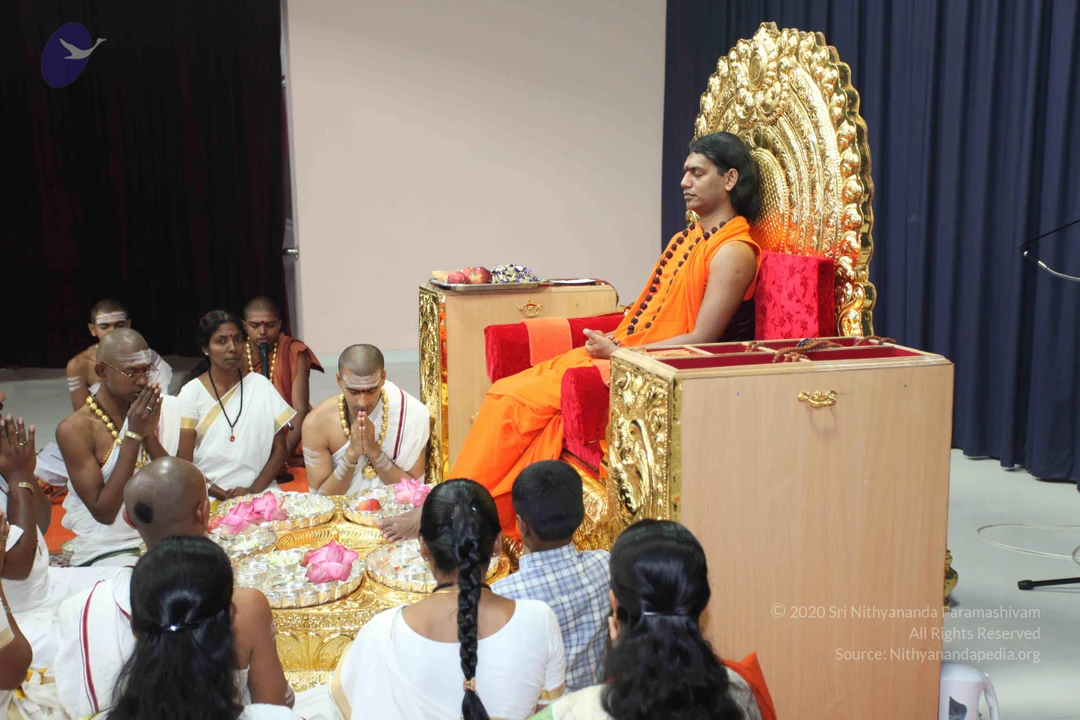
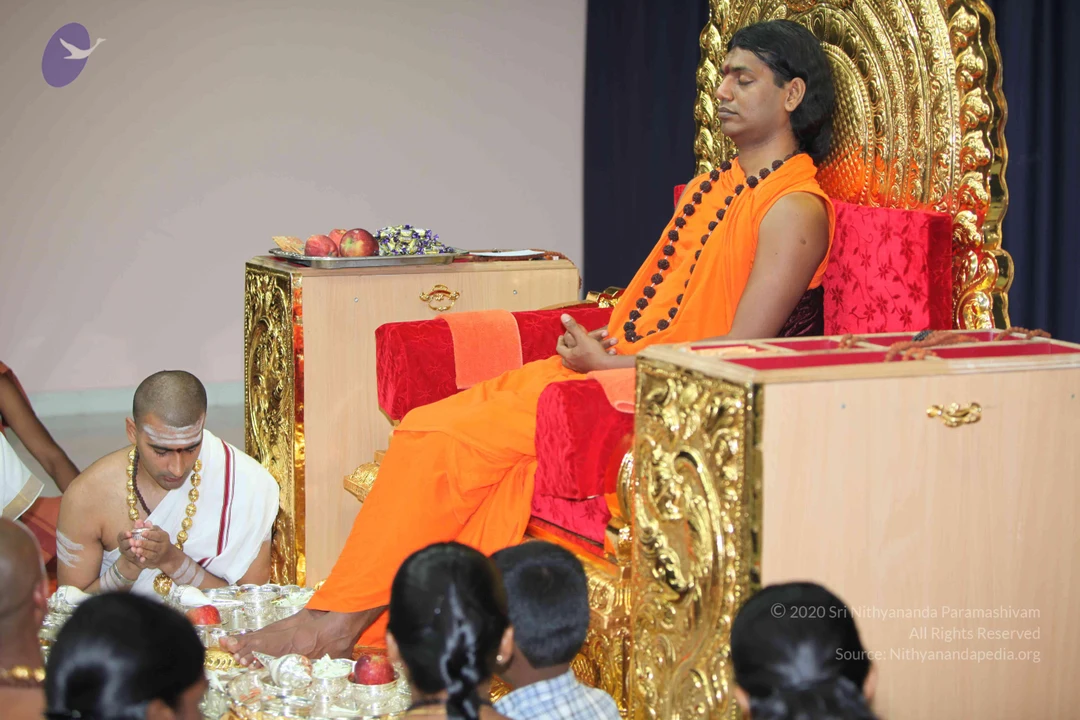
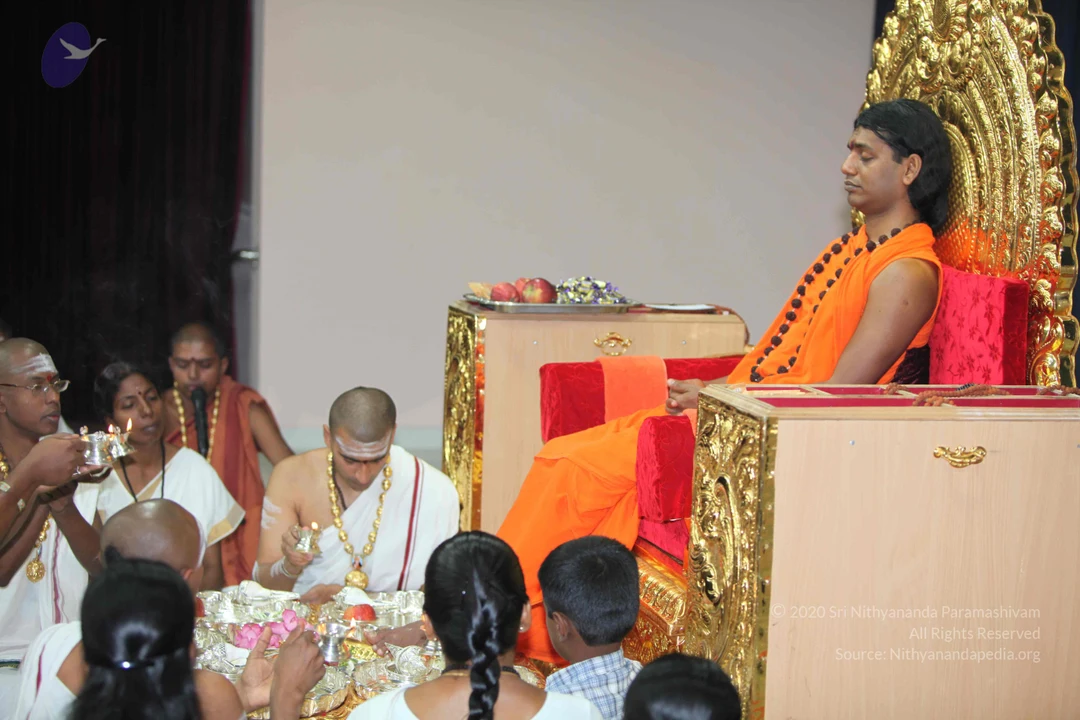
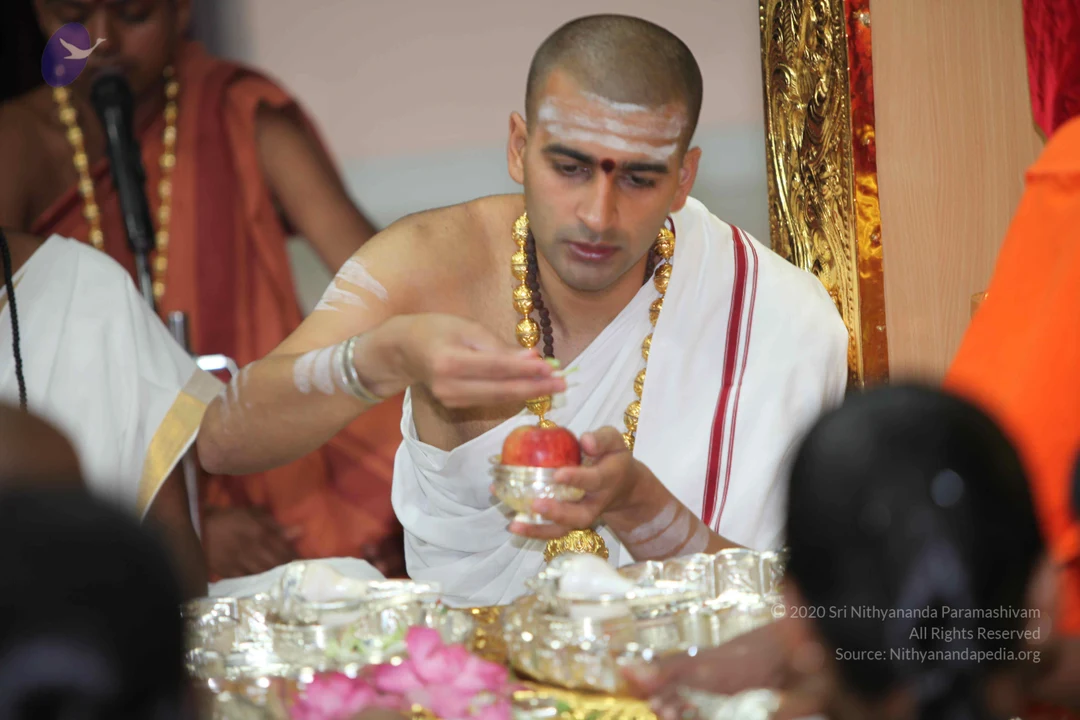
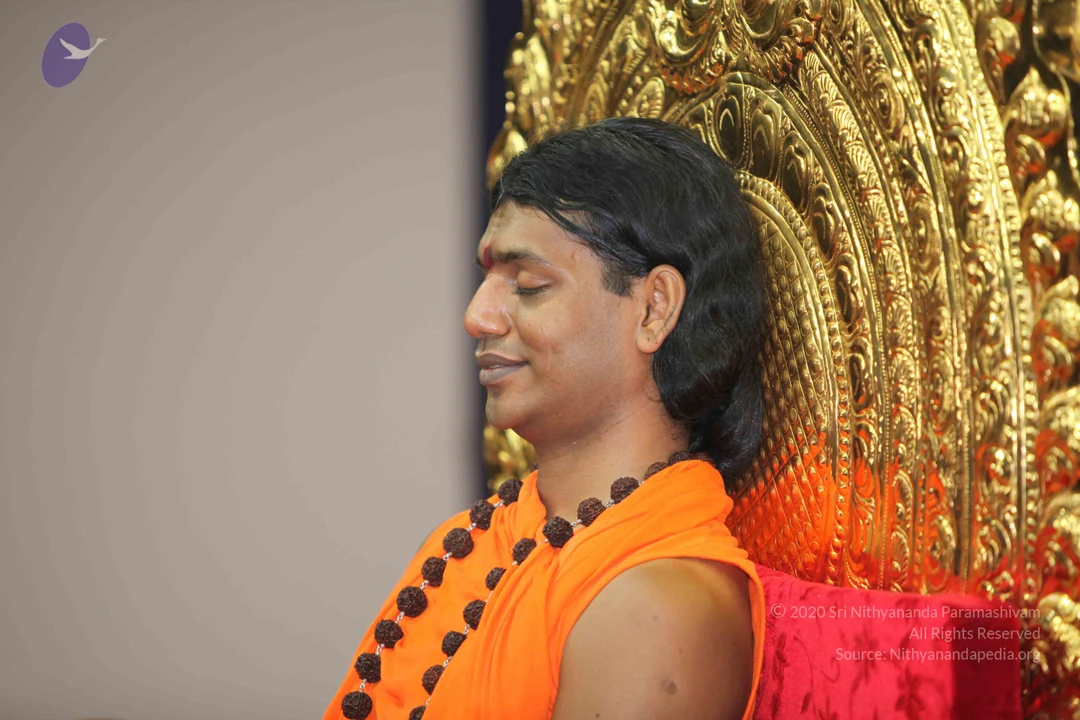
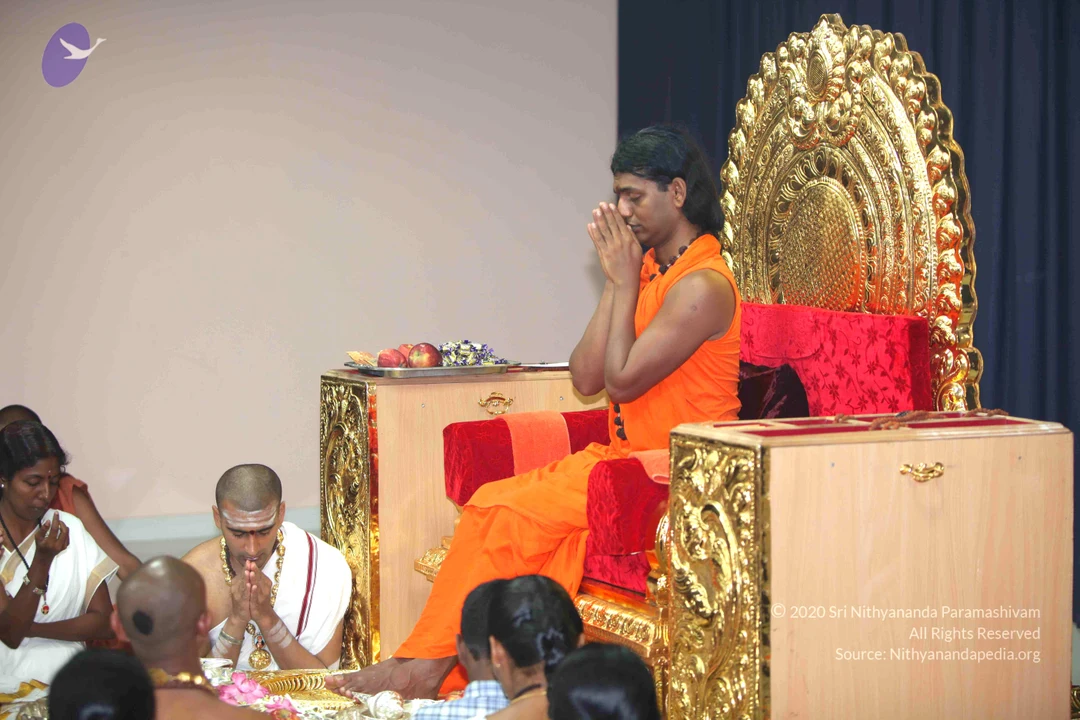
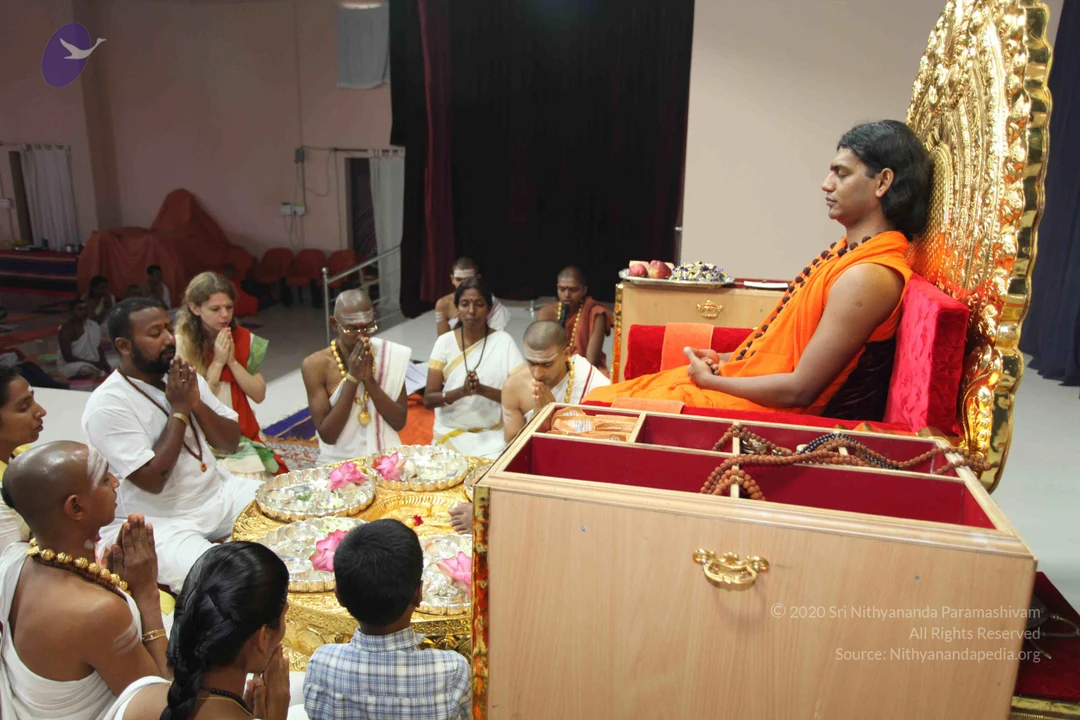
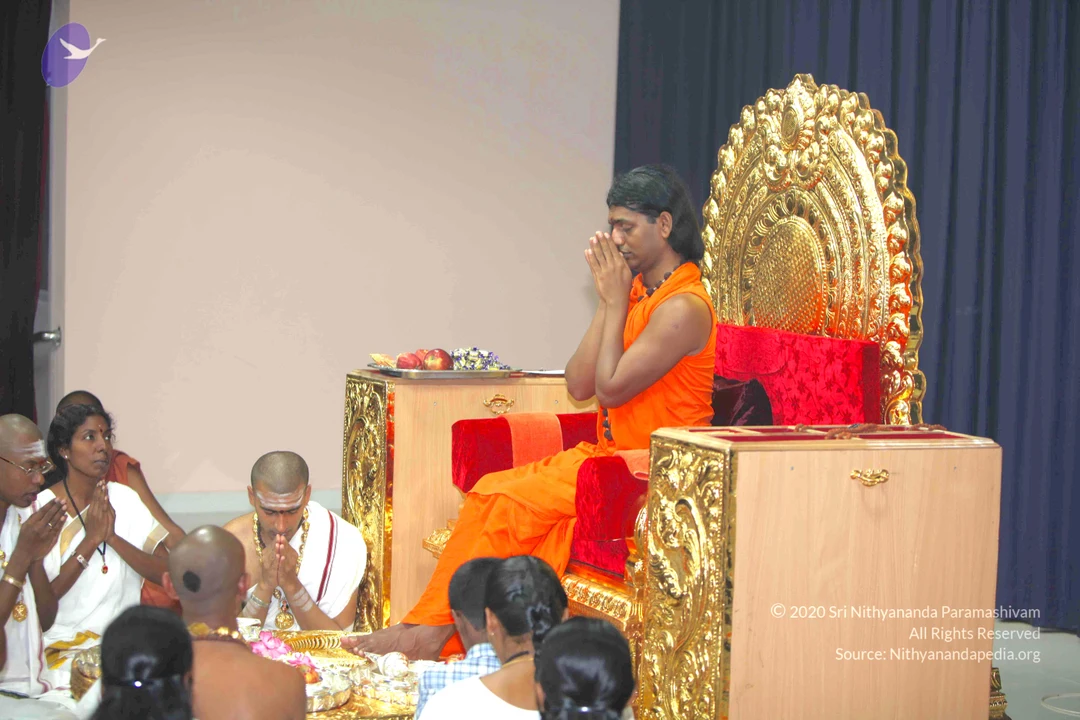
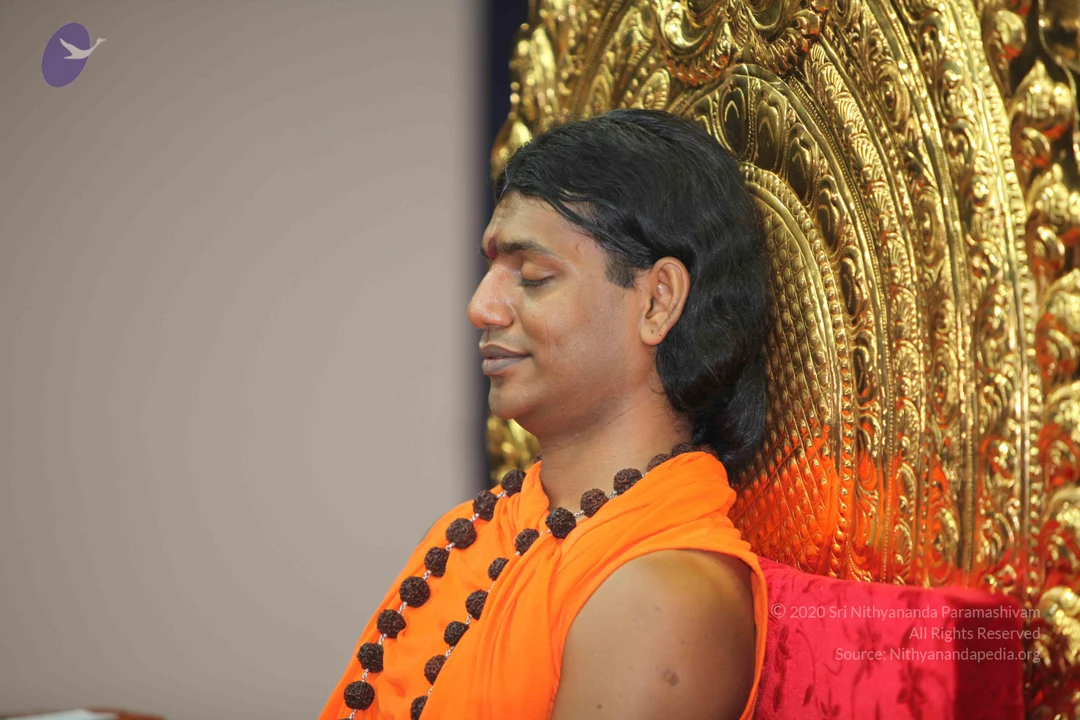
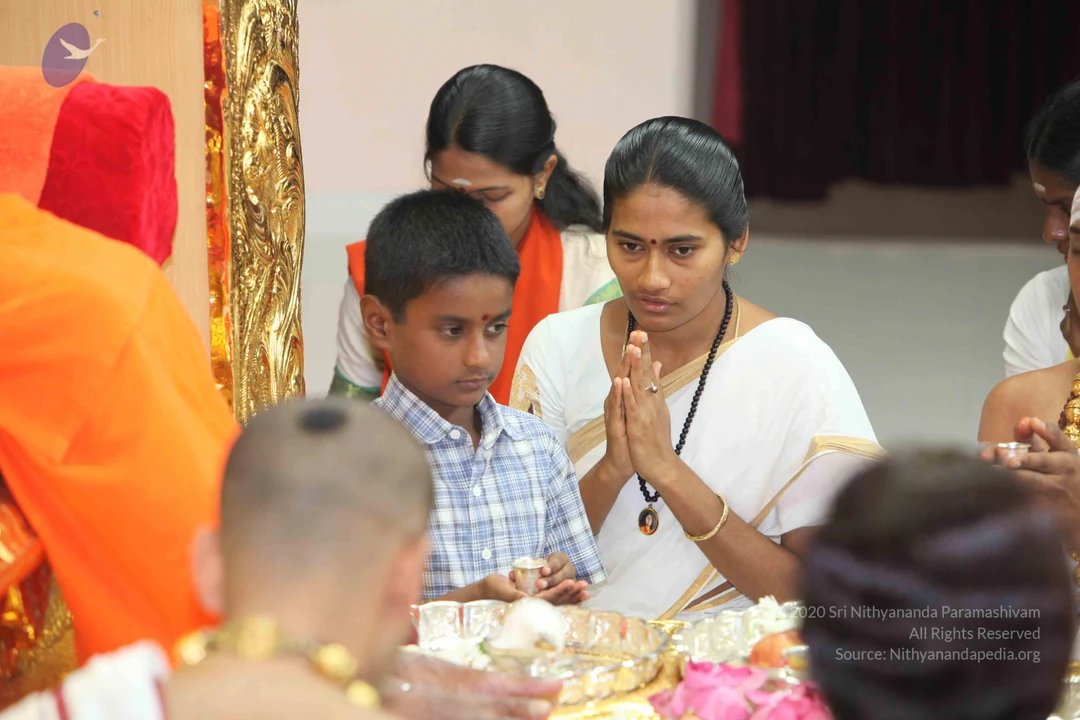
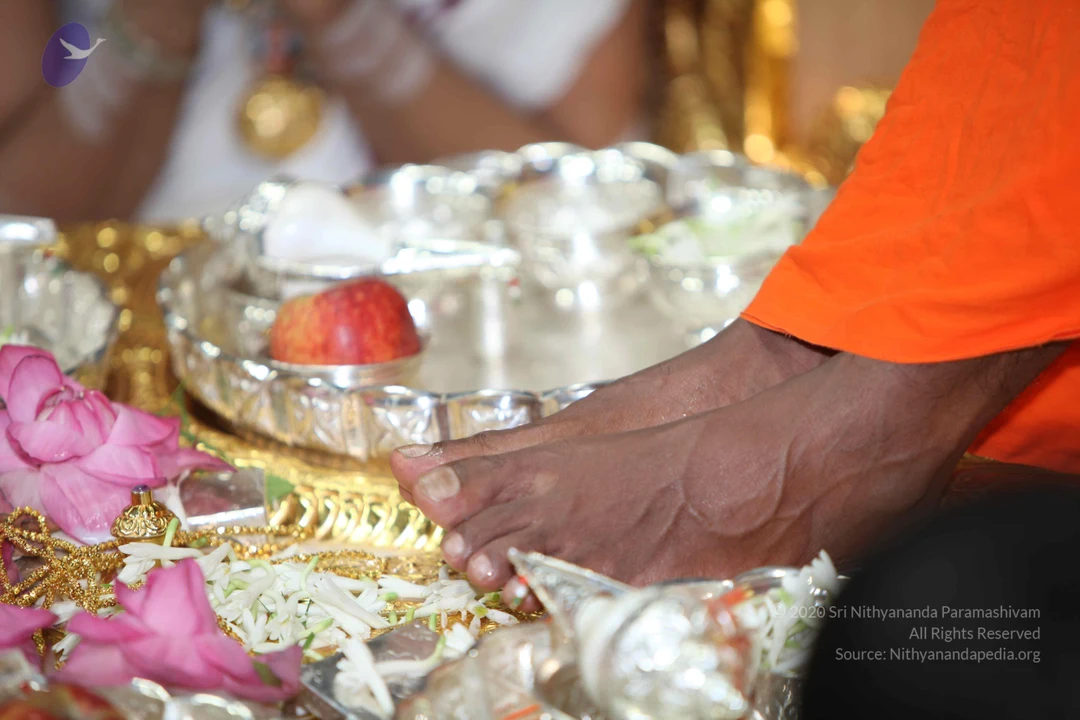
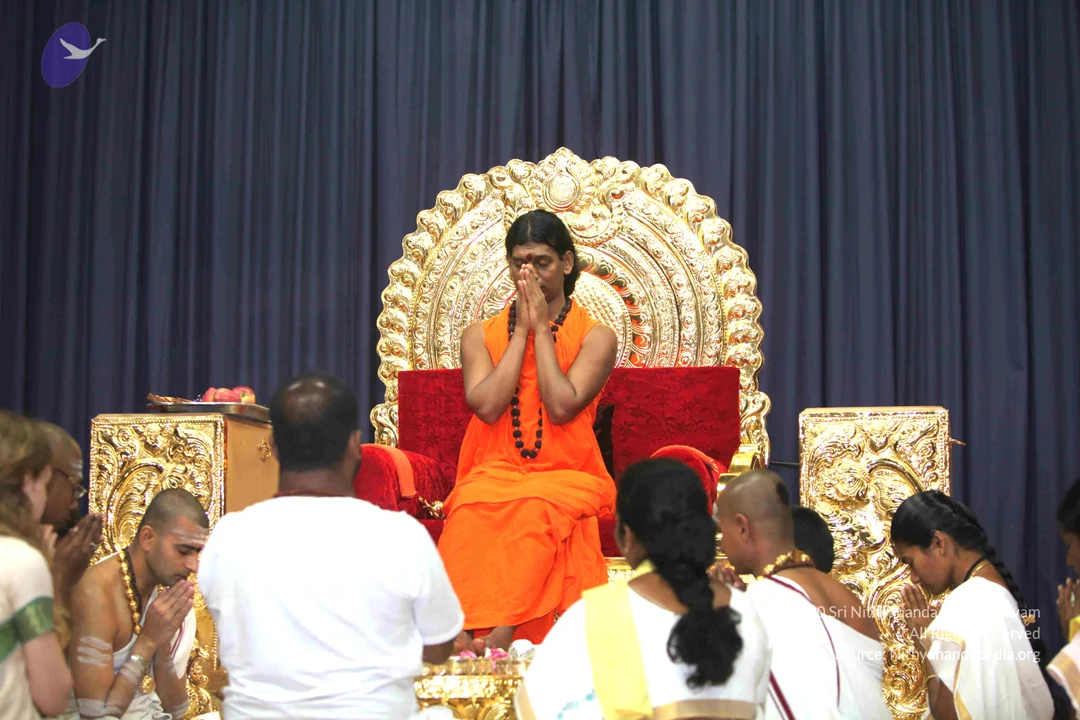
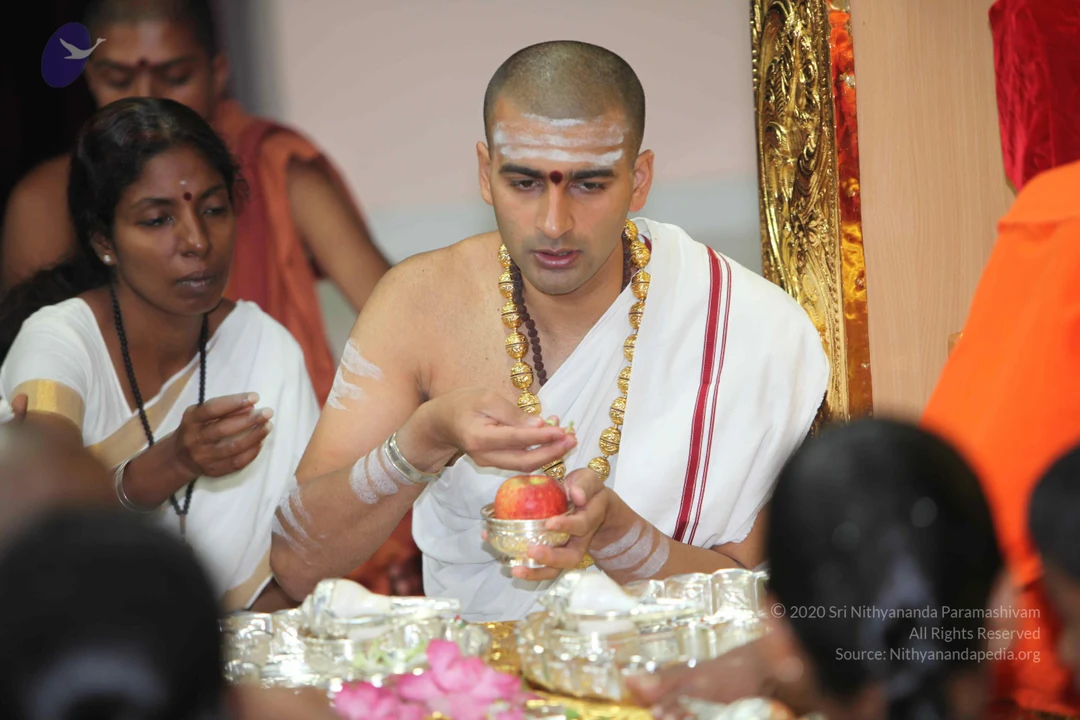
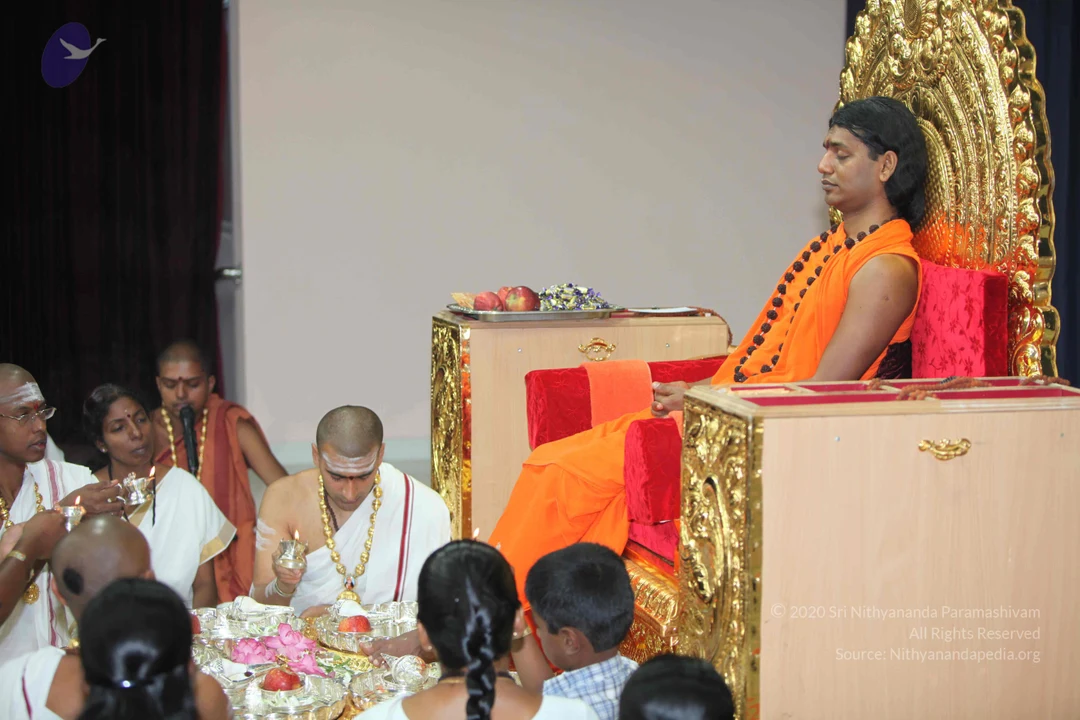
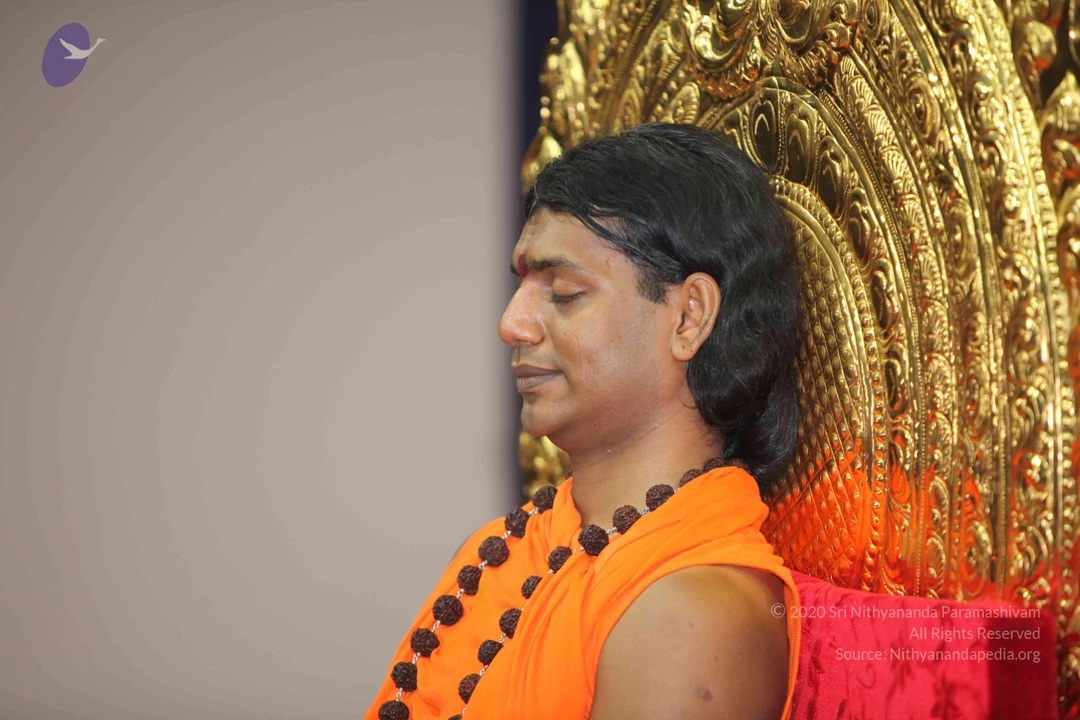
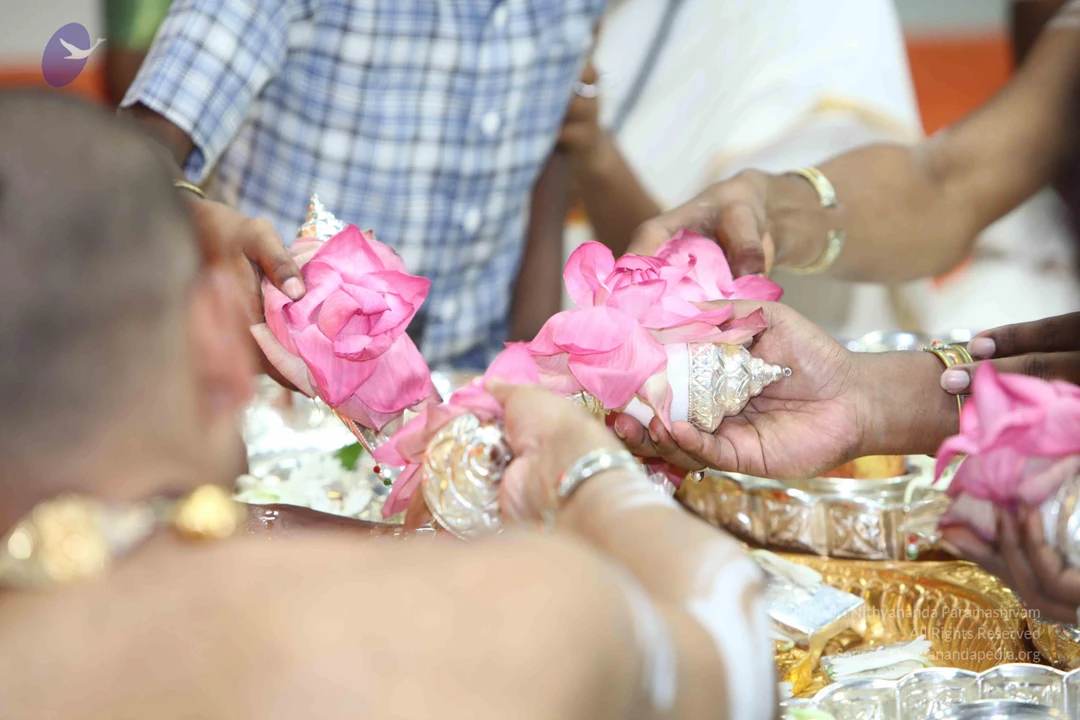
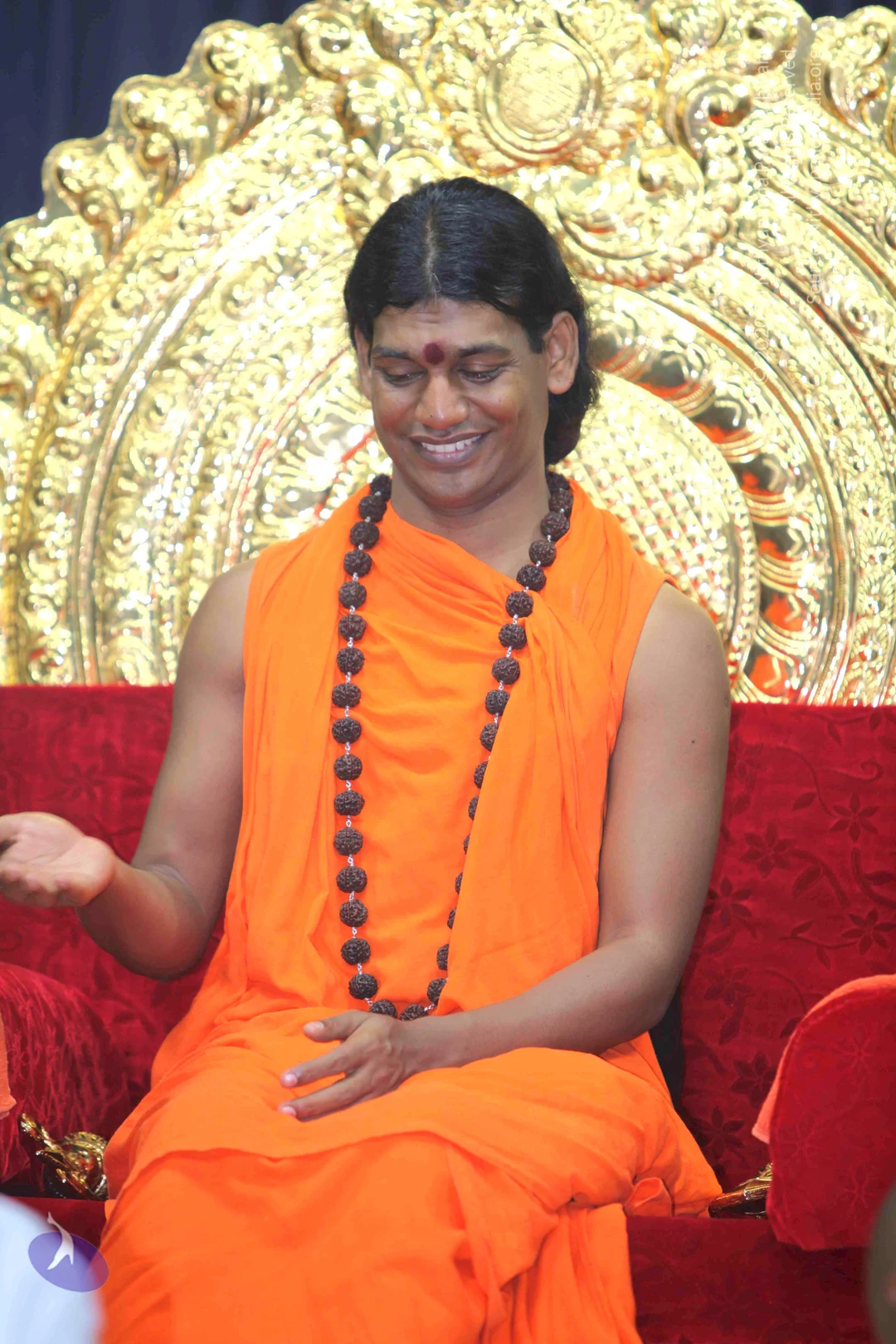
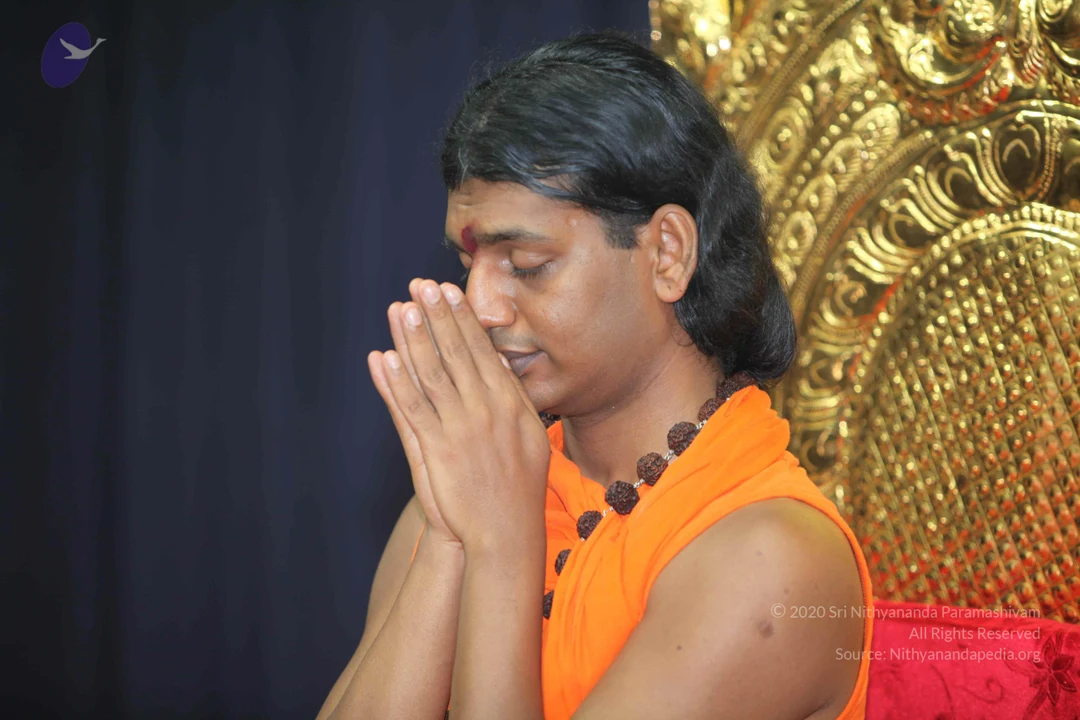
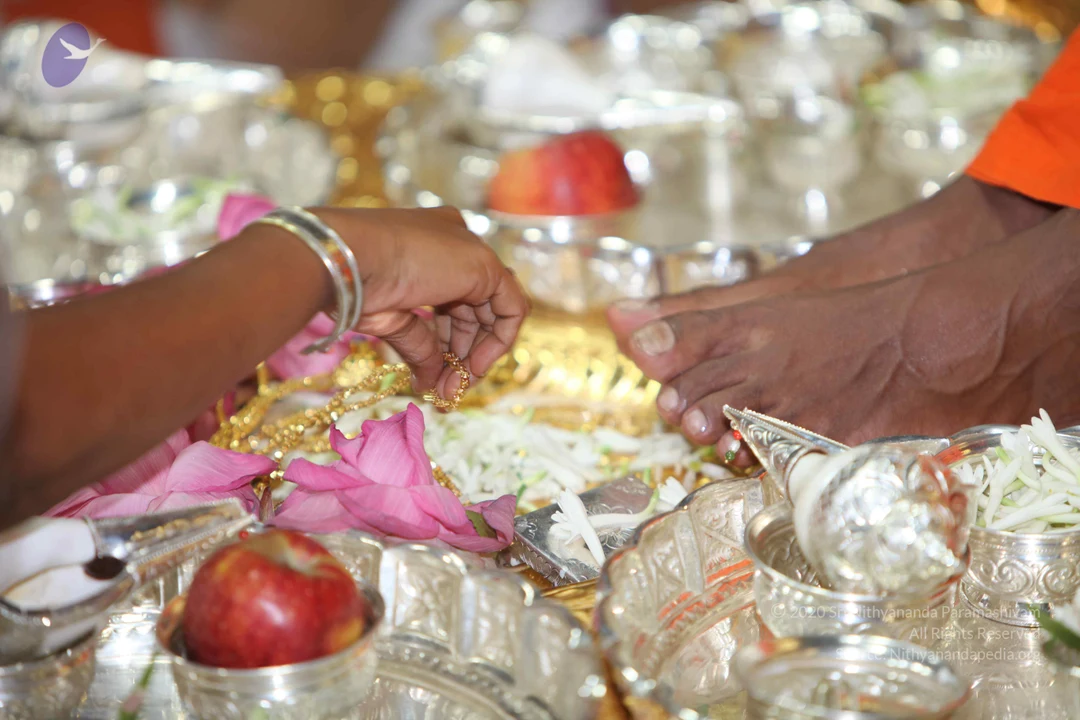
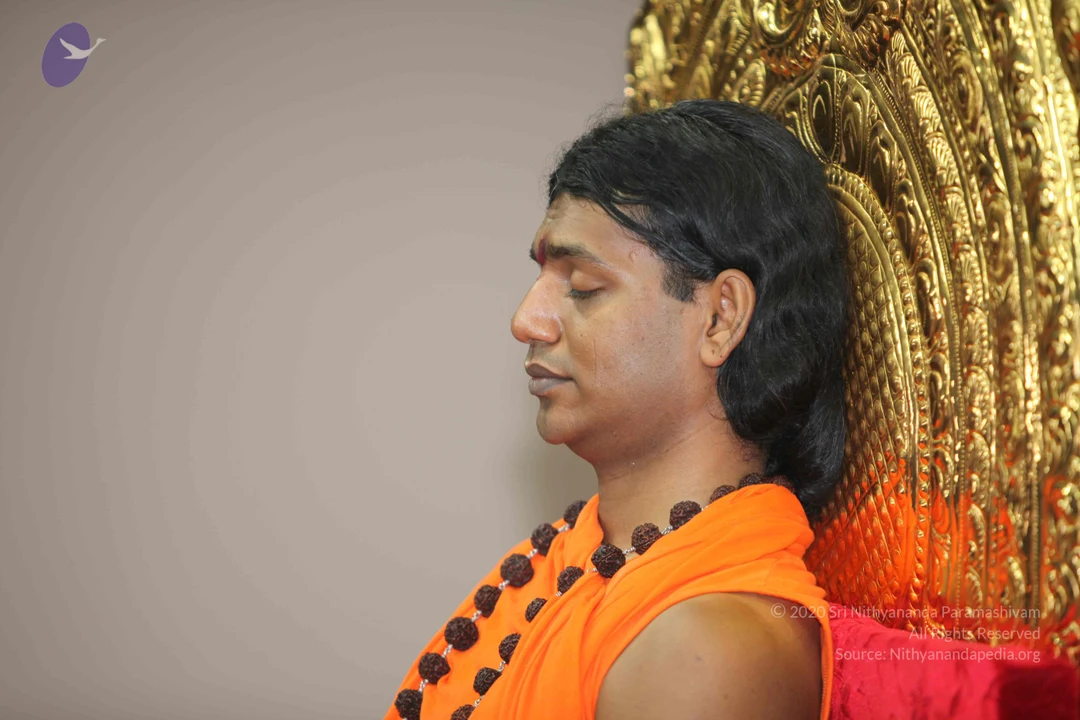
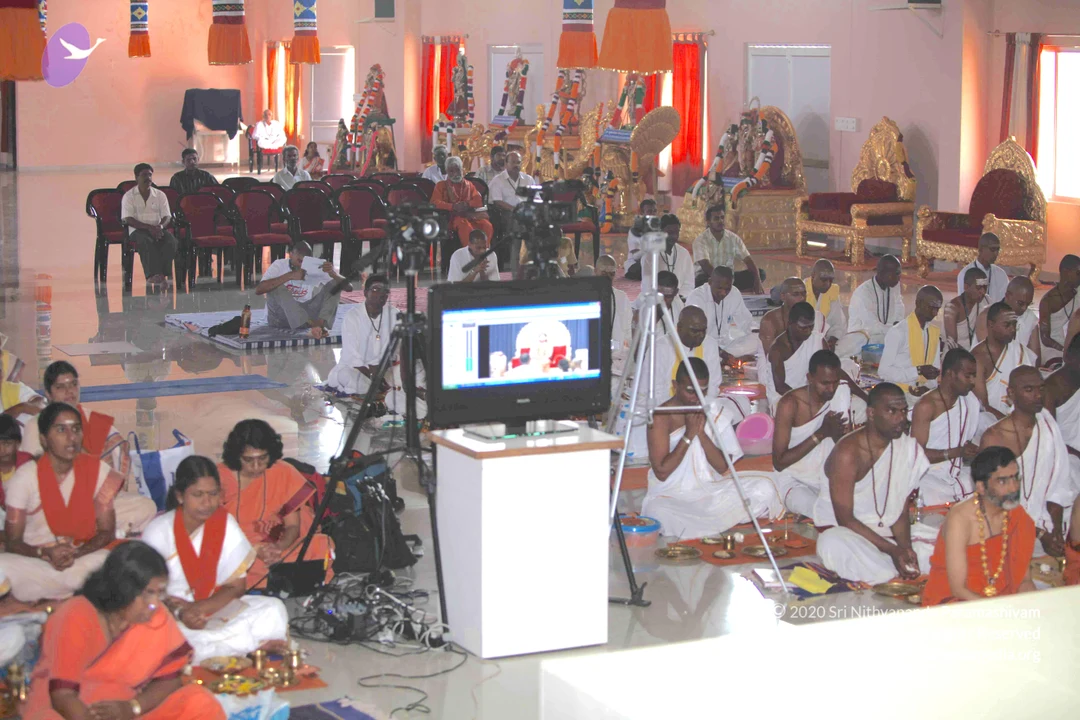
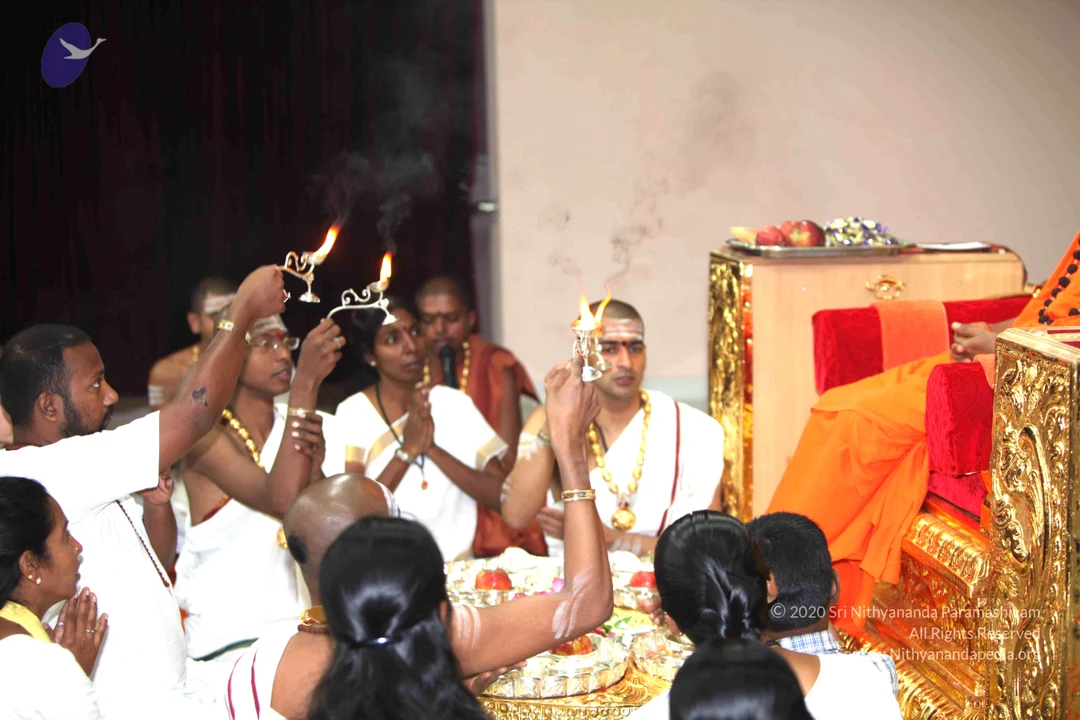
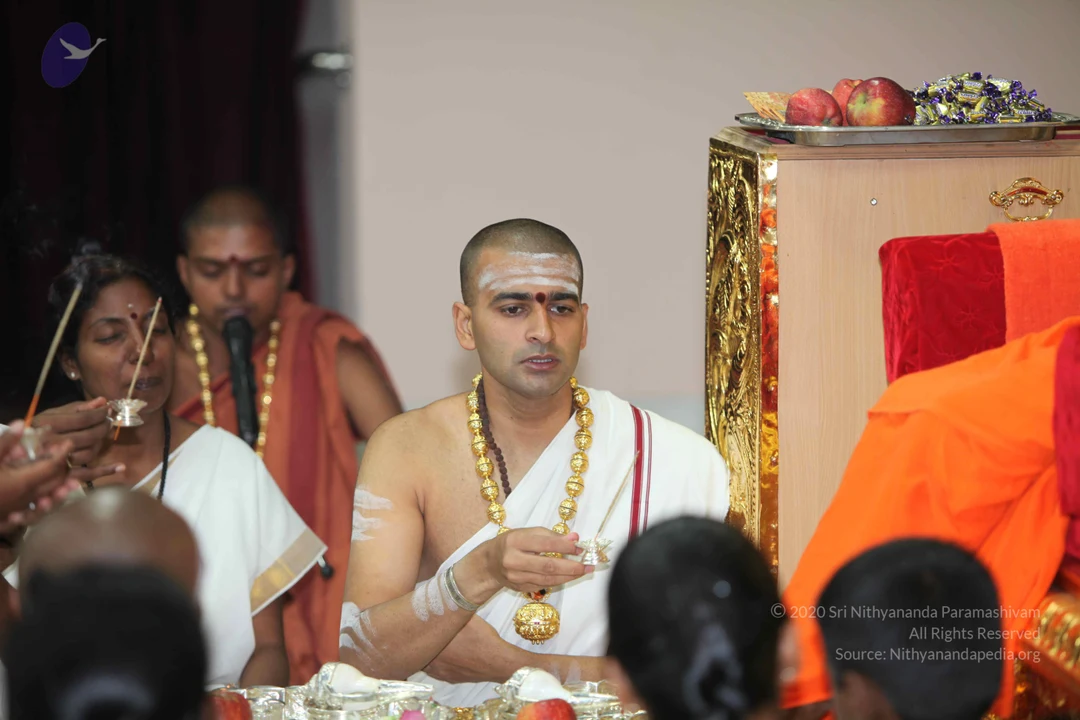
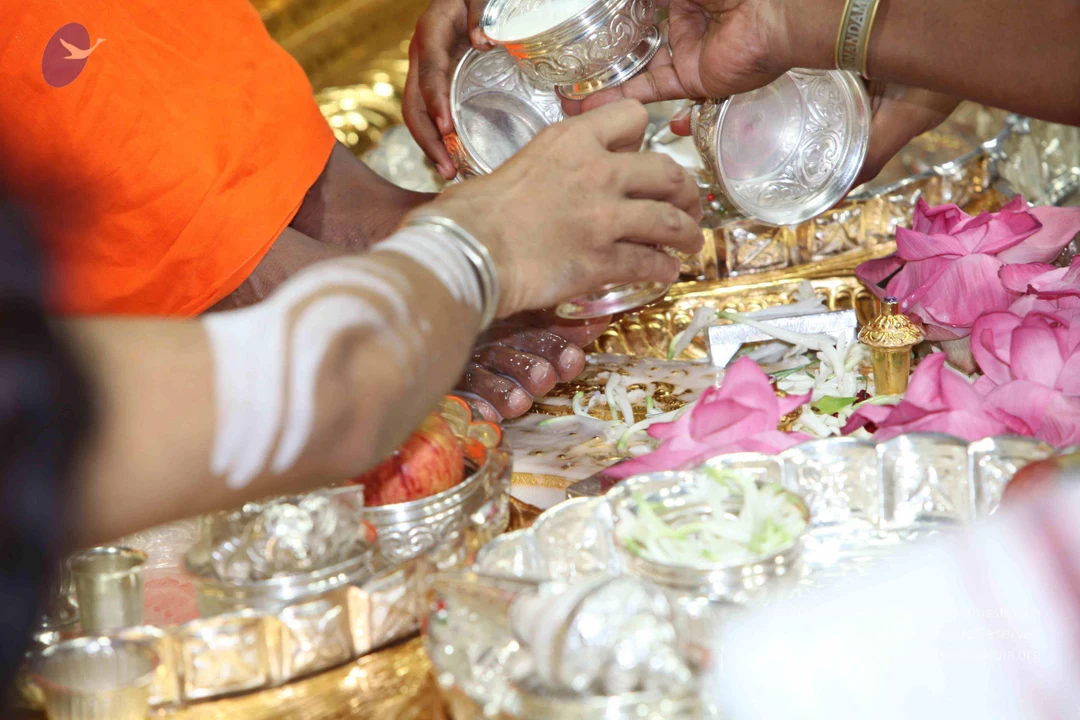
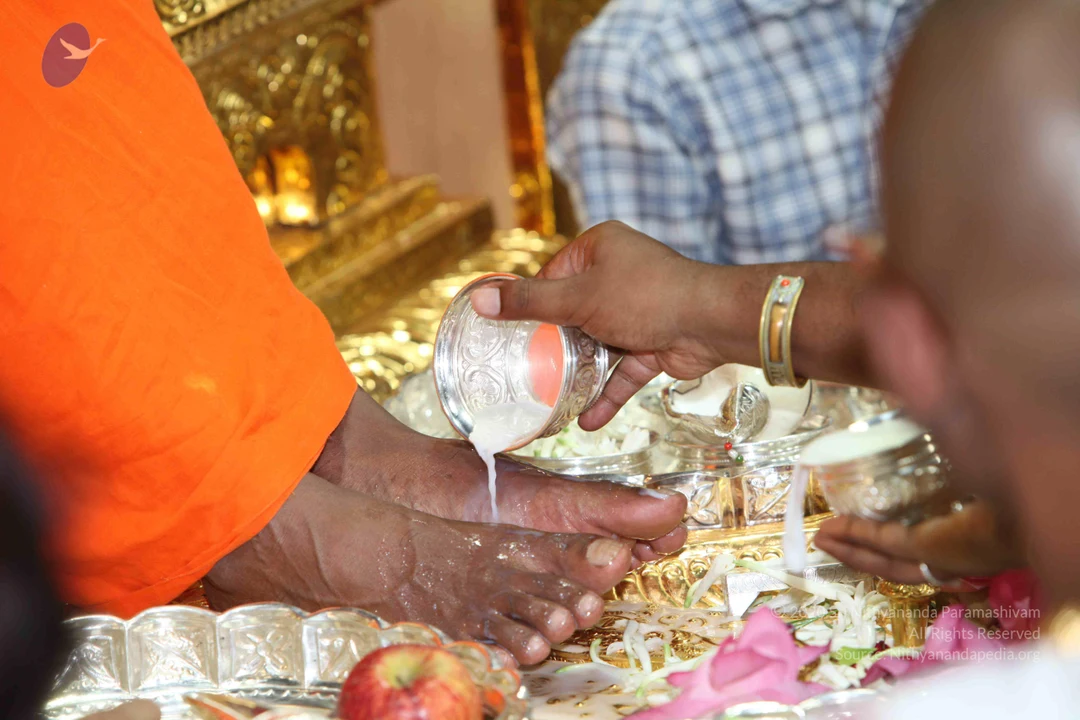
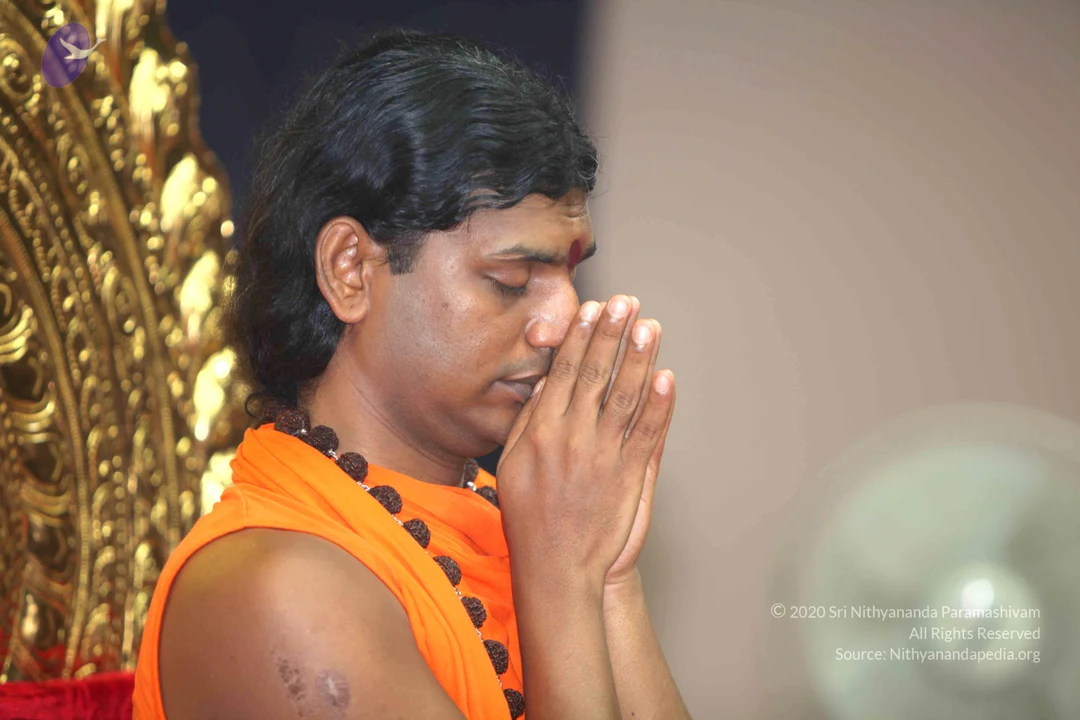
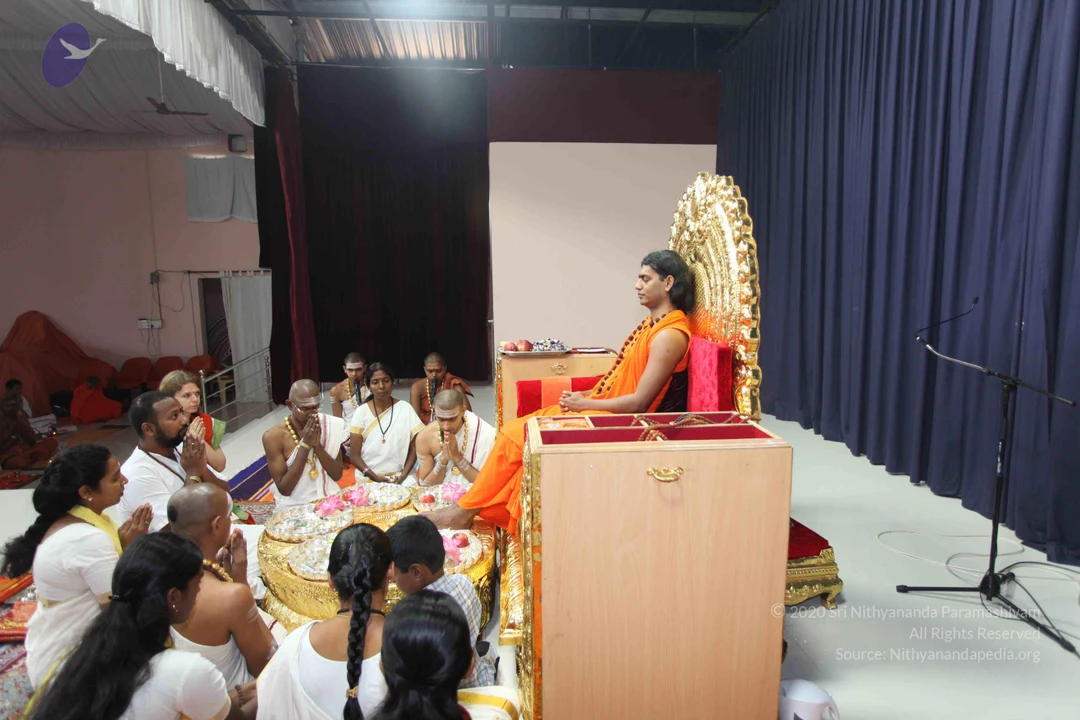
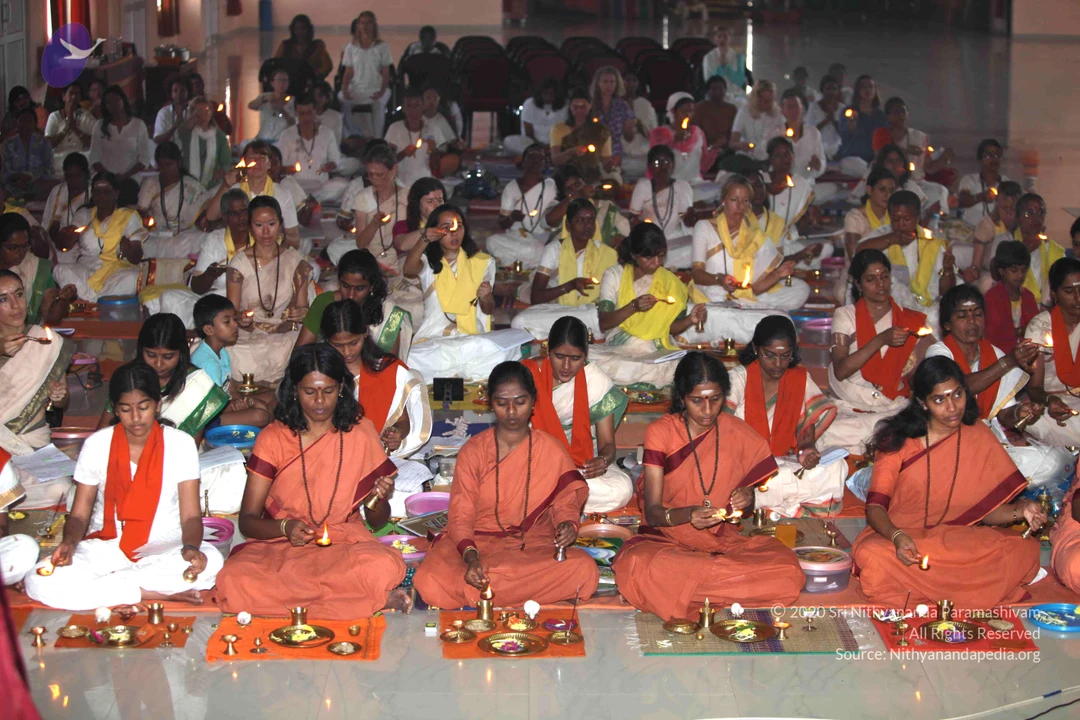
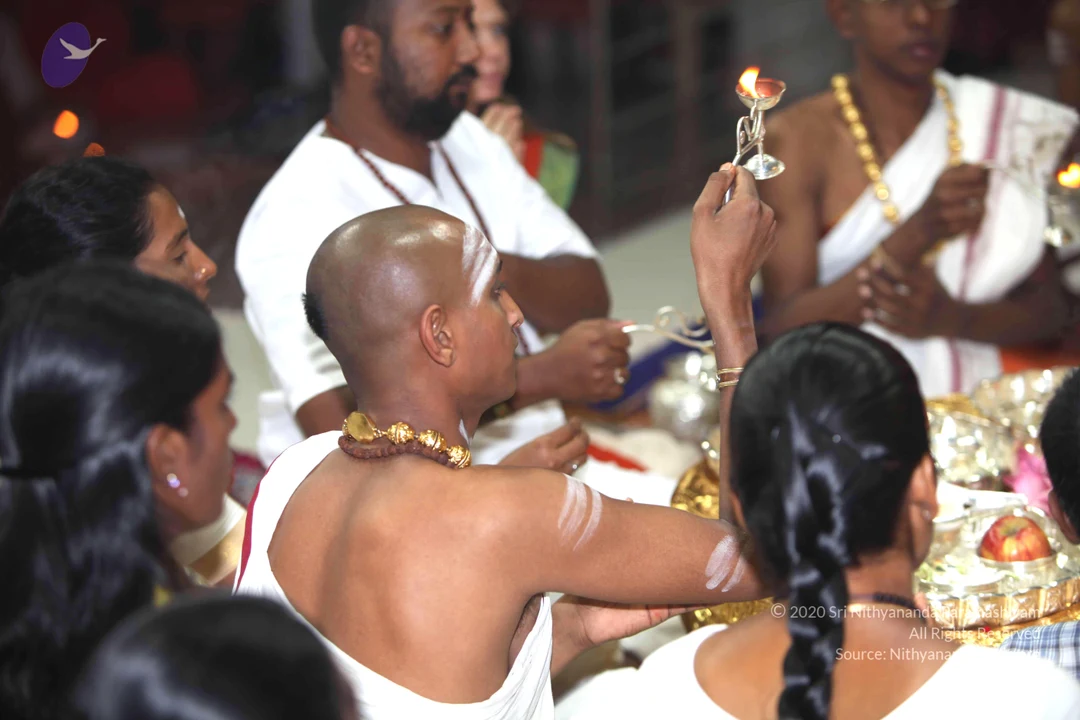
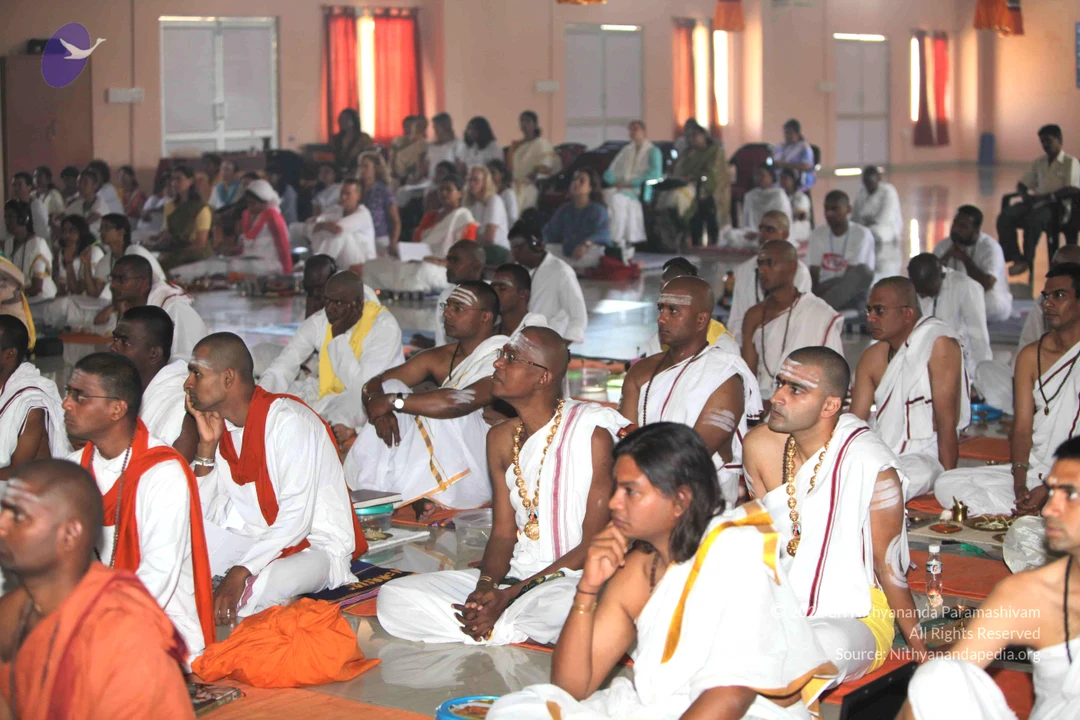
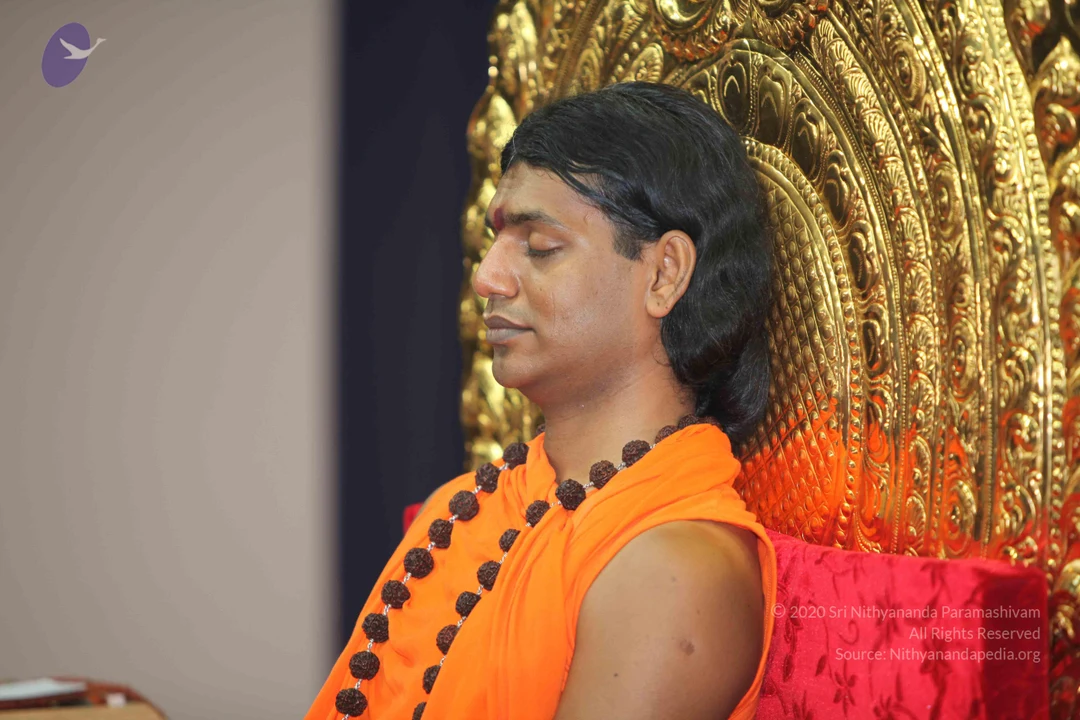
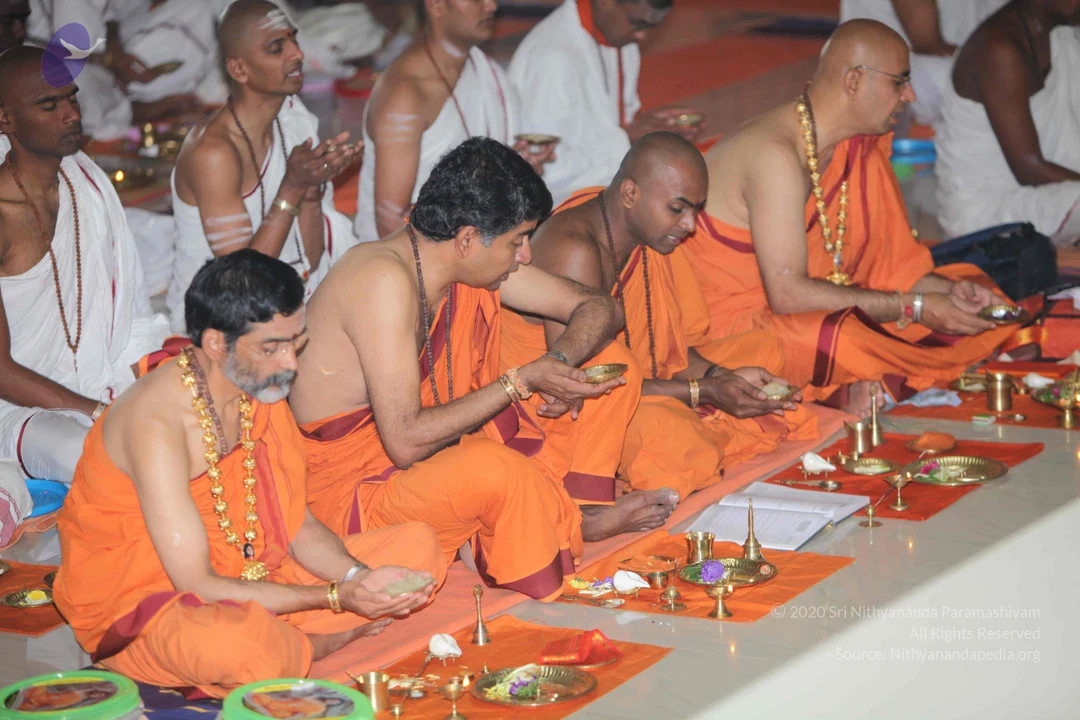
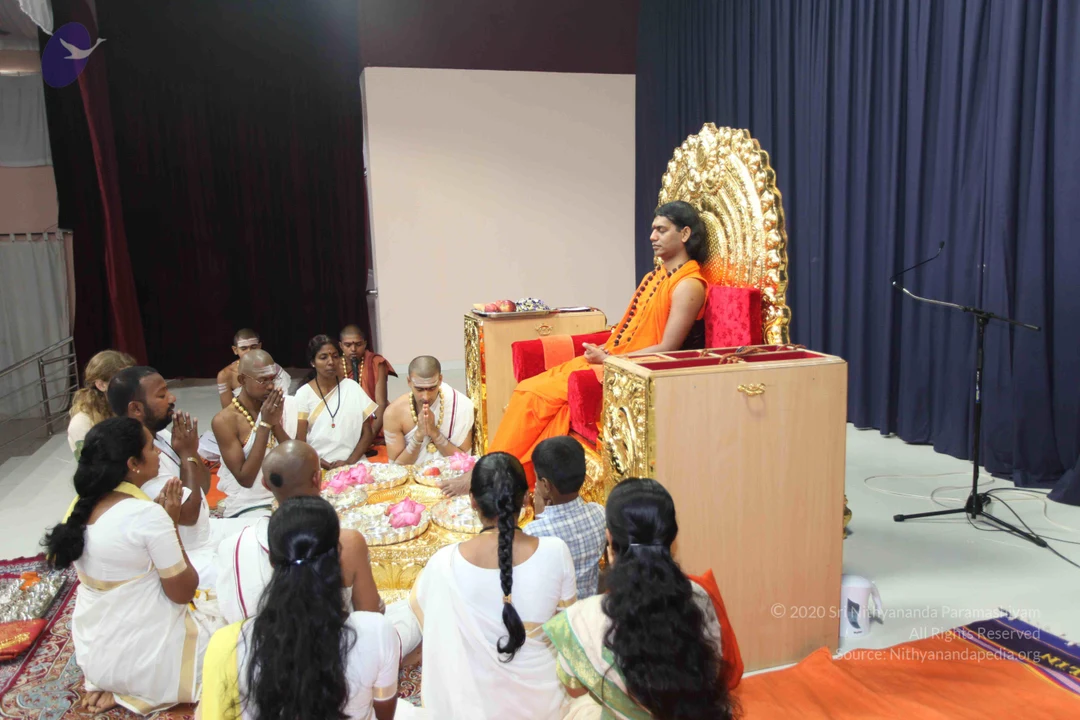
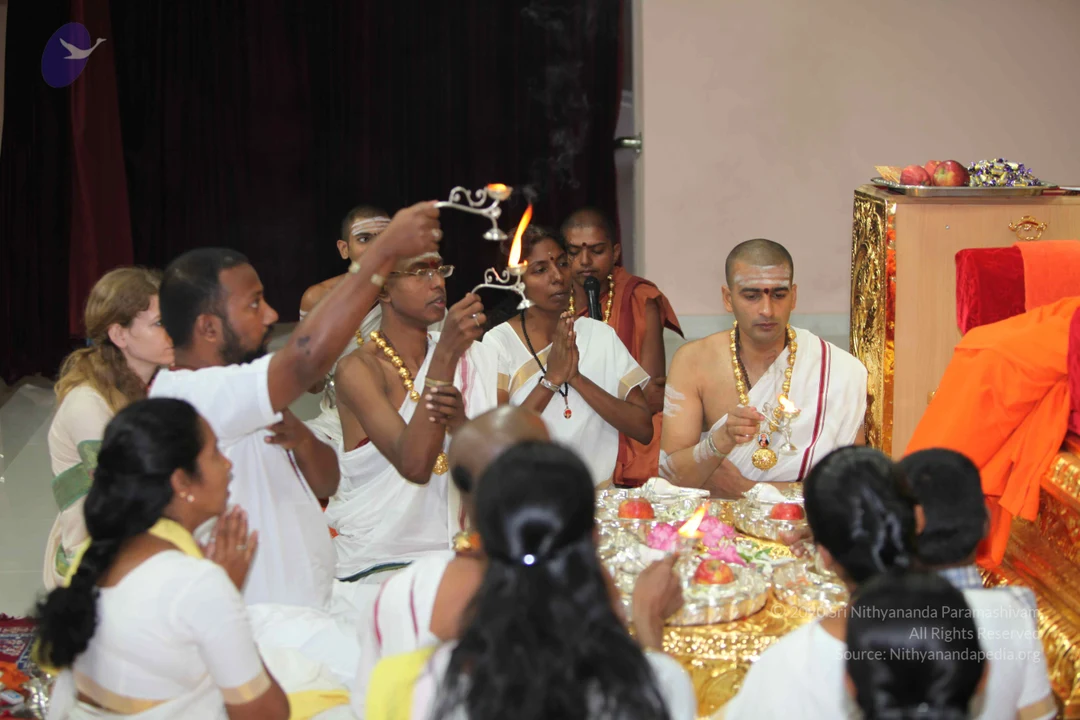
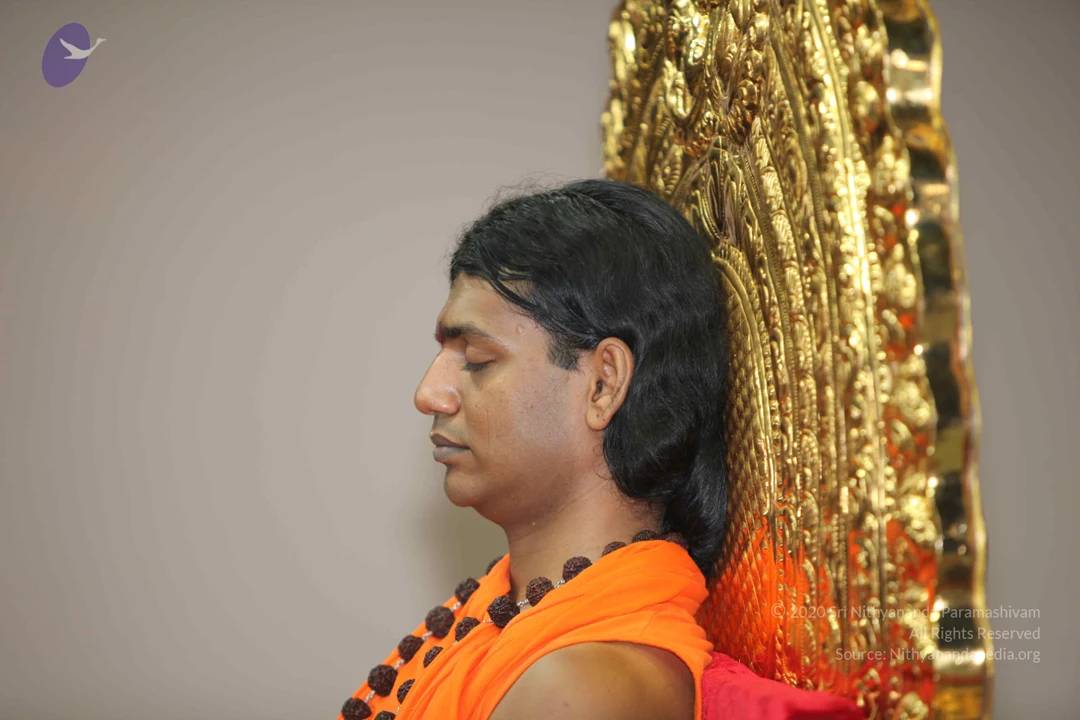
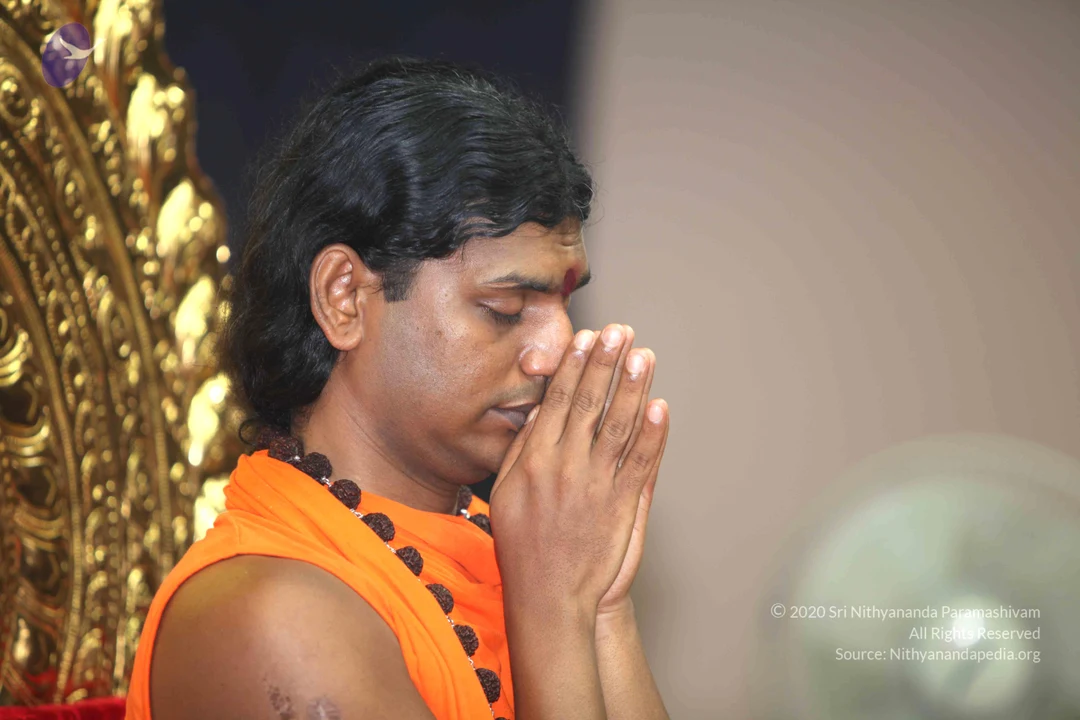
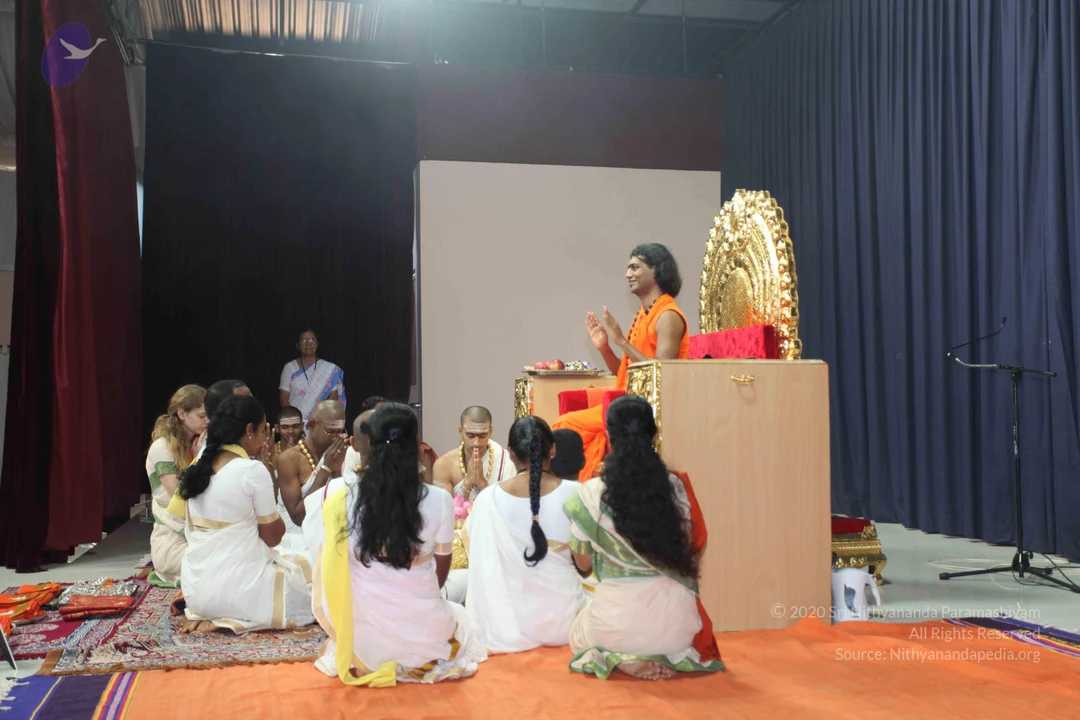
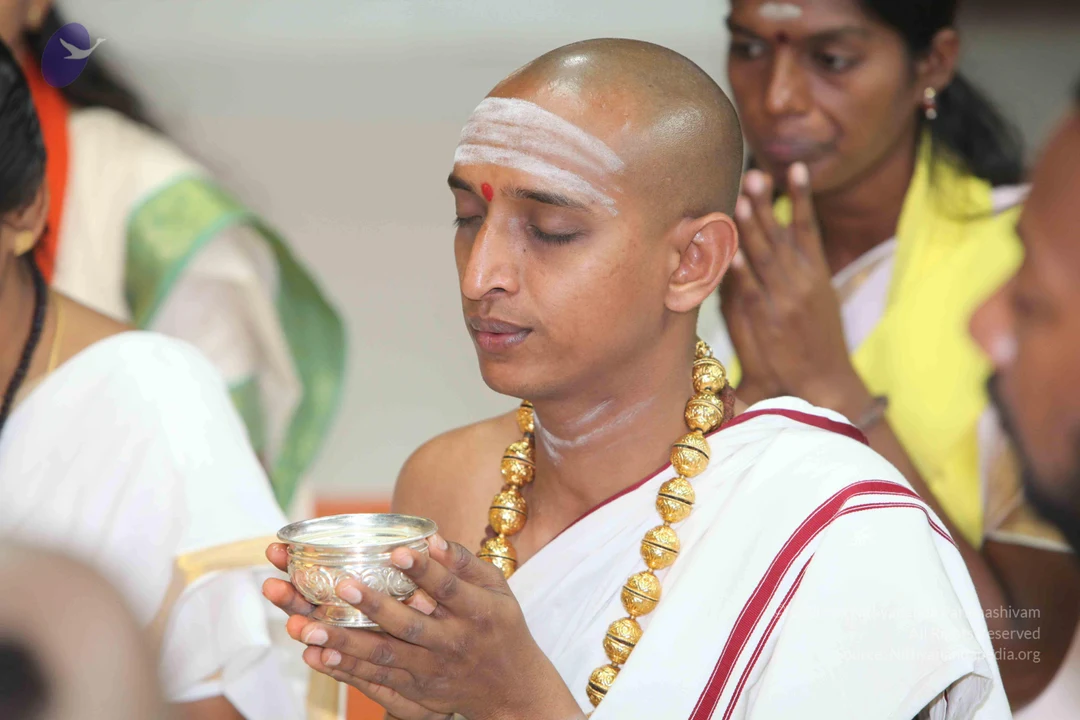
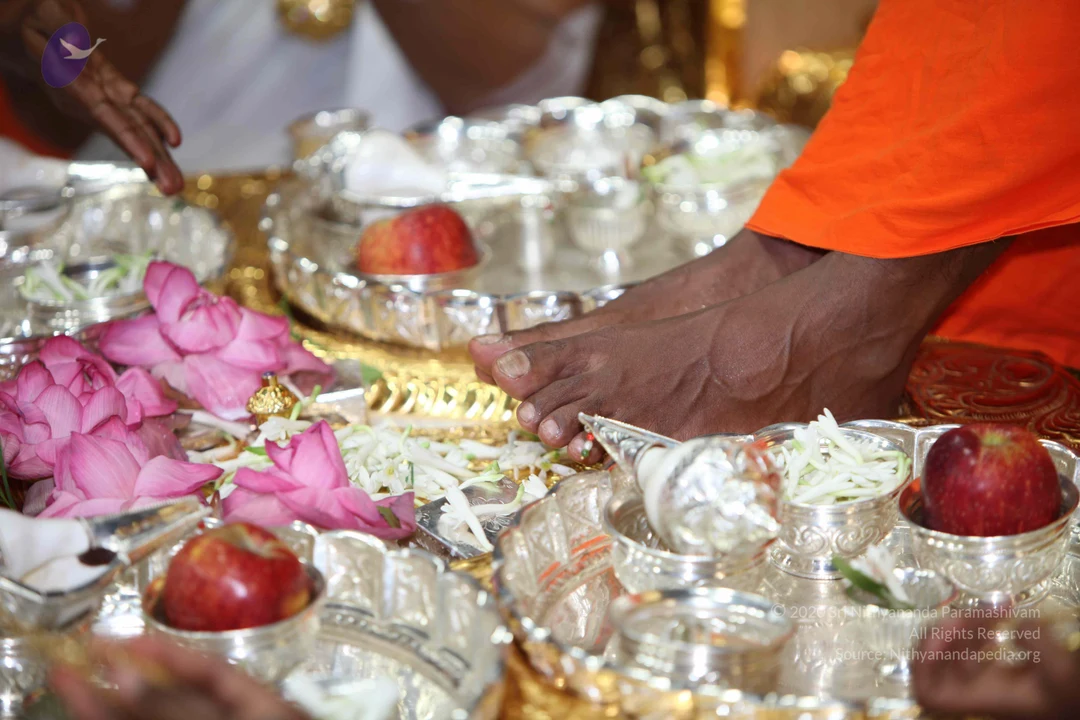
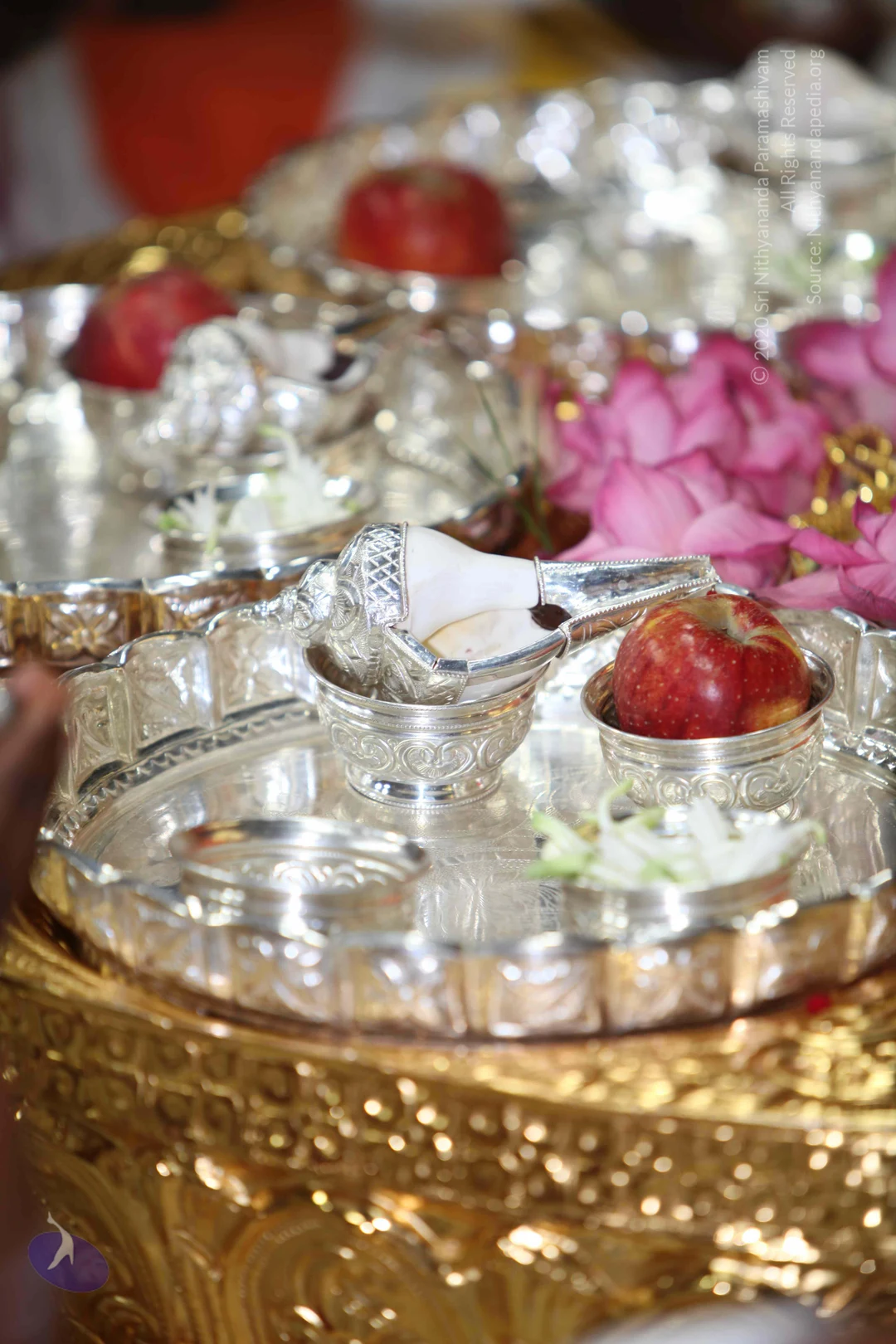
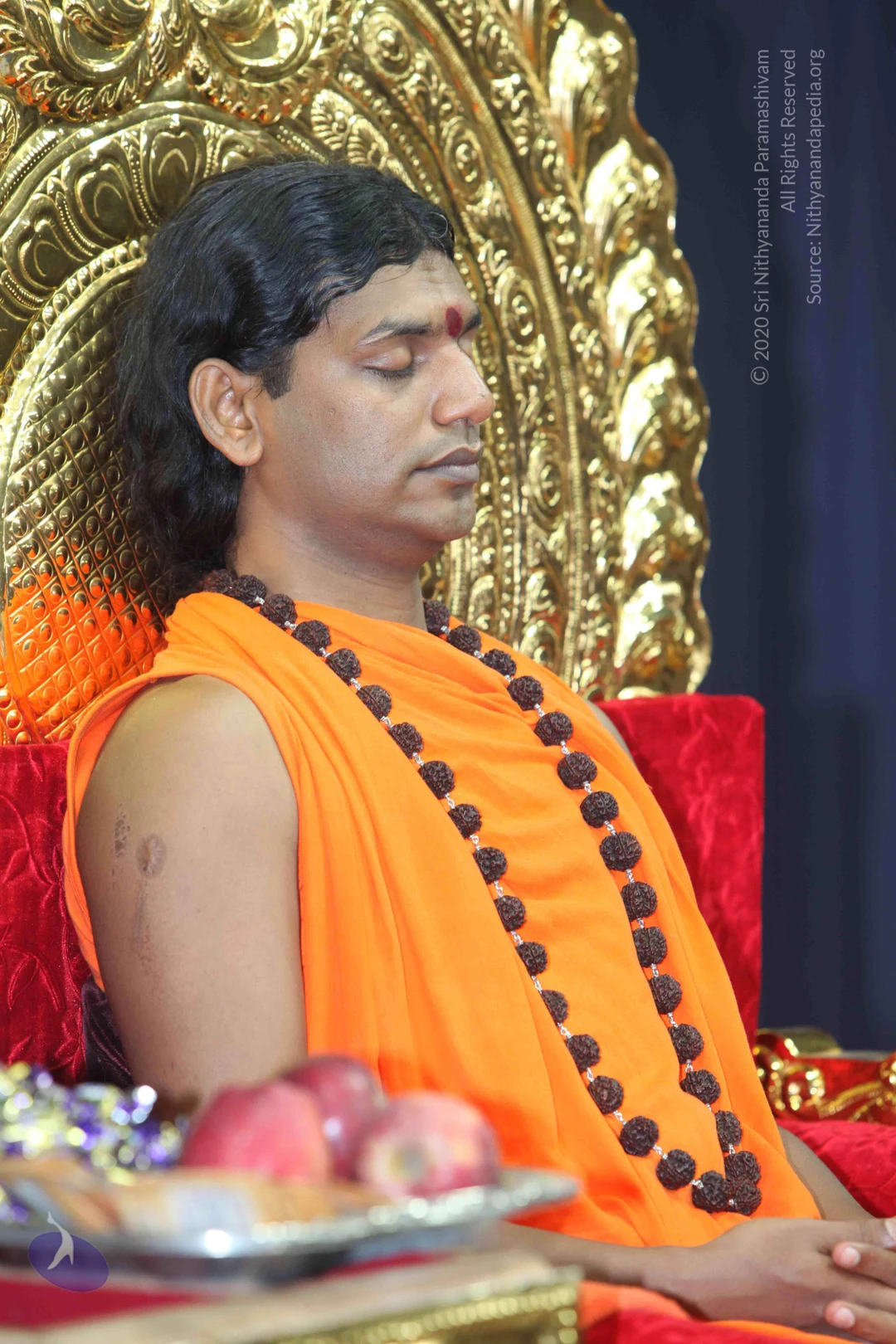
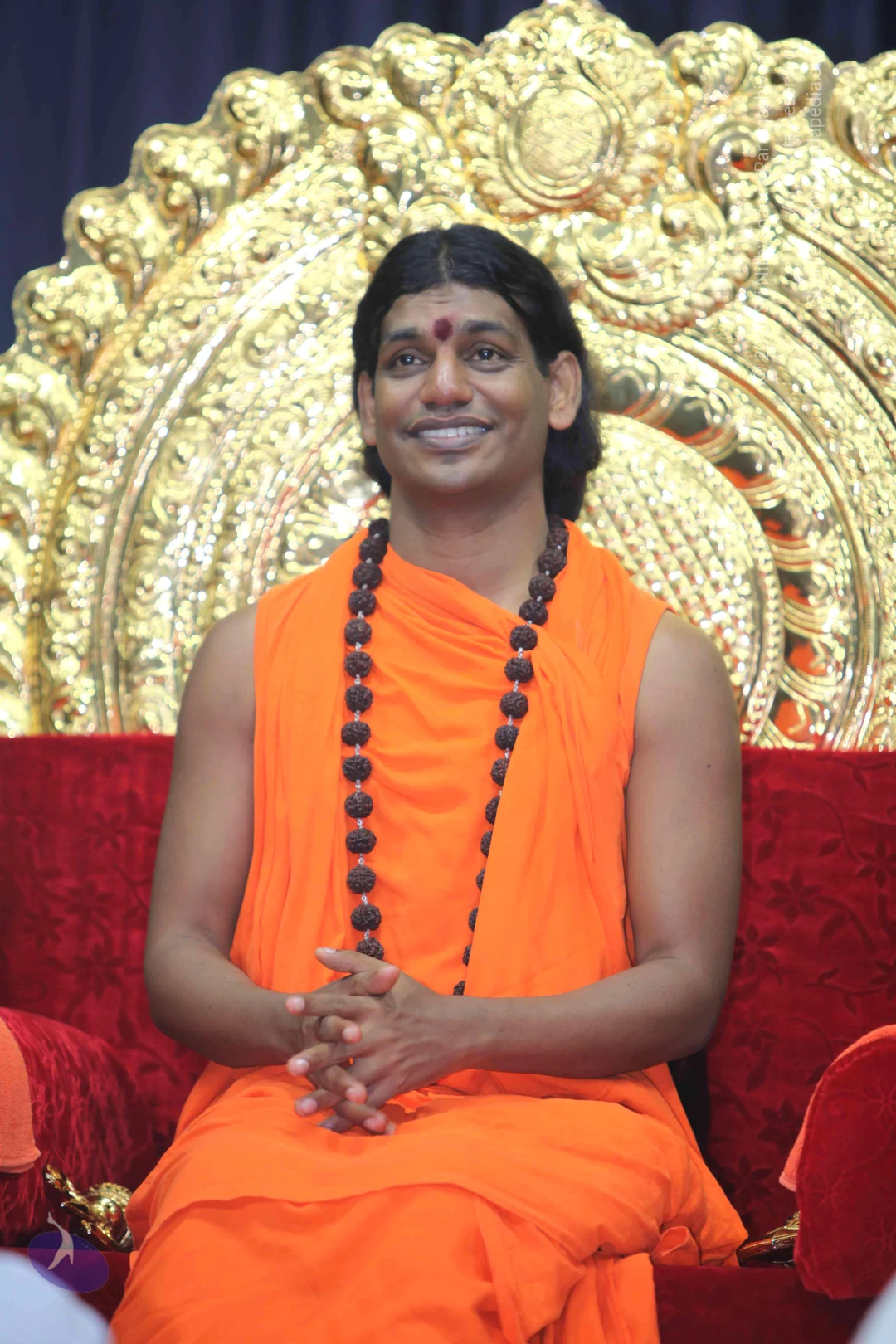
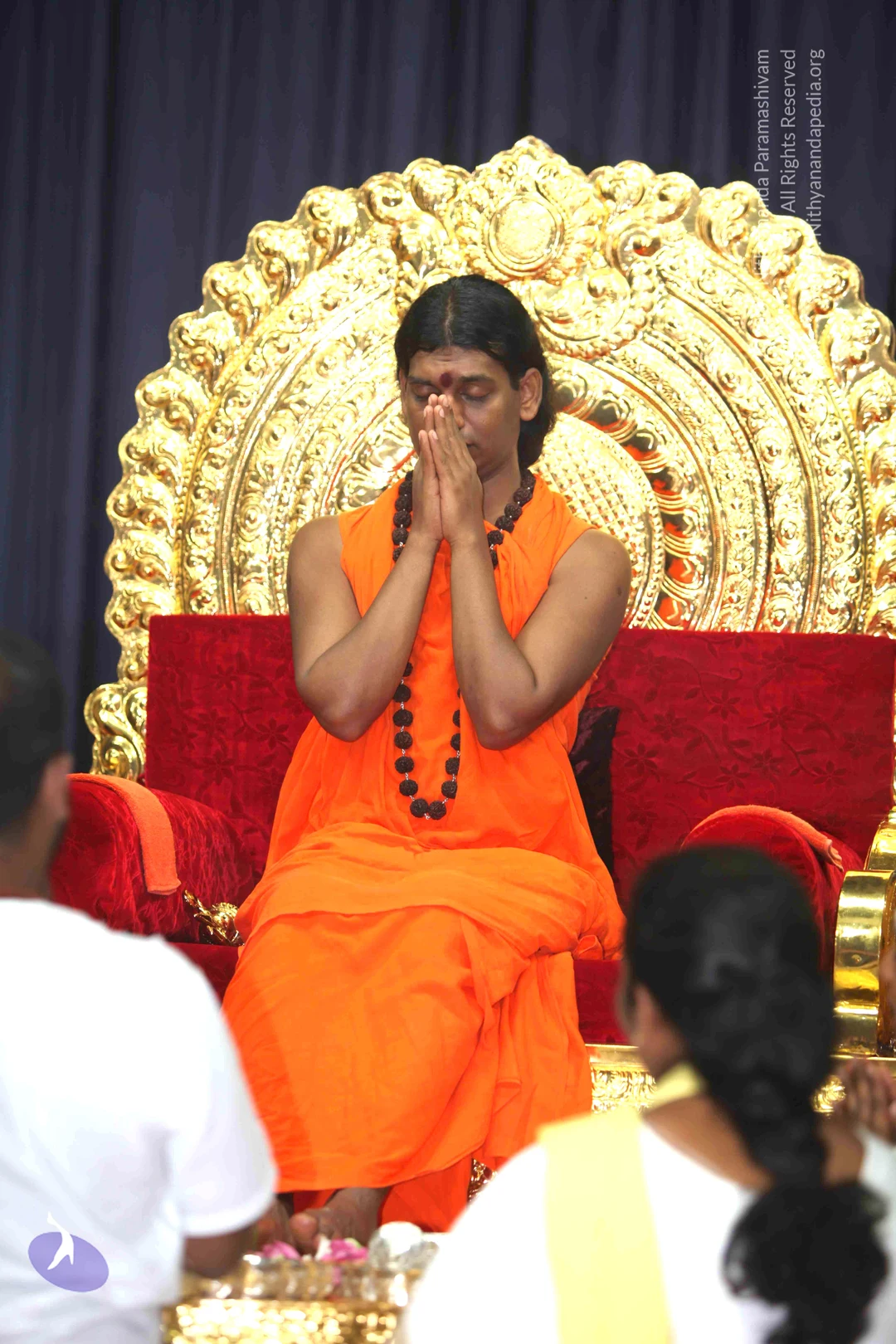
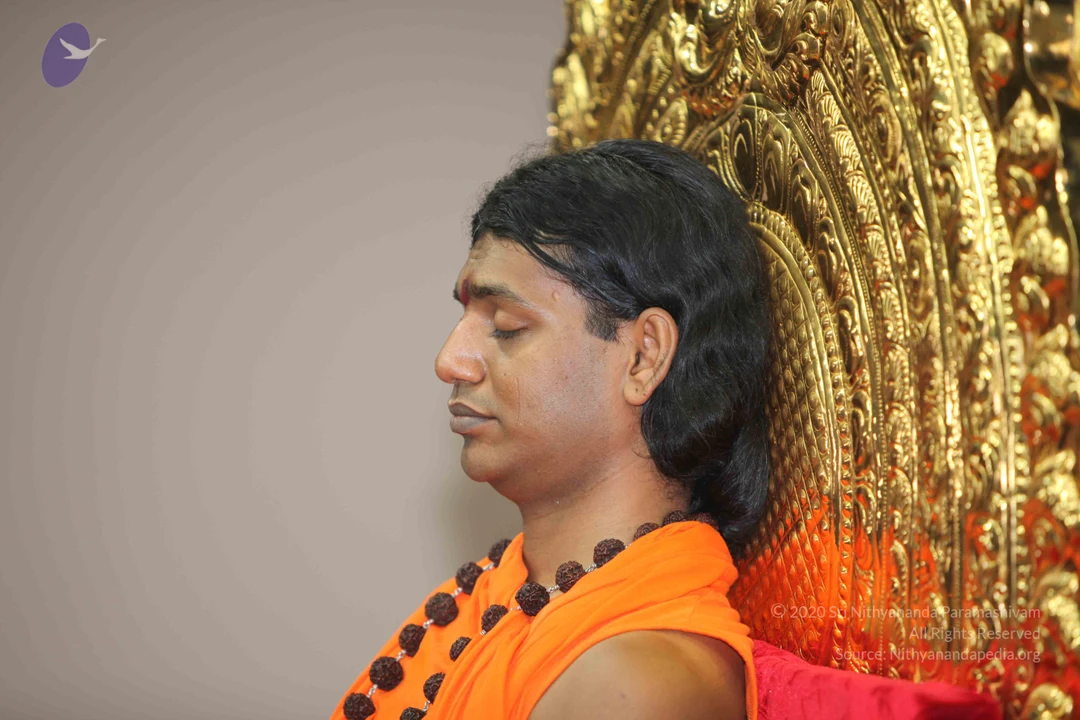
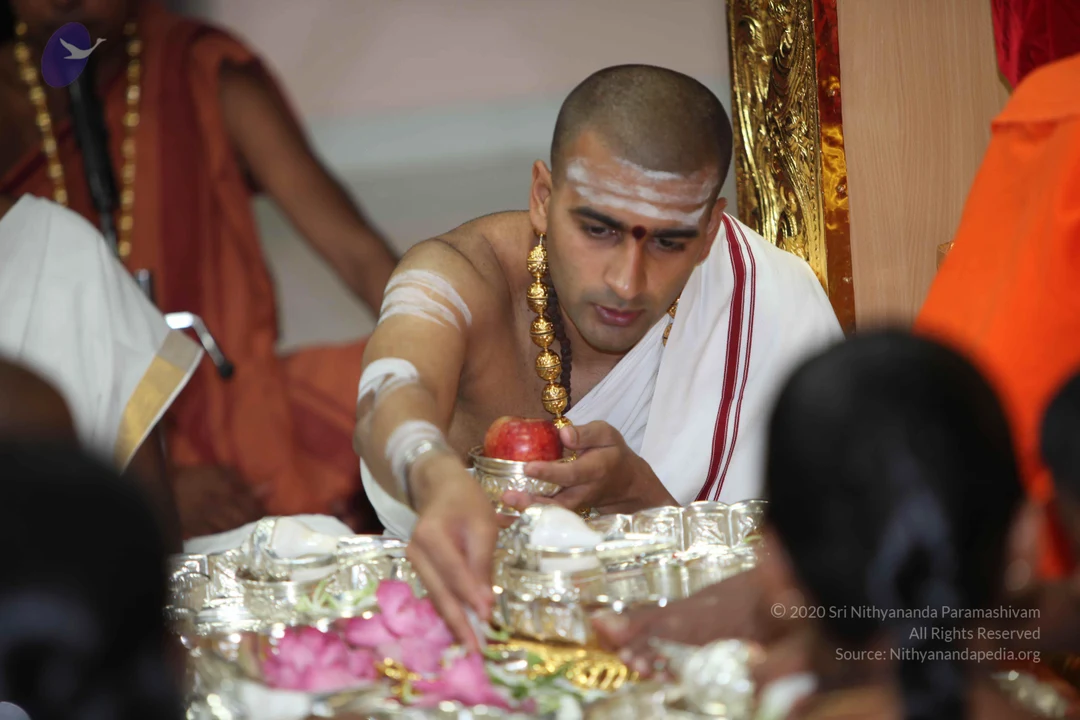
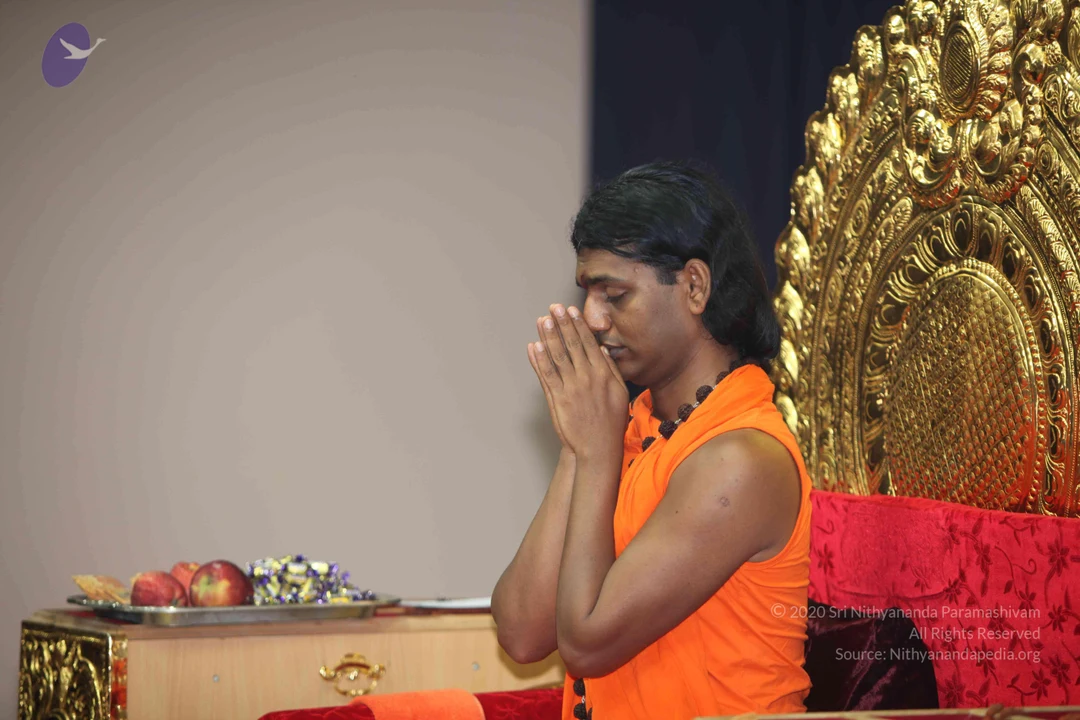
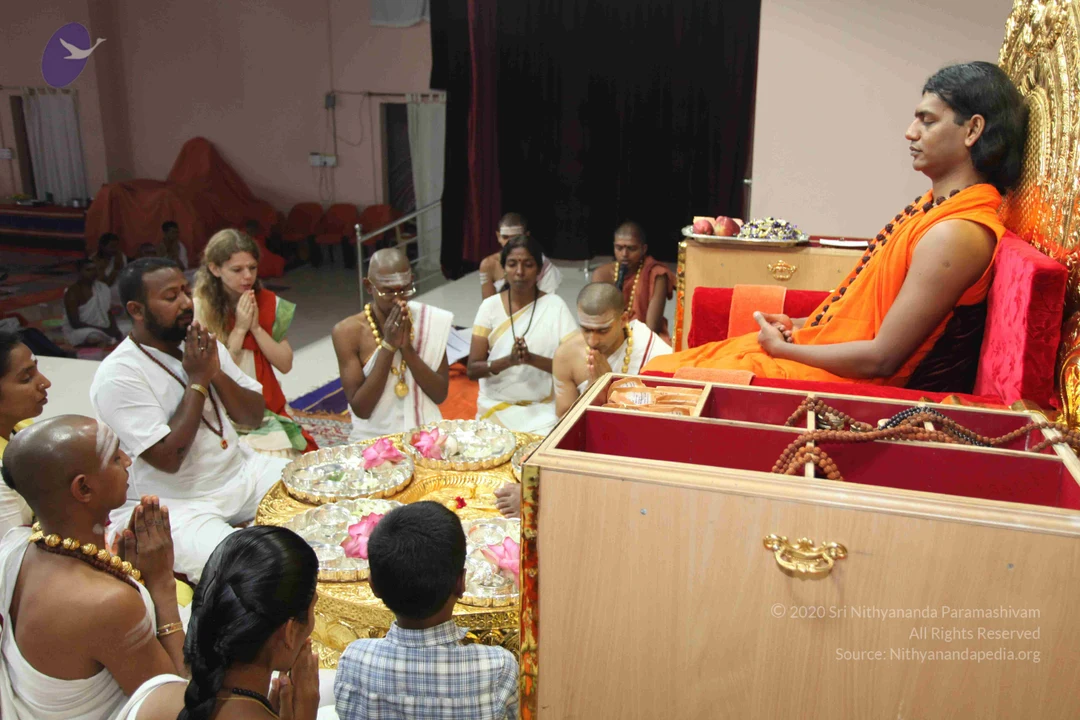
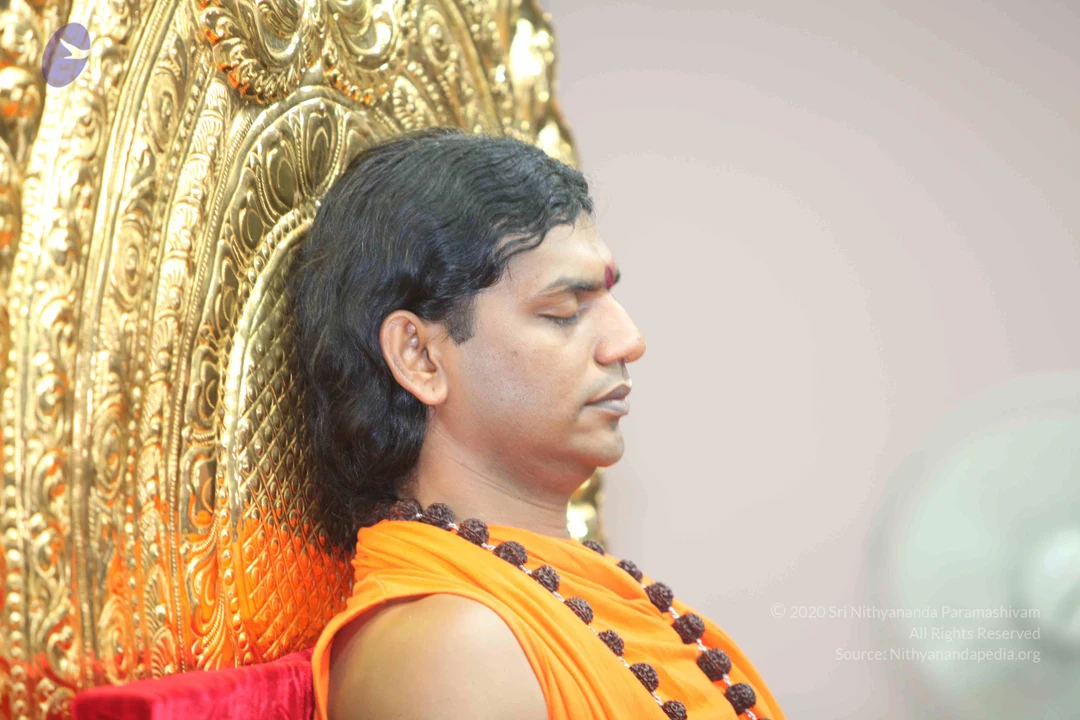
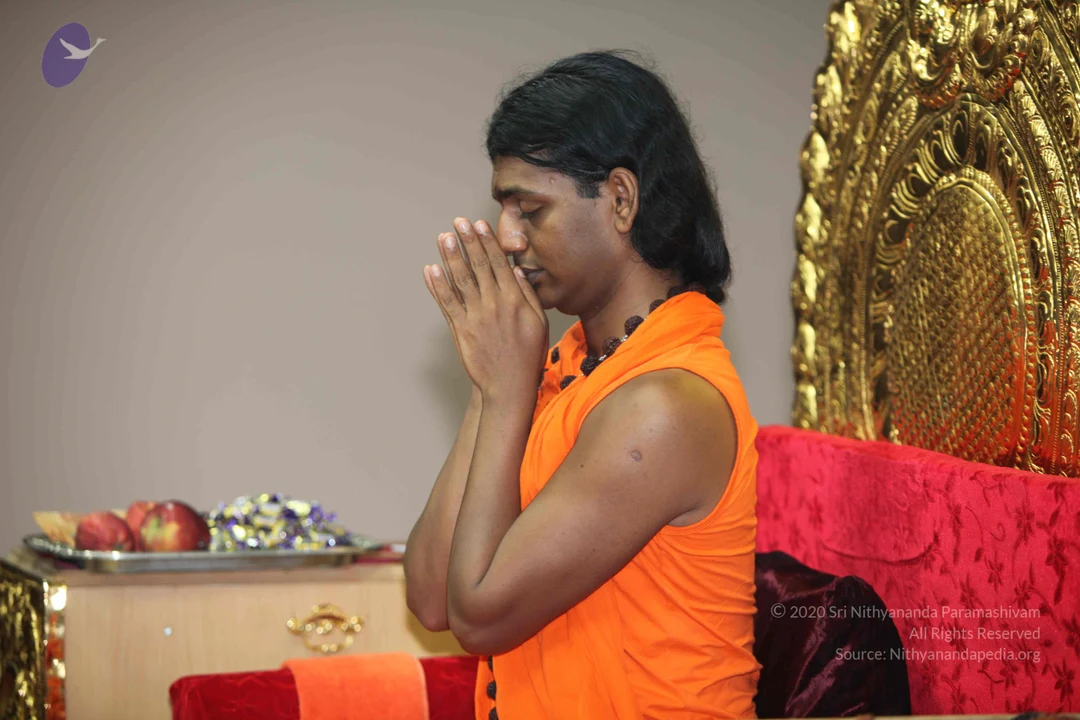
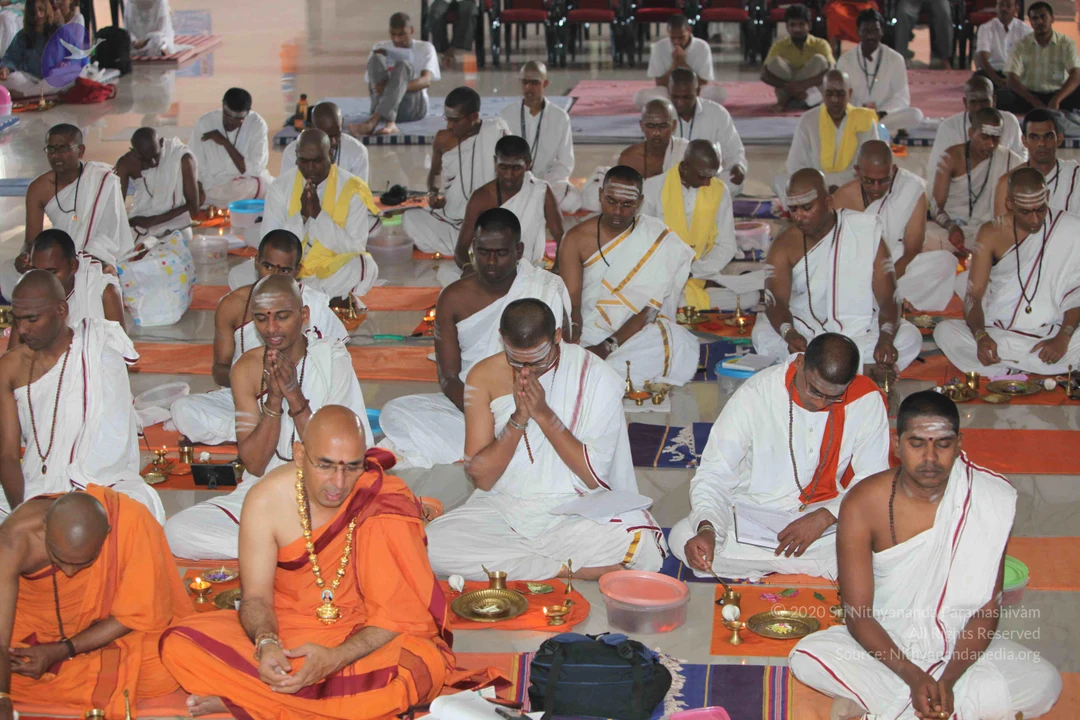
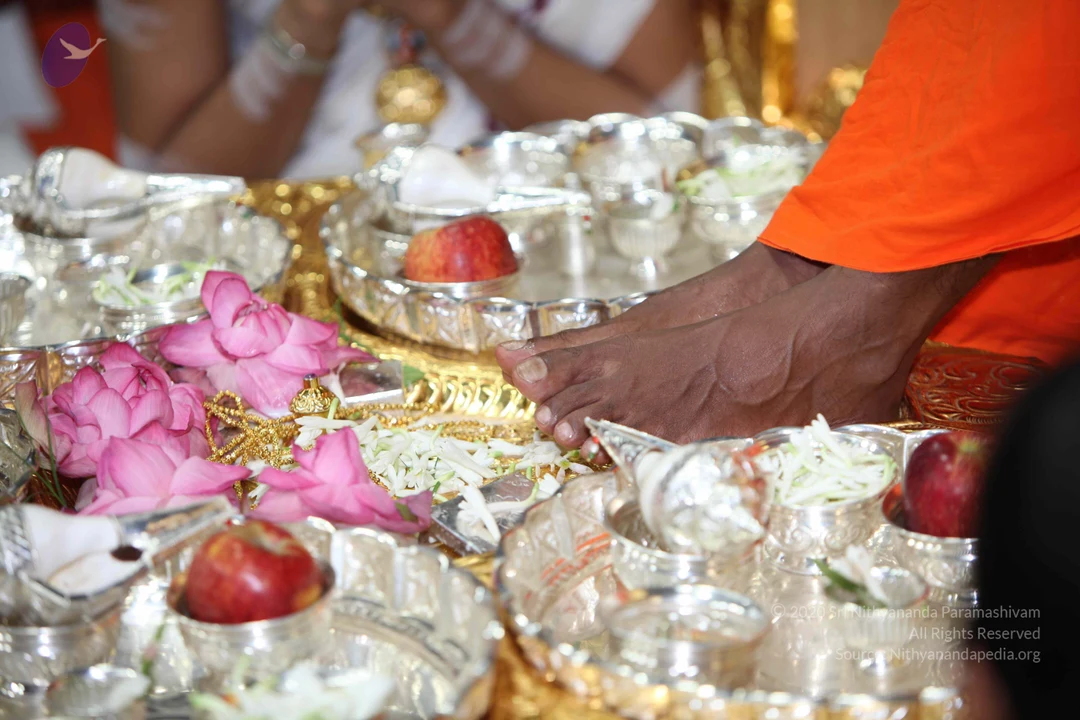
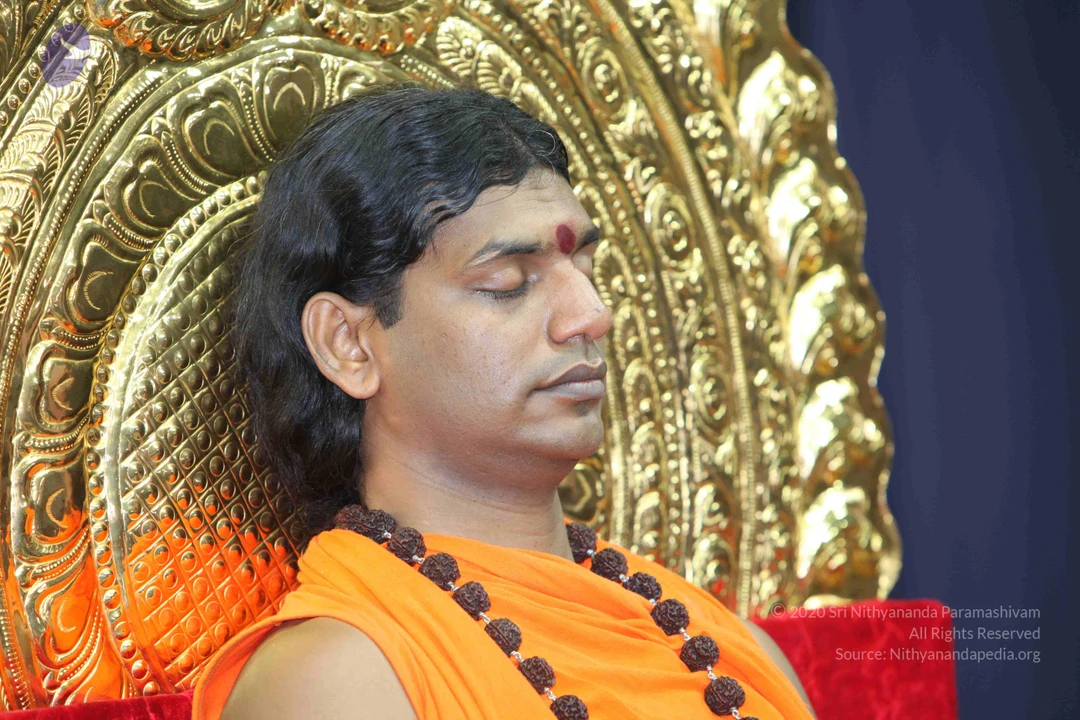
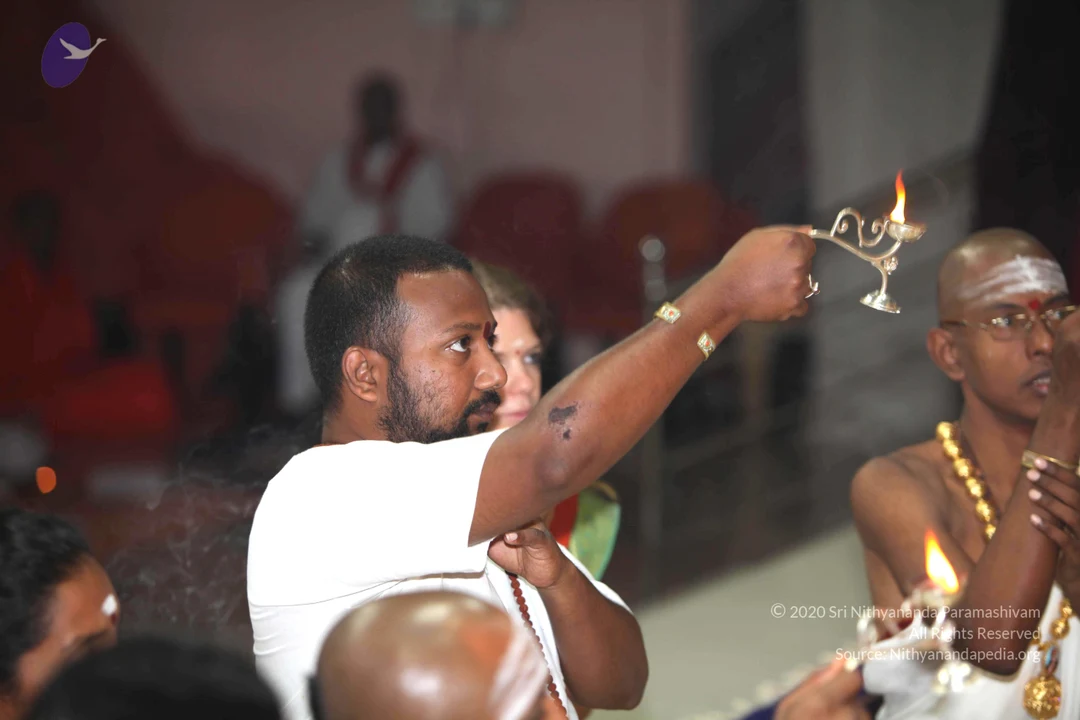
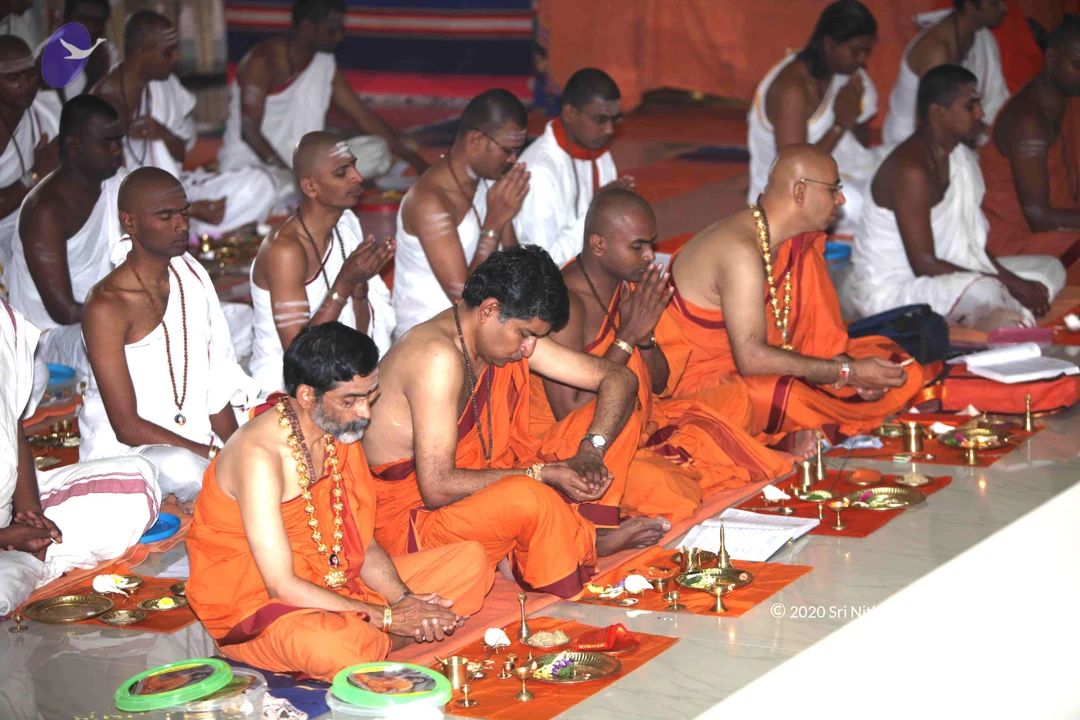
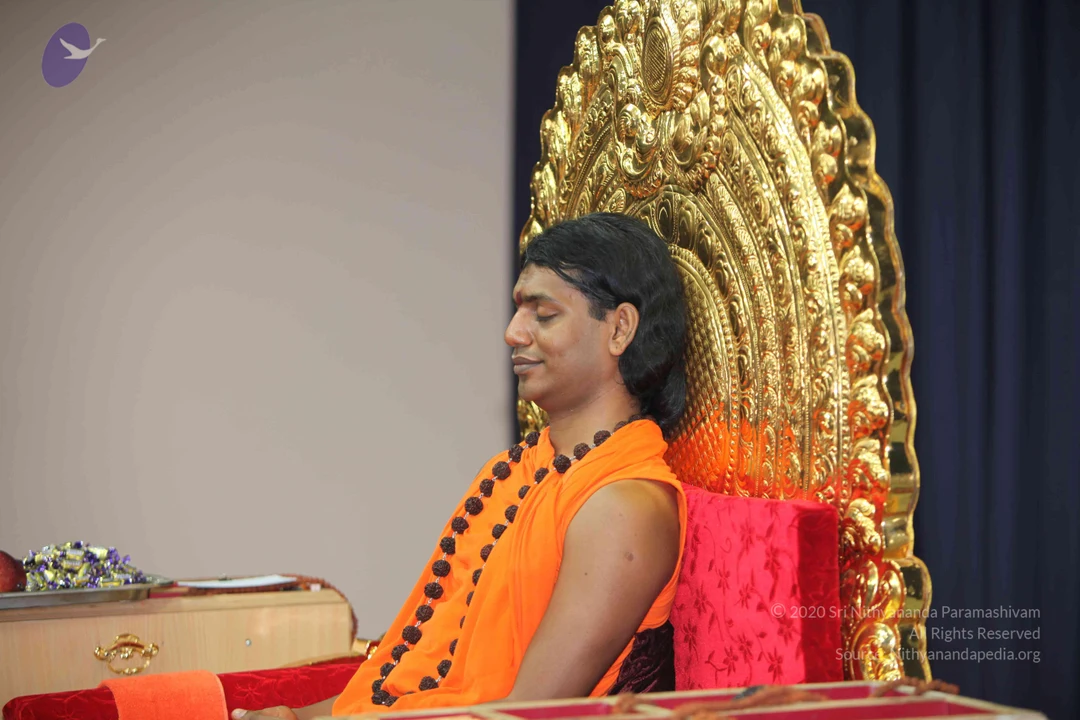
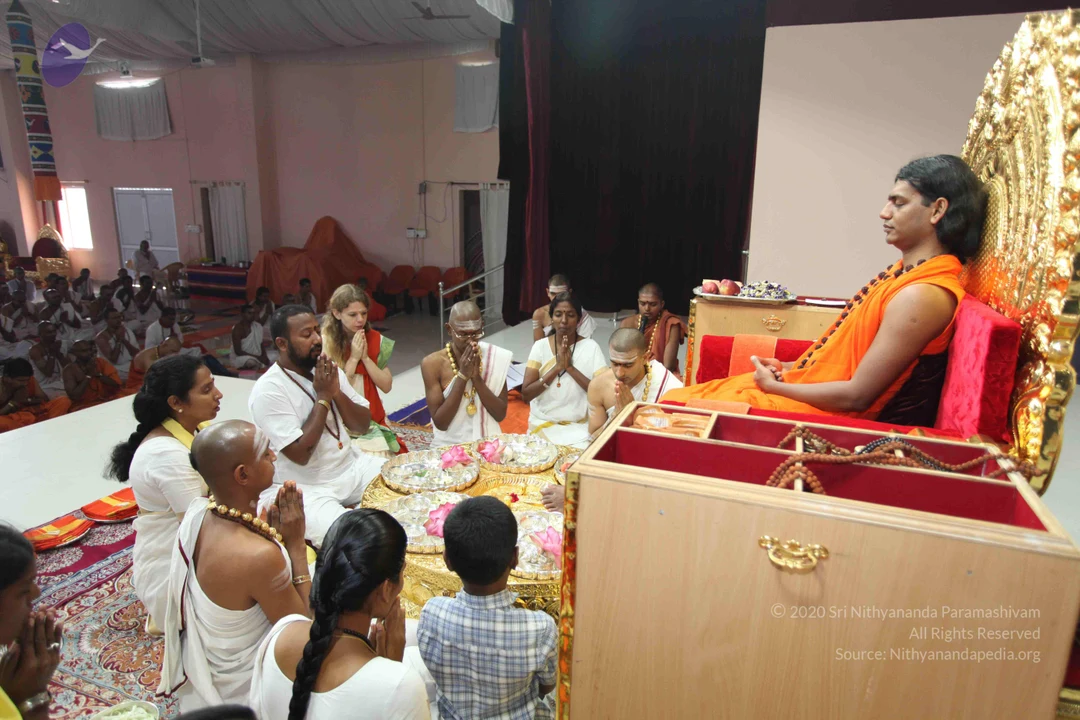
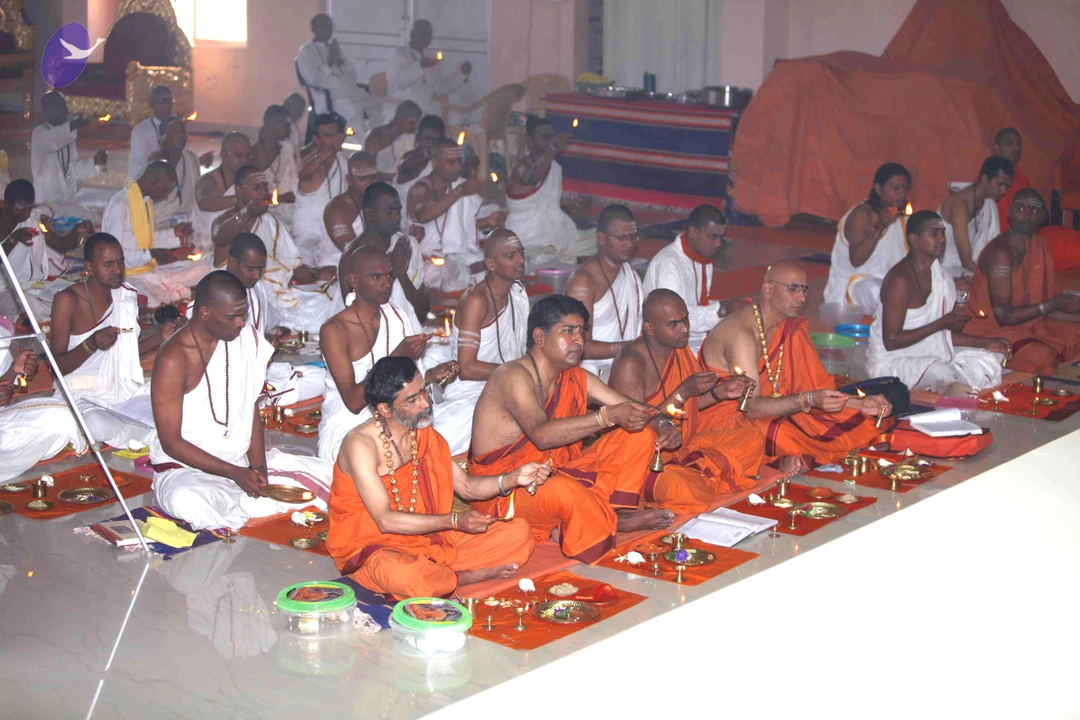
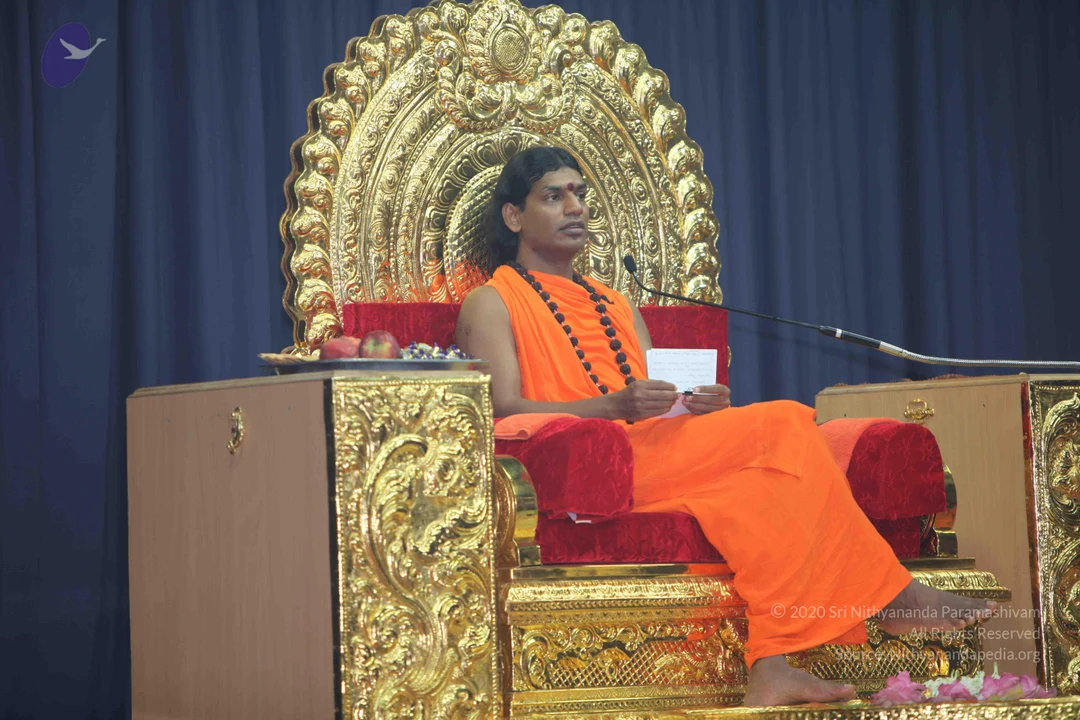
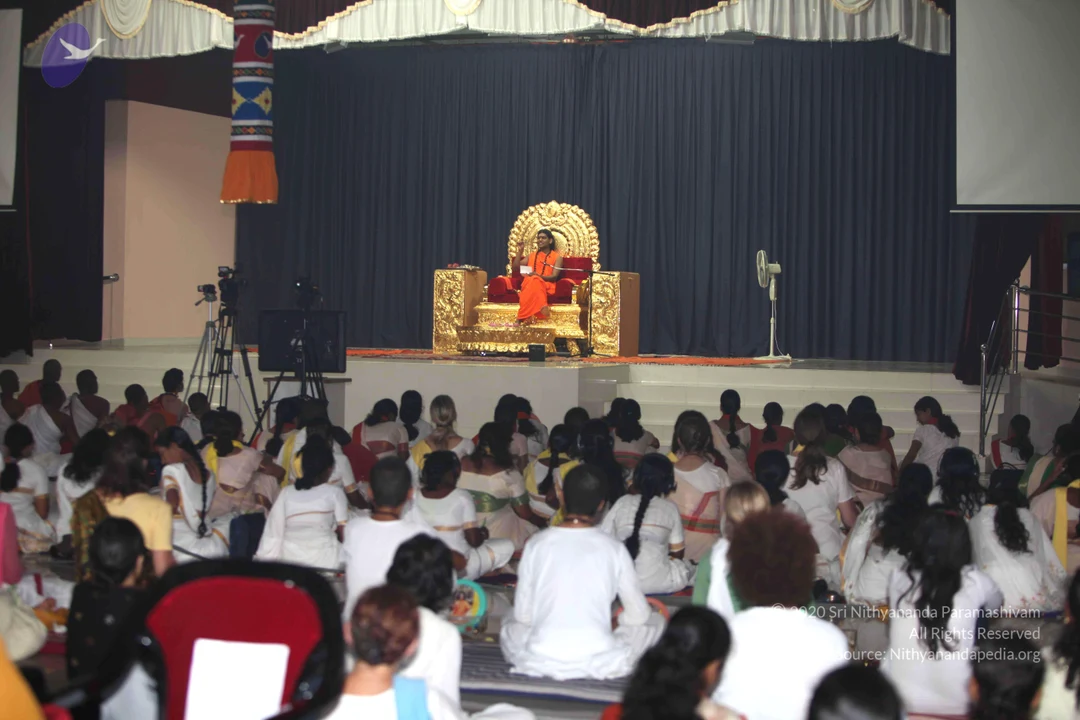
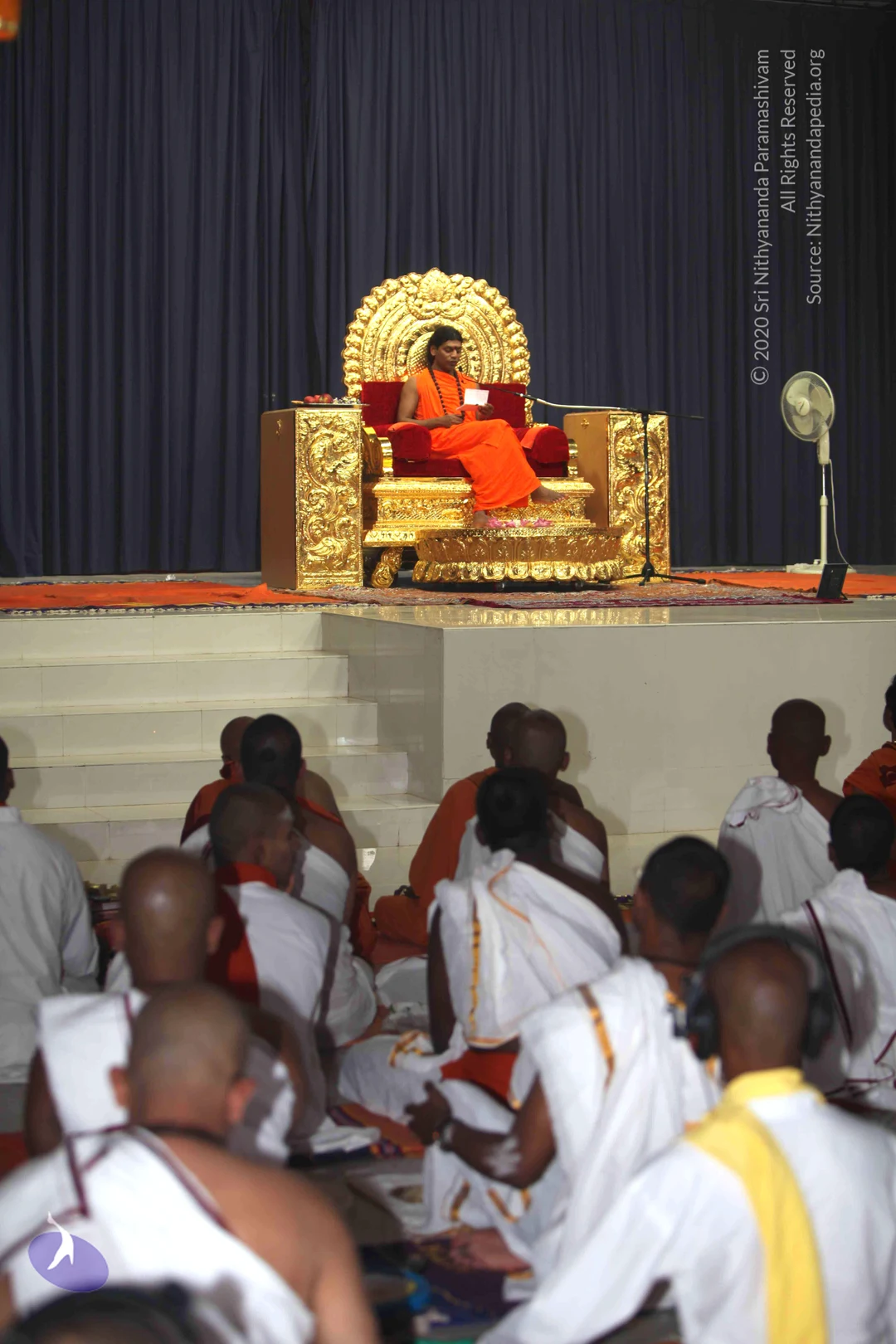
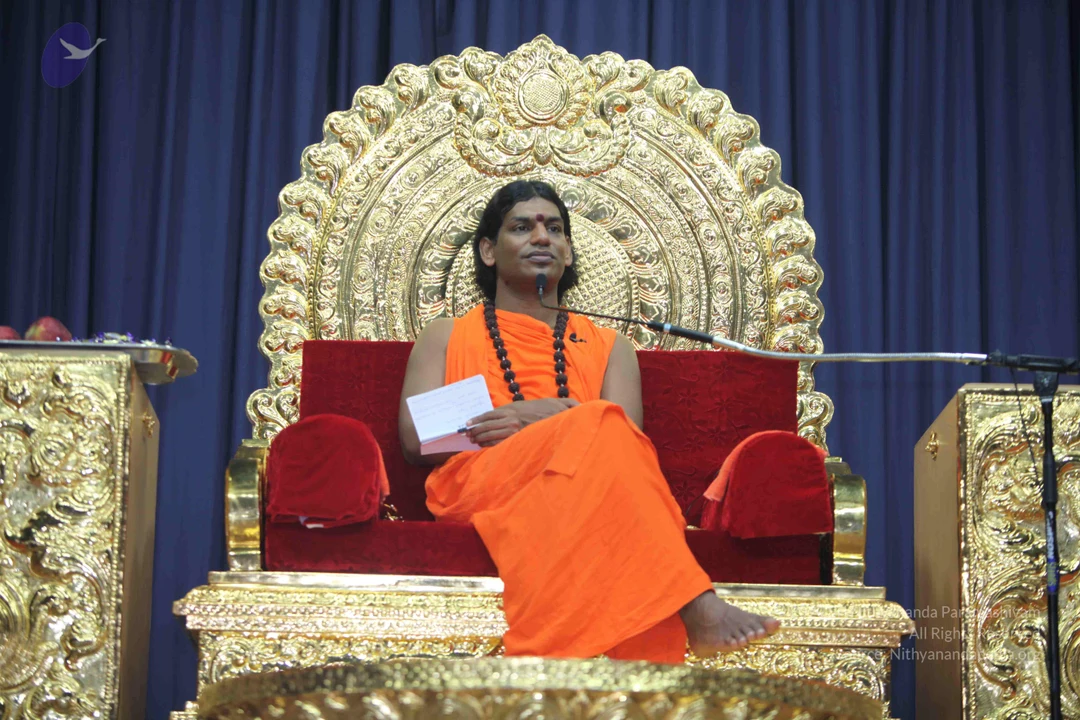
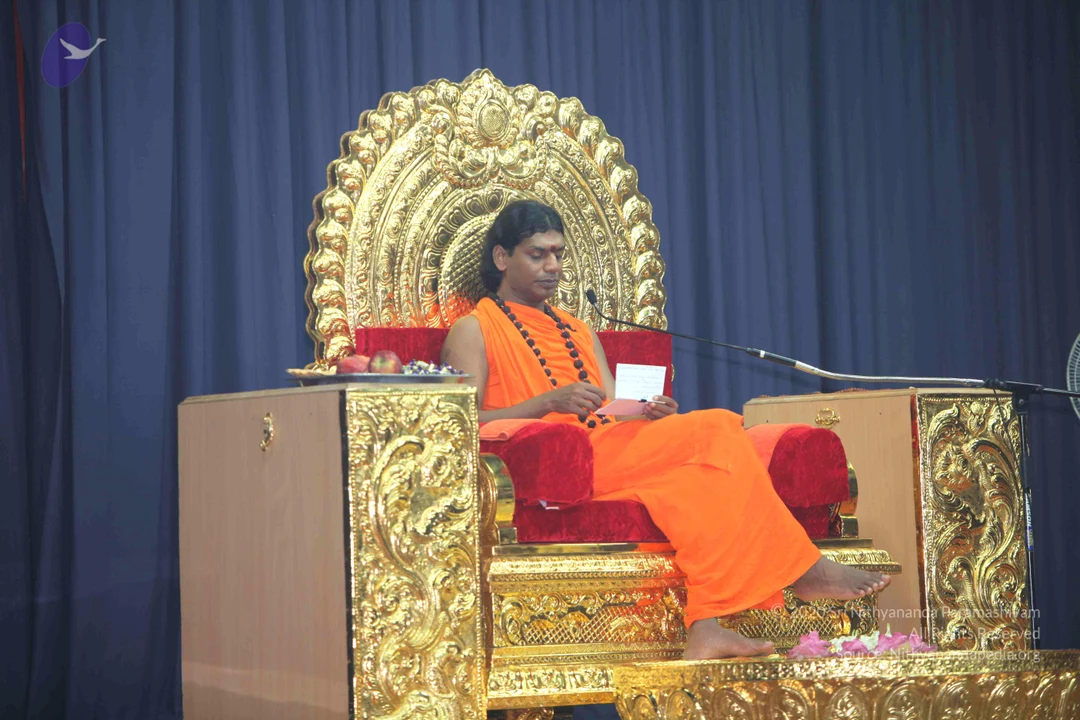
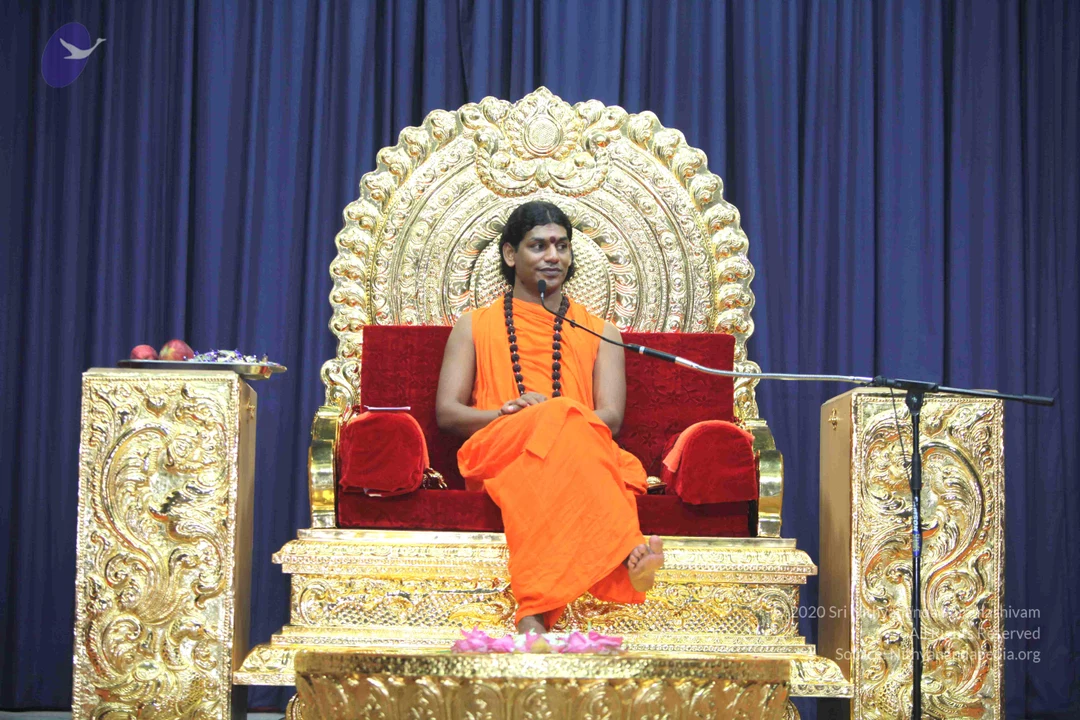
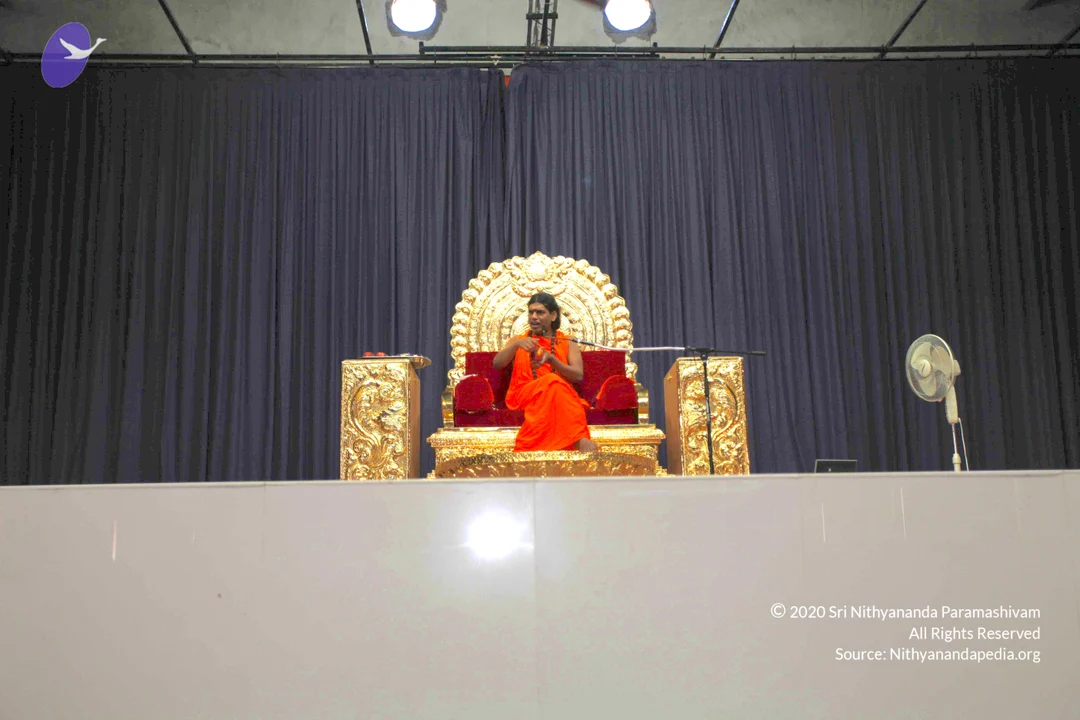
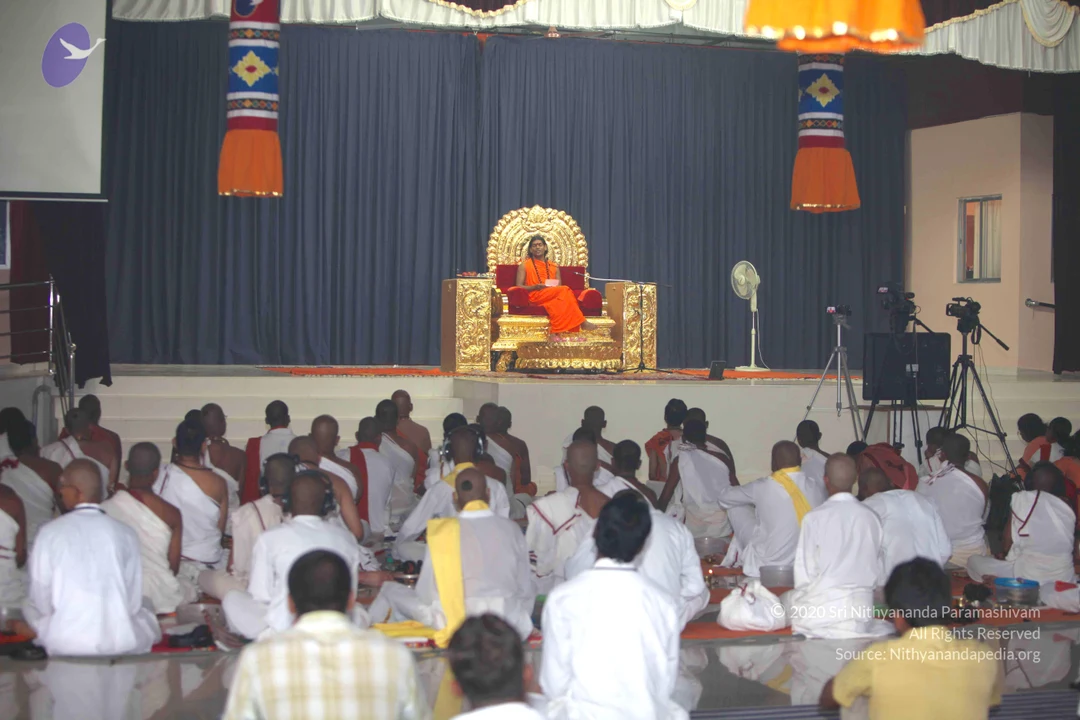
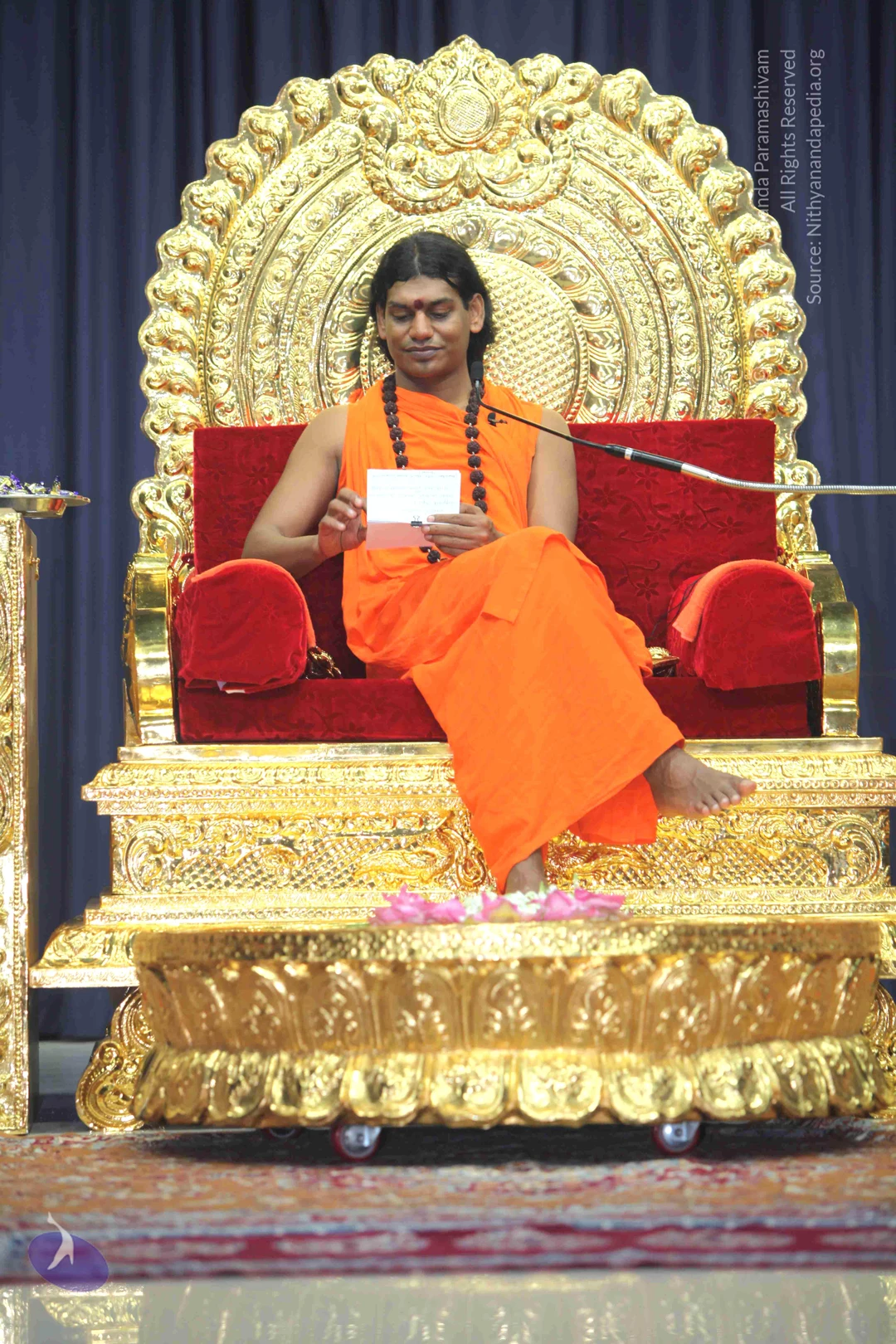
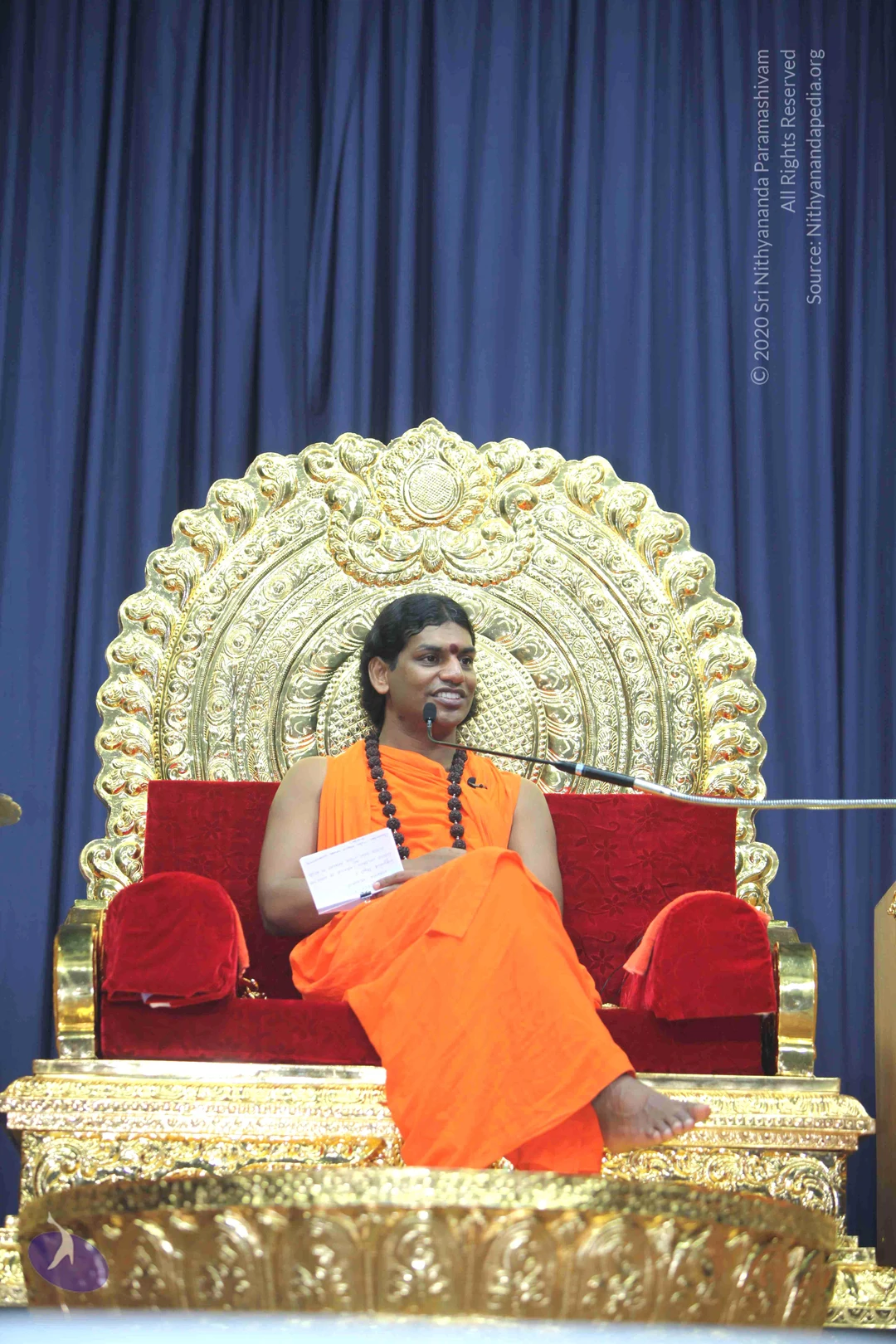
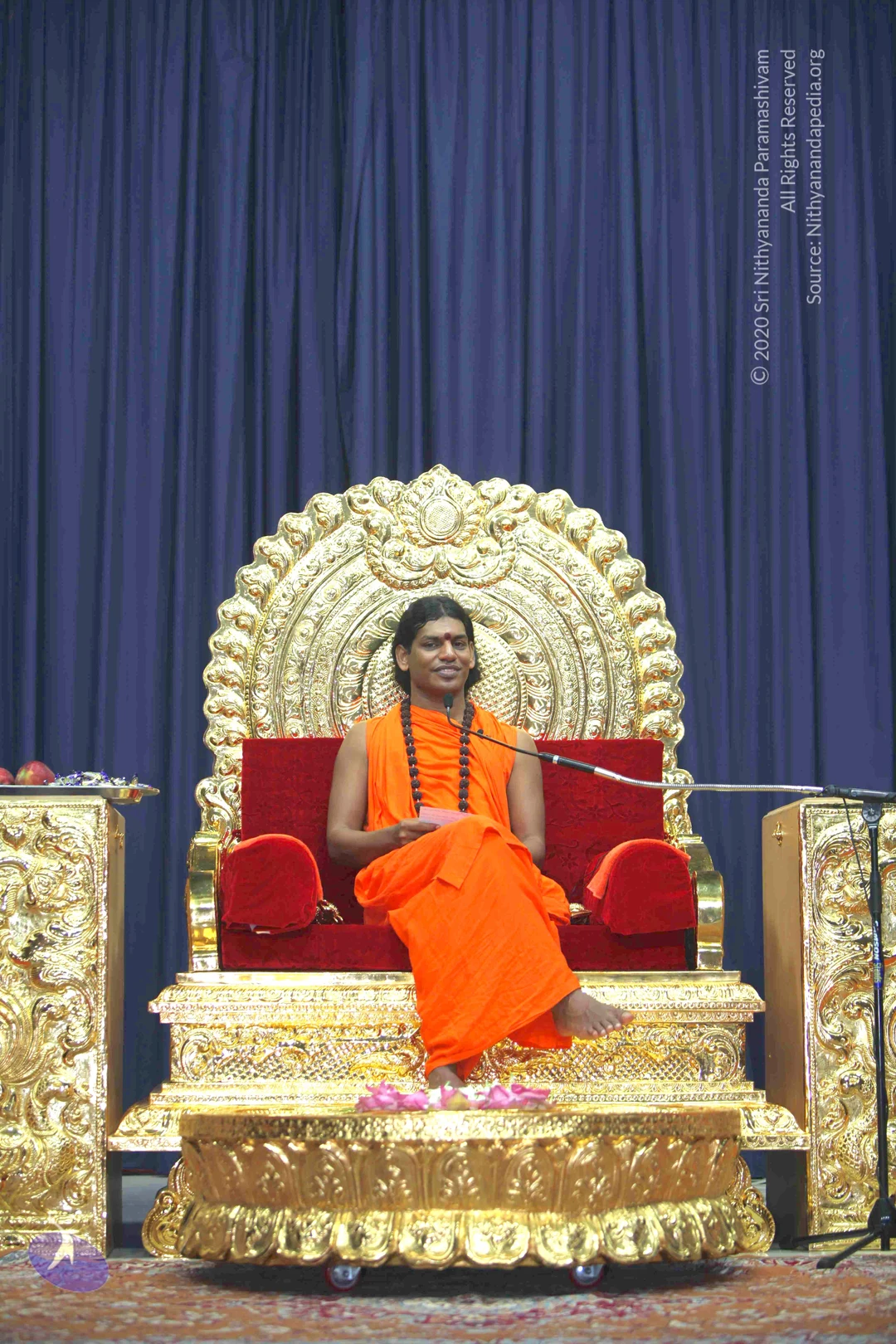
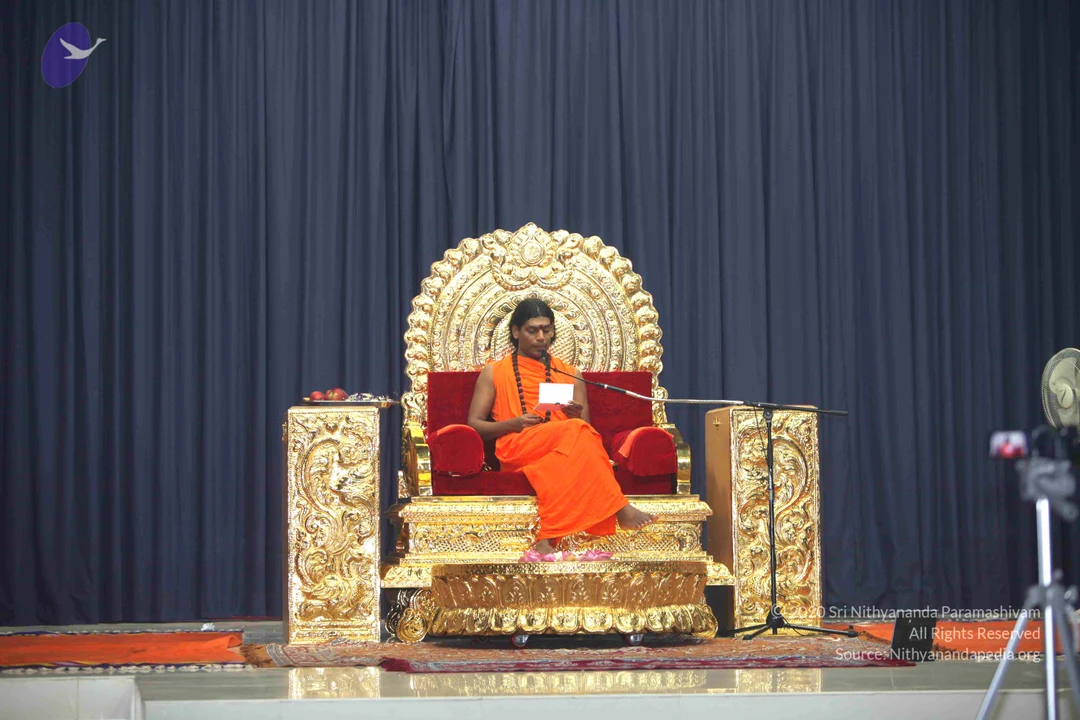
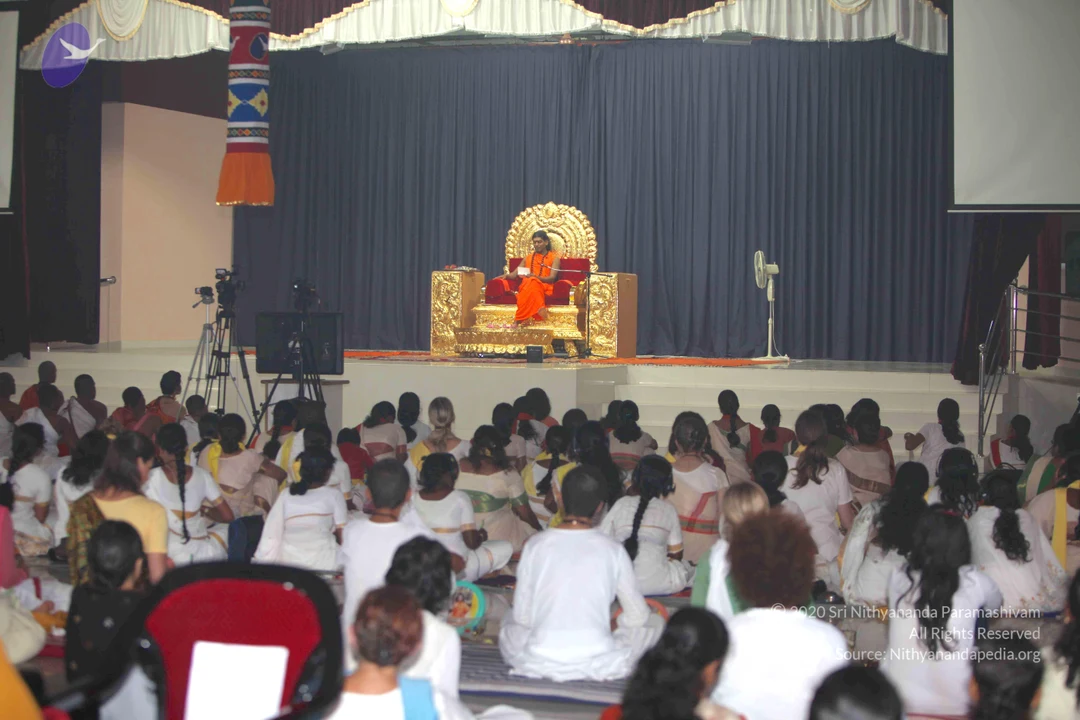
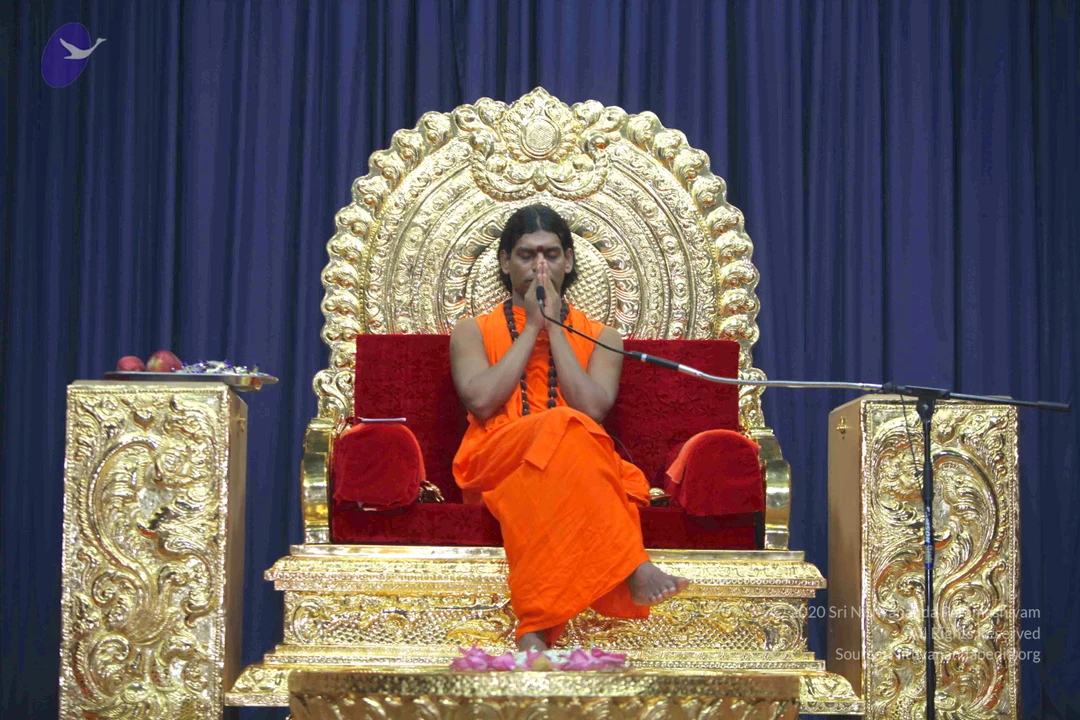
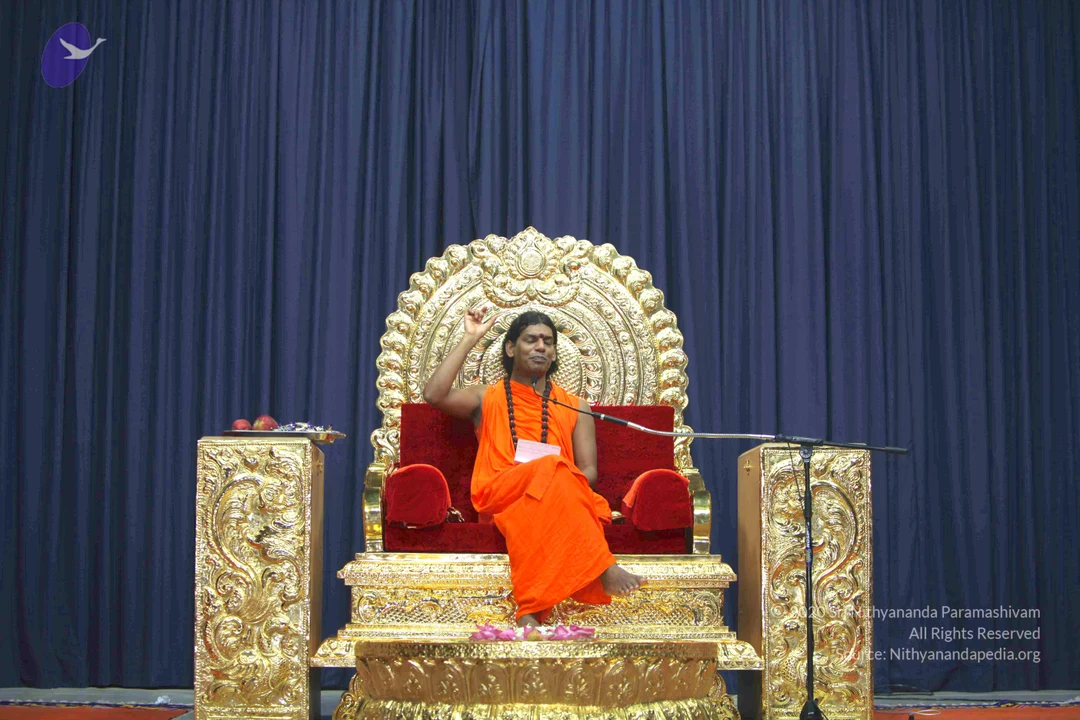
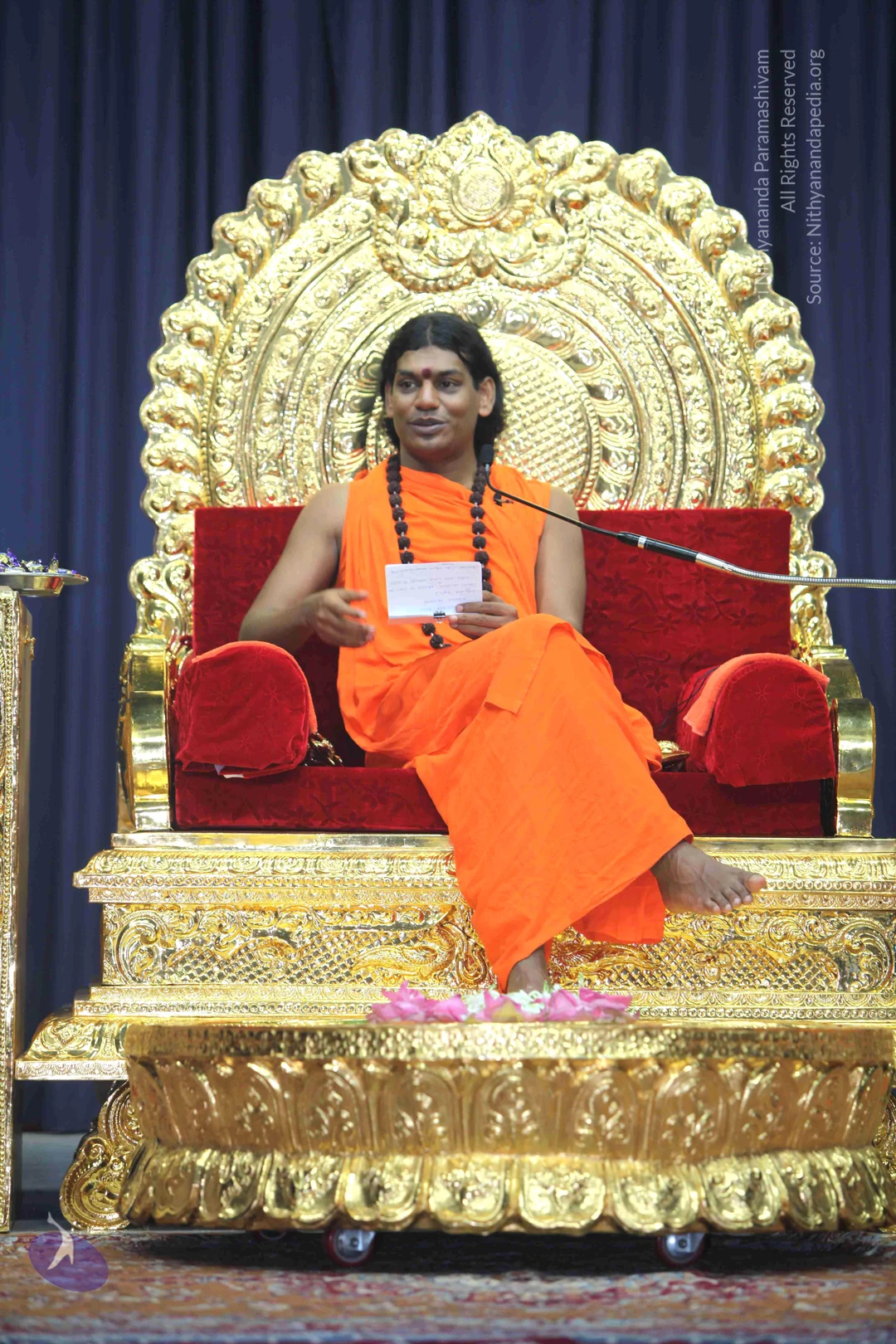
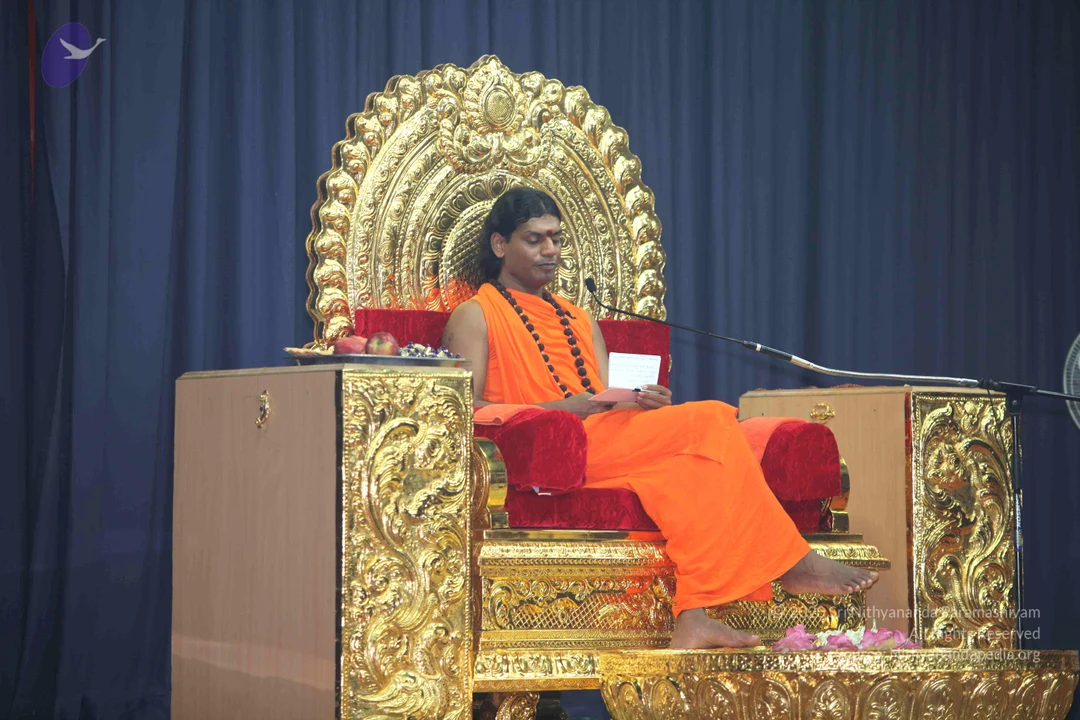
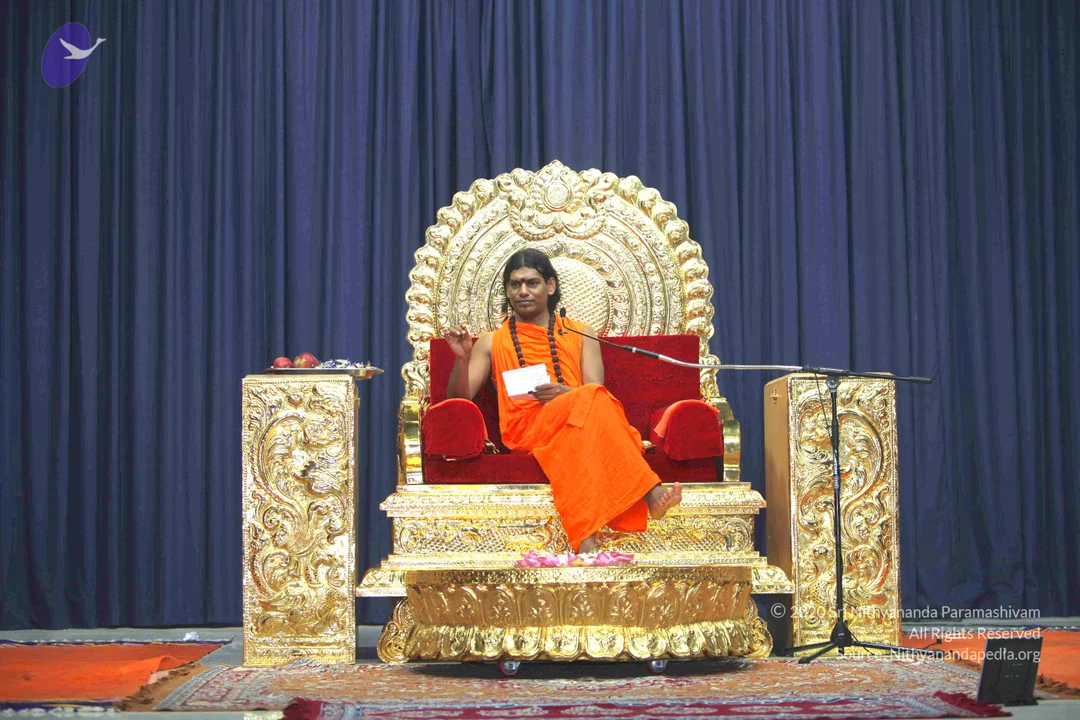
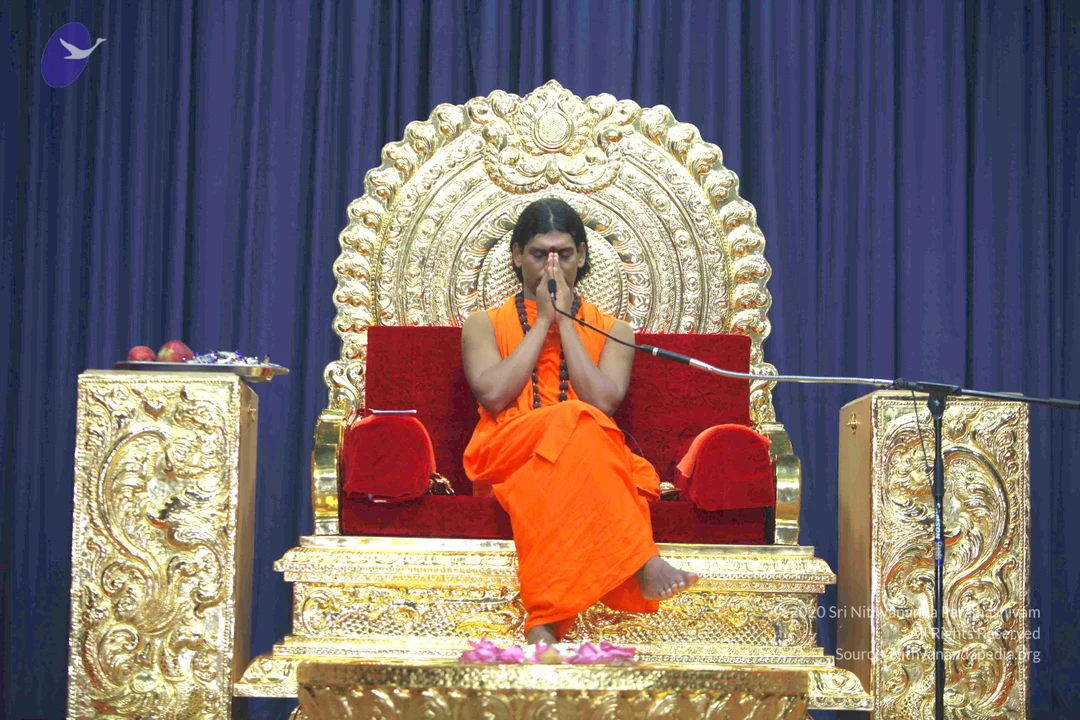
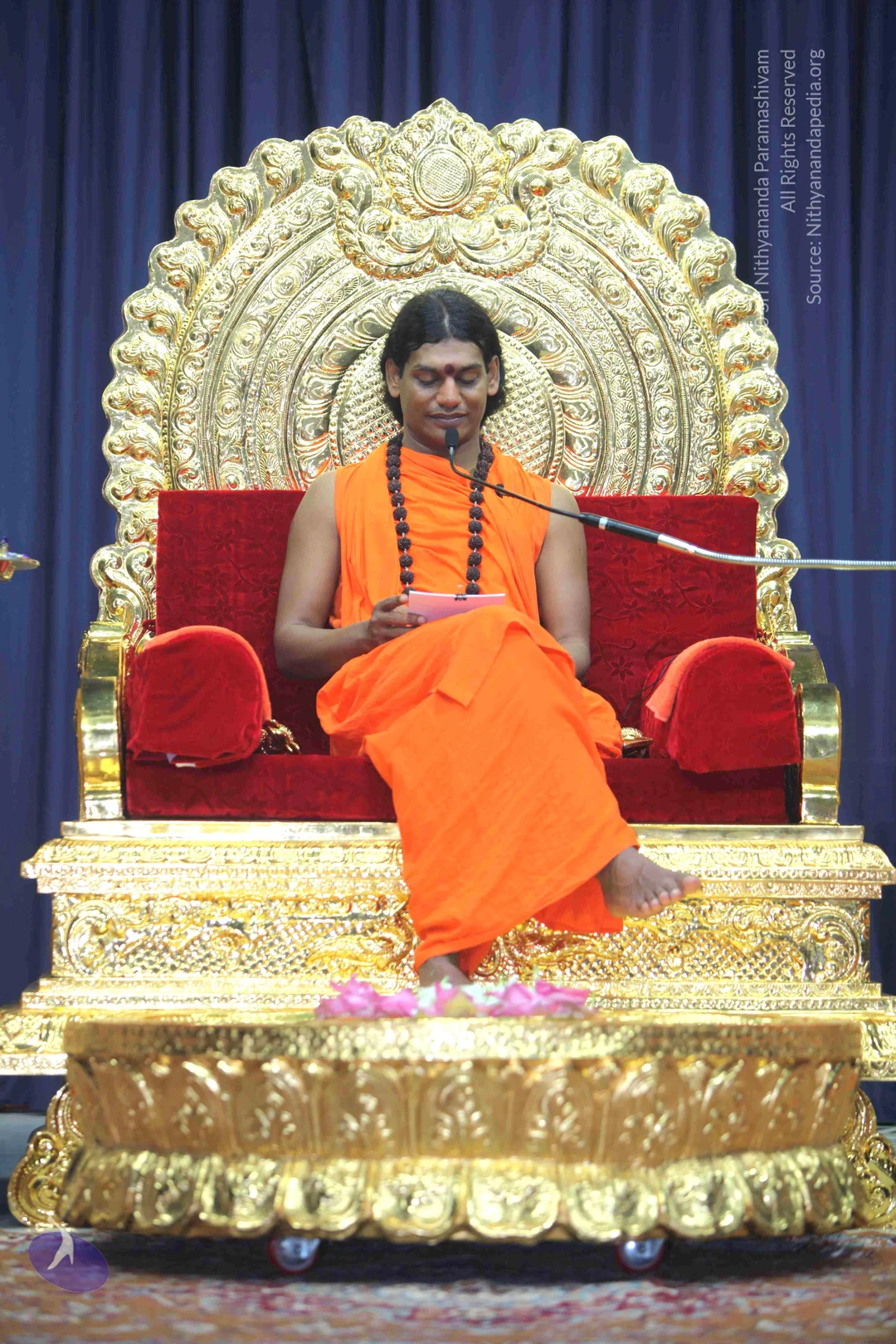
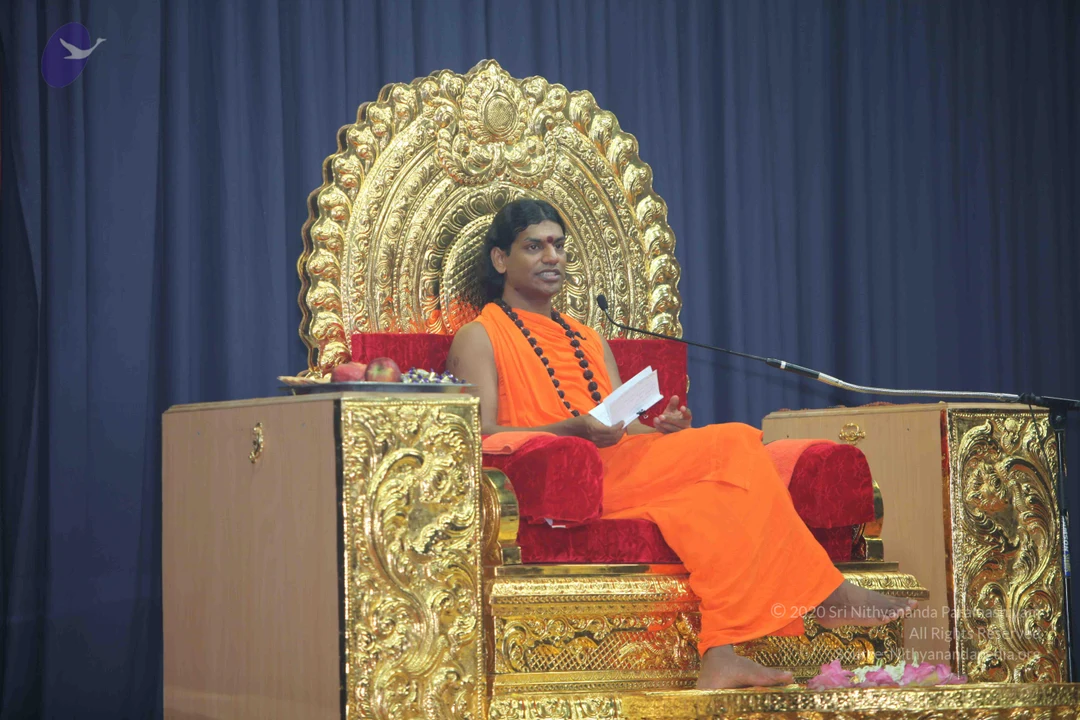
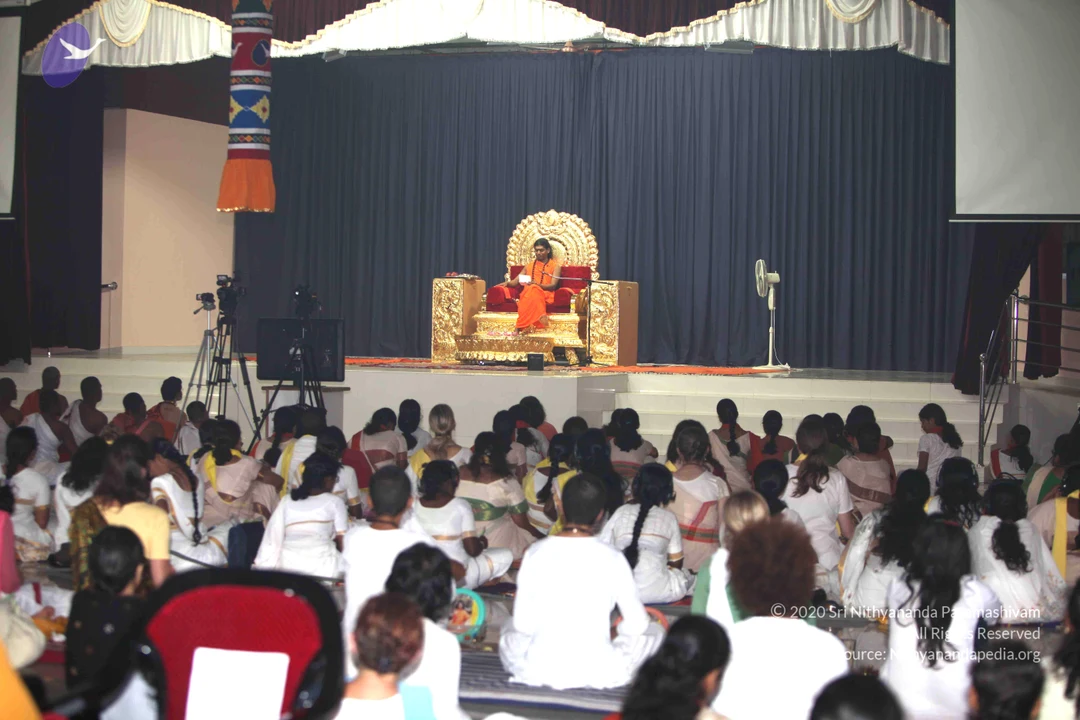
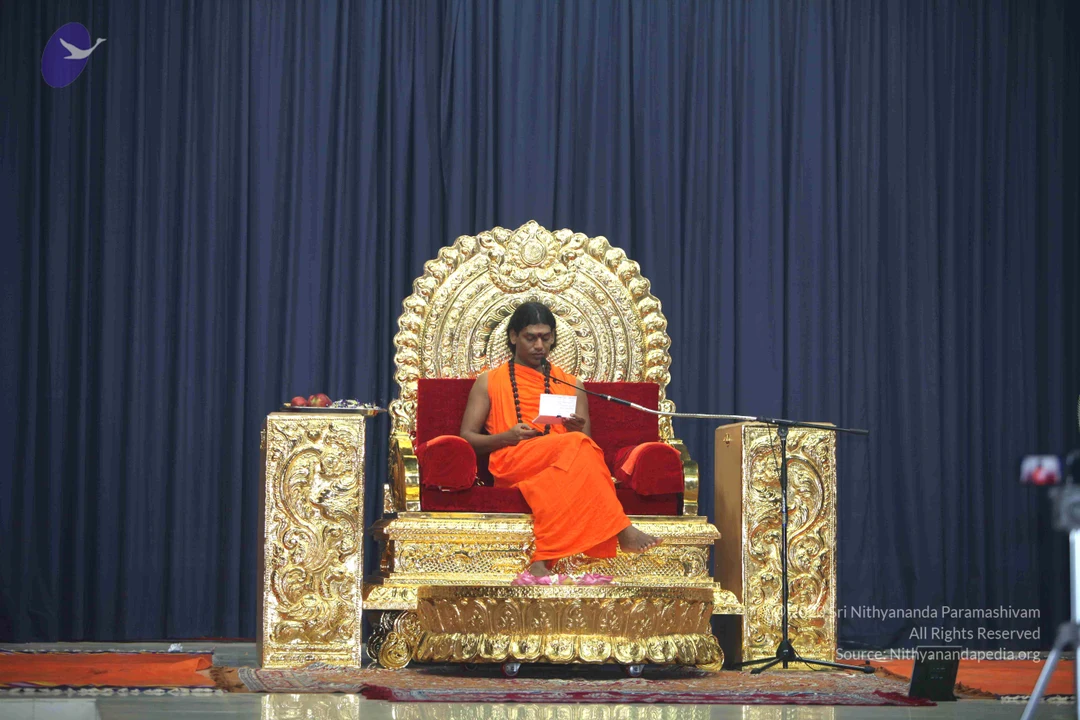
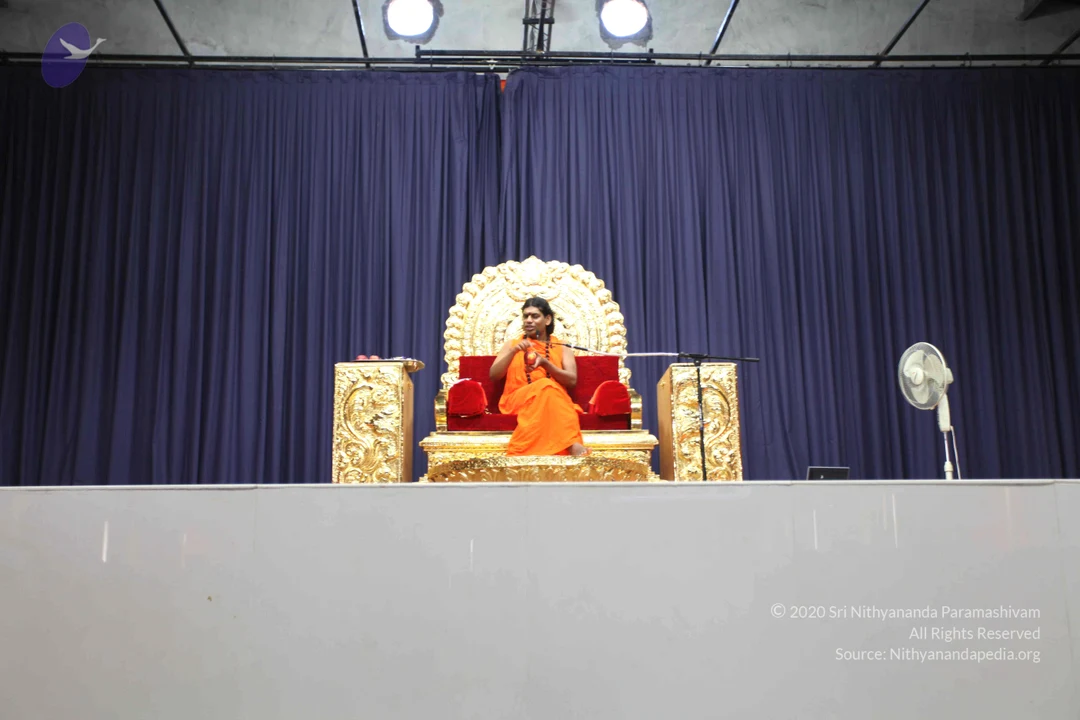
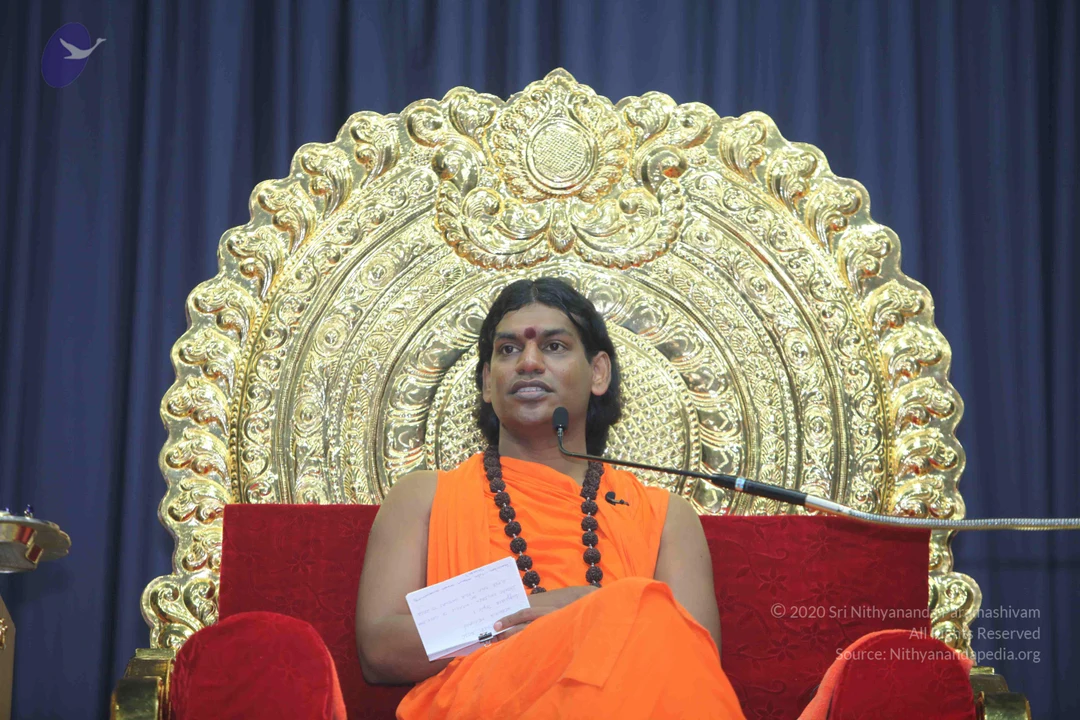
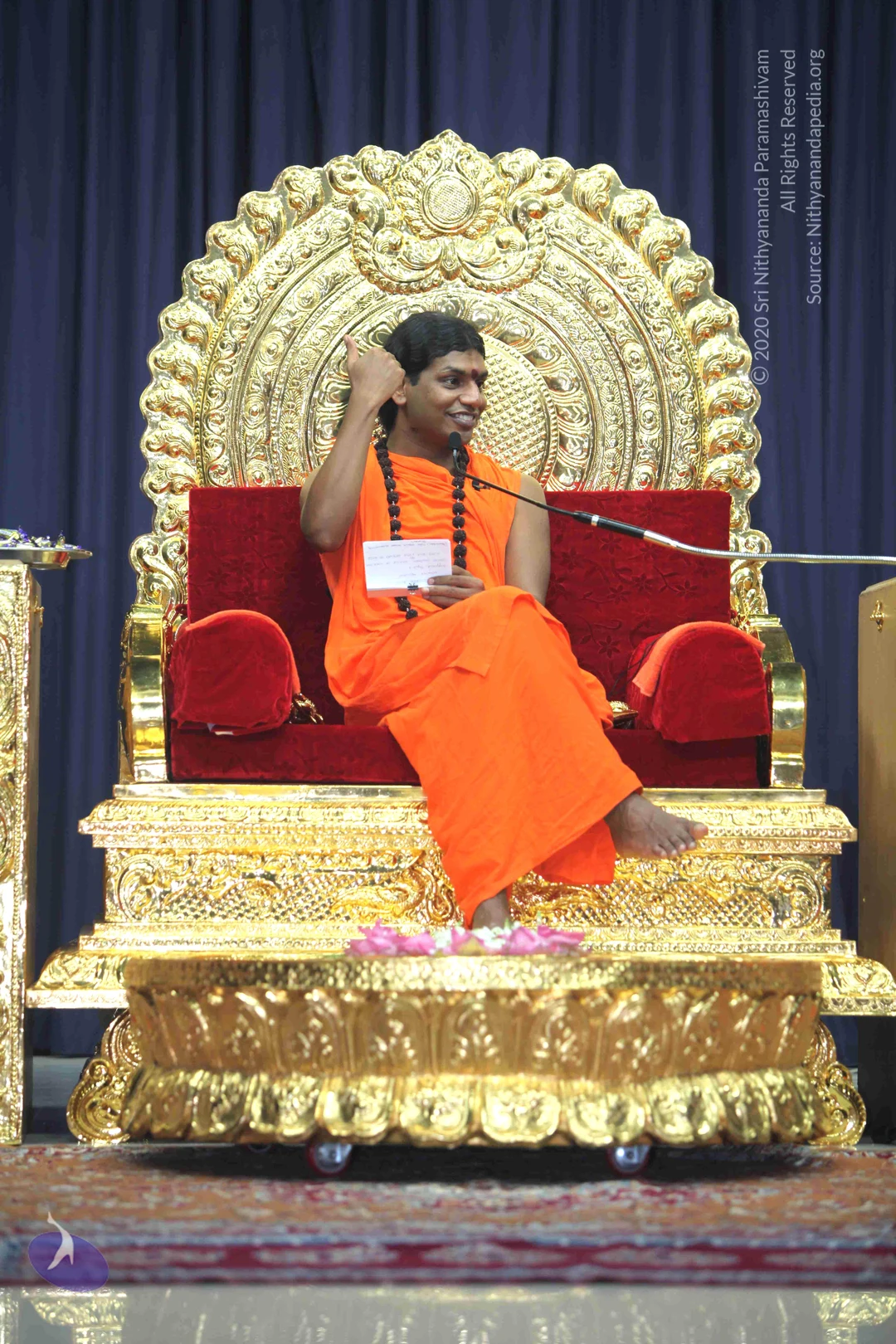
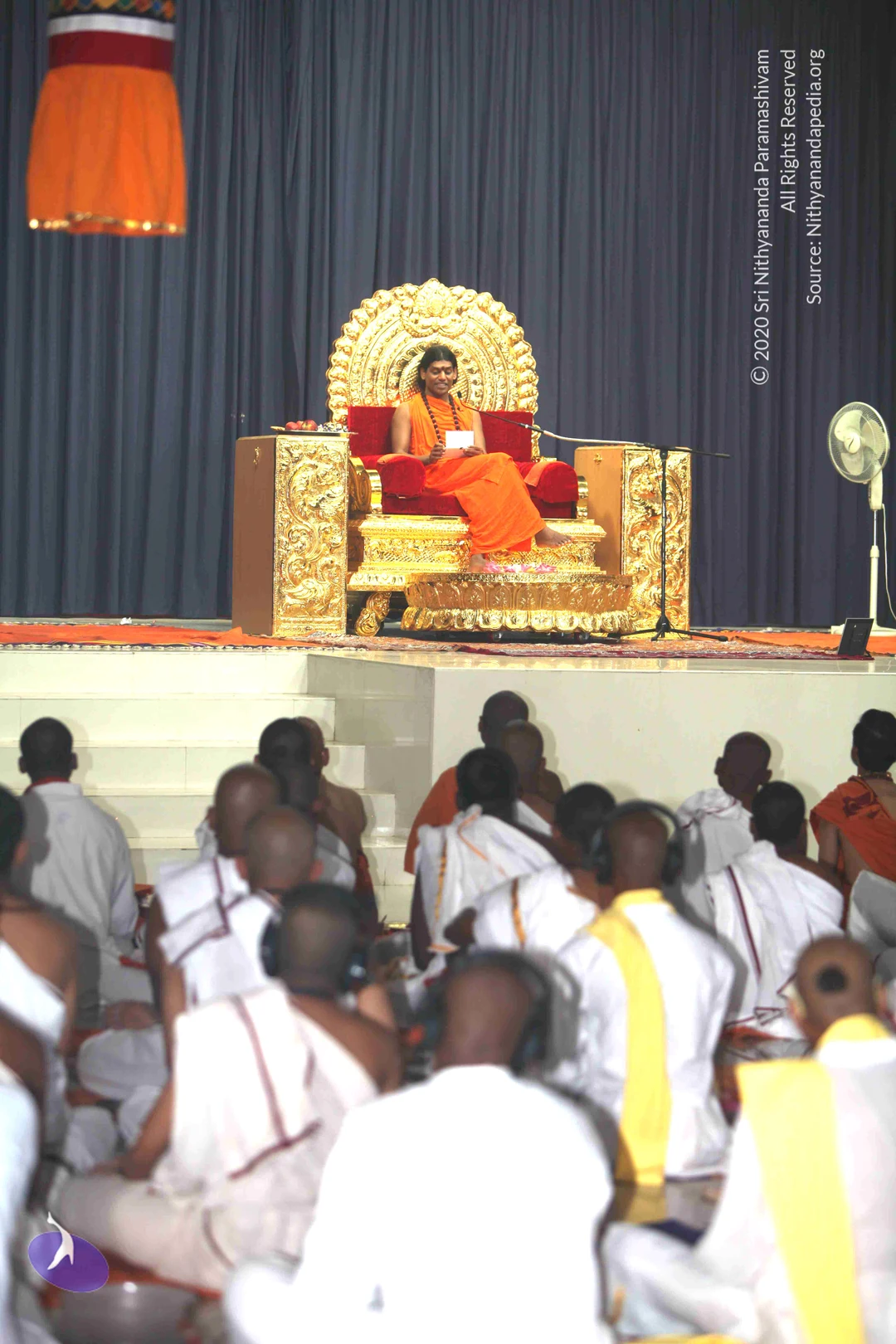
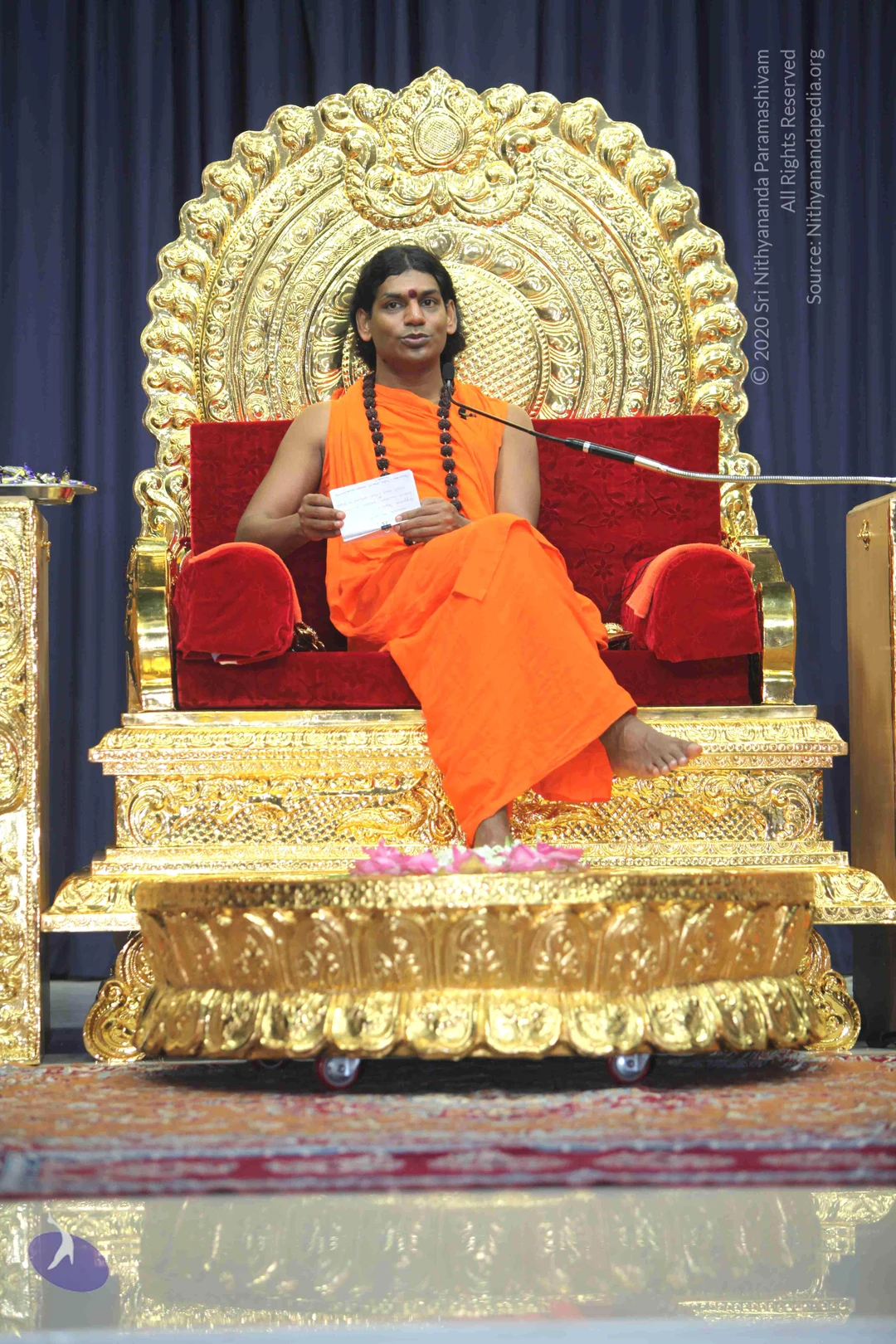
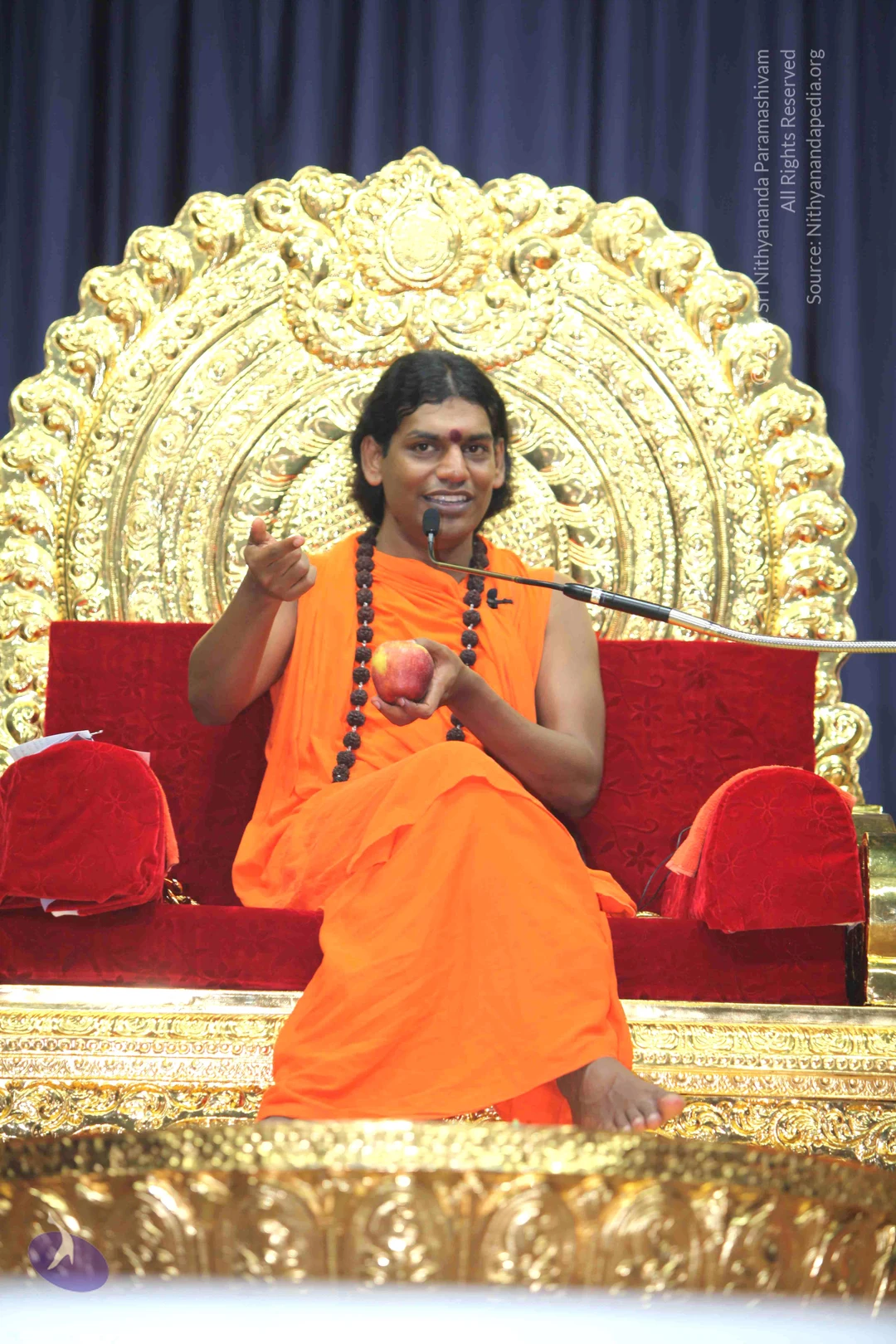
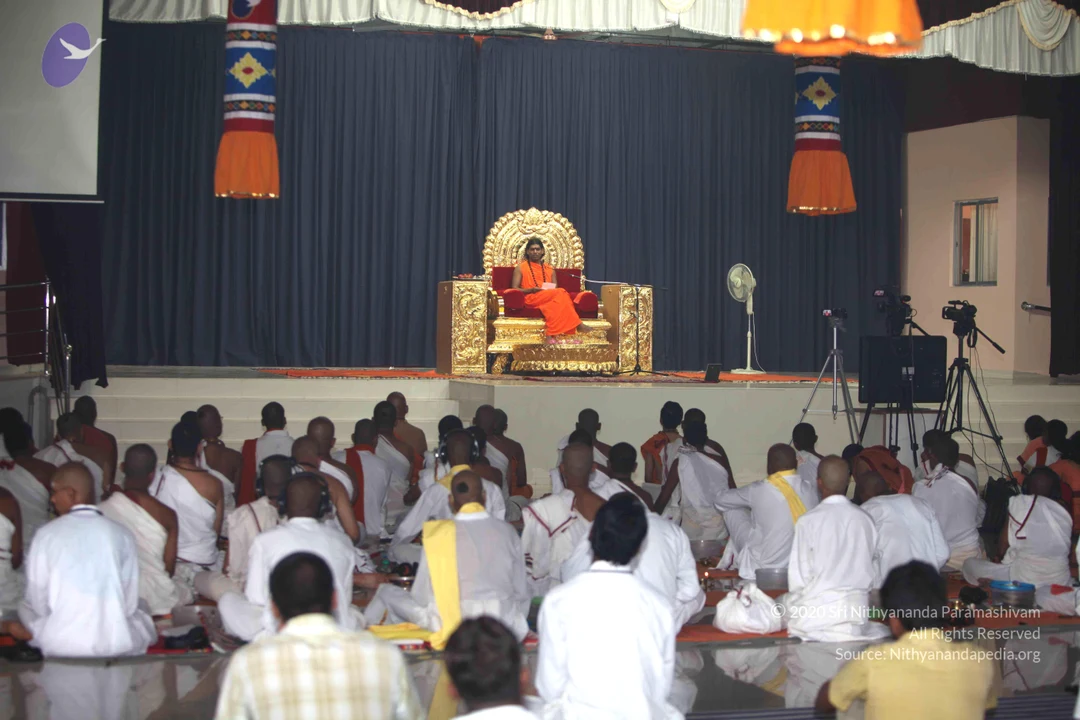
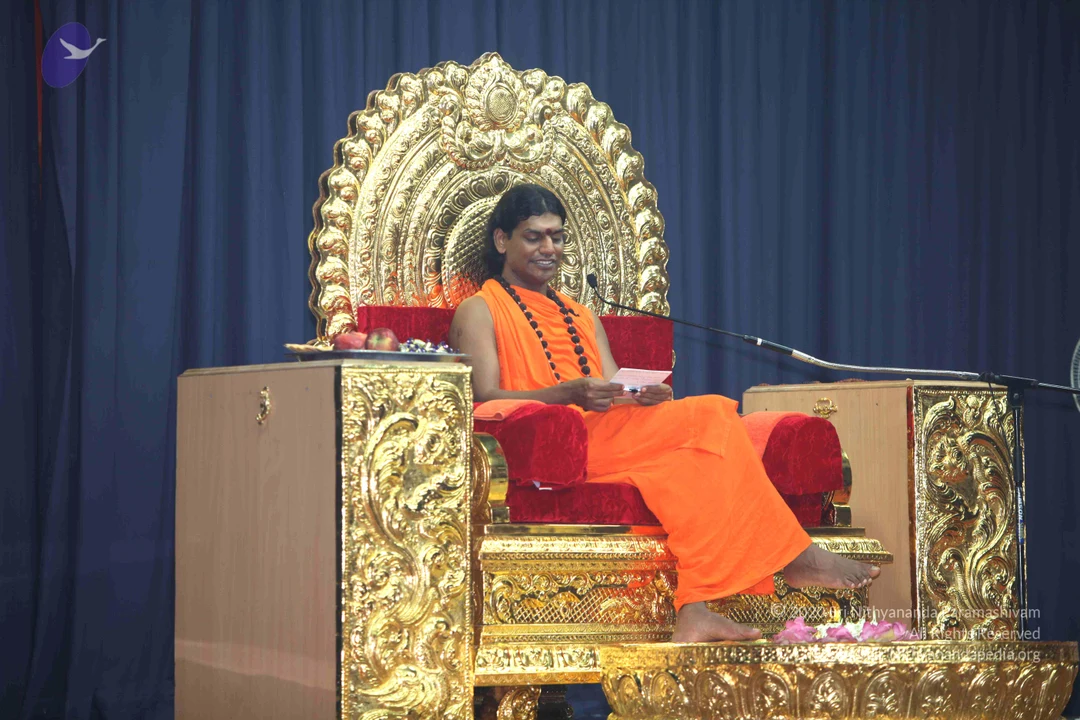
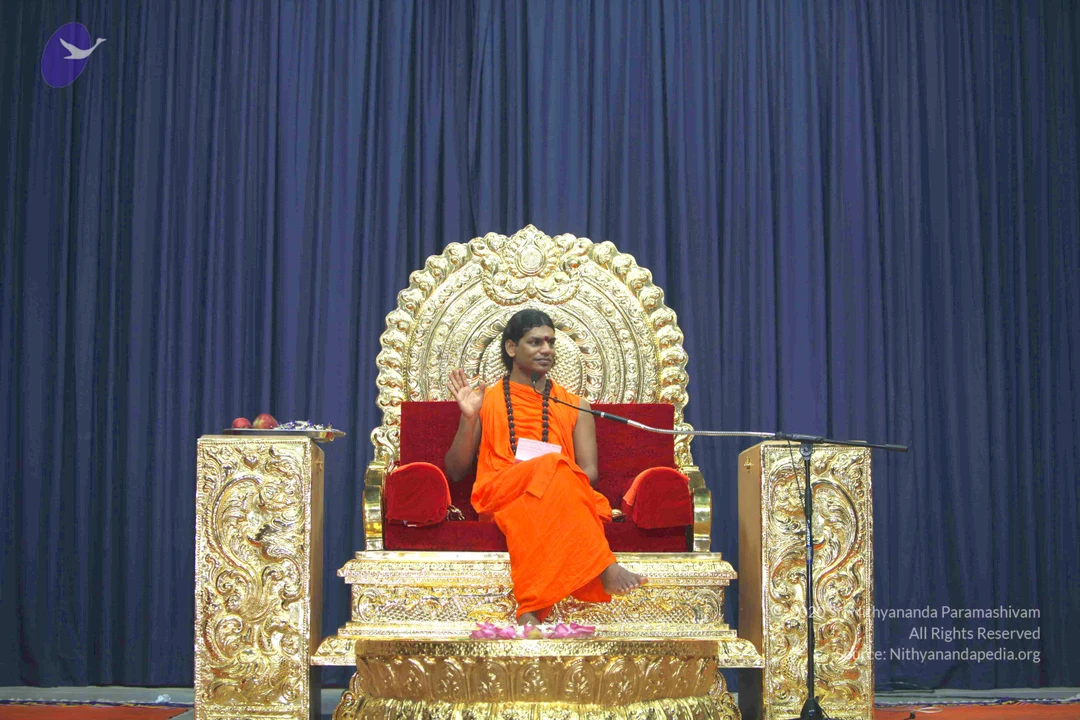
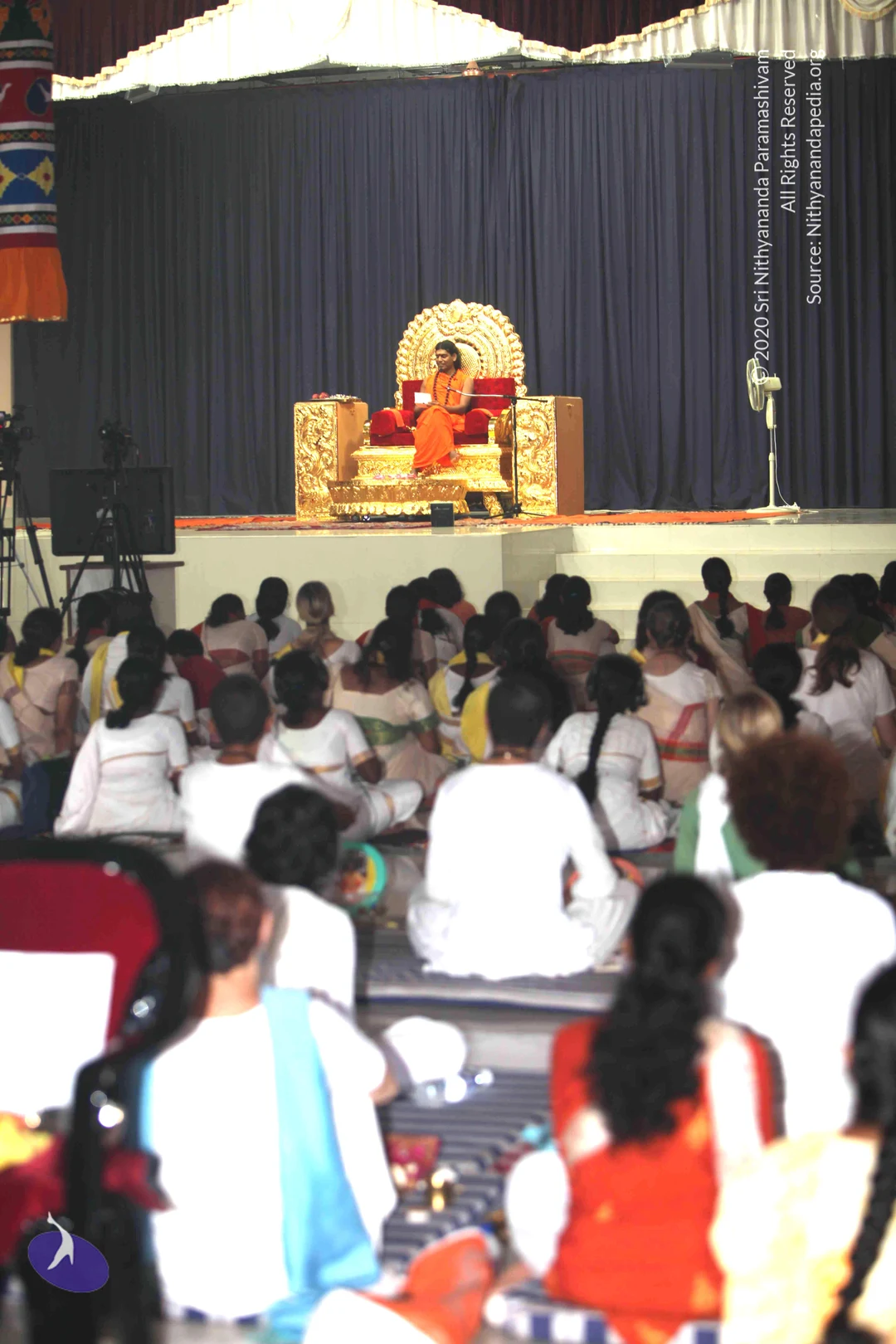
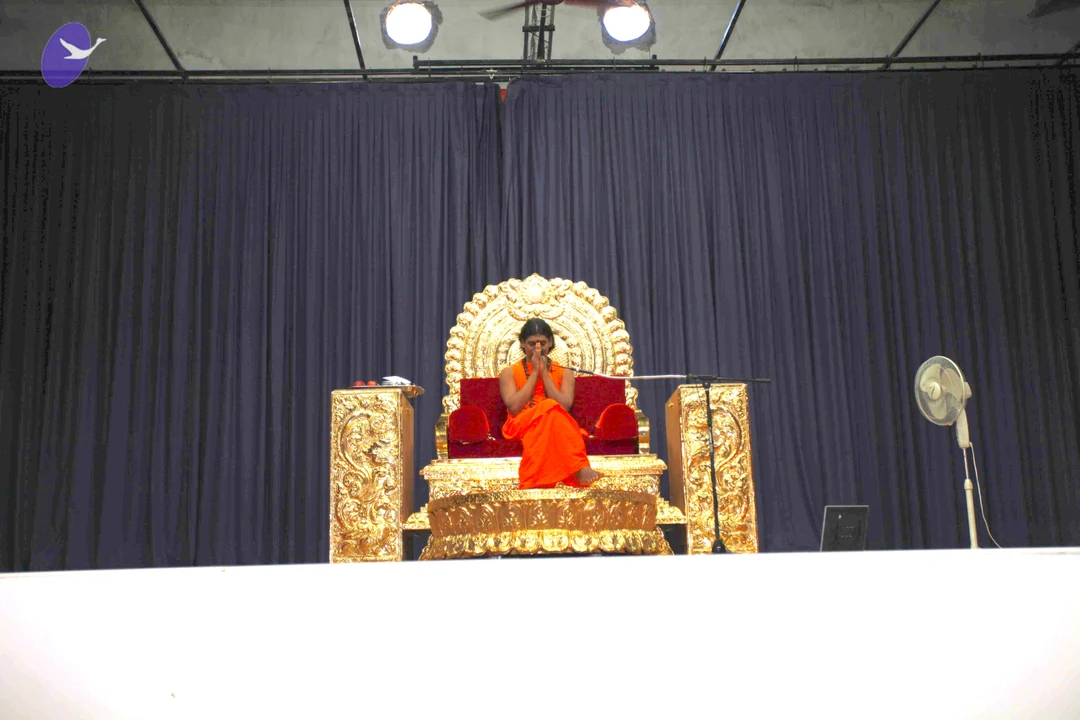
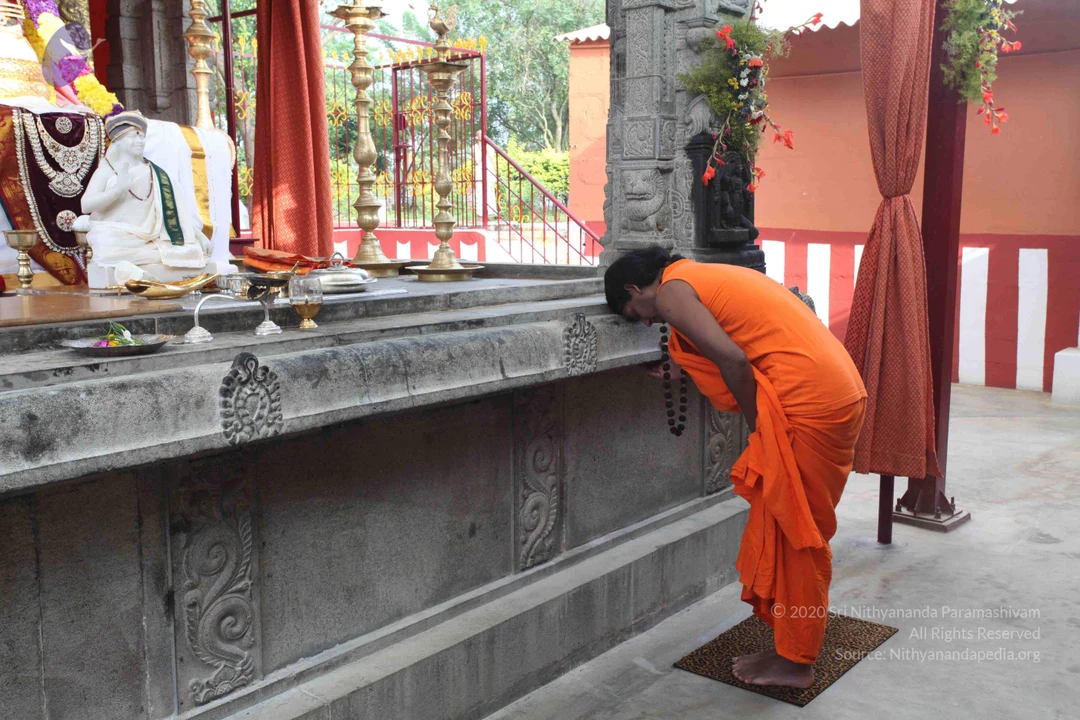
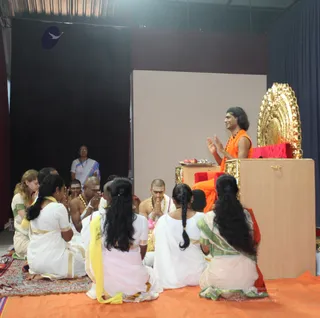
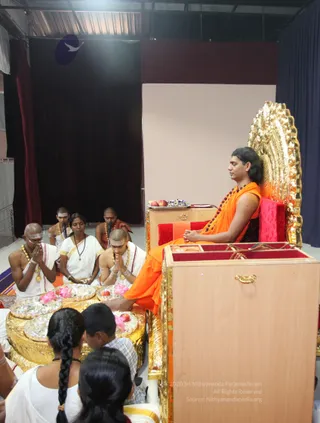
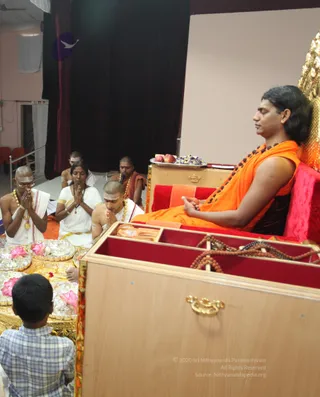
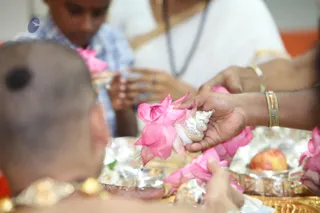
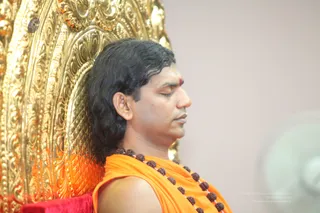
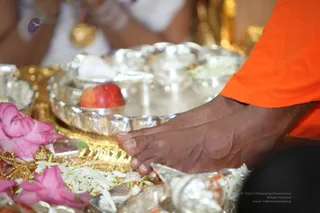
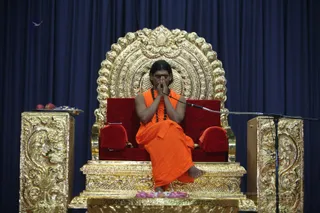
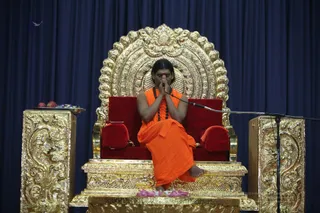
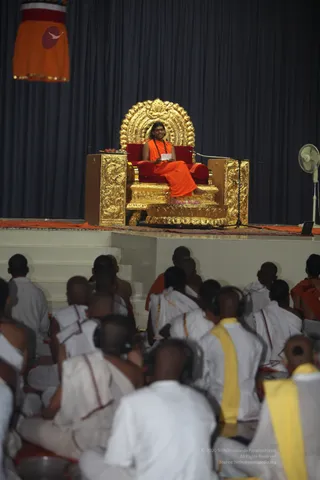
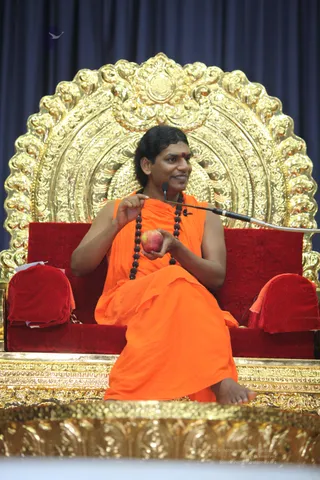
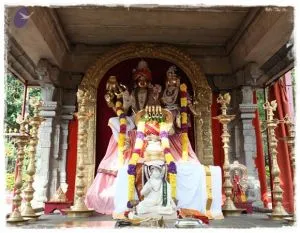
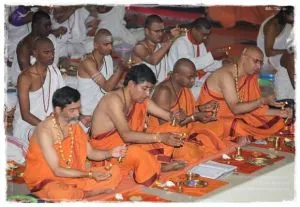
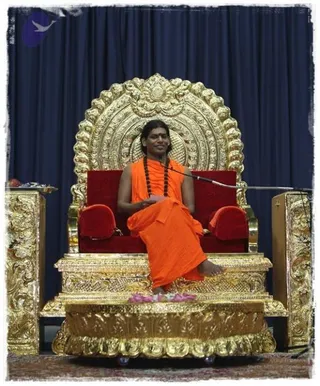
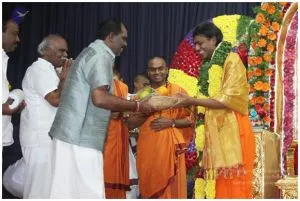
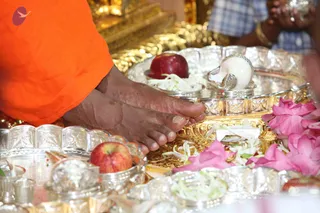
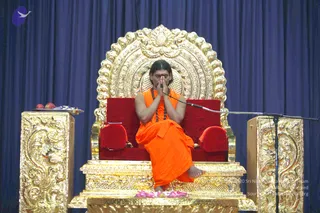
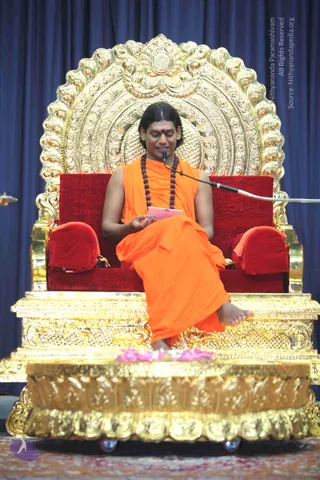
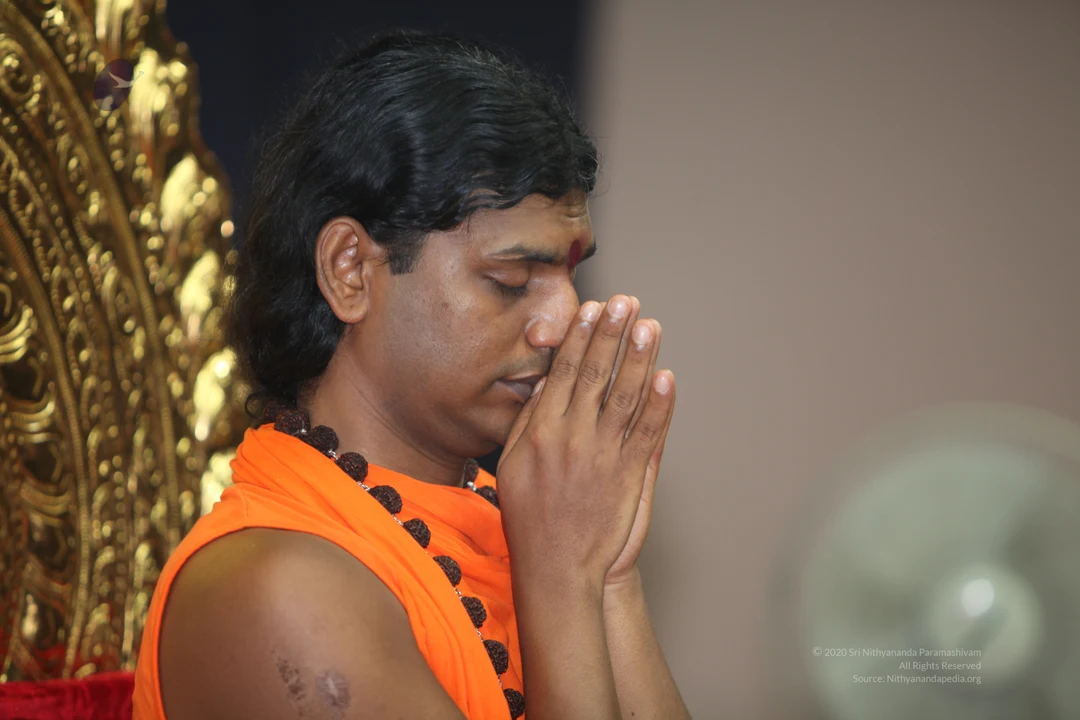
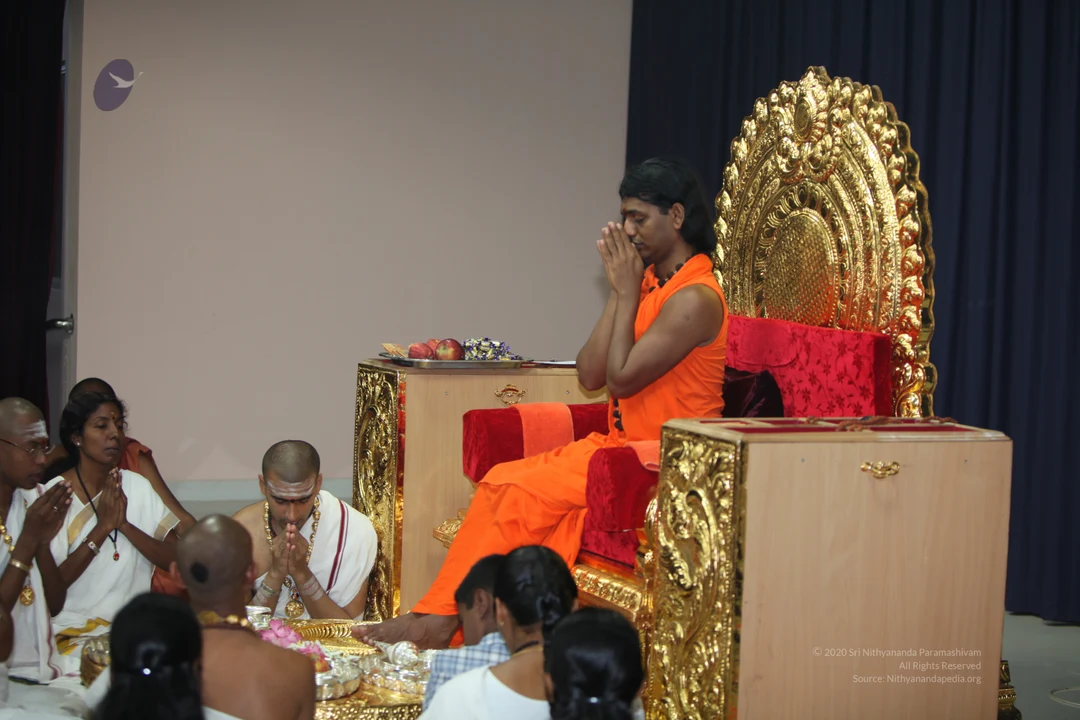
A seated figure in an orange-saffron robe with rudraksha mala and long swept-back dark hair sits on an ornate golden throne with red cushions, hands in lap, facing a group performing a puja. Around him, devotees in white dhotis and shawls with gold neck garlands and white forehead markings press palms together in prayer. Several are bald-shaved priests in white. A woman in a red-trimmed sari and a Western-looking woman in a red wrap also stand with palms joined. A child in a checked shirt sits in front of a golden tray holding plates of flowers, sweets and pink blossoms. A small wooden box with red interior and a rudraksha mala lies in the foreground. Fruit and flowers sit on a side table, and red cloth drapes a far wall in a hall with blue curtains.A man in profile with eyes closed, seated before an ornate gold carved throne-back with leaf and scroll relief. He wears an orange saffron garment draped over one shoulder, a long rudraksha mala of dark beads across his chest, and a red tilak on his forehead. His long dark hair falls past his ears. The background is a plain pale wall.A man seated on a red velvet-upholstered throne with an ornate gold carved back, pressing his palms together in anjali mudra with eyes closed. He wears a sleeveless saffron-orange garment and a rudraksha mala around his neck, with a red bindi on his forehead and long dark hair swept back. Behind him hangs a dark navy curtain. On a wooden side table at left sits a tray with purple flowers and small offerings. The scene suggests prayer or satsang. The seated man shows distinctive saffron clothing, rudraksha beads and a ceremonial throne, so he is described as a person.

October 19 2010

Original wiki page
Contents

Title

Super DNA - Gateway to 2012: Nithyananda Morning Message (19 Oct 2010)

Narration

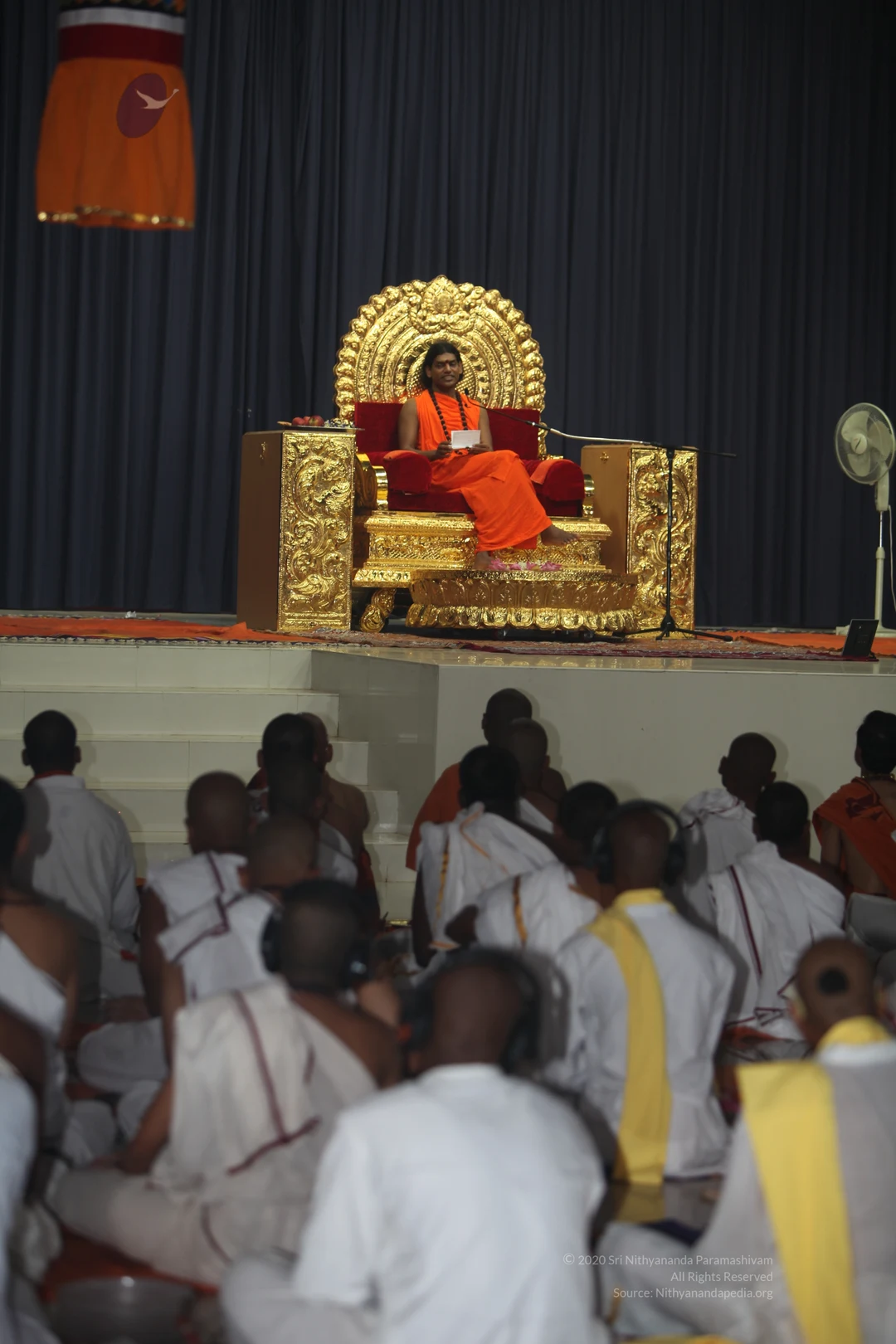
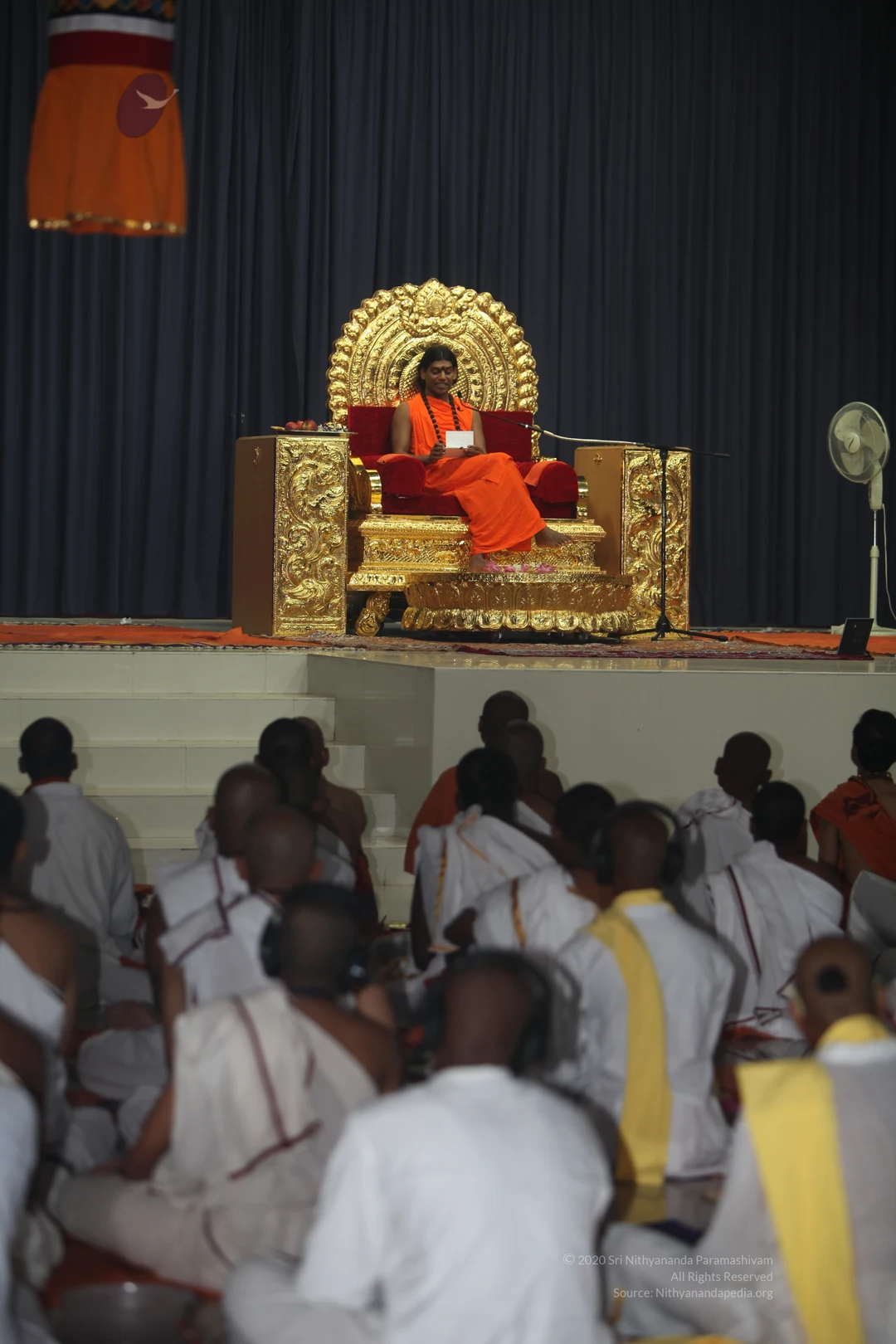
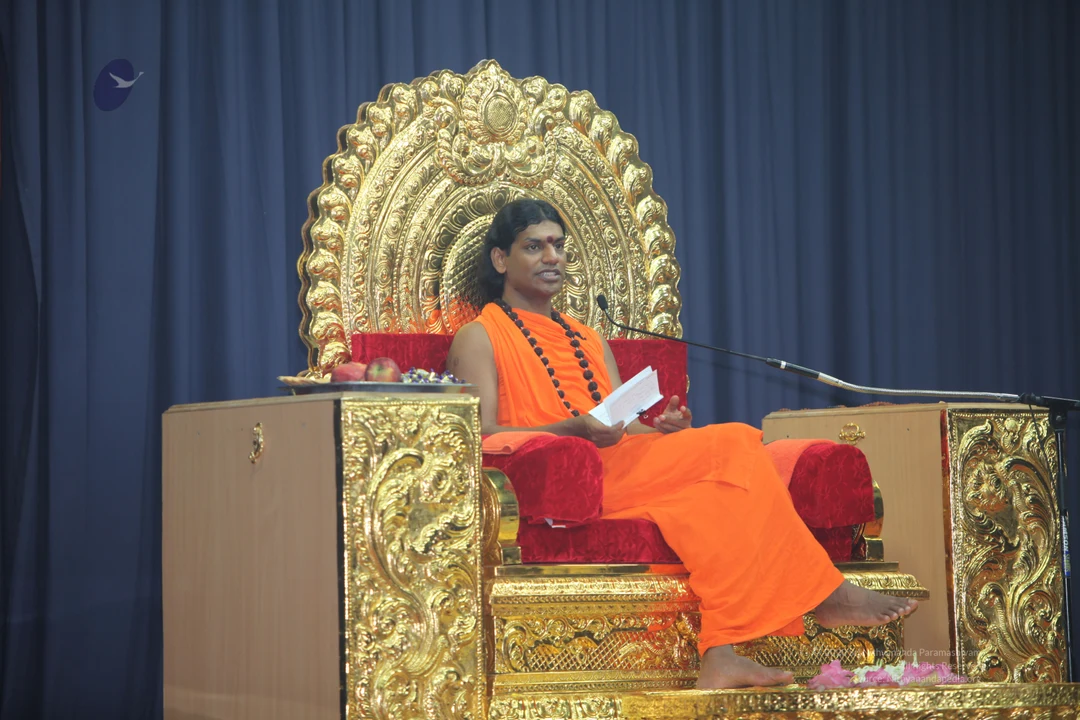
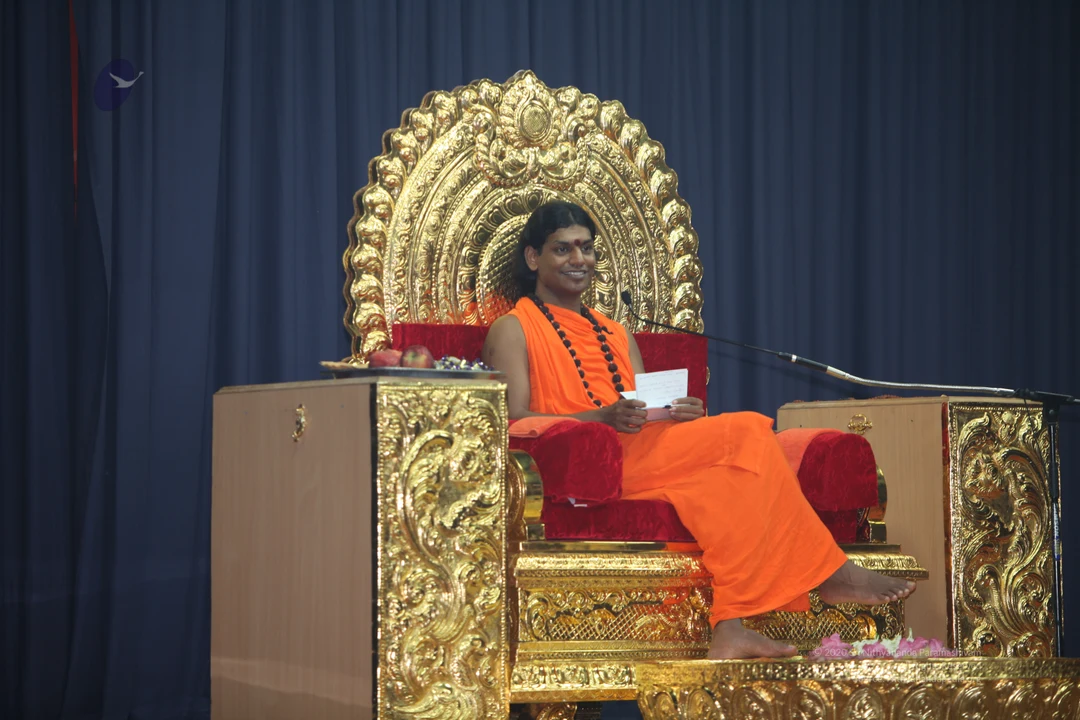
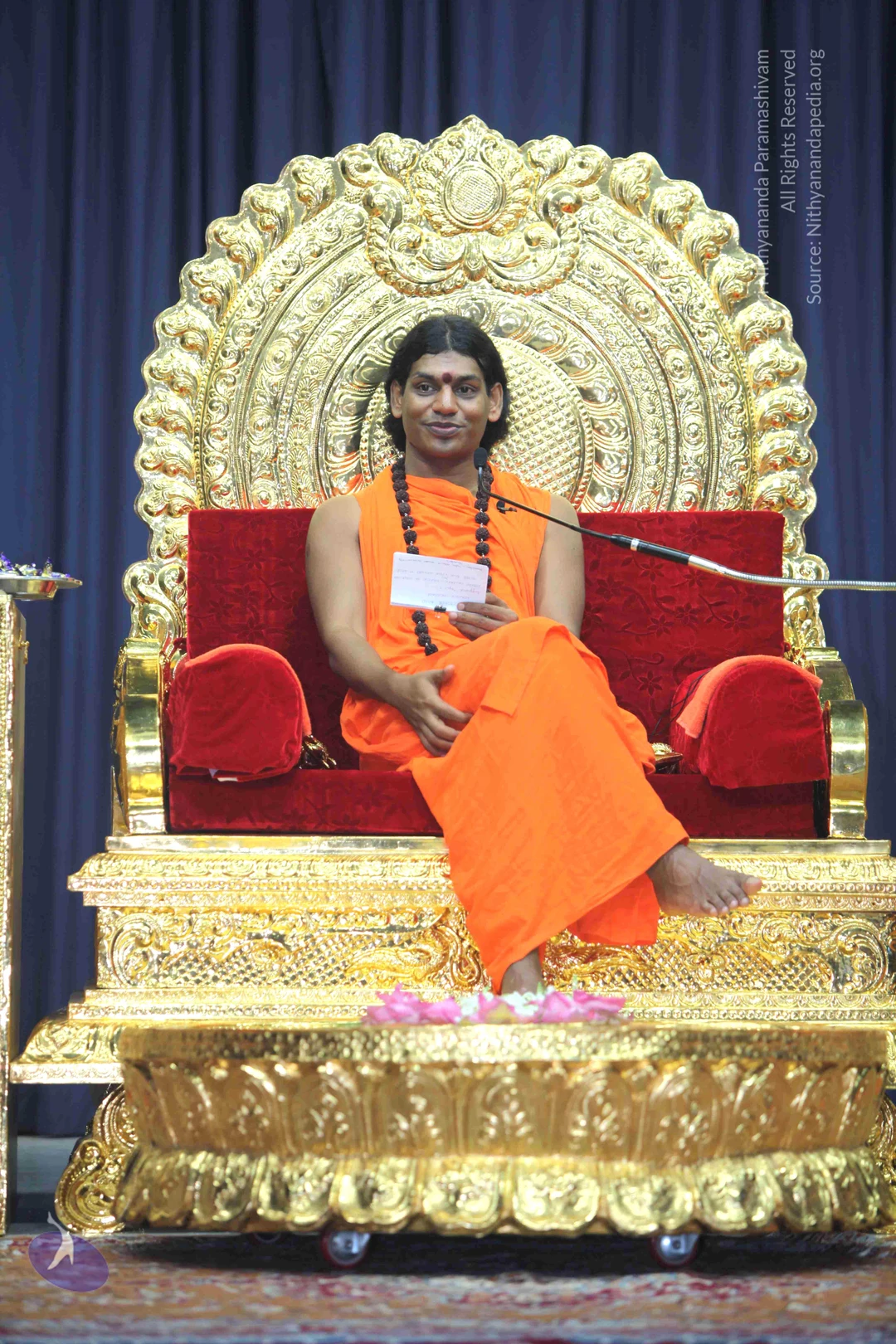
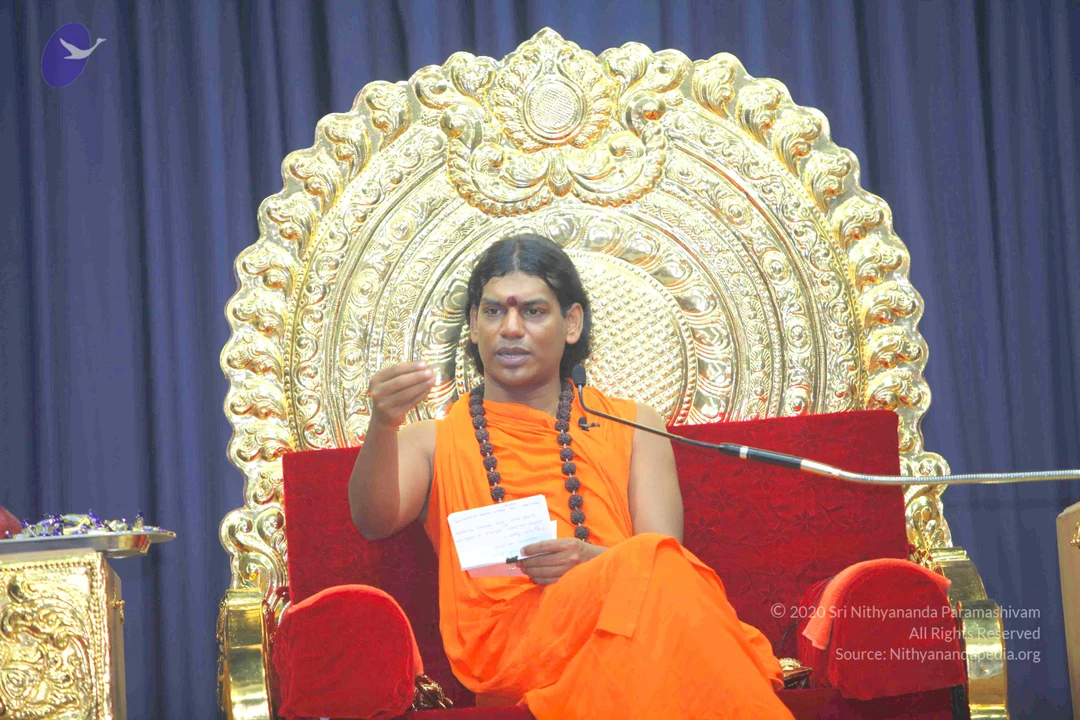
The Supreme Pontiff of Hinduism, Jagatguru Mahasannidhanam, His Divine Holiness, Bhagavan Nithyananda Paramashivam, expounded on the Cosmic Principles of Super DNA during the everyday live public talk - Nithyananda Satsang. In this talk entitled Super DNA Gateway to 2012, The Supreme Pontiff of Hinduism shared that human Consciousness is going through a big shift in 2012 where a huge uplifting in human Consciousness is happening. He spoke about the Indigo Children being born on the planet at this time and in the 1960’s and 1970’s that have more than 2 strands of DNA awakened. He revealed another important thing about the core human DNA imprint and how it is built on a 12 strand structure meaning that it can radiate and embody 12 dimensions of conscious awareness. He shared that the 12th dimension is the Shiva Consciousness which can’t be described. His Divine Holiness blessed everyone to have all 12 strands of DNA awakened to achieve and radiate Enlightenment.

Video and Audio

Super DNA - Gateway to 2012

VideoAudio

Transcript

Sadashiva samarambam shankaraacharya madhyamaam Asmadaacharya paryanthaam vande guru paramparaam.

0:47 I welcome you all with my love and respects. Today’s shastra pramana, today’s subject is 'Super DNA your gateway to 2012'. Today I have one or two shastra pramana. Shastra pramana means please understand, the eternal truths either revealed by rishis or modern day rishis; scientists, the greatest truths, eternal, unchangeable, like sun rises in the east or wherever sun rises whichever direction sun rises we call that as east. So this kind of eternal truths that’s what I call as shastra pramana. Then I will add atma pramana; my own experience. So it can become aptha pramana for you; means masters experience. Please understand, so every day I'll bring some shastra pramanas; whether from the ancient rishis or from the modern rishis. The eternal truths, then to the shastra pramana I'll add atma pramana my experience so it can become aptha pramana for you all; it can become gurus experience; it can become experience in you all.

2:48 I have something about indigo children so that you understand this super DNA. See children born throughout the history of humanity to raise the frequency of the planet and human consciousness, having more than two strands of DNA active DNA, are called indigo children or rainbow children, crystal children; there are three four names. Please understand throughout the history the kids are born, when they are taking birth something extraordinary is in them. And now science is proving clearly more than two strands of DNA is active in them. They are called indigo kids and throughout the history there are references these indigo kids were there. The core human DNA imprint is built on twelve strand structure which says human form was designed to embody twelve dimensions of conscious awareness. I always used to talk about this eleven dimensions the twelfth is the Shiva state. We can have our own brand name Nithyananda state; whatever; fully awakened Shiva consciousness.

4:42 Please understand these are the shastra pramanas means the eternal truths revealed by modern day rishis, then I will add my understanding about this 12 strands human body and two strands being active, more than two strands being active in kids and how it happens. It’s from scientist and researcher Sheryl Kakshialansa - the junk DNA or dormant DNA activation is a tremendous gift to accelerate the spiritual awakening of collective consciousness on the planet. This is a quotation means some research from that person. A person with two strands of DNA with only one strand active is like a computer with access to only 16MBrom memory; can run only few programs. Once the DNA is activated it’s like a giving internet connection; you can access anything by intent and intuition. Please understand these are not my words these are the collections from different researches and discoveries. The dormant DNA activation level controls your frequency. Every time when a DNA is activated you download higher consciousness from soul, identity and attract people, places, events of similar high frequency. Again it may look my words, it is not my words. What I am going to add is my words. These are exact quotations I am reading out from different scientists and people who are specialist in this field; researchers.

6:53 DNA activation not only has an effect on the individual but this change will affect the individual’s ancestors; three to five generations in the past as well as three to five generations in the future. This is one of the important revelation. In the sanyas, Upanishads there is very clear mention, if one person takes sanyas and elevates his consciousness, sanyas is nothing but awakening the different layers of your DNA. It says very clearly munnelu janmathirkum pinnelu janmathirkum piravi kadantheerthan neethaarkadanneertha sanyasi exact translation I am giving you from the Tamil Vedantic scriptures like kaivalya navaneetam and all these literatures. So, that says when somebody takes sanyas and raises his frequency, please understand not the after seven generation of you, don’t think only the after seven generation, not just after seven generation before generation who passed away who left the body their frequency is raised.

8:08 It’s a very tricky thing but scientists are saying. I will comment on this. I will comment on this then you will understand what they meant by this. Munnelu janmathirkum pinnelu janamathirkum piravi kadantheerthan neetharkadanneertha sanyasi. See the exact meaning of this word is as long as you are a grihastha, you are a married person; you are bound to do shraddha for the elders. So you have to every month and the amavasya day you are supposed to offer the pitru darpana. Every year the tithi on which he passed away they left the body you are supposed to give all that traditional offerings. So the biggest argument is if you become sanyasi you cannot do this neethaarkadan means you are dead to the ancestor who left the body. So the grihasthas argue this is a sin so you should not become a sanyasi. For that it’s called prashnottara maalika means the question is asked by a disciple, master answers. In that prashnottara maalika this concept is discussed. So the answer guru gives is this line which I said munnelu janmathirkum pinnelu janmathirkum.

9:40 See once you became sanyasi and raise your consciousness you have done the neethaarkadan neethaarkadan means you paid the loan the debt of the ancestors for front seven and back seven. I always used to think ehh backside seven we can understand because now we are elevating the consciousness so naturally it is affecting the planet earth and collective consciousness and all the people, next generation, naturally all the people from the family I am born and brought up, all the family whether my brothers or my cousin sisters and all of them, the whole family is naturally now thoroughly impacted by me. So naturally all their consciousness will carry the idea of me. I hear many times one of my uncle’s kids and all, they say that I will go away with Swamiji. I'll be with Swamiji and they dress like me or they talk like me, they try to do puja like me or they try to behave like me, even my own sister’s cousin sister’s son, two three kids, they try to ask when can I become swami like you? So they are thoroughly impressed. This we can understand logically. But how can the past seven generation? It’s possible. I'll explain how that is possible.

11:11 In vedic tradition there is a story called Bahiratha story. His ancestors were cursed by a king sorry a rishi, Kapila, Kapila only who is the father of our tradition nirvani akhada. Kapil Kapil was disturbed by these guys so he cursed them and they all became ashes. He did not even curse actually he opened the eyes, the power of his eyes and the karma they did, burnt them completely. So in his generation, the third generation person was the, in their generation third was the Bahiratha. So what to do; what is the way to liberate them? They all have become just heap of ash. The only way for liberating them is bringing Ganga and sprinkling that water on them, means the raising their consciousness through the amrita, nectar, the spiritual nectar and he does tapas brings the Ganga to planet earth; means infusing consciousness into their dead DNA structure.

12:29 Please understand infusing consciousness into the dead DNA structure was a science available in Indian tradition. In Chennai, Mylapore there was a Chettiar girl Poompavai. She died in the snake bite. So her remains, relics was preserved by her father in a pot. So Thirugnanasambandar a great saint who knows the science of DNA, among the modern day saints modern day means sorry I should not use the word modern day, among the recent day saints; in the vedic tradition thousand year means recent days, the recent day saints this gnana sambandar and thirunavakarasar, this two have shown physically the science of DNA in their life, doing miracles; that, they showed that they had a power over DNA structure. He gave life; he infused consciousness into the DNA and liberated her. So the same thing Bahiratha did.

13:46 Please understand when you raise the frequency of your DNA you can connect with seven generation wherever whatever state they are in; if they already taken new birth you can elevate them. I tell you many of you guys have come to me because your sons have raised their frequency; your two generation before son has raised his frequency so suddenly for no reason you feel connected to me because he raised his frequency your frequency is raised and you do not even know why you decided to come and be with a swami. Some time you can think your background and your, what you are doing now is completely unconnected. Understand two generation before the sons or daughters you gave birth somebody has raised their frequency that is having effect on you.

14:57 One more thing I always tell people whenever their parents or, or somebody passes away in their family I tell them don’t suffer. If you suffer you will stop their journey; further journey. You will not give them beautiful farewell because whether you like it or not, want it or not our bio memories and DNAs are interconnected; thoroughly interconnected; thoroughly interconnected. Our bio memories and DNA s are interconnected. You can see, I have seen in my experience many time with many disciples, if the father or mother passed away even though they are not physically attached, sorry psychologically attached, suddenly physically they will be down and the suffering and pain will be there because the bio memory is down; bio memory is down.

15:52 So if you elevate your consciousness natural like Bahiratha you will infuse life into the DNA structure of your ancestors and raise their very frequency. If they are in pitru loka you will promote them to a higher level, if they are in bhuloka you will elevate them to higher consciousness; wherever they are. See its like when you beat the water both side the water will flash sorry splash, same way when you beat the consciousness and raise yourself not just future even the past will be raised because one more thing unfortunately you can only see future you do not have the energy to look into the past. But I can see past that’s why I am telling you it is possible. It is possible, it is just possible.

16:58 Alright now I commit not only I will make this as a verbal now just to prove to all, all you guys that even things related to past can be tracked back and altered and their persons consciousness can be elevated. I will prove it within next one month by reversing some of the past incident happened. Let it be on record; I will prove it. See some personality during the past which is happened already, I'll get this person and elevate the frequency of that person and put the incident back and suddenly some new whole rejolting will happen. So this will prove the past DNA can be altered, past bio memory can be altered. That is one thing, second thing, I am trying to prove what way as an experience I can show you guys the past DNA can be altered and changed. I'll come with some more plans at least one or two more plans and I'll literally clearly prove you guys, the past DNA can be altered and maybe somebody elders when they die we will store their DNA and when son takes sanyas we will show prove solid way that DNA suddenly gets totally different activation and raises its frequency. We will prove it. So when any of this brahmacharis or brahmacharinis when their parents die we will take their DNA sample and preserve it and prove it when they become enlightened what happens to this DNA. We will take up this as a scientific research. Let it be on record. We will do this and prove.

18:58 So this we'll prove to the whole world munnelu janmathirkum pinnelujanmathirkum neerthan kadanneerthan neethaarkadanneerthan sanyasi. Means when you take sanyas actually you finish neethaarkada means the loan to your ancestors; you finish it. You do the shraddha and darpana the final thing for them and for you; swadarpana; both. So once you do that and finish it you raise the DNA of the seven generation front and back. So two way I'll prove; one by taking a sample of DNA and preserving it, when the son happens enlightened what happens to that DNA, that one; second the past record the recent past some person or the incident I'll track back and elevate their consciousness and reverse the whole thing; you will see. This two this two way I'll prove this science of that past also can be altered.

20:14 Understand not just future. See when I say future can be altered everyone has, nobody has a question. Everybody knows it. Your eyes are unfortunately outward. It can see only the future. Of course your eyes are not outward; your decision to see is only outward. Your eyes has 100% capacity to see inward also the same way it can see outward. I'll work on the indigo kids and prove you don’t need any diagnostic machines on the planet earth you need only the ability to see ‘in’ to diagnose anything in your body. Nothing else is required. Just you should be able to see ‘in’ that’s all. If you are able to see ‘in’ of you, you can see any body ‘in’. That is the way Sushruta, Charaka all of them diagnosed. Otherwise how do you think our guys were able to do all kinds of medical things? It’s possible.

21:36 So I have some more researches but first I will finish one by one. So I have brought some three four important truths today. I'll first talk one after another. First thing children born throughout the history of humanity to raise the frequency of the planet that have more than two strands of active DNA; they are called indigo children. Fortunately after the sixty’s and seventy, the sixty rebels and seventy hippies most of them were indigo children. Please understand the sixty rebels seventy hippies; the sixties there was a huge rebel movement started seventy’s there was a huge hippy movement started; many of them were indigo children. Unfortunately the society is so…. cunning so…… what to say……. frozen unable to accommodate them, labeled them as negative and pushed them aside and they are made to negative; nothing else. And recently in after 90s enormous amount please understand the, the guys whom are working on this line they are saying something like forty time more kids than the sixty’s and seventy’s are taking birth whose DNA is more than two strands active. Please understand huge number of kids whose DNAs are active more than two strands. Means the multidimensional kids are taking birth.

23:36 Please understand this is a solid proof, solid proof, a huge uplifting in human consciousness is happening. I tell you this is a best time to be in planet earth; best time to be in planet earth. Especially this 2012 to 2020 I am seeing a miraculous happening. Just yesterday I declared 2020 whole year I have decided I am going to spend walking from Kanyakumari to Kashmir with 10000 sanyasis. Let it be on record; see 2012, levitation for 10000 people at a time and 2020, 10000 sanyasis walking from Kanyakumari to Kashmir. Between this two happening I know what all is going to happen.

24:55 Human consciousness is going into a big shift of the higher consciousness. The 2012 is really, really, really, going to be a happening here; great positive happening here. So, the amazing number of kids indigo kids happening on the planet earth and today I am declaring our gurukuls’ will specialize the science of making indigo kids as a full blown incarnations. So we will take up and already we have created, now we are taking up a full fledged infra structure and facility specially dedicated to indigo kids. So we will work specially on indigo kids so that they will become a full blown incarnations; full flowered incarnations by that time they become 21. By the time they become 21 they should be full blown incarnations.

26:21 And another one important thing the core human DNA imprint is built on 12 strand structure means it can radiate, it can embody, 12 dimensions of conscious awareness. I think I have spoken on this 11 dimensions in a very detailed way. I may not spend much time on this 11 dimension. The 12th is the ultimate Shiva consciousness which can’t be described. When you experience the 12th you are an incarnation; that’s all. So that is the second truth. I want you to know the third truth, truth is I think I already read out; the person with two strands of DNA is only with 16MBrom memory and the DNA structure is activated, once the DNA is activated it’s like giving internet connection. You can access anything by intent and intuition. So all other things as I read out.

27:28 First I wanted to explain ‘how to’ because that is our, my unique thing how to how to activate more than one DNA strand in you, because most of the human beings have only one DNA activation. When you become a seeker ready to take the risk of renouncing the sensual pleasure for something which you don’t understand the second DNA gets awakened; second strand DNA gets awakened. Practically all of you second strand DNA gets awakened because even for one month if you have just two meal and taking bath twice a day and not having sex, for something which you are not really tangible enough now. See at least none of you have any tangible idea why you are doing that. Maybe you have the trust over aptha pramana. Oh if this guy is enlightened and this is what enlightenment I would like to have it; that’s all. That’s all is the reason why you are eating twice a day and taking bath twice a day and abstaining from the sex and abstaining from all pleasures and everything. So this proves very clearly your second strand DNA is already awakened. How to awaken the next level strand DNAs?

29:00 Understand I will give you exact that ‘how’. I don’t want to use the old words. If I use the old words you will say oh I know about it; it’s ok. I tried it did not working out so I am not going to be, I will not be able to awaken the third stand of DNA. No…. You can, you can. Please understand remember who you are really. Remember who you are really. So naturally like a lump you will feel, one part is that identity which you are showing to the world. Then one part will say no this is not because this changes. I myself can convince myself to change the identity which I am projecting to the world. In half an hour I can change it into another one. Is it not? See sometime when you are not able to maintain that identity or when that identity gives you suffering, in half an hour, one cycle of time, one circle of time, the 21 minutes you sit and talk to yourself and change it. Is it not? Then how can you be that? Not. It’s liquid. It’s changing. How can that be me? No. Then what is me? What is me????

30:48 In few minutes naturally you will feel there is some point in which you are cornering you. What is me? A kind of a silent awareness for few second……. Then what will happen? Because you are not able to be in the pressure of cornering you, it just gets bumped!!! It goes away to some subject or object or it goes away something and this idea gets lost, means the third DNA, third strand DNA you are touching but it is kicking you back.!!. Eh get out don’t come near. I am not interested in waking up now. I want to sleep little more time!! That is where you need seeking. Telling no... I am not just going to build my body I am going to build my DNA structure. I tell you with seeking do weight lifting that will get into your DNA structure. With awareness when you do the when you lift the weight feel that tremendous pressure, not pain. Understand when you are with awareness it will never be a pain. It can only be called as pressure on your muscles and system.

32:30 With that heavy pressure but decide No....I feel by this lifting I will change my DNA structure because Swamiji has told I am going to do that. With awareness with seeking go on doing which your muscle does not want to do; this is one point. I am telling you, I am giving you the tips on how these ideas can become your experience step by step, step by step. I am not interested in poetic theories. I am interested in practical ‘how to’. I am telling you exactly how to. Later on I will give you the poetic theories. Ohhh when your 12 strand DNA is awakened you feel like Andal and Meera, sing like Kabir and dance like Chaitanya. I can sing that poetic song. No I am not interested. I am talking like Swatmarama. I am not talking like Chaitanya or Meera. No... I am talking like Swatmarama; means ‘how’. If you go and tell in front of Swatmarama……. when the 12 strands is awakened and you sing like Meera ,you dance like Chaitanya, you sit like Buddha, he may just straight away throw a stone on you and say come on tell me how don’t go on be teasing me. Tell me how. So now I am talking like Swatmarama. I am not talking like some poet. No. I am not talking like Bauls and Sufis. No I am talking like Swatmarama. Bauls and Sufis if you see the whole tradition it is nothing but go on singing the glory of all the 12 strands of DNA awakened. Ok who says no? I understand if all the 12 strands of DNA is awakened the whole body will feel like honey I understand.

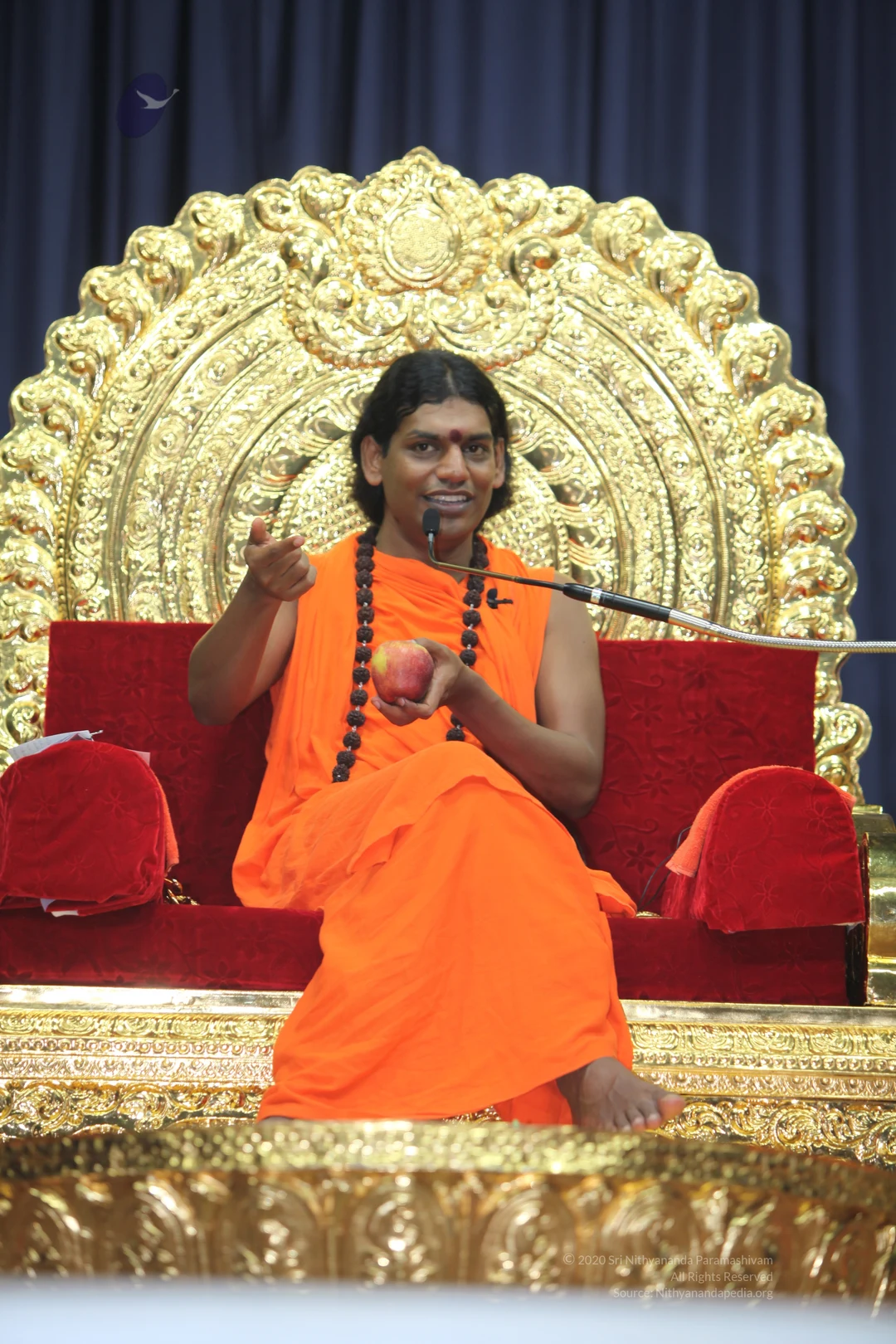
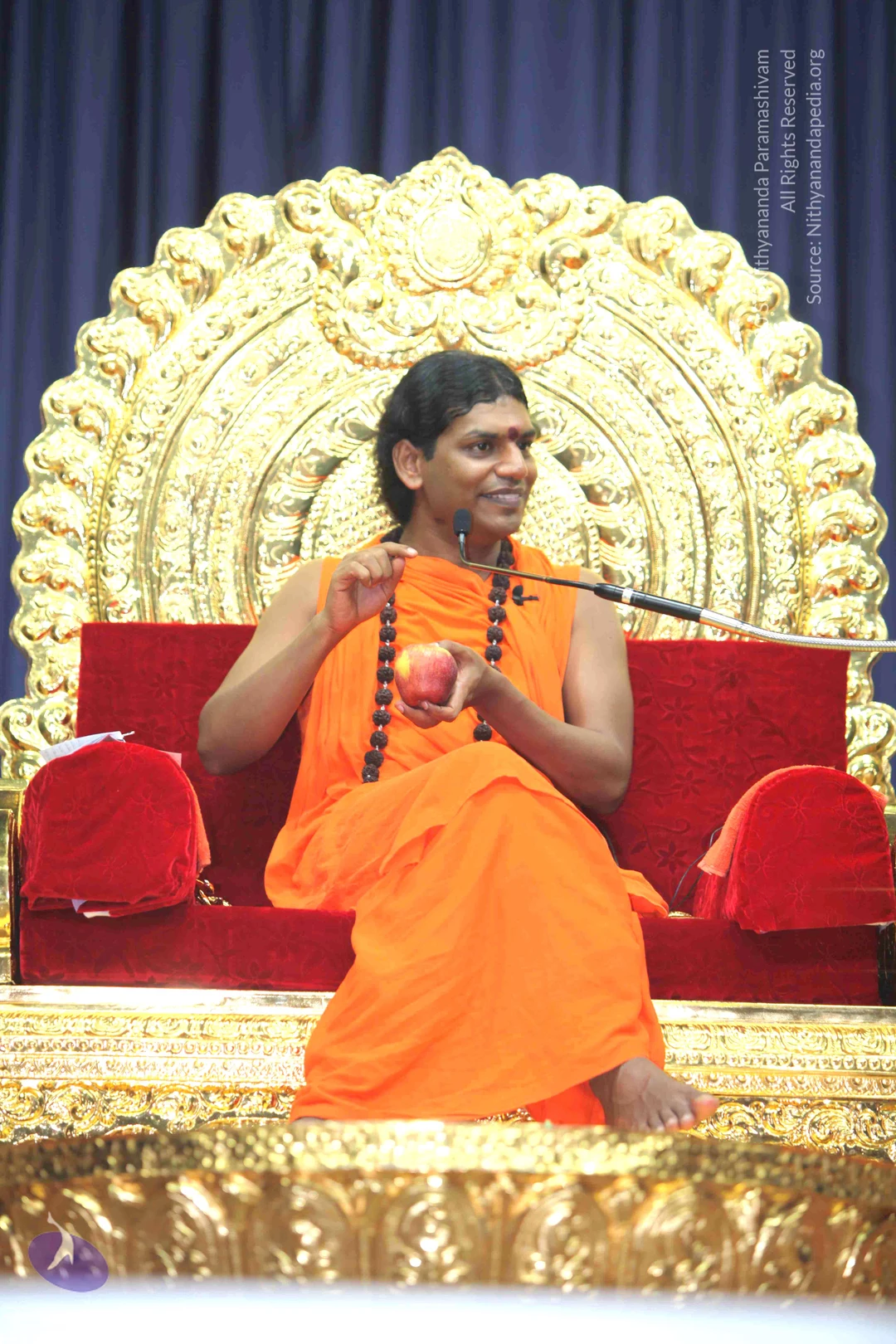
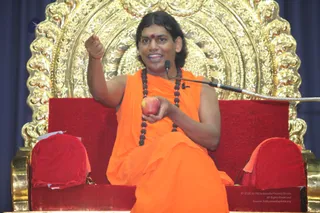
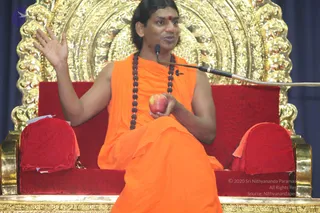
35:01 Thandada endanai kondada undanai saduraruyargolo Arunachala. I understand I gave me but I got you means I gave up the body with two strands of DNA, awakened and I got the body with 12 strands of DNA awakened and who is intelligent? I am the intelligent. Ok all this things but how. So come on to the how. The how is first step; feel who am I? The lump of the identity and lump of the identity which negates the identity; these two are you as on now. Please understand if I use the example of this apple, this part which you are seeing is what you are showing to the world this part which you are not able to see is the part which has ability to change this part. You understand when this part has some suffering or when this part is not trust worthy this part takes over and changes this part. You understand, so see which is the part which has ability to change this part, so you will see this part, the unknown part of you has the ability to reason with this part and alter, transform, change, within 21 minute. That is why you are able to get out of depression or get into depression; the possibility for getting in or getting out exists; because there is some part of you which has the ability to change what you think as you. You understand? So now if that can be changed, how can that be you? No it cannot be. Is it not? Then dig, who is that me? Who is that me? Whenever you are thrown out, again without repenting dig with intense seeking; no, I am clear I am going to awaken the extra higher strands of DNA. If you feel no, no, no, that is not that inspiring oh who knows what is 12 strands DNA and all that then at least see here is a person whose all strands of DNA is awakened, what game he is playing? What life he is living? How he is? Then take this as an inspiration and push yourself, that’s all.

37:45 I tell you intense seeking simply awakens at least four to five strands of DNA. Nothing else, nothing else; you don’t need any sadhana; just intense craving. See the intense craving suddenly makes this apple grow into three four. It’s like that seed becoming a simply four five apples, like one stem cell becoming two three. Same way it just becomes many. So slowly the identity which you are showing becomes a superficial small part of you. It is no more half of you, it is off of you; not half of you, it is off of you. Understand it is not that I do not have a identity which I am showing to you all; it is not half of me it is off of me. The identity which you are showing to the world if it is half of you, you are a man, if it is off of you, you are God. It’s not that, that will not be there in you, but it will be off of you.

39:11 So activating this more strands of DNA the moment I said seeking you think Ohh!! I know it. Swamiji finally will bring it and end here only. No!!! You do not know seeking, that is why you are feeling bored. If you know seeking there will not be boring. There will not be boring there will not be boredom. Seeking means exploring new, new; even the hen or chicken which is poking at the garbage will not get bored; if it has an inspiration it will find some worms as a food. Only if that guy is very sure he is not going to find anything he will be bored.

40:04 So you can’t be very sure you will not find anything because there is a person sitting in front of you who found something. And naturally how much ever you deny you are not able to deny that subject. You can deny everything. You can deny there is no DNA on the planet earth. You can deny there is no seeking on the planet earth. You can deny there is no enlightenment on the planet earth. You can deny there is no nothing of this who am I all these things on the planet earth. You can deny everything. But you can’t deny one fact there is somebody who is little more than what I am. So at least hold on to that and go on poking. There will not be boredom. There will not be boredom.

40:52 Biggest job; I can say biggest job on the world on the planet earth is keeping the seeking alive in people. I tell you God assumes human body only for this job of keeping seeking alive in human beings. Understand he does five jobs akuvai kapai edipai aruldaruvai pokuvai enai puguvipai endrudumvil five job; creation, maintenance, destruction, putting people into Maya illusion and liberating them; this five job. First four creating, maintaining, destroying, and putting them into the illusion, he does not need to move his butt. He can just lie down ananda shayana and he can be in yoga nidra. It goes on nothing needs to be done. And he can be in samadhi in Kailash or he can be in yoga nidra in Vaikunta; no problem it goes on. But to keep seeking alive in human beings he has to assume human body. Understand then most difficult job on the planet earth is keeping seeking alive in human beings. Only for that fifth job he has to take human body he has to go through this whole thing to keep the seeking alive in human beings; not even giving enlightenment.

43:01 Please understand the giving enlightenment is not a job at all; its piece of cake. It’s not a job at all. Keeping seeking alive; because if the seeking is kept alive enlightenment will automatically happen; I don’t need to give, it will just happen. Keeping seeking alive by telling all kinds of stories, words, lullabies and what not…… like the other day our kids did a play, small skit, that satisfying the small children is the most difficult job; they were trying to show na ….make them shut their mouth it’s not a small joke. You don’t know whether your singing will take care of that or dancing will take care or your candy will take care or toys will take care or you don’t know what to do and you have to do continuously trial and error every time when they start crying. It’s not that once you come to a conclusion and you can apply that same research and development, that, this conclusion next time they start crying. No. Next time you have to start again from the step one. First Ba Ba black sheep….. No I am not interested, the candy….. No I am not interested, then toy….. I am not interested, then shaking them in the lap…… No that I am not interested, hugging….. No I am not interested, cuddling….. I am not interested. Nothing suddenly something will click which you don’t even know and you can’t be happy oh I found the solution for my child…… No!!! In half an hour he will change the trend. Now you have to again have a complete new strategy planning. And I tell you even that job can be done and keeping the seeking alive in one person is equalent to bringing up hundred kids. Keeping the seeking alive in hundreds of person, thousands of person; that is why every day from morning till night I have to tell some story, I have to tell some songs, I have to sing, dance, shake, move, hug, Oh God!!! What not and put this whole thing in eN TV so that anytime anybody wants any strategy they can go and try to do something. Sometime if you sit silently they will stop crying. I try that also sitting silently during pada puja; all kinds of drama just to keep the seeking alive.

45:50 Understand keeping the seeking alive, one more thing whenever you feel the seeking has dried up, don’t worry the next strand of DNA is getting awakened. You are progressing. Don’t think my three years life is wasted four years life is wasted five years life is wasted. No. Next strand of DNA is getting awakened. How can something be wasted. Understand very beautifully Shankara says even one shloka of Bhagavad Gita chanting, little Ganga water drinking, once casually saying Krishna Govinda, cannot be wasted. Even that cannot go as waste then how can so many years meditating or practising or being around the master can go waste. No. Next strand of DNA is getting awakened that is why that dry land; that is why that dry scene. Usually after the five six strands of DNA awakened, next next DNA awakening will not be painful. That is what I call enlightenment.

47:11 Usually for a normal man I can say six strands of DNA. But till the six strands of DNA when you cross every strand you will always look back, means, Oh Am I doing right or wrong? It is painful. I think I am wasting time. Why not get married and suffer sorry get married and be happy; at least when you think that’s what you think. Or why not do this? Why not do that? It’s almost like you are being pushed to the wall. But after six no after six any transition of that next strand of DNA awakening there will not be any pain; its just smooth thing. That’s what I am saying.

48:01 See zero to six, sorry one will be always awakened the moment you have the body. And the second will be awakened the moment you start seeking. And the second to sixth is enlightenment period. The sixth to twelfth is the incarnation period. By that time the twelfth is awakened, you are an incarnation and one more thing after the twelfth is awakened there are hundreds of new layers opens up. That is what the new, new layers when it opens up that is what is poornavatara means that so many different, different, different, different truths and revelations constantly being revealed to the world; constantly being shared to the world.

48:48 So actually now we can make this whole thing as a simple medical test. We can see how many strands of your DNA is awakened and give you the report. Are you going through depression? See third is awakened fourth is getting awakened; don’t hit my head. Go. I am not interested any more in sitting and consoling you and I am not interested any more in sitting and talking to you and even after I talk you think I am consoling you. I am not interested in consoling you. Have the medical report get out. Go and do the next job. We will make it very clear because it’s all science, simply provable, simply provable.

49:30 I think first we will prove working on my DNA that twelve strands are awakened. When that is clearly proved then this whole science is proved. And I will clearly reveal, when you cross the lust the third strand is awakened. When you cross the fear the fourth strand is awakened. When you cross the unknown feeling whether fear or lust you don’t even know, the fifth strand is awakened. When you cross the suffocation which you can’t even call as a fear or insecurity or greed, you can’t name it, but just you are angry, you are just angry at everything especially it is usually directed towards me only because I am the only person who is constantly seen by your eyes and gets recorded.

50:23 See it’s like, when you look at this light for two second and close your eyes you will see the imprint of that light inside. You will see that negative of that light inside. Same way naturally constantly you are seeing me only. So when you close your eyes you will see the negative of me inside and put the blame on me. So the fighting with master that is the time that sixth strand is getting awakened. So now we will make all this as a medical test. If somebody is depressed ‘ayya send the DNA for test’ that’s all and no appointment till the DNA Report comes no appointment and if the DNA report comes I don’t even need to talk; now you know go do next. That’s all.

51:11 I tell you surely within one or two years we will make this whole thing as science. Then the mass production of enlightenment can happen. It doesn’t need to be like a one by one piece by piece. Mass production can happen. Only that final tattooing we will do piece by piece. See the body we will produce in mass. We need to have uniqueness so we will just have a tattoo. Yes, the tattooing we will do in unique way but the production can become mass. That is what I am saying huge numbers of indigo kids are landing on the planet earth. That’s one thing, second thing systematically the mass production of enlightenment science is landing on the planet earth.

52:05 I am the vaasthu engineer and new builder. The vaasthu engineering means the altering the existing building is the science I am talking; this awakening the different strand of DNAs And I am very clear I am very confident I am very sure simply we can prove all these things. Simply we can prove because no way these guys can have the insights I am having. It is simply their scientific explanation. So I know for sure their scientific explanation simply matches with my insight. And we will just create a system of mass production of enlightenment; mass production of enlightenment. And I think this is the way we are really going to help the 2012 happening. We are going to be the great help to the human consciousness to elevate the human consciousness during this way, in this way only. This kind of way only we are going to be a big help to the human consciousness for 2012.

53:31 So the essence is three thing. First see who am I? The personality which can be changed is not you. So dig then who am I, when the, when you feel you are hitting the dead end or suffocation, increase the seeking, intensity, passion and look again; When I say again, again and again and again and again; till you awaken the next strand of DNA, next strand of DNA, next strand of DNA. I bless you all, let all twelve strands of DNA be awakened in all of you and let you all achieve and radiate enlightenment. Let you achieve and radiate the eternal bliss Nithyananda. Thank you. 54:44

Title:

How to awaken next strands of DNA==

Description:

2012 Awakening series of talks by Paramahamsa Nithyananda visit http://worldtour.nithyananda.org/

A person with only two strands active DNA (genetic map) is like a computer with only 16MB RAM memory; it can only run a few programs. Once further strands of DNA are activated, it is like providing a high-speed Internet connection with a top of the line computer; anything can be accessed by intent and intuition!

Intense seeking is one of the ways how to awaken the next strands of DNA.

Video:

VideoAudio

Title:

Awakening Different Levels of DNA

Description

2012 Awakening series of talks by Paramahamsa Nithyananda visit http://worldtour.nithyananda.org/

Is DNA linked to our emotions? Studies have shown that as we free ourselves from negative emotions such as lust, fear, and anger, new strands of DNA start getting awakened in us. As each level of DNA gets awakened, we progress on the path towards spiritual enlightenment.

Video

VideoAudio

Photos:

Panchatapas
Paadapooja
Morning-Satsang

Sarvadarshan

Photos Of The Day:

nithyananda-bidadi

Photos Of The Day:

thumbs

nithyananda-ashram

1--Pada-puja

2--Satsang

3--Energy-Darshan

4--Sarva-Darshan

5--Pancha-Tapas

Photos from this day

View all 364 photos

Panchatapas

19 photosSource gallery
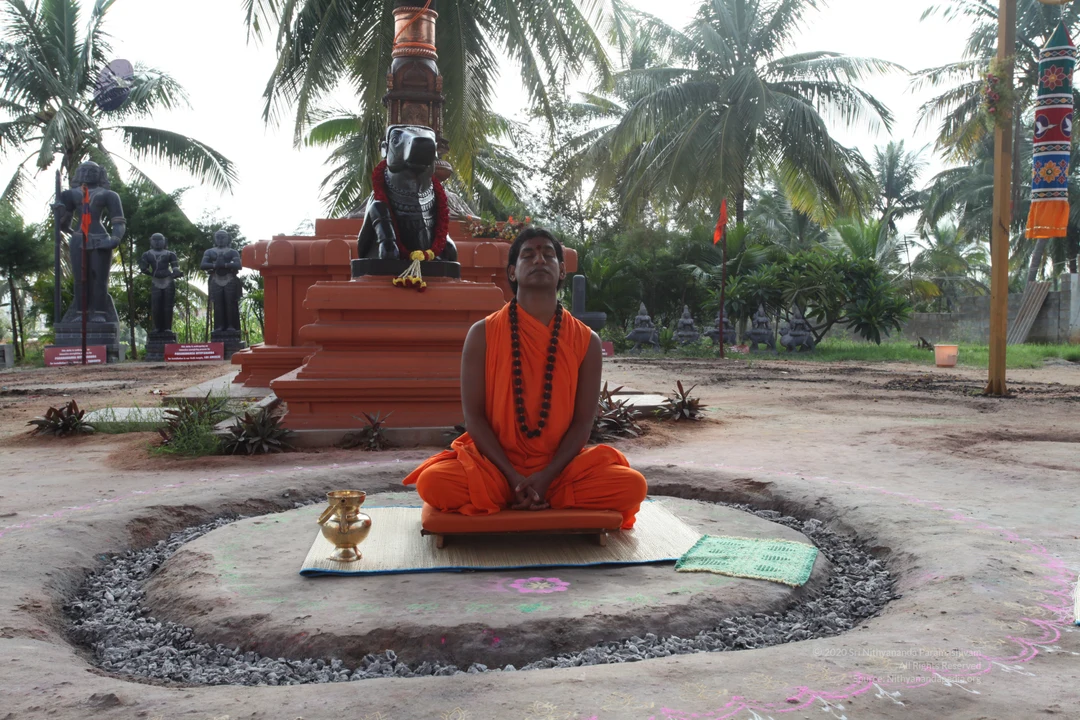
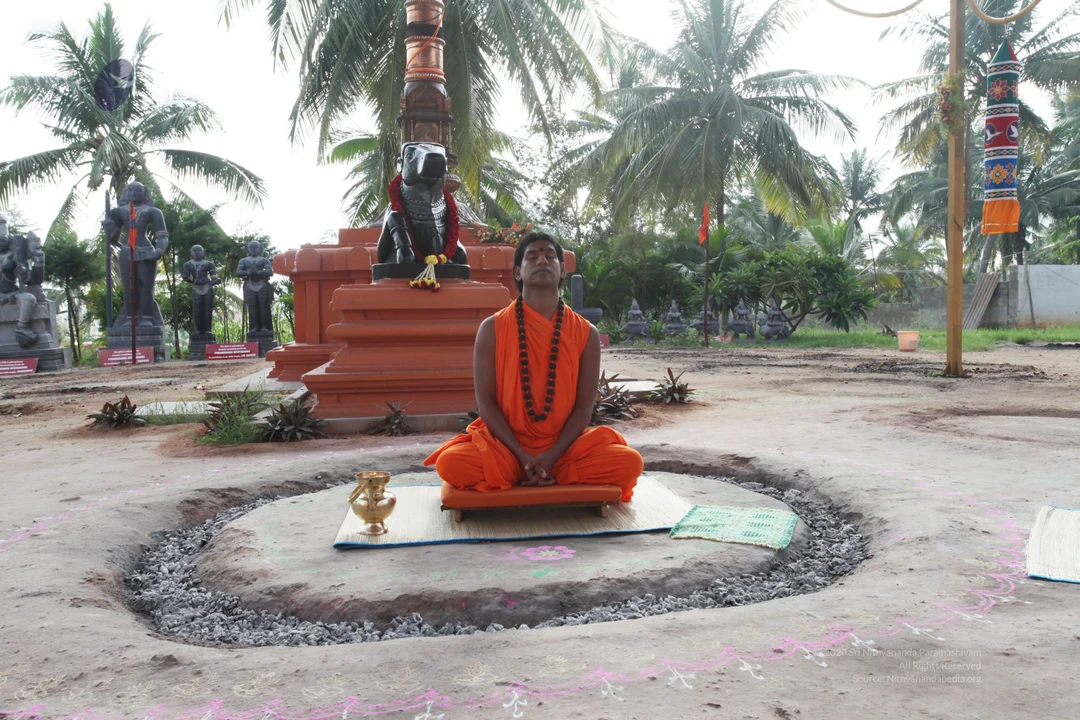
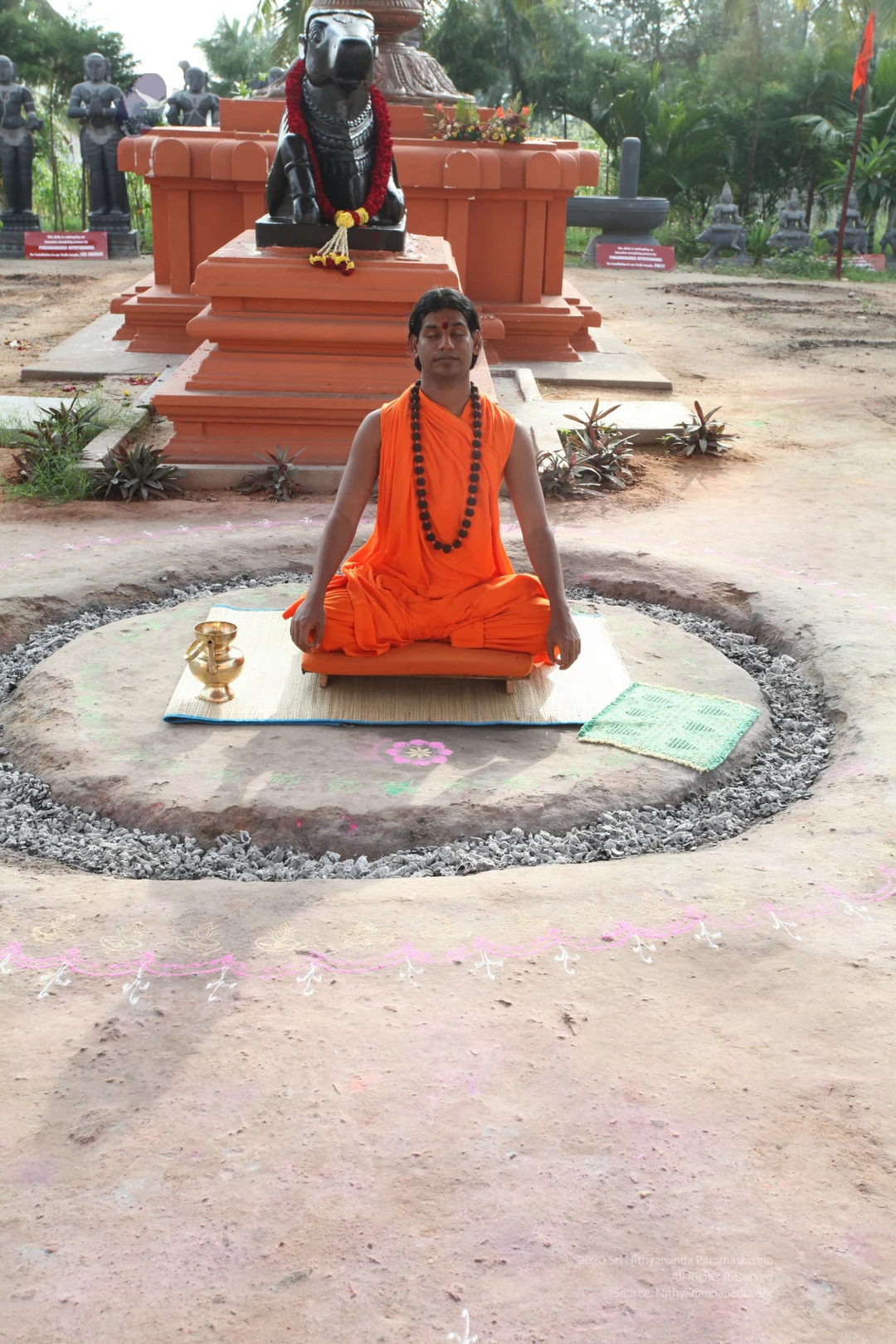
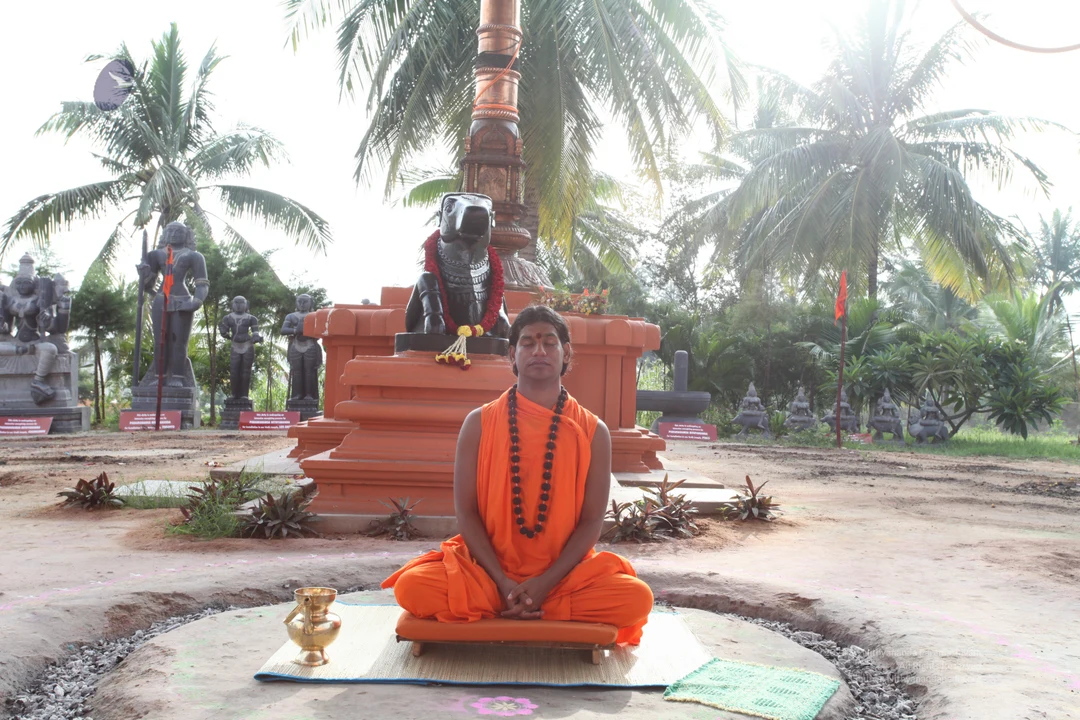
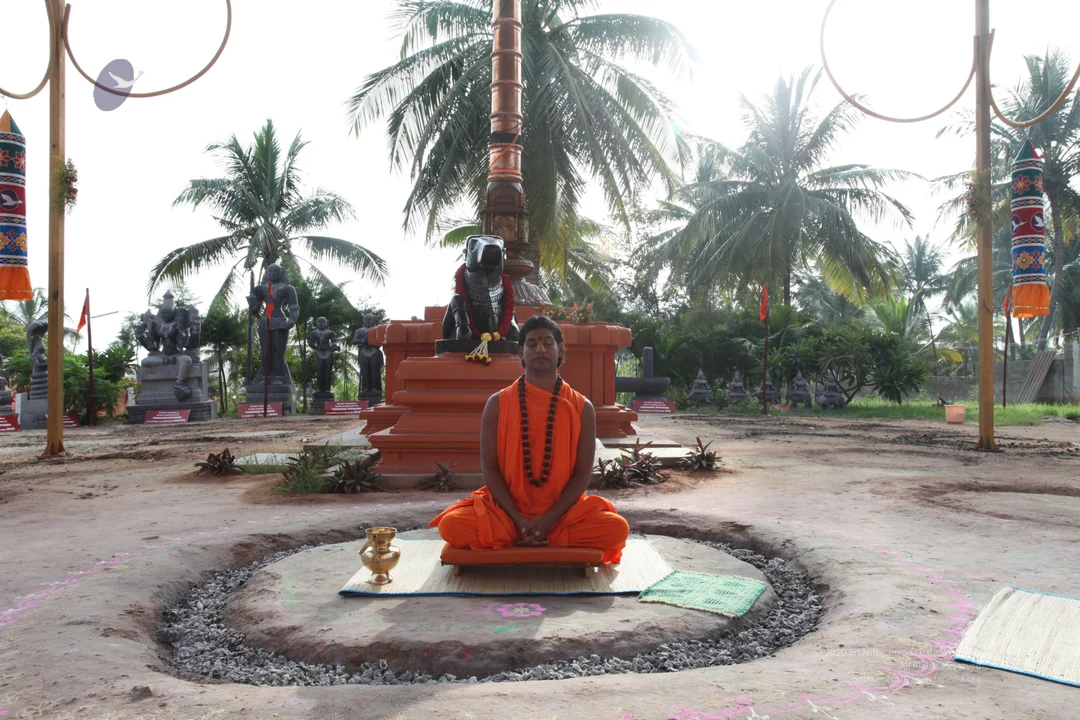
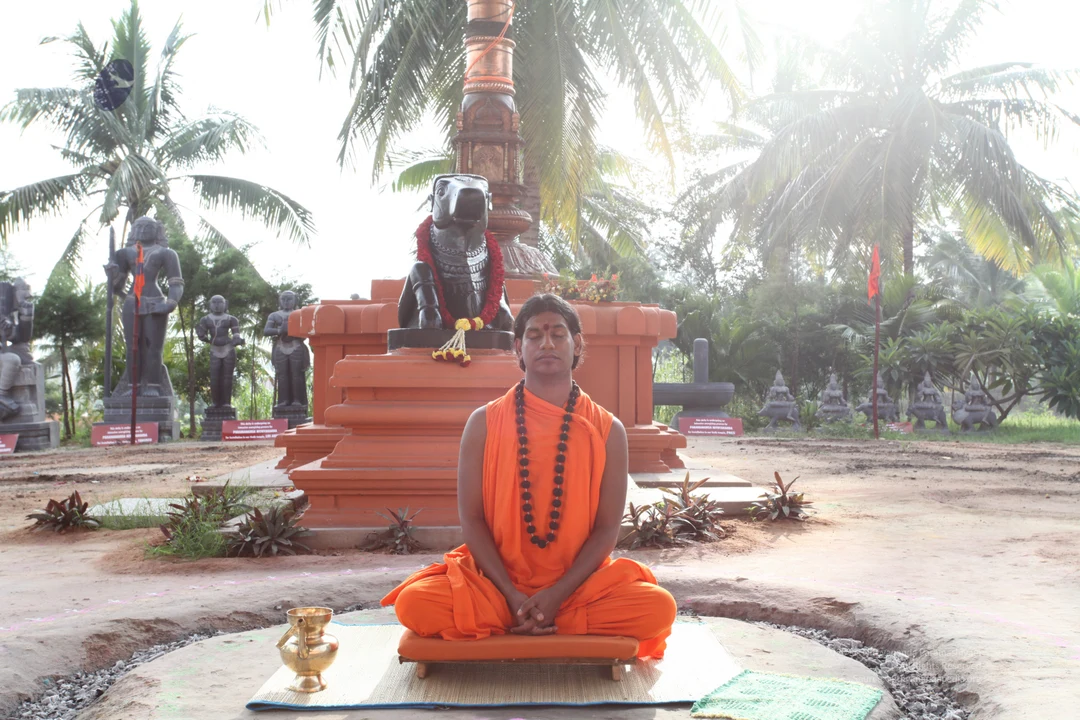
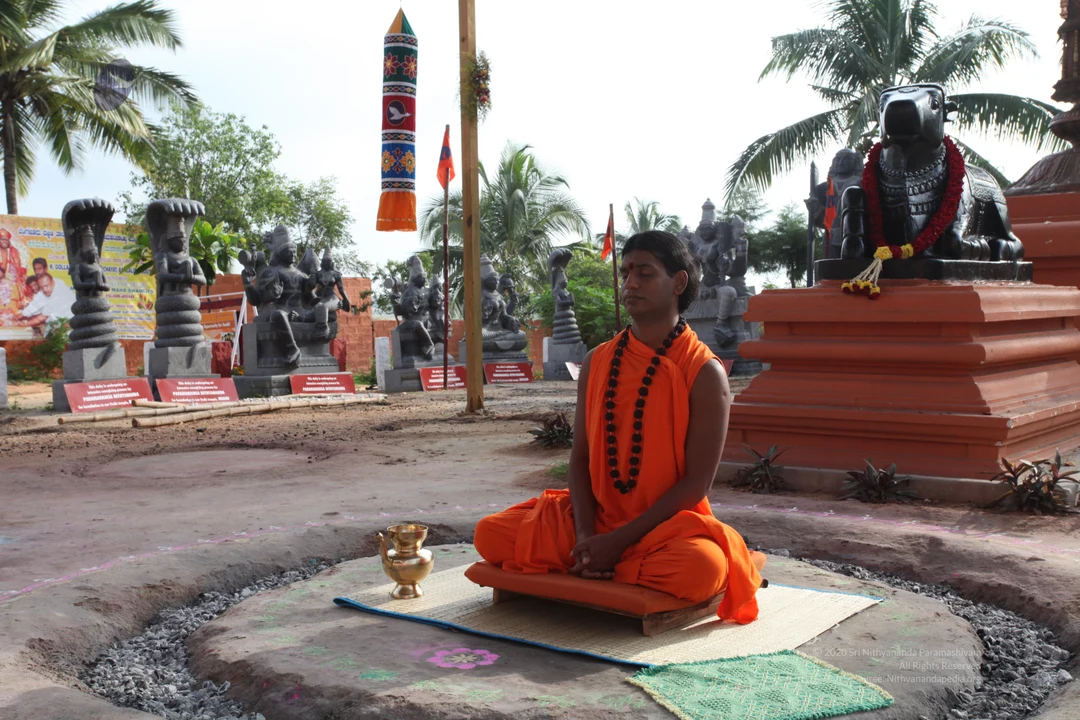
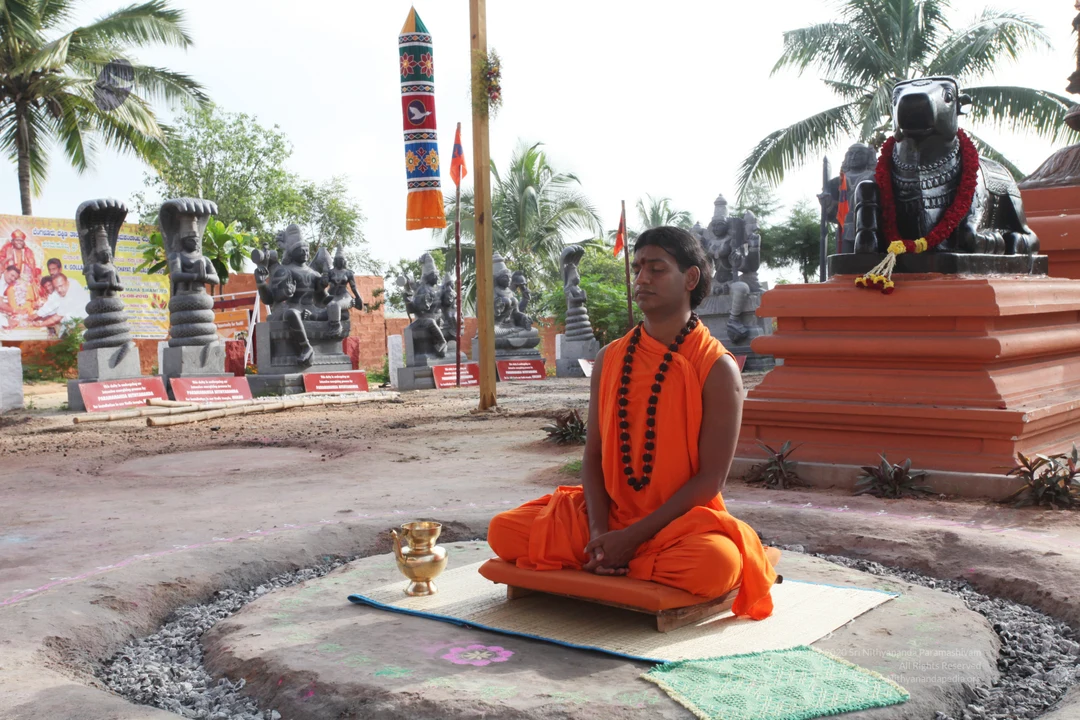
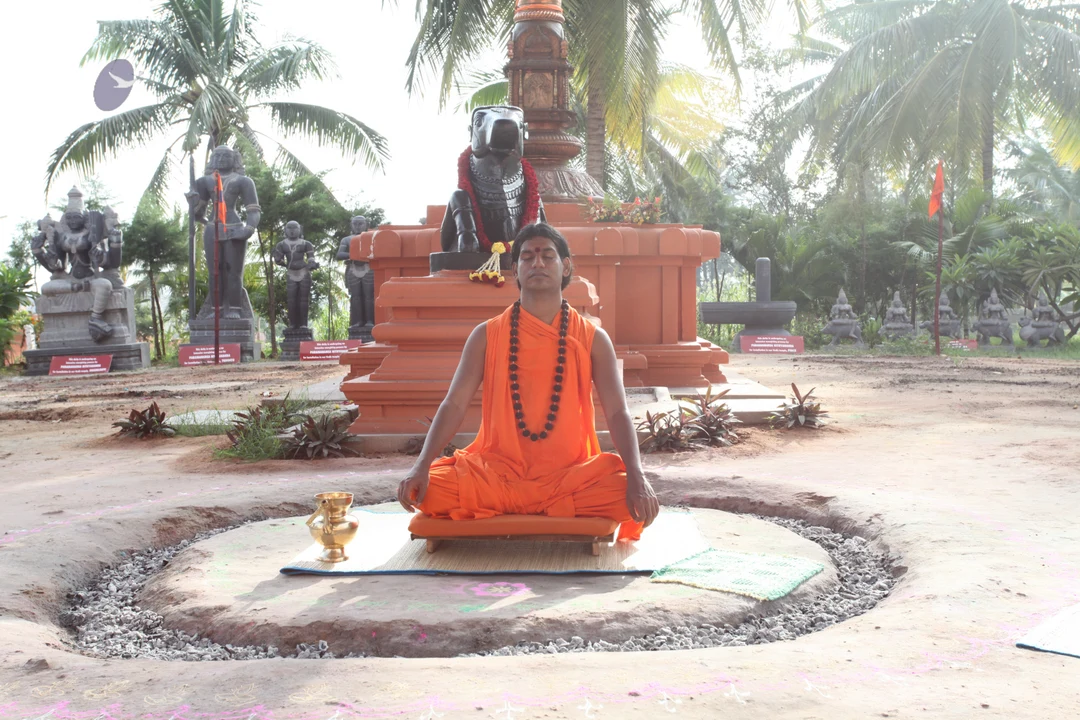
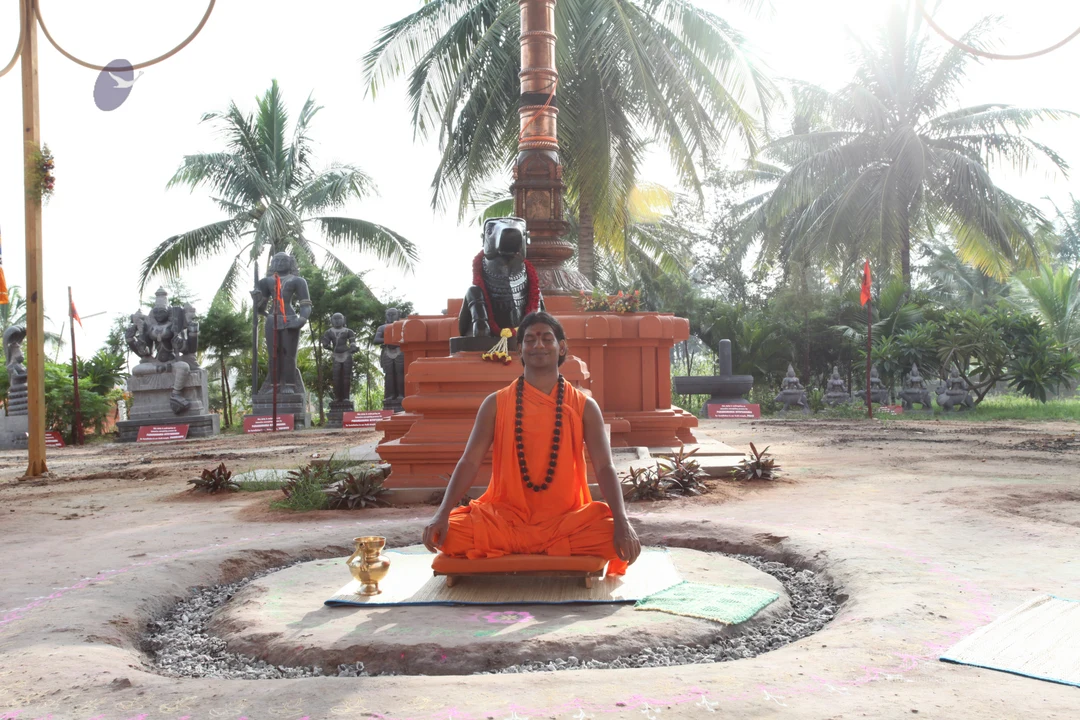
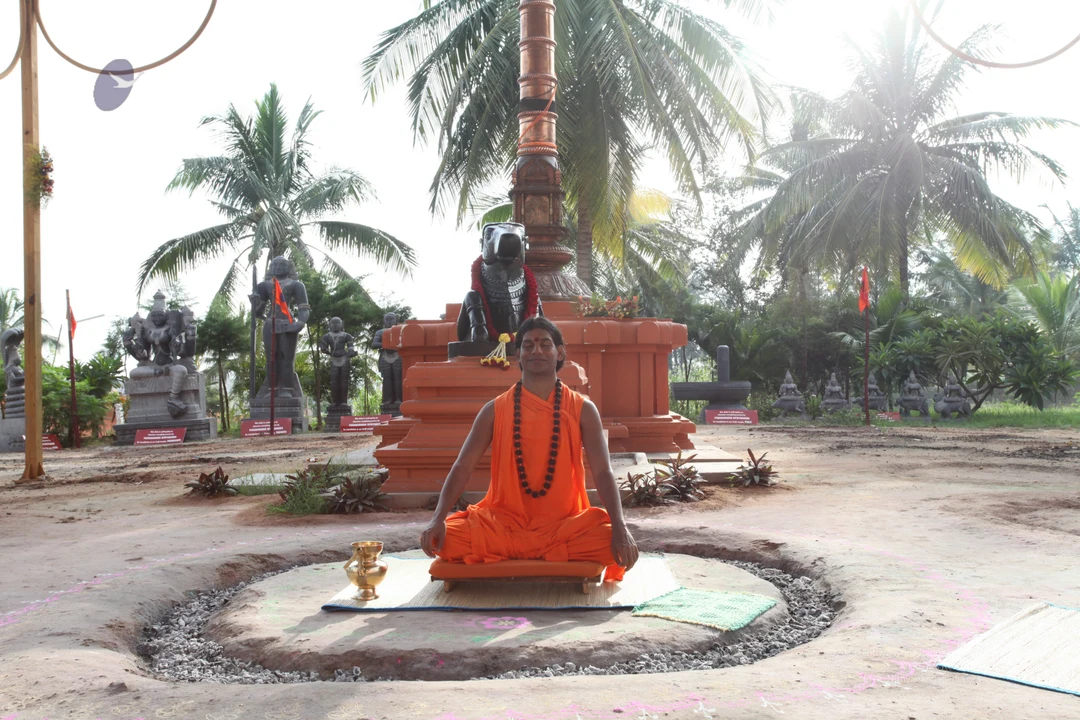
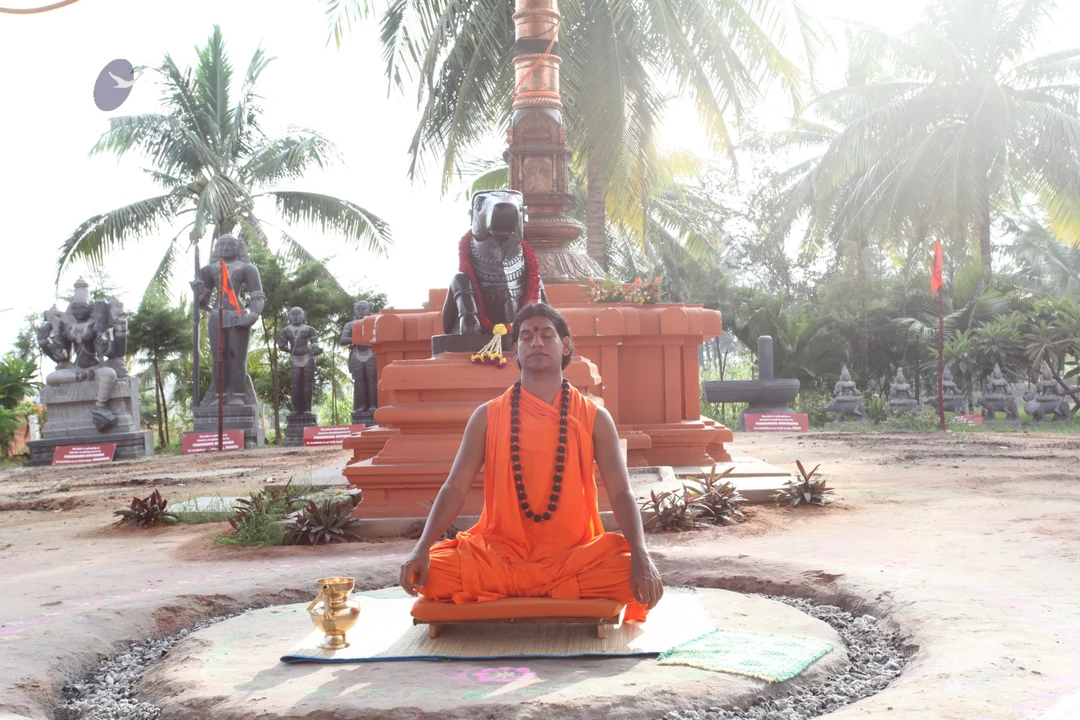
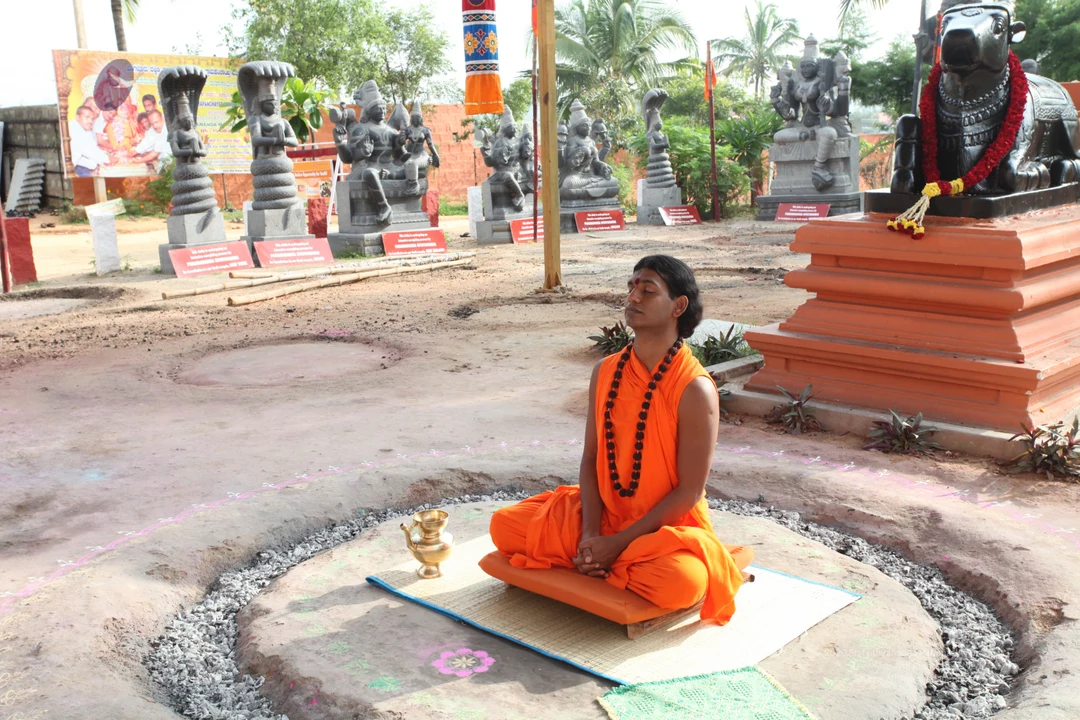
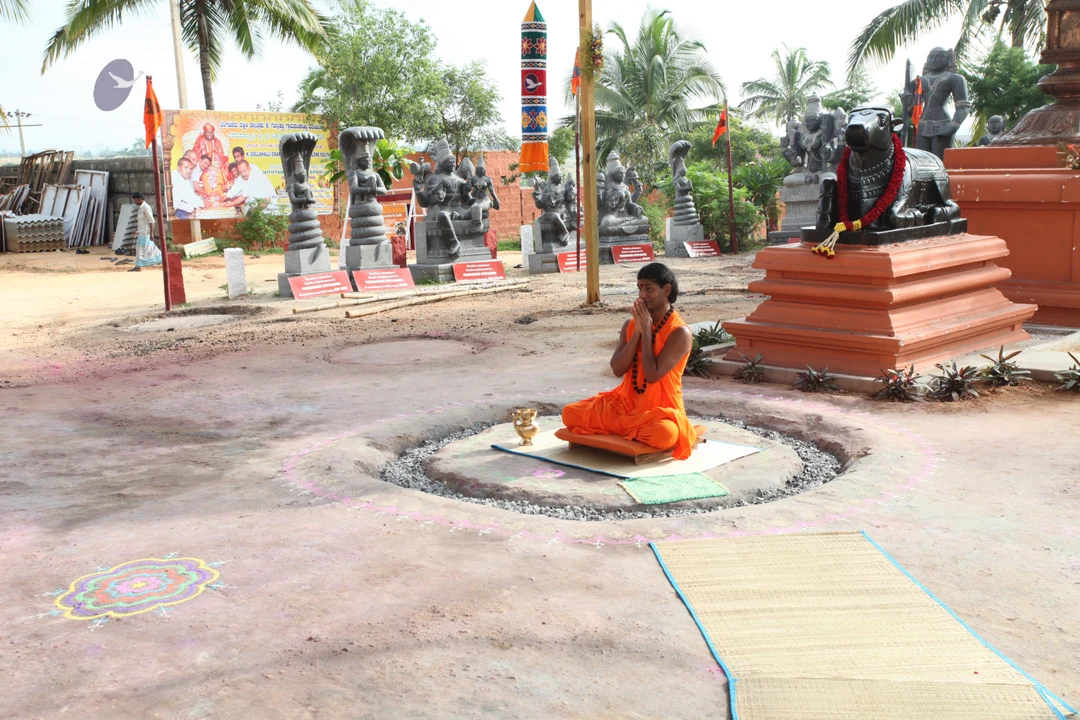
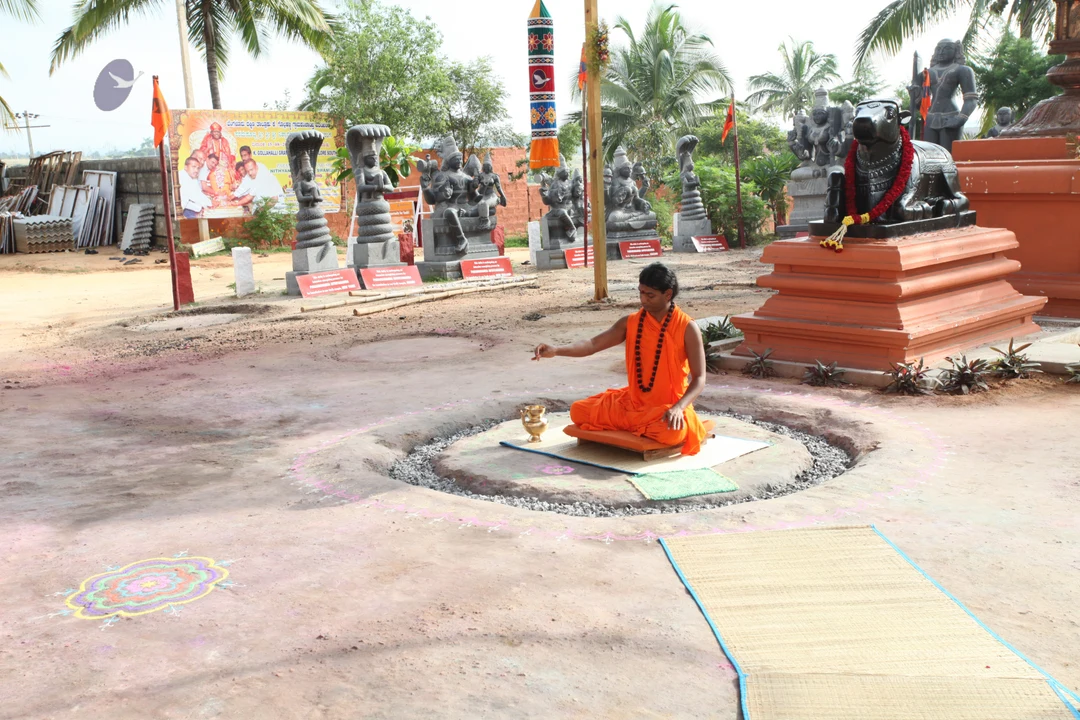
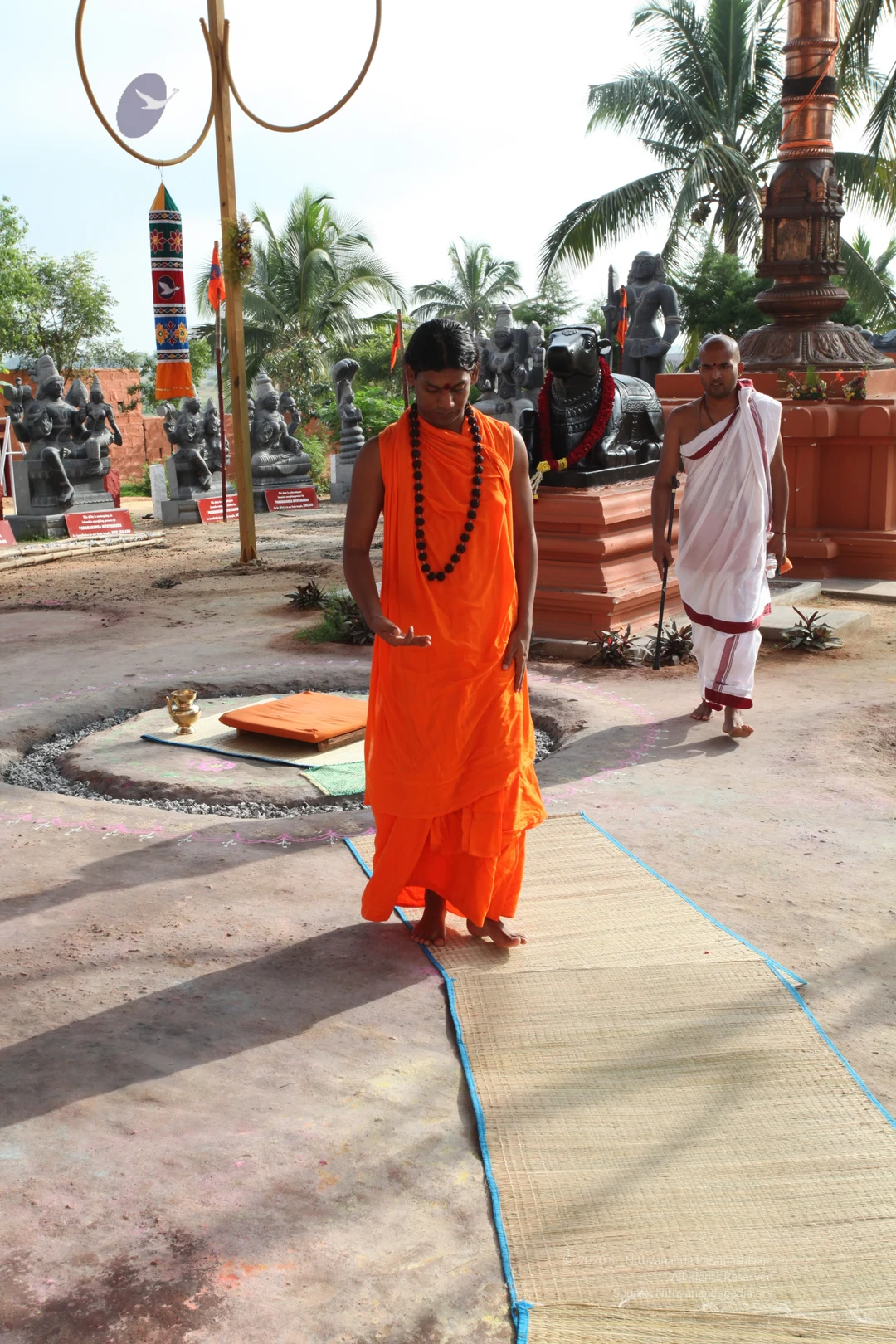
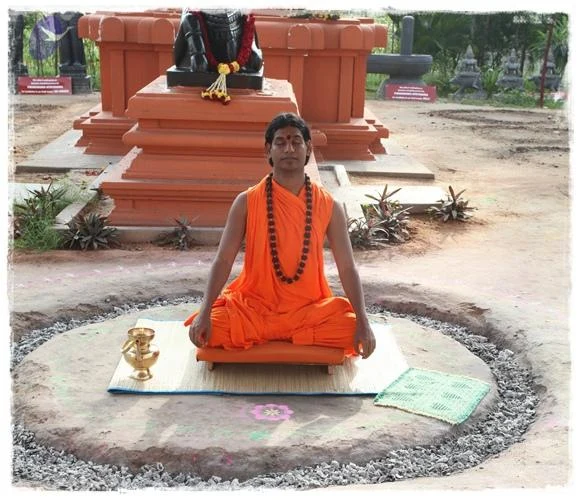
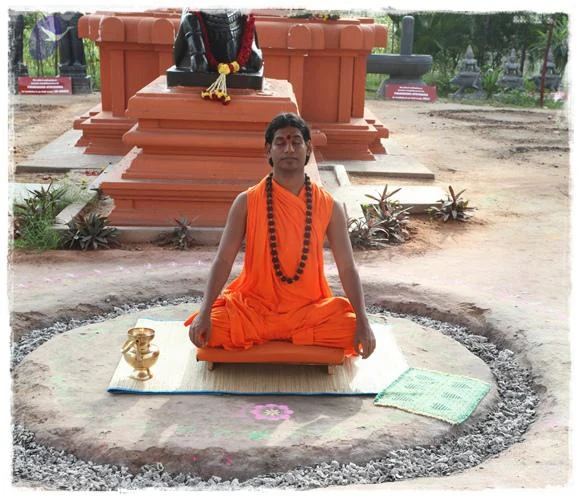
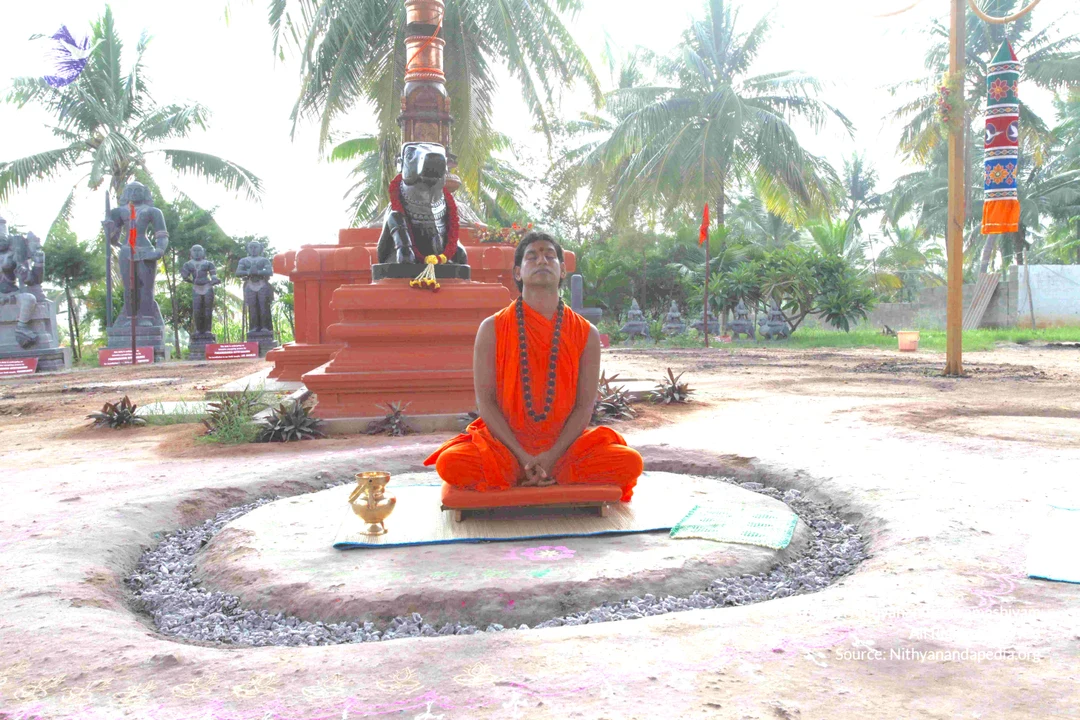
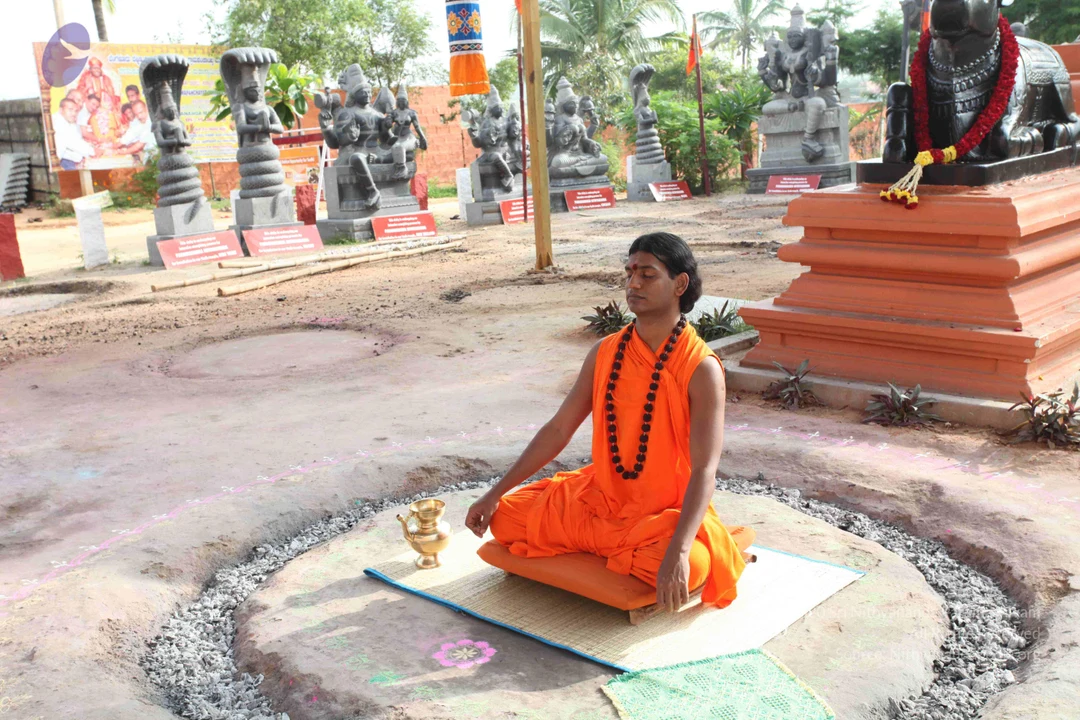
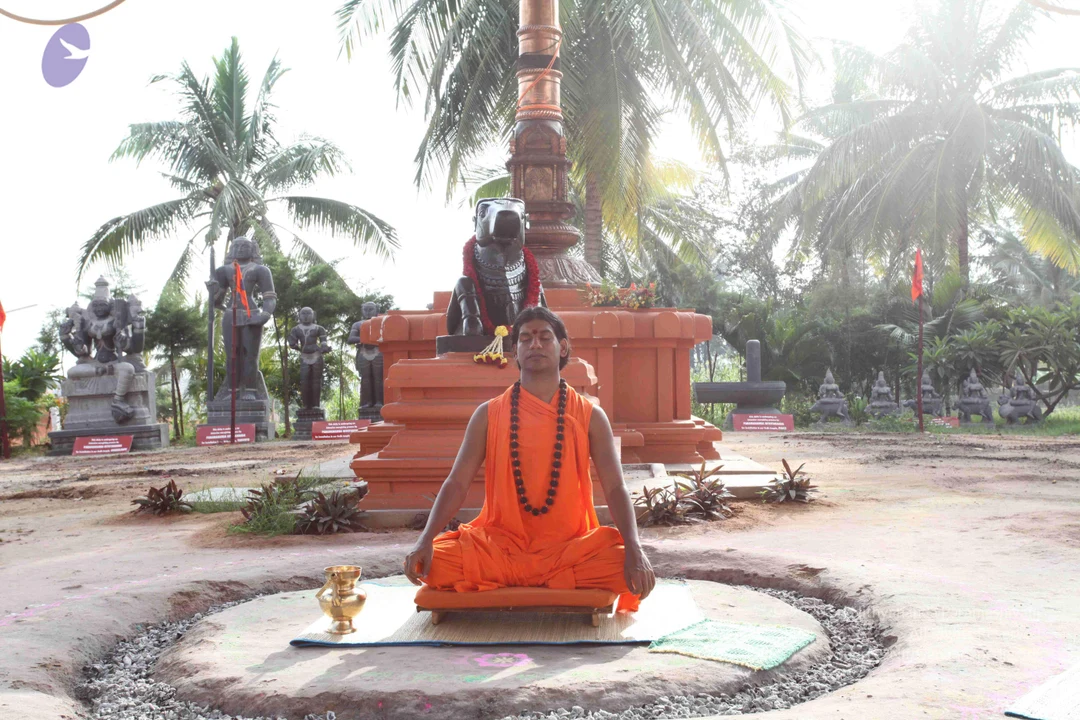
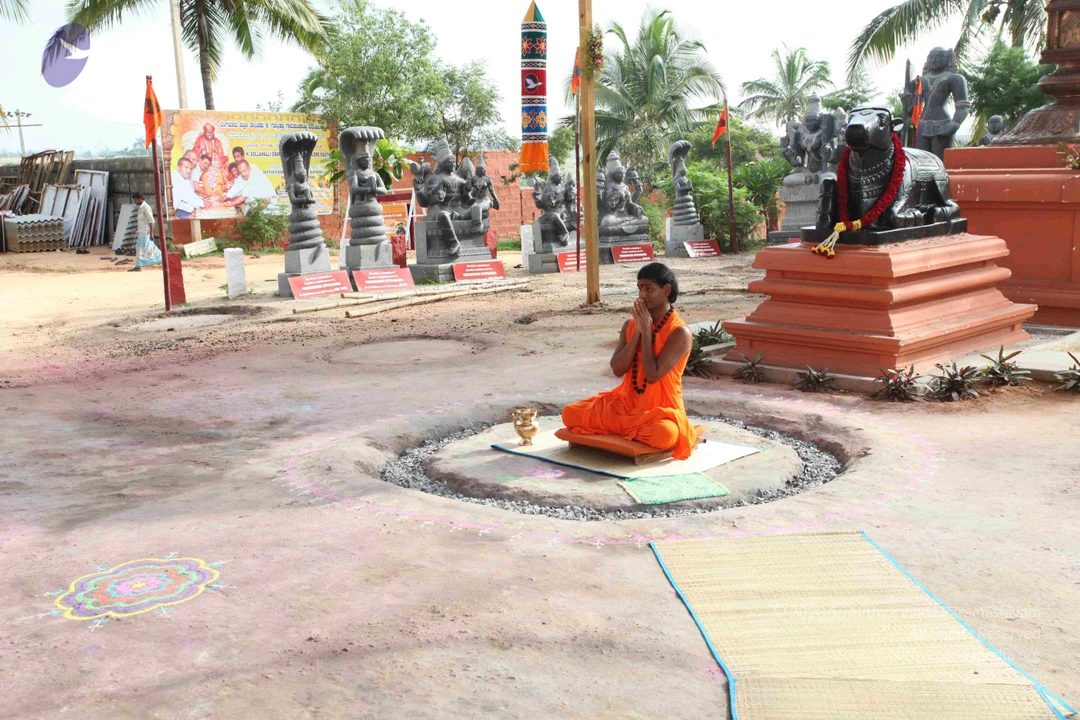
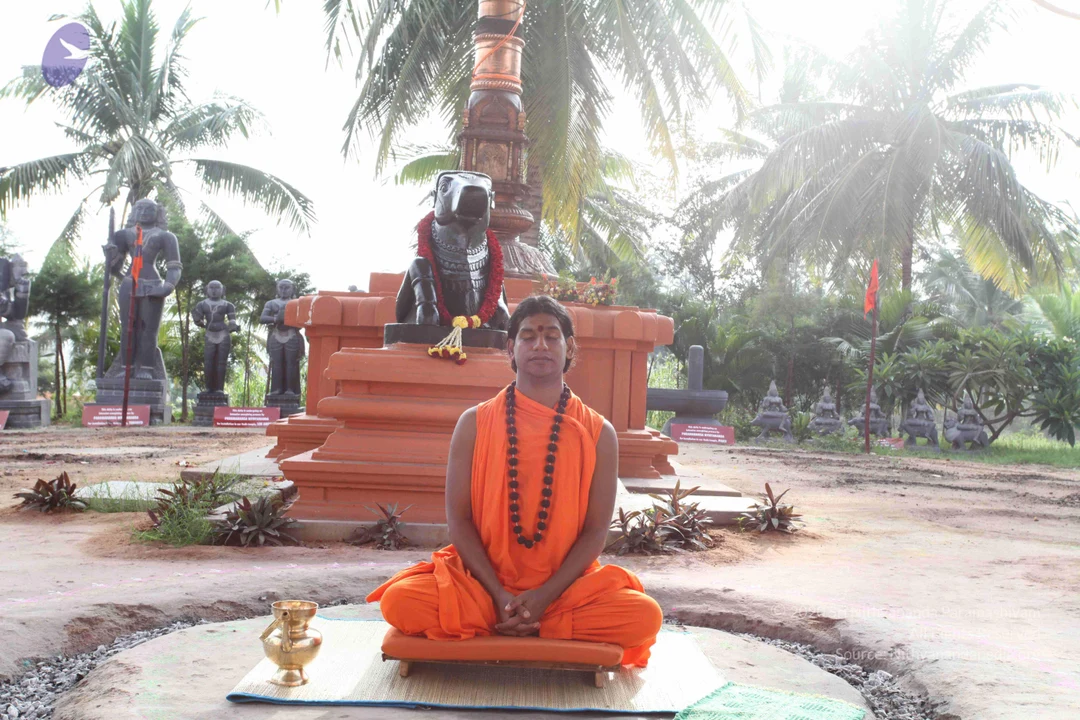
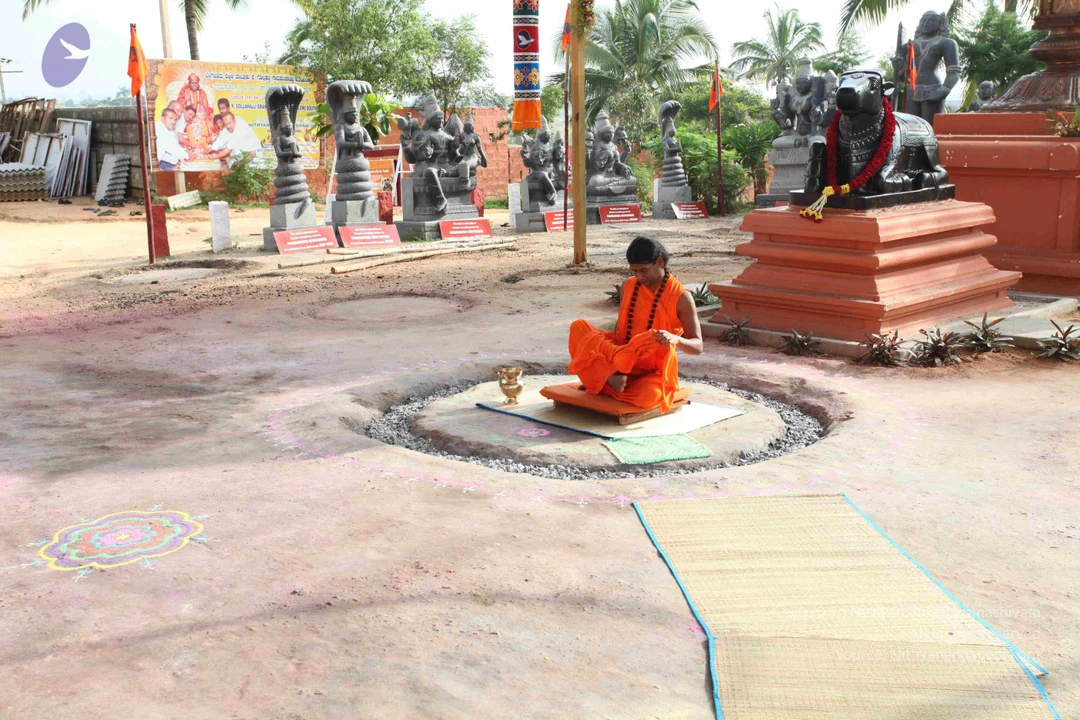
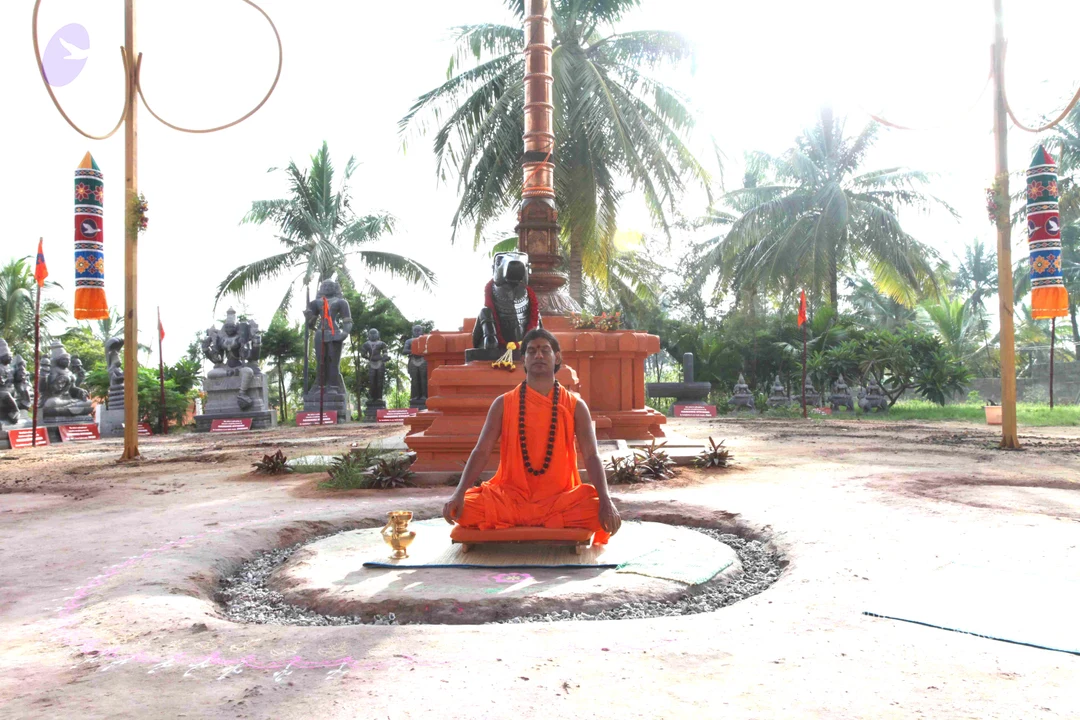
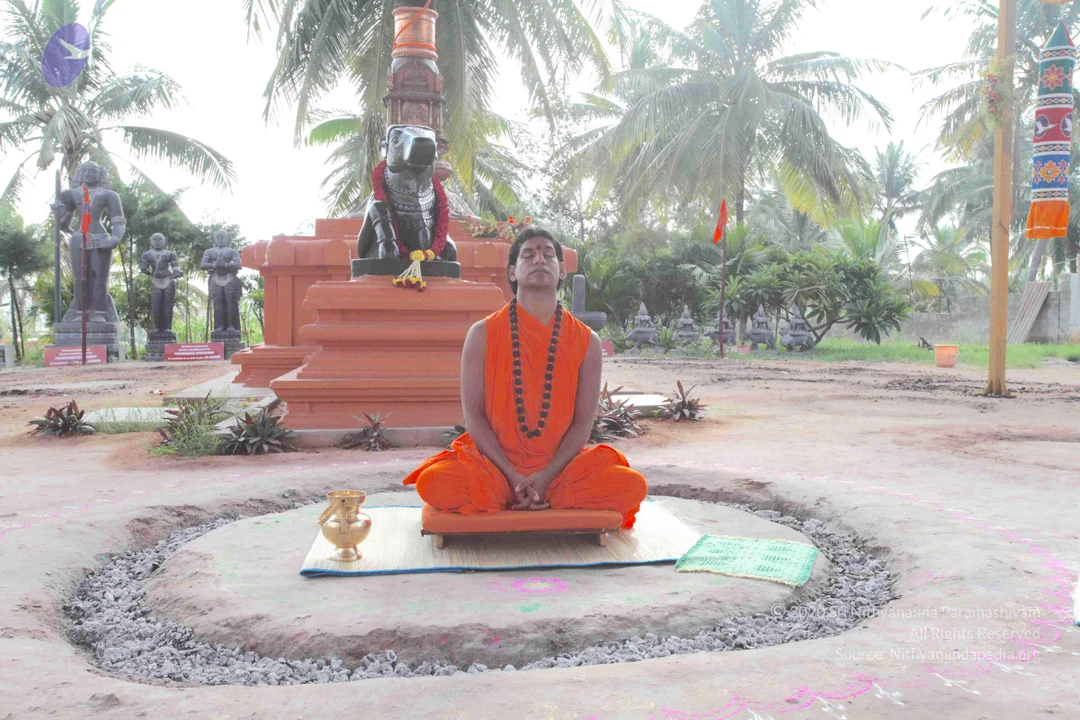
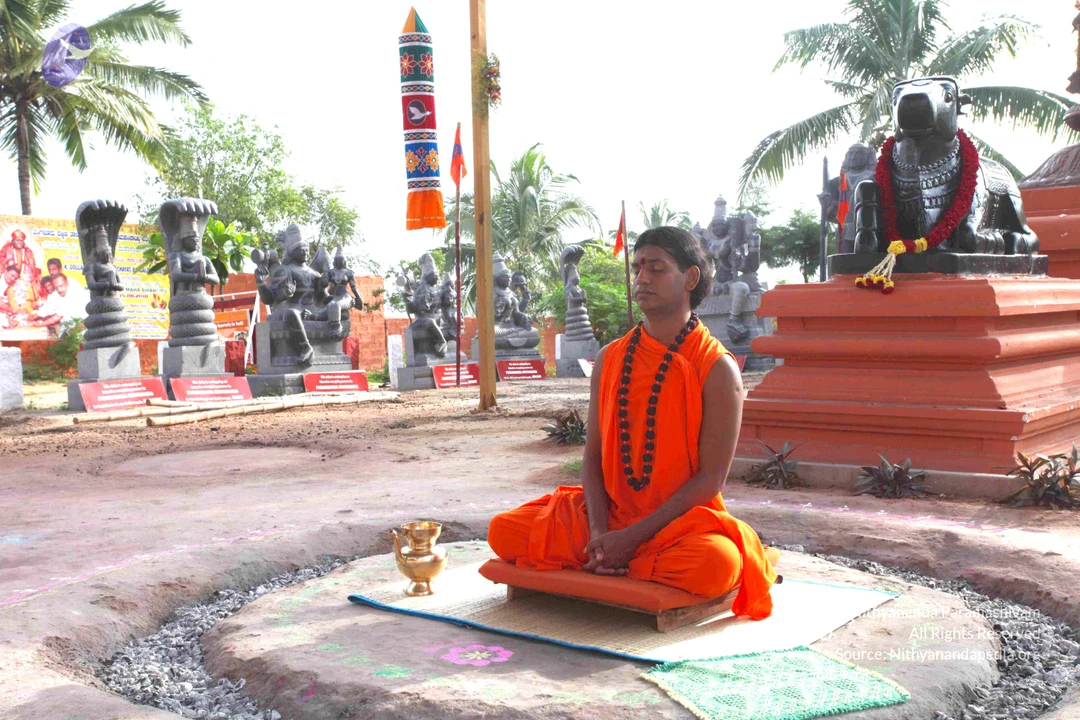
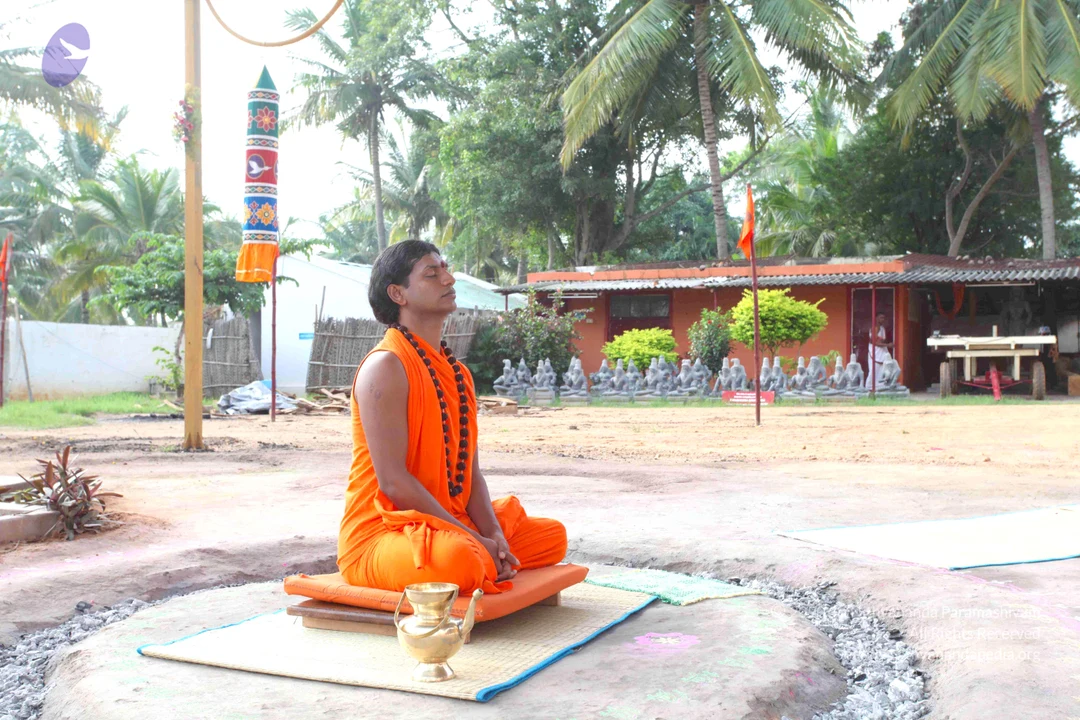
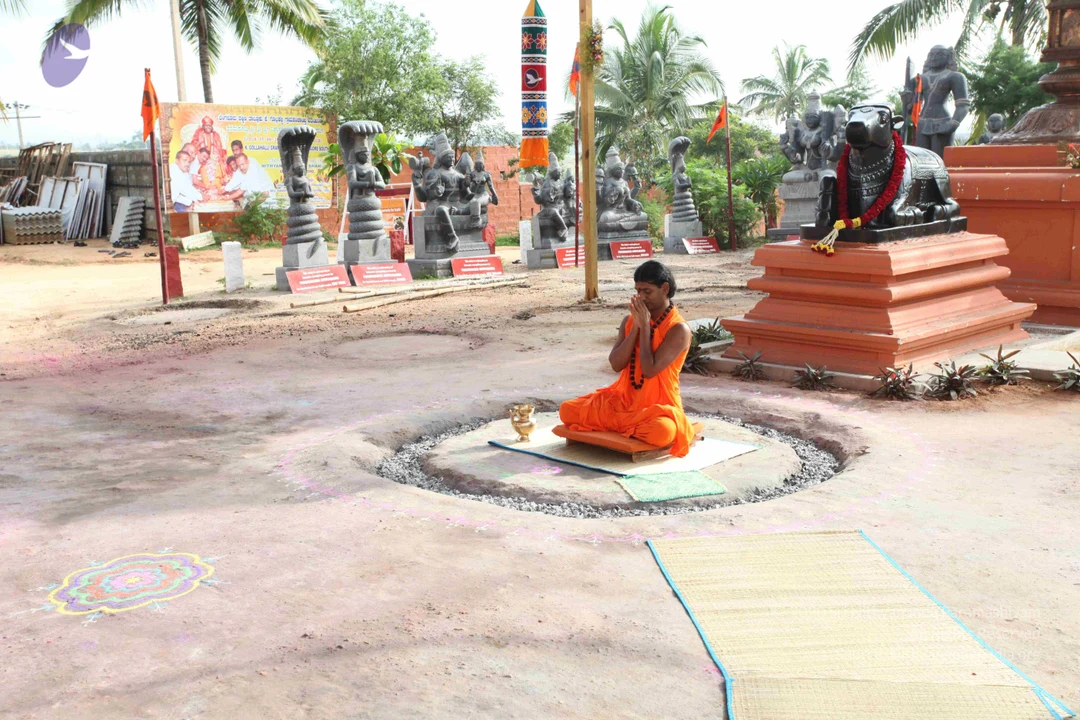
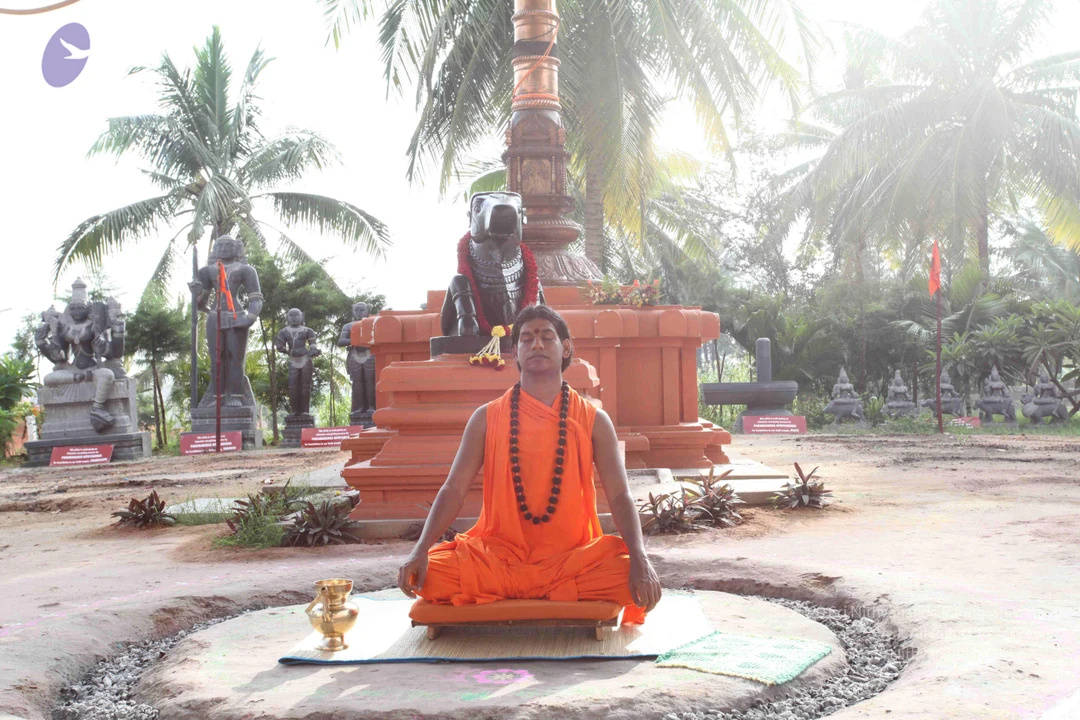
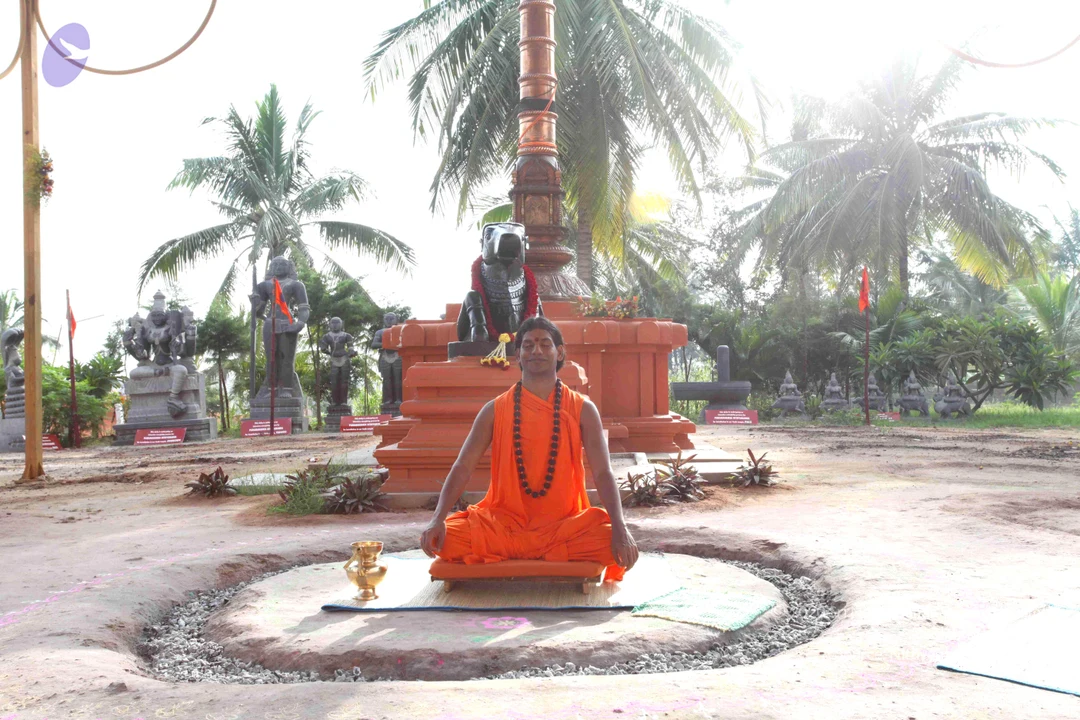
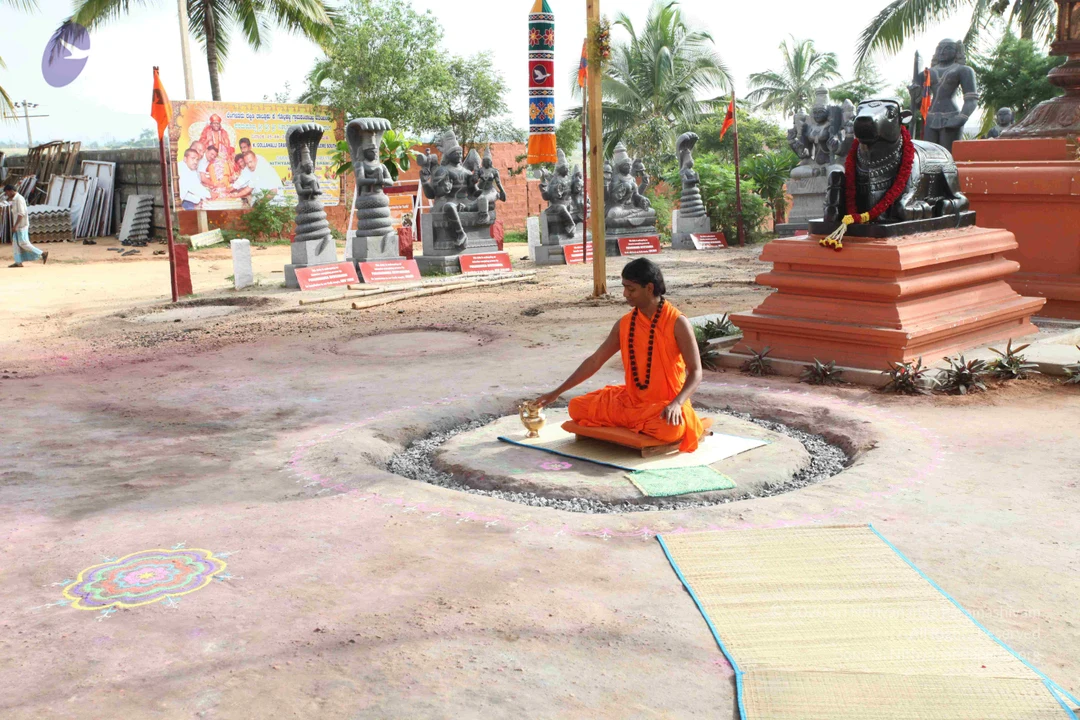
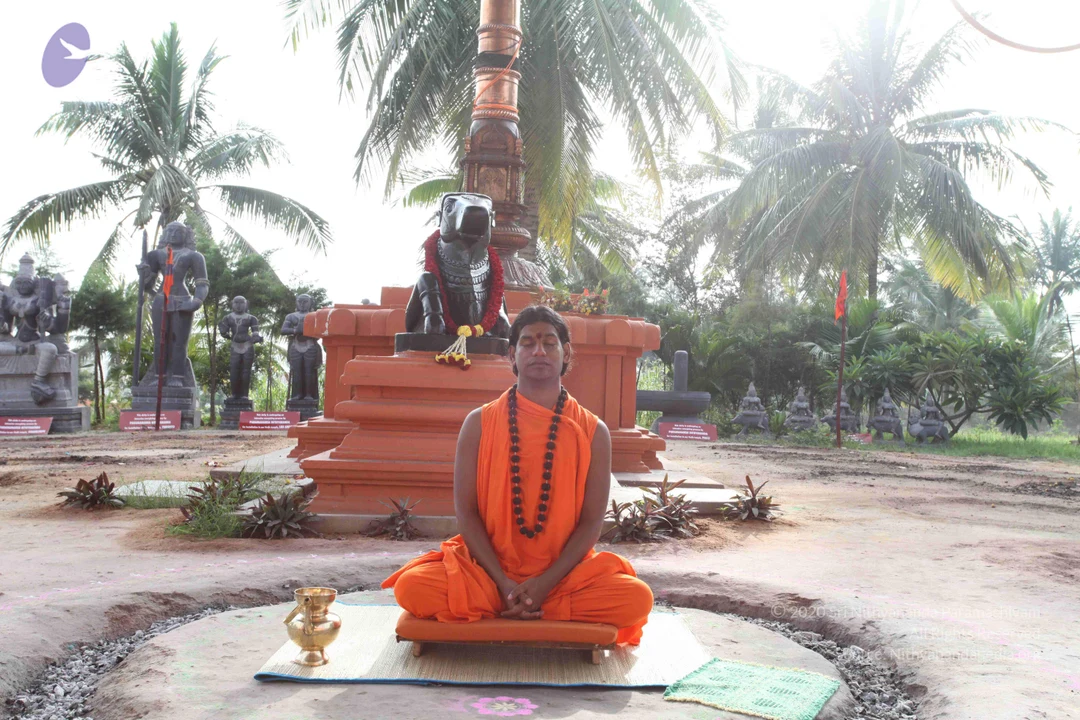
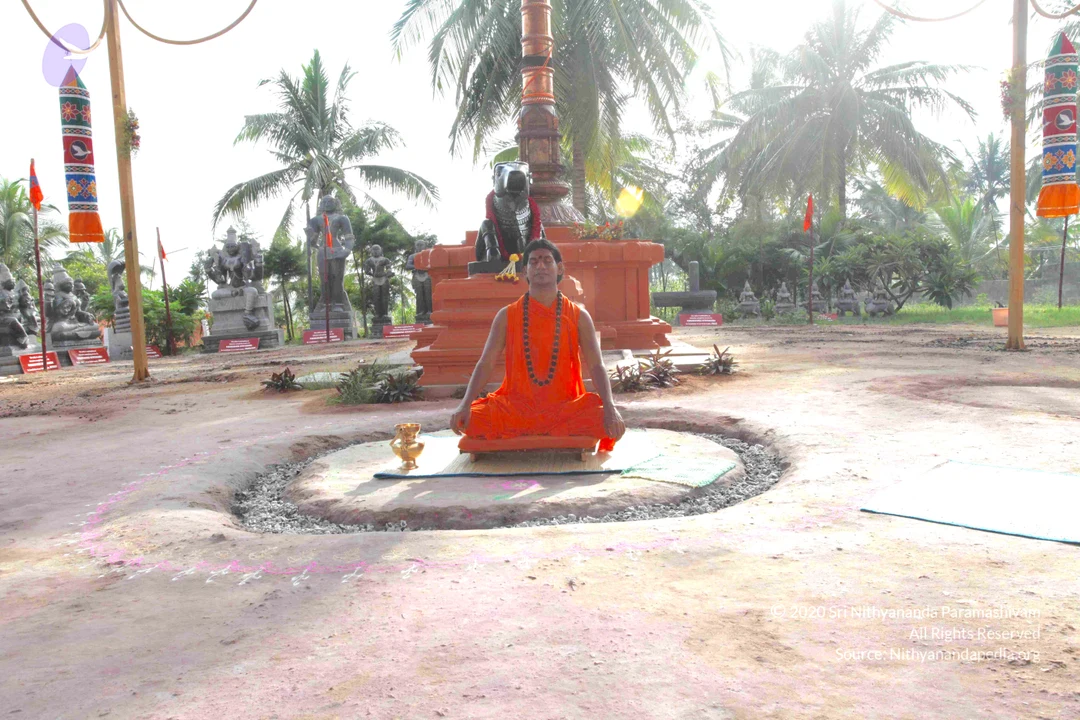
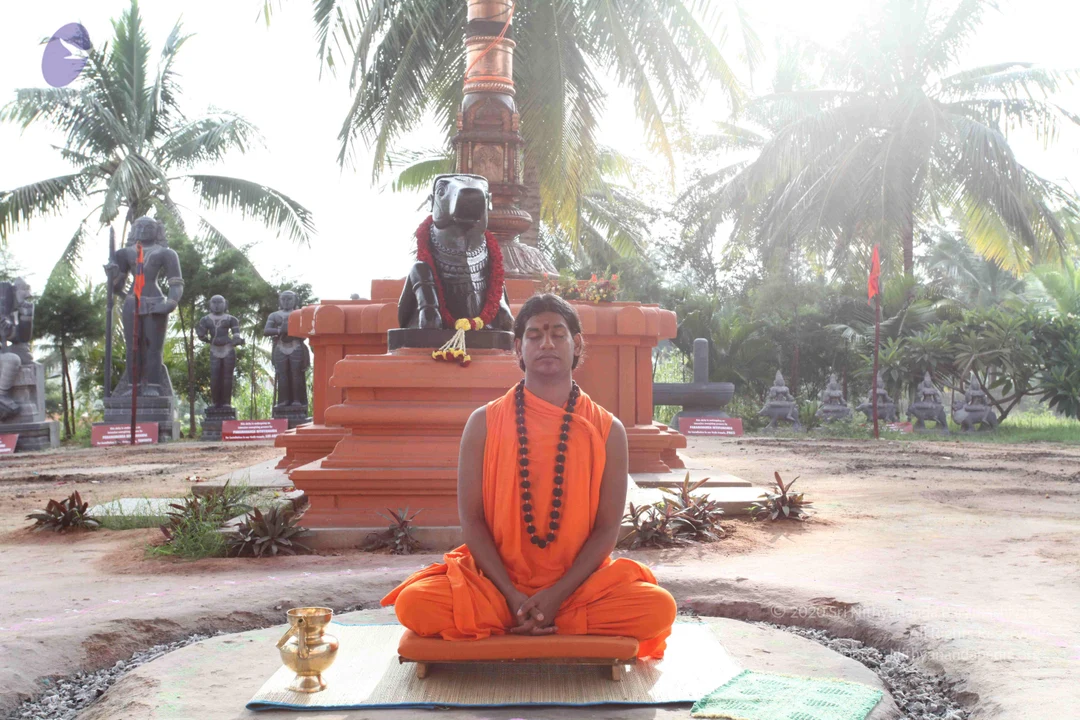
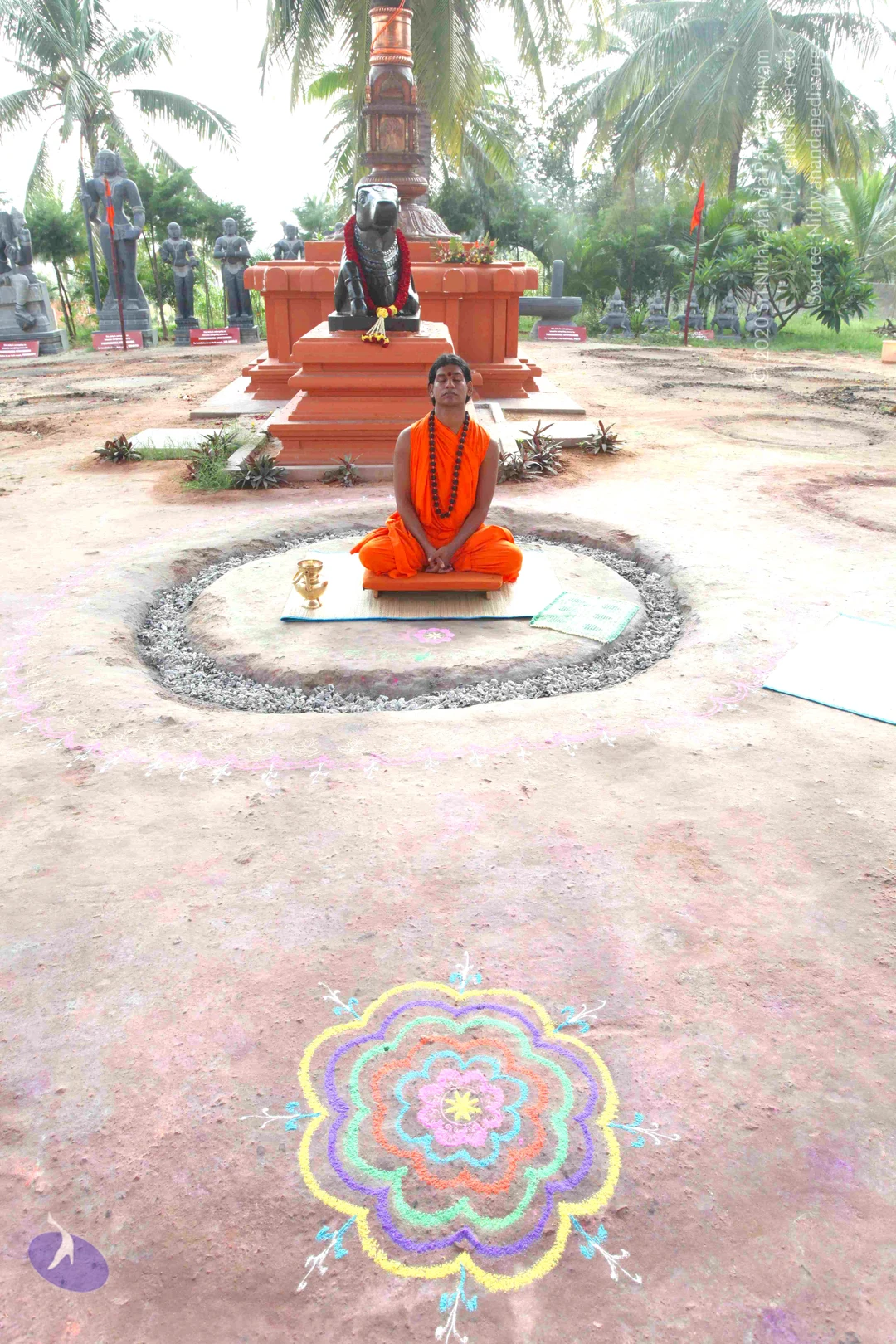
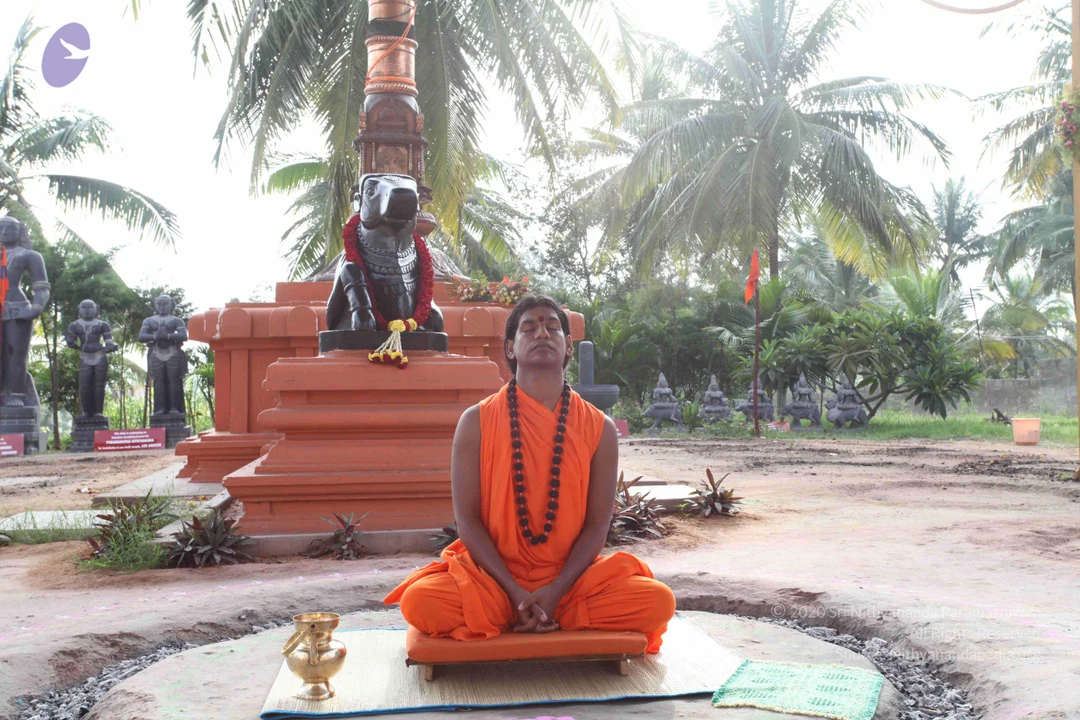
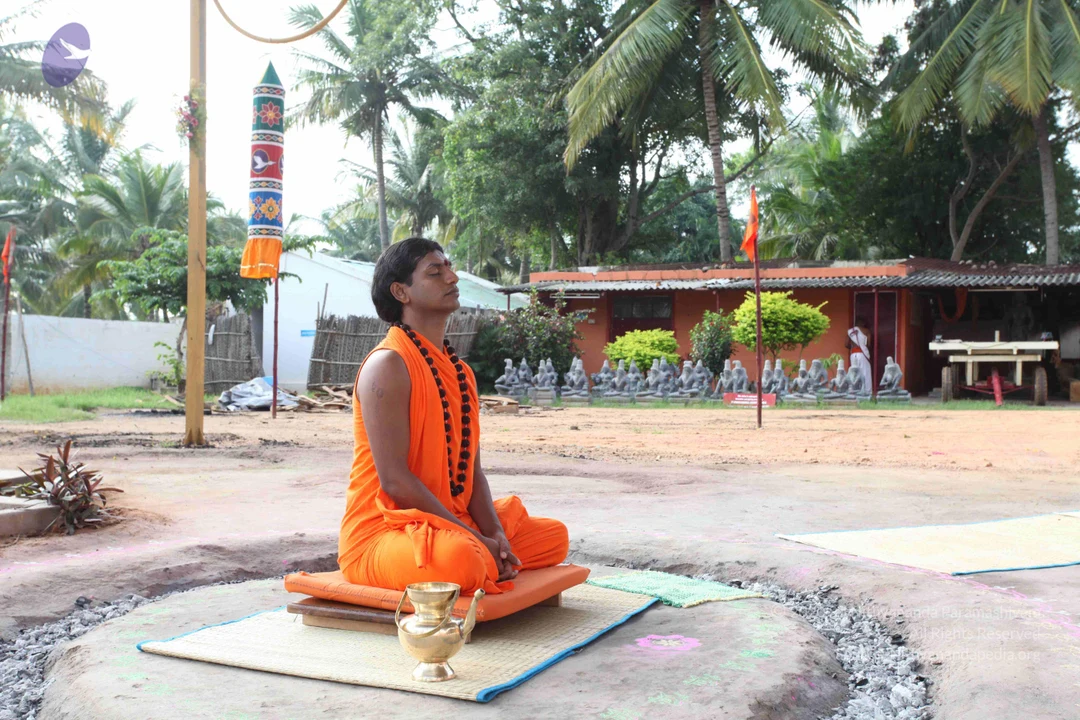
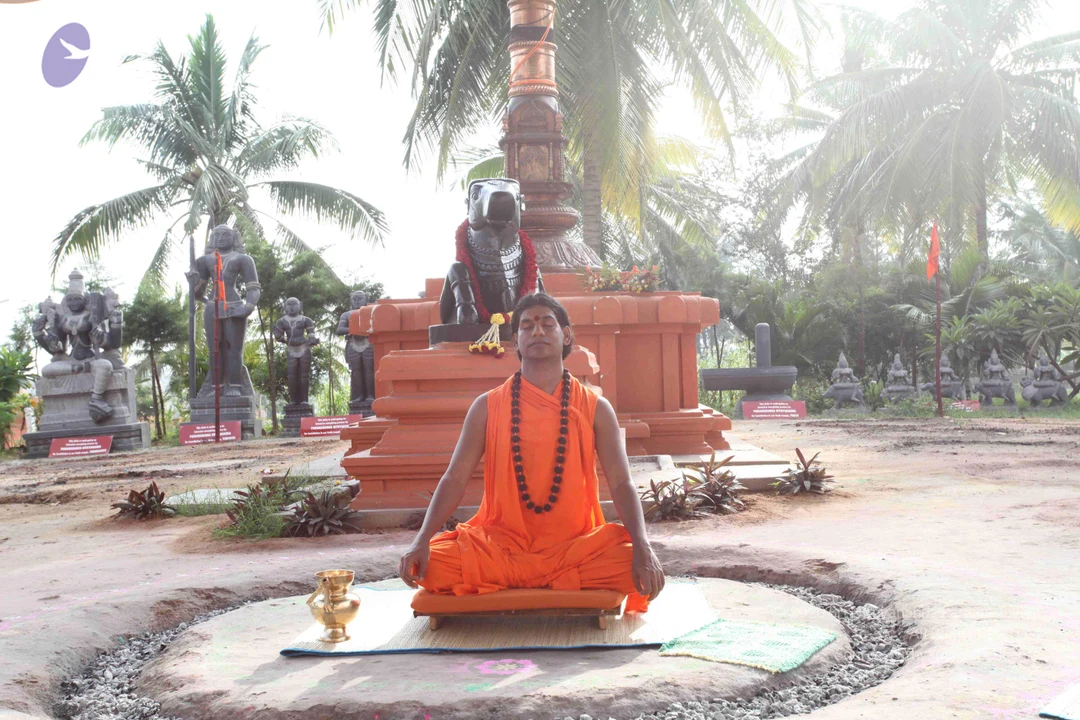
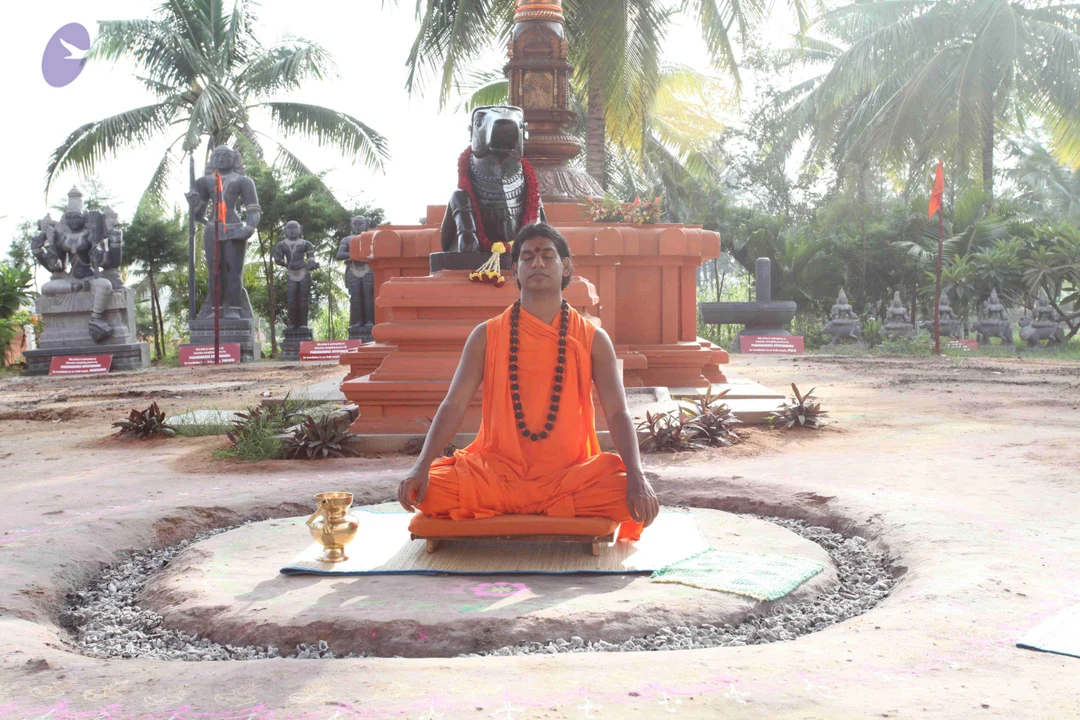
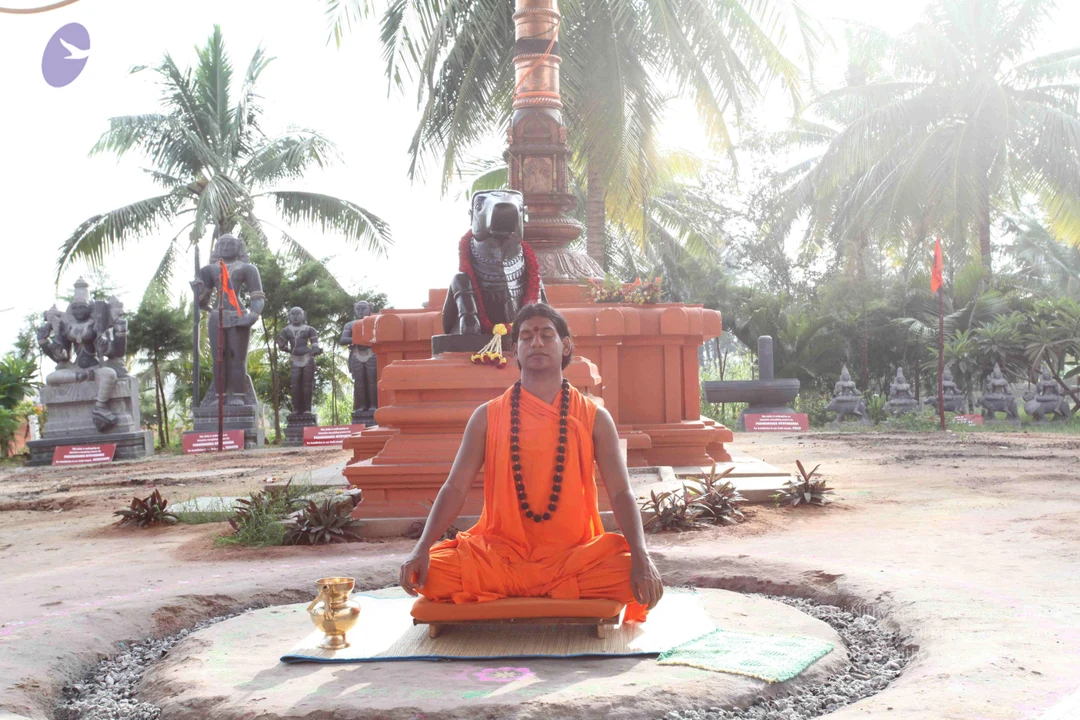
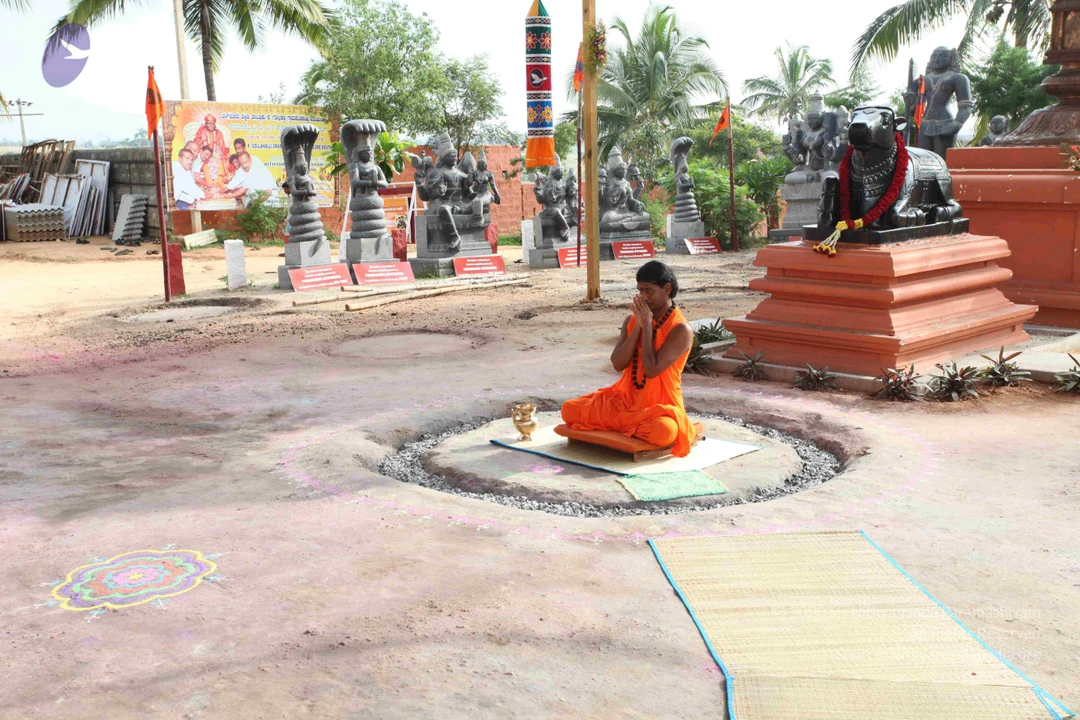
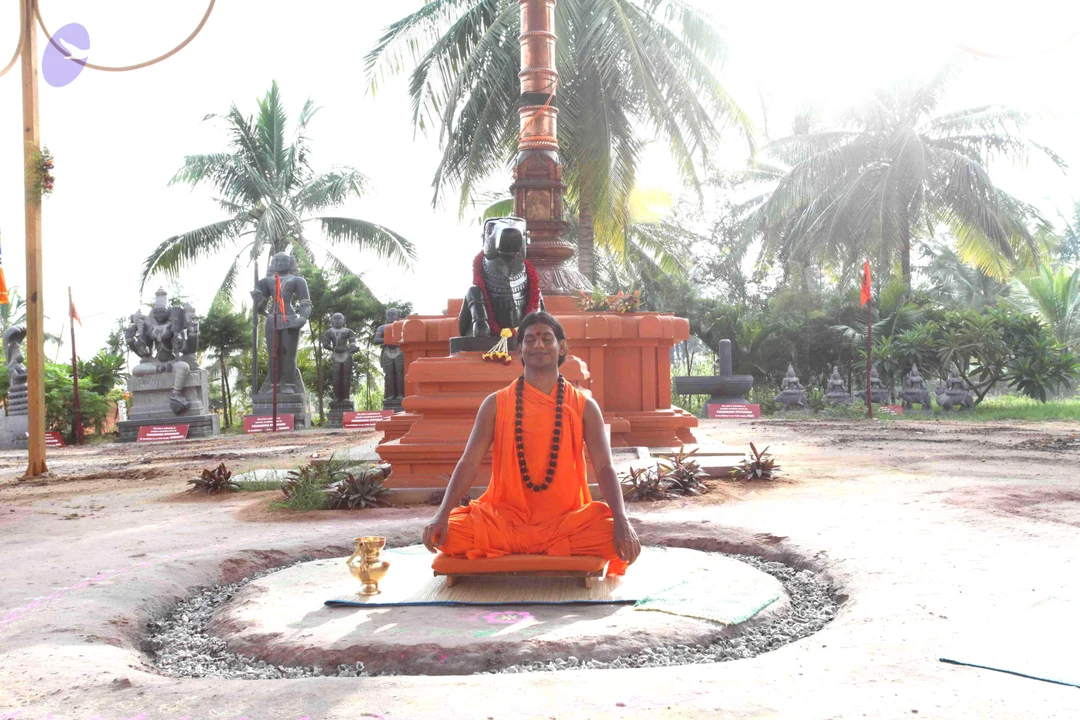
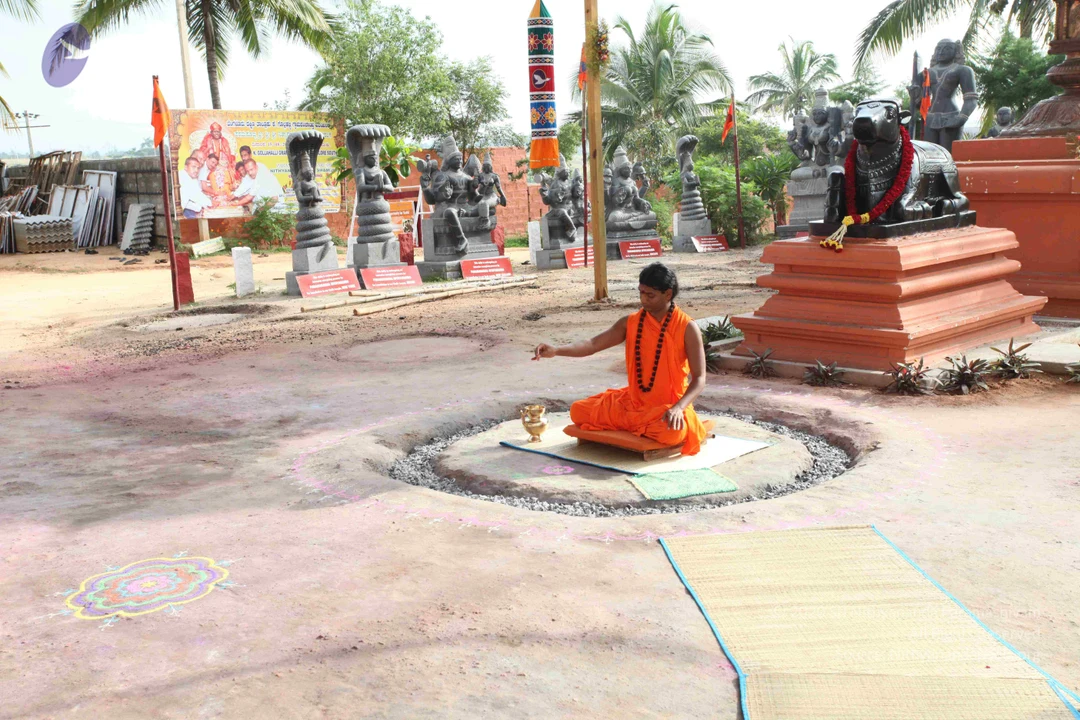
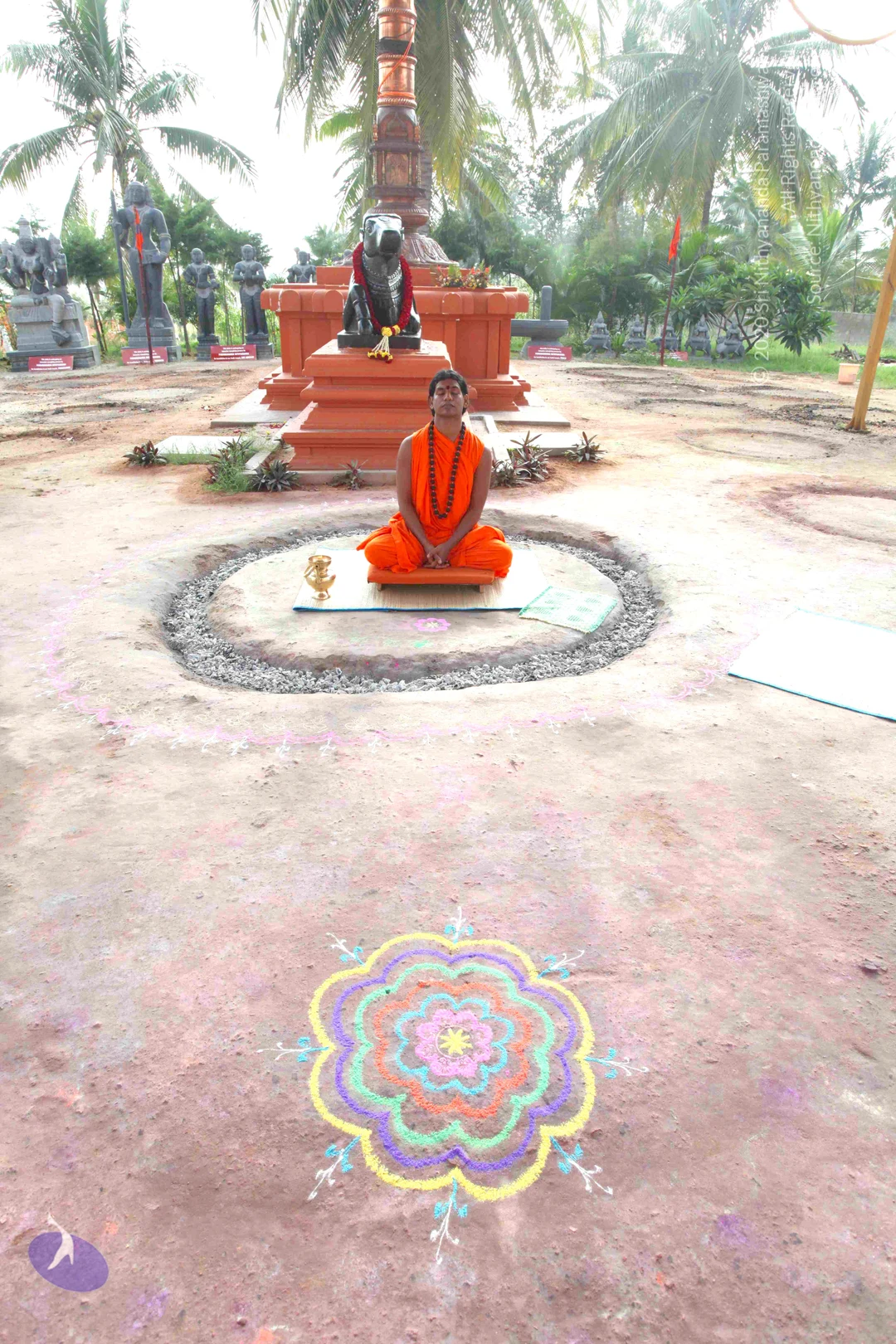
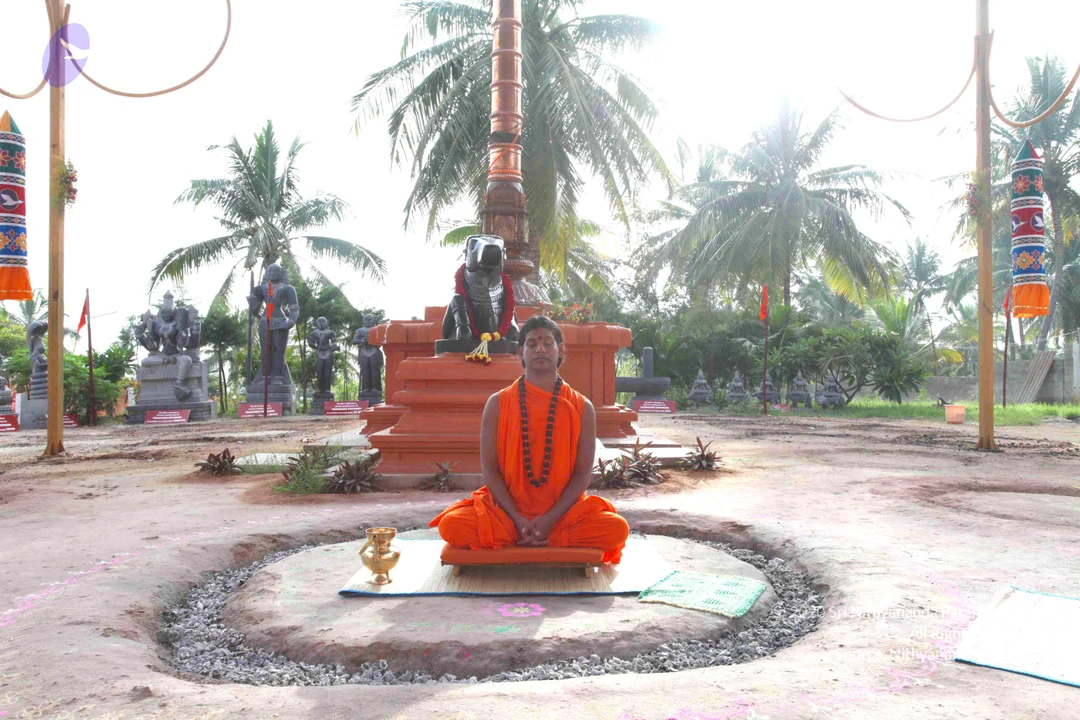
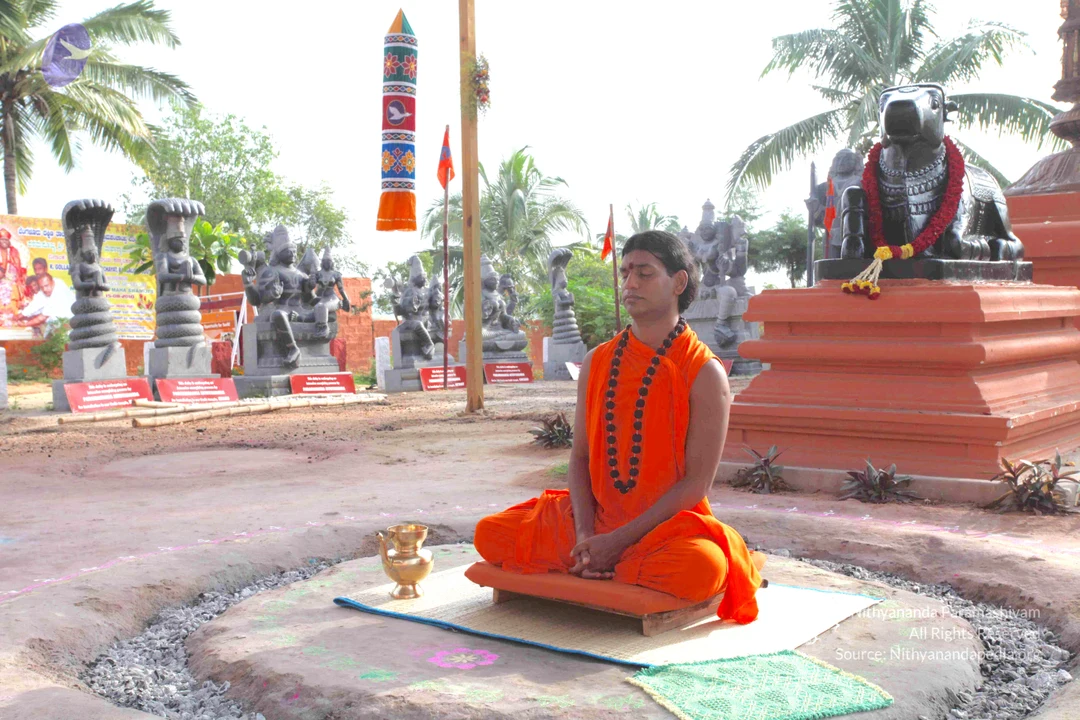
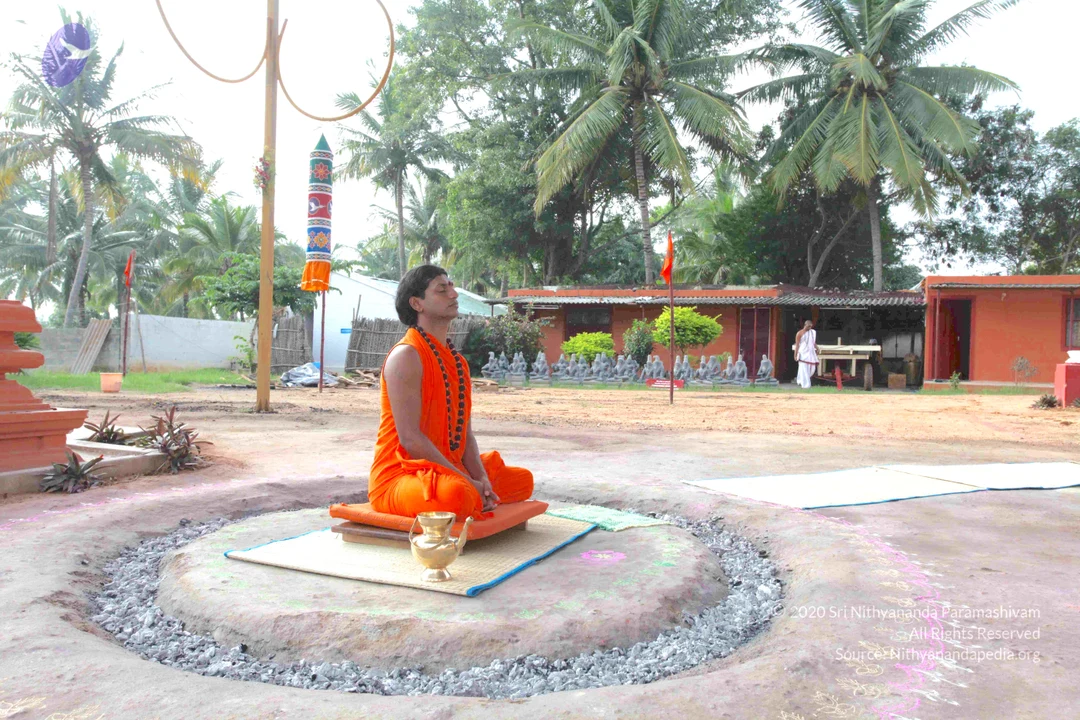
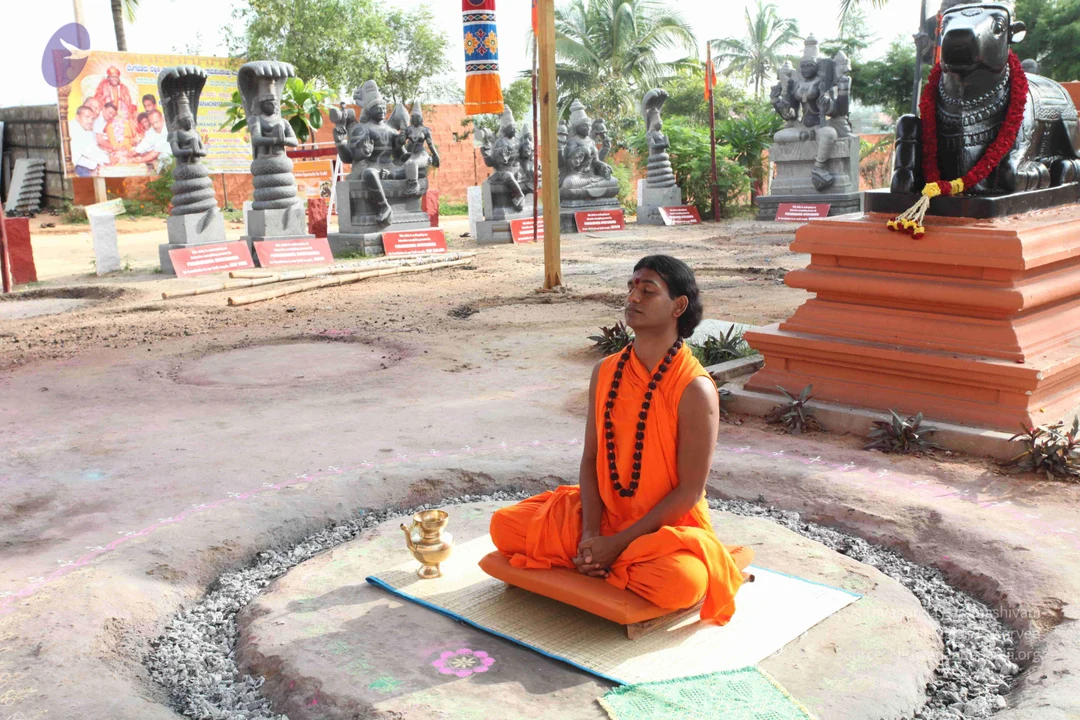
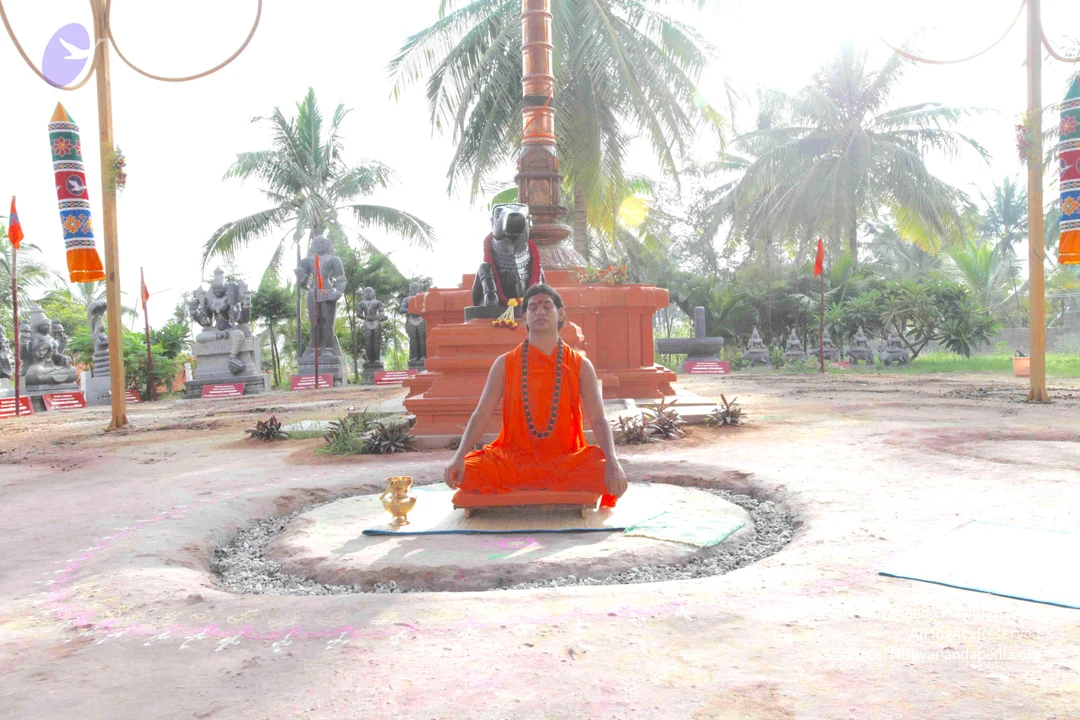
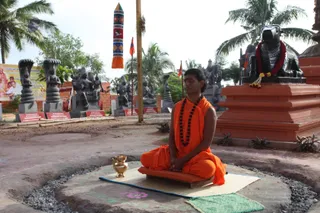
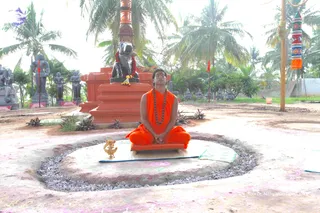
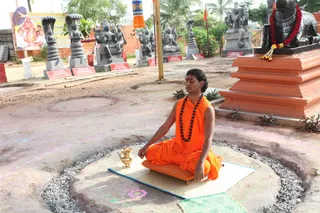
A seated man in saffron-orange robes sits in meditation on a low orange-and-cream platform and mat inside a circular gravel-lined pit, eyes closed and hands folded in his lap. He wears a rudraksha mala and a red tilak on his forehead. A brass kalasha-style vessel sits on the mat beside him. Behind him stands a large black Nandi-style bull statue draped with a red garland, set atop an orange-painted pedestal. Black stone deity statues stand to the left, palm trees and tropical foliage surround the open ground, and tall flagpoles with colourful cloth banners rise on the right. Pink and white chalk-style decorations mark the ground.Outdoors in a palm-lined courtyard, a man in an orange saffron robe with a dark rudraksha mala sits cross-legged on a low orange seat atop a mat, eyes closed in meditation. In front of him is a brass kalasha-style pot and a ring of dark gravel set in sand. Behind him stands an orange stepped pedestal holding a dark stone Nandi bull draped with a red cloth and garland. Black stone deity statues and small red signboards line the left side, and colourful ceremonial banners hang from a pole on the right. Pink and white floor decoration surrounds the site.A seated man in saffron orange robes meditates with eyes closed on a low cushion over a woven mat, set within a circular raised platform edged with grey gravel. He wears a long rudraksha mala and a red tilak on his forehead, hands resting in meditation pose. A brass kalasha-style pot sits to his left. Behind him, an orange stepped platform holds a black Nandi bull statue draped in a red and yellow garland, with more black stone deity sculptures, a stone lingam and an orange flag in a garden of palms and plants. Pink and white rangoli-like designs decorate the ground. The scene suggests a meditation or puja at an outdoor shrine.A man seated cross-legged with eyes closed in meditation on a low wooden seat atop a woven mat in an outdoor courtyard. He wears an orange saffron robe, a dark rudraksha mala around his neck, and a red tilak on his forehead, with hands folded in his lap. Beside him on the ground sits a brass kalasha vessel. Behind him stands an orange stepped stone platform holding a black Shiva lingam draped with a red cloth and garlanded with marigolds, flanked by palm trees and granite deity statues with red name placards. A tall orange flagstaff with a saffron pennant stands to the right. Swamiji (probable): long hair, saffron robe, rudraksha mala and tilak cues match the event's presenter.Outdoor photo of a seated man in saffron-orange robes with a long rudraksha mala, sitting cross-legged on a low platform inside a gravel-ringed circle on bare earth. A brass kalasha or vessel sits to his left on a woven mat. Behind him stands an orange stone pedestal topped with a black Nandi bull statue garlanded in red, flanked by black stone deity and figure sculptures, palm trees and tall ornamental poles with colourful fabric tassels. Pink and green rangoli-style markings decorate the ground.Outdoor photo of a man seated cross-legged in meditation on an orange cushion and woven mat in an open temple garden. He wears an orange saffron robe with a long dark rudraksha mala, eyes closed and hands folded in his lap. Beside him stands a brass kalasha-style pot on the ground. Behind him are rows of dark stone deity murti statues, a large black Nandi bull with a red and white flower garland, orange temple plinths, flags and palm trees under a pale sky. A tall striped decorative banner hangs on a pole. Swamiji (probable): the seated man has long swept-back hair, saffron robes and a rudraksha mala, matching the page's claim that Swamiji is present; the identification is appearance-based only. A printed banner on the left shows a portrait labelled with a readable caption.

Paadapooja
13 photosSource gallery
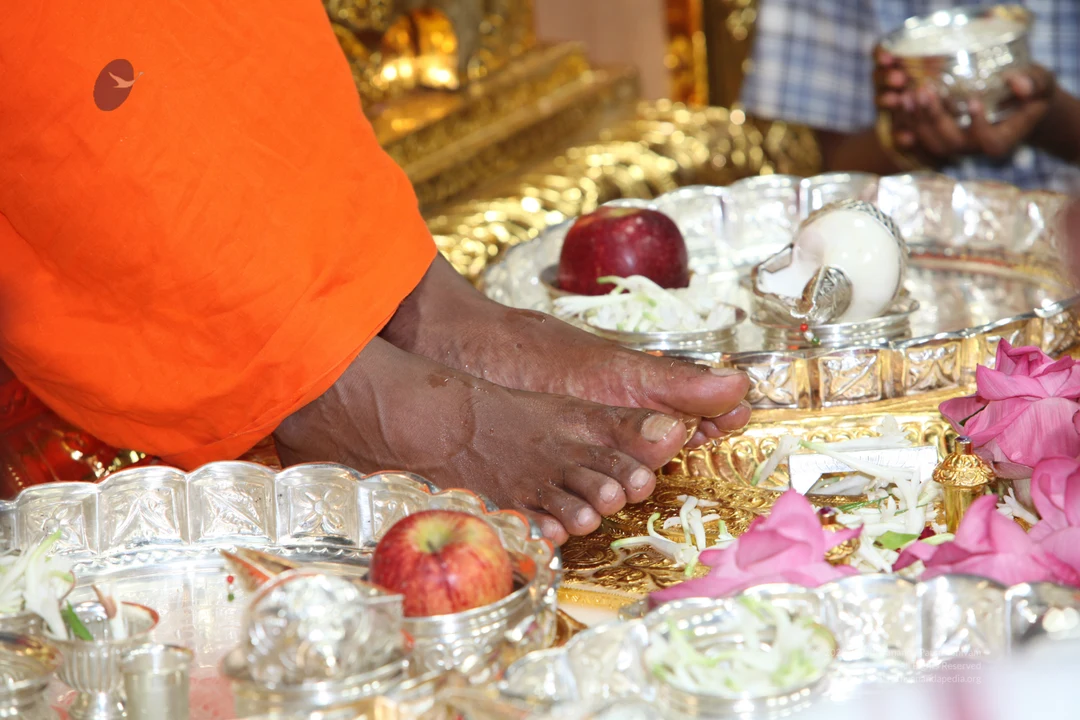
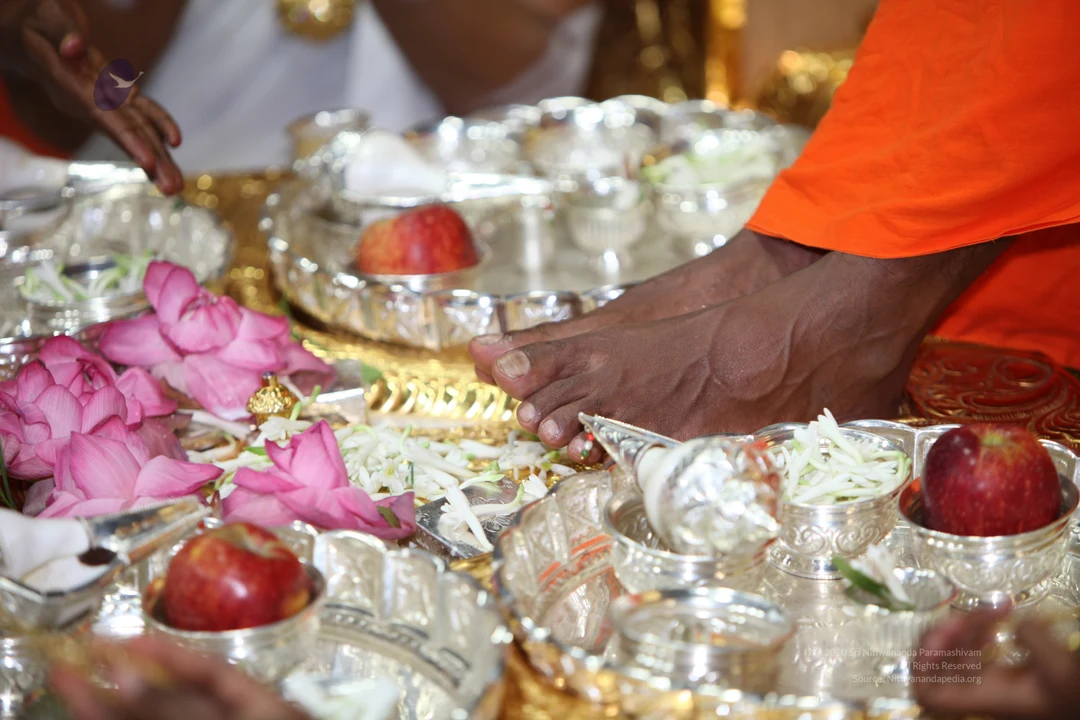
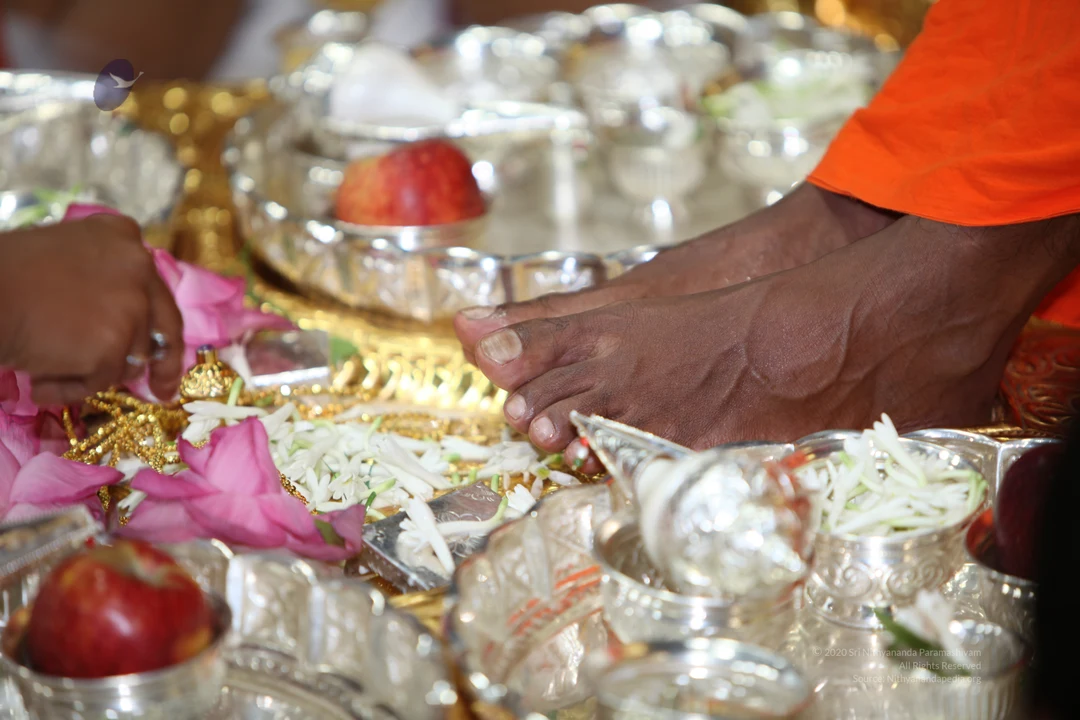
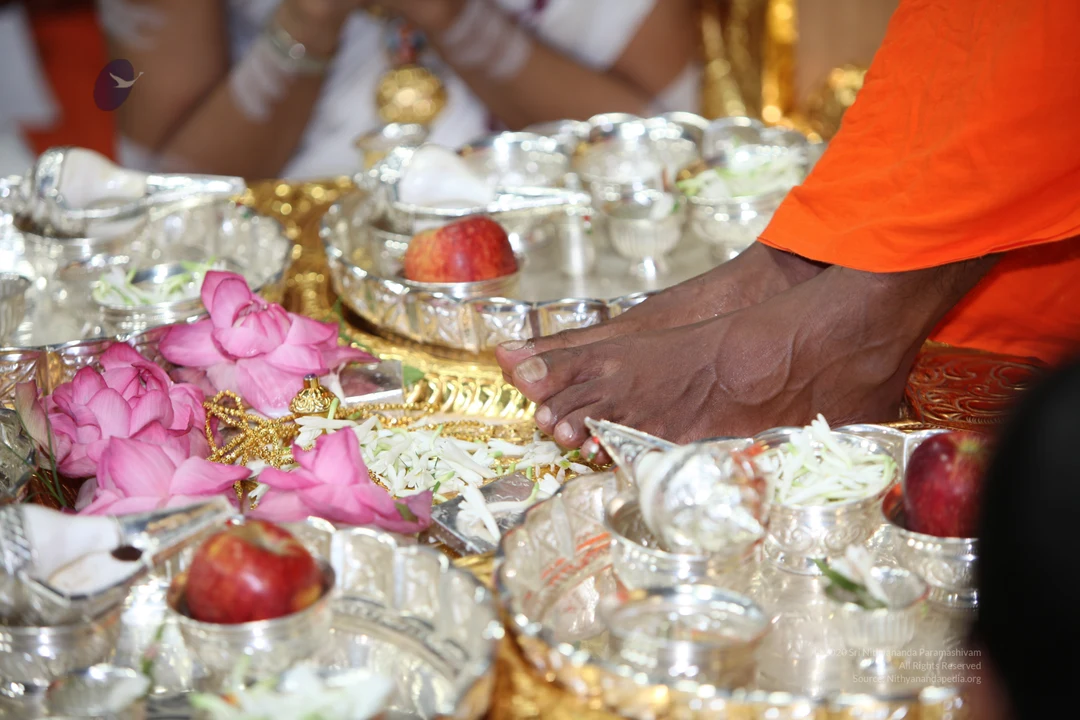
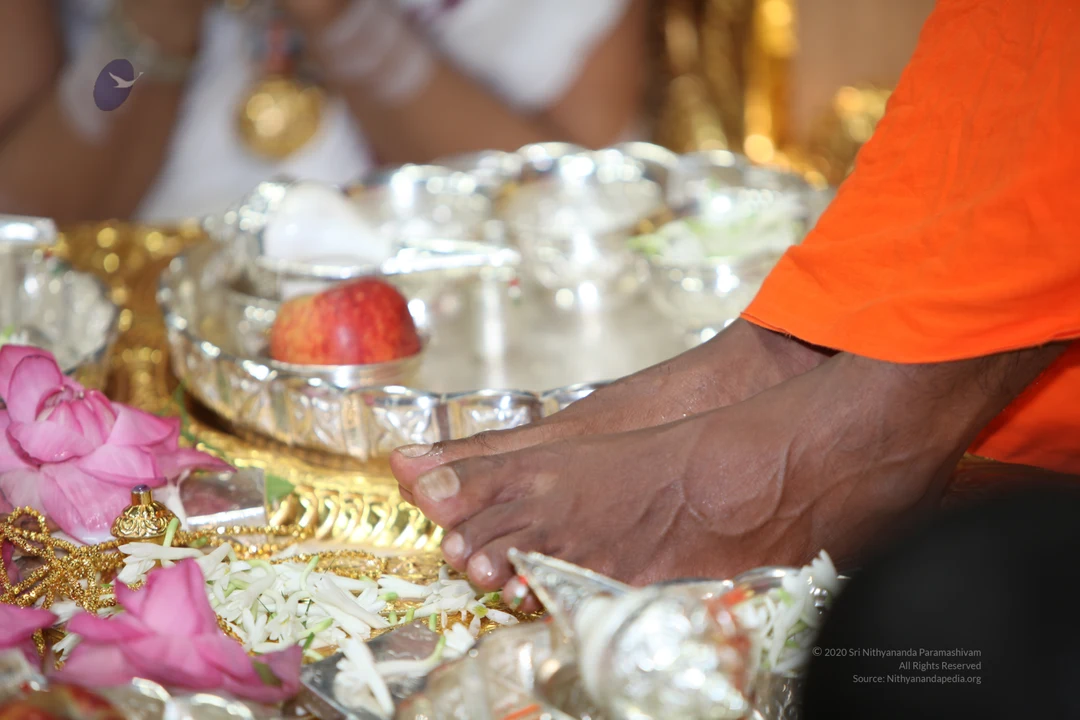
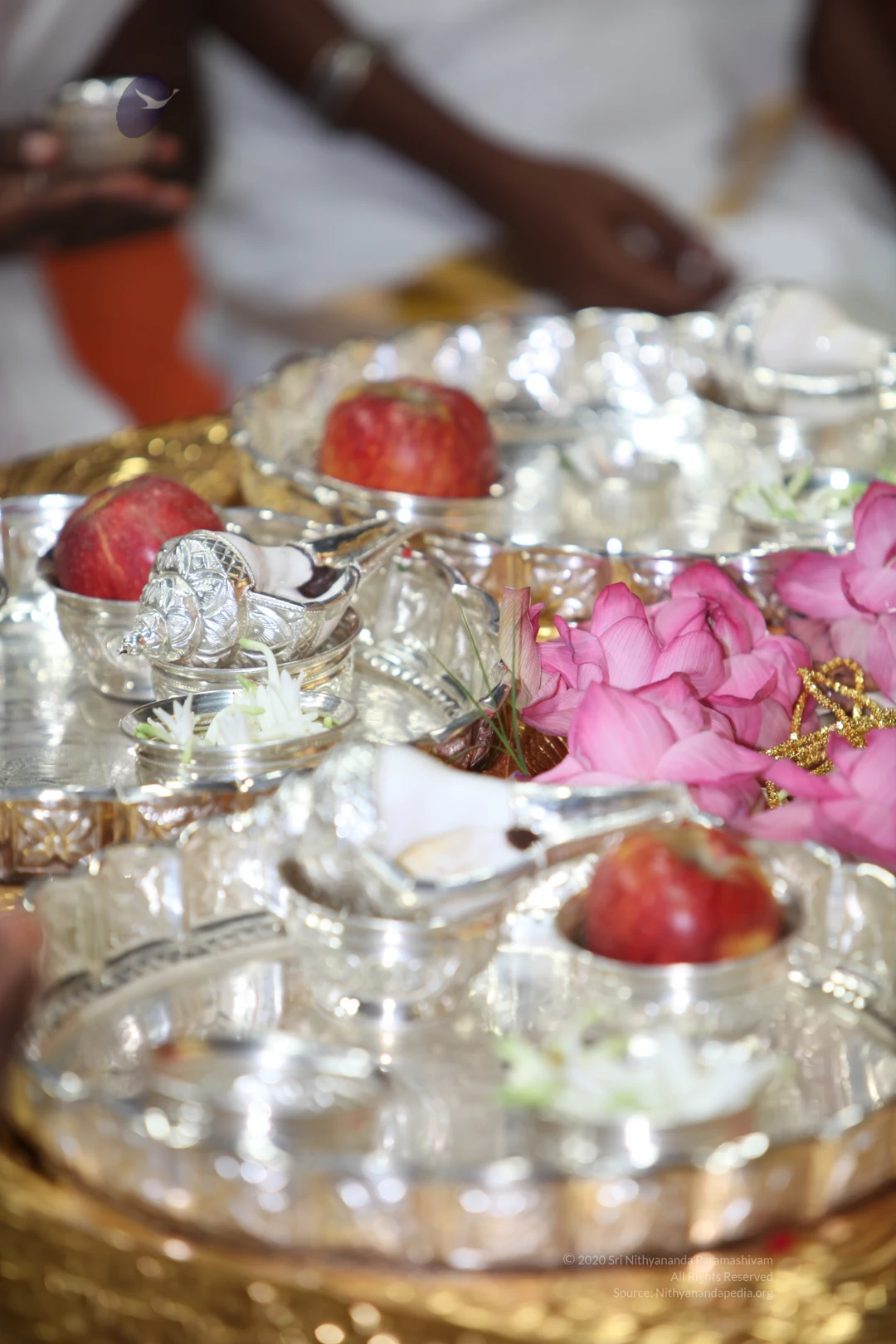
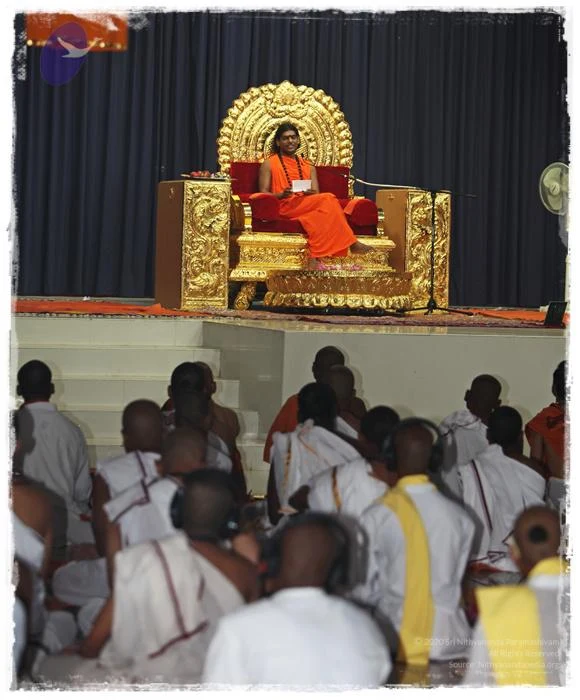
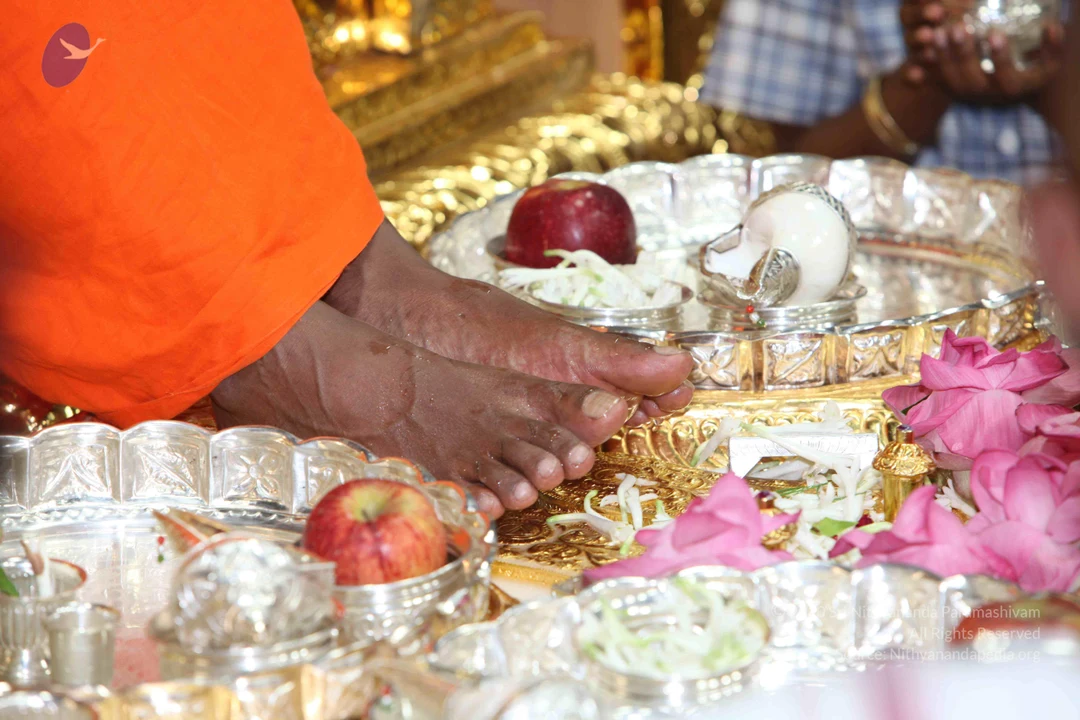
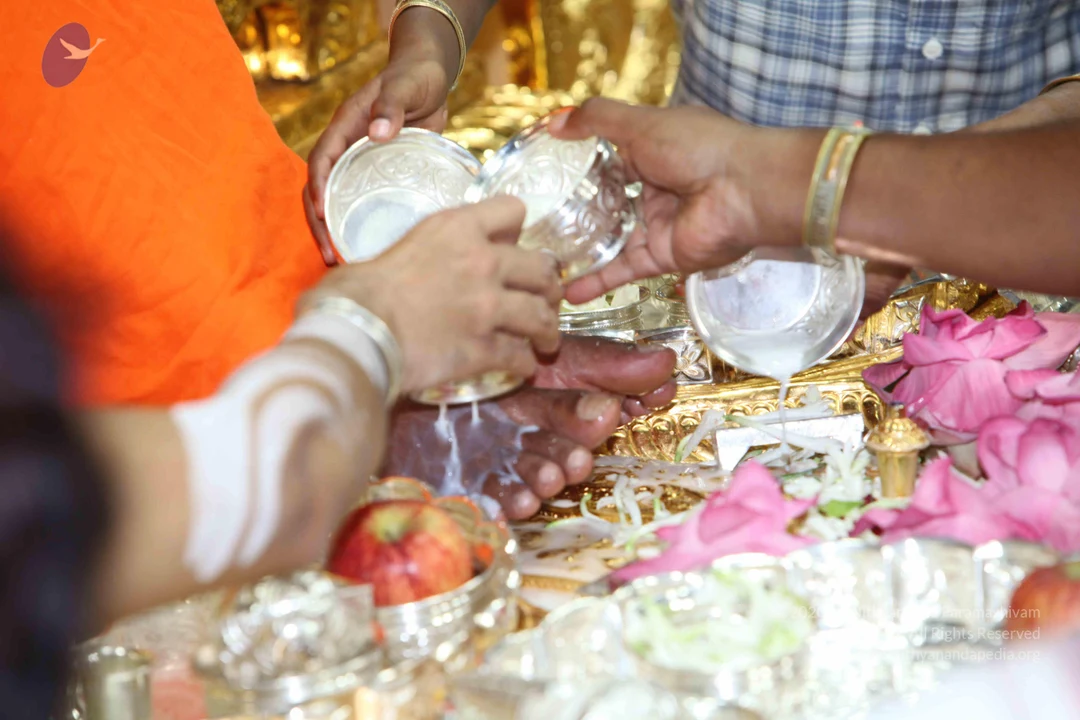
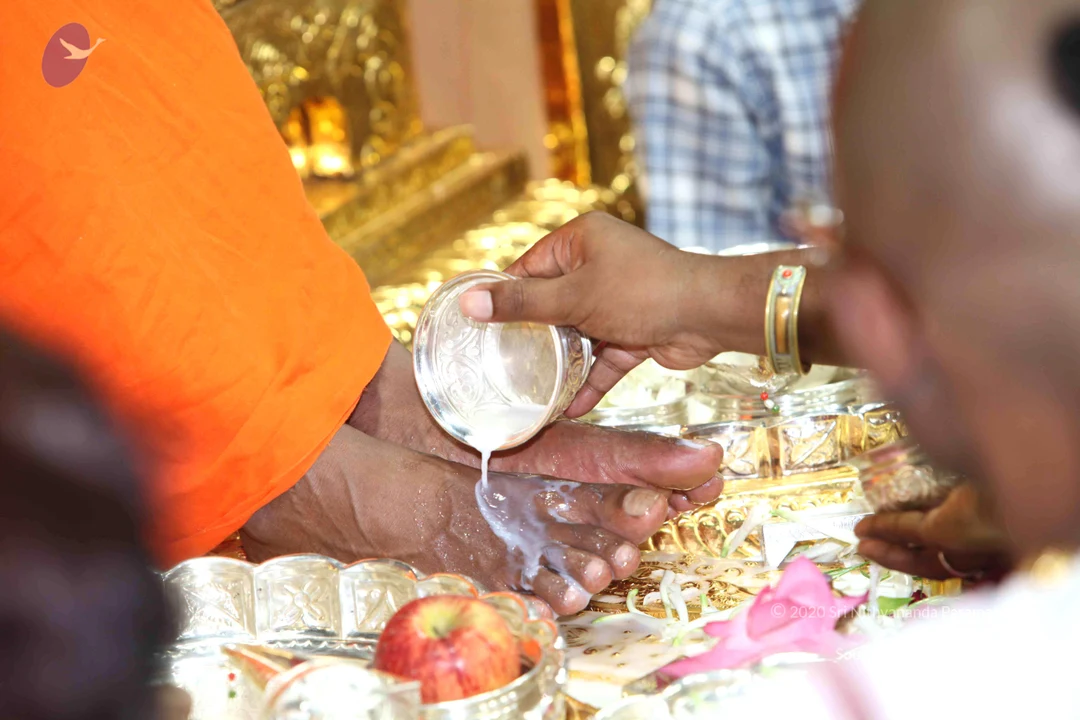
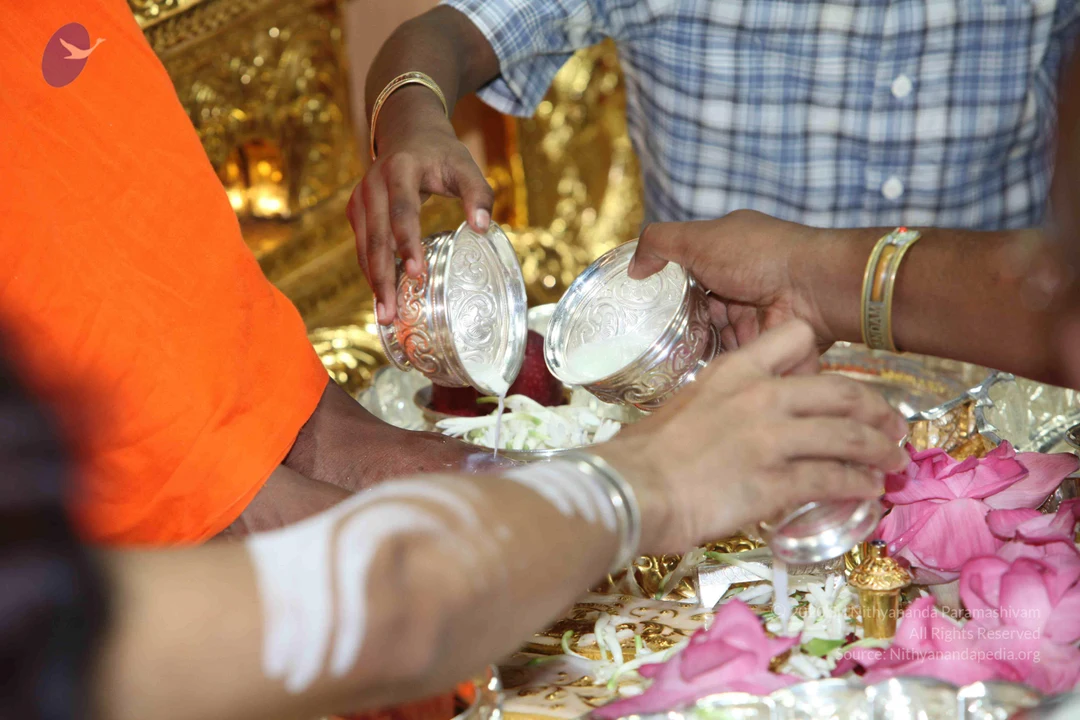
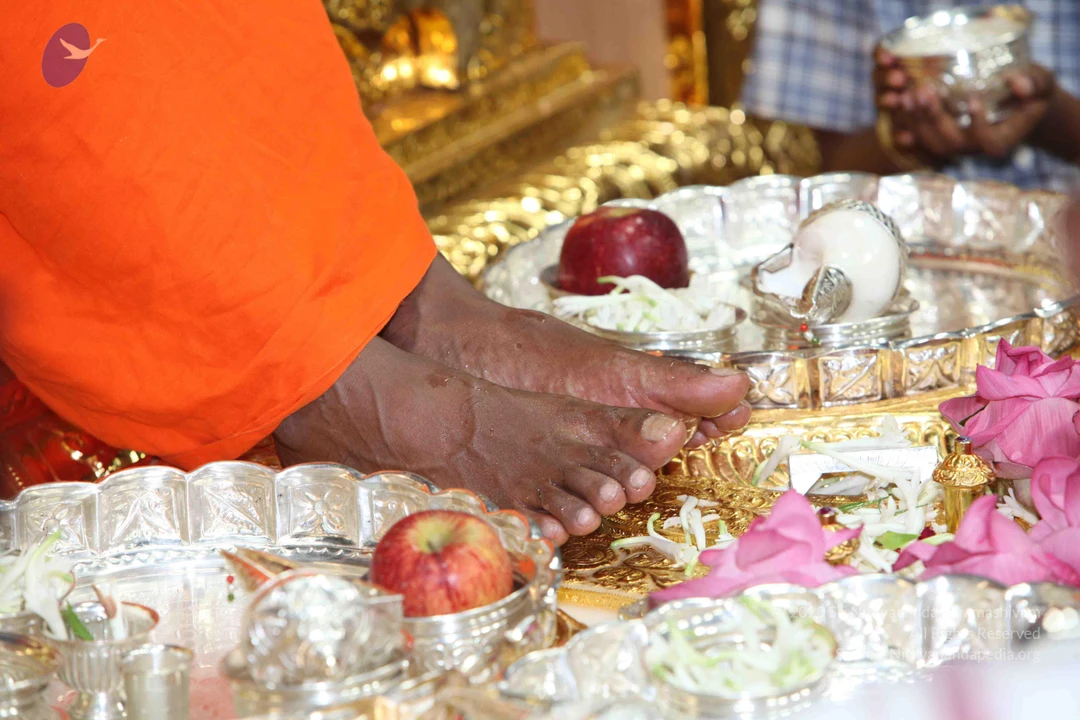
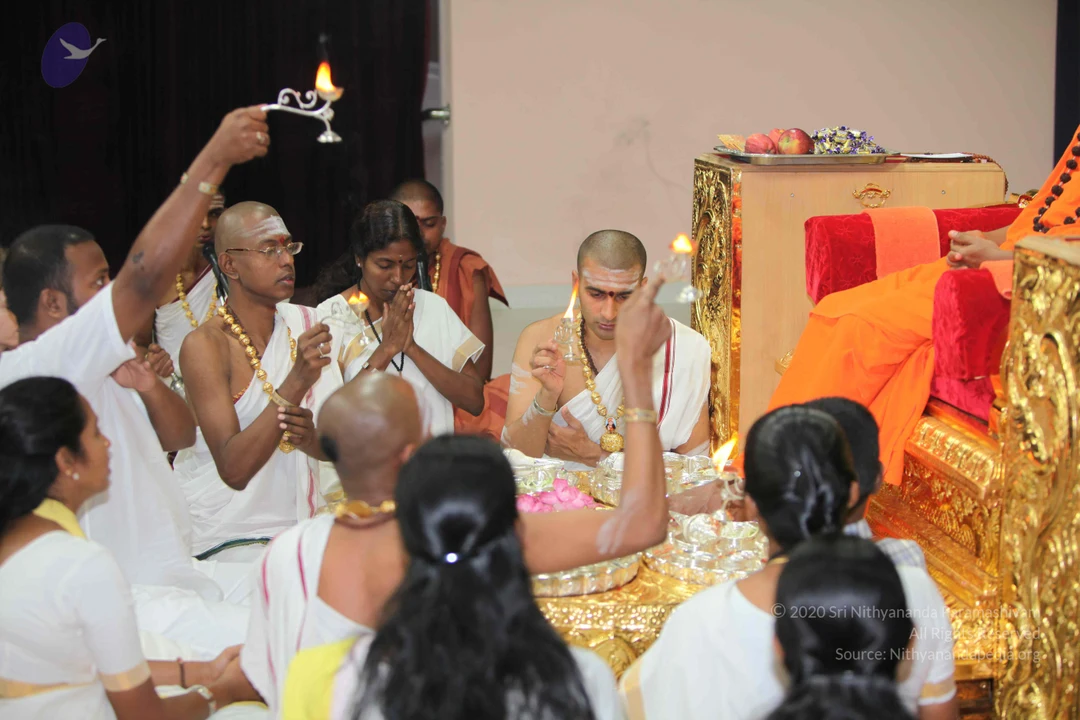
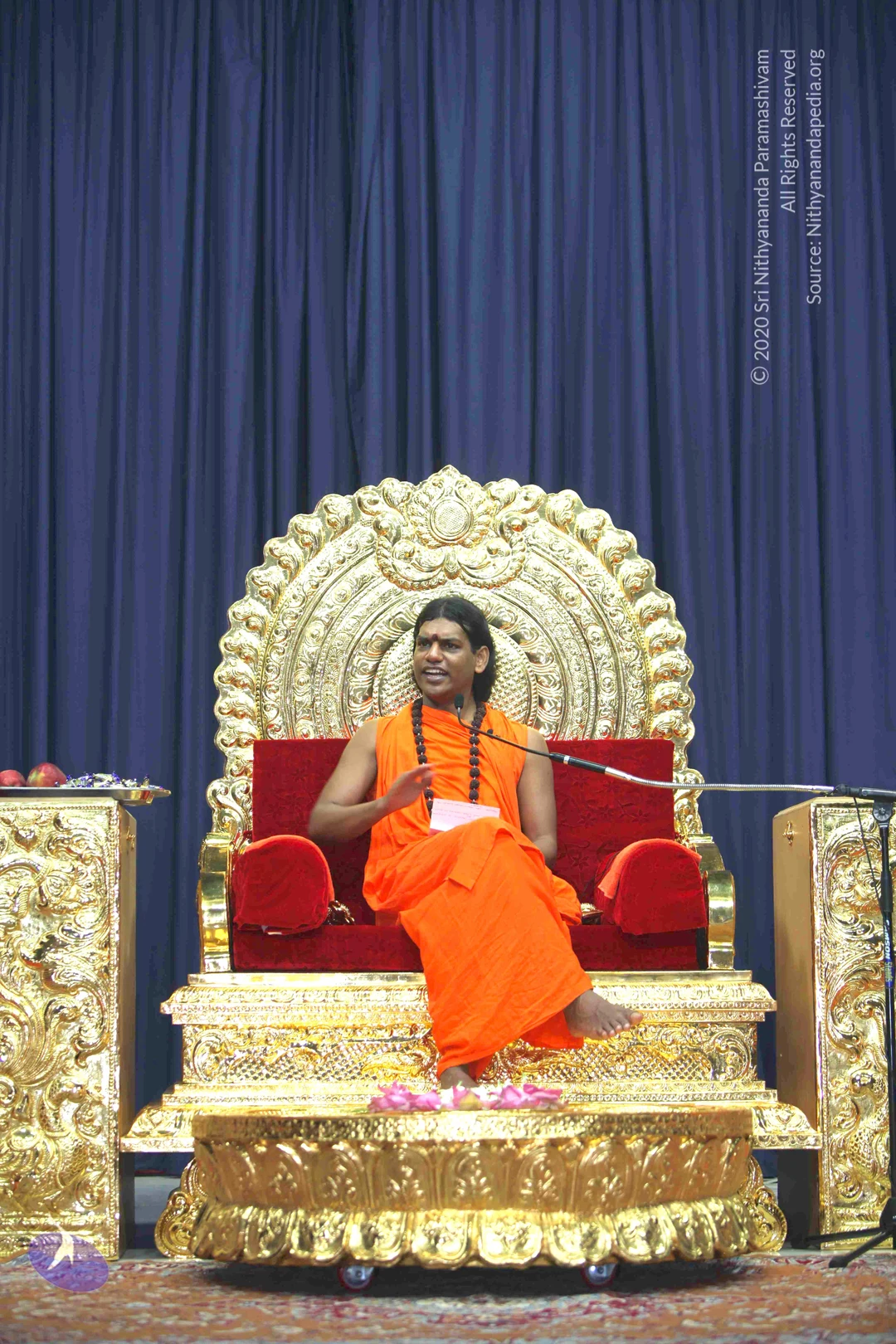
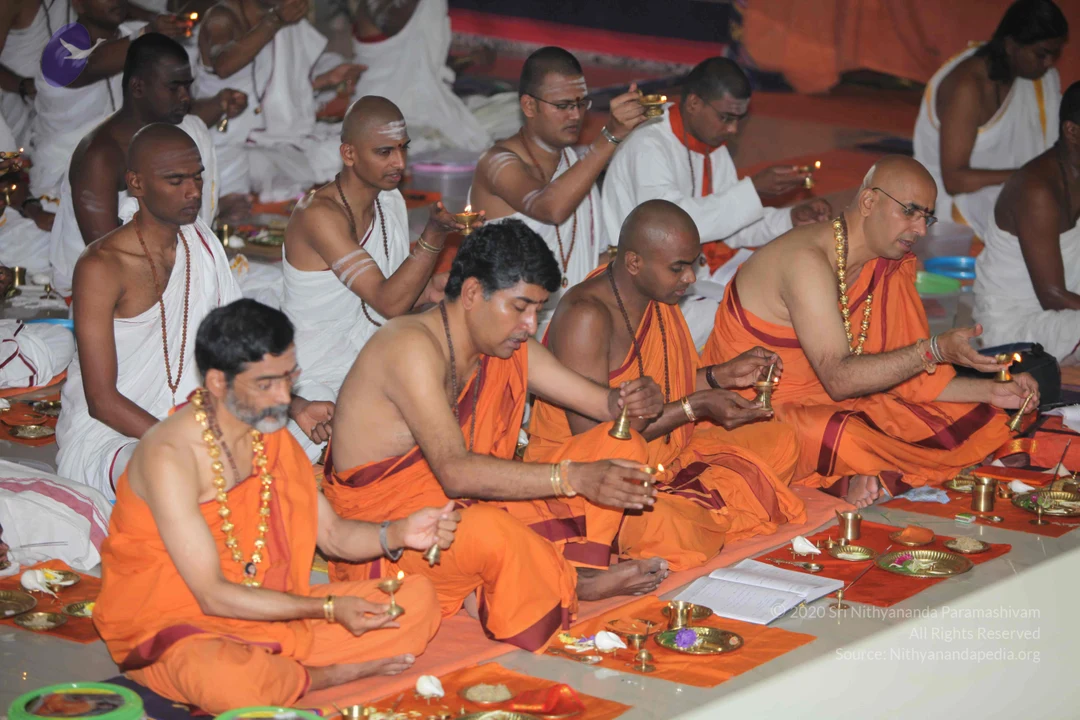
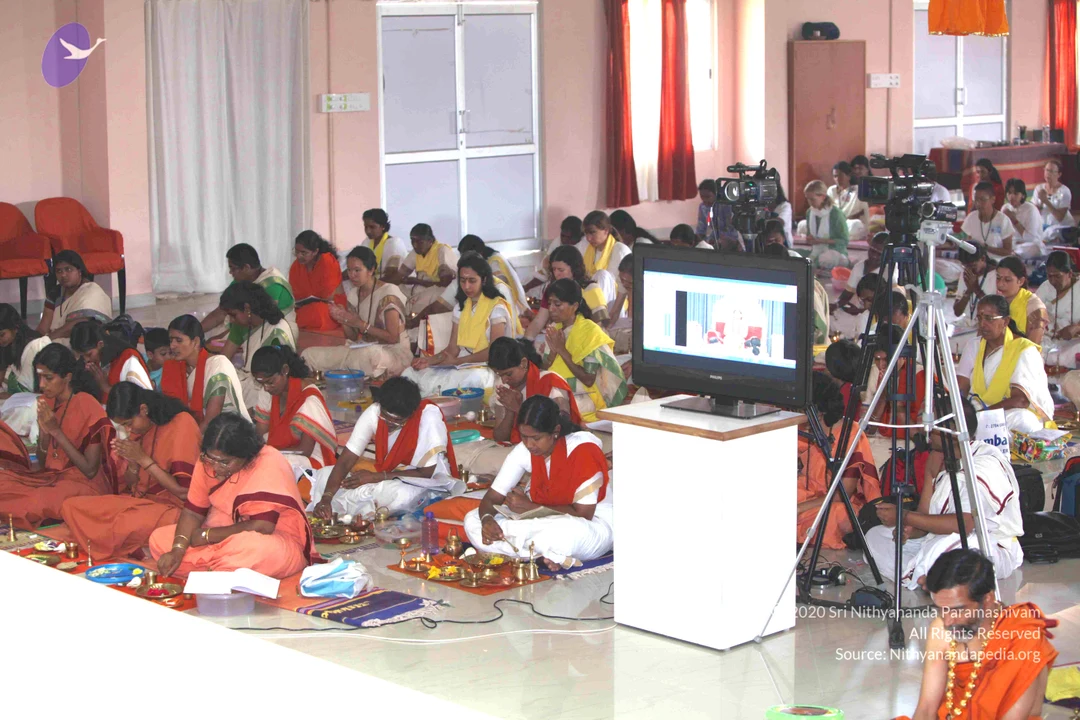
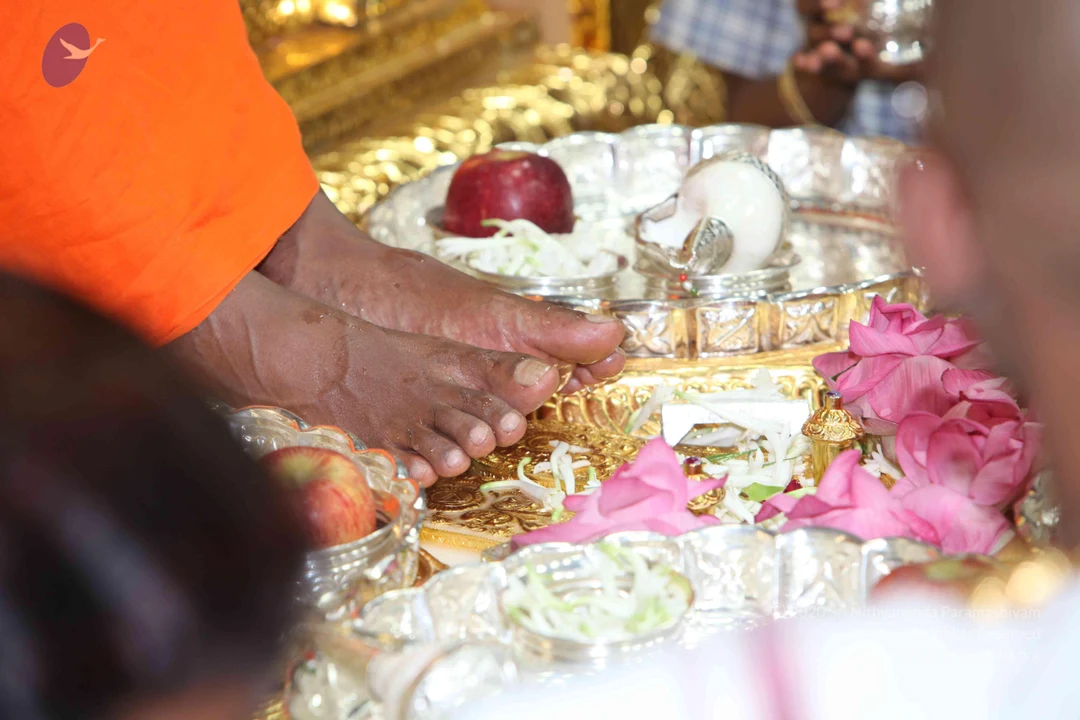
A photo of a satsang hall with a standing man in orange saffron robes and long dark hair, palms joined, facing a seated group. He stands at a wooden podium beside a gilded ornate throne-back with a red cushion, fruit and offerings on a small table. Around 10 seated devotees on an orange cloth sit in white and cream dress with gold borders, some with palms folded in namaste, a few with tilak and gold beaded necklaces. A woman in a white and blue sari stands at the back. A dark curtain and a bird logo on the backdrop complete the scene.A seated man in an orange saffron robe with long swept-back dark hair and a rudraksha mala sits on an ornate gold throne with a red cushion, eyes closed and hands folded, on a raised stage with dark curtains. In front, a wooden podium holds a tray. Below, several shaven-headed men in white dhotis with gold necklaces and white tripundra markings kneel with palms pressed together, a woman in a white sari sits among them, and silver plates with pink flowers, fruit and offerings rest on a gold-decorated low platform. Seated audience members in the foreground face the stage.A seated man in an orange saffron robe with rudraksha mala beads sits eyes closed on a red-cushioned gilded throne in a hall, hands resting in his lap, with a plate of fruit and flowers on a wooden side table. Probable Swamiji is shown in the throne seat, with long swept-back hair and saffron clothing with rudraksha malas as the qualifying cues. Before him, several people in white ritual clothes and bare-headed or shaved-headed priests sit with palms joined in namaskar near silver plates decorated with pink lotus flowers and gold trays. A young boy in a checked shirt sits in the foreground at left, and a wooden box with rudraksha malas lies in the foreground. The scene suggests a satsang or ritual gathering in a stage-like room with dark drapes behind.A close photograph of a puja ritual with a shaved-headed figure seen from behind in the foreground, wearing gold bangles and a gold necklace. A hand from the right holds a silver conch shell with pink lotus flowers, pouring liquid over a silver plate. Behind, a child in a blue checked shirt and a woman in a white sari with gold border and a dark beaded necklace are partially visible. A silver tray holds an apple, and a silver bowl sits nearby. The background is orange and white.Side profile photograph of a man seated on an ornate gold throne with repoussé floral and scale-like carving, eyes closed in meditative stillness. He wears a loose saffron-orange robe, a long rudraksha mala of dark beads around his neck, and a small red mark on his forehead. His long dark hair falls past his ears. A red cushion is visible at the lower left, and a blurred white fan appears at the right edge against a pale pink wall. Swamiji (probable), seated on a peetha throne in orange robes with rudraksha mala and long hair, appears in person.Close-up photo of bare feet resting on a silver puja plate. The person wears an orange robe. The plate holds a red apple and silver bowls with white flowers. Pink lotus blossoms, white jasmine-style flowers and gold-toned fabric surround the plate. In the blurred background, a person in white wears a gold pendant necklace with hands pressed together. The scene suggests a padapuja, where a guru's feet are worshipped. The only visible person is the orange-robed figure, shown only by feet and robe, so no identity can be established from appearance.
Morning-Satsang
7 photosSource gallery
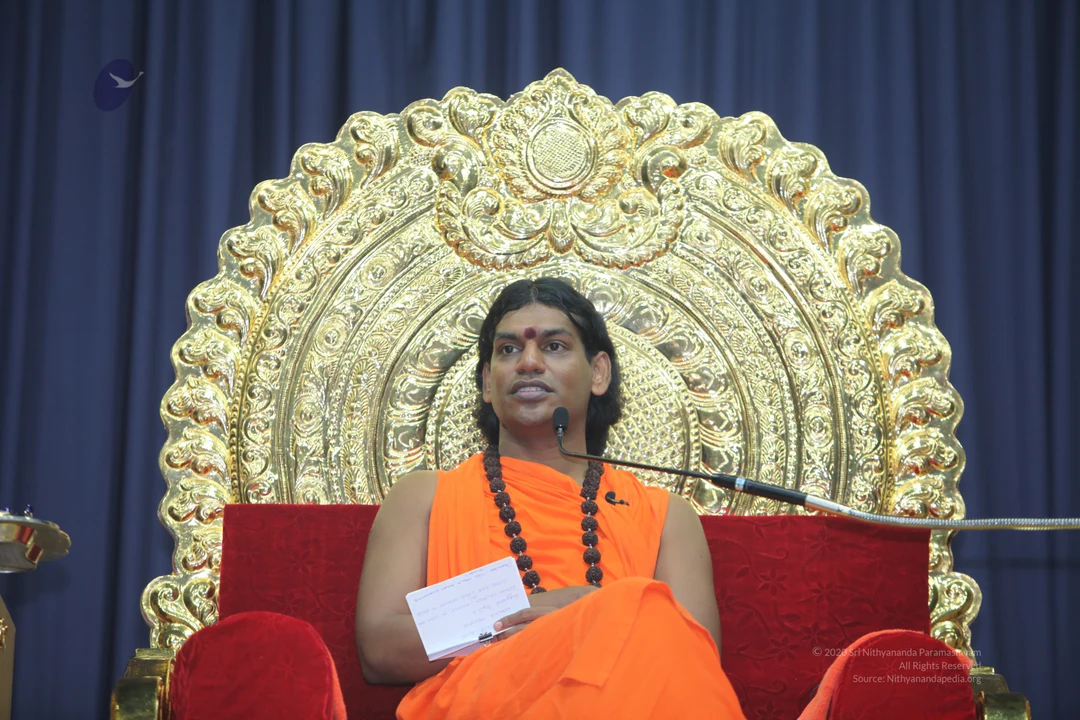
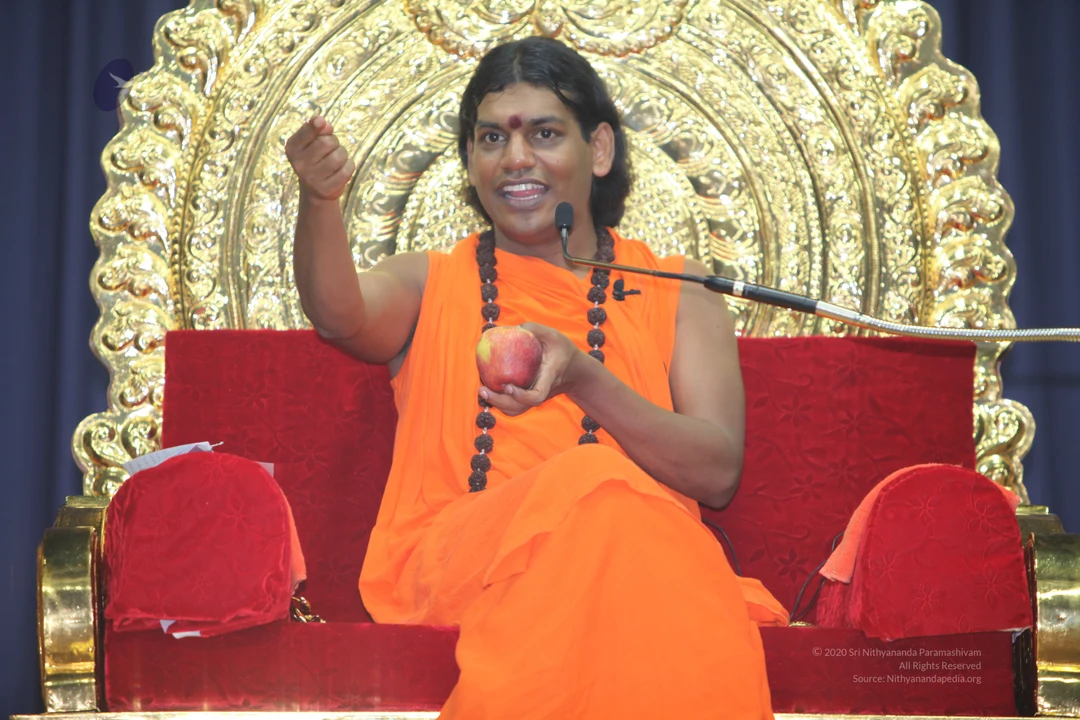
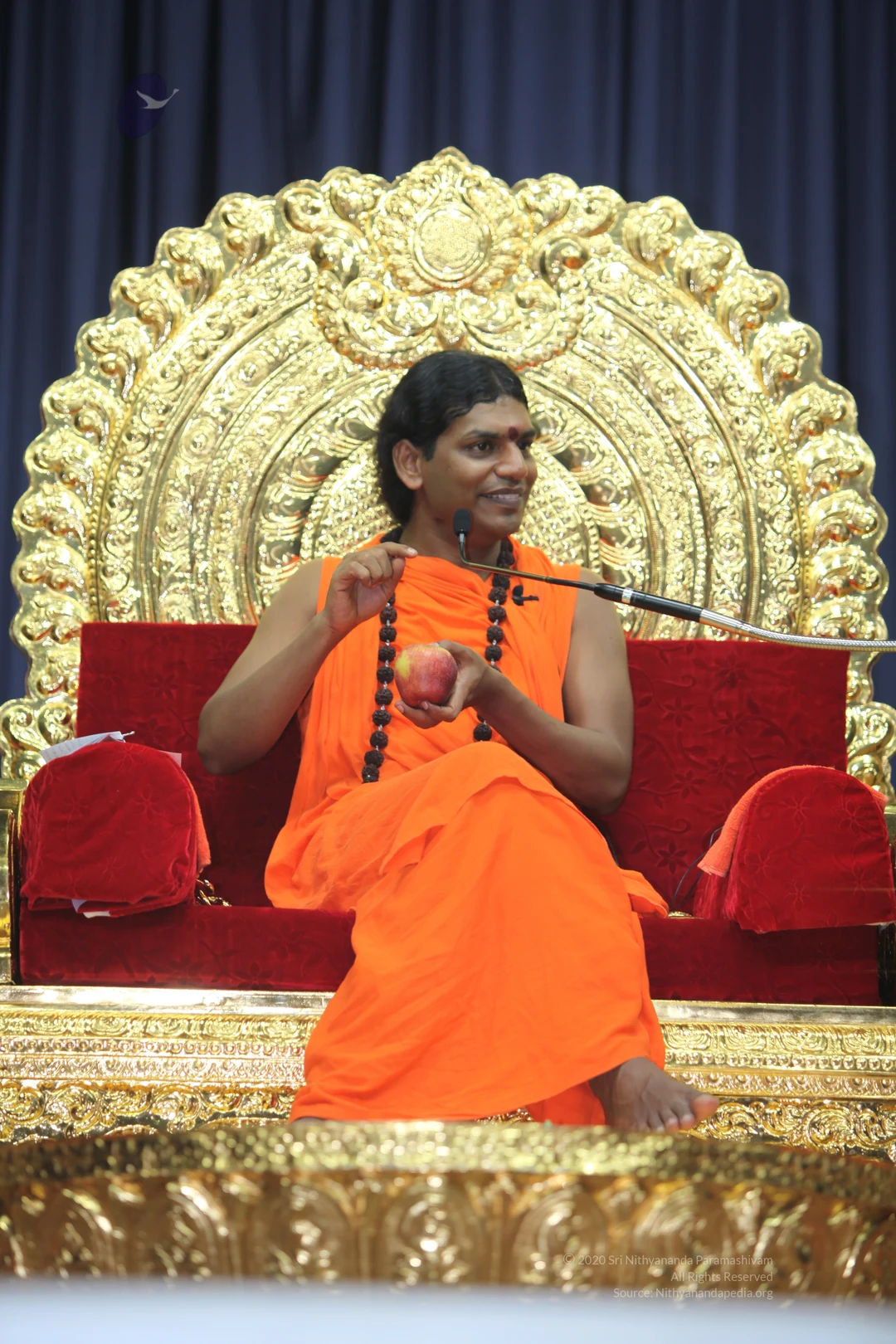
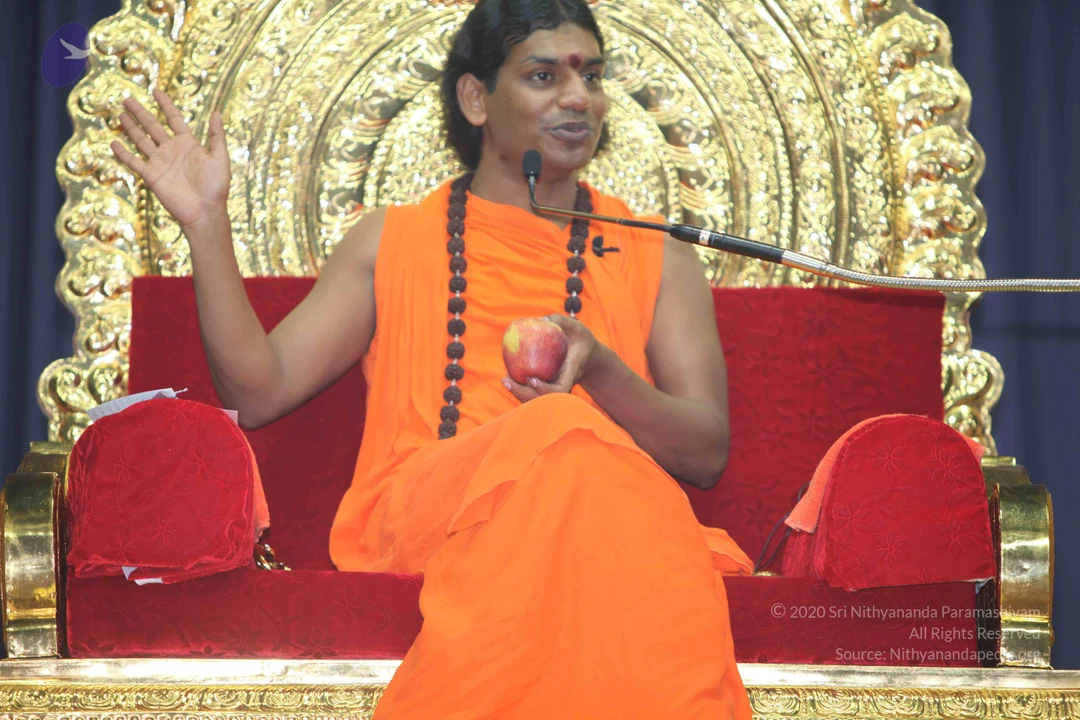
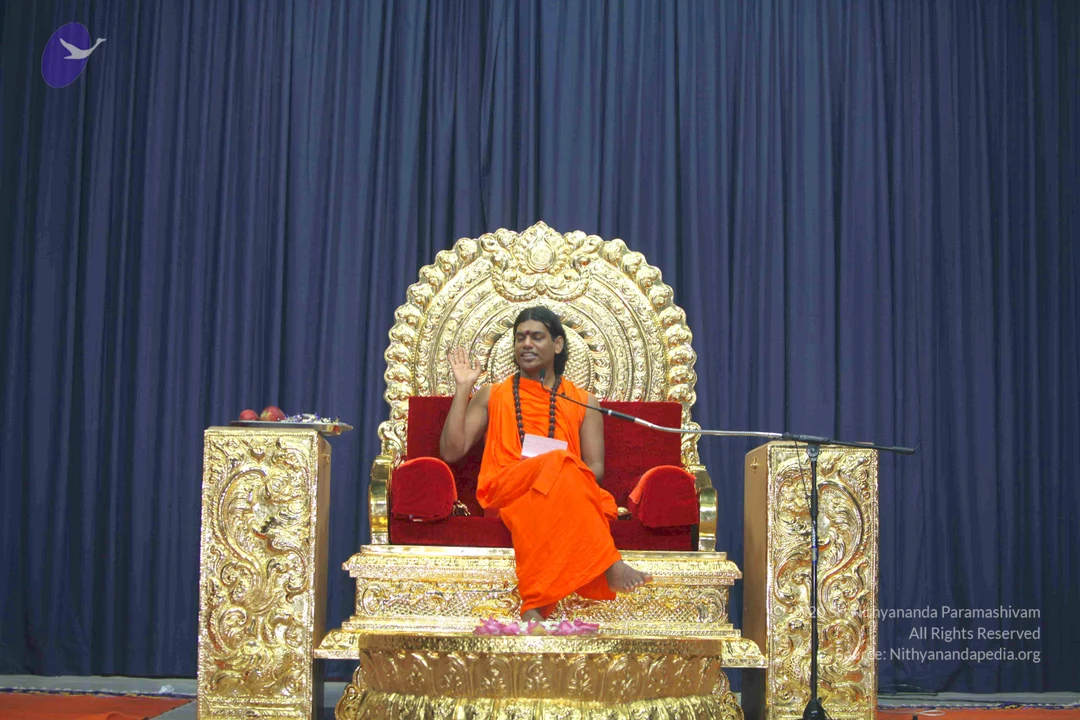
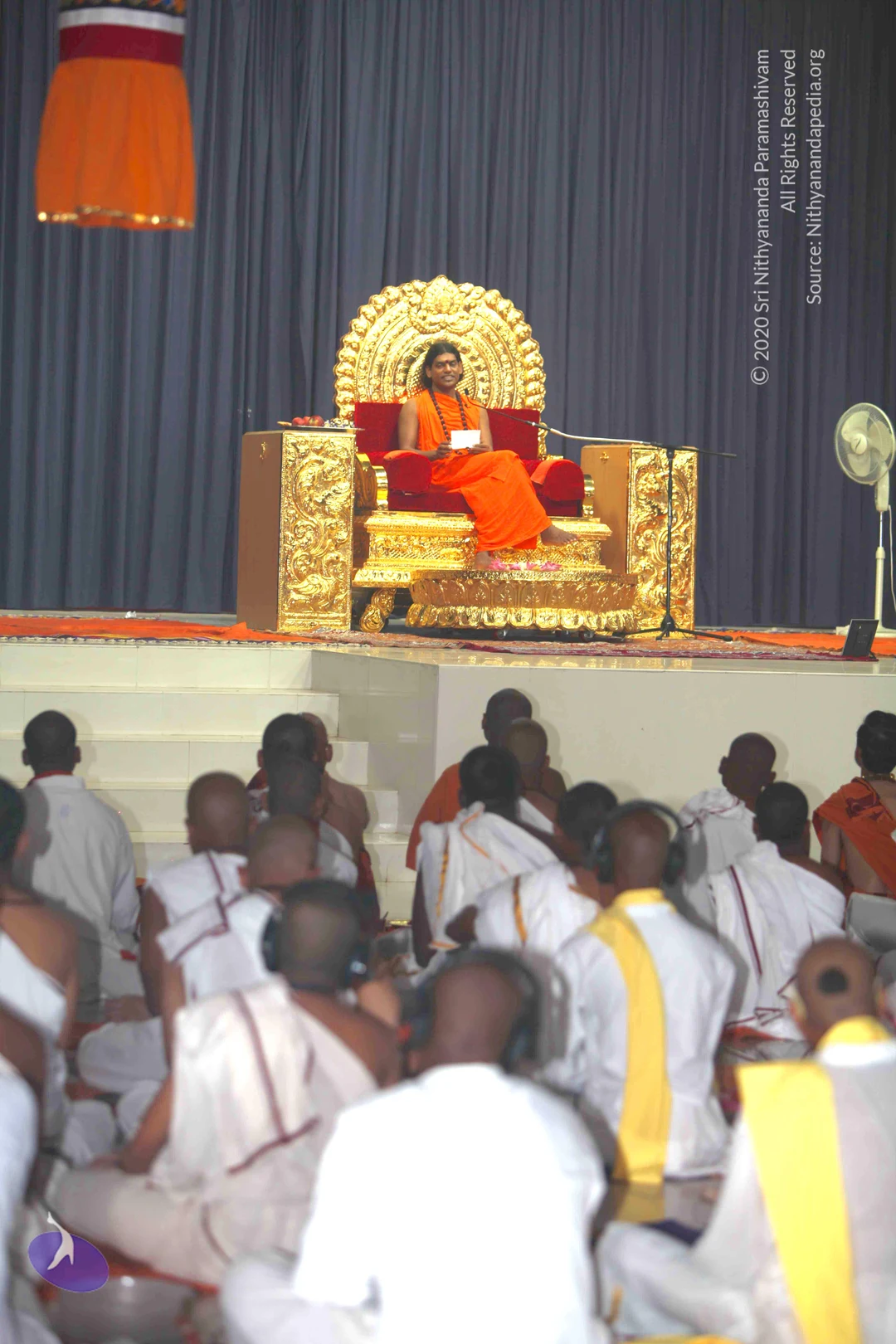
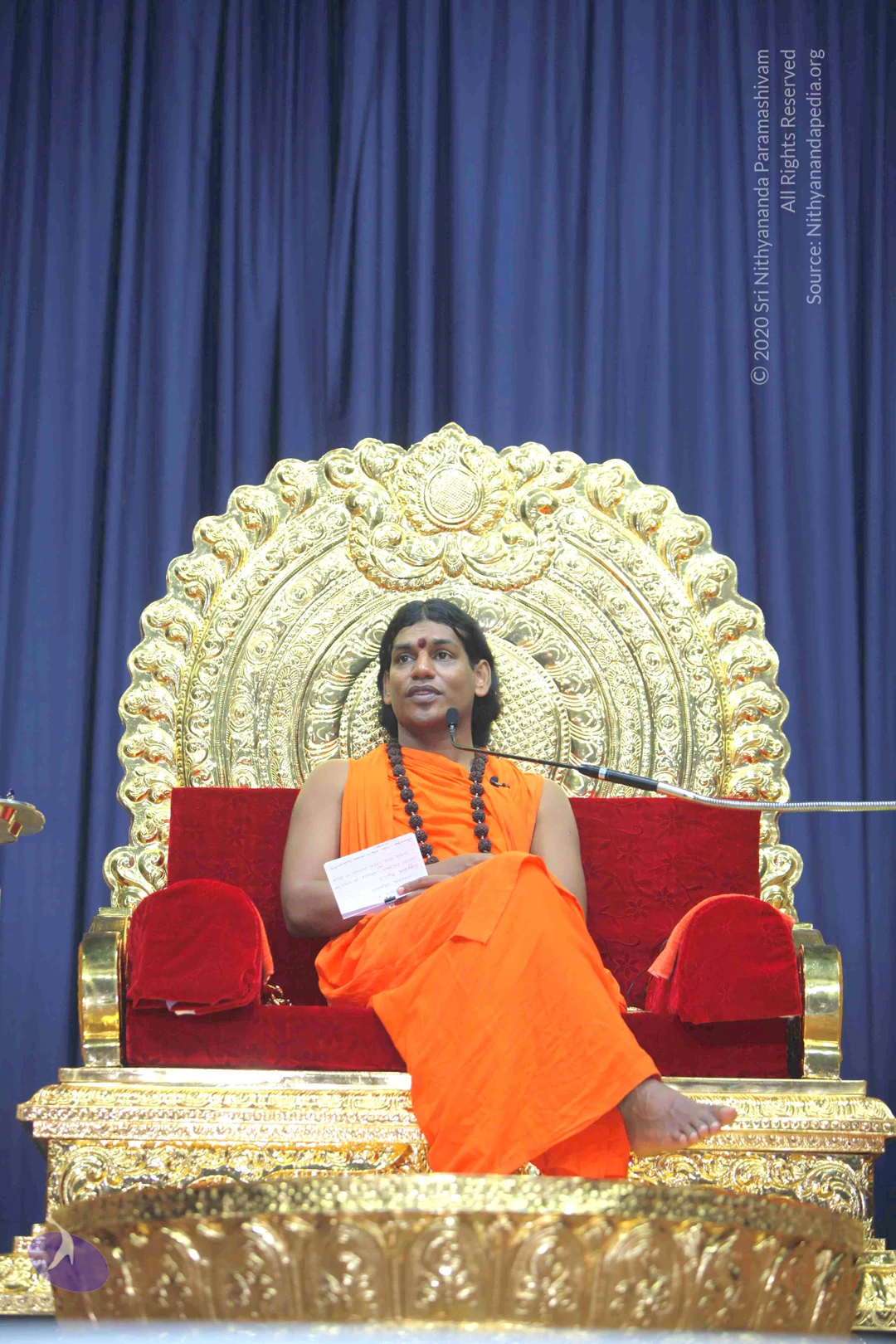
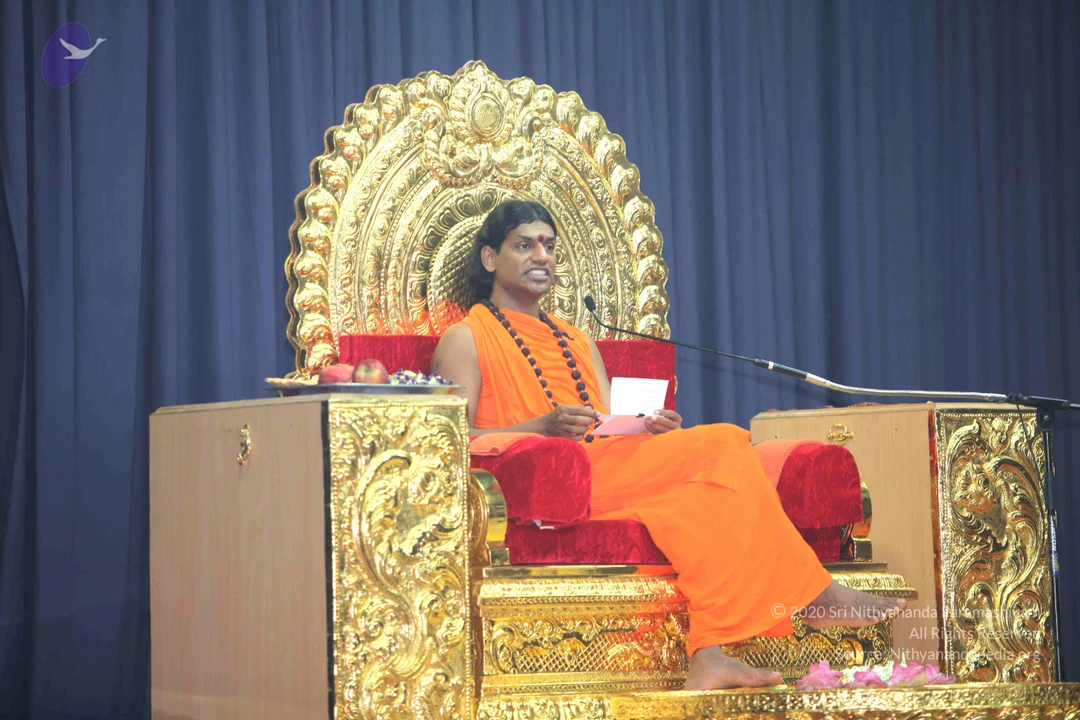
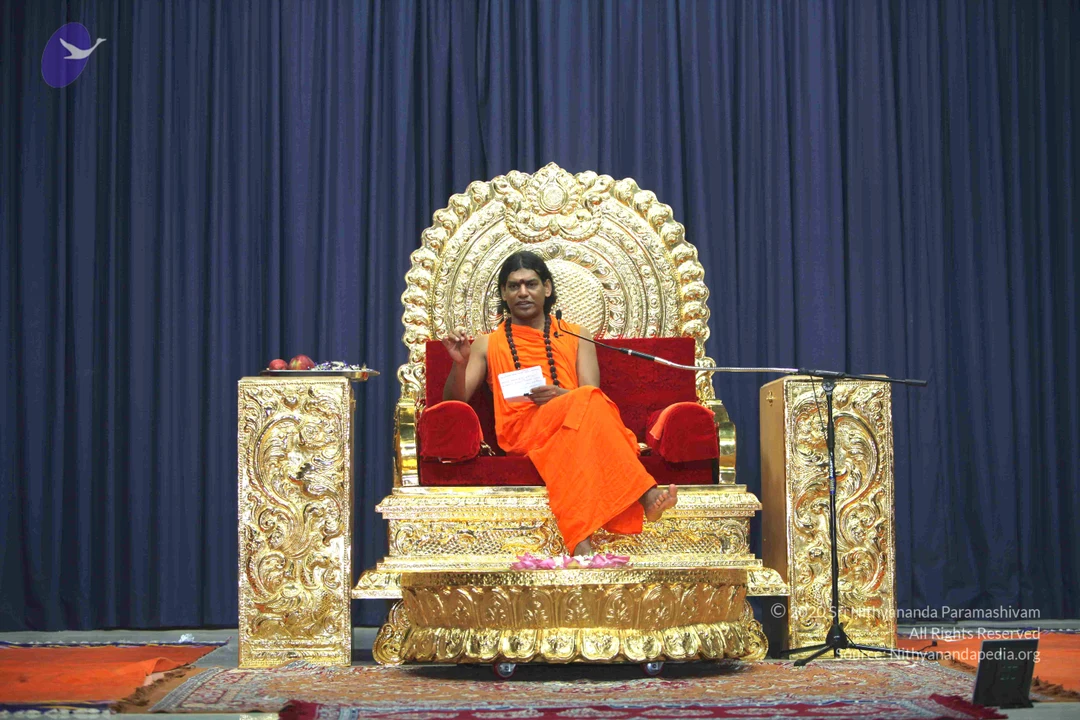
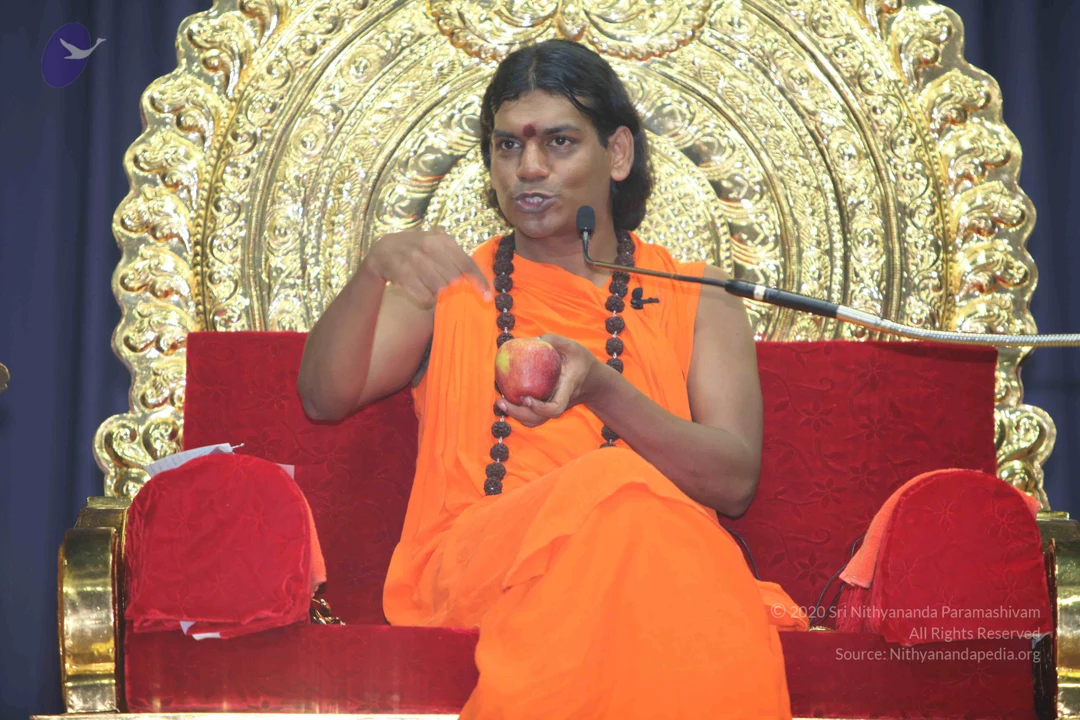
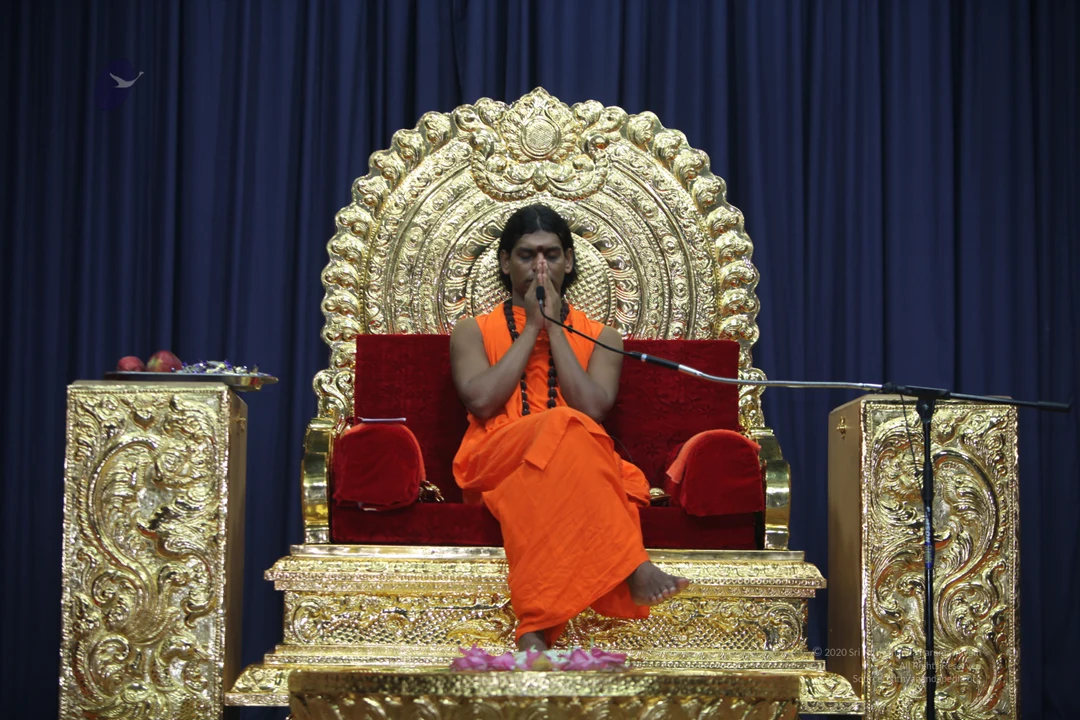
A seated man in an orange-saffron robe sits cross-legged on an ornate golden throne with a red cushioned seat and gilded arched backrest. His hands are pressed together in anjali mudra at chest level, and he wears a dark rudraksha mala around his neck. A microphone stand stands beside him, a tray with fruit and flowers rests on the left golden pedestal, and a pink flower offering lies on the golden base. Behind him hangs a deep blue curtain.A photograph of a man seated on an ornate gilded throne with a red velvet seat and back, placed before a blue draped curtain. He wears an orange saffron robe and a rudraksha mala around his neck, with a red tilak mark on his forehead, and sits cross-legged with his palms pressed together in namaste. Lotus petals lie on the platform before the throne, and a tray with fruit sits on a gilded side table at left. A microphone stand stands at right. Visible faint text in the lower right corner is partially cut off.Photograph of a satsang talk on a stage with a dark blue curtain behind. A seated figure in orange robes and a long rudraksha mala sits on an ornate gold-carved throne with red cushions, holding a small card, with a microphone stand beside him. A pedestal fan stands at the right edge and an orange banner hangs at the top left. Rows of seated audience members in white dhotis and cloths, some with yellow shoulder cloths and headphones, face the stage from the foreground, some shaven-headed. Orange and gold tones dominate the stage. Centred composition with the throne as focal point. Whether the figure is a person cannot be confirmed from appearance alone.A photograph of a satsang hall with a central figure seated on an ornate gold throne with a red velvet seat and backrest, under a golden arched canopy. The seated person wears an orange saffron robe and a dark rudraksha mala, holding a small white card, with a microphone on a stand beside the throne. Below the stage, a large audience sits on the floor in white clothes, many shaved-headed, some with yellow and maroon shoulder cloths, several wearing headphones. A dark blue curtain backs the stage, with an orange banner hanging at upper left and a pedestal fan at right. a person: the seated figure wears saffron robes, a rudraksha mala and sits on a gold throne, though face and hair are not clearly distinguishable at this scale.A man with long dark hair and a red bindi sits on a red velvet throne backed by an ornate gold filigree arch, speaking into a stand microphone. He wears a flowing saffron-orange robe and long rudraksha mala beads. He raises one clenched fist and holds a red apple in his other hand. Blue drapes frame the stage behind him. Swamiji (probable): long swept-back hair, saffron robe and rudraksha mala beads, seated on an ornate throne while teaching.A man with long swept-back dark hair and a red bindi sits on an ornate gold throne with a carved gold arched backrest and red velvet cushions, in front of a dark blue draped curtain. He wears a sleeveless saffron-orange robe and a long rudraksha mala, holding a red apple in one hand and gesturing with the other while speaking into a microphone on a flexible stand. Long hair, saffron robe, rudraksha beads and throne cues are consistent with Swamiji (probable), seated in front of the satsang audience.

Sarvadarshan

2 photosSource gallery
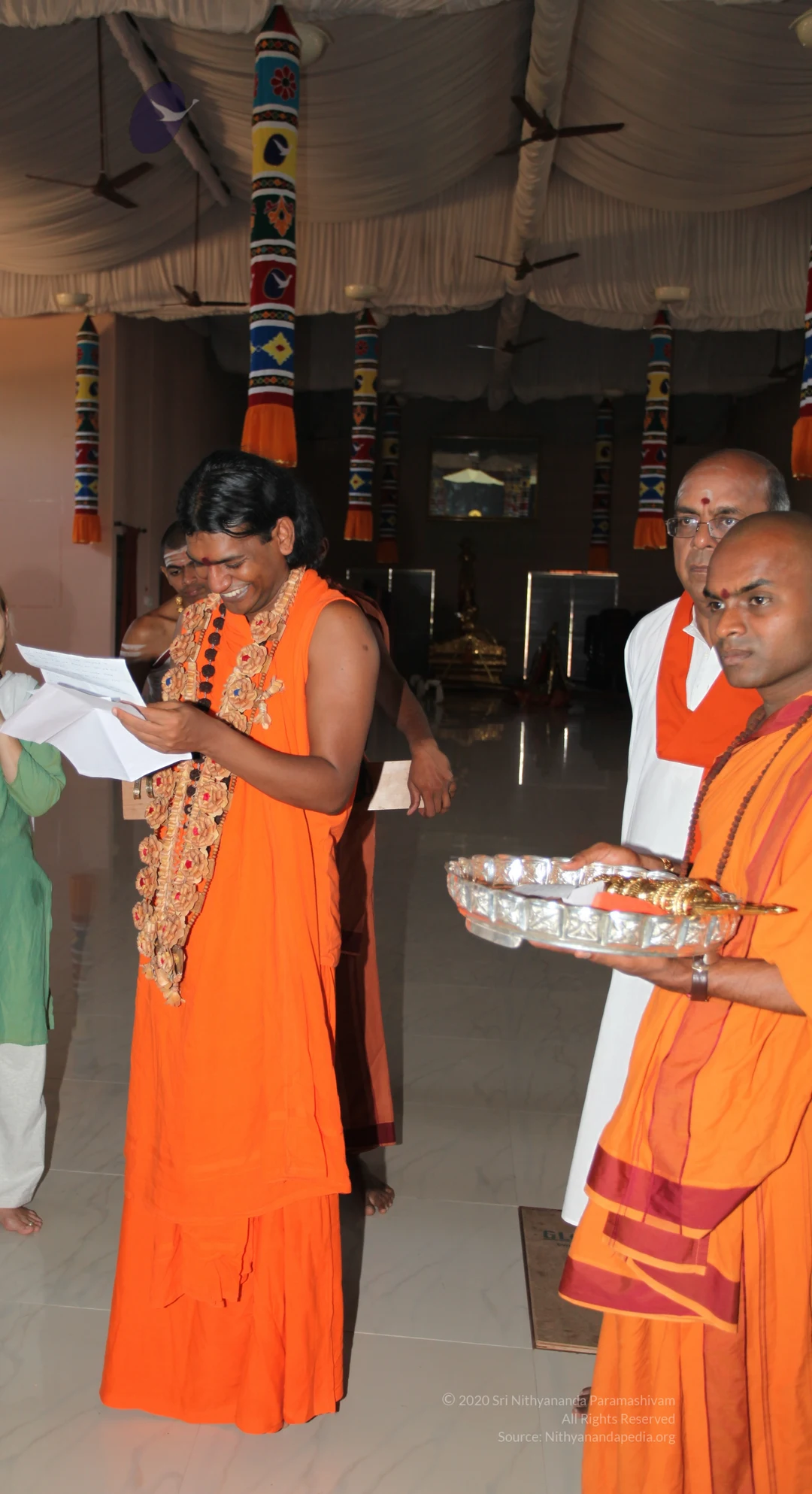
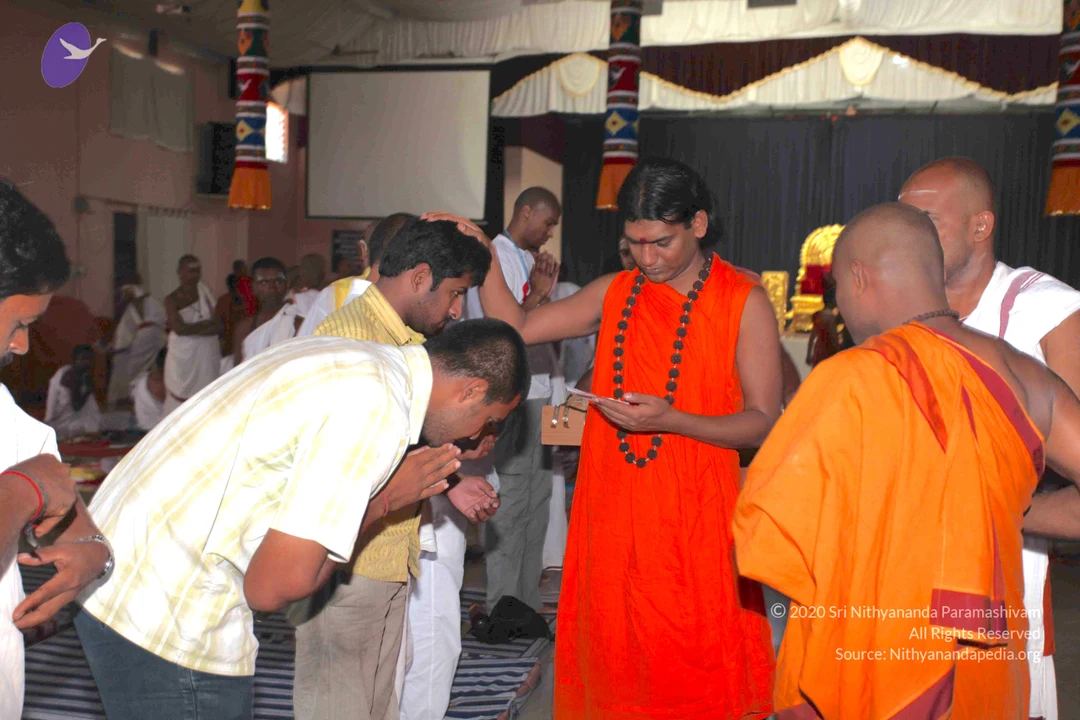
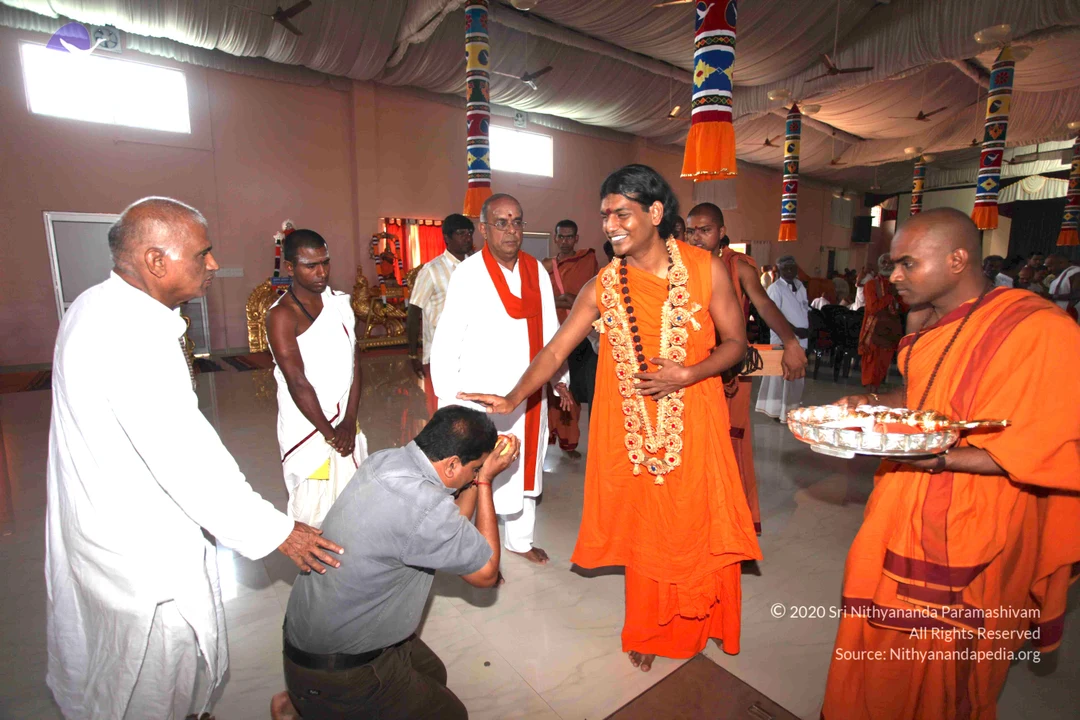
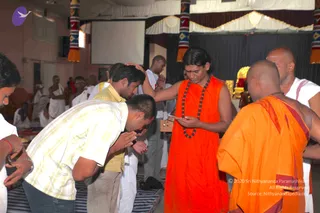
A photograph inside a hall with a white ceiling drape and a golden-trimmed stage backdrop, showing a ritual or blessing scene. A man in an orange saffron robe and a long rudraksha mala stands centre, holding a small wooden tray with a small object, while his right hand rests on the head of a bowing man in a white-and-yellow checked shirt. Another bowing man in a light shirt and an orange-robed figure with a shaved head stand nearby; several men in white dhotis and shawls are in the background. Presentation cues for a person are present on the centre figure (saffron robe with long rudraksha mala), but appearance alone is not decisive, so the identity is treated as uncertain.A man in orange robes with long swept-back black hair and a red tilak stands smiling and reading from a sheet of white paper. He wears a thick multi-strand ceremonial garland of orange and red flowers and a dark rudraksha mala. Behind him a man in white dhoti and orange shawl with glasses watches, and a bald man in orange robes holds a silver tray with a gold ceremonial item. A woman in a green kurta stands at the left edge. Colourful striped fabric pillars hang from a white draped tent ceiling with ceiling fans, and a golden murti or shrine is visible in the background.

nithyananda-bidadi

4 photosSource gallery
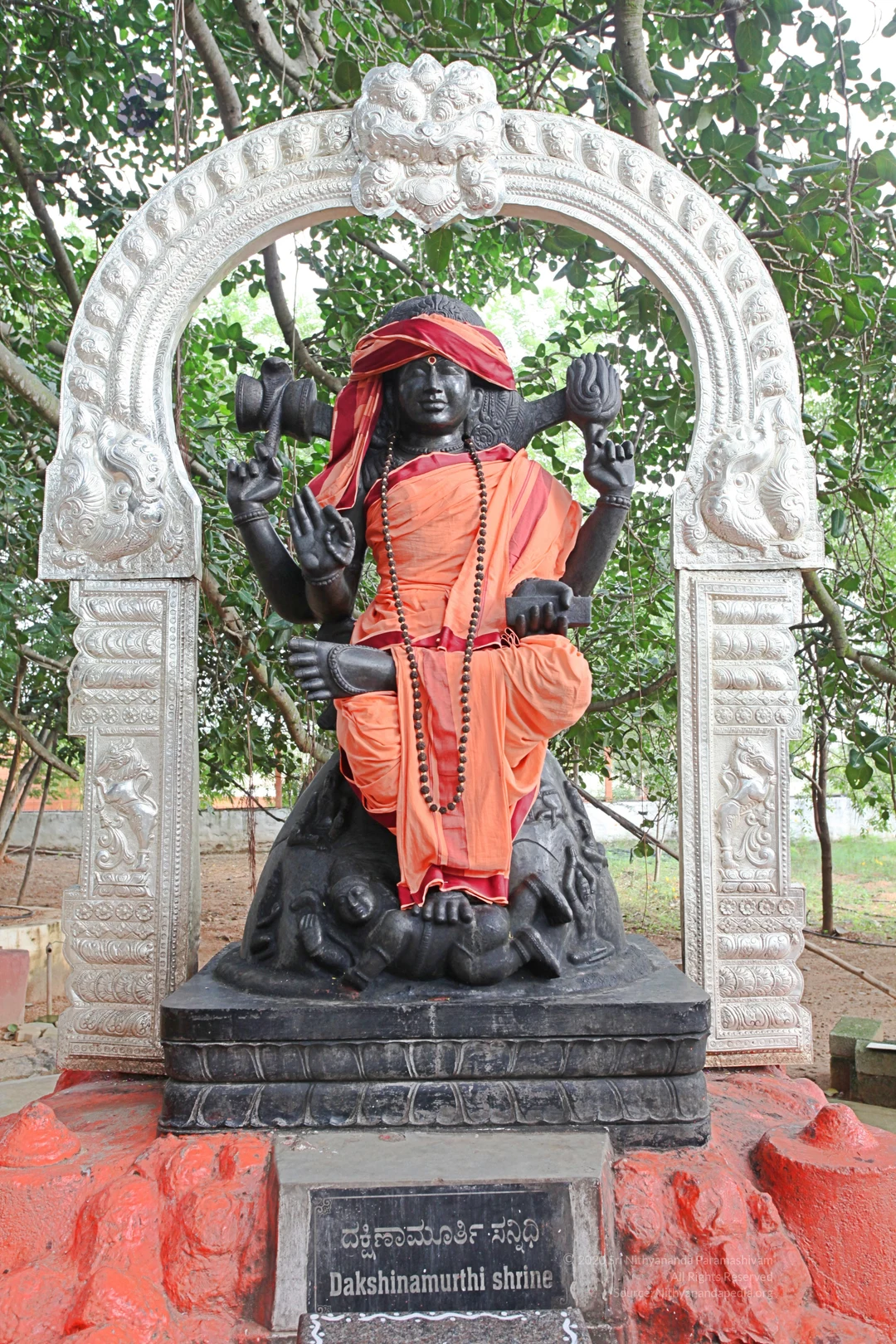
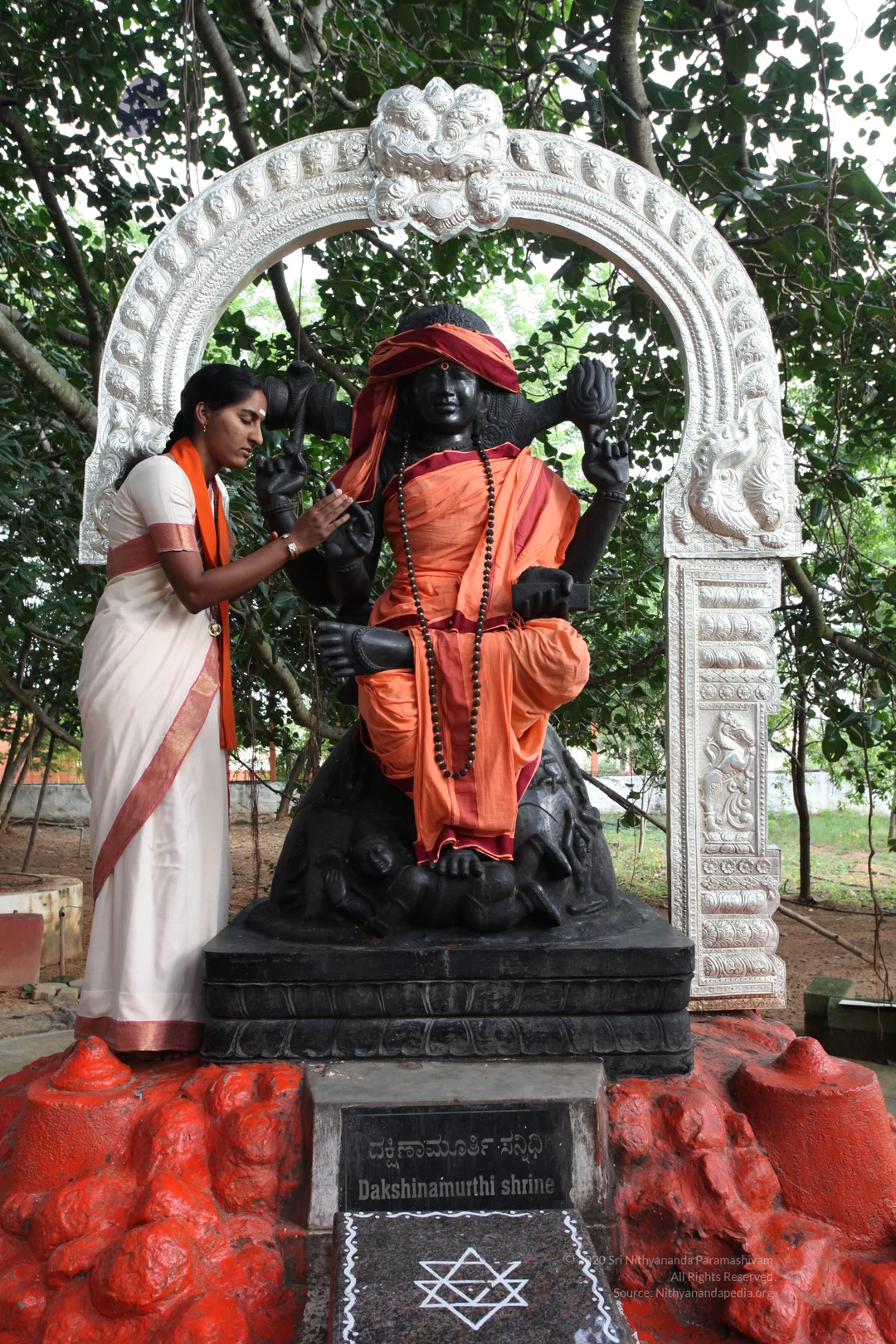
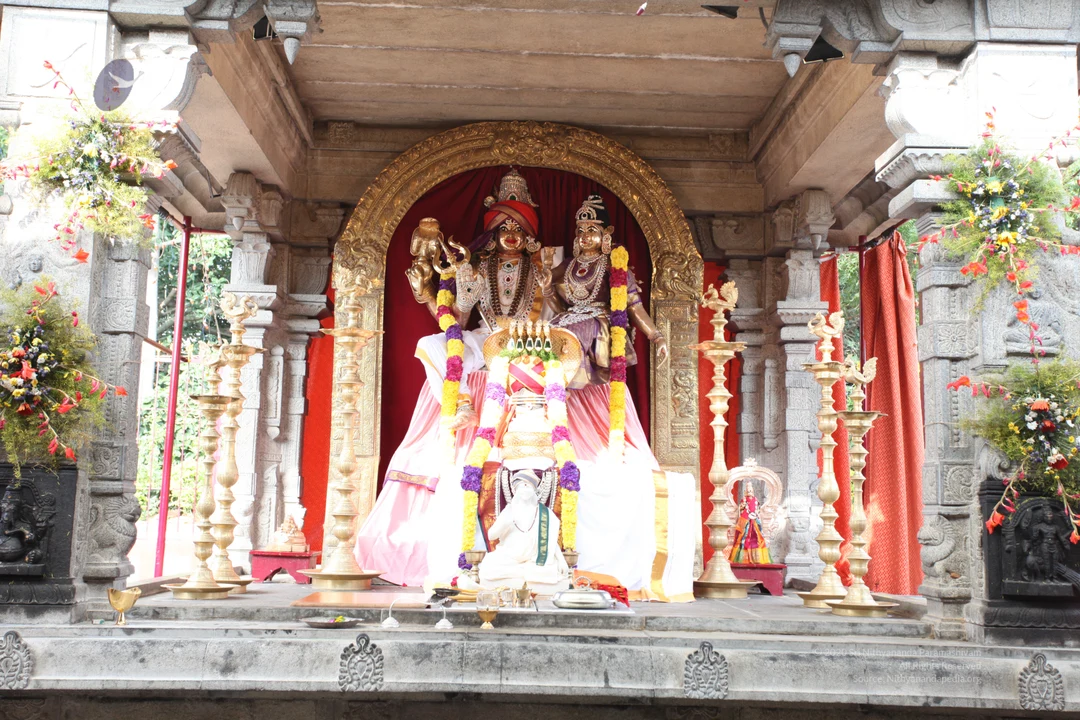
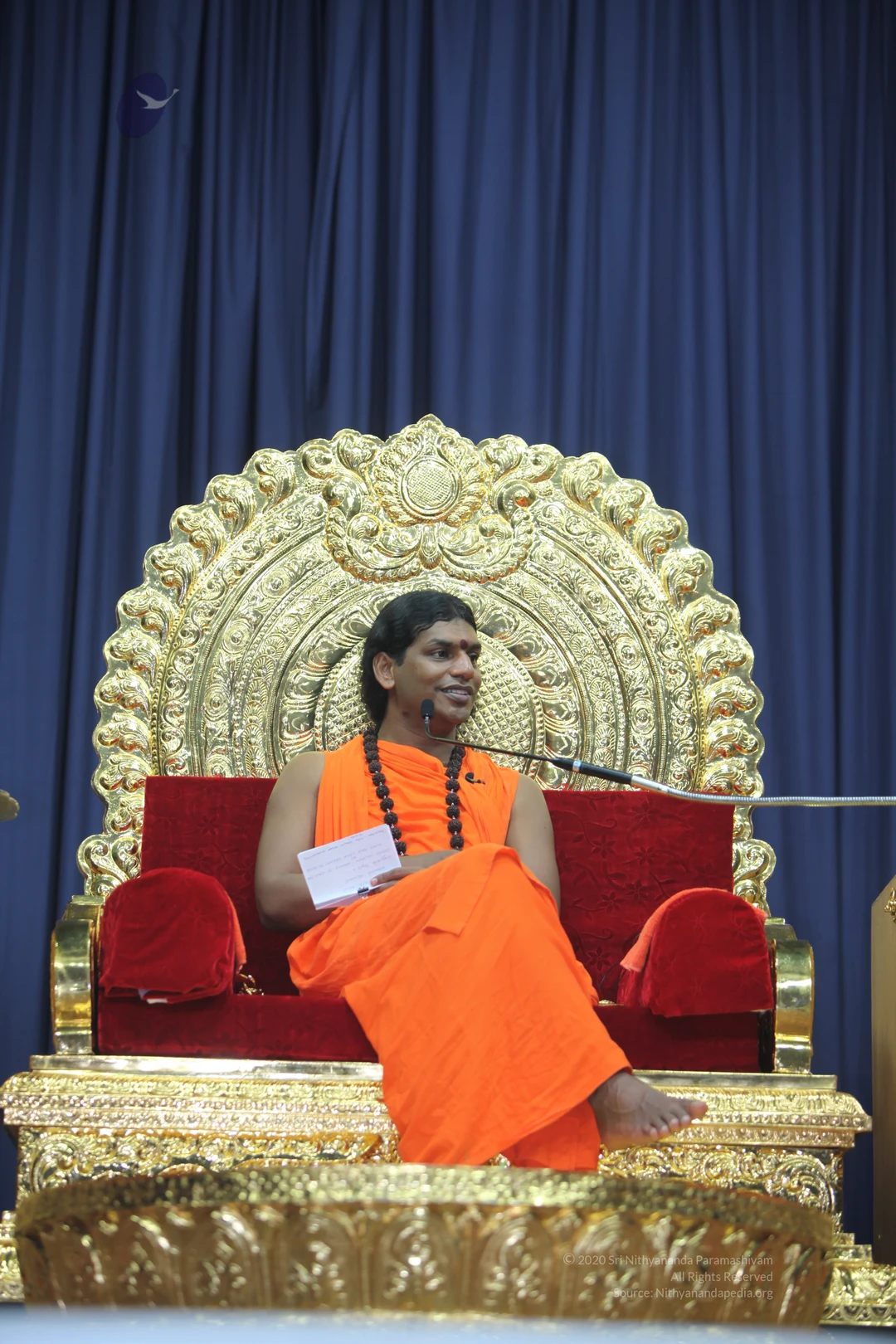
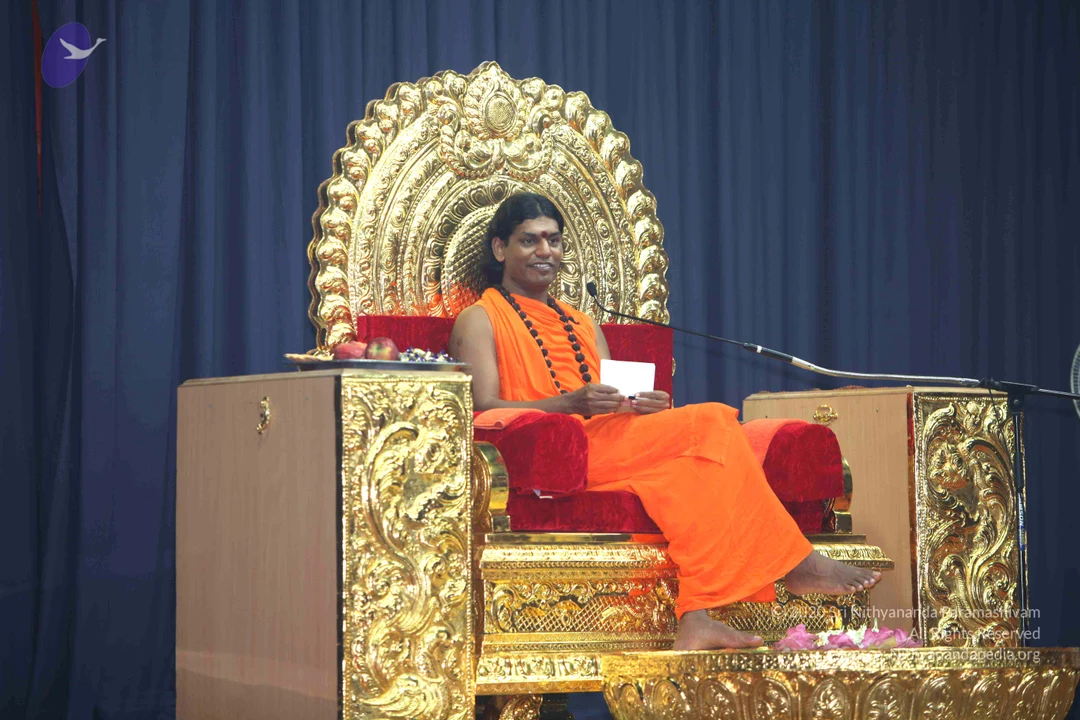
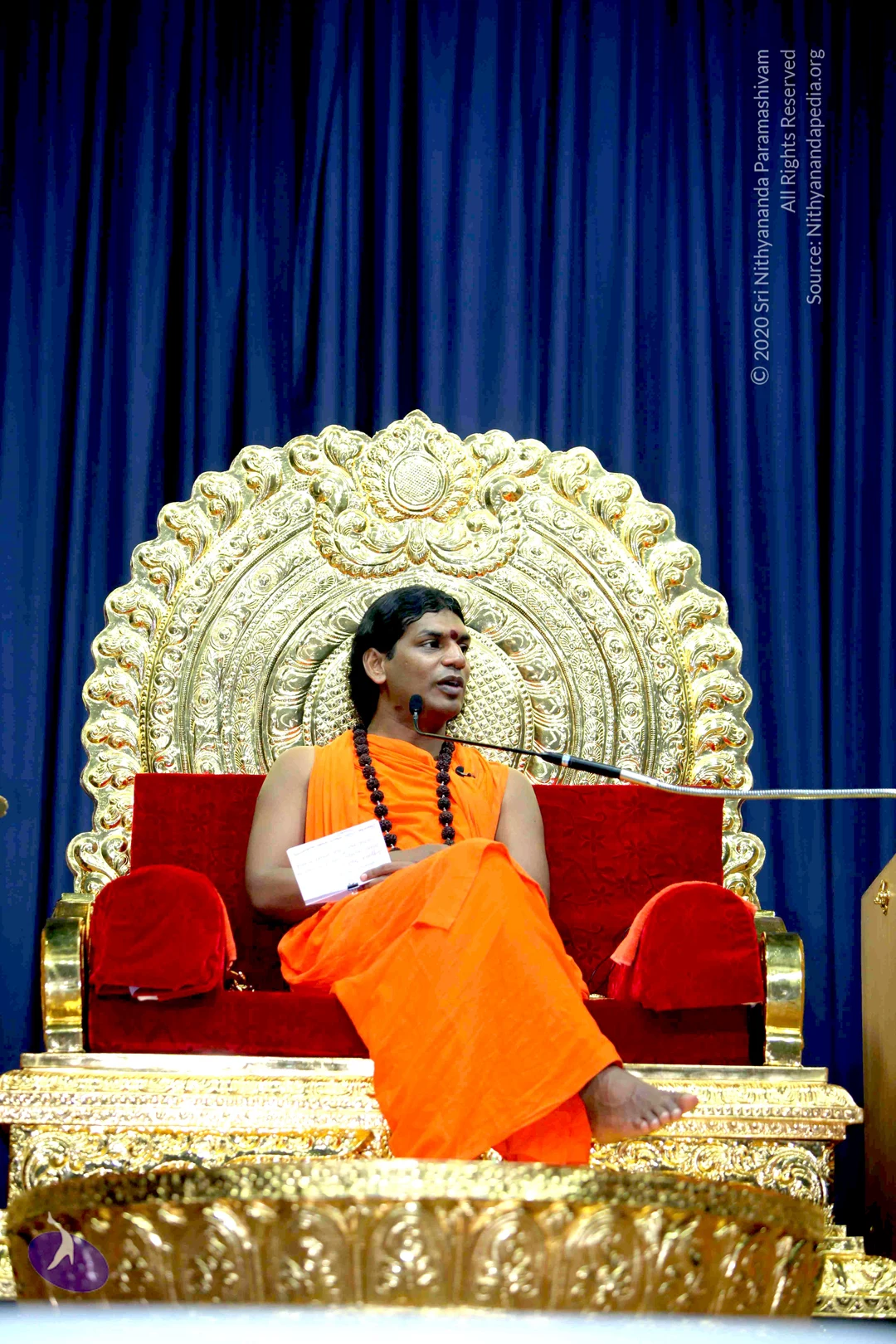
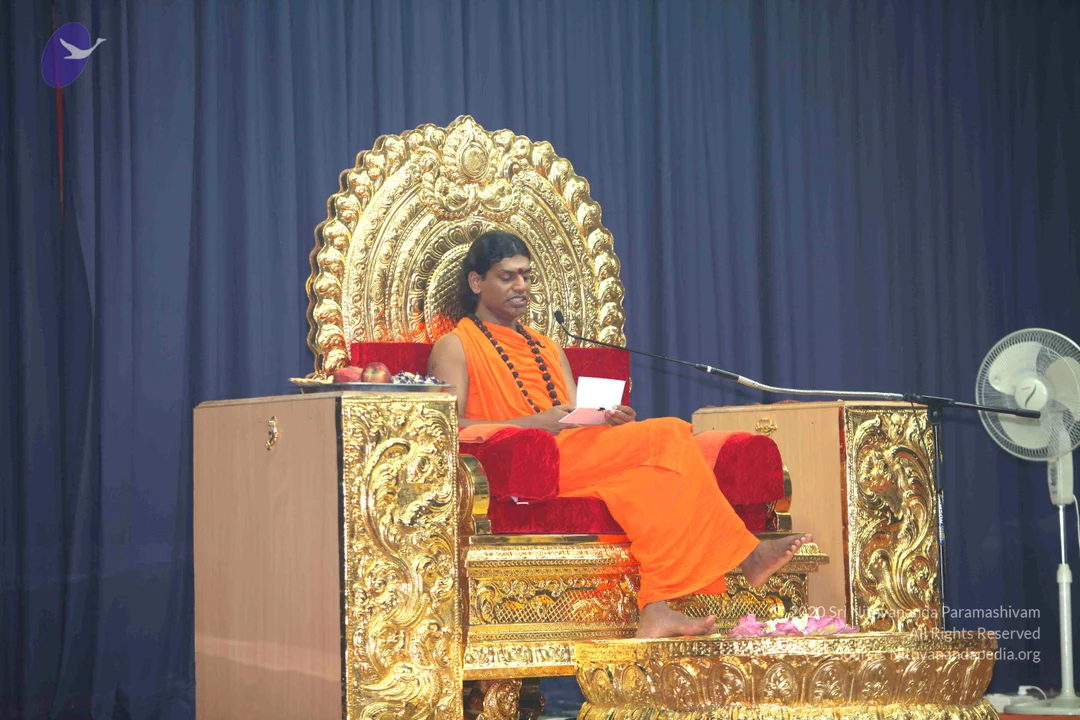
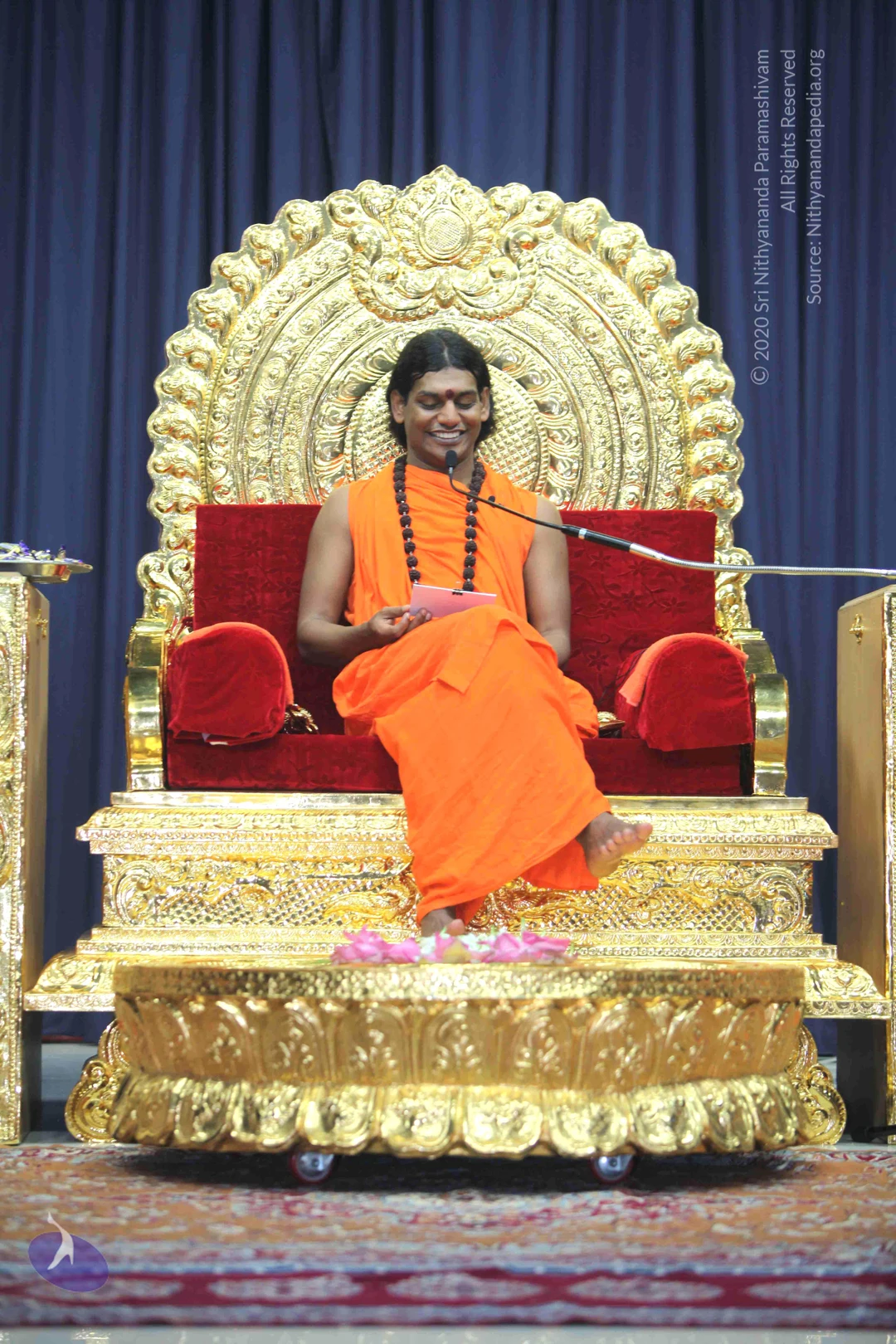
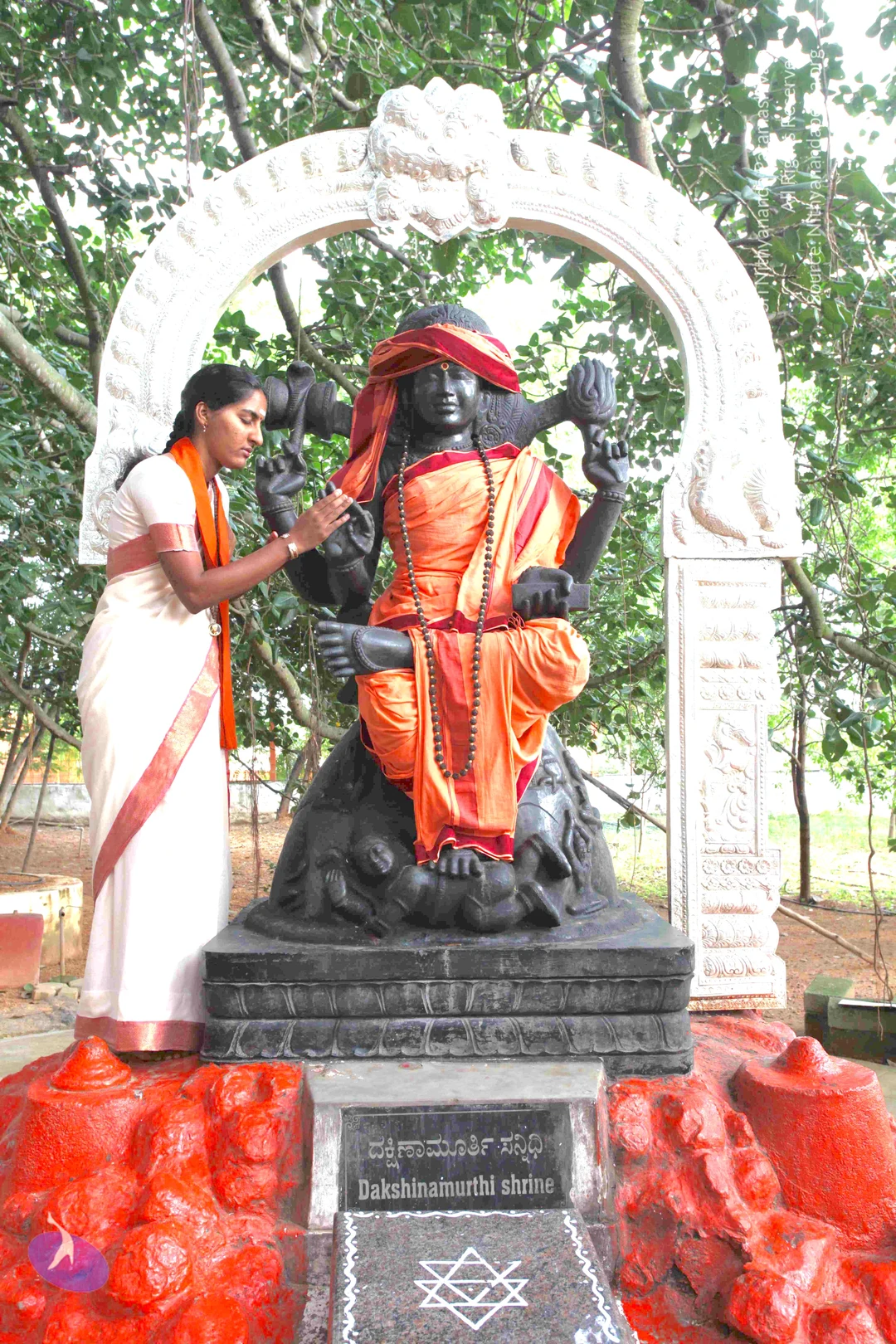
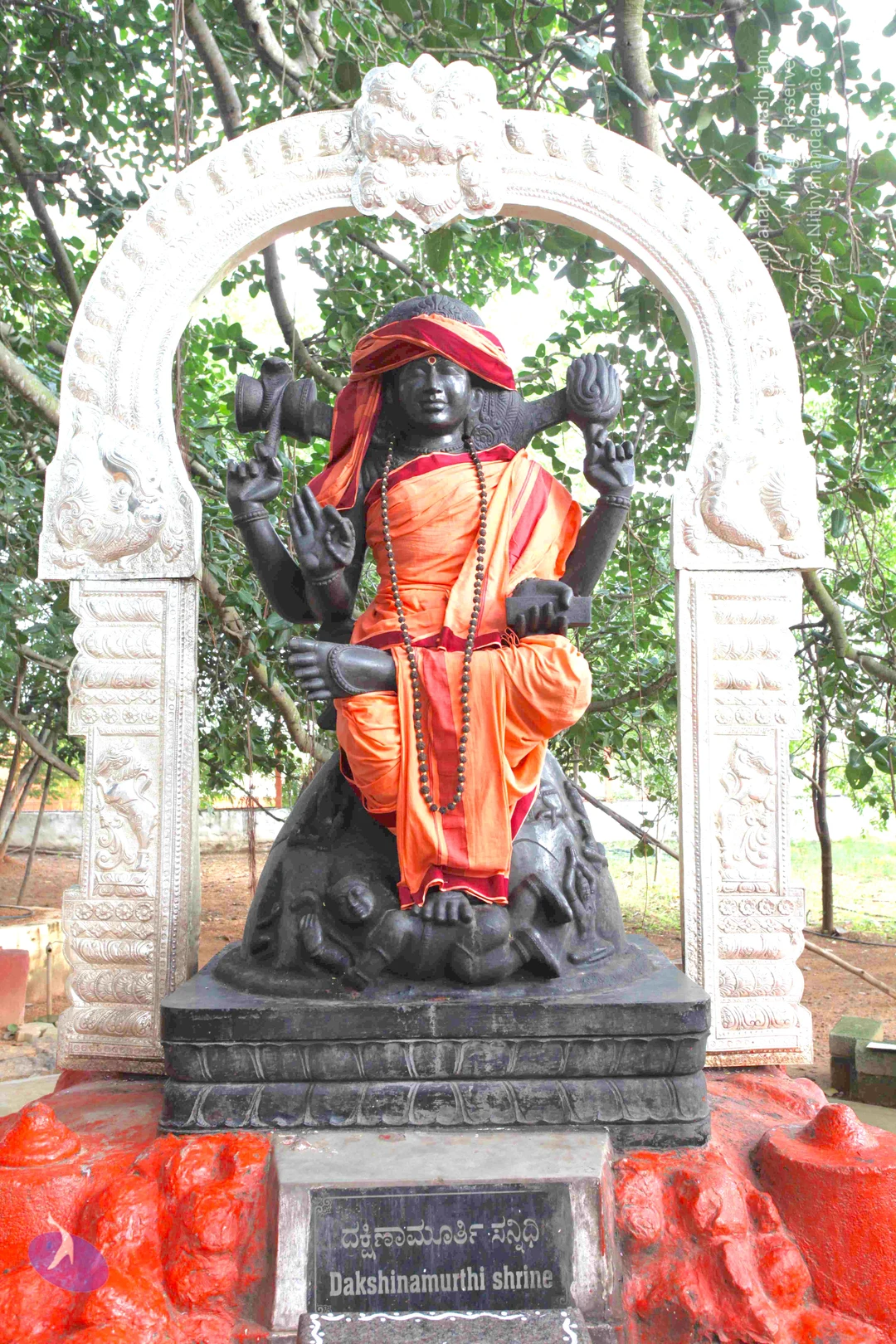
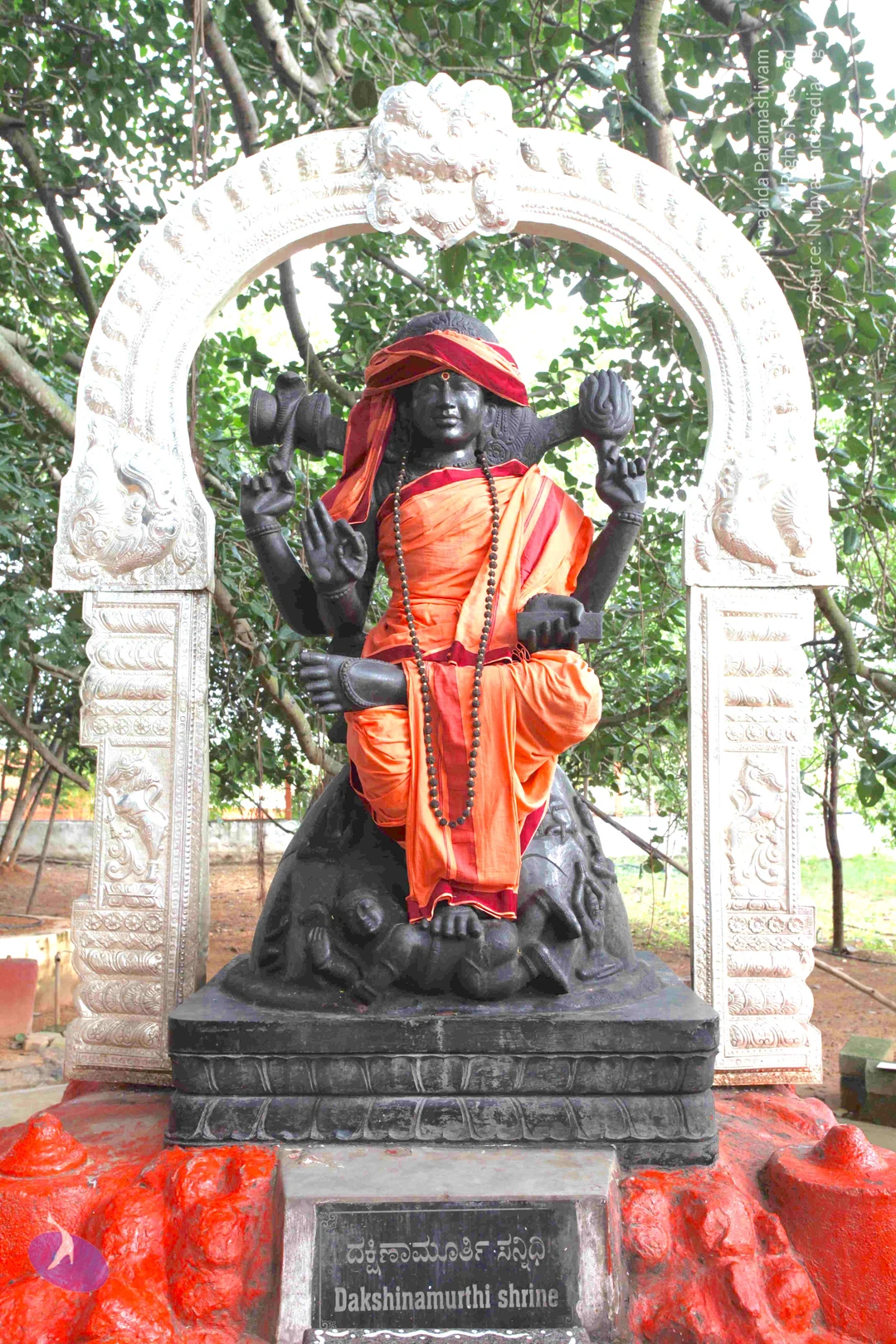
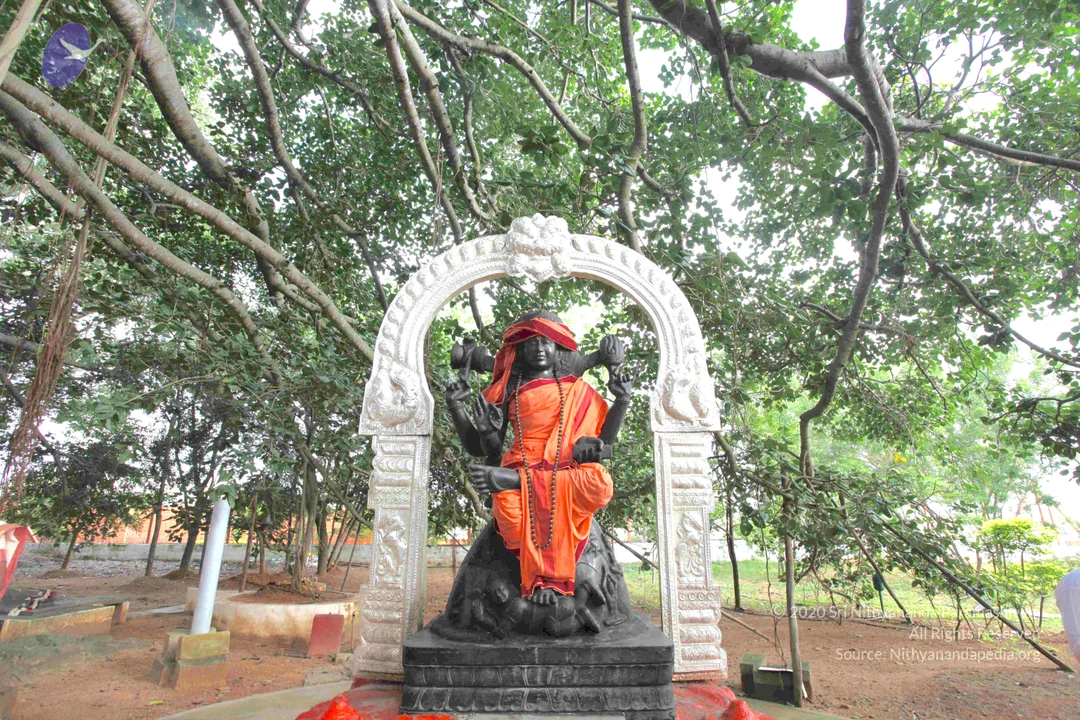
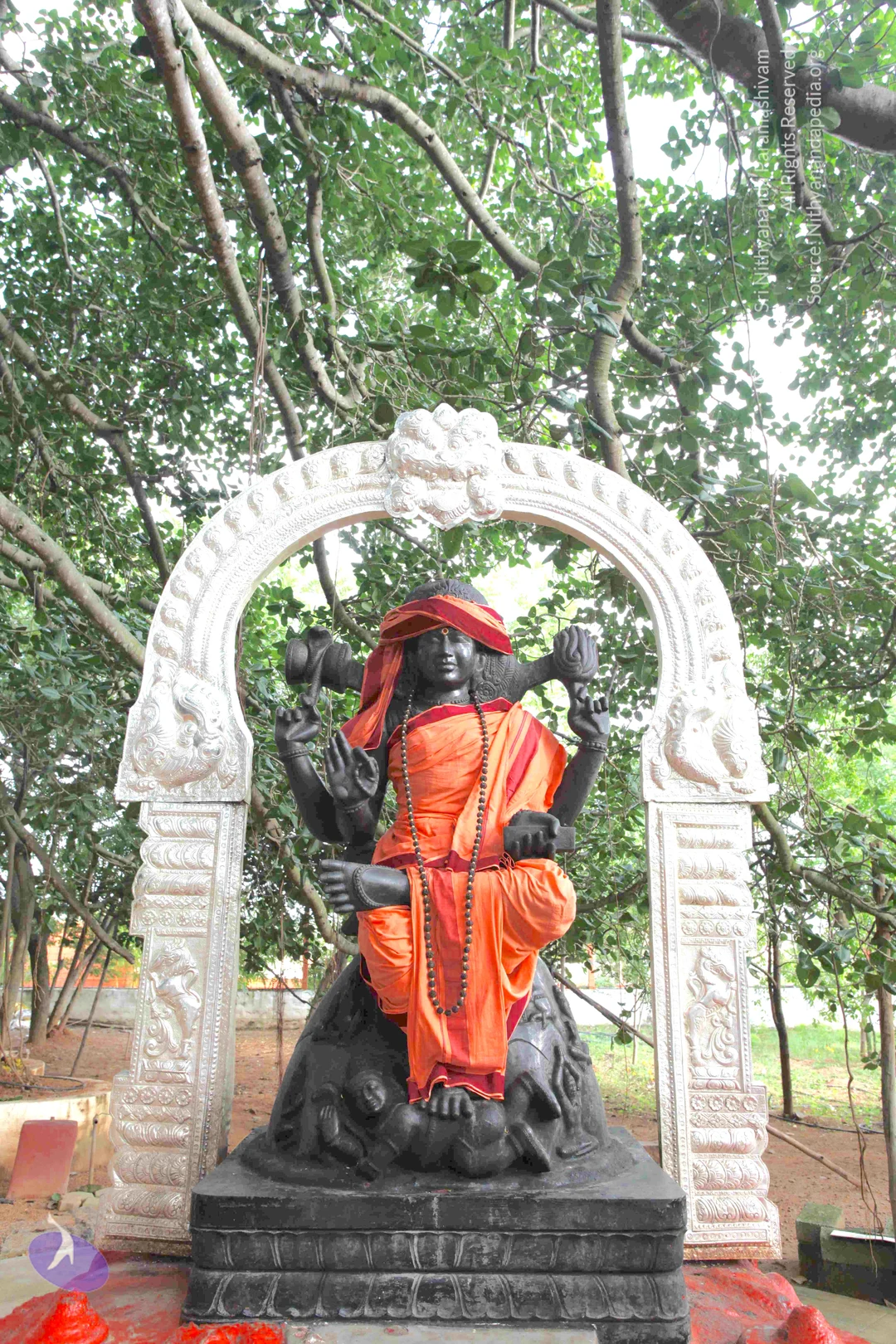
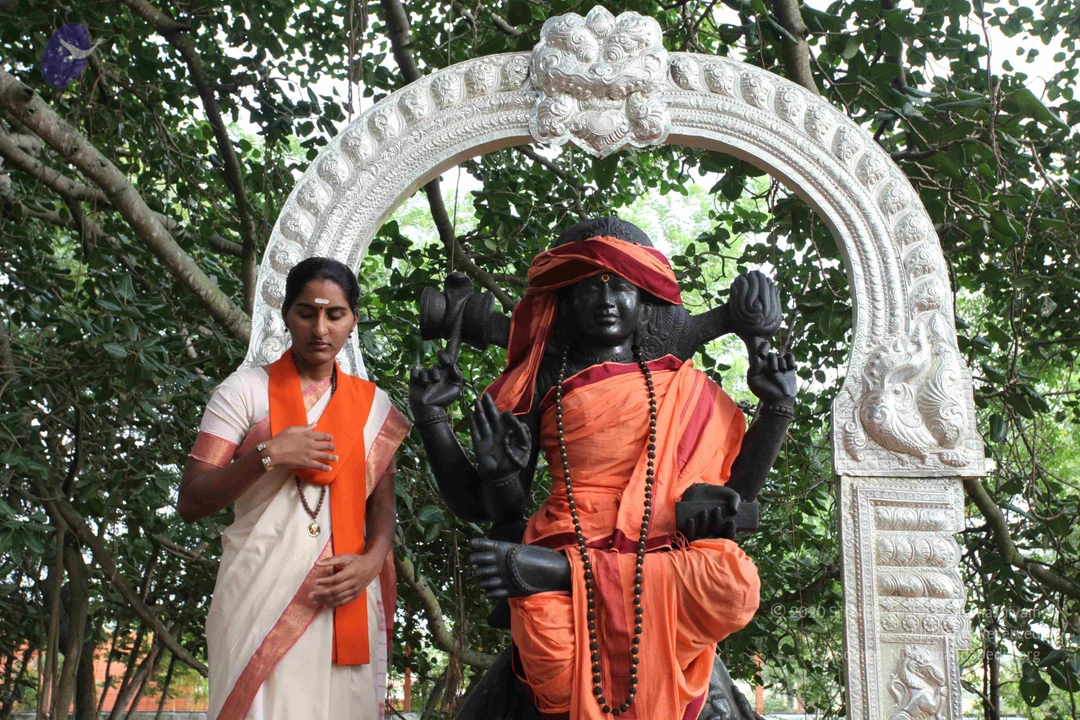
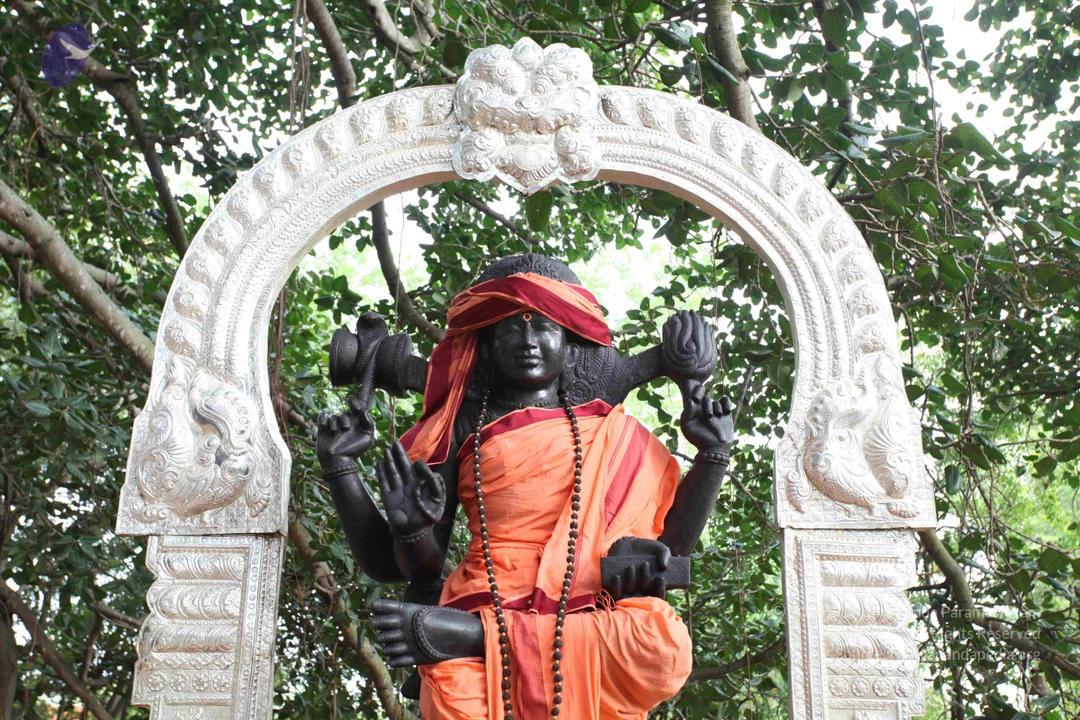
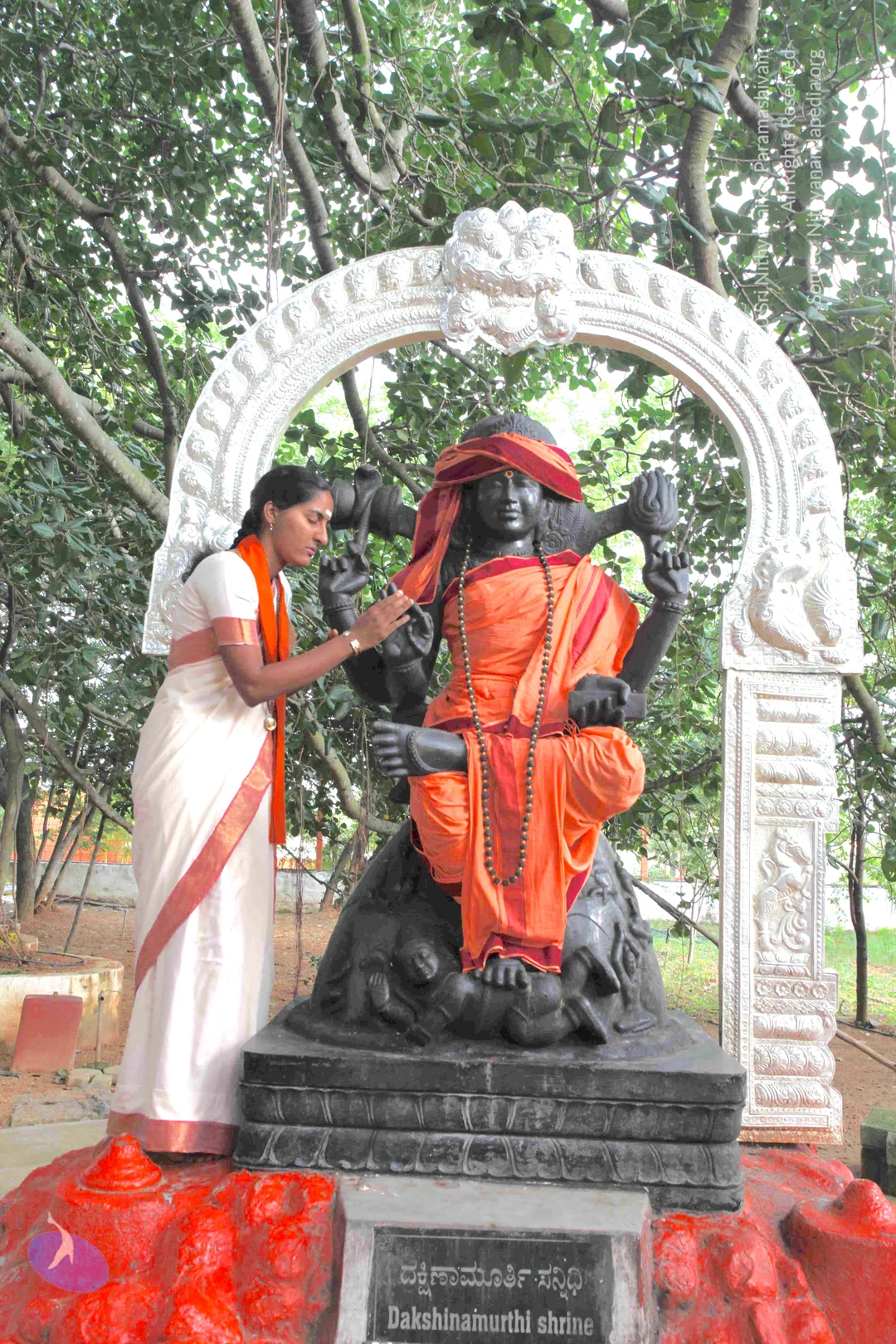
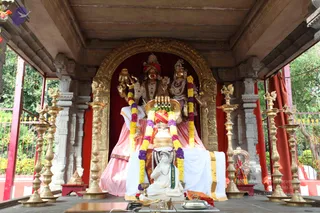
A photograph of an outdoor shrine set among large trees with a dense canopy. A grey stone arched frame surrounds a dark statue of a seated figure draped in orange-saffron cloth with a red head covering, sitting on a dark pedestal. The statue is a sculpted depiction rather than a living person, and the stone ground is paved and open around it. No physical people are visible in the scene.A photograph of an ornate temple shrine with gilded arched niche. Inside, a deity murti is garlanded with marigold strands and wears pink and white draped cloth. A small statue stands in front with a white cloth. Brass oil lamps (deepas) flank the shrine on both sides. No people are visible.A photograph of a group of men seated on the floor in an indoor ritual setting, performing a puja. Several figures in front wear saffron-orange cloth and rudraksha malas, while men behind them wear plain white dhotis and shawls. The seated men hold small items in their hands, with brass vessels and offerings in front of them. The men in orange are seated closest to the camera, and a few shaved-headed men in white stand or sit in the background. Overall it looks like a formal temple or ashram ritual with devotees in saffron and white.A photograph of a seated man in saffron-orange robes on an ornate gold throne with red velvet cushions, a microphone stand beside him. He wears a long rudraksha mala around his neck and holds a small book or paper in his hands. His bare feet rest on a gold footstool decorated with pink flower petals. Blue drapes form the backdrop, and a gold-framed side table stands at the left edge. Swamiji (probable) is shown as the seated speaker on the throne, identified by his saffron robes, rudraksha mala and the swept-back dark hair.

thumbs

4 photosSource gallery
A photograph of an outdoor shrine set among large trees with a dense canopy. A grey stone arched frame surrounds a dark statue of a seated figure draped in orange-saffron cloth with a red head covering, sitting on a dark pedestal. The statue is a sculpted depiction rather than a living person, and the stone ground is paved and open around it. No physical people are visible in the scene.A photograph of an ornate temple shrine with gilded arched niche. Inside, a deity murti is garlanded with marigold strands and wears pink and white draped cloth. A small statue stands in front with a white cloth. Brass oil lamps (deepas) flank the shrine on both sides. No people are visible.A photograph of a group of men seated on the floor in an indoor ritual setting, performing a puja. Several figures in front wear saffron-orange cloth and rudraksha malas, while men behind them wear plain white dhotis and shawls. The seated men hold small items in their hands, with brass vessels and offerings in front of them. The men in orange are seated closest to the camera, and a few shaved-headed men in white stand or sit in the background. Overall it looks like a formal temple or ashram ritual with devotees in saffron and white.A photograph of a seated man in saffron-orange robes on an ornate gold throne with red velvet cushions, a microphone stand beside him. He wears a long rudraksha mala around his neck and holds a small book or paper in his hands. His bare feet rest on a gold footstool decorated with pink flower petals. Blue drapes form the backdrop, and a gold-framed side table stands at the left edge. Swamiji (probable) is shown as the seated speaker on the throne, identified by his saffron robes, rudraksha mala and the swept-back dark hair.

nithyananda-ashram

7 photosSource gallery
A stage ceremony at a formal event with a blue backdrop and a floral garland arrangement of orange and yellow marigolds in the foreground. A man in a light shirt and dark trousers on the left reaches forward to clasp hands with a woman in an orange sari with gold border, who stands at right beside an ornate floral decoration. Between them a bald man in an orange-saffron robe stands centrally, and an older man in white clothing stands at left edge. a person: the central bald man in orange-saffron robes with a ceremonial gold chain appears to be the honoured guest of the reception, while the others offer greetings and garlands.A large indoor gathering of men seated cross-legged on the floor in rows, dressed in white dhotis and white shawls, many holding small lit oil lamps or diyas. In front of them are brass plates and trays of offerings and flowers, and at the top of the frame a stage area with a backdrop. The assembly appears to be a group ritual or satsang, with the participants focused on the lamps and offerings.Close view of an abhishekam being performed: a hand in an orange saffron sleeve pours milk from a small silver cup over a deity murti. Brass and silver ritual vessels, a red apple and an offering plate of fruit sit in the foreground, with gold-coloured altar decorations behind. Only hands and an arm are visible, so no full person can be counted.A photograph of a ceremonial satsang or puja in a hall. A seated figure on a gilded, ornate throne with red cushions wears saffron-orange robes, a rudraksha mala and long dark hair swept back, and is seated at the right. A shaved-headed priest in white ritual clothes sits at a low table before him, beside a tray with flowers, fruit and puja items. In the foreground, the backs of several seated devotees with dark hair are visible. Swamiji (probable) appears on the throne with saffron robes, rudraksha mala and swept-back hair.A photograph of a satsang talk in a hall with a dark blue curtain backdrop. A figure in saffron-orange robes and a rudraksha mala sits on an ornate gold-and-red throne on a raised stage, holding a small card, with a microphone nearby. Facing the stage in the foreground are many seated devotees, most shaven-headed and dressed in white, some with yellow shawls, several wearing headphones. a person: the seated figure wears saffron robes and a rudraksha mala, with the page flagging him as present.A small indoor photo of a group of men in white dhotis and white shirts gathered in a room with a bare concrete floor and plain walls. In the center, a figure in a saffron-orange robe stands among them, holding a white plate or tray with offerings. Another person in saffron stands to the right, and a man in white with a shawl is at the left edge. The scene appears to be a ritual or devotional gathering with clustered devotees around the saffron-clad figures.

1--Pada-puja
148 photosSource gallery
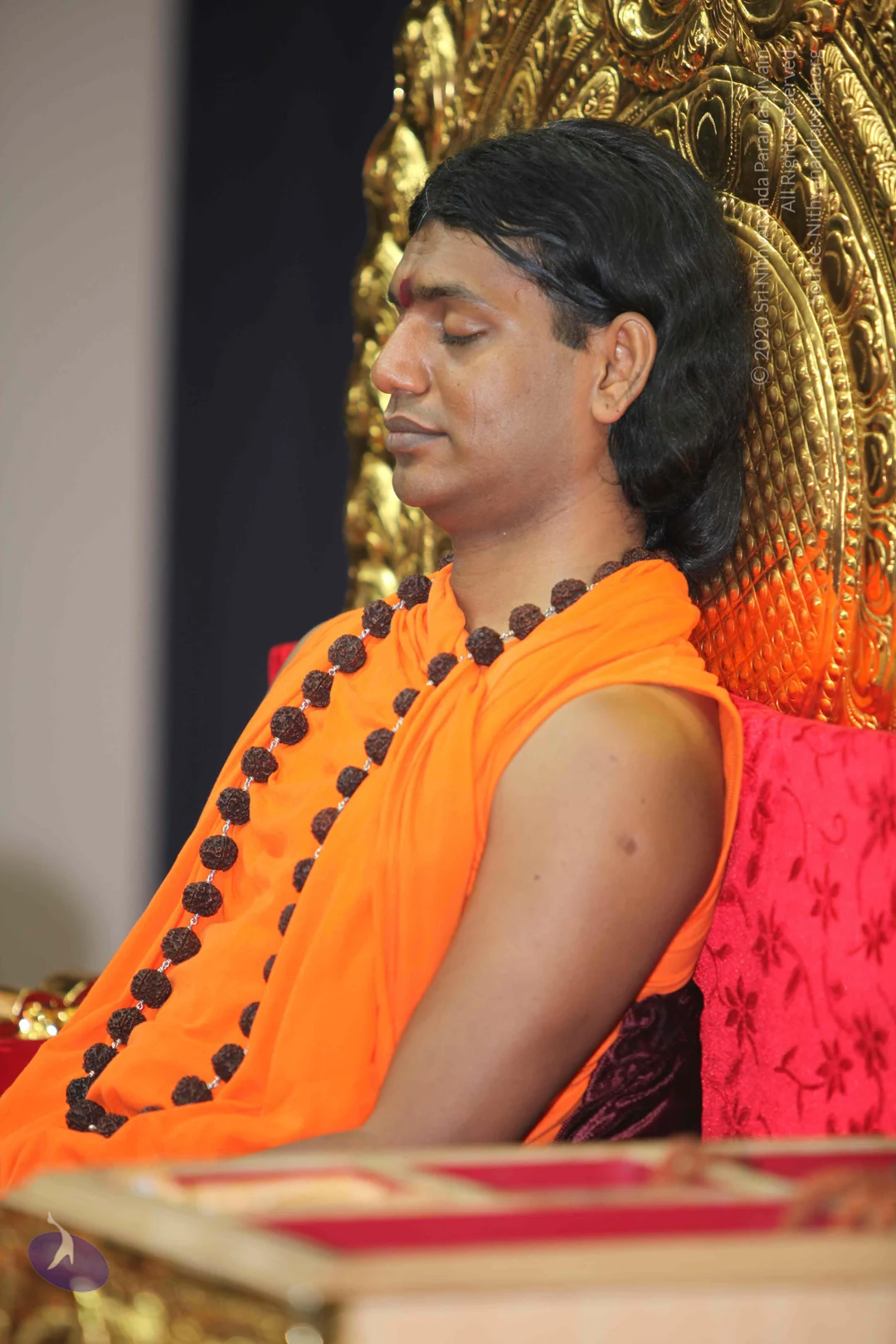
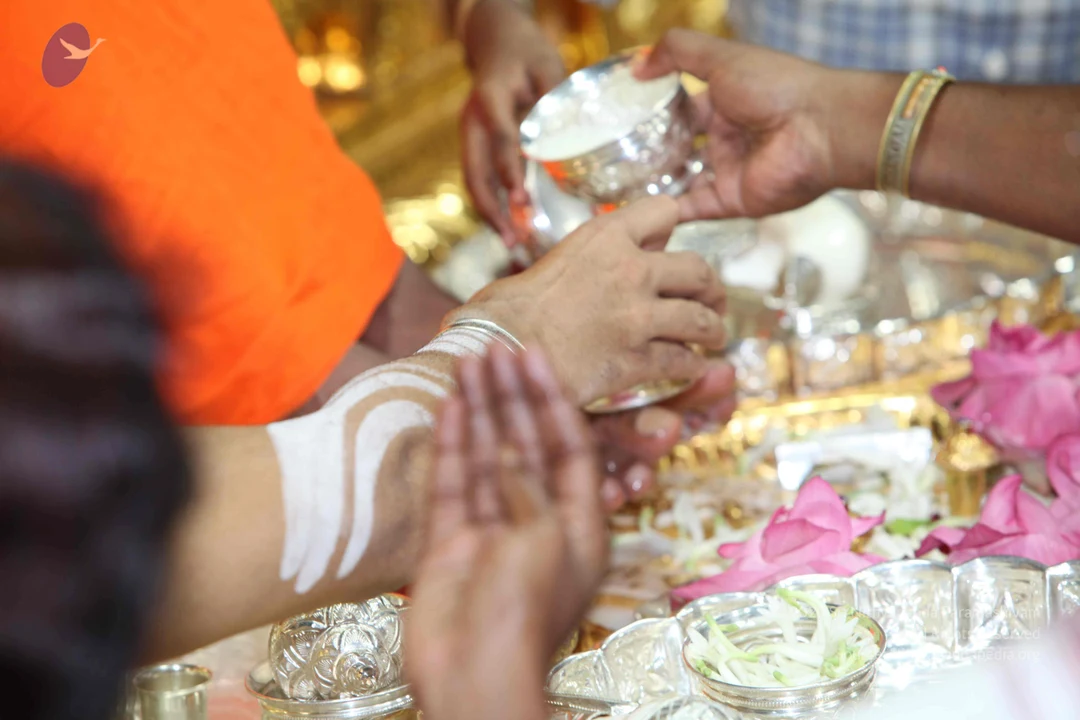
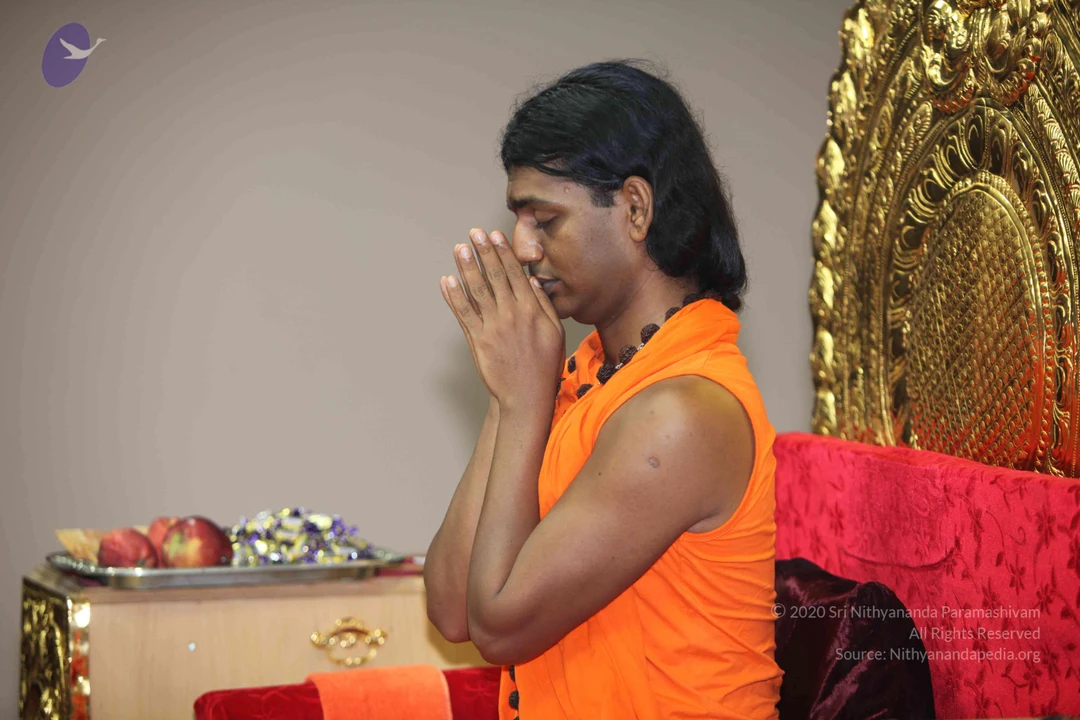
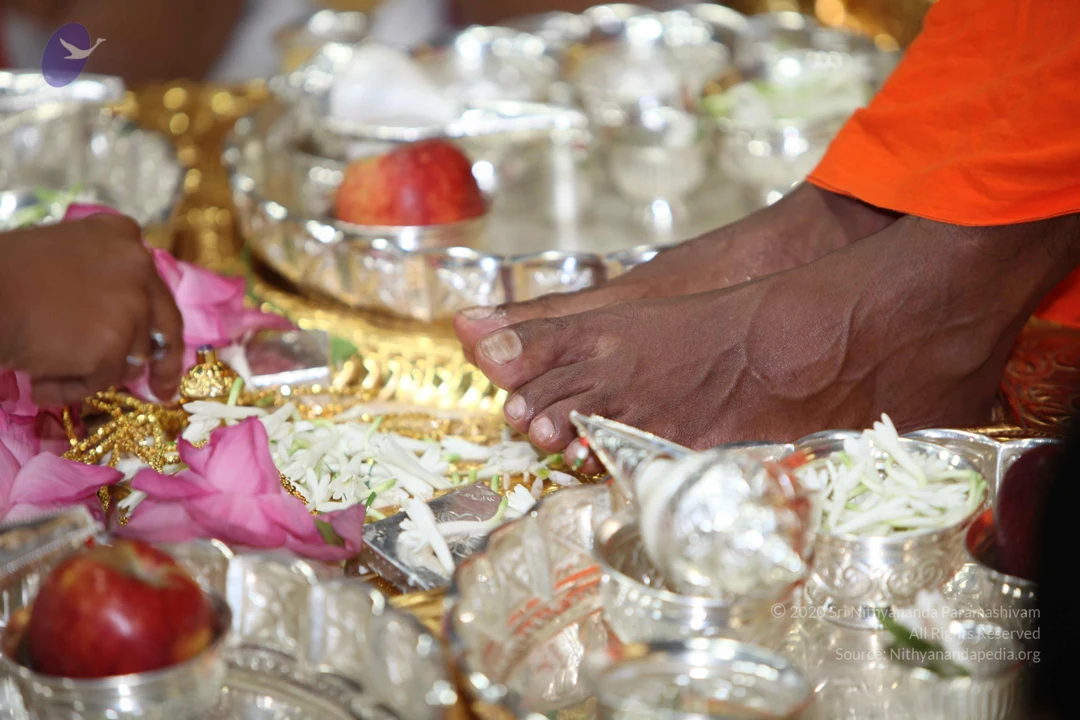
A man in profile with eyes closed, seated before an ornate gold carved throne-back with leaf and scroll relief. He wears an orange saffron garment draped over one shoulder, a long rudraksha mala of dark beads across his chest, and a red tilak on his forehead. His long dark hair falls past his ears. The background is a plain pale wall.Photograph of a man seated with eyes closed in meditation on an ornate gold-carved throne with a red tasselled cushion. He wears an orange saffron wrap draped over one shoulder and a long strand of dark rudraksha beads across his chest and neck, with a red bindi on his forehead and long dark hair swept back. A gold-edged tray with red trim sits in the foreground.A seated man in a saffron-orange sleeveless robe wrapped over one shoulder, wearing a long rudraksha mala of dark beads and a red bindi, with long dark hair swept back. He sits with hands clasped in his lap, eyes lowered and smiling, in front of an ornate gold repoussé backrest on a red floral upholstered throne. Only one physical person is visible.A man seated on a red velvet-upholstered throne with an ornate gold carved back, pressing his palms together in anjali mudra with eyes closed. He wears a sleeveless saffron-orange garment and a rudraksha mala around his neck, with a red bindi on his forehead and long dark hair swept back. Behind him hangs a dark navy curtain. On a wooden side table at left sits a tray with purple flowers and small offerings. The scene suggests prayer or satsang. The seated man shows distinctive saffron clothing, rudraksha beads and a ceremonial throne, so he is described as a person.Close-up photograph of a puja offering being prepared on silver plates and bowls. Hands in the foreground adorn a gold-toned ornate tray with a gold chain, pink rose petals, white flower petals and green leaves. A red apple sits in a silver bowl at the top and another at the lower left. Only hands and forearms are visible; a wrist bears a silver bangle and a sleeve in orange cloth appears at the upper right. The arrangement suggests a pada puja offering.Close view of bare feet in a padapuja ritual, with the feet of a person wearing an orange robe resting on a golden tray. Silver bowls hold red apples, shredded white vegetable pieces, a silver plate with a white flower-shaped offering, and pink flowers are scattered around the tray. The feet are being washed or honoured with the offerings arranged beside them. Another person's wrist with a gold bangle and a checked sleeve appears at the top right, holding a silver vessel.
2--Satsang
63 photosSource gallery
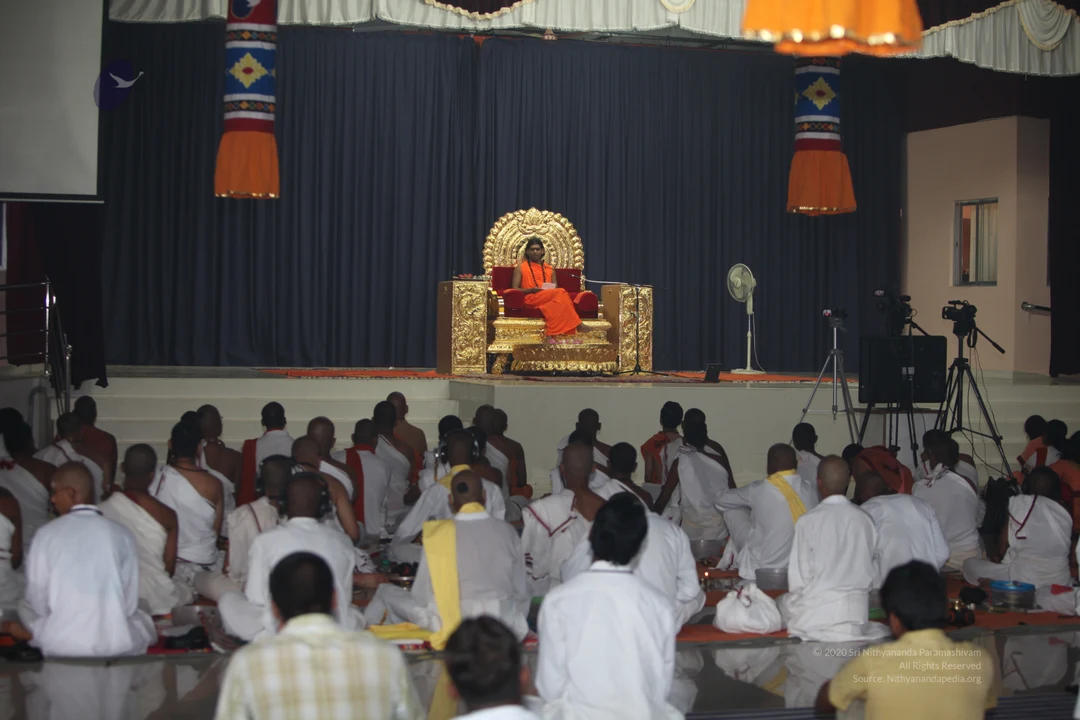
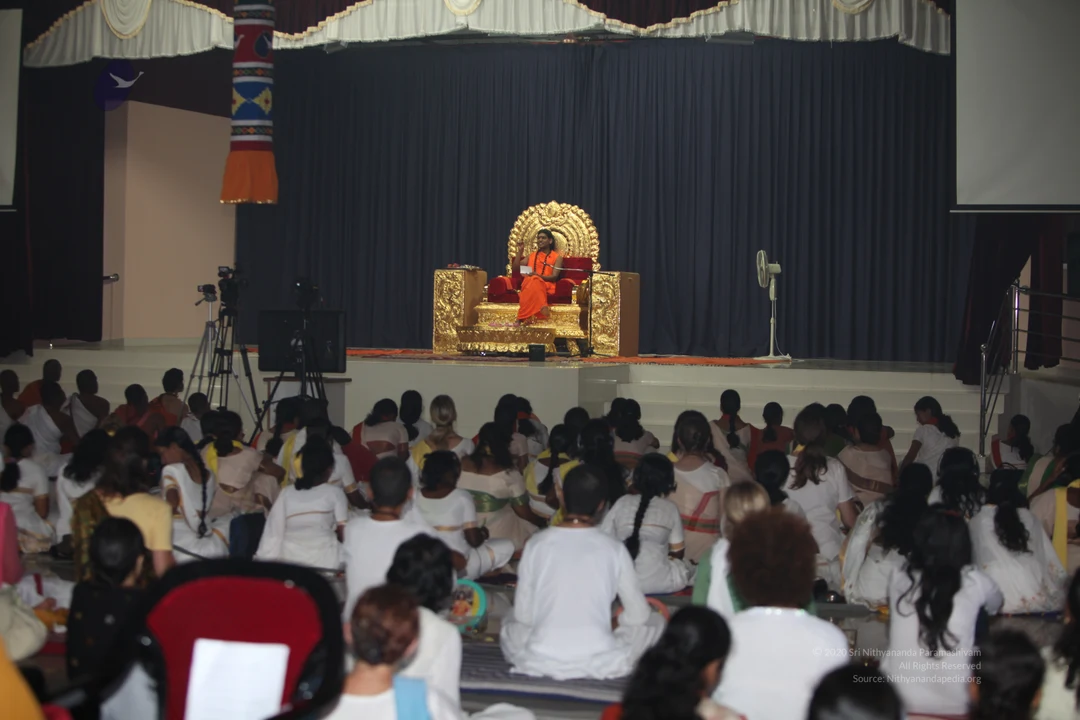
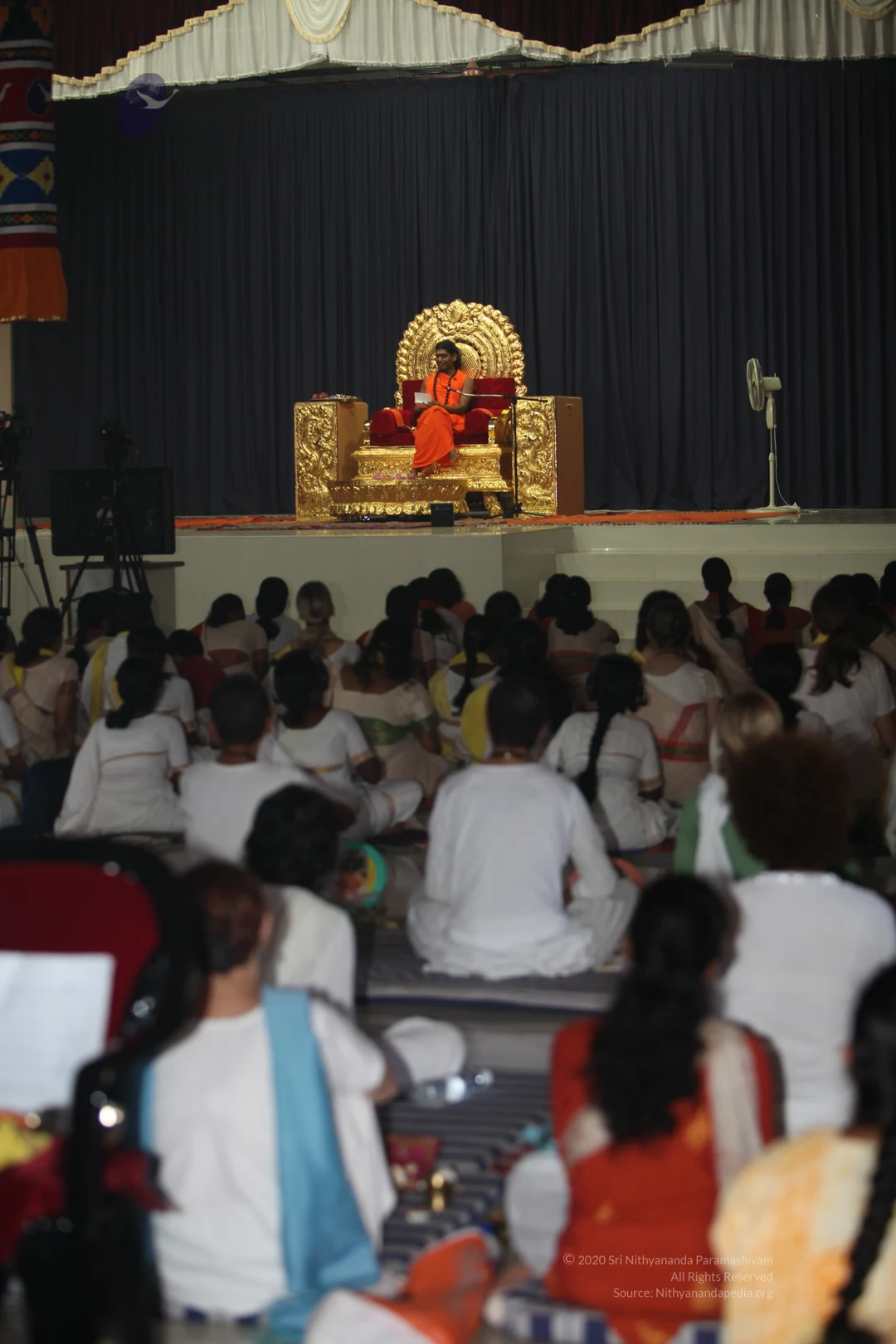
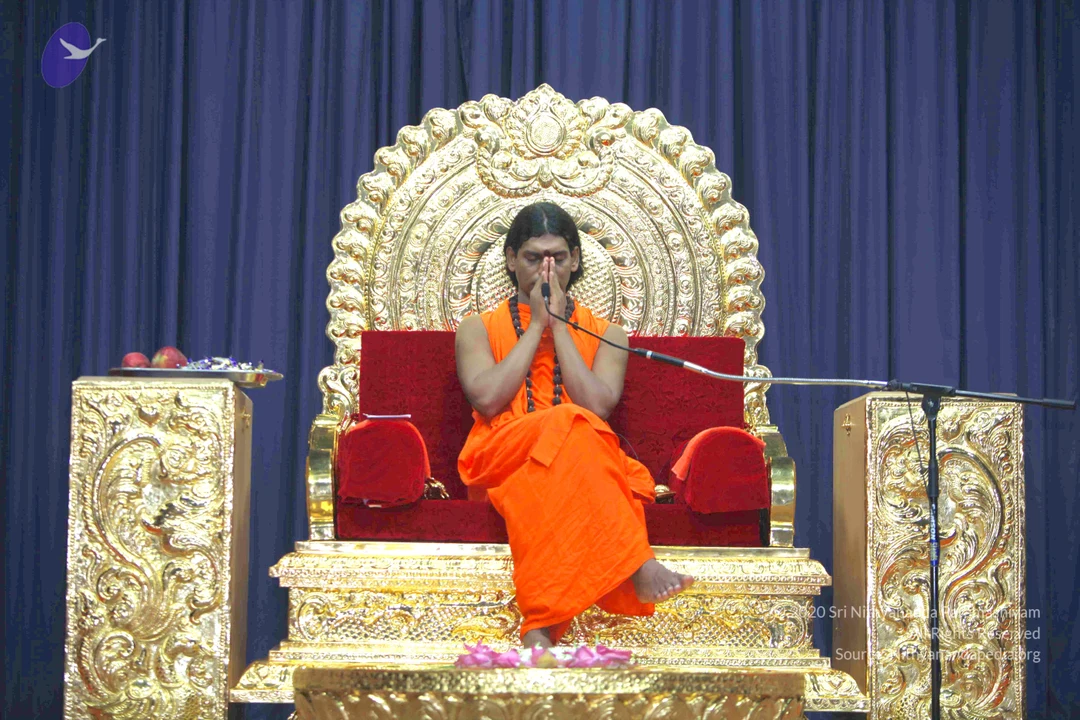
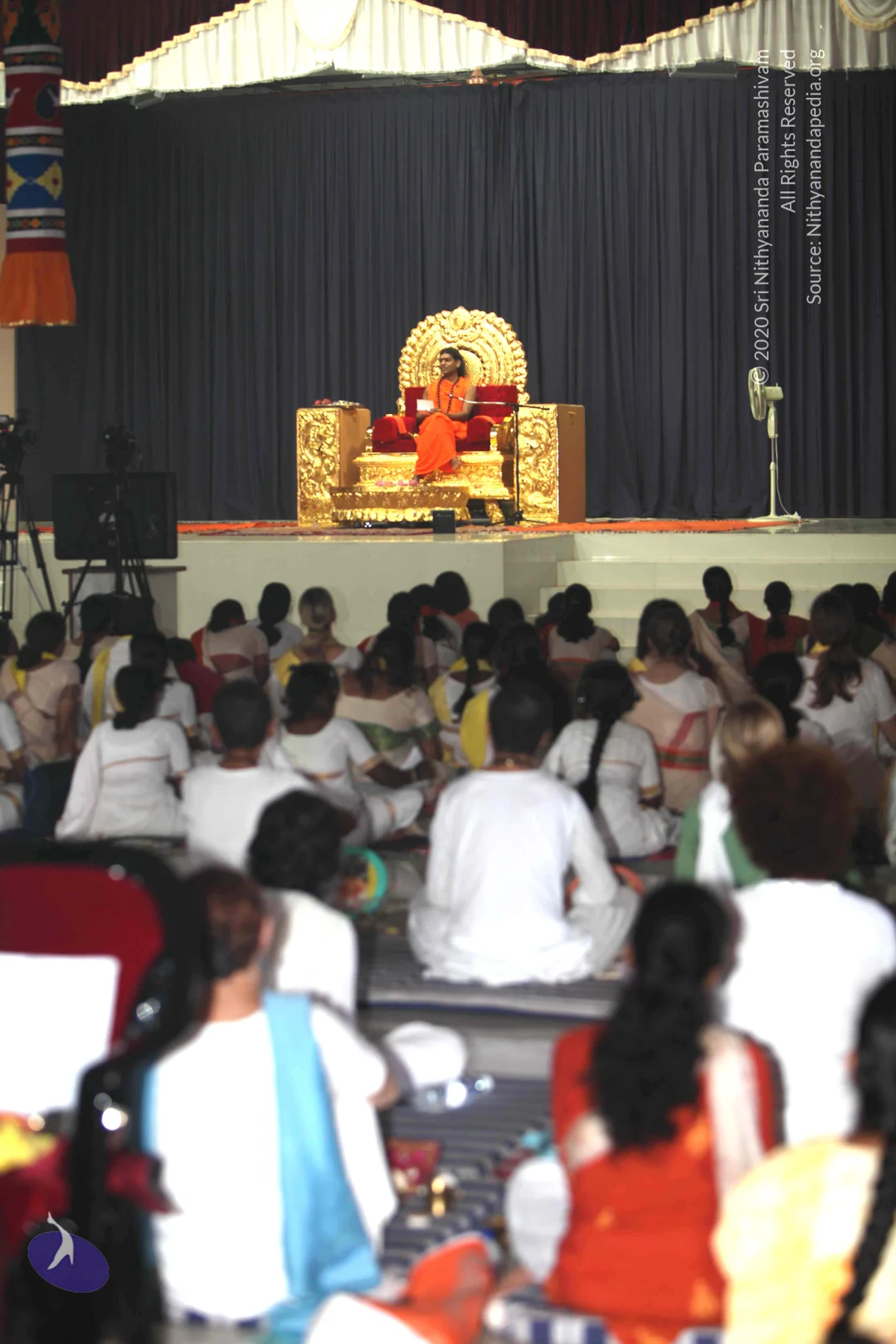
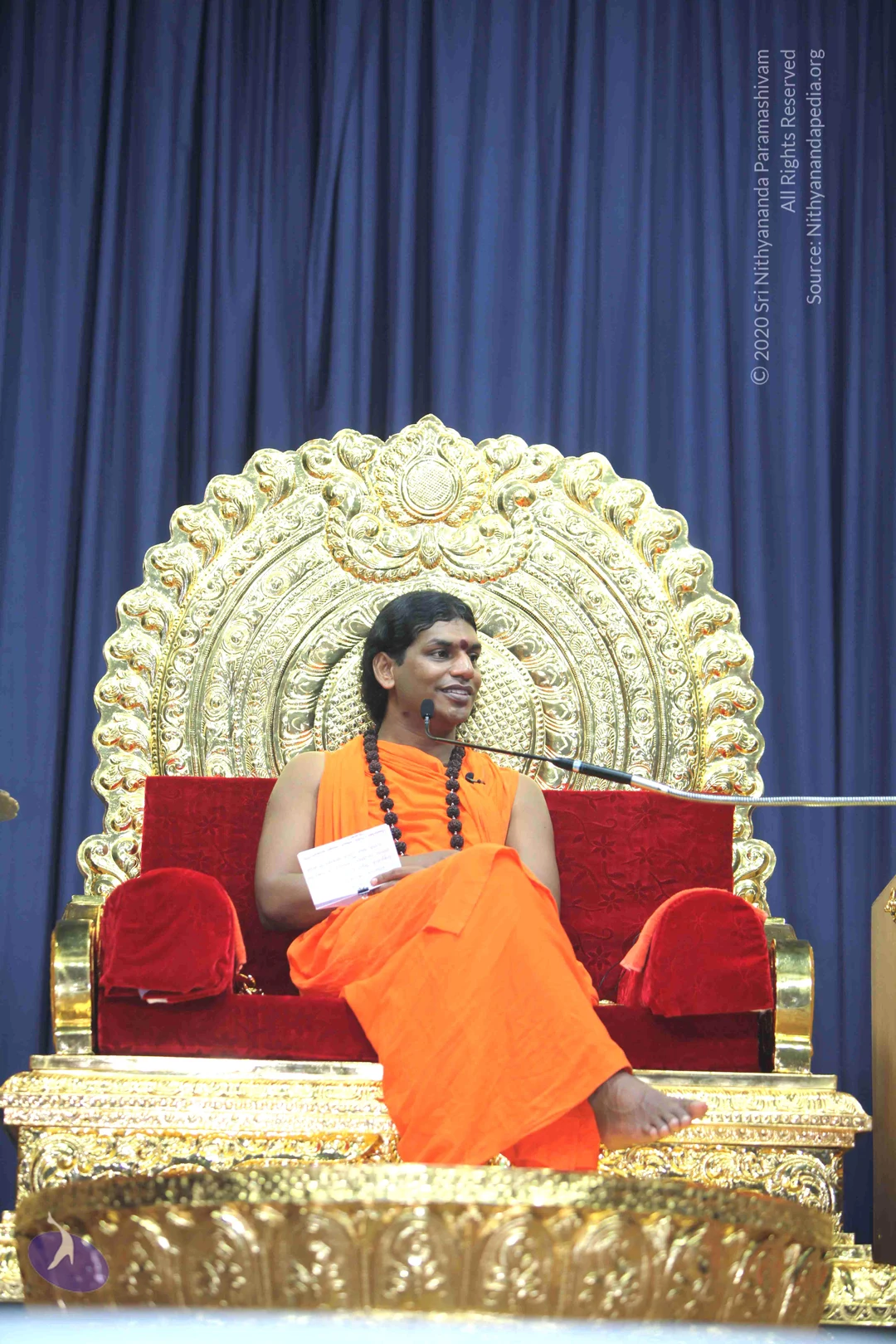
A seated man in an orange saffron robe sits on an ornate gold throne with a red cushioned seat against a blue draped backdrop, with hands pressed together in namaste and bare feet. He wears a rudraksha mala around his neck and has long dark hair swept back, a distinctive cue for Swamiji (probable), seated as the speaker of a satsang. A microphone on a stand stands beside him, and gold carved pedestals flank the throne, one holding a small plate of fruit and flower petals. A pink flower offering lies on the lower dais. Swamiji (probable) is shown in person as the seated speaker.A seated figure in a saffron-orange robe sits on an ornate gold throne with red velvet cushions on a white stage, hands pressed together in namaste. The figure has long dark hair swept back. Behind is a dark navy curtain, two stage spotlights hang overhead, and a pedestal fan and a small laptop sit at the stage edge.A man seated on an ornate gold-and-red throne during a satsang talk, raising his right hand in an open gesture while holding a red apple in his left hand. He wears a sleeveless saffron-orange robe and a long rudraksha mala with a small red tilak on his forehead, and a microphone on a stand is positioned beside him. The gilded throne back is decorated with floral relief and red velvet cushions frame the seat.A man in saffron-orange sleeveless robes sits cross-legged on an ornate gold throne with a red velvet seat and backrest, reading from a pink card. He wears a long rudraksha mala and a red forehead mark, with a microphone on a stand near his chest. Pink flower petals lie on the gilded base of the throne in front of a deep blue draped backdrop. The person is an appearance-based candidate for a person, with orange robes, rudraksha mala and throne as cues, but the face and hair are not distinctive enough to be certain.A seated man in an ornate golden throne with a tall, arched gold back and red velvet cushions addresses an audience at a satsang. He wears a sleeveless saffron-orange robe and orange trousers, with a dark rudraksha mala around his neck and a small red mark on his forehead. He holds a sheet of paper in both hands and gazes forward toward a microphone on a stand. Fruit and flowers rest on a small tray beside the throne, and a dark blue draped backdrop fills the background. This is a person (appearance-based): the saffron robe, rudraksha mala and throne are visible cues, though the face and hair are not clearly confirmed. Only one person is visible.A satsang hall seen from behind the audience, with many seated devotees in white clothes on the floor facing a raised stage. On a large ornate golden throne with red cushioning sits a figure in a saffron-orange robe, holding a microphone-like object; the figure has long swept-back hair and appears to be a probable Swamiji (probable) seated in discourse. Devotees in white and some in cream or yellow saris sit in rows, some with long braids. A camera on a tripod and a small floor fan stand near the stage, with a blue draped curtain and white valance behind. A white projection screen is visible at upper right.
3--Energy-Darshan

17 photosSource gallery
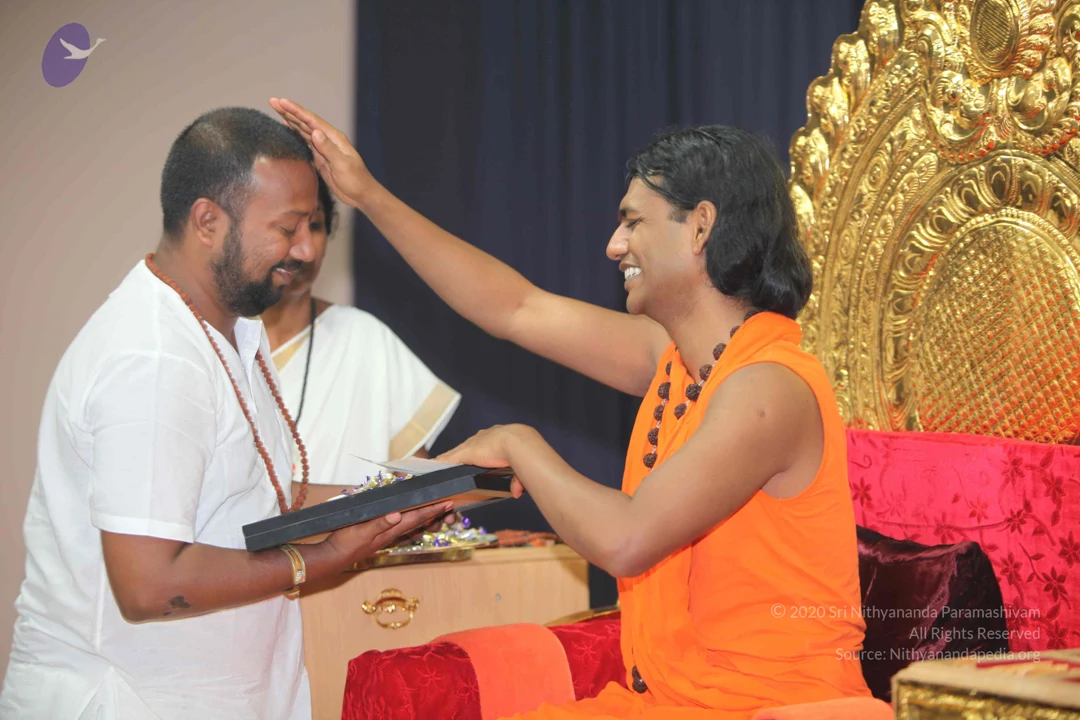
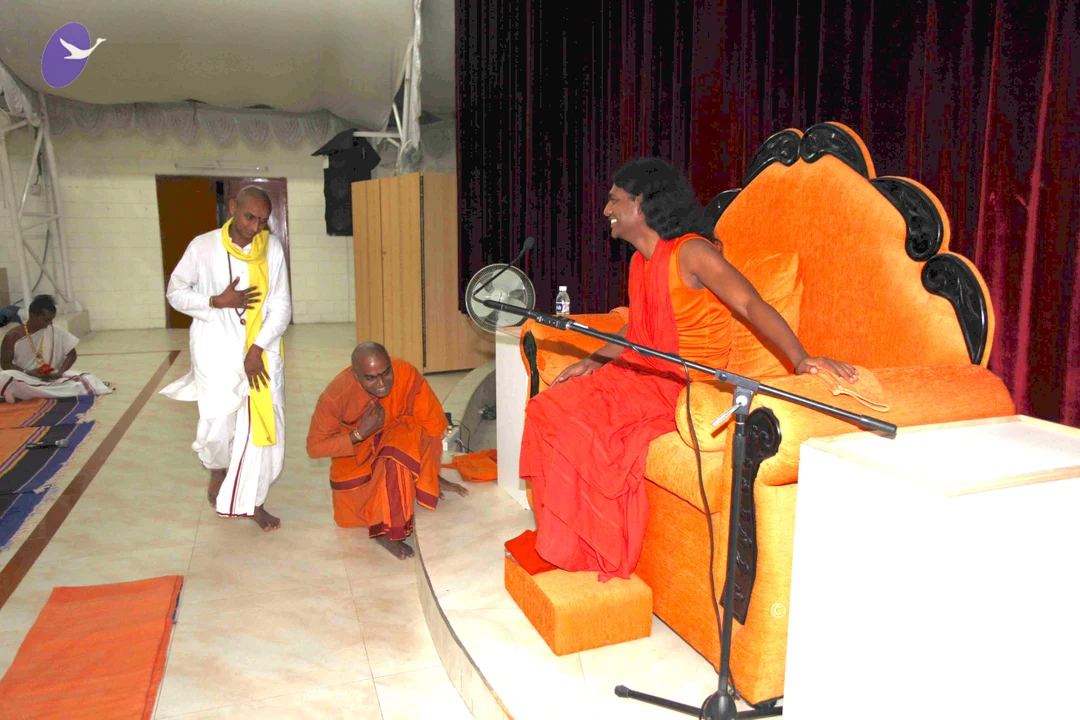
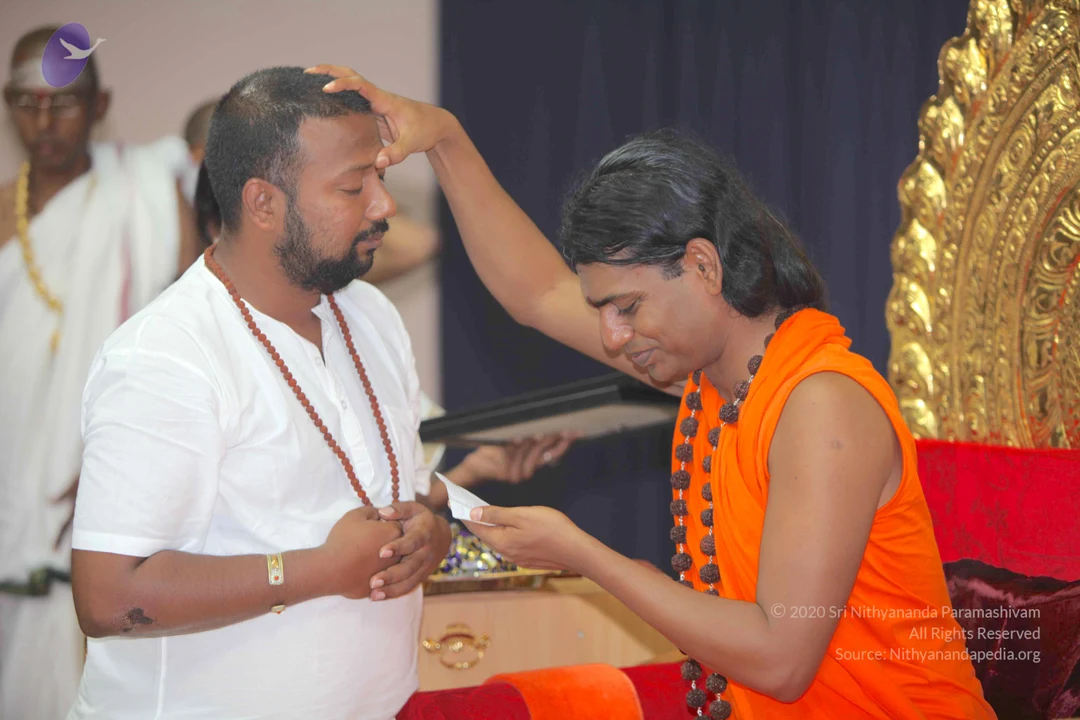
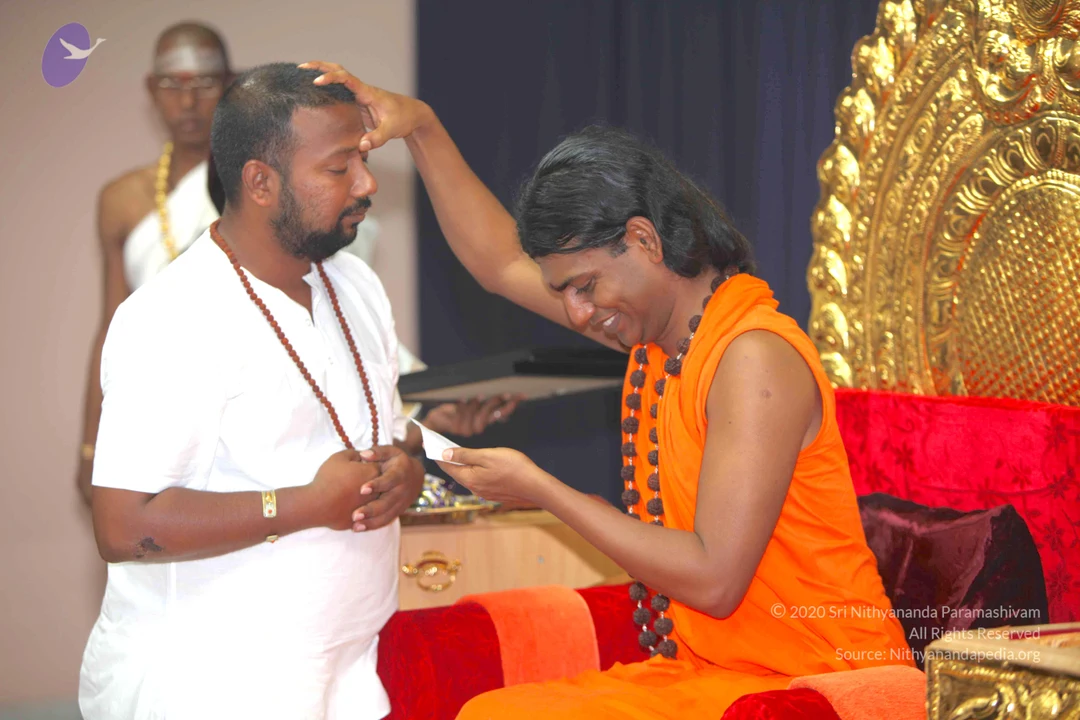
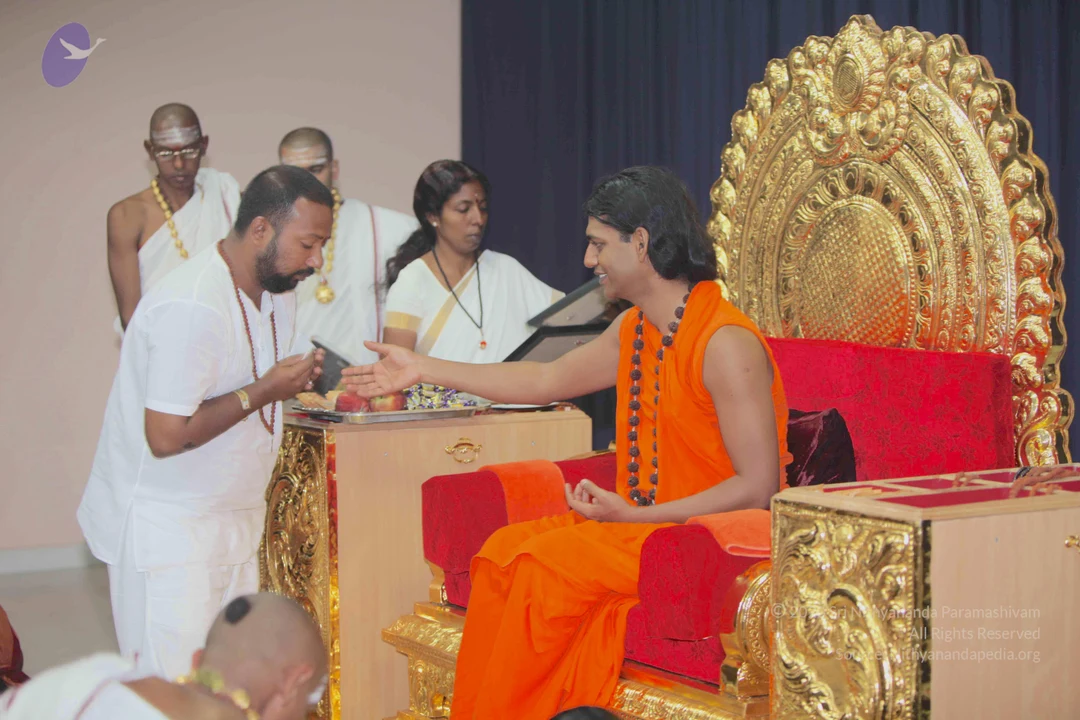
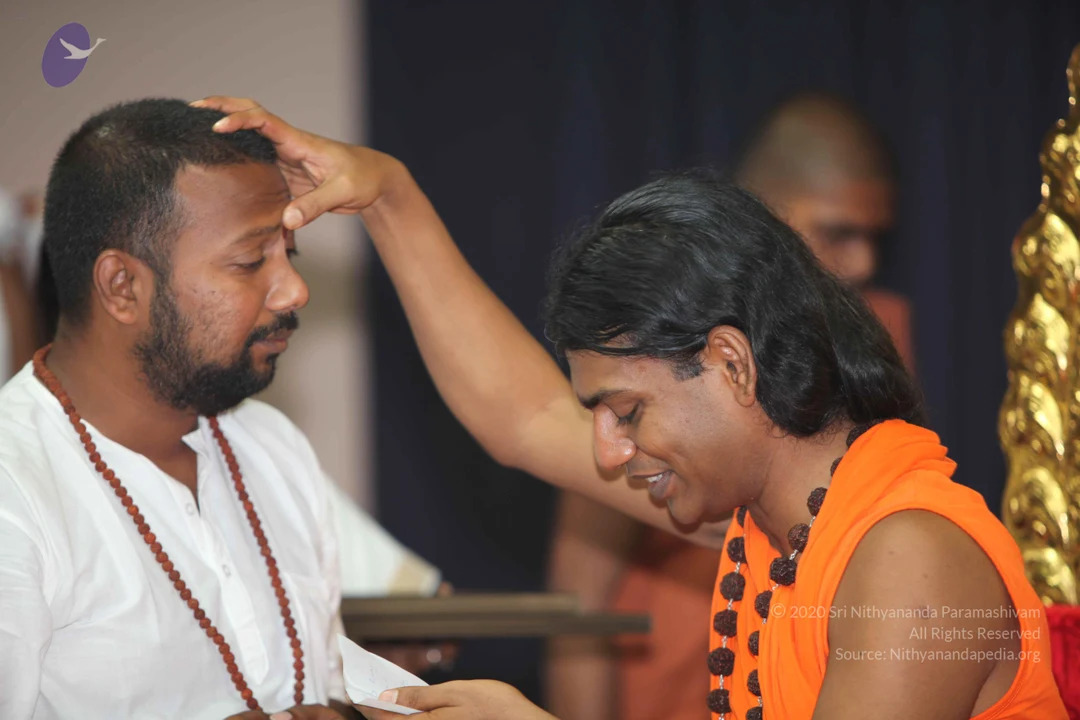
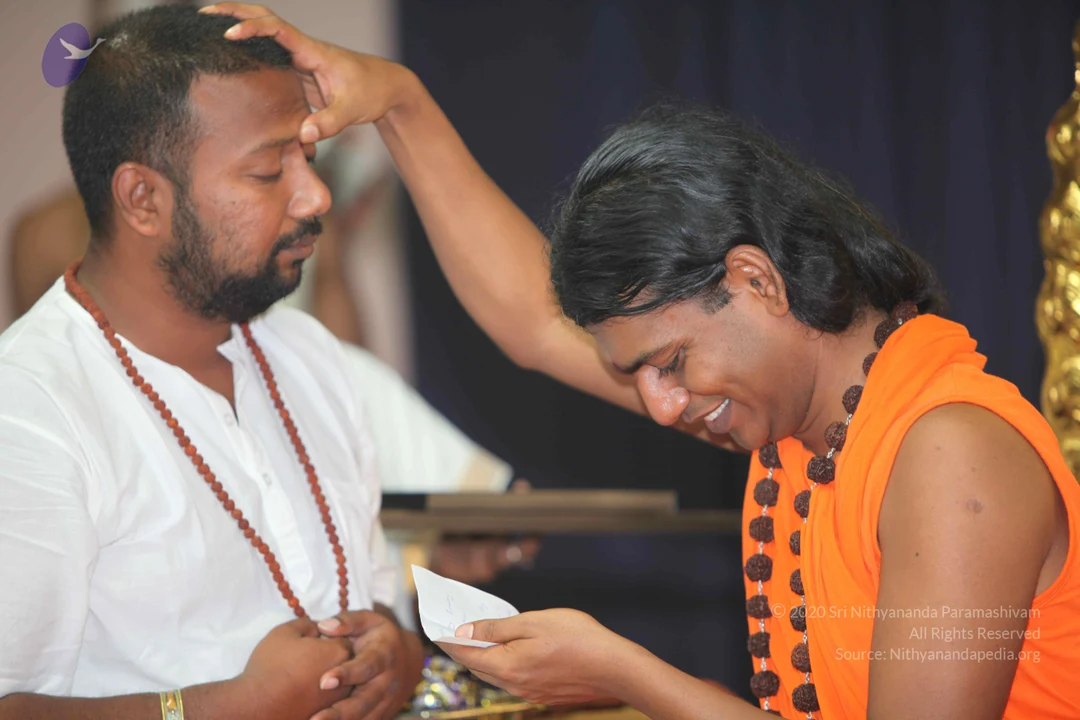
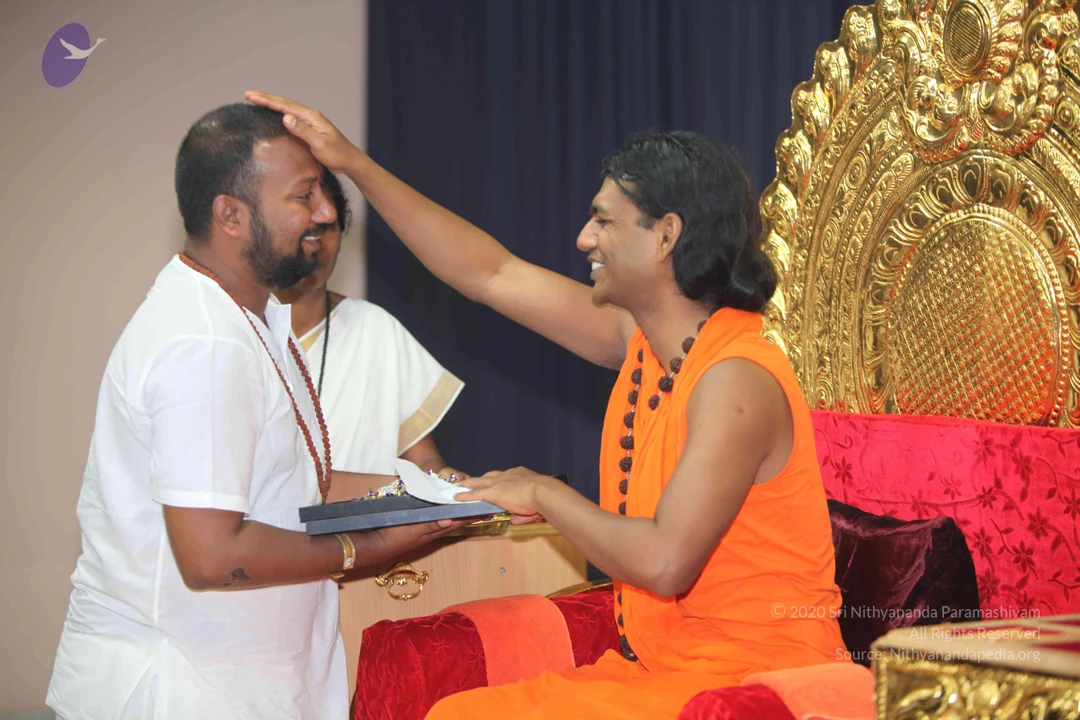
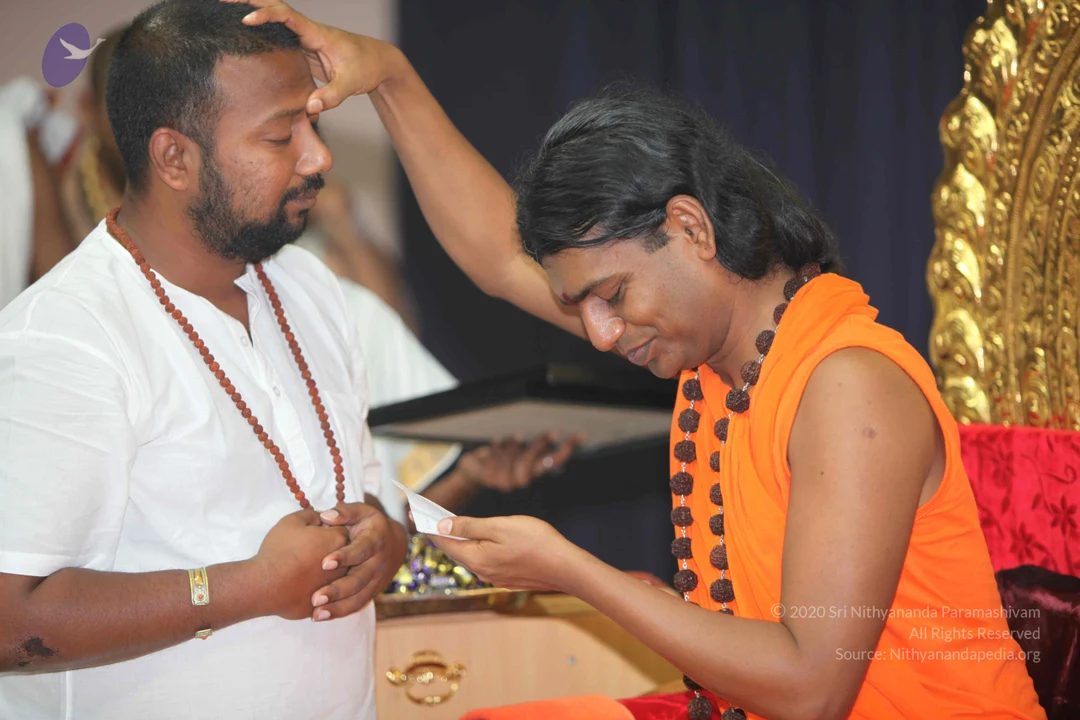
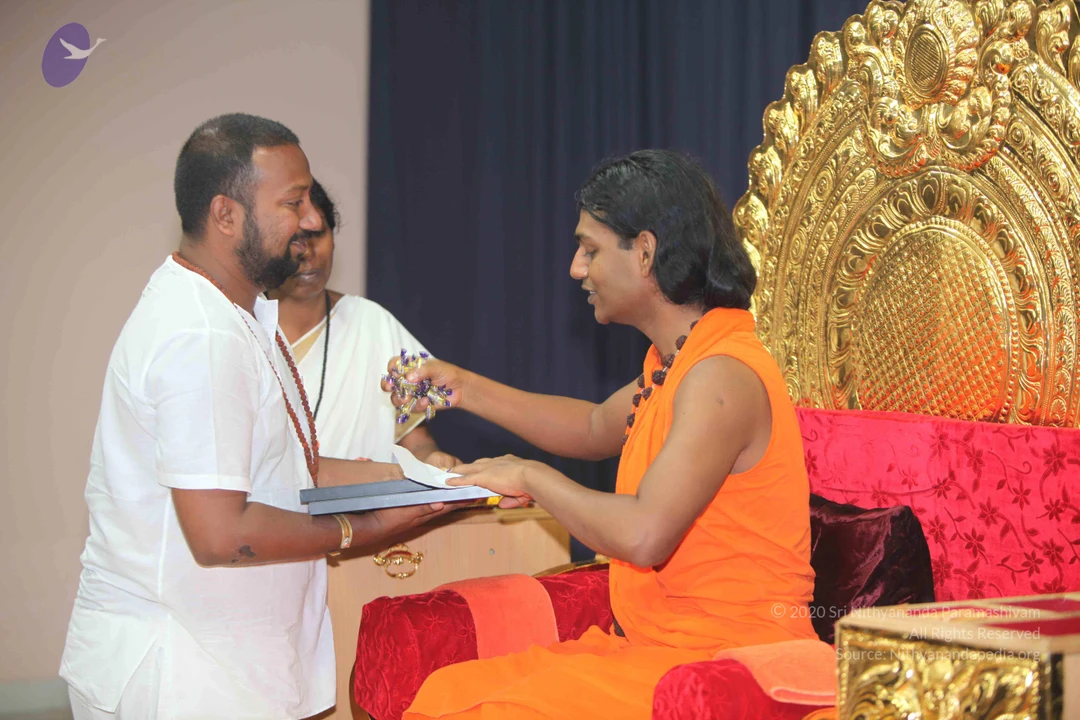
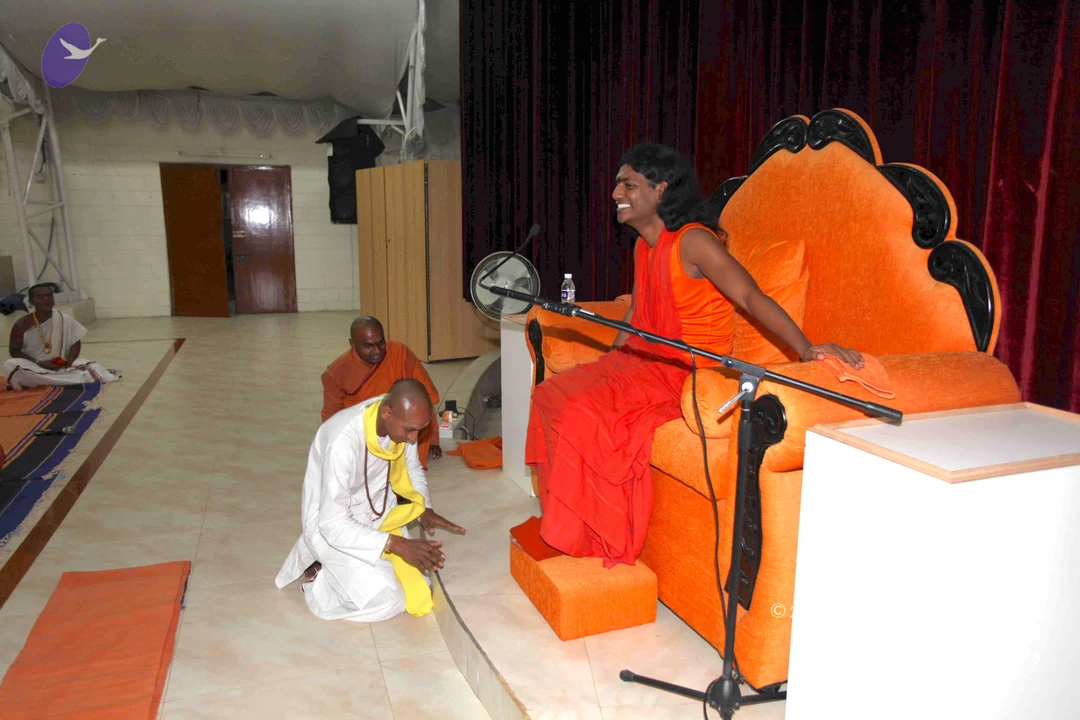
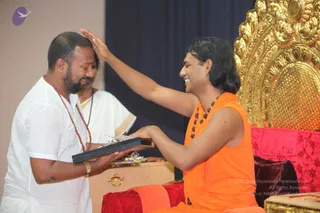
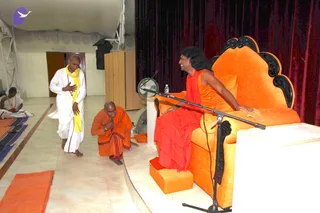
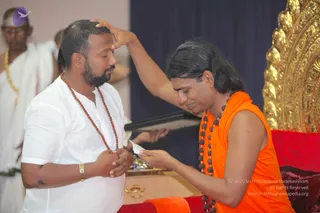
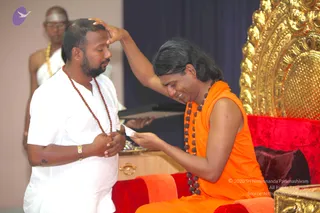
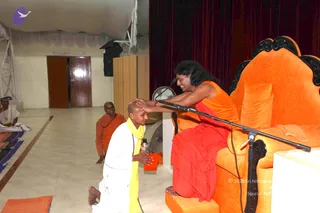
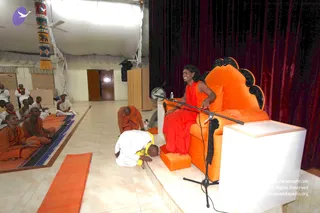
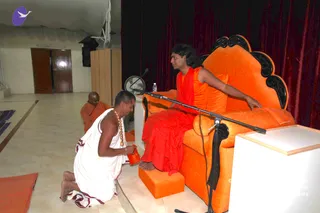
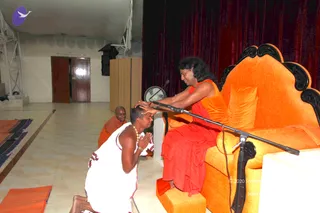
Indoor hall scene with a person seated on an orange velvet throne-style chair on a raised platform, wearing a red top and red skirt, with long dark hair, speaking into a microphone on a stand. In front of the platform a man in white dhoti and white top lies prostrate on the floor, wearing a gold chain. Several saffron-robed men sit on mats at left, one in front with palms pressed together in namaste. A standing man in white kurta stands at the back left. Dark red curtains hang behind the stage, and a fan and water bottle sit near the microphone.A photograph of a devotee in a white shirt and white dhoti with a rudraksha mala standing before a seated figure in saffron-orange clothing with a long rudraksha necklace, sitting on a red cushioned seat in front of an ornate gold throne. The seated figure, with long swept-back dark hair, smiles while raising a hand in blessing over the devotee's head. The devotee, smiling with eyes lowered, holds a black tray with flower petals and offerings. Another person in white stands behind them against a dark blue curtain. The image is watermarked with copyright text. The scene reads as a darshan blessing at a satsang. Swamiji (probable) appears as the seated figure in orange with long swept-back hair, rudraksha mala and ornate throne; the devotee is a devotee, and the figure behind is a person in white.Photograph of an indoor hall with cream walls and a red velvet curtain. A long-haired figure in an orange-red robe sits on an ornate orange upholstered throne with carved black trim, smiling and gesturing toward a microphone on a stand. A bald man in white dhoti and shirt with a yellow shawl stands at left, hand on chest, while a bald man in orange robes kneels on the floor in front of the throne with hands folded. Orange and blue mats cover the floor, and a woman in white sits at far left. a person with long swept-back hair in orange-red robes seated on the throne, receiving a respectful greeting from the kneeling devotee.A seated figure in an orange sleeveless robe with a long rudraksha mala and long swept-back dark hair leans forward while touching the crown of a standing man's head with one hand, holding a folded white card in the other. Swamiji (probable), with long hair, saffron robe and rudraksha beads, is the seated giver. The standing man wears a white kurta, a red rudraksha mala, a gold bracelet and has a short beard. Behind them a priest in white dhoti with a gold necklace and tilak stands, and a golden ornate throne with red upholstery is at right. Dark blue drapes form the backdrop.A seated figure in a saffron-orange sleeveless robe with a rudraksha mala and a dark brown rudraksha necklace sits on a red and gold throne-like seat with an ornate gold backrest, placing a hand on the head of a man in a white dhoti and white shirt who wears a rudraksha mala and a gold bracelet and stands with his hands folded at his chest. A second man in white with a white-marked forehead and gold necklace stands in the background, and a small wooden table with a tray and a gold-coloured item is visible. The orange-robed figure is a probable Swamiji by appearance cues including swept-back long hair, saffron robe and rudraksha malas, and the image is a photo showing the blessing of a devotee.A photograph of a satsang-style blessing inside a hall with cream walls, a dark red curtain and a white stage frame. A long-haired person in a red-orange robe sits on an ornate orange-upholstered throne, leaning forward with both hands resting on the crown of a kneeling devotee. The kneeling devotee, shaved-headed, wears a white dhoti and a yellow shawl with a rudraksha mala, hands joined in front. Behind, a monk in orange robes kneels on the floor, and a figure in white sits at the left edge near a blue-and-brown mat. A microphone stand and a fan stand near the throne, and a small orange container sits on the floor. The throne-seated figure has long swept-back hair and orange-red clothing consistent with the probable identity cues for a person, though the appearance is only partly visible.

4--Sarva-Darshan

15 photosSource gallery
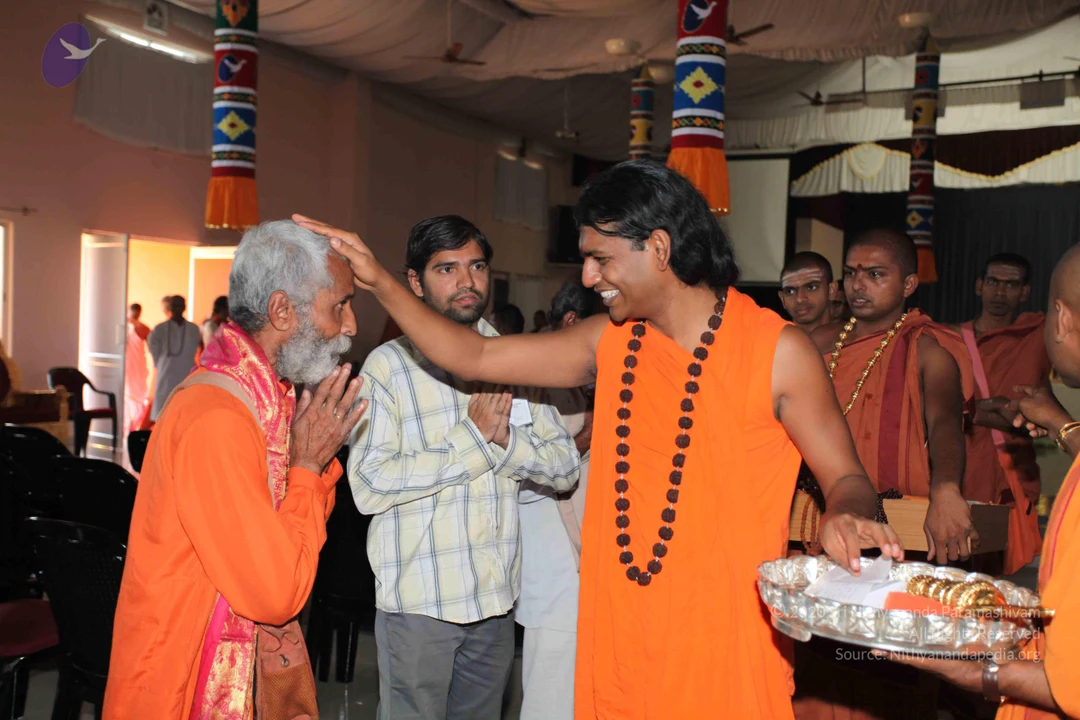
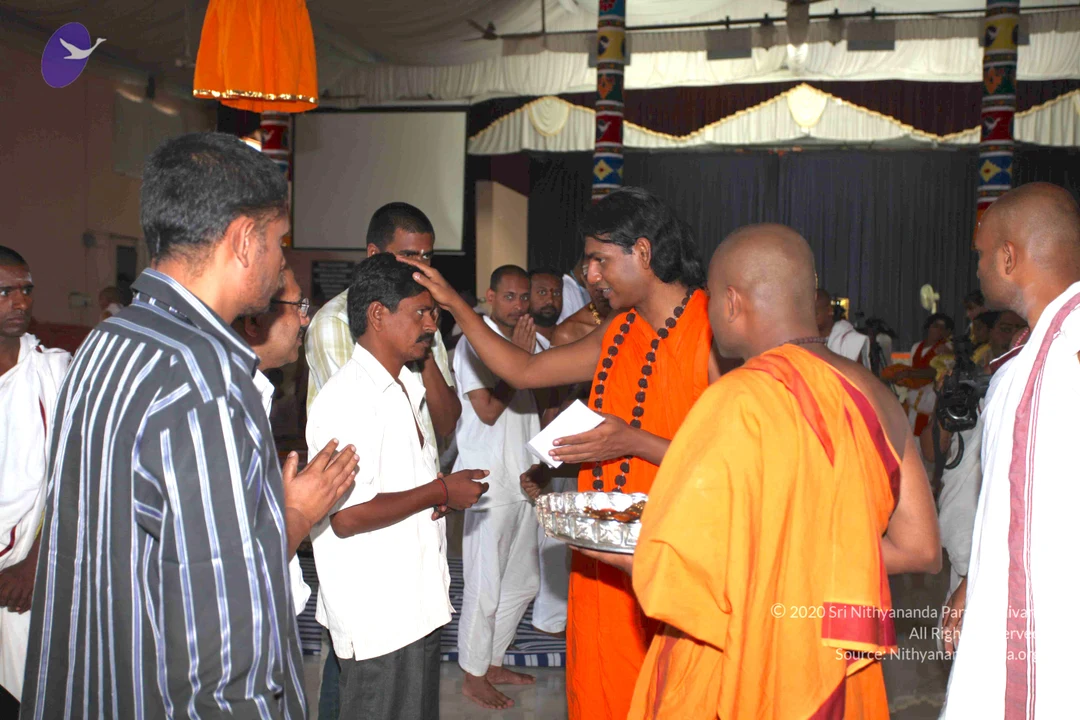
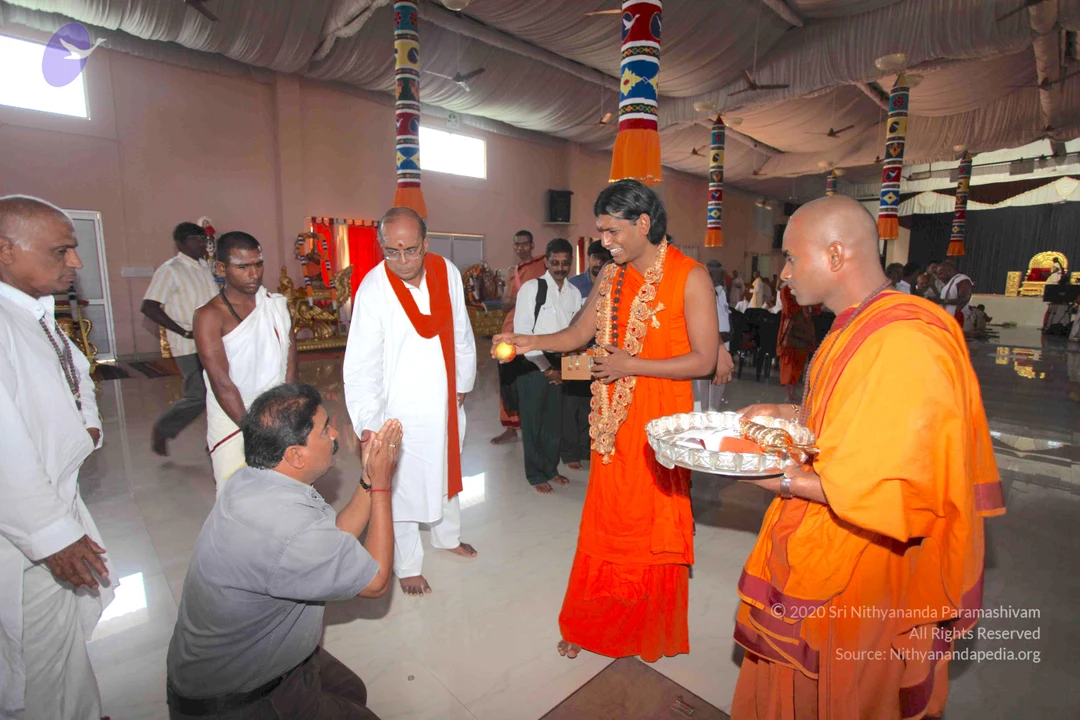
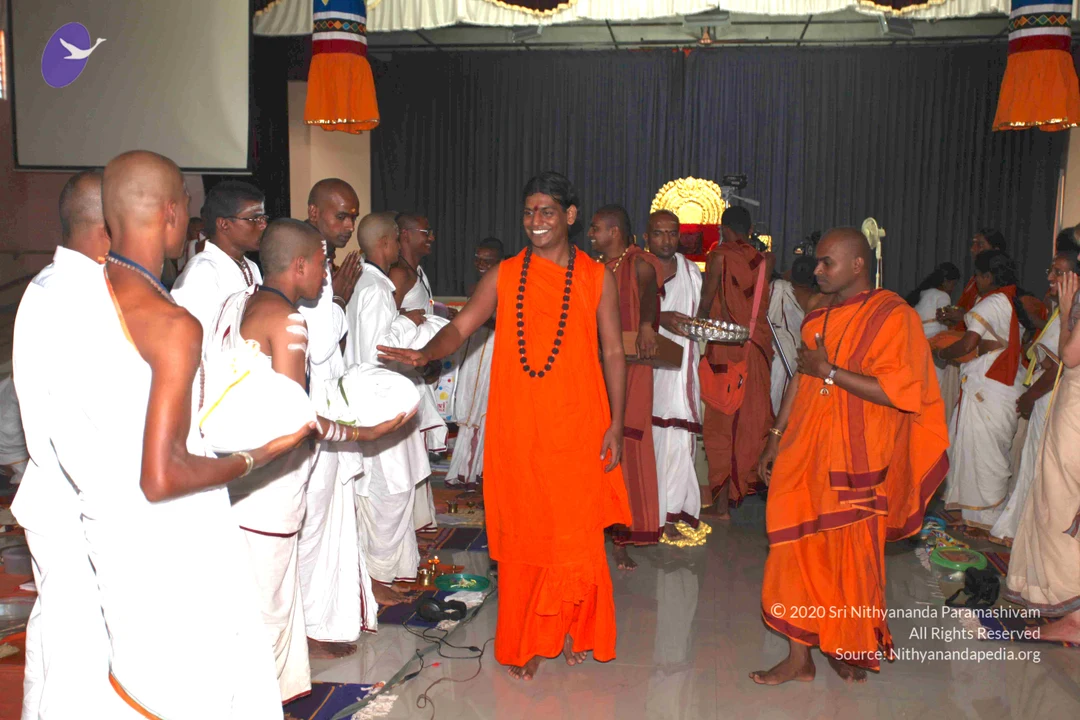
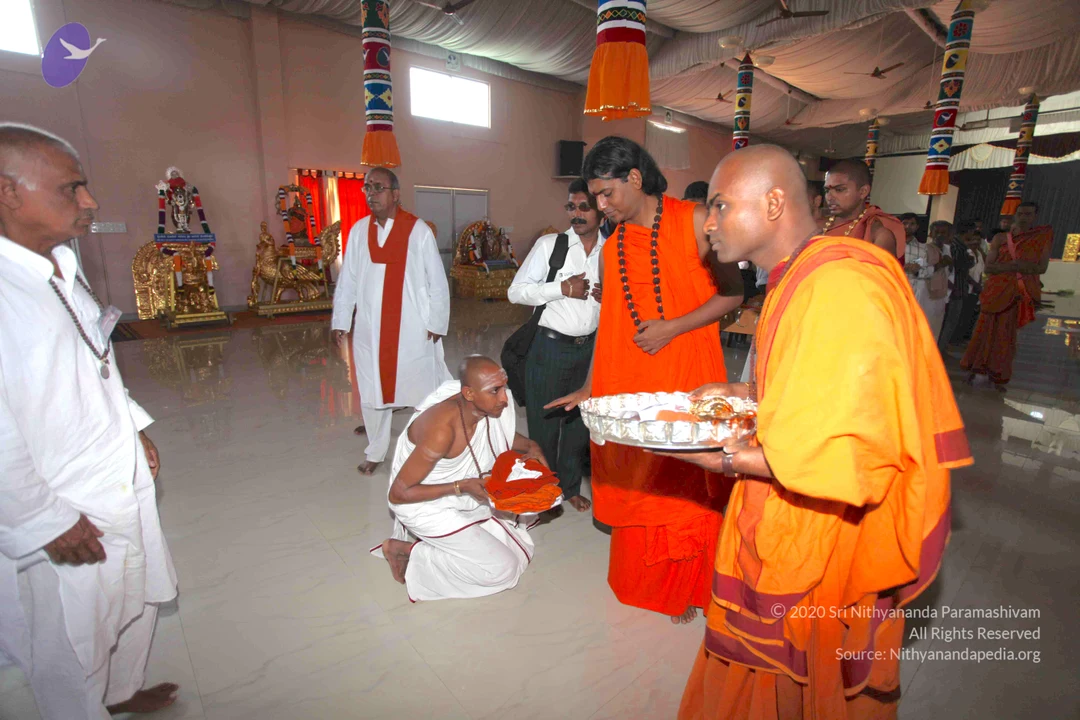
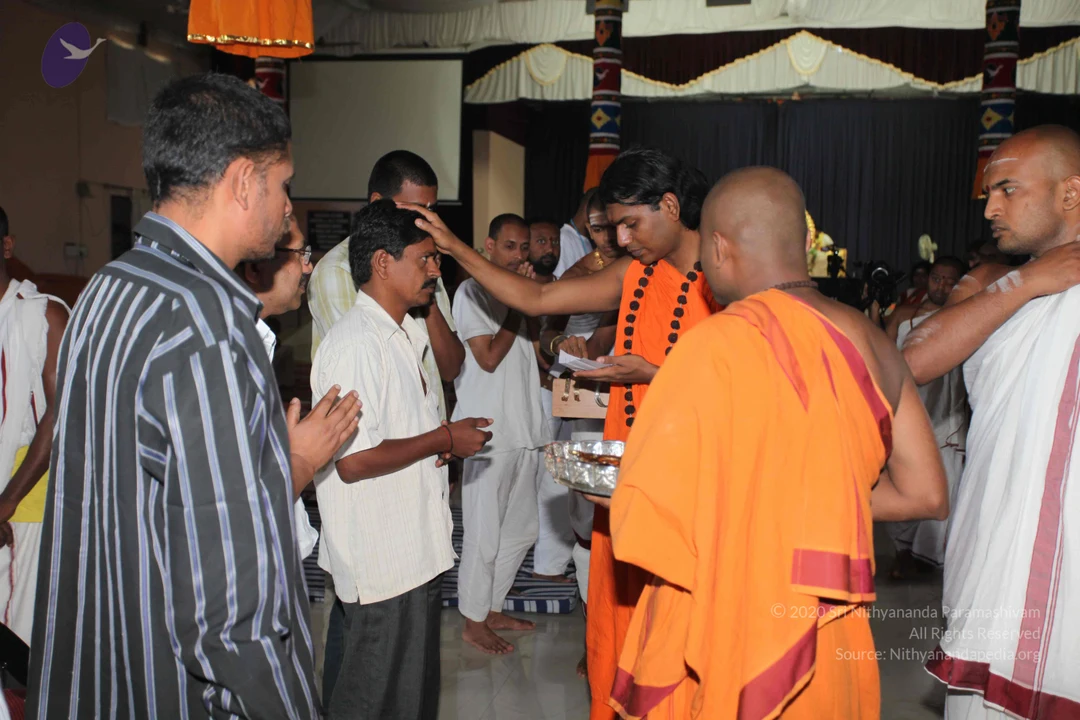
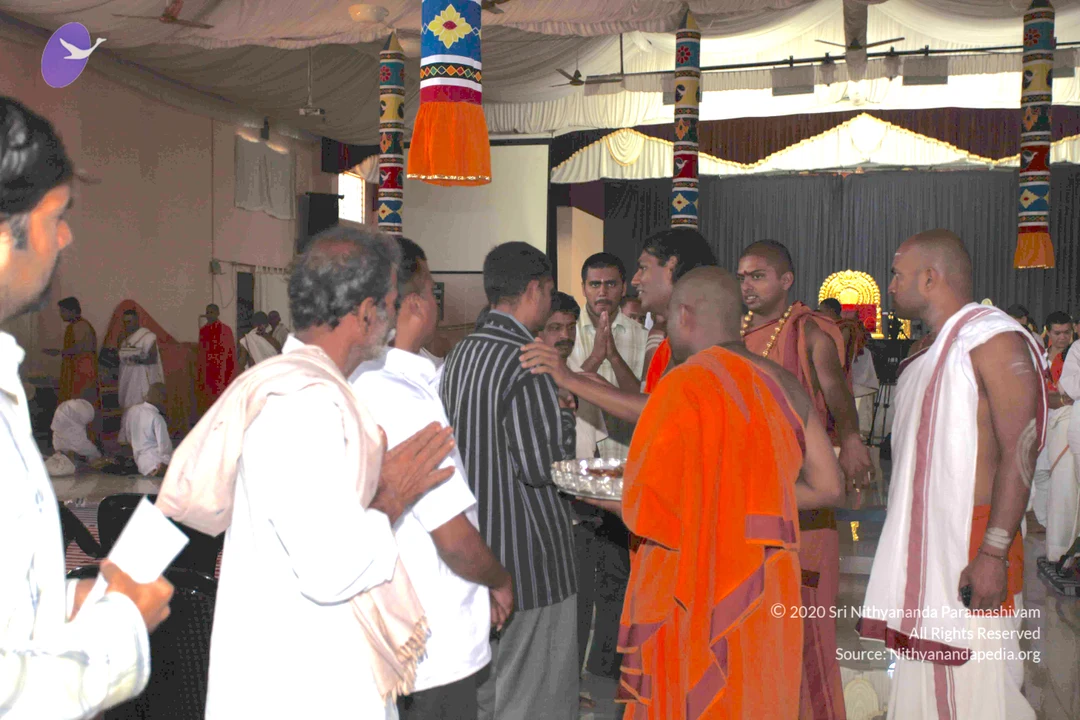
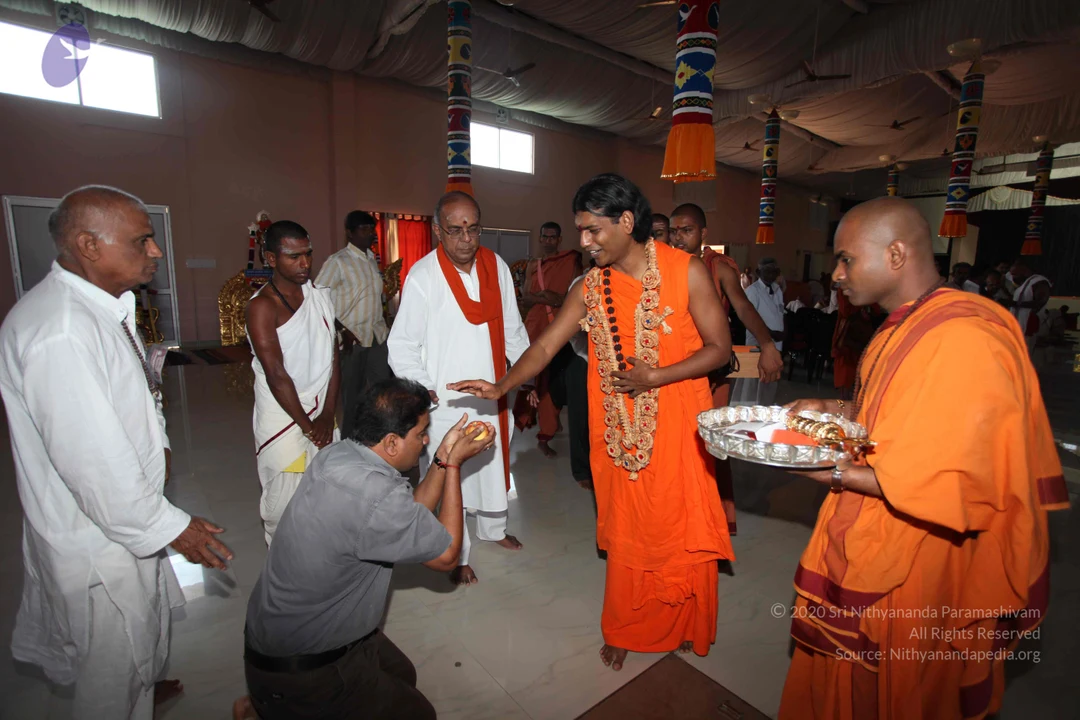
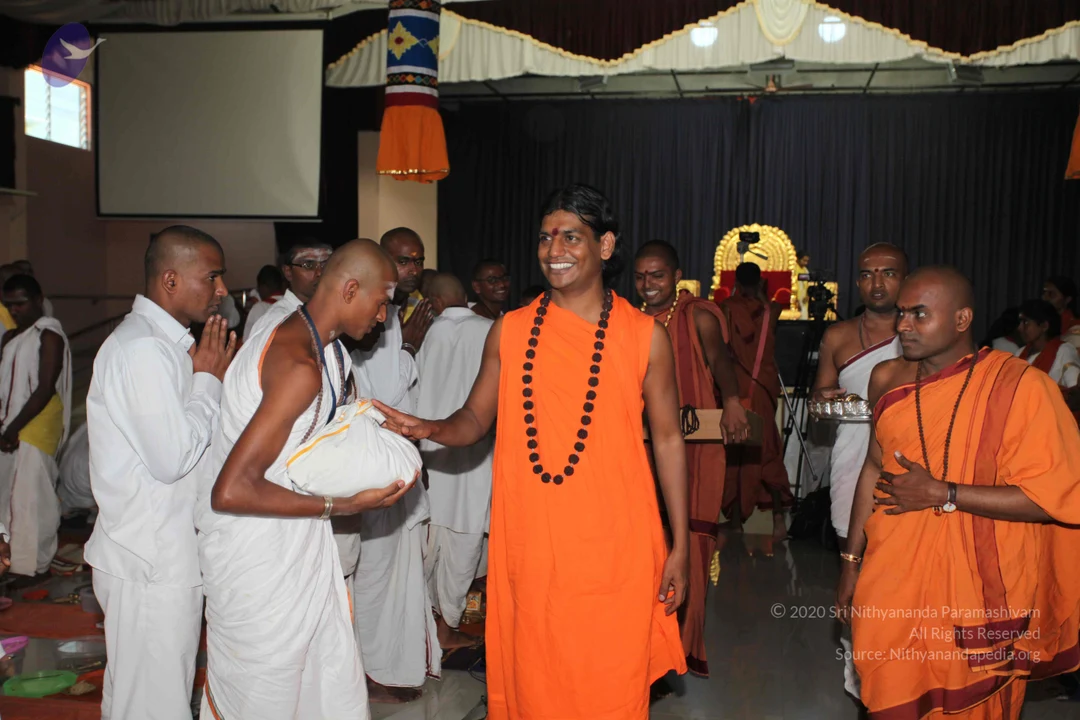
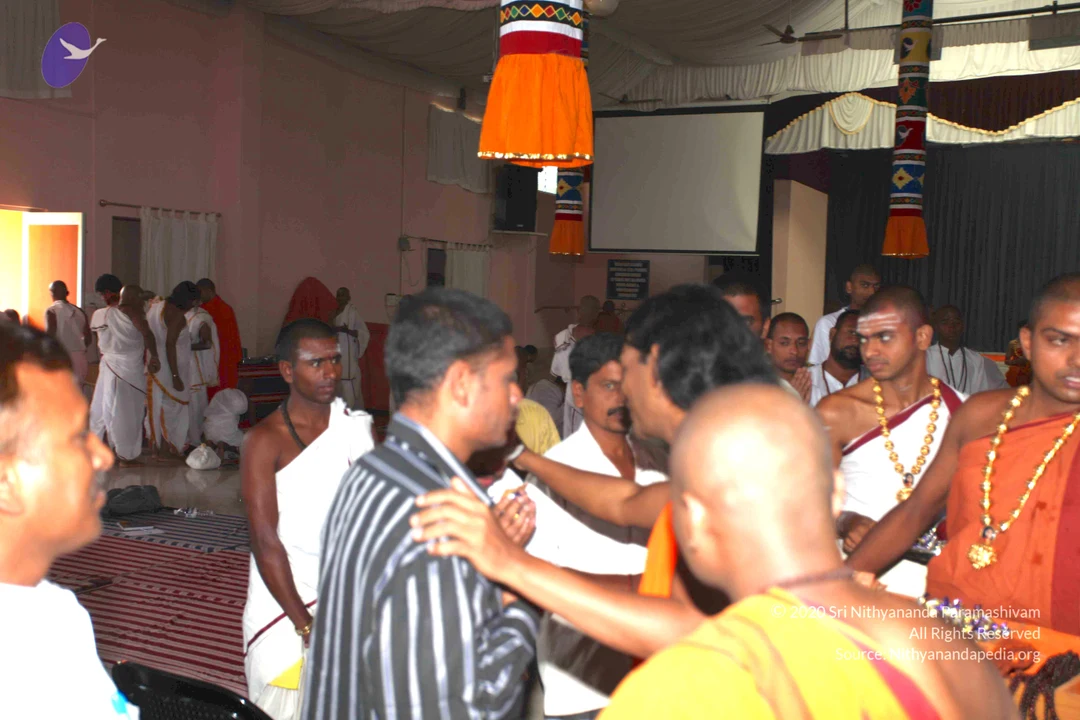
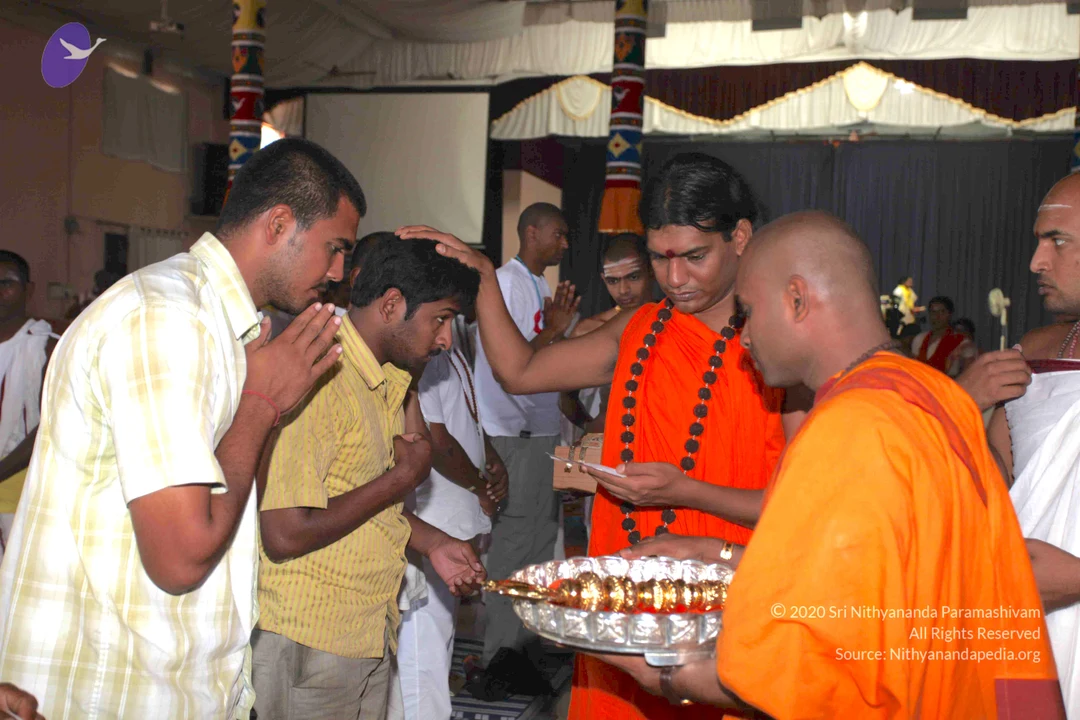
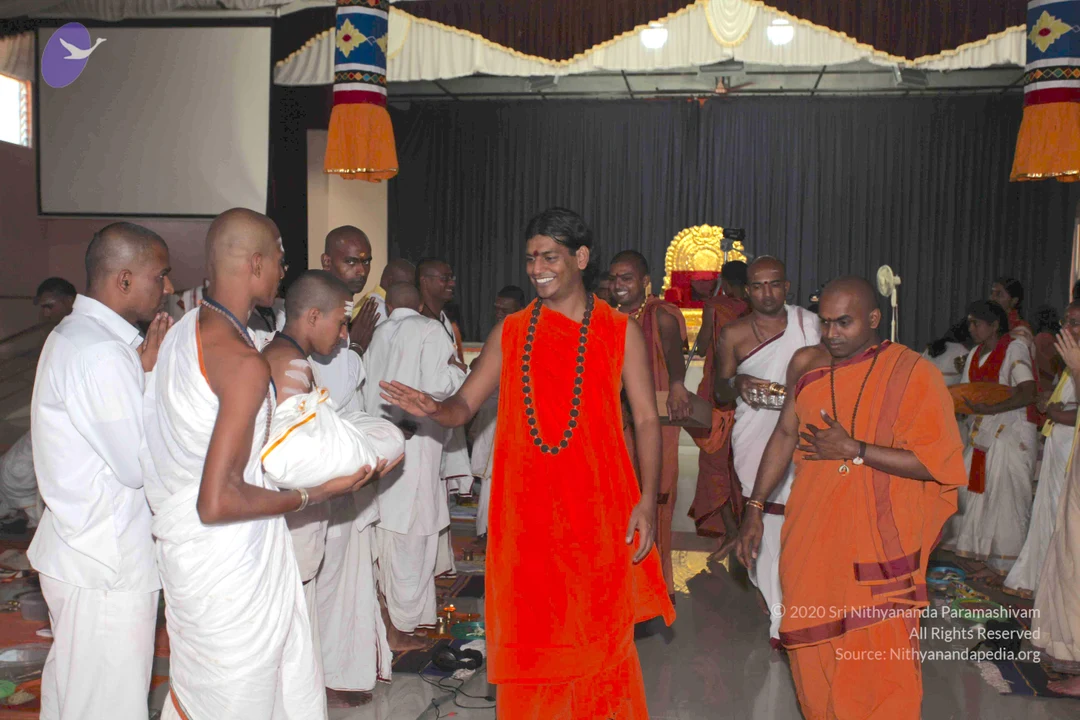
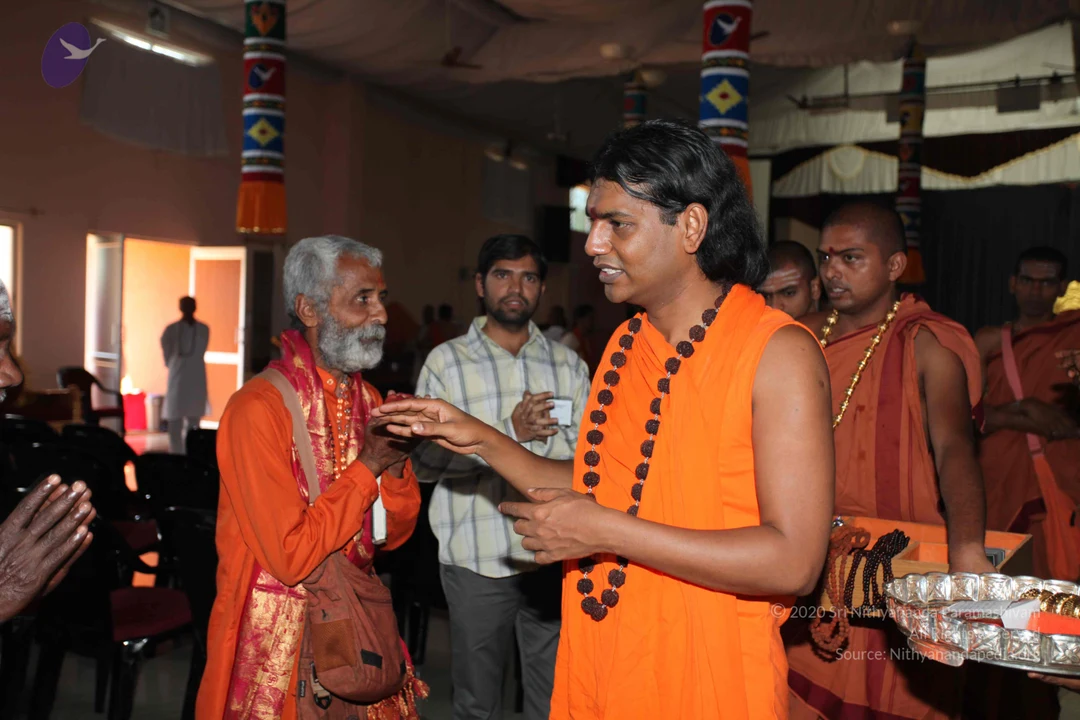
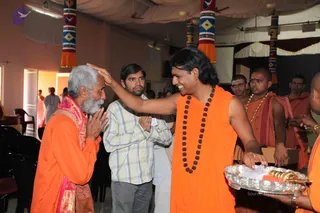
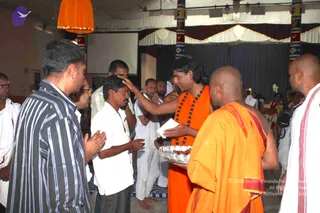
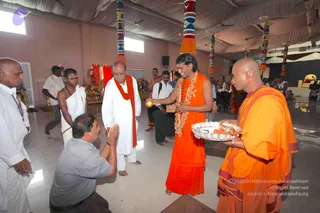
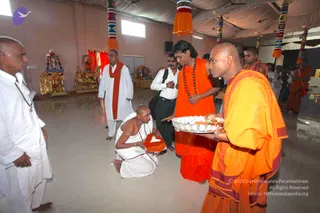
A man in a saffron-orange sleeveless robe and a long rudraksha mala places his right hand on the head of an elderly bearded man in orange clothes and a pink-and-gold shawl, who has his hands joined in greeting. The long-haired figure in orange has a rudraksha mala and a gold-coloured necklace with ornate adornments, and he smiles while blessing. Behind him stand men in orange robes with tilak markings, one holding a silver tray with gold-coloured items. A man in a checked shirt and grey trousers watches nearby. The room has red, blue and yellow decorative pillars with tassels, white drapes, and rows of chairs.A photograph of a satsang-style indoor gathering in a hall with white and orange drapery, a projection screen and a dark curtain behind. In the centre, a long-haired man in an orange robe with a rudraksha mala marks the forehead of a devotee with his right hand, while a bald monk in orange holds a silver tray with offerings. Around them, men in white dhotis and shirts stand with hands folded in anjali, and a man in a striped grey shirt on the left watches with palms pressed together. A camera operator is visible at the right edge.A photograph inside a bright hall with a pale tiled floor, a white ceiling draped with fabric and ornate multicoloured pillar tops. A man in a long orange robe, with a garland of orange and gold flowers and a dark mala, holds a fruit-like offering in one hand and a small box in the other while standing barefoot. Beside him, a bald man in an orange robe holds a silver tray with a small lamp and offerings. A man in white dhoti and red shawl stands barefoot with a kumkum mark, and a seated man in a grey shirt with folded hands bows at the front. Other people in white dhotis stand to the left, and a gilded throne and deity murti are visible in the background.A photograph of a ceremonial gathering in a hall with a white tent canopy, maroon drapes and a projection screen. In the centre, a man in a saffron-orange robe with a long dark rudraksha mala holds a small wooden-lidded box and blesses a bowing devotee by placing a hand on his head. Nearby, a bald sannyasi in orange robes stands at right, and a man in white dhoti-style clothing stands at far right. A man in a pale yellow-striped shirt bends forward with hands joined in namaste. Several other people in white ritual clothes stand in the background, with a golden throne-like seat visible beside the dais. The central figure's distinctive hair and rudraksha adornment are visible, but his identity is not established beyond appearance.A ceremonial gathering in an indoor hall with a screen and dark curtains behind. A central figure in a saffron-orange robe with a long dark rudraksha mala and a red forehead mark smiles and extends an arm toward a line of men in white dhotis and shawls. Several shaved-headed men in white and maroon or orange cloths stand around, and another man in an orange robe on the right holds a silver tray. A golden throne-like seat appears in the background, and a few people in white sit along the back wall. Prayer mats and small vessels are on the floor.A photograph inside a hall with pink walls, white ceiling drapes and colourful tasselled hangings. A bald man in white dhoti kneels on the polished floor, holding an orange-and-white cloth and a tray. Standing beside him is a man with long swept-back hair in orange robes and a rudraksha mala, and a bald monk in orange robes holds a silver tray of offerings. An older man in white with a red shawl stands nearby, and a man in a white shirt and dark trousers stands behind them. Golden deity murtis and a decorated altar with red curtains are visible in the background, along with more people in orange robes on the right. The long-haired man in orange with rudraksha beads has appearance cues that suggest Swamiji (probable), shown as a standing figure receiving an offering.

5--Pancha-Tapas

65 photosSource gallery
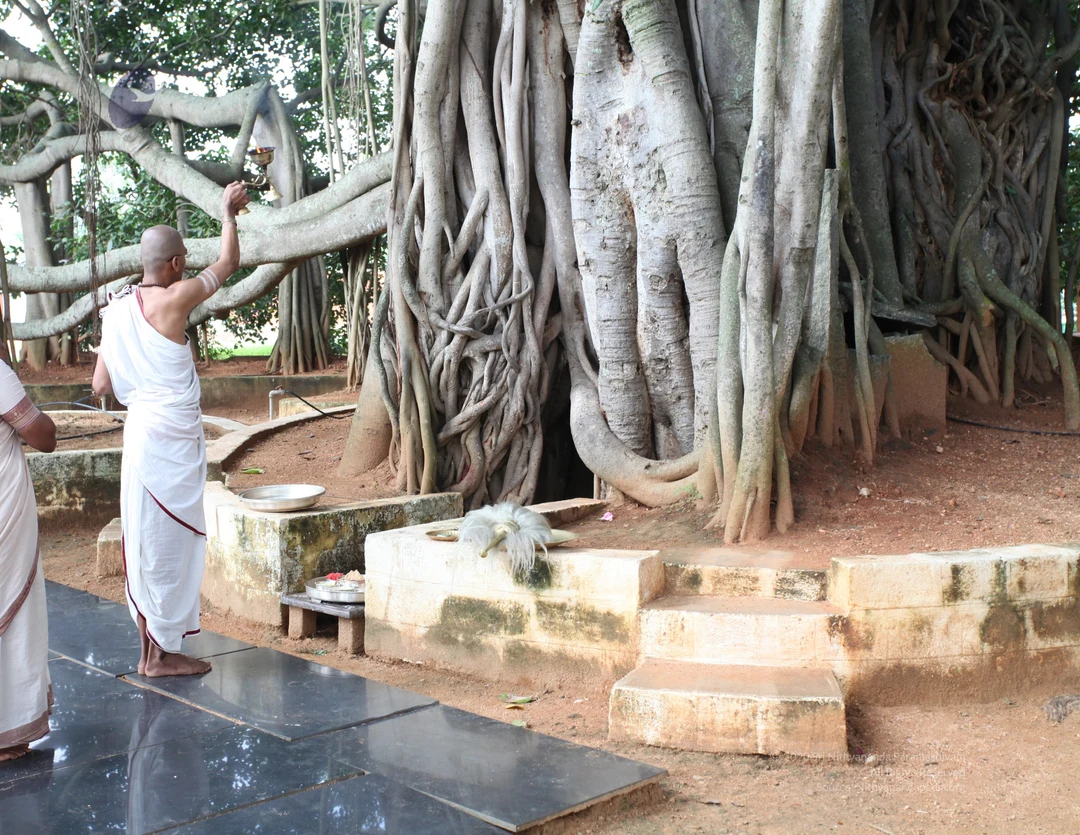
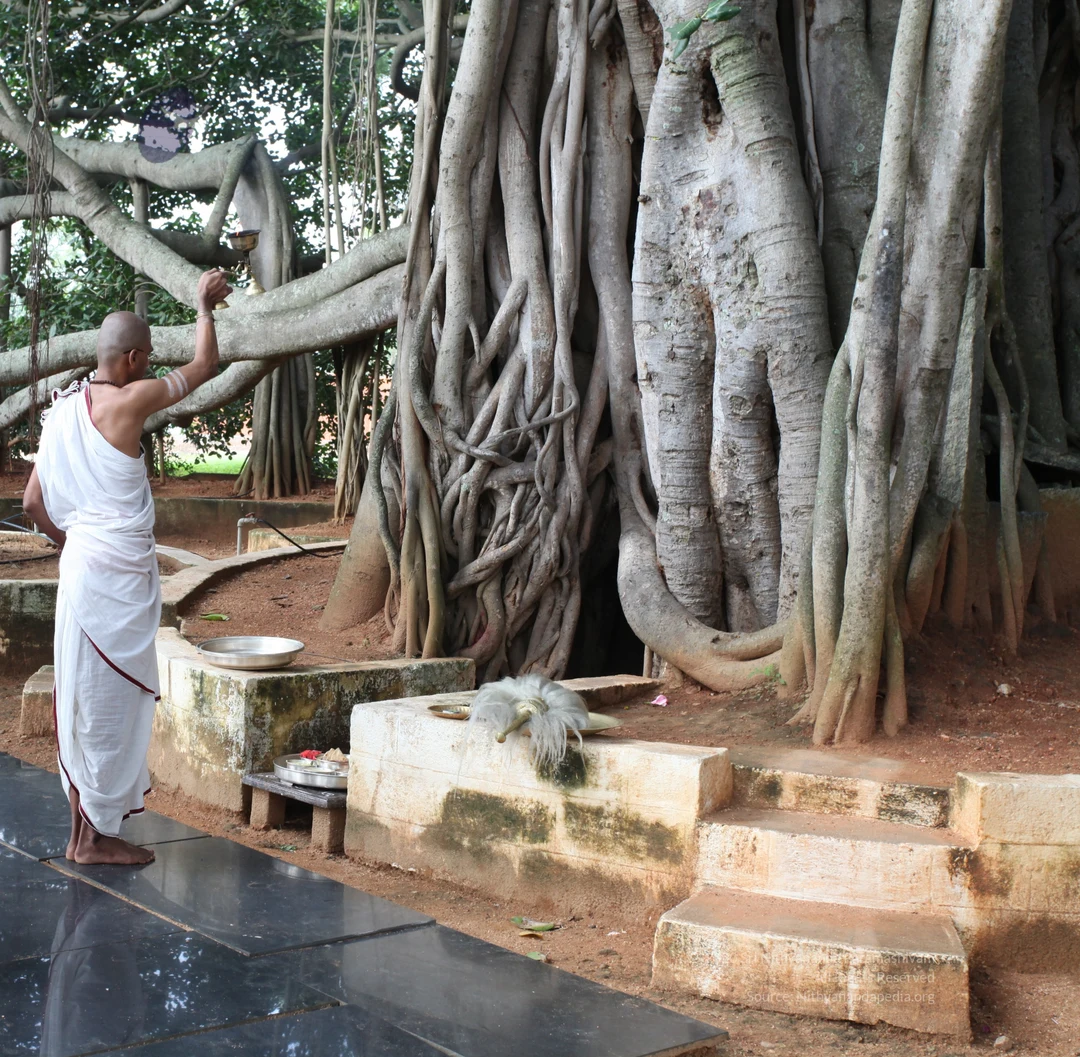
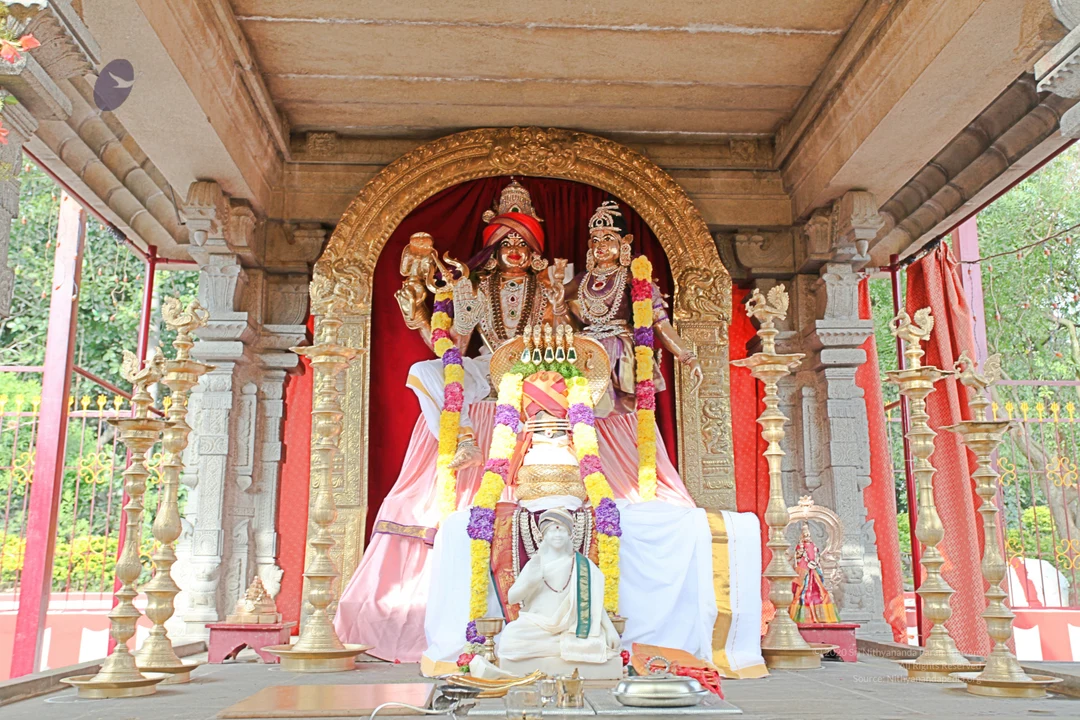
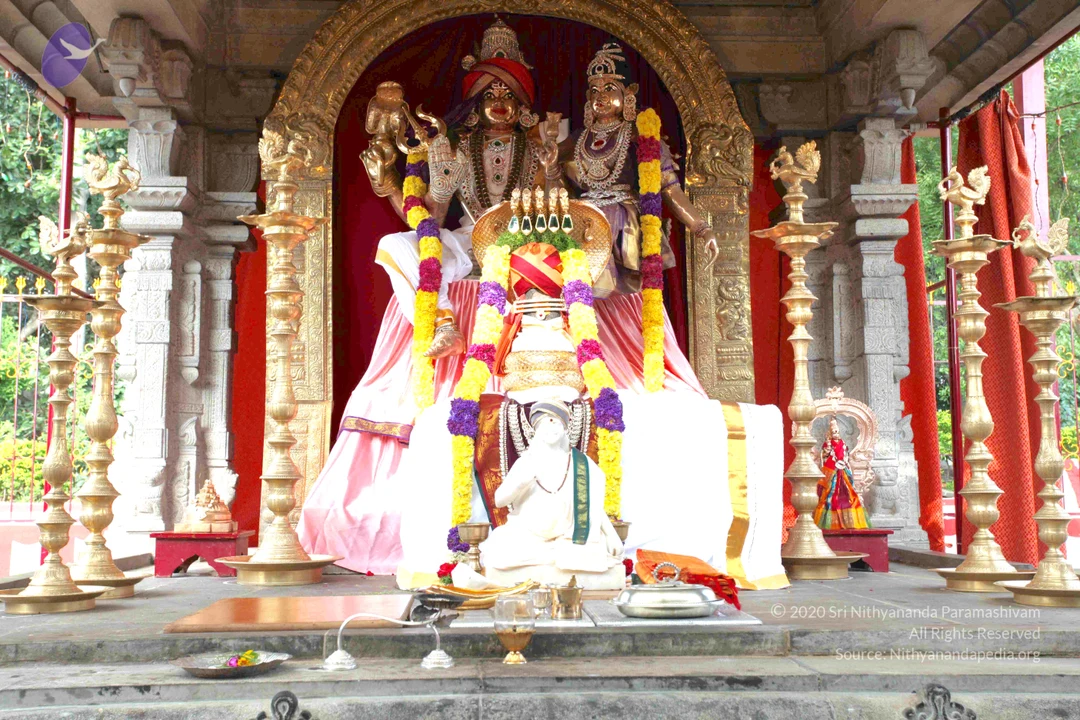
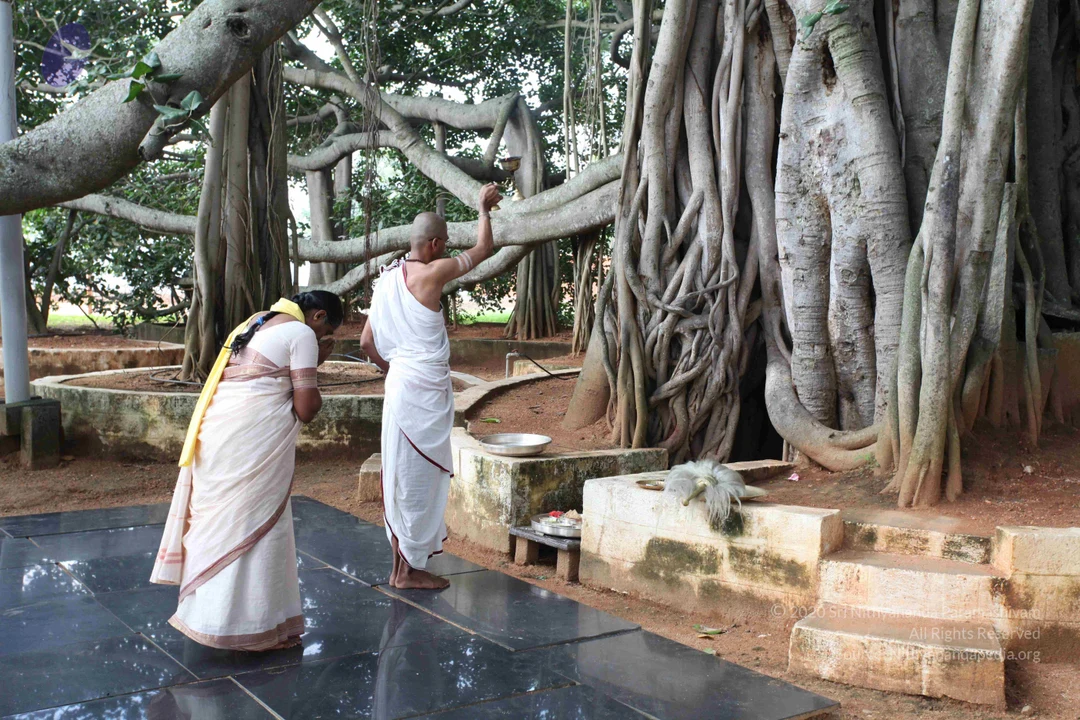
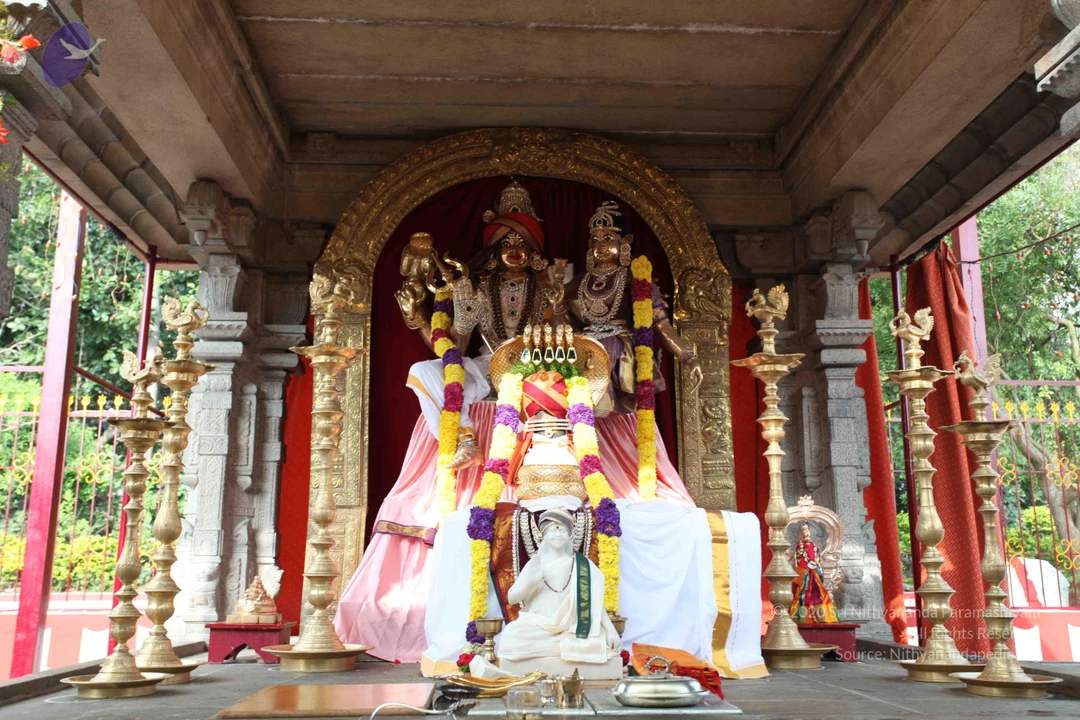
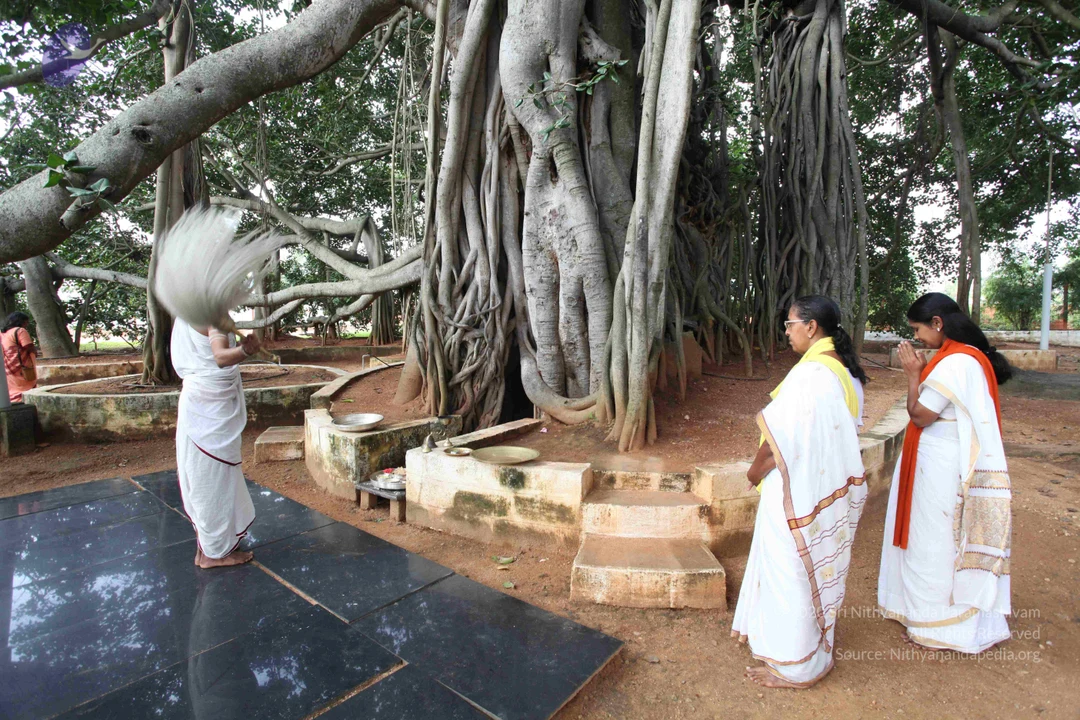
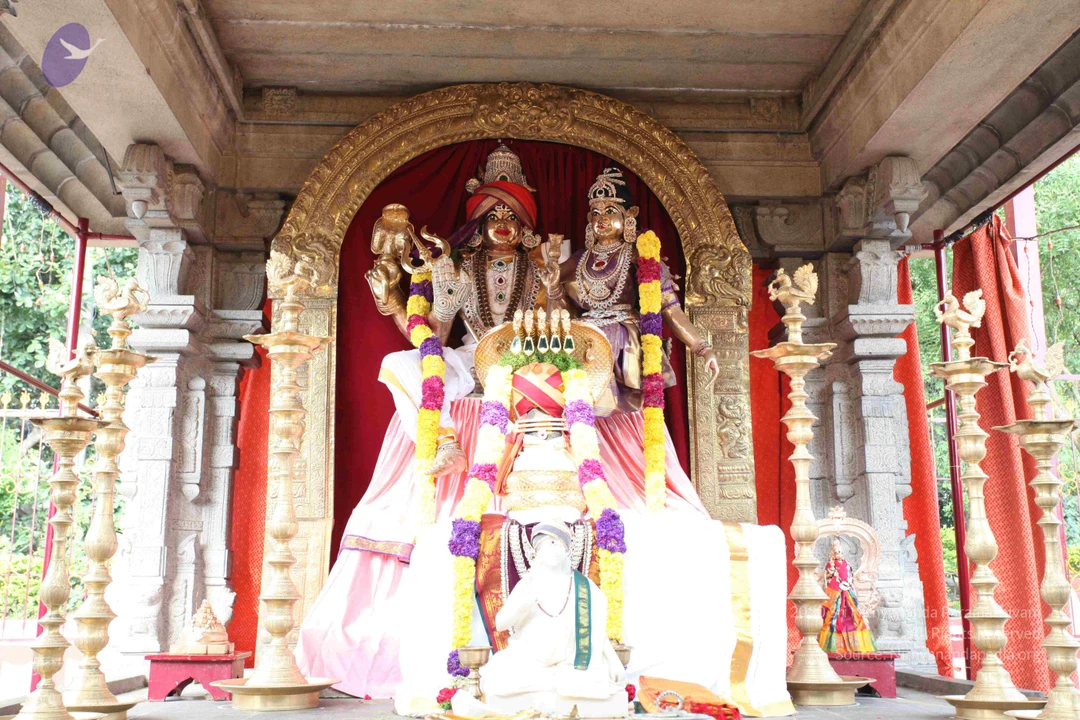
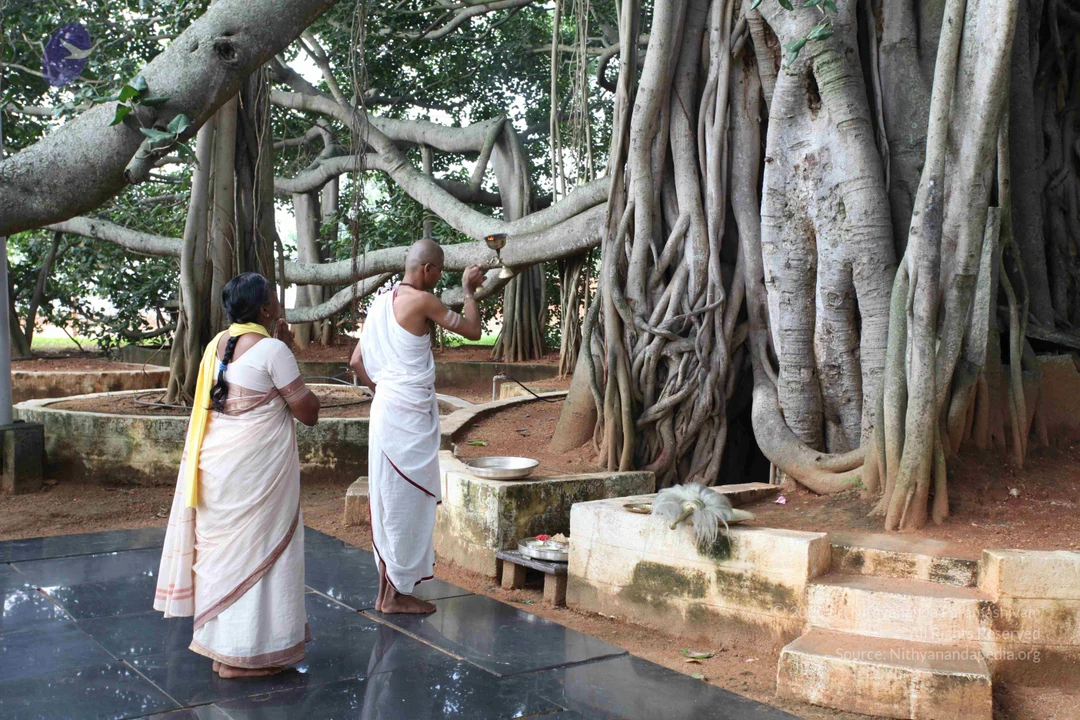
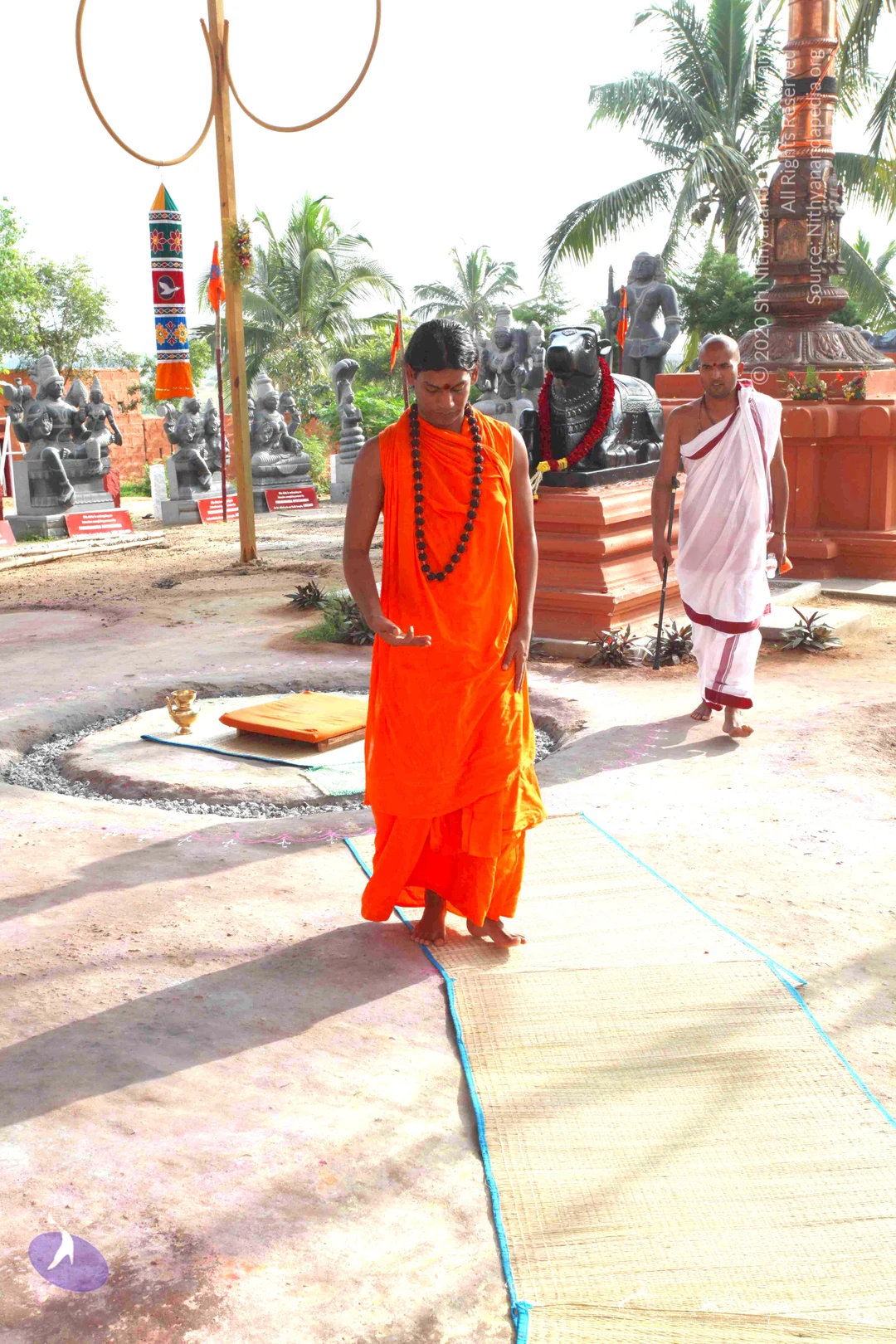
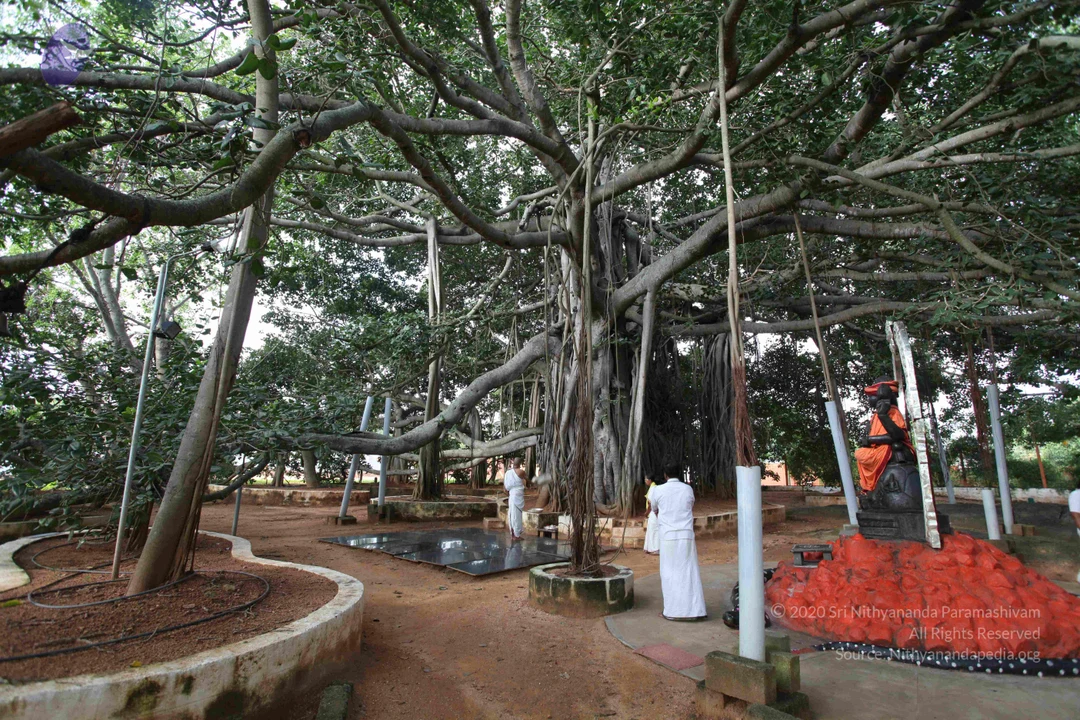
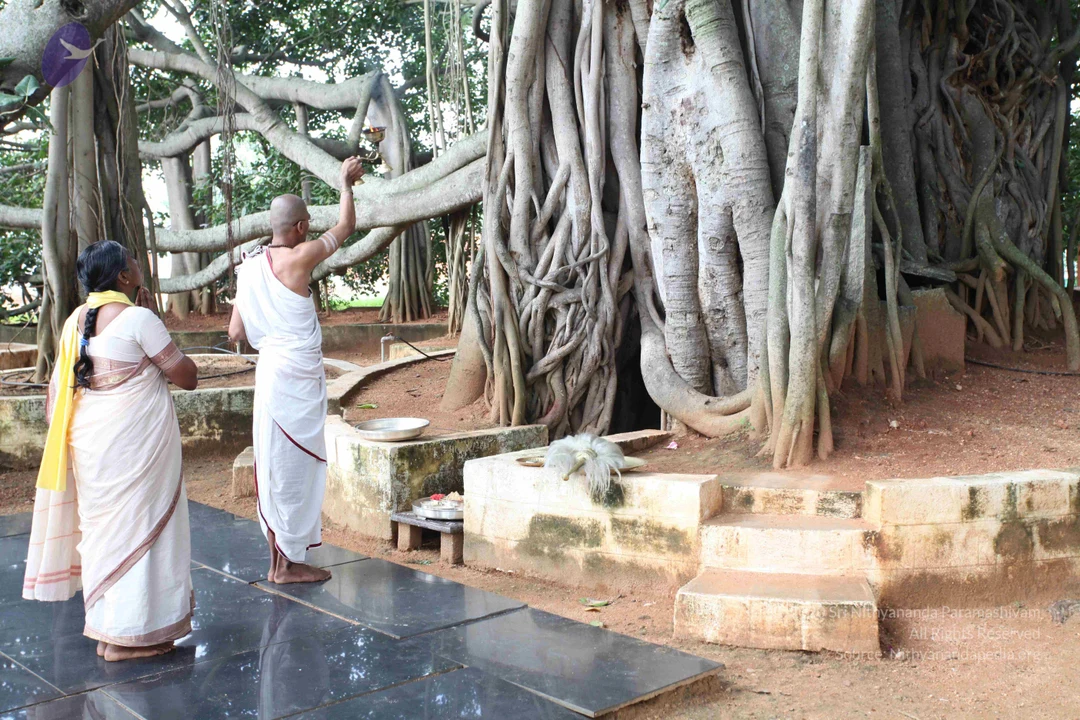
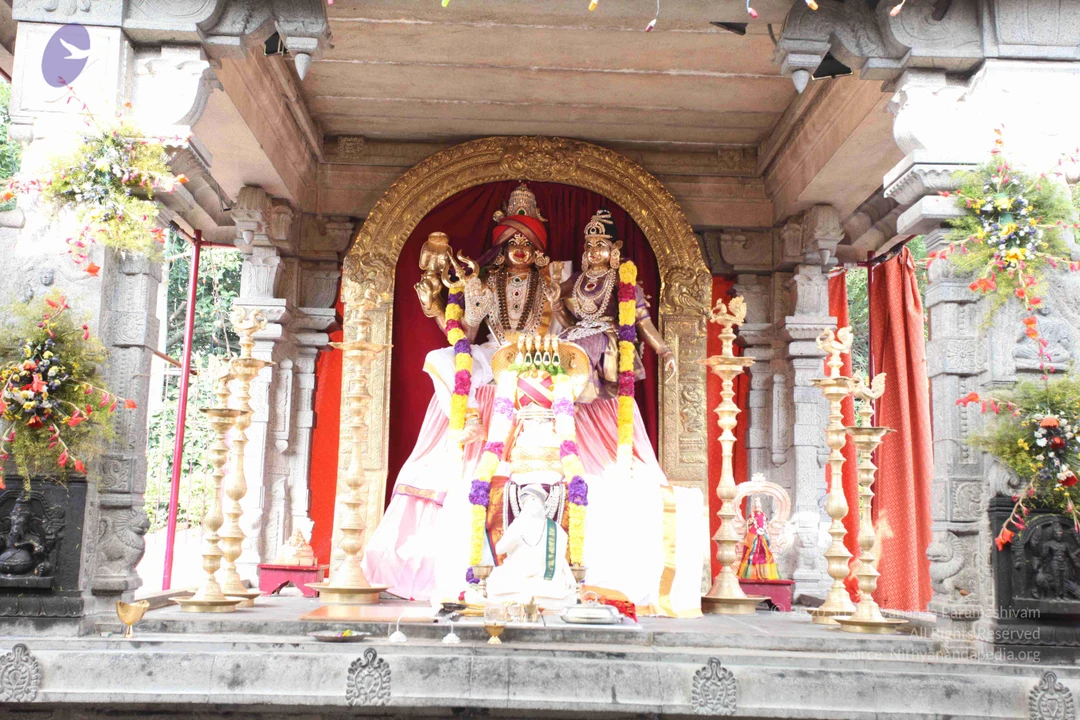
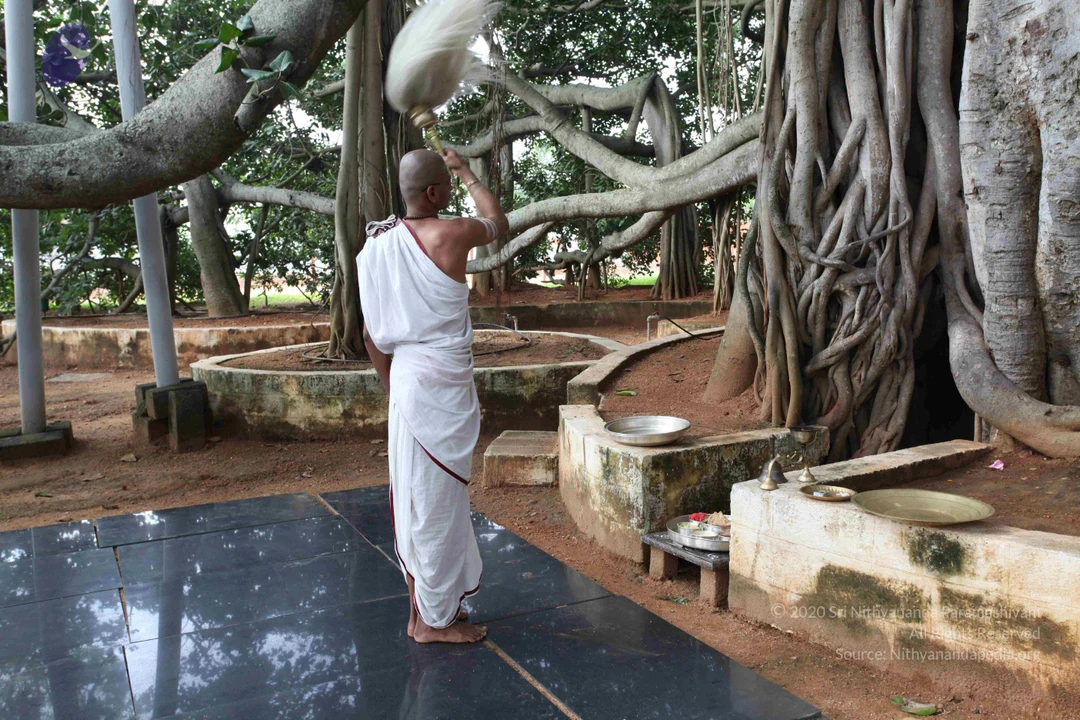
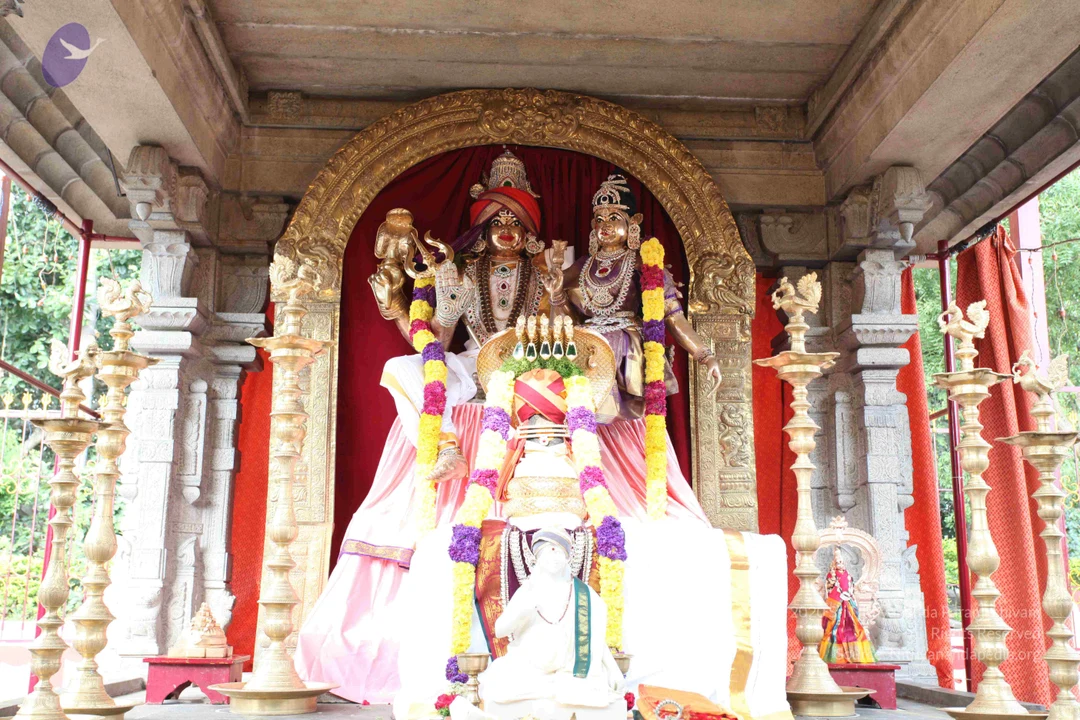
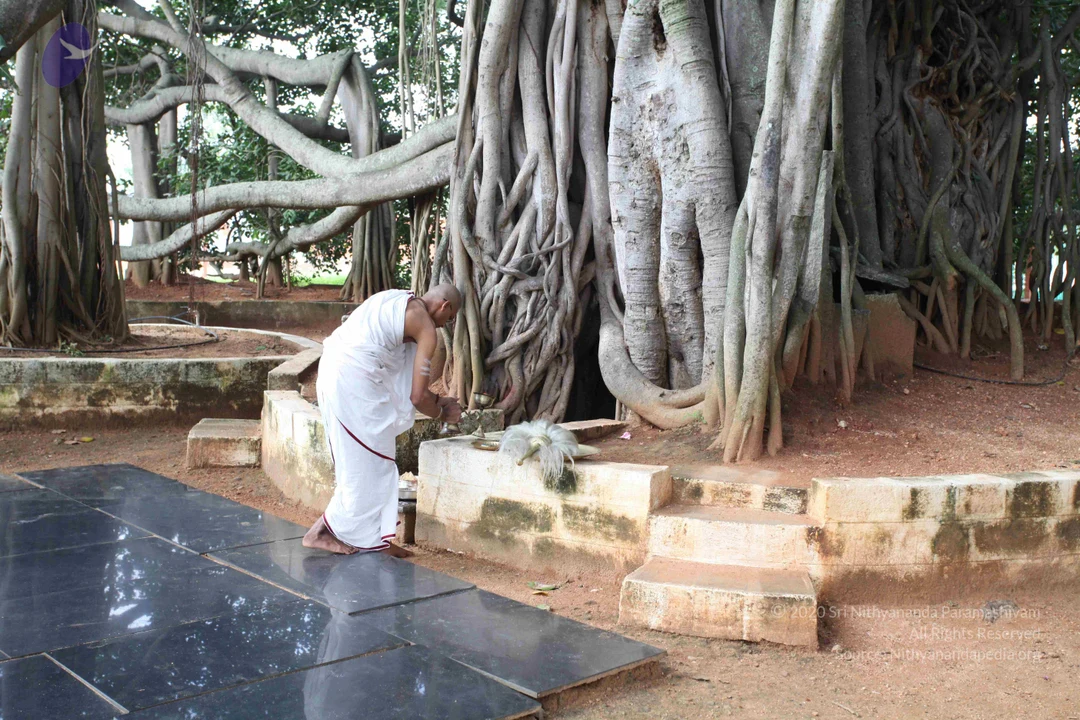
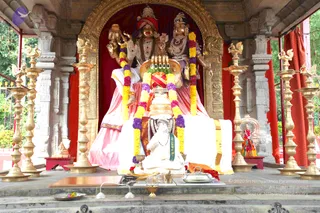
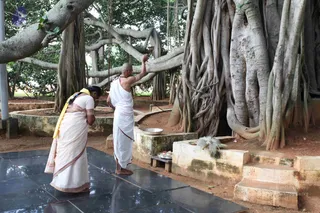
A man in a sleeveless orange-saffron robe with a dark rudraksha mala around his neck walks in profile past metal railings inside an orange-walled hall. His right hand rests on his hip. Behind him are colourful striped pillars with yellow fringe, and on the wall a framed poster with a photograph and printed text. Swamiji (probable) is shown with long swept-back dark hair, saffron clothing and rudraksha beads; he is a sannyasi walking, appearing to move through the hall.A shrine photograph showing a pair of deity murtis, a Shiva and a Parvati-form, standing in a golden arched niche behind a central white seated figure. The standing deities wear ornate gold jewellery, garlands and crowns, and the male figure holds a trident. Garlands of yellow and purple flowers hang from the figures, and a seated white statue in front wears a green sash and red-and-gold headwear. Tall brass oil lamps (lamps with oil) line both sides of a red-and-pink draped platform, with a brass vessel and offering plate on the steps. No living people are visible.A man in a saffron-orange robe sits cross-legged in meditation on a raised orange-painted platform inside a circular bed of grey pebbles, with eyes closed and hands folded in his lap. A rudraksha mala hangs around his neck. Beside him stands a brass kalasha or water vessel. Behind him is an orange stepped pedestal bearing a dark stone Nandi bull draped in a red cloth with a yellow flower garland. Stone deity statues stand in the background, and tall coconut palms and red flag poles frame the open outdoor ground. a person: the orange robe, rudraksha mala and meditation posture are the distinguishing cues here; the figure is seated in meditation rather than standing or on a throne.A photograph of a sacred banyan tree with many aerial roots and large grey trunks. Beneath it, a shaved-headed priest in white dhoti and an unstitched white upper cloth stands on a low stone platform, raising one arm toward a branch. Beside him, a woman in a white sari with a yellow-bordered wrap kneels with folded hands at a black-tiled floor. A stone ledge holds a metal plate and a small offering tray. Nearby, a white cloth-covered bundle rests on the stone, and red earth surrounds the stone enclosure.A seated figure in saffron-orange robes sits cross-legged on a woven mat and folded orange cushion inside a circular pit lined with grey ash, eyes closed and hands resting in meditation posture. He wears a long rudraksha mala around the neck and a red tilak on the forehead, with long hair swept back. A brass kalasha-style pot sits at his left. Behind him stand grey stone sculptures of cobra-hooded figures and seated deity forms on red-labelled plinths, and at right a large black stone bull statue with a red and white flower garland sits atop an orange pedestal. A poster with a portrait of a smiling figure in orange and white and a red-and-white banner appear at left, with pink kolam-style lines drawn on the sand.A photograph of an outdoor shrine canopy with a golden arched frame and red curtain behind a central deity murti seated on a throne. Two large standing murtis or figures are dressed in pink and white cloth, adorned with gold ornaments, and one wears a red-and-white headdress and a rudraksha-style necklace. Marigold and purple flower garlands hang across the figures. In front, a small white seated statue of a sage holds a green sash. Brass oil lamps with bird finials line both sides, and a brass pot and plate sit on the platform. The surrounding area shows greenery and a red railing.

October 19 2010

4 photosView all
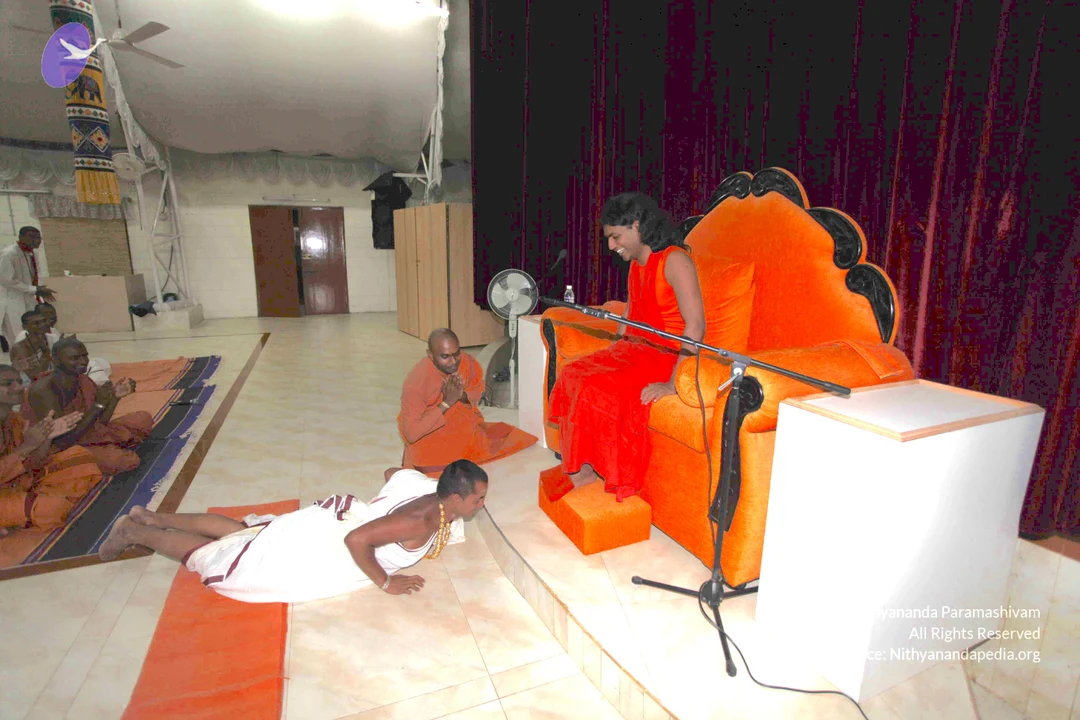
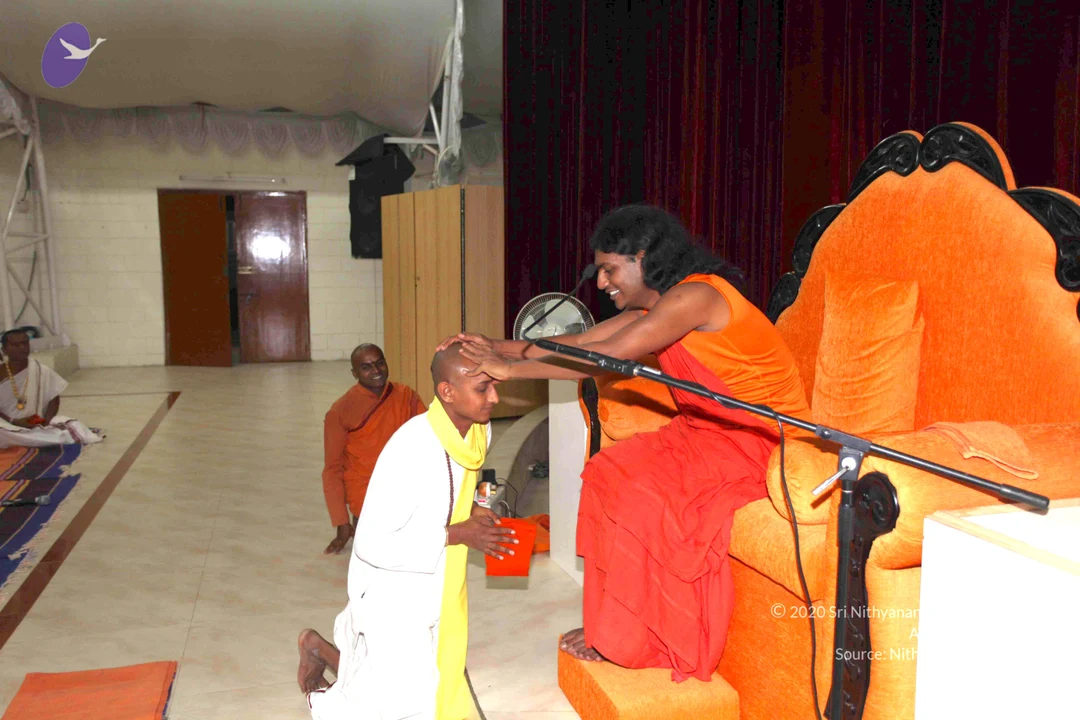
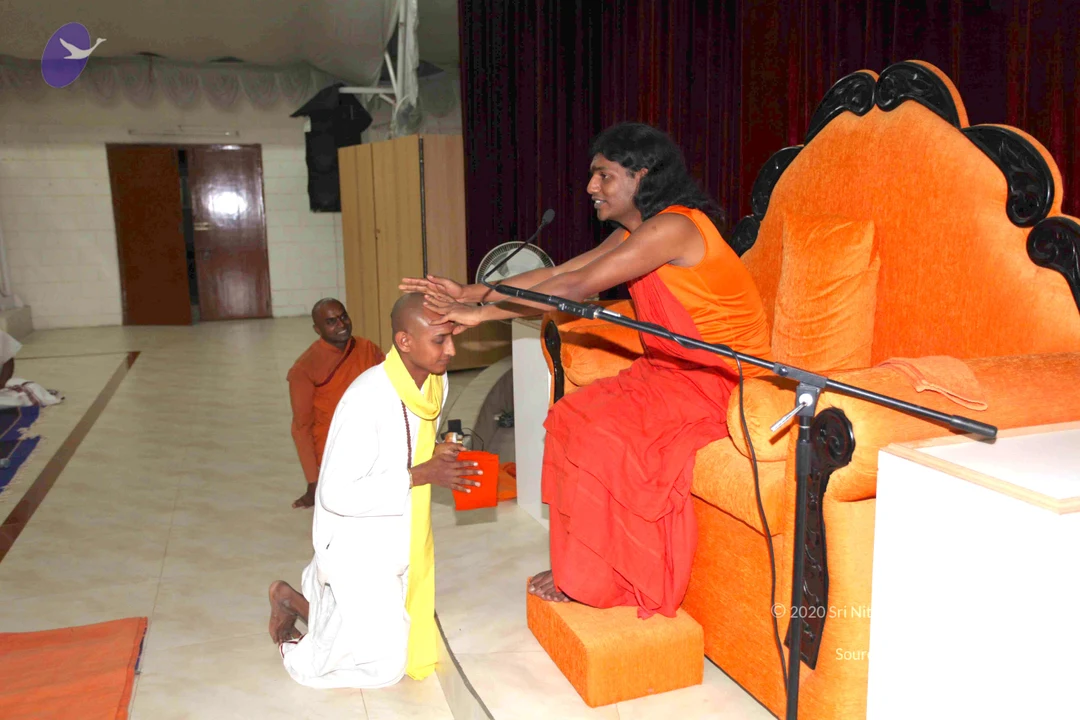
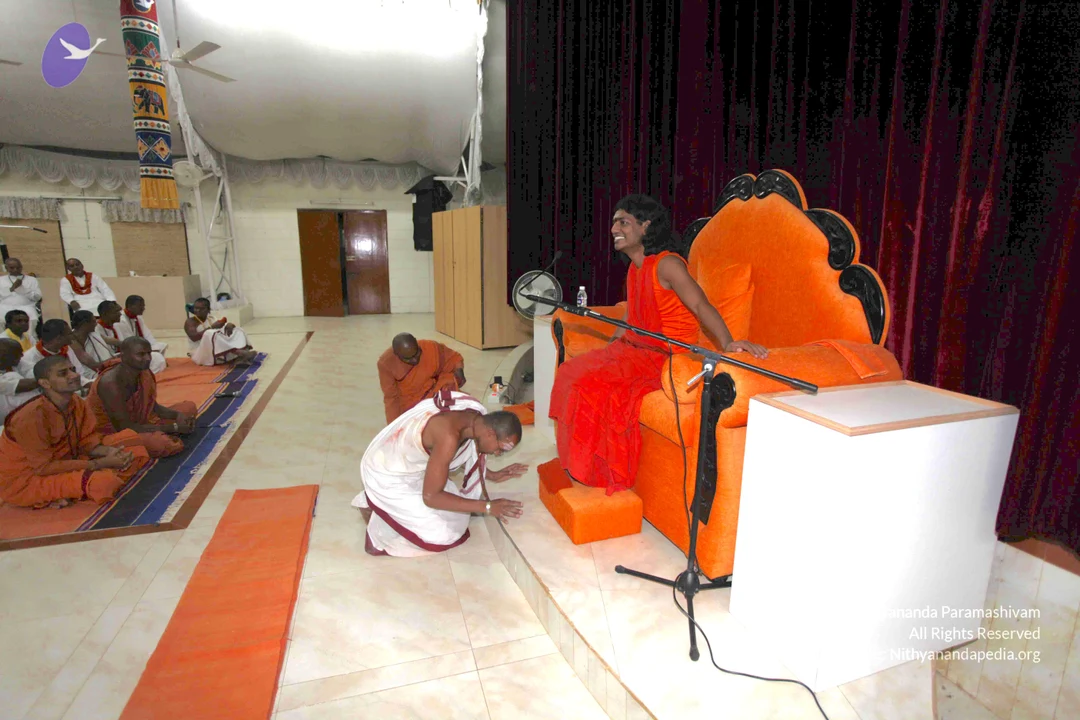
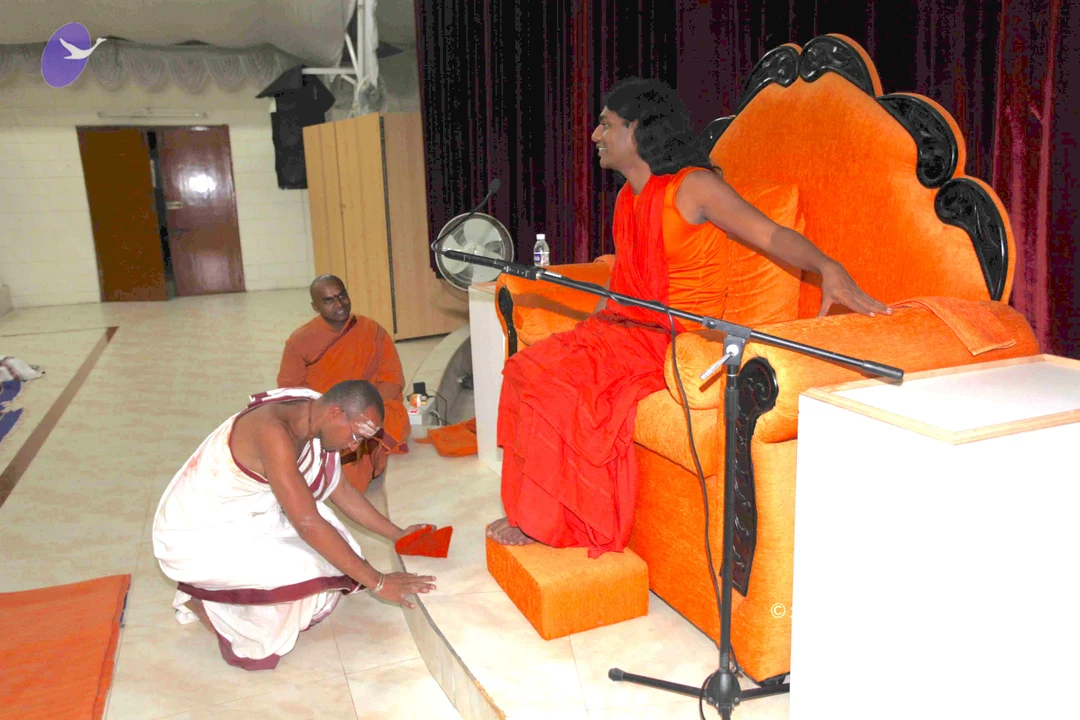
A photograph of an indoor hall with a tiled floor and a raised stage at right. A long-haired figure in a red-orange robe sits on an ornate orange throne with carved dark wood trim, speaking into a microphone on a stand. In front of the throne, a man in a white shirt and yellow vest bows low, touching his head to the floor, while a man in orange robes kneels beside him. Along the left, seated devotees in orange and white clothes sit on mats facing the stage. A colourful painted pillar and a dark red curtain frame the scene. The seated figure's appearance is consistent with the a person description, but the identification is uncertain. Physical people visible: about 15.A photograph of a seated man on an ornate orange-upholstered throne with carved black wooden backrest, wearing an orange-red robe and an orange shawl draped over his shoulders, with long dark hair swept back and bare feet resting on an orange footstool. Before him a man kneels on a white tiled floor, wearing a white dhoti with maroon border, a gold-beaded necklace, and holding an orange cloth. Behind them a bald man in orange robes sits near a wall. A microphone on a stand stands in front, and a water bottle sits on a small white side table. The seated figure has distinctive long hair and saffron-orange clothing with a throne setting, which fits the Swamiji (probable) candidate. The scene is an indoor hall with cream walls, brown doors and red curtains behind the throne.A photograph of a seated figure in an orange-and-red robe with long swept-back dark hair on an ornate orange velvet throne, extending both hands in blessing toward the crown of a kneeling man in a white dhoti with maroon border, hands folded in prayer, wearing a gold necklace. A second man in orange robes sits in the background near a cabinet and doorway, and a microphone stand and pedestal fan stand beside the throne against a dark red curtain. The seated figure has distinctive long swept-back hair and orange-red clothing, a probable Swamiji cue, so this is a blessing scene with a devotee receiving blessing.A photograph of a satsang hall with an orange-upholstered ornate throne at the right, where a smiling person with long dark hair in an orange-red robe sits with a microphone stand in front. On the floor below, a person in white dhoti with red border lies prostrate with hands folded in namaskar before the throne. Nearby, a seated figure in orange robes bows with hands joined, and a line of seated devotees in orange and white clothing sits on mats at left. A standing fan and dark red curtains are visible, with a cream podium at right. Seen in the image are a probable Swamiji on the throne, wearing the orange-red robe with long swept-back hair. The scene shows devotees performing prostration and sitting in attendance.