Skip to content
Monday

11 October 2010

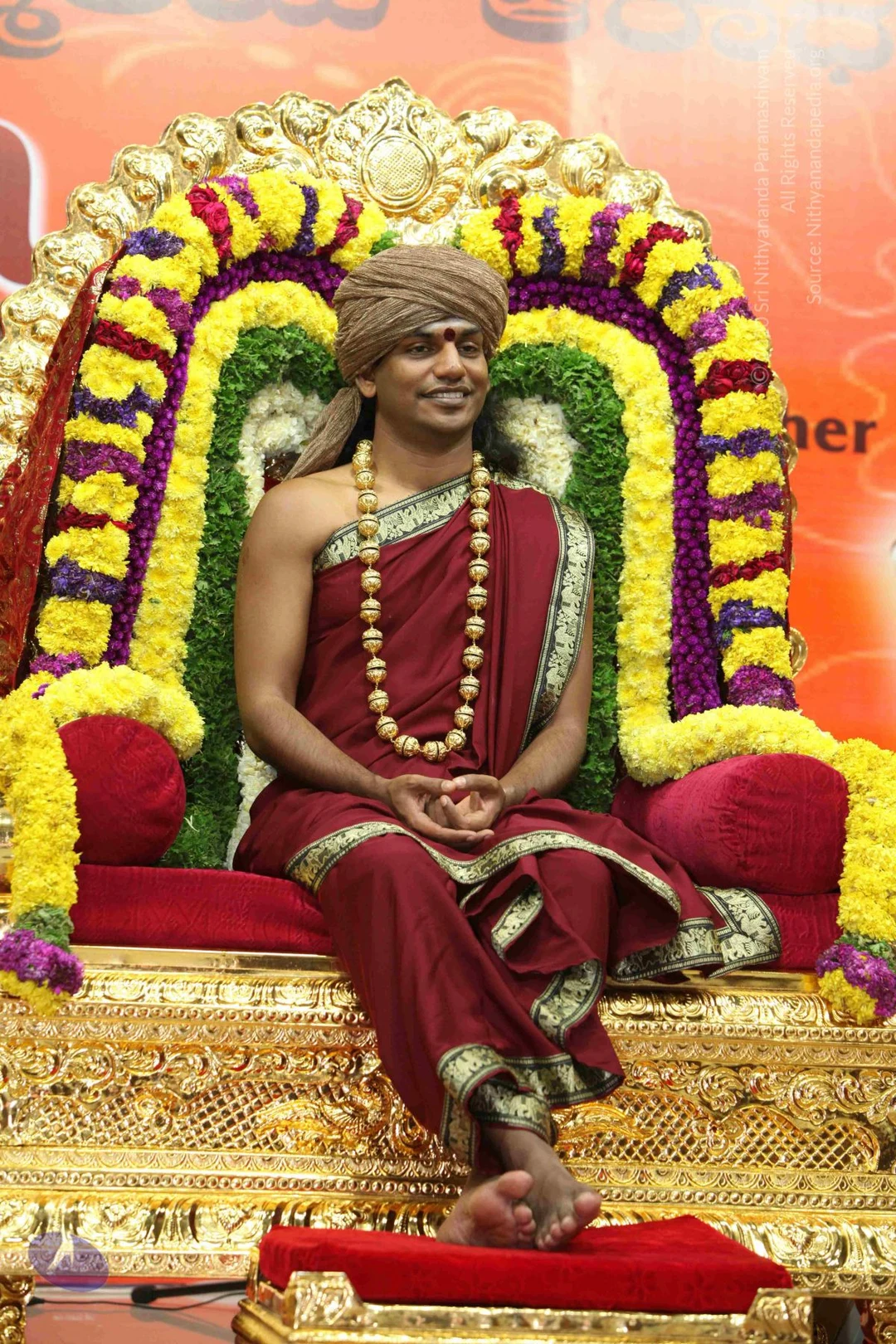
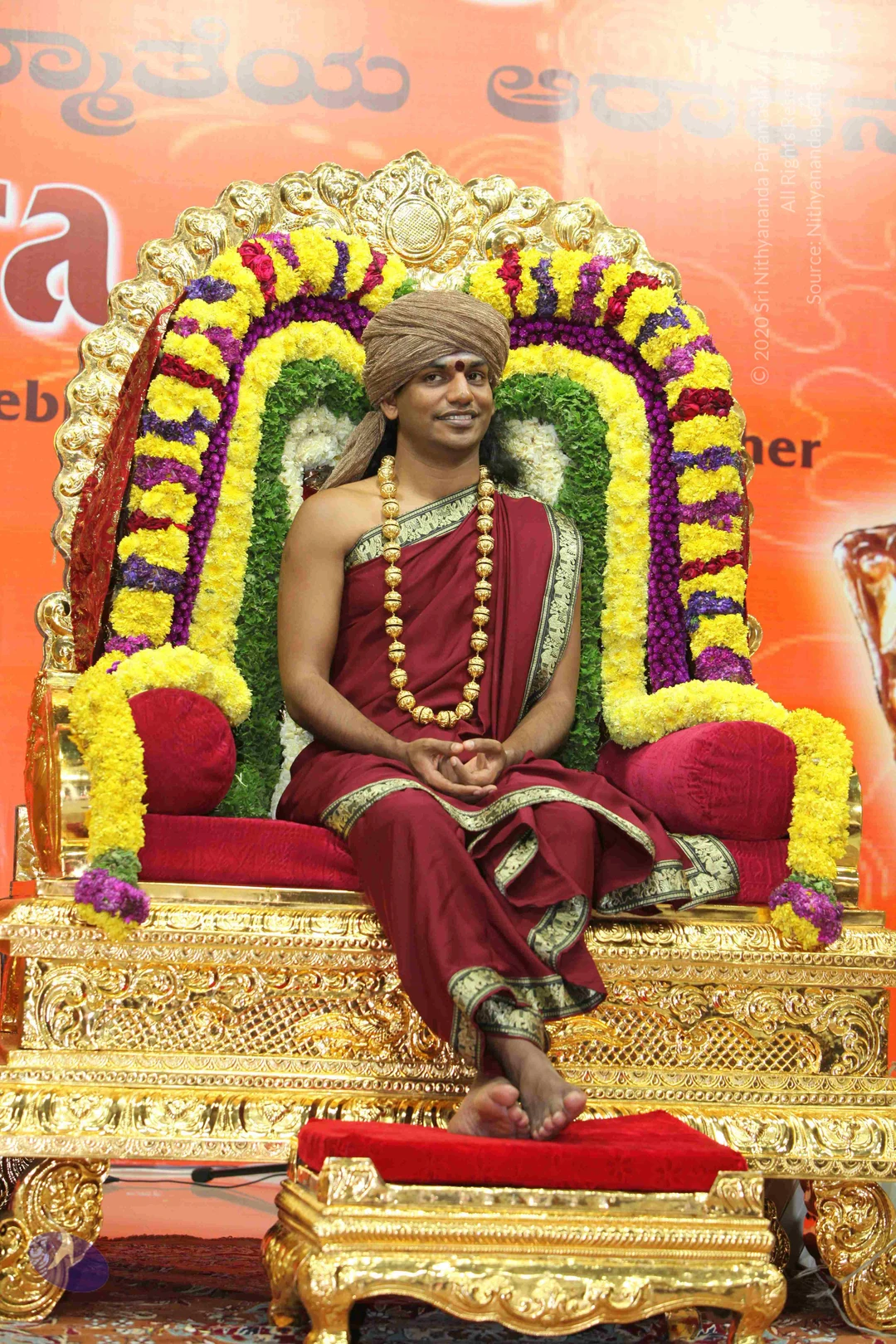
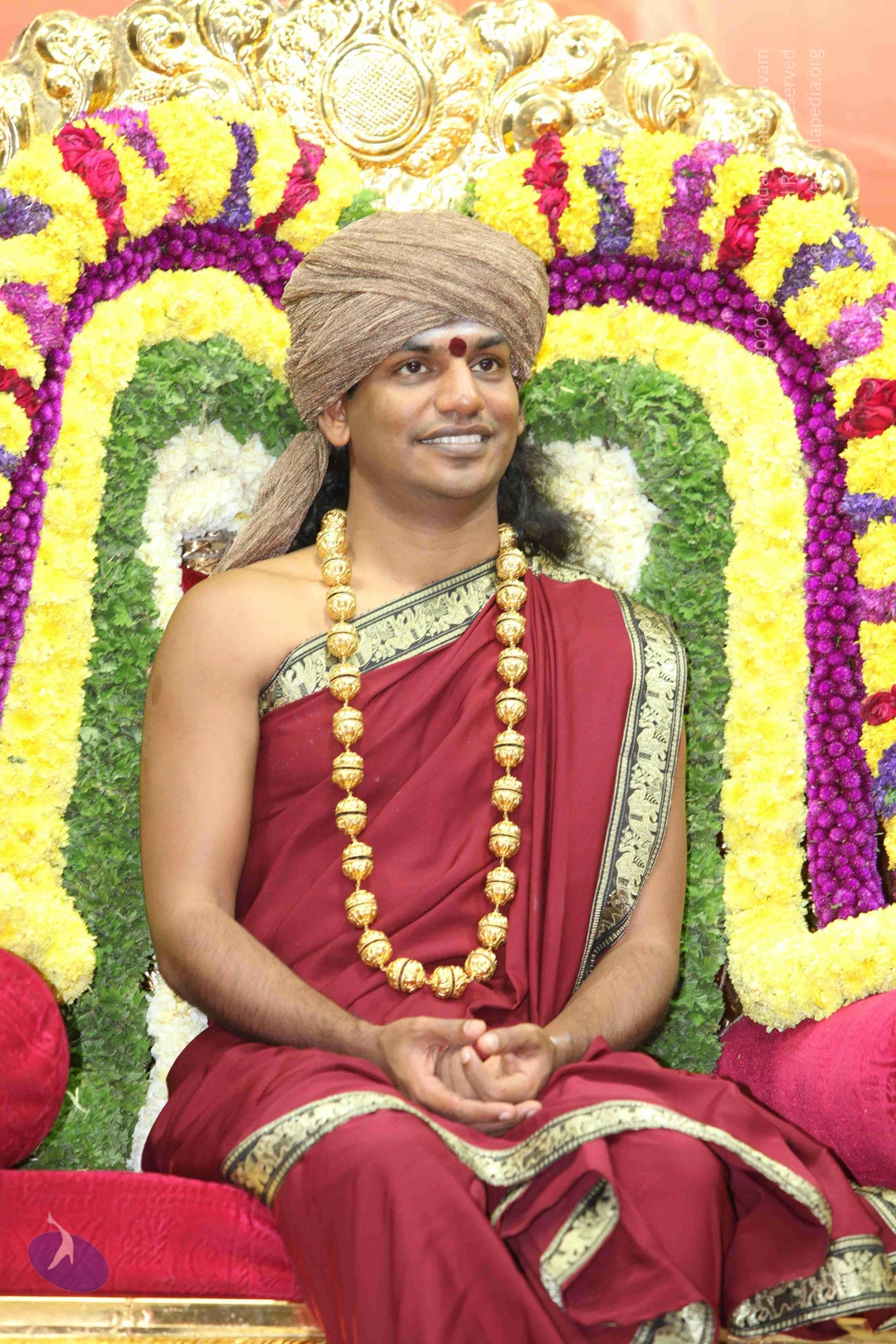
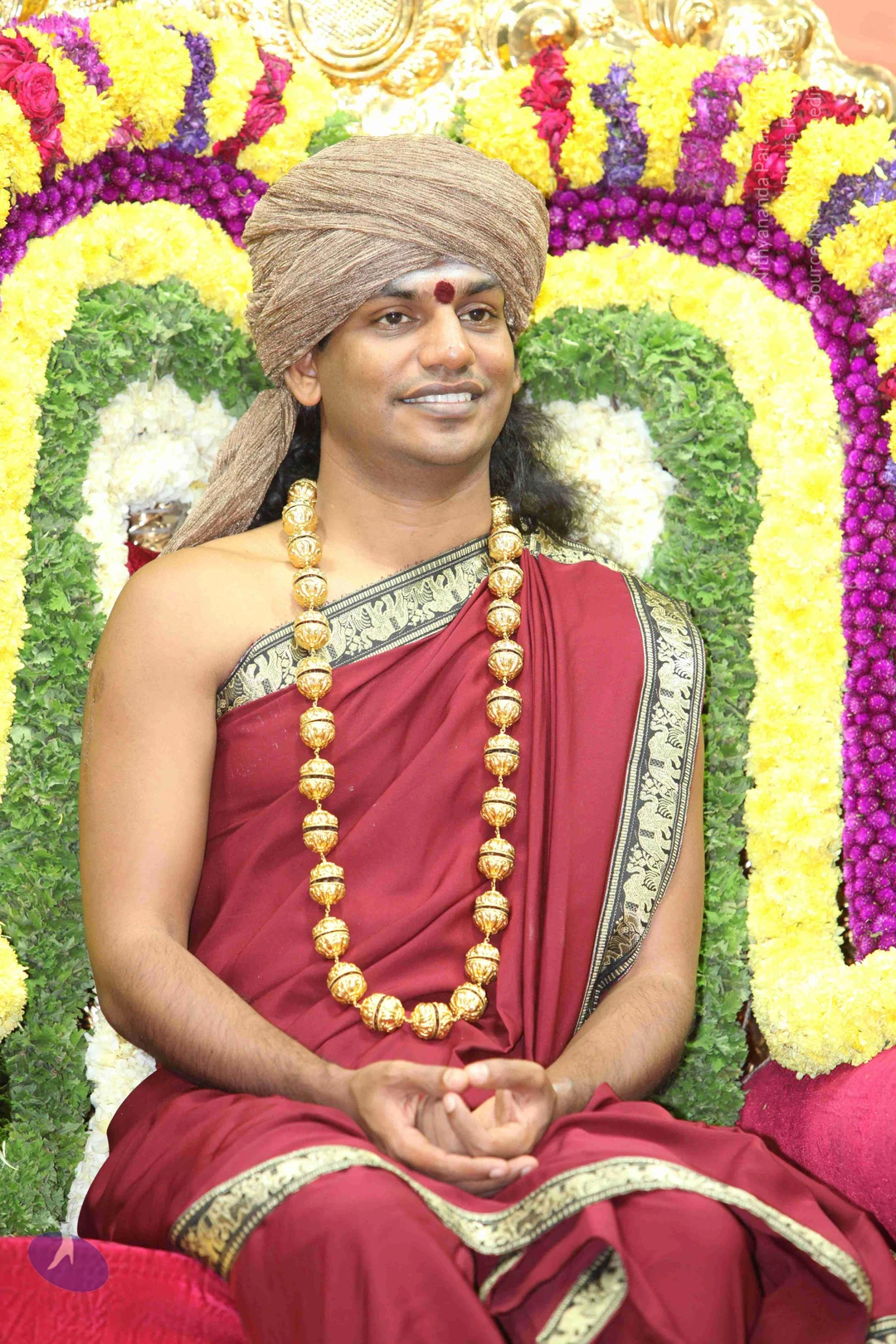
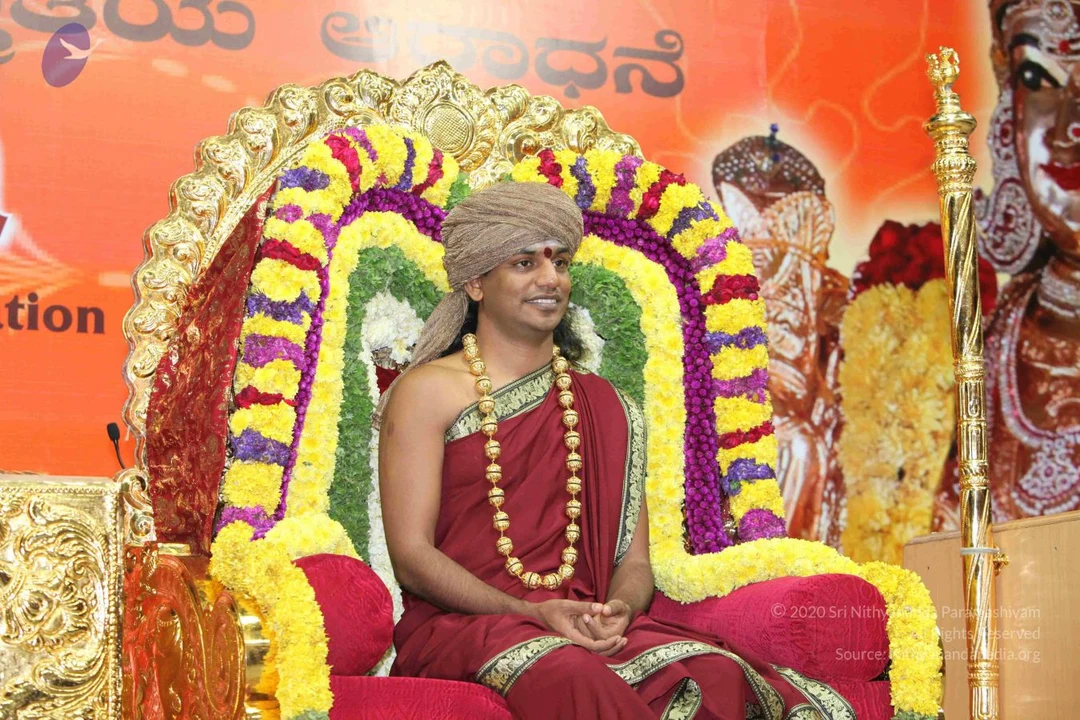
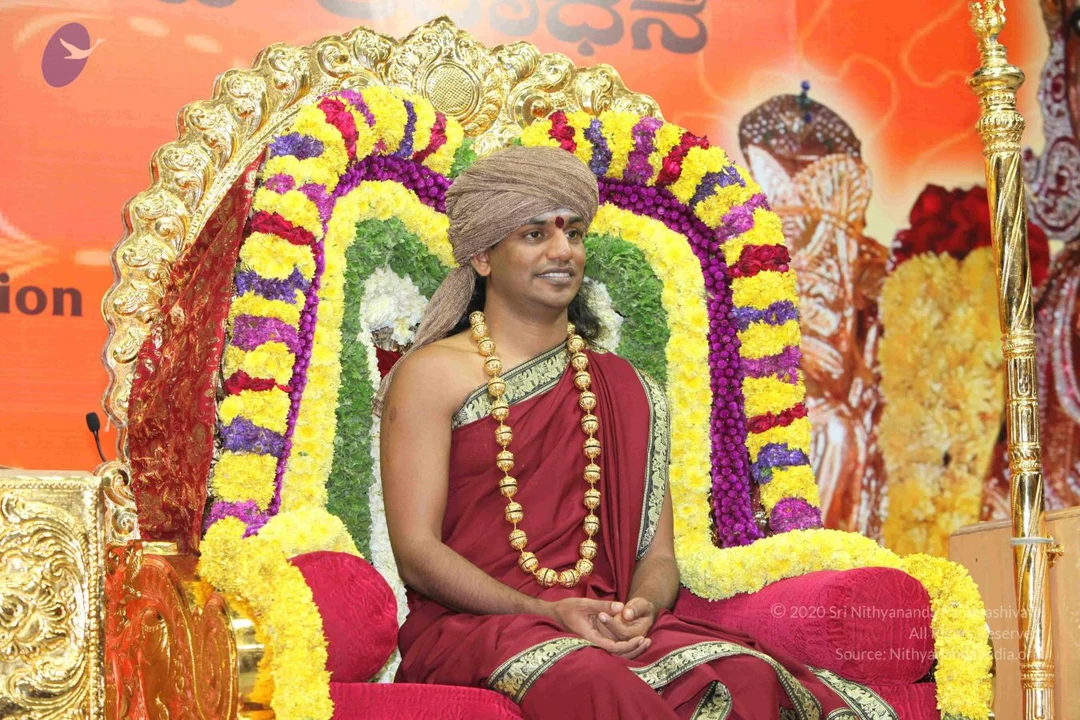
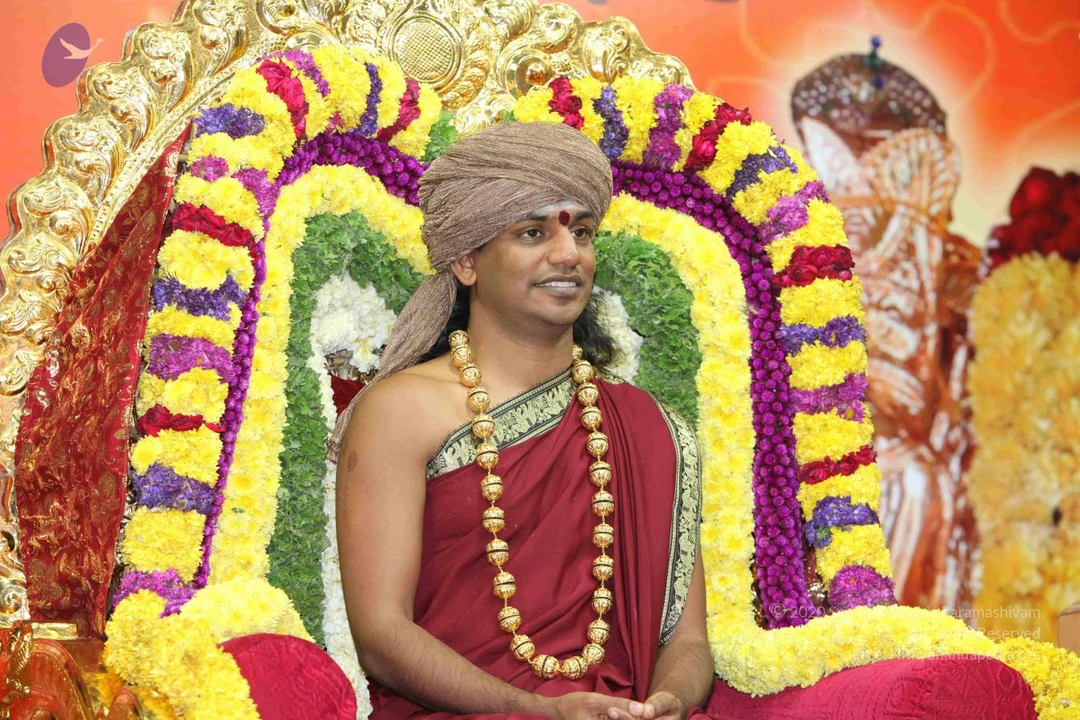
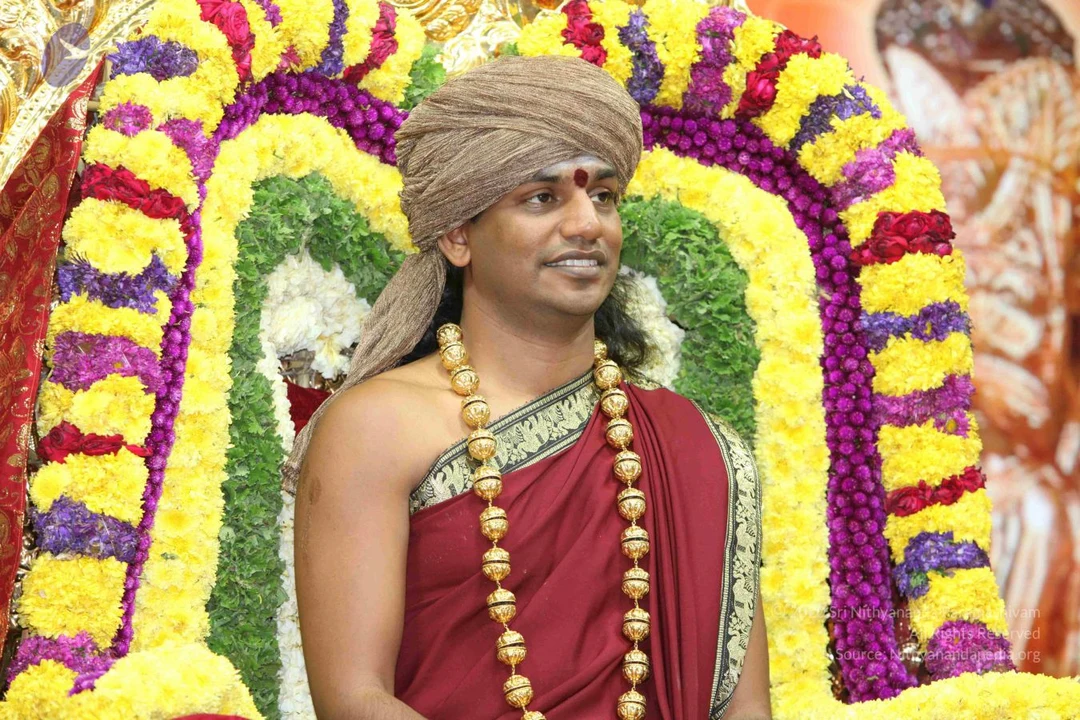
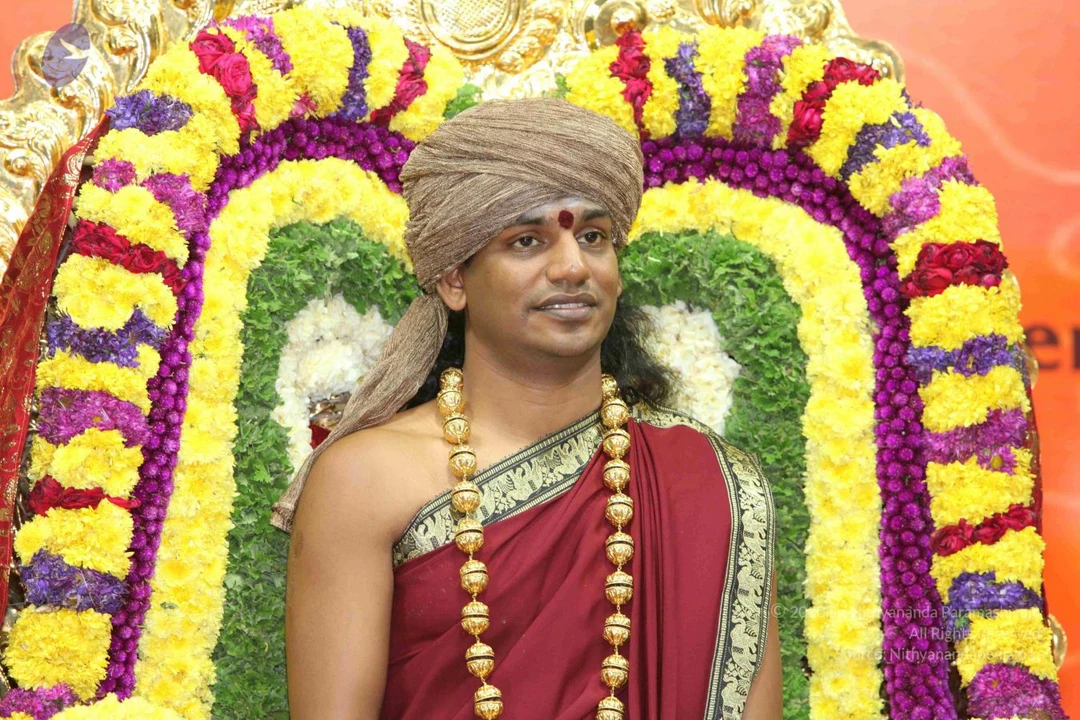
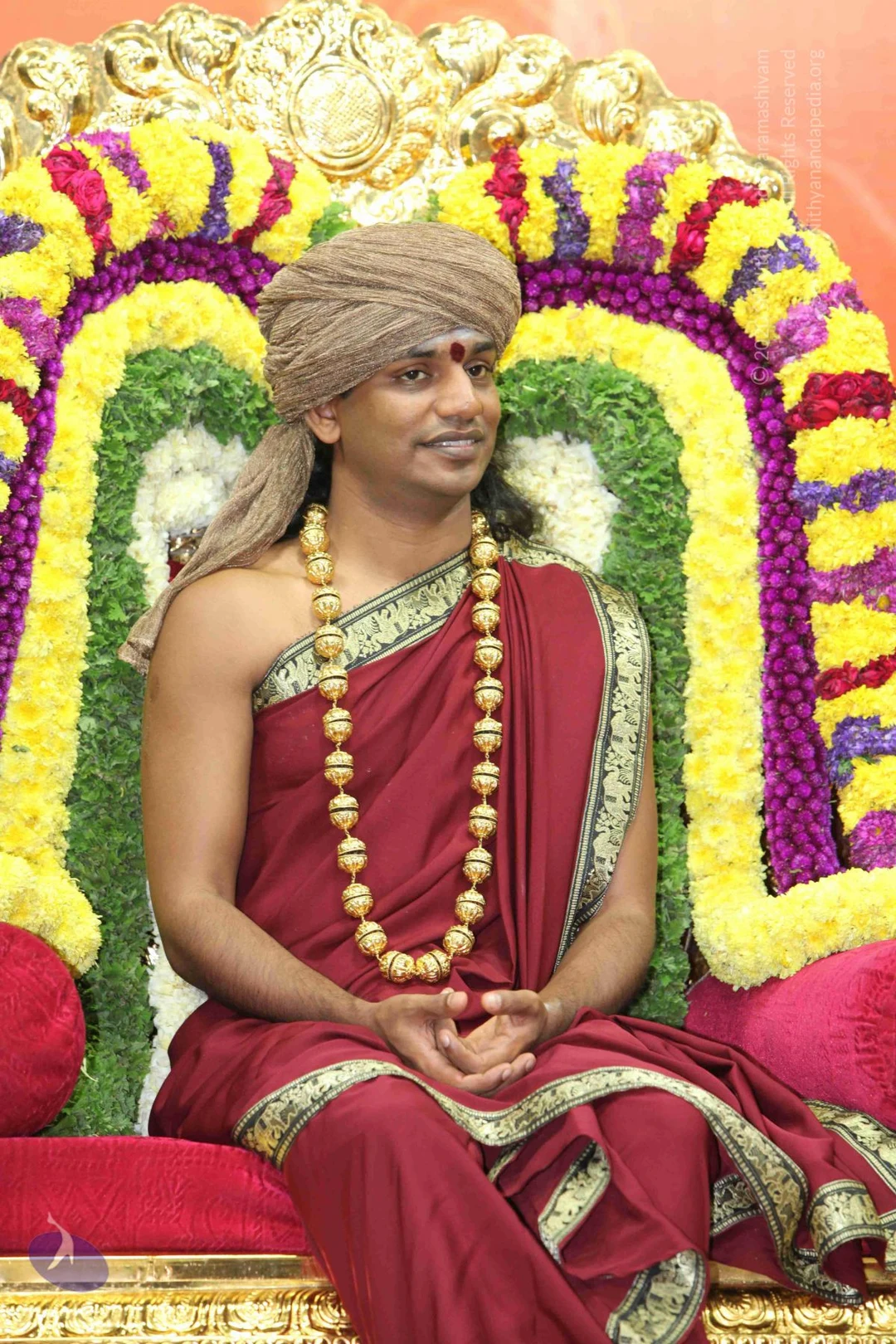
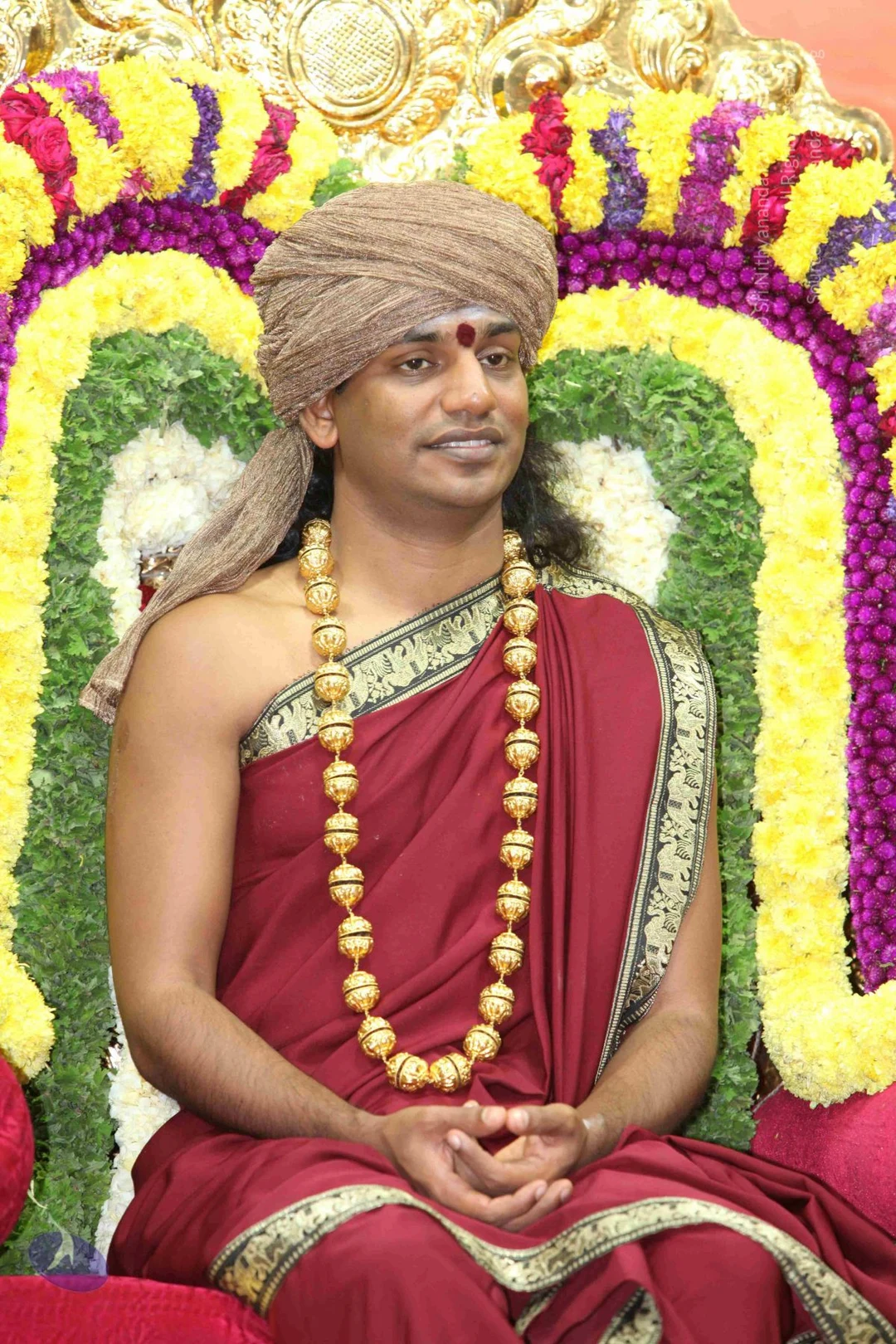
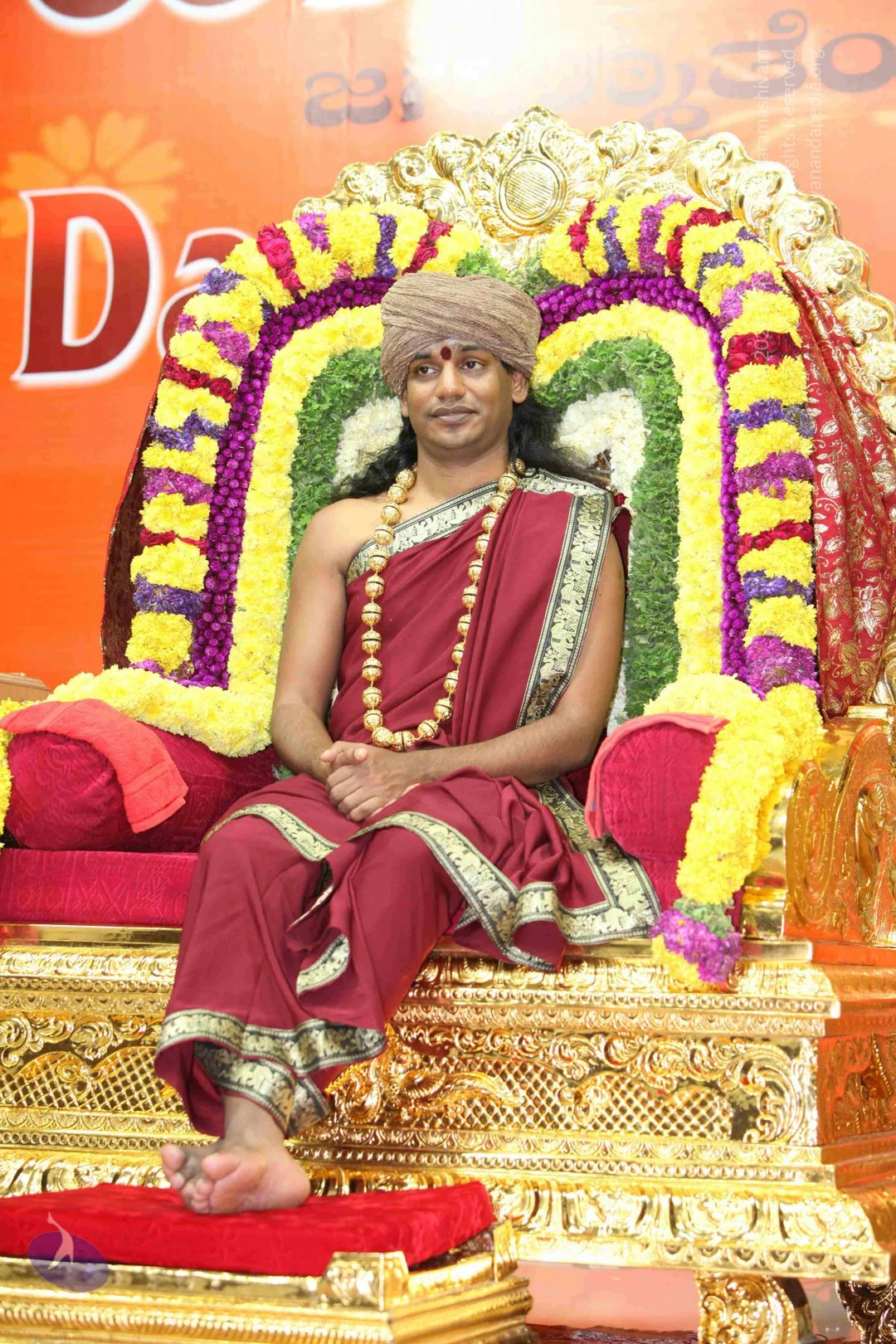
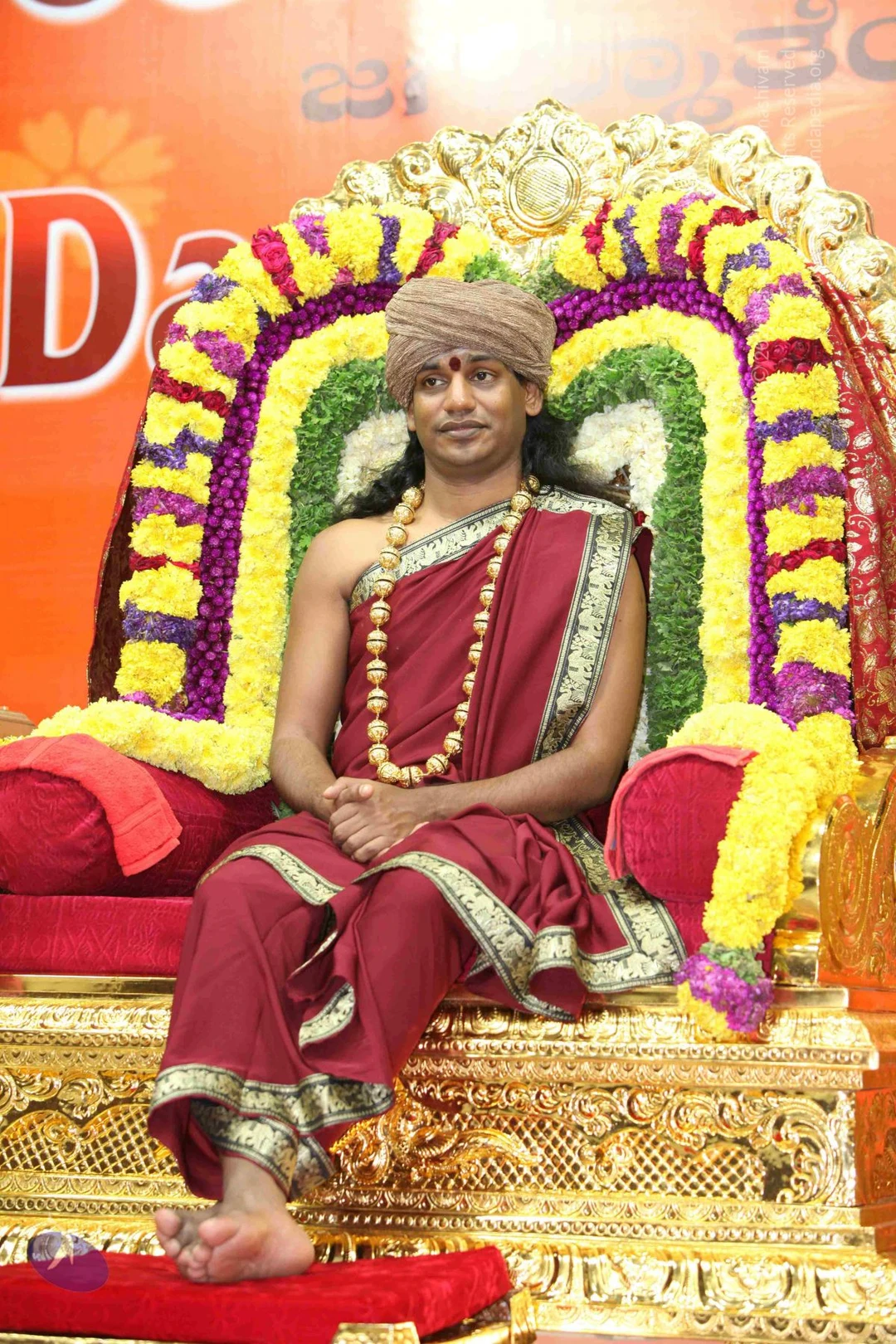
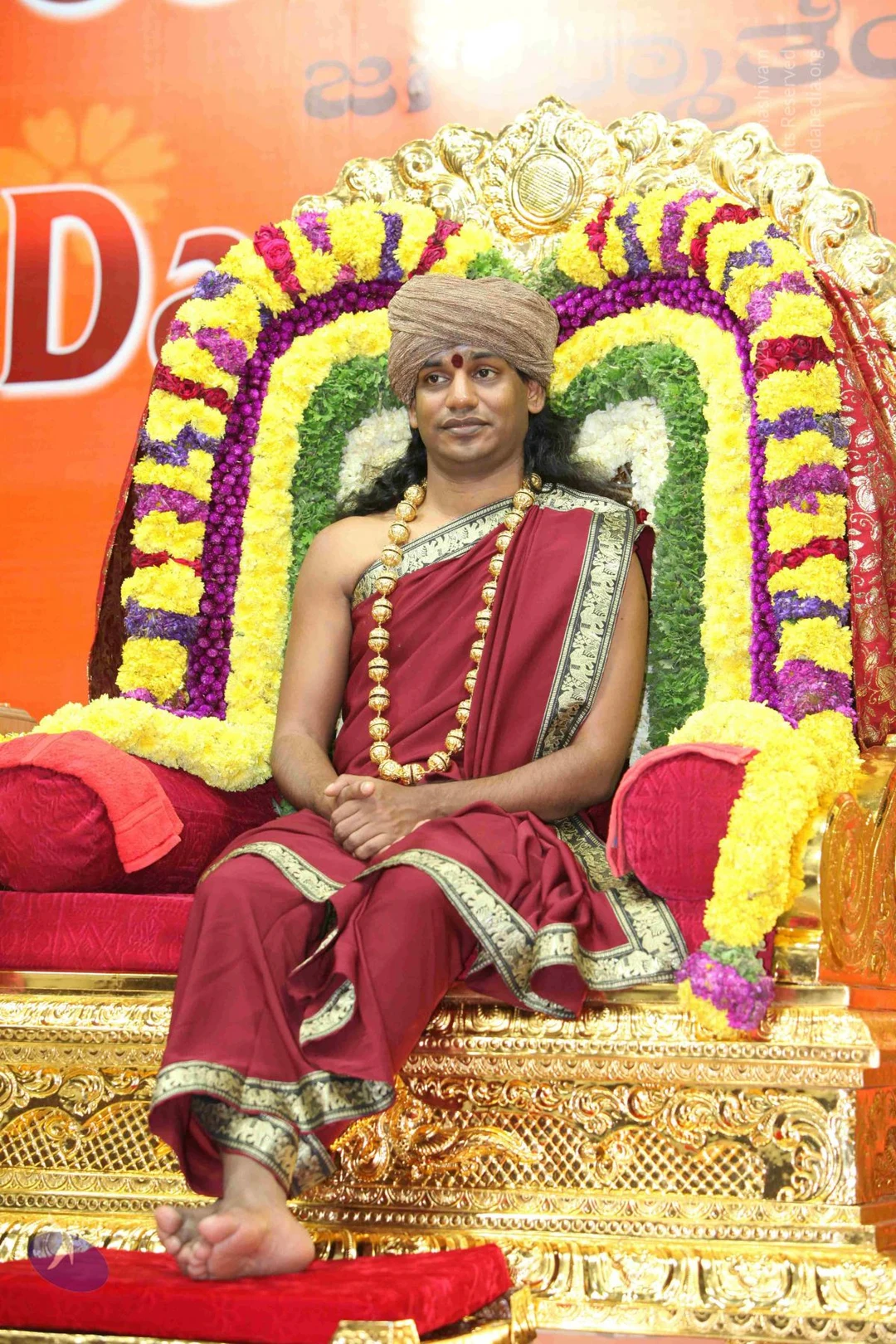
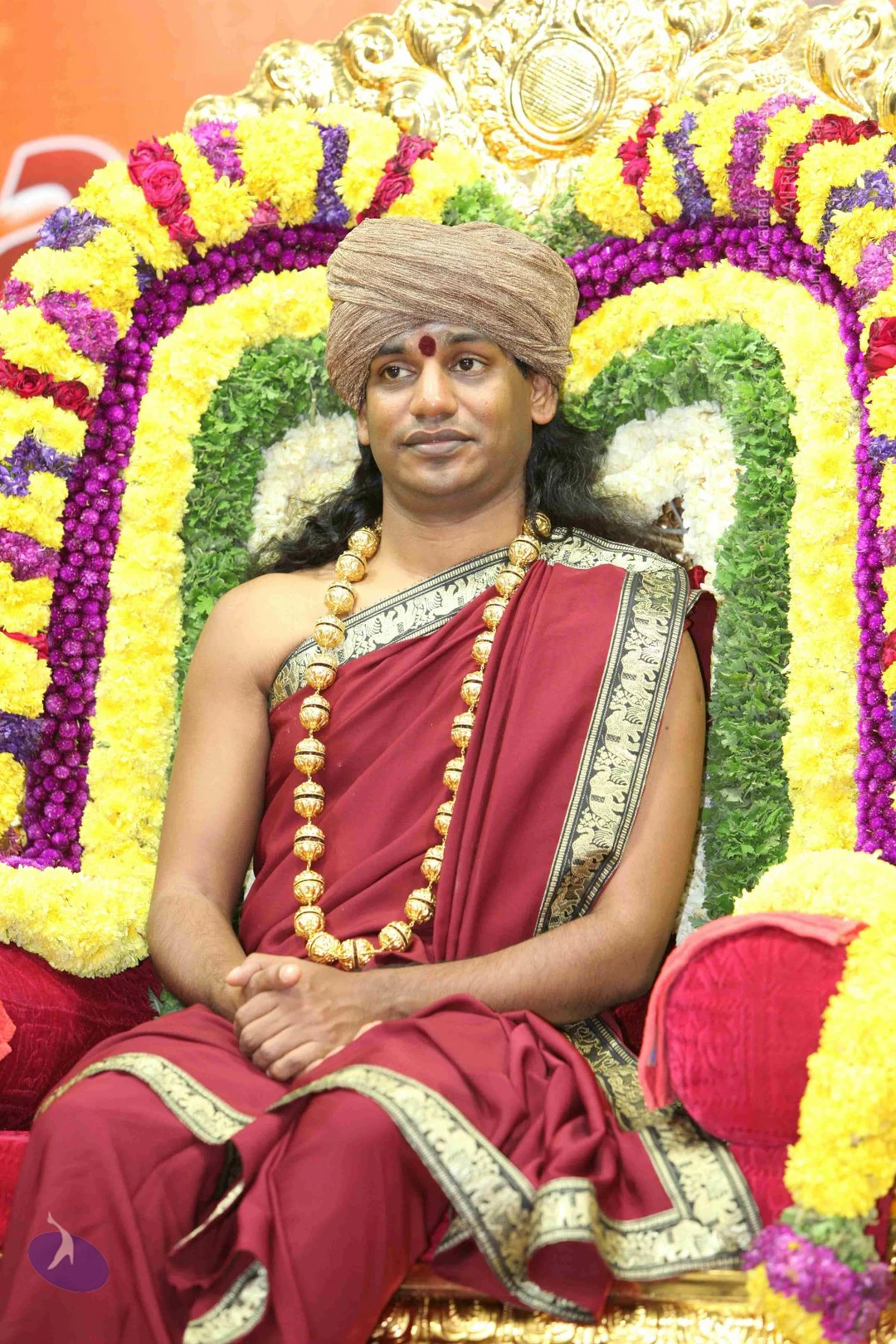
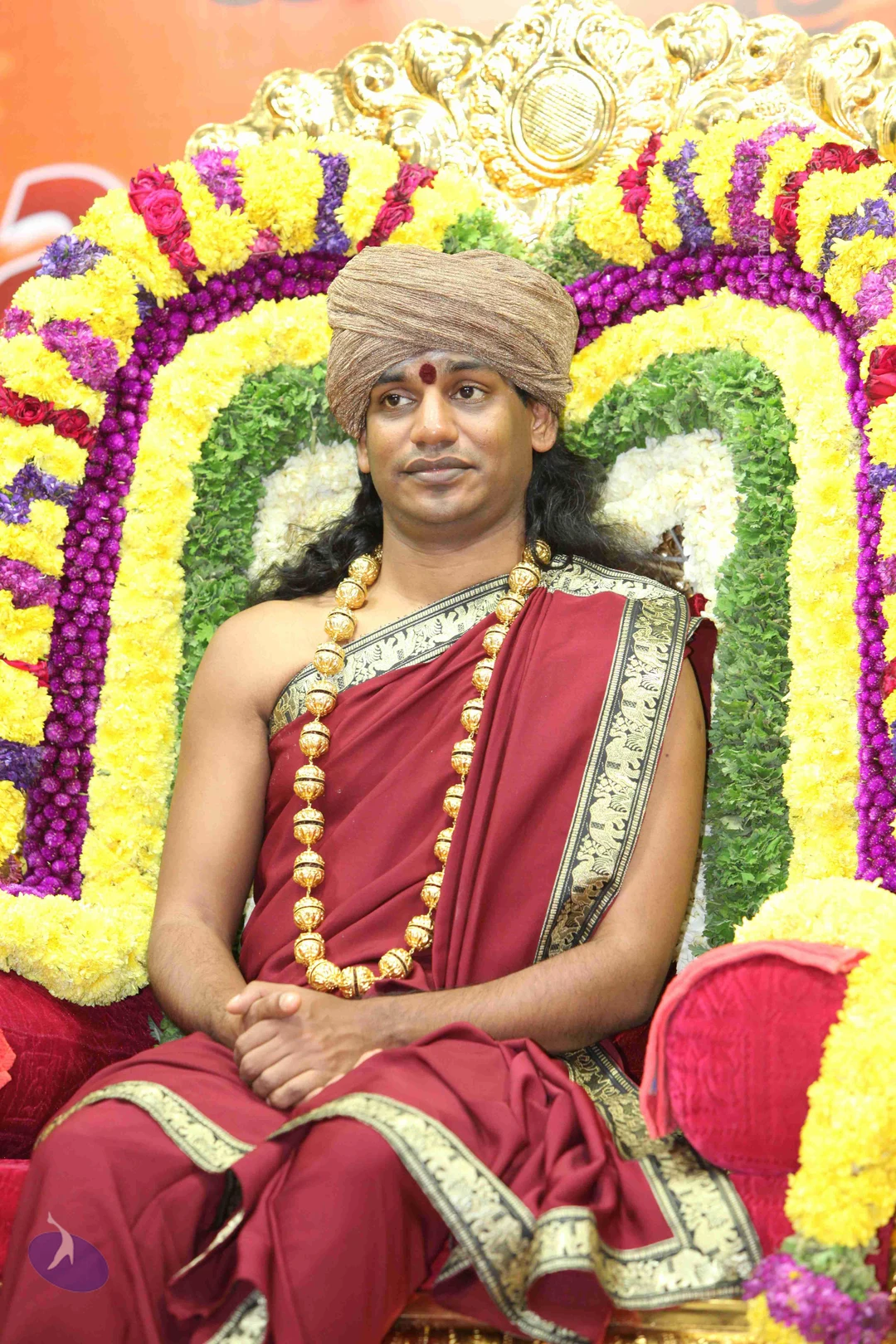
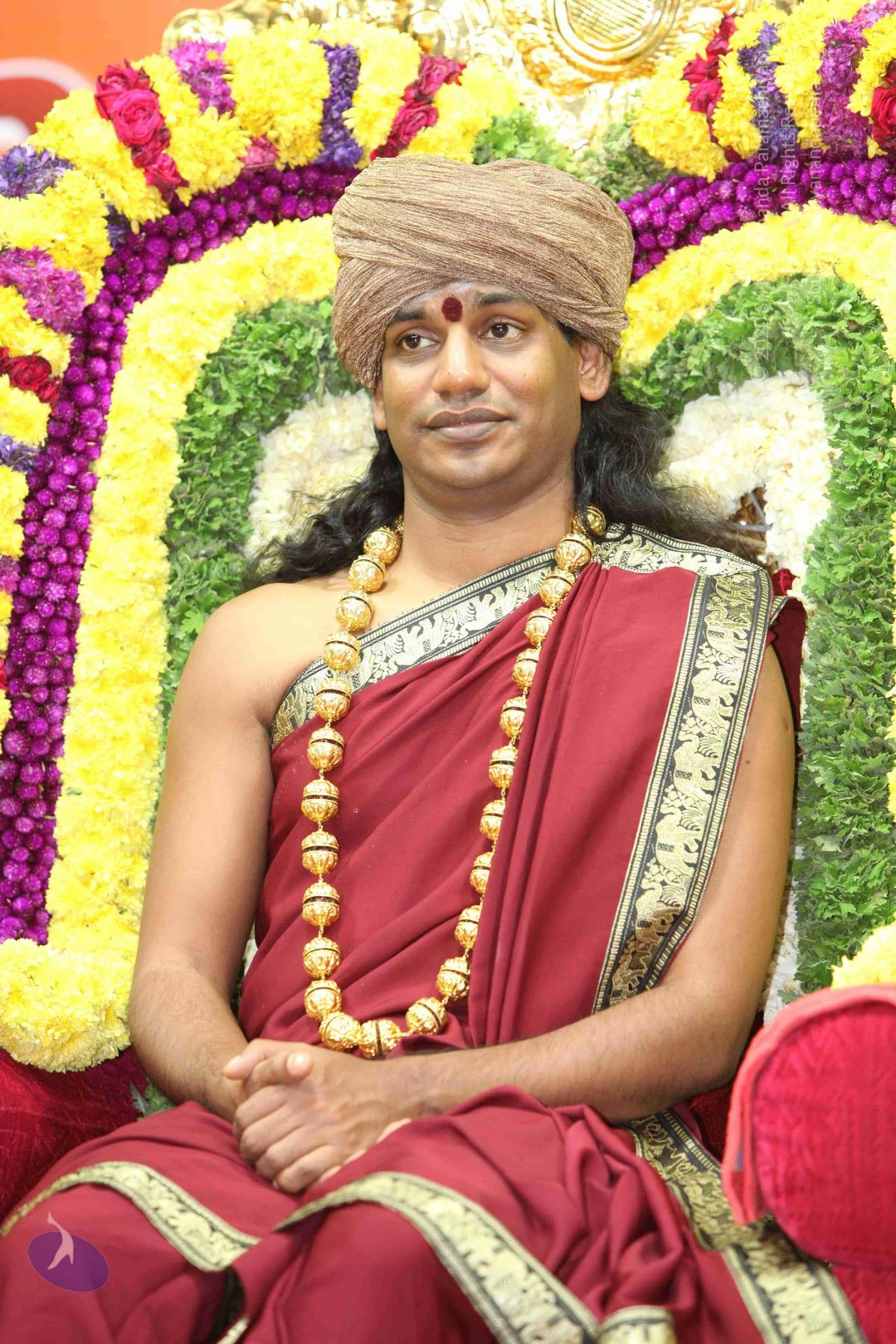
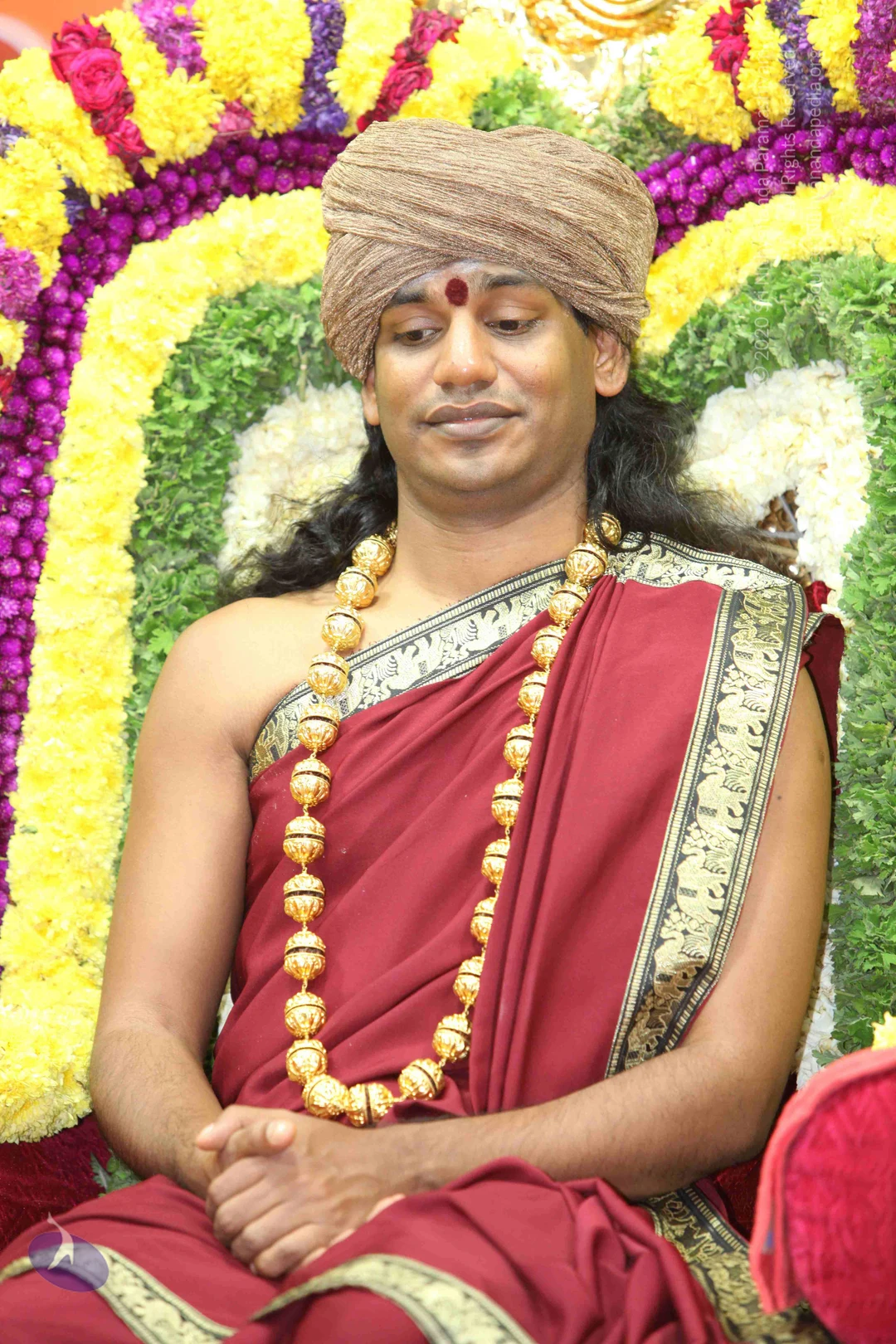
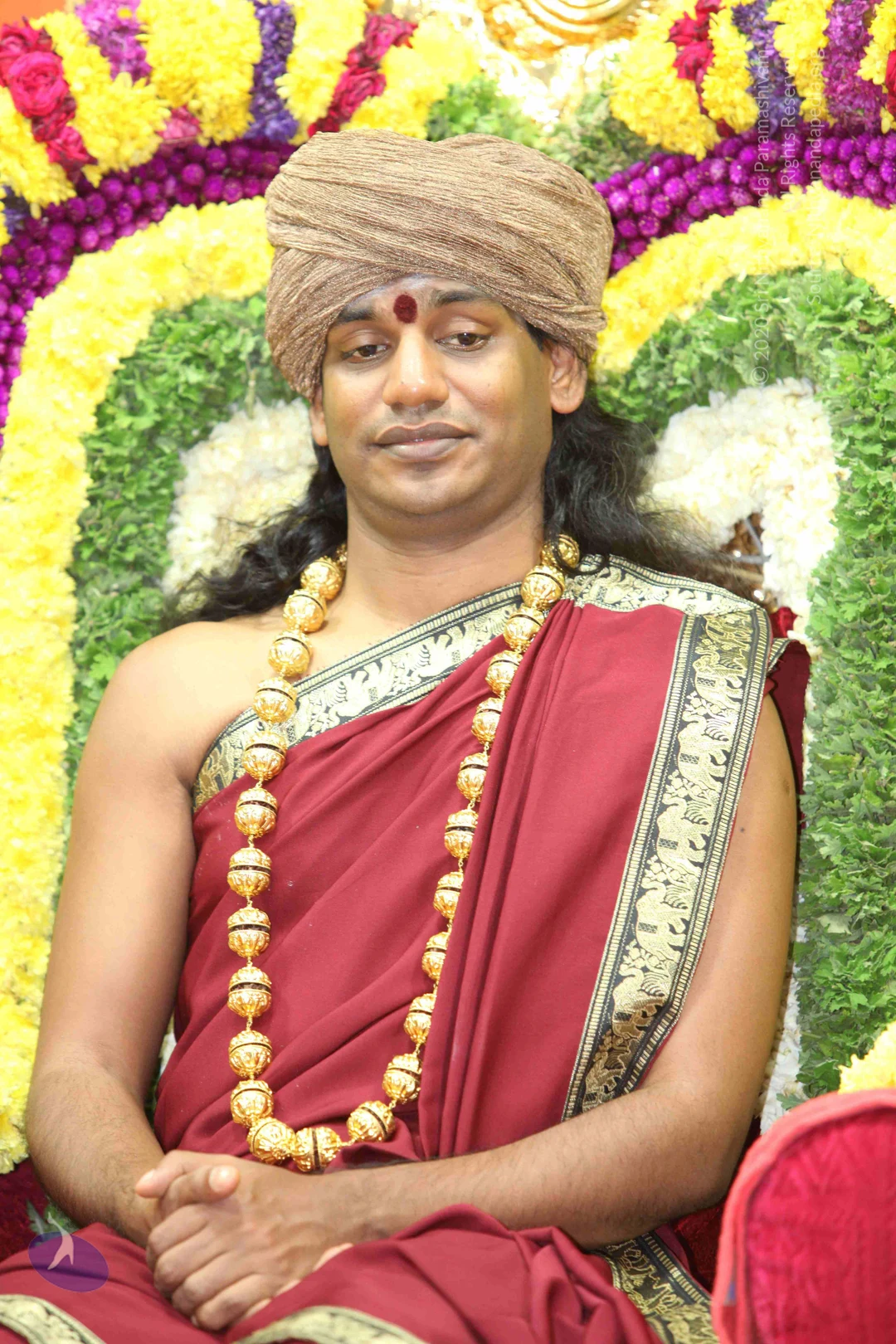
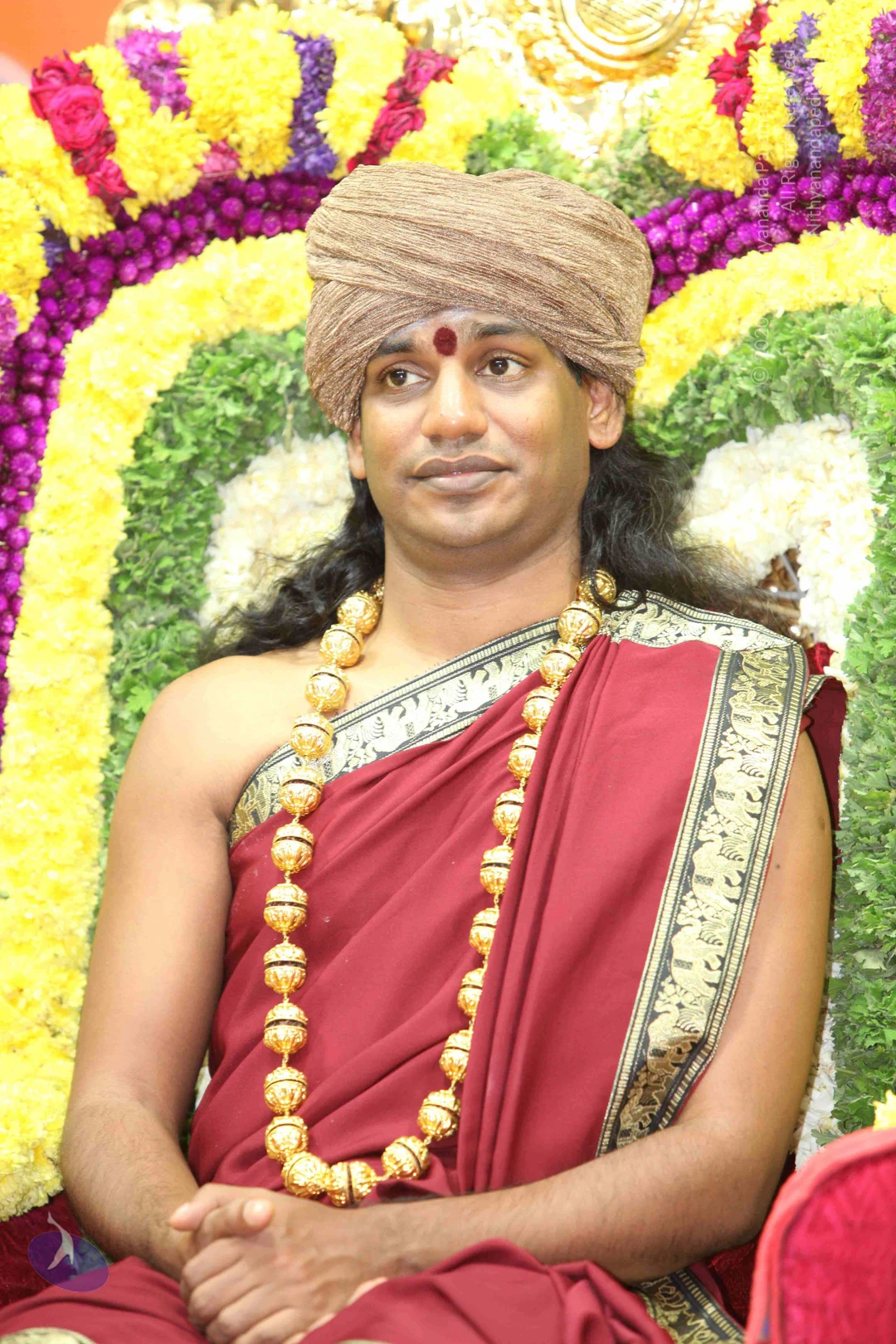
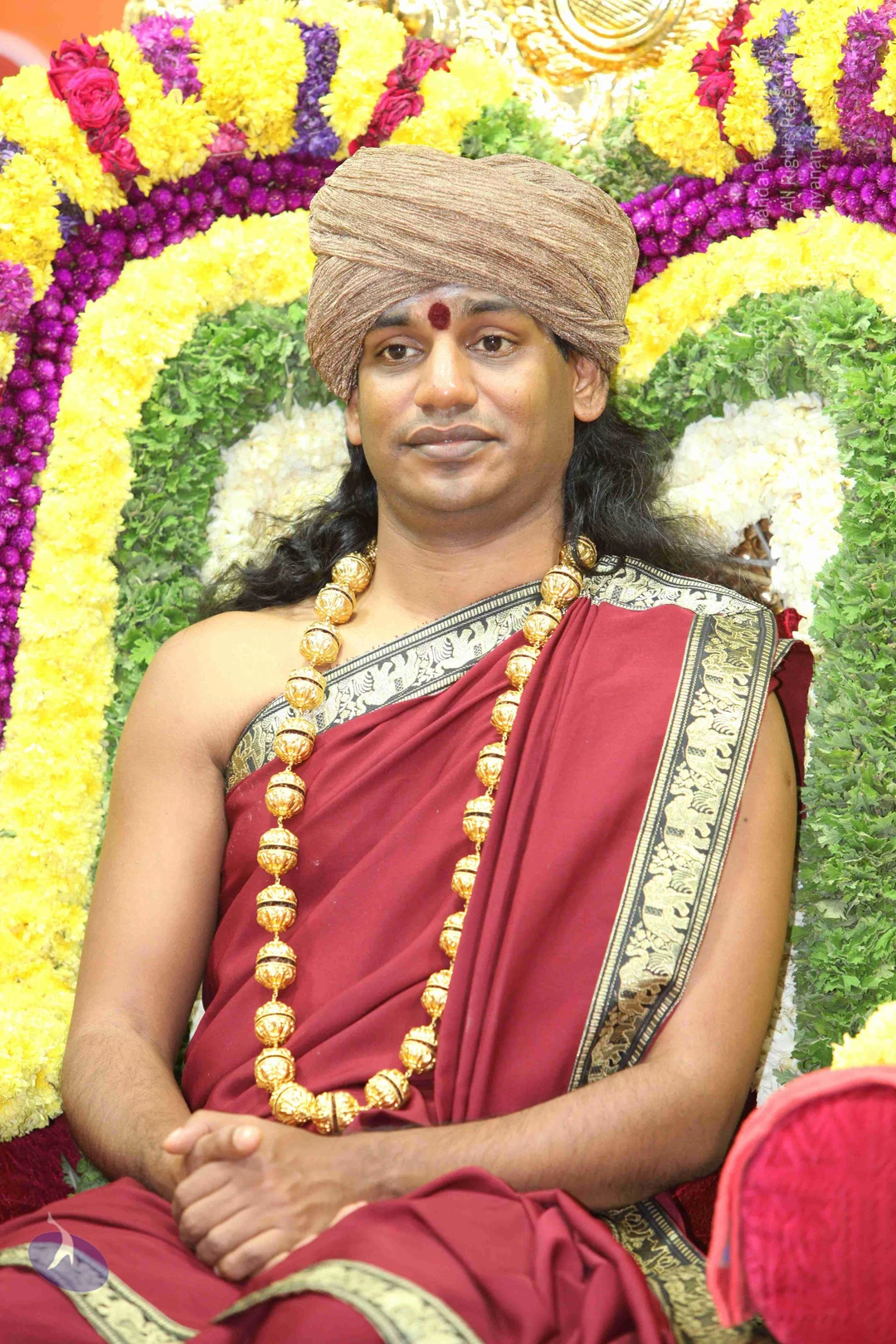
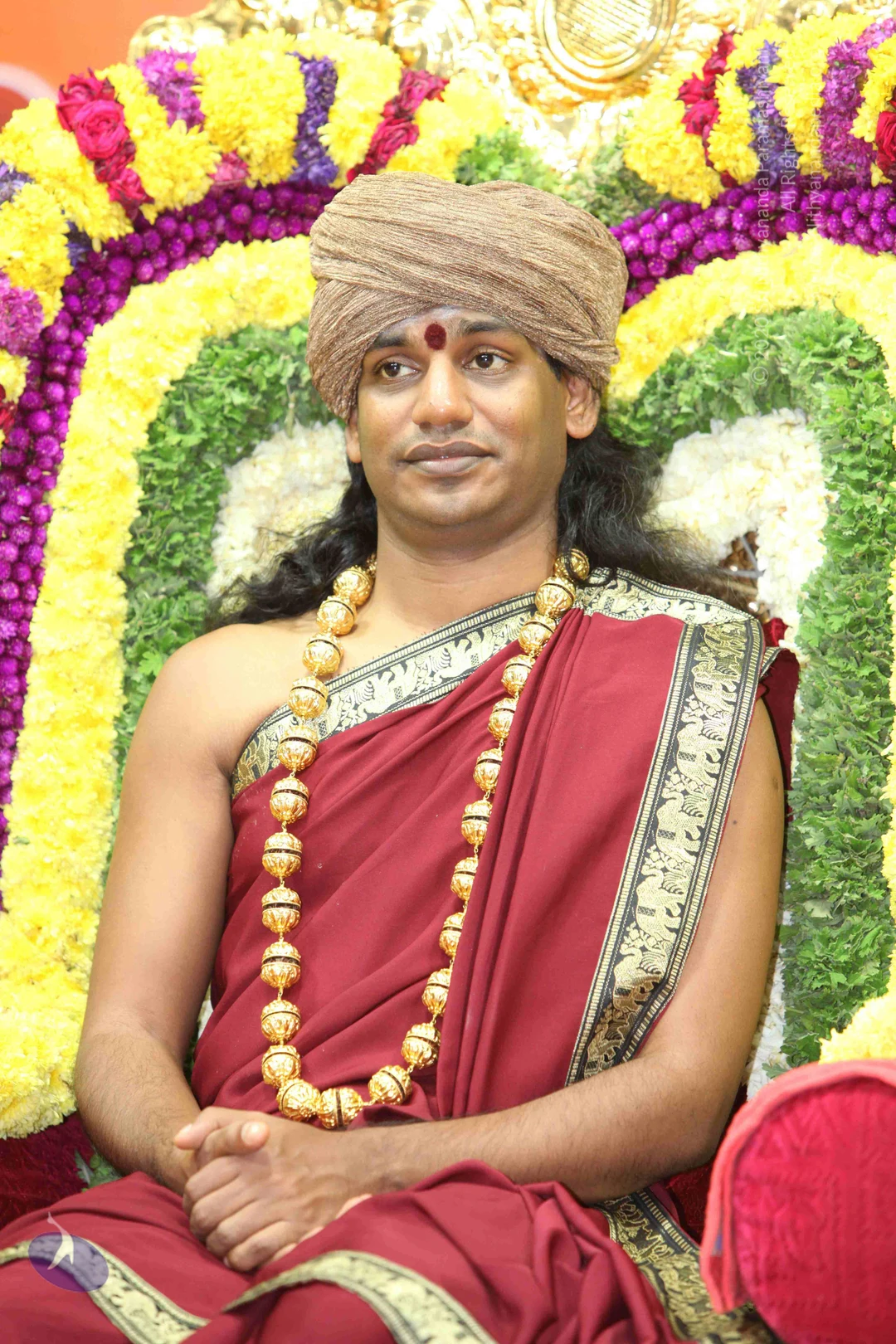
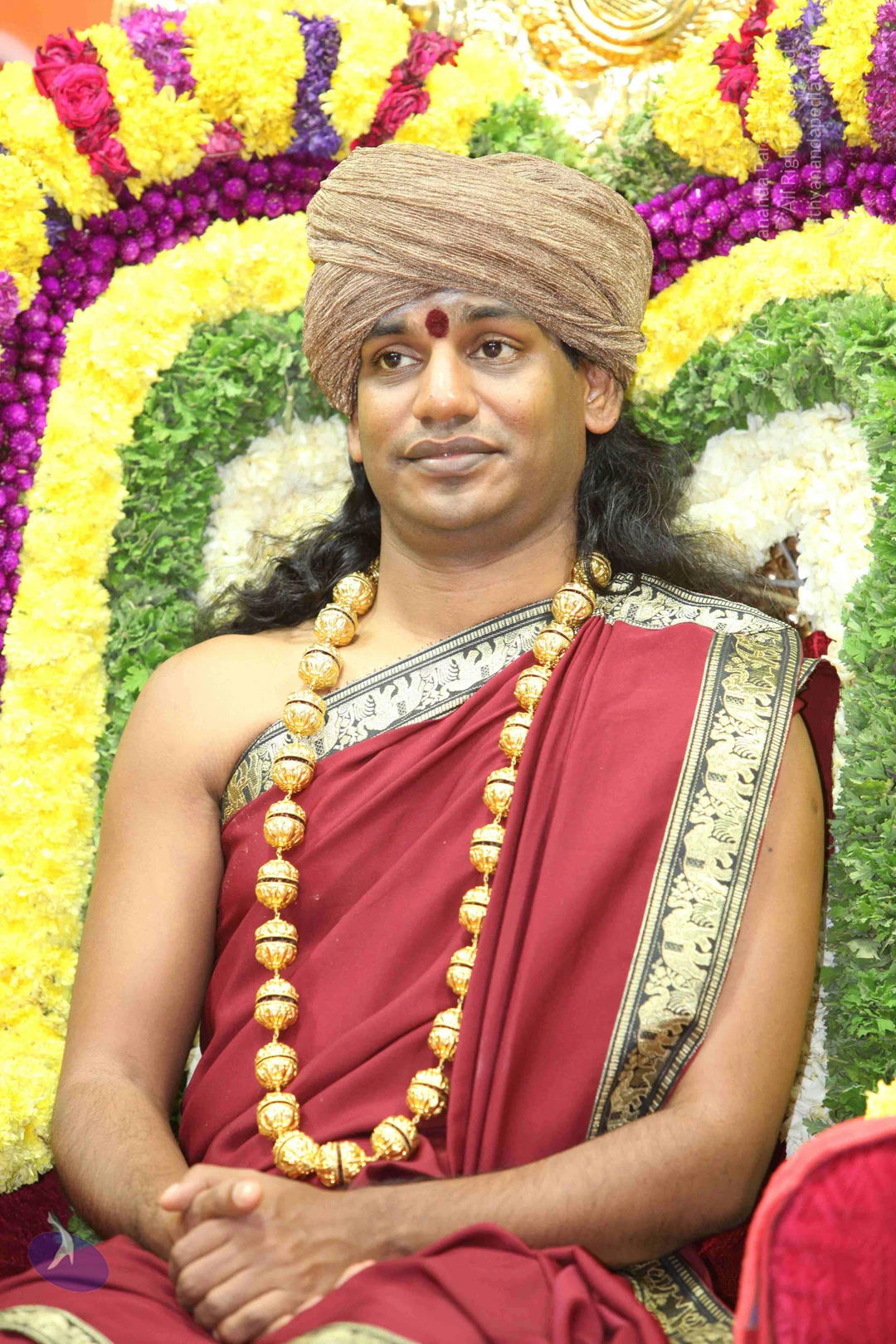
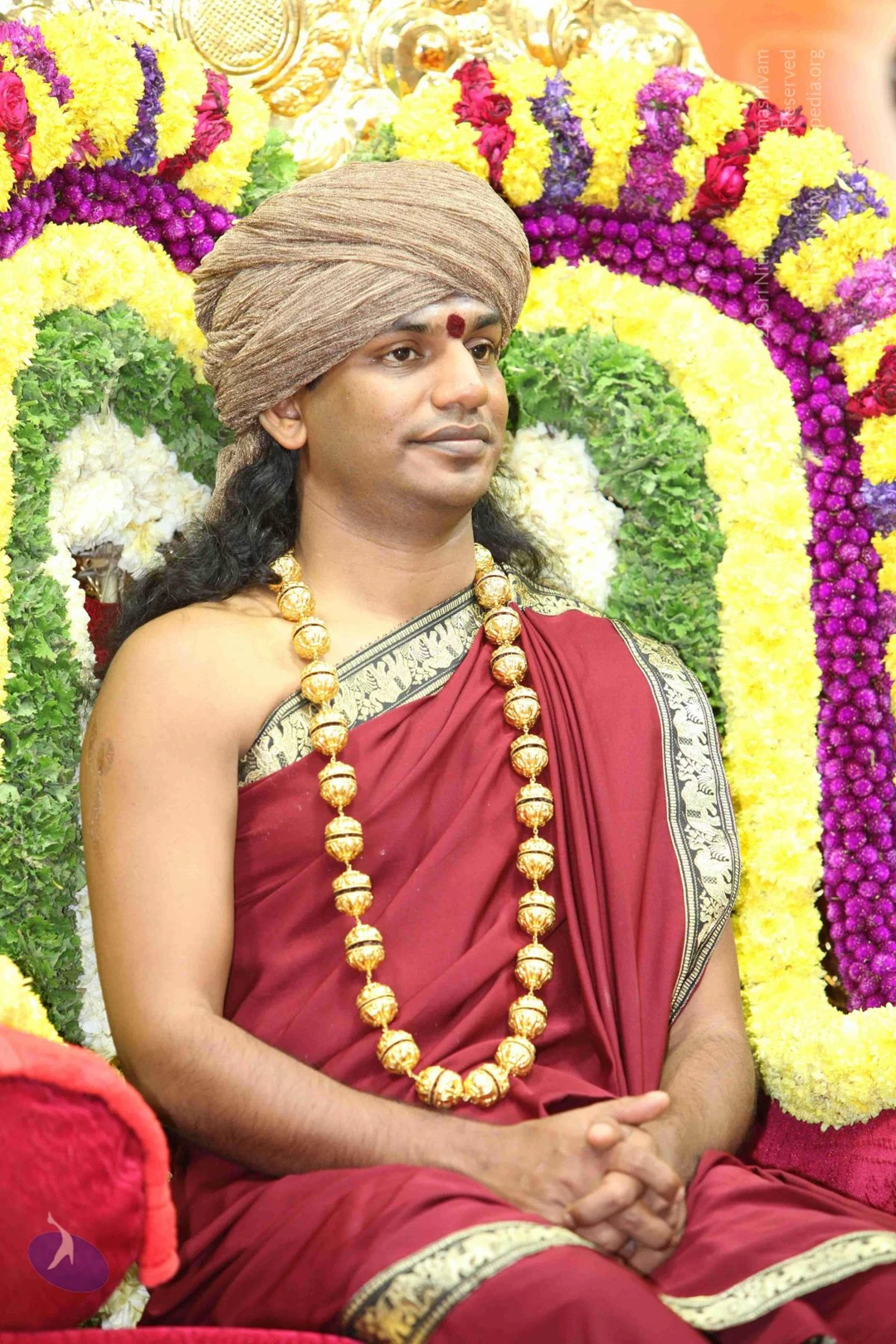
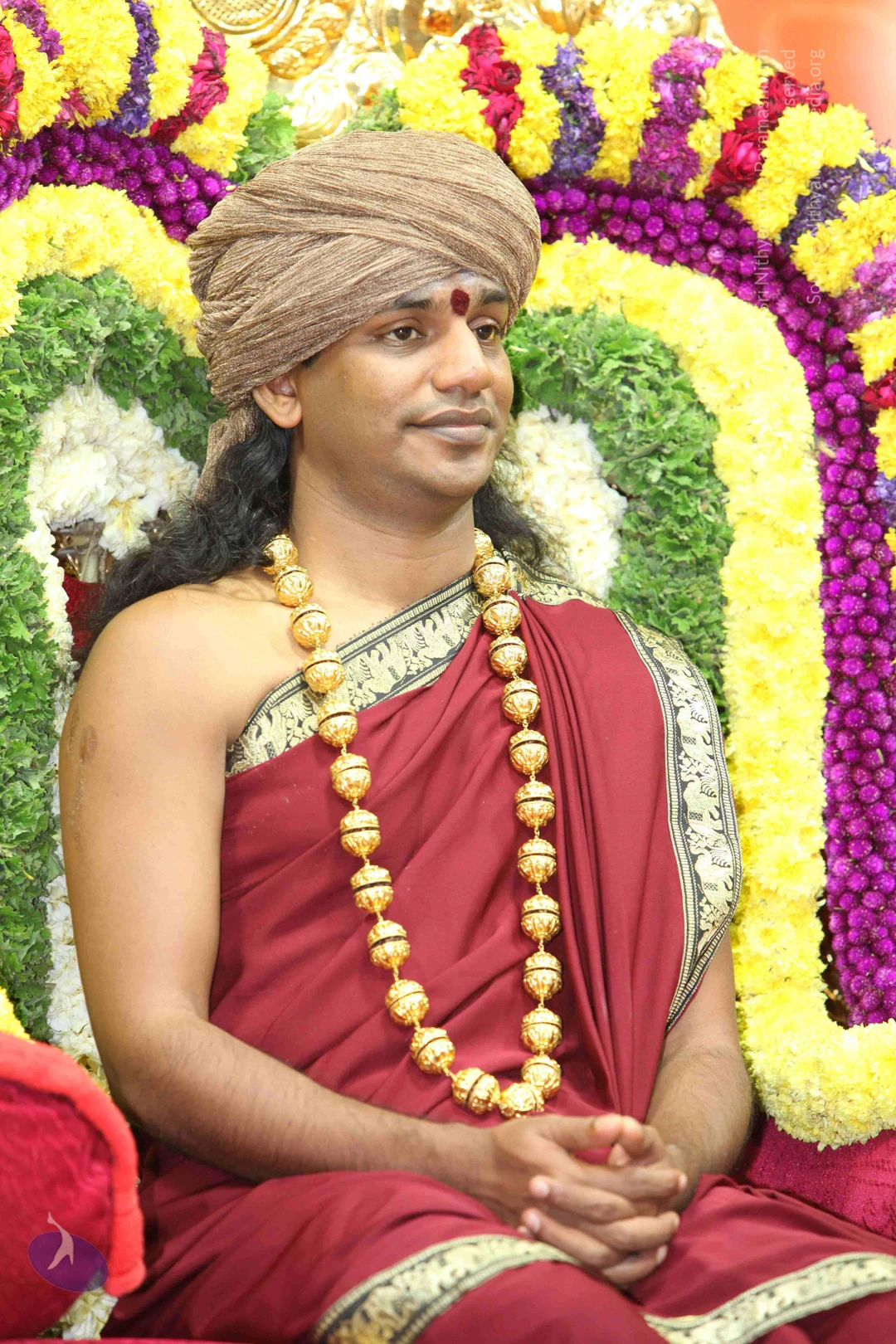
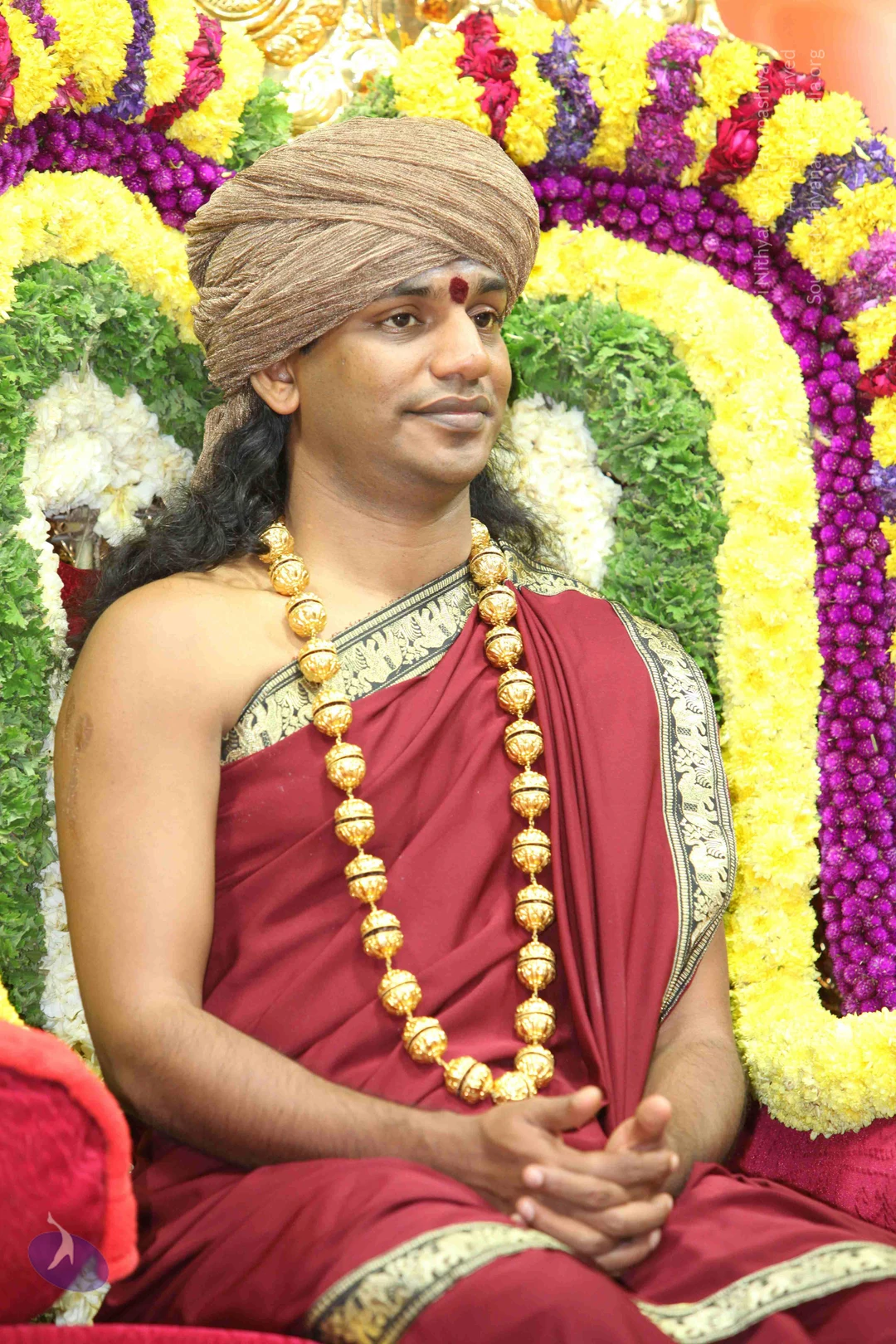
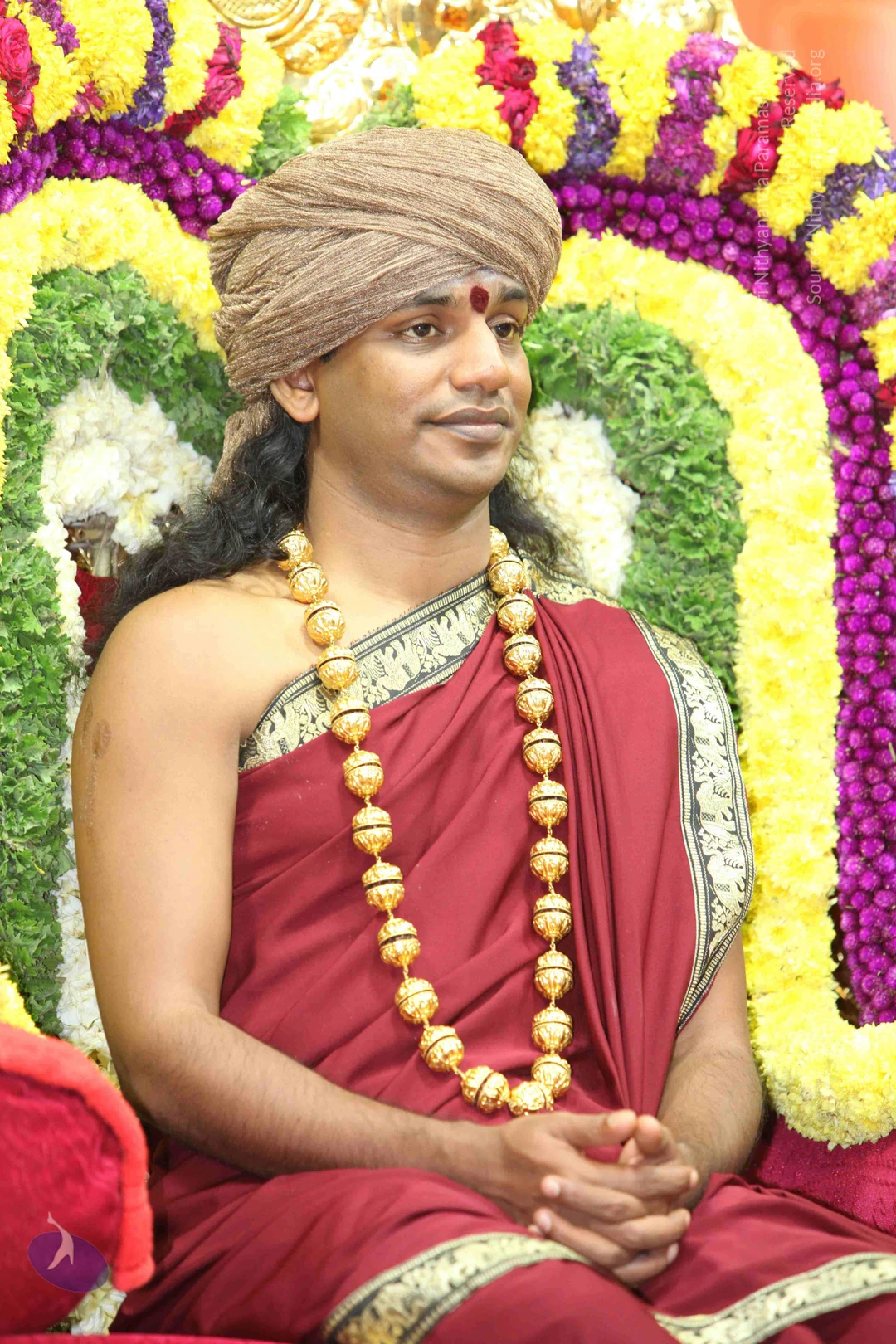
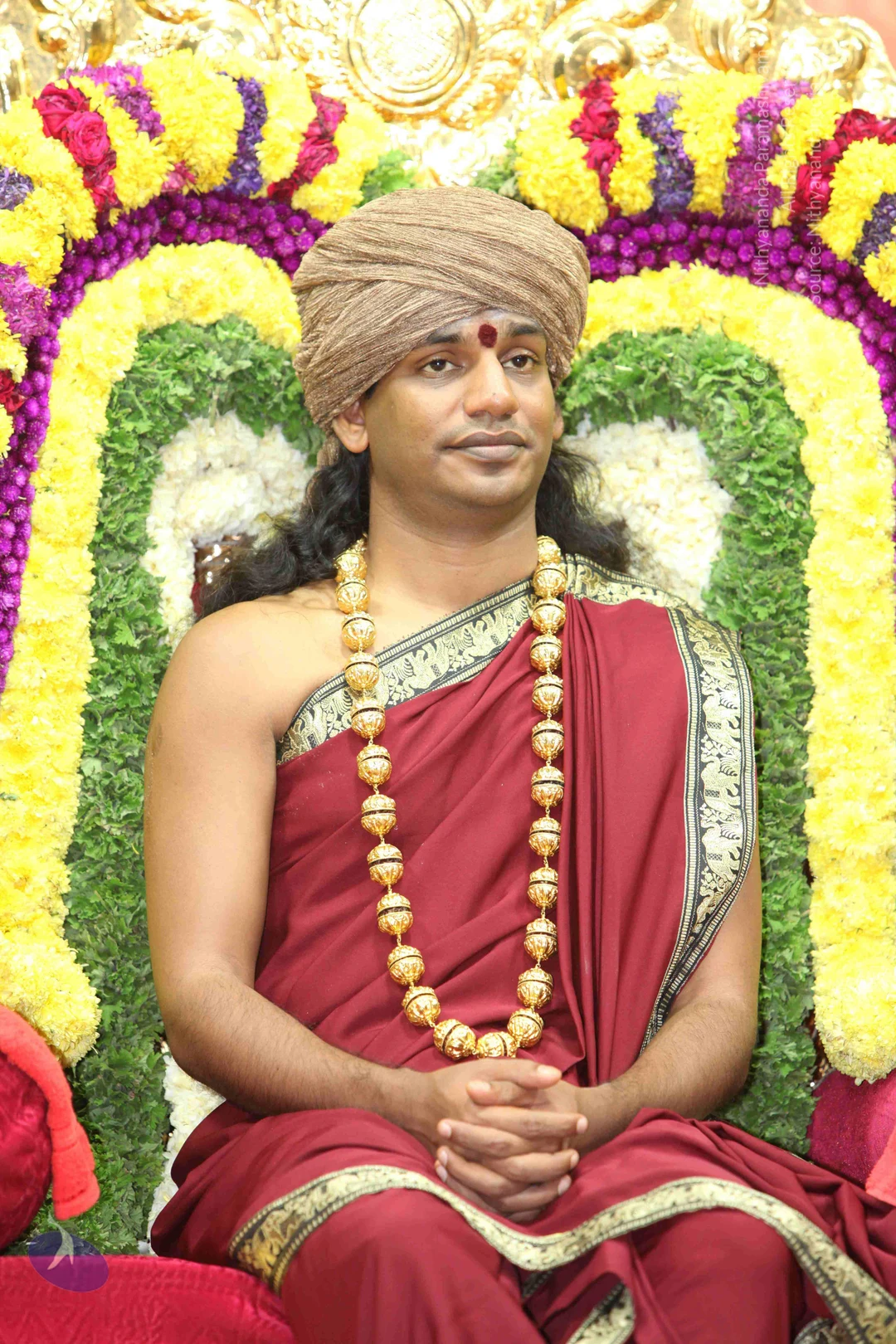
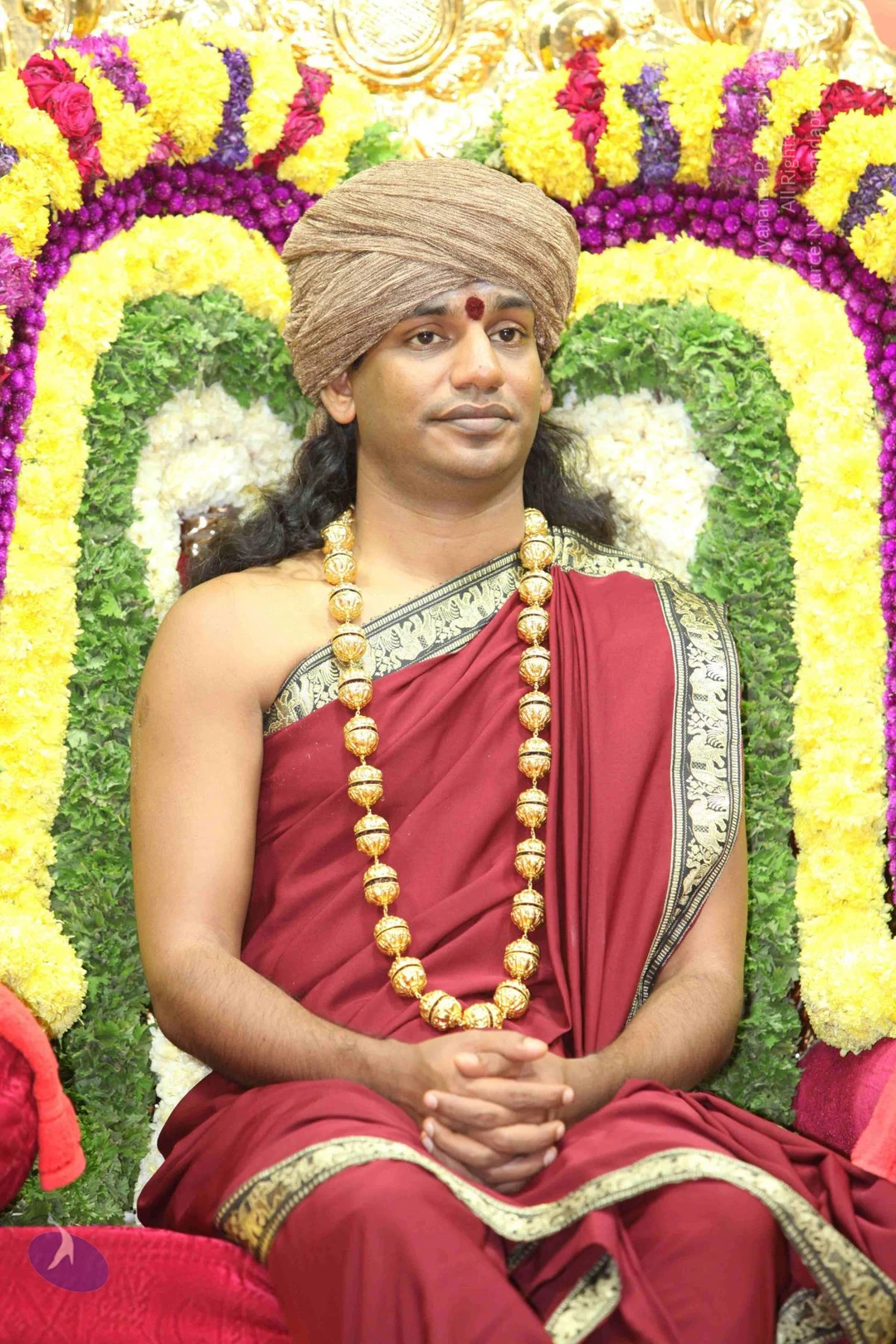
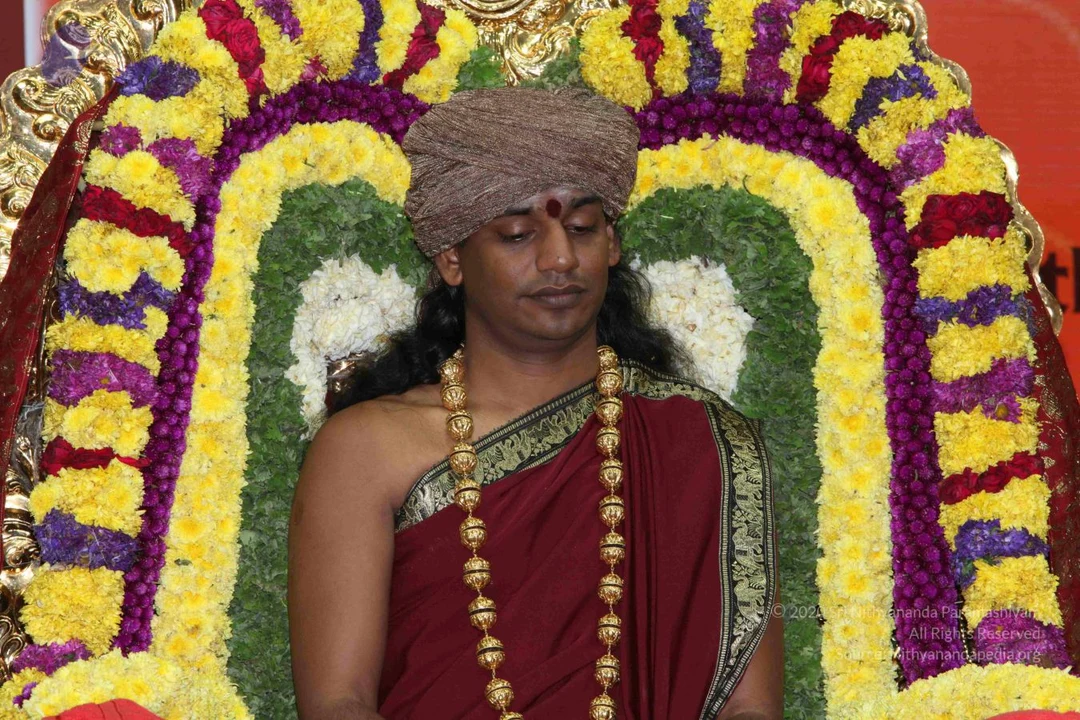
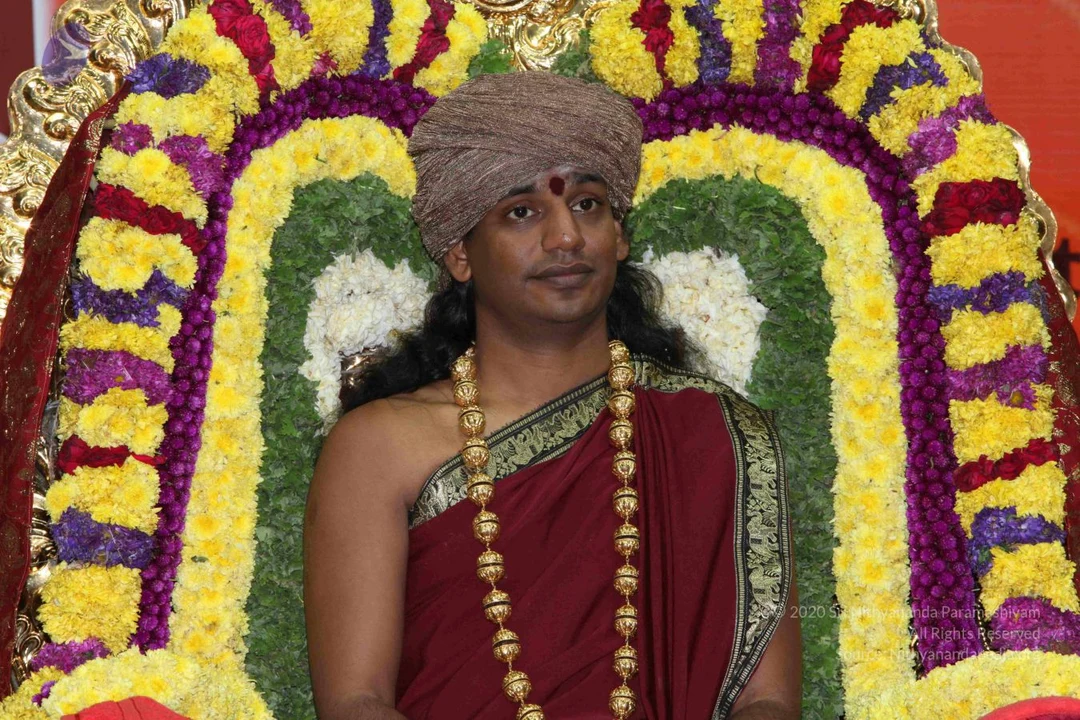
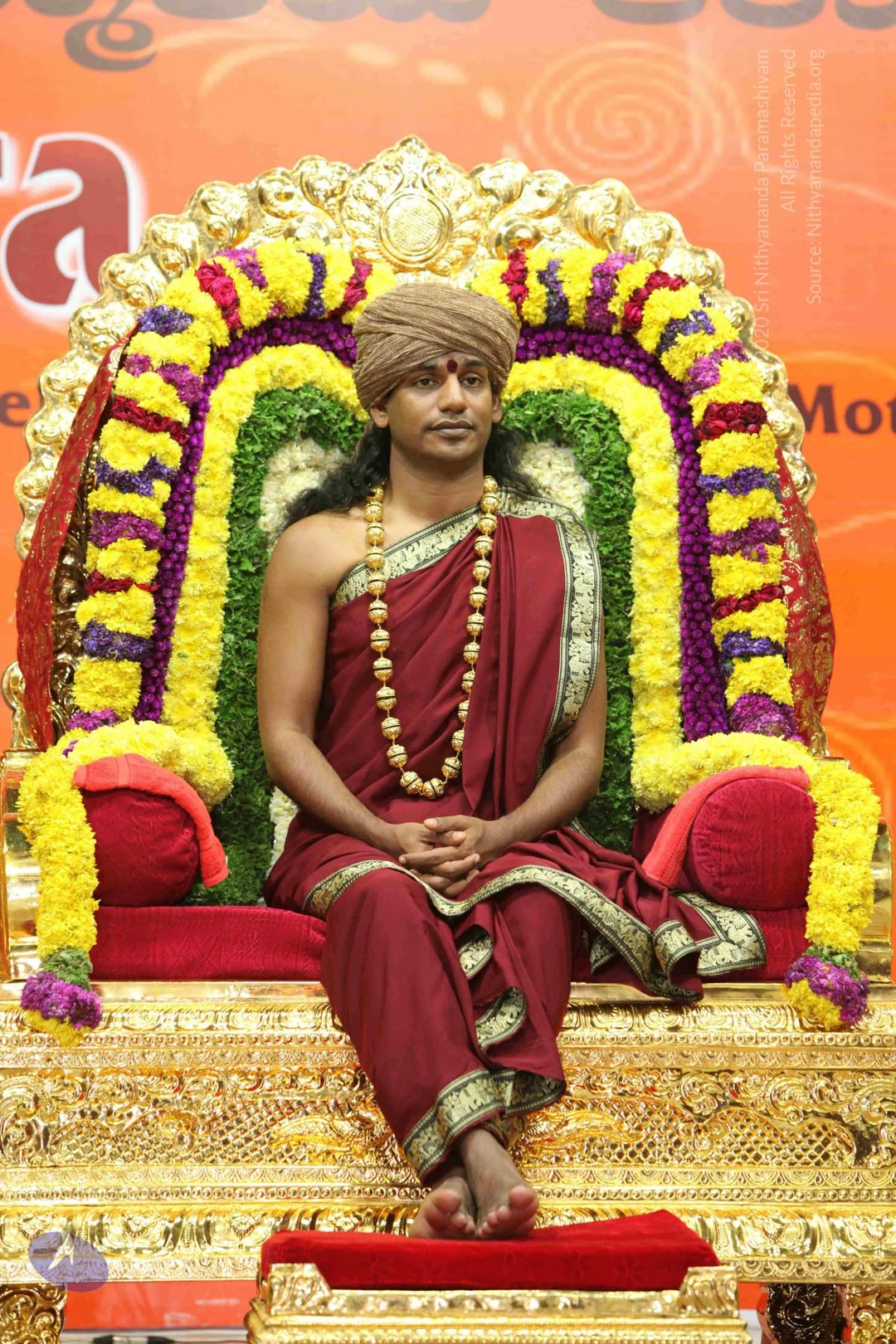
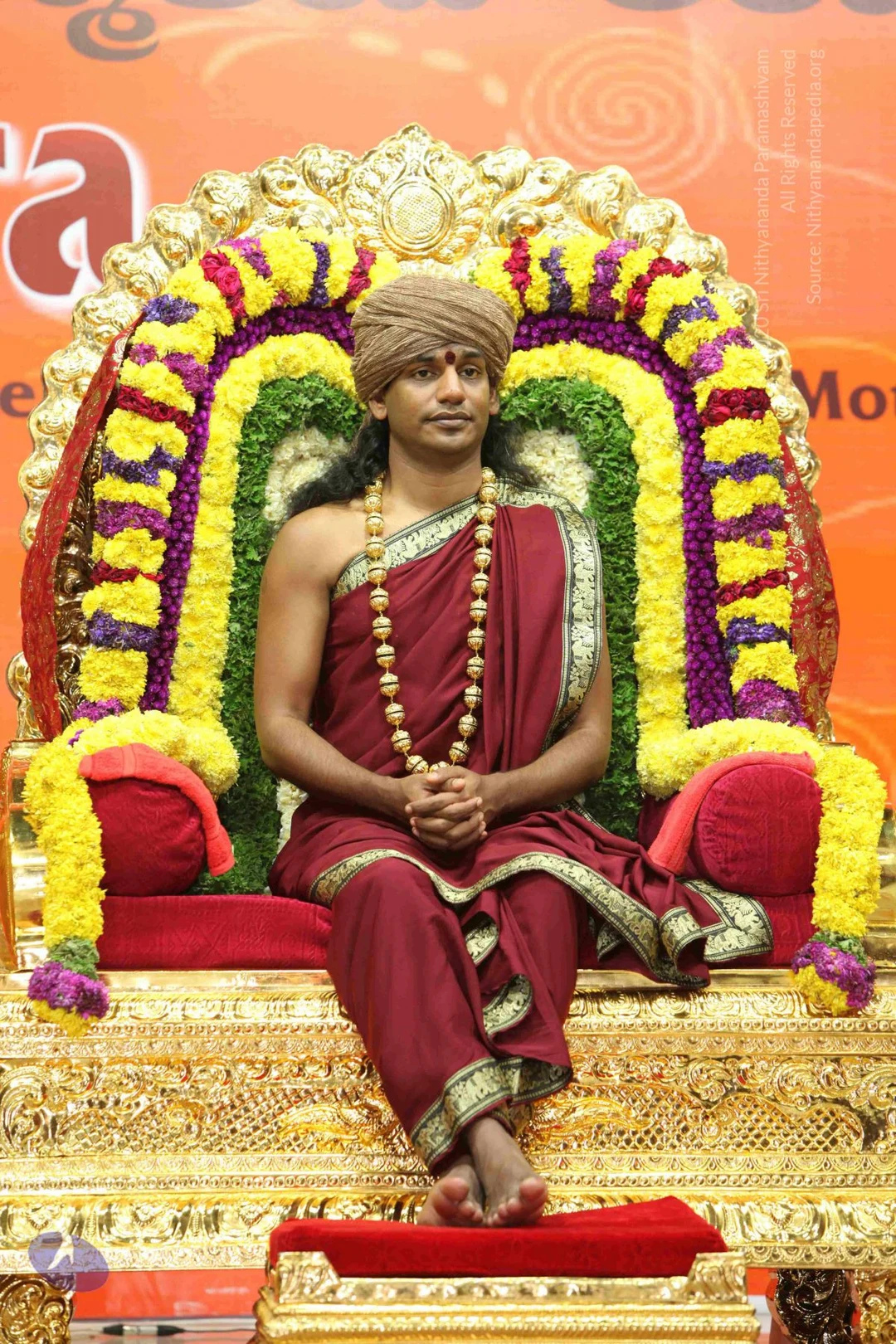
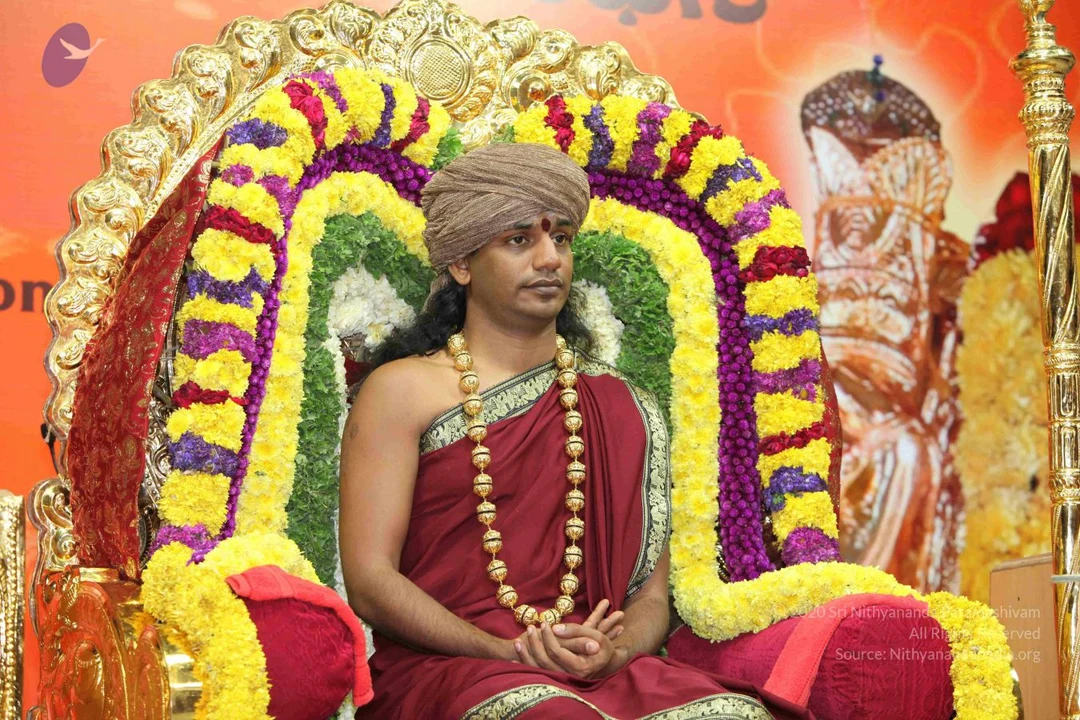
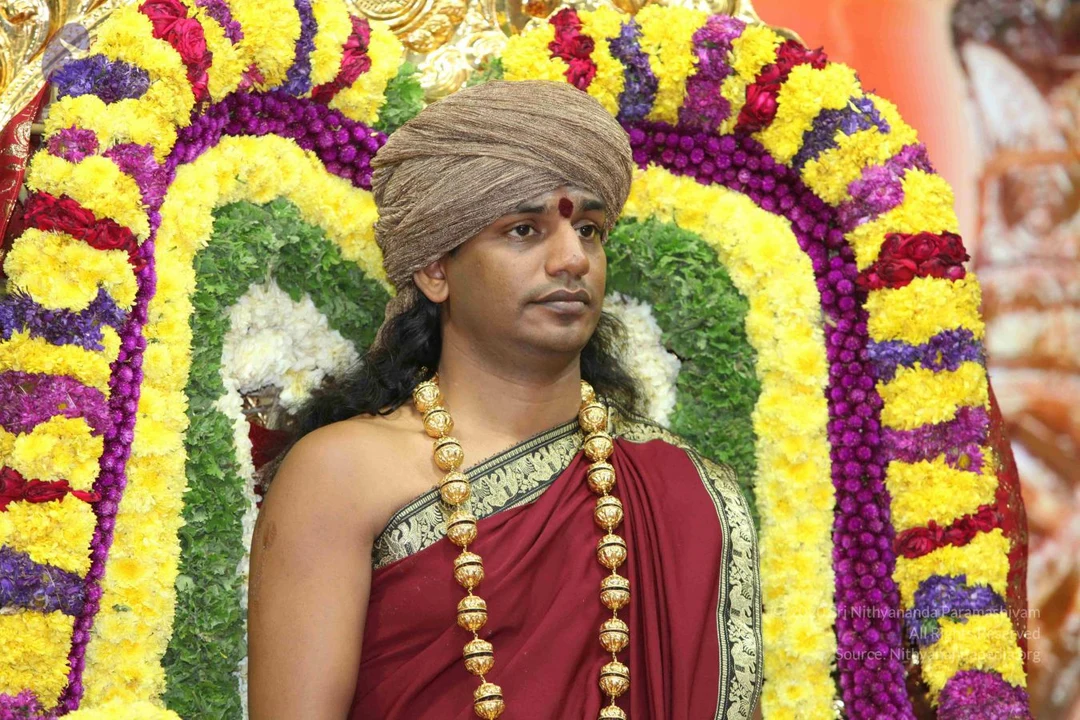
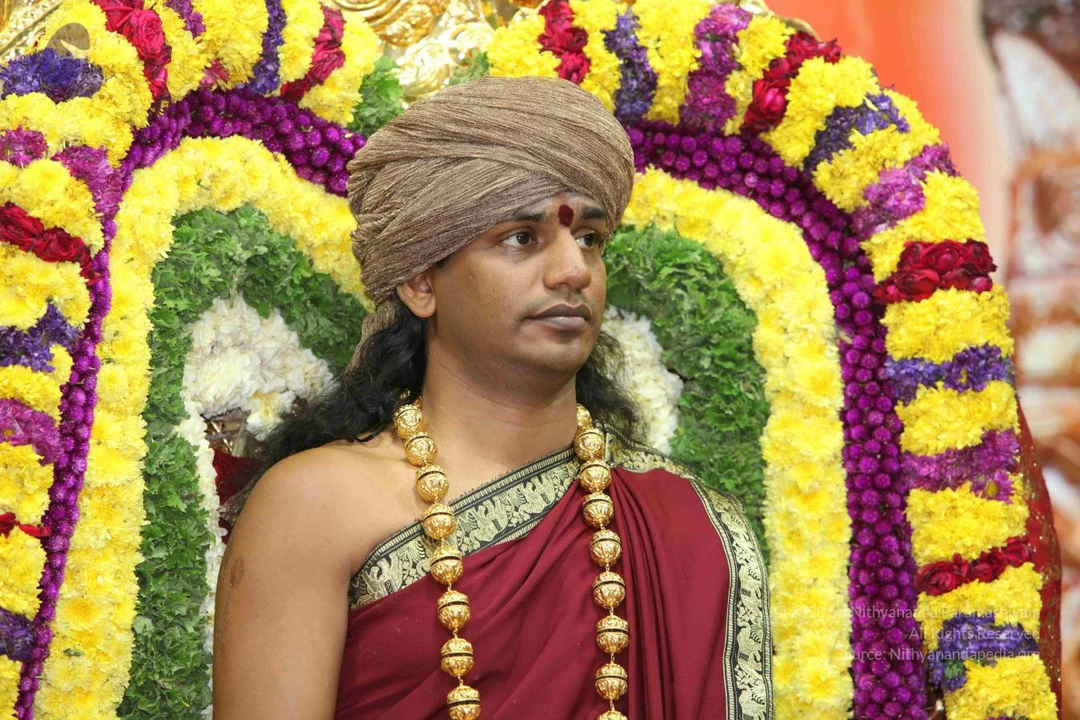
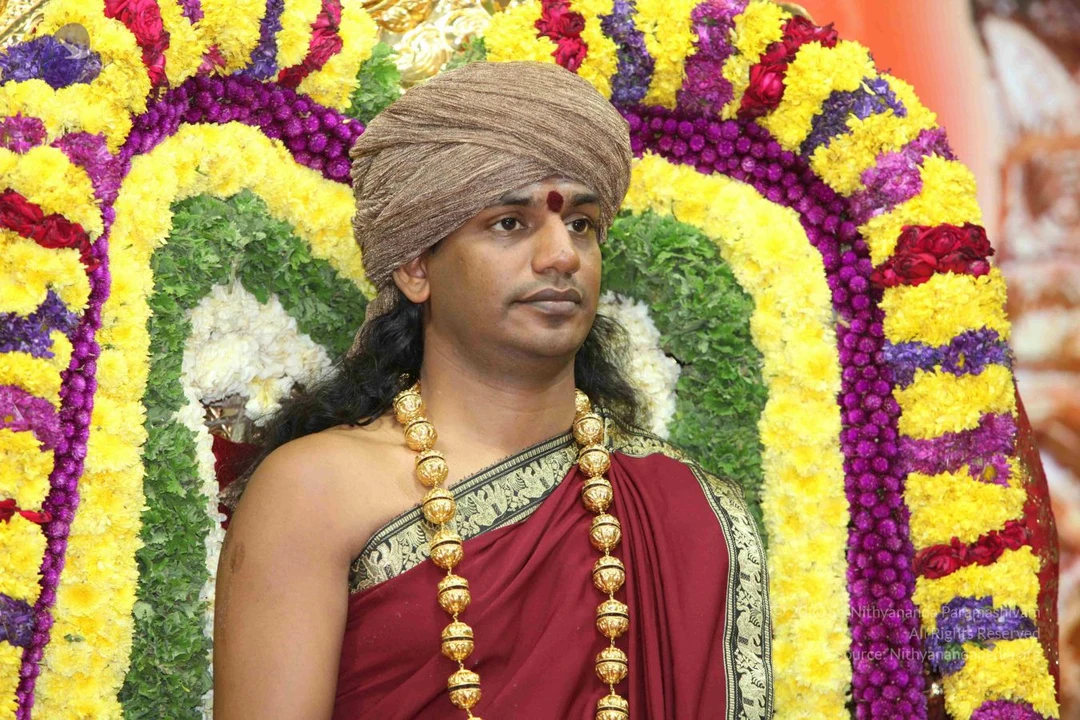
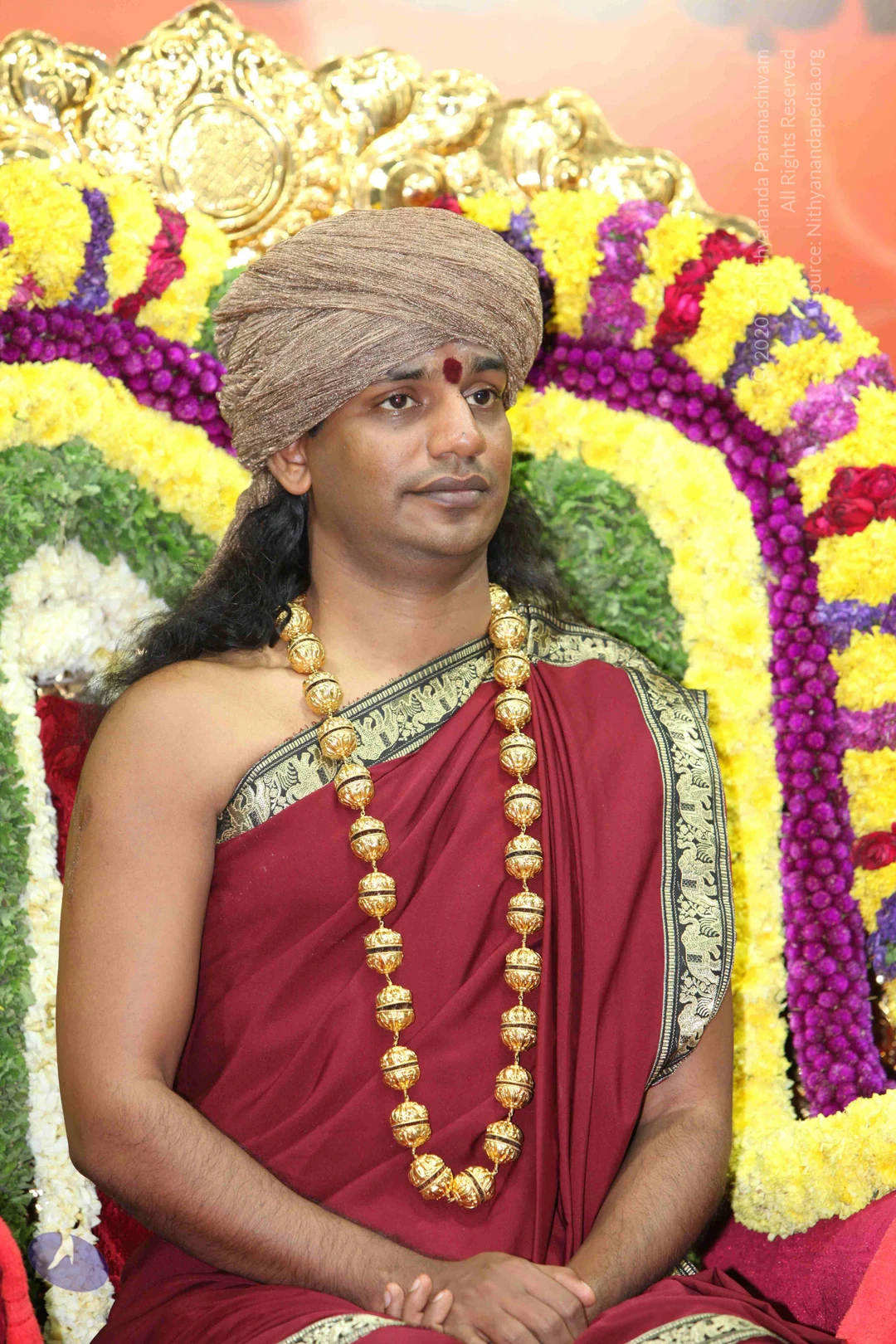
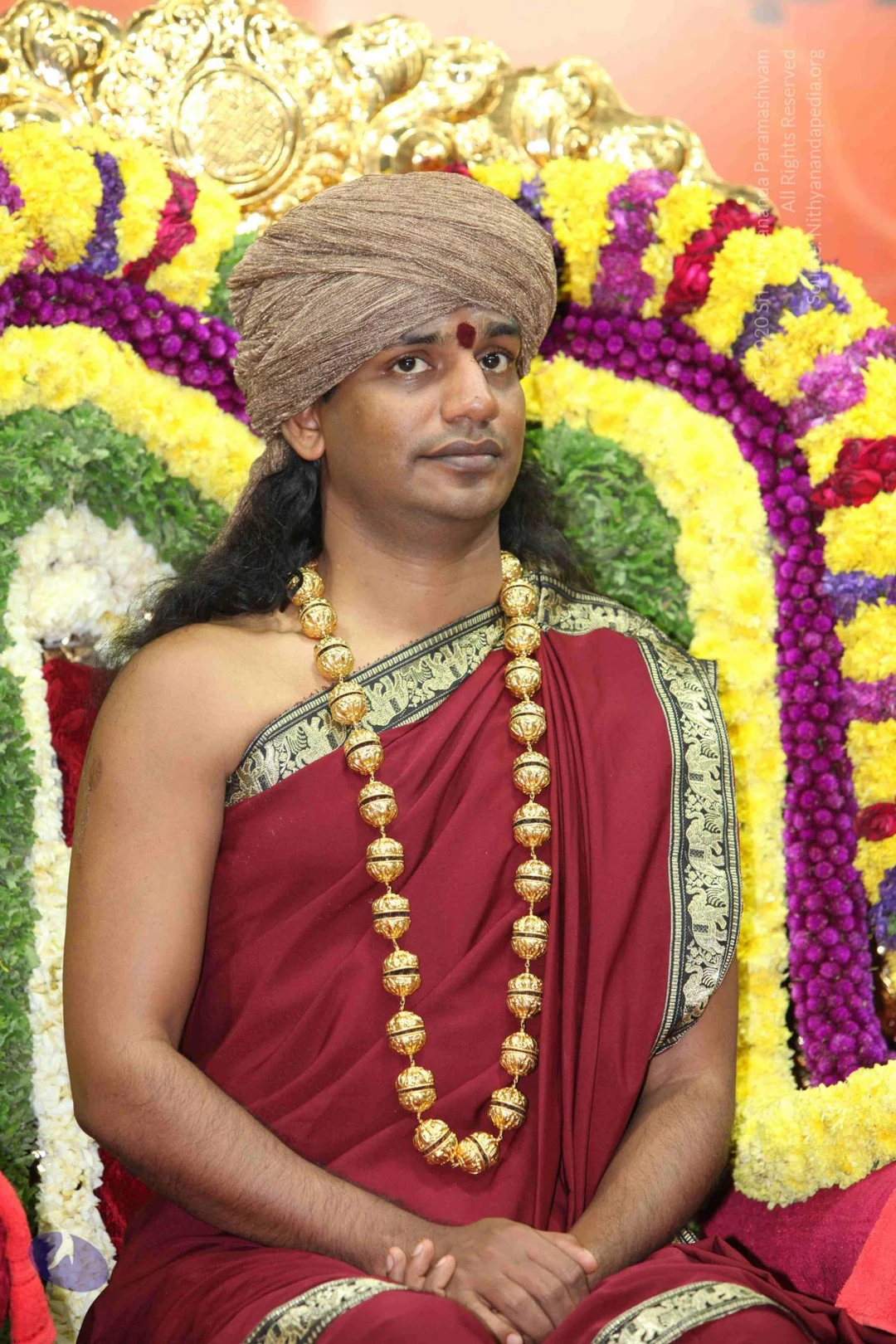
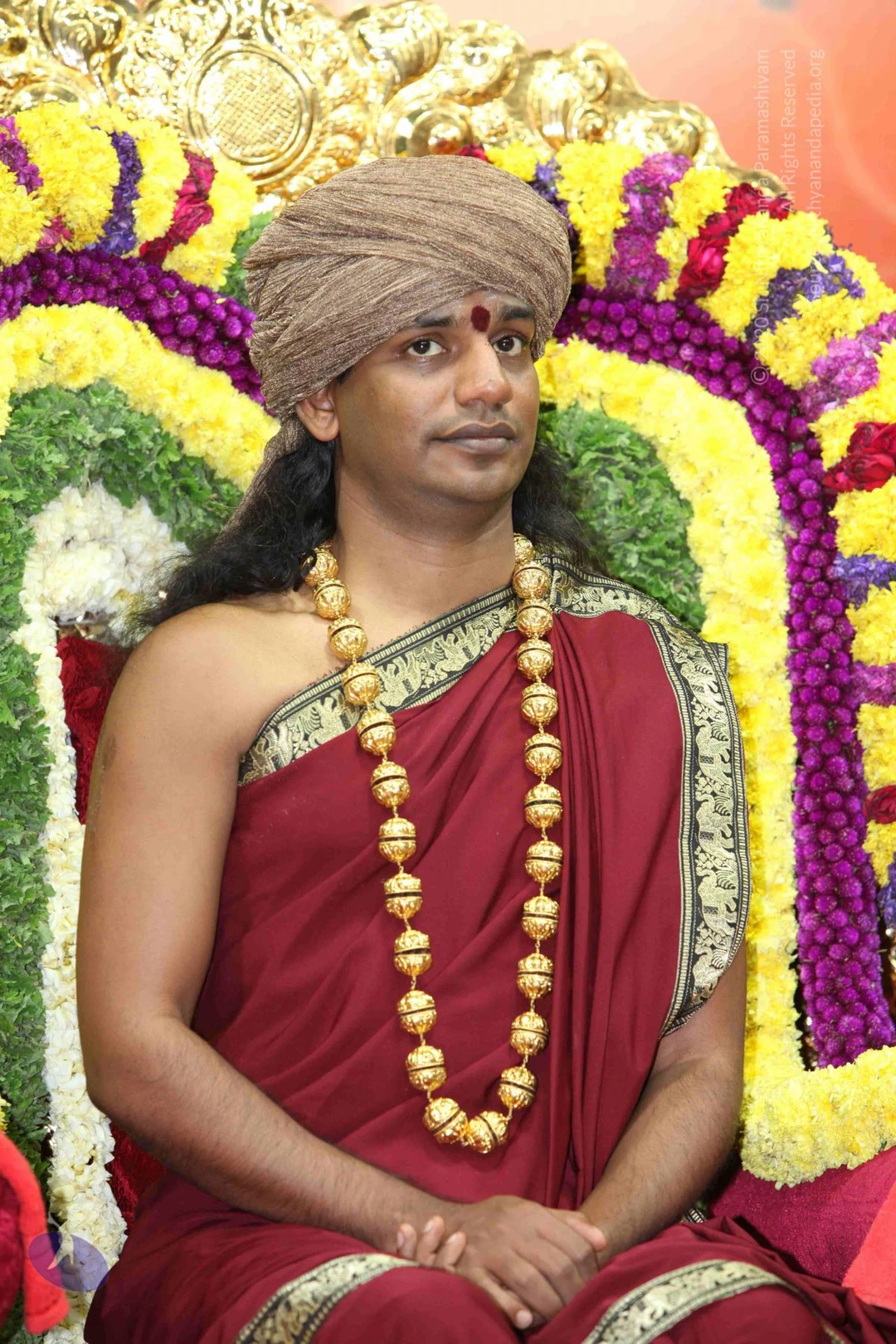
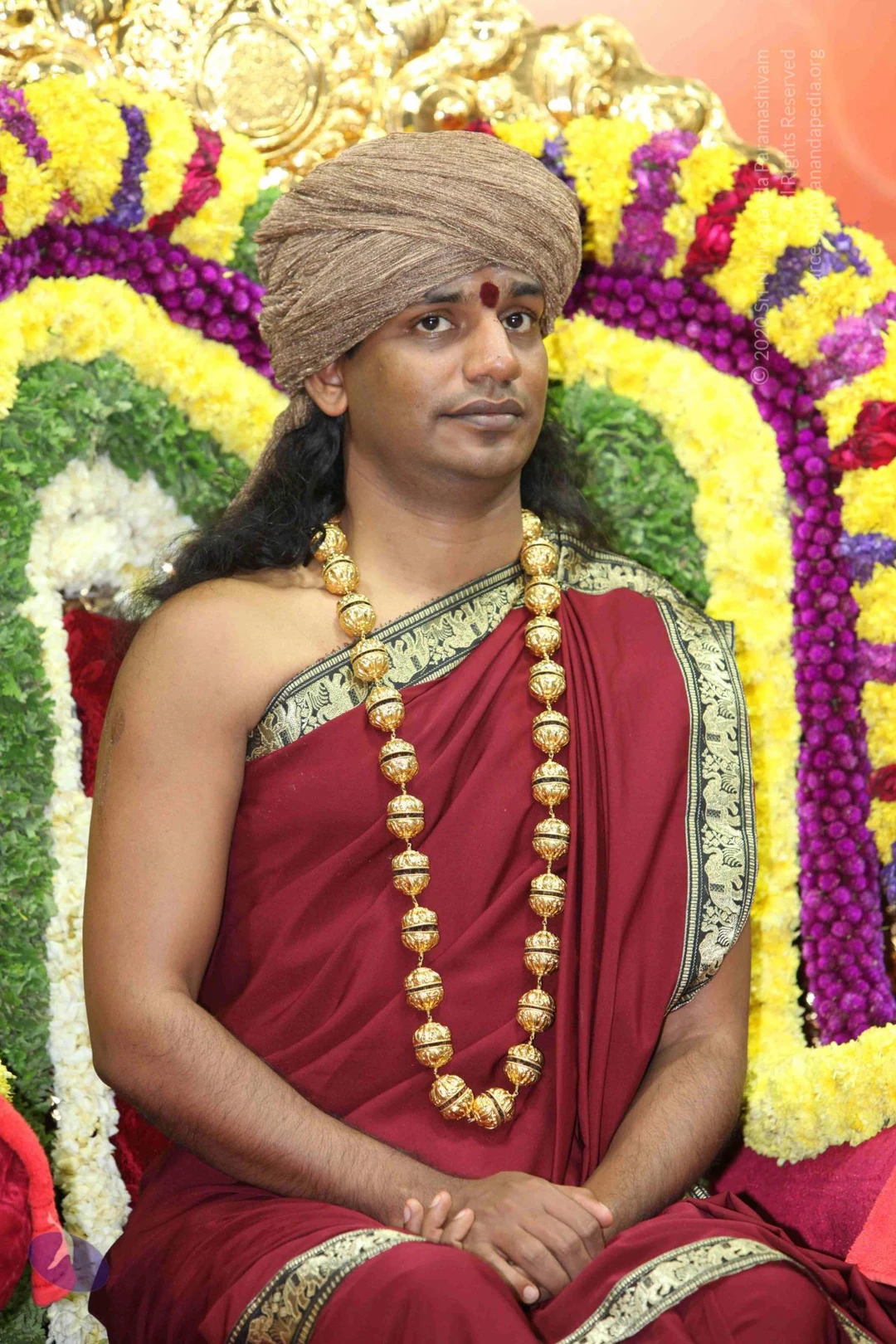
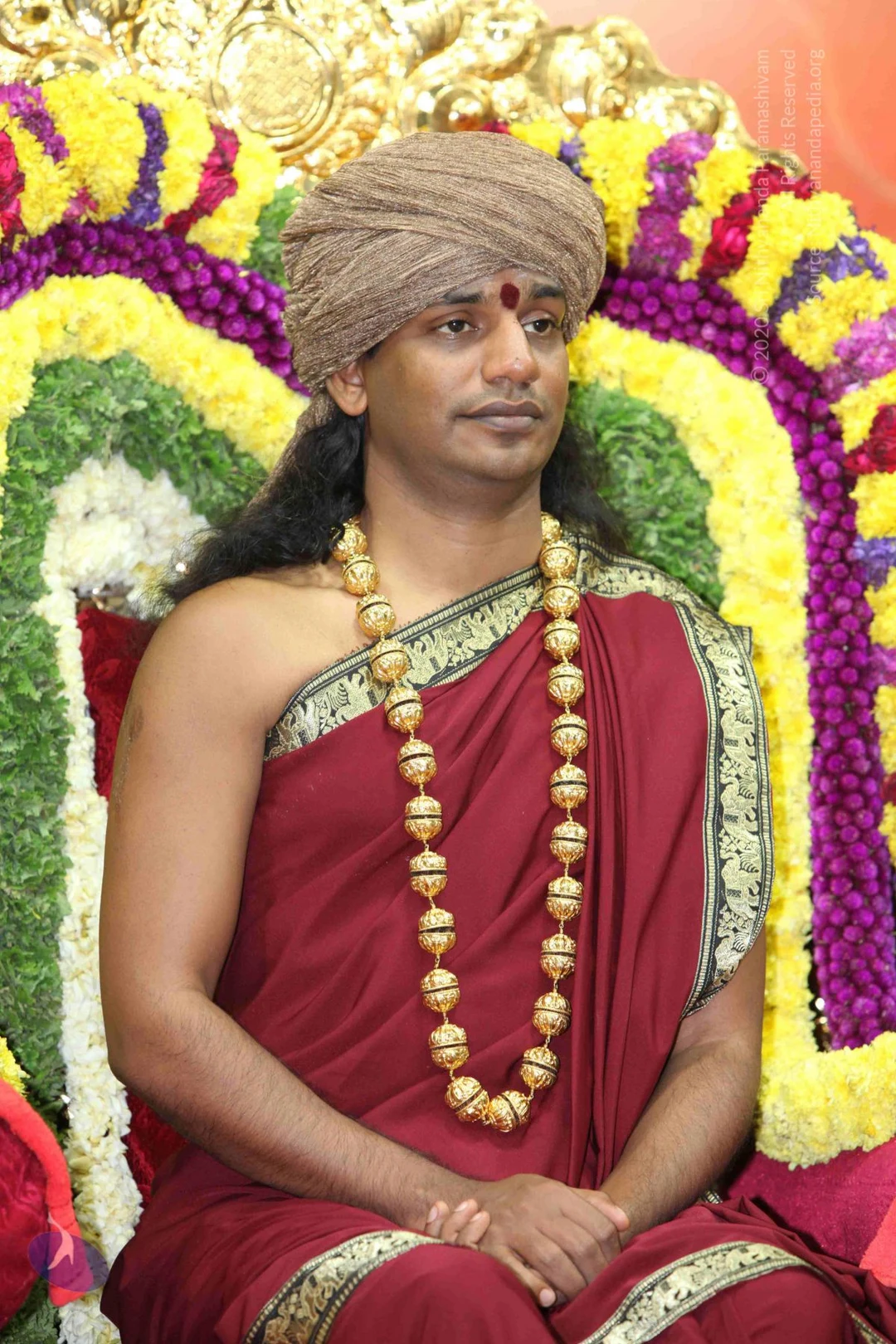
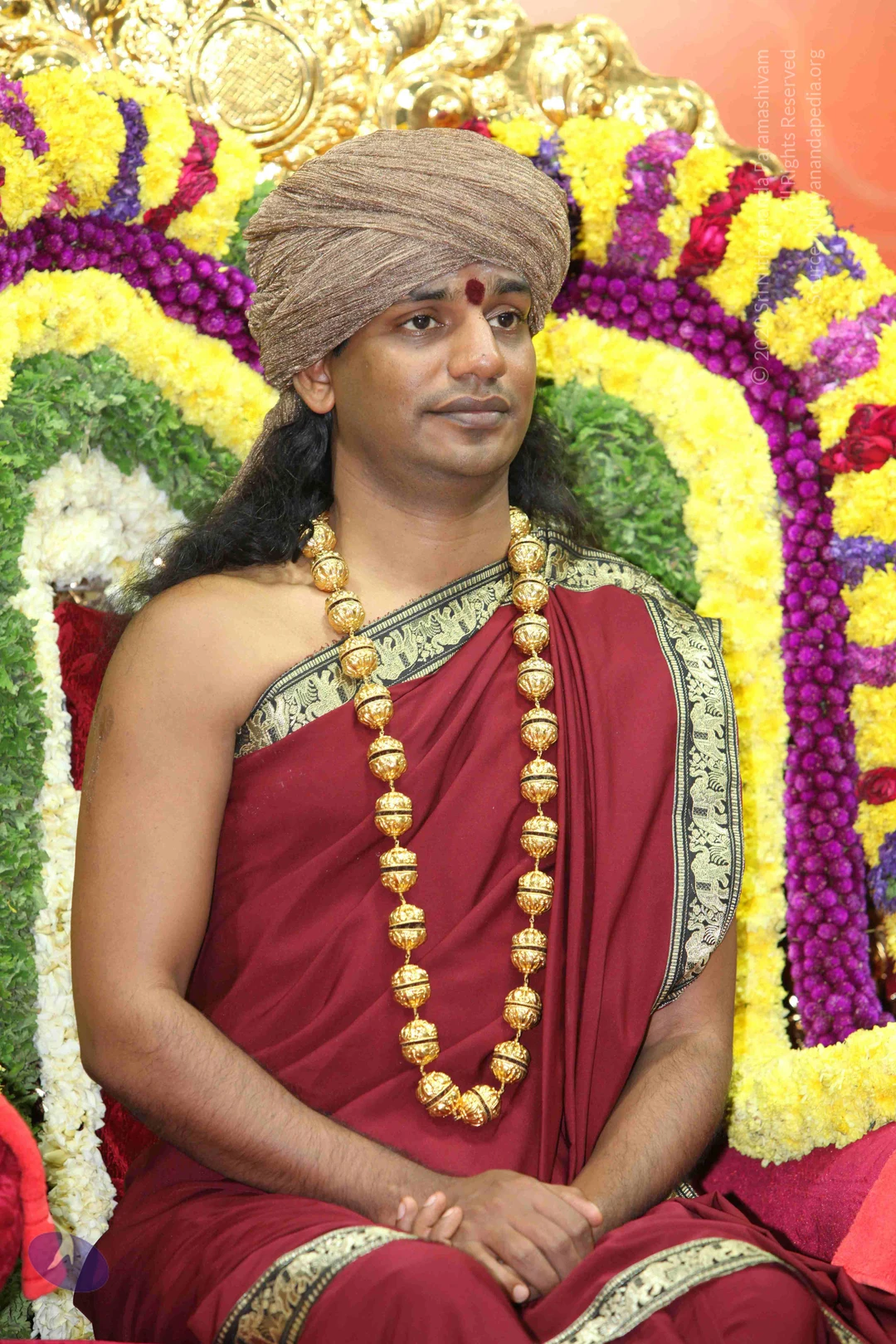
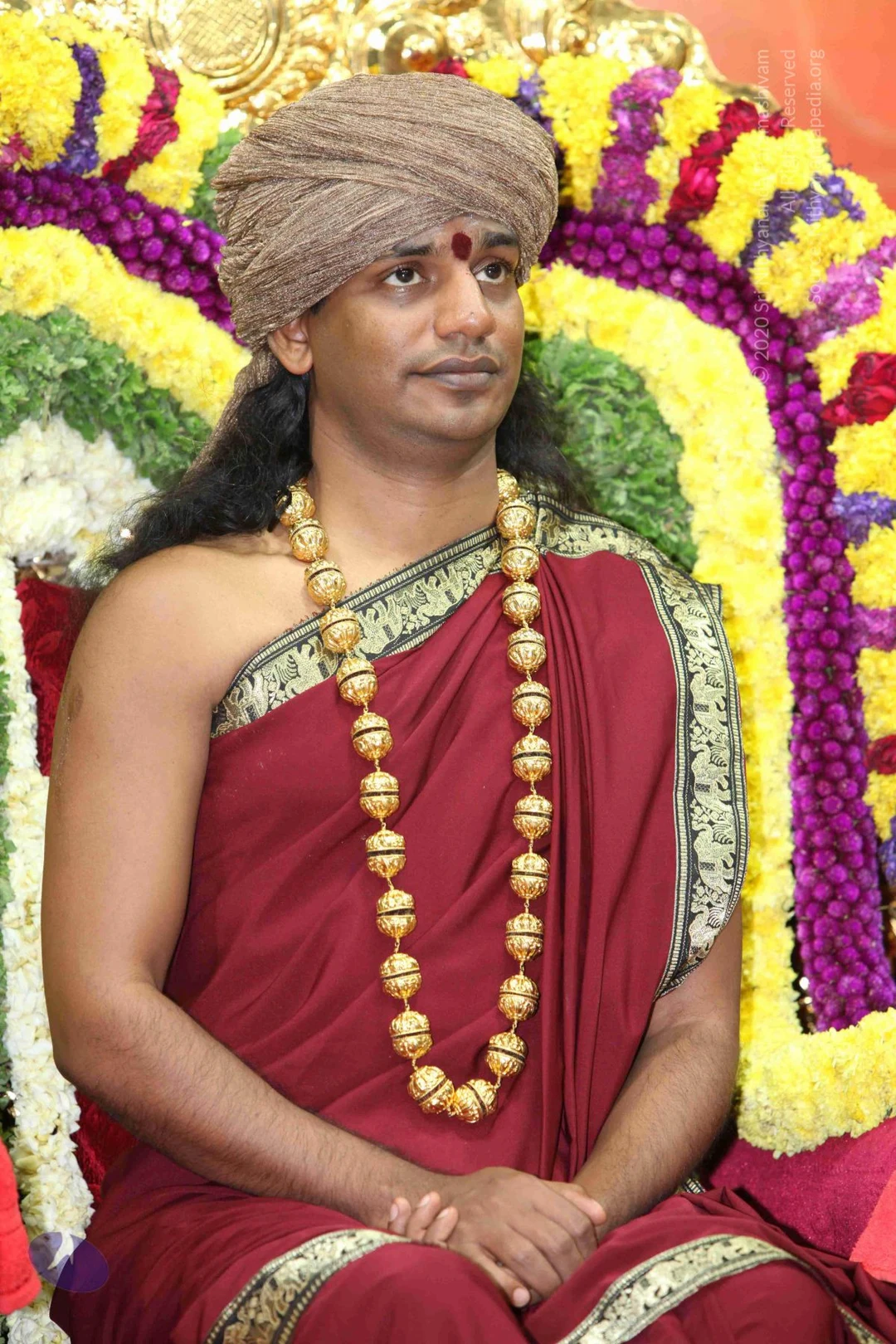
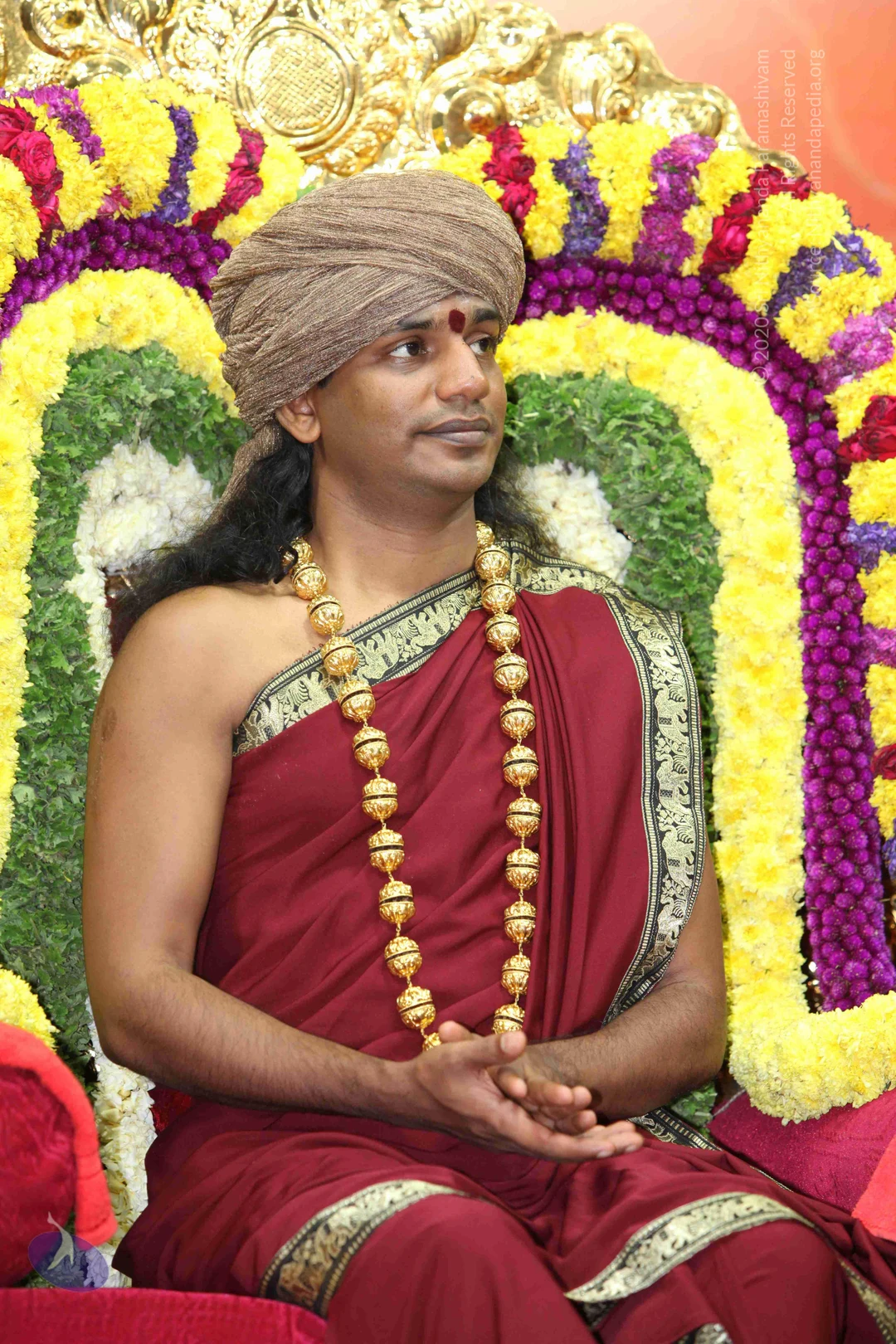
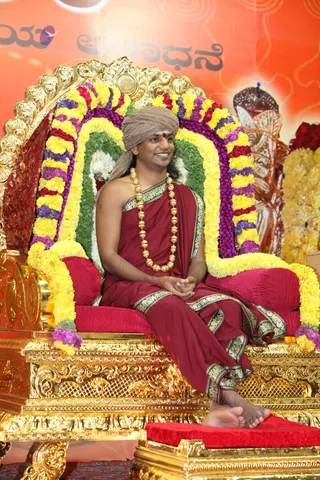
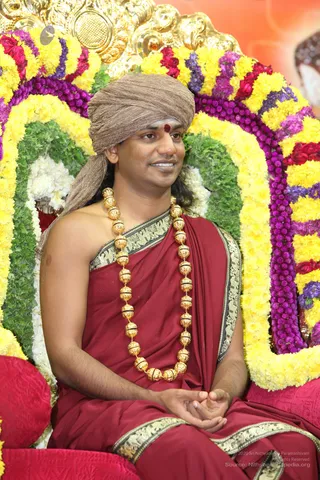
Supreme Pontiff of Hinduism HDH Bhagavan Sri Nithyananda Paramashivam

Dated photos
926
Source pages
1
Media
2
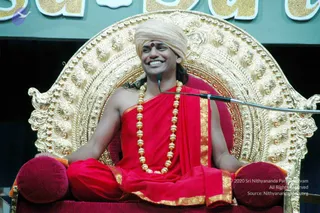
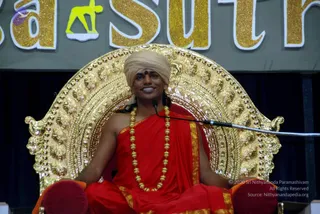
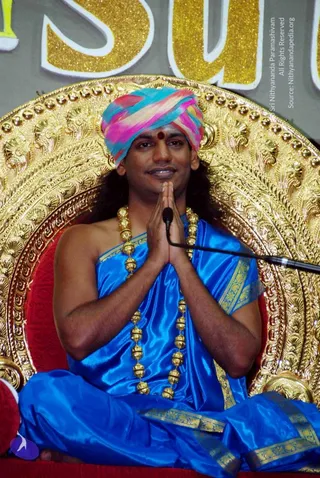
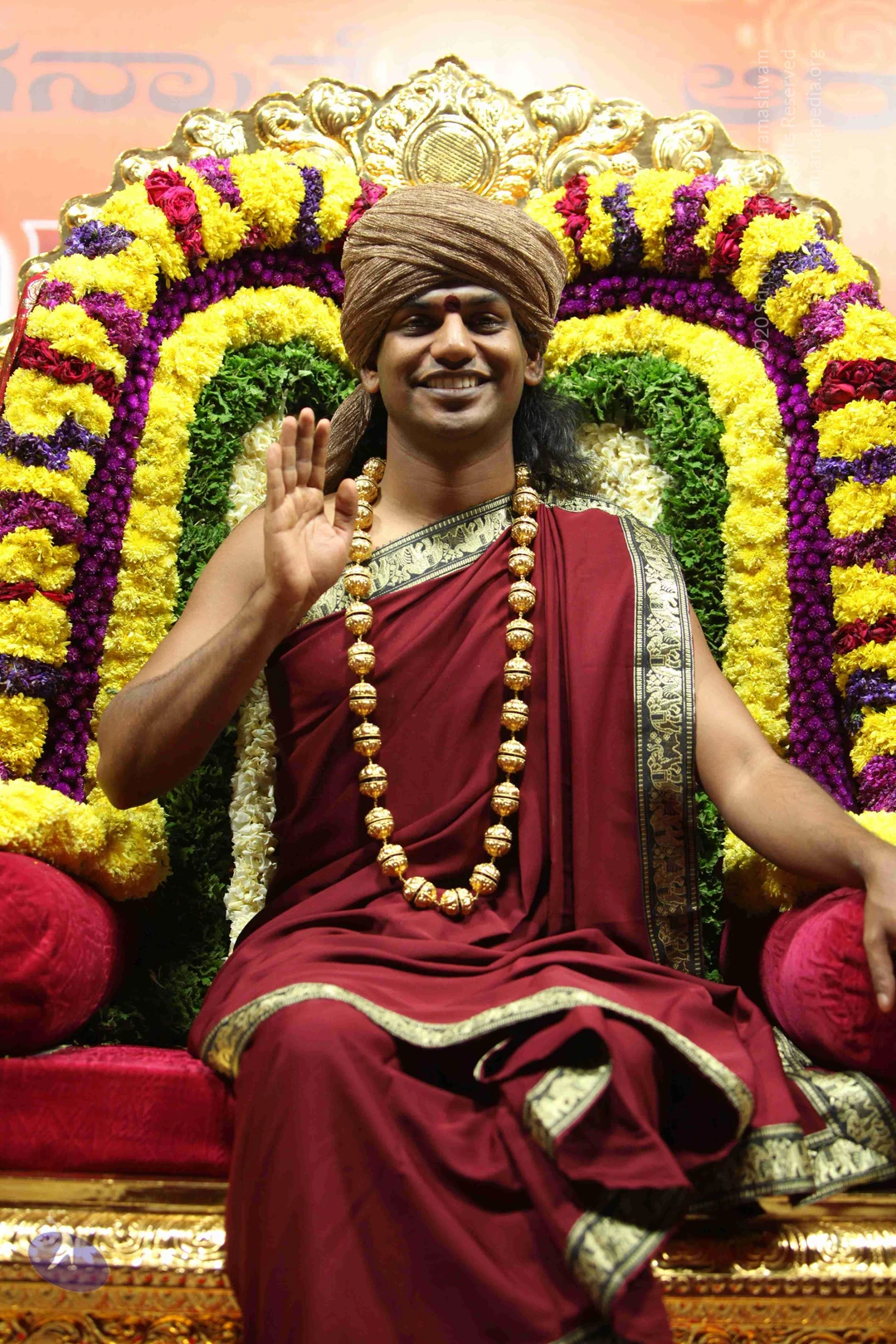
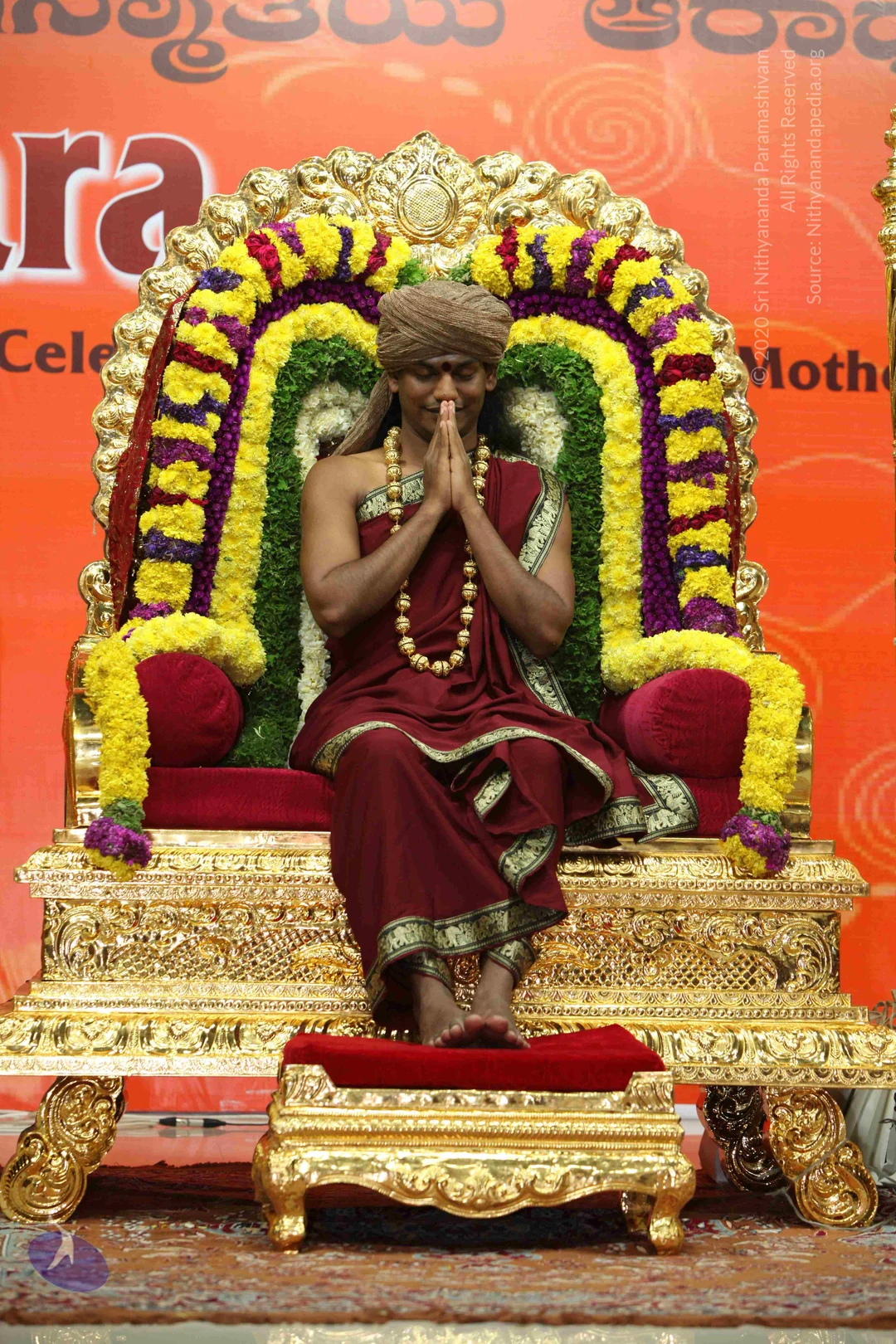
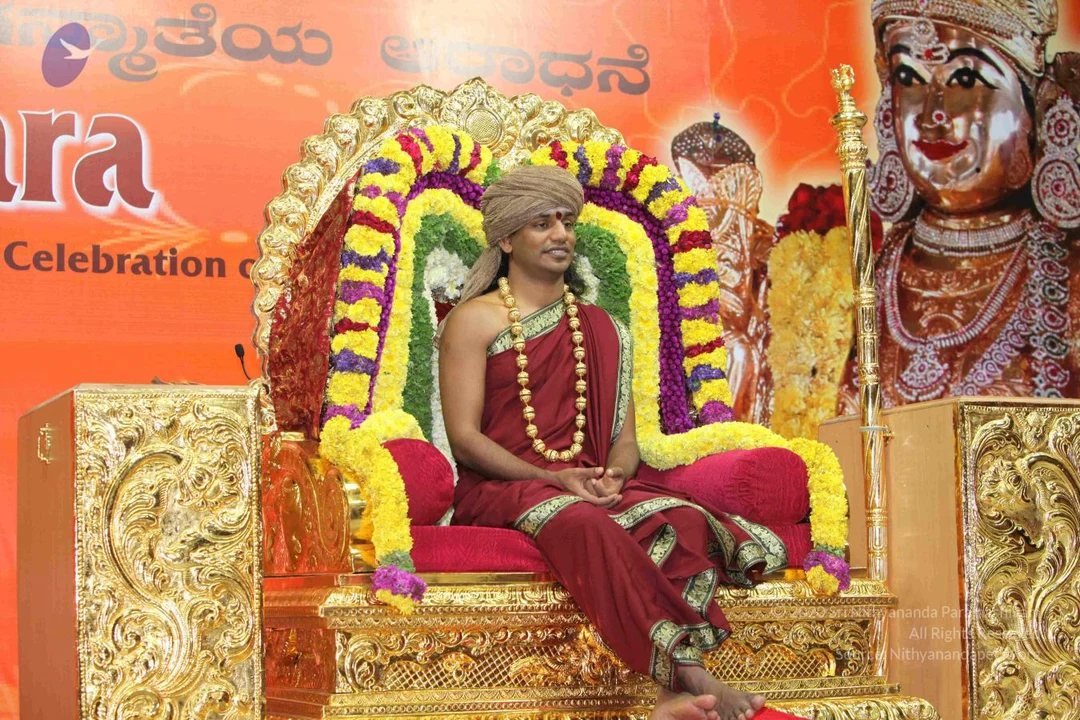
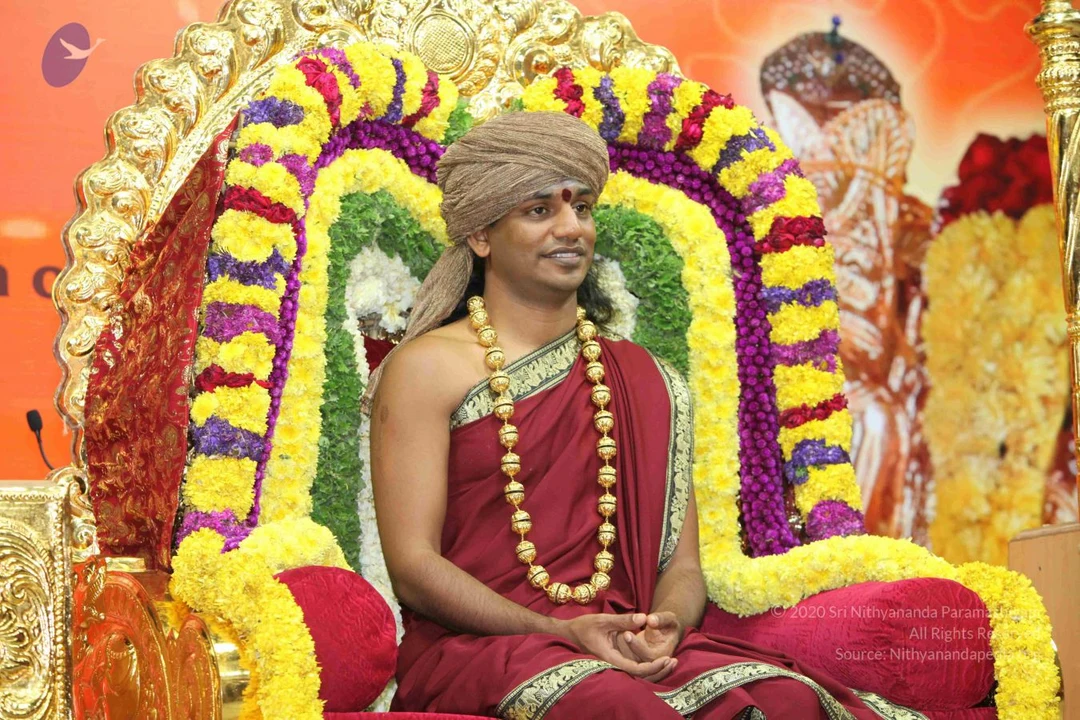
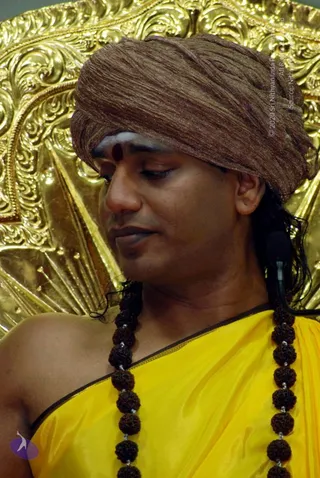
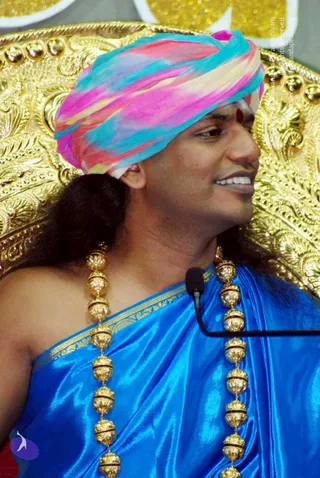
A smiling man in a cream turban with a red bindi sits cross-legged on an ornate gold throne with carved scrollwork and red velvet cushions. He wears a red shawl with gold border over a red dhoti-style garment, and a long gold bead necklace. A microphone on a stand is positioned beside him. Behind him is a green panel with large gold lettering.A seated man sits cross-legged on an ornate gold throne with a red cushion, pressing his palms together in anjali namaskar. He wears a multicoloured pink, blue and cream turban, a royal blue silk garment with gold brocade borders, and a long gold bead necklace, with a red bindi on his forehead. A microphone on a stand sits beside him. Behind him a large gold lettering banner is partly visible.

October 11 2010

Original wiki page
Contents

Title

Supreme Pontiff of Hinduism HDH Bhagavan Sri Nithyananda Paramashivam

Narration

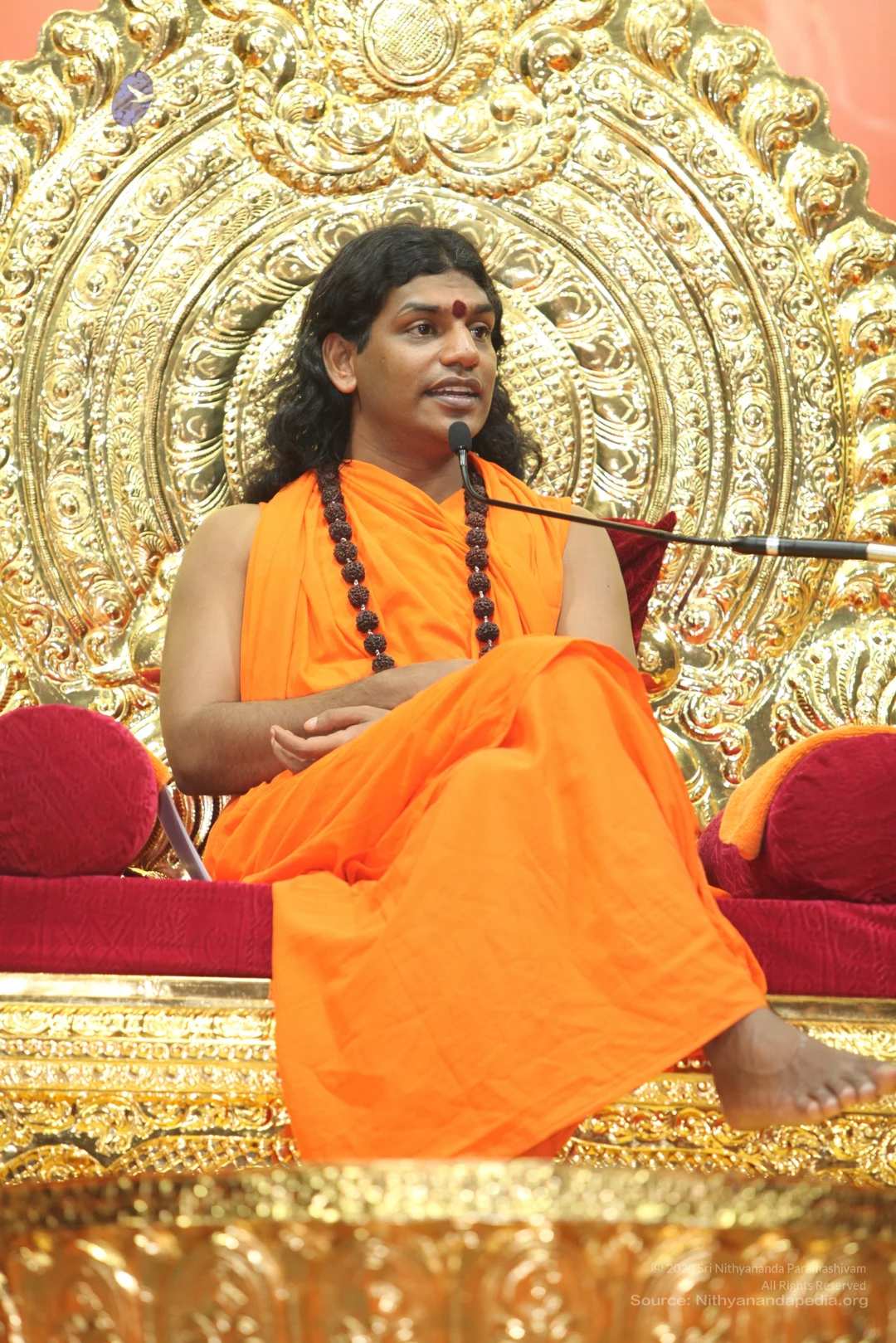
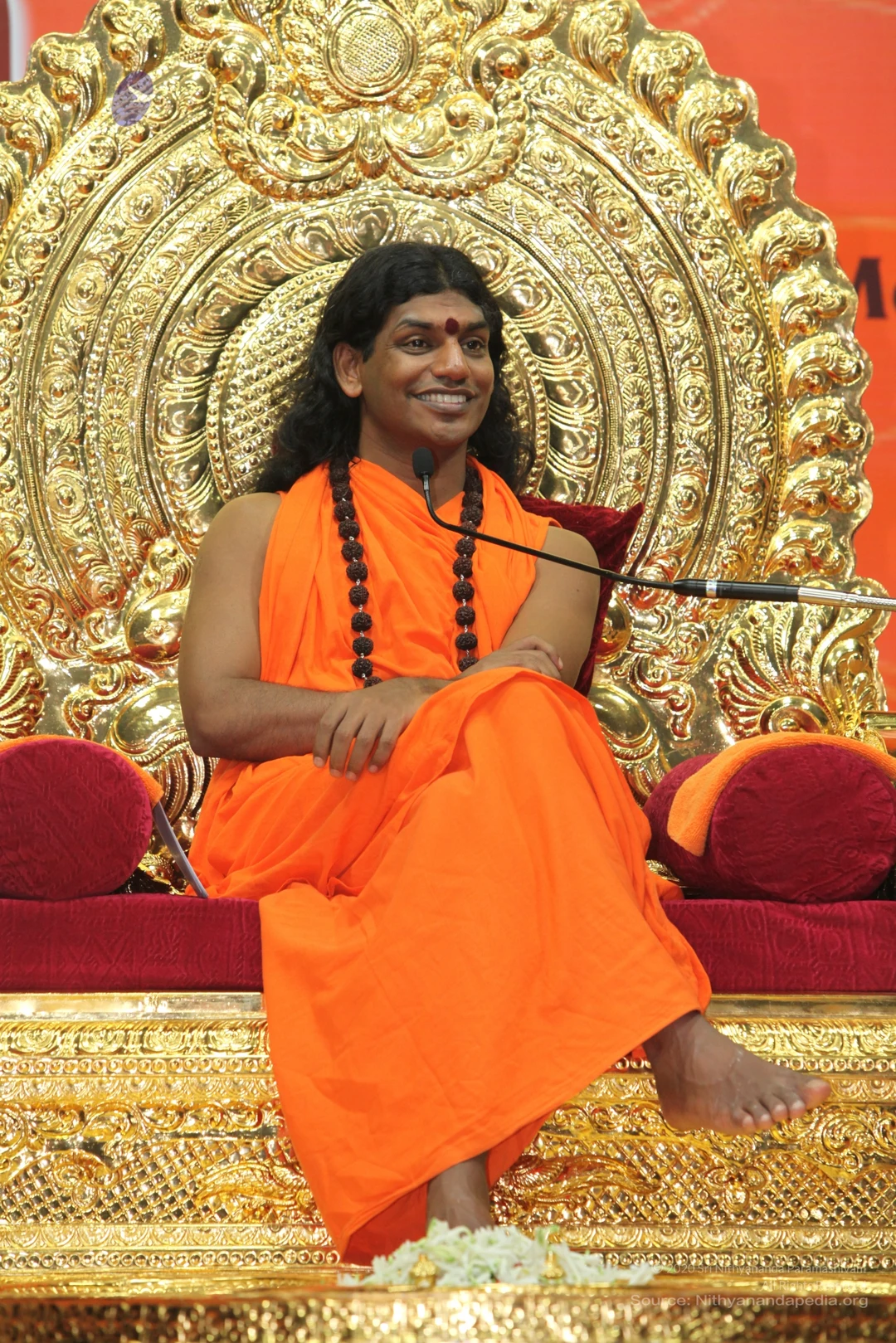
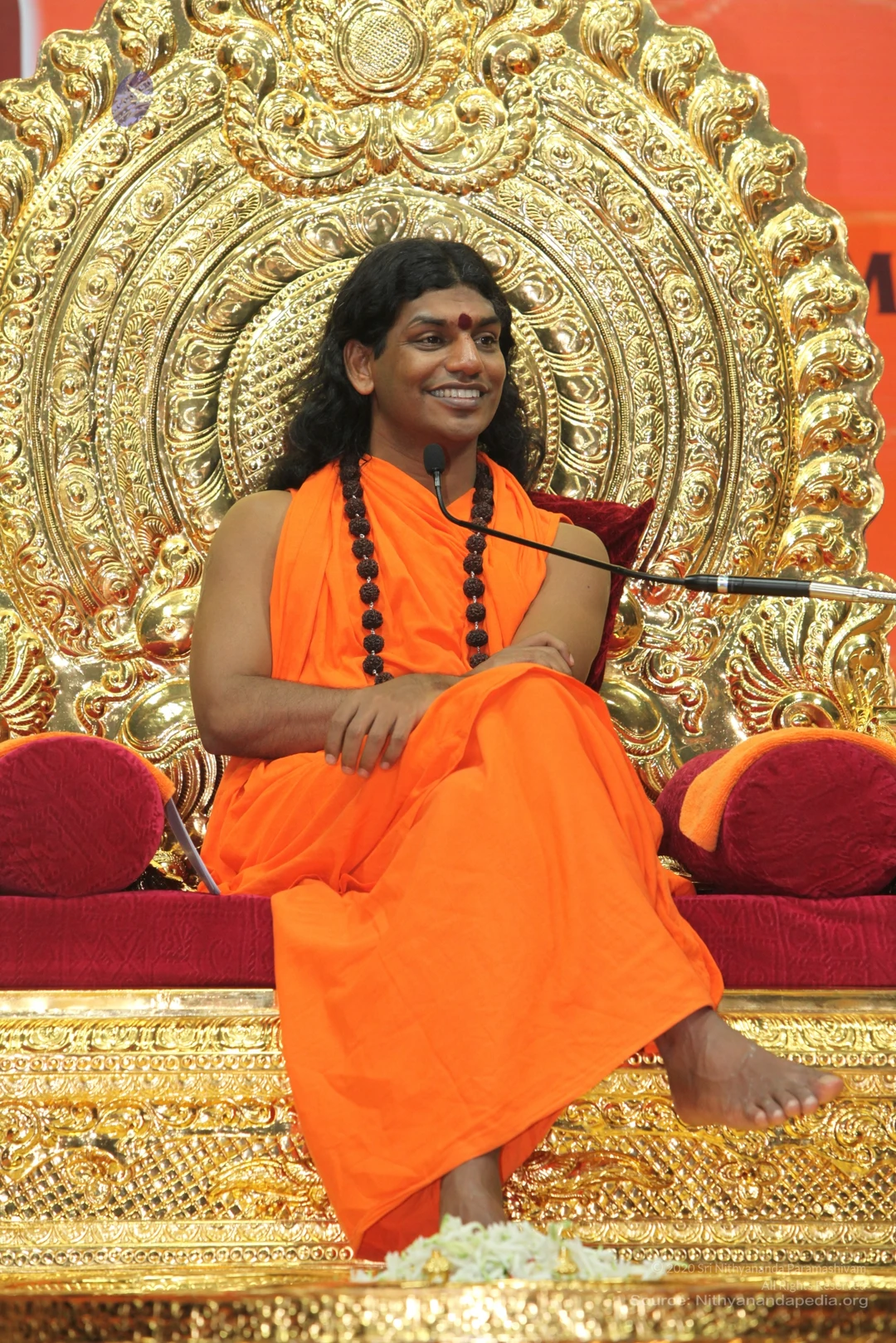
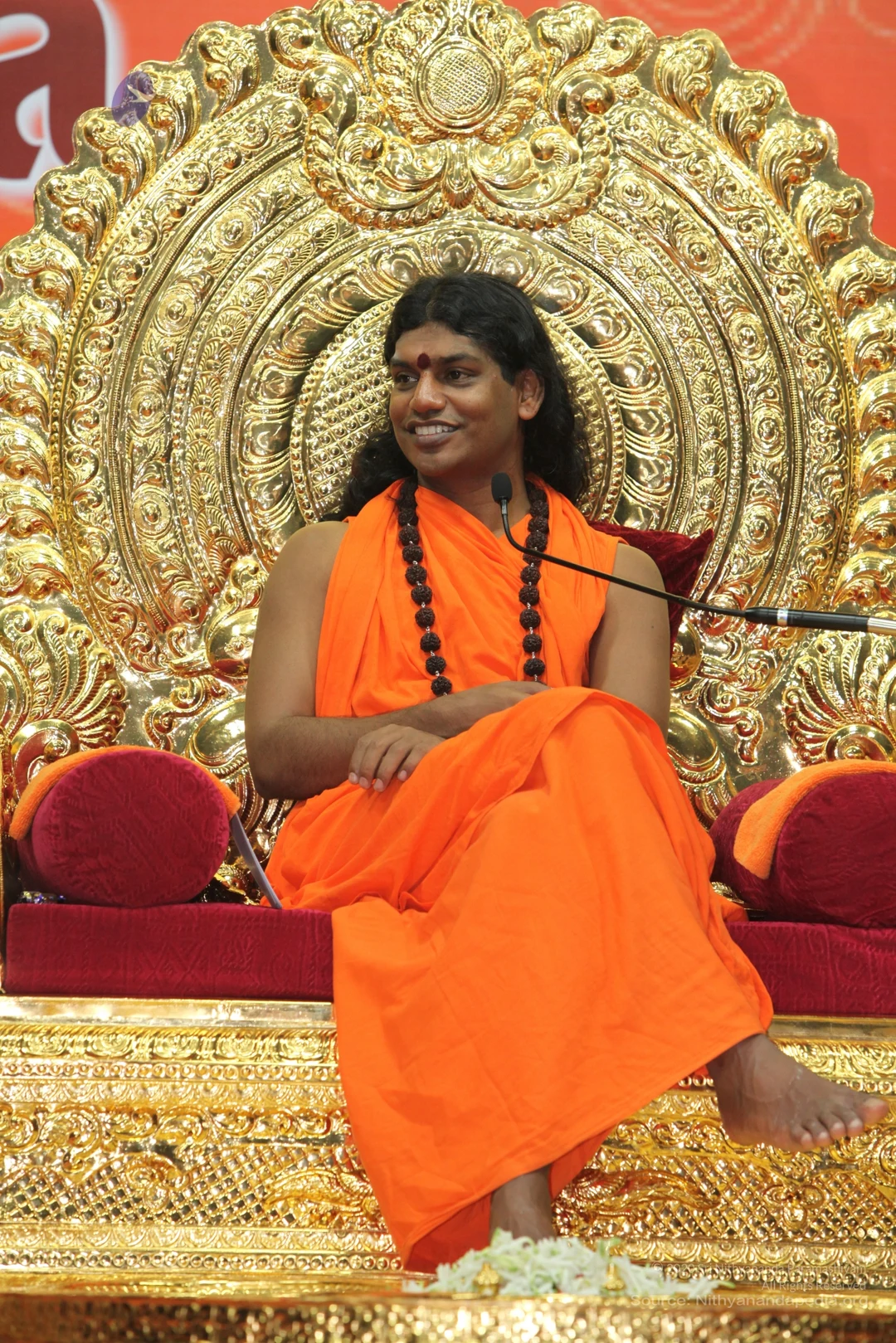
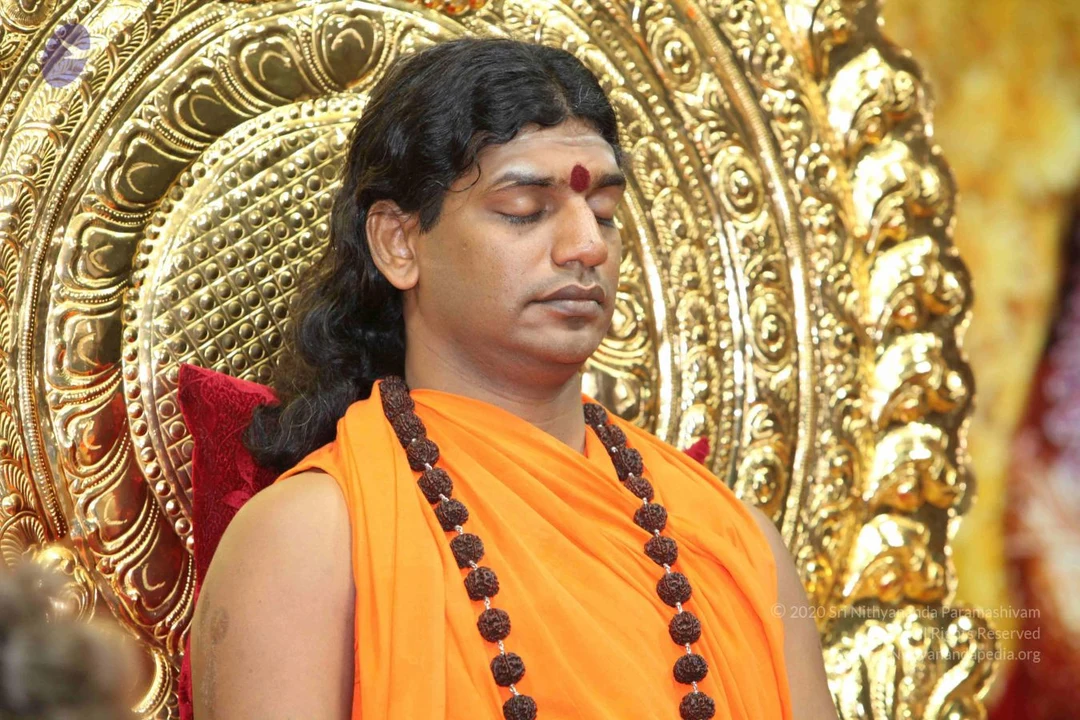
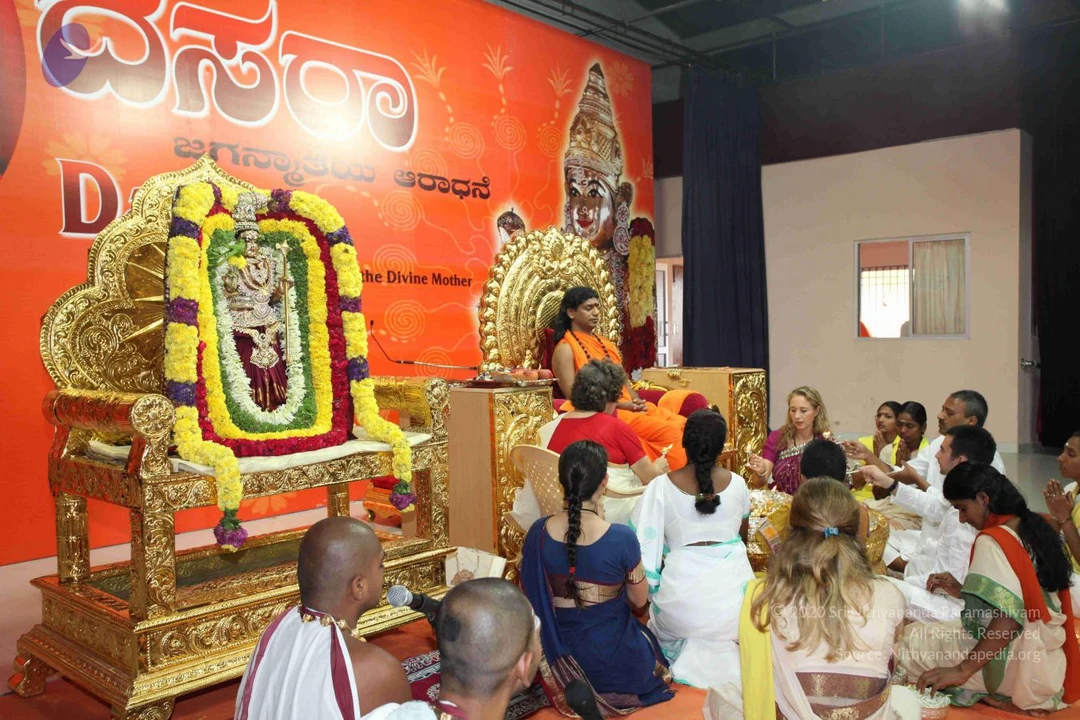
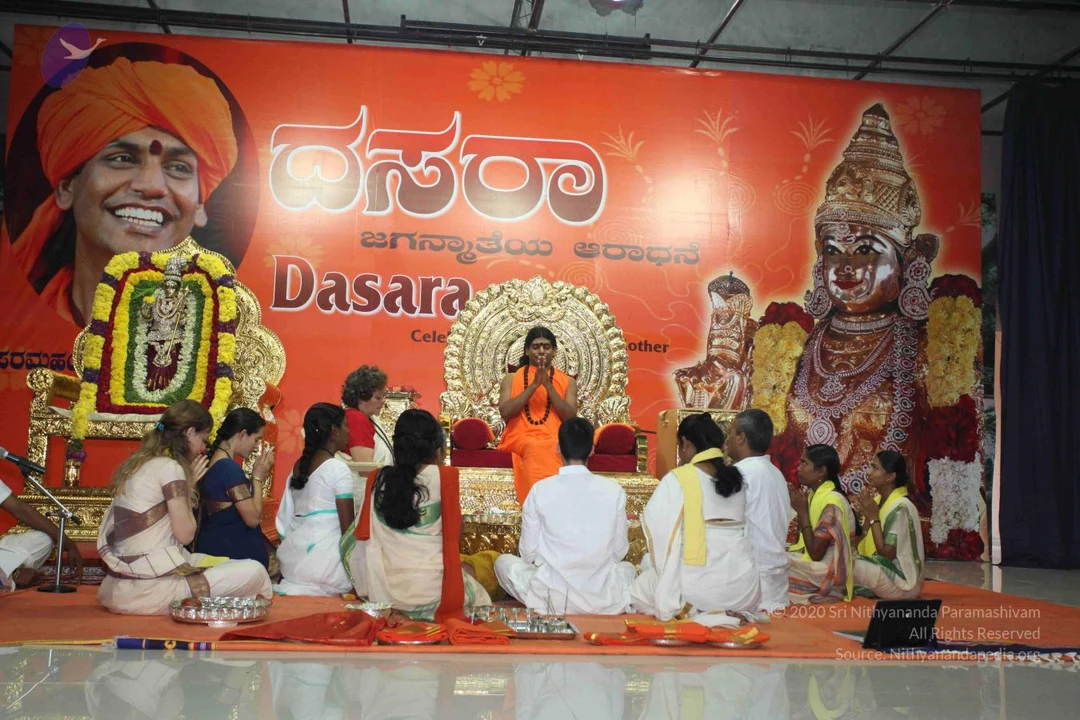
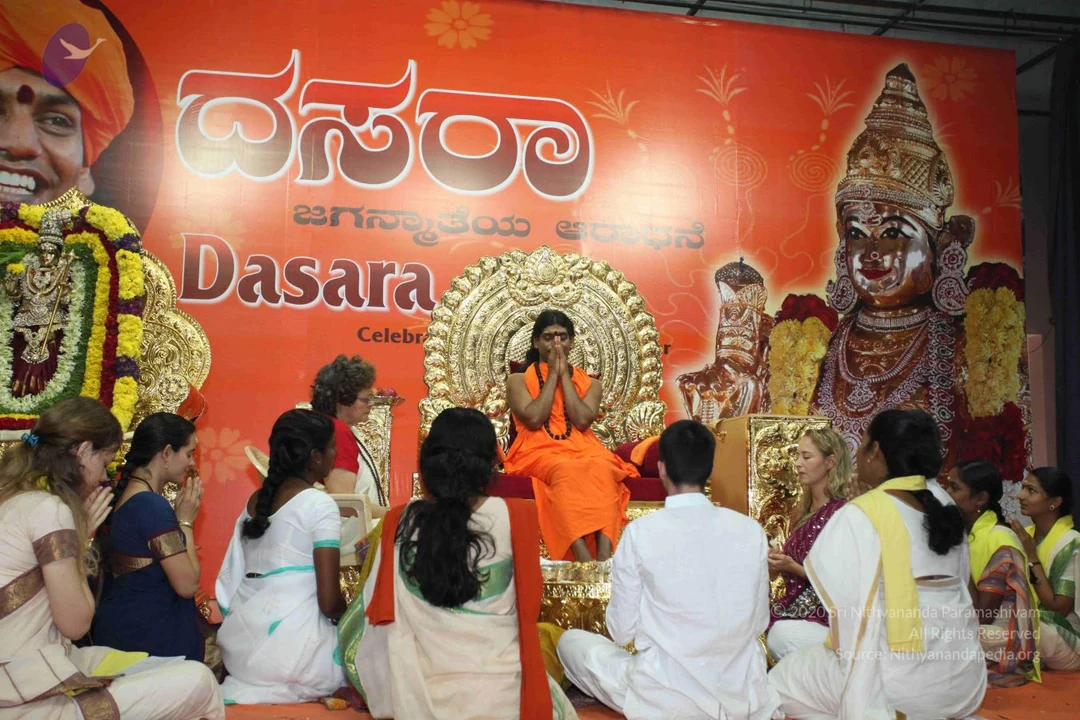
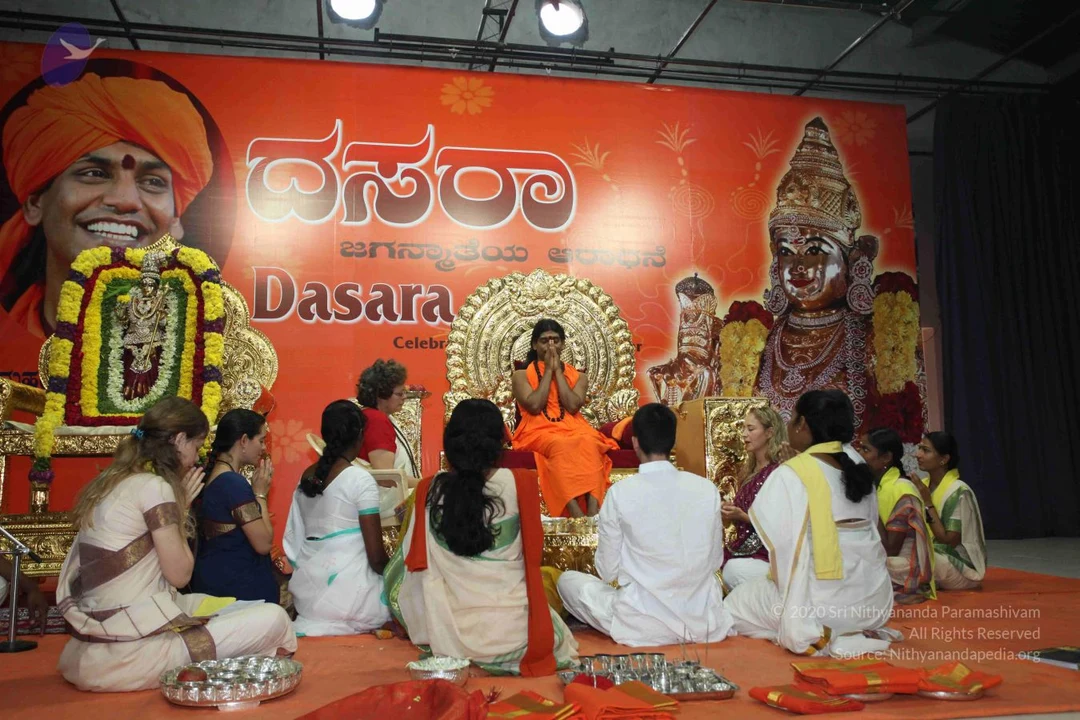
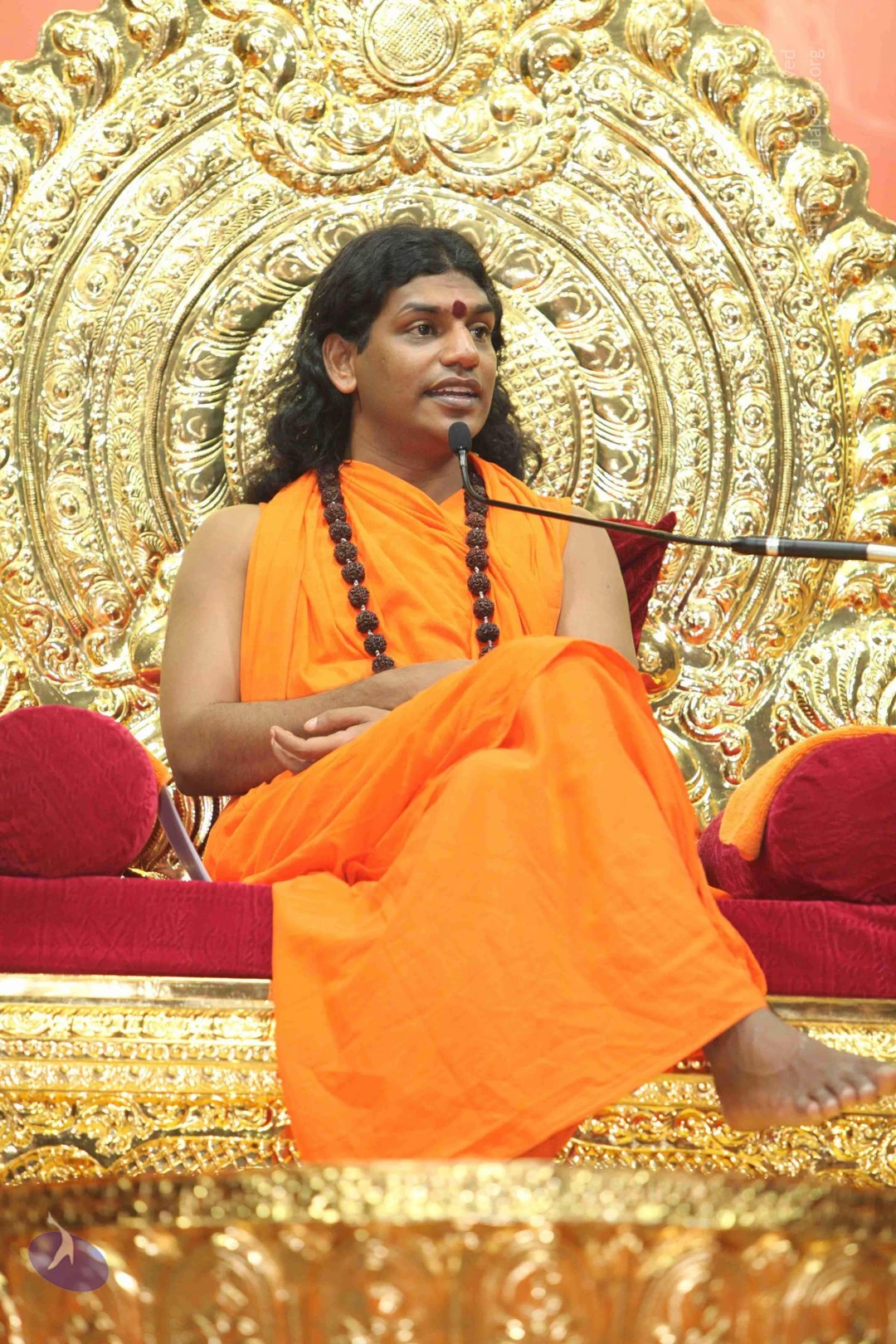
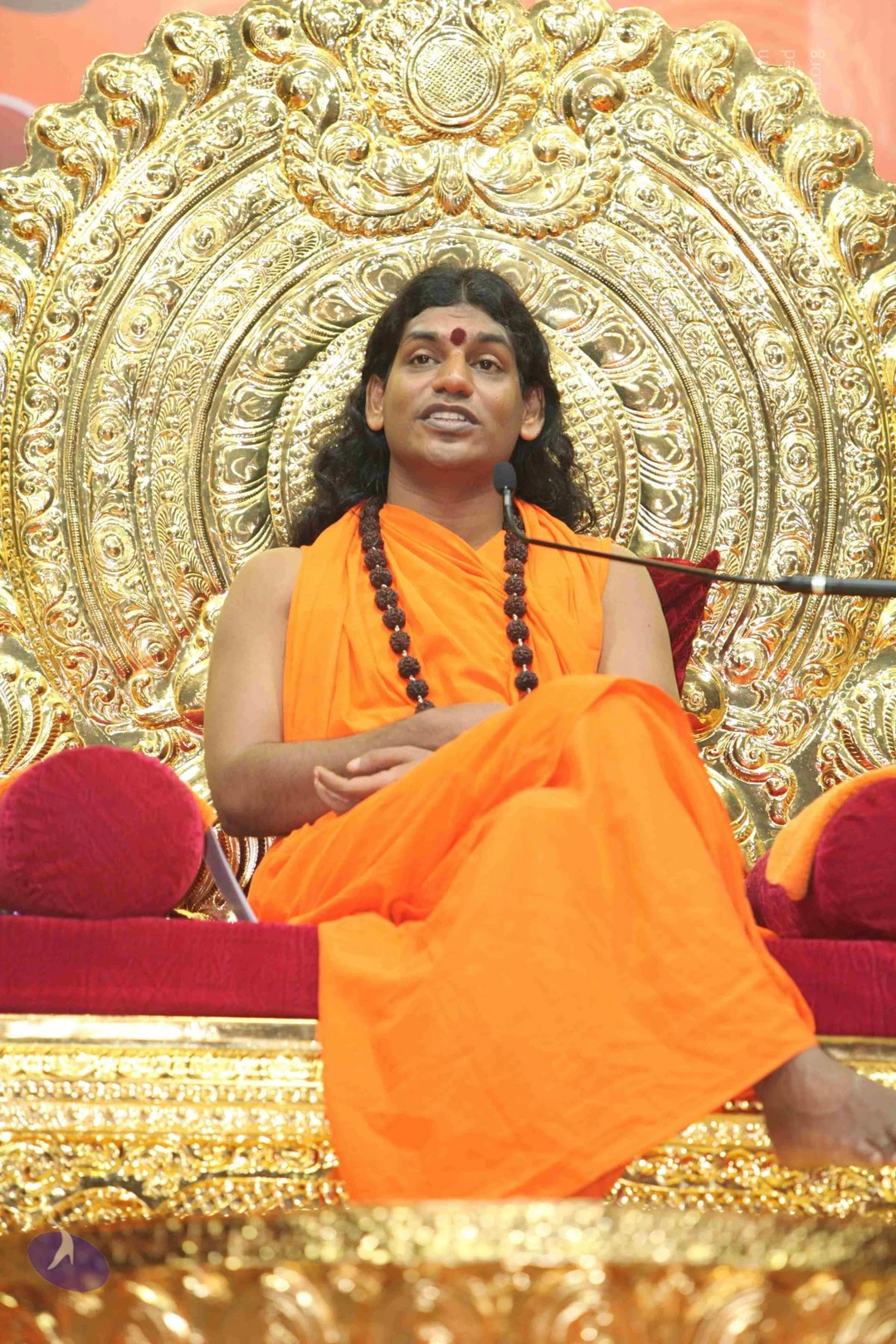
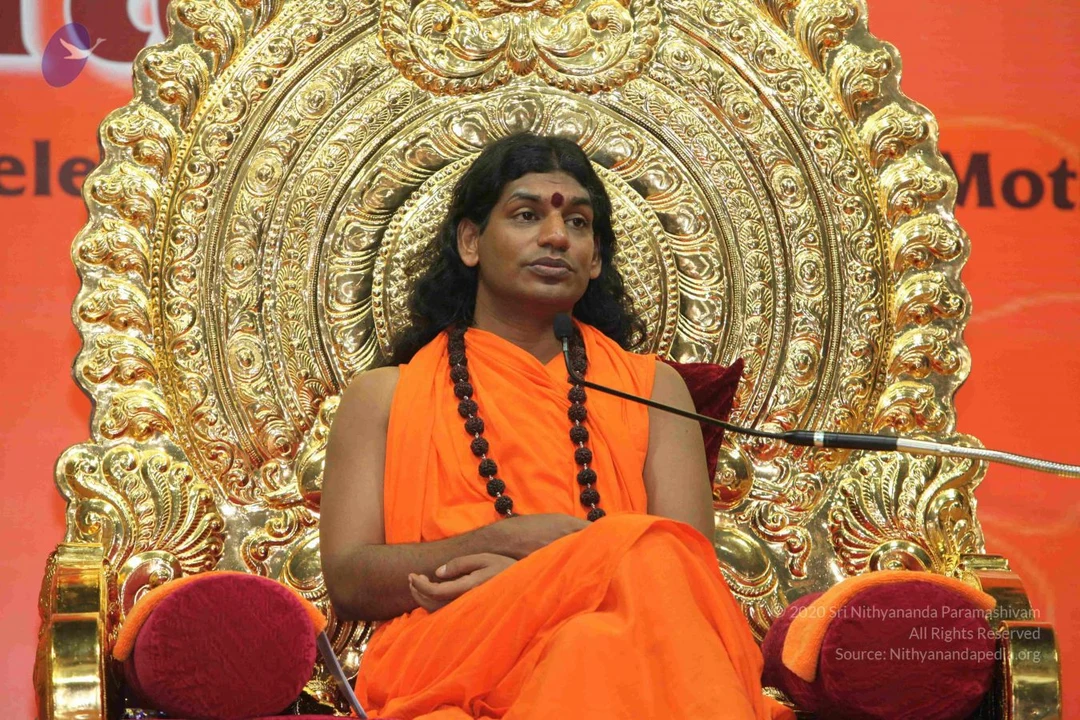
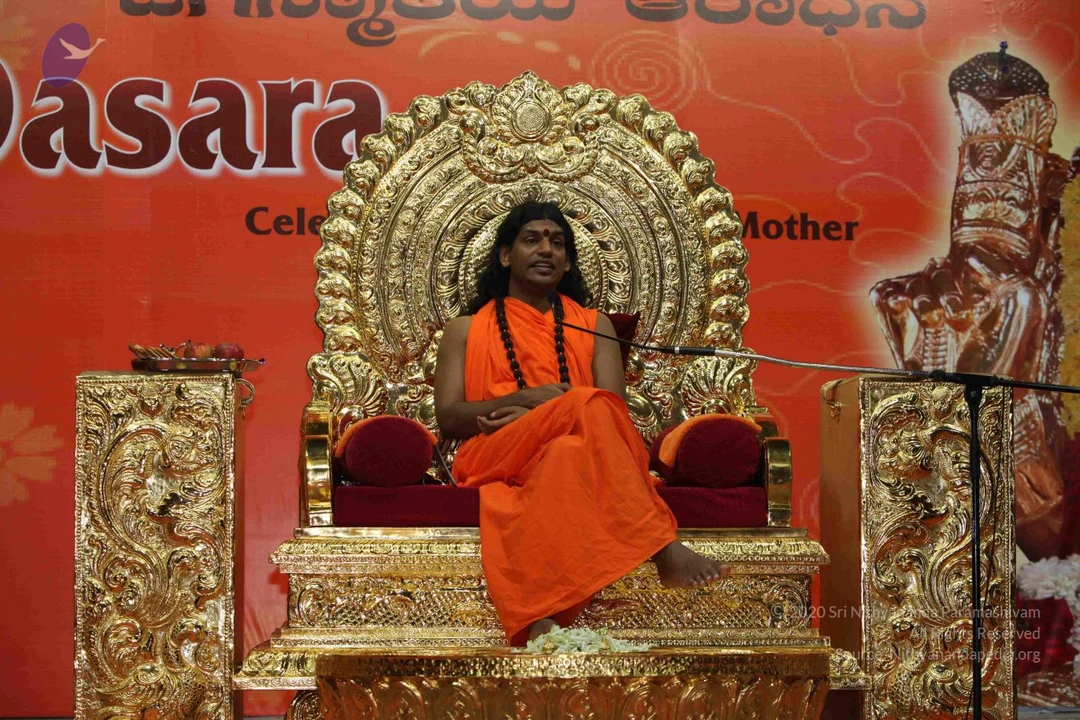
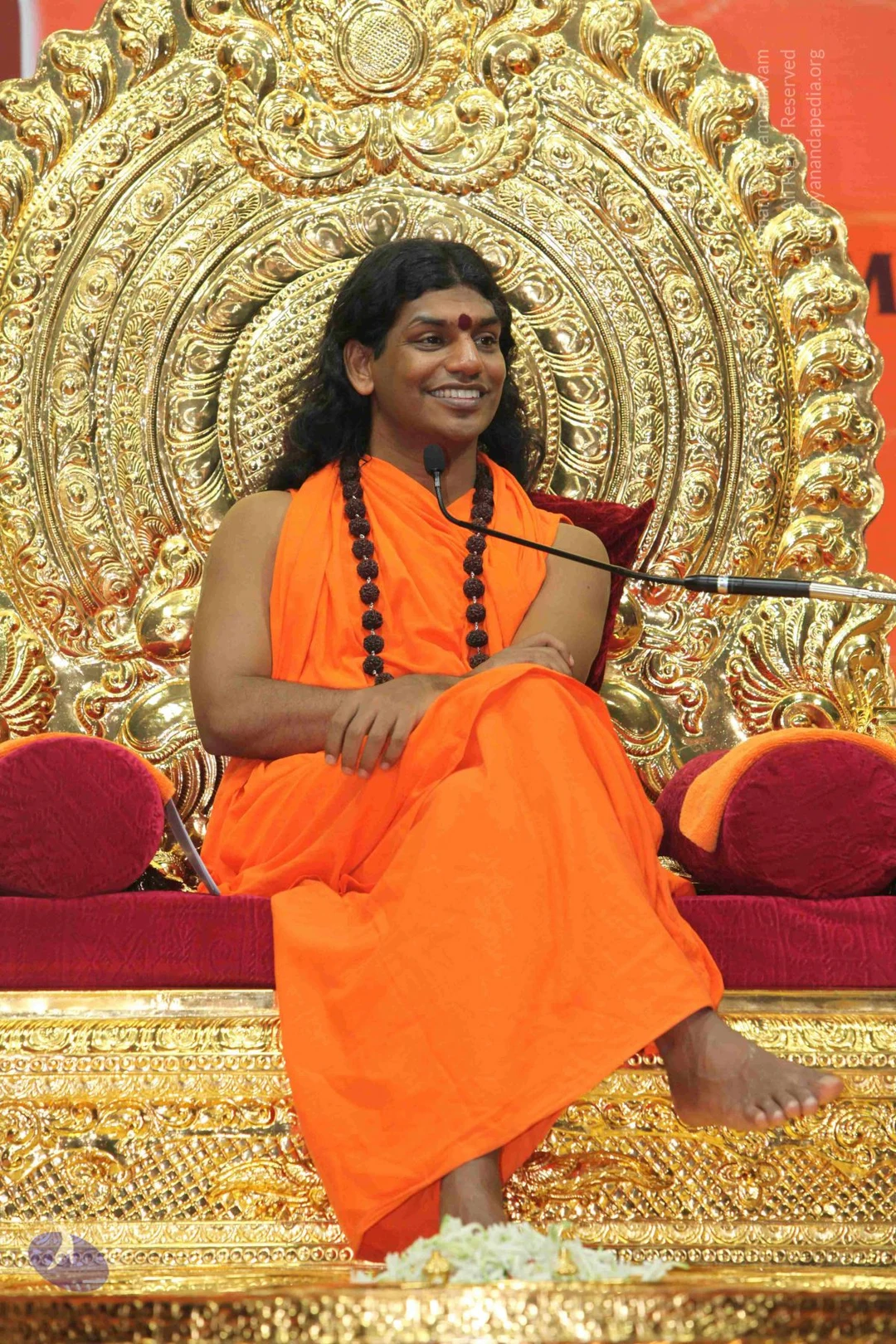
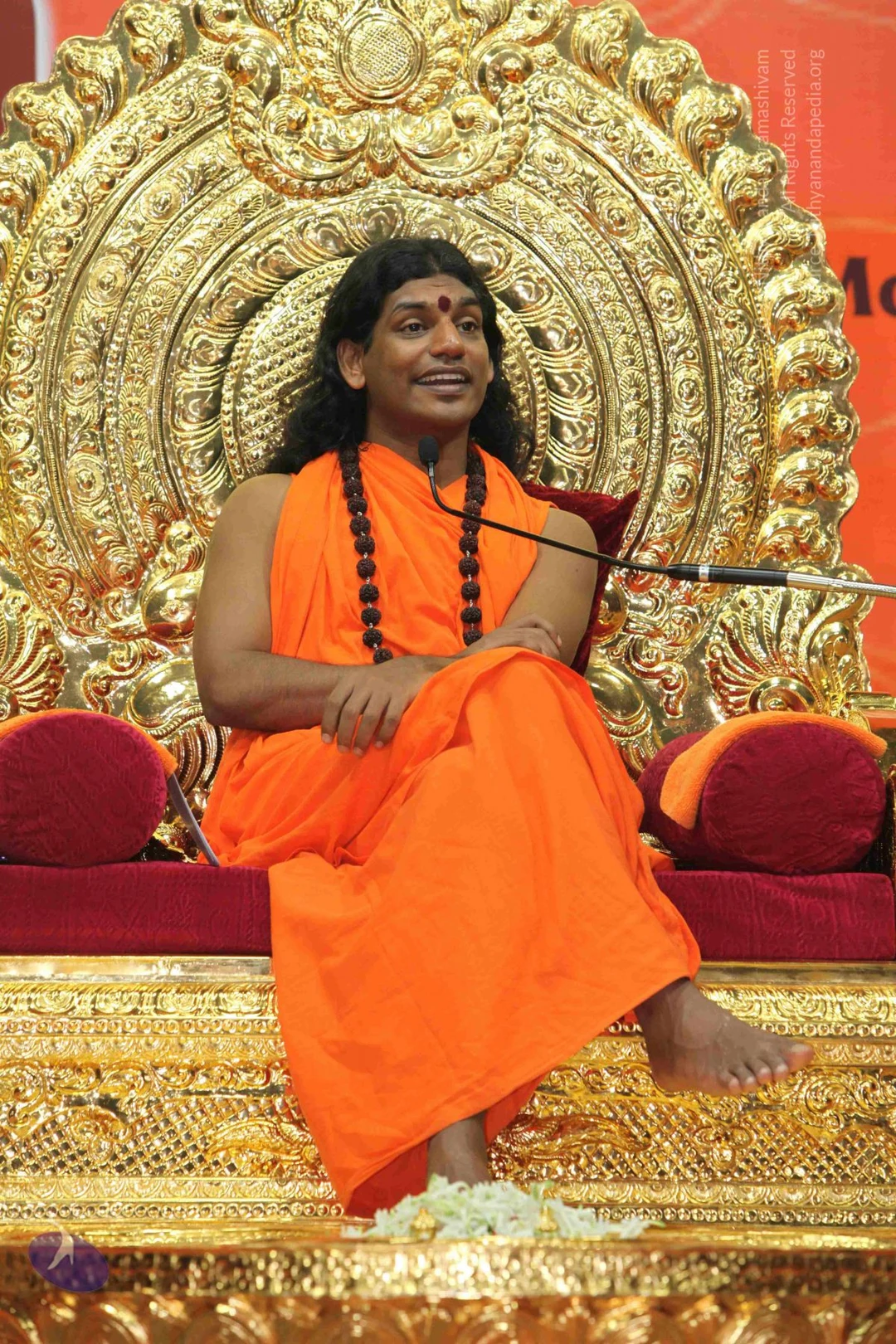
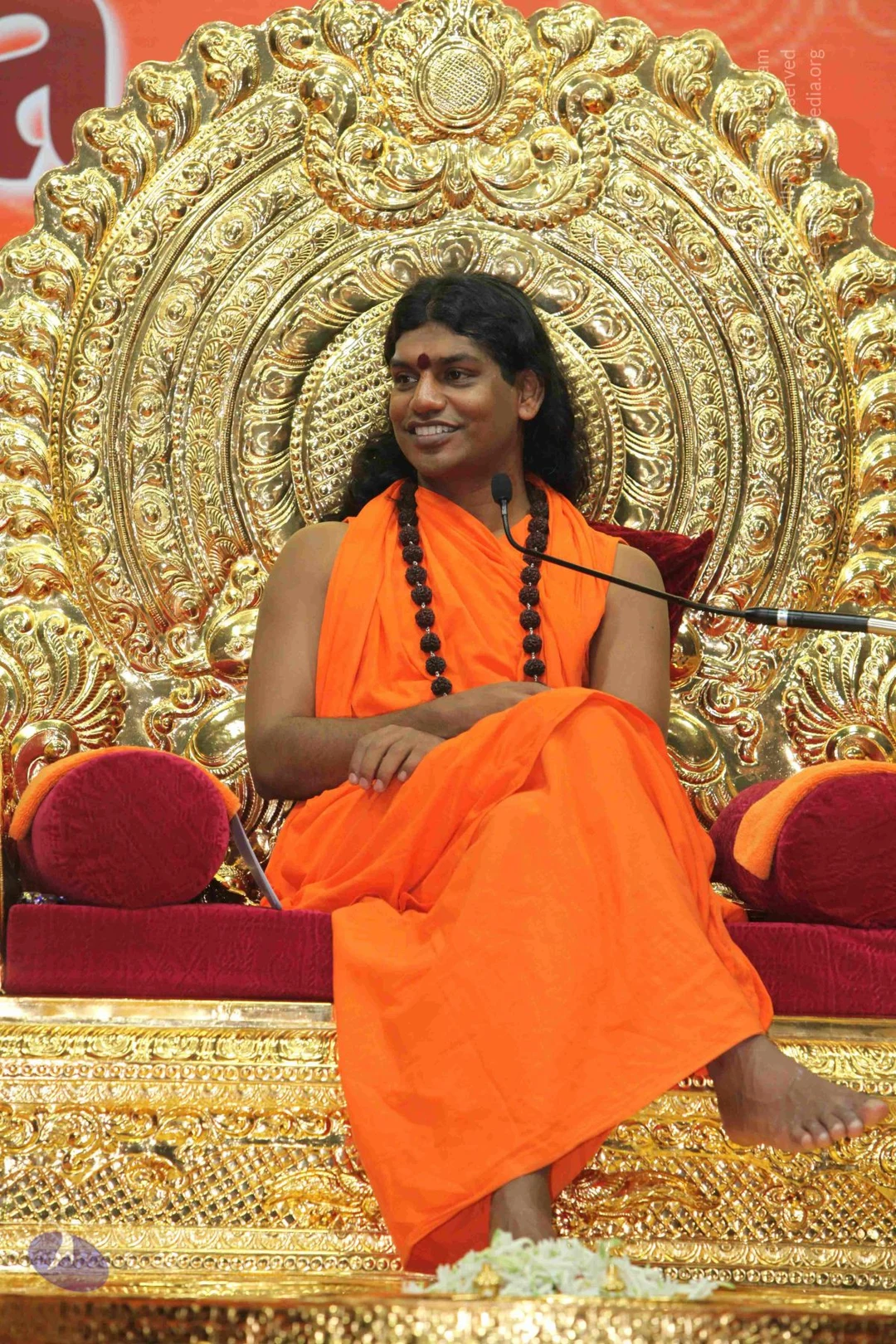
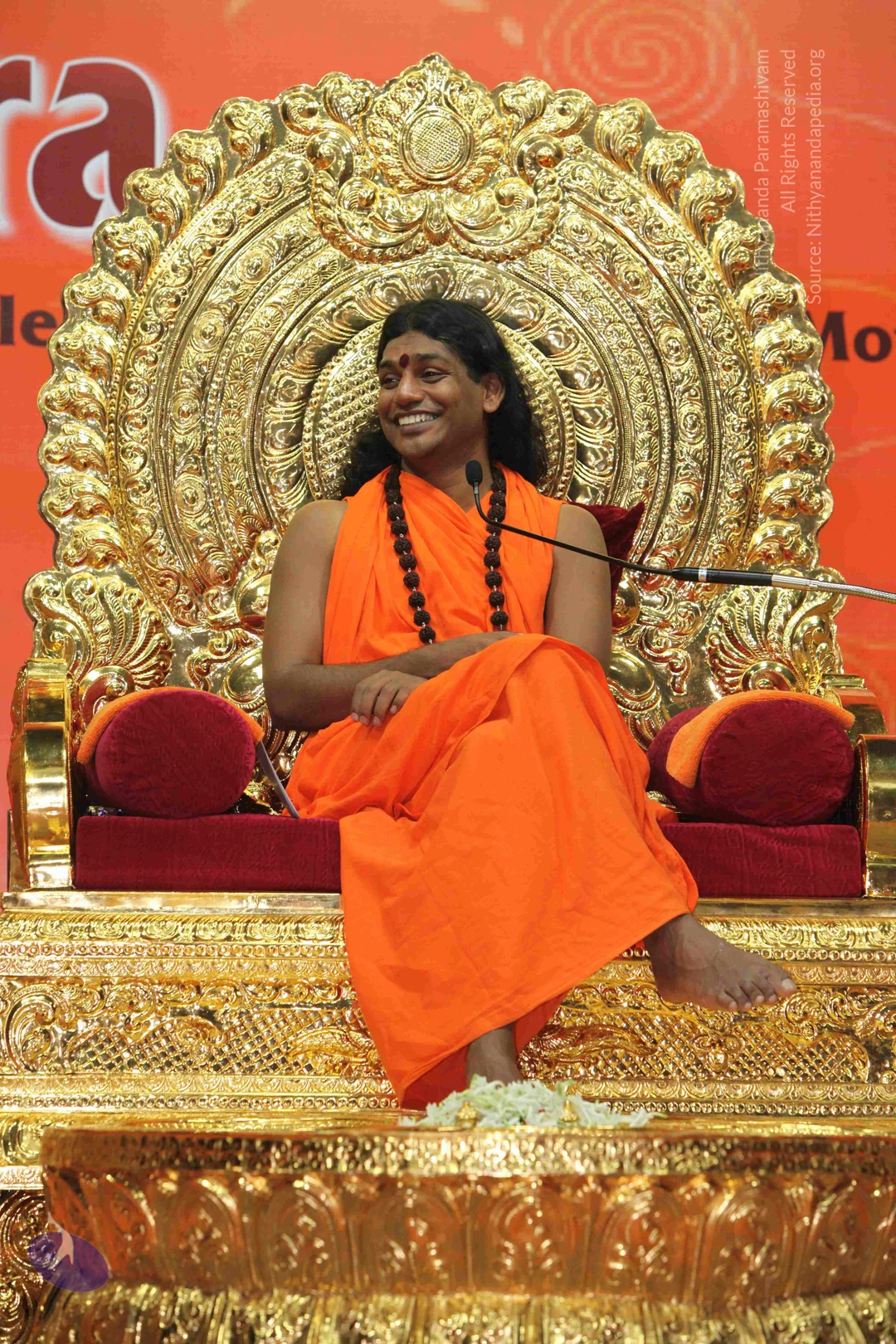
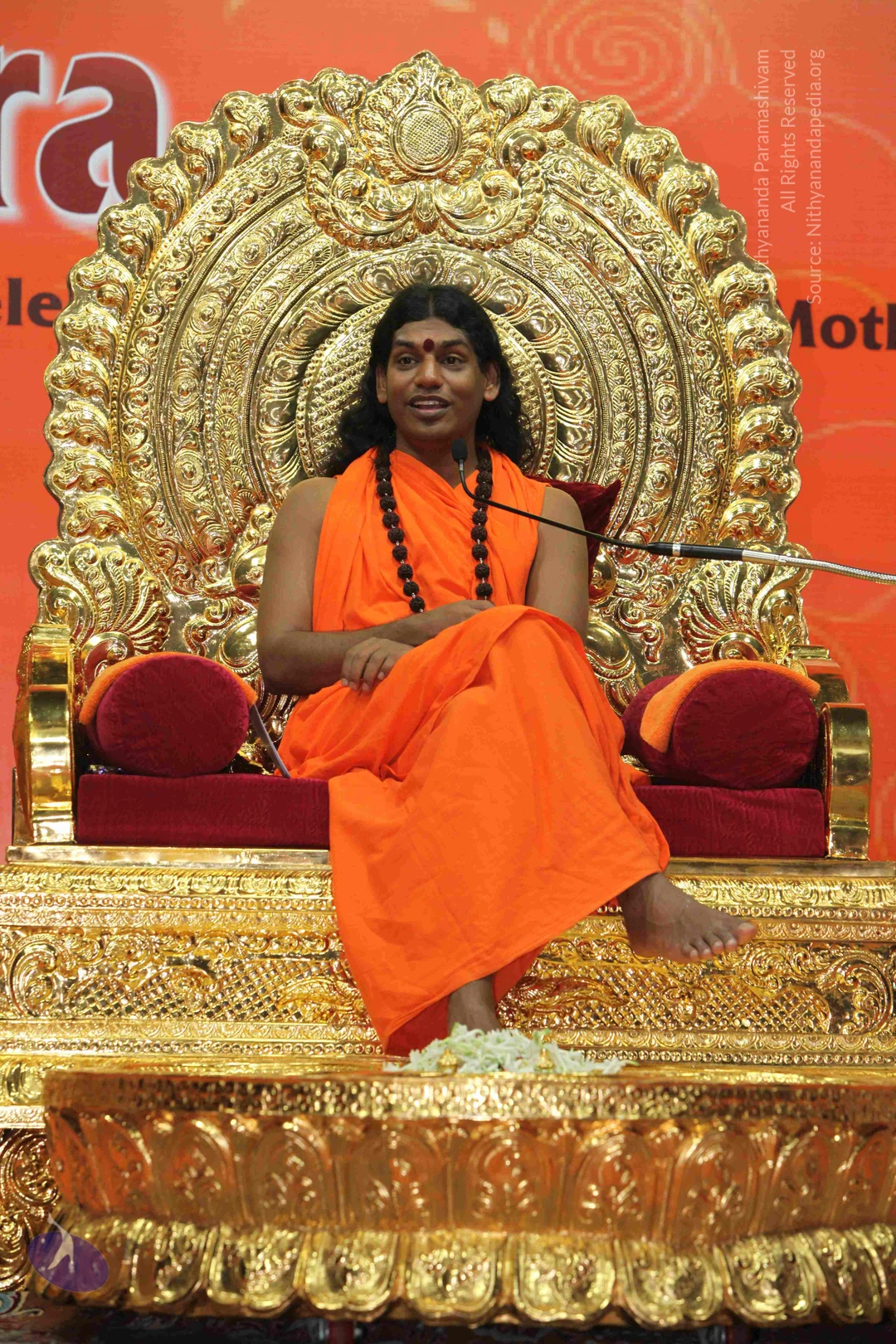
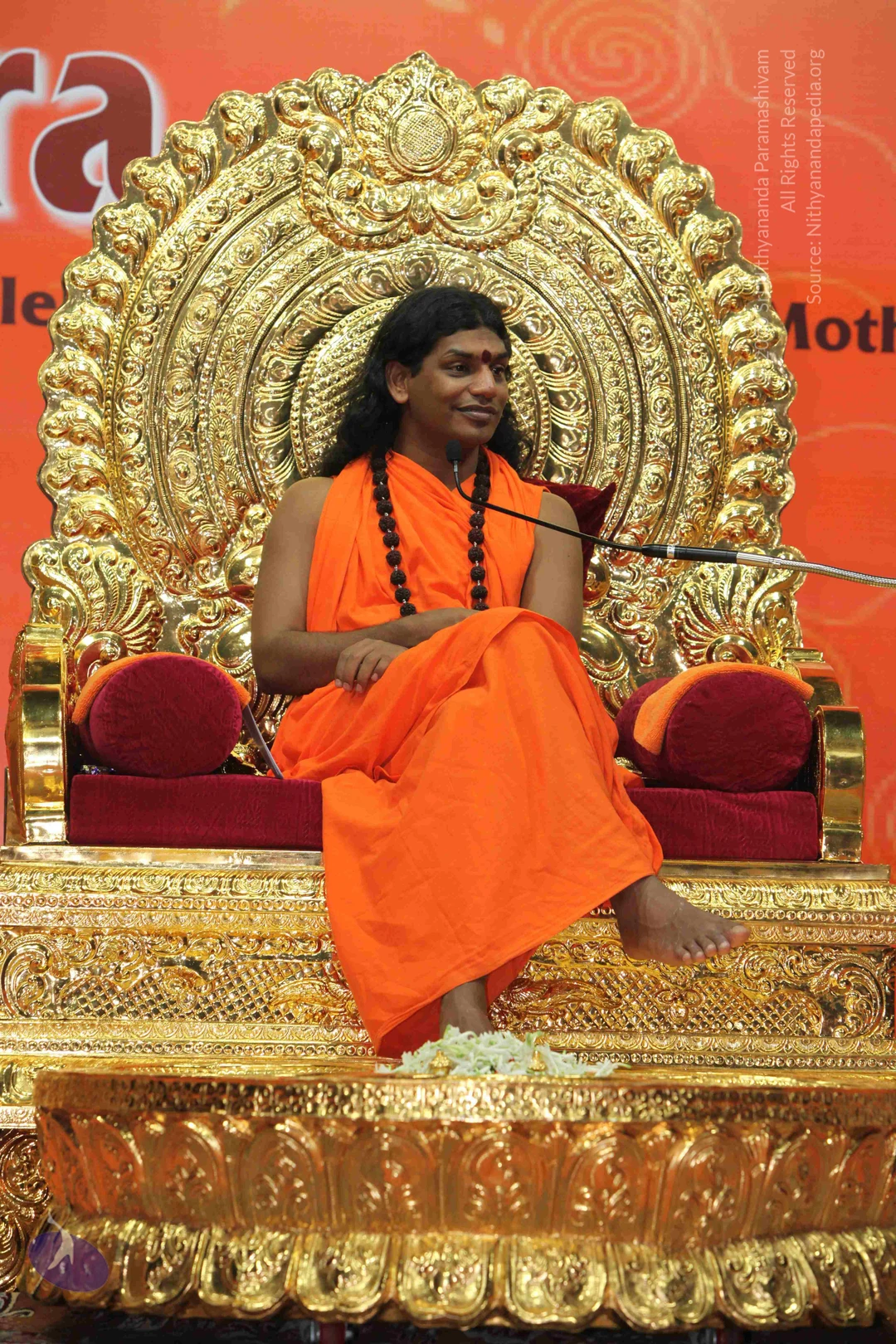
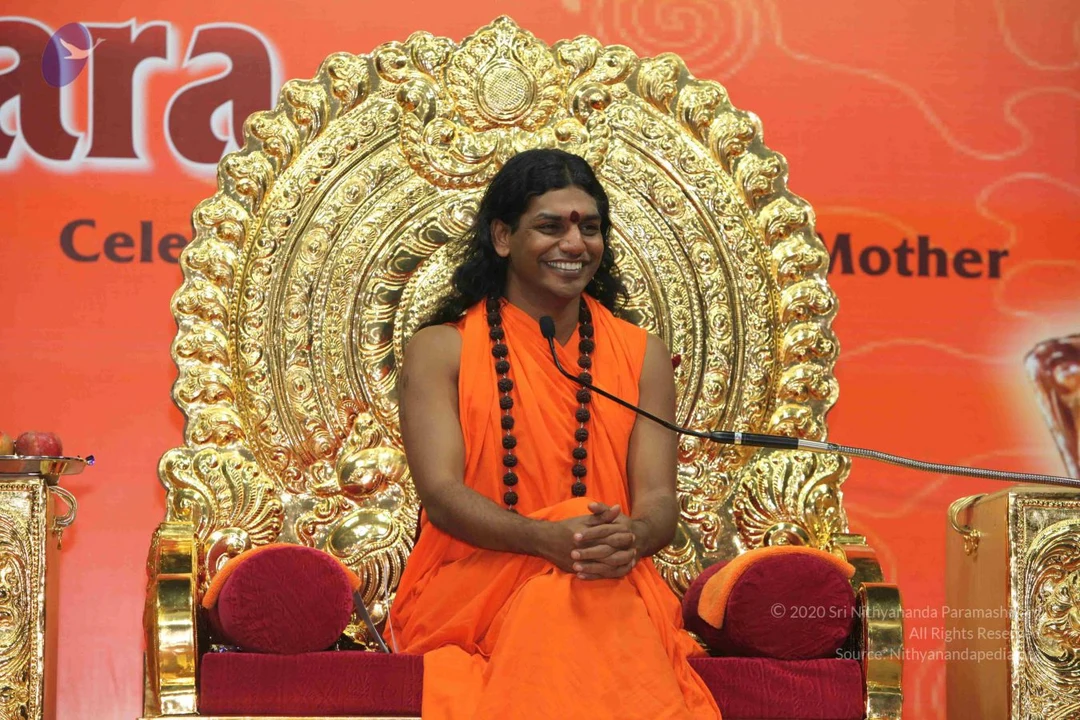
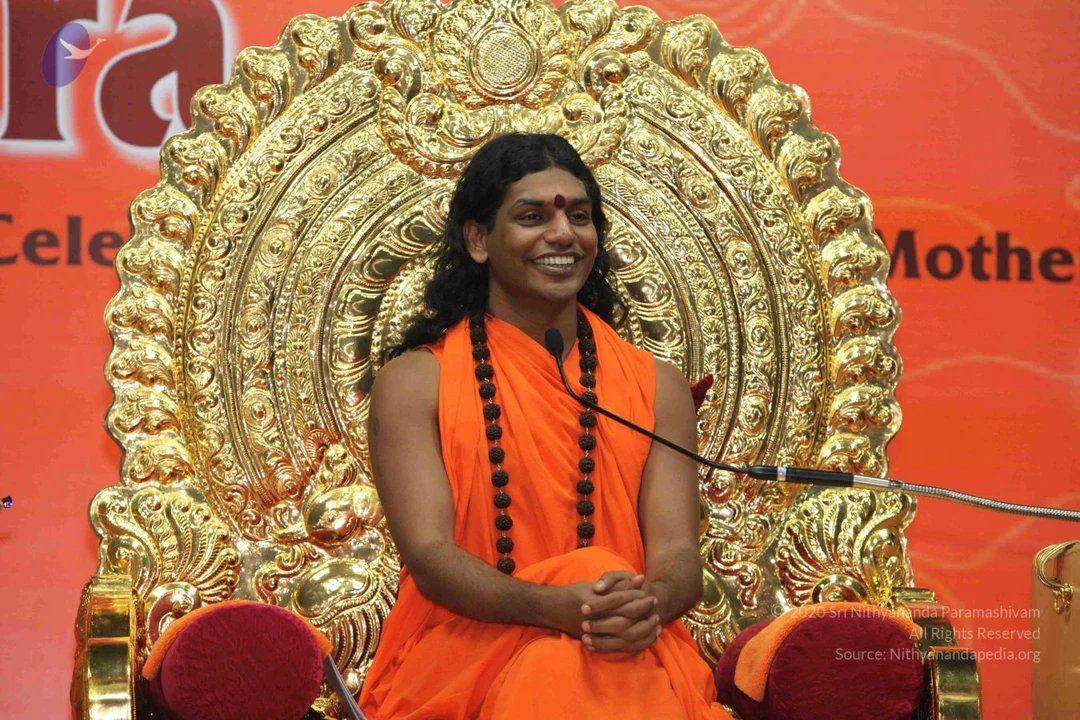
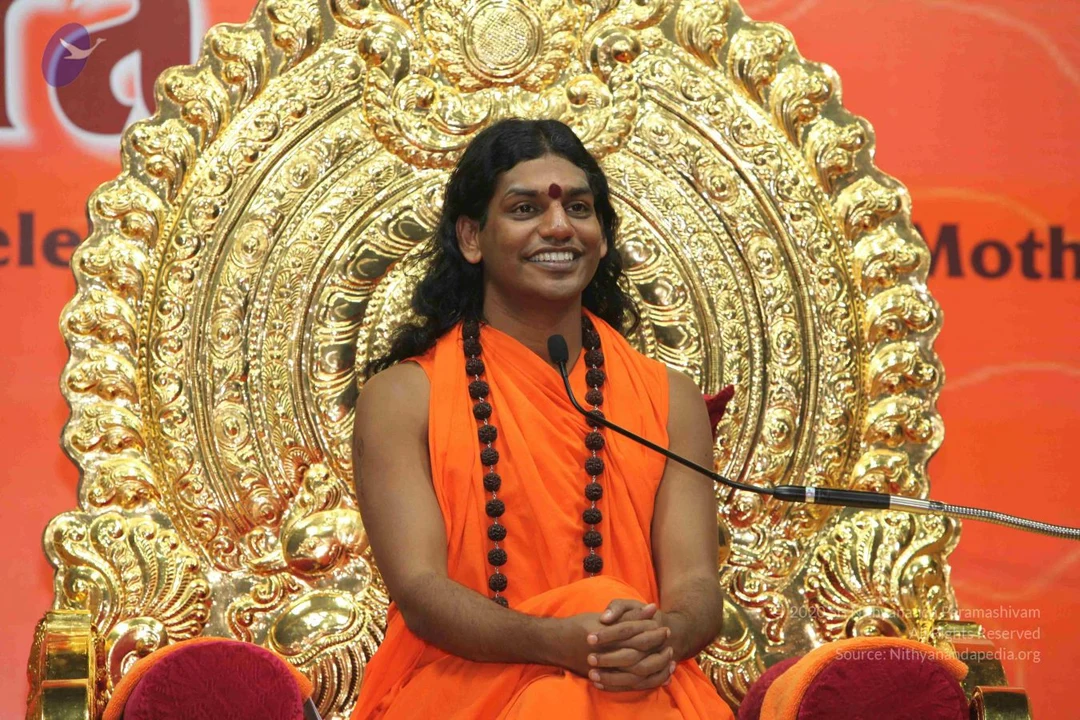
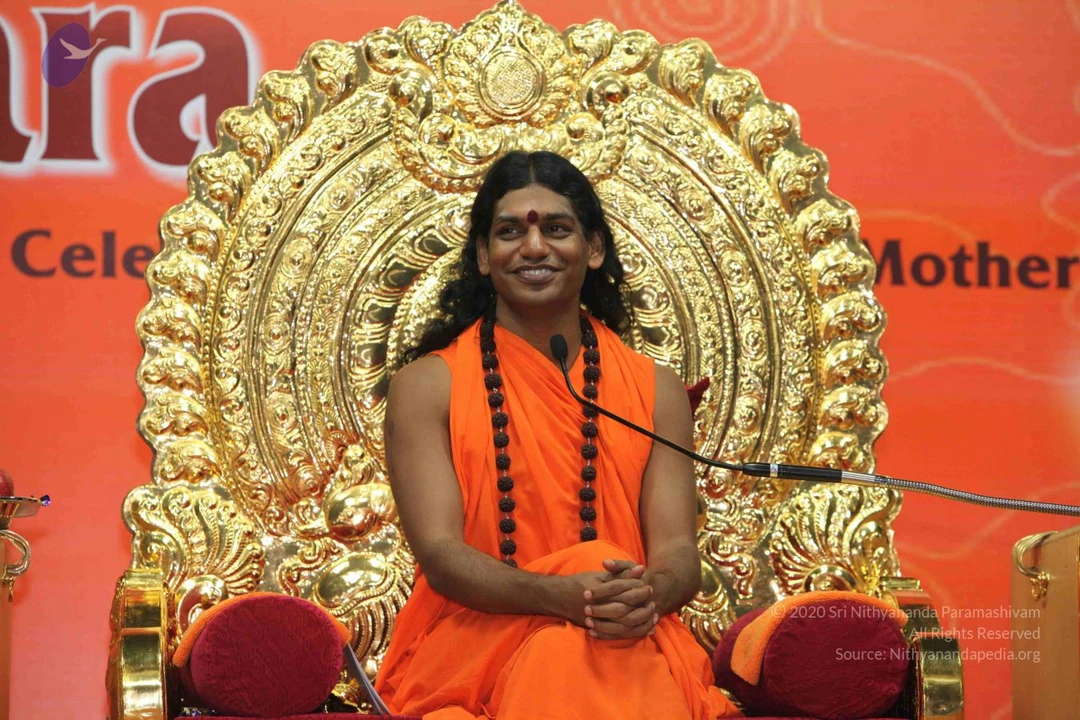
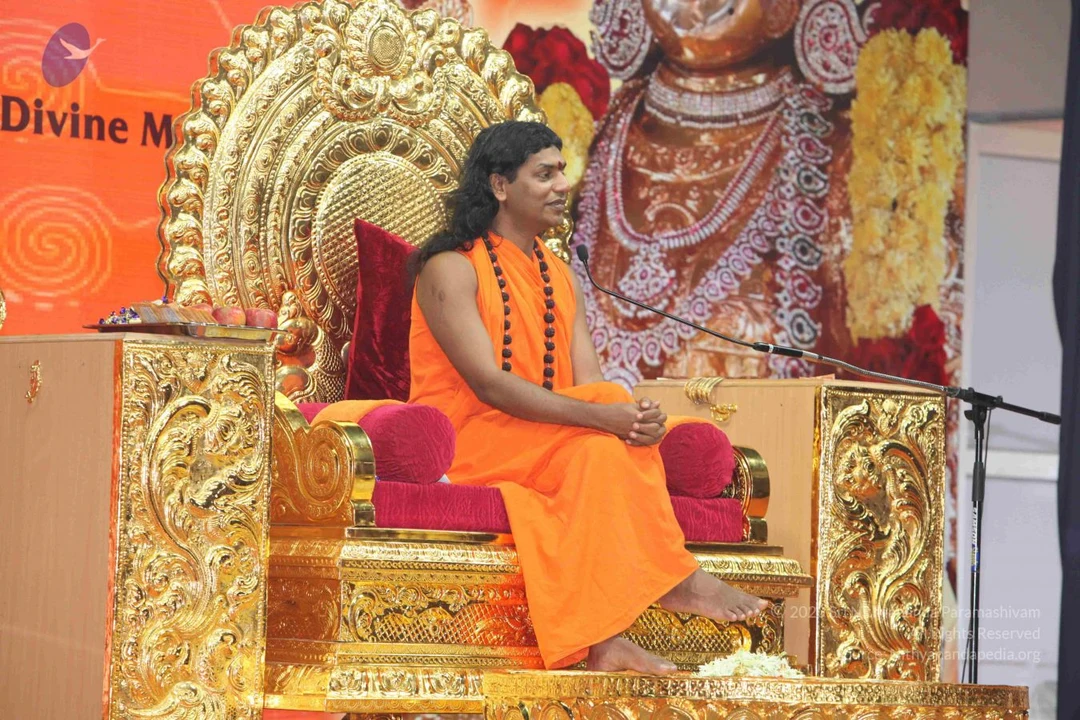
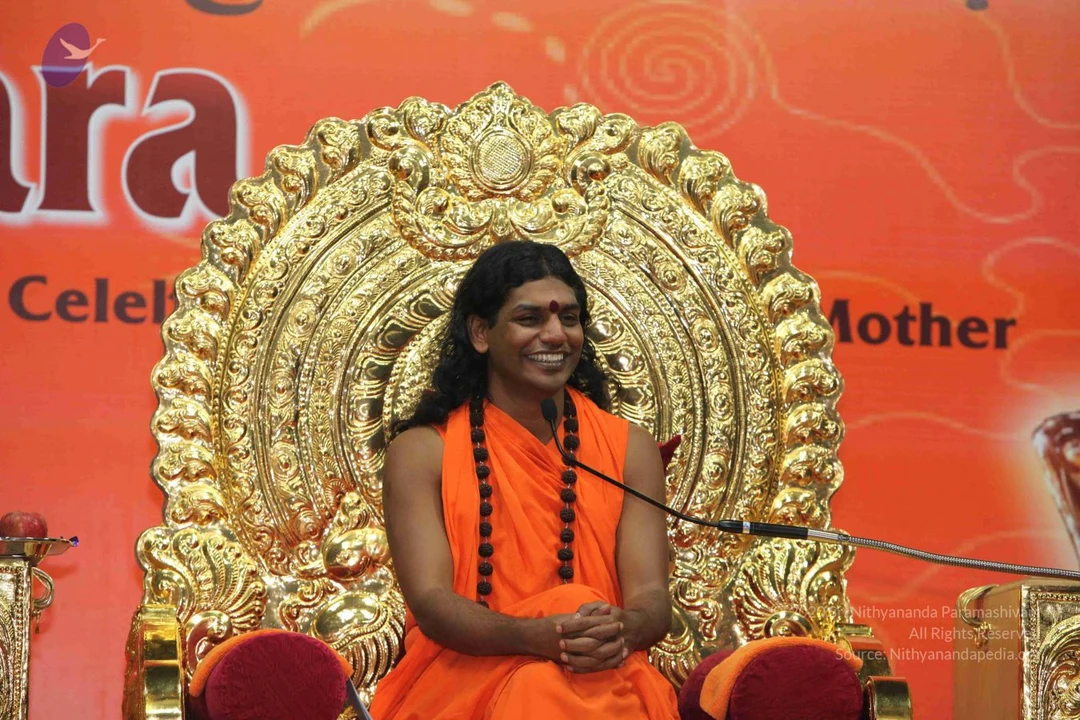
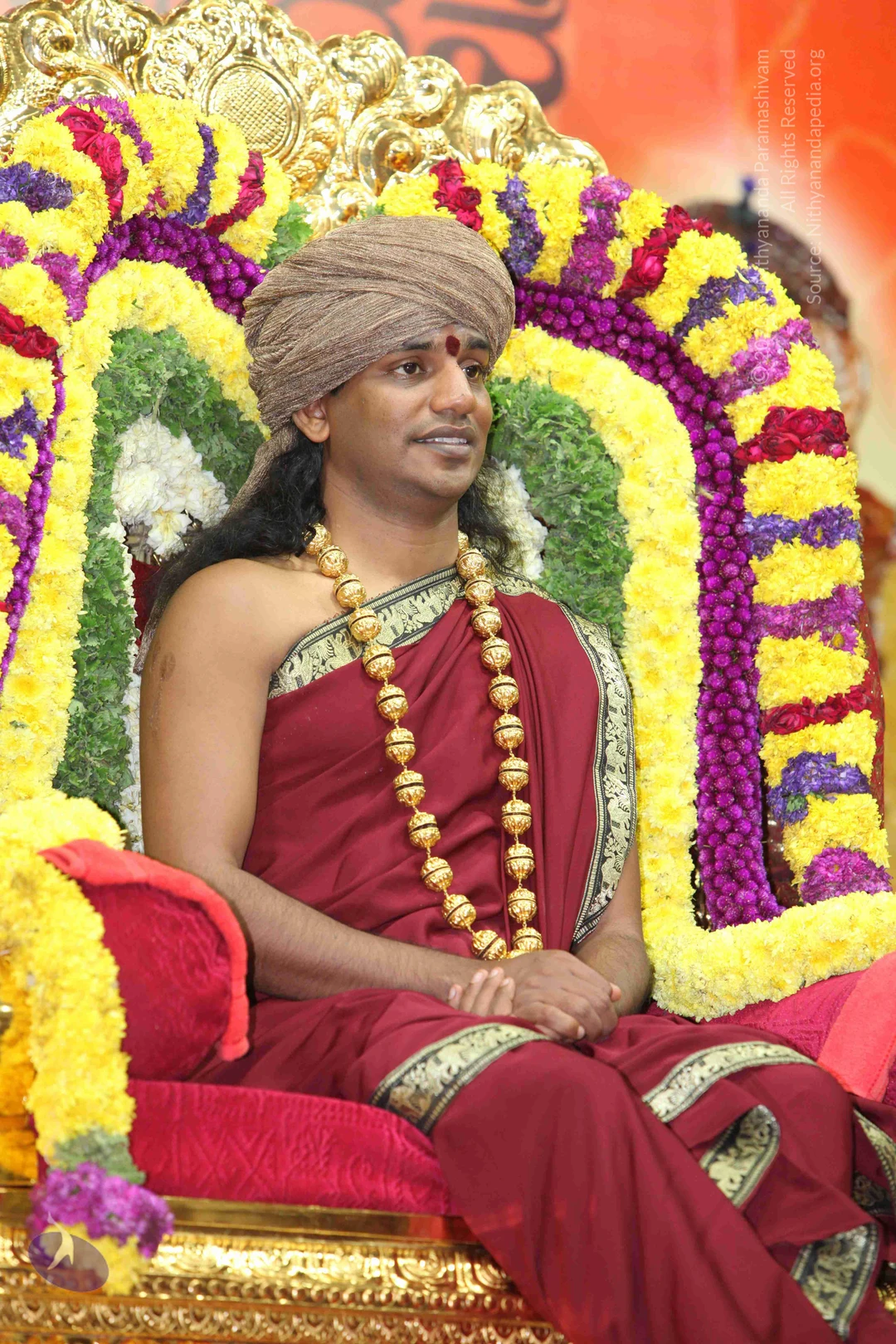
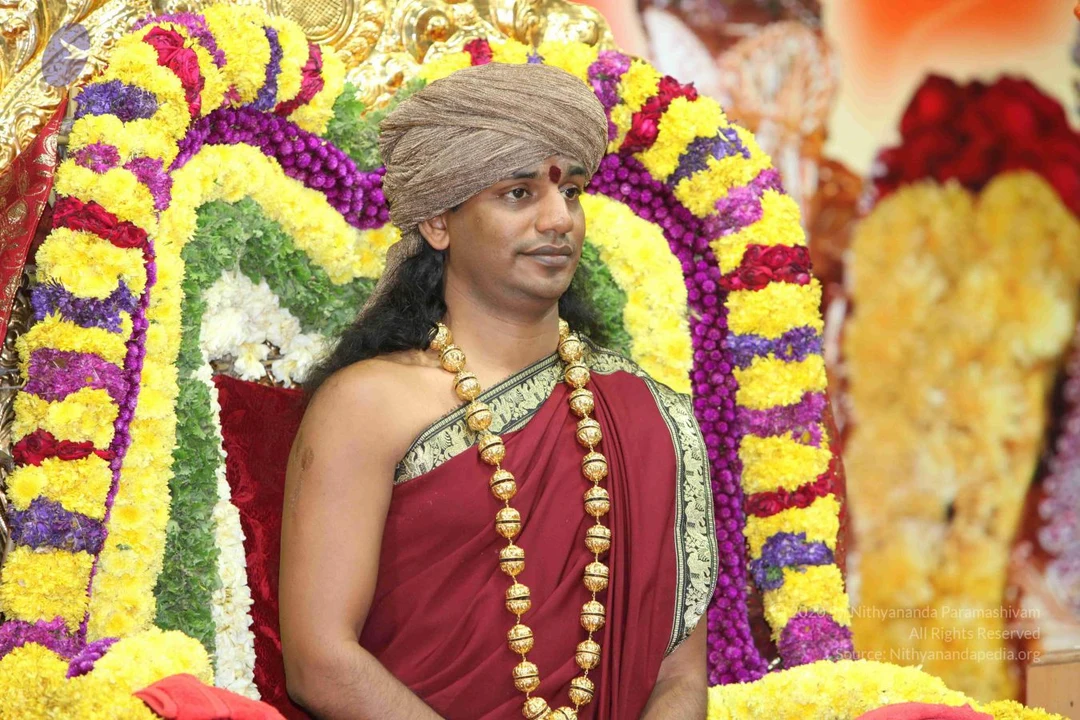
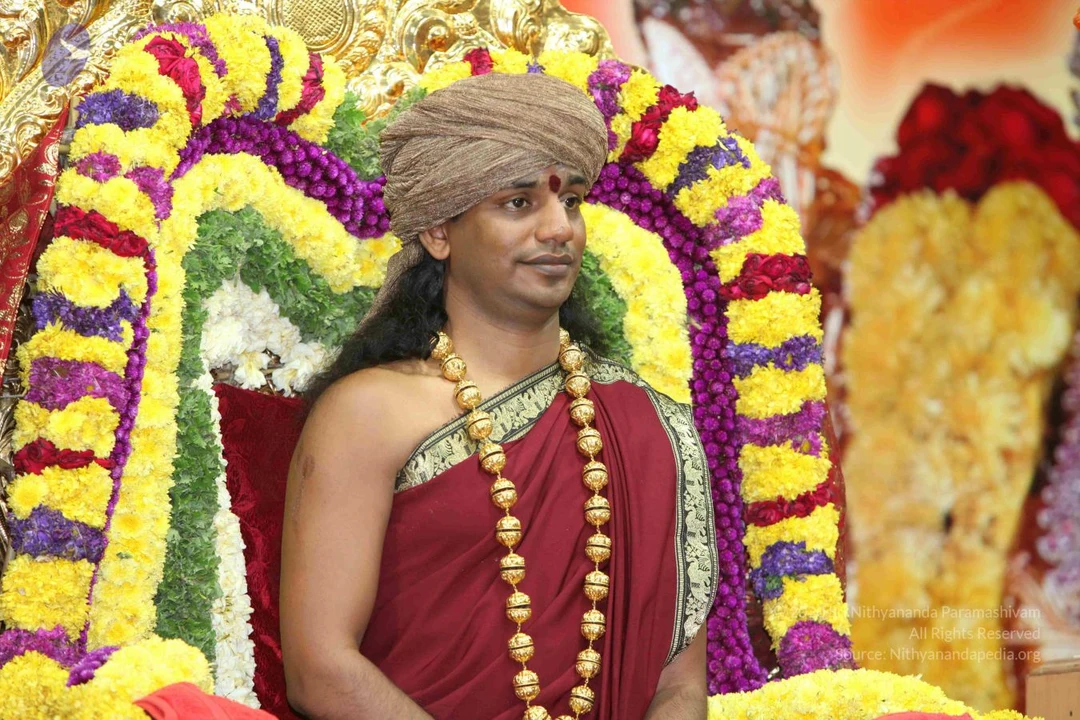
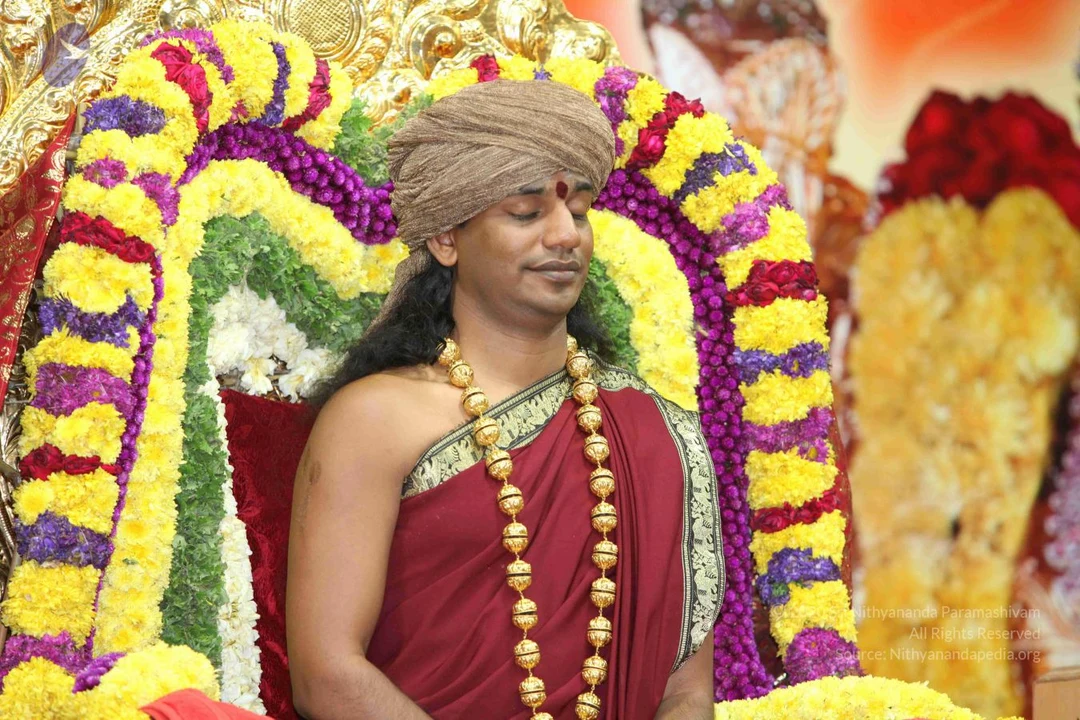
The Supreme Pontiff of Hinduism, Jagatguru Mahasannidhanam, His Divine Holiness, Bhagavan Nithyananda Paramashivam, expounded on the Cosmic Principles of Spontaneity during the everyday live public talk - Nithyananda Satsang. In this talk entitled Uncertainty, The Supreme Pontiff of Hinduism instructed all to stop creating the constant illusion of certainty. He explained how the material part of you always wants everything to be certain and shared that matter, by its nature is certain and Consciousness by its nature is spontaneity. His Divine Holiness shared how Lord Shiva in the Shiva Sutras beautifully declared that in utter insecurity is Enlightenment, revealing that by living in utter insecurity, your intuition, intelligence, everything is awakened by force.

Video and Audio

Uncertainity

VideoAudio

Transcript

(0:22)

|| Sadāshiva samārambhām Shankarācāryā madhyamām | Asmat ācārya paryantām Vande Guru Paramparām ||

(0:51)

I welcome you all with My love and respects. Today’s subject card is not here. So I will give a subject, ‘Uncertainty’; because whether the card will come to you or not is uncertain. Even though yesterday topic was selected and everything was ready it is all, always uncertain.

(1:22)

I’ll share, few words on uncertainty and coping up with uncertainty. Stop creating this constant illusion of certainty. It is a deep engraved quality of the matter to be certain. Please understand, matter, material is always certain. So the material part of you always wants everything to be certain. So whenever the spirit, the spontaneity takes over, some change, some sudden unexpected moment, life brings in front of you, due to so many reason.

(2:18)

See, now thousands of reasons can be said. Prana is busy with his phone or that card is lost in my room or the Brahmacharini forgot to give it to Prana or it is backside - behind. It is not kept in the usual place for me to see. There can be thousand reasons. But nice thing you see, when there was uncertainty, when we have a freedom to handle directly, now we have one more extra message. This I can do tomorrow.

(3:01)

So, when the spontaneity happens, now thousands of things I have proved by life. See, either I can be cursing and shouting at Prana, ‘Where is the card? What is going on?’ or I can just, ‘Alright, let us handle the uncertainty directly, situation directly’. See I have decided to handle the situation directly. So now we have one more new message for the day. Hmm?

(3:31)

Matter, by its very nature - certain. Consciousness, by its nature - spontaneity. When you are not able to handle spontaneity, the name you give for that spontaneous moment is uncertainty. The very word uncertainty carries a kind of a condemnation in it, disrespect in it. Understand. There may be thousand reasons as I said now, card missing there, card missing here or even card missing behind my back. It is lying just behind, but usually wherever it is kept, only I looked at that place; just few inch wrong placement.

(4:30)

Whenever you face uncertain moments, understand, life is in front of you. Life is in front of you; Consciousness is in front of you - handle it, play with it, live it. There are some moments, where you can change the matter and get rid of uncertainty. But there are some moments where you need to live. Our big confusion is between these two moments - where we have to handle uncertainty, where we have to change uncertainty.

(5:06)

I tell you, be prepared to handle uncertainty 24 hours. That courage will take care, where you need to change uncertainty. So the basic thing which you need is, decide to handle uncertainty; consciously go through. That courage is enough. Whenever uncertainty comes, if you can change, by outer change you will start changing it.

(5:39)

Matter is certain, Consciousness is uncertain. When these two, crisscrosses each other, the uncertainty which you experience, becomes chaos. You see, the matter which is certain, cannot handle the Conscious uncertainty. But when the Consciousness forces itself on matter with uncertainty, that is what matter claims as chaos. Matter claims that as a chaos. Do not let your matter claim chaos in your life. Chaos is nothing but your declaration - nothing else. You need to understand, chaos is nothing but your declaration. Don’t declare emergency. Don’t declare chaos.

(6:49)

Whenever, whatever you call as chaos or emergency happens in your life, when the uncertainty happens in your life - declare spontaneity. Put a board on your table, ‘Now I am behaving spontaneously. Keep away’. Tell yourself, ‘Now I am playing the spontaneous game’. Don’t plan. Be ready. Tell the people around you, ‘Keep away. I am spontaneous’. Tell yourself, ‘Be prepared. I am playing spontaneous game’. Don’t declare emergency. Don’t declare uncertainty. Whenever life is appearing in front of you larger than life - just declare spontaneity. Declare, ‘I am living. I am living’.

(7:52)

So like yesterday's ‘M Theory’, we can go on creating different, different theories. So today - ‘Uncertainty’. Actually the last punch - our disciples, yesterday our Brahmacharinis were telling - the punch line of ‘M Theory’ is everything happens finally by the ‘ultimate, ultimate M’ - Master. Of course, that M has to be added by disciple, not by me. That’s why I waited, finally they added. Hmm?

(8:31)

Uncertainty. Uncertainty is life. Shiva, in his Shiva Sutras; I think hundredth sutra hundredth or after hundred before hundred and twelve, in those few sutras; he declares very beautifully, ‘Living in utter insecurity is Enlightenment’. Living in utter insecurity - your intuition, intelligence, everything is awakened by force. Just by demand it’s awakened. So uncertainty is life. Live it.

(9:36)

Nothing much to expand on uncertainty, because any expansion I give on uncertainty; you will try to make one more certainty about uncertainty. You should not be certain about uncertain. Uncertainty should be uncertain. So just contemplate, do Manana on these few words on uncertainty. You will experience life, spontaneity and Enlightenment.

(10:04)

Let you all achieve and radiate Enlightenment. Live, achieve and radiate the Eternal Bliss, Nithyananda. Thank you.

(10:18)

Photos

Panchatapas
Paadapooja
Morning-Satsang

Sarvadarshan

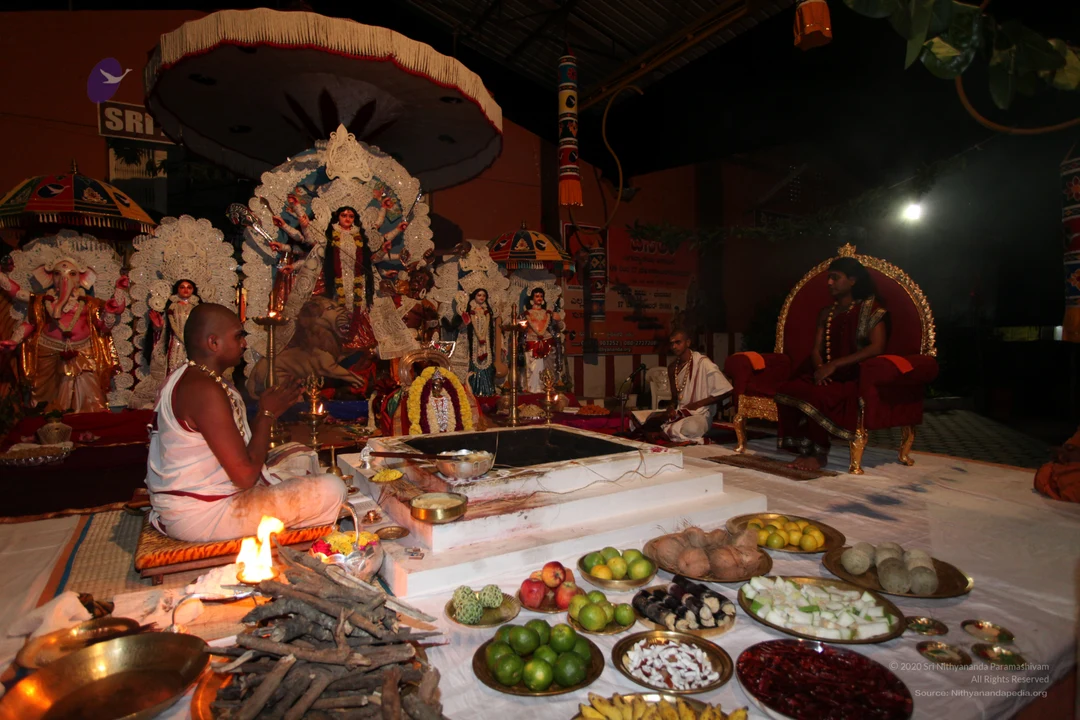
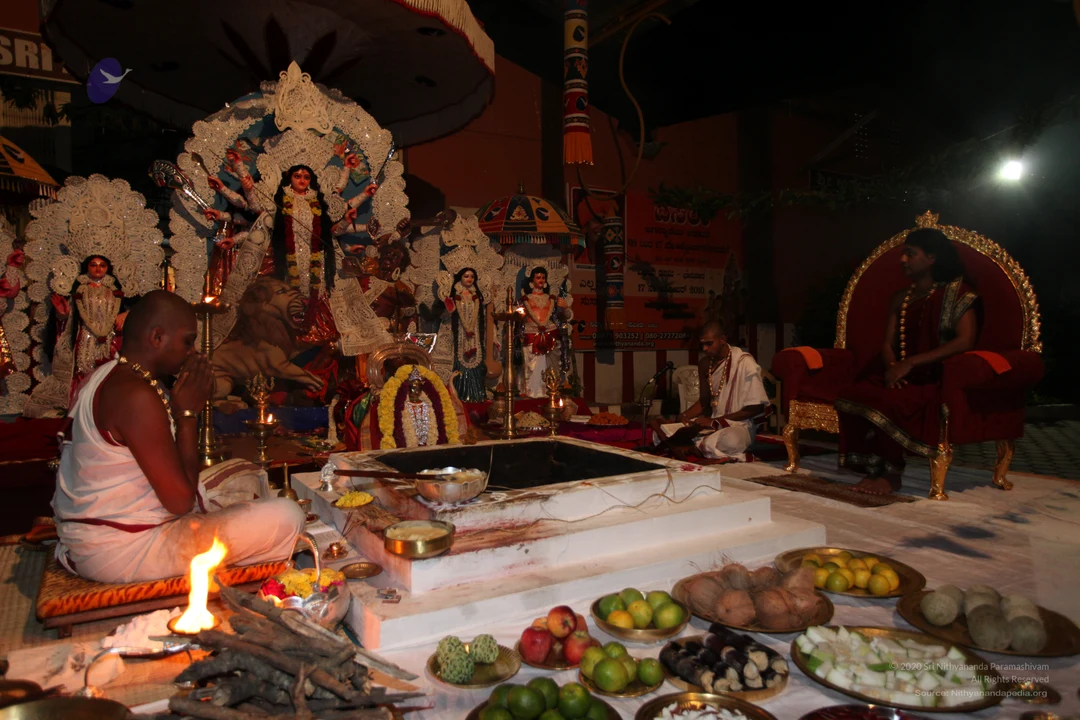
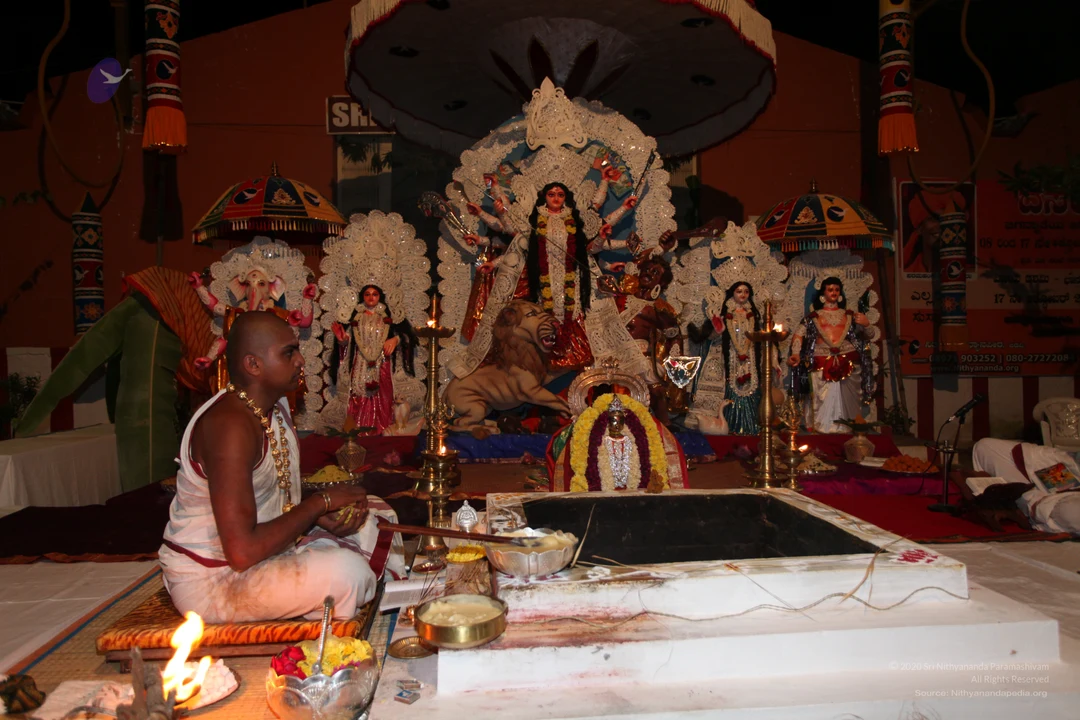
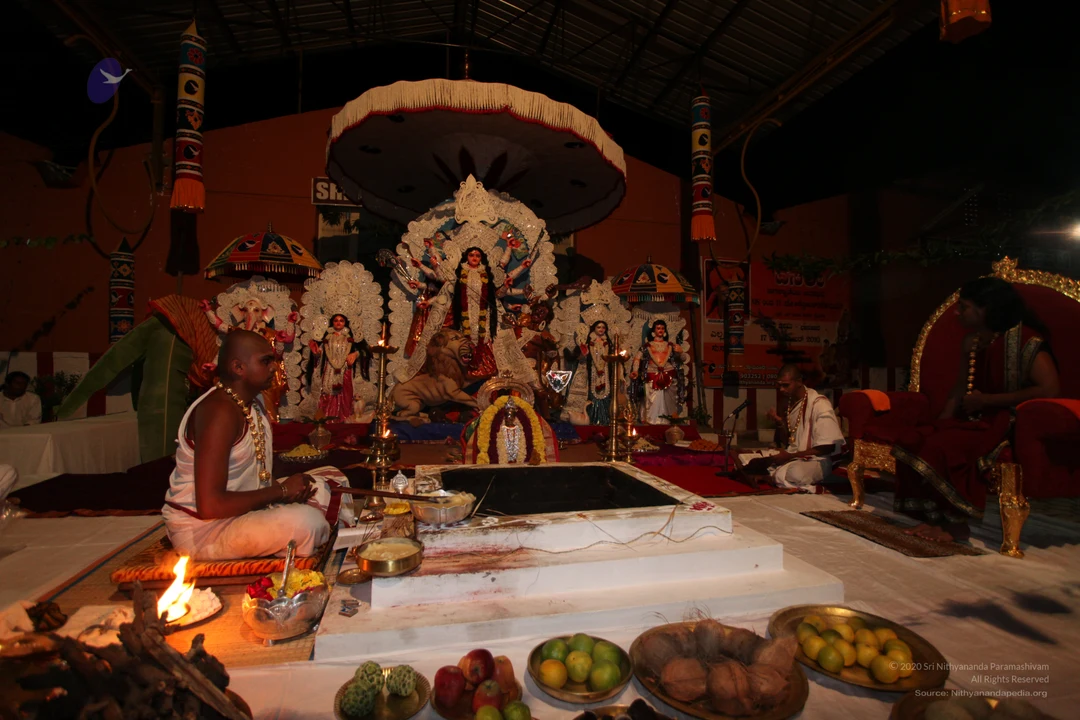
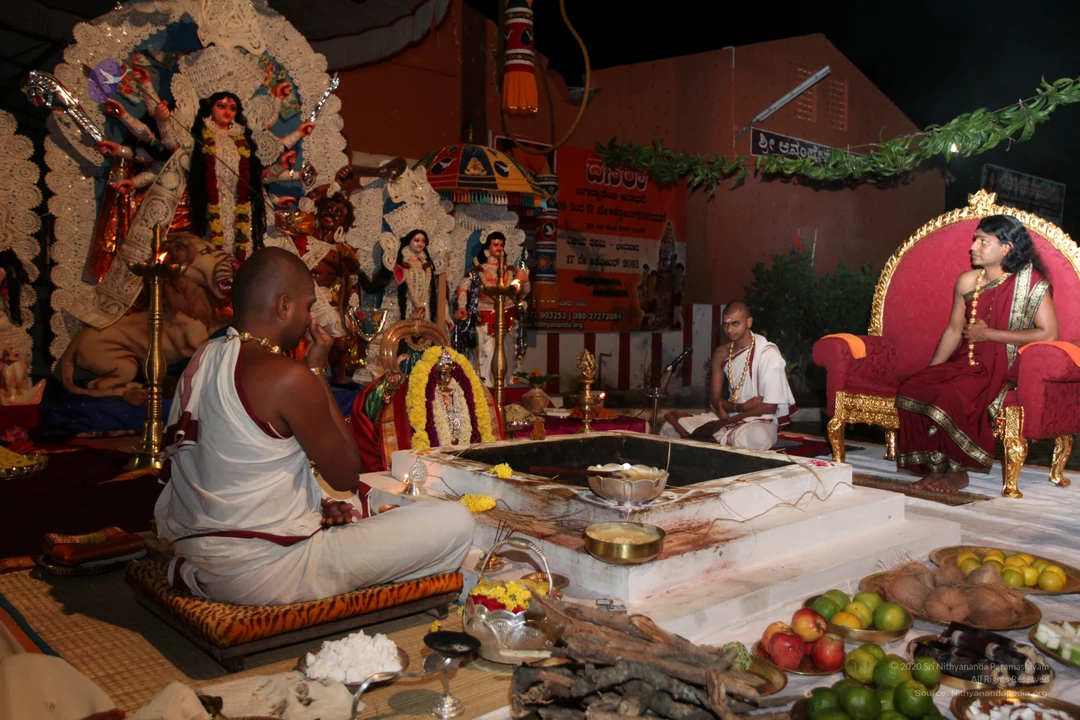
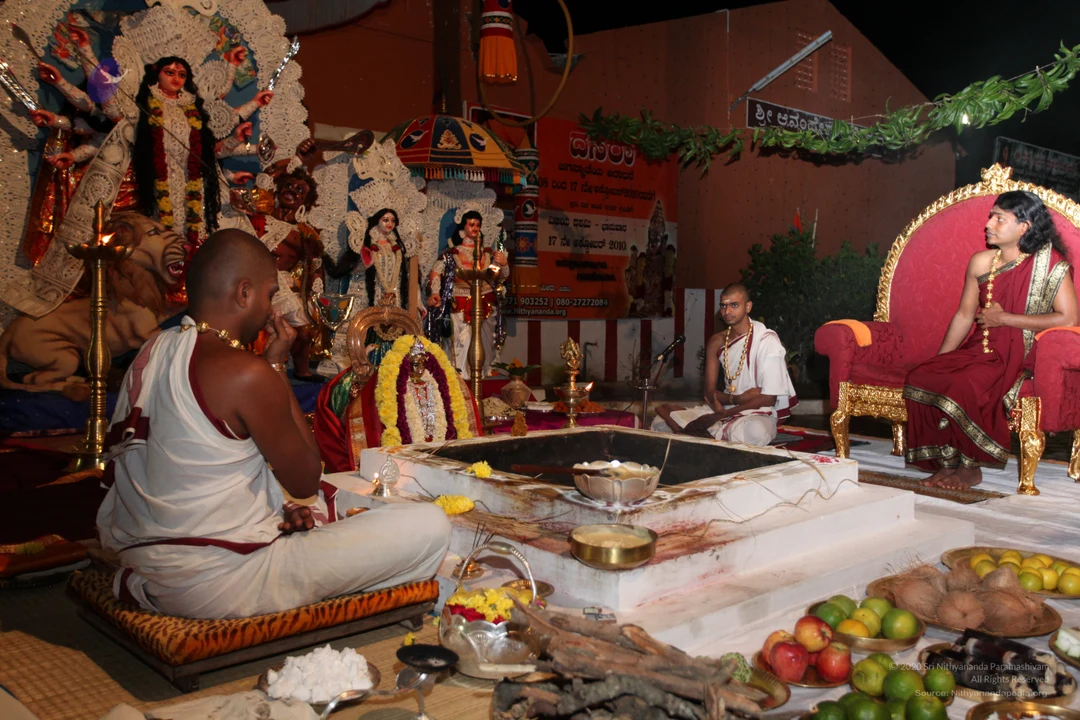
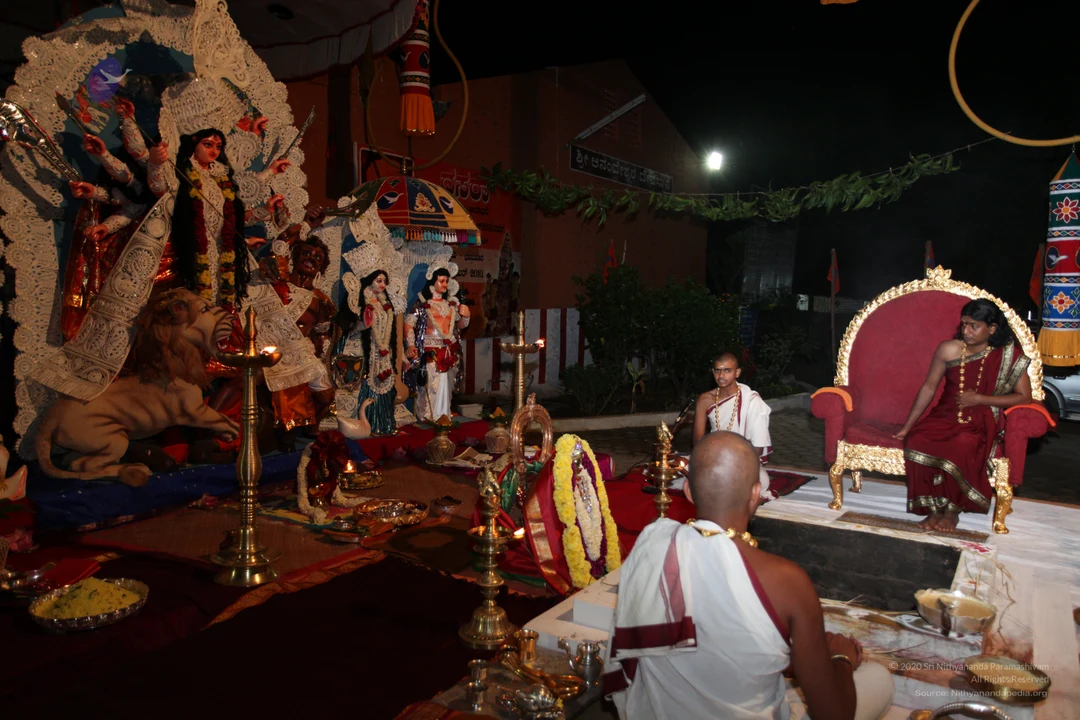
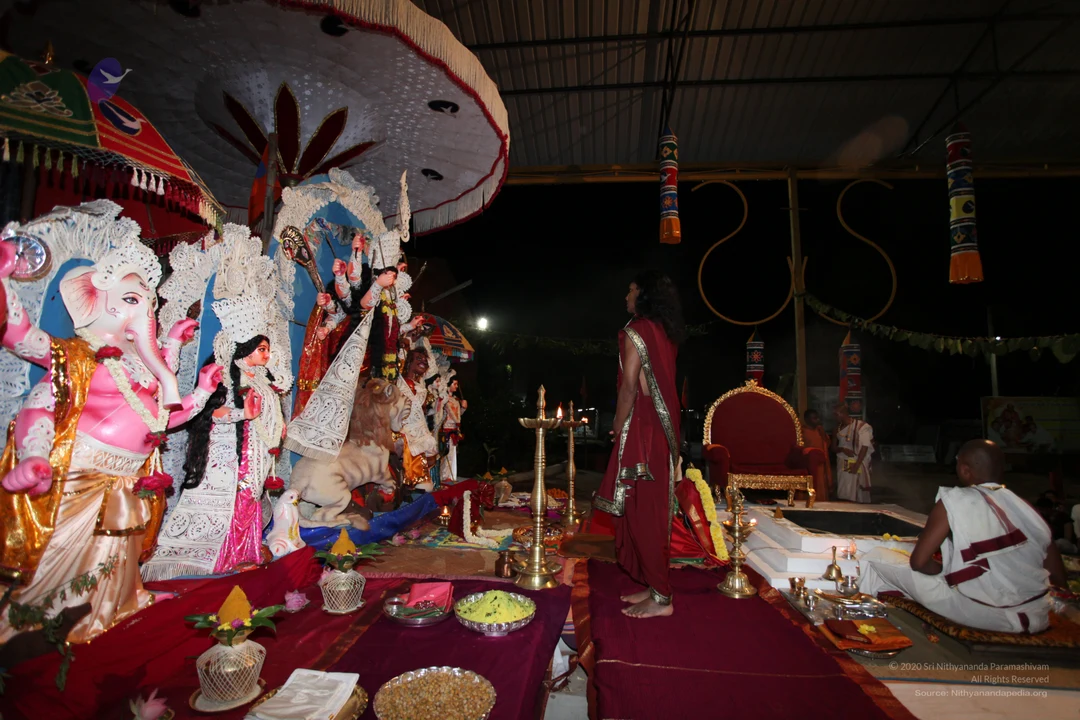
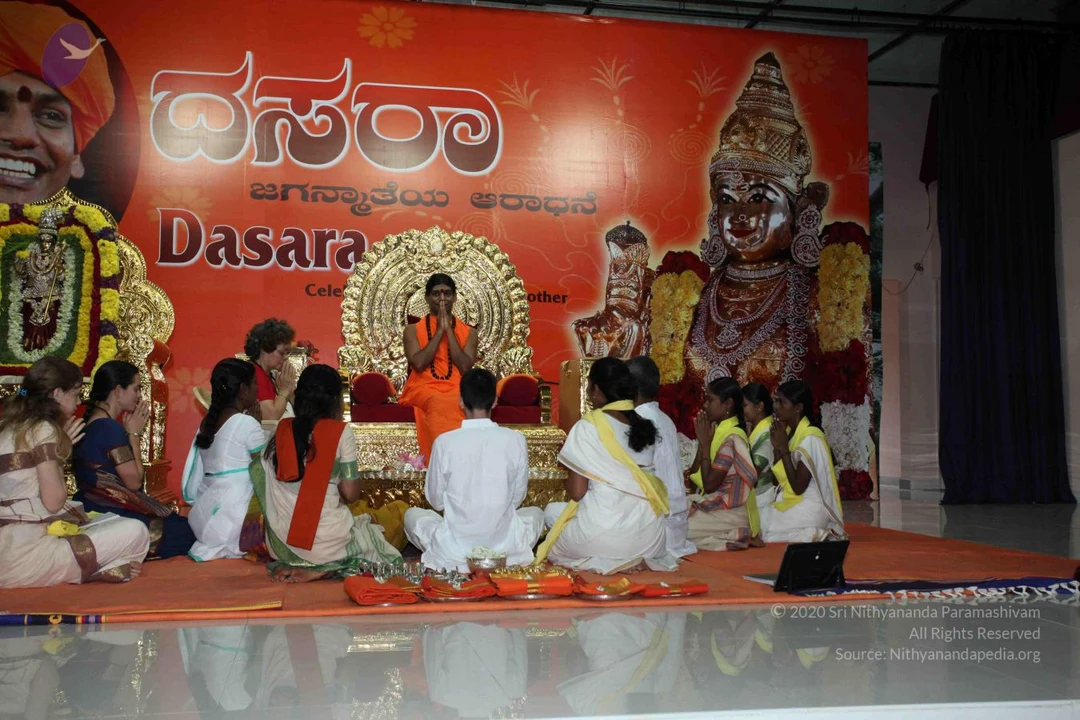
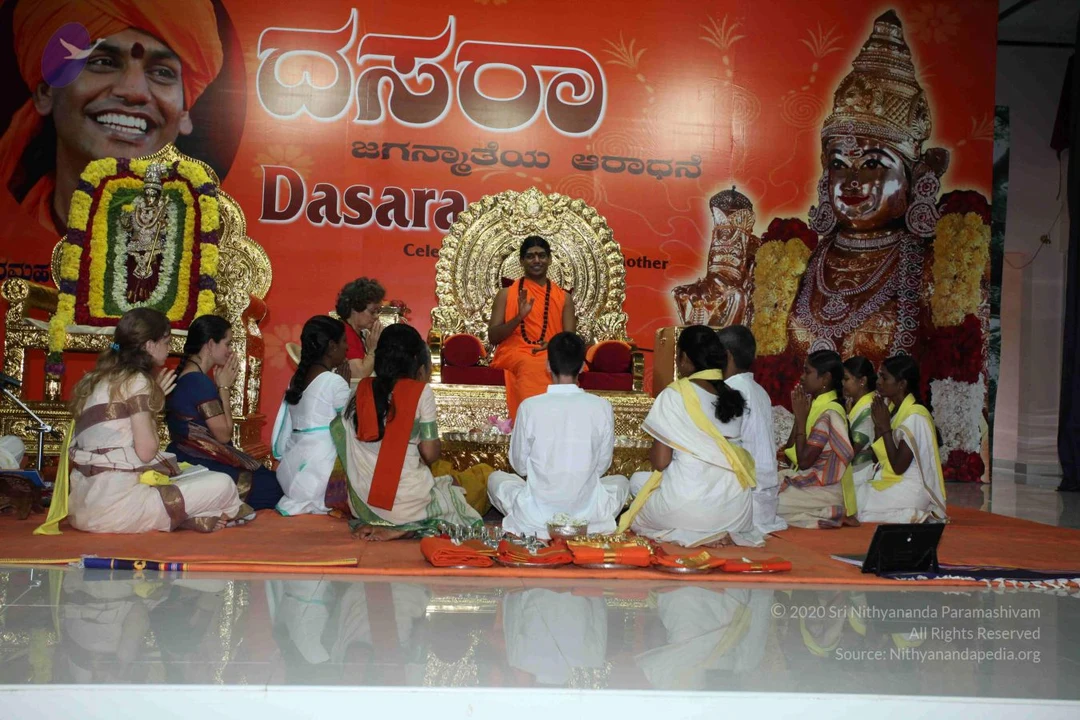
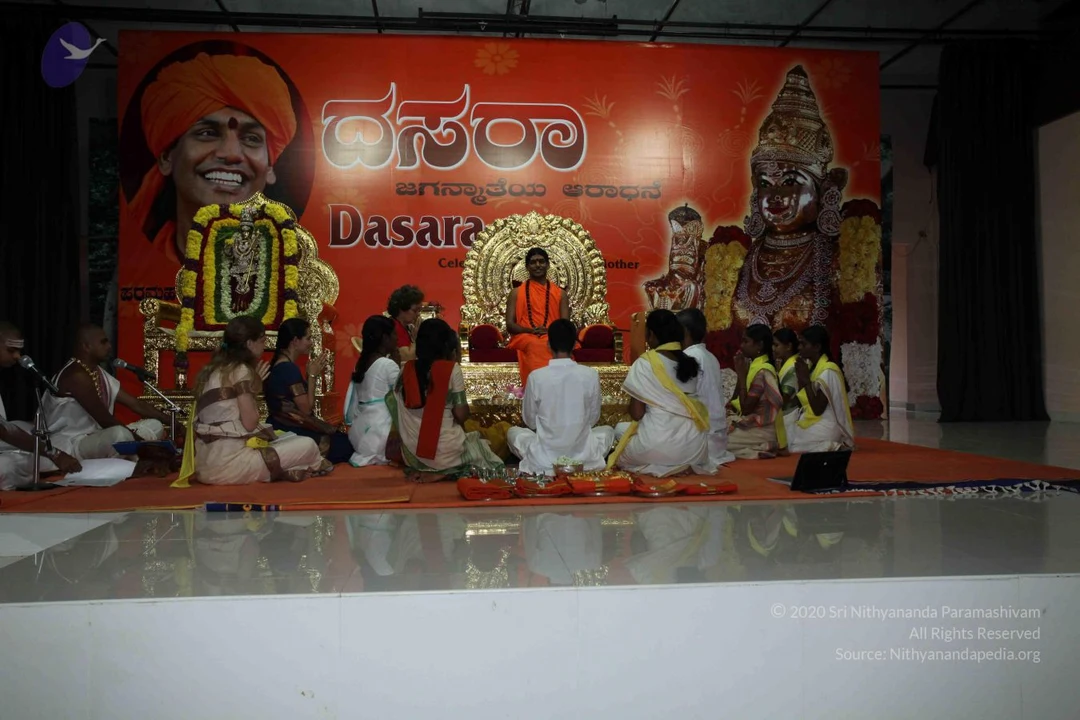
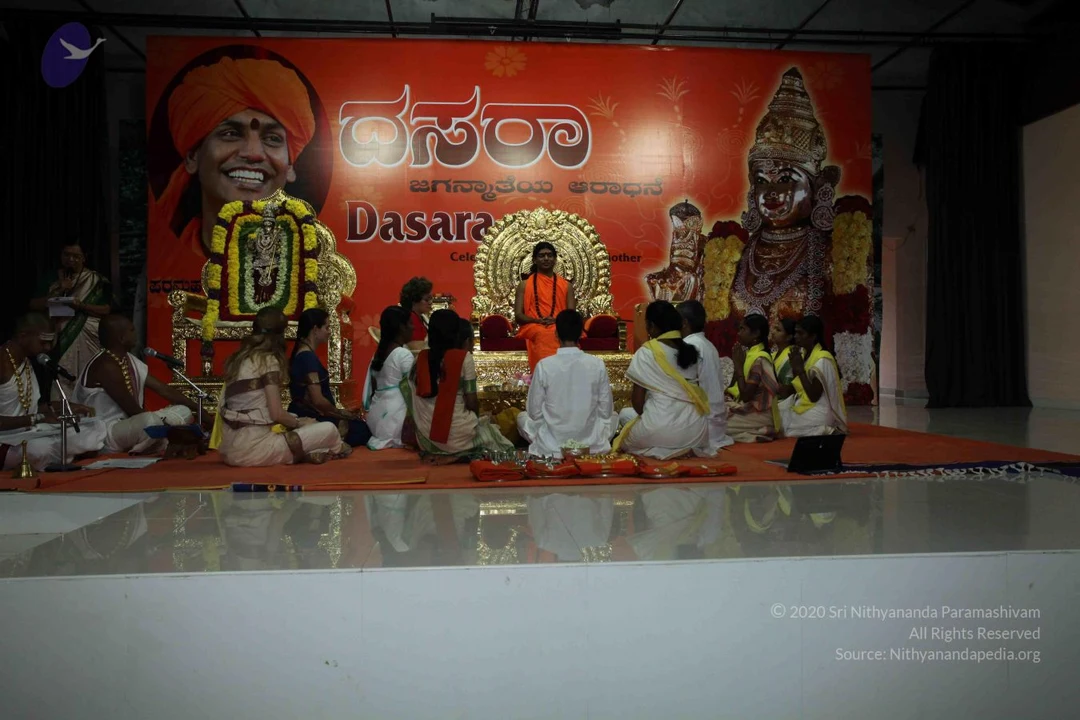
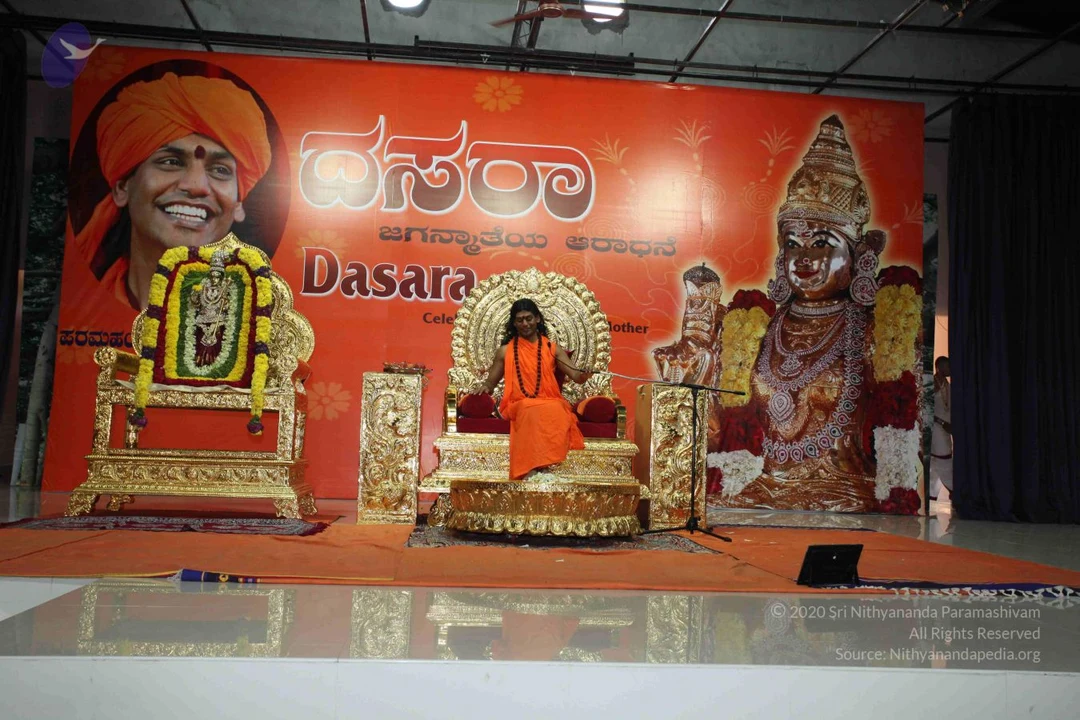
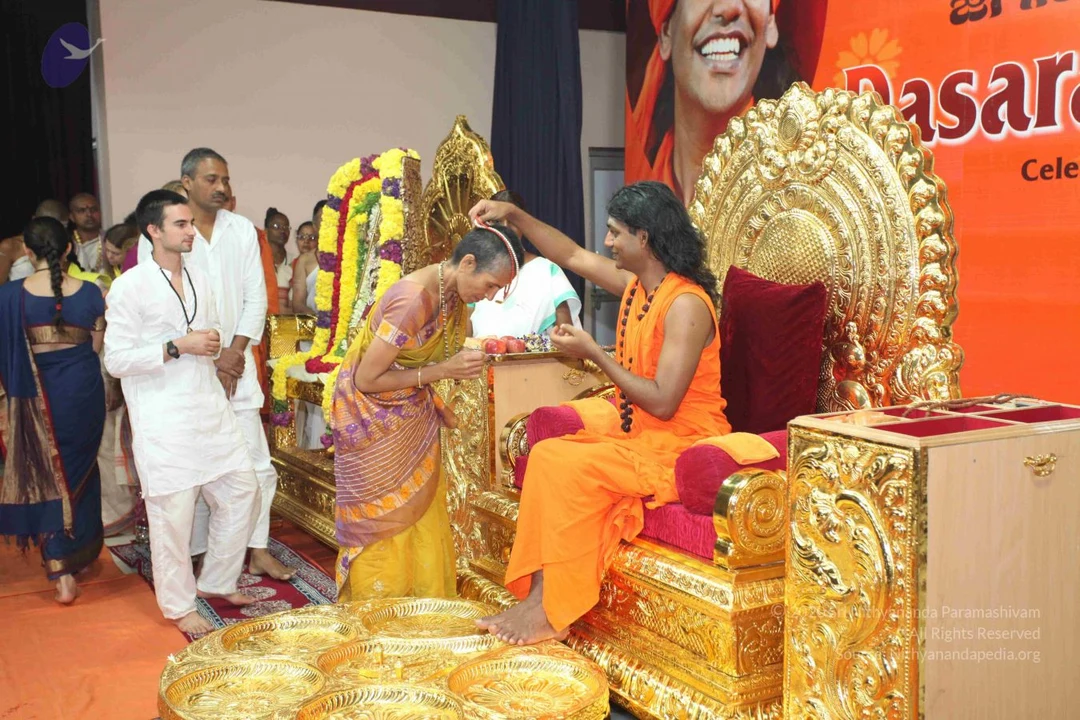
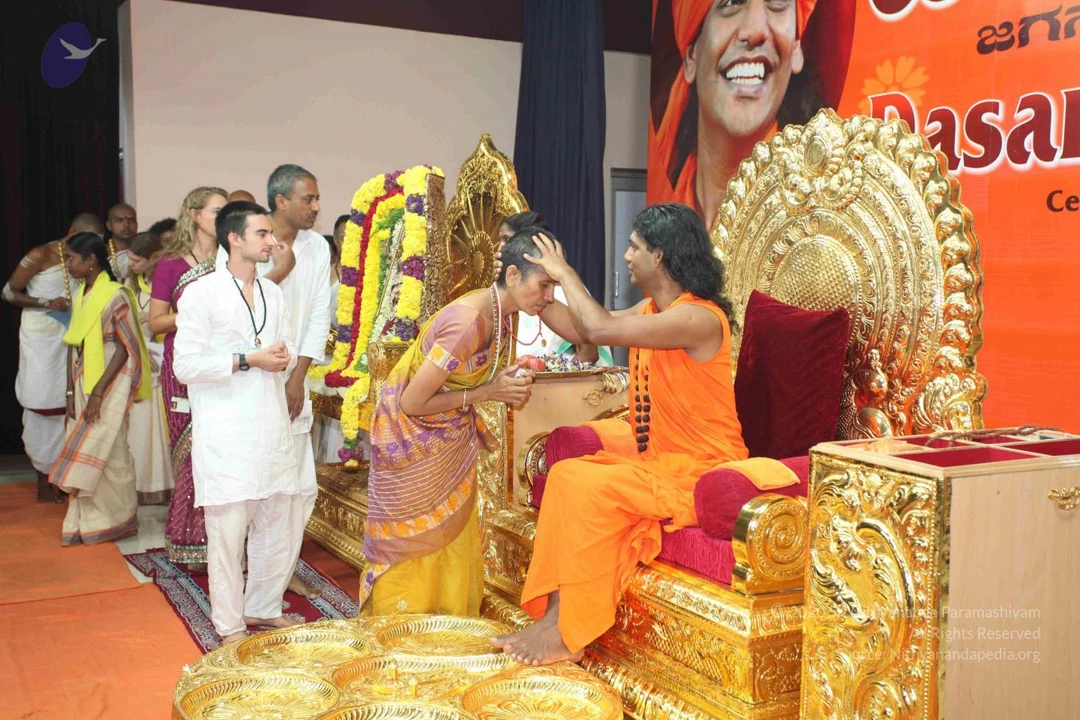
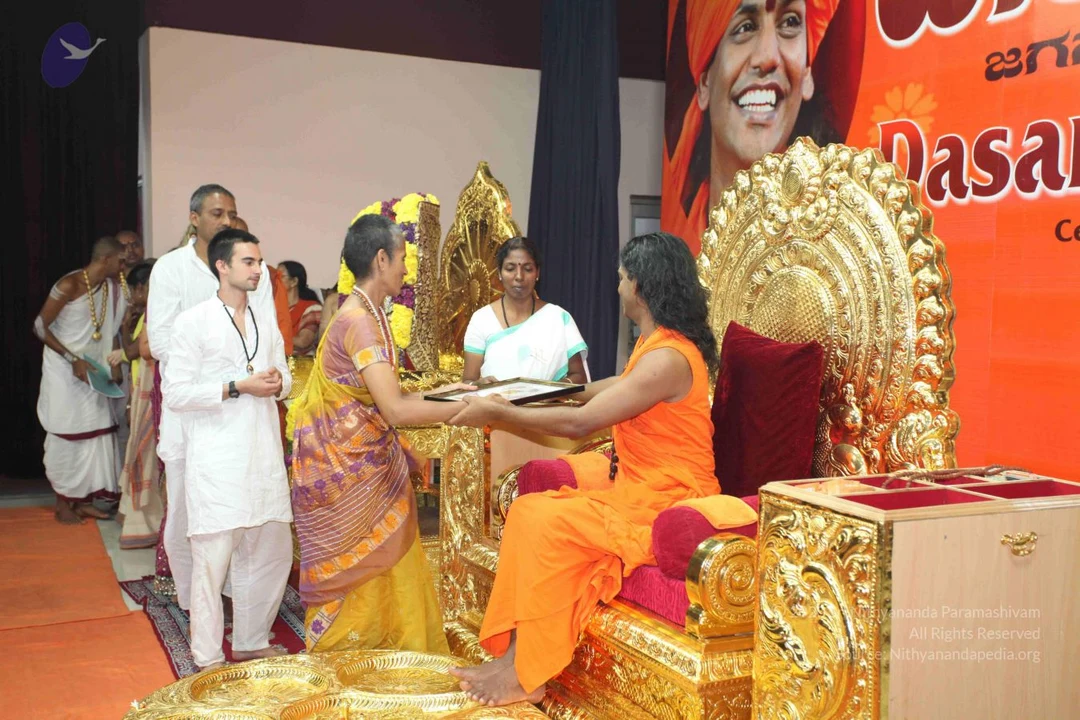
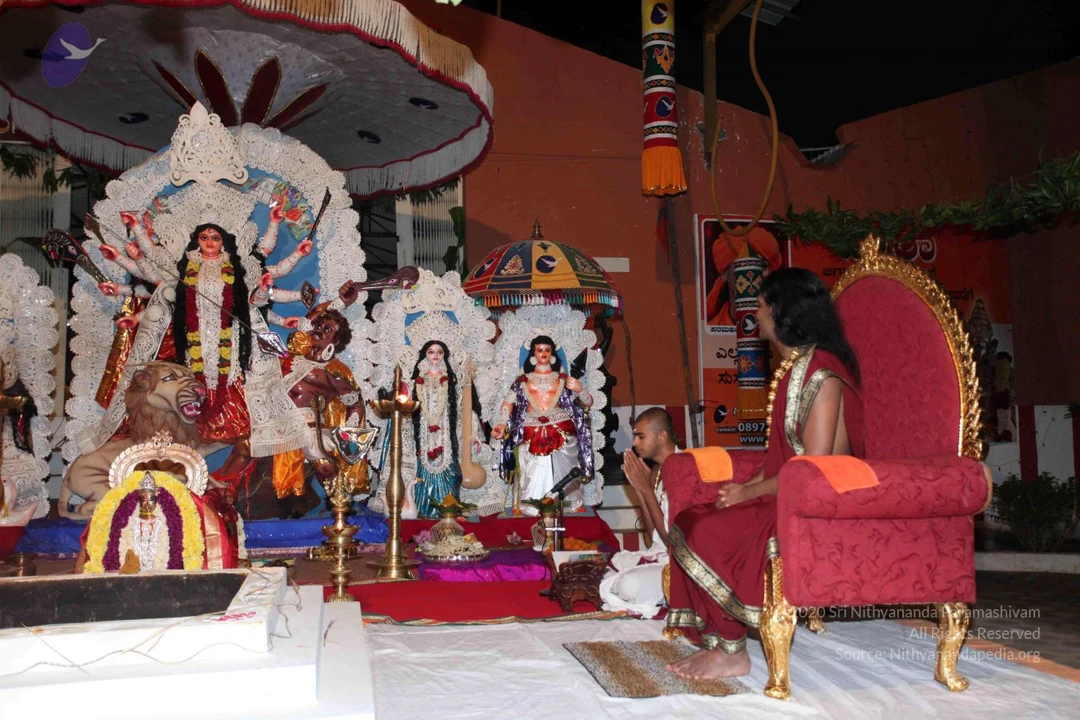
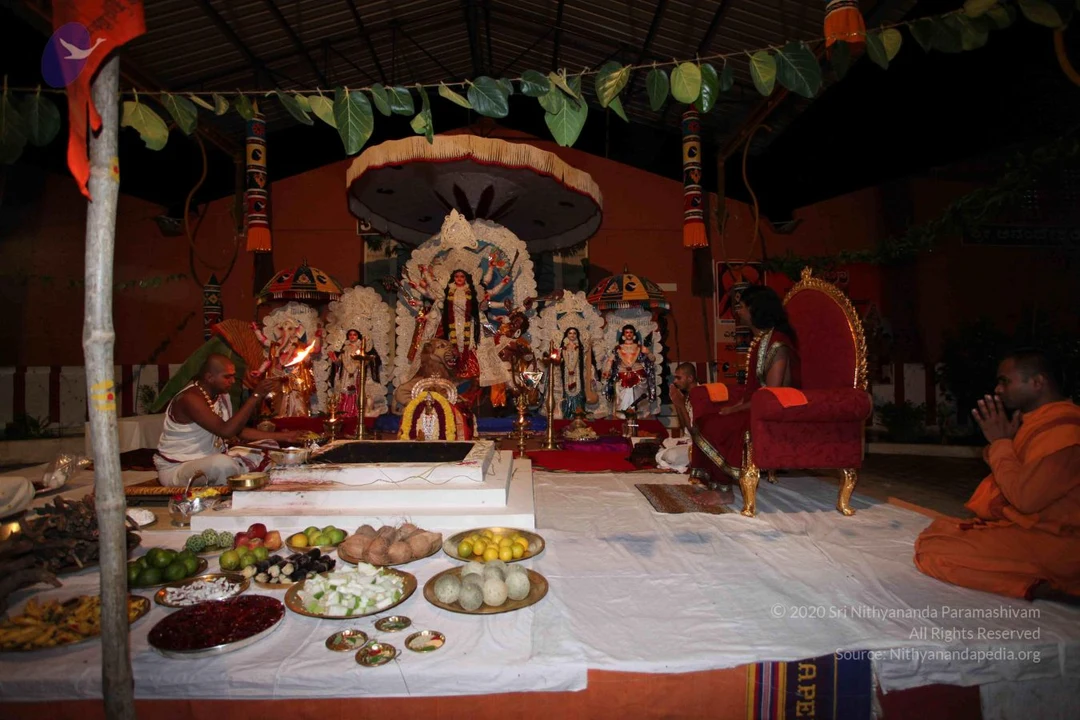
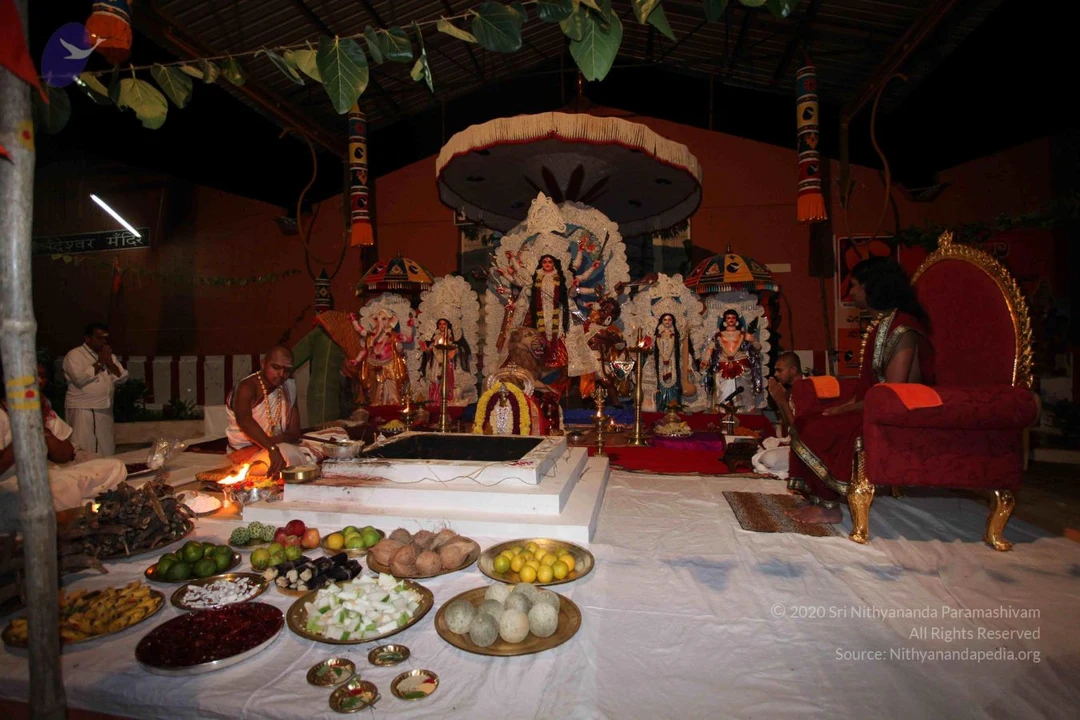
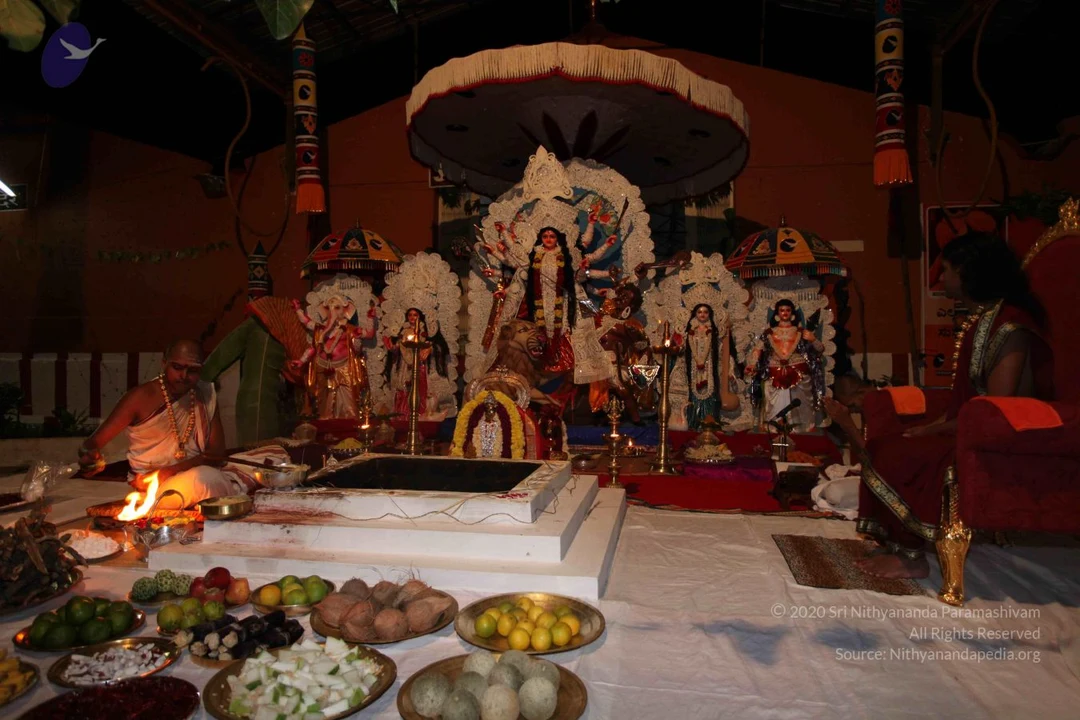
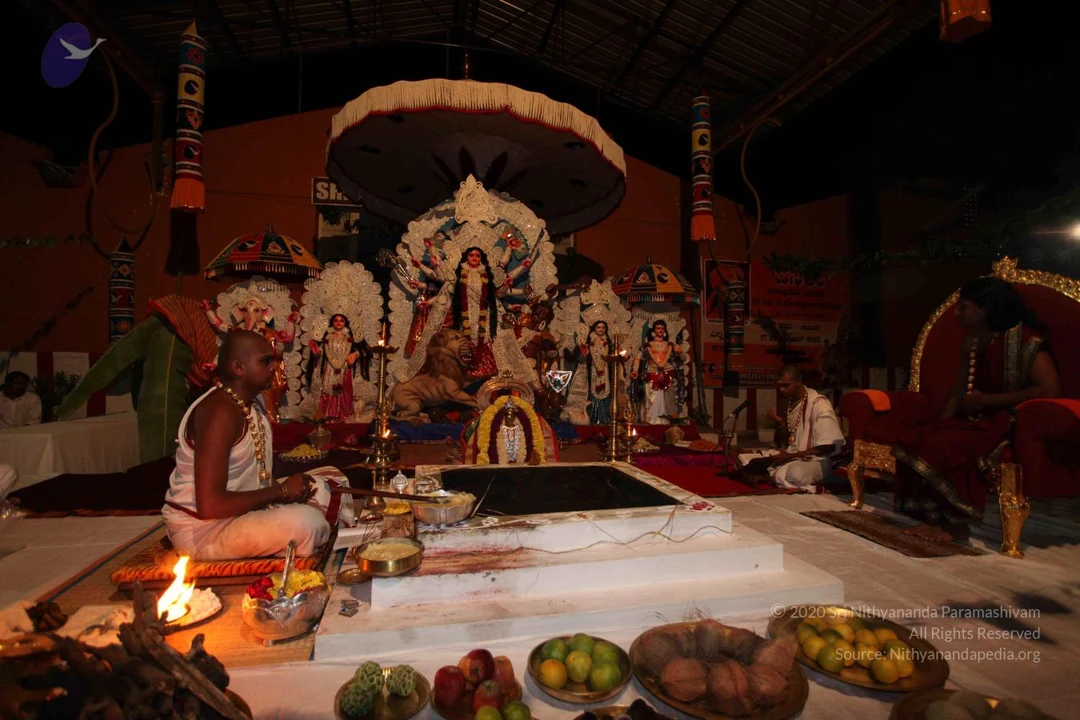
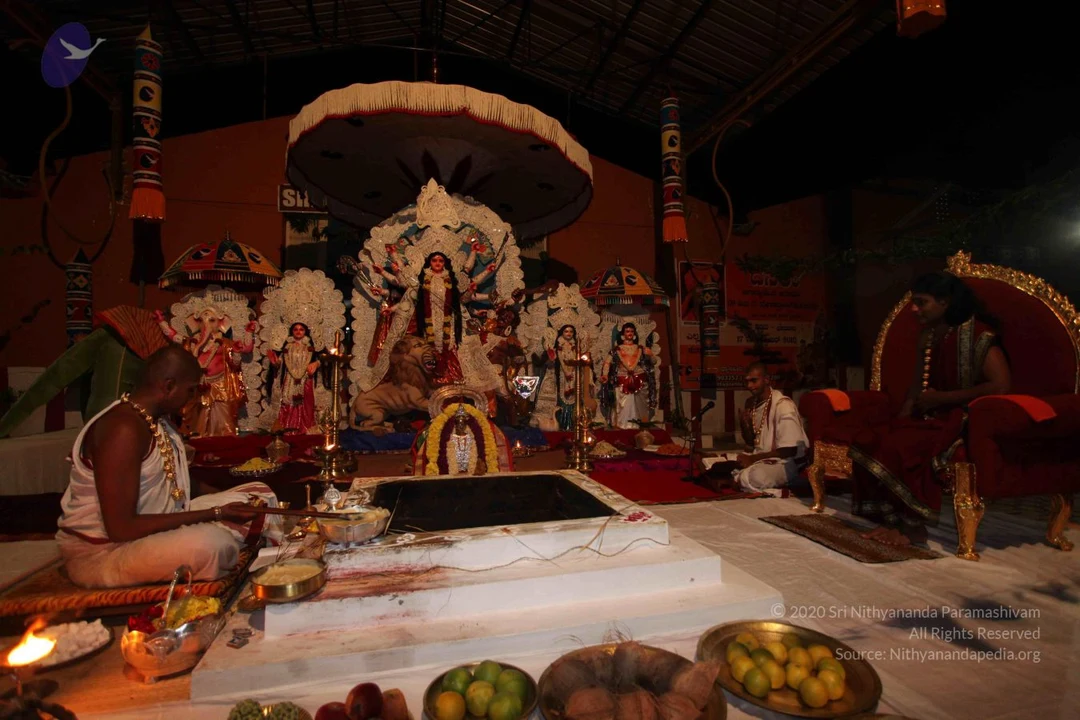
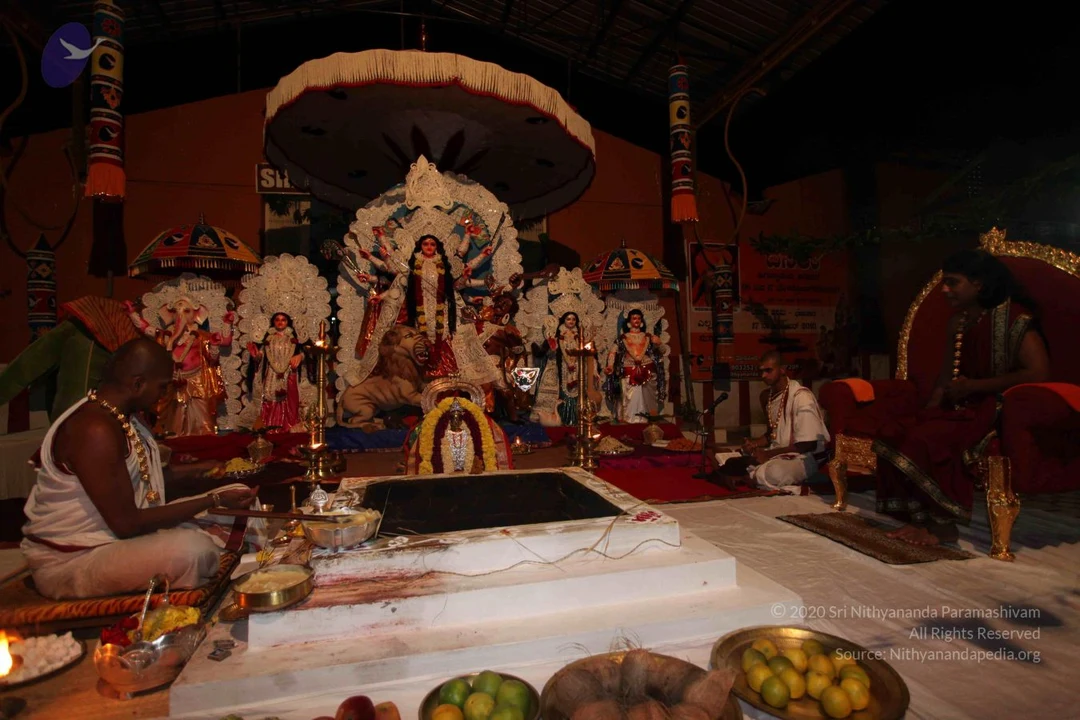
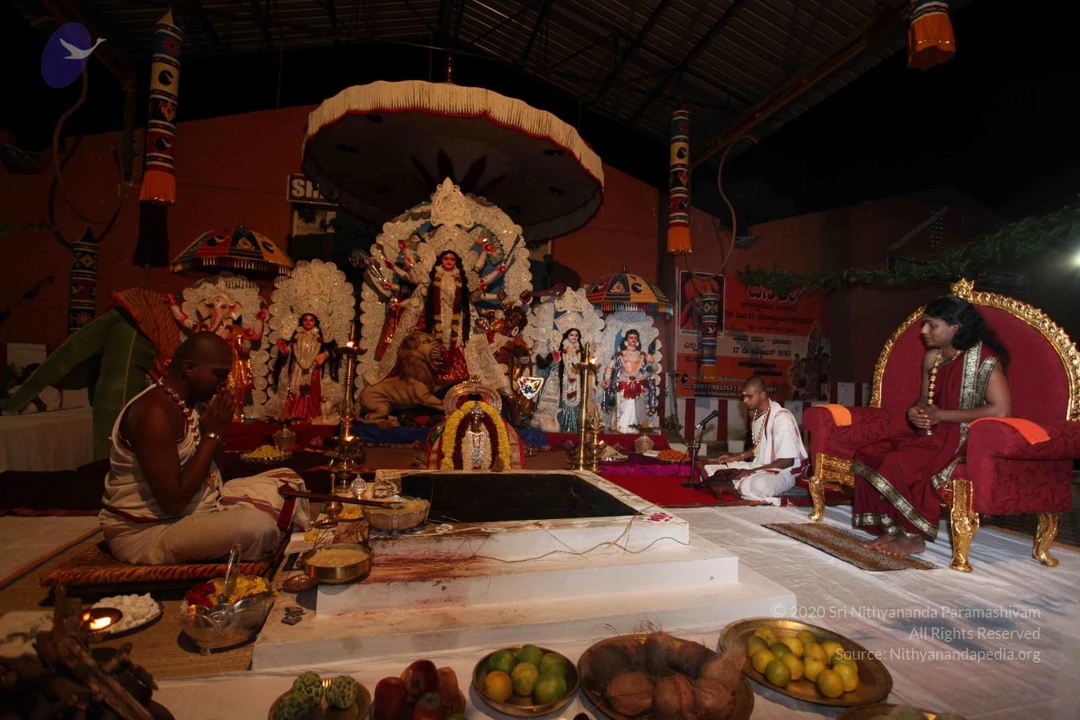
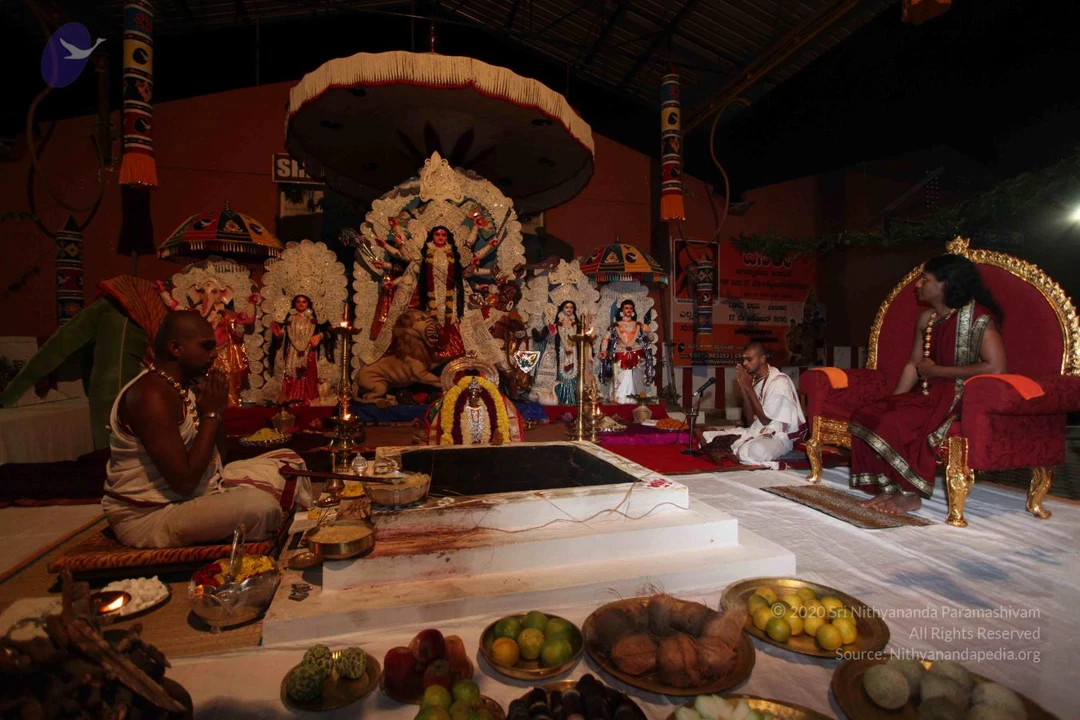
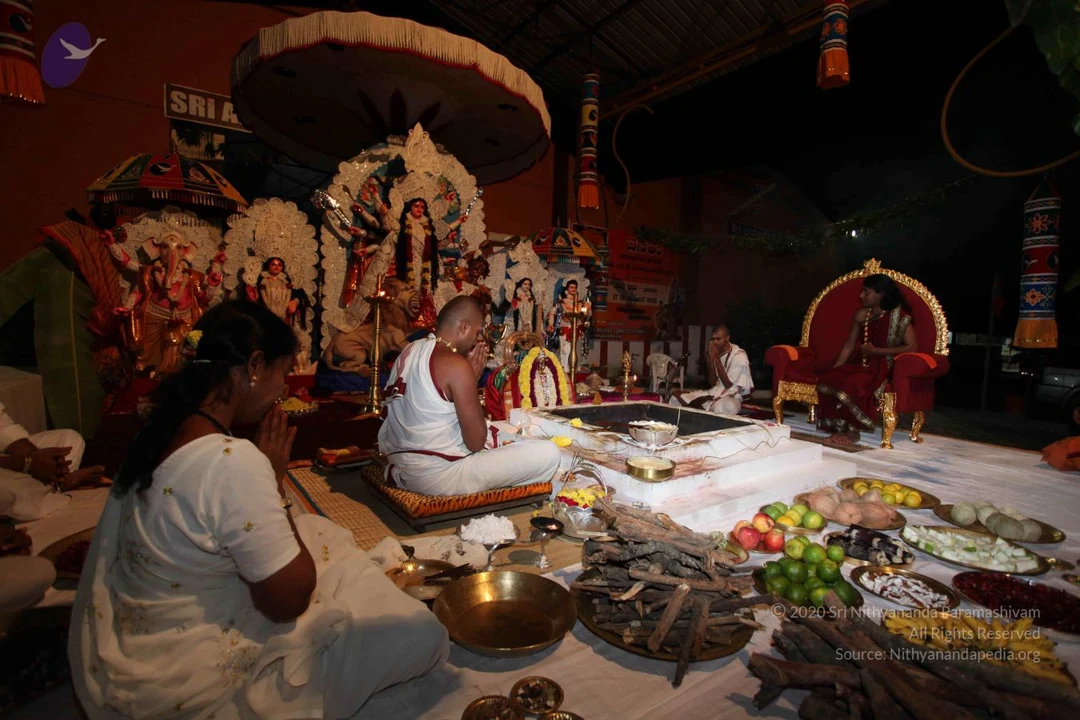
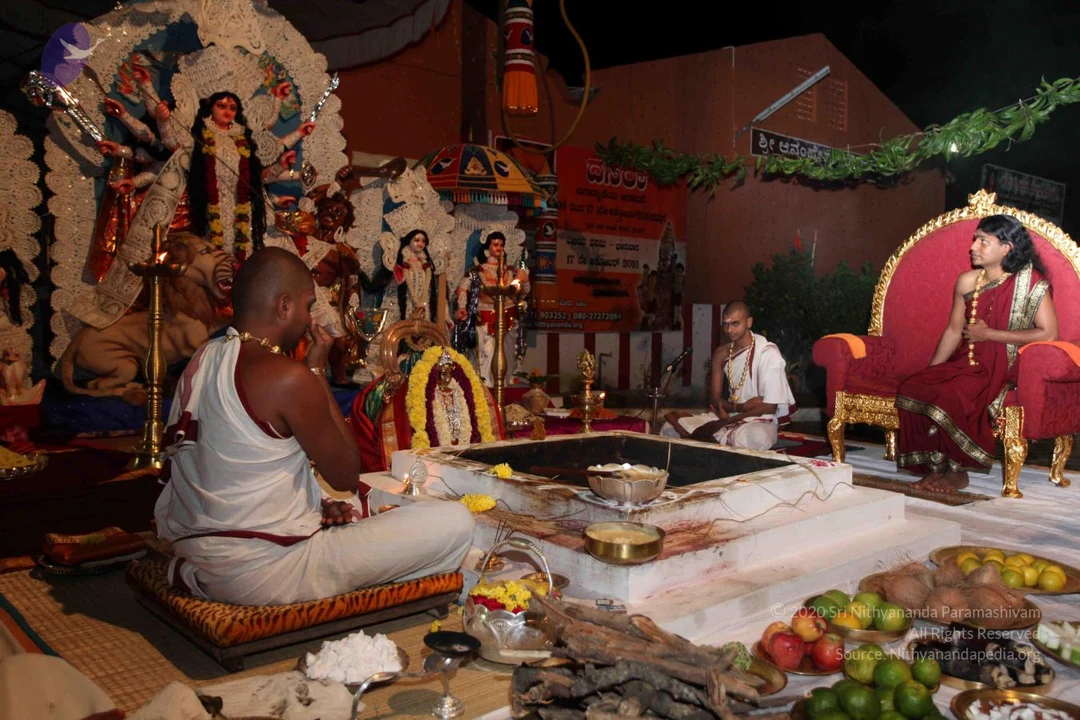
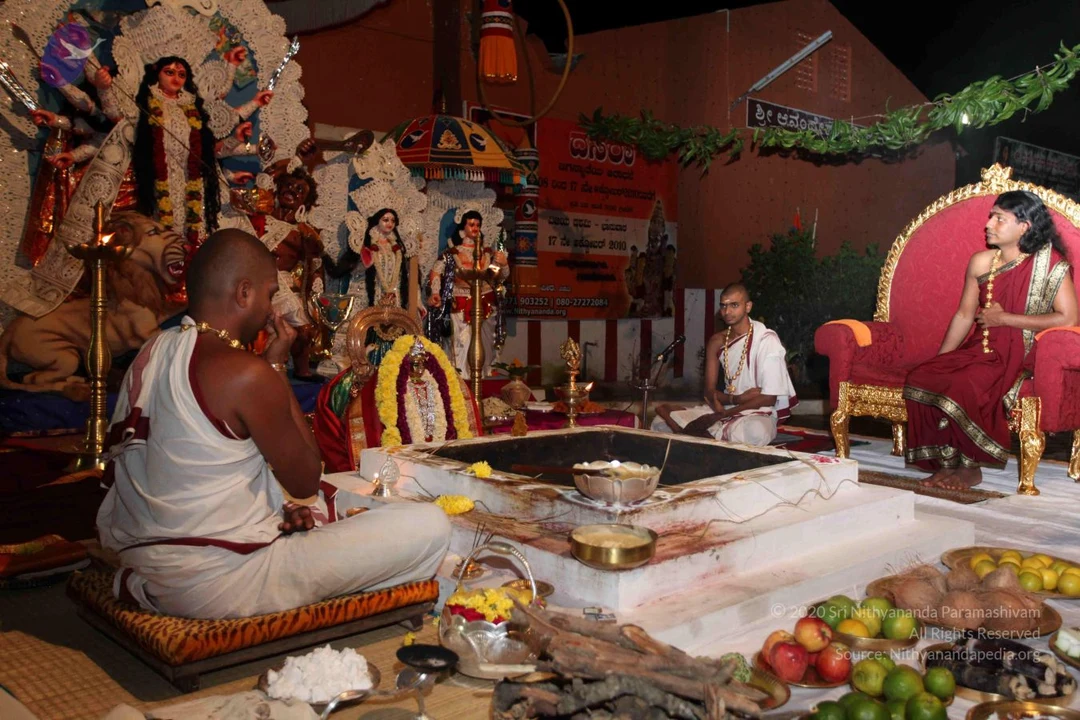
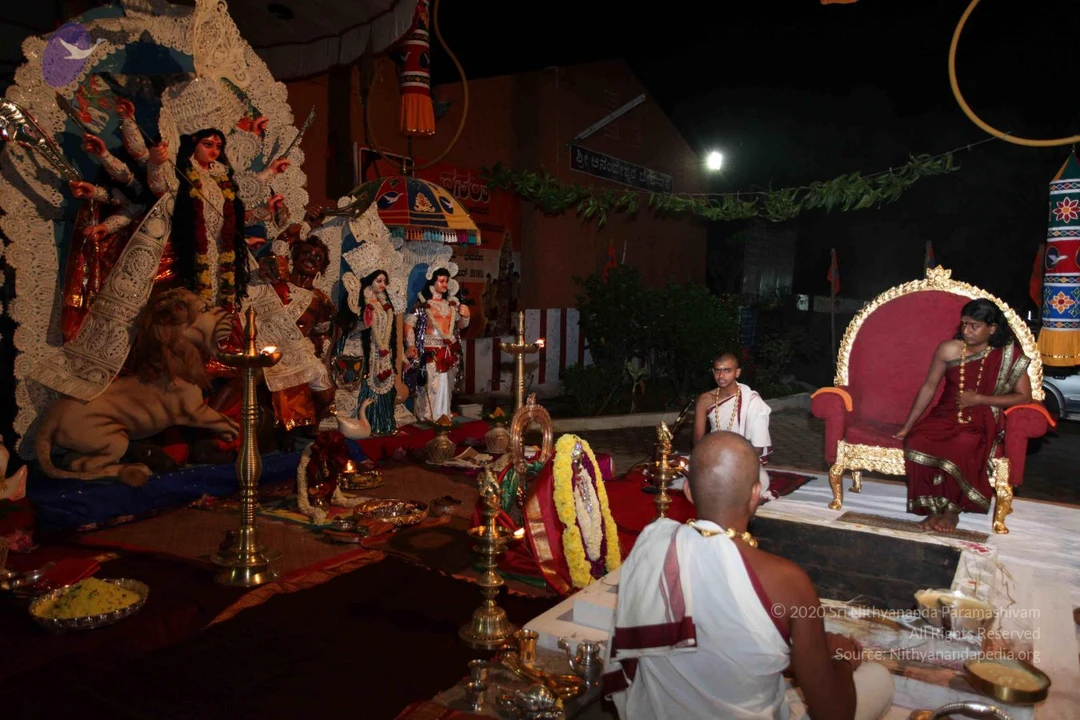
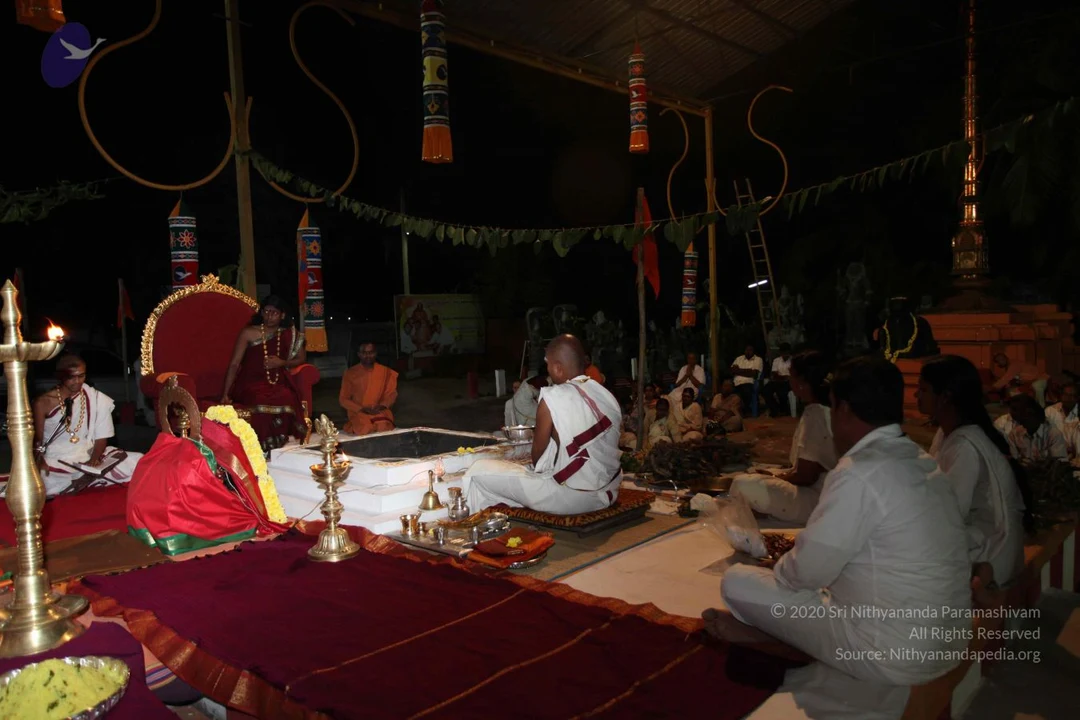
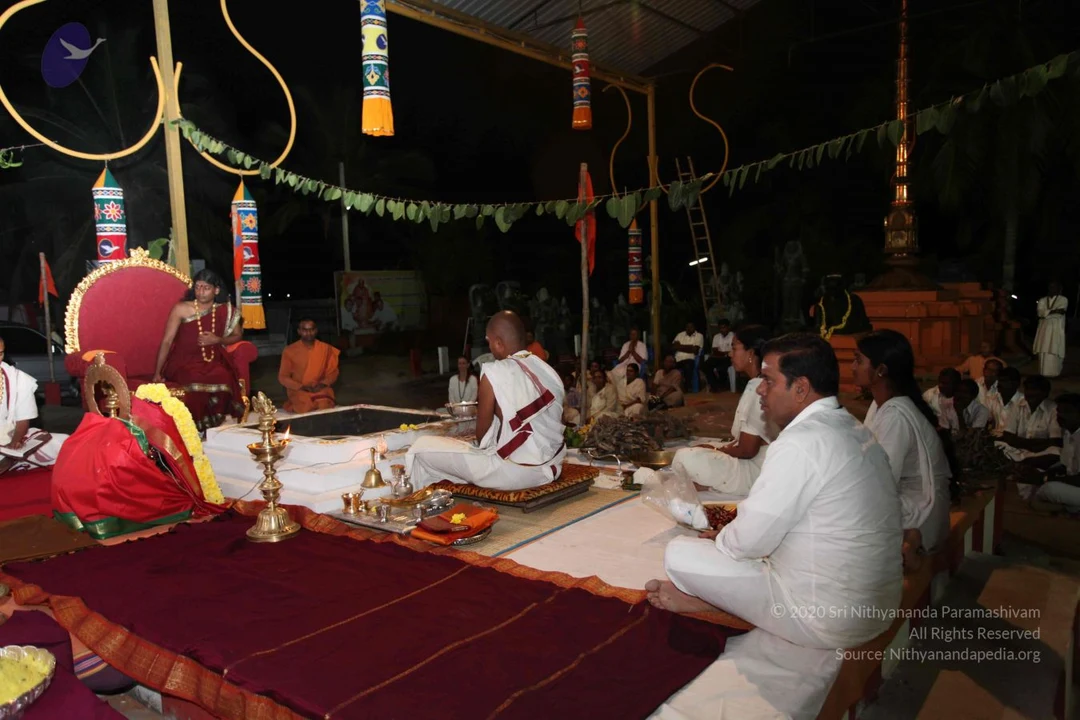
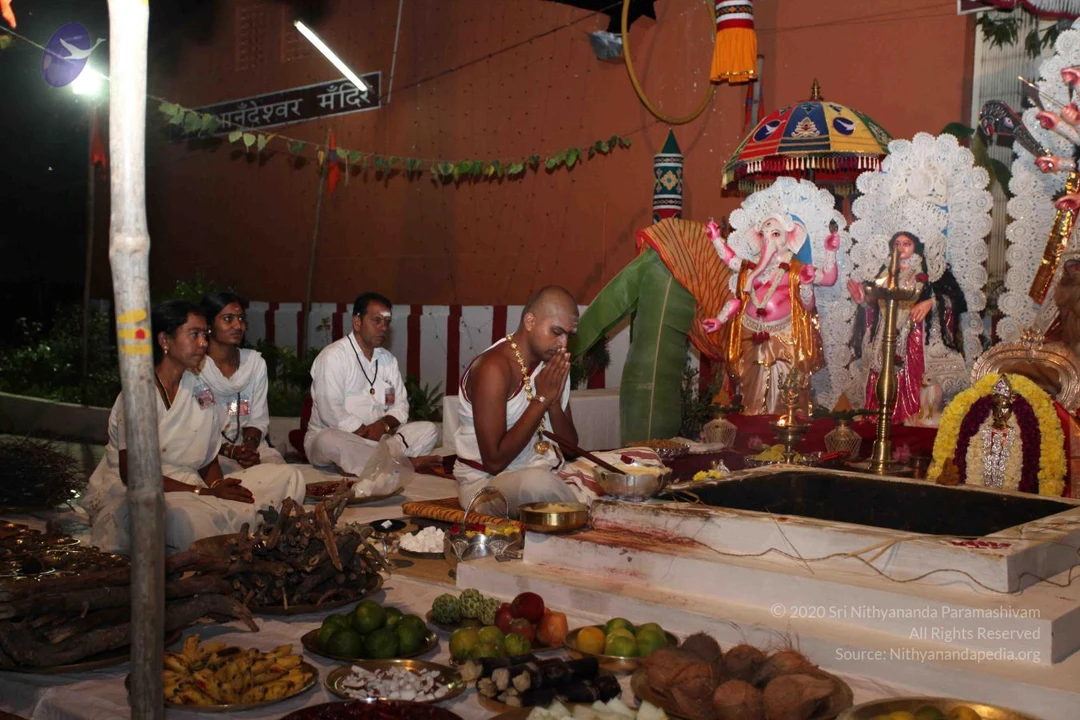
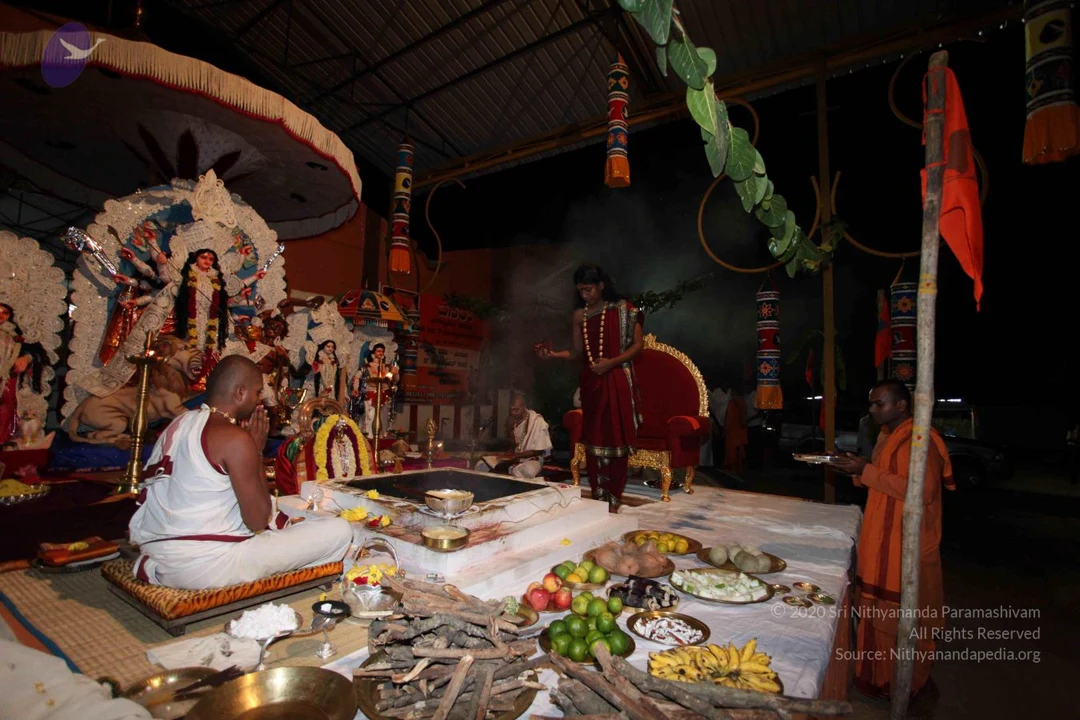
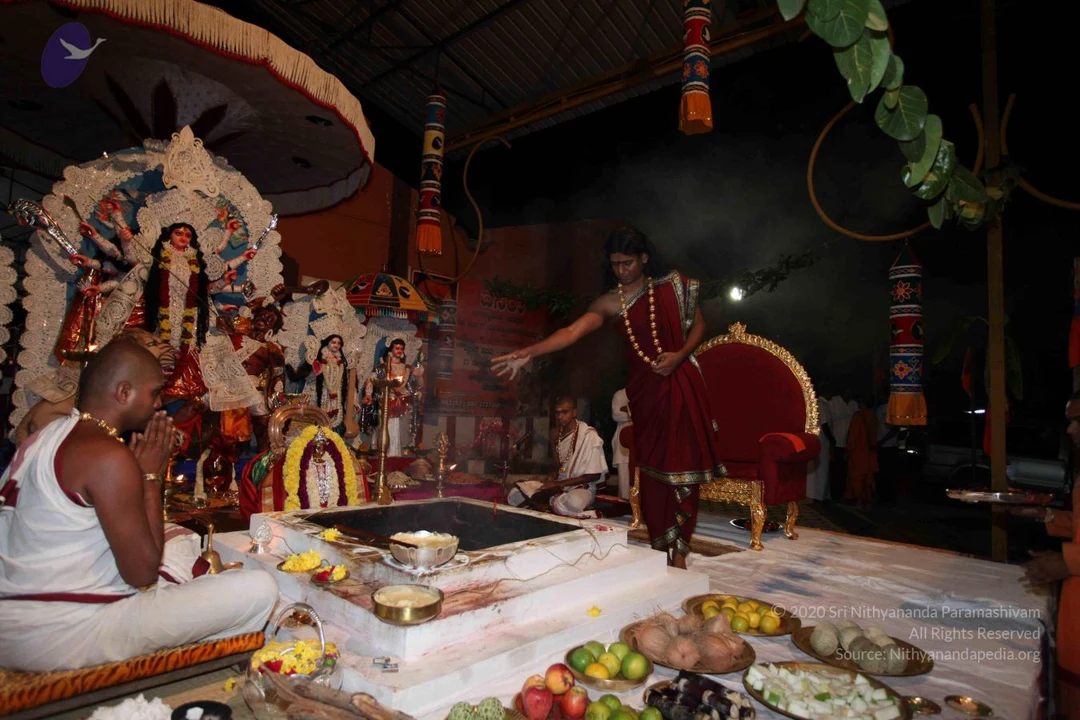
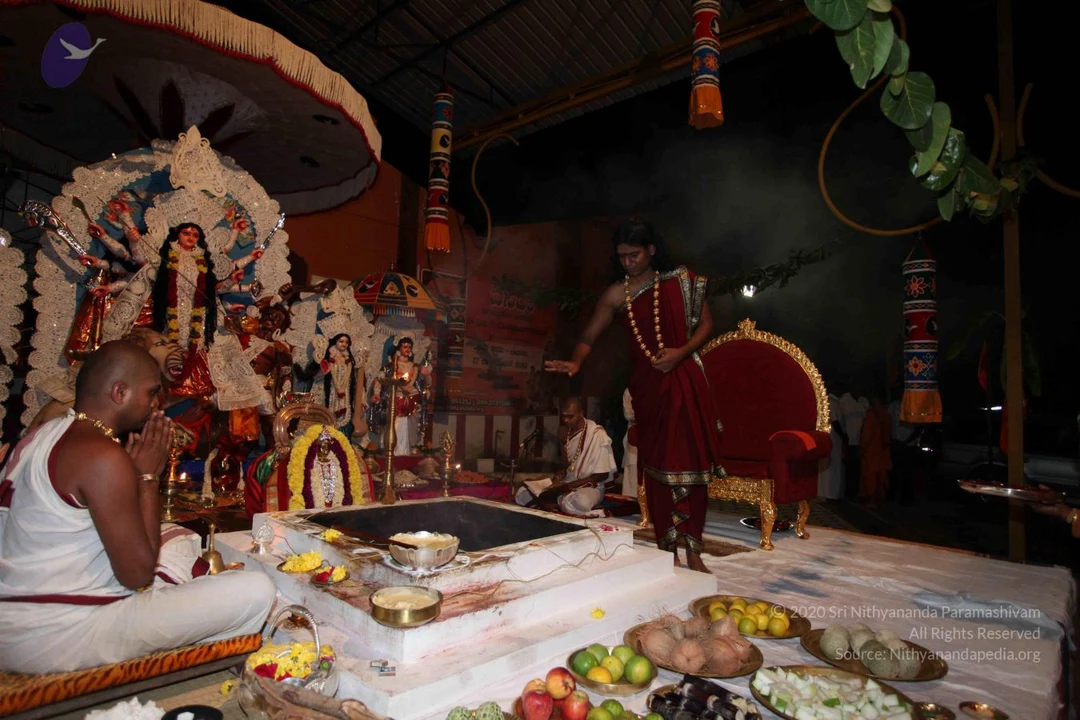
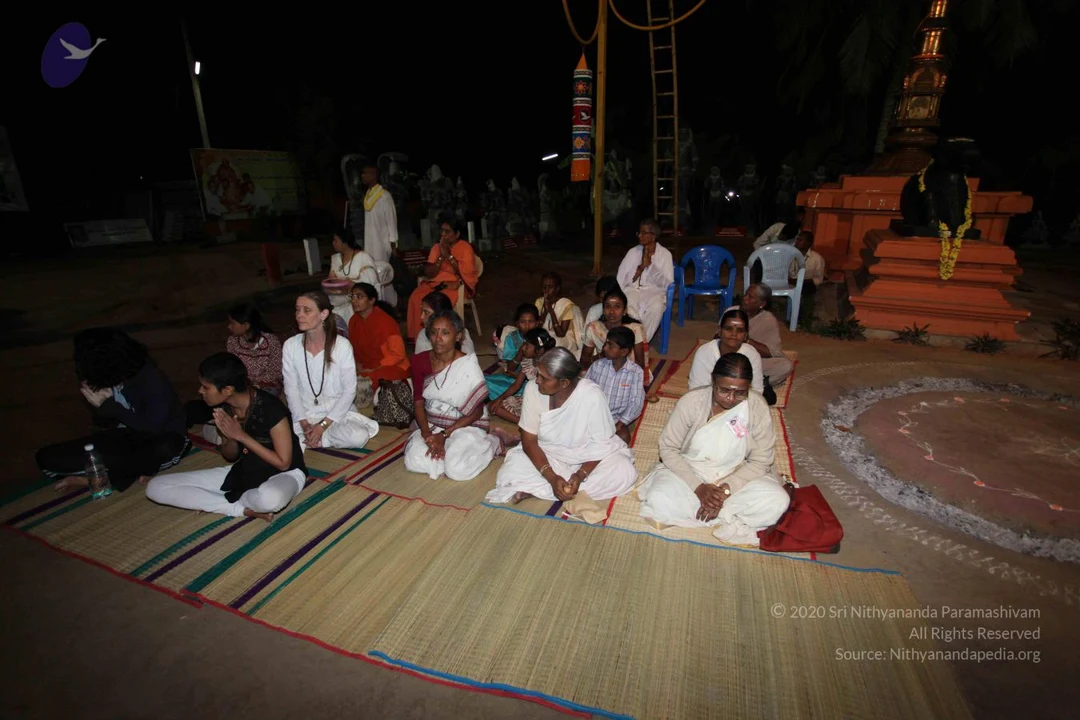
Dasara

Photos Of The Day:

Dasara

Photos Of The Day:

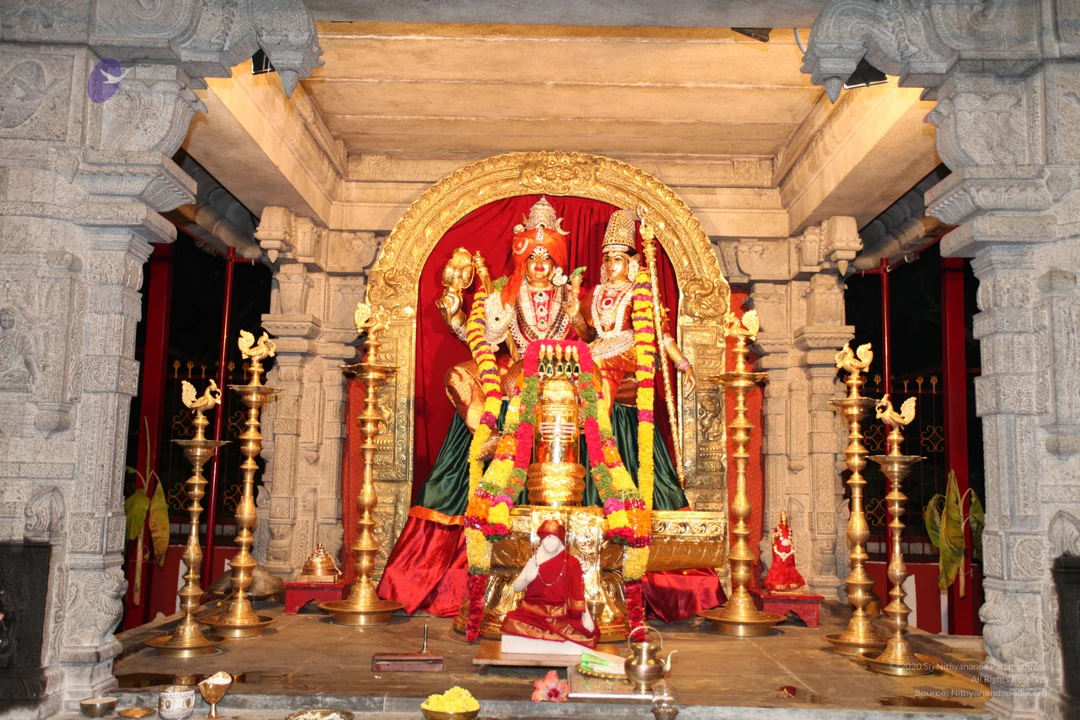
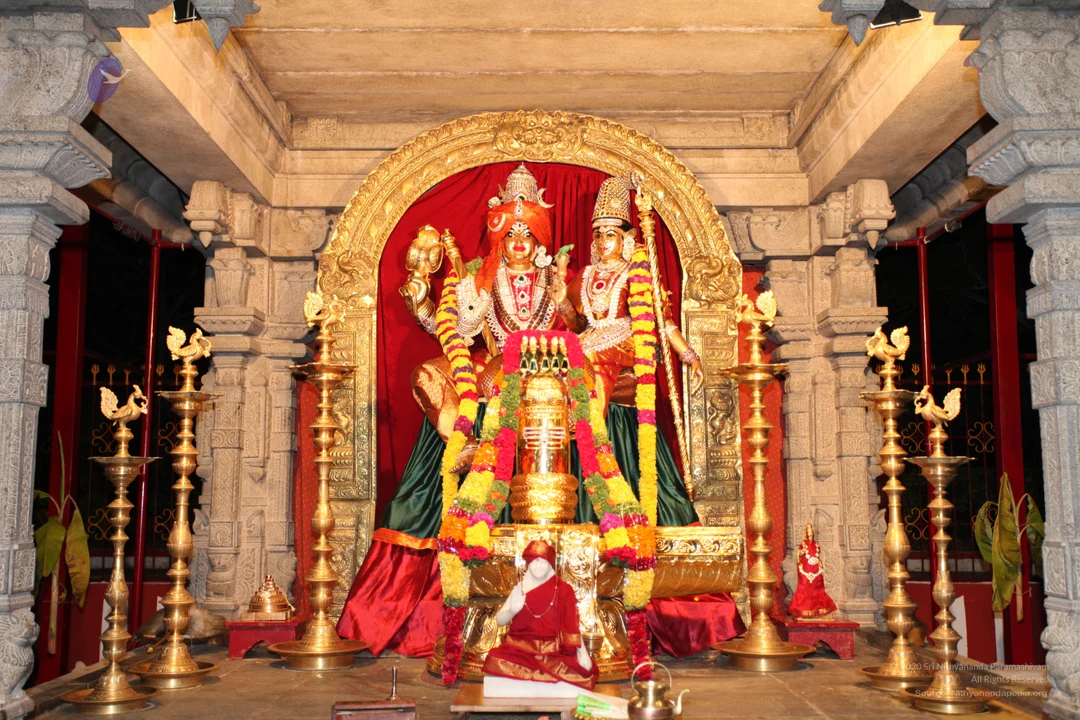
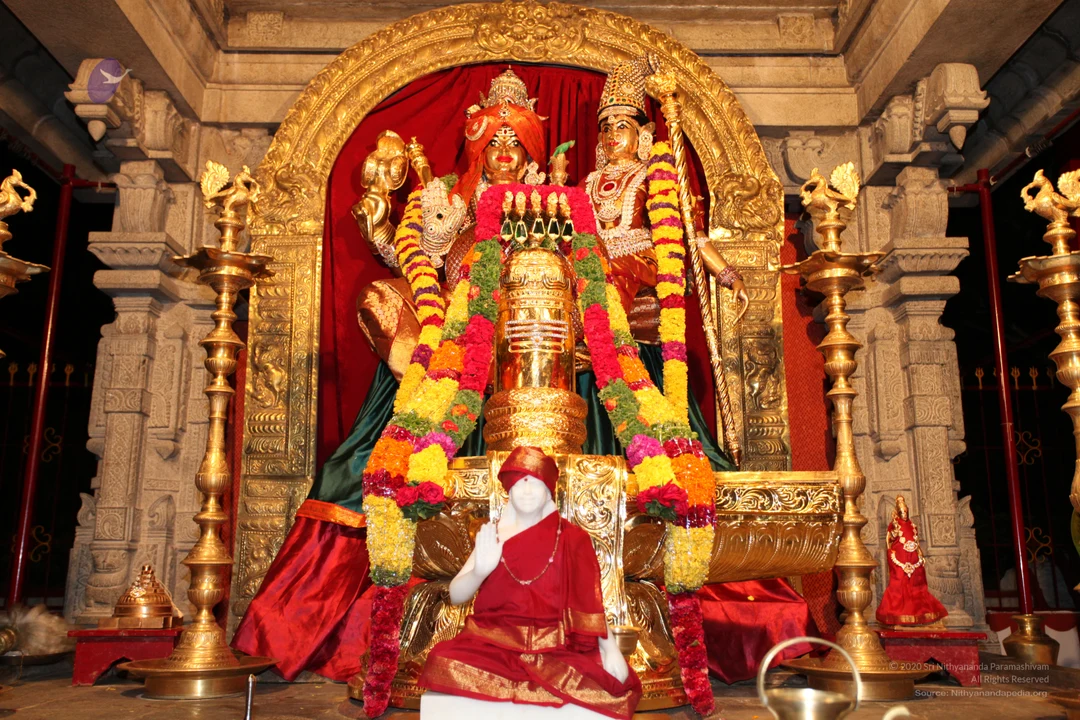
Temple

Pada-Puja

Morning-Satsang

Sarva-Darshan

E-Kalpataru

Pancha-Tapas

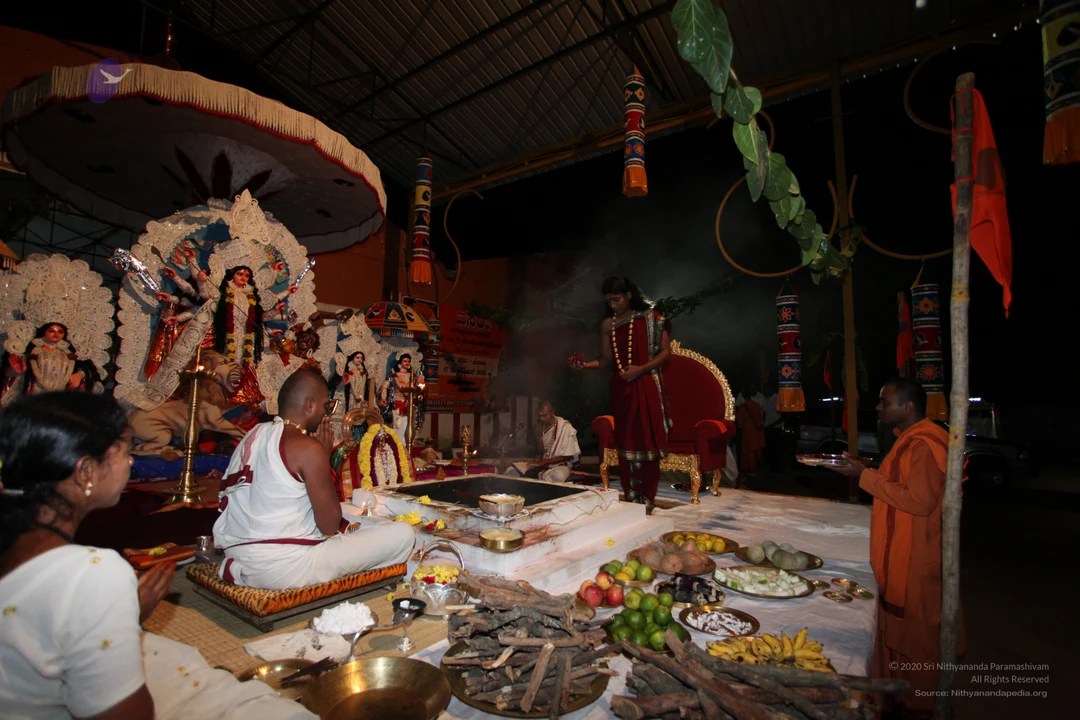
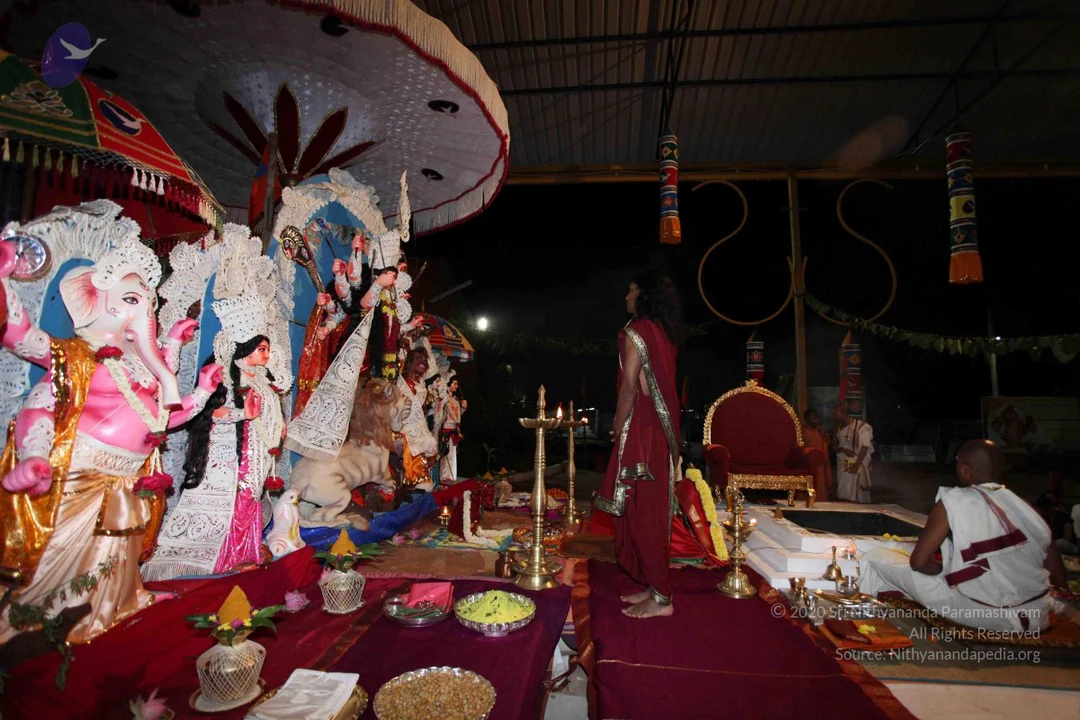
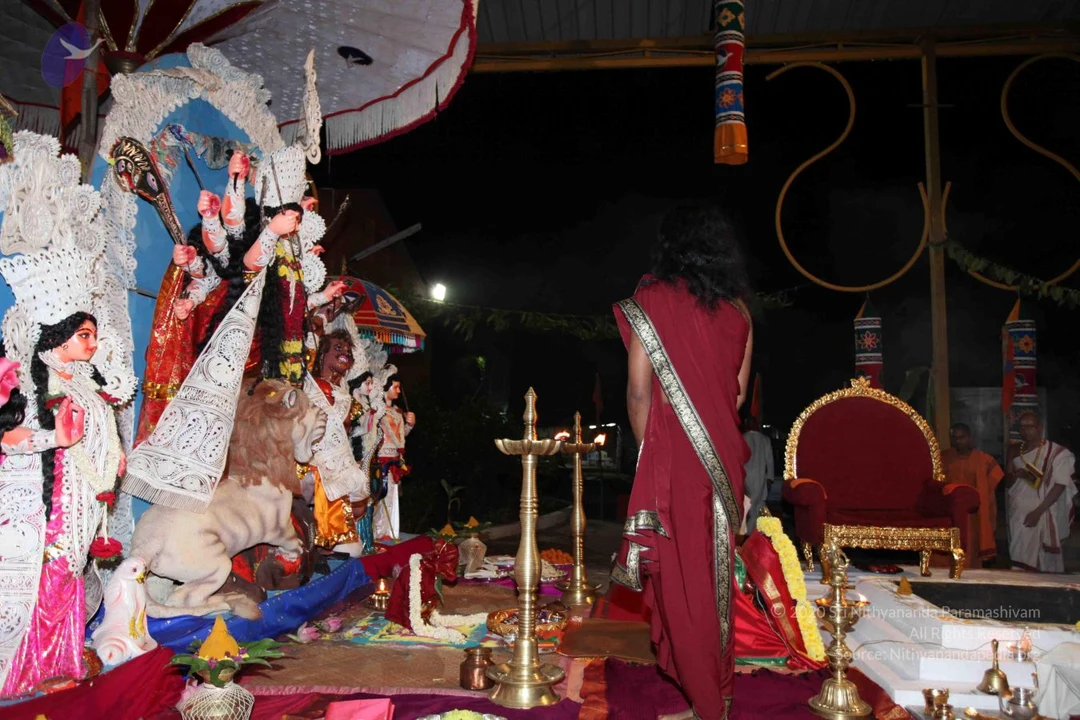
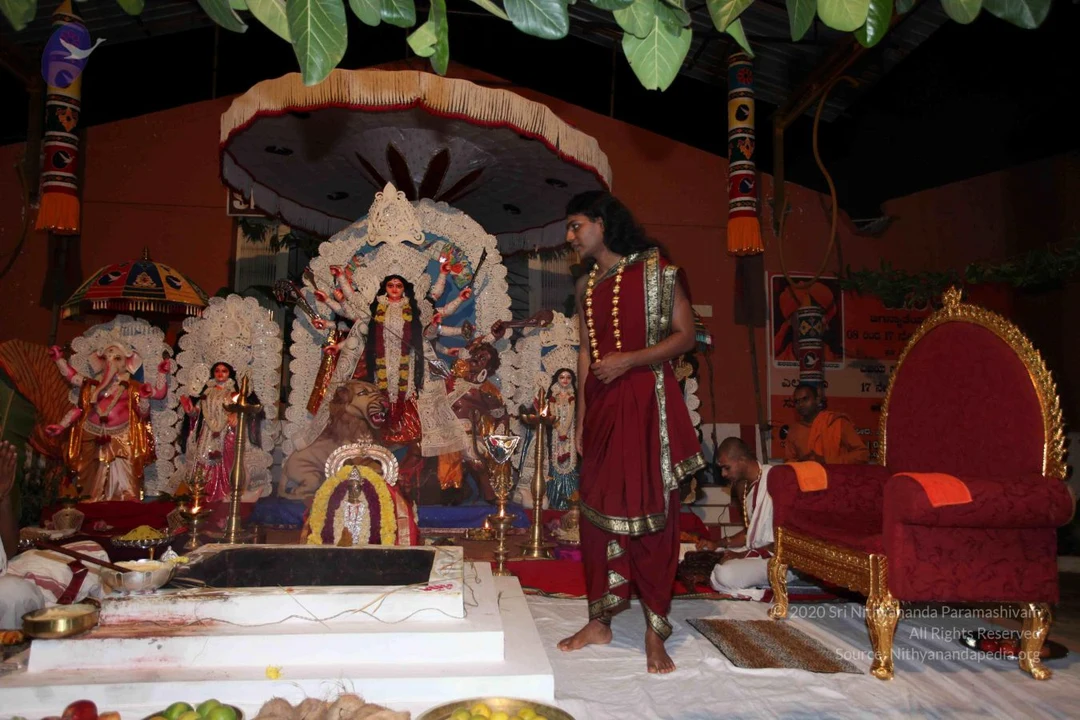
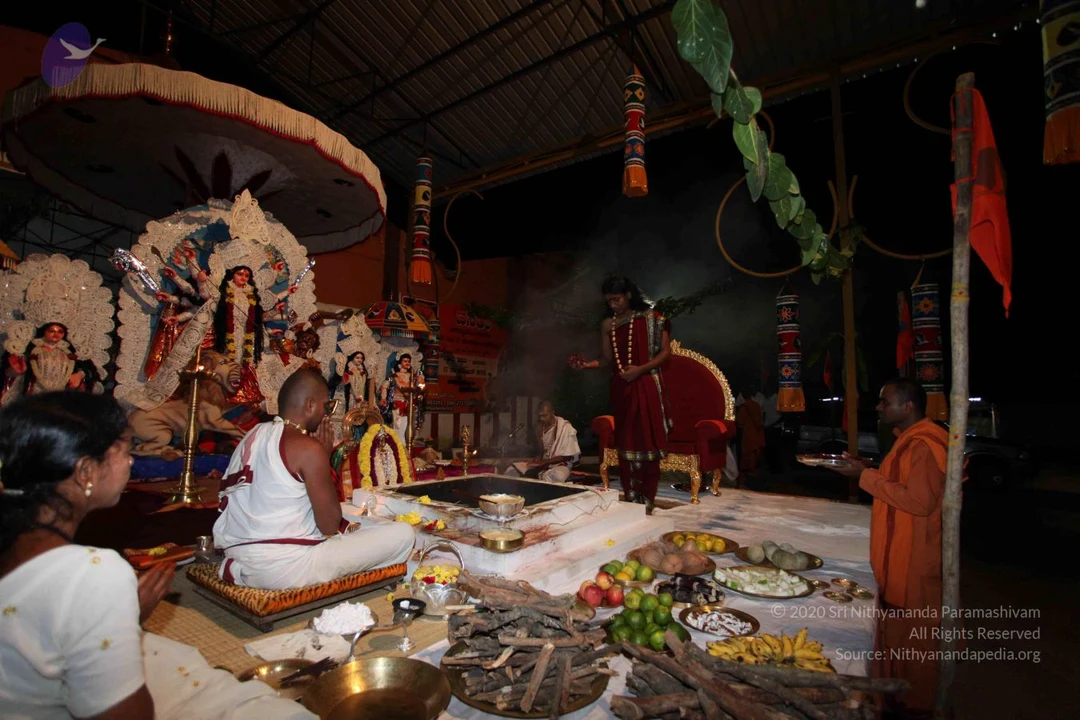
Evening-Dasara-Session

Photos from this day

View all 926 photos

Panchatapas

3 photosSource gallery

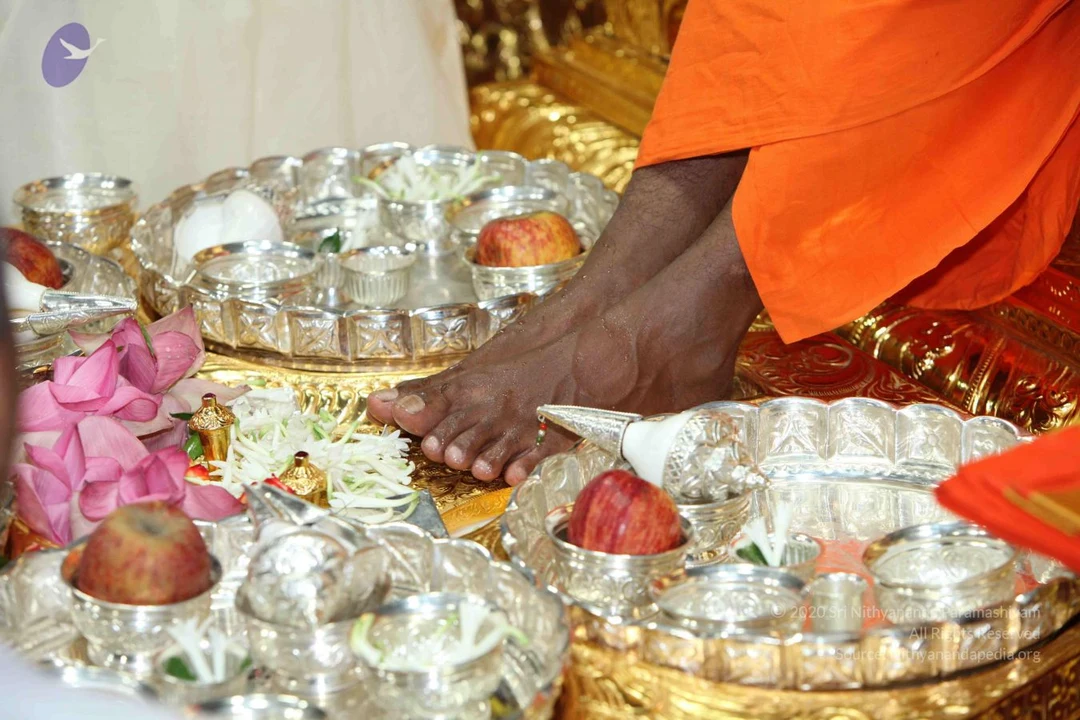
Paadapooja
4 photosSource gallery

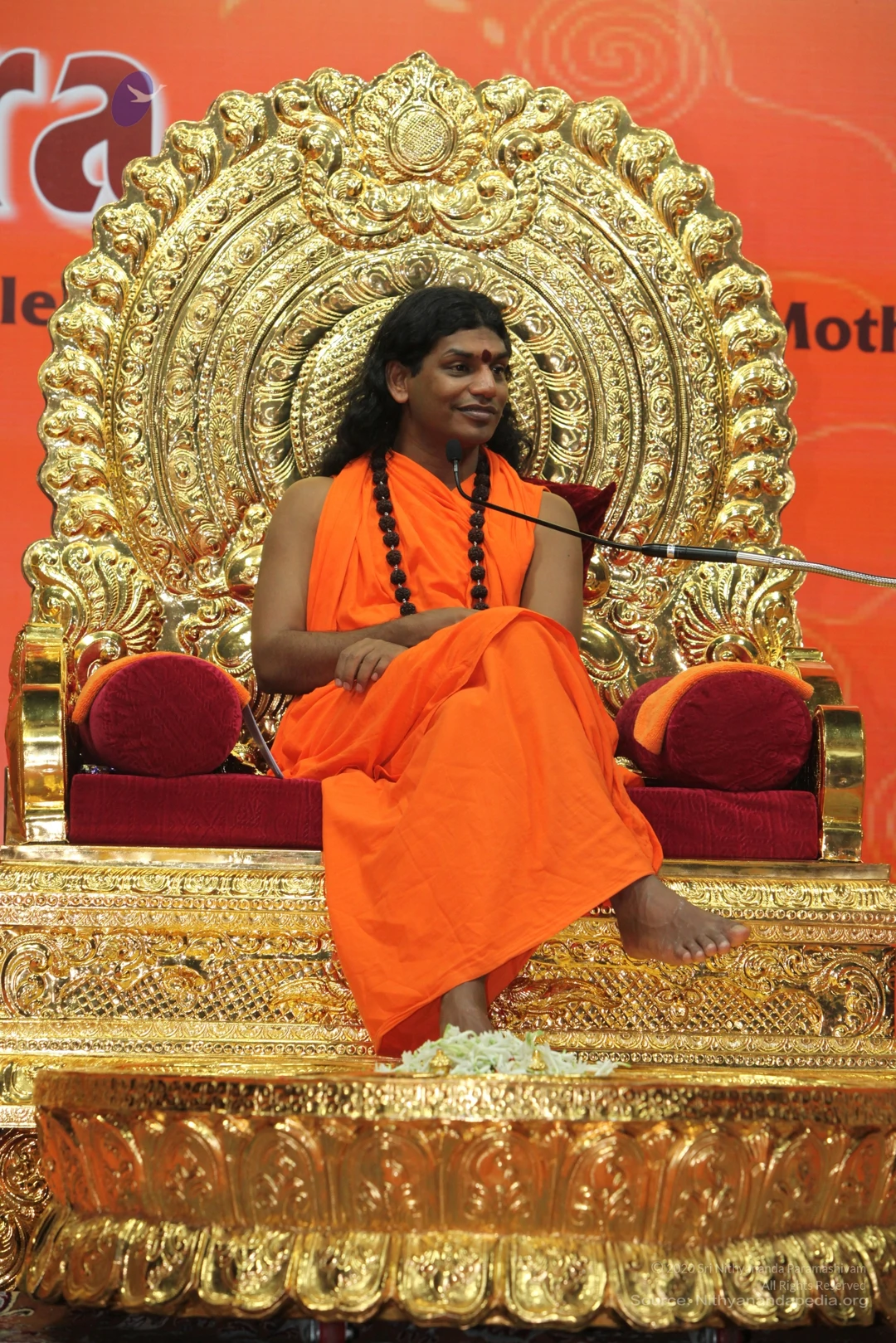
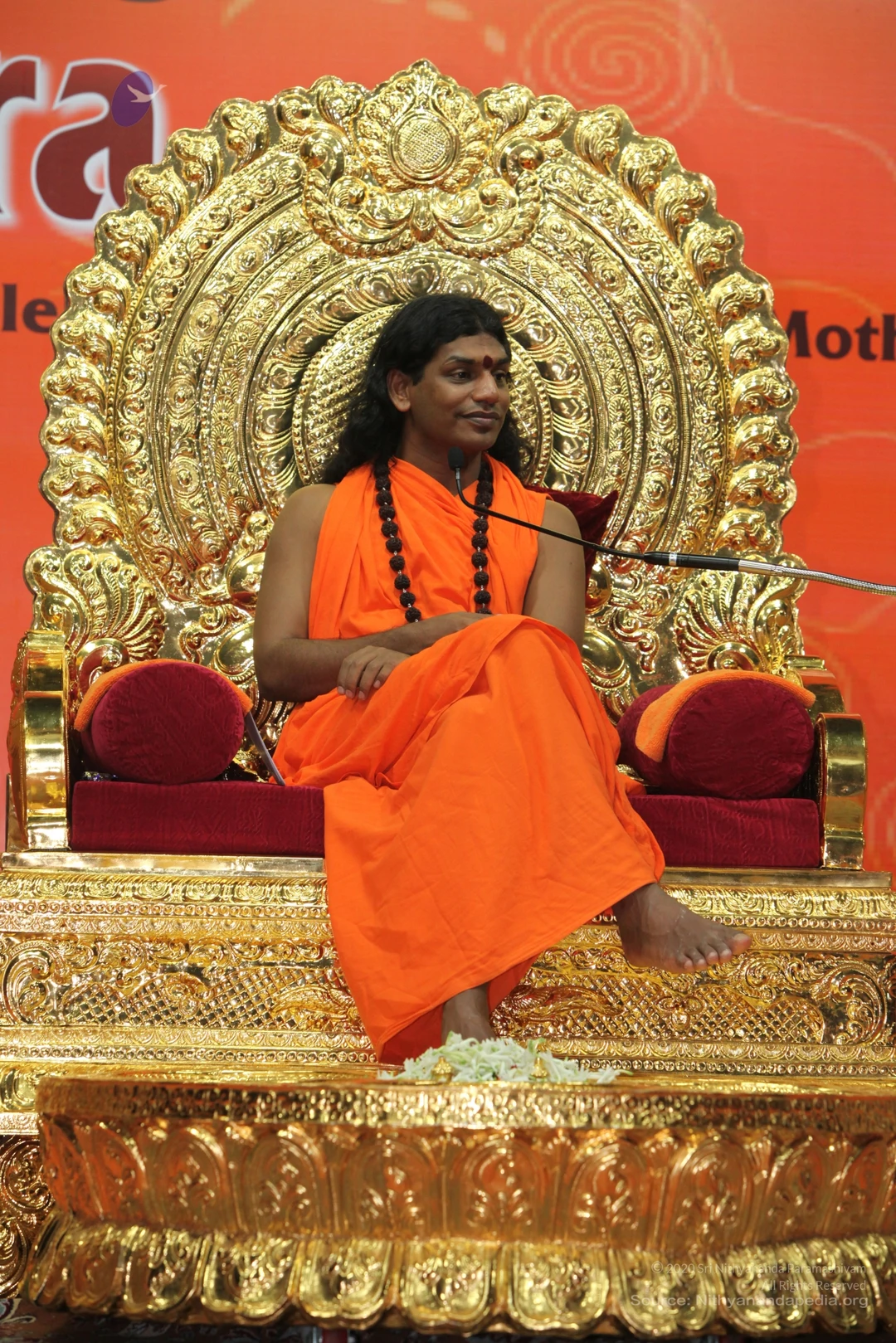
Morning-Satsang
4 photosSource gallery
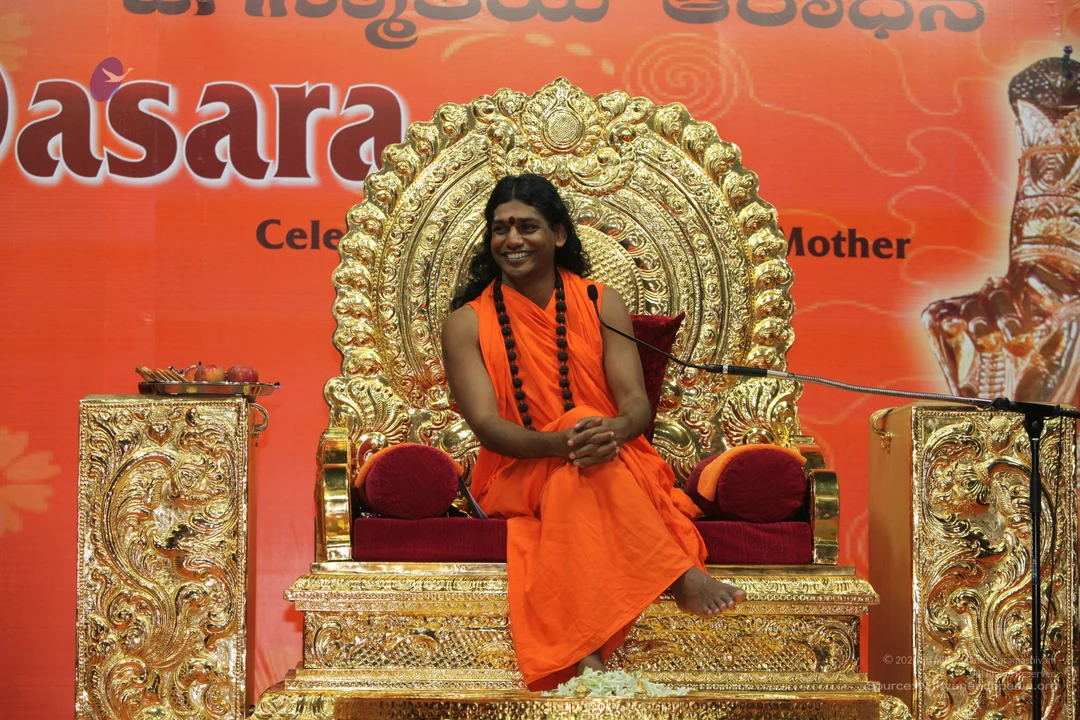
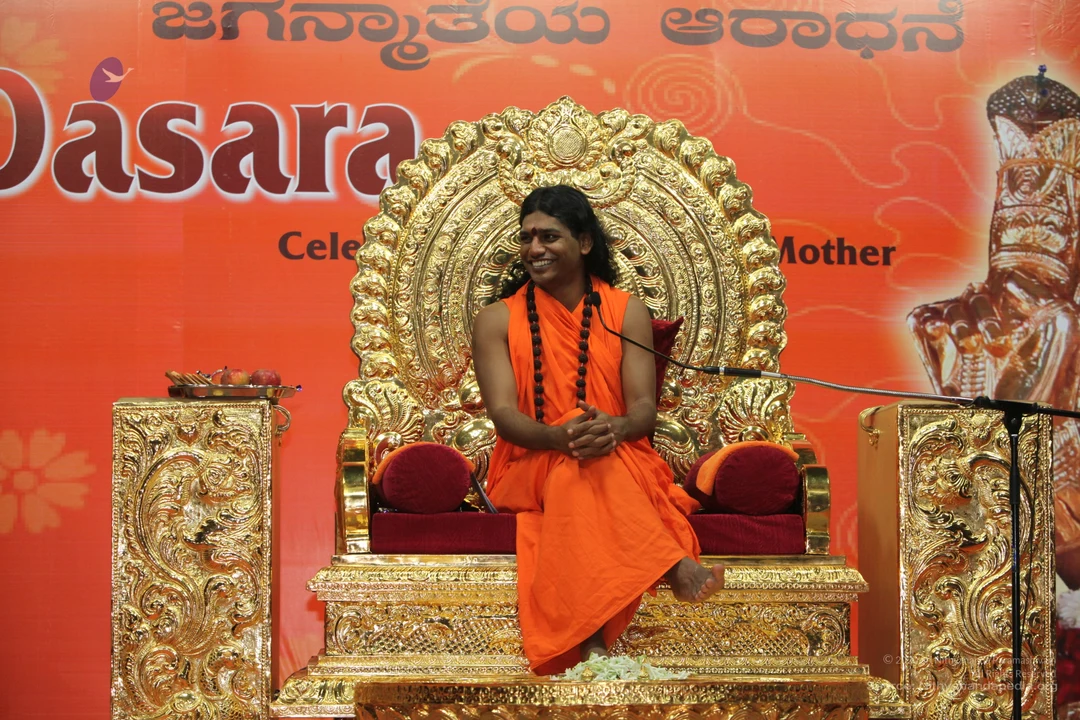
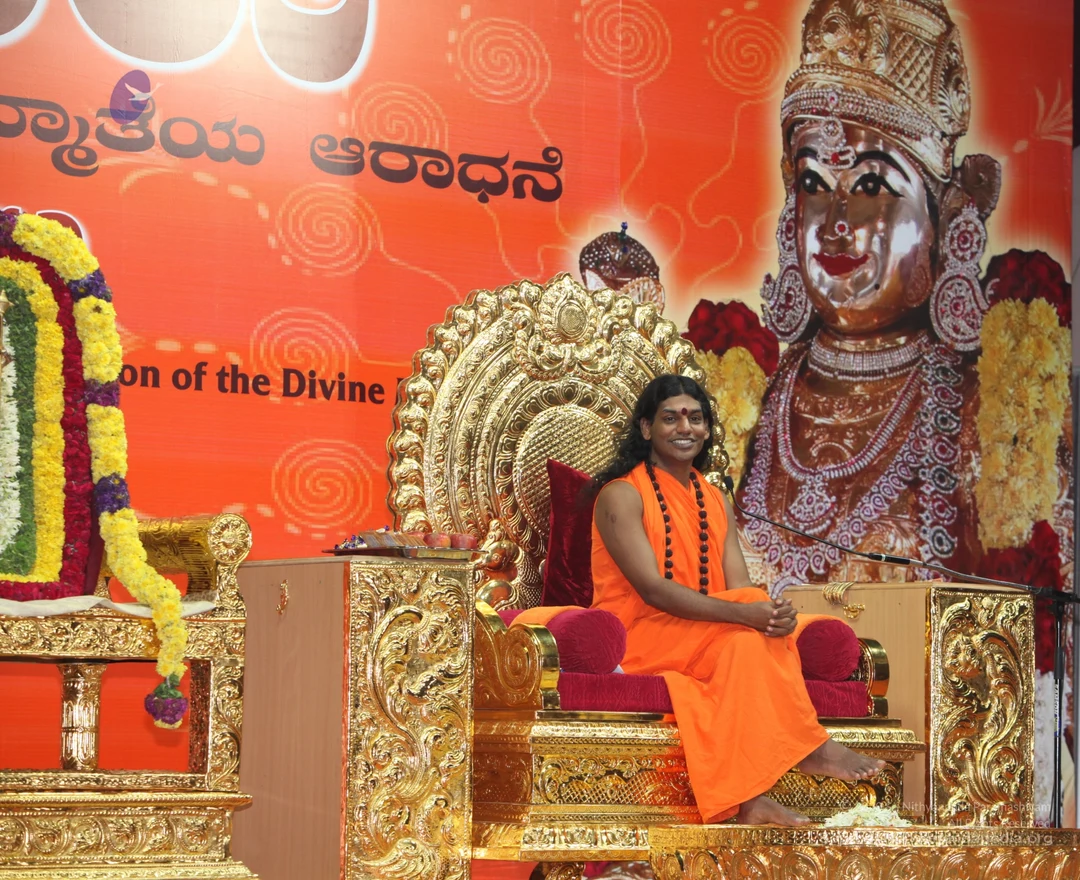
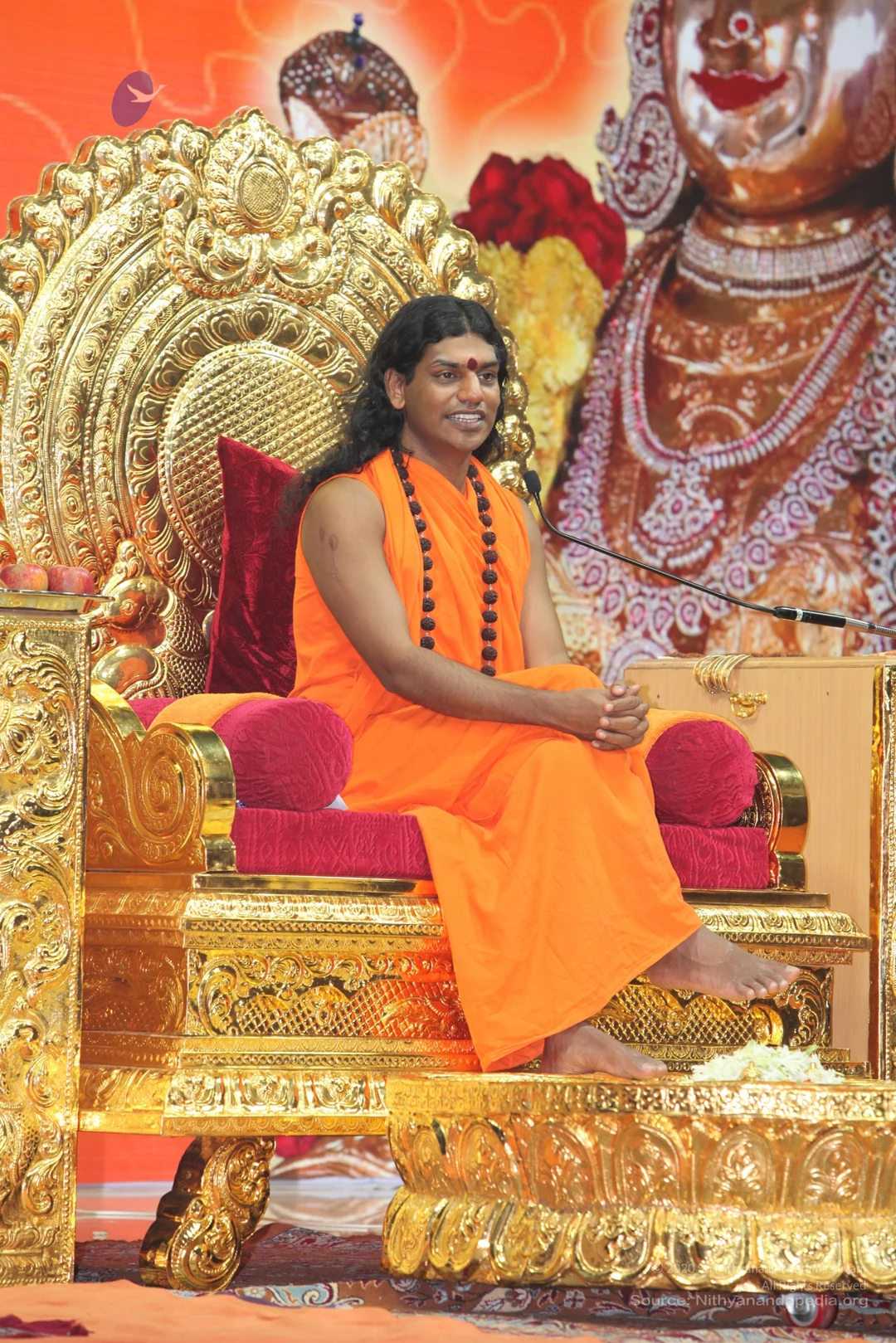
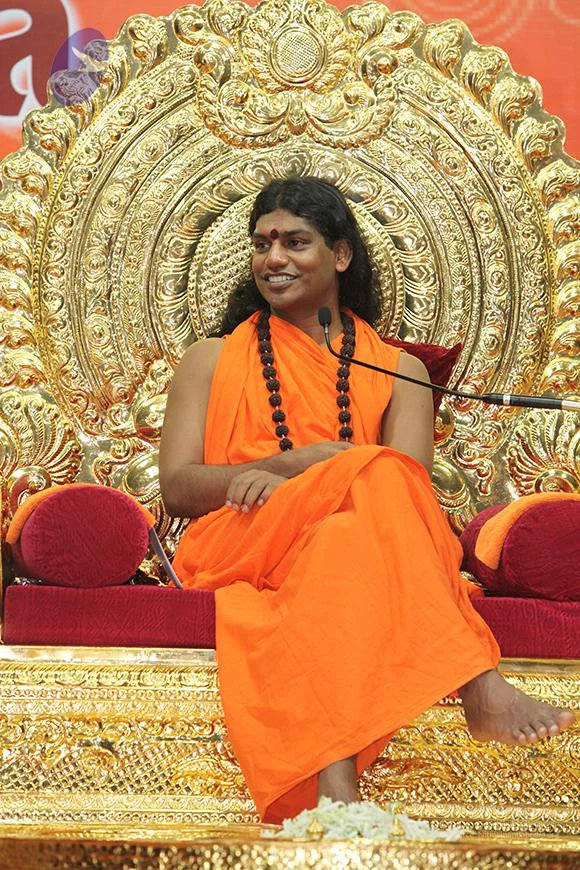
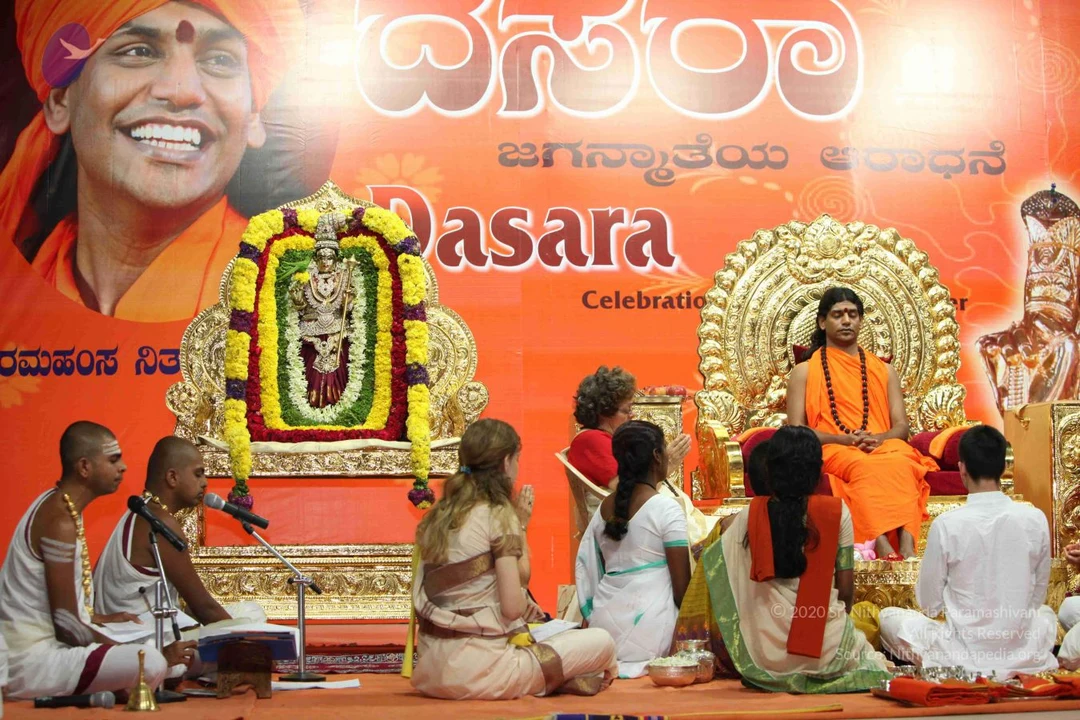
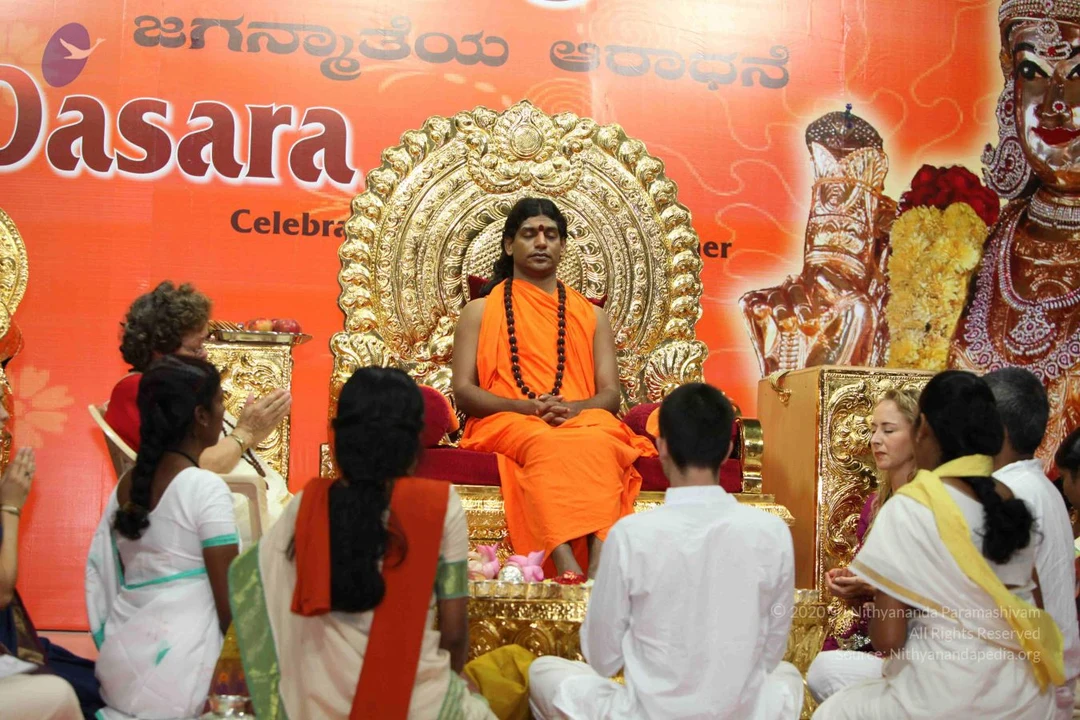
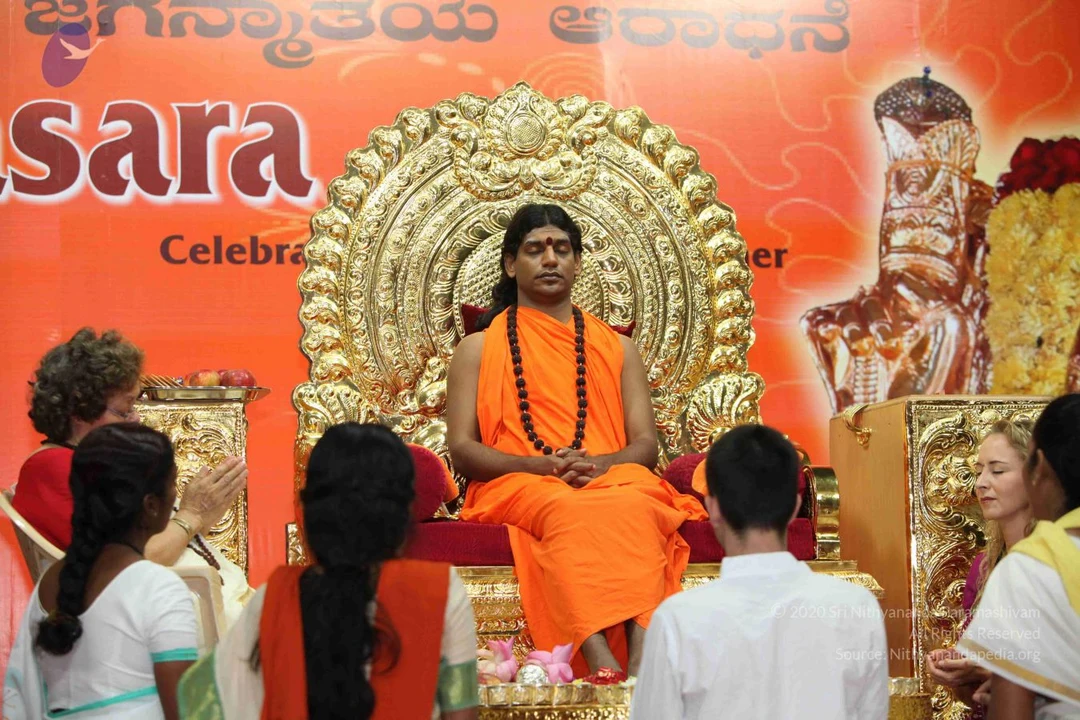
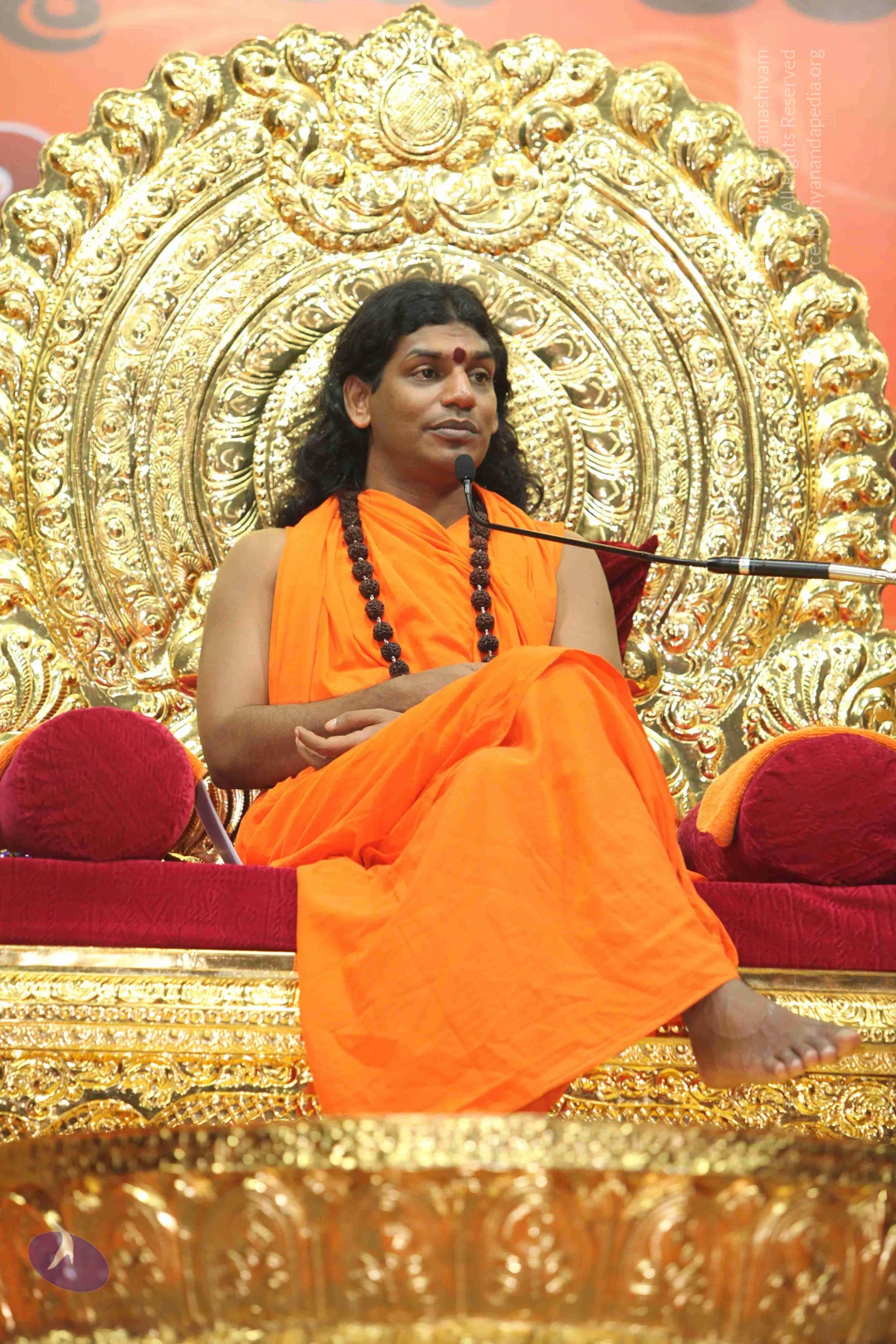
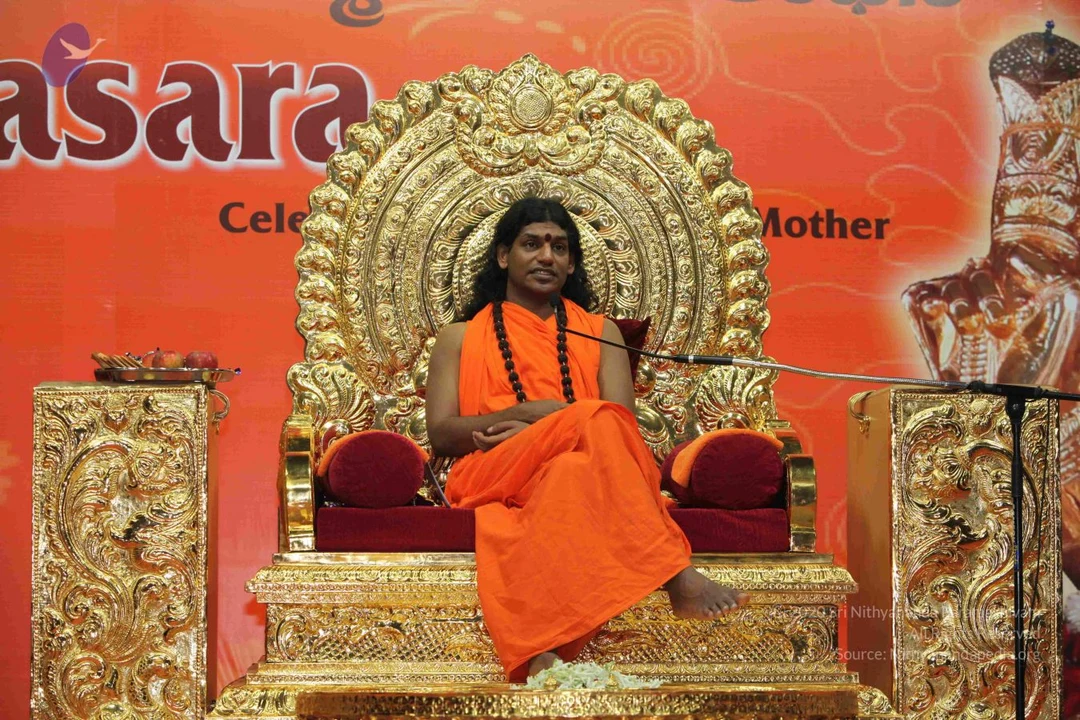
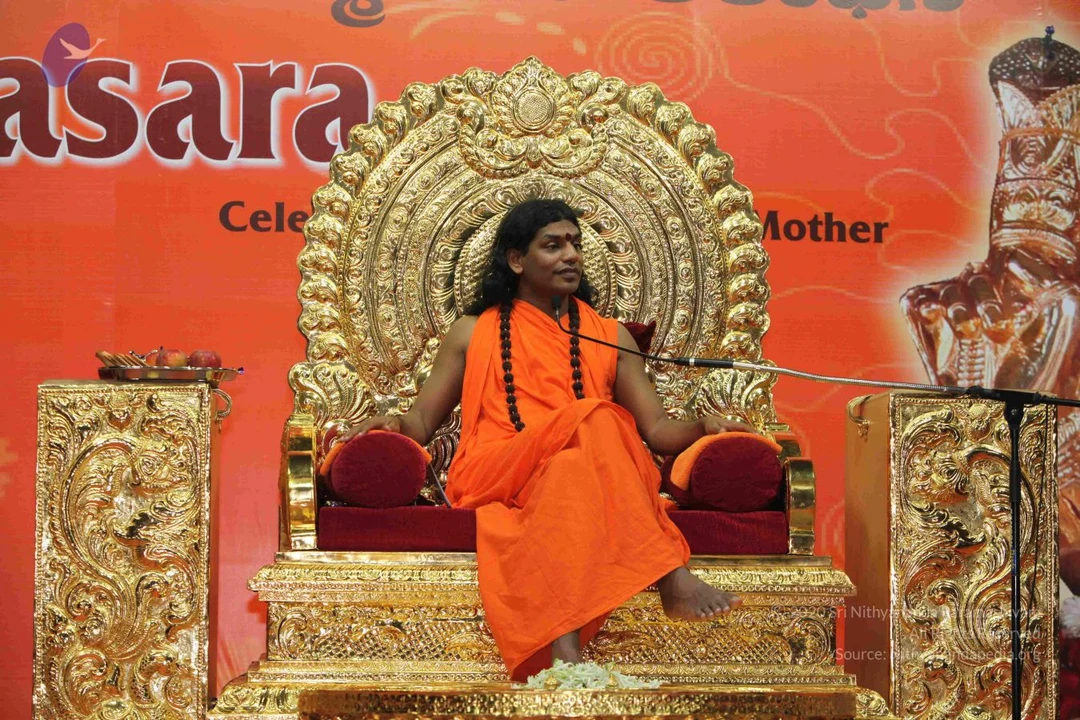
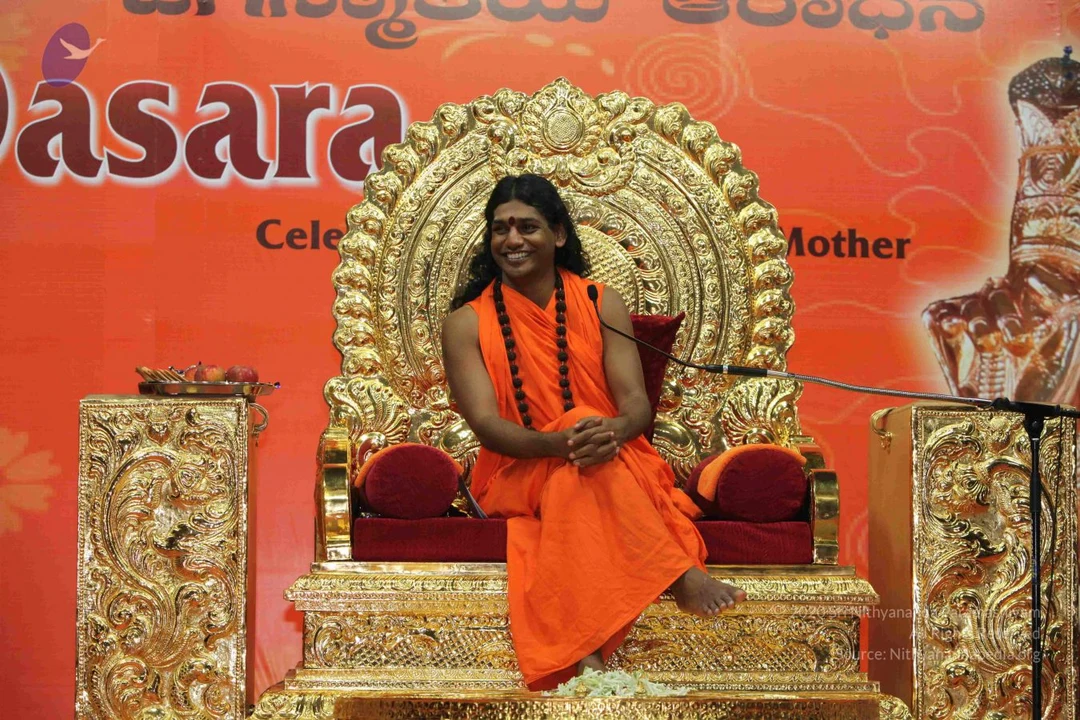
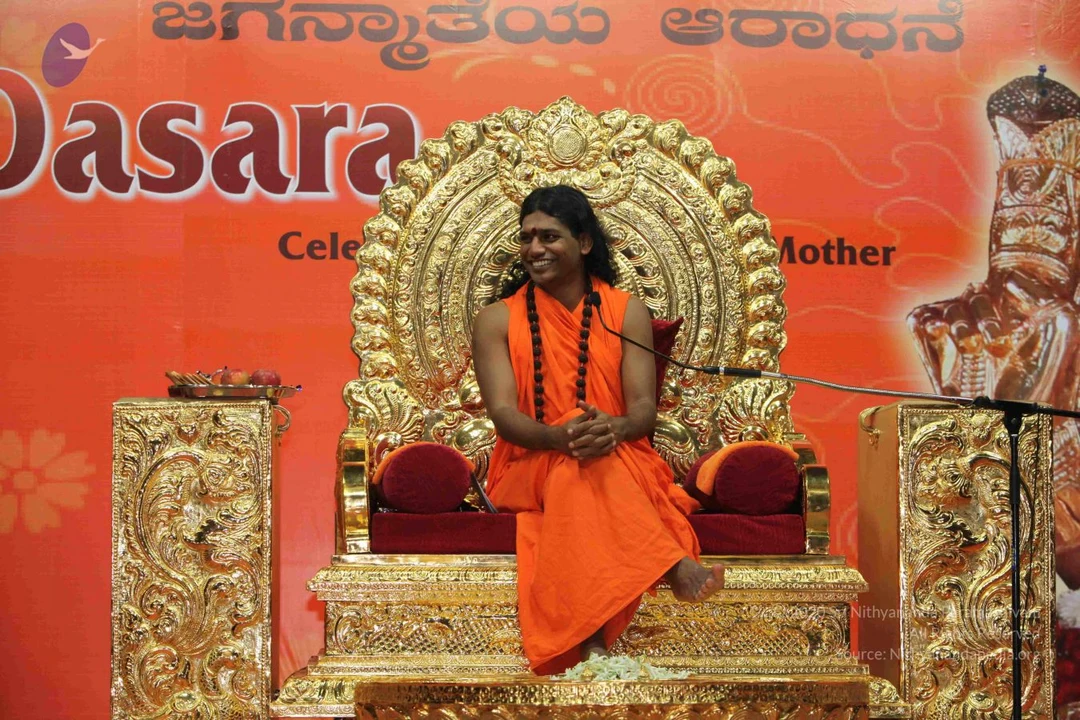
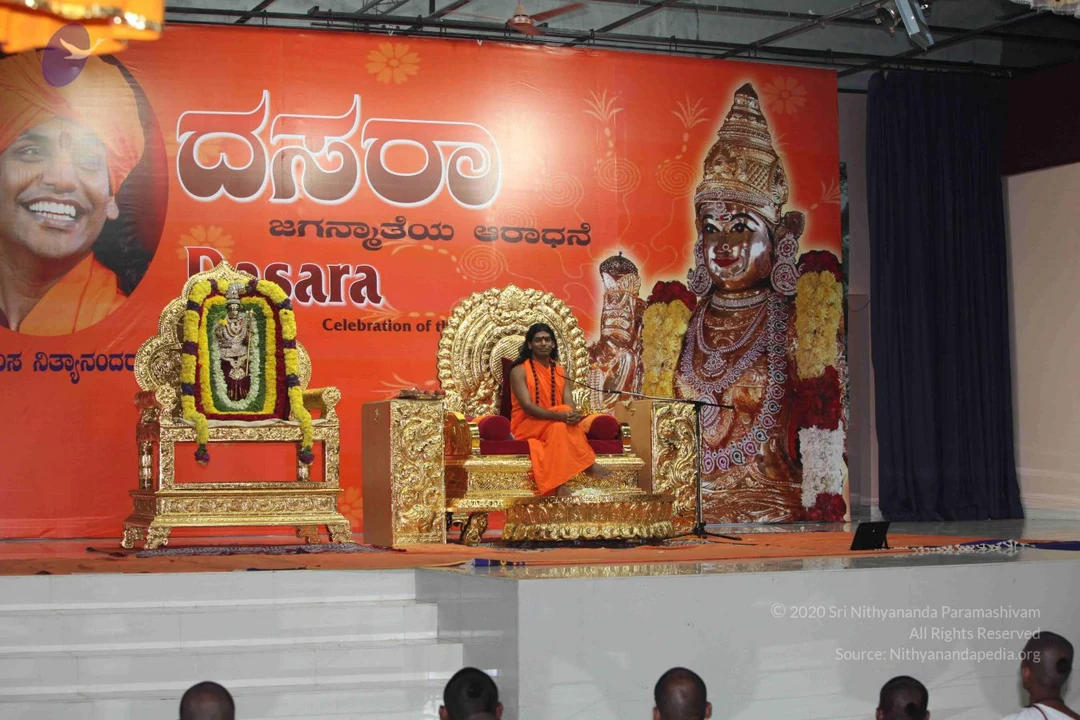
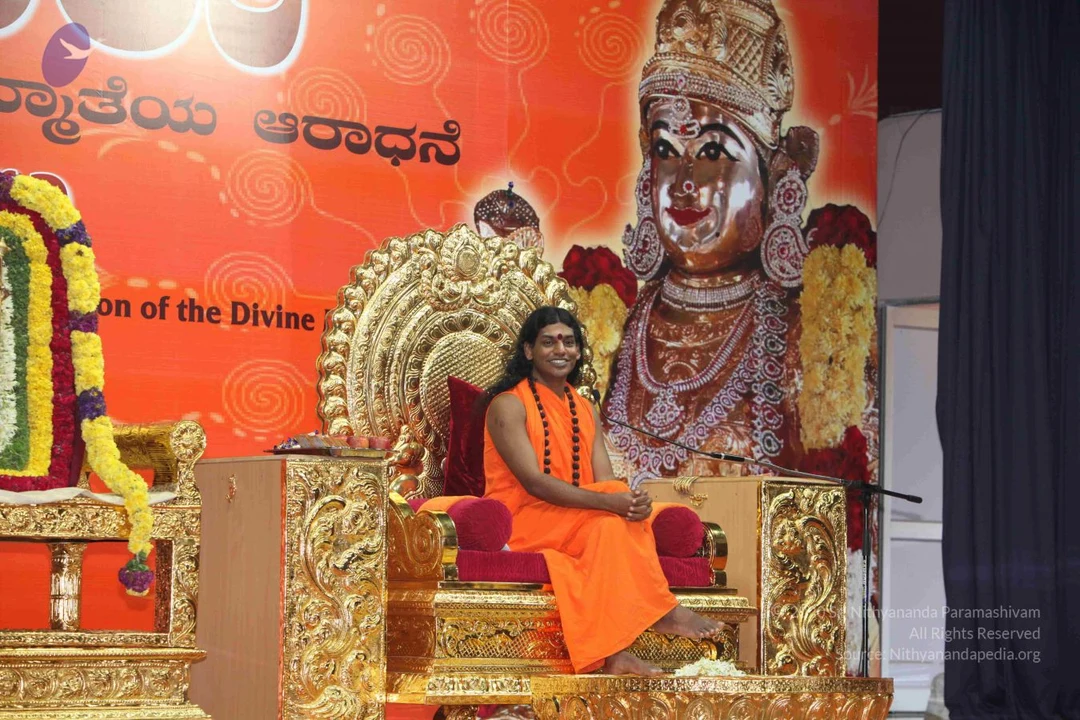
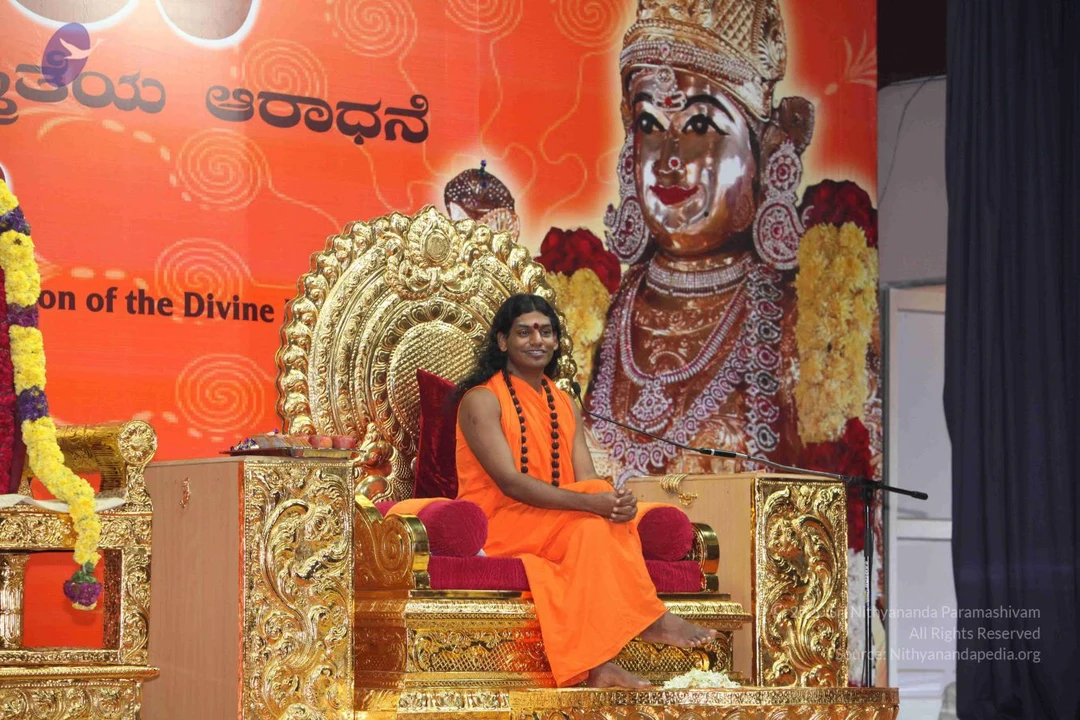
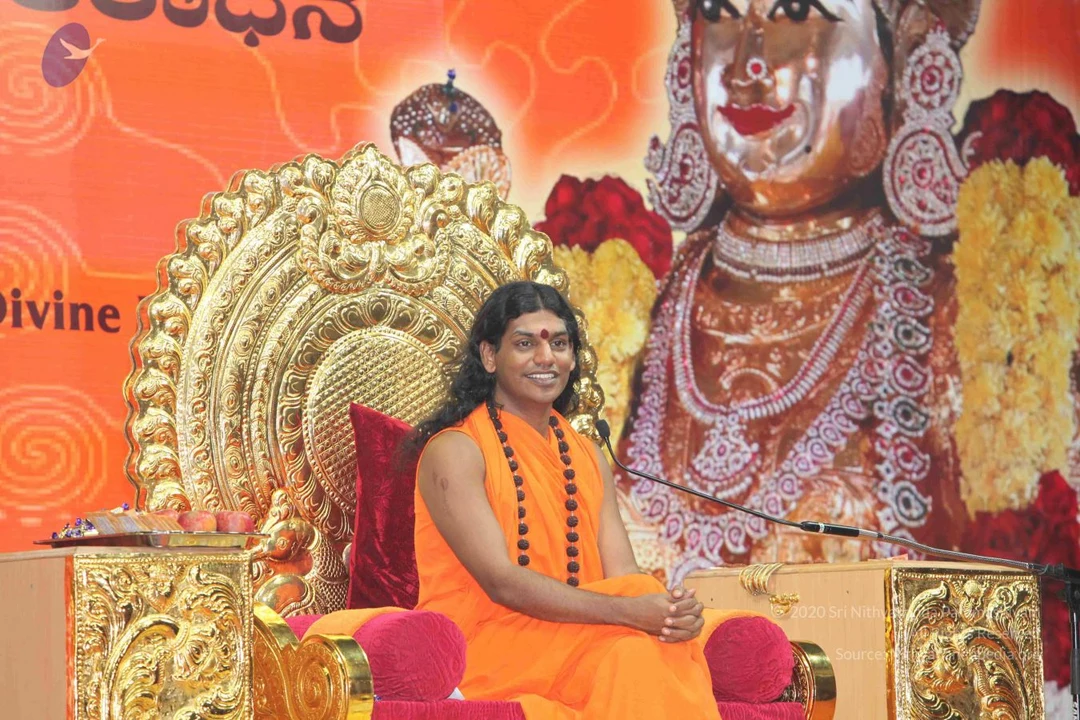
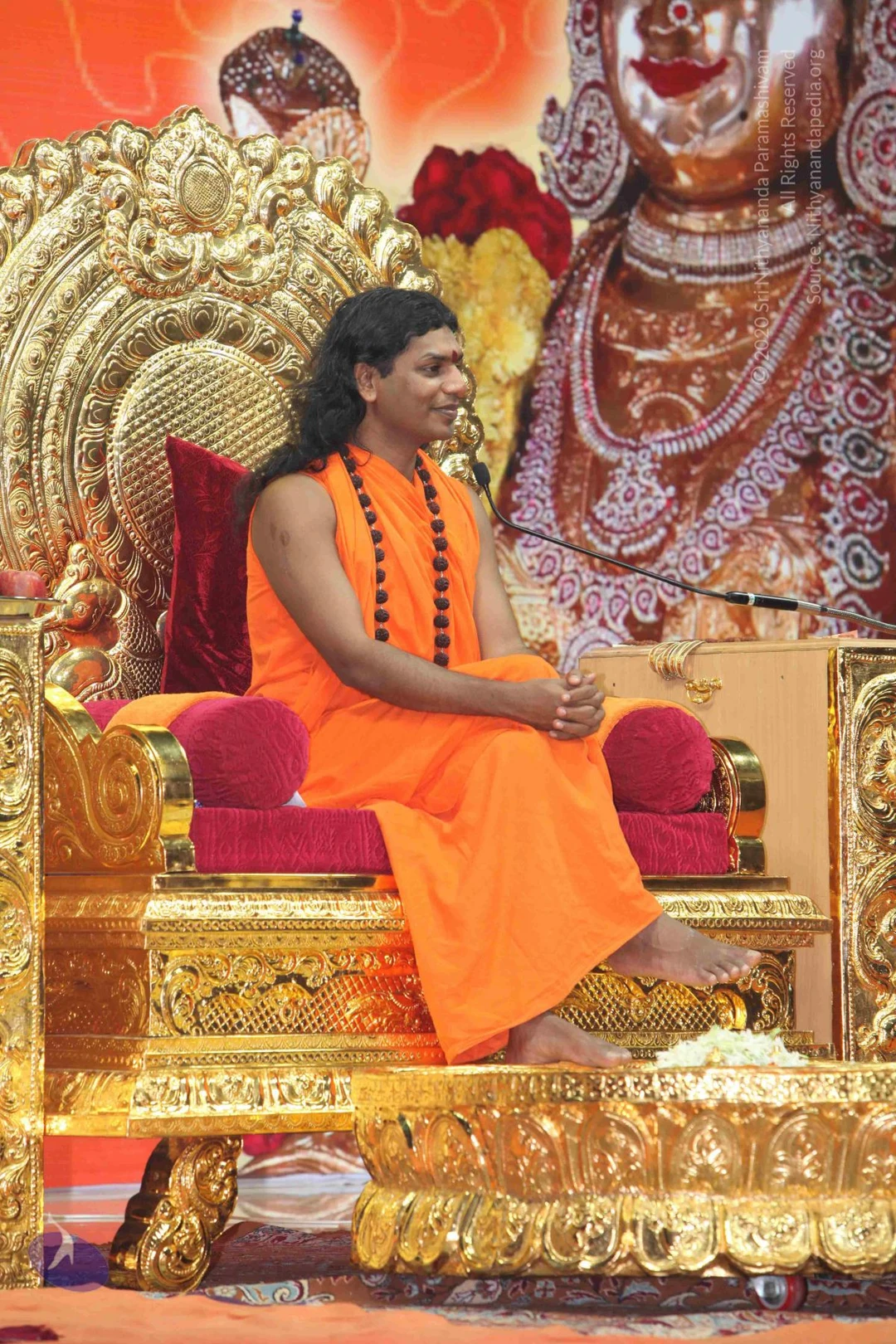
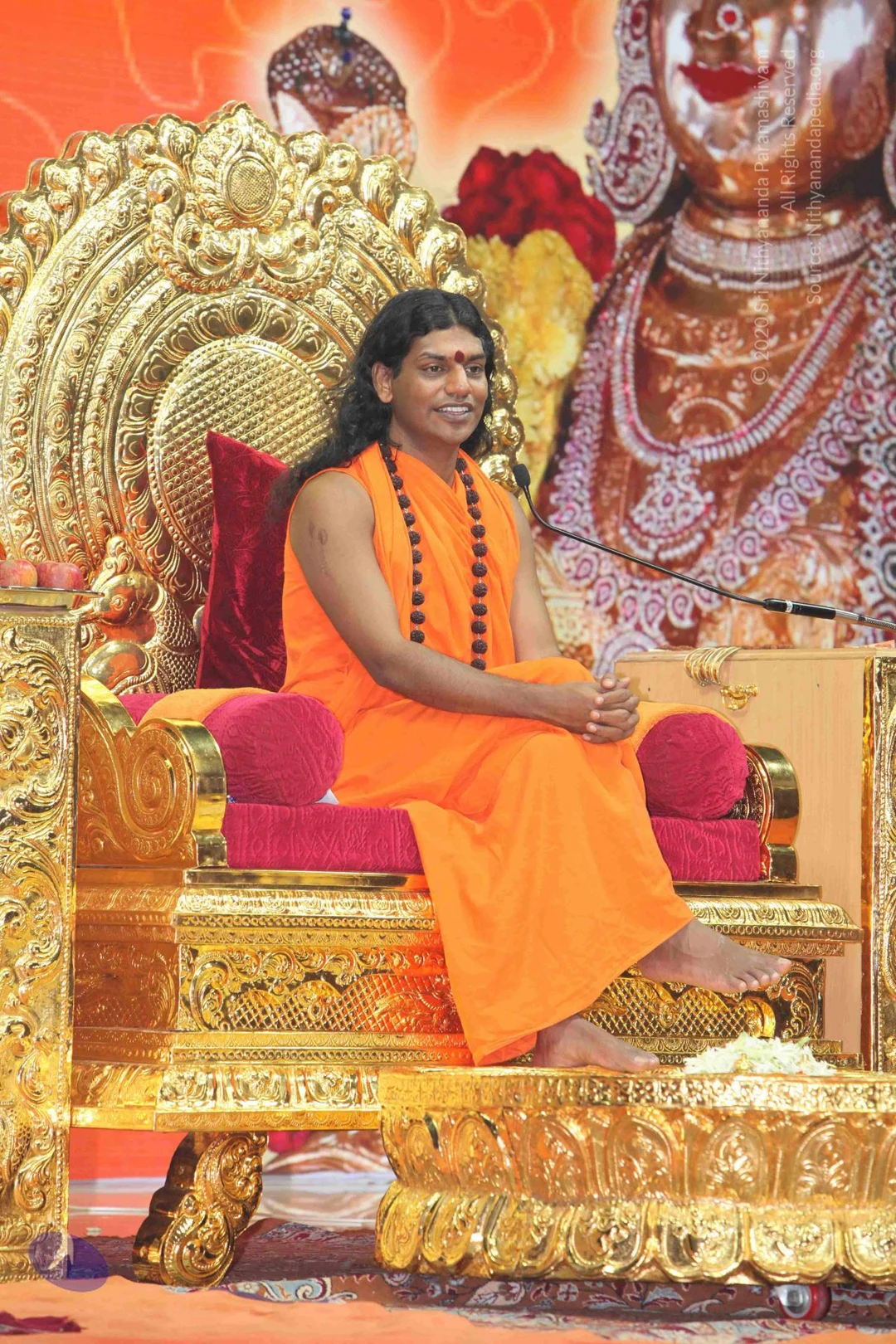
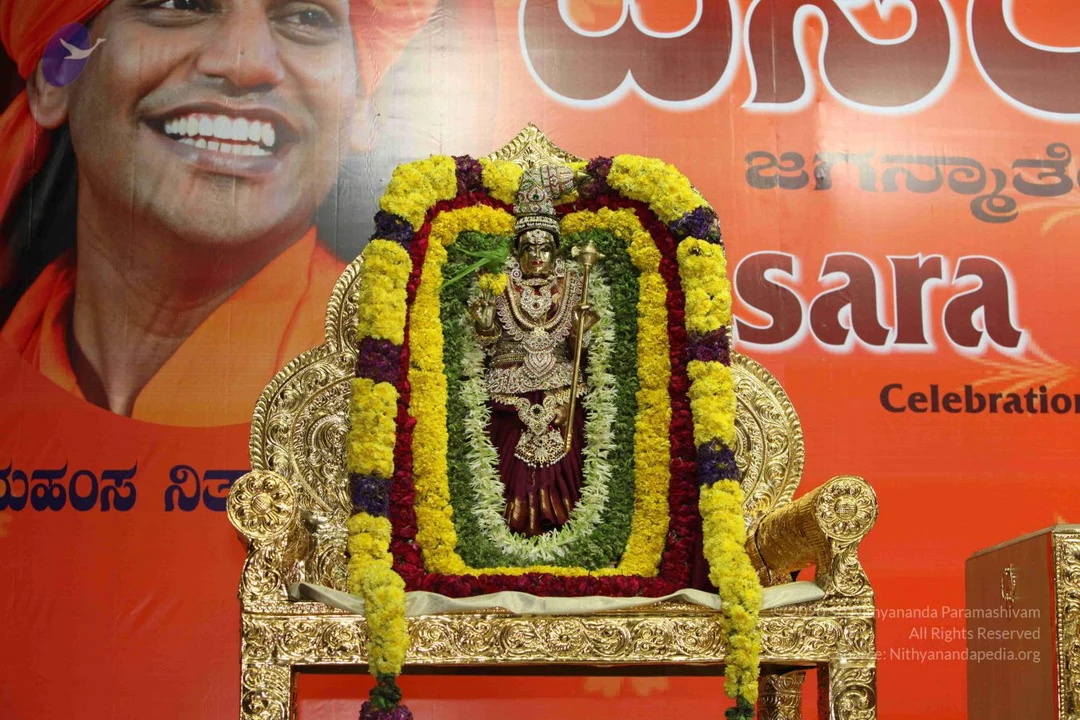
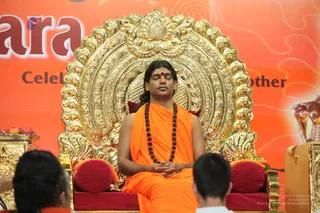
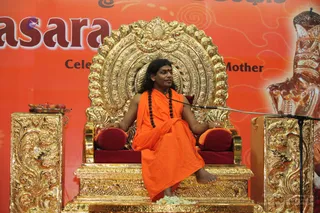
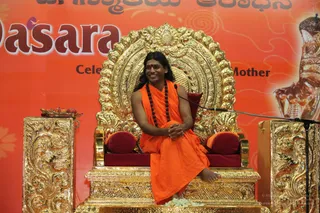
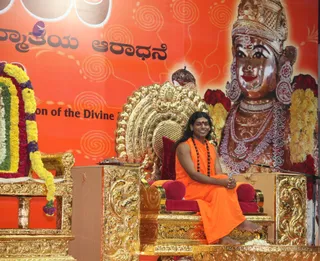
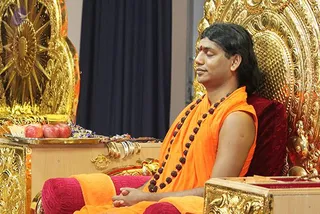
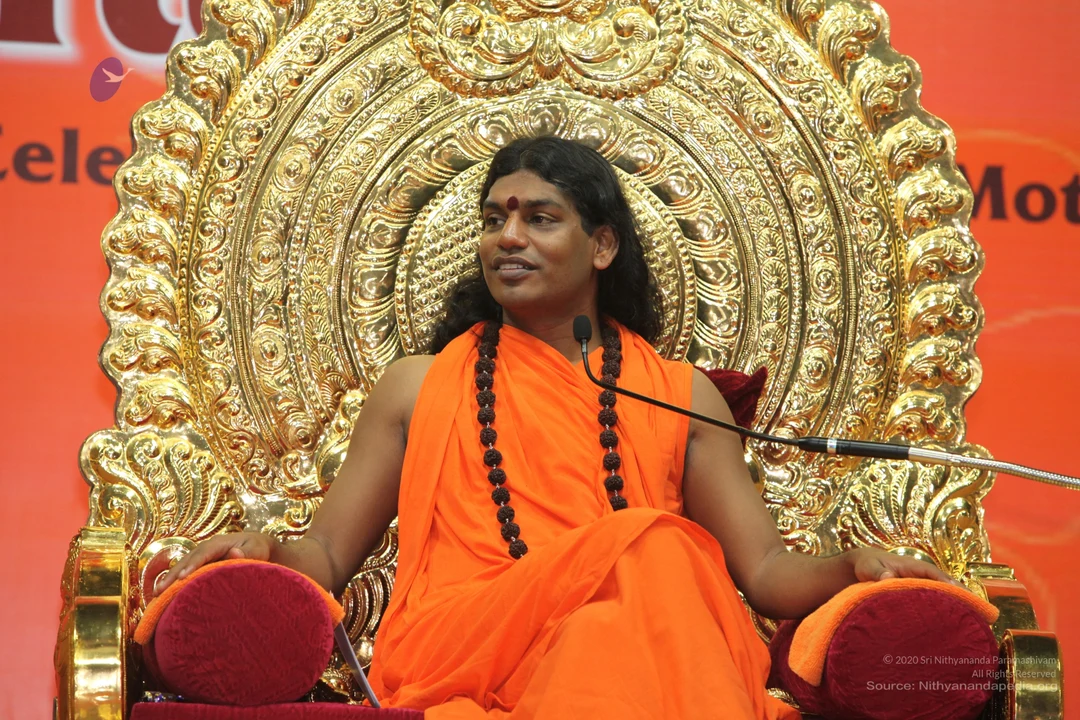
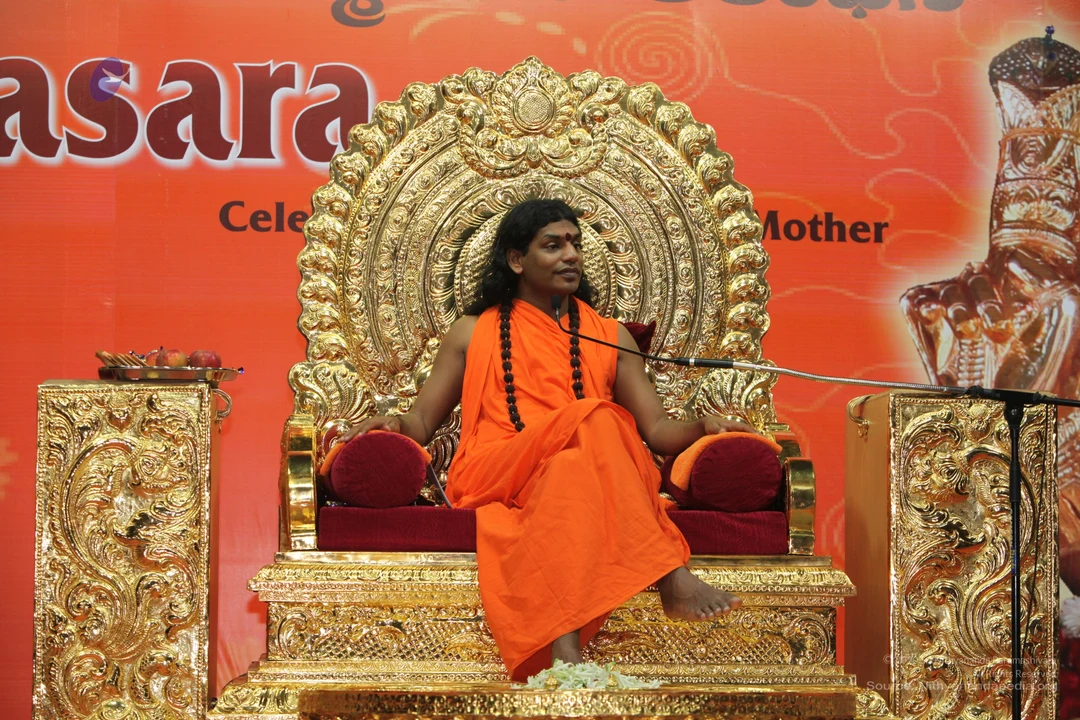
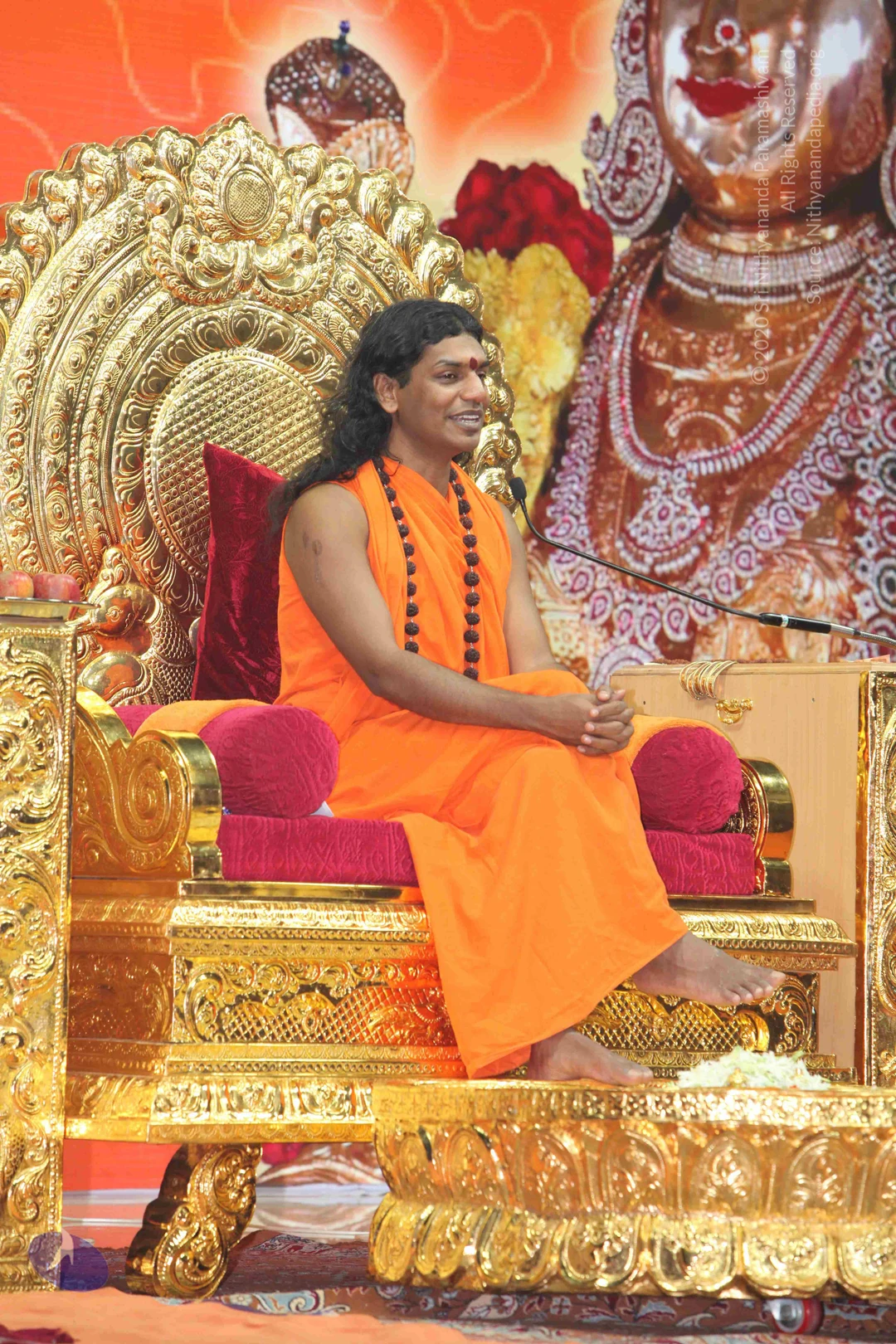
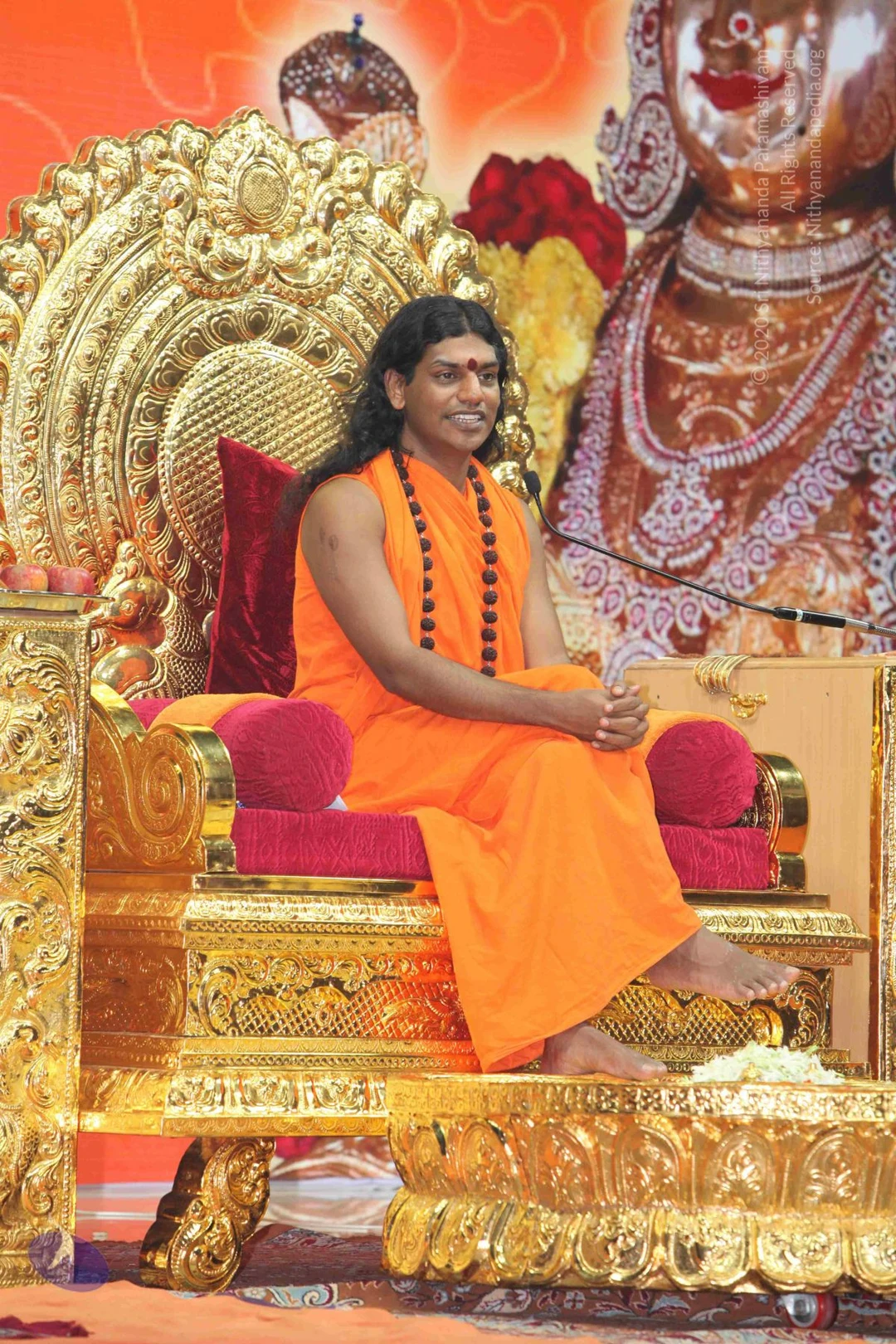
A seated man in saffron-orange robes sits on an ornate gold throne with carved floral and scrollwork designs and red velvet cushions. He wears a long rudraksha mala, has long dark hair and a red bindi, and smiles while resting his hands together on his knee. A microphone stands beside him. Behind the throne is an orange backdrop with the word Dasara in large letters and a partial Telugu-script heading, with a partial image of a goddess on the right. A small tray of fruit sits on a gold side table at left. The figure has distinctive long hair, saffron clothing and a rudraksha mala on a gold throne, matching a probable Swamiji presence, though appearance is not conclusive.A seated man in saffron-orange robes with a rudraksha mala and a red bindi sits on an ornate gold throne with red cushions, smiling and holding his hands together in his lap. He is barefoot. Behind him a large orange backdrop shows a golden-toned deity murti with a crown, pearl and bead necklaces, and large earrings, flanked by red and yellow flower garlands. A microphone stands at his side, and a tray of offerings sits near the throne base. Kannada text is printed on the backdrop. a person: the saffron robes, rudraksha mala and ornate throne are the qualifying cues for the seated speaker.

Sarvadarshan

2 photosSource gallery
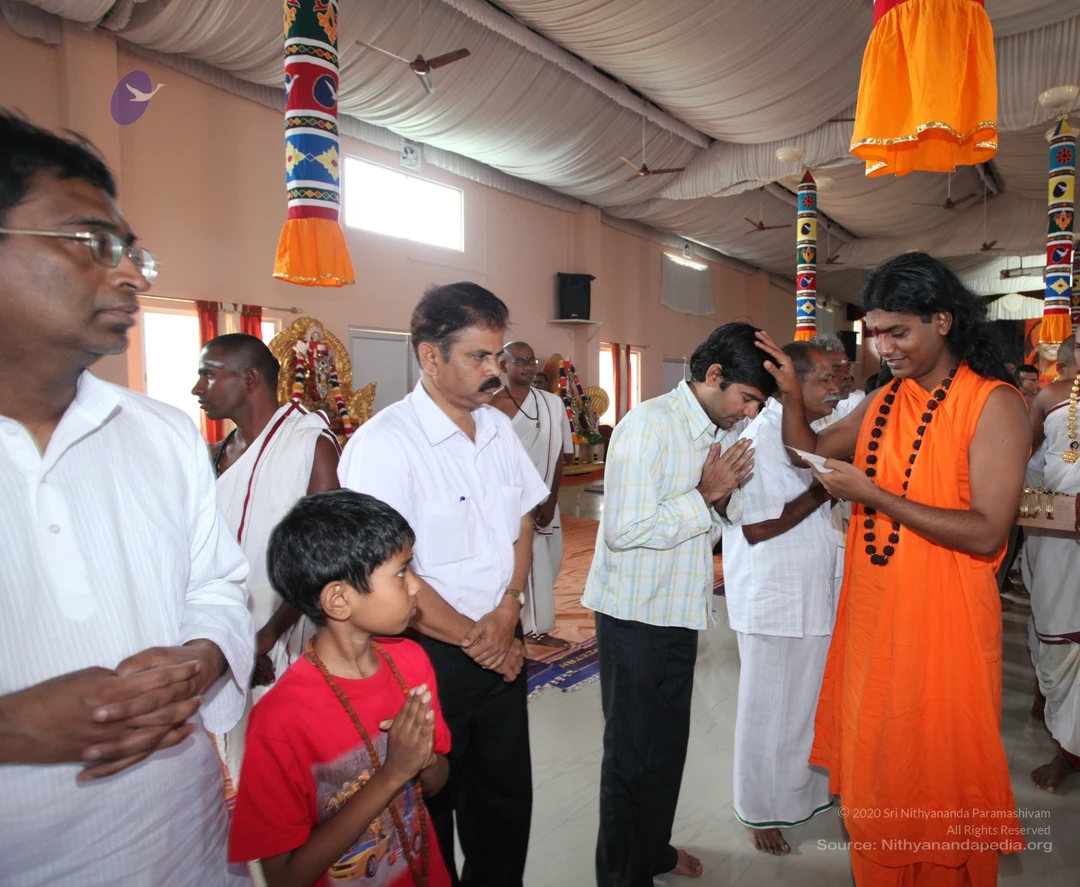
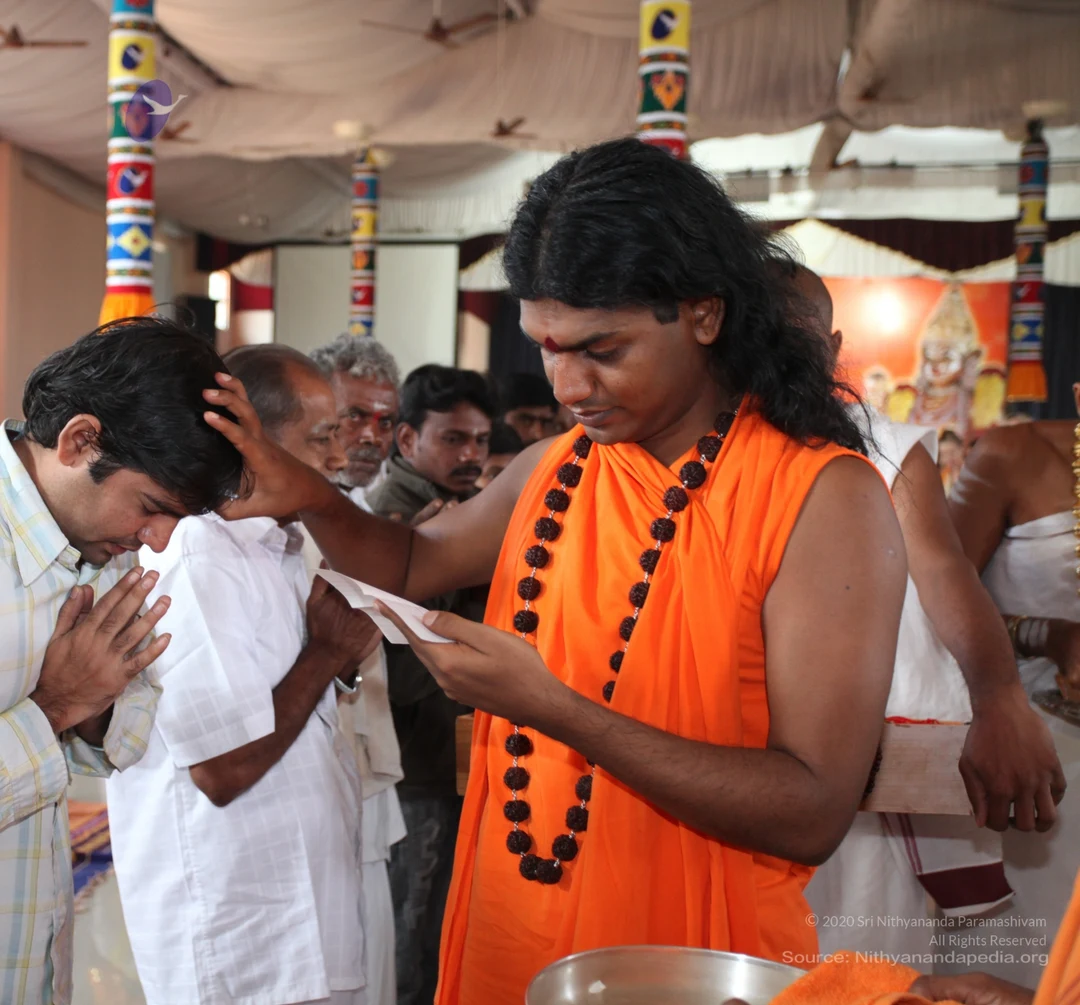
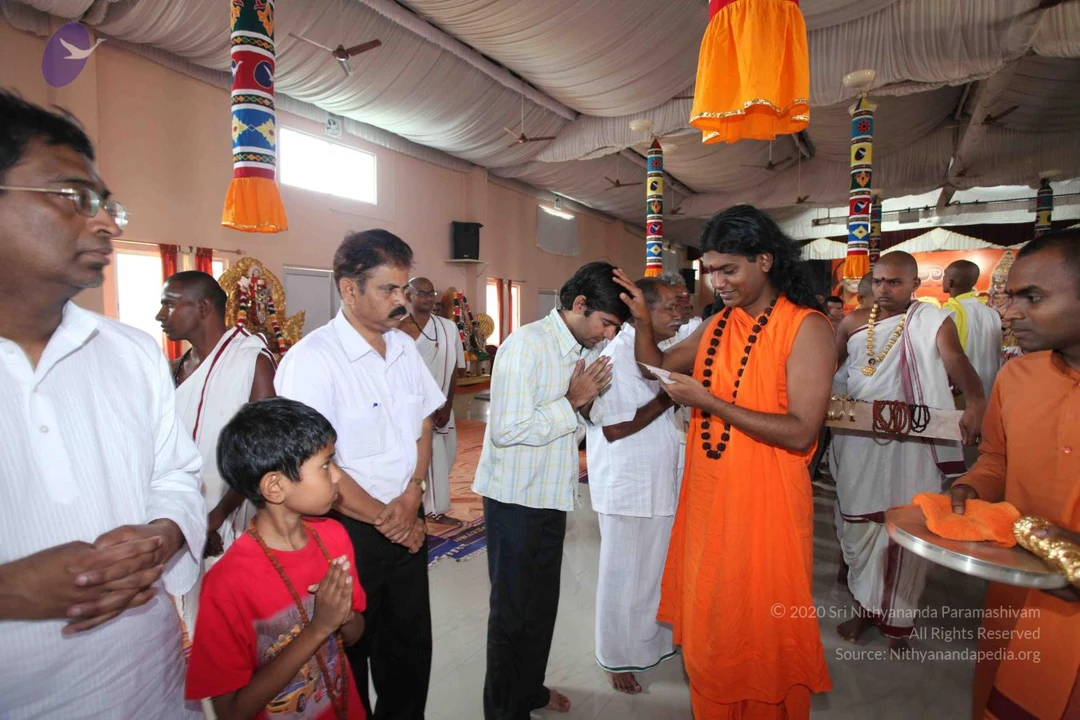
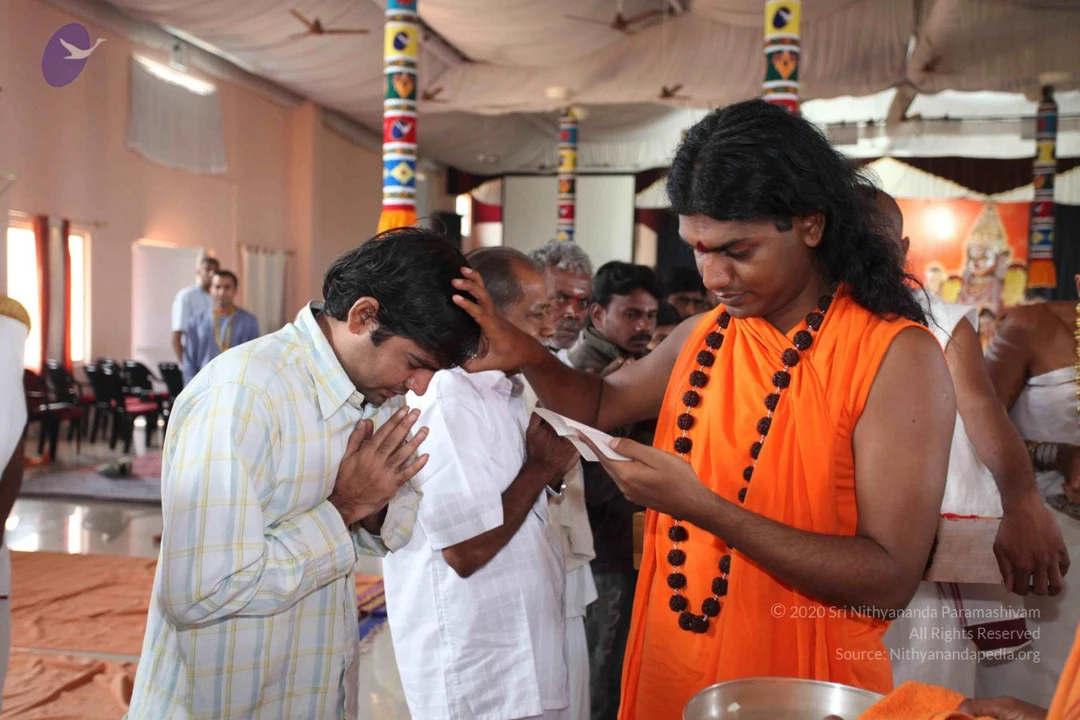
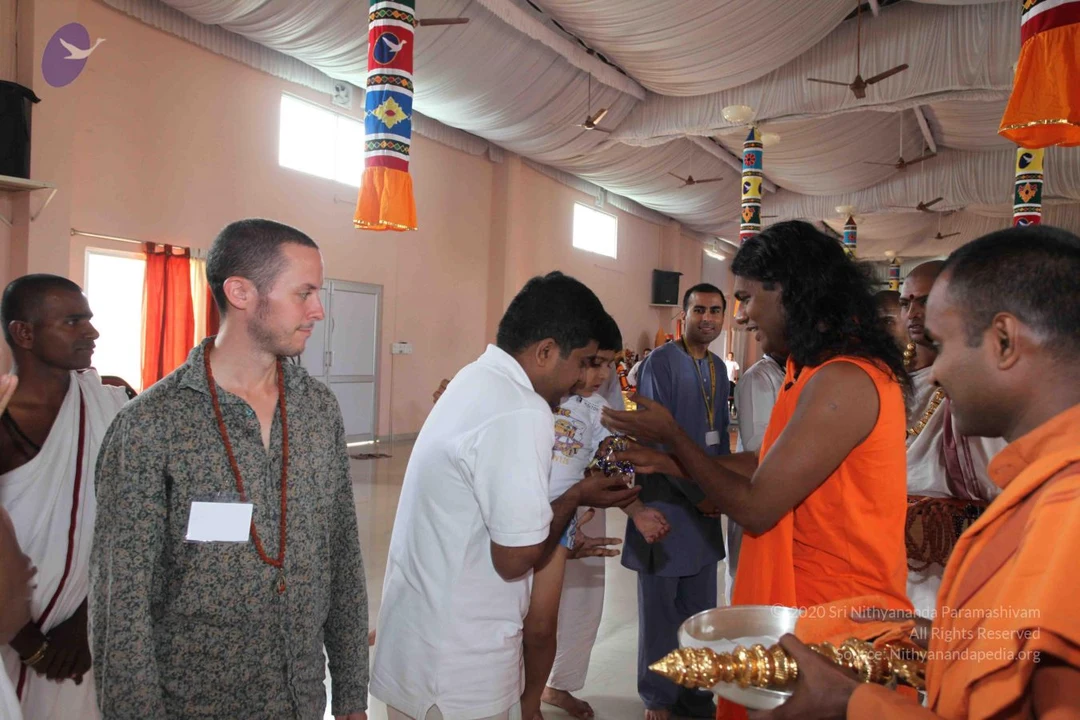
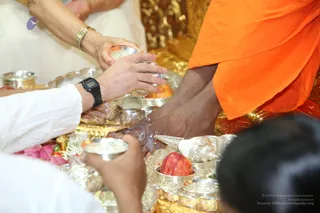
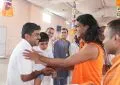
A photo of a ritual blessing in a tented hall with colourful striped pillars and a deity print on a red backdrop. A long-haired man in a saffron-orange sleeveless wrap with a long rudraksha mala and a red tilak stands center-right, reading a folded paper while placing his right hand on the head of a bowed man in a light checked shirt with hands joined in namaskar. Beside them an older man in white shirt and dhoti stands, and other devotees watch in the background. A metal bowl sits at the lower edge. Probable Swamiji is the central figure: long swept-back hair, saffron wrap and rudraksha mala. Count: about six visible people.

Dasara

8 photosSource gallery

Dasara

12 photosSource gallery
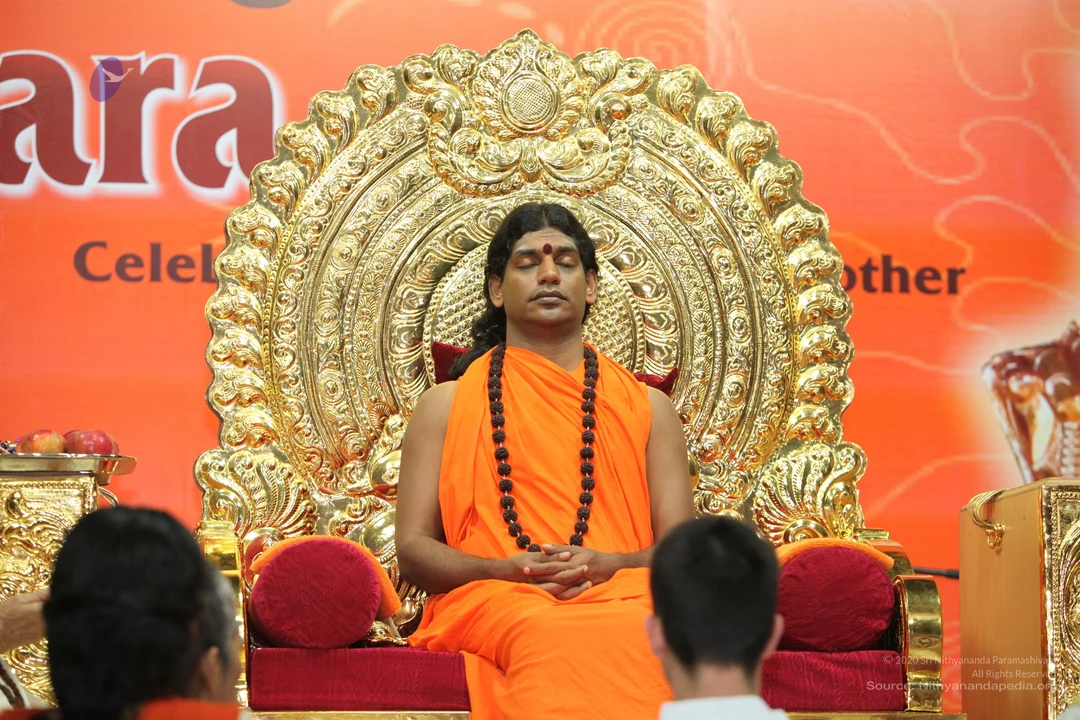
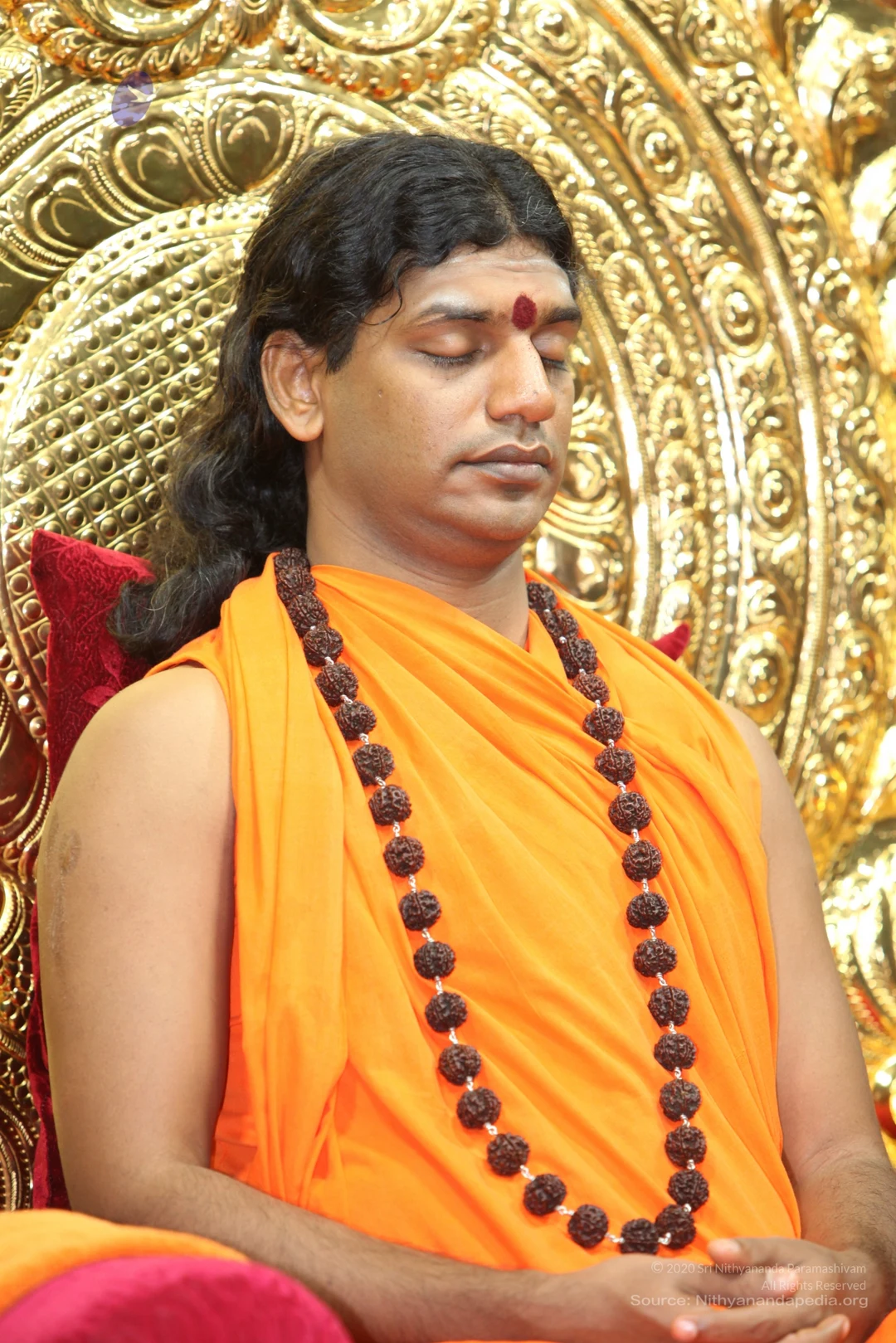
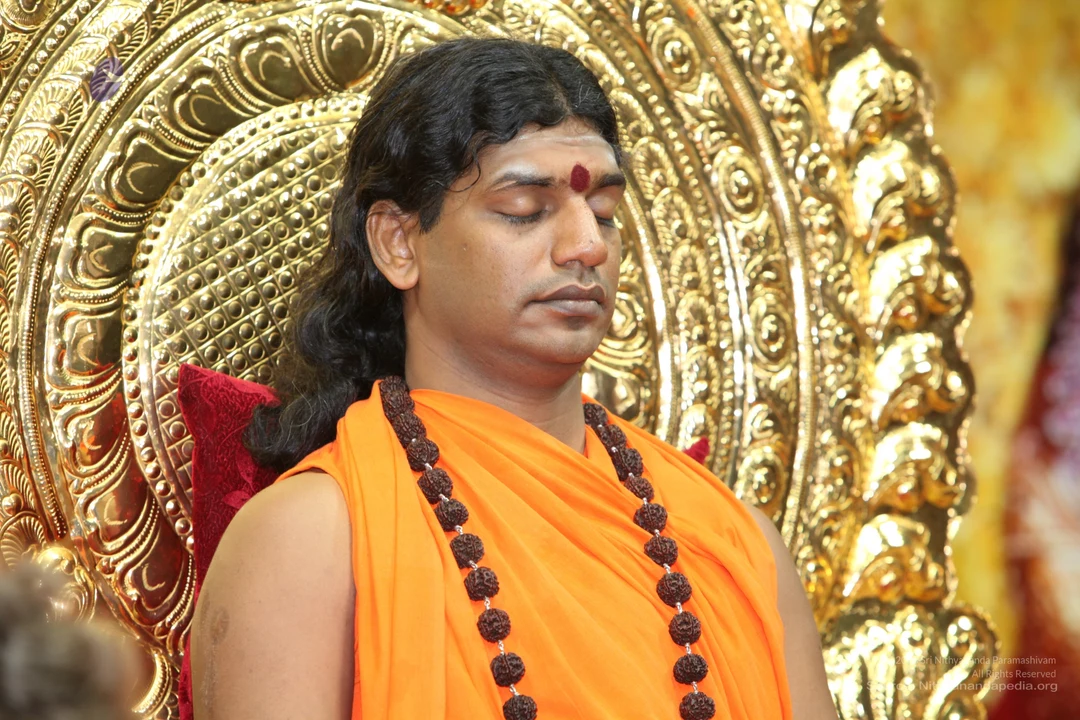
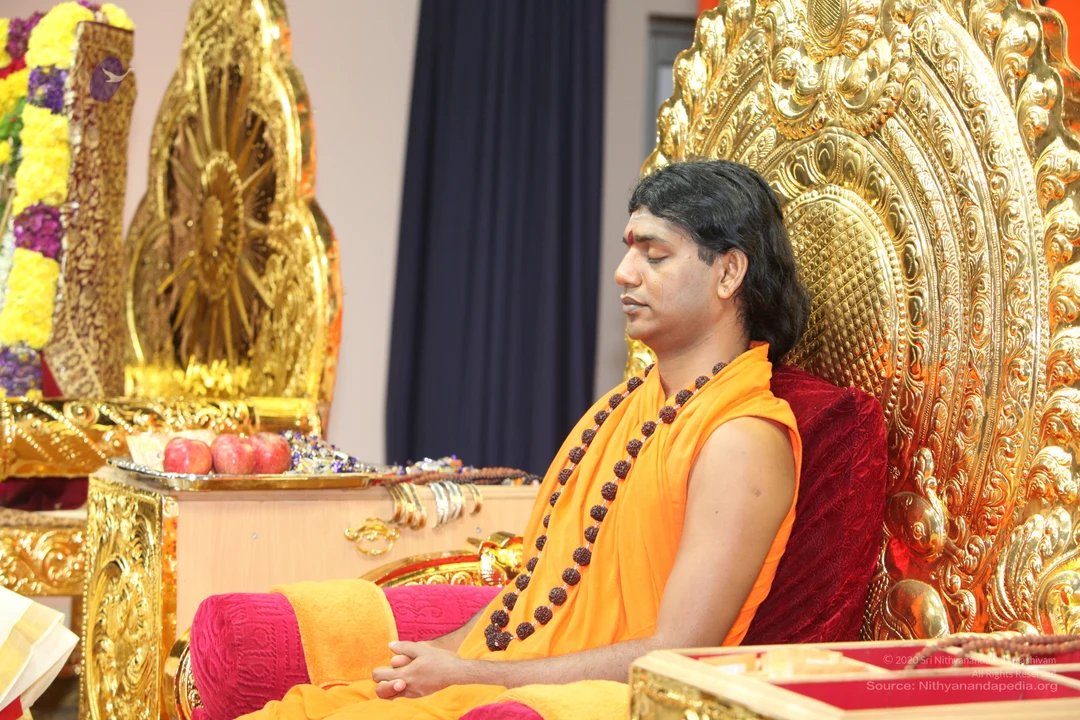
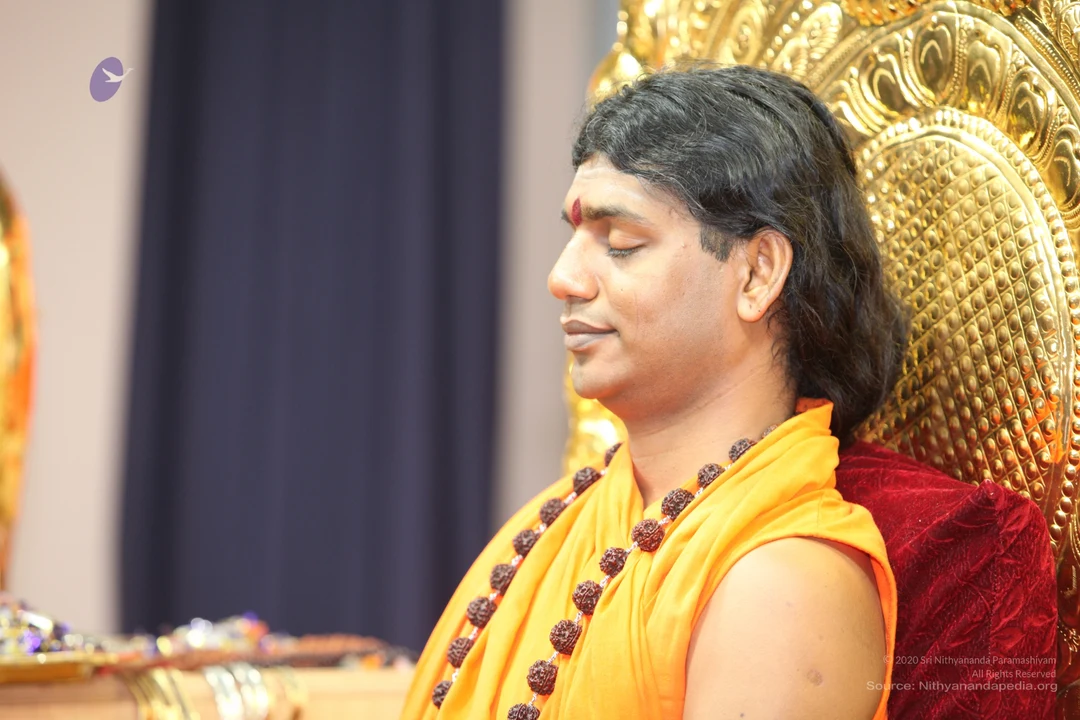
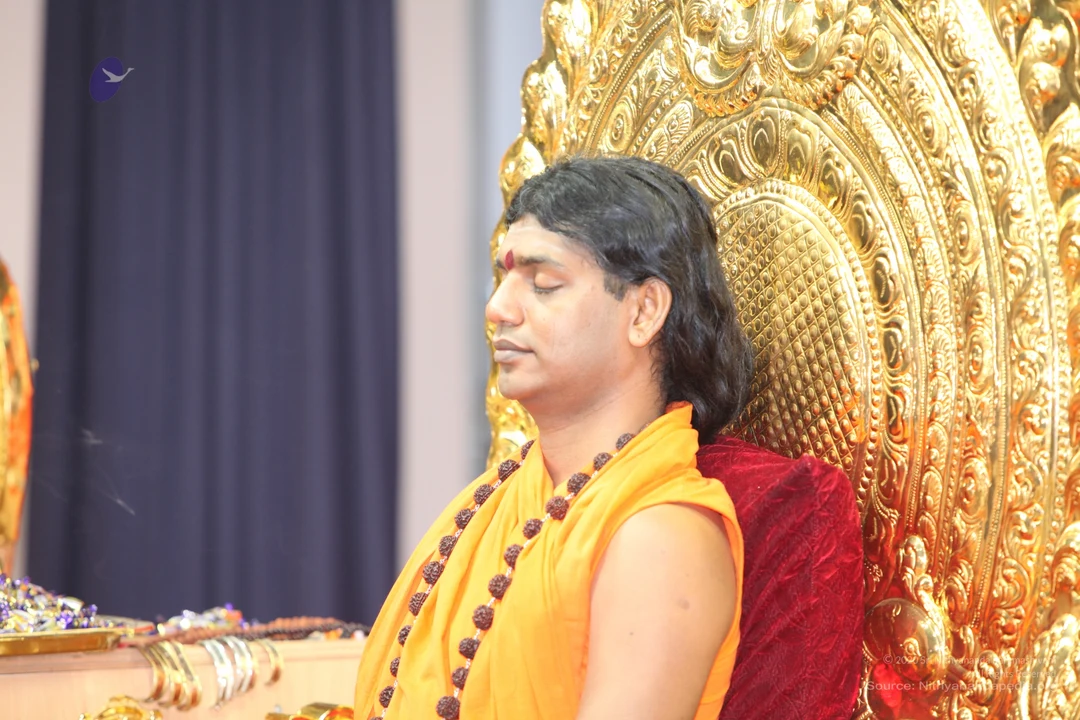
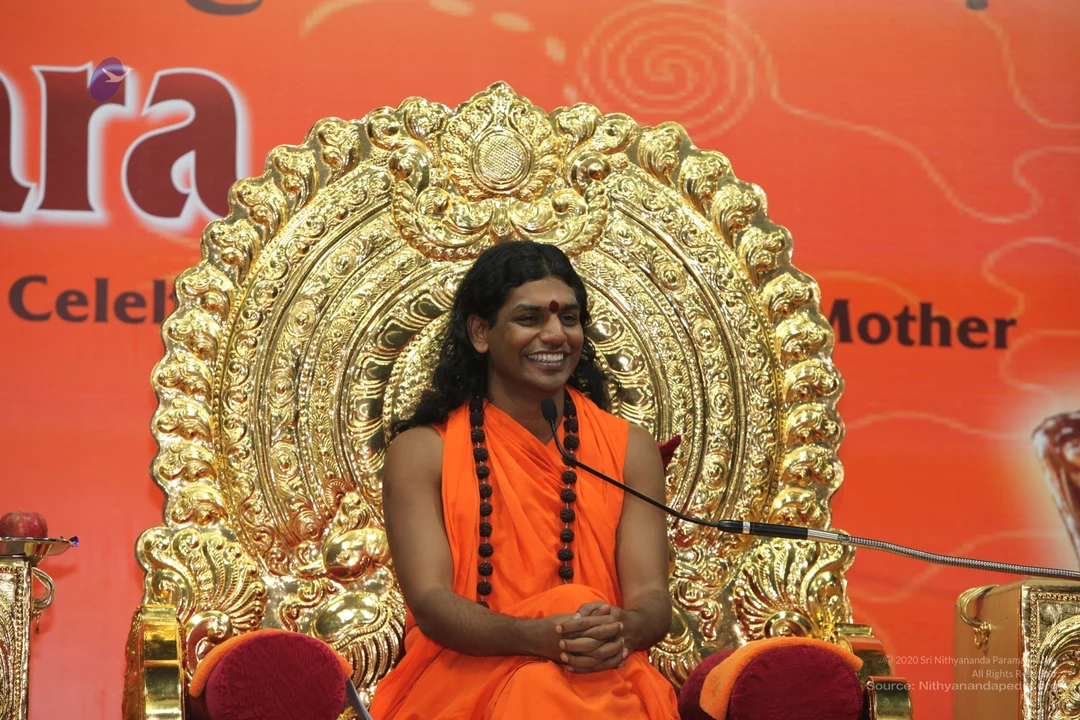
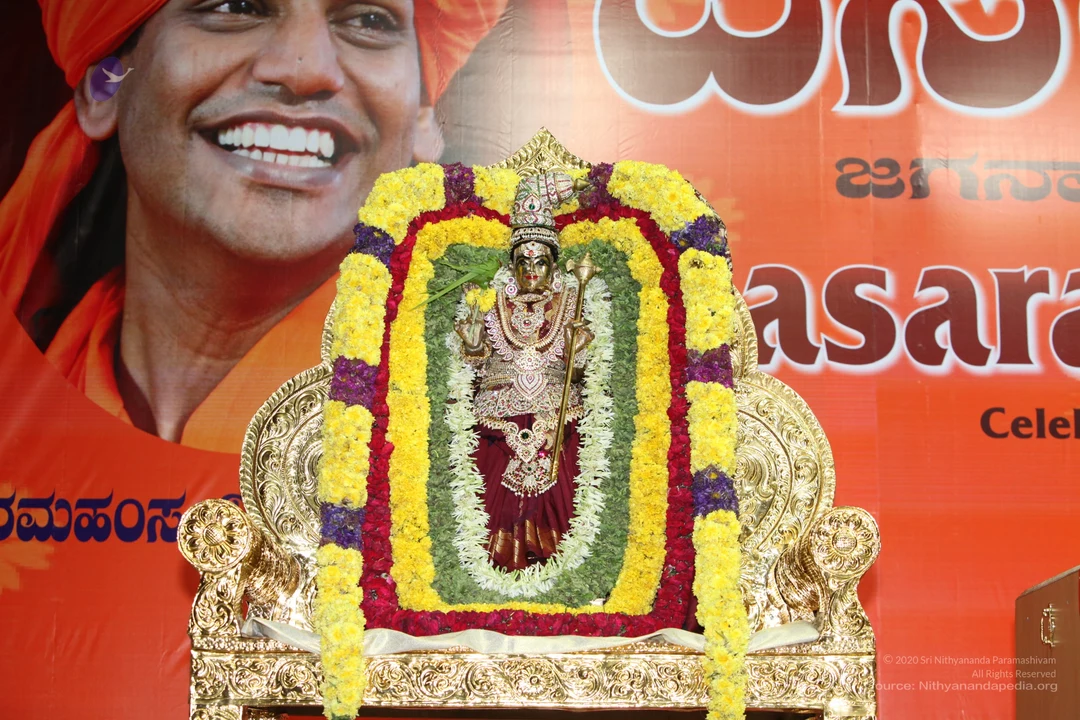
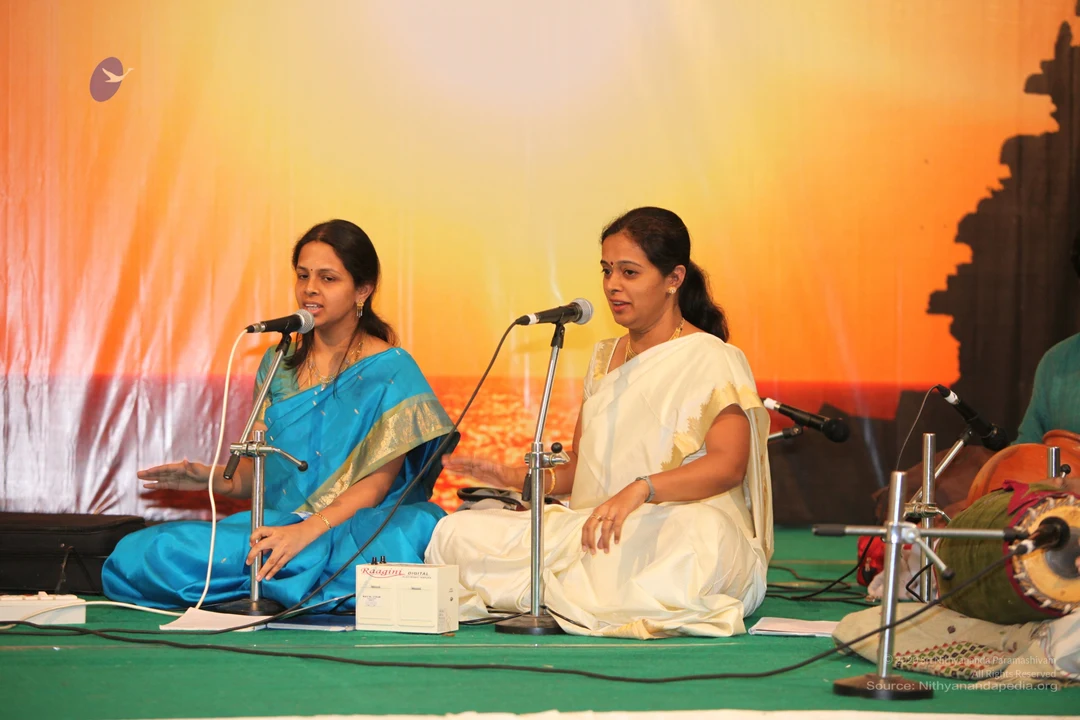
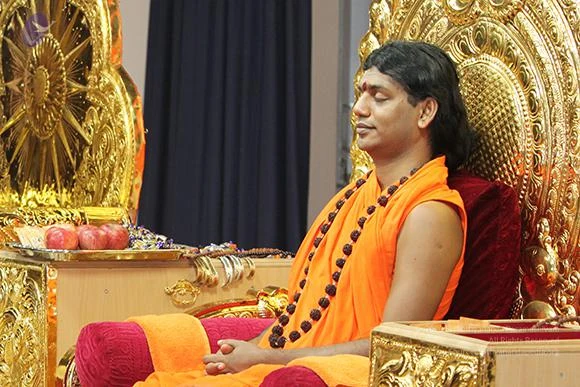
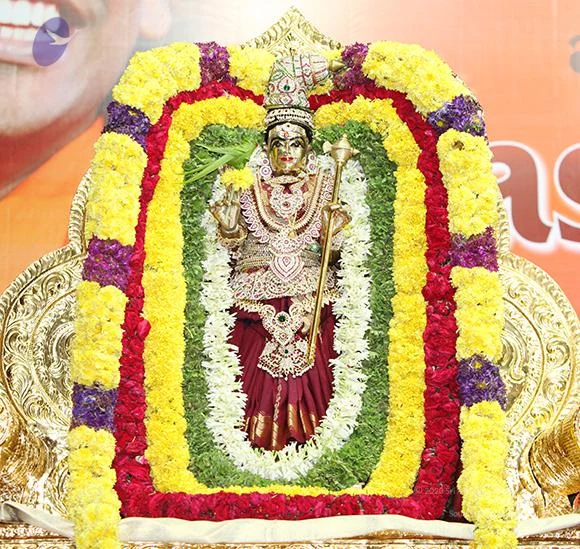
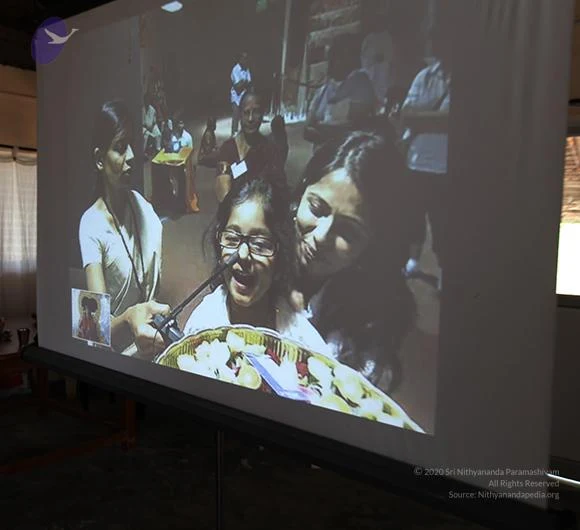
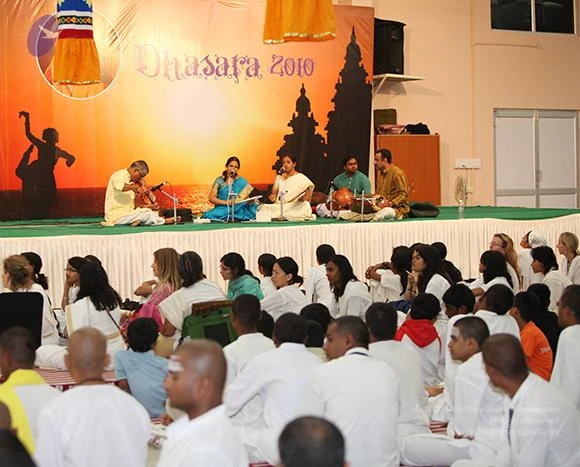
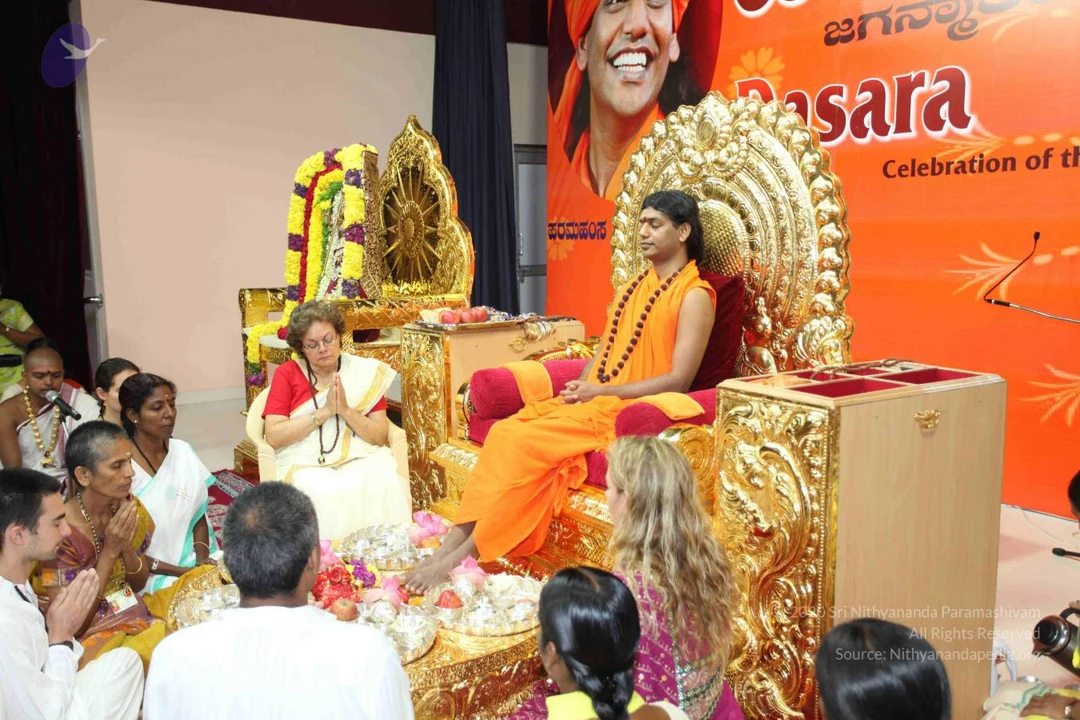
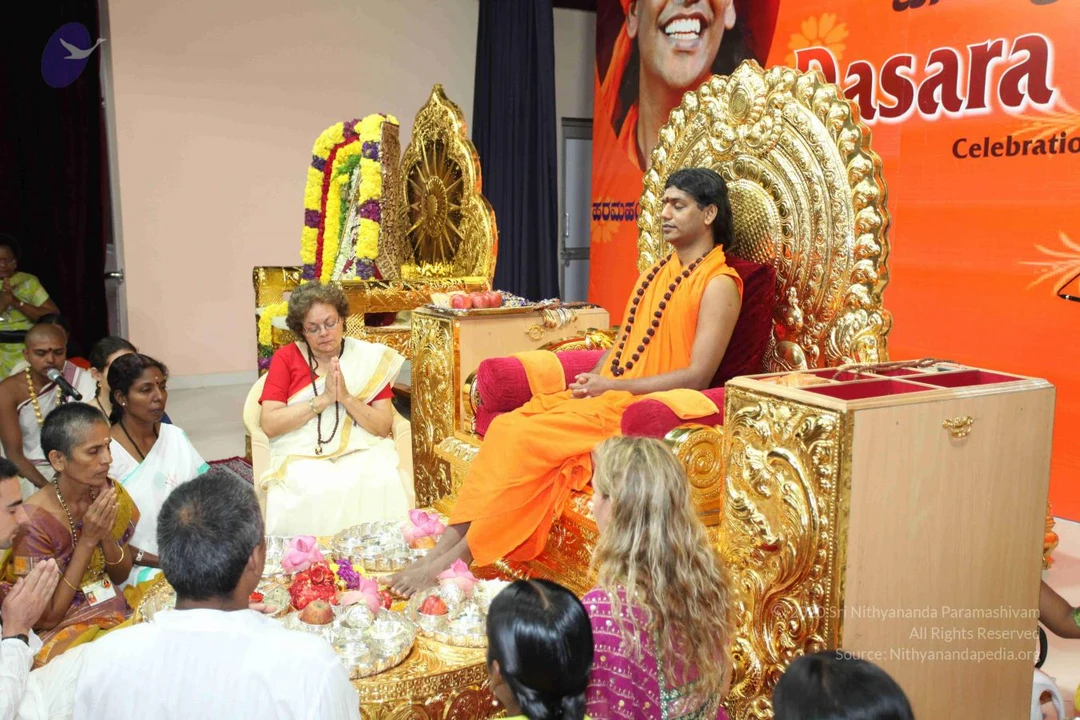
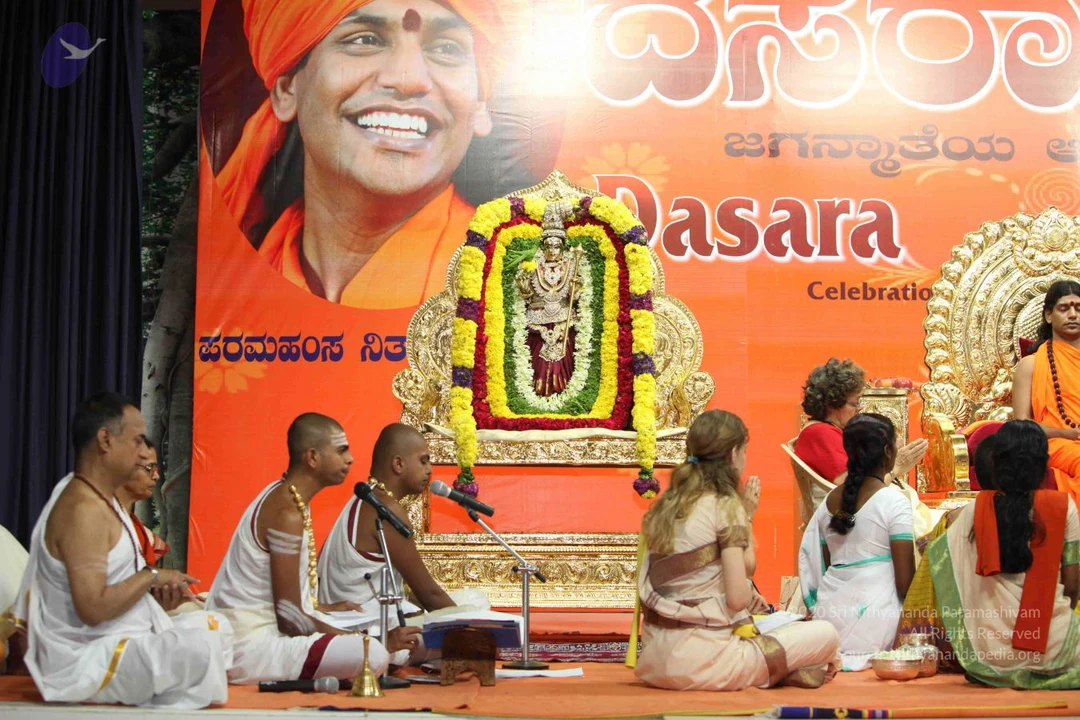
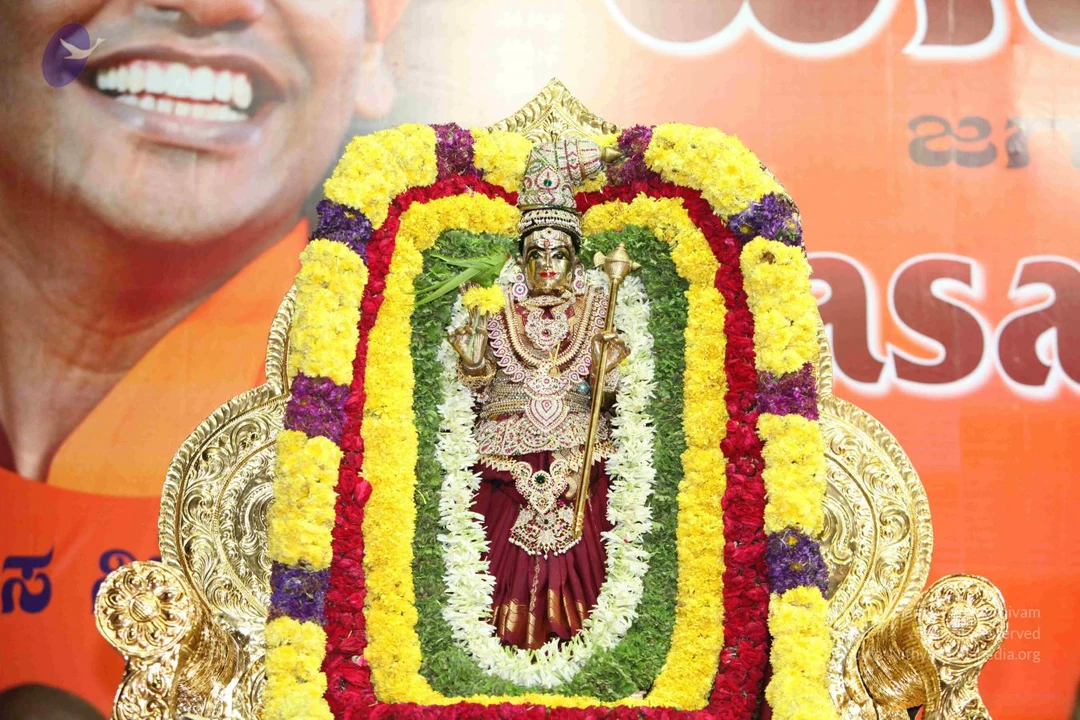
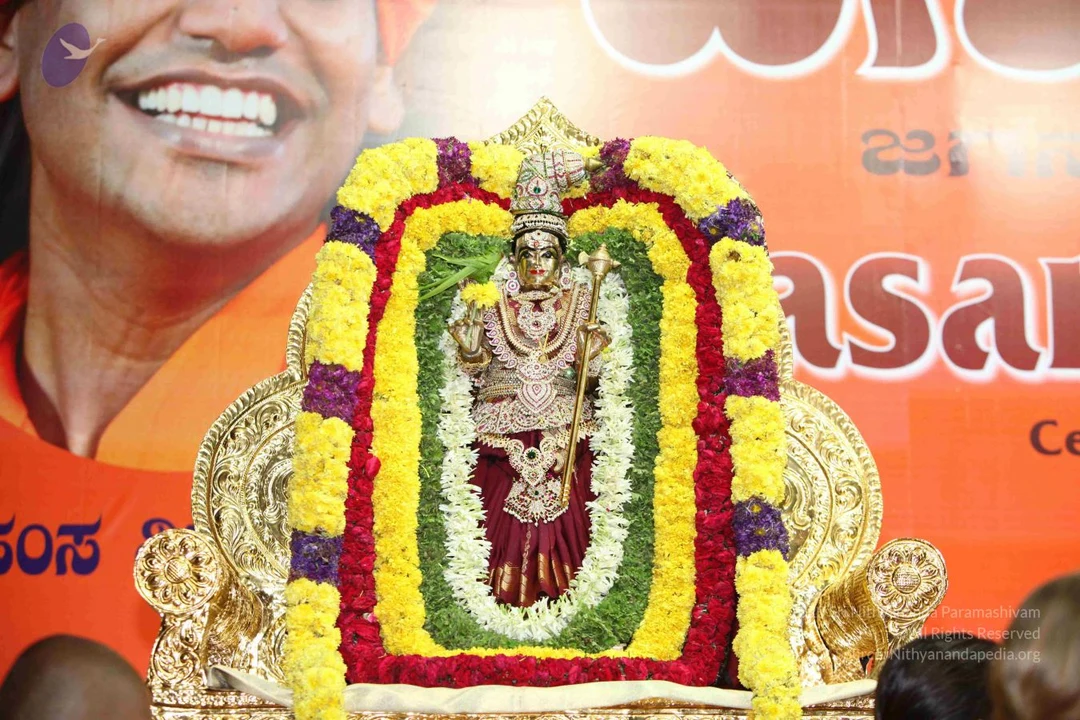
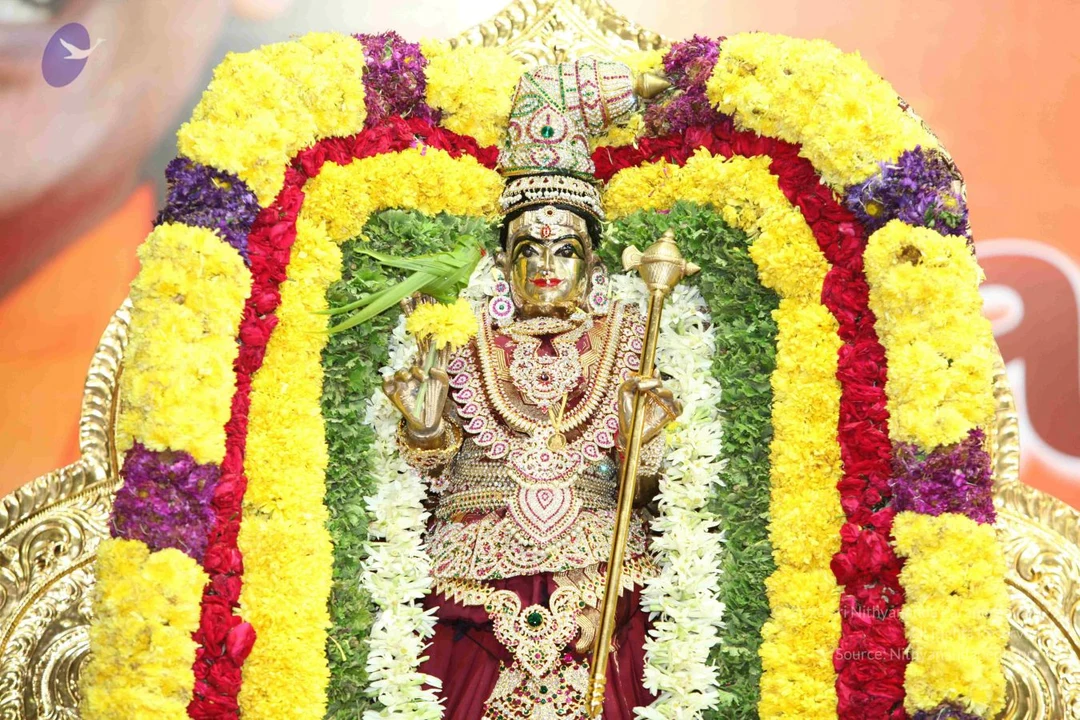
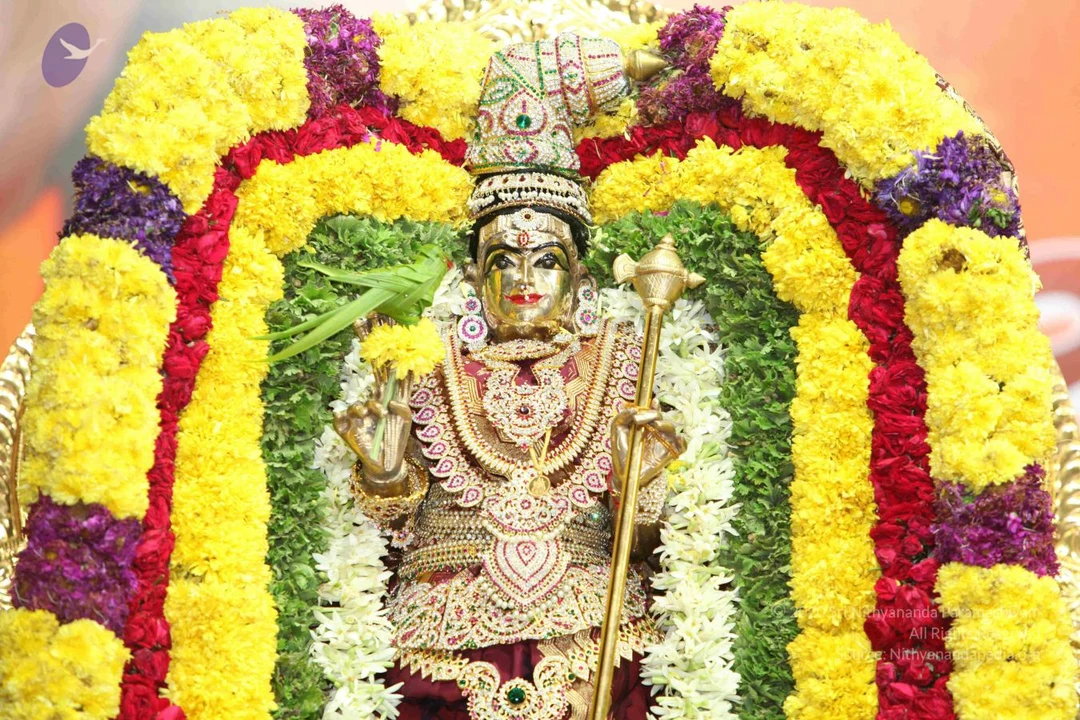
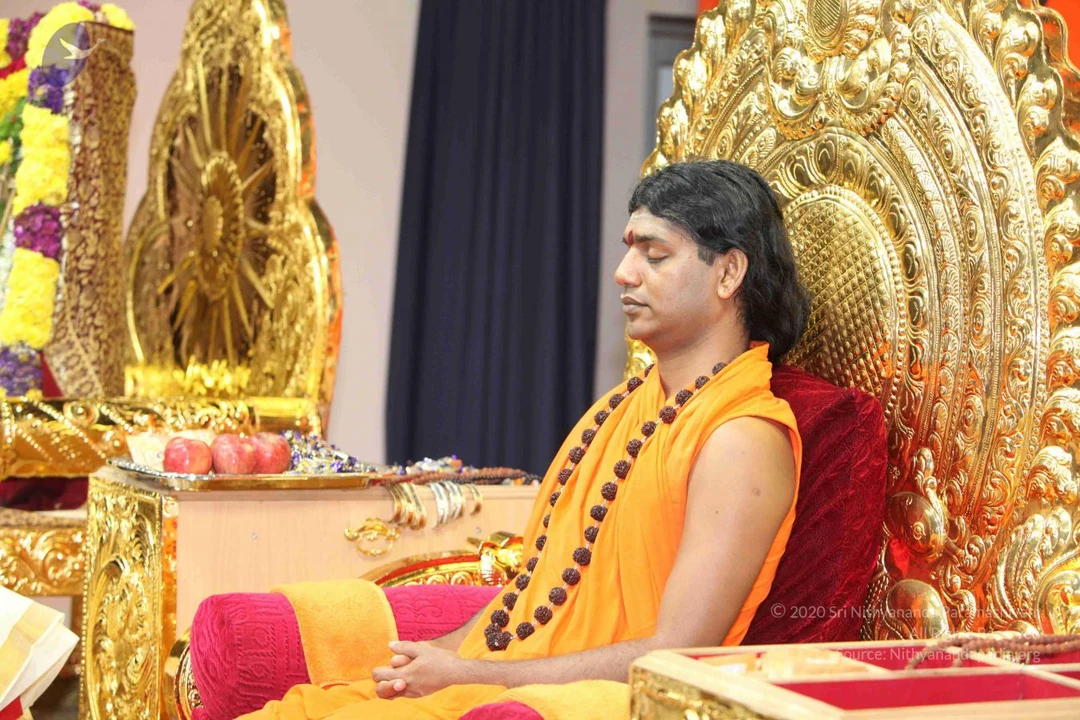
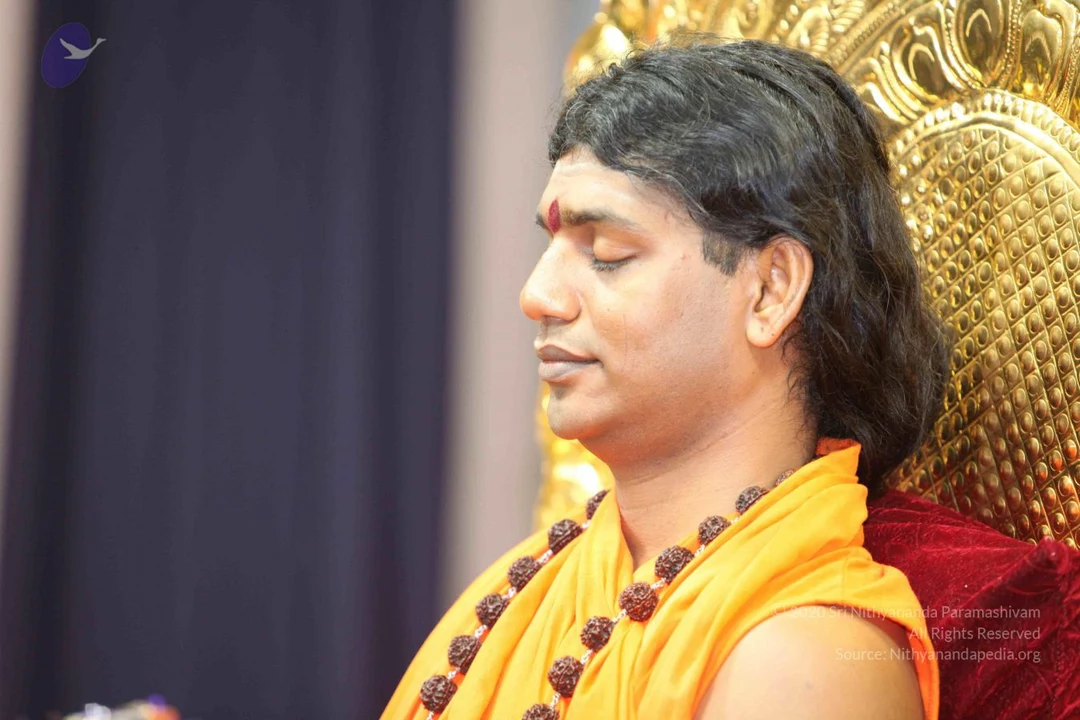
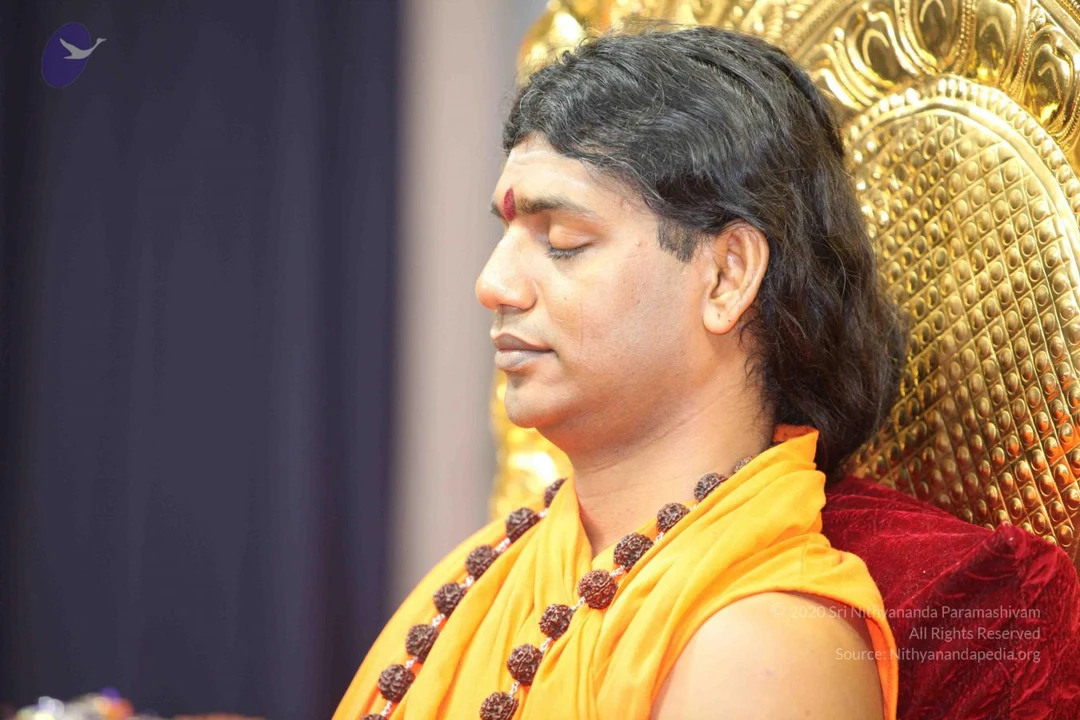
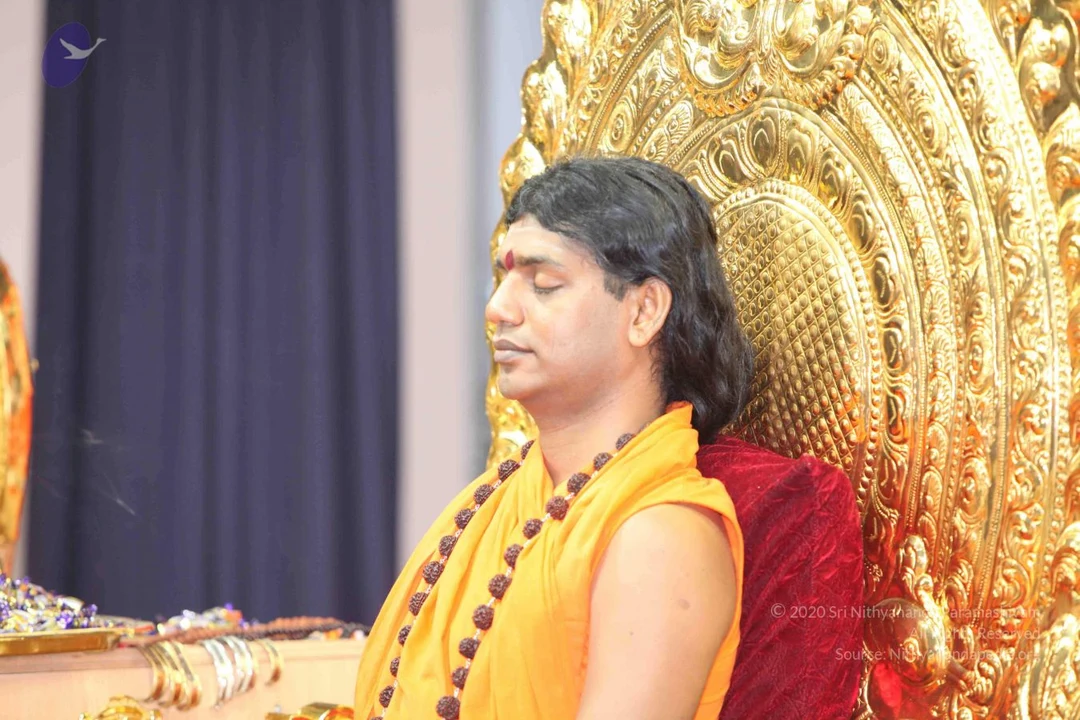
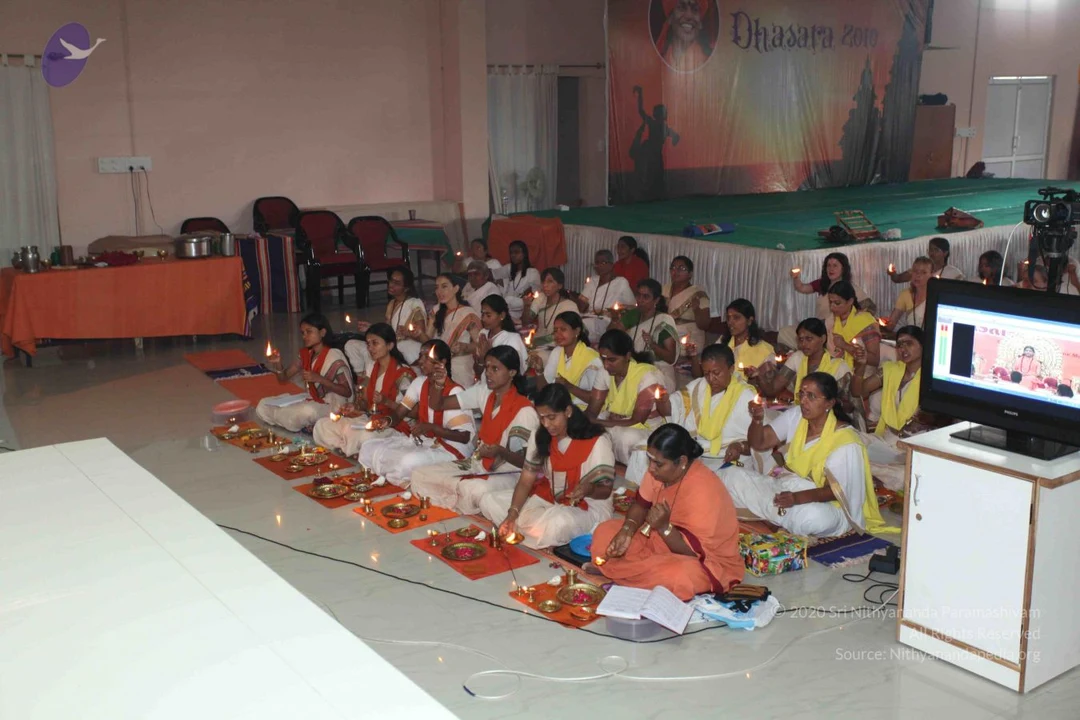
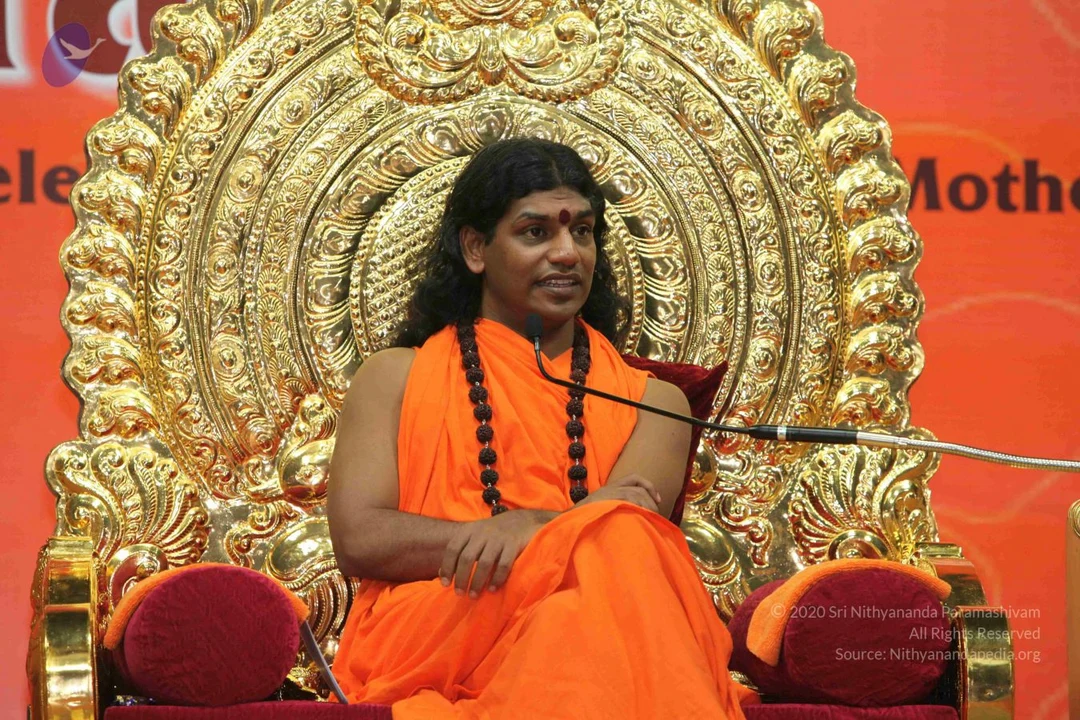
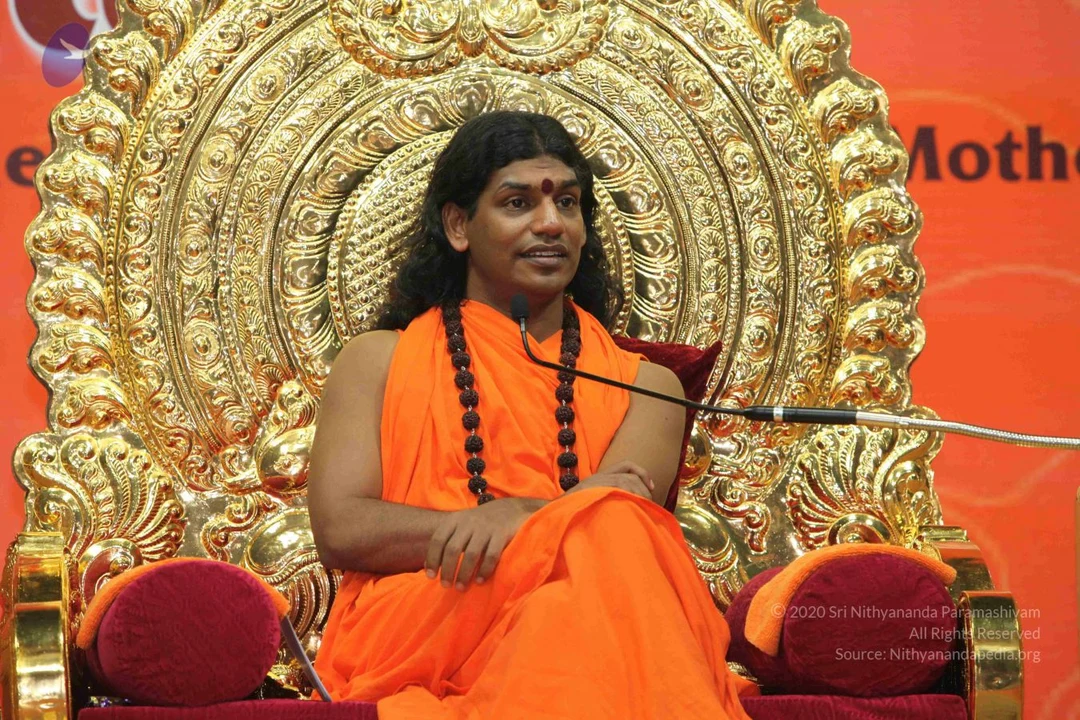
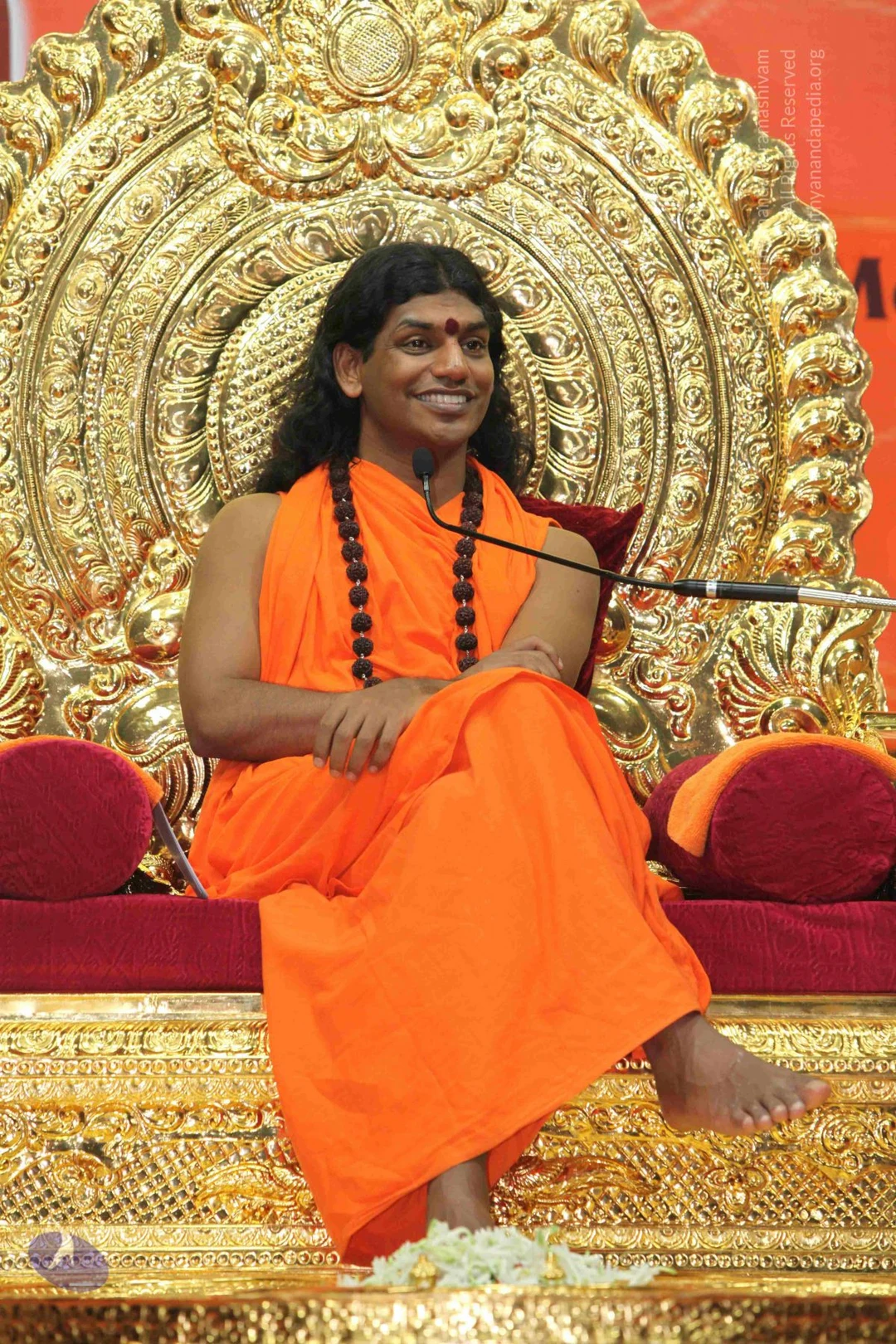
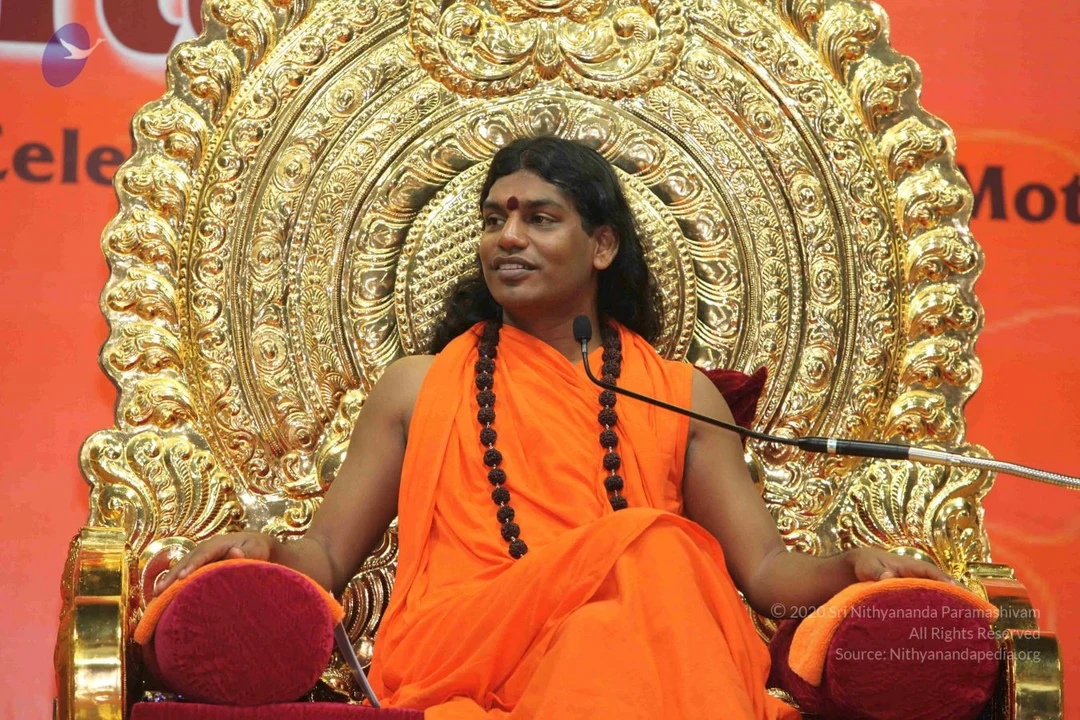
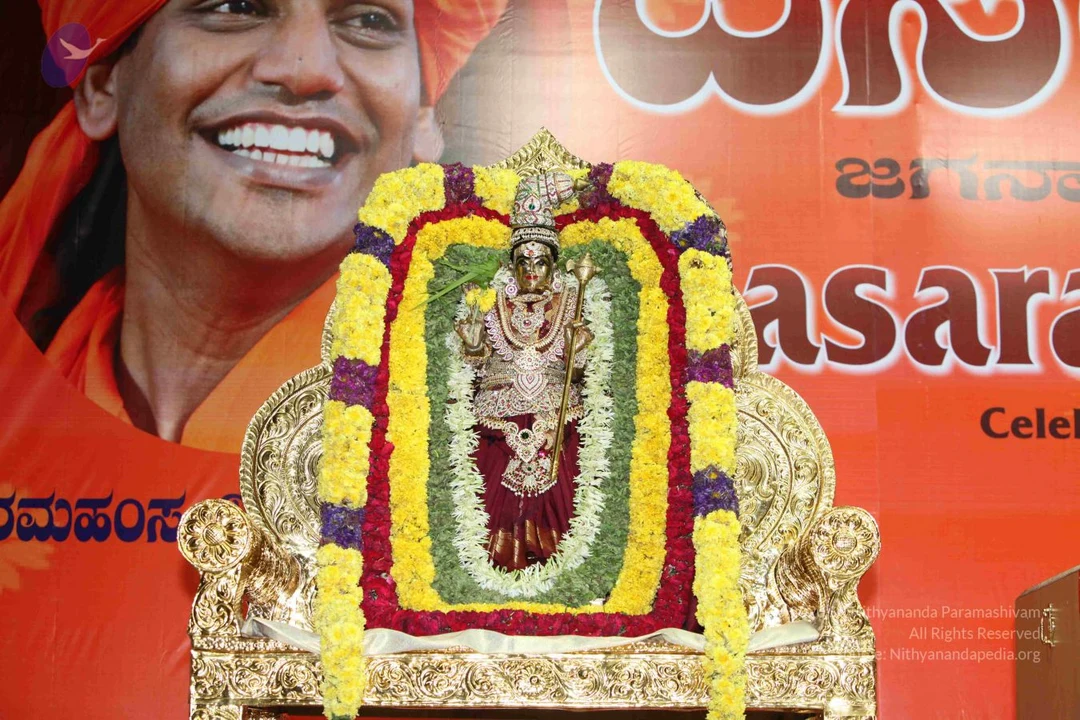
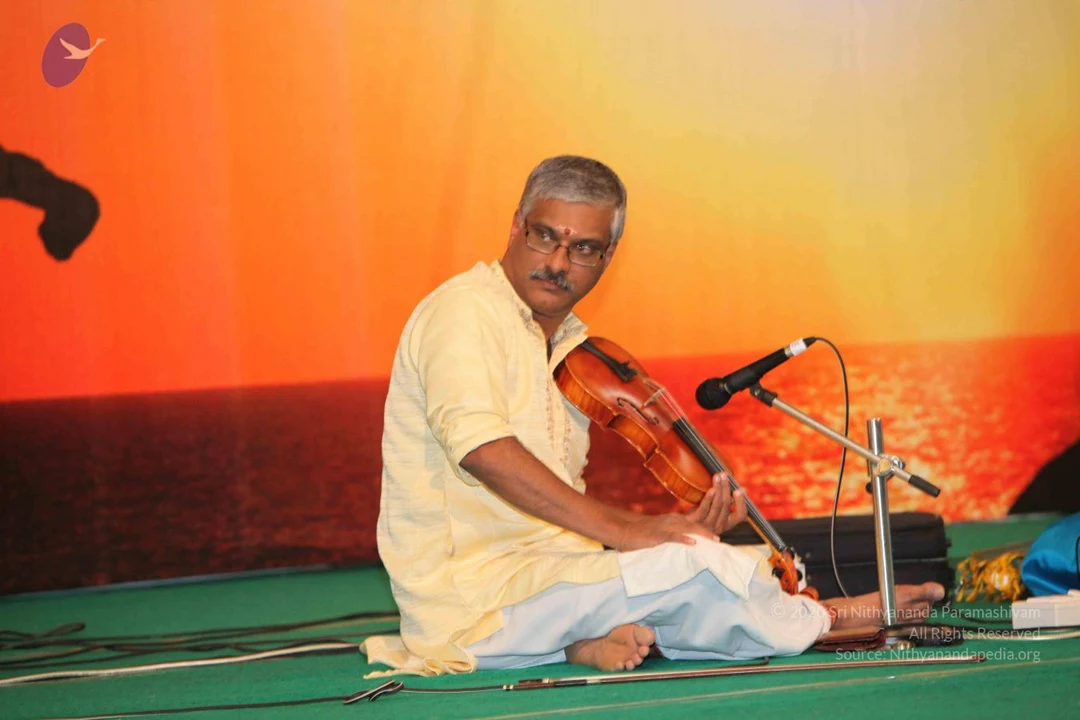
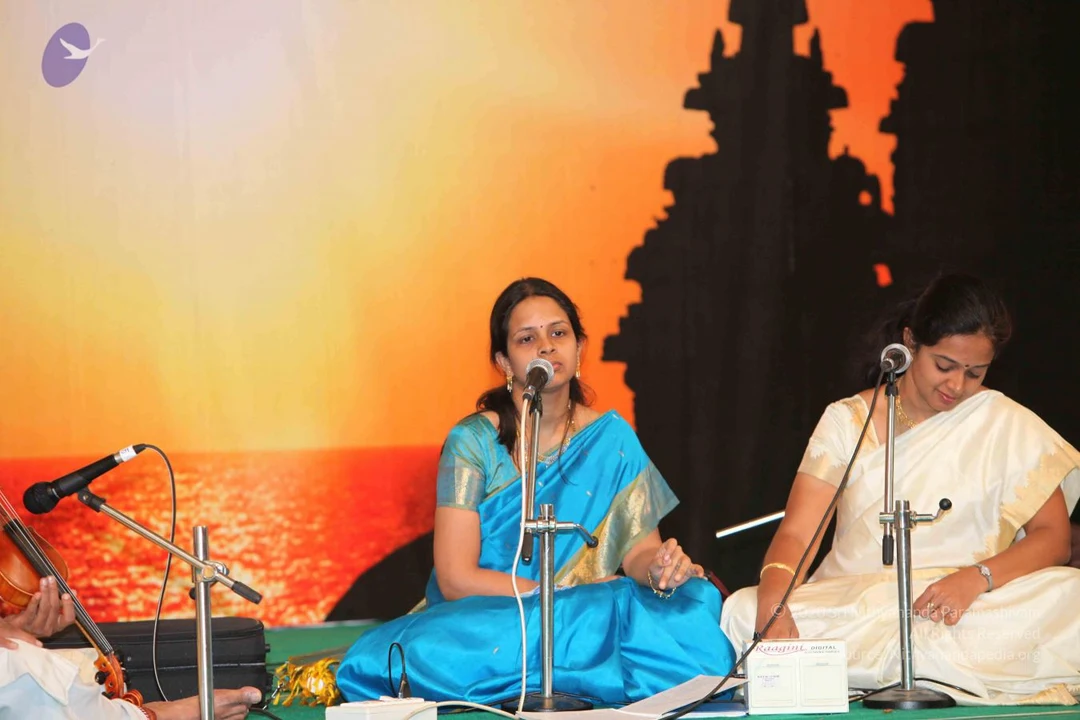
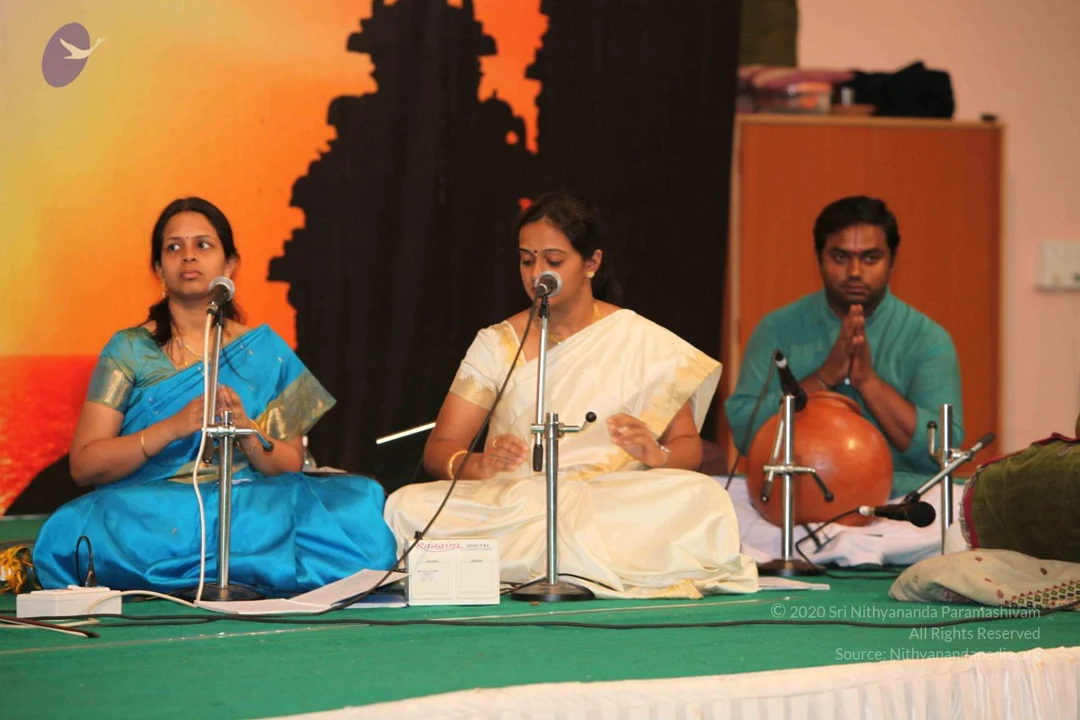
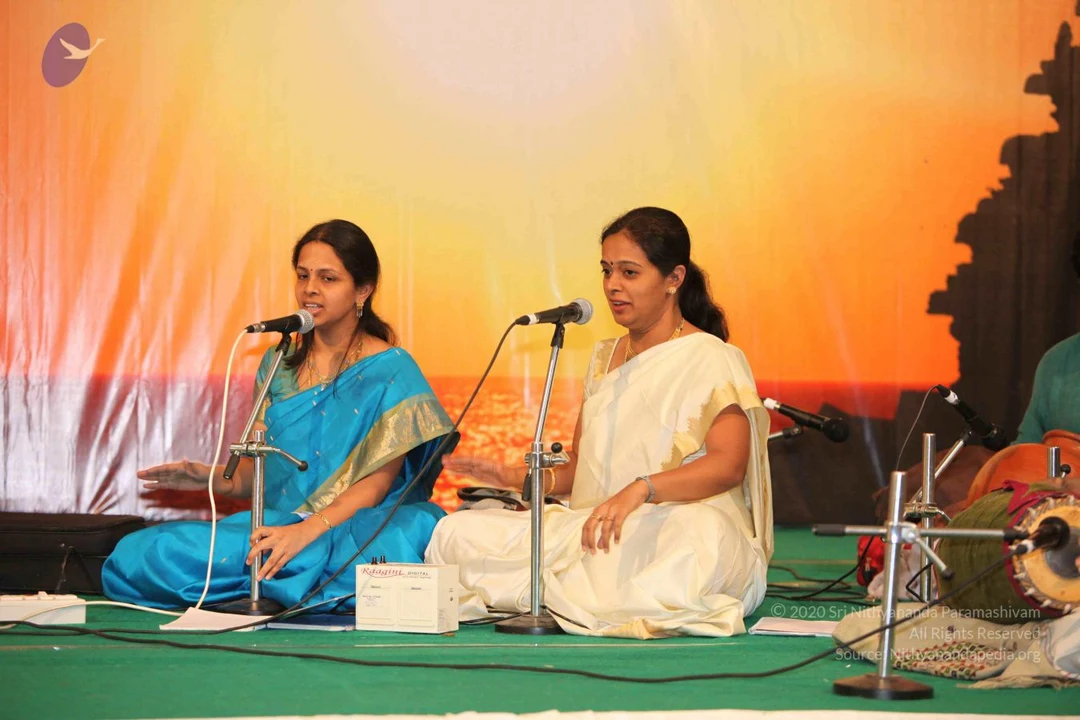
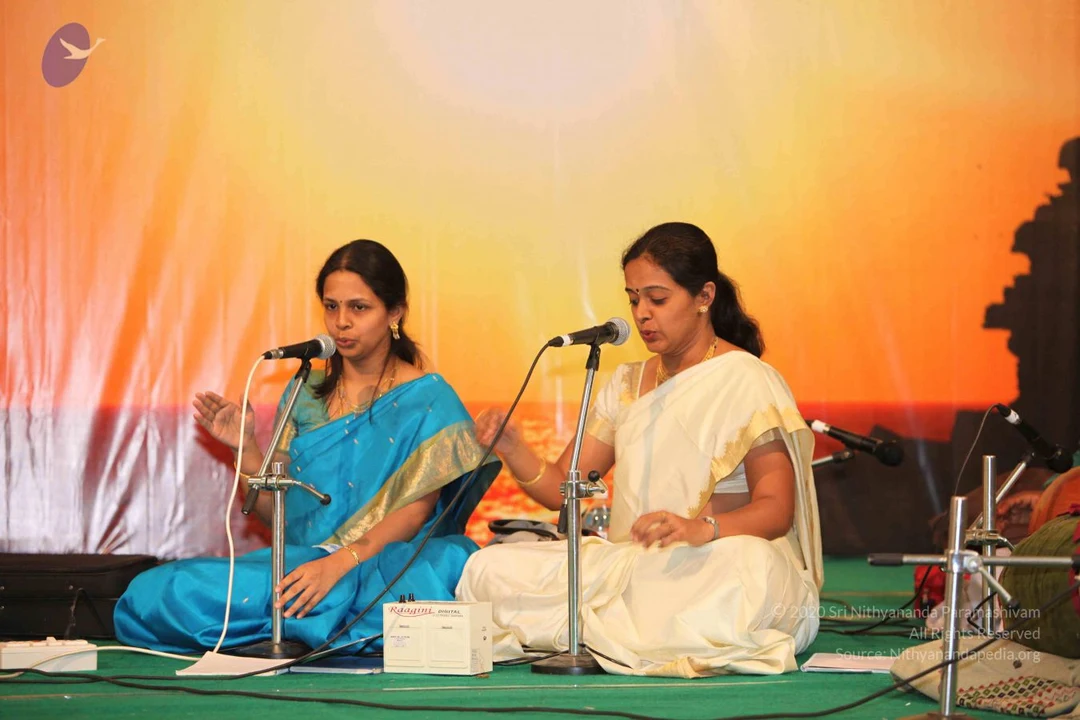
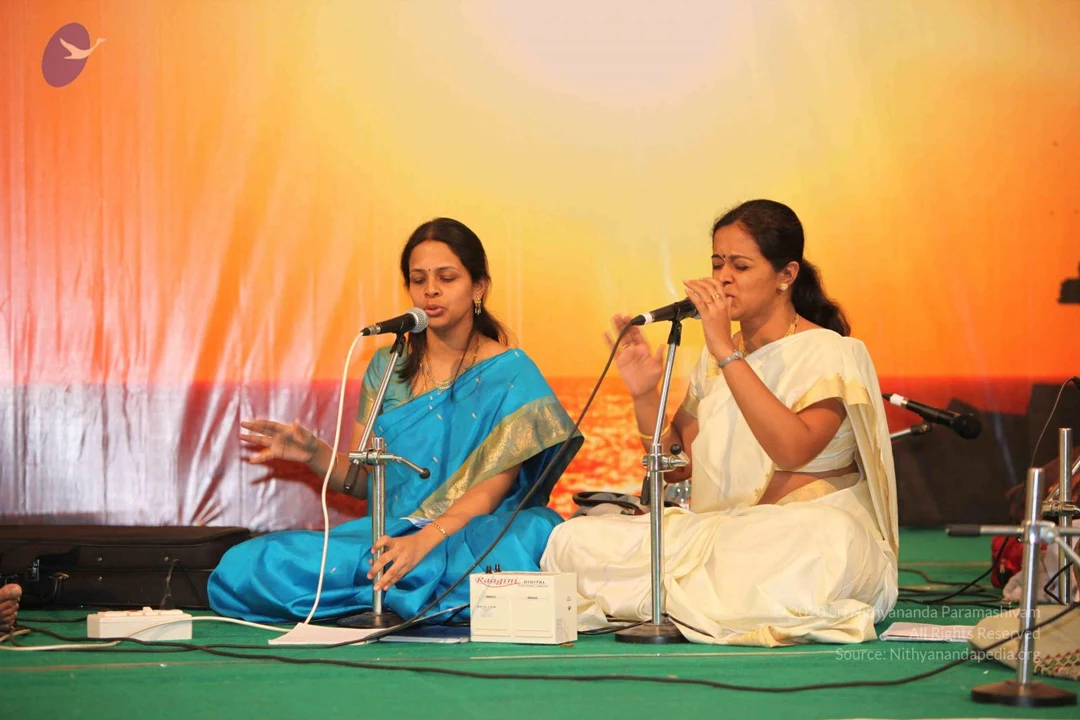
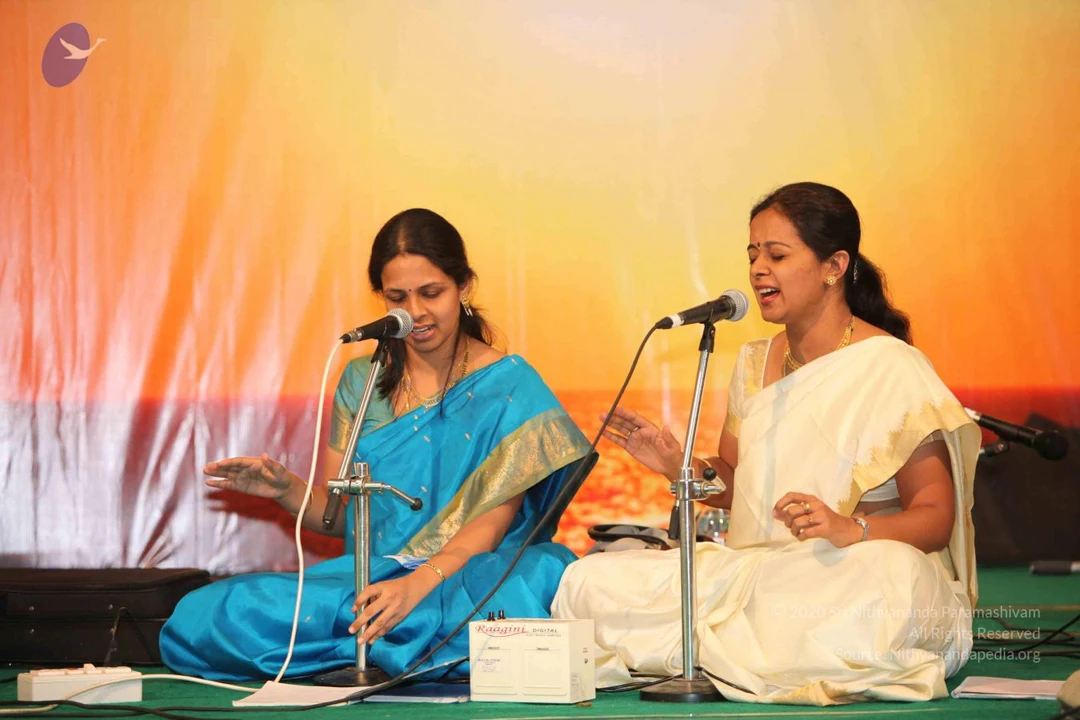
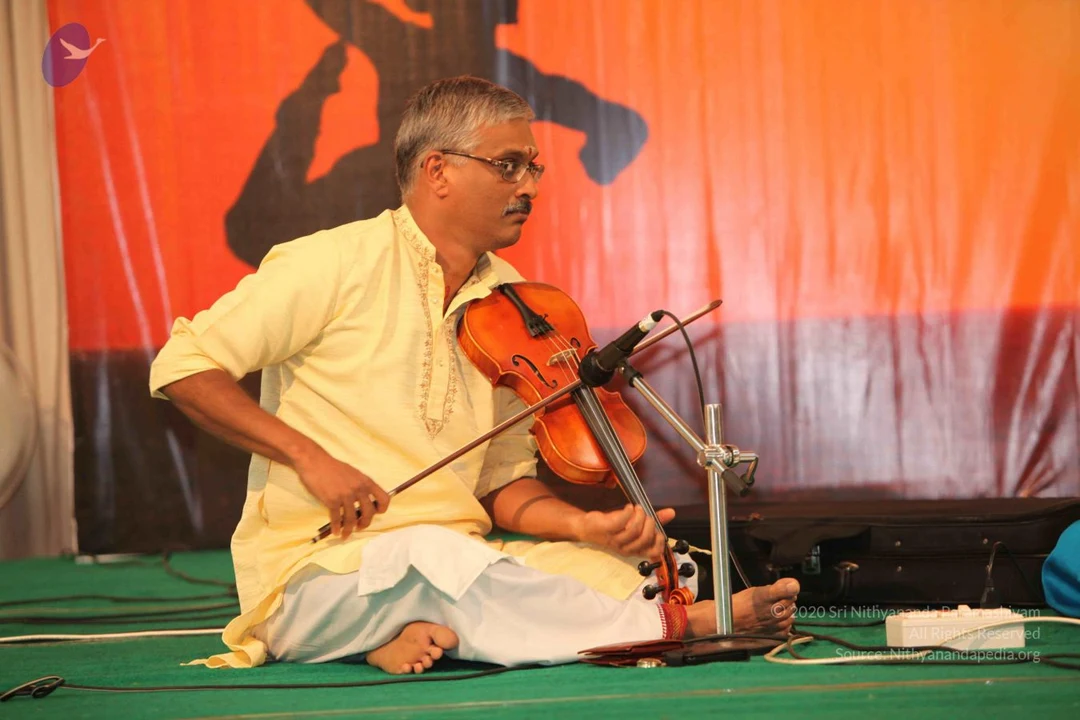
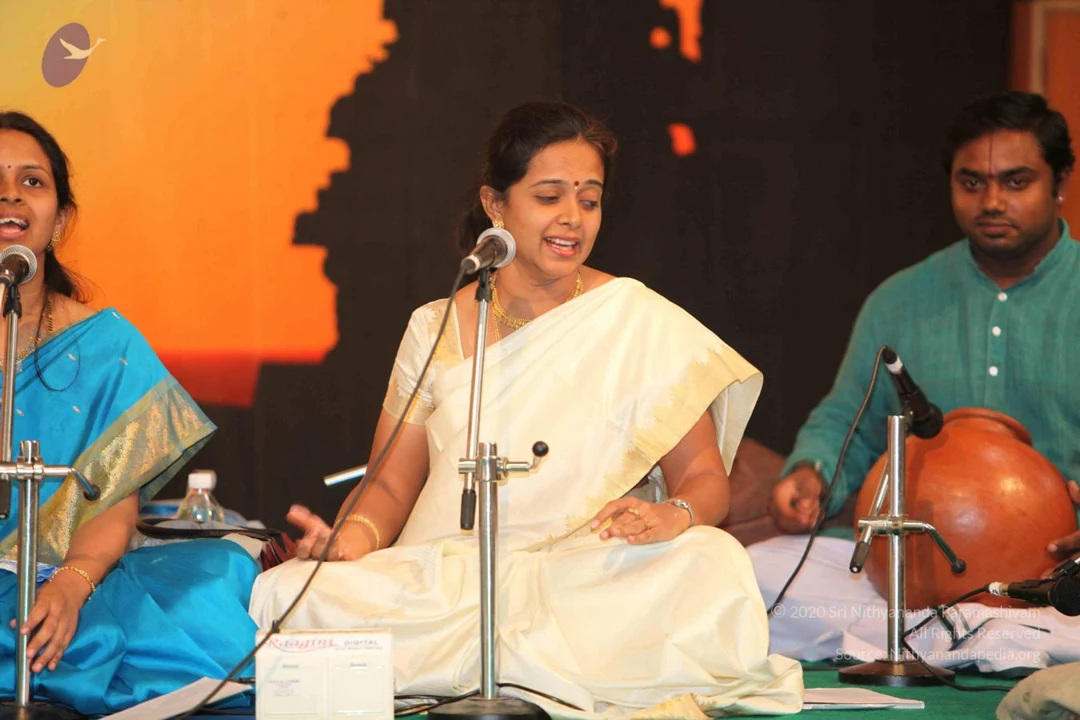
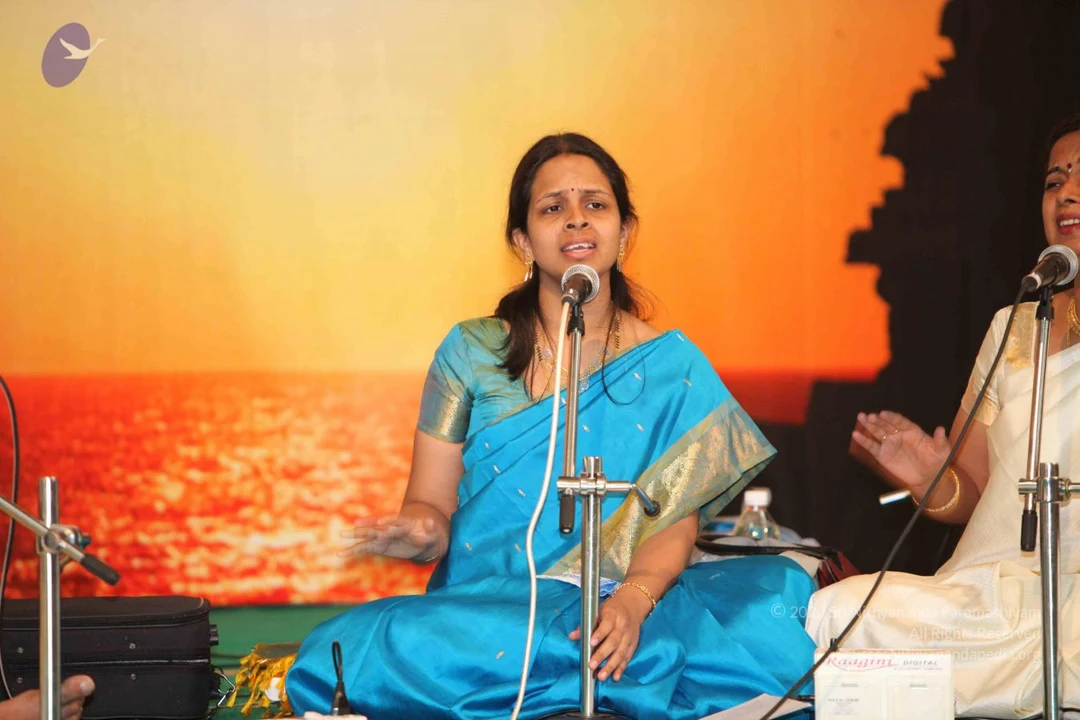
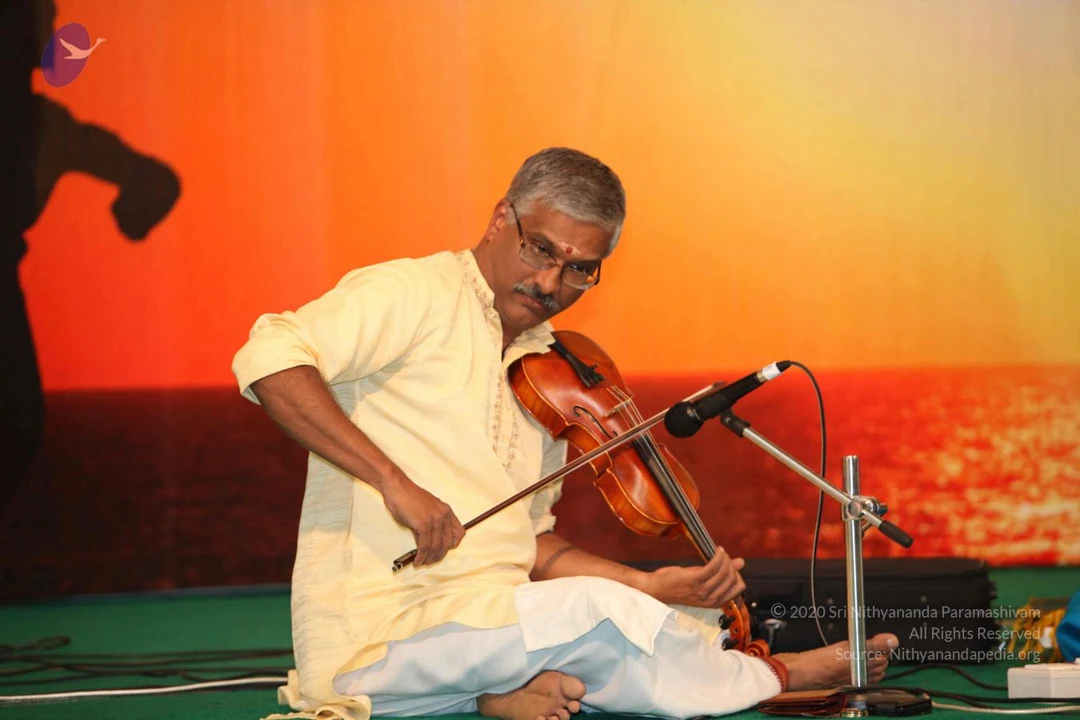
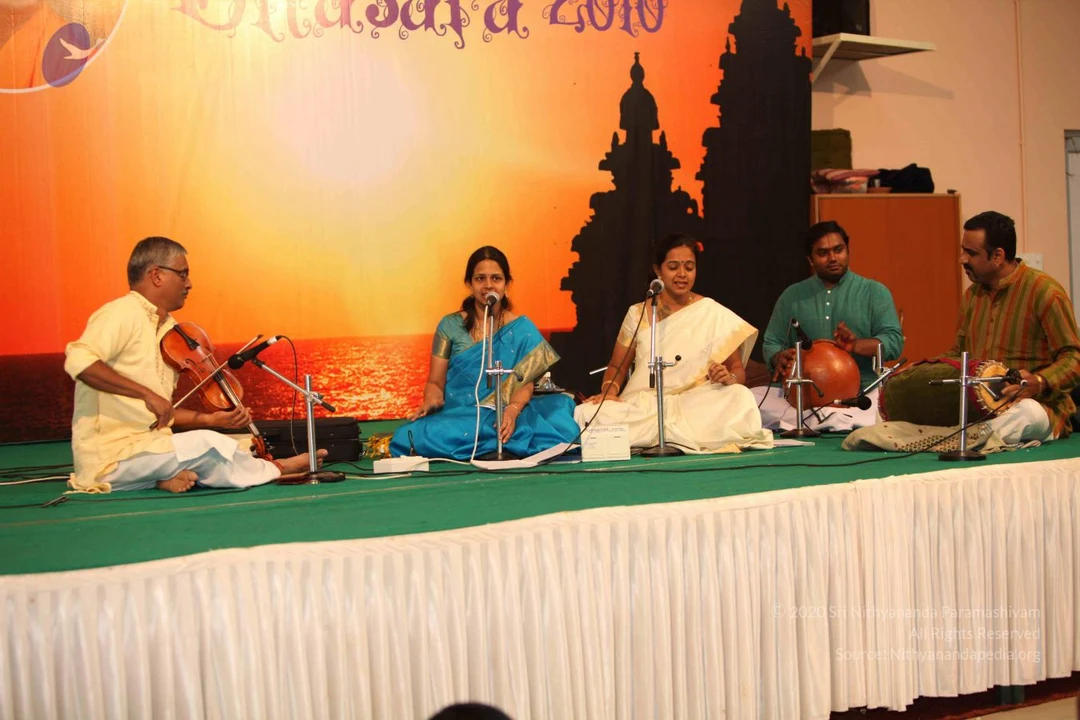
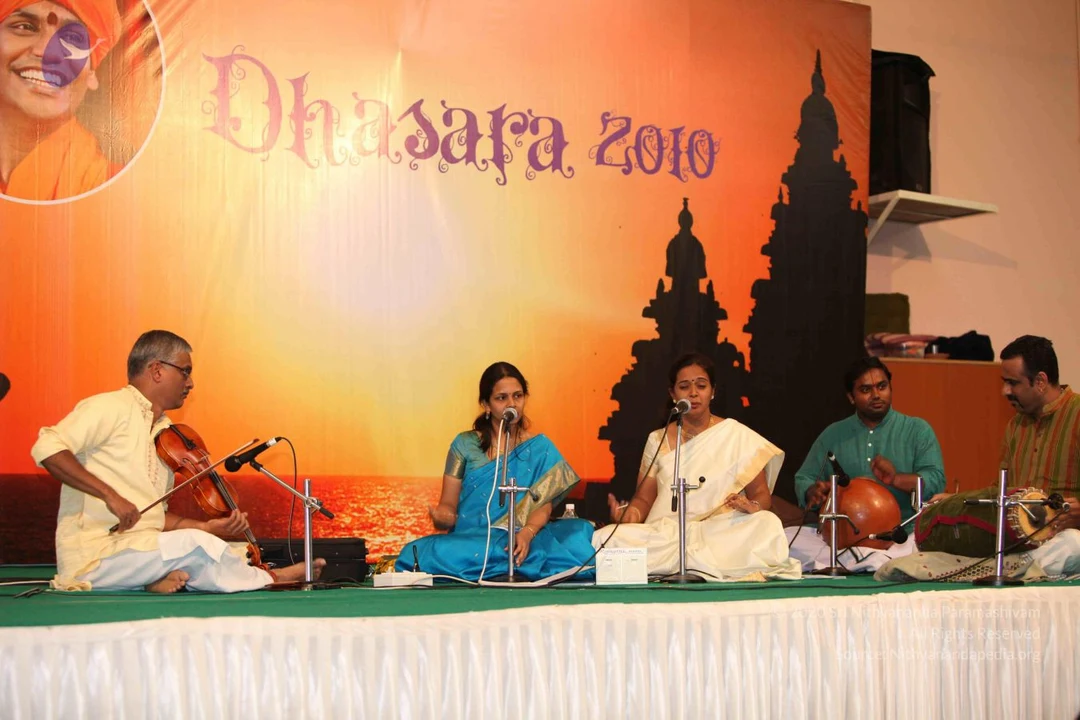
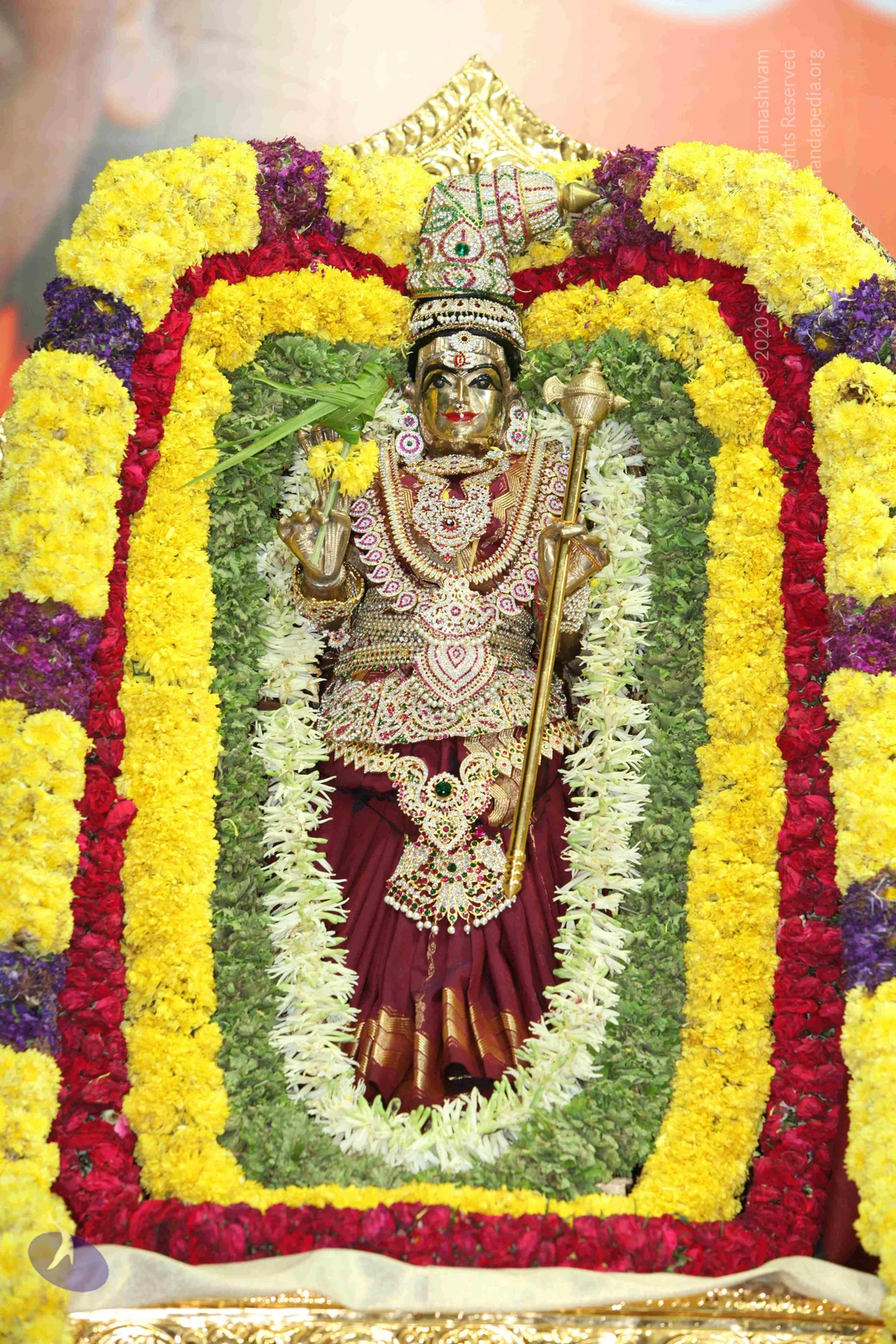
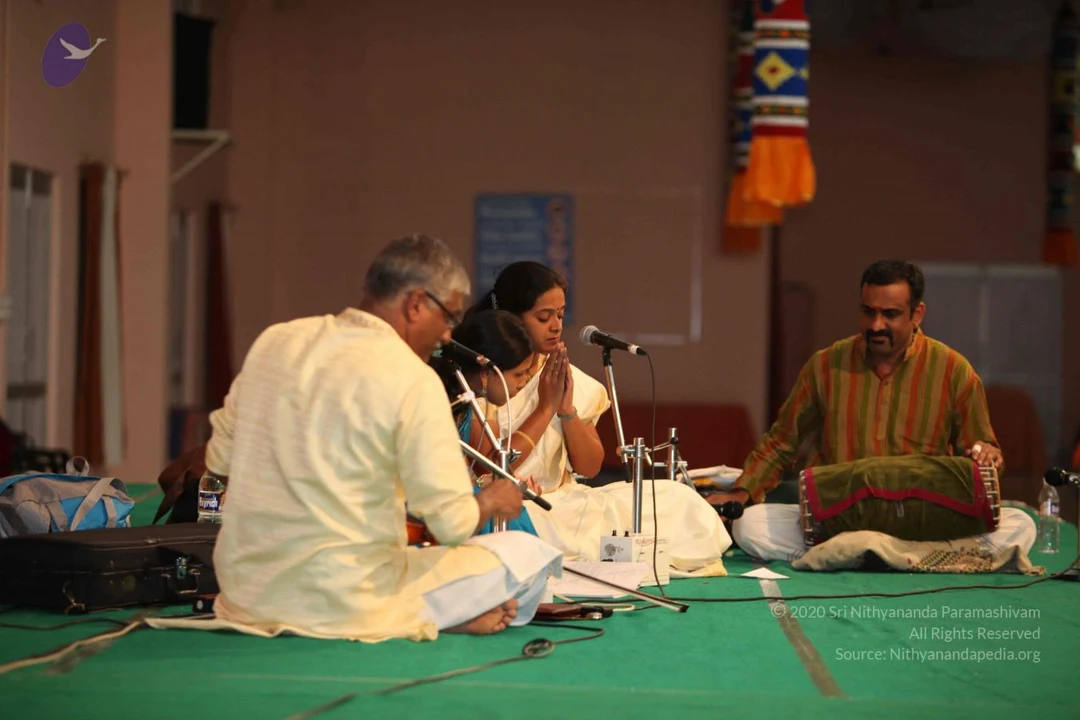
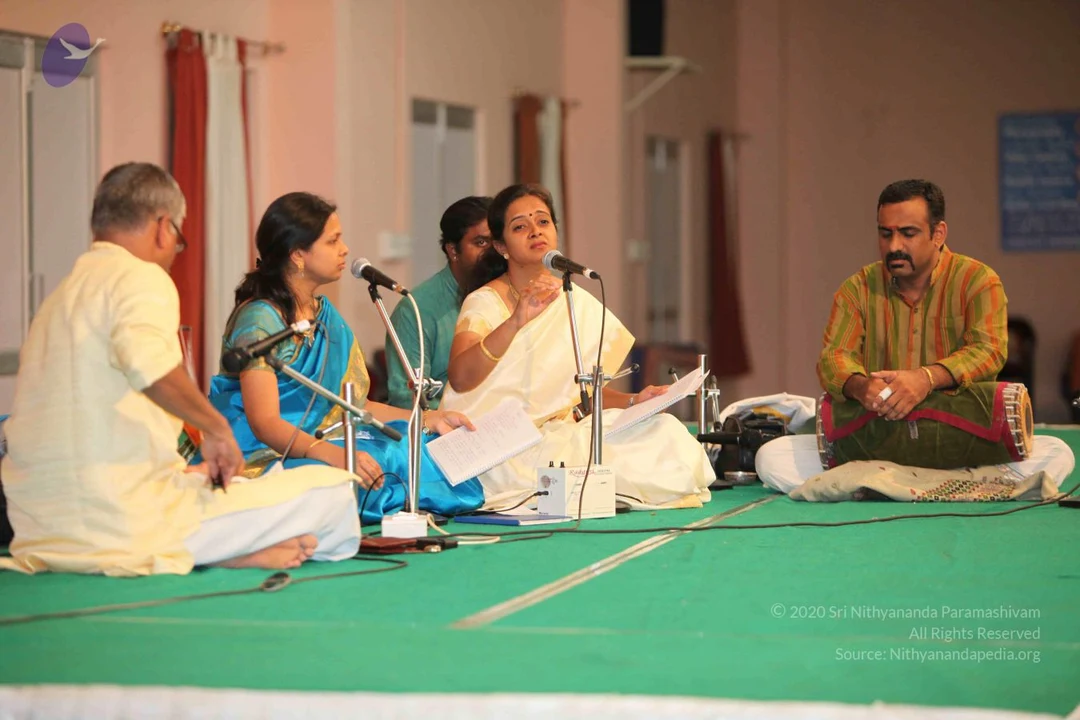
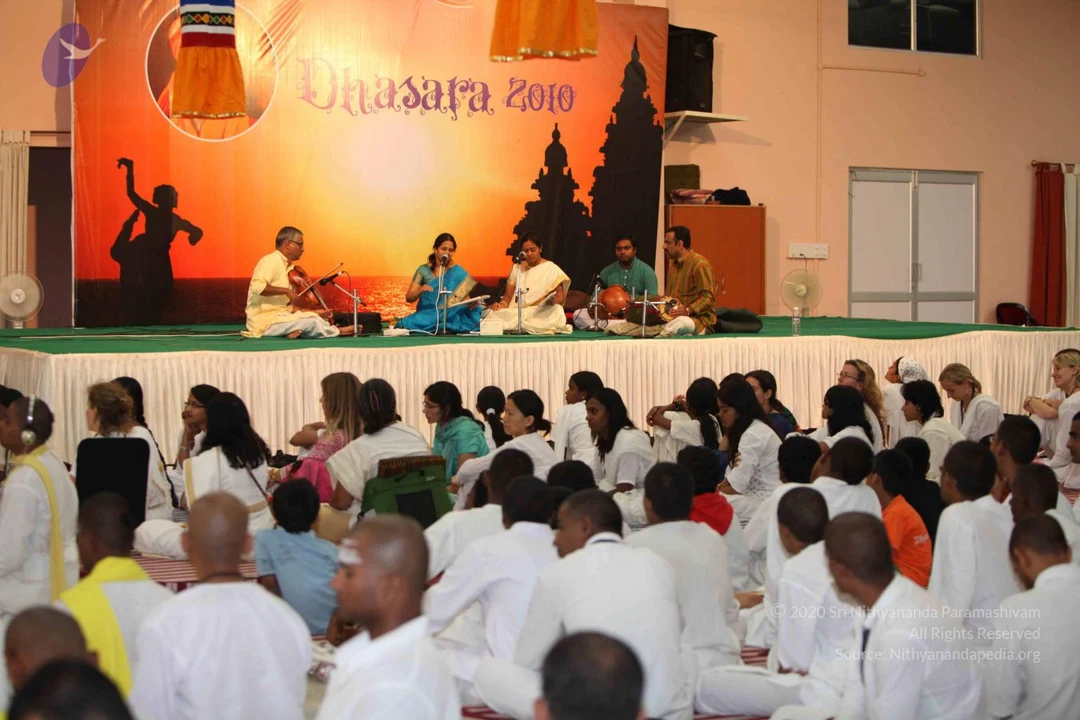
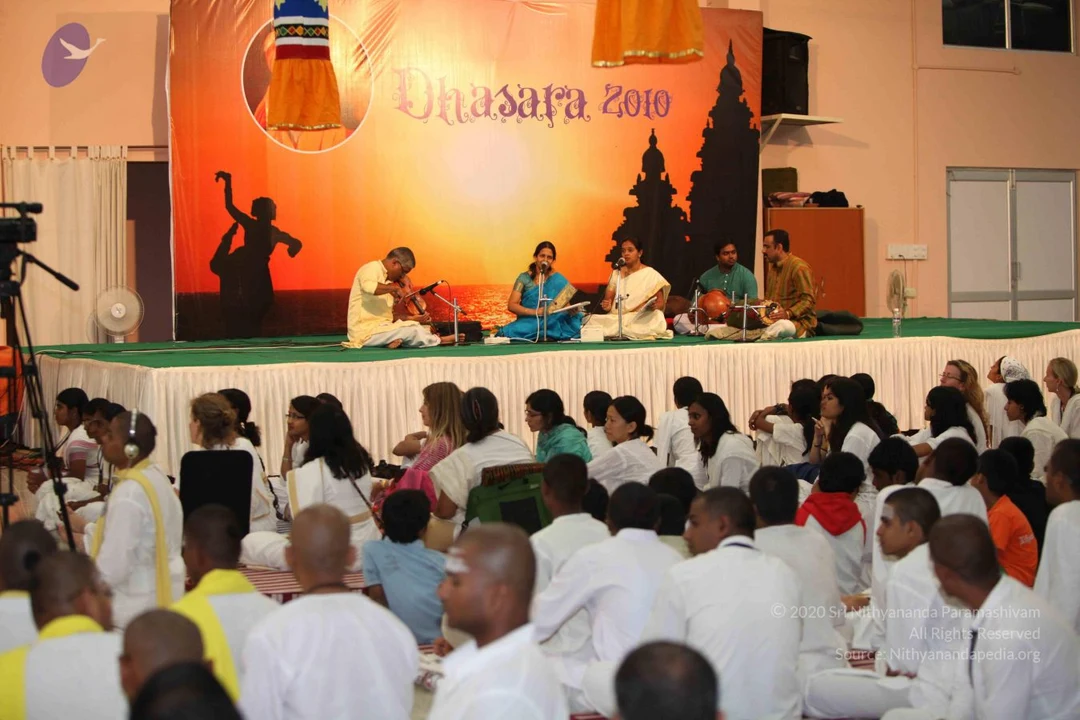
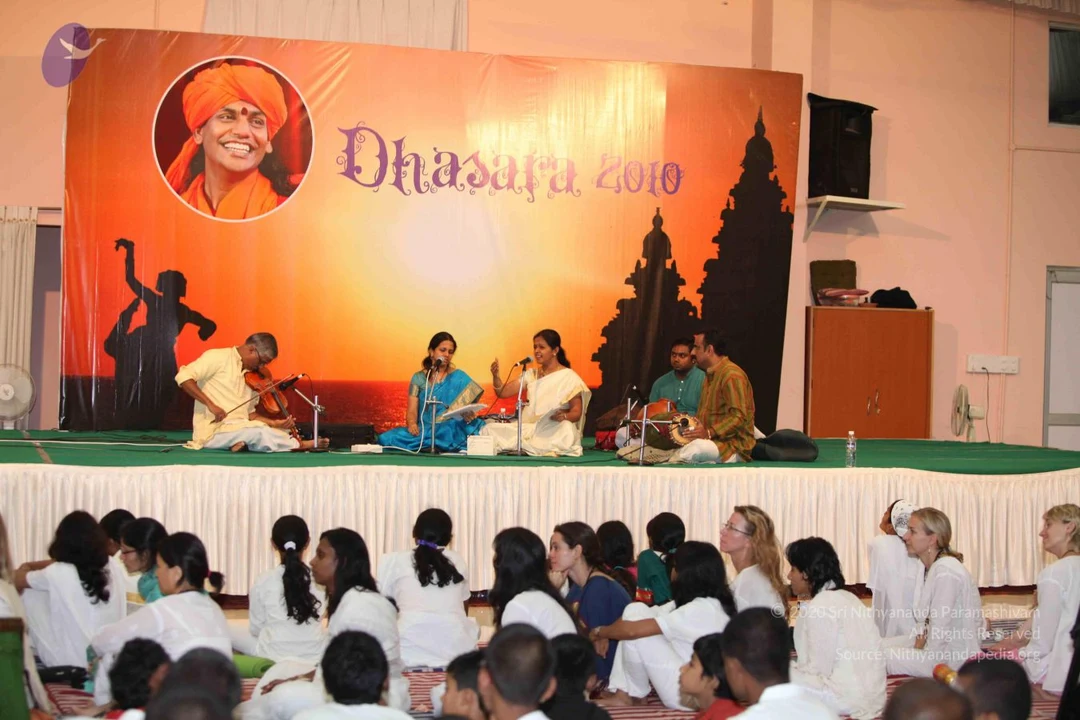
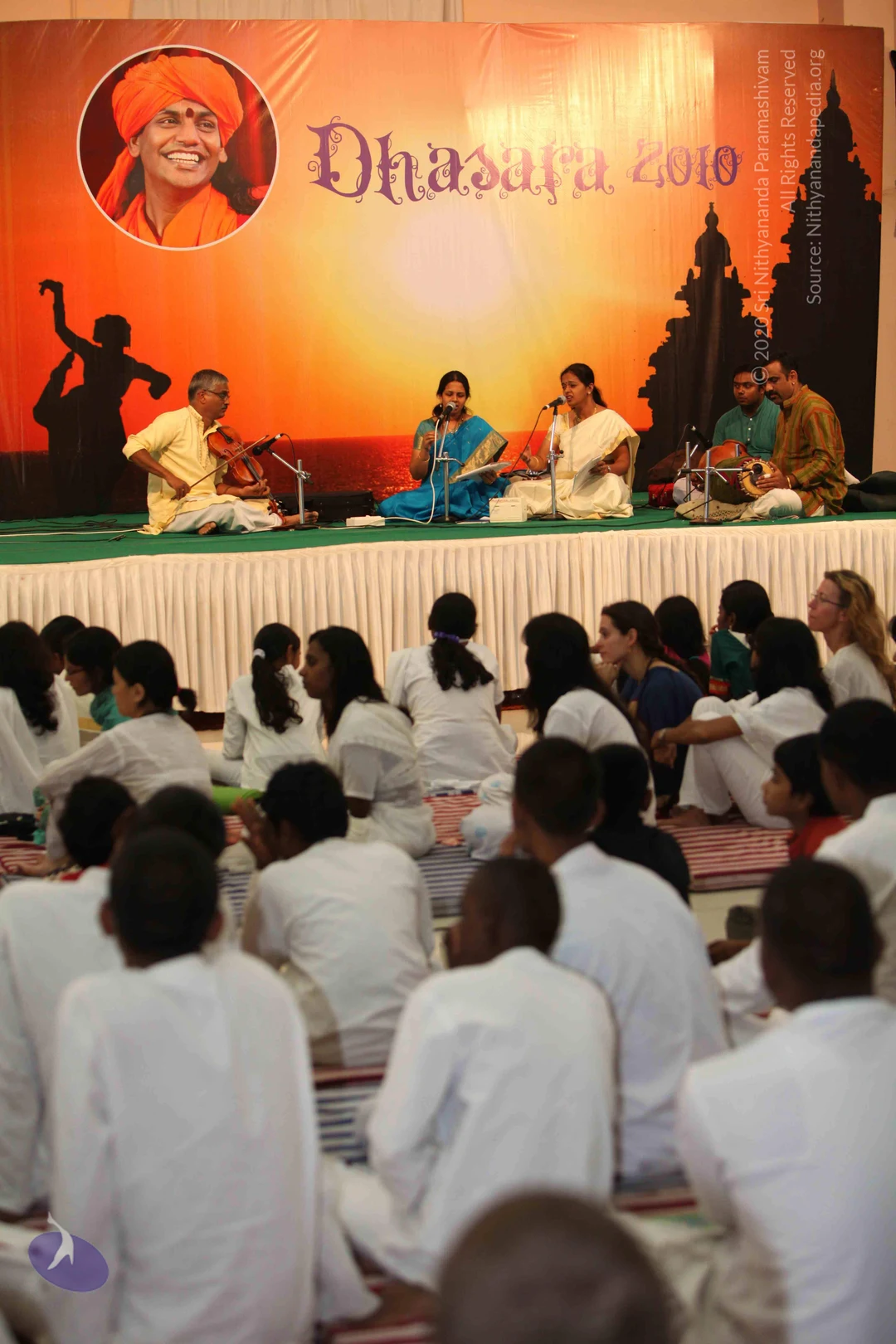
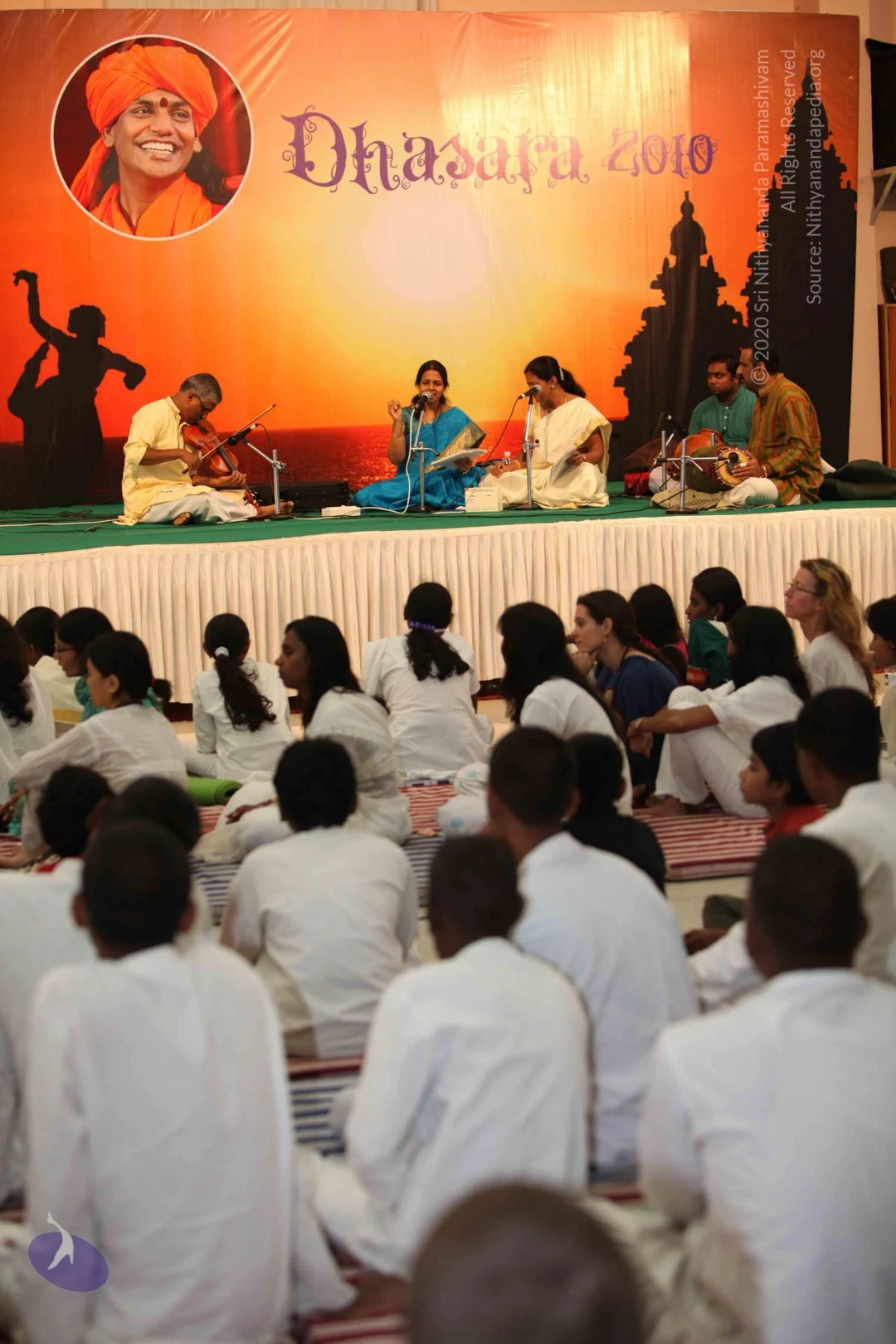
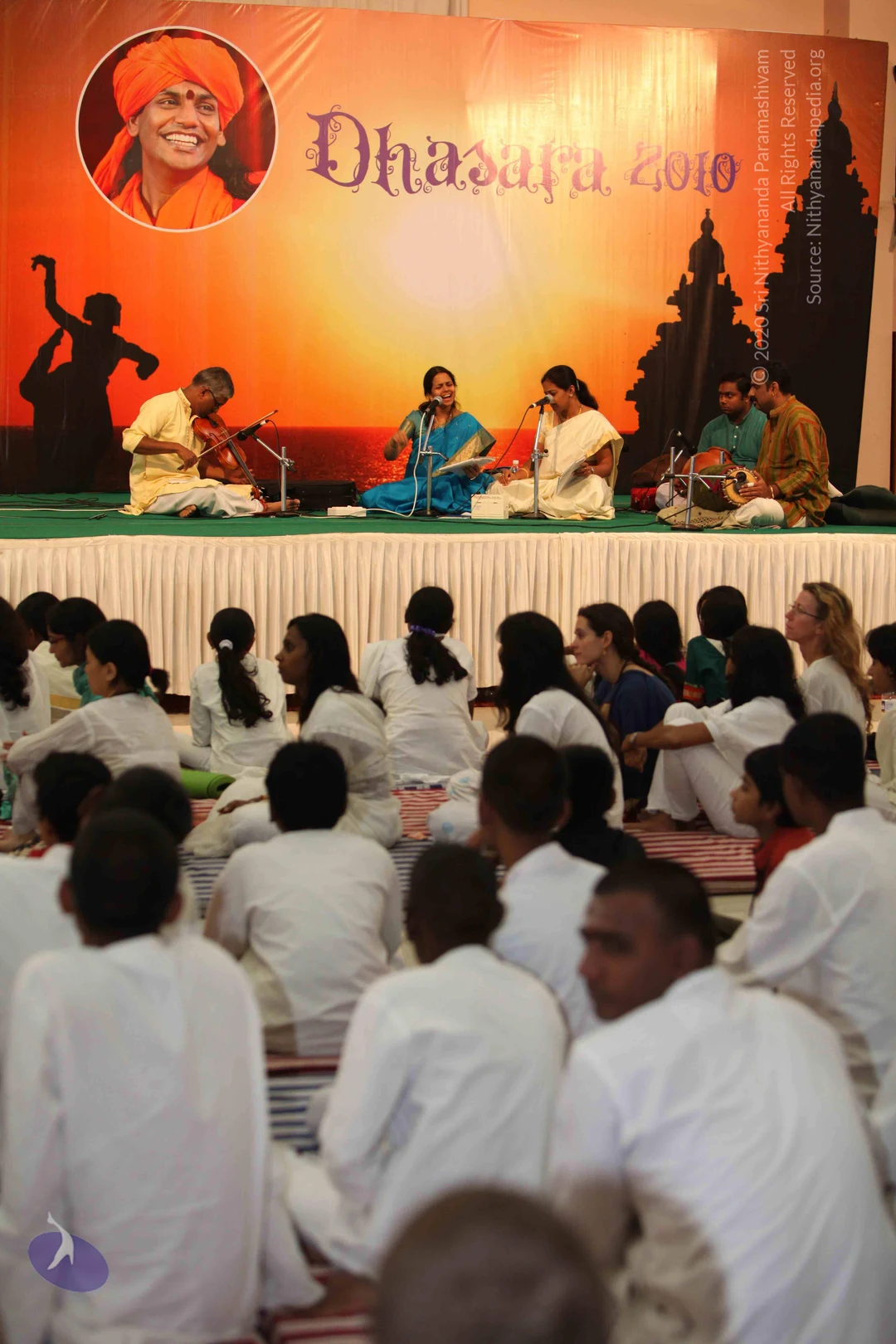
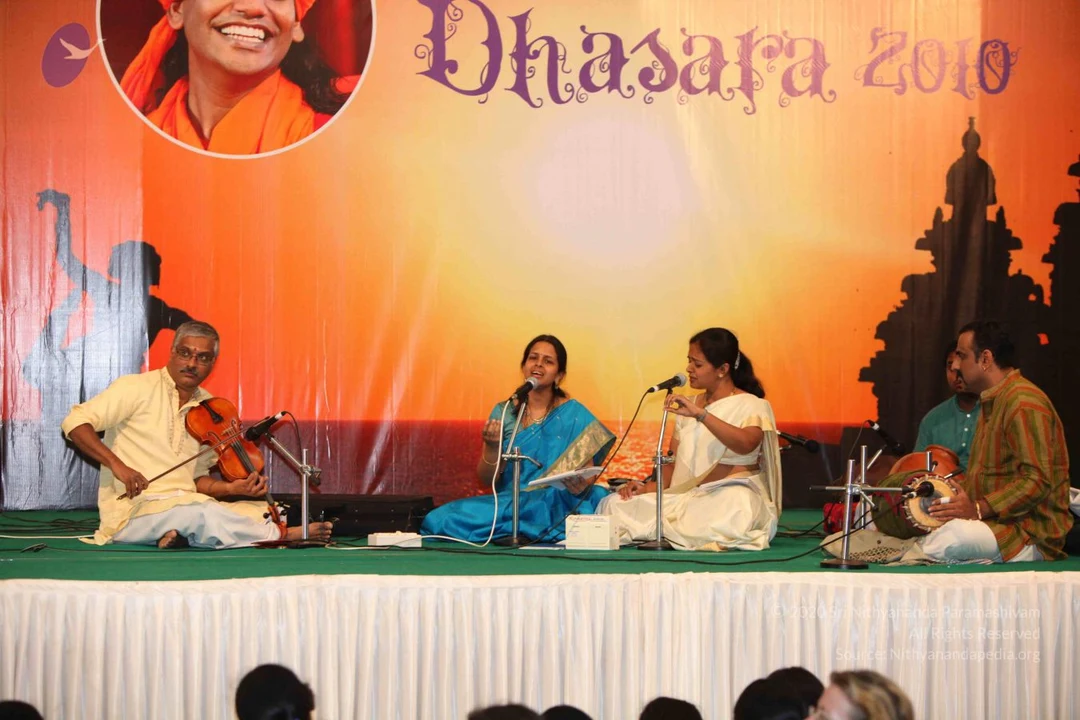
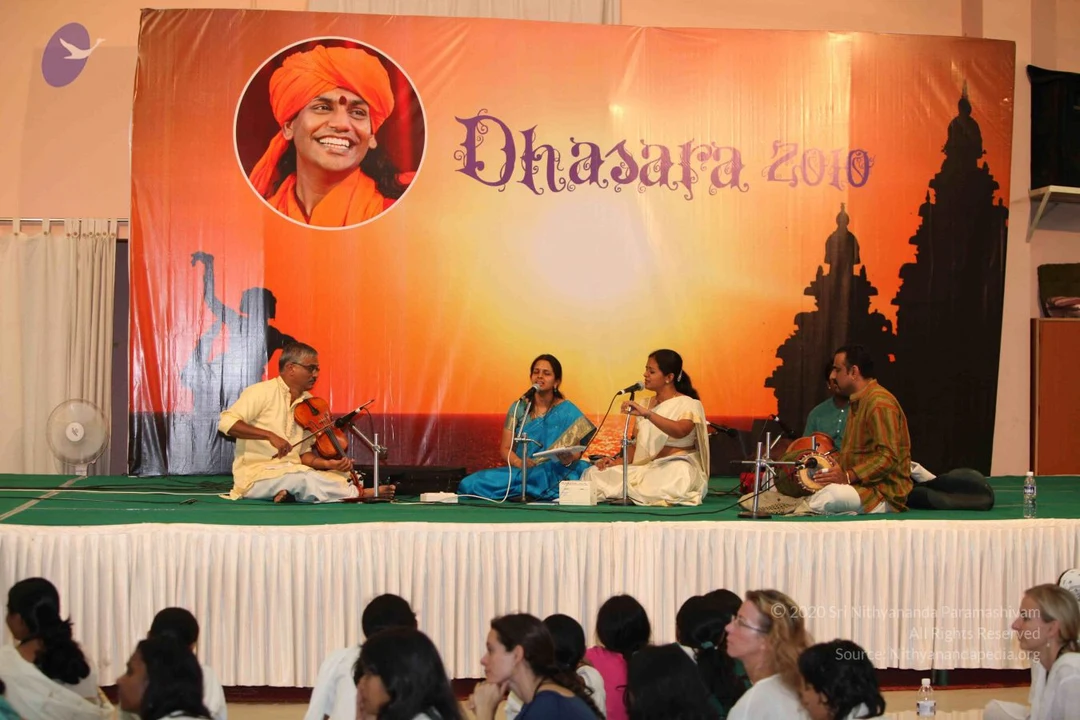
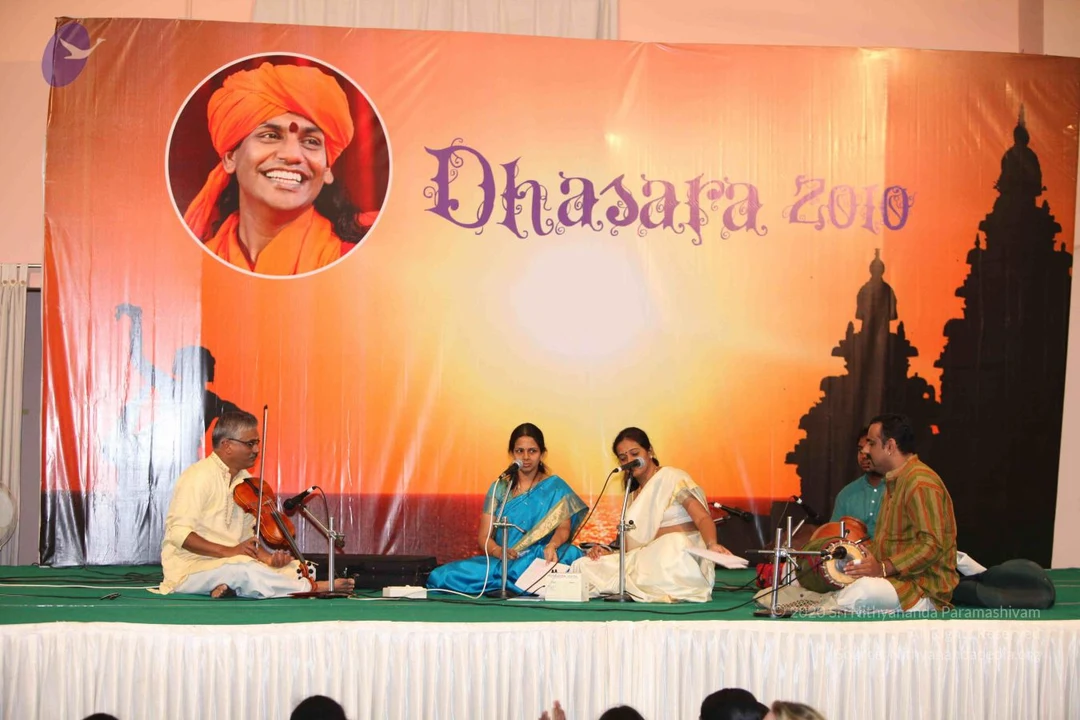
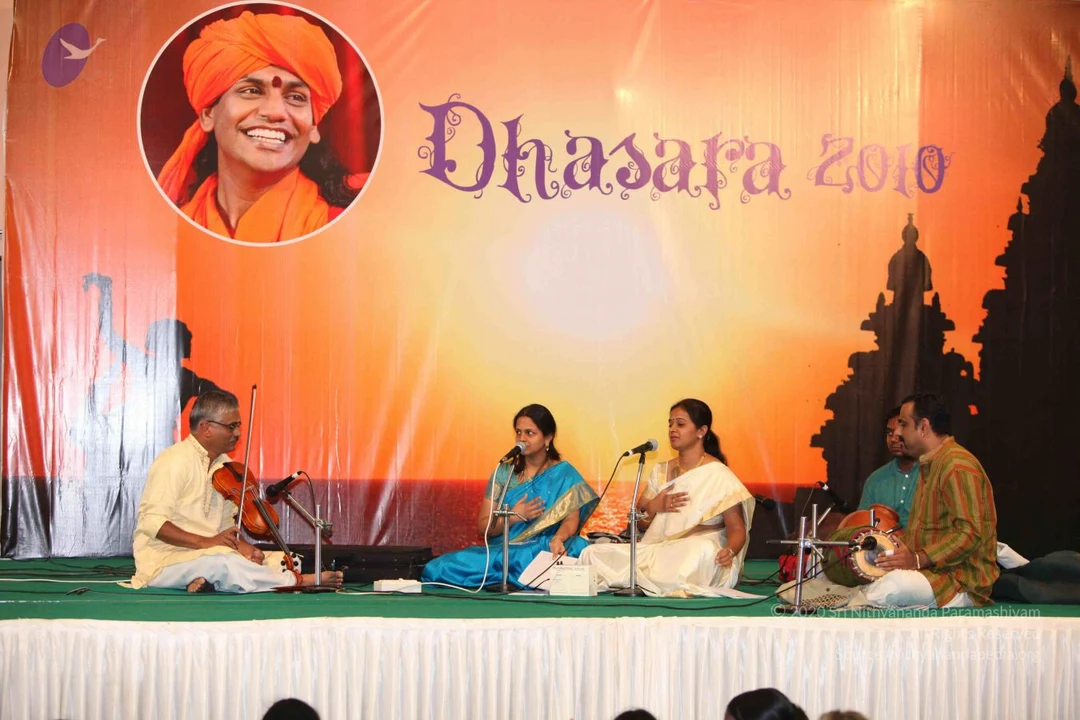
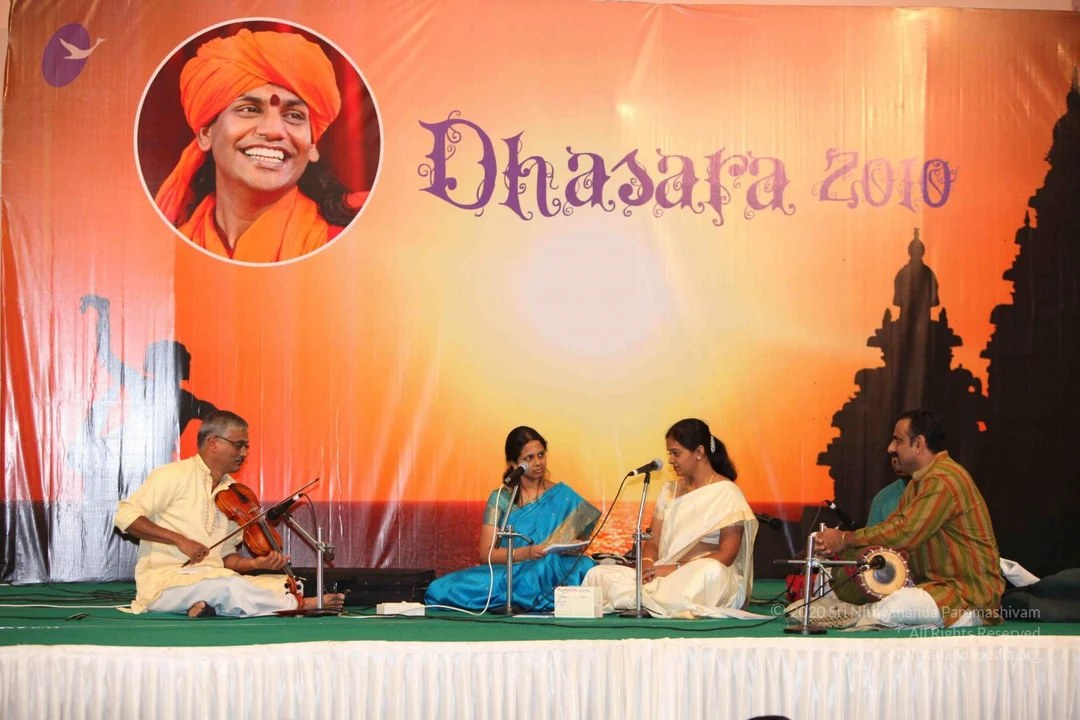
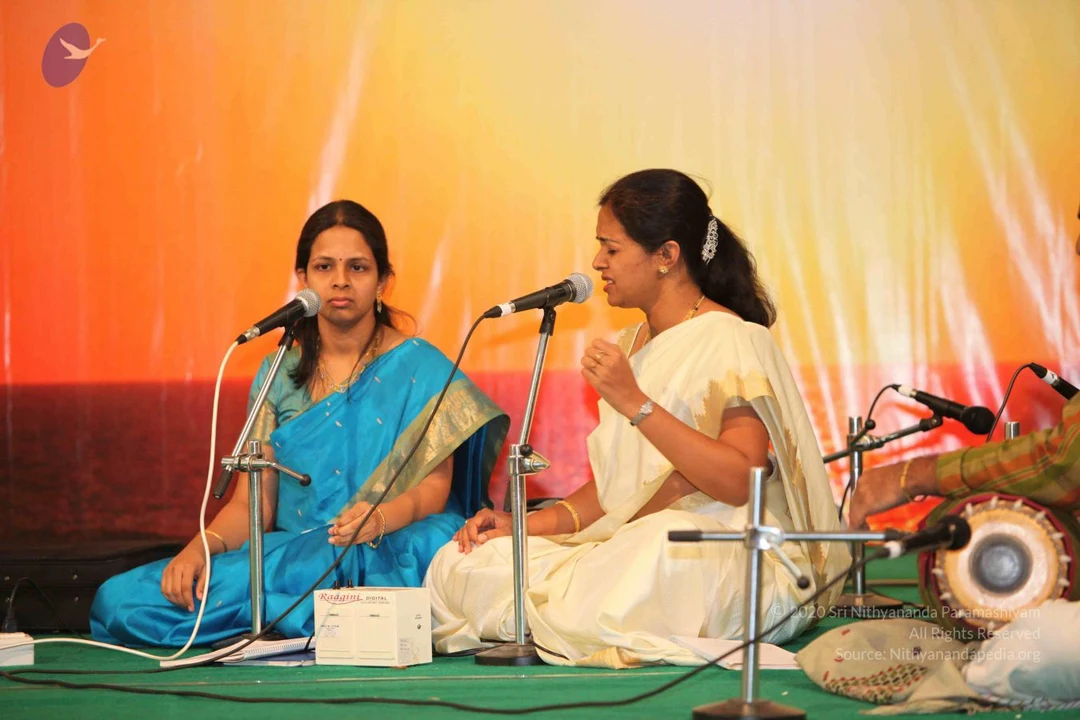
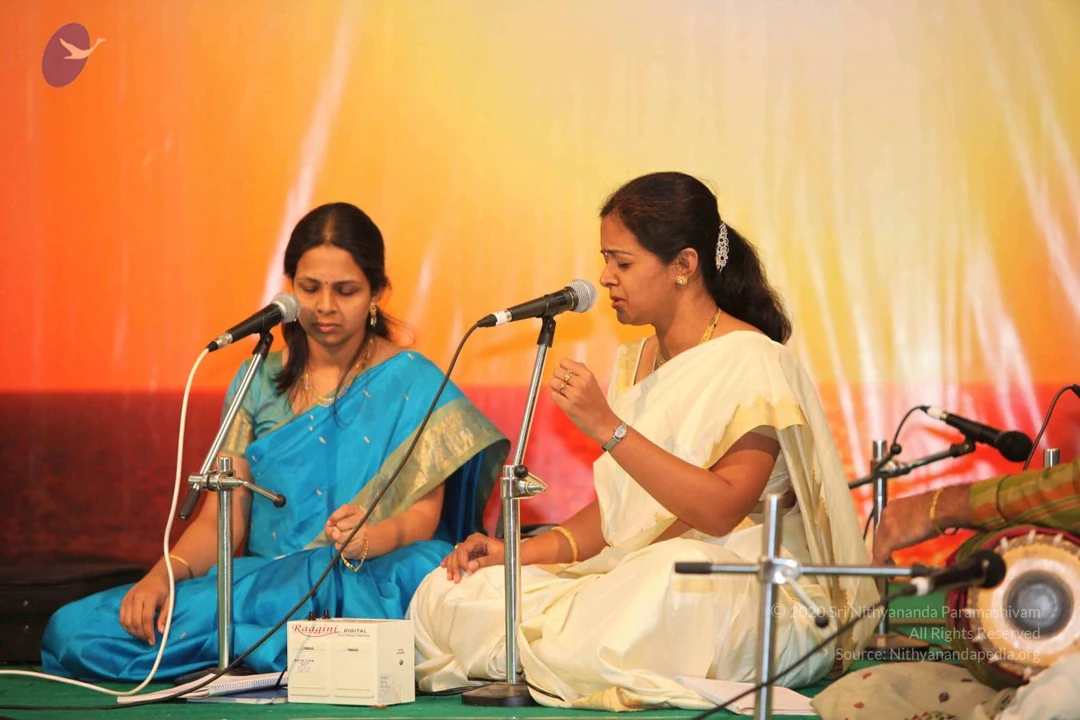
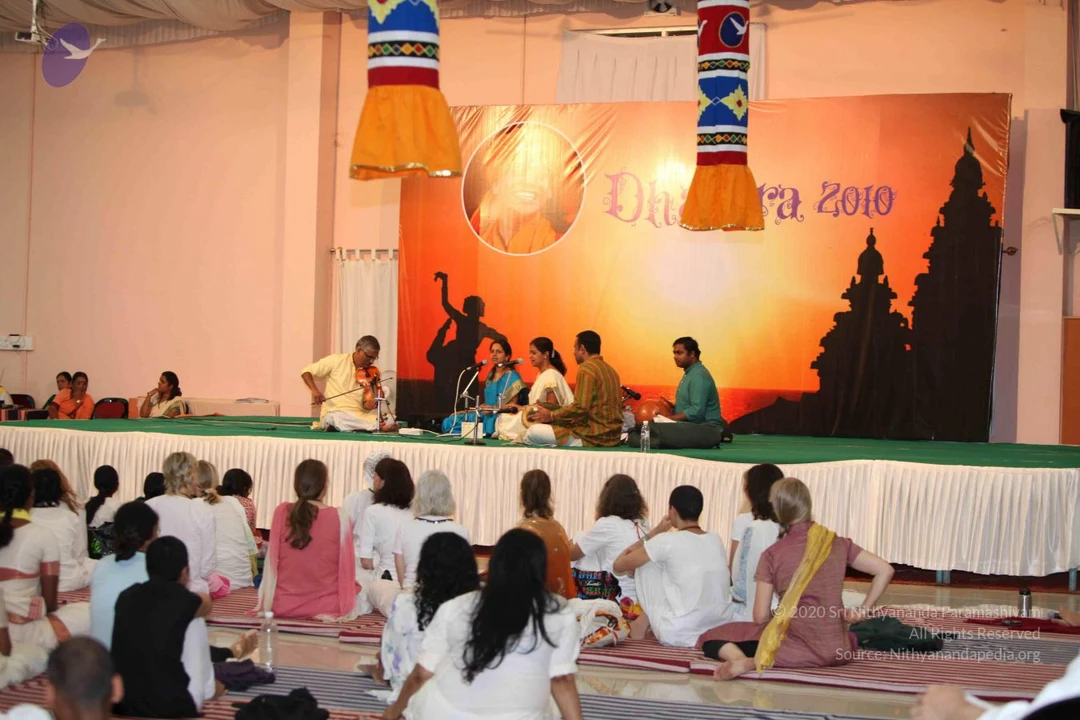
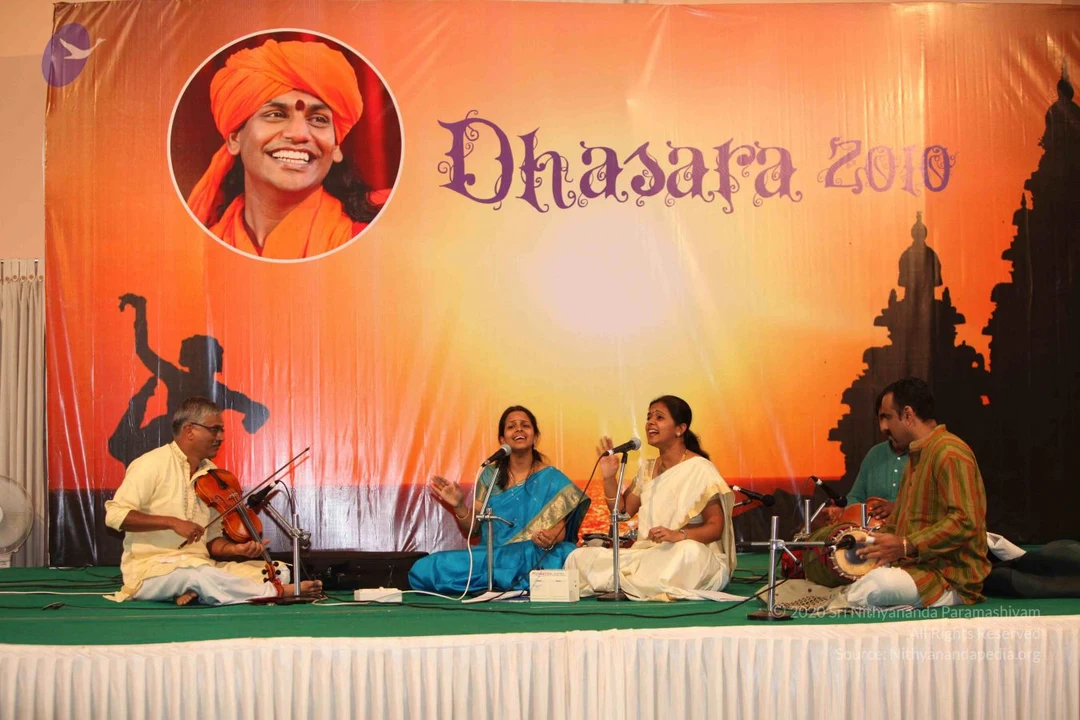
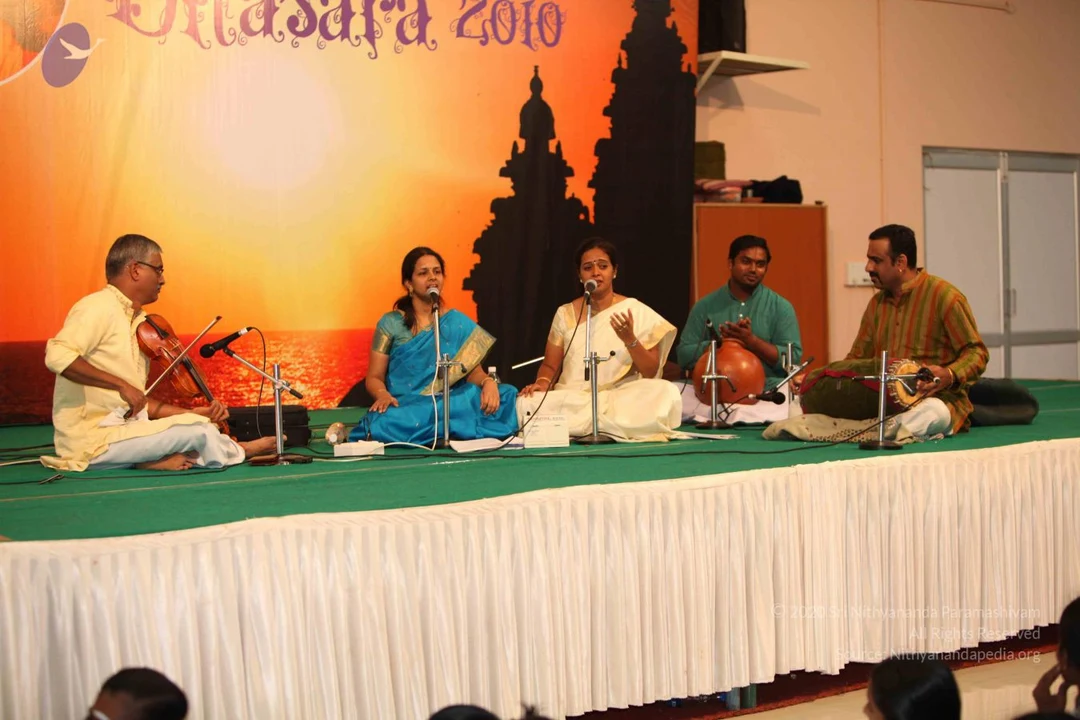
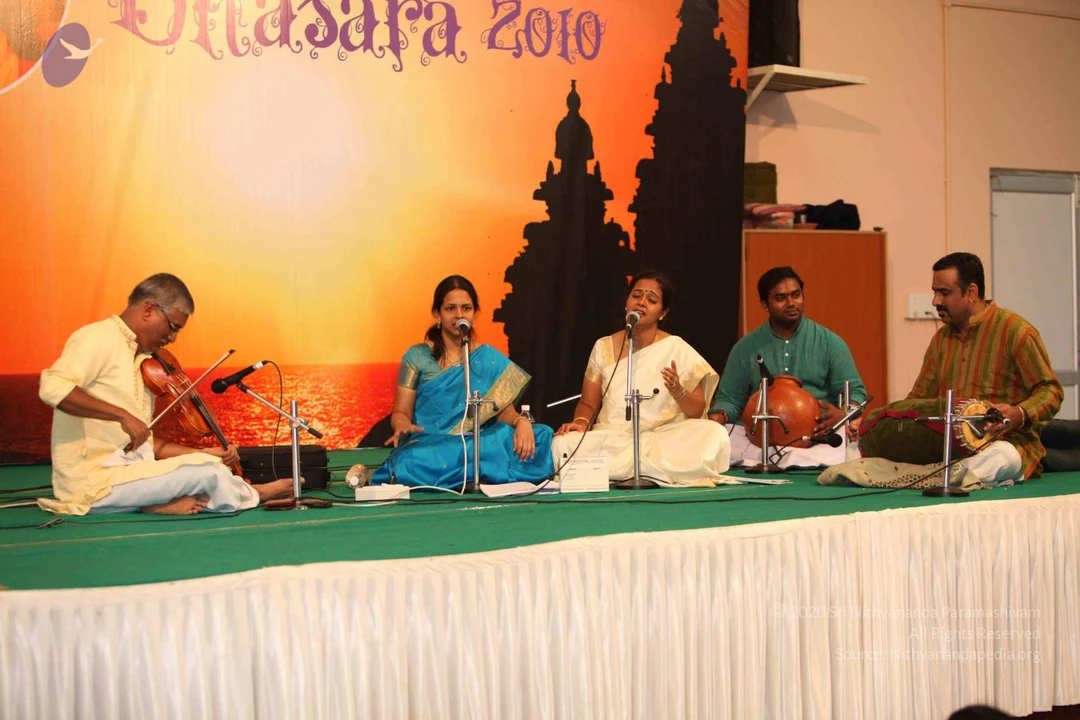
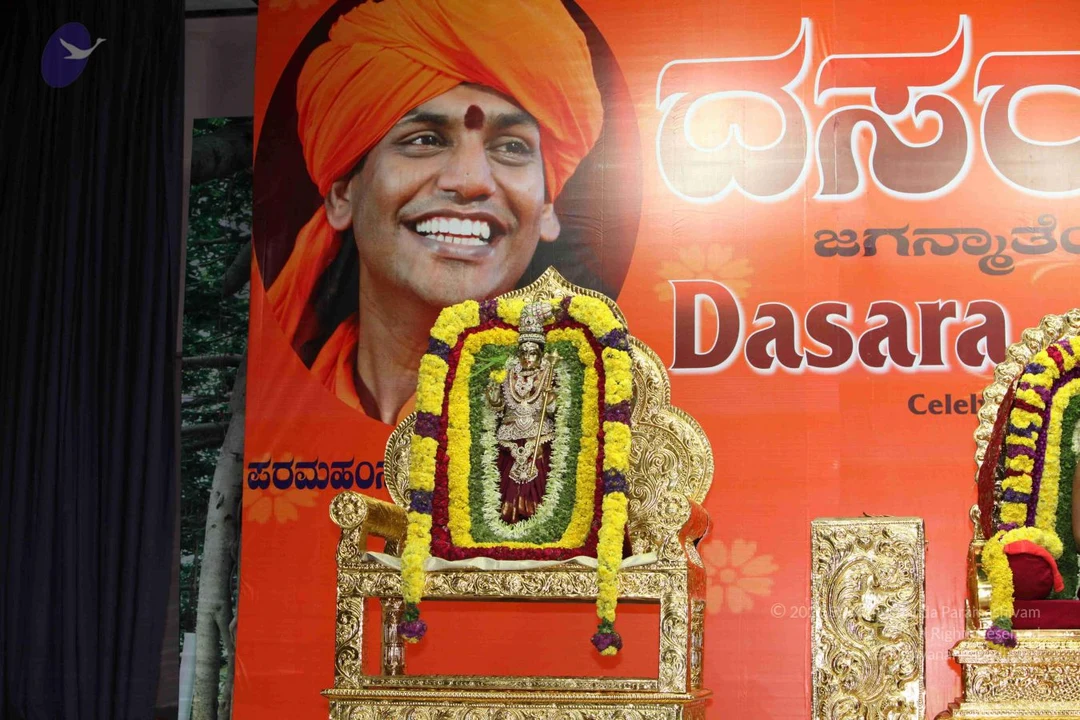
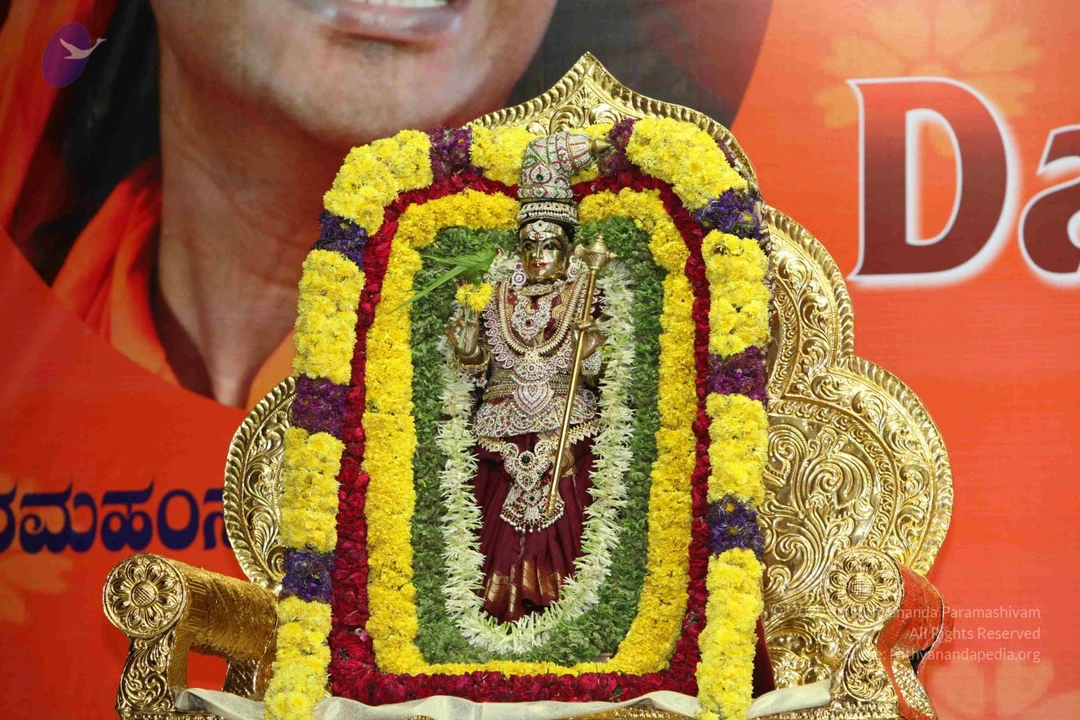
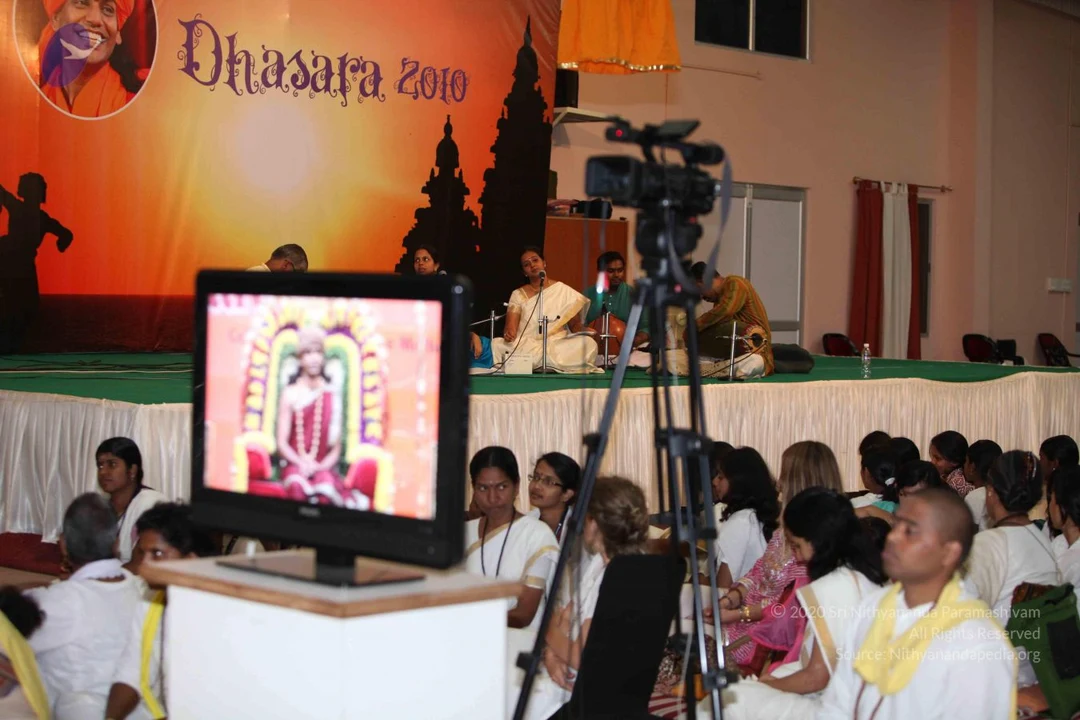
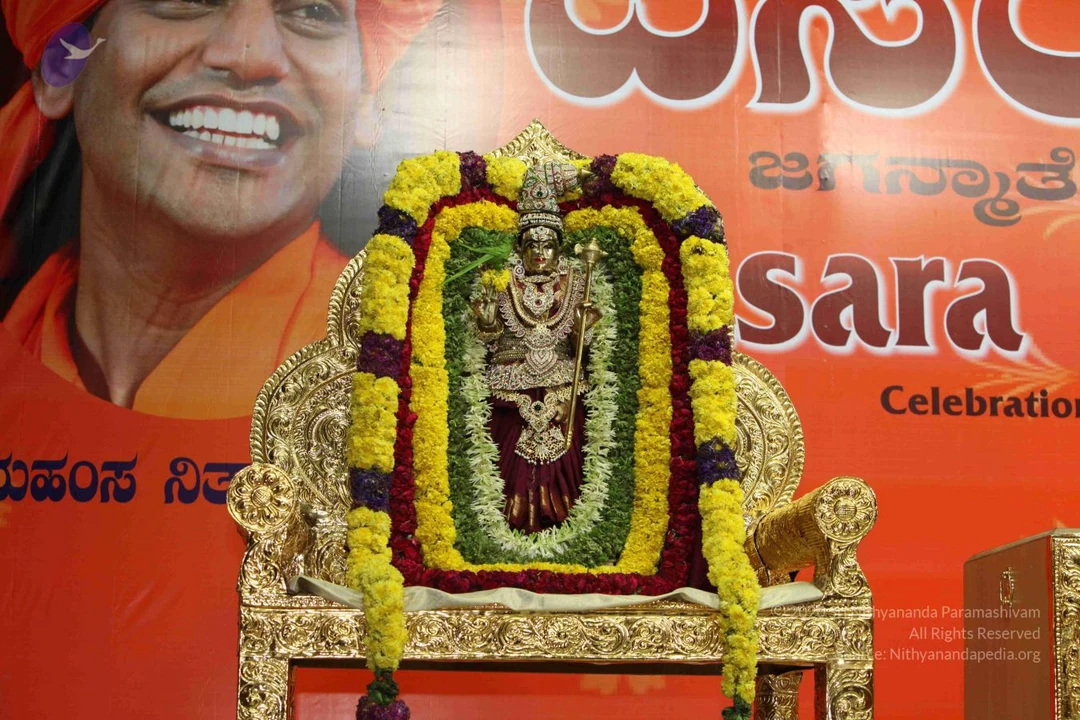
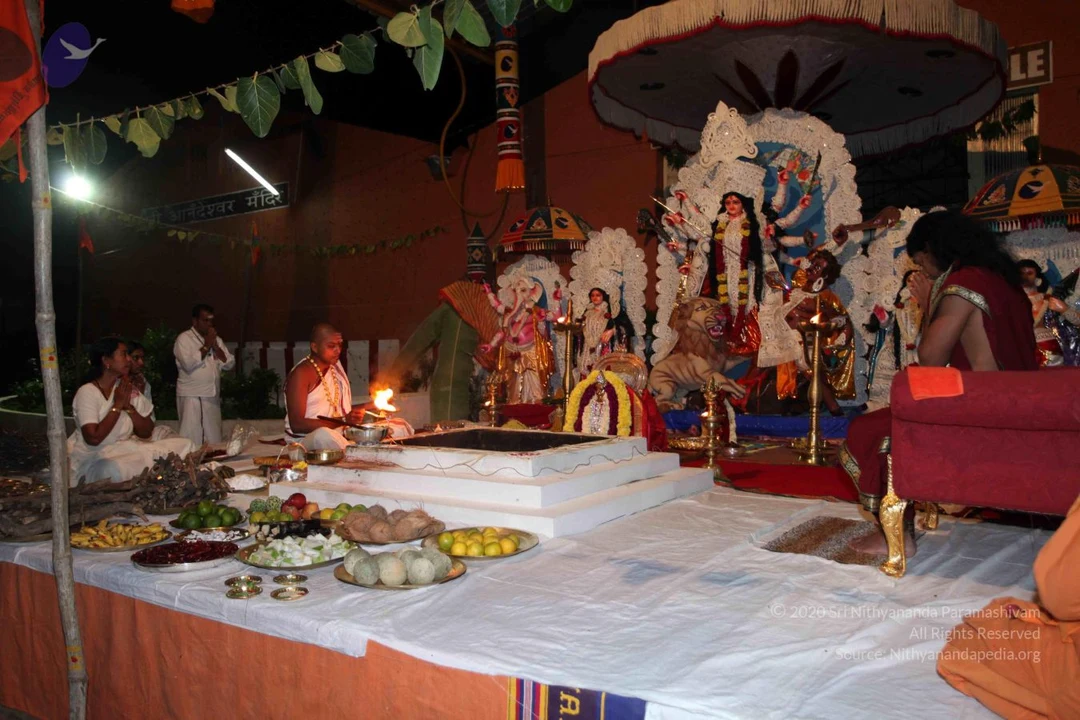
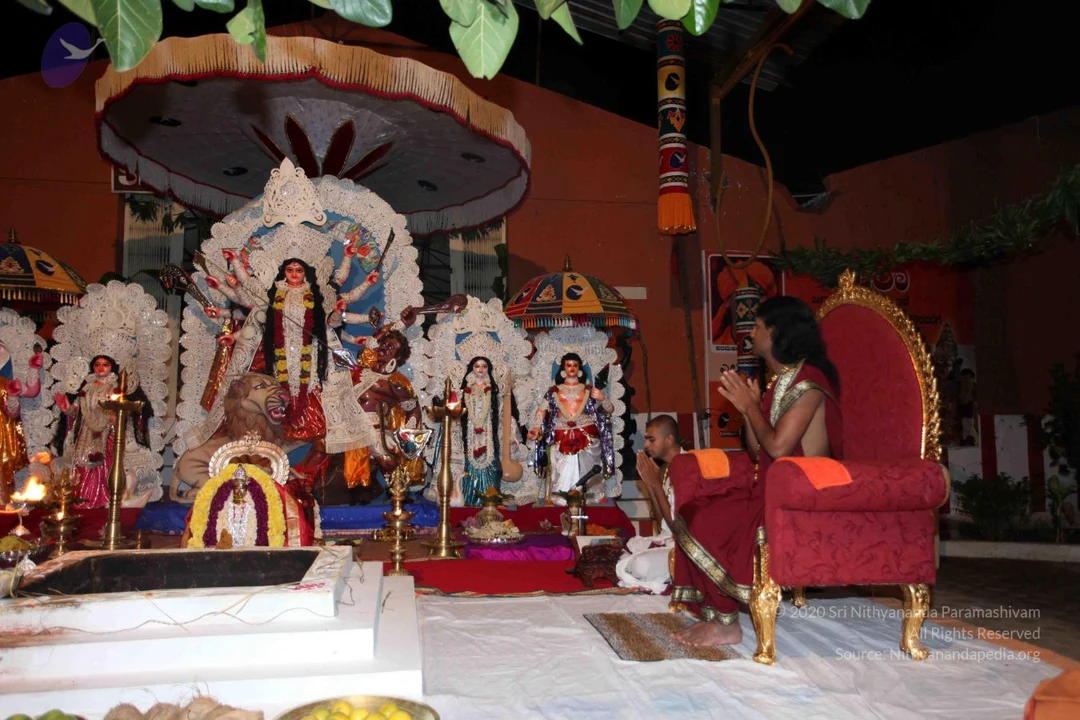
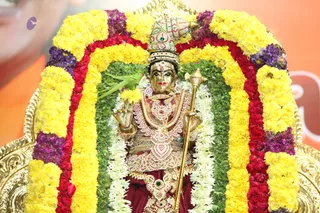
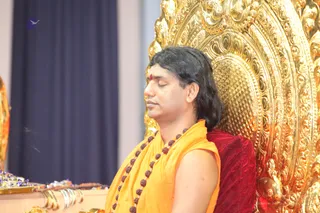
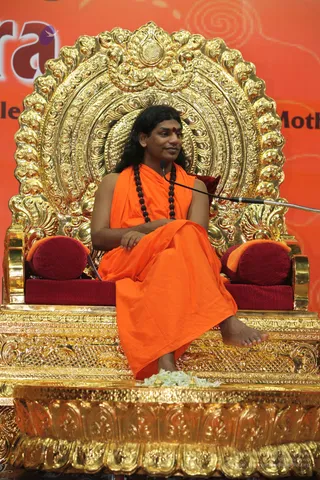
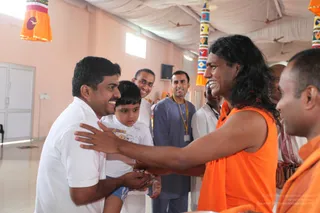
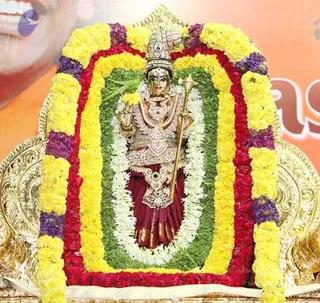
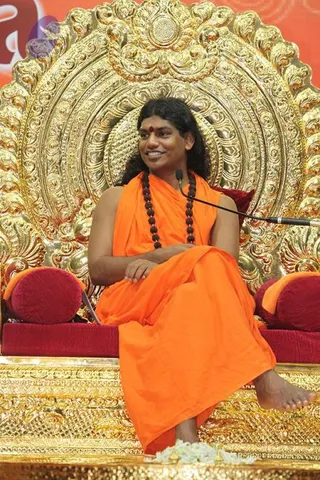
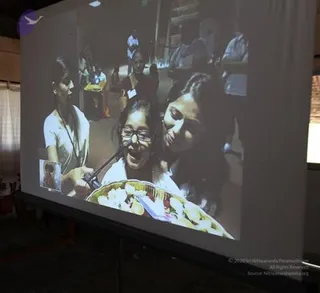
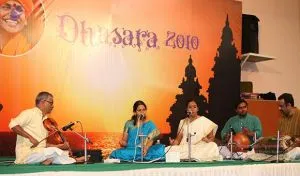
A man with long dark hair sits with eyes closed on an ornate gold throne with carved golden panels and red cushions. He wears an orange-saffron shawl draped over one shoulder and a long mala of dark rudraksha beads, his hands resting in his lap. Before him on a gold-trimmed table are red apples, ornate gold bangles, and beaded garlands, with a dark blue curtain behind. The scene suggests a seated satsang or discourse setting. The man's appearance matches the page's a person reference (long swept hair, saffron clothing, rudraksha mala on a throne), so he is described as a person, seated in person.A decorated deity murti stands at centre within a tall arch of marigolds, yellow and purple blooms, red rose petals, green leaves and white jasmine garlands. The gold-and-silver figure wears a crown, layered ornate necklaces, and a red-and-gold dhoti, holding a trident in one hand while the other hand is raised in a blessing gesture. A gilded throne-like seat frames the lower edges, and a blurred orange backdrop with partial printed lettering sits behind. No physical people are visible.A man seated cross-legged on an ornate gold throne with a large gold backrest decorated with floral and scroll carvings and red cushions. He wears an orange-saffron robe draped over one shoulder, a long string of dark rudraksha beads around his neck, and a small red bindi on his forehead. He smiles while a microphone on a stand is positioned near him. His bare feet rest on a gold platform with white flower petals scattered below. The background is a red-orange backdrop. Probable Swamiji is seated in the satsang setting, identified by the saffron robe, long swept-back hair and rudraksha mala, consistent with the page's reference to a public talk.A small group stands indoors in a bright, plain room. A man in an orange-saffron top with long dark hair stands at the centre-right, with a man in a light shirt on the left reaching to greet or hold his hands. Several other men in white and light shirts stand around them, appearing to observe. The setting looks like a hall or reception space with light walls.A projection screen in a dim hall shows a black-and-white photograph of three women in light clothing. One woman in glasses smiles at the centre, holding a metal plate of flowers and fruit, while another woman leans in from the right and a third stands at the left. A small inset image sits in the lower left corner. In the background, seated people are visible in the room. The screen fills most of the frame, with a white curtain and a dark wall at the edges.A stage performance of Carnatic music at a banner reading Dhwasara 2010 with an orange backdrop showing a temple silhouette and a small portrait. Four musicians sit on a white-draped stage: an older man on the far left plays a violin, a woman in a light blue sari sings at a microphone, another woman in a dark sari sings at a second microphone, and a man on the right plays a mridangam drum. A small portrait is printed at the top of the banner.

Temple

7 photosSource gallery
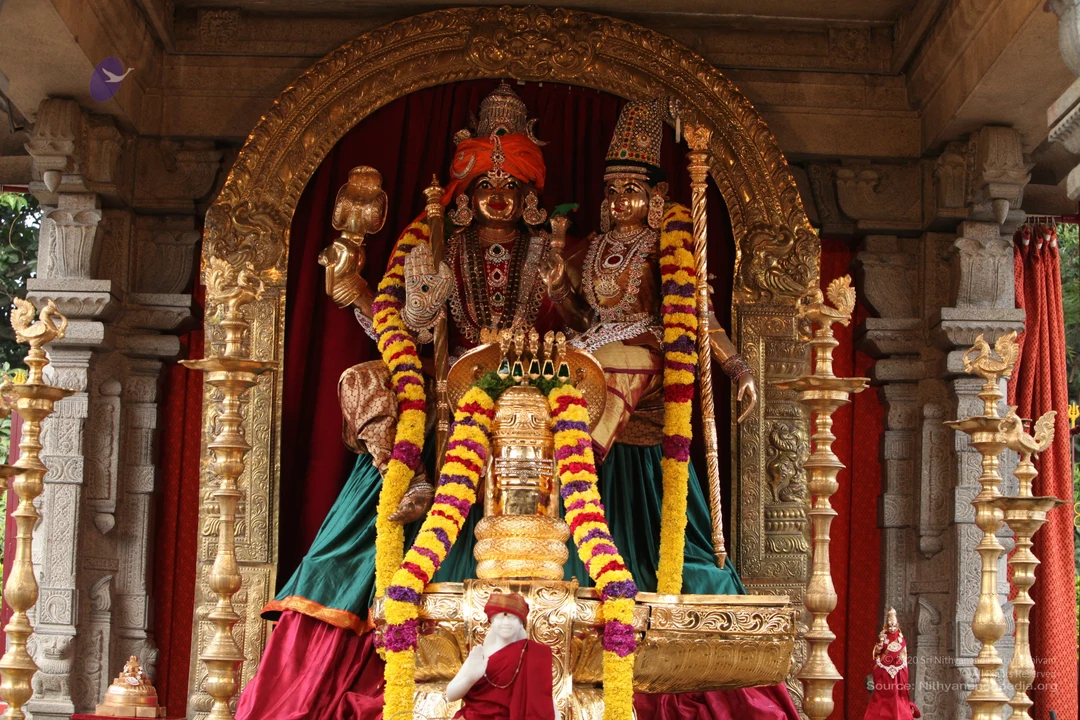
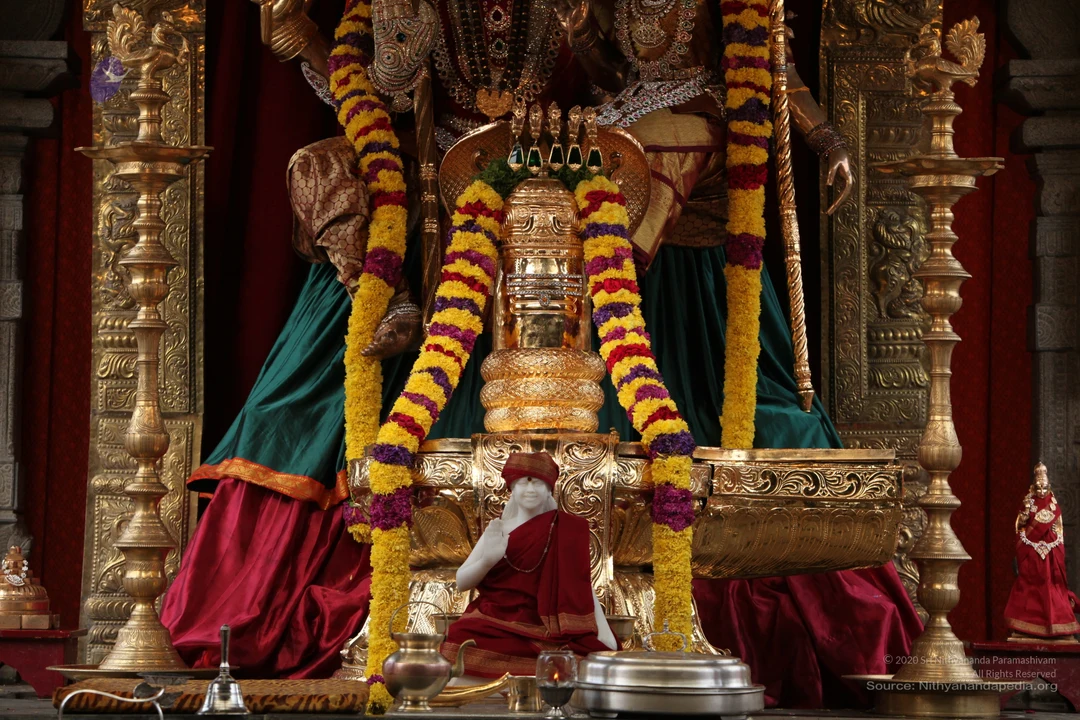
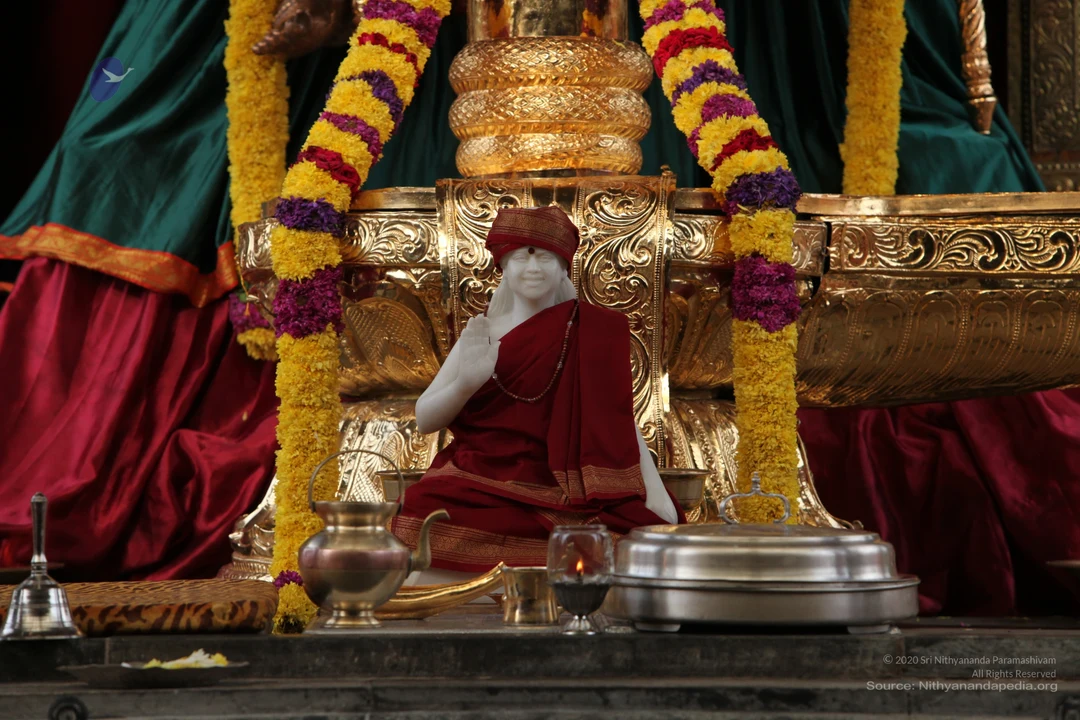
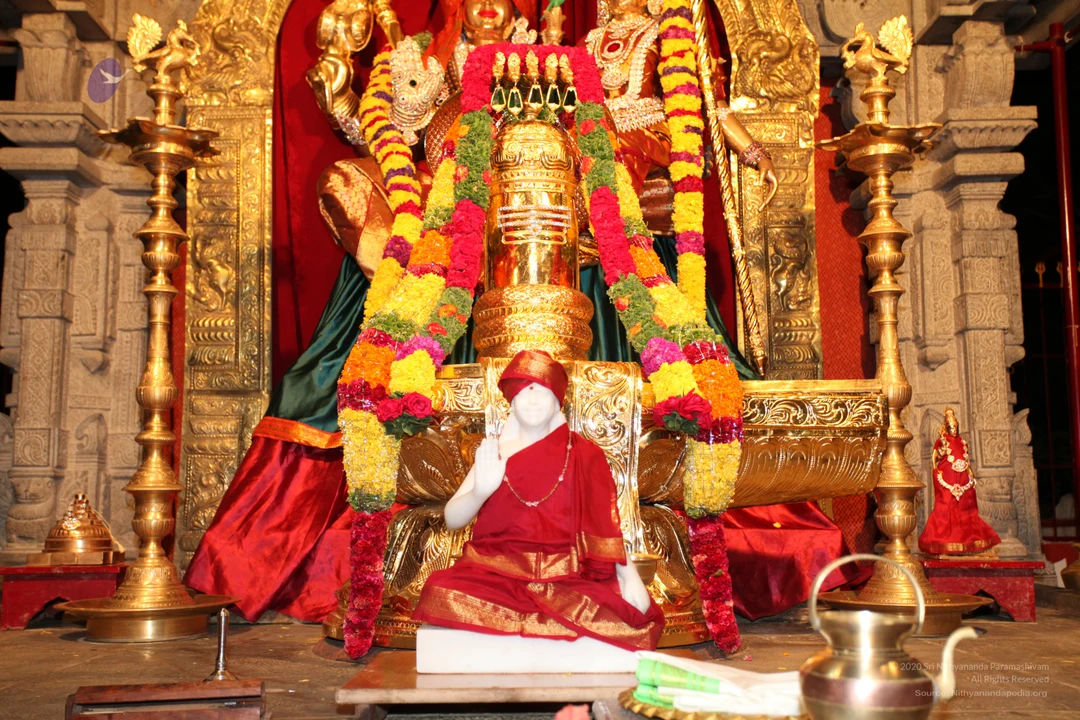
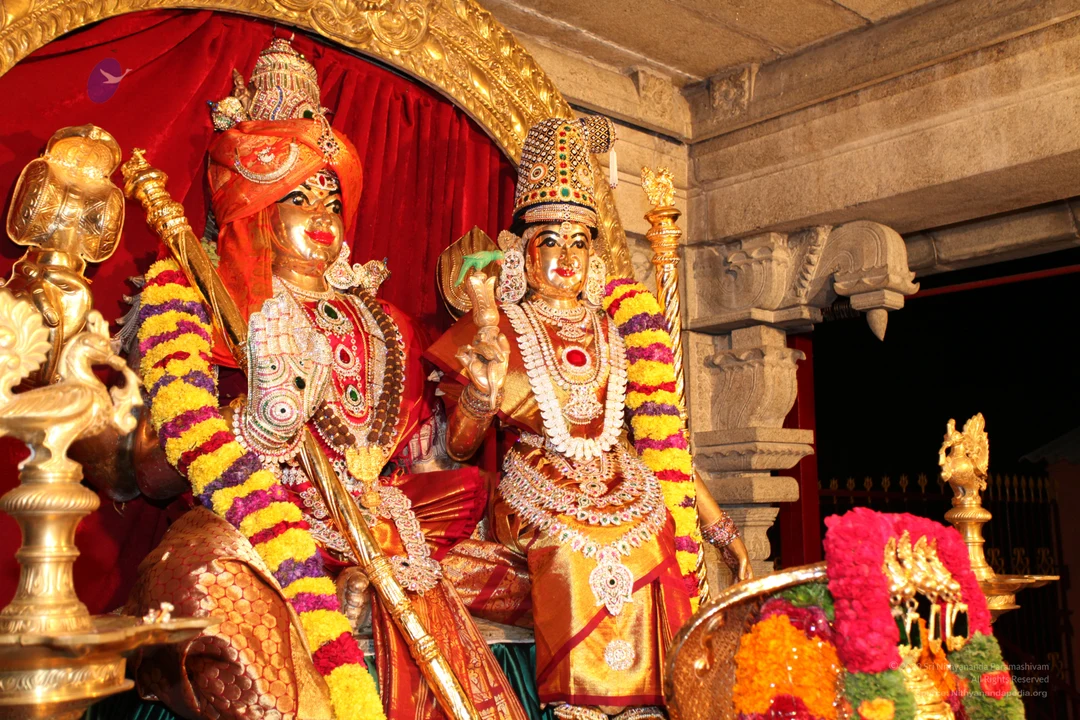
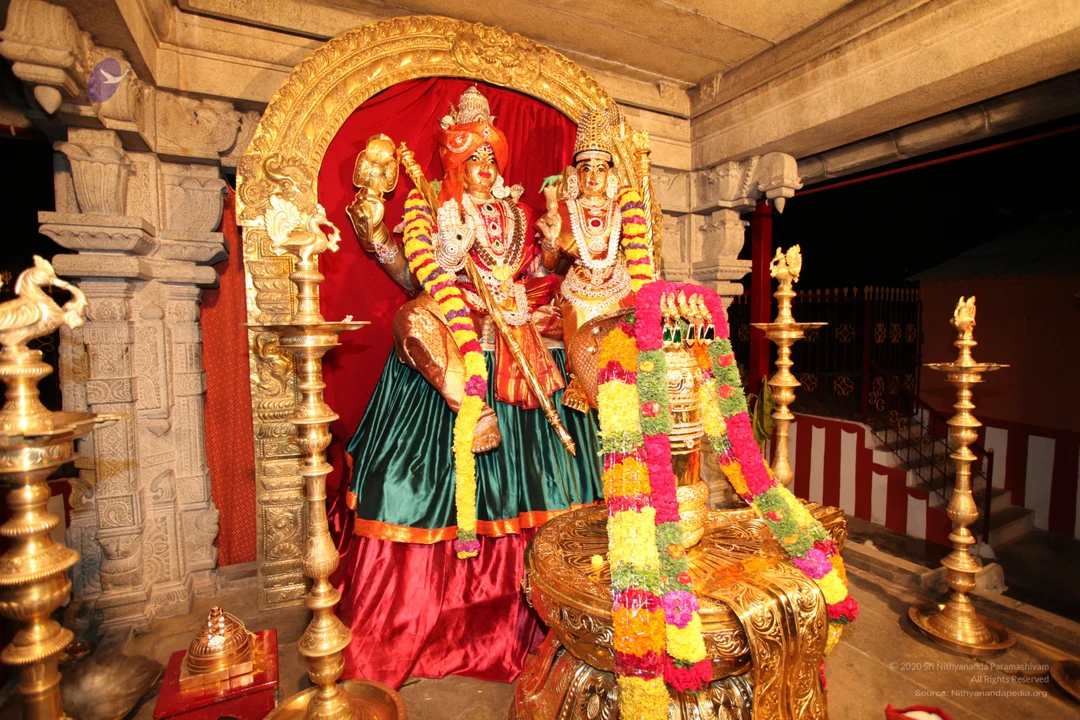
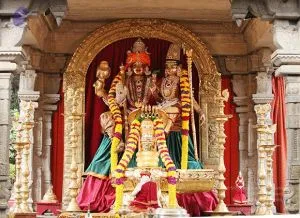
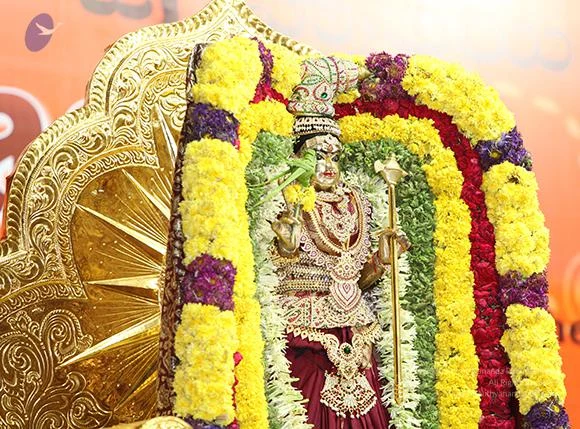
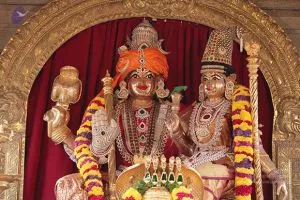
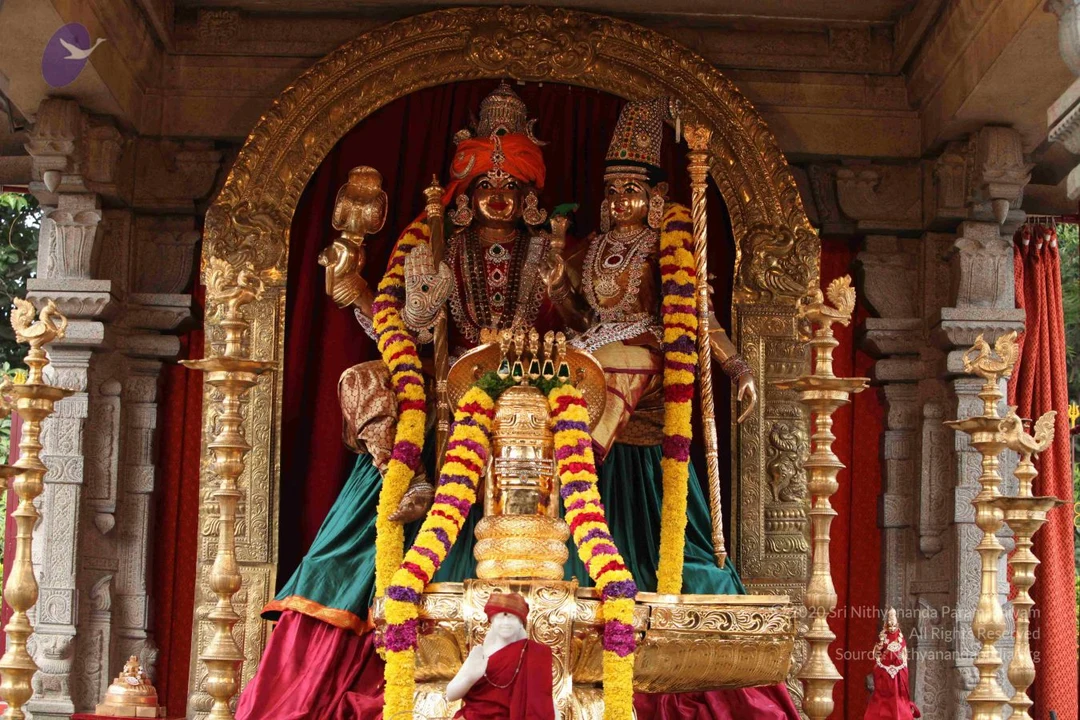
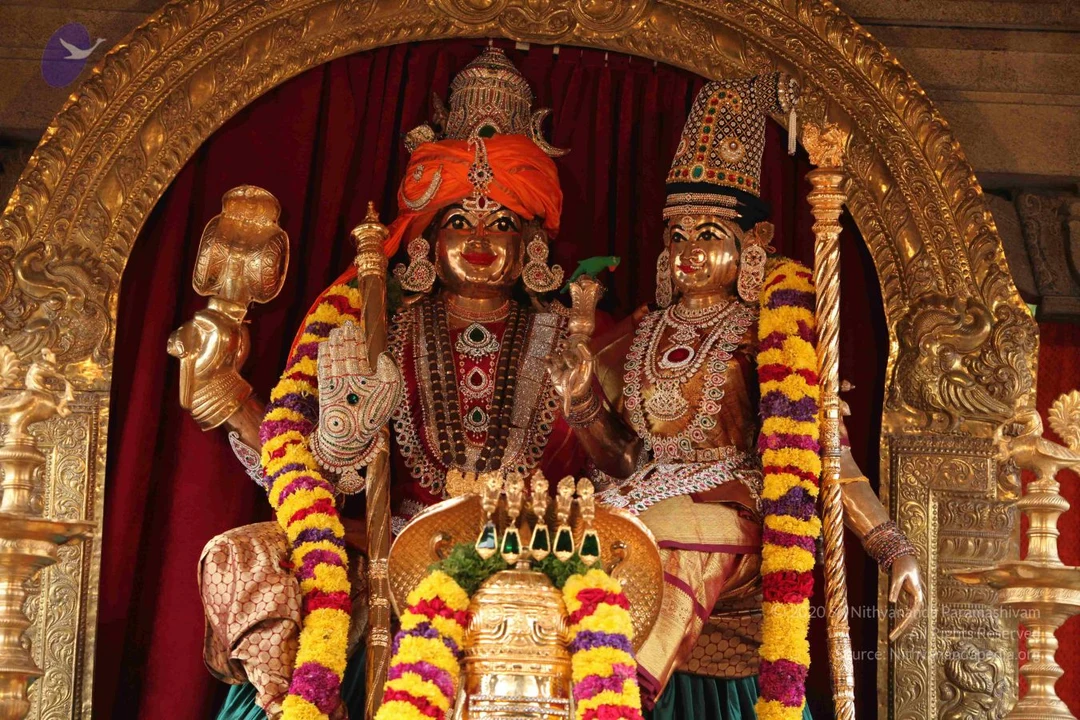
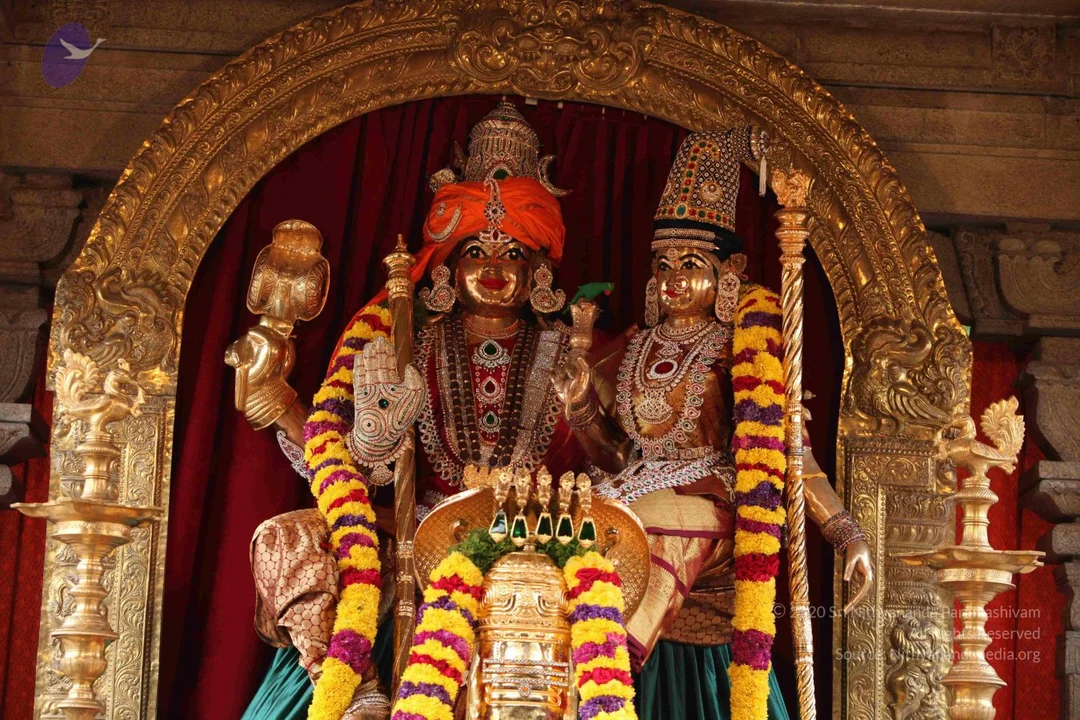
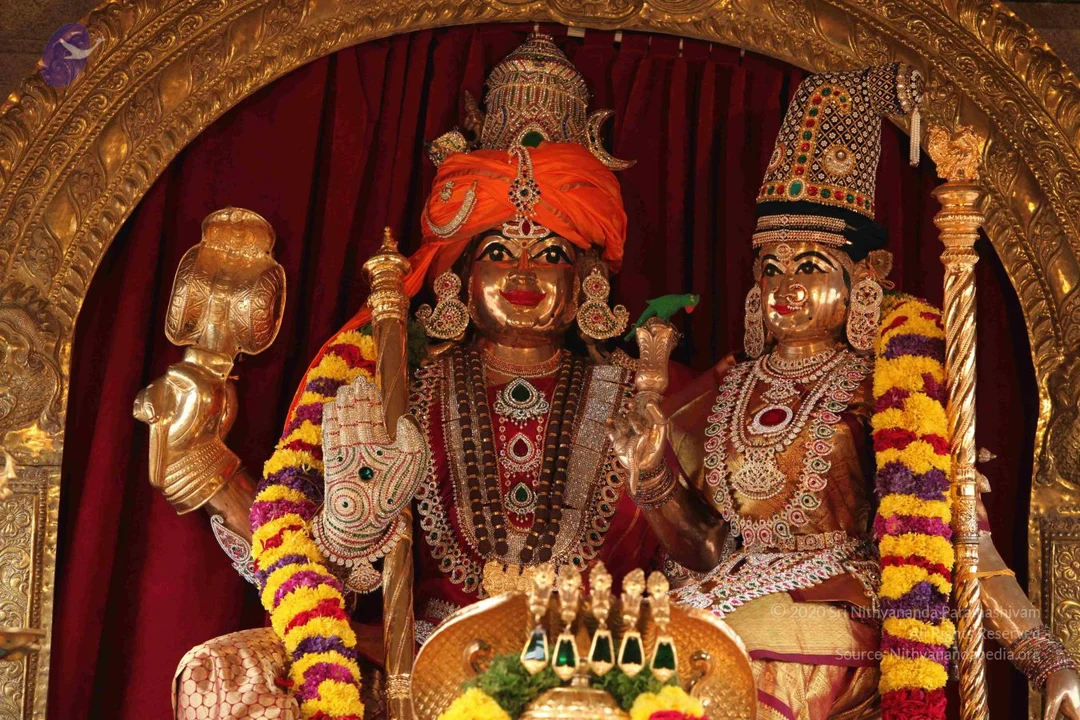
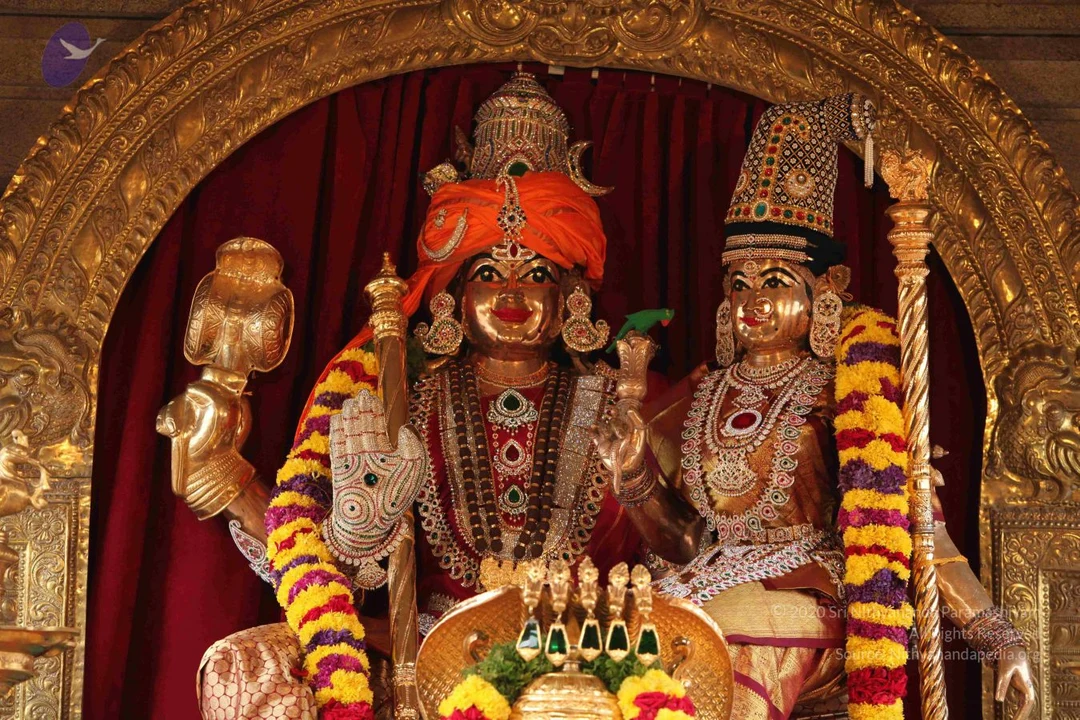
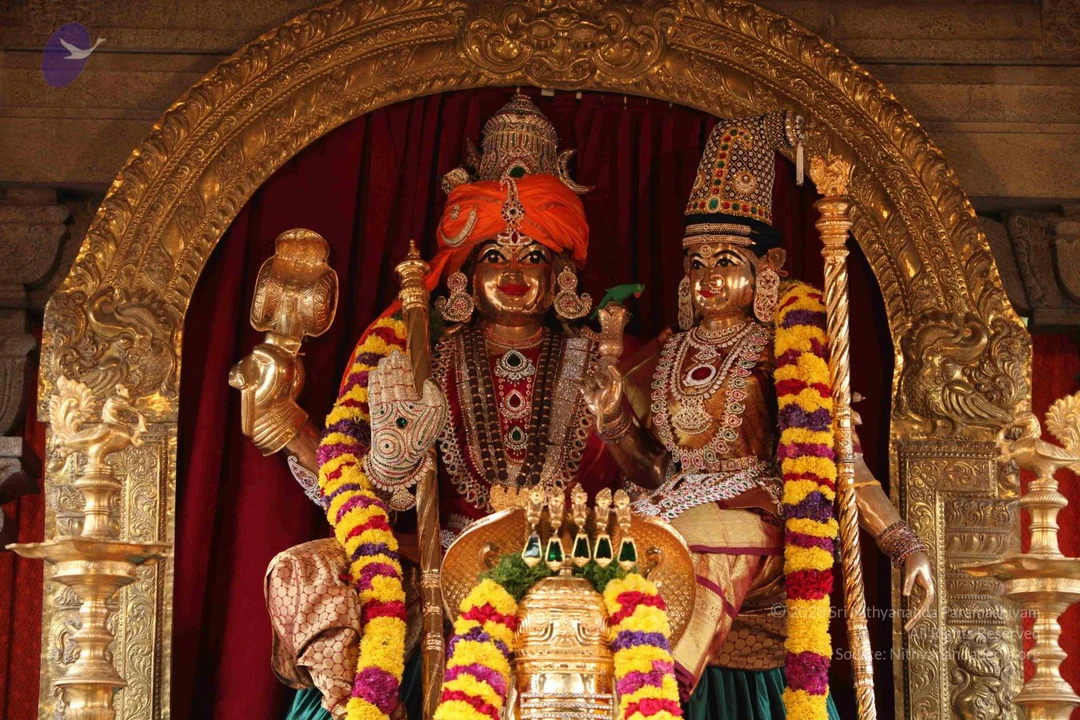
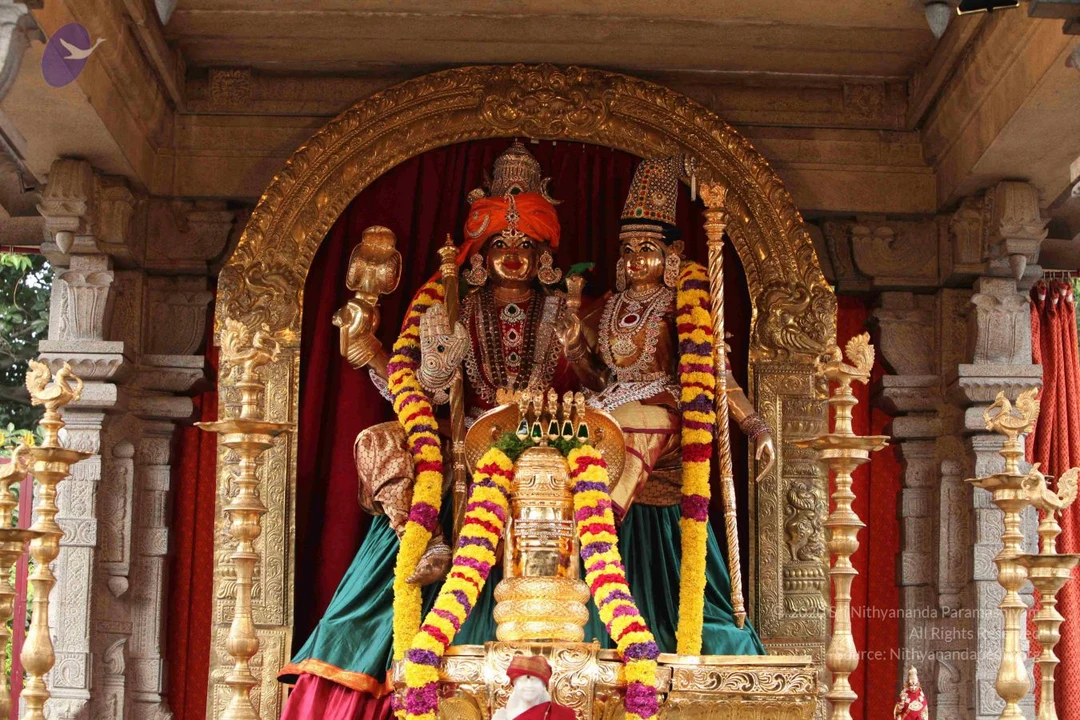
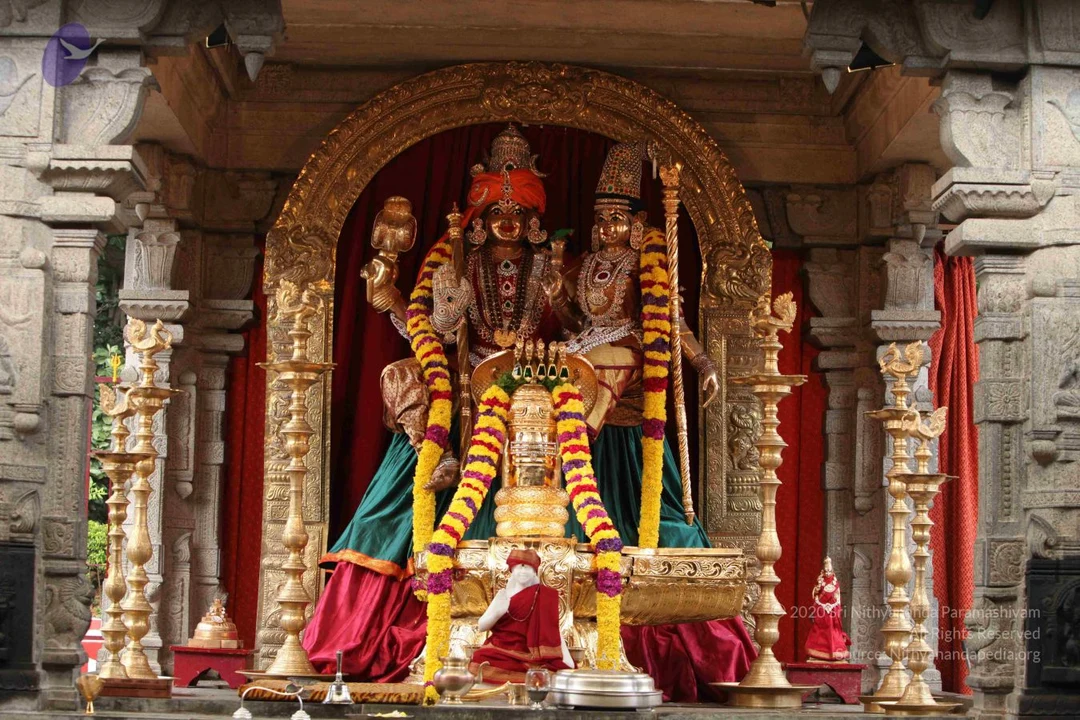
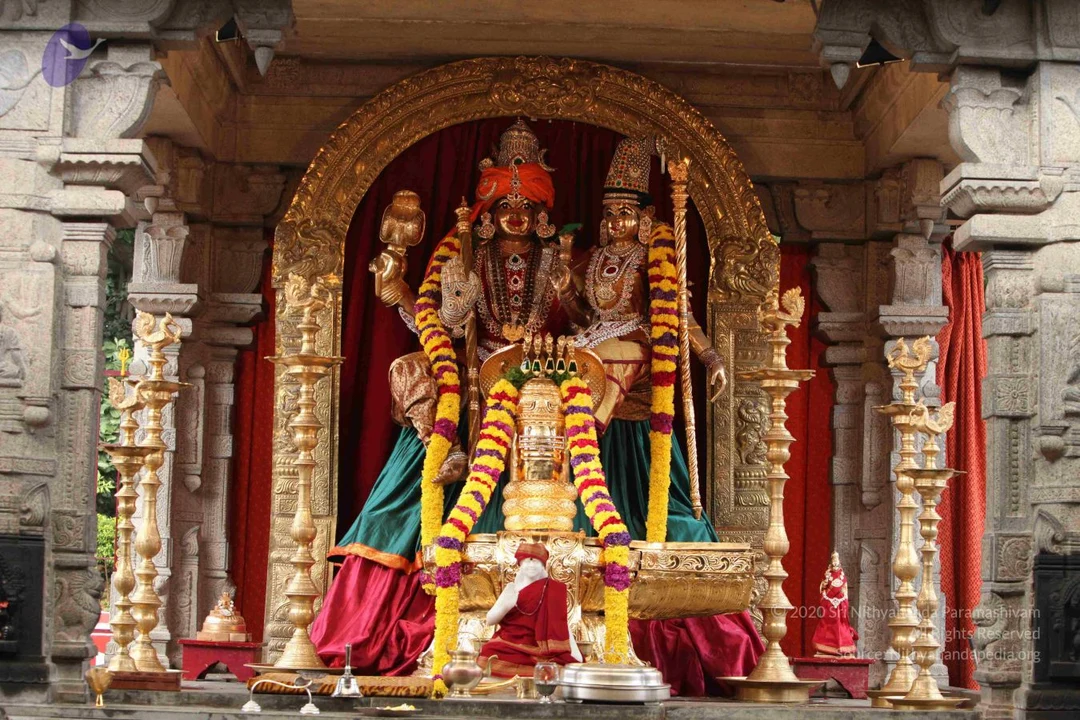
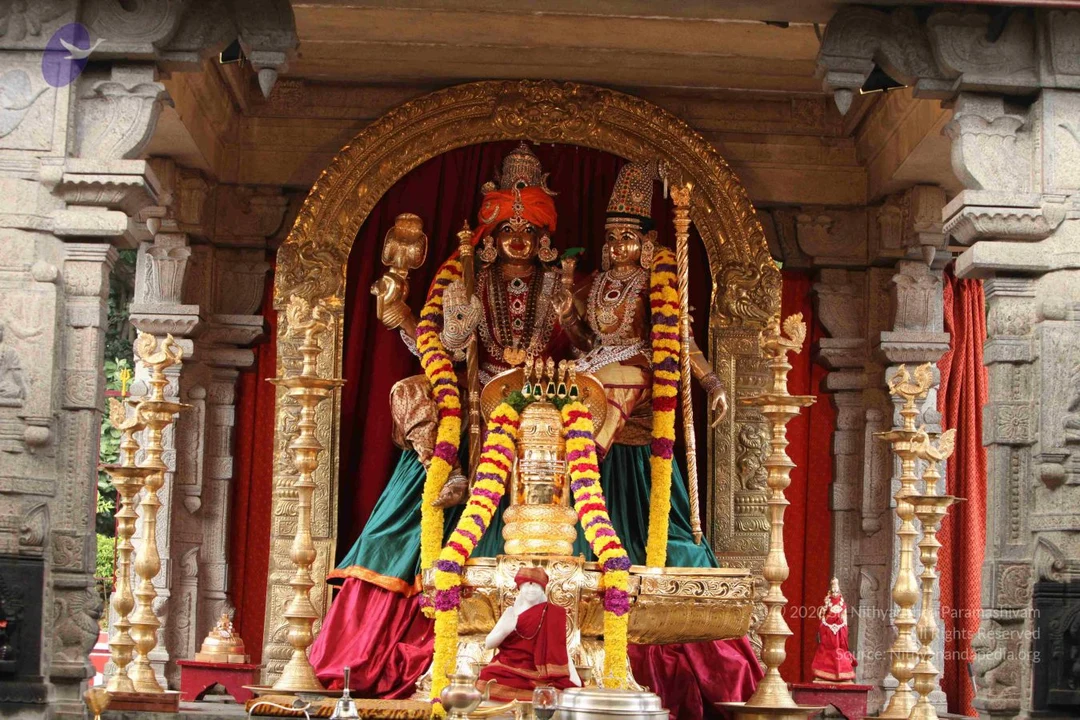
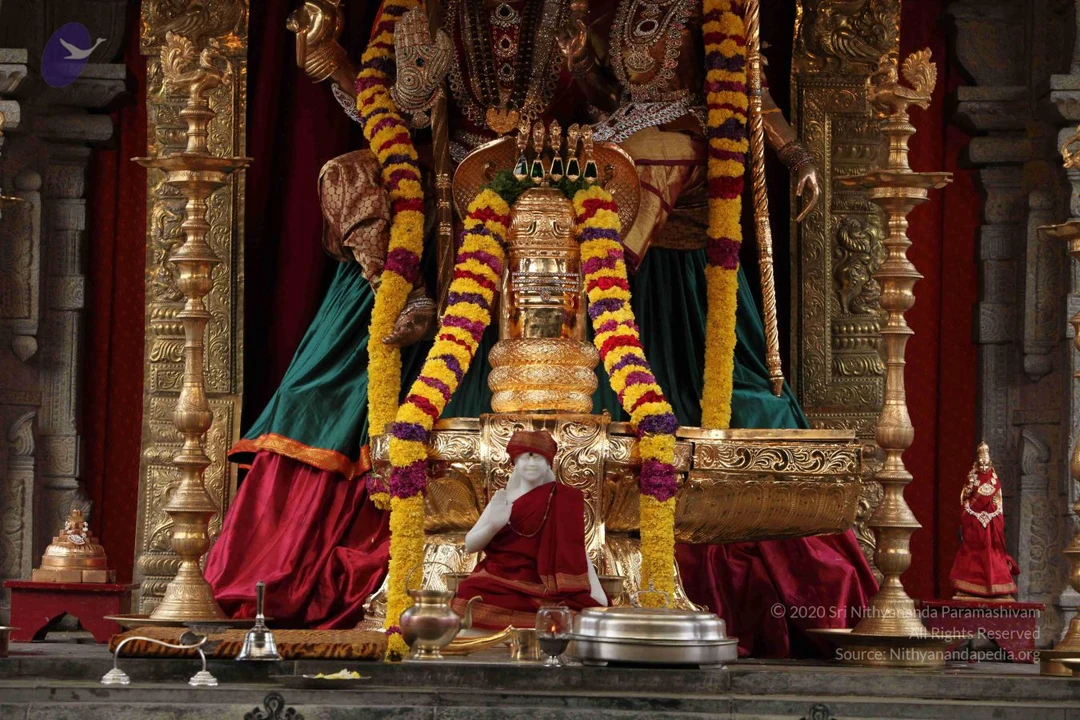
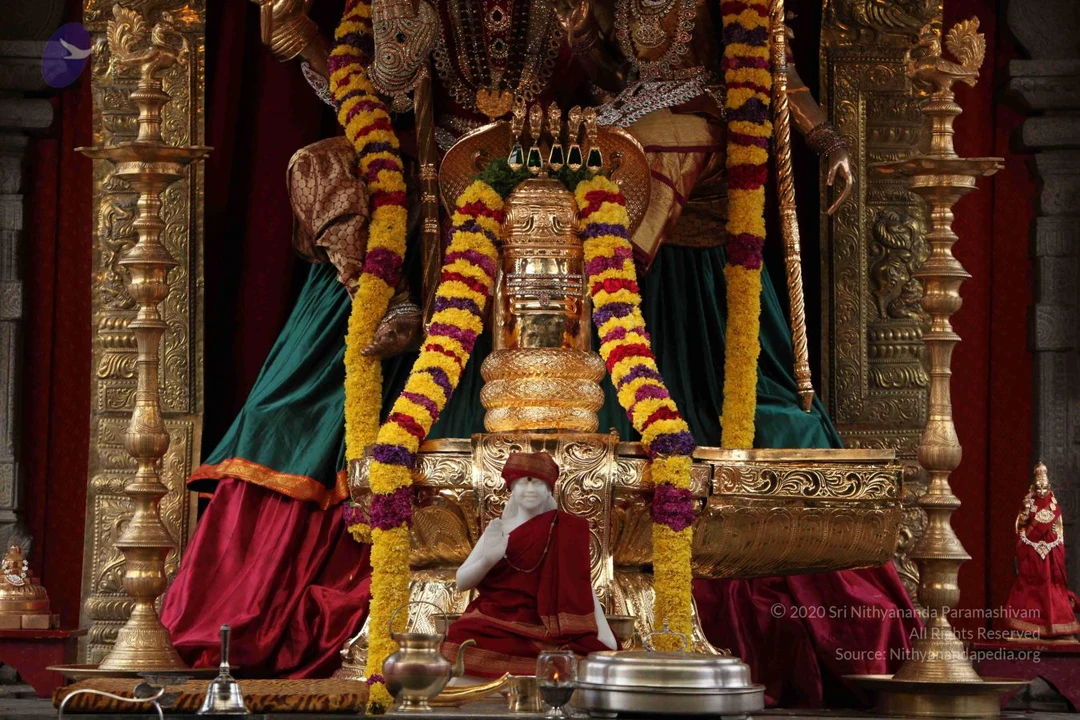
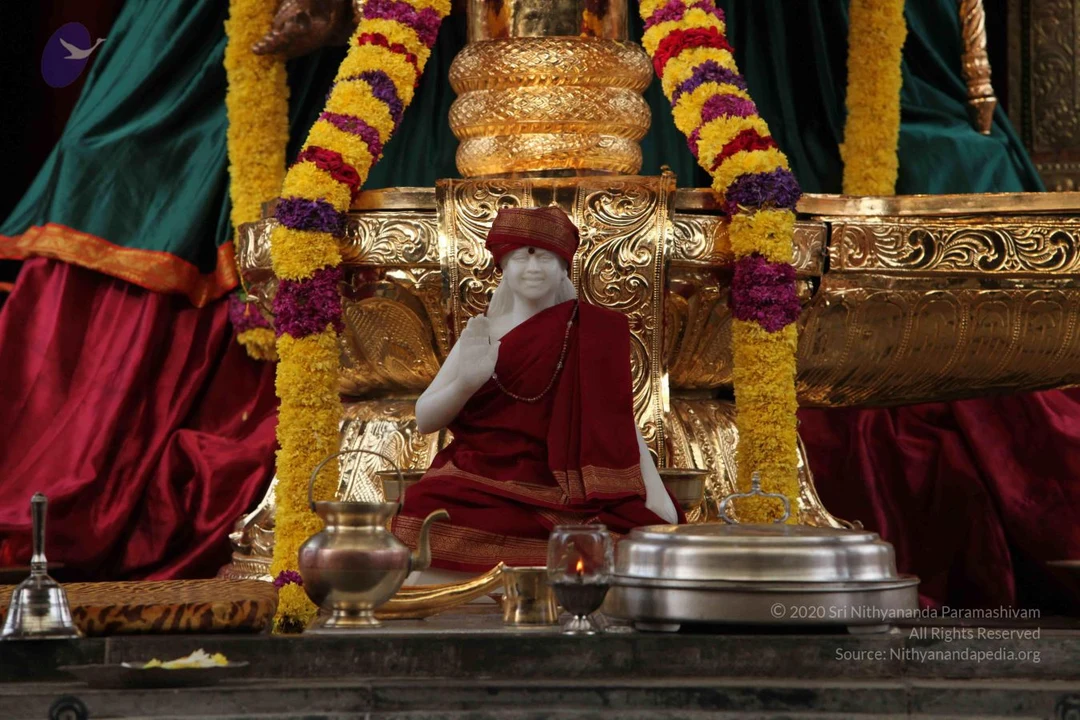
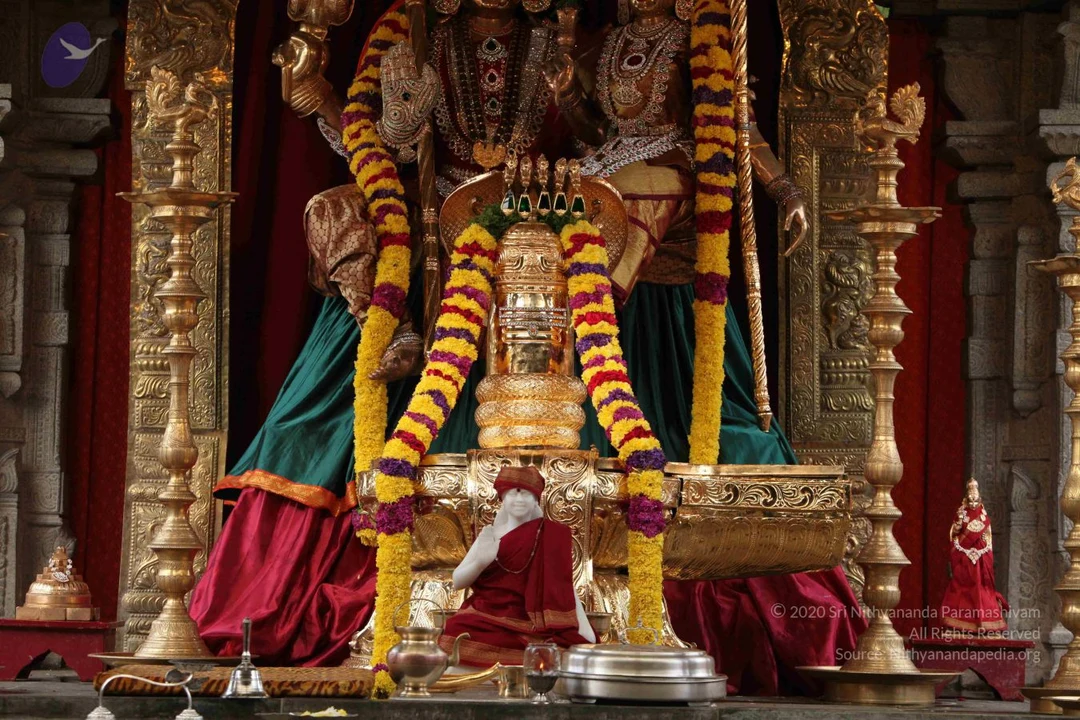
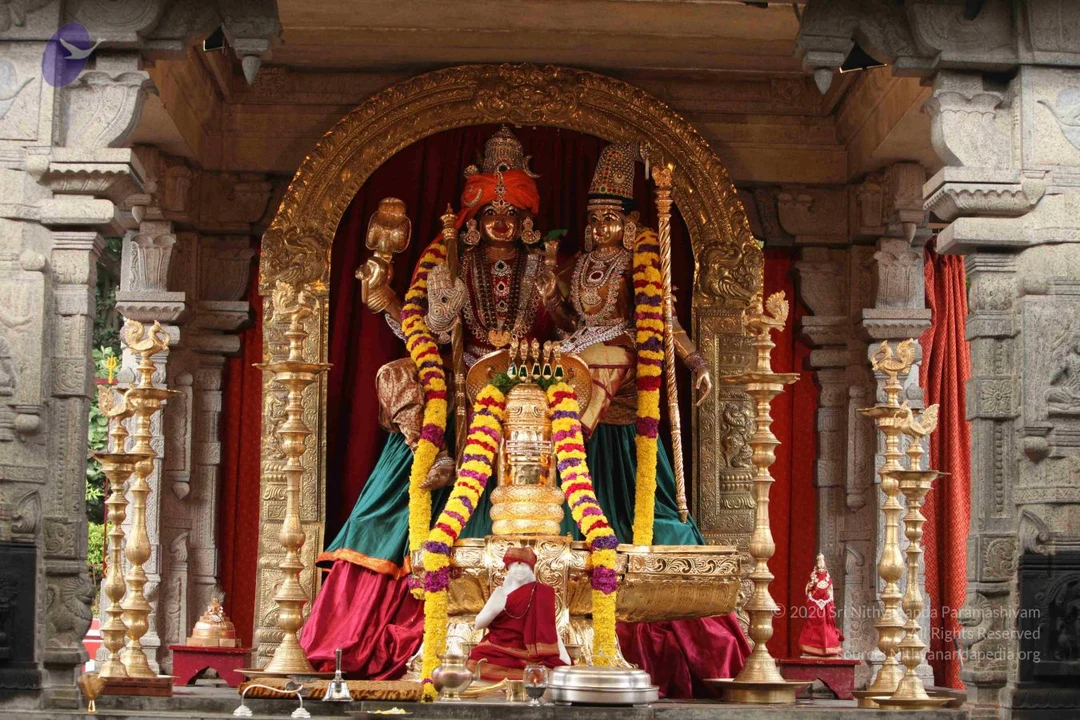
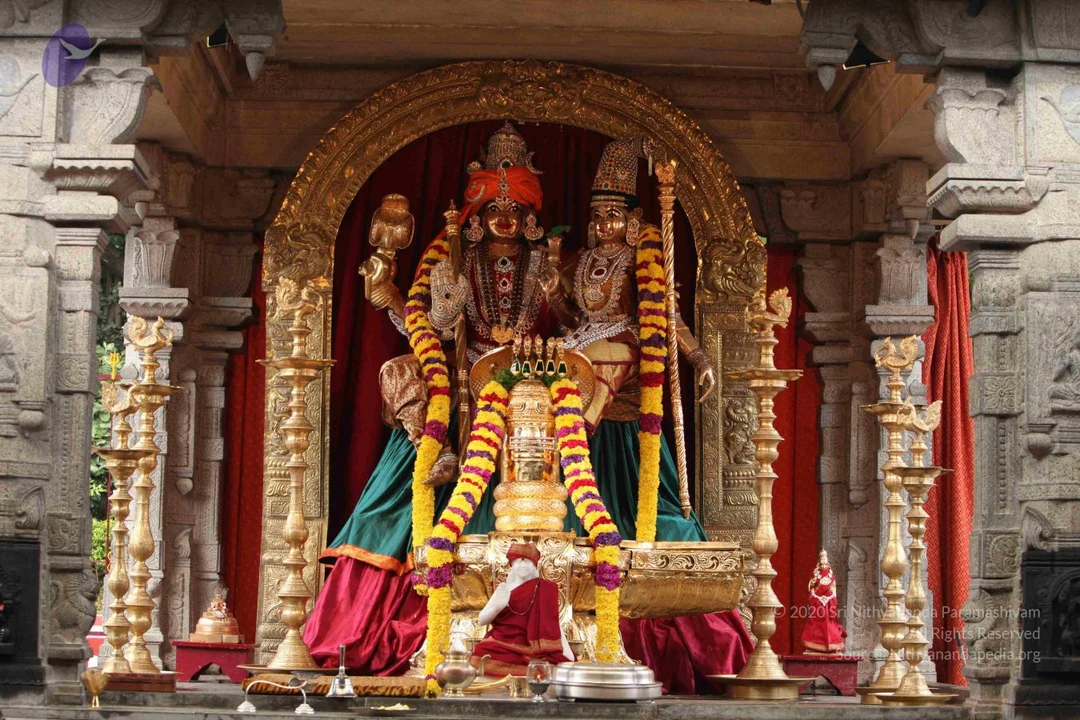
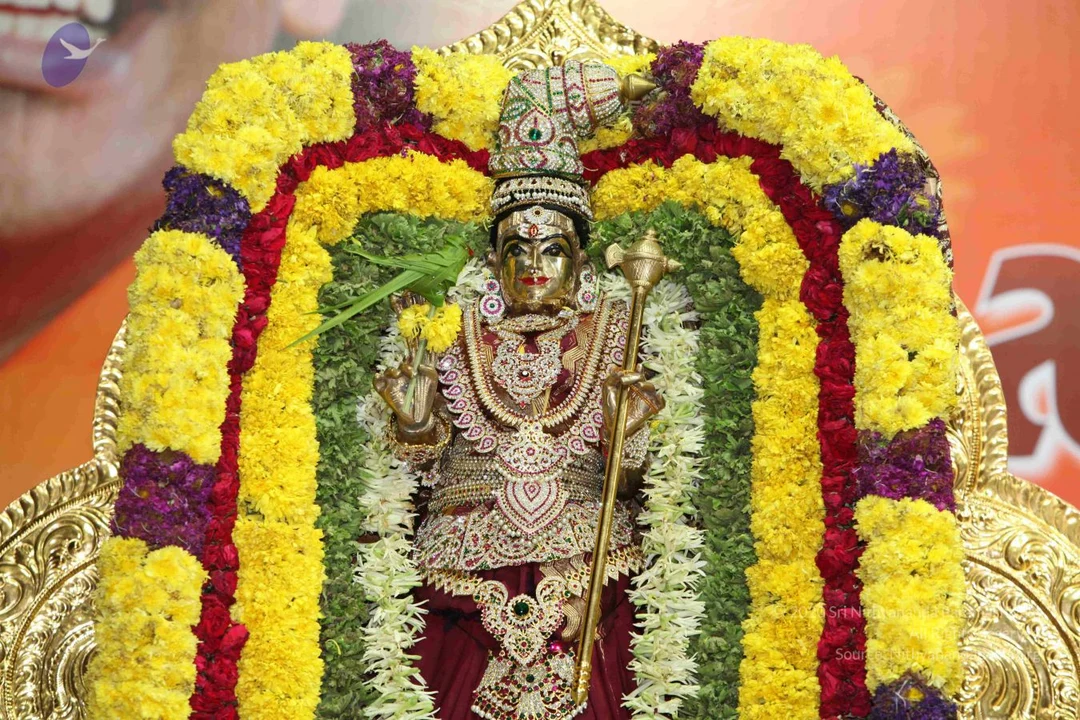
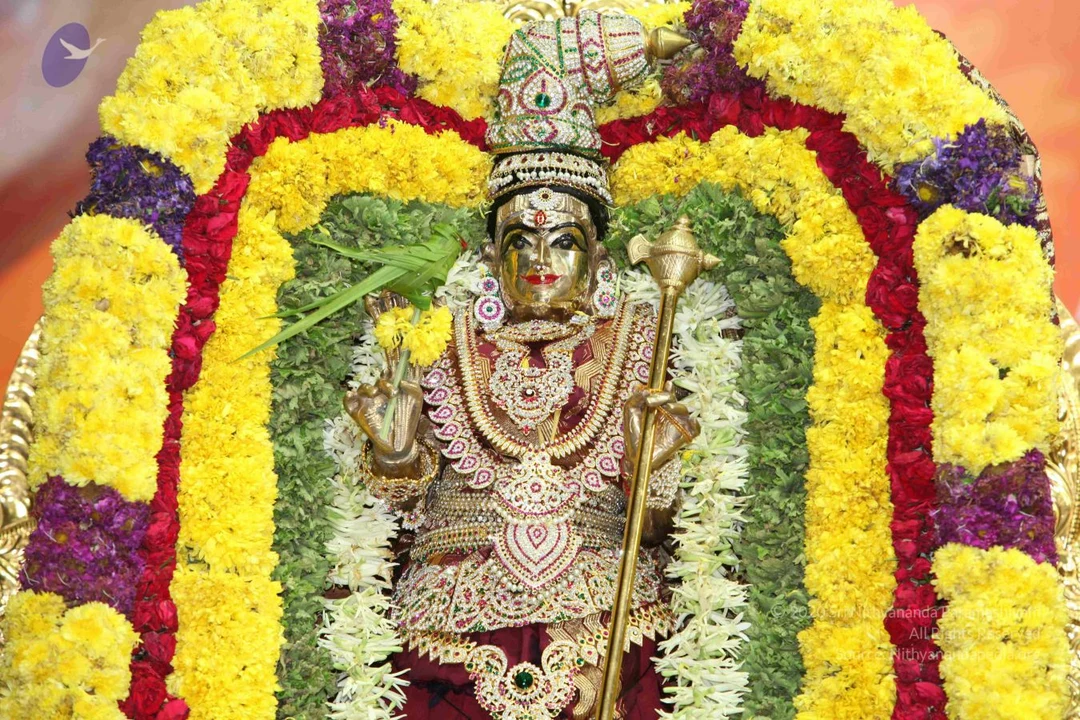
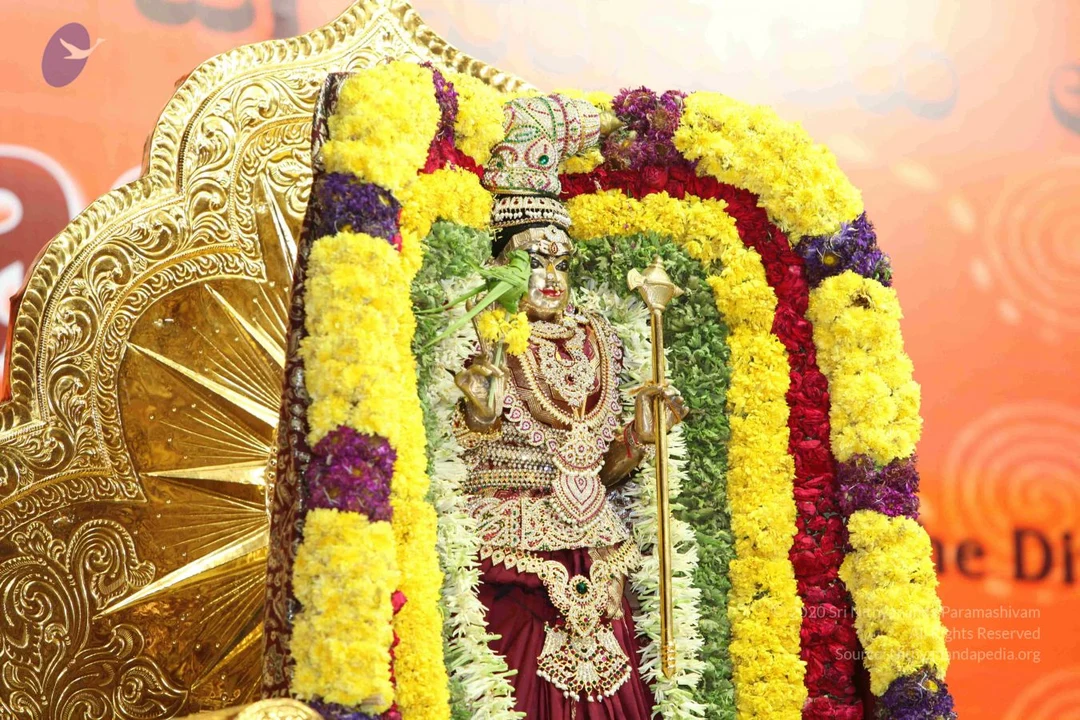
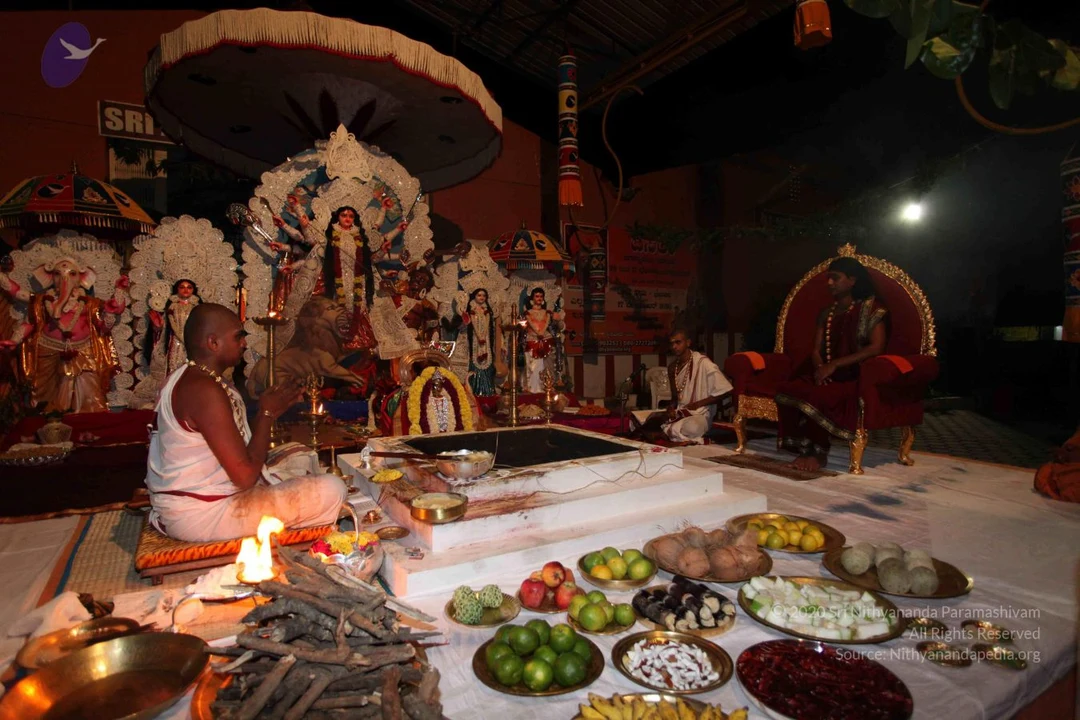
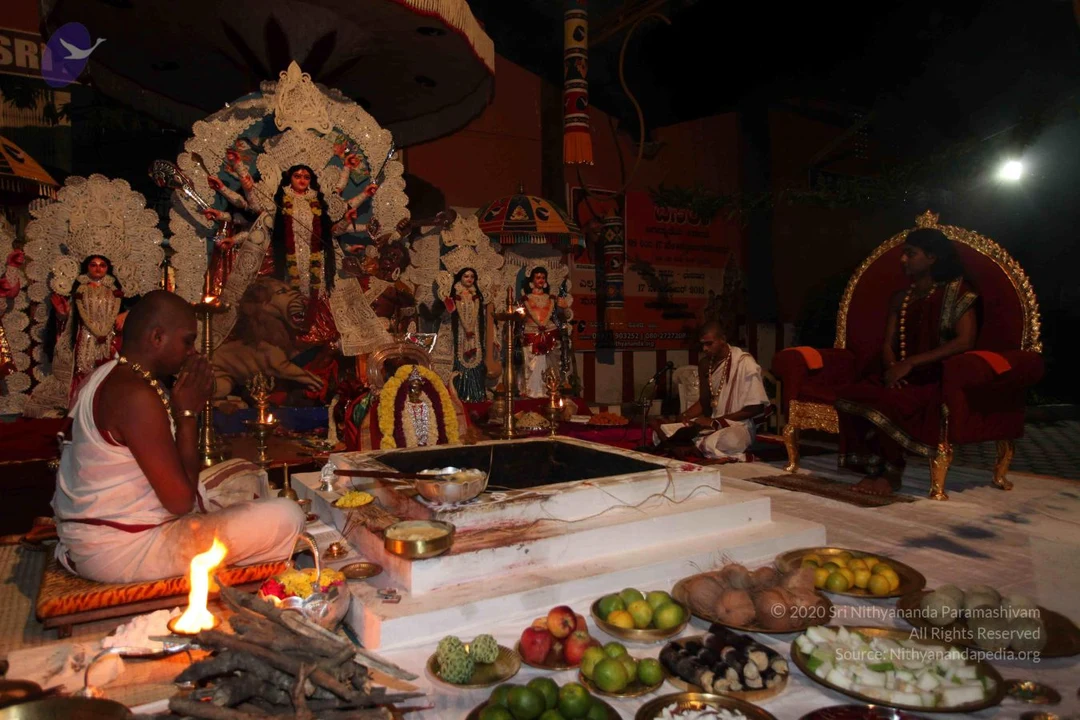
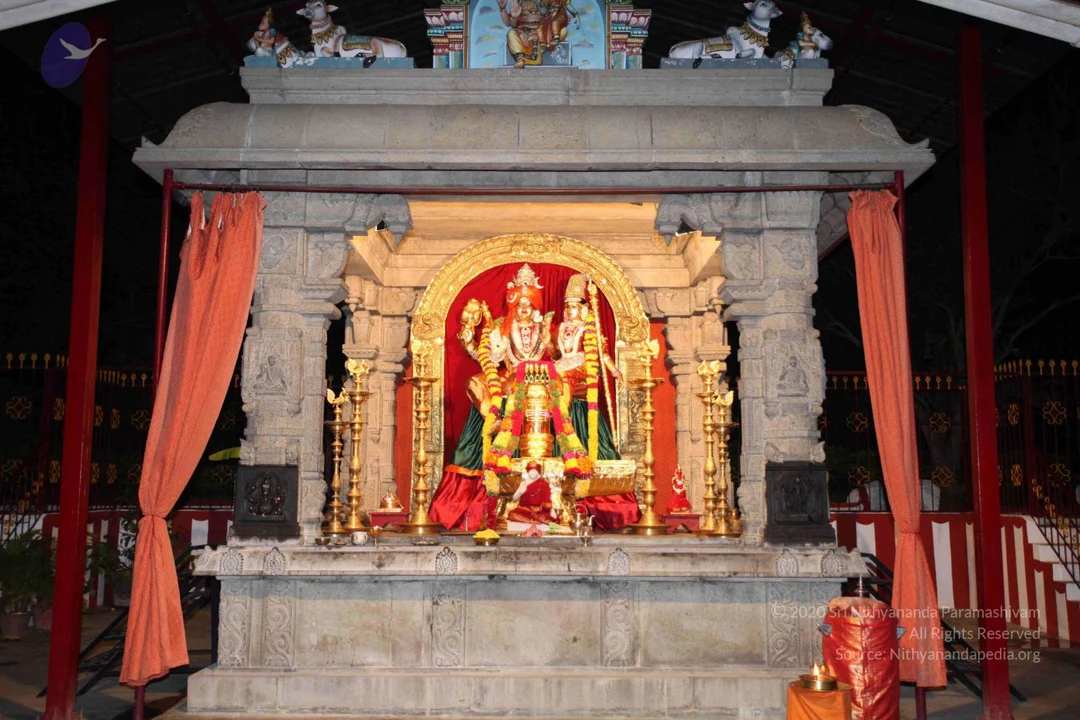
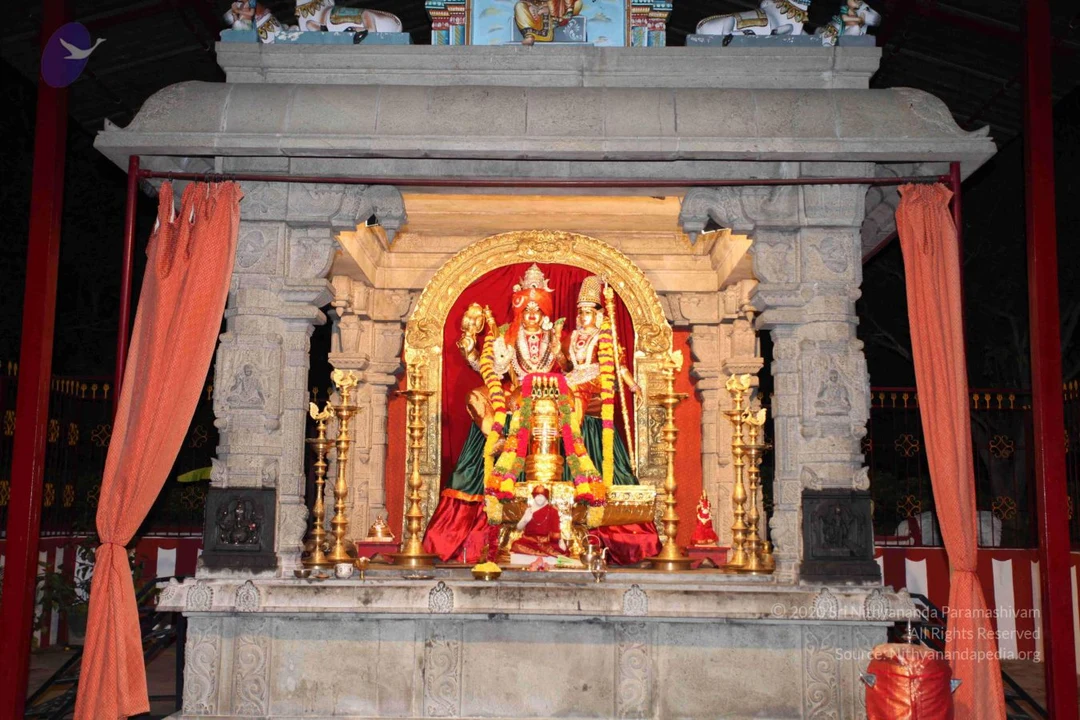
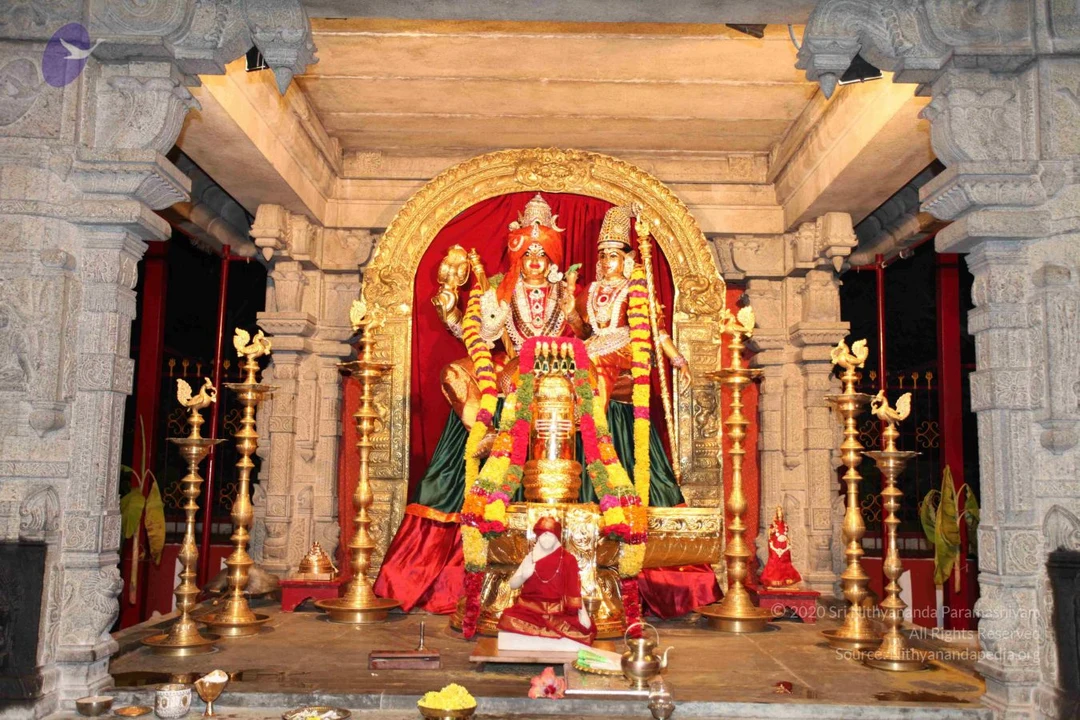
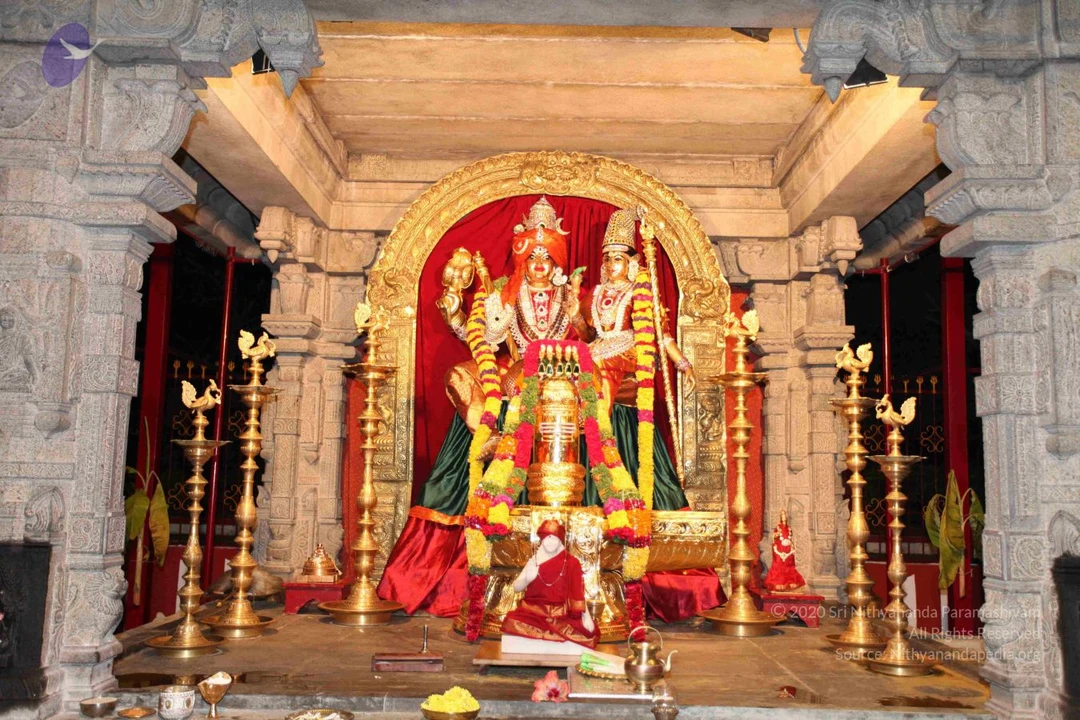
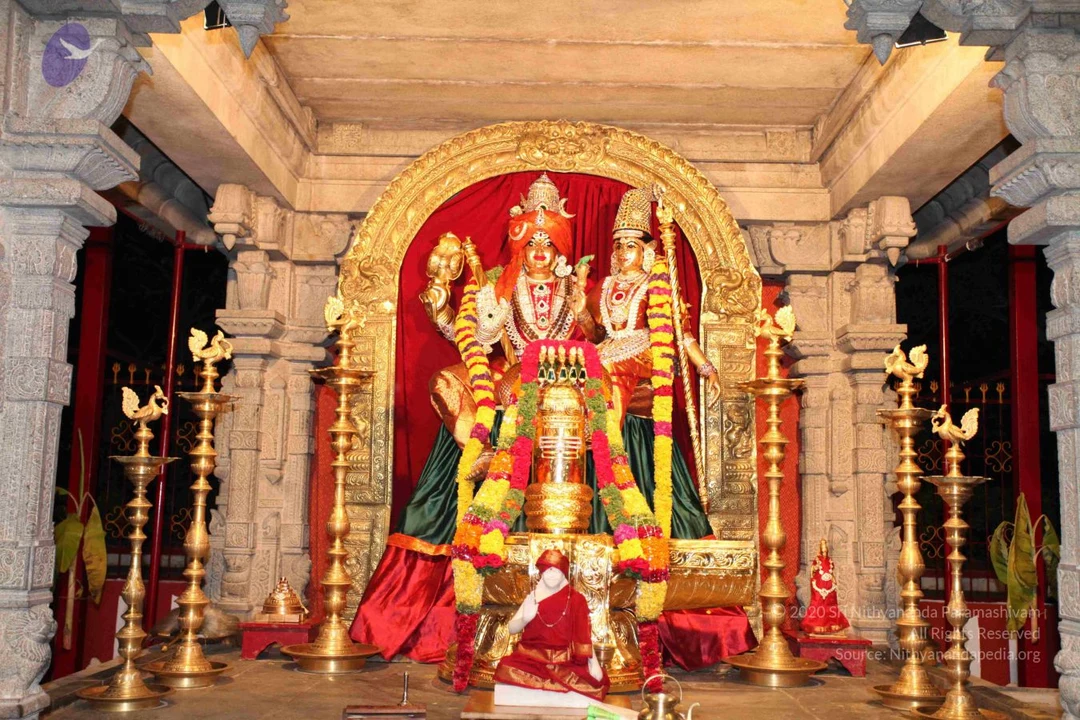
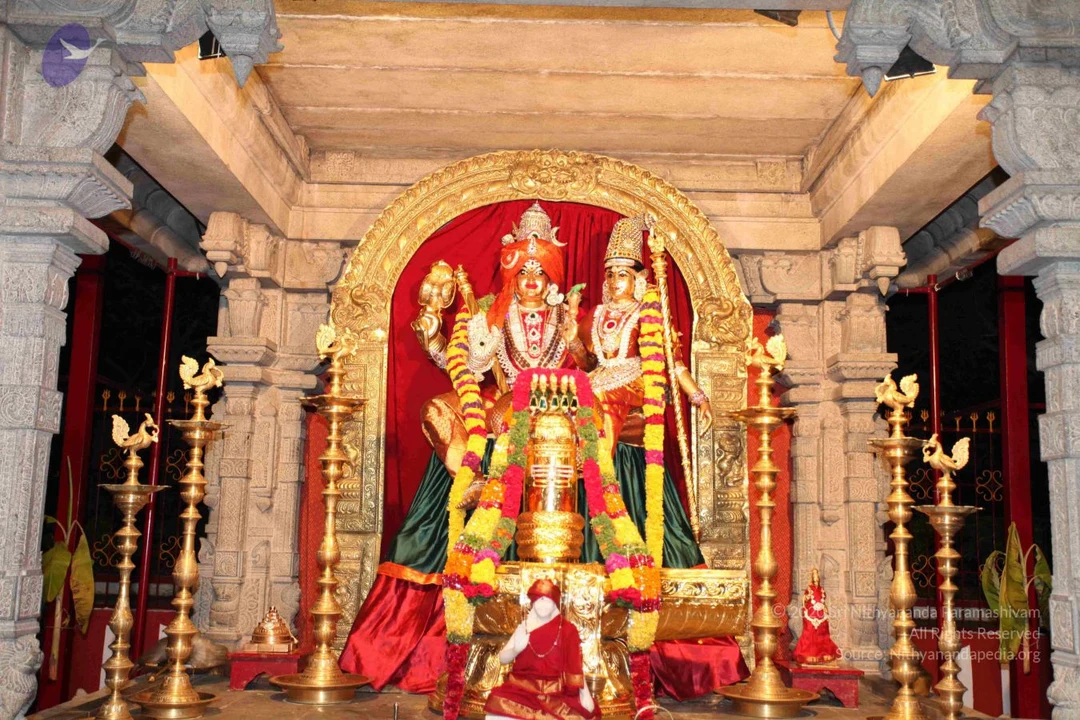
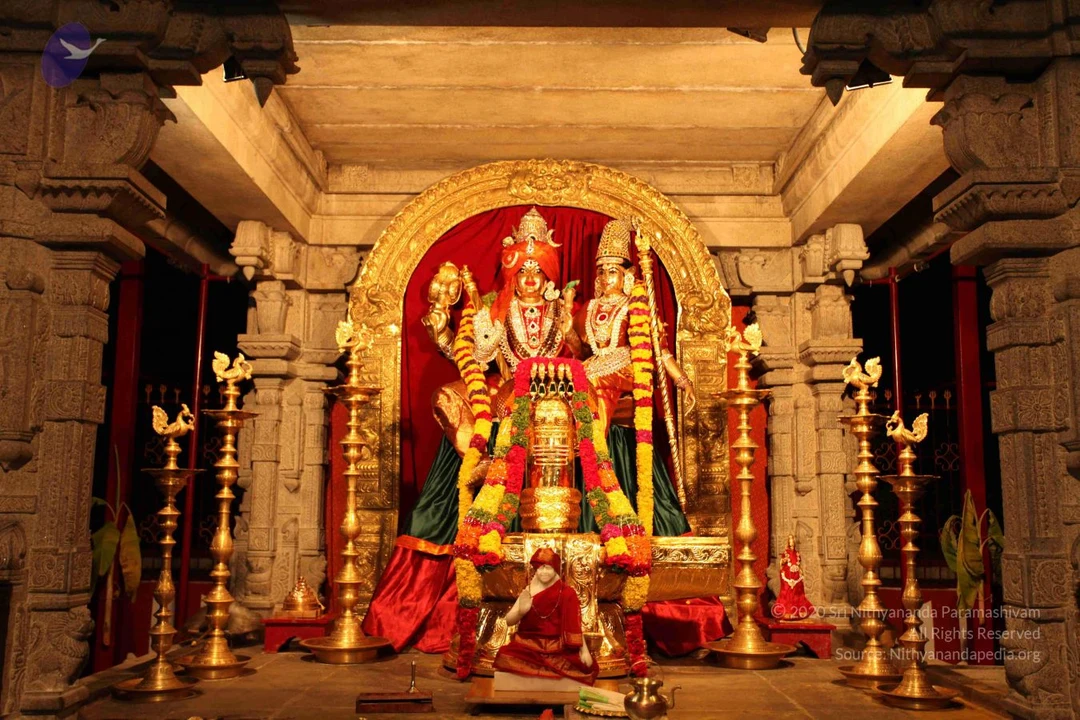
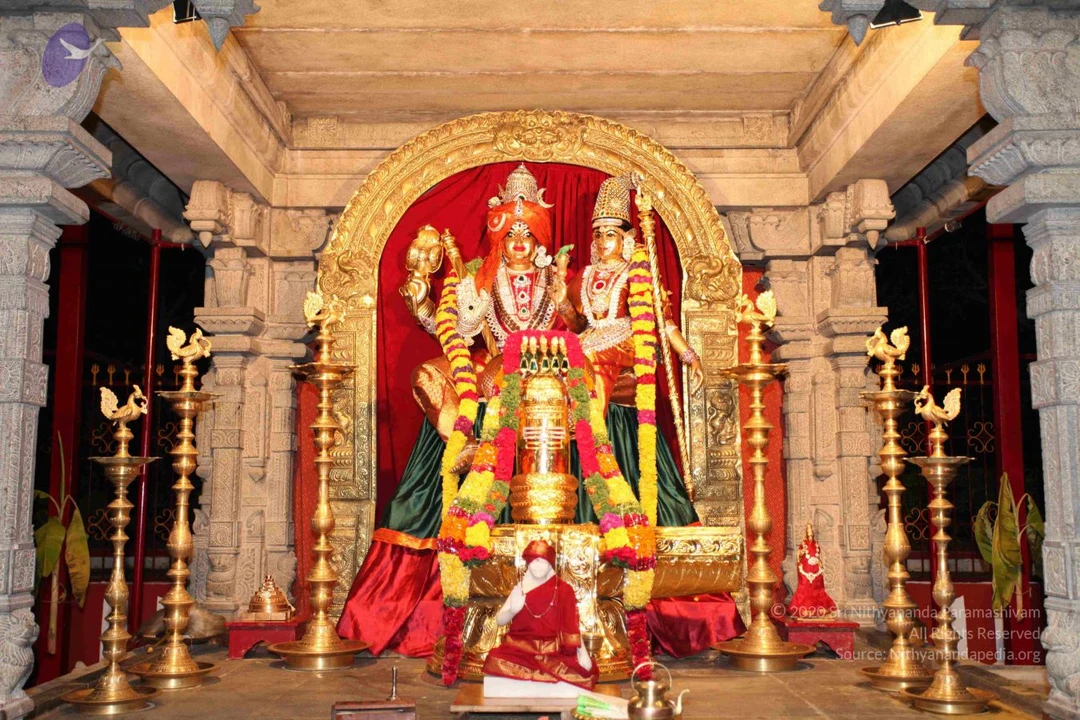
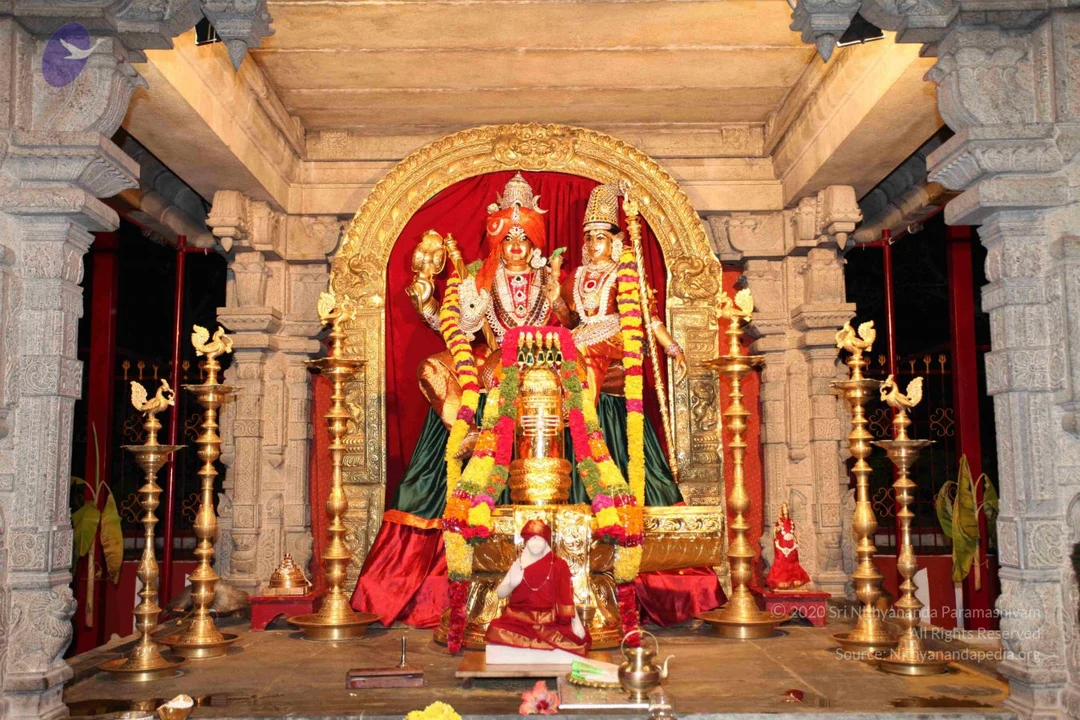
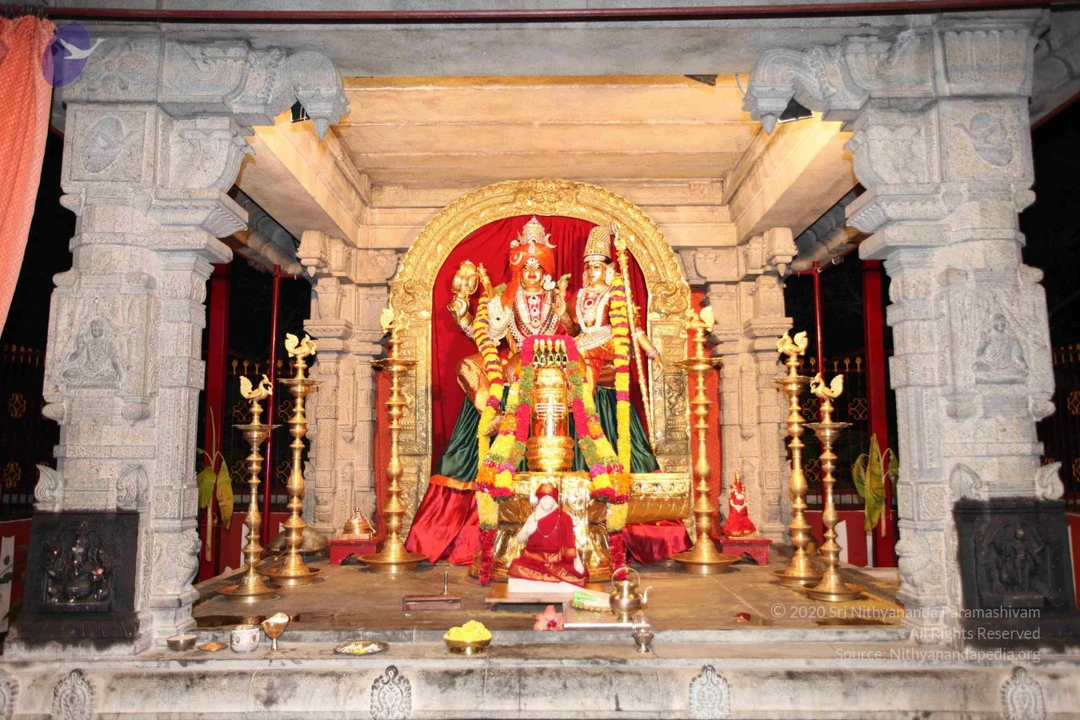
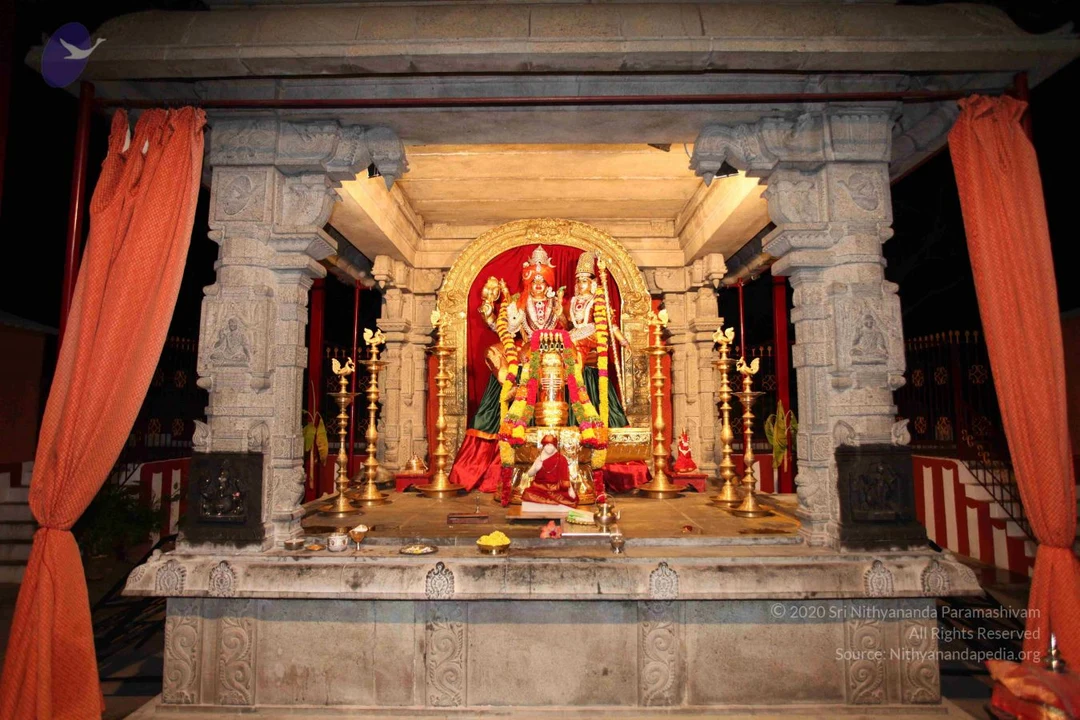
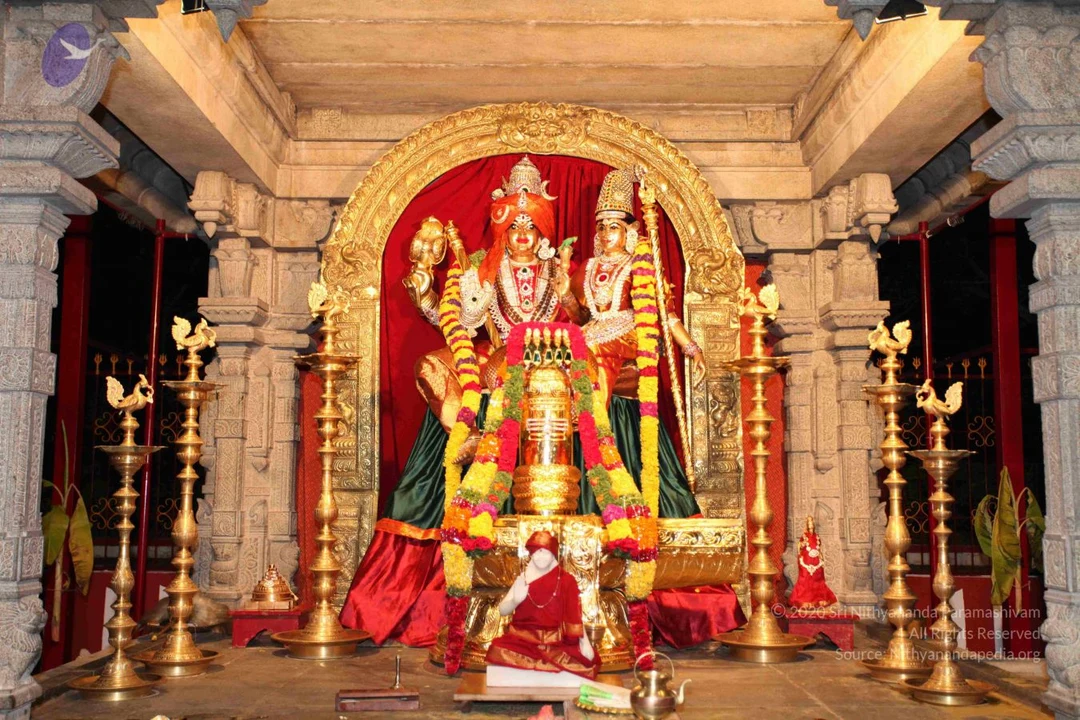
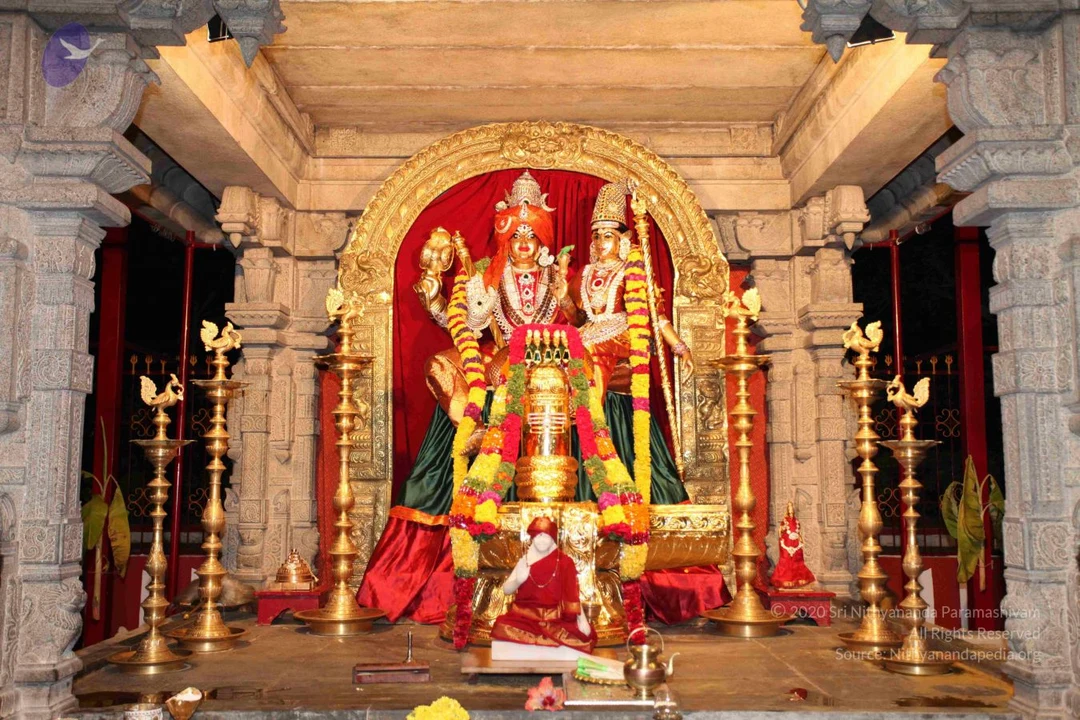
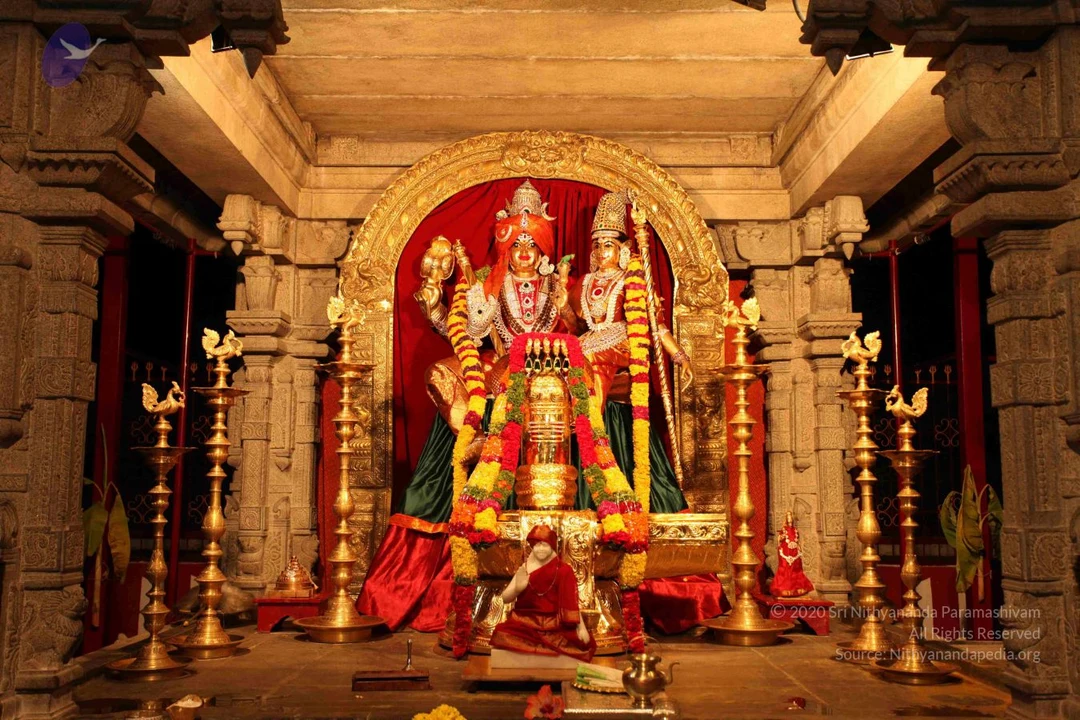
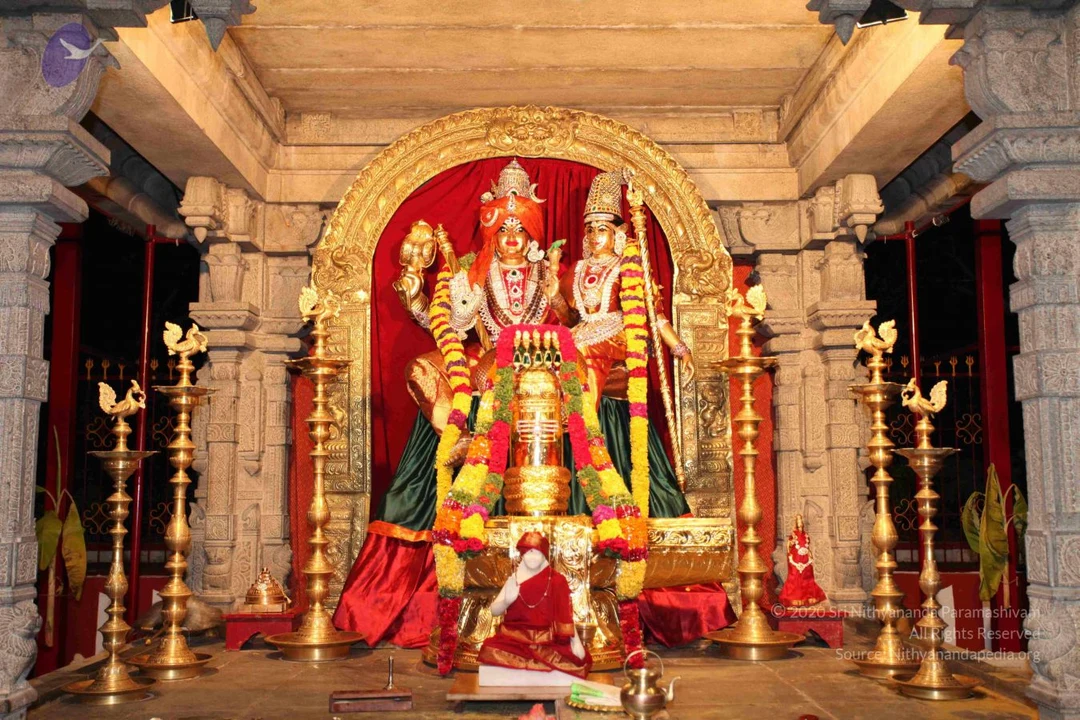
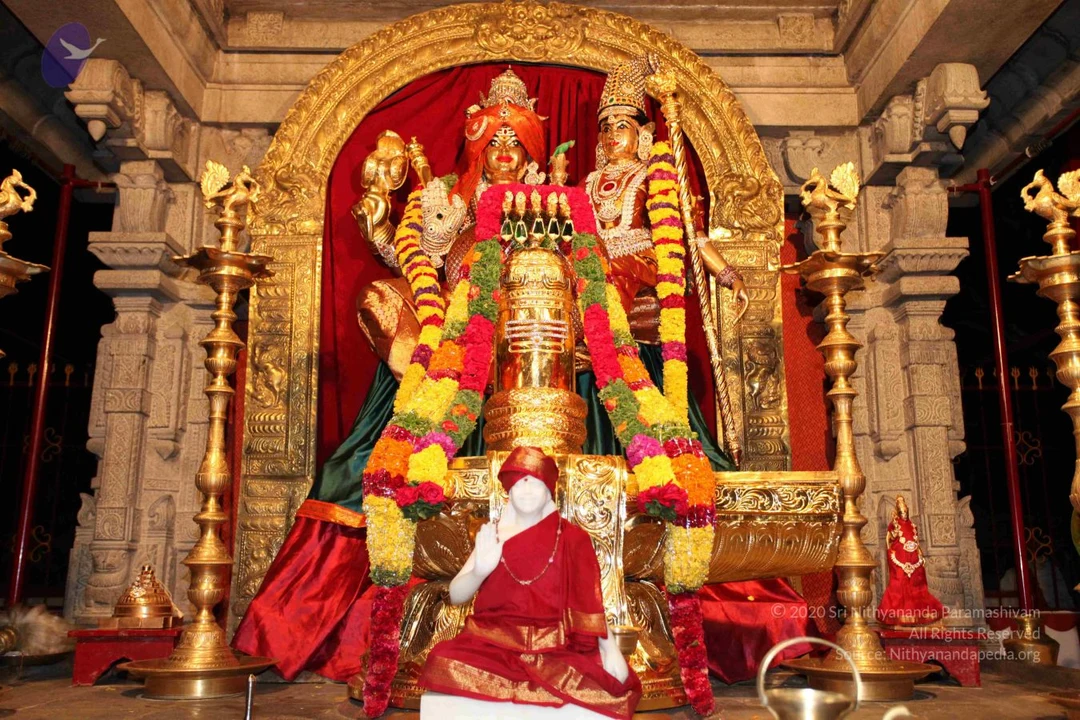
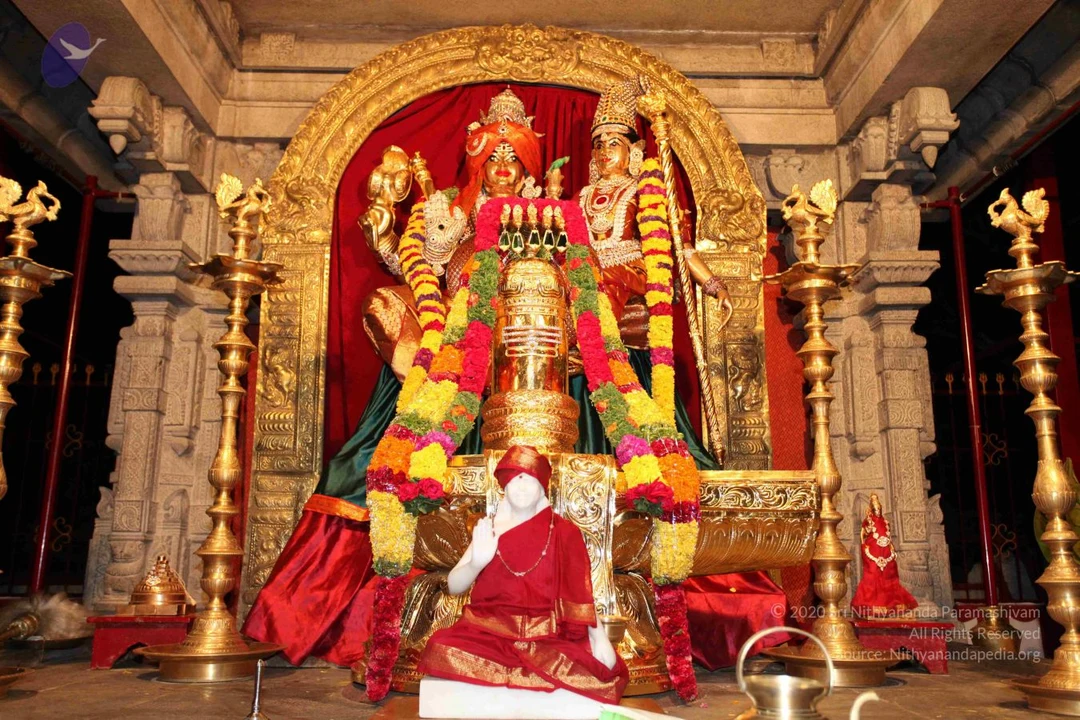
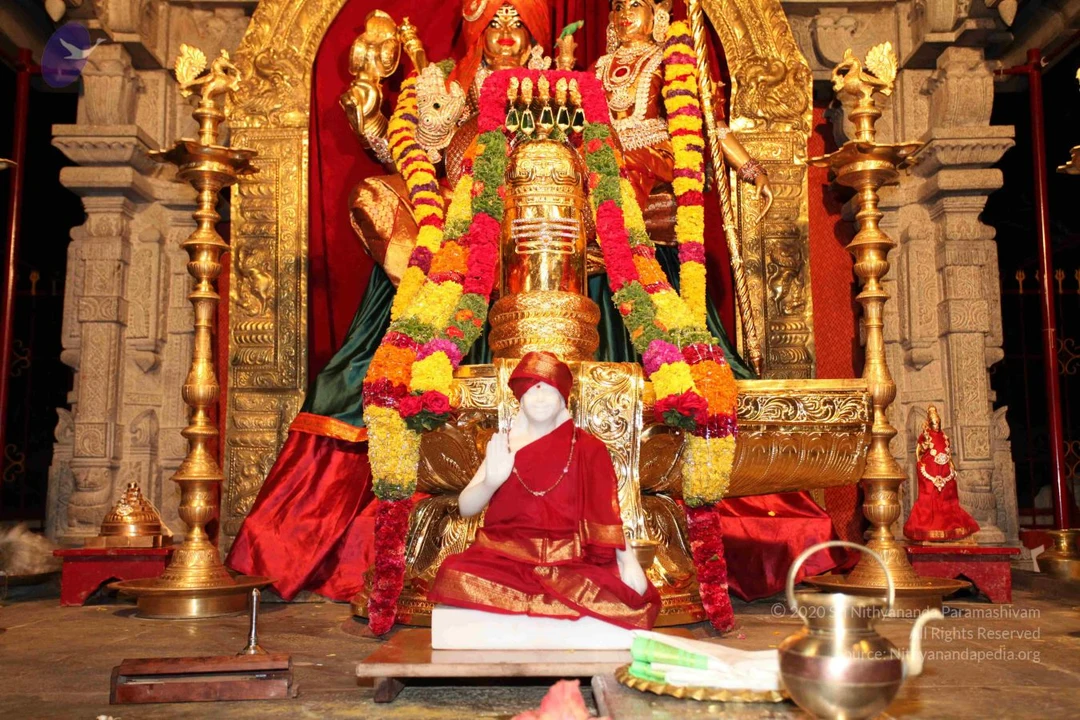
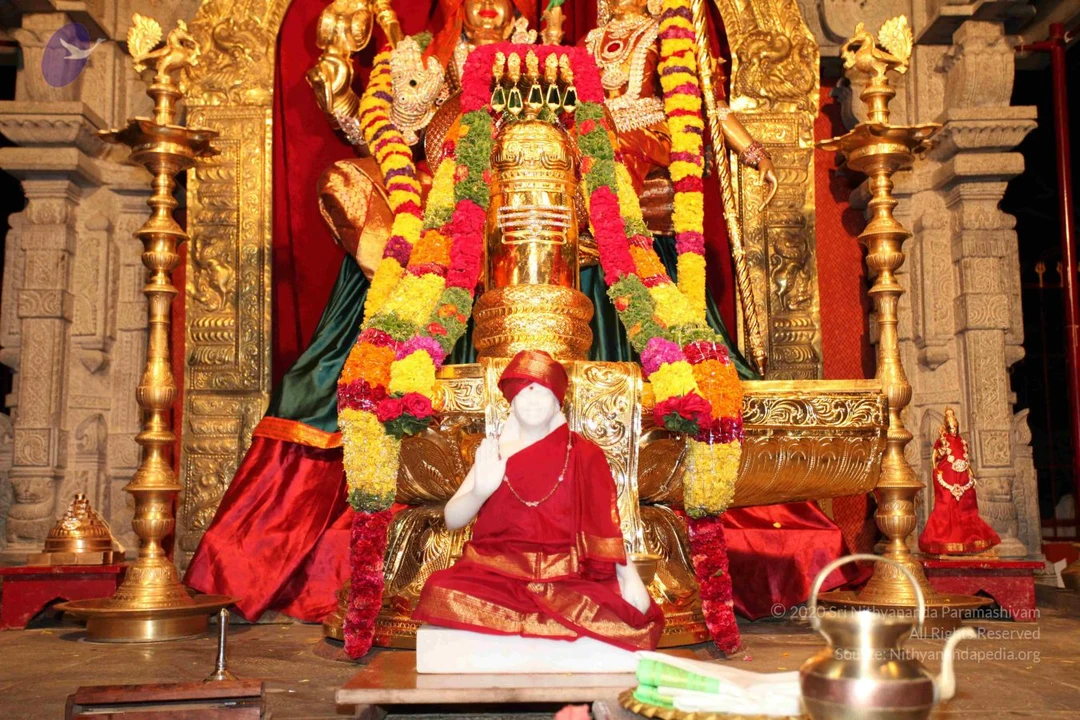
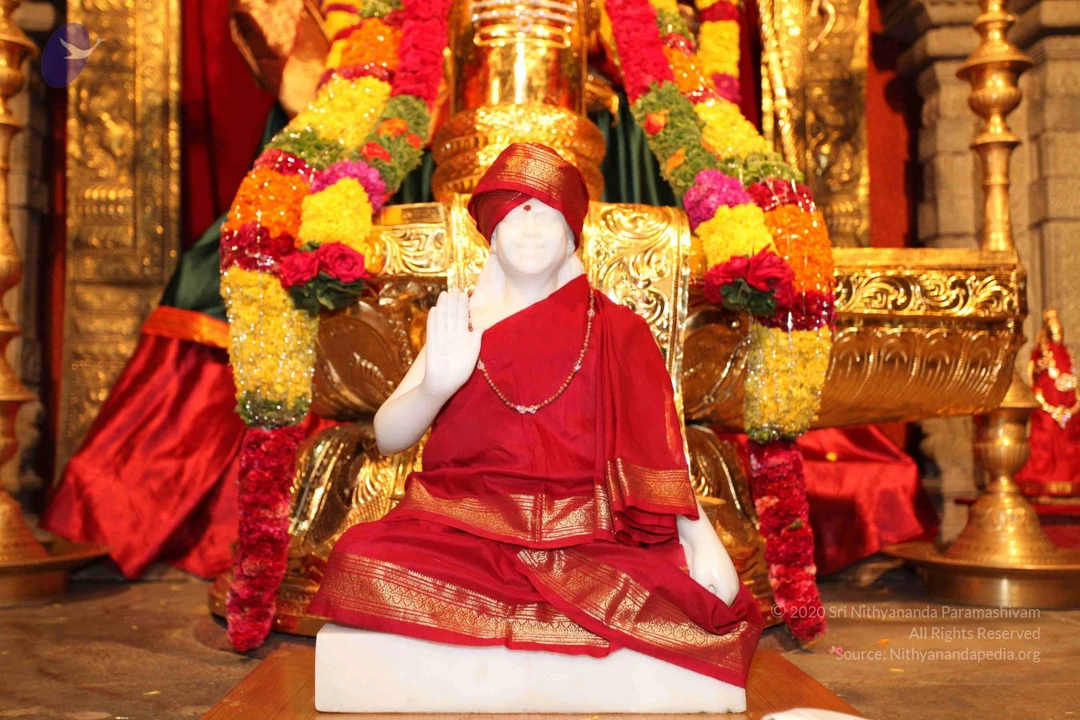
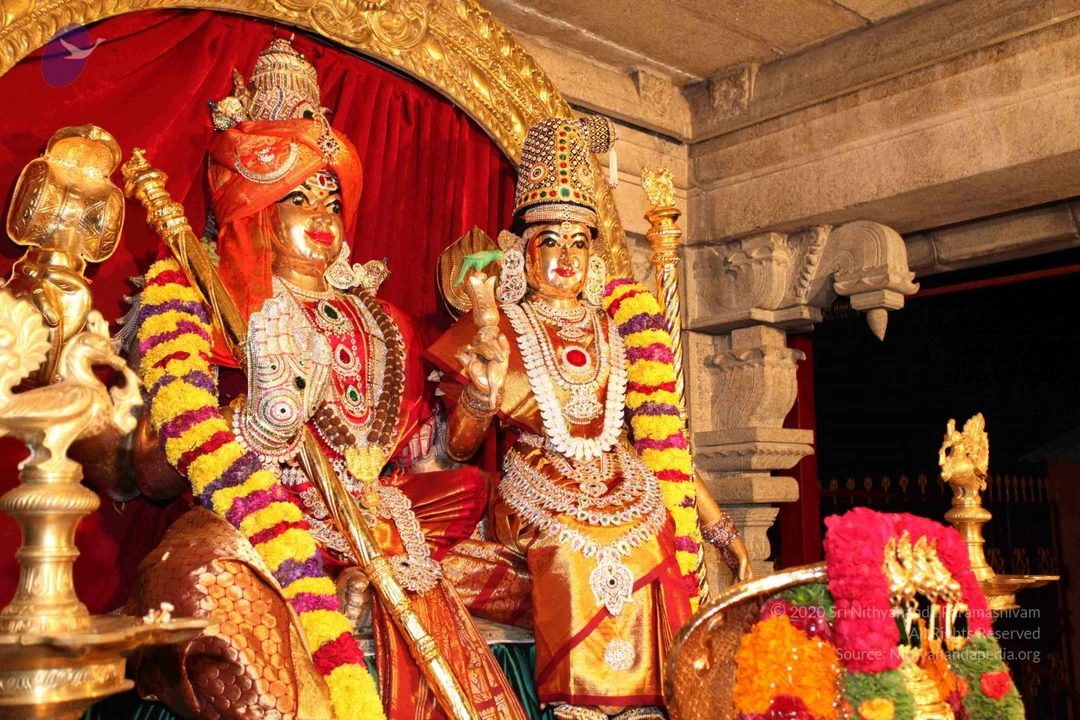
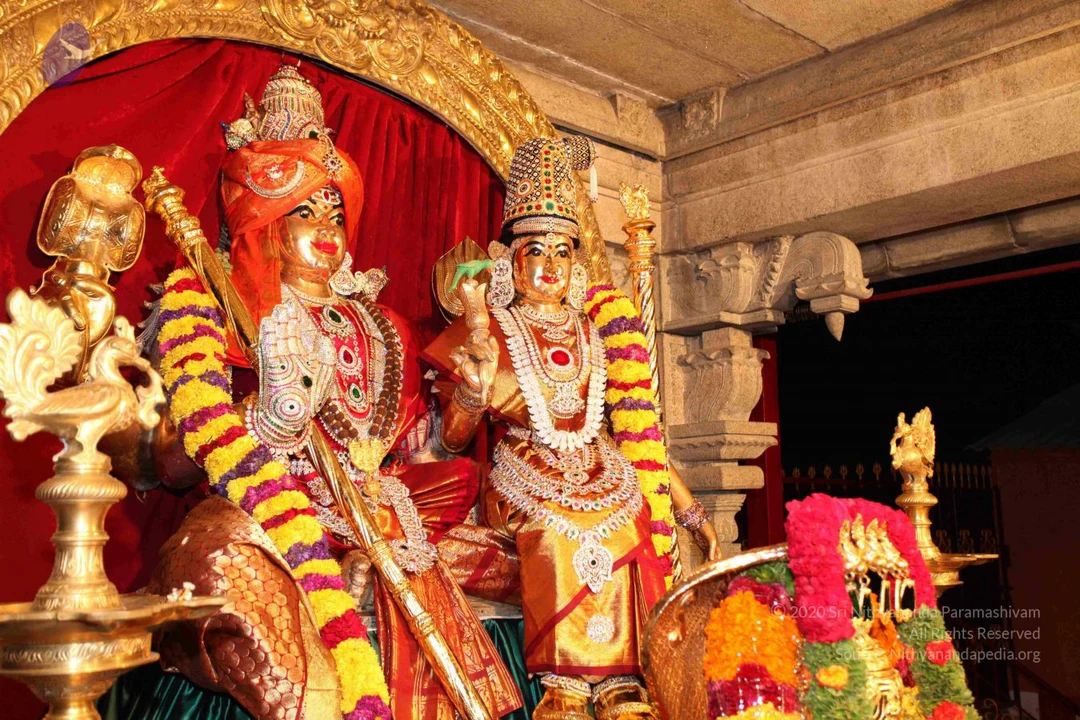
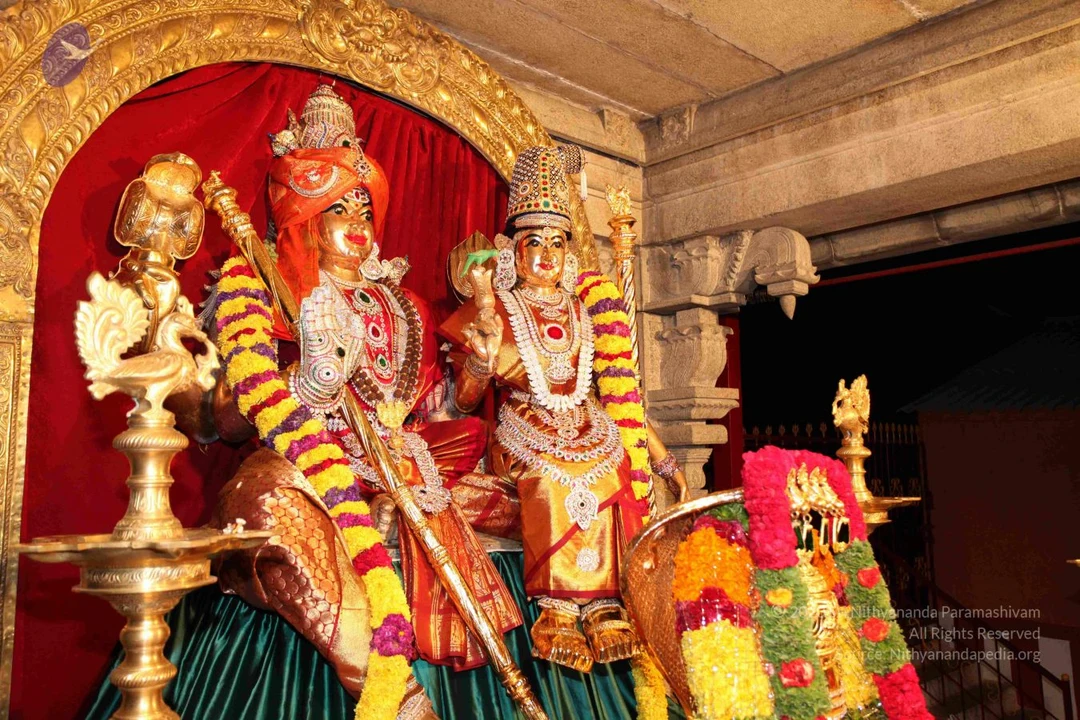
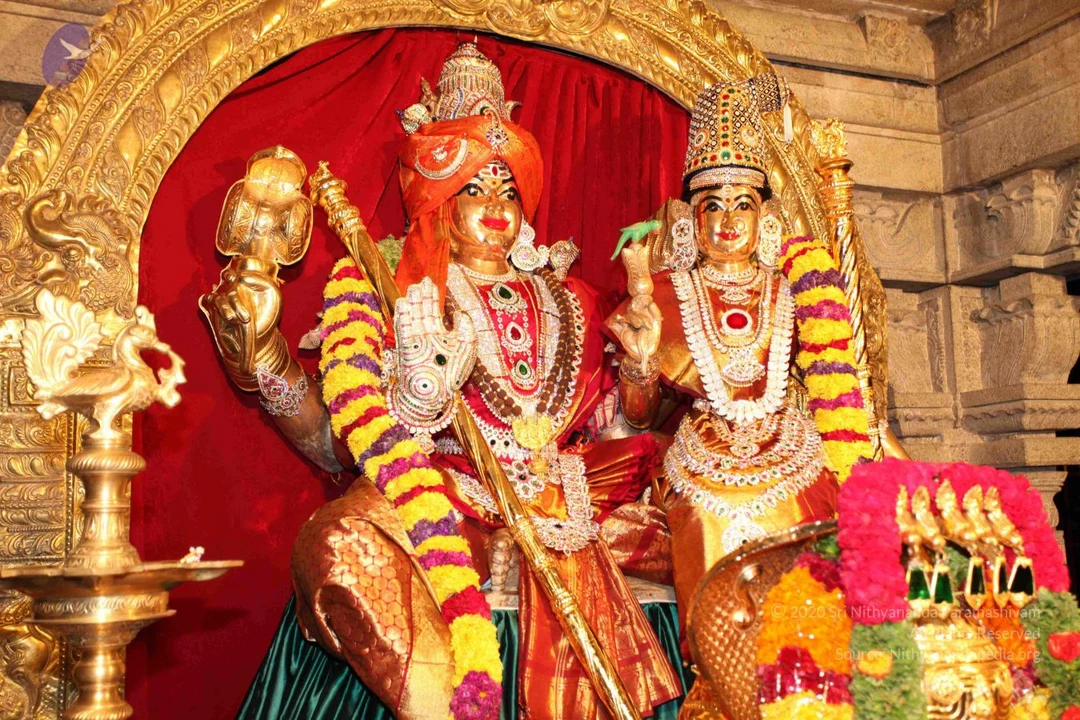
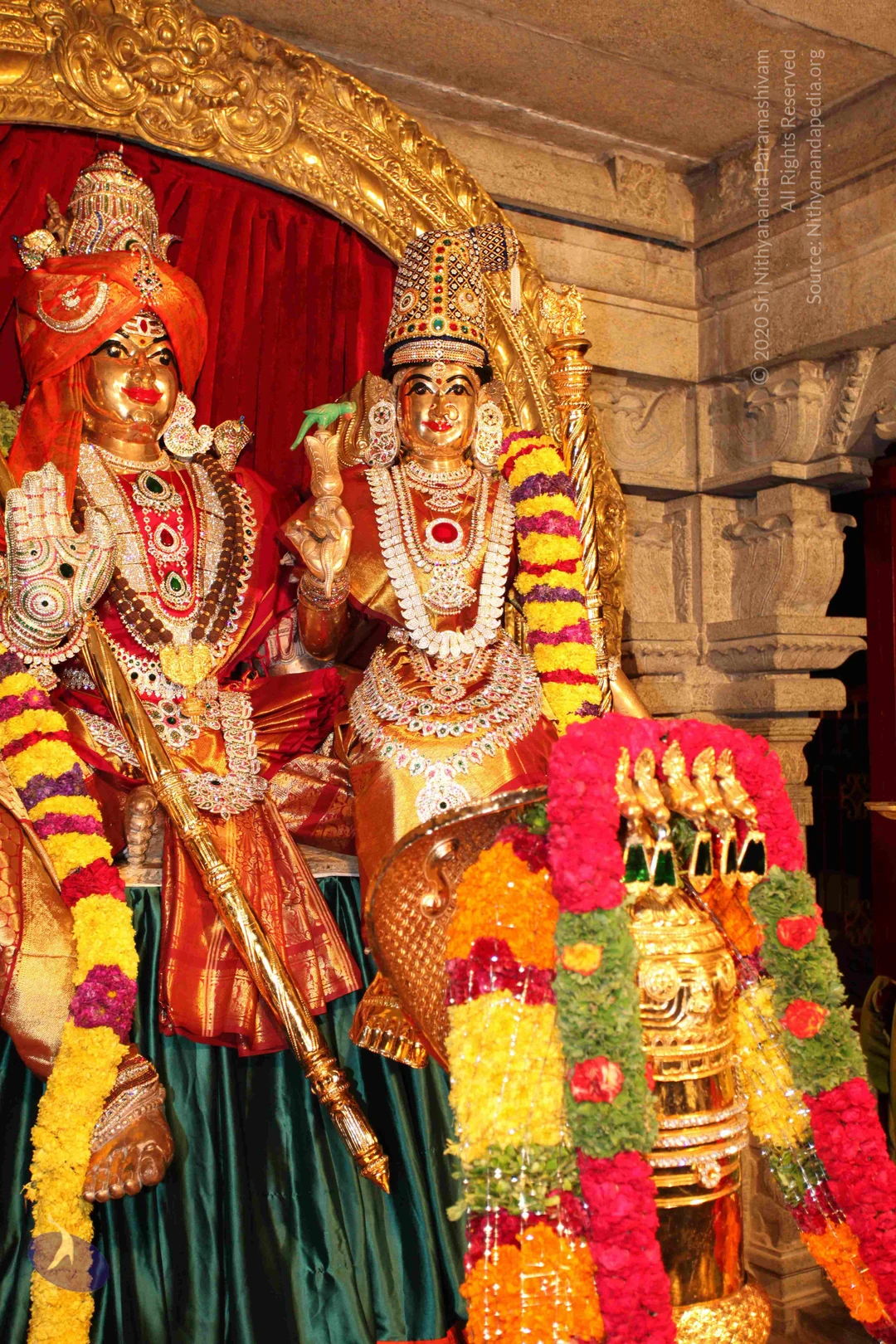
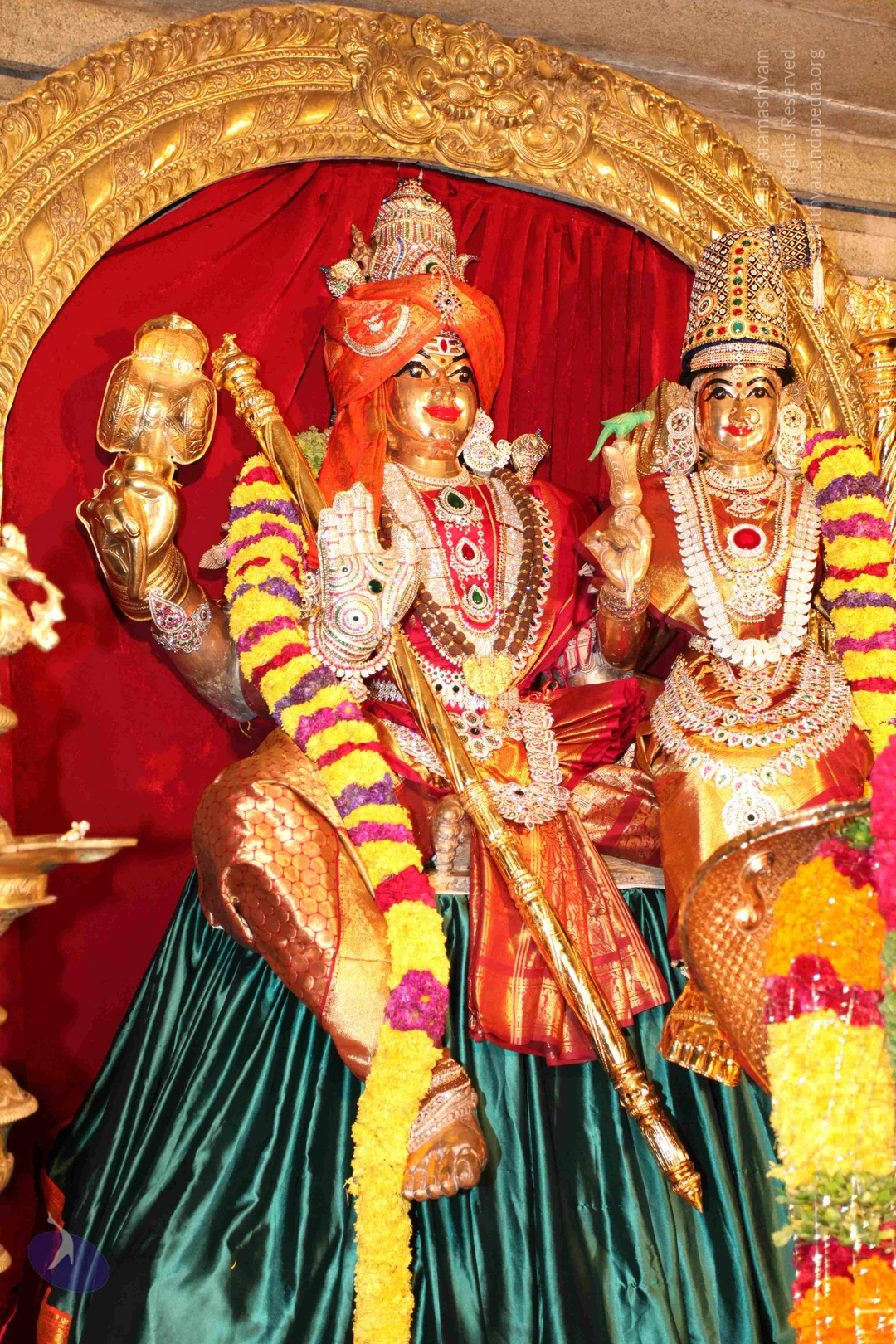
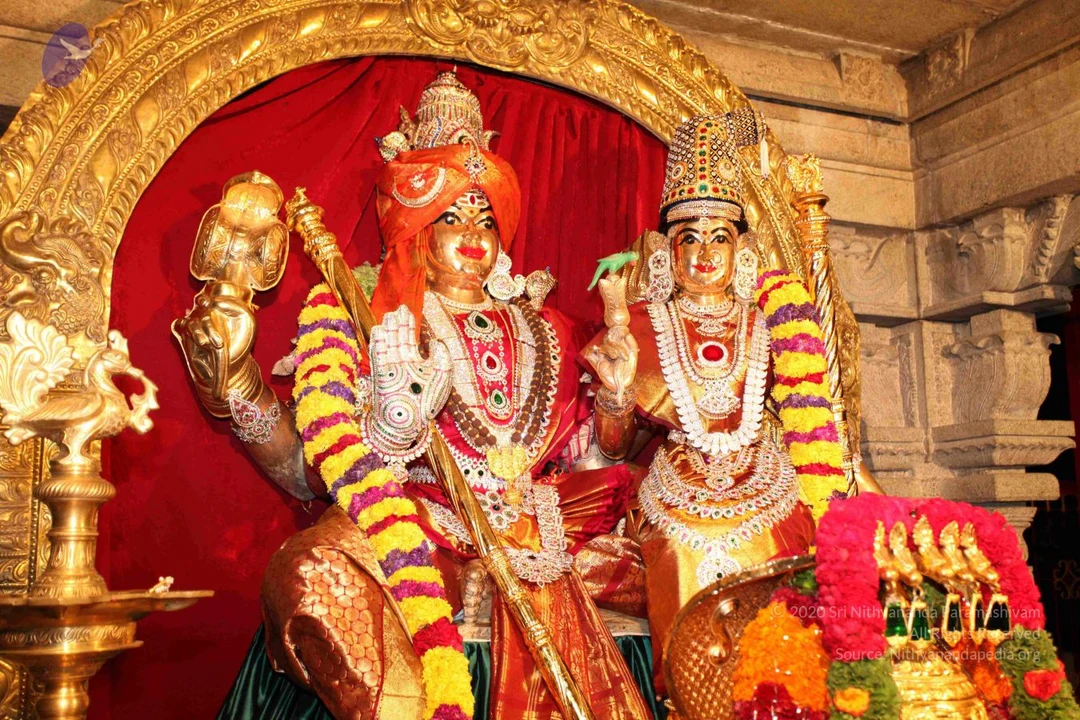
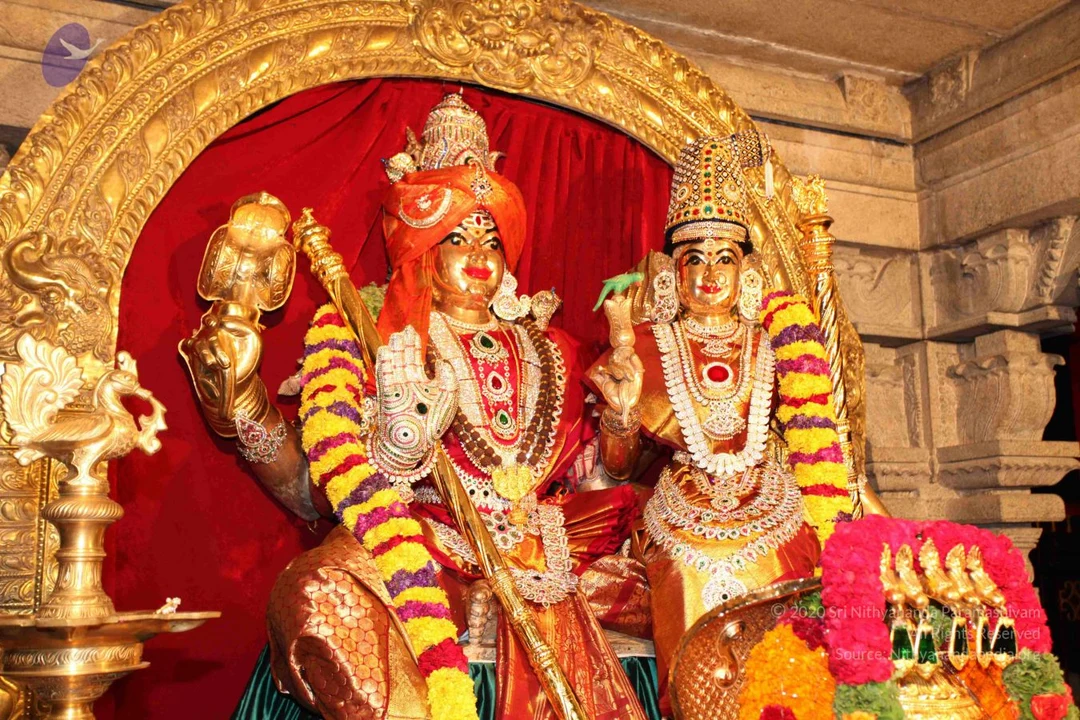
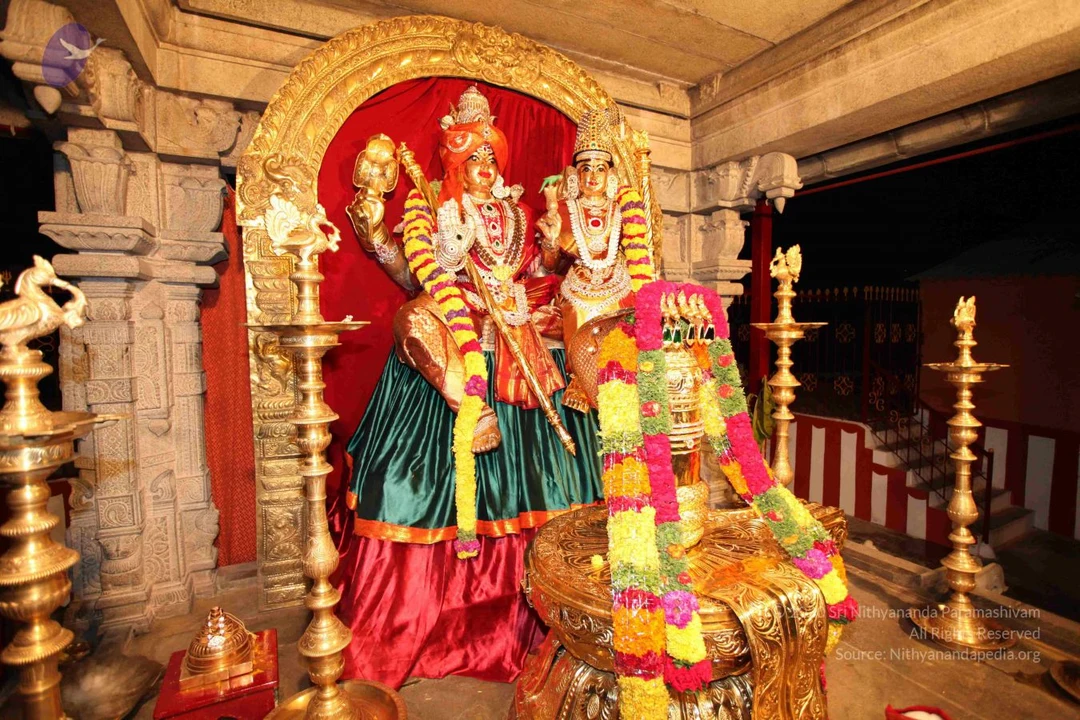
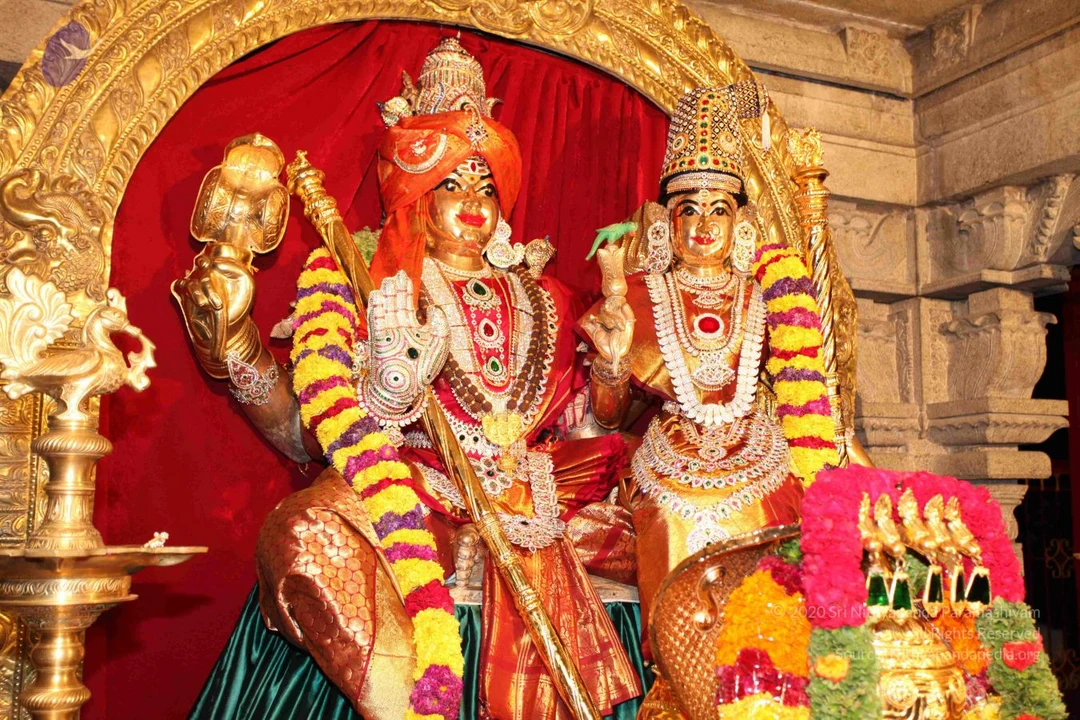
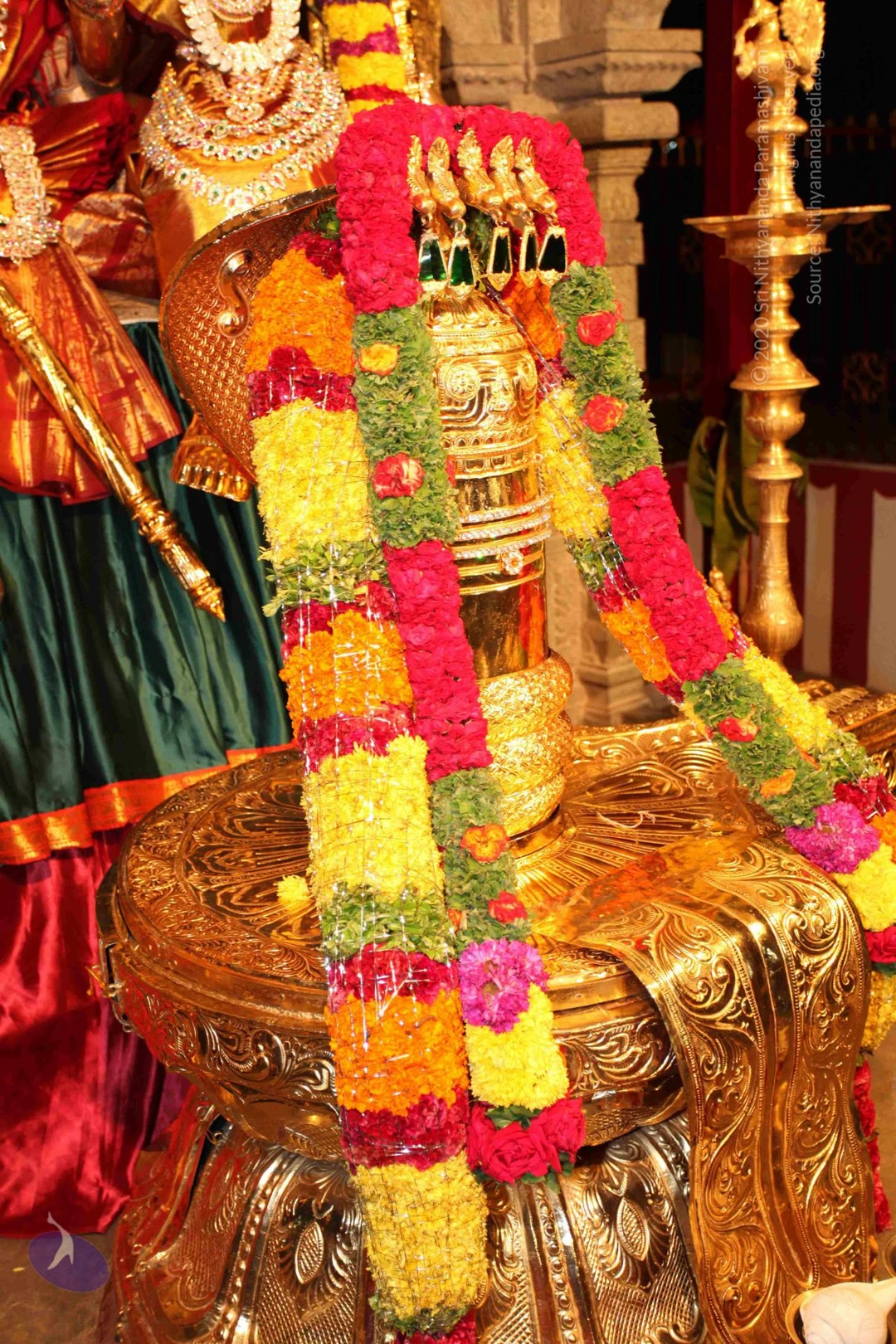
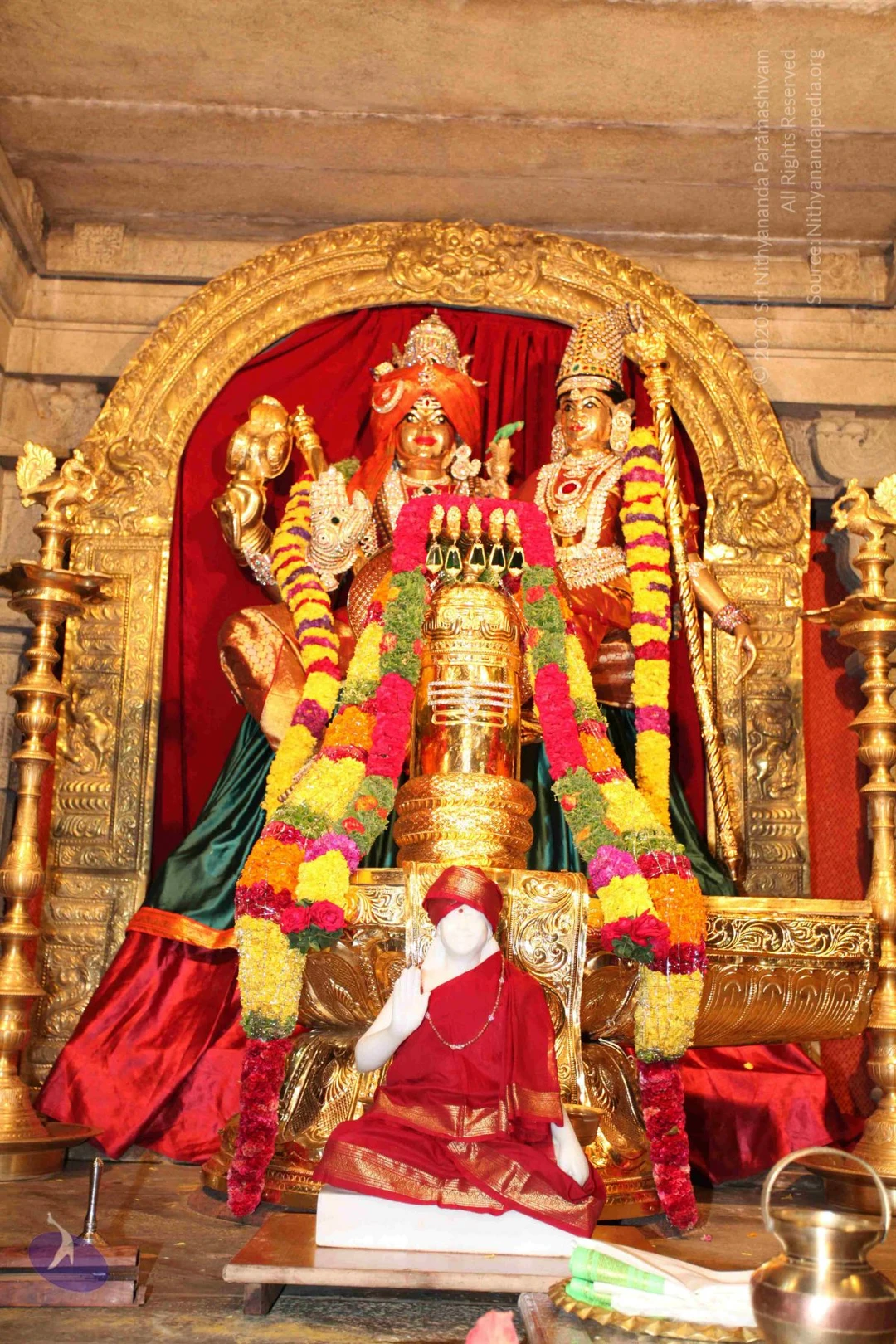
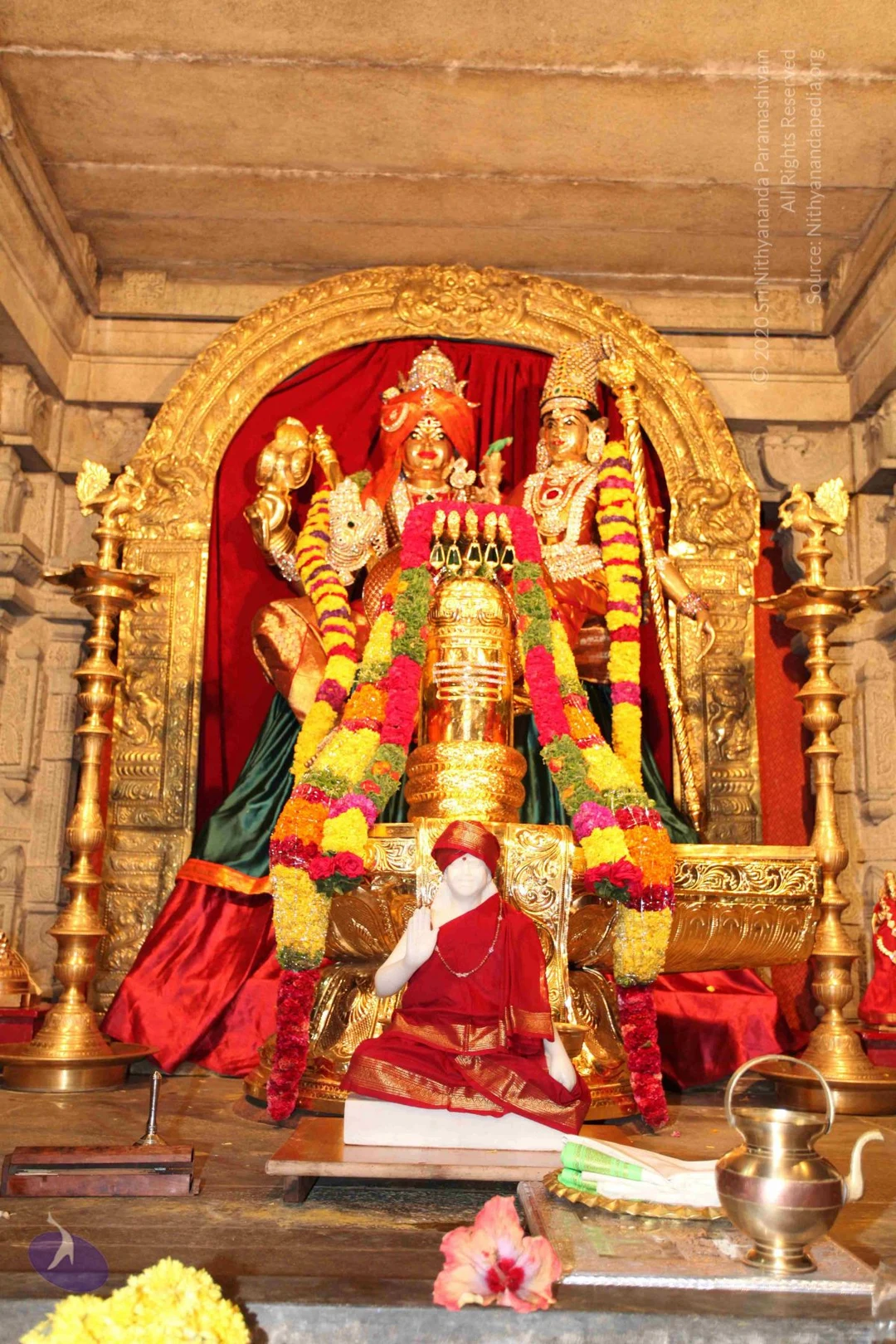
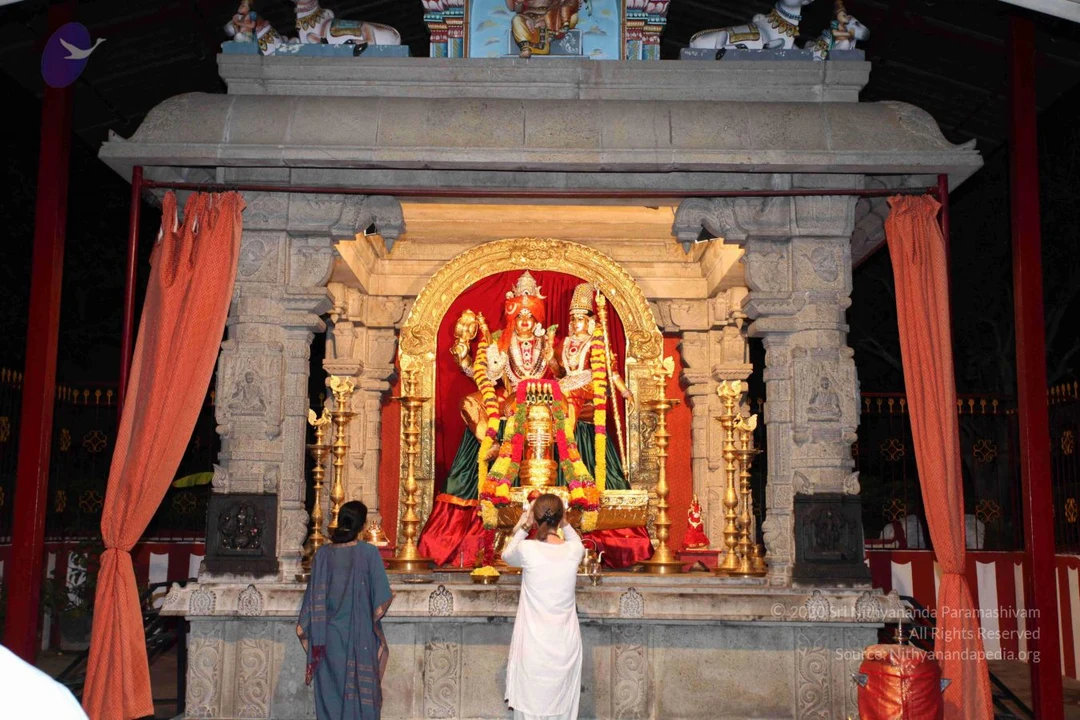
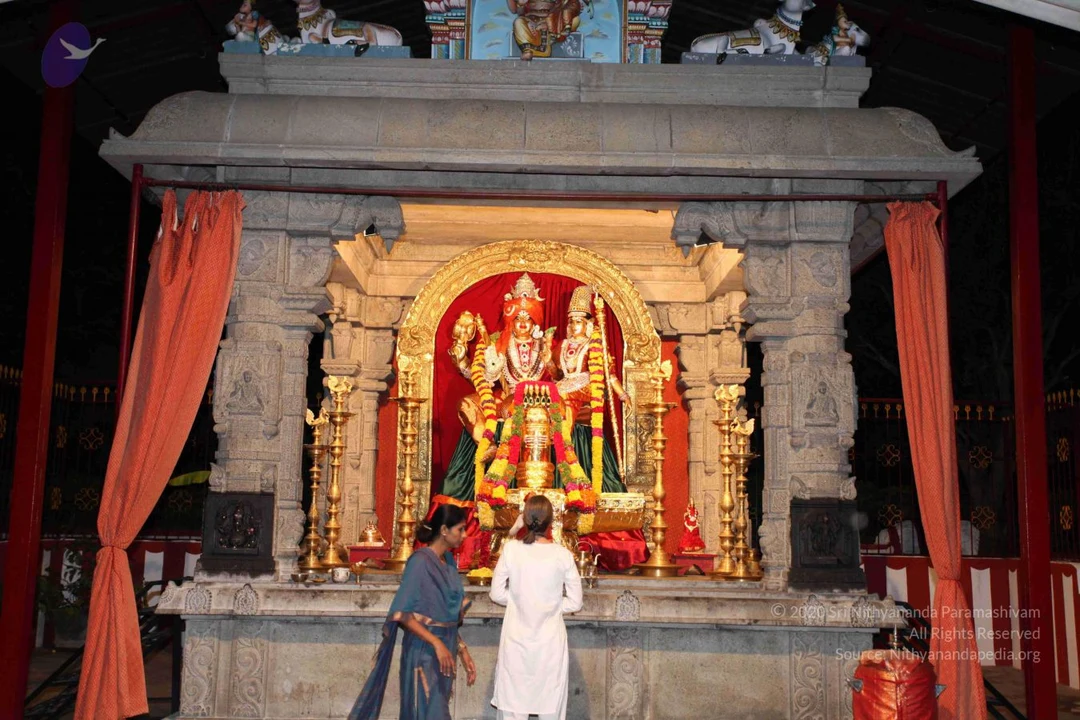
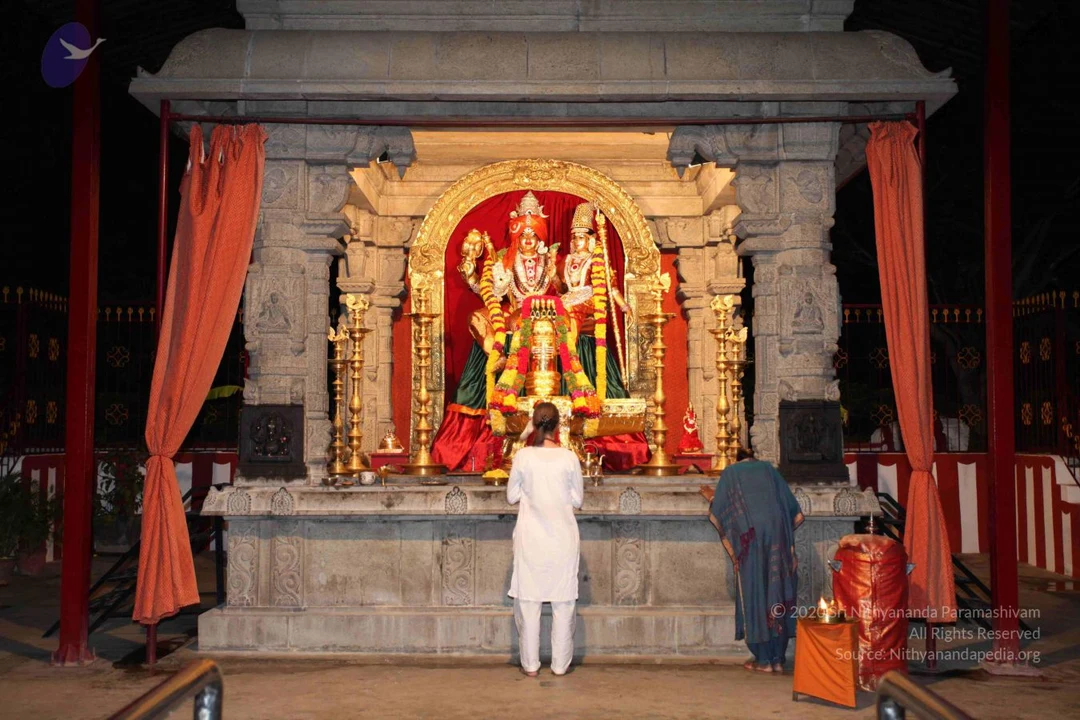
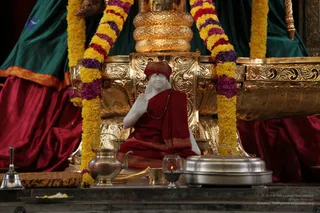
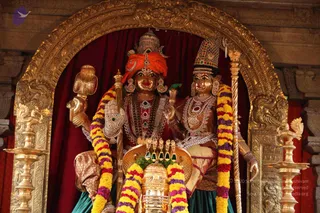
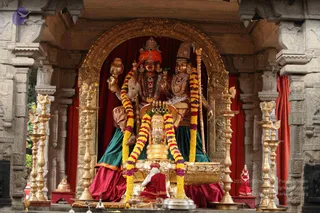
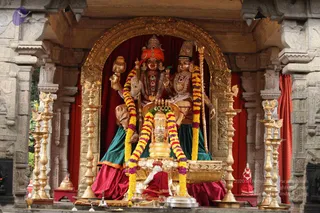
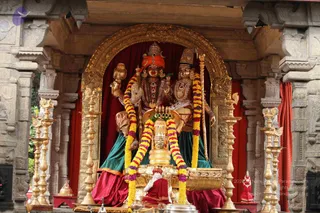
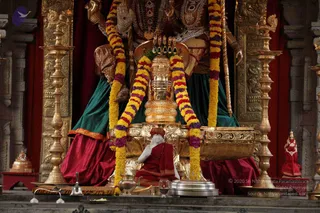
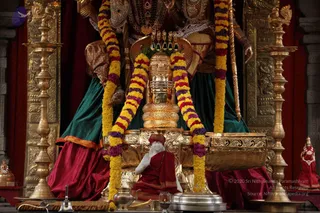
Two ornate deity murtis seated side by side on a golden throne-like pedestal within a gilded arched frame, with a red velvet backdrop. The figure on the left wears an orange turban, a red and gold garment, a rudraksha mala and layered jewelled necklaces, and holds a staff and a small ceremonial object. The figure on the right wears a tall jewelled crown, a red bodice, a white and gold sari and heavy necklaces, and holds a staff. Yellow, red and purple flower garlands drape both figures and a golden shivalinga sits in front. Brass oil lamps flank the arch on both sides. These are statues, so no physical people are present.A photograph of a temple shrine showing a pair of large painted deity murtis seated on a raised golden peetha beneath an ornate golden arch with a red curtain behind. The left figure wears a red turban and a red-and-gold garment with a rudraksha-style beaded necklace and carries a staff; the right figure wears a tall ornate crown and a jewelled necklace. Multicoloured marigold garlands drape both figures and a golden shivalinga-style object with a kalasha-like top sits on a golden platform in front. Tall brass oil lamps stand on each side, and a small figure in a white and red garment sits at the base. Stone carved pillars frame the shrine.A photograph of a temple shrine showing a pair of large golden-and-painted deity murti seated on a throne-like golden platform within an ornate arched gateway of grey stone. The central figure wears a red turban and red-and-gold garments with a dark-green skirt, holding a staff, while the figure beside wears a tall crown and green-and-gold attire. Between them stands a golden shivalinga-like object wreathed in yellow and magenta marigold garlands, with more garlands draped over the platform. Brass oil lamps stand on both sides, and a red curtain frames the back. A small seated figure in a white garment with red trim sits at the base in front of the platform, and offering vessels and a brass plate lie on the floor. No physical person is clearly in the scene apart from that one small seated figure whose identity is not clear.A temple shrine with two large painted deity murti standing under a golden arch framed by red drapery and carved grey stone pillars. The left figure wears a red turban, a beaded necklace and a gold crown-like headdress, holding a staff; the right figure wears a tall dark crown and a cream-and-gold garment. Yellow and magenta marigold garlands hang from both figures and a golden kalasha stands before them on a gold peetha. Ornate brass lamps stand on both sides. A small figure in red and white sits or stands at the base near the offerings.A golden deity murti stands behind a gilded altar with a tall golden peetha-like base and a gold kalasha-shaped finial. Yellow and purple-red marigold garlands drape the image and altar. Brass oil lamps stand on either side, and a small white statue in red-and-maroon robes and a red head covering sits in front of the altar, as a statue rather than a living person. A small red-clad figurine appears at the right edge.A photograph of a shrine with a large golden deity murti adorned with jewelled necklaces, a crown and a sceptre, seated behind a golden lingam on a golden pedestal. Garlands of yellow, red and purple flowers hang from the pedestal. Below, a small white statue of a seated figure in a red robe and red turban sits with hands raised in a gesture, a statue rather than a physical person. Brass oil lamps, a bell and a brass vessel stand in front, and a red-robed figurine appears at the right edge. No physical people are visible.

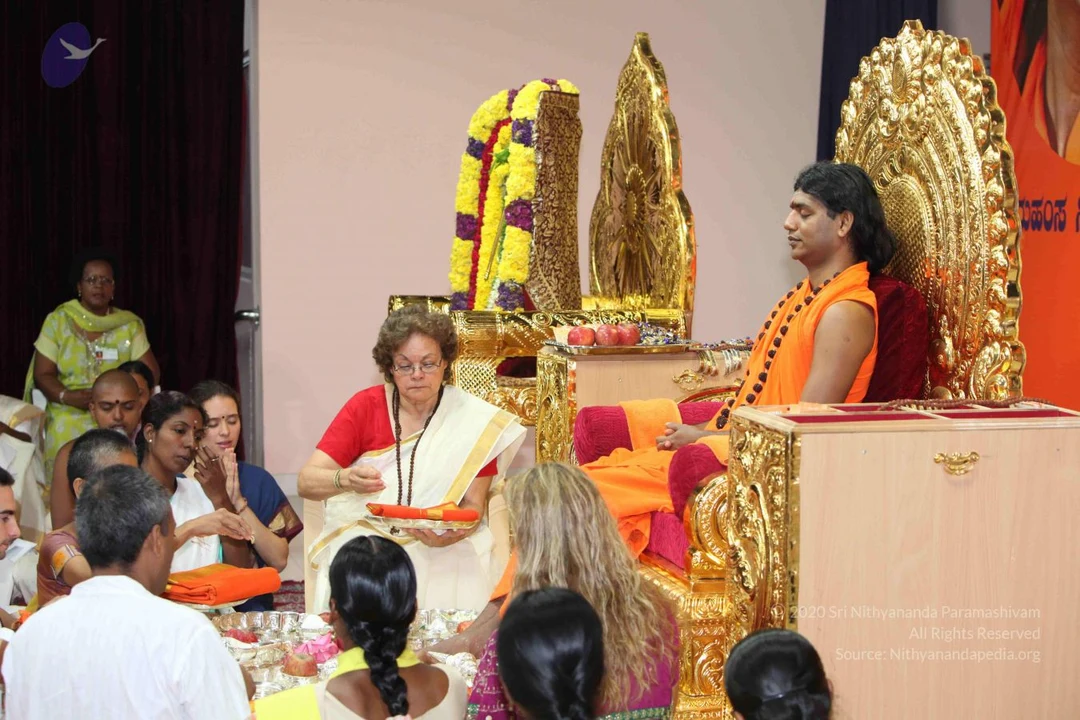
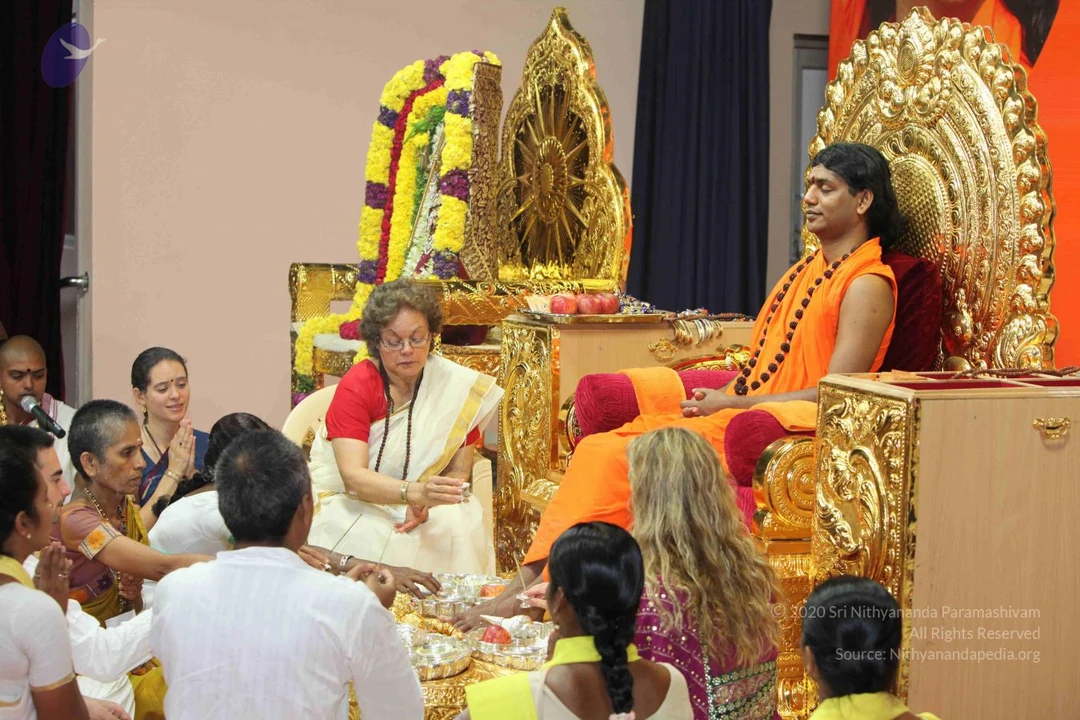
Pada-Puja

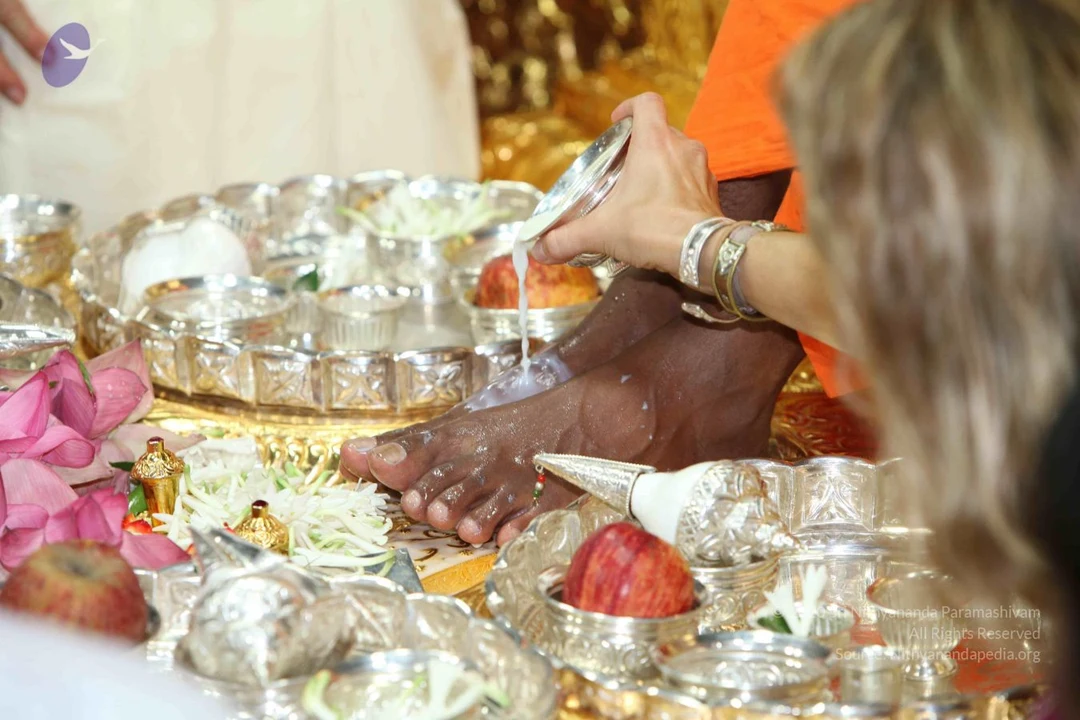
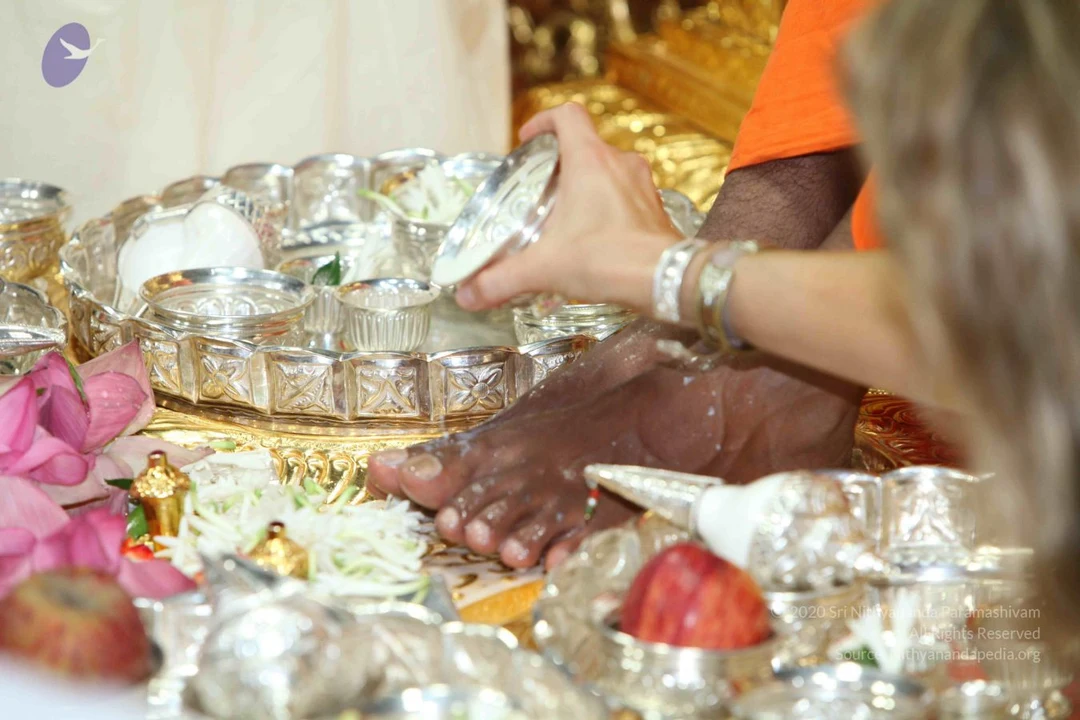
48 photosSource gallery
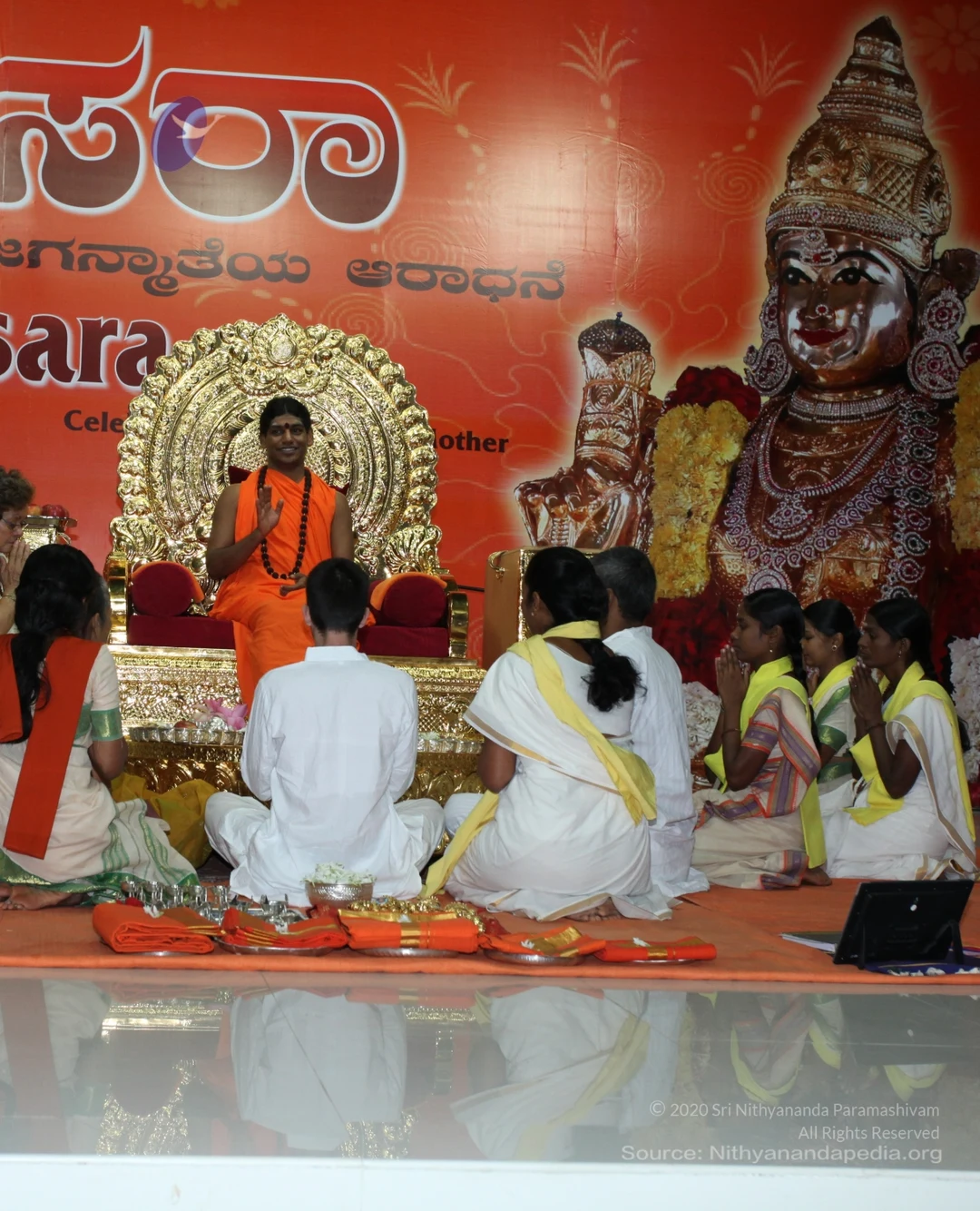
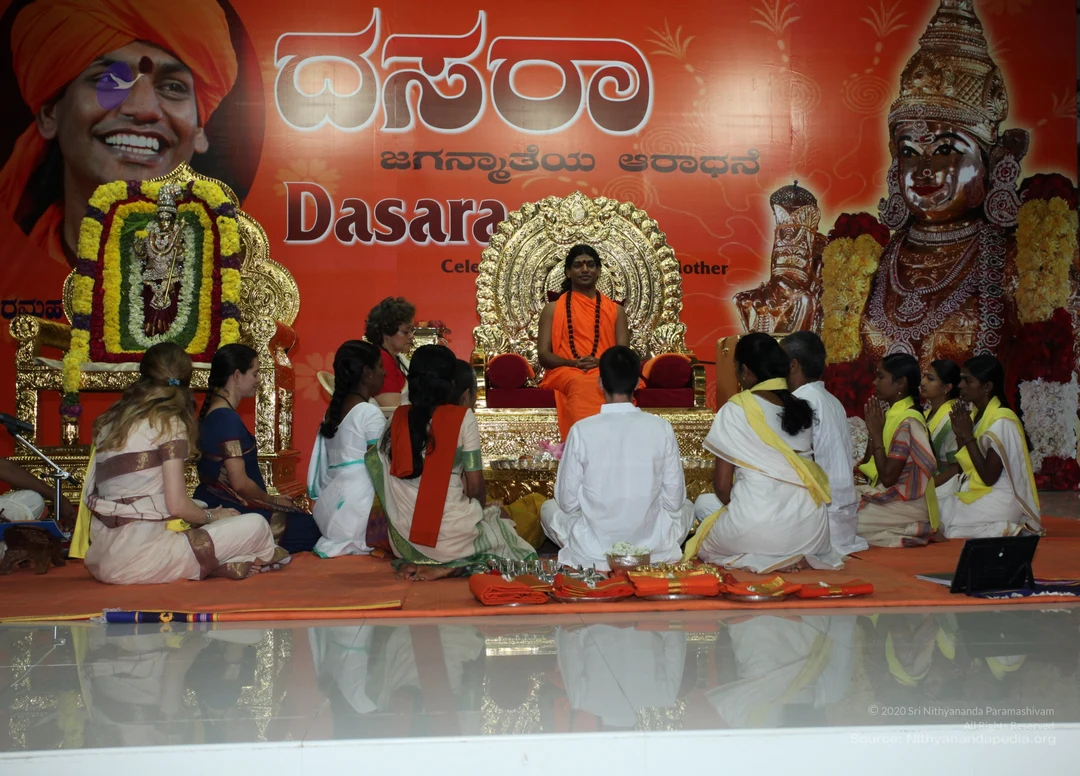
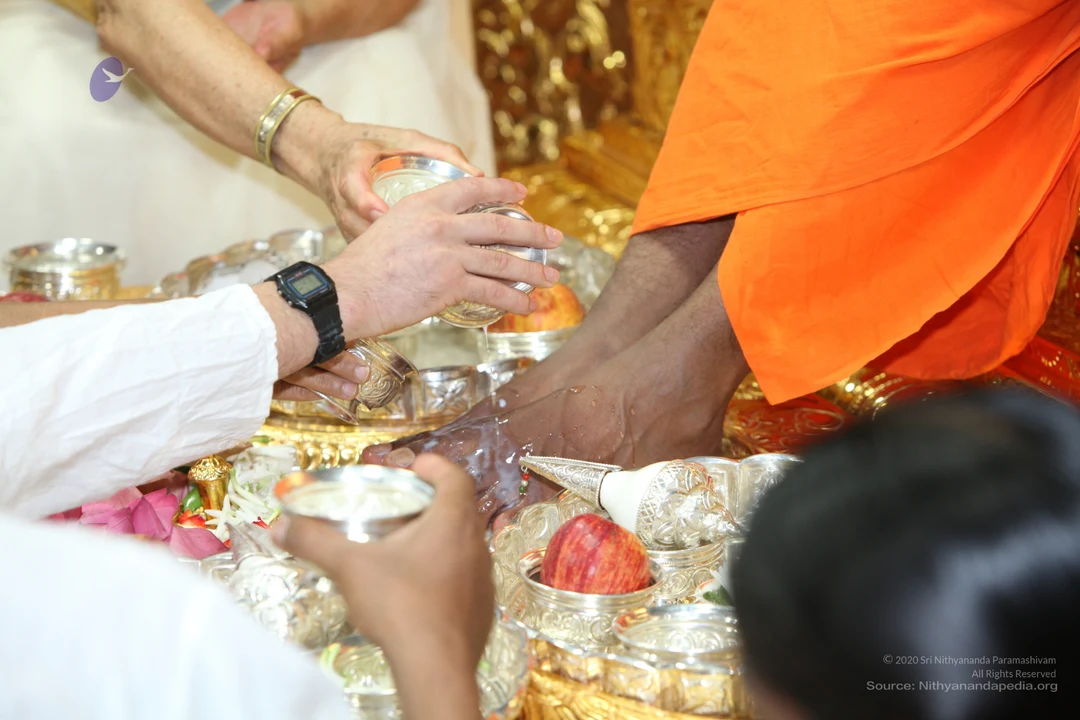
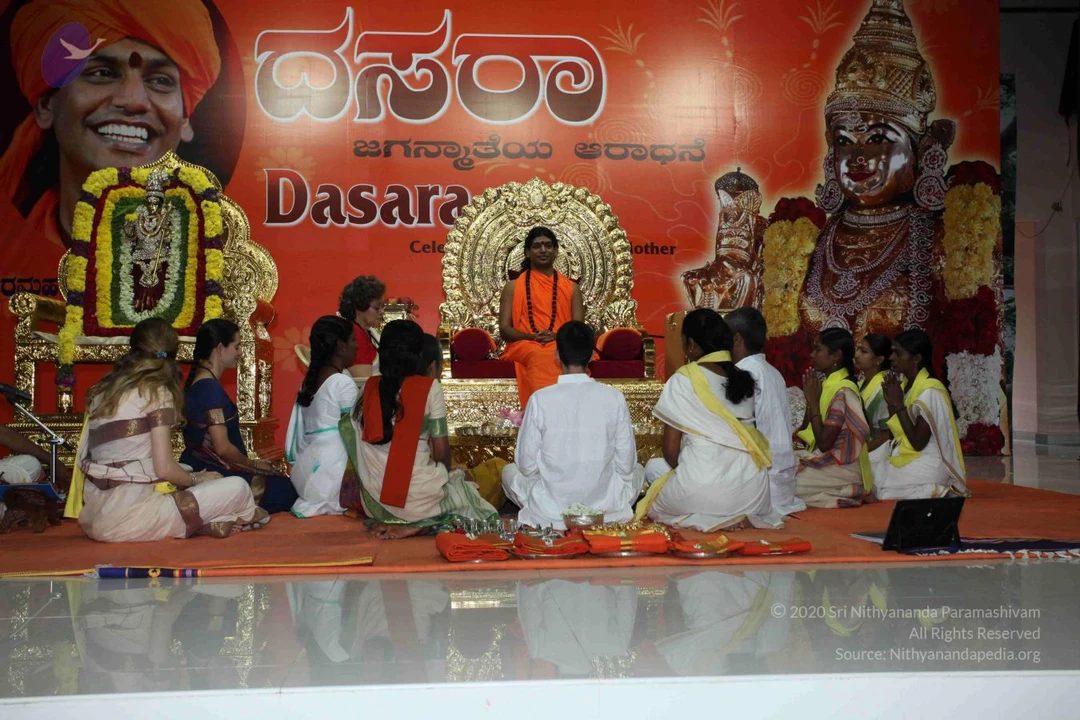
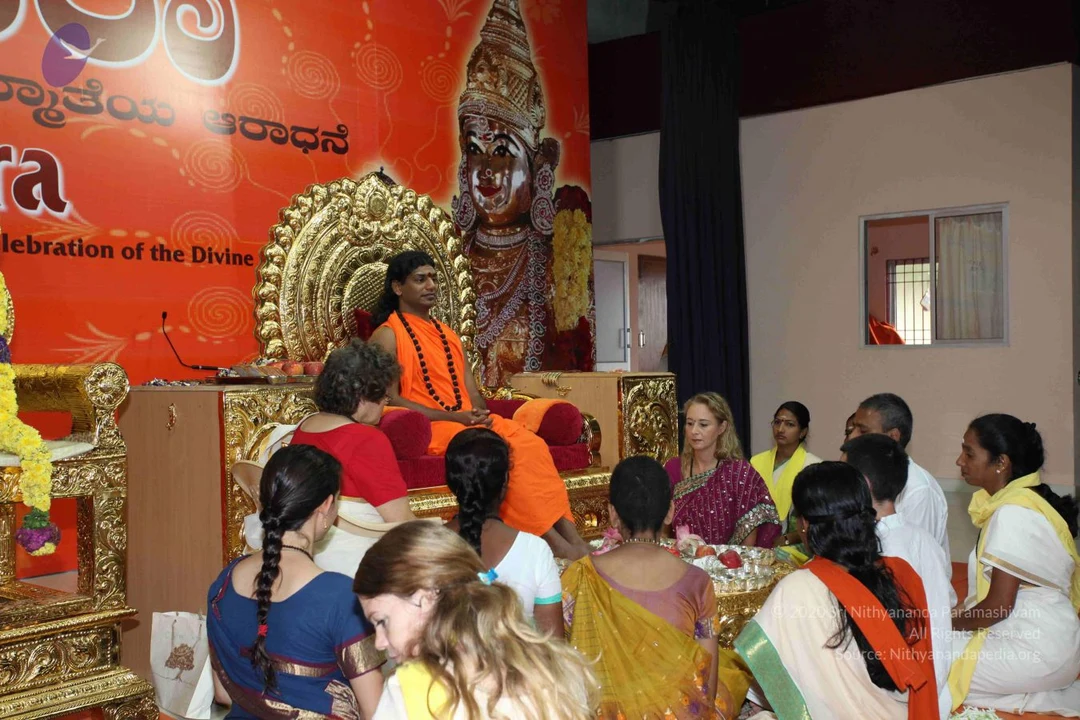
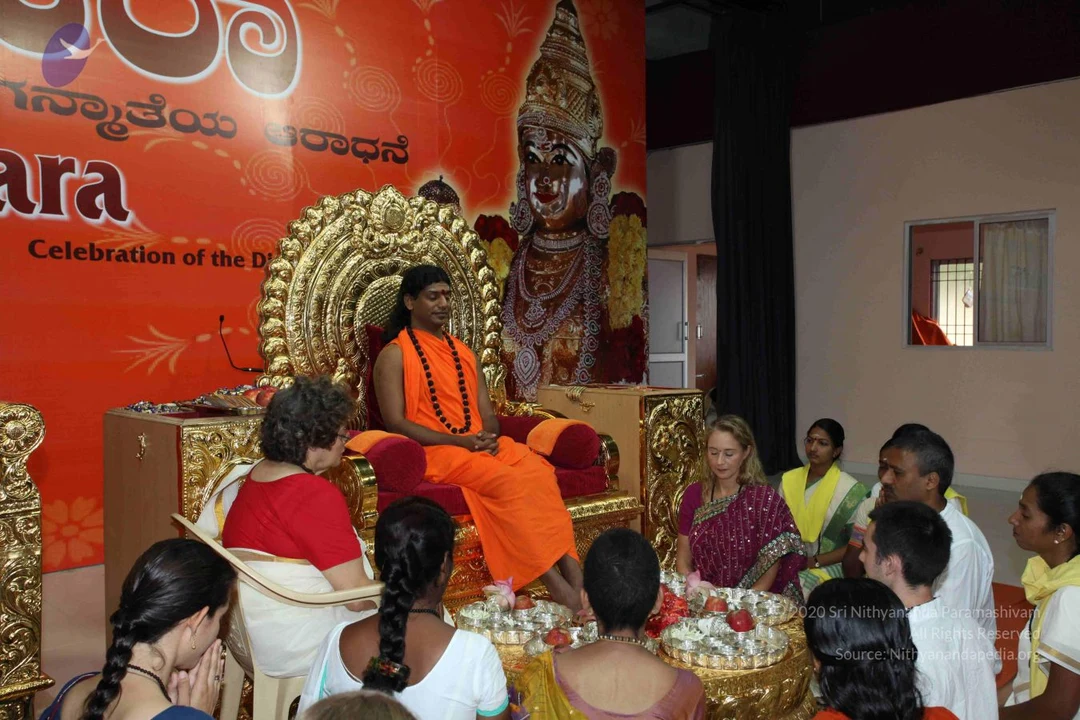
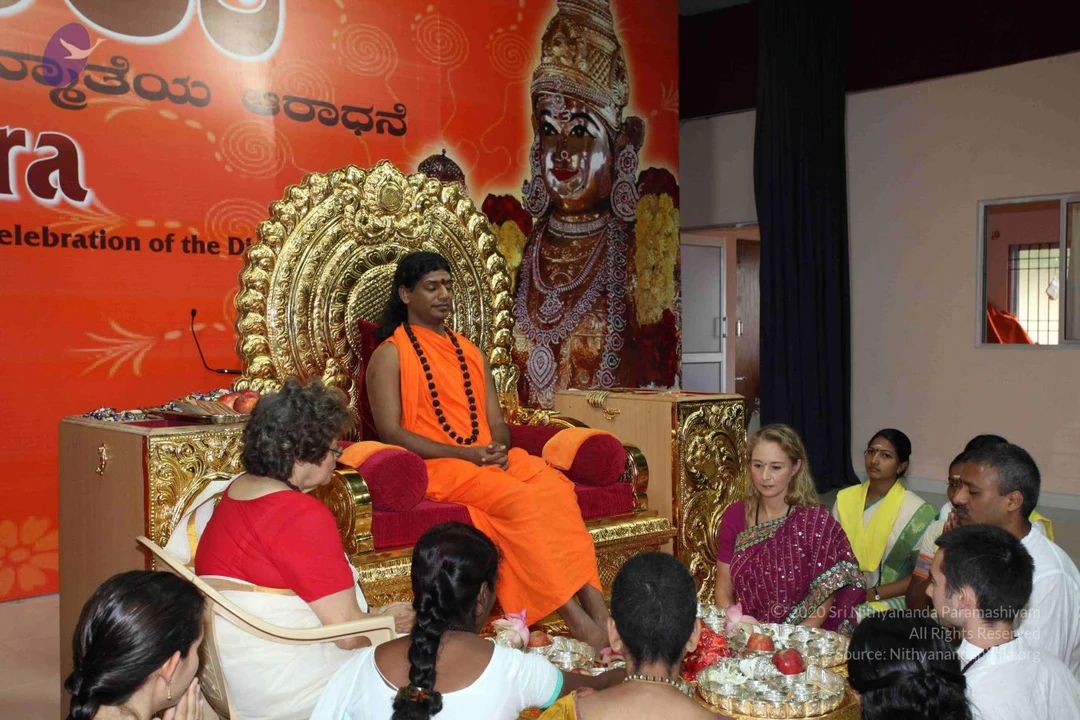
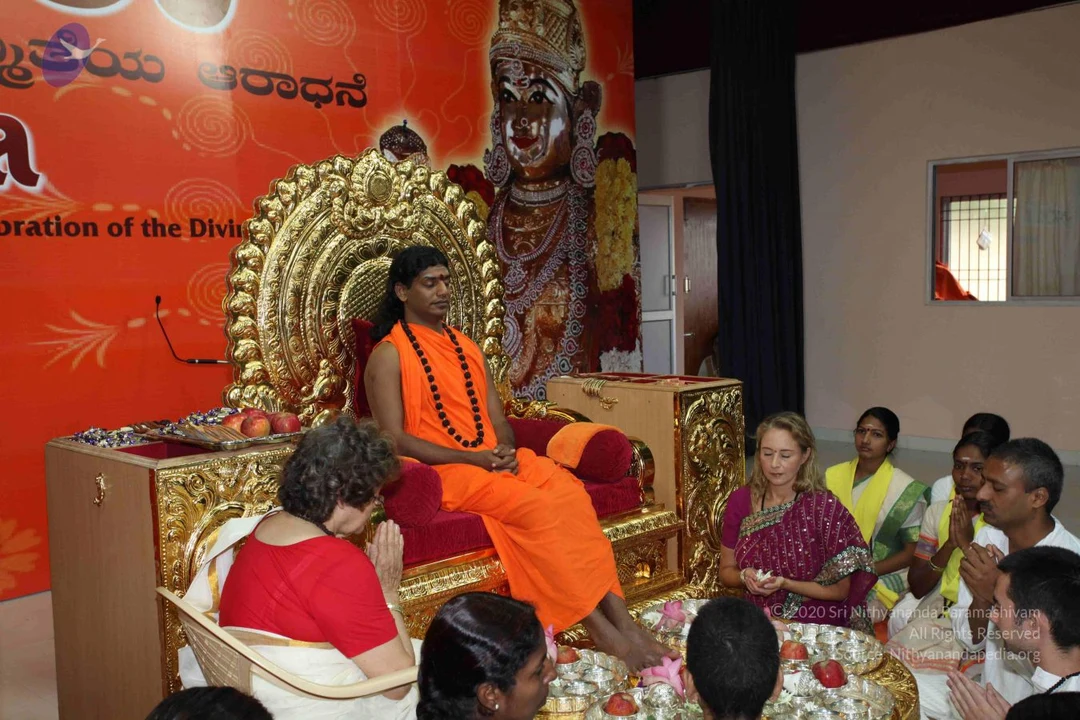
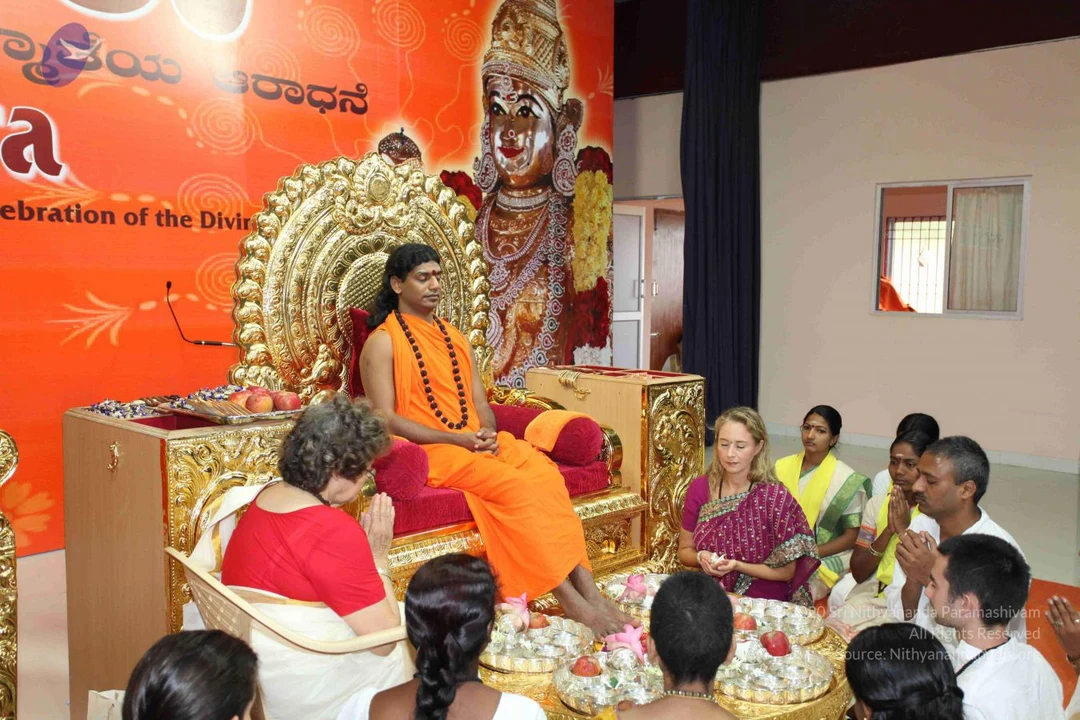
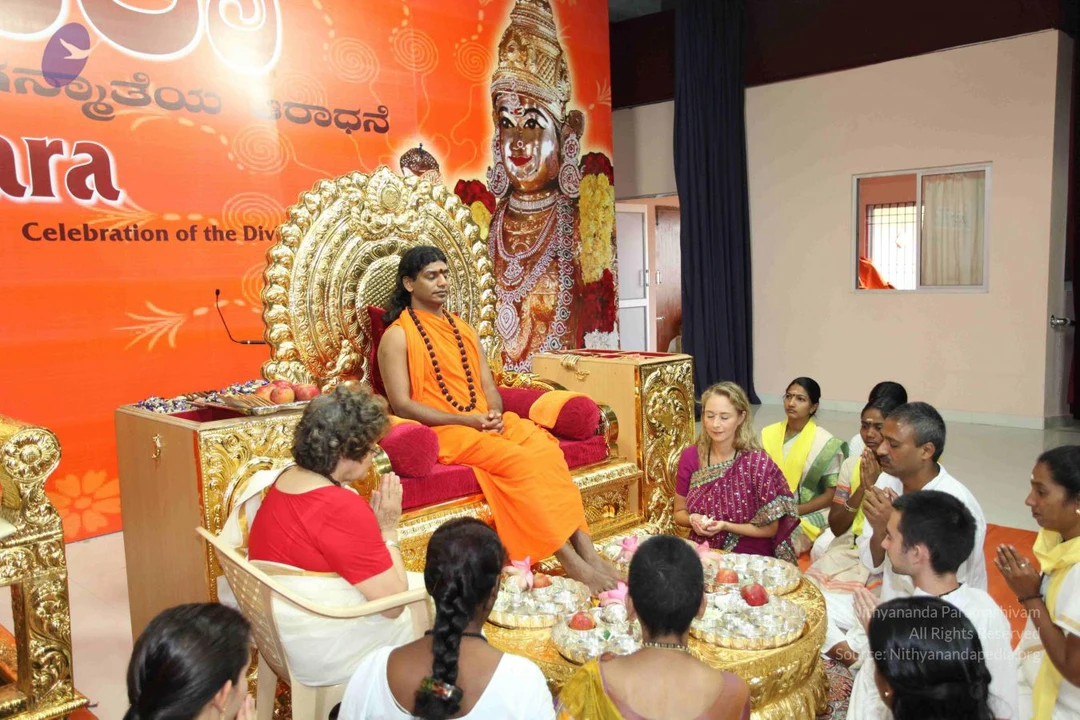
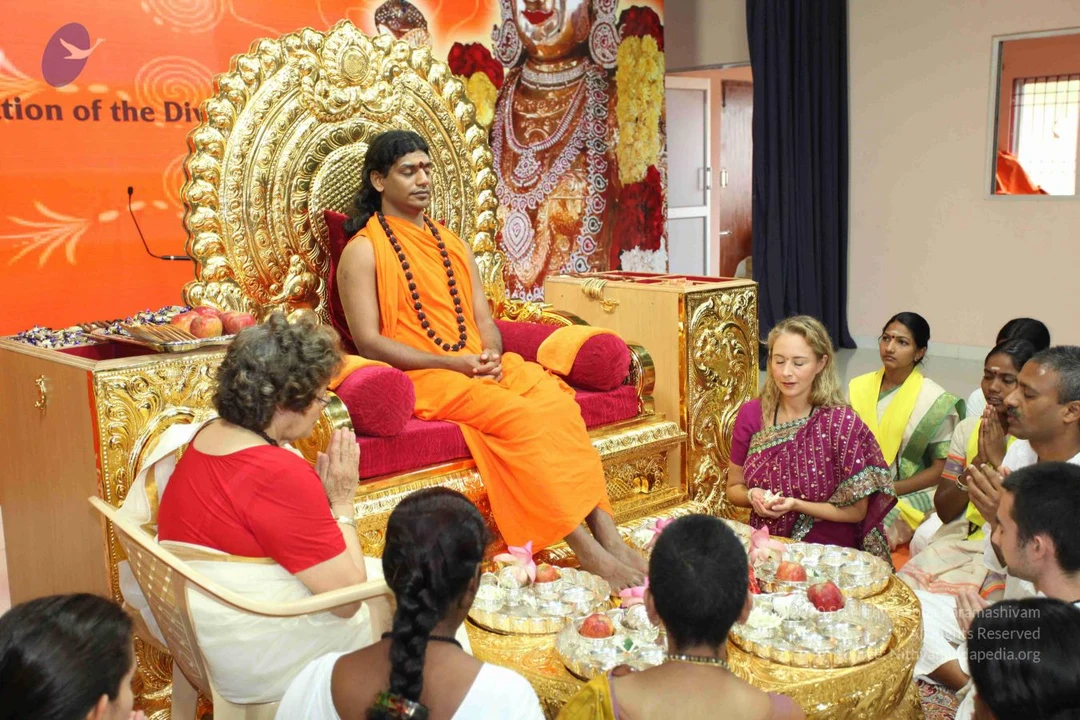
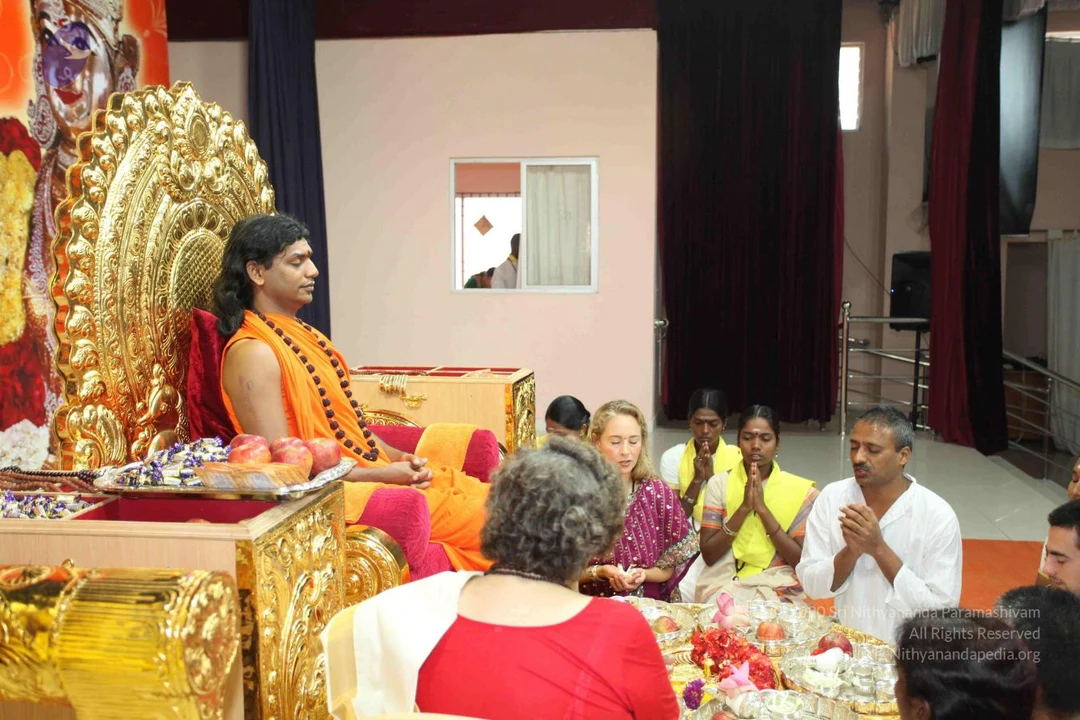
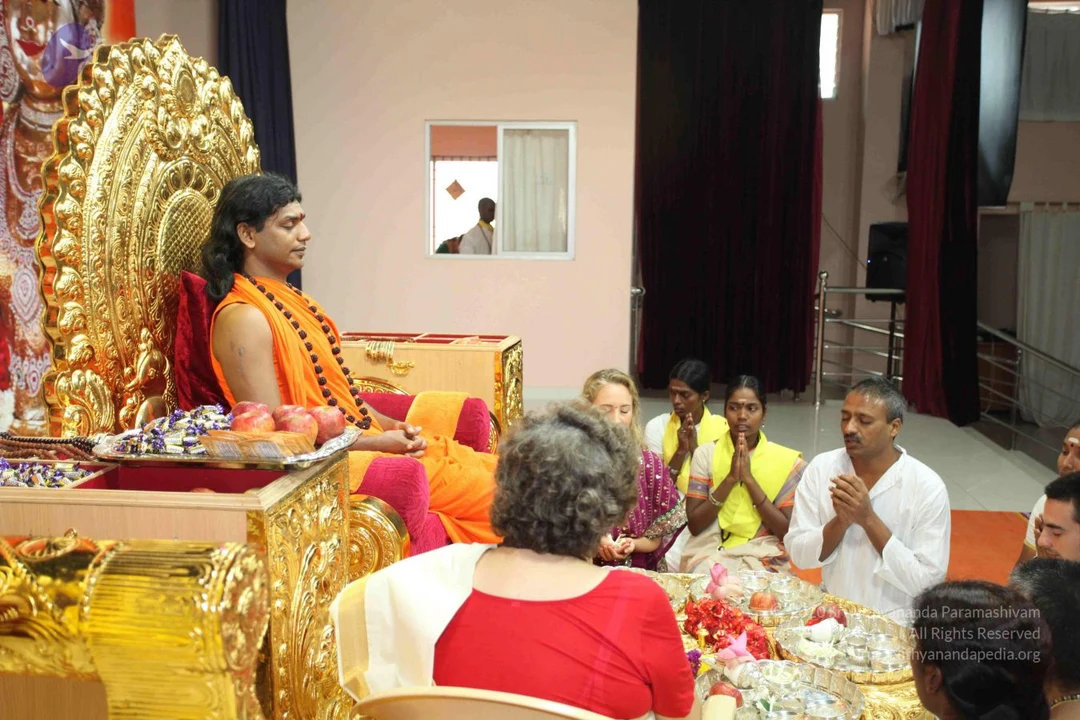
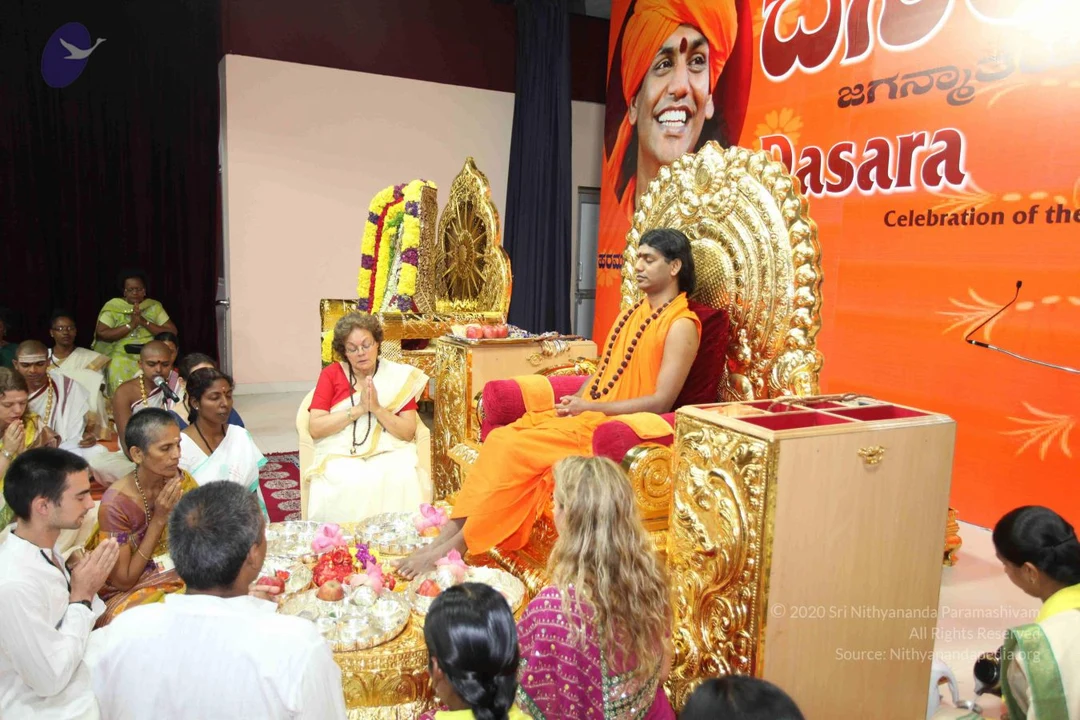
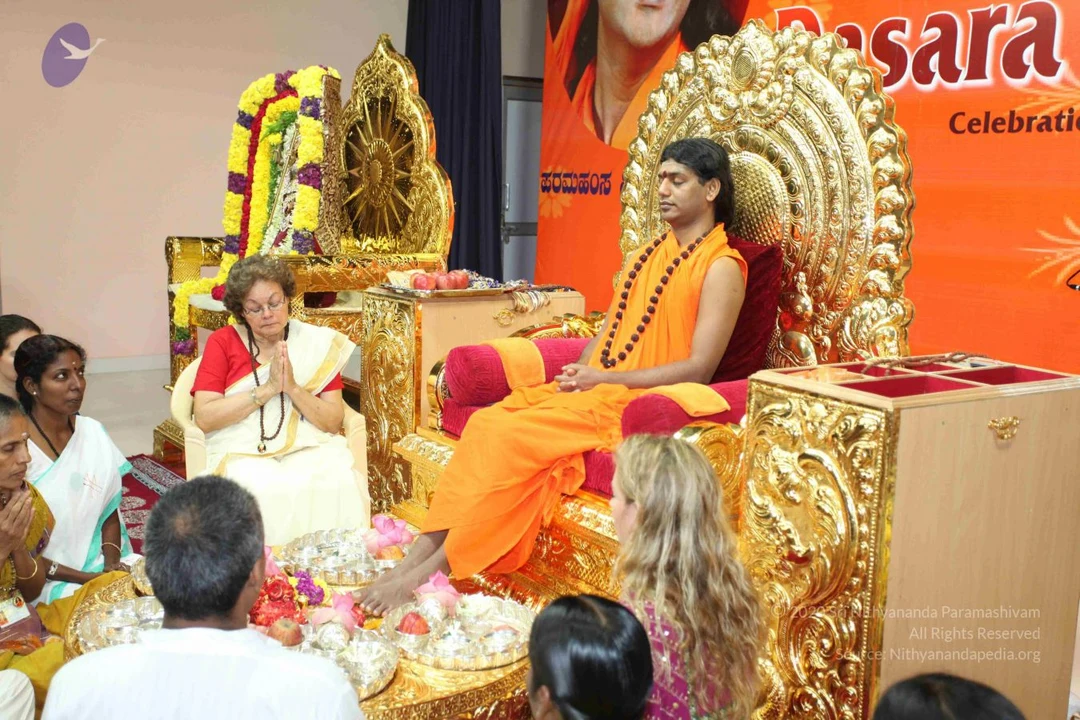
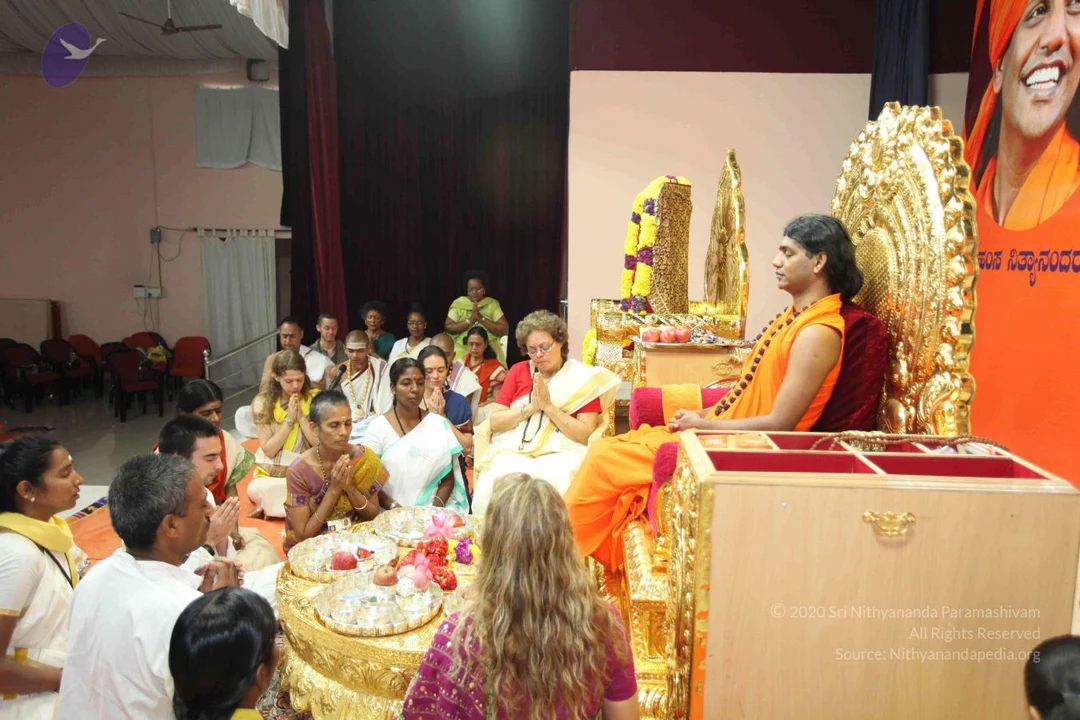
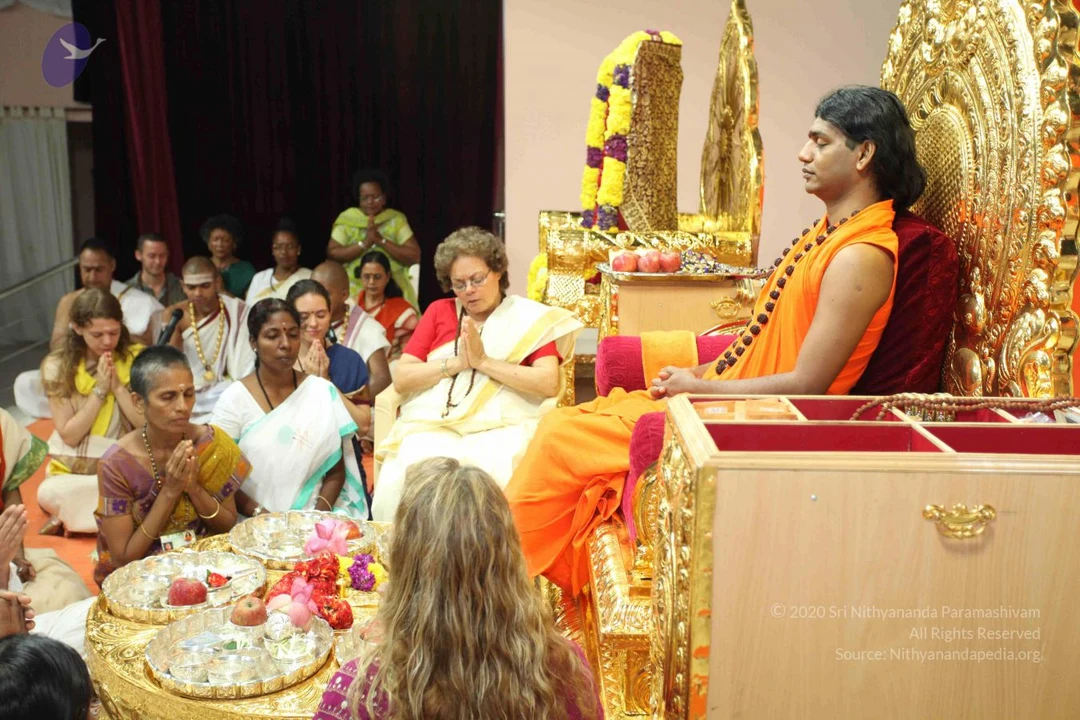
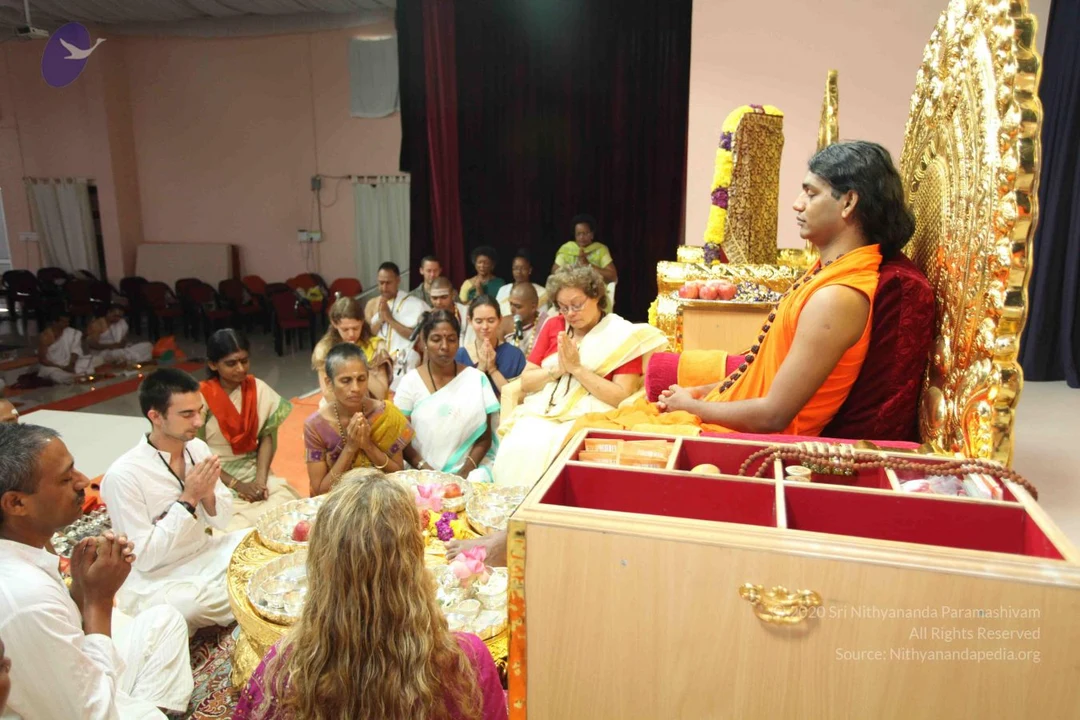
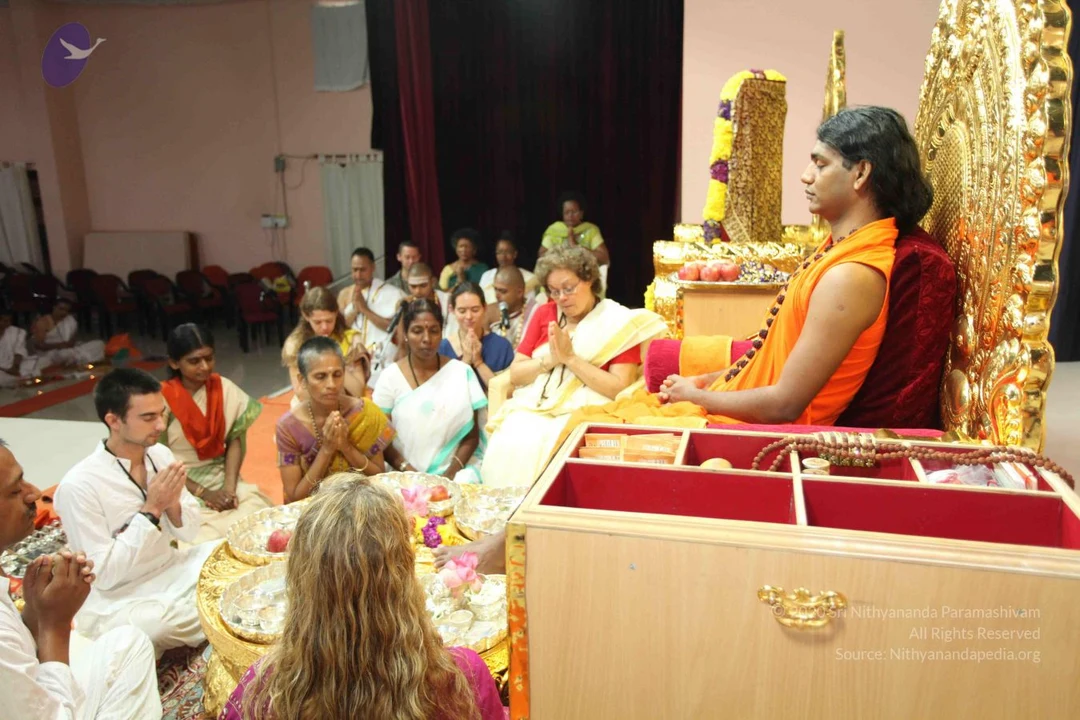
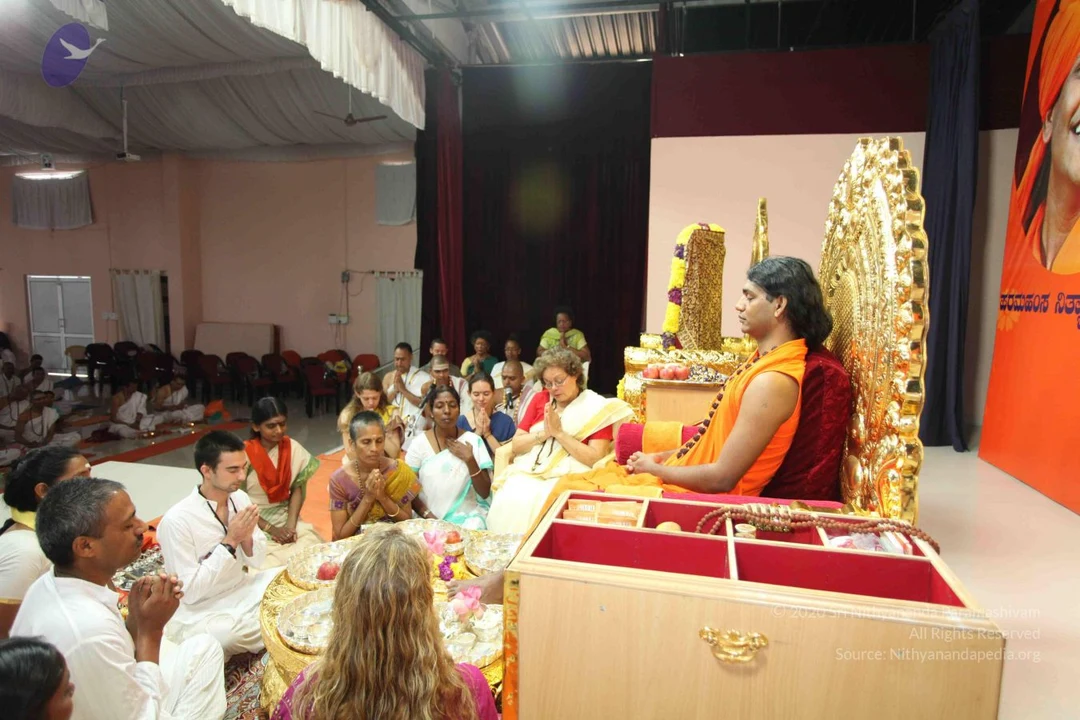
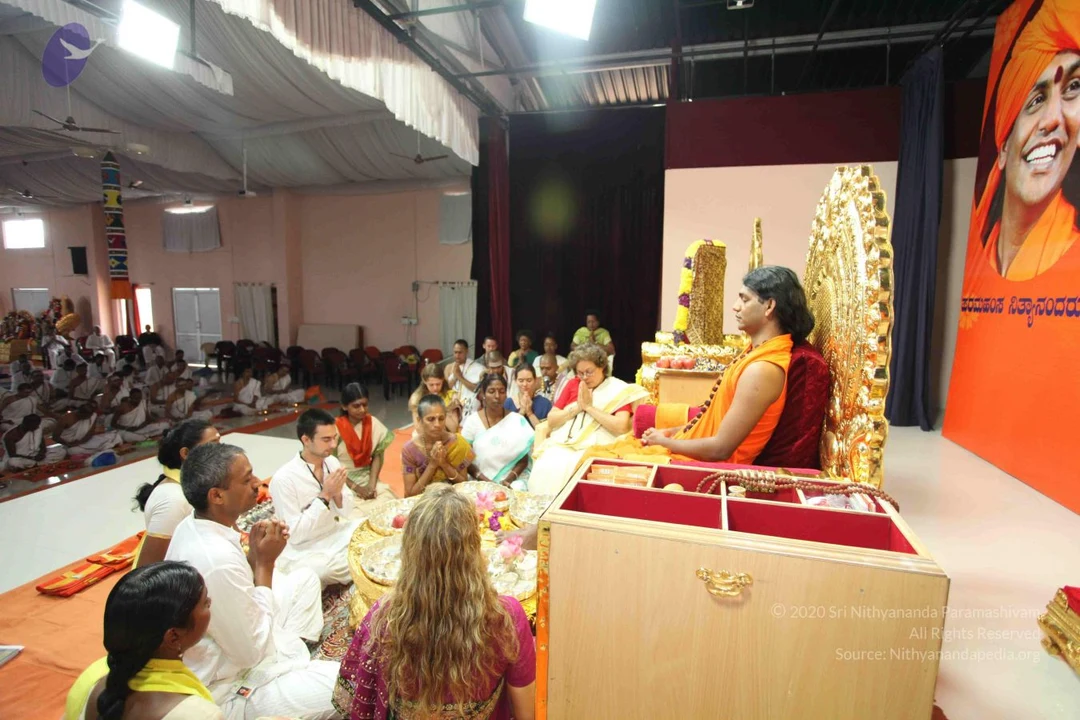
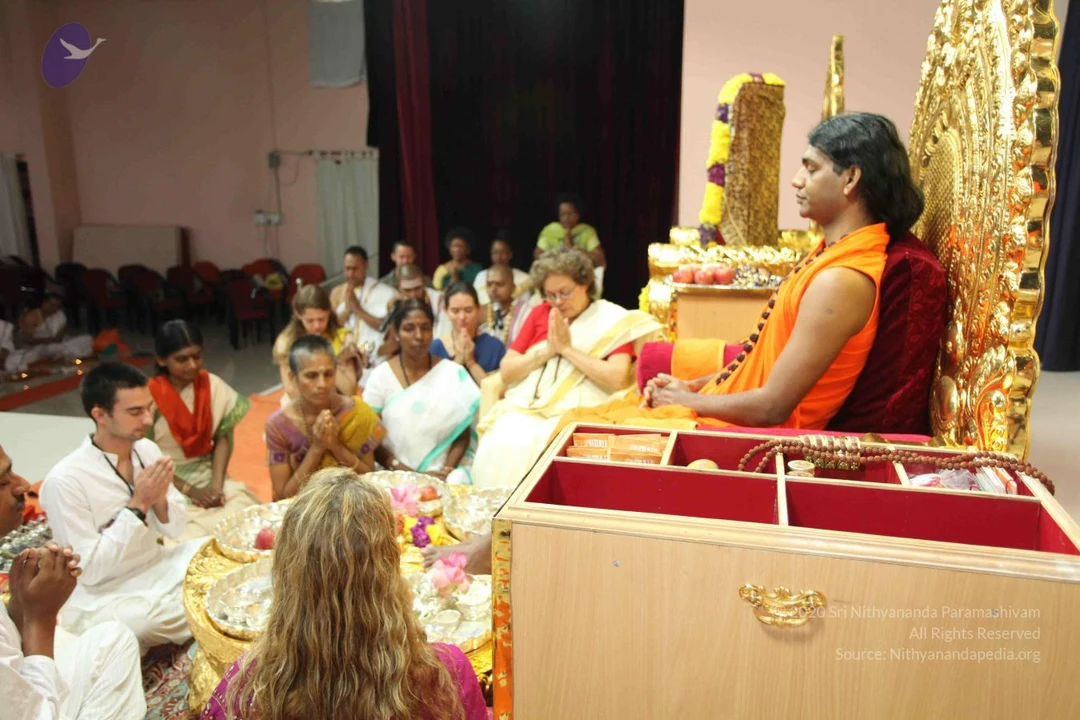
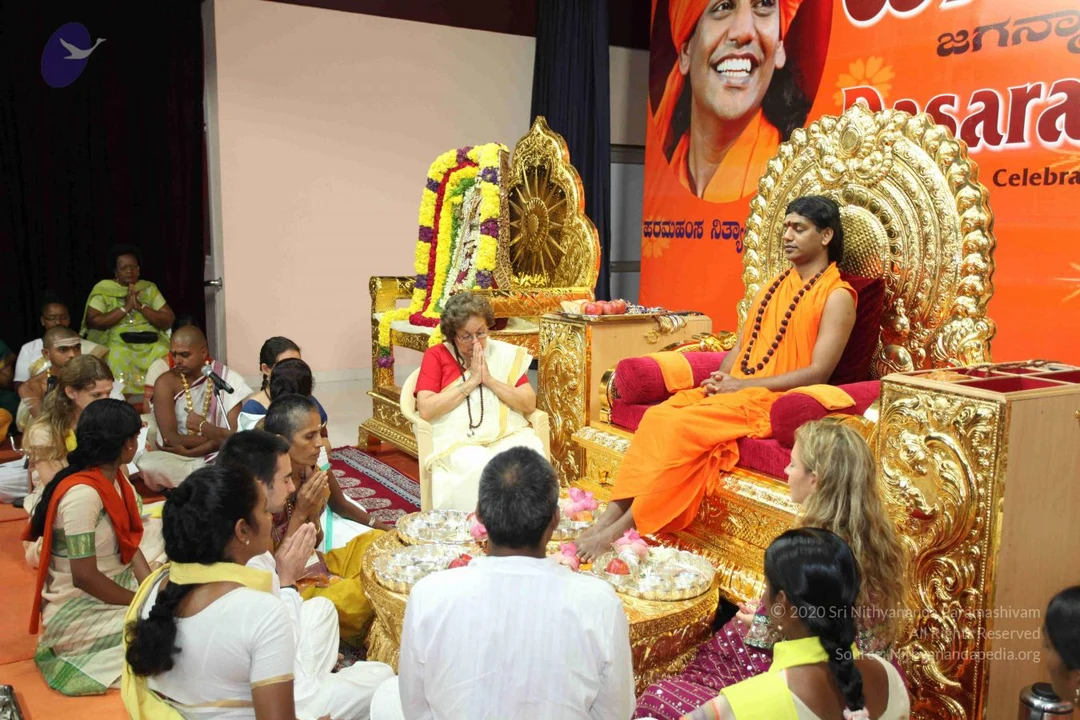
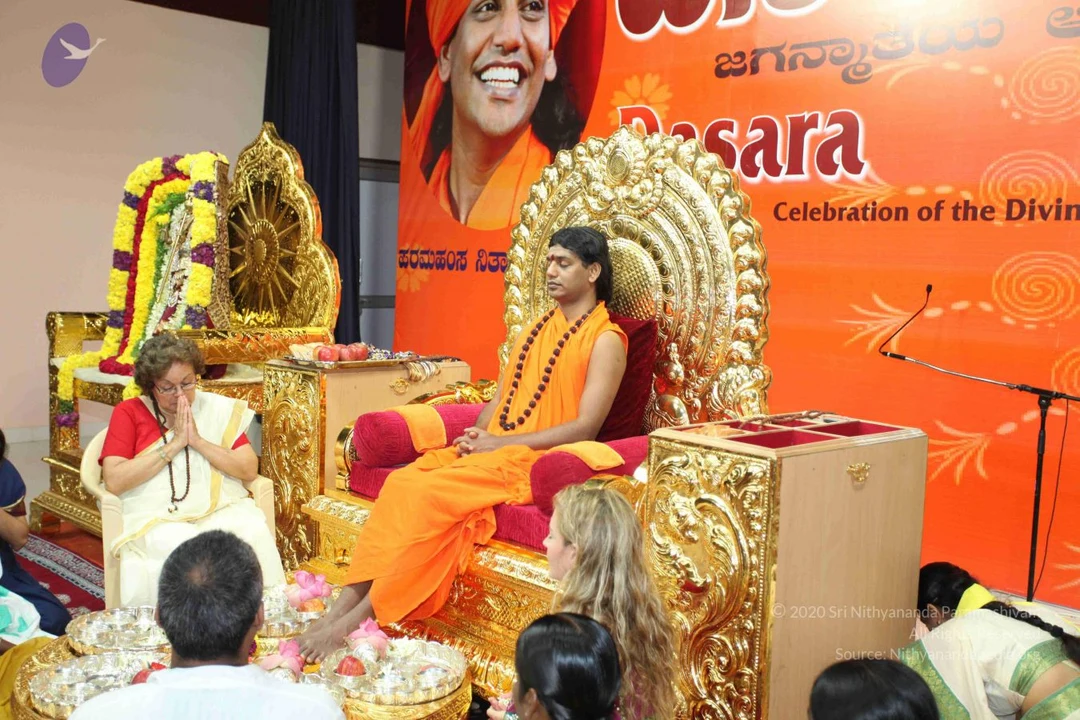
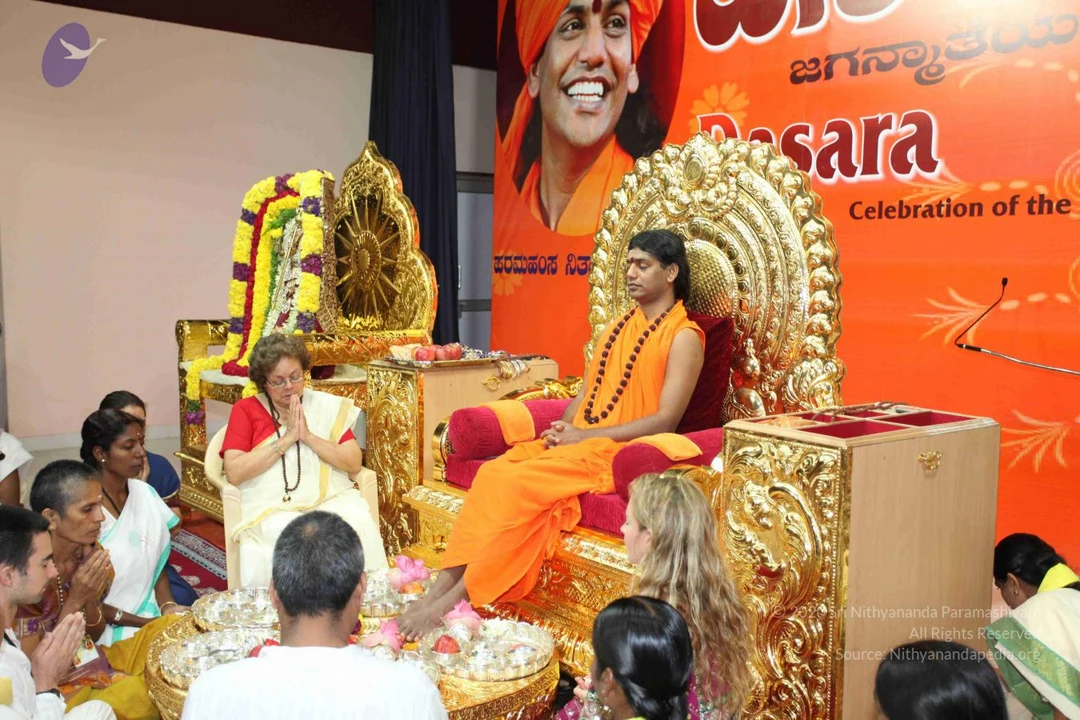
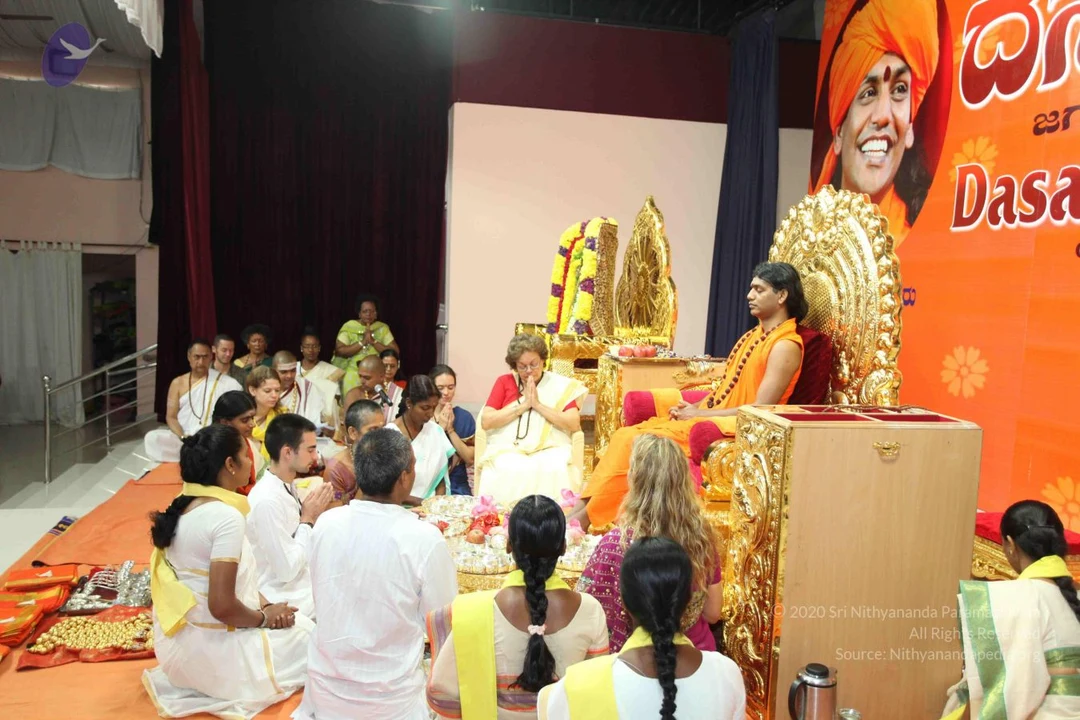
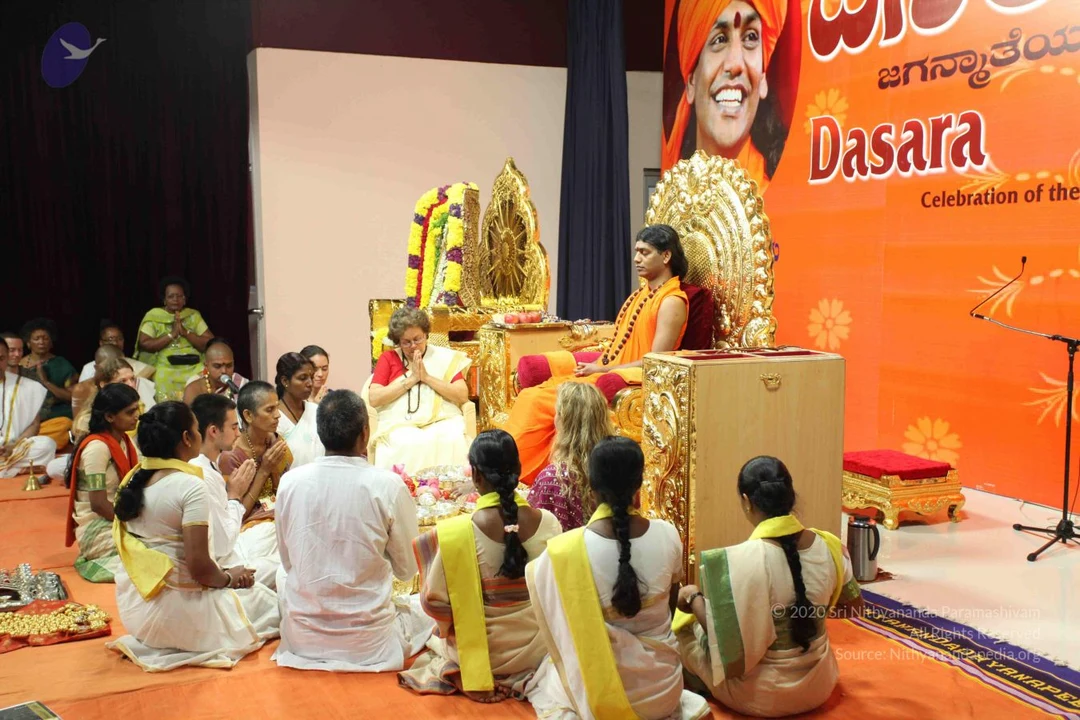
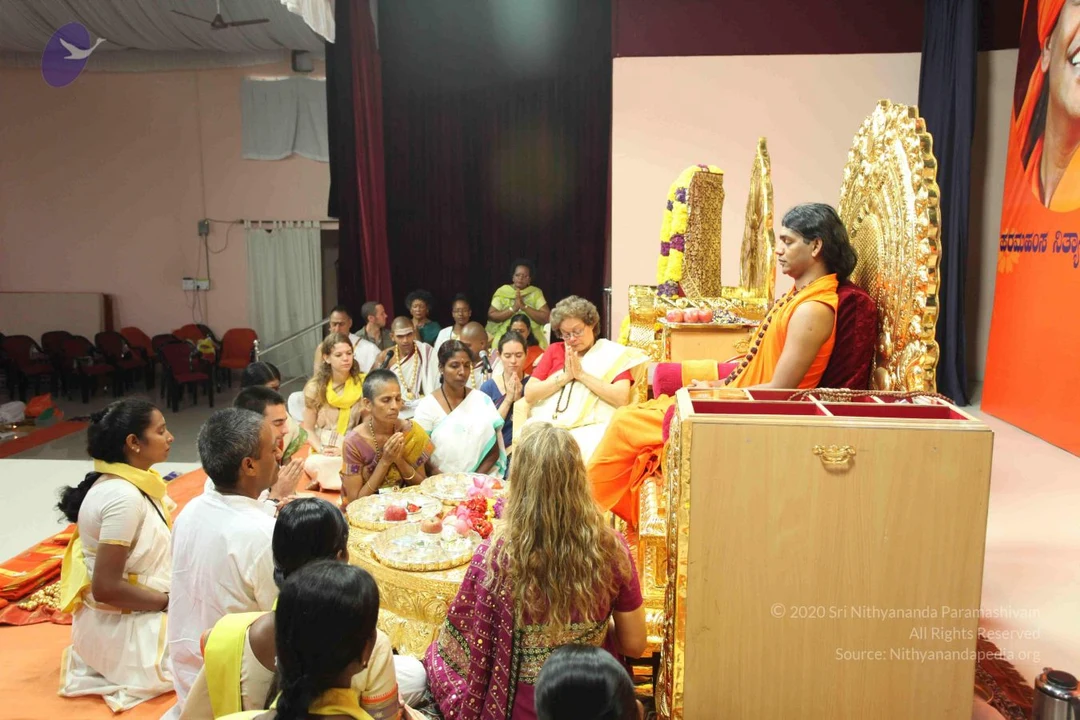
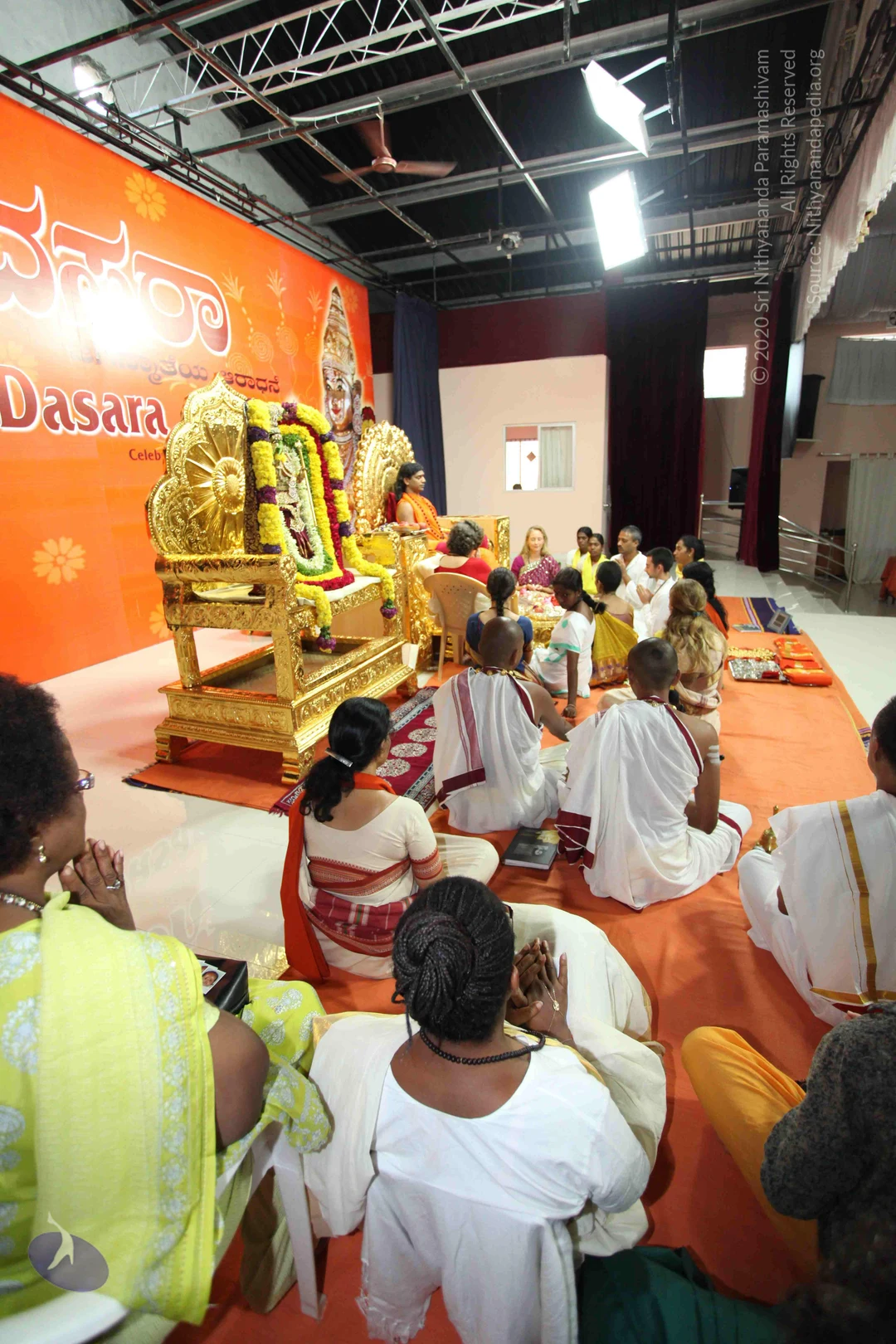
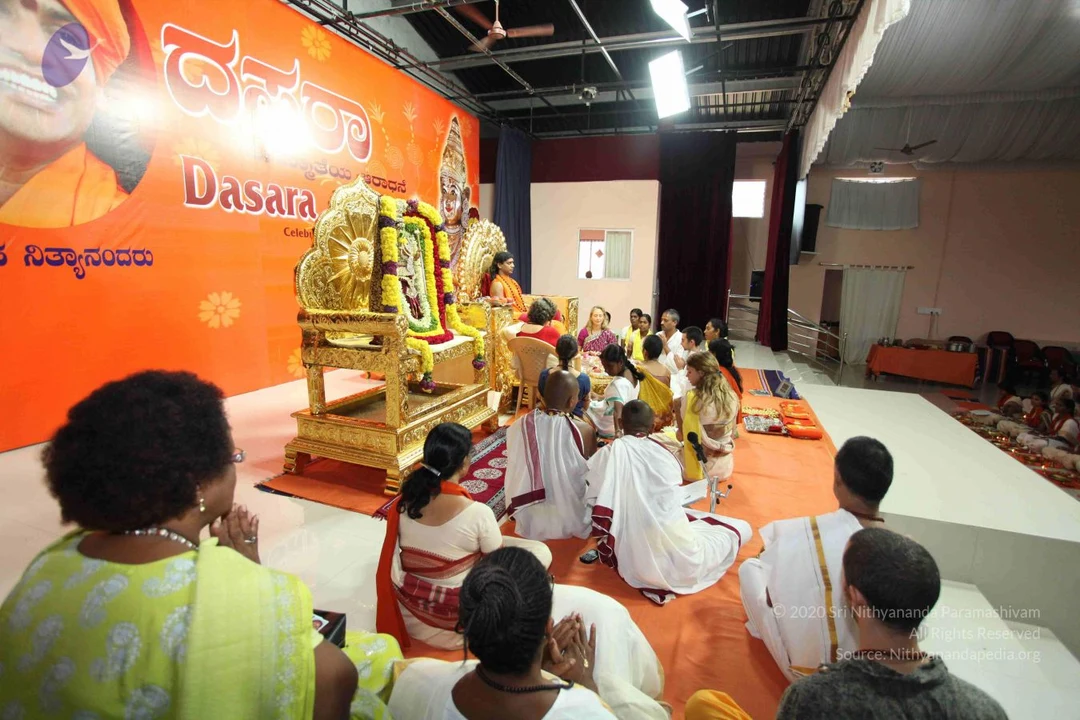
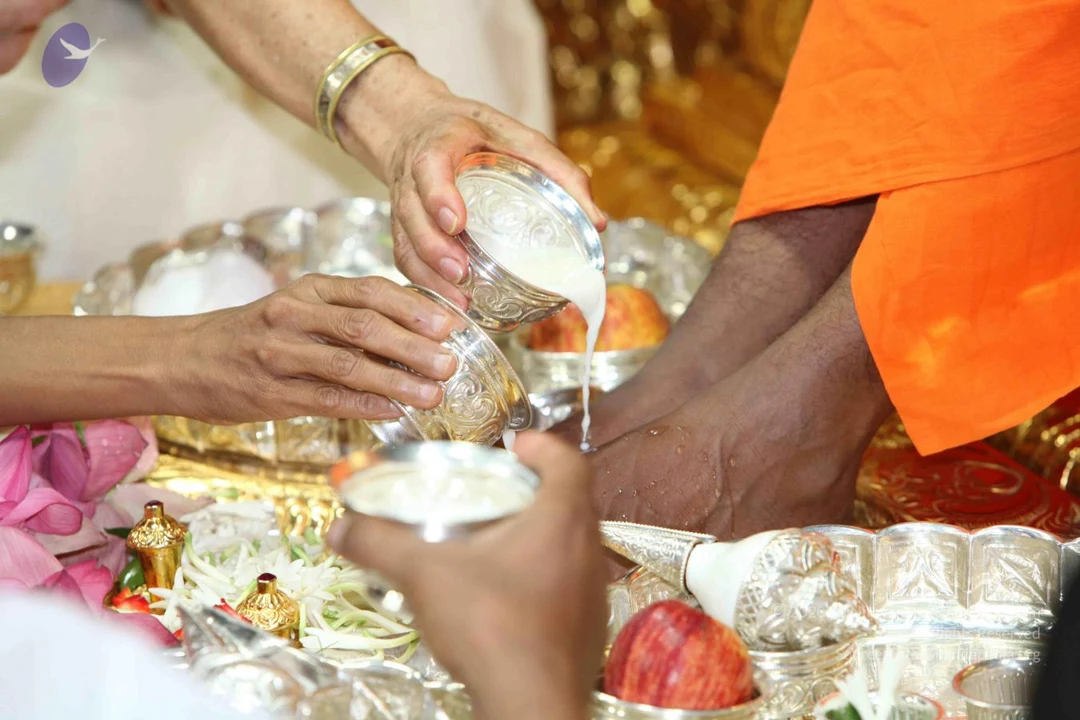
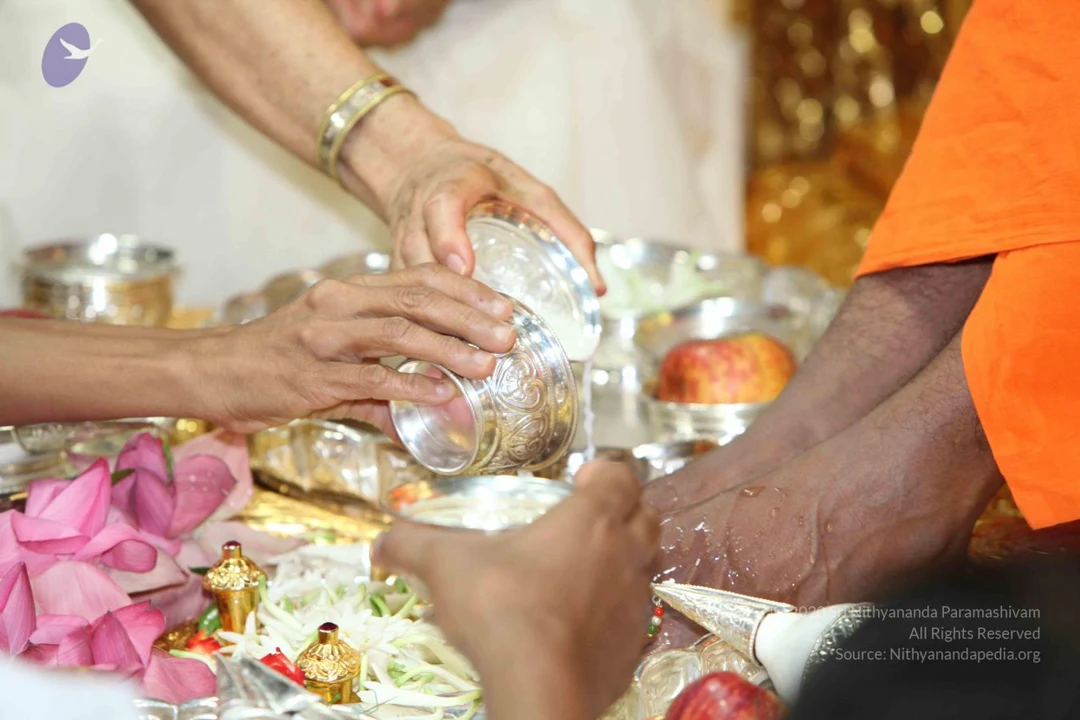
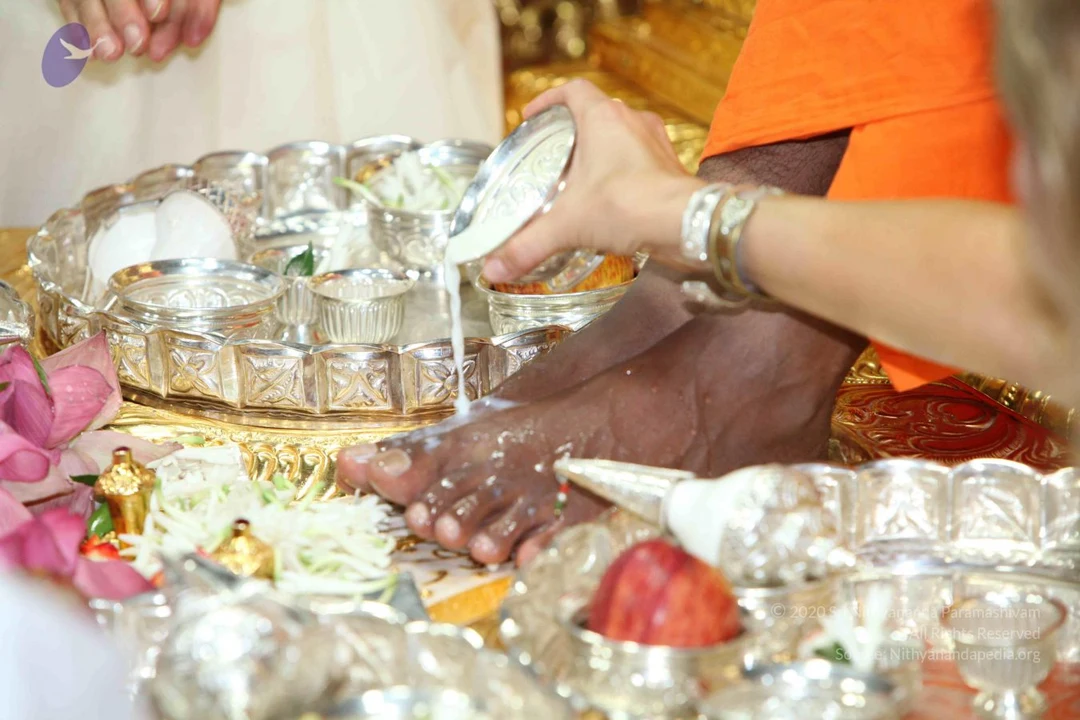
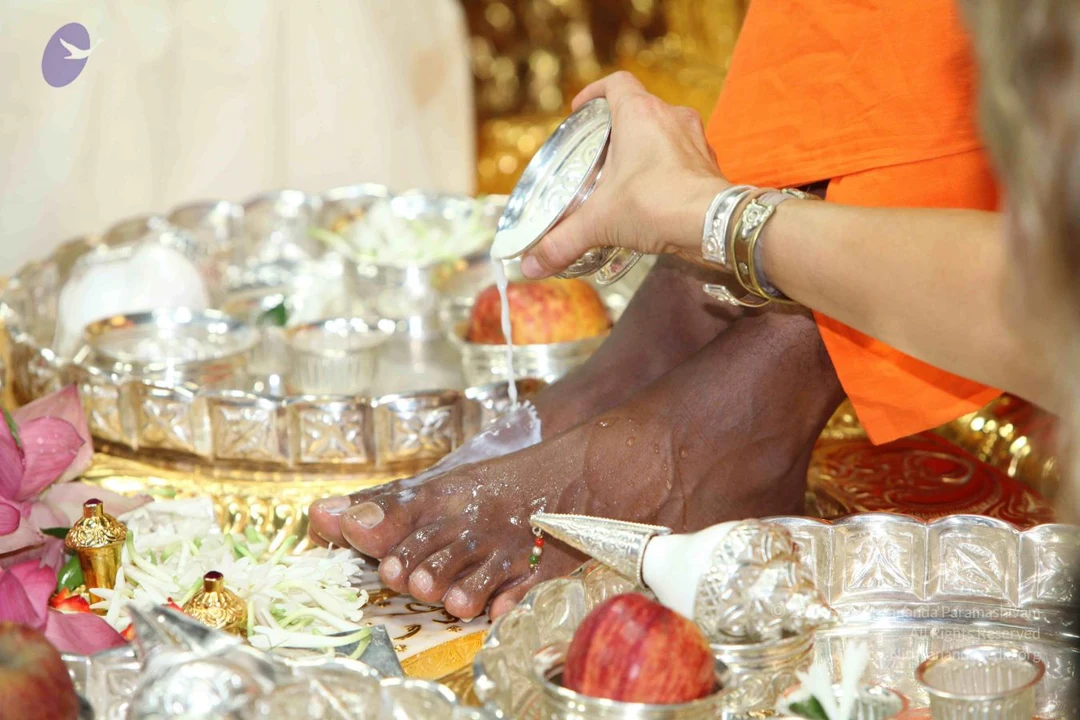
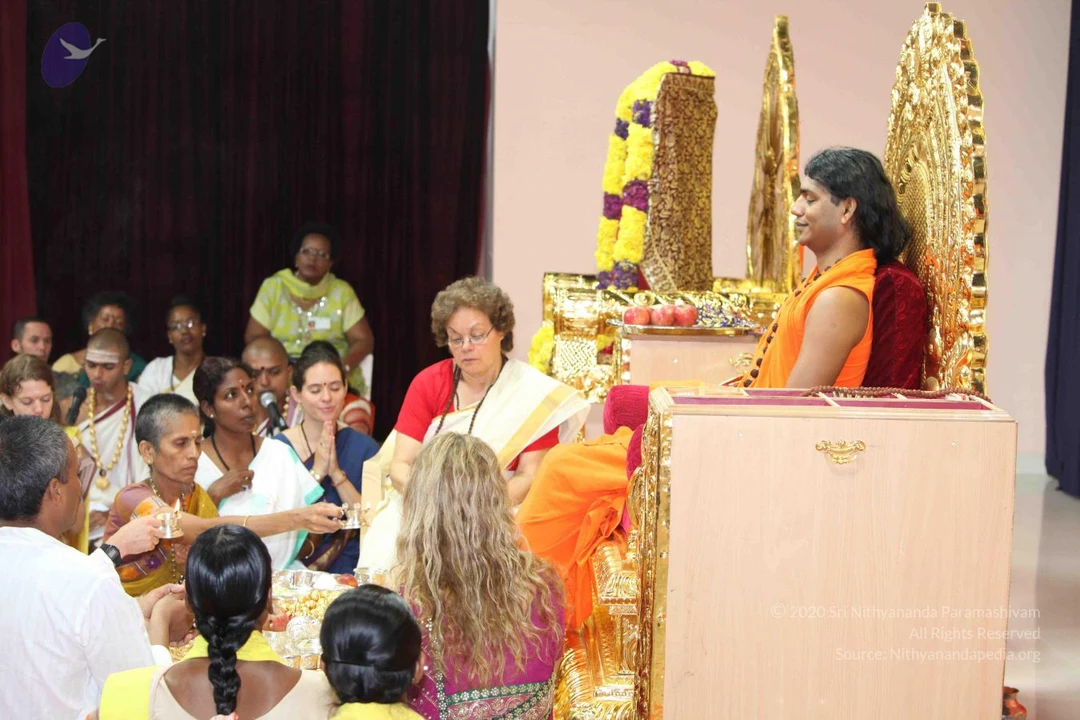
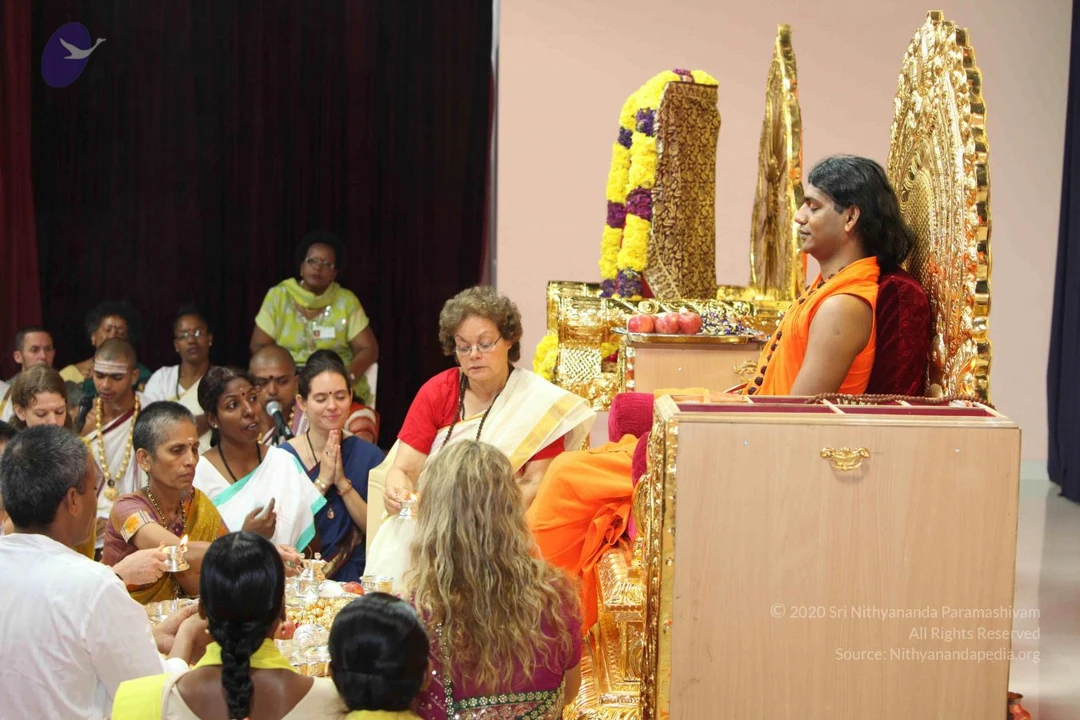
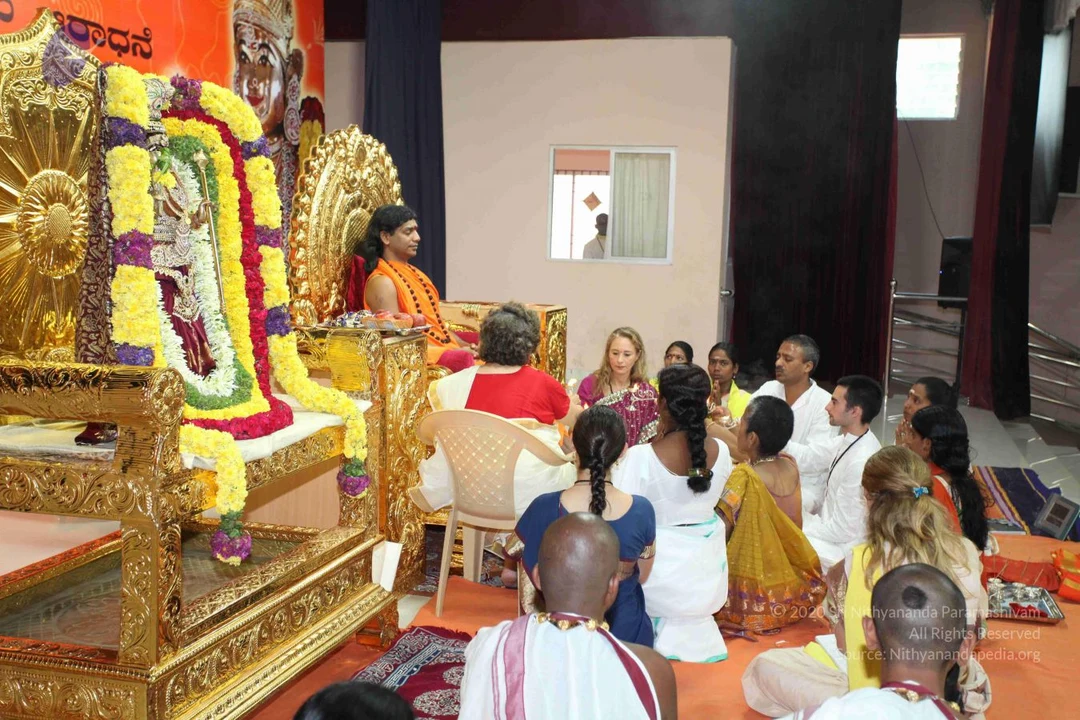
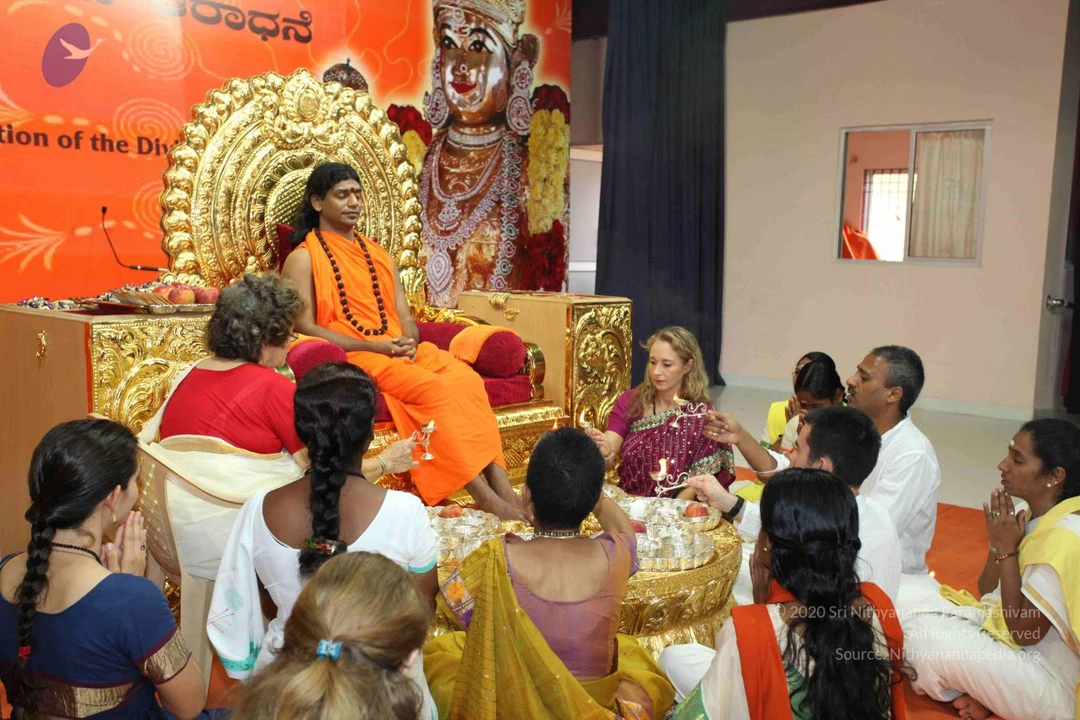
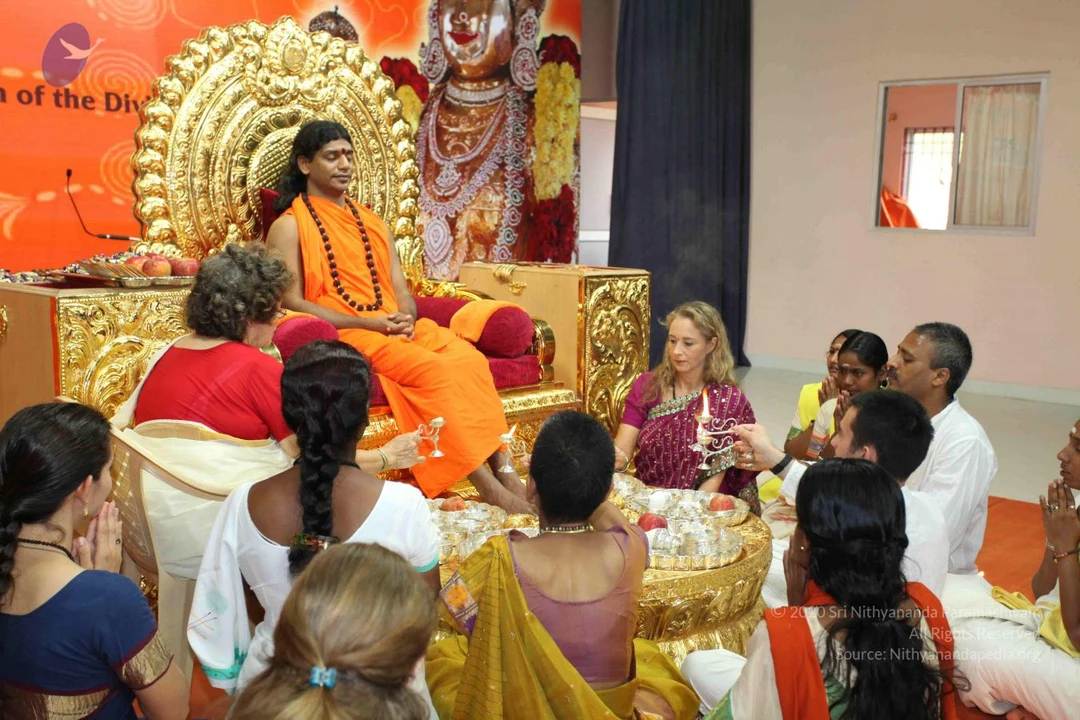
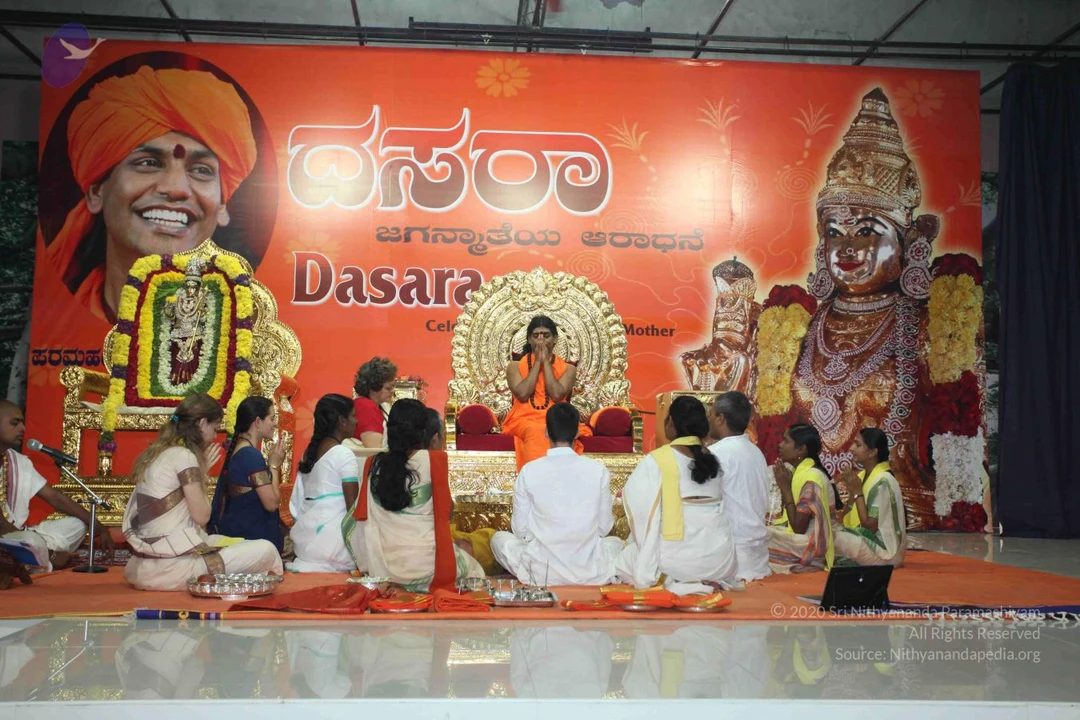
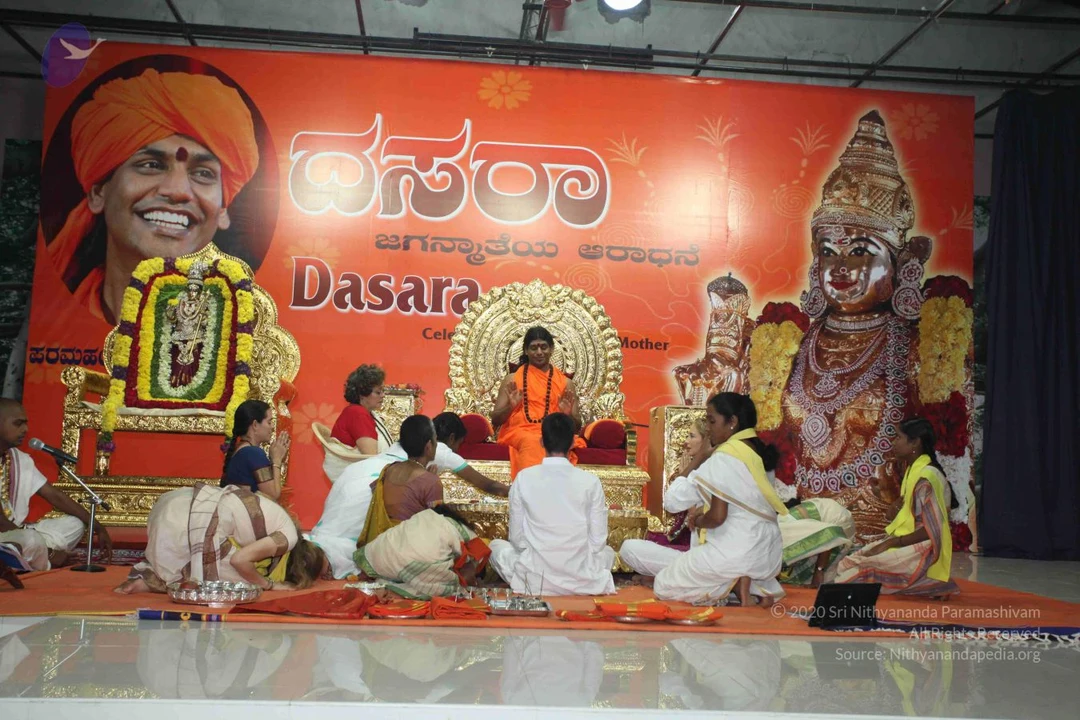
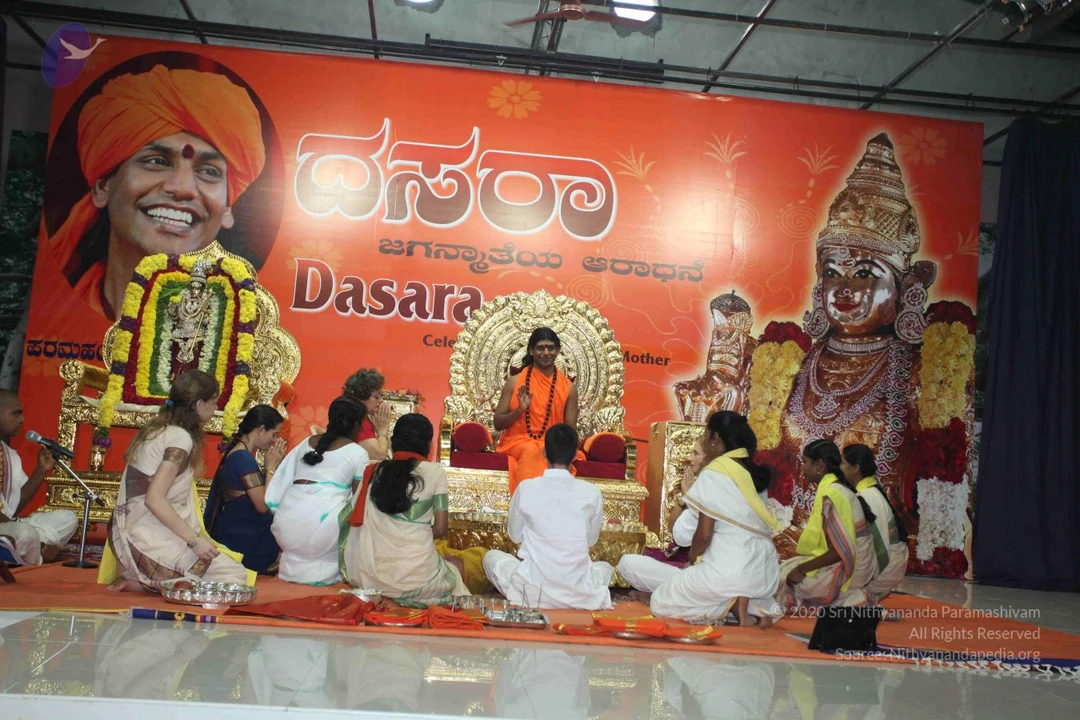
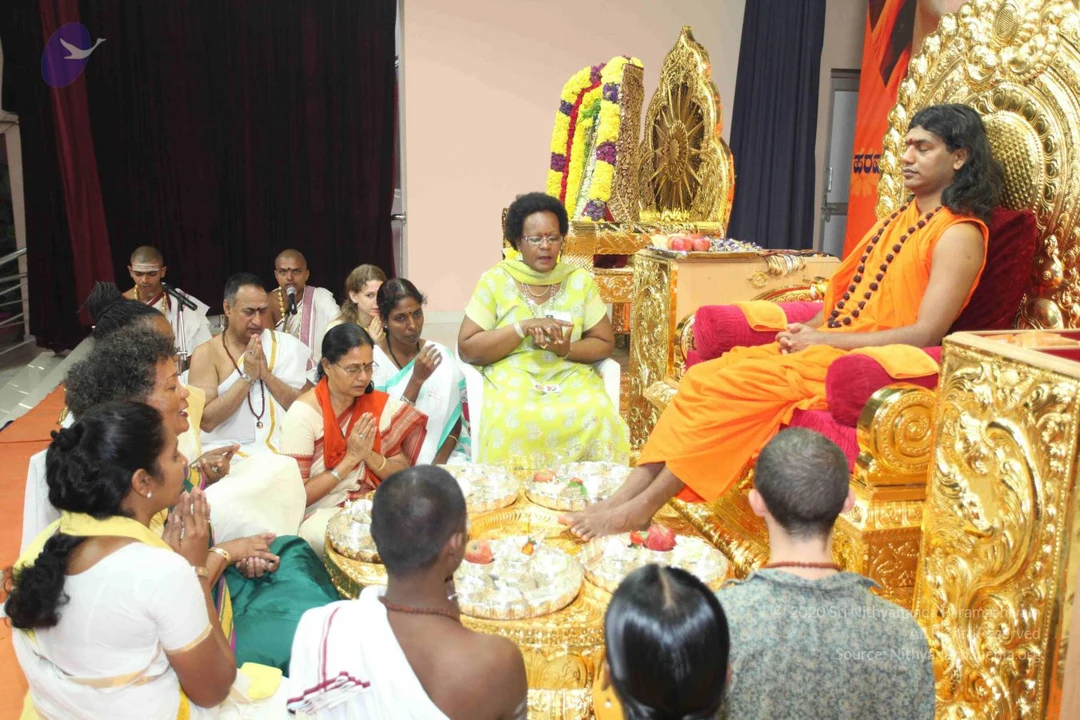
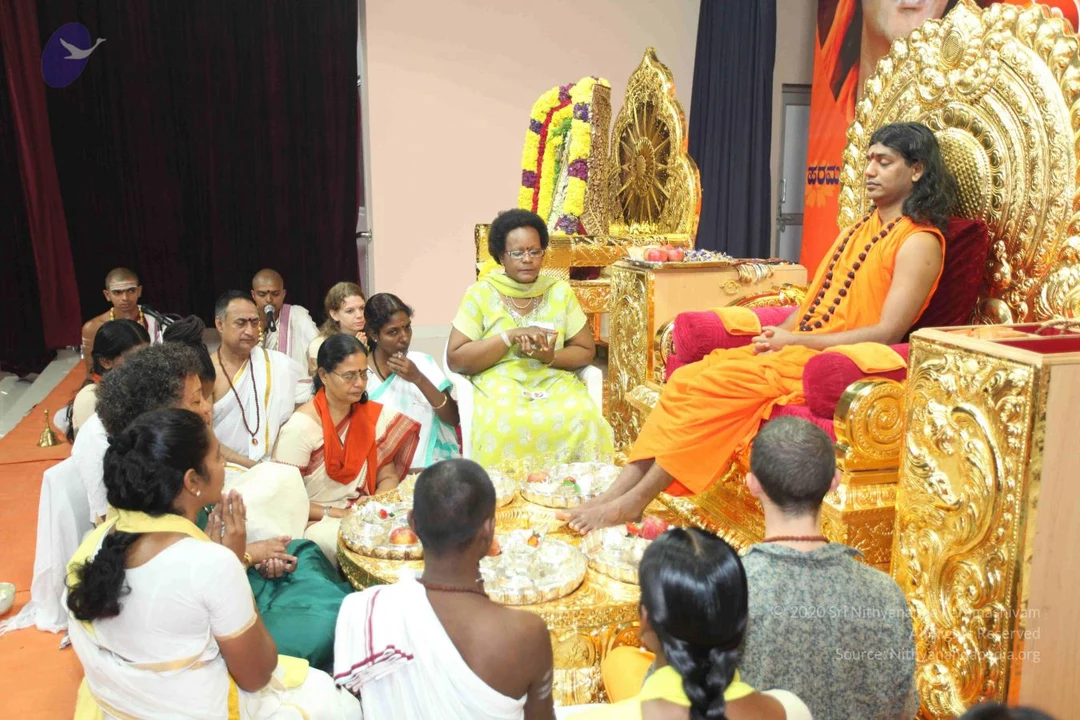
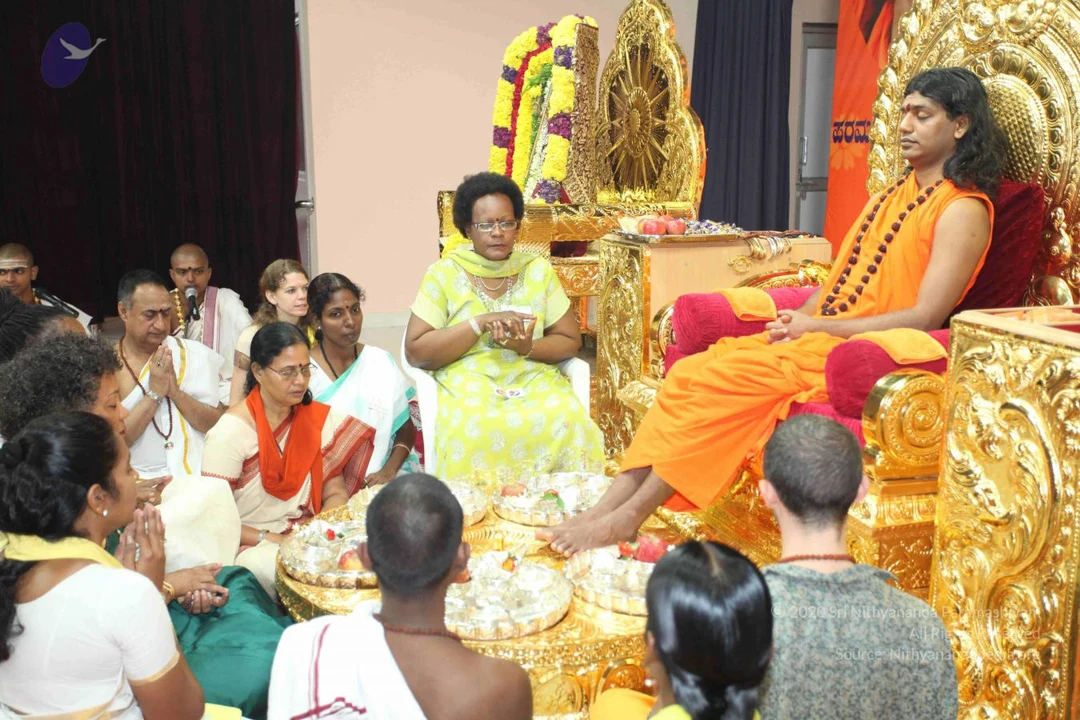
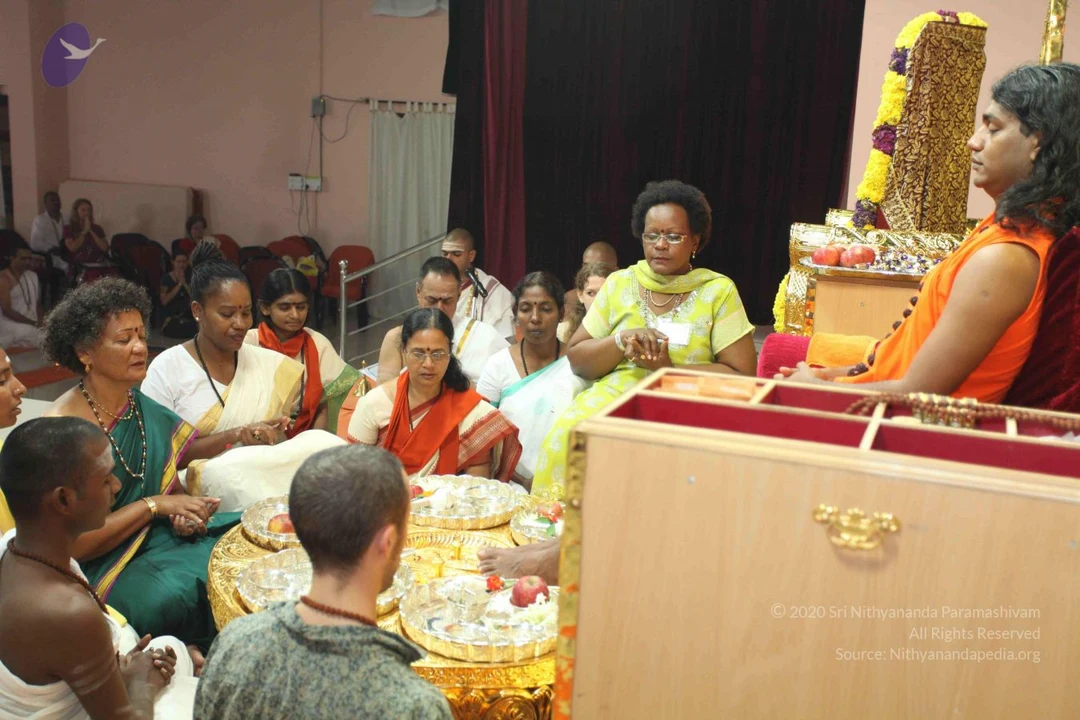
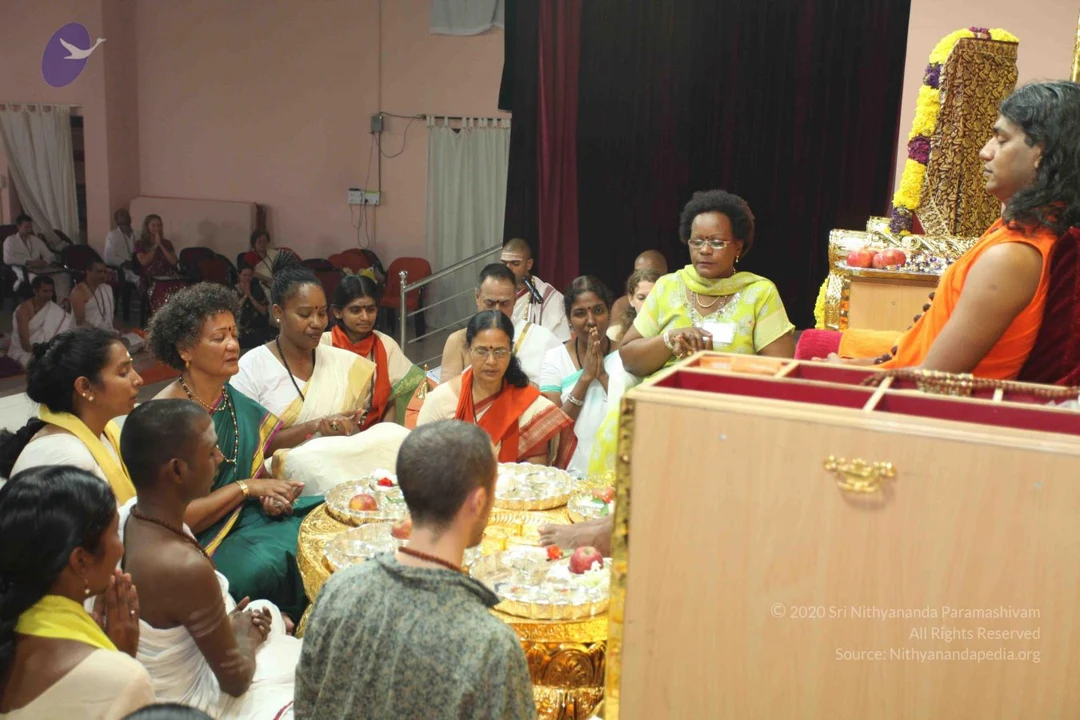
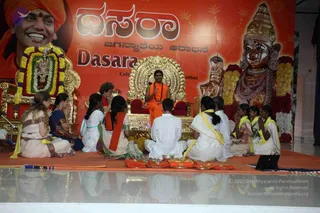
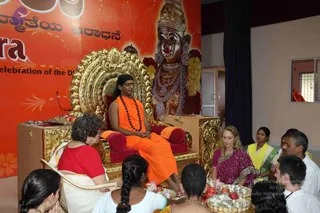
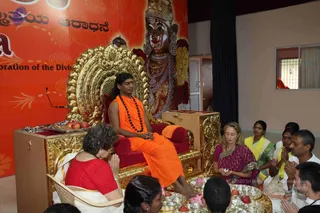
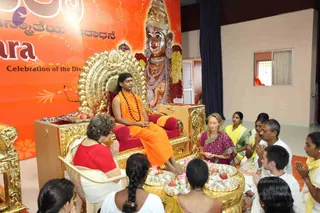
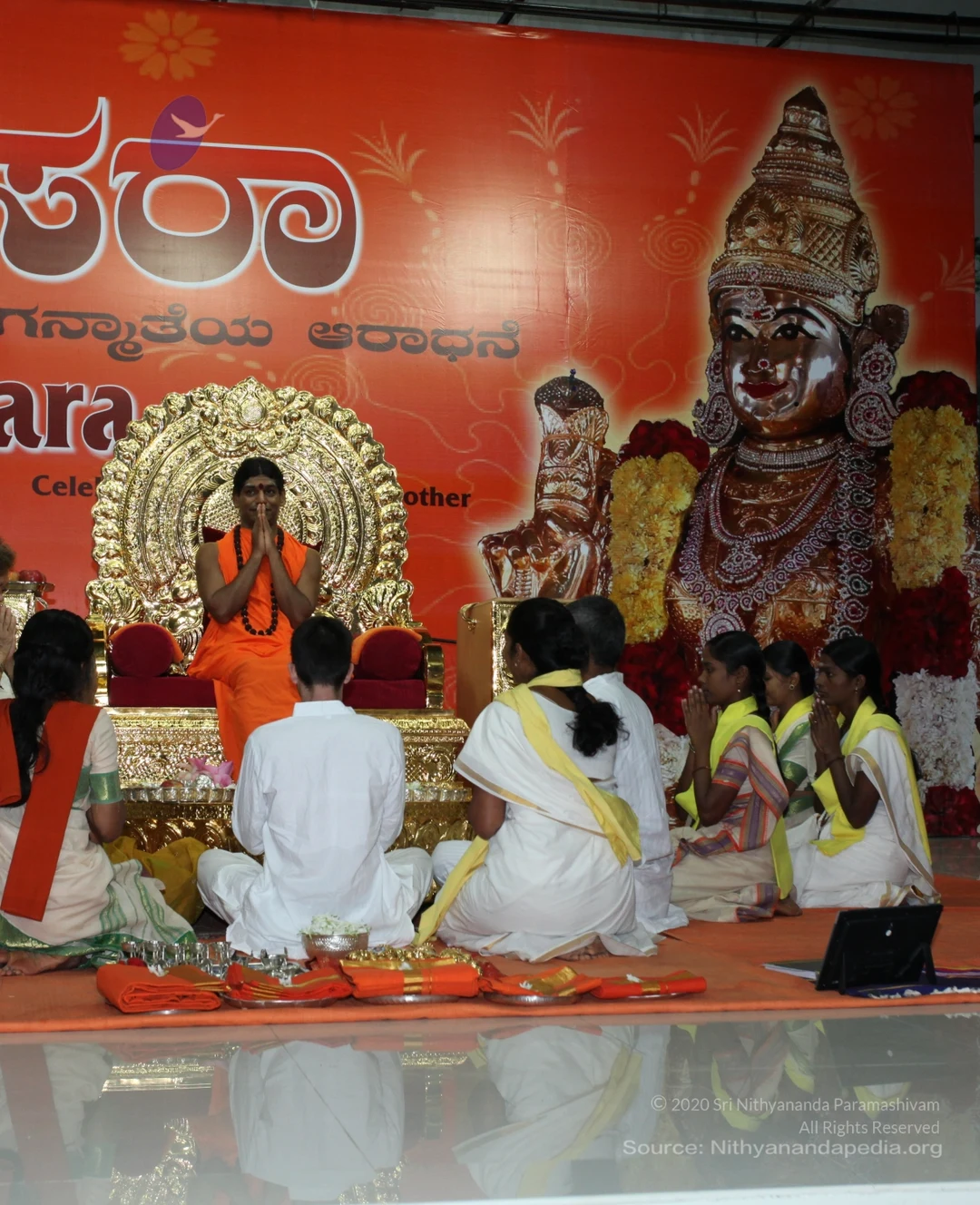
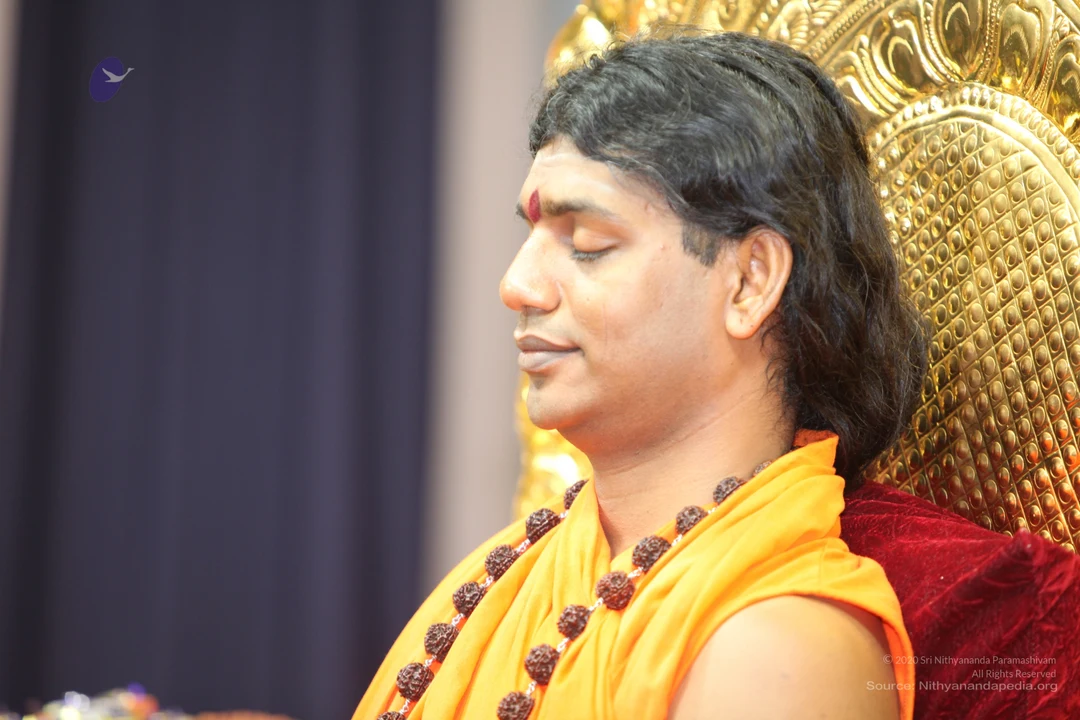
A seated figure in saffron-orange robes with a rudraksha mala sits on an ornate gold throne with red cushions, raising one hand in blessing, before a red-and-orange backdrop. Several people sit on the orange floor cloth in front of him: a woman in a white sari with a gold-bordered shawl, young girls in white, yellow and red clothing with hands joined in prayer, a seated person in white with his back to the camera, and a woman in white with a yellow shawl. A large gold ceremonial deity murti with a crown and garlands is at right, and a flower-garlanded peetha or throne stands at left. Brass and silver puja vessels and orange cloth sit on the floor. The backdrop shows a smiling man in an orange turban beside the word Dasara in Kannada and English. The seated central figure has long swept-back hair and a saffron robe, a distinctive presentation matching the page's reference to Swamiji, so this is a probable Swamiji in person.A stage set for the Dasara celebration under a large orange backdrop with a painted portrait of a smiling man in an orange turban and the words Dasara and Dasara in Kannada script. At center, a figure in orange robes and a rudraksha mala sits on an ornate golden throne with a gold arch behind it, flanked by red cushions. In front, a row of people in white and yellow ritual clothes sit on orange carpeting, some with brass vessels before them, and a seated musician in green sari stands at the left edge. To the right a large deity murti with a crown and garlands is displayed. The seated figure in orange is an appearance-based probable candidate with a rudraksha mala and ornate throne, but the image is too small to confirm features.A seated figure in saffron-orange robes with a dark rudraksha mala and long dark hair sits on an ornate gold throne with red cushions in front of a bright orange backdrop. Behind him stands a large painted or printed deity image wearing a crown, ornate necklaces and garlands. Seated devotees on the floor offer trays with fruit, flowers and small silver bowls. A woman in a purple sari sits to the right, and a woman in a red blouse sits at left. Swamiji (probable) is the figure on the throne, identified by the saffron robes, long swept-back hair and rudraksha mala, and his role is seated teacher receiving devotees. The scene is an indoor satsang or puja setting with a black curtain and white wall at right.A seated man in an orange saffron robe with a rudraksha mala and a red tilak sits on an ornate gold throne with red cushions, with bare feet. Behind him is a large painted deity murti with a crown and garlands, against an orange banner. A woman in a red blouse and white sari sits in front with hands joined in namaskar, while a woman in a magenta sari holds a small offering. Trays with apples, flowers and small brass lamps are arranged before the throne, and devotees in white and yellow sit to the right. a person appears in person on the throne, identified by orange saffron robes, a rudraksha mala and a red tilak.A seated man with long dark hair wears an orange-saffron robe and a long rudraksha mala, sitting cross-legged on an ornate gold throne with red cushions. Before him, a row of devotees sits with hands joined in anjali, including a woman in a red top, a woman in a magenta sari, and women in green and yellow saris. Trays of fruit, apples, flowers and small offerings sit in front of the throne. Behind the throne a large painted deity murti with a crown and gold jewellery is framed by a bright orange backdrop with Kannada script. The Swamiji candidate matches the appearance cues of long hair, saffron robe and rudraksha mala, so this is a probable identification. The scene reads as an offering or darshan gathering in a hall.A seated figure in saffron-orange robes and a rudraksha mala sits on an ornate gold throne with red cushions, feet resting on a gold footstool, as people kneel and sit on the floor before him. Behind the throne stands a large golden deity murti adorned with pearl necklaces and flower garlands. Devotees in white and yellow clothing press their palms together in namaskar. A woman in a magenta sari sits cross-legged on the right, and an older woman in red sits in a chair on the left. Silver-foiled trays of sweets and fruit with flowers sit on a gold stand in front. An orange banner with Kannada text and a decorative logo hangs behind the throne, and the setting is a bright indoor hall with cream walls and dark curtains. The figure's appearance is consistent with the page's reference to a person, presented in a seated satsang setting.

Morning-Satsang
27 photosSource gallery
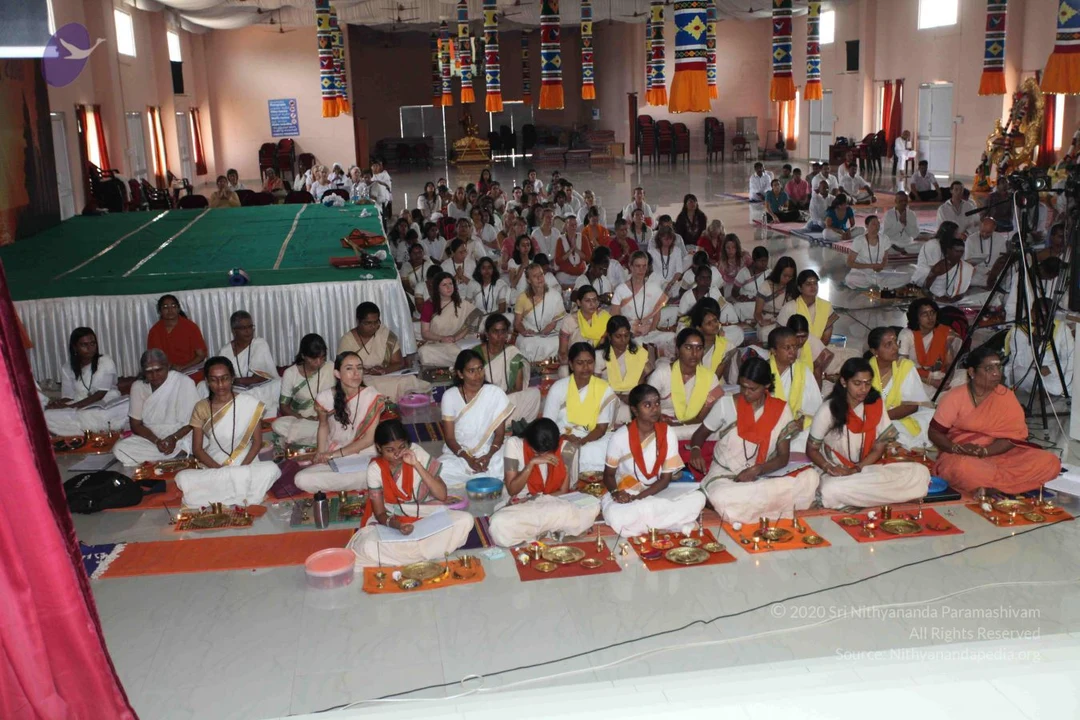
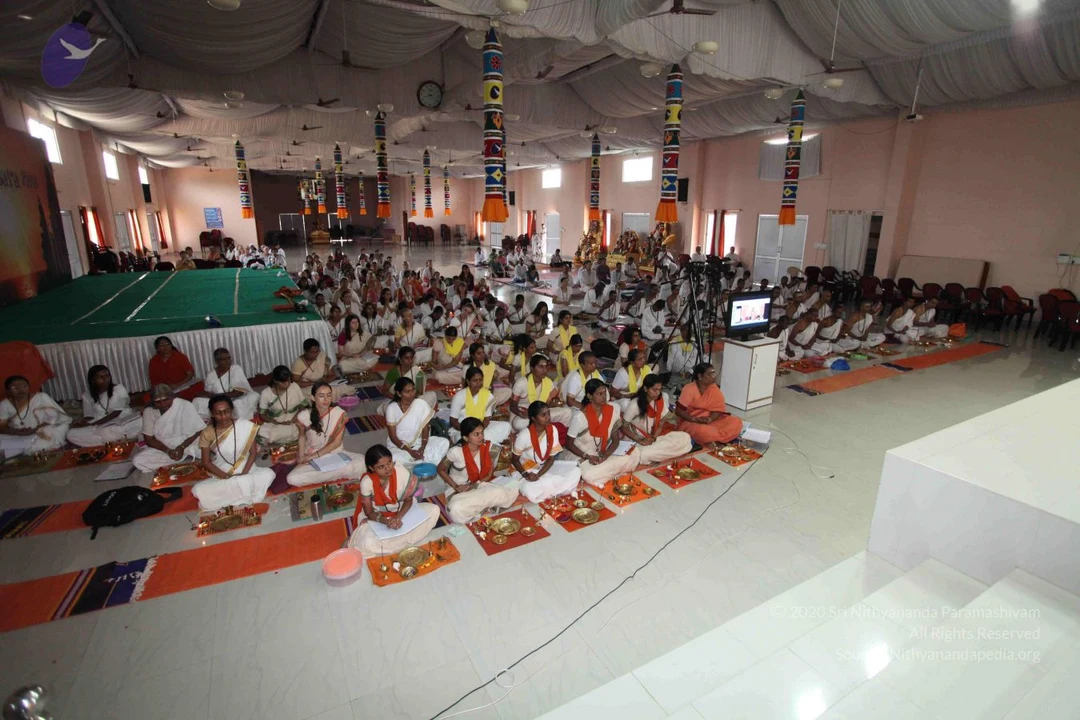
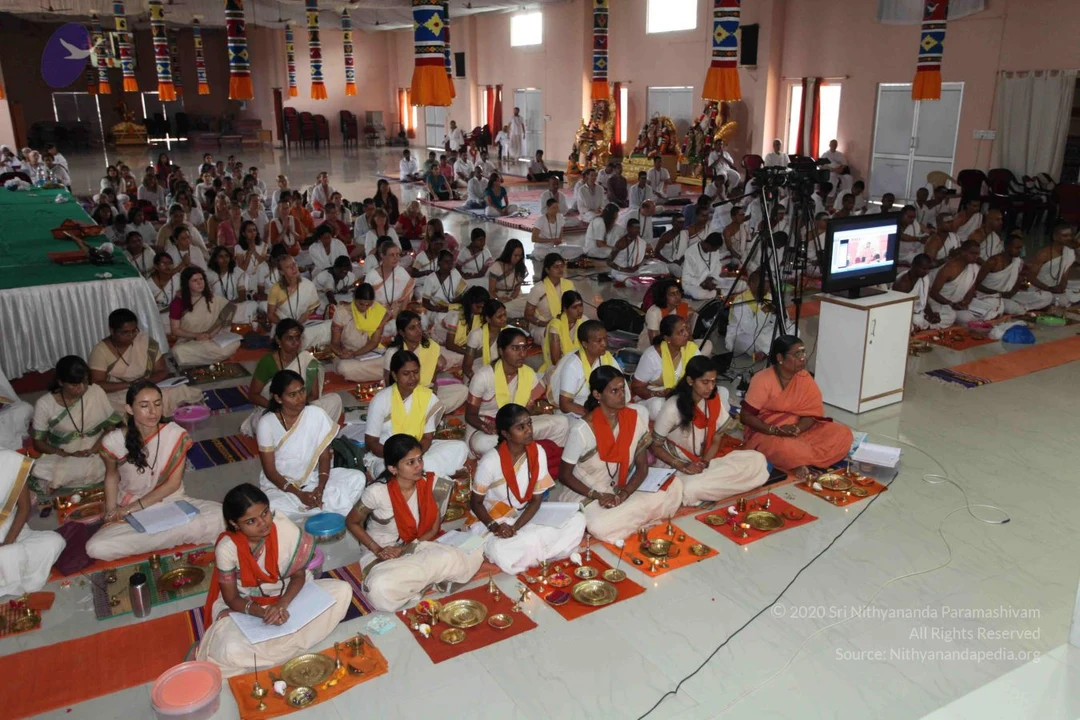
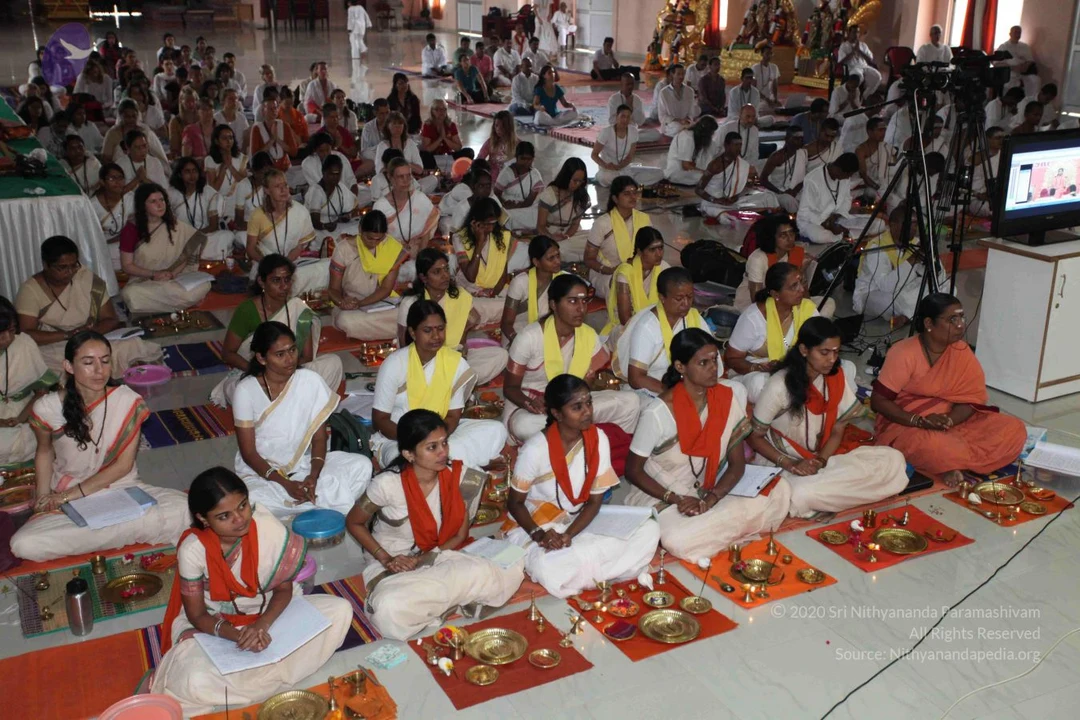
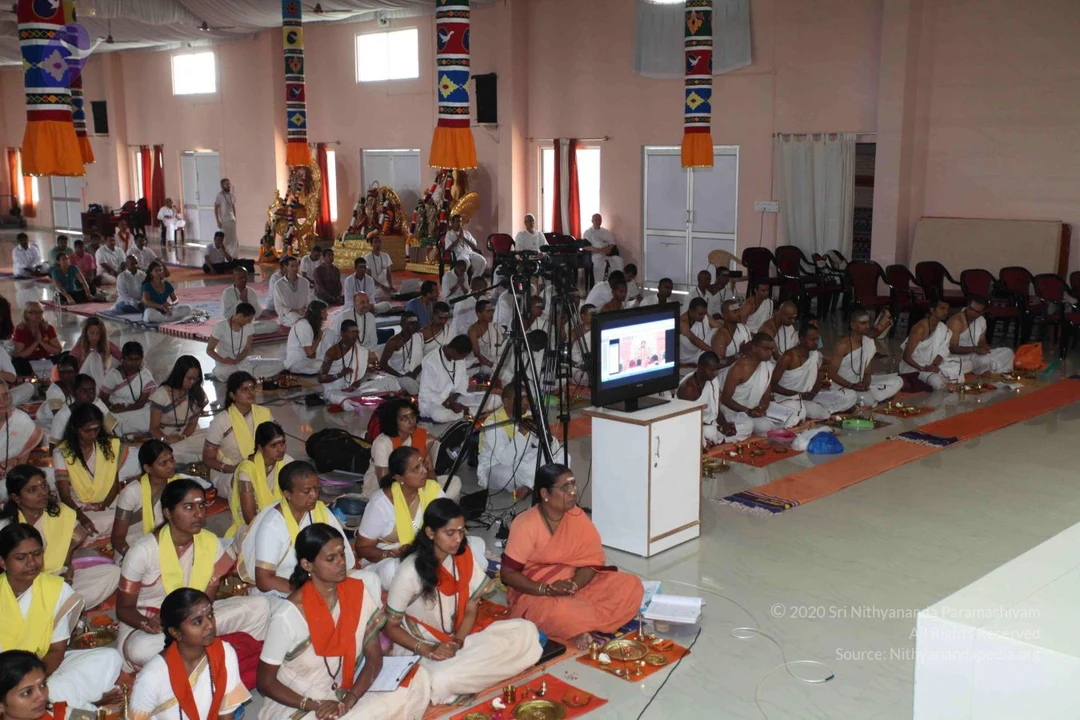
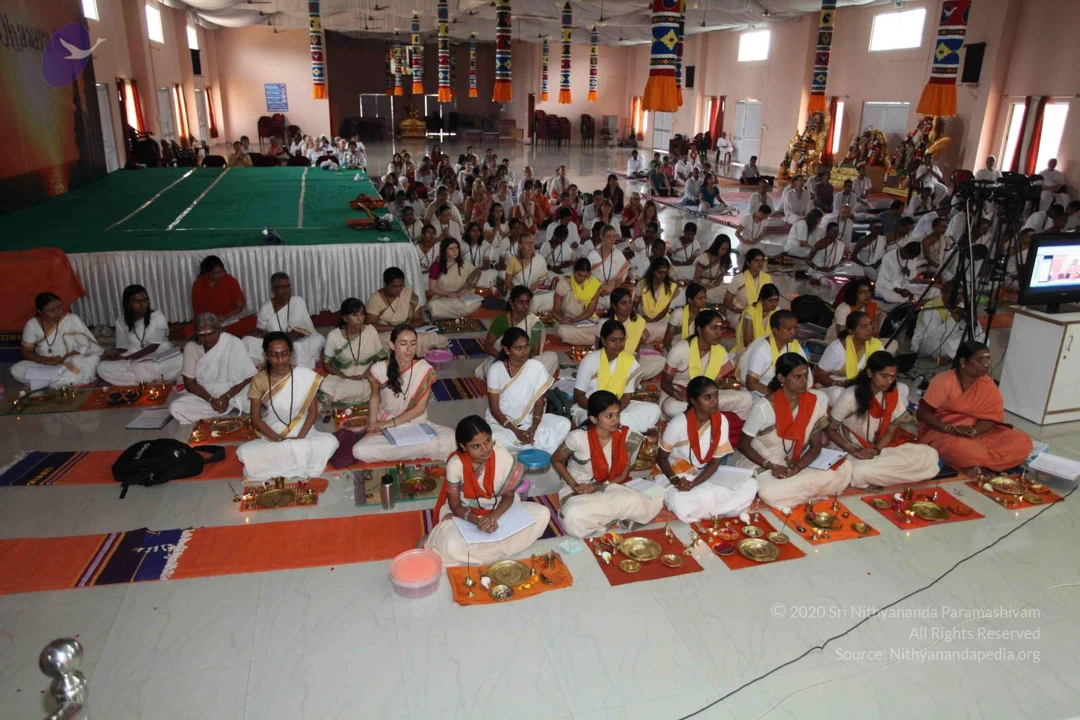
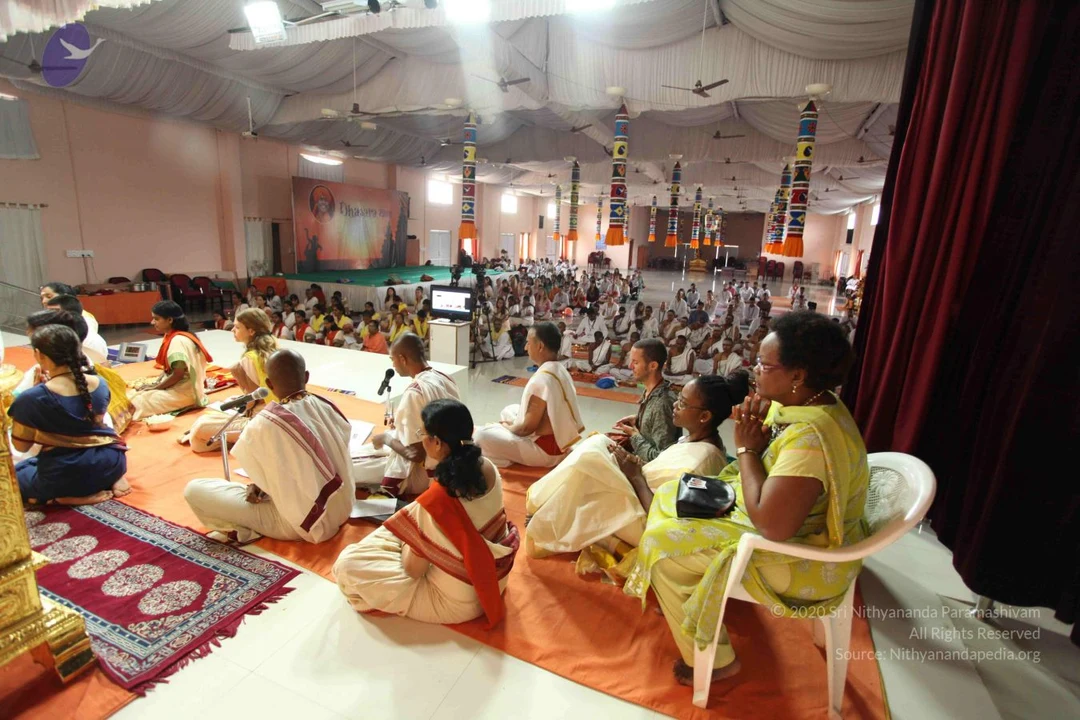
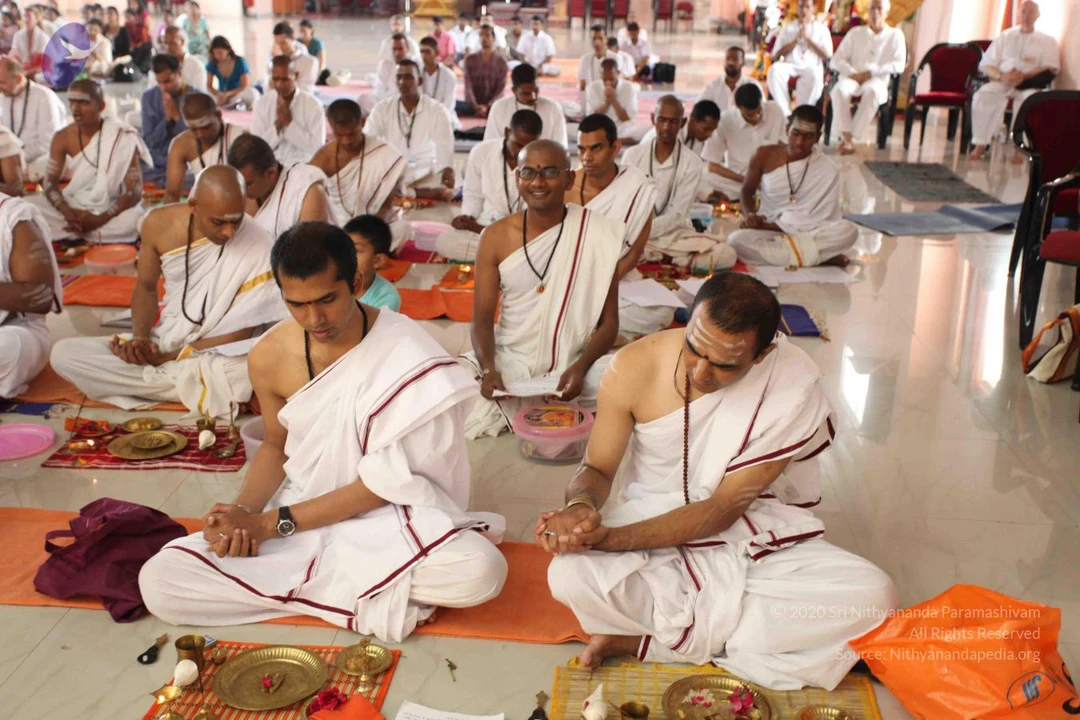
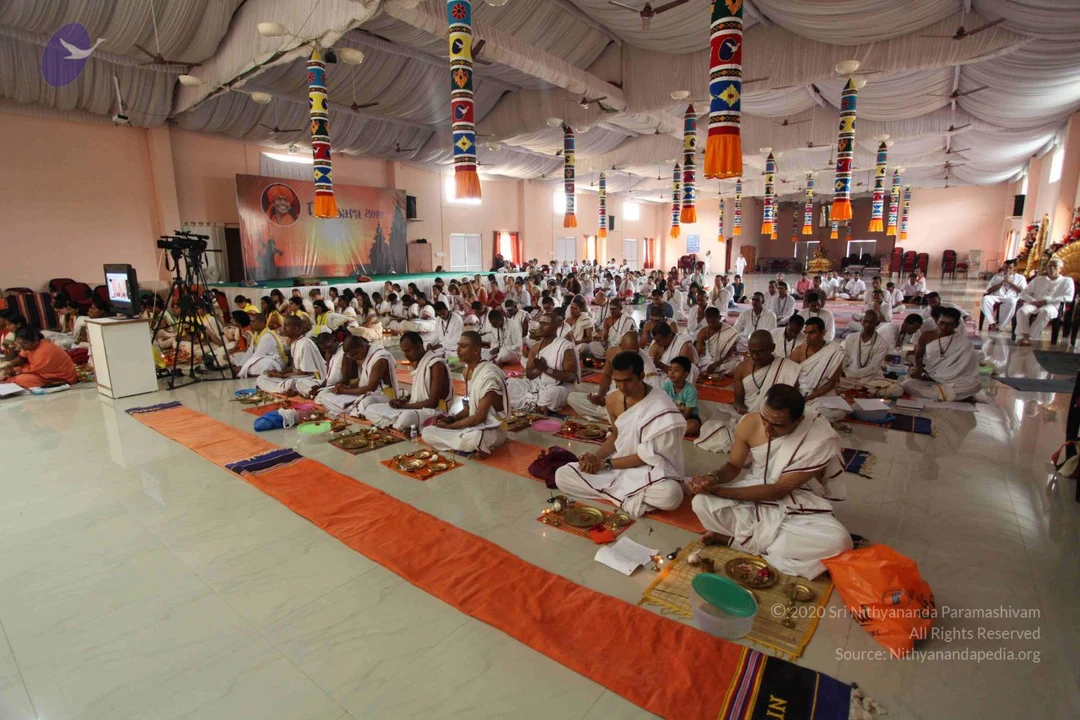
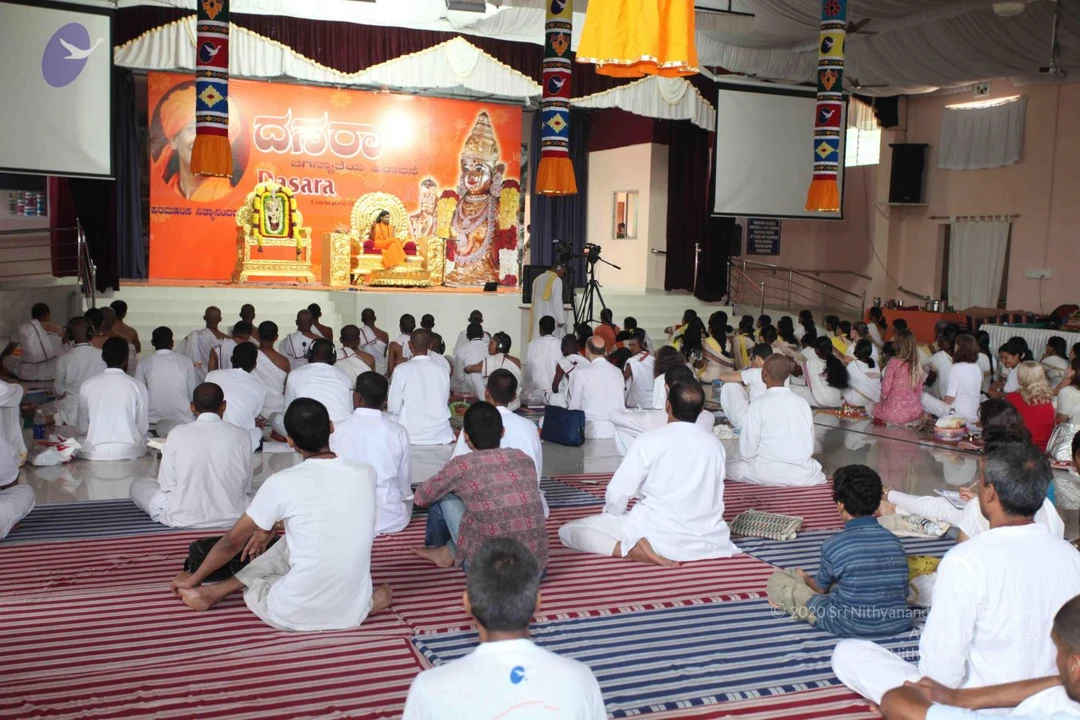
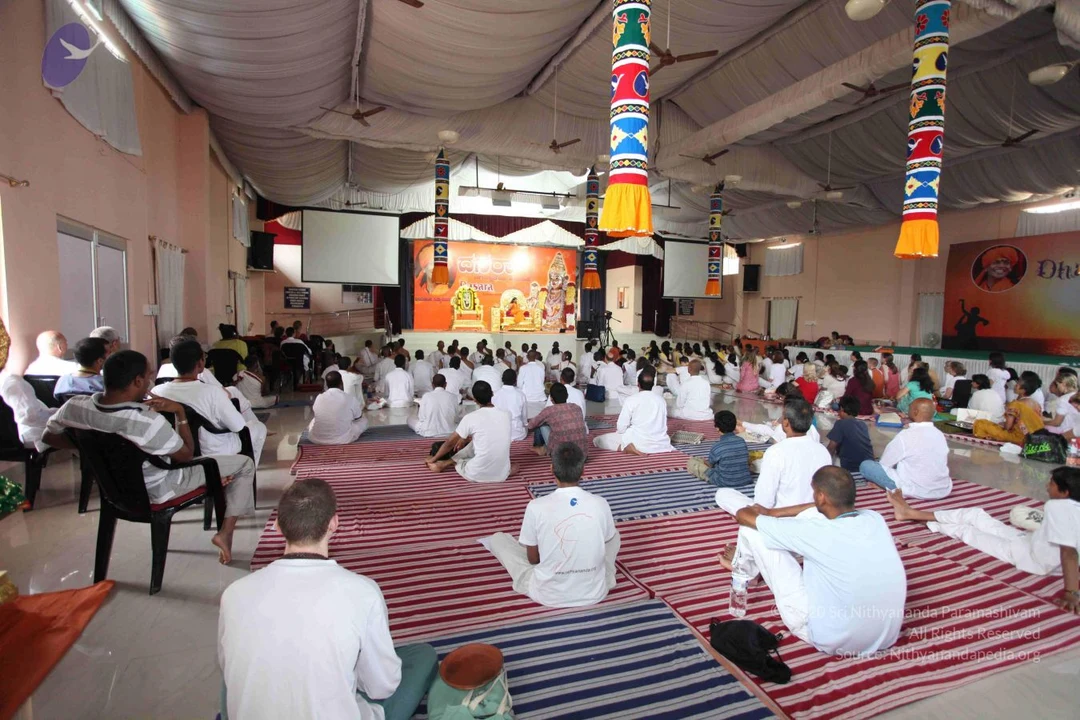
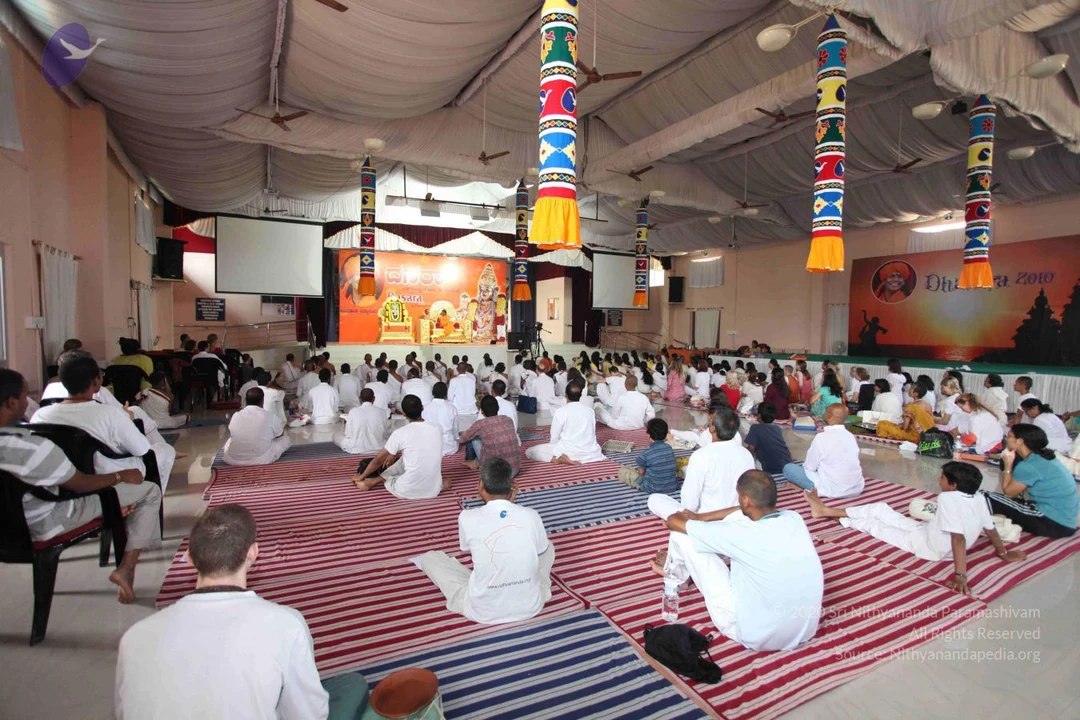
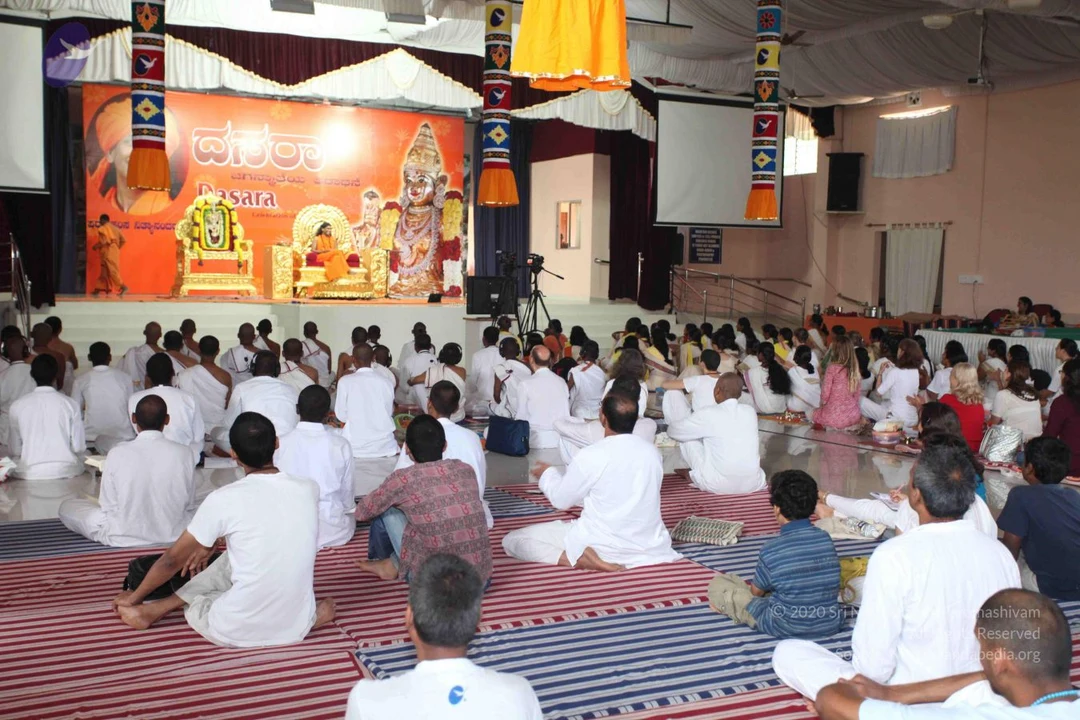
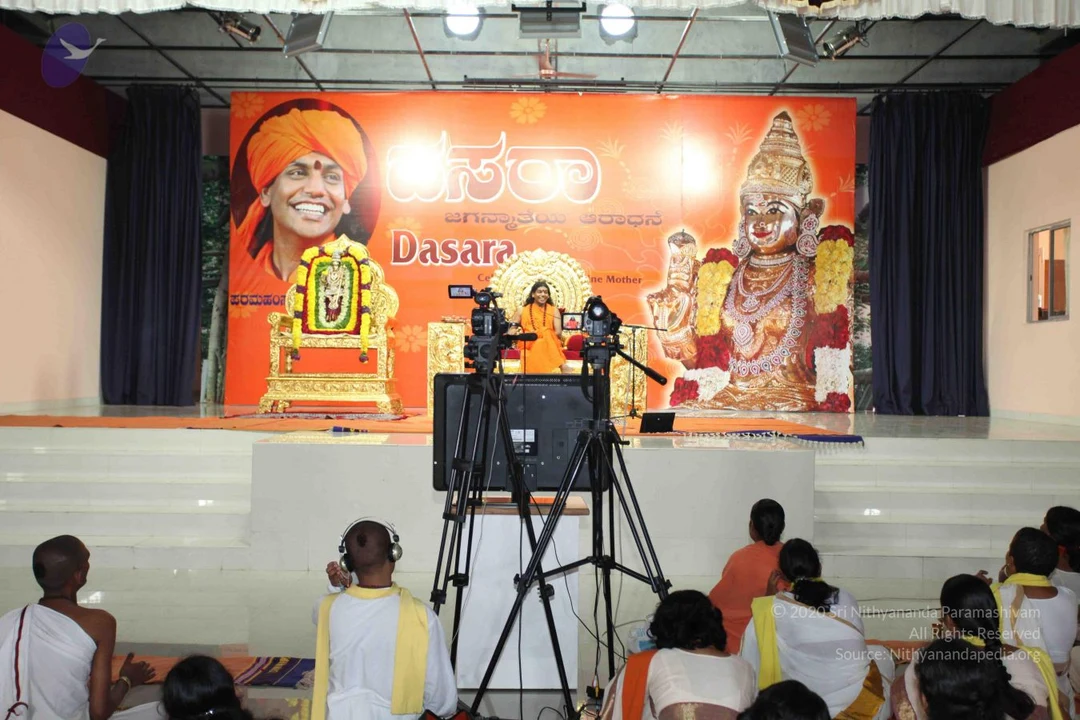
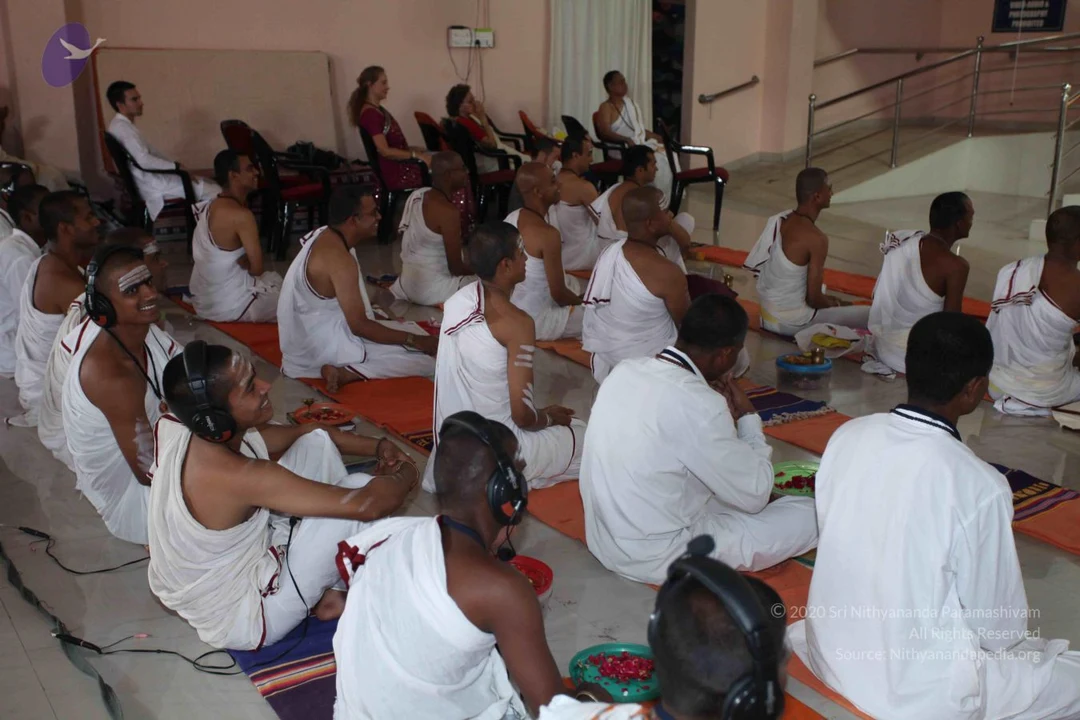
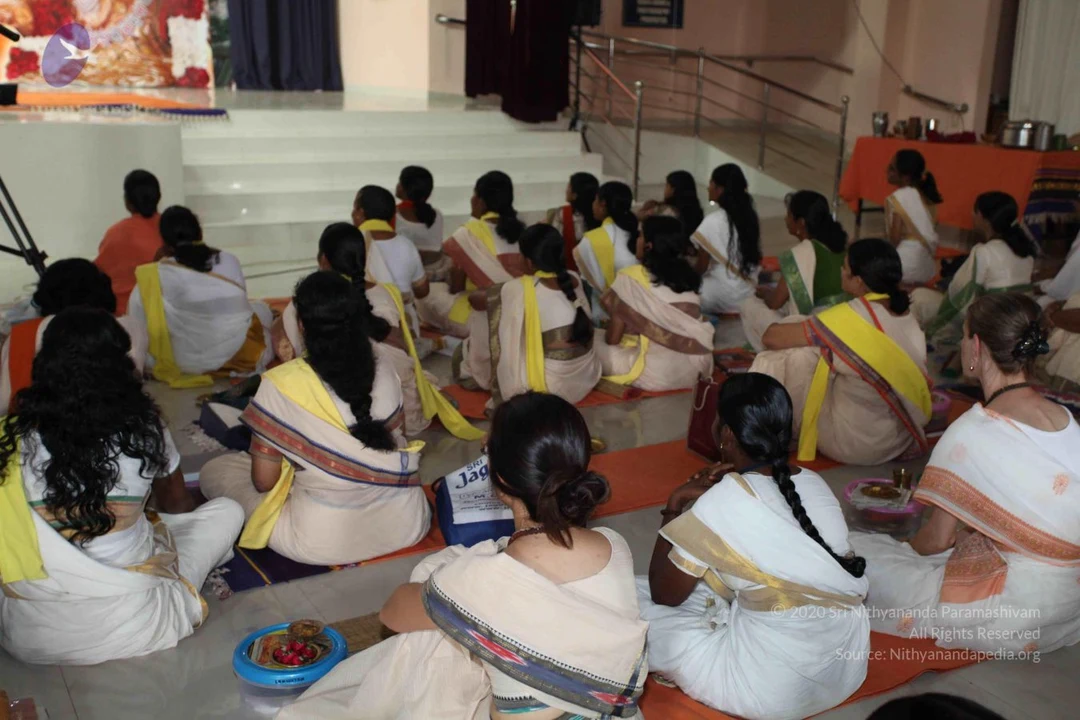
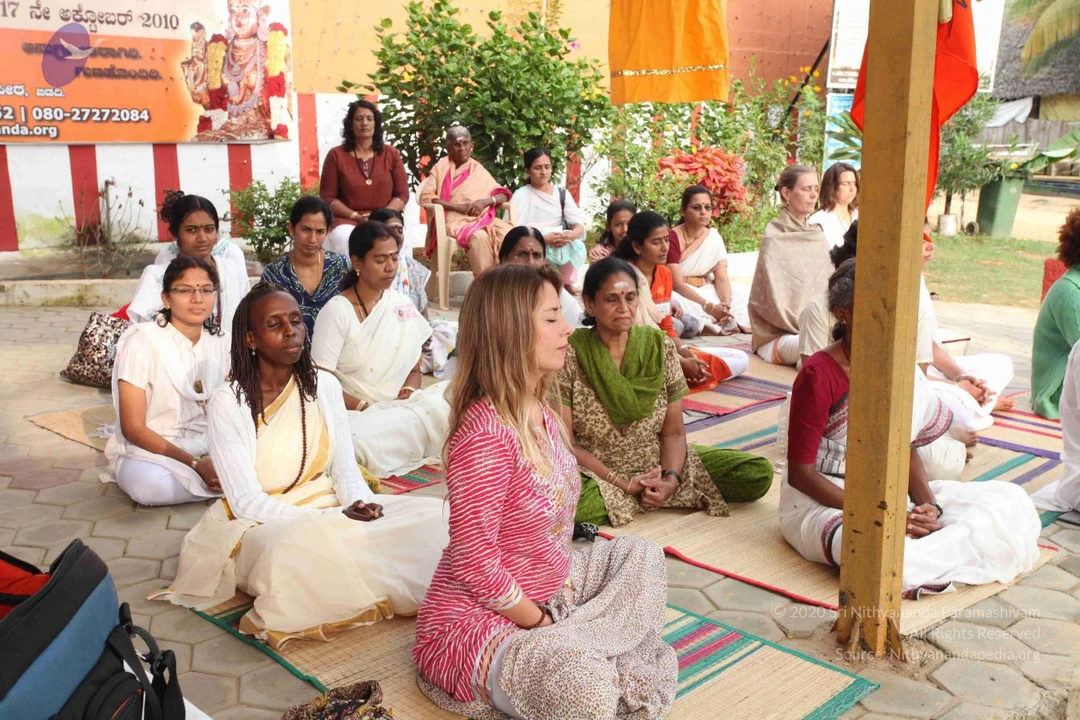
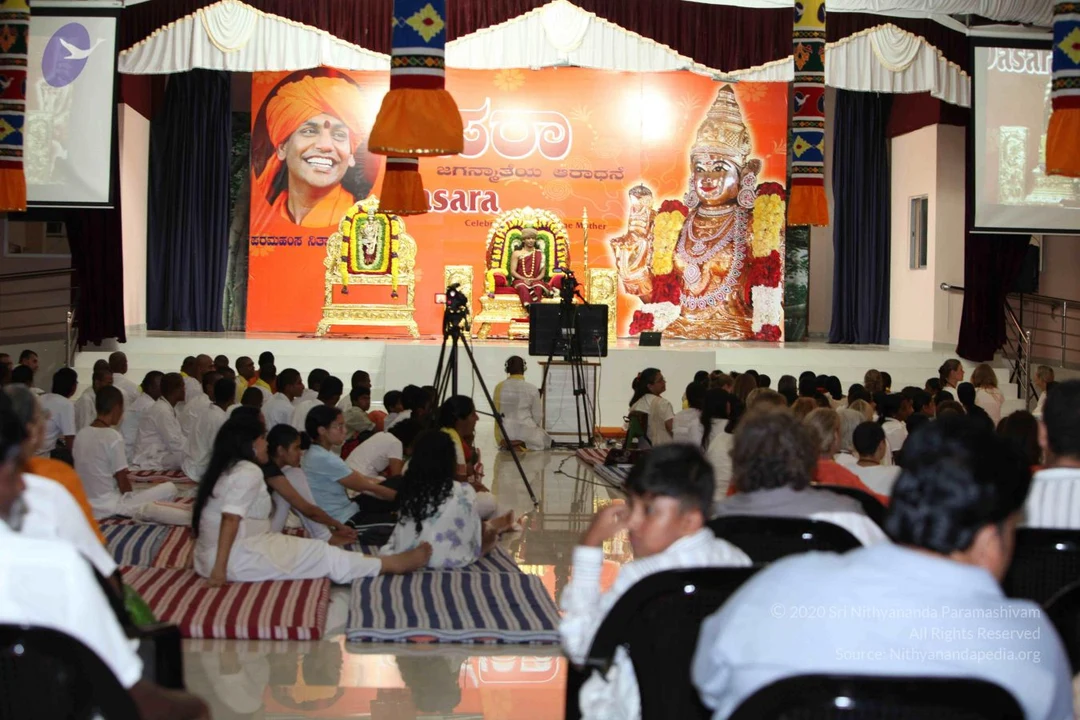
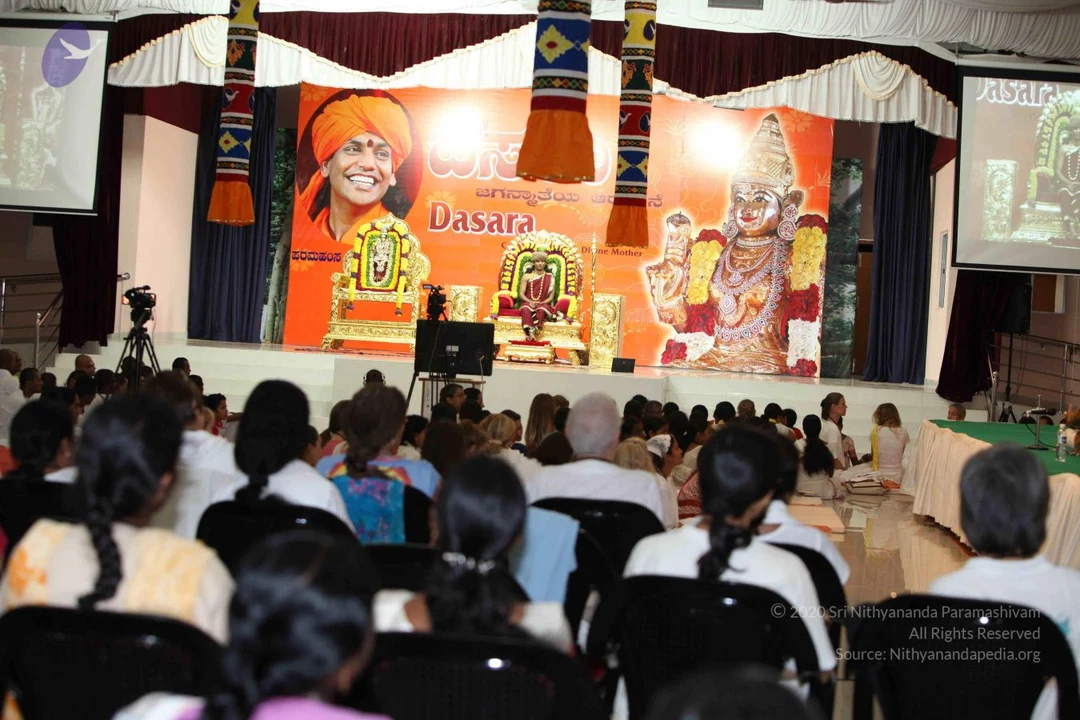
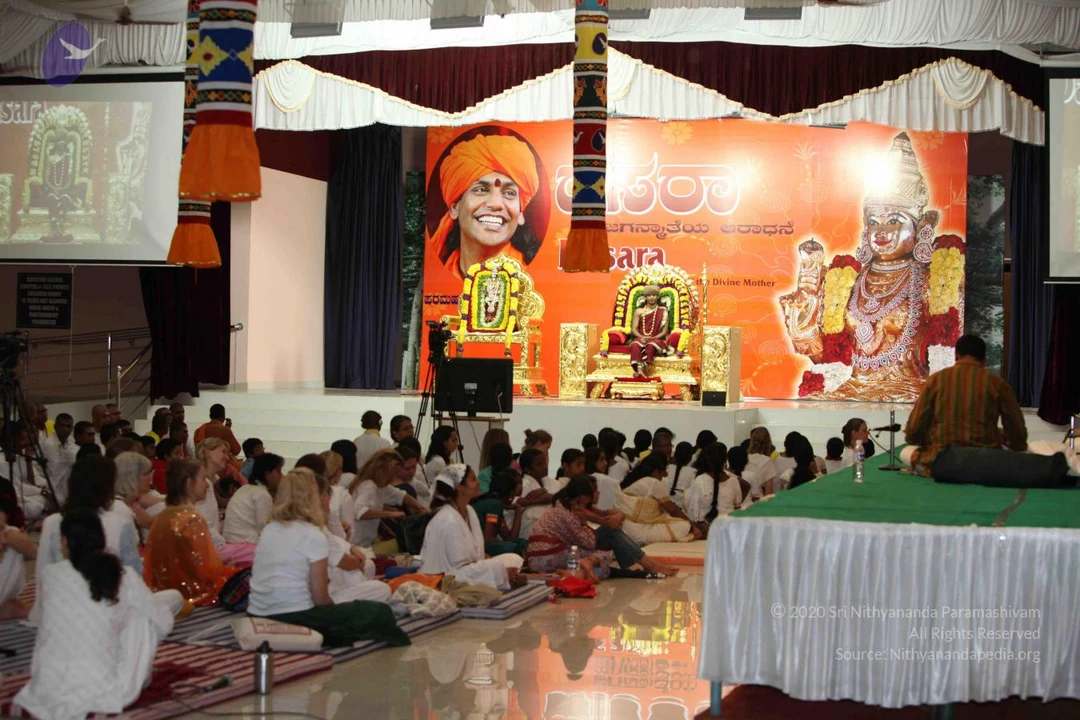
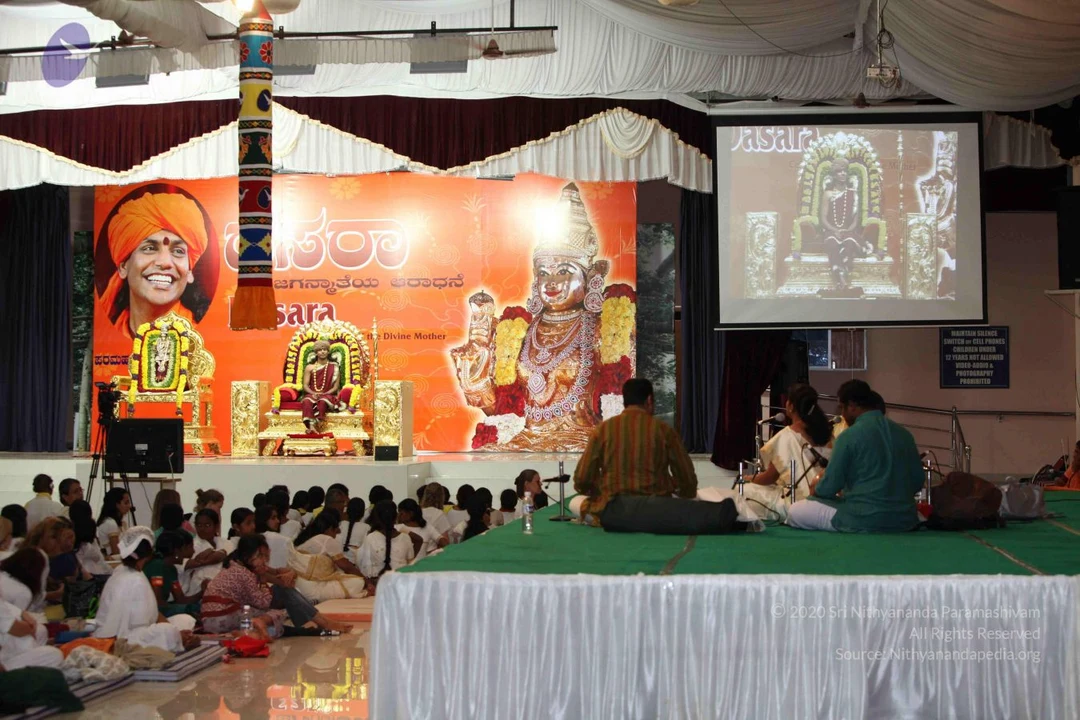
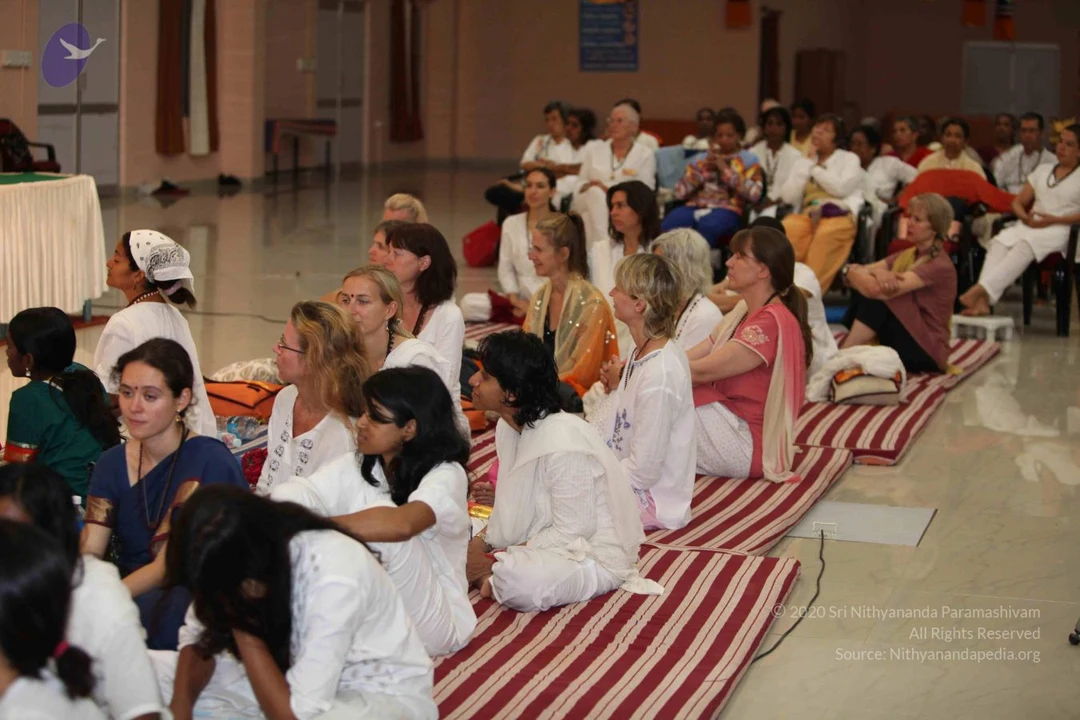
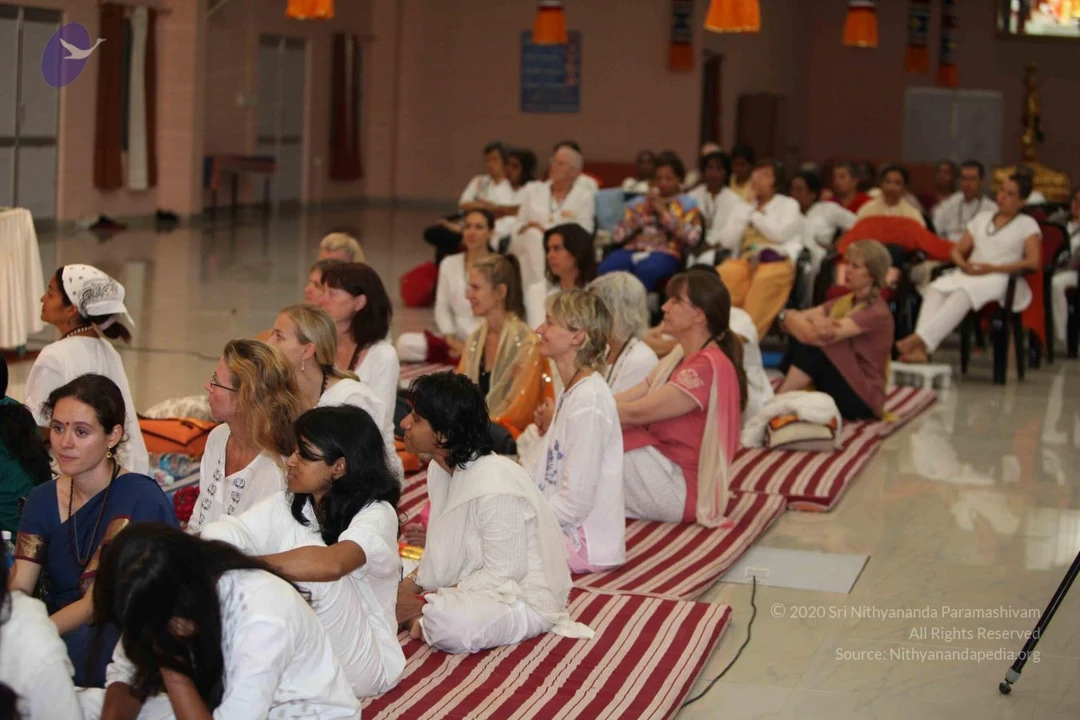
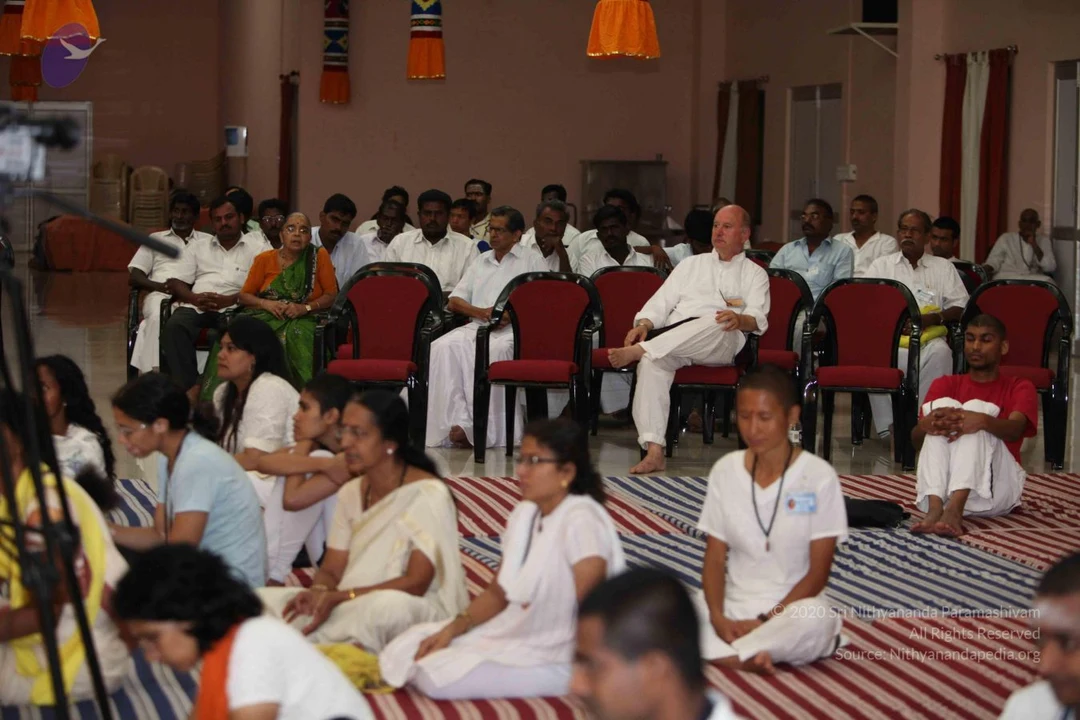
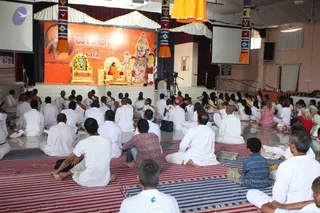
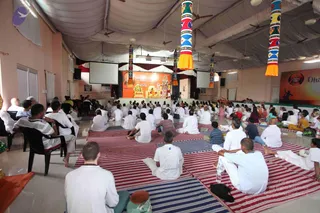
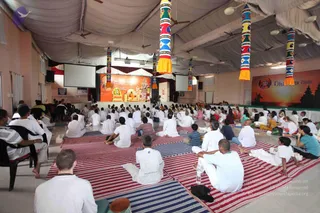
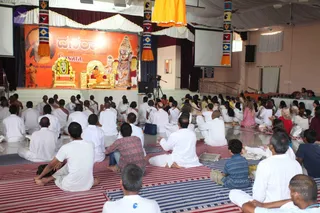
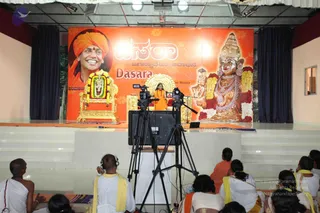
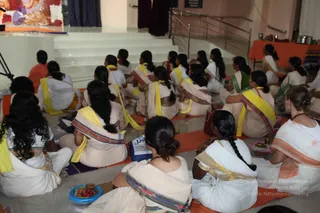
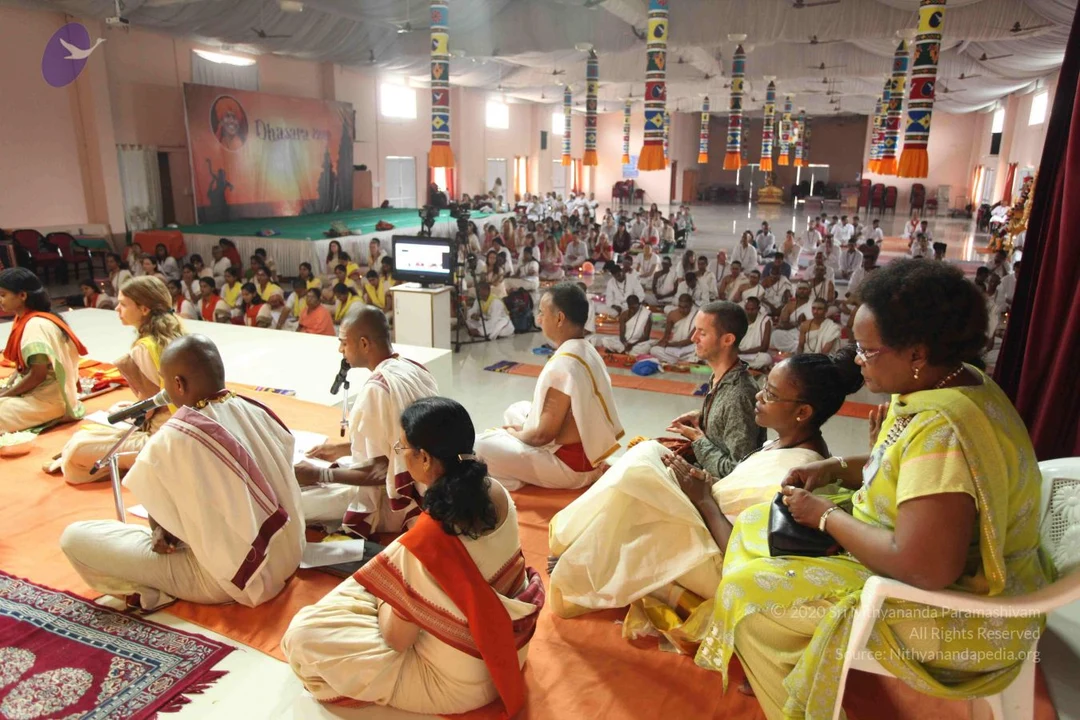
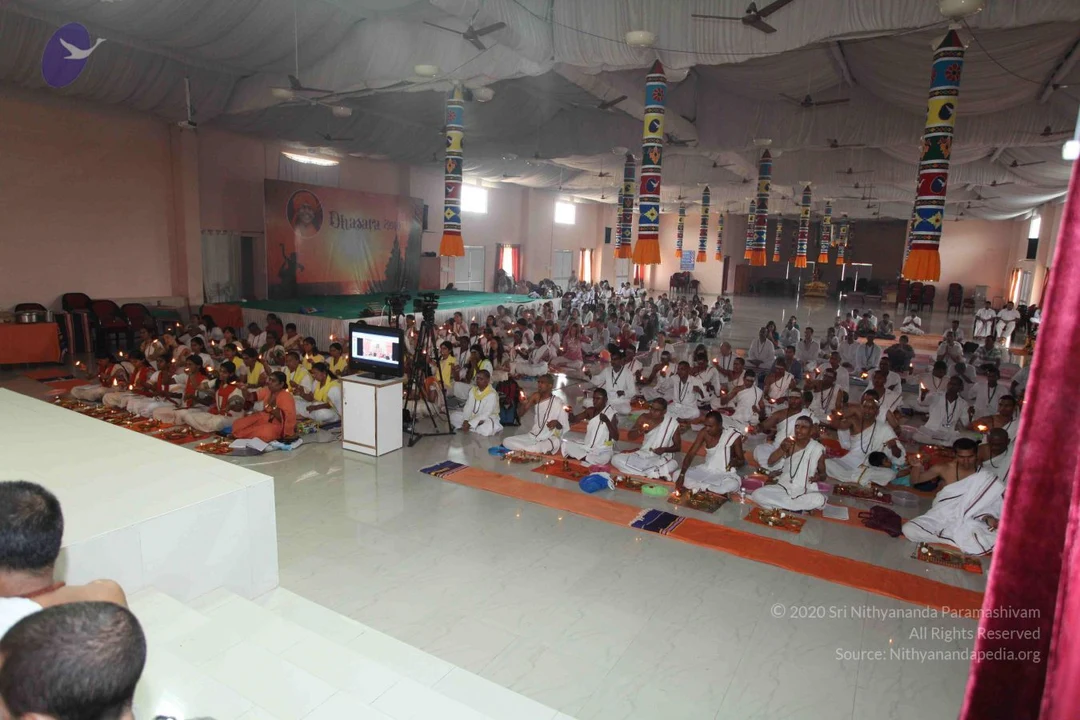
A large hall with a seated audience in white clothes on striped floor mats, facing a raised stage. On the stage, a figure in orange robes sits on a red and gold throne-like seat, flanked by a gold ornate chair and a large decorated deity murti. A banner behind reads Dasara in English and Kannada, with an orange background and a painted portrait of a saint in a turban. A video camera on a tripod and projector screens are visible at the sides, and a devotee in the foreground wears a striped shirt.A large satsang hall with a white draped ceiling and colourful striped pillars hung with orange tassels. Dozens of devotees in white clothes sit on red and blue striped mats facing a stage at the far end. On the stage, an orange backdrop displays a painted deity image and a decorated seat, with a large projection screen beside it. A few people sit on chairs at the left, and a bald man in white sits near the right foreground. A banner on the right reads partially and shows a figure playing a drum.A large hall with a white tented ceiling and colourful striped pillars hanging with yellow tassels shows a seated satsang audience facing a stage. Many people in white clothes sit on red and blue striped mats; several are seated on chairs at the left edge. On the stage, a figure seated on a golden throne is surrounded by ornate decorations and a deity murti, with a large orange backdrop behind. Screens flank the stage, and a banner at the right reads Dhyanapeetha 2010 beside a painted sunset-and-silhouette scene. The audience is numerous, with rows extending to the back of the hall.A photograph of a satsang hall during Dasara celebrations, with a large audience of devotees seated on striped mats facing a stage. Most attendees wear white clothing and sit cross-legged, while some wear coloured shirts. On the orange stage backdrop, a painted banner reads Dasara, with a large deity murti of a goddess on the right and a decorated throne with a jewelled seat in the centre. A figure in saffron robes sits on a red-cushioned seat in the centre of the stage, near a garlanded kalasha-style pot and a decorated throne. A camera on a tripod and a projection screen are visible at the side of the hall.A stage event with an orange backdrop banner reading Dasara in English and Kannada script, Celebrating the Divine Mother. The banner shows a smiling man in an orange turban on the left, and a golden deity murti of a goddess with a crown, necklaces and red-and-white flower garlands on the right. A golden ornate throne decorated with a yellow and orange flower garland sits on the left side of the stage. A woman in orange clothing stands at a podium at centre stage. In the foreground, cameras on tripods film the stage; several people sit with their backs to the camera, including a shaven-headed man in white dhoti with a yellow shawl wearing headphones, and others in white clothes with yellow shawls.A photograph of a seated group of women in white saris with yellow and gold borders, viewed from behind, sitting on orange floor mats in a hall. Their long hair is in braids or buns. On the stage at left, a large colourful painted backdrop with red floral imagery is visible, with steps leading up. At right, a small table draped in orange holds brass vessels and oil lamps. A few women at the rear sit near the table, and a woman with a braided ponytail on the right wears a white sari. Small plates with flowers and offerings sit on the floor near the front row.
Sarva-Darshan

7 photosSource gallery
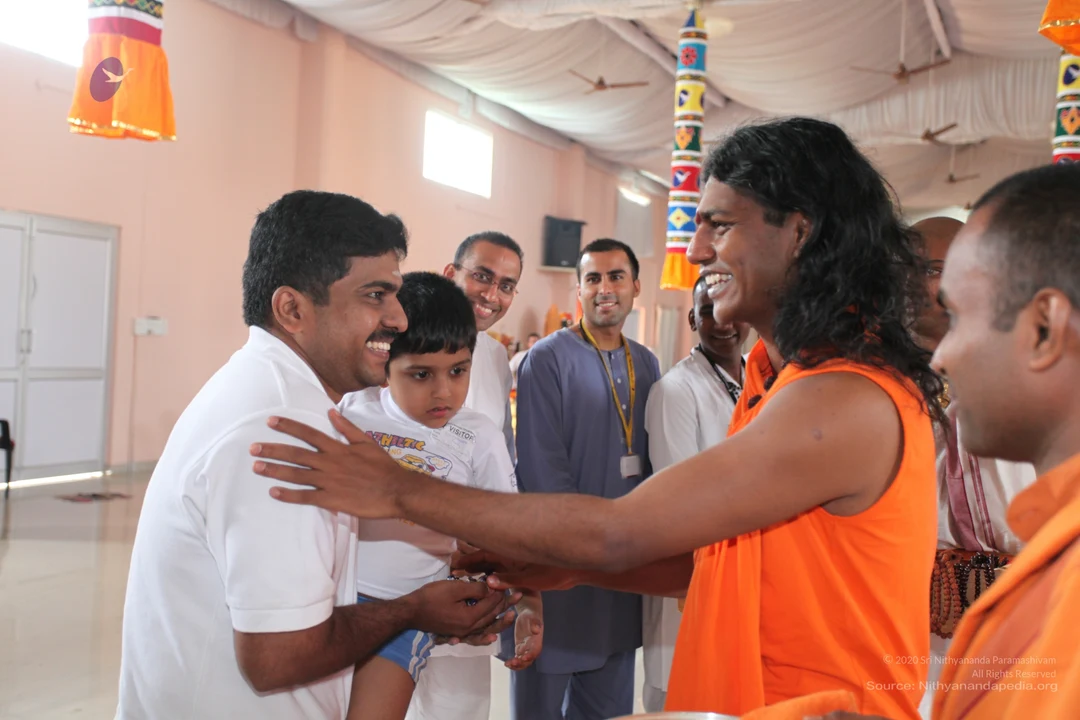
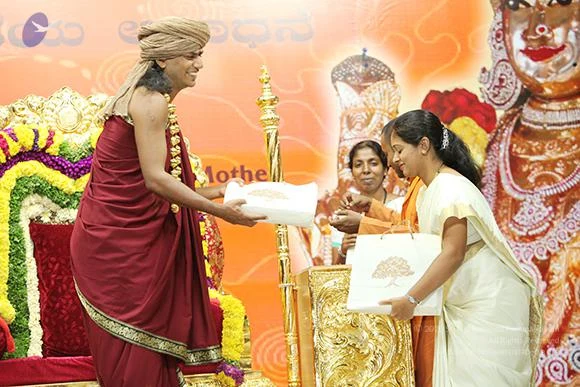
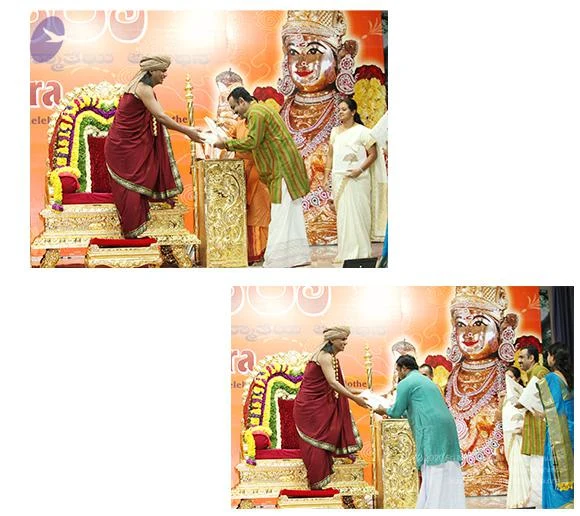
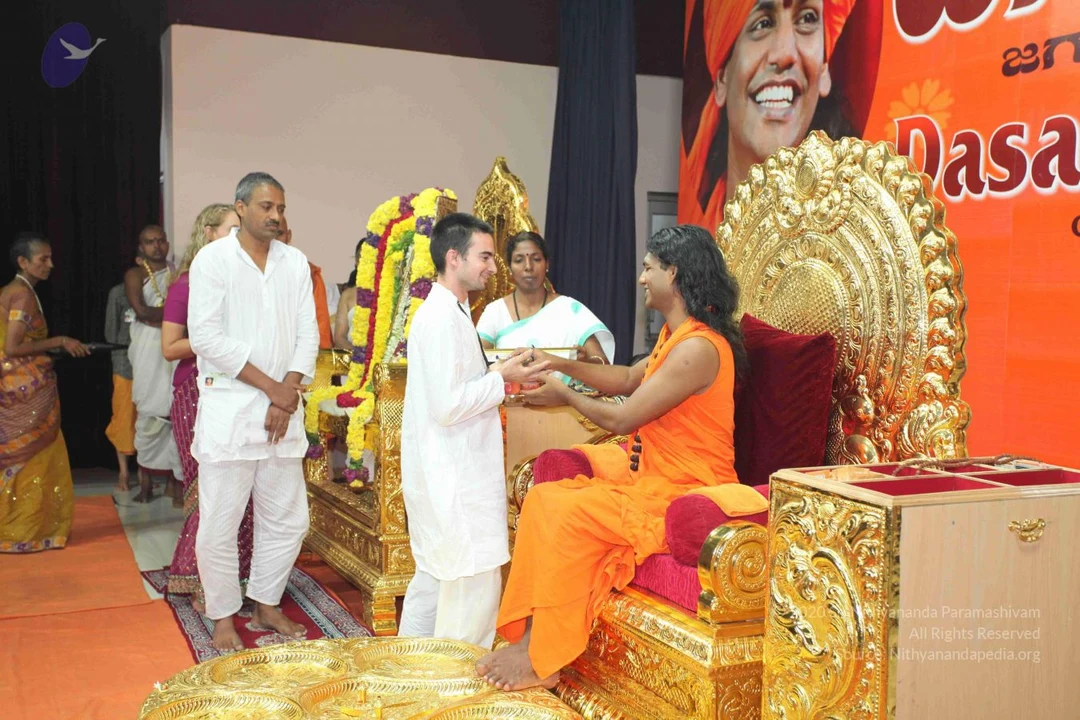
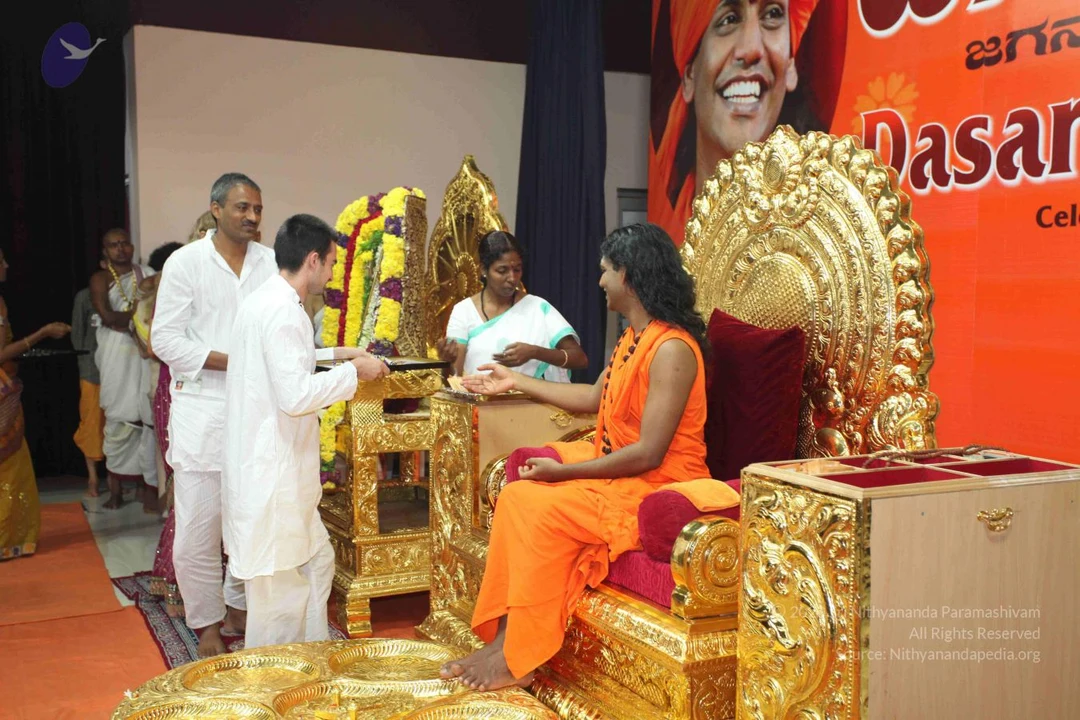
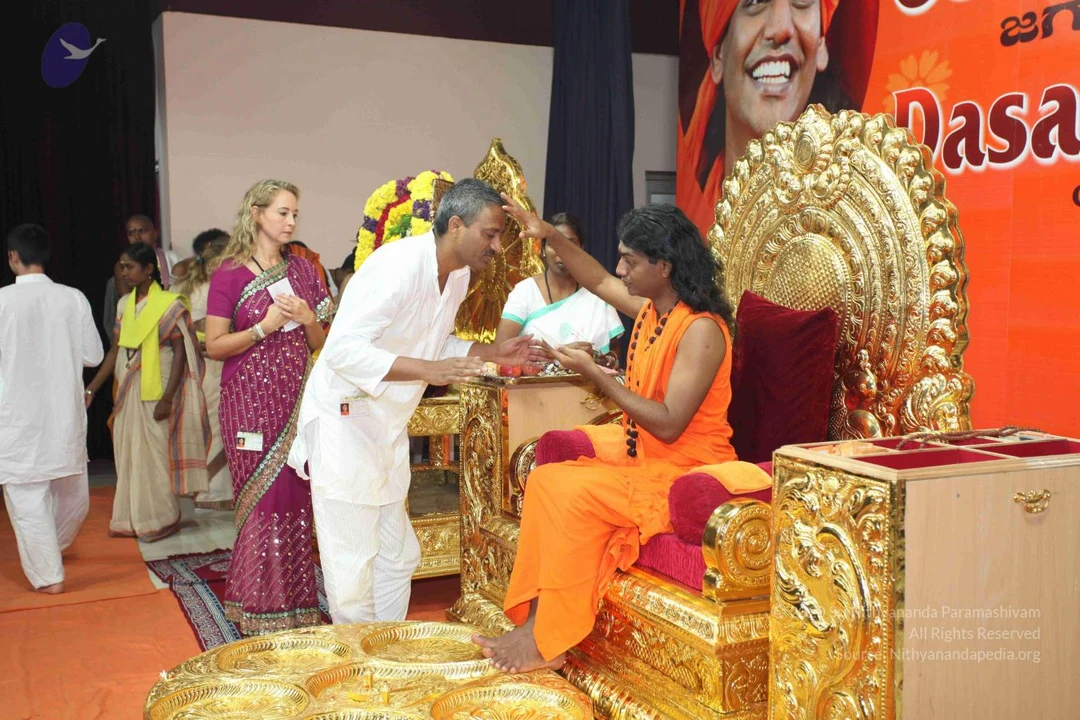
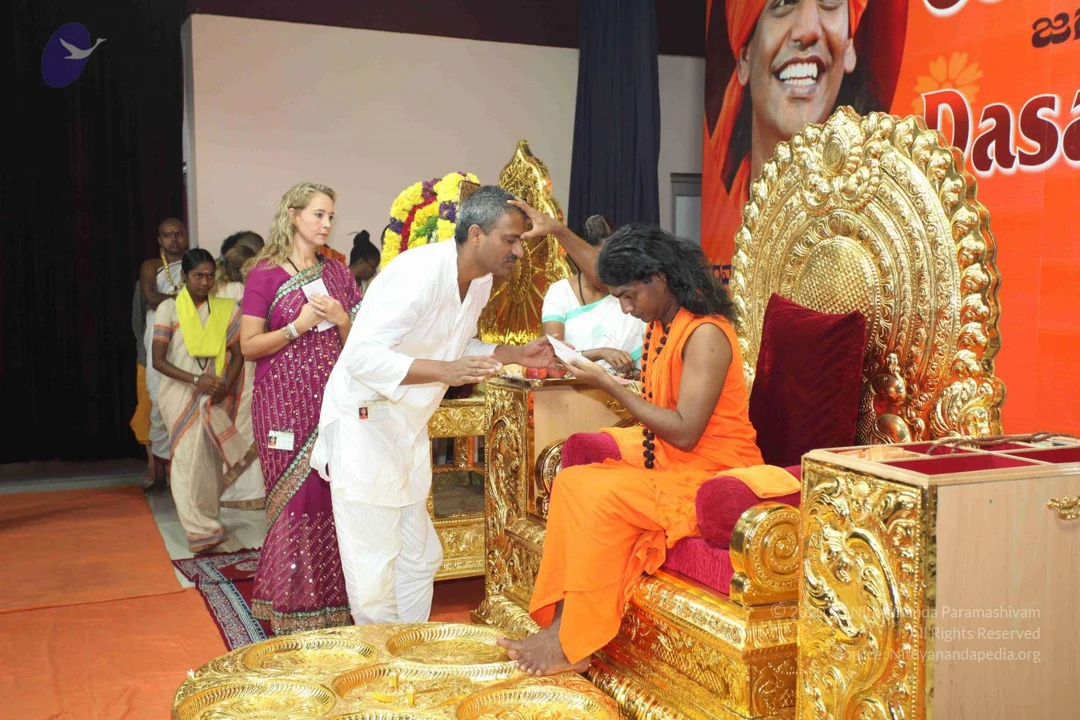
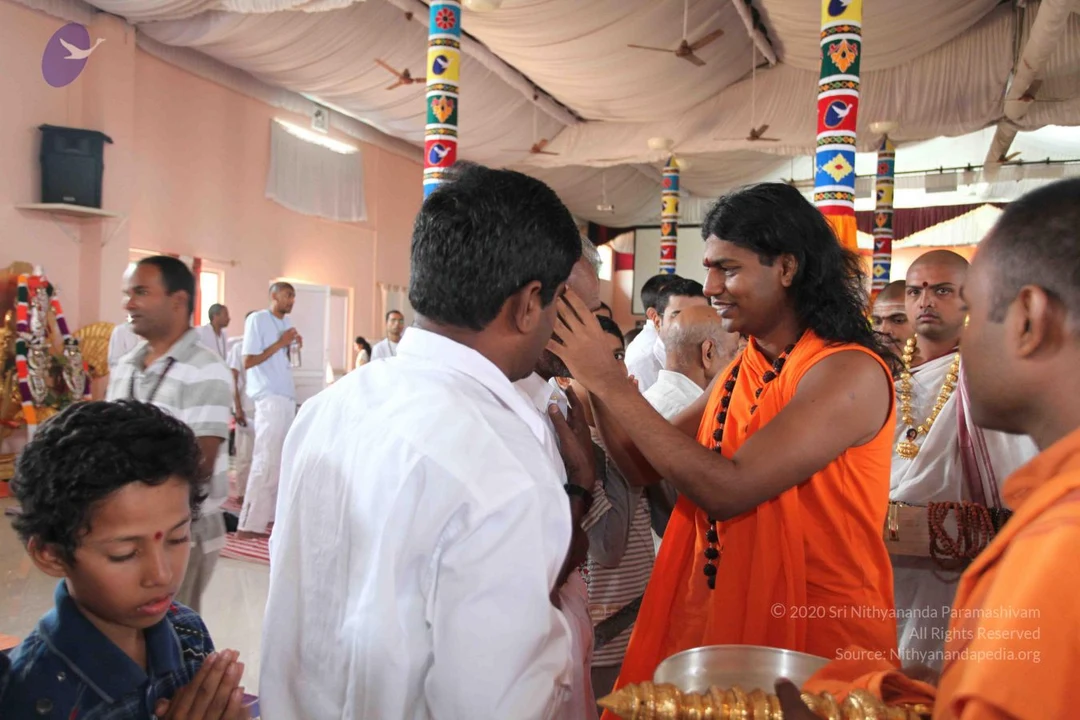
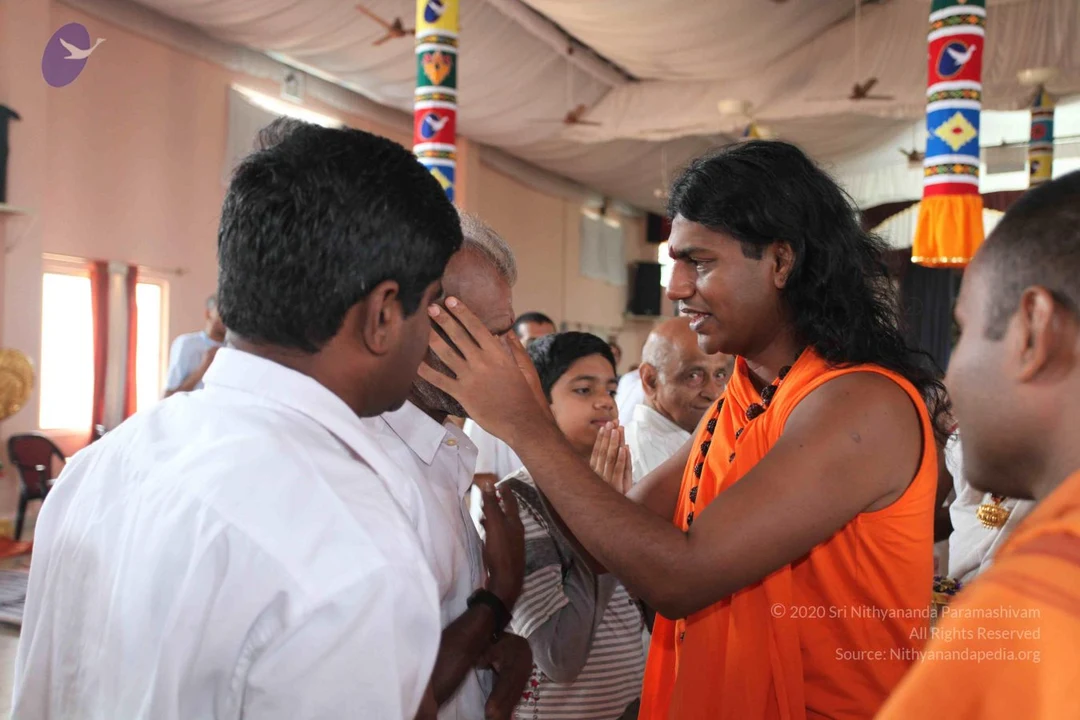
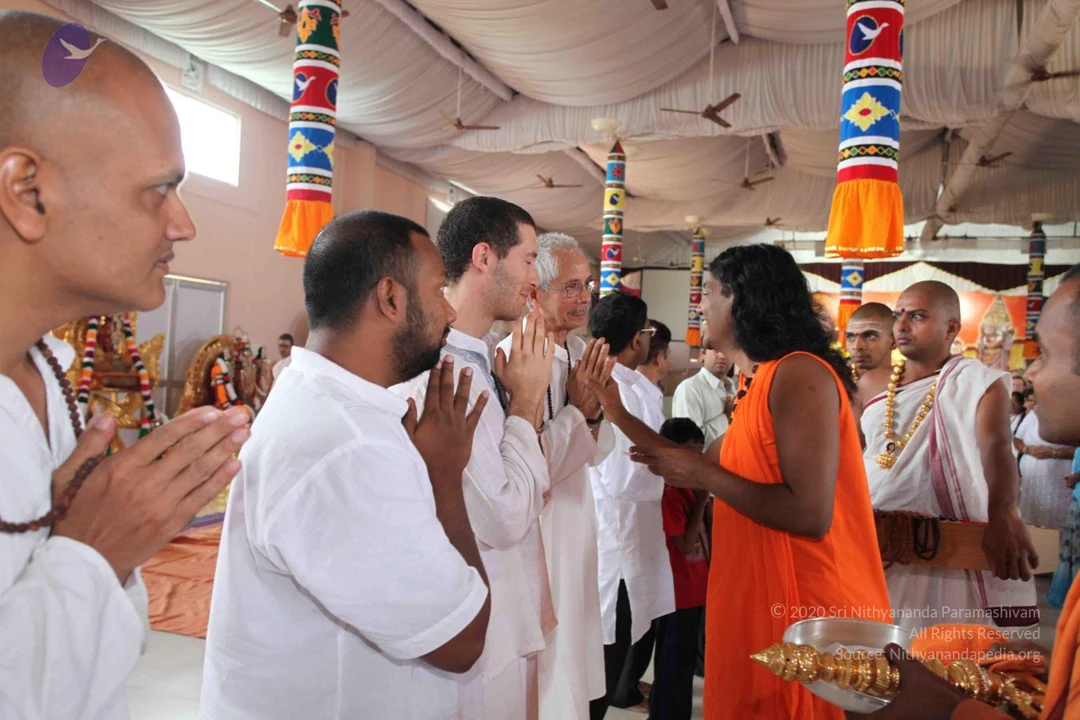
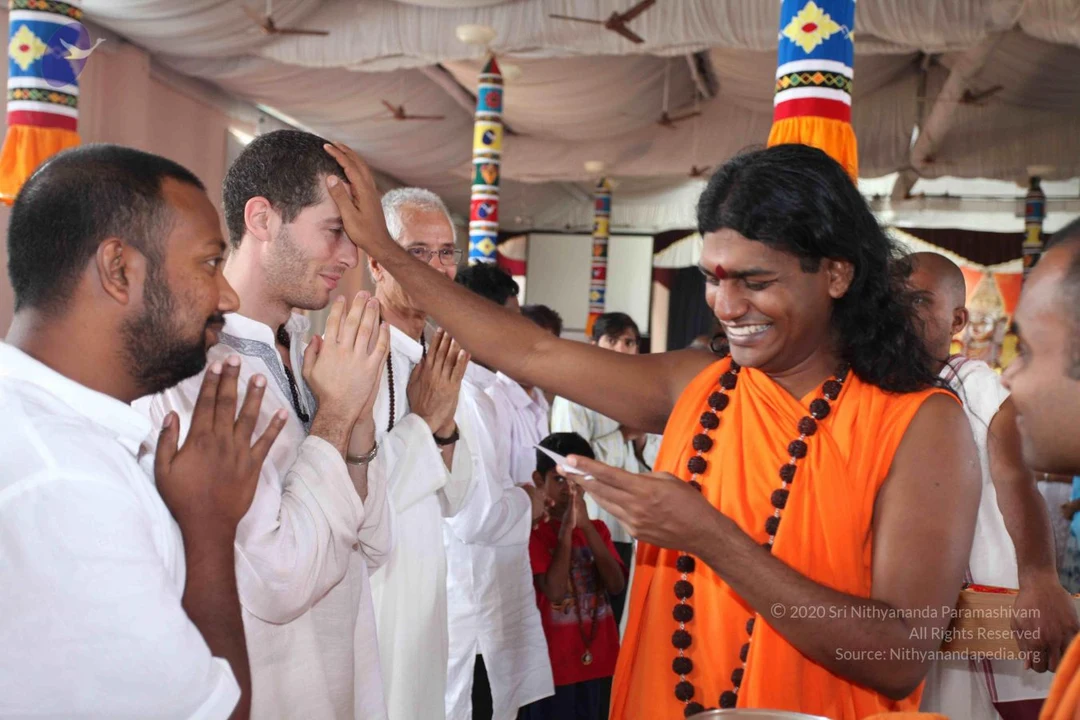
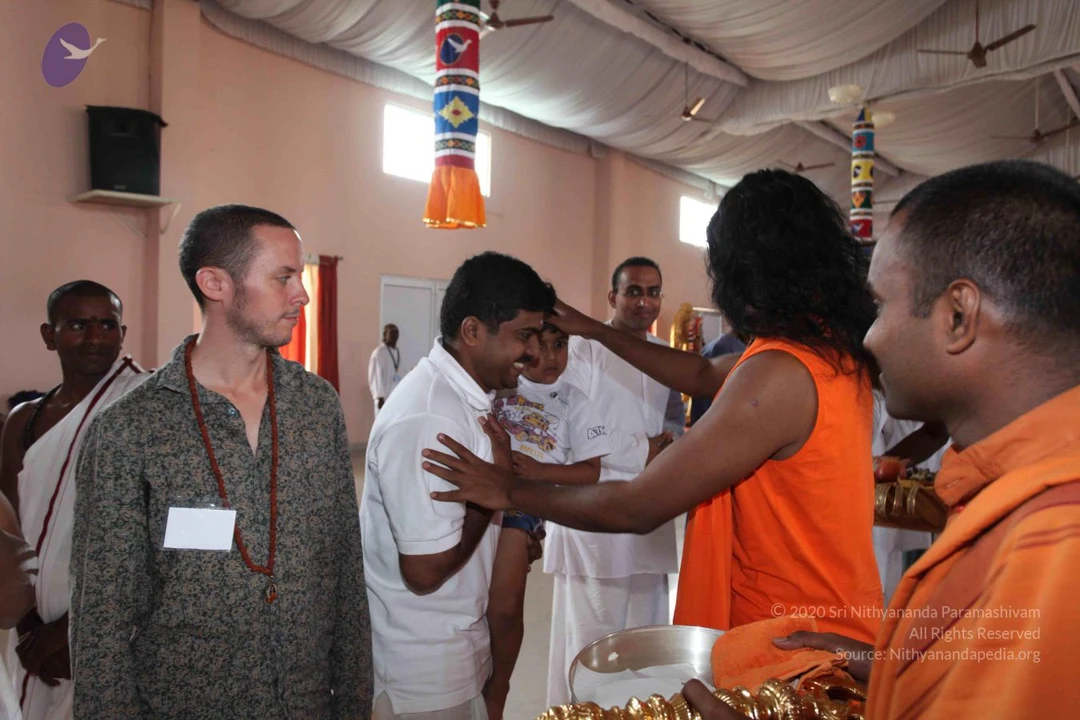
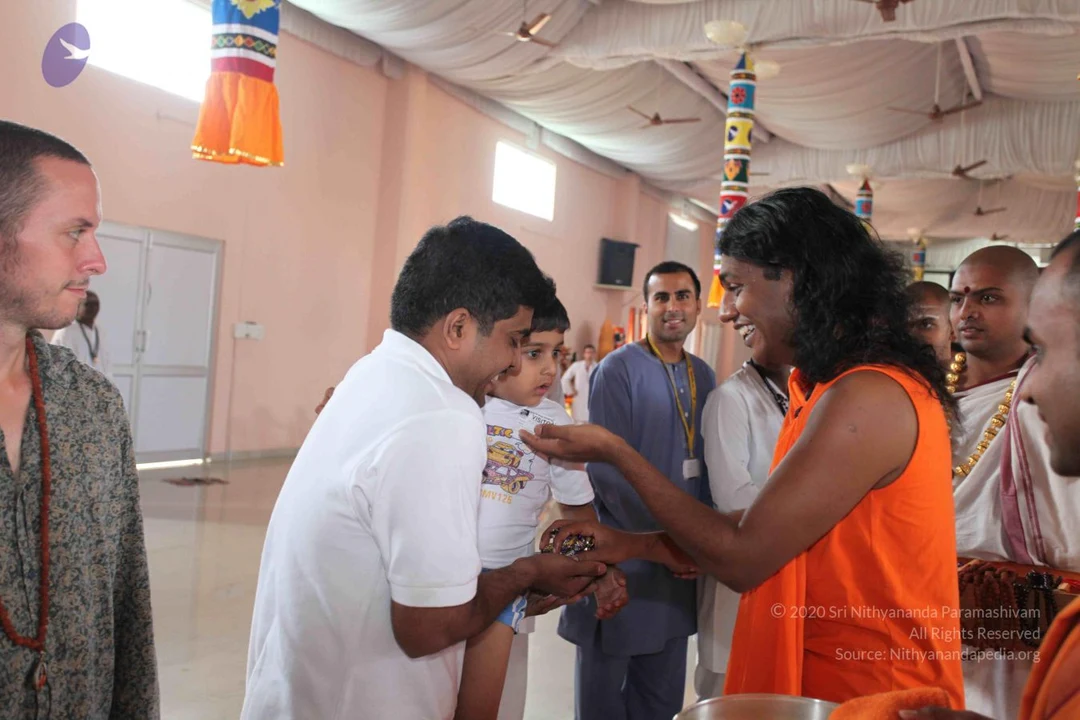
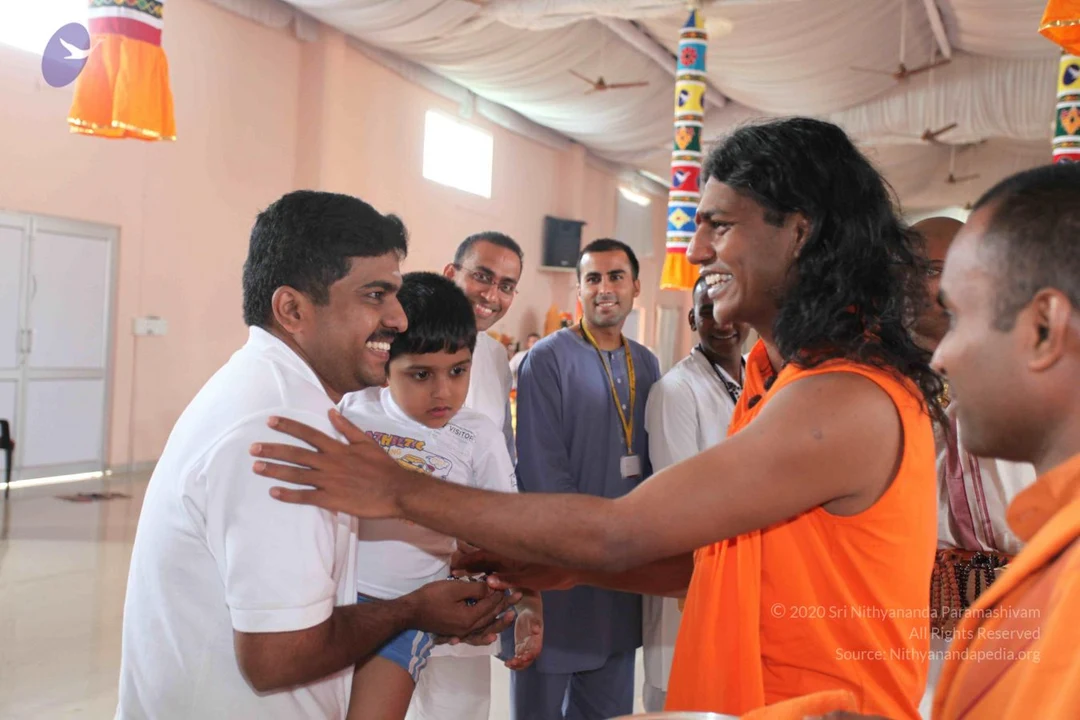
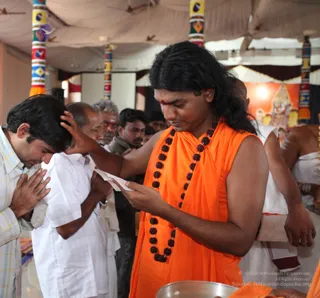
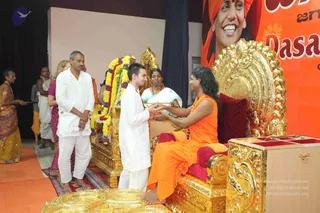
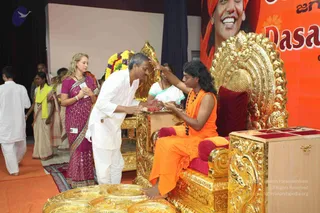
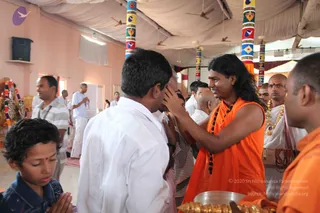
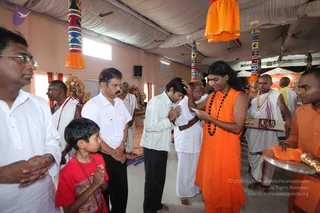
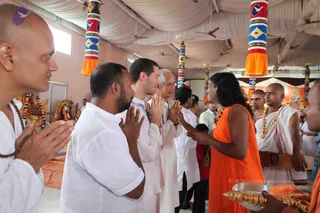
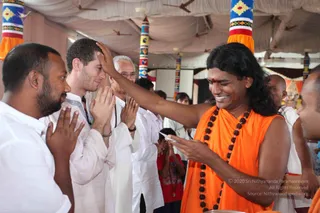
A photograph of a ceremonial event on an orange-carpeted stage. A seated figure on an ornate gold throne with red cushions wears an orange robe, long dark hair swept back, and a rudraksha mala; he extends his hands to a young man in white kurta clothing who is bowing and receiving something. Behind them, a woman in a white and green sari holds an offering, a man in white stands nearby, and a woman in a yellow sari is at the left edge. A garland of yellow and orange flowers hangs over a second gold chair. A large orange banner behind the stage shows a smiling man in an orange turban and text in Kannada script. Several people are visible in the background.A seated man in an orange robe with a long swept-back hair and a rudraksha mala sits on an ornate gold throne with red cushions, while a devotee in white kurta and white dhoti bows and places a hand near his feet on a gold footstool. The seated figure's hand is raised toward the devotee's head in a blessing gesture. A woman in a magenta sari with a lanyard stands with folded hands nearby, and others in white and yellow attire move in the background. A large orange banner behind shows a smiling man in an orange headpiece and the word Dasa partially visible, with a garland of marigolds beside the throne. The setting is a hall with an orange carpet and a gold-and-wood side table holding offerings.A photograph of a devotional gathering inside a decorated hall with a white canopy ceiling and painted pillars. A long-haired man in saffron-orange robes and rudraksha malas stands in the centre, smiling as he touches the forehead of a man in a white shirt. Several people in white and saffron stand around, including a bald man in white with a gold necklace on the right, a young boy in a dark shirt with a red bindi praying with folded hands at lower left, and a metal tray of offerings near the bottom. Background figures stand near a garlanded seat and altar area. a person is the central man in saffron robes, performing a blessing for the devotee.A ceremonial scene inside a decorated hall with a white canopy ceiling and hanging colourful cloth tassels on striped poles. A long-haired man in an orange robe with a rudraksha mala and a large gold-coloured chain offers blessings to a devotee who stands with bowed head and hands folded in namaskar. The man in orange holds a small object in one hand and touches the devotee's head. Nearby, men in white dhotis and shirts stand with hands folded, a young boy in a red t-shirt with a rudraksha mala presses his palms together, and a priest in white dhoti and gold necklace holds a tray with orange cloth. Swamiji (probable): the long-haired man in orange with rudraksha mala and ornate gold chain matches the candidate cues. Background shows a deity decorated with garlands and flower arrangements.A photo inside a decorated hall with white draped ceiling, ceiling fans, and tall cylindrical pillars wrapped in red, yellow and blue patterned cloth. A figure in a long saffron-orange robe with long swept-back dark hair and a rudraksha mala stands centre-right, palms pressed together, receiving namaskar. Several men in plain white kurtas or dhotis stand with hands in anjali mudra, including a bald man in white at left and a bearded man in white near centre. On the right, a bald priest in white dhoti and gold necklaces stands beside a silver tray with gold-coloured items. A deity murti and golden decorations appear in the background. a person appearance cues are present but the identity is uncertain from the image alone.A photograph of a long-haired man in saffron-orange robes and a rudraksha mala, with a red tilak on his forehead, smiling as he presses his right palm to the forehead of a young man in white. The young man stands with hands joined in namaste. Beside them, a man in white kurta holds his hands together, and a man at left has palms pressed together in prayer. Behind them, a white canopy is hung with colourful striped pillars, and a person in a red shirt stands in the background. a person is shown in the foreground, performing a blessing with a rudraksha mala and saffron robes as the central figure.

E-Kalpataru

7 photosSource gallery
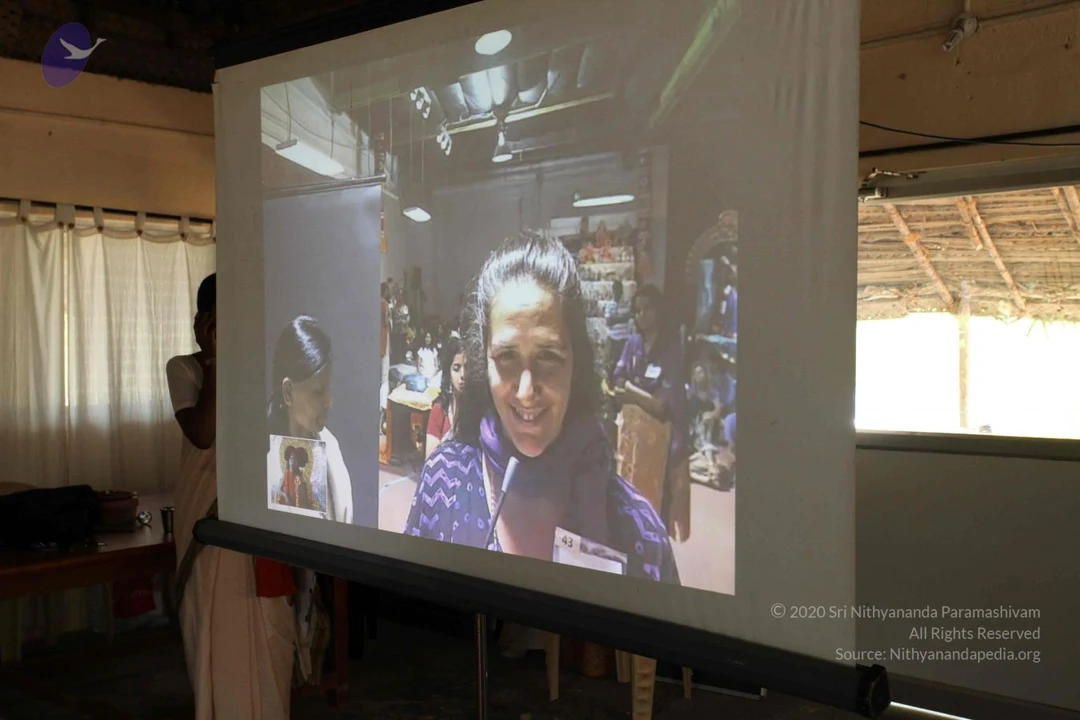
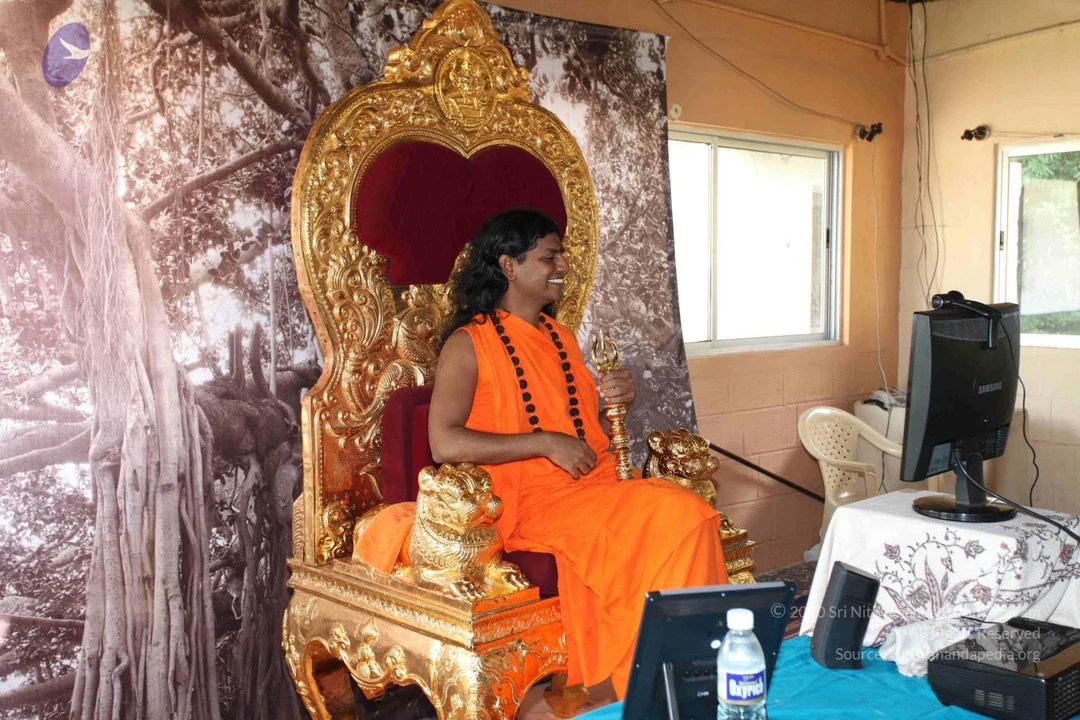
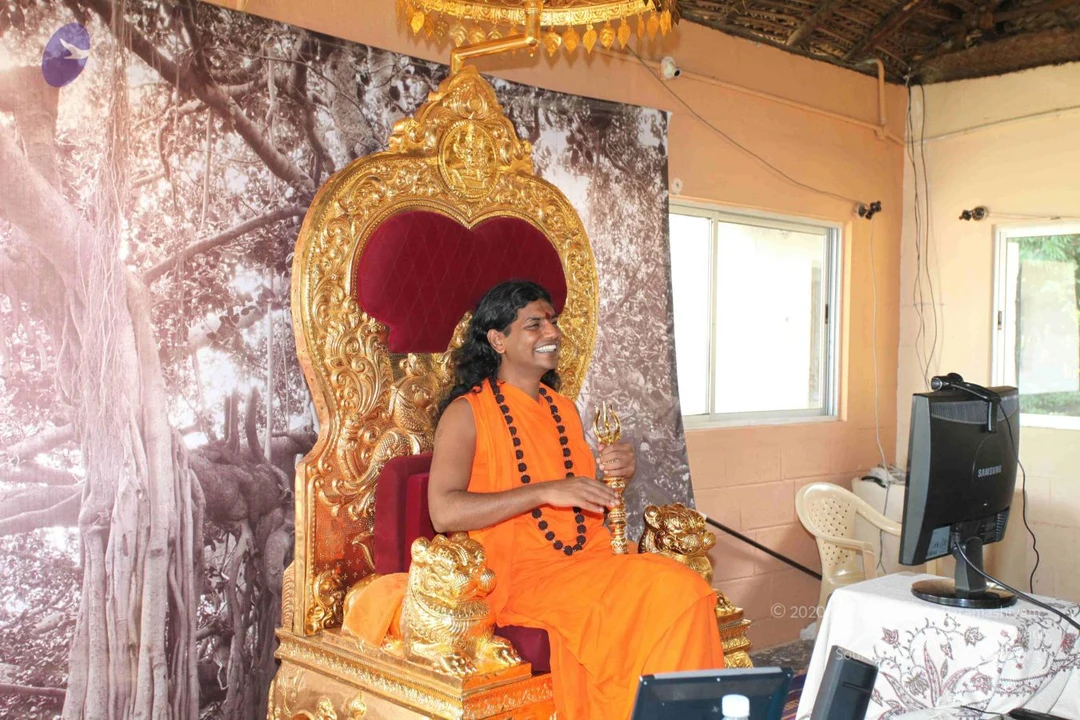
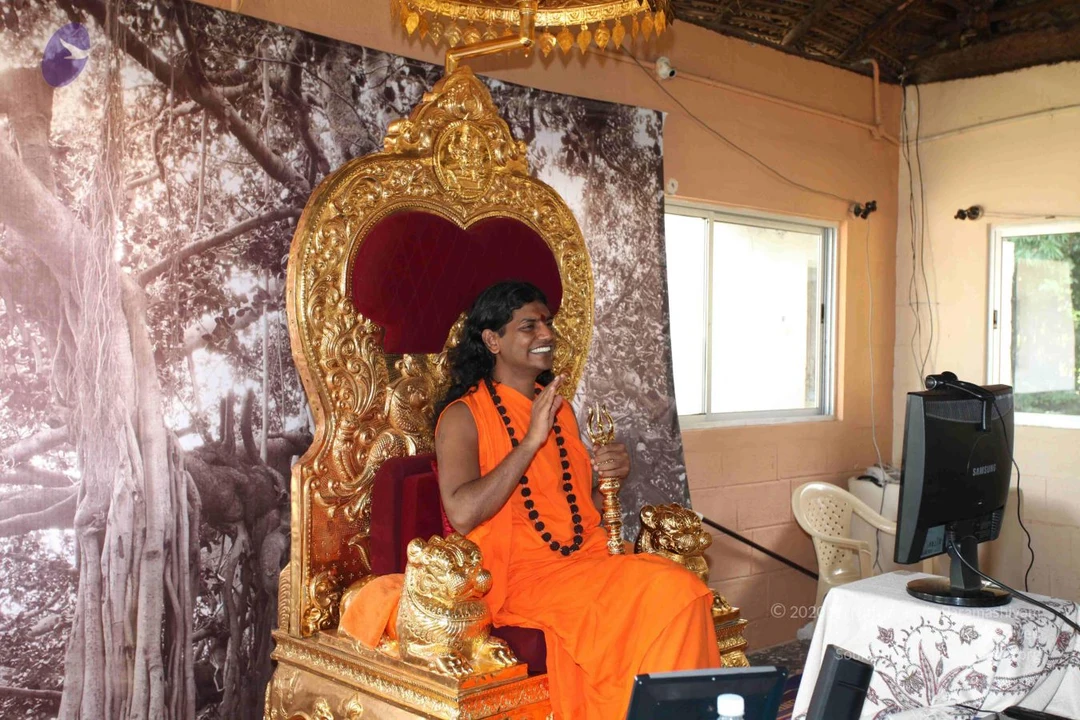
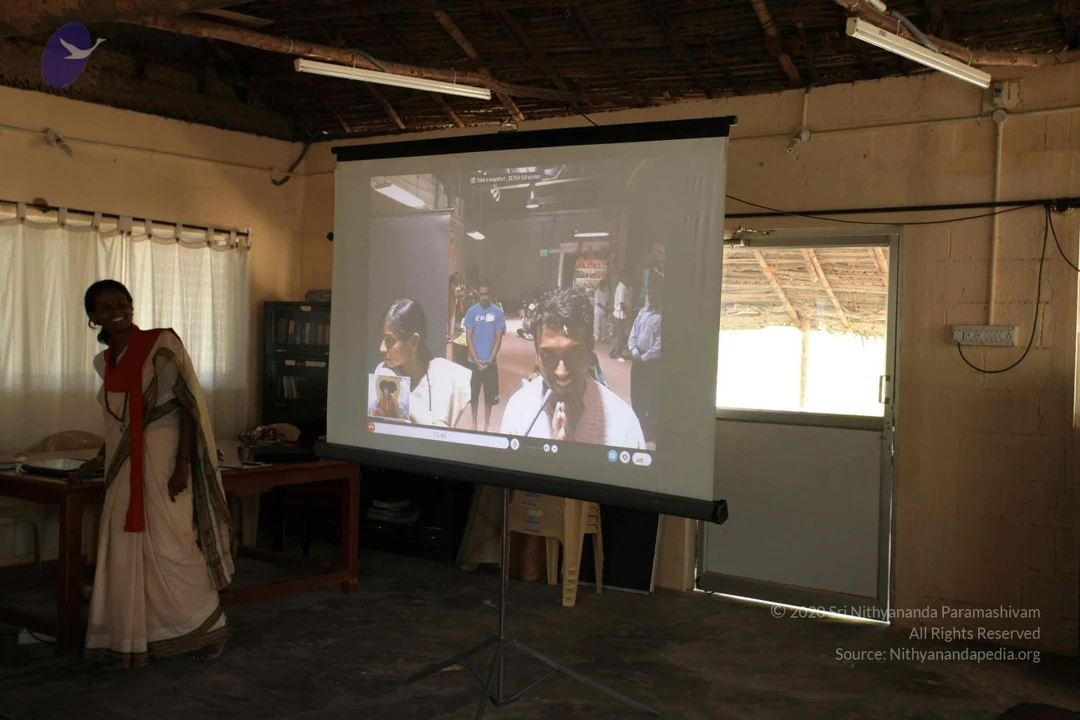
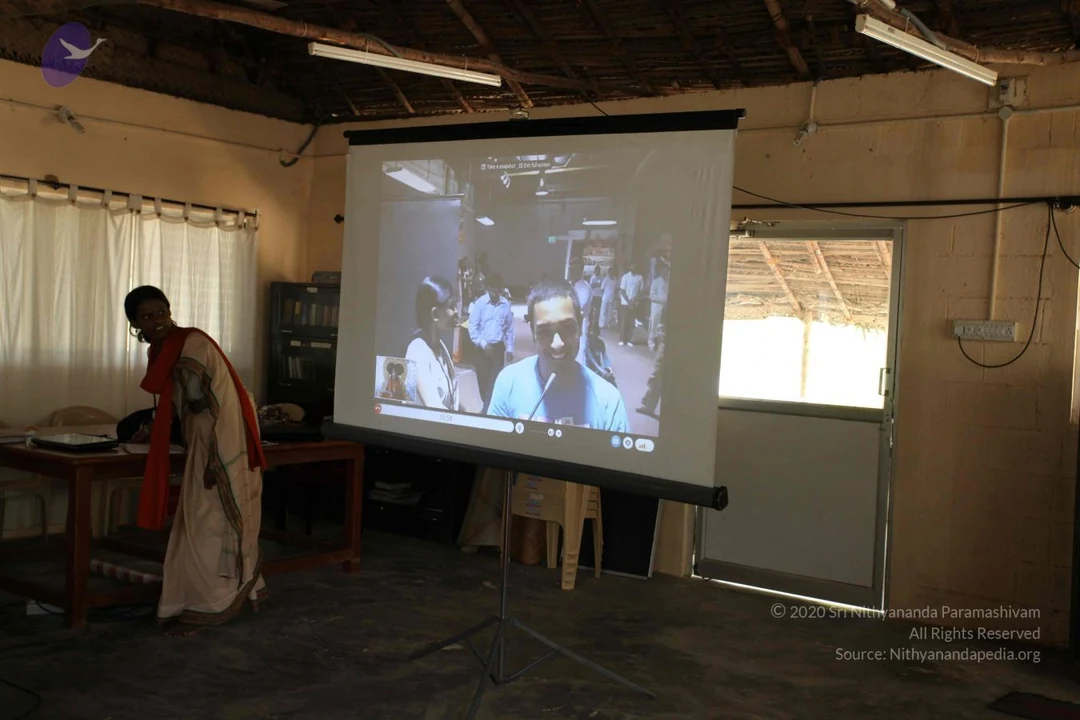
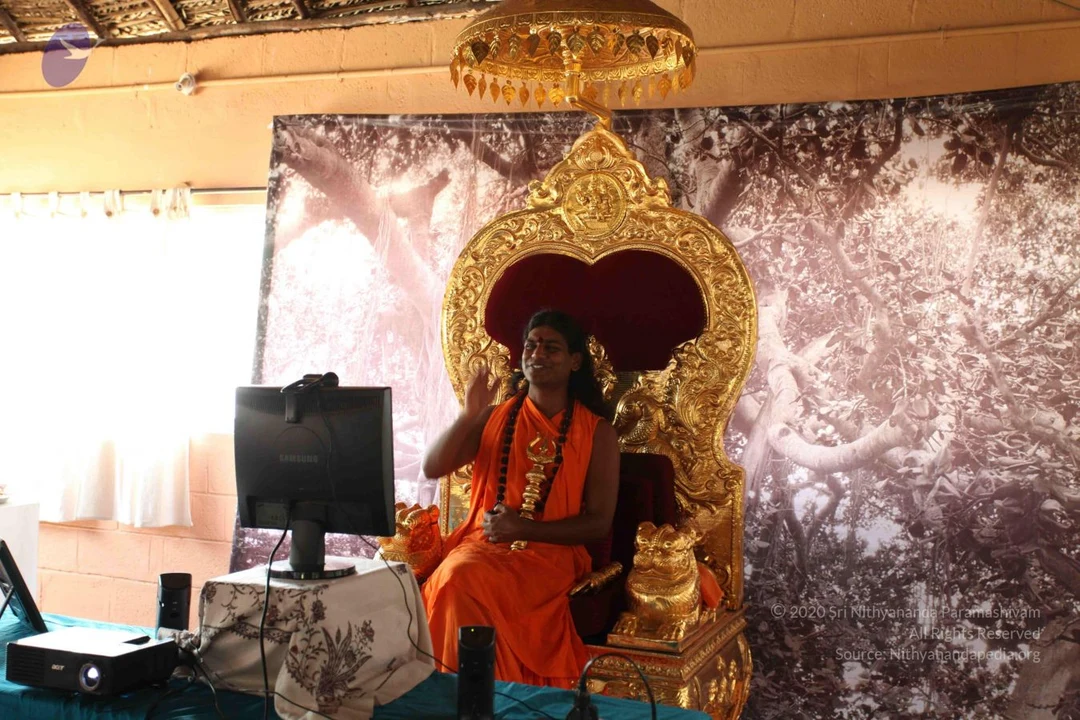
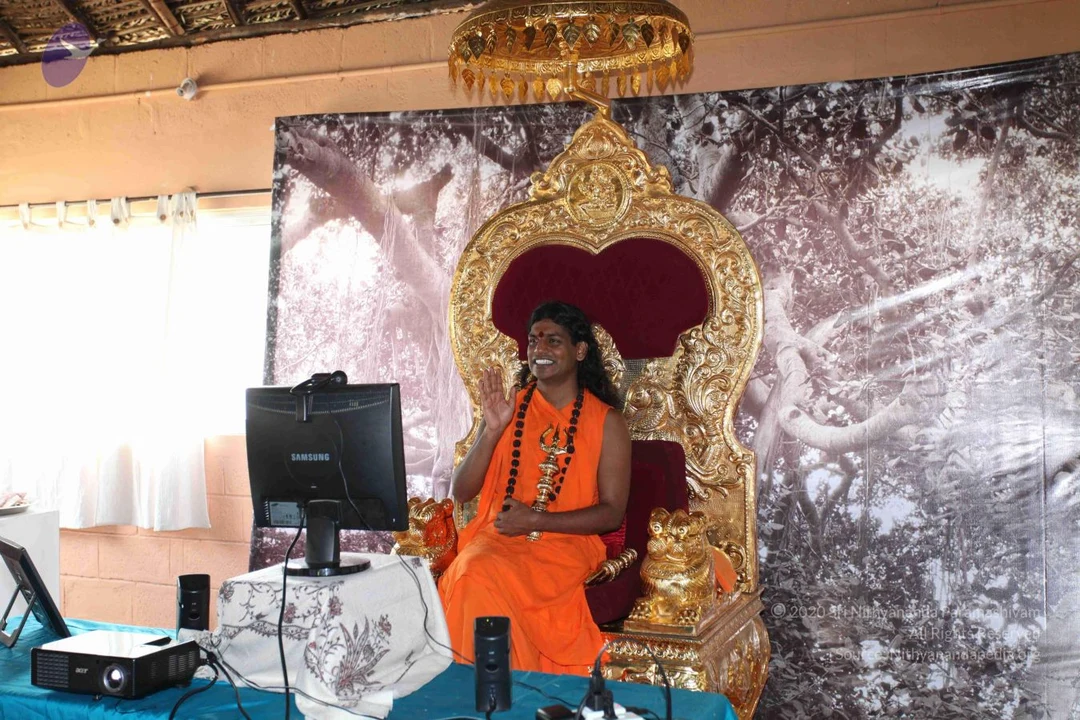
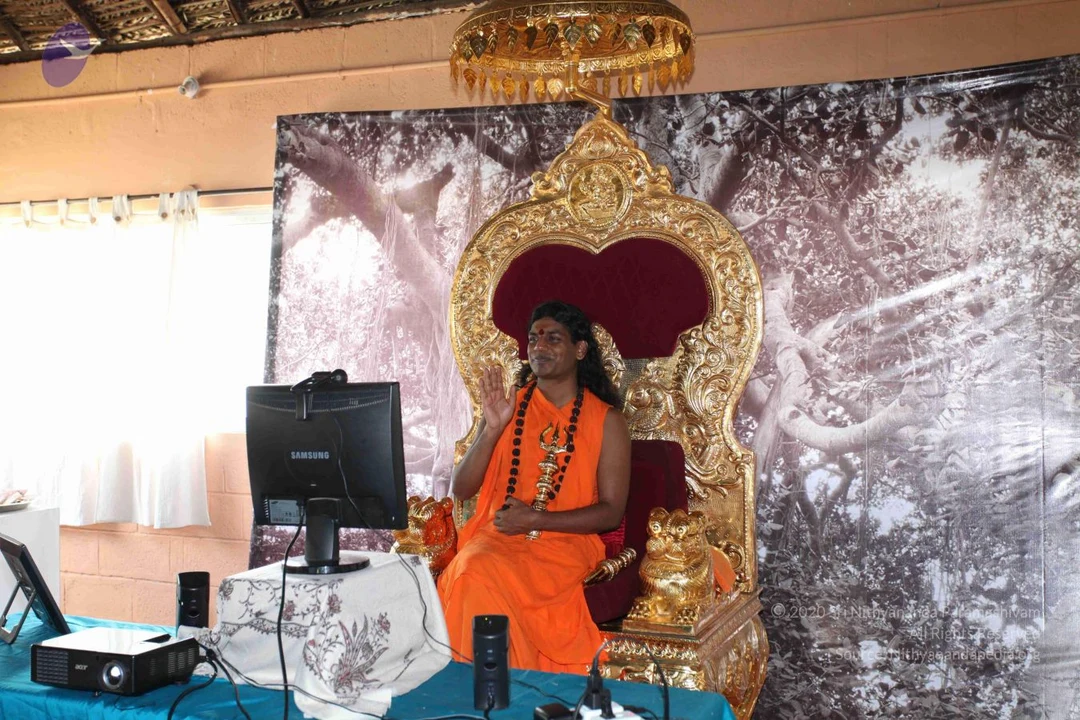
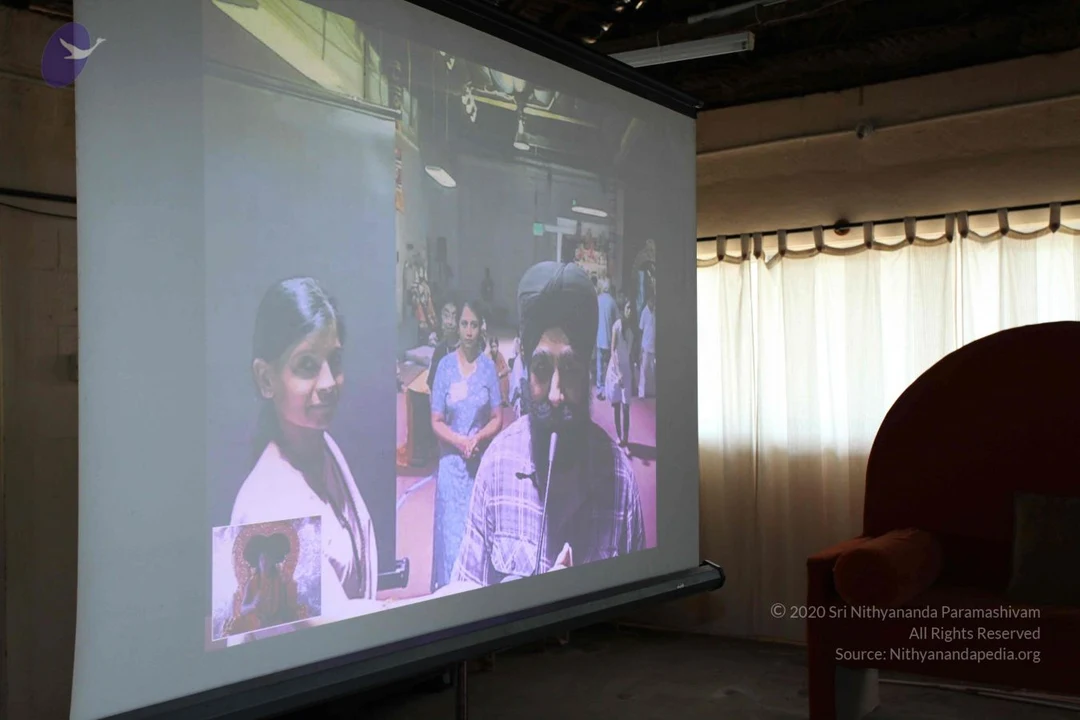
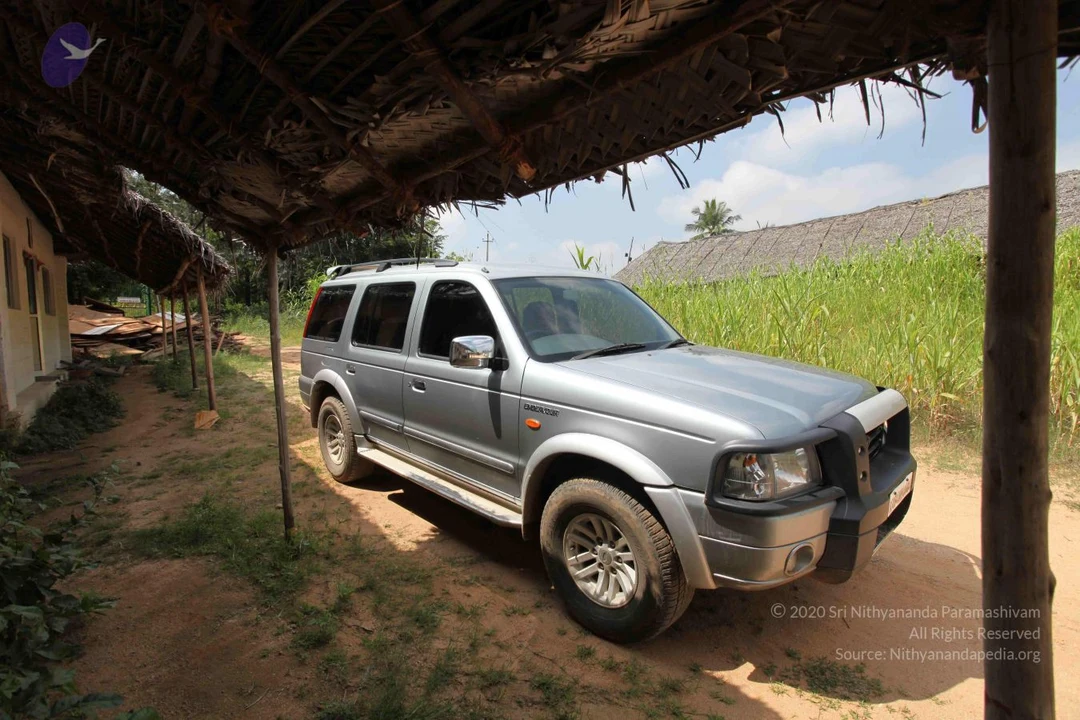
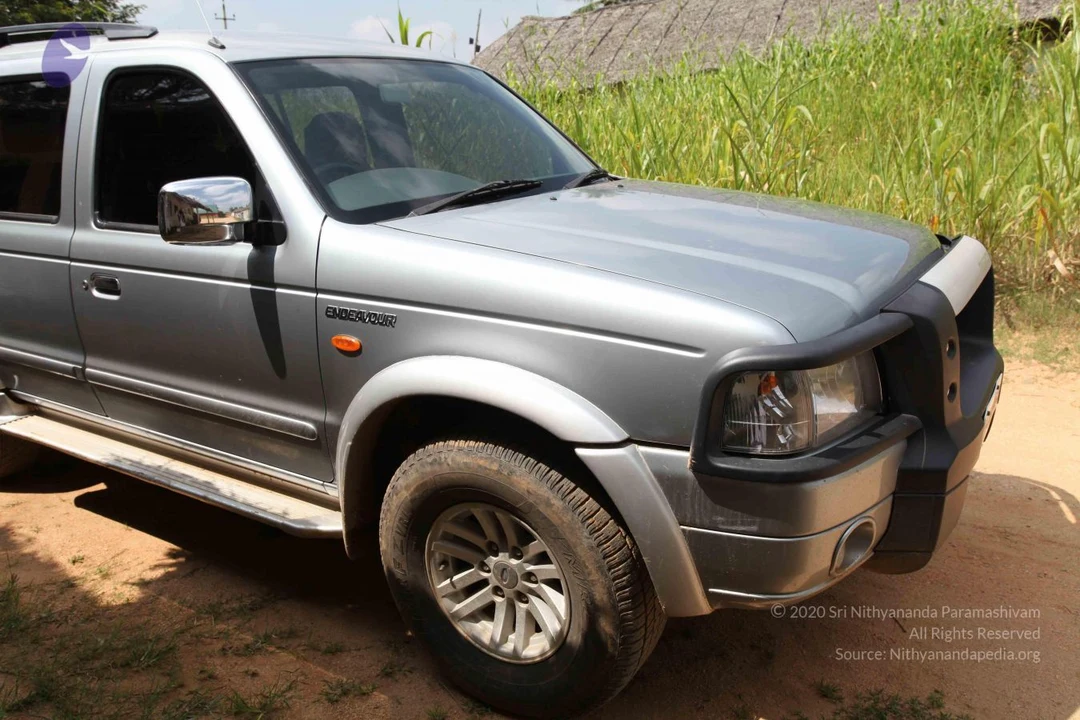
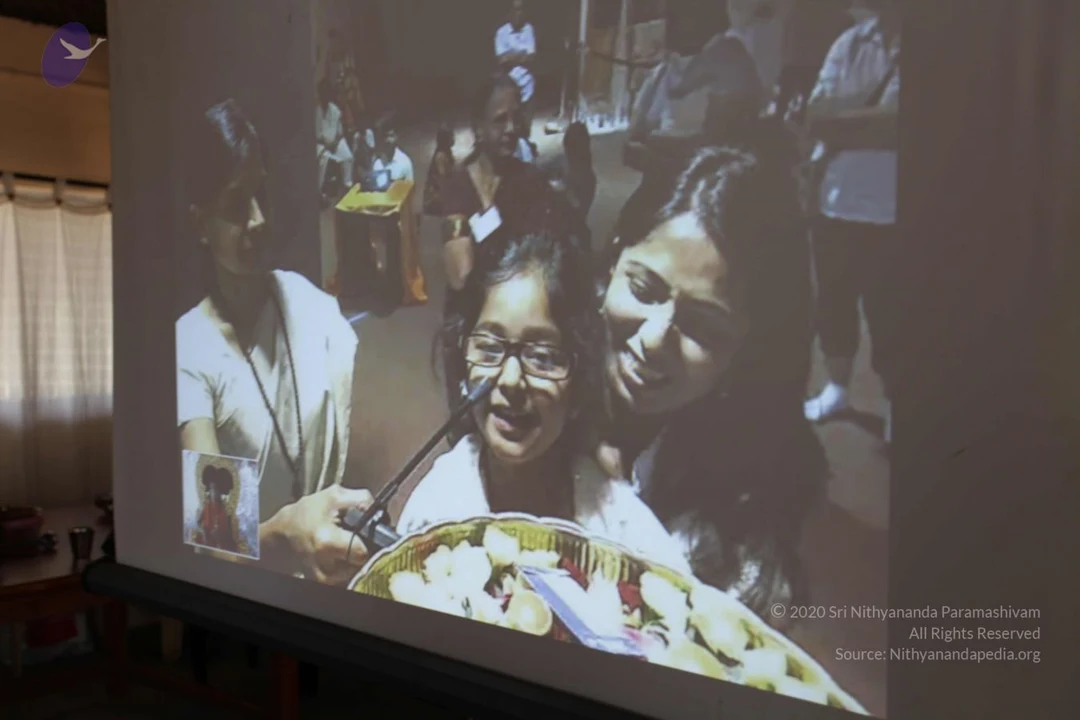
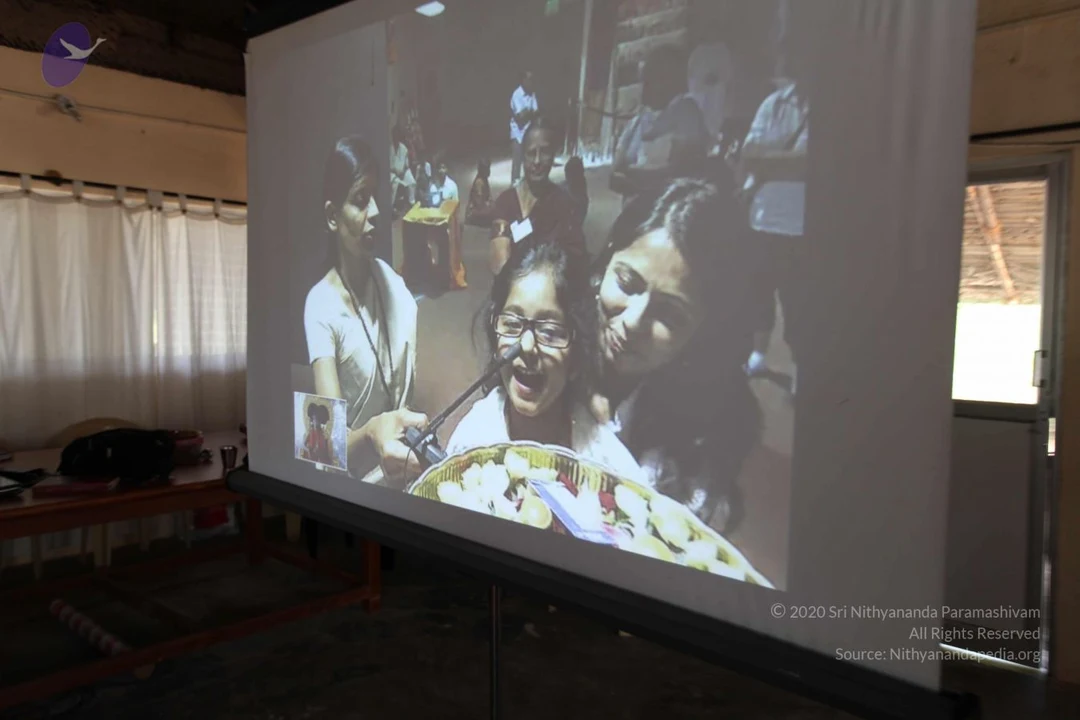
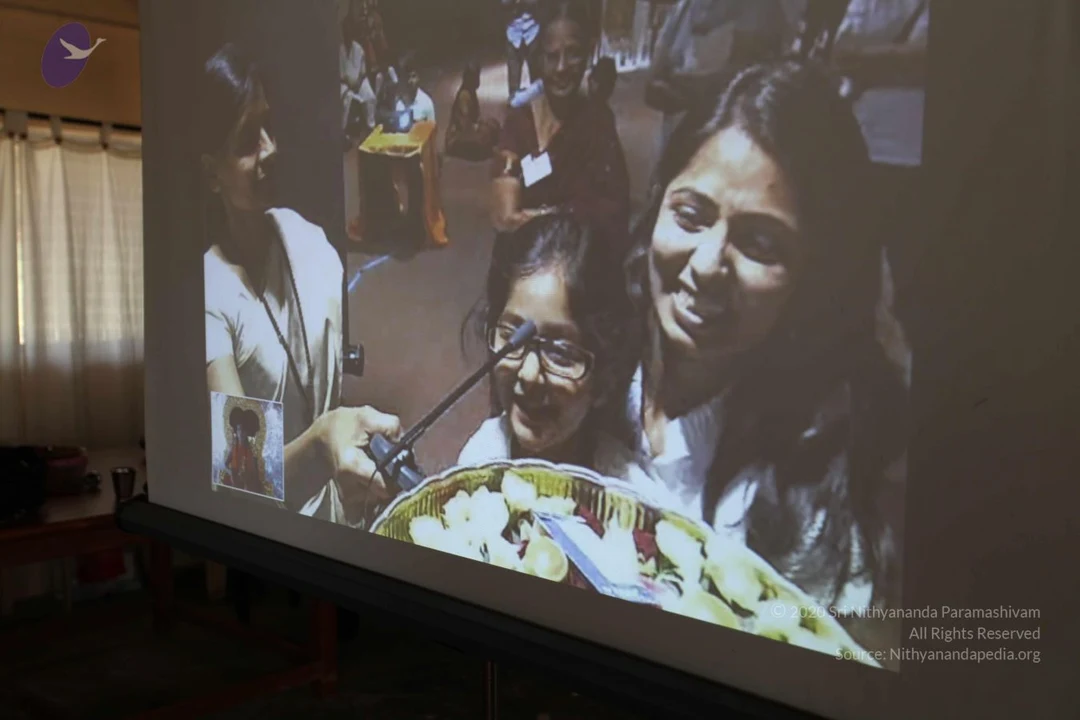
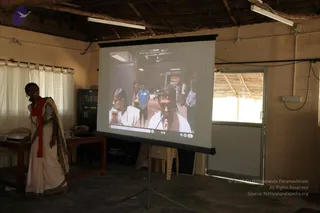
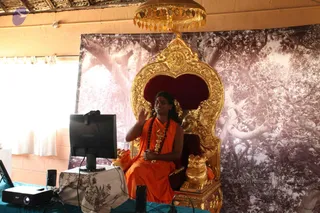
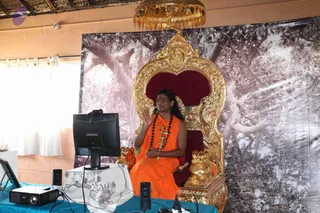
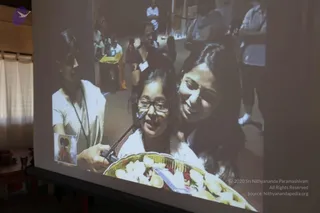
A photograph of a projection screen in a thatched-roof hall showing a live video feed of a smiling woman with long dark hair, wearing a purple and blue patterned top and a neck microphone, with a name badge reading 43. Behind her in the video is a shop interior with shelves and hanging items. On the left edge of the screen a smaller inset shows a woman and a framed religious picture. A person in a white sari stands at the left edge of the frame near a table with a glass. The screen is mounted on a tripod stand beside white curtains and a window opening onto thatch.A photograph of a simple room with a thatched ceiling and a projector screen on a stand. On the screen, a video call shows a man with dark hair in a white shirt with a red-and-white scarf, and a woman in white beside him. A woman in a white sari with a red shawl and green border stands at left, smiling, near a wooden table. A man in a blue shirt and another figure stand in the background of the video feed. A small inset image appears on the screen. The hall has a window with white curtains and a door at right.A photograph of a seated figure on an ornate gold throne with a red velvet back and a golden canopy hanging above. The person wears a saffron-orange robe, a long rudraksha mala, and a golden ceremonial pendant, and raises one hand in a gesture while speaking. Long dark hair falls past the shoulders. A golden lion-shaped armrest support sits beside the throne. Behind is a large printed backdrop of a banyan tree. In front, a blue-draped table holds a monitor, a projector, a speaker and a floral cloth. The setting appears to be a talk or satsang. Candidate appearance matches Swamiji (probable) by the saffron robe, rudraksha mala, ornate gold pendant and long hair, seated on a throne while teaching.A seated man in an orange-saffron robe sits on an ornate gold throne with a deep red velvet cushion and carved lion-like armrests. He wears long dark hair, a dark rudraksha mala around his neck, a gold ceremonial pendant, and a red forehead mark, and he raises one hand in greeting while speaking. In front of him is a blue-draped table with a Samsung monitor, a projector, speakers and a small laptop, with a floral white cloth. Behind the throne hangs a large black-and-white backdrop of a banyan-type tree, and a golden ornate canopy hangs from the ceiling. Swamiji (probable): a long-haired figure in saffron with rudraksha mala and gold pendant seated on the throne, identified by appearance cues only.A silver-grey Ford Endeavour SUV parked on dirt ground beside tall green grass and a thatched roof. Chrome side mirror, black front bull bar, chrome door sill step, and alloy wheel are visible. No people are present.A projection screen in a room shows a photograph of a young girl with glasses and a woman smiling beside her, with a tray of white and pink offerings or sweets in front of them. Behind them a man in a light shirt holds the tray at the left edge, and more people in a hall are visible in the background. A small inset photo of a figure in red at the lower left is part of the projected slide. A reflective table and a white curtain are visible at the left edge of the room. Three physical people appear in the projected image, and the photo is of a screen in a room, so people counts those in the projected scene.

Pancha-Tapas

21 photosSource gallery
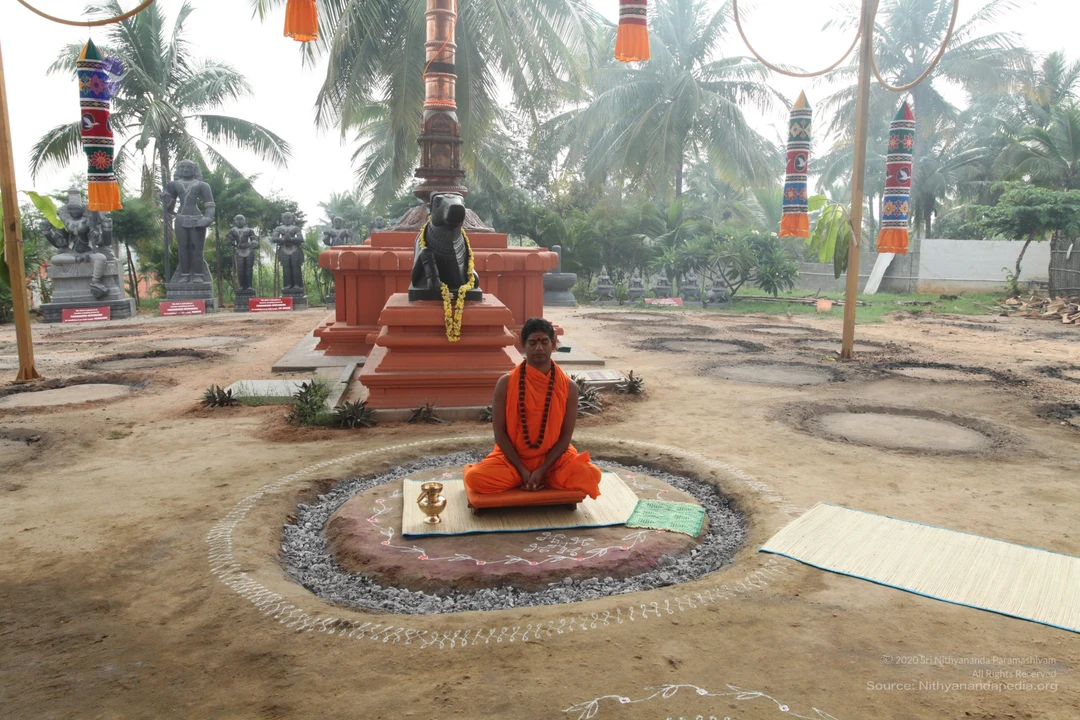
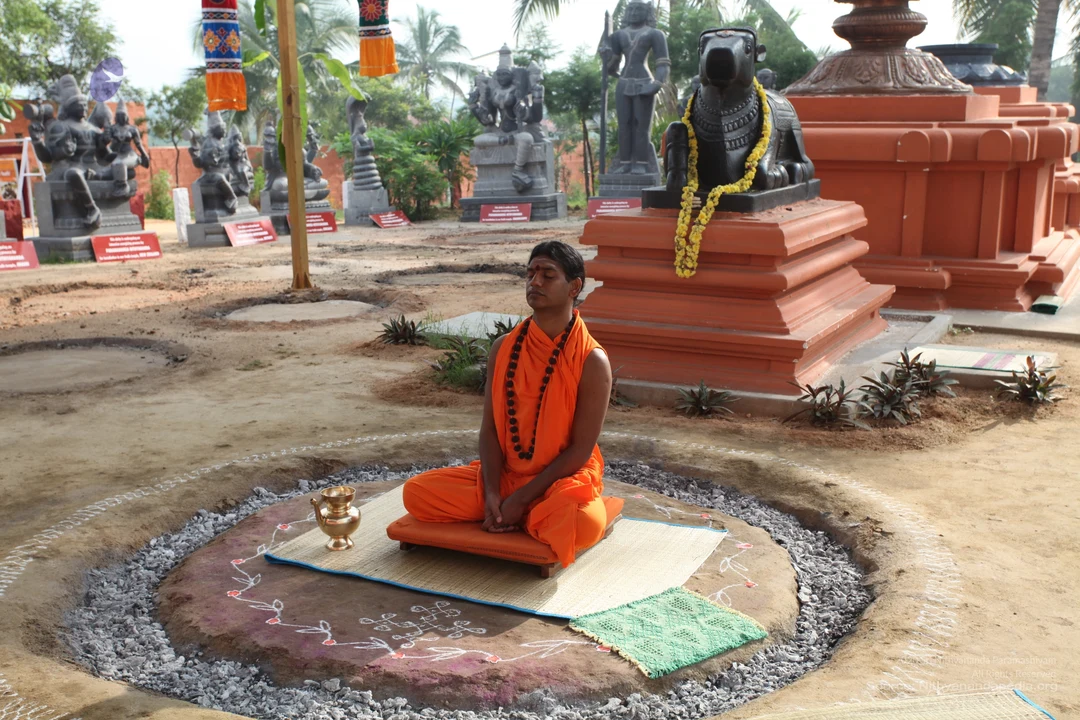
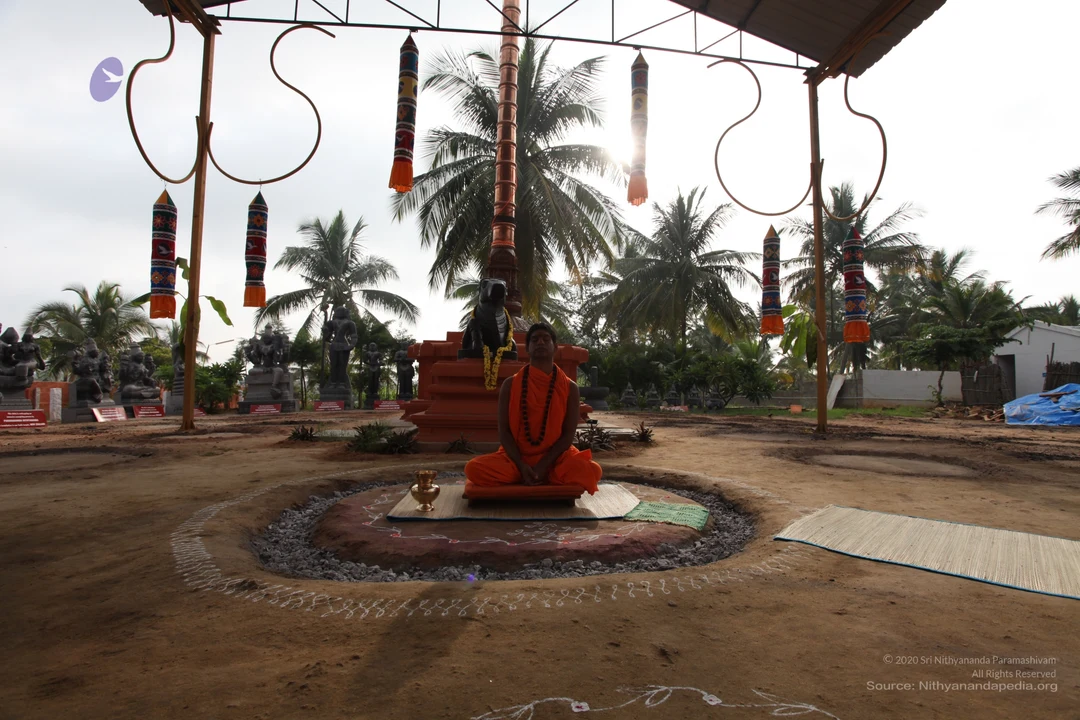
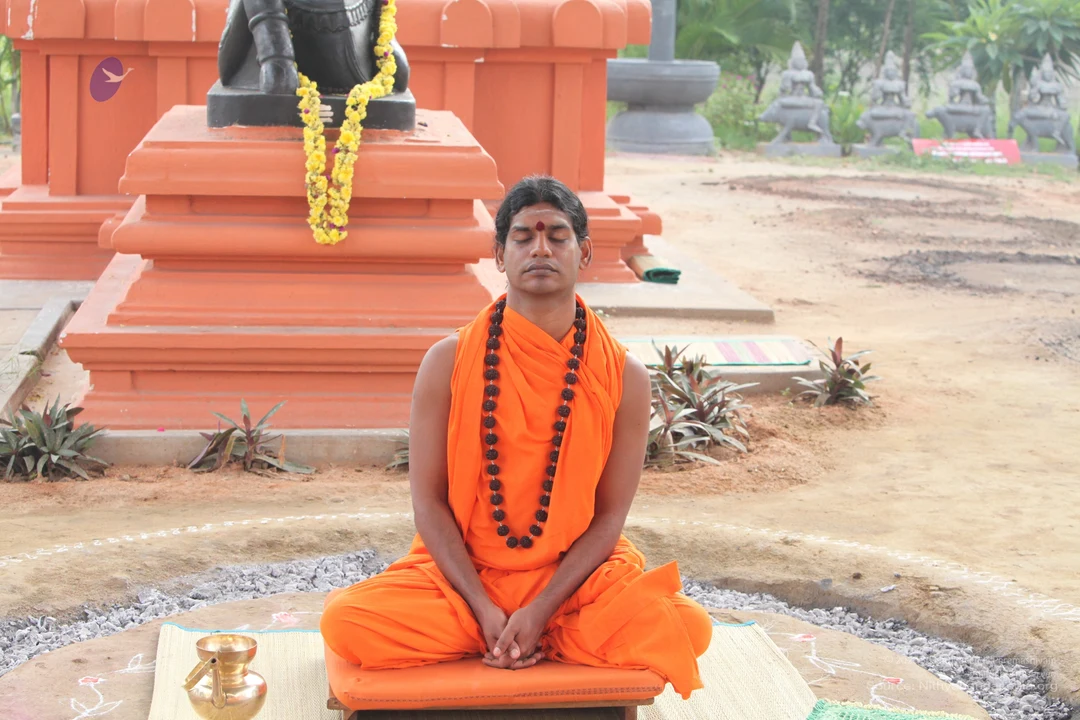
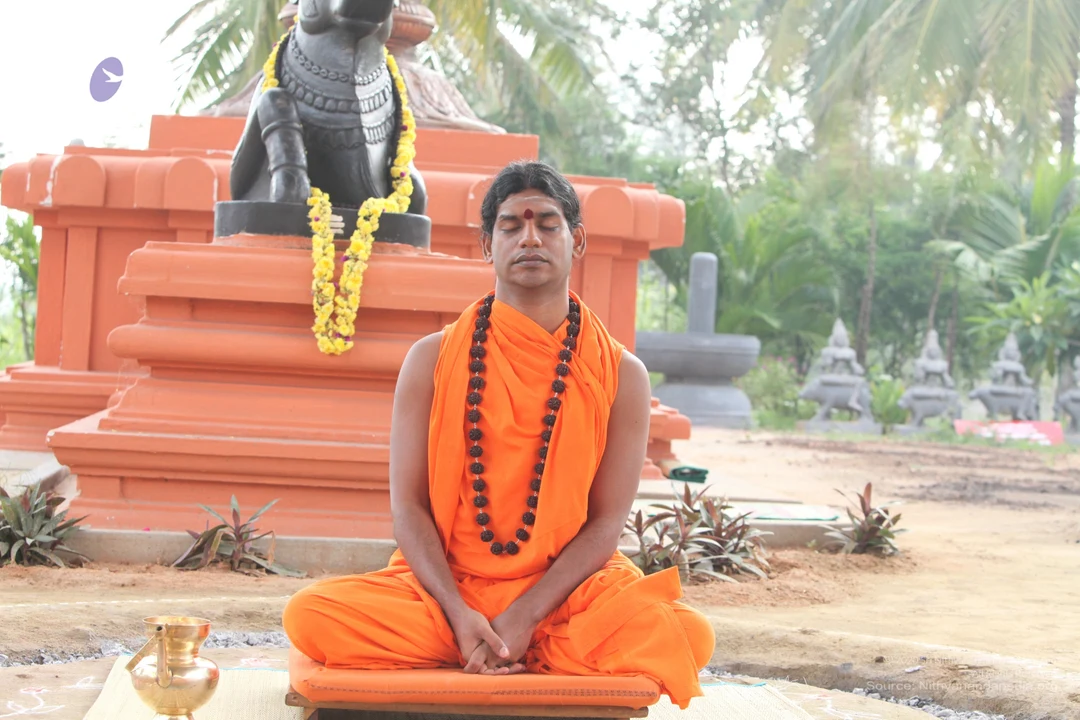
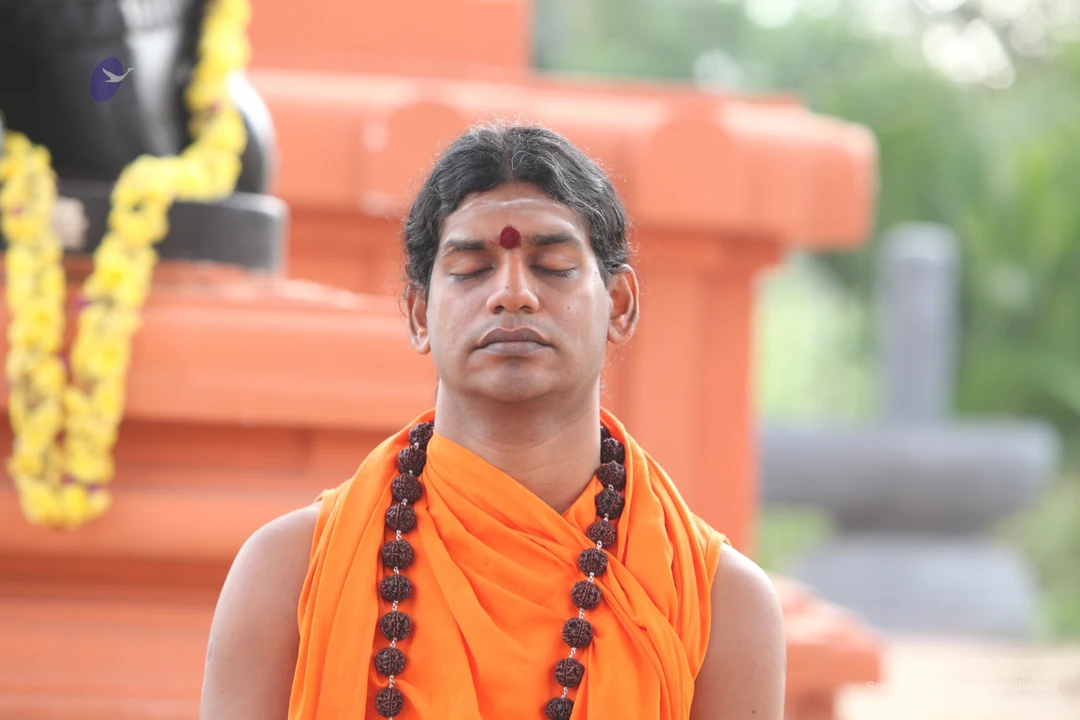
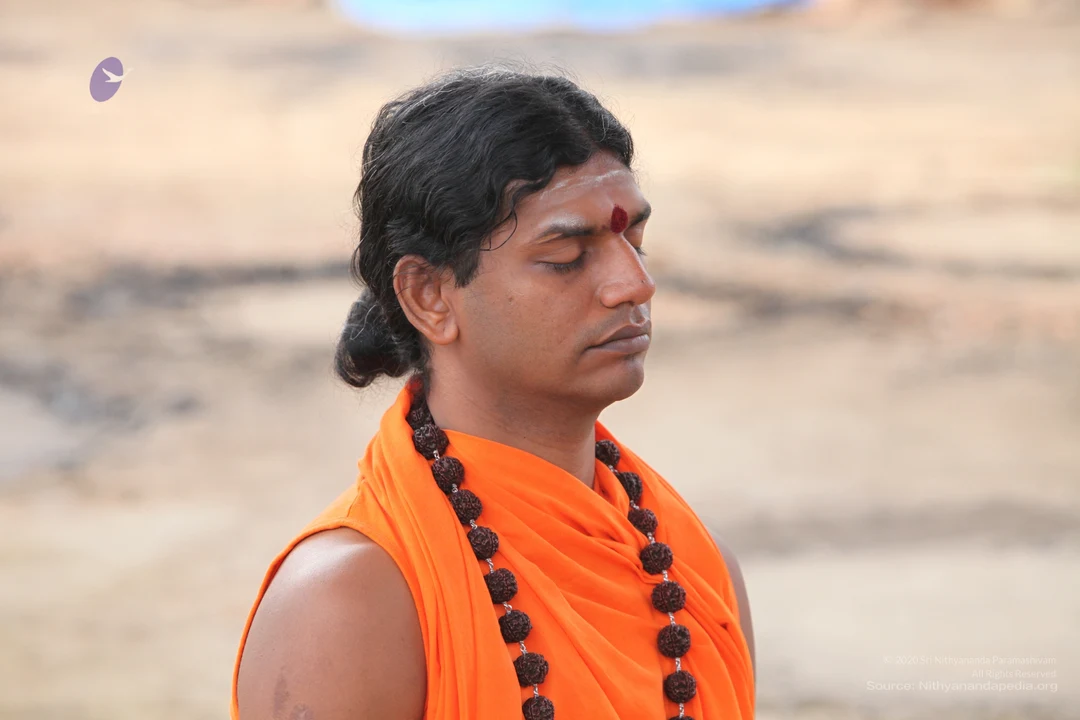
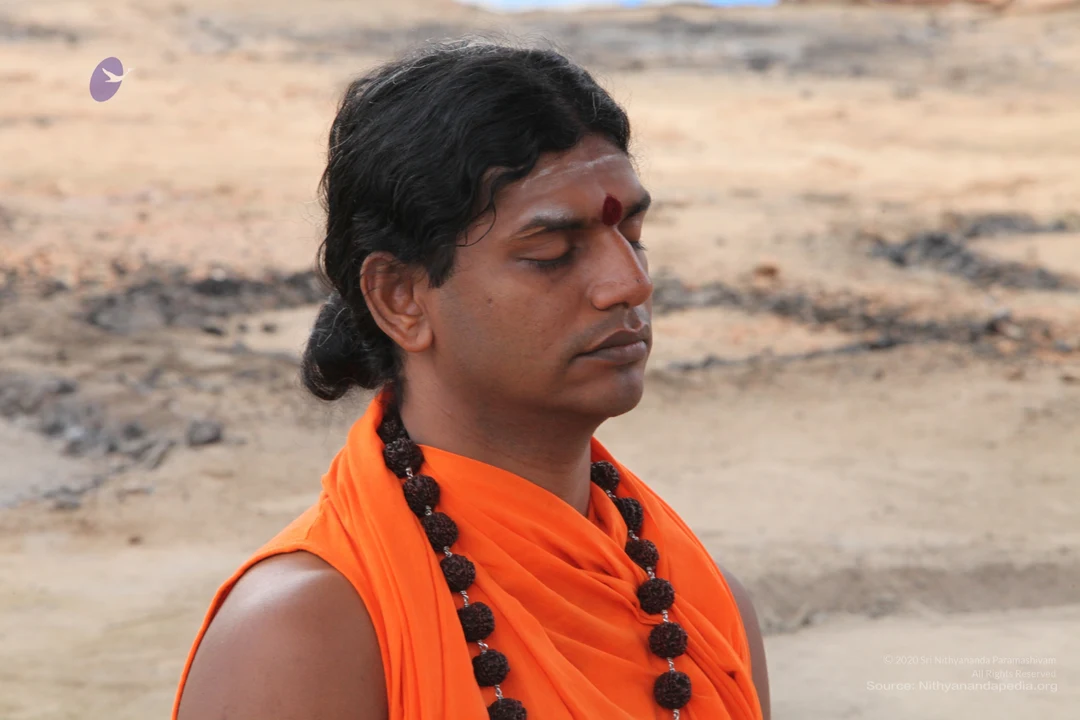
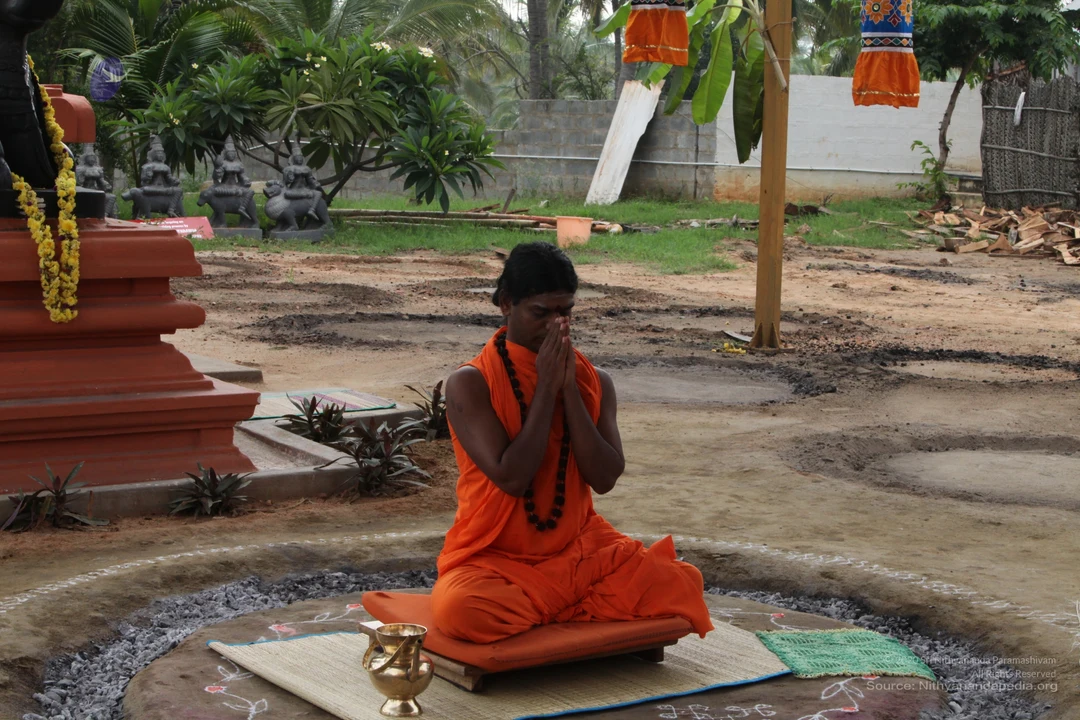
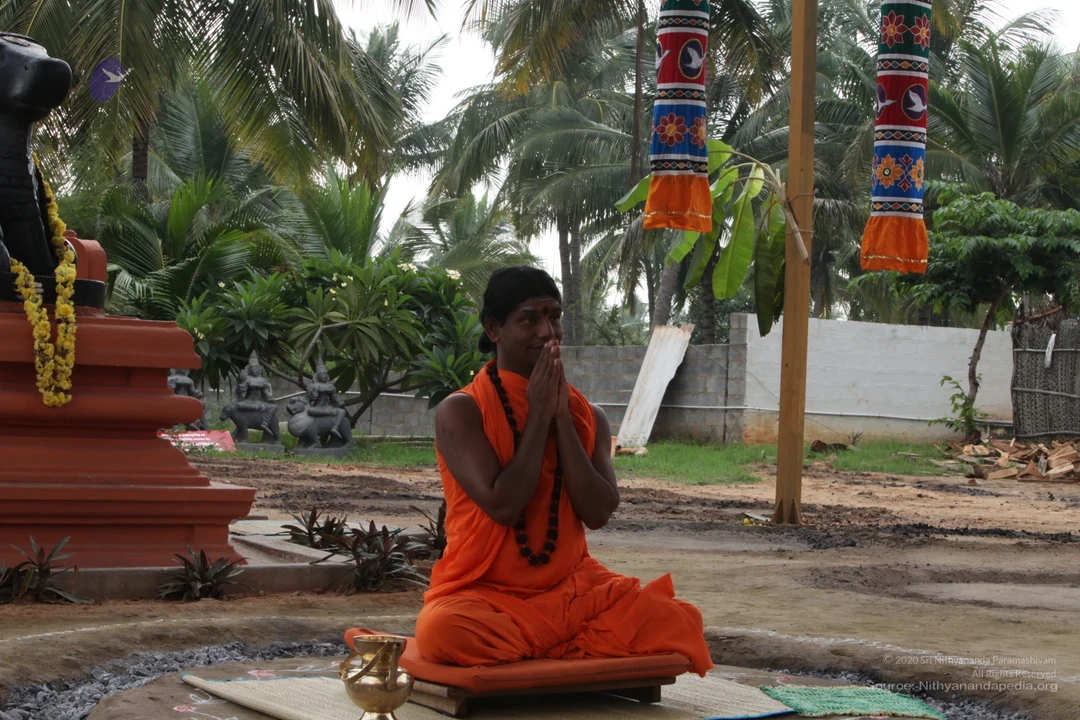
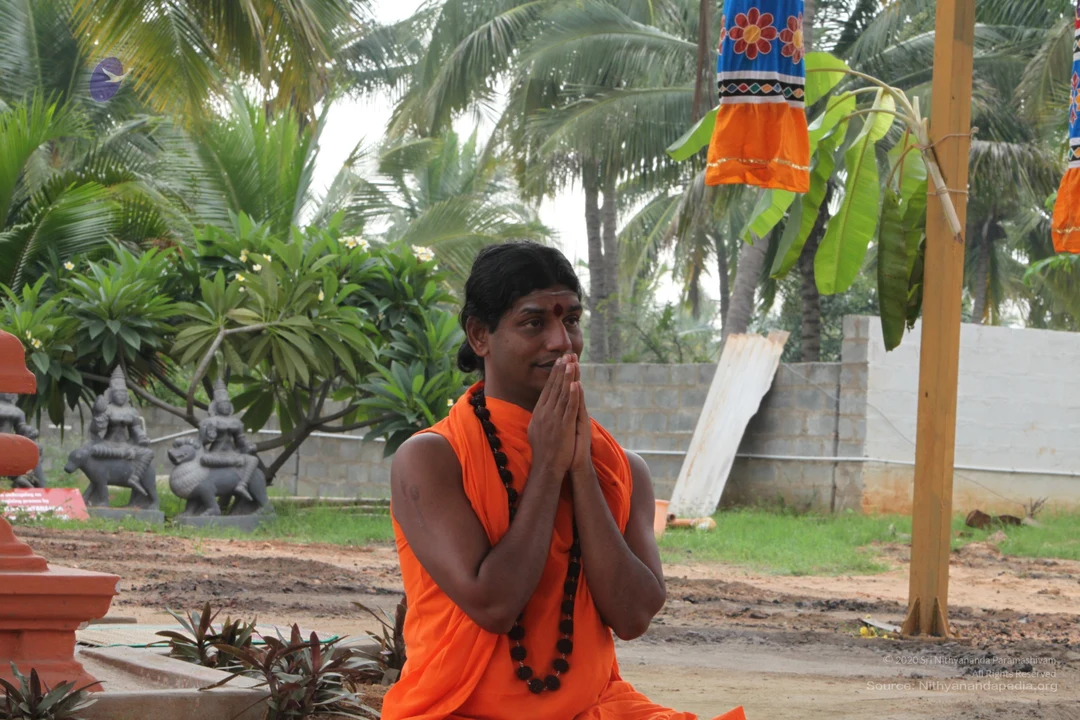
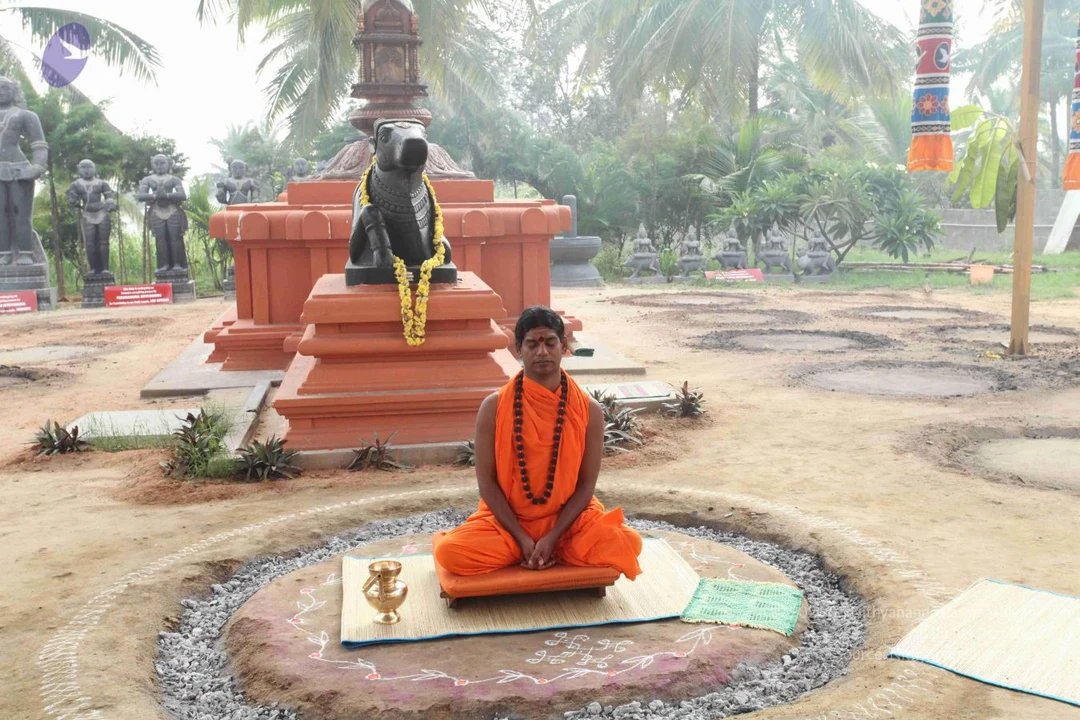
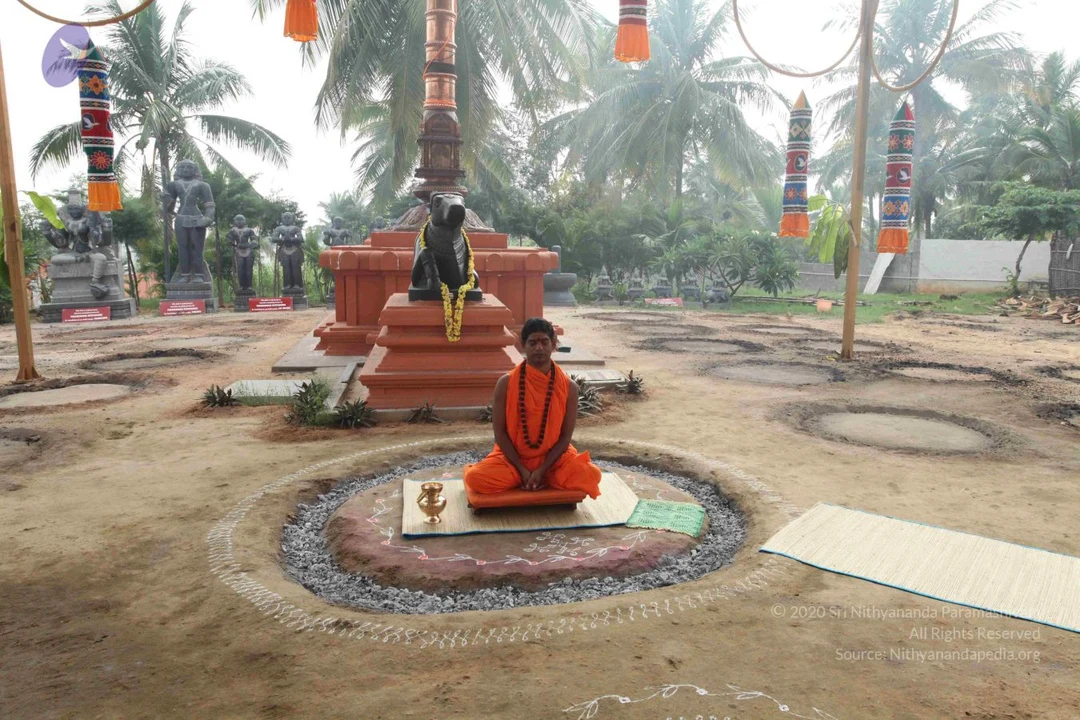
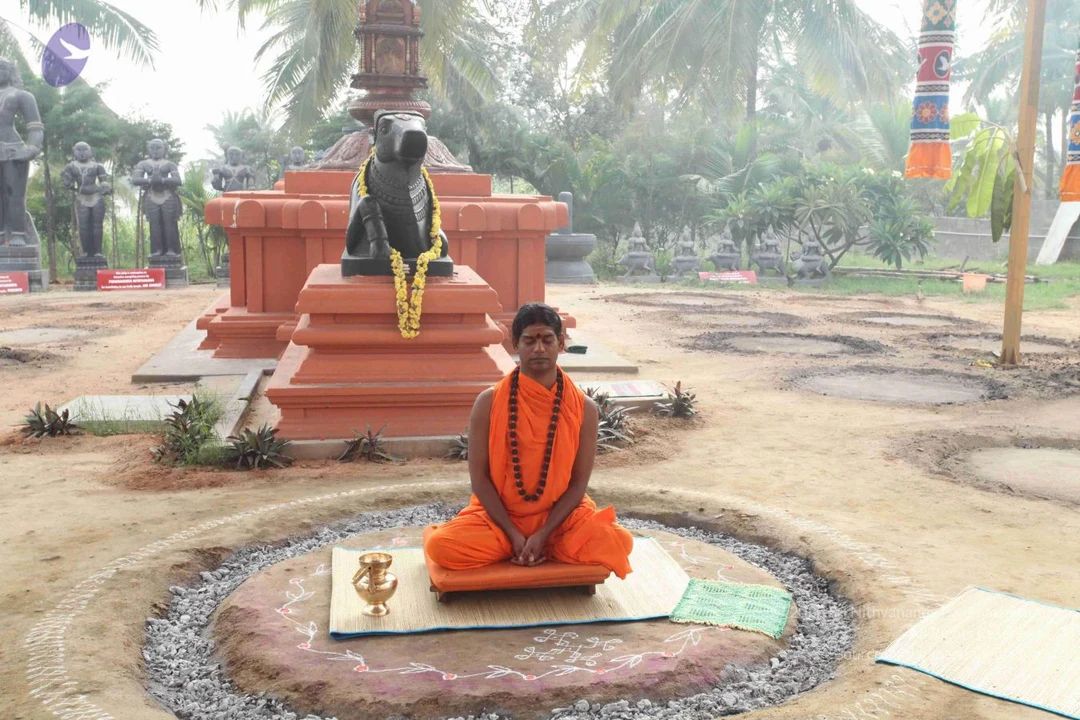
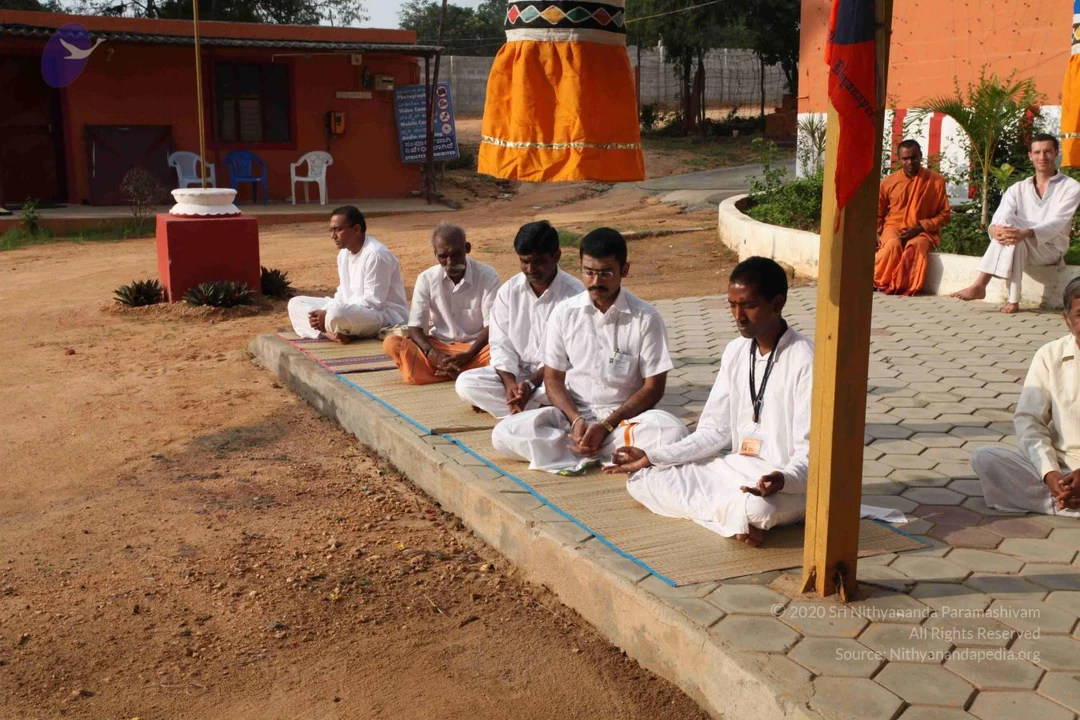
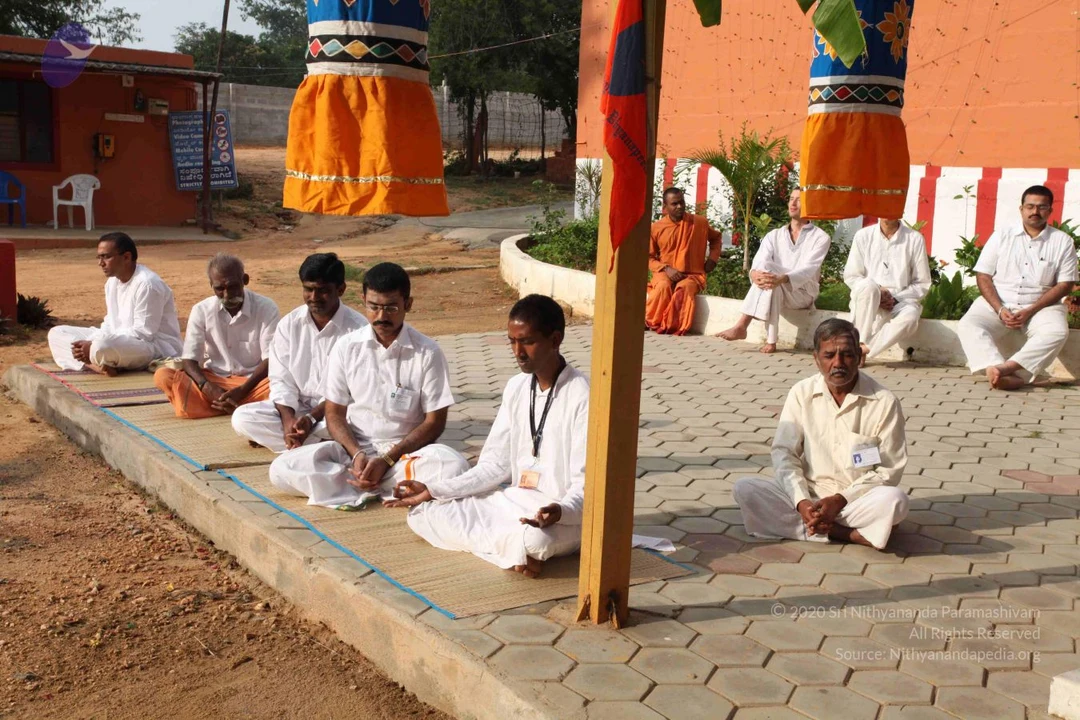
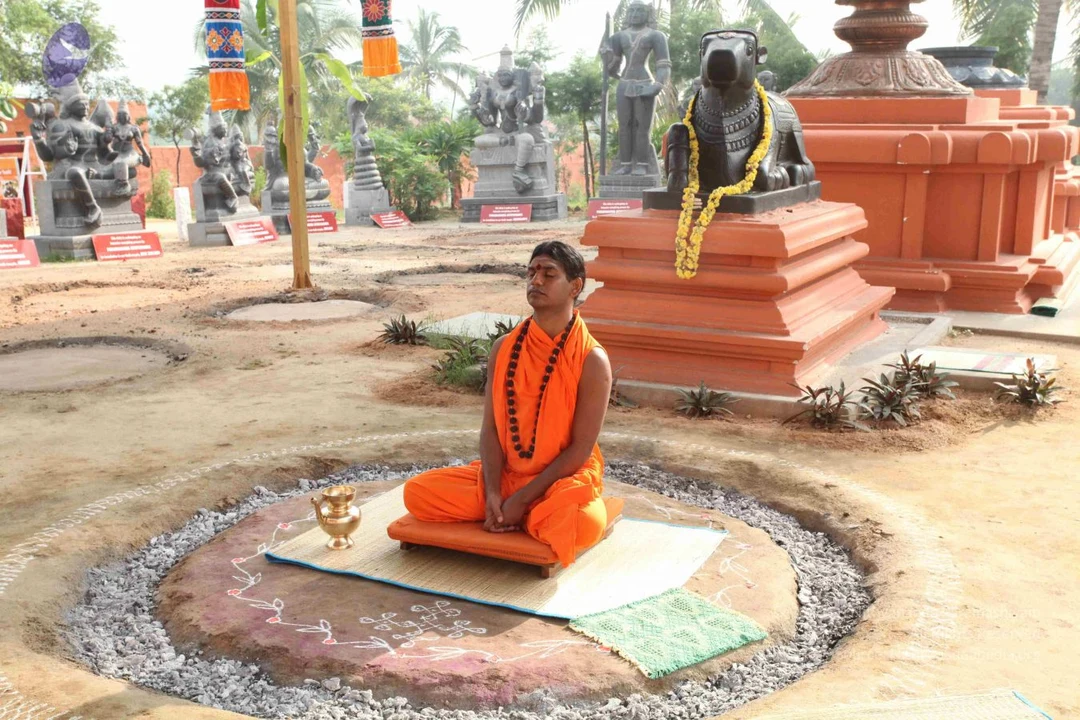
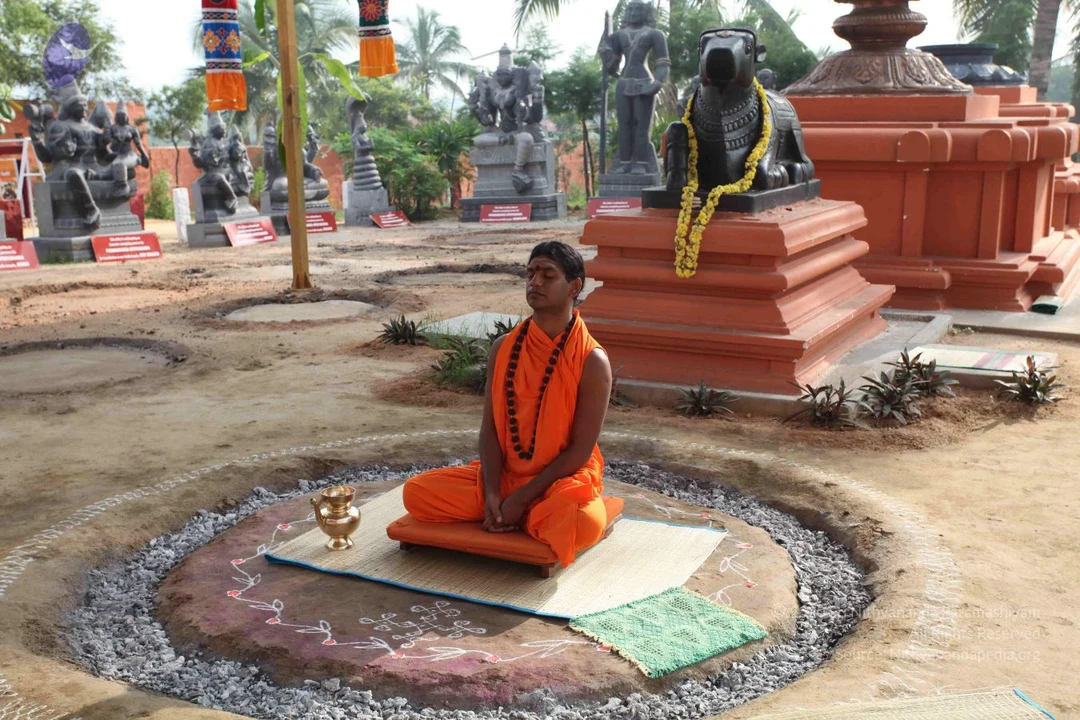
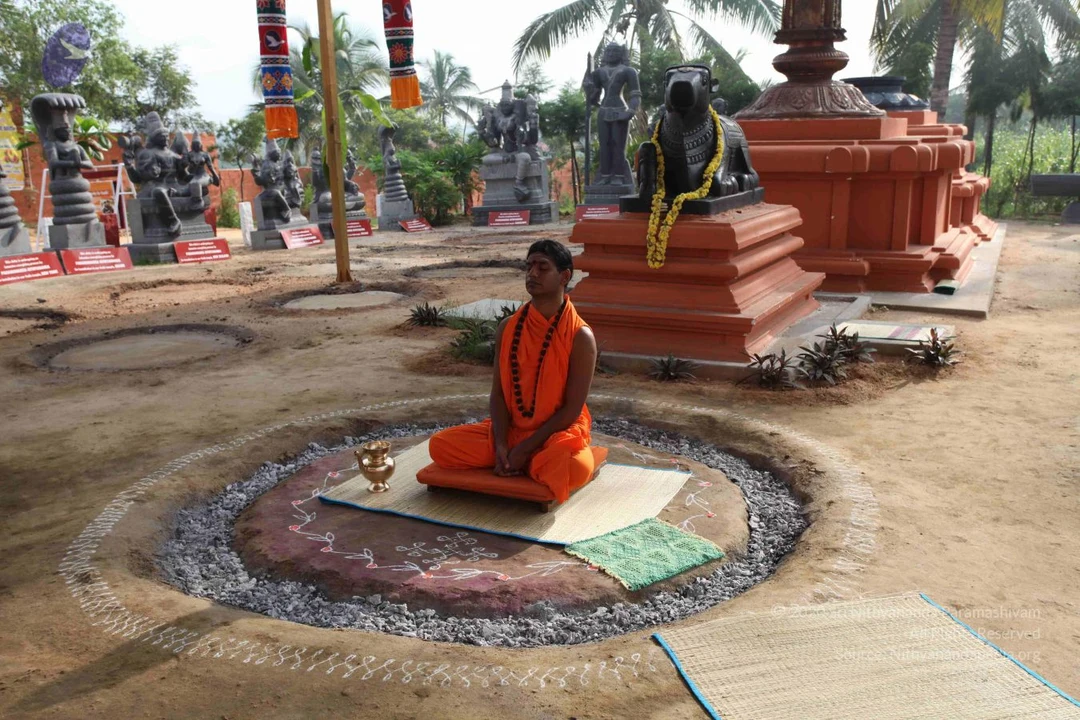
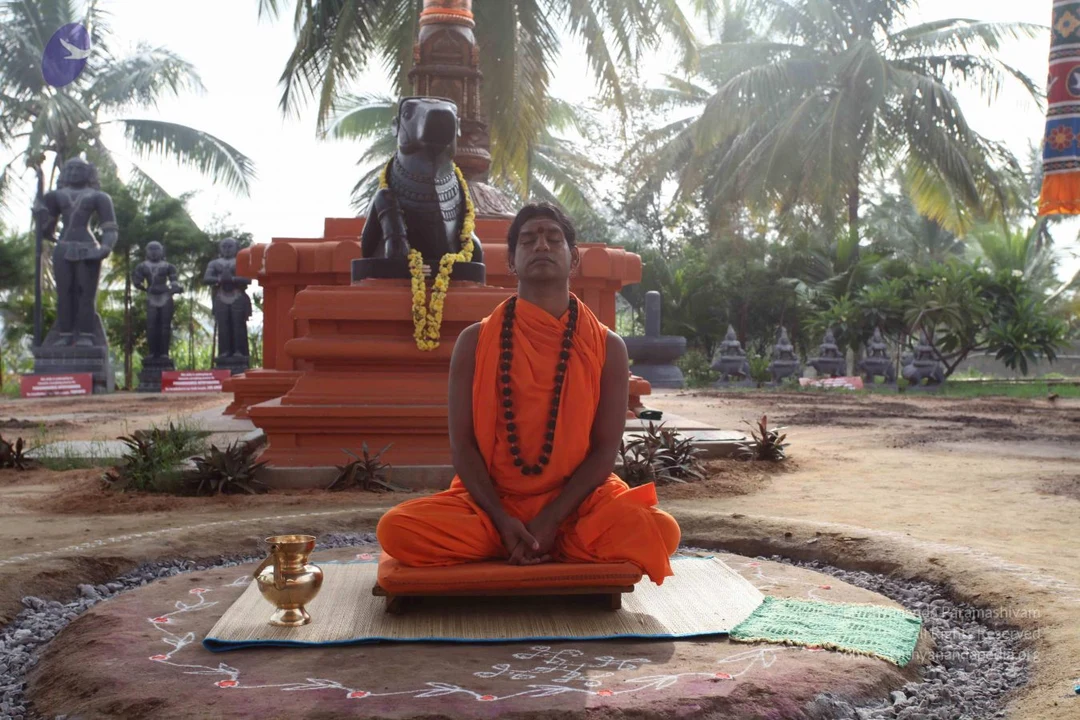
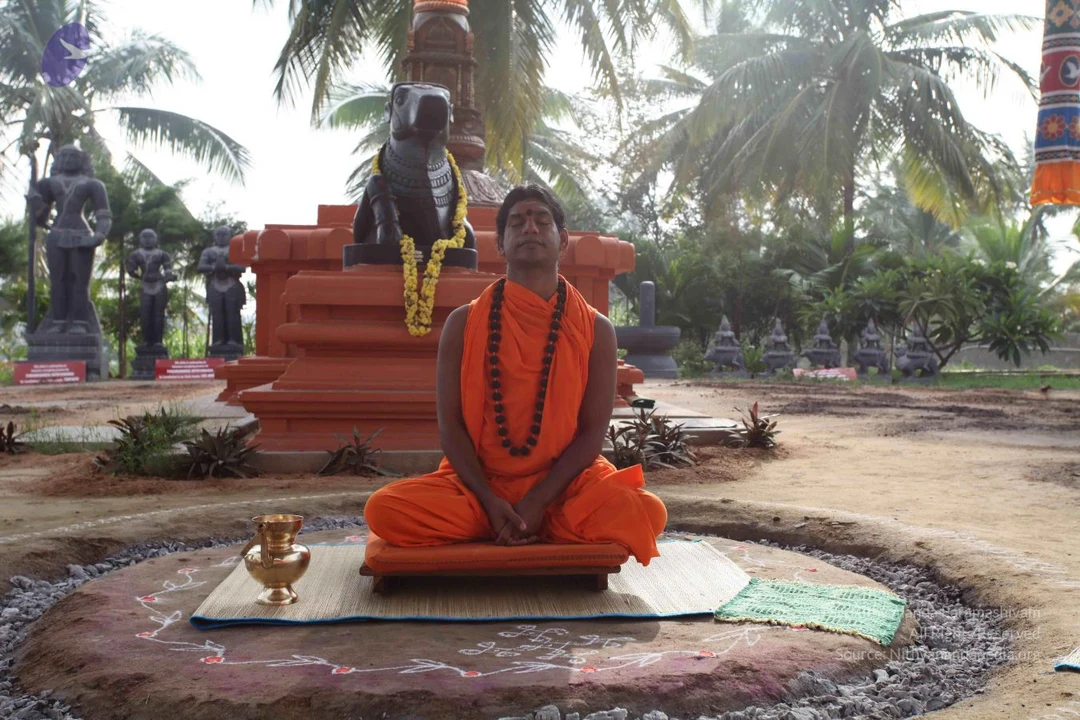
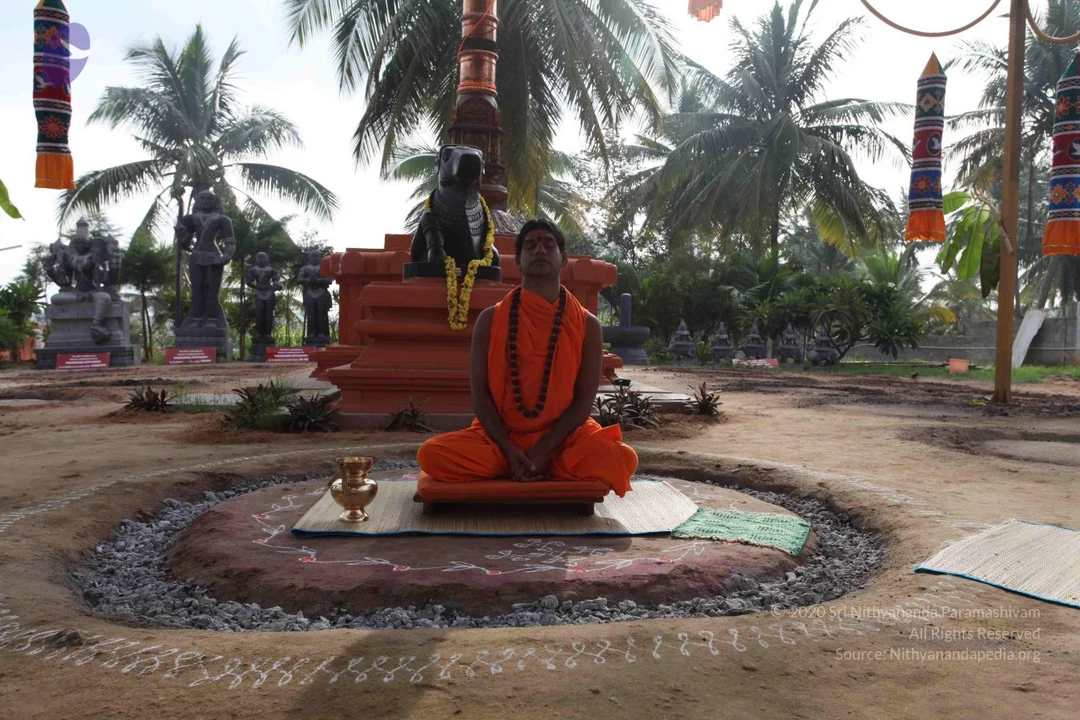
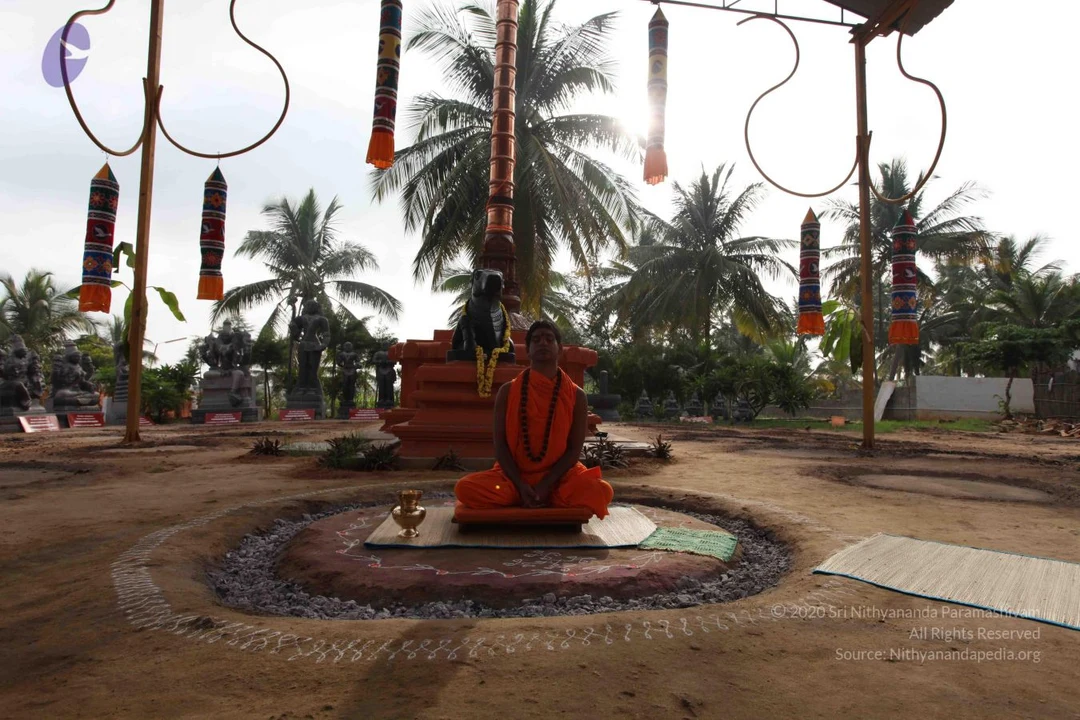
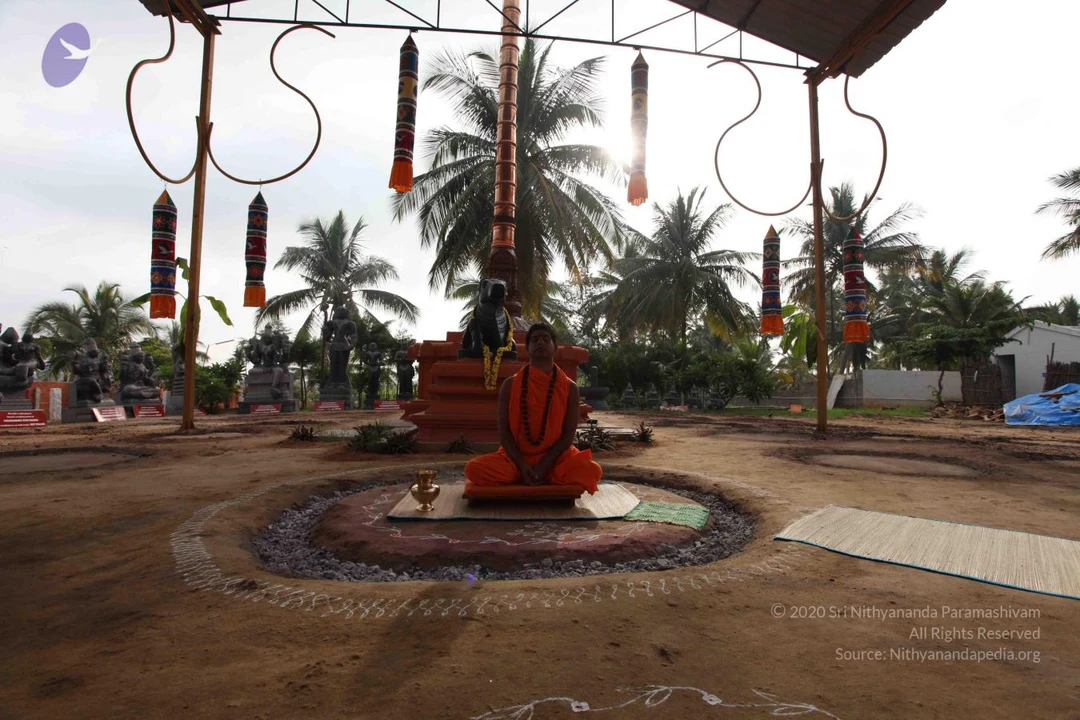
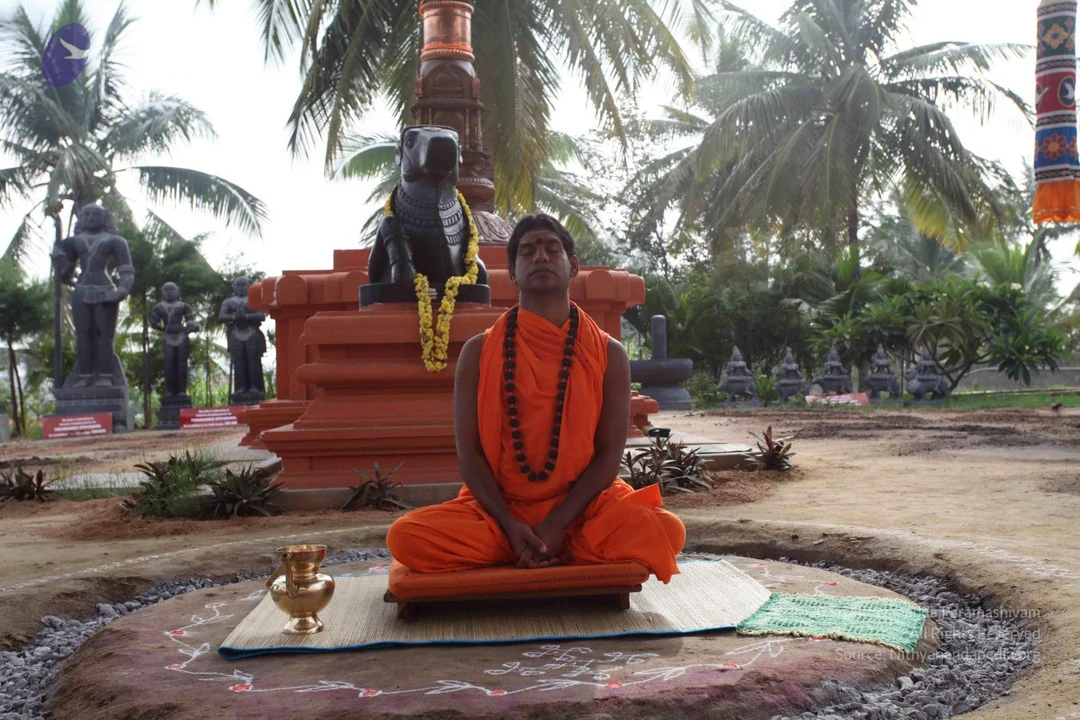
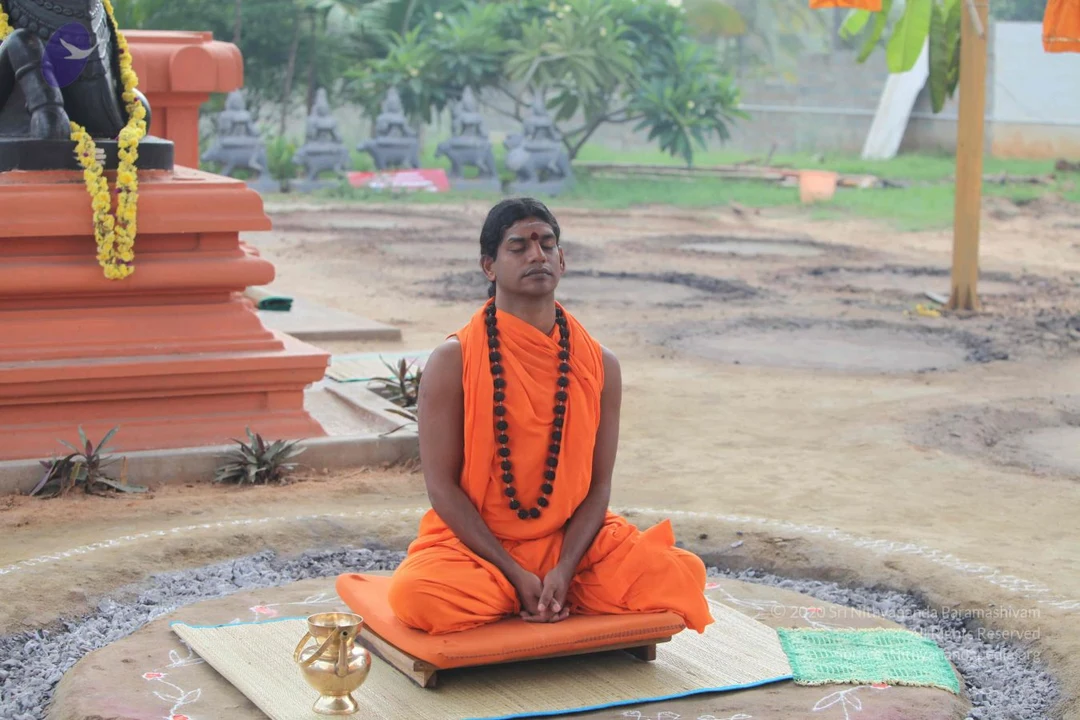
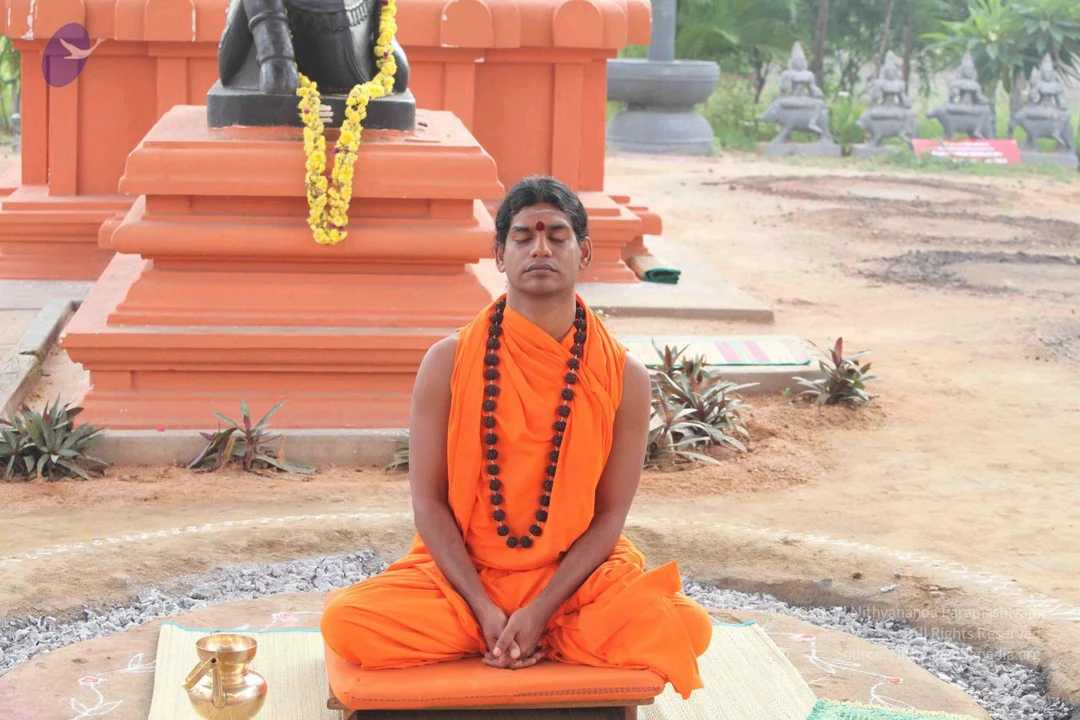
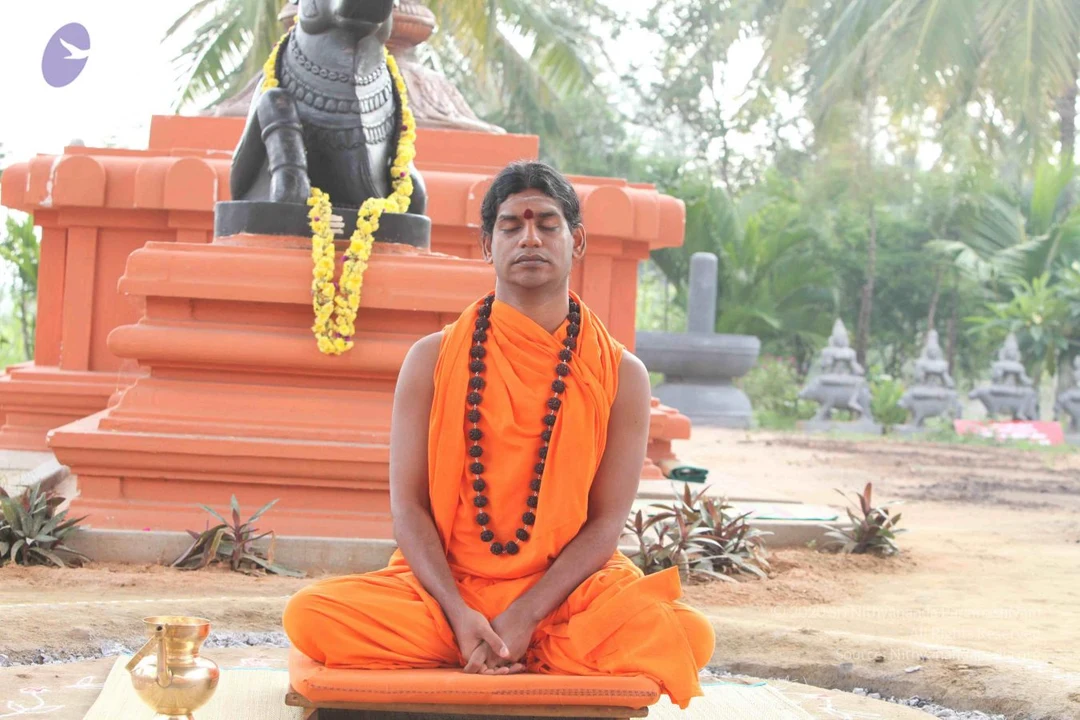
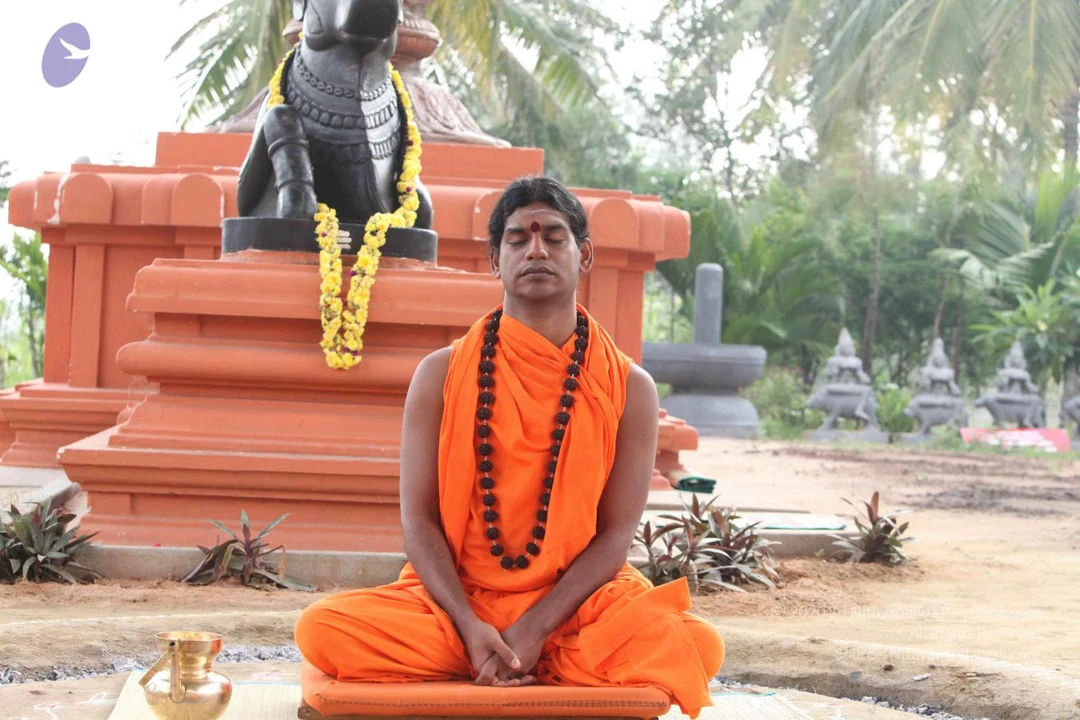
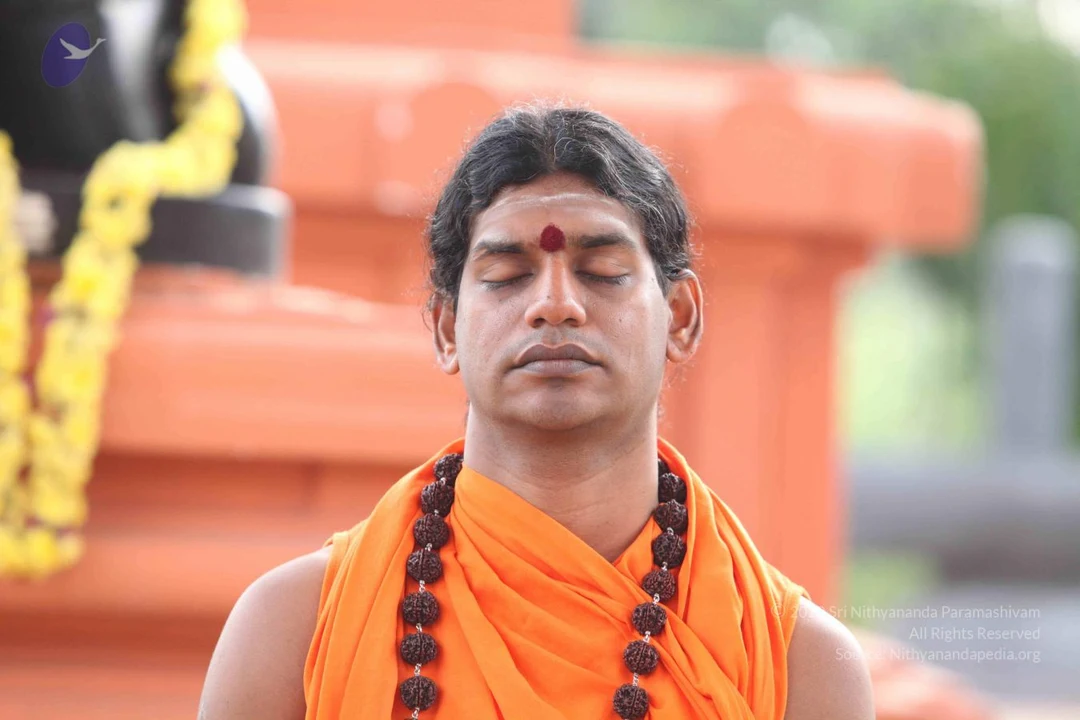
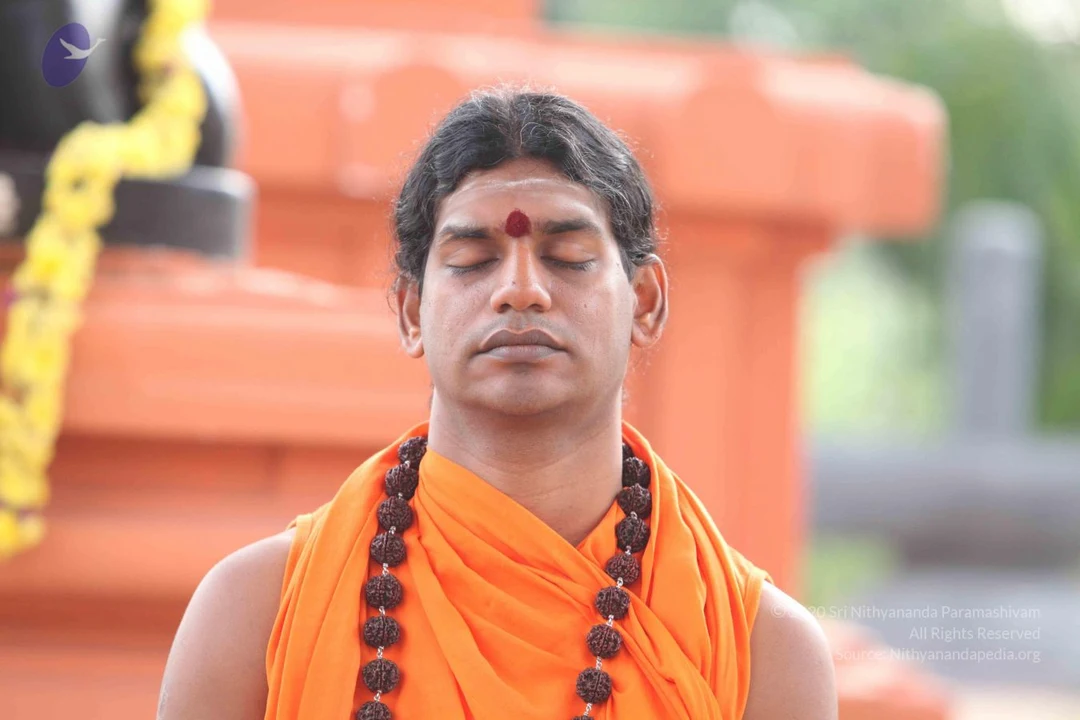
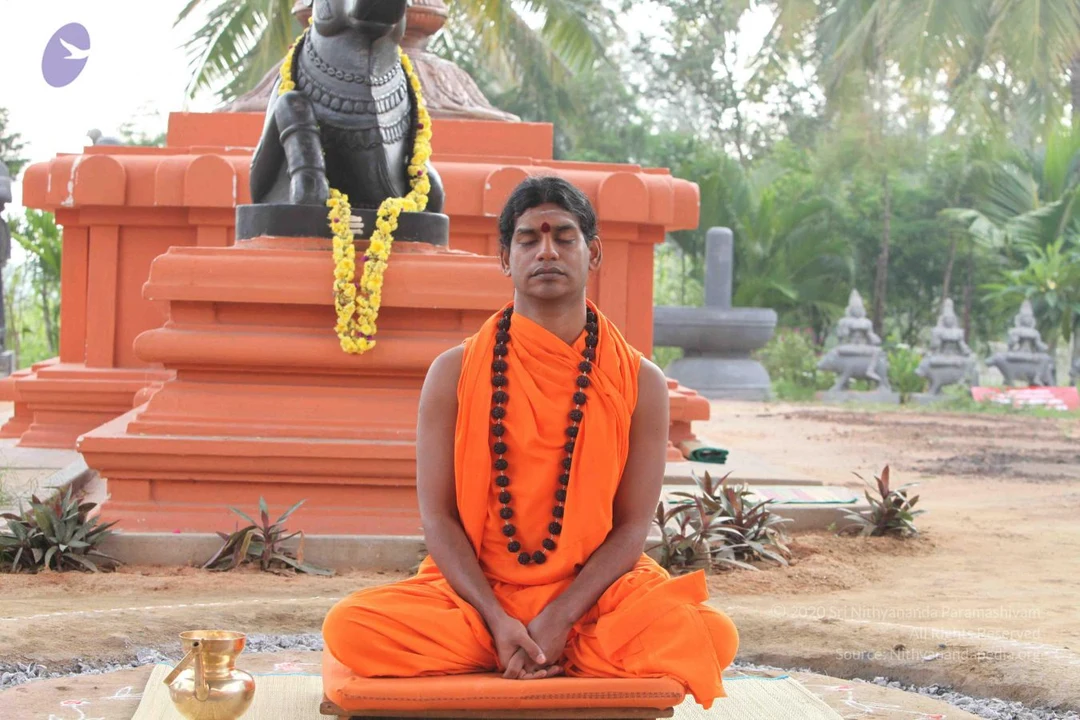
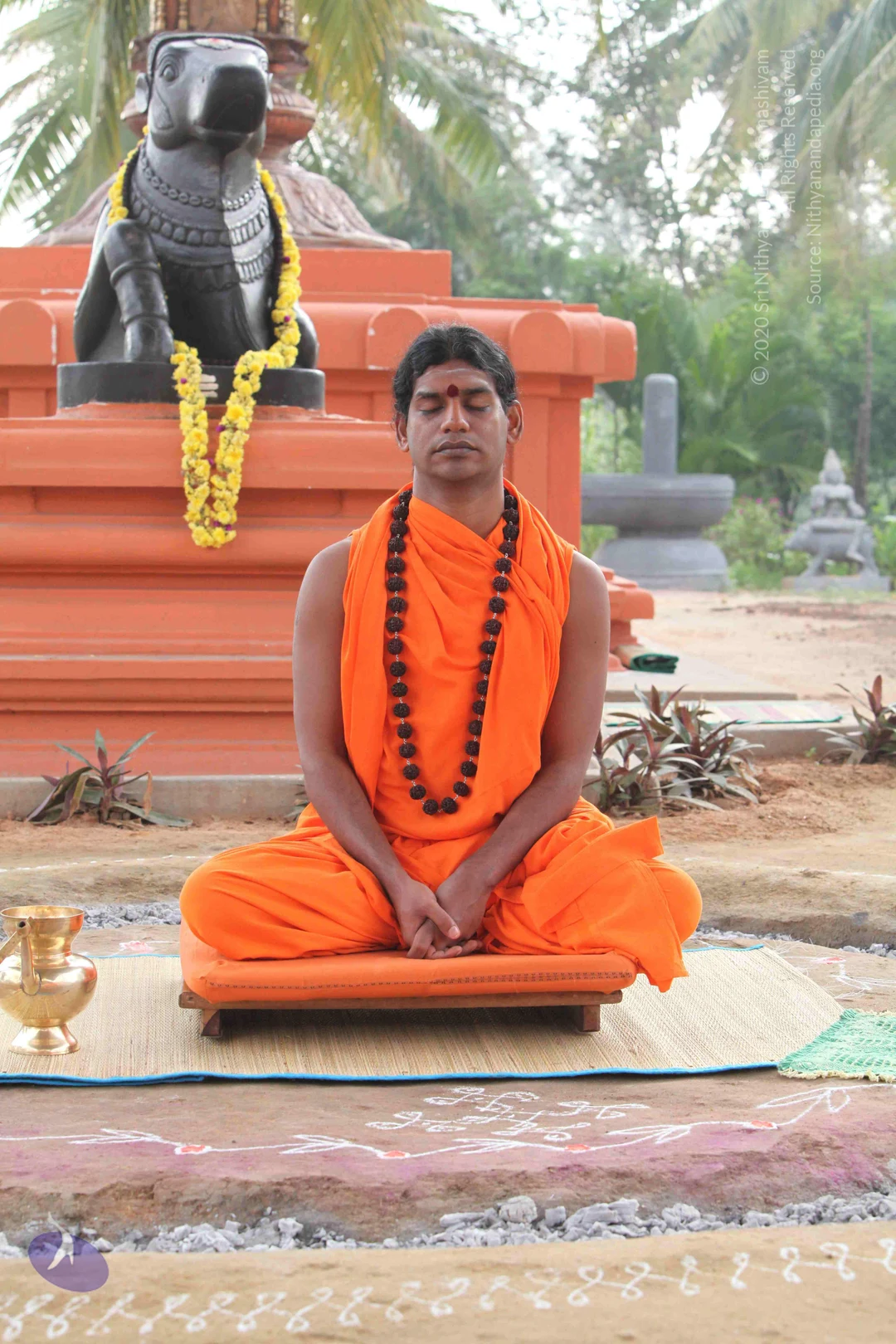
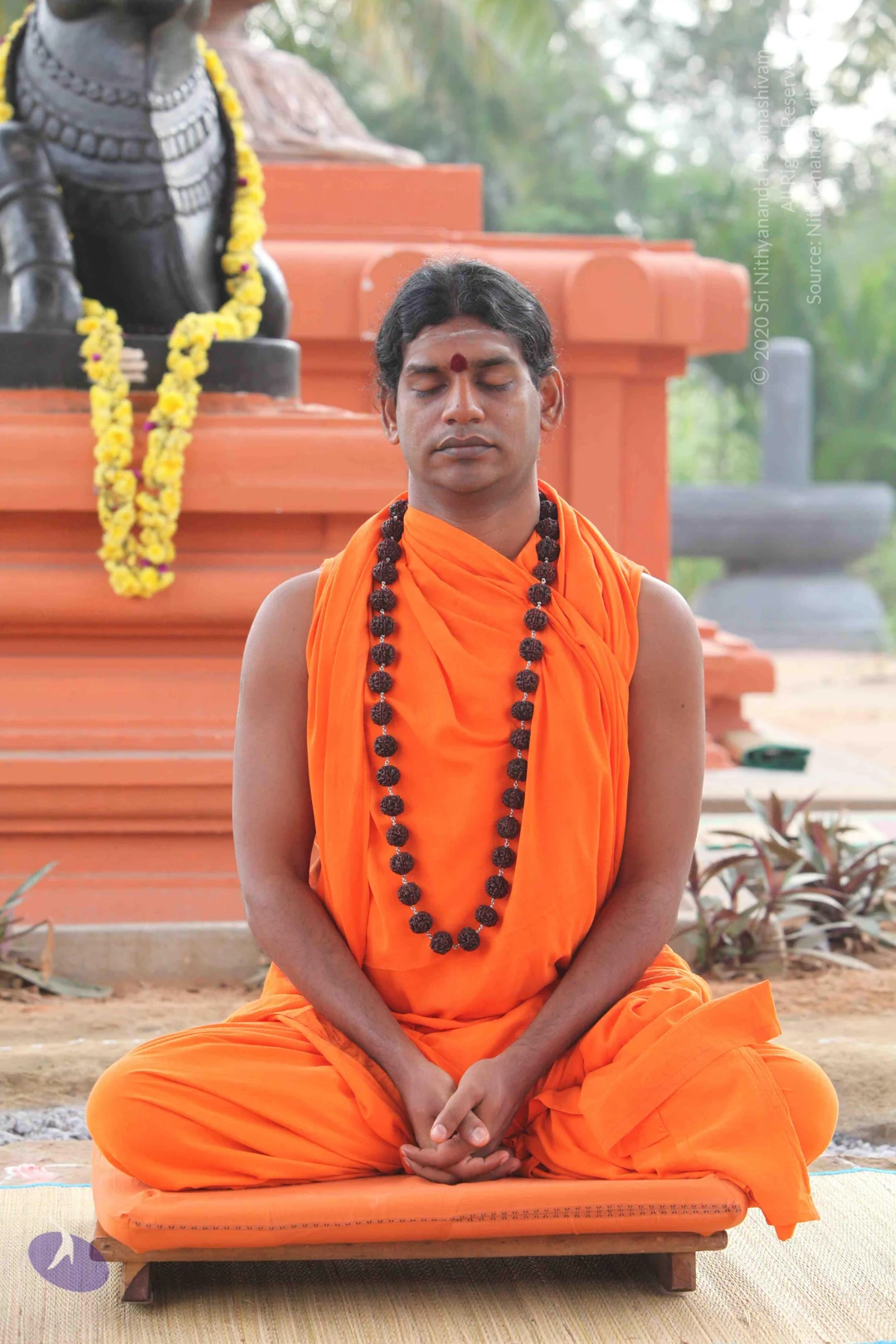
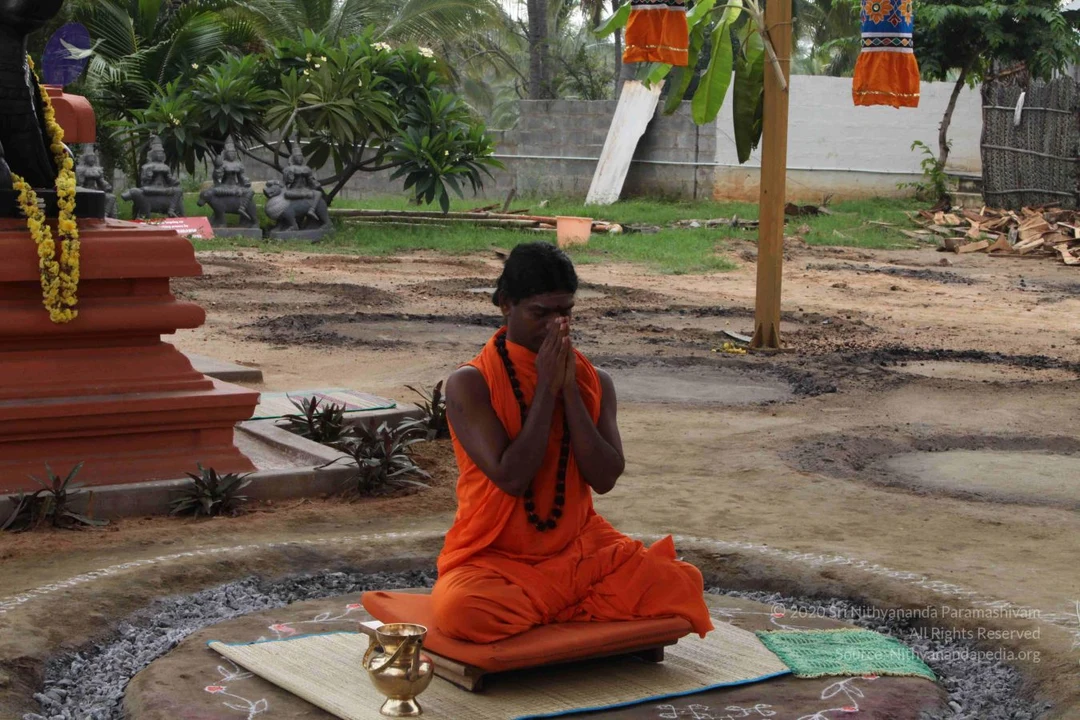
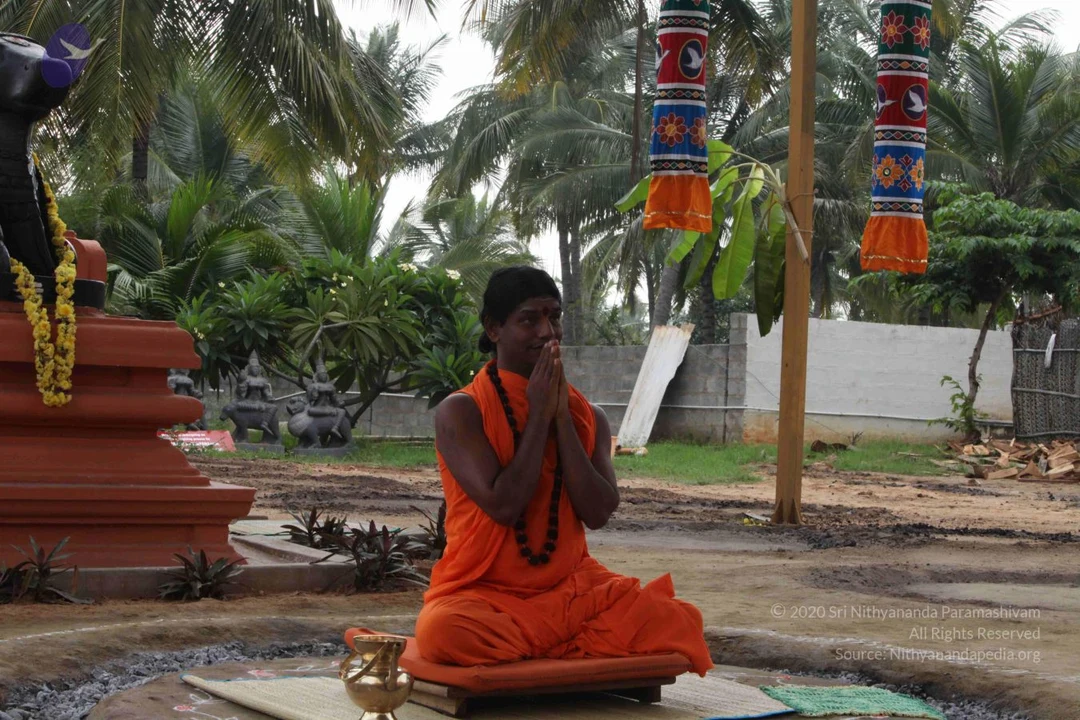
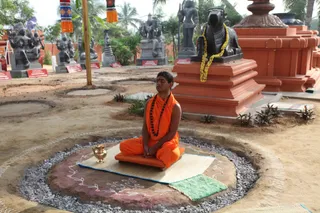
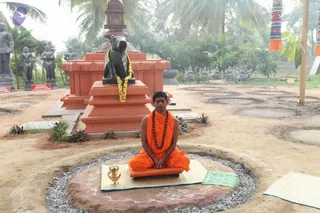
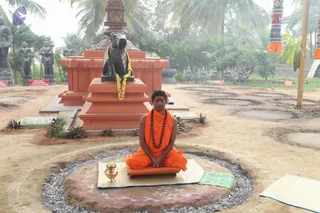
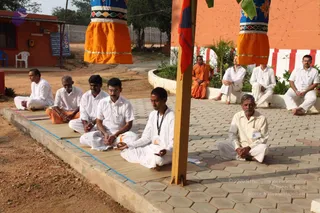
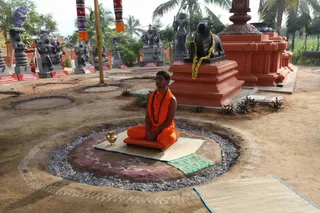
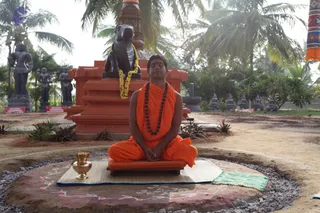
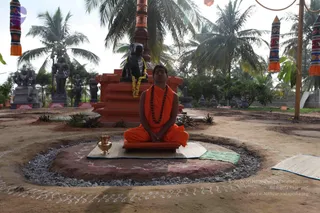
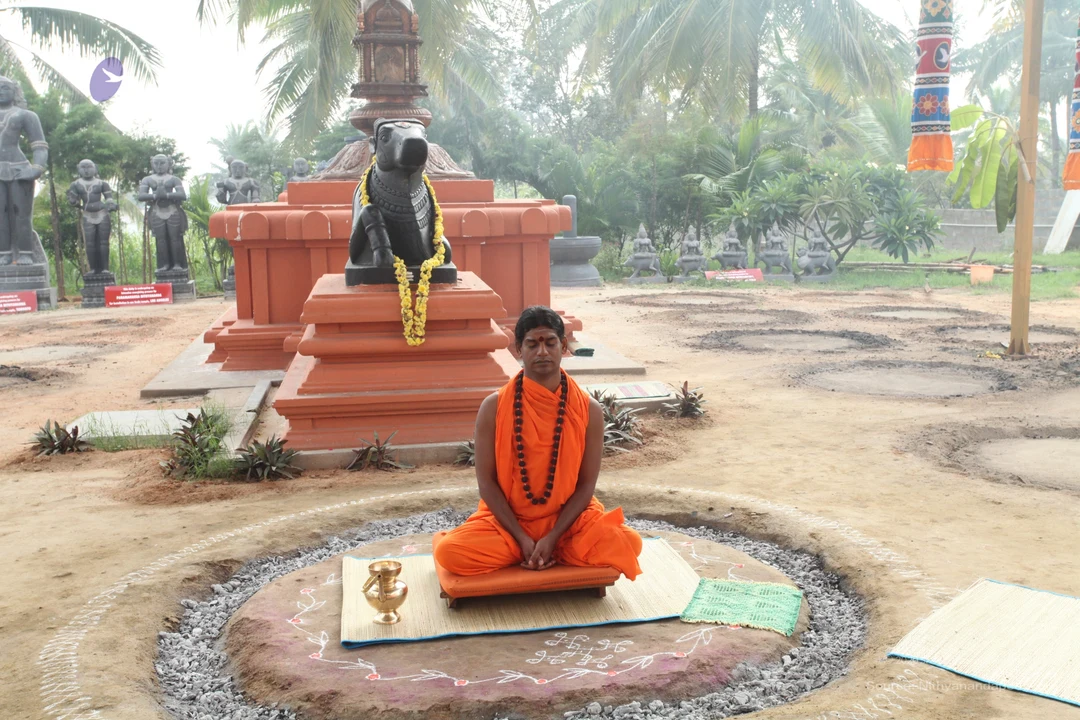
A seated man in saffron-orange robes and a rudraksha mala sits cross-legged in meditation on a small saffron-cushioned seat over a rangoli-decorated circle lined with grey gravel. He wears a red tilak on his forehead, hands folded in his lap. Behind him stands a large black Nandi bull statue garlanded with yellow marigolds atop a red stepped pedestal, with grey stone deity statues and palm trees in the background. A brass kalasha sits beside him on a woven mat, and tall decorative banners in orange, white and blue frame the right side of the scene. Sunlight filters through the palms over an open dirt courtyard.A seated man in orange saffron robes and a rudraksha mala meditates with hands folded in his lap on an orange cushion placed on a mat within a rangoli-decorated circle of grey gravel. A small brass vessel sits on the mat beside him. Behind him stands an orange stepped pedestal topped by a black stone Nandi bull draped with a yellow marigold garland. Grey stone figures and small shrines stand in the background amid palm trees, and a tall colourful pillar with orange and red ornament rises at right. The setting is an outdoor ashram courtyard.Outdoor scene at an ashram courtyard with a paved tiled floor and orange-painted walls. Several men in white dhotis and white shirts sit cross-legged on woven mats in meditation, eyes closed, hands resting in their laps. Among them, a man in a saffron-orange robe sits at the back, and a seated man in cream clothes with an ID badge sits at front right. Tall orange and blue decorated pillars or banners hang overhead. A red and yellow flag stands on a wooden pole. Visible people total about nine.A seated man in an orange saffron robe and rudraksha mala sits in meditation on an orange cushion placed on a woven mat, within a circular ring of grey gravel and a kolam-style white and red chalk design on the ground. Behind him stand dark stone sculptures of deities and a black Nandi bull with a yellow flower garland atop an orange-red pedestal, with a tall orange-red shrine structure to the right and palm trees in the background. Red signboards are set among the stone figures. A brass kalasha-style pot sits beside him. The scene appears to be an outdoor sculpture garden setting. Appearance cues: the man wears saffron clothing and a rudraksha mala, but the face and the presence of the title are not enough to confirm identity, so this is marked unsure.A man in orange saffron robes sits cross-legged on a low wooden seat atop a woven mat in a circular outdoor space edged with grey gravel and white chalk kolam designs. His eyes are closed in meditation, hands resting in his lap, with a red bindi on his forehead and a long dark rudraksha mala around his neck. Behind him stands an orange stepped plinth bearing a dark stone Nandi bull draped with a yellow flower garland. A brass kalasha sits to his left. Stone deity statues, palm trees and a tall orange shrine tower frame the scene, with a red-and-white sign board visible on the left. a person in meditation posture.Outdoor photo in a temple courtyard with coconut palms. A seated man in saffron-orange robes with a rudraksha mala and a marigold garland sits eyes closed in meditation on a low orange platform over a circular mandala drawn in white and pink powder with a gravel border. A brass pot stands beside him on a mat. Behind him is a dark stone Nandi bull and orange pedestal, with dark stone deity statues to the left and colourful hanging tassel decorations on the right.

Evening-Dasara-Session

190 photosSource gallery
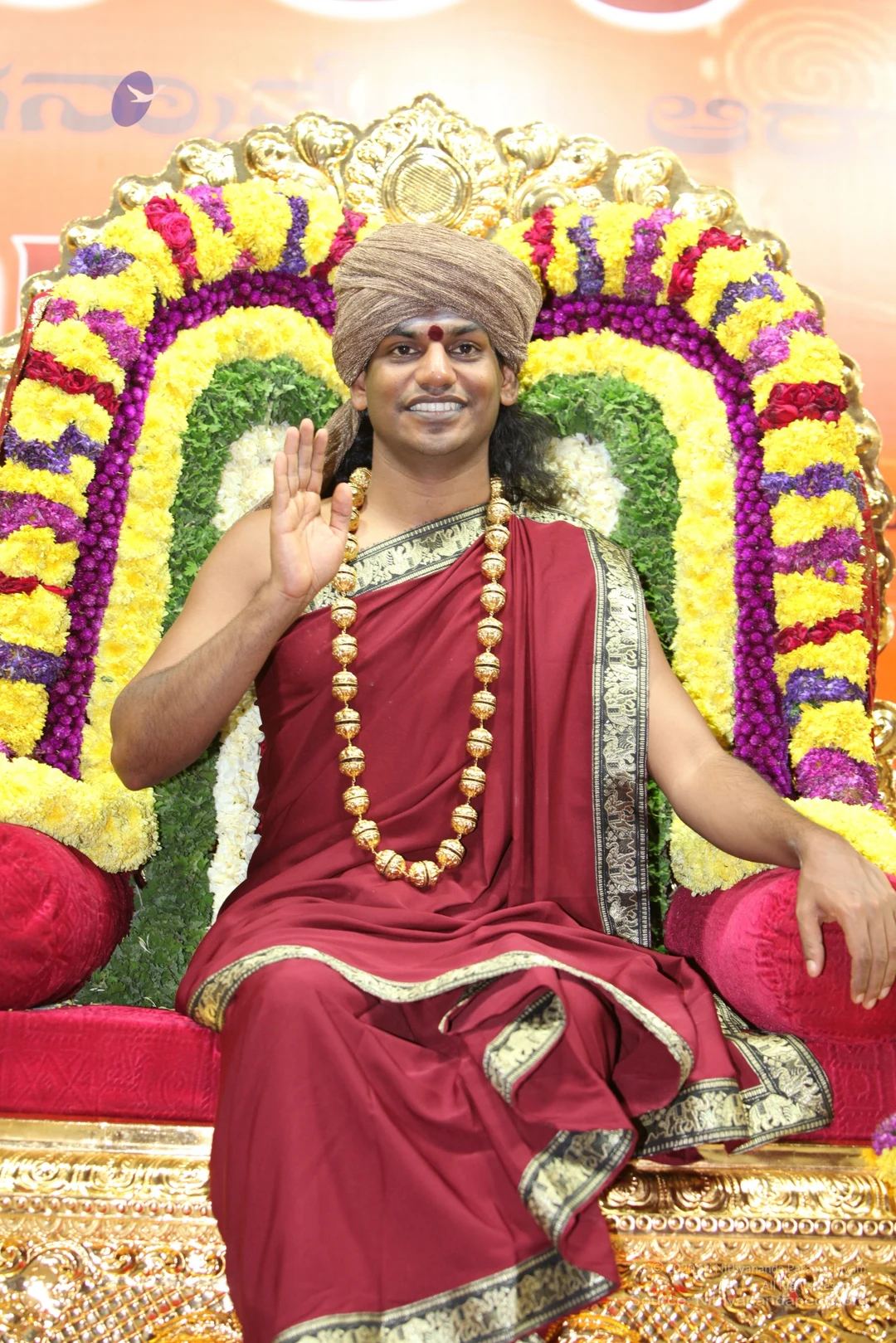
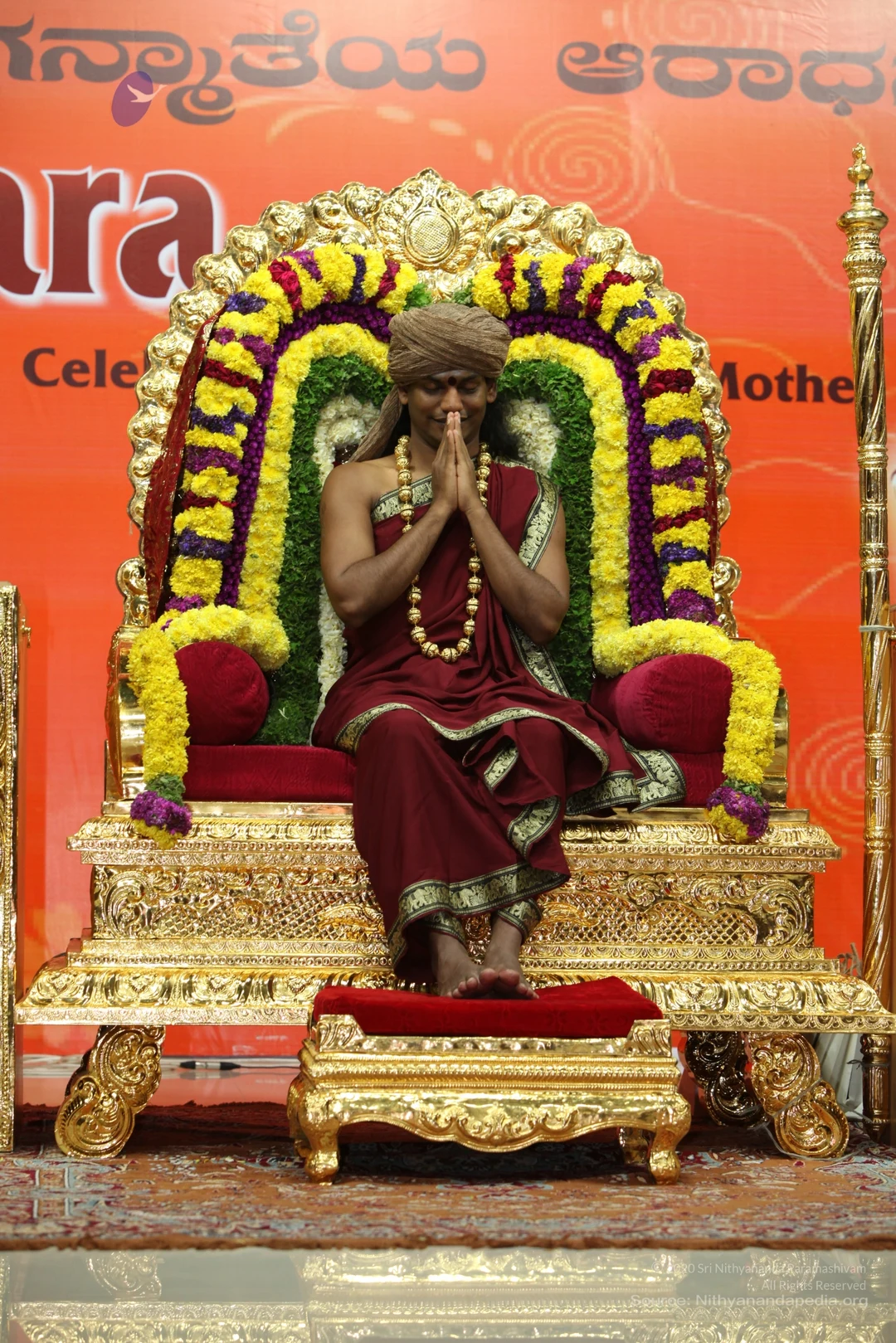
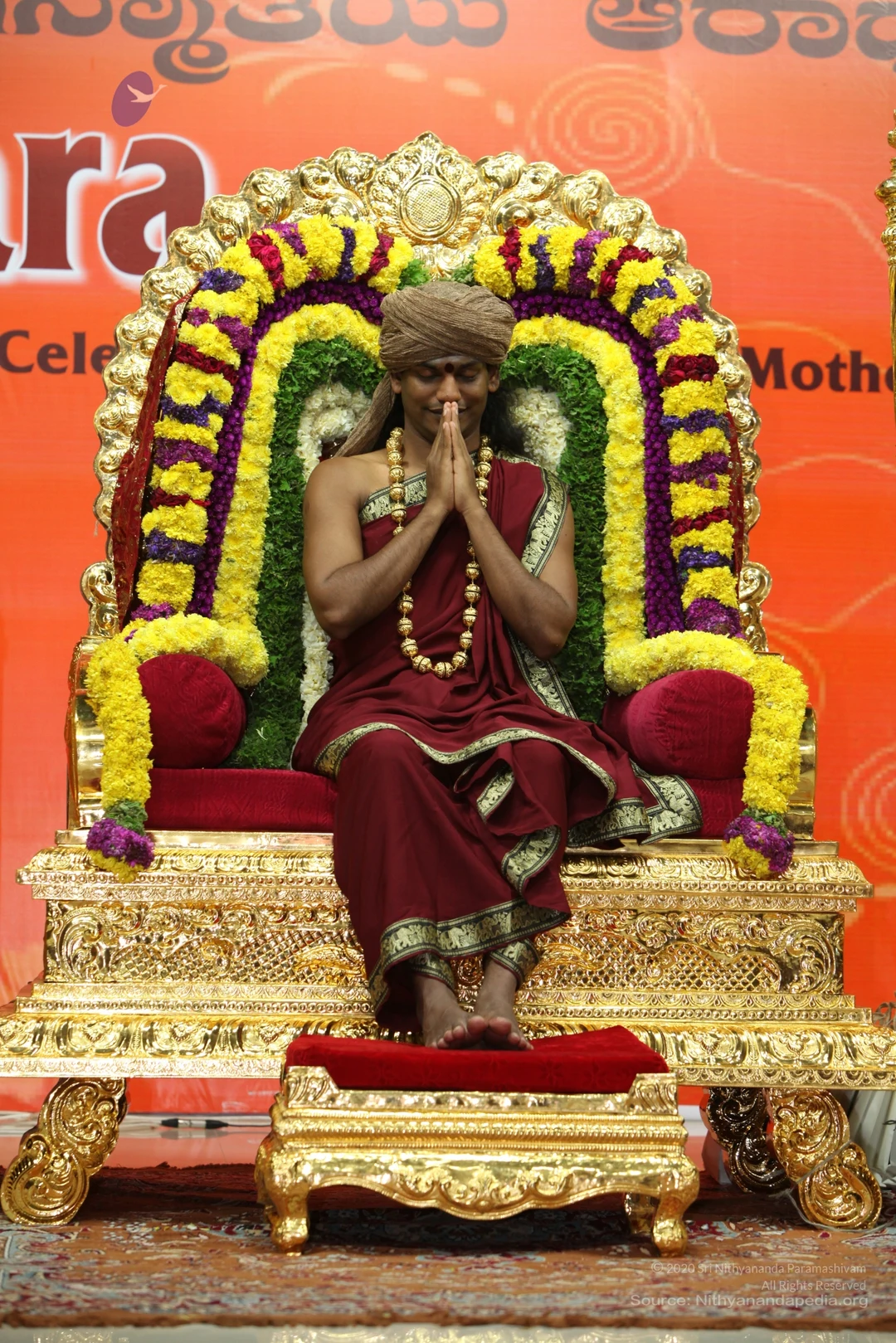
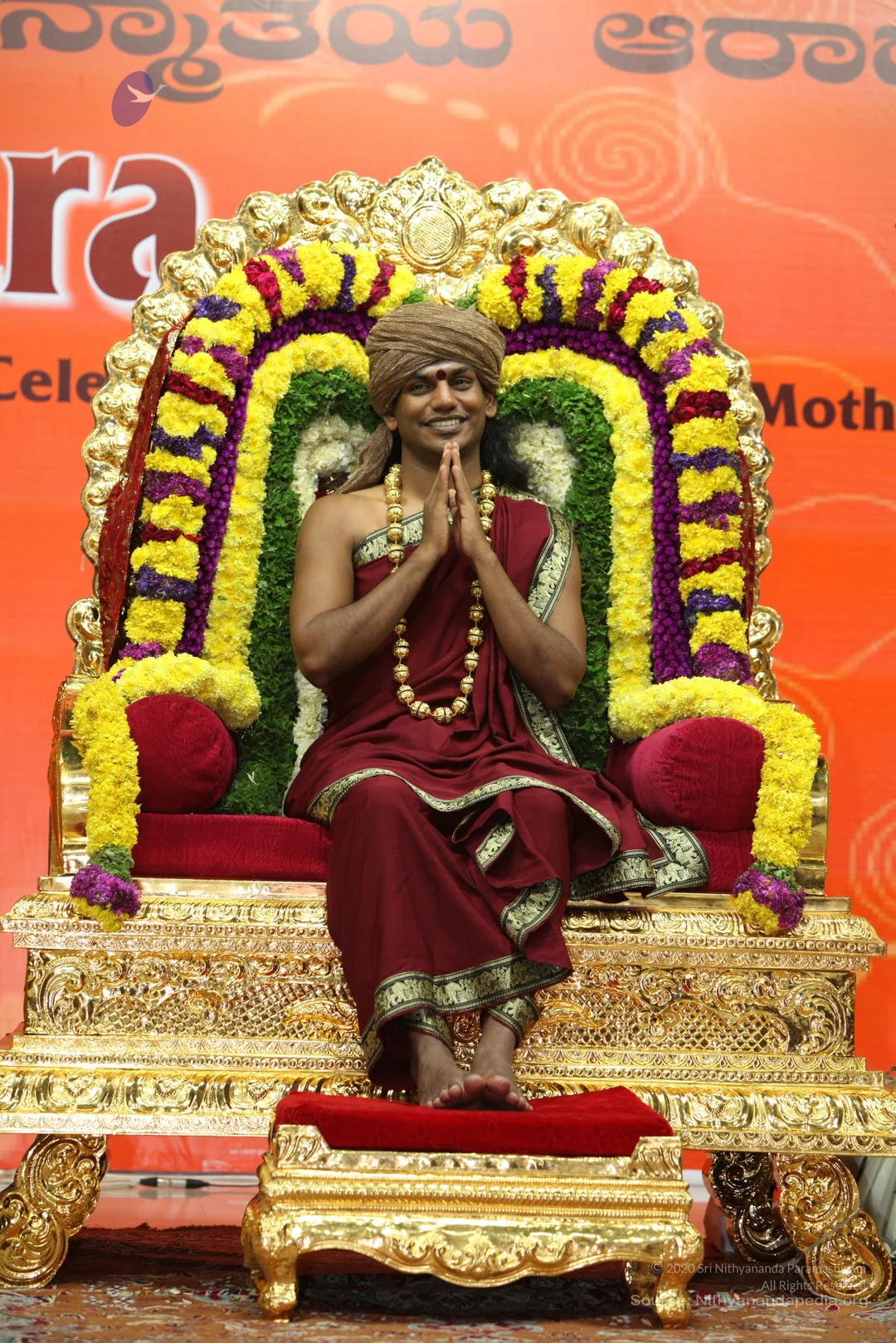
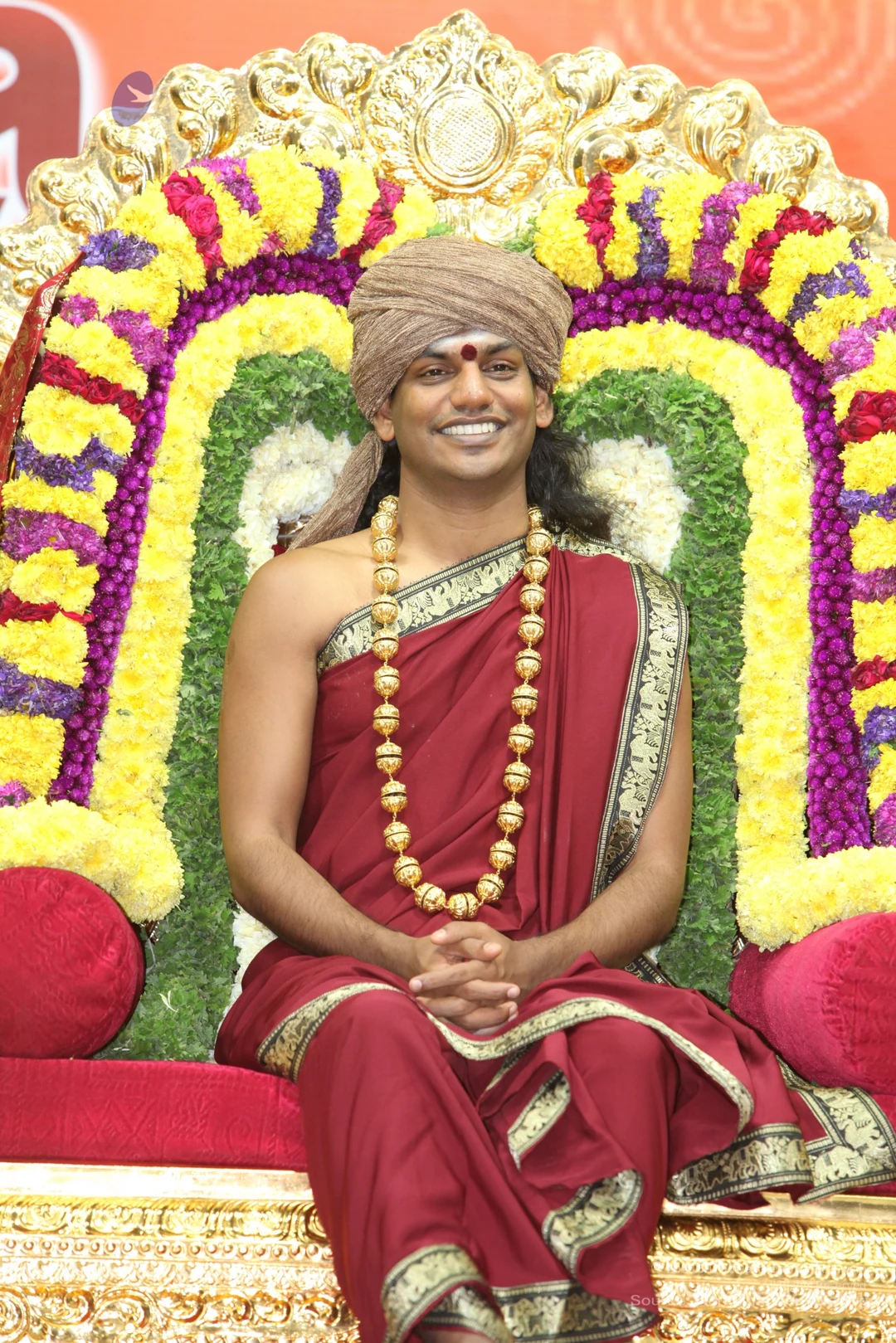
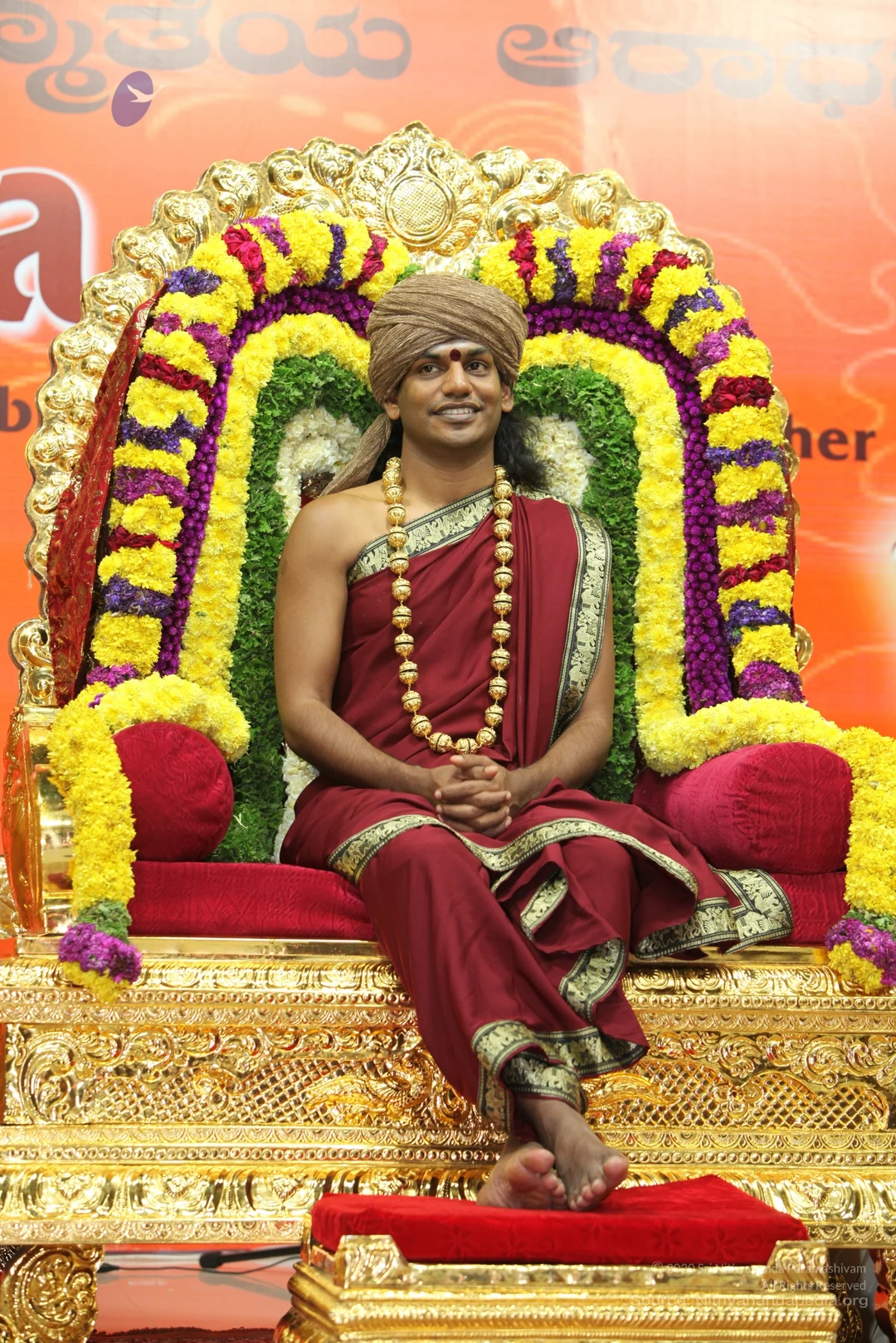
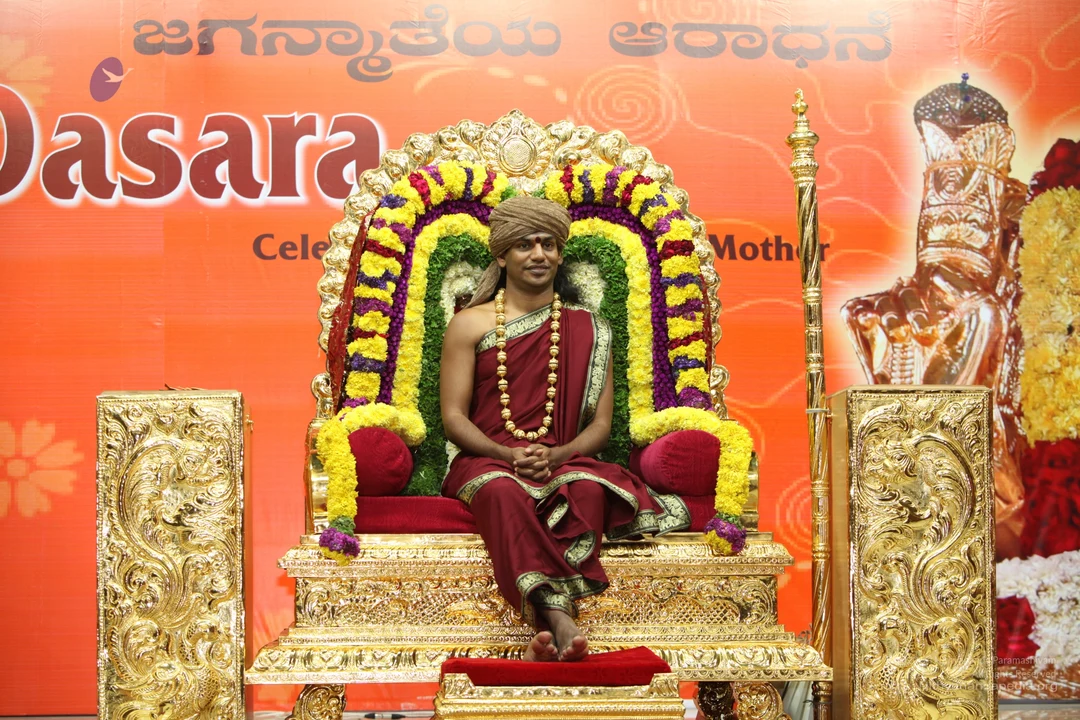
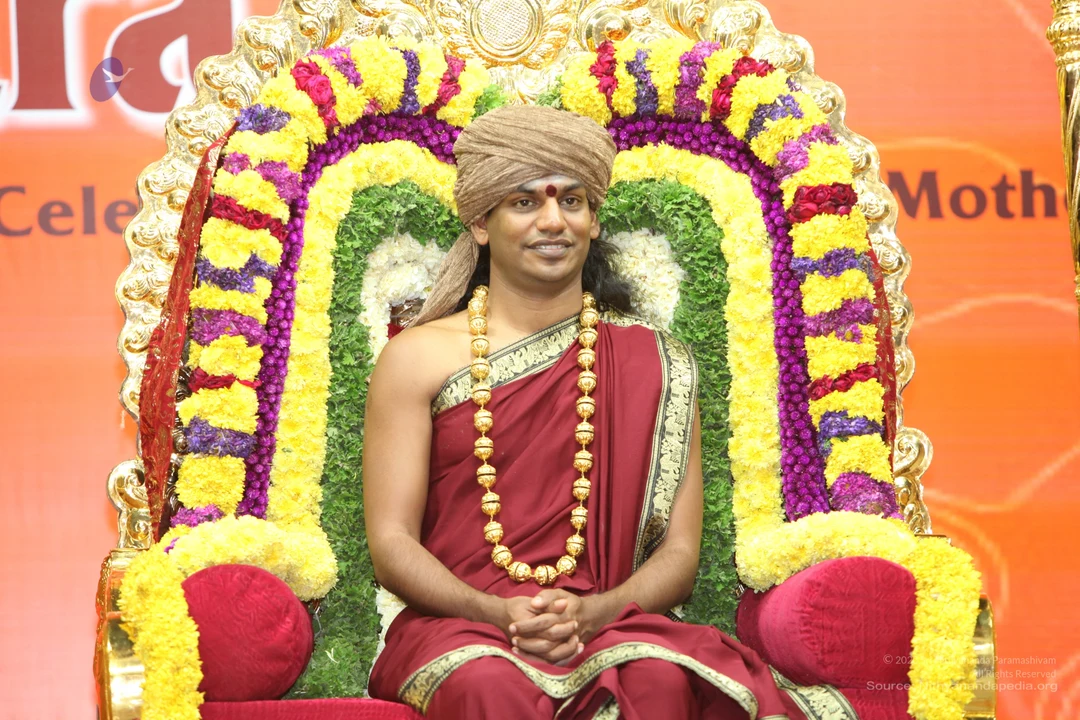
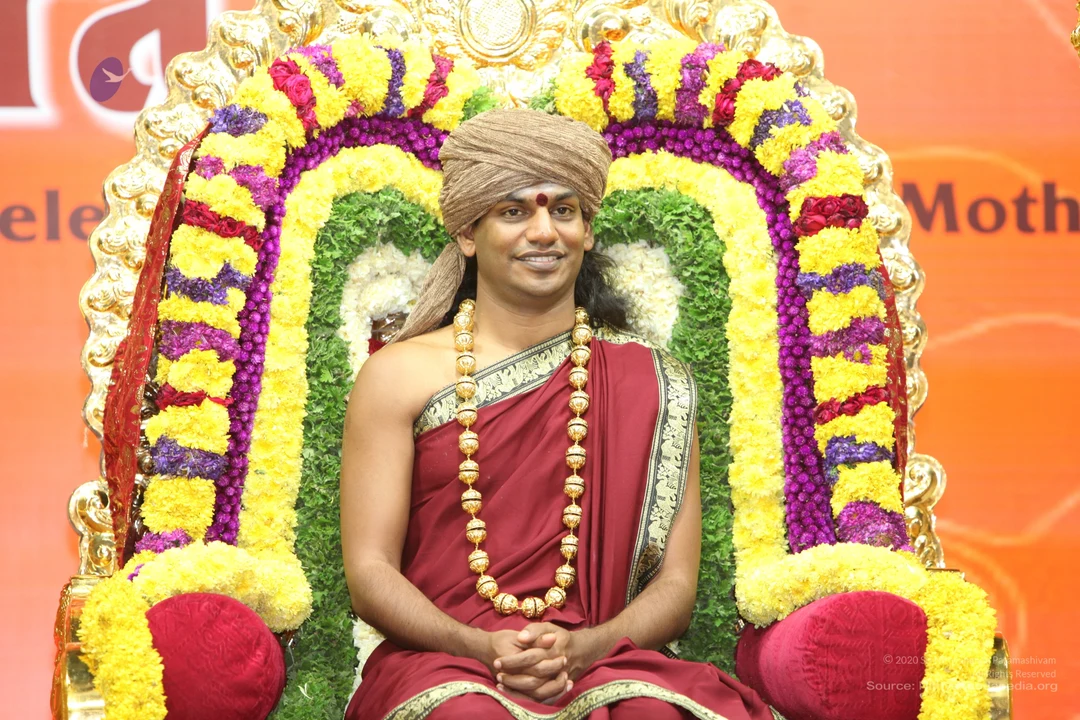
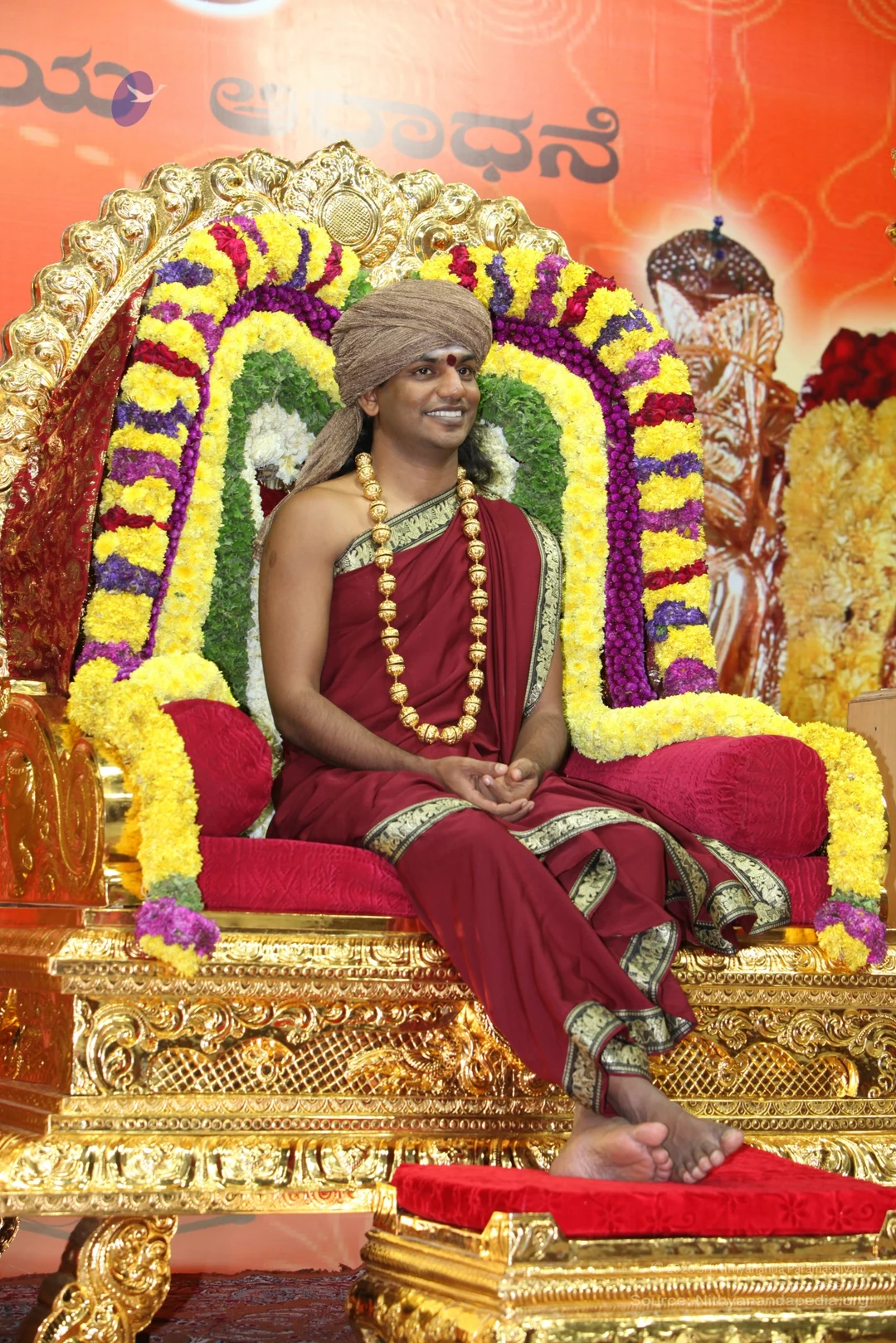
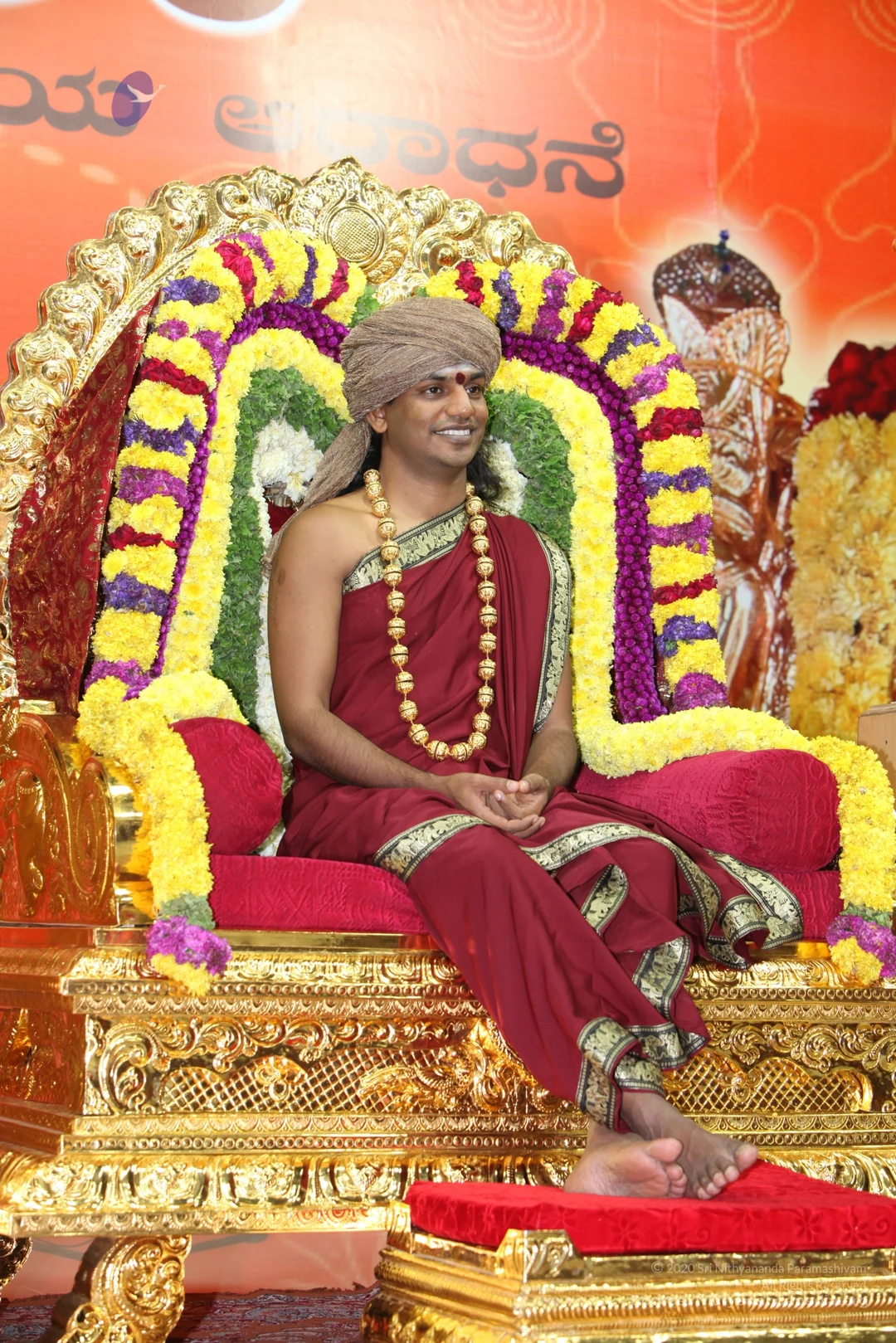
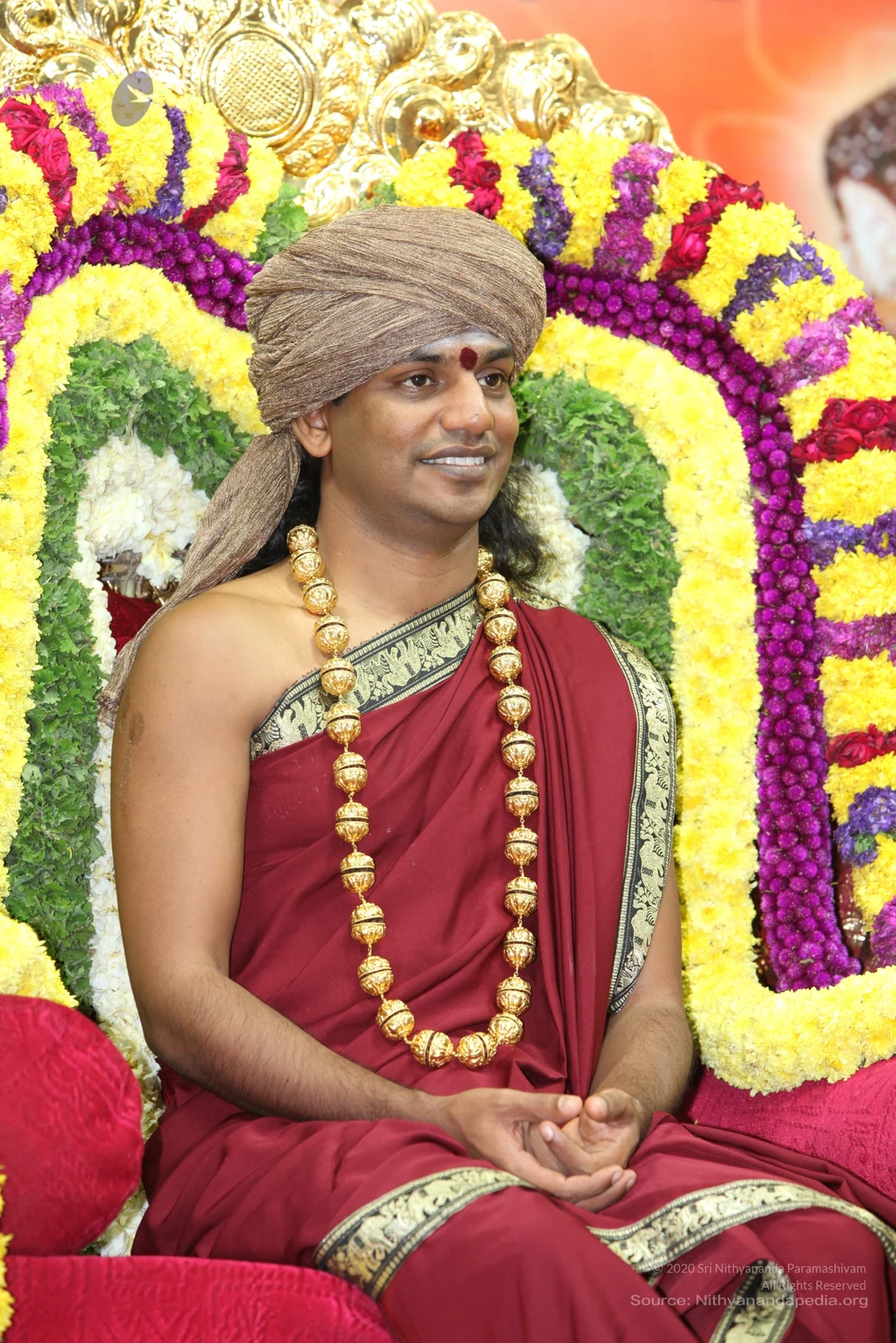
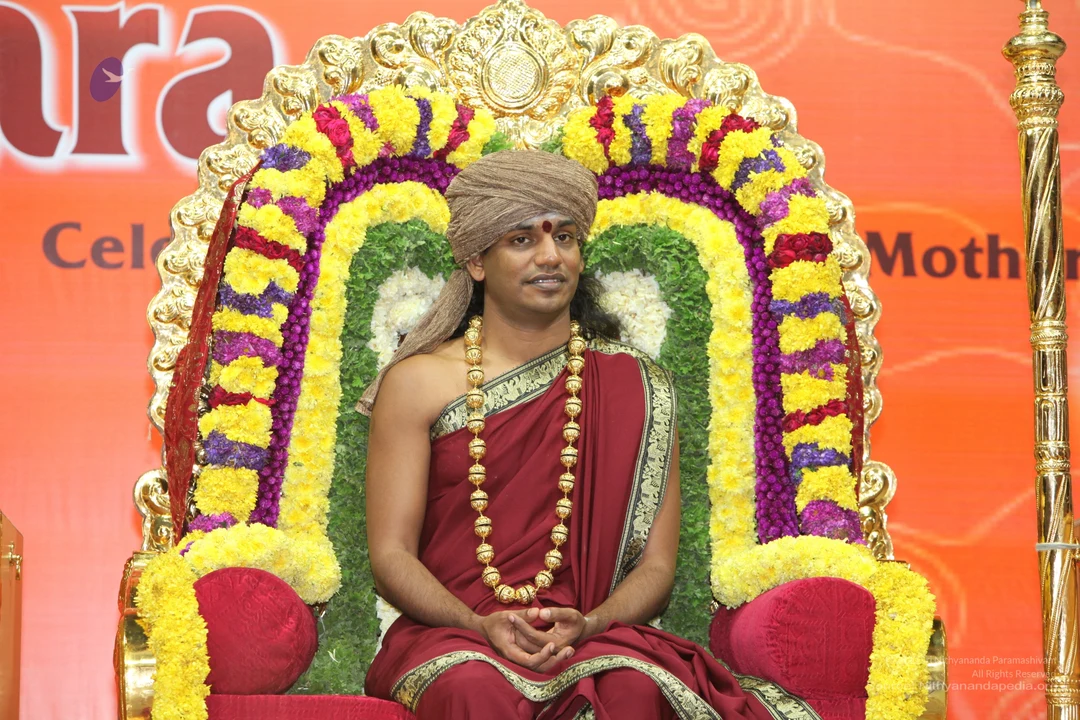
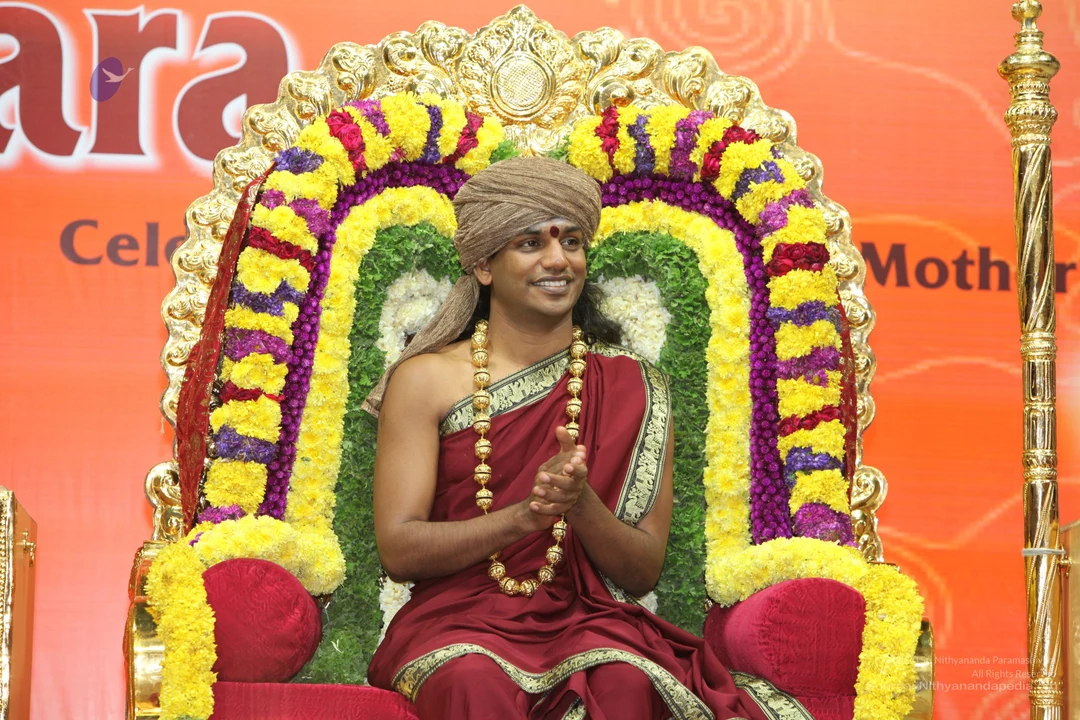
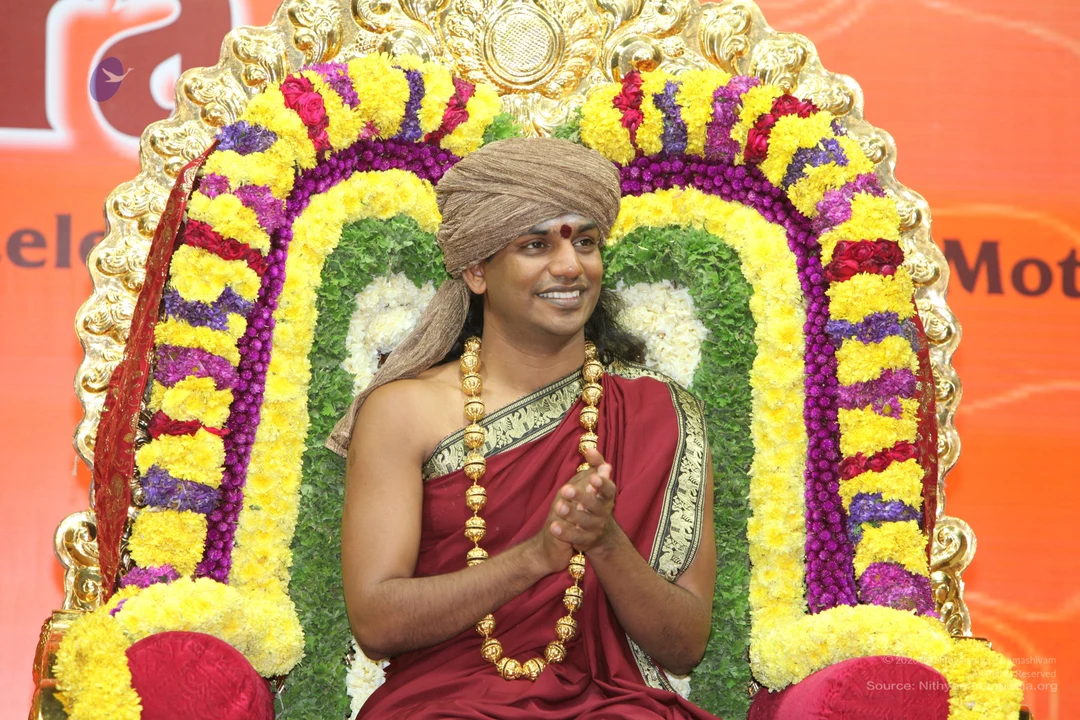
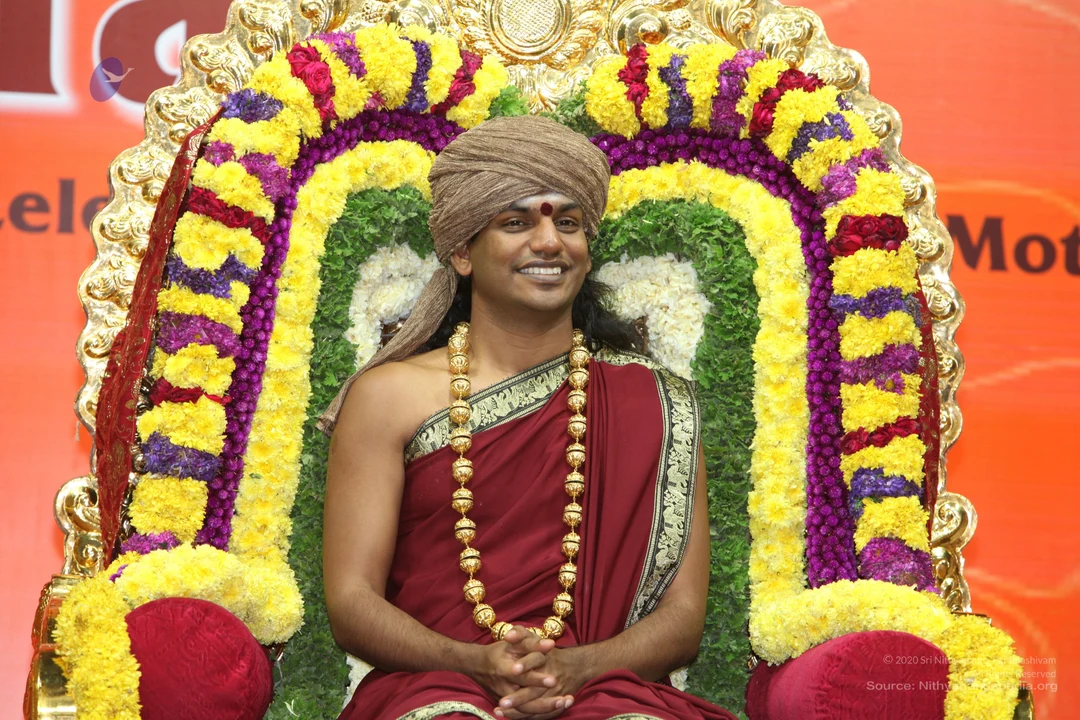
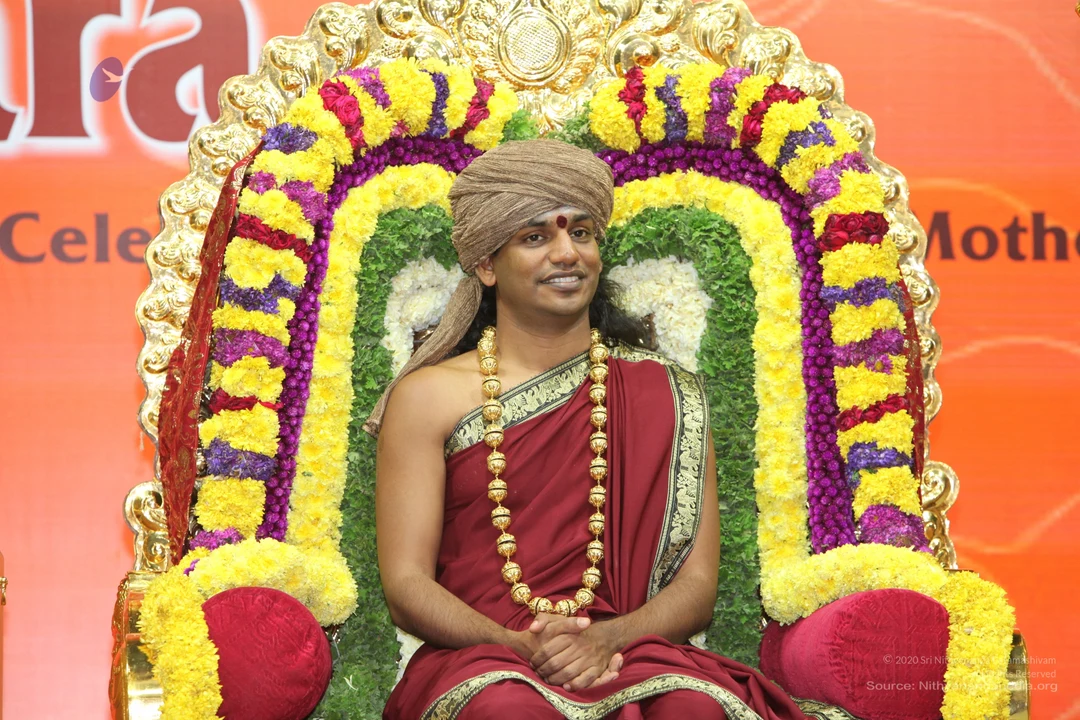
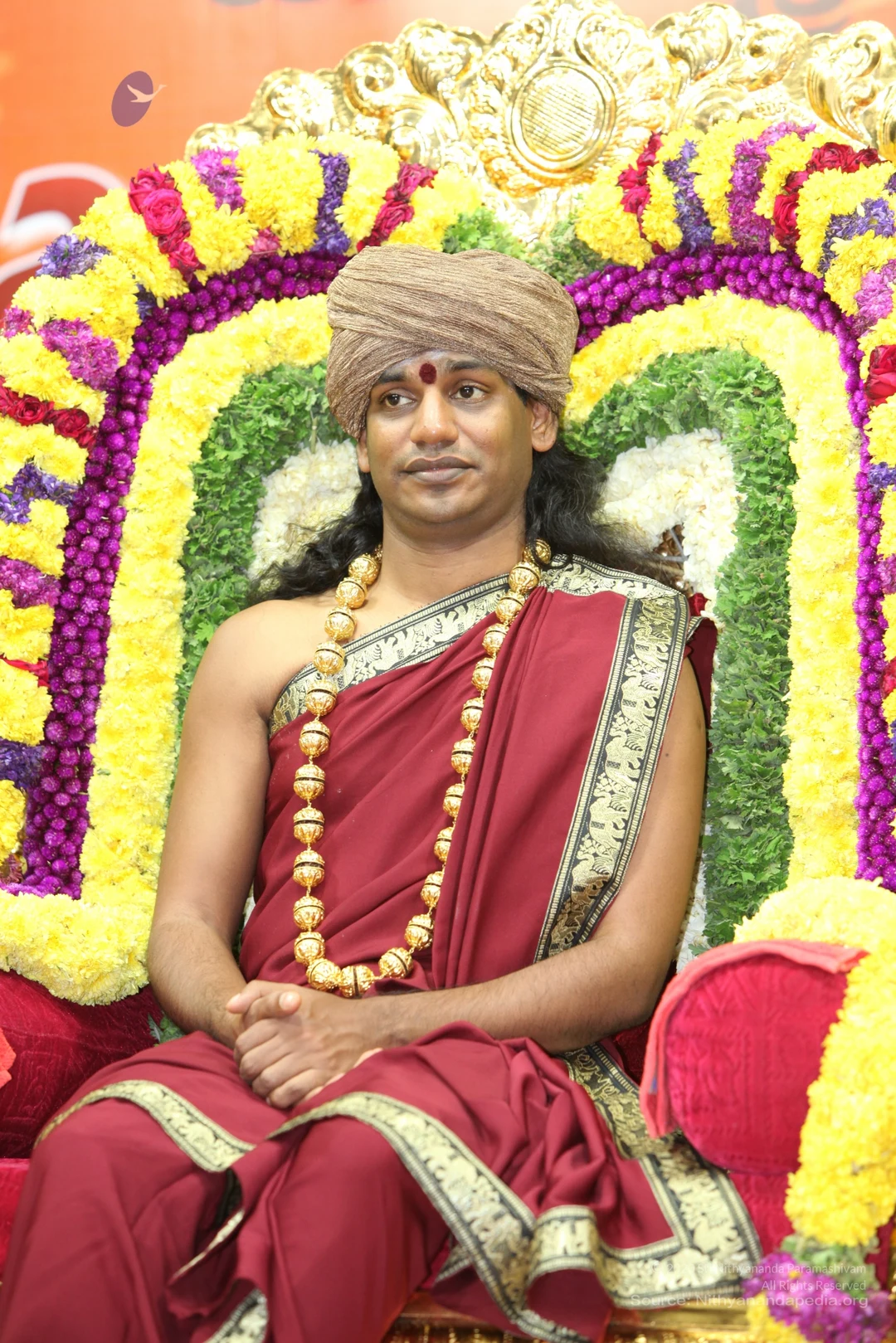
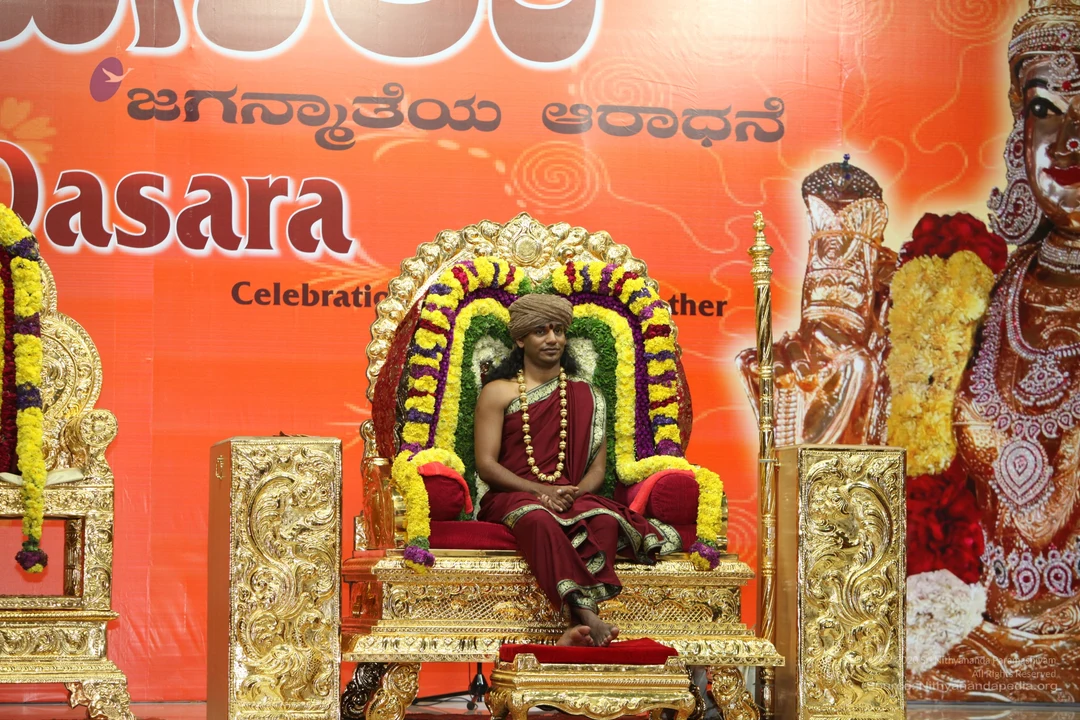
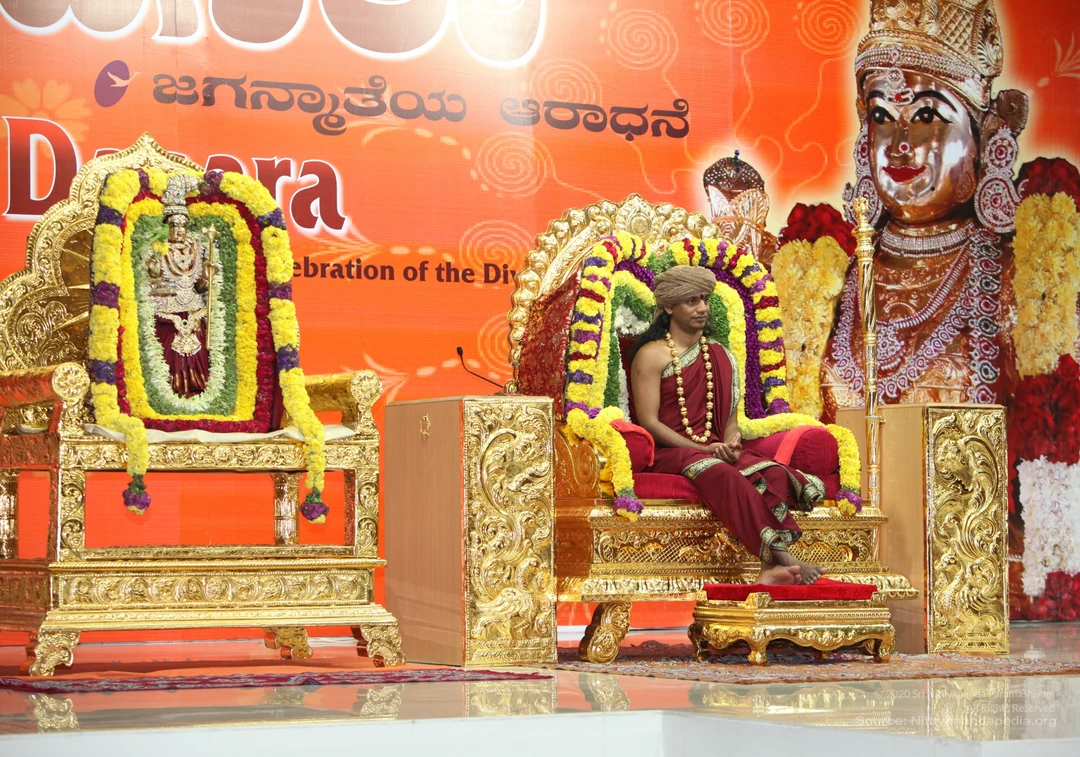
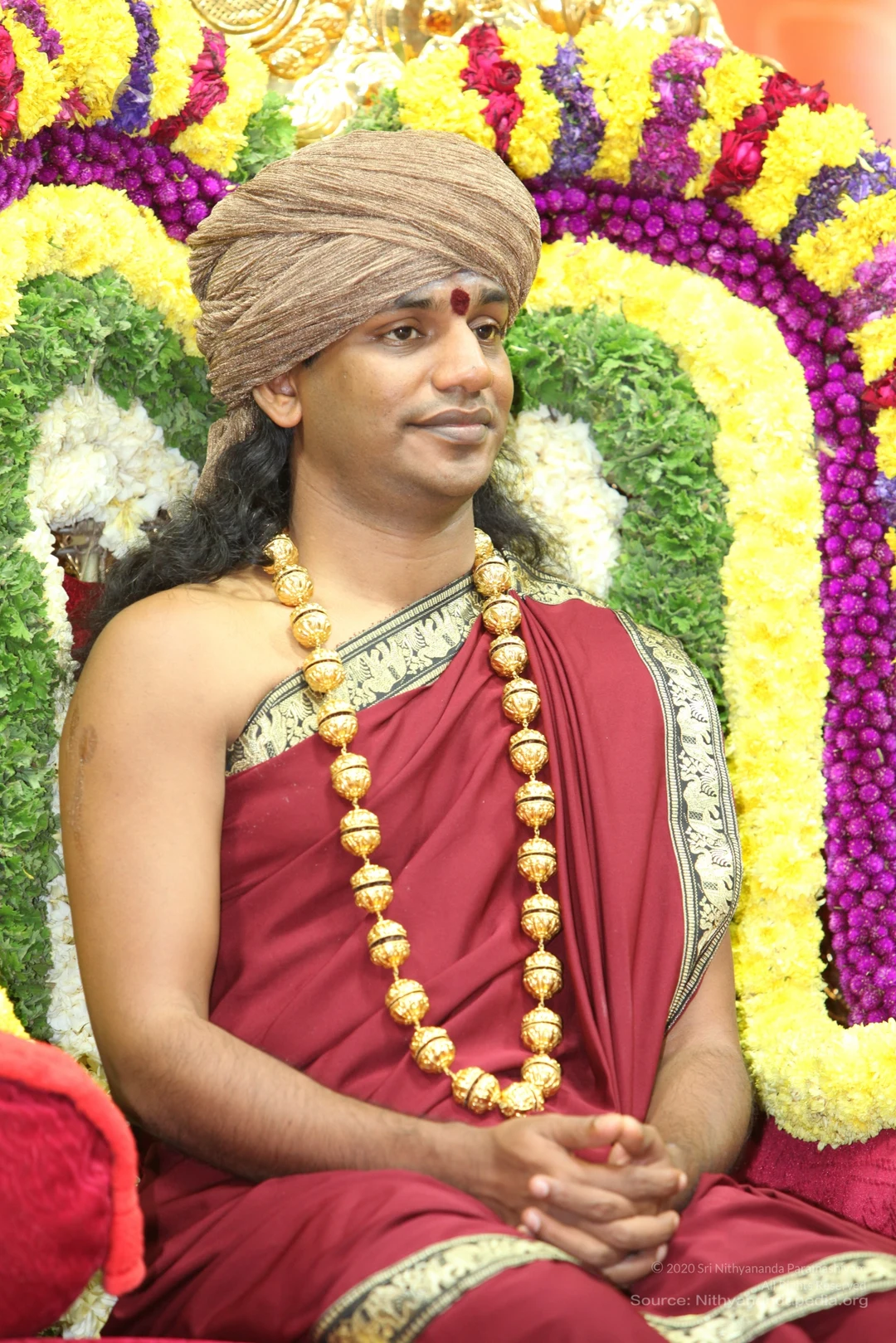
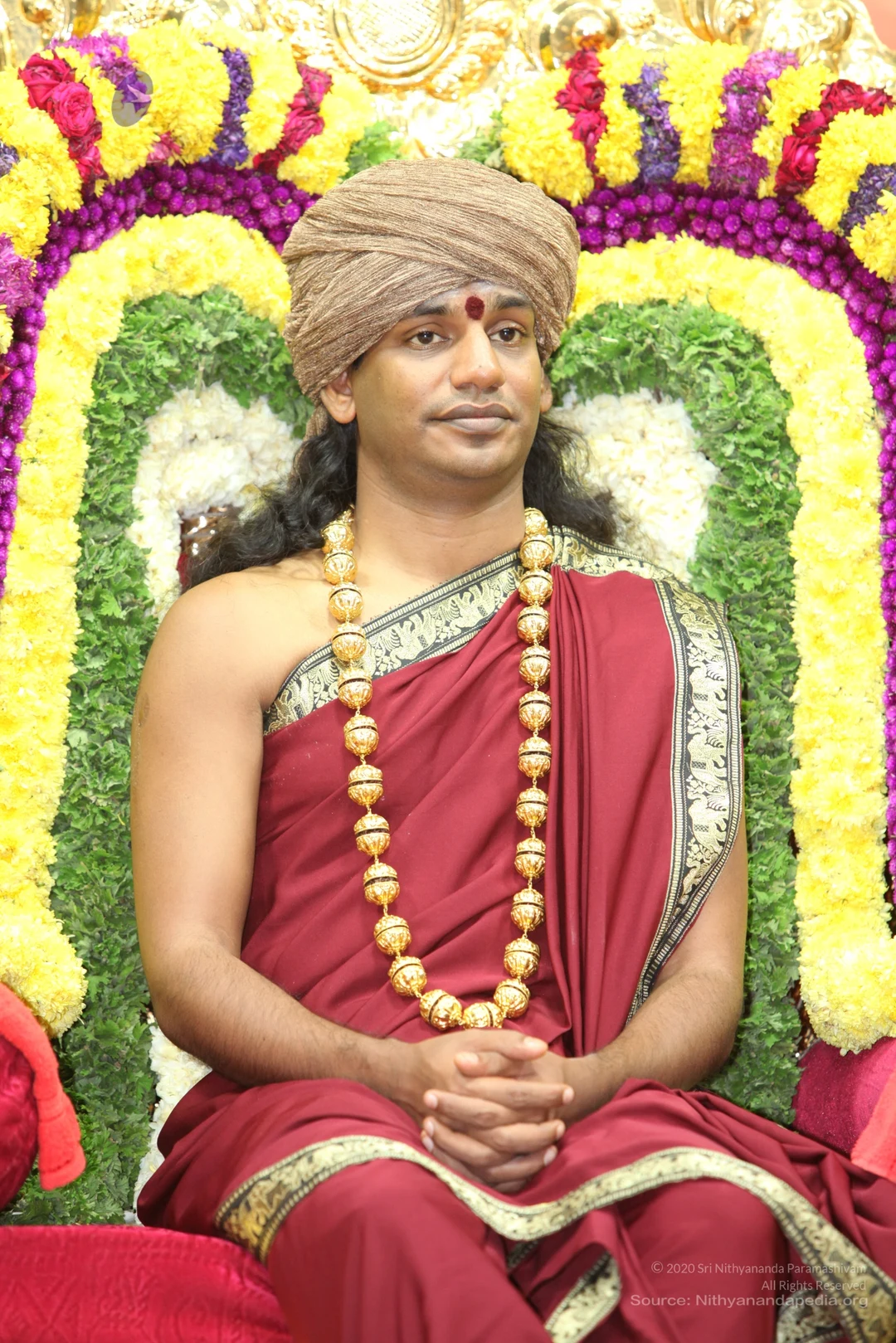
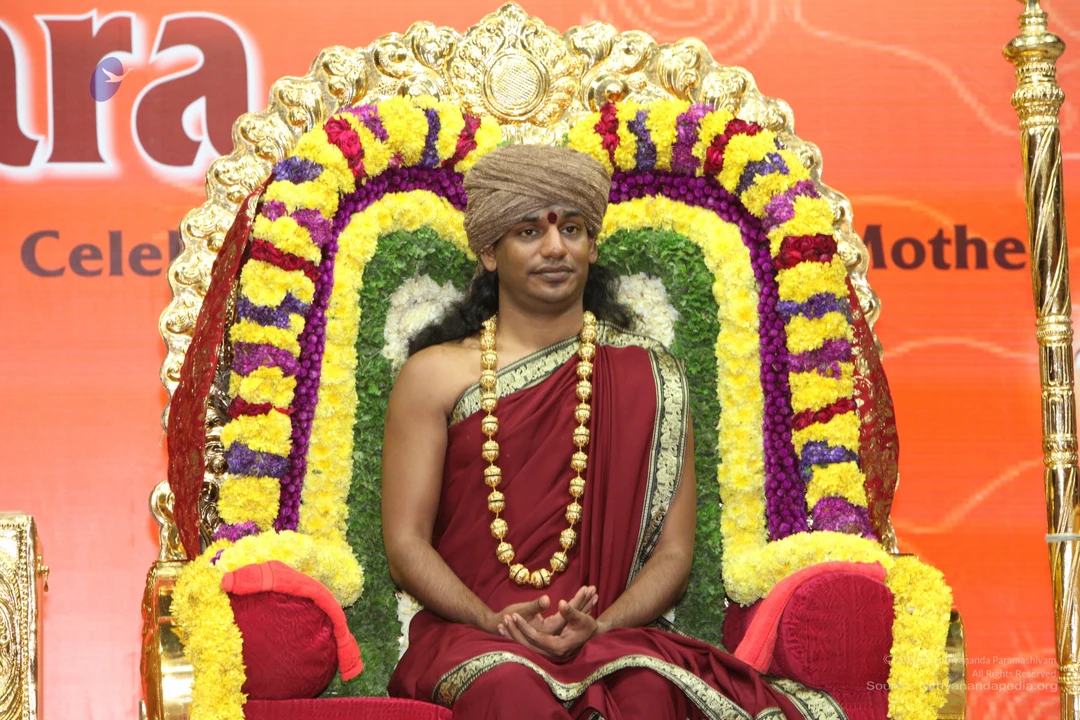
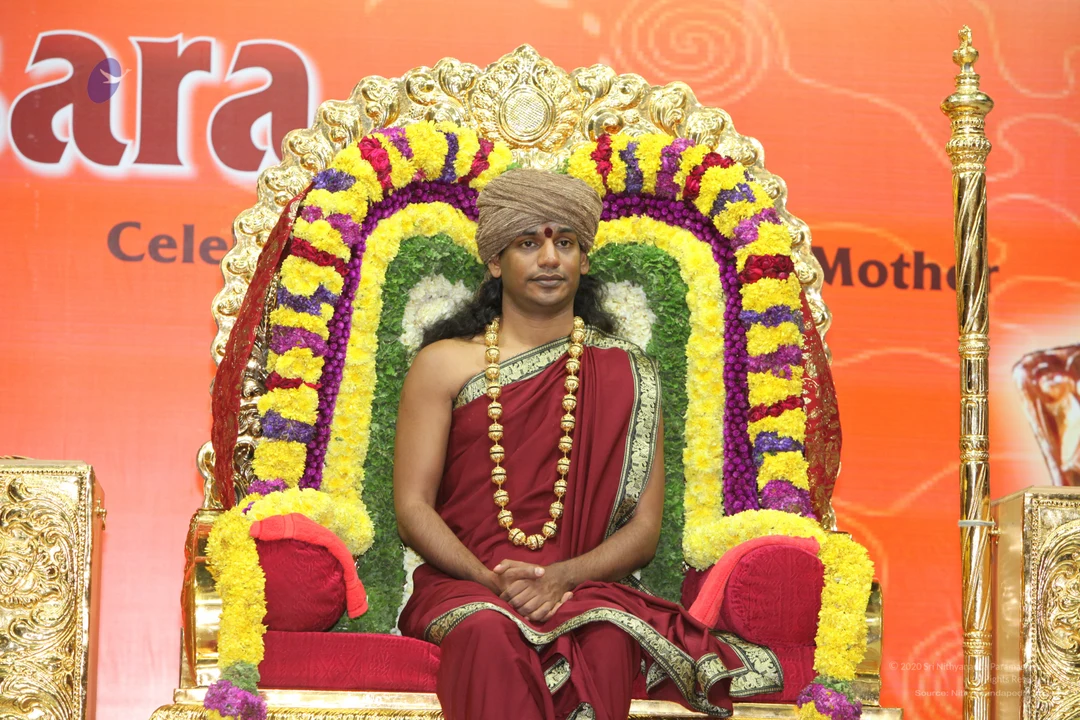
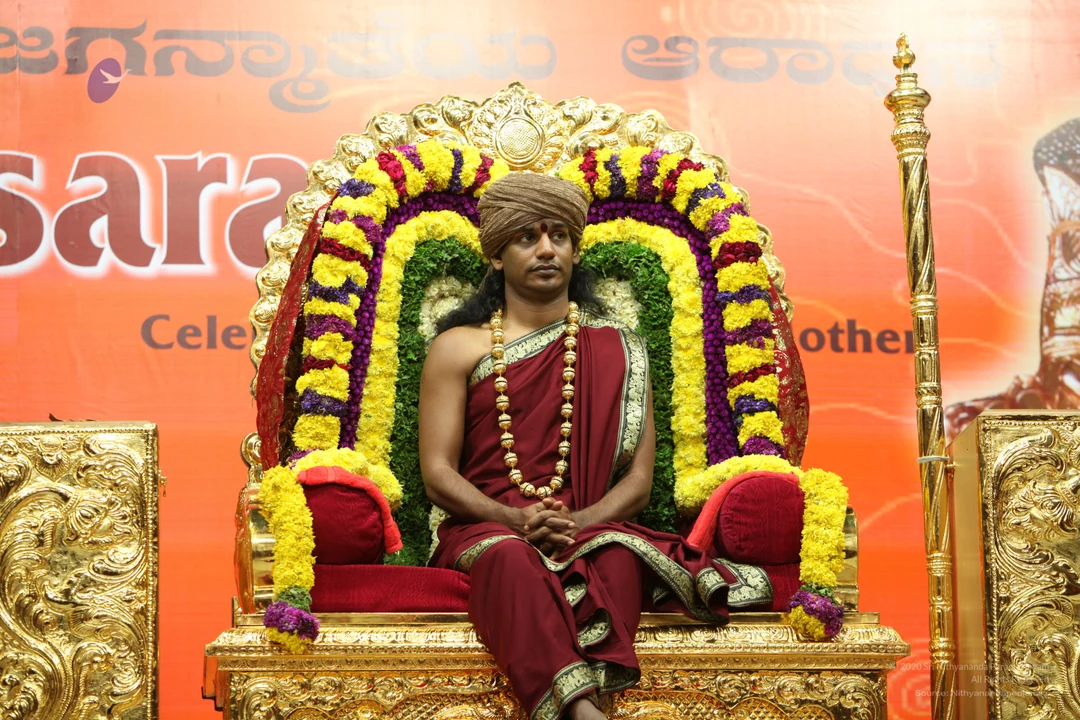
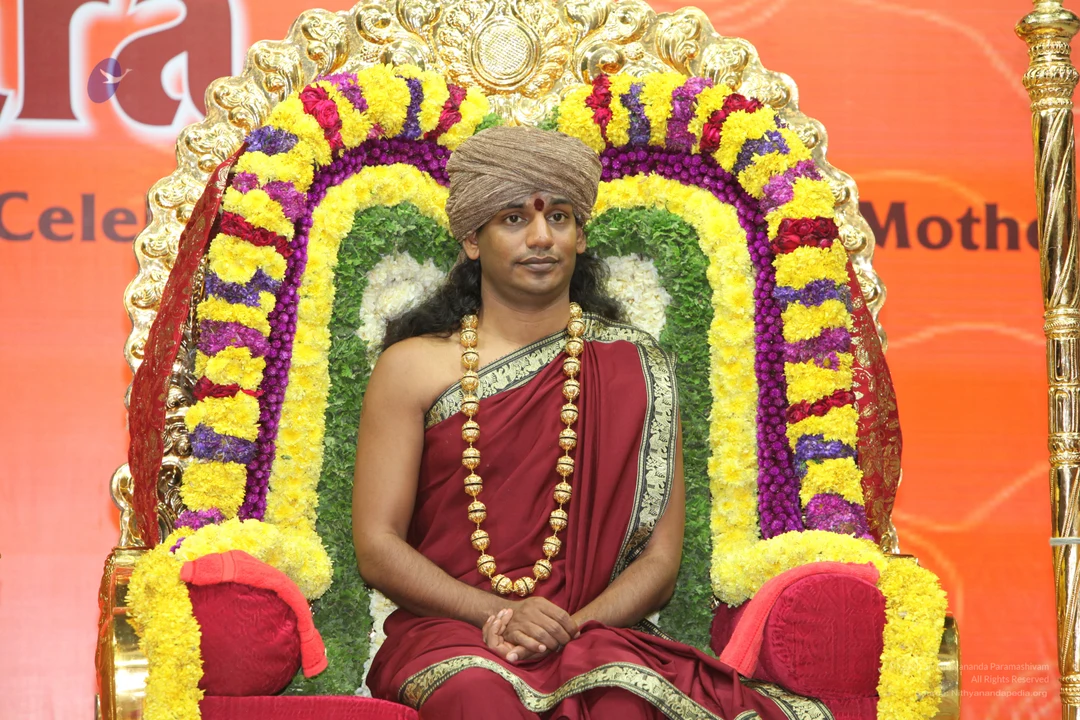
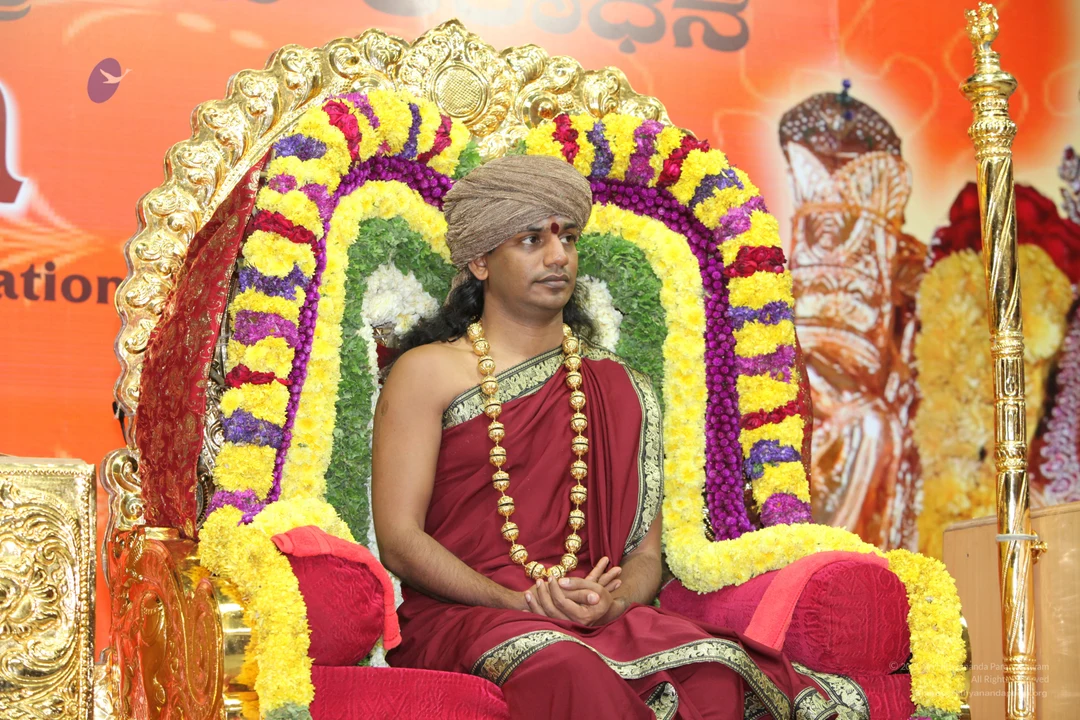
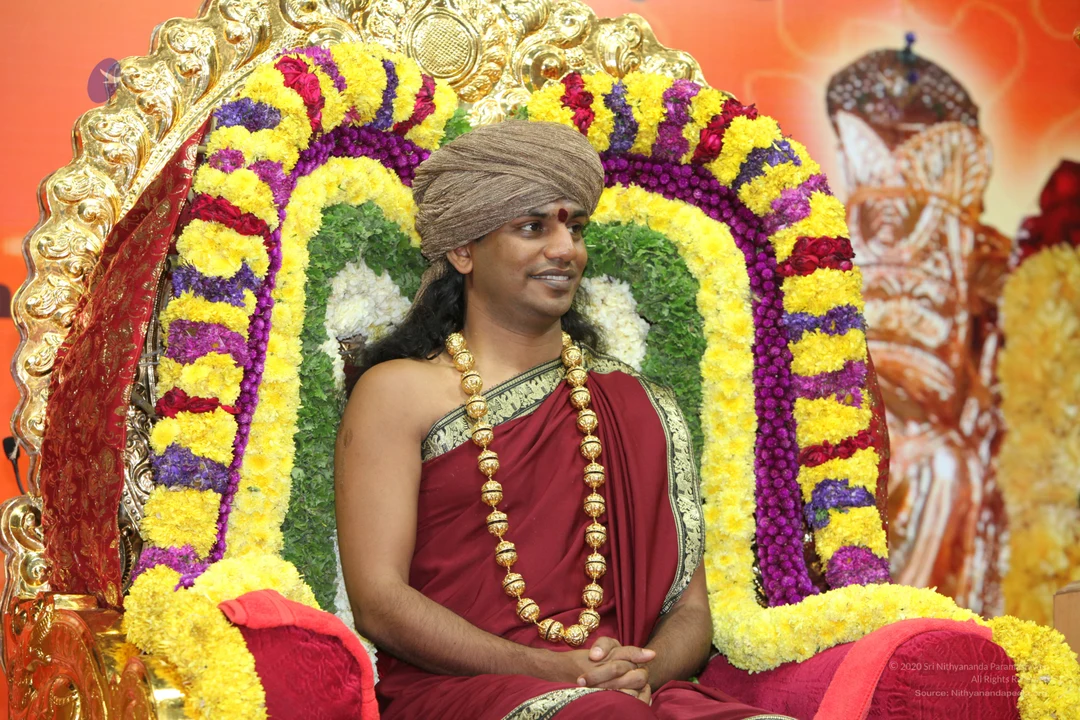
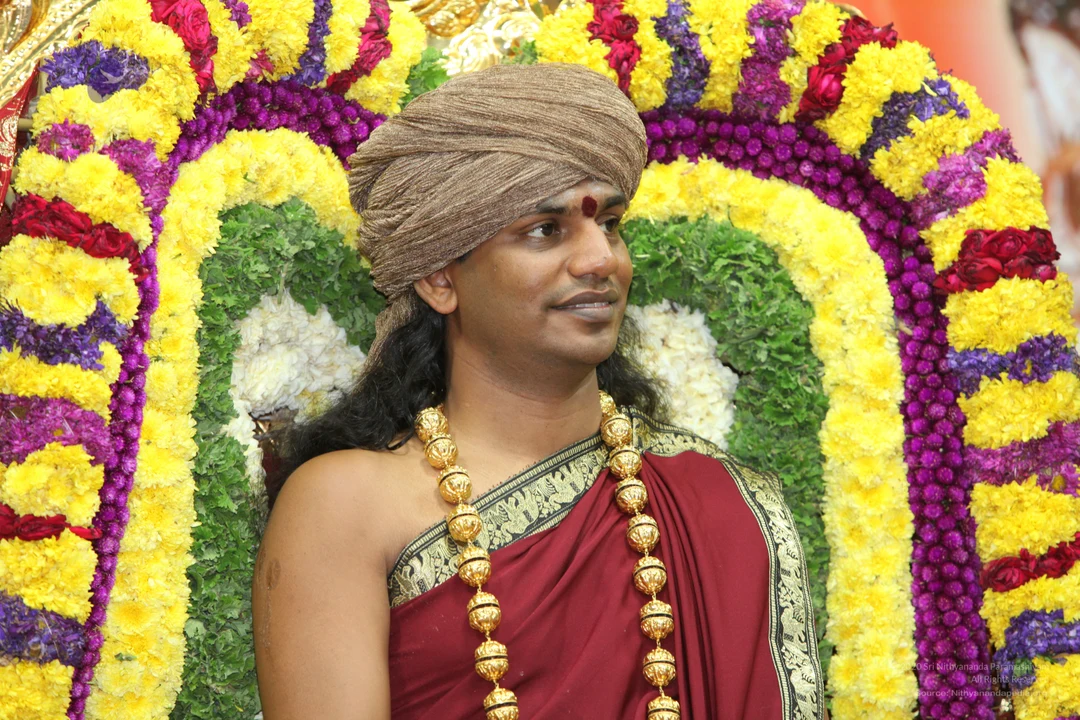
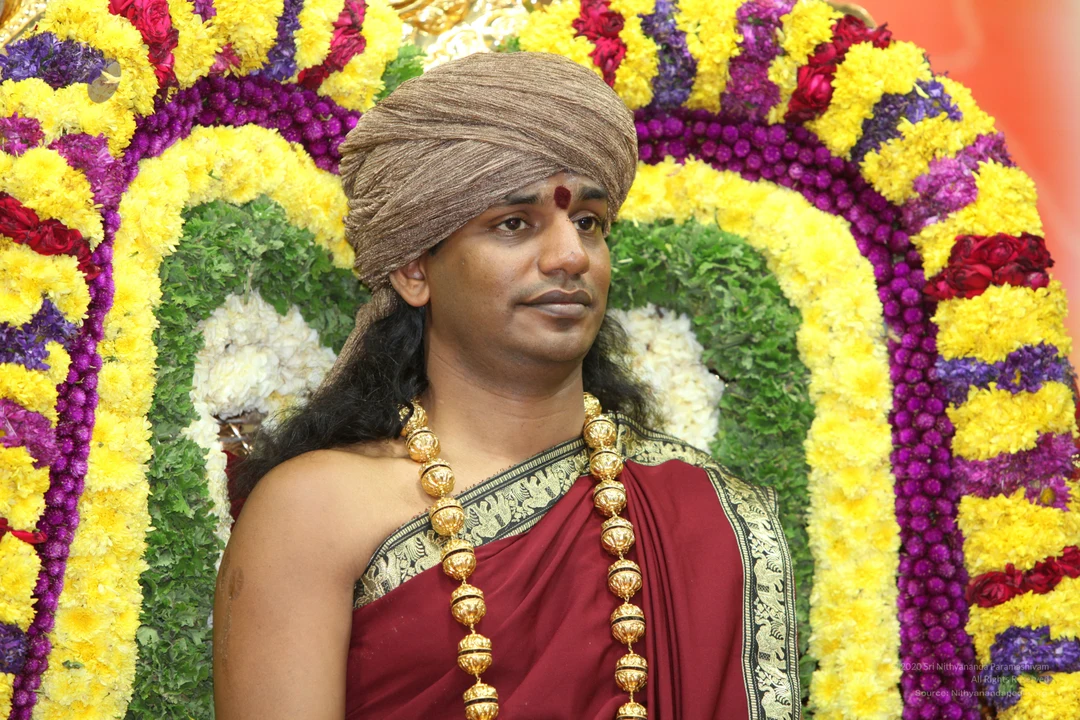
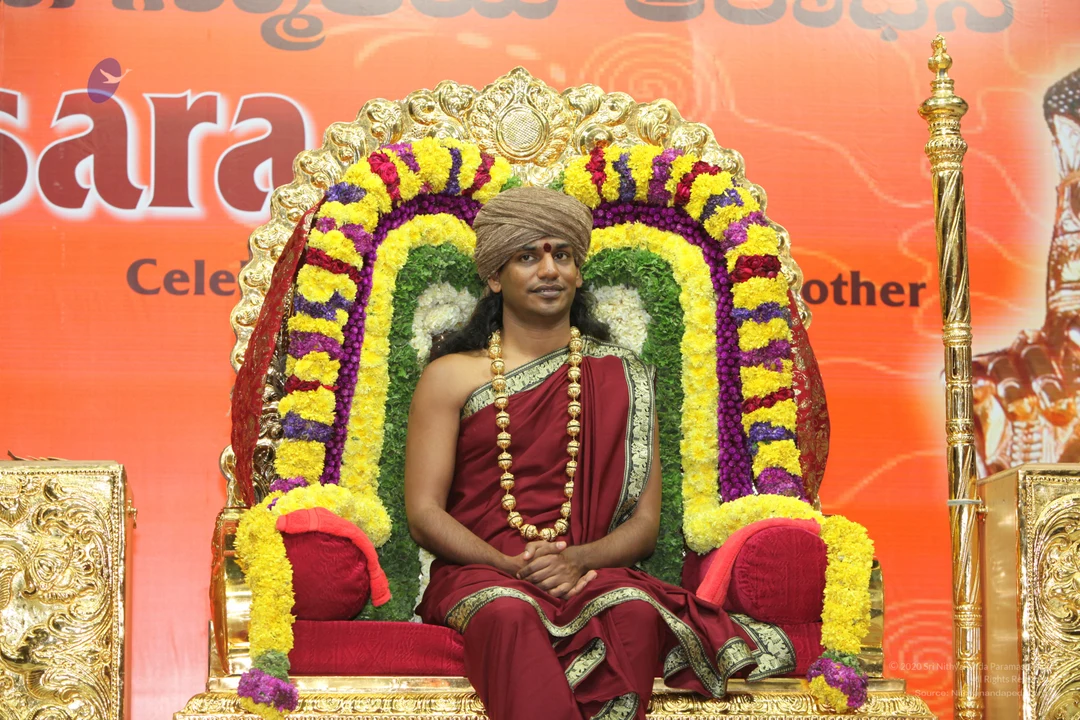
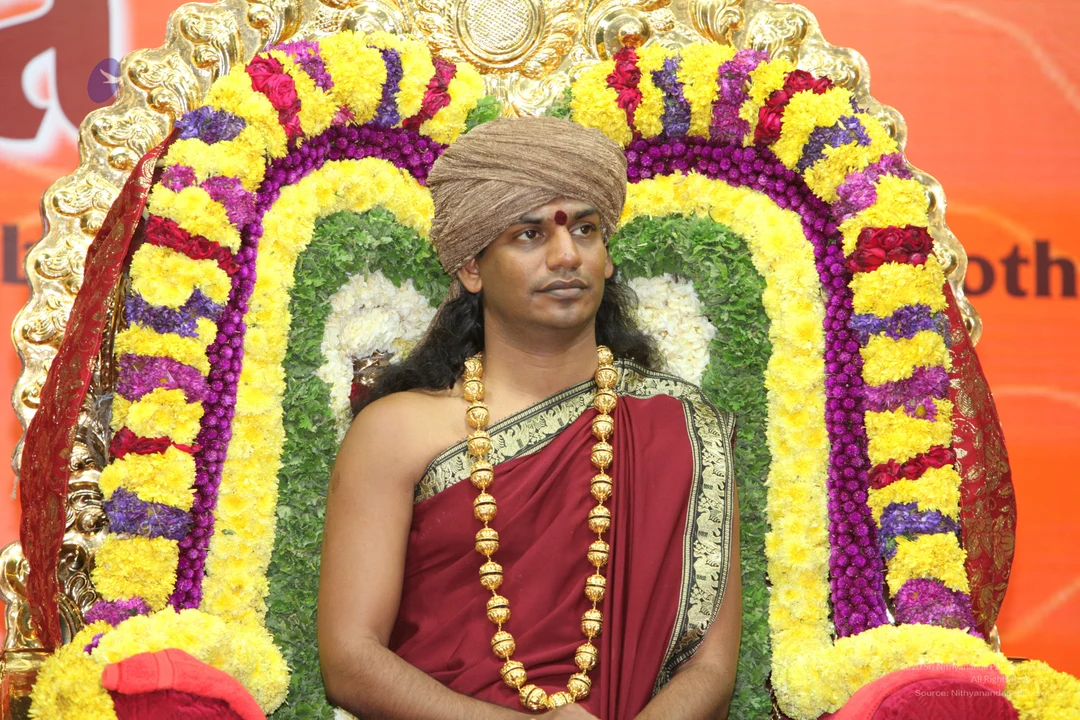
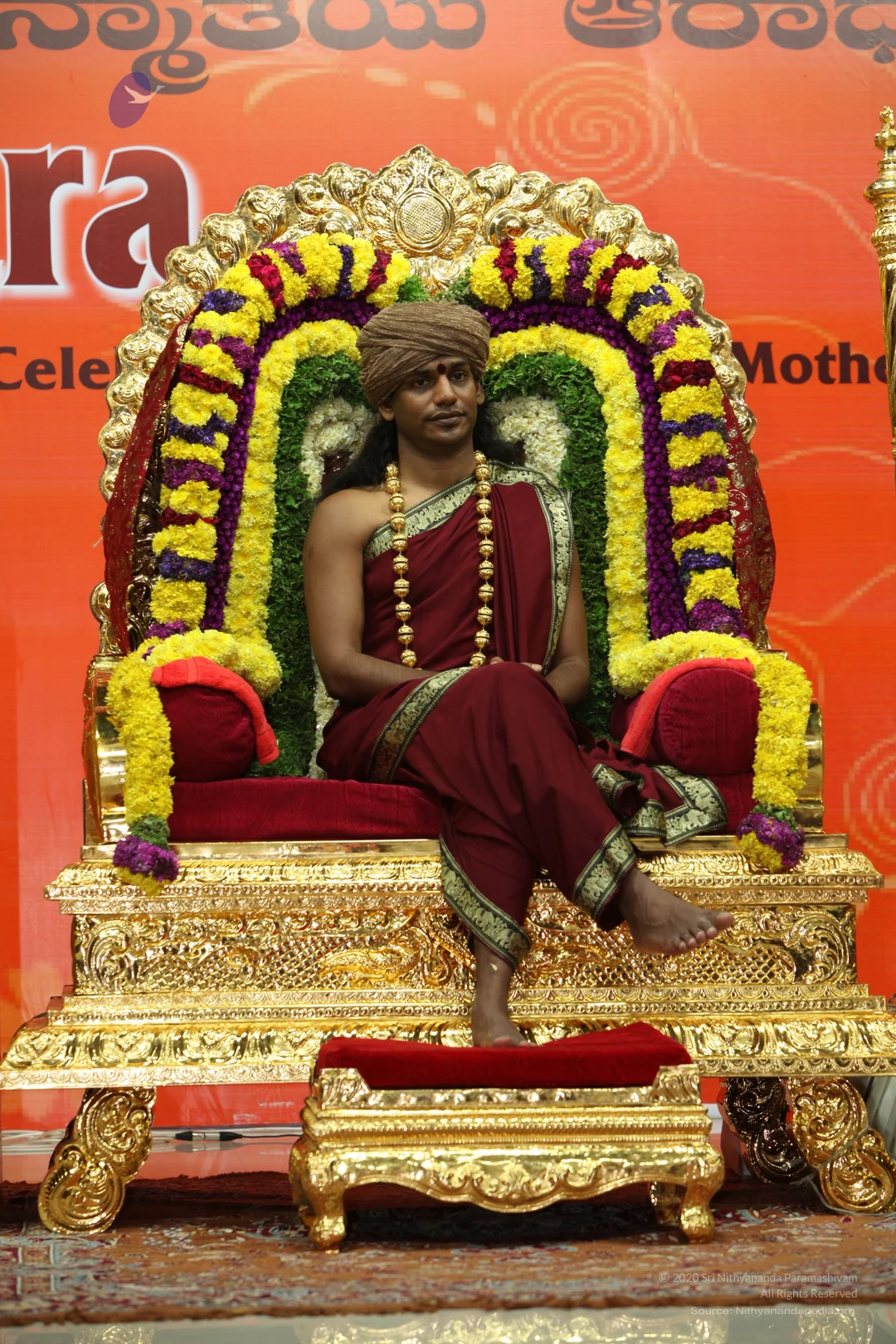
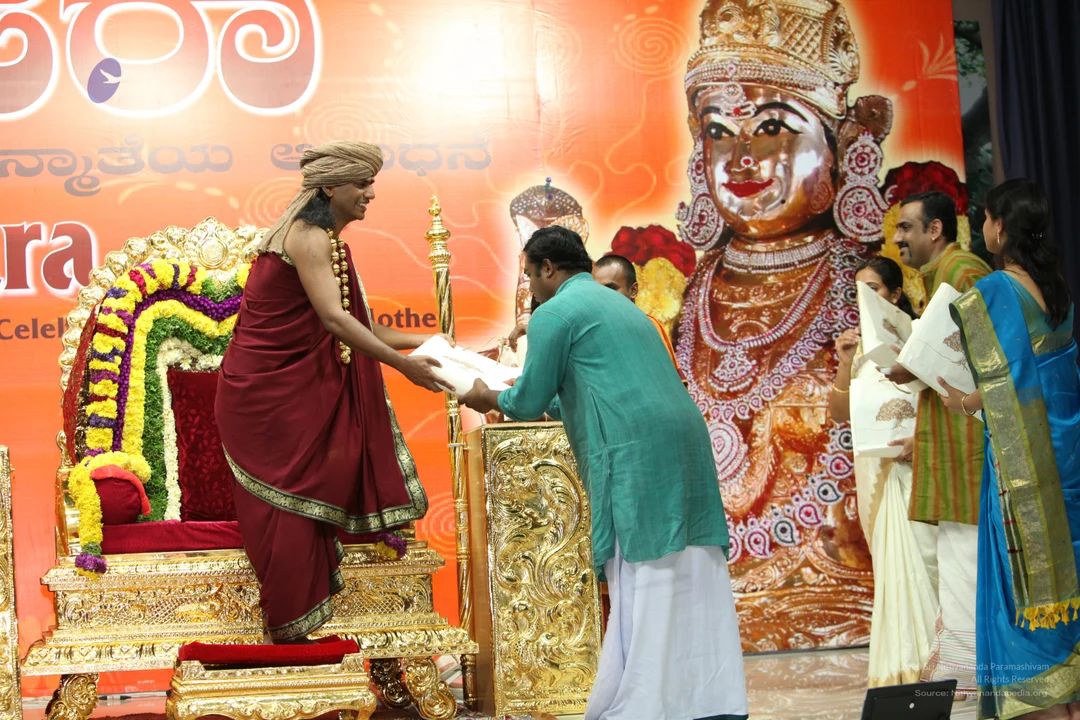
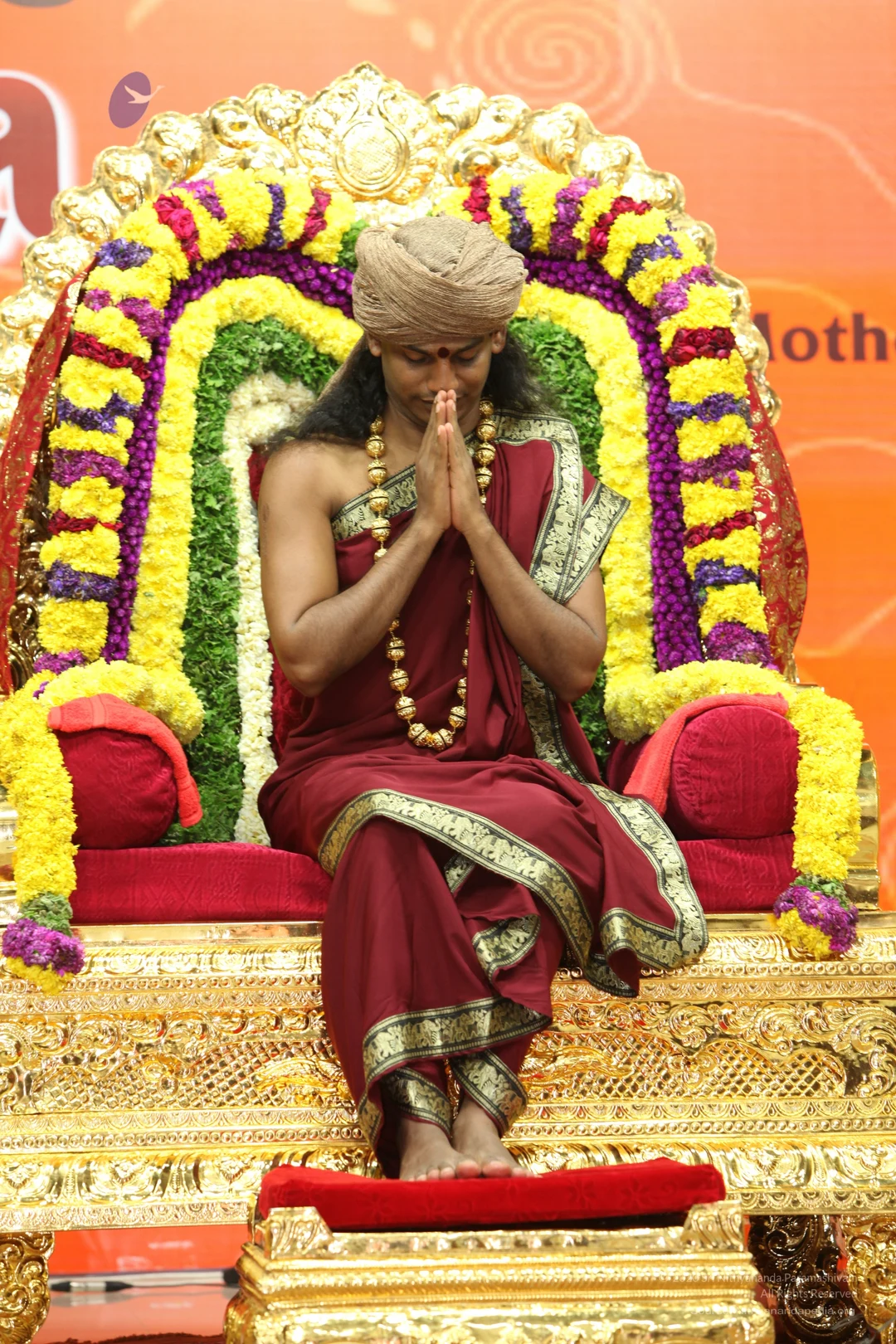
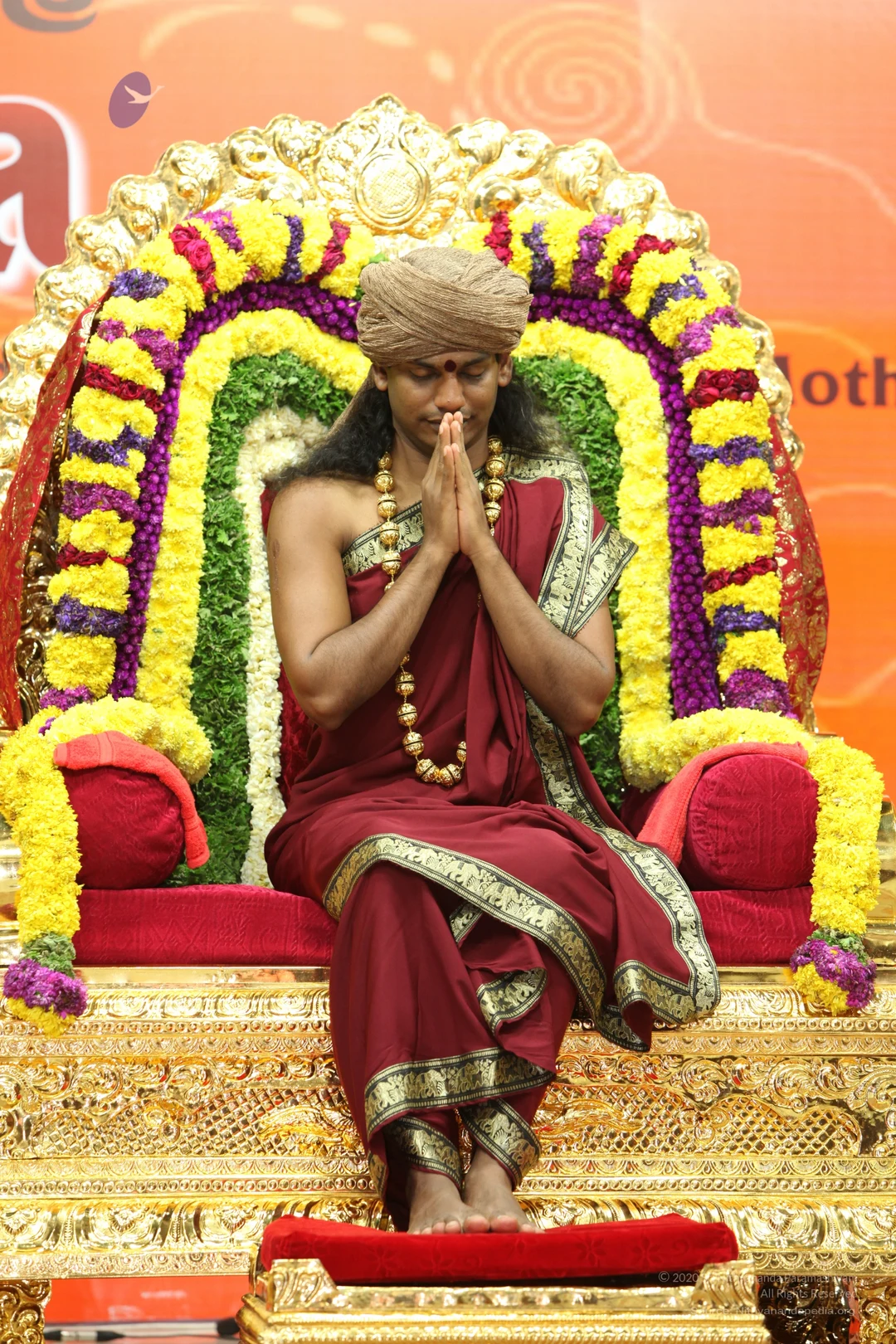
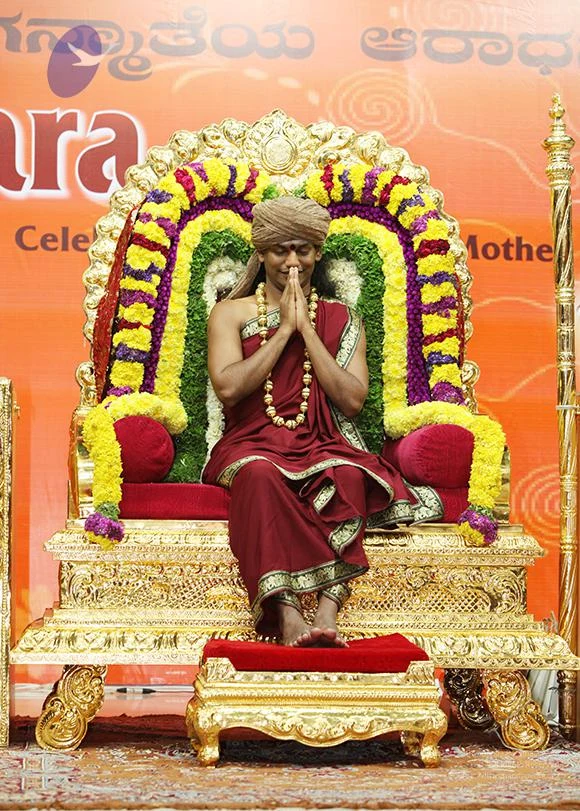
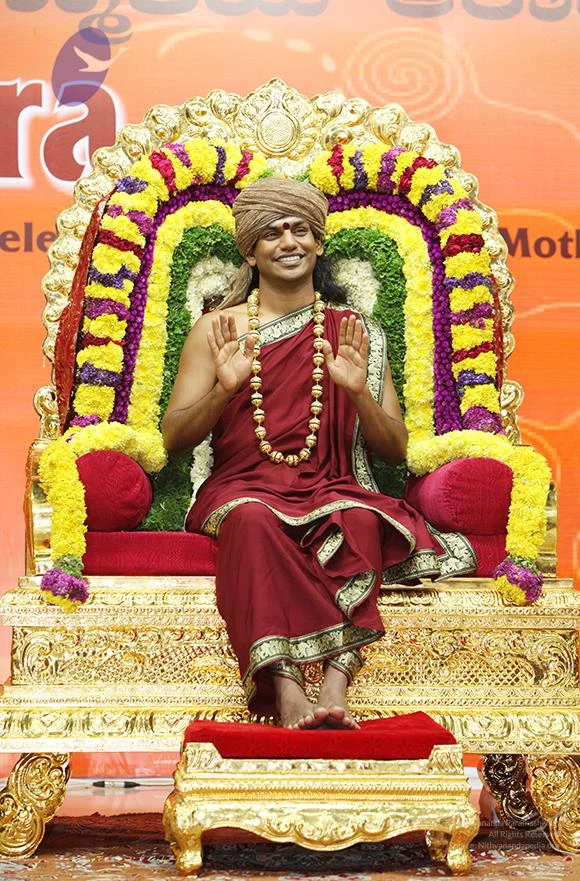
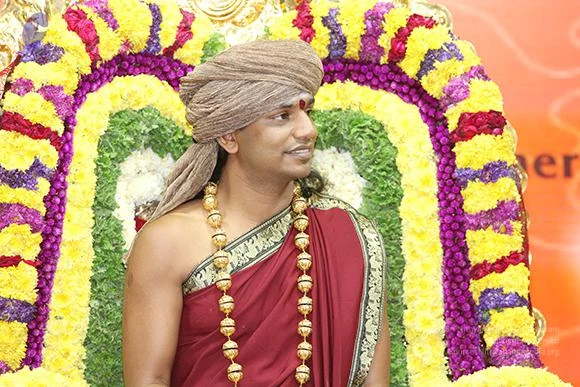
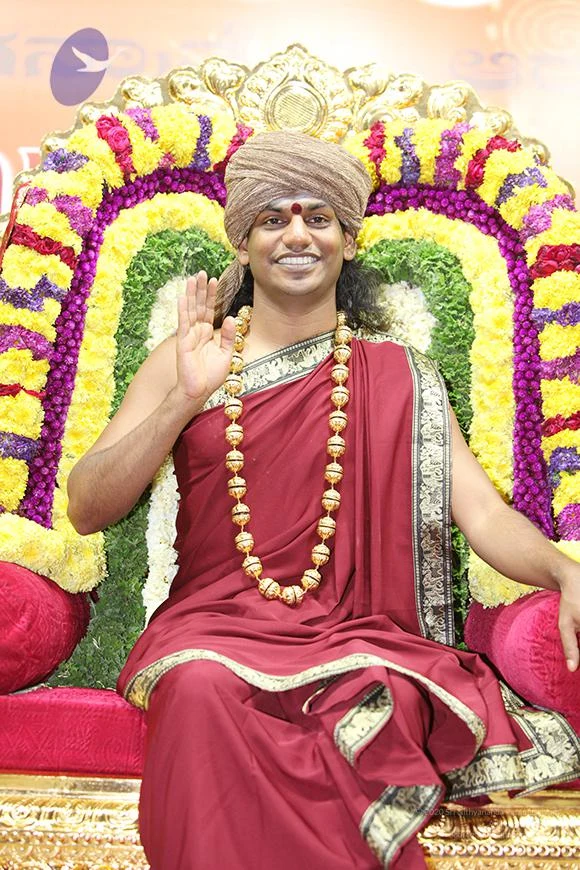
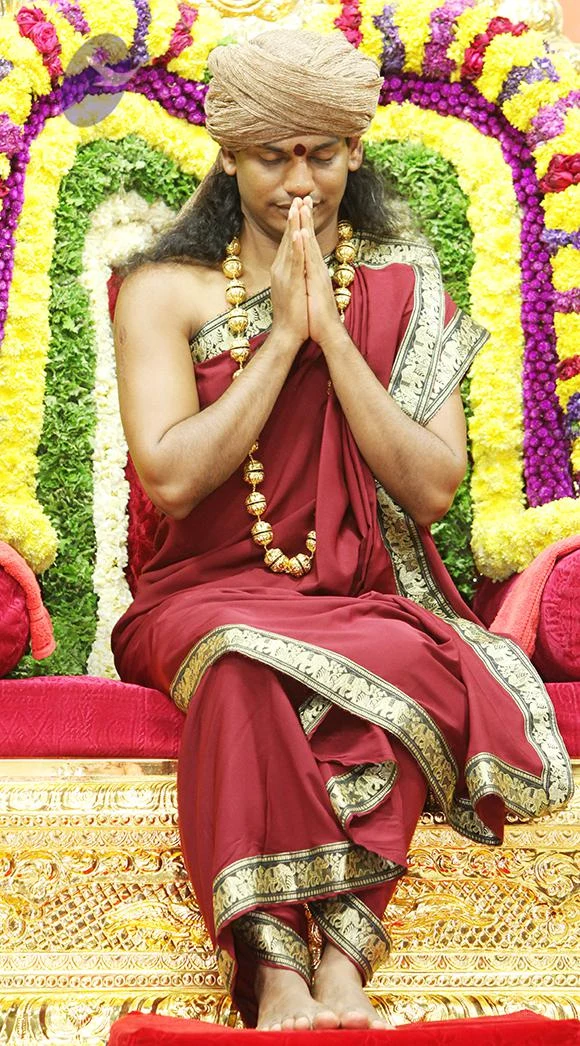
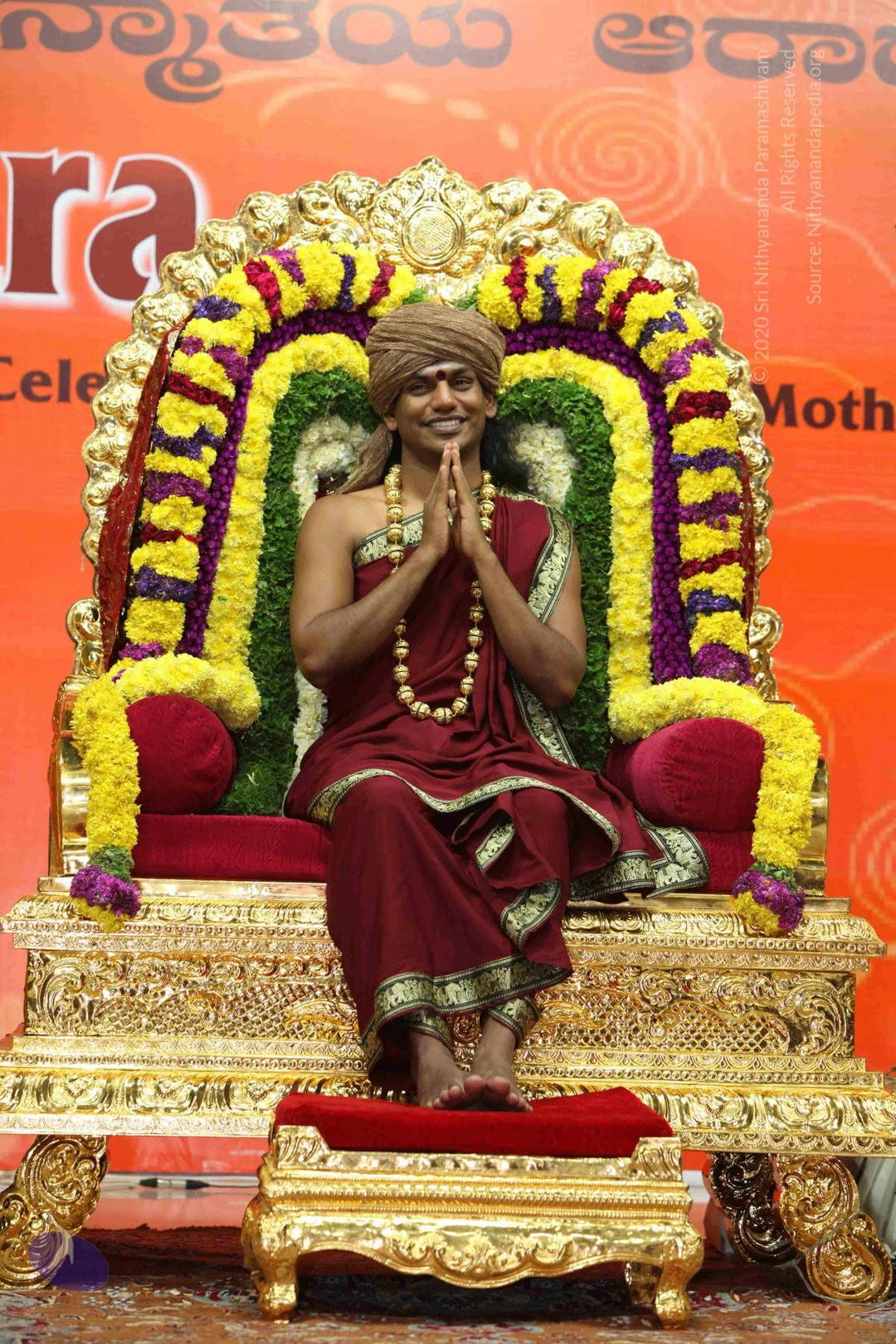
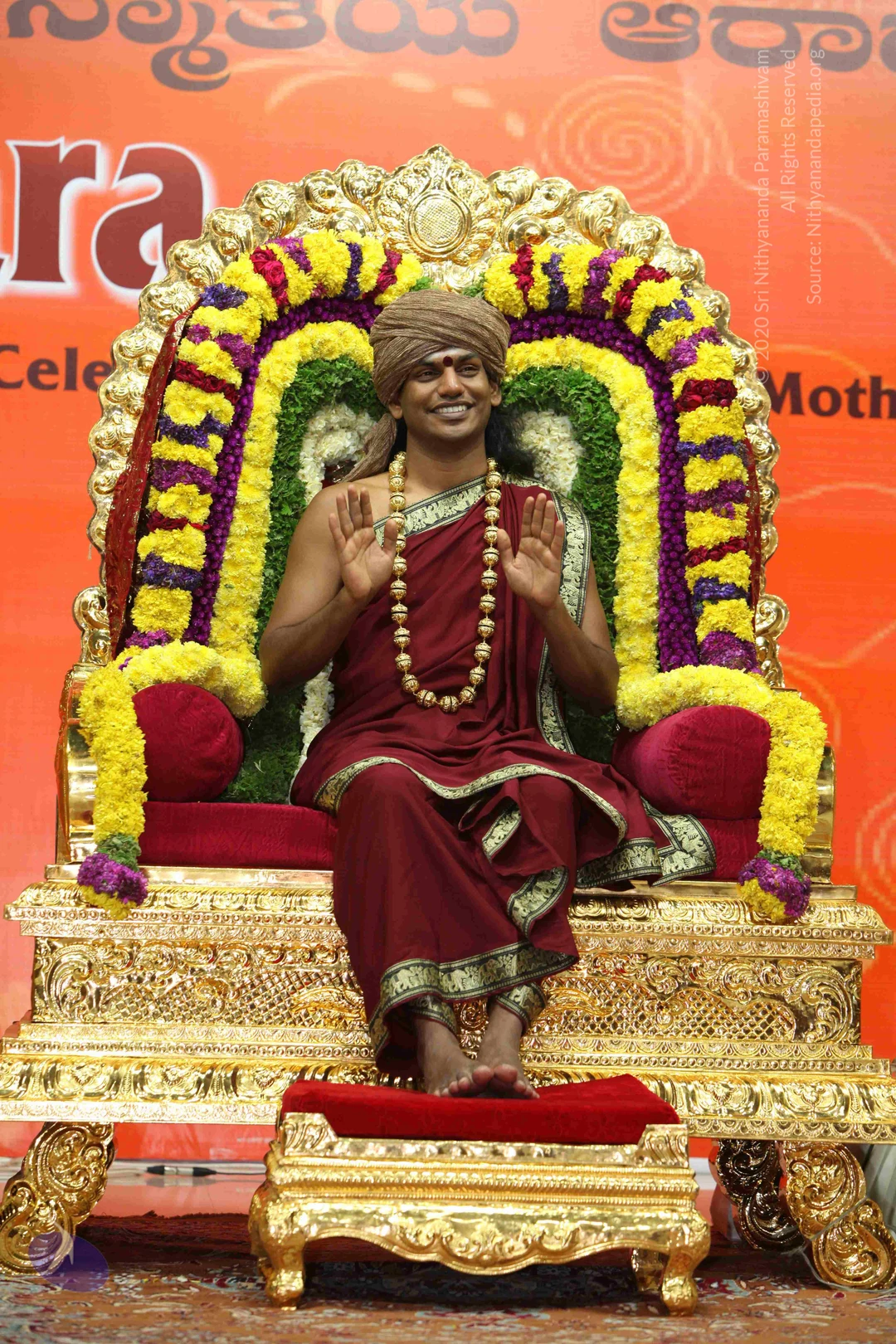
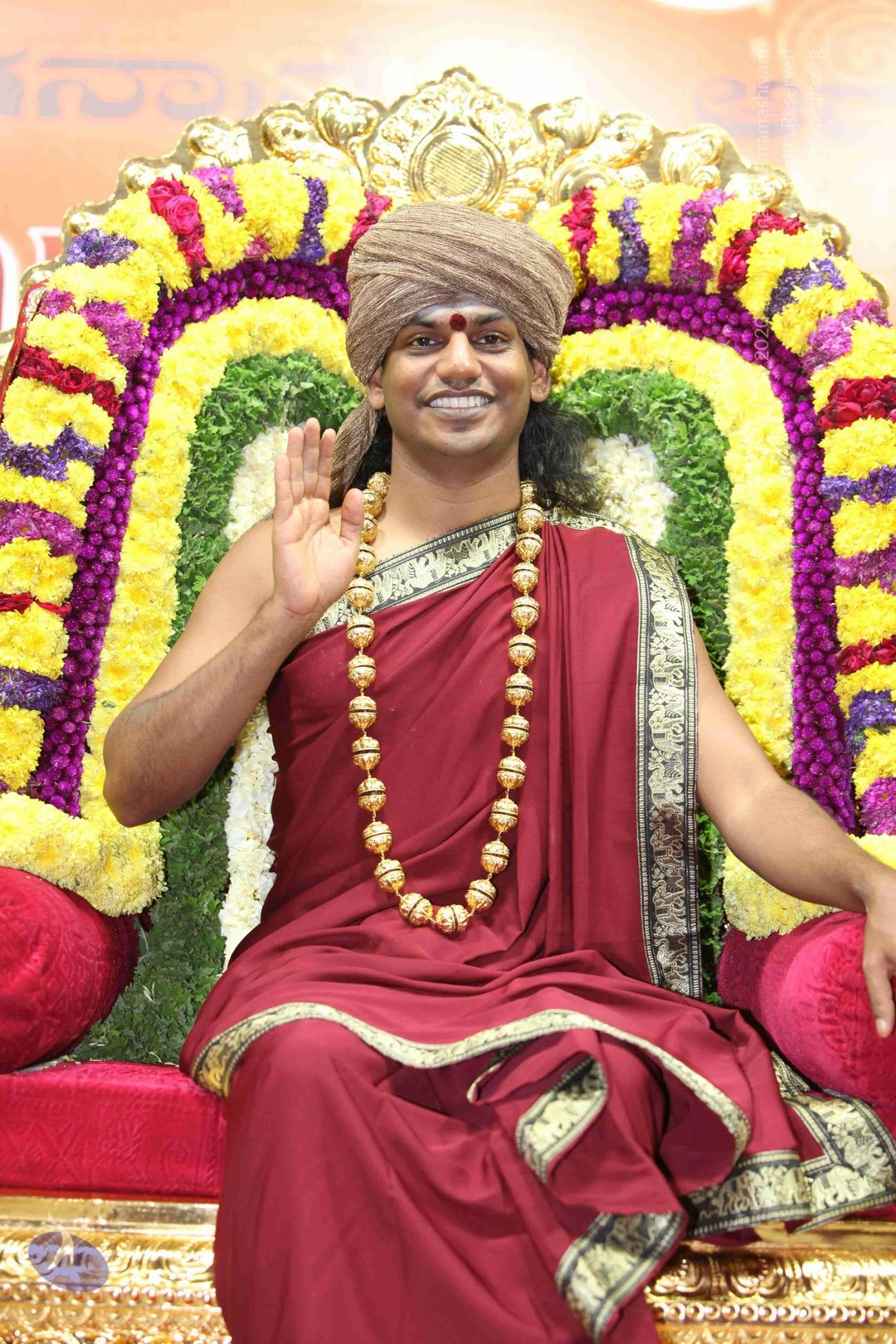
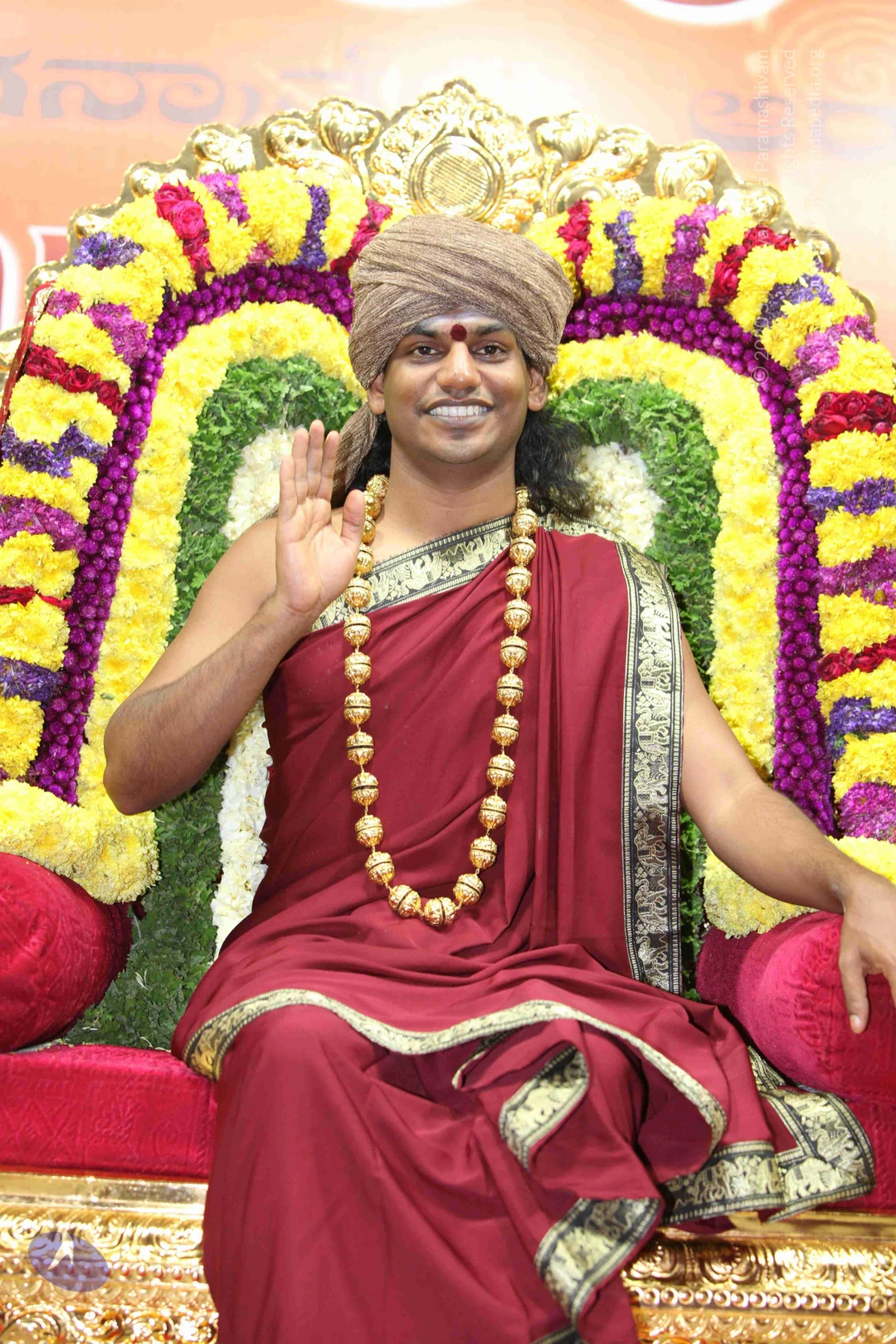
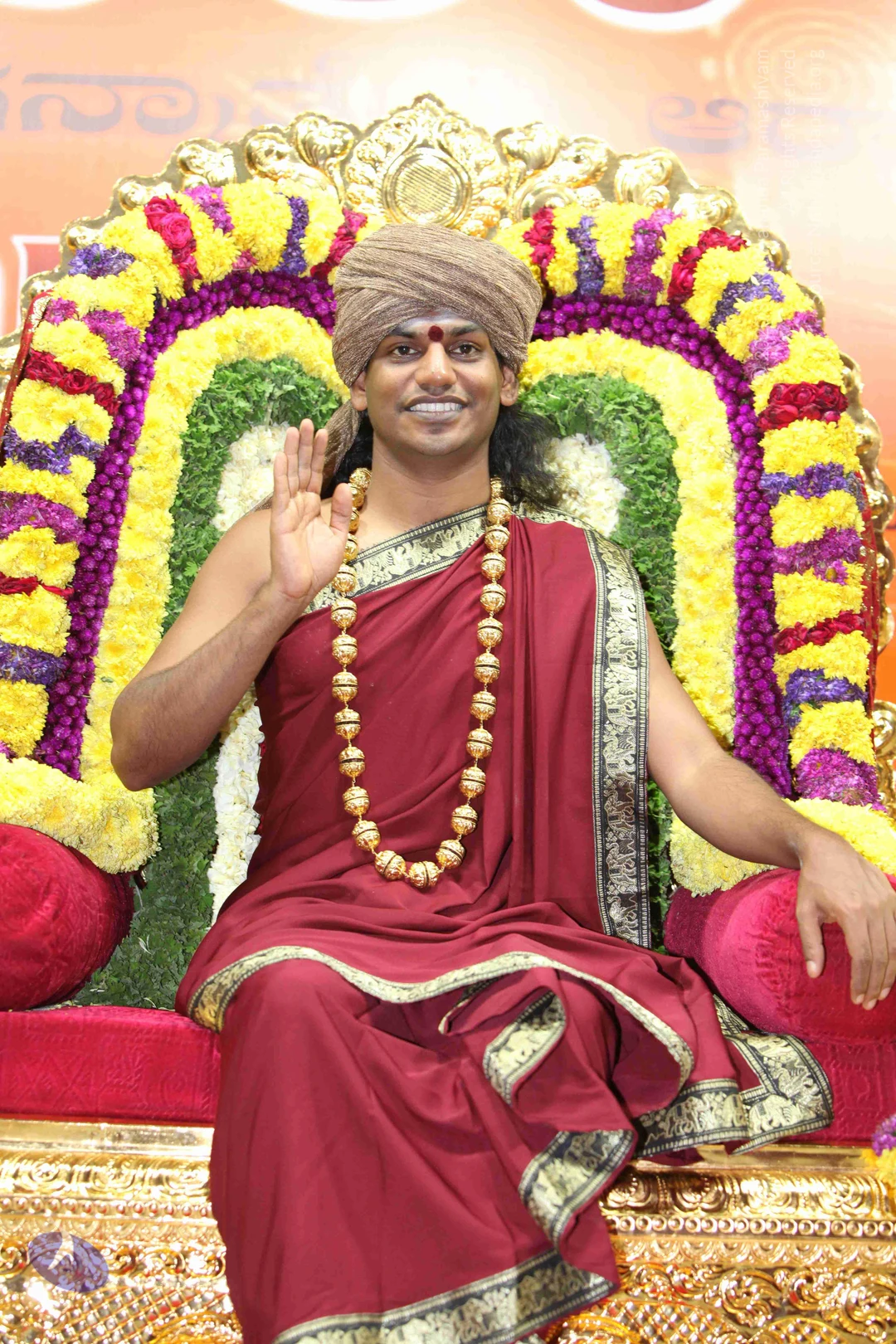
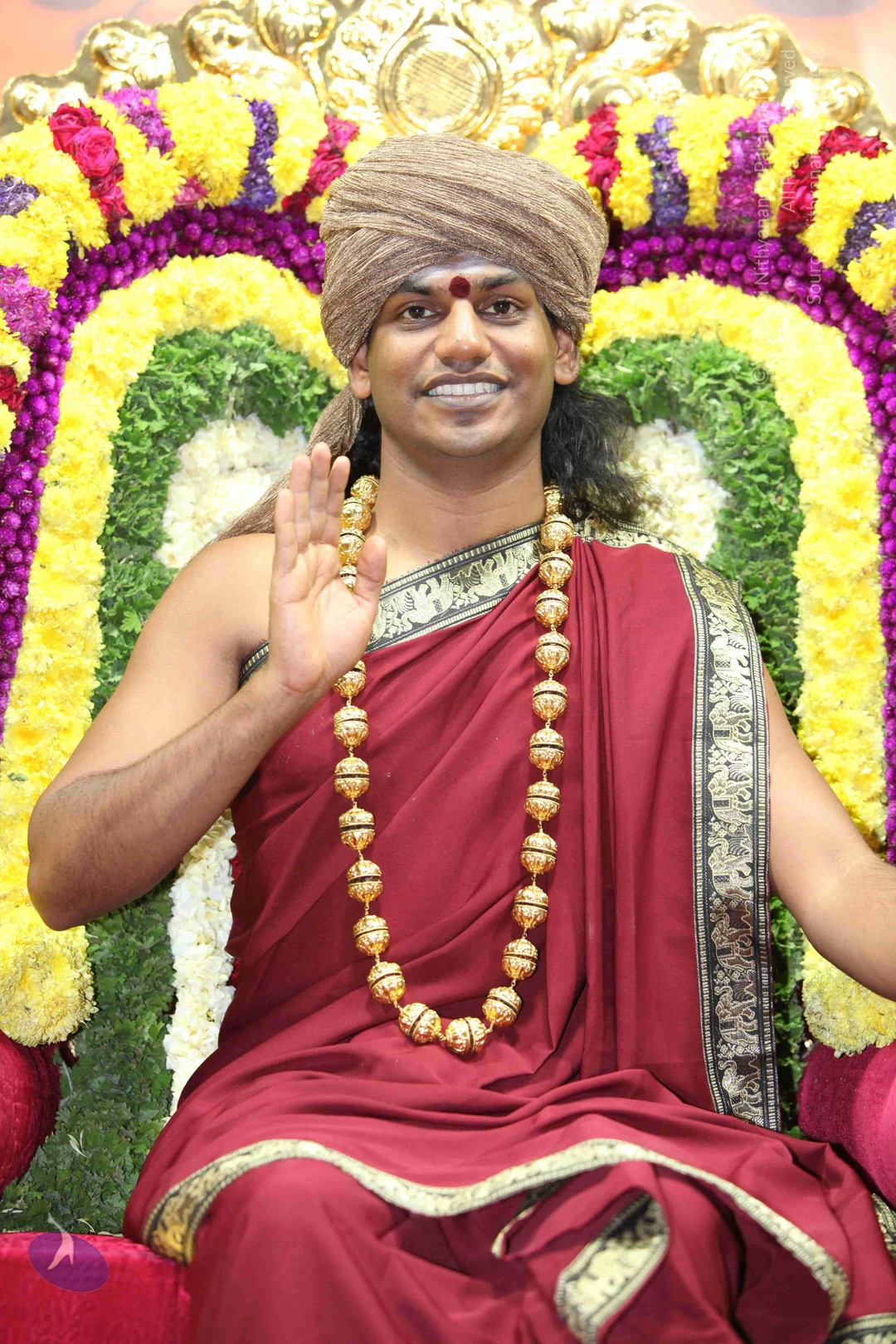
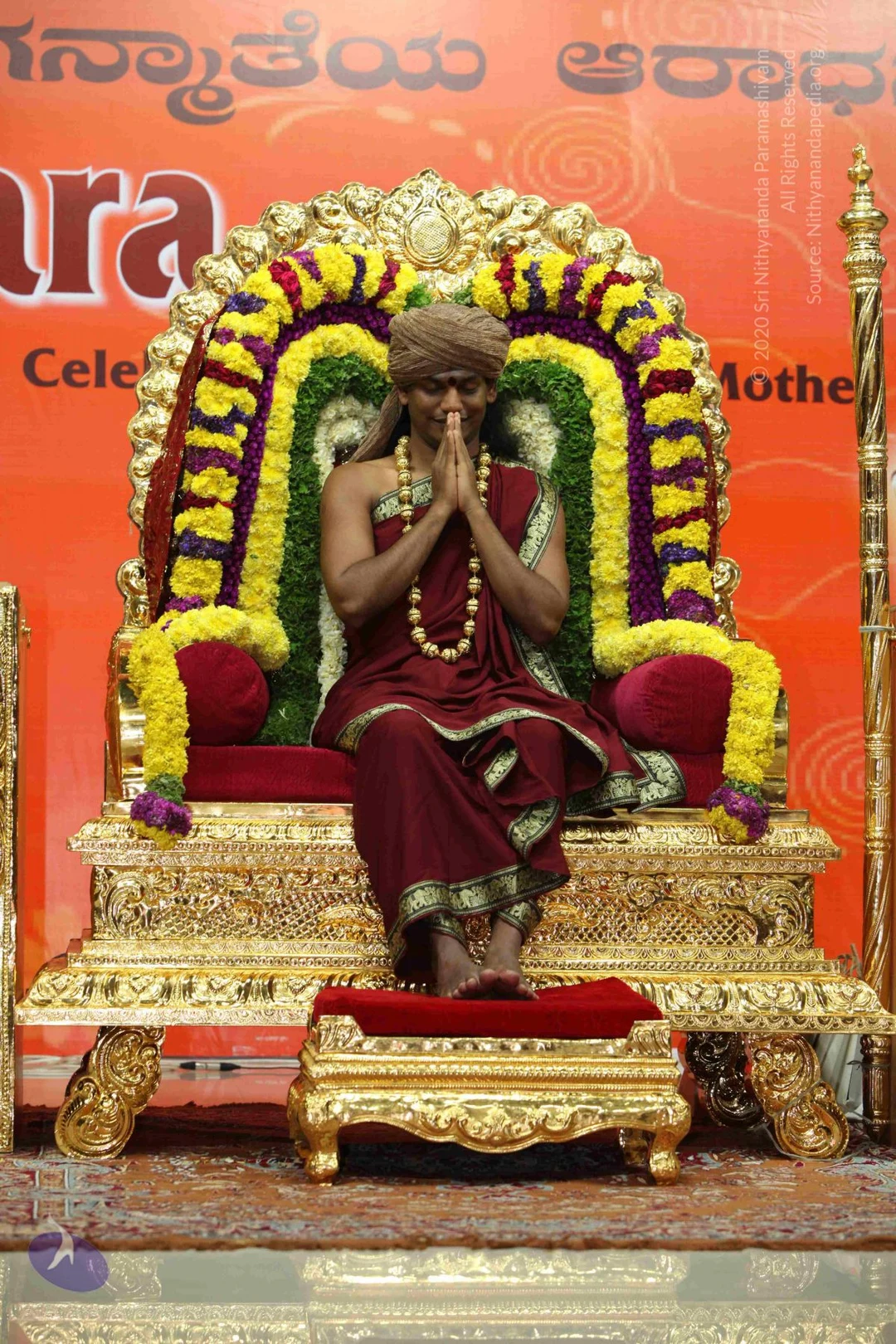
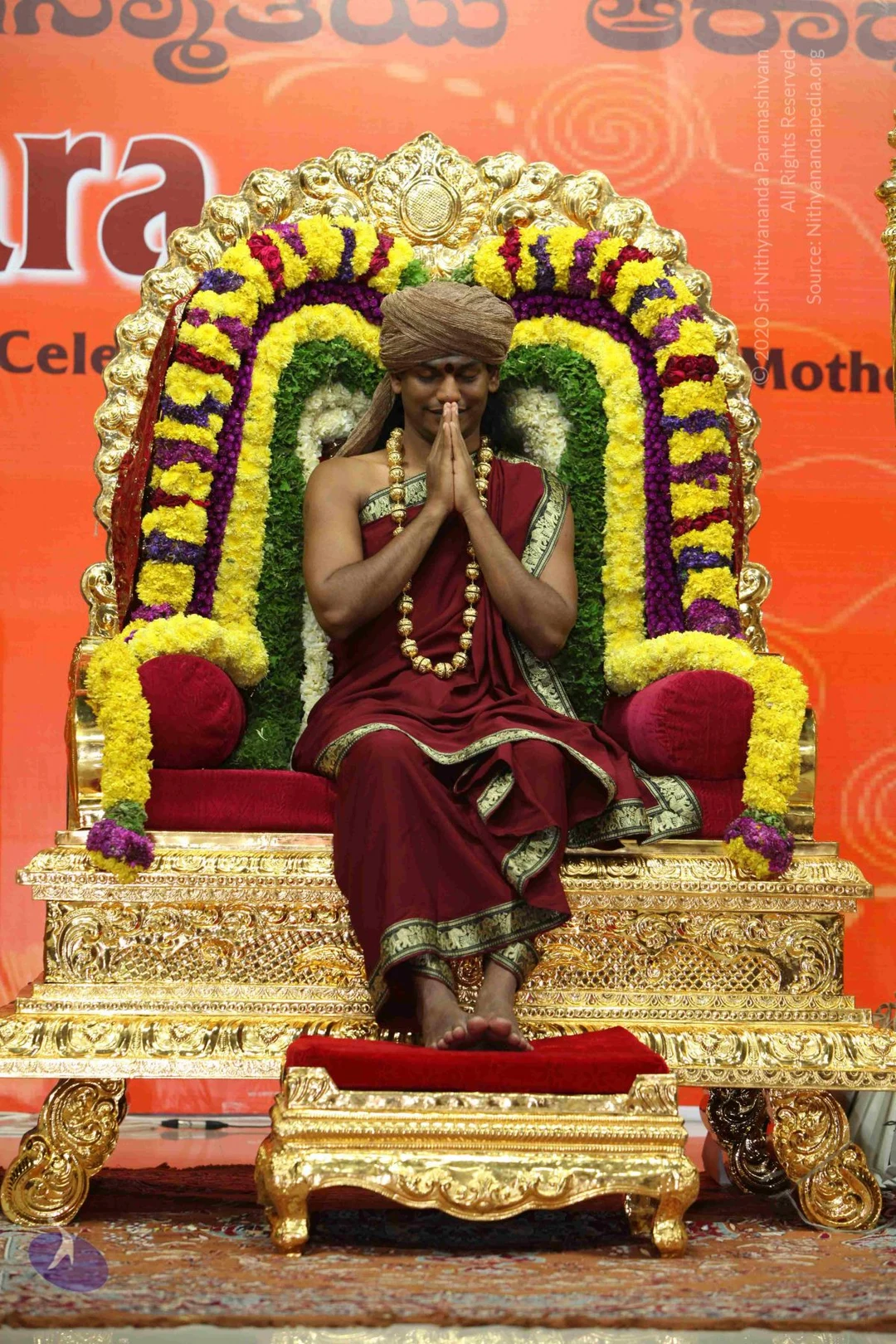
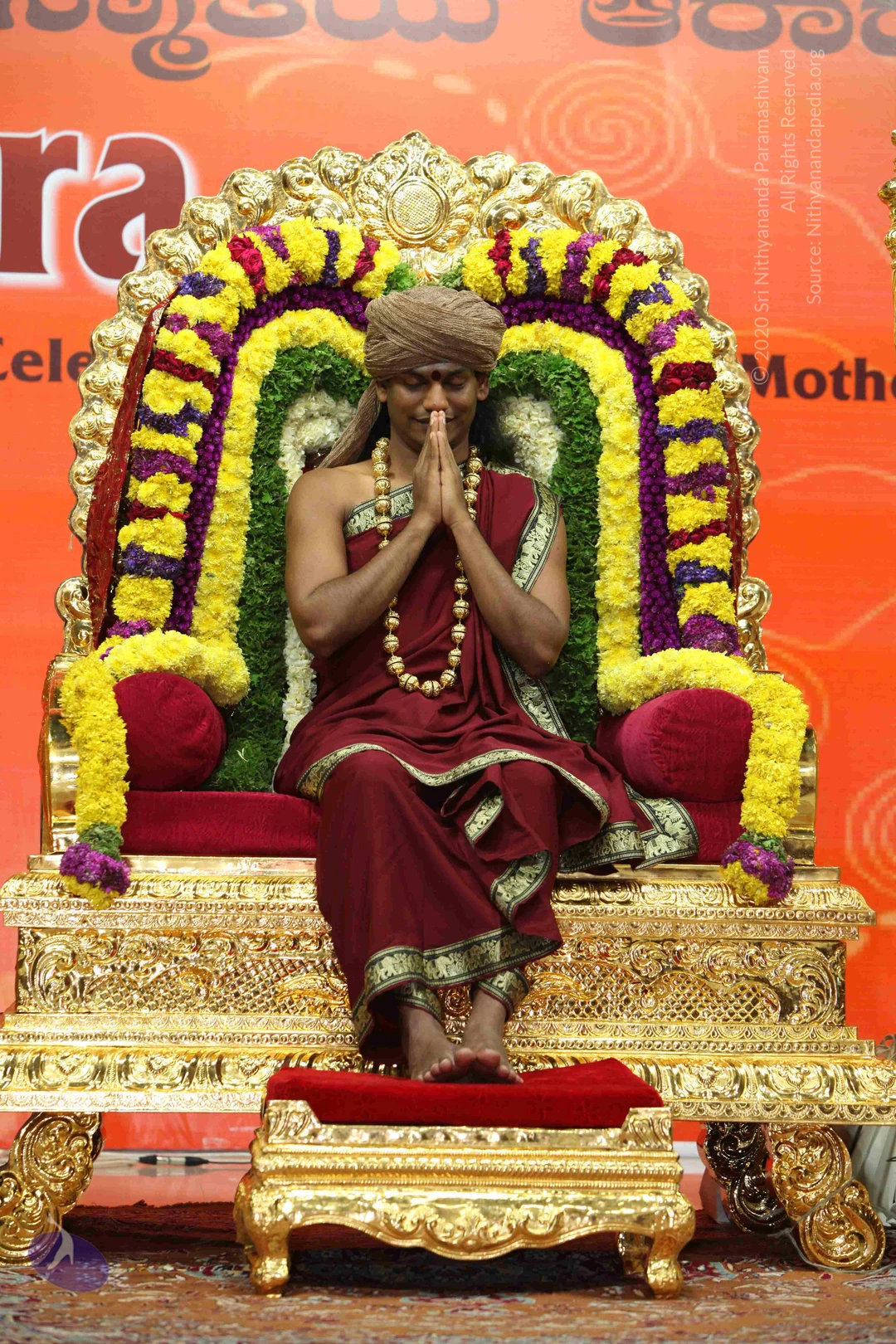
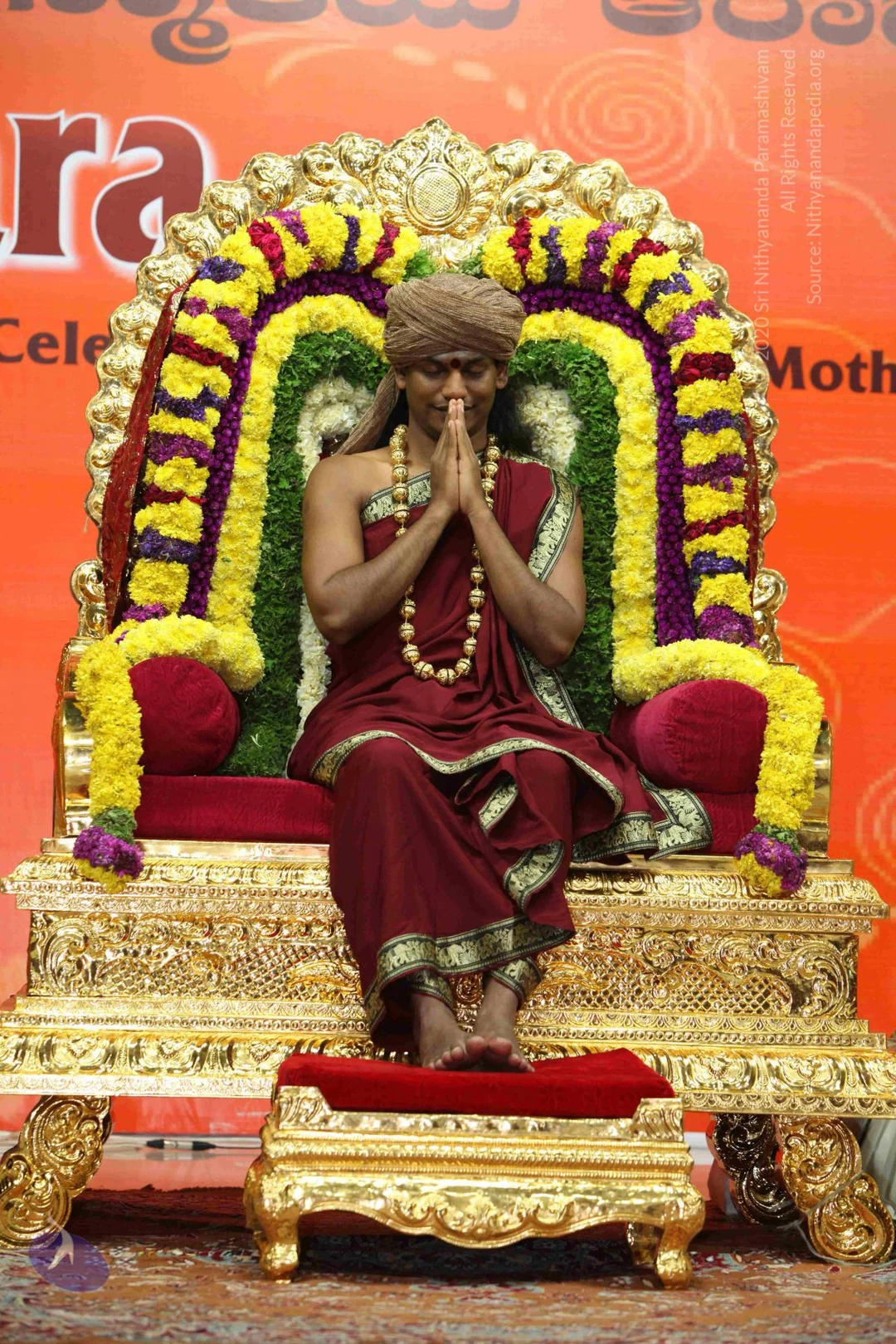
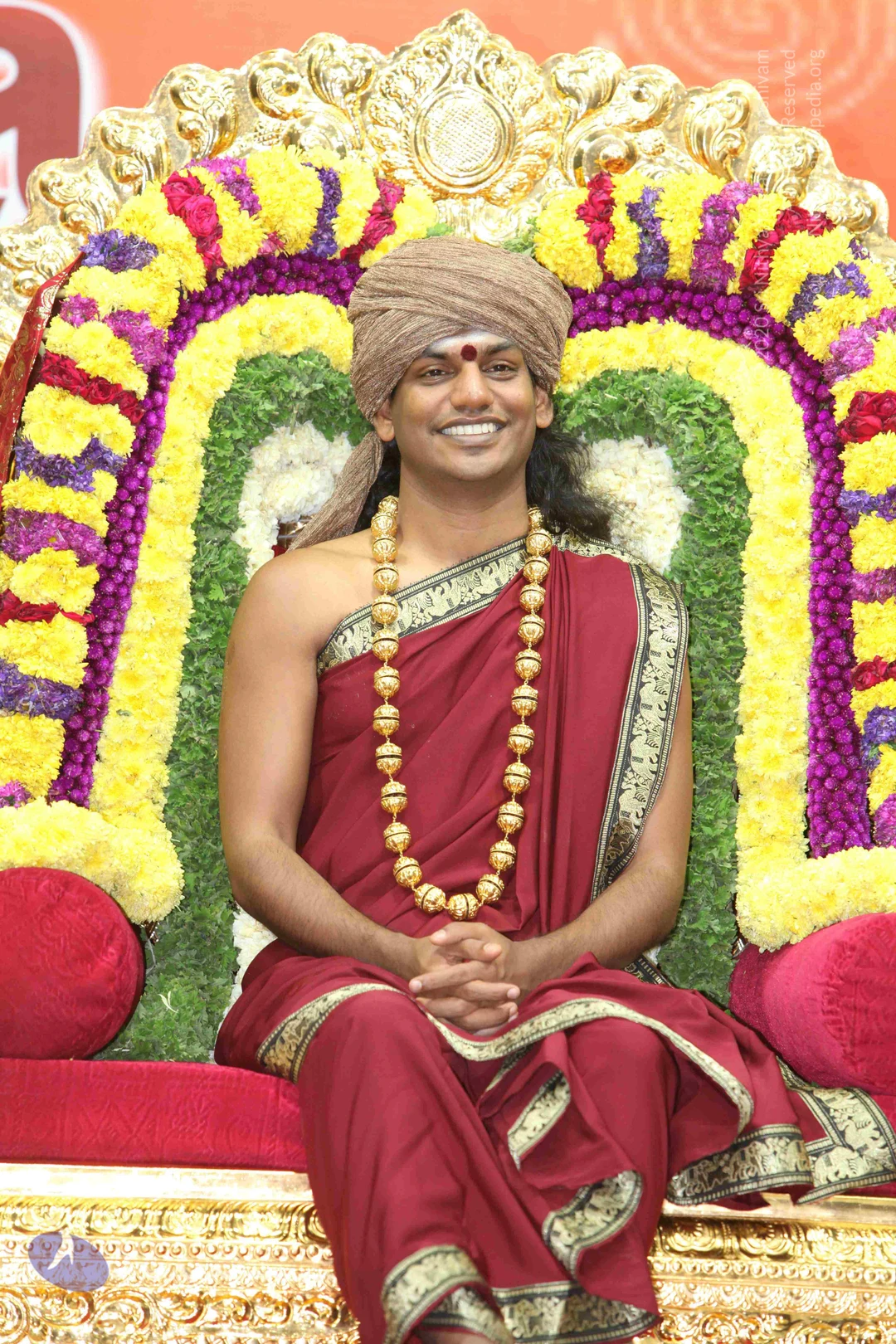
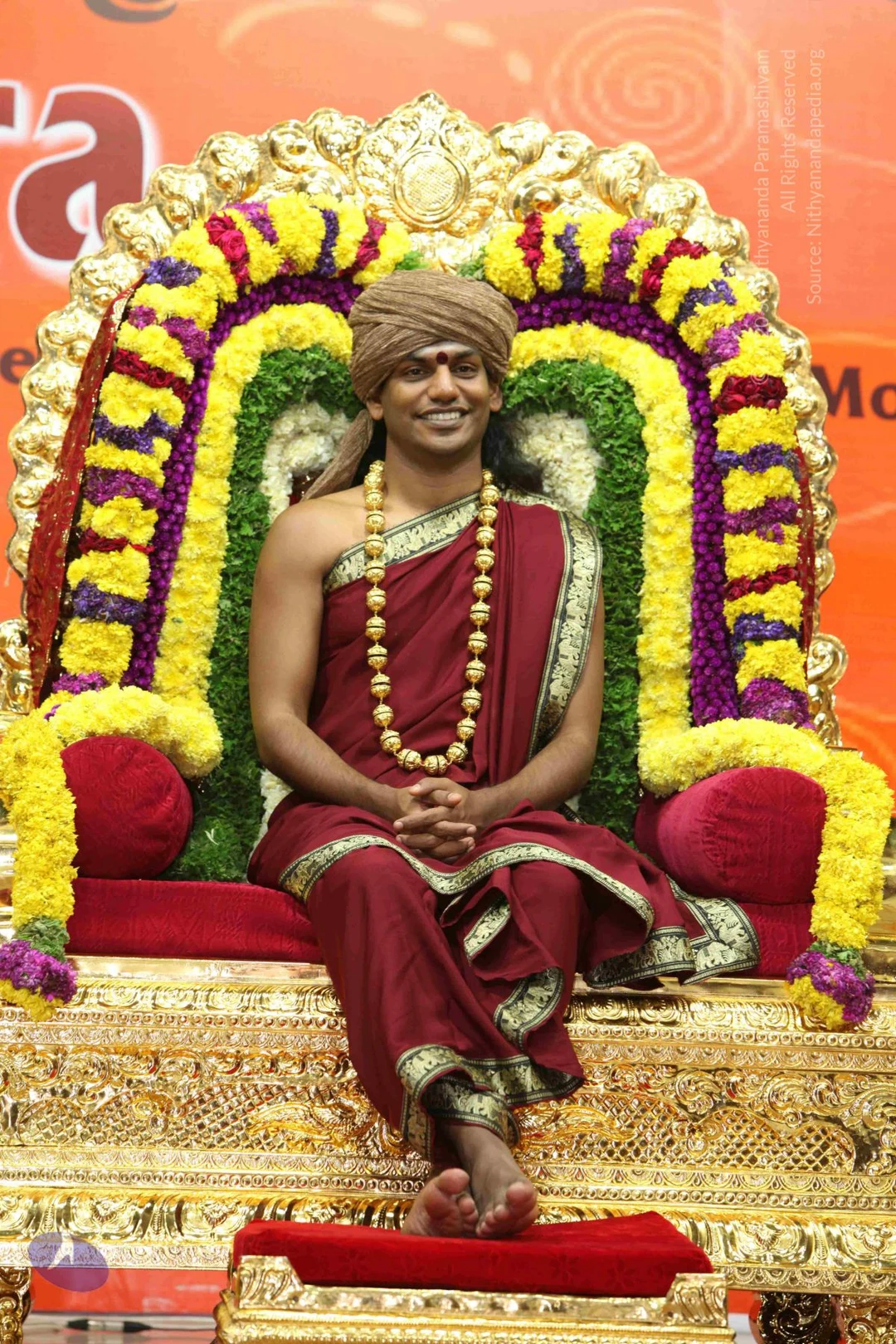
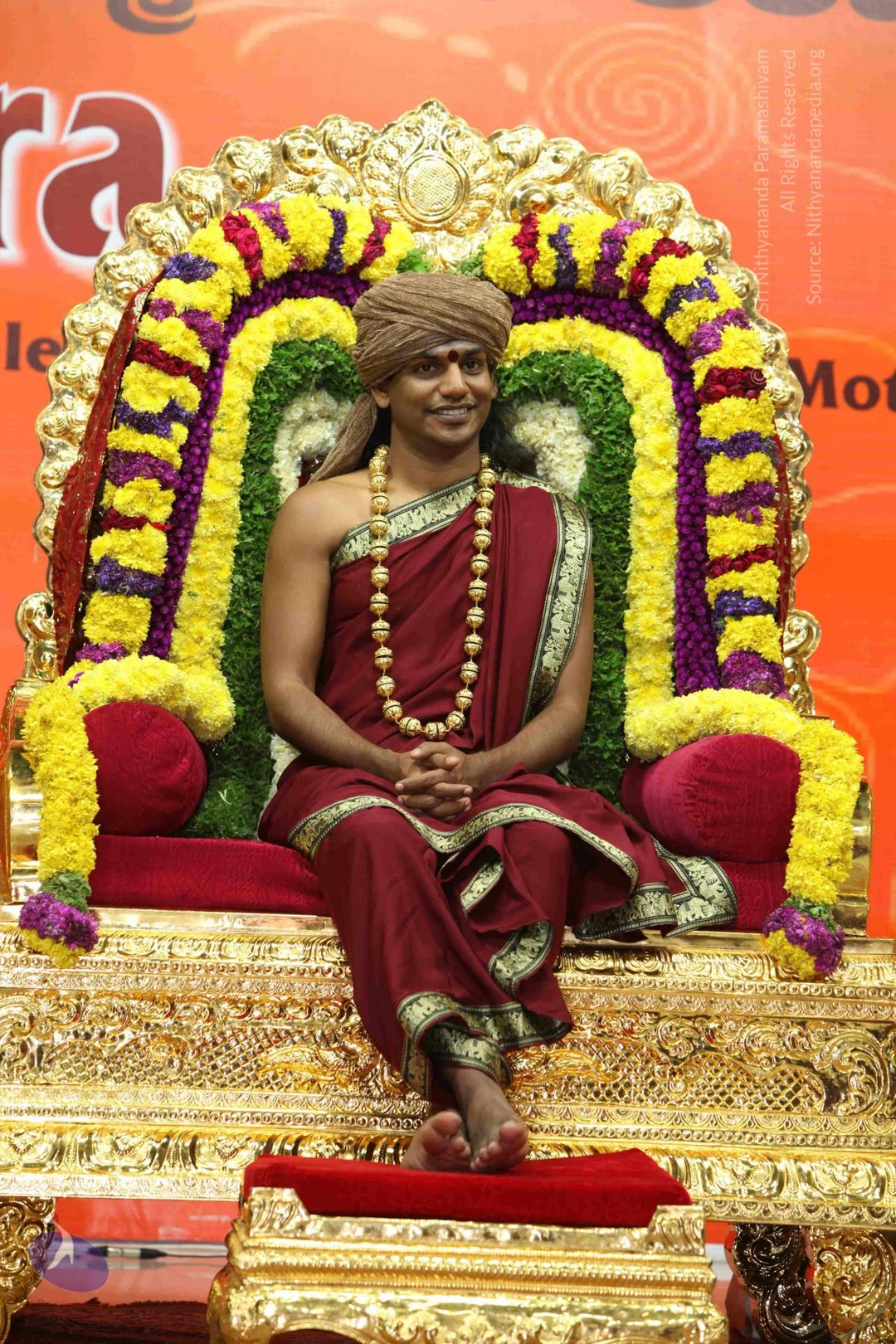
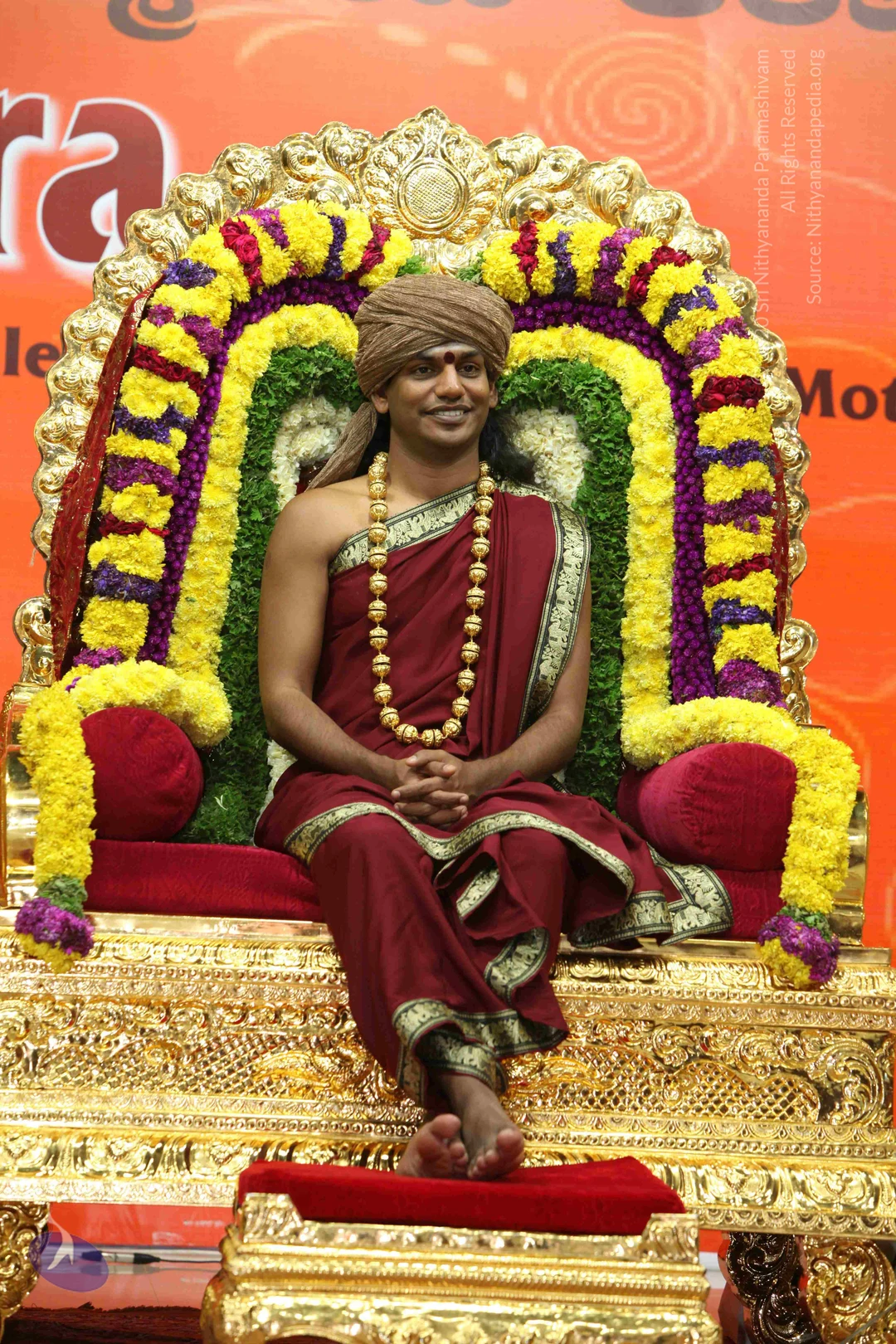
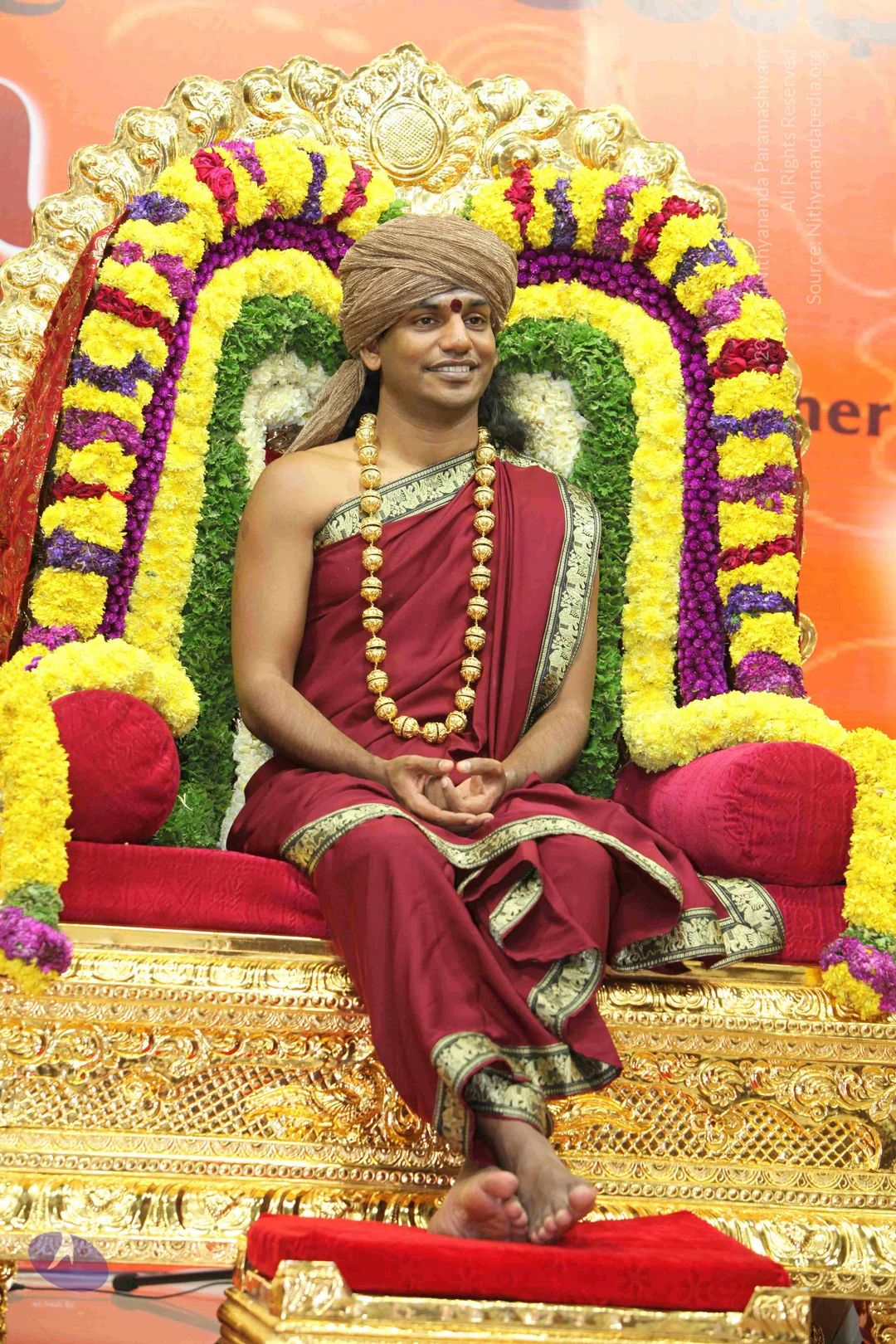
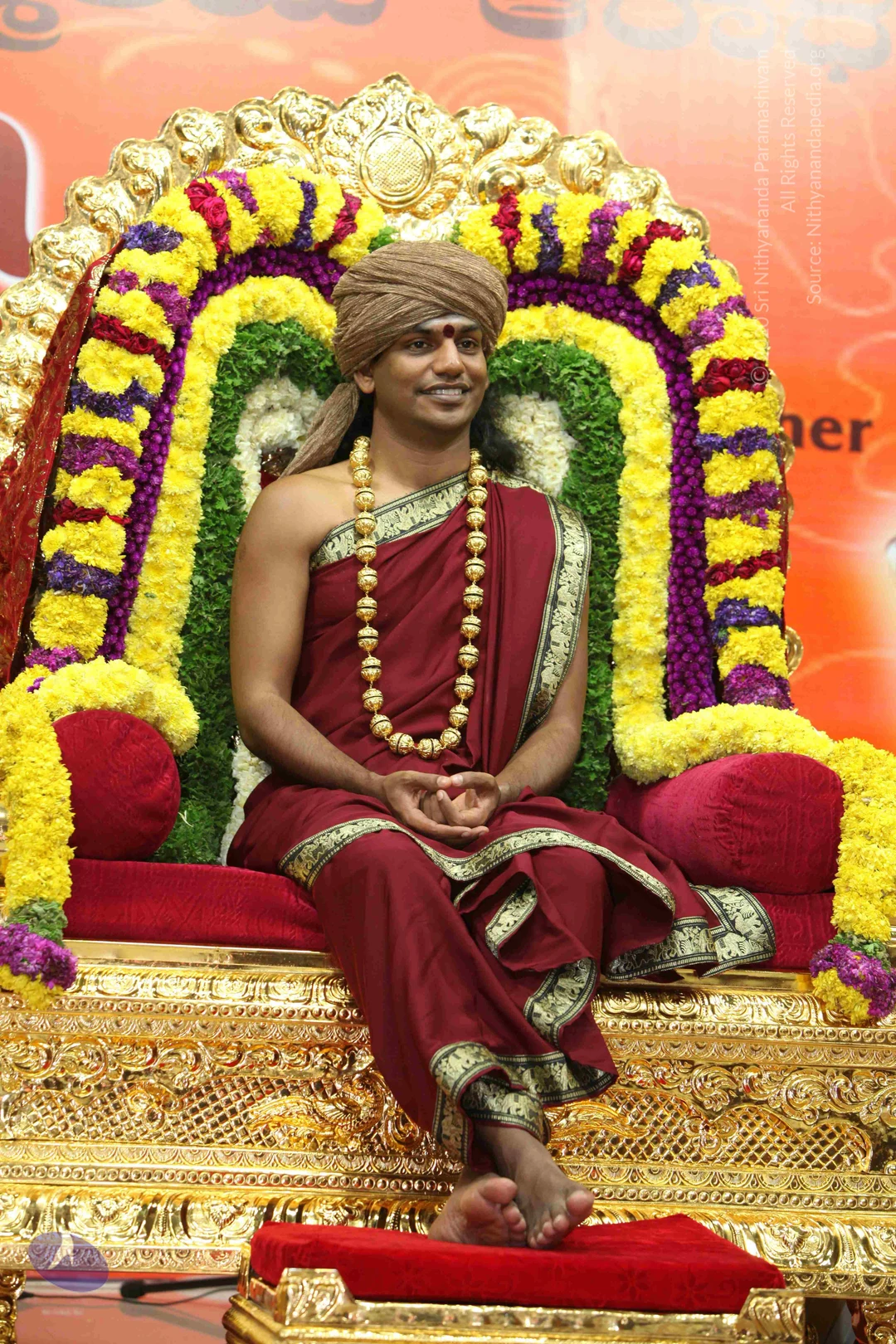
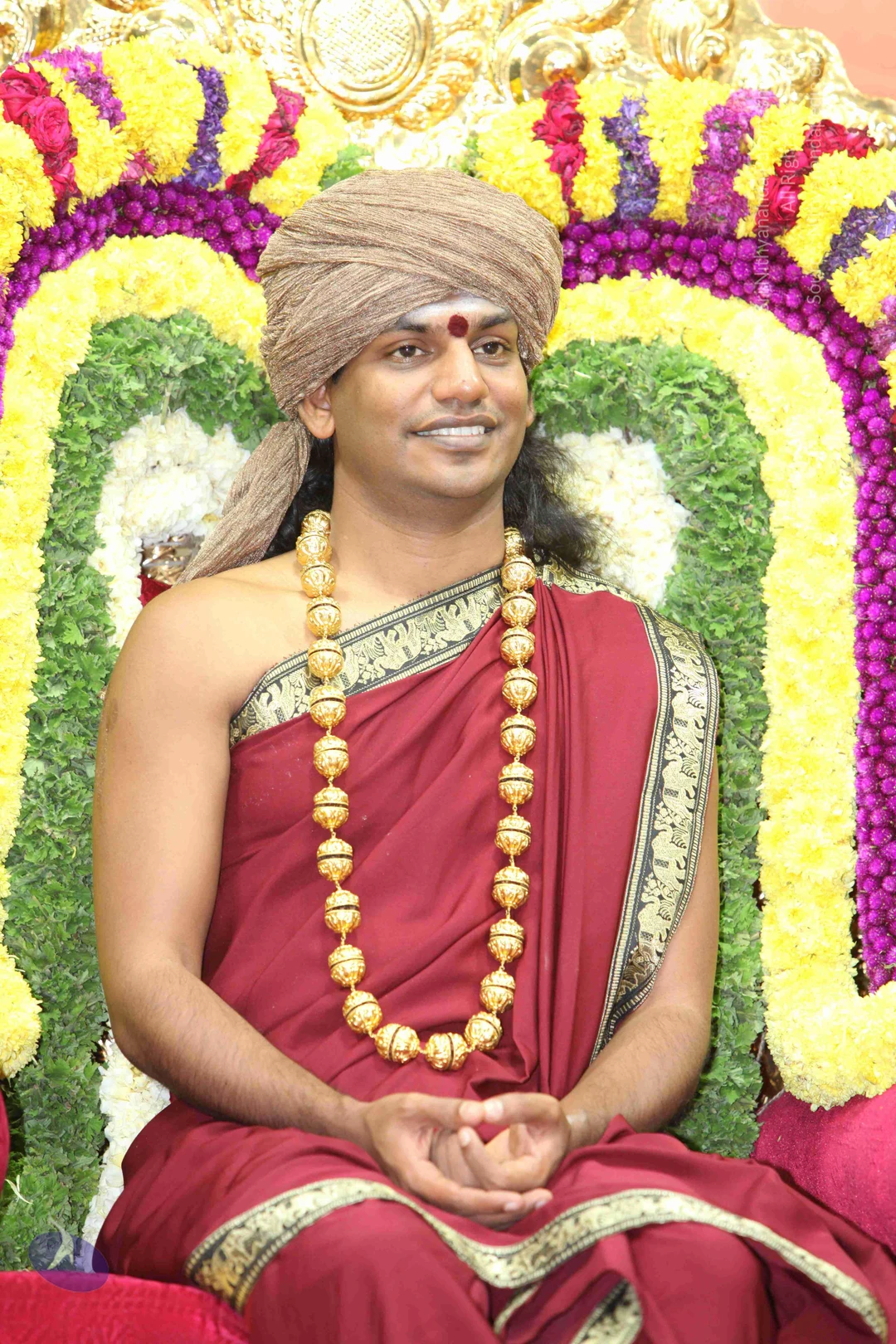
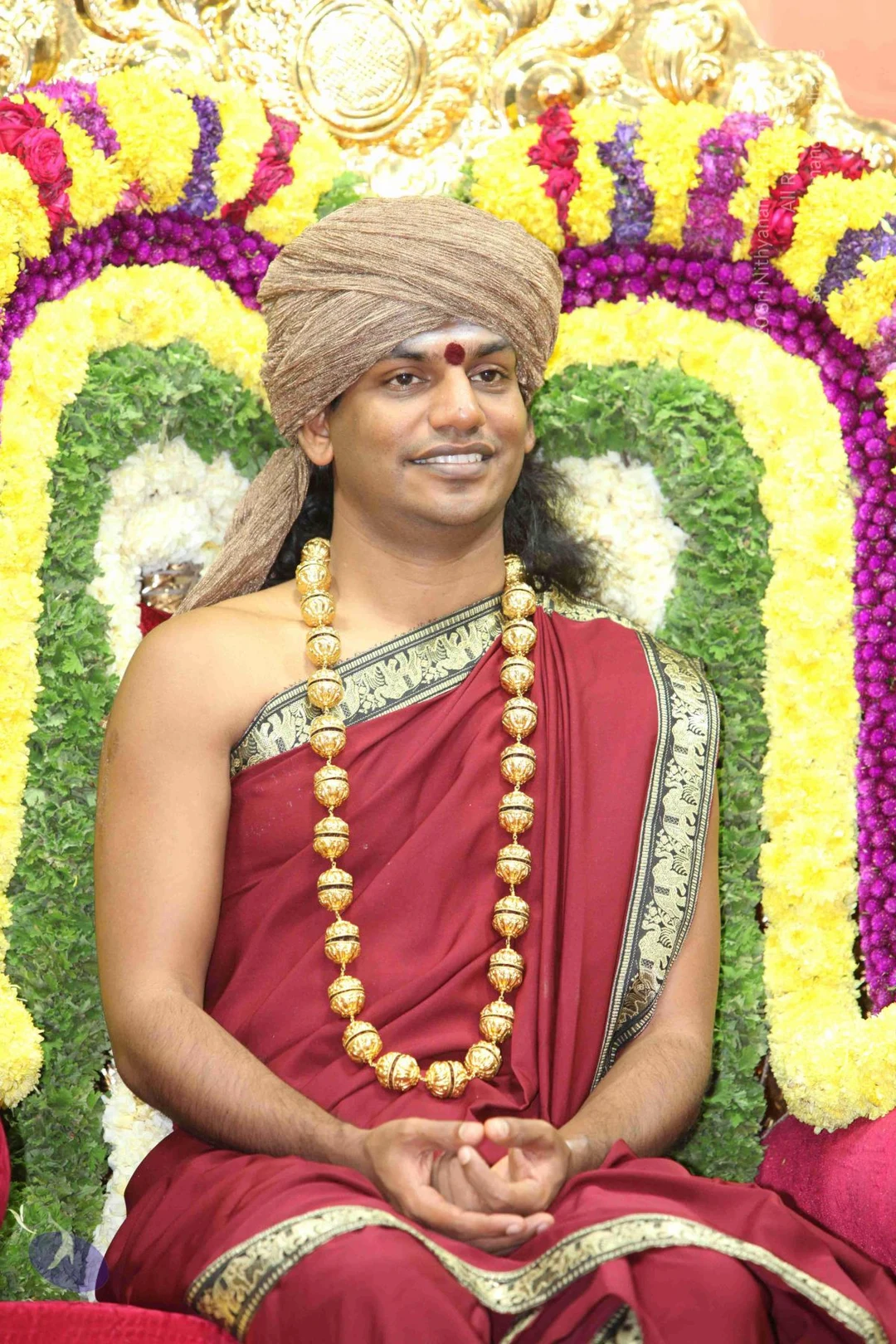
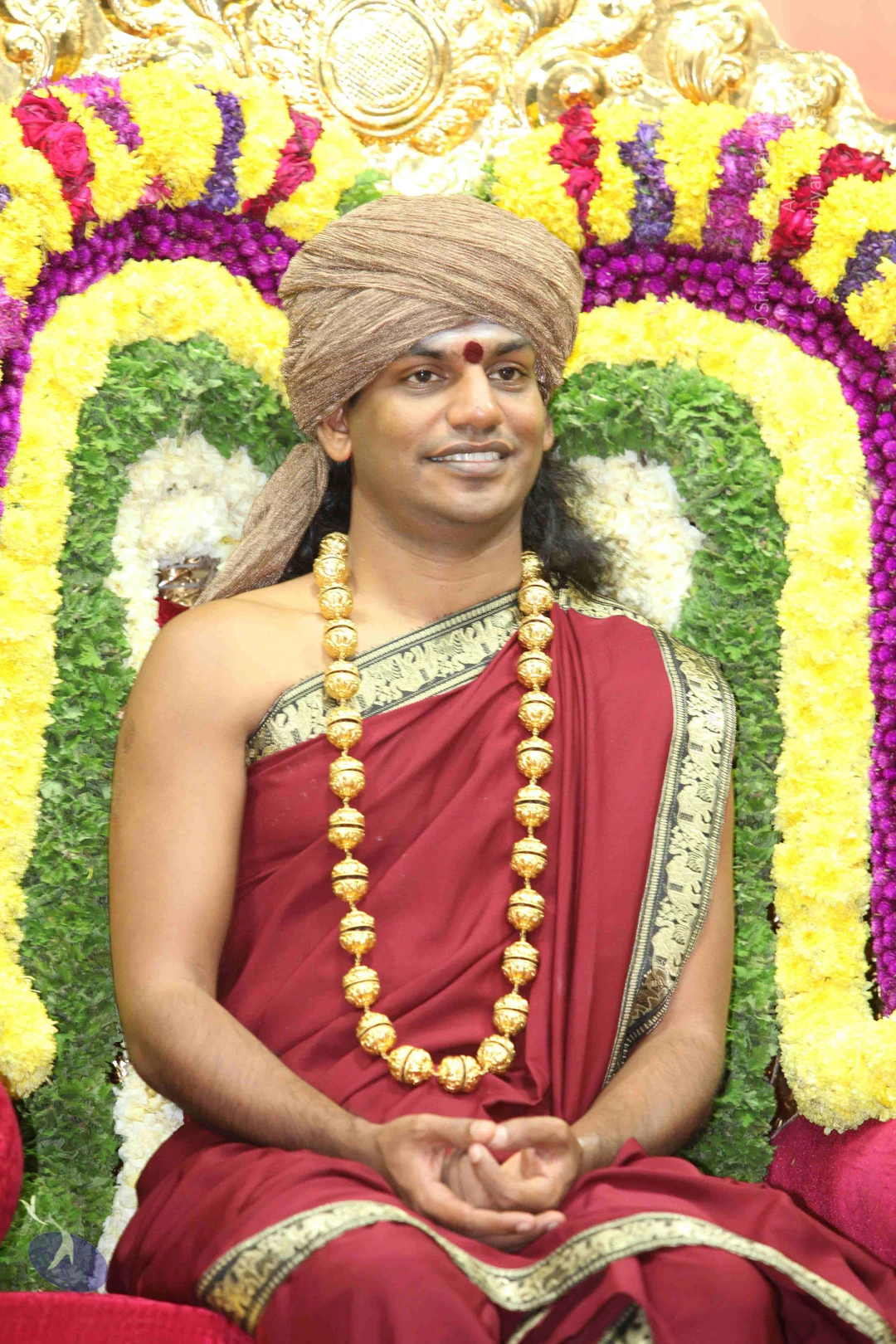
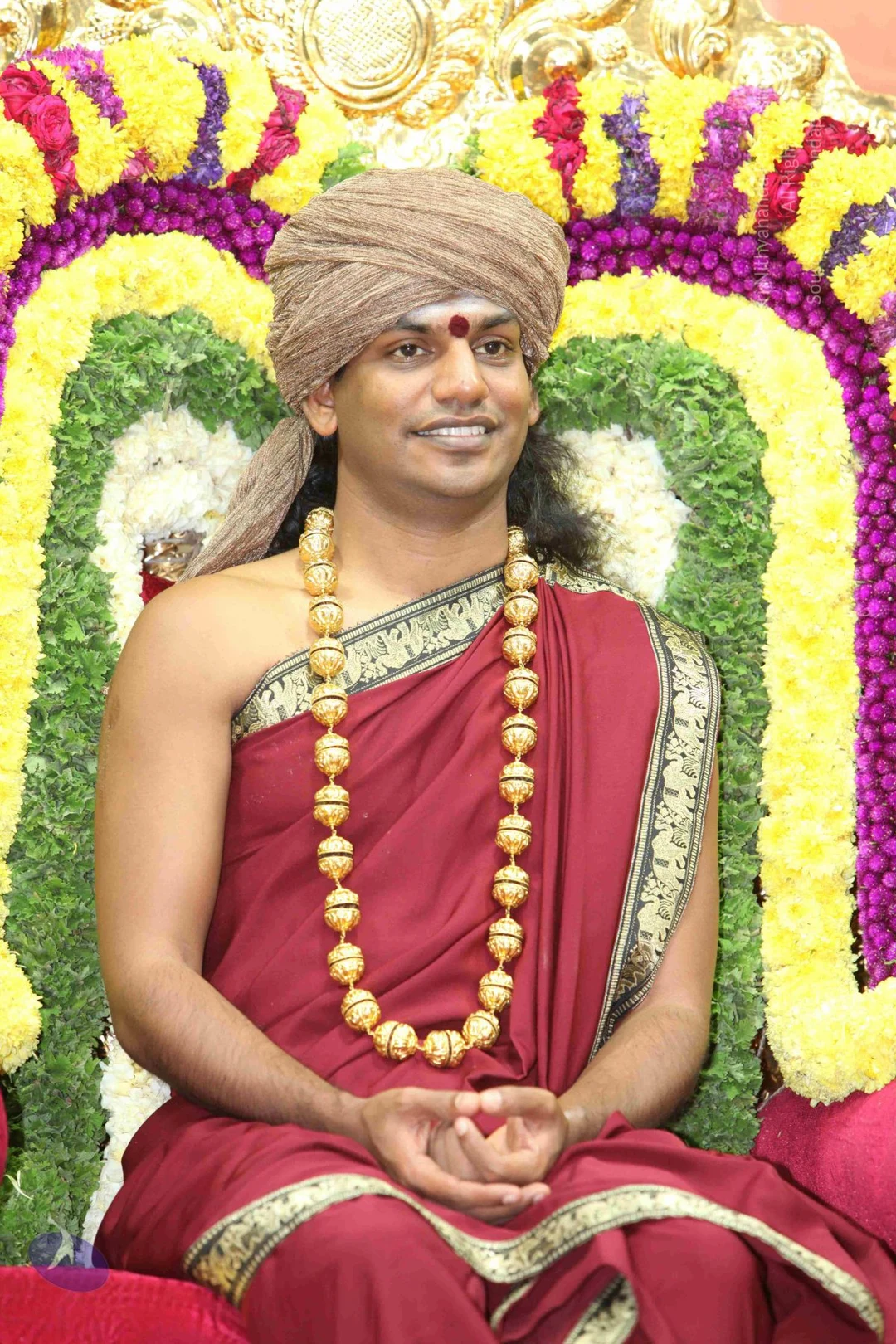
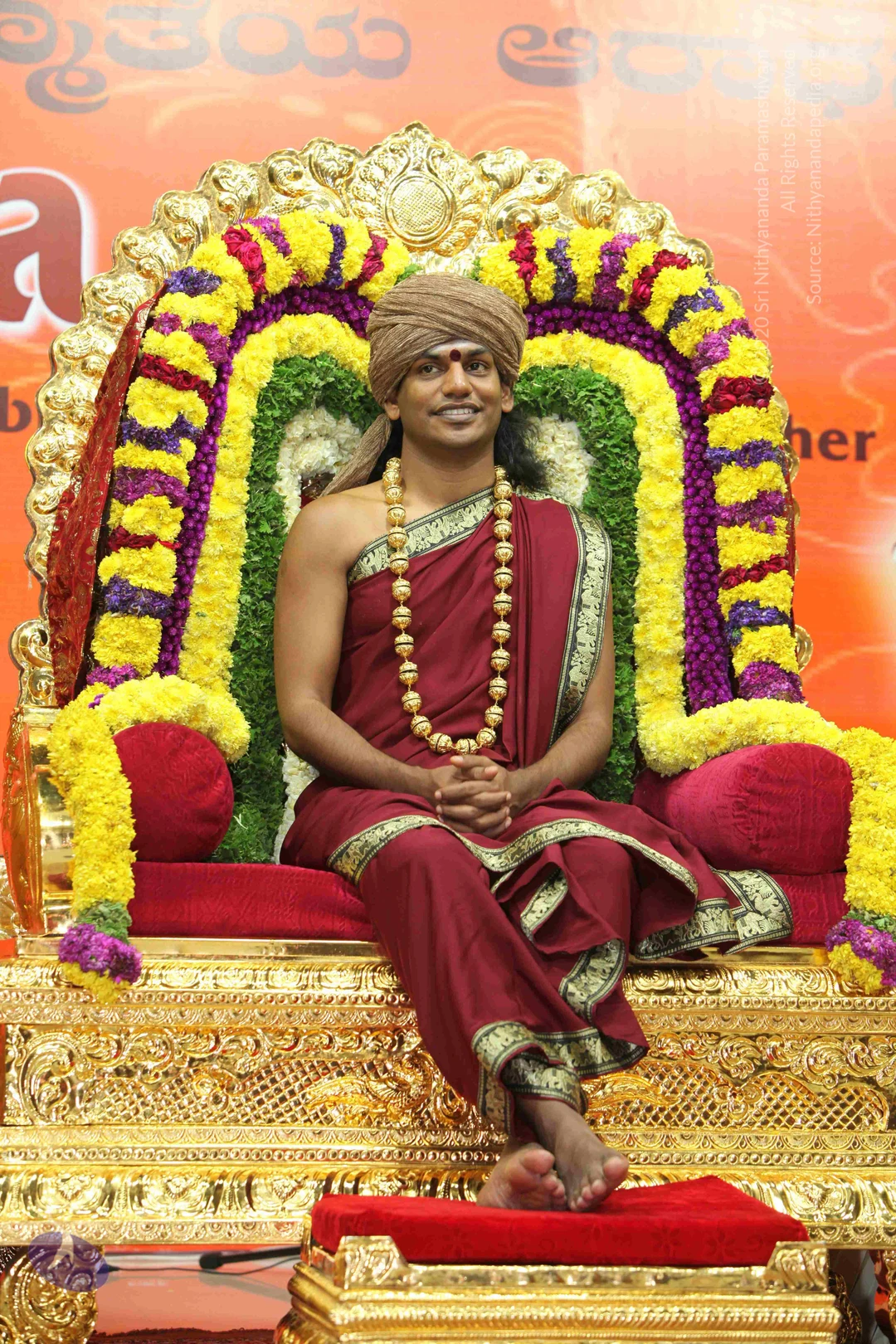
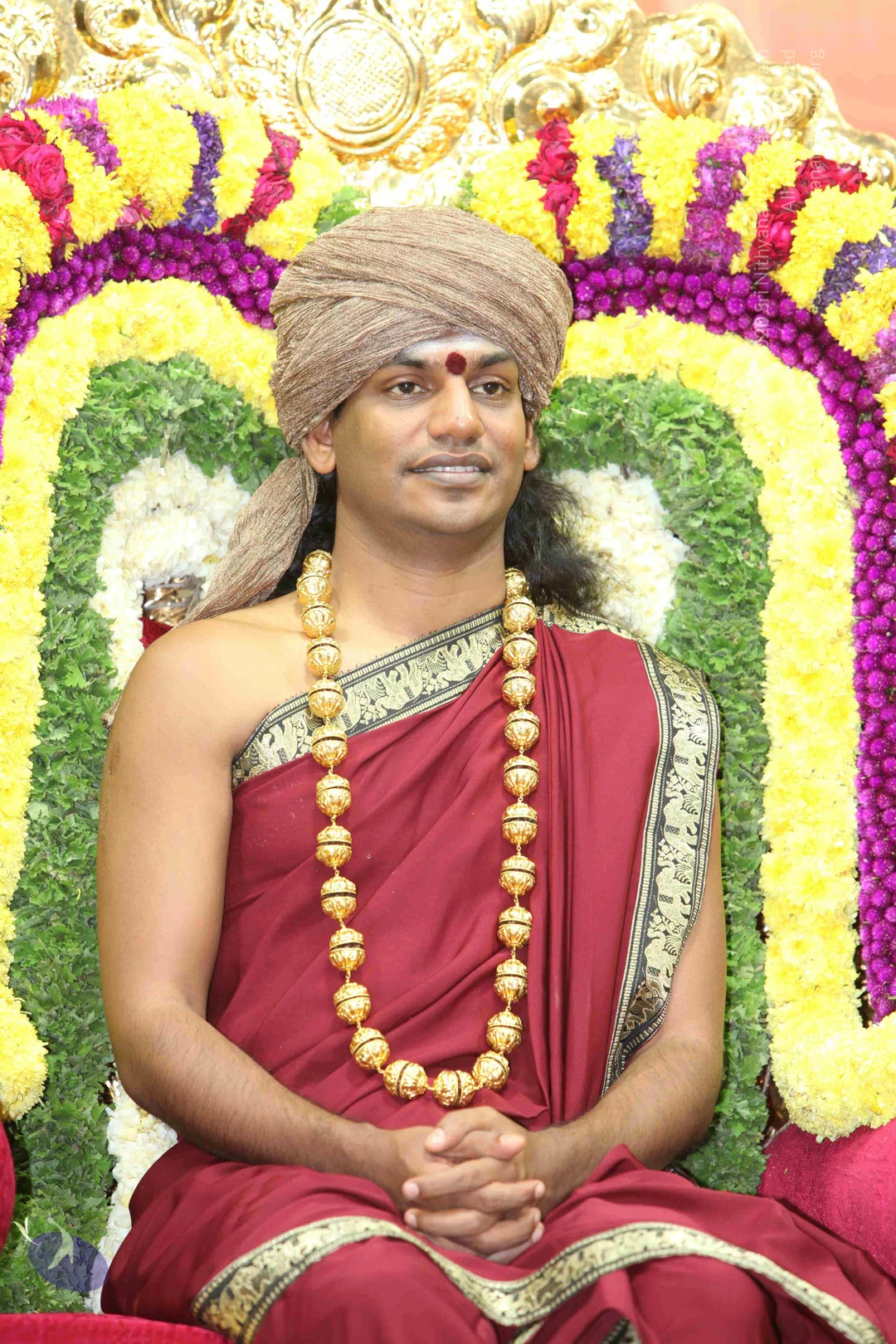
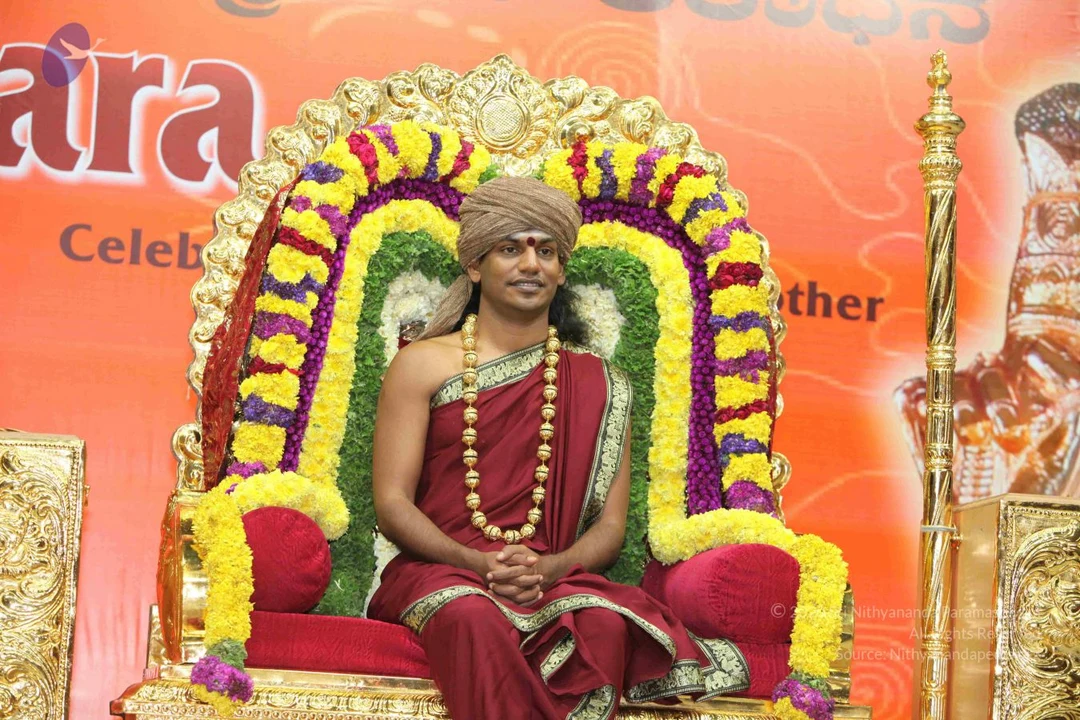
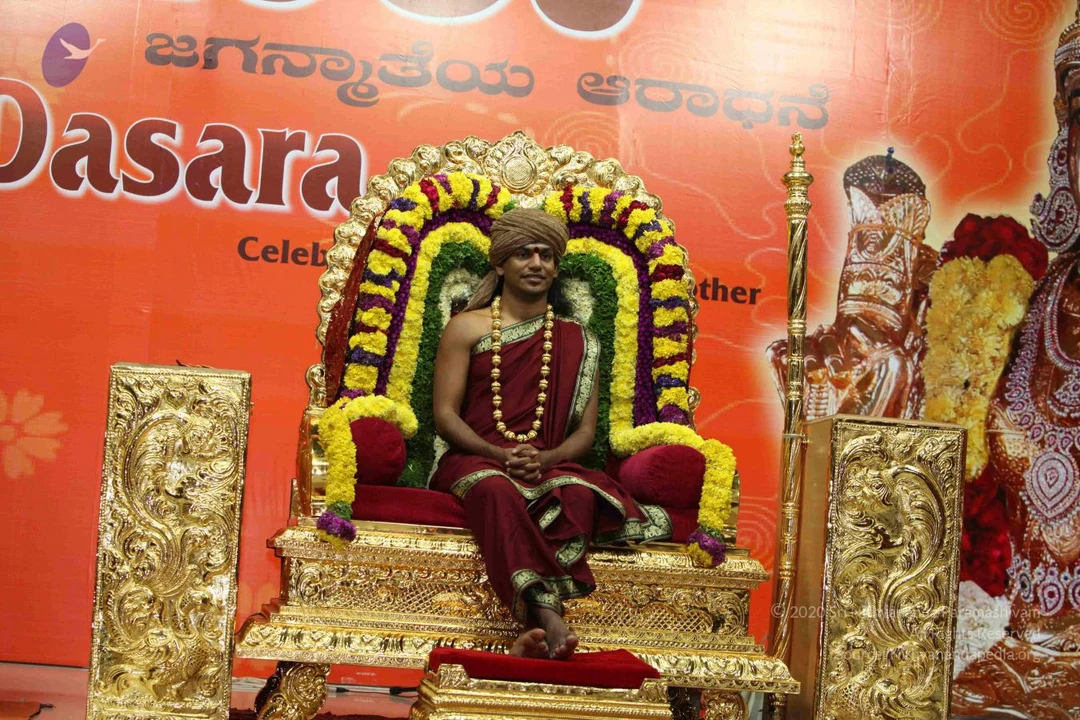
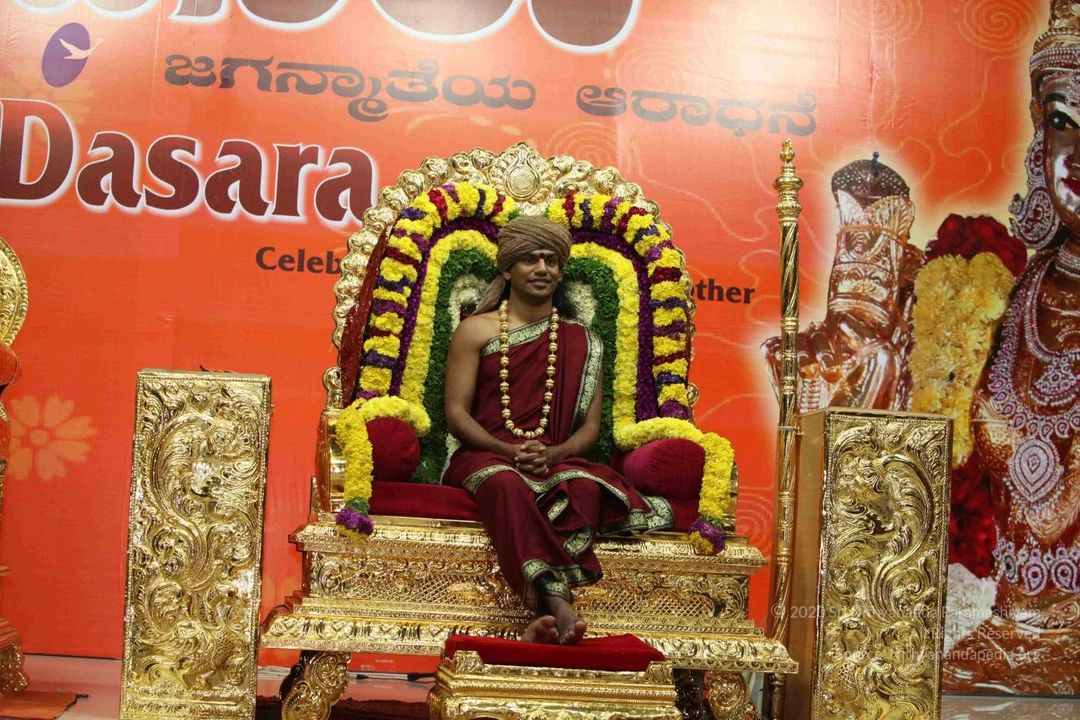
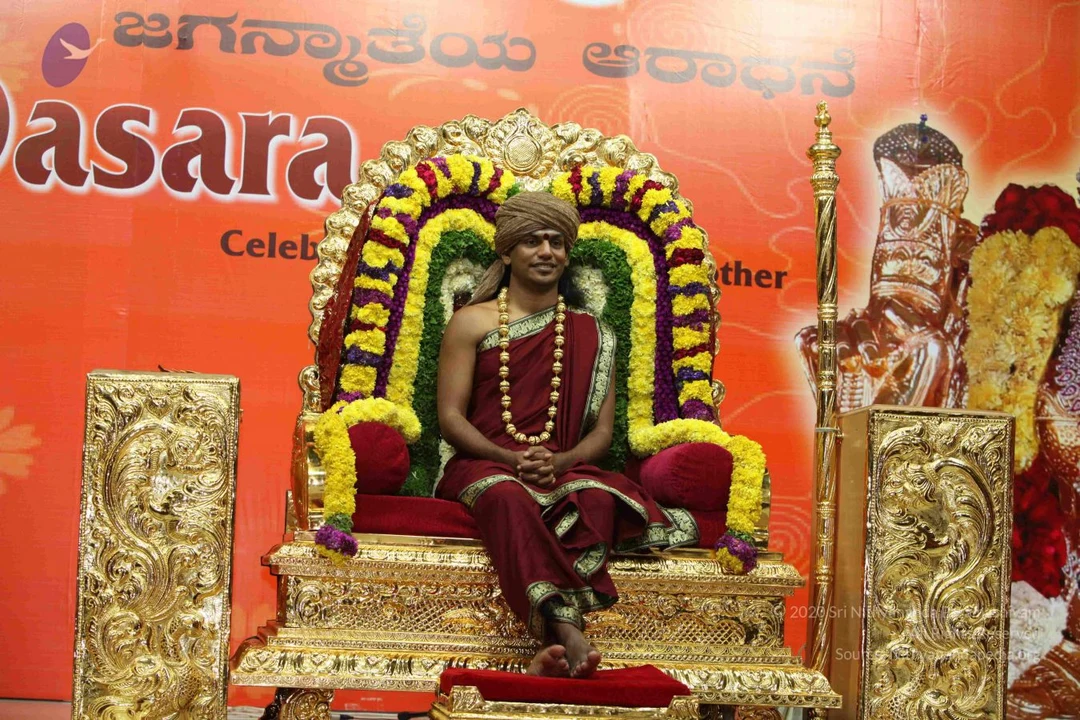
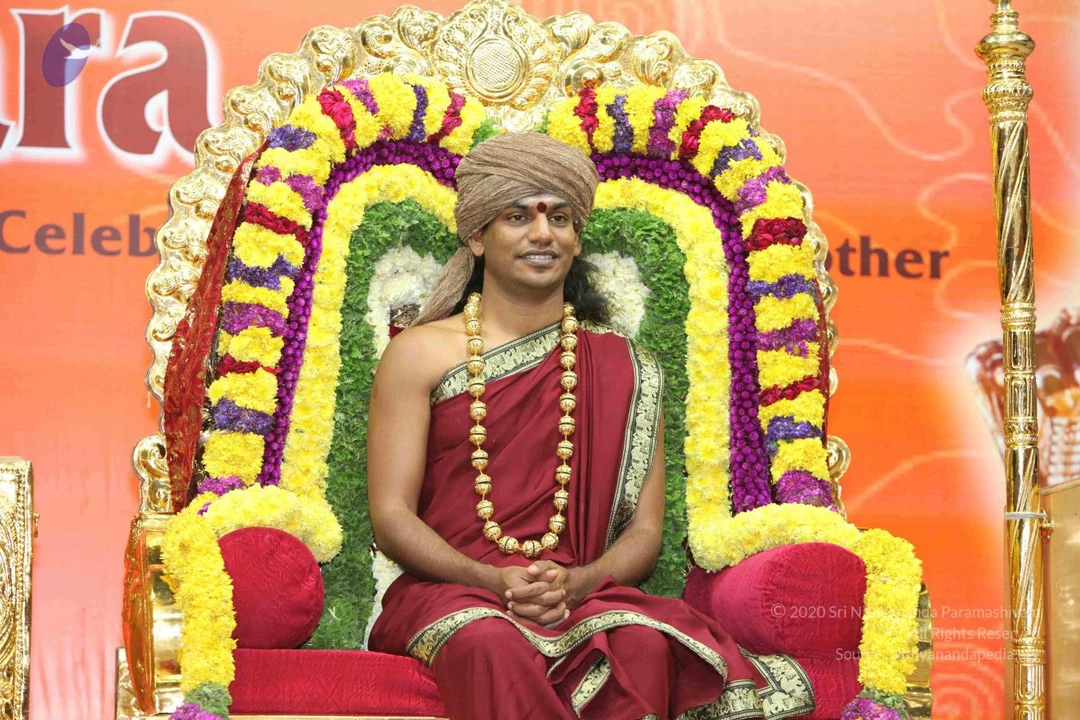
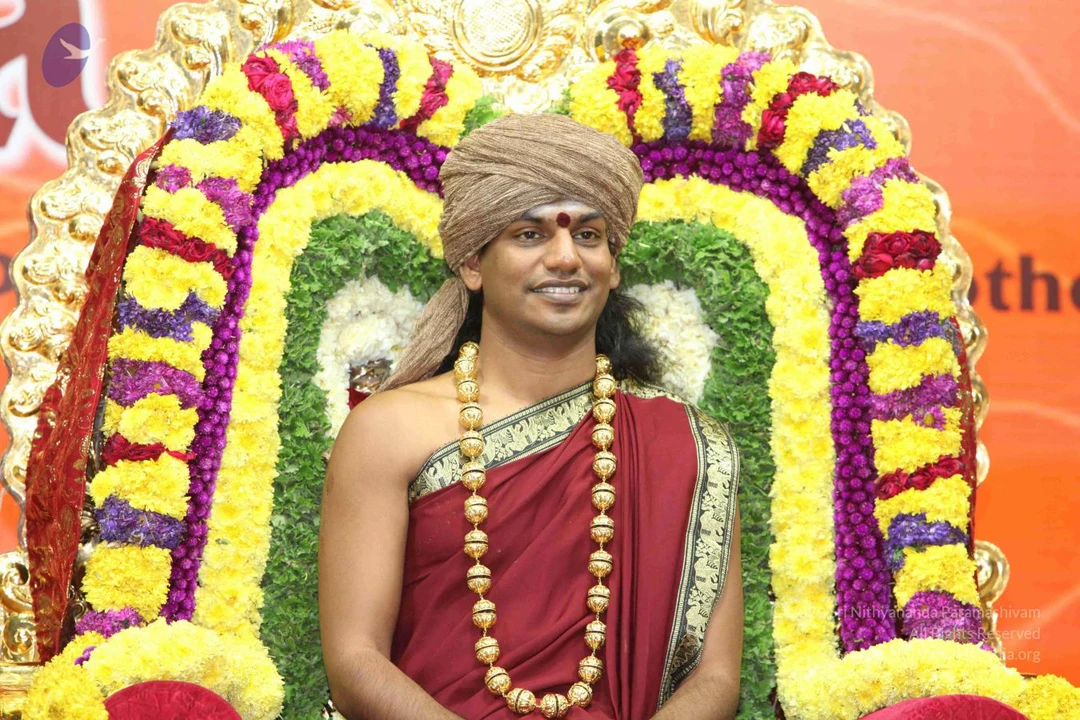
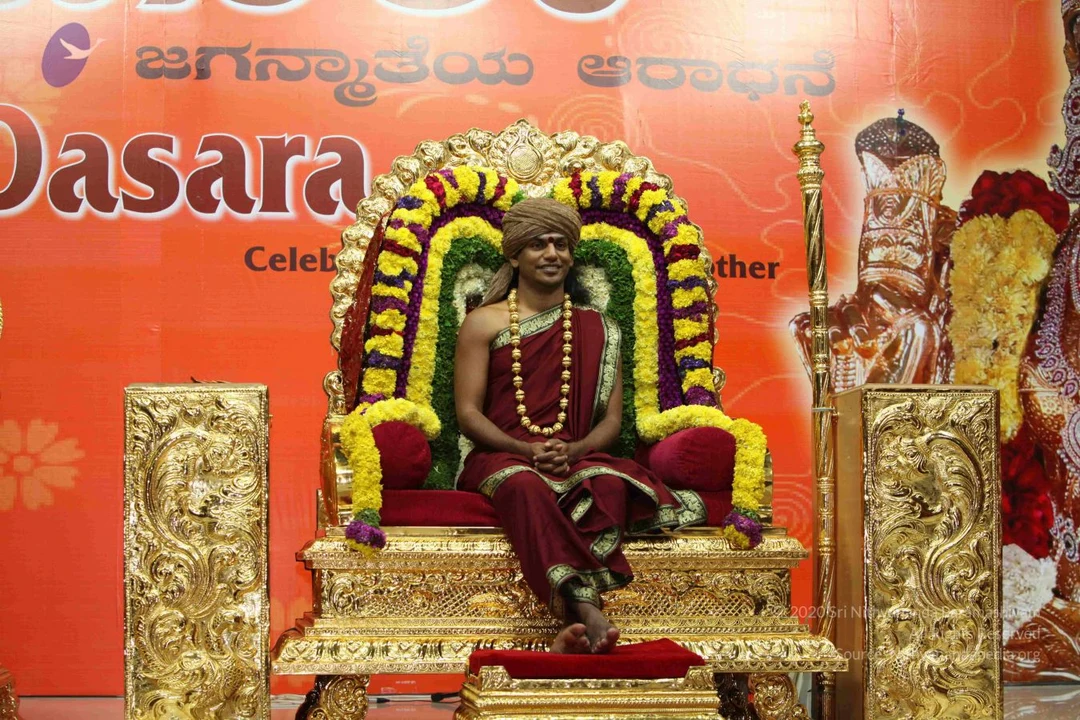
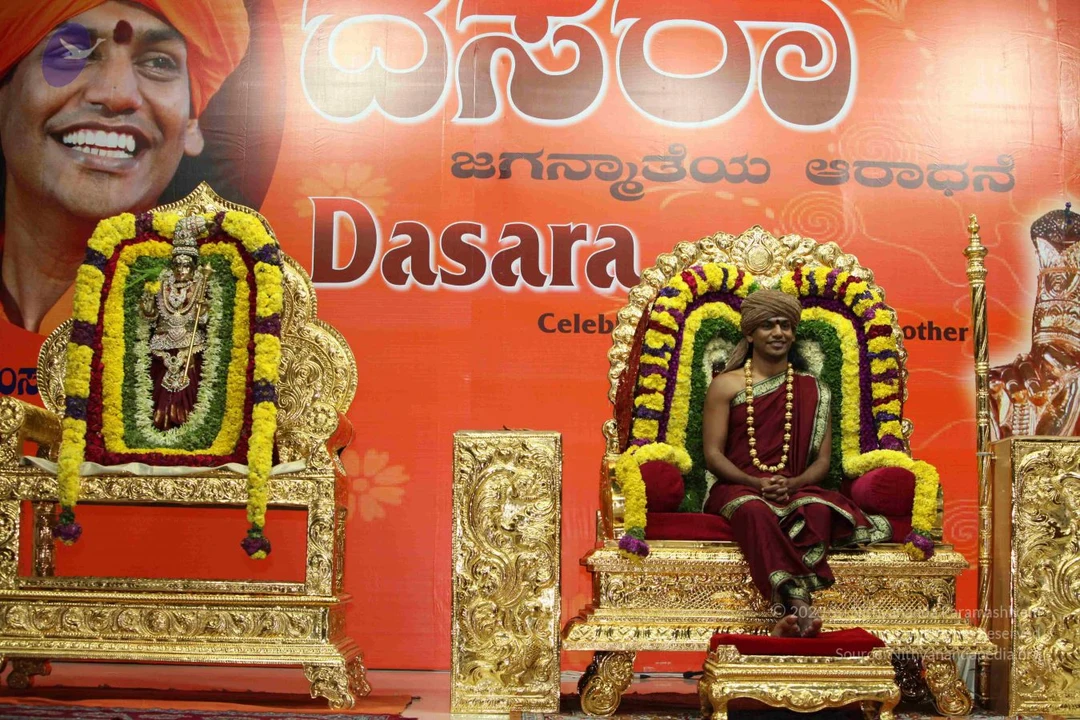
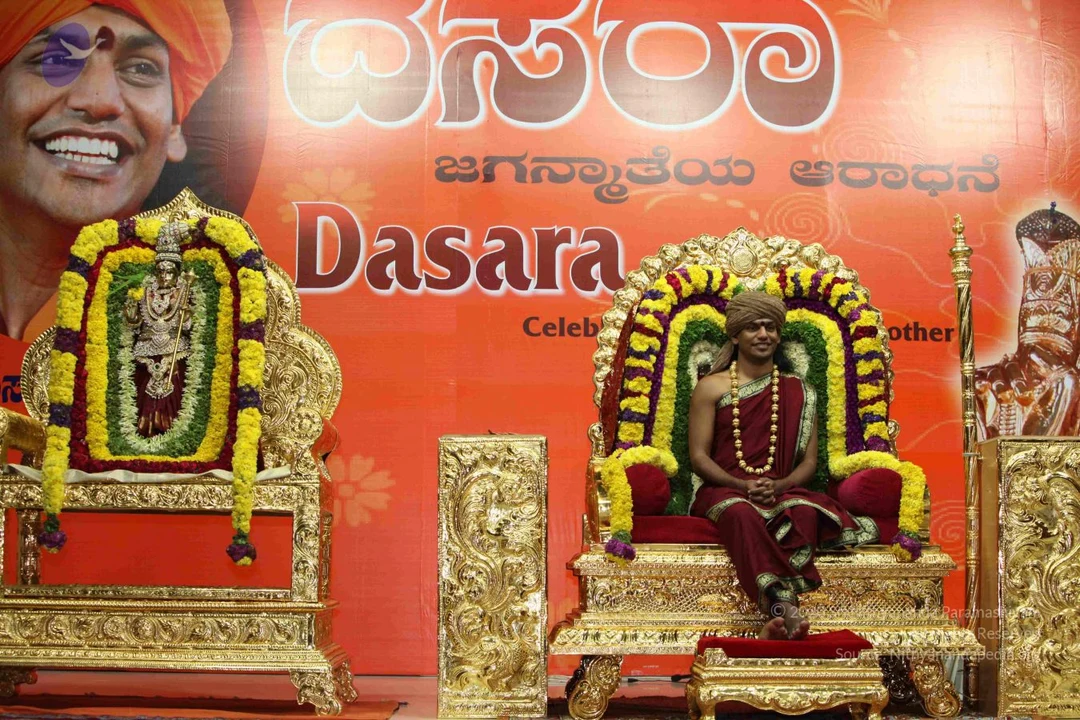
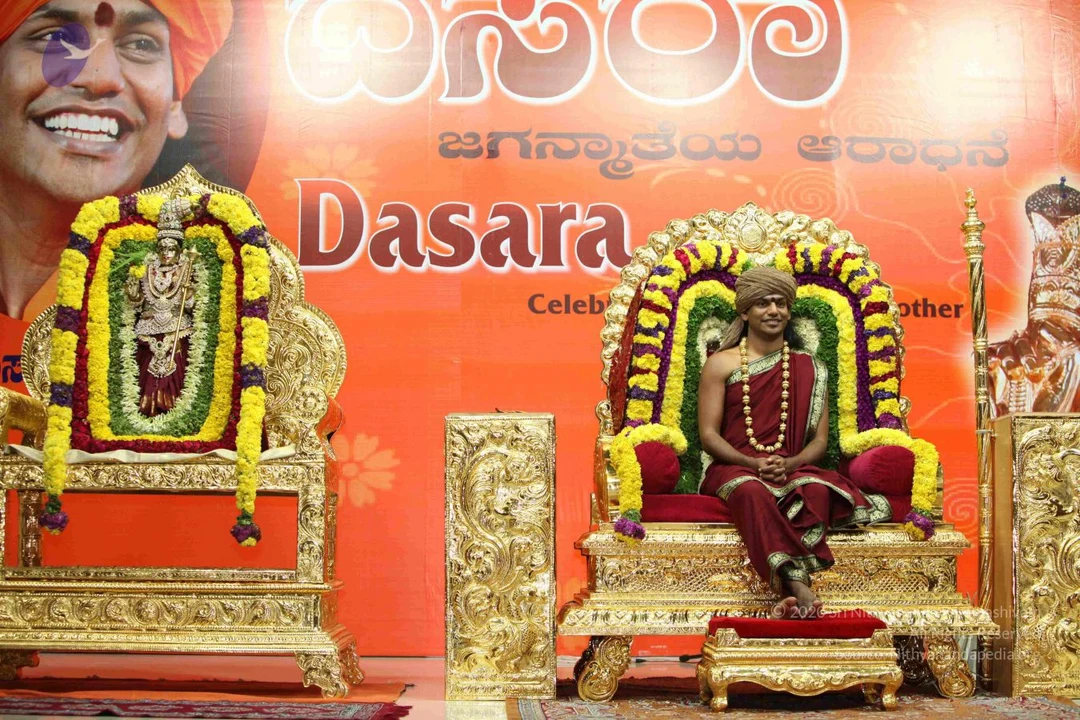
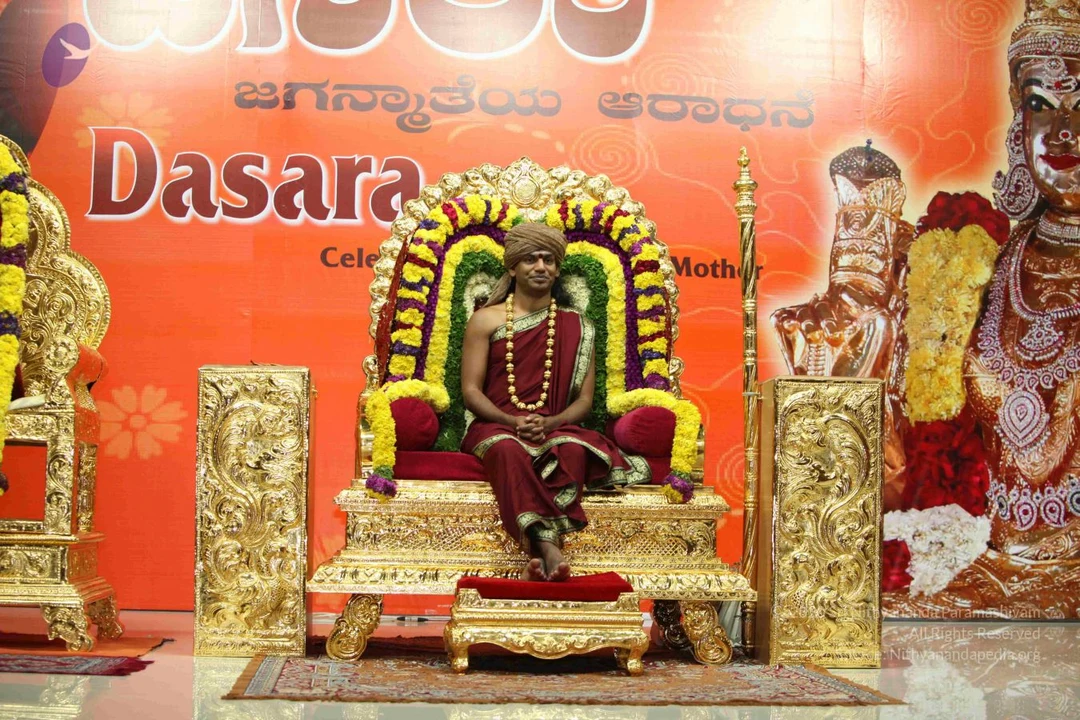
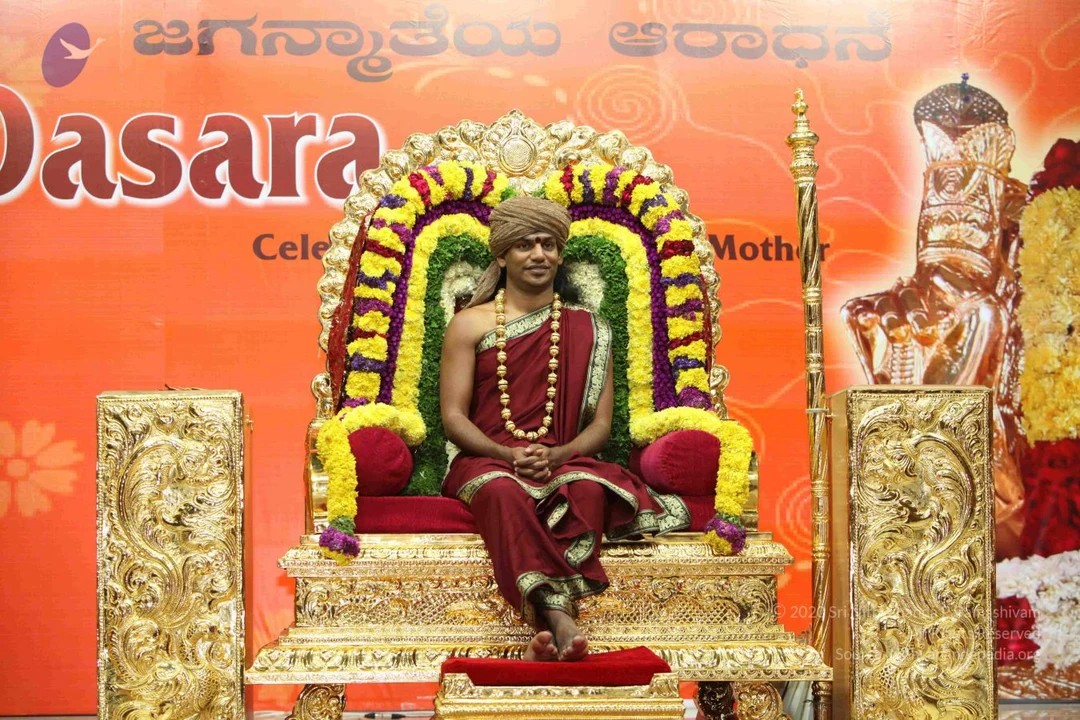
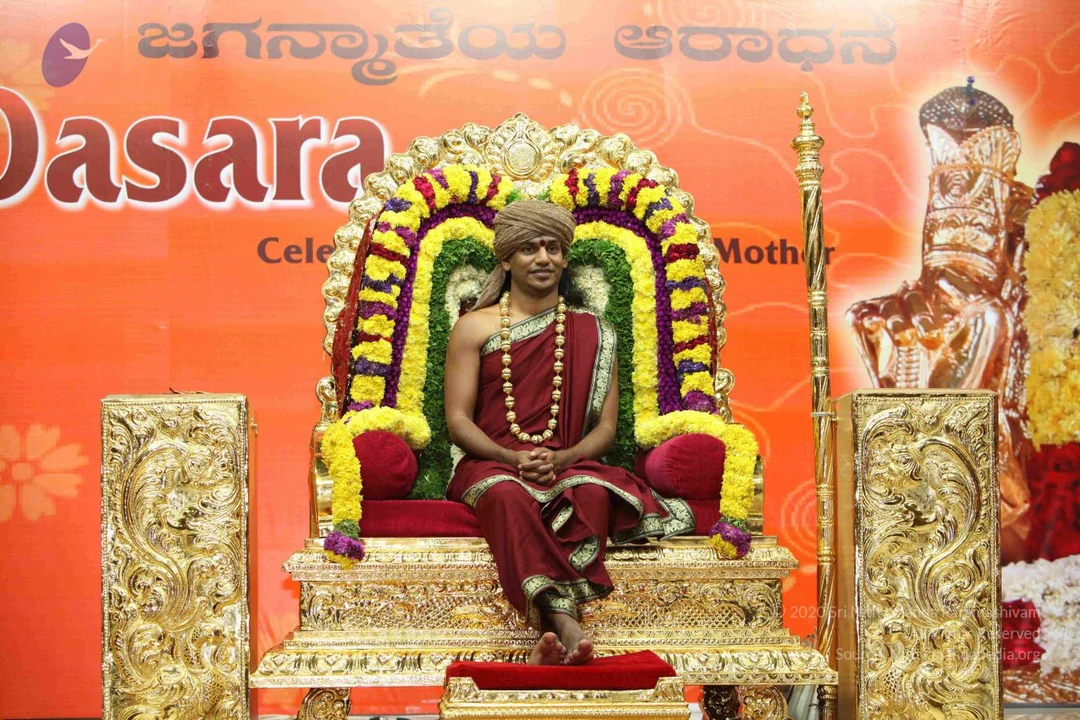
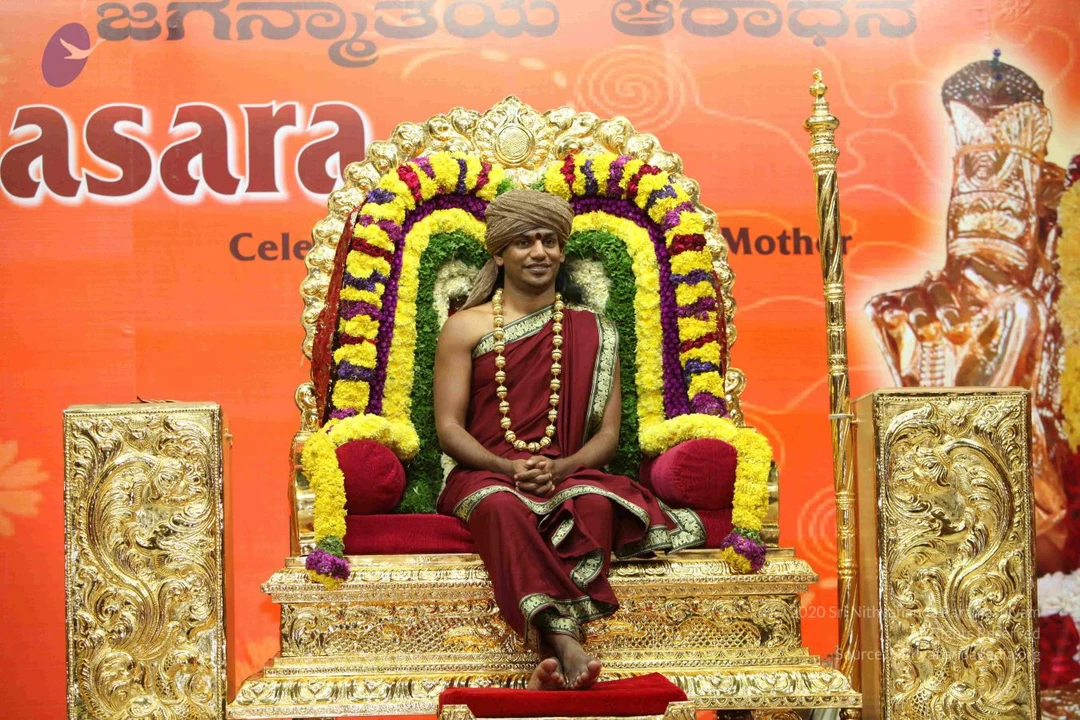
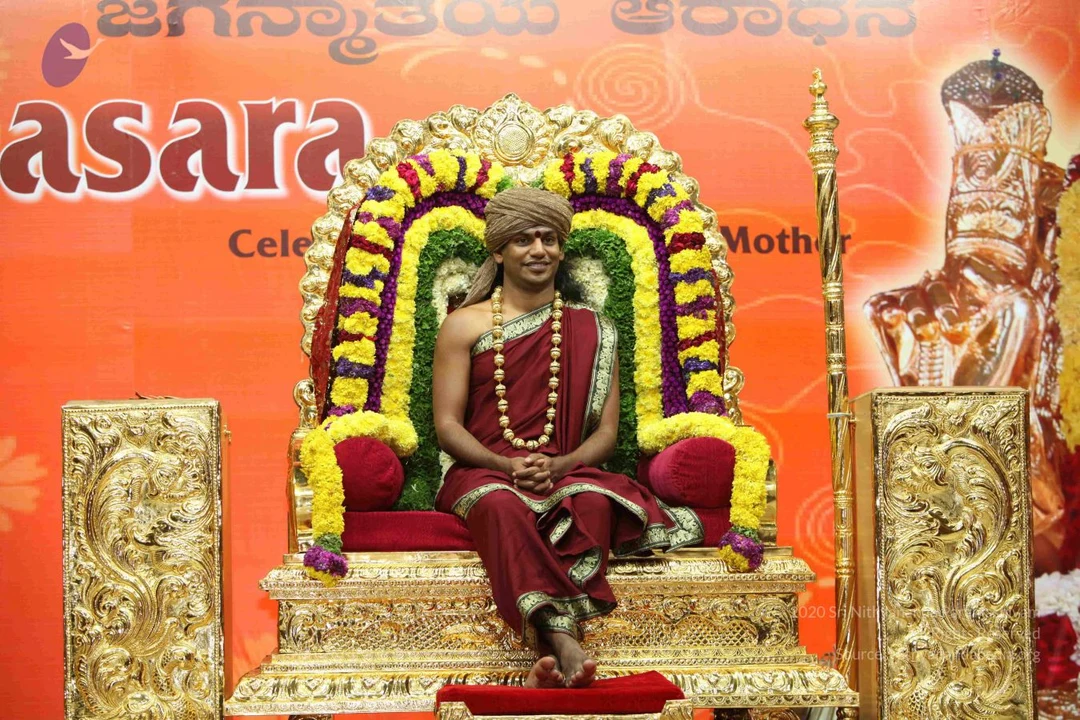
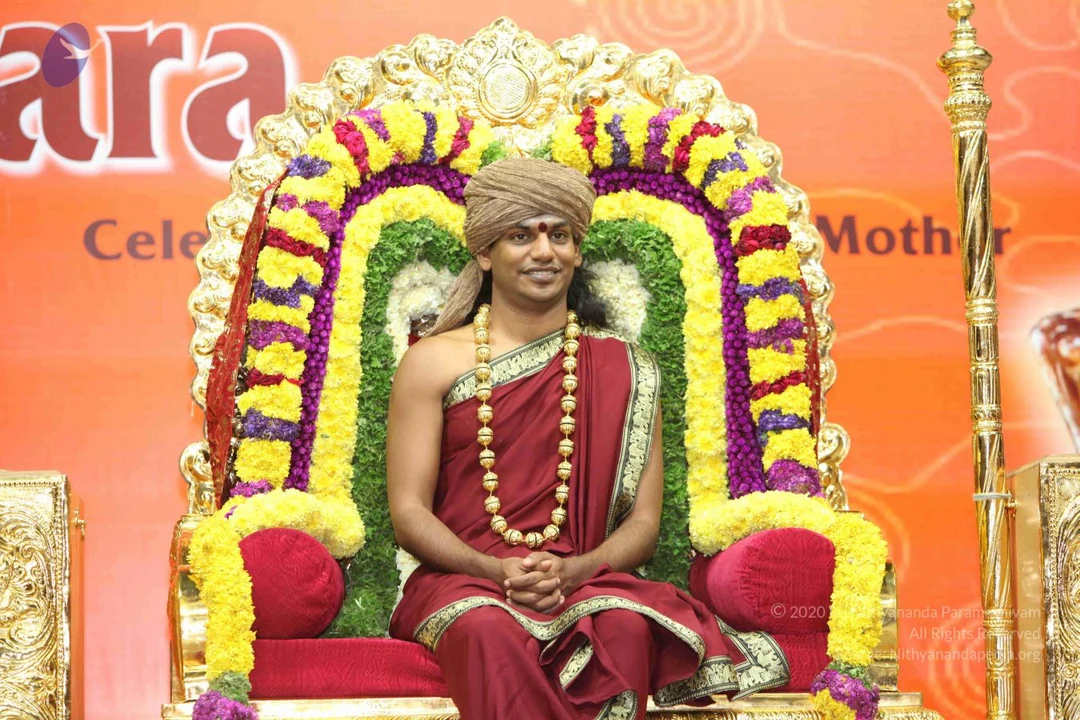
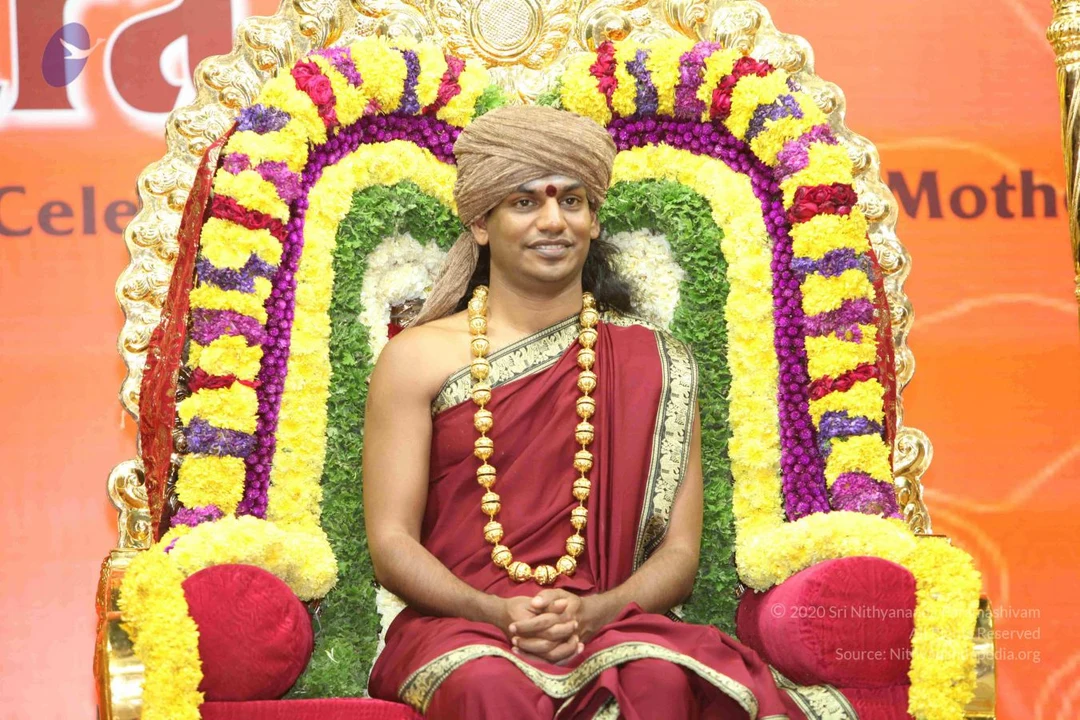
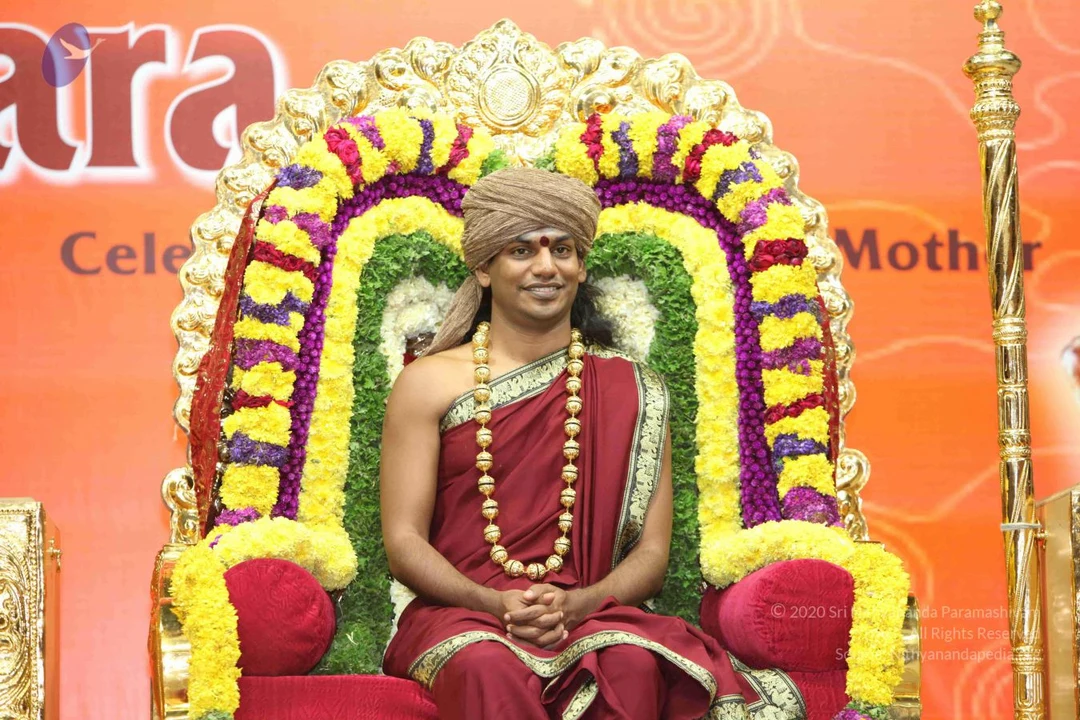
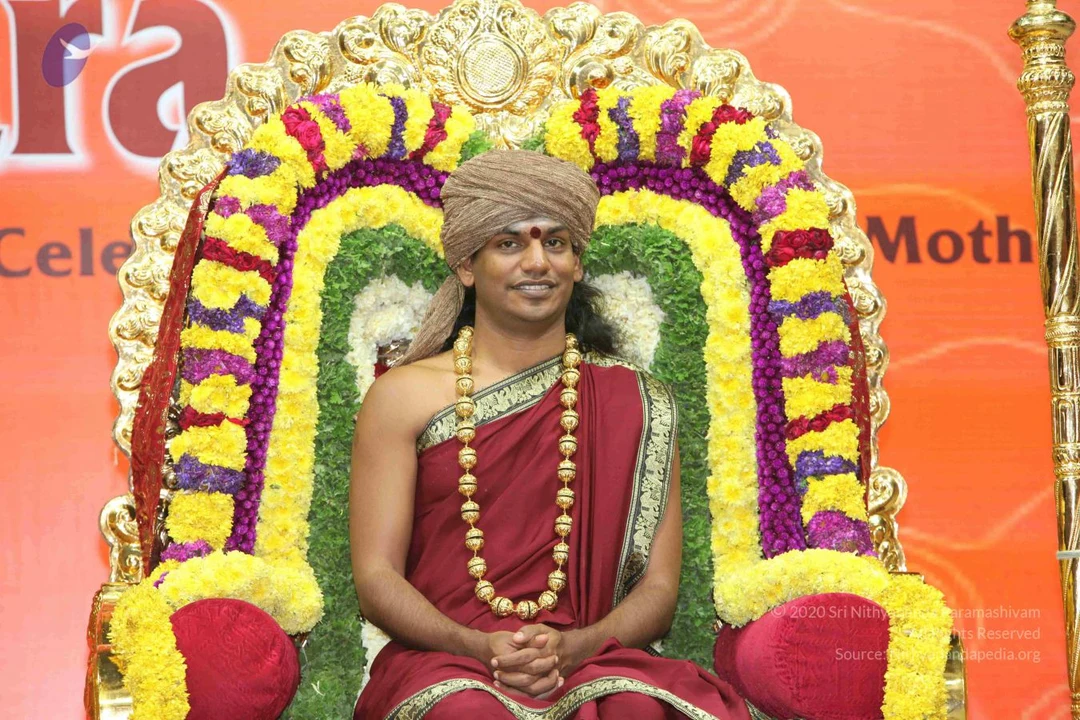
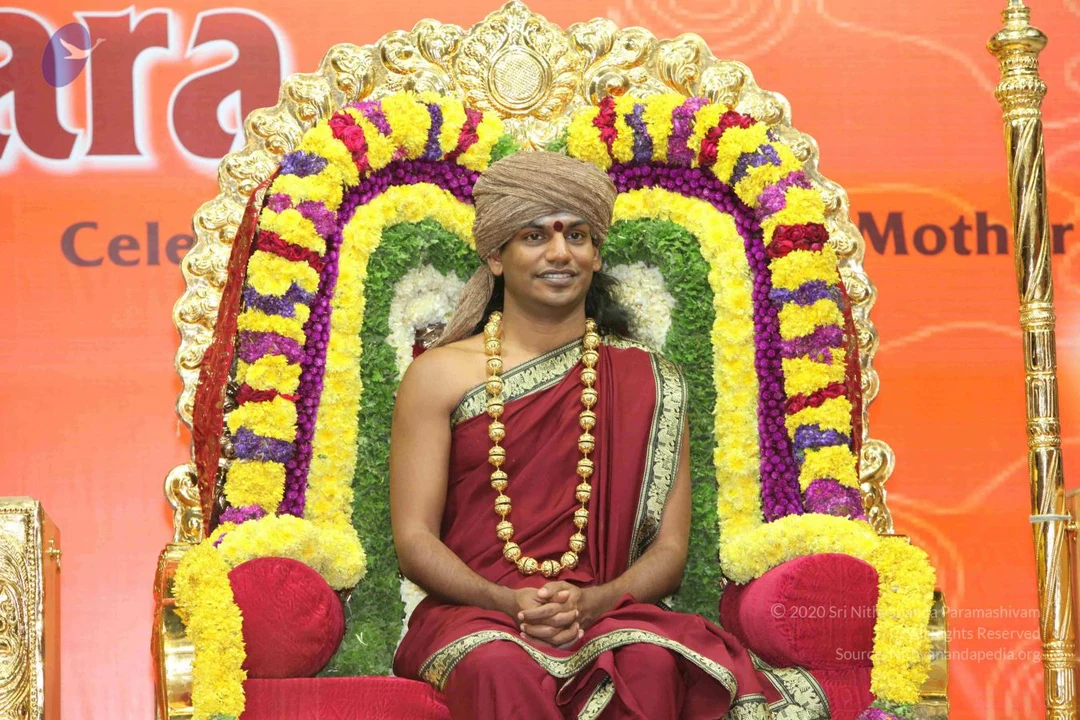
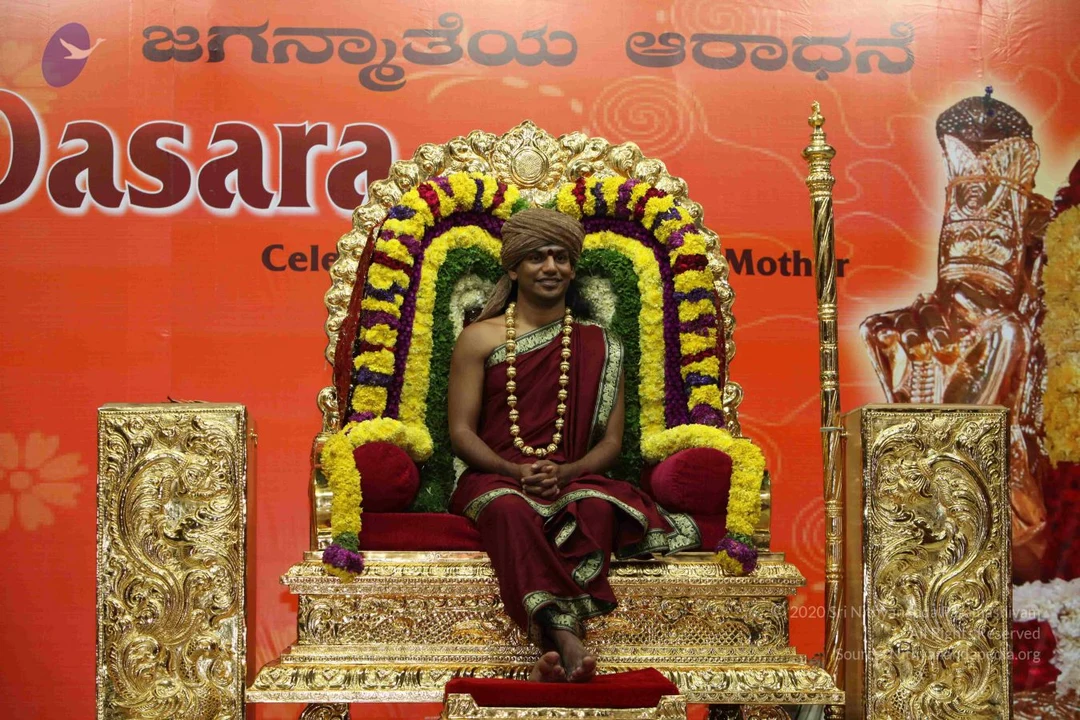
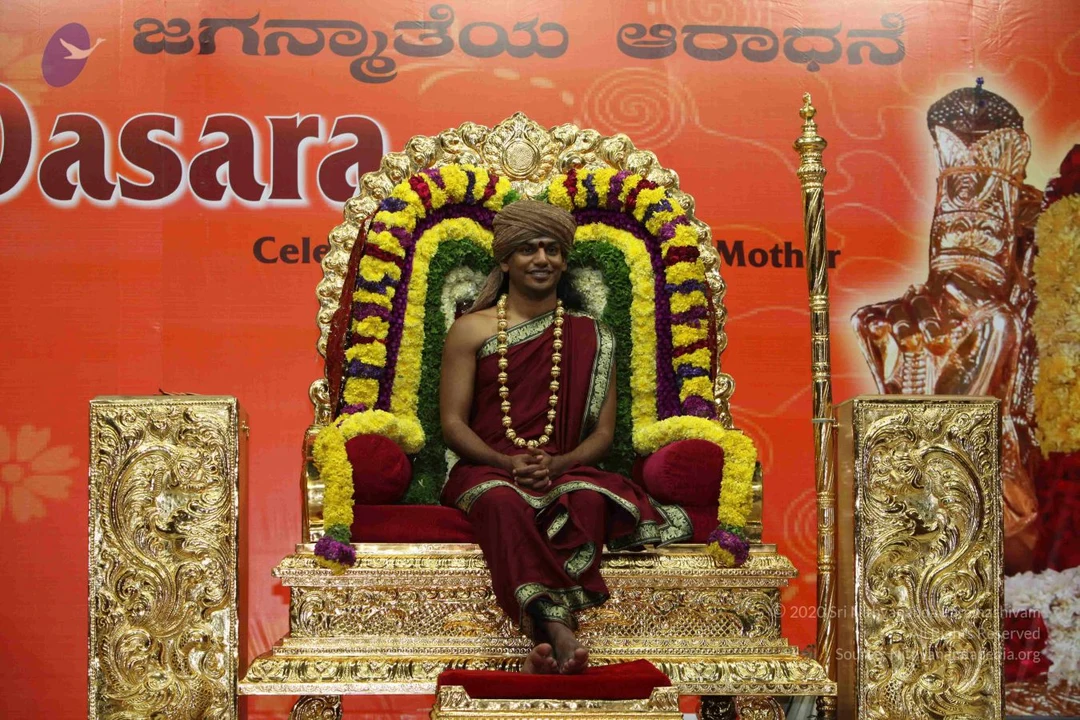
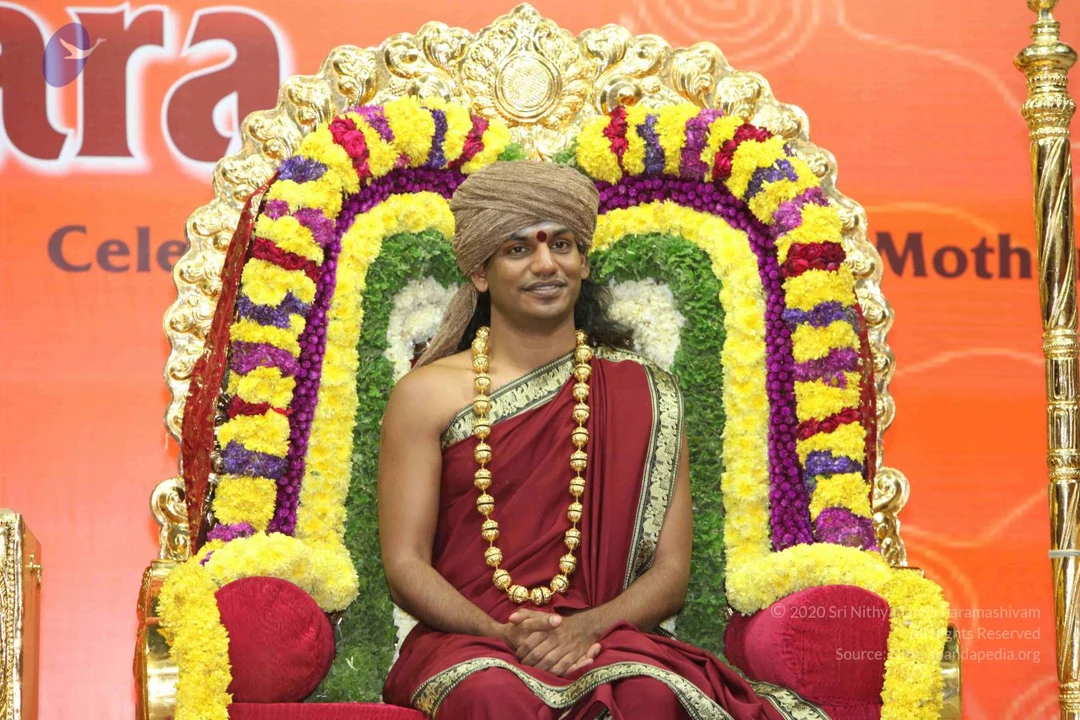
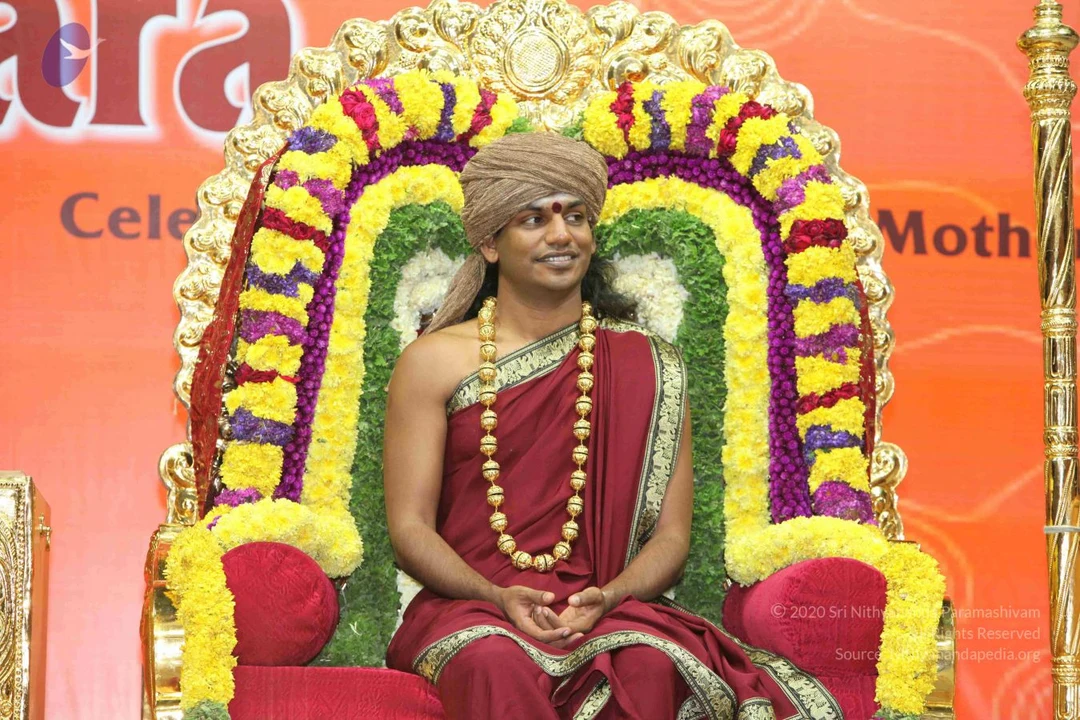
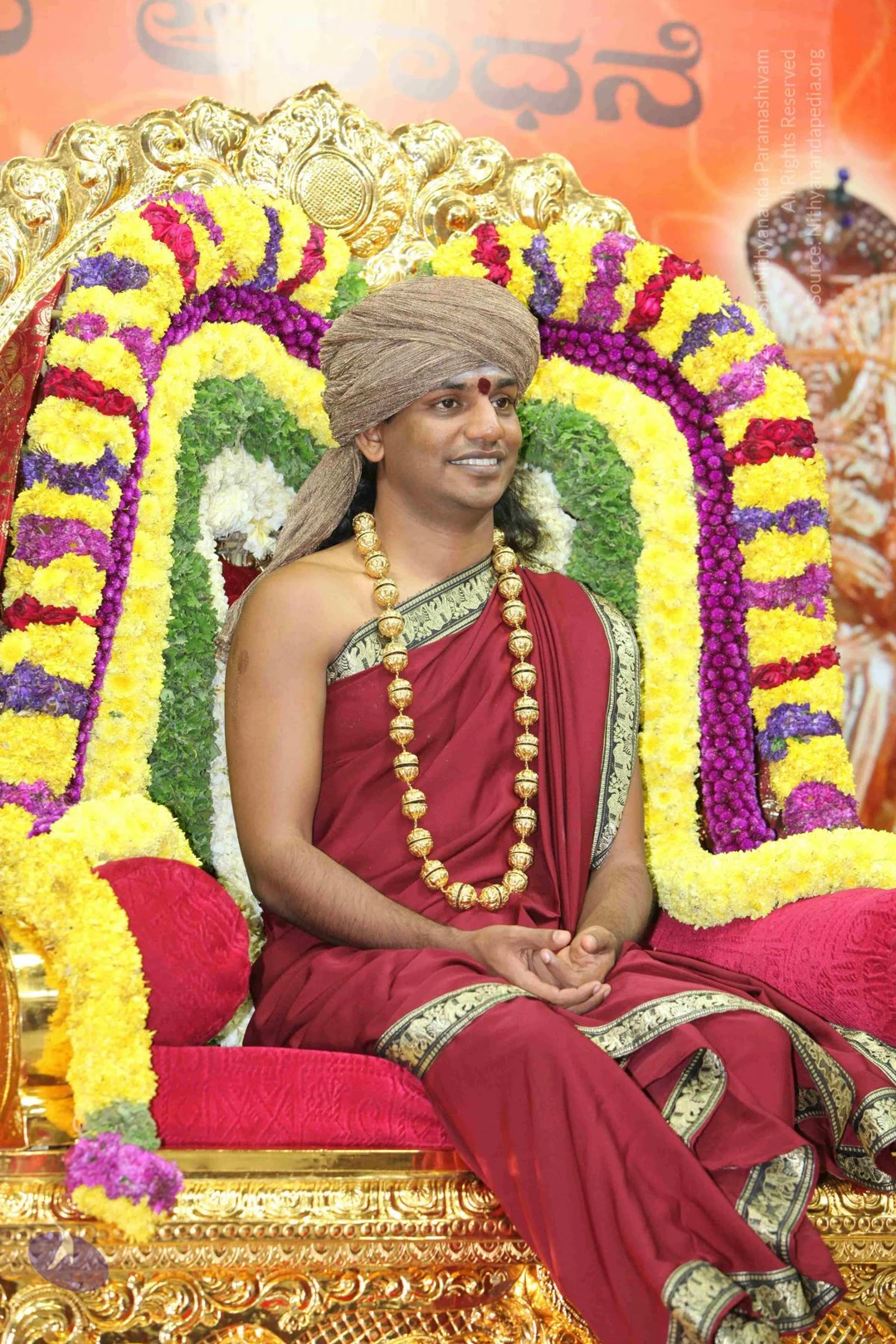
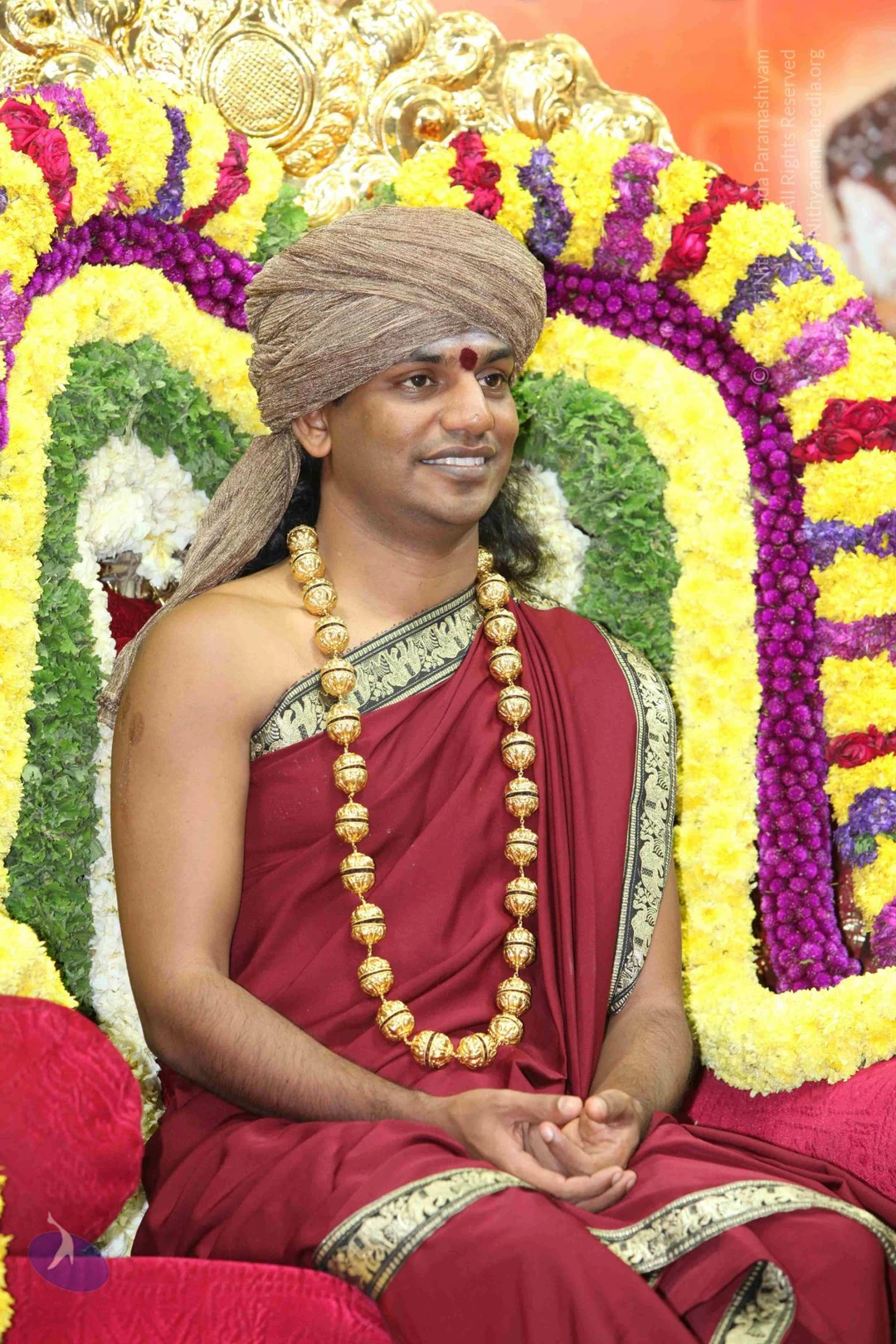
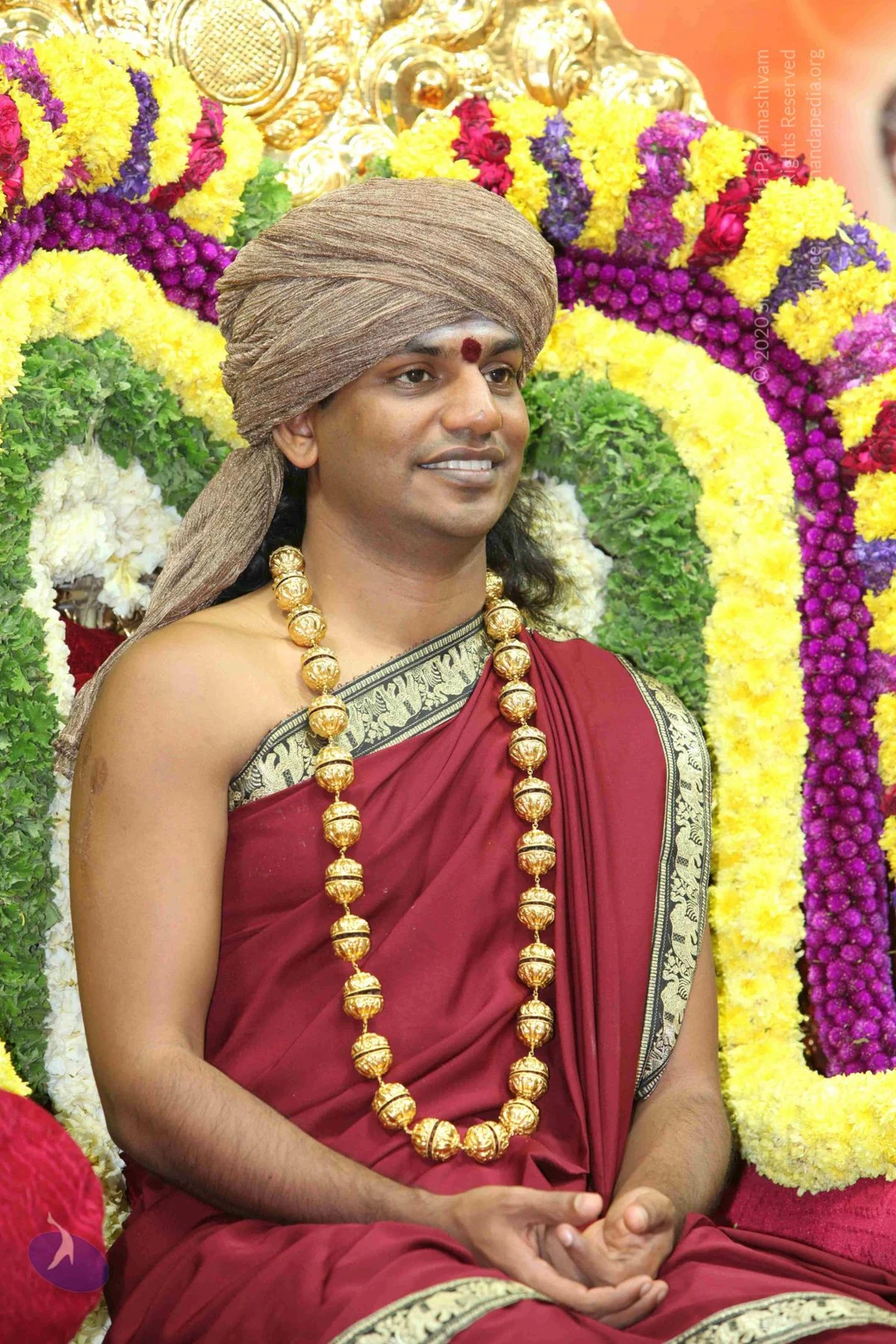
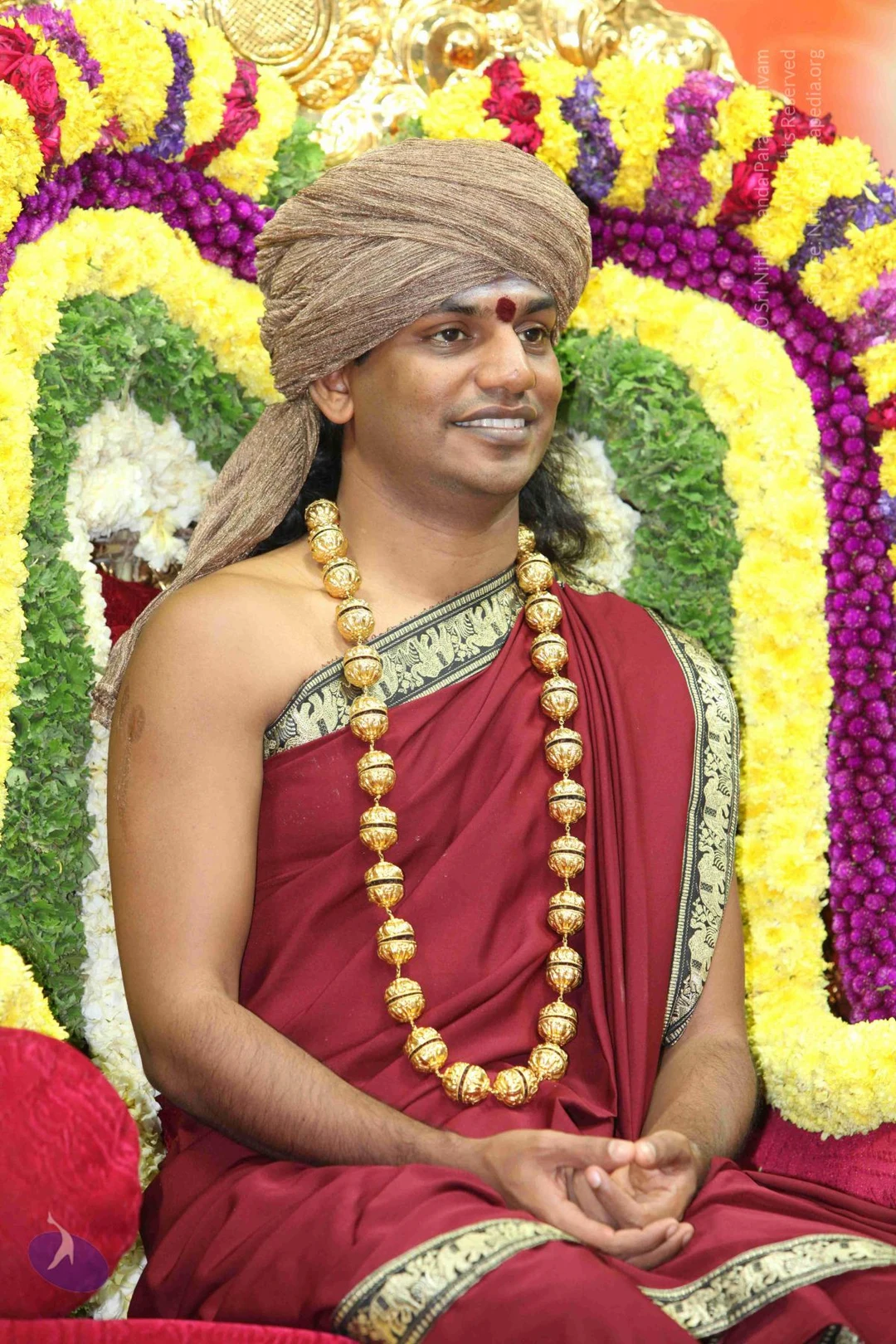
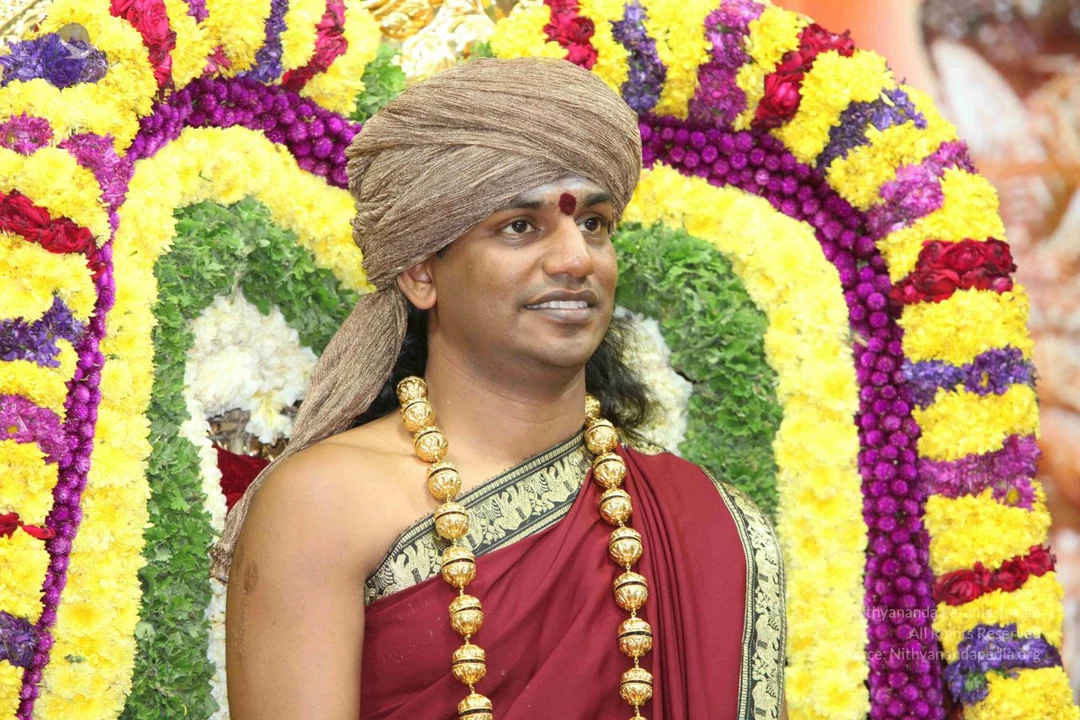
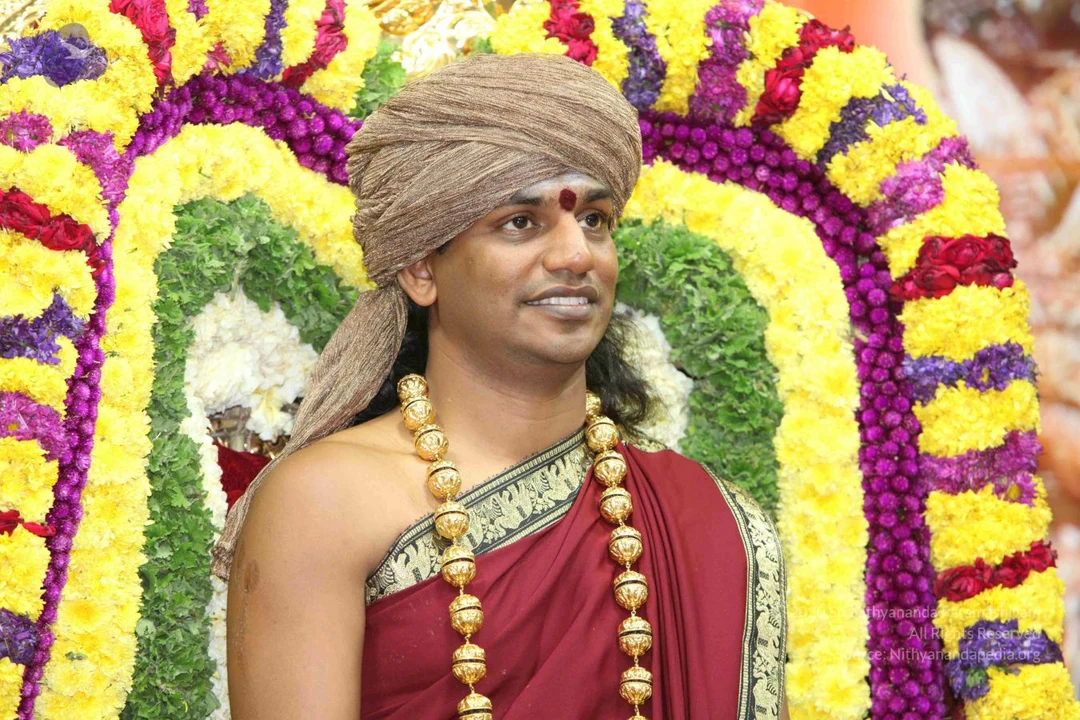
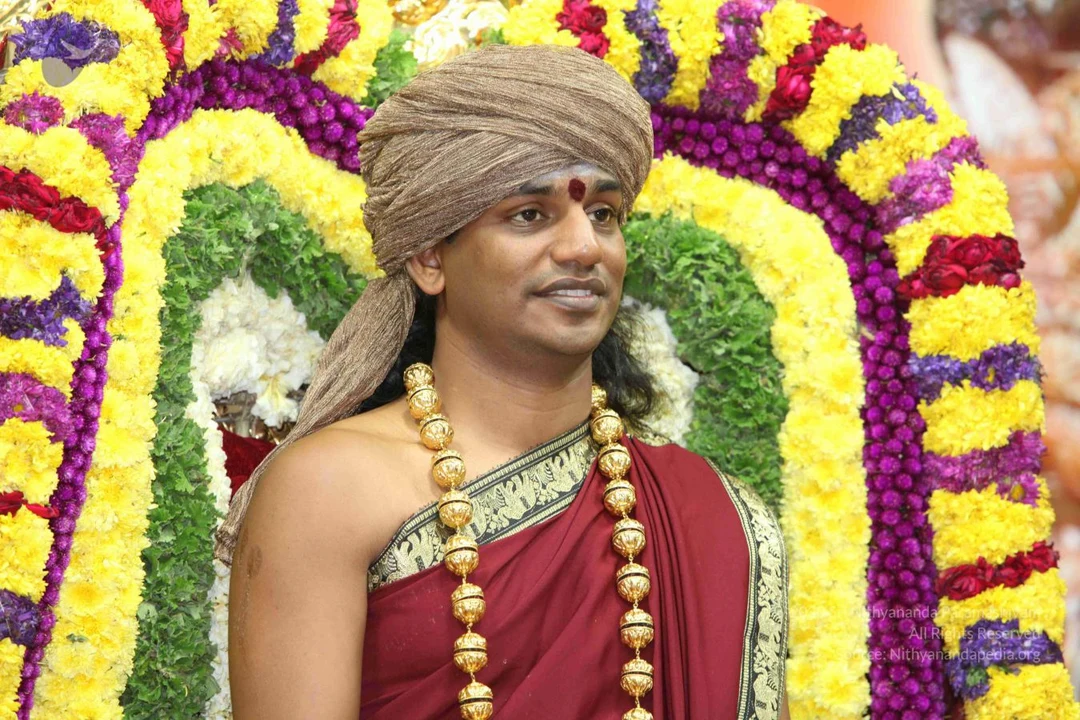
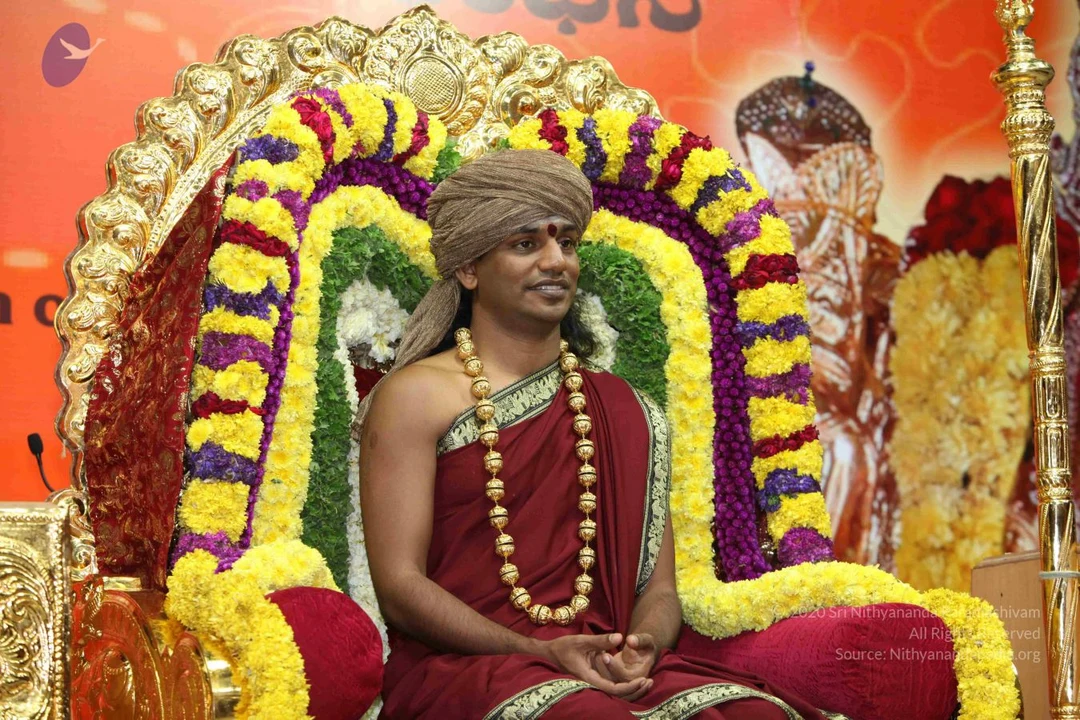
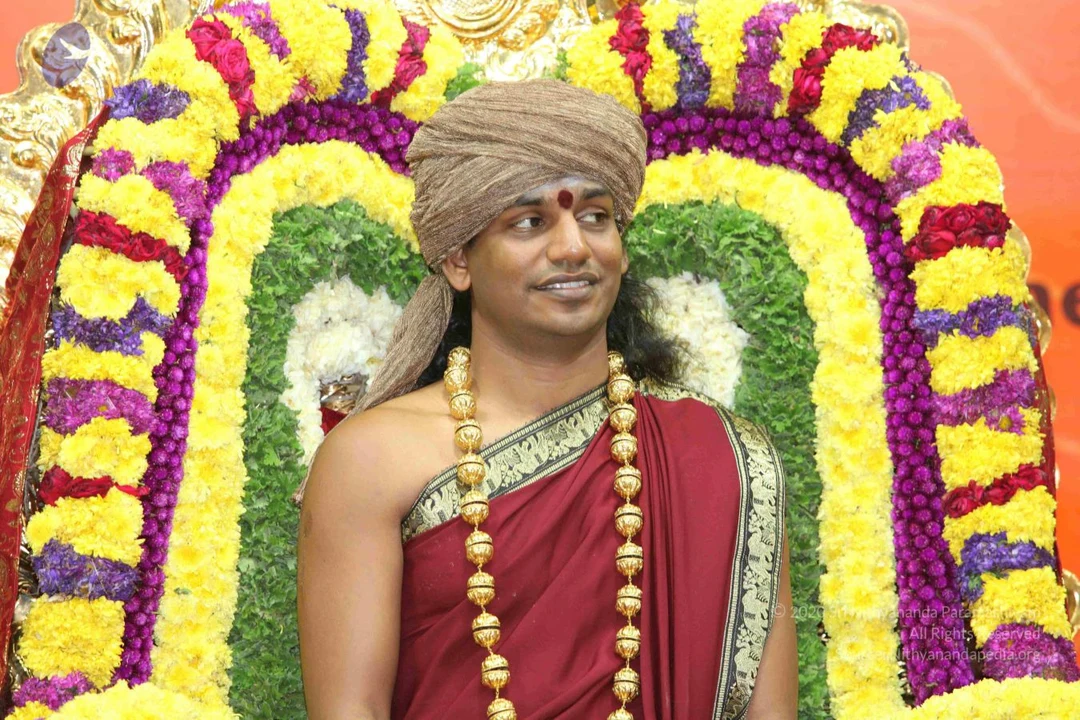
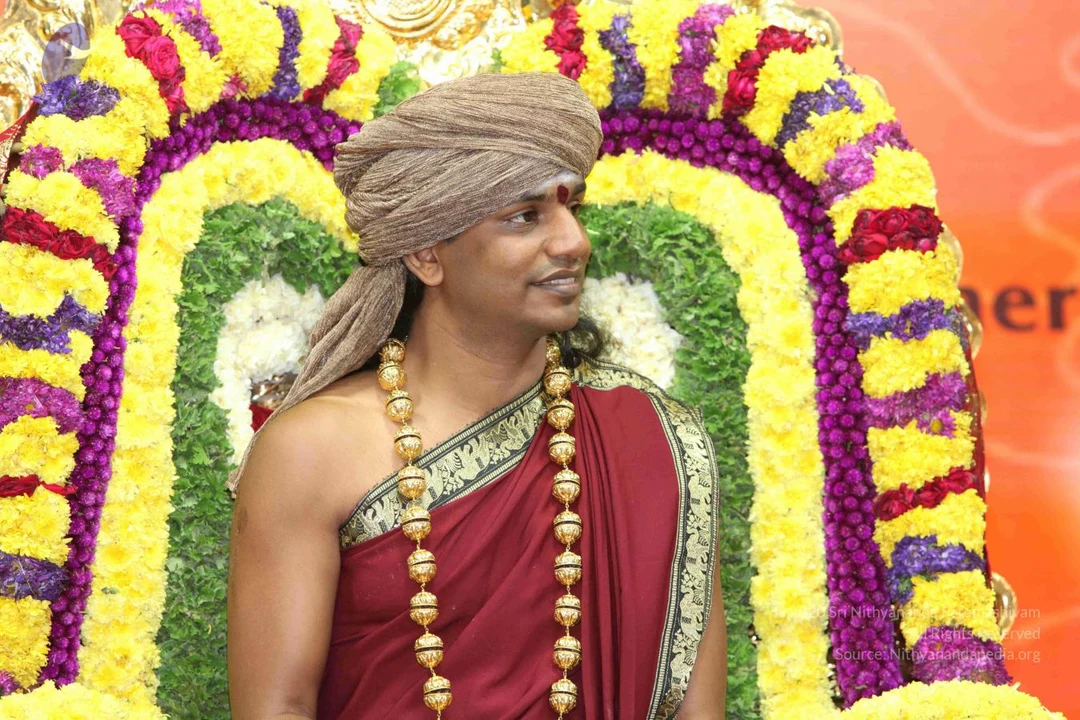
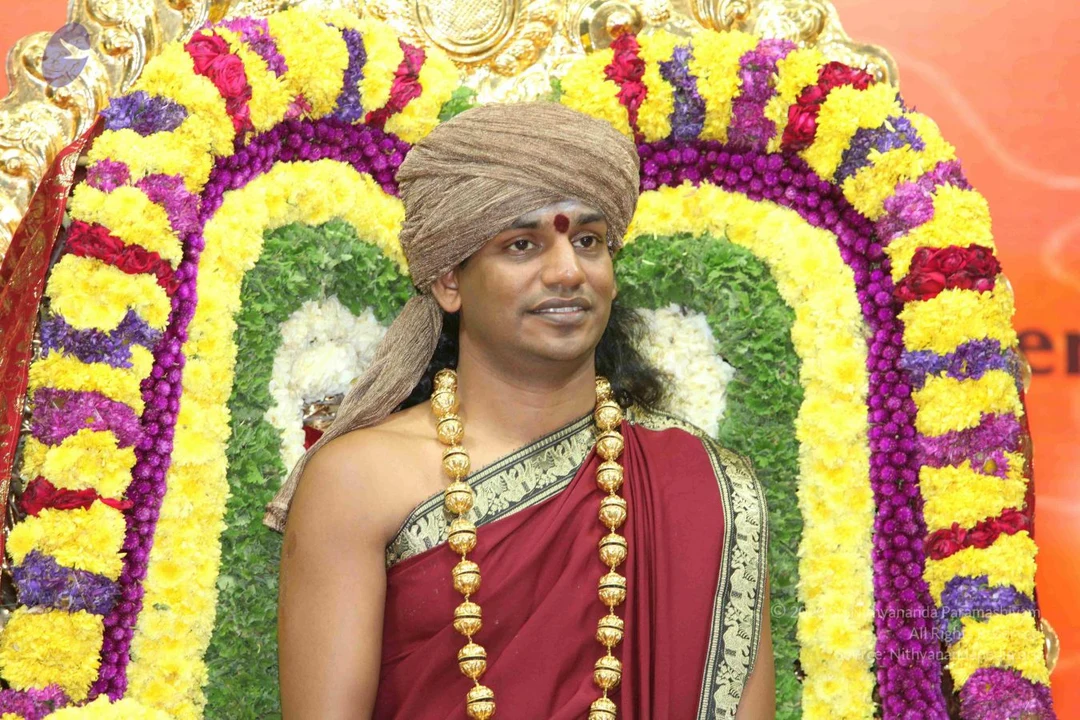
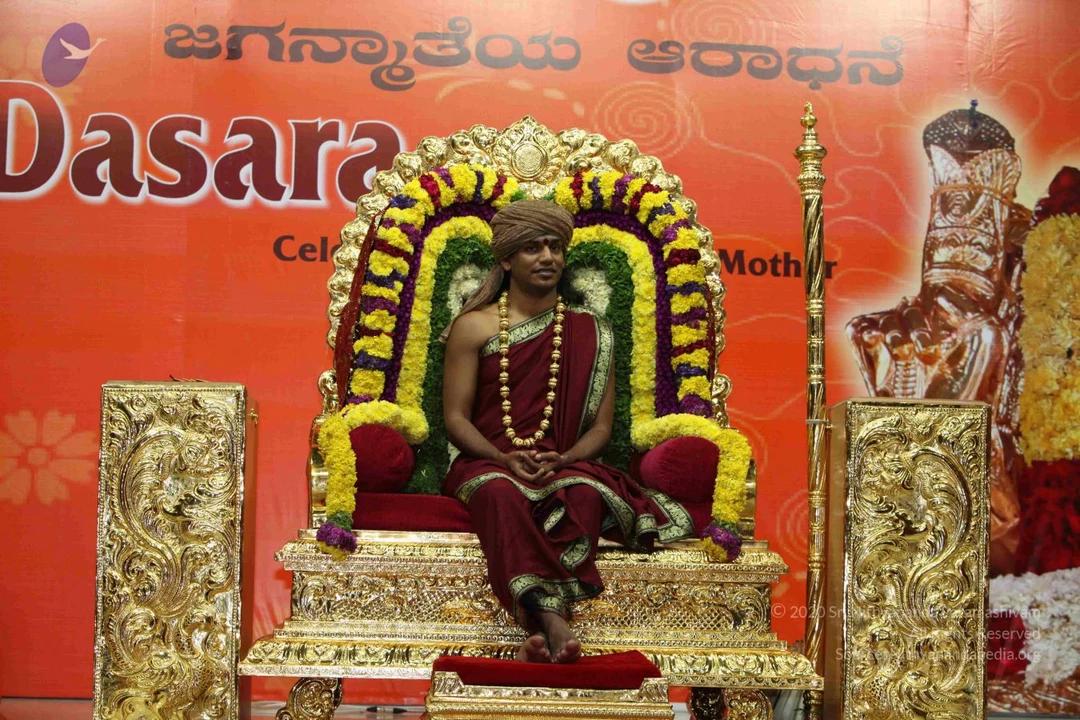
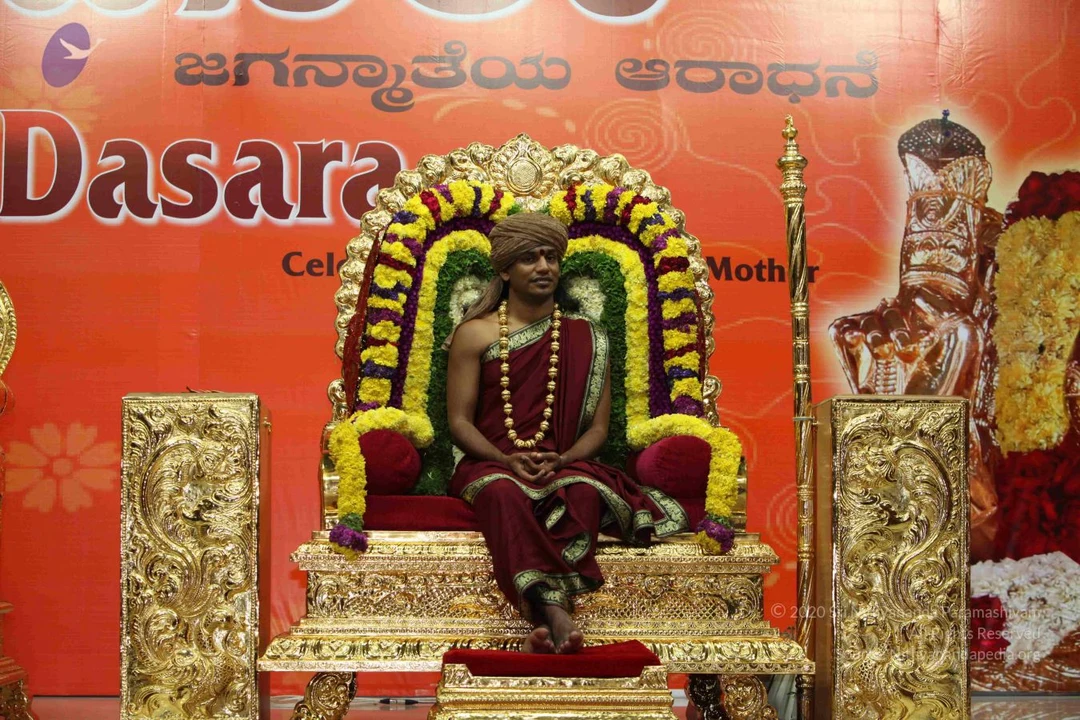
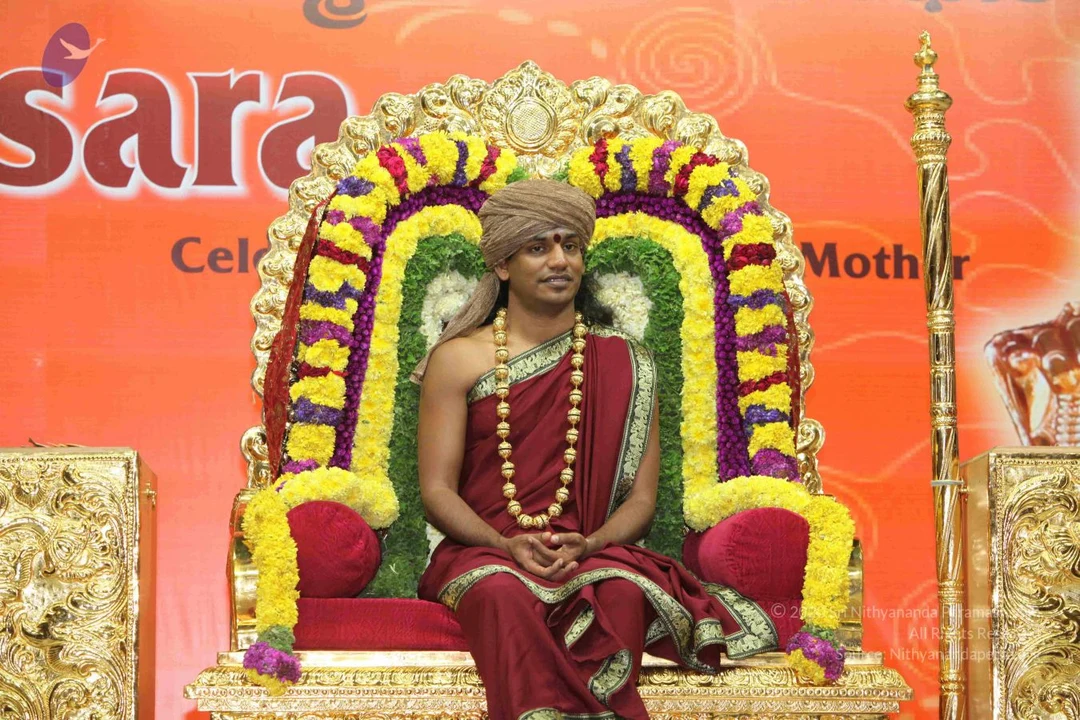
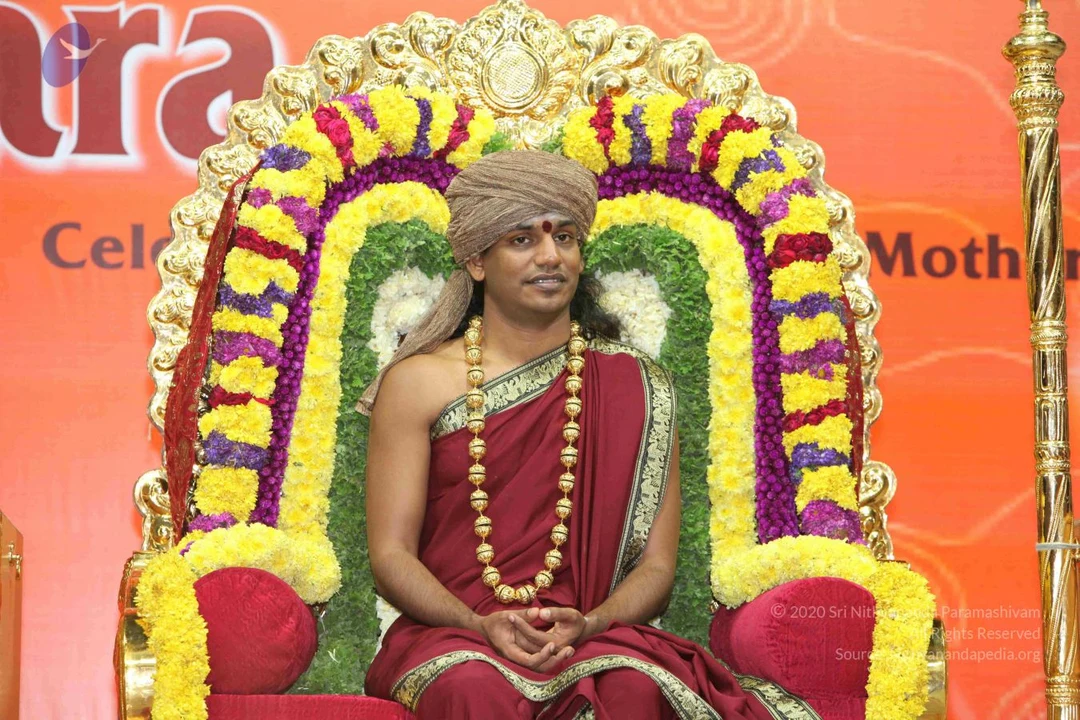
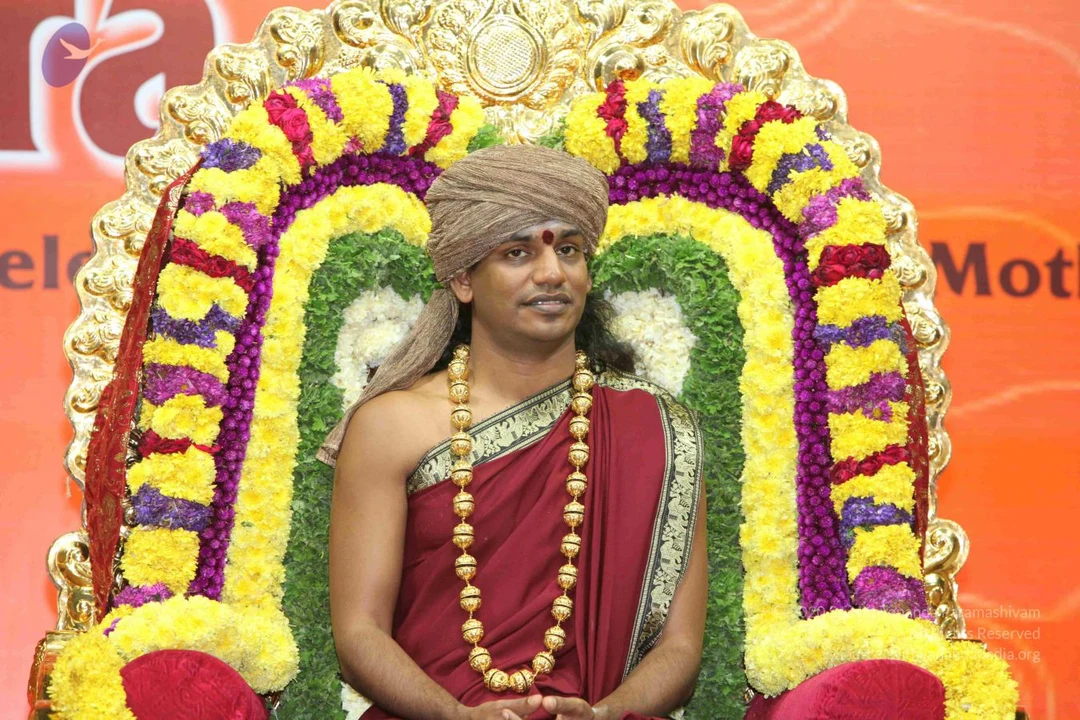
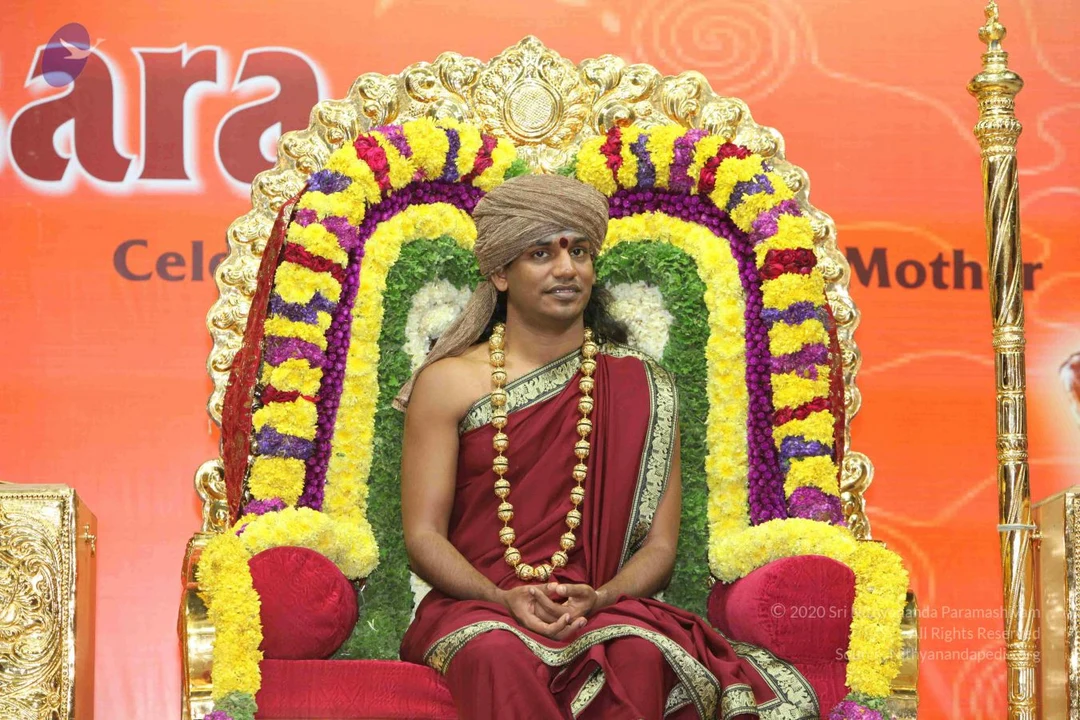
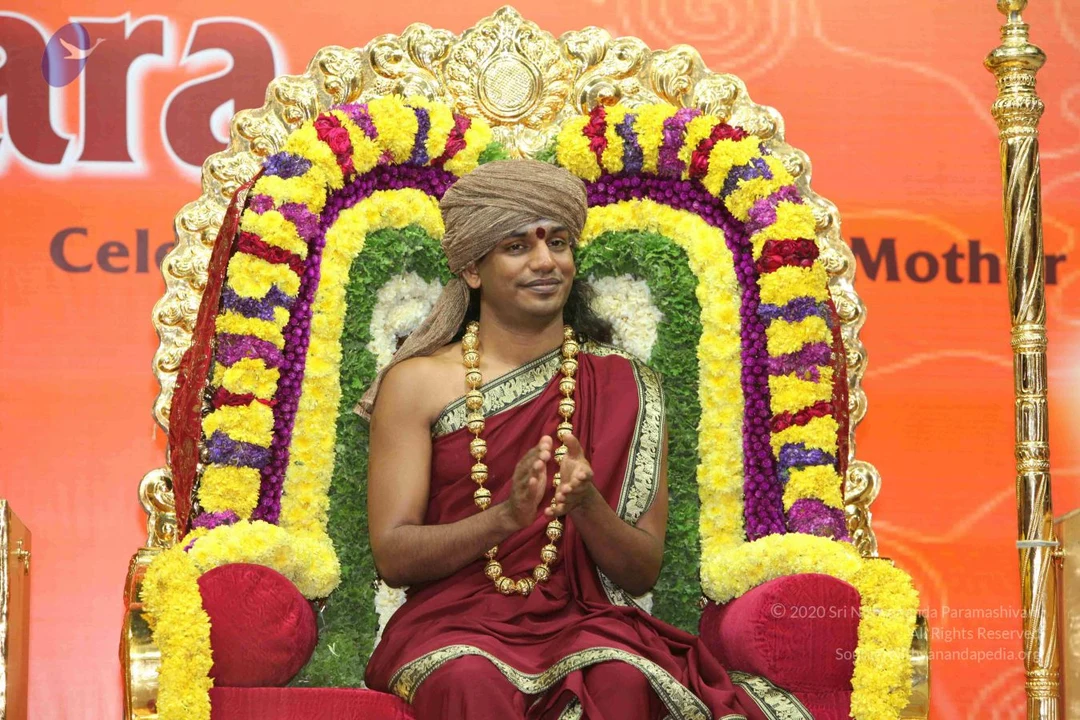
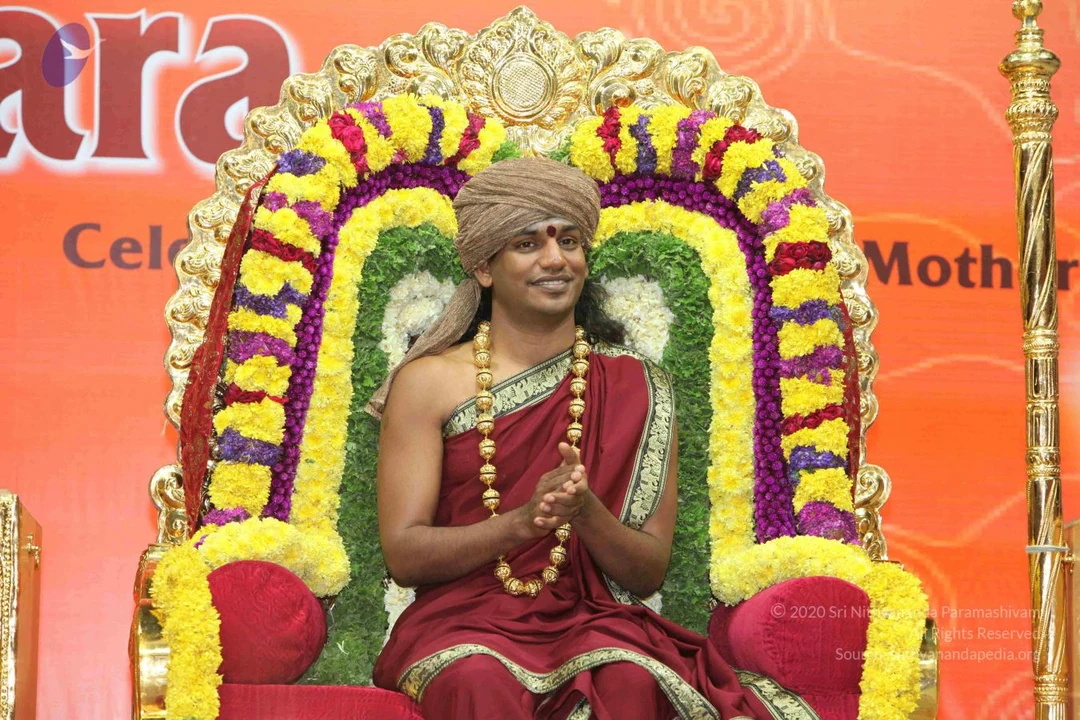
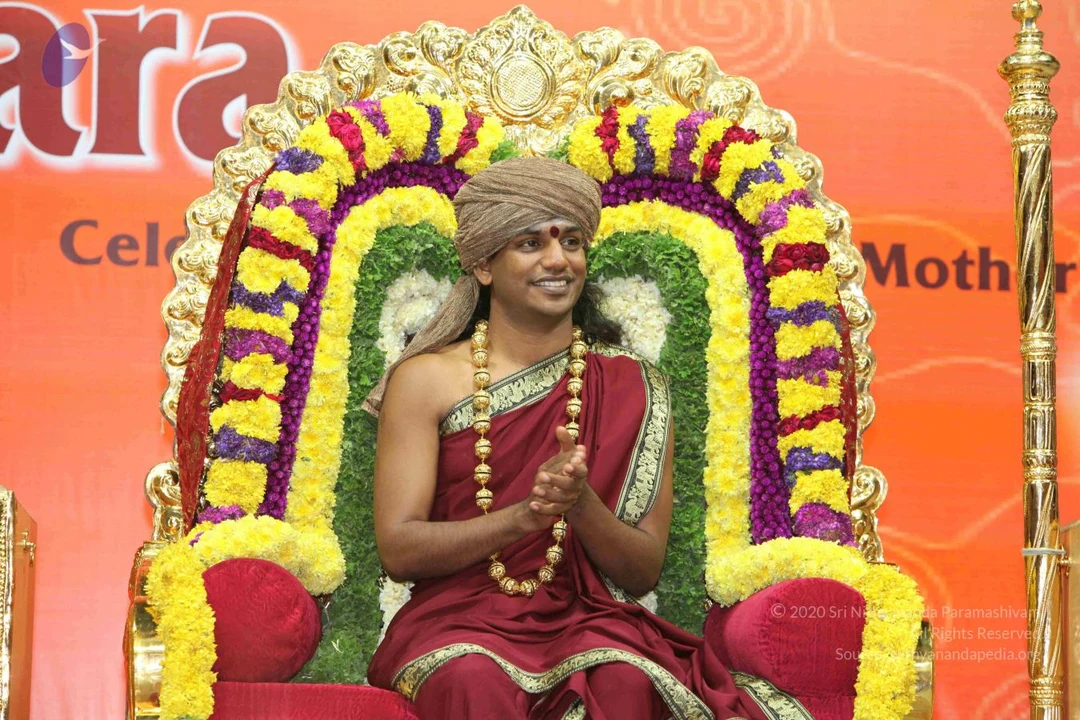
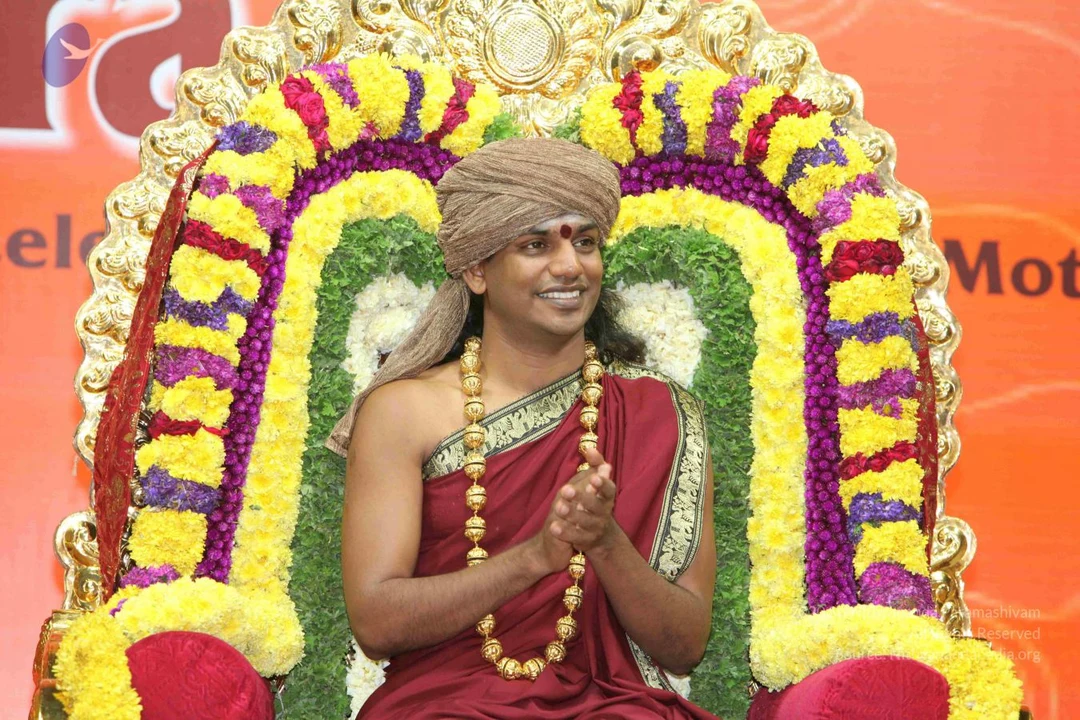
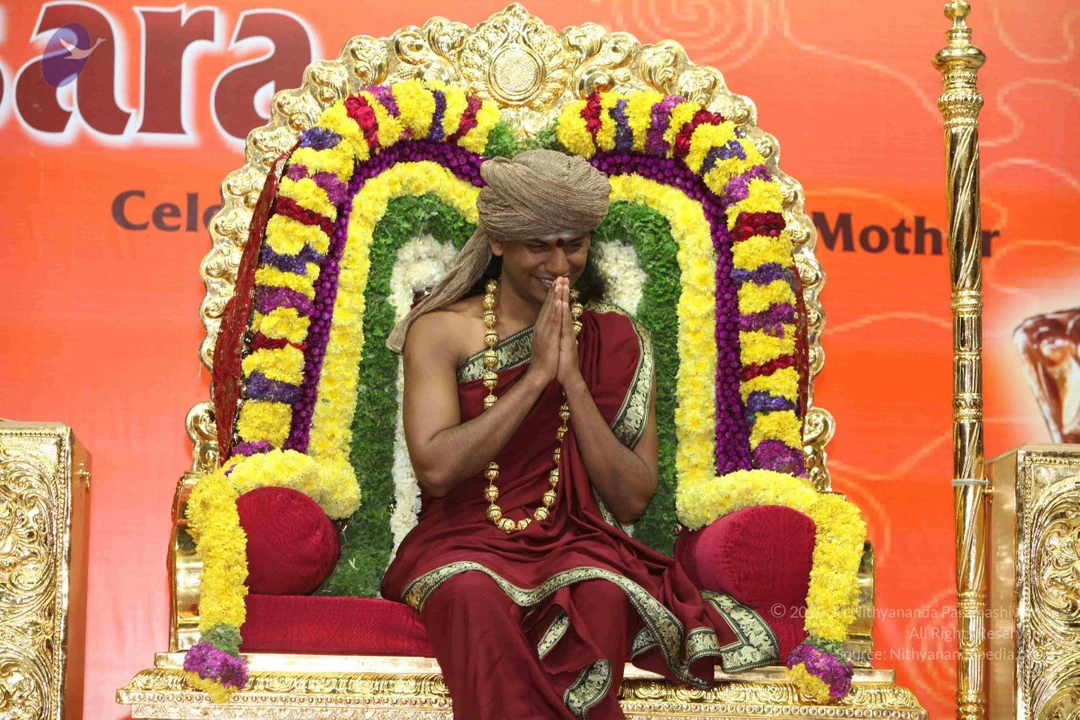
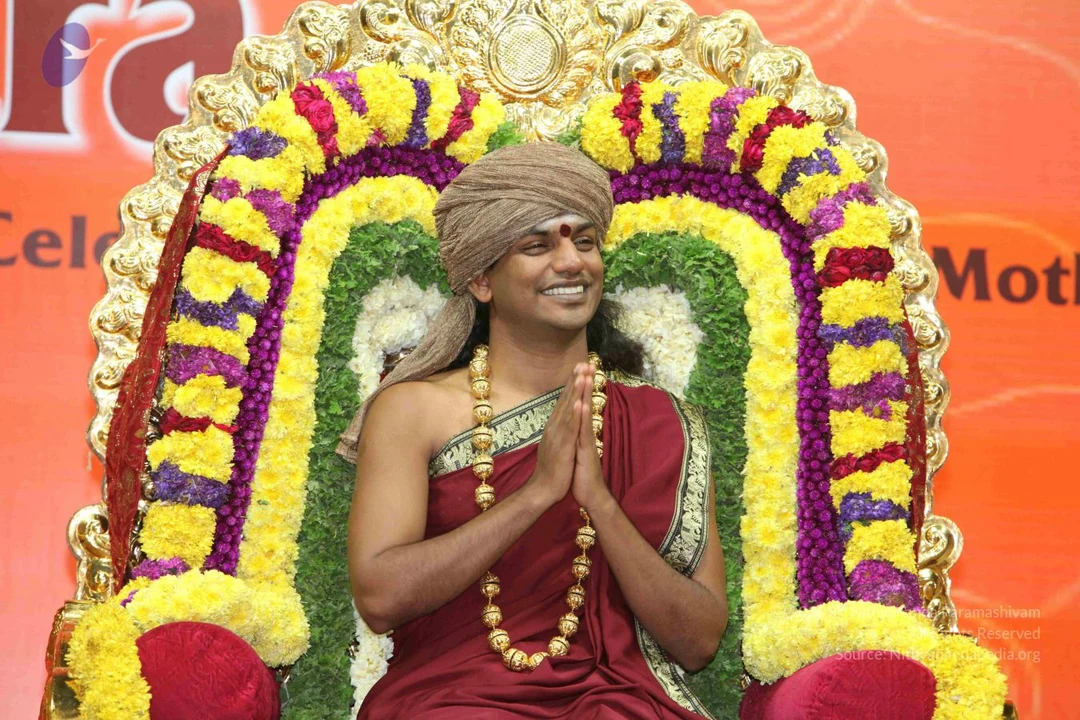
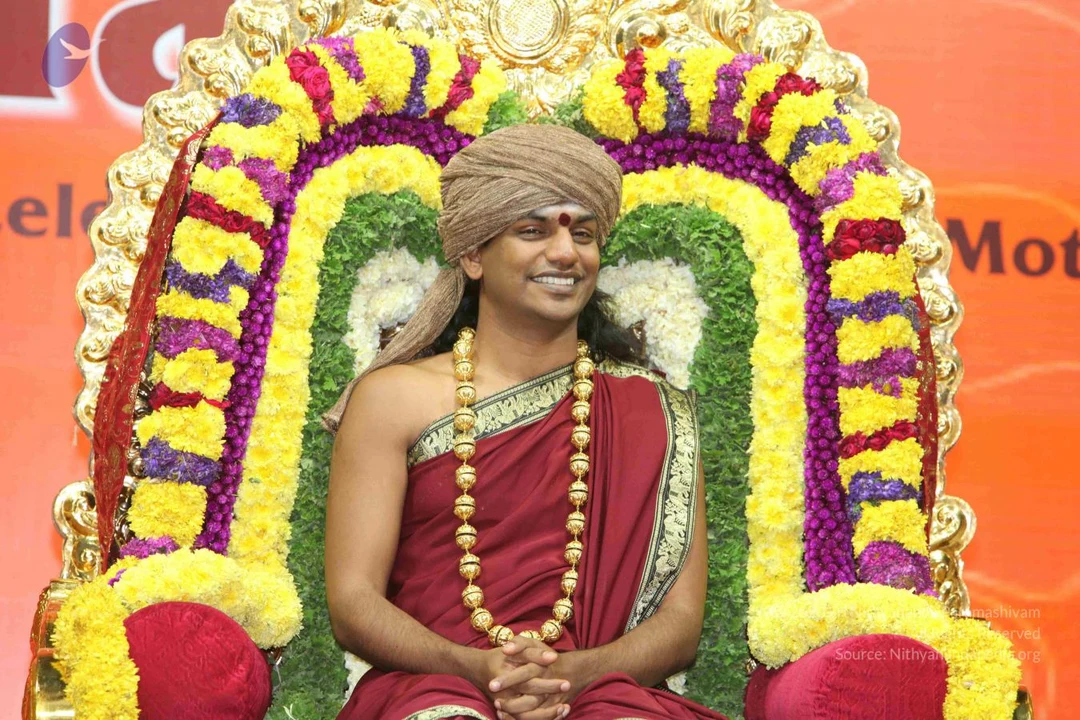
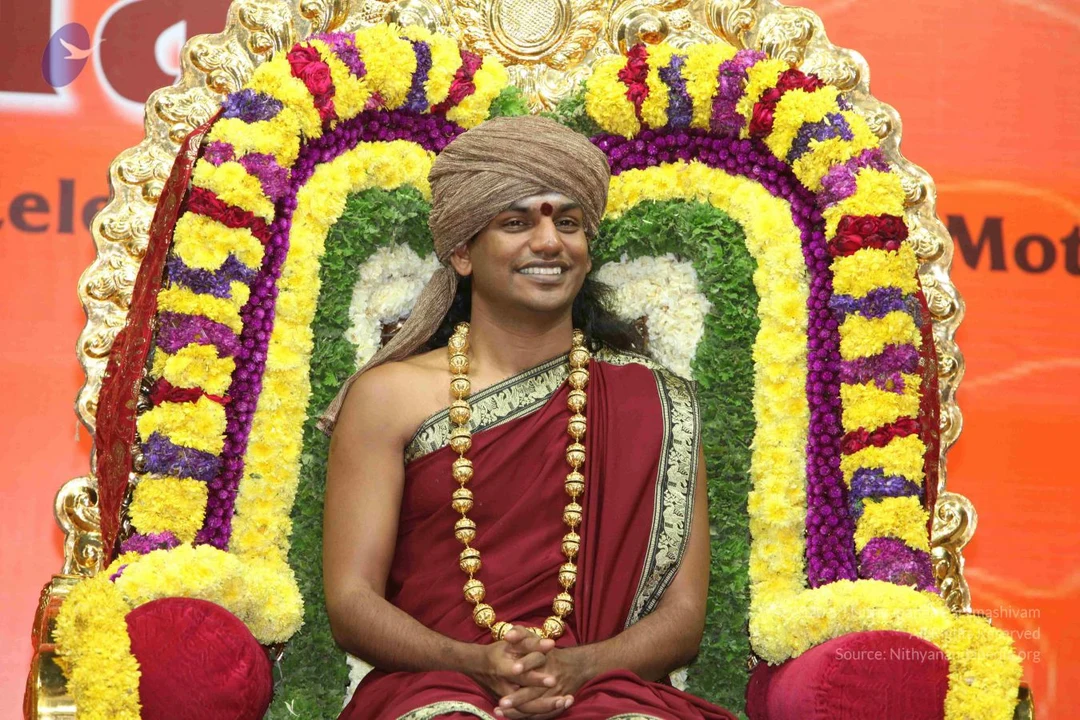
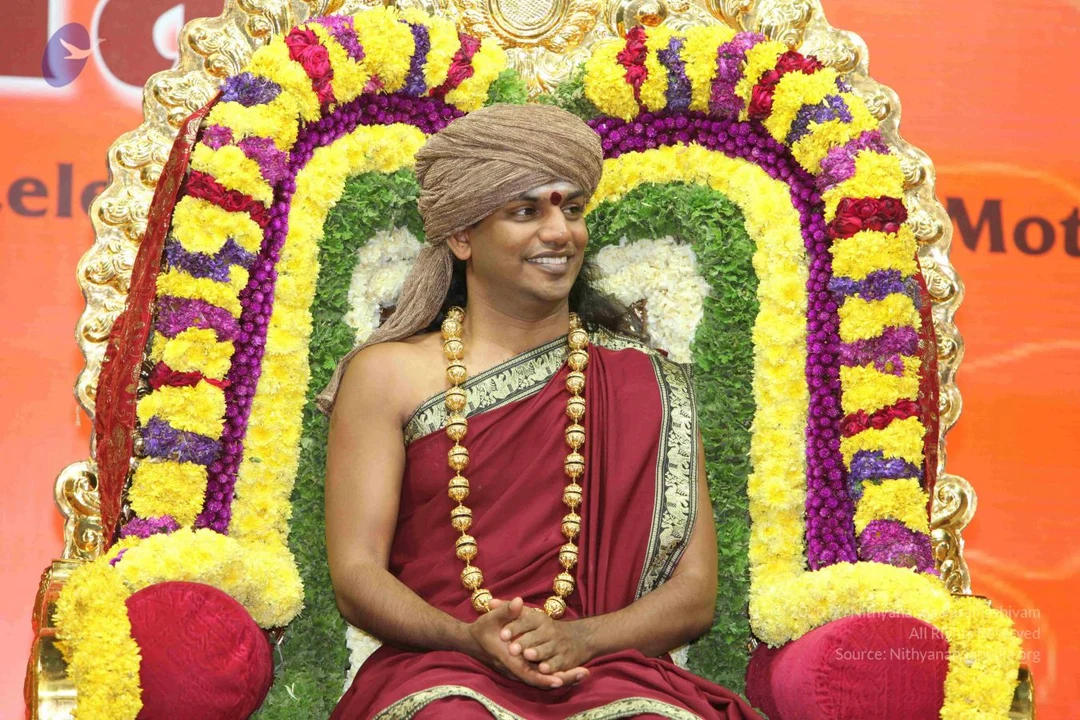
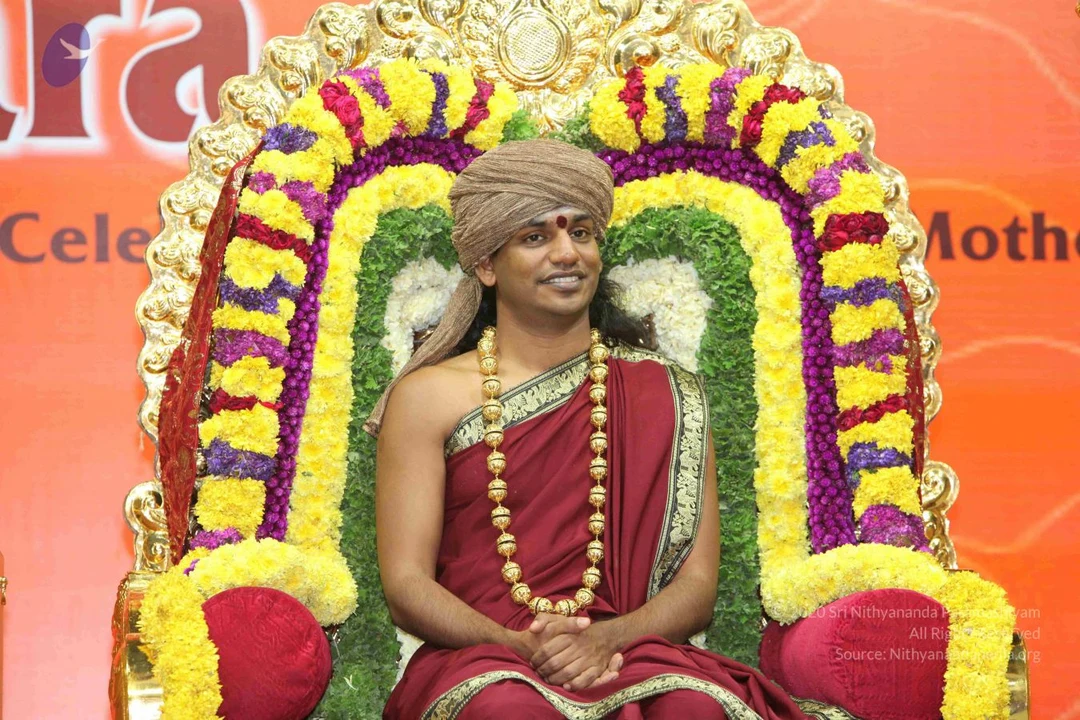
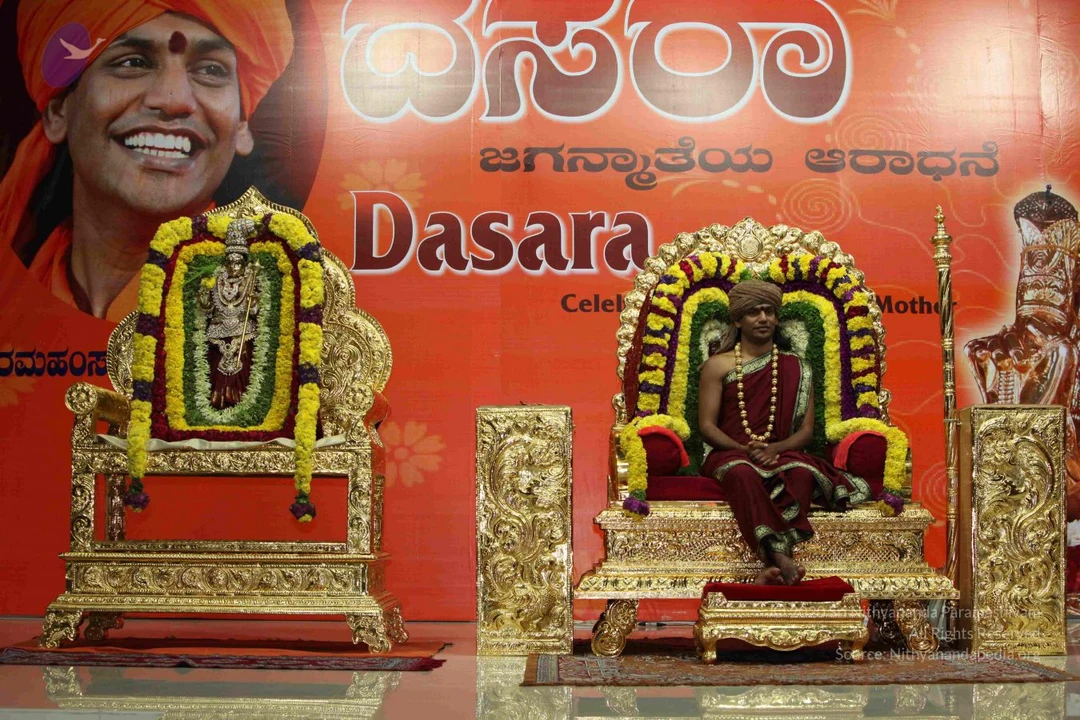
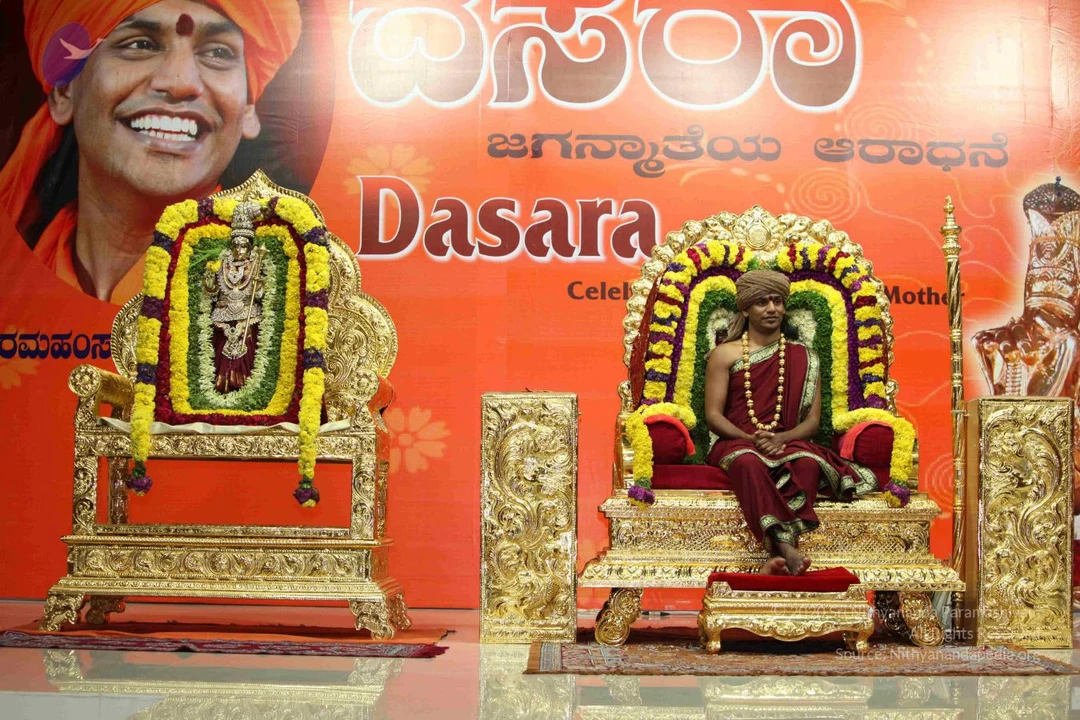
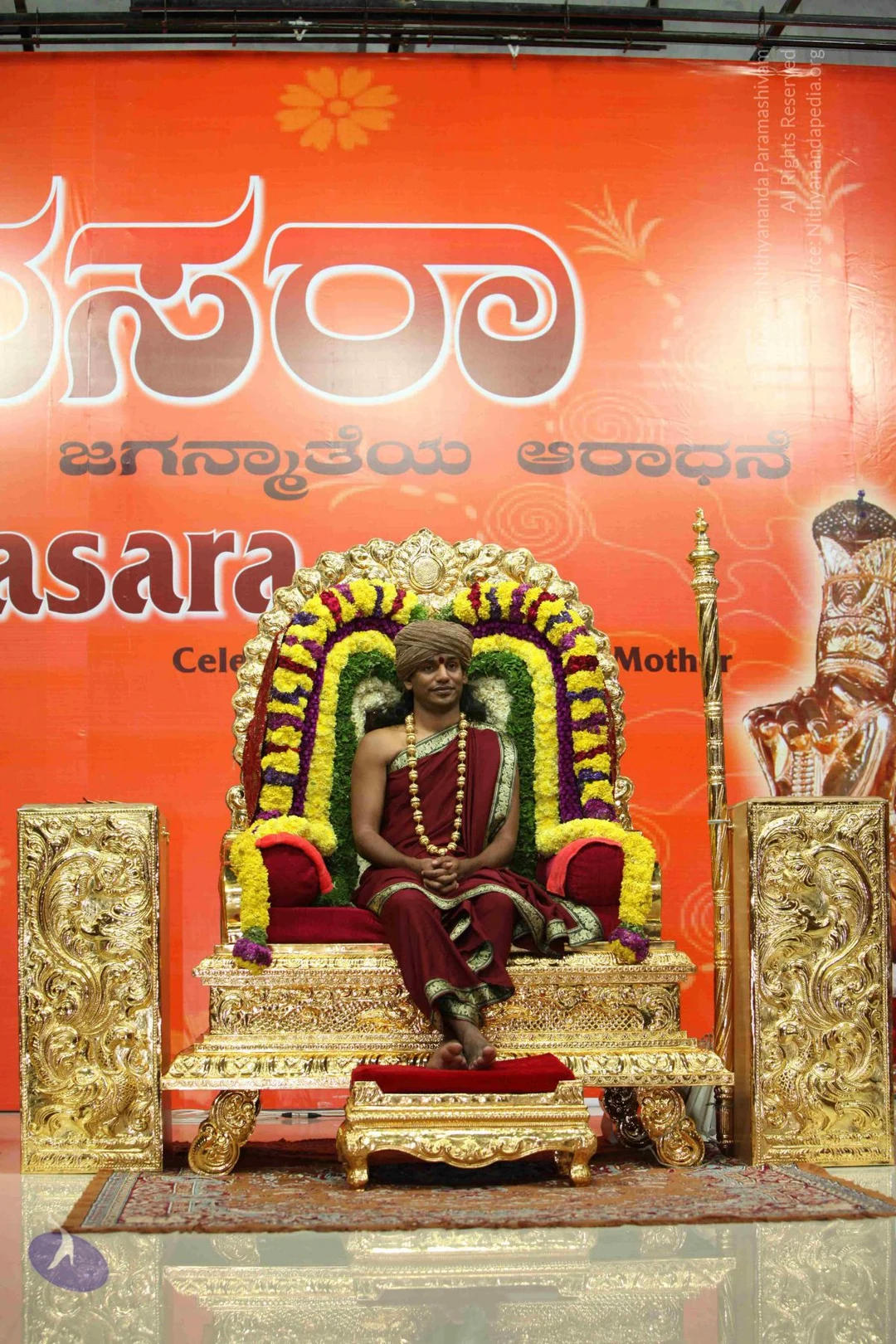
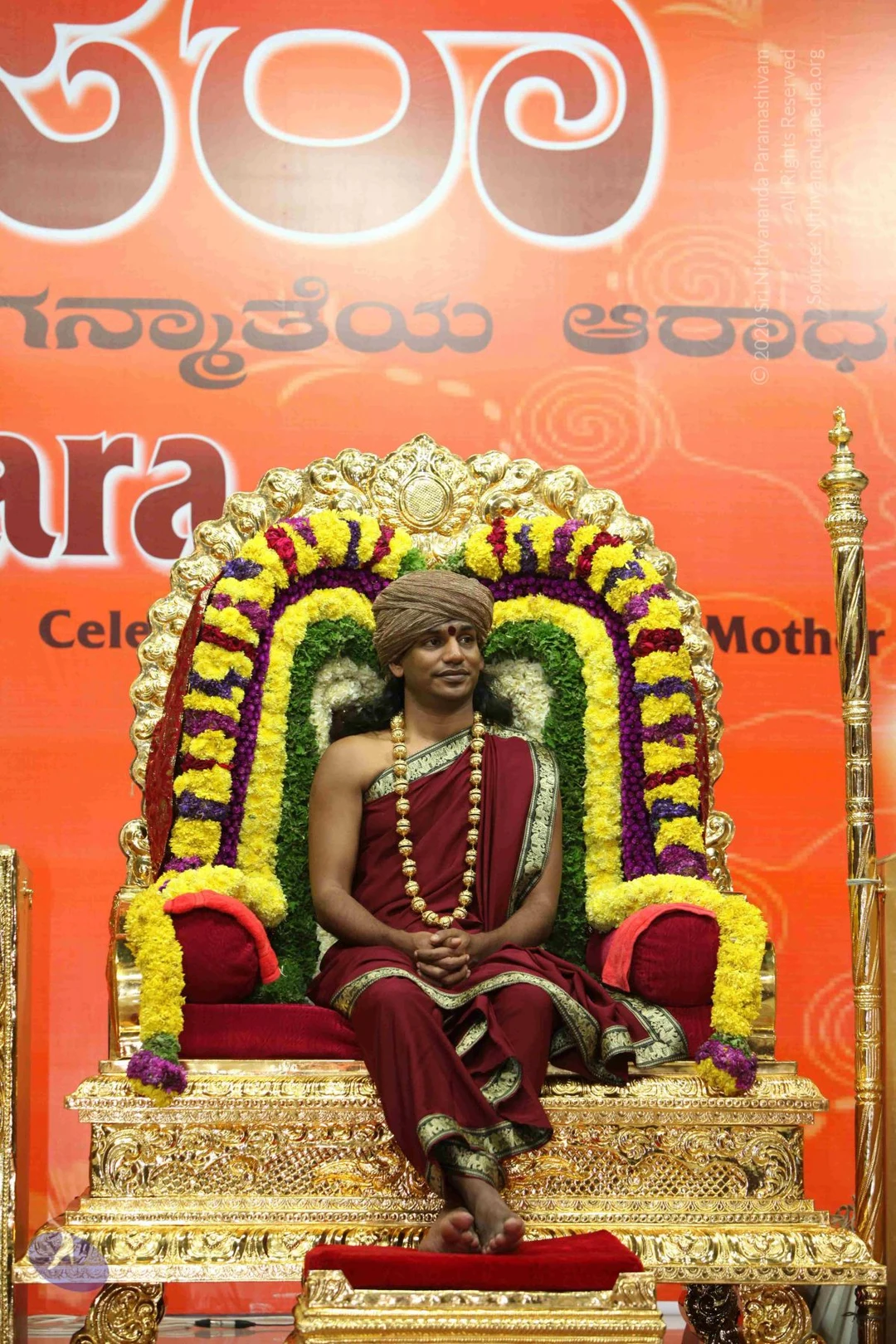
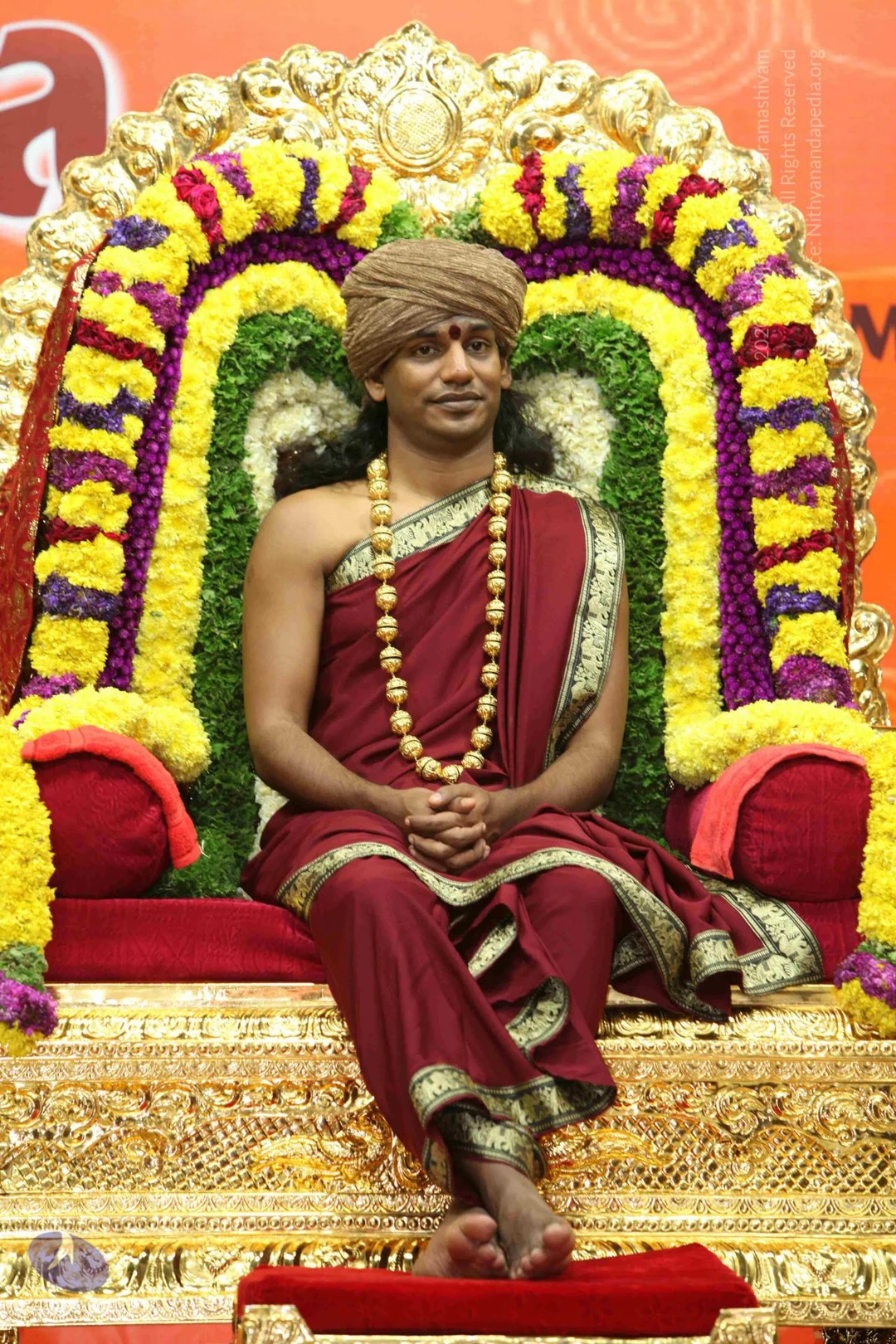
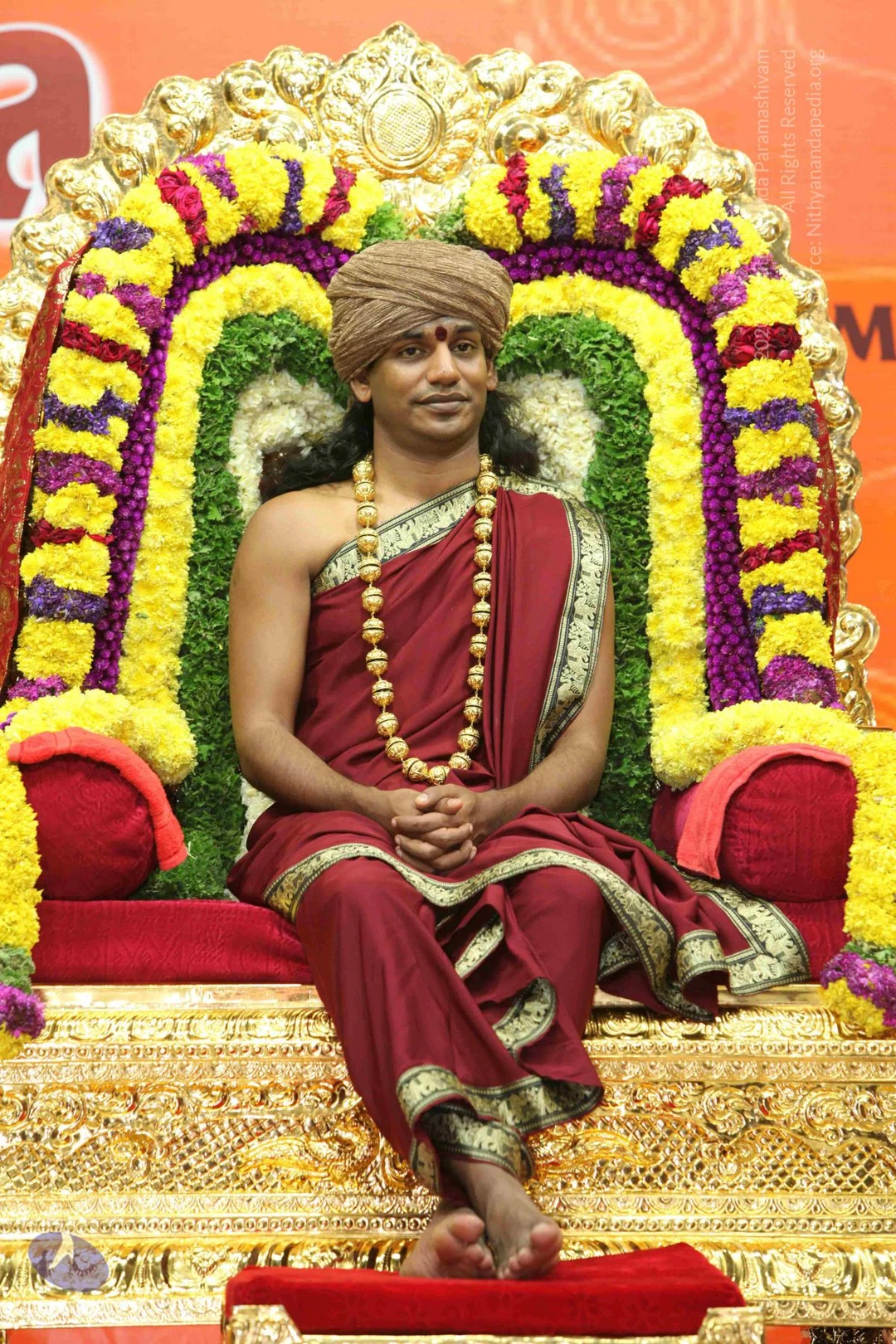
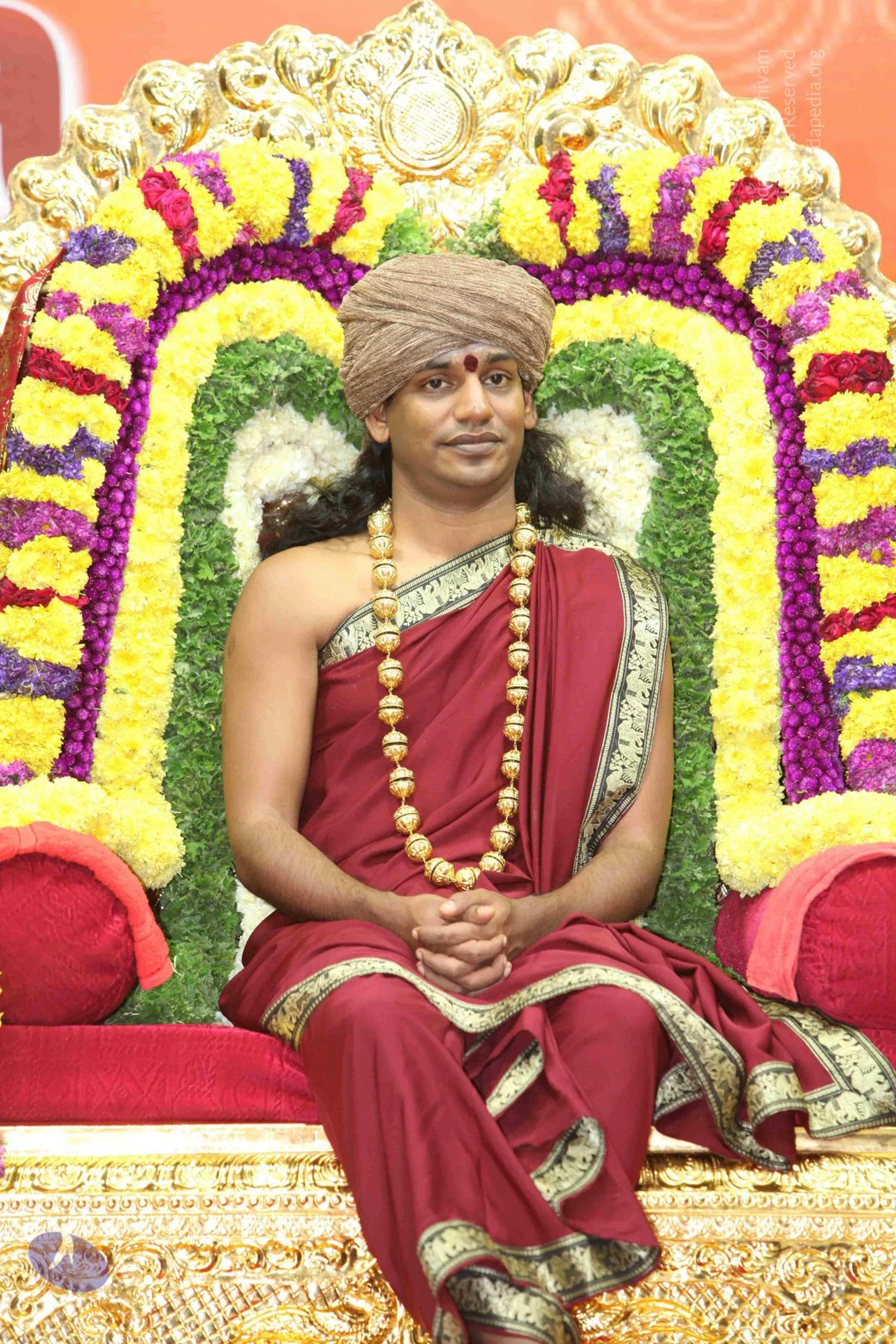
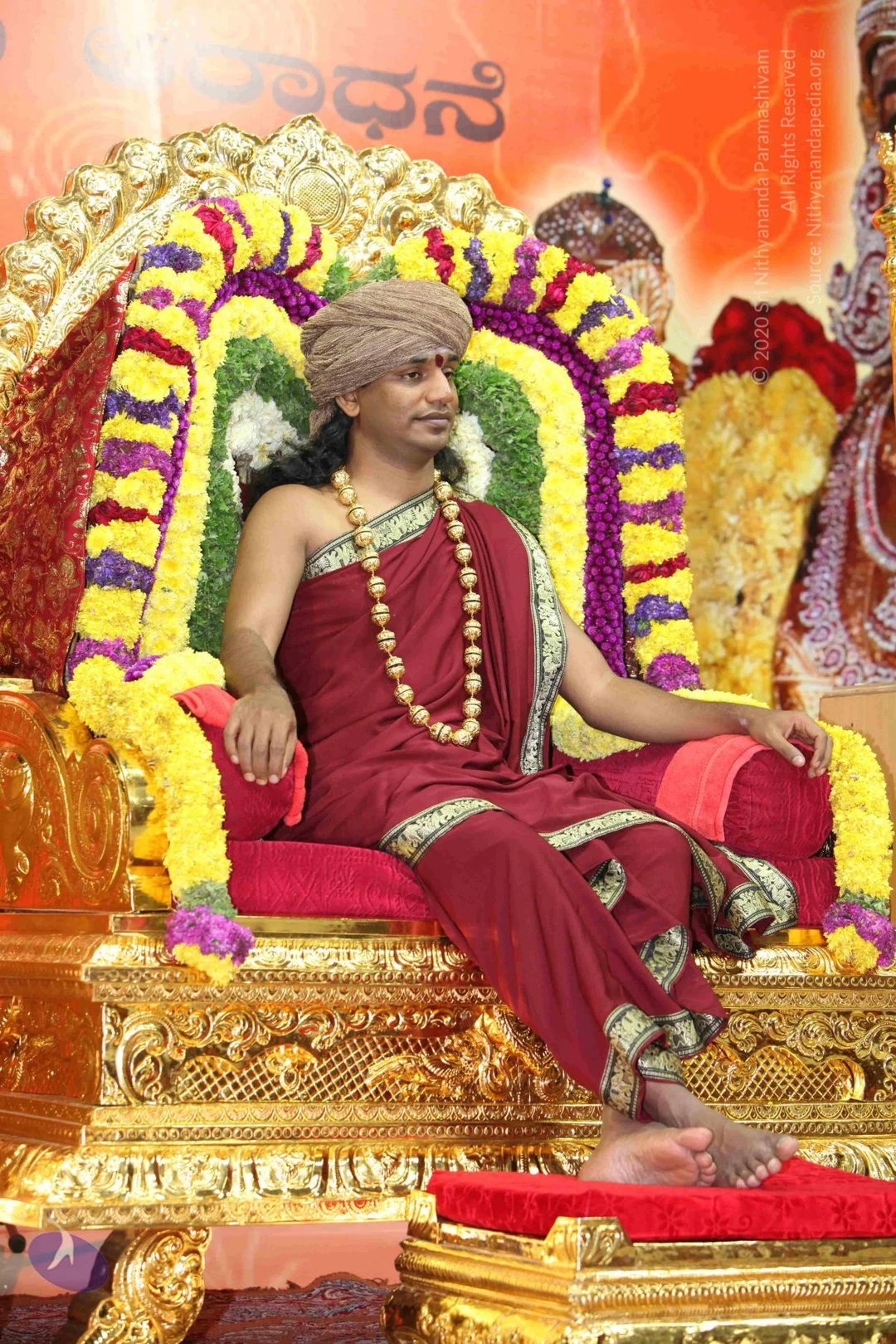
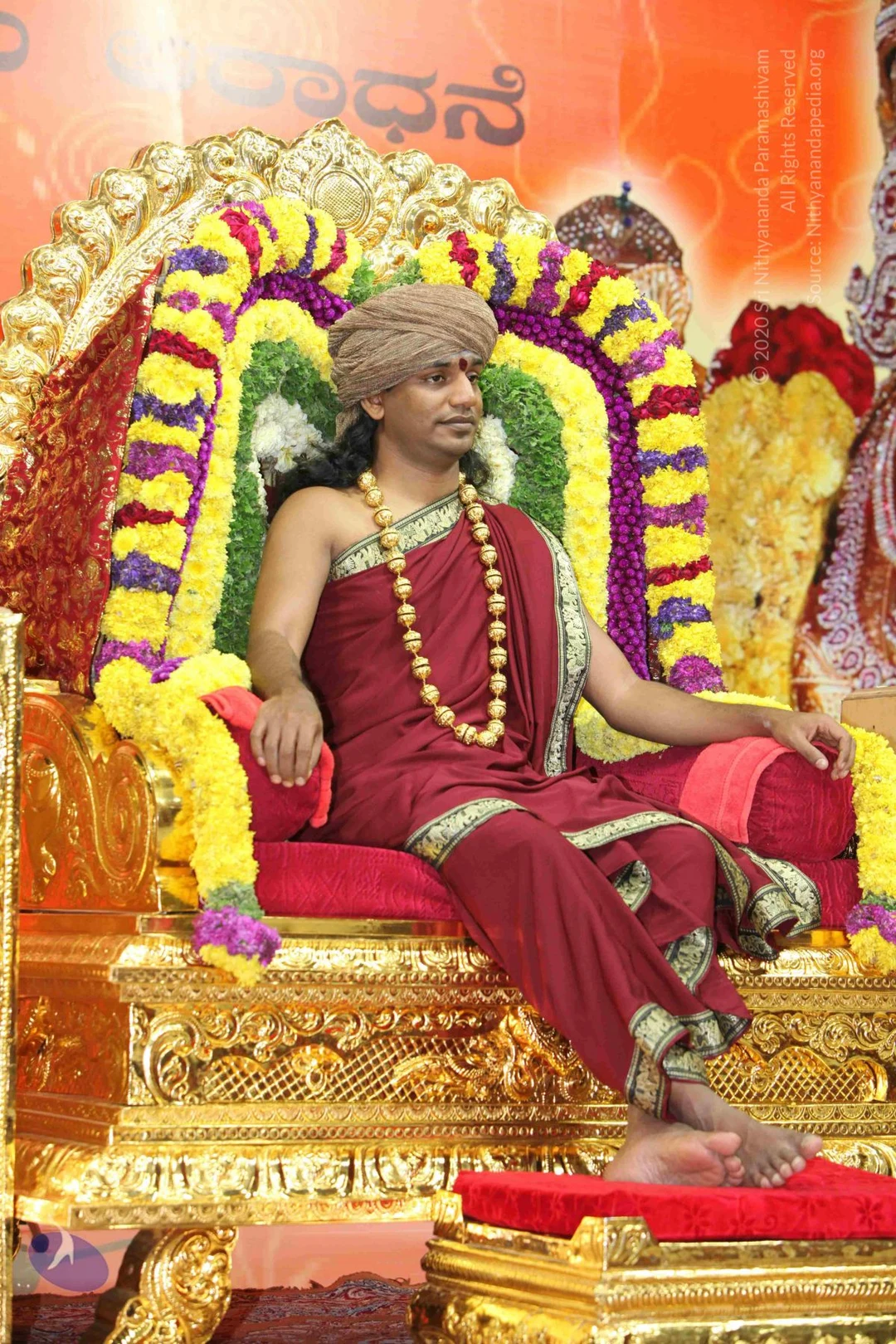
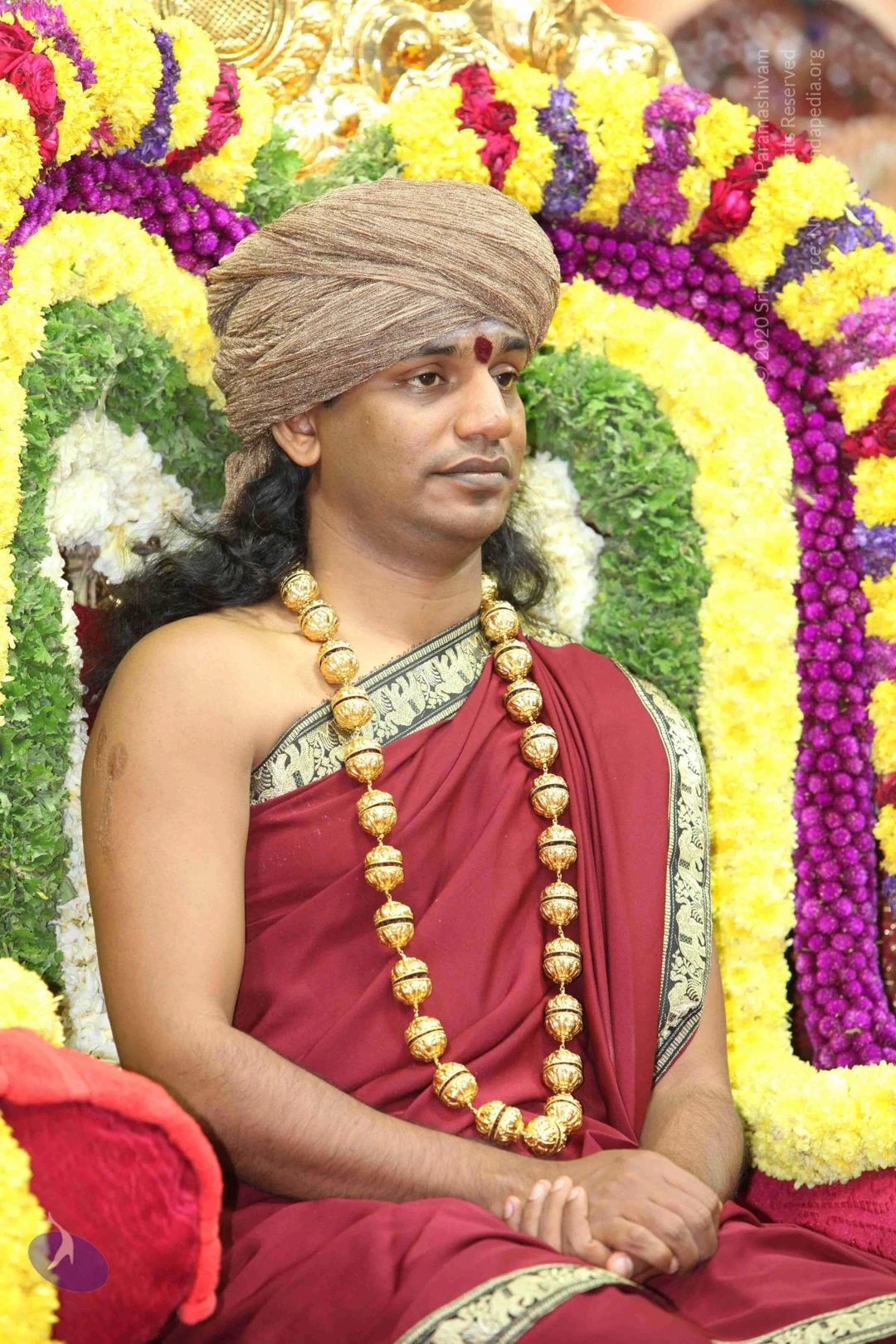
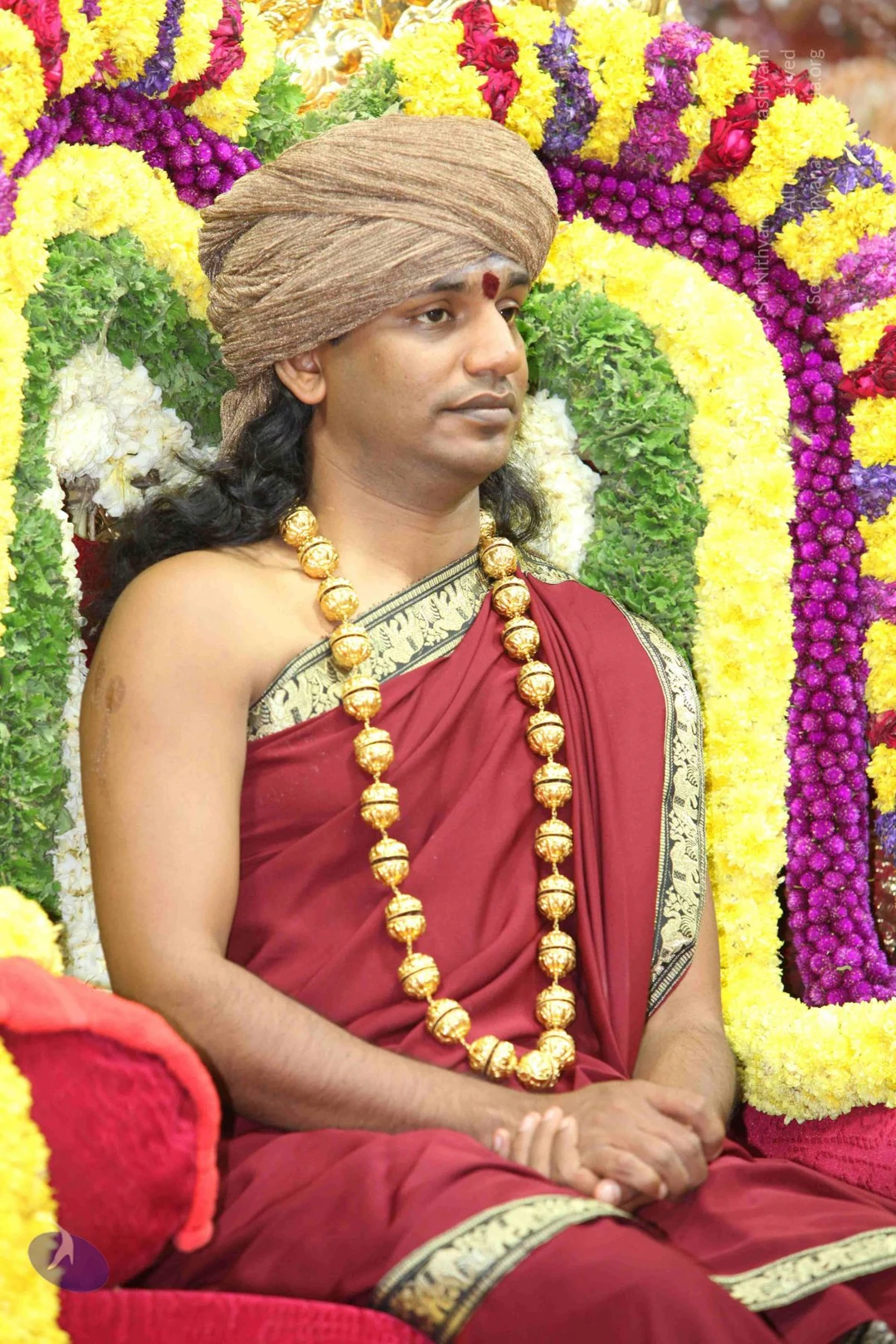
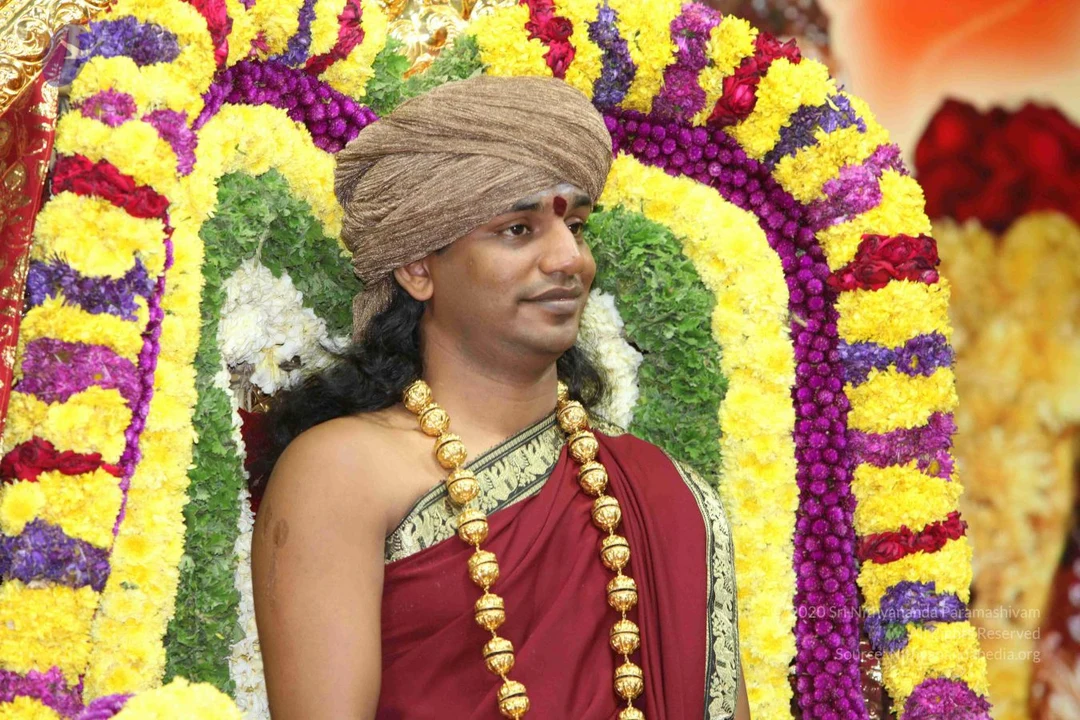
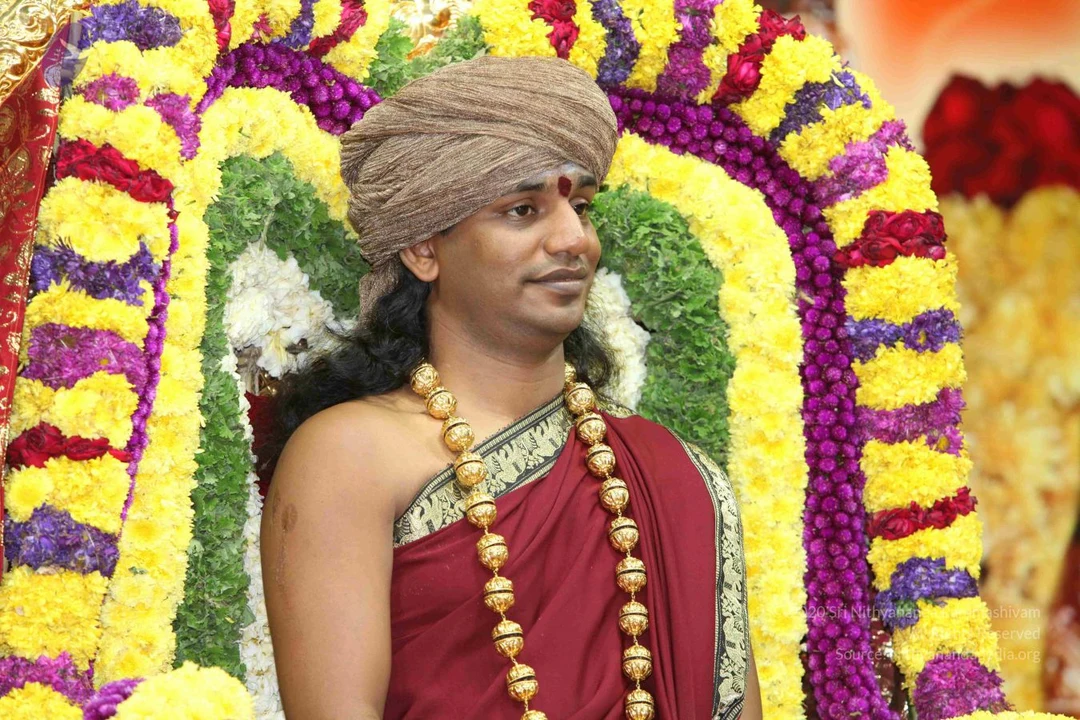
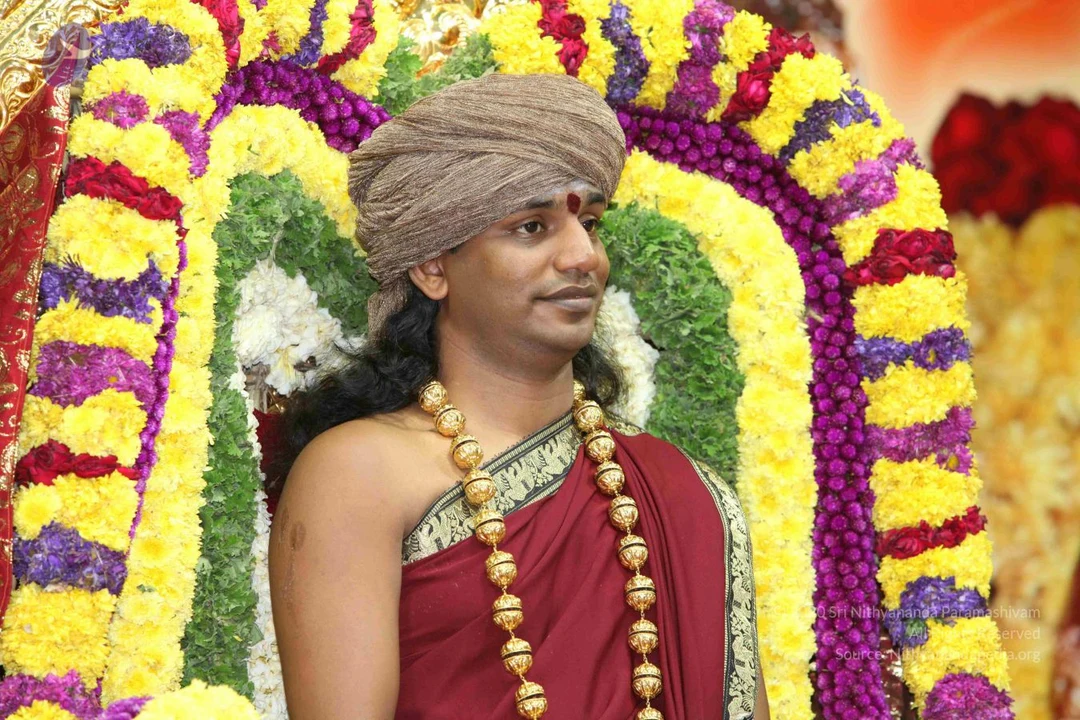
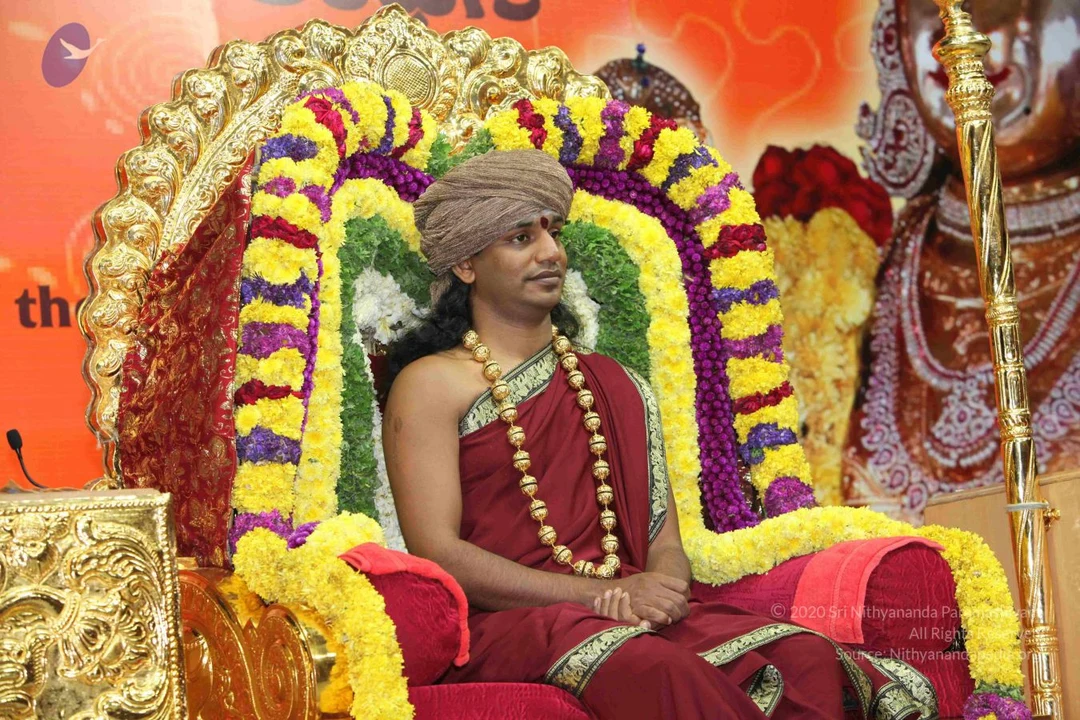
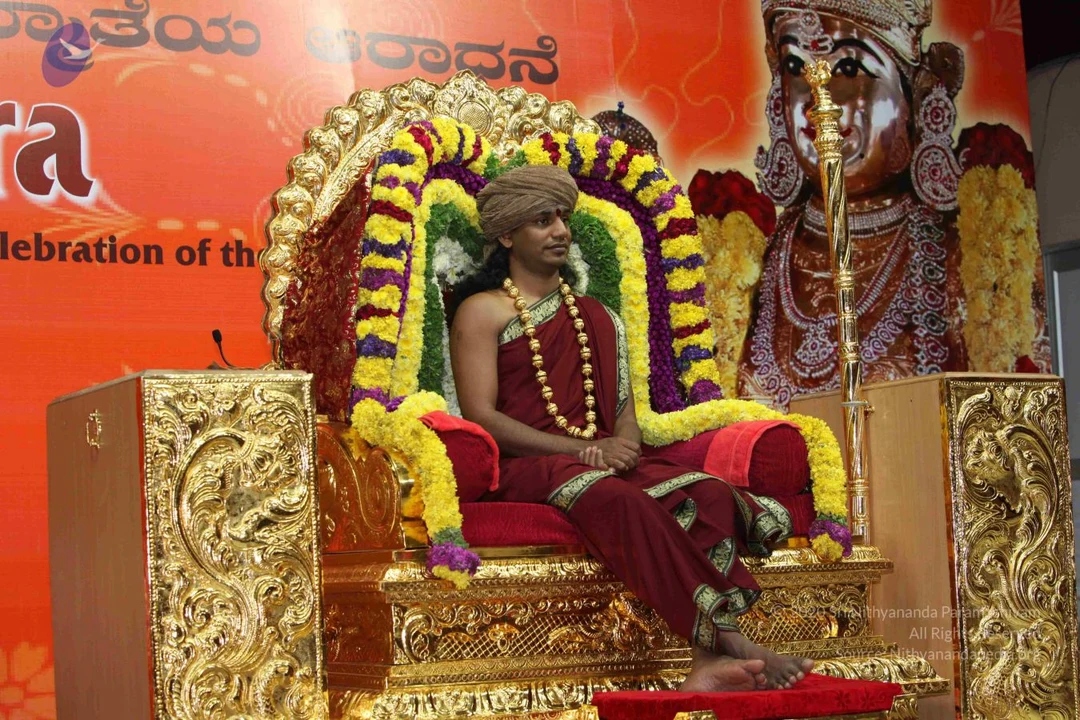
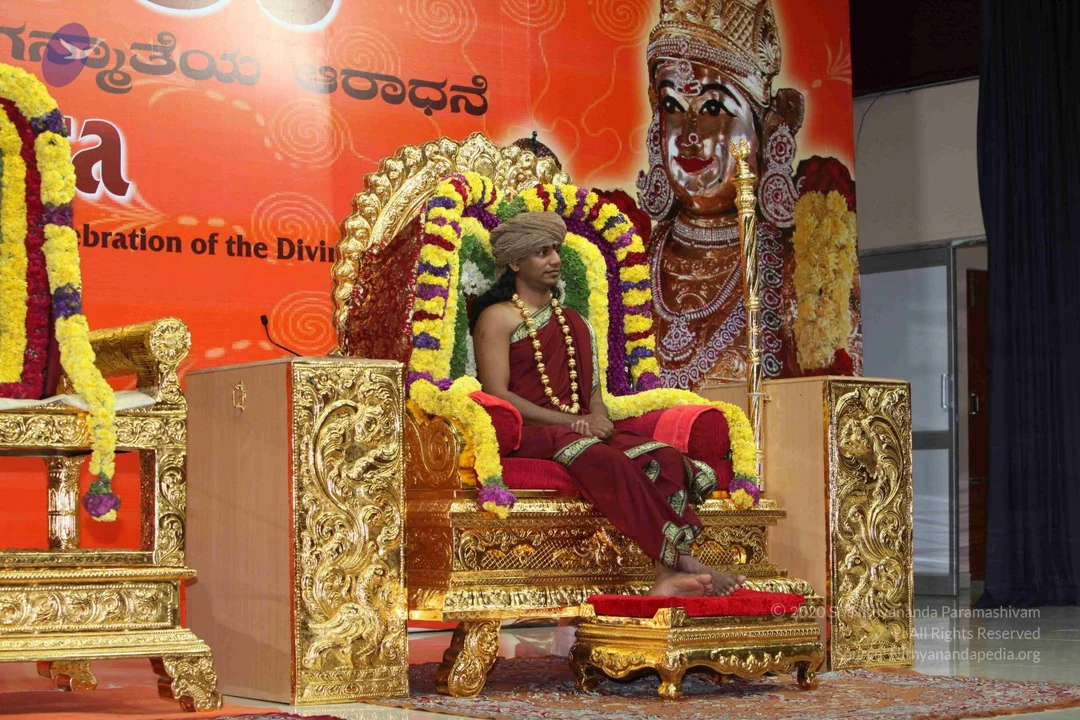
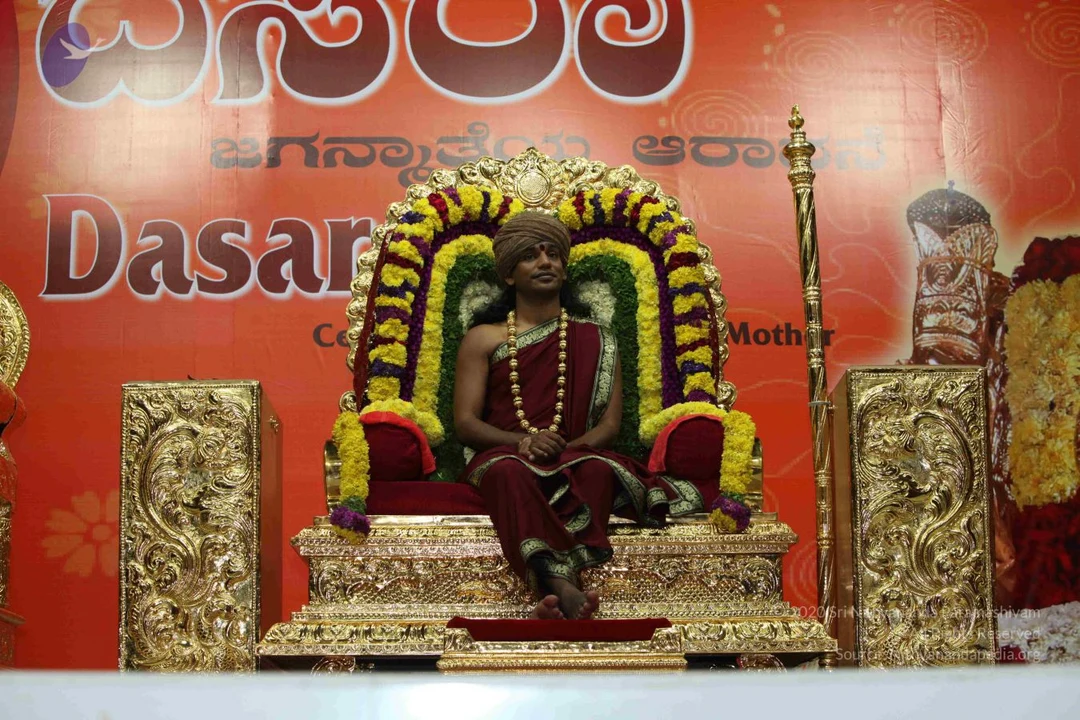
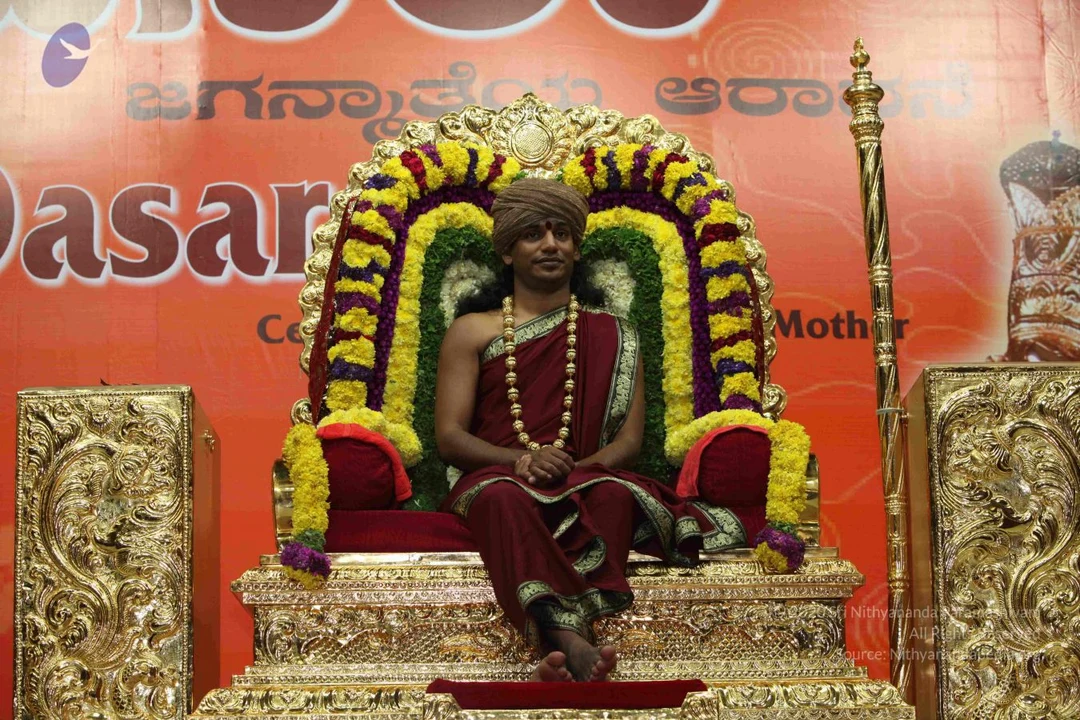
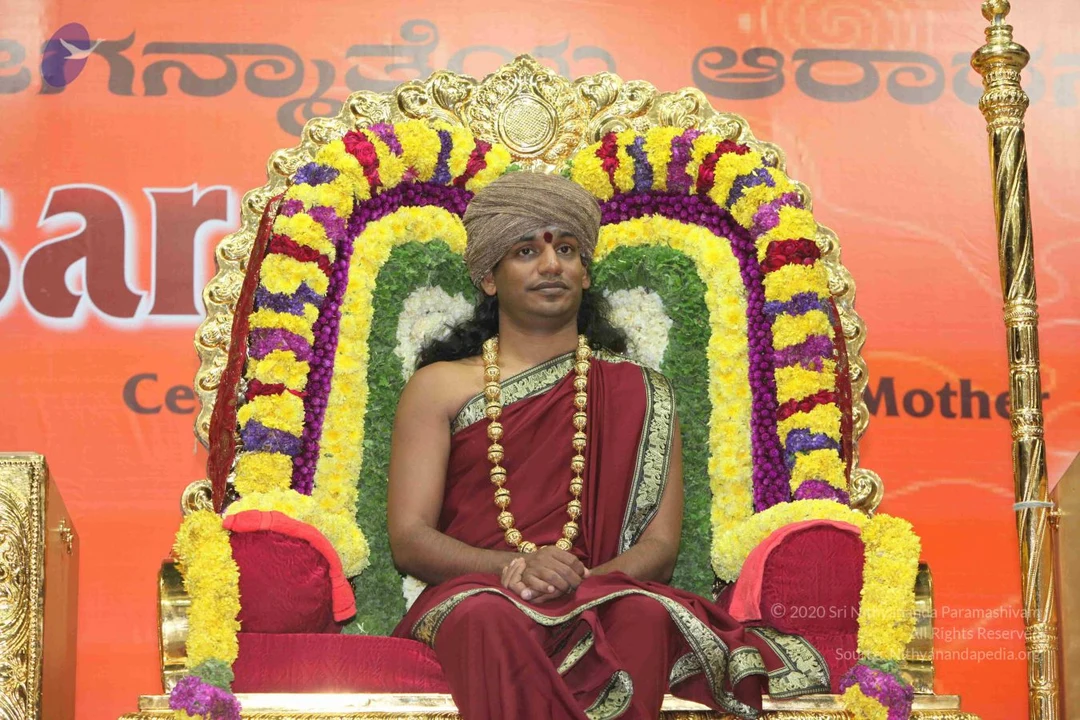
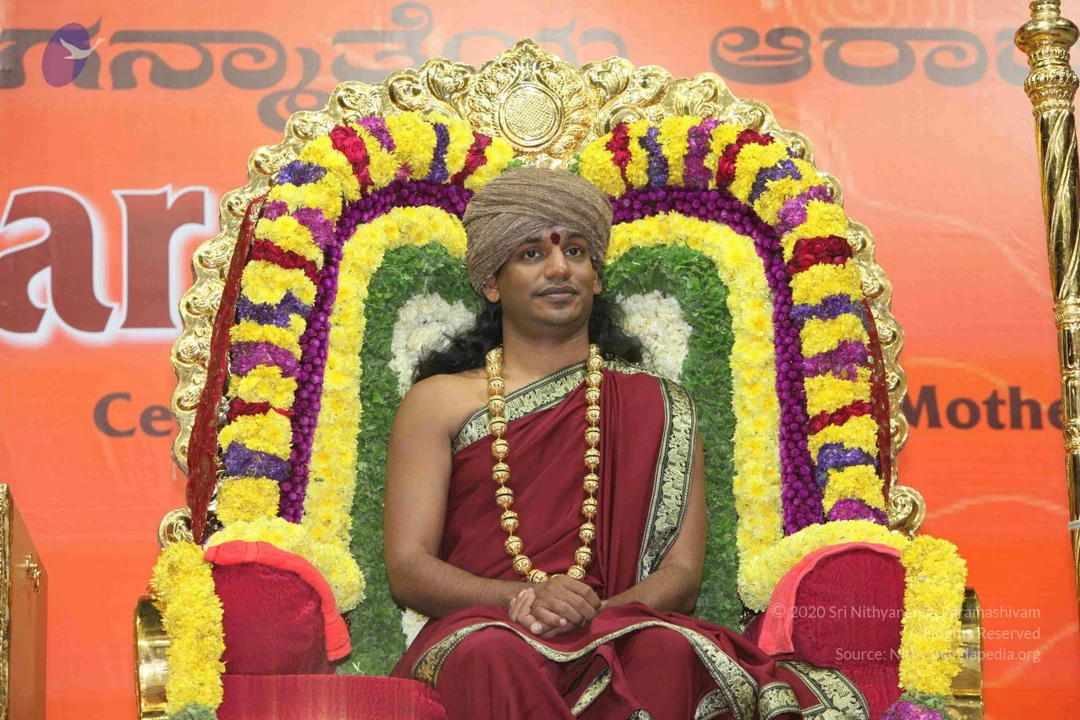
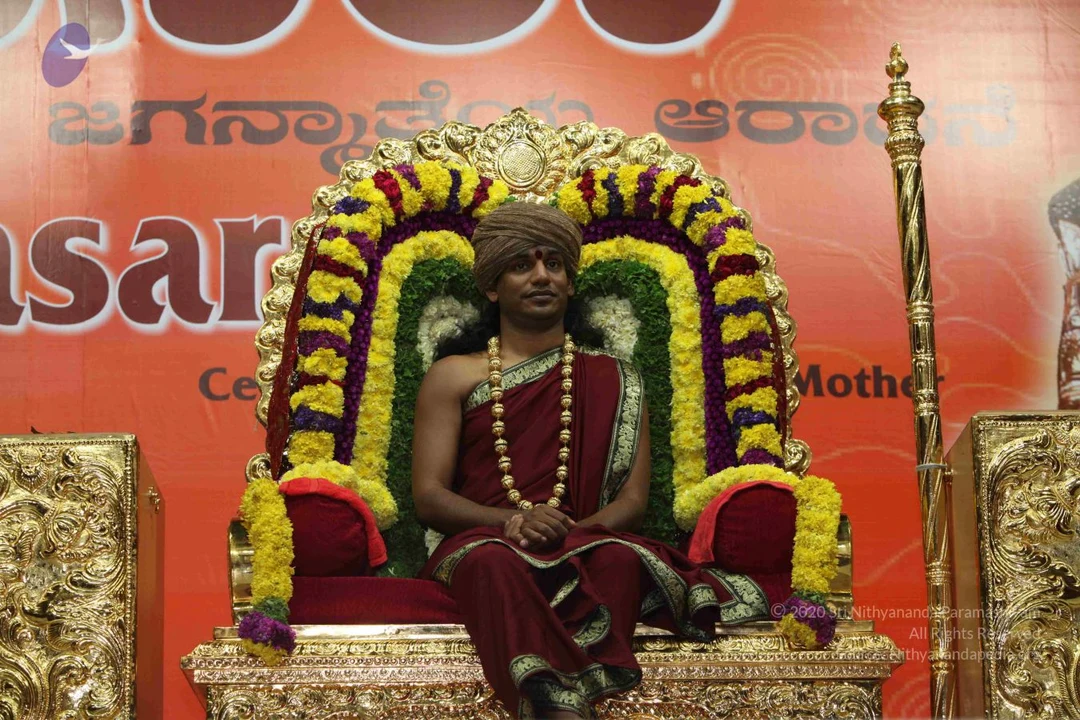
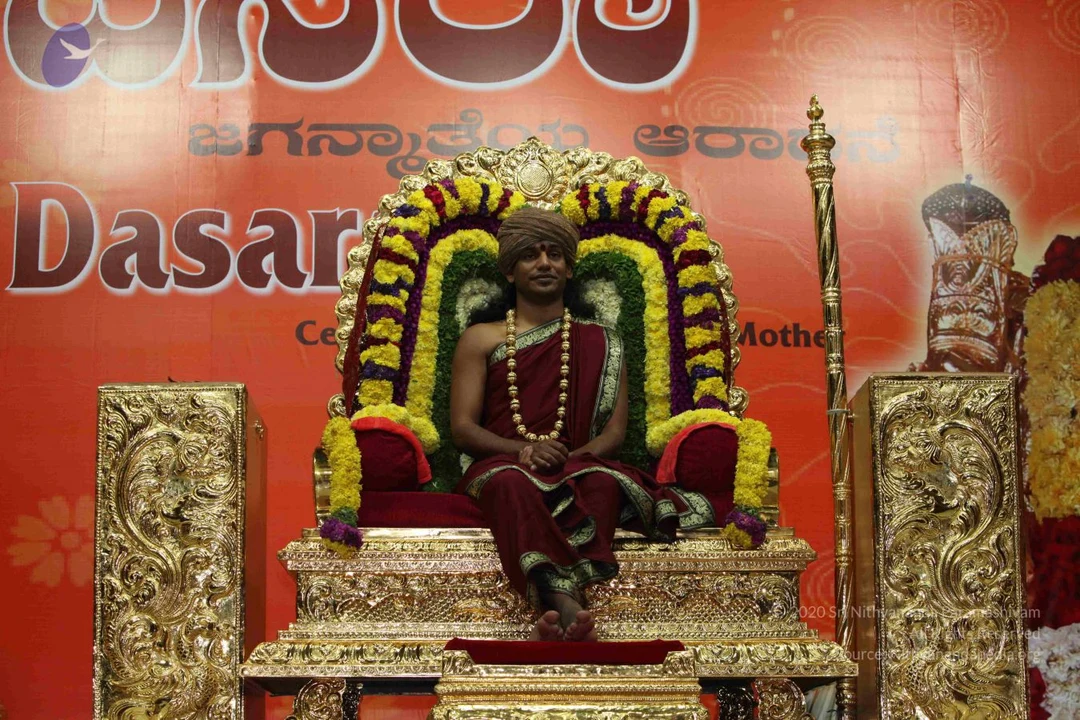
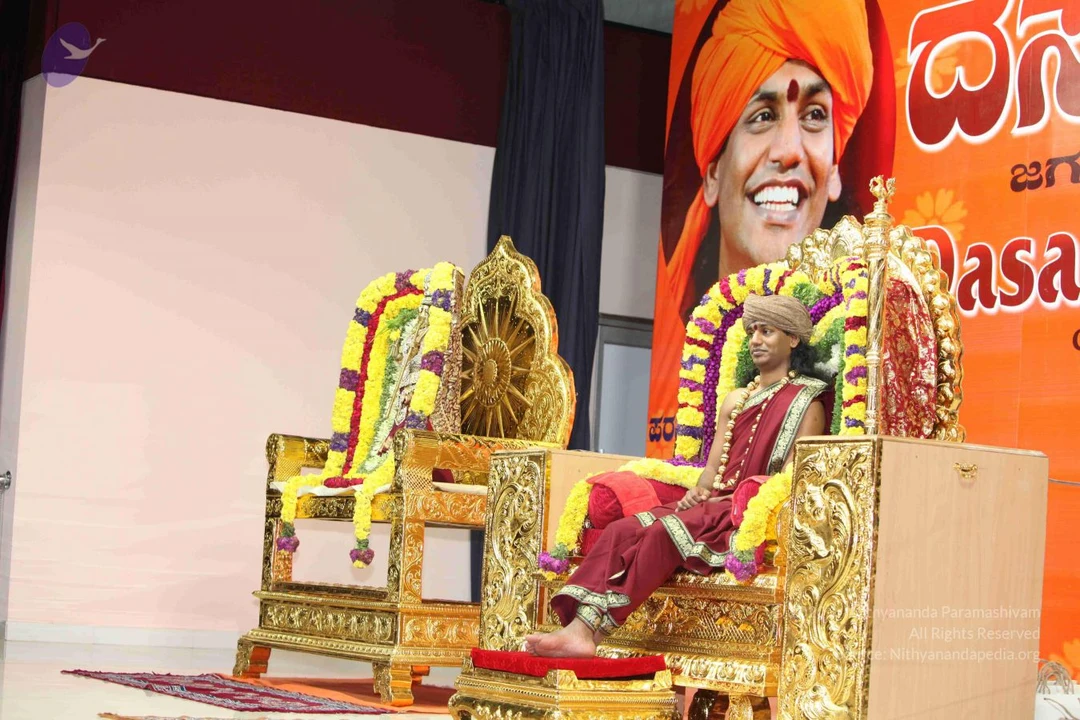
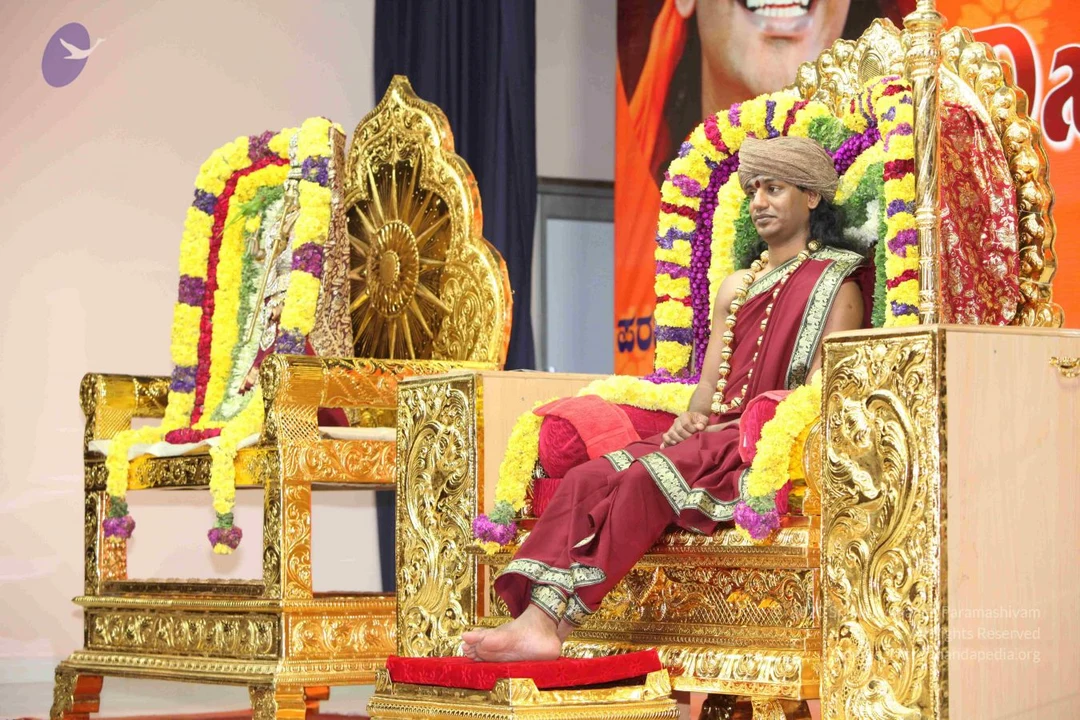
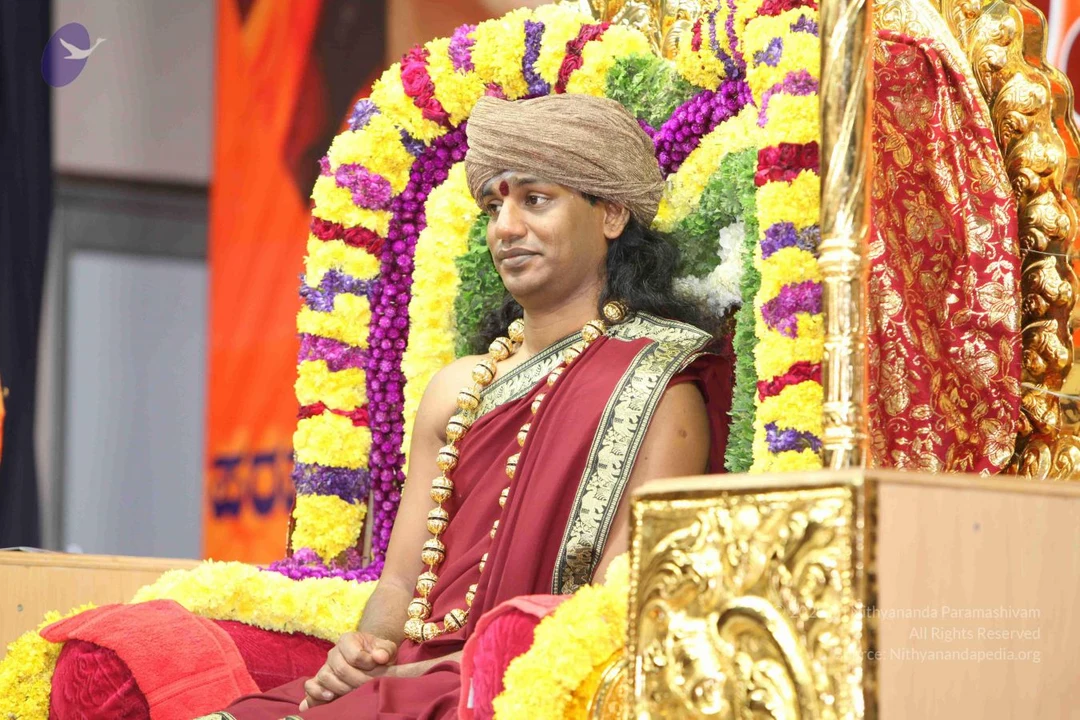
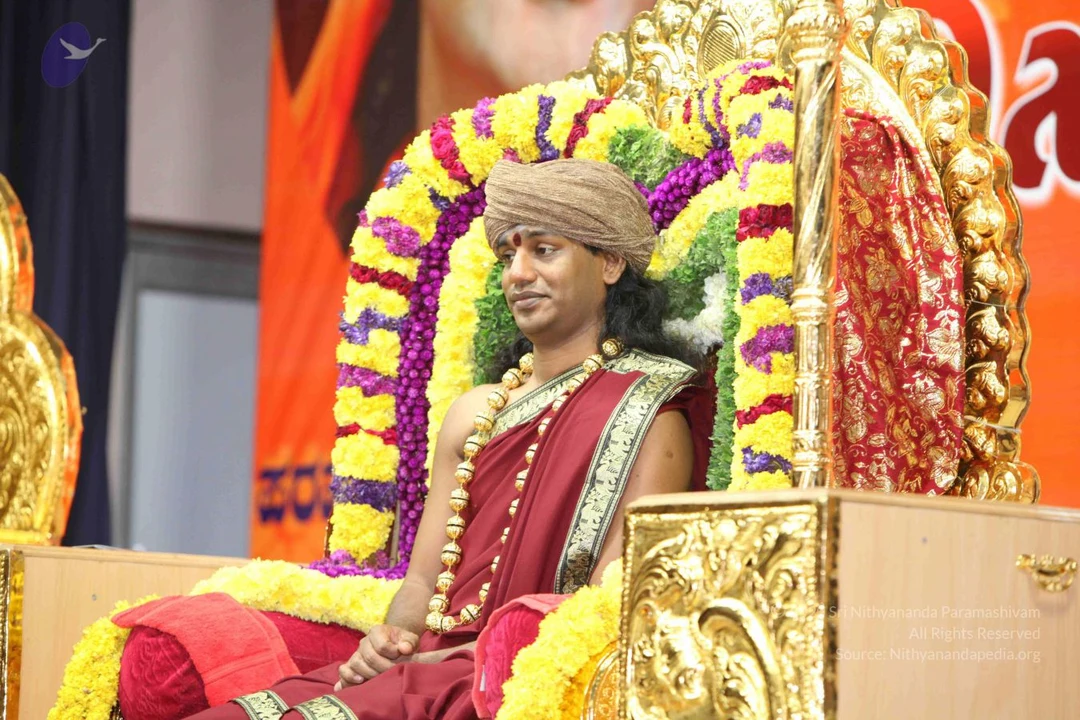
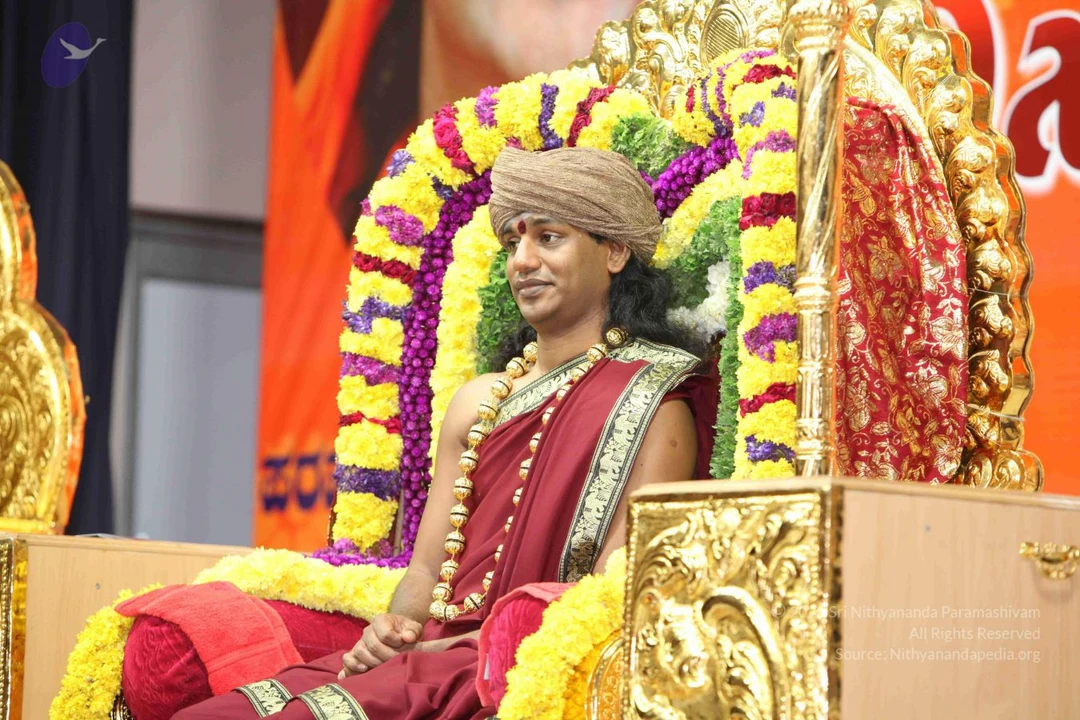
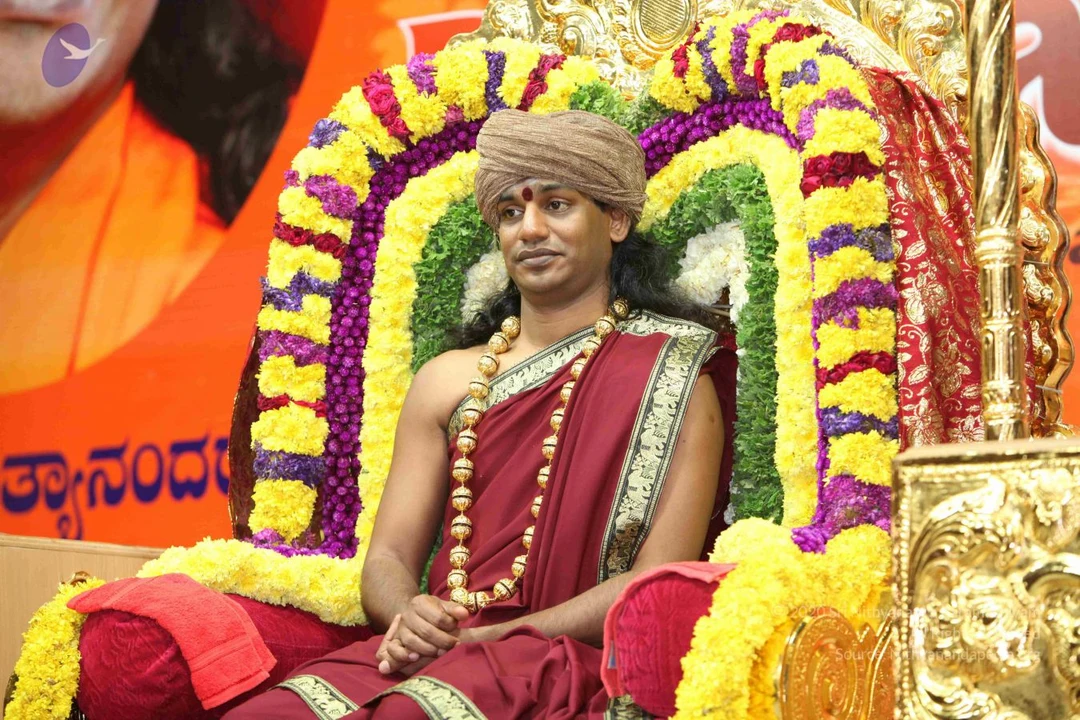
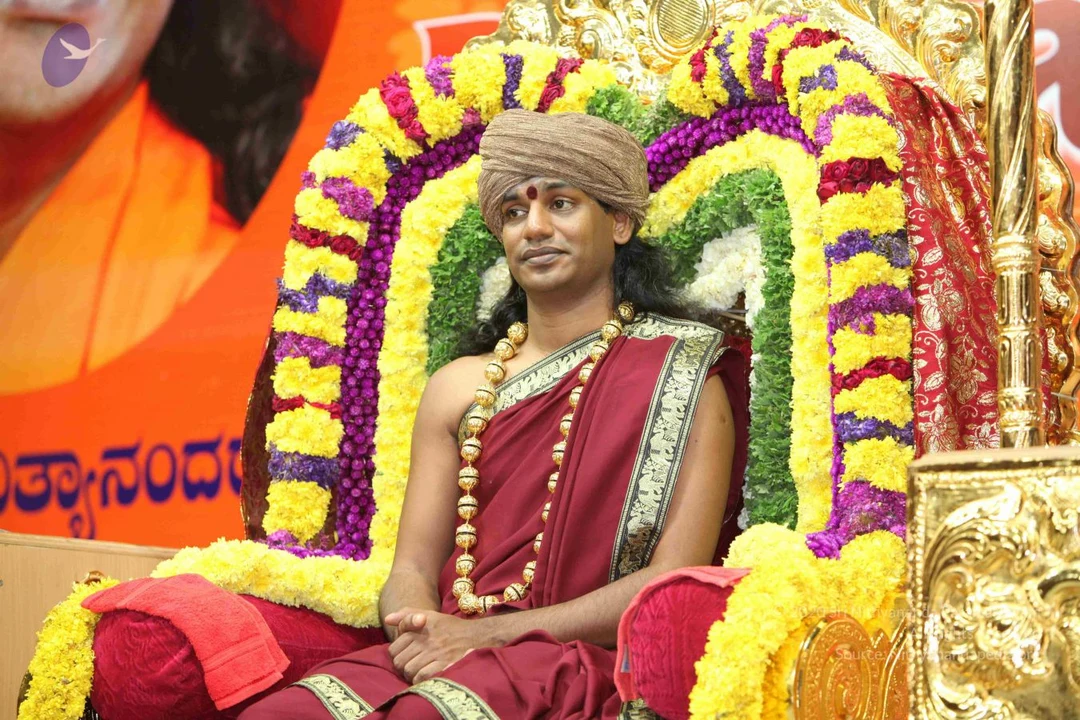
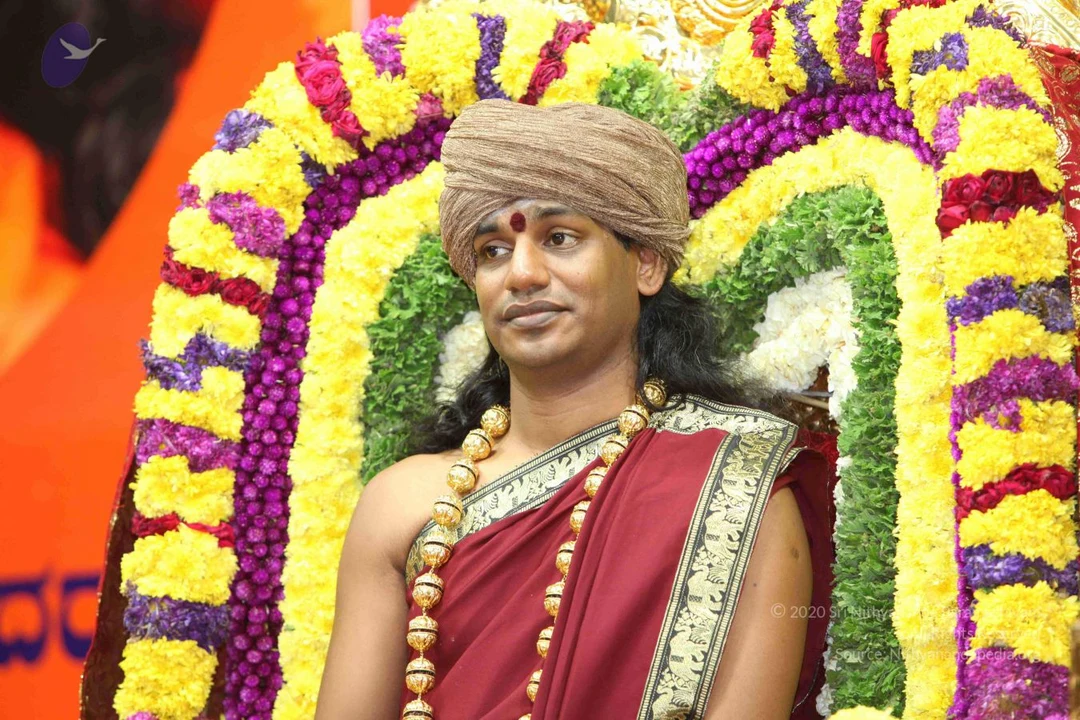
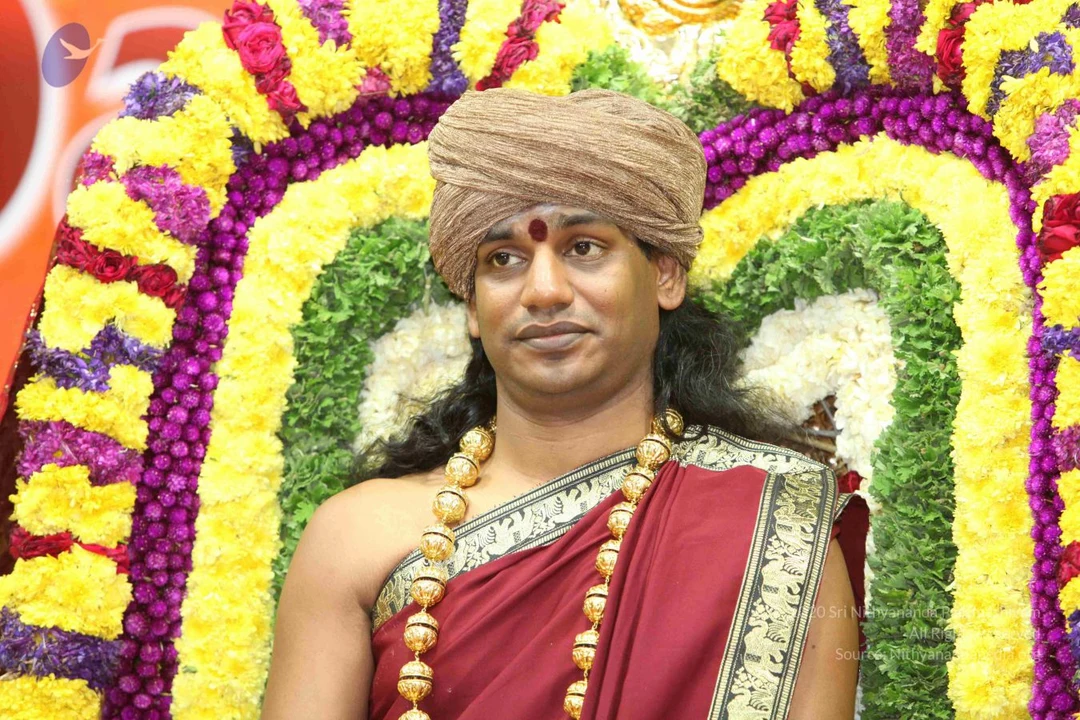
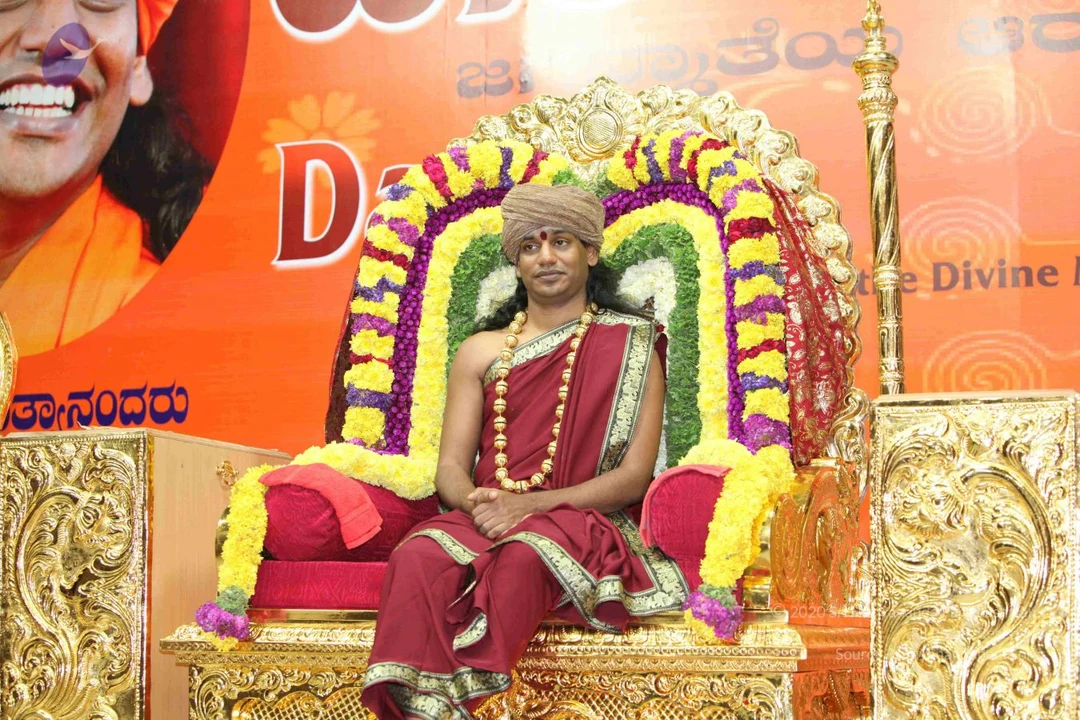
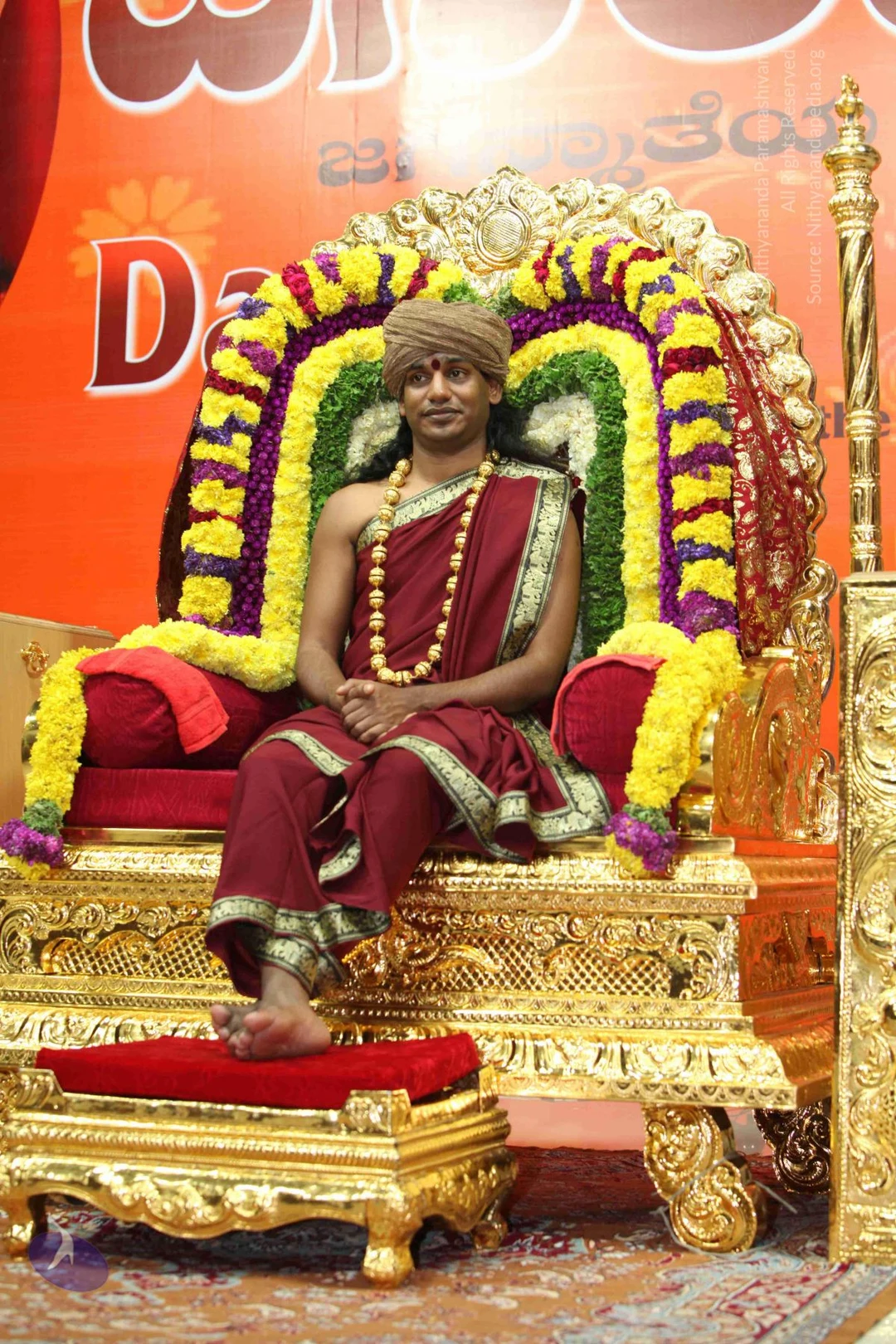
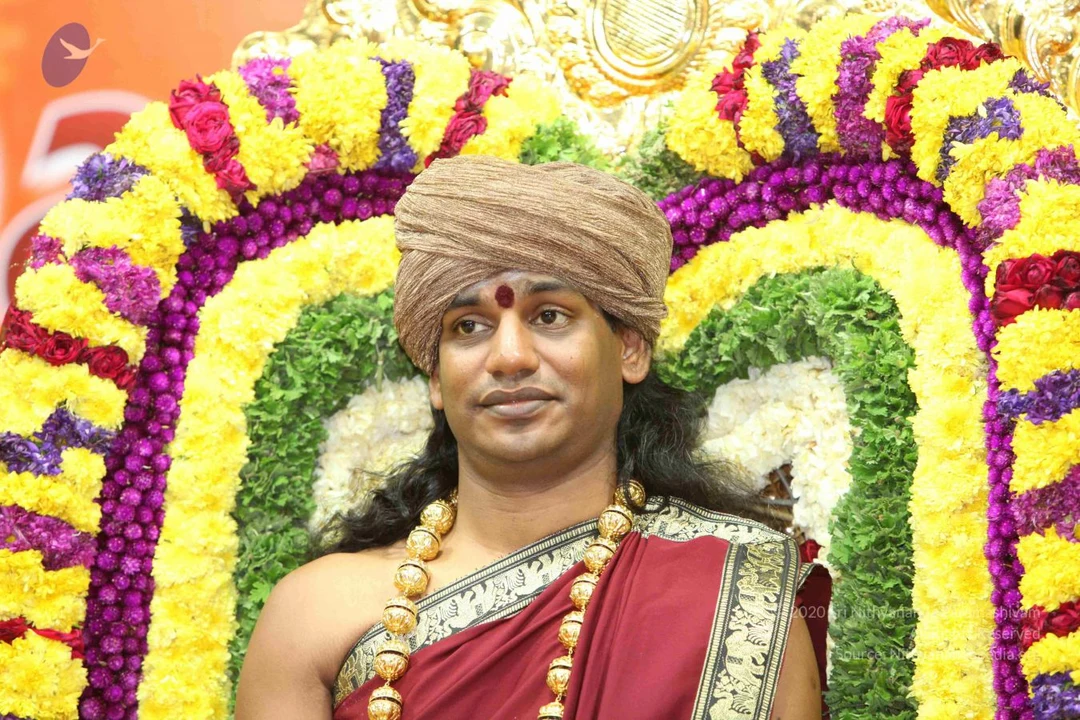
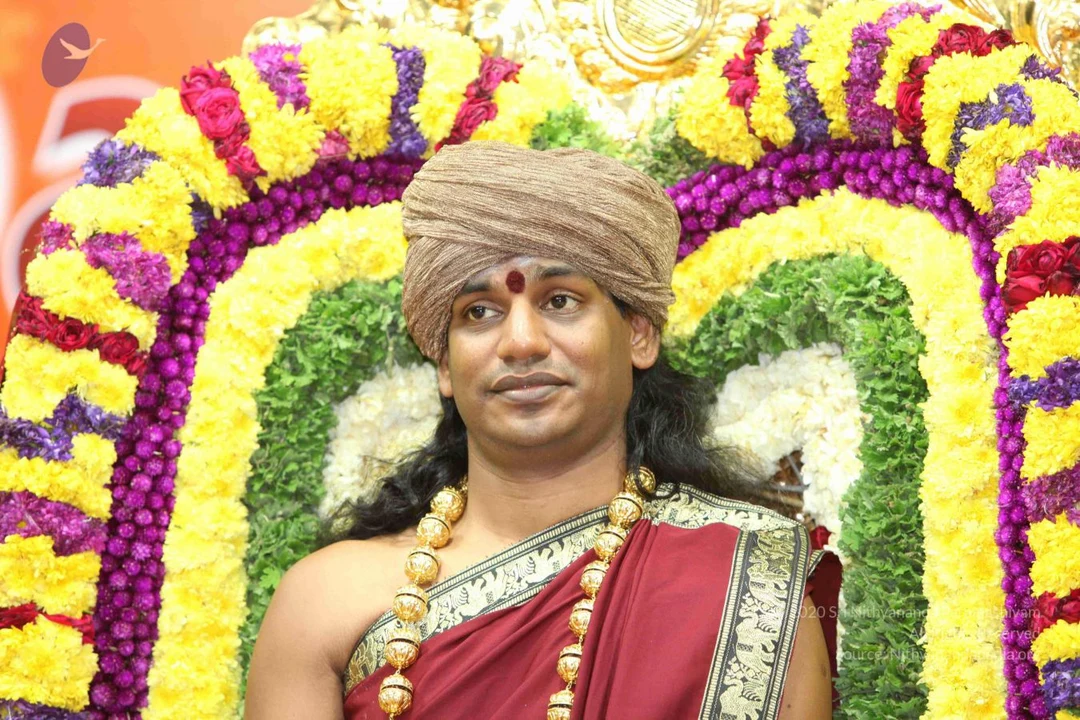
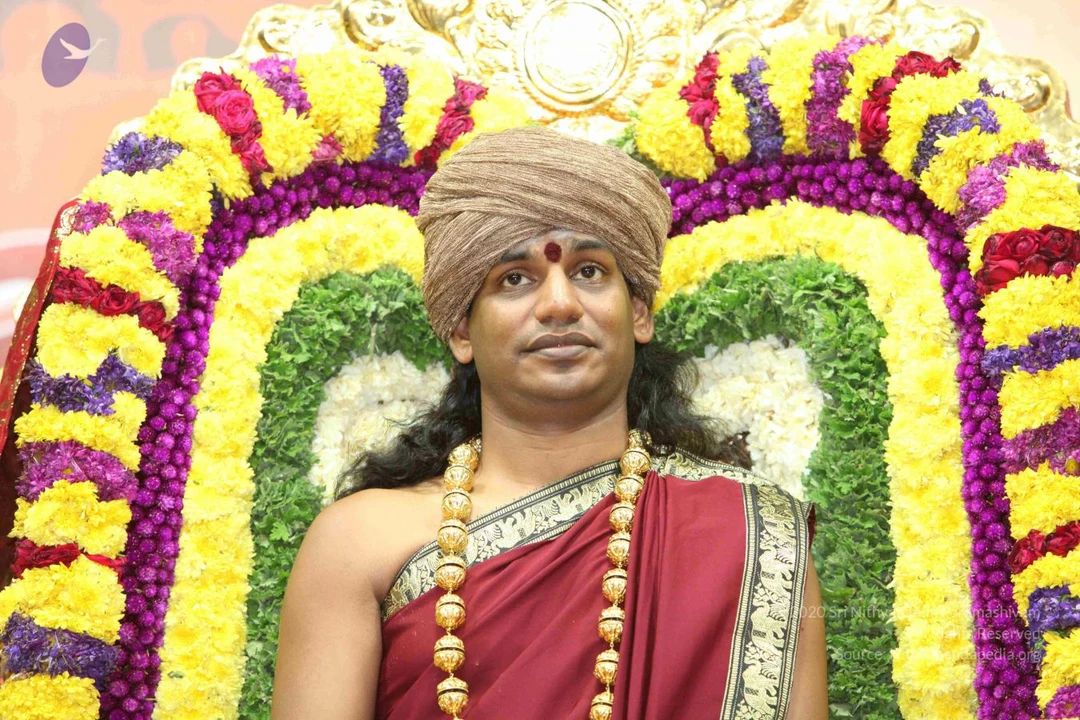
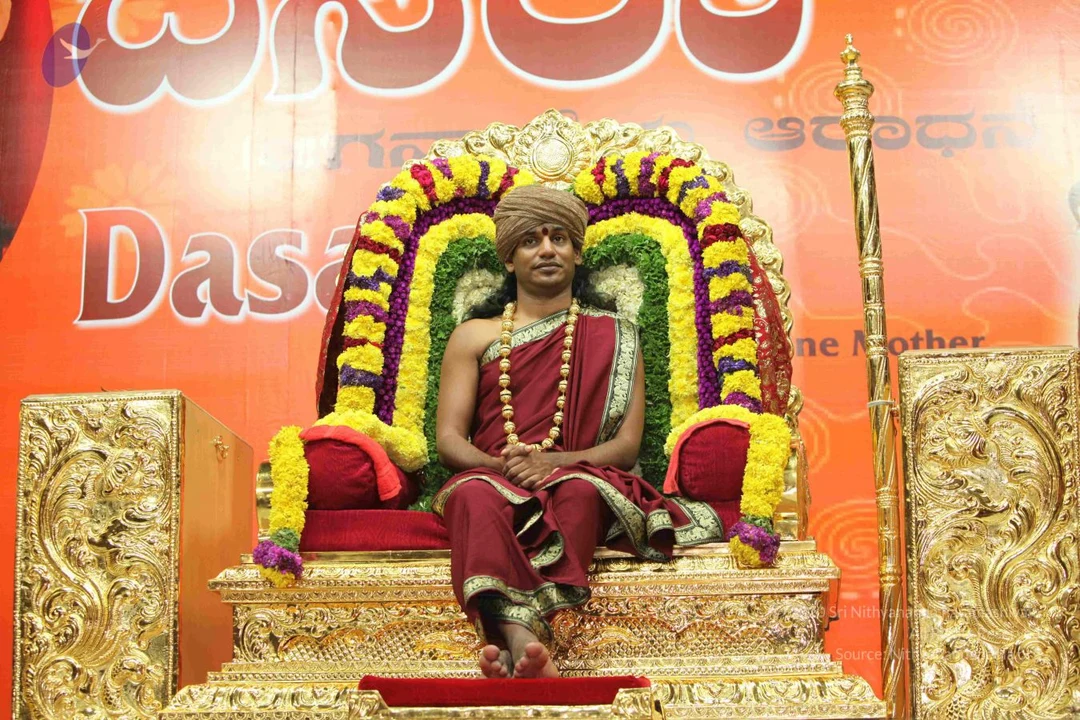
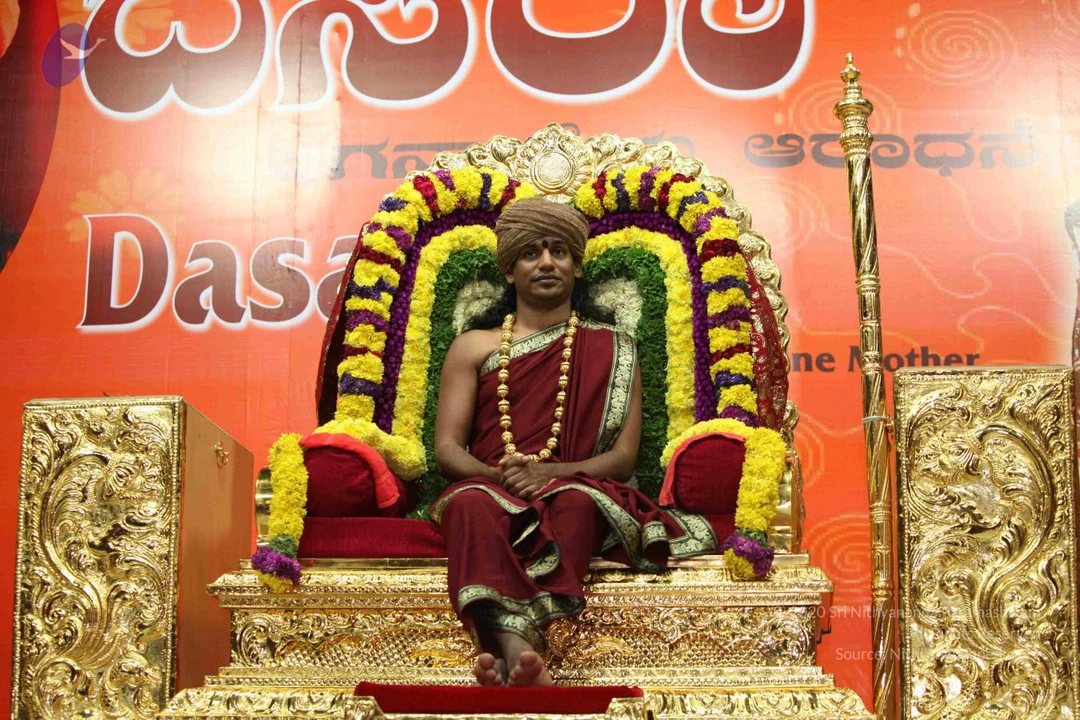
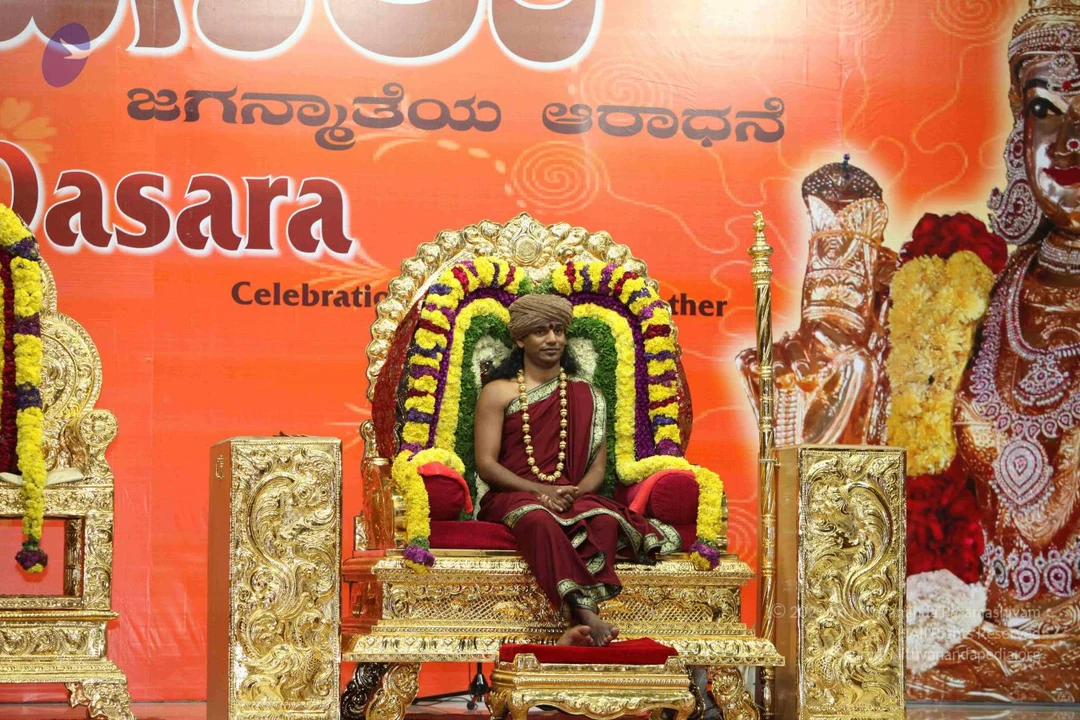
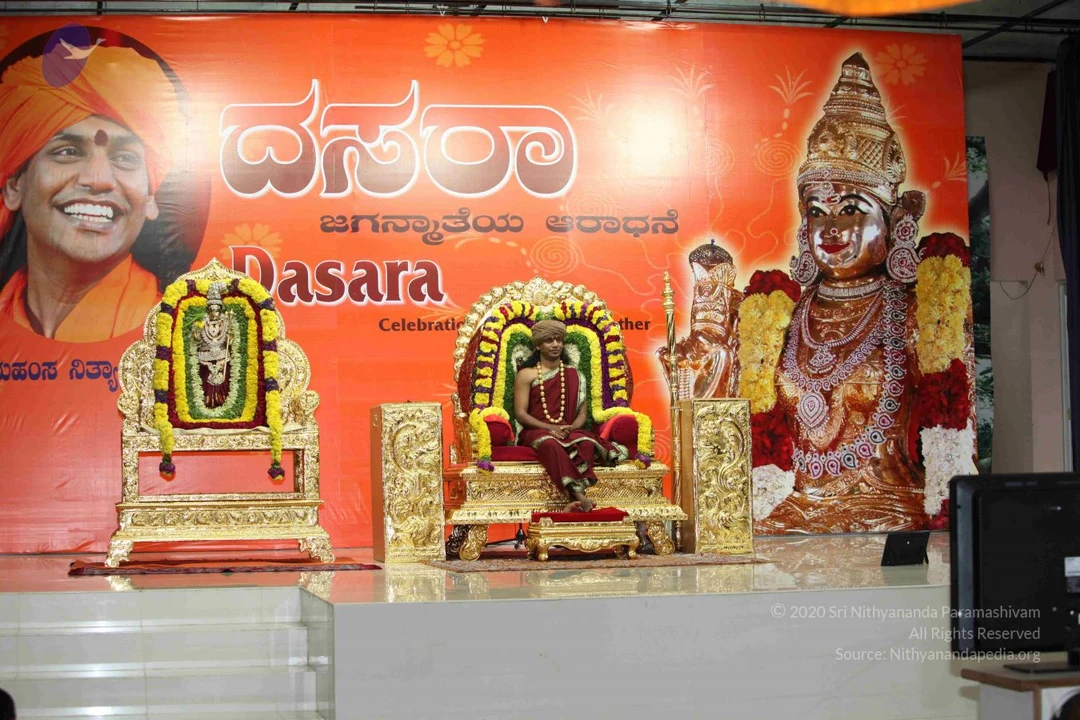
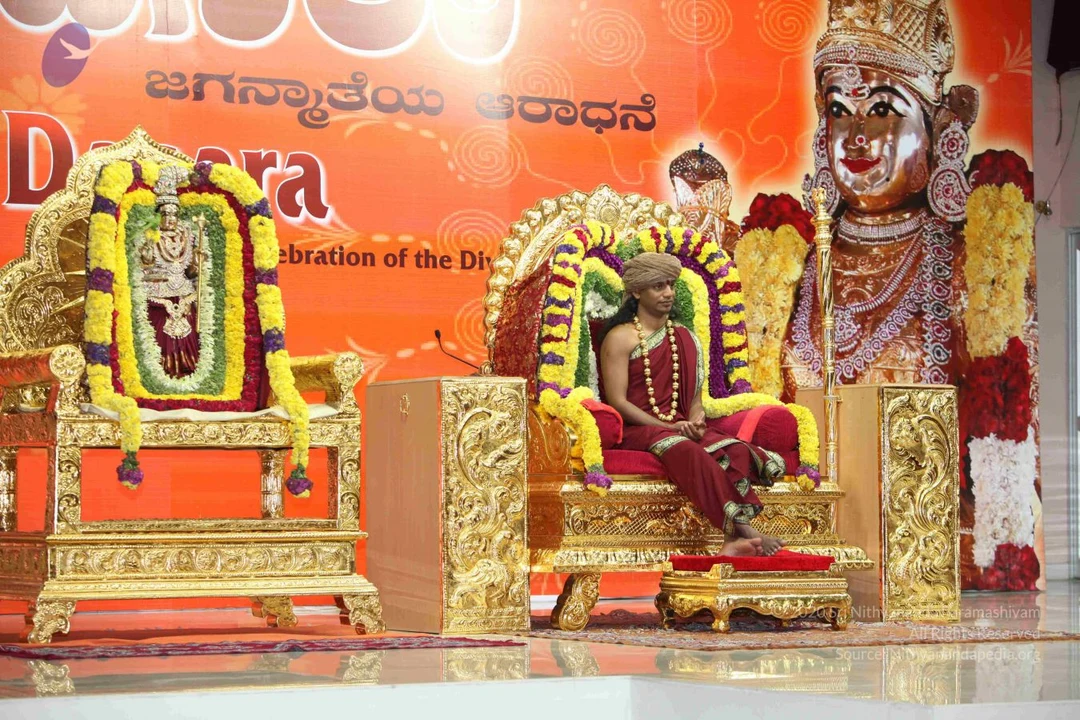
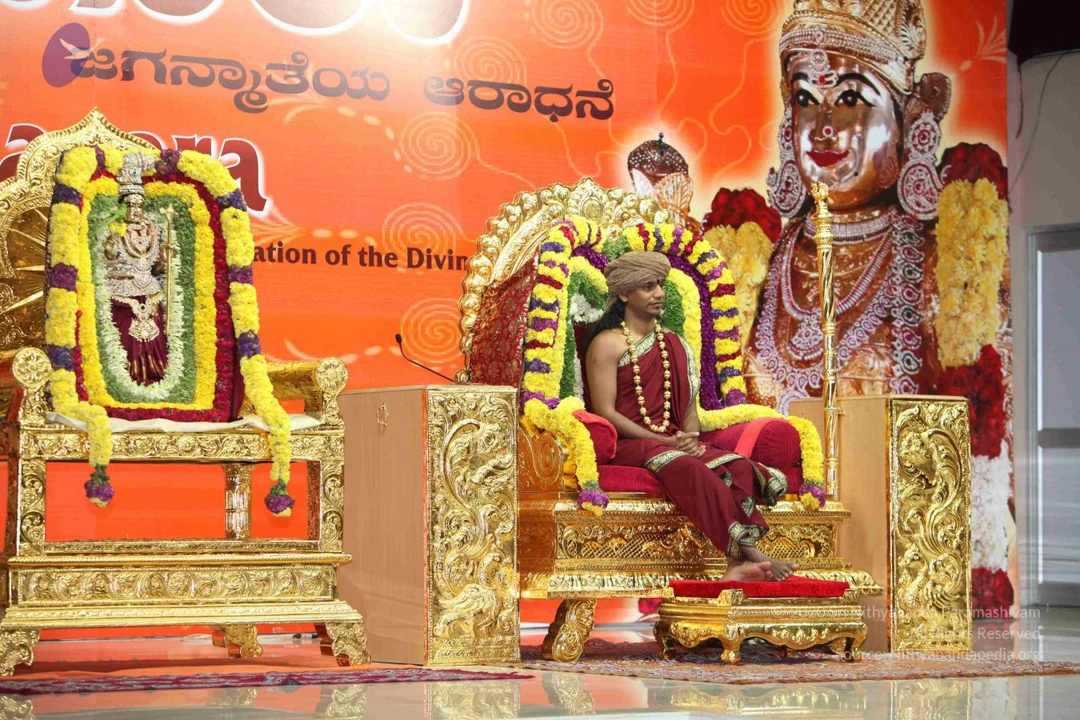
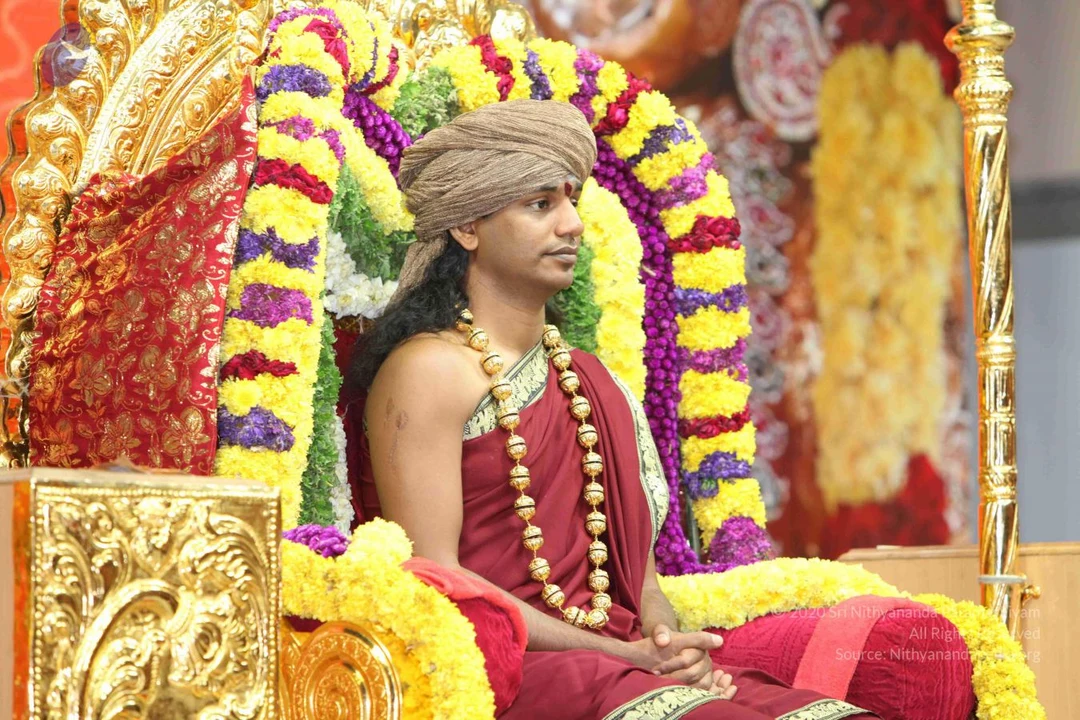
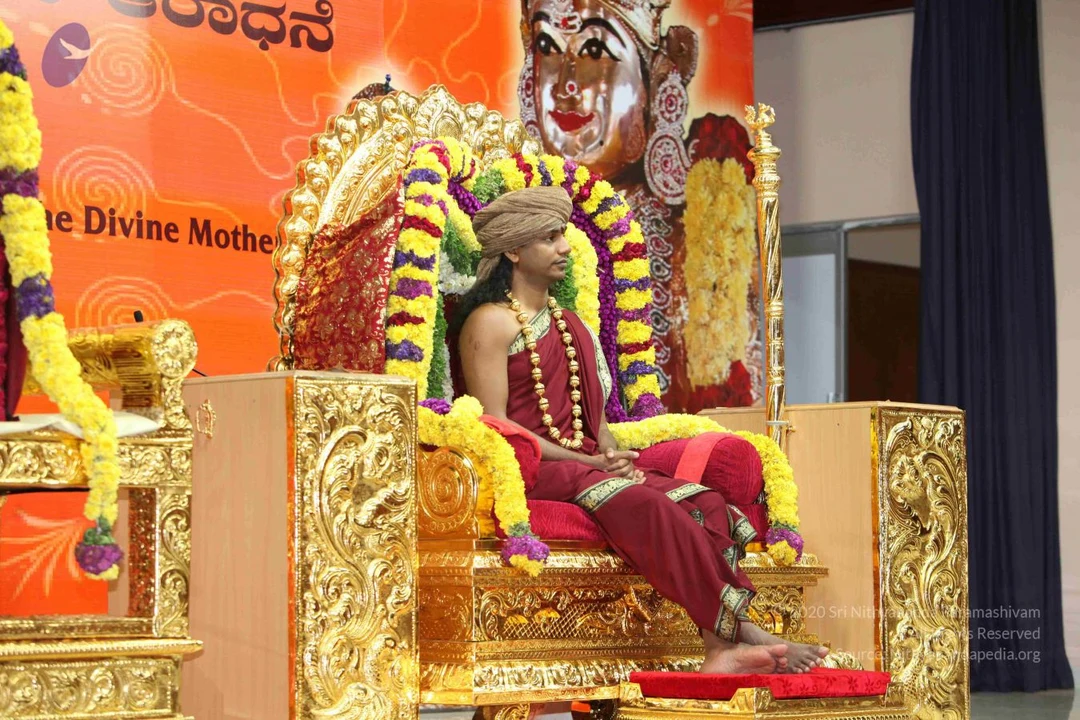
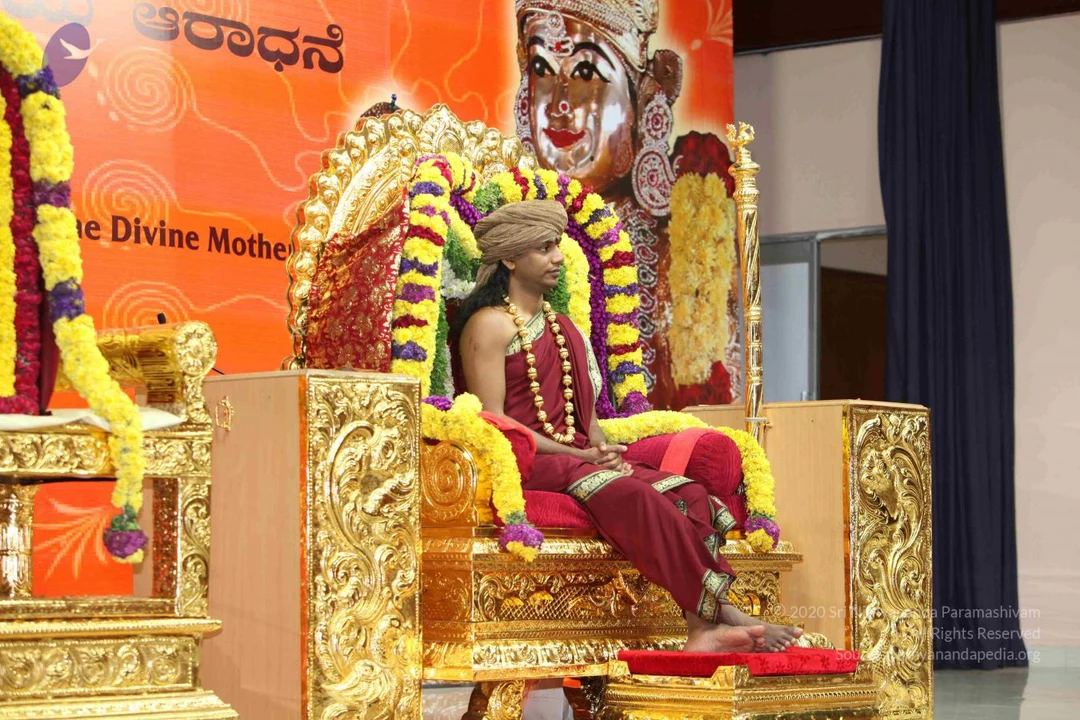
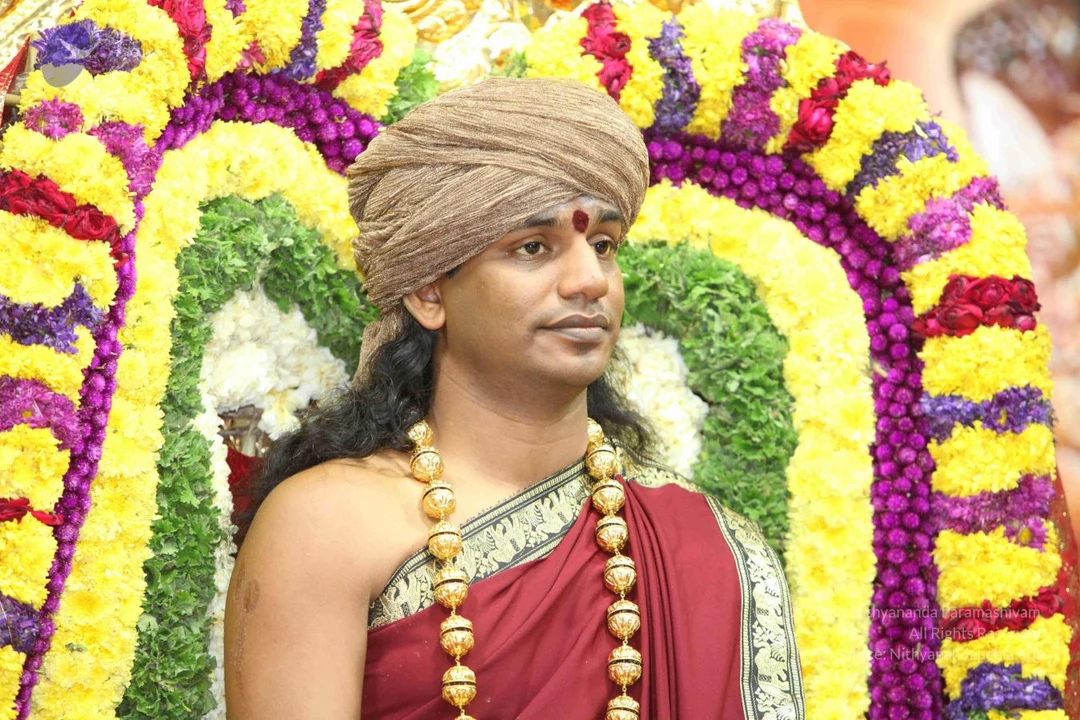
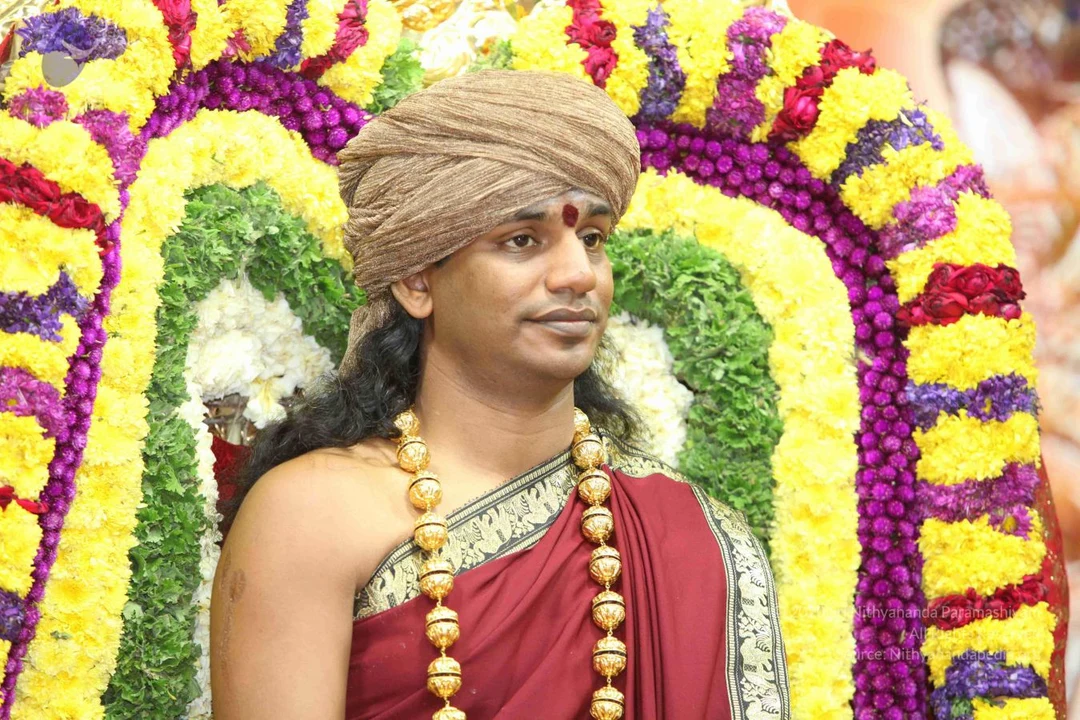
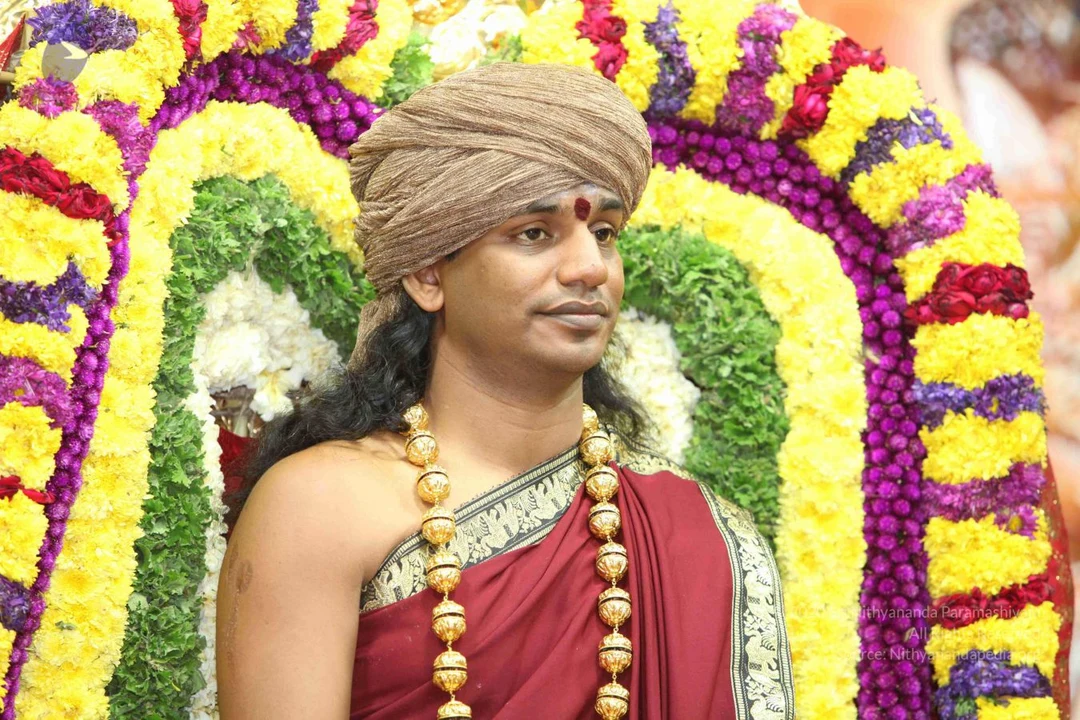
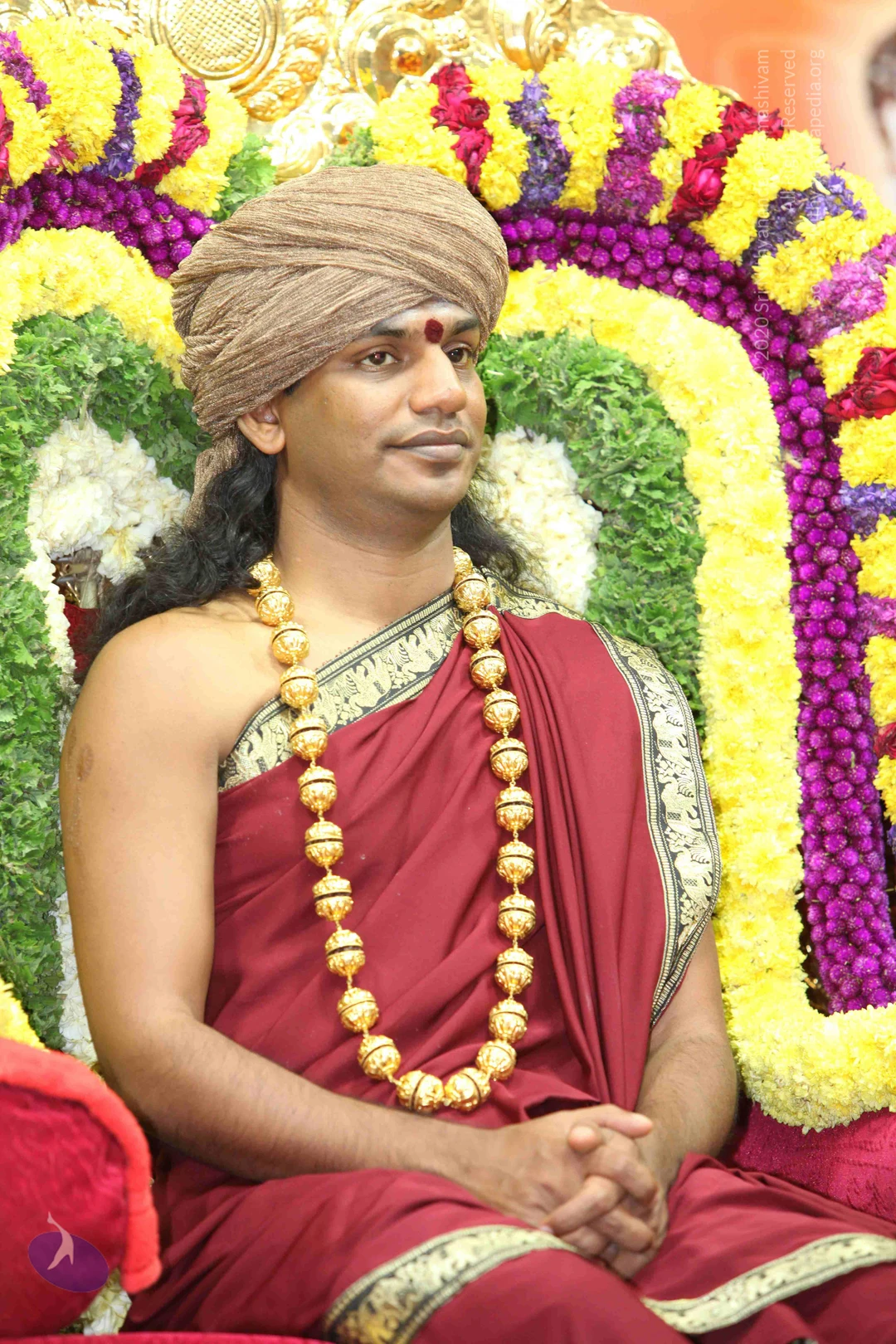
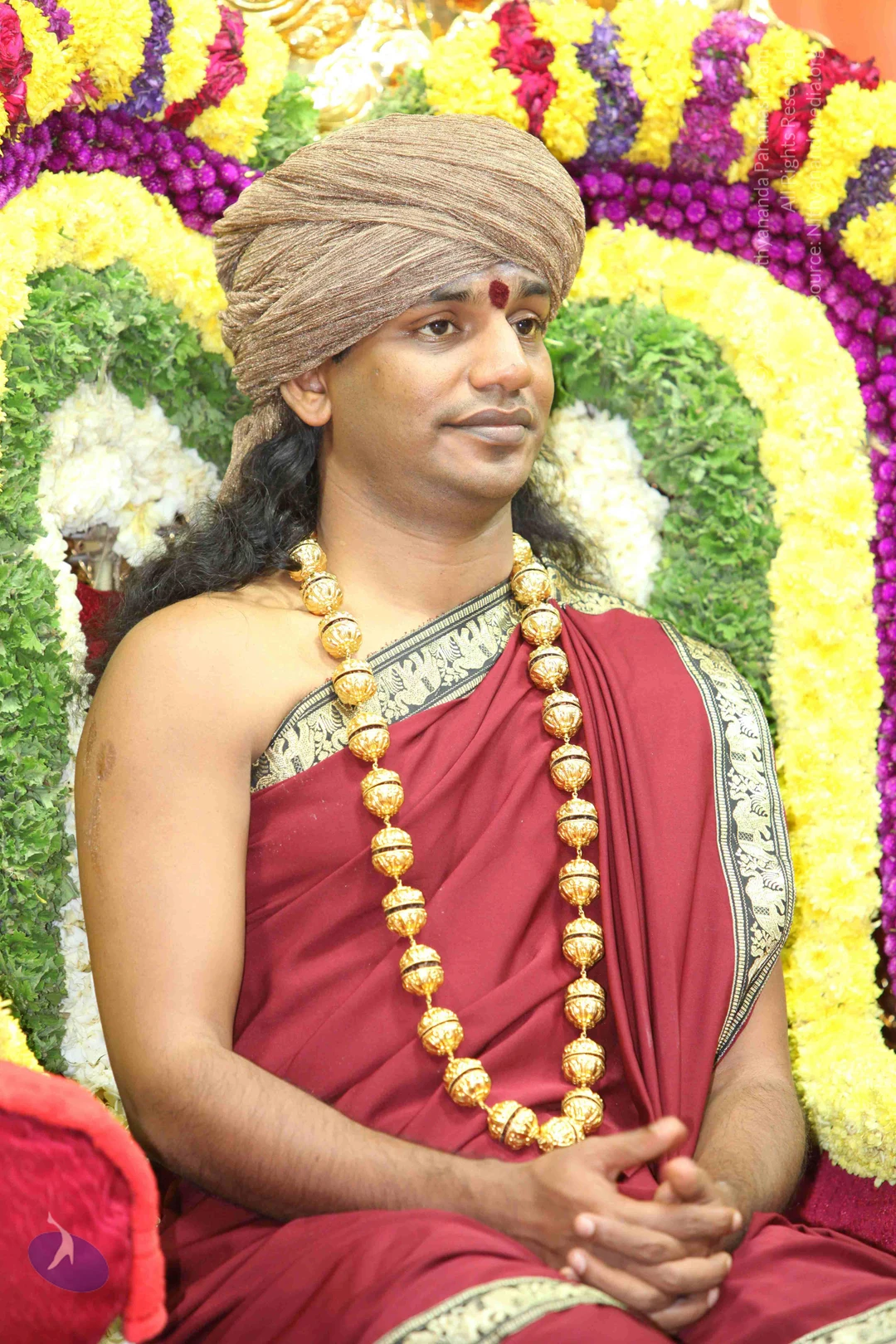
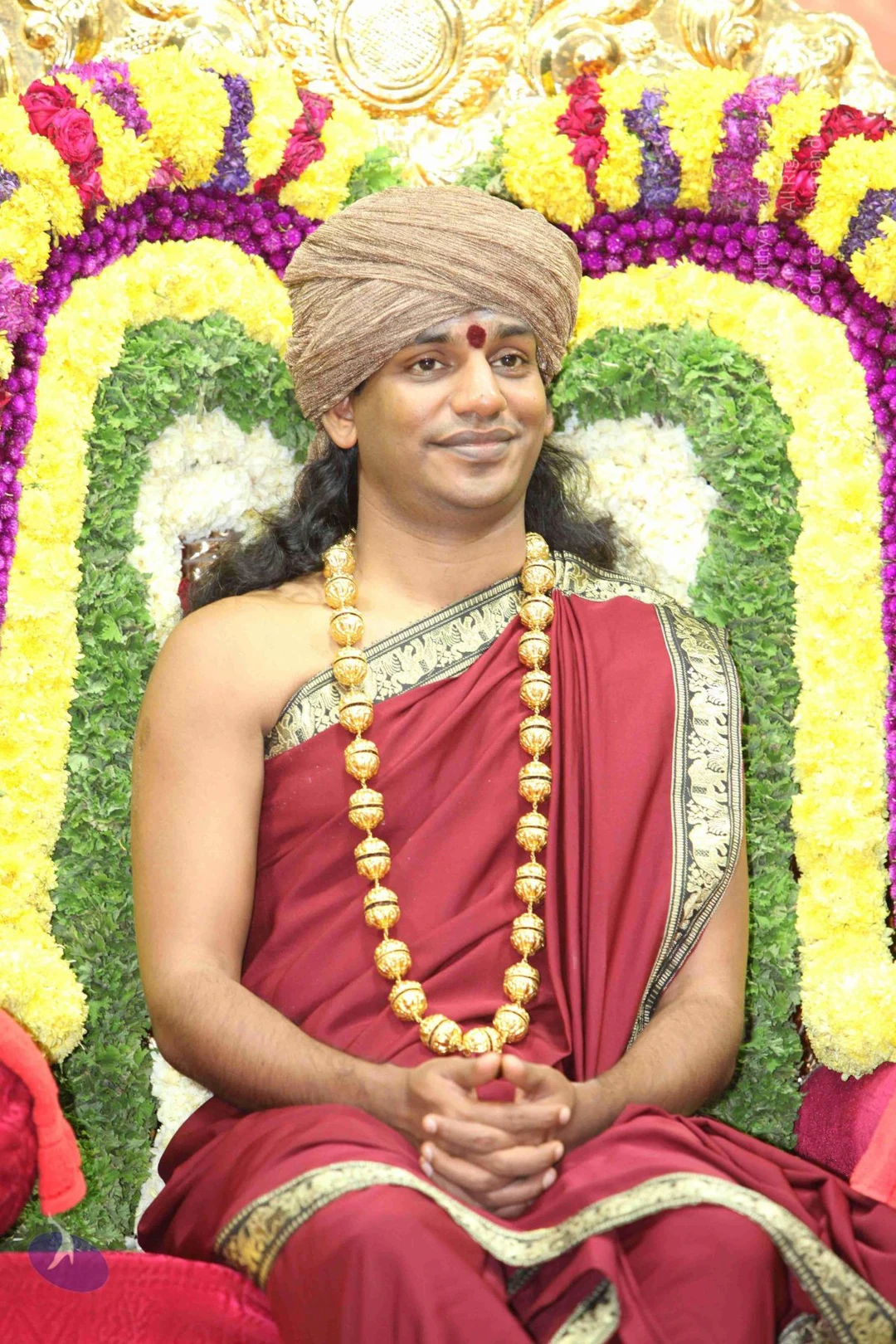
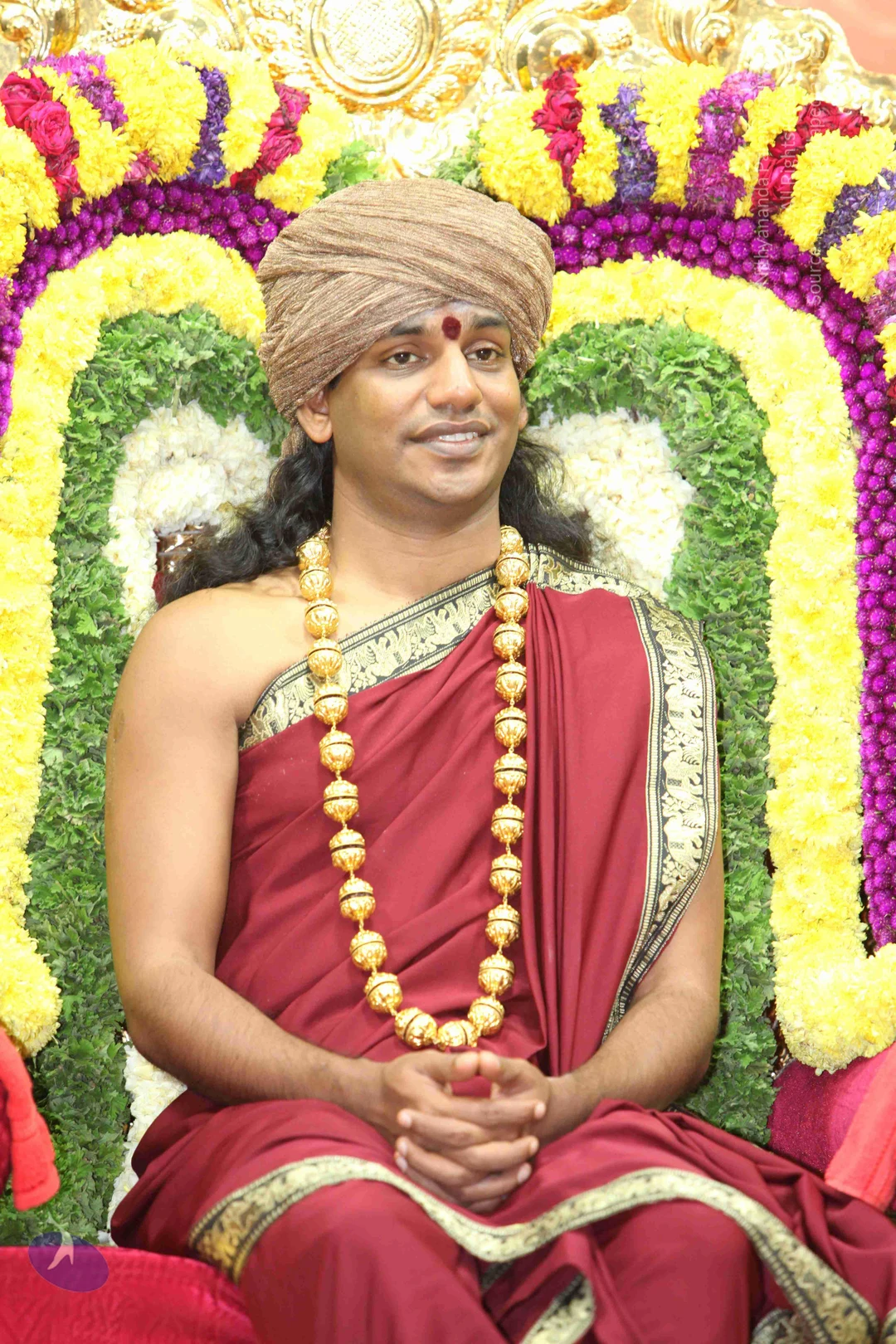
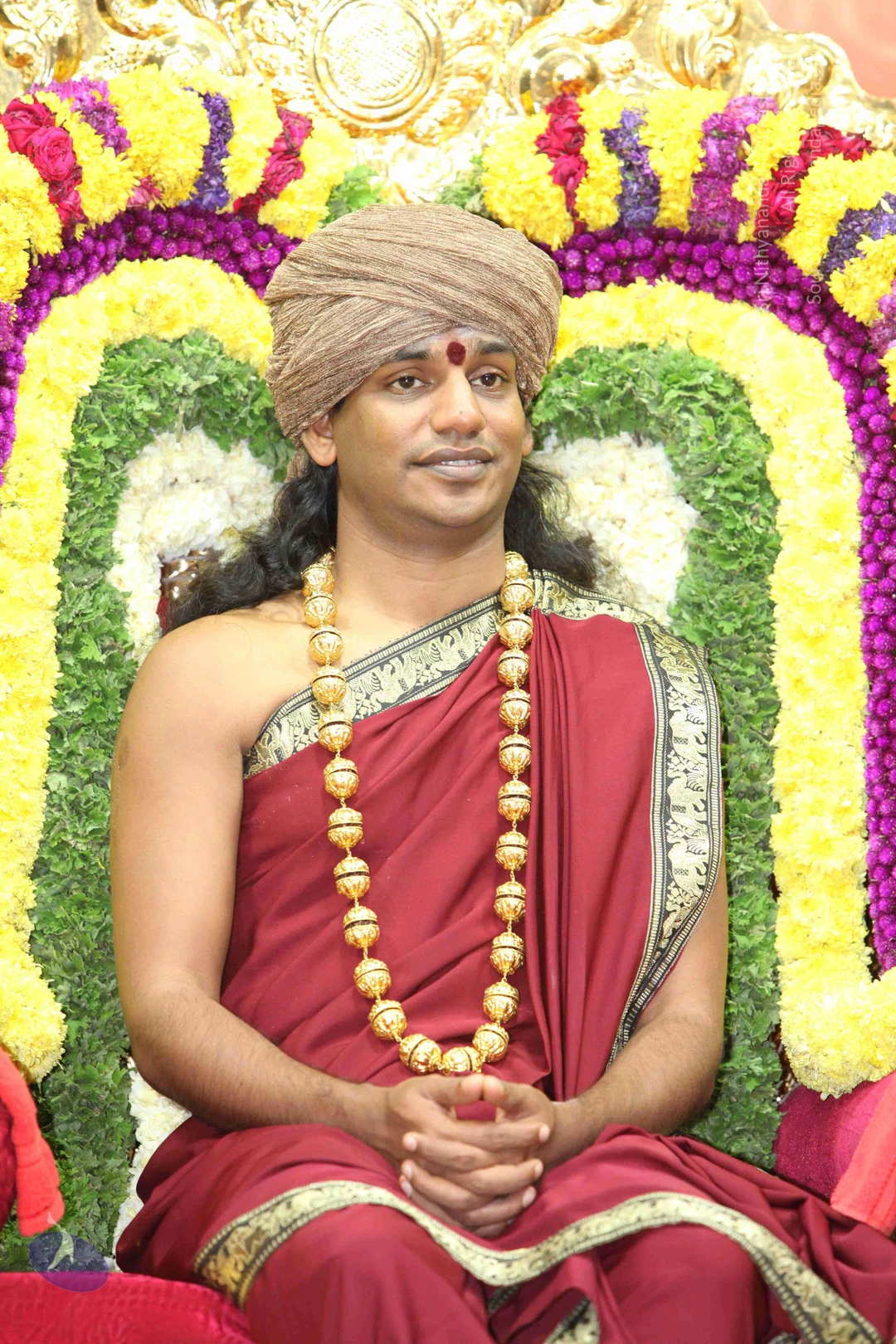
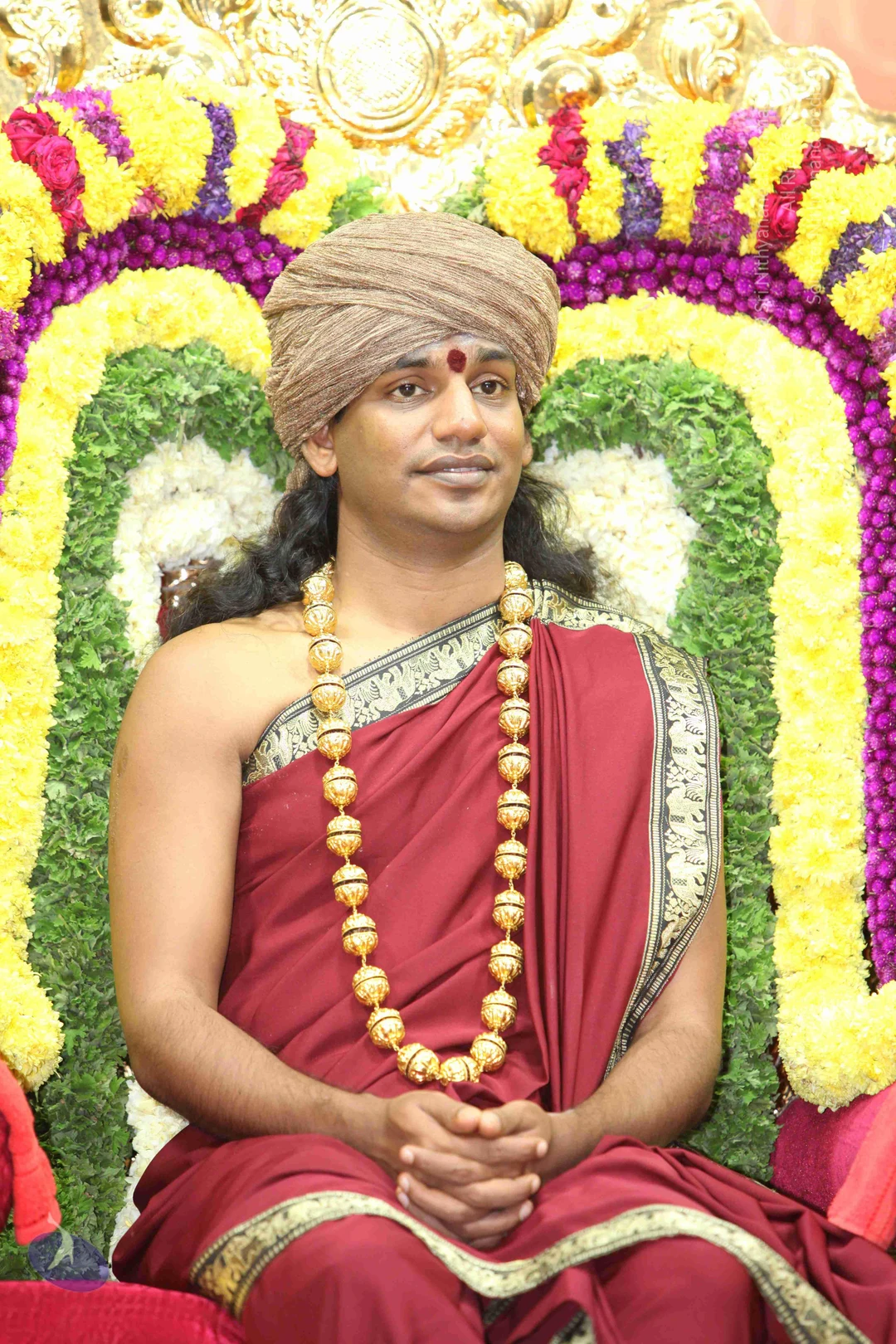
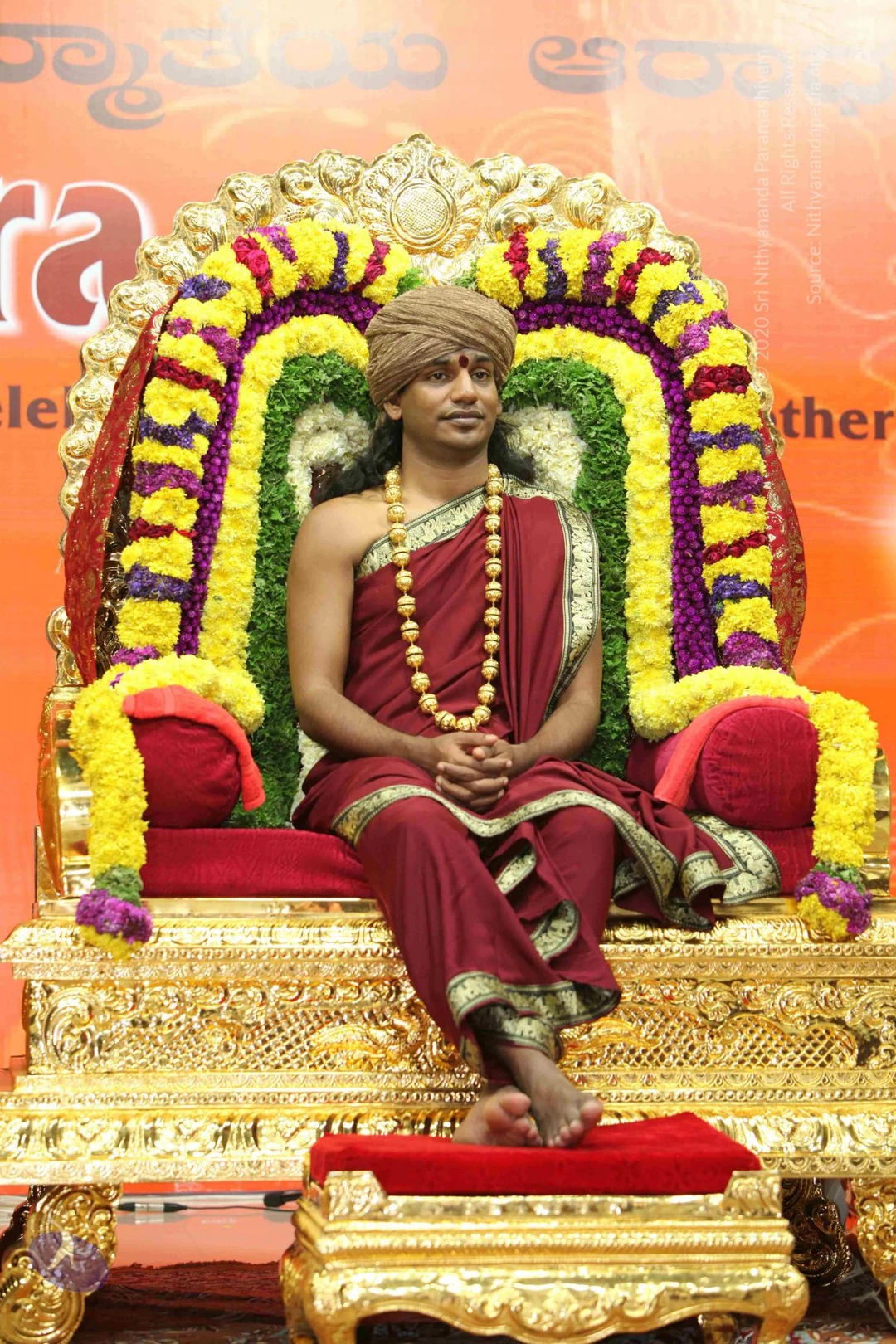
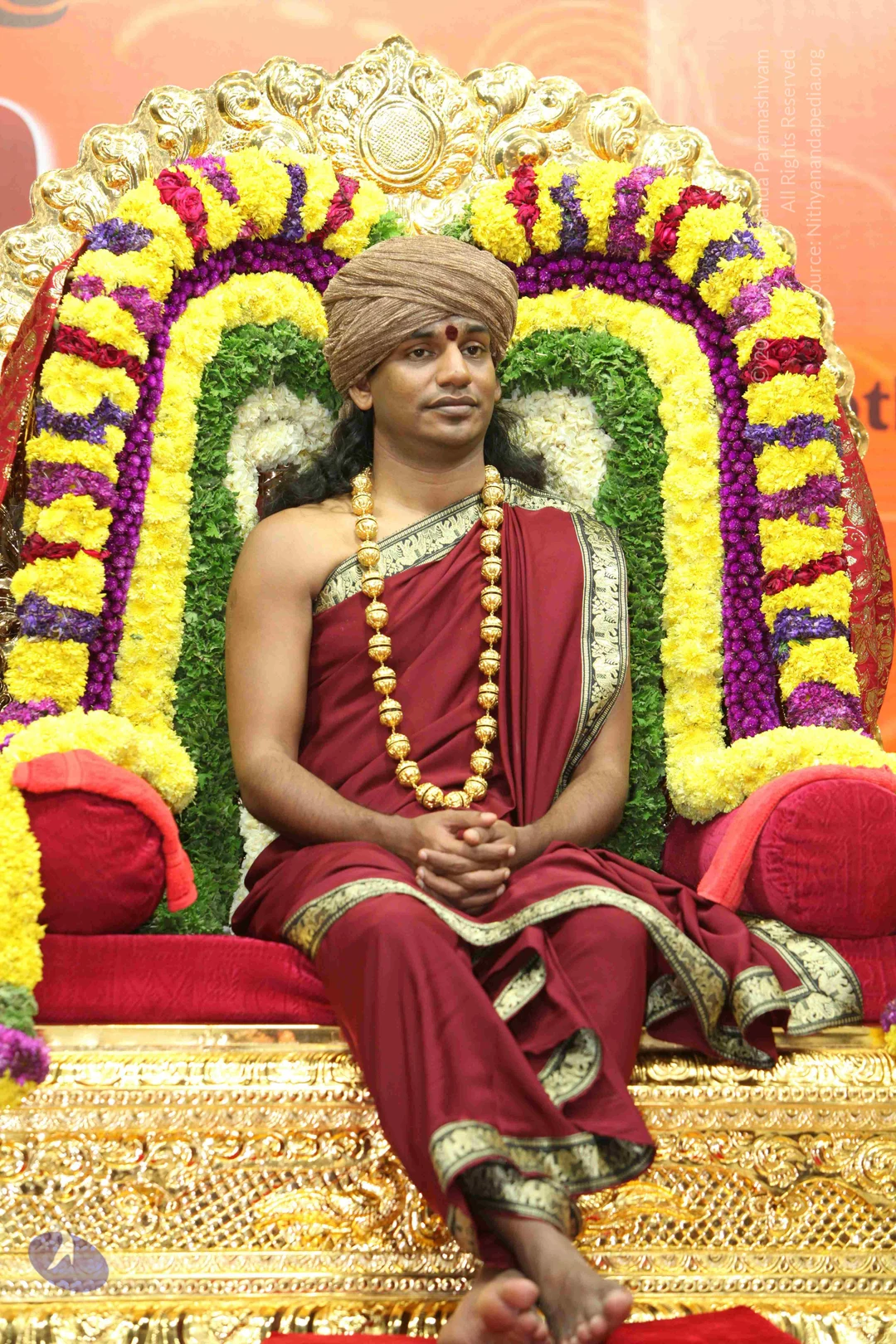
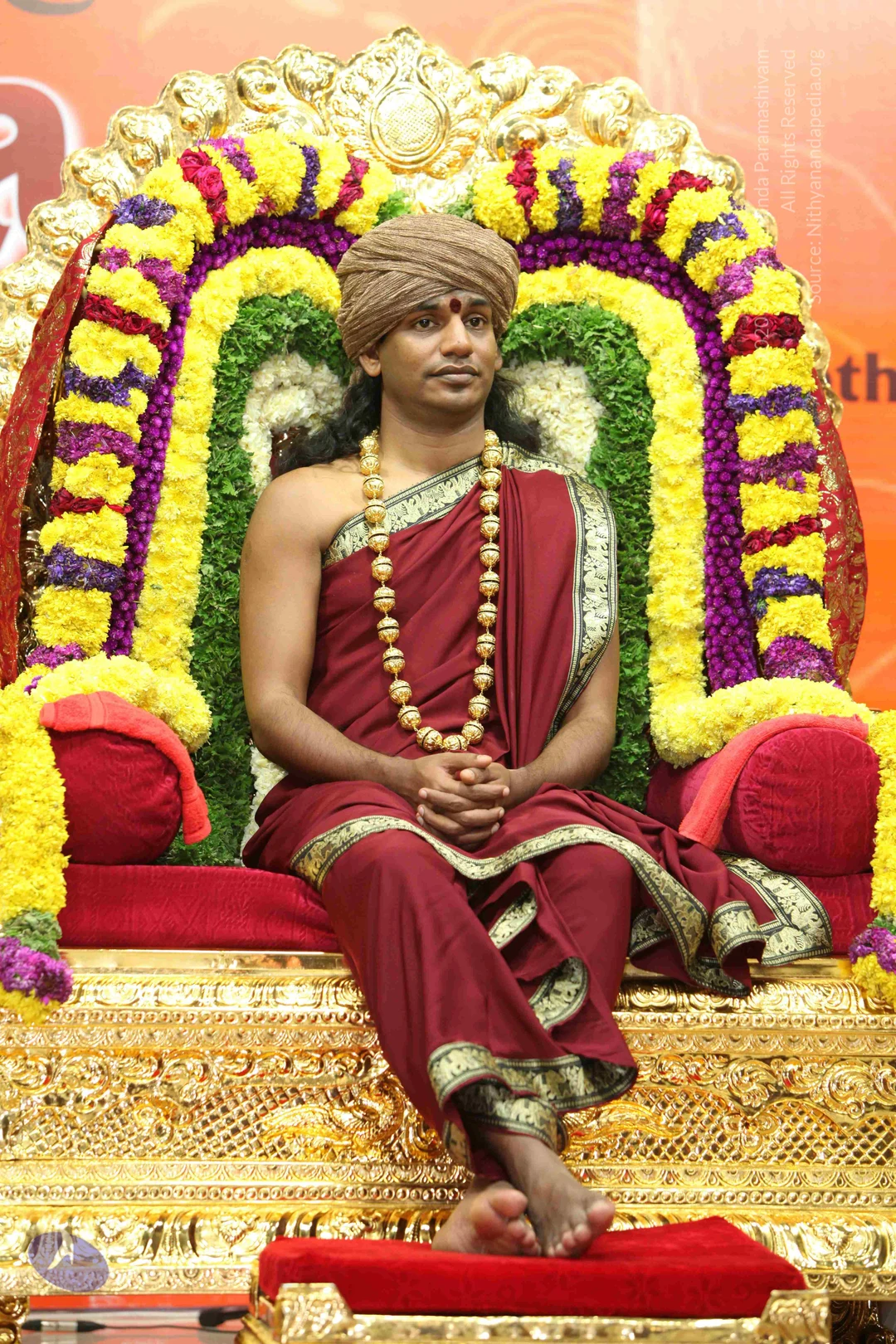
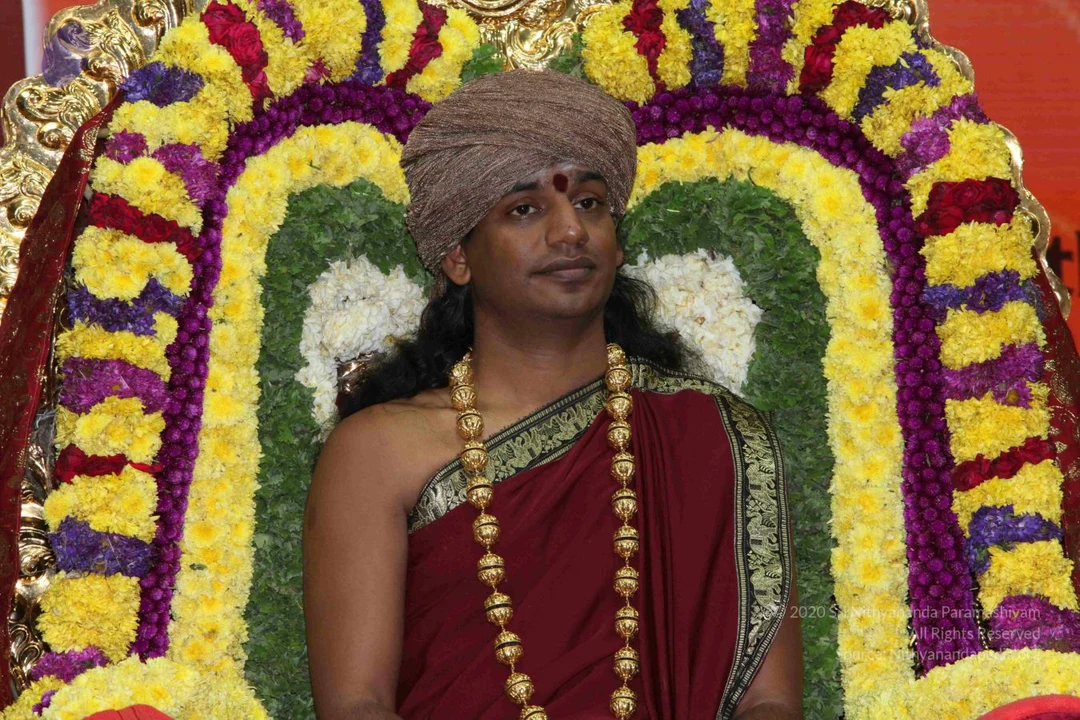
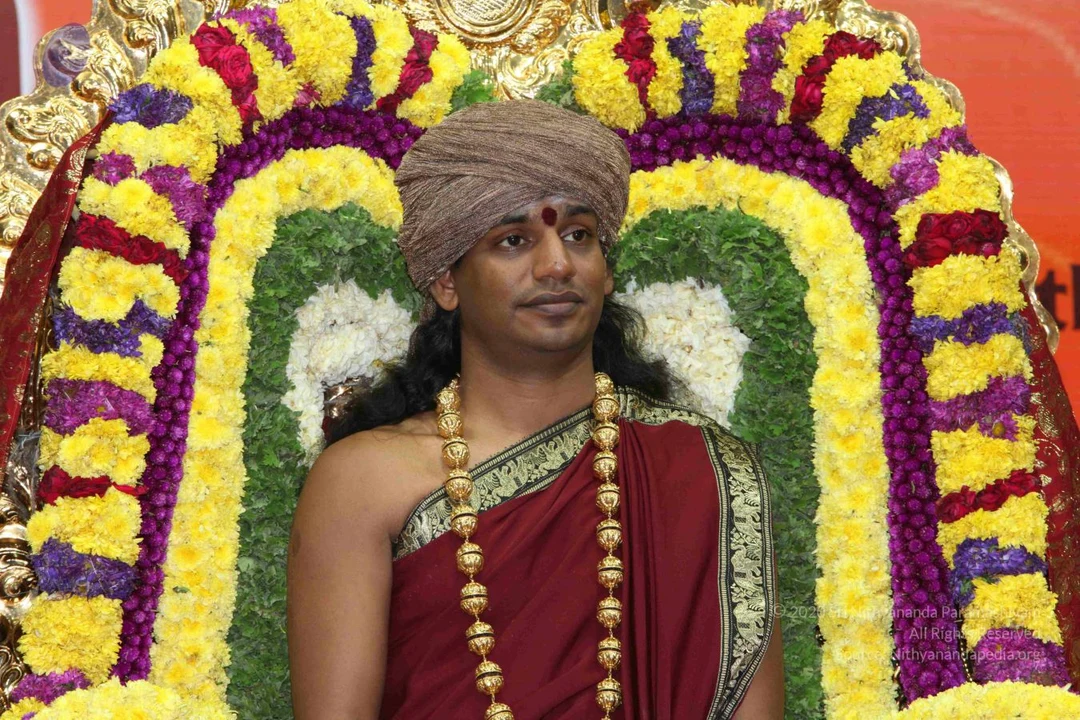
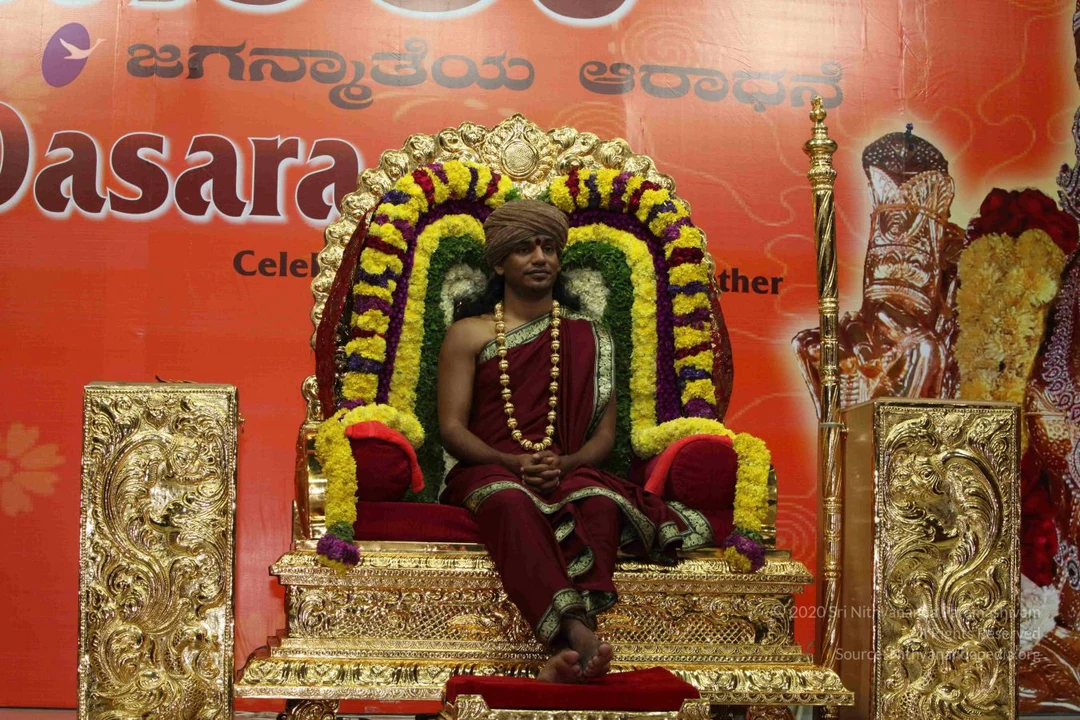
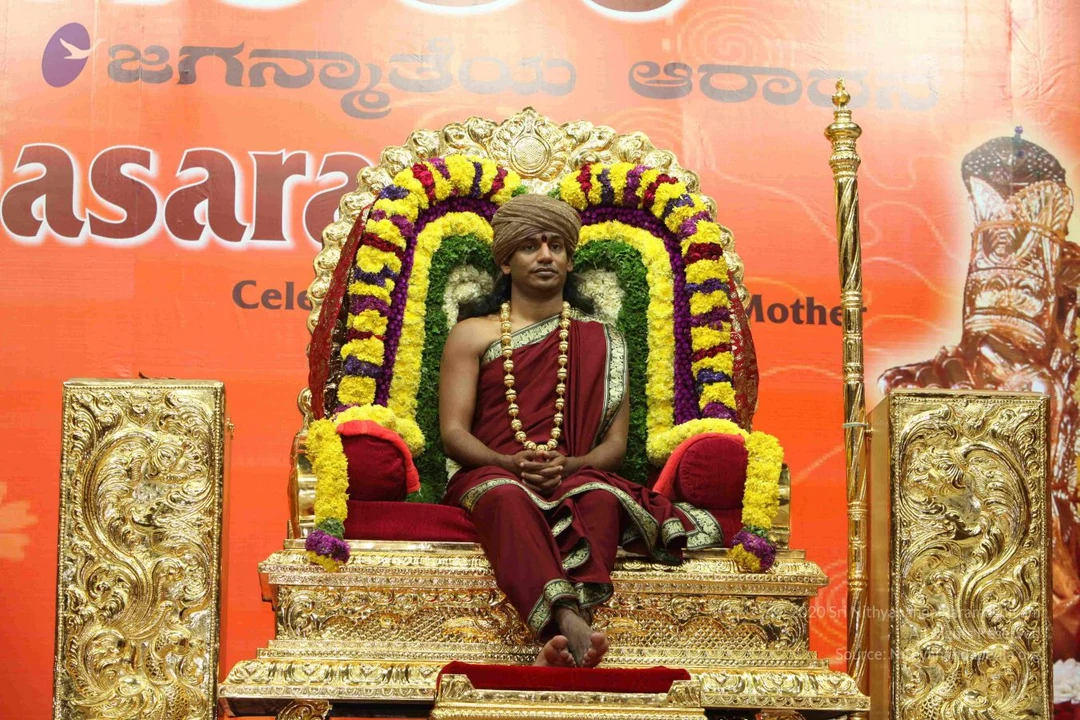
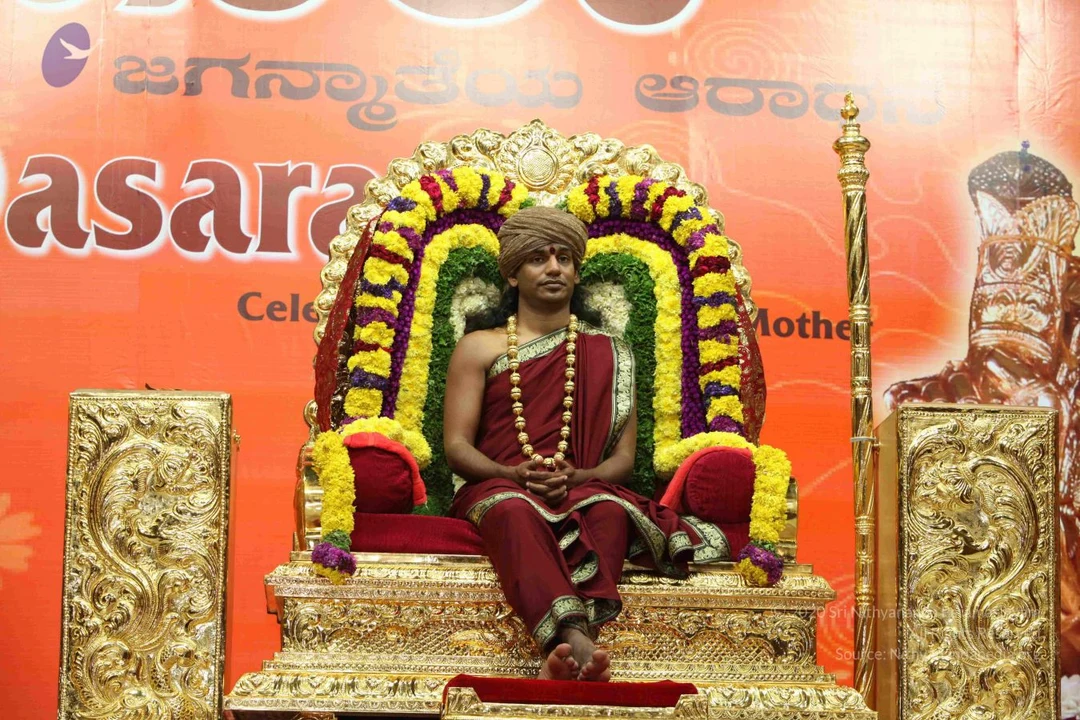
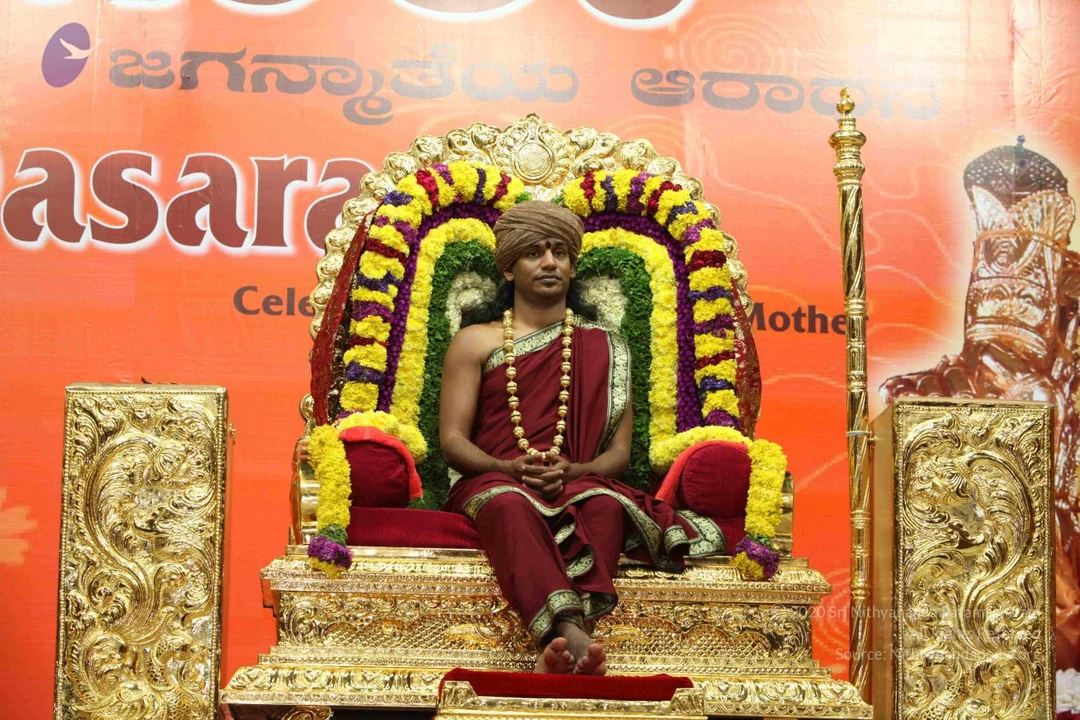
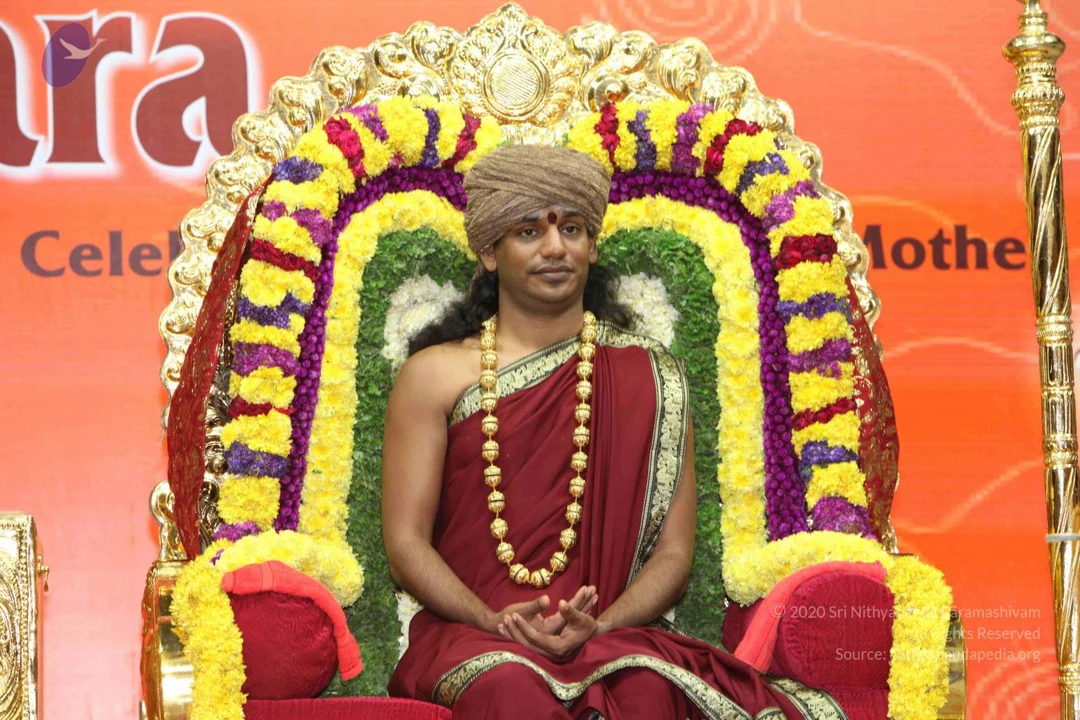
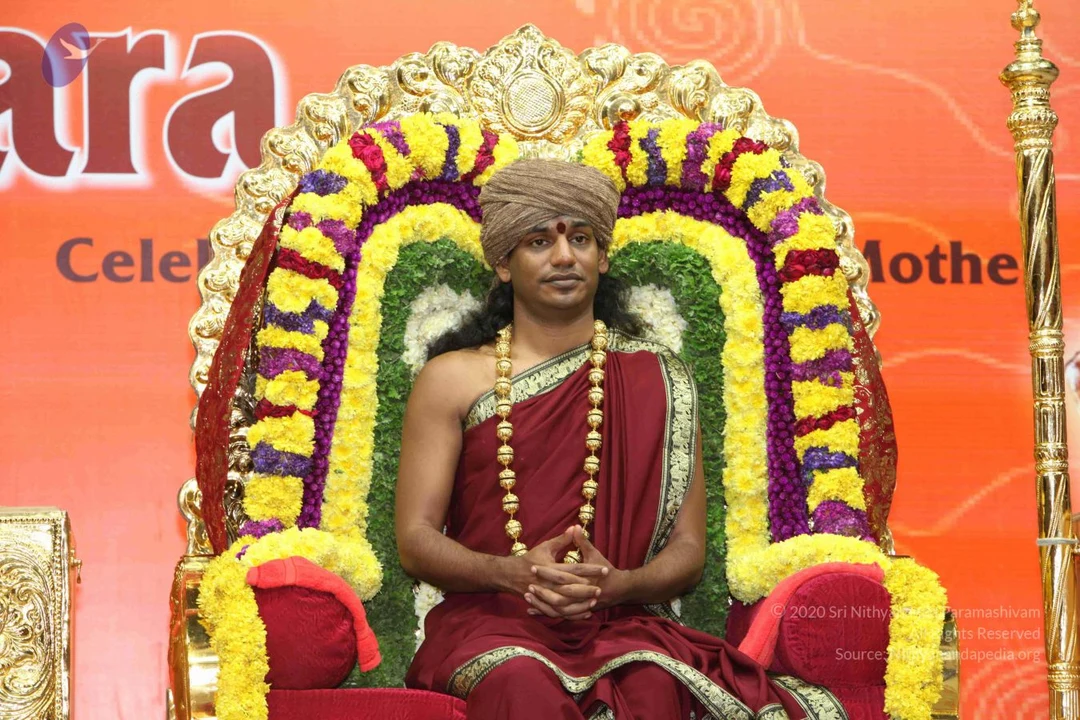
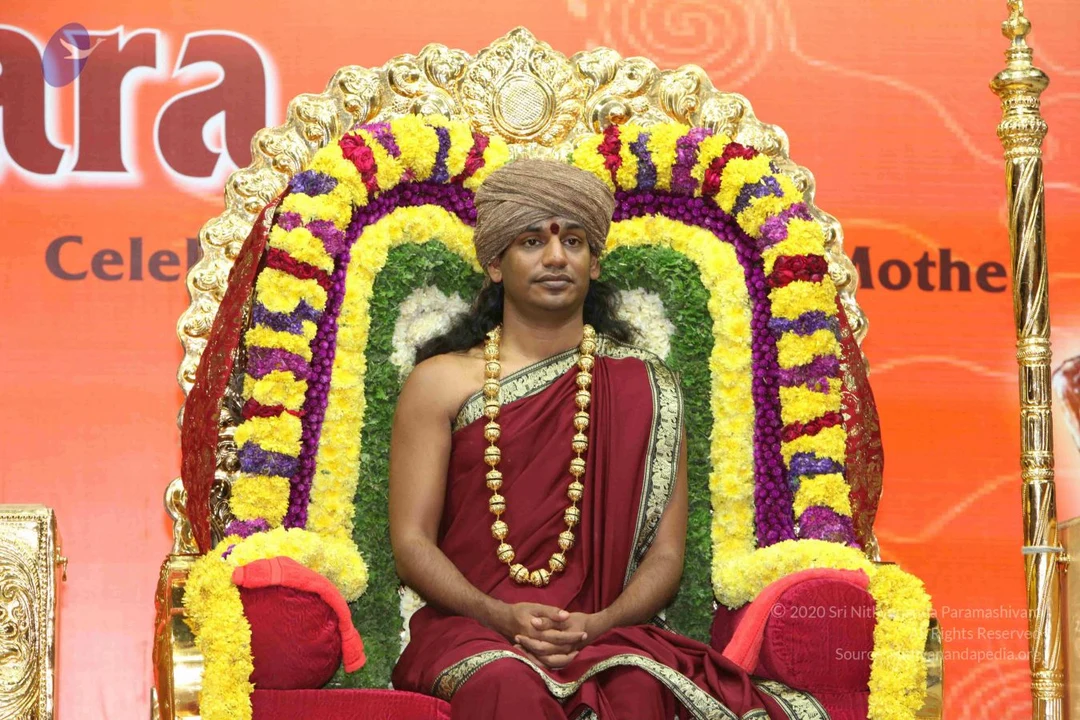
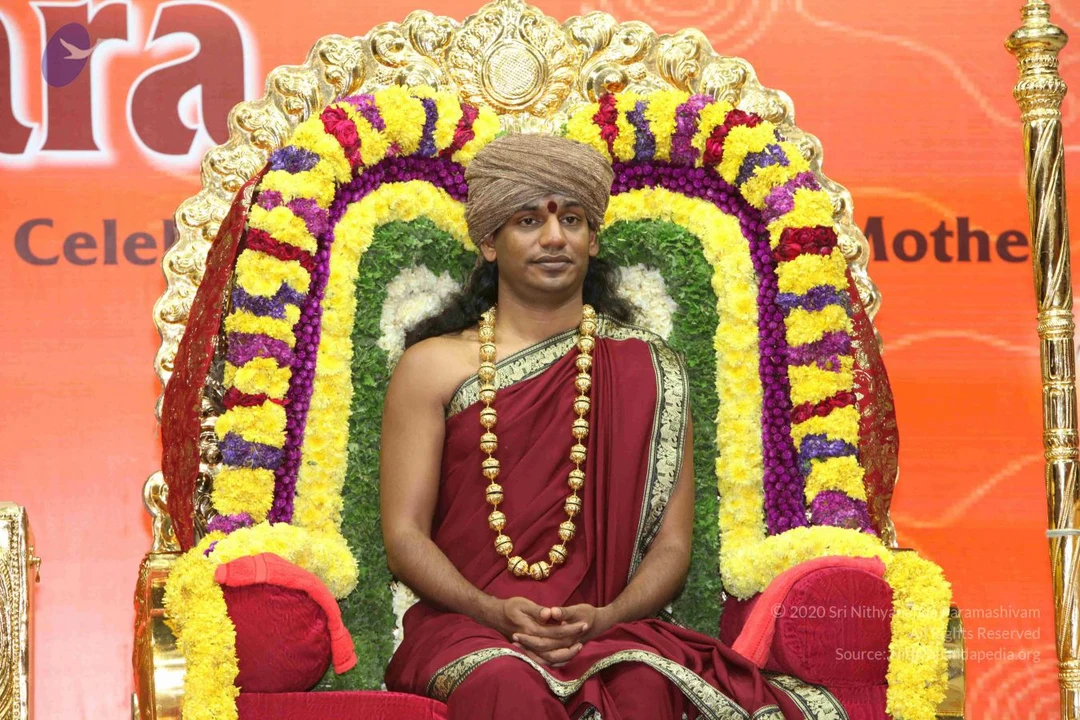
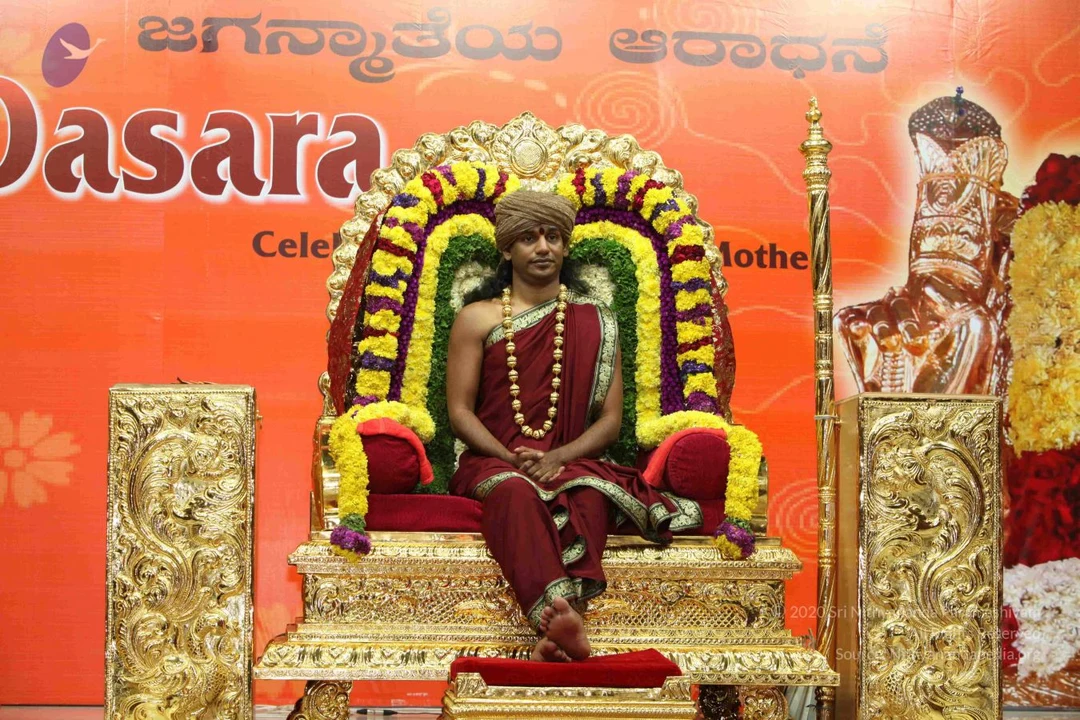
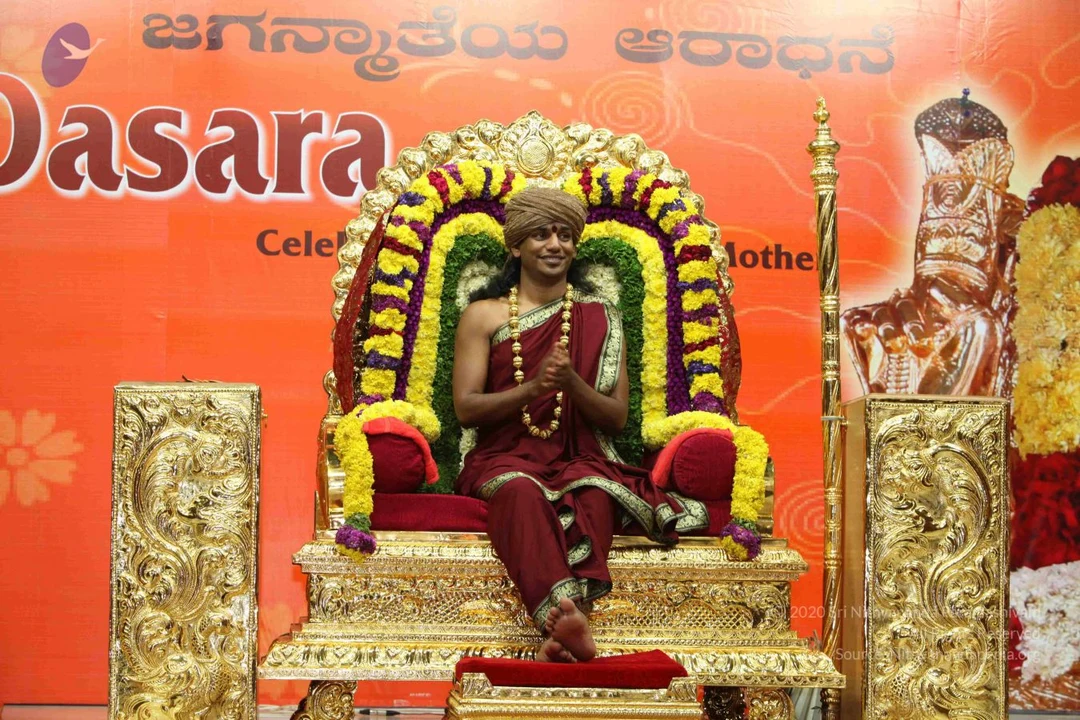
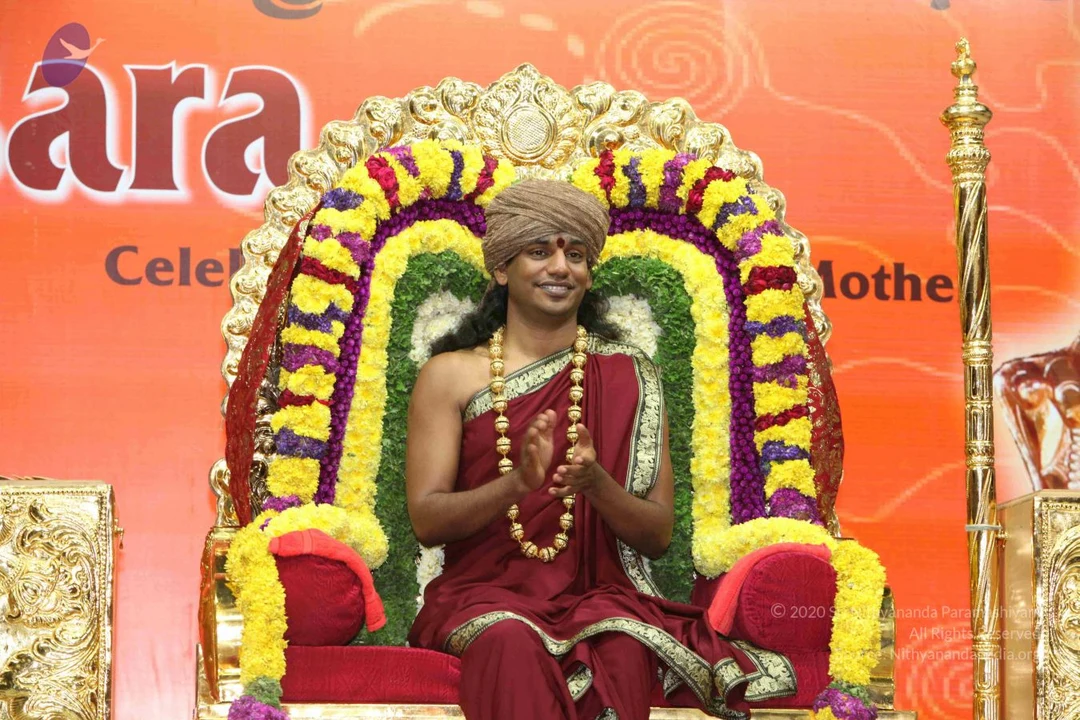
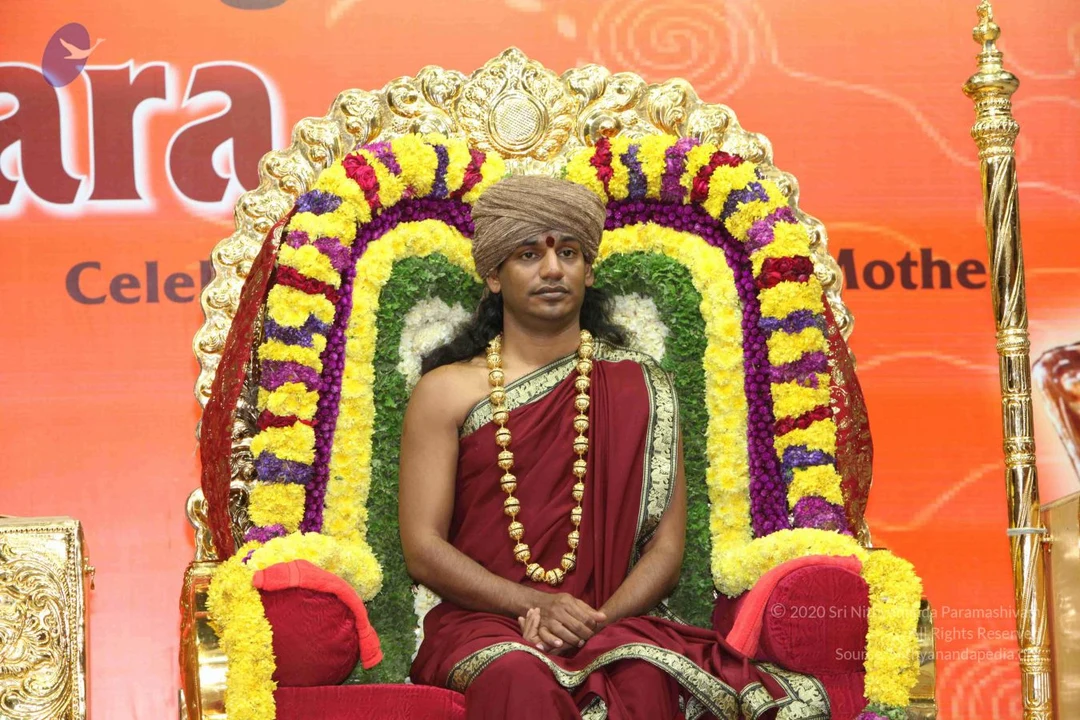
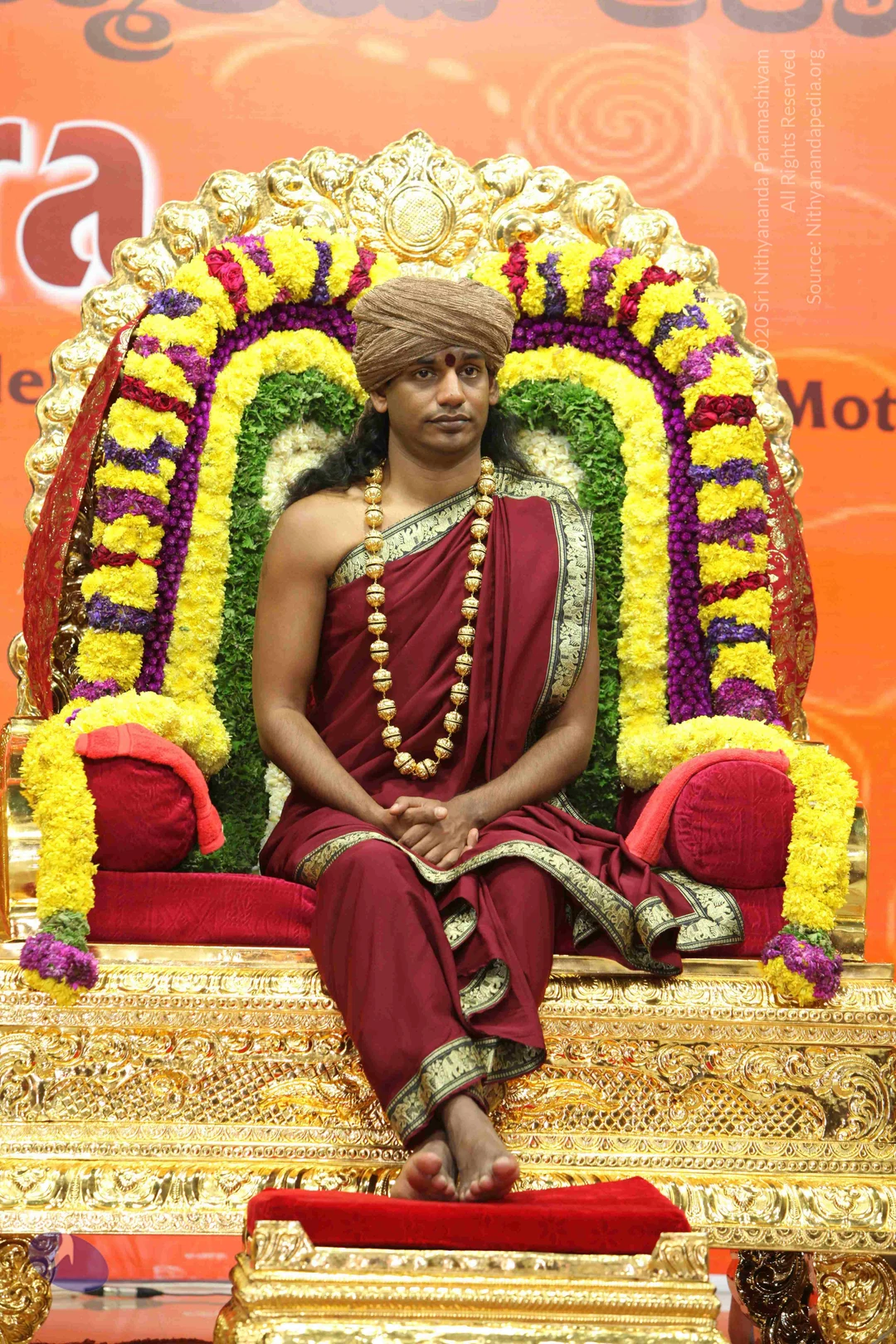
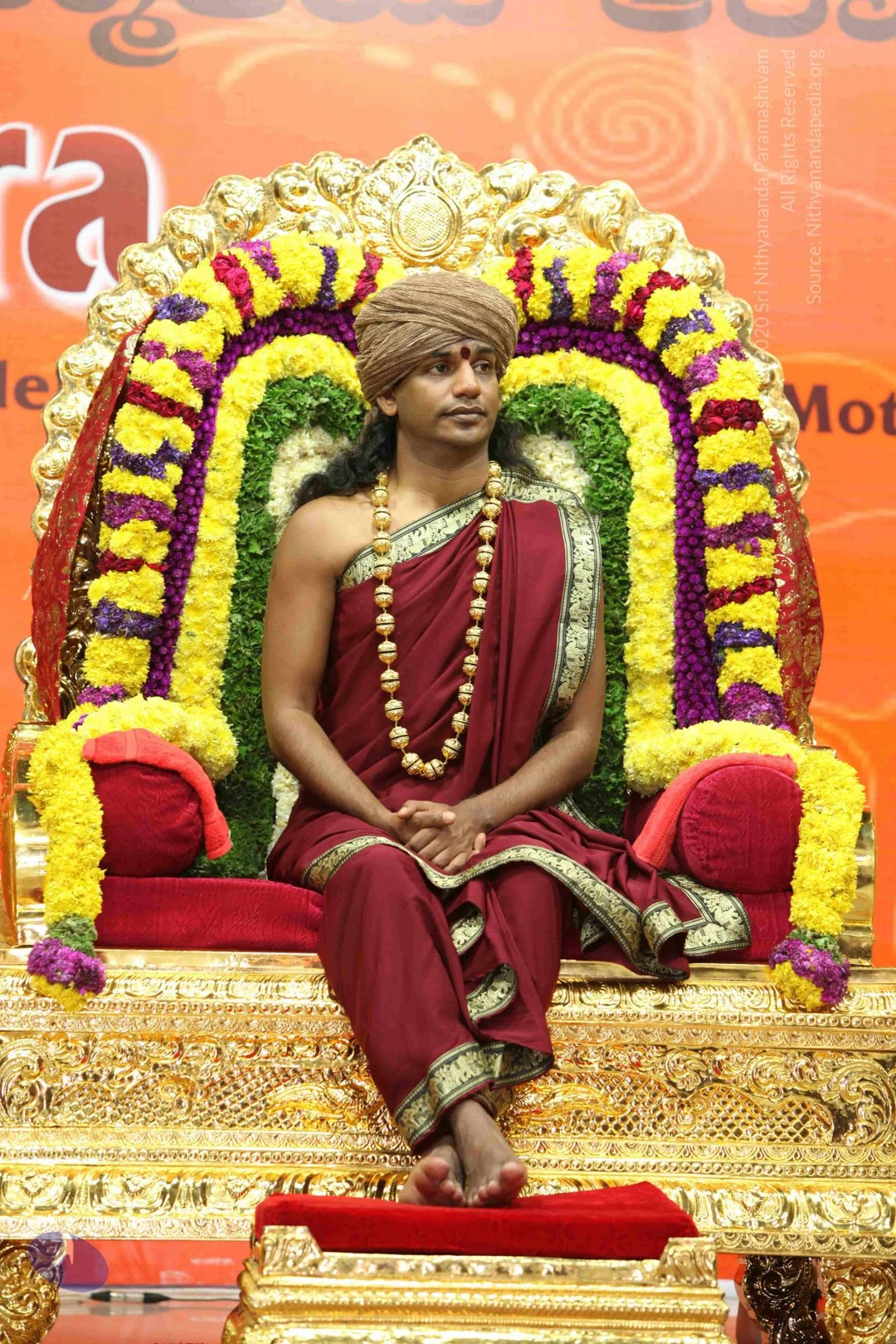
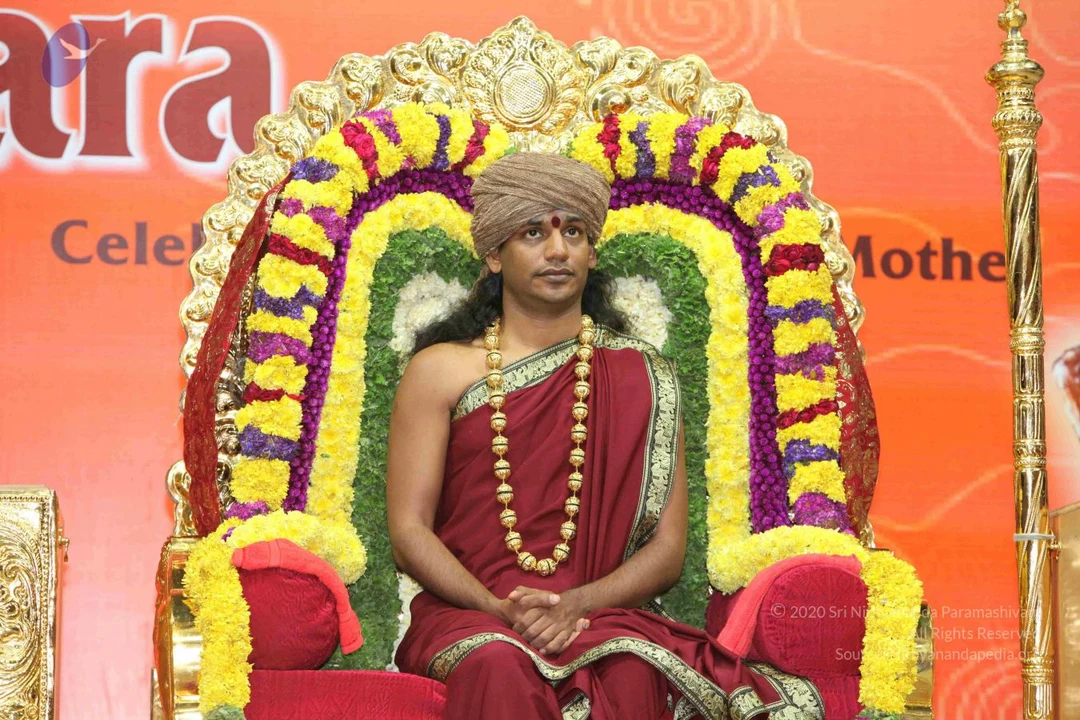
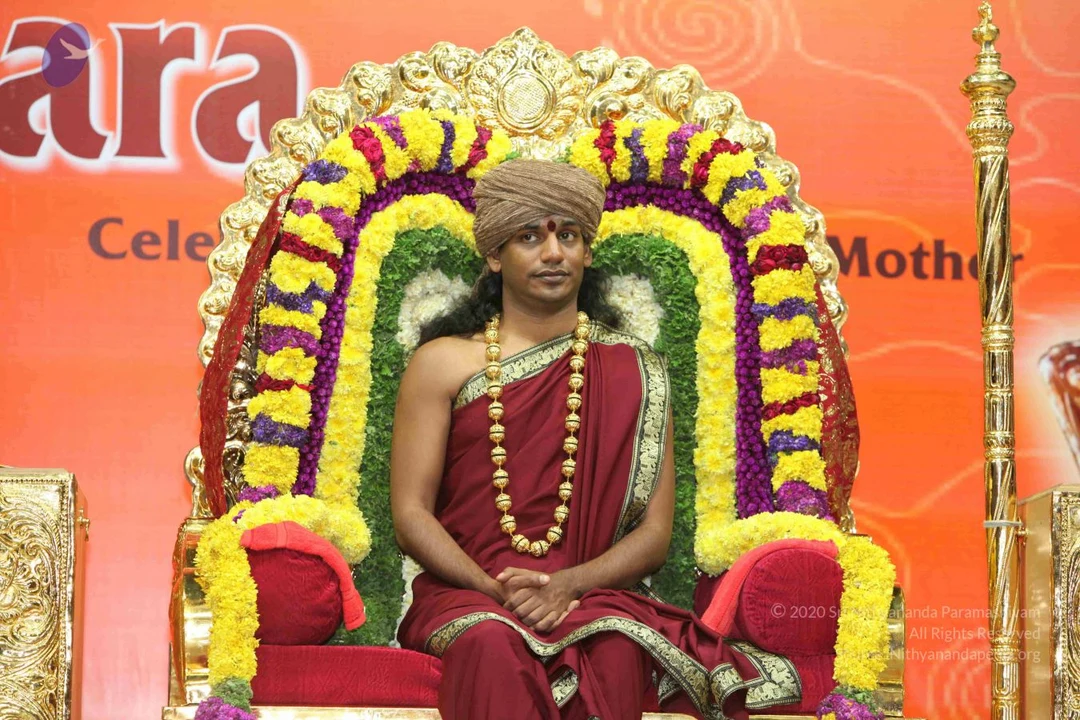
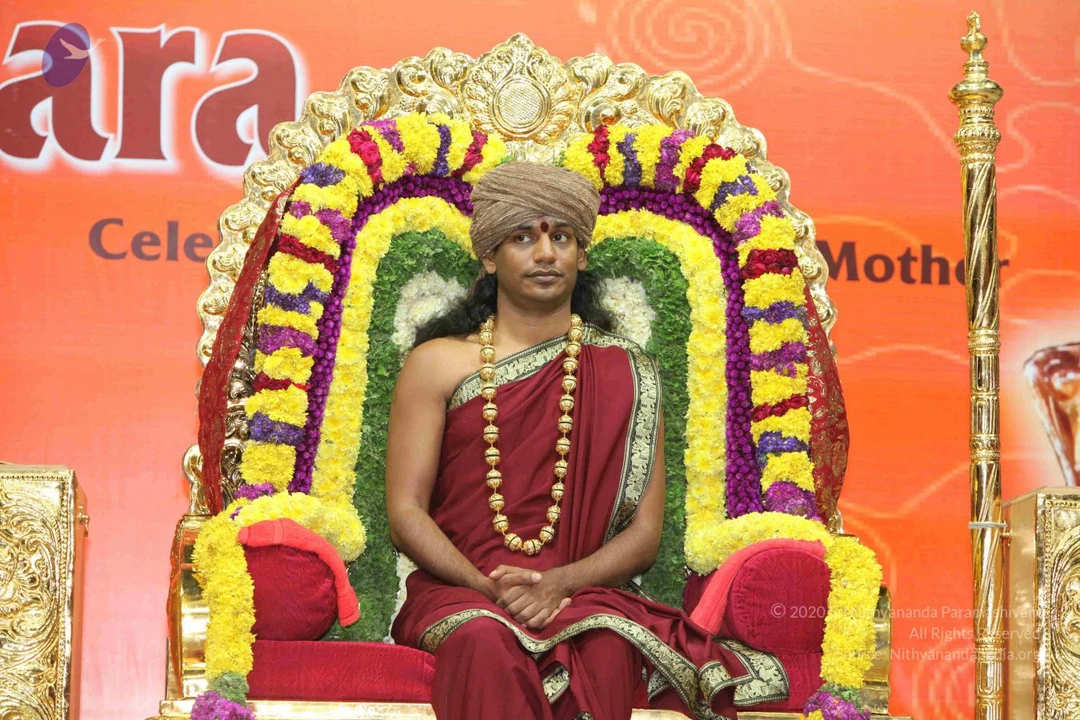
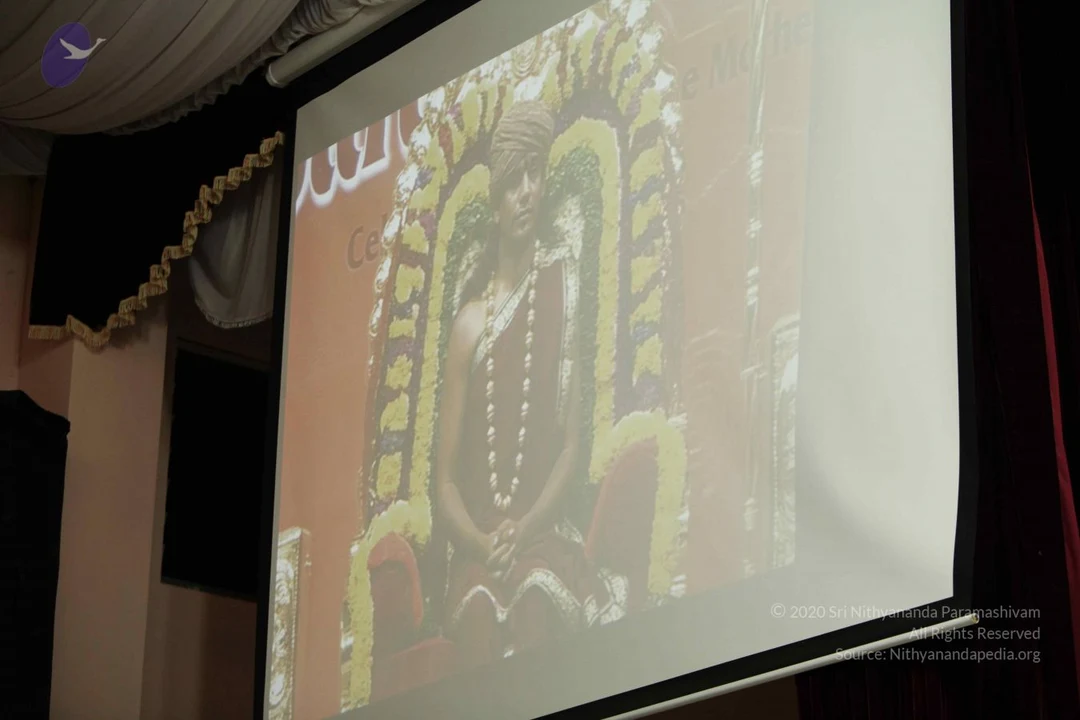
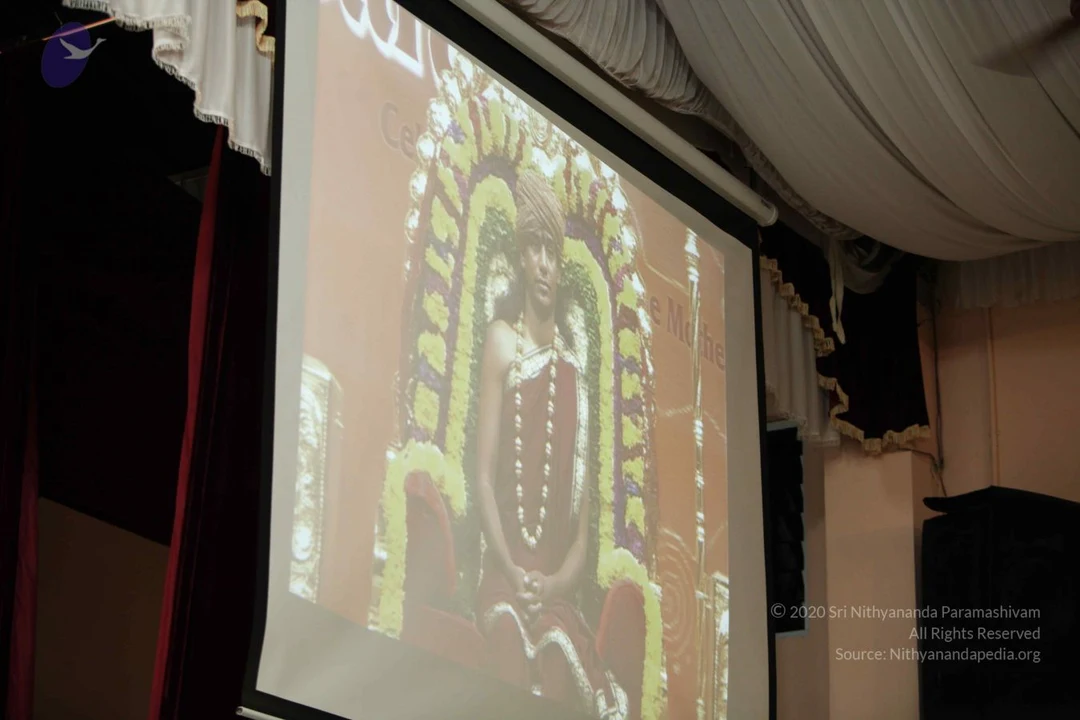
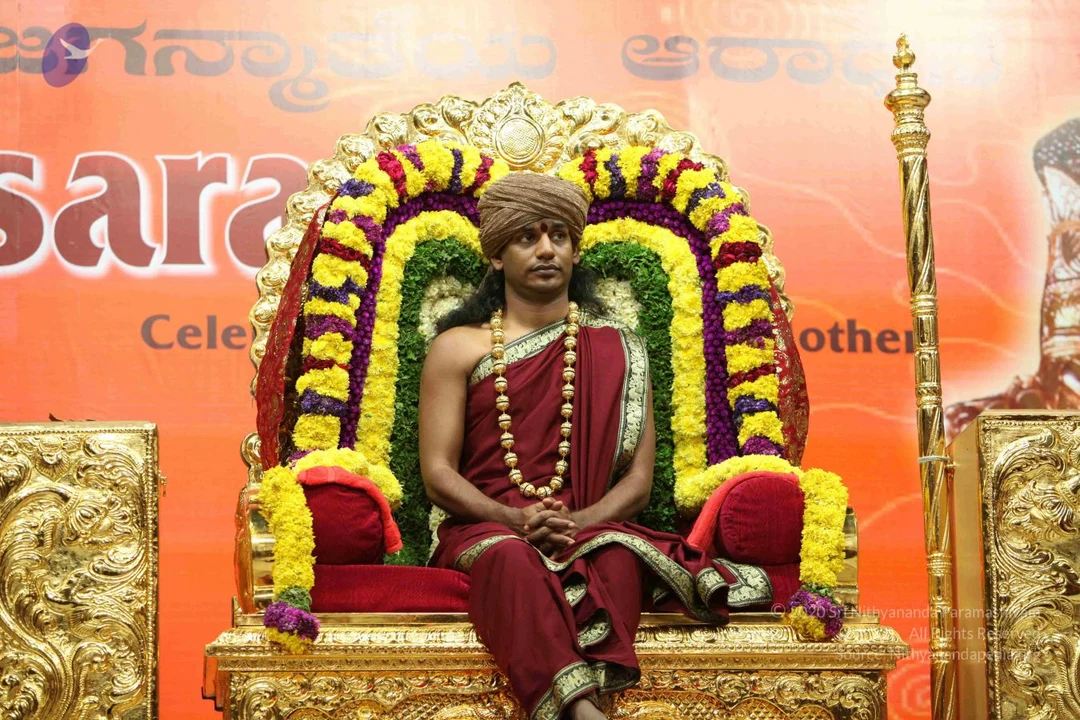
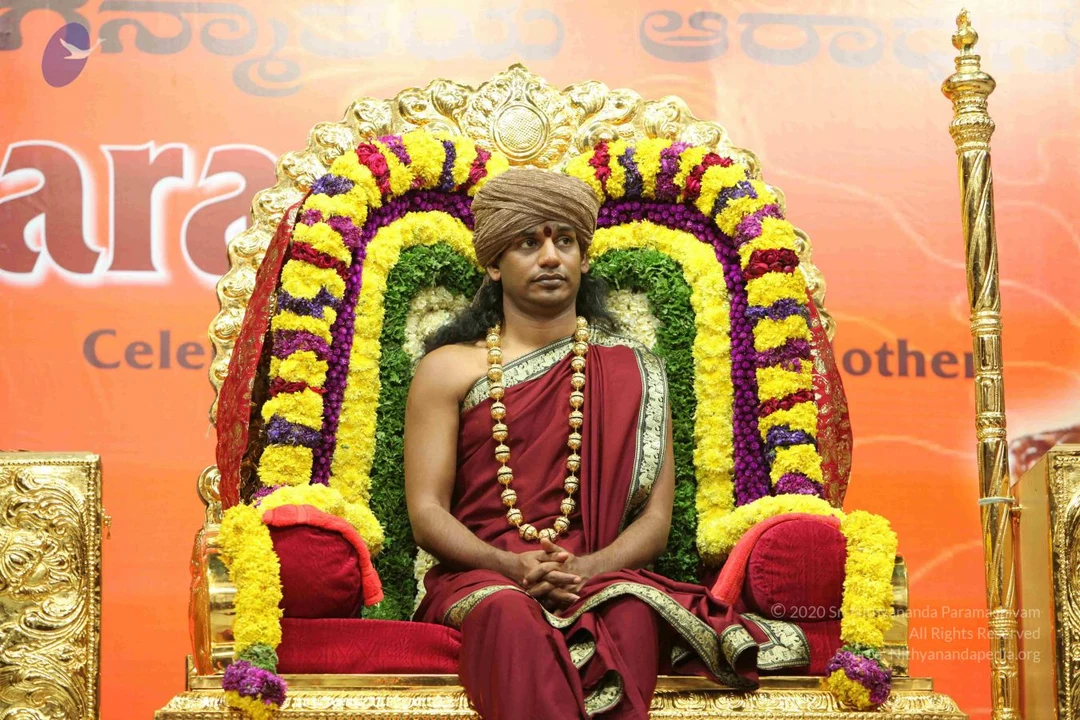
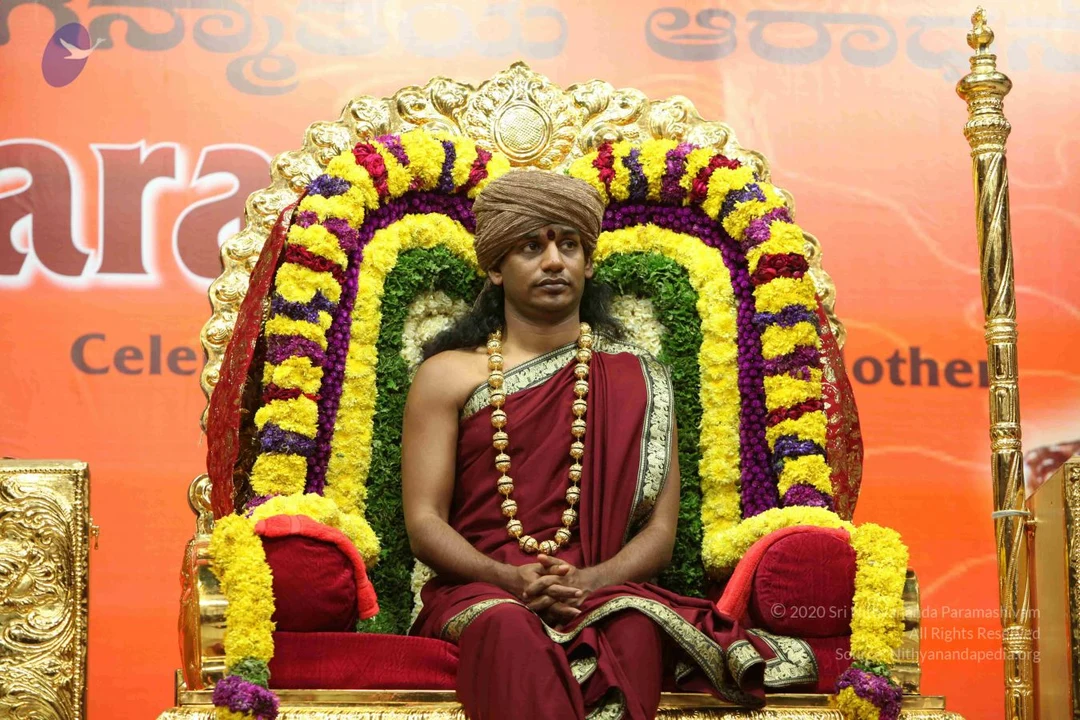
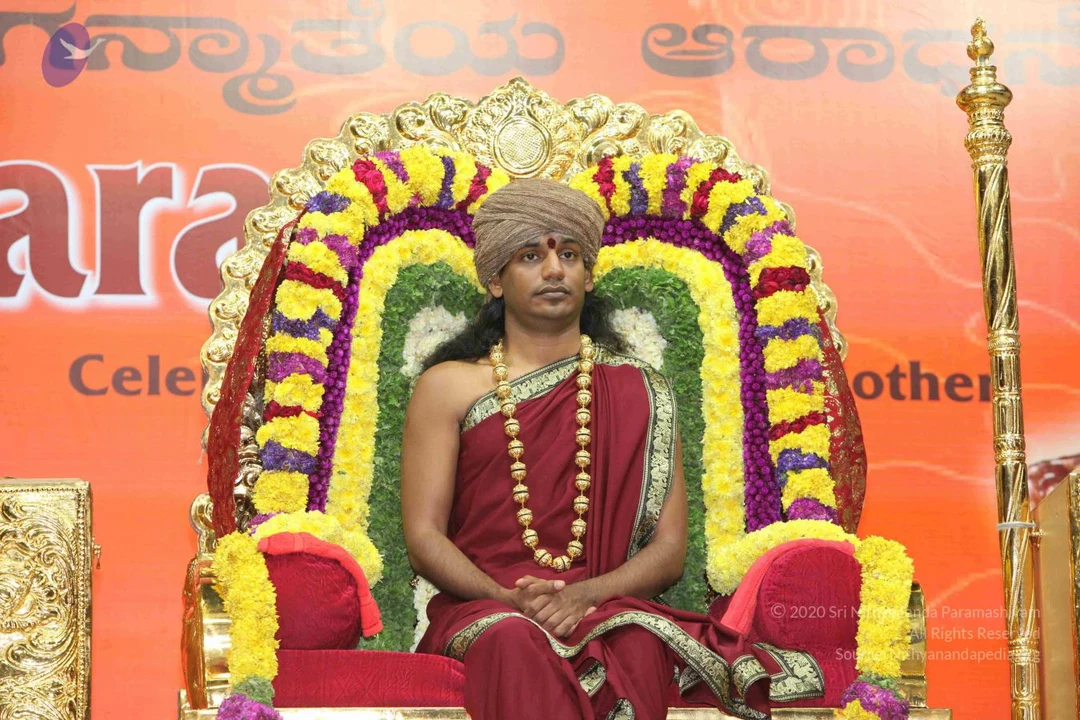
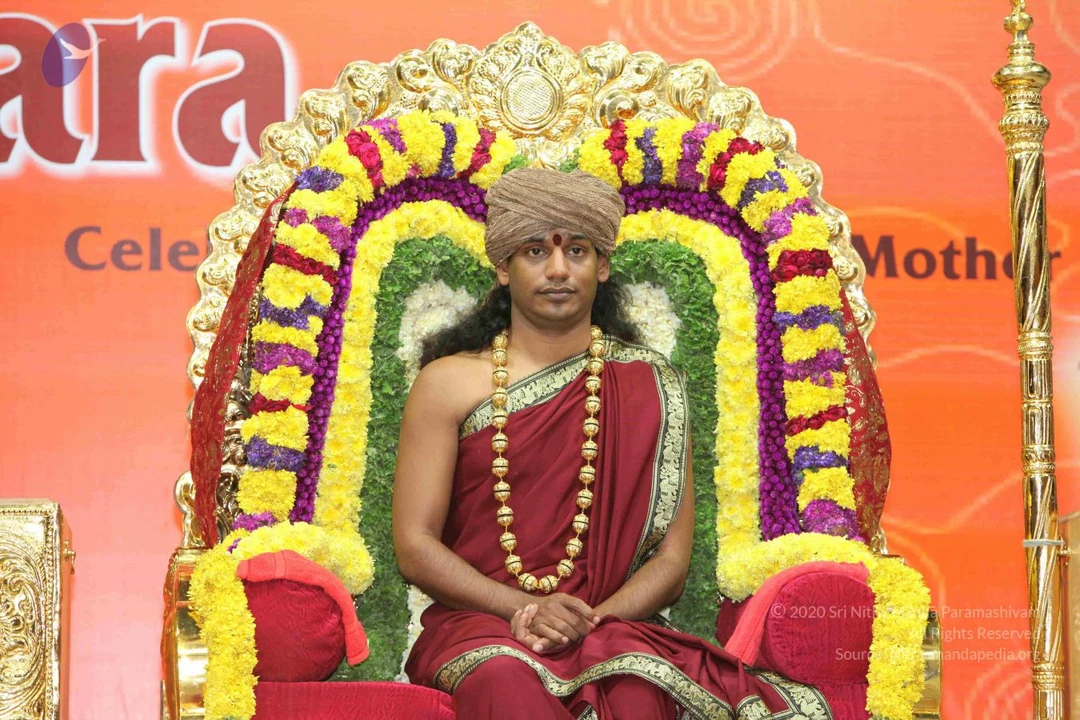
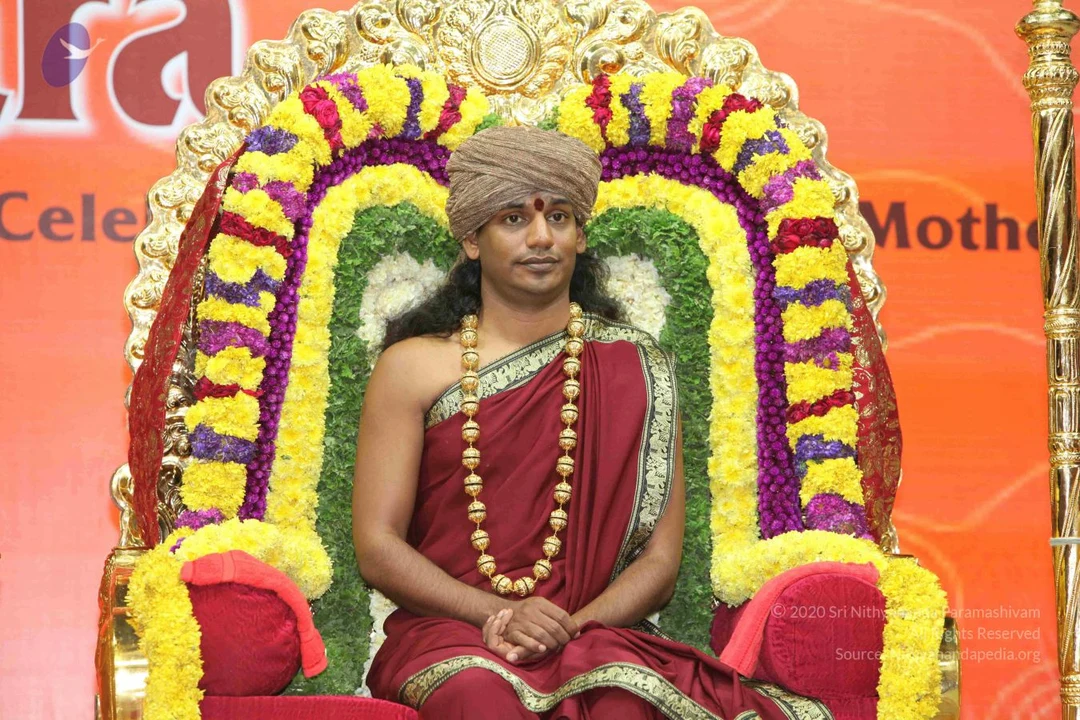
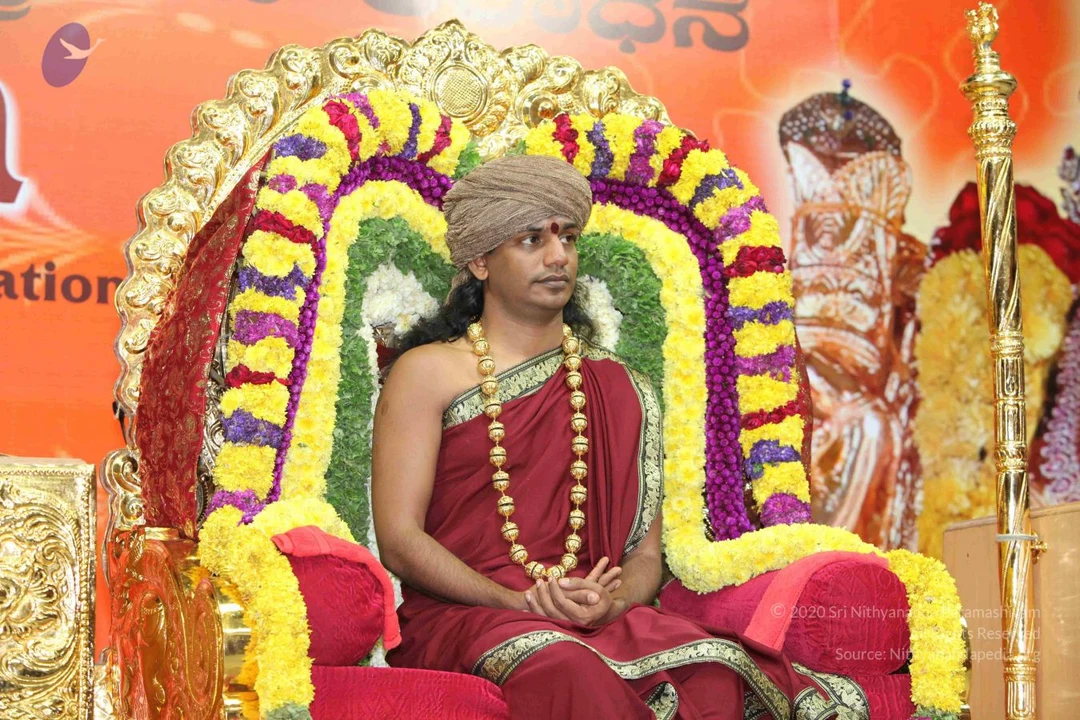
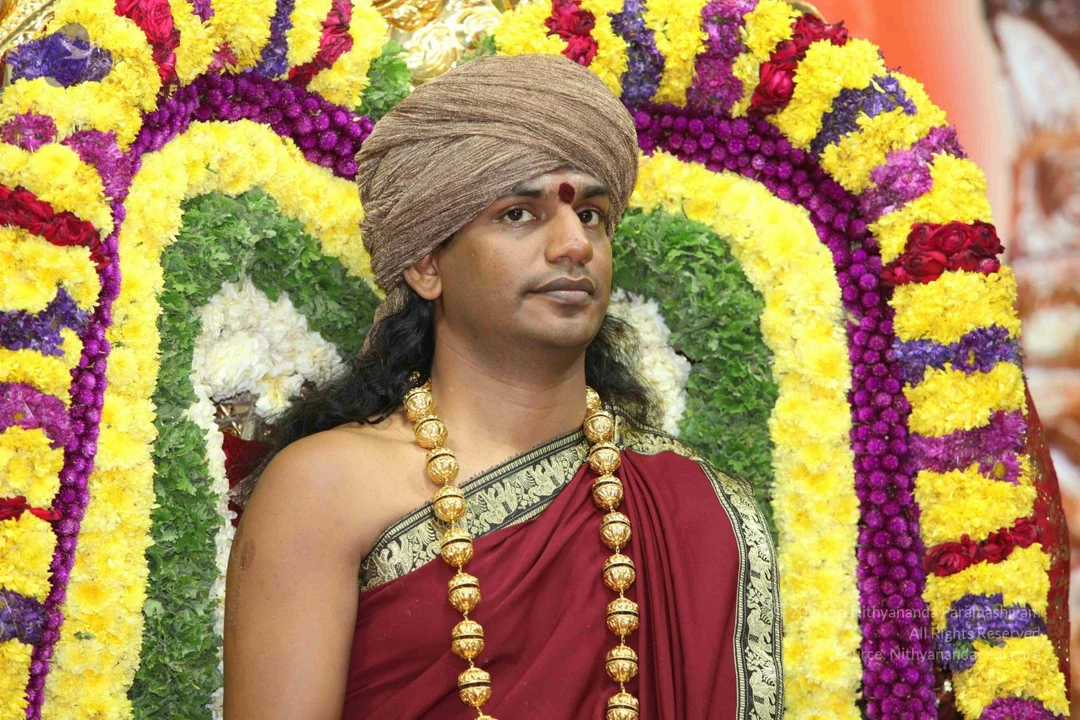
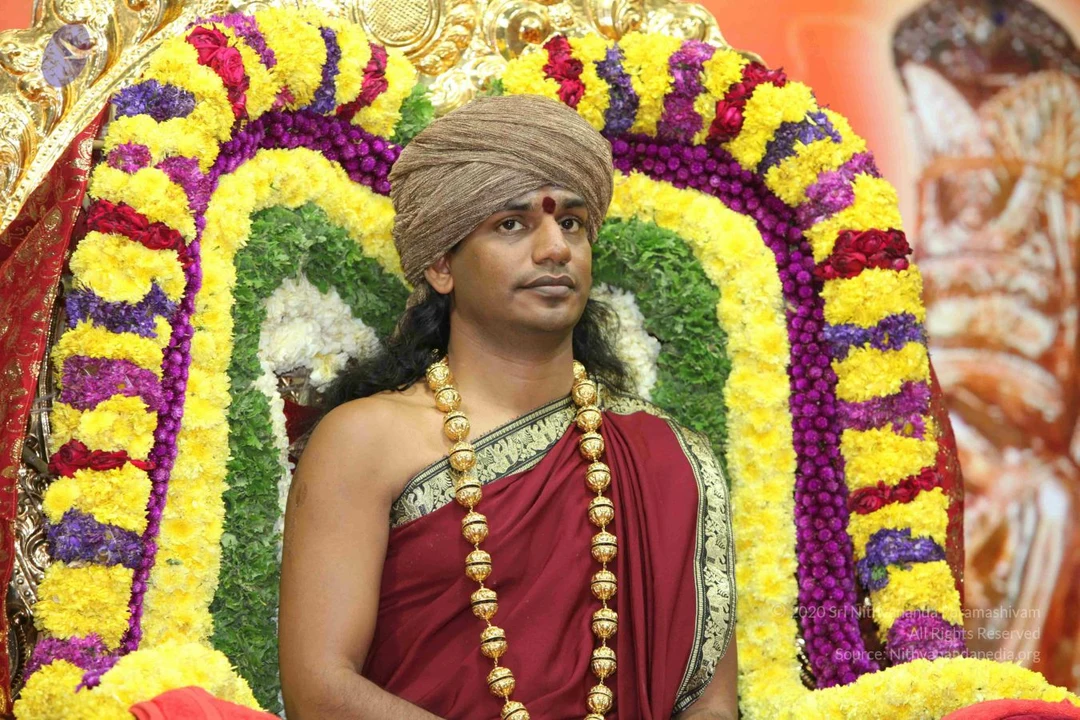
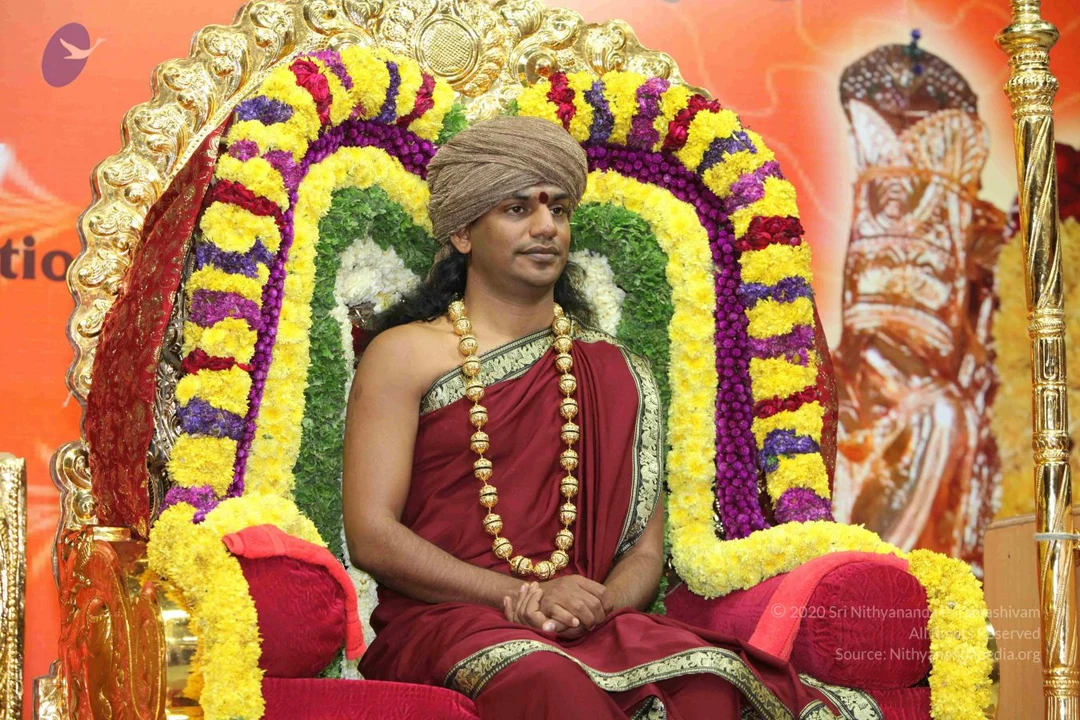
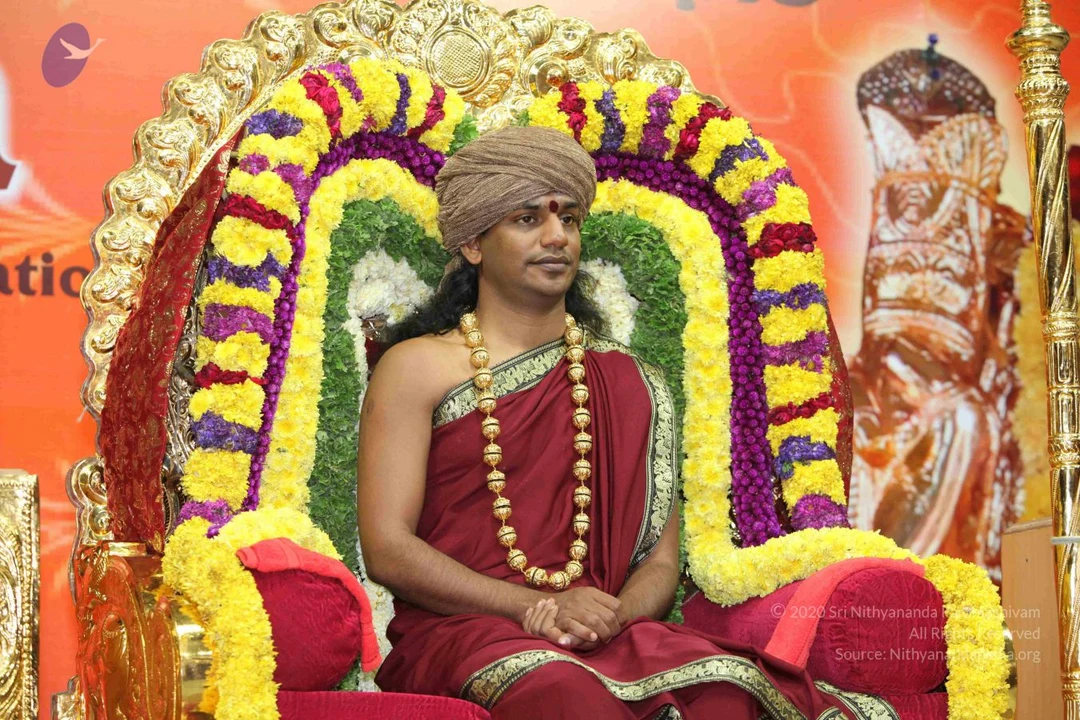
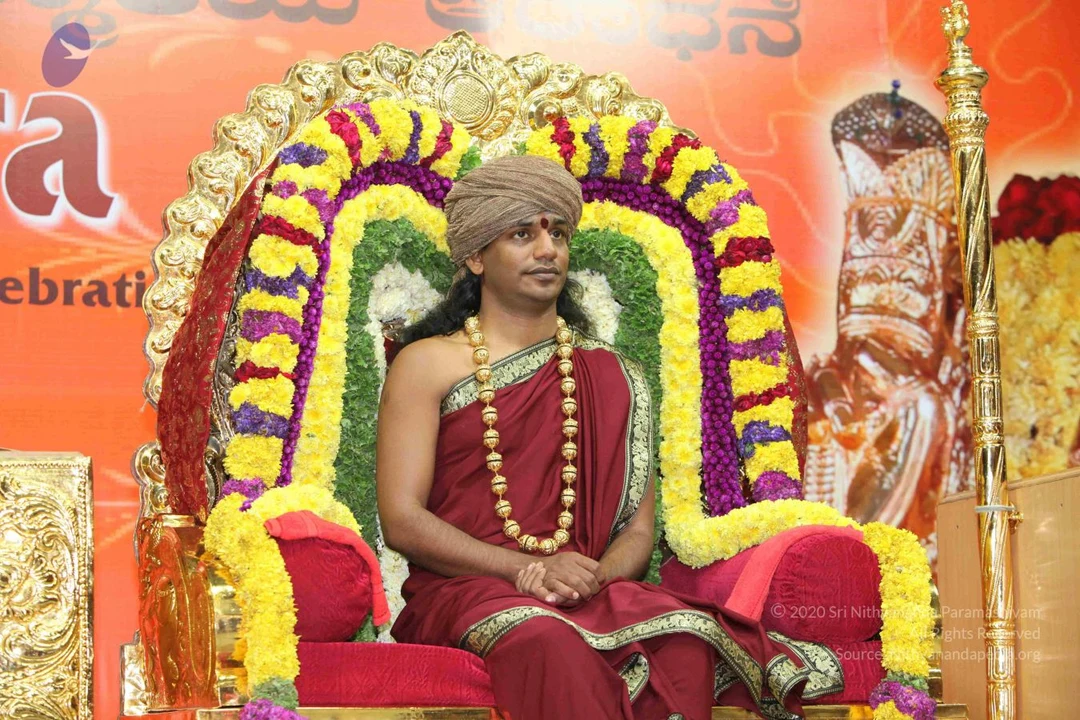
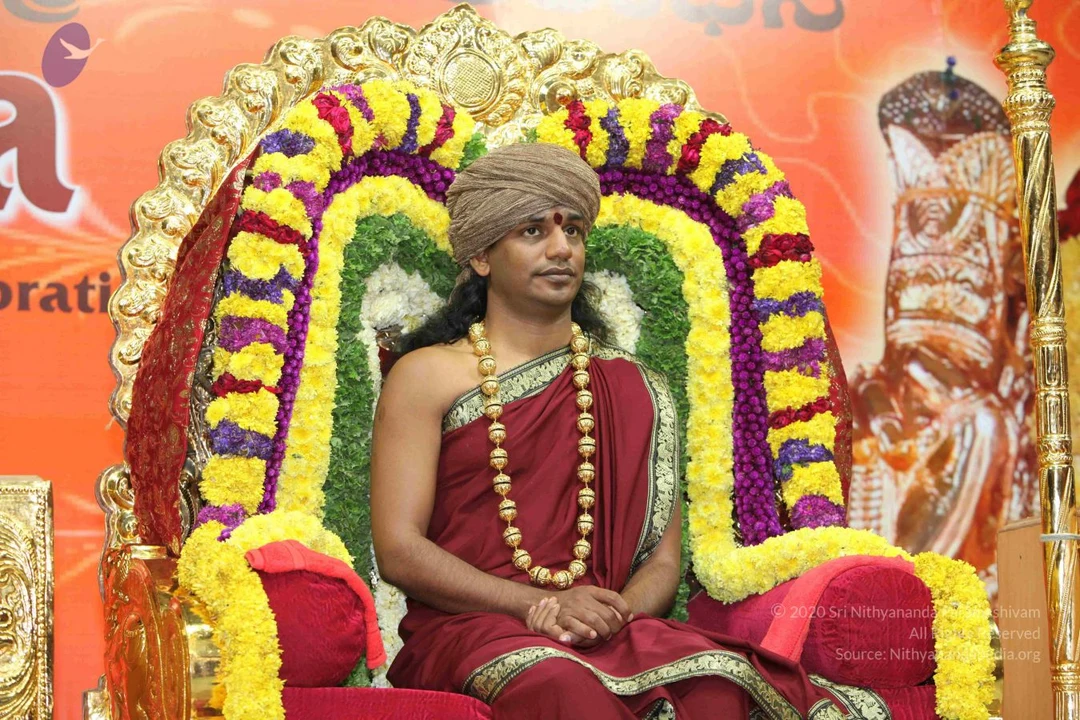
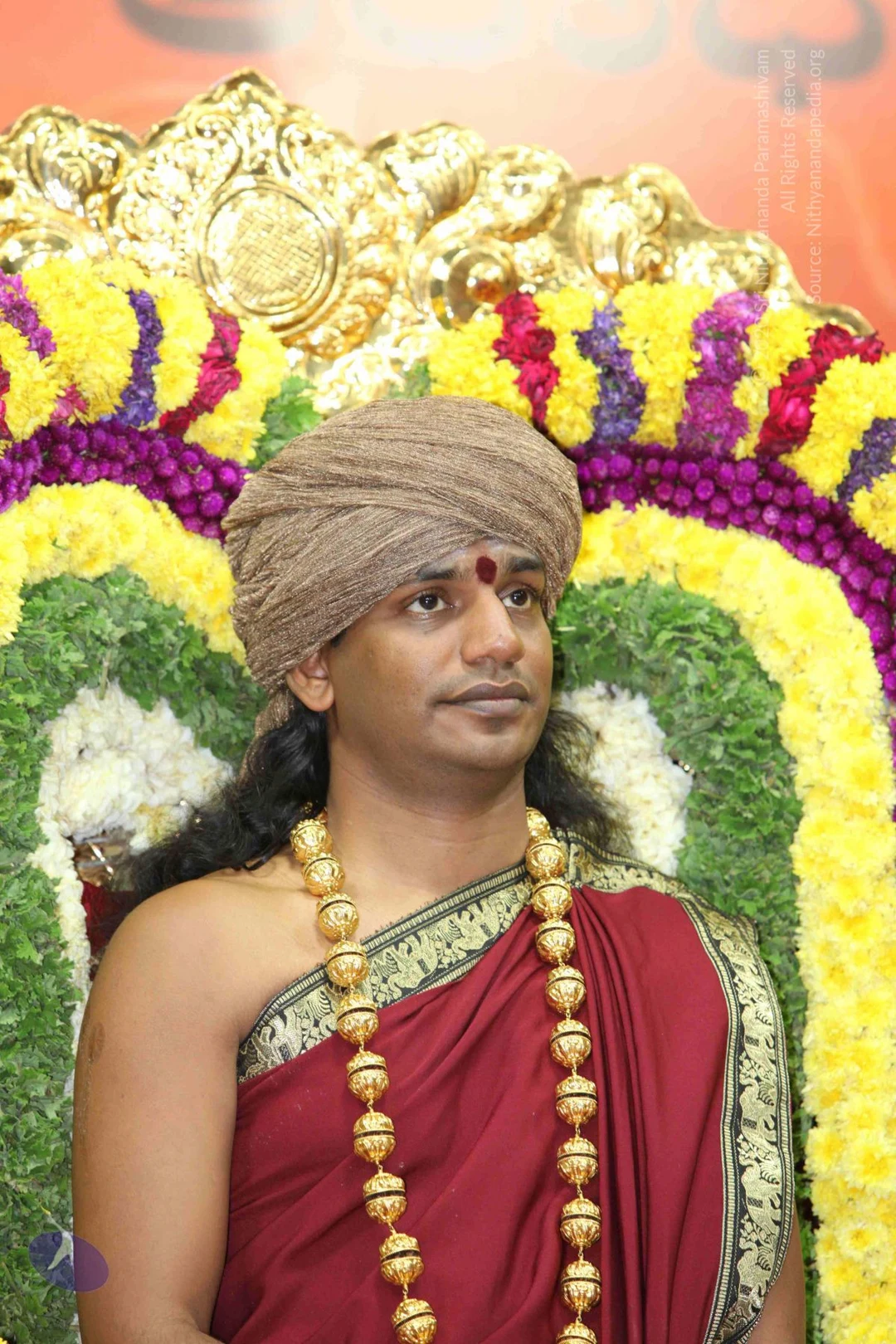
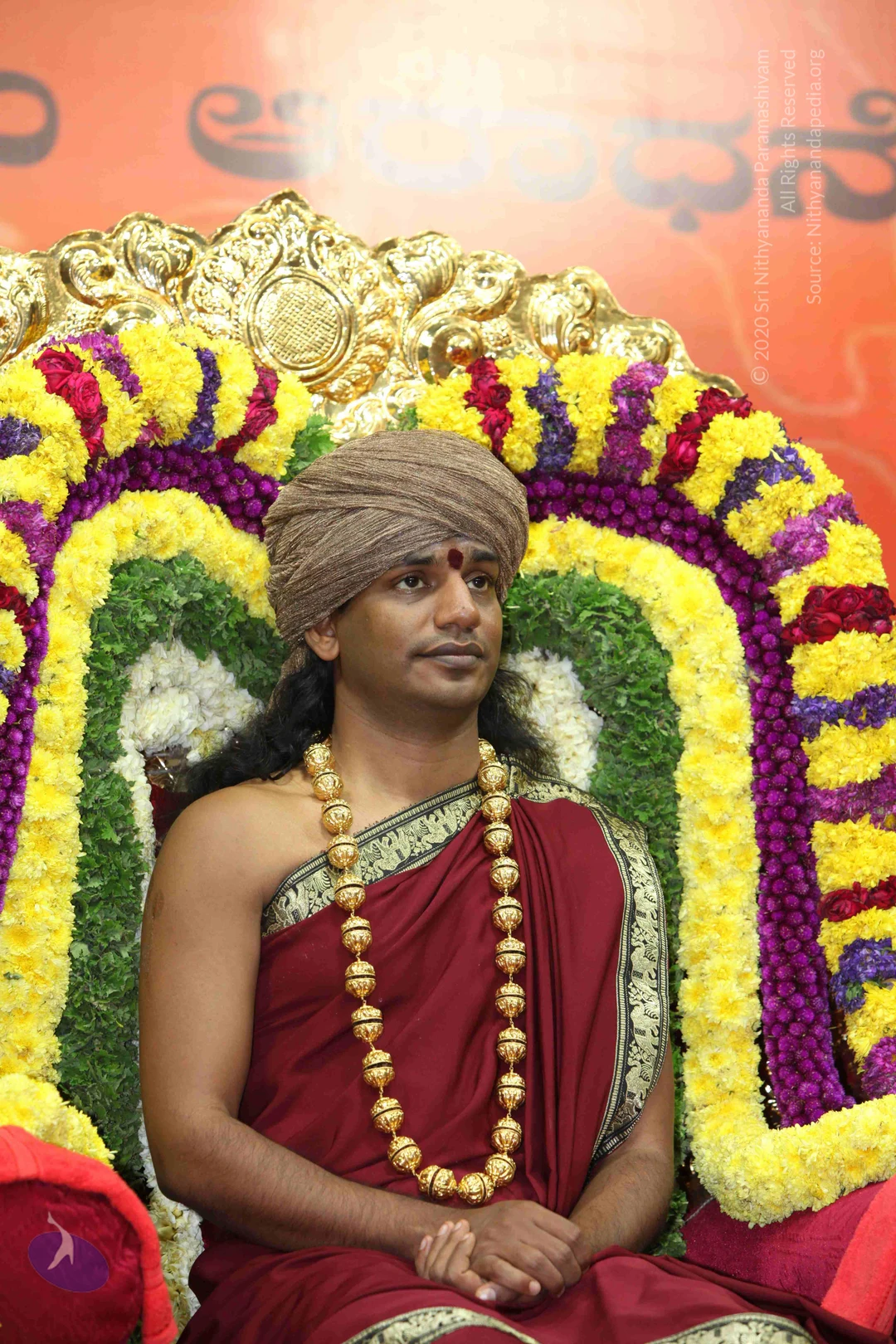
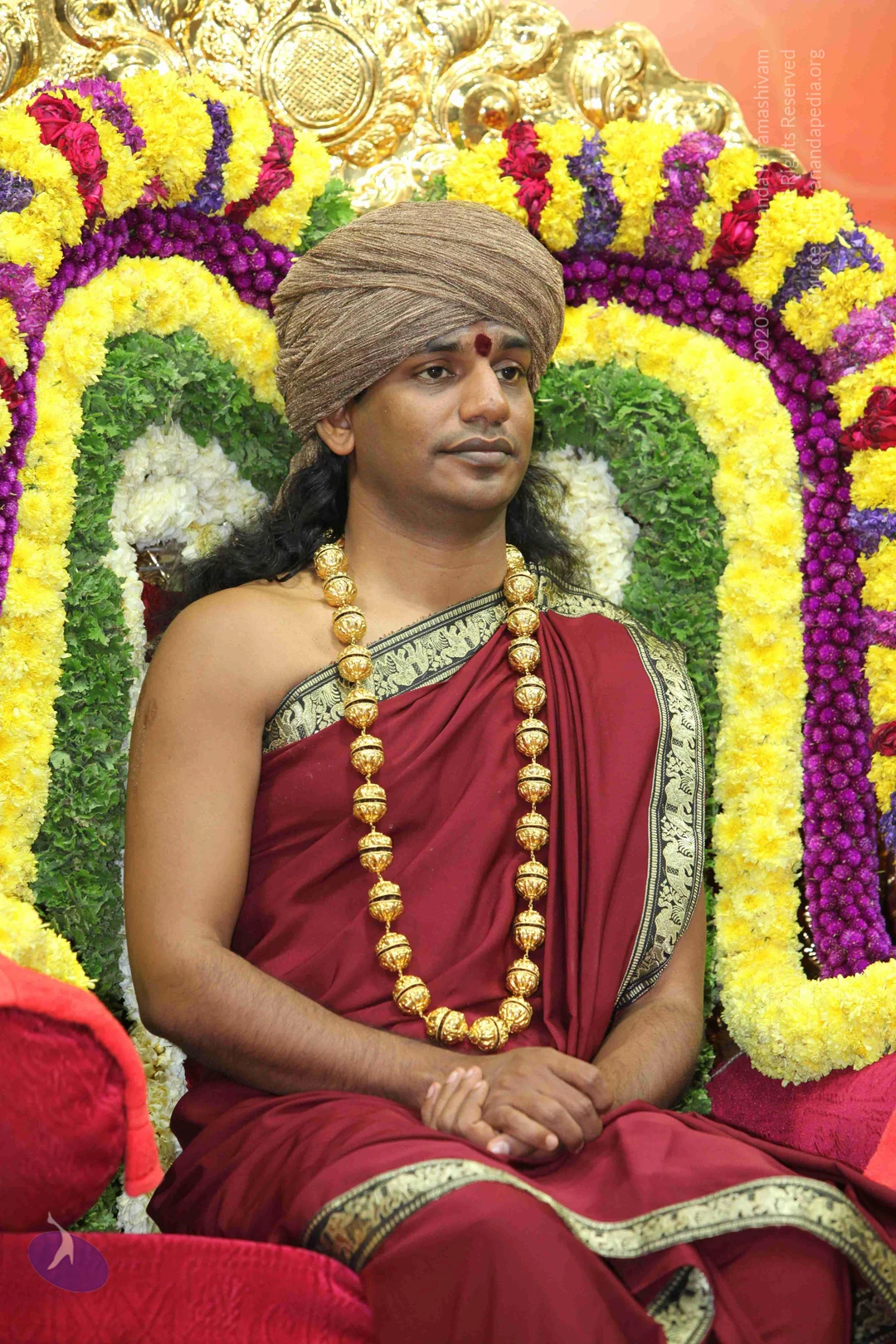
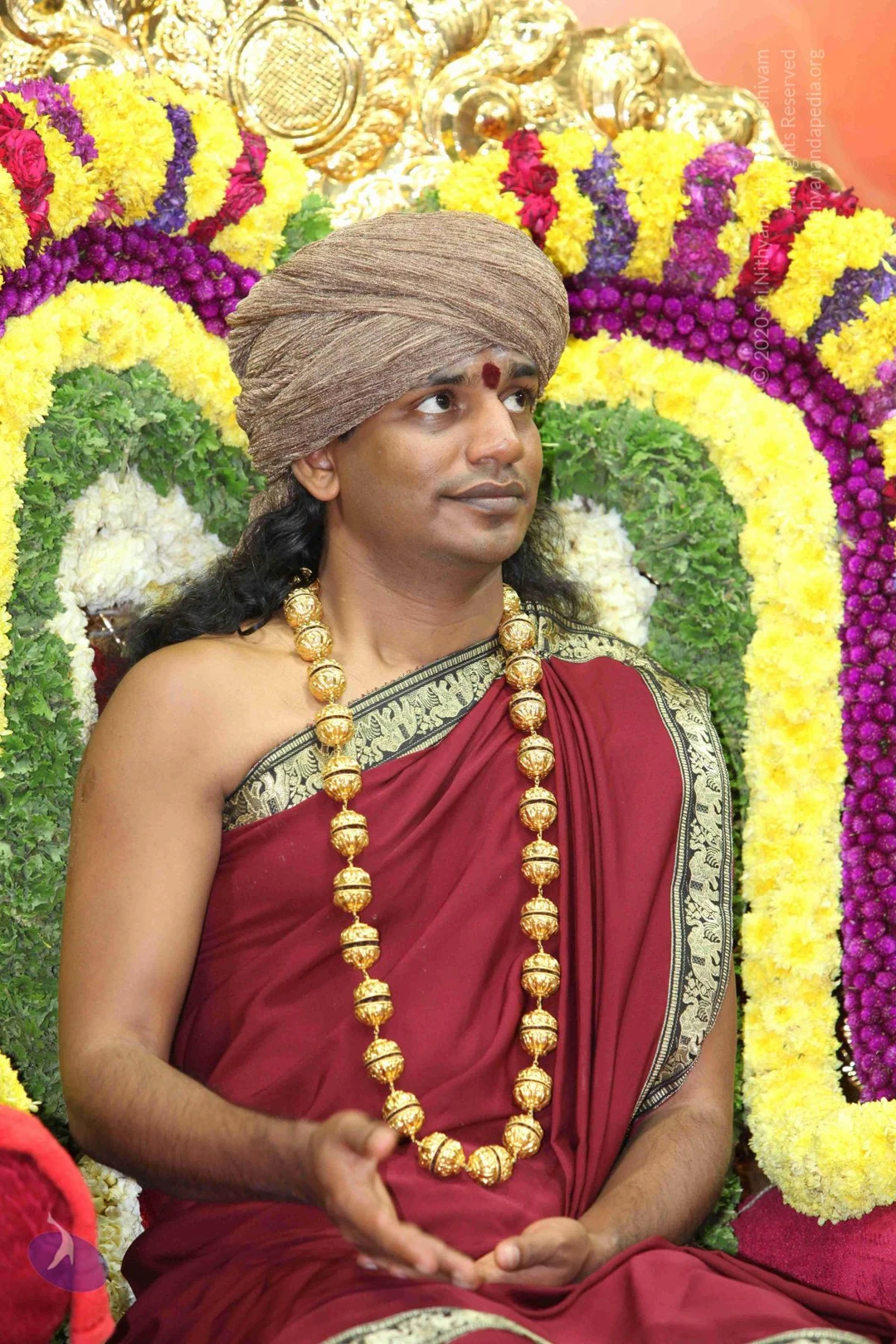
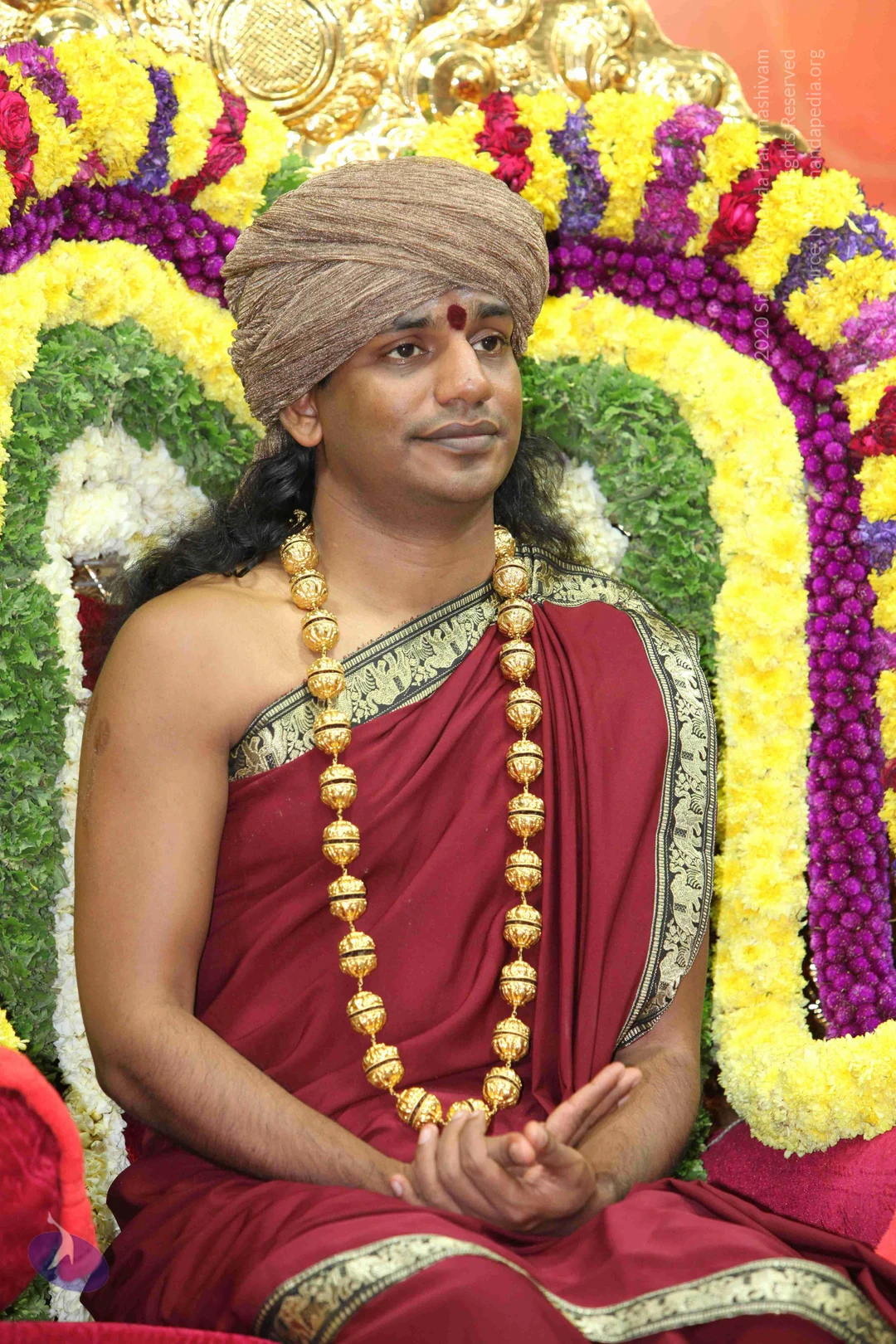
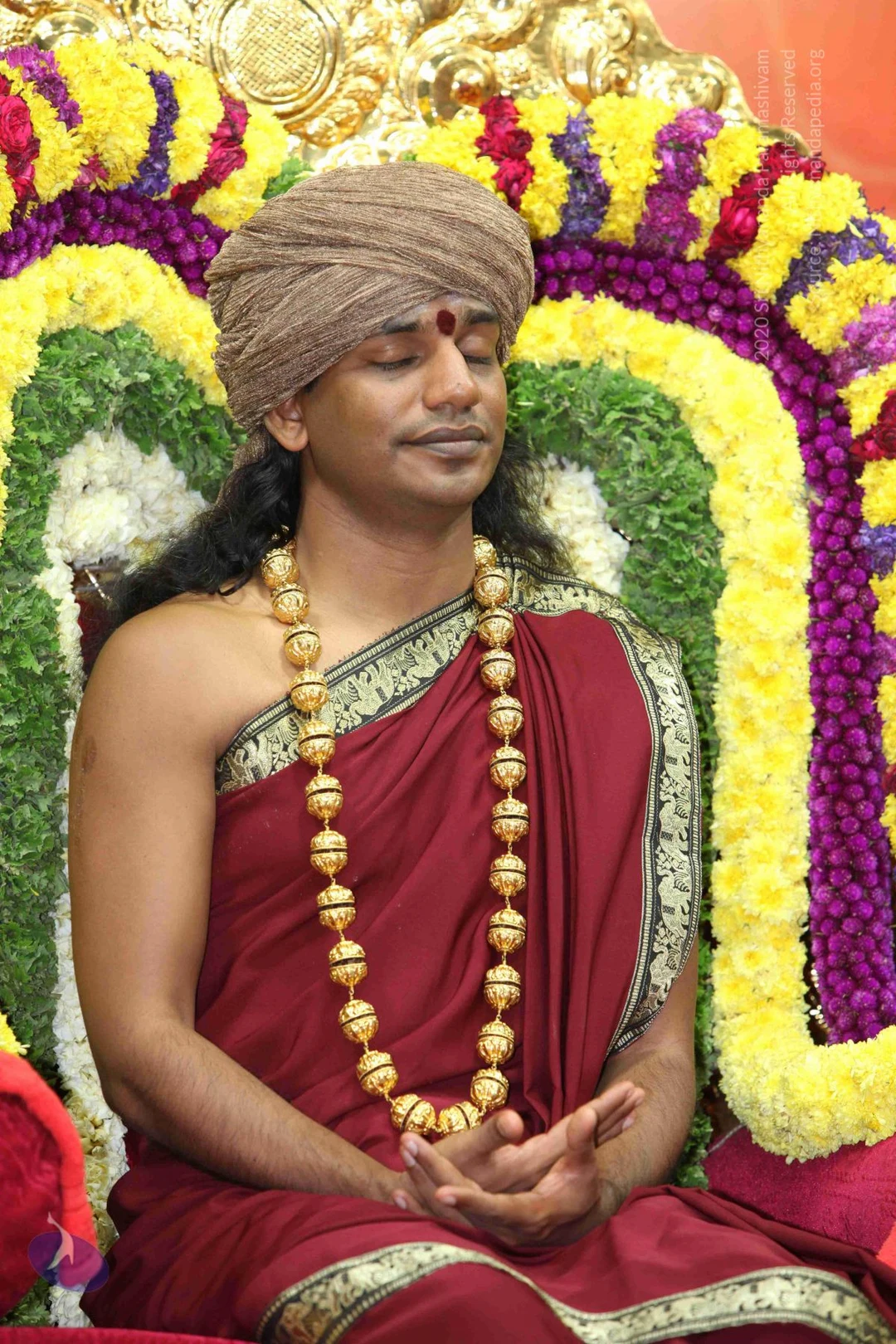
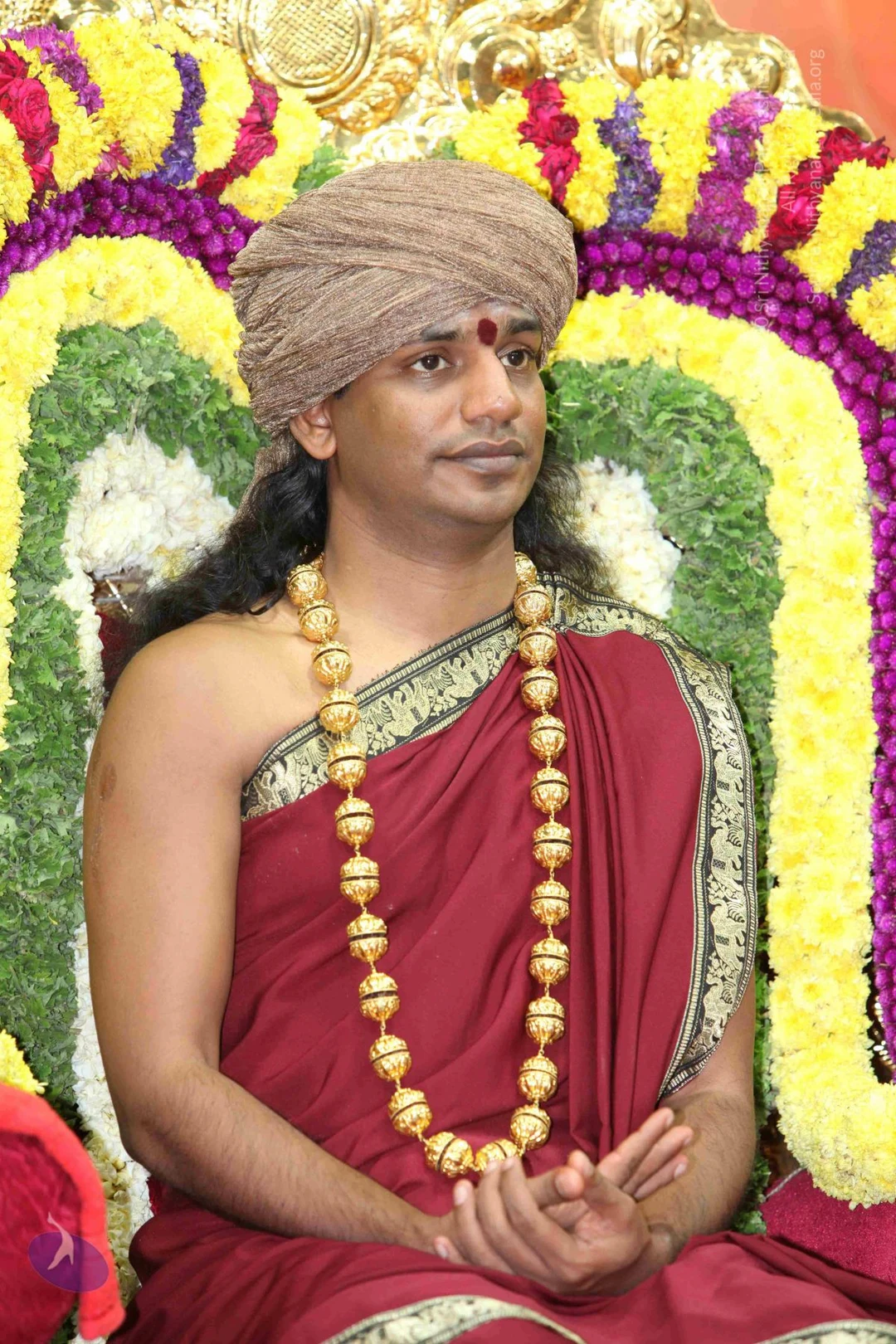
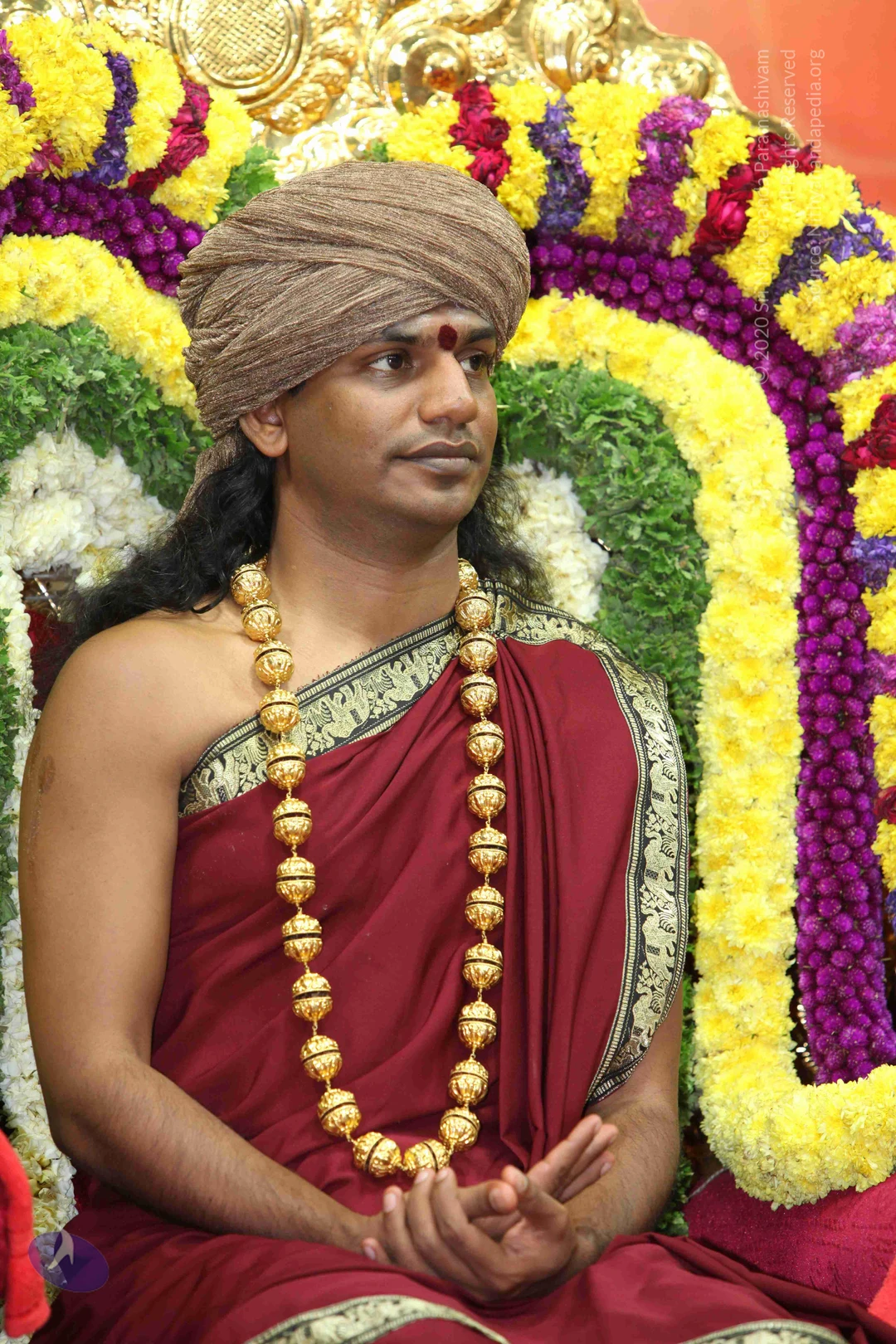
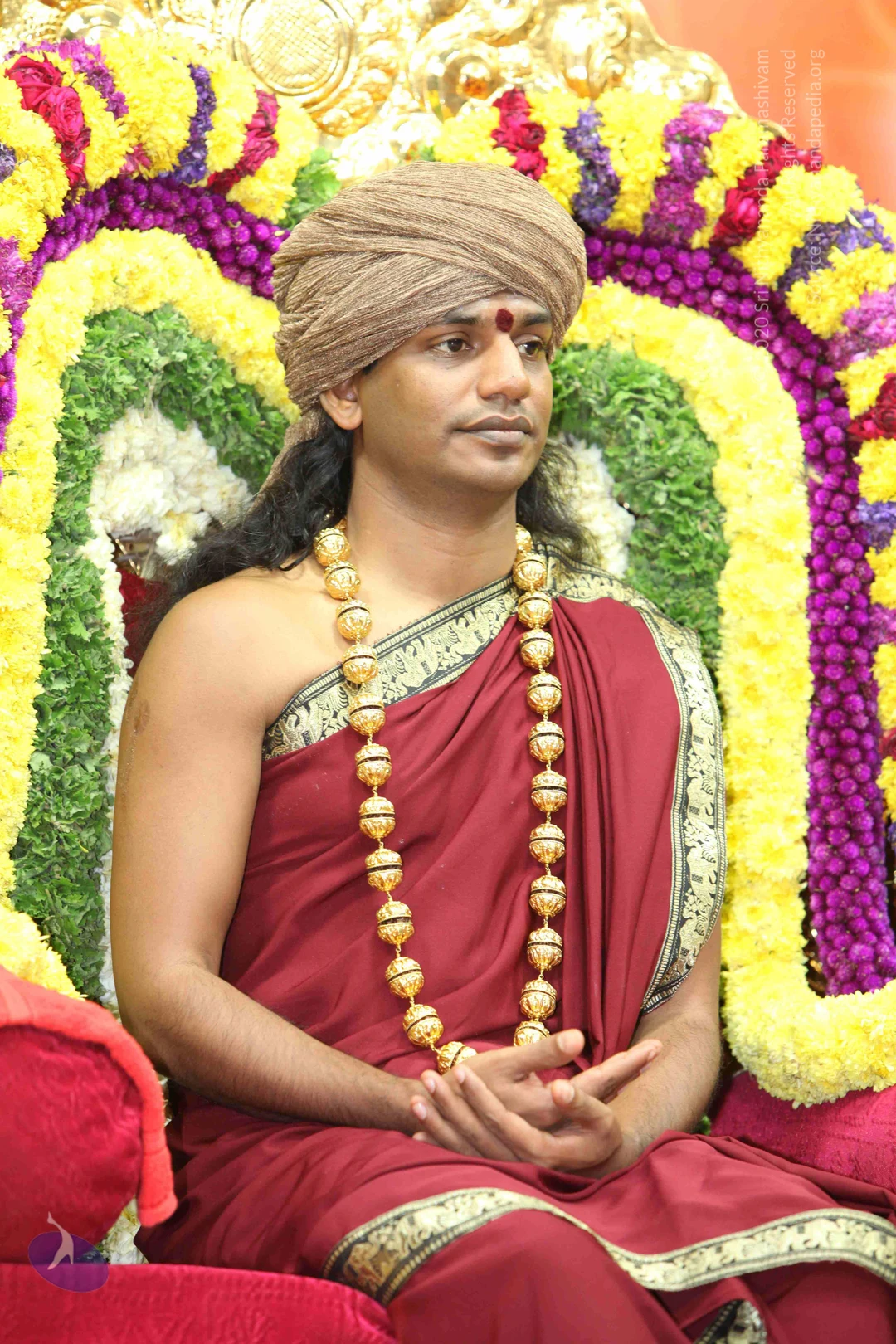
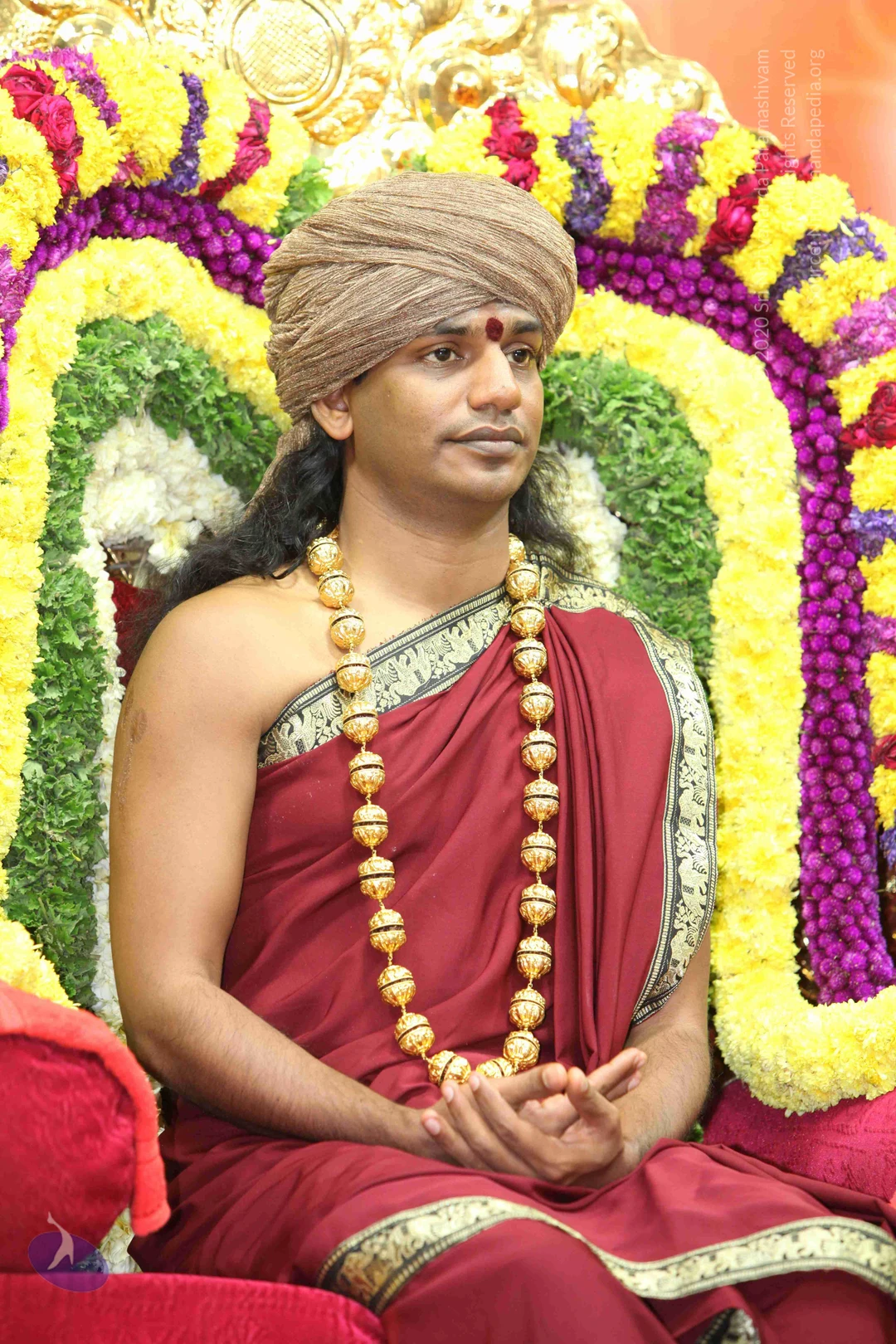
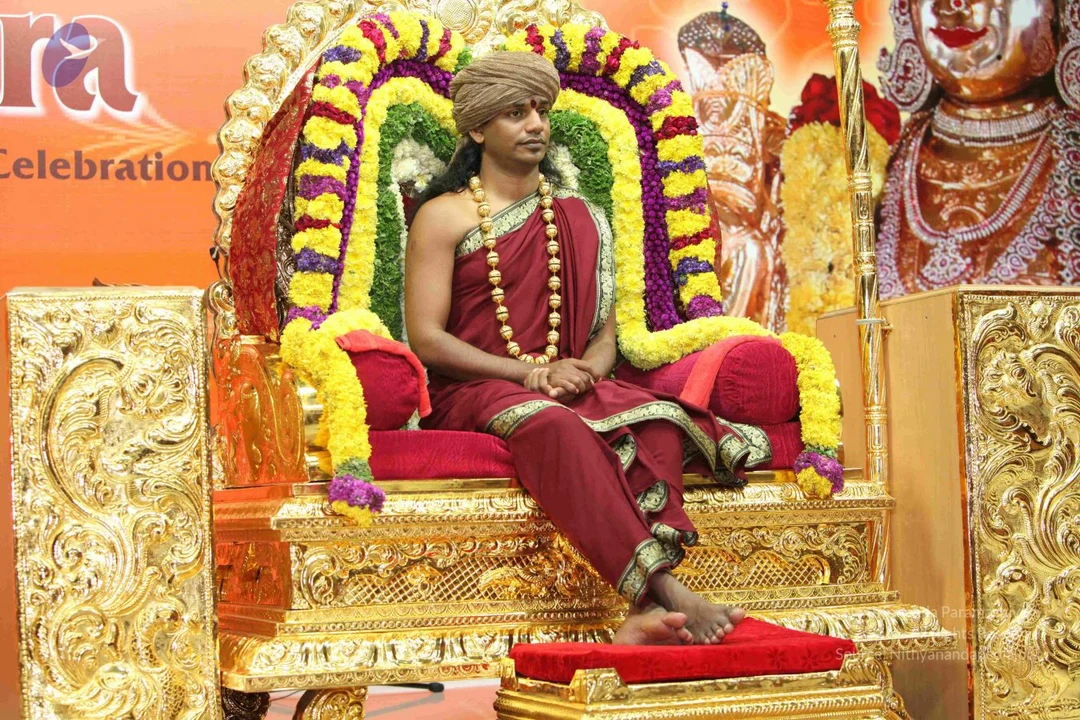
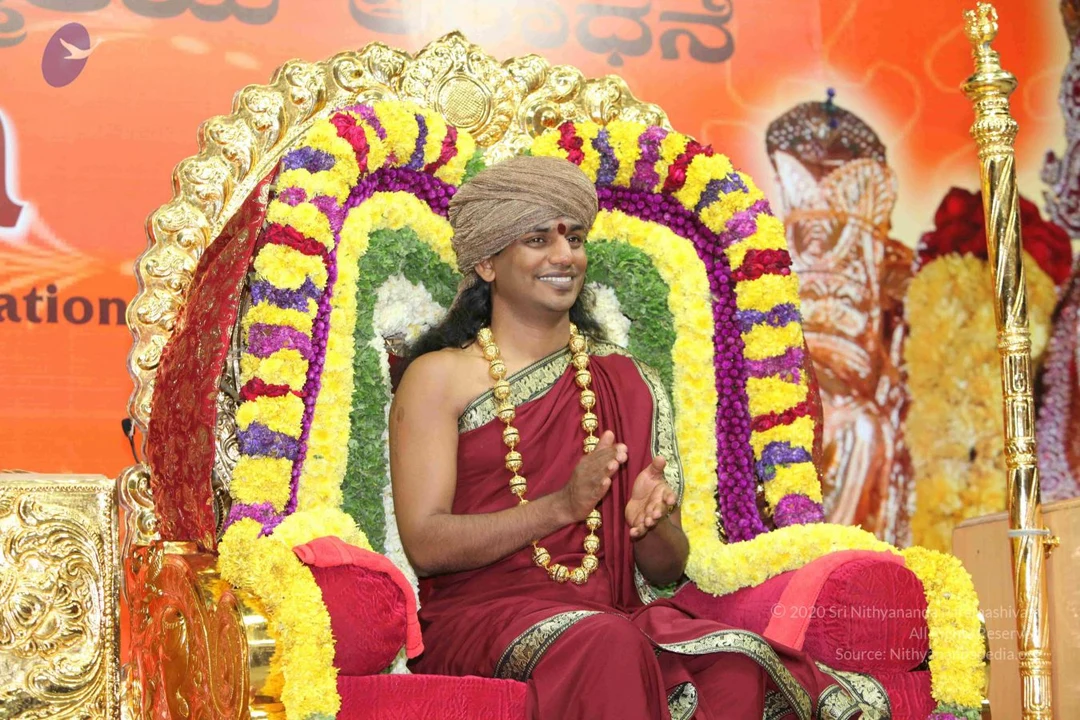
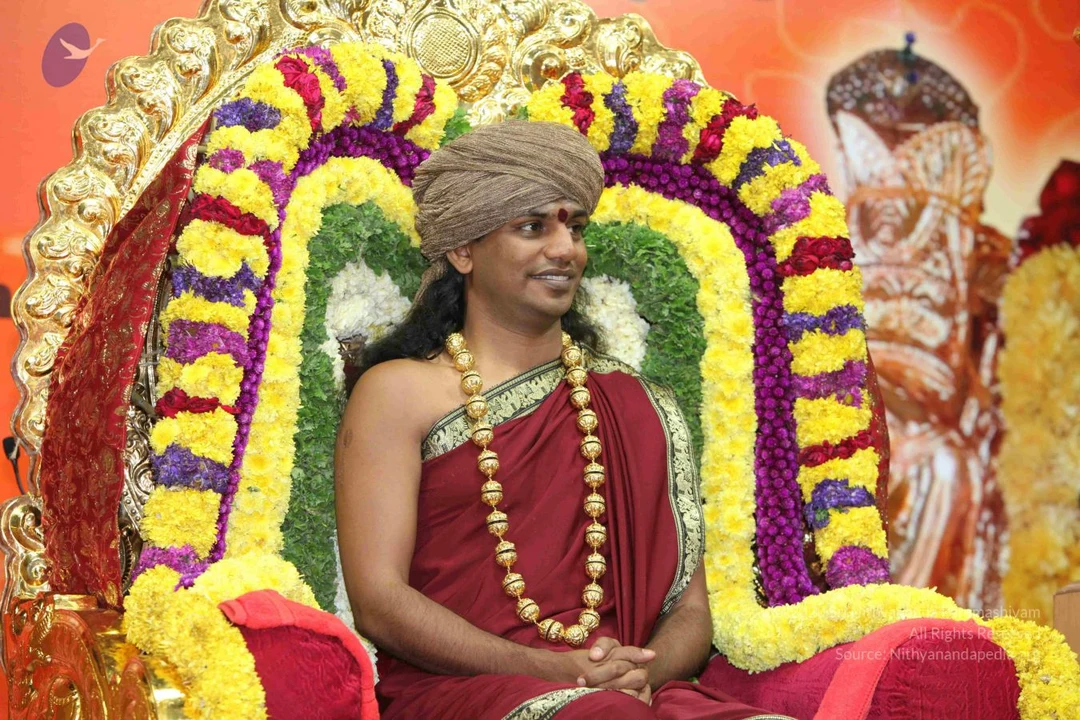
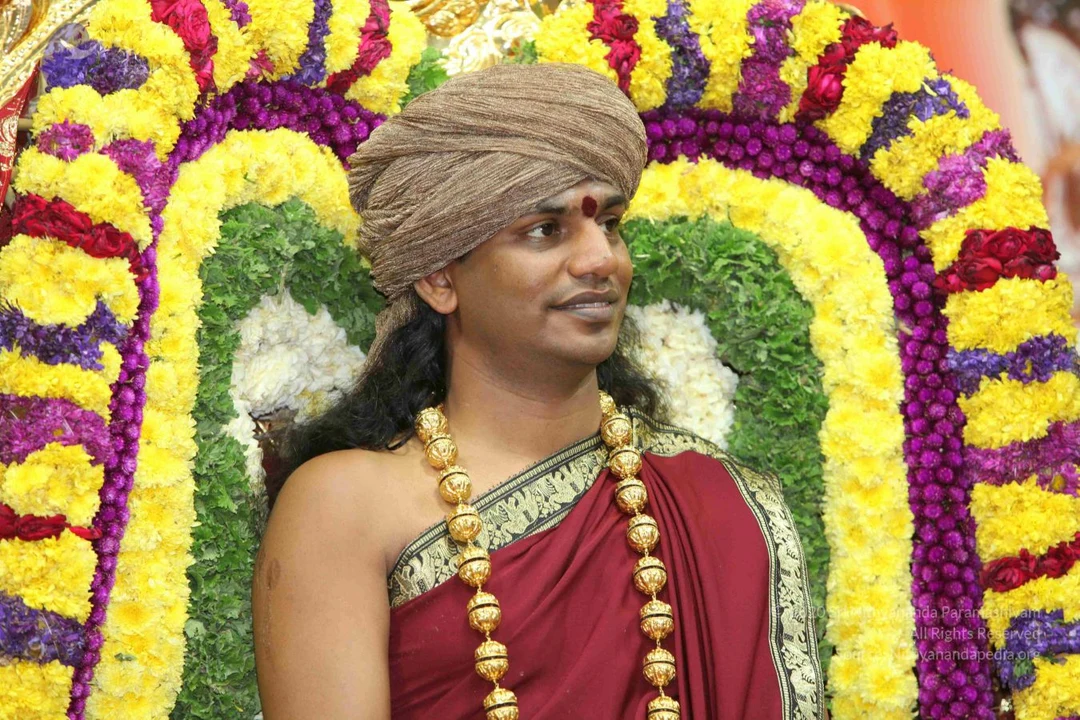
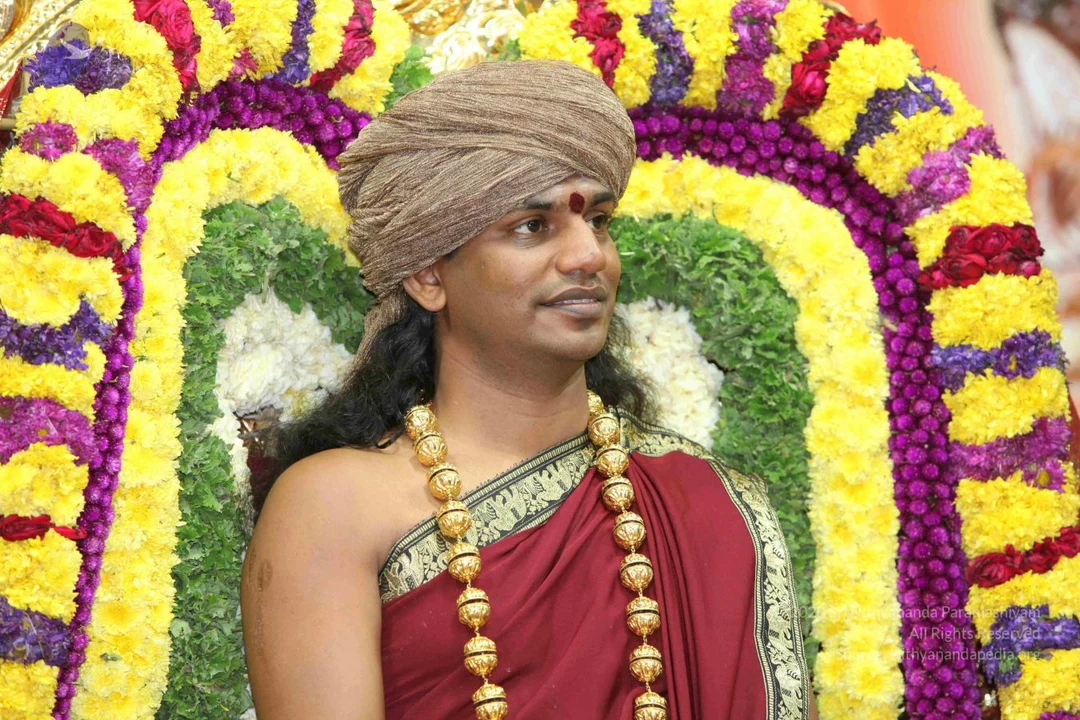
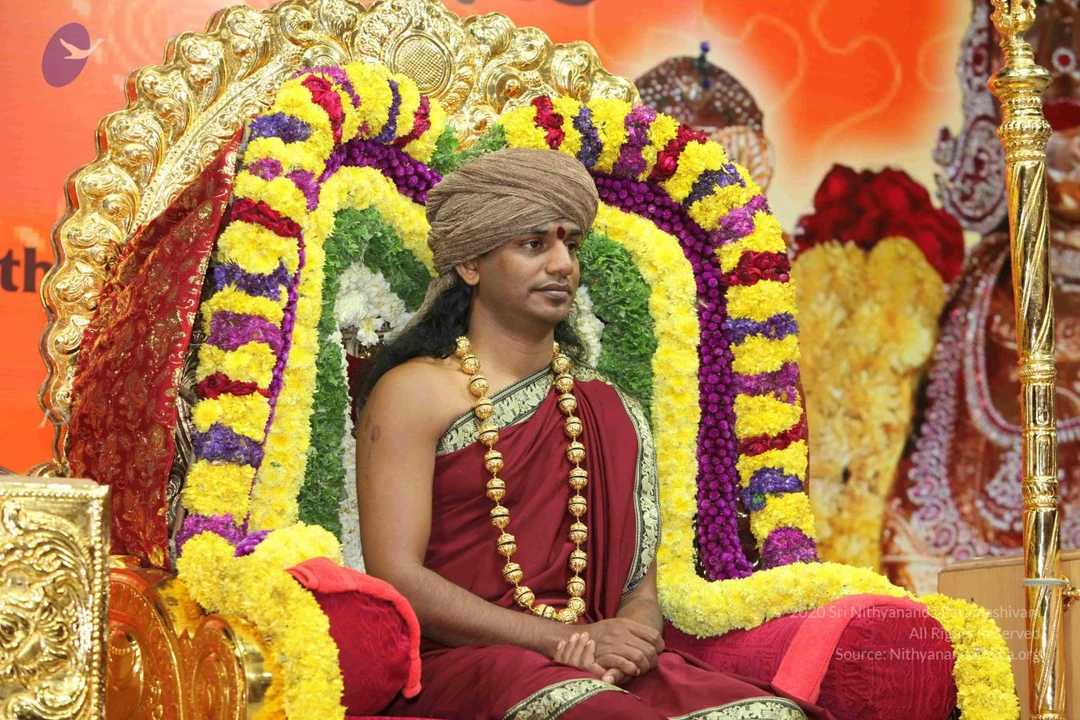
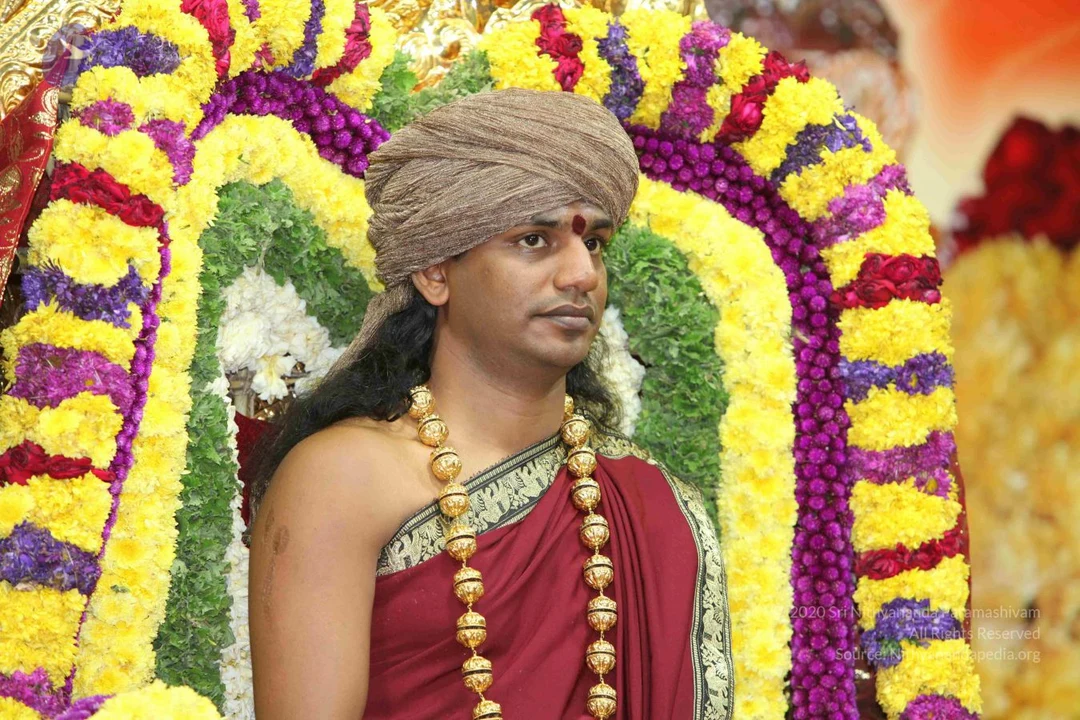
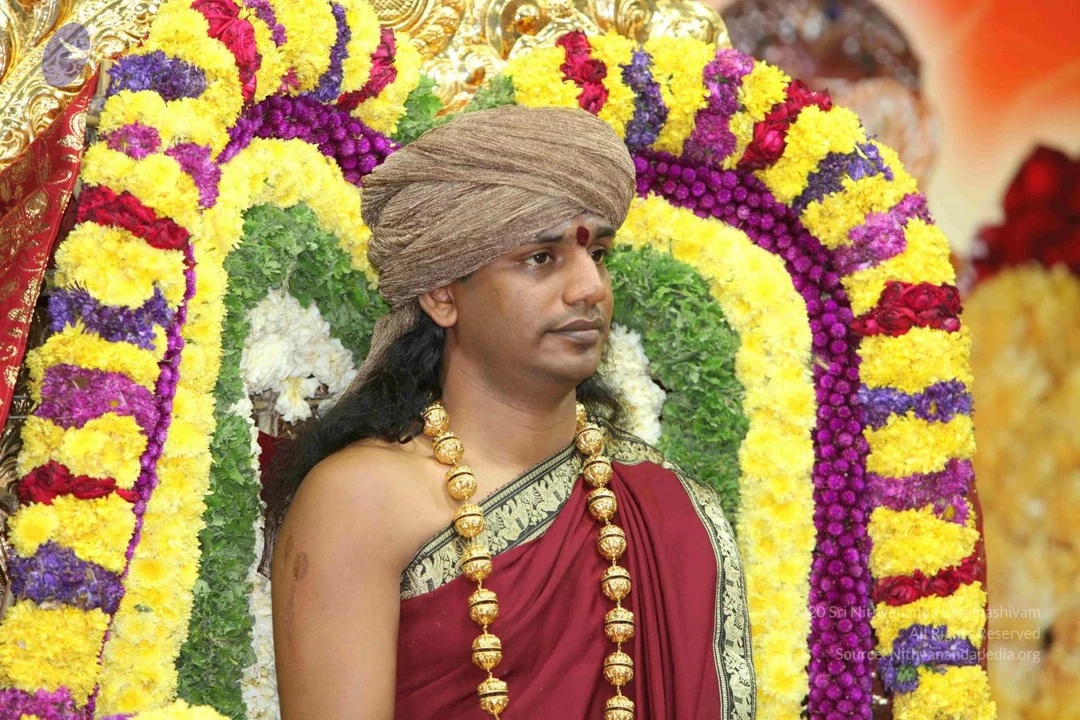
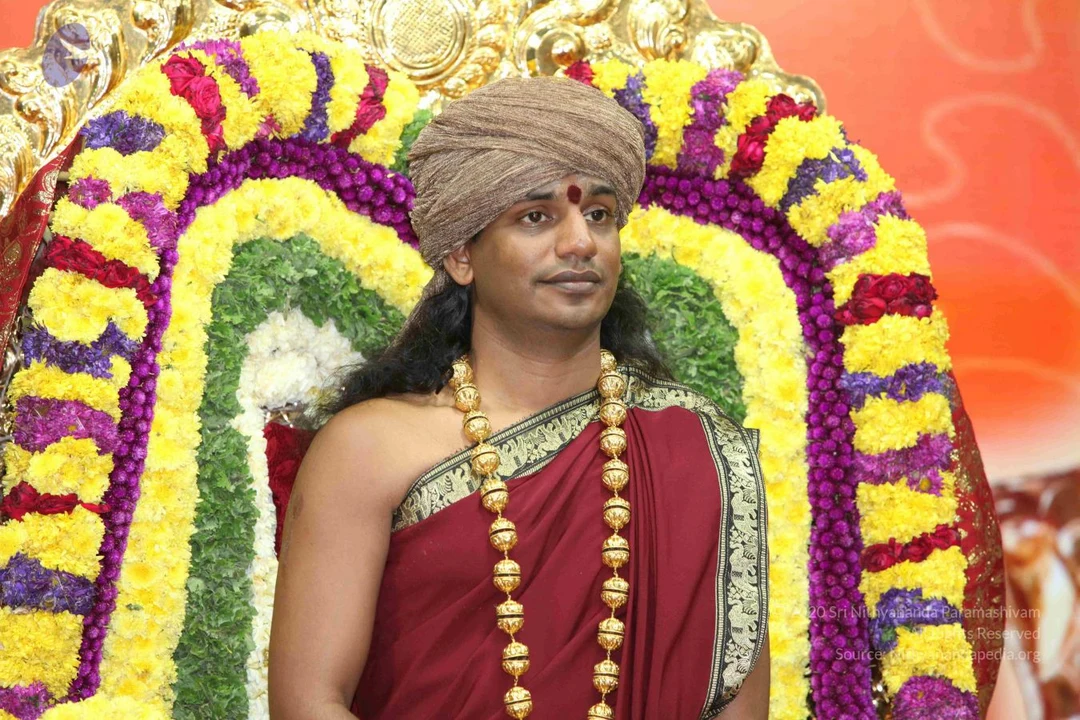
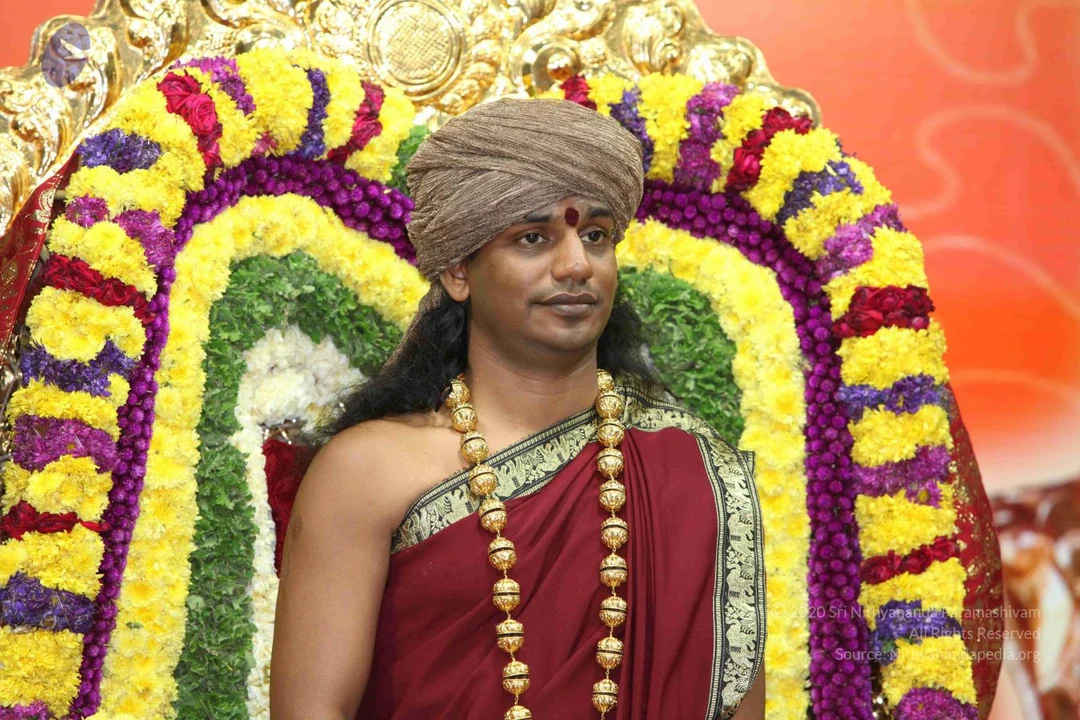
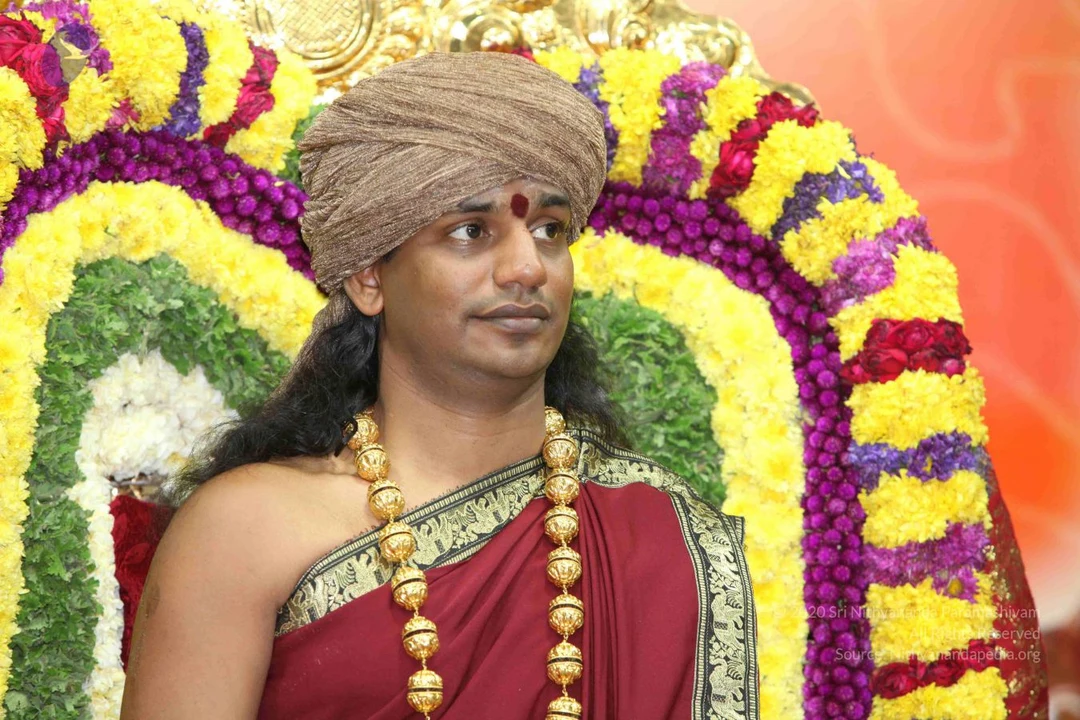
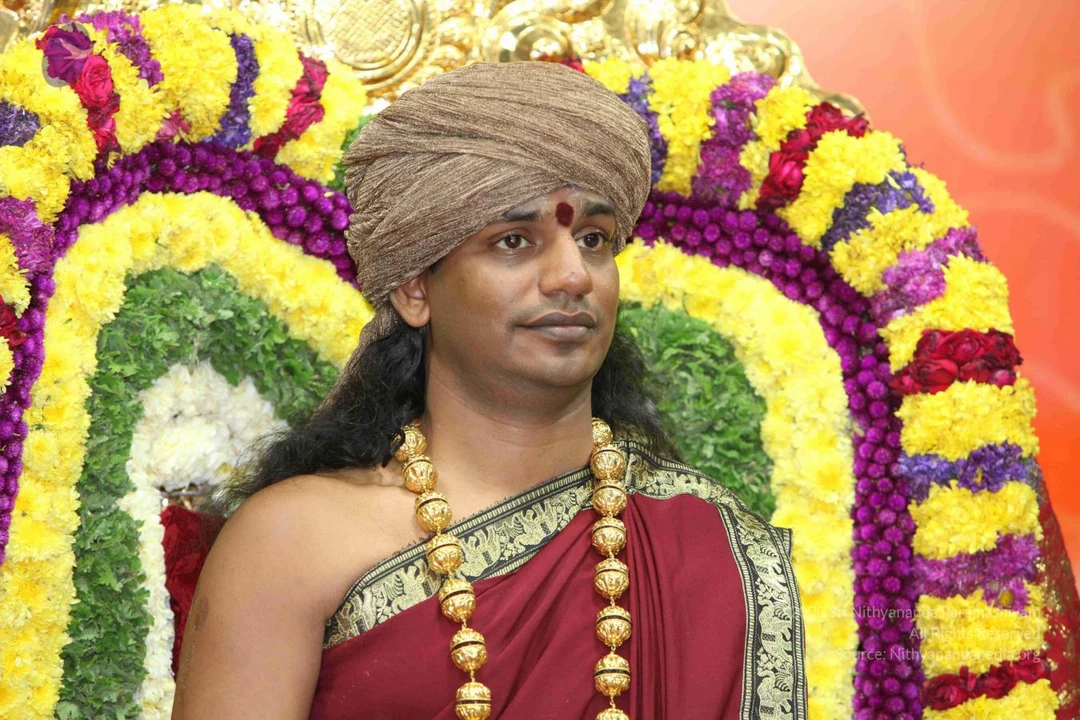
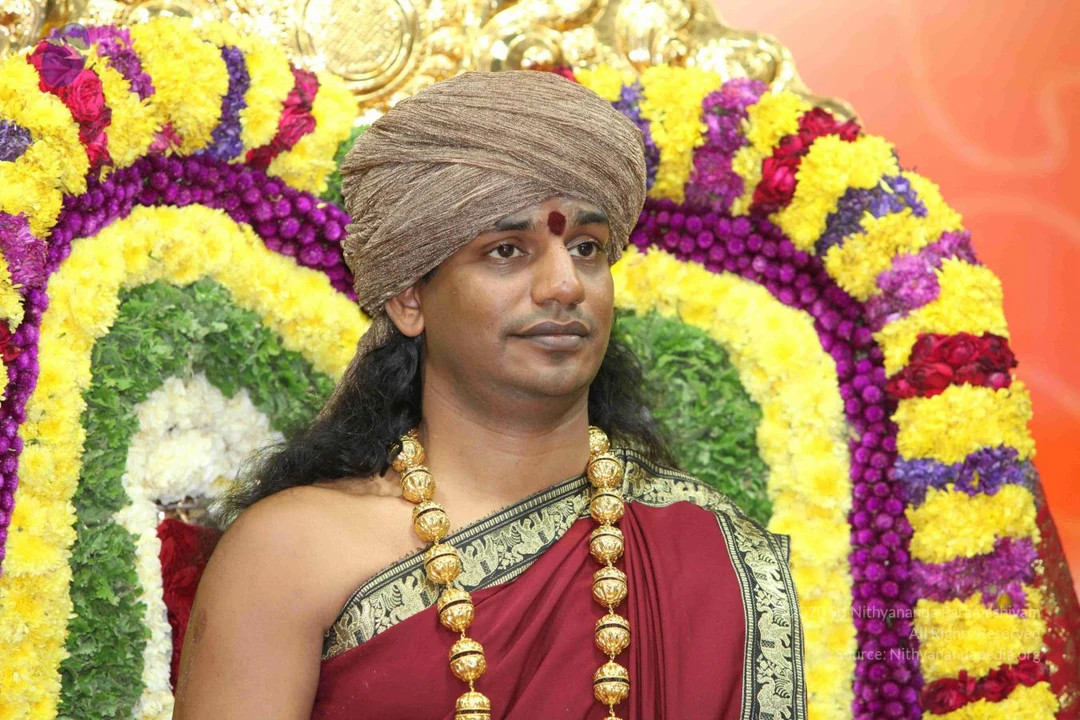
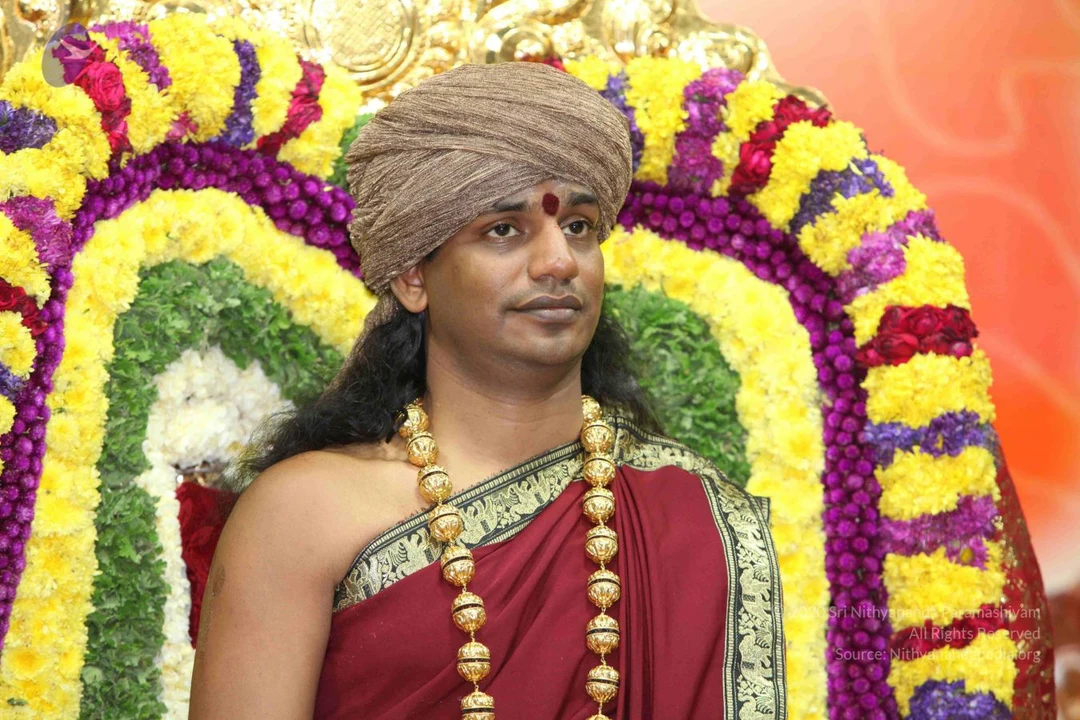
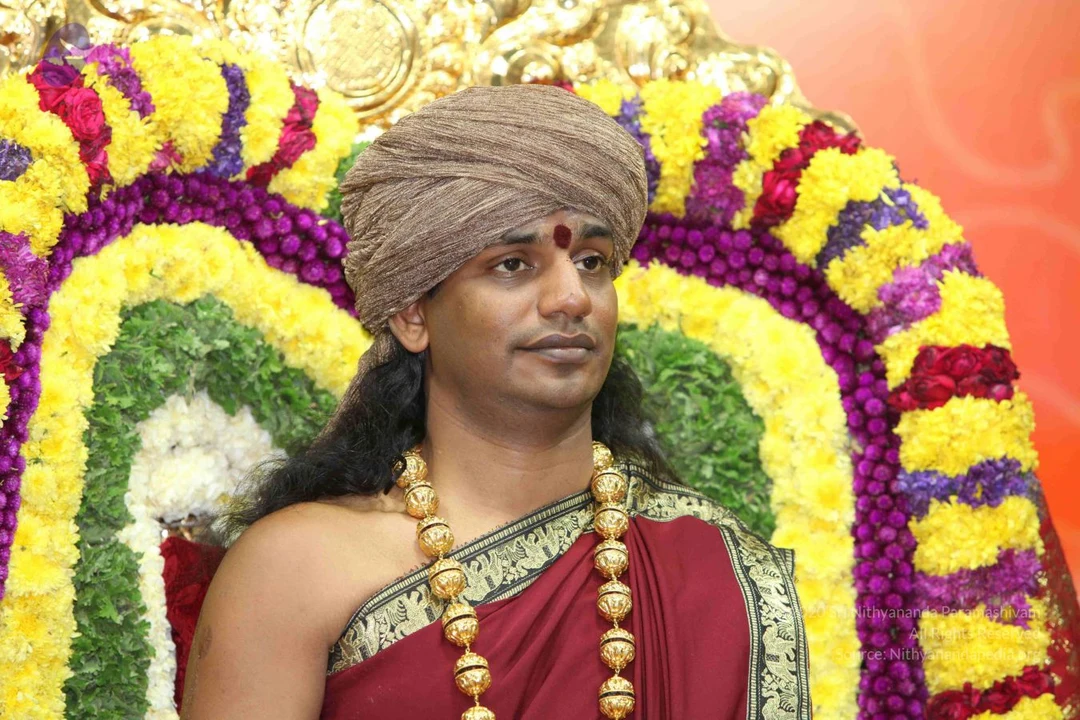
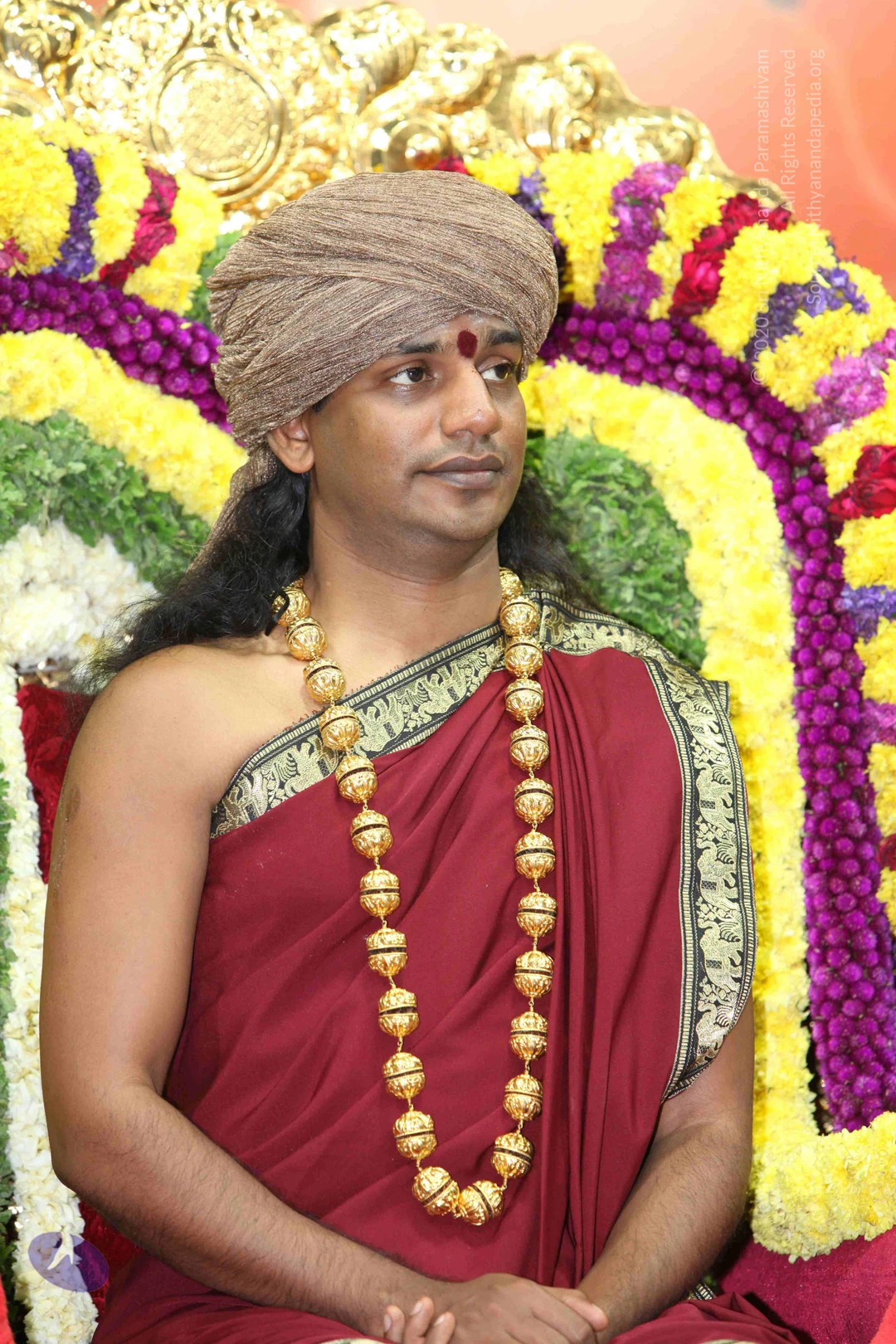
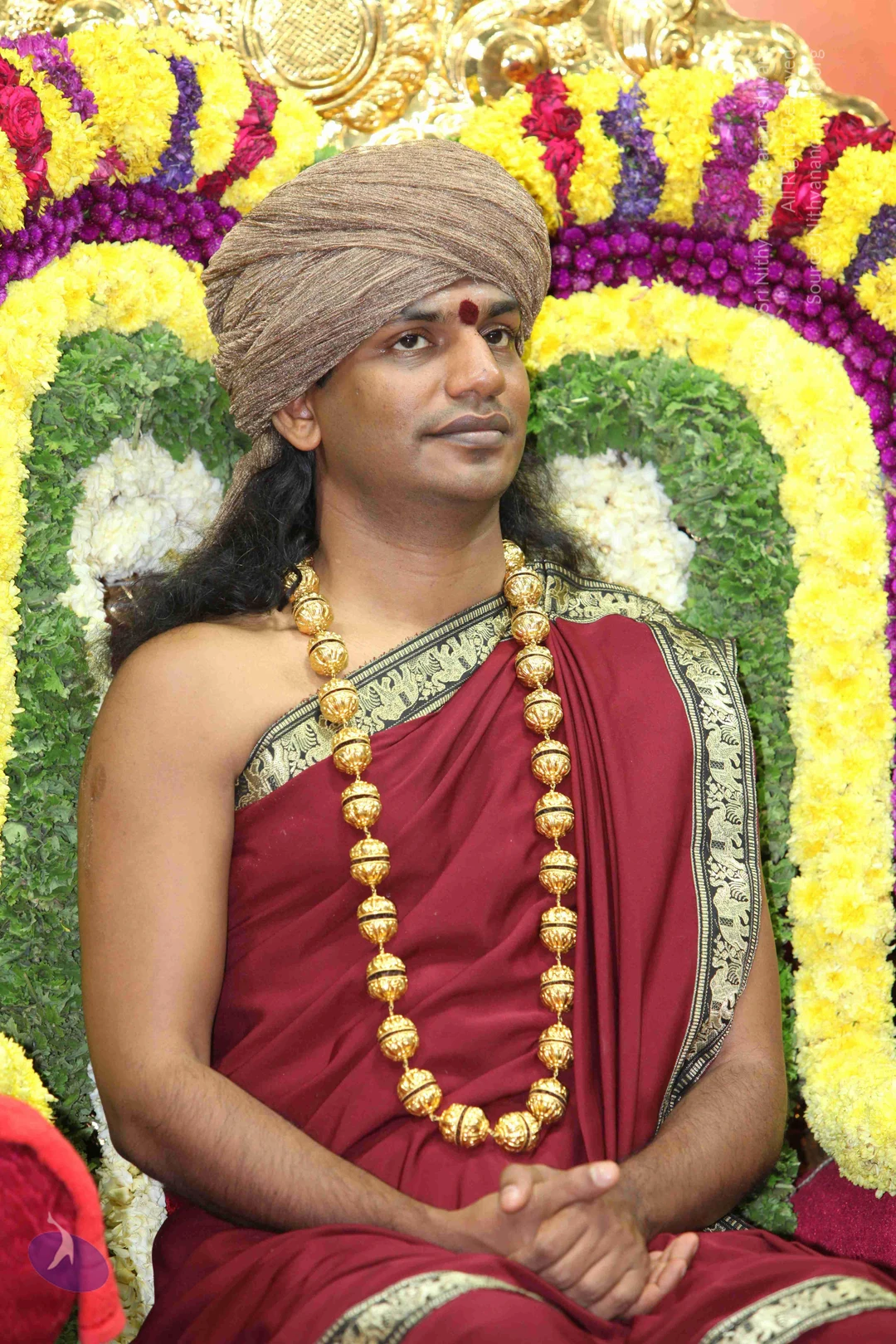
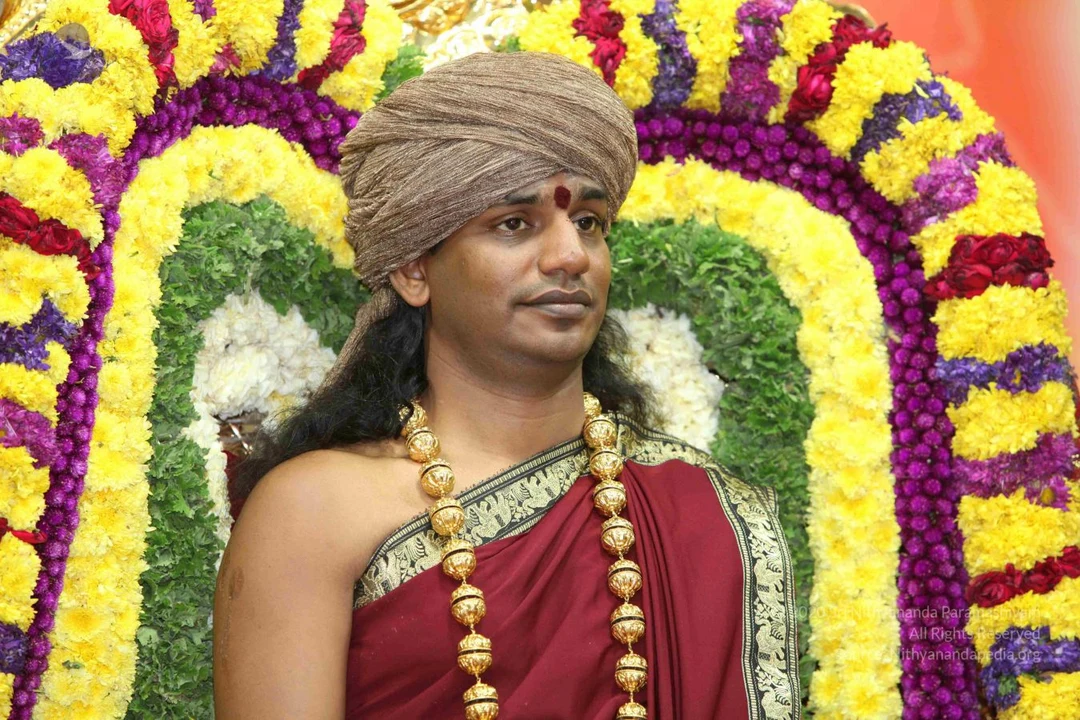
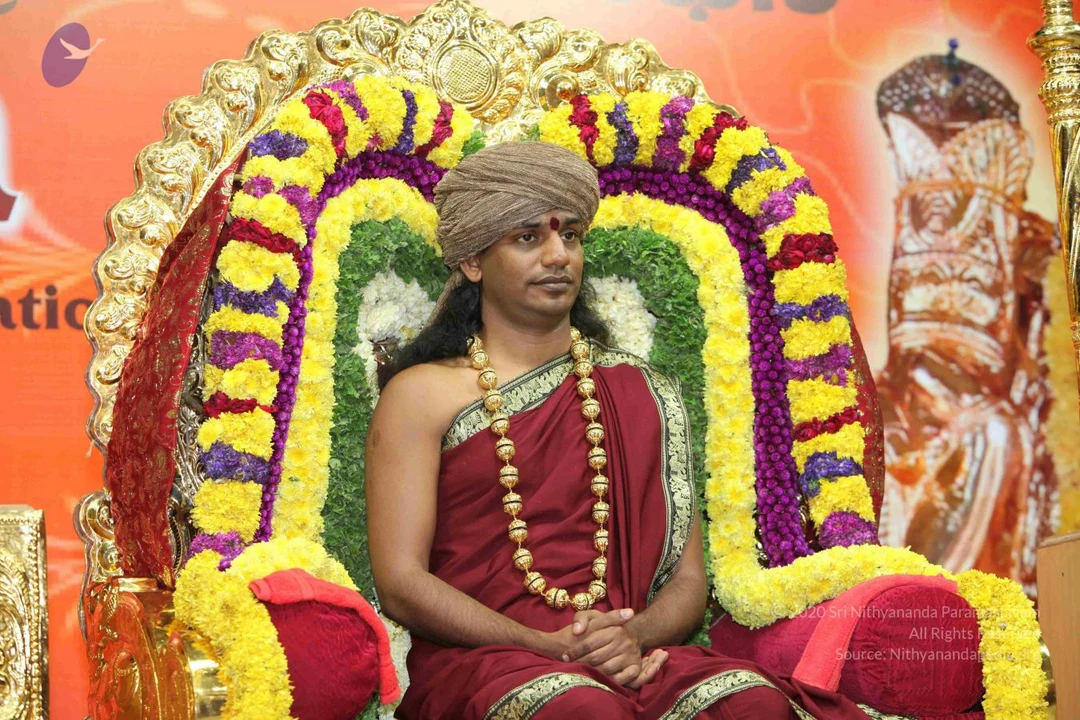
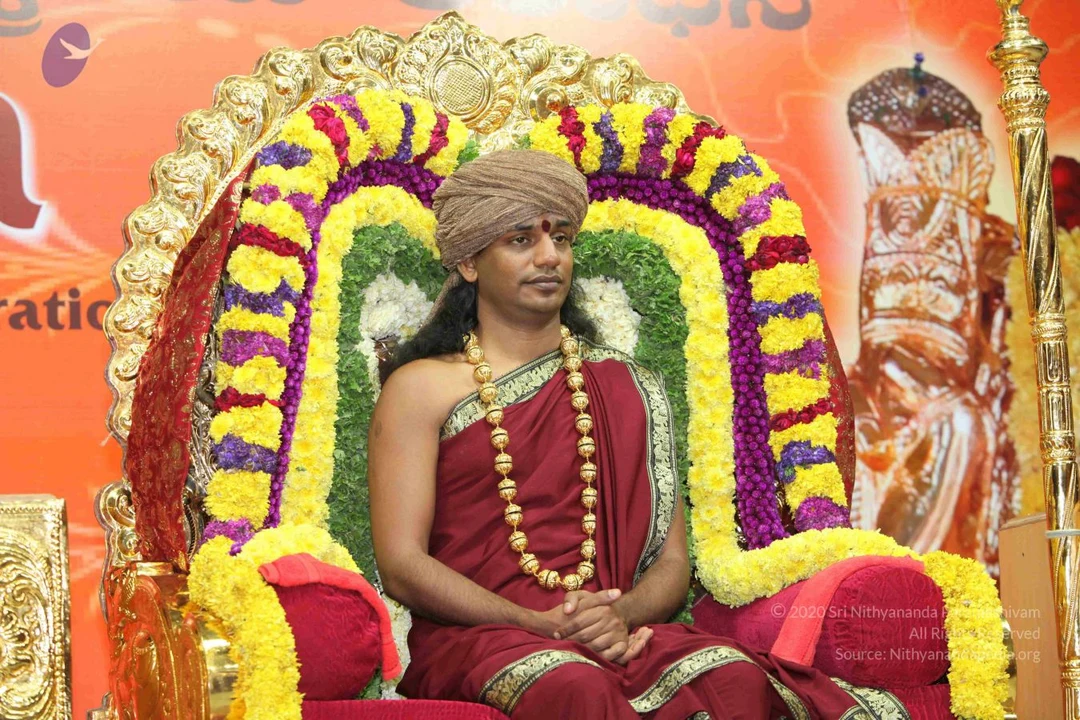
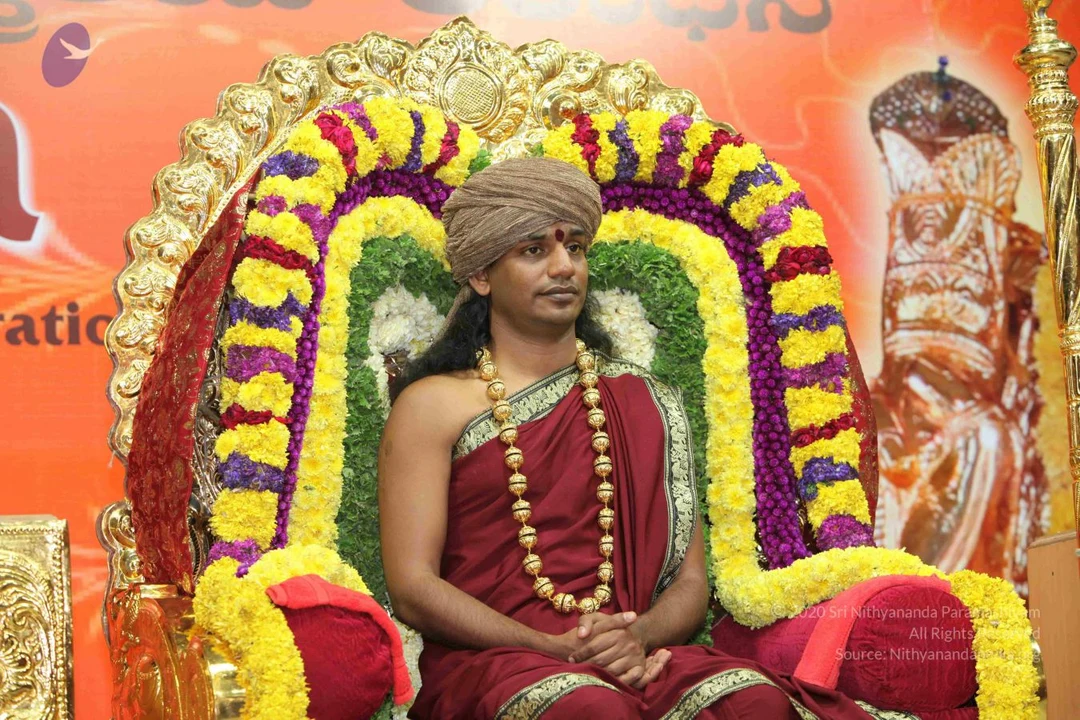
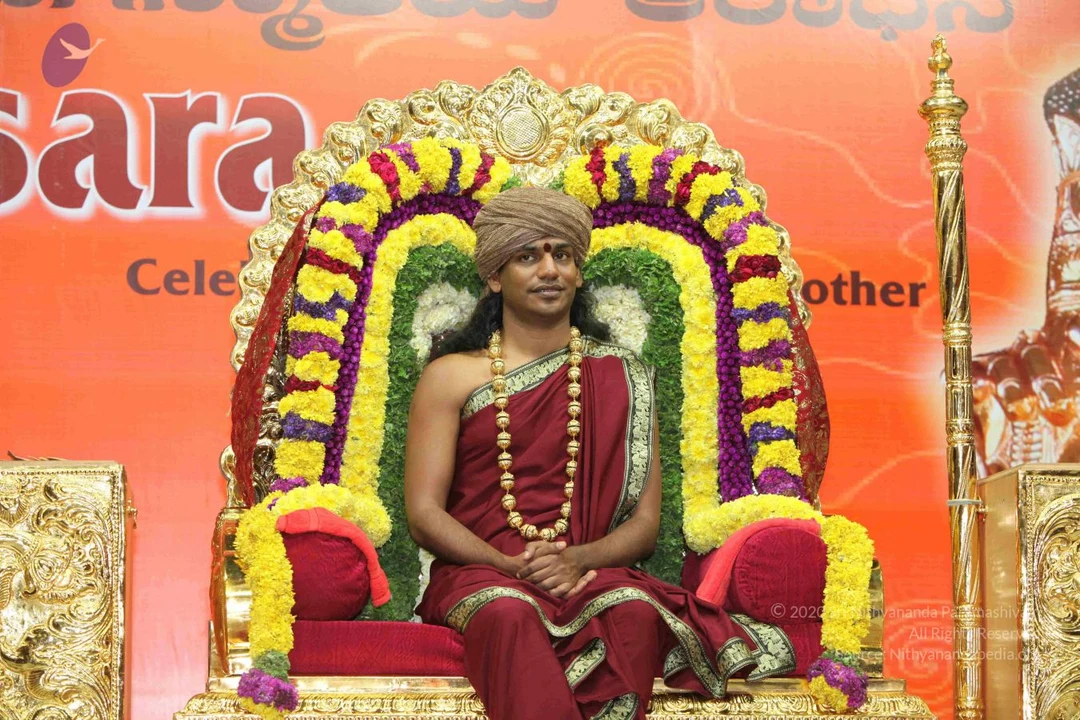
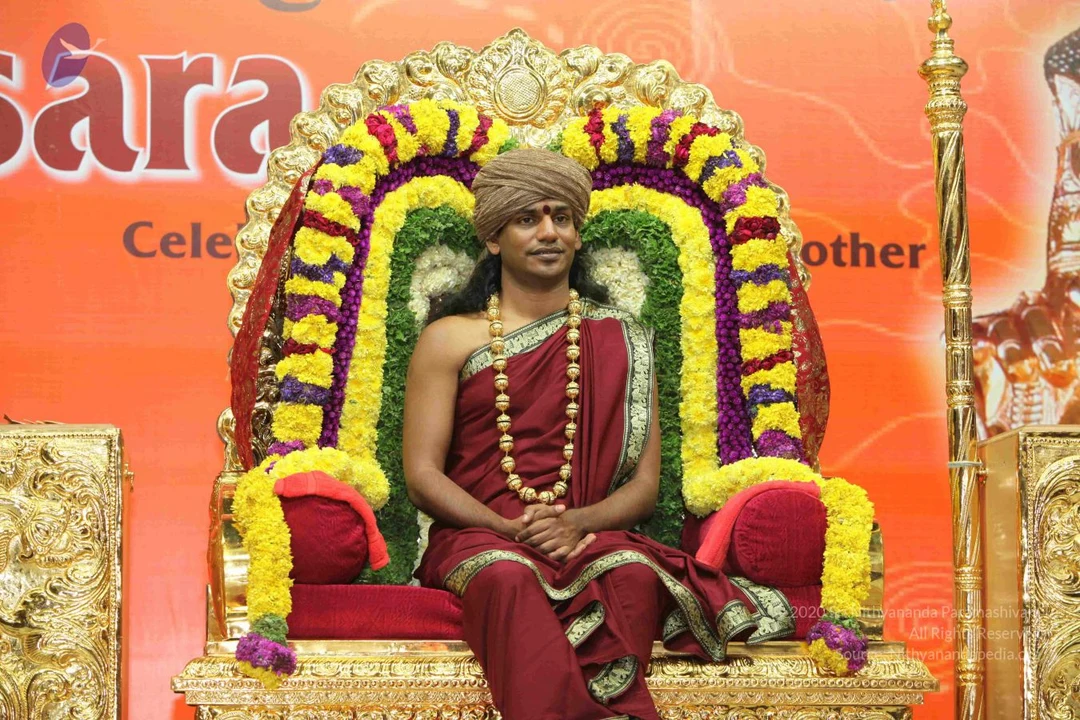
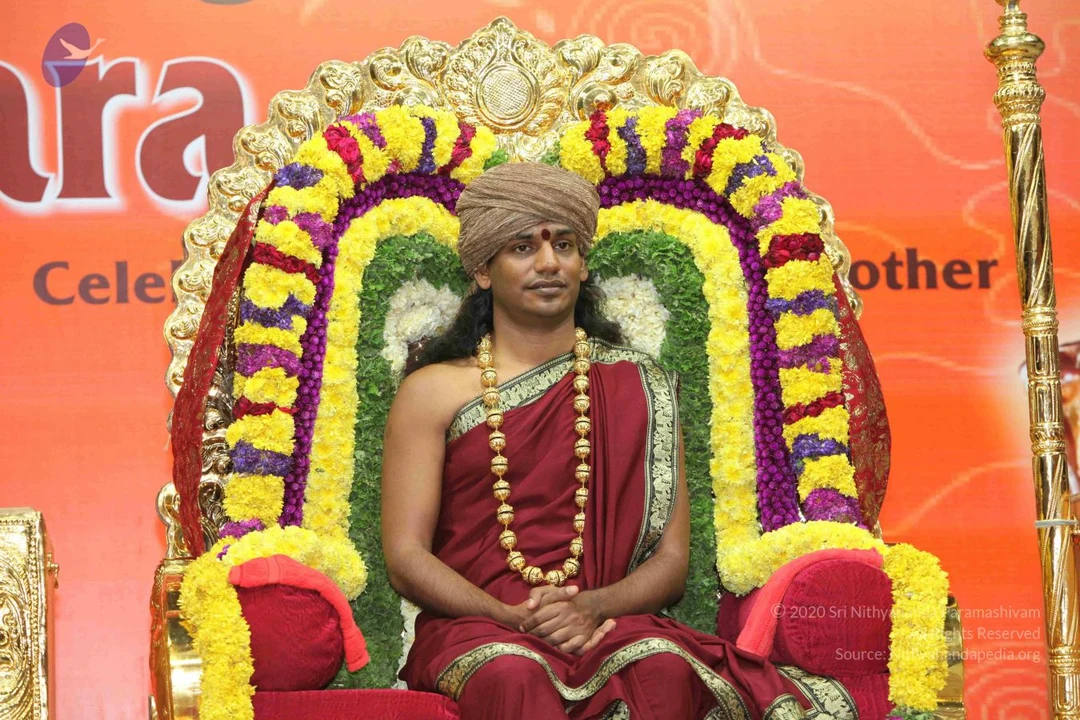
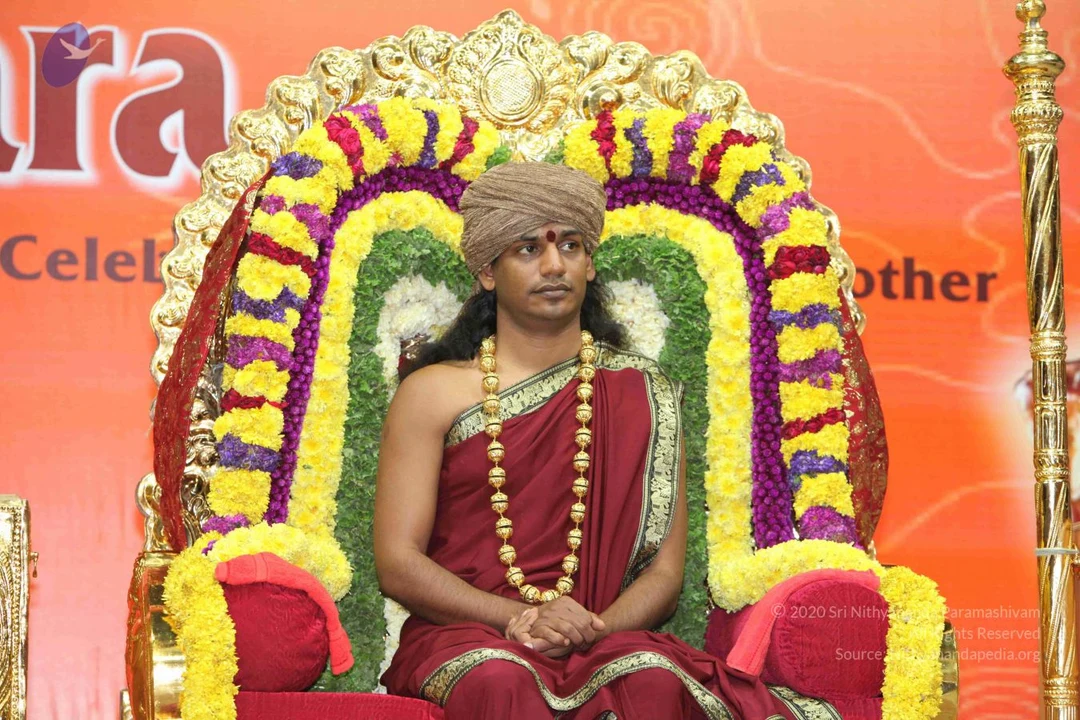
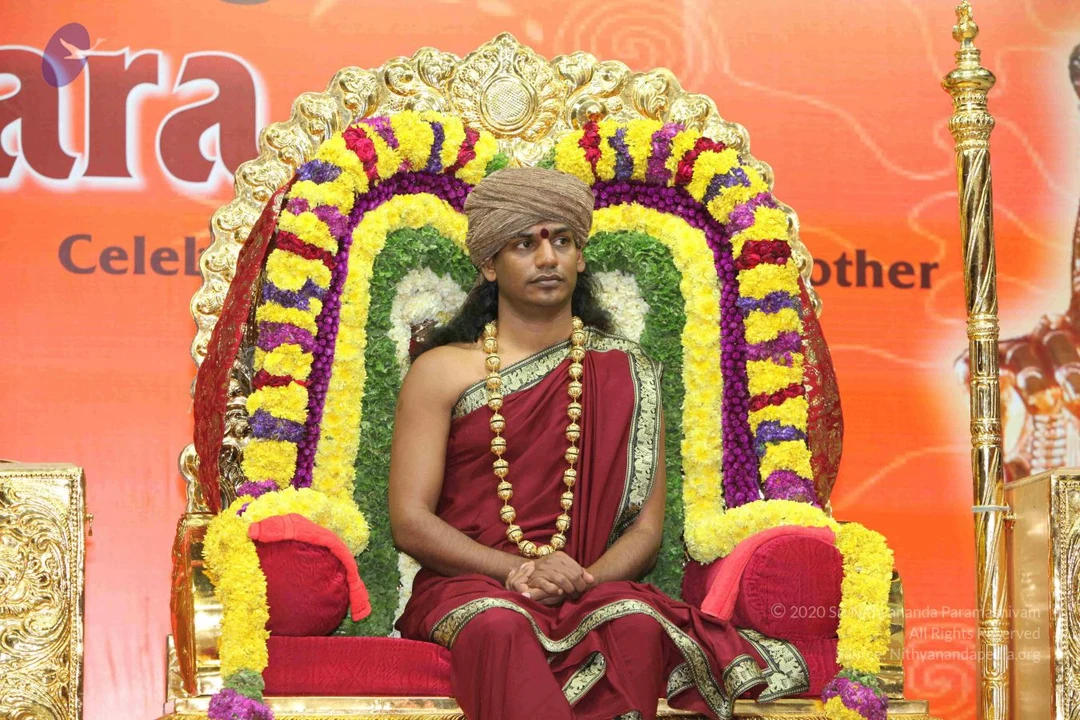
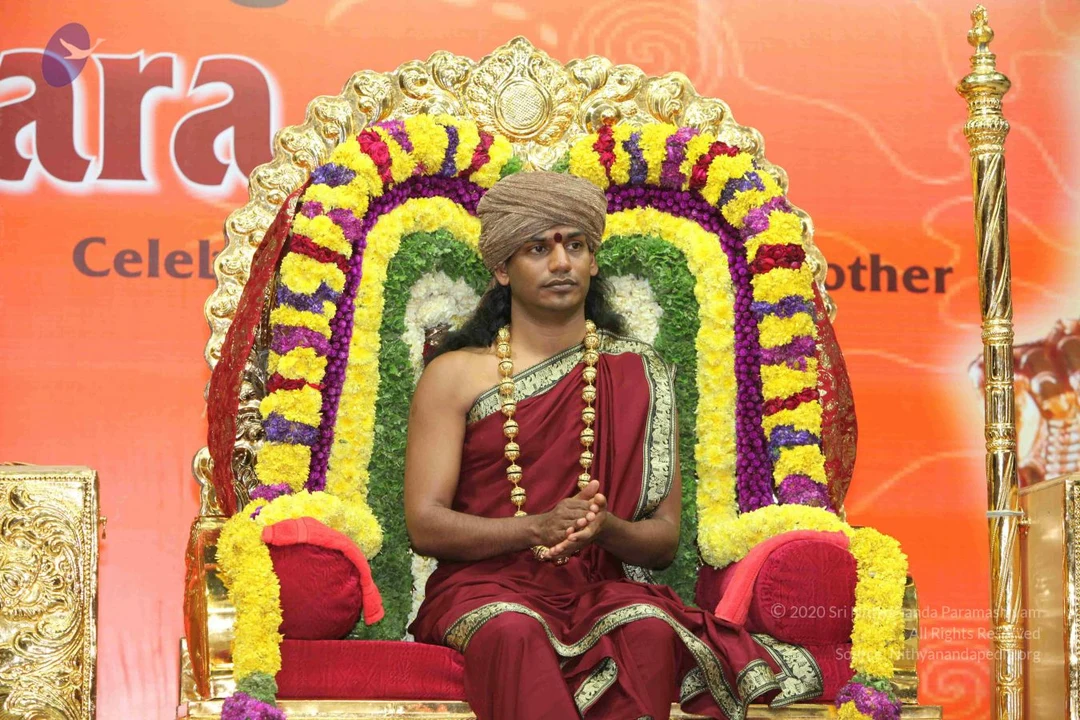
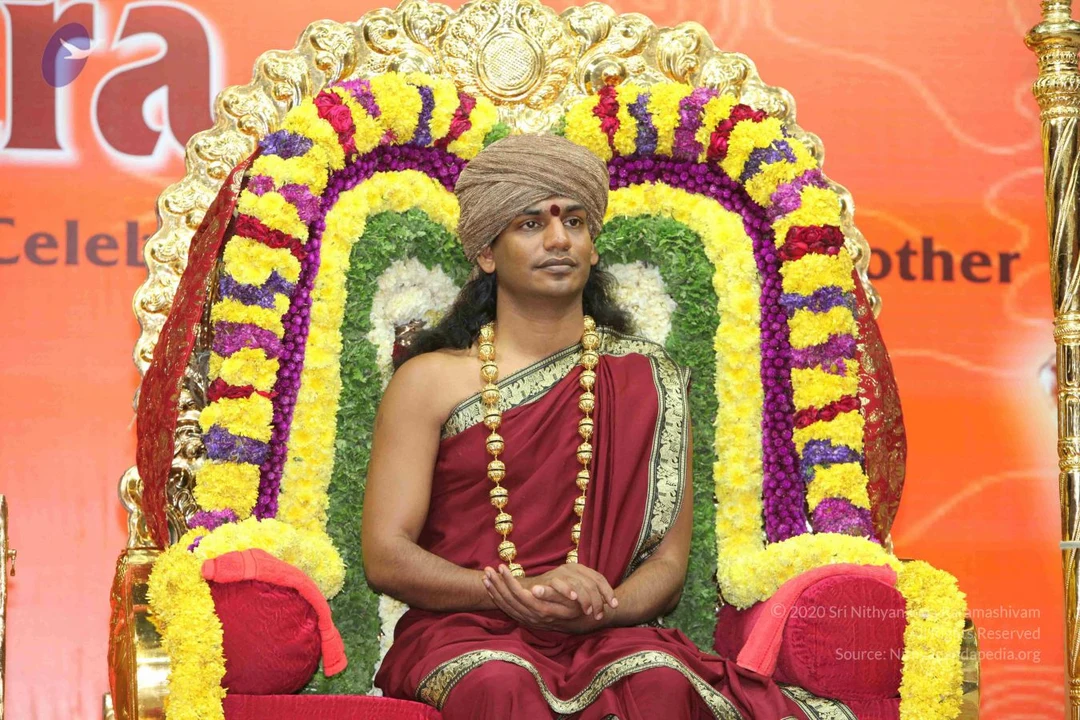
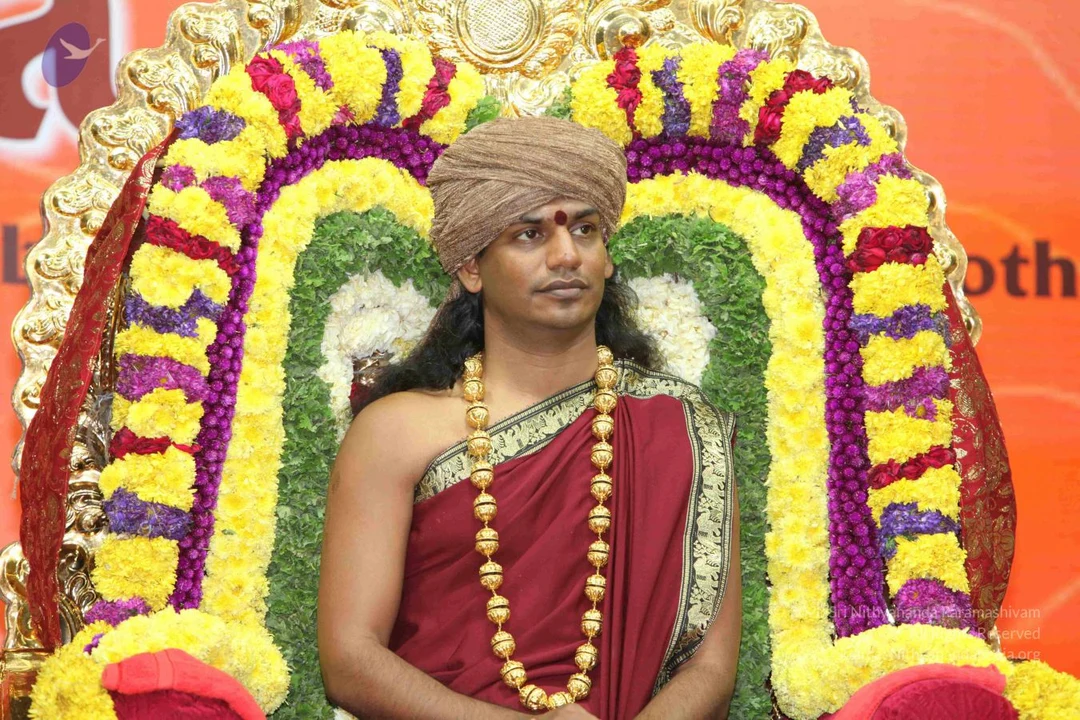
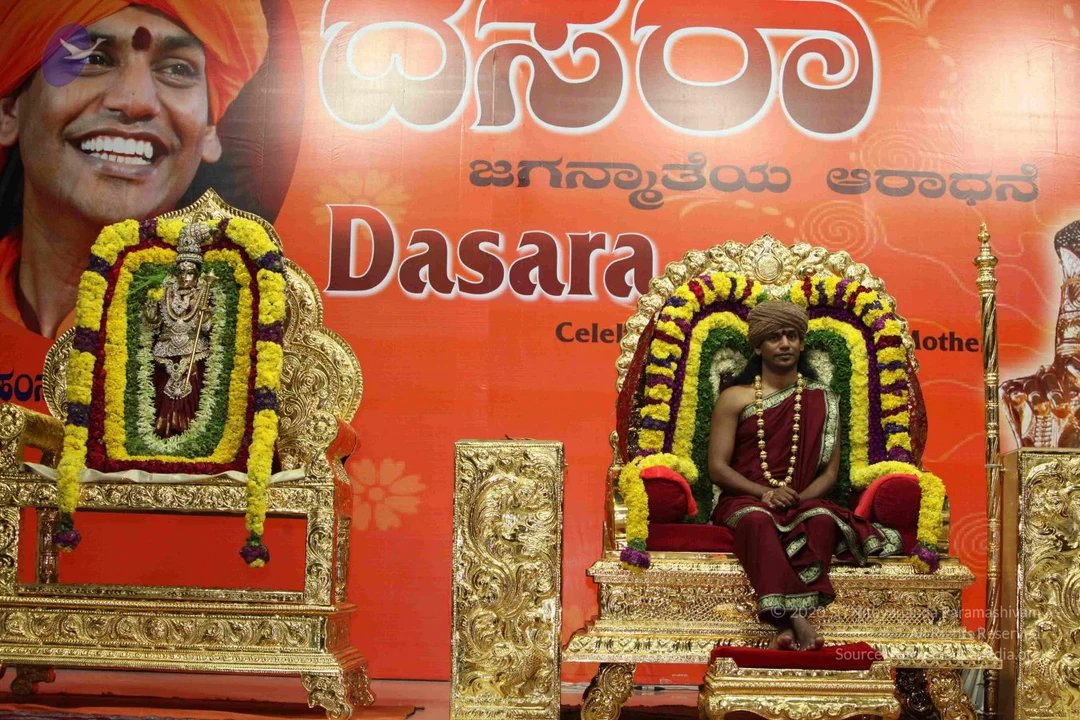
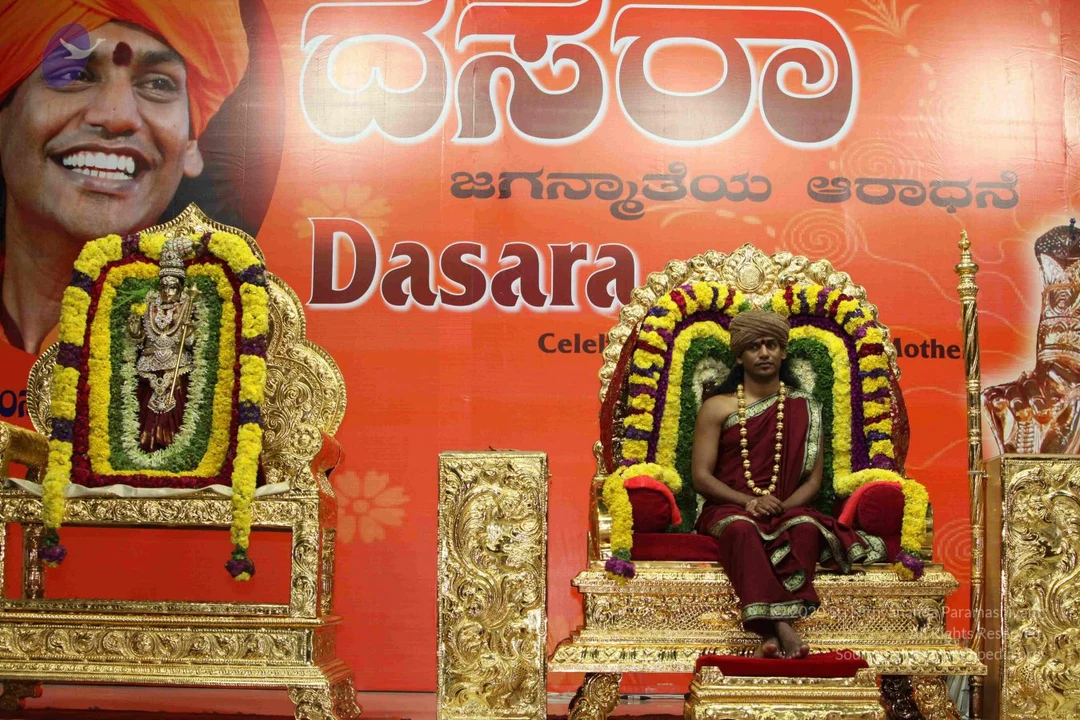
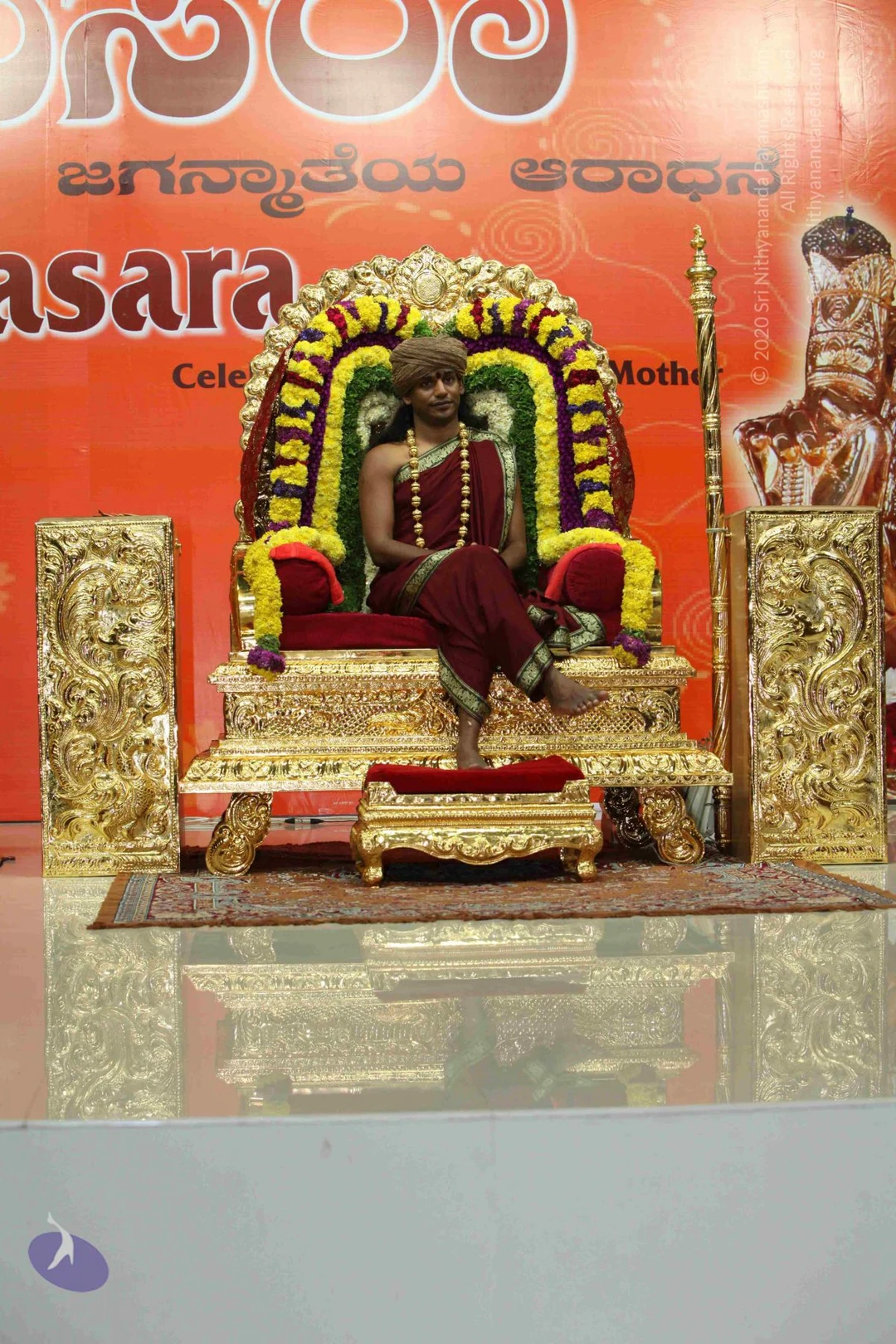
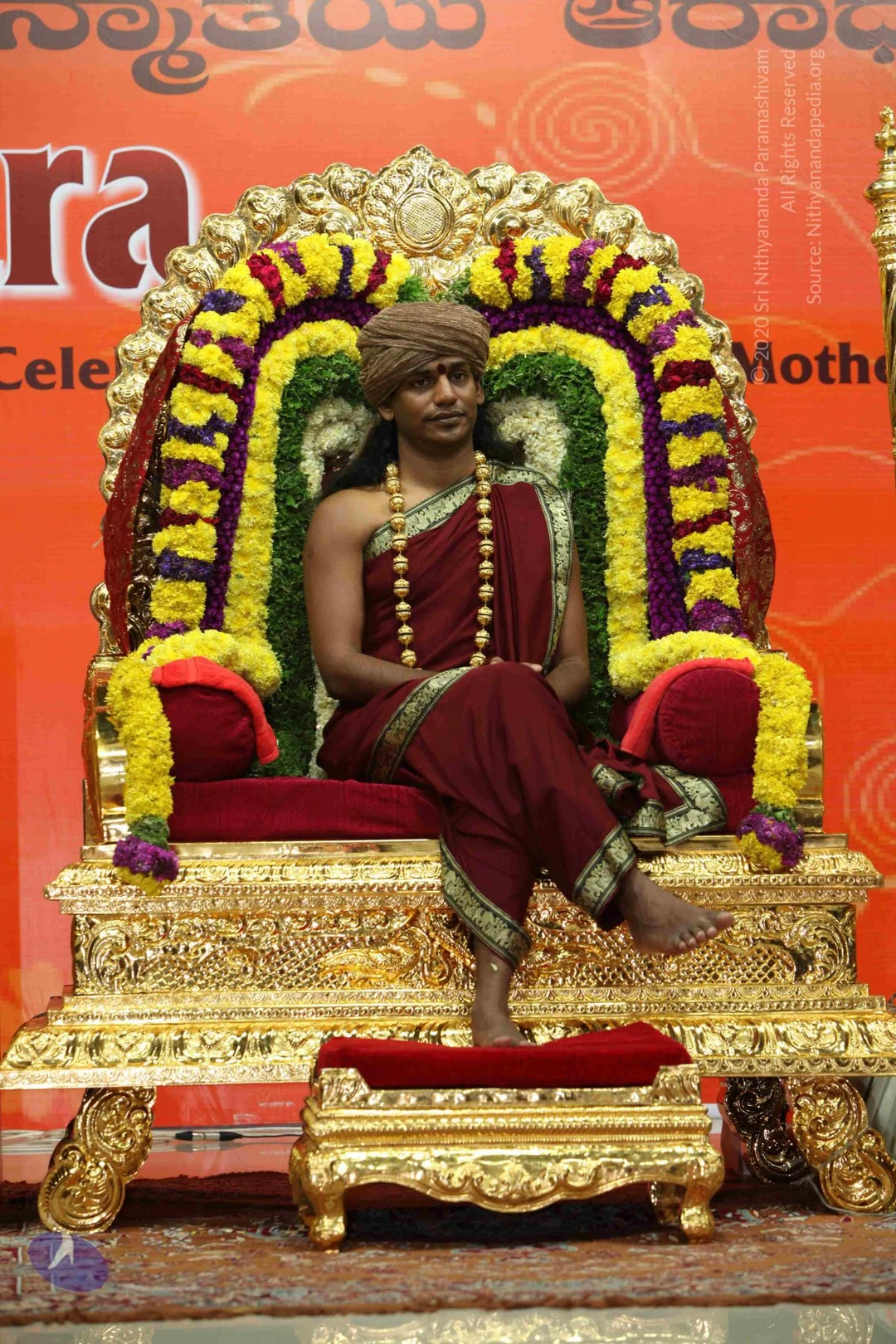
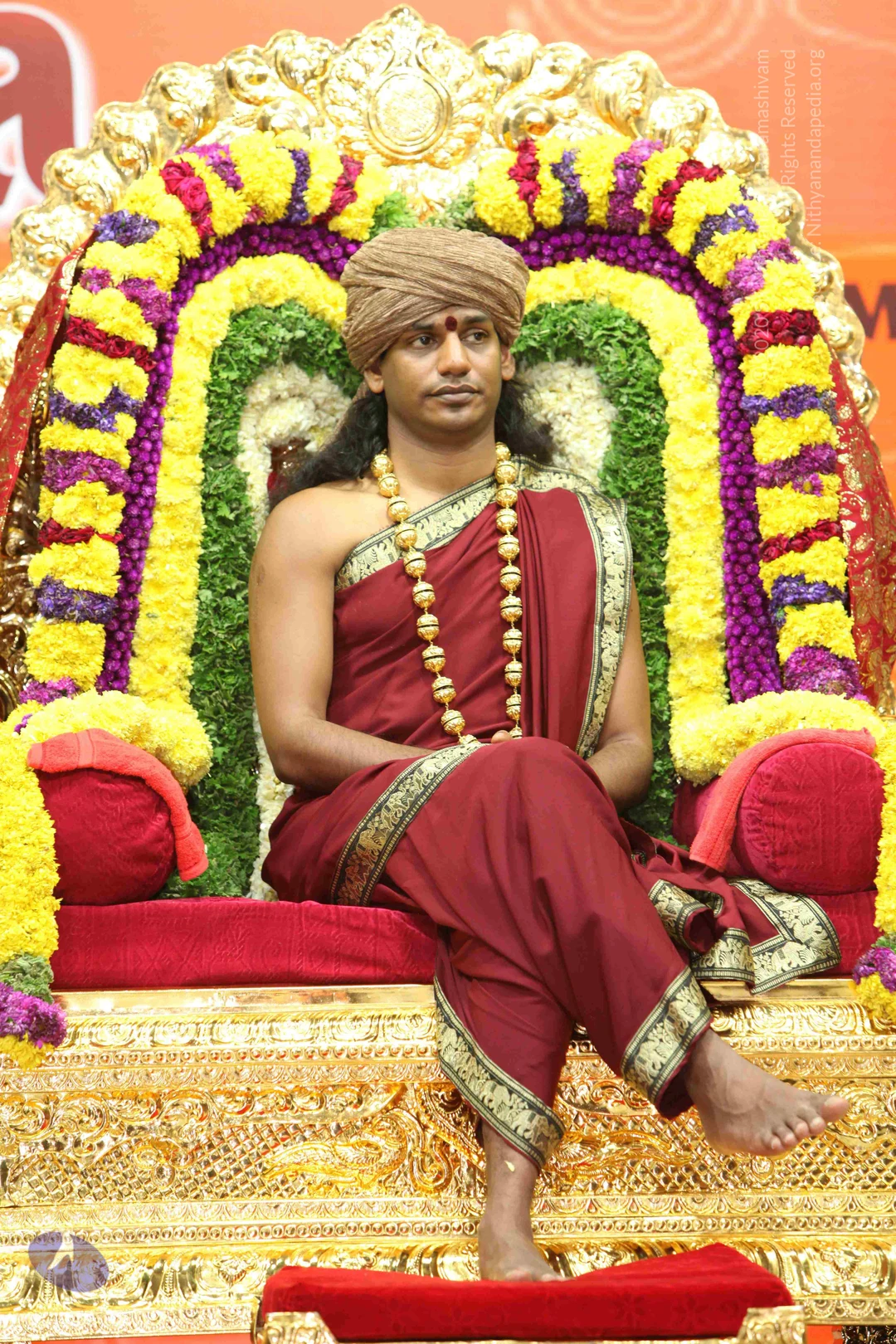
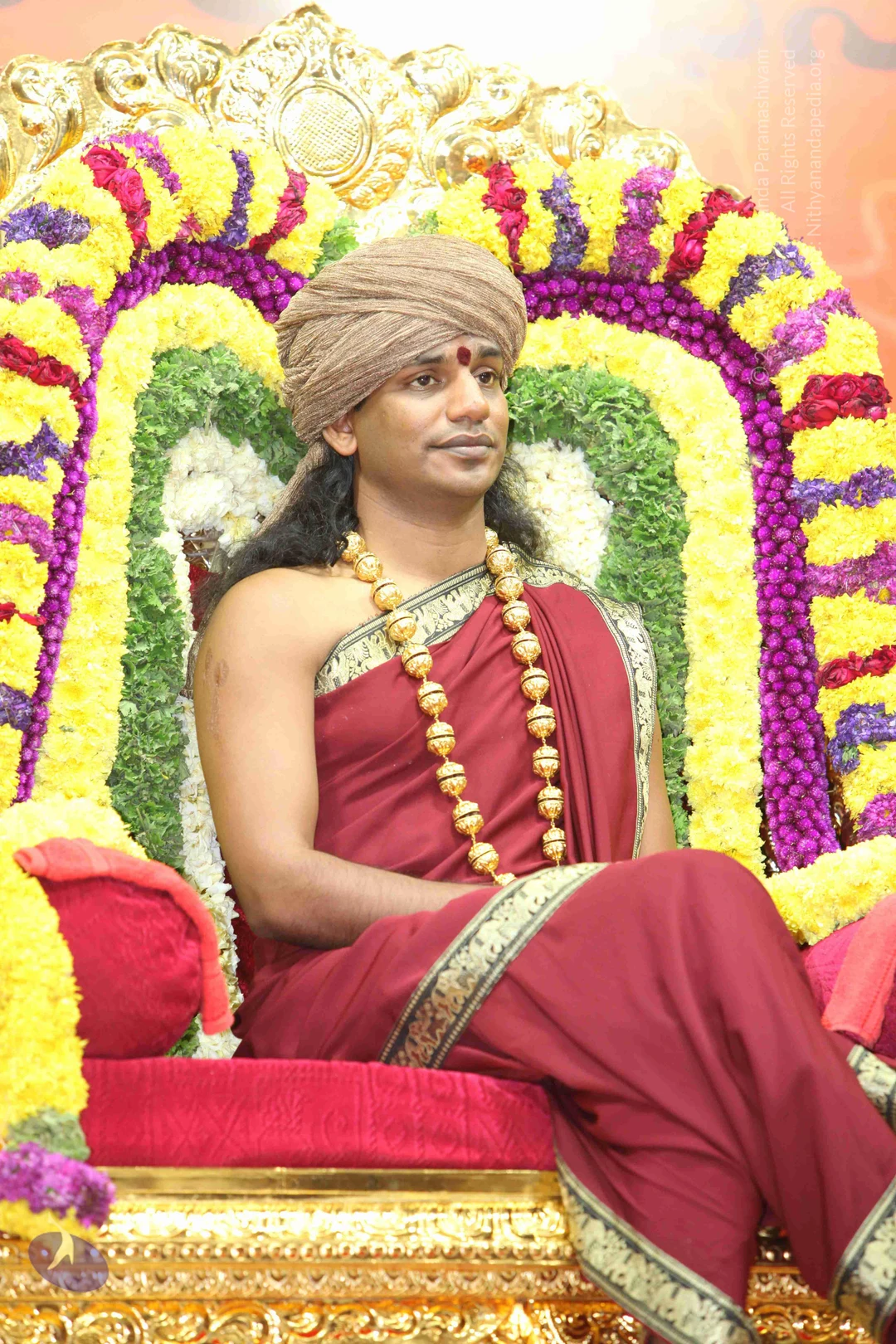
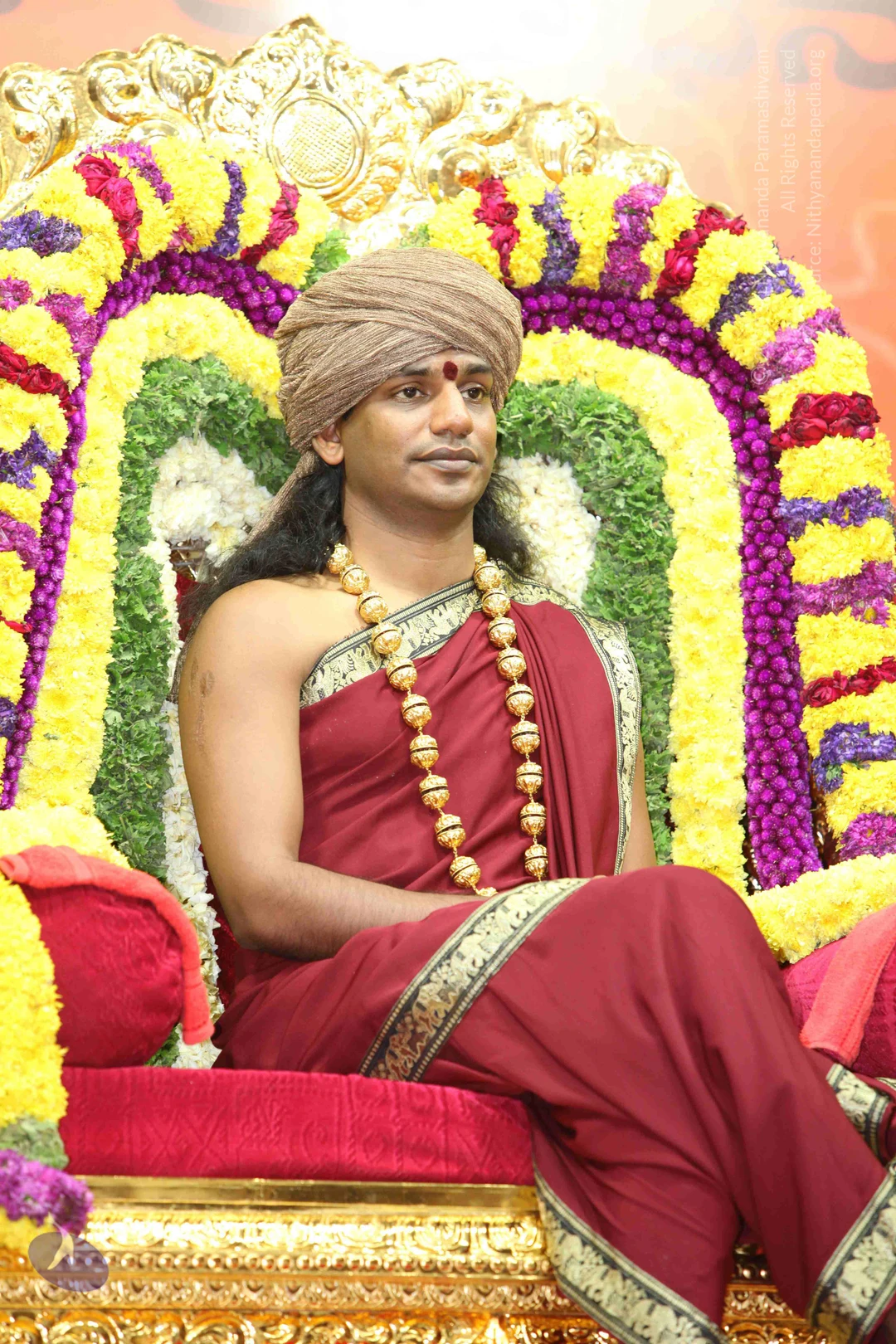
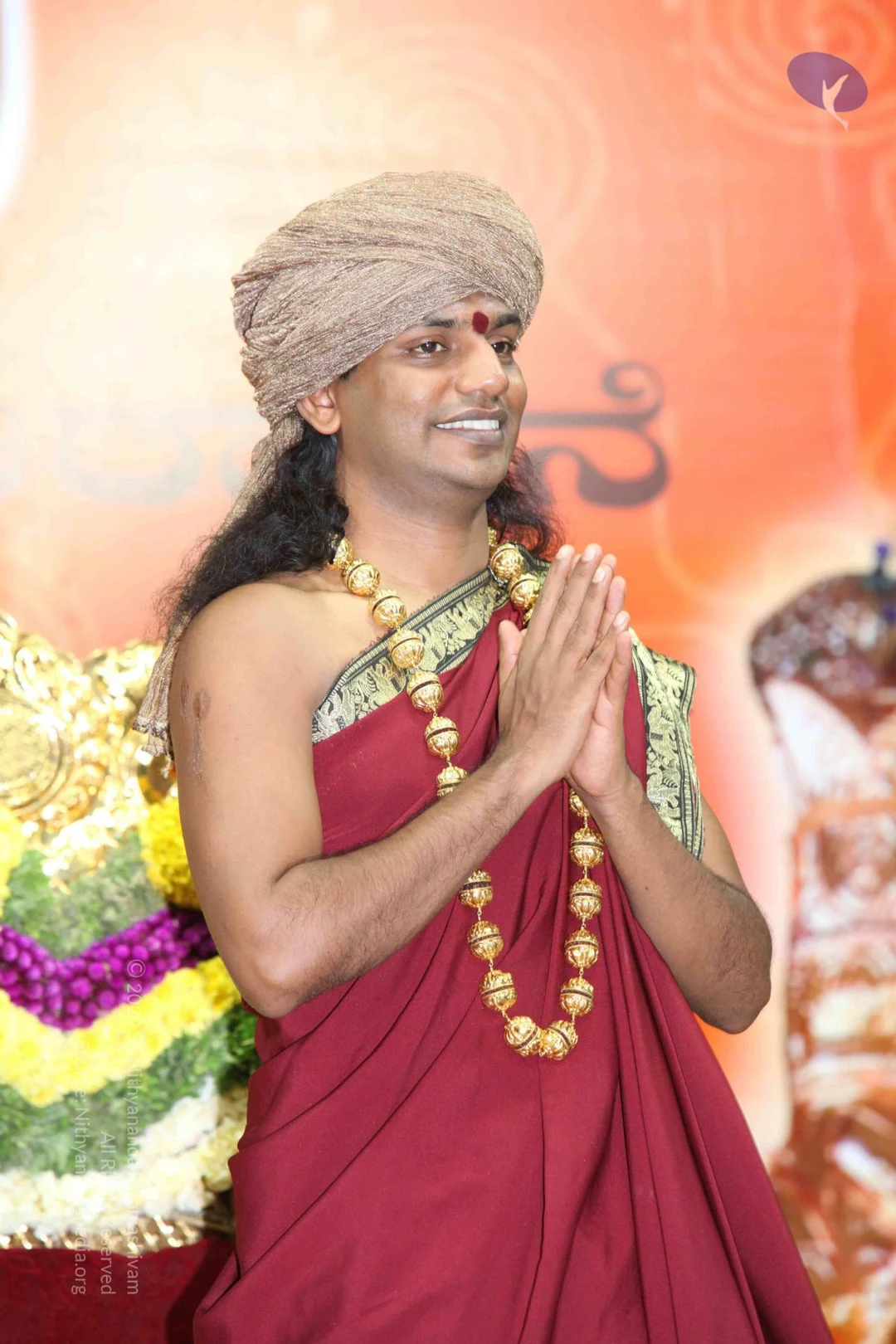
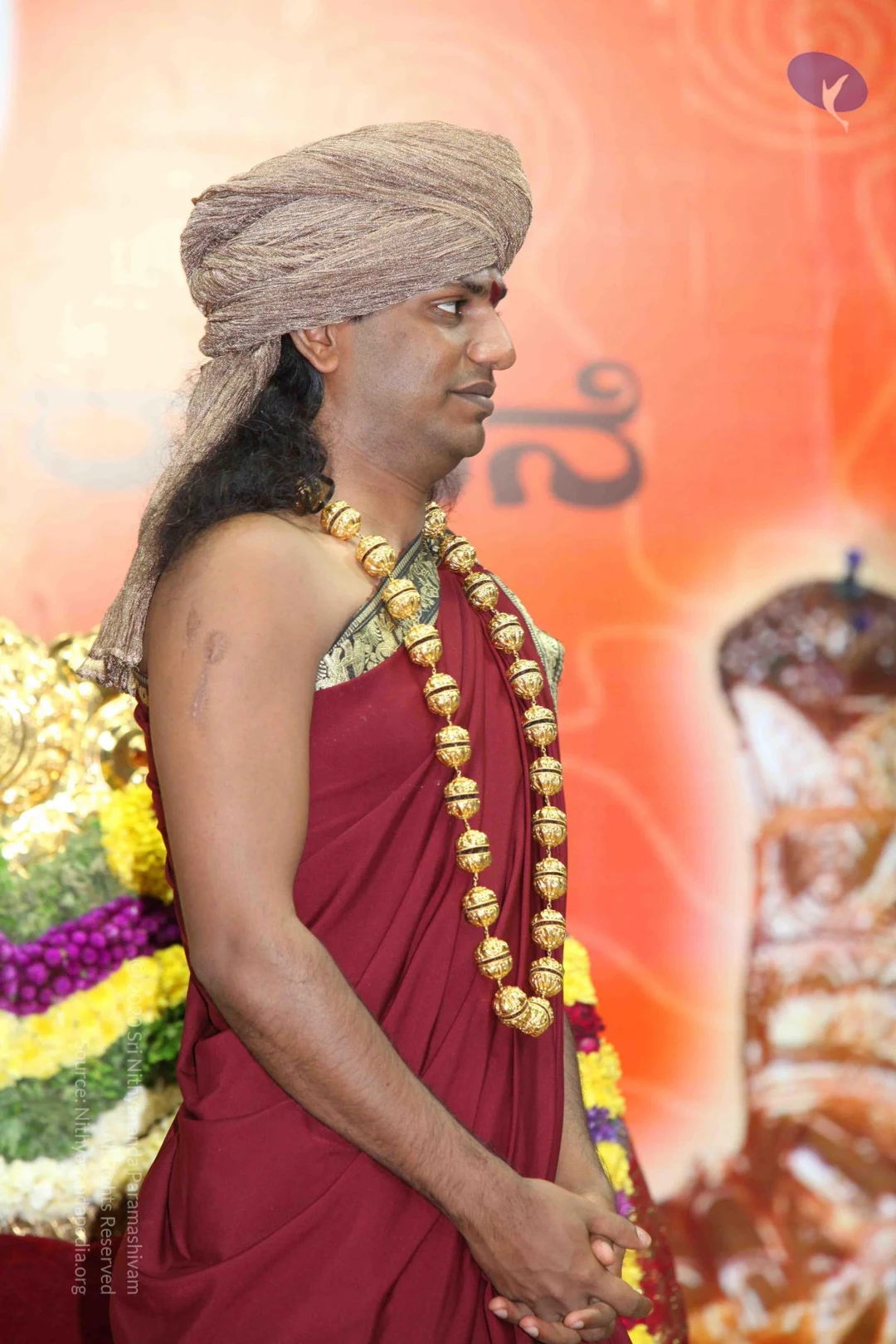
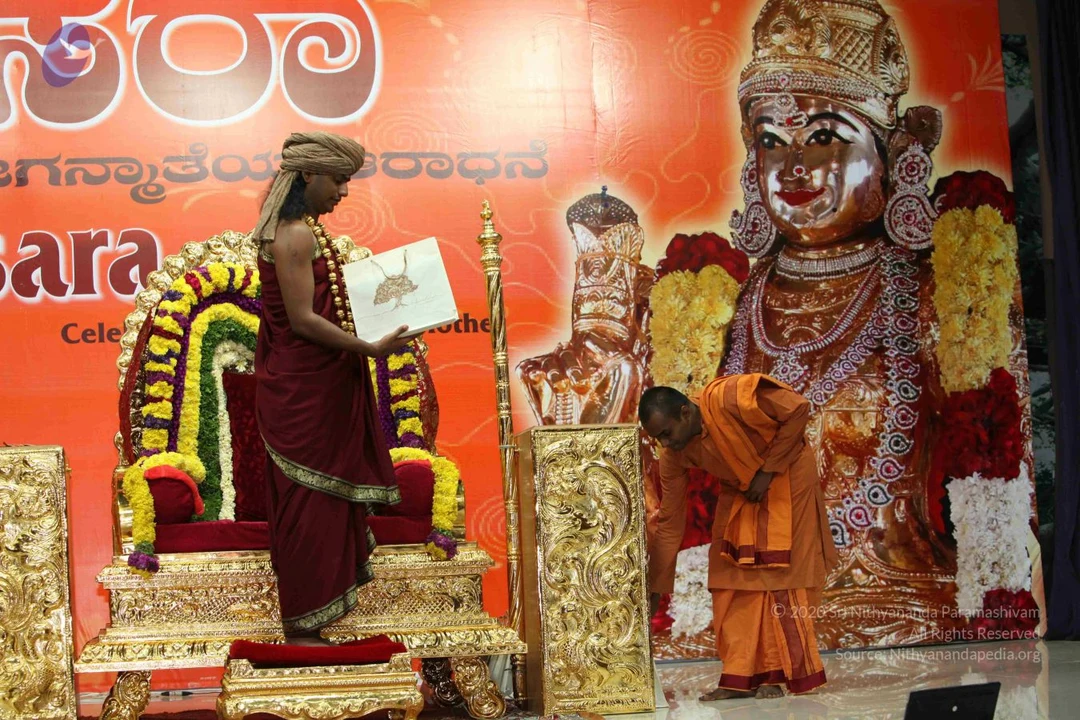
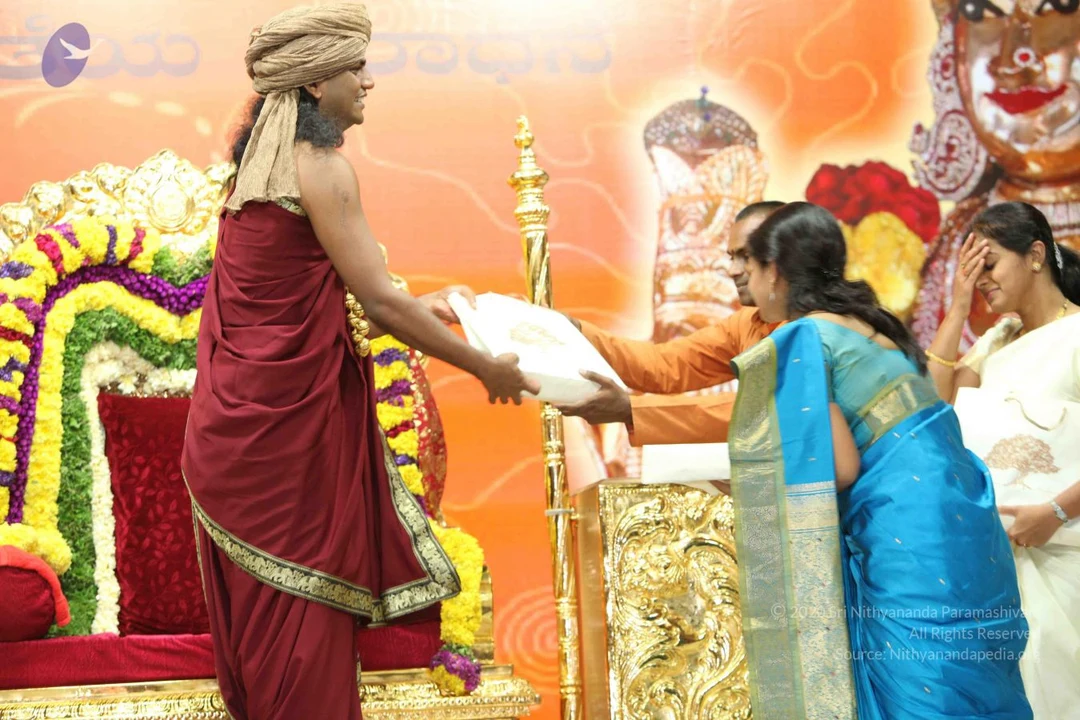
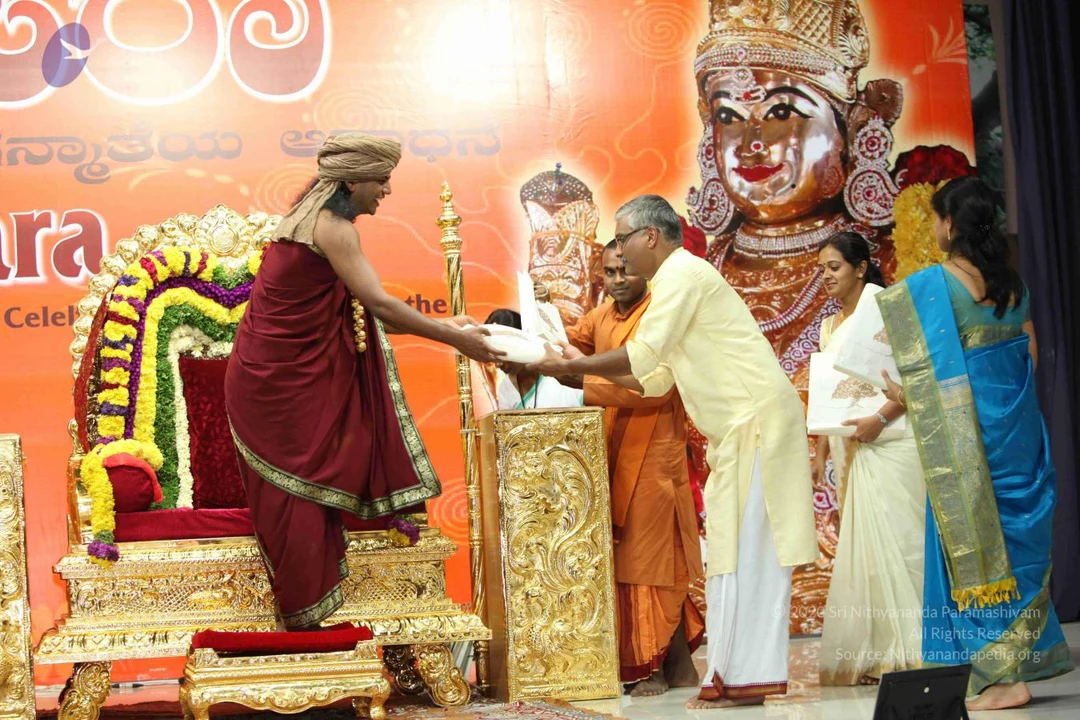
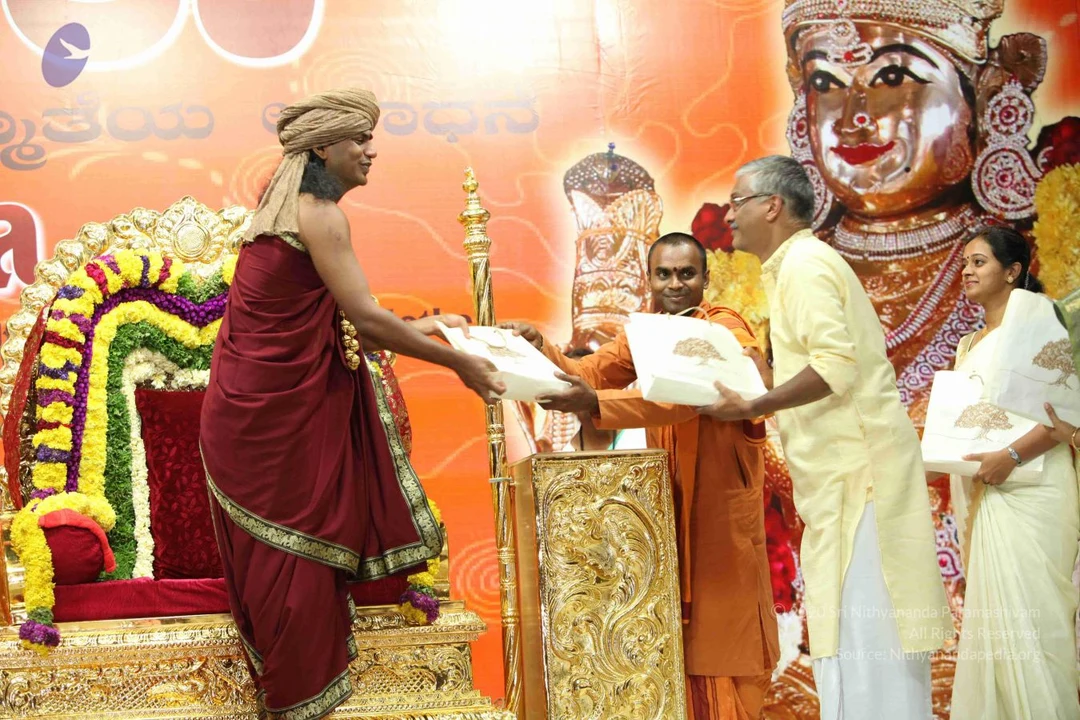
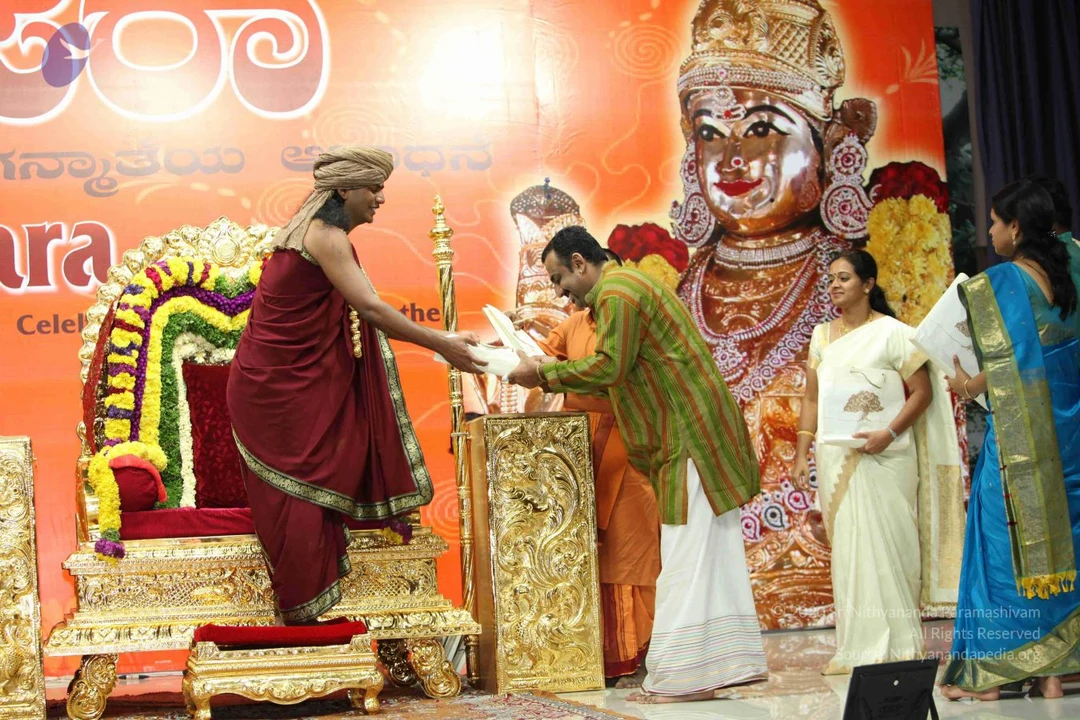
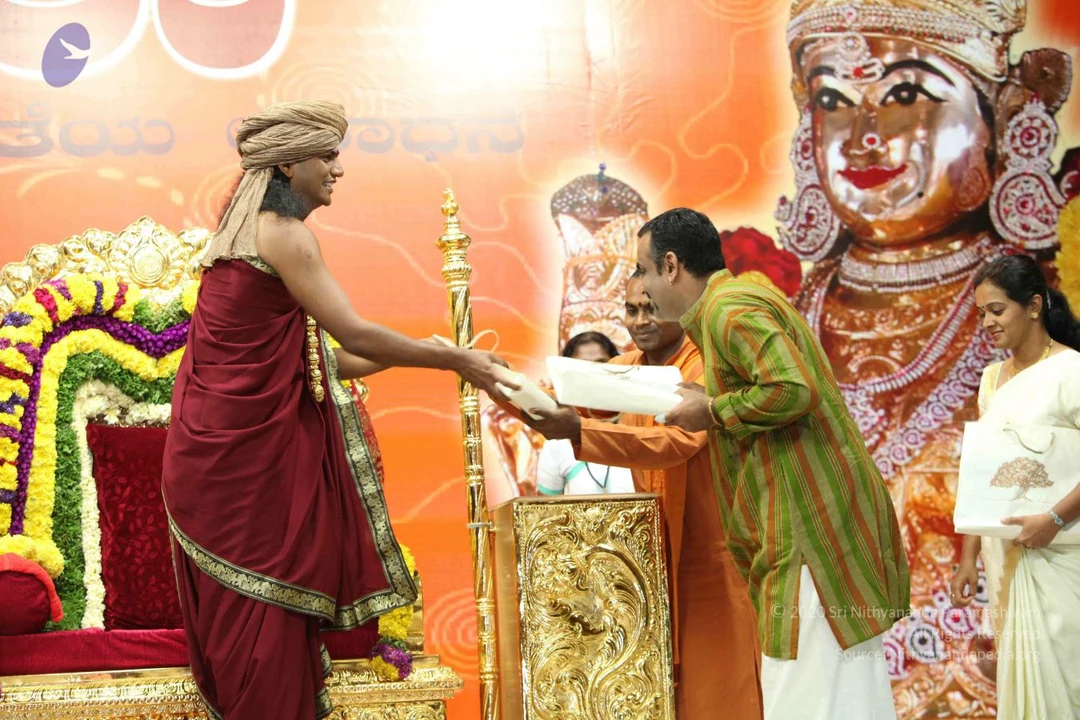
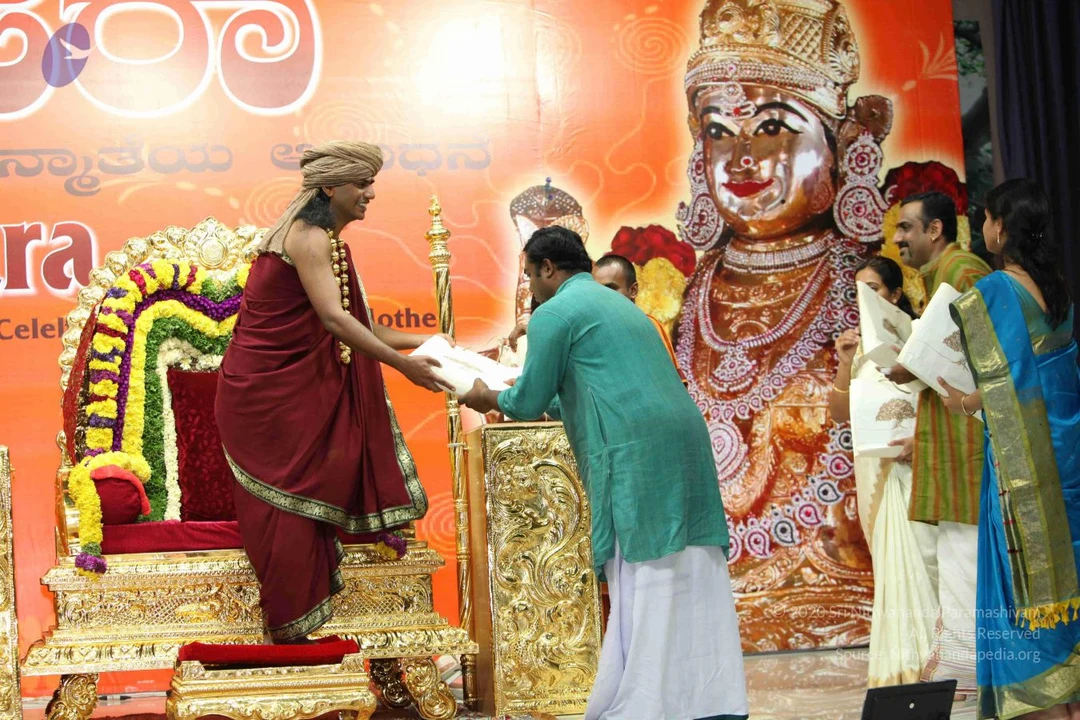
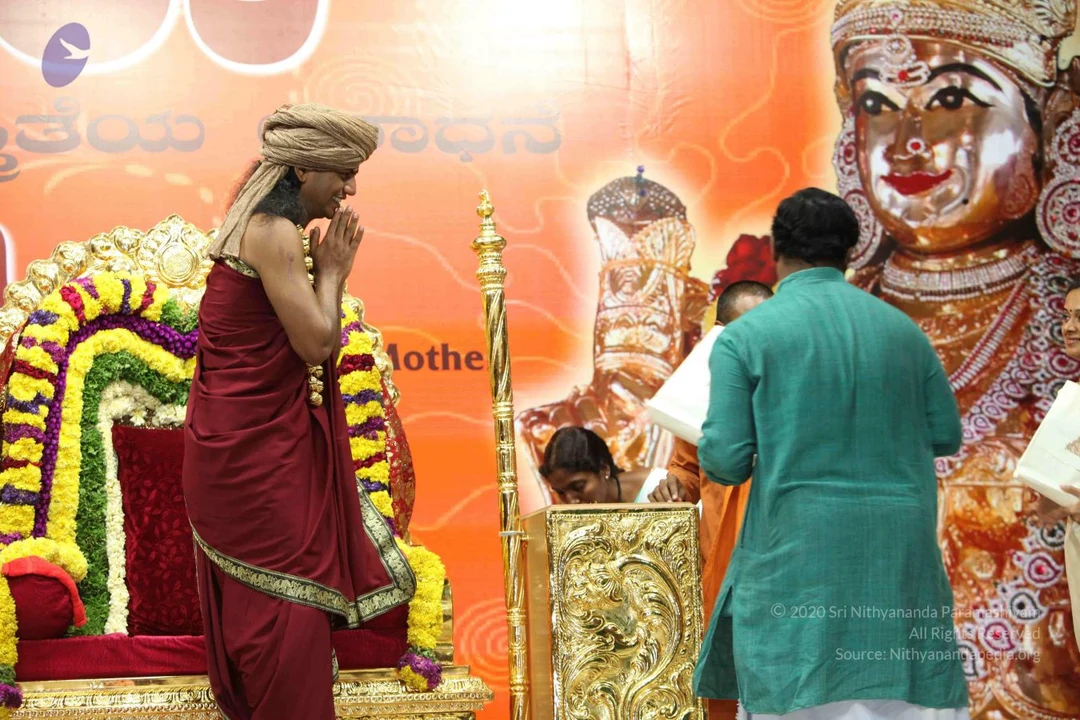
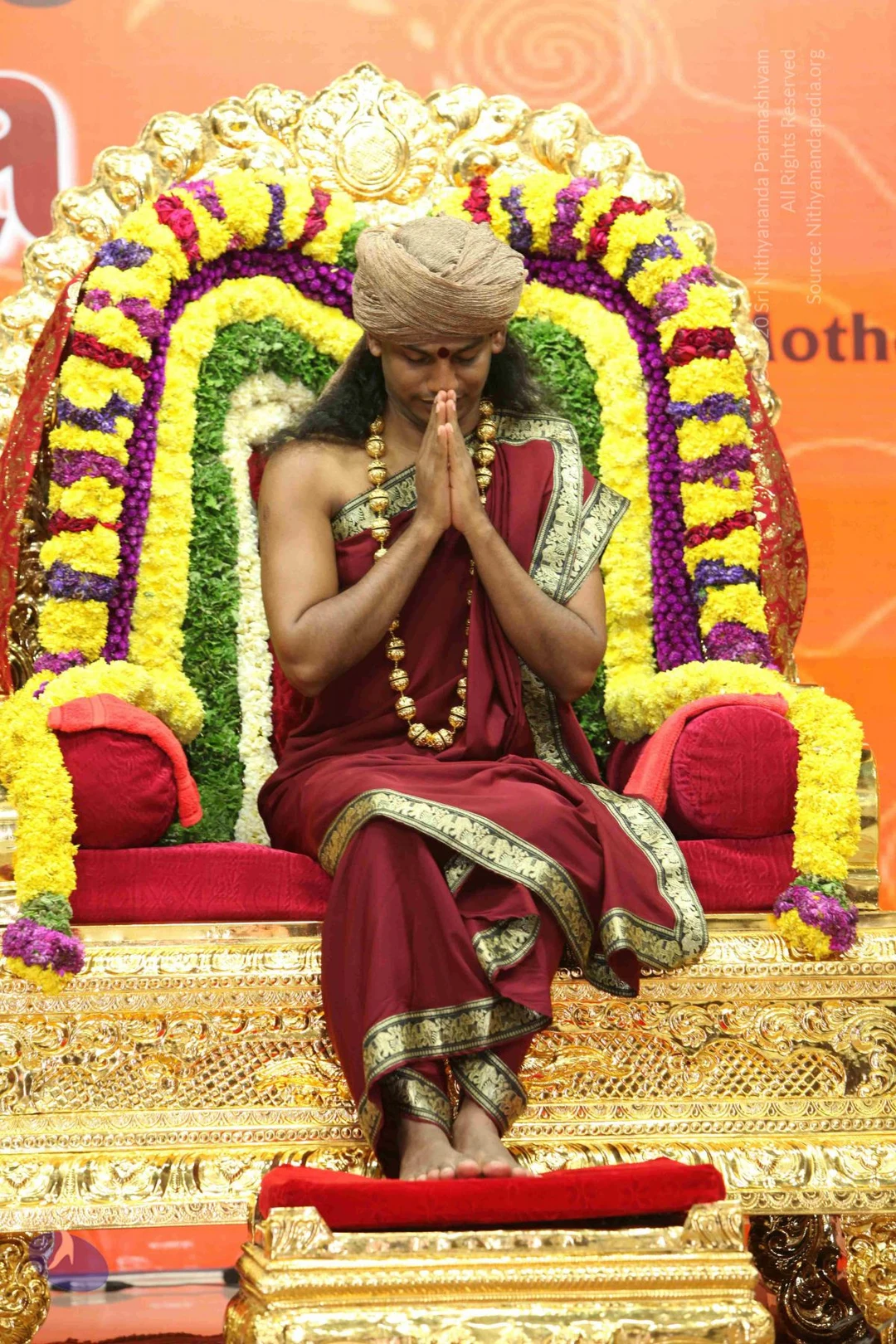
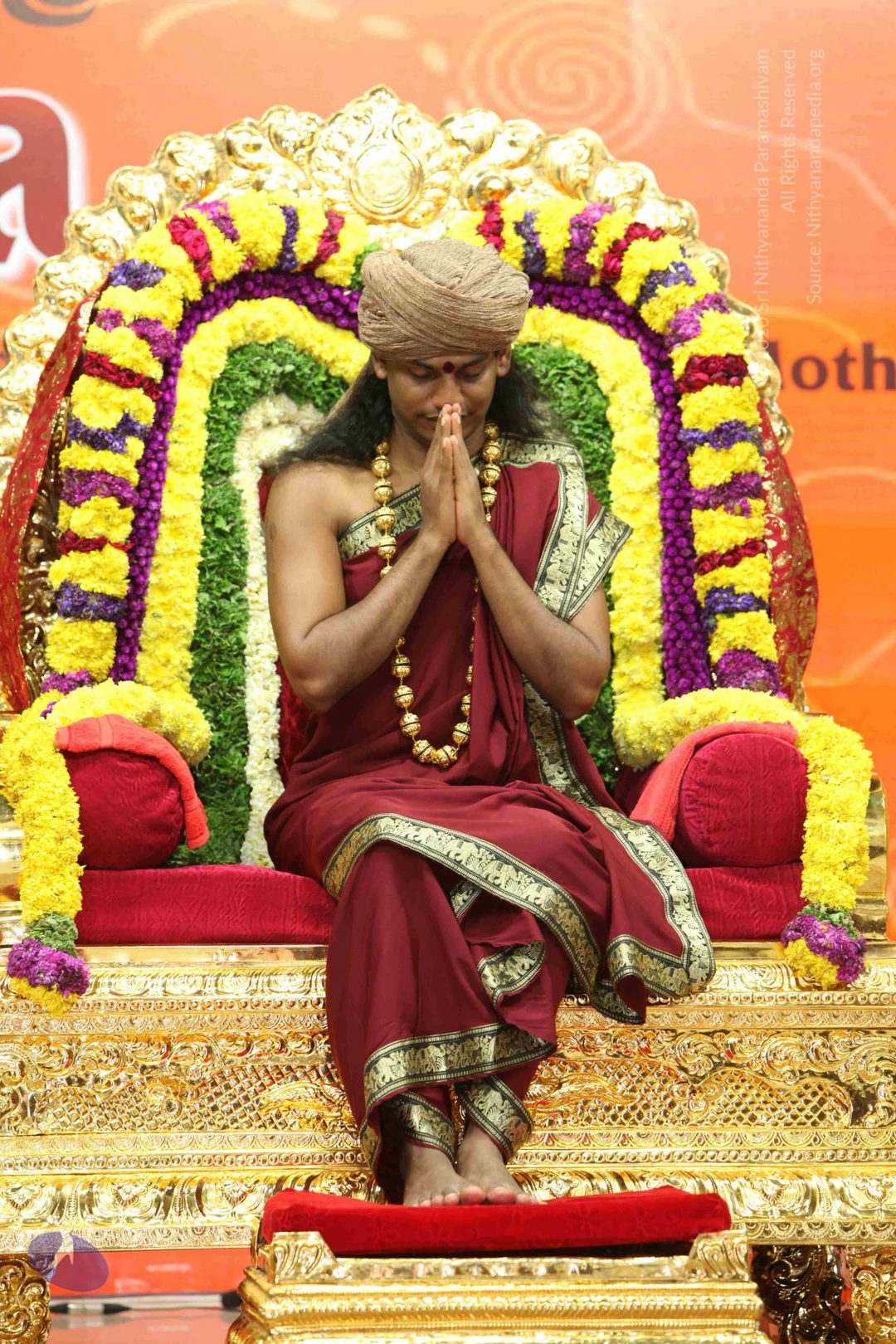
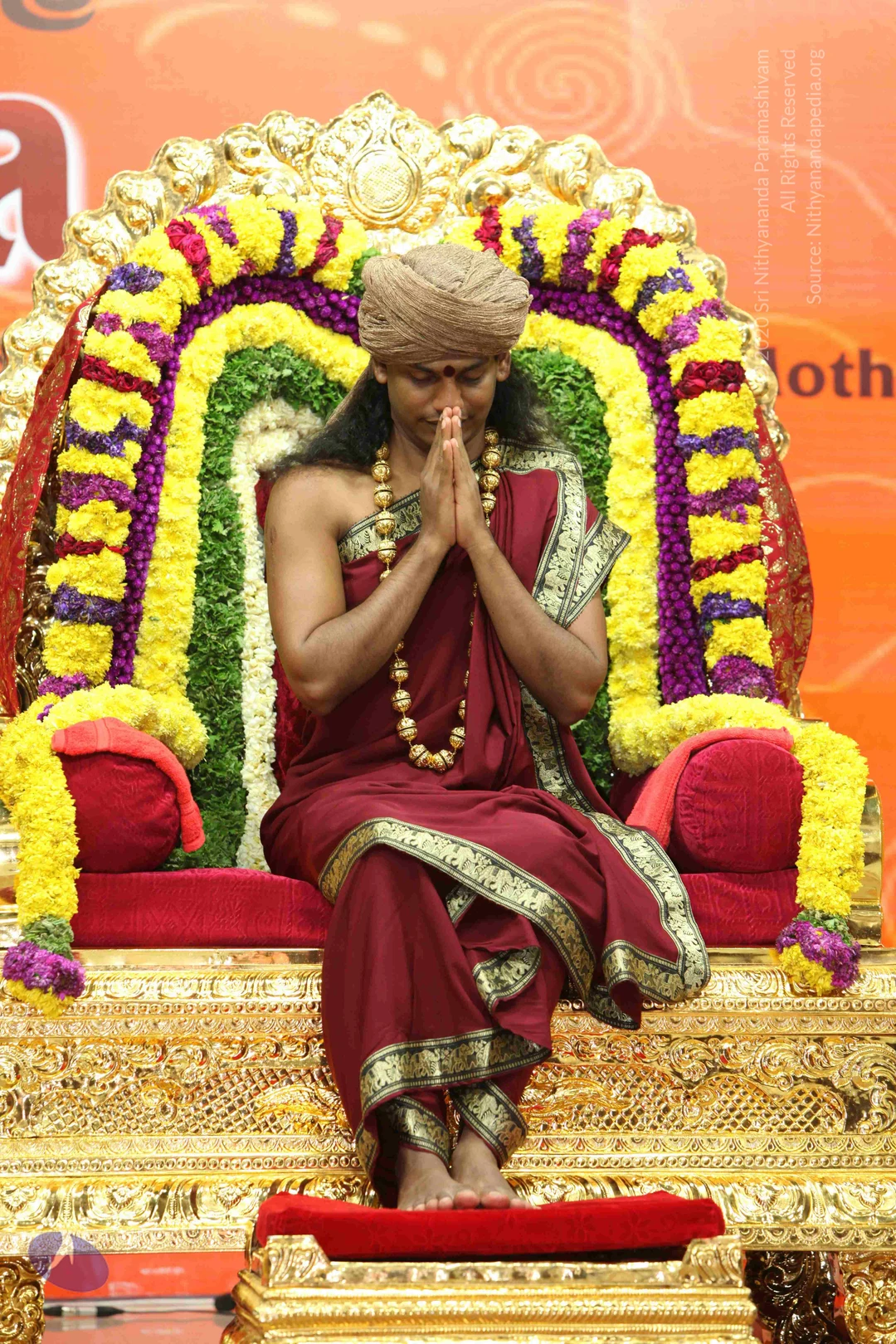
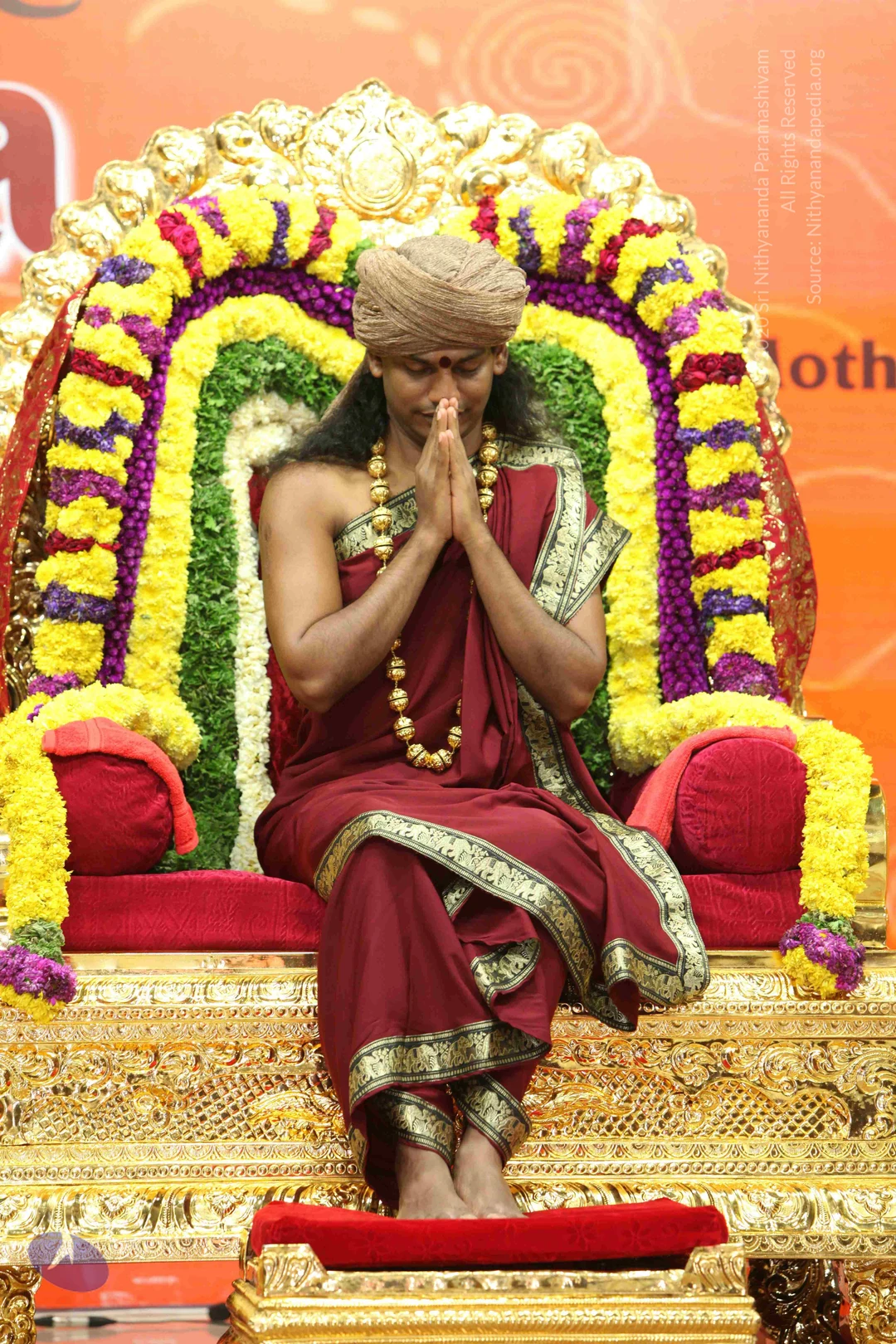
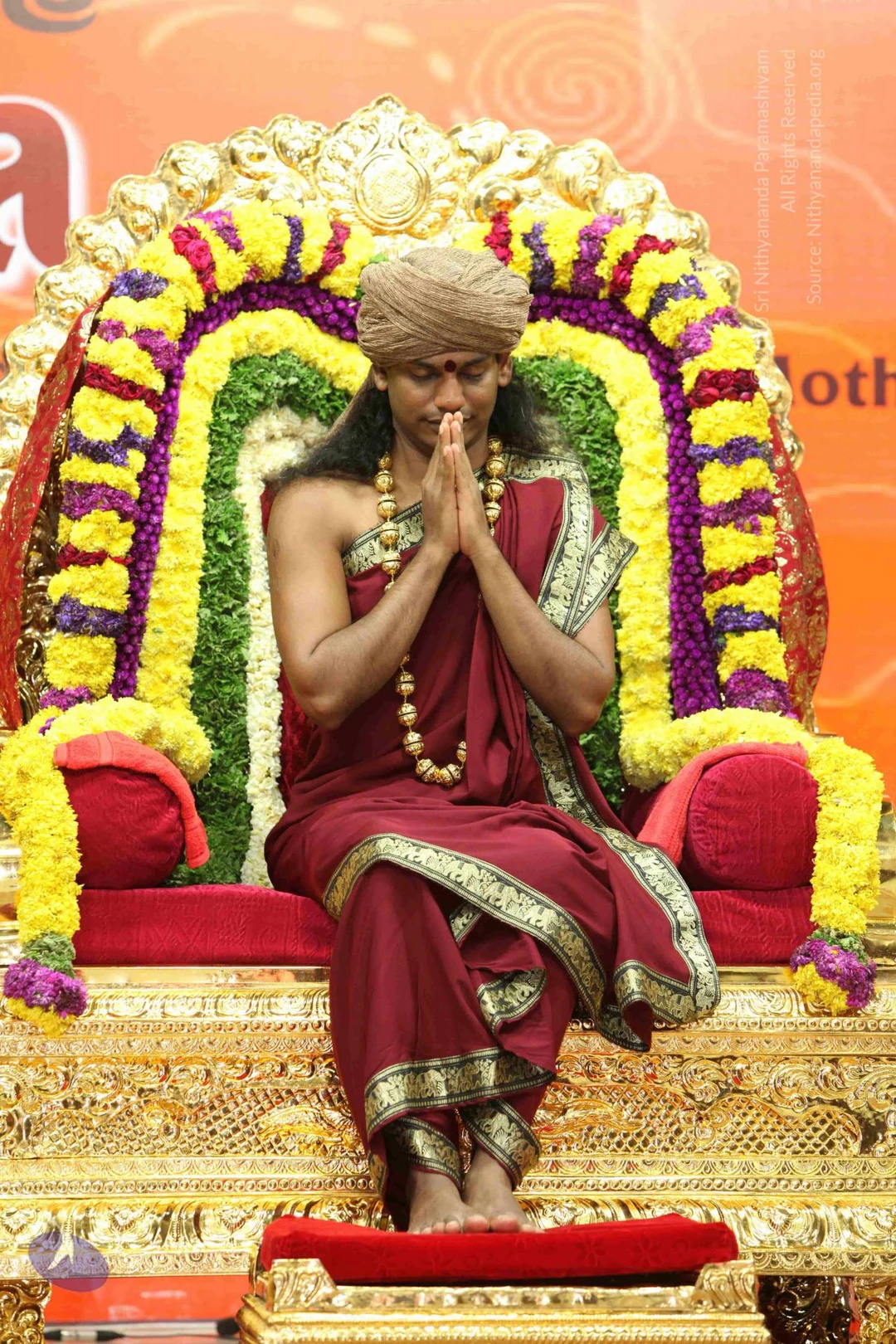
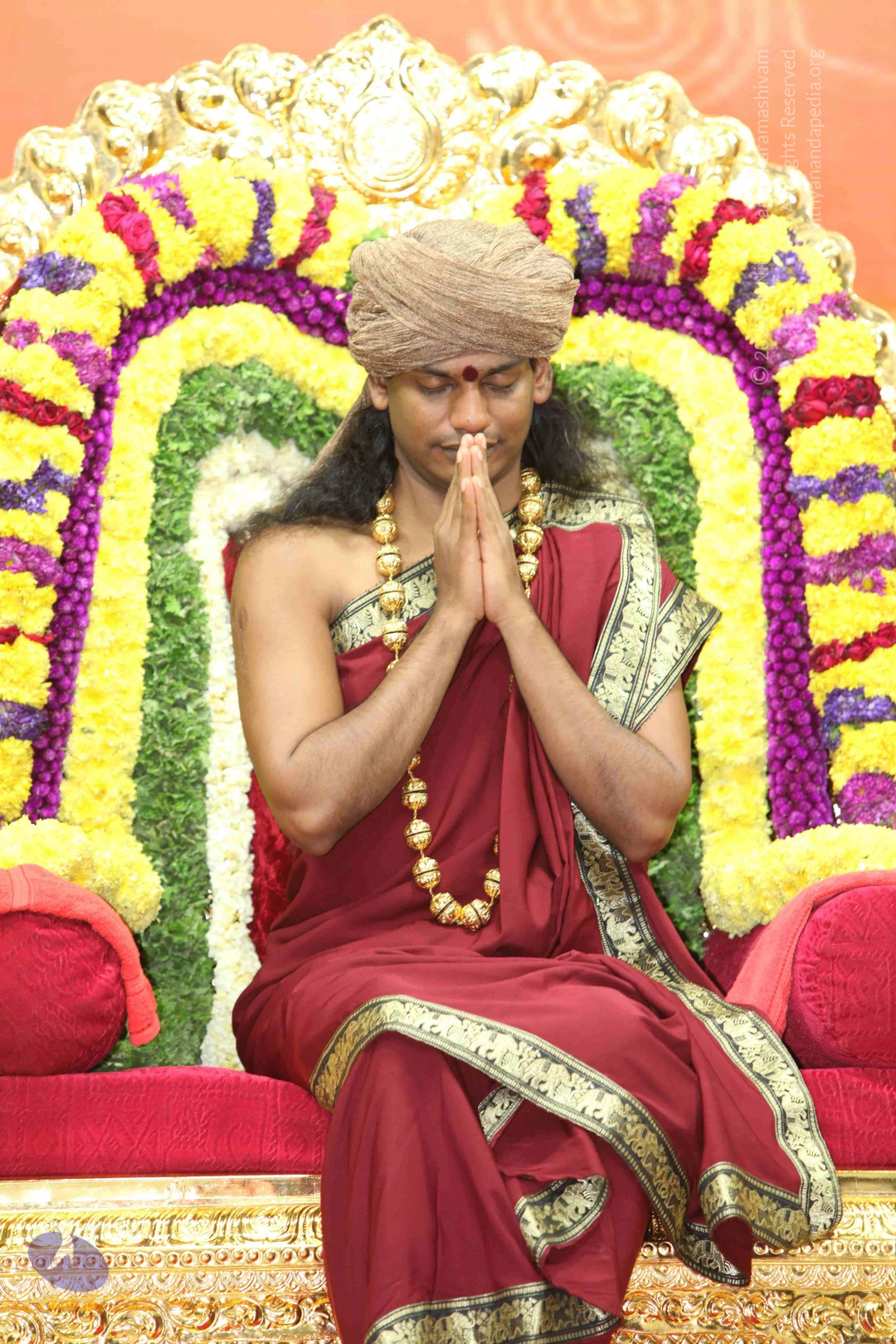
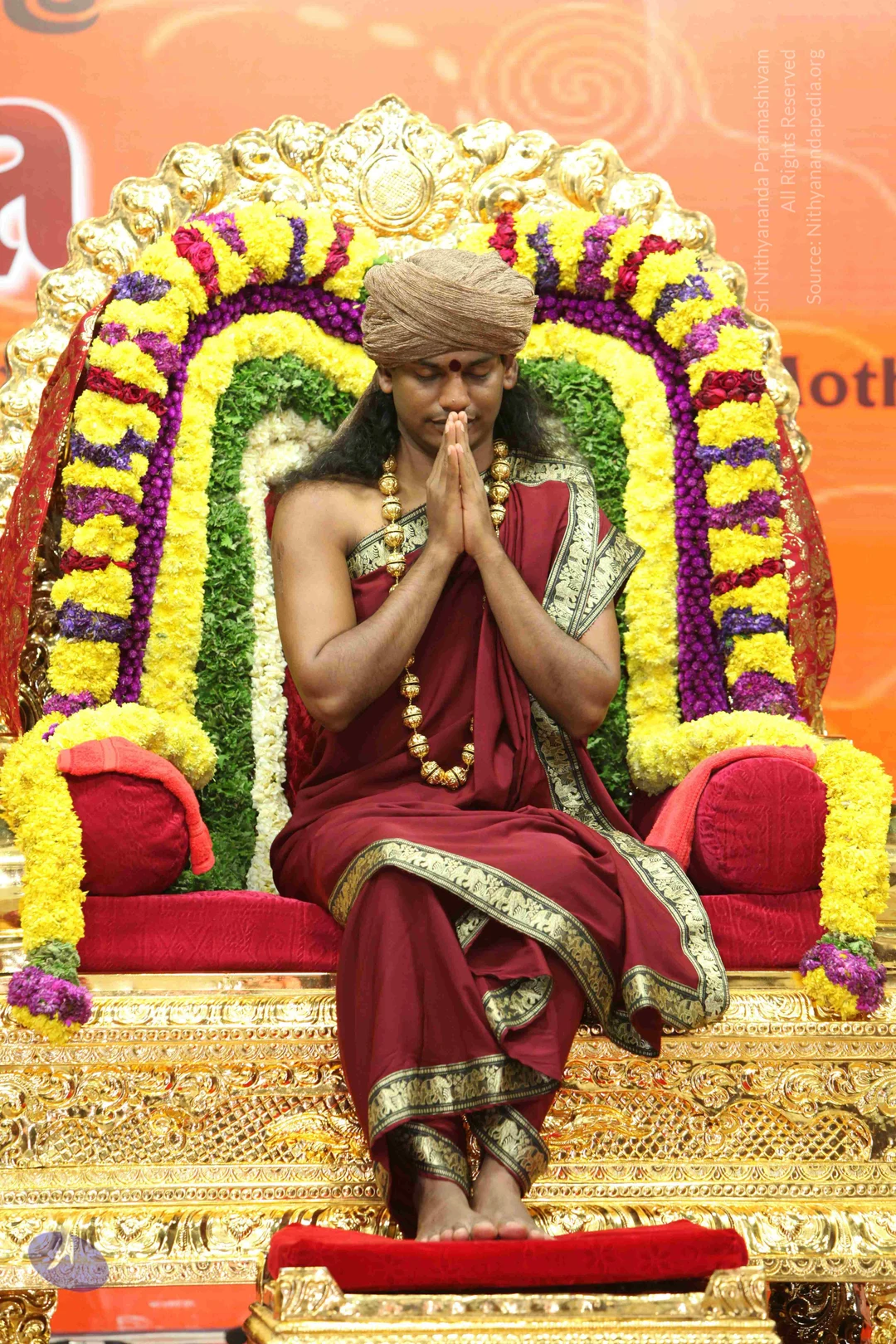
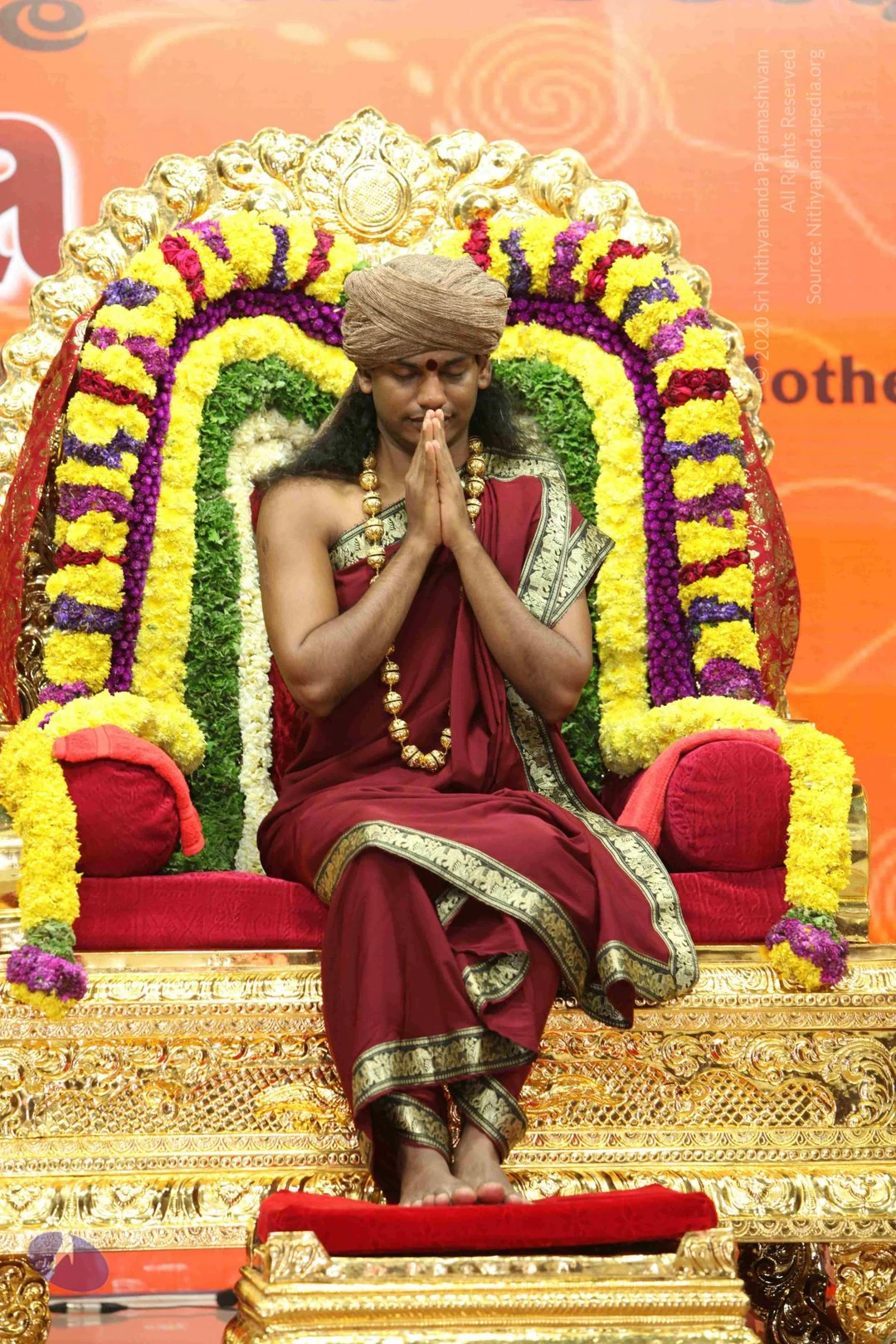
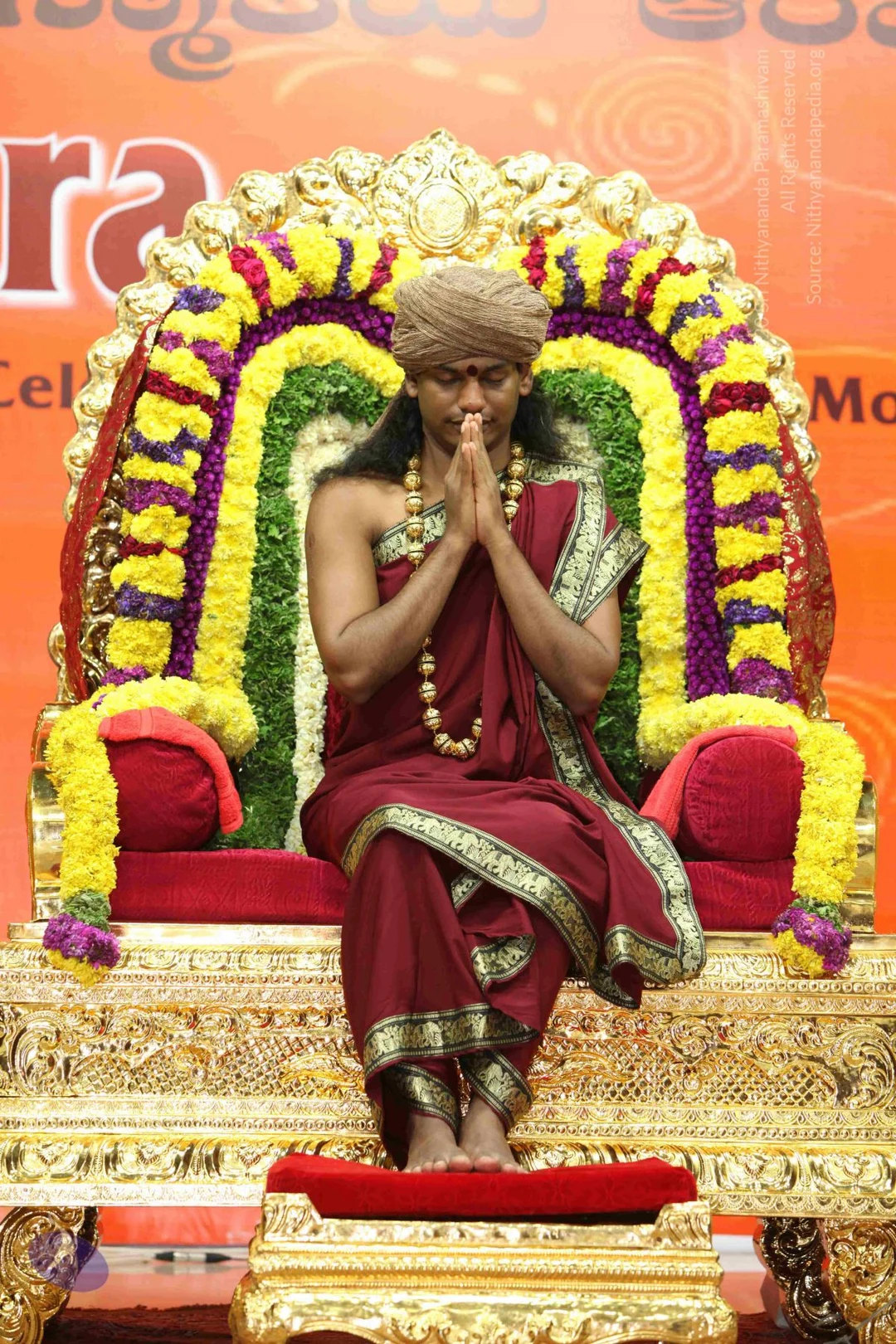
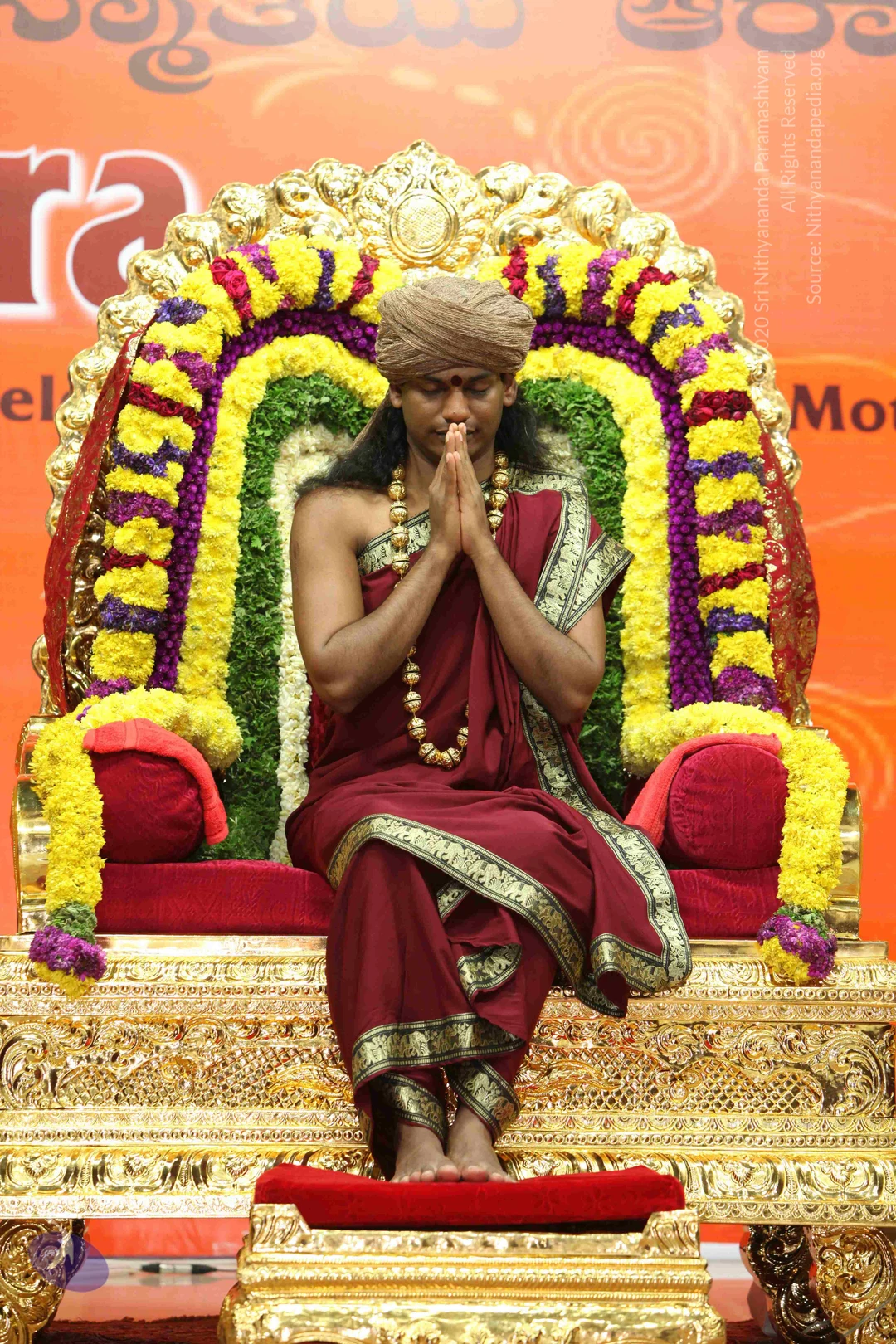
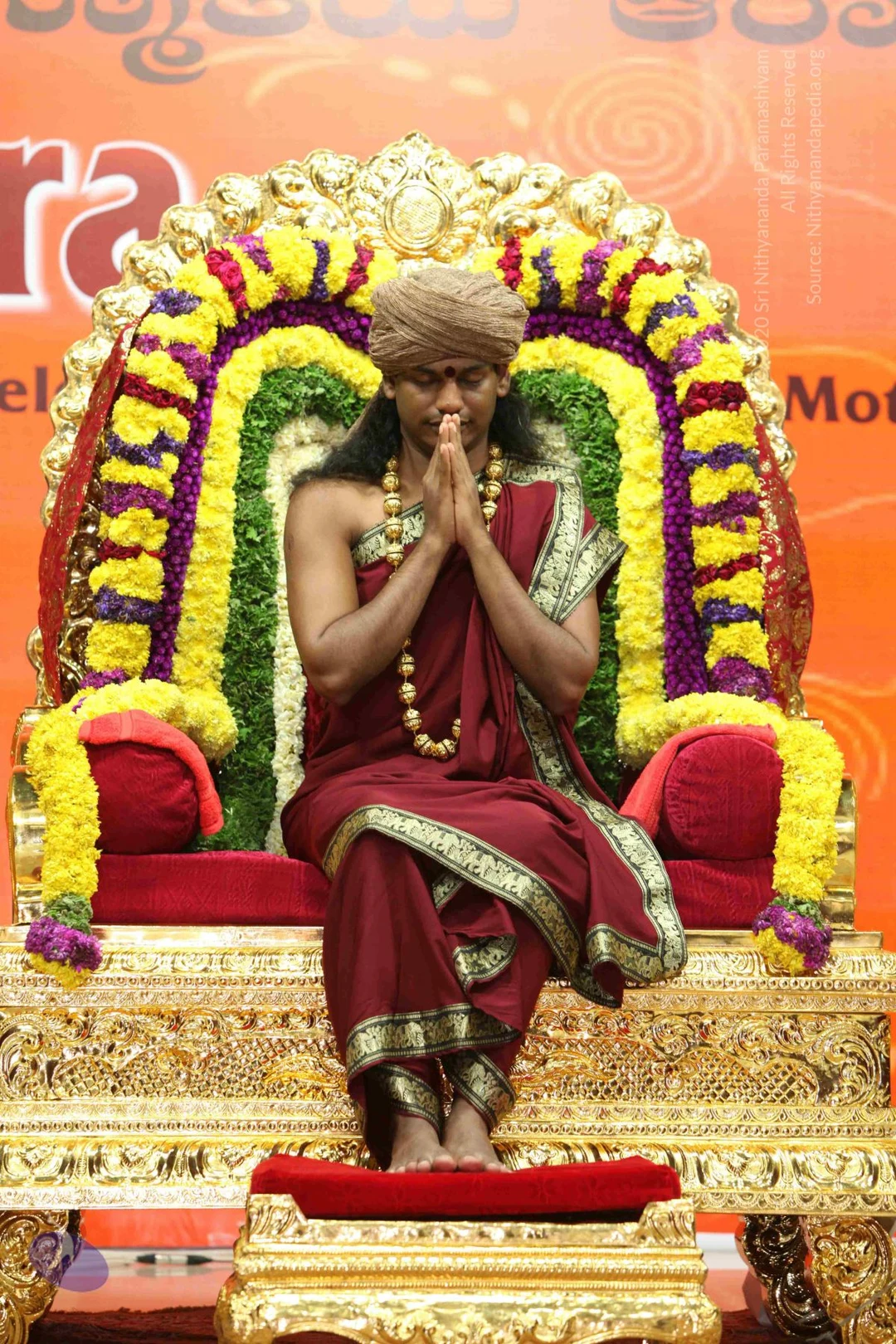
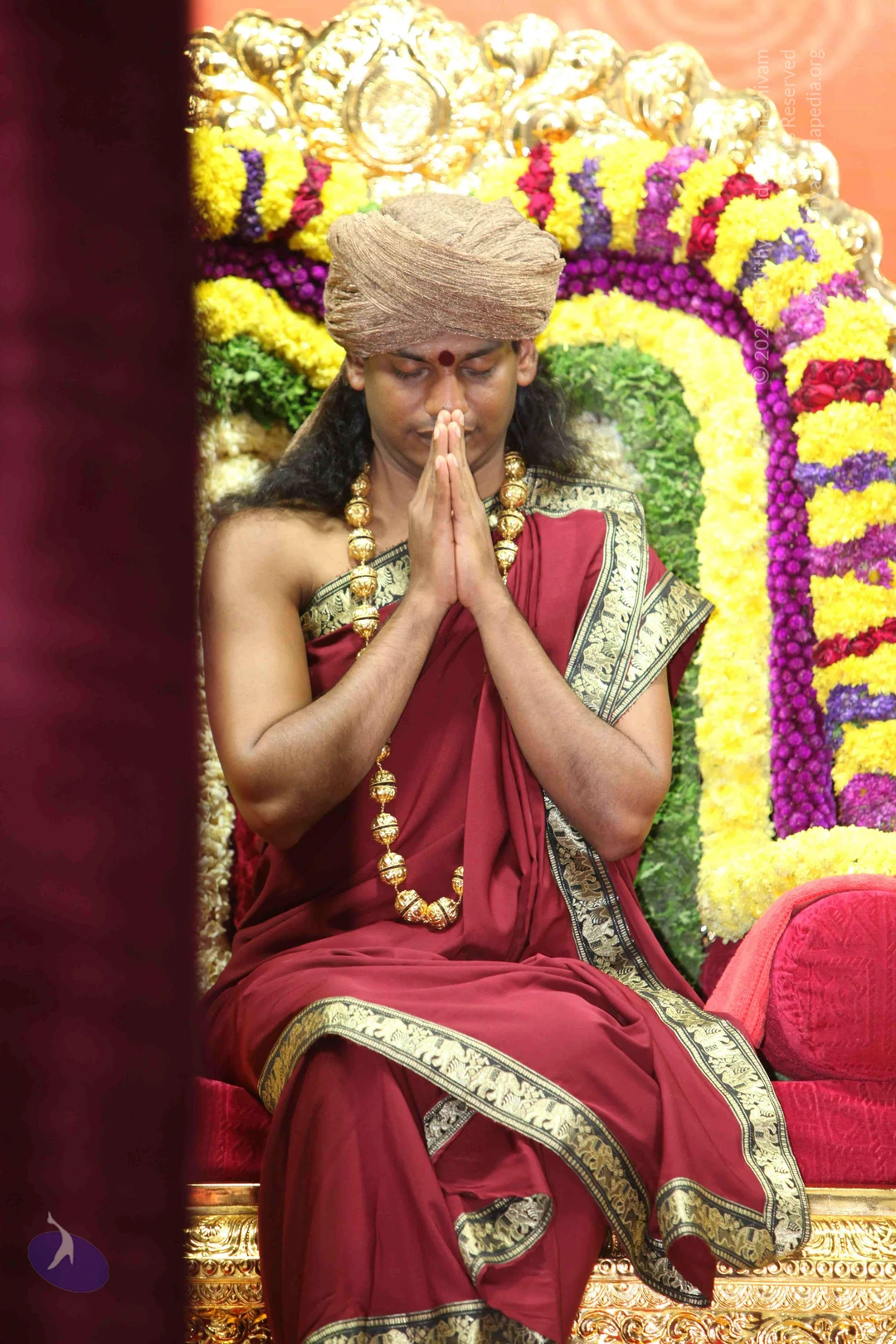
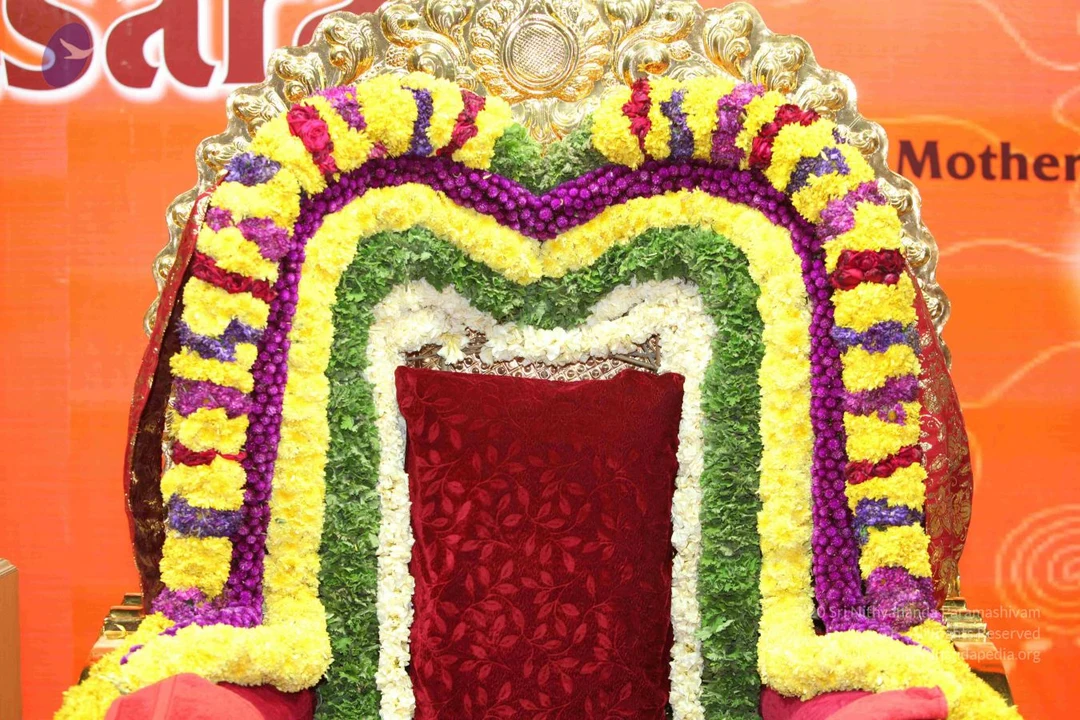
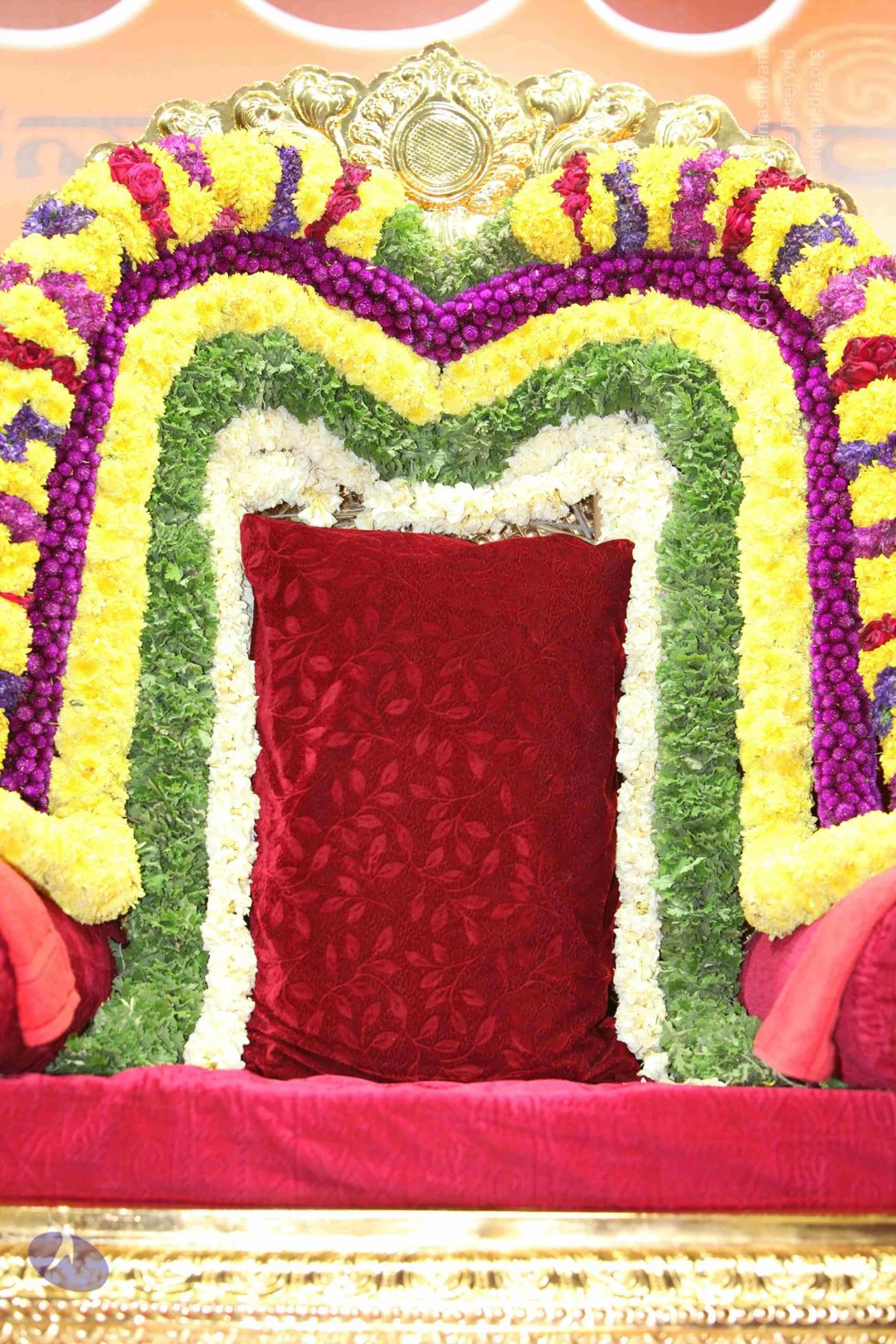
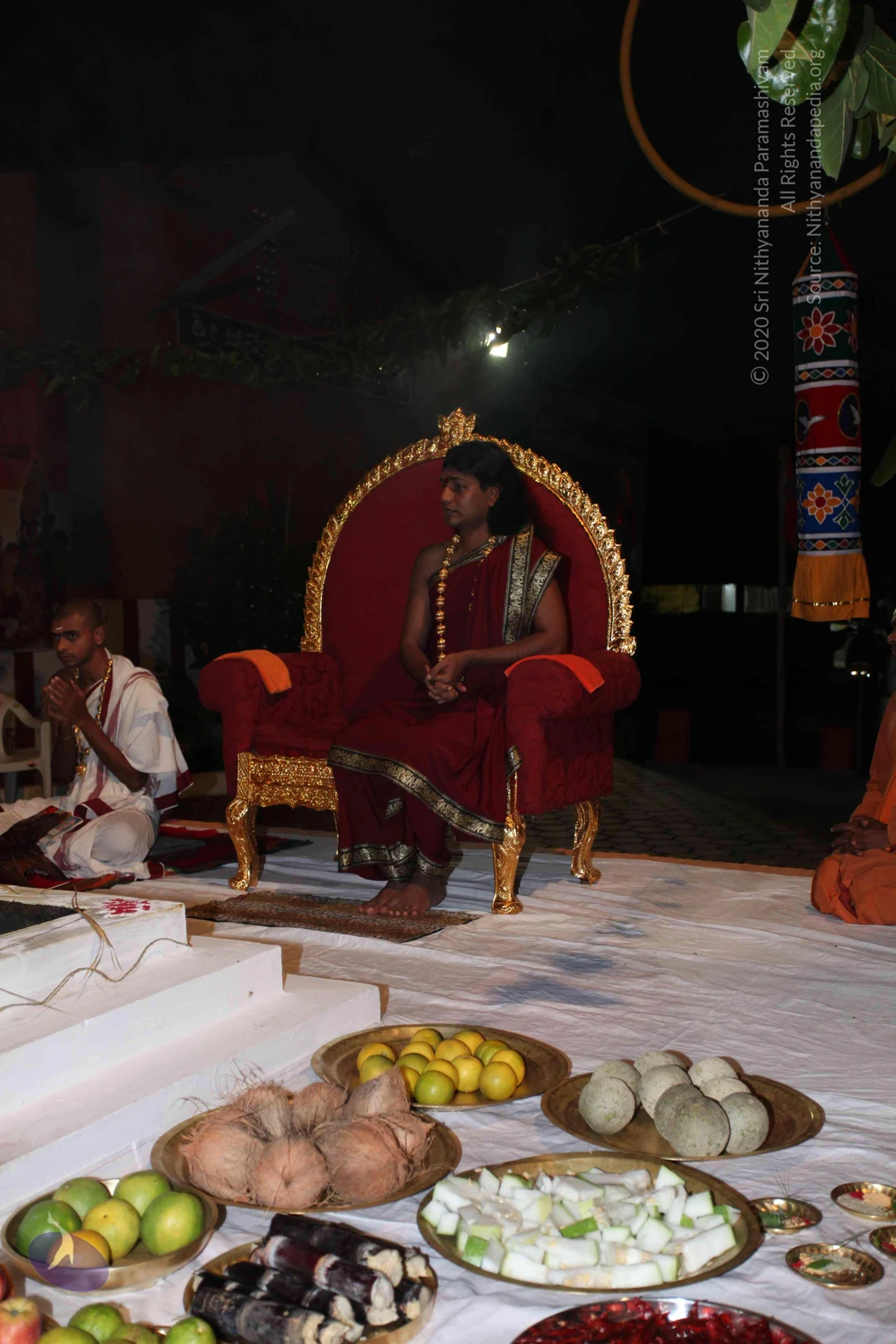
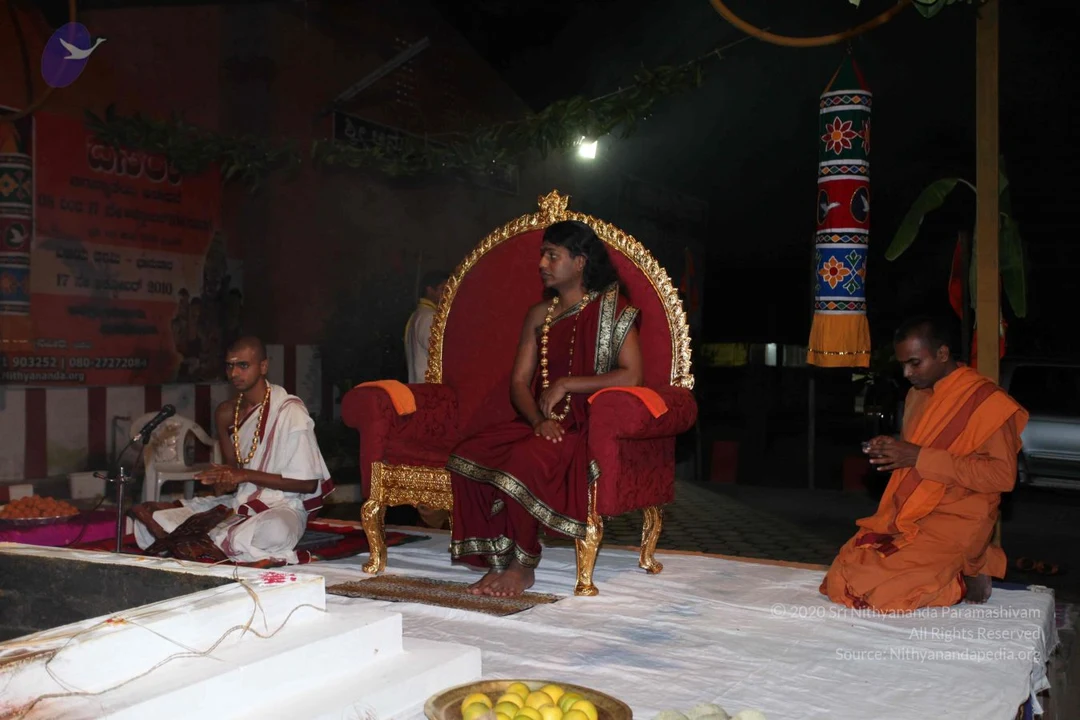
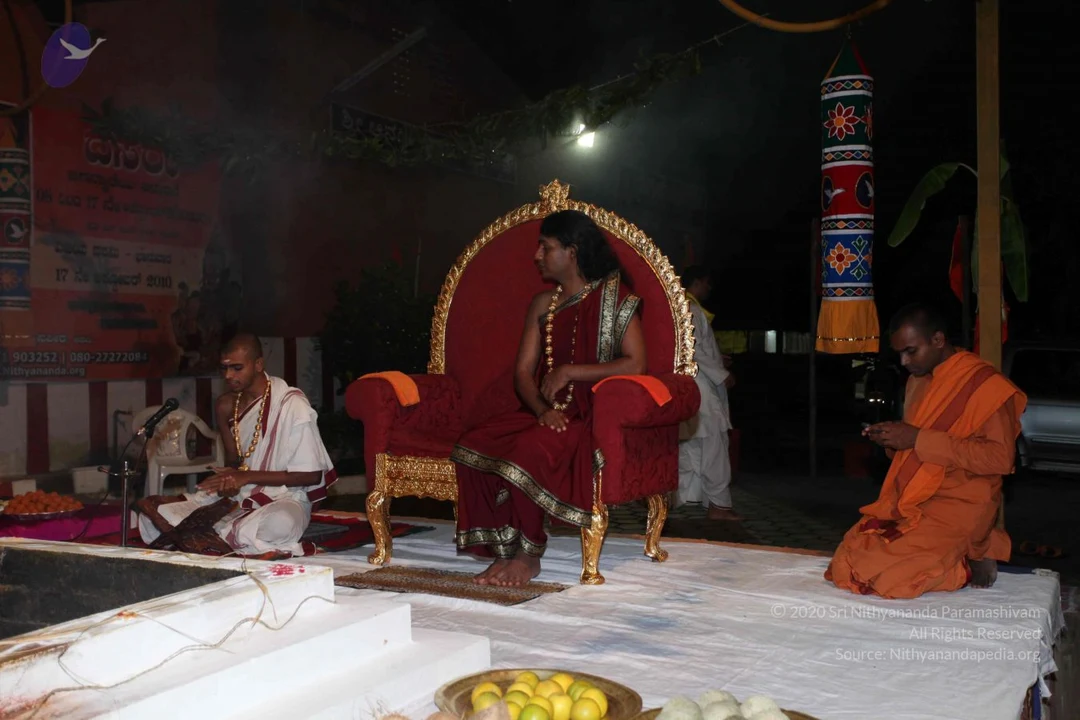
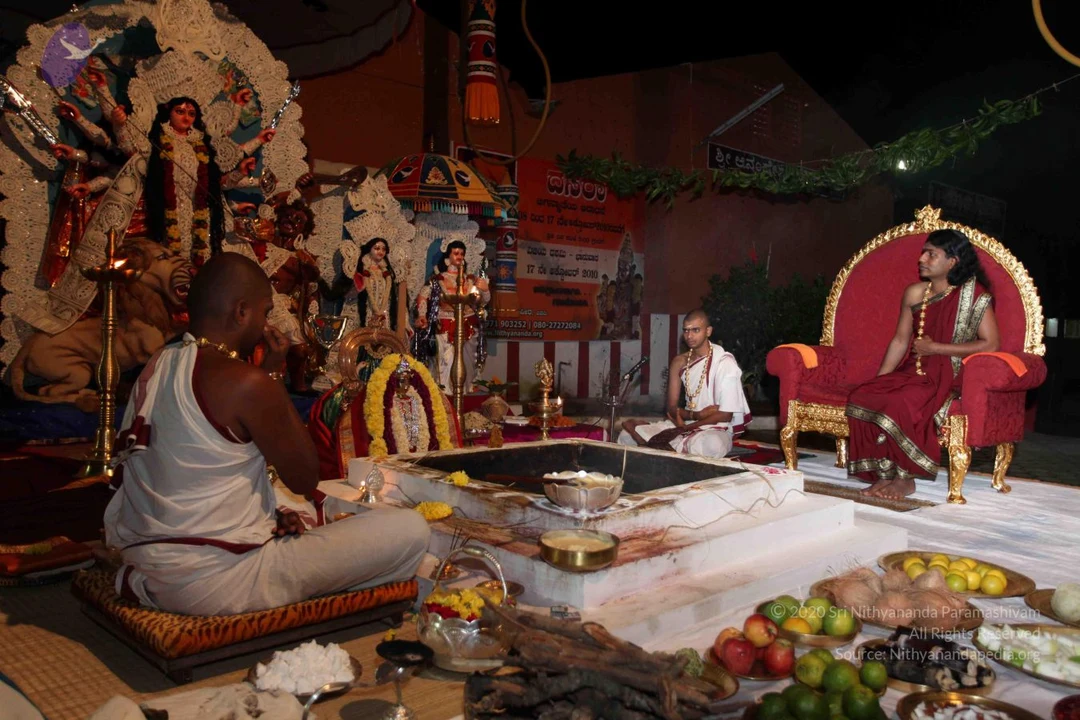
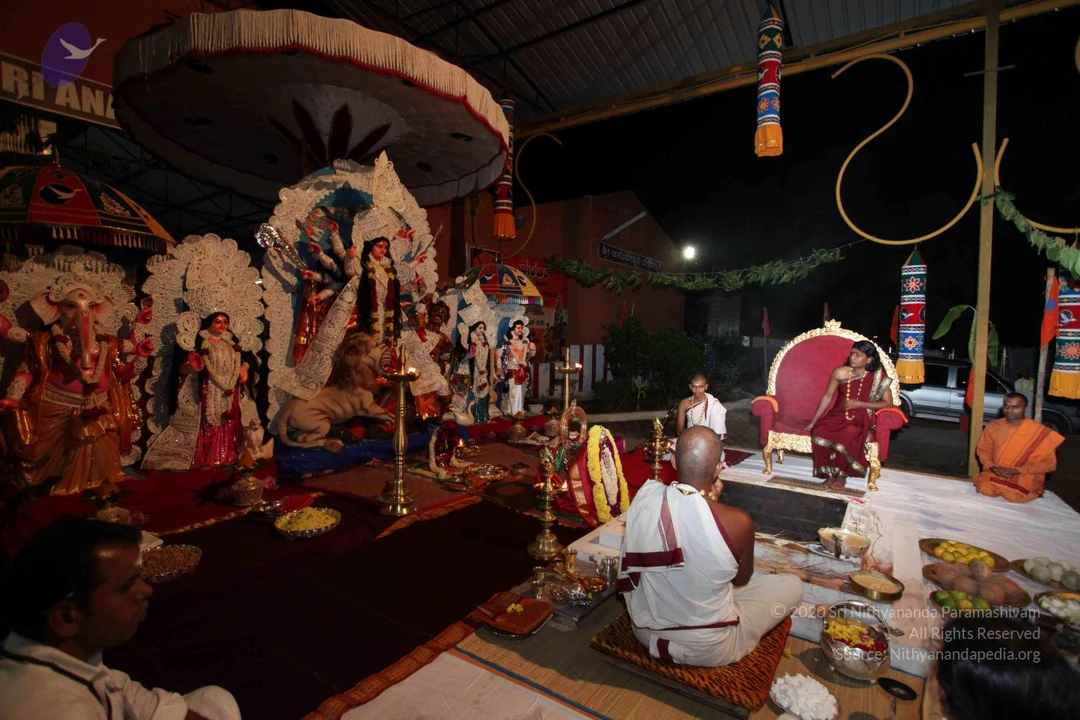
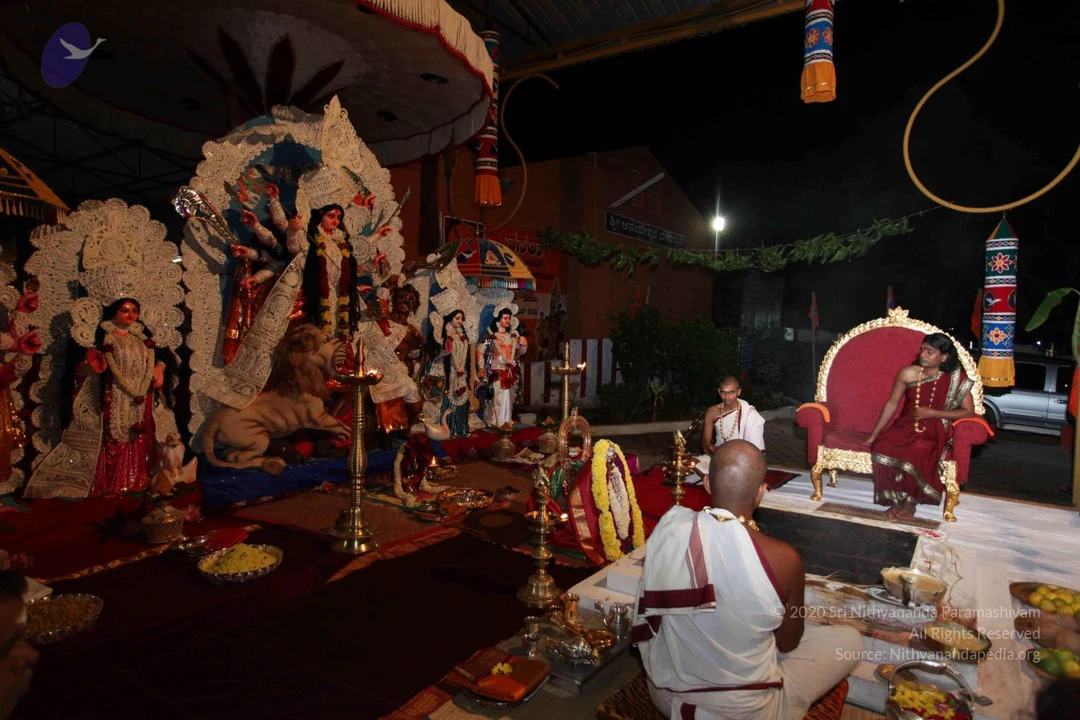
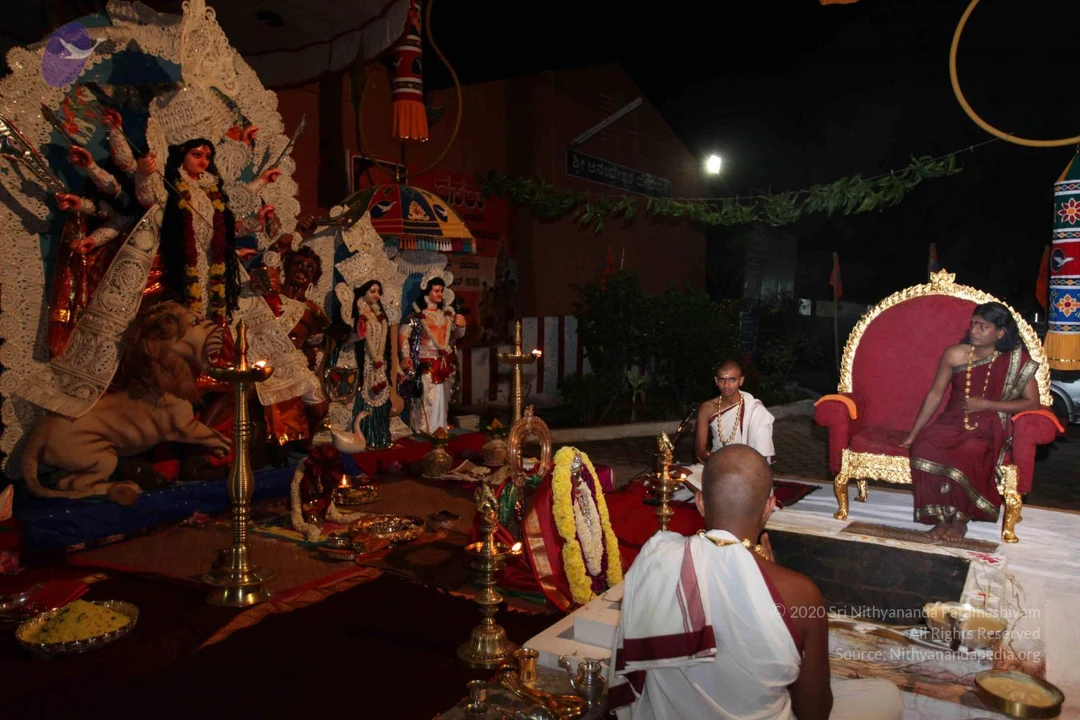
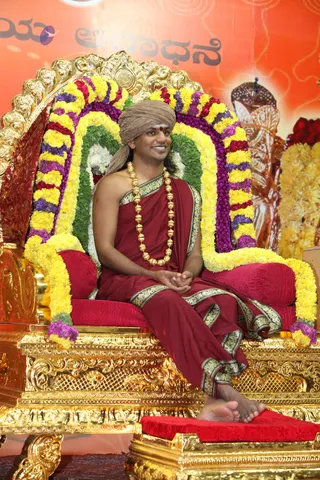
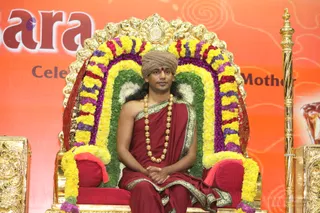
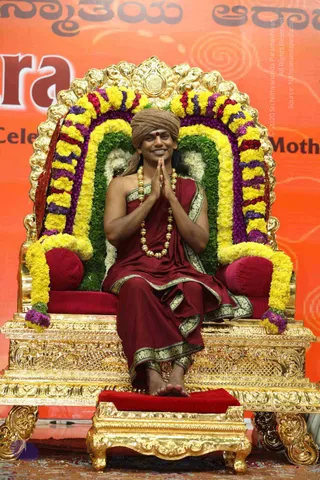
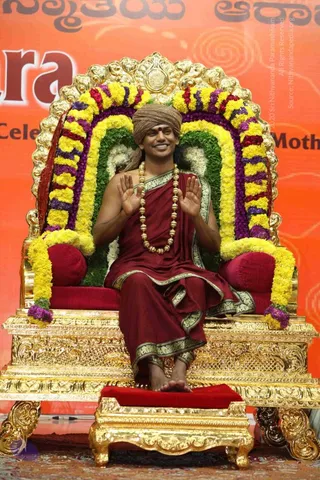
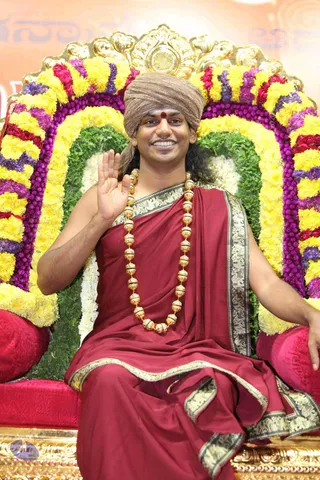
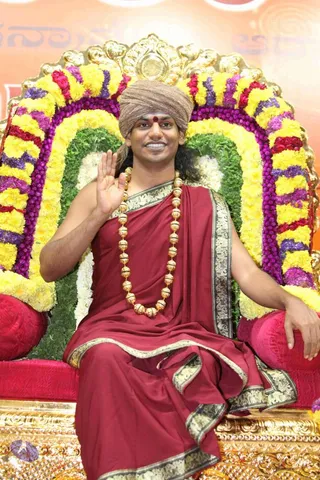
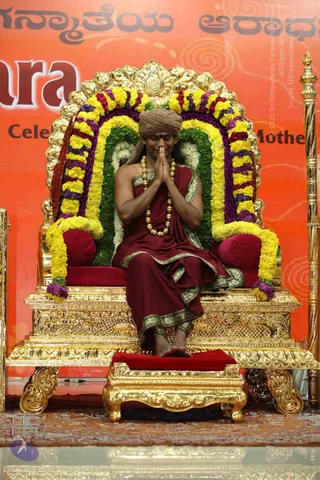
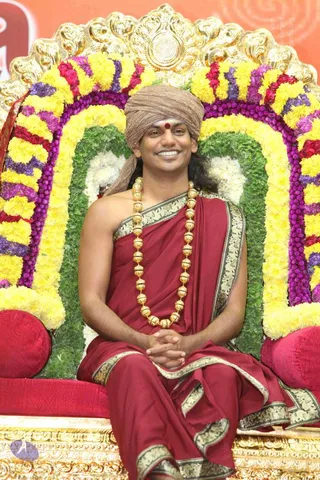
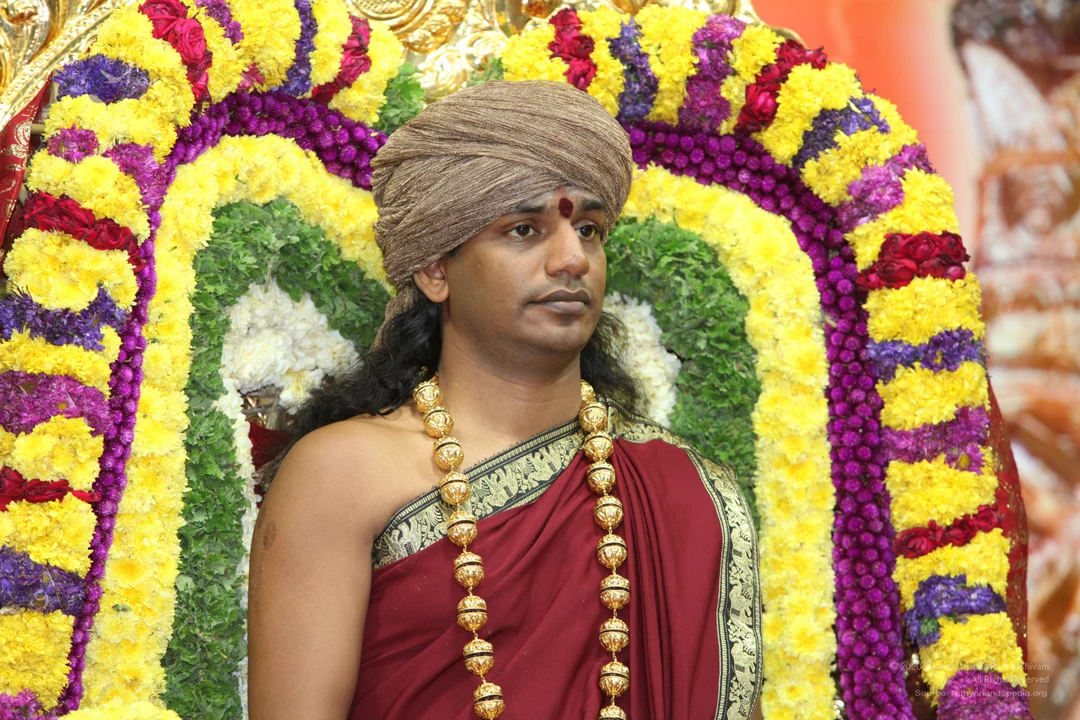
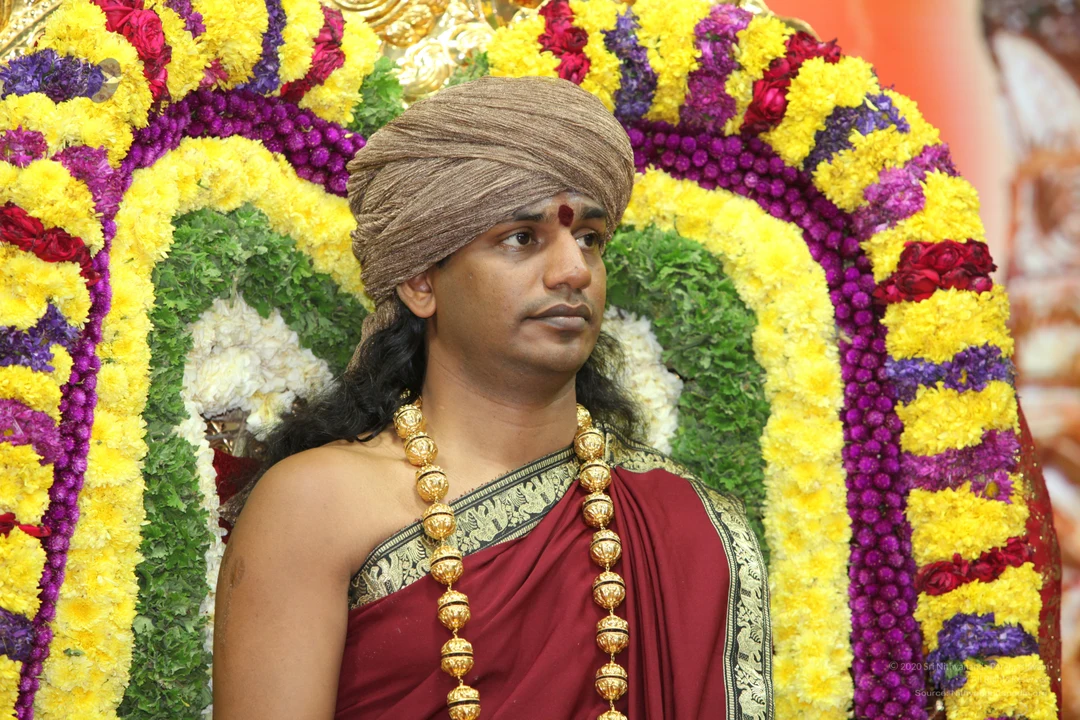
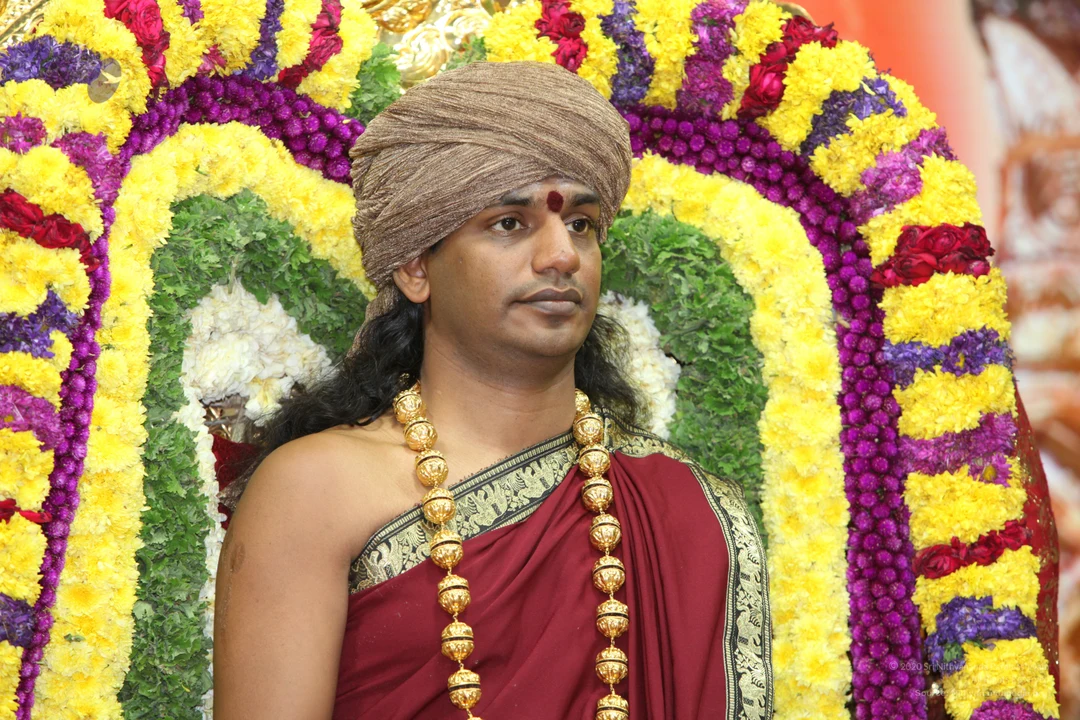
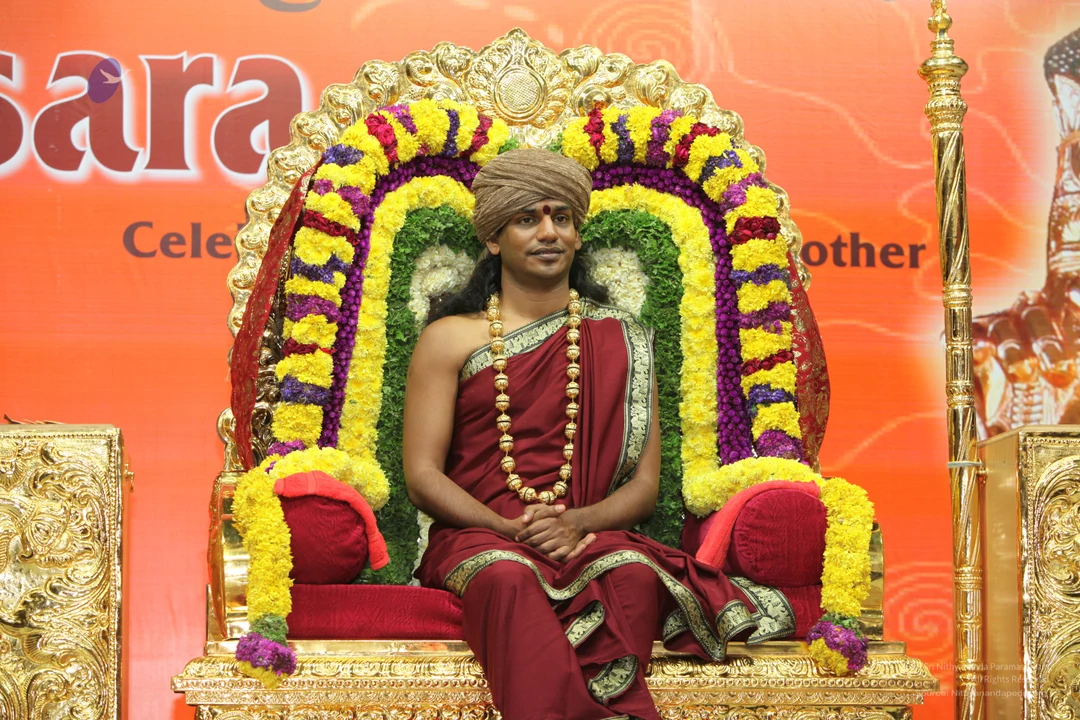
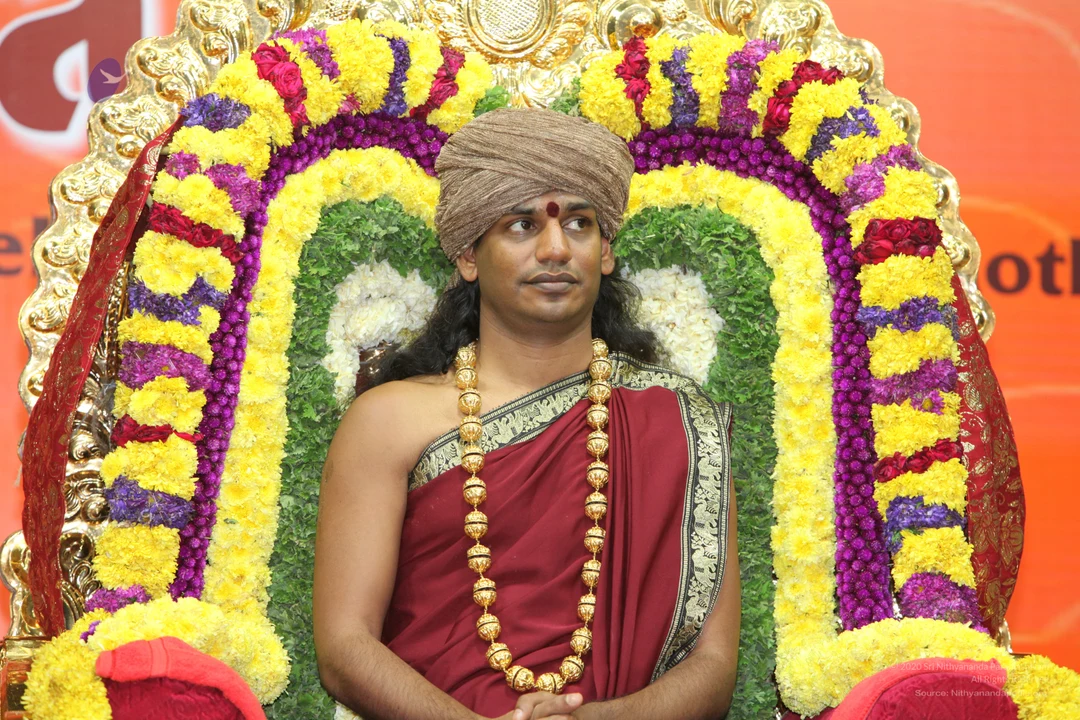
A man seated on an ornate gilded throne decorated with yellow, green and purple flower garlands, pressing his palms together in namaste and smiling. He wears a brown turban with a red tilak on his forehead, a maroon robe with gold-patterned border, and a long gold bead necklace. Behind him is an orange backdrop with a partial red banner reading Celebration and Mother, plus Kannada-script text along the top. A red footstool with gold legs sits in front of the throne.A man seated on an ornate gold throne decorated with yellow, purple and green flower garlands, smiling with both palms raised in greeting. He wears a brown turban, a maroon robe with gold-embroidered border, and a long gold bead necklace, with a red tilak on his forehead. Probable Swamiji seated on a peetha in a satsang setting, with the candidate's cues being the ceremonial gold necklace, turban and maroon robe.A smiling man seated on an ornate gilded throne decorated with yellow and purple marigold garlands and green foliage, raising his right hand in a blessing gesture. He wears a brown turban with a red tilak mark on his forehead, a maroon robe with gold-patterned borders, and a long gold bead necklace. a person: a turban, maroon robe and gold necklace with a throne setting. Behind him, a partly visible orange banner with Kannada script. Single seated person.A man seated on an ornate gold throne decorated with garlands of yellow marigolds, purple flowers and green leaves, raising one hand in greeting. He wears a brown turban, a red bindi on his forehead, a maroon robe with gold-patterned borders and a long gold bead necklace. Behind him is an orange backdrop with partial Telugu-script lettering. The setting suggests a formal satsang seat. Appearance-based candidate: Swamiji (probable), with long hair, a turban, saffron-toned ceremonial dress and gold beads seated on a throne.A seated man in a maroon robe with gold-bordered trim sits on an ornate gold throne decorated with yellow, purple and green flower garlands. He wears a tan turban, a gold bead necklace and bare feet, and presses his palms together in anjali mudra with eyes closed. A red cushioned footstool rests before the throne. Behind him a large orange banner shows partial Kannada script and the words 'Celeb' and 'Mother'. A photograph of one person on a throne before an orange backdrop.A smiling man sits cross-legged on an ornate gold throne decorated with yellow and purple marigold garlands and green leaves, with red cushions at his sides. He wears a brown turban, a red-and-gold bordered maroon robe, and a heavy gold bead necklace, with a red bindi and vibhuti on his forehead, hands clasped in his lap. Probable Swamiji: the flowers, throne, long hair under the turban, saffron-red robe and ornate gold necklace match the appearance of the Nithyananda Paramashivam candidate, seated as a guru receiving honour at the event.
Glimpses From Yoga Sutras
160 photosView all
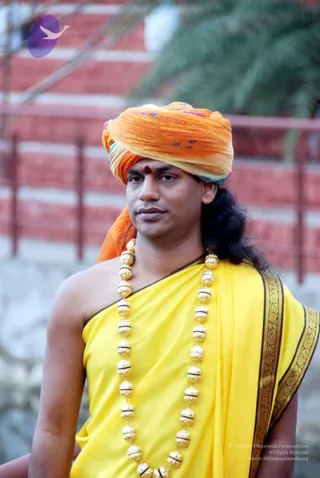
A smiling man in a cream turban with a red bindi sits cross-legged on an ornate gold throne with carved scrollwork and red velvet cushions. He wears a red shawl with gold border over a red dhoti-style garment, and a long gold bead necklace. A microphone on a stand is positioned beside him. Behind him is a green panel with large gold lettering.A seated man sits cross-legged on an ornate gold throne with a red cushion, pressing his palms together in anjali namaskar. He wears a multicoloured pink, blue and cream turban, a royal blue silk garment with gold brocade borders, and a long gold bead necklace, with a red bindi on his forehead. A microphone on a stand sits beside him. Behind him a large gold lettering banner is partly visible.Close-up photo of a smiling man seated in front of an ornate gold carved throne-back. He wears a multicoloured pink, turquoise and cream turban and a blue satin garment with a gold border, with long gold bead necklaces hanging to his chest. A red tilak mark is visible on his forehead, and a microphone stand is in front of him. Long dark hair falls over one shoulder.A man stands outdoors in front of a red brick wall with a metal railing and blurred green foliage behind him. He wears an orange and multicoloured turban with a red bindi on his forehead, and long dark hair falls over his shoulder. He is dressed in a bright yellow shawl with a gold-patterned border draped over one shoulder, and he wears a long necklace of large gold beads. He looks calmly toward the camera. The image has a small purple bird logo at upper left and a copyright line at lower right.