Skip to content
Friday

6 August 2010

Supreme Pontiff of Hinduism HDH Bhagavan Sri Nithyananda Paramashivam

Dated photos
257
Source pages
1
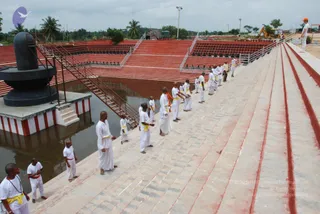
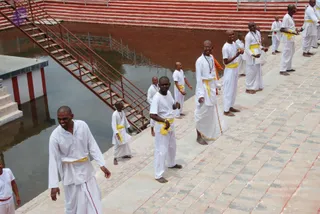
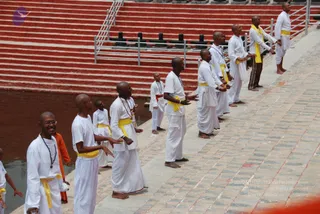
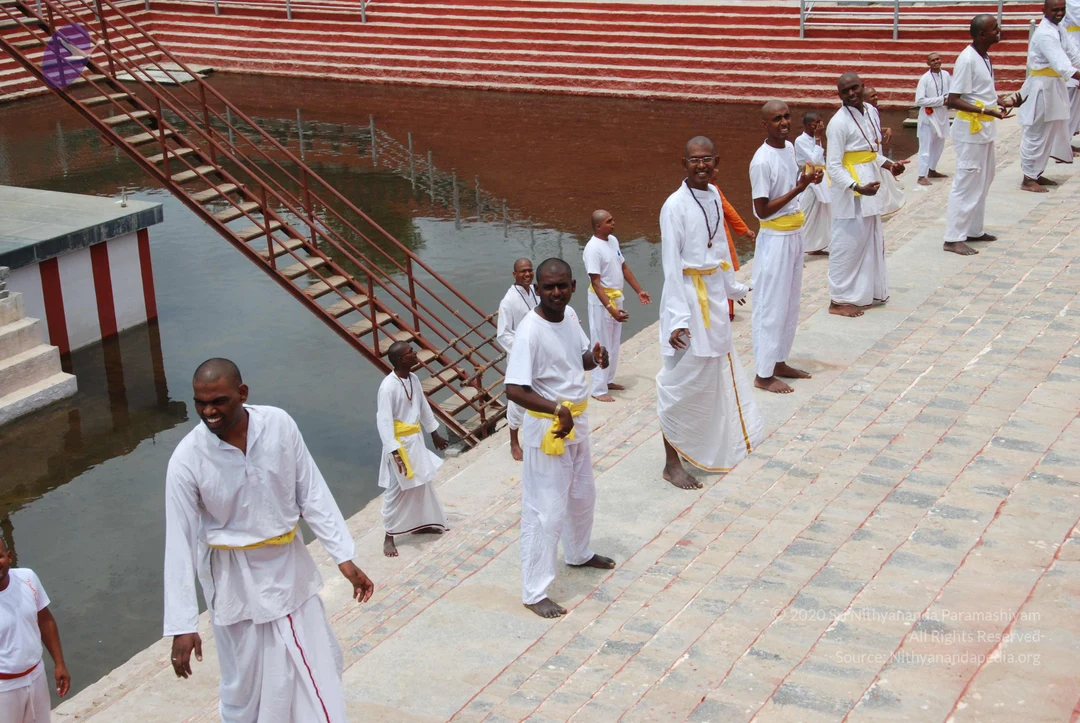
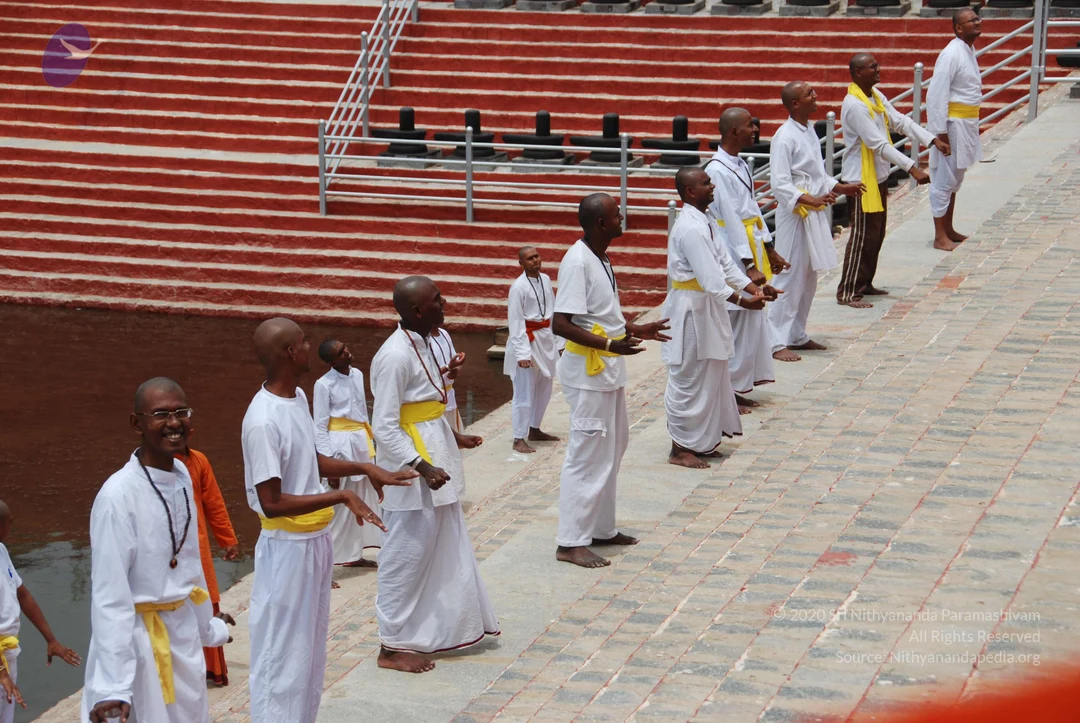
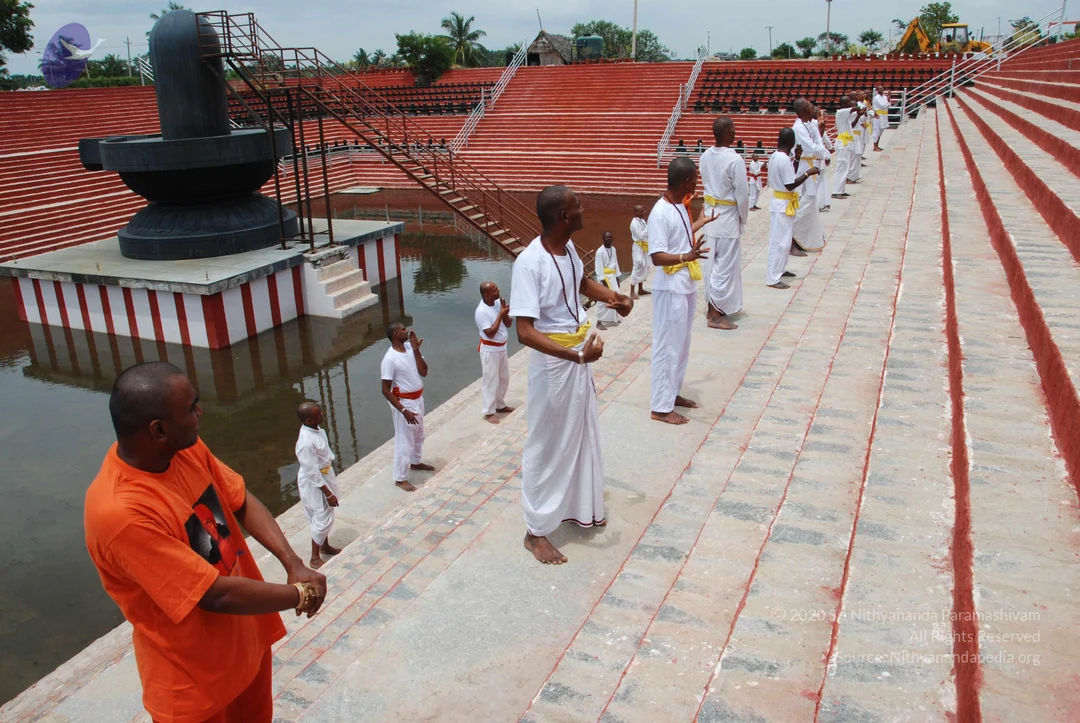
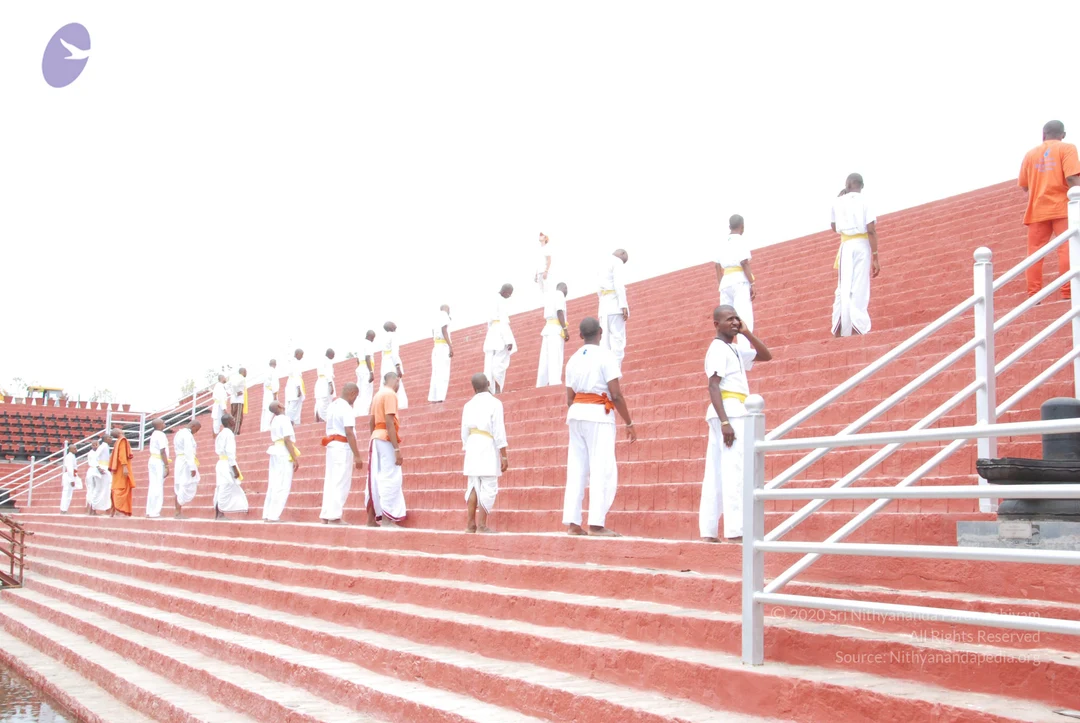
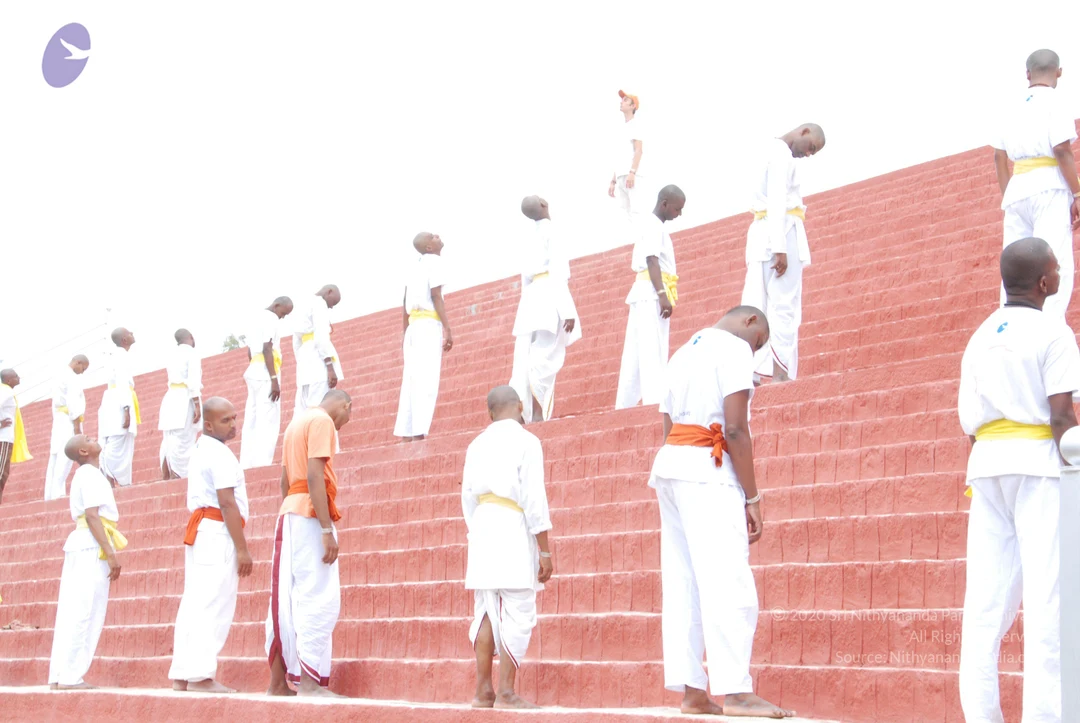
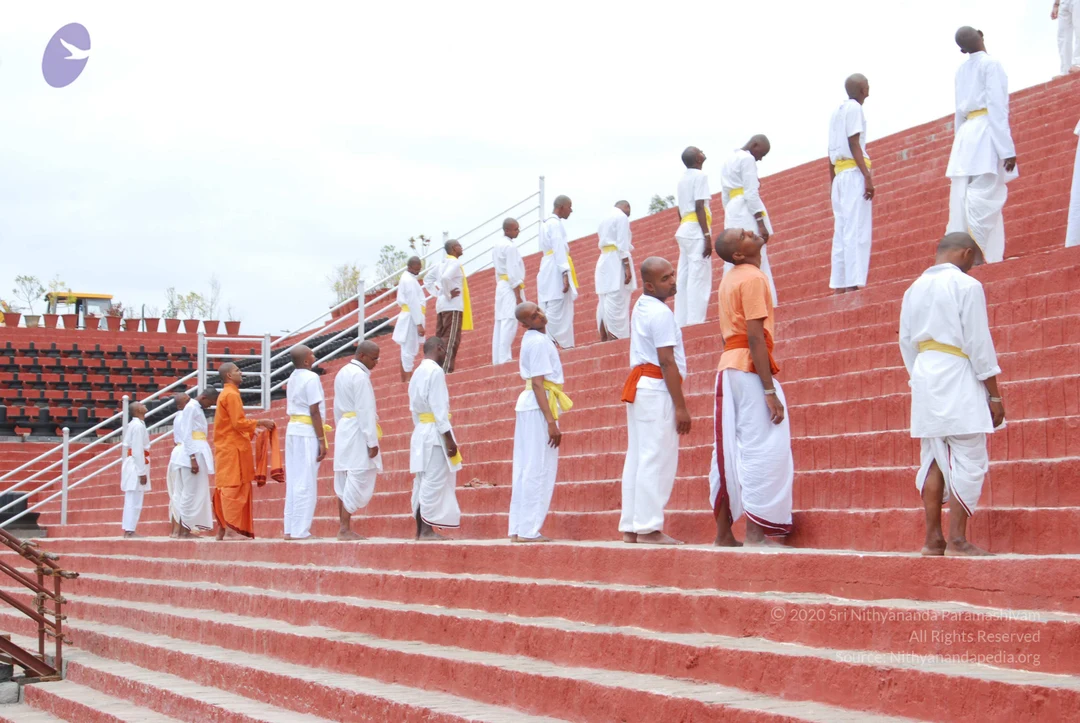
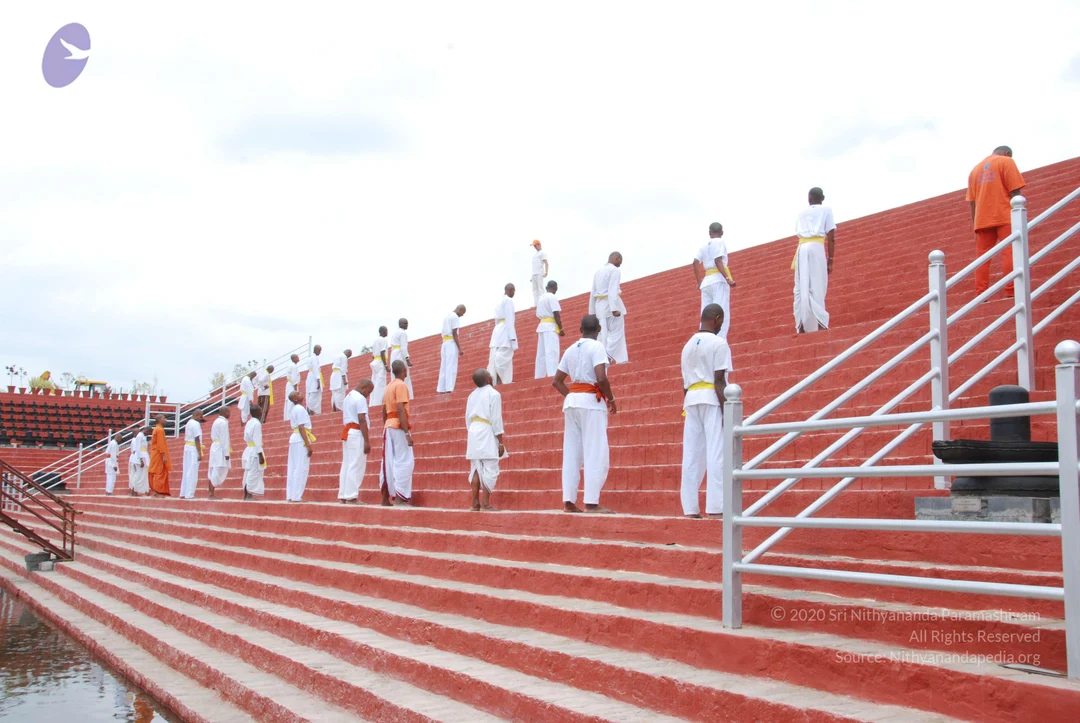
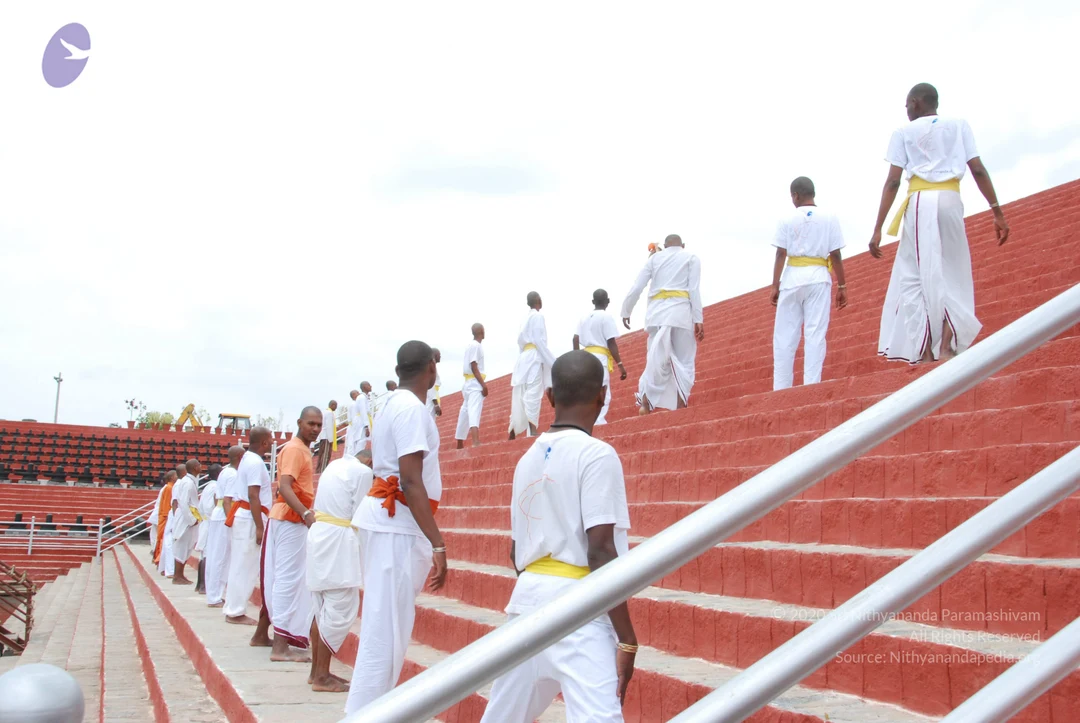
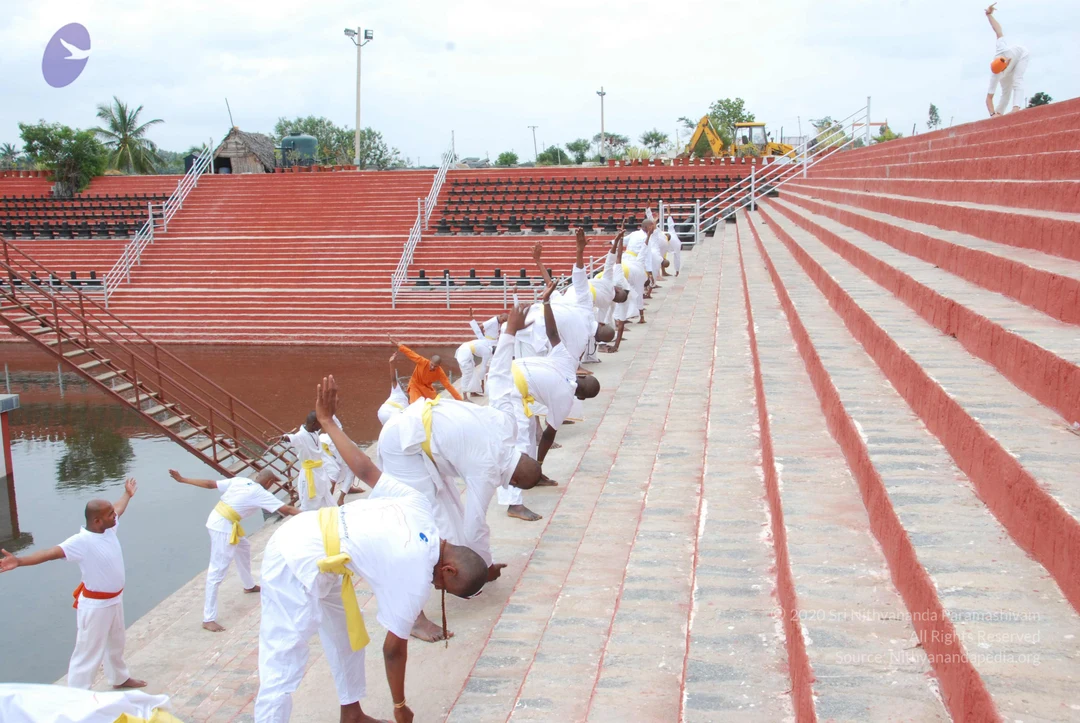
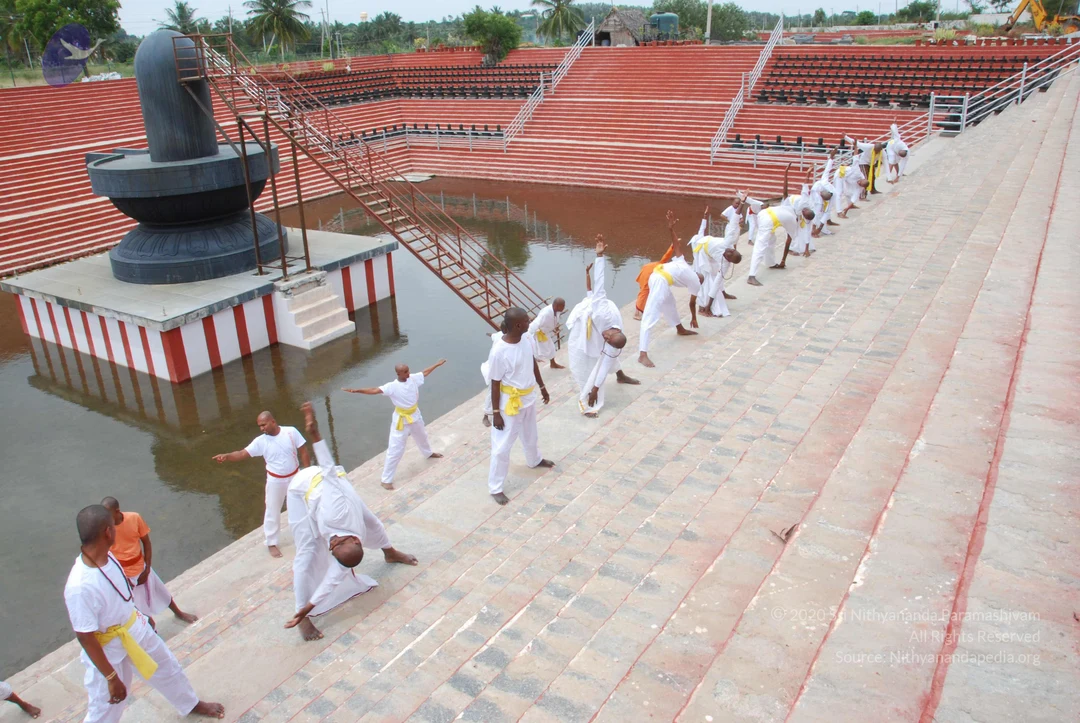
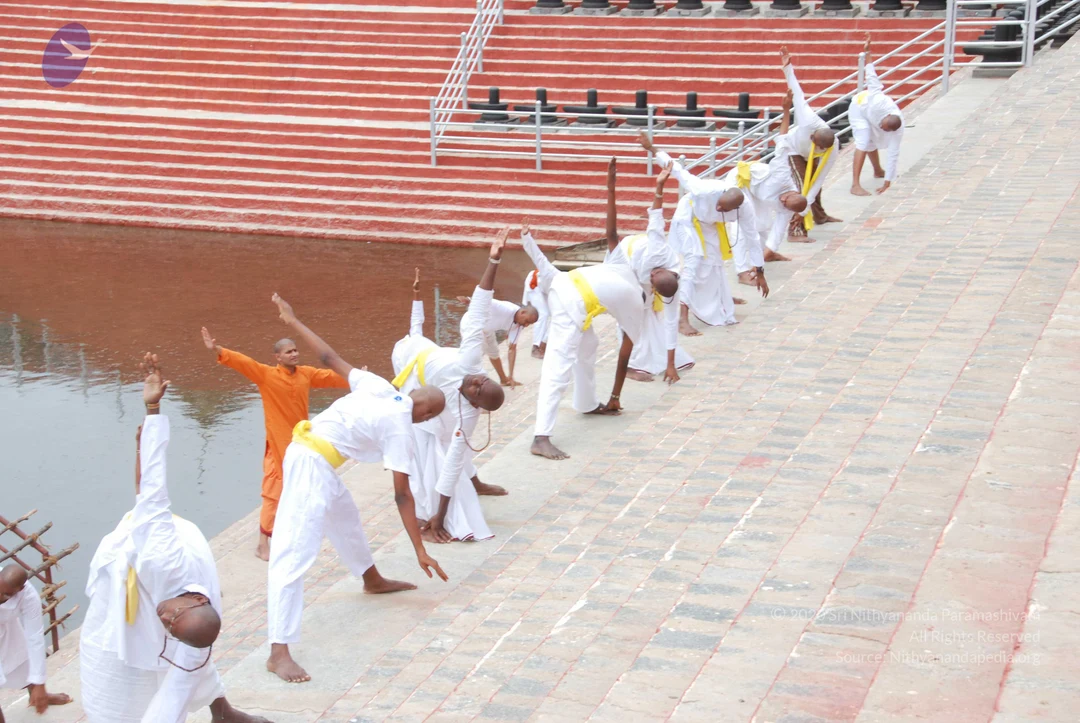
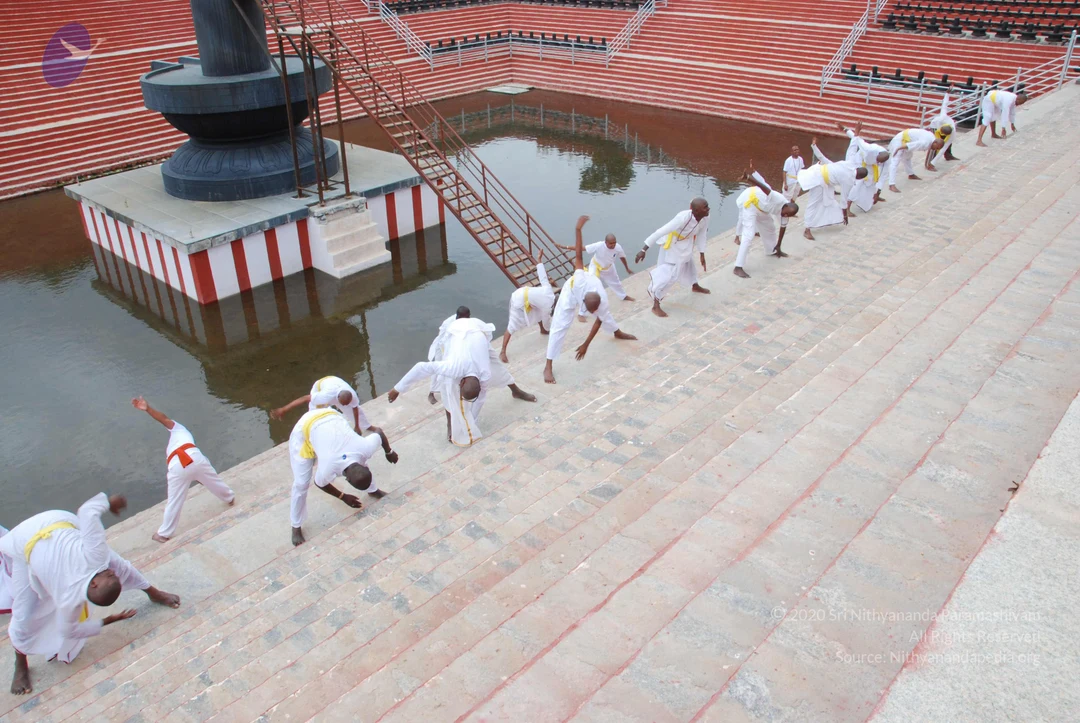
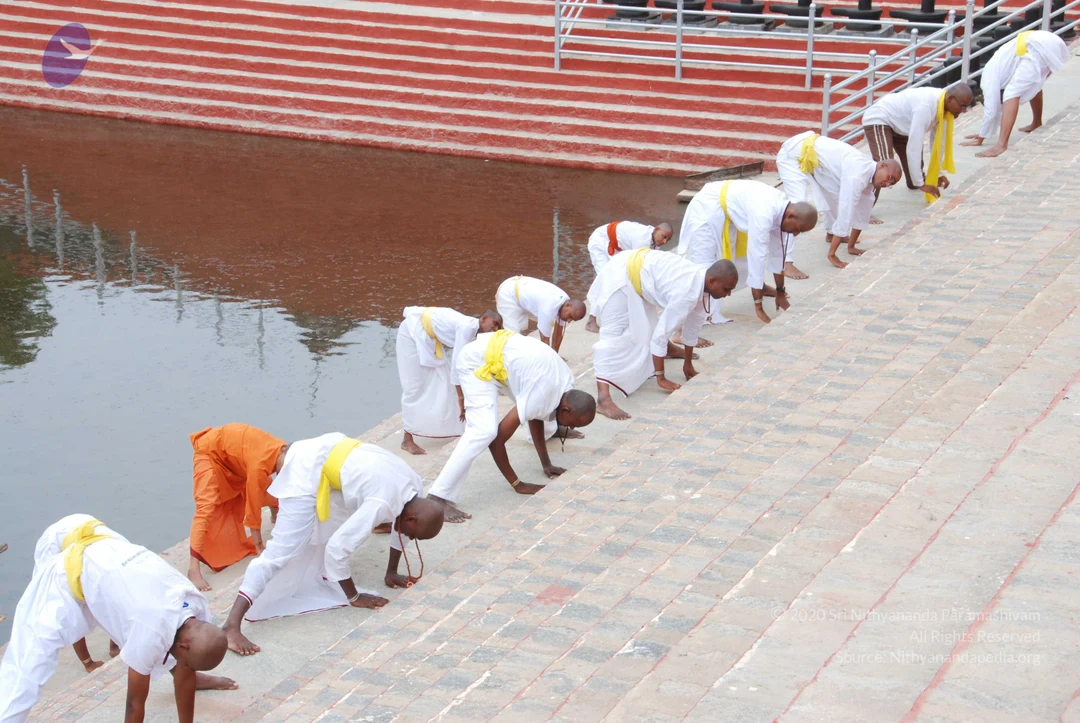
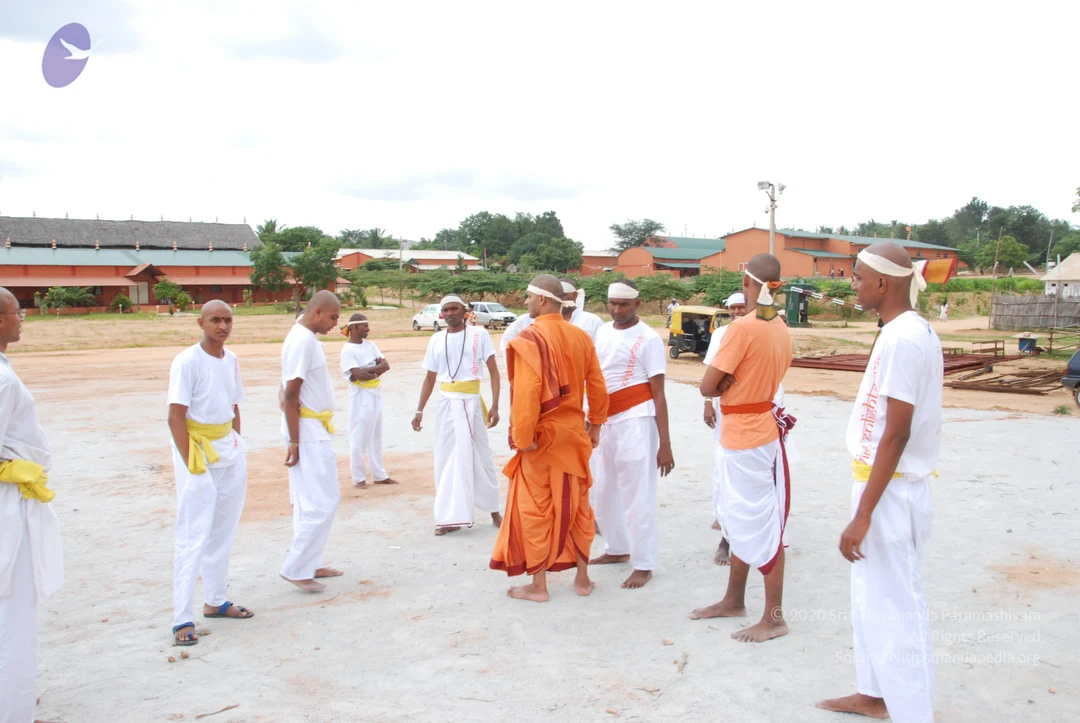
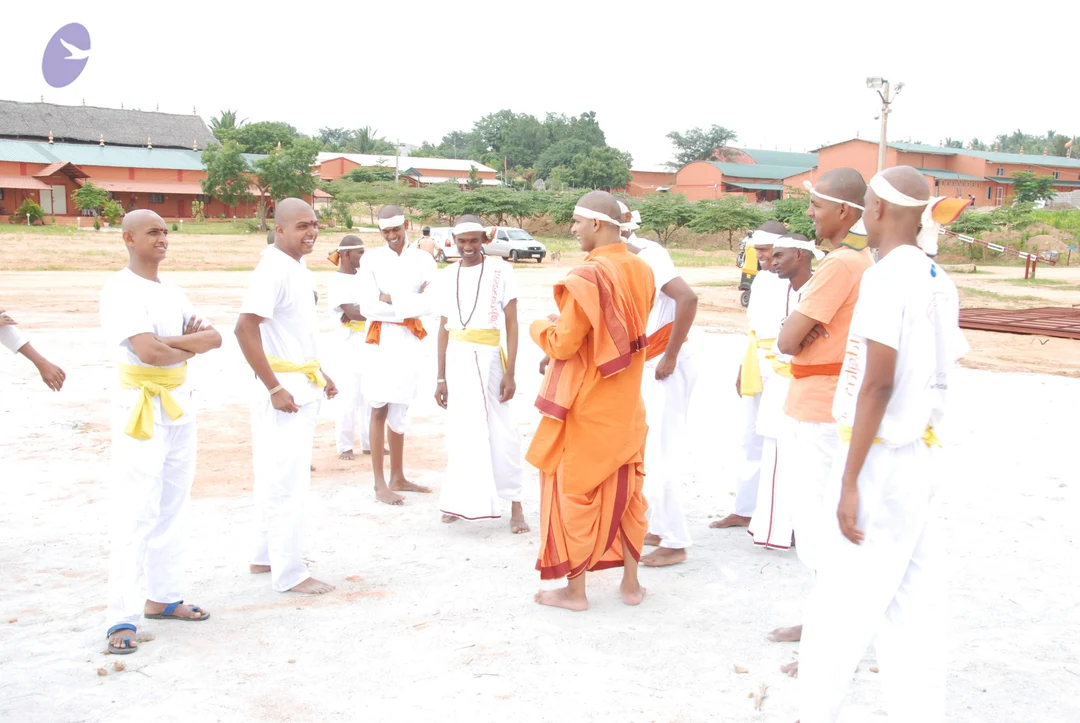
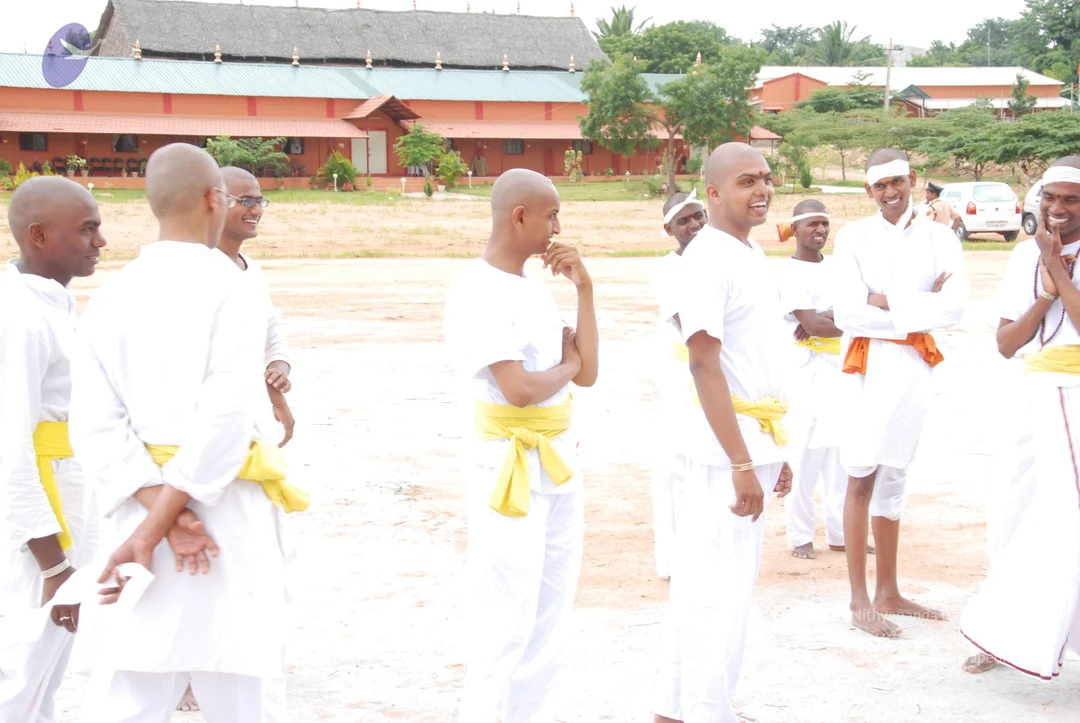
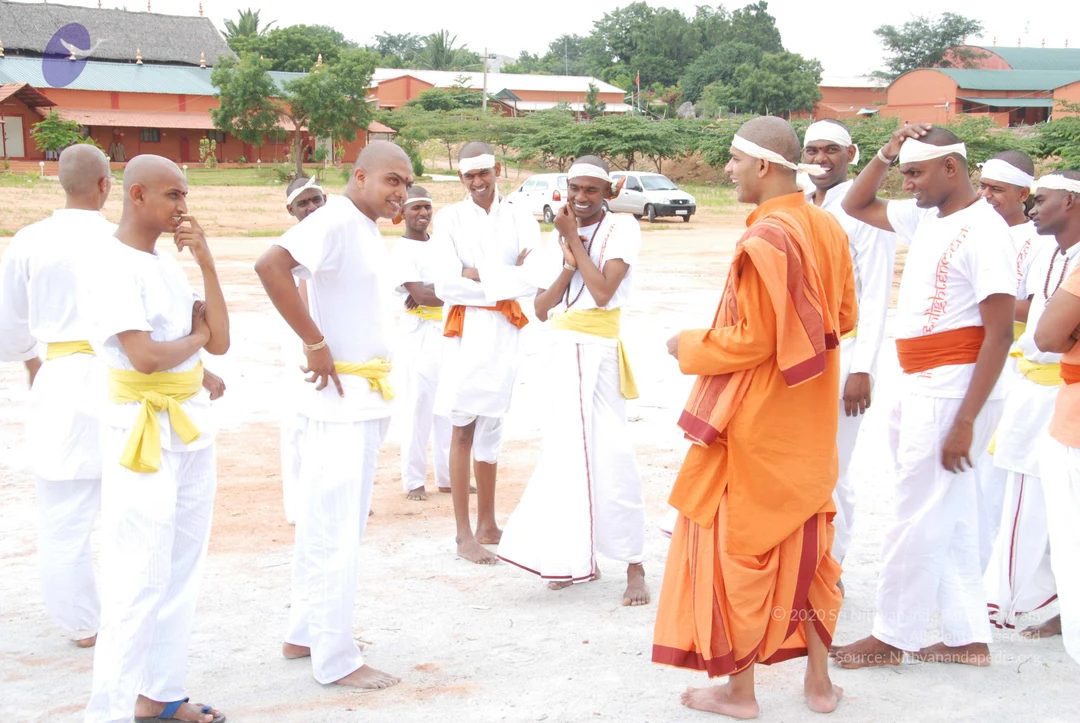
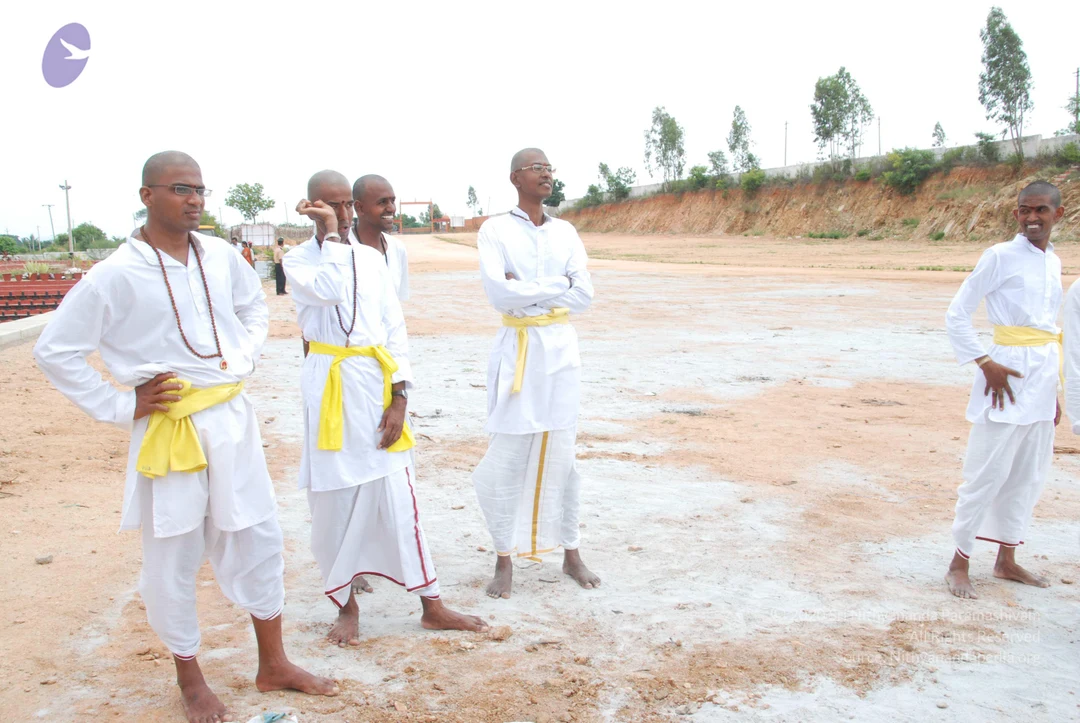
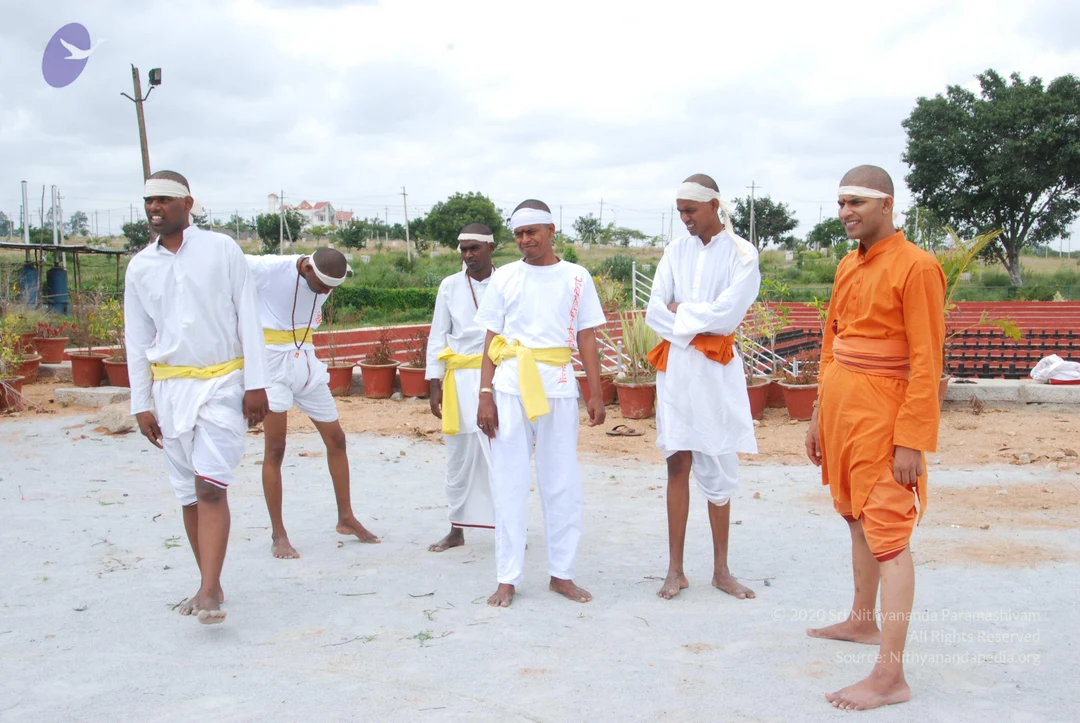
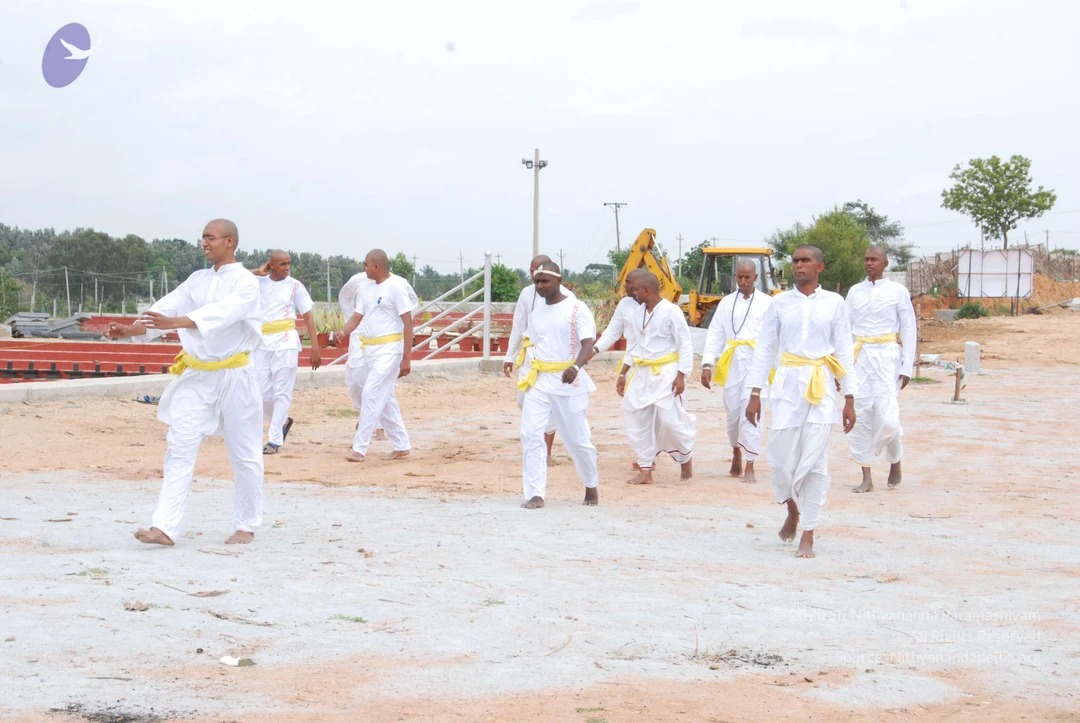
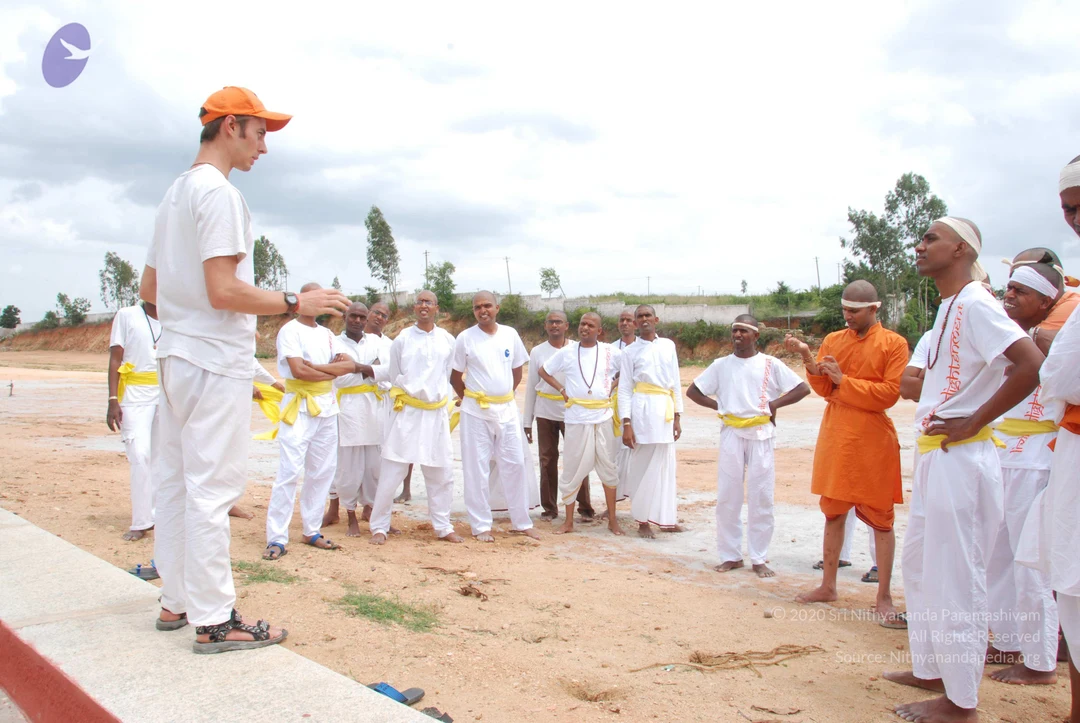
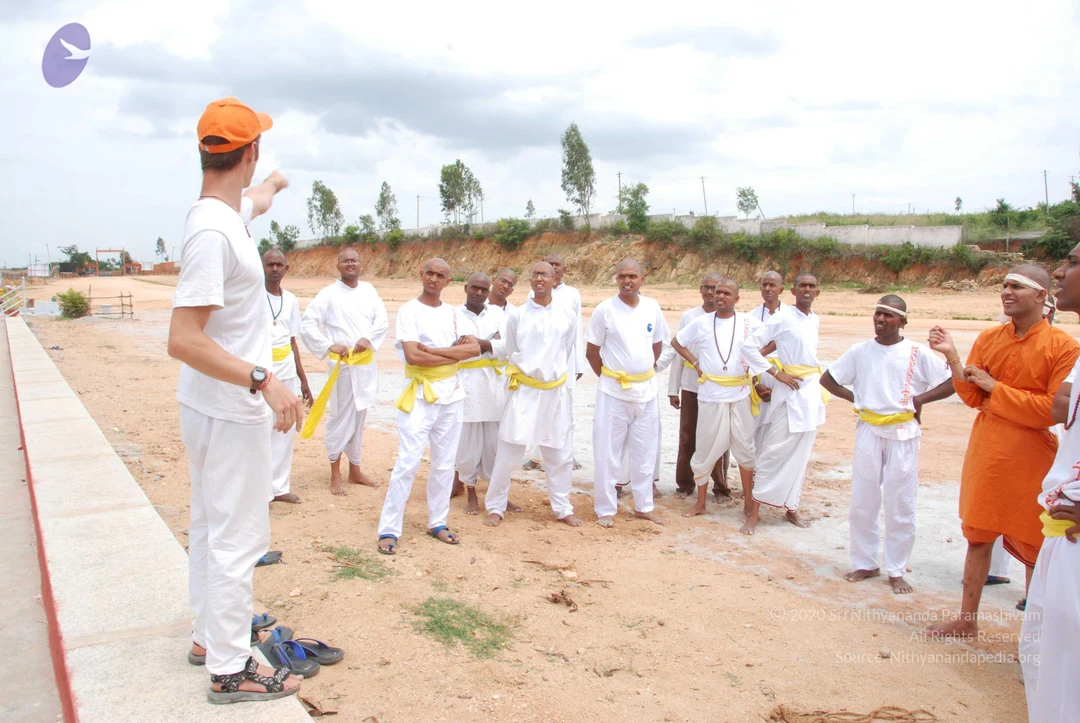
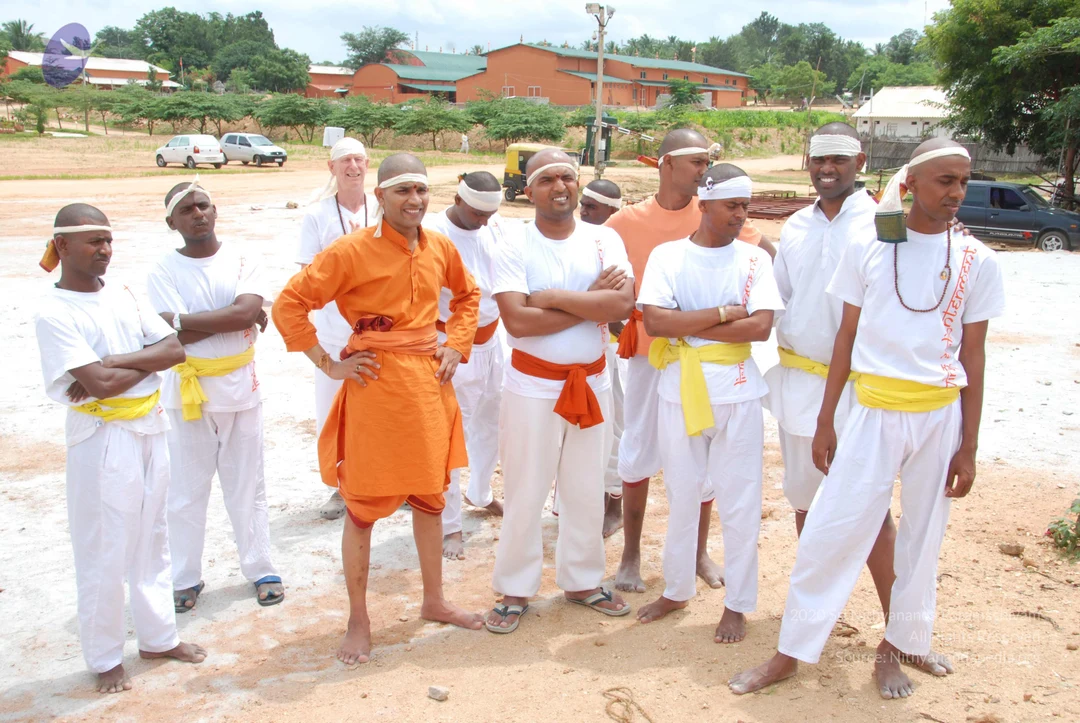
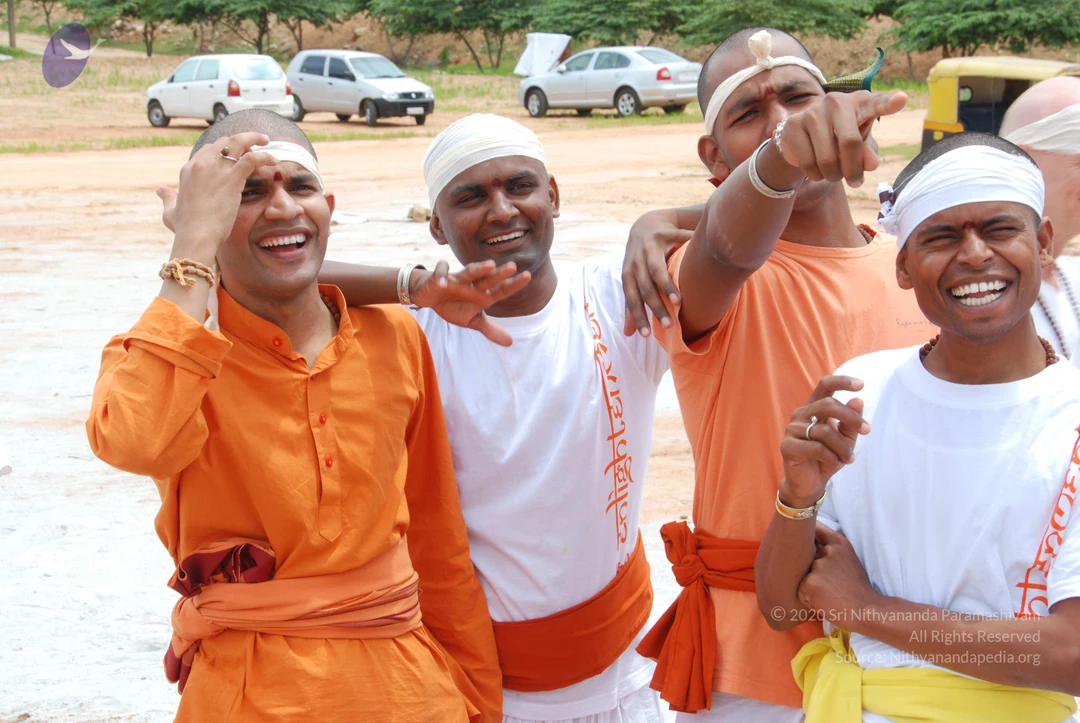
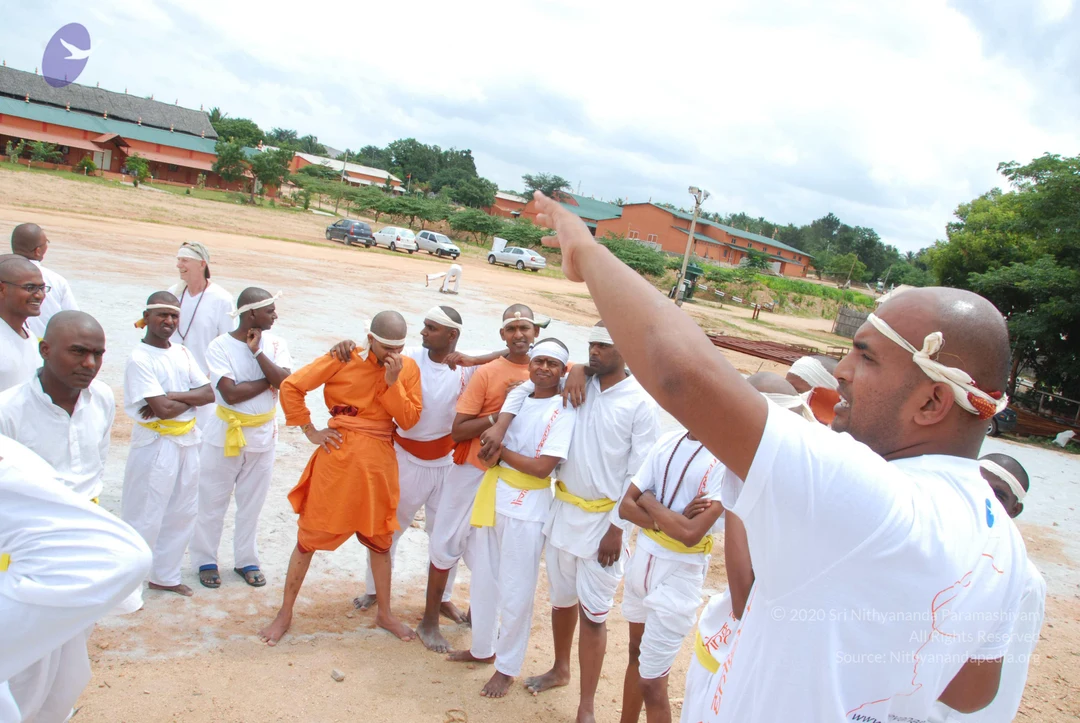
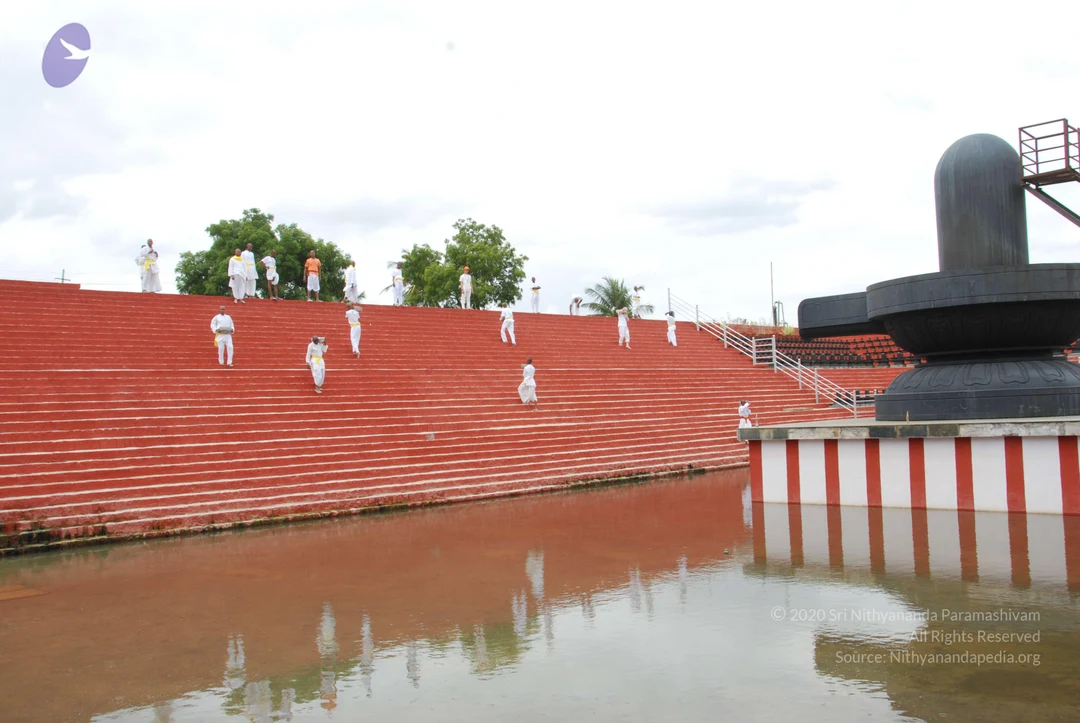
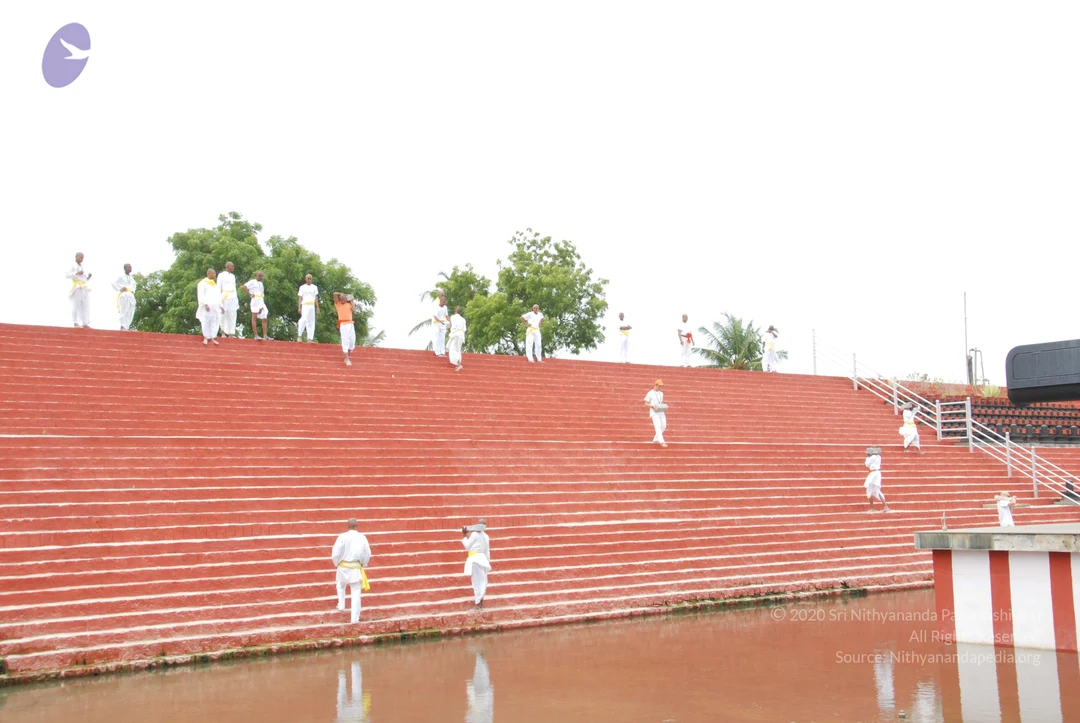
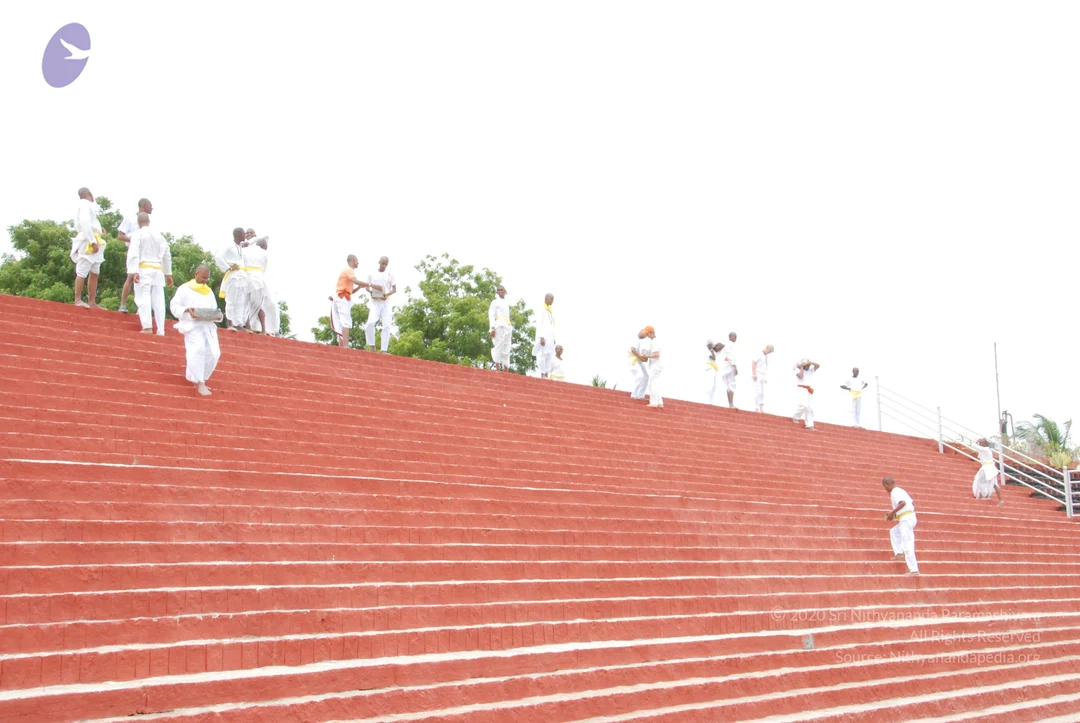
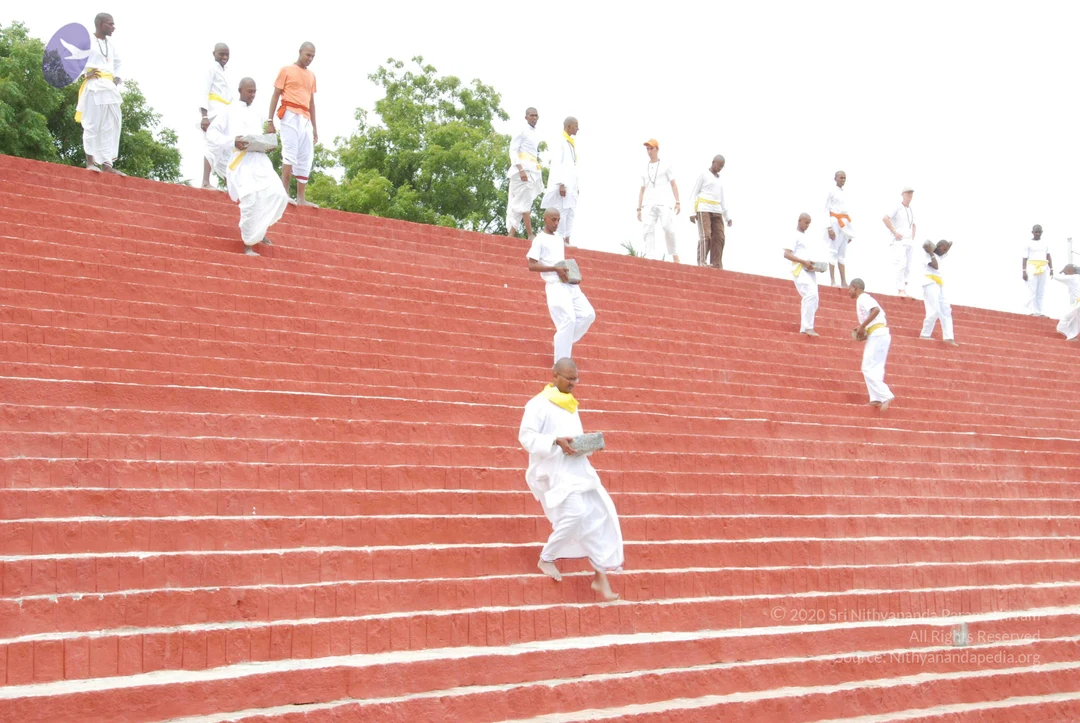
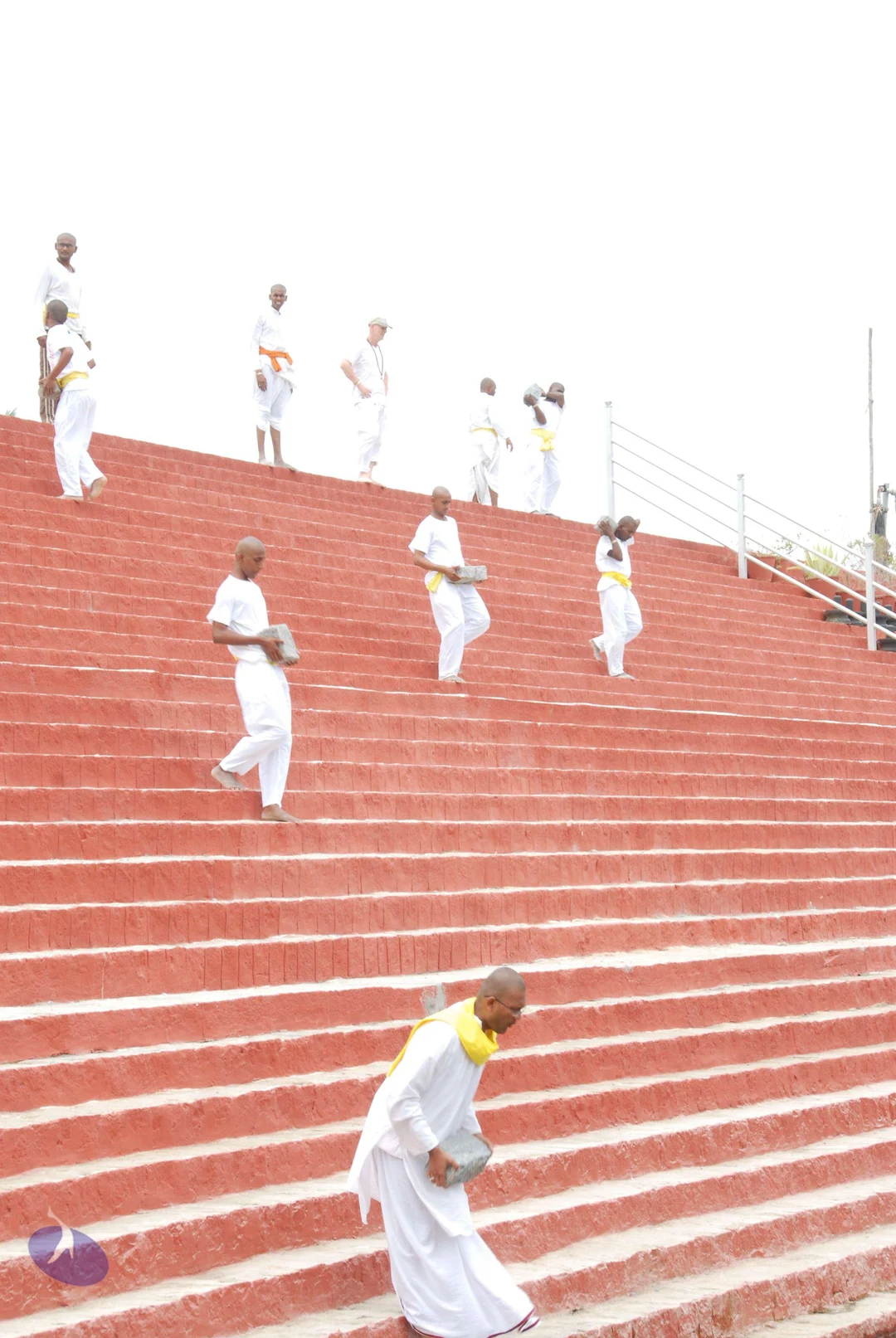
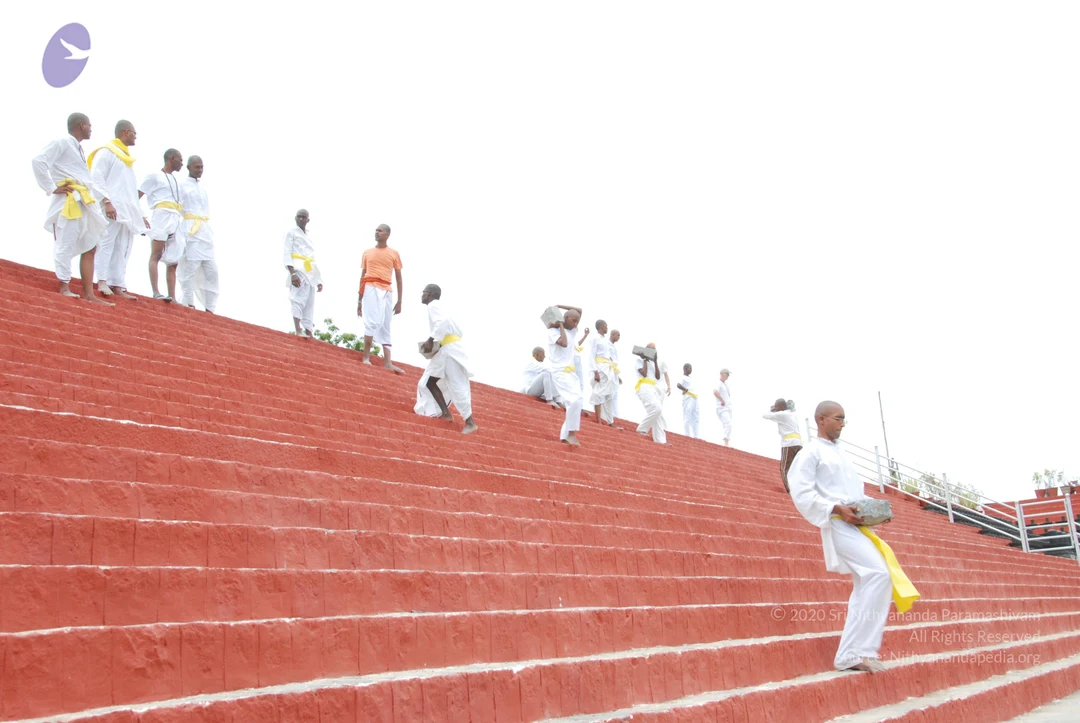
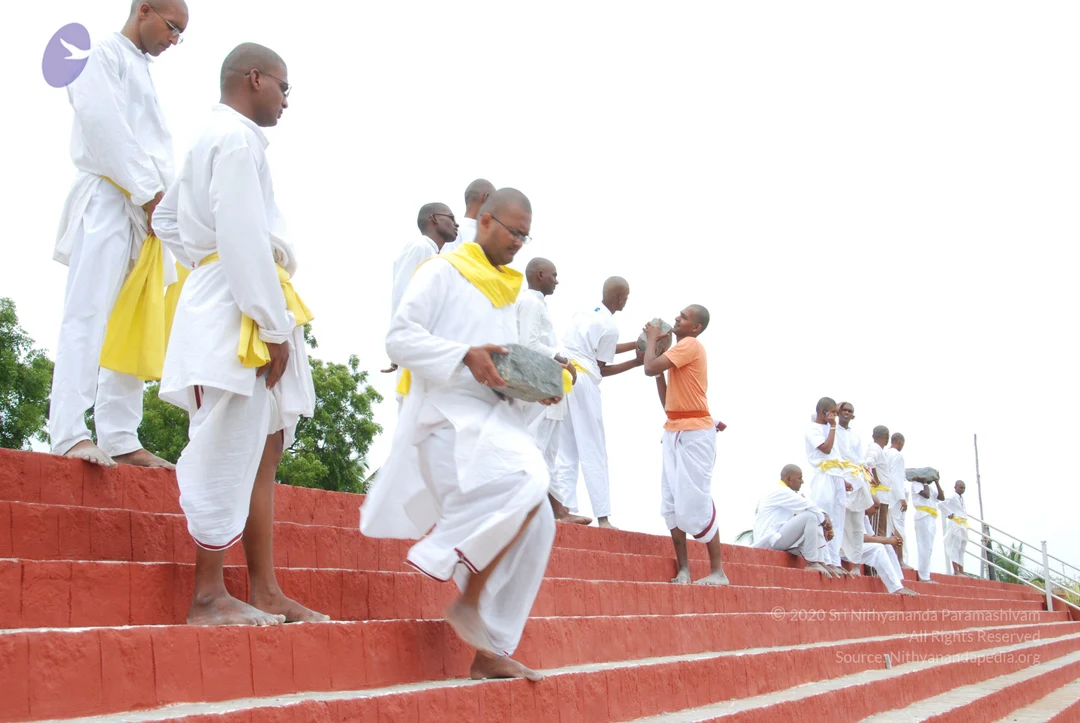
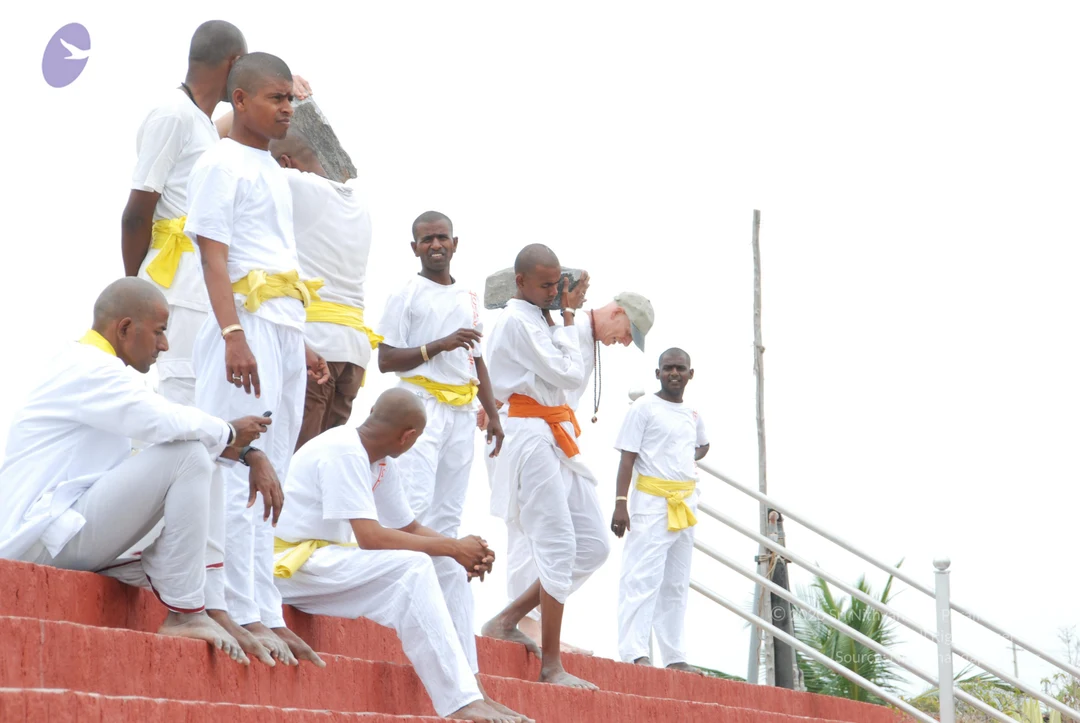
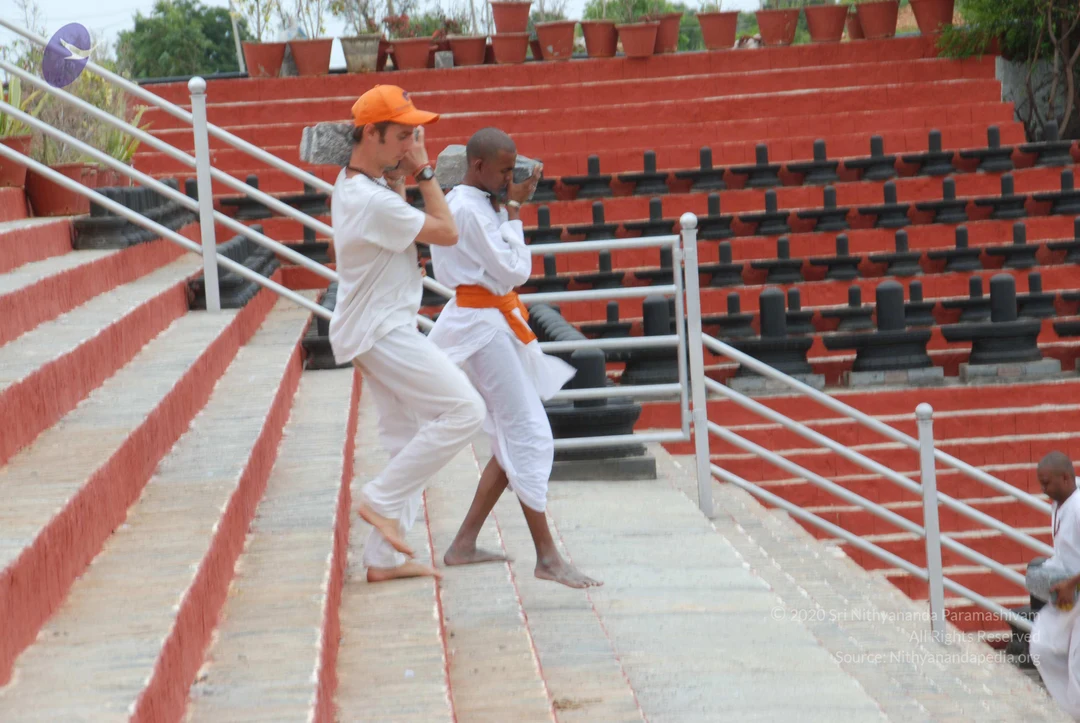
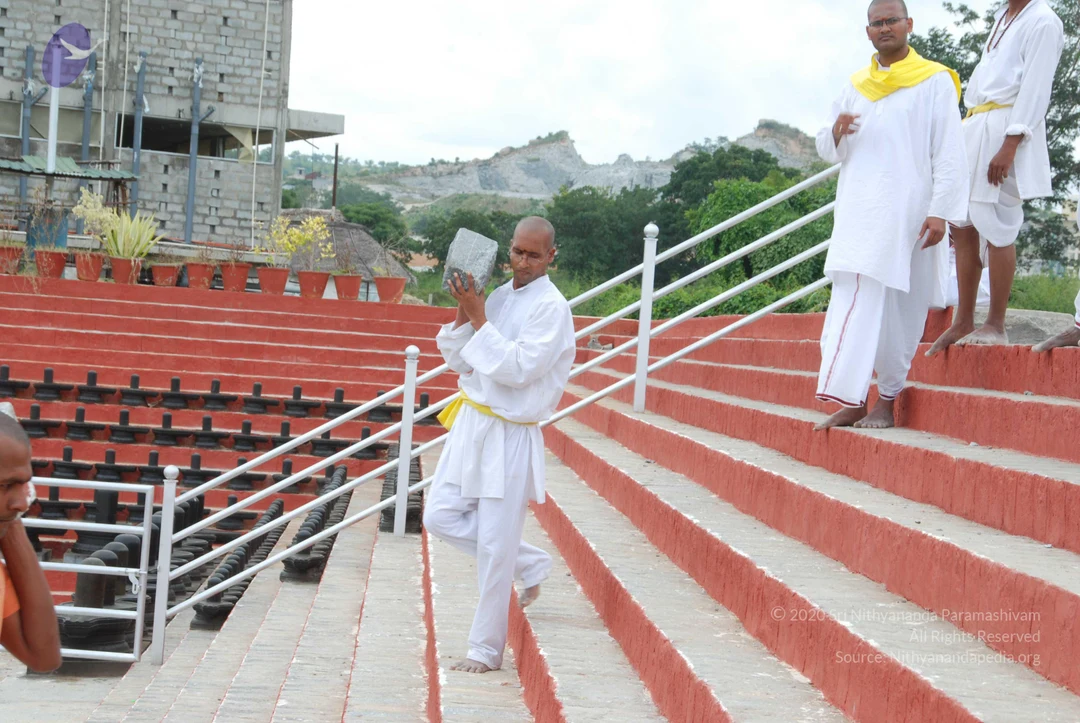
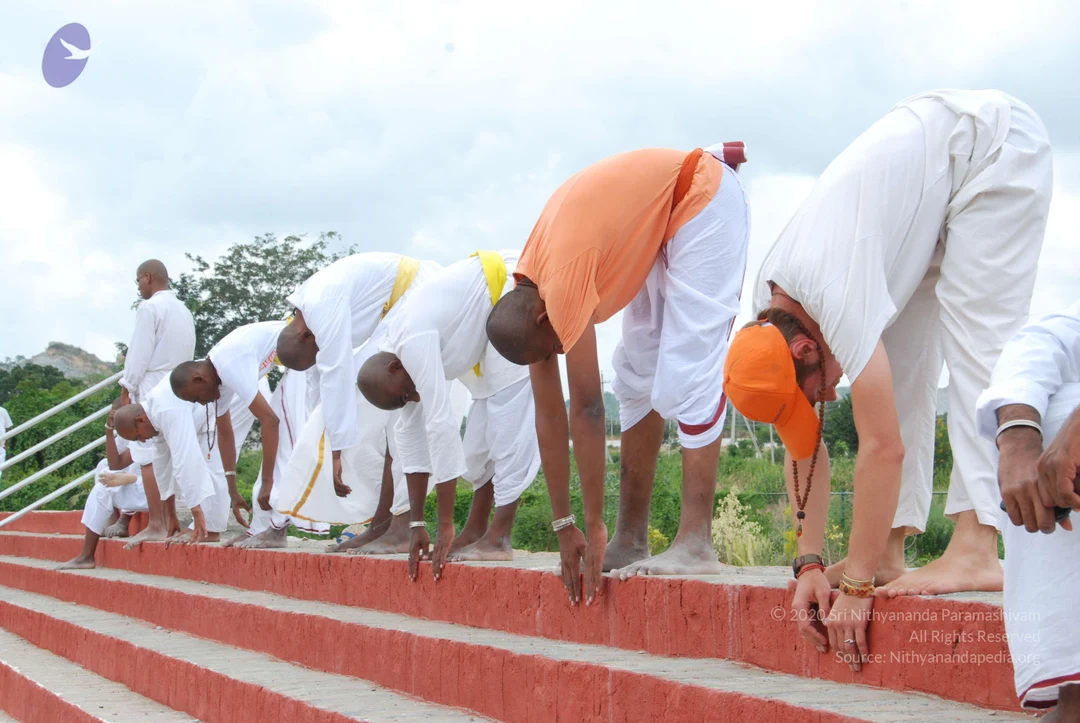
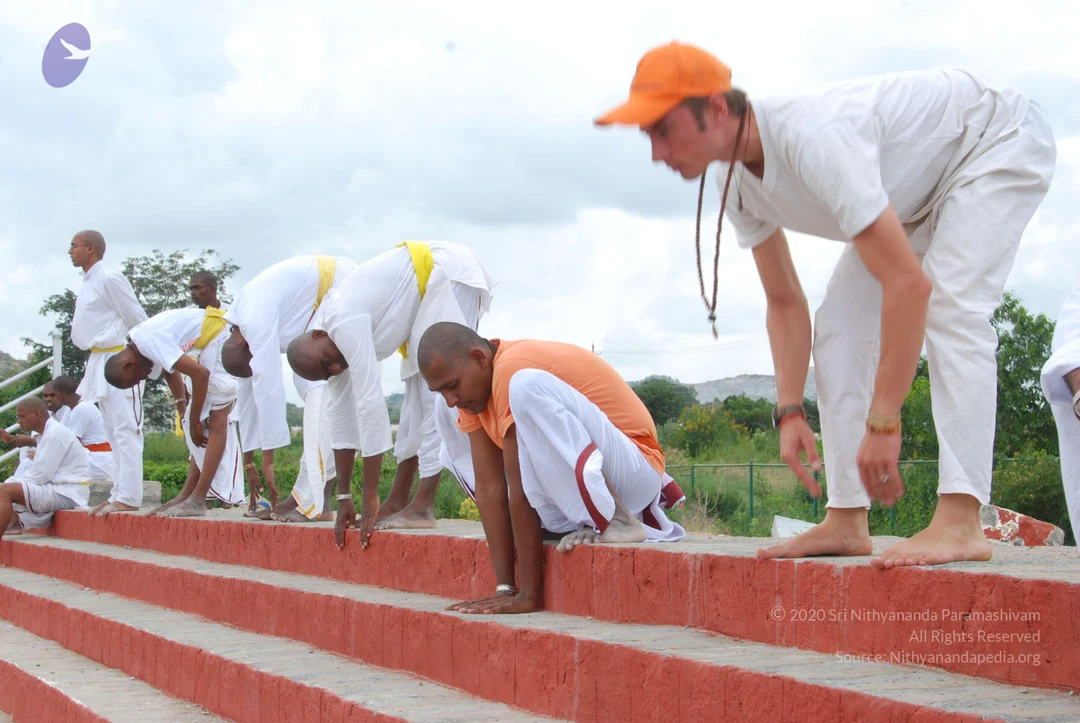
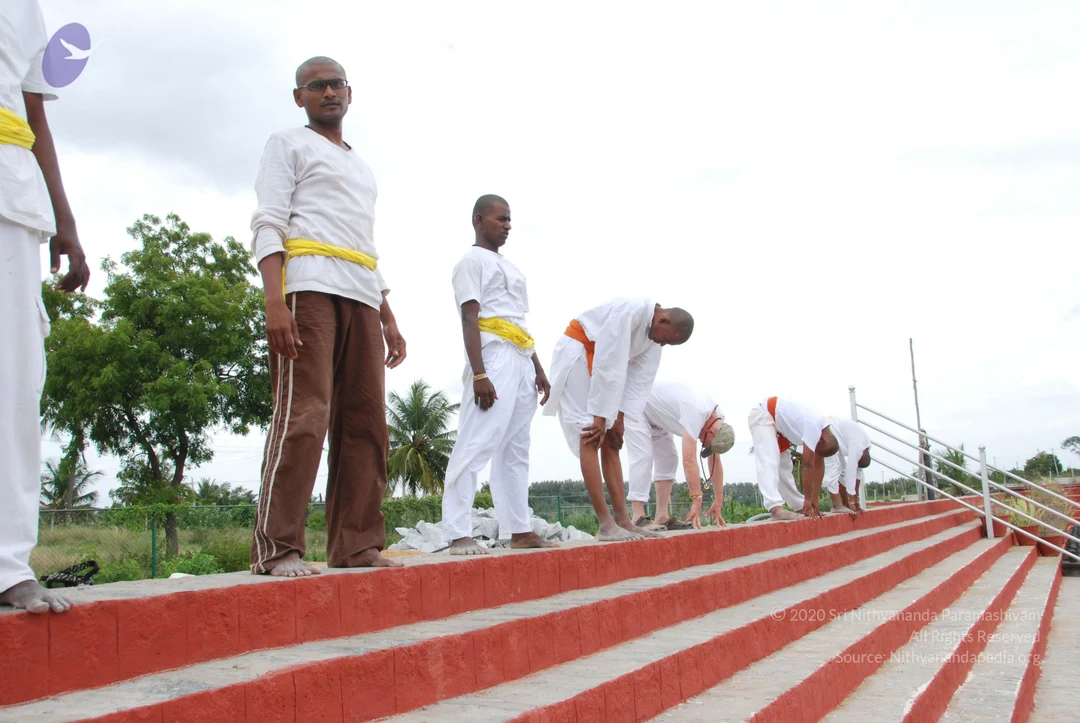
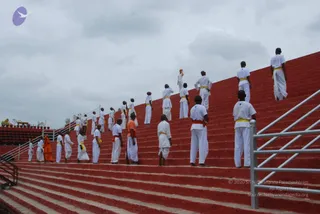
A photograph of a line of about twenty men in white dhotis and white kurtas with yellow sashes standing on wide red-and-grey stone steps beside a large black shivalinga on a square plinth with red and white banding. Some men hold yellow and white cloths; one wears an orange sash. The shivalinga sits at the edge of a dark reflective water tank. Tiered red seating and a black metal staircase rise behind them, with palm trees, a construction excavator, and a worker in an orange cap at right. Grey overcast sky.A photograph of a group of shaved-headed men in white dhotis and white shirts with yellow sashes walking down a red-brick stepped ghat beside a rectangular water tank. A metal railing staircase descends into the water on the left. Most men are smiling and some wear rudraksha malas. Behind them, a red stone staircase rises. Foreground figures walk toward the viewer while others stand along the steps. No individual is clearly identifiable as a person from appearance, so no candidate is asserted.Outdoor photograph of ashram devotees standing in a line on a stone-paved ghat beside a red-brick stepped tank of dark water. Men in white kurtas and white dhotis with yellow waist sashes stand barefoot, several with hands raised or pressed together in devotion and one smiling. A bald man in white with glasses stands at the left foreground, and an orange-robed figure appears at the far left edge. Red-brick steps and metal railings rise behind them.

August 06 2010

Original wiki page
Contents

Title:

Supreme Pontiff of Hinduism HDH Bhagavan Sri Nithyananda Paramashivam

Photos:
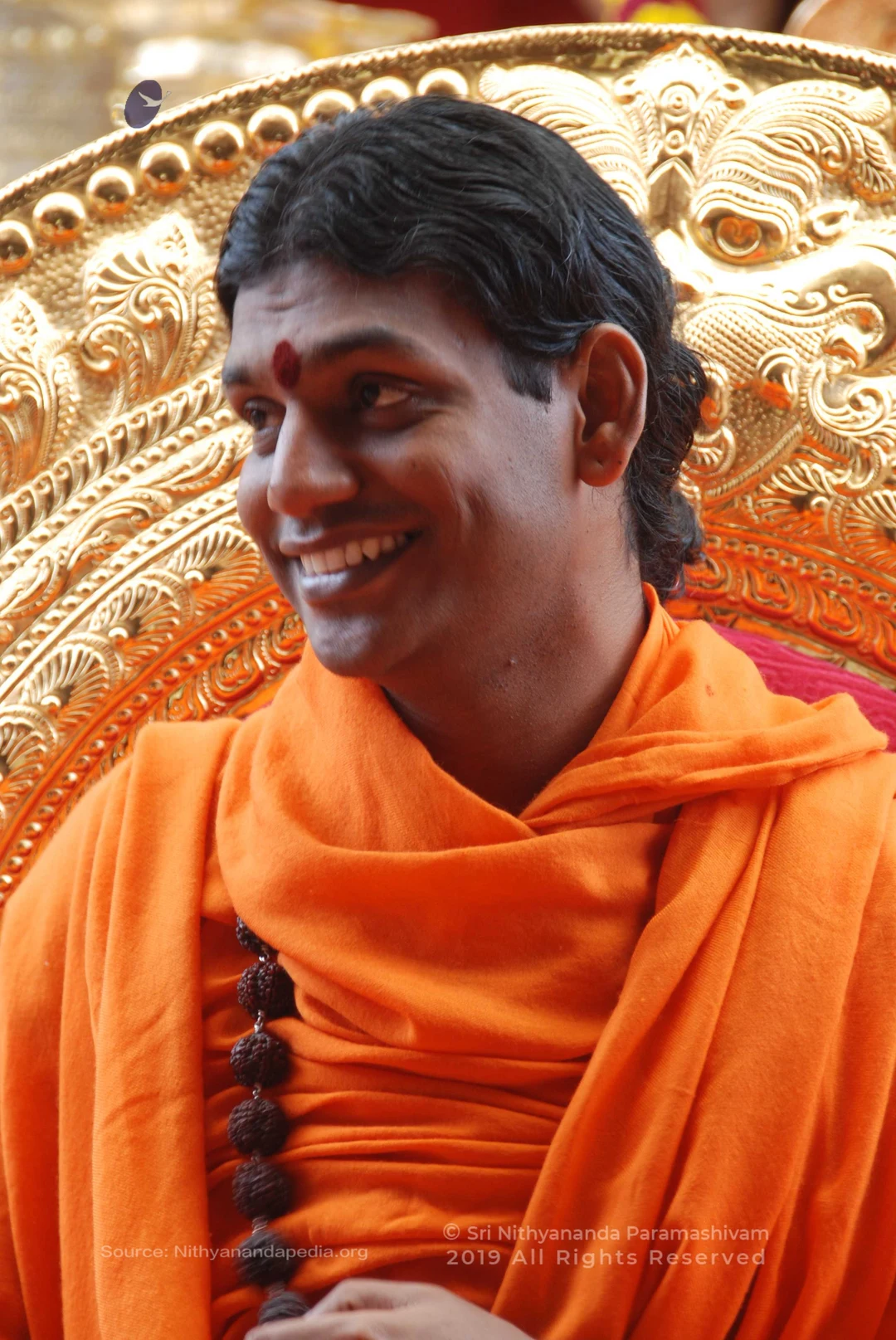
Photos Of The Day:

Pancha-Tapas

Pada-Puja
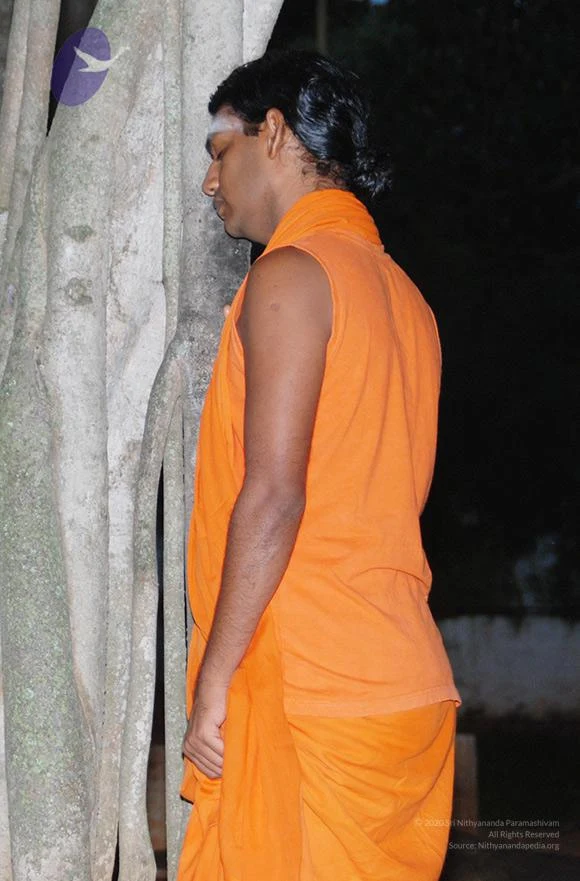
1-Ashramites-Agoris
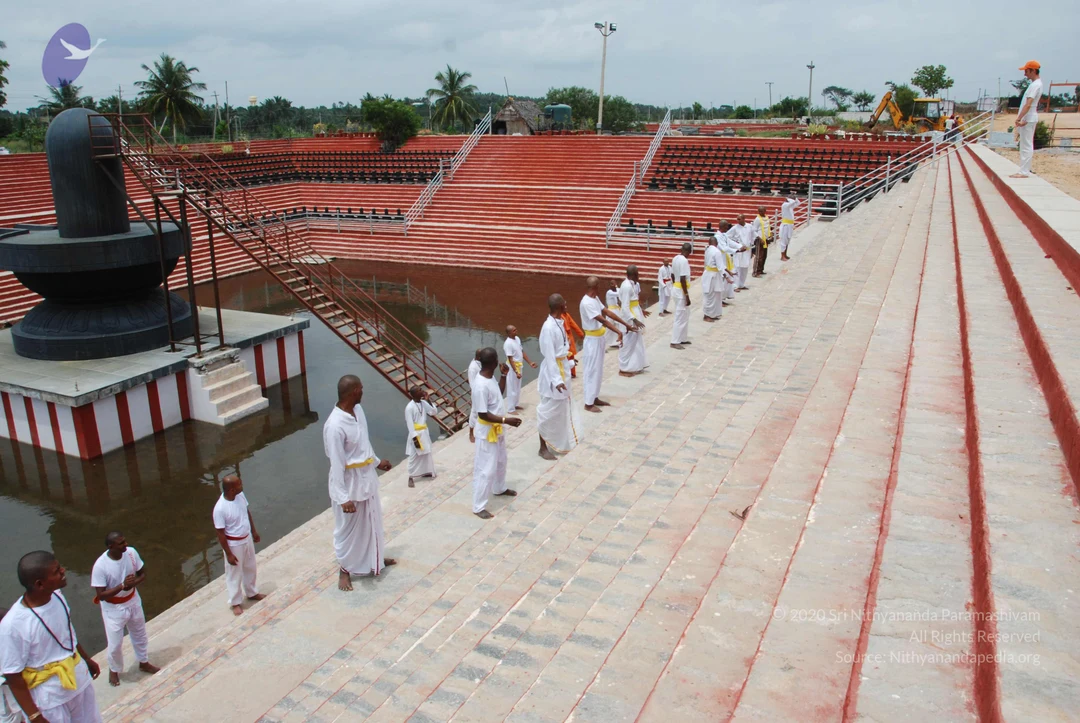
2-Banyan-Tree

3-KGF-Protest

4-Pada-Puja

5-Pancha-Tapas

6-Sarva-Darshan

7-Temple

Photos from this day

View all 257 photos

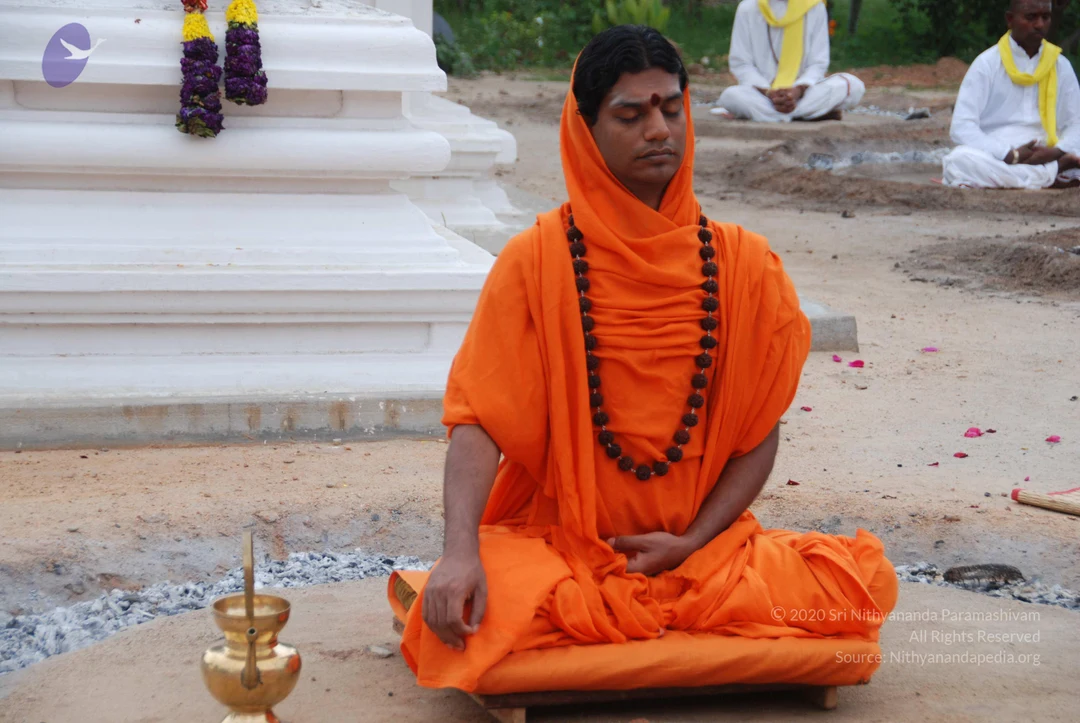
Pancha-Tapas

2 photosSource gallery
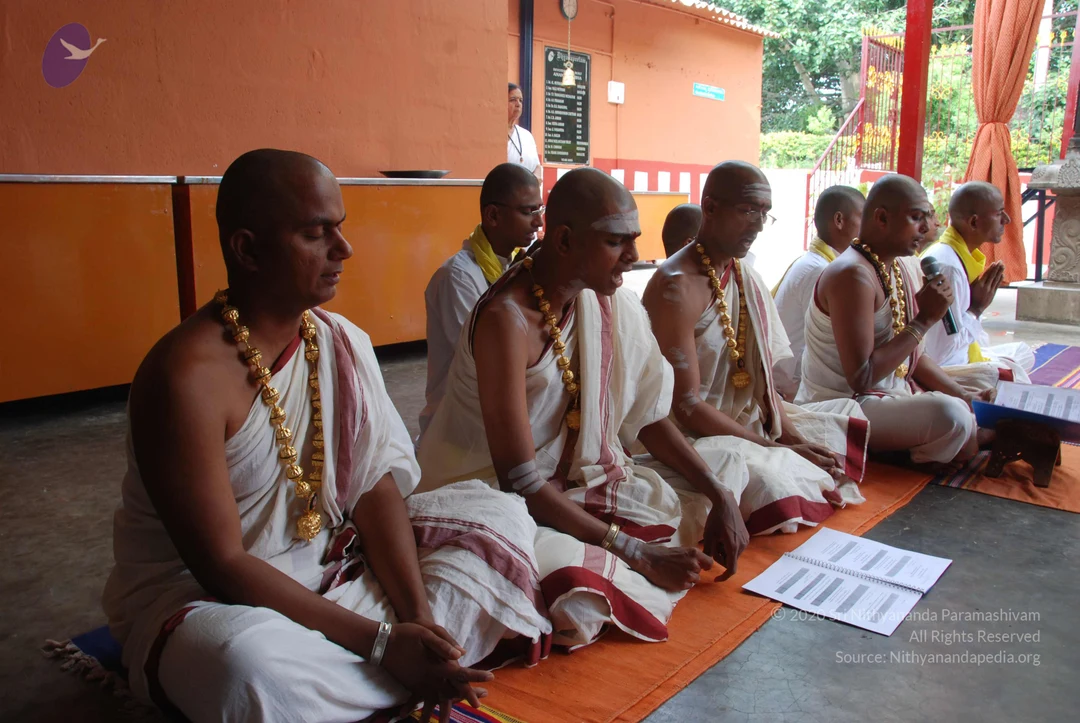
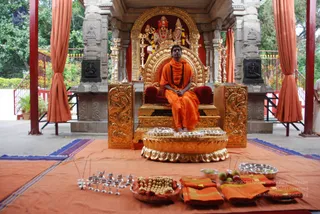
A small two-panel image shows a figure in orange-saffron robes seated cross-legged on a raised platform outdoors, with hair swept back and a bare upper torso draped in saffron cloth. The left and right panels are nearly identical crops of the same seated figure, with greenery visible behind. The figure appears to be in meditation or a seated ritual posture. Two panels of a single photograph, so this is a graphic collage; no separate physical people are visible beyond the one seated figure in each panel. The seated figure has long swept-back hair and saffron clothing, consistent with the page's claim of a person at this event, though the face is too small to judge.A collage of several photographs from a ritual event in an outdoor setting. The main panel shows a figure seated on a raised platform beneath a large tree, surrounded by a circle of people in white and saffron clothing. Other panels show a pada puja ritual on the ground, a close view of a devotee in orange with a visible vibhuti marking, and a smaller photo of seated ashramites. The collage is labelled with captions for Pancha-Tapas, Pada-Puja, Banyan-Tree, Sarva-Darshan and Temple.

Pada-Puja

9 photosSource gallery
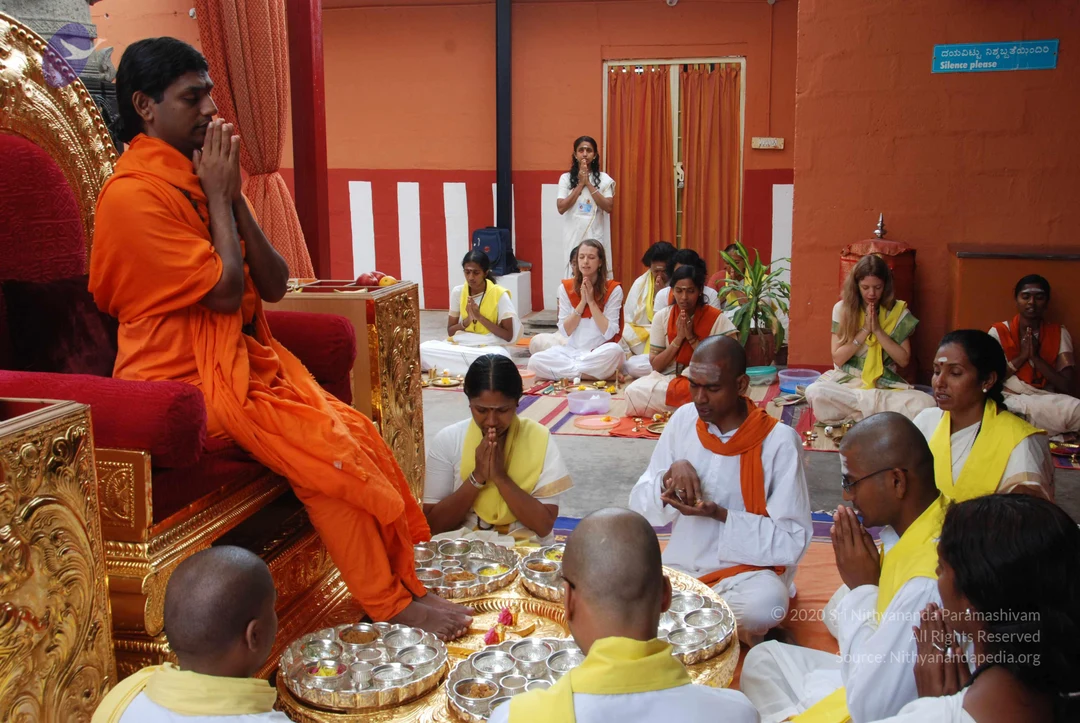
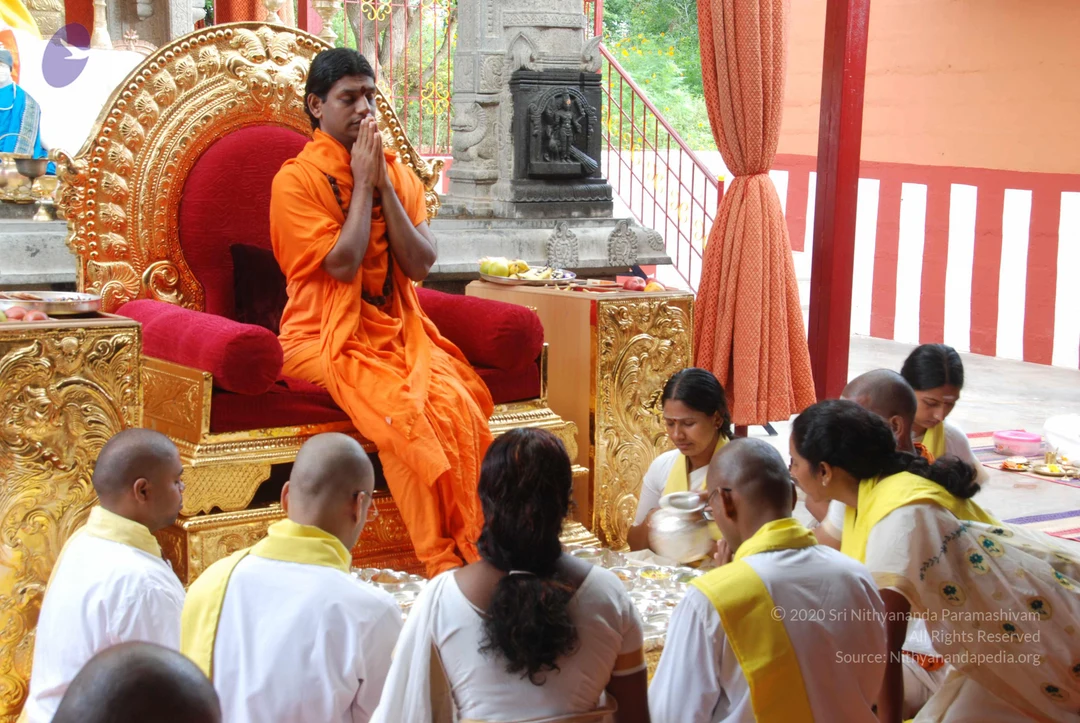
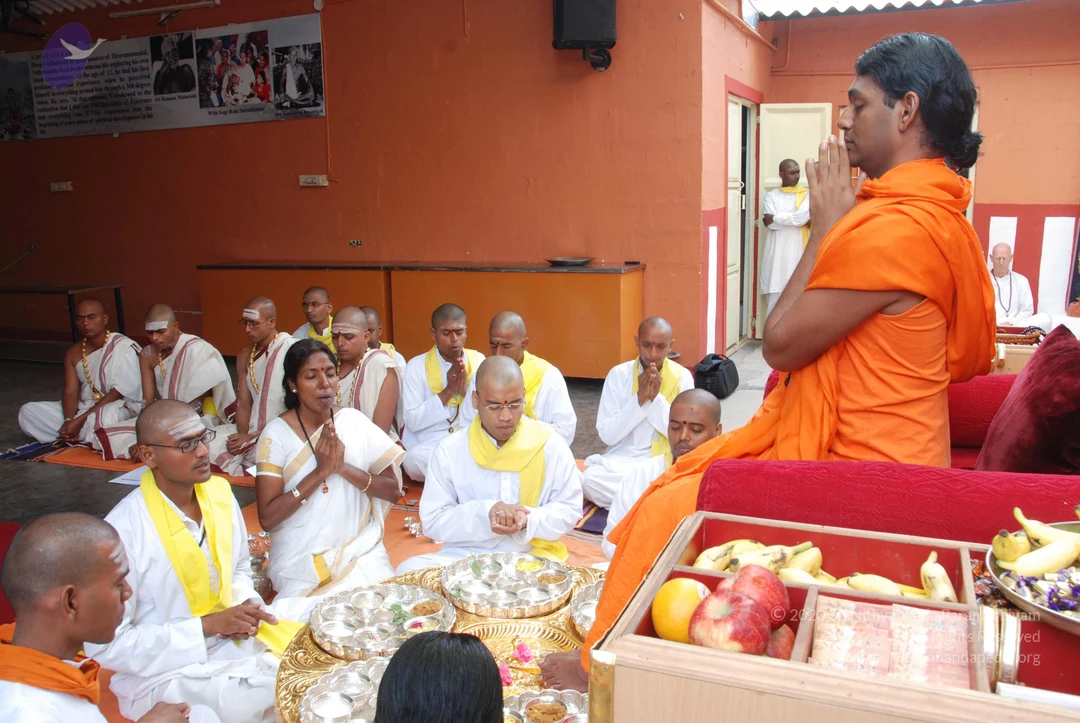
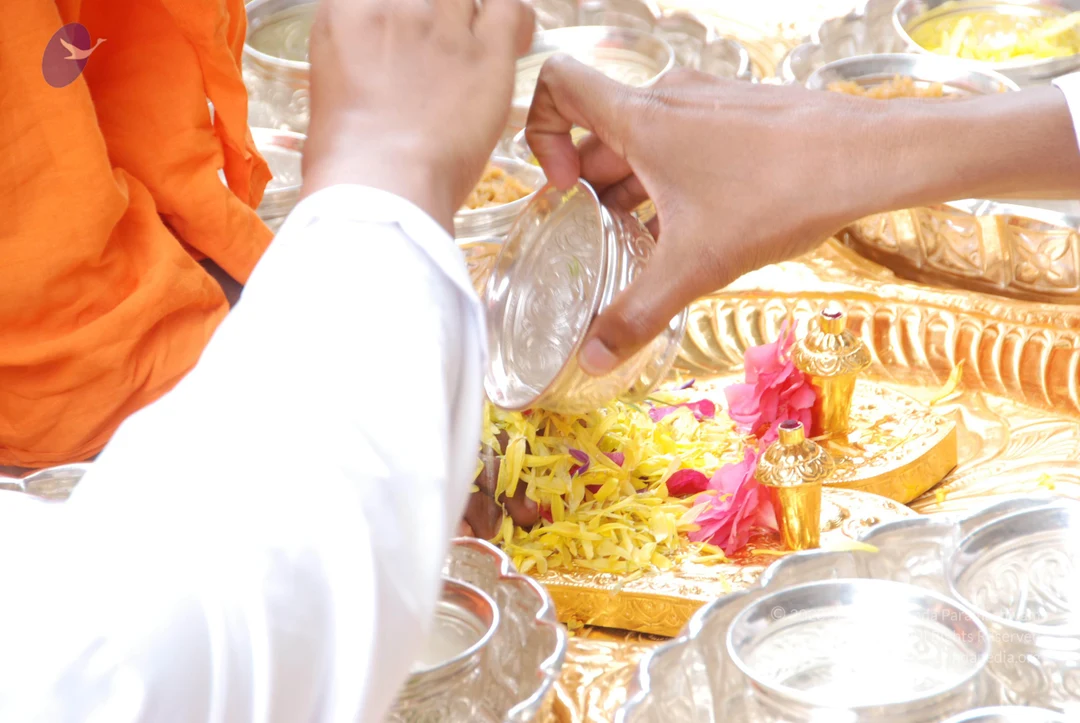
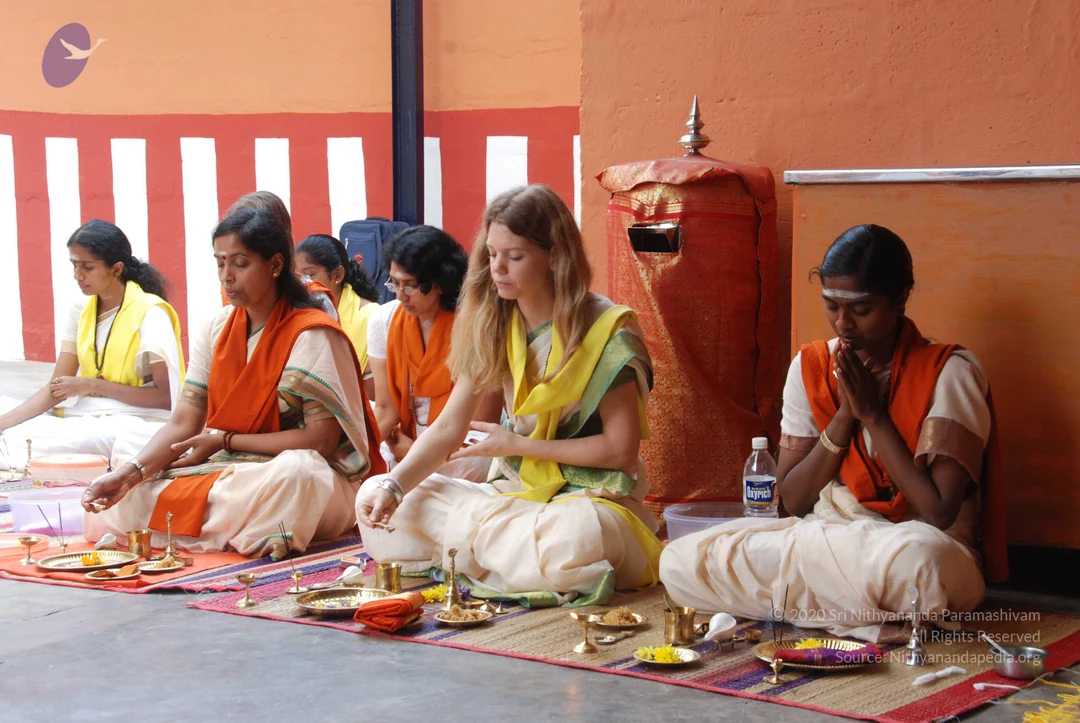
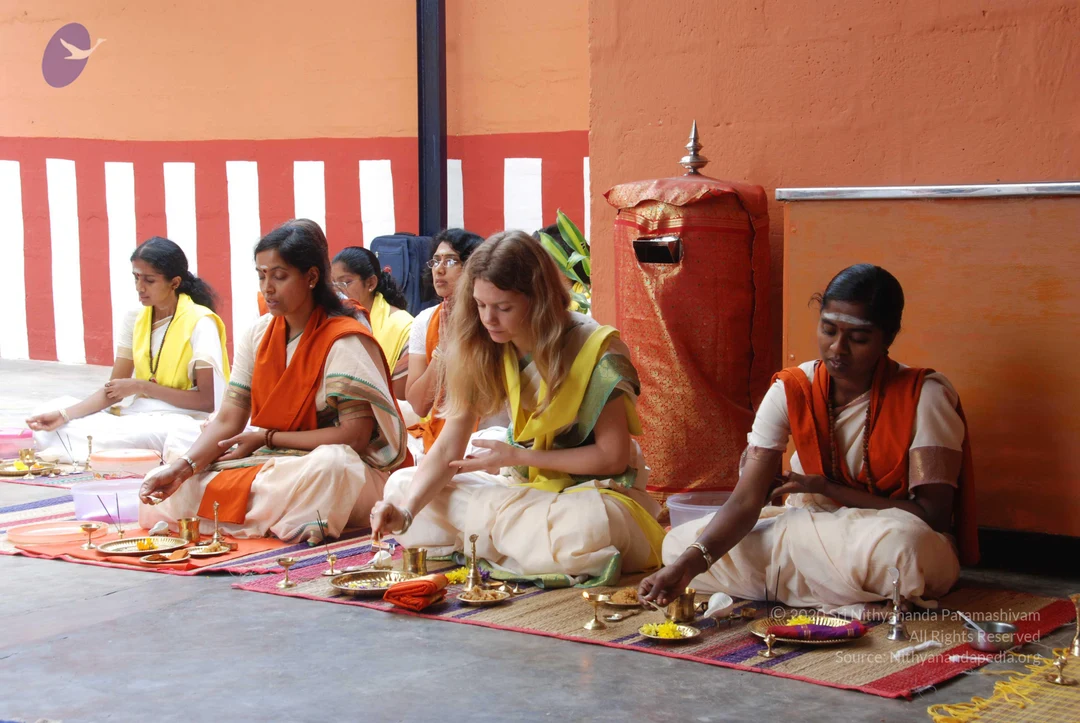
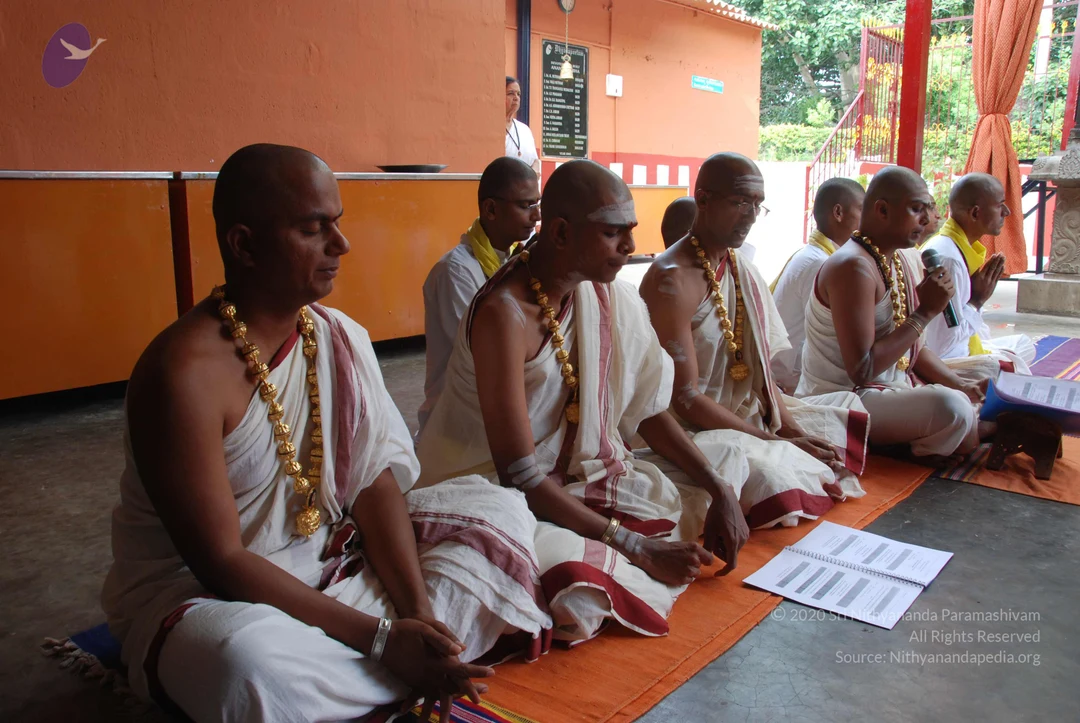
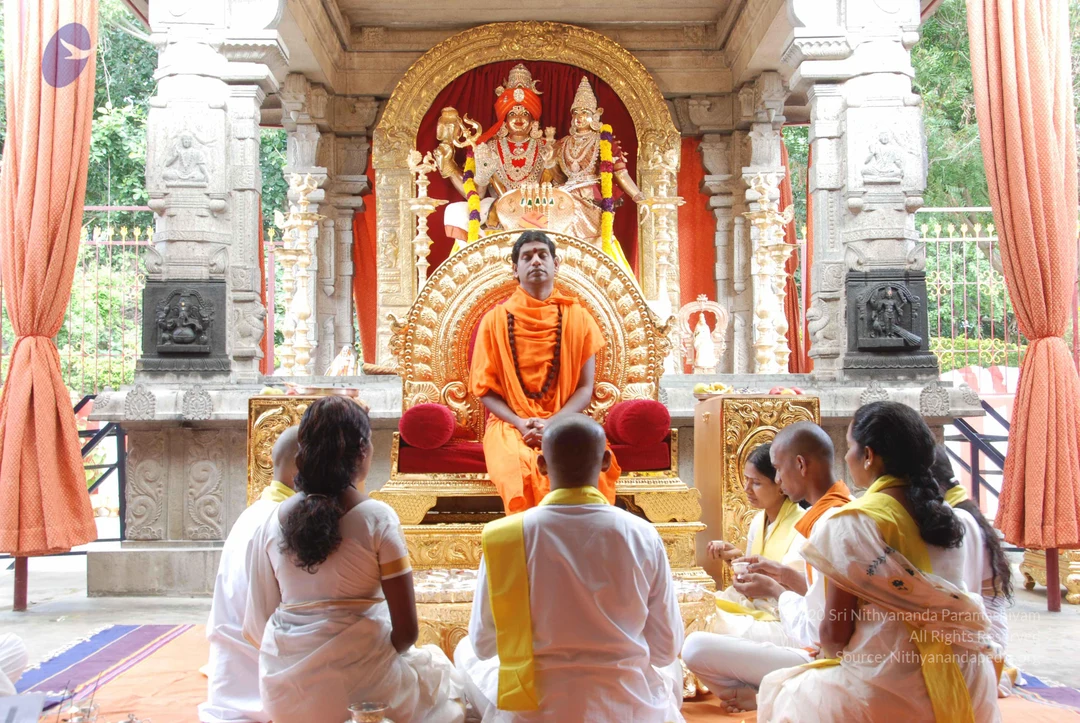
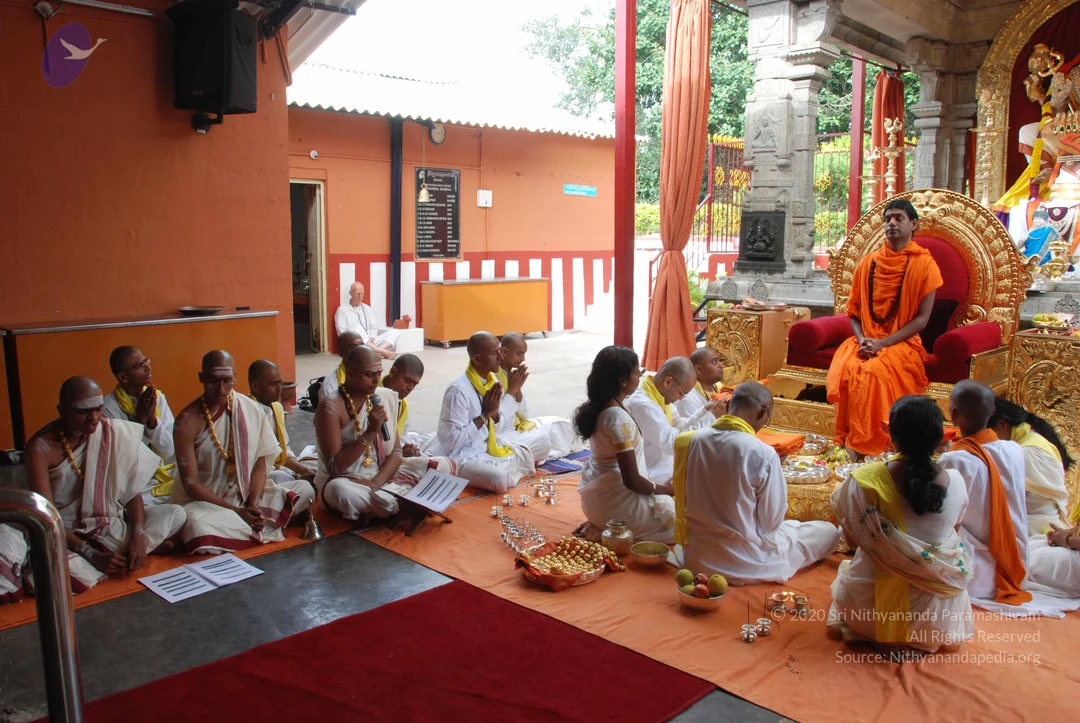
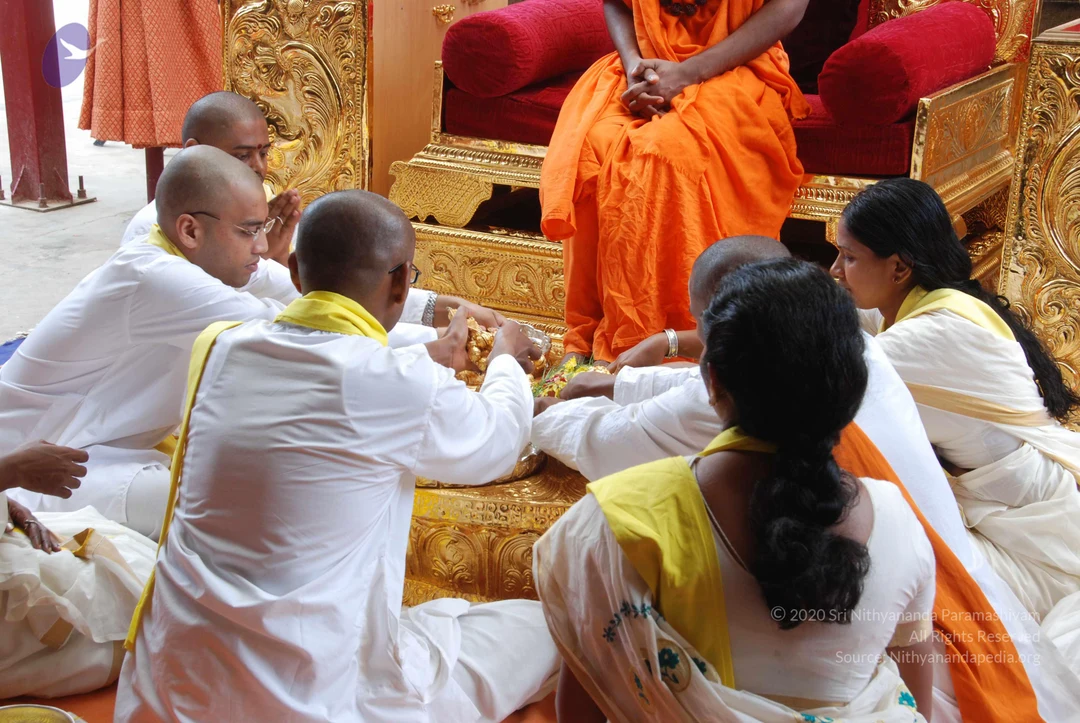
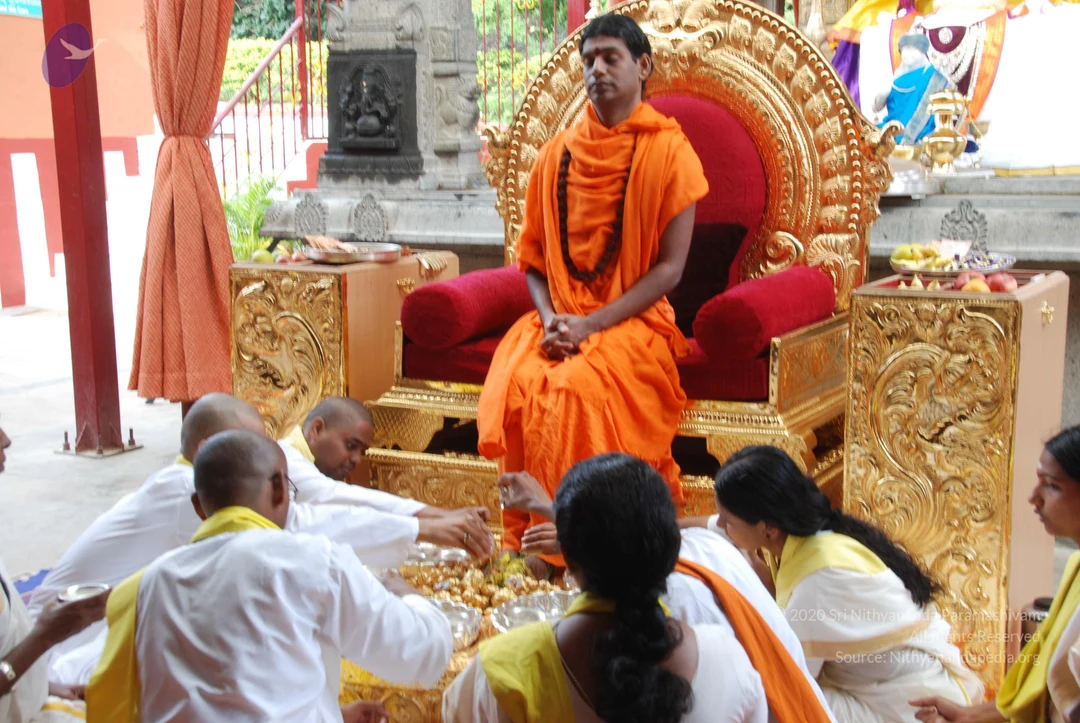
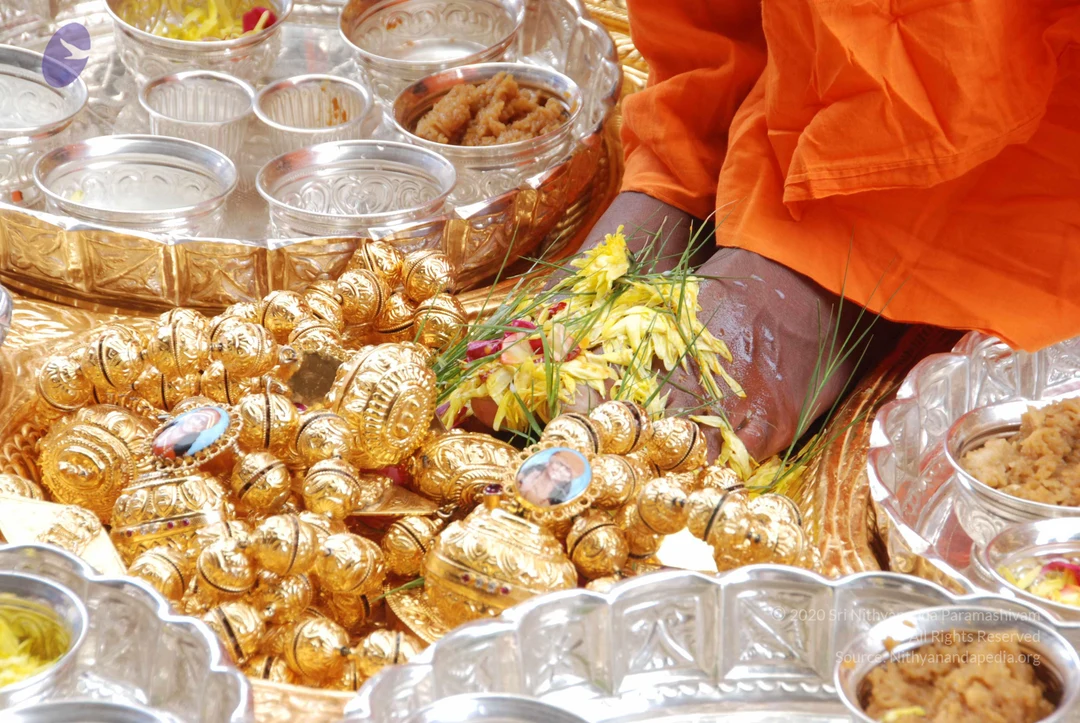
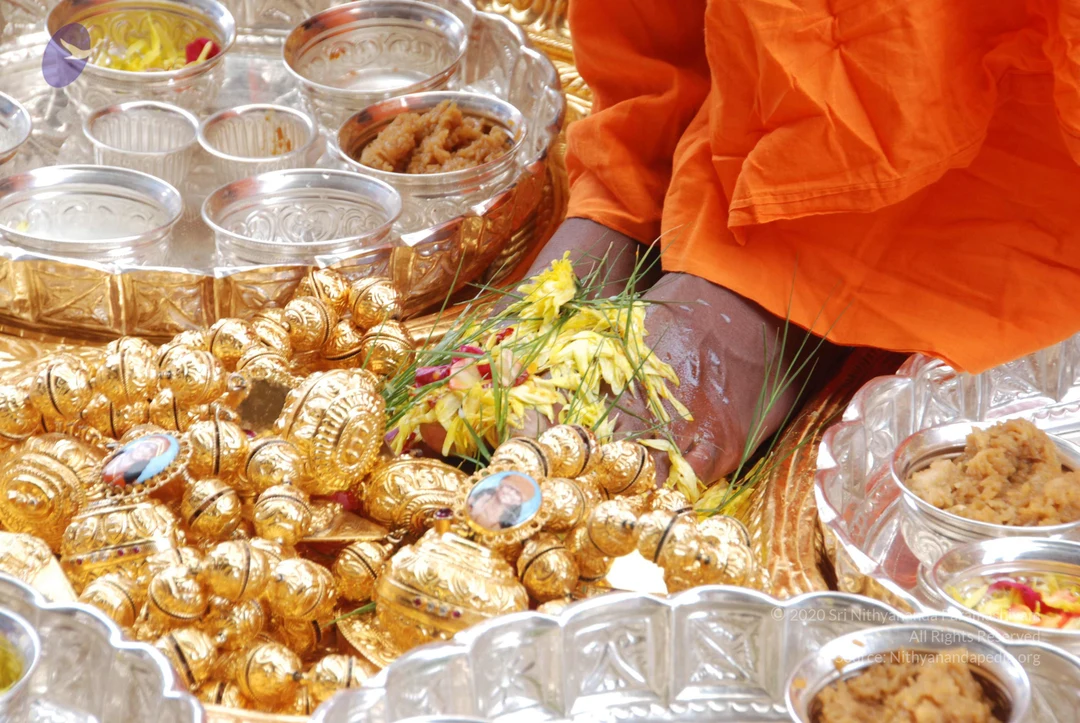
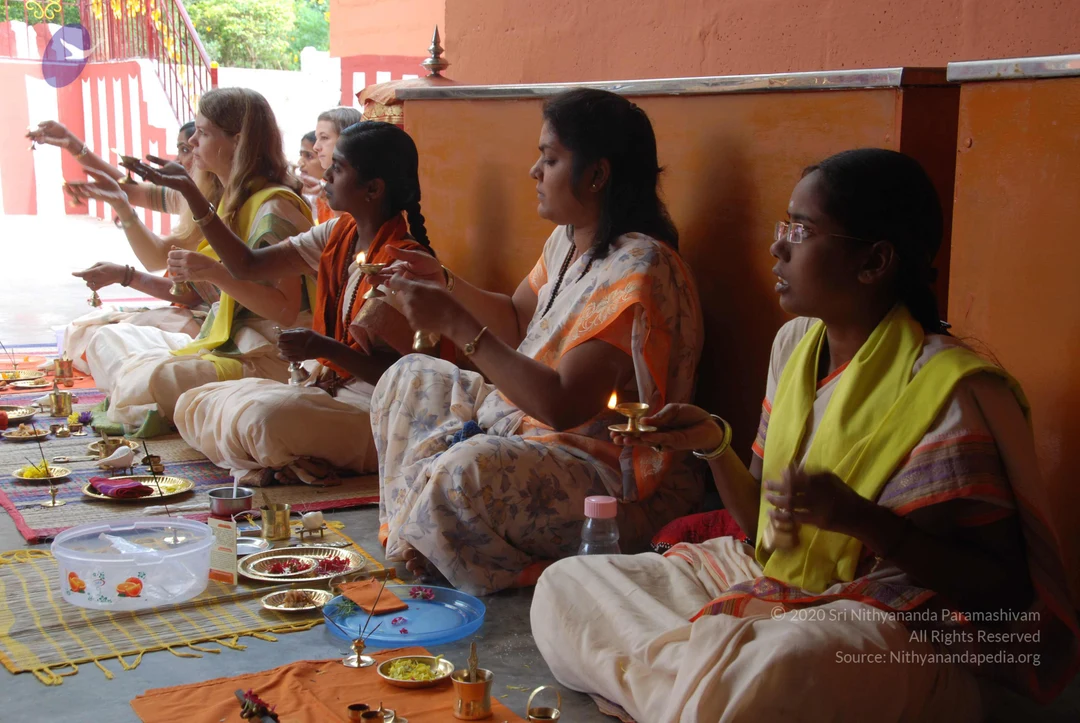
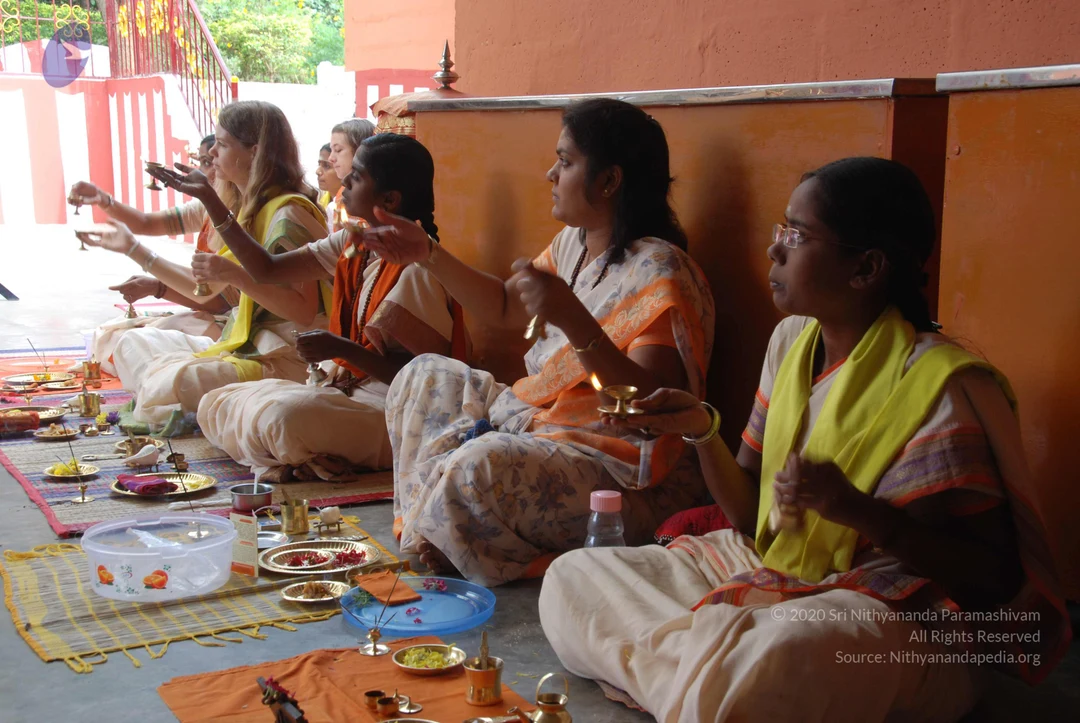
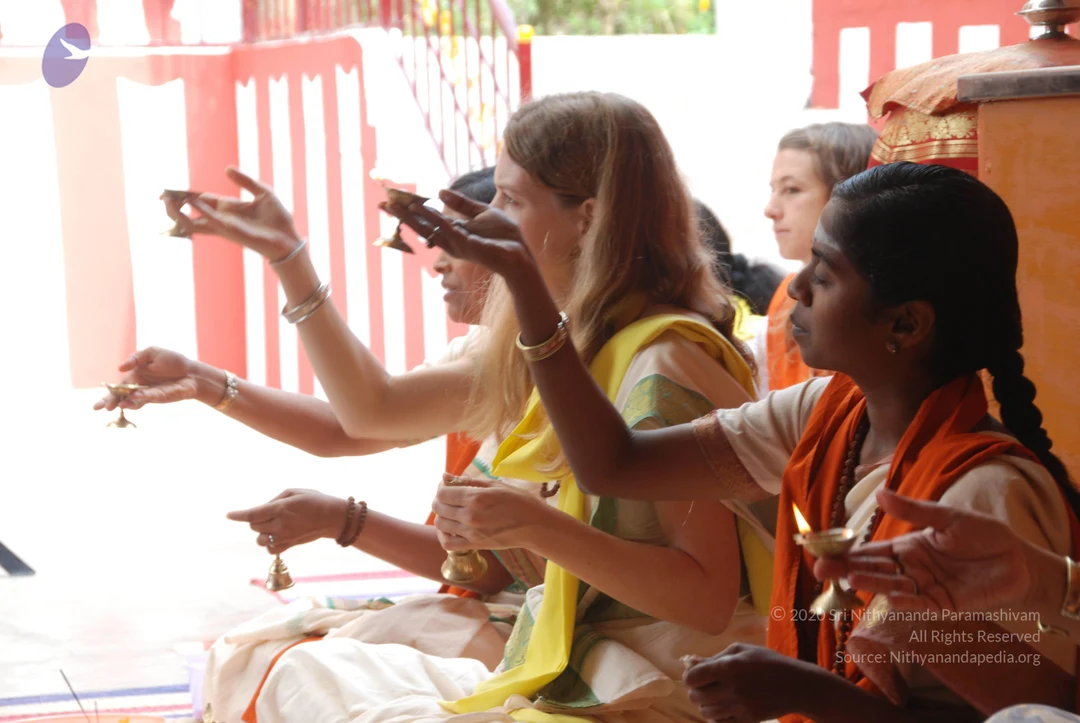
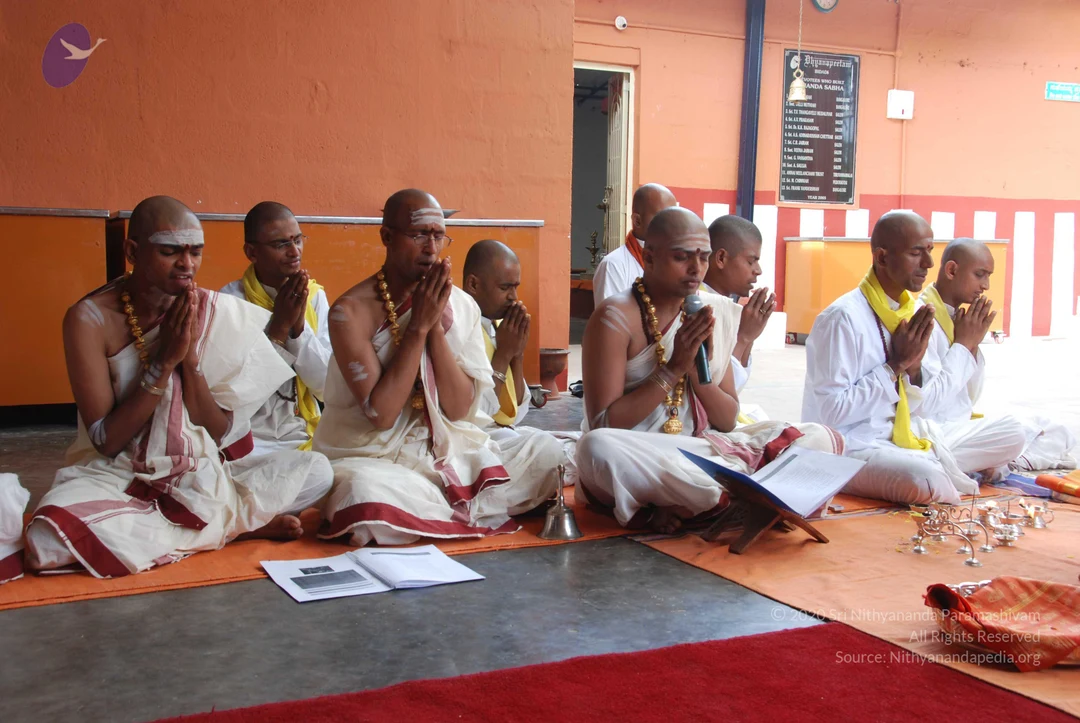
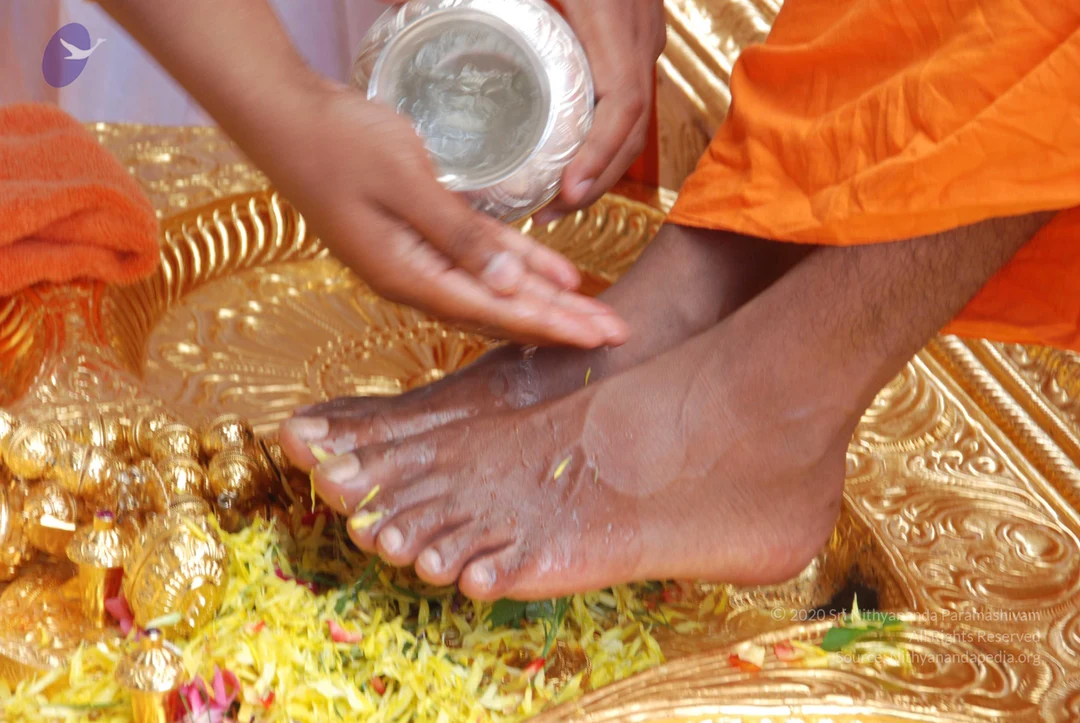
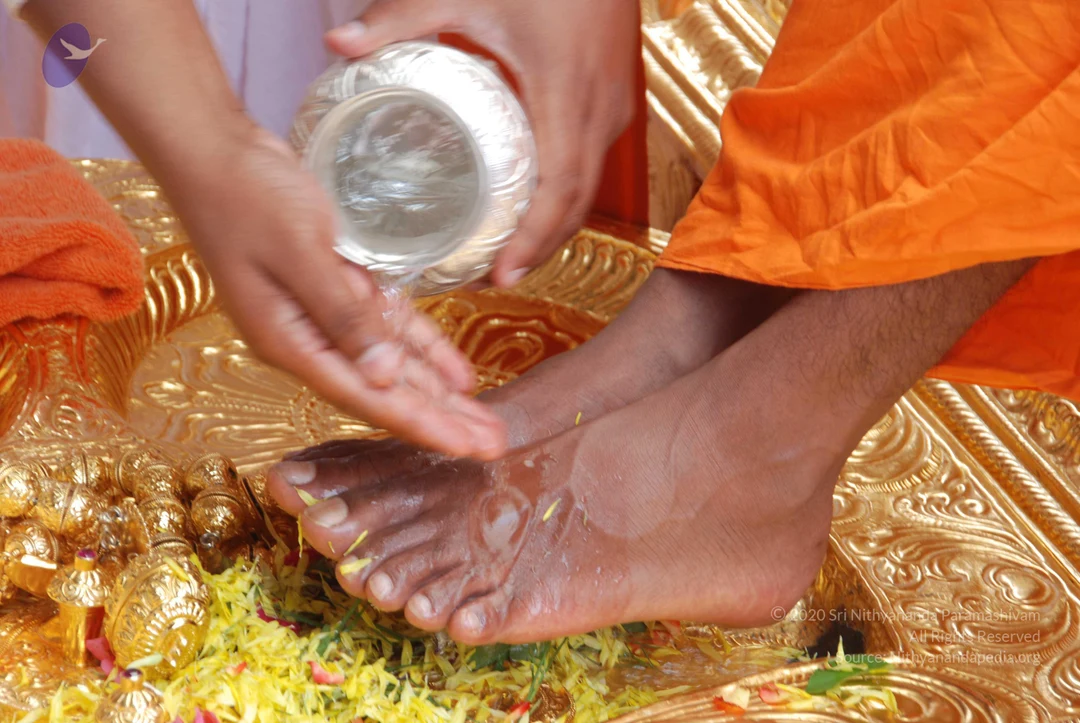
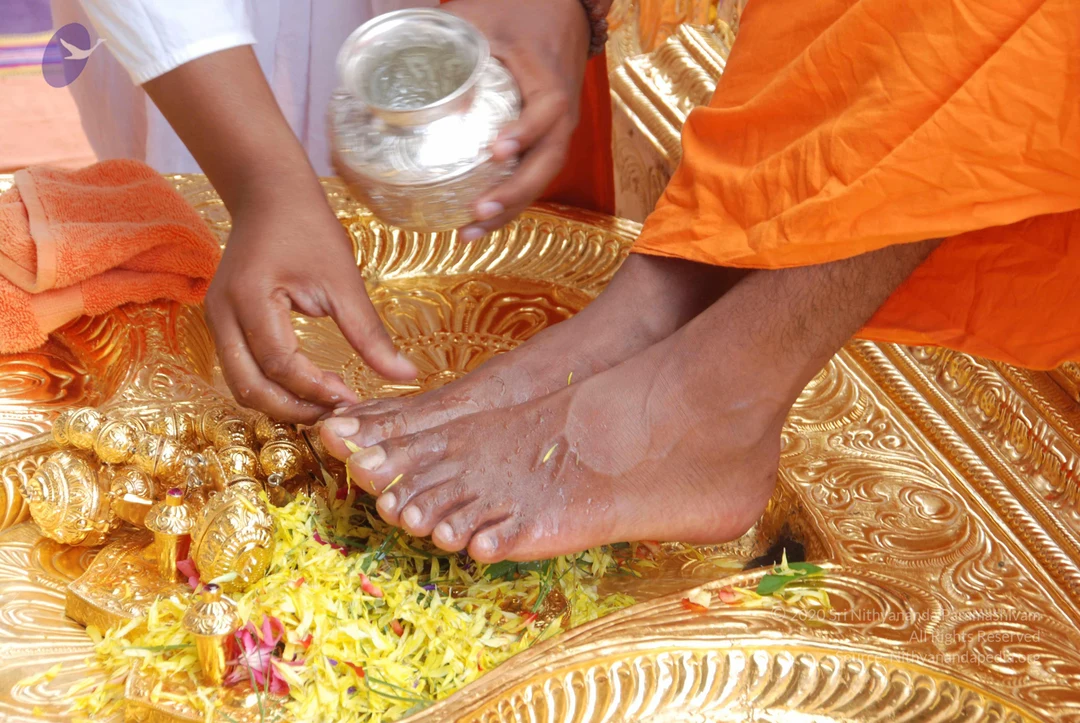
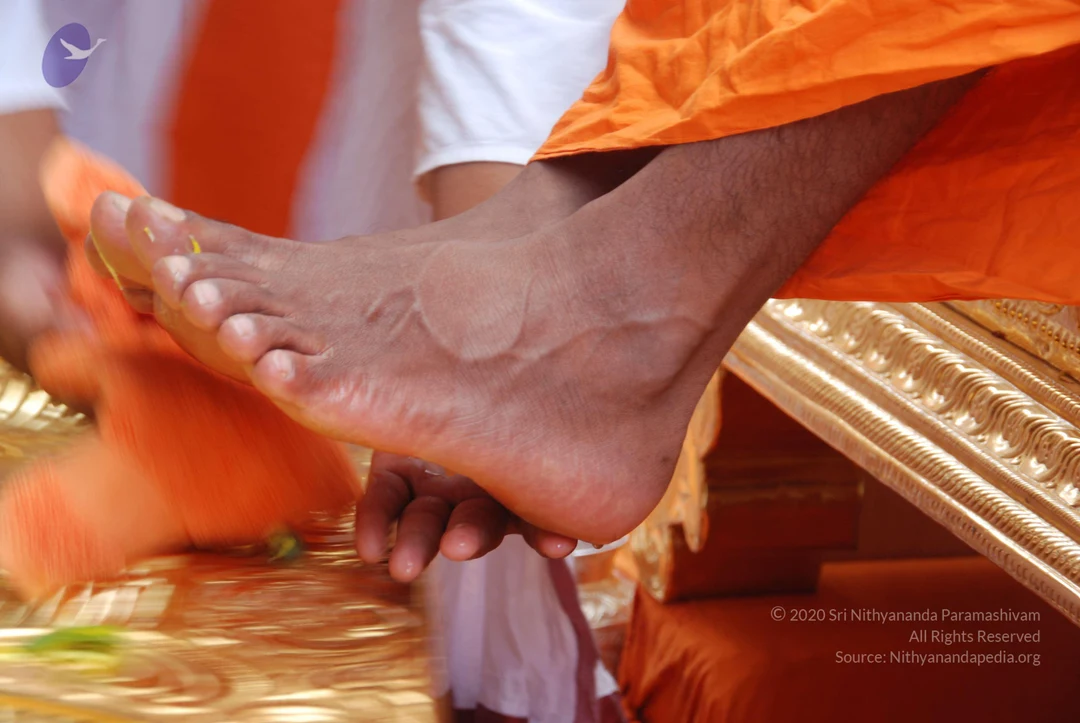
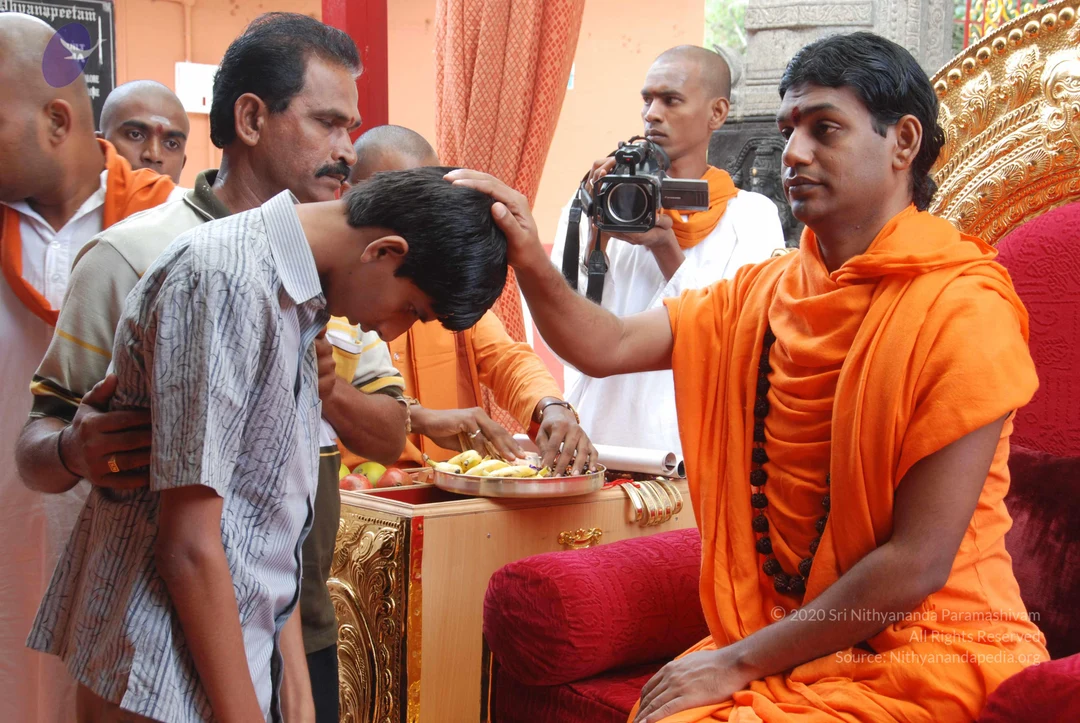
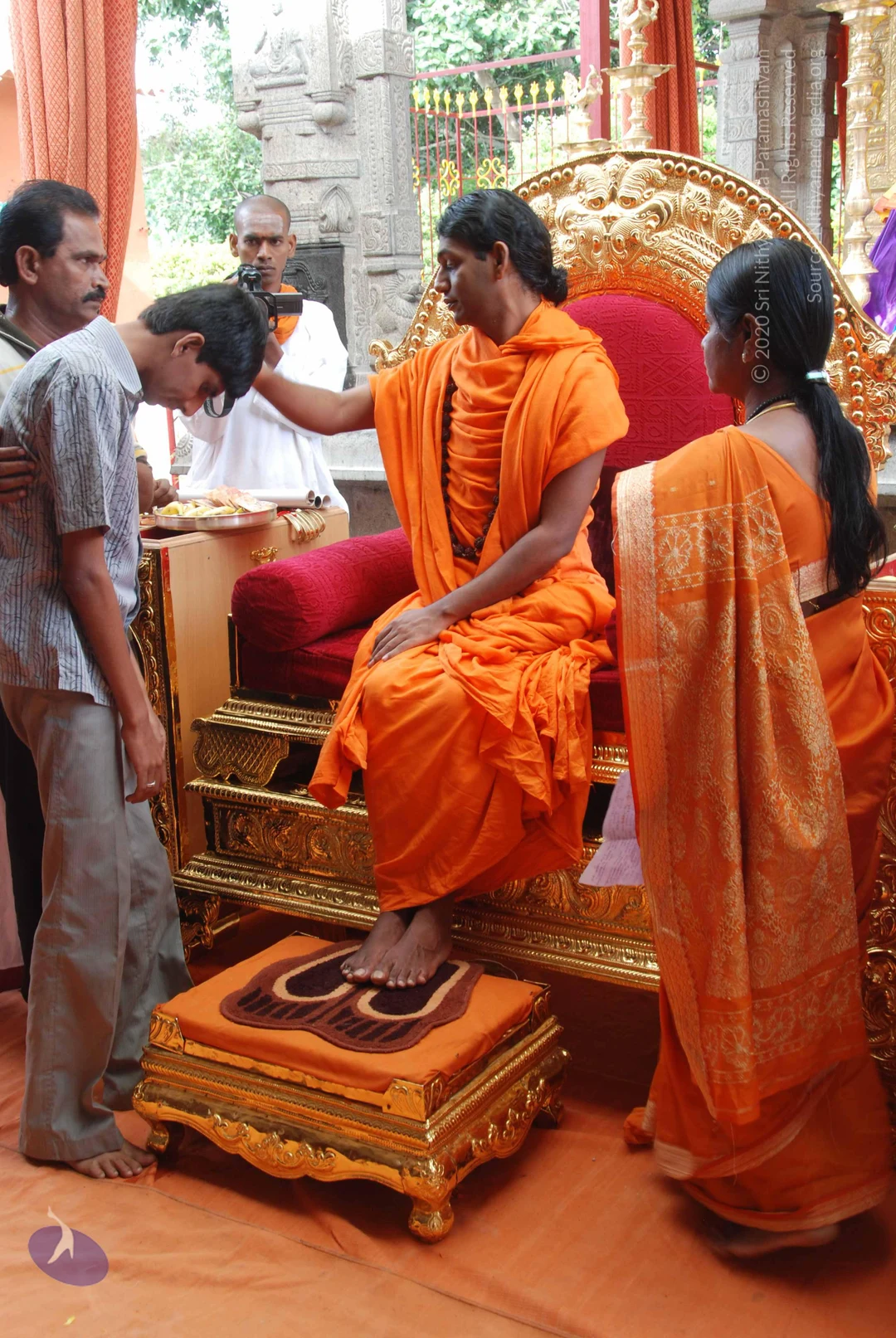
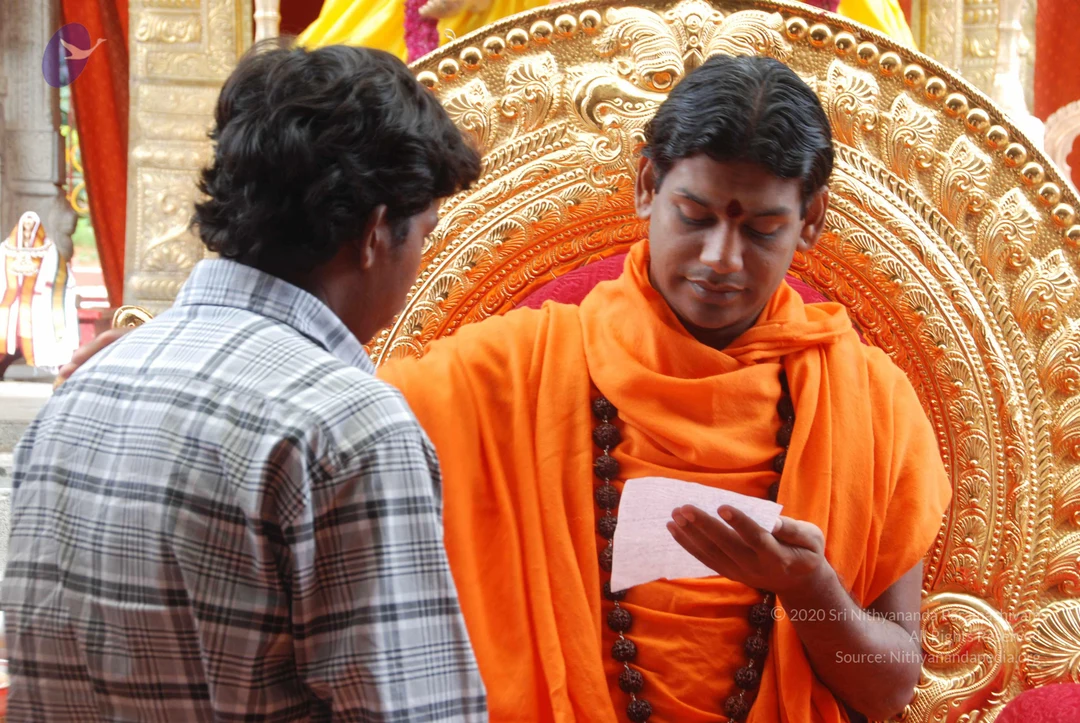
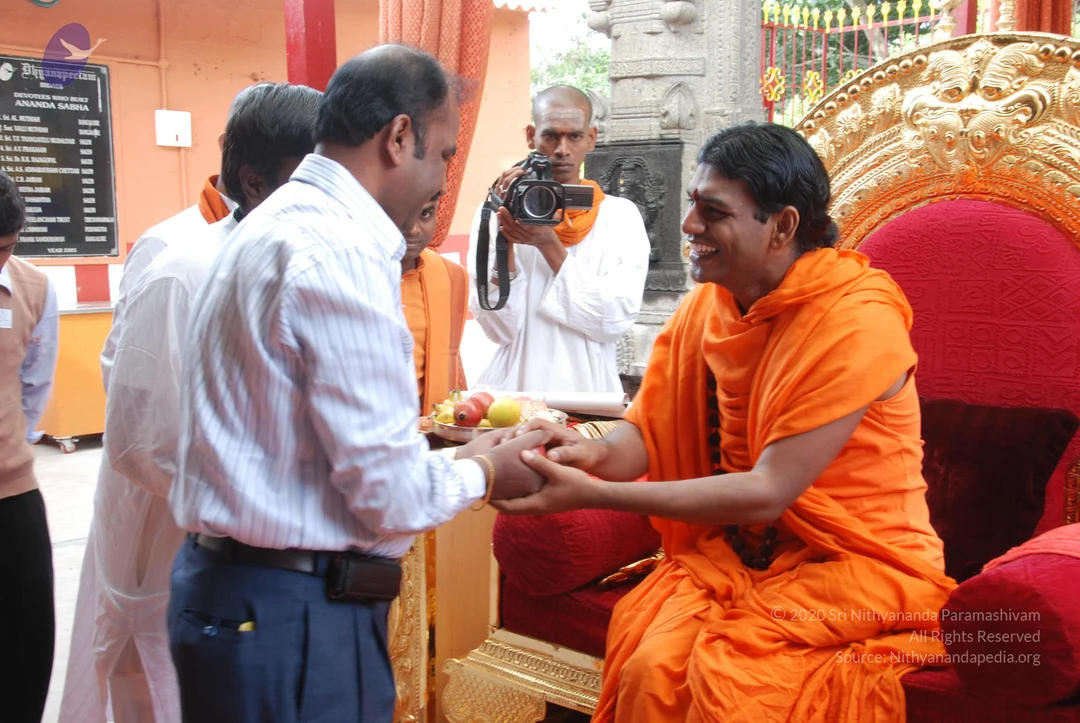
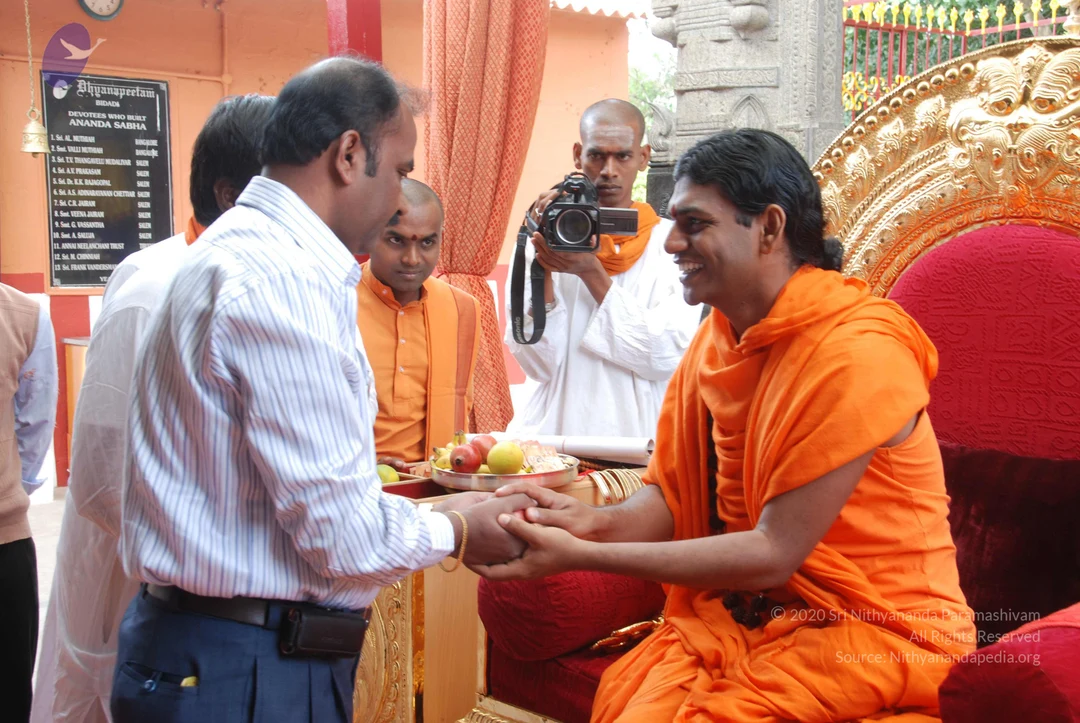
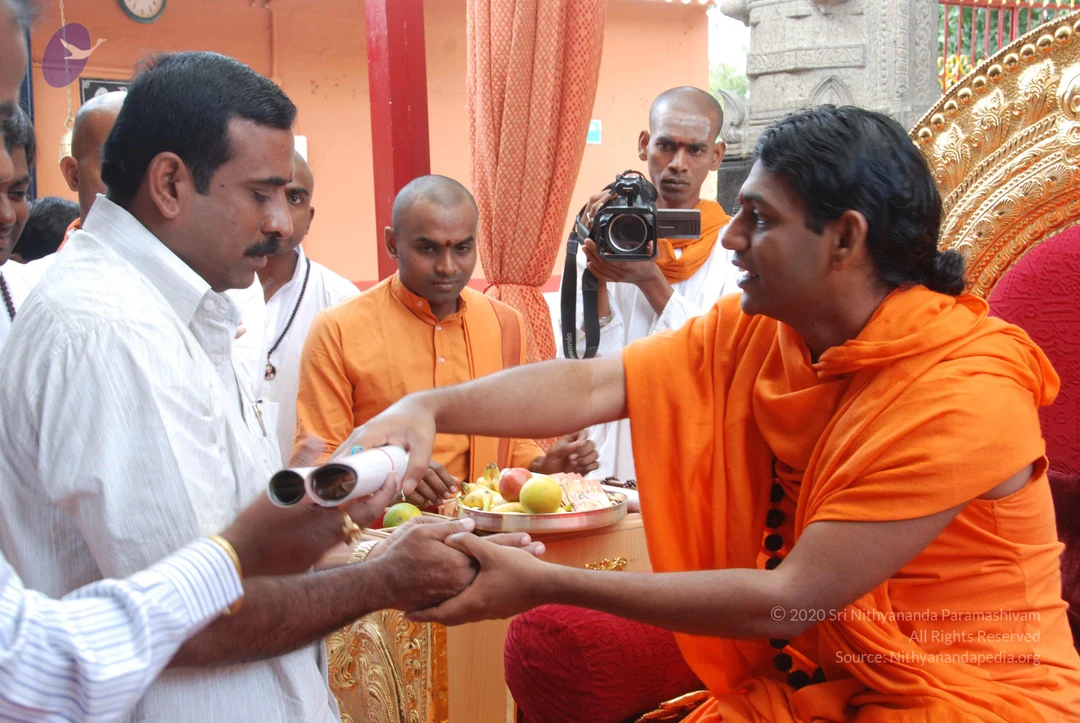
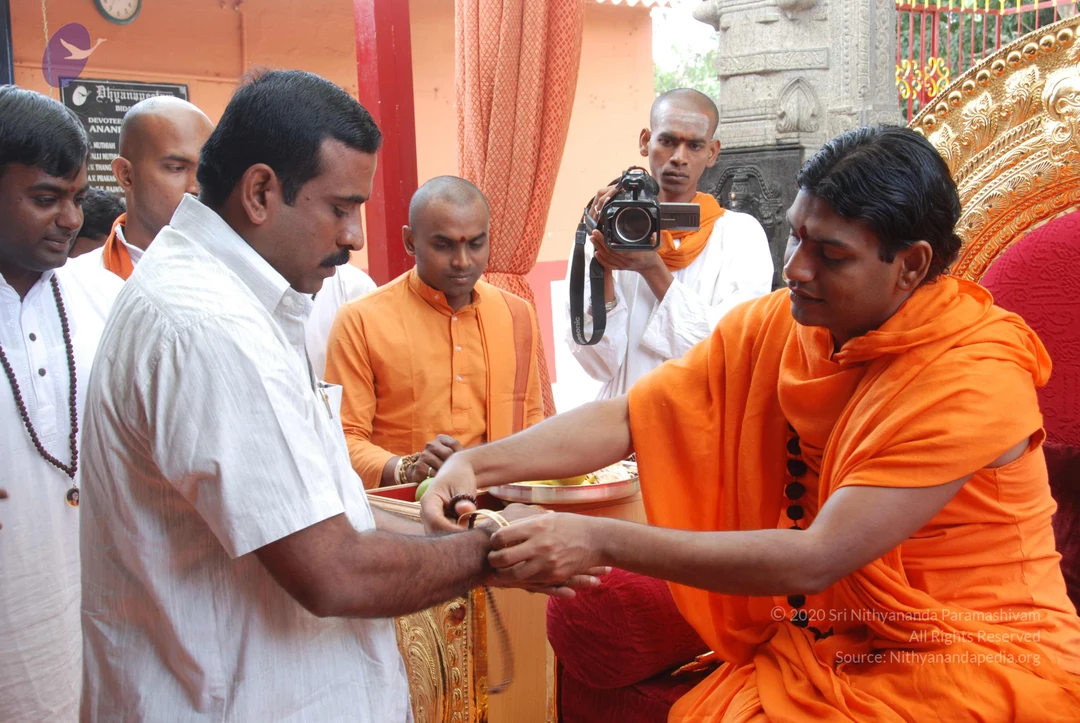
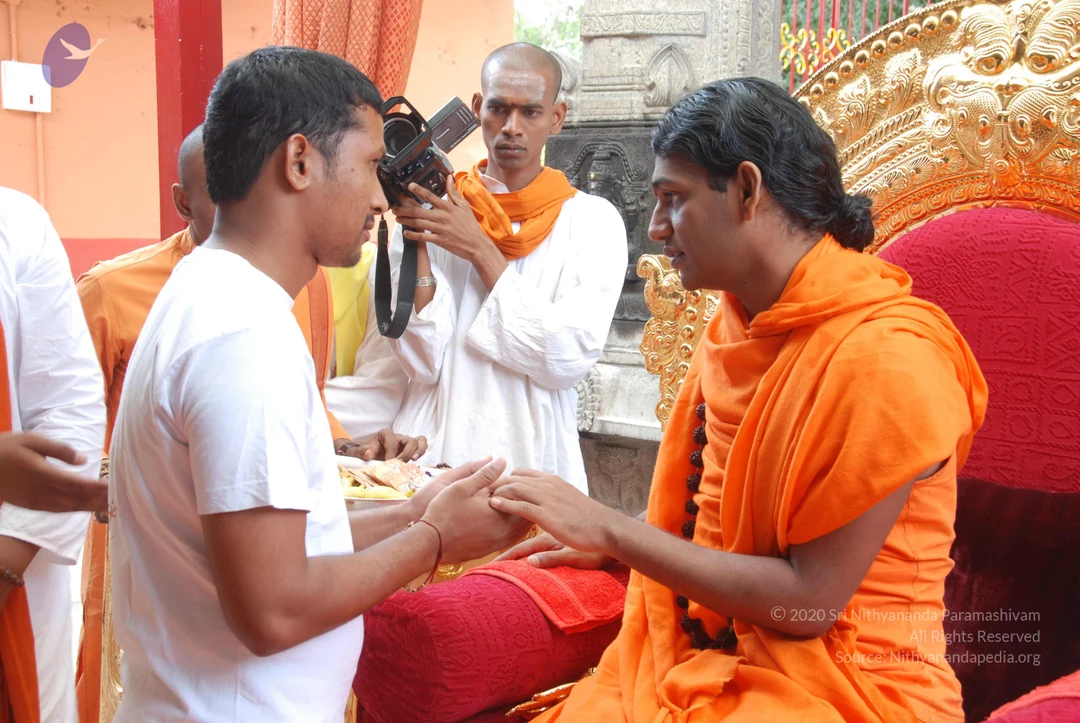
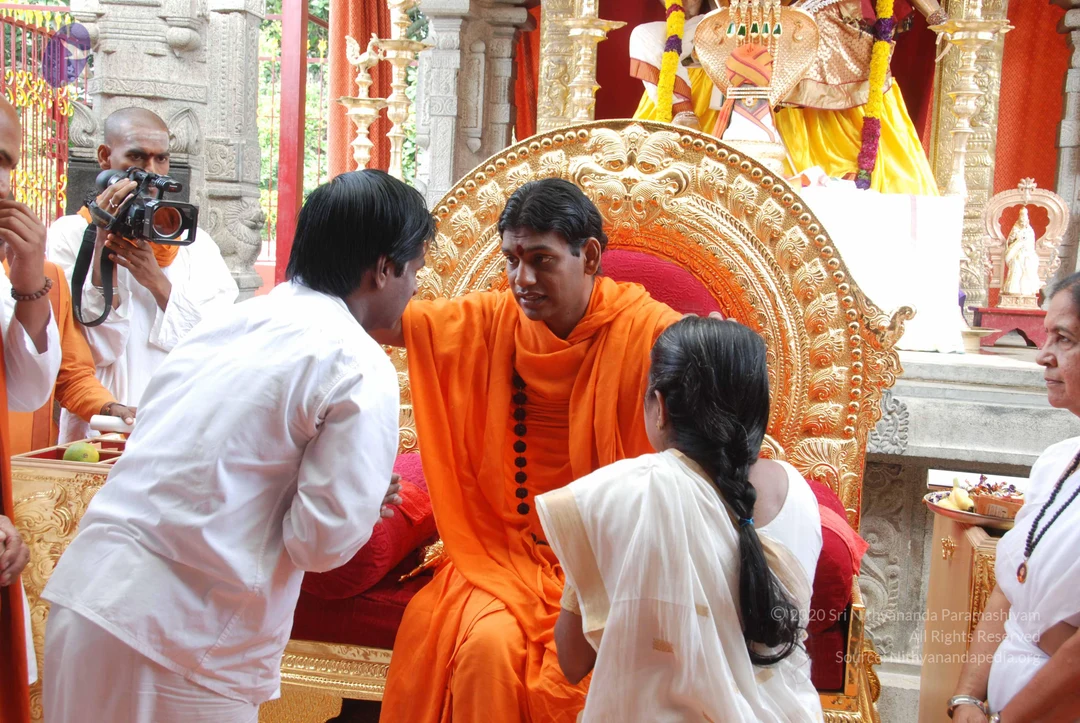
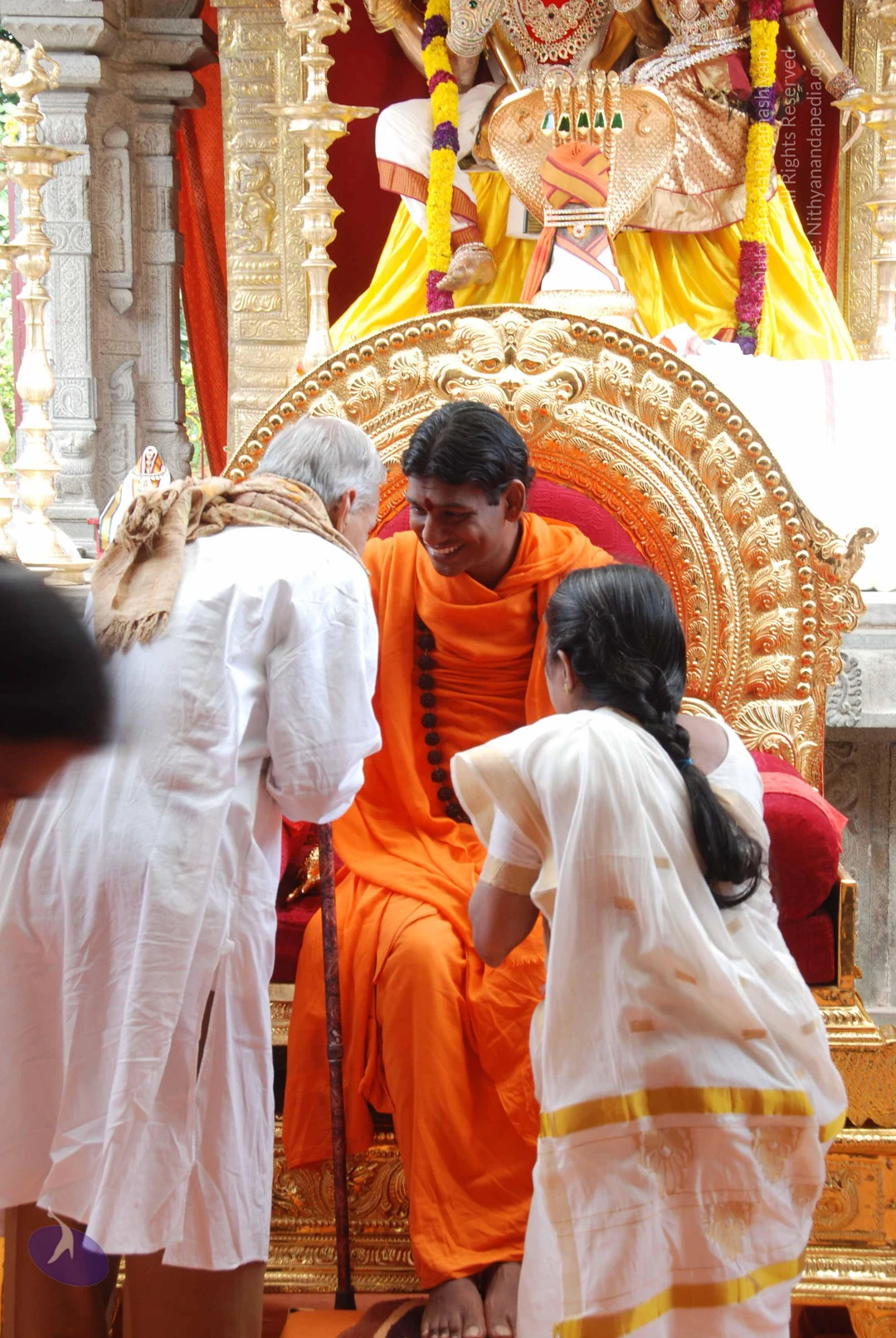
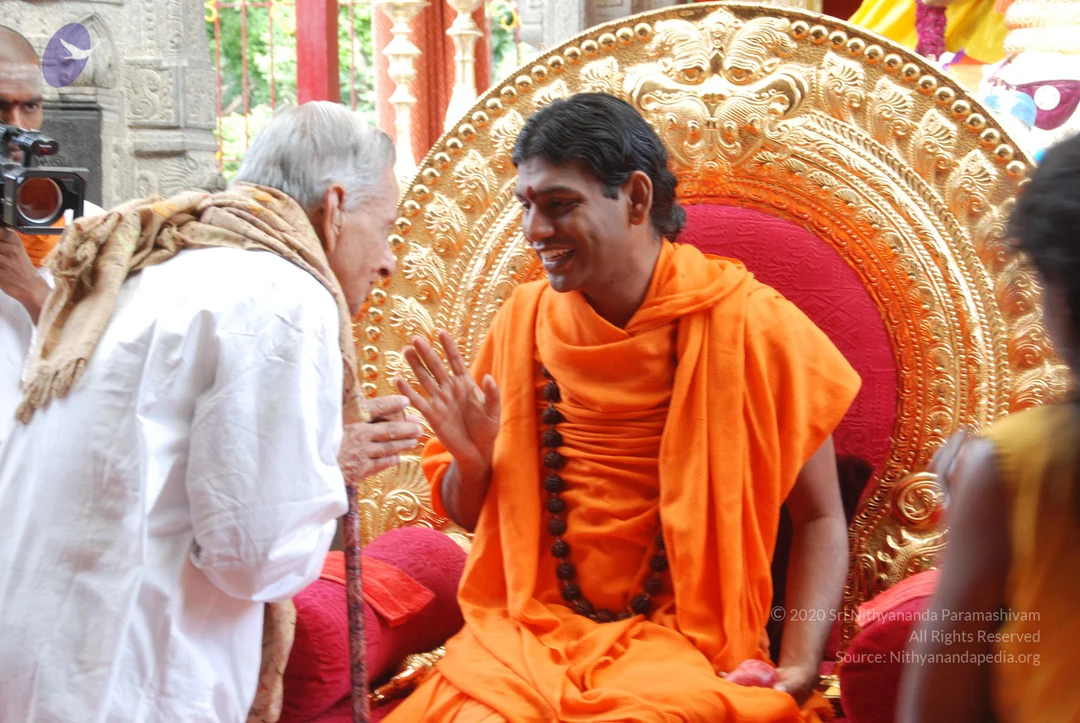
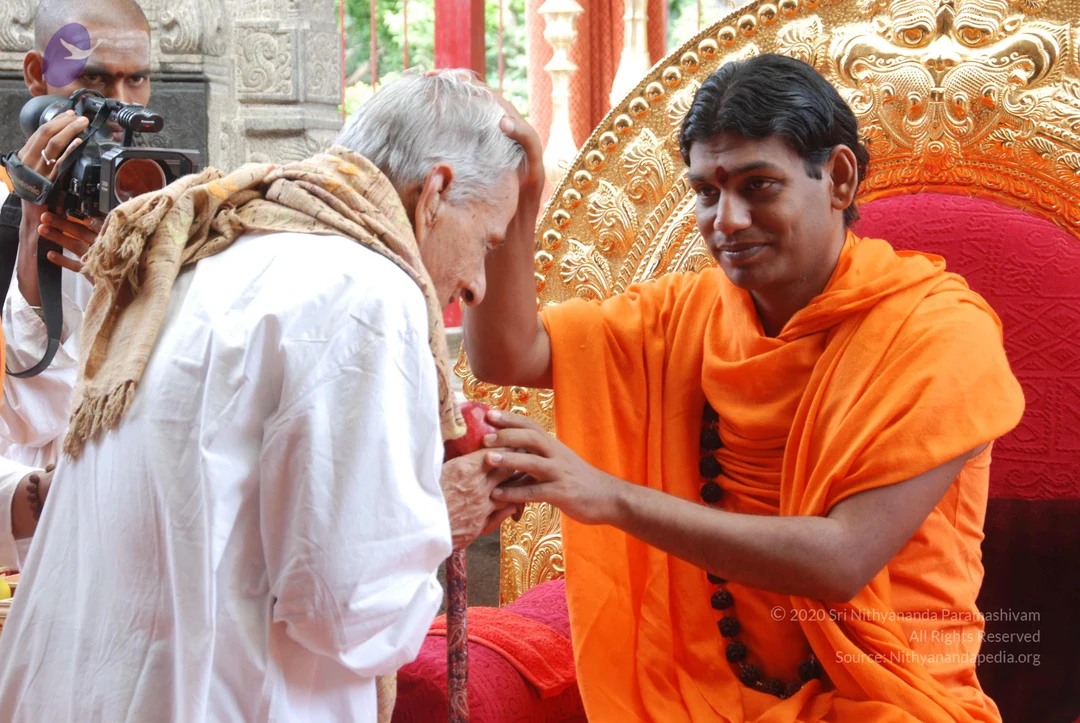
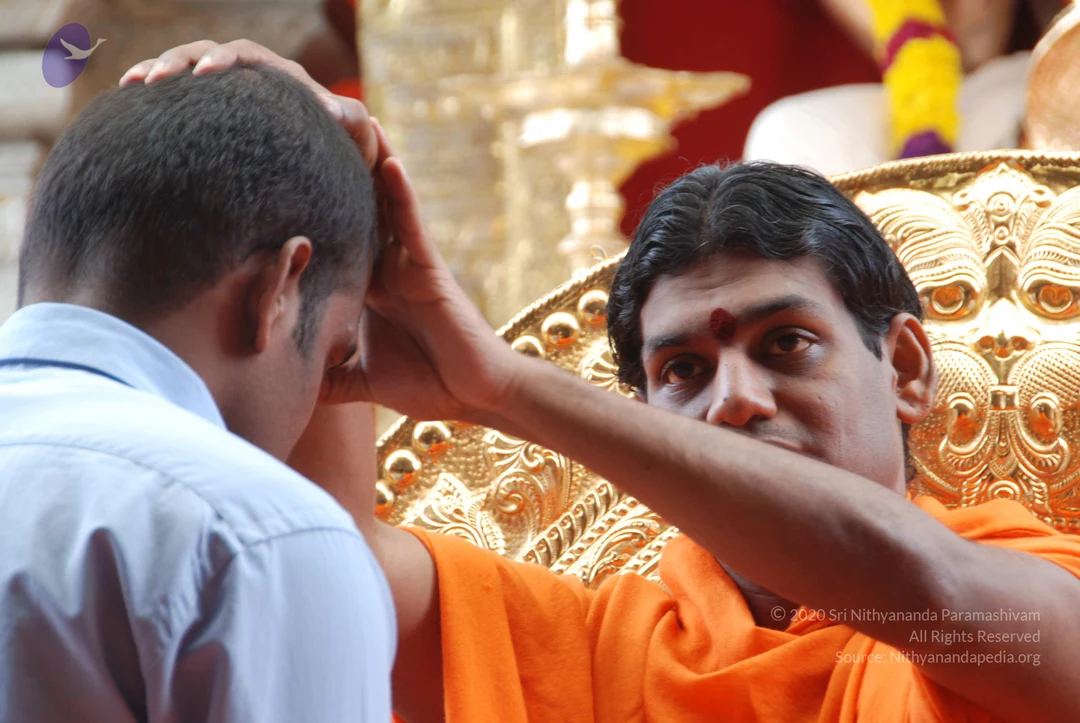
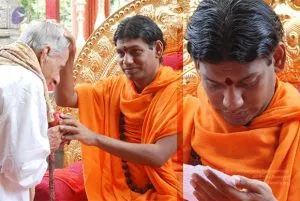
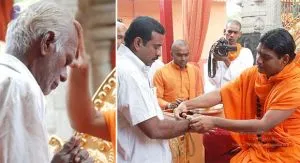
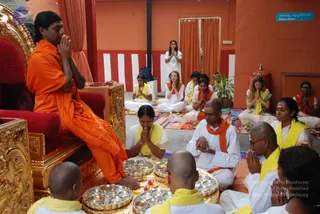
A photograph of a ceremonial pada-puja gathering in an ashram hall with pink and white walls and orange drapes. Facing him, rows of devotees in yellow and white clothes sit on the floor with brass plates of offerings, and a woman in white stands at the back. Several devotees in yellow and orange join their hands in devotion while a bald man in white sits near the front with his palms together.A two-panel graphic collage of photographs from a temple event. The left panel shows several seated men in white dhotis and white shirts on a floor with orange cloths, with a woman in a sari among seated devotees on the right side of the panel and a pillar behind them. The right panel shows a central figure in an orange saffron robe and rudraksha-style beads seated on a red-and-gold ornate throne with a golden backrest, flanked by a seated woman in an orange sari and devotees in white. The main figure has long swept-back hair and ceremonial adornments consistent with the page's reference to a person, a probable identification based on these cues. Ritual pada puja and pancha tapas activities are pictured.A two-panel collage graphic: the left panel shows an elderly white-bearded man in white clothing bowing his head toward a seated figure in saffron, and the right panel shows a man in a light shirt and dark trousers offering to a woman in orange-saffron robes with a bindi and long dark hair, while a saffron-robed monk and a cameraman stand behind, with a pink-and-cream temple wall and gold accents in the background. The collage's pictured activities are a pada-puja style foot-honouring and a ritual offering at a temple setting; the figures are depicted in printed panels, not physically present here.

1-Ashramites-Agoris
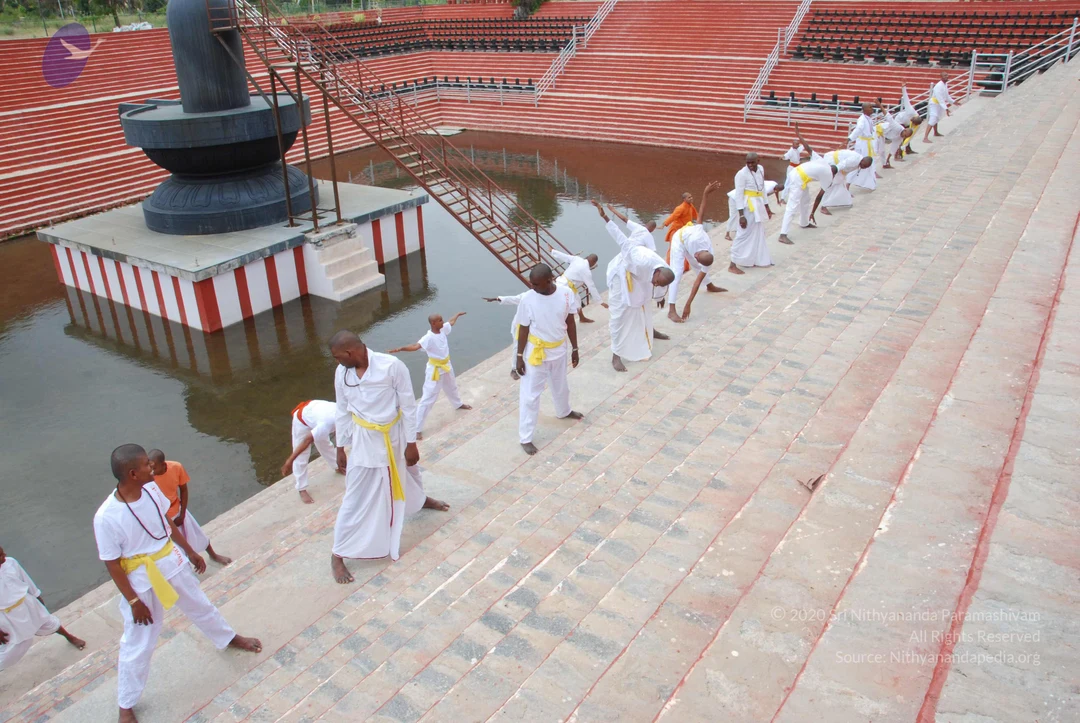
59 photosSource gallery
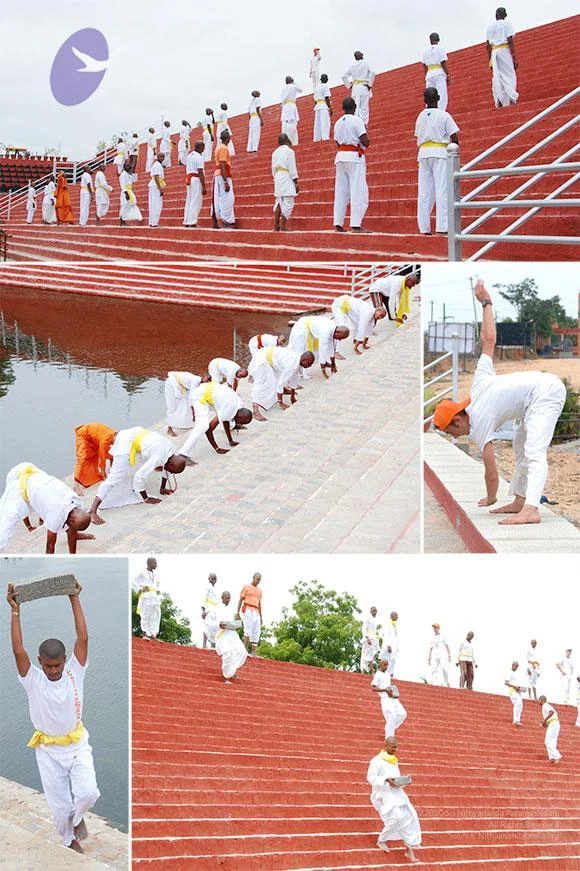
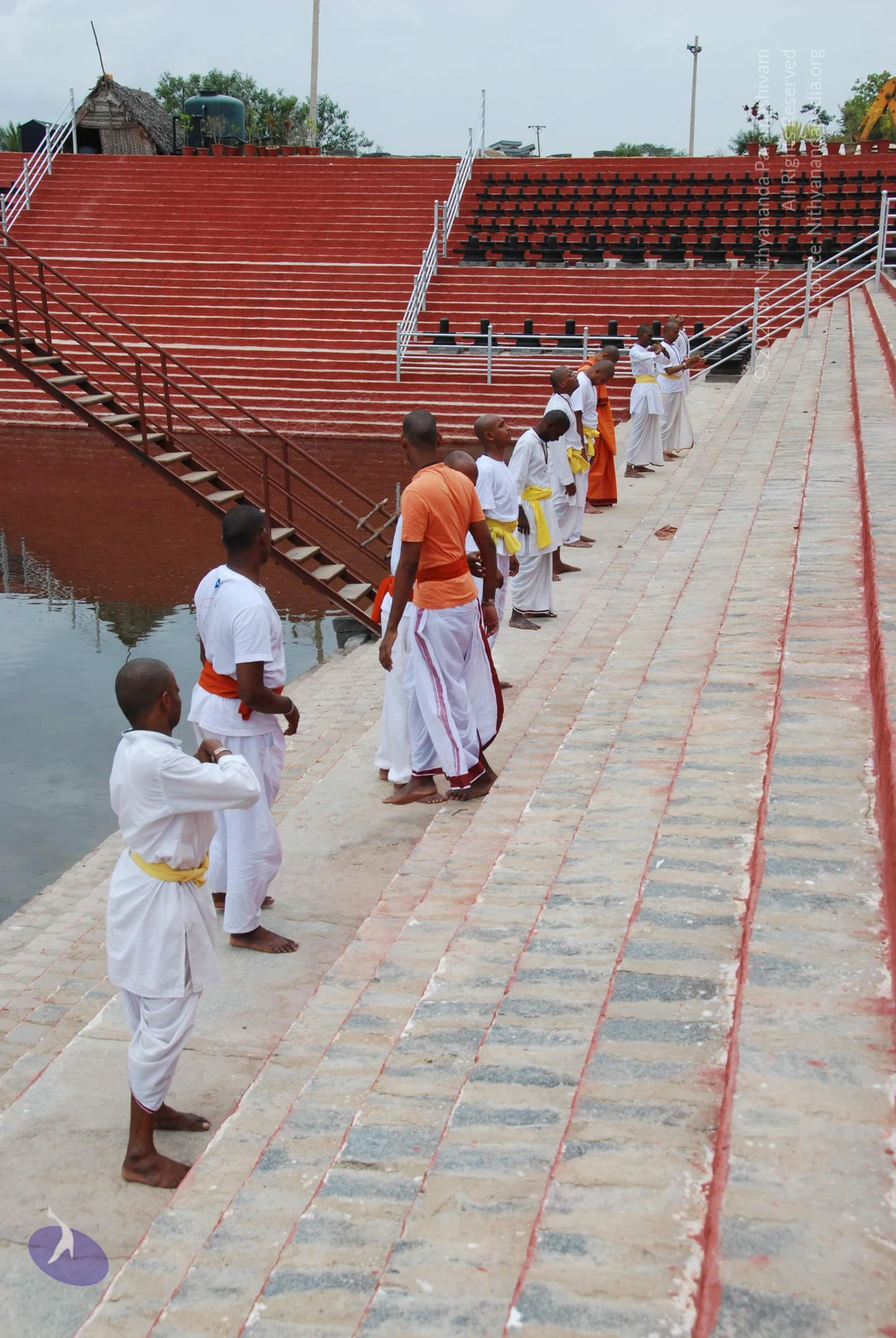
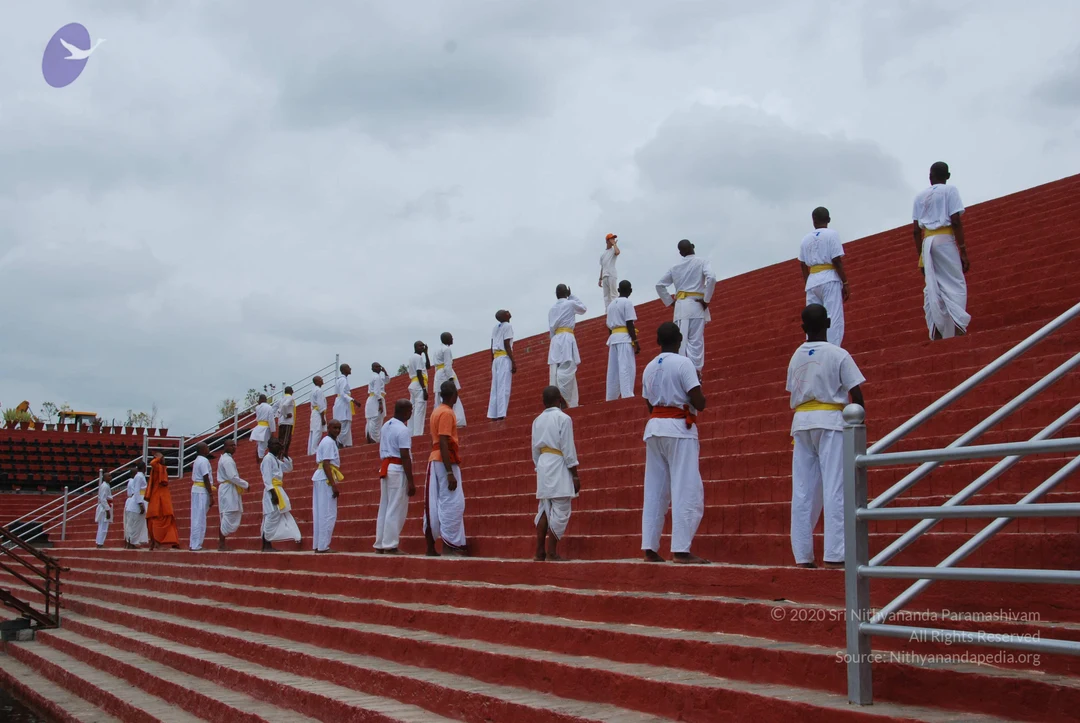
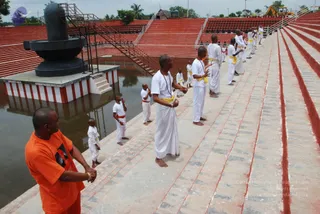
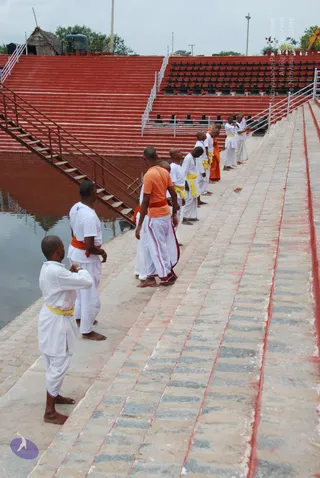
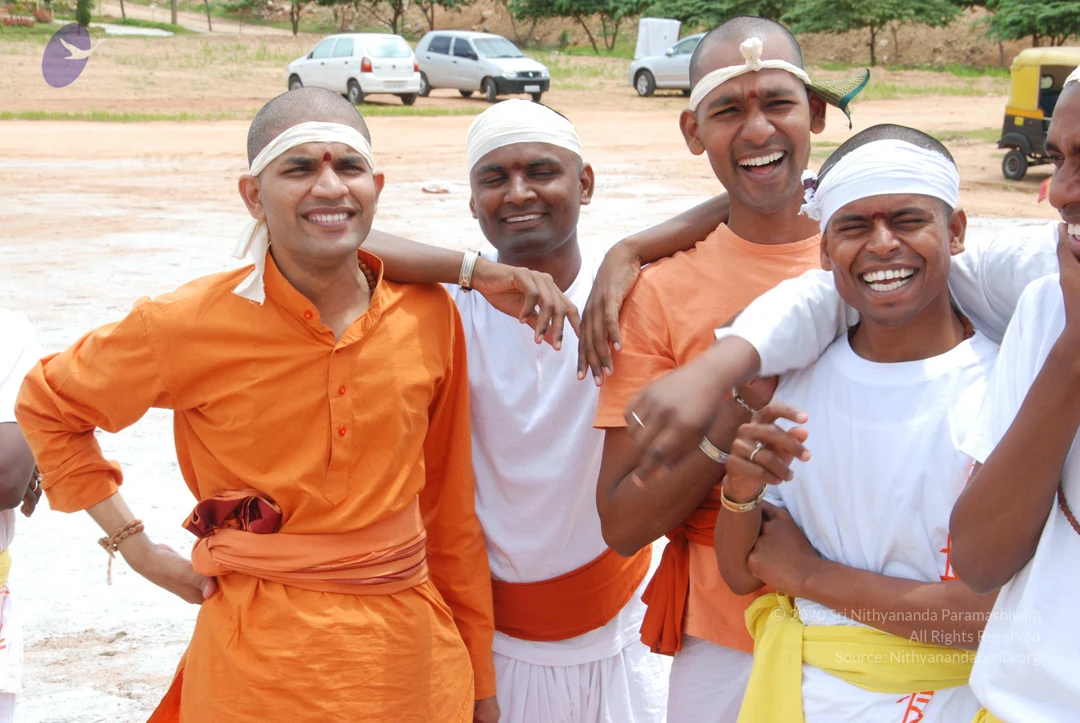
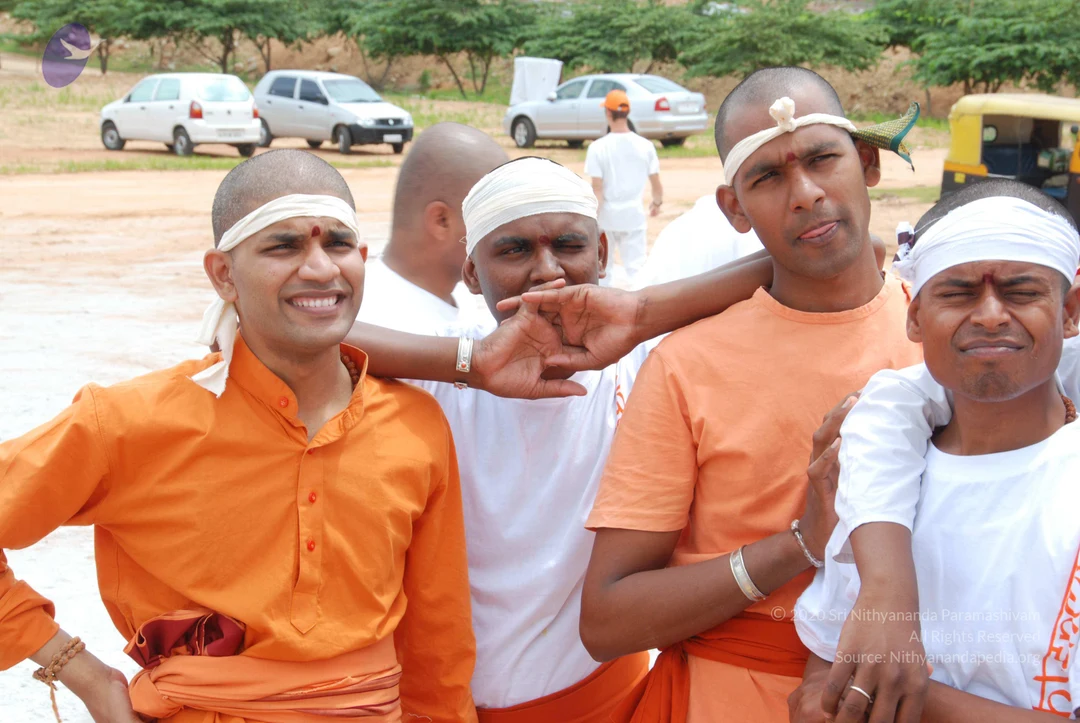
A photograph of a line of about twenty men in white dhotis and white kurtas with yellow sashes standing on wide red-and-grey stone steps beside a large black shivalinga on a square plinth with red and white banding. Some men hold yellow and white cloths; one wears an orange sash. The shivalinga sits at the edge of a dark reflective water tank. Tiered red seating and a black metal staircase rise behind them, with palm trees, a construction excavator, and a worker in an orange cap at right. Grey overcast sky.A photograph of a group of shaved-headed men in white dhotis and white shirts with yellow sashes walking down a red-brick stepped ghat beside a rectangular water tank. A metal railing staircase descends into the water on the left. Most men are smiling and some wear rudraksha malas. Behind them, a red stone staircase rises. Foreground figures walk toward the viewer while others stand along the steps. No individual is clearly identifiable as a person from appearance, so no candidate is asserted.Outdoor photograph of ashram devotees standing in a line on a stone-paved ghat beside a red-brick stepped tank of dark water. Men in white kurtas and white dhotis with yellow waist sashes stand barefoot, several with hands raised or pressed together in devotion and one smiling. A bald man in white with glasses stands at the left foreground, and an orange-robed figure appears at the far left edge. Red-brick steps and metal railings rise behind them.A photograph of a row of men in white dhotis and white shirts with yellow sashes standing on red-and-grey stepped stone tiers beside a still water pool. A large black stone Shiva lingam on a striped red-and-white plinth rises at left. In the foreground, a man in an orange t-shirt stands with hands near his waist, and several men at the front of the line have hands raised in namaskar or prayer. Red-painted steps and a red seating area surround the scene, with construction equipment visible in the background.A photograph of a line of shaven-headed male devotees standing barefoot on a stone embankment beside a water tank with red-painted tiered steps behind them. Most wear white dhoti-style garments with yellow sashes, while several wear saffron or orange cloths over their shoulders and waists. One man in the foreground wears a white shirt and yellow waist cord with hands folded, and the group faces the water as if in ritual observance. Red-tiered seating and a thatched hut are visible in the background.A photograph of many men in white dhotis and white shirts with yellow waist cloths standing in rows on a long red-painted tiered stone stairway under an overcast sky. Most stand facing away from the camera, spaced across several steps, with some holding red sashes. Two figures in orange-saffron robes stand among them on the lower steps, one near the left and one near the centre. A metal railing runs along the right edge and a small hill-like structure with red seating rises at the left.
2-Banyan-Tree
16 photosSource gallery
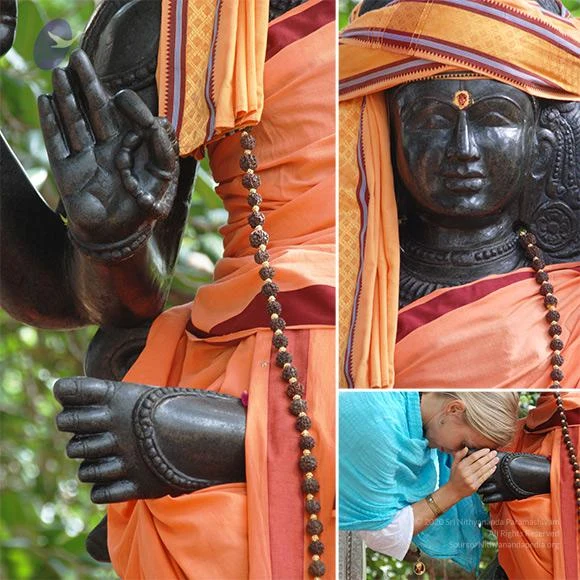
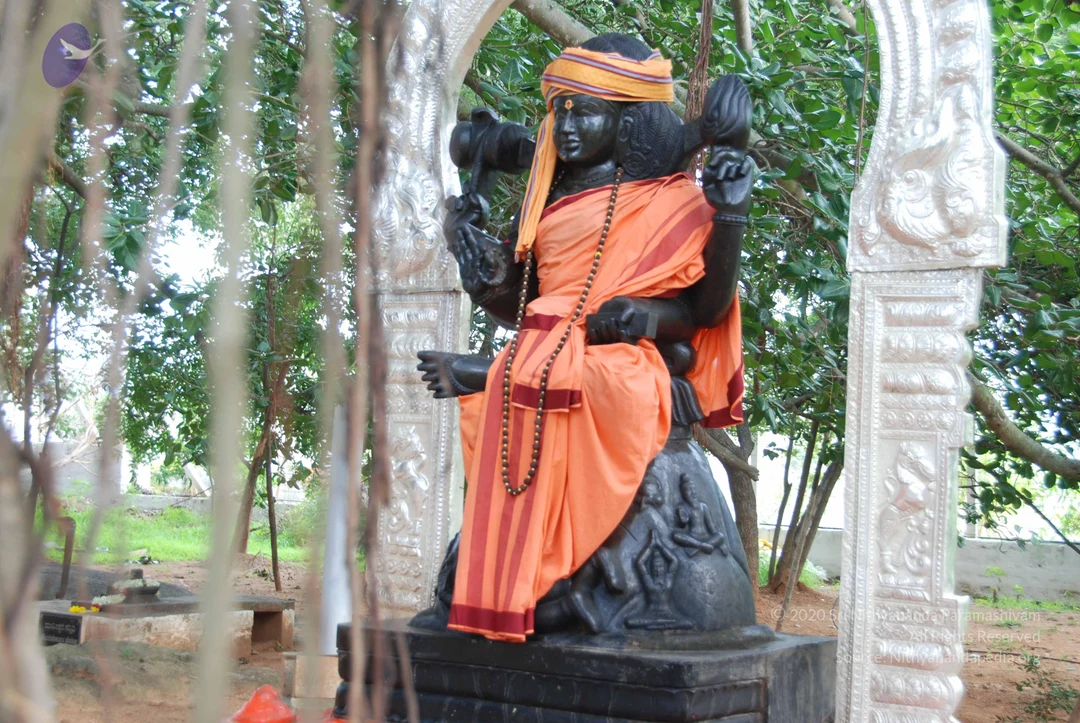
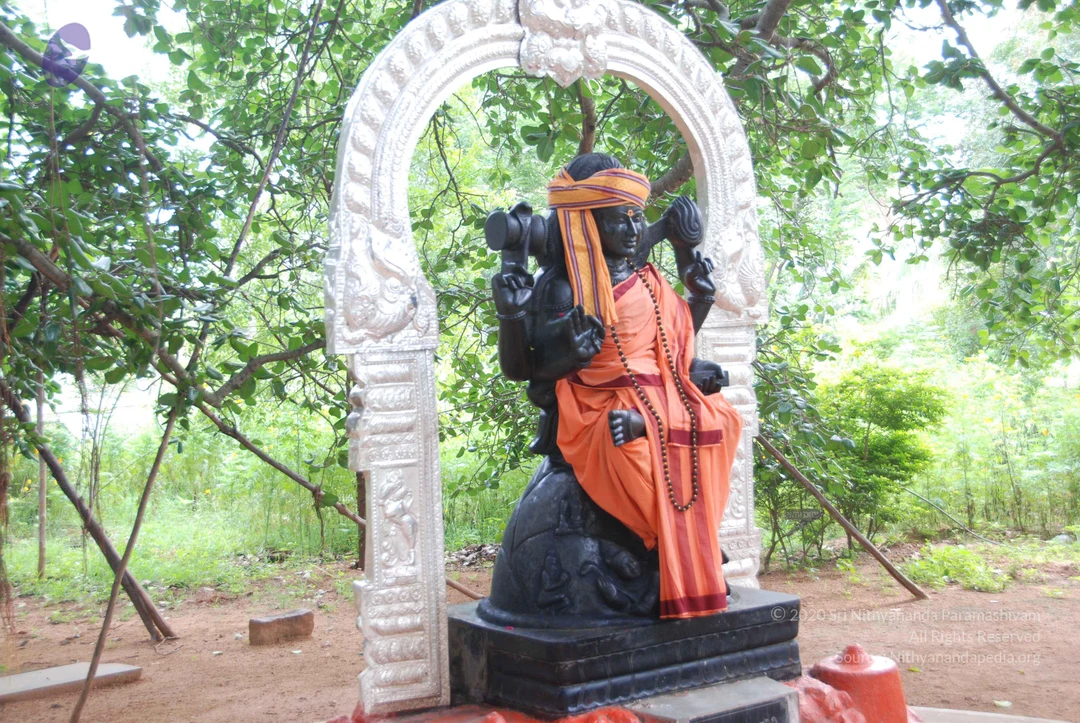
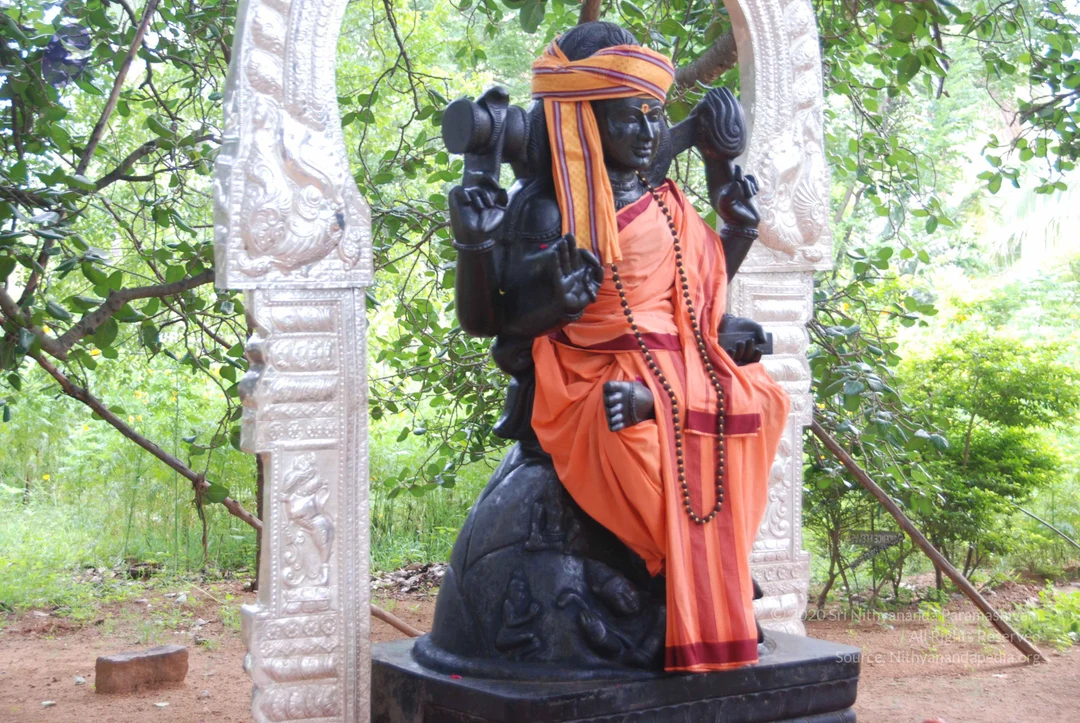
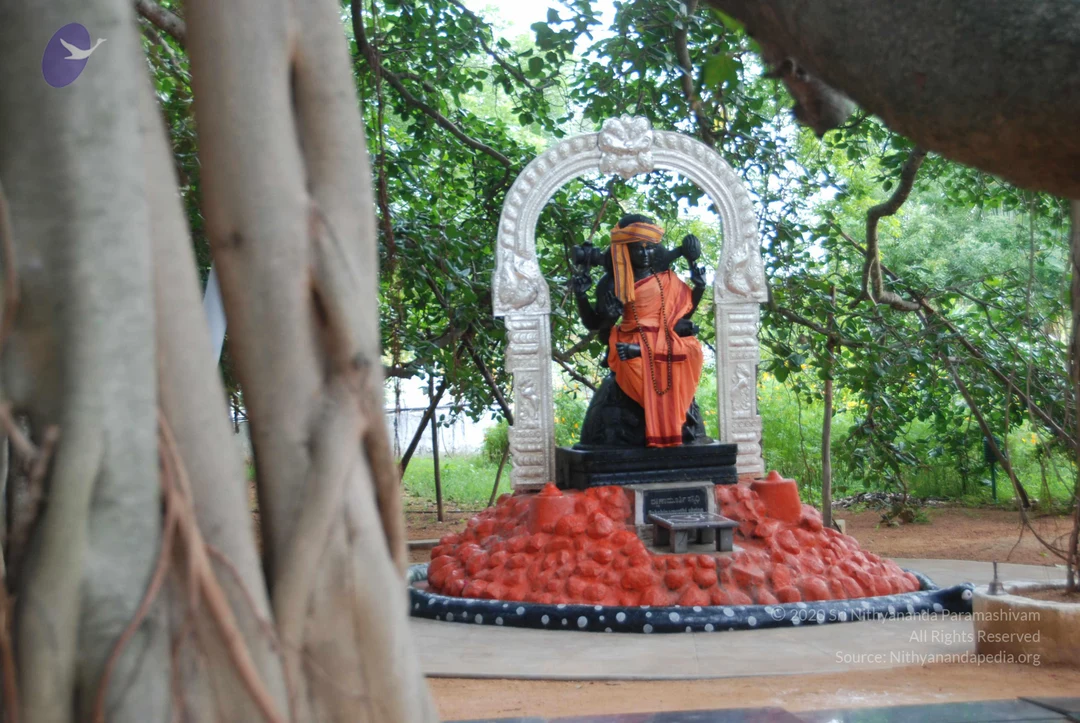
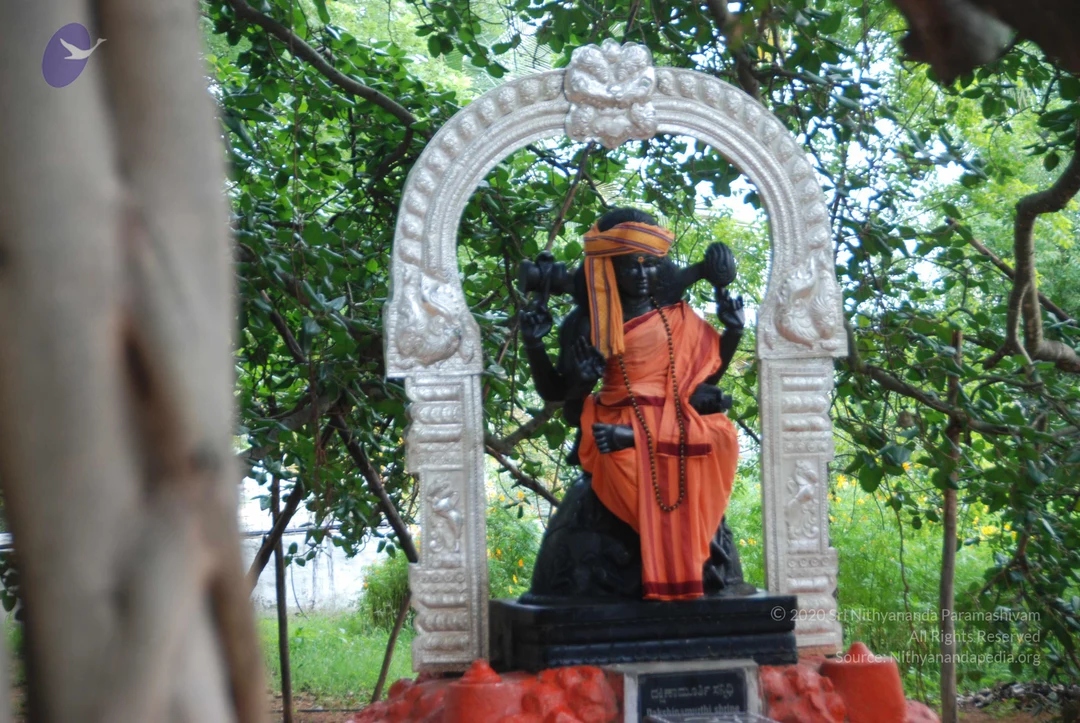
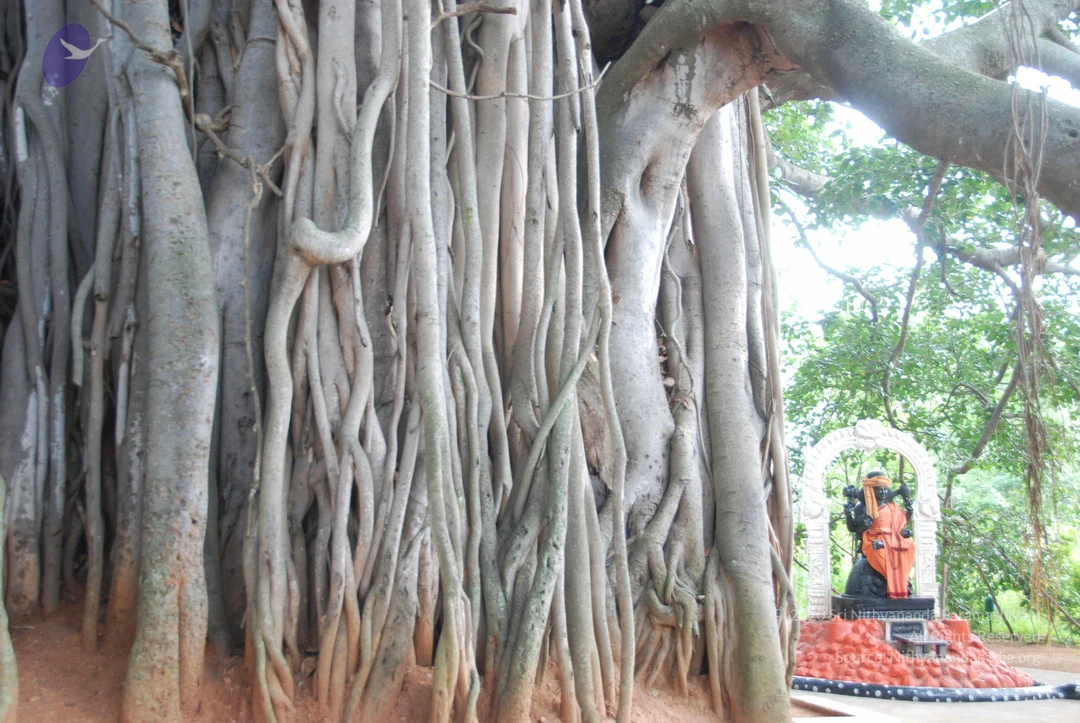
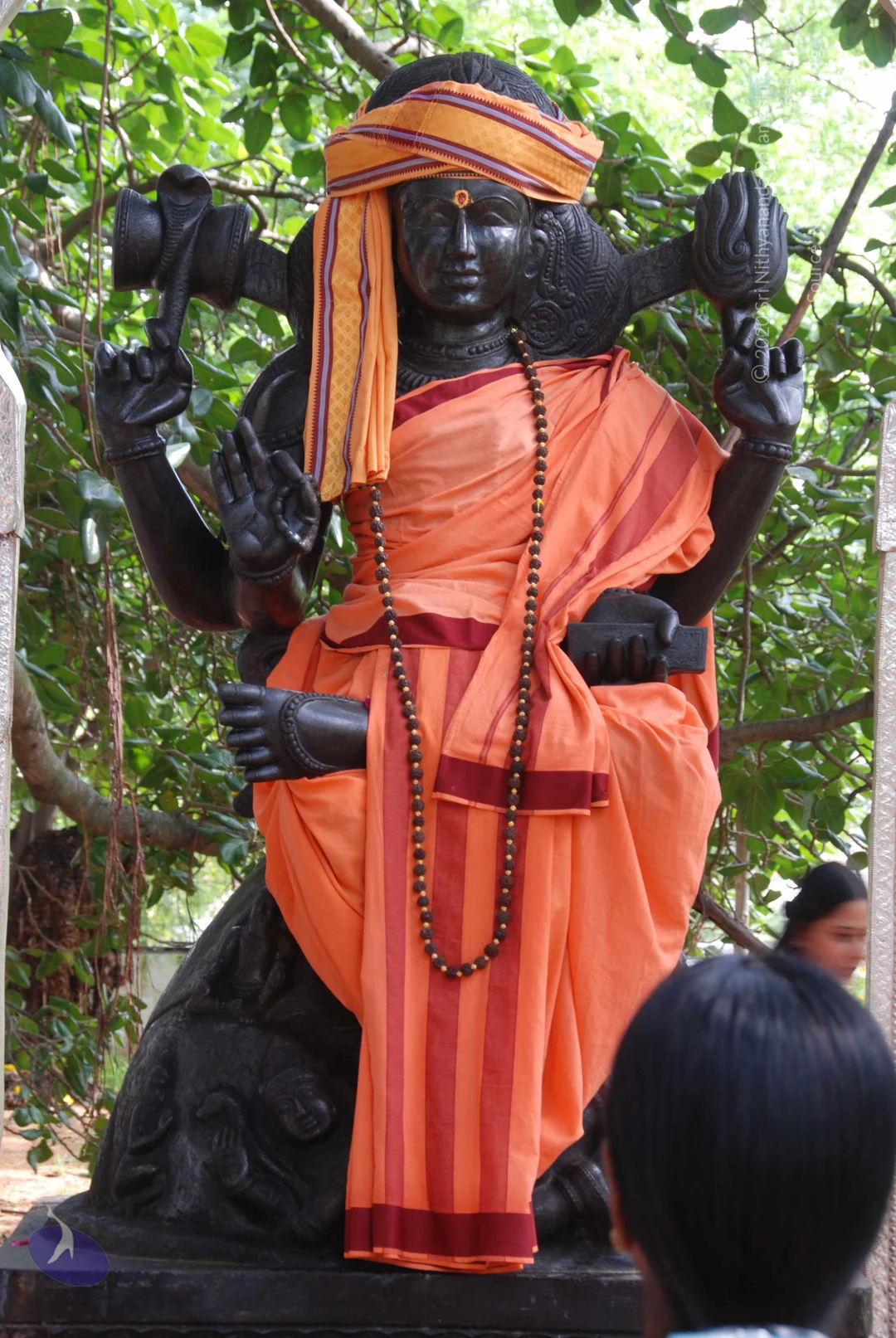
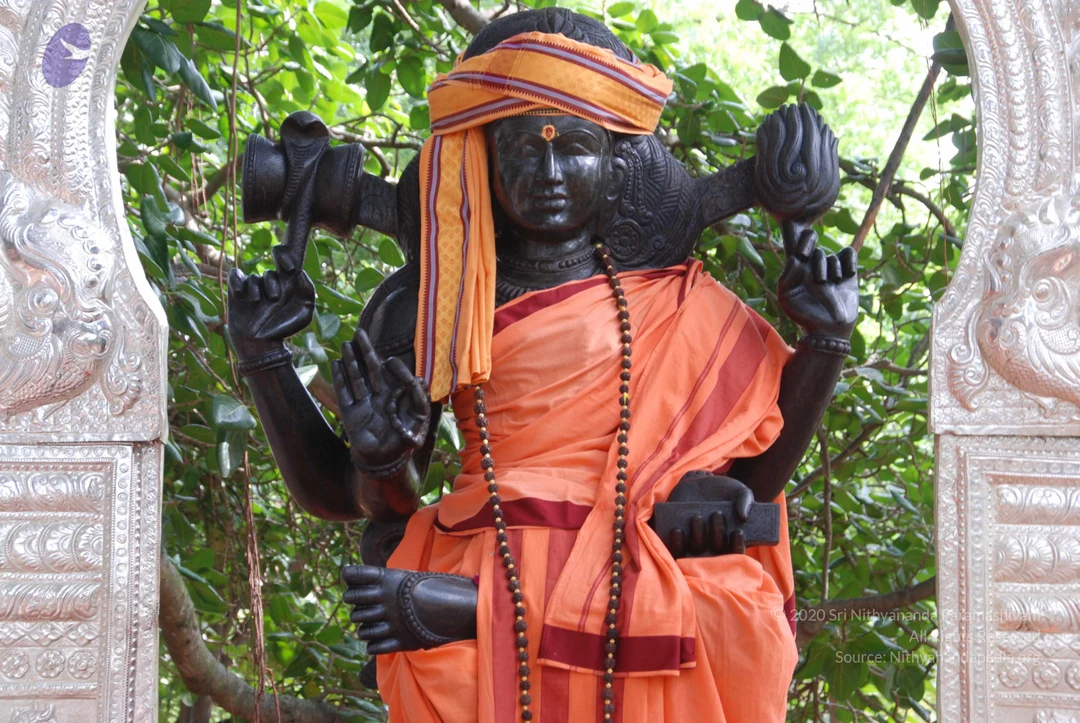
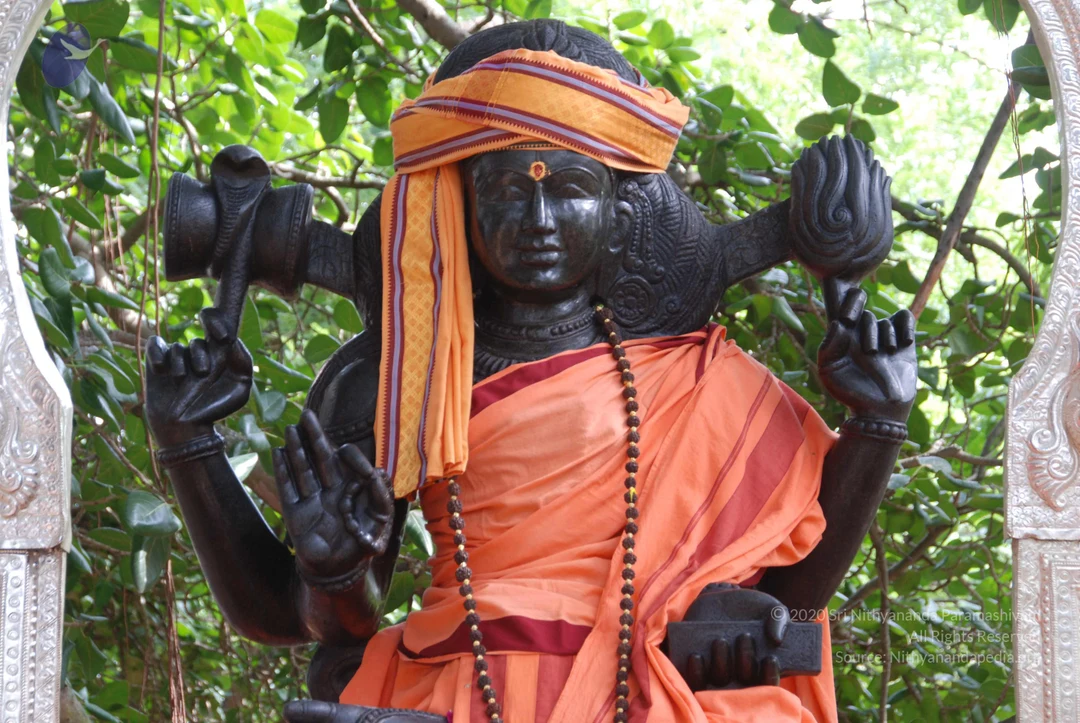
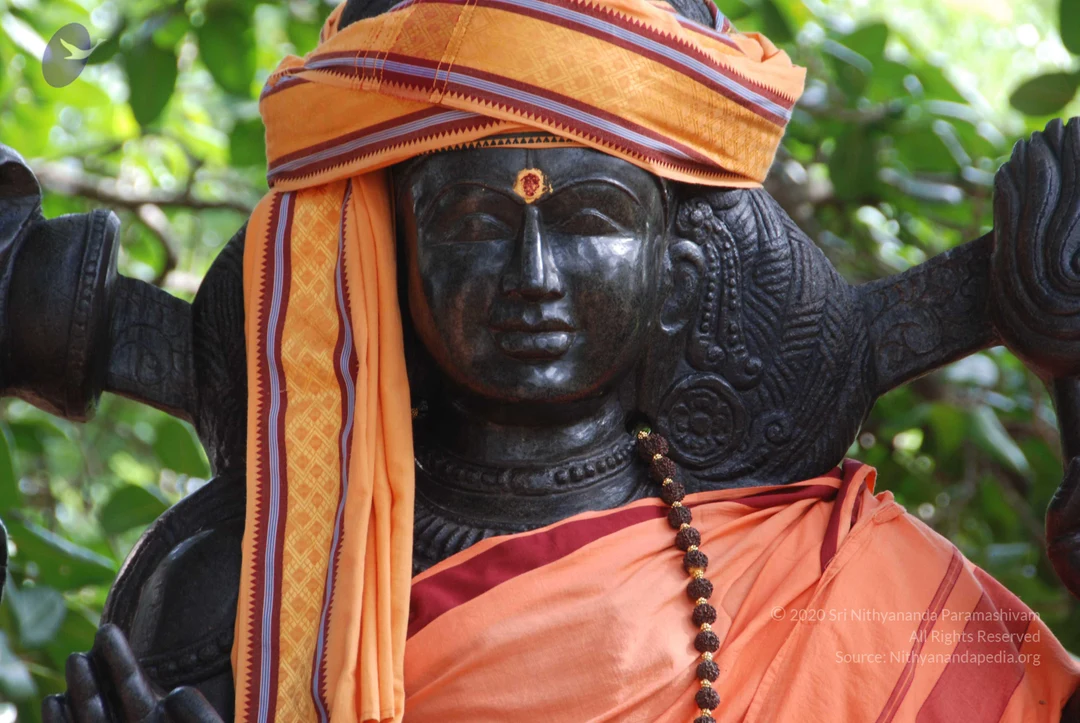
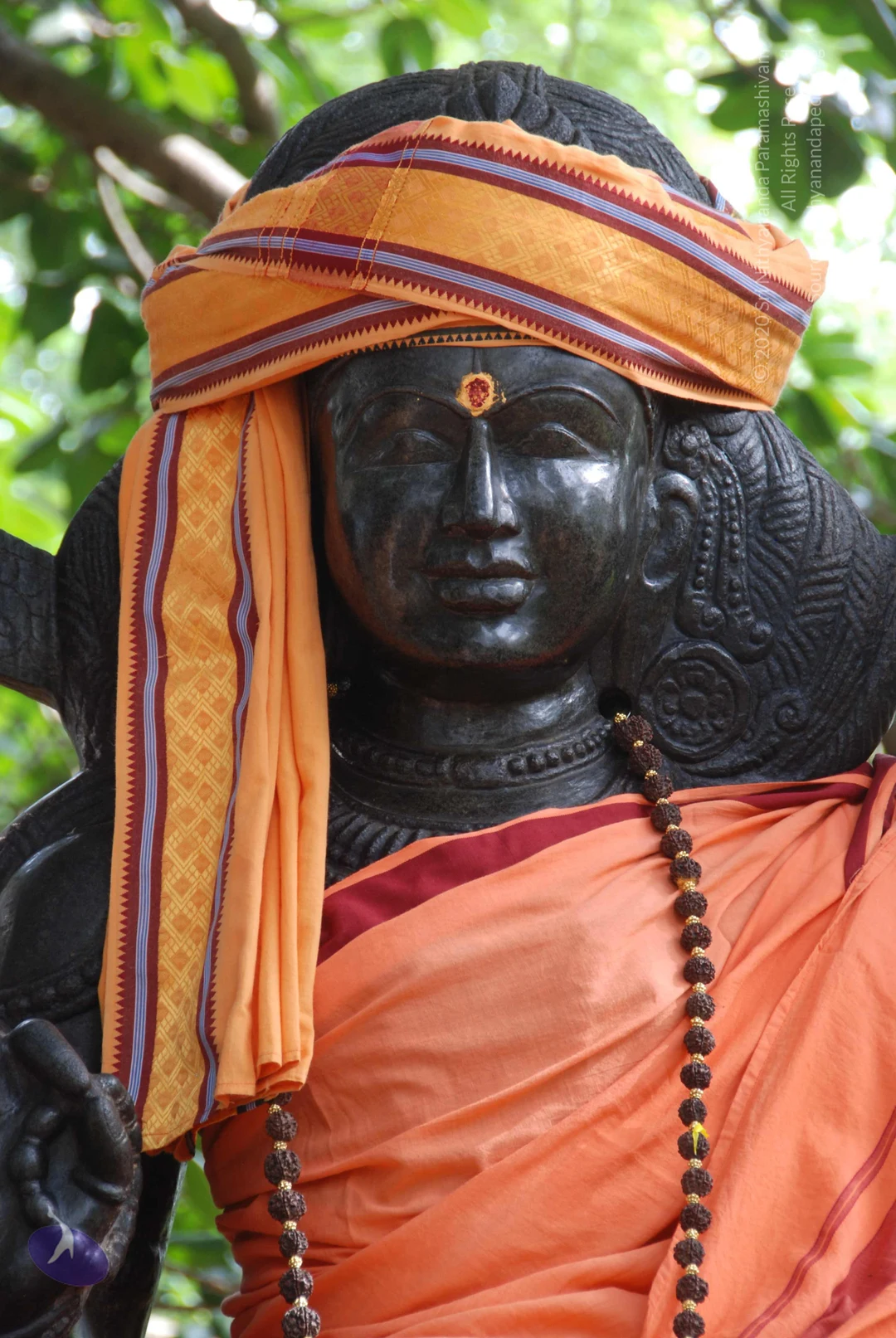
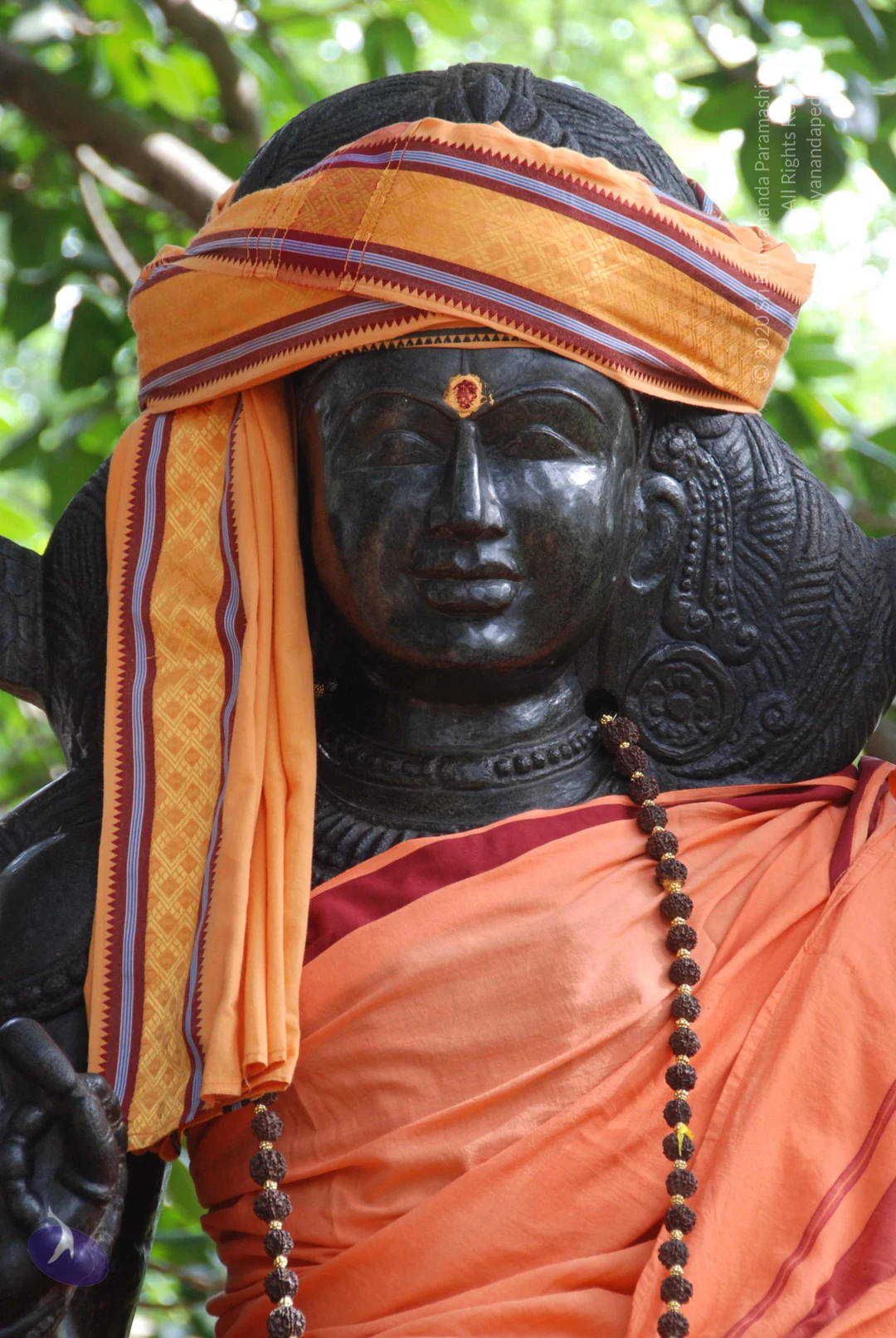
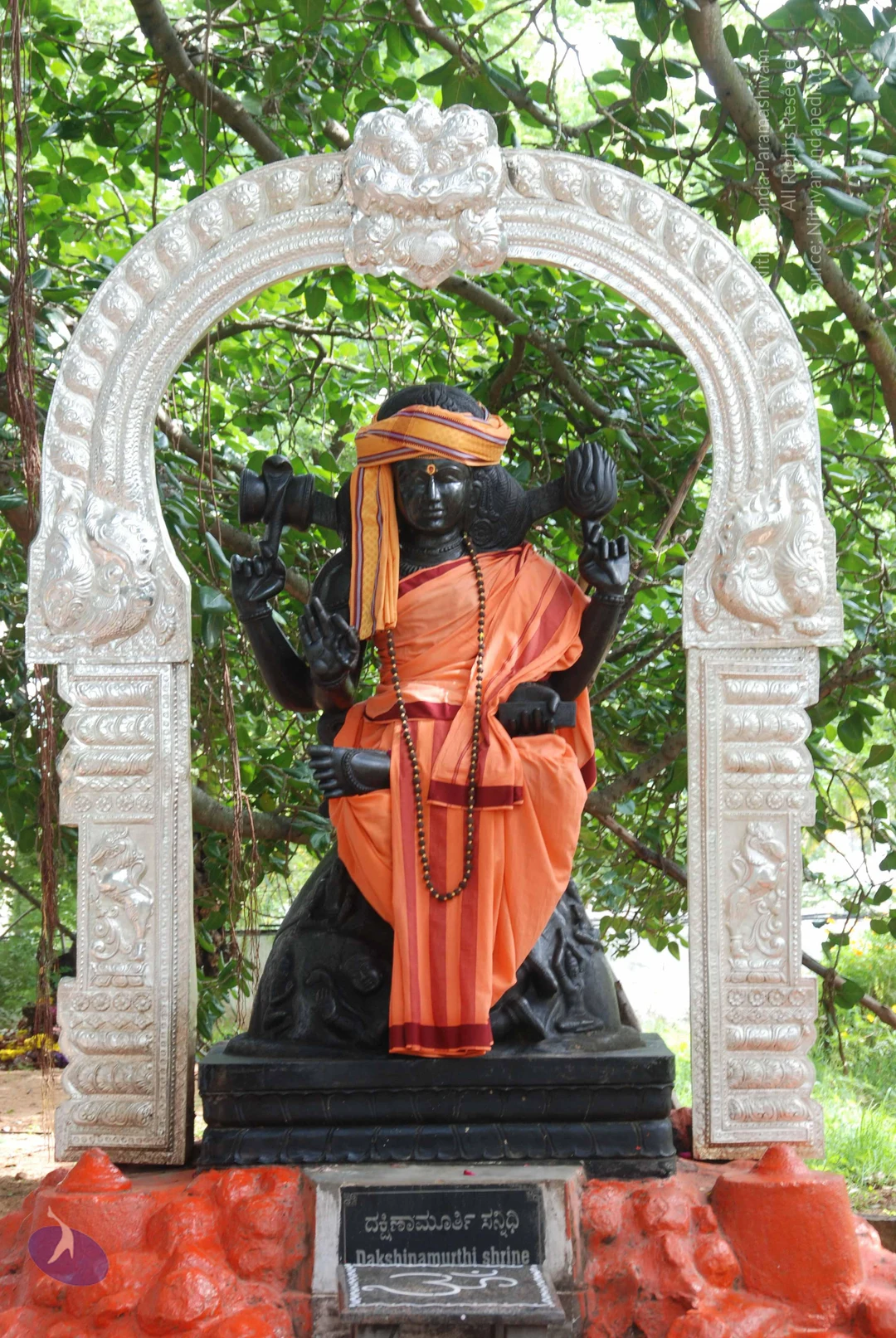
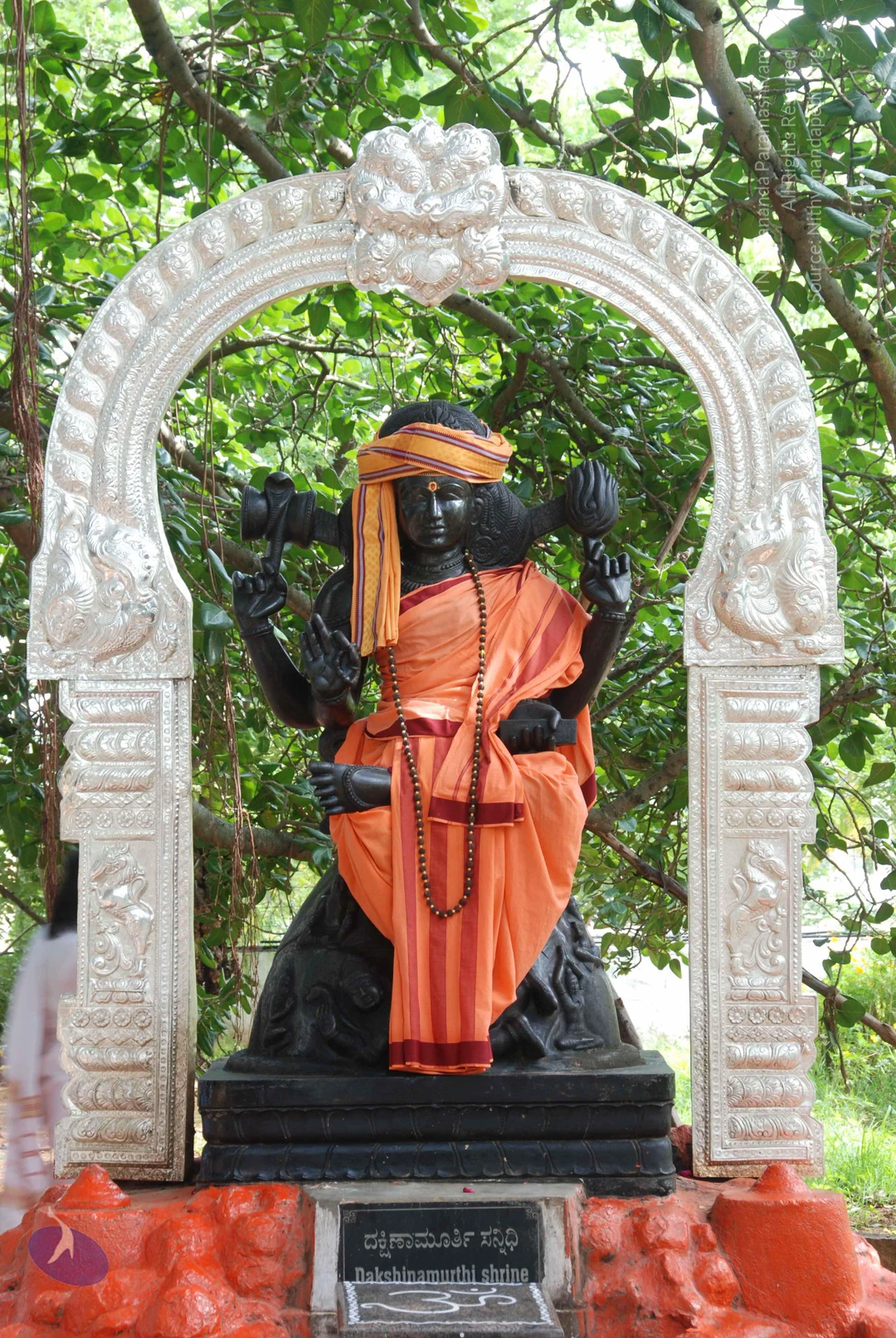
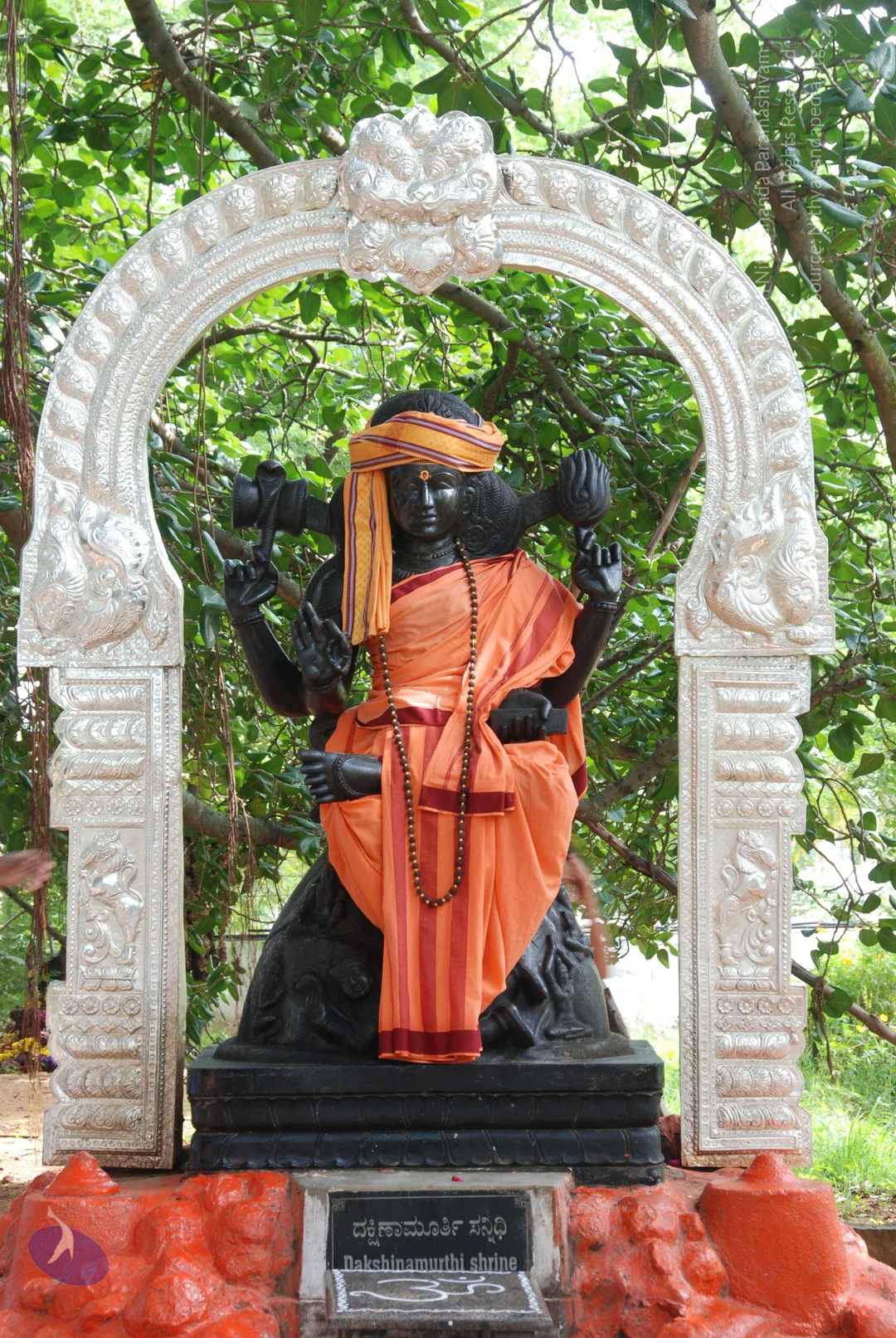
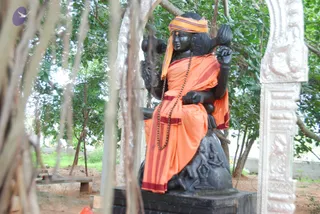
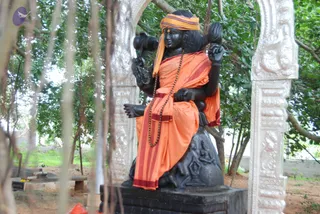
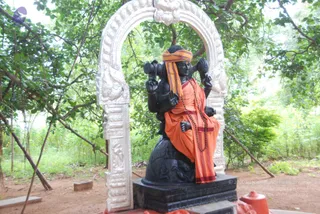
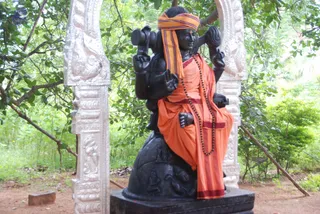
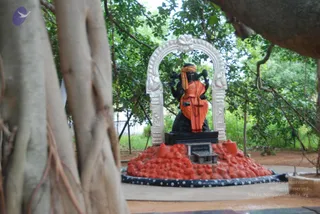
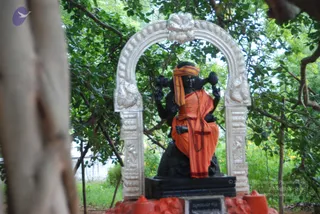
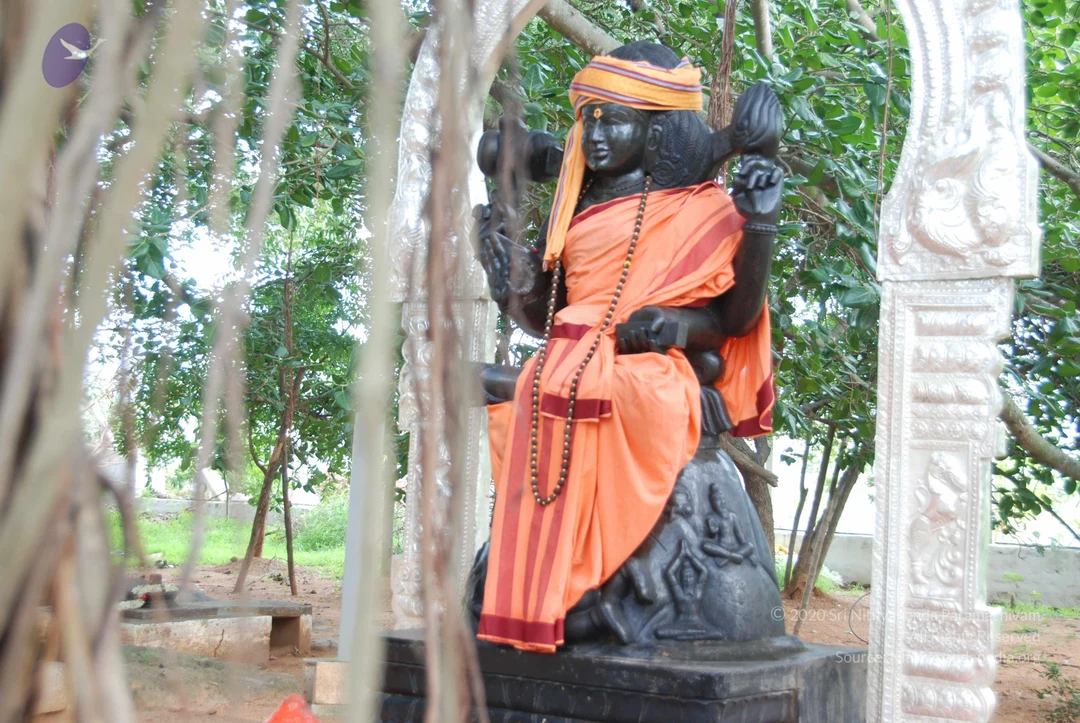
A black stone statue of a seated sage in orange and maroon saffron cloth, wearing an orange and maroon head wrap, a long rudraksha mala hanging from the neck, and holding a small object in one raised hand. The statue sits on a dark pedestal with carved figures in relief at its base. It stands under a banyan tree, with aerial roots hanging in the foreground and white carved stone pillars framing it on either side. No living people are visible. The statue is a depiction, not a physical person, and its iconography does not clearly identify a specific figure.A black stone statue of a seated figure in an orange and red-striped saffron cloth, draped over the shoulders and lap, with a rudraksha mala hanging across the chest and an orange-and-maroon headband. The figure holds a trident-like staff and a small object in raised hands, sitting on a dark carved pedestal with small relief figures. It stands framed by an ornate silver-toned arch under green banyan-type trees, with a small shrine and oil lamp visible at left. The statue is a depiction, not a living person.A black stone statue of a multi-armed deity stands in an open-sided white stone arch set among trees and green foliage. The figure wears an orange-and-red striped headwrap and a saffron-orange draped garment, with a rudraksha mala hanging across the chest. Its hands hold ritual objects and make mudras. A carved pedestal sits on a dirt ground, with red offering material at the base. This is a statue, not a living person, and no people are visible.A black stone statue of a seated sage-like figure stands outdoors in a leafy garden setting, framed by two ornate silver-toned arched pillars with carved floral and figural patterns. The statue wears an orange-saffron wrap with red-and-gold trim, an orange-and-yellow striped head cloth, and a long rudraksha mala hanging across the chest. It holds ritual objects in its raised hands, including a small drum-like item, and sits on a carved black pedestal with small relief figures. Green foliage and branches surround it, with a red-earth ground beneath.A dark stone statue of a seated figure stands framed by a white arched niche under a large banyan tree, its branches and aerial roots filling the foreground and background. The figure wears an orange-saffron cloth draped over the body, an orange head wrap, and a rudraksha-style bead mala across the chest. Its hands are raised holding a staff and other objects. The statue sits on a black base set in a bed of orange-red powder or kumkum, with a small wooden bench or stool and a plaque in front, and a circular dotted border surrounds the platform. Green foliage and grass fill the background. This is a statue, not a living person.A black stone statue of a multi-armed deity form stands in a white stone arched niche amid dense green tree foliage. The figure wears an orange-saffron cloth draped over the body, an orange and yellow headband, and a rudraksha-style mala. Its hands hold ritual objects, and red-orange offerings or stones sit at the base. A black pedestal carries a small engraved plaque. Yellow flowers grow behind the shrine. This is a statue, not a living person.

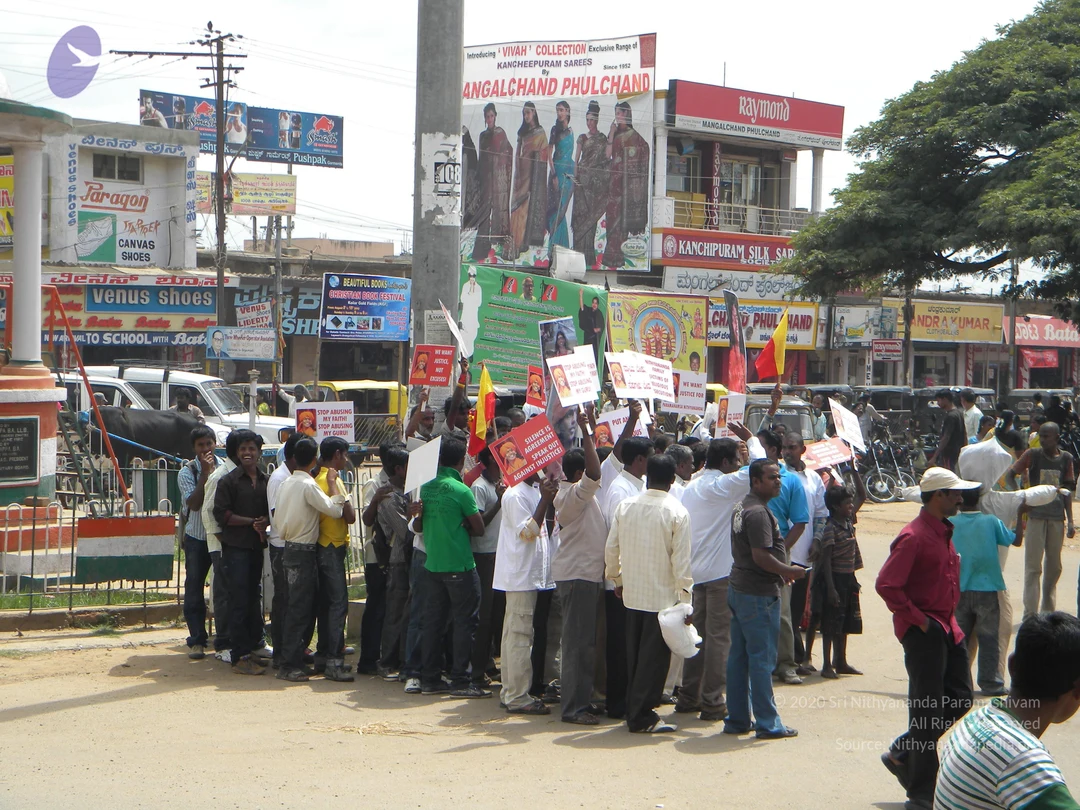
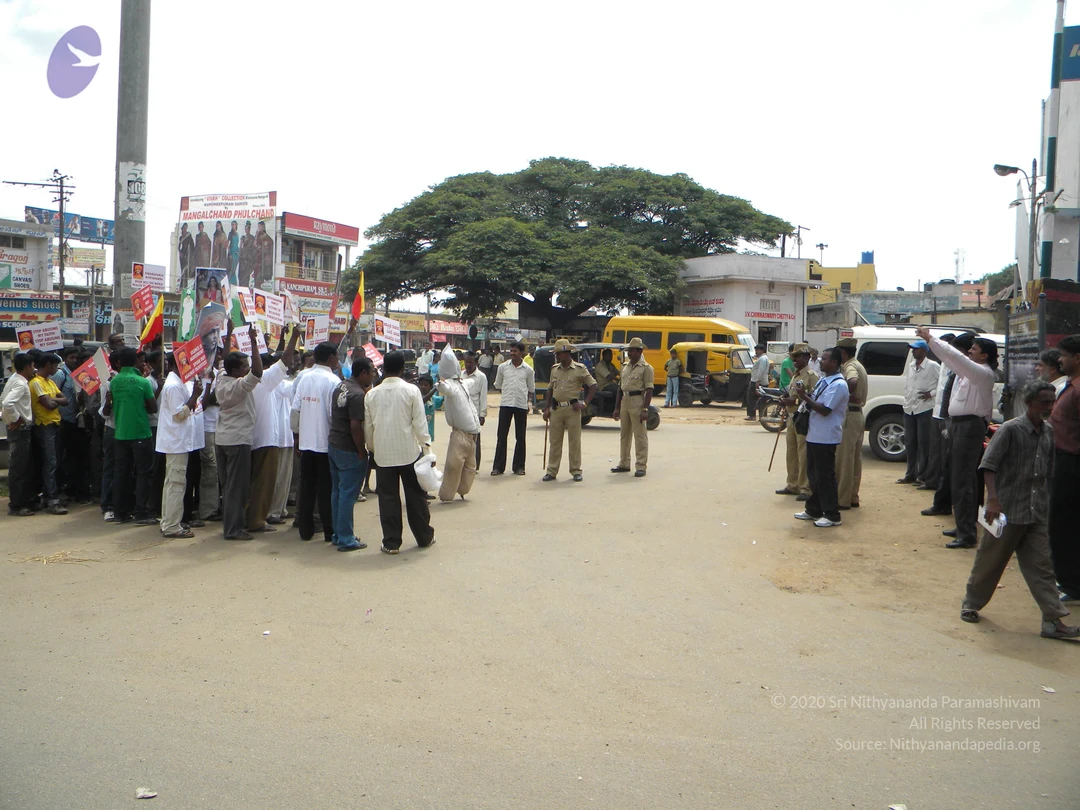
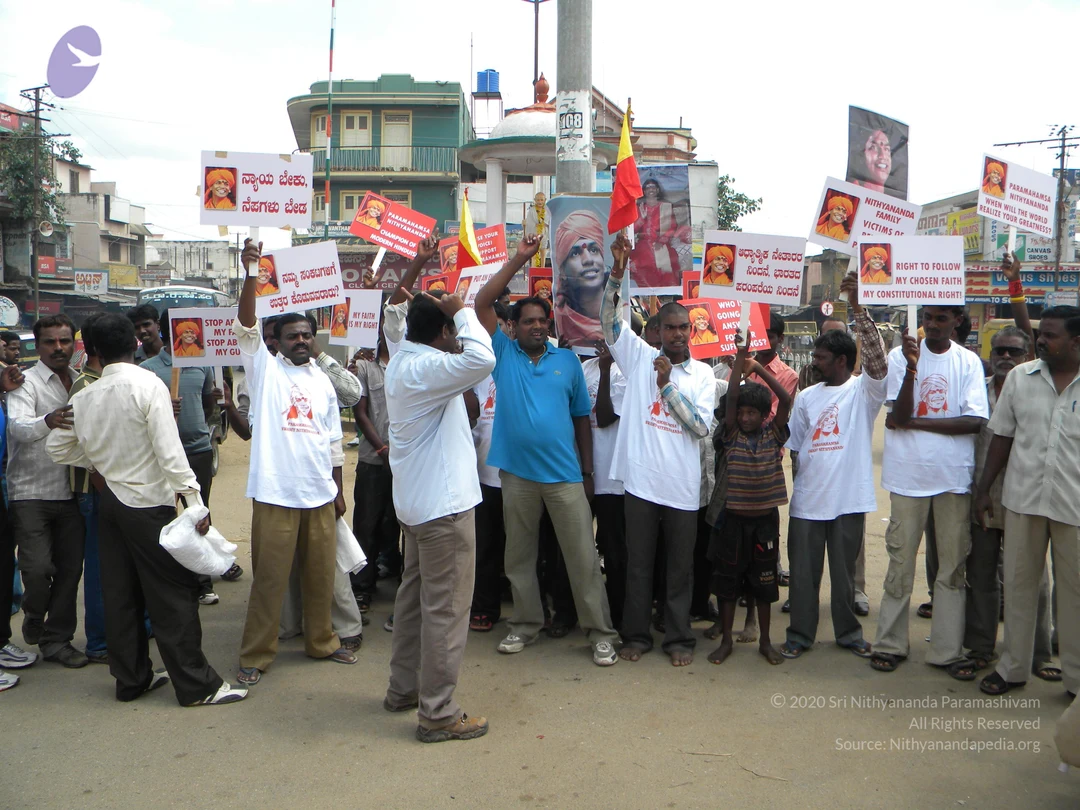
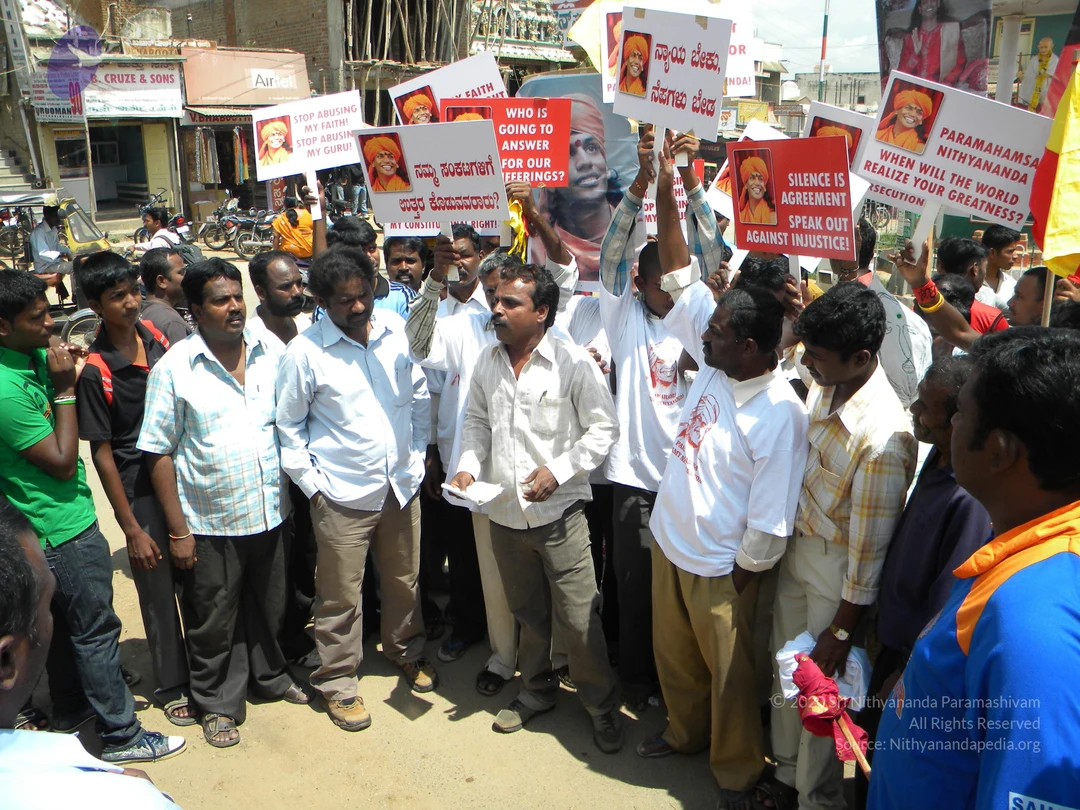
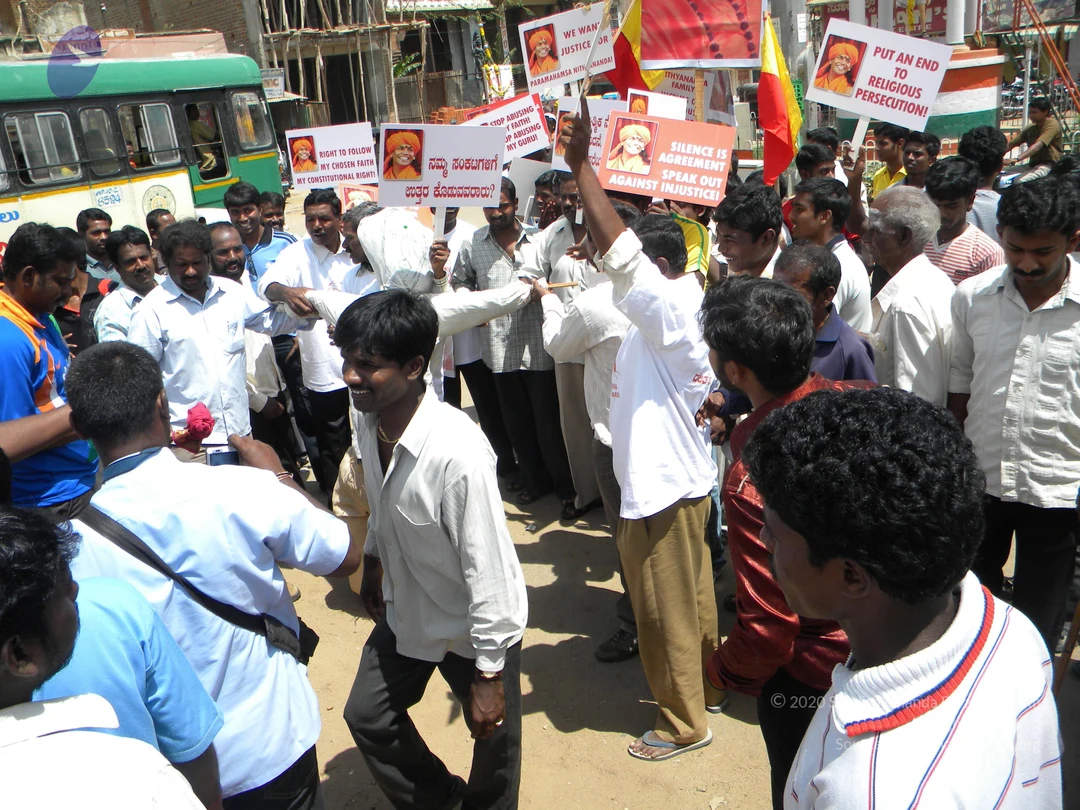
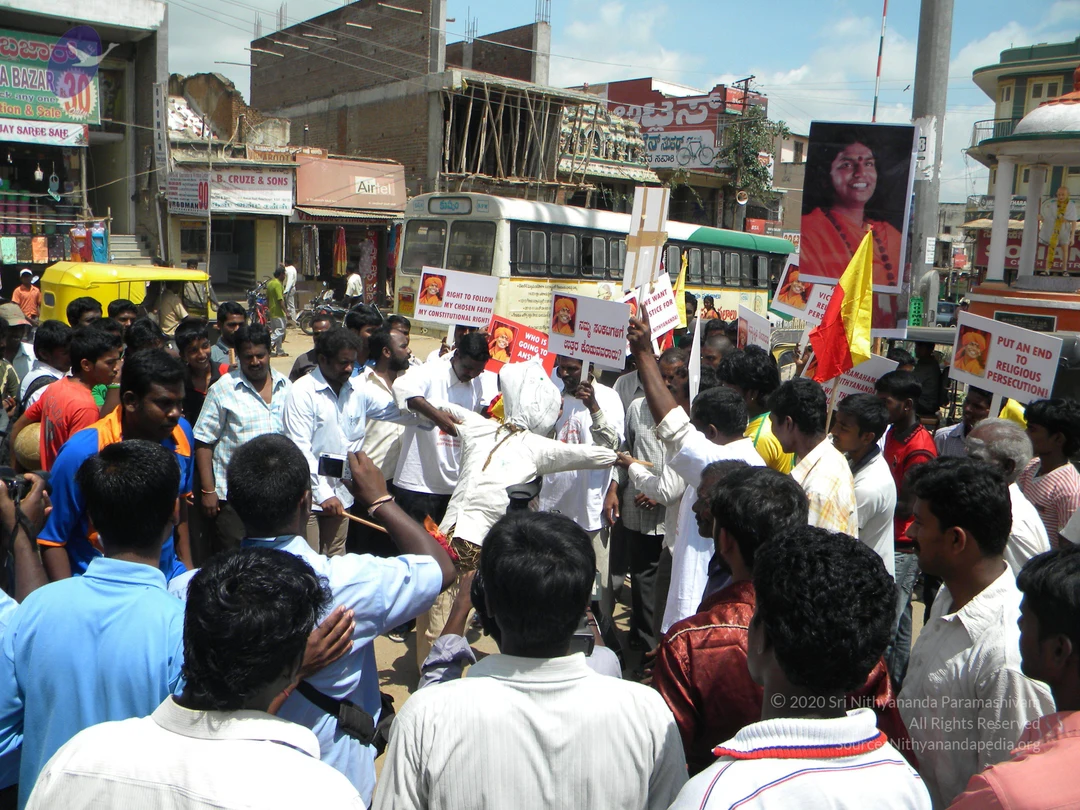
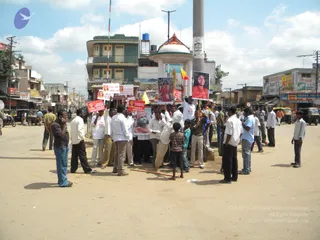
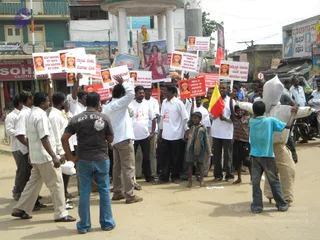
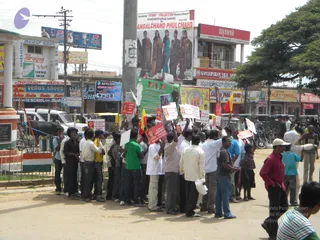
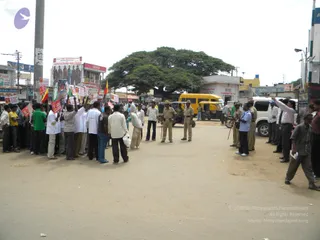
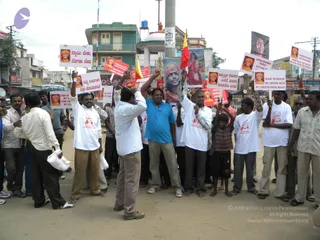
3-KGF-Protest

9 photosSource gallery
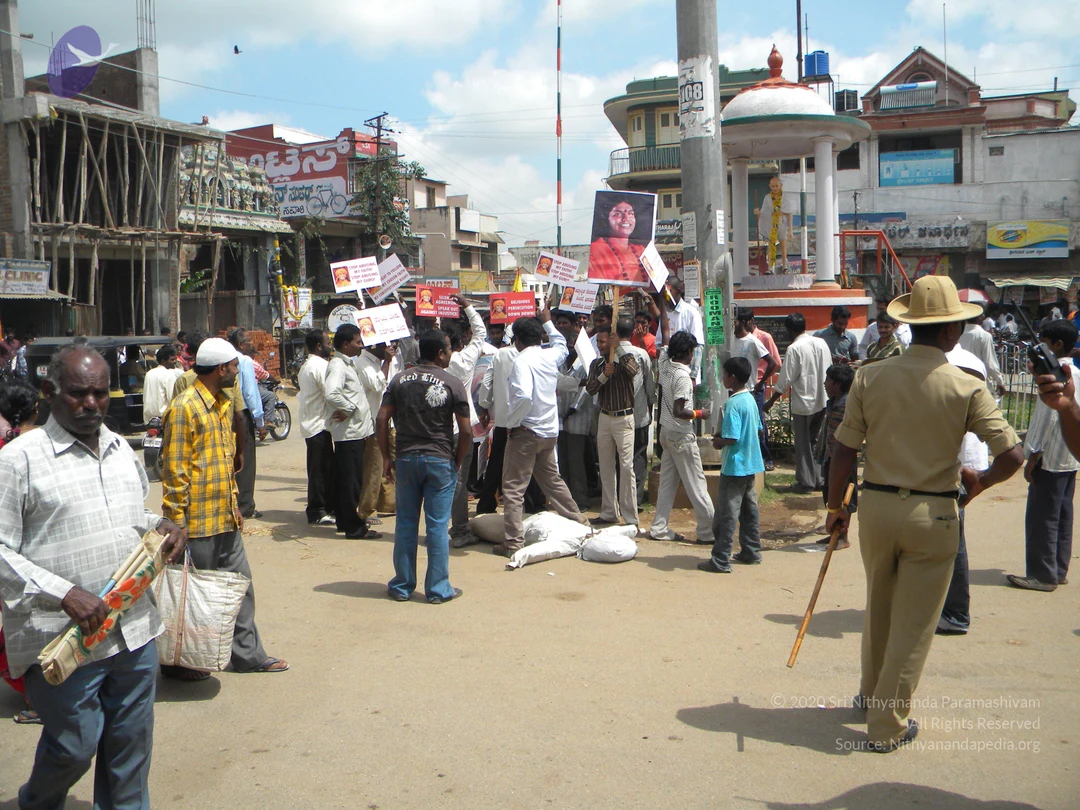
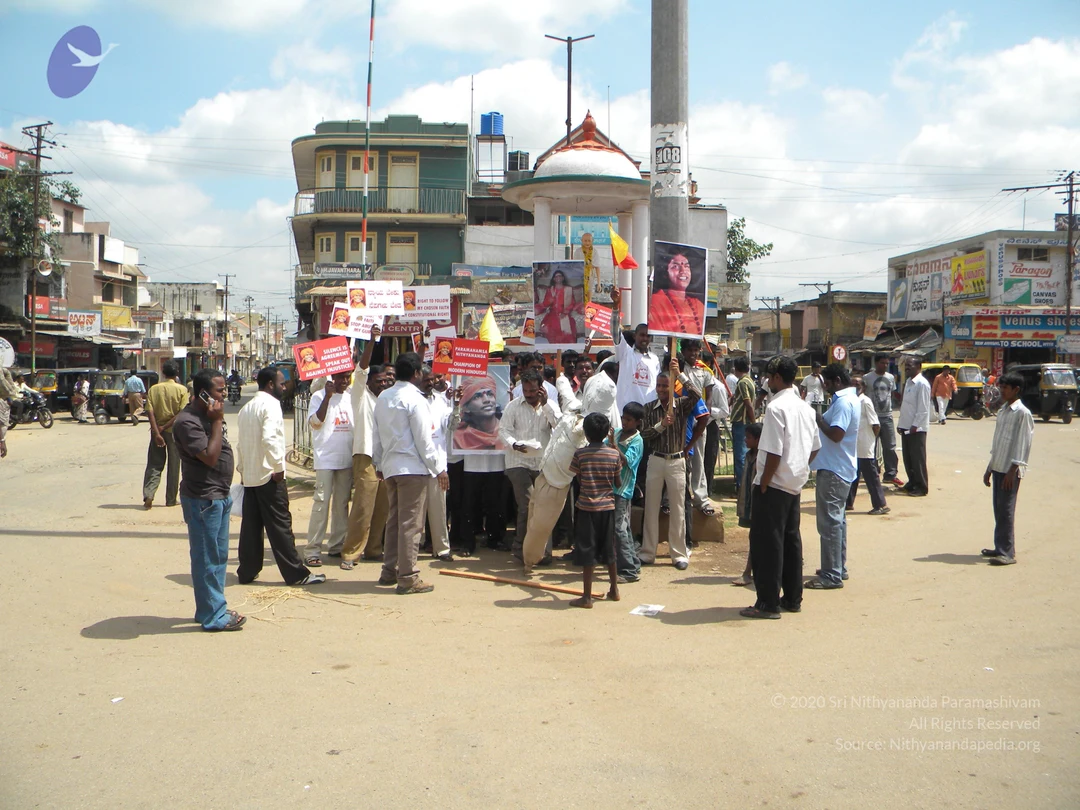
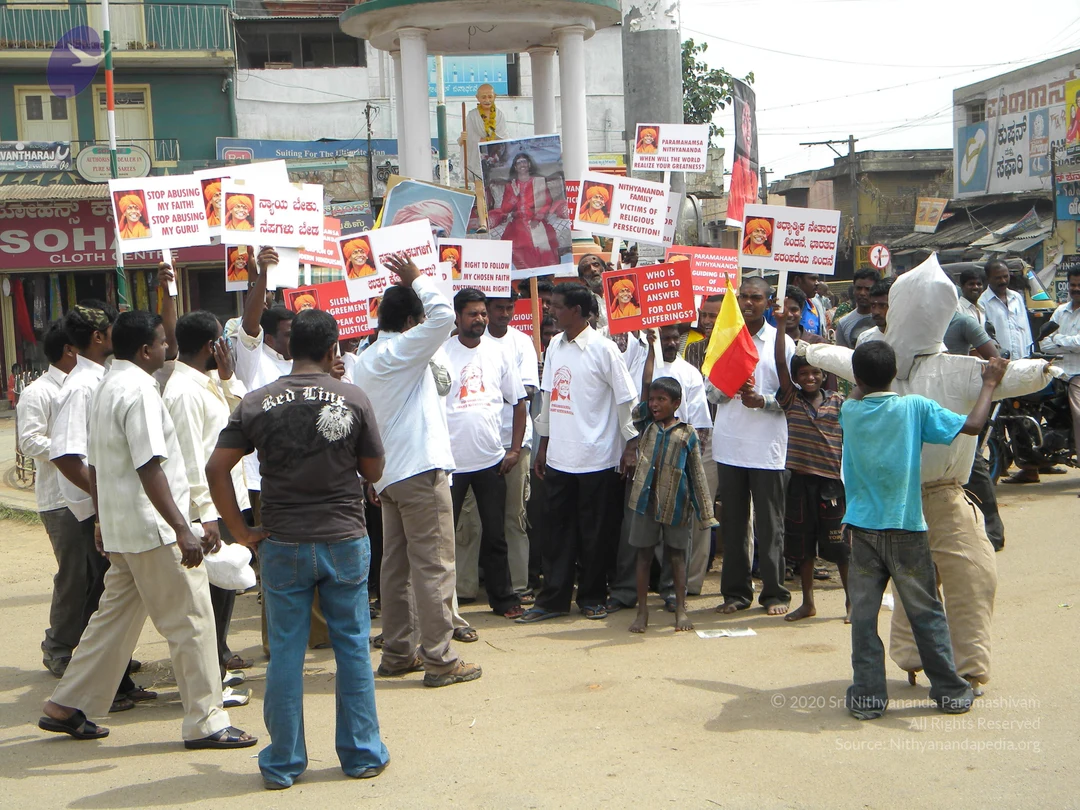
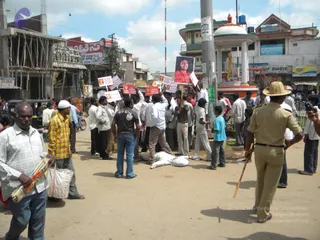
A street protest on a dusty road in a town square. Several men in white and light shirts and trousers hold red and white placards and a large framed portrait of a woman in a red sari. One man in a dark t-shirt stands in the centre, and a few sacks lie on the ground. On the right, a uniformed police officer in khaki with a sun hat carries a long stick and watches the crowd. Behind them stand a white domed gazebo with a statue, shopfronts, a signboard, and passersby on the street. A man in a yellow checked shirt and white cap walks on the left carrying a rolled cloth bundle.A street protest on a dusty road at a busy Indian town junction, with shops, auto-rickshaws and a small domed kiosk behind. A crowd of men in white shirts and dark trousers, with a few boys in the foreground, holds up red and white placards and printed portraits. One large portrait shows a woman in orange-red clothes, and another shows a figure in an orange-red robe and headwear, held by a man in a white shirt. Red banners carry slogans, and a saffron flag is raised above the group. Some protesters stand in the road with wooden sticks and straw on the ground. The crowd is visible at a moderate size.A street protest in a small Indian town with a dusty road and shops behind. Many men in white shirts and trousers hold up printed placards bearing portraits of a saffron-robed, orange-turbaned figure with a long white beard, labelled as Paramahamsa Nithyananda, along with slogans in English and Kannada. A large placard carries a portrait of a woman in red. One man in a dark red-line T-shirt and a few men in light clothes gesture in the foreground, a small boy in striped clothing stands among the crowd, and a boy in a teal shirt holds up a large bundled effigy-like sack wrapped in white. A small red and yellow Kannada flag is visible. A stone pillared structure stands in the background. Several placards show portraits of the saffron-clad figure, and the slogans protest abuse of faith and religious persecution.A street protest on a busy Indian roadside with many men gathered on a dirt road. Several hold up white placards and red-and-white posters with printed slogans and portrait photos. Some wear white shirts and dhotis, others casual shirts and trousers, and a few carry red and yellow flags. Behind them are shop signs, a Raymond and Mangalchand Phulchand Kanchipuram silk saree billboard, a Venus Shoes storefront, parked vans and autorickshaws, and a cow tethered by the roadside.A street scene during a protest in a town square. A crowd of men stands on the left holding red and yellow flags and placards, some wearing white shirts and dhotis. Several khaki-uniformed police officers stand in the road center and right, one wearing a cap and carrying a baton. A large shade tree and a yellow van and auto-rickshaws are in the background, with shop signs and billboards lining the street. No identifiable a person candidate is visible.A street protest on a busy road in an Indian town. Many men stand shoulder to shoulder, most wearing white t-shirts printed with a saffron-robed figure, while others wear white shirts or blue polo shirts and trousers. Several raise fists or hold up red and white placards bearing a saffron-robed figure's portrait and Kannada slogans about faith and constitutional rights. A large portrait on a pole shows a saffron-turbaned figure, and a yellow-and-red flag is visible. A small boy in a striped shirt stands at the centre-right. Shops, a green building and a domed structure line the background. Roughly thirty people are visible.

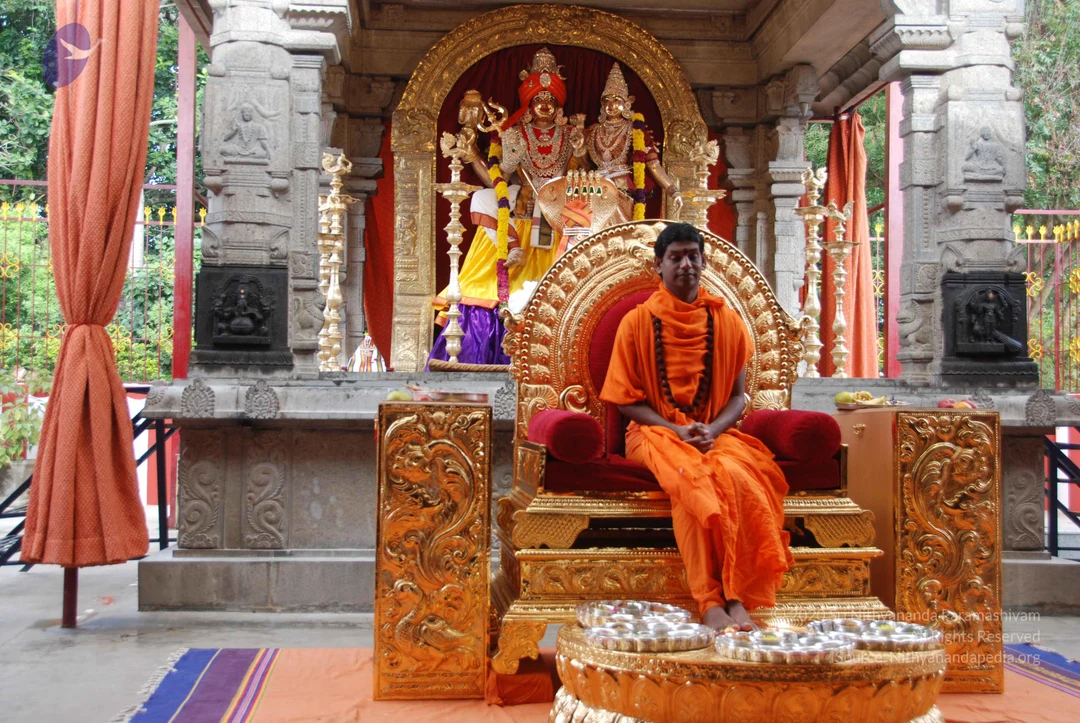
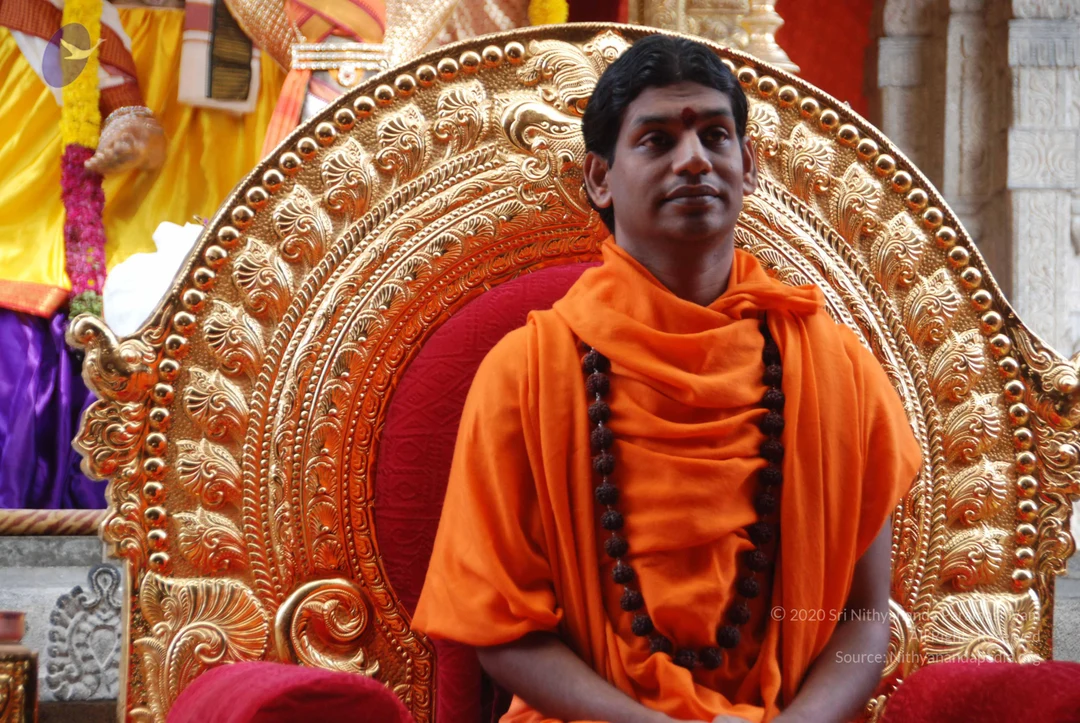
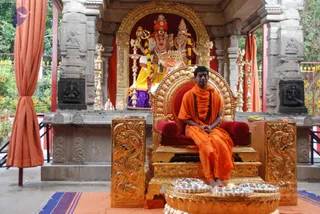
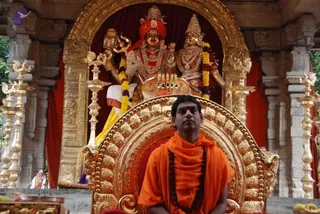
4-Pada-Puja
73 photosSource gallery
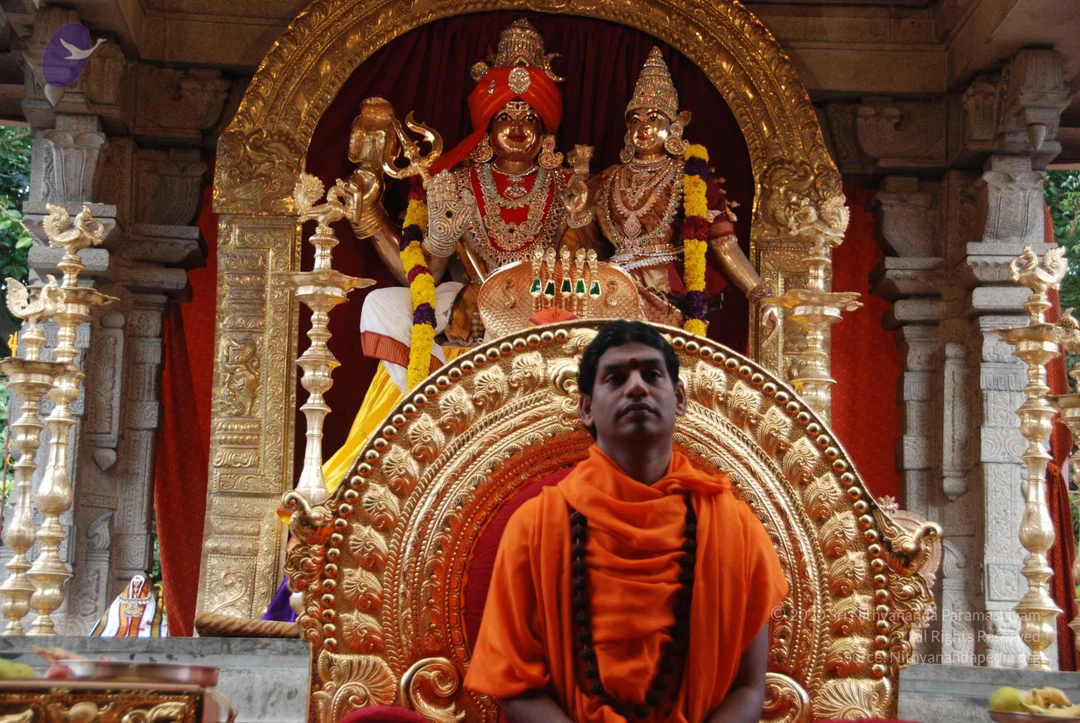
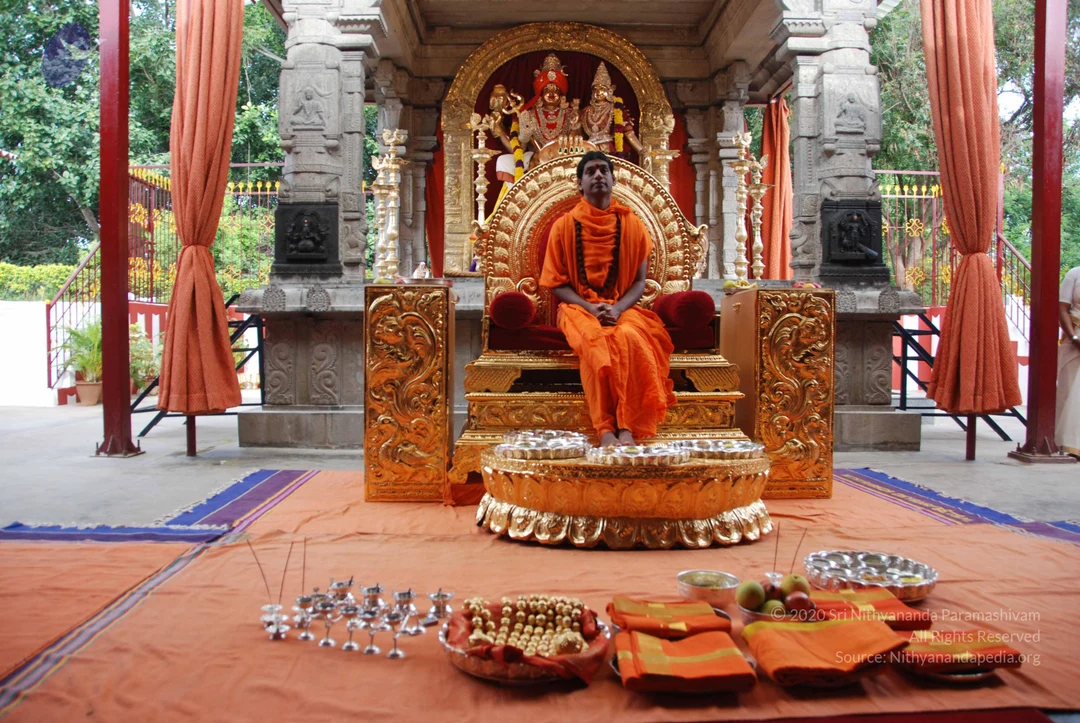
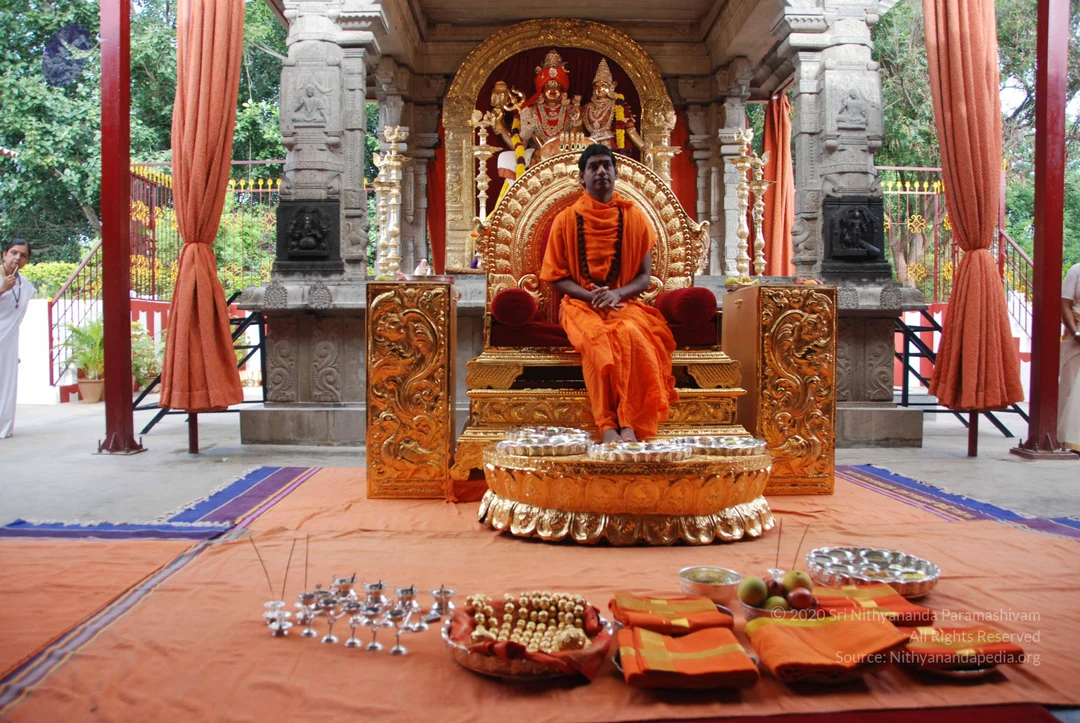
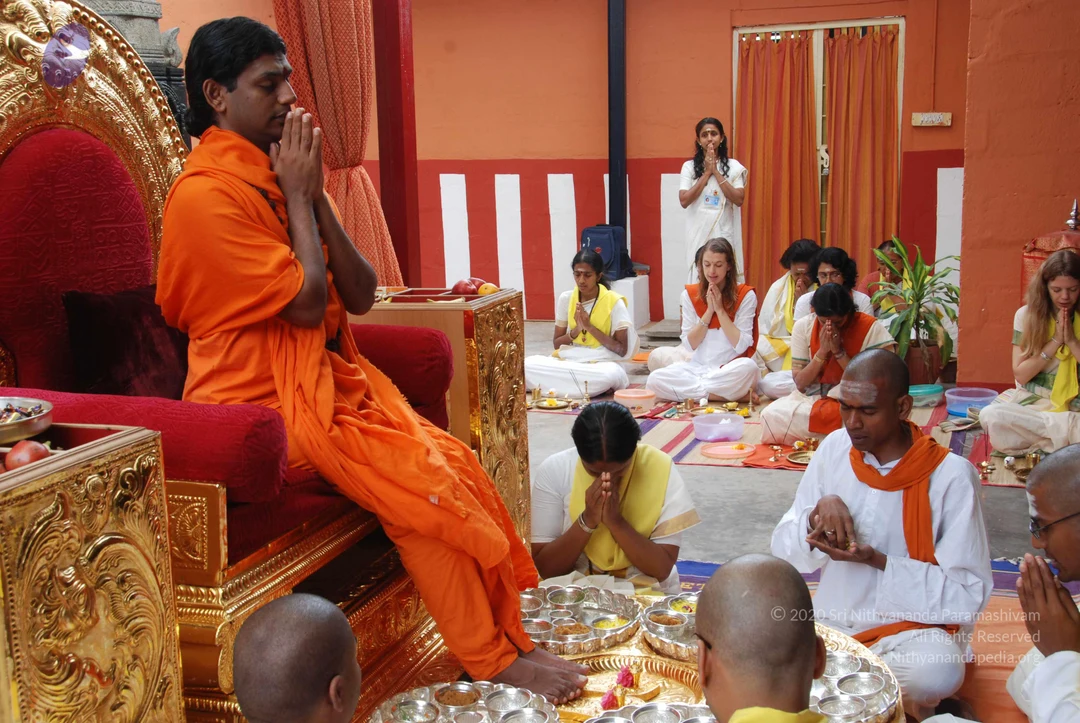
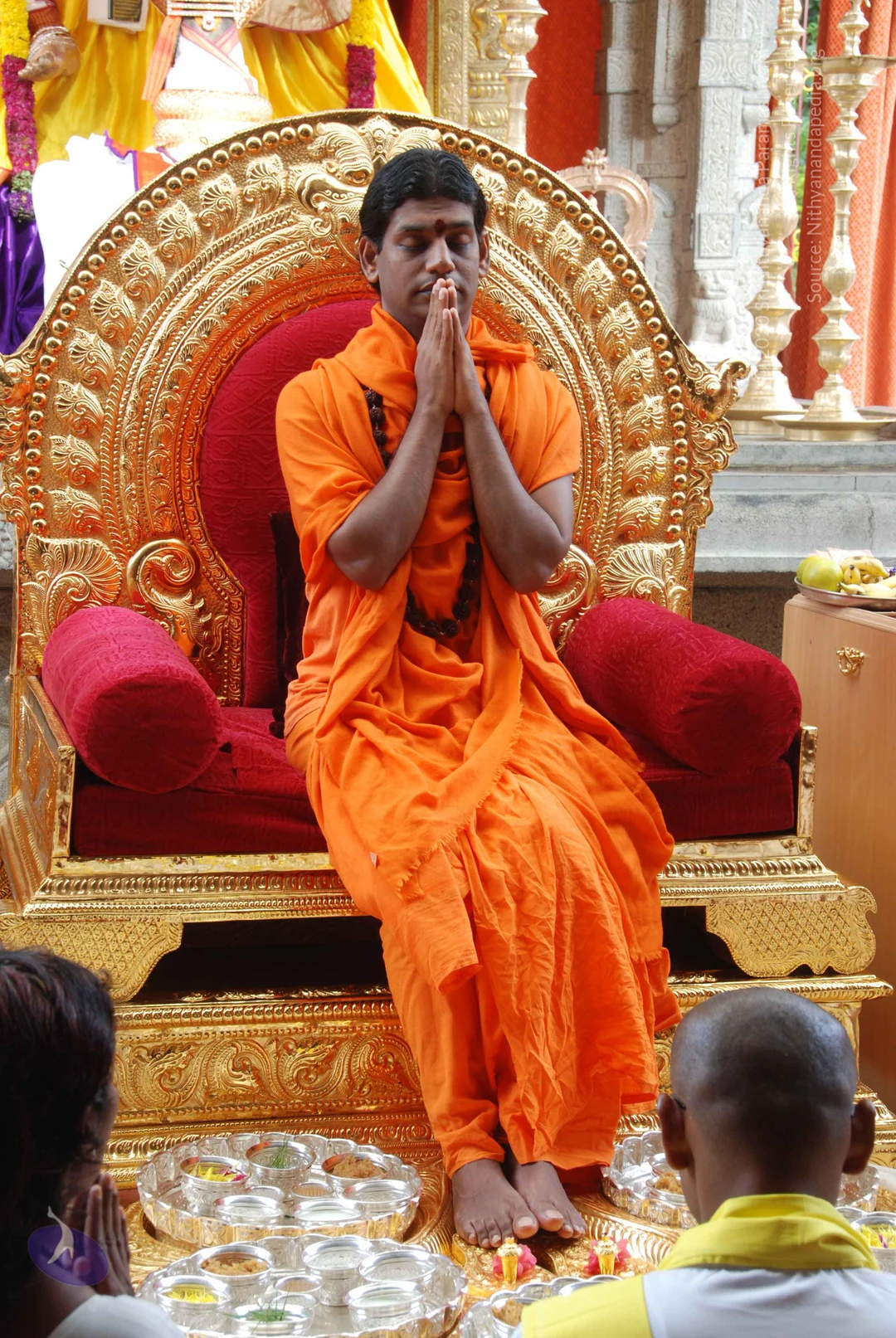
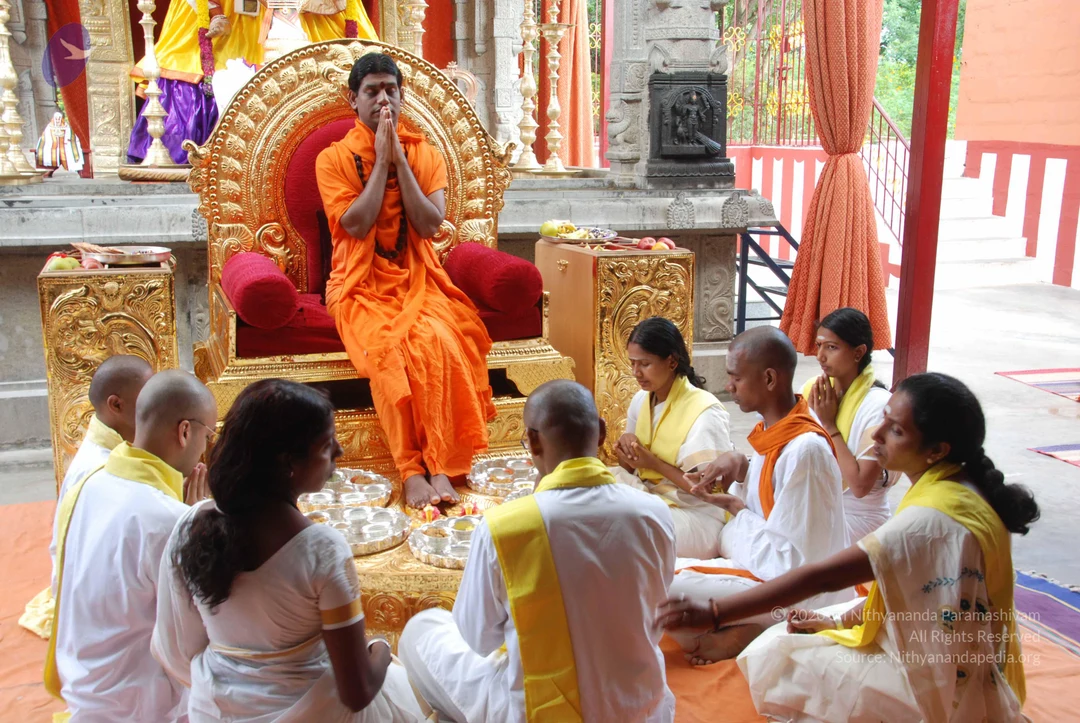
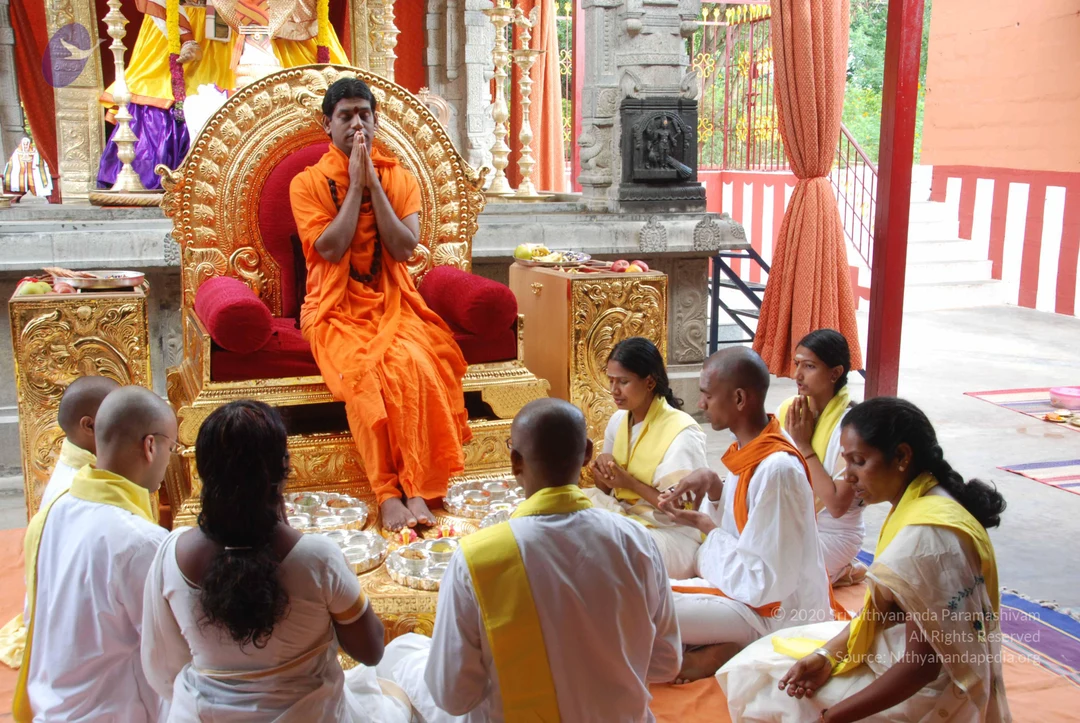
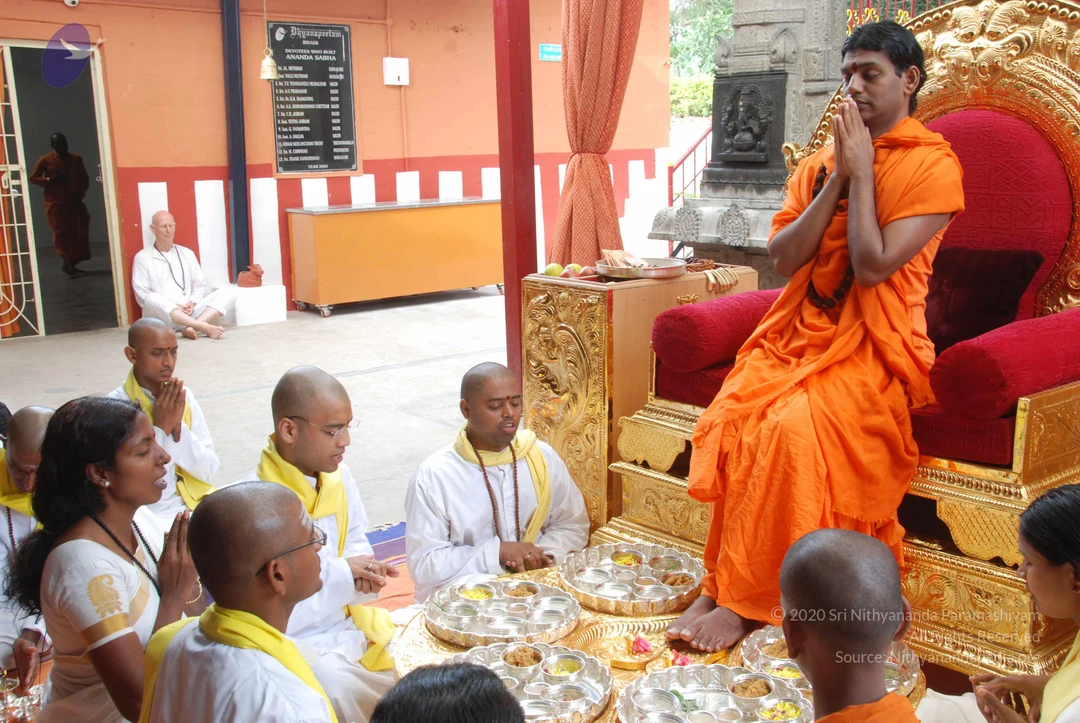
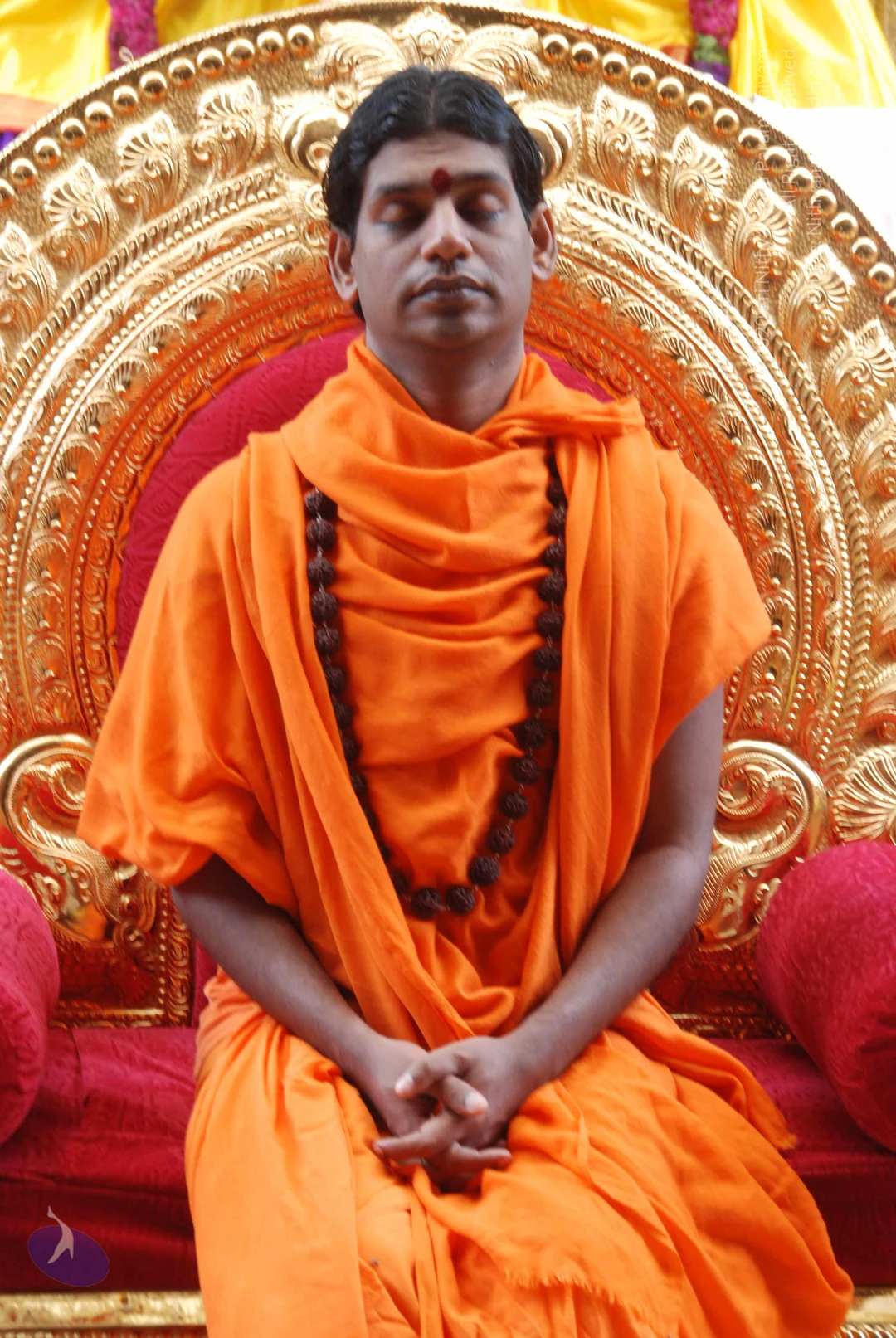
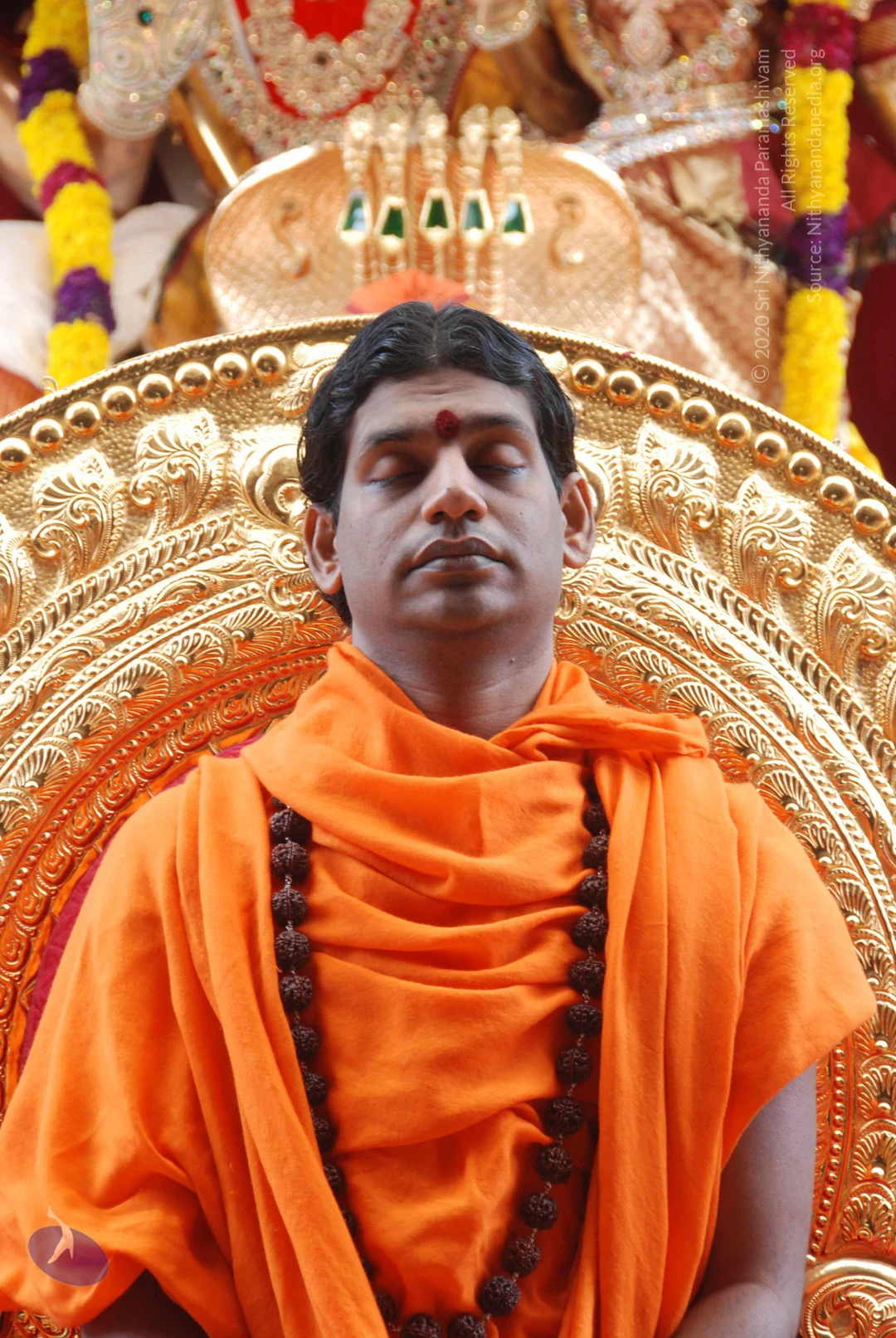
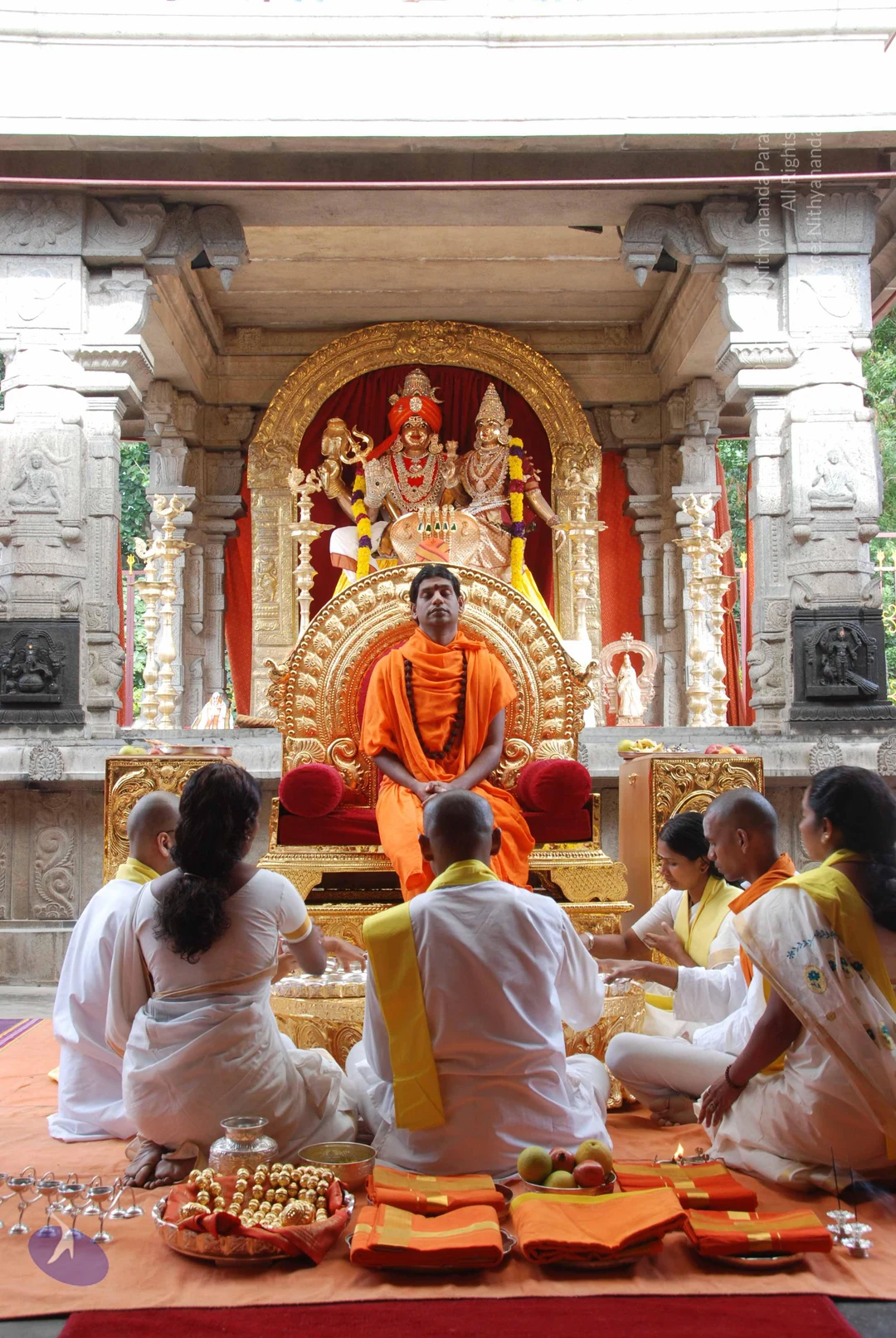
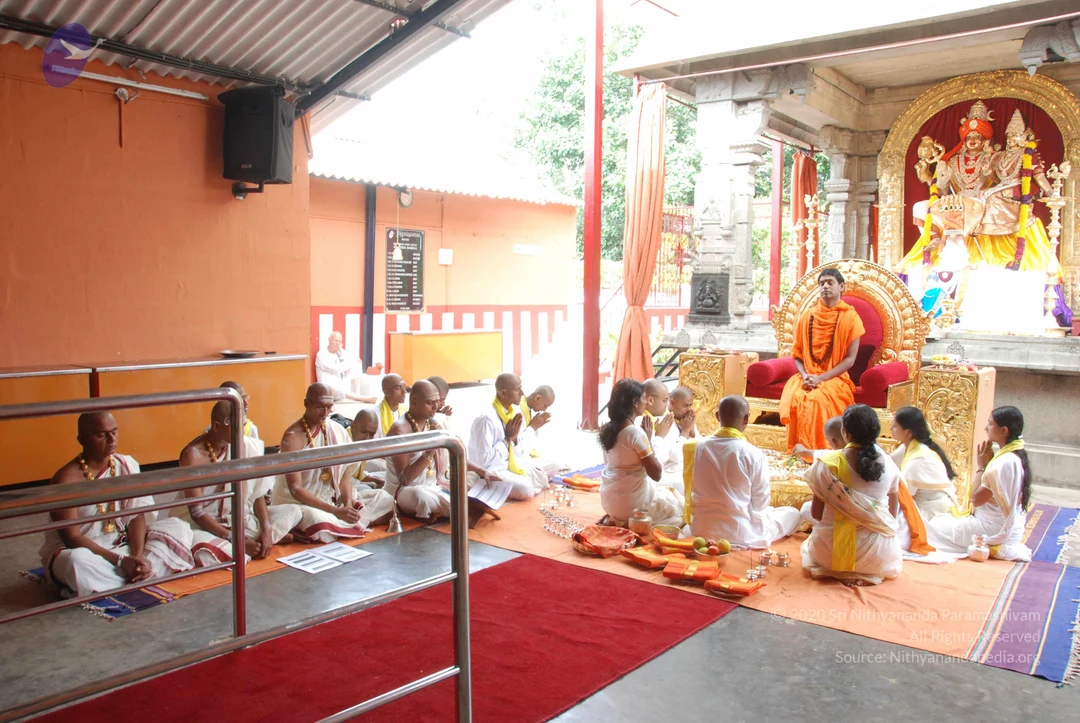
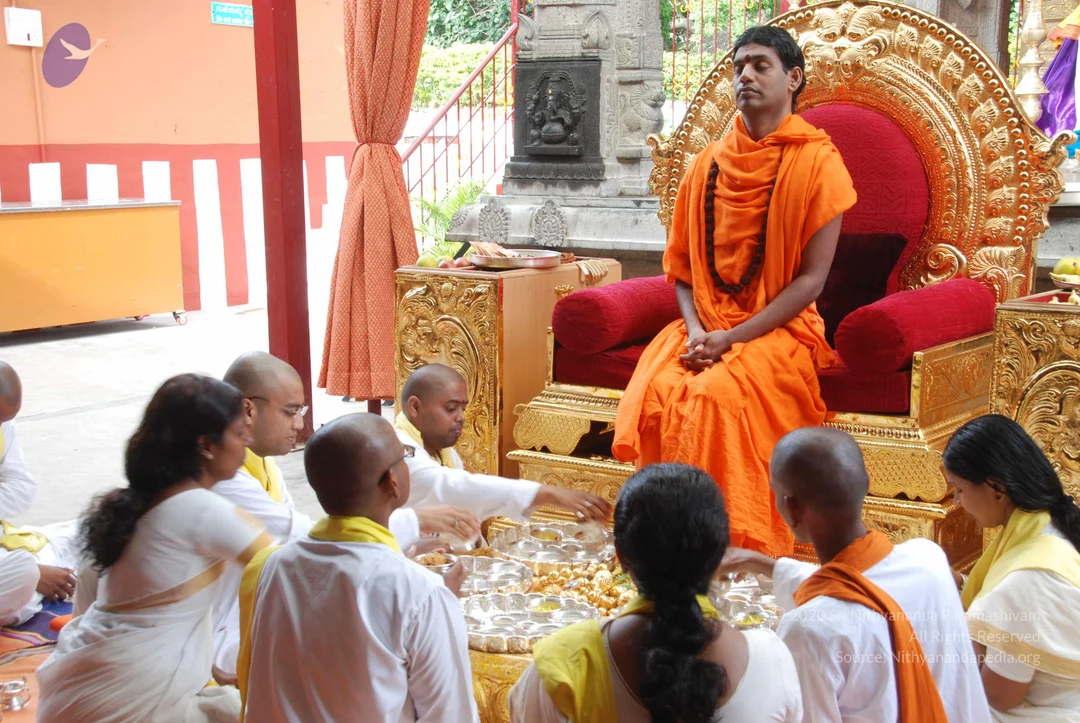
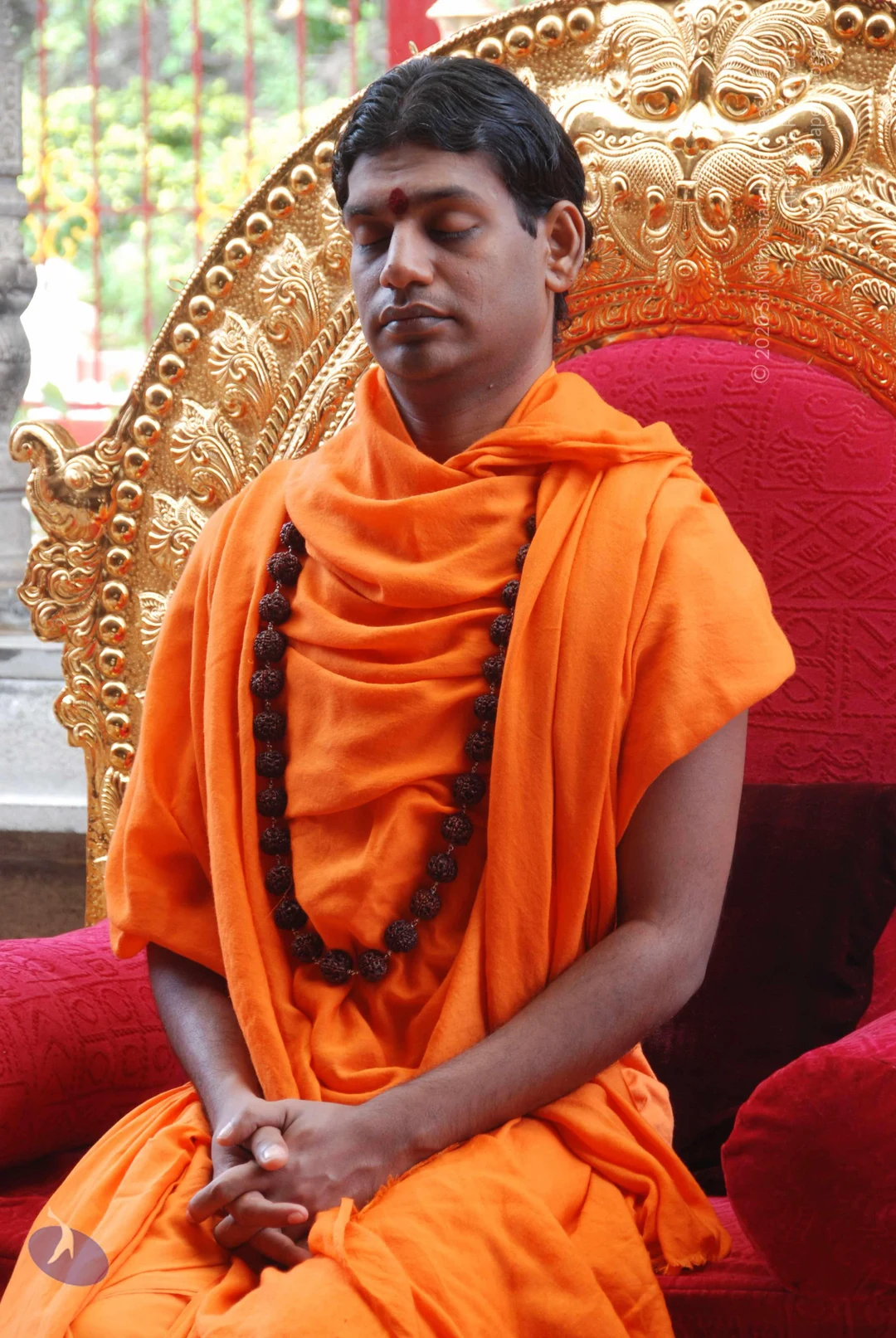
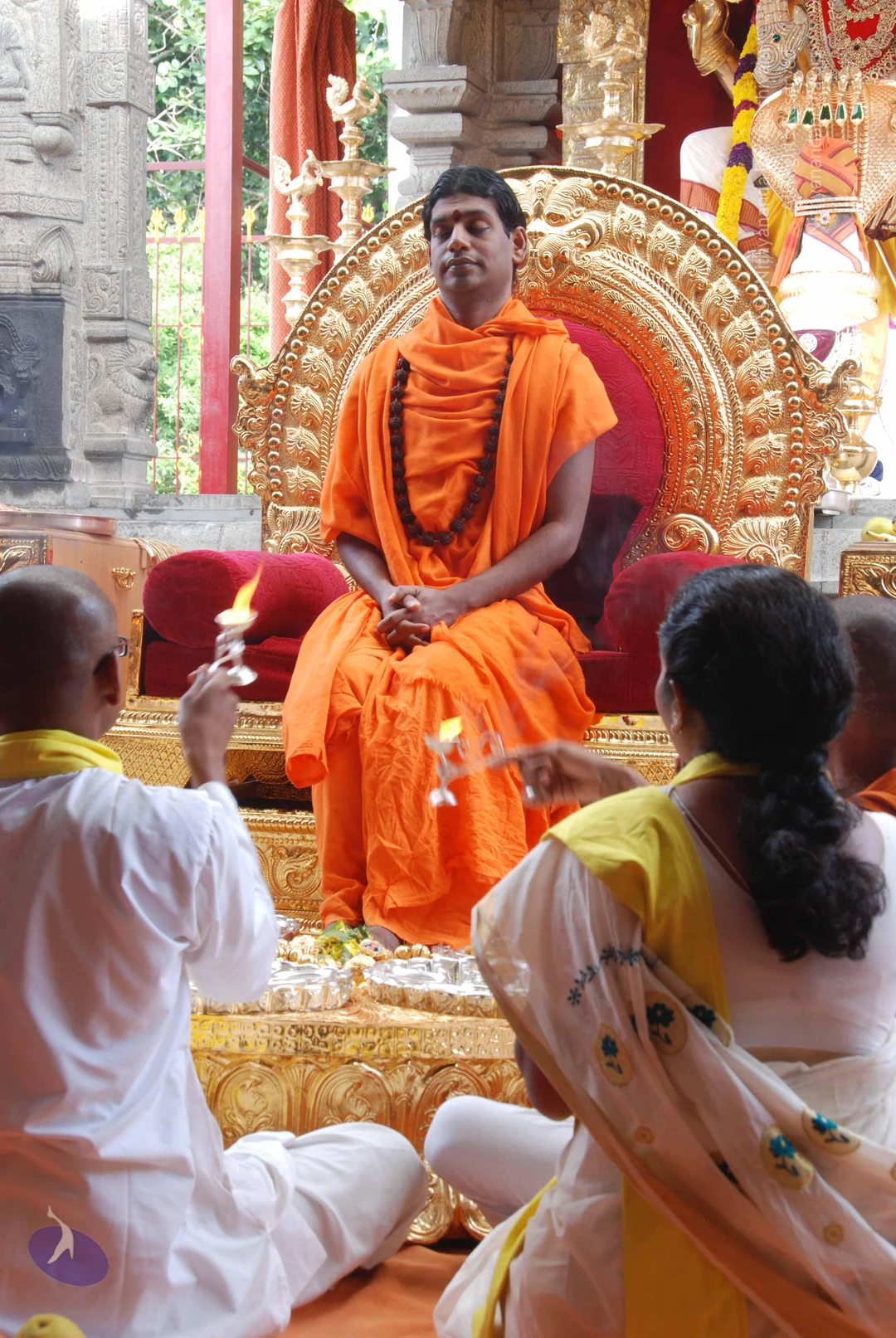
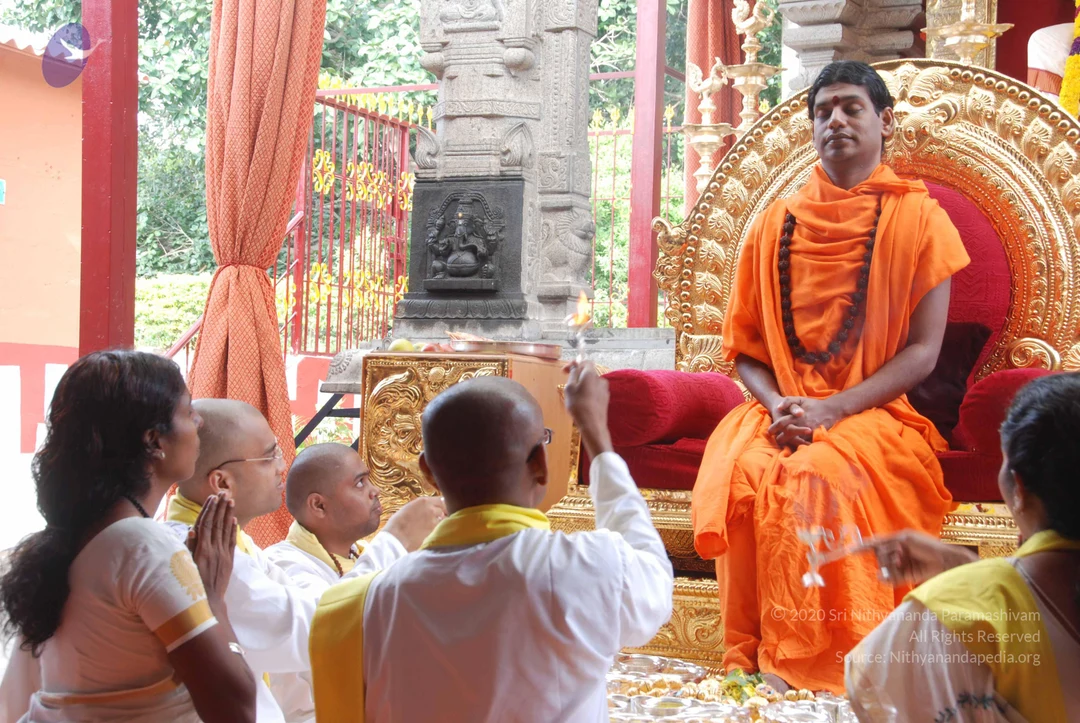
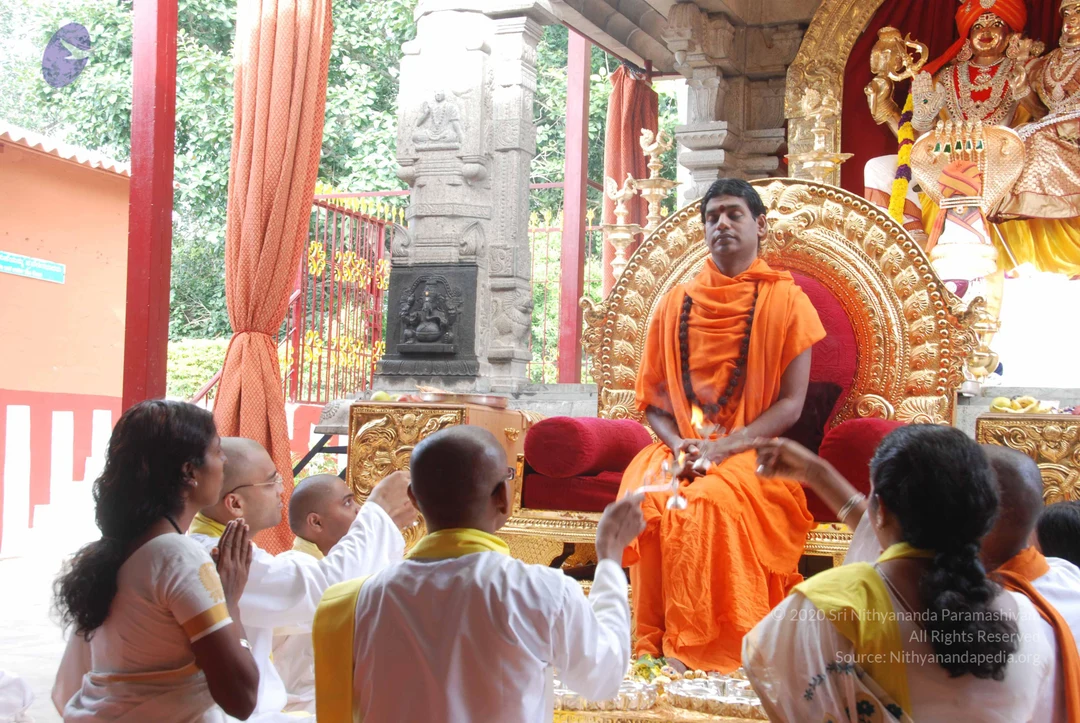
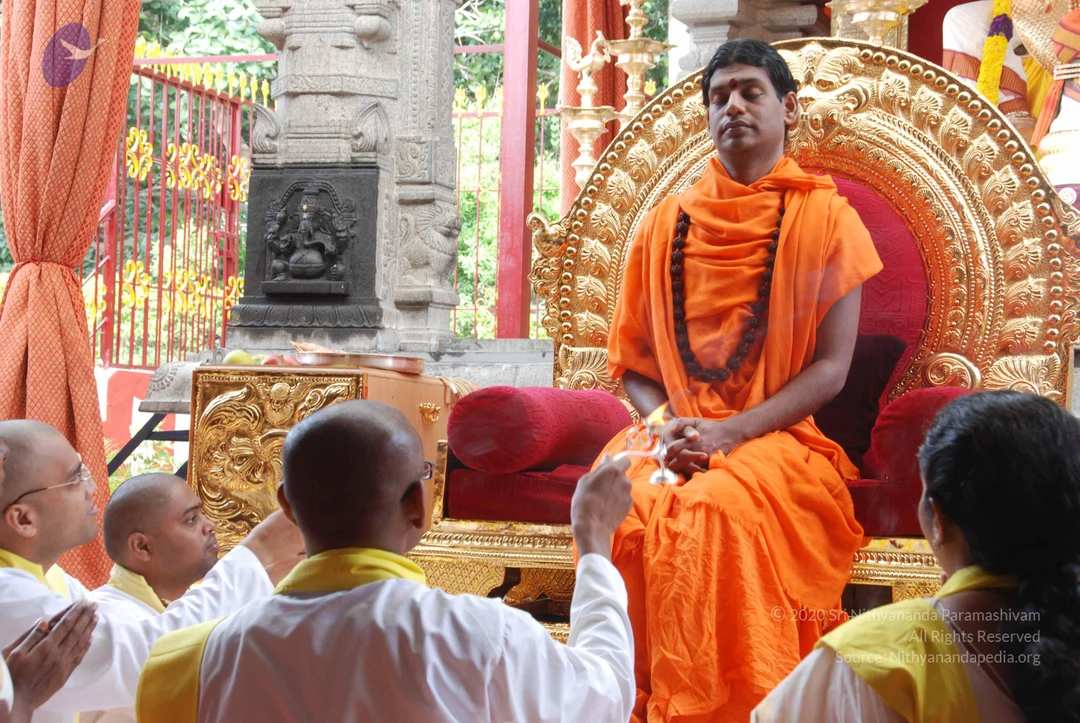
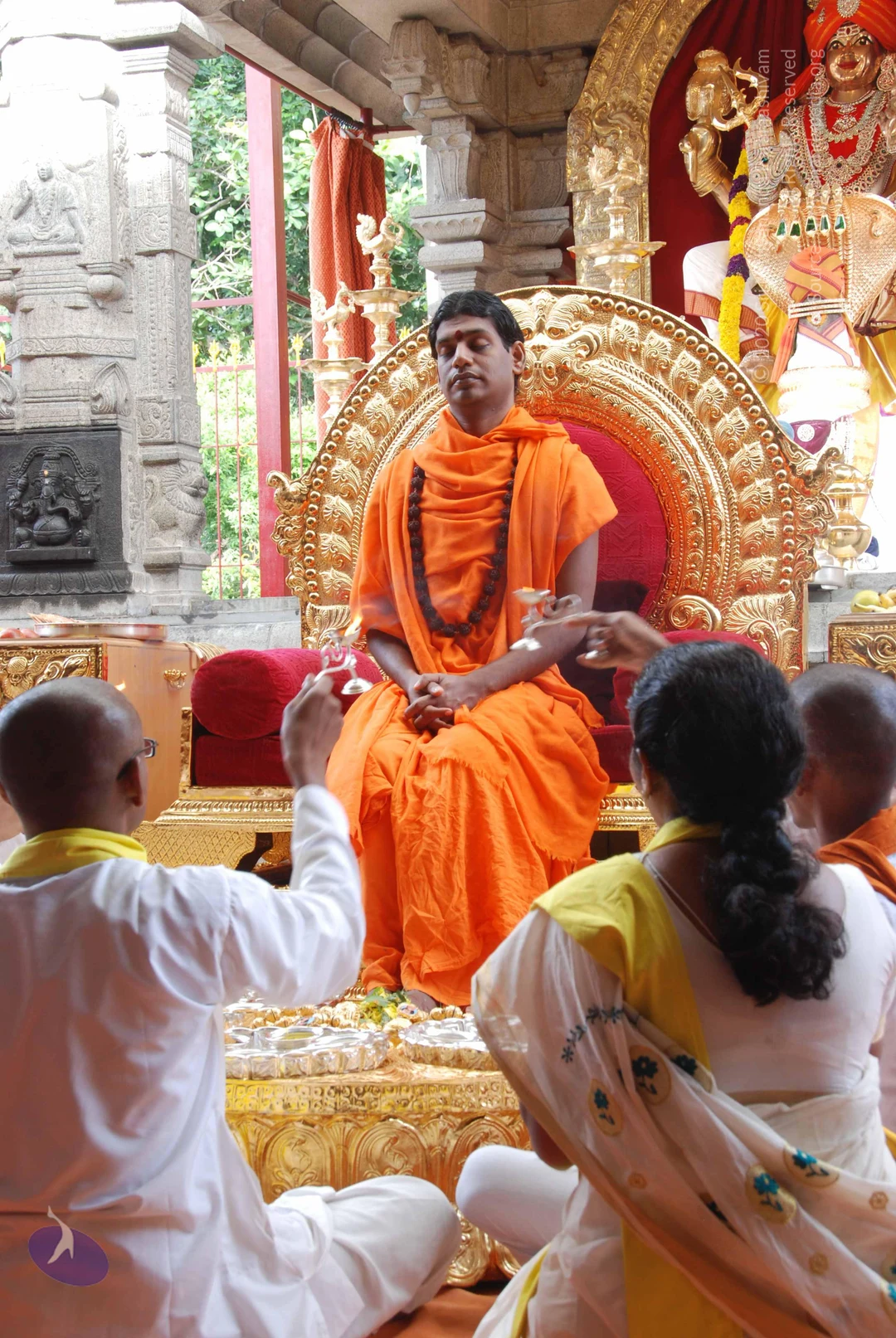
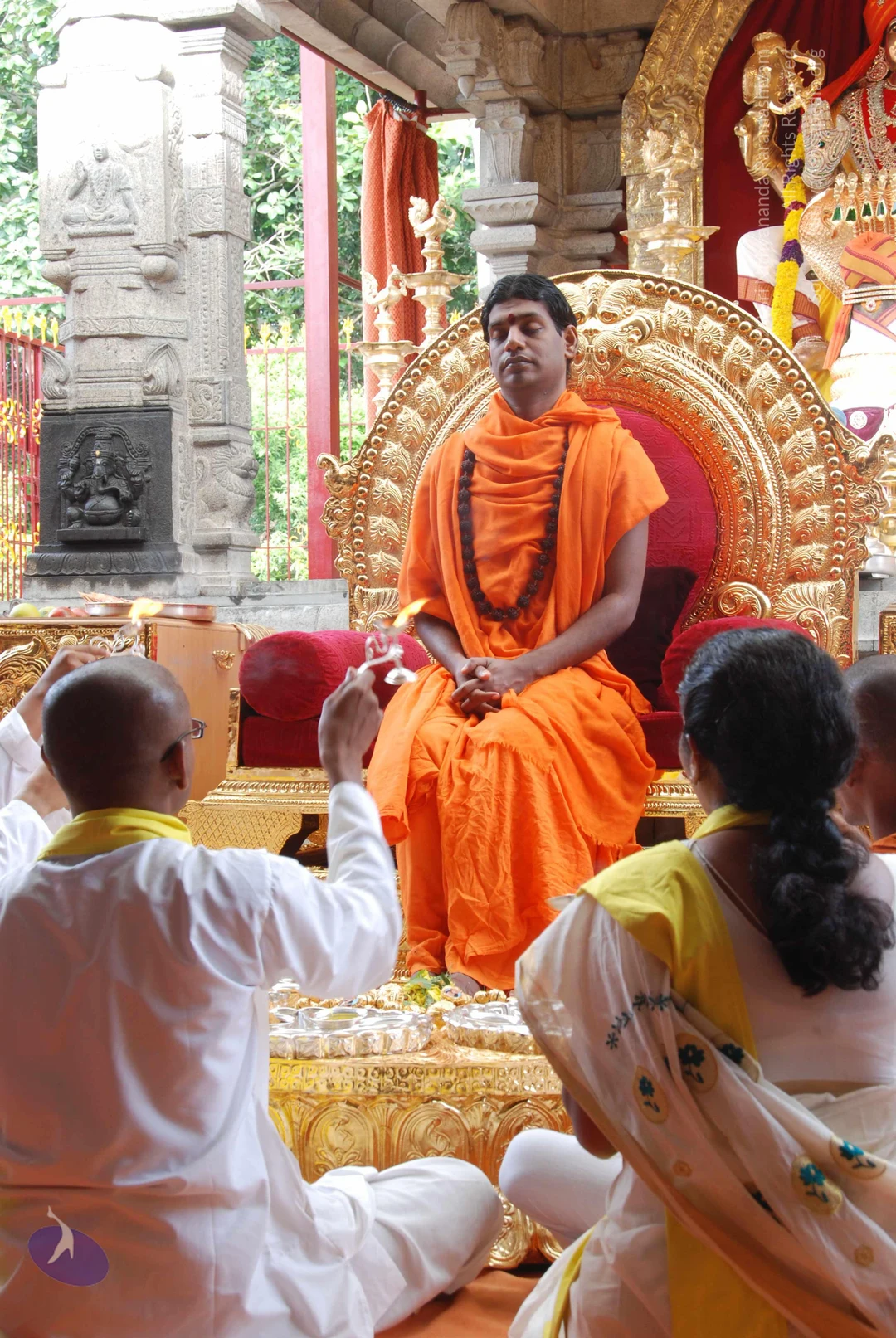
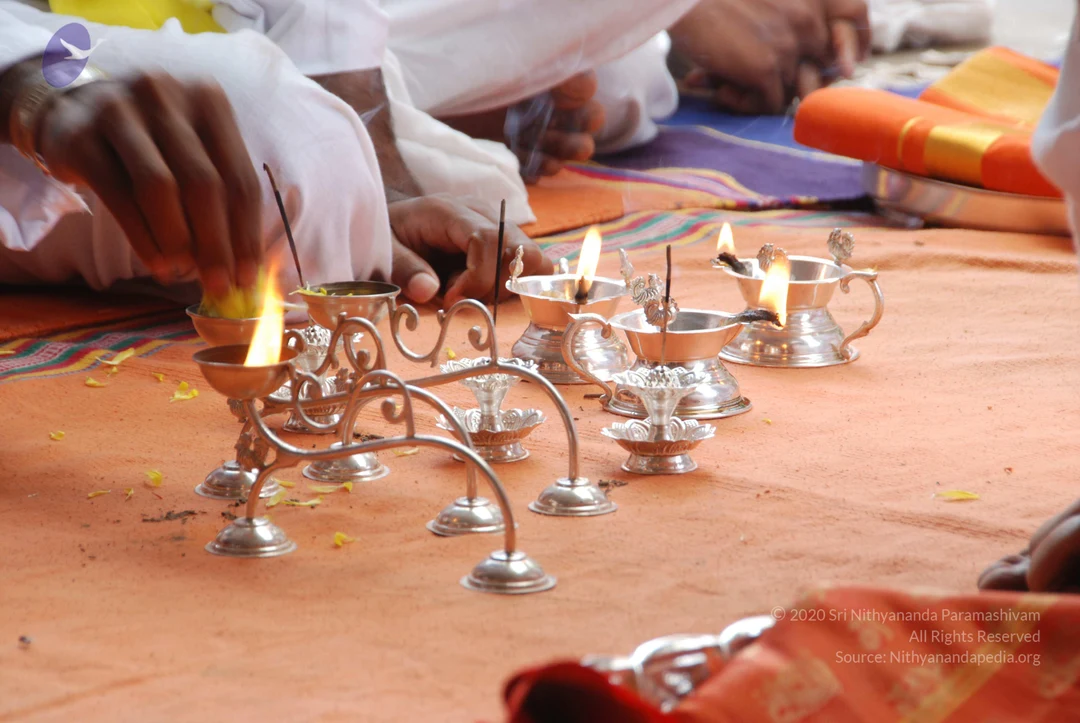
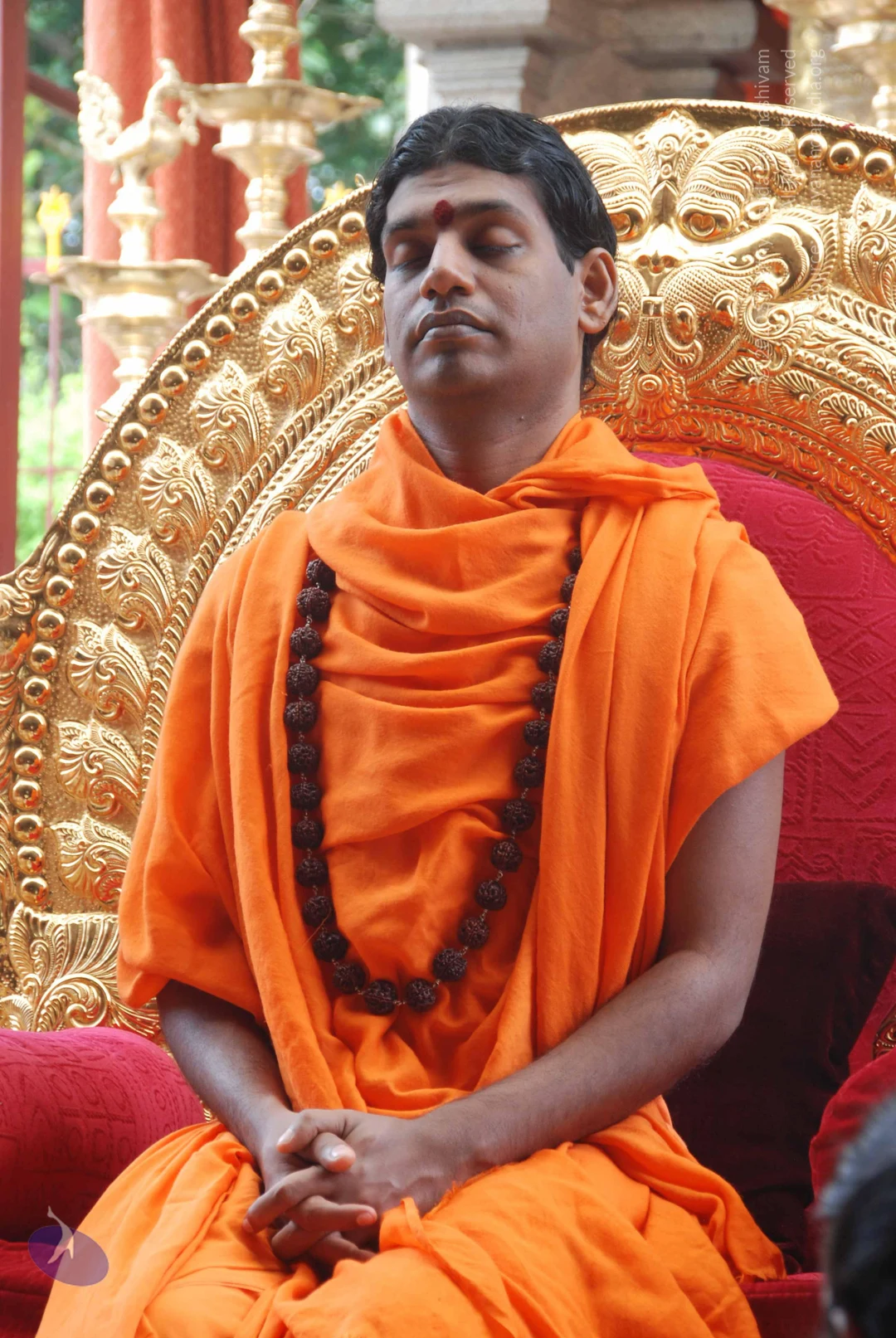
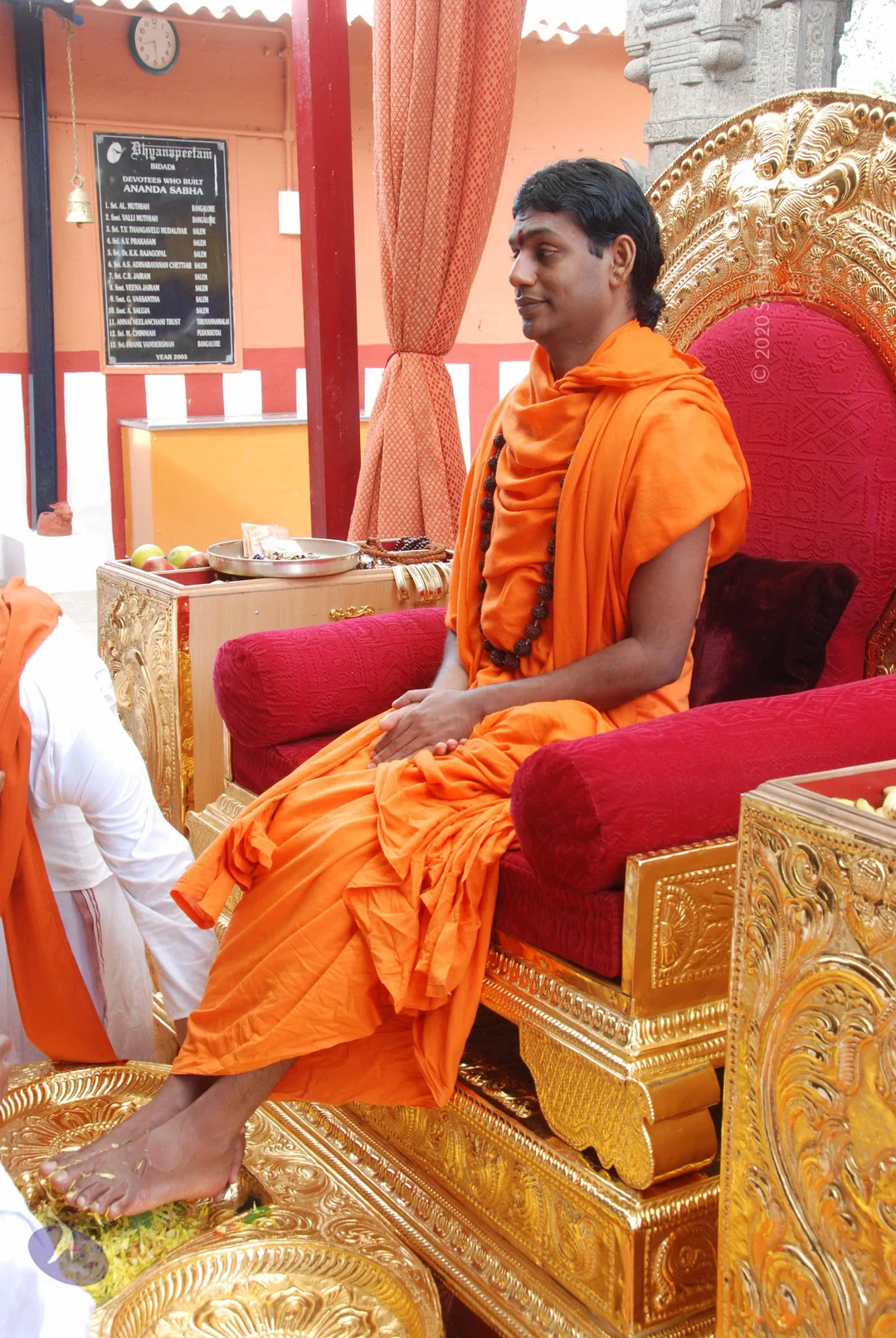
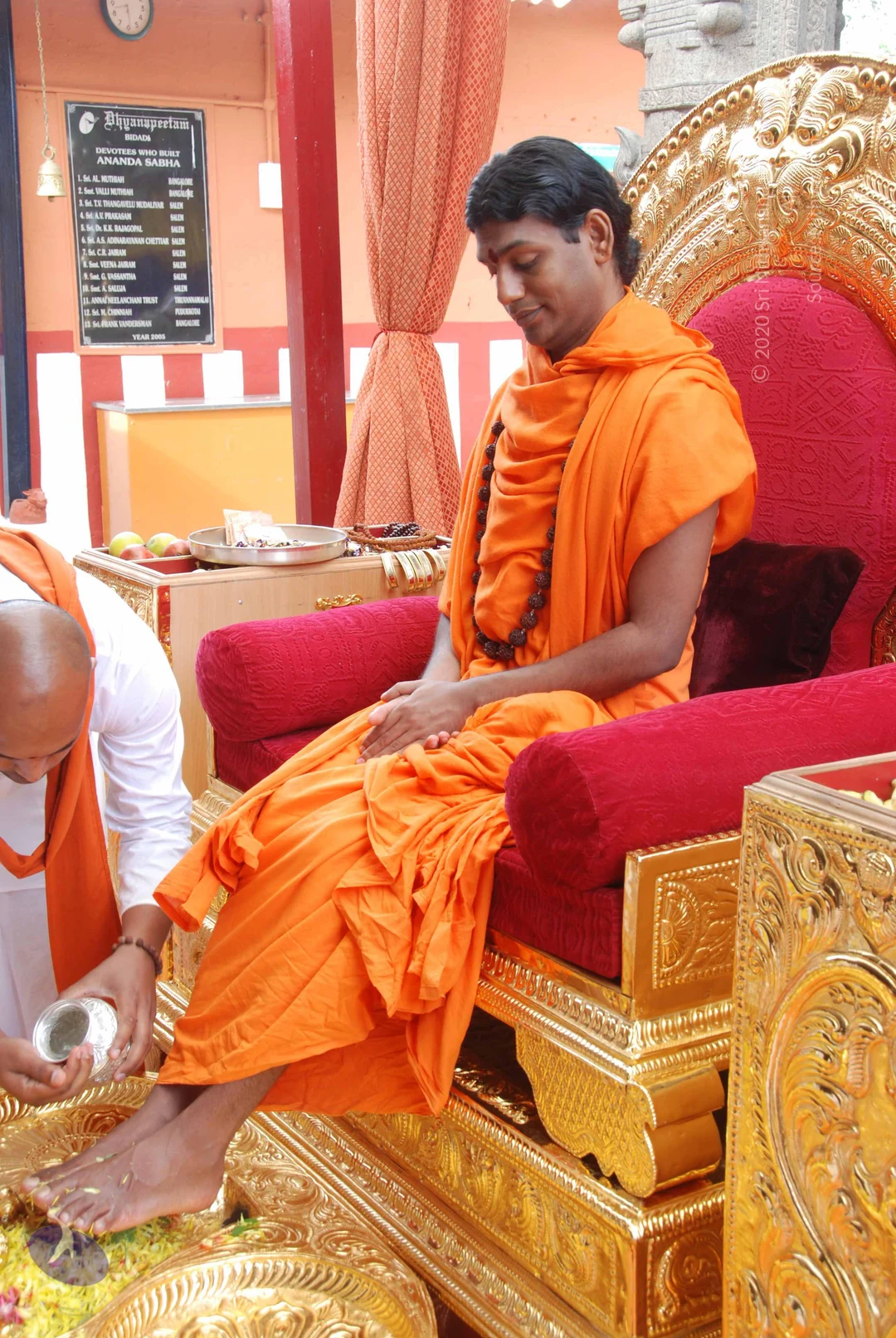
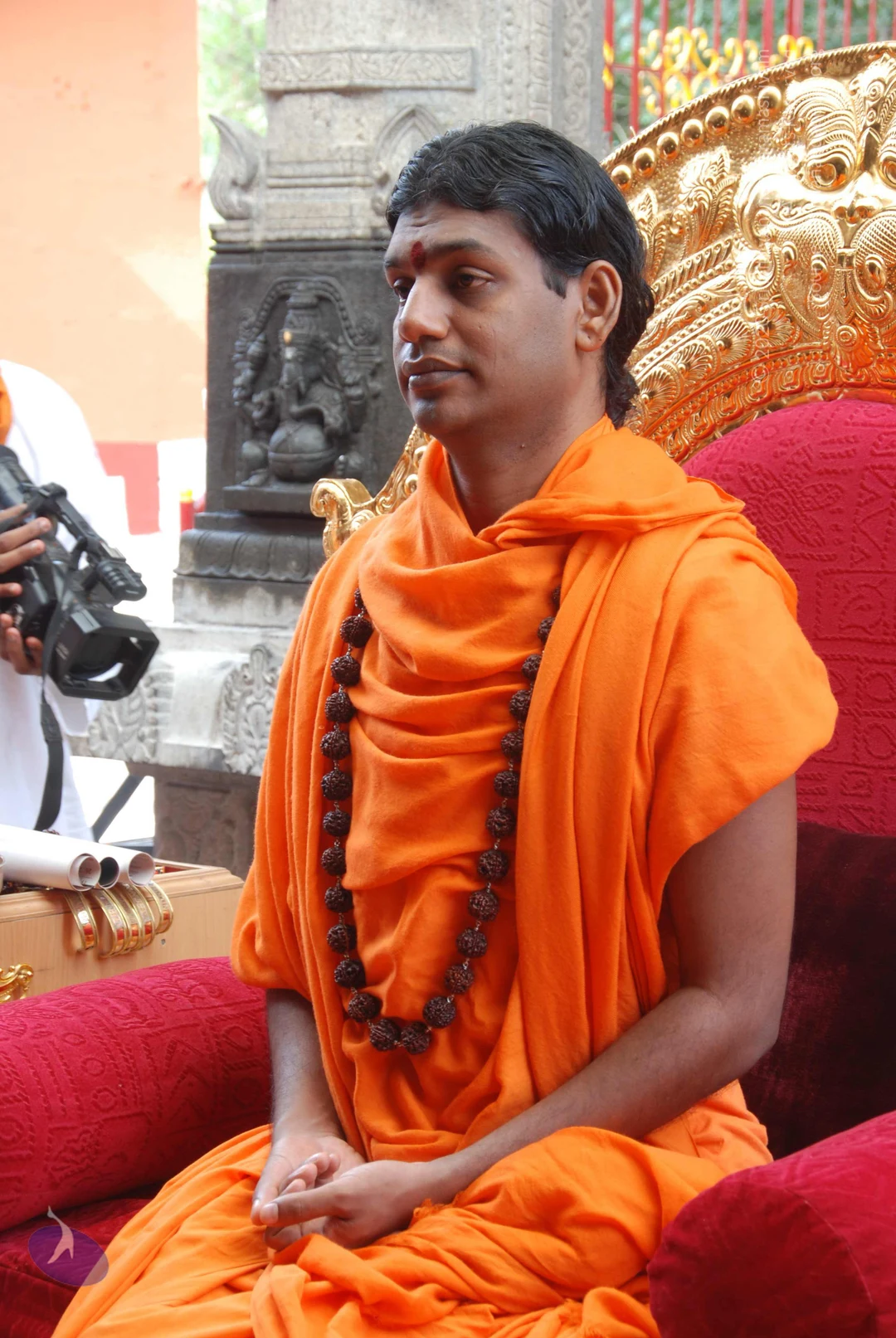
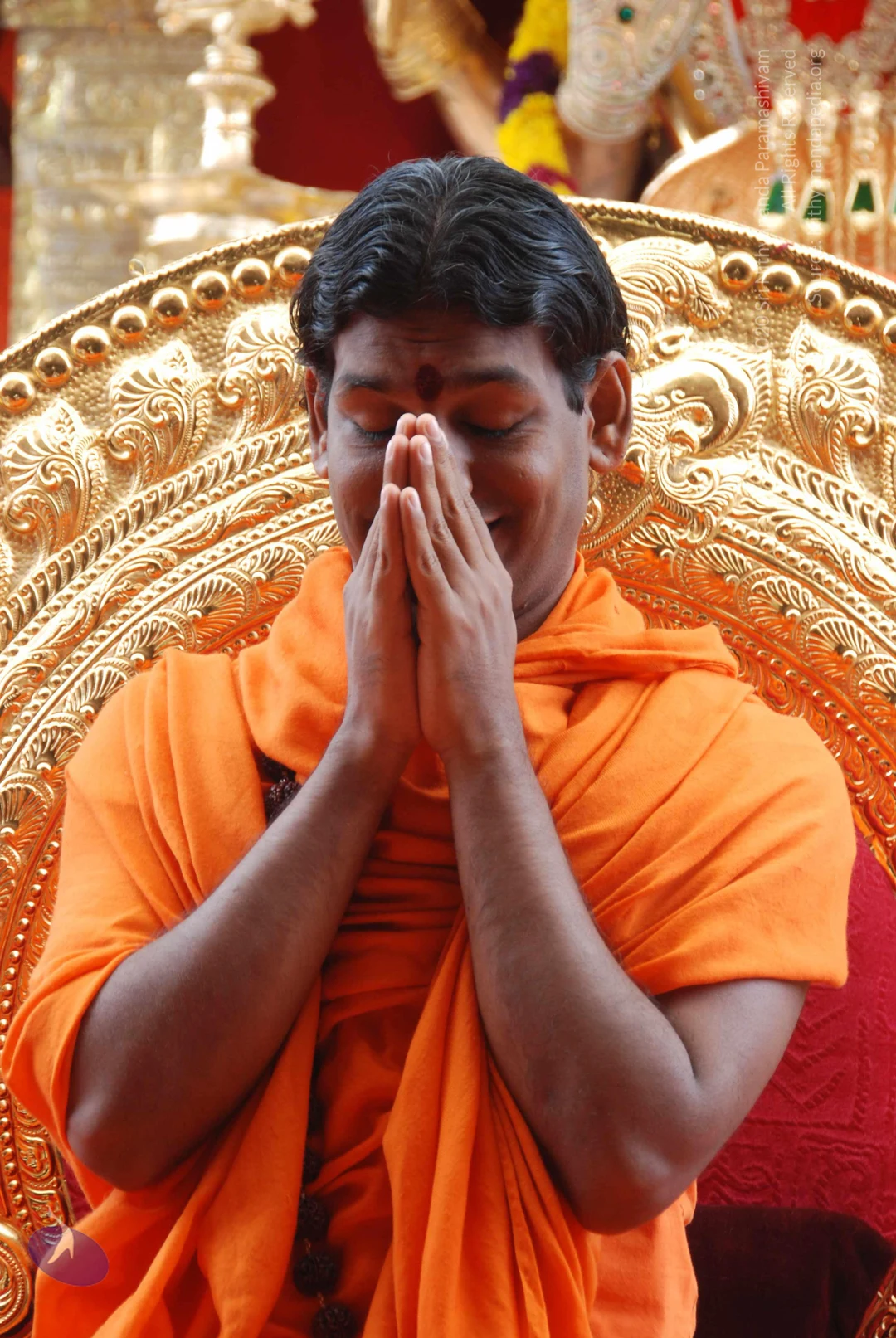
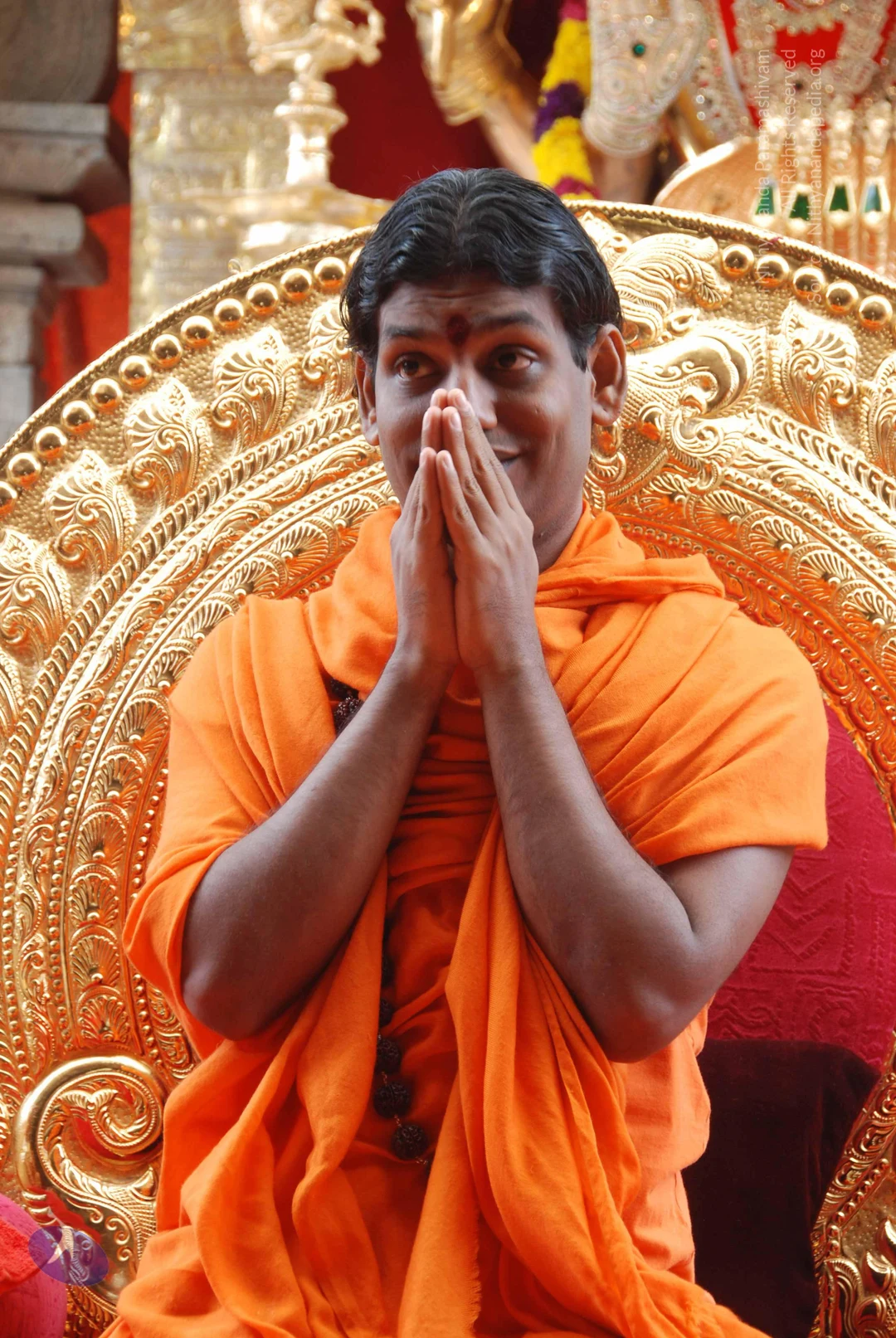
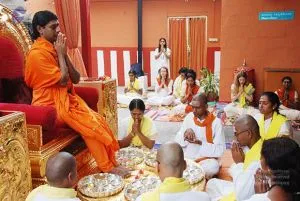
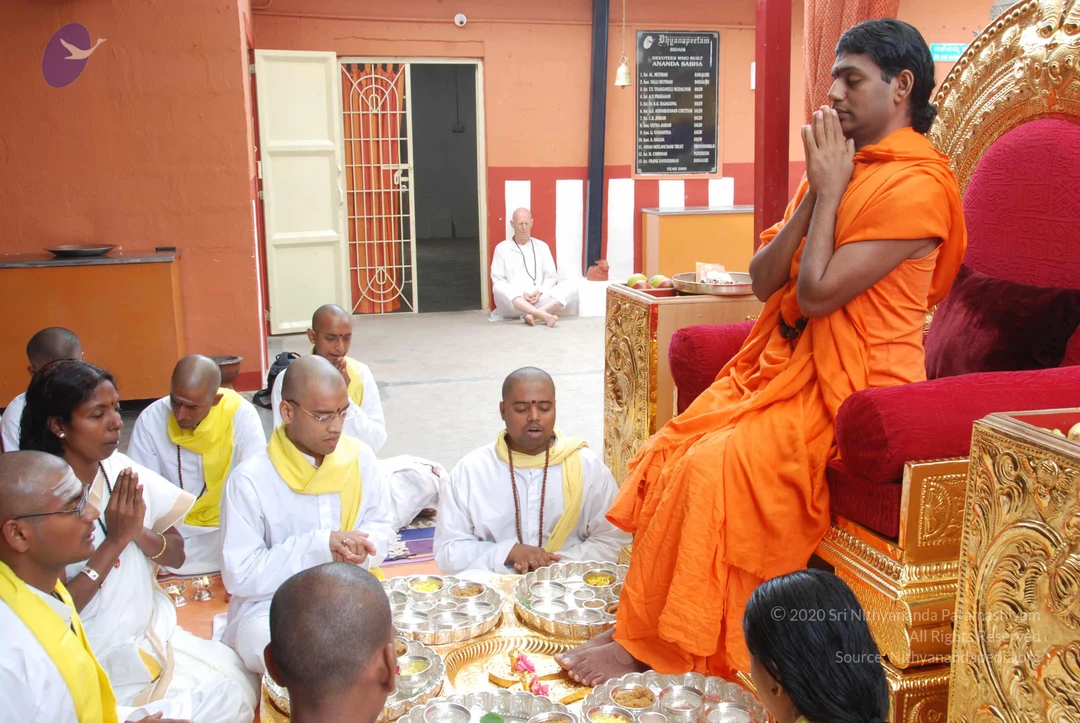
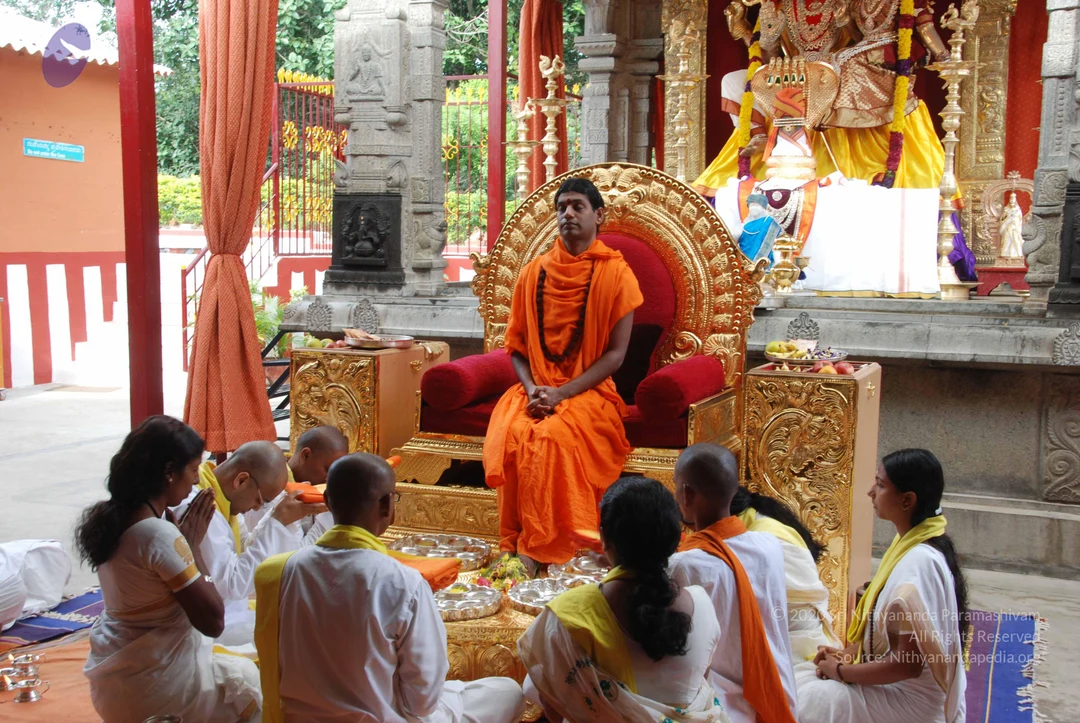
A man in saffron-orange robes sits on an ornate gold-and-red throne (peetha) in a temple shrine, with his hands folded in his lap. He wears a rudraksha mala and his hair is short. In front of the throne stands a brass tray with small lamps and offerings. Behind him, a deity murti with a red crown and garlands (with a bow-and-arrow and consort) stands within a carved stone arch with gold trim. Orange curtains frame the shrine, and a plain orange-and-purple cloth lies on the floor.A man seated on an ornate golden throne with a red cushioned back, wearing an orange saffron shawl draped over his shoulders and a long rudraksha mala hanging across his chest. He has a red tilak mark on his forehead and short dark hair, and his hands rest in his lap. Behind the throne, a deity murti is dressed in yellow and purple cloth and adorned with a pink flower garland. Ornate white stone pillars frame the setting.A man in saffron-orange robes and a rudraksha mala sits on an ornate gilded throne in front of a large golden deity murti with a trident, red crown and garlands. Brass oil lamps stand on both sides of the shrine, and fruit and offering trays lie in the foreground. The seated man's appearance is consistent with a person, seated in a ceremonial role during pada puja.A seated man in saffron-orange robes and a rudraksha mala sits on an ornate gilded throne in an open-sided temple pavilion with orange curtains. Behind him stands a stone temple shrine with a golden arch and two deity murtis wearing red and gold garments with garlands. Pedestals and oil lamps line the throne, and in front lie orange cloths, a brass plate of fruit, a tray of gold-coloured sweets and a row of silver lamps. Trees and a fenced area are visible at the sides.A photograph of a seated man in saffron-orange robes and a rudraksha mala on a large ornate golden throne (peetha) inside an open pavilion with orange curtains. Behind him stands a golden arch and a deity murti with a red backdrop. Two people in white stand at the left and right edges, partly visible. In front of the throne are a silver tray with a pile of golden-coloured items, silver lamps with wicks arranged on a plate, folded saffron cloths, a bowl with fruit, and silver plates, set on an orange cloth. The setting suggests a pada puja, with his feet resting on a silver plate. Prominent carved stone pillars frame the scene. The man is visibly wearing a rudraksha mala and saffron robes, consistent with the probable identification cues, though the image also shows several attendants and ritual objects.A padapuja ceremony in an orange-walled courtyard. A man with long dark hair wears an orange robe and sits cross-legged on an ornate gold-and-red throne, hands pressed together in namaskar with his bare feet resting on a brass tray. Around him, devotees in white clothes with yellow or orange shawls sit on cloth mats with hands folded in prayer, and brass thalis piled with offerings are arranged on the floor. A woman in white stands in the background near a doorway with orange curtains. A blue sign reads Silence please. The figure on the throne has distinctive orange robes and long hair, a probable match to the Swamiji cues, while the surrounding devotees are in white with yellow and orange shawls.
5-Pancha-Tapas
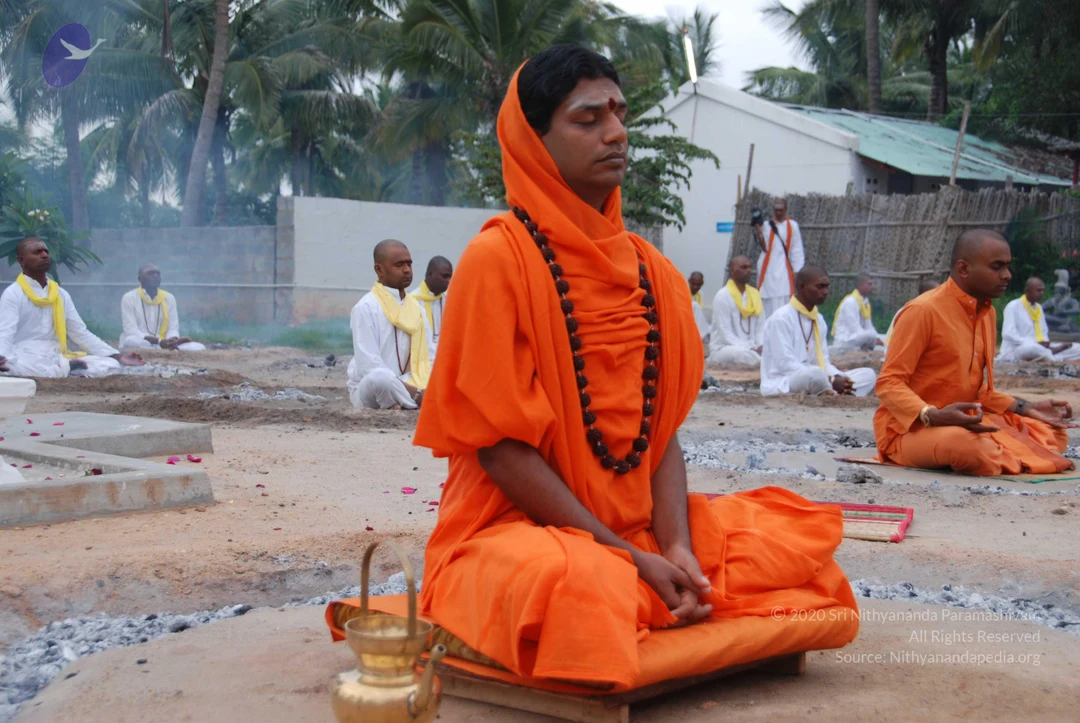
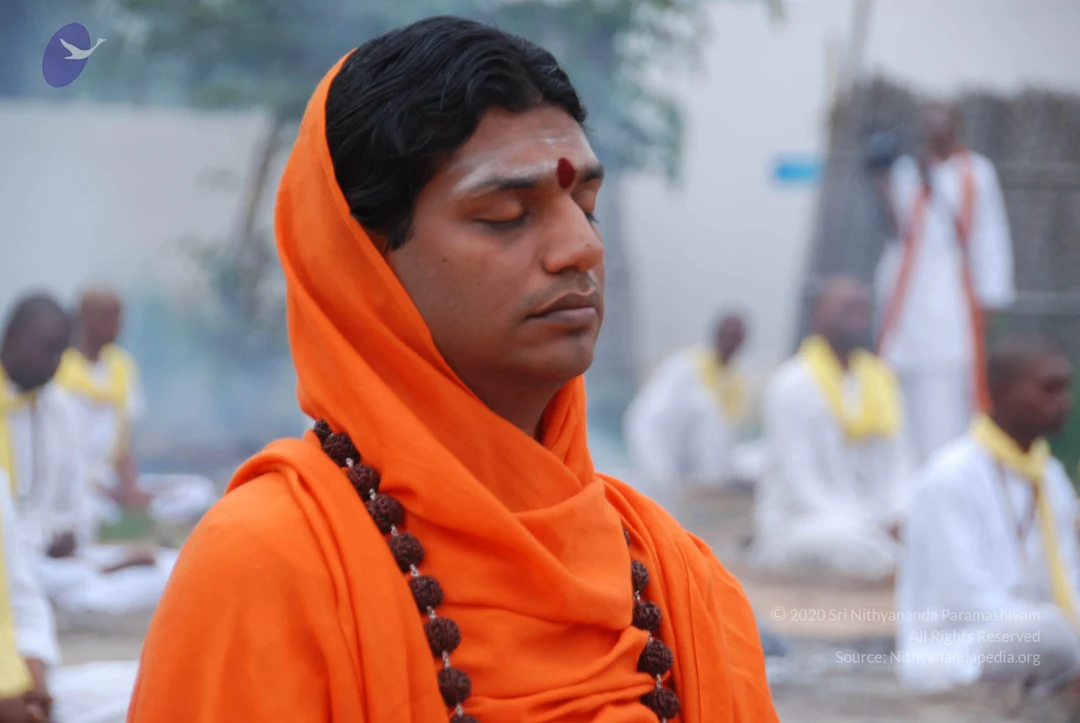
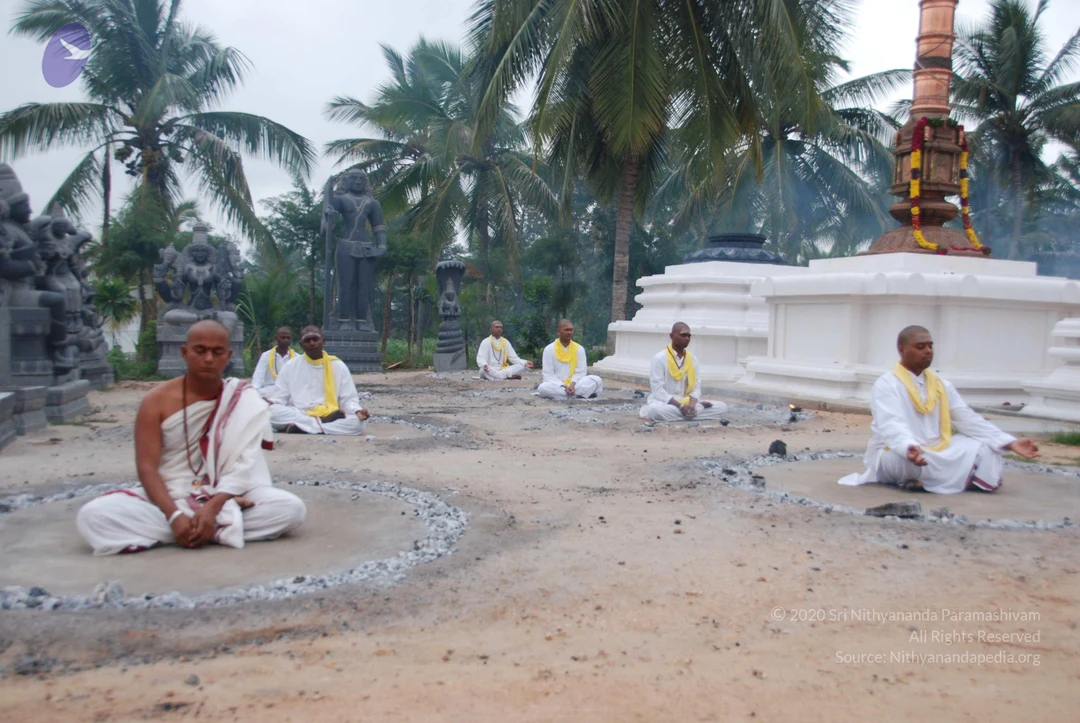
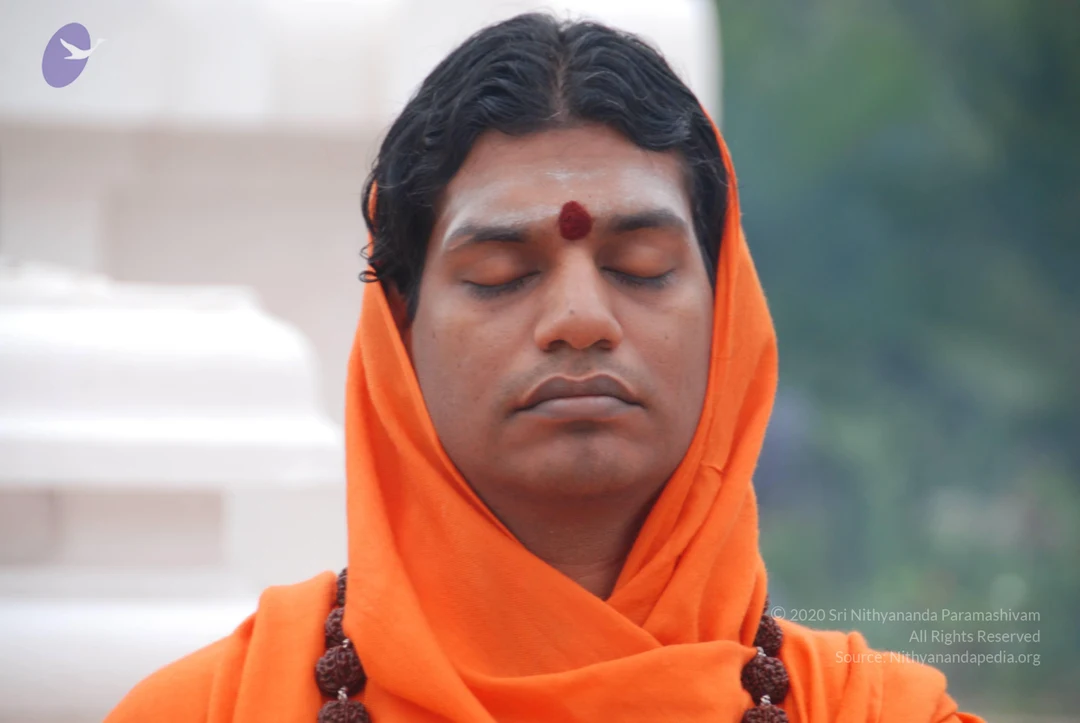
29 photosSource gallery
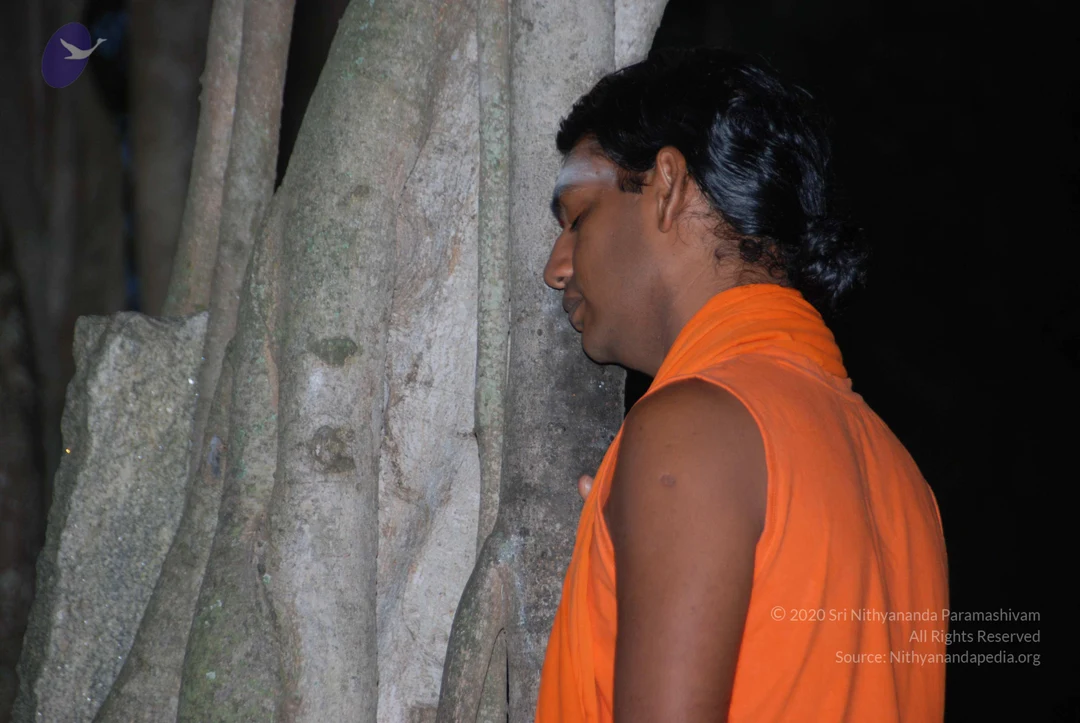
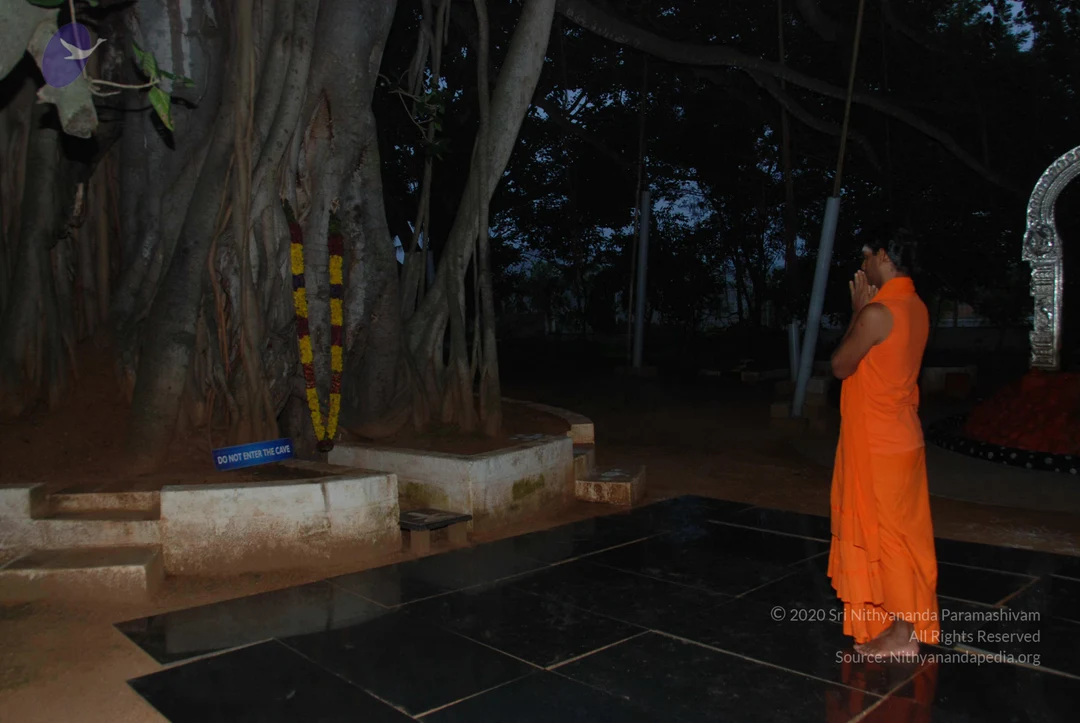
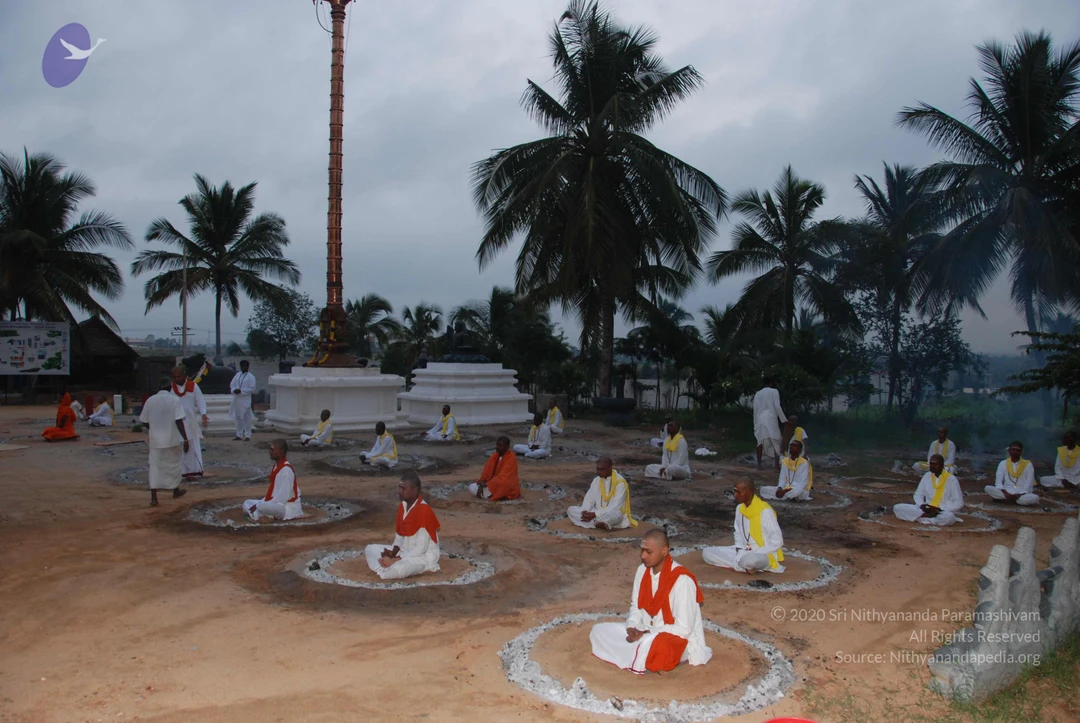
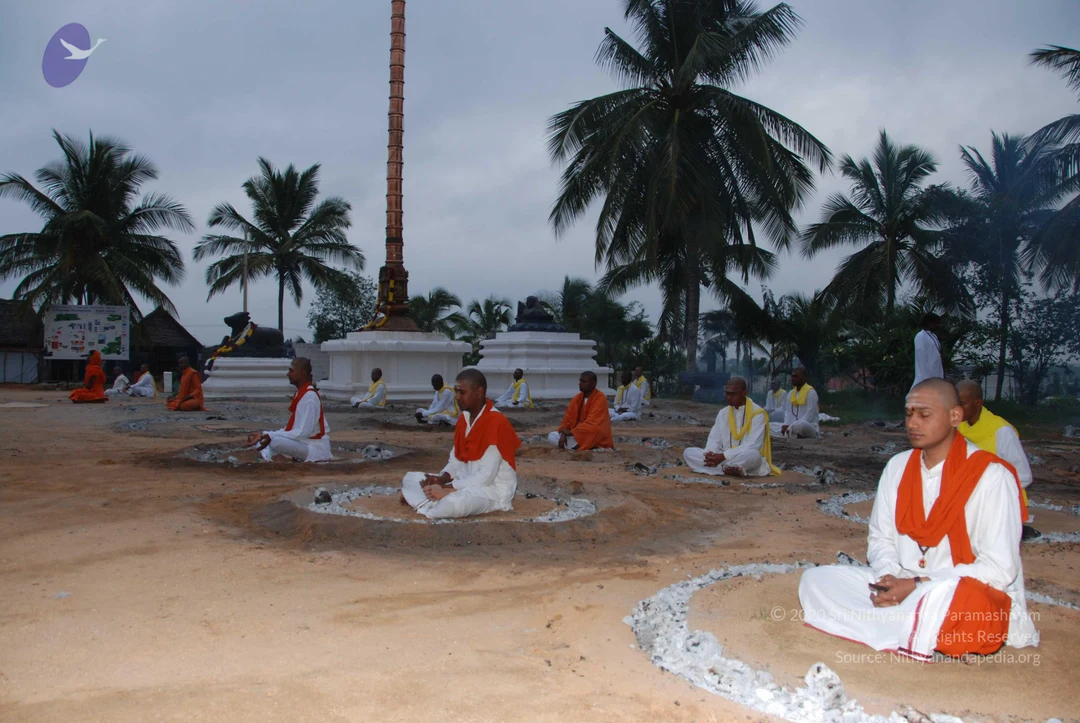
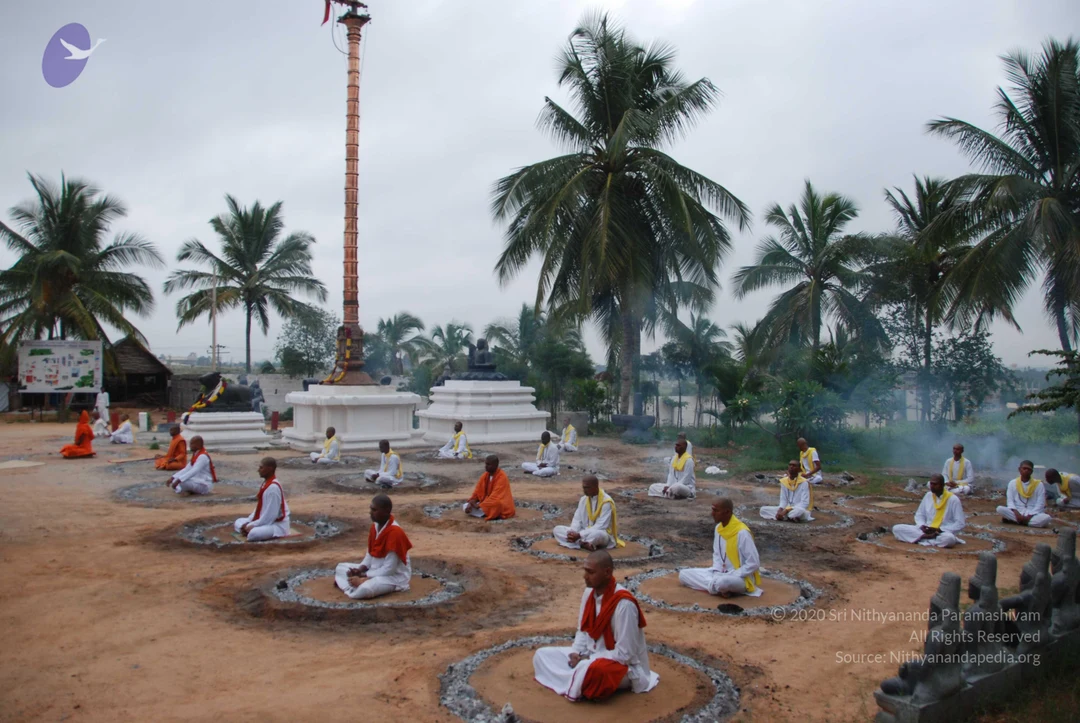
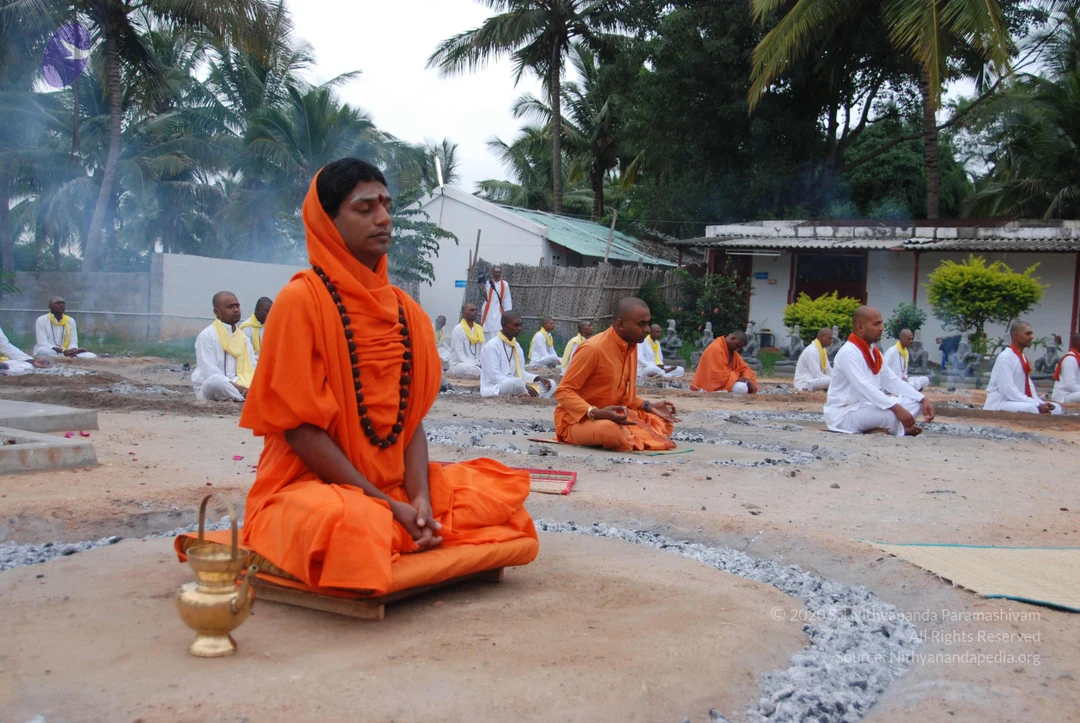
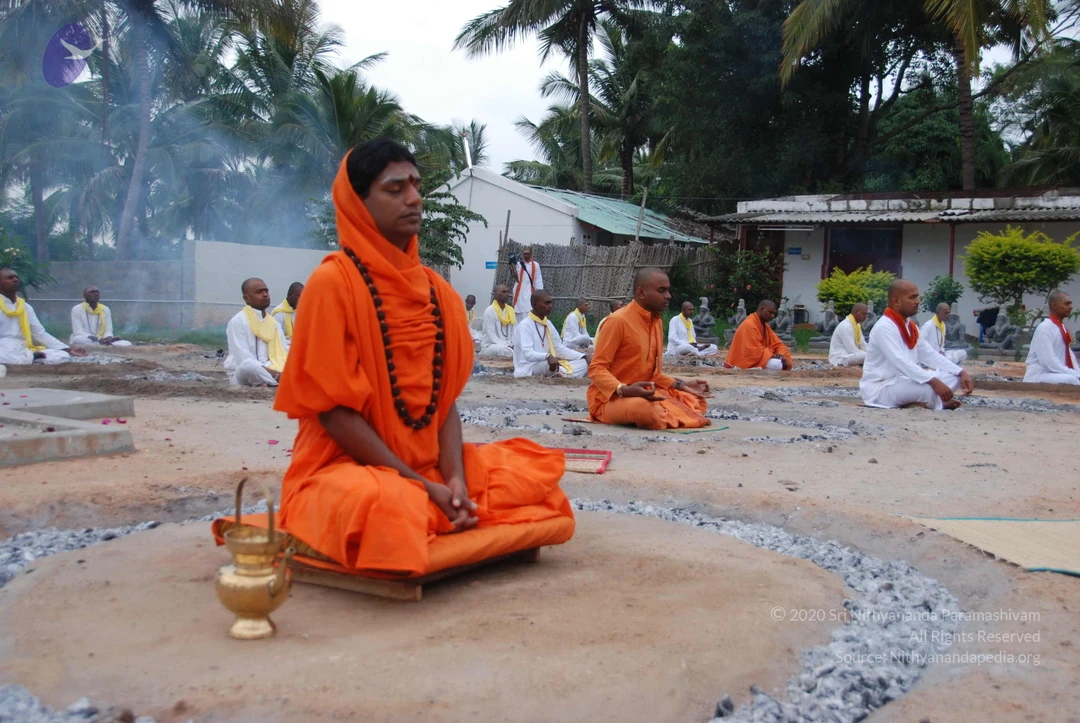
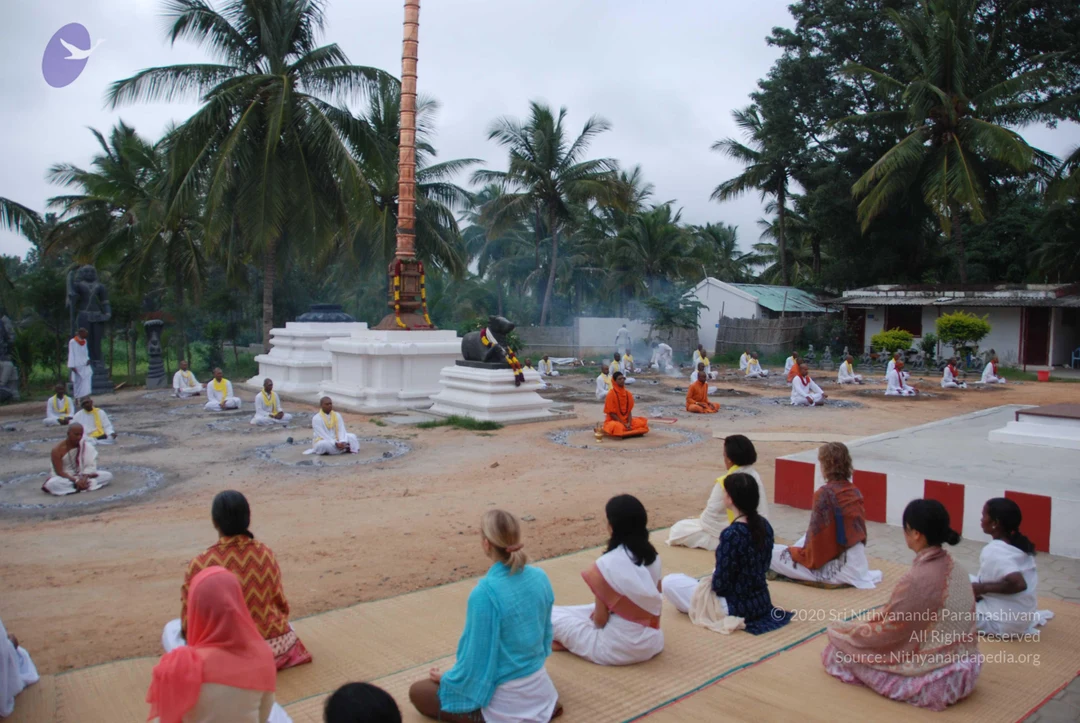
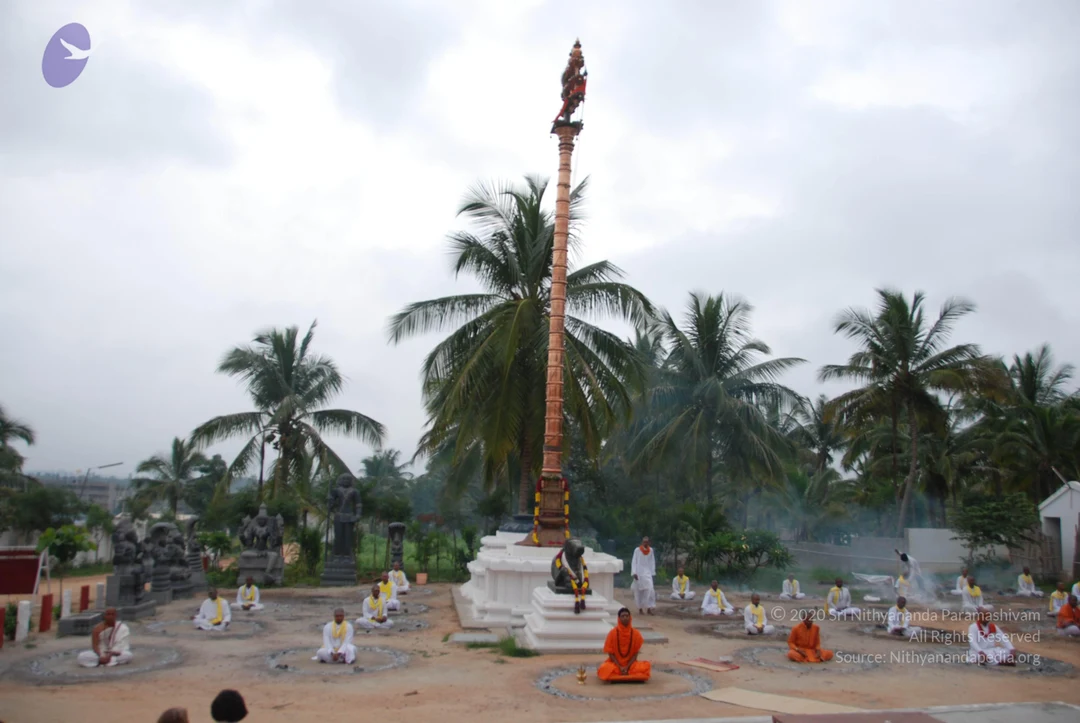
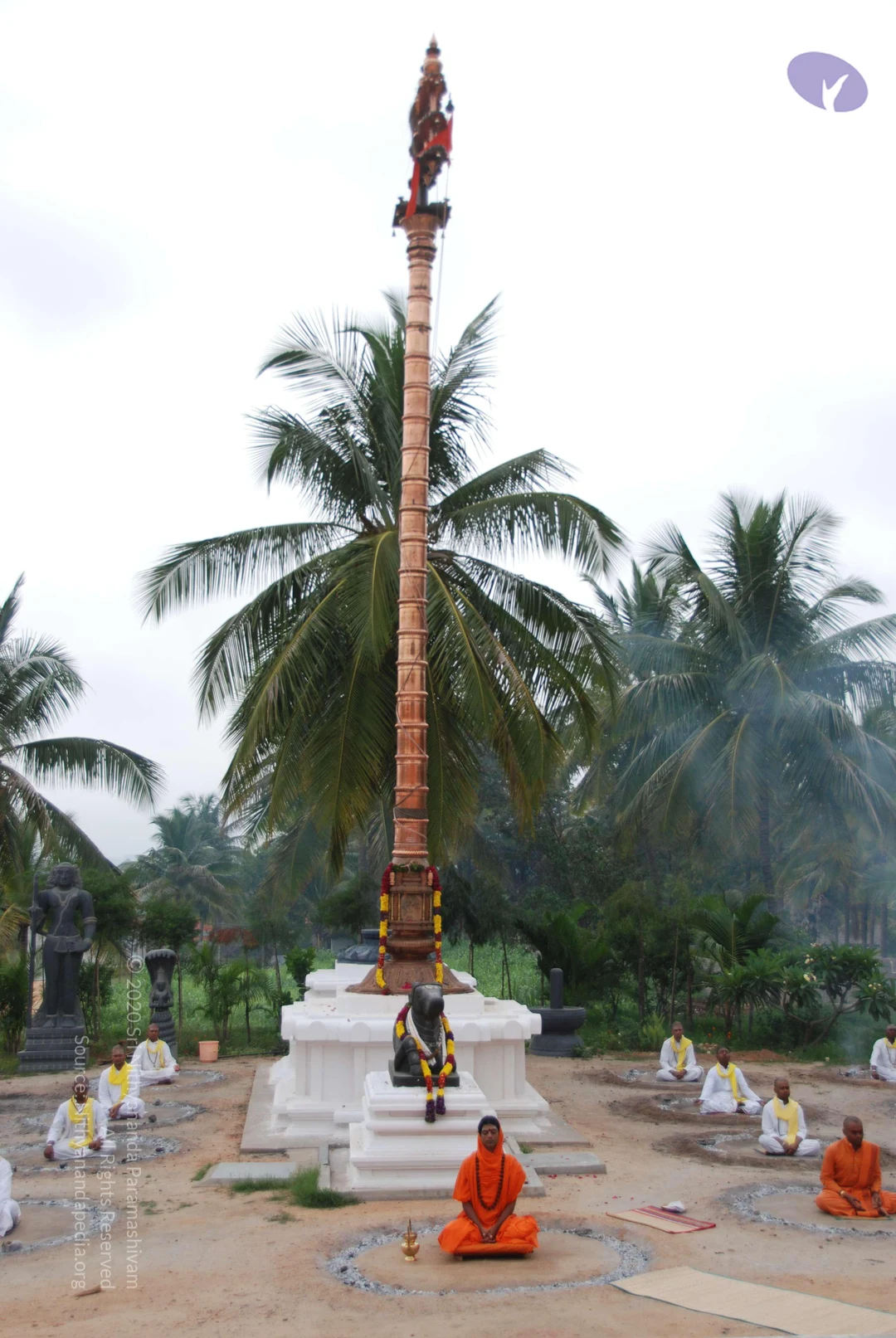
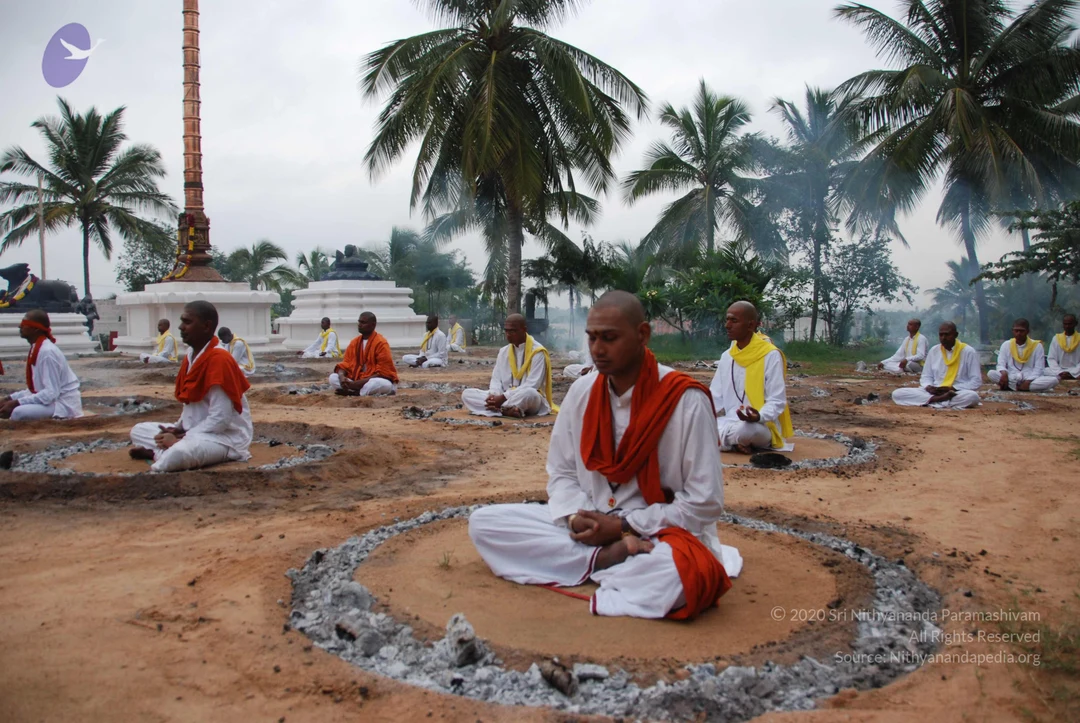
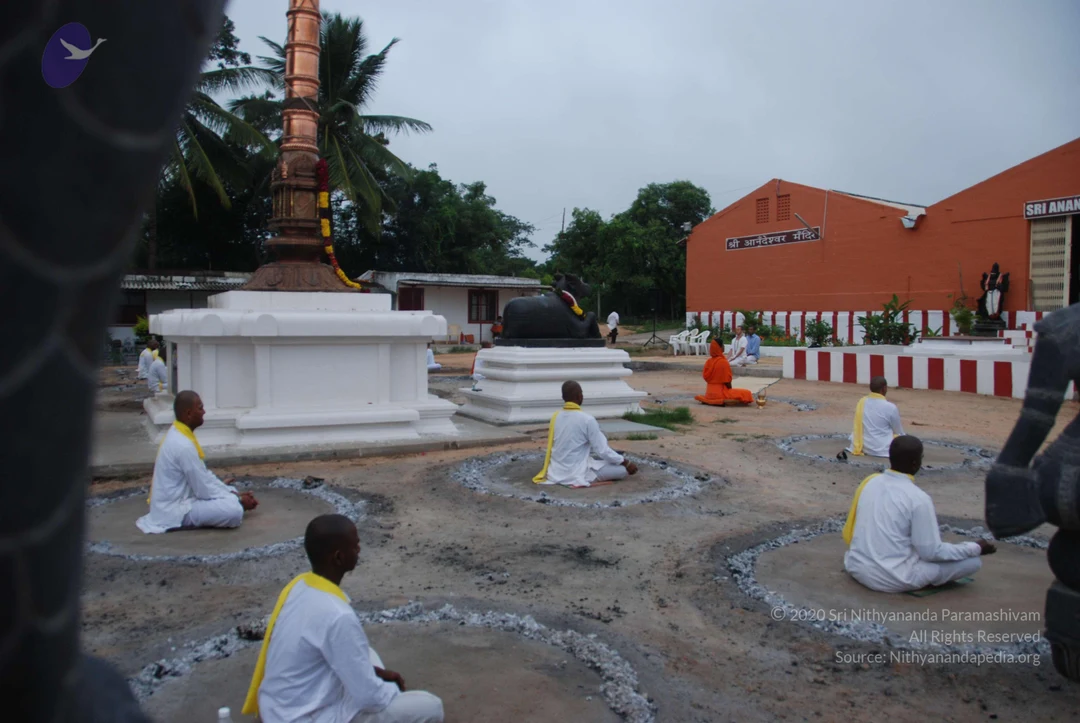
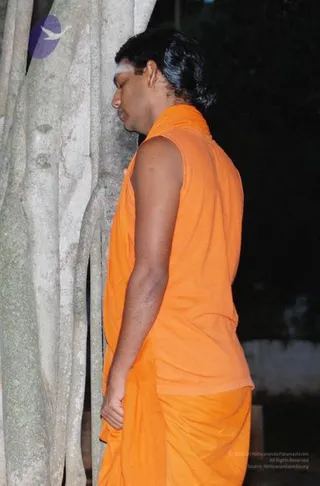
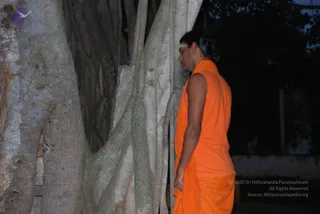
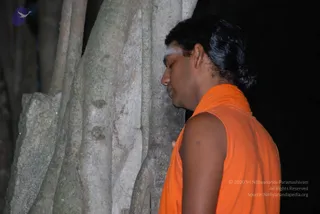
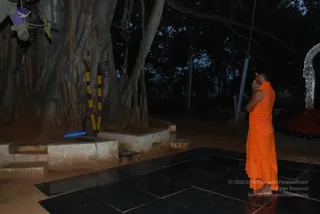
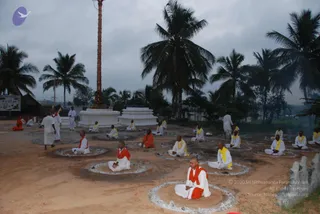
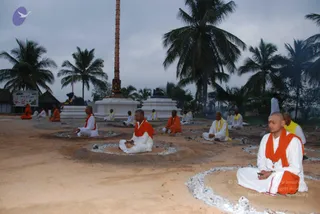
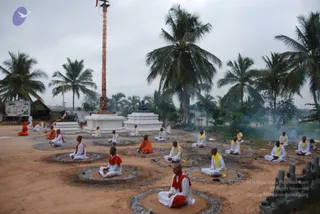
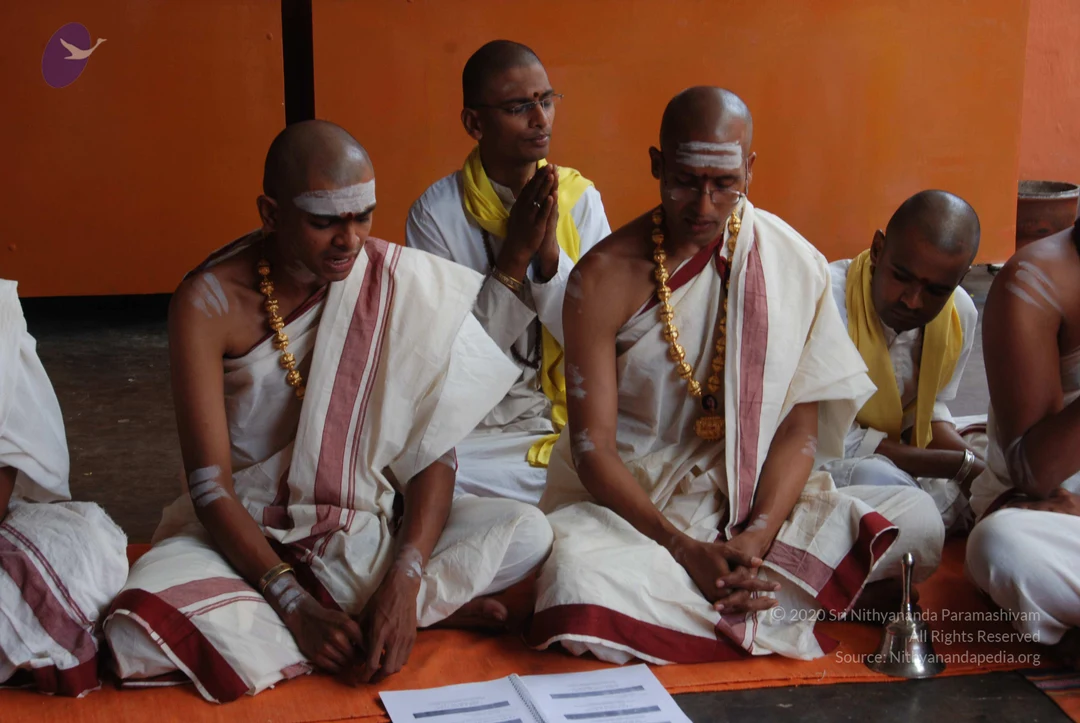
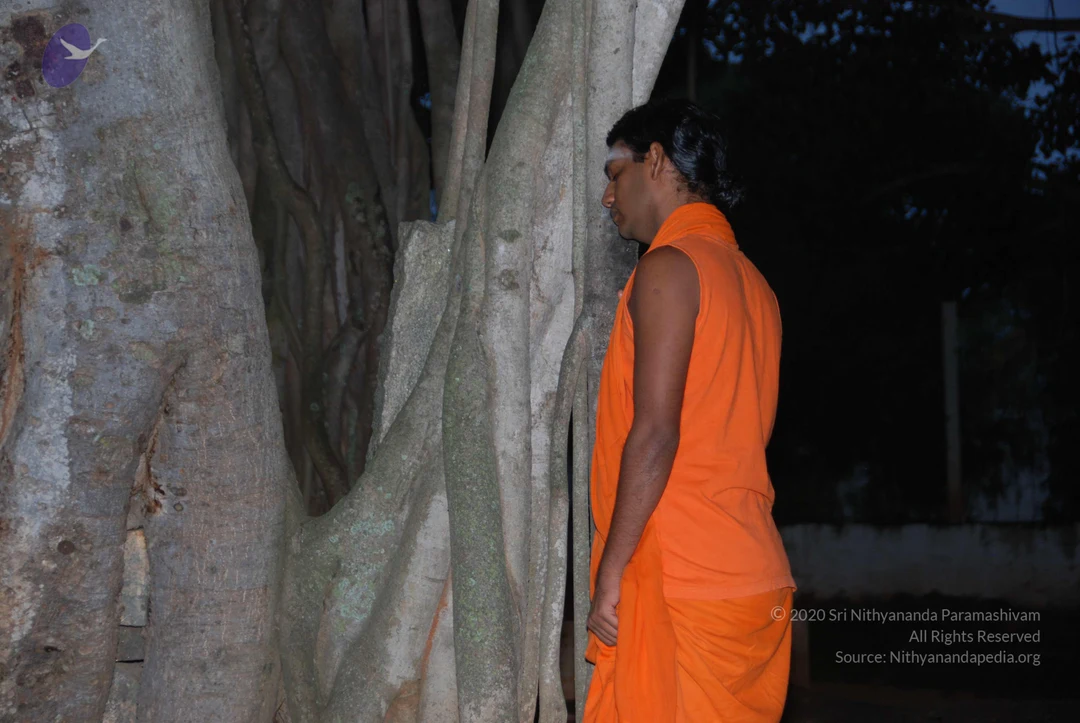
A photograph at dusk of a man in plain saffron-orange clothing standing beside a large banyan tree with thick grey aerial roots and trunk. He wears a sleeveless orange top and an orange dhoti-style wrap, with his head bowed and eyes lowered, hands at his sides. The dark background suggests evening, with a low wall visible at right.A photograph of a man in profile, eyes closed, leaning his forehead against the large grey trunk of a banyan tree in the dark. He wears a sleeveless orange robe draped over one shoulder and a white vertical forehead mark, with long dark hair tied back. The background is almost entirely black, with aerial roots and tree bark visible on the left. The image is a photo of a single devotee pressing against the tree in quiet prayer.A photograph of a large banyan tree with many aerial roots and trunks, at dusk in an open courtyard paved with dark polished stone tiles. A figure stands on the right in a sleeveless saffron-orange robe, hands pressed together in namaskar in front of the tree. Near the trunk, a white-washed base holds a garland of yellow and red flowers draped on the tree, and a blue sign reads DO NOT ENTER THE CAVE. At the right edge, a silver-toned ornamental arch frames a red floral arrangement. The figure's identity cannot be confirmed from appearance; the visible cues are a saffron robe and a stance of reverence, with no distinctive regalia visible.Outdoor photo of a Pancha Tapas ritual on an open dirt ground ringed by coconut palms under an overcast sky. Many men sit cross-legged in circular fire pits outlined in white, most wearing white dhotis with yellow shawls or orange and red shawls, some with shaved heads. A tall wooden ritual pole with garlands stands at the back beside white square platforms. A few standing figures in white clothes move among the seated practitioners. No single identifiable a person figure is clearly visible.Outdoor photograph of sadhus seated cross-legged in meditation on sandy ground inside circular rings of white powder, under coconut palms and a grey overcast sky. Most wear white dhotis with orange or saffron shawls; some wear yellow shawls. Several have shaved heads and eyes closed. A tall copper-toned pillar and white stone pedestals with a stone bull figure stand behind them, and a small signboard is at left. Roughly a dozen people are visible.Outdoor scene at an ashram grounds with a tall copper-coloured ritual pole (dhvaja-style column) rising behind white stepped platforms and a dark statue of a seated figure. About two dozen people sit cross-legged in neat rows on circular earthen pits ringed with stones, with smoke rising from several pits. Most wear white dhotis and white shirts with yellow shawls, while several in orange or saffron robes and red-orange shawls sit among them. Coconut palms surround the open sandy ground under an overcast sky. A signboard stands at the left edge. This appears to be a fire-ritual gathering with individual pits.

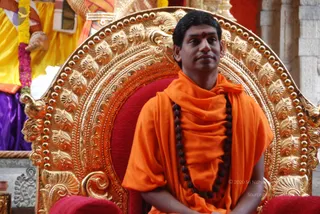
6-Sarva-Darshan
33 photosSource gallery
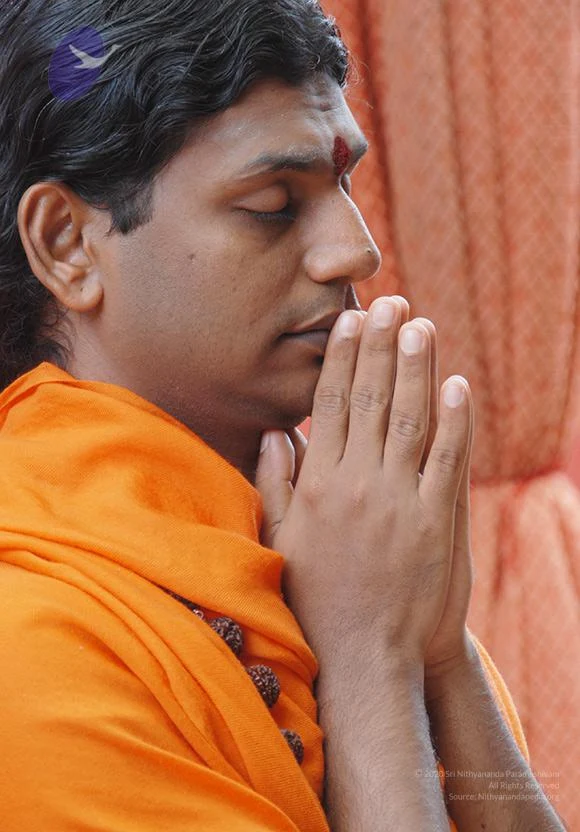
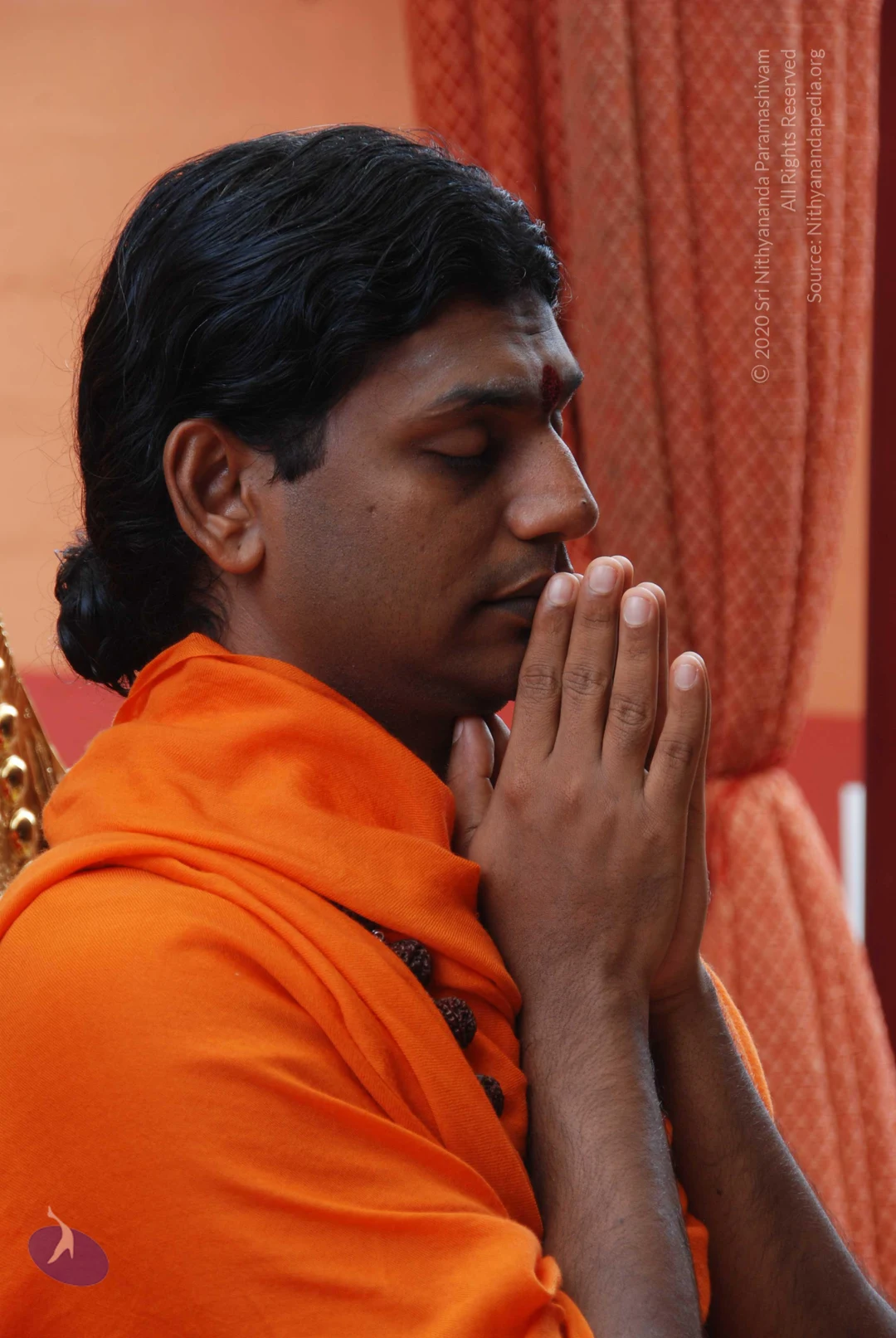
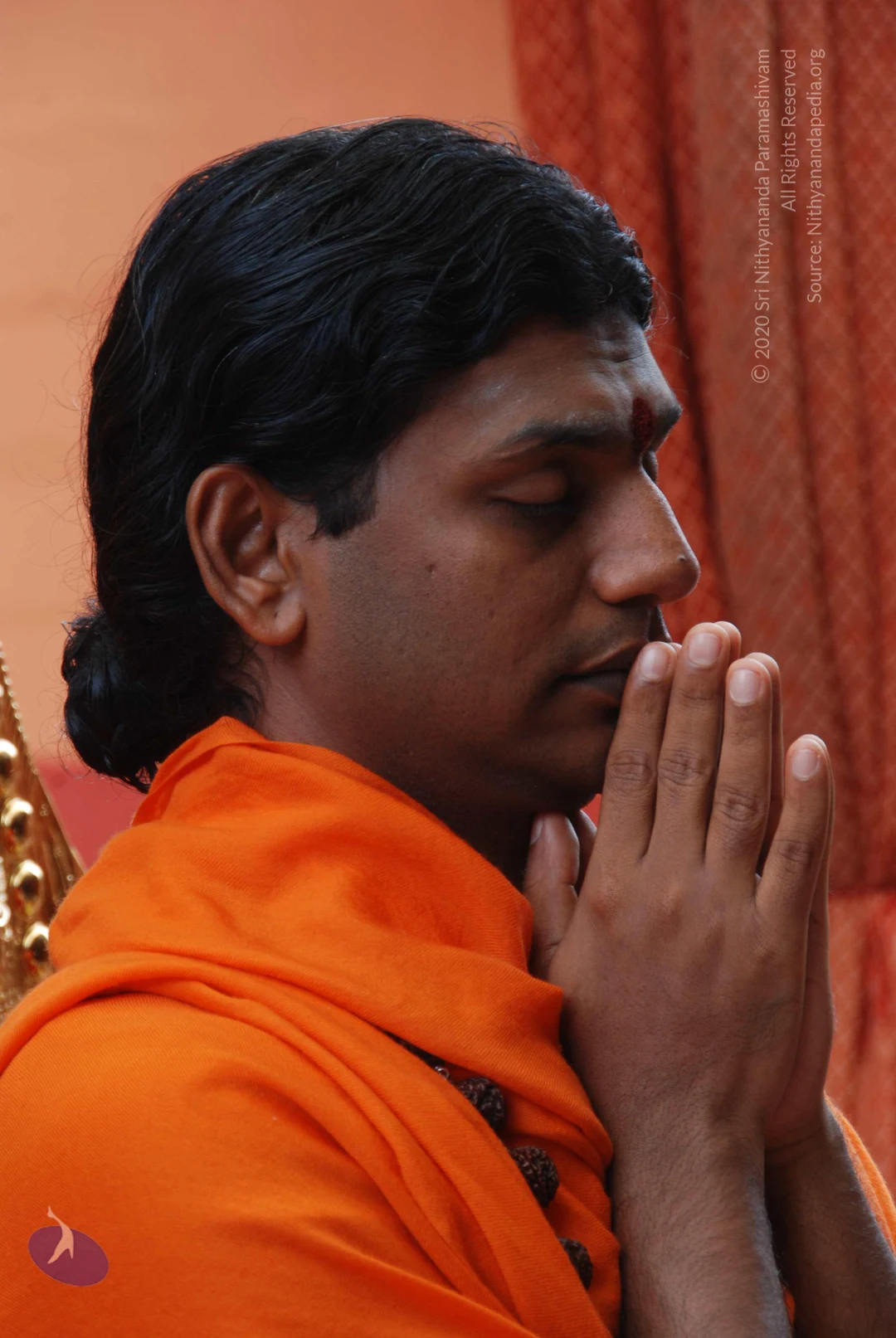
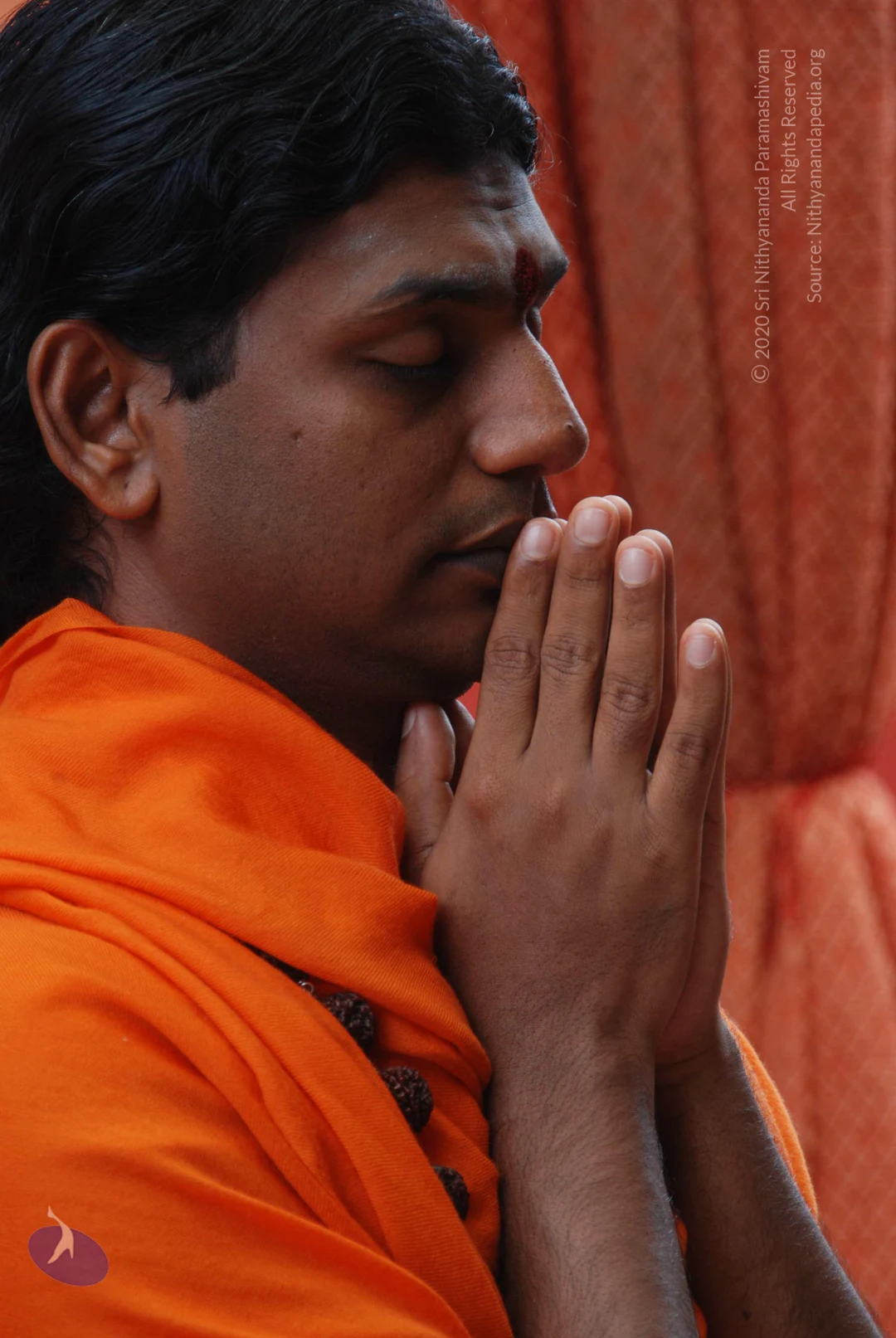
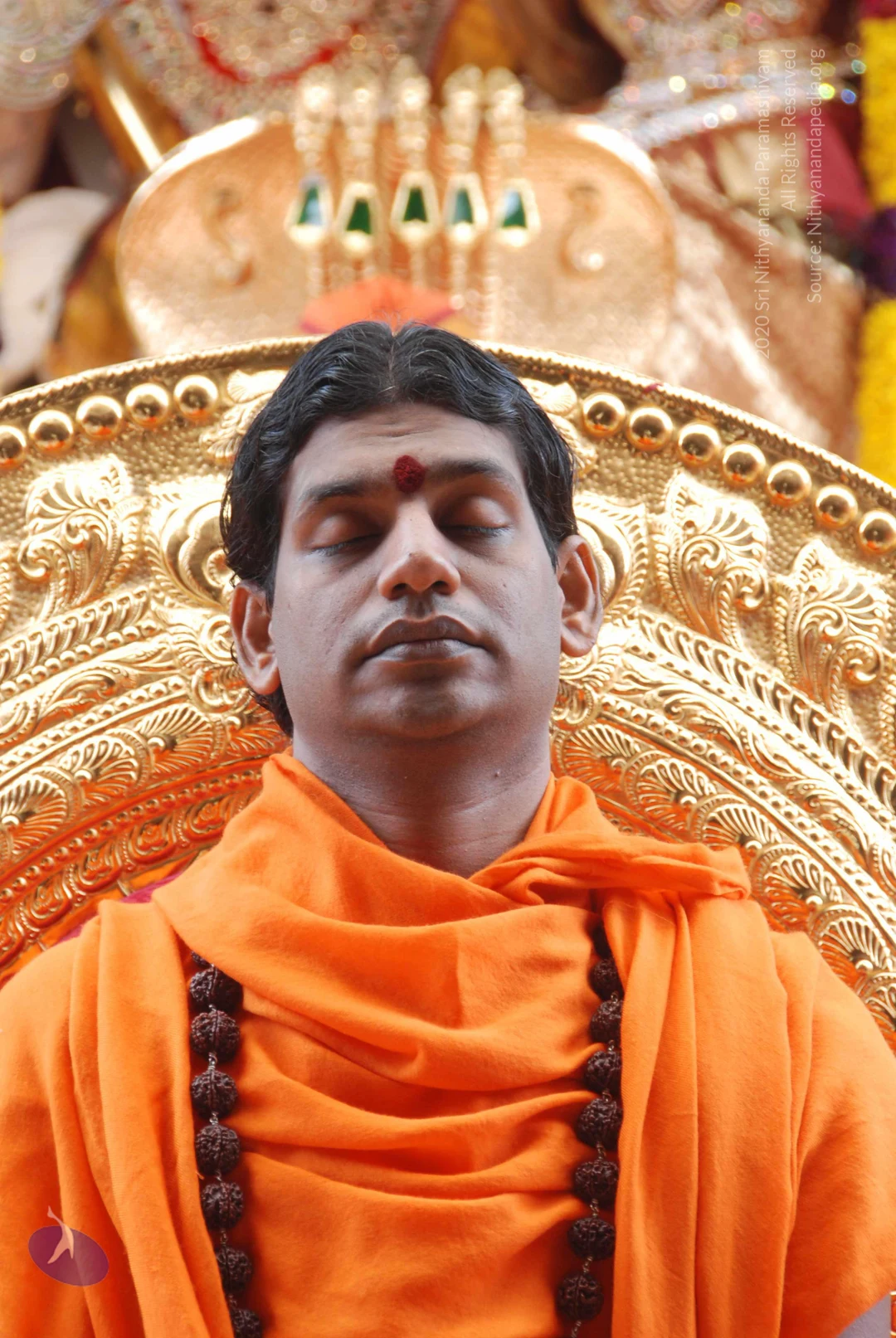
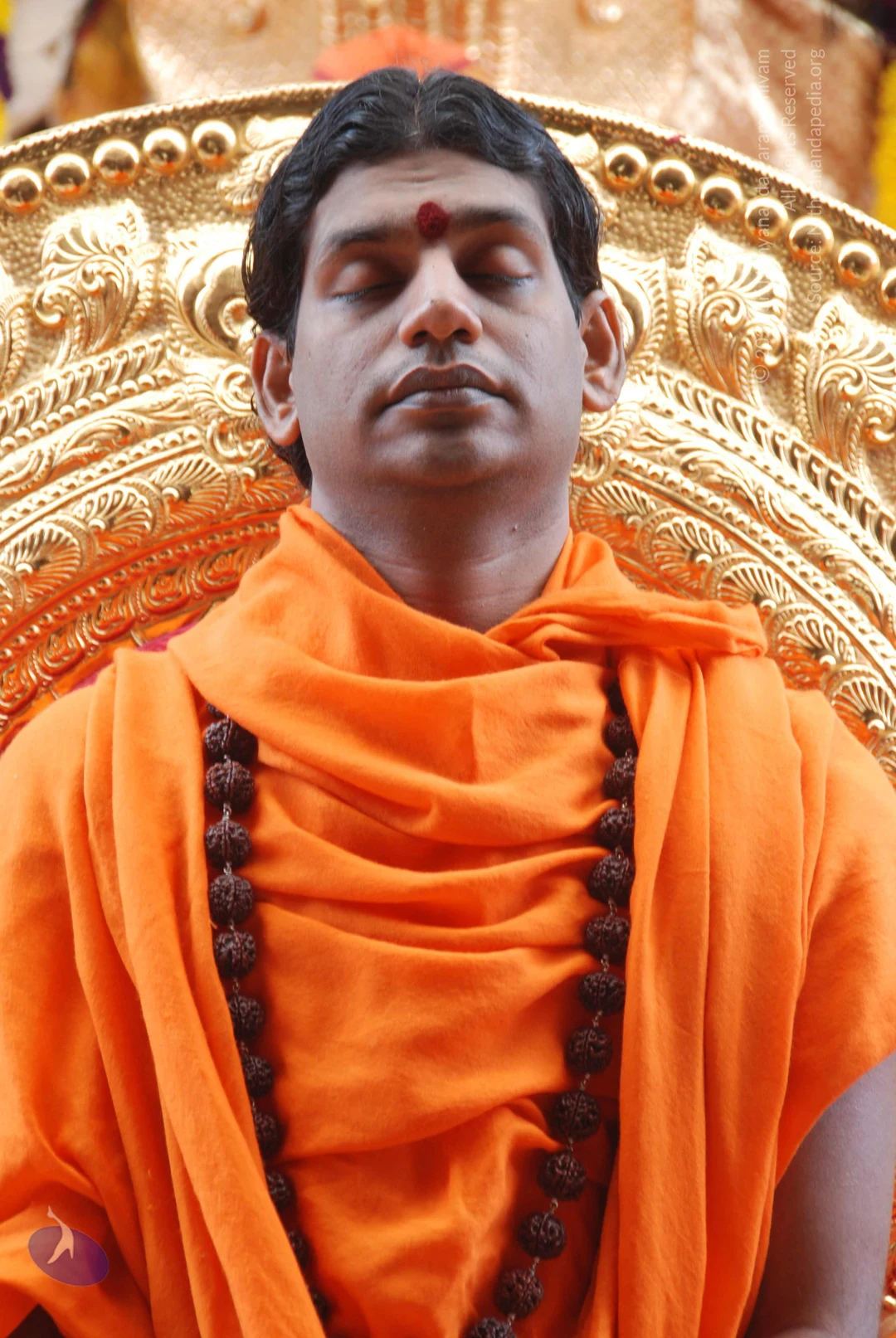
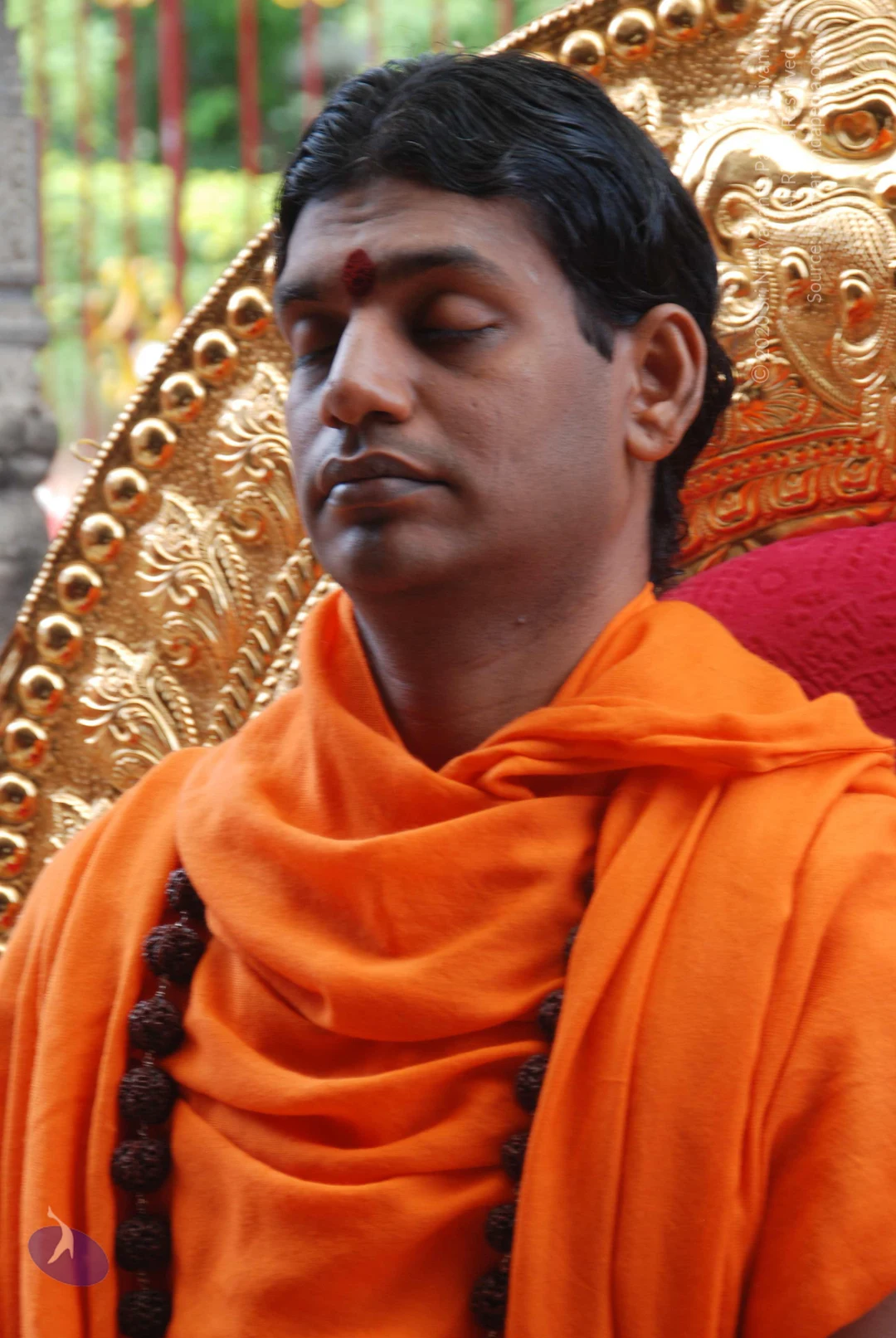
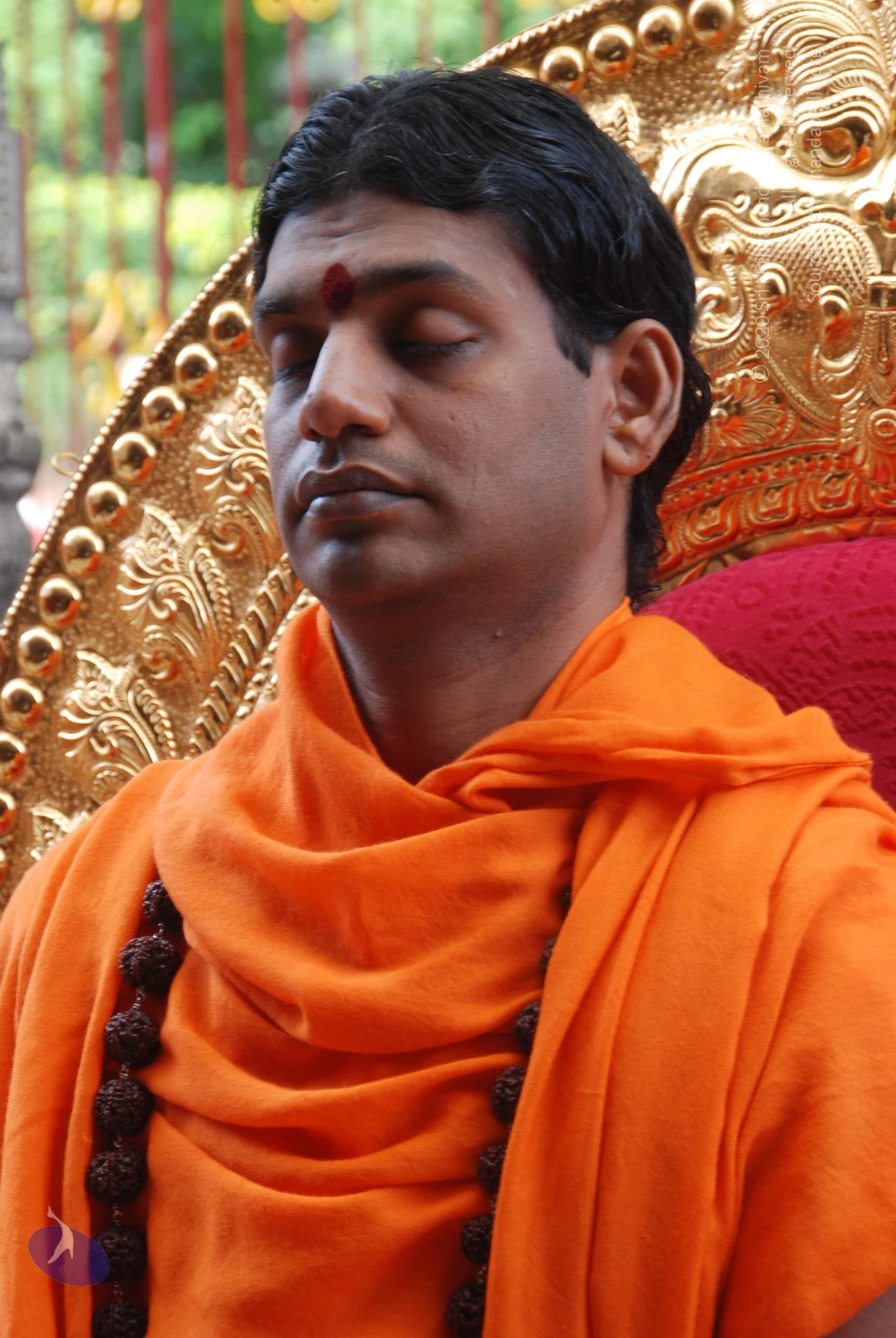
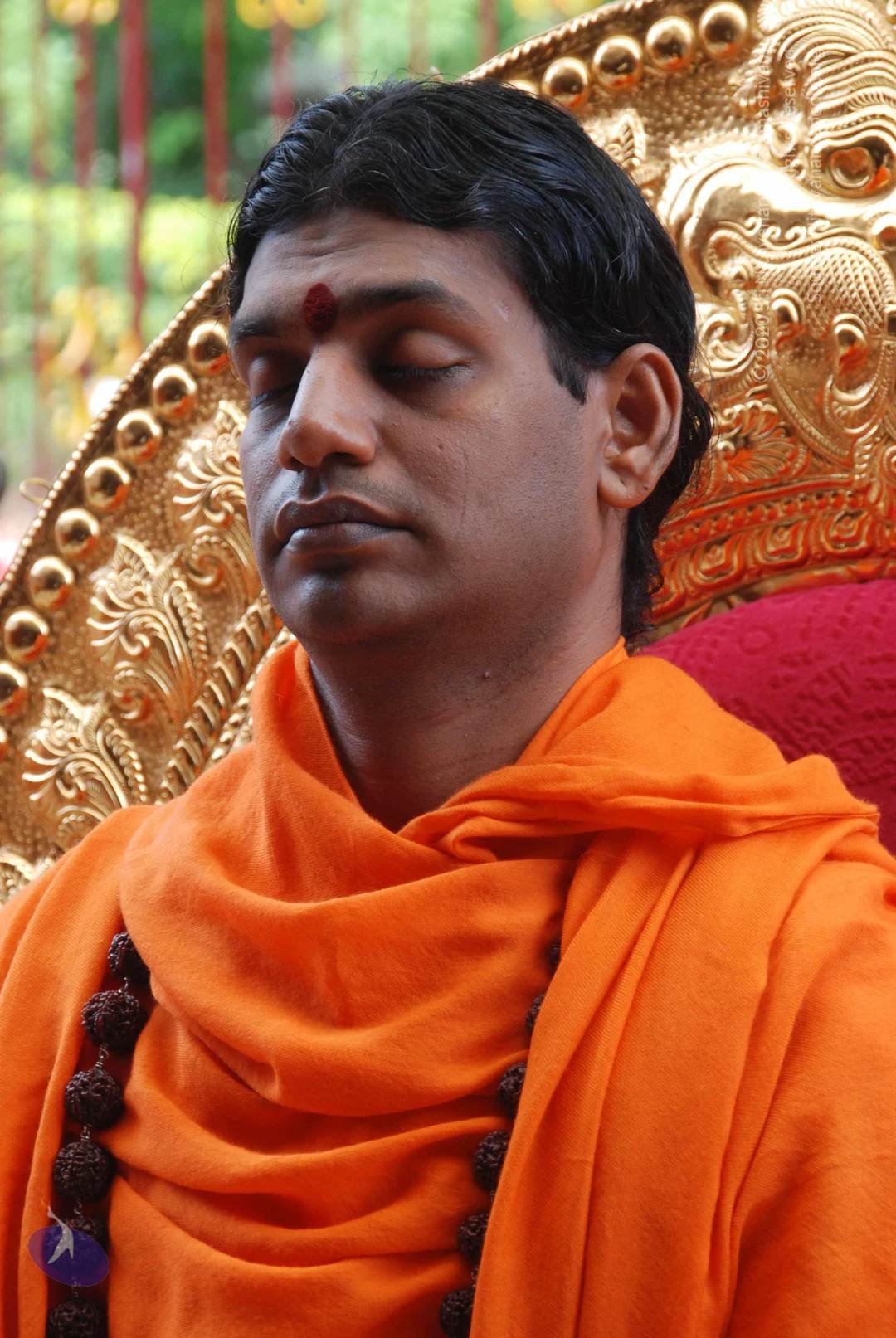
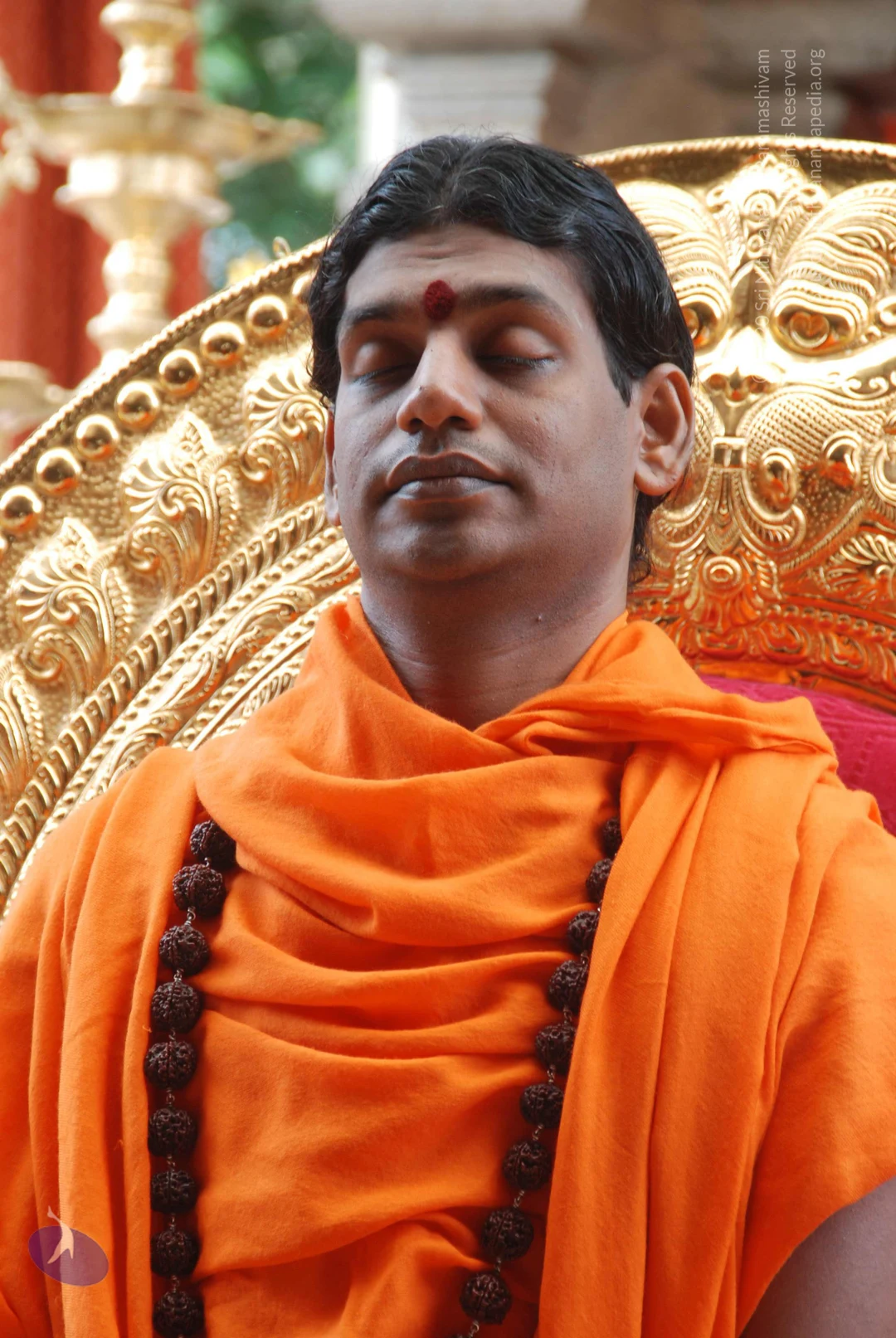
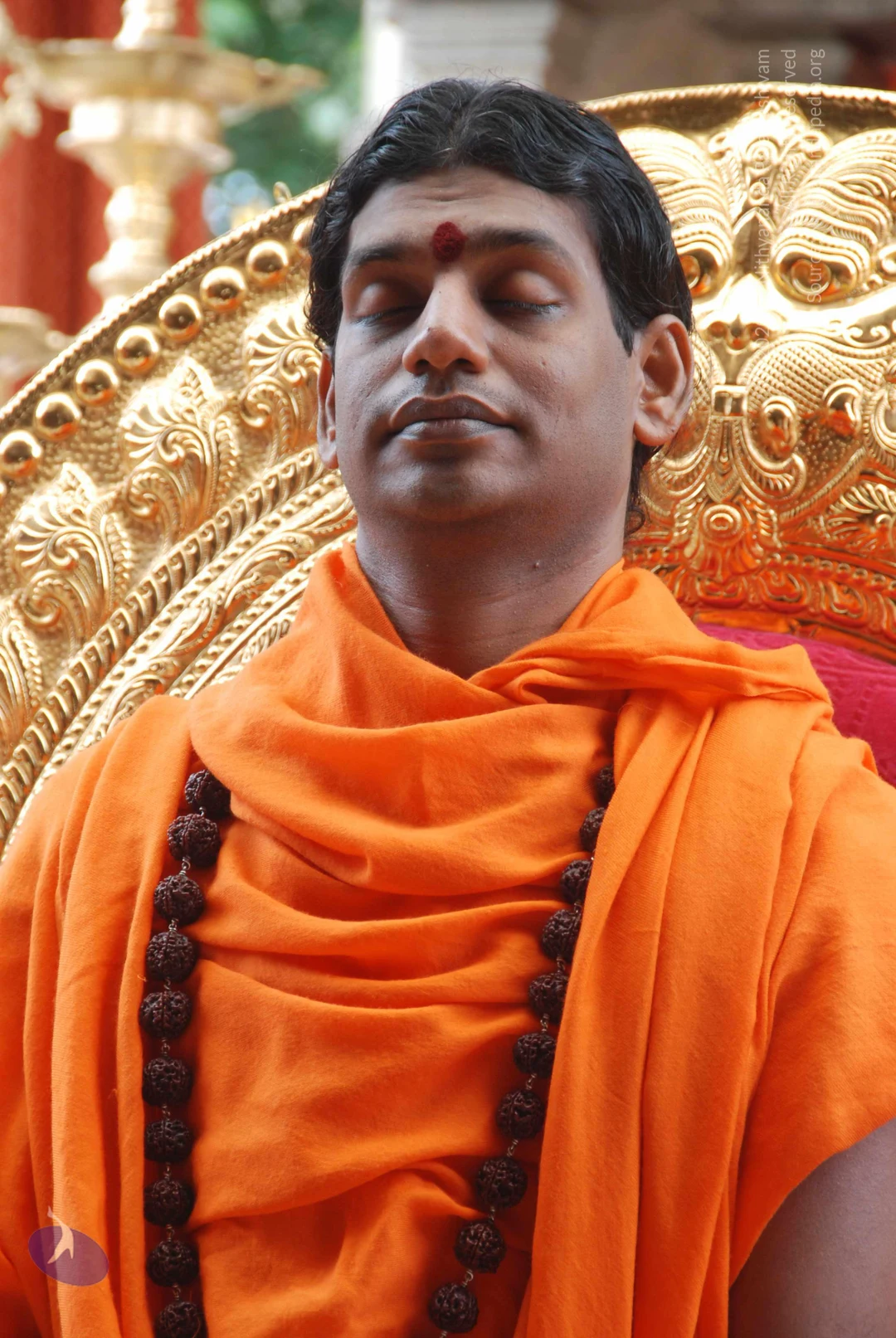
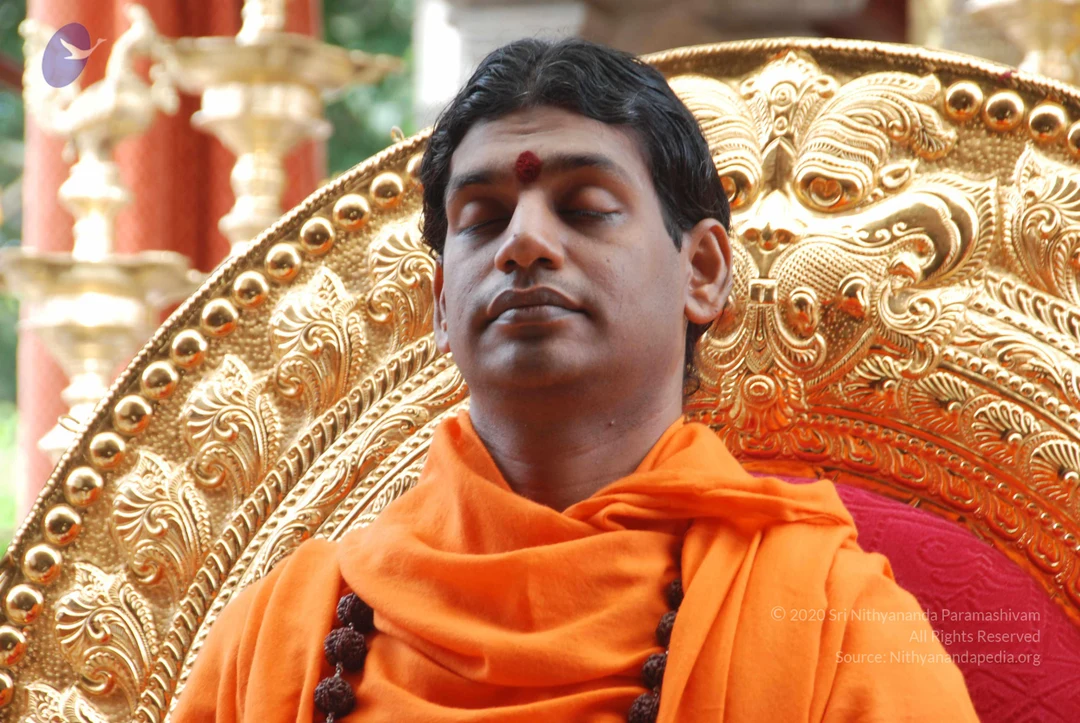
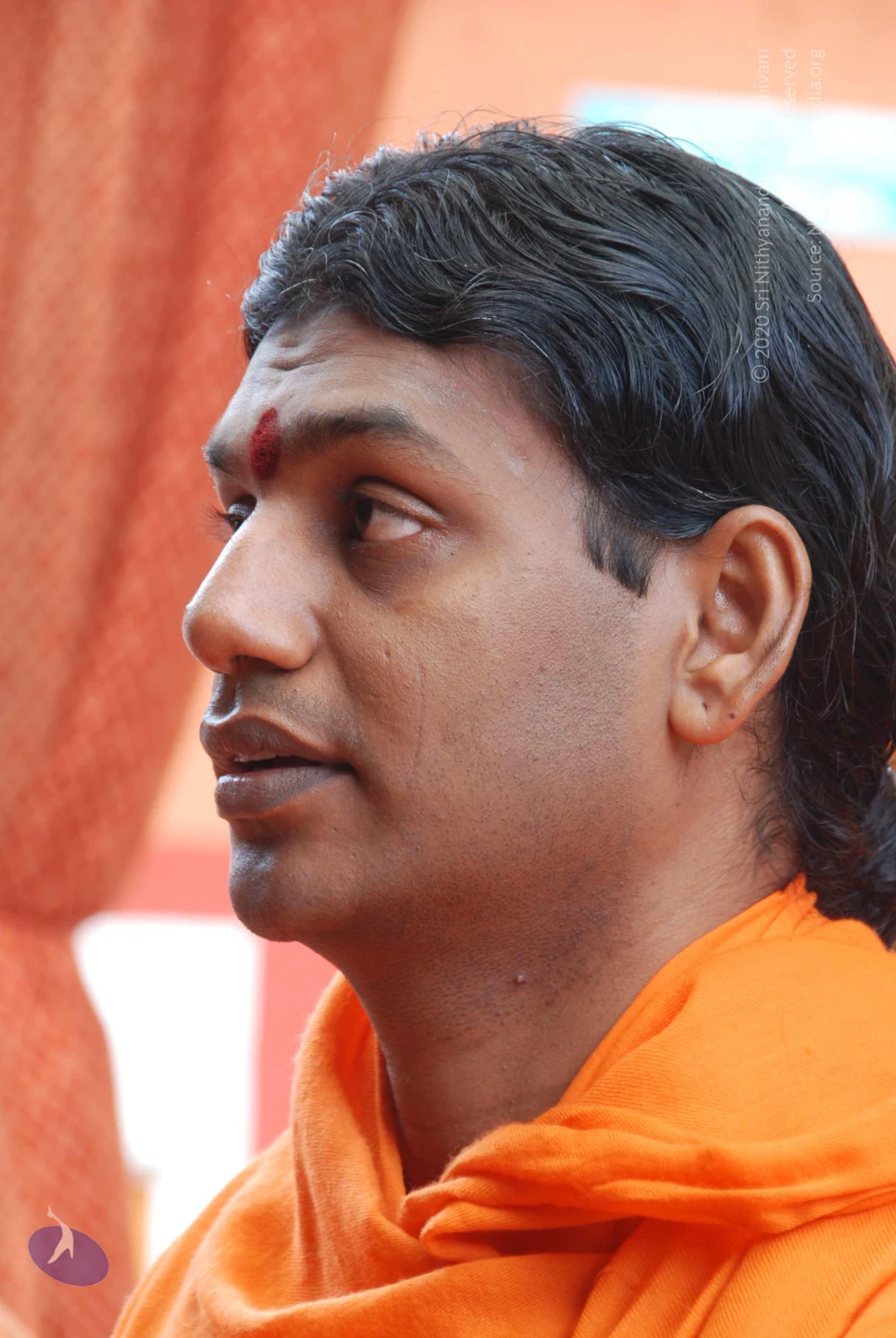
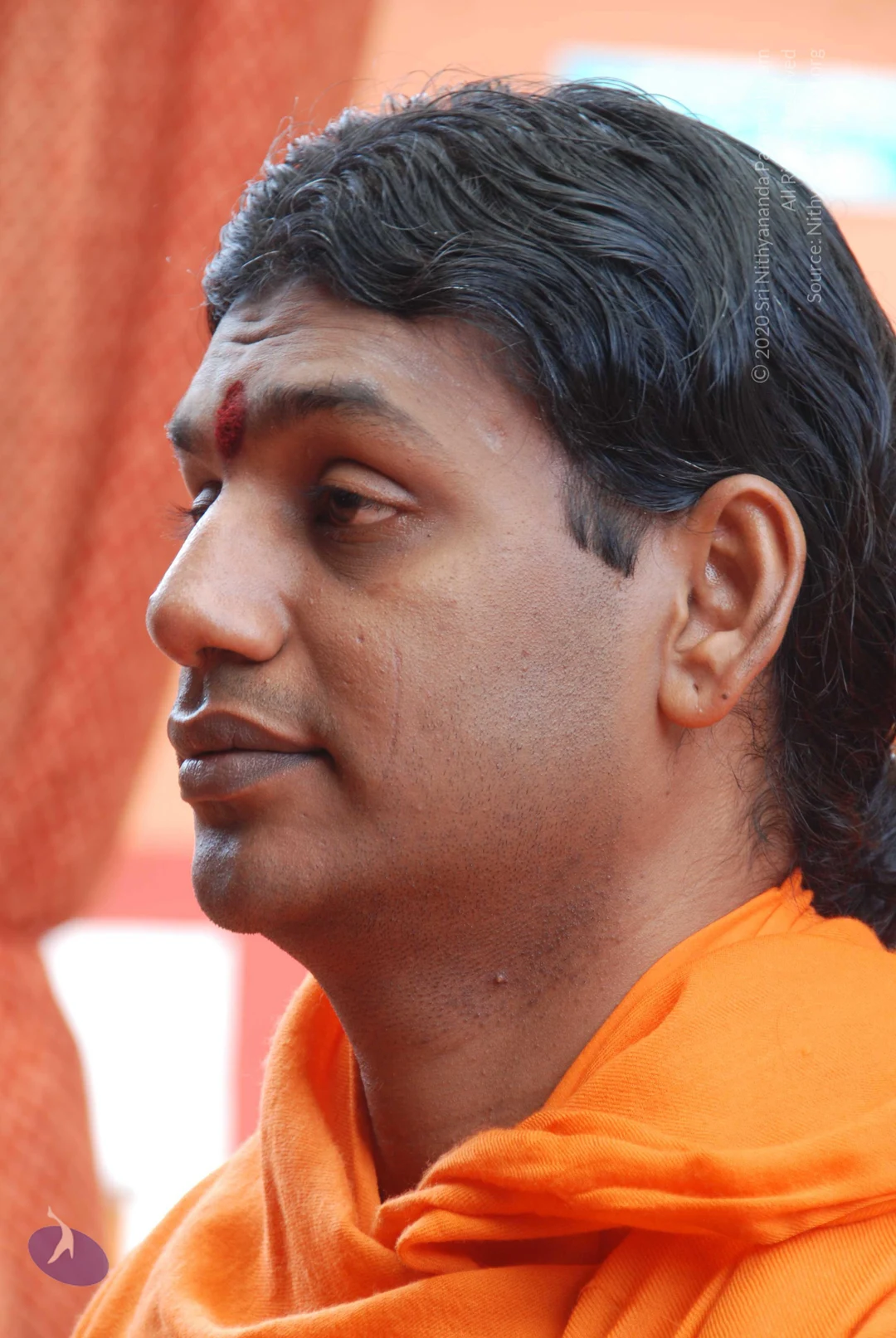
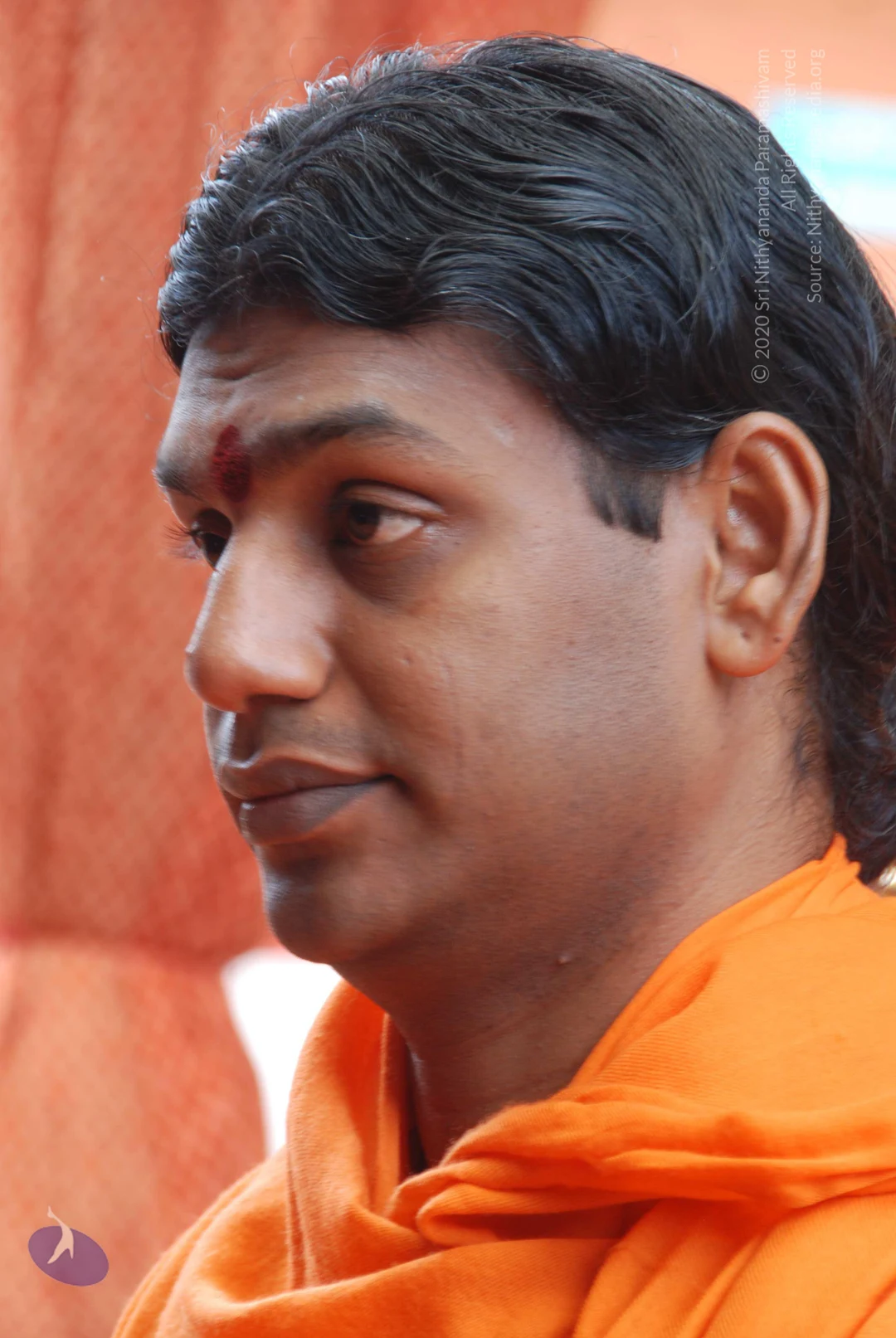
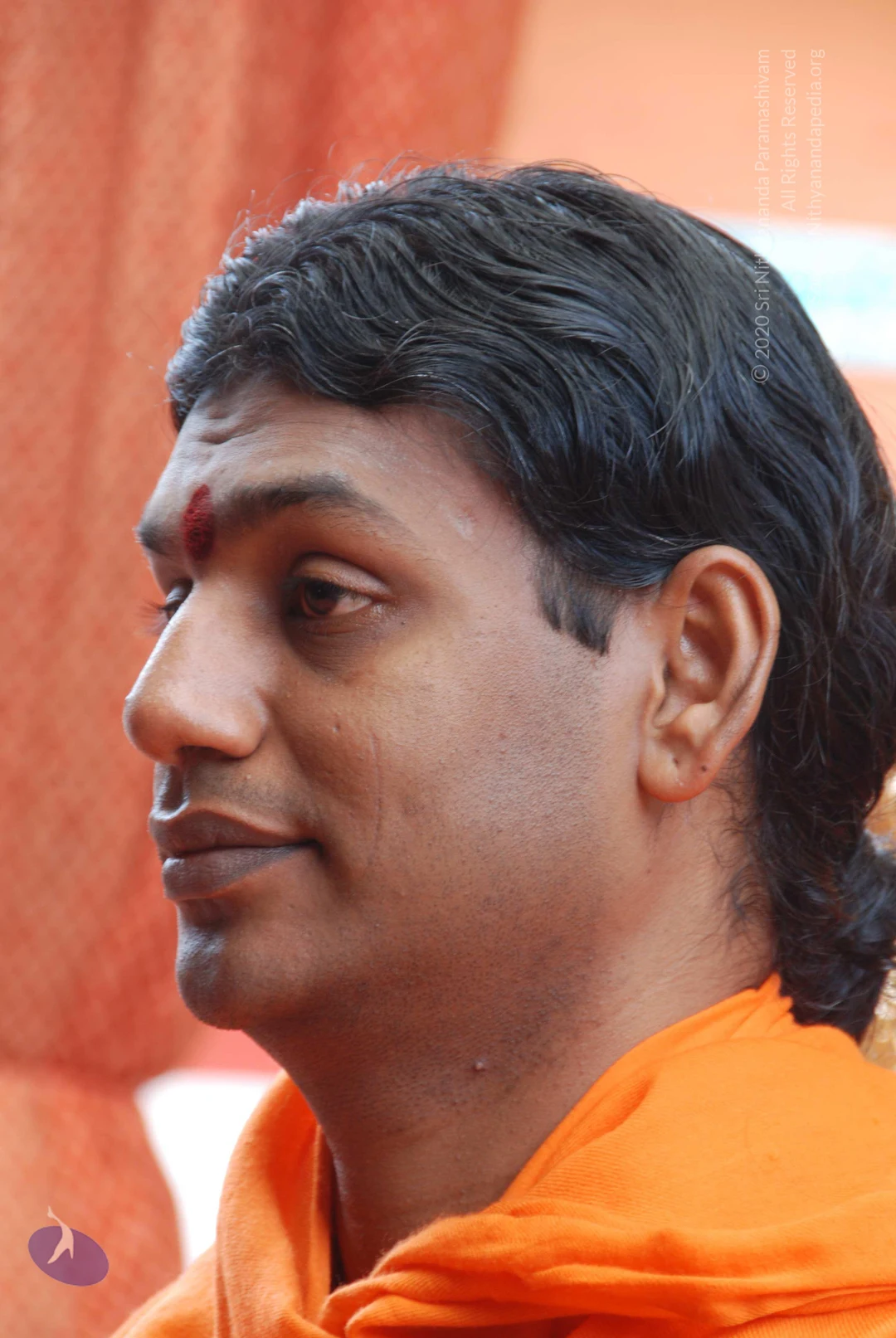
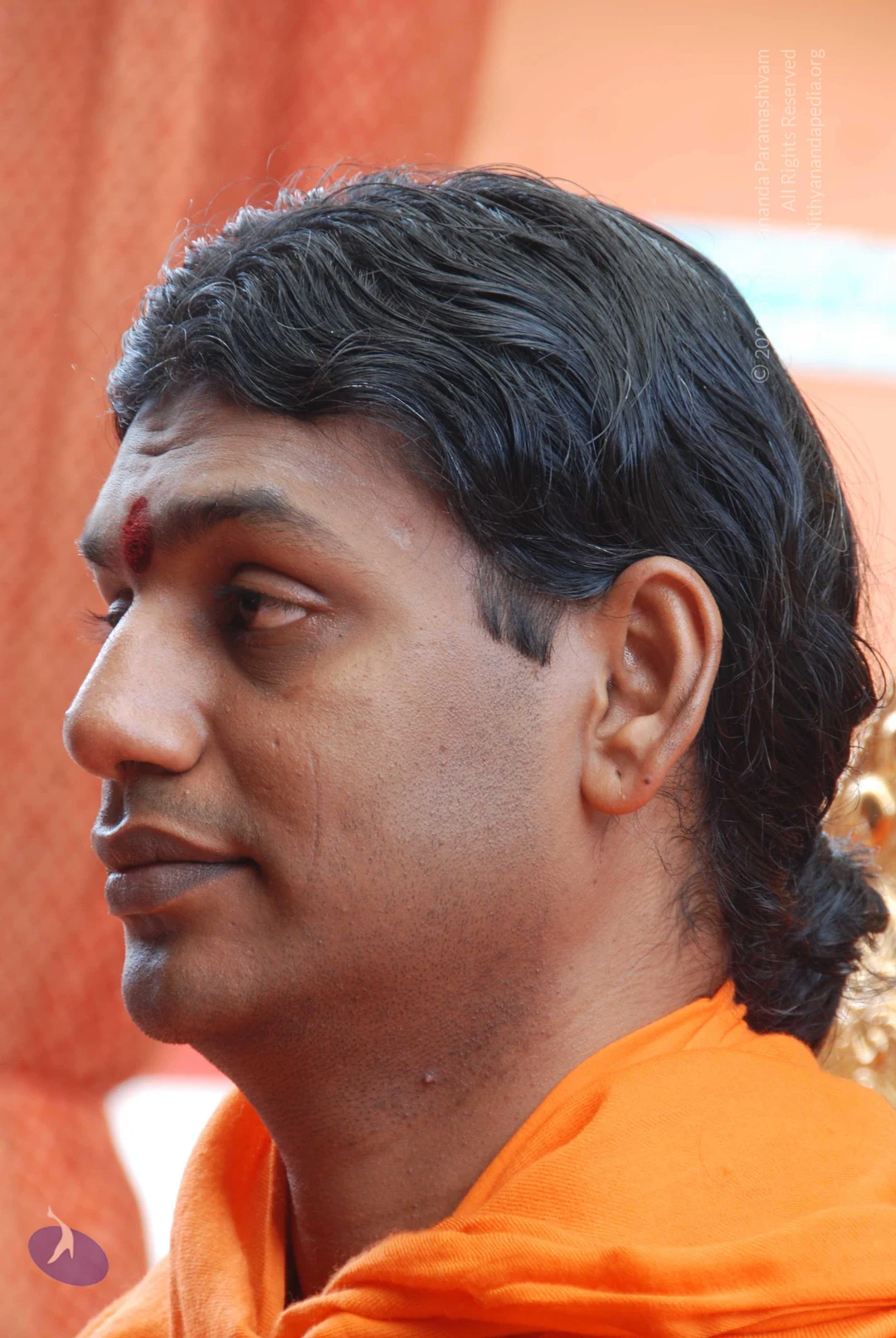
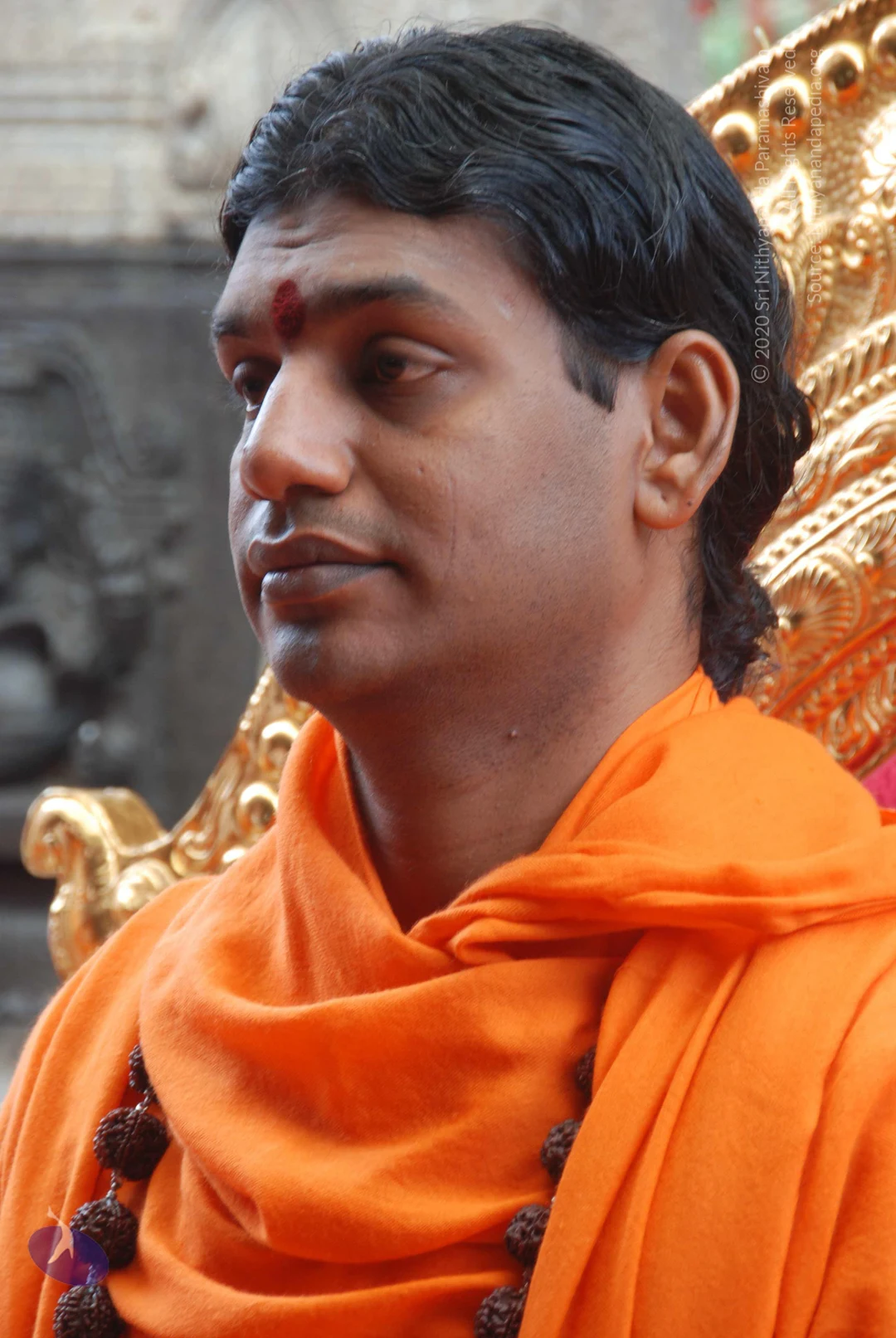
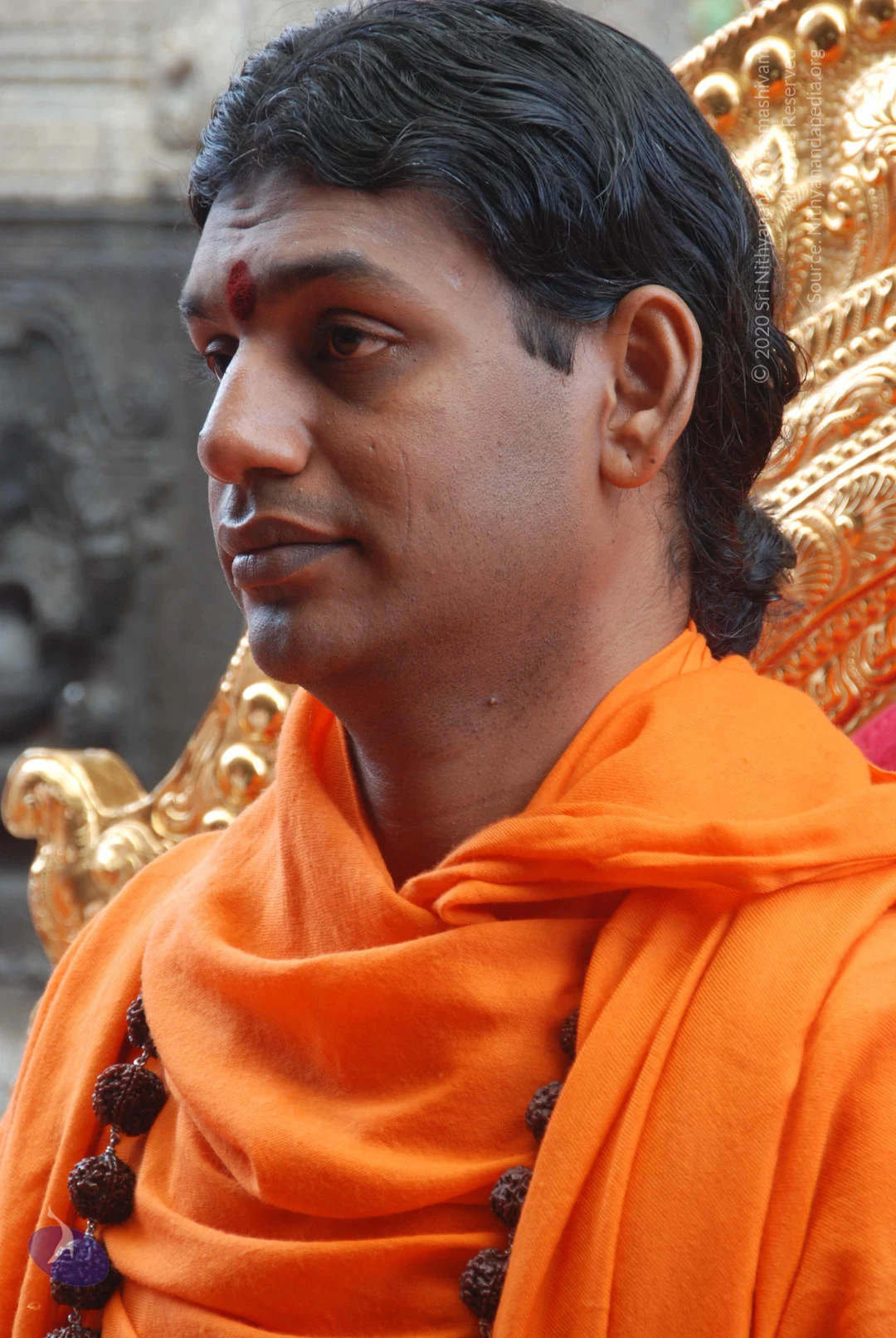
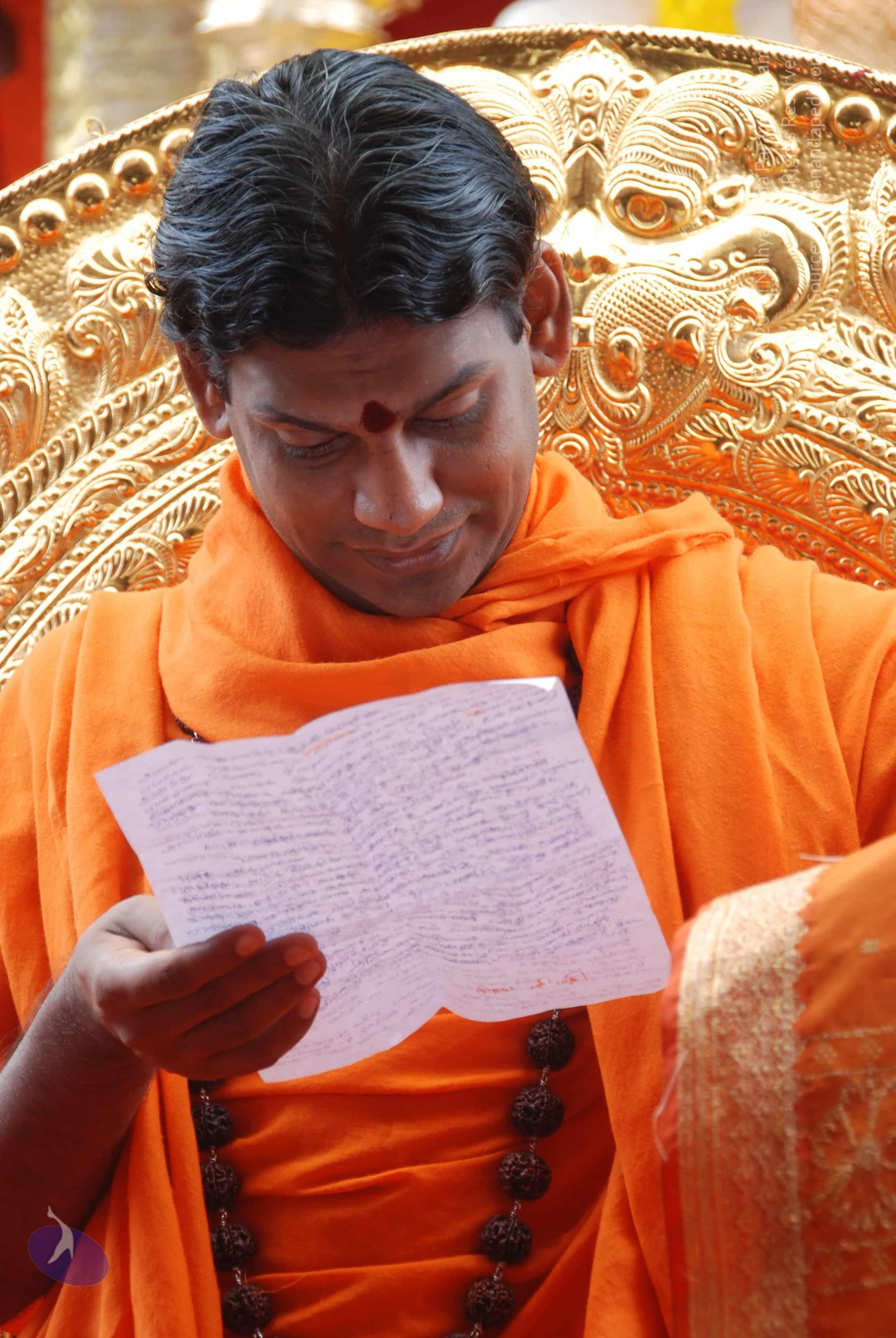
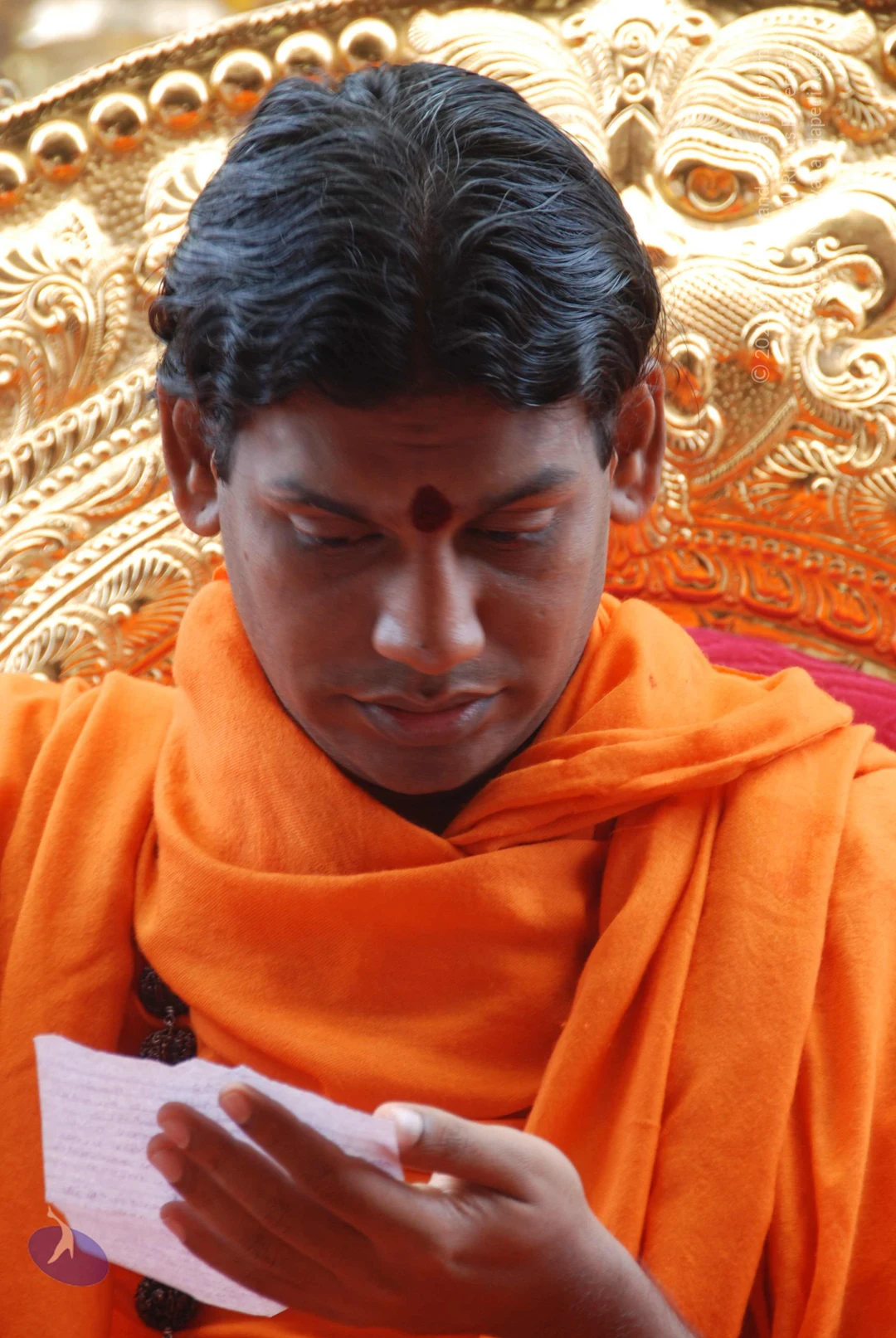
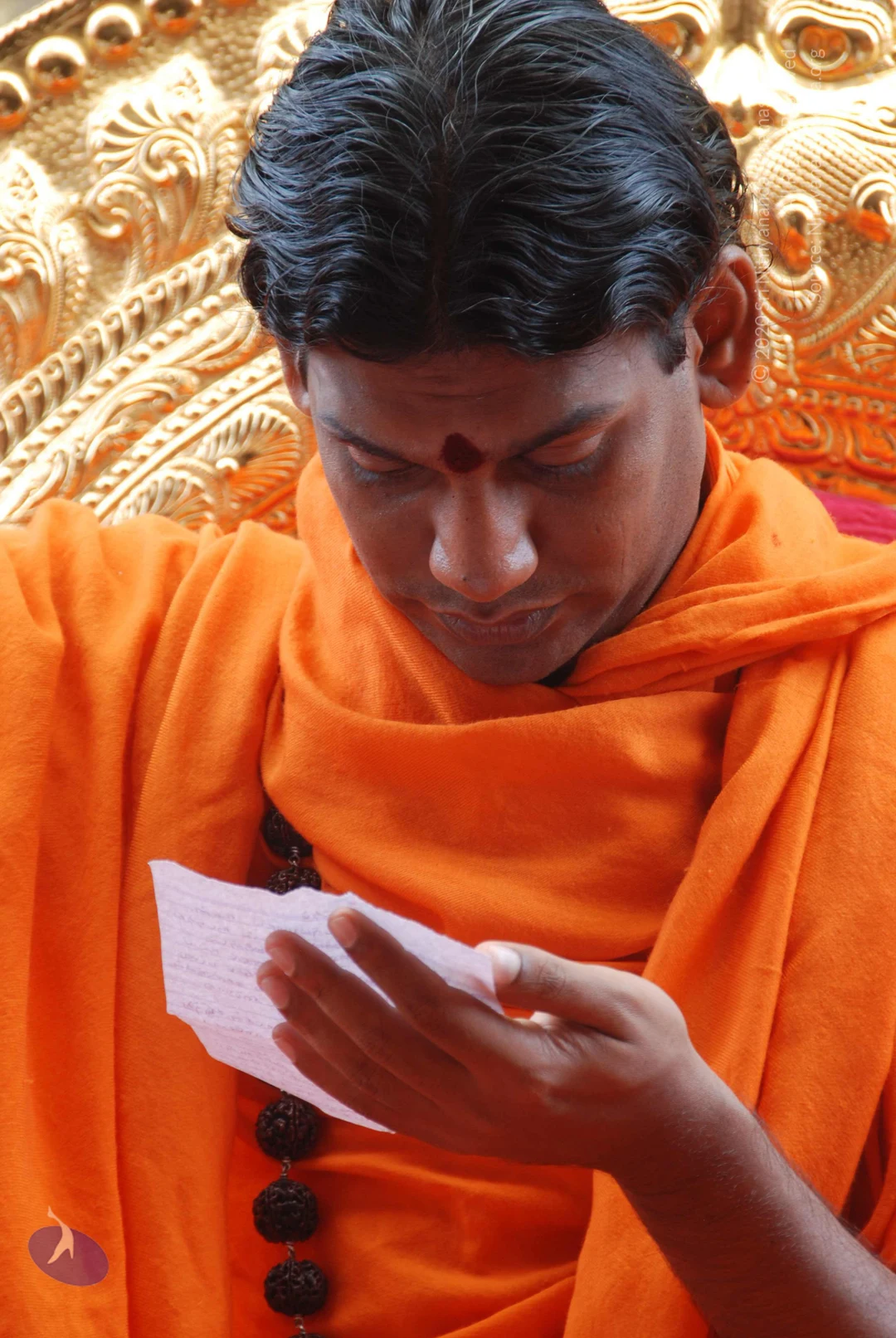
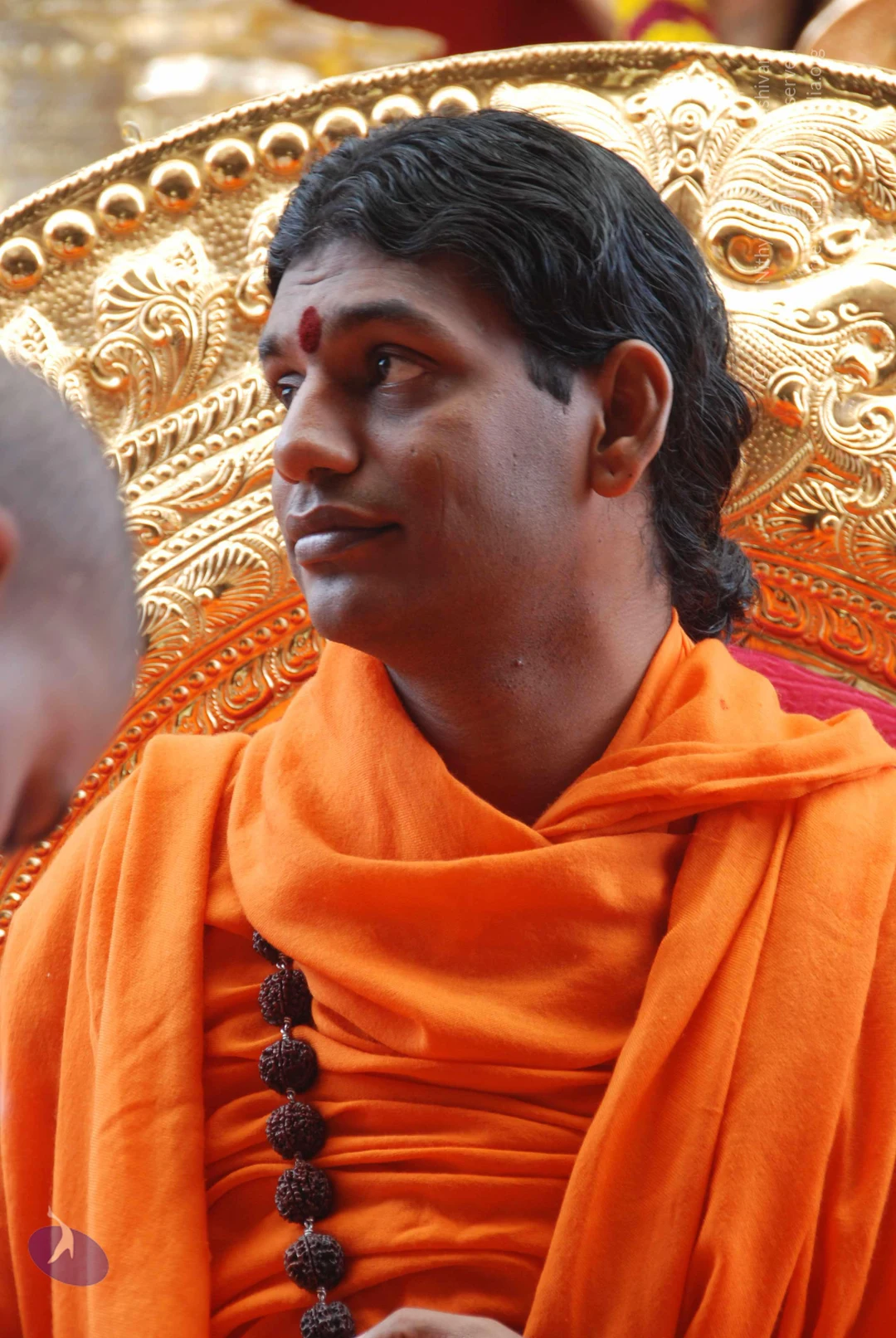
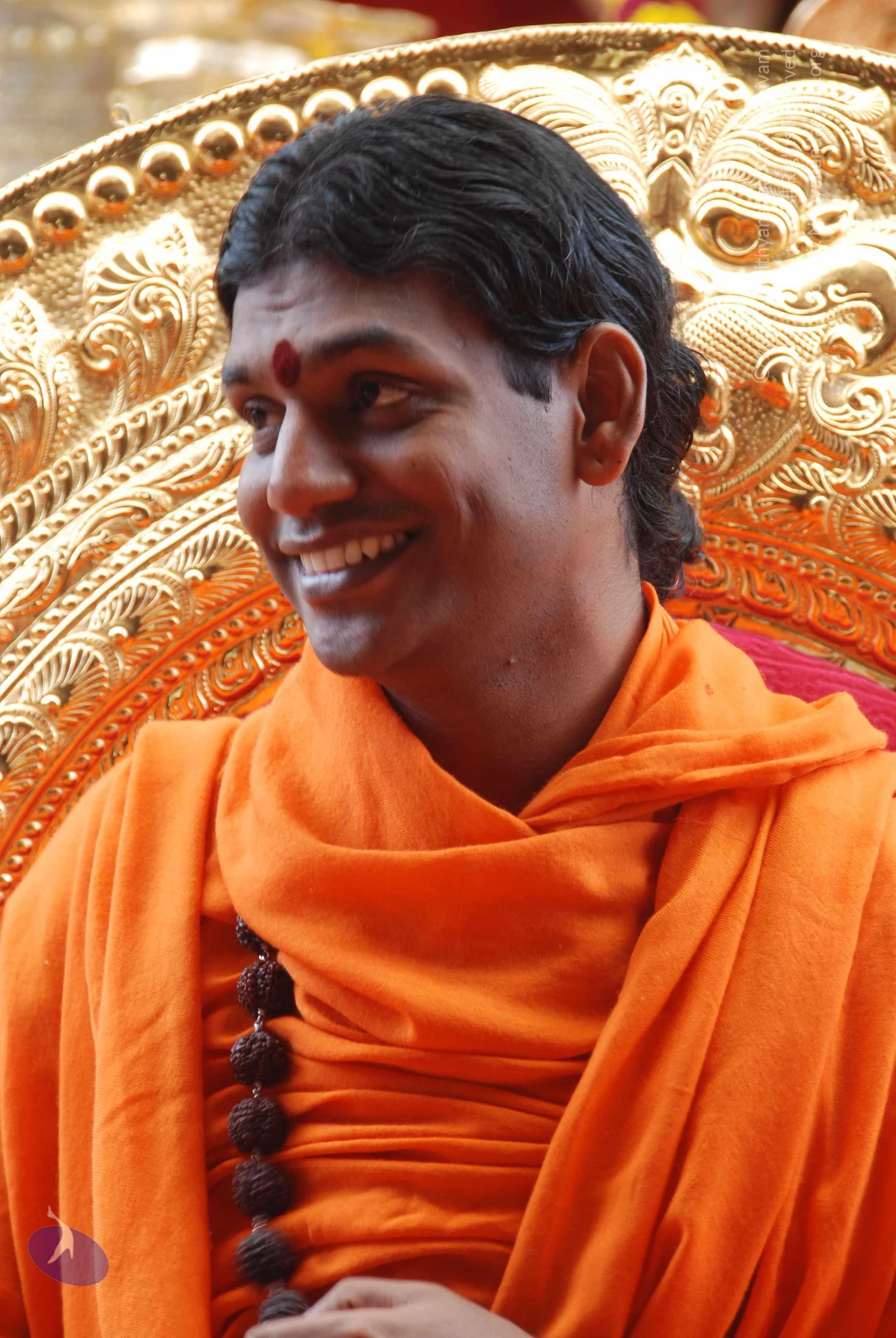
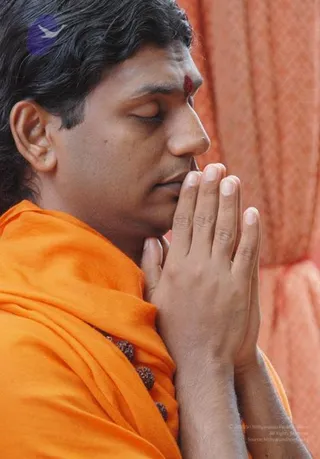
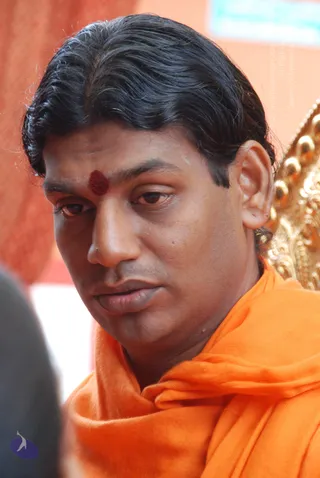
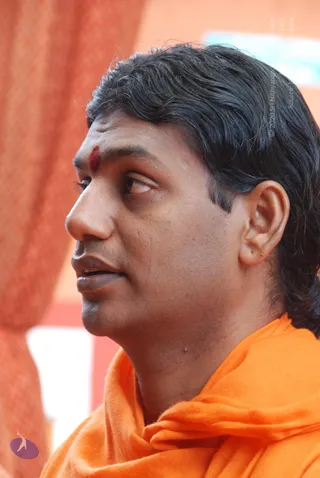
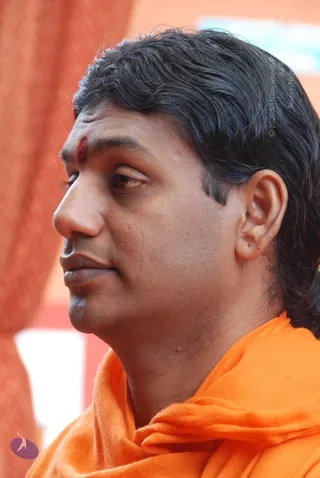
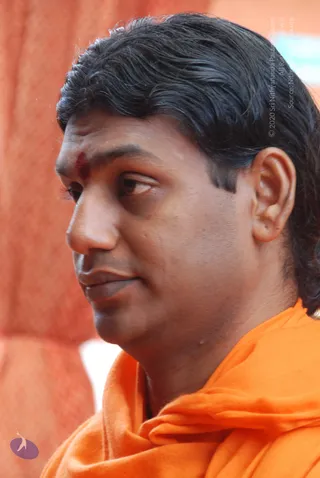
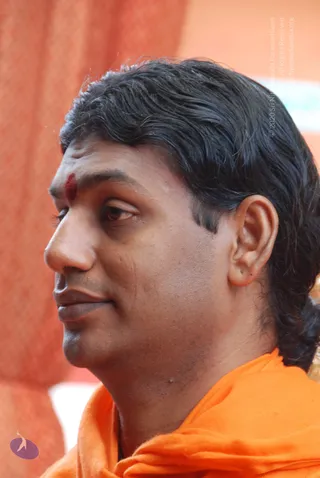
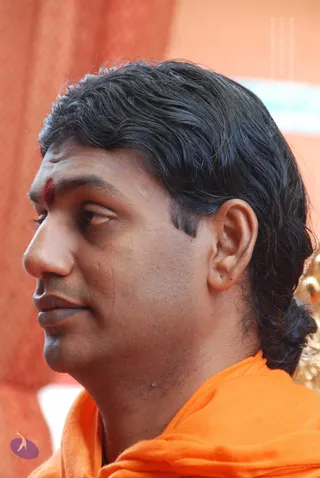
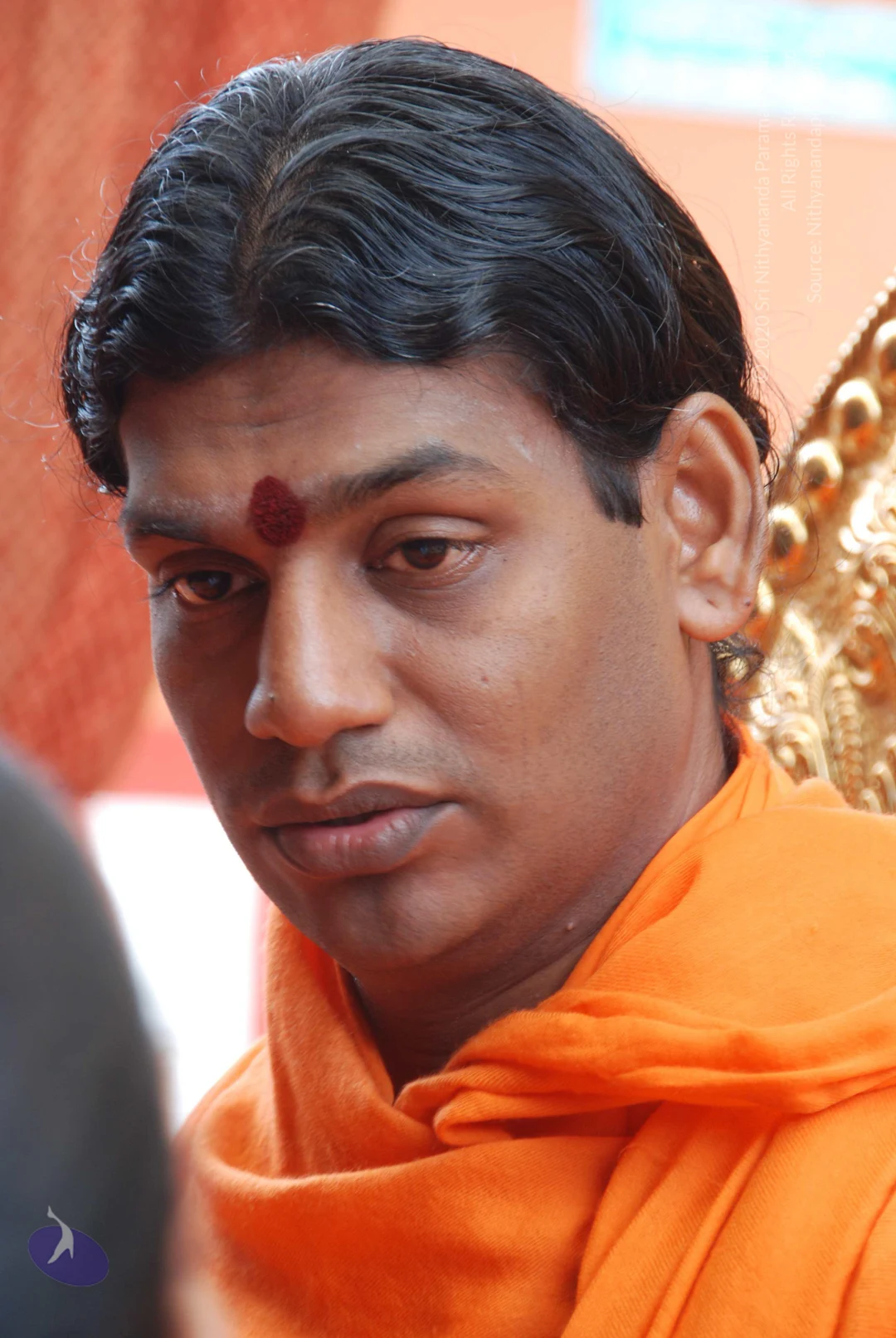
Close-up photograph of a man with long dark hair swept back, wearing an orange-saffron shawl draped over the shoulders and a red kumkum dot on the forehead. Behind him is an ornate gold-coloured carved structure, possibly a throne or chair. The man looks downward and to the side.Close profile photograph of a man with swept-back dark hair and a red bindi-style mark on his forehead, wearing an orange saffron shawl or wrap around the shoulders. The background is a blurred orange fabric and warm wall.Close side-profile photograph of a man with long dark hair swept back, a small red tilak mark on his forehead, and an orange shawl draped around his shoulders. Behind him is a blurred orange fabric backdrop. He faces left with a calm, downcast gaze. The visible cues of long swept-back hair, a red forehead mark and orange shawl are consistent with a saffron-clad sannyasi, though his identity cannot be confirmed from appearance.Close profile photograph of a man with swept-back dark hair, a red kumkum mark on his forehead, and an orange saffron shawl draped over his shoulders. He looks to one side against a warm orange backdrop. Swamiji (probable): the orange shawl, swept-back hair and forehead mark are the visible cues, and the page identifies the event as Sarva Darshan.Close-up profile photograph of a man with swept-back dark hair and a small red bindi-style mark on his forehead, wearing an orange-saffron garment draped over his shoulders. He faces left against a blurred orange curtain background. a person by appearance: the swept-back long hair, saffron clothing and forehead mark are the qualifying cues, though no ceremonial gold necklace or mala is visible.Close side-profile photograph of a man with dark, swept-back hair falling to his neck, a red kumkum mark on his forehead, and an orange-saffron shawl over his shoulders. Behind him are orange draped fabric and a partly visible gold ornament at the right edge. He looks off to the left. Appearance-based label: Swamiji (probable), shown in person with long swept-back hair, saffron shawl and a kumkum mark.

7-Temple
27 photosSource gallery
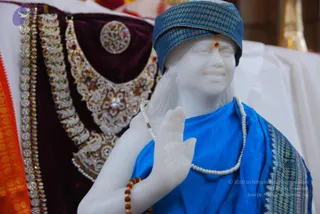
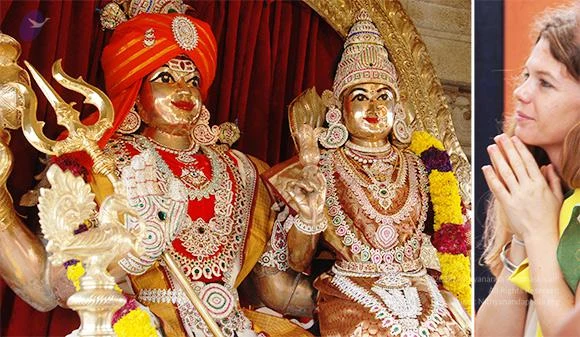
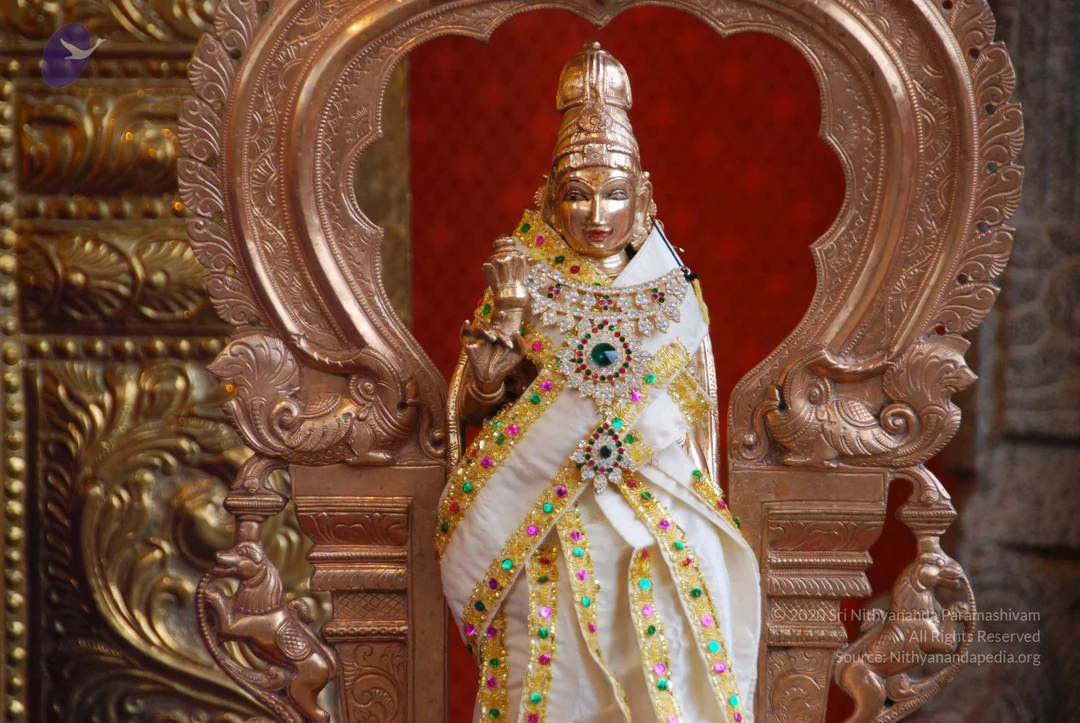
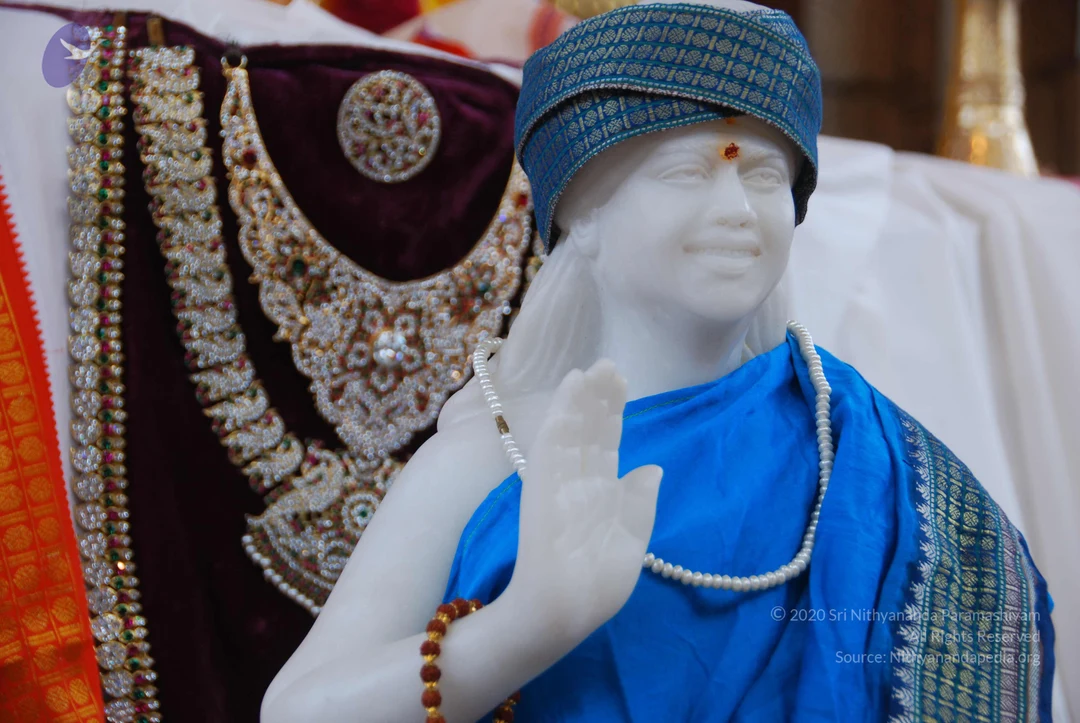
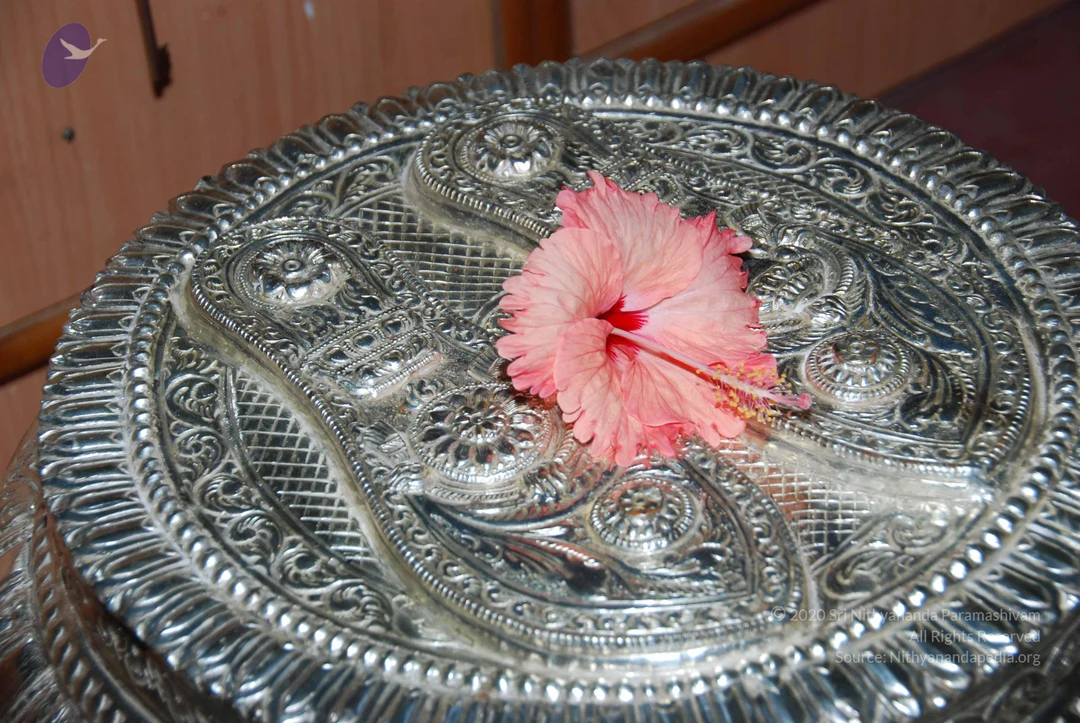
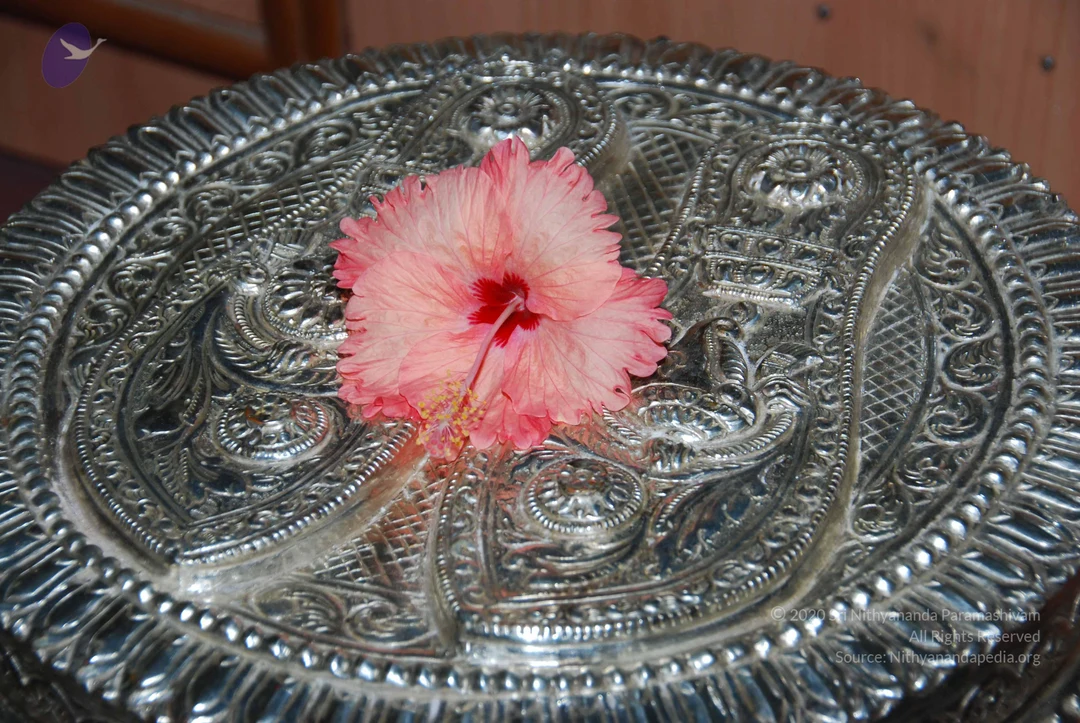
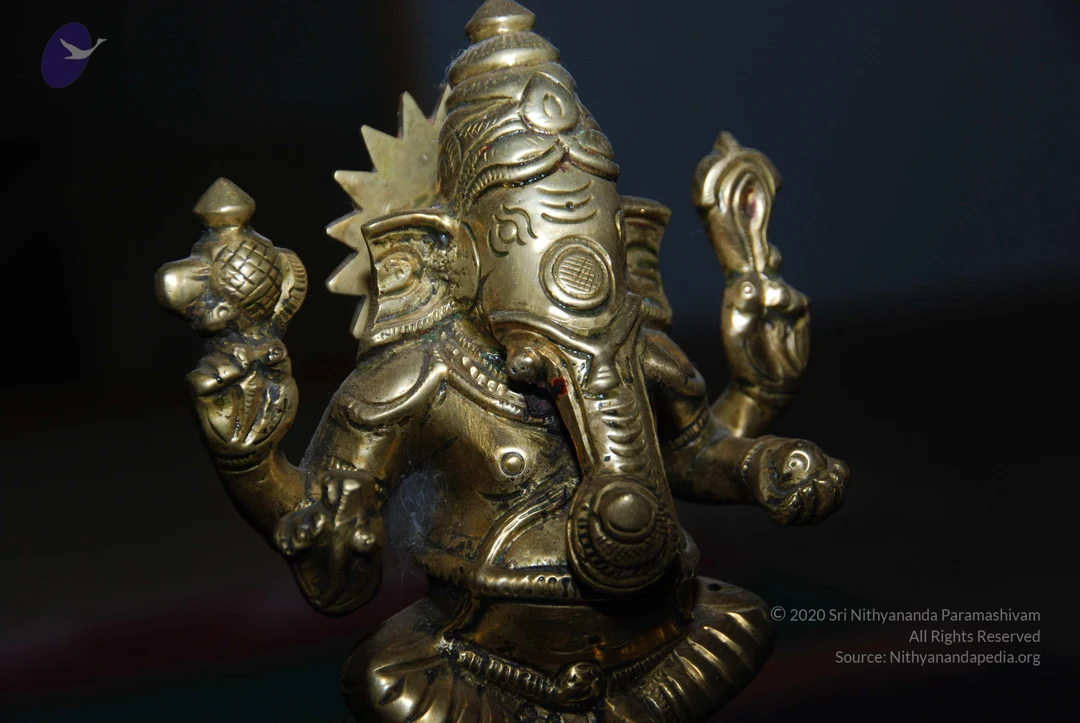
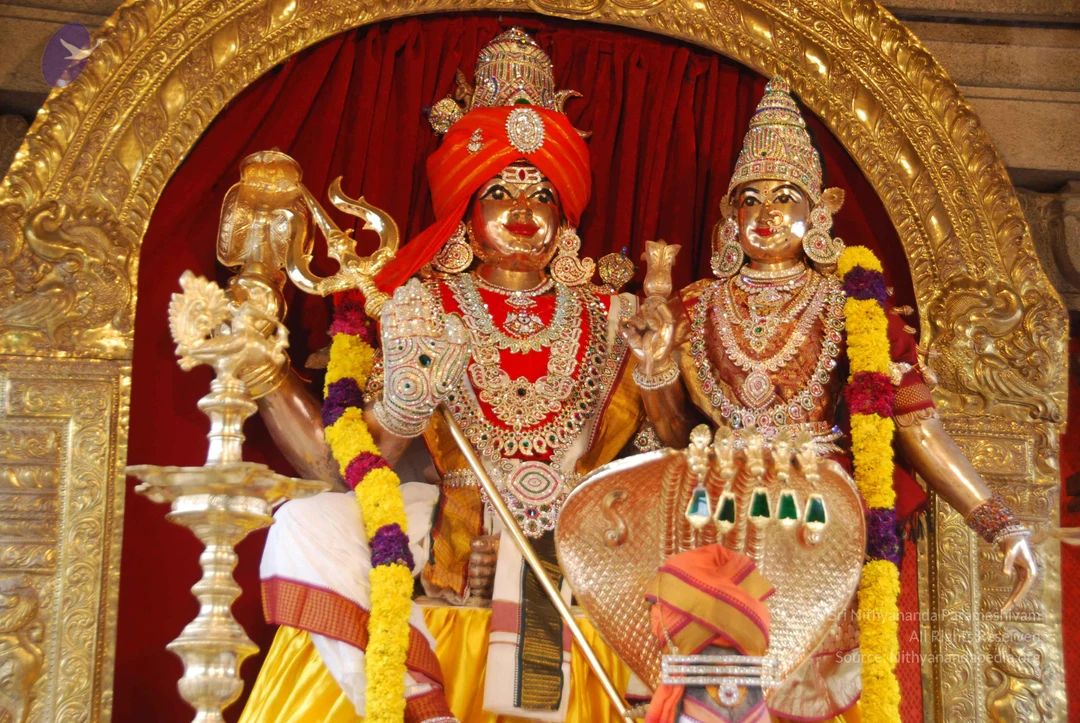
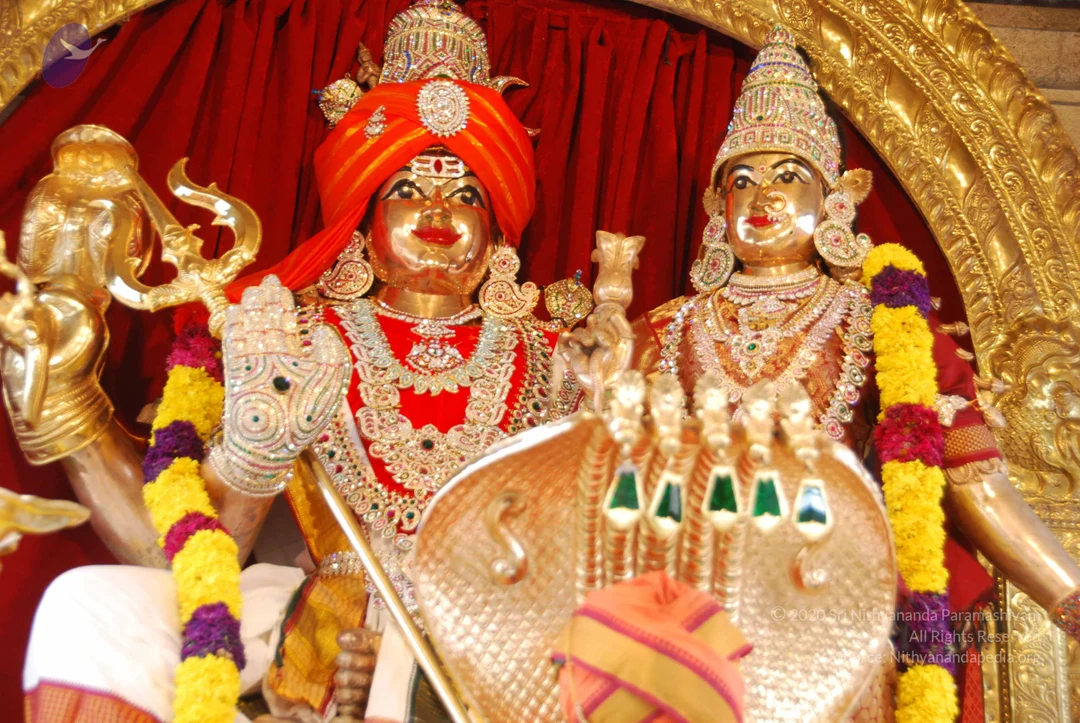
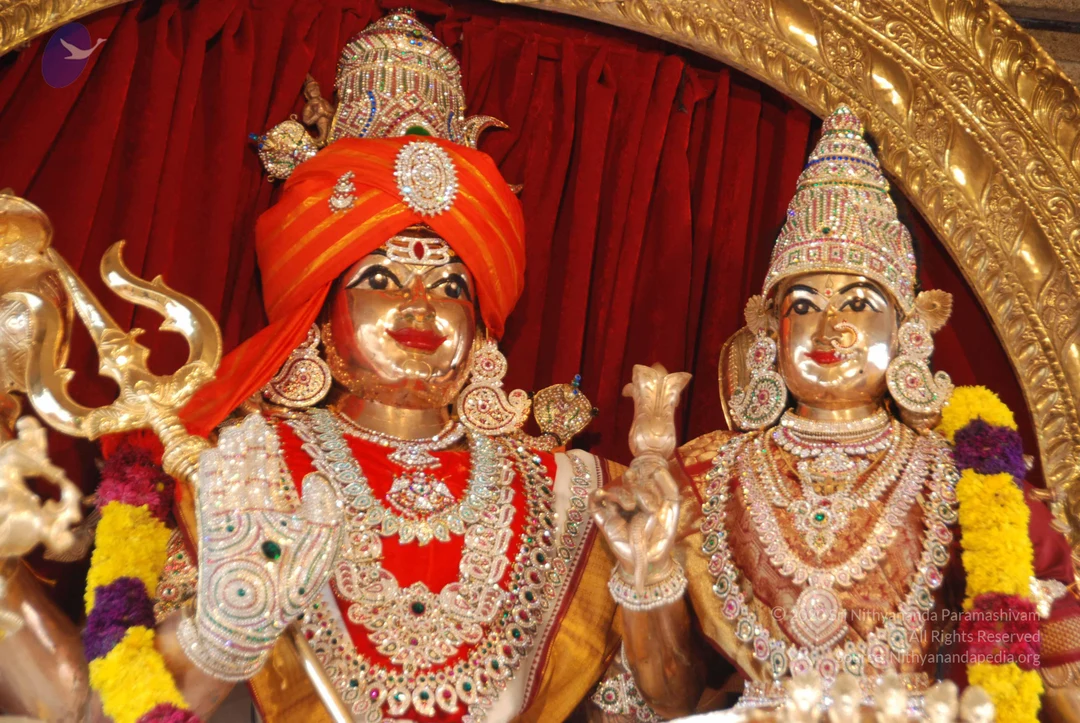
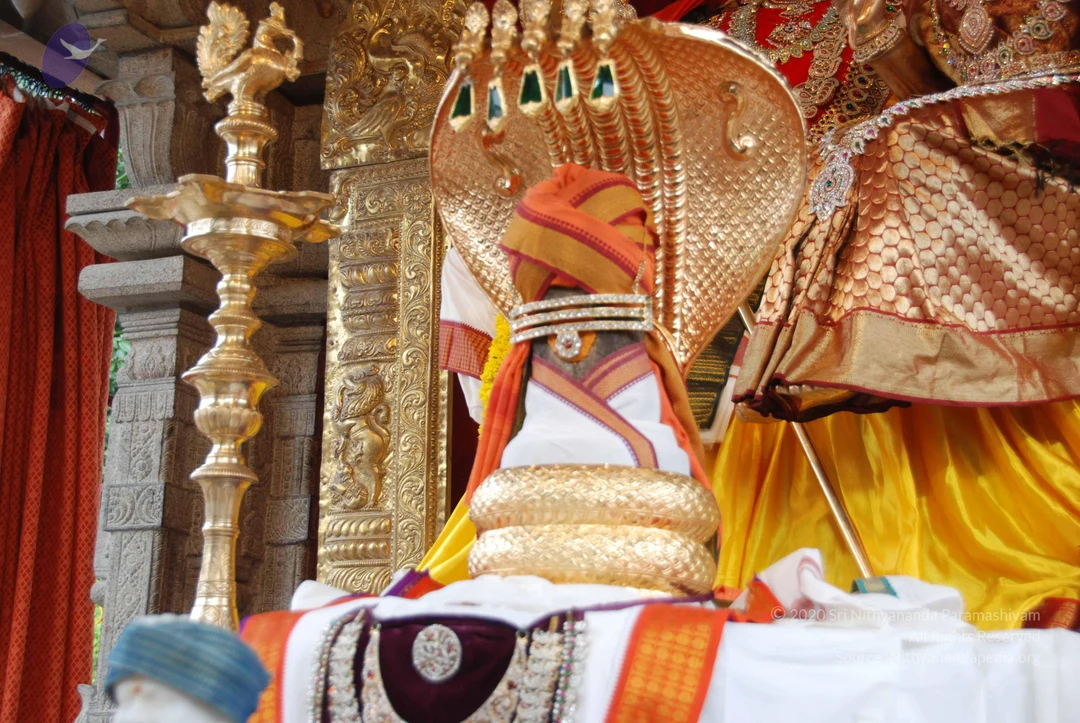
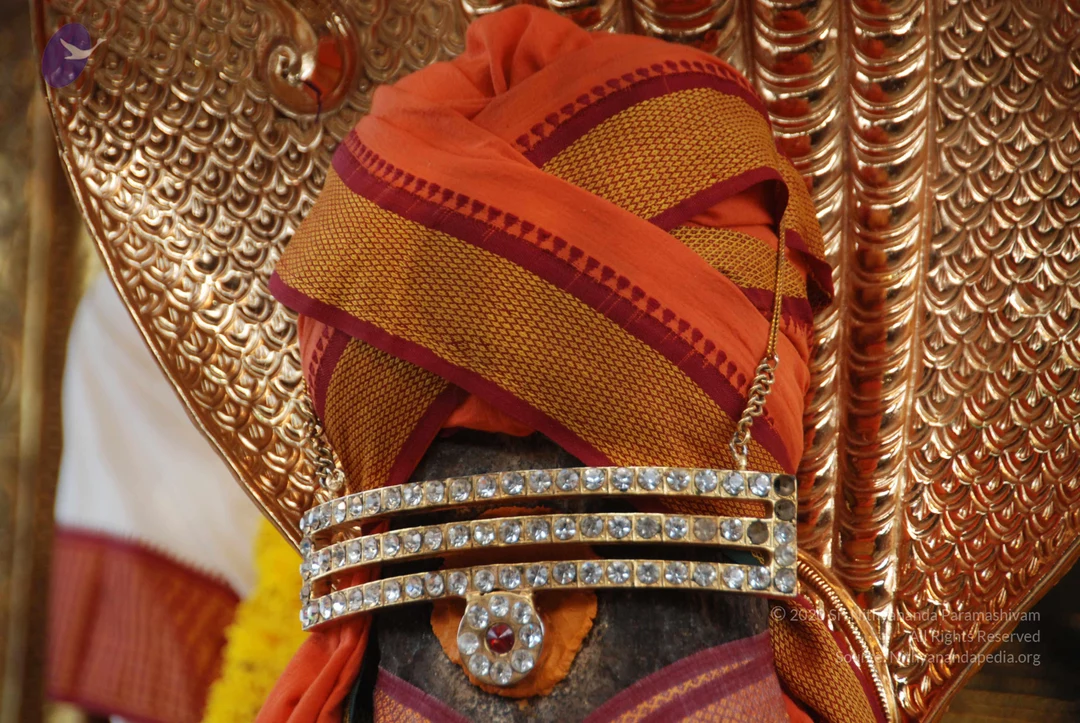
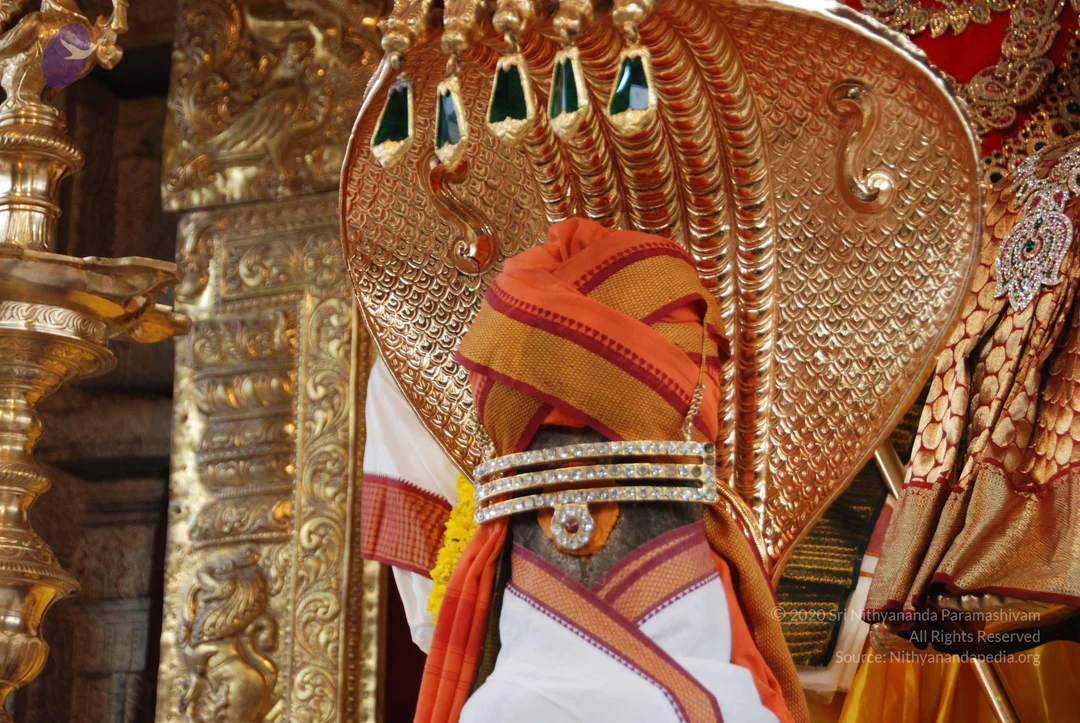
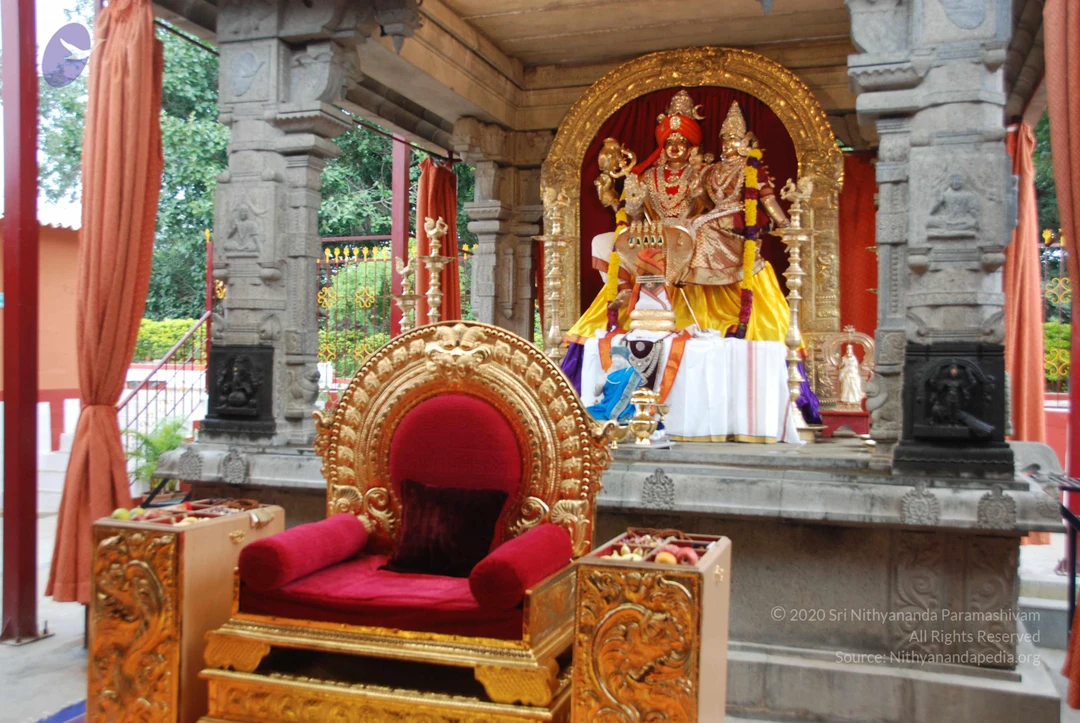
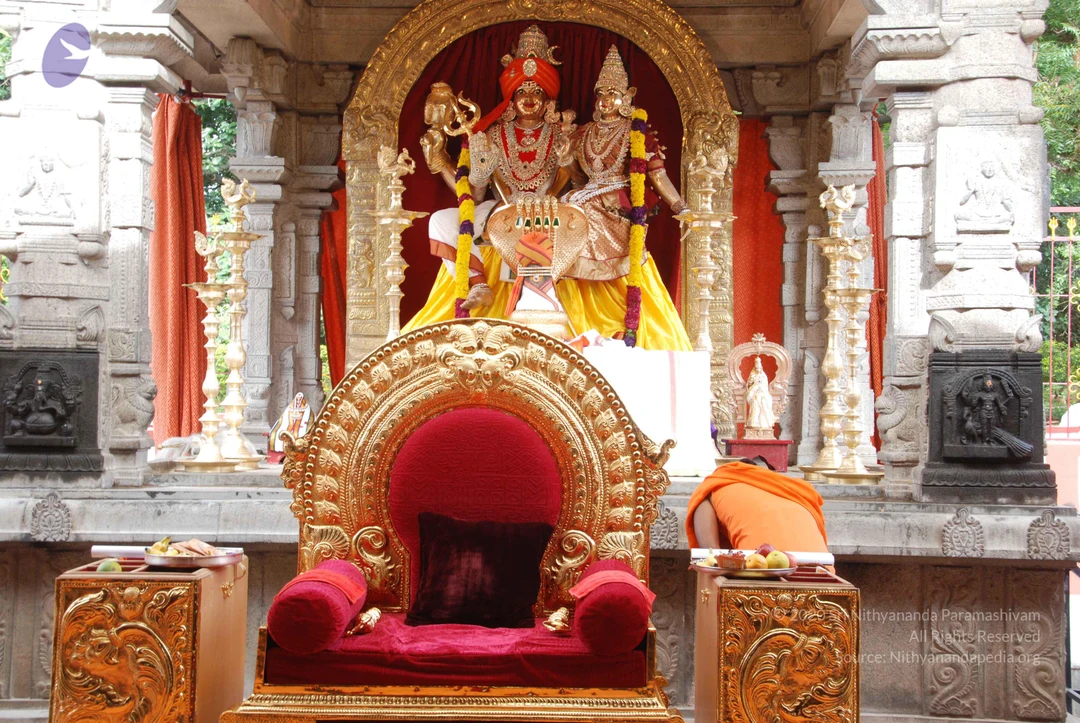
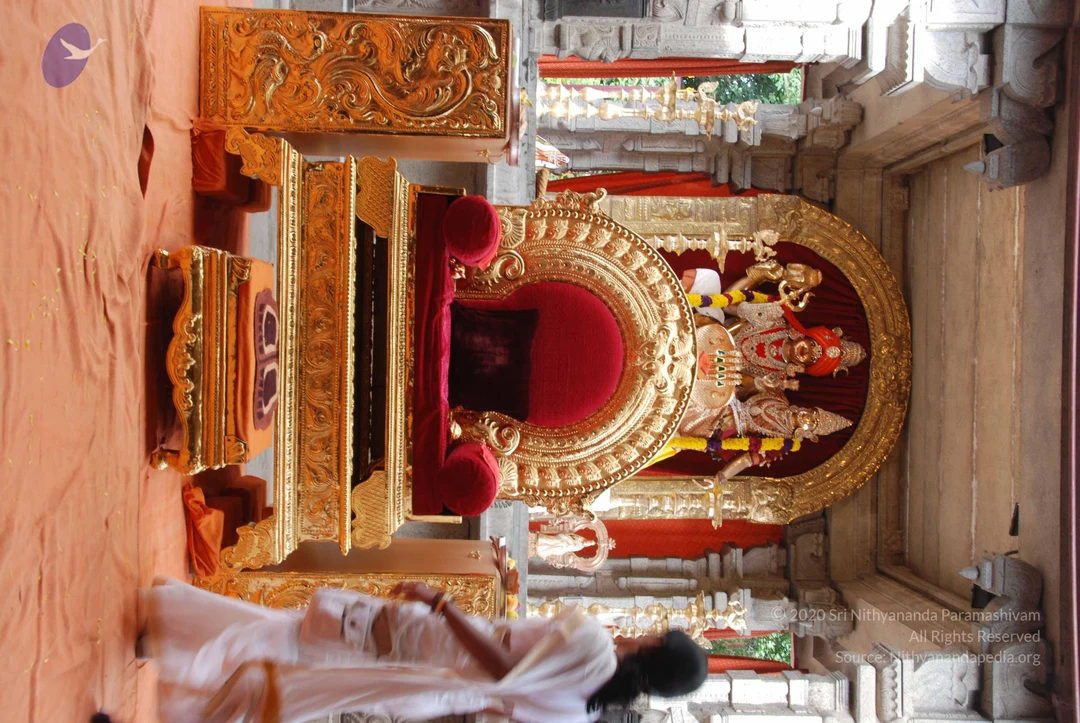
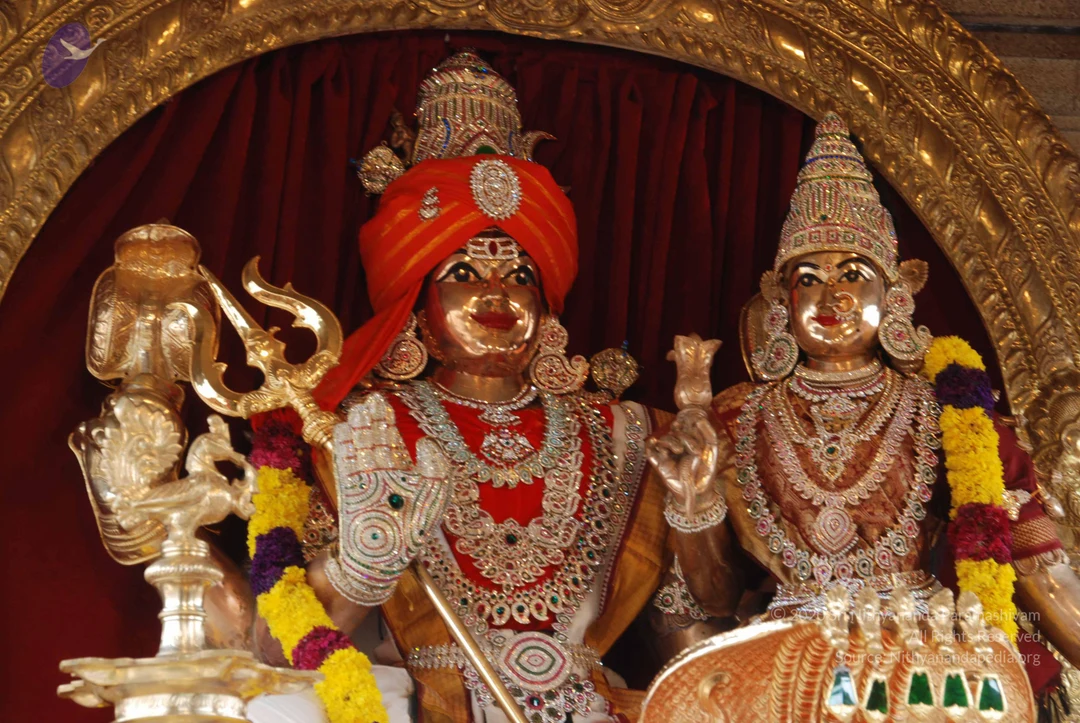
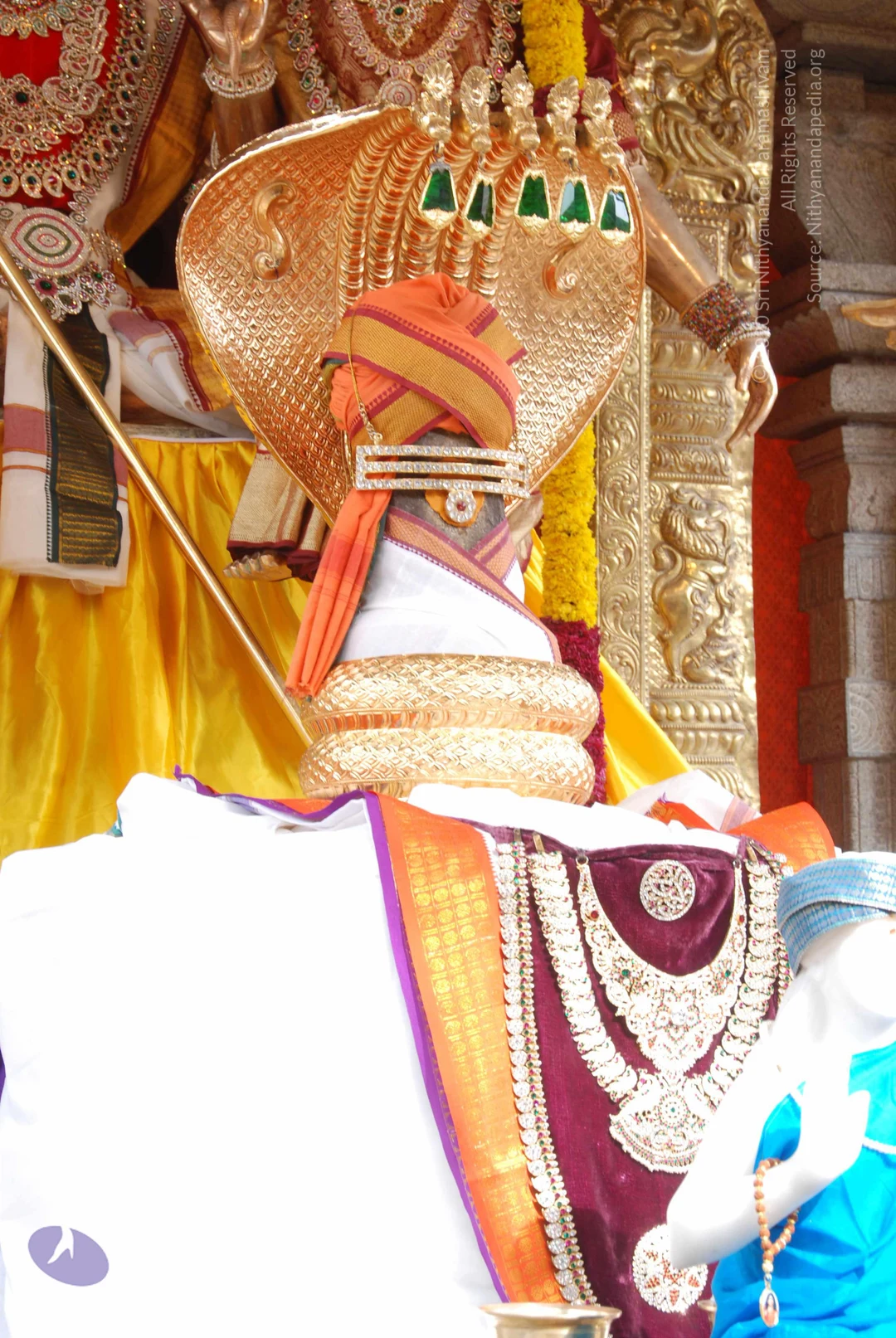
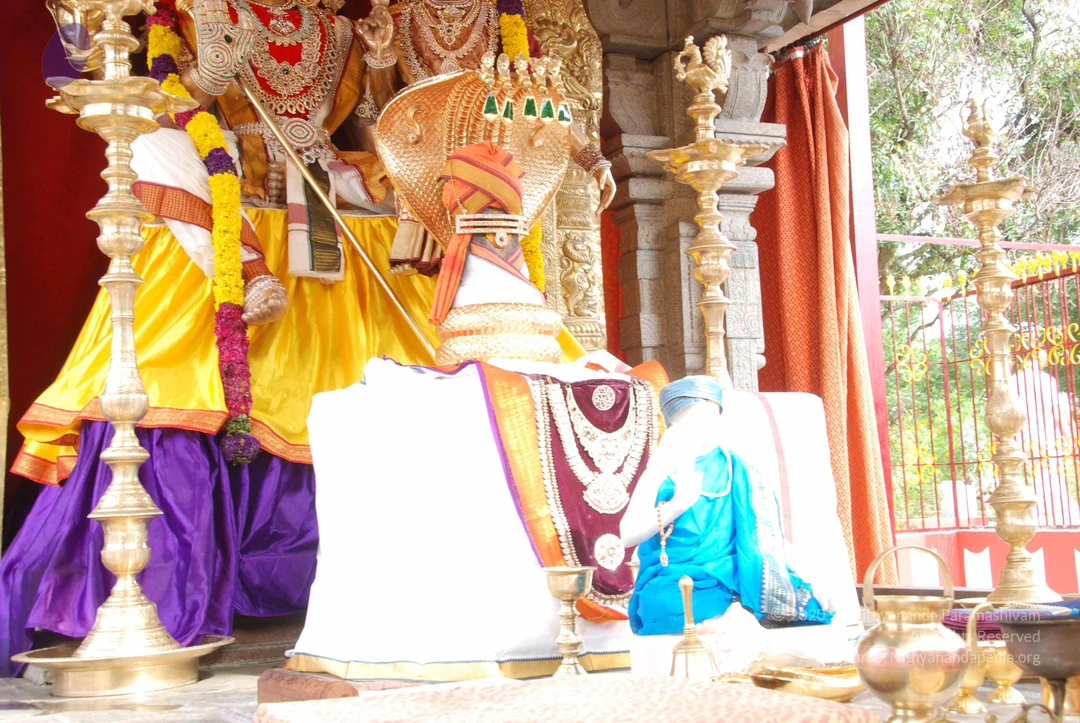
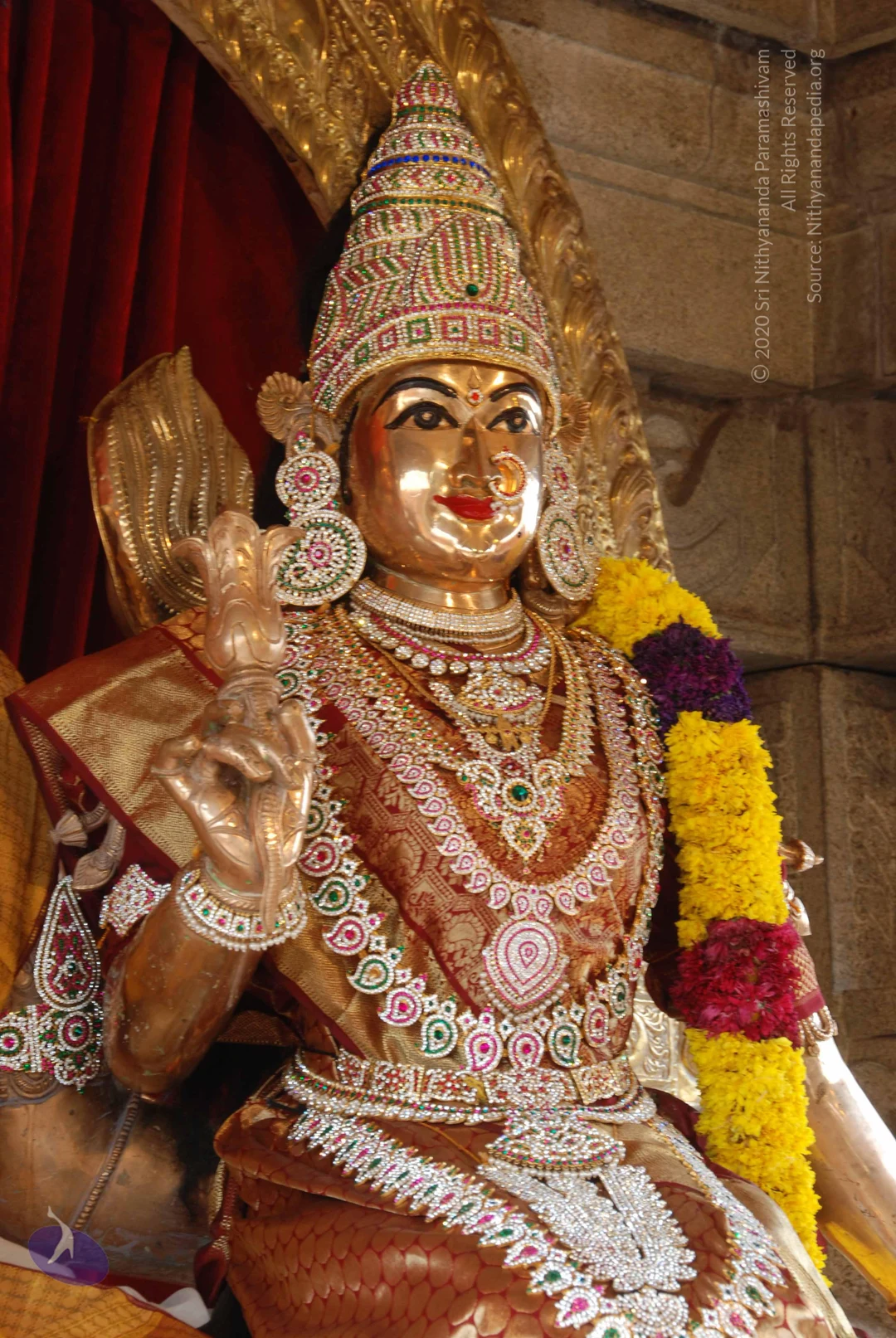
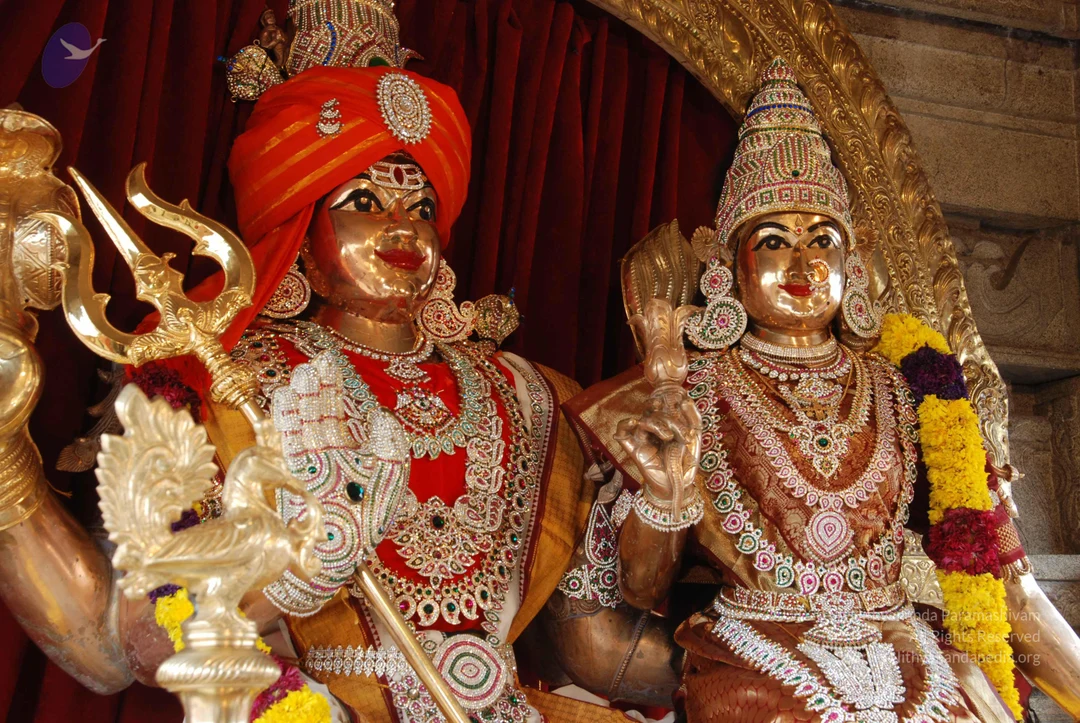
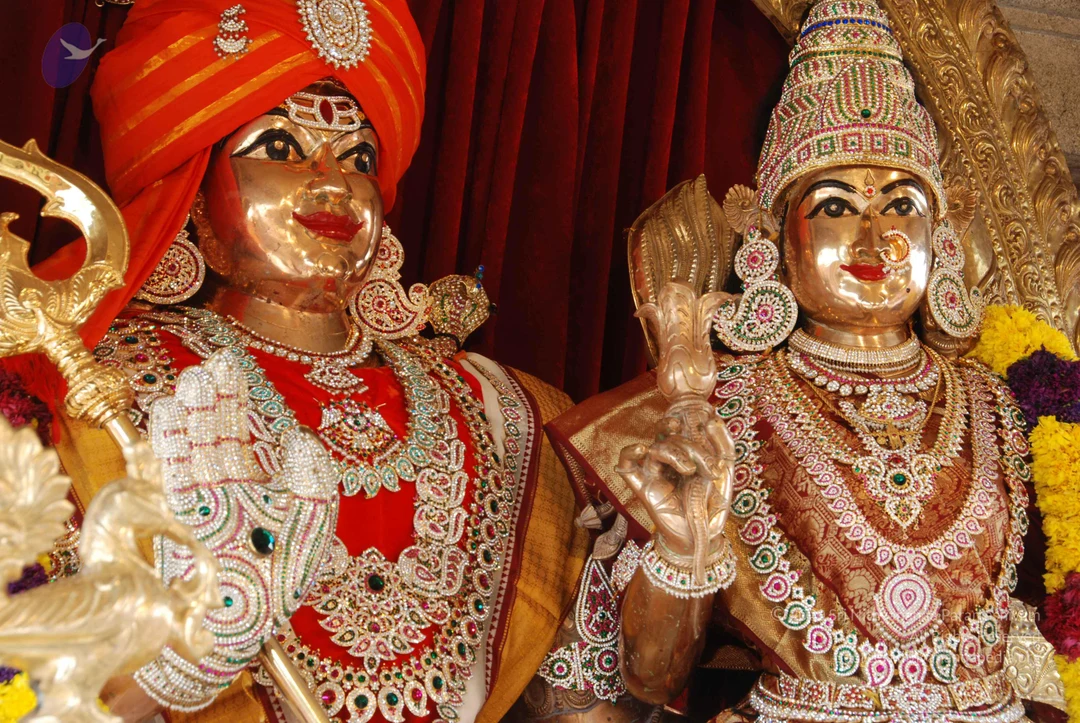
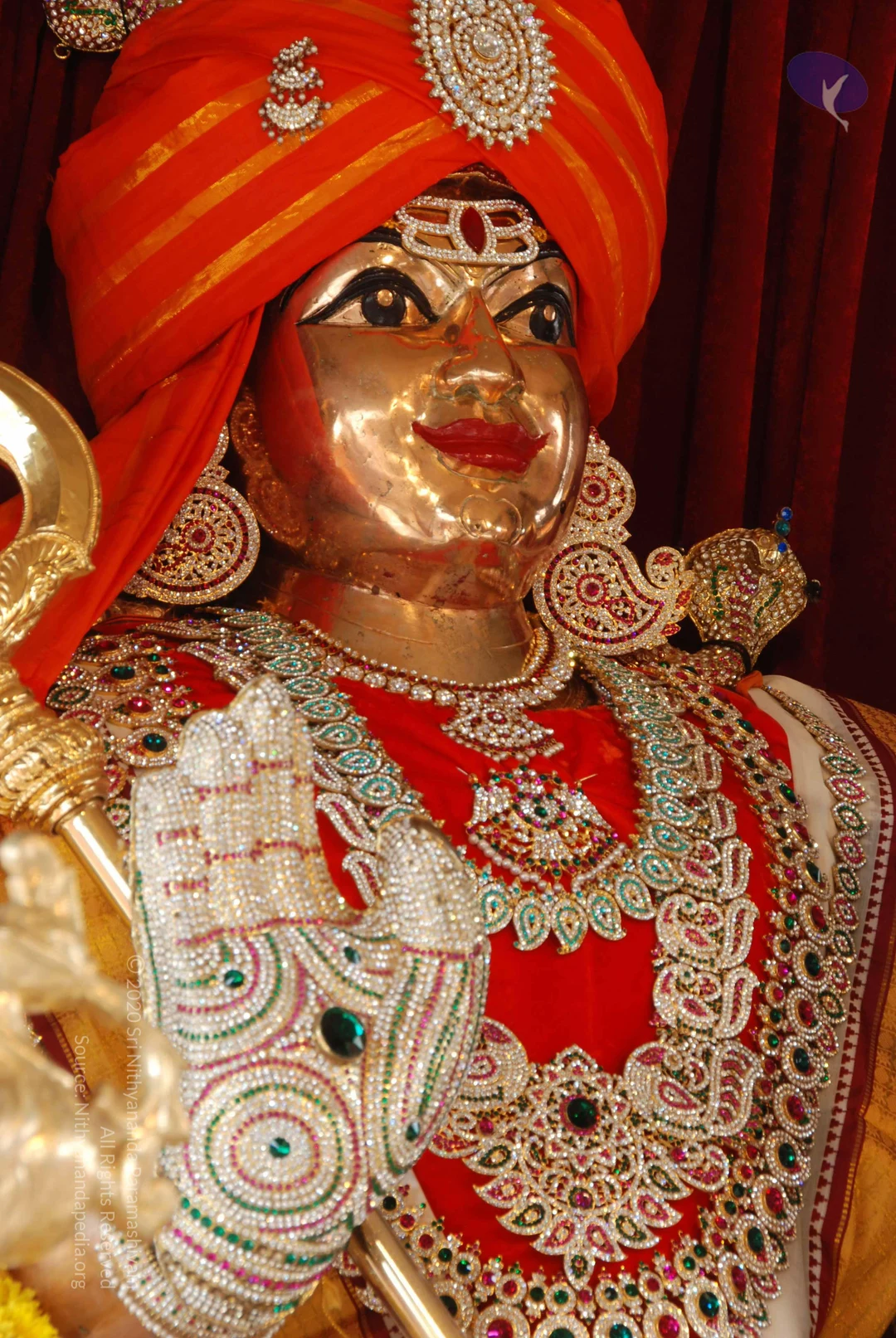
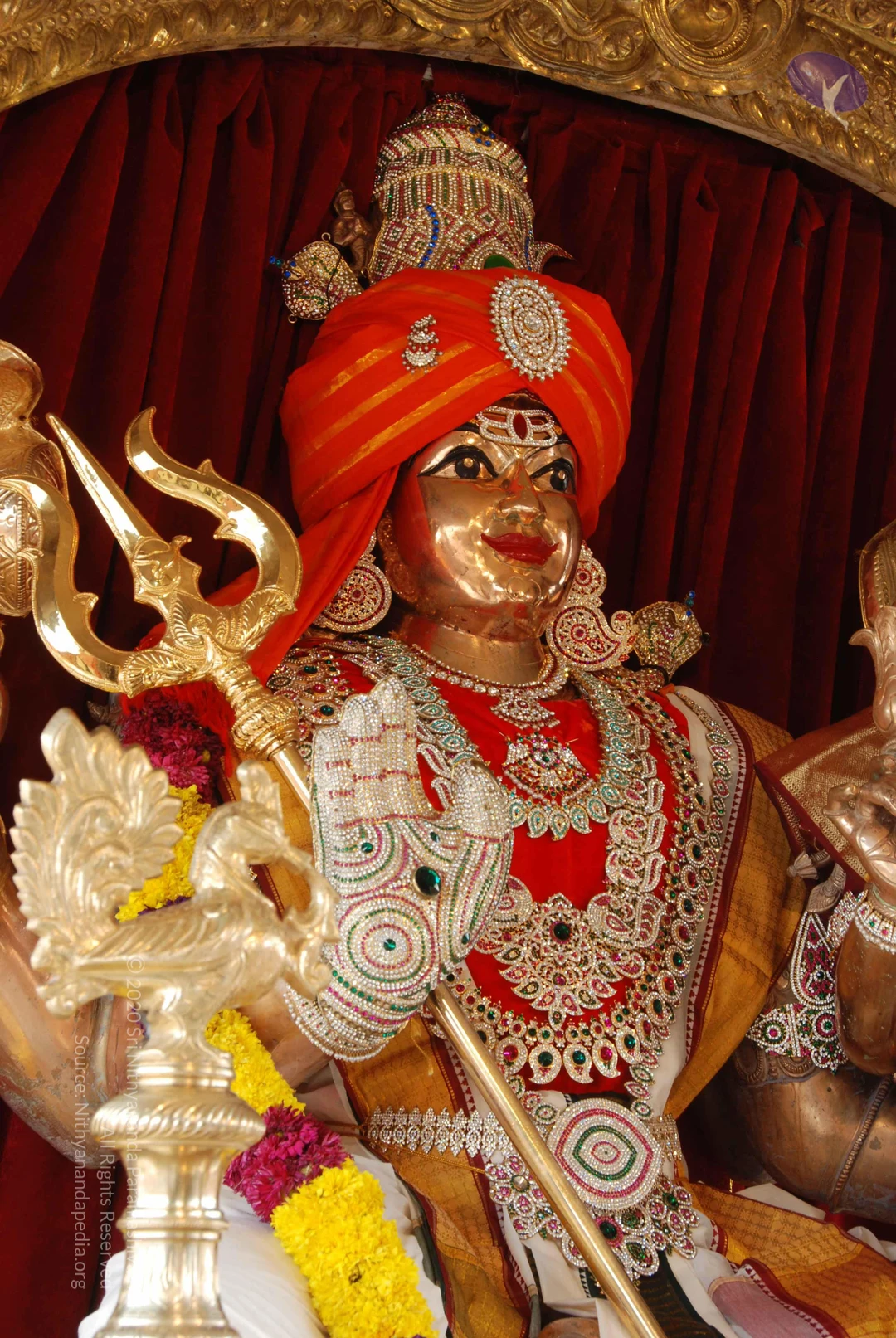
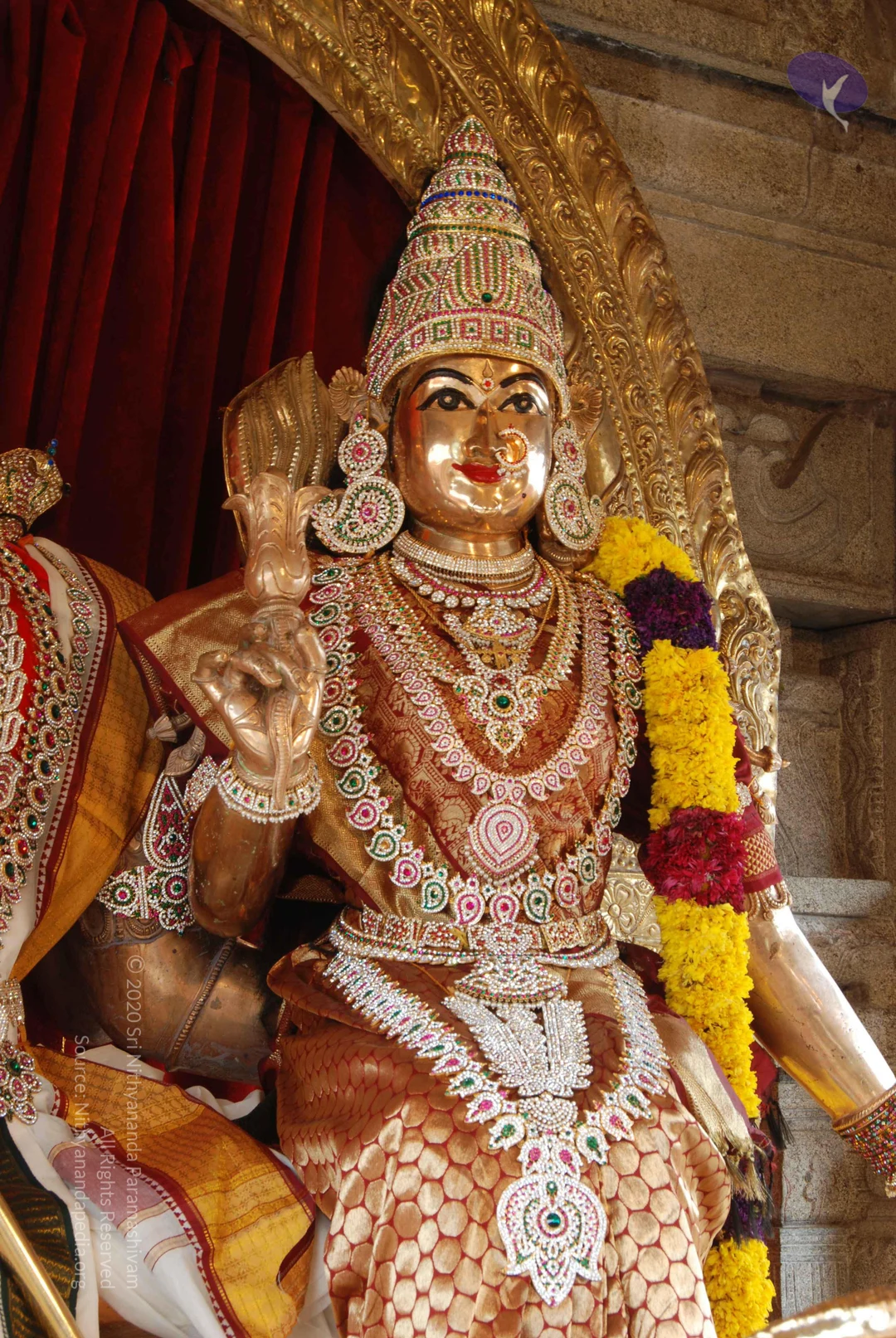
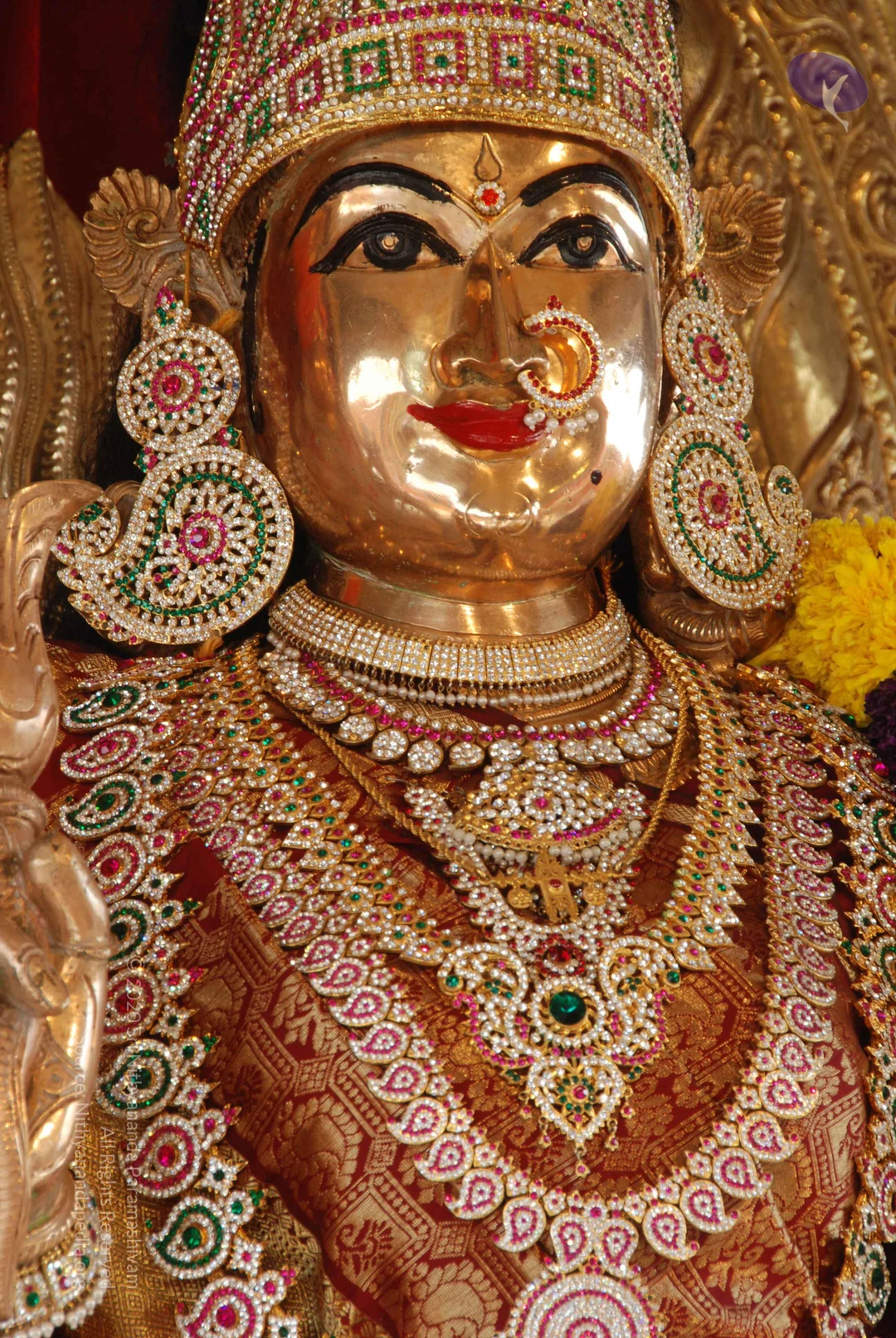
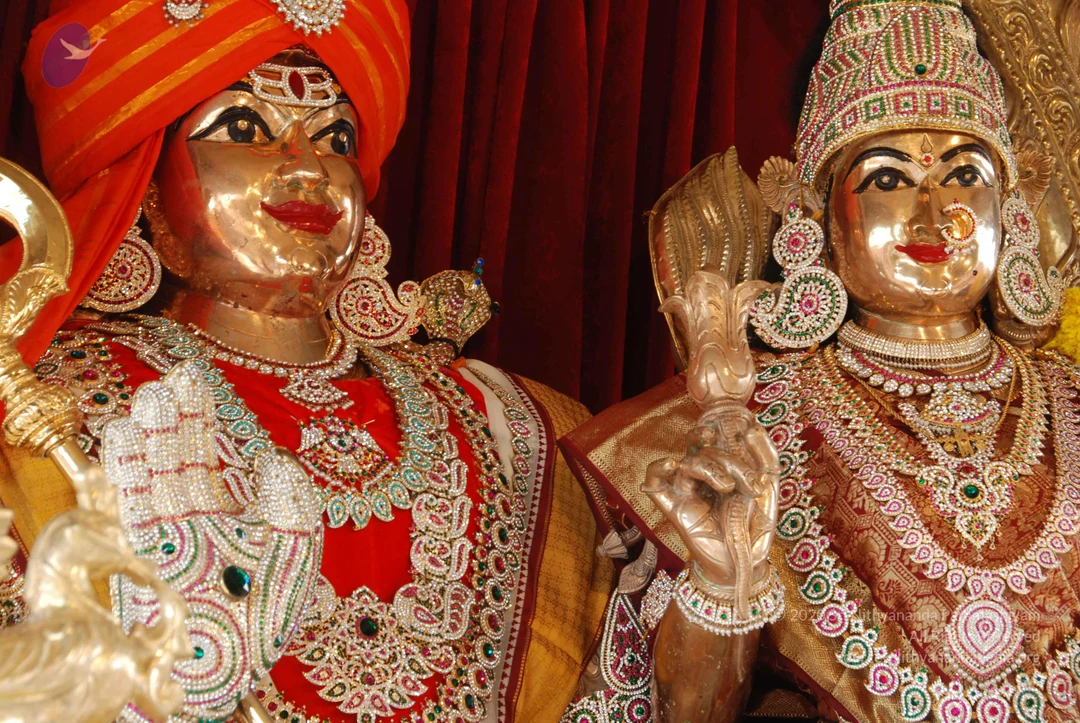
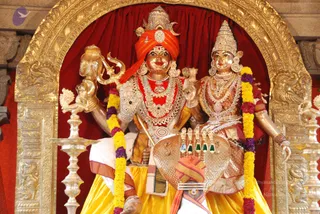
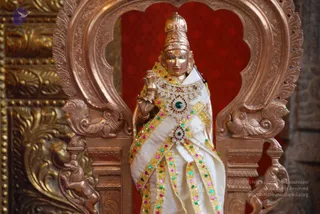
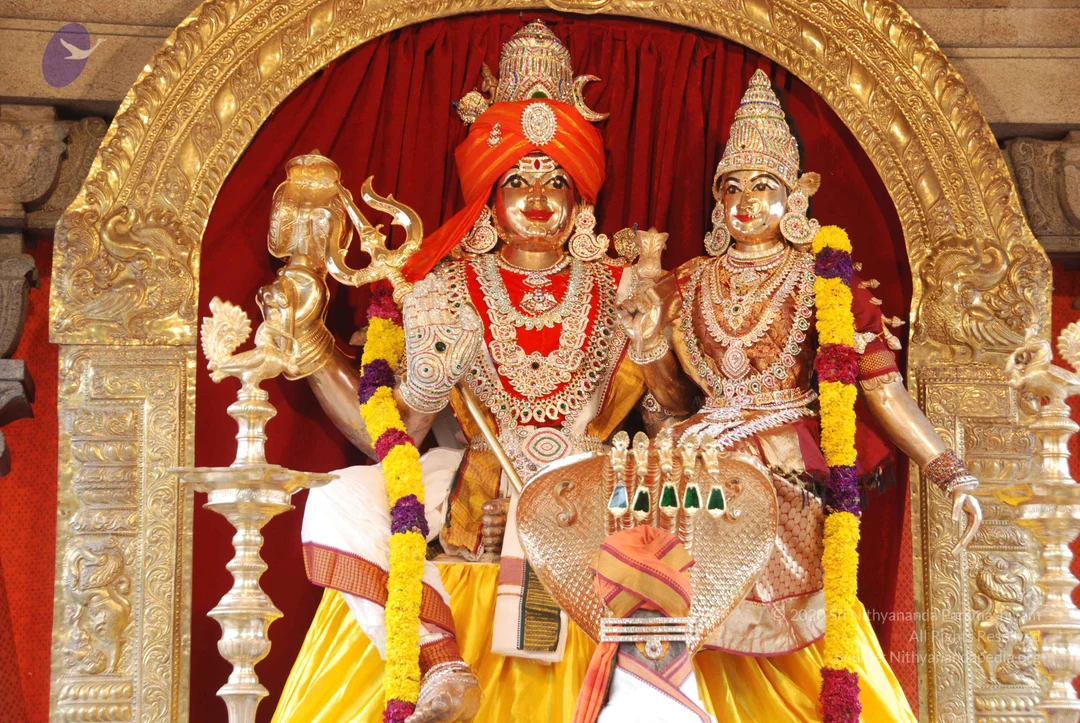
A gilded deity murti pair, a Shiva-Parvati form, seated on a throne within an ornate gold arch against a red velvet backdrop. The figure on the left wears an orange turban with a crescent ornament, a red and gold garment, layered jewelled necklaces and a trident in hand. The figure on the right wears a tall jewelled crown, layered gold necklaces and a yellow-and-red sari-style cloth. Both are garlanded with yellow and purple flower strands, and silver lamp stands flank the throne. These are statues, not living people, and no person is shown.A gilded metal murti of a goddess stands within an ornate copper-gold arched frame carved with floral scrolls and mythical birds. She wears a white silk sari bordered with gold and multicoloured jewelled trim, a jewelled necklace with a large green gem and a crown-like headdress, and raises one hand in a blessing gesture. A deep red fabric backdrop sets off the figure. Statue only, no physical people visible.Close-up photograph of a white marble statue of a figure with a blue-and-gold patterned headwrap bearing a red tilak on the forehead. The statue wears a blue silk garment with a gold-bordered wrap, a white pearl necklace, and a beaded rudraksha-style bracelet on one wrist, and its right hand is raised in a gesture of blessing. Behind it is a deep maroon velvet backdrop decorated with ornate gold and jewelled necklaces and an orange-bordered cloth at the left edge. No living people are visible. The statue is a depiction, not a person in the scene.Close-up photograph of an ornately embossed silver tray or vessel with a pink hibiscus flower resting on its centre. The silver surface shows repeating floral and paisley-like motifs, rosettes and a fine mesh pattern around the rim. The background is a wooden wall with a wooden panel edge at the upper left. No people are visible in the frame.A close photograph of an ornately embossed silver plate resting on a wooden surface. A single pink hibiscus flower with a red centre and yellow stamens lies on the plate's central engraved floral and paisley pattern. The plate's rim is decorated with a beaded border. No people are visible. The background shows a wooden panel.Close-up photograph of a small polished brass statue of Ganesha, the elephant-headed deity, shown against a dark background. The figure has four arms, one holding a modak sweet, and a broken or raised tusk area near the trunk. An Om symbol is engraved on the forehead, and a crown-like headdress rises above. Light catches the metal highlights on the trunk, belly and ornaments. No people are visible.