Skip to content
Saturday

20 February 2010

176Dated photos
1Source pages
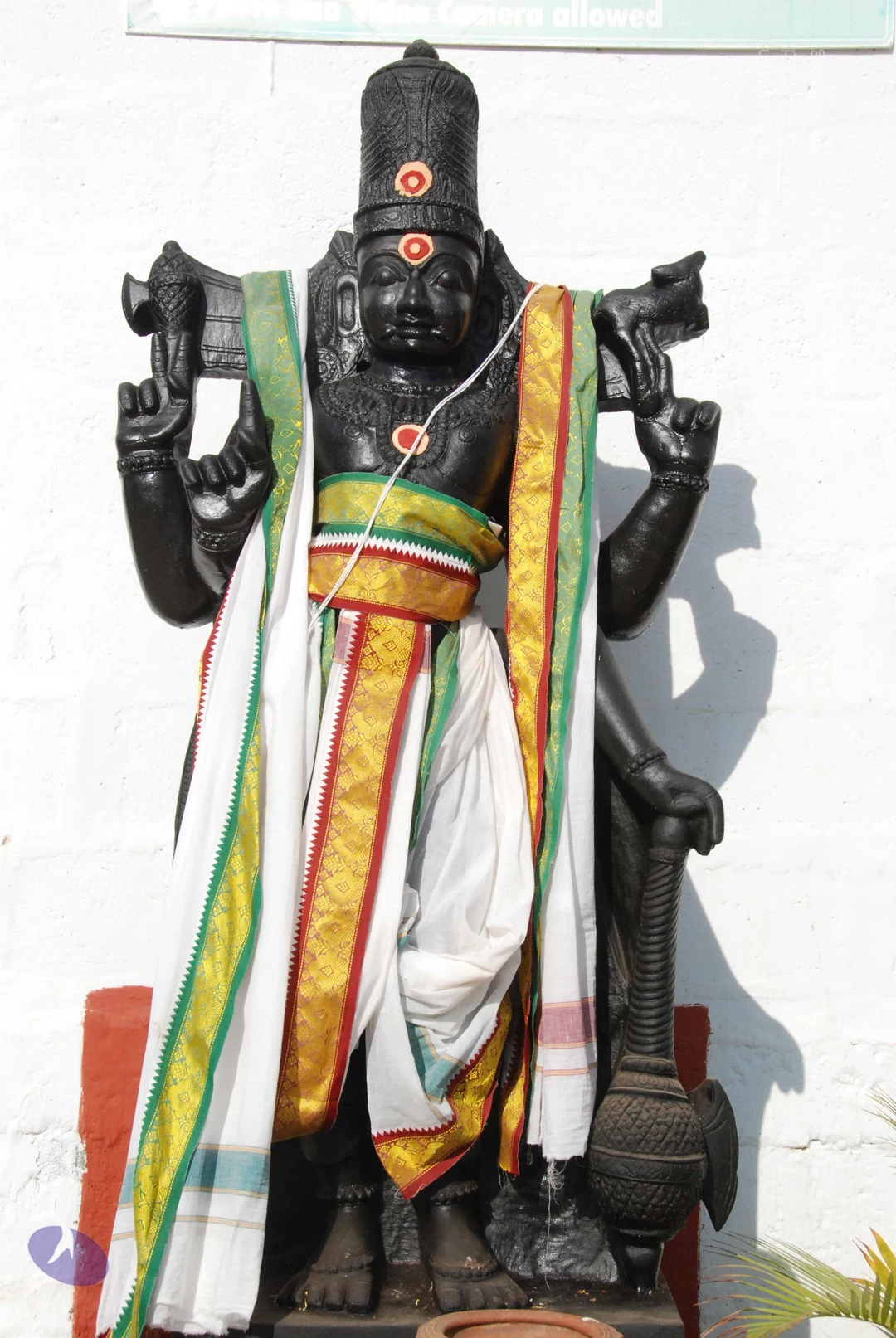
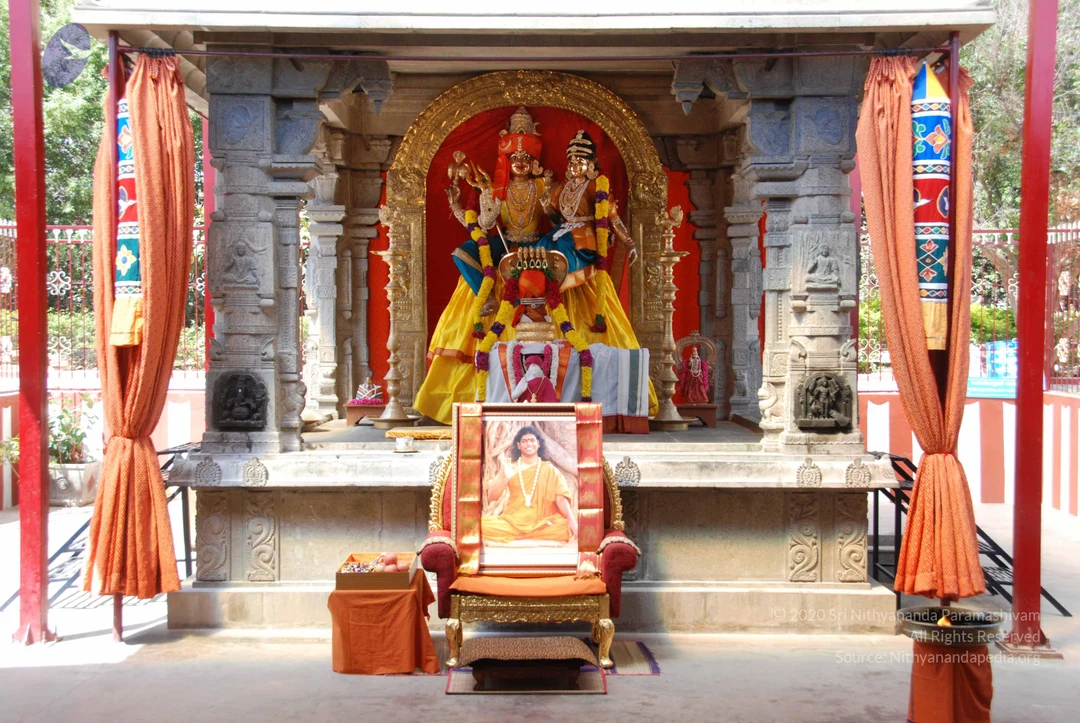
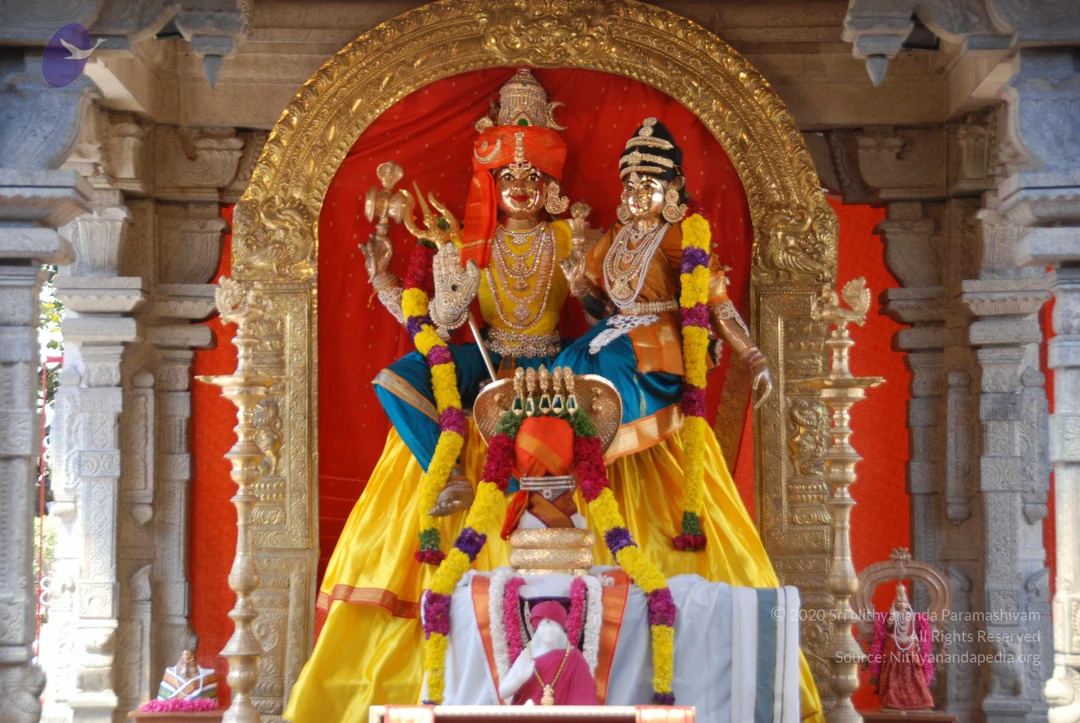
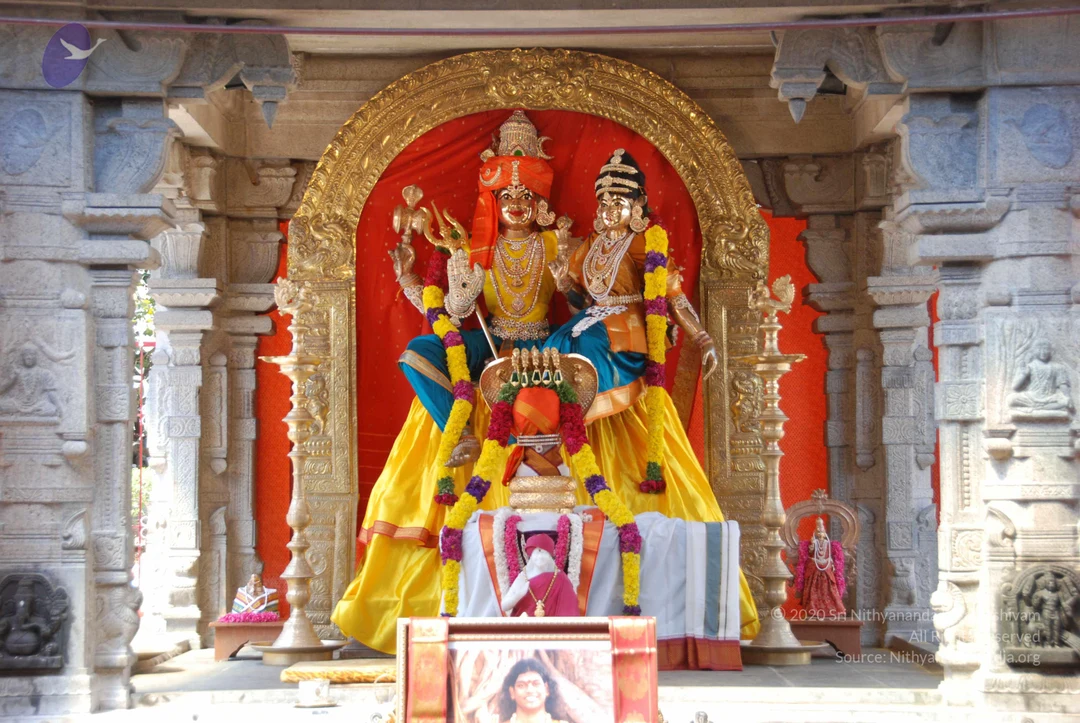
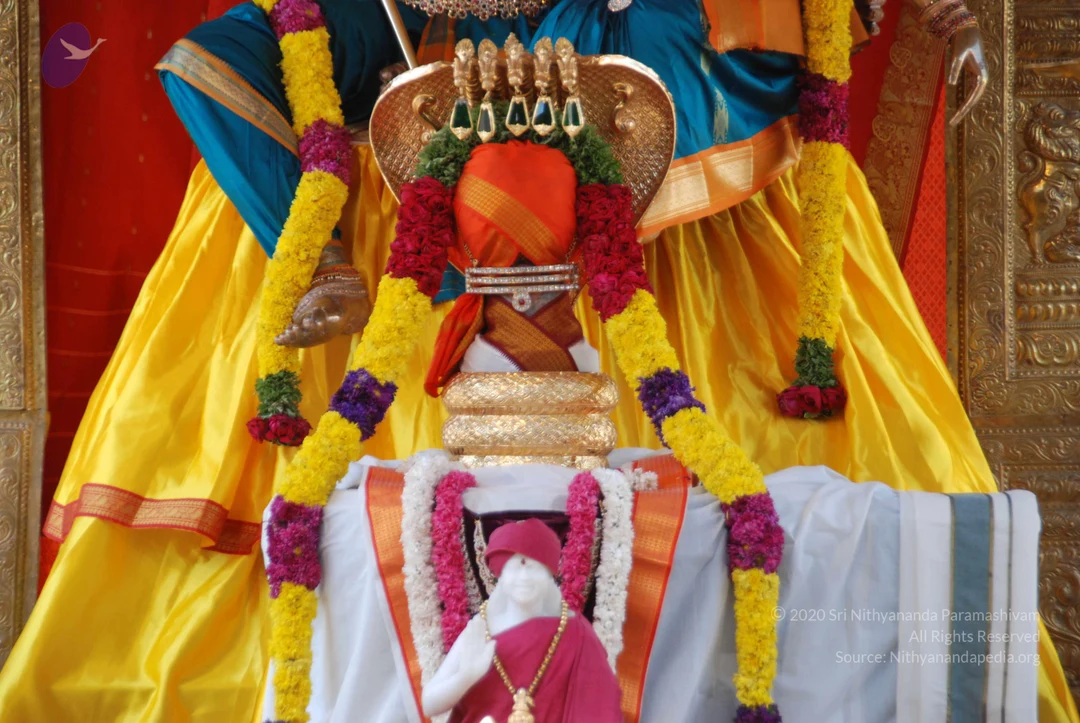
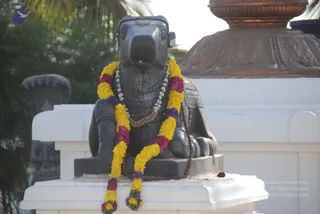
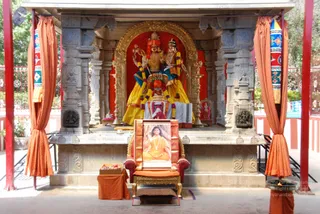
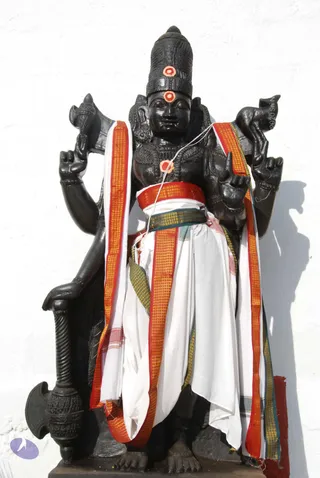
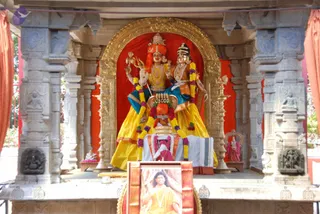
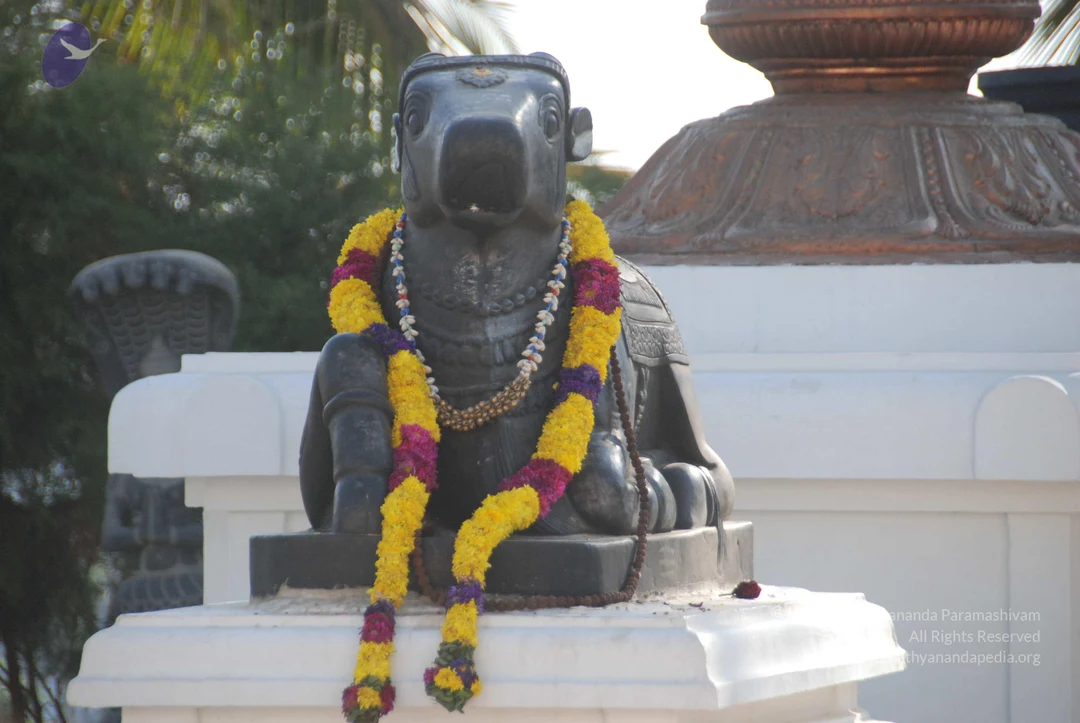
A dark stone Nandi bull statue sits on a white pedestal outdoors, garlanded with yellow marigolds and magenta and purple flowers. A white and cream shell necklace and a rudraksha-style bead strand hang across its chest, and a rope or mala is looped around its base. Behind it, a carved bronze-coloured urn or finial sits atop the white plinth, with green foliage and a partly visible second carved stone figure to the left. No people are visible.A photograph of an open-sided shrine with grey stone pillars and an arched gold-framed niche backed by red. Inside stands a deity murti, a male and female pair with a crown and jewelled ornaments, wearing yellow and blue draped garments and garlanded with orange and red flower strands. In front is an ornate gold and red throne-style chair holding a framed printed portrait of a figure in orange robes and a beaded necklace, seated in meditation. Orange curtains with decorative borders hang at the sides, and a small table with offerings sits to the left. No physical people are visible.A black stone murti of a four-armed deity stands against a white wall in bright daylight. The figure wears a tall conical crown with red-and-white tilak marks on the forehead and chest, and is dressed in a white dhoti with a red and gold bordered shawl draped over the shoulders and a dark green and red waistband. One hand holds a trident-like weapon and another rests on a tall ornate staff or mace with a carved base; the other hands are raised in mudra gestures. Shadows fall to the right side of the wall. No people are visible.

Photos of the day

View all 176 photos

176 distinct dated photos. Source gallery sets may overlap.

01

01-Anandeshwara

11 dated photos in previewSource gallery
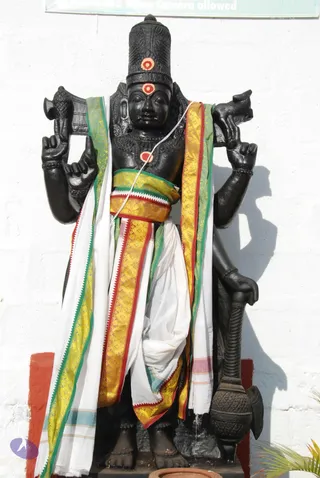
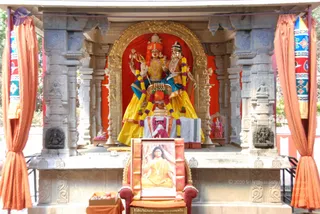
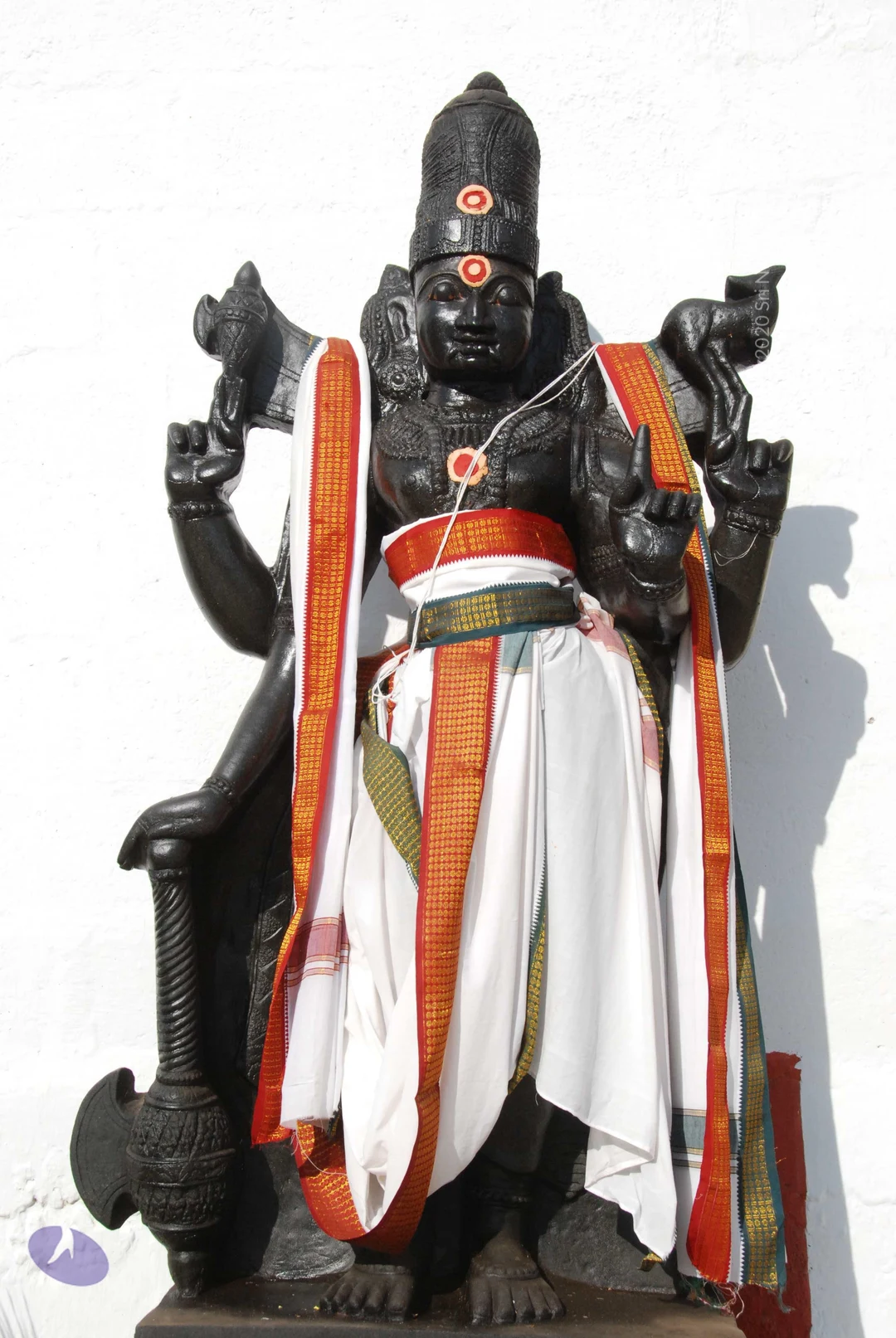
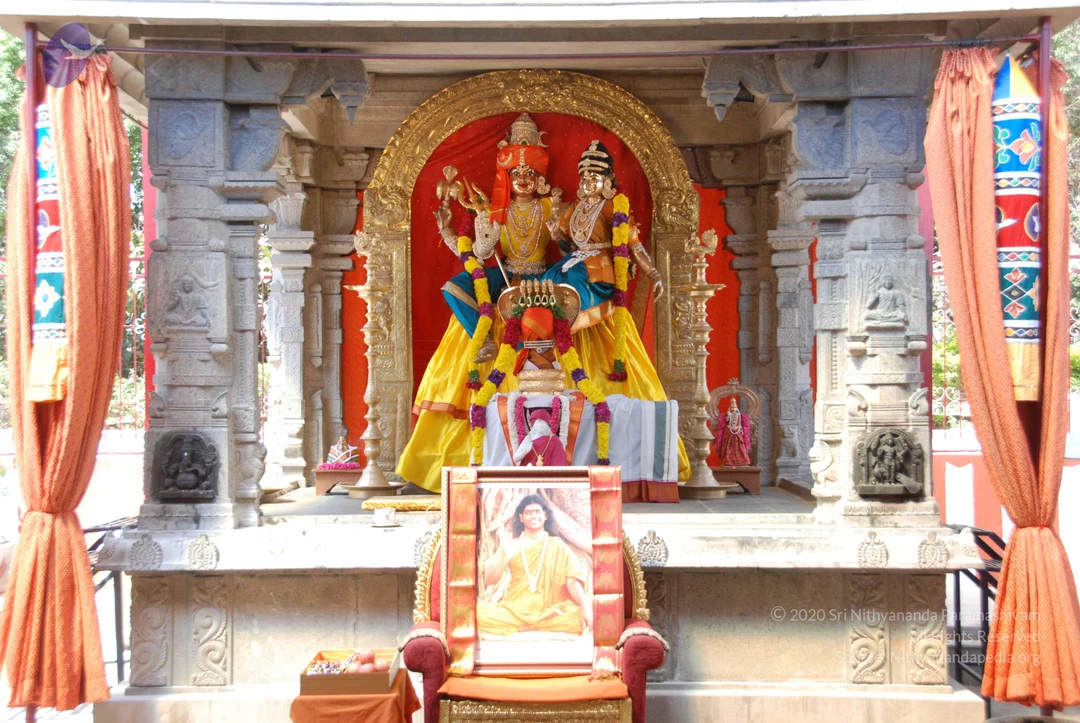
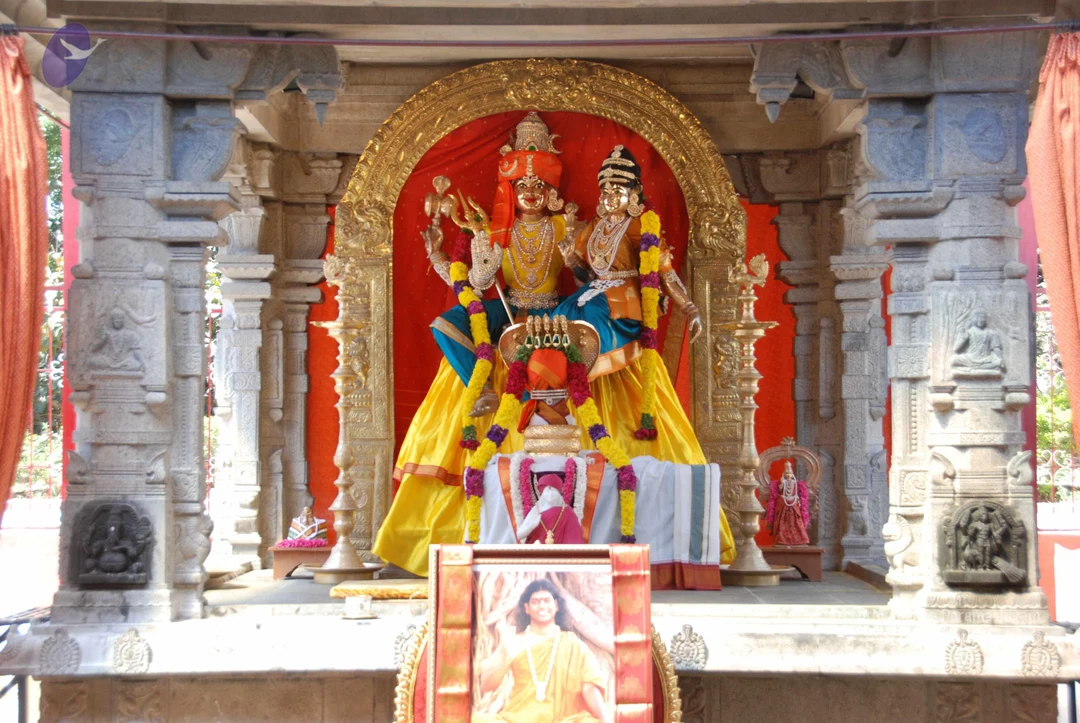
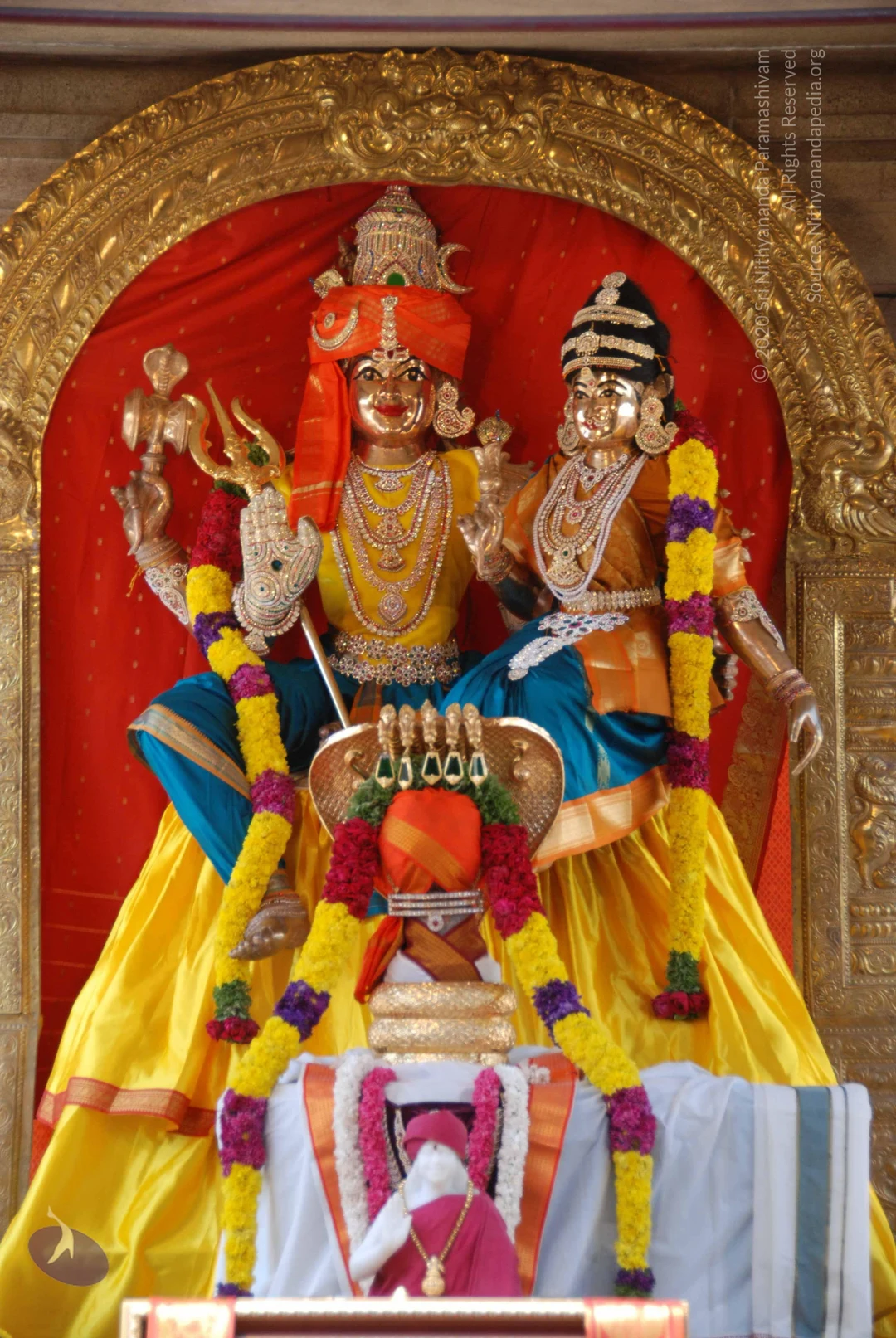
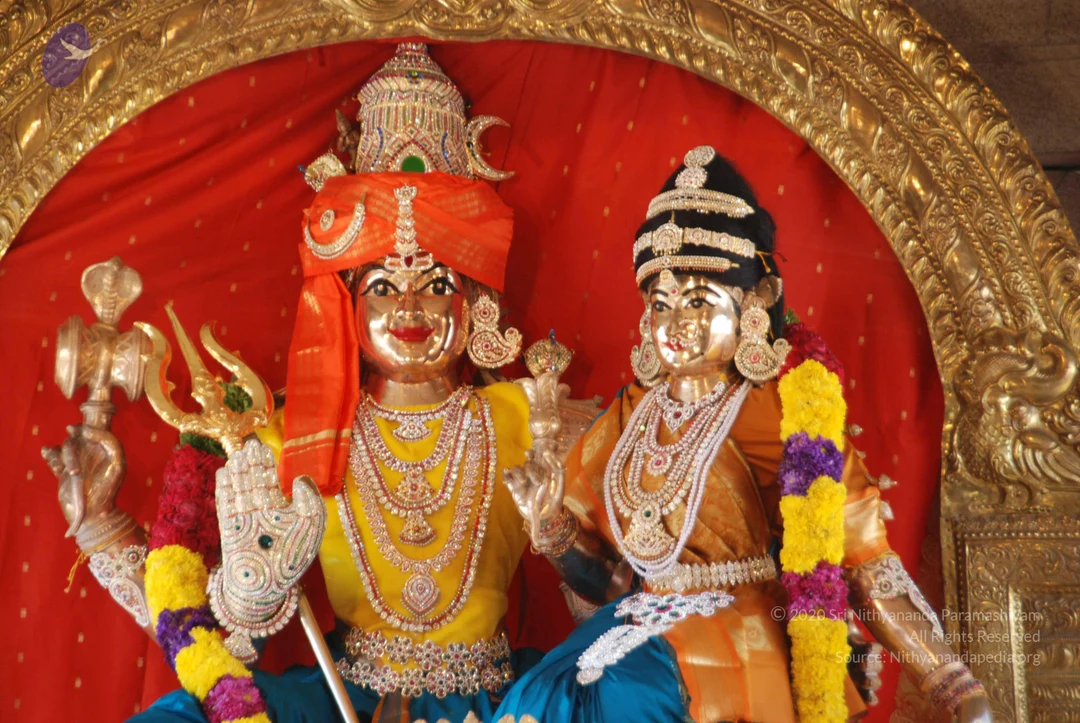
A dark stone Nandi bull statue sits on a white pedestal outdoors, garlanded with yellow marigolds and magenta and purple flowers. A white and cream shell necklace and a rudraksha-style bead strand hang across its chest, and a rope or mala is looped around its base. Behind it, a carved bronze-coloured urn or finial sits atop the white plinth, with green foliage and a partly visible second carved stone figure to the left. No people are visible.A black stone murti of a four-armed deity stands against a white wall in bright daylight. The figure wears a tall conical crown with red-and-white tilak marks on the forehead and chest, and is dressed in a white dhoti with a red and gold bordered shawl draped over the shoulders and a dark green and red waistband. One hand holds a trident-like weapon and another rests on a tall ornate staff or mace with a carved base; the other hands are raised in mudra gestures. Shadows fall to the right side of the wall. No people are visible.A black stone statue of a four-armed deity stands against a white wall in daylight. The figure wears a tall cylindrical crown with red circular markings, red bindi-like marks on the forehead and chest, and a white dhoti with a gold, red and green brocade sash and shawl draped over the shoulders. The upper hands hold a trident-like weapon and a small figure or drum, while a lower hand rests on a club or mace with a textured, pot-shaped base. A white sign with a partial camera-prohibition notice is visible at the top edge. A small brass pot sits at the bottom of the frame. This is a deity murti, not a living person.A photograph of an open-sided shrine with grey stone pillars and an arched gold-framed niche backed by red. Inside stands a deity murti, a male and female pair with a crown and jewelled ornaments, wearing yellow and blue draped garments and garlanded with orange and red flower strands. In front is an ornate gold and red throne-style chair holding a framed printed portrait of a figure in orange robes and a beaded necklace, seated in meditation. Orange curtains with decorative borders hang at the sides, and a small table with offerings sits to the left. No physical people are visible.Photograph of an outdoor shrine at Adi Kailasa with a granite structure framed by orange curtains. Two painted deity murtis stand at the centre on a gold-arched red backdrop: one in red with a crown and trident, the other in yellow and orange sari-style dress, both draped in yellow and magenta marigold garlands. Below the murtis sits a red throne-like chair holding a framed photograph of a seated saffron-robed figure with a rudraksha mala. A small offering basket of fruit sits at the chair's base. No physical people are visible.A photograph of an outdoor shrine with a large deity murti pair seated on a raised pedestal. Two painted figures stand side by side: the left one has a red and orange crown, holds a trident, and wears gold necklaces and yellow dhoti; the right one wears a crown with a blue-and-orange garment and gold ornaments. Yellow and orange cloth drapes the pedestal, garlanded with yellow and purple flower garlands, and a kalasha sits in front. Ornate gold arch frames the shrine, with grey stone pillars carved with figures and brass oil lamps standing to each side. A small framed portrait sits at the base, showing a man in saffron robes with a mala, though the photo gives no clear view of his face. No people are visible in the scene.
02

02-Kalpataru

39 dated photos in previewSource gallery
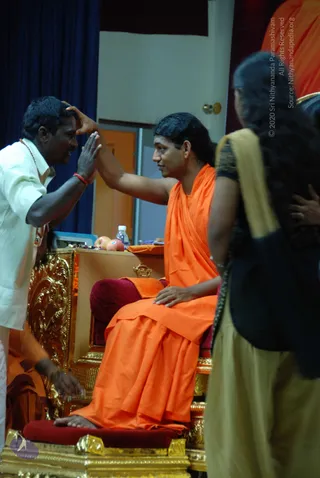
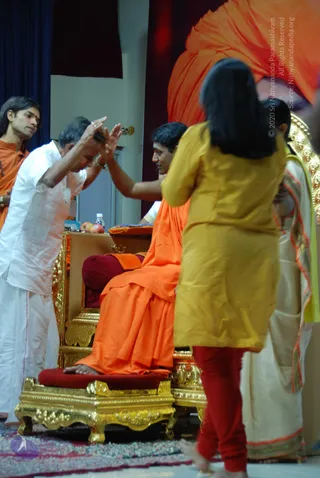
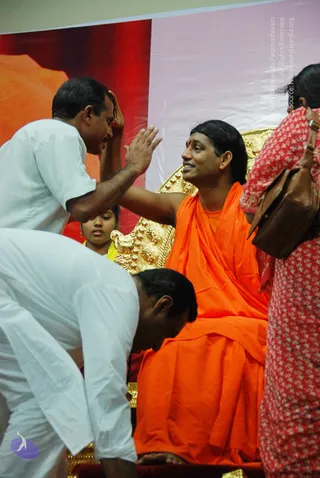
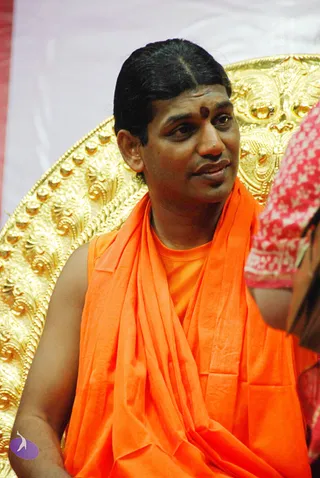
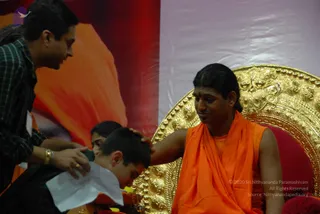
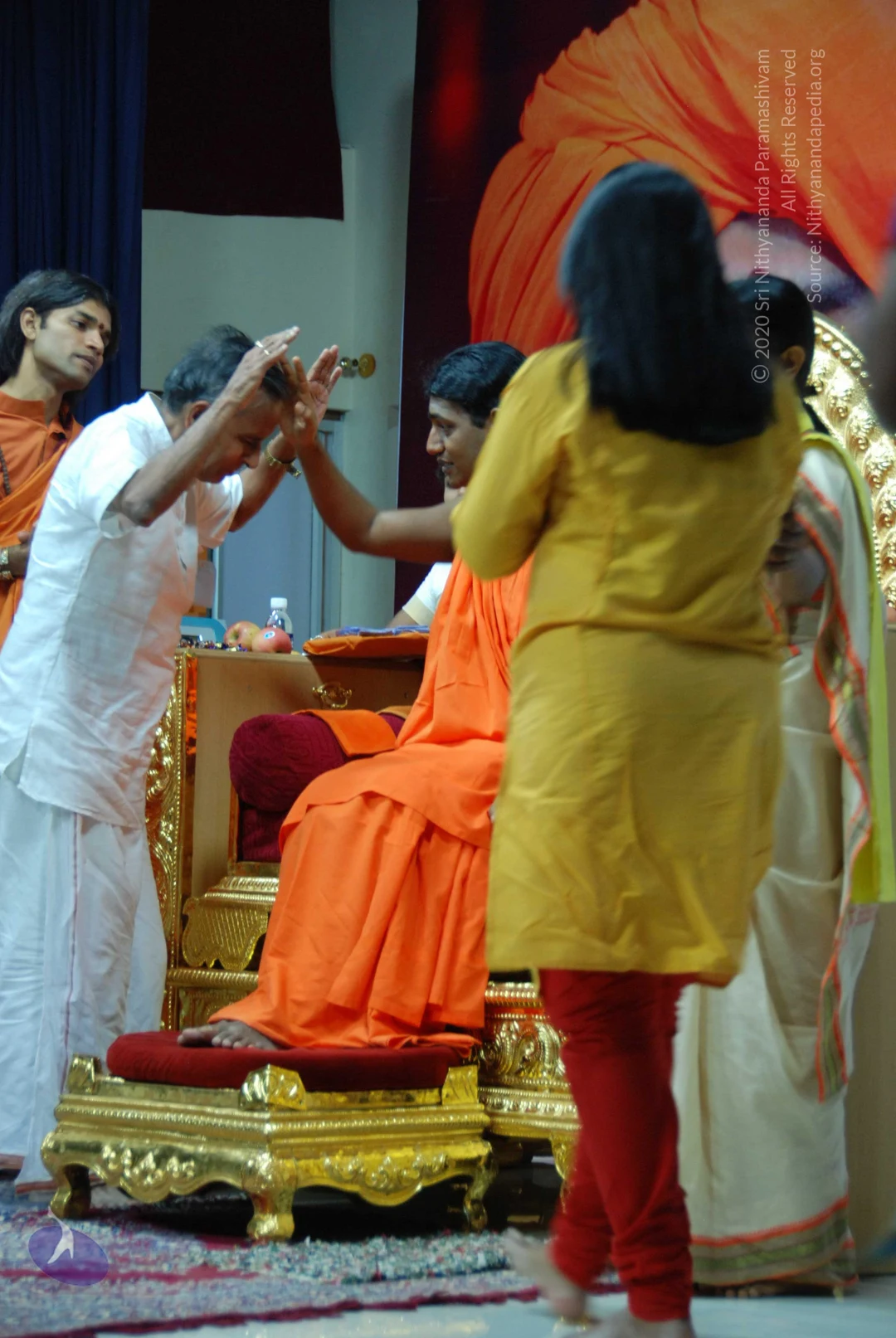
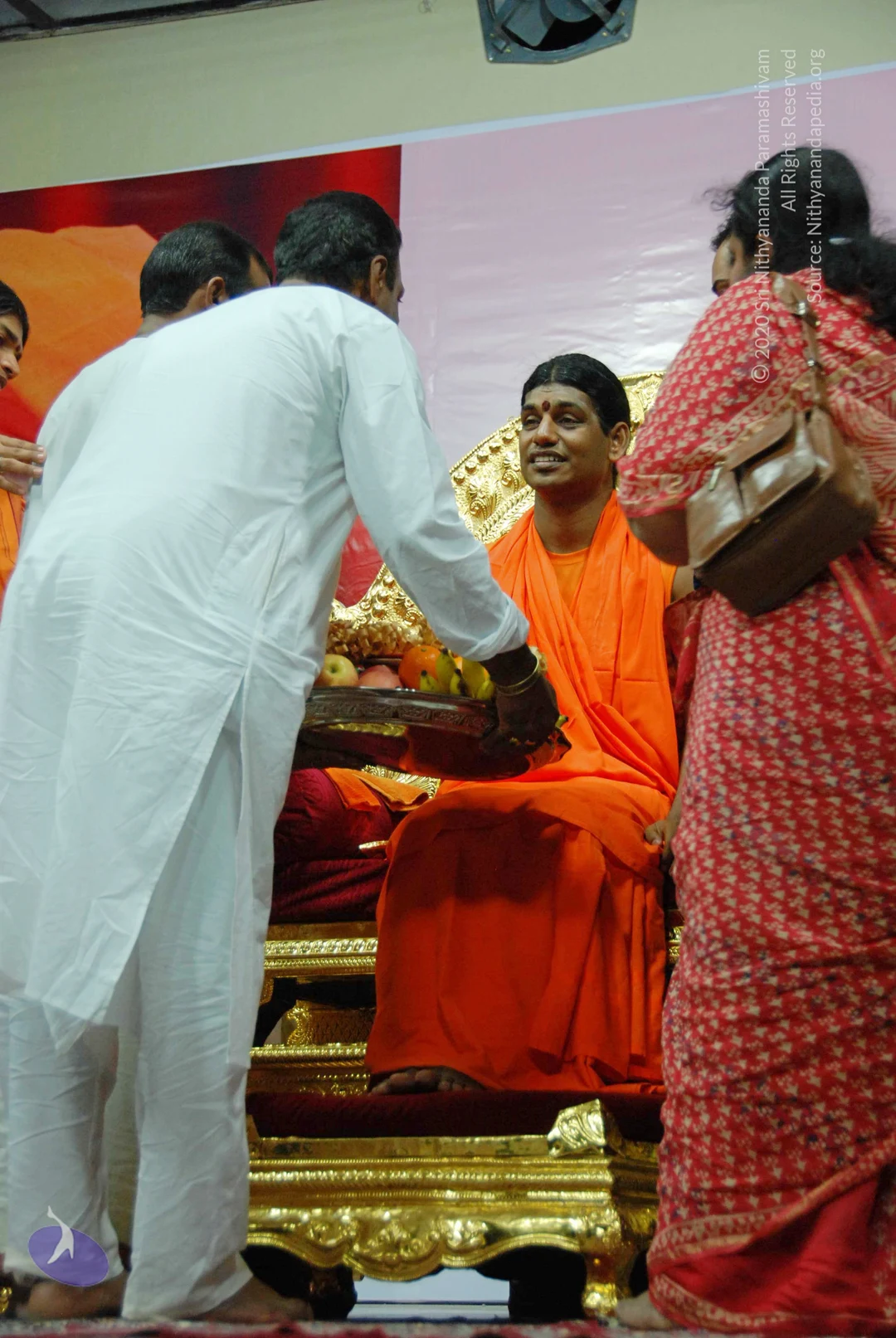
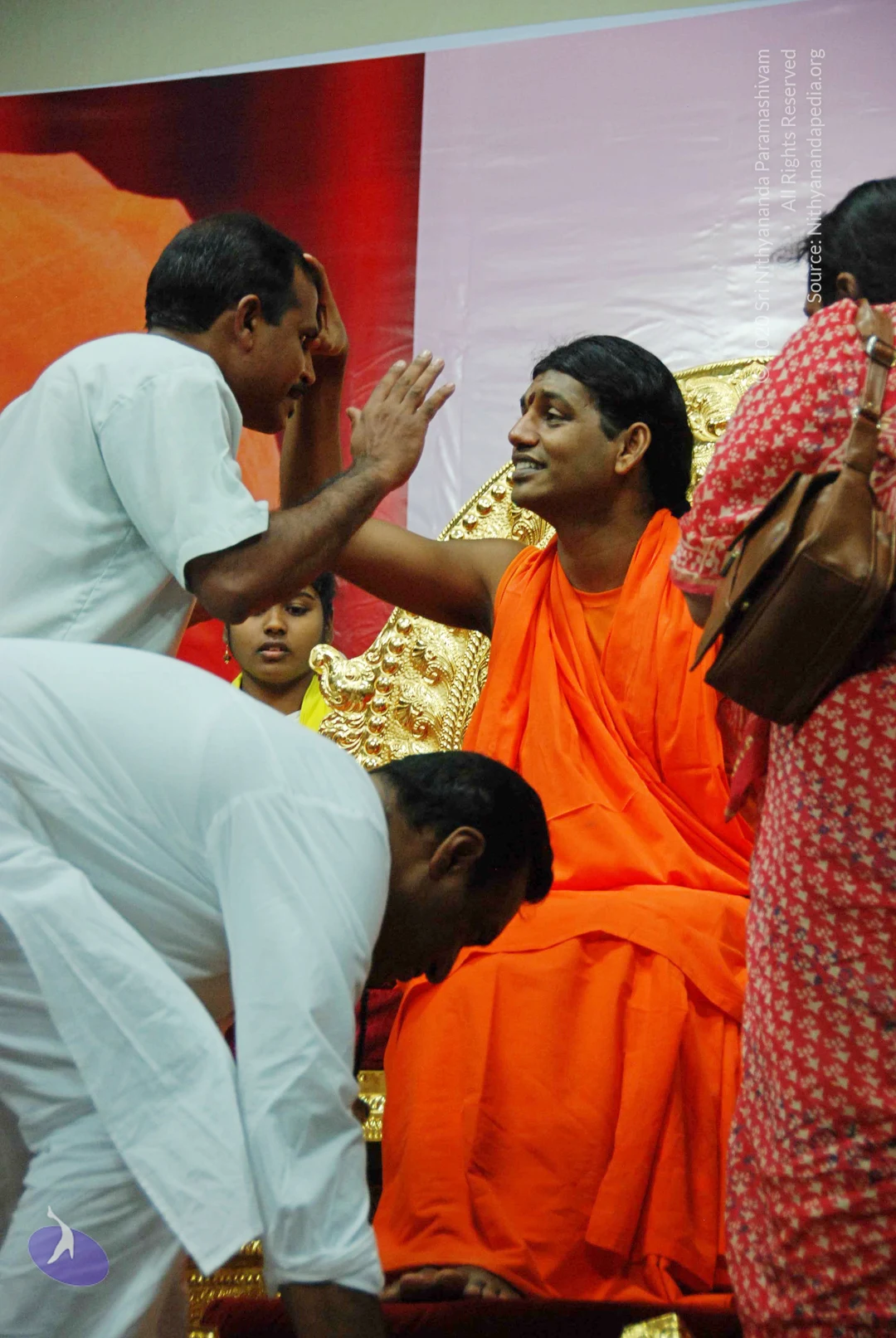
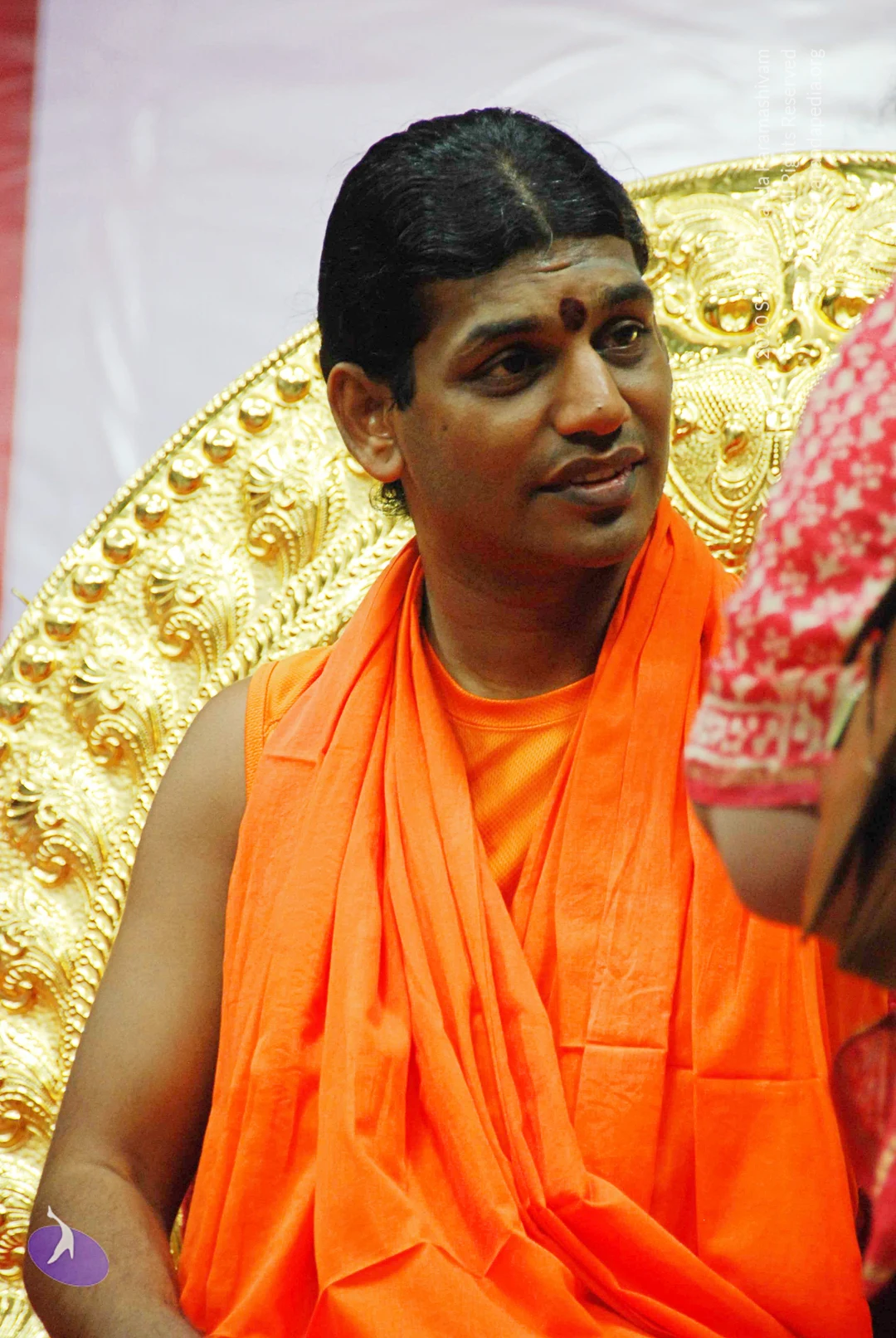
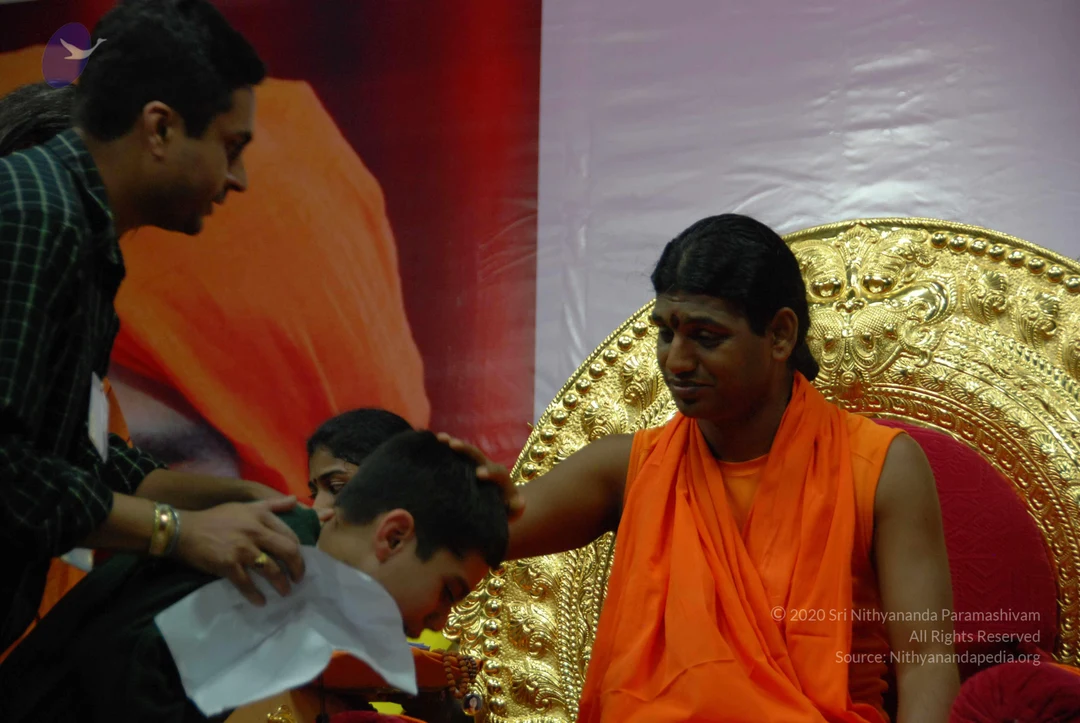
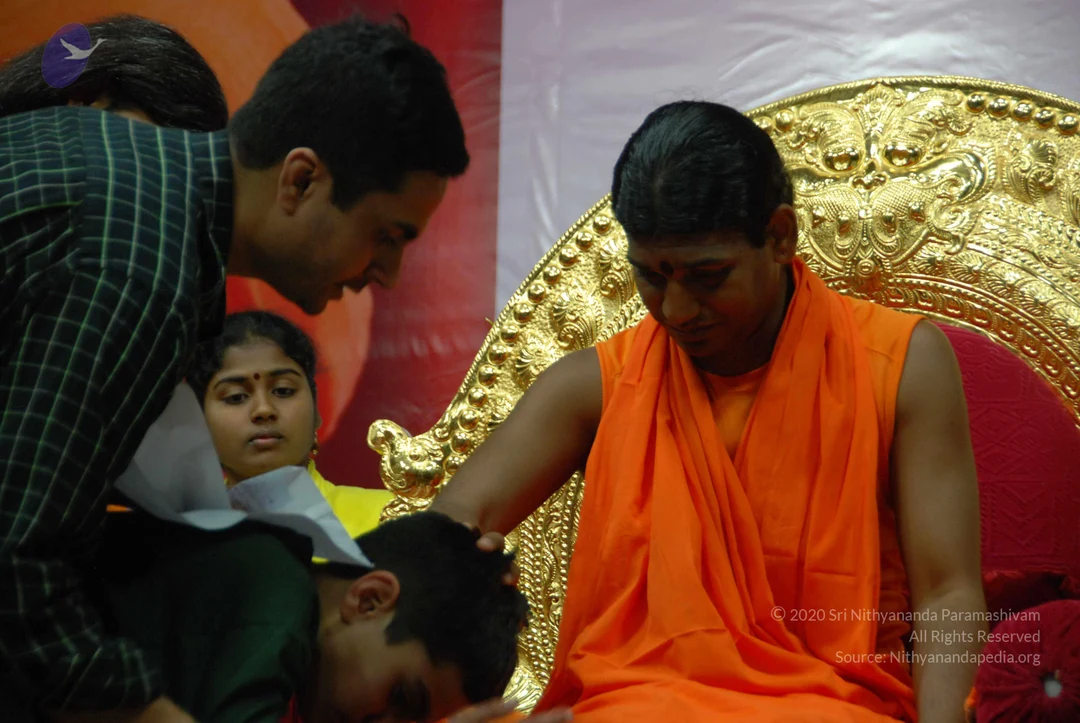
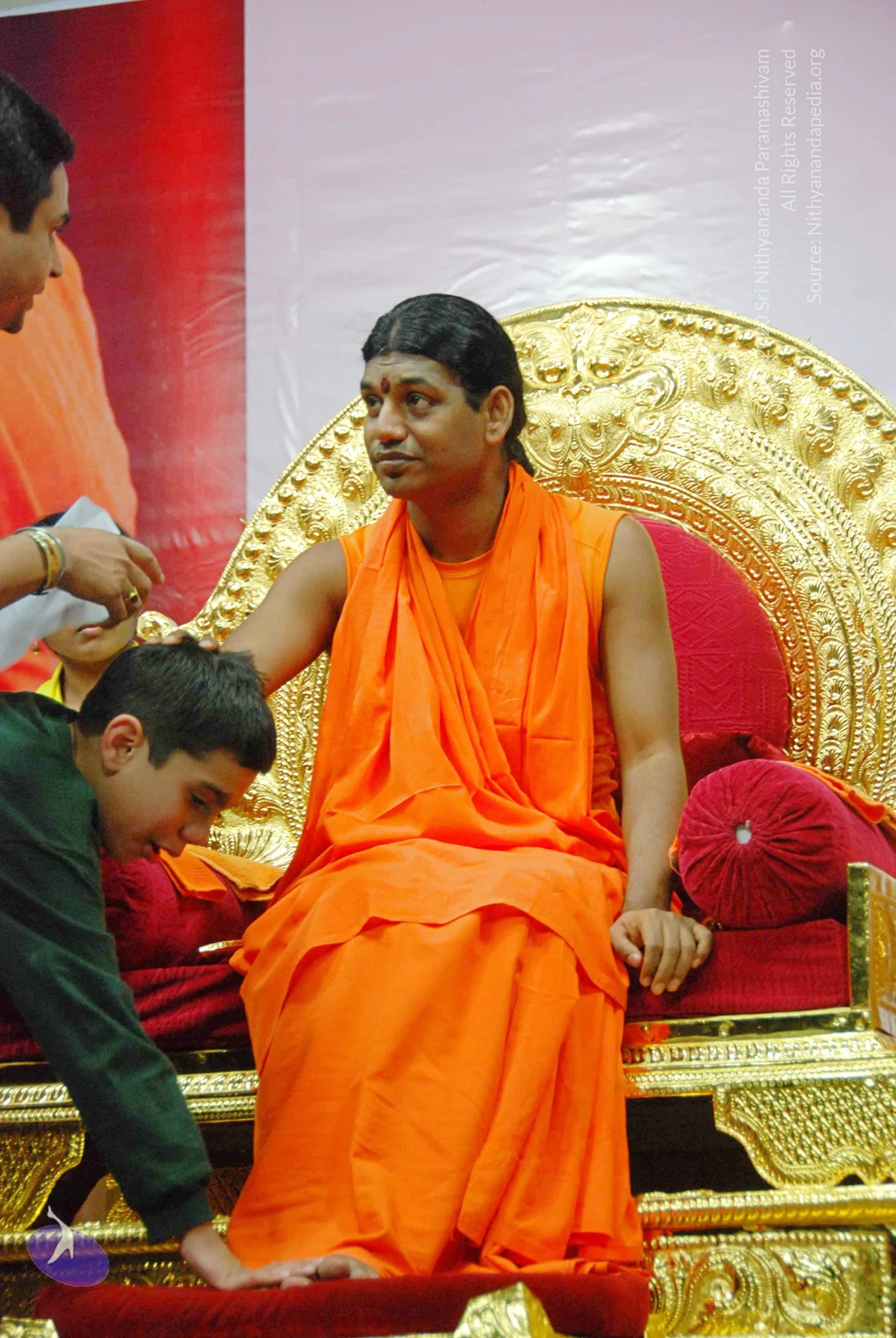
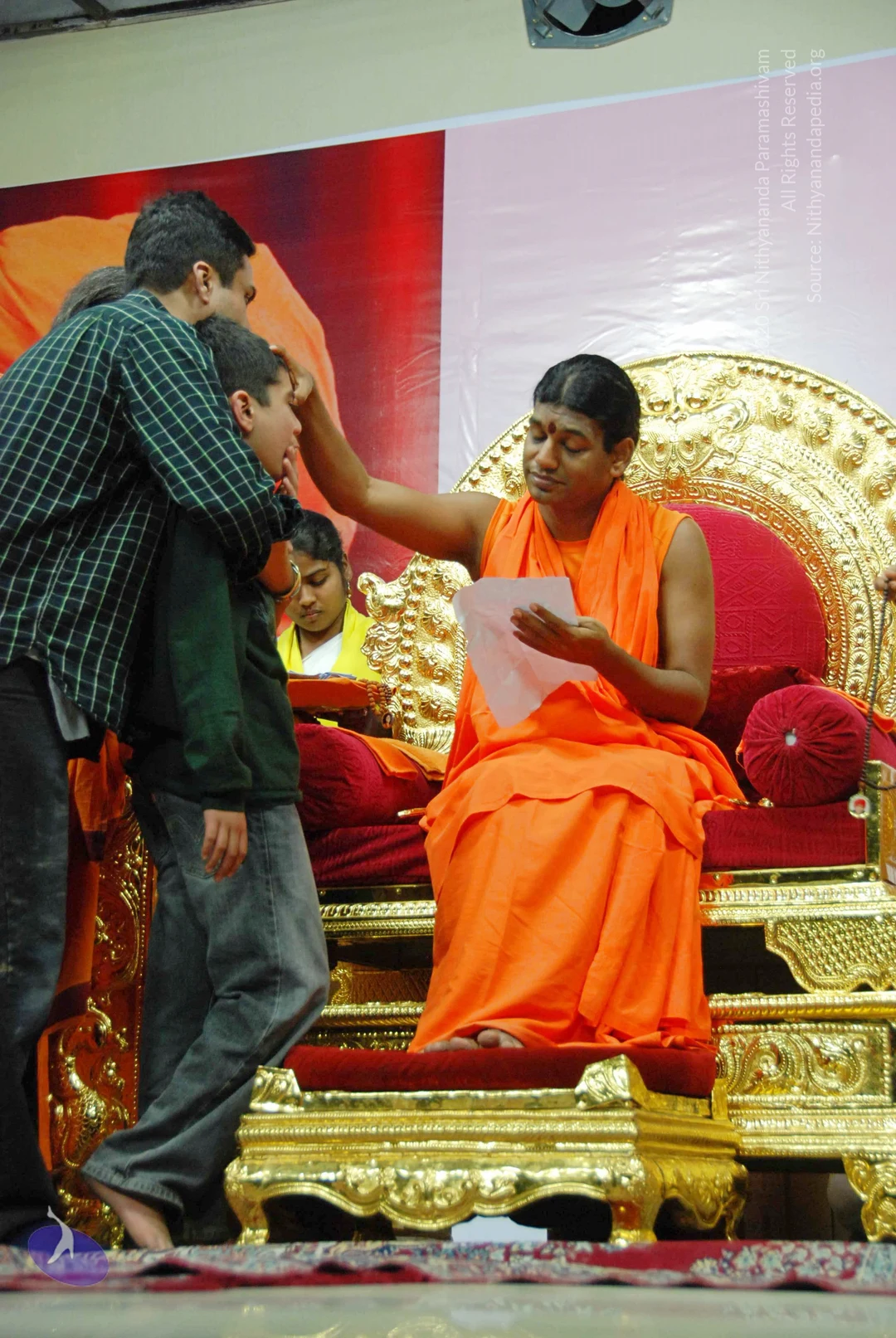
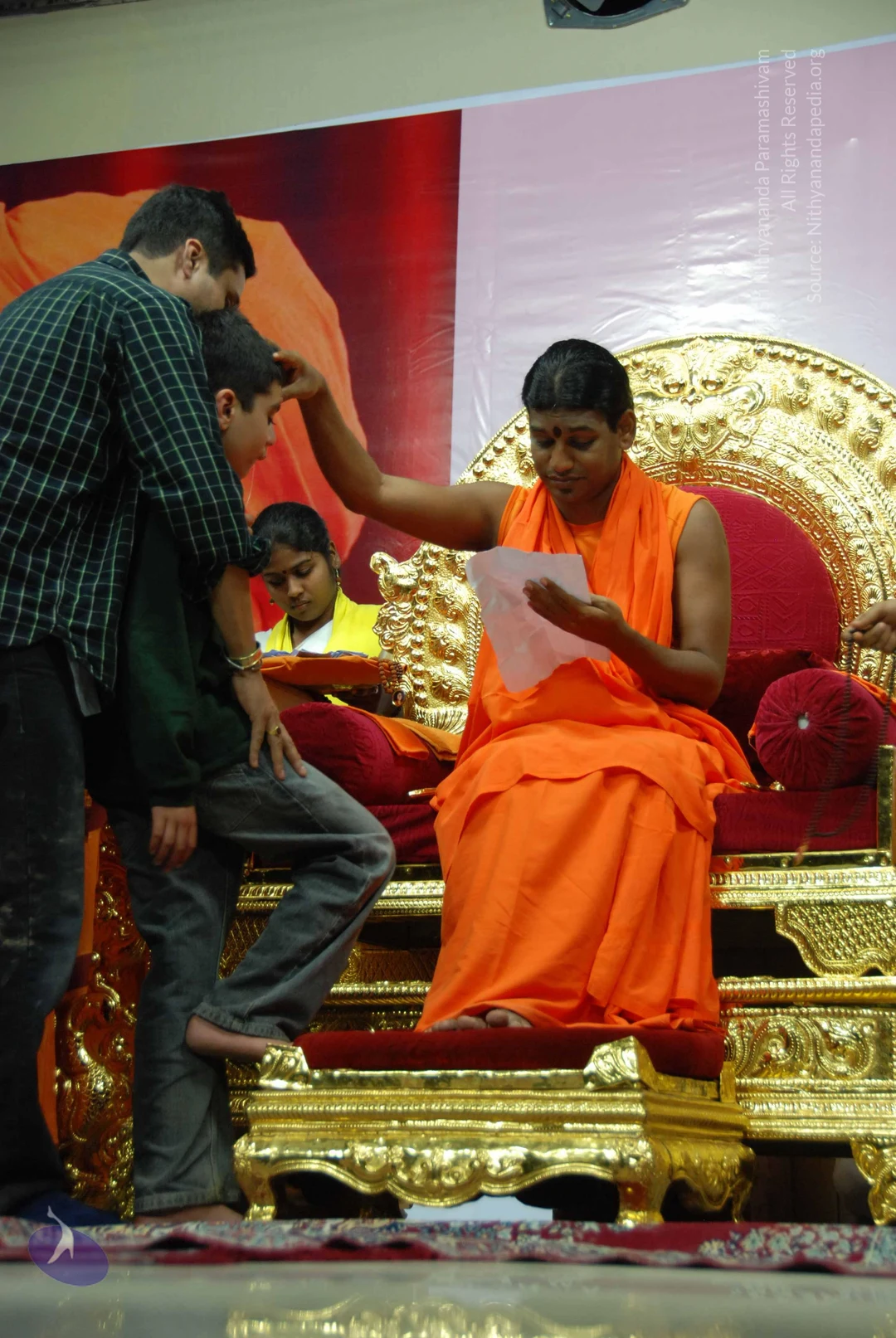
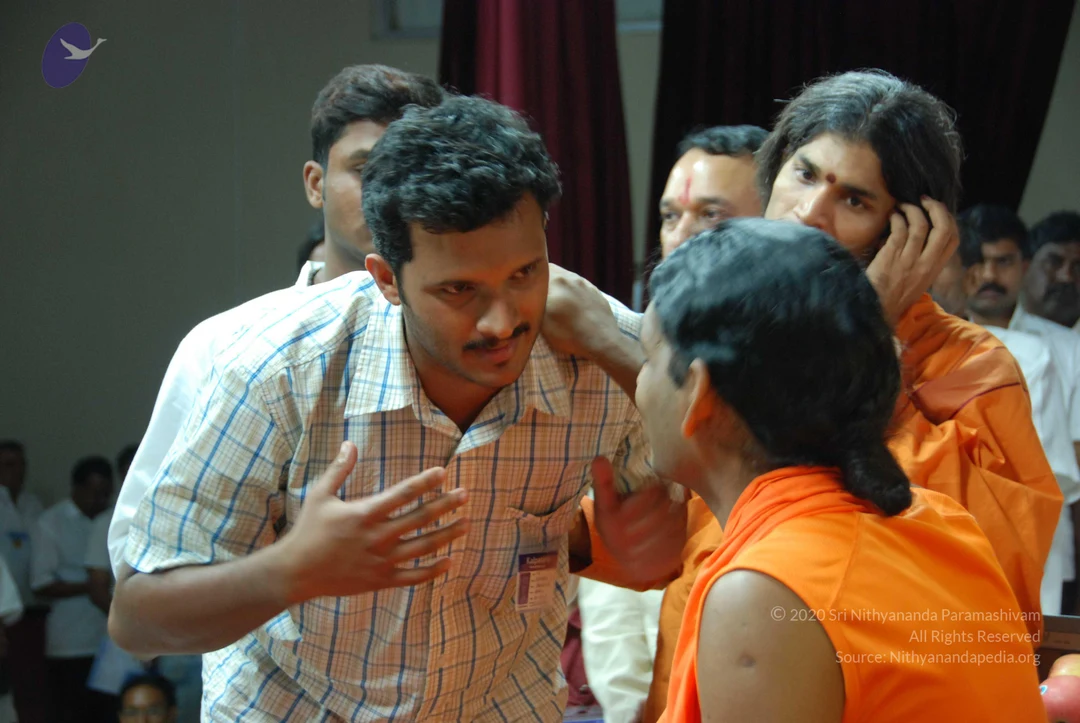
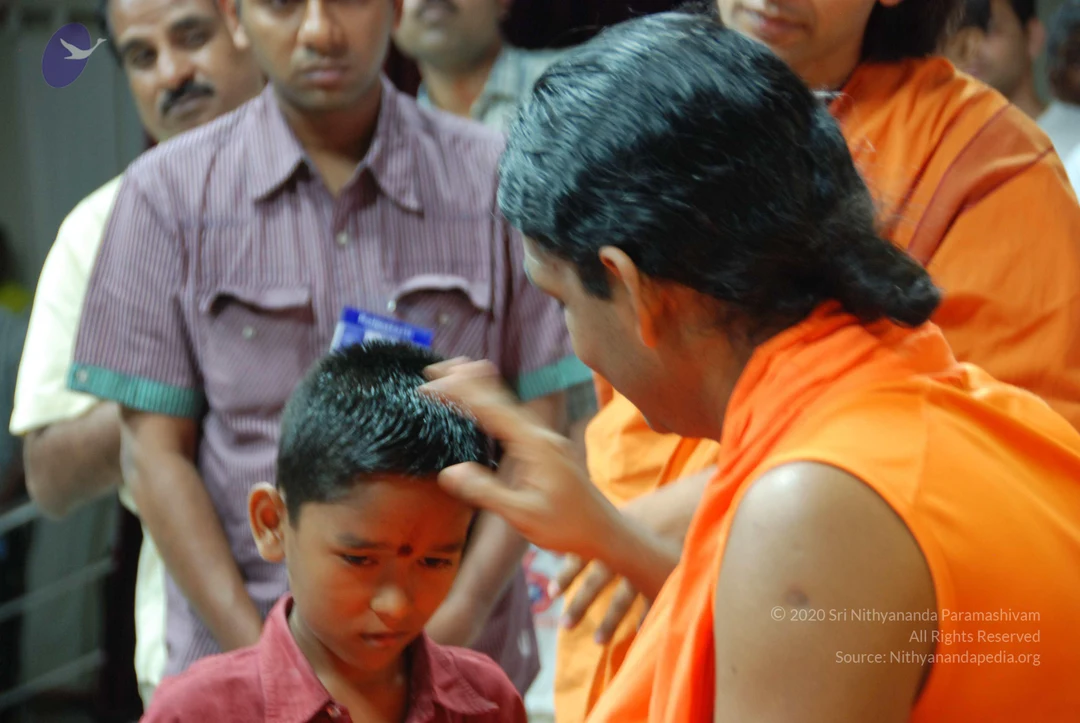
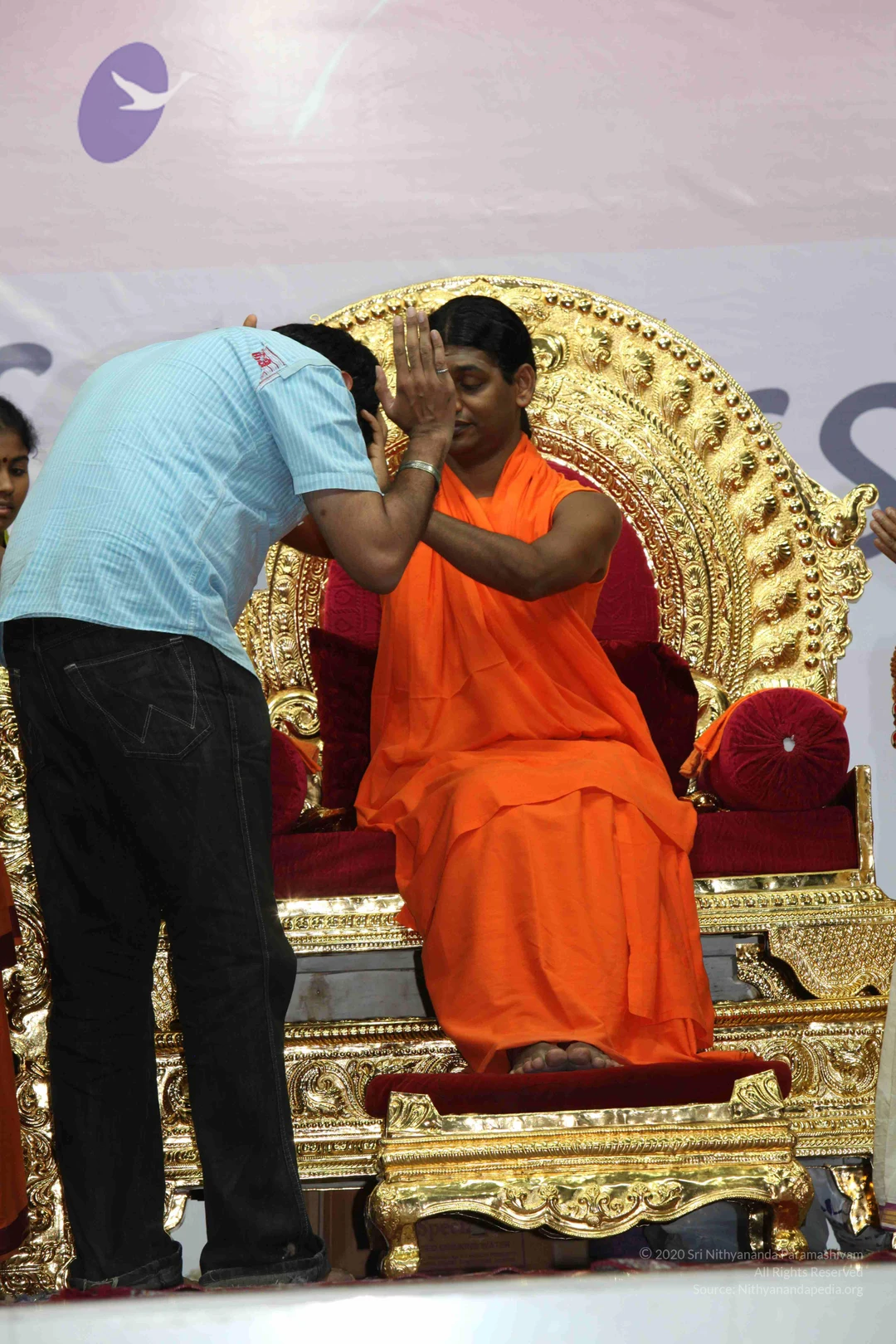
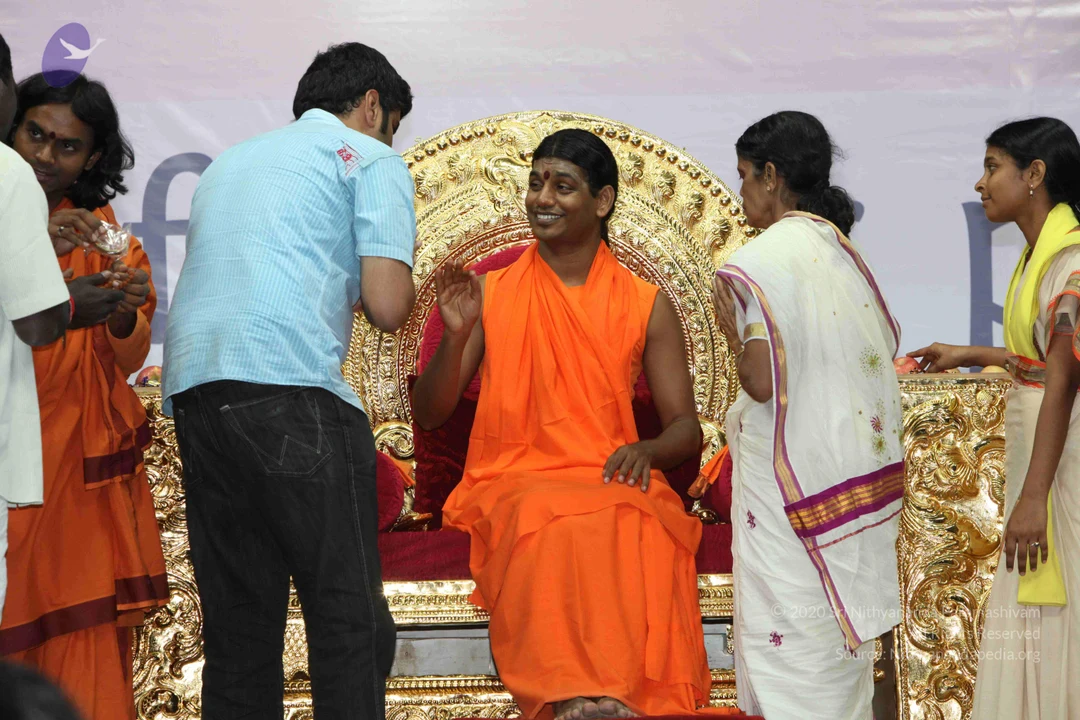
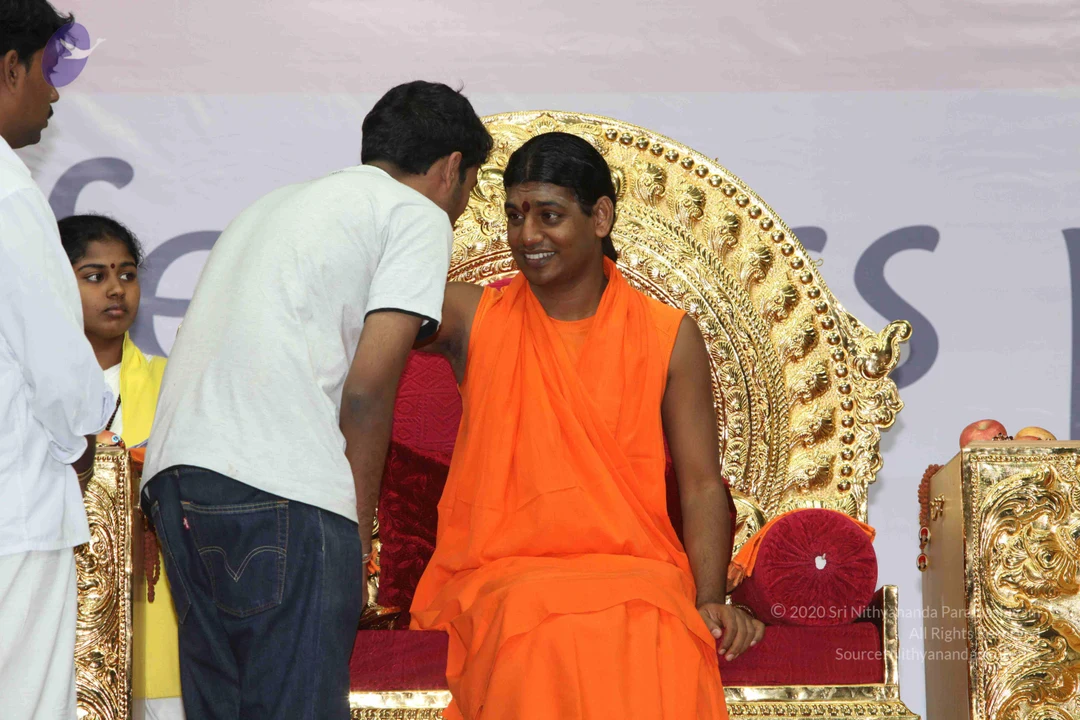
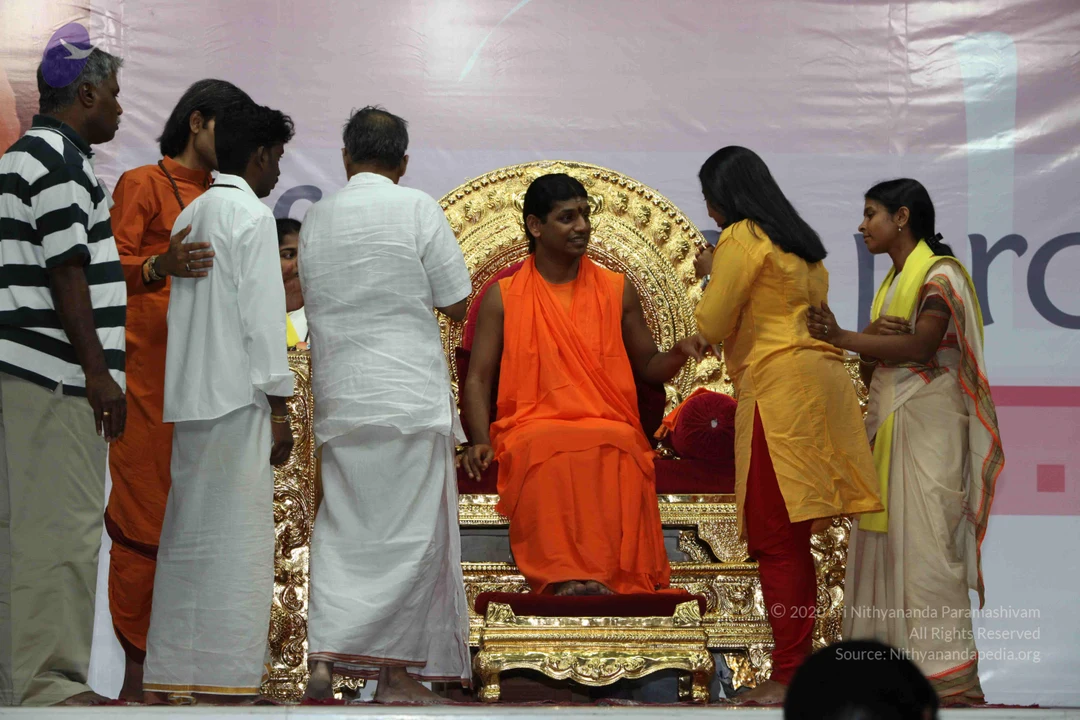
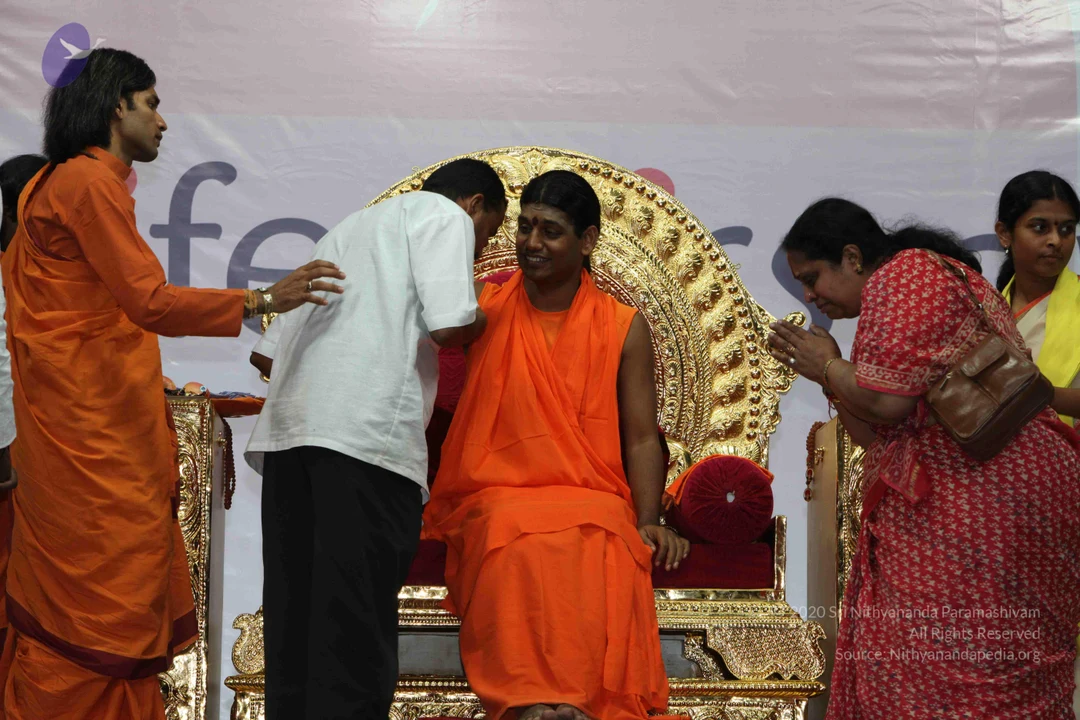
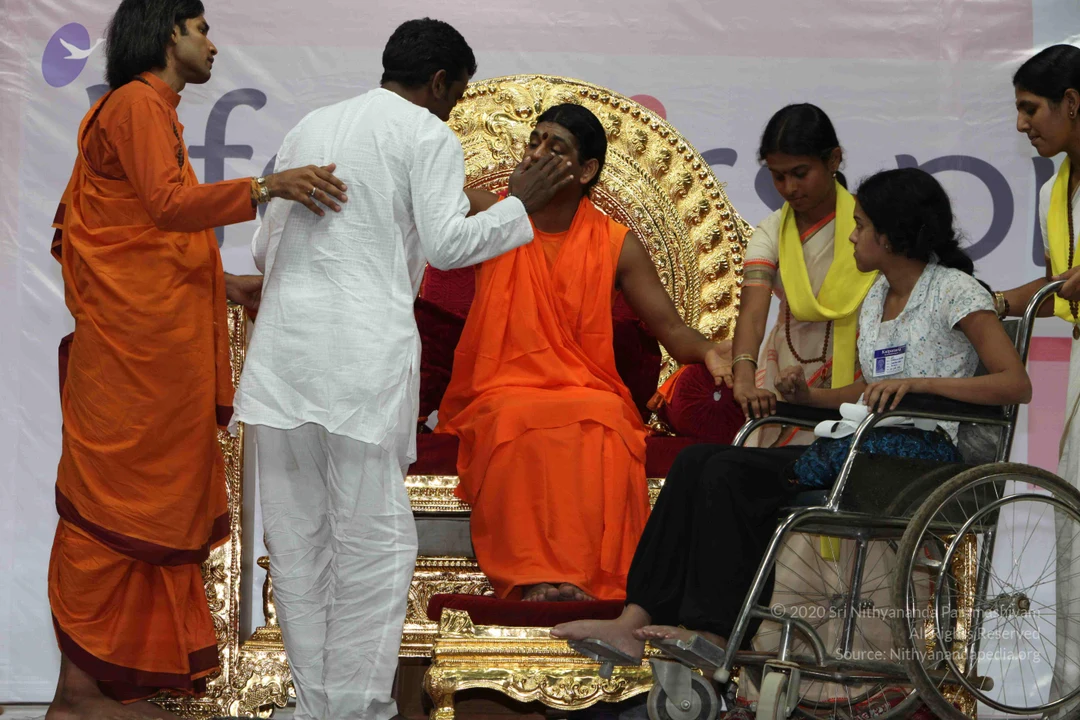
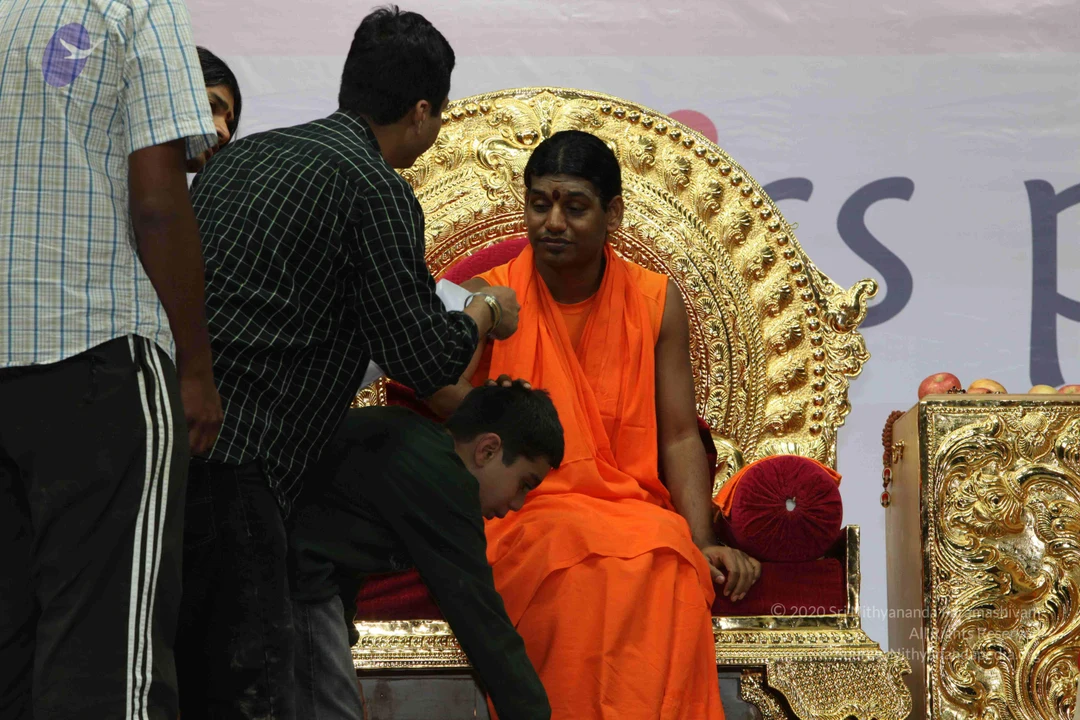
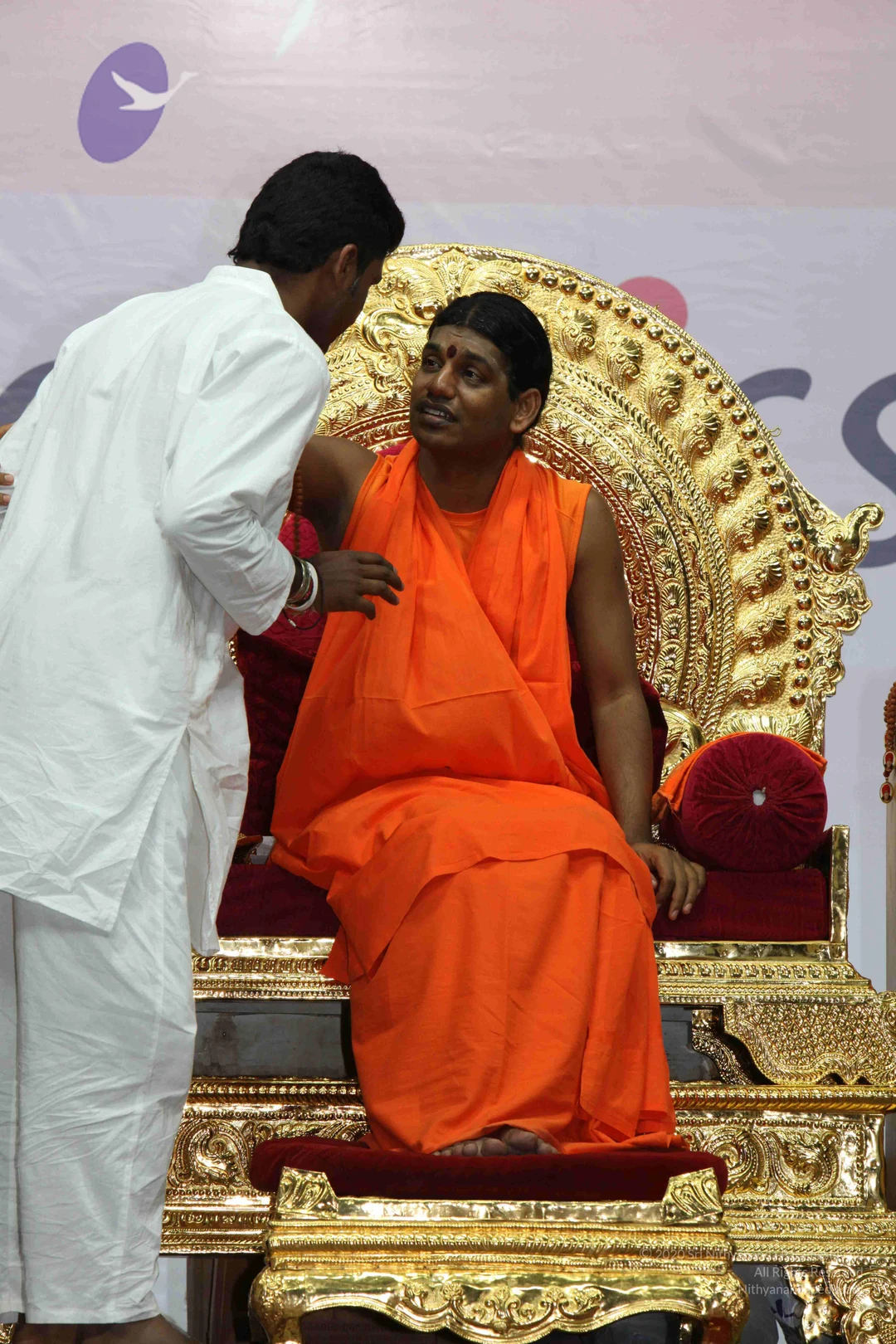
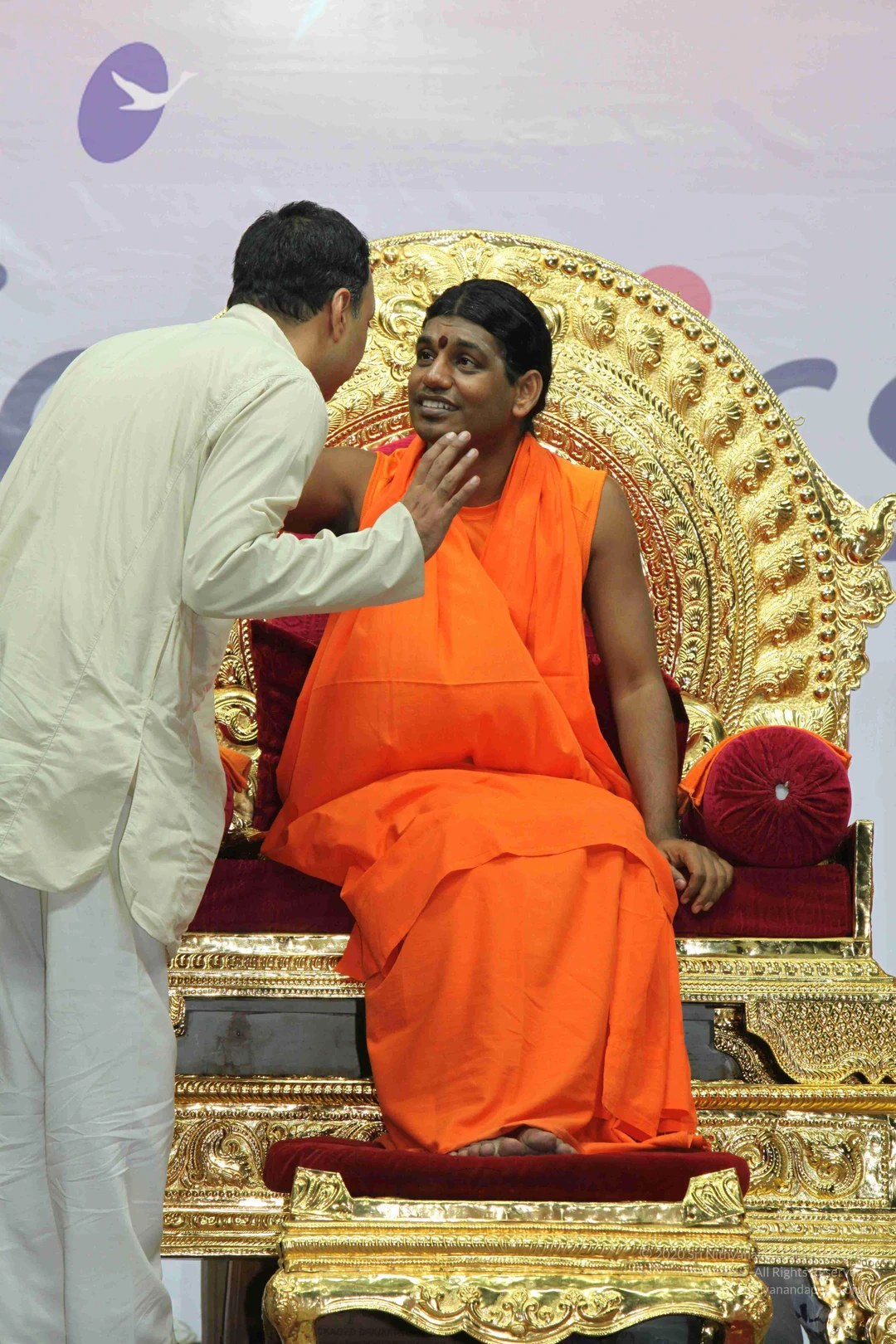
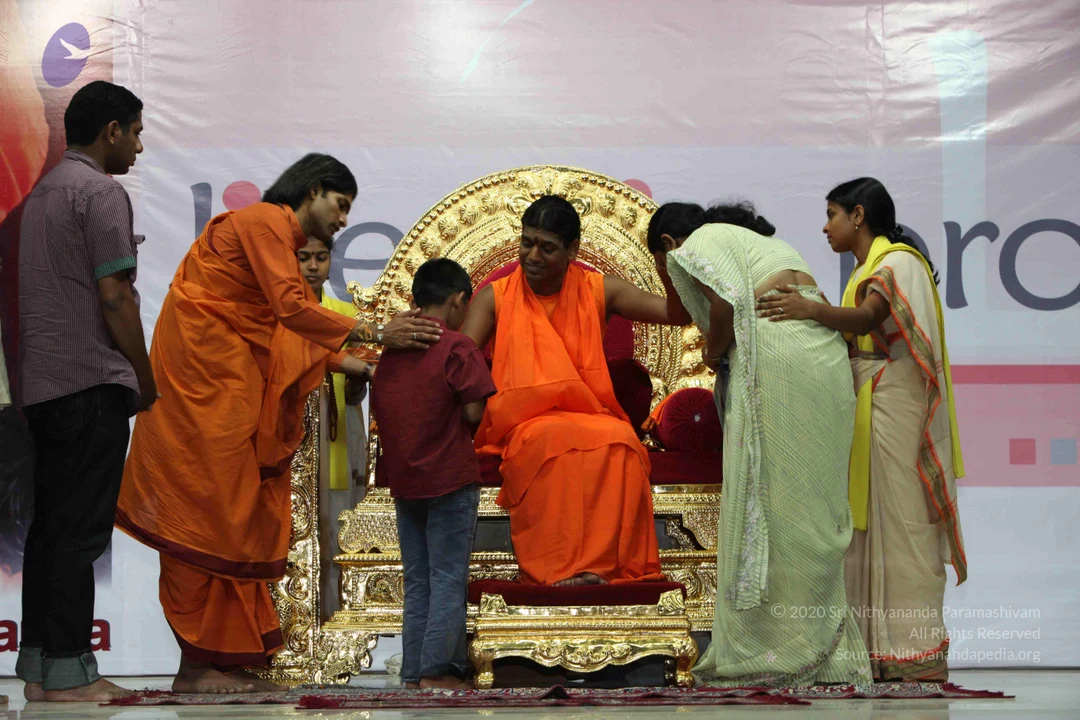
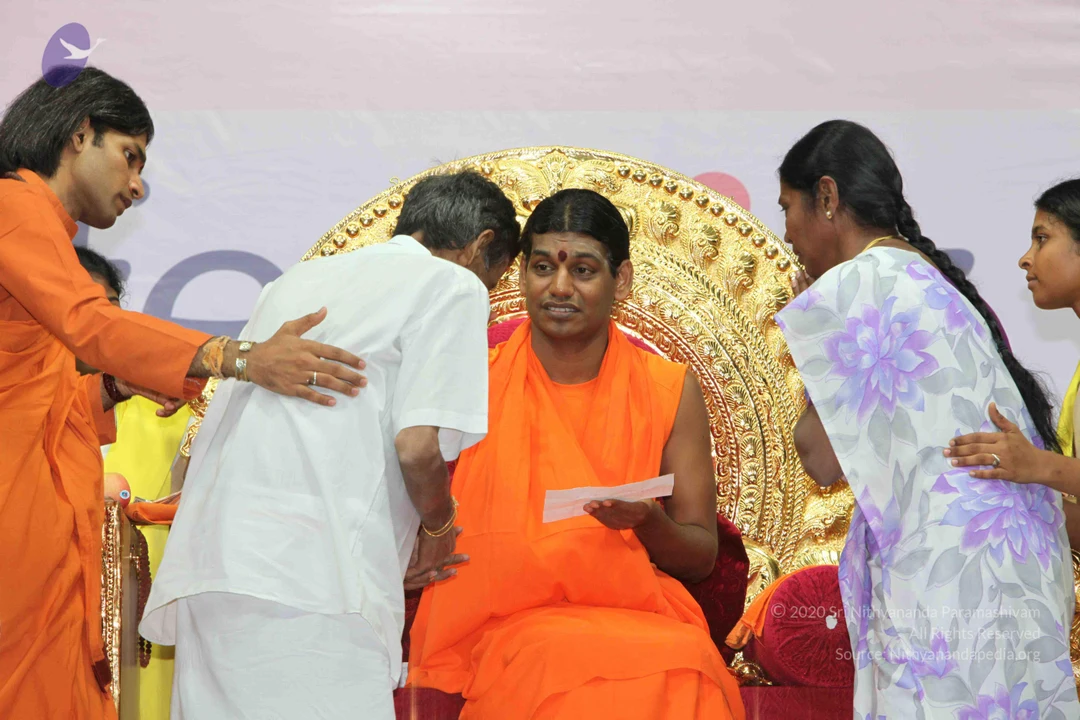
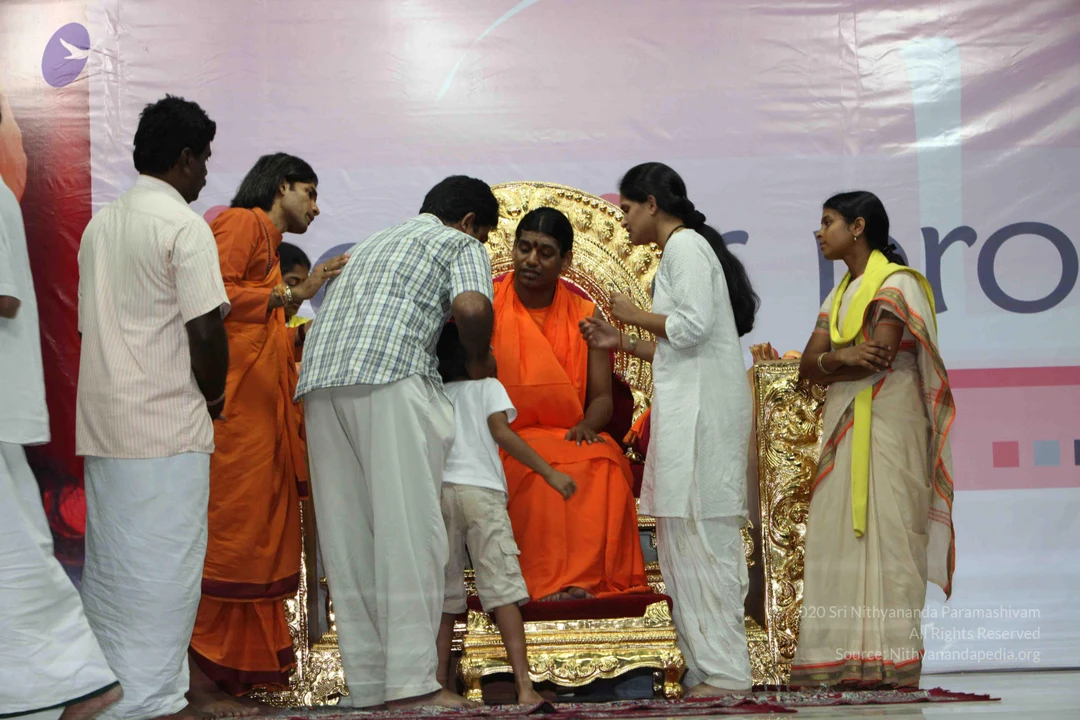
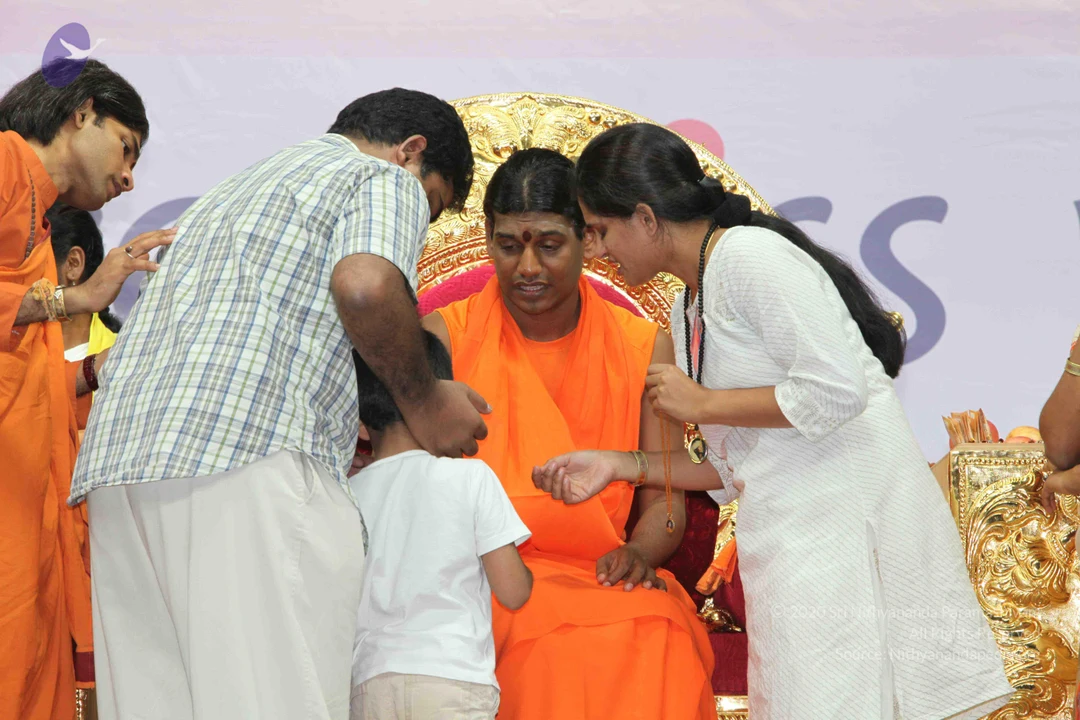
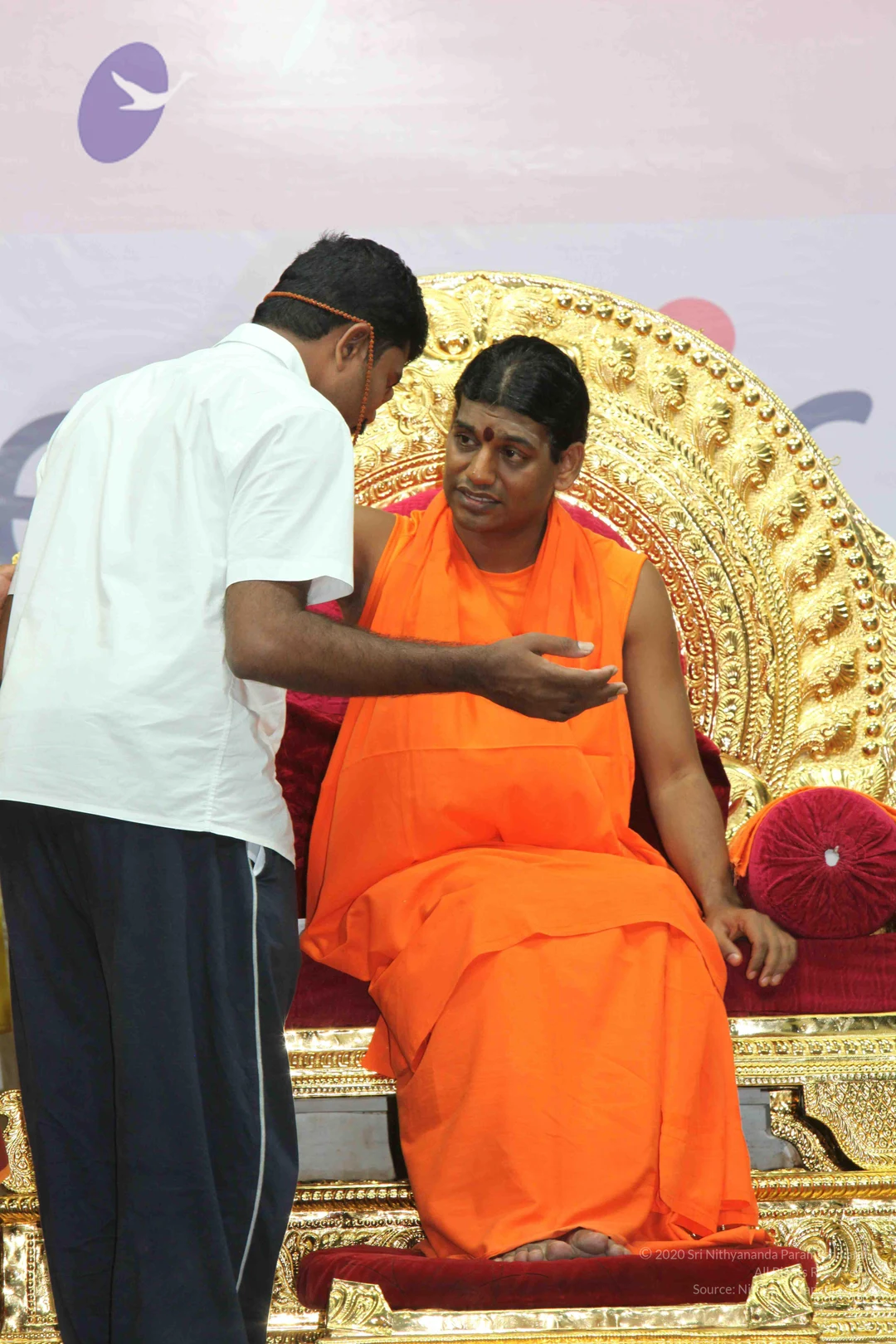
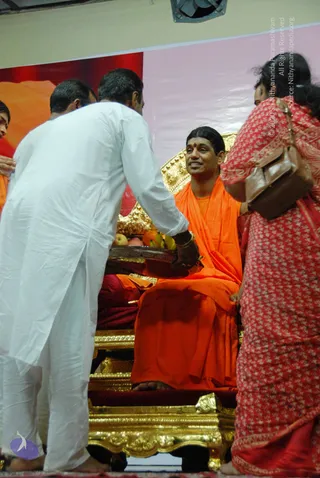
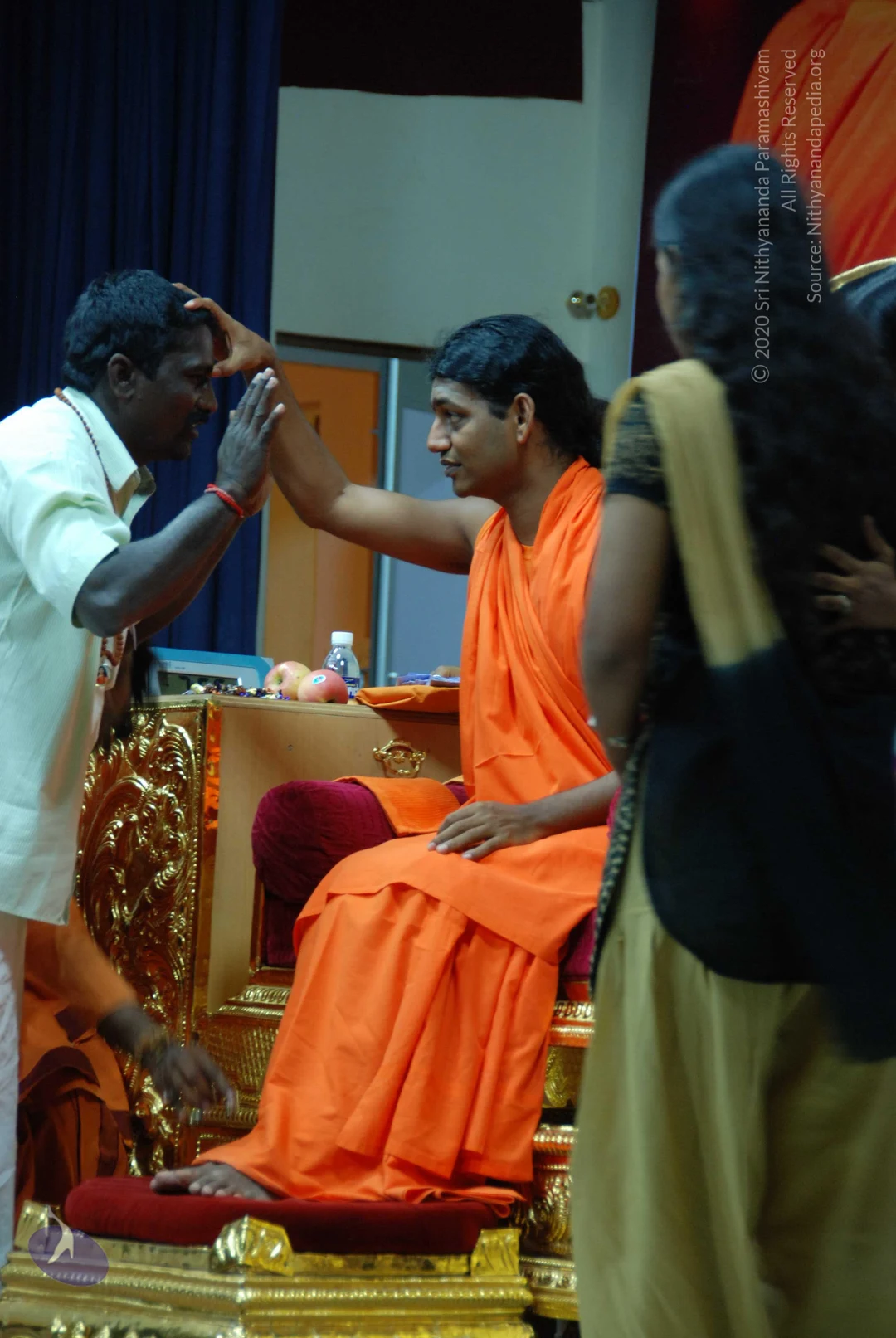
A photograph of a seated man in a saffron-orange robe on an ornate gold-and-red throne, his hand raised to the head of a devotee in white shirt and white dhoti with a red thread on the wrist, who stands with palms pressed together in respect. Behind the throne, a table holds apples, a water bottle and small items. A woman in a dark top and beige shawl stands at right. Swamiji (probable): the seated man has long swept-back hair and saffron robes, a role-consistent presentation with several cues, and is performing a blessing on the devotee.A photograph of a darshan moment on a stage. A seated figure in a flowing saffron/orange robe sits on an ornate gold throne with a red cushion and a red footstool, bare feet visible. A man in a white shirt and white dhoti, with hands raised to his forehead, bows before the seated figure, while a woman in a yellow kurta and red leggings reaches toward the seated figure's head in blessing. A man in orange clothing stands at the left edge, and a woman in a cream sari with orange border stands at the right. Behind the throne is a large orange drape, with a small table holding apples, a water bottle and a cloth. The seated figure's appearance is consistent with the a person flag only partially, so the identity is uncertain.A photograph of a seated man in orange robes on an ornate gold throne, with a red tilak on his forehead and dark hair swept back, smiling as he receives offerings. A man in a white kurta bends forward holding a silver tray of fruit including apples, oranges and bananas. A woman in a red patterned salwar kameez with a brown handbag stands at right. Behind them is a red and pink backdrop. The throne's gold carving is visible in the foreground. Appearance-based candidate: Swamiji (probable), seated on the throne in orange robes with long swept-back hair and a red forehead mark.A photograph of a darshan moment on a stage with a red and pink backdrop. A seated man in a saffron-orange robe with long dark hair sits on an ornate gold throne, gesturing with his raised right arm toward a man in white clothes who holds one hand up and touches his own head. Another man in white bends forward at the lower left, head lowered. A young woman in a yellow top looks on behind them, and a woman in a red floral dress with a brown handbag stands at the right edge. The seated figure is an appearance-based a person, identified by the saffron robe, long swept hair and gold throne in a darshan setting.A man with swept-back black hair and a red tilak on his forehead wears an orange saffron shawl over an orange top, seated in front of an ornate gold carved throne. A woman in a pink floral garment is partially visible at the right edge, facing him. The setting appears to be a gathering, with a white and red backdrop behind the throne. The man has long swept-back hair, a saffron wrap and a gold throne behind him, matching the page's description of Swamiji presiding; the appearance cues are consistent, so this is a probable Swamiji in person. Swamiji (probable) is seated on the golden throne in orange saffron clothing, speaking with a devotee in pink.A seated man in saffron-orange robes with a swept-back dark hairstyle sits on an ornate gold throne with a red cushion, placing his hand on the head of a young person bent forward at the front. A man in a dark green checked shirt with a watch and rings stands at left, holding a white cloth near the bowing person, while another person with dark hair is partially visible behind. The backdrop is a large orange-and-red fabric banner. a person: the seated figure wears an orange robe with a swept-back hairstyle on a gold throne, cues consistent with a seated Sannyasi-presented guru, presiding over darshan.
03

03-NSP-Sessions

126 dated photos in previewSource gallery
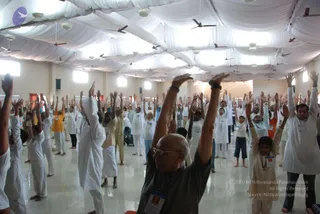
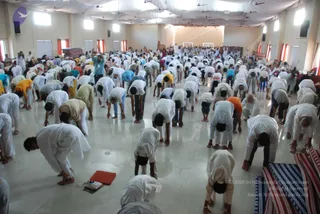
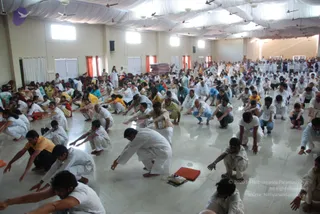
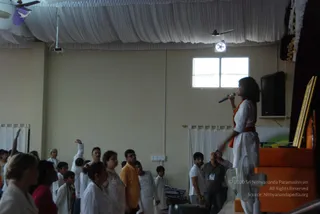
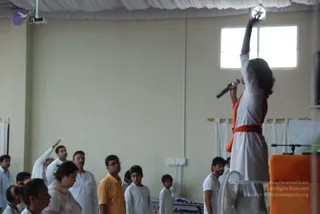
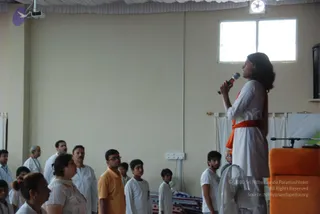
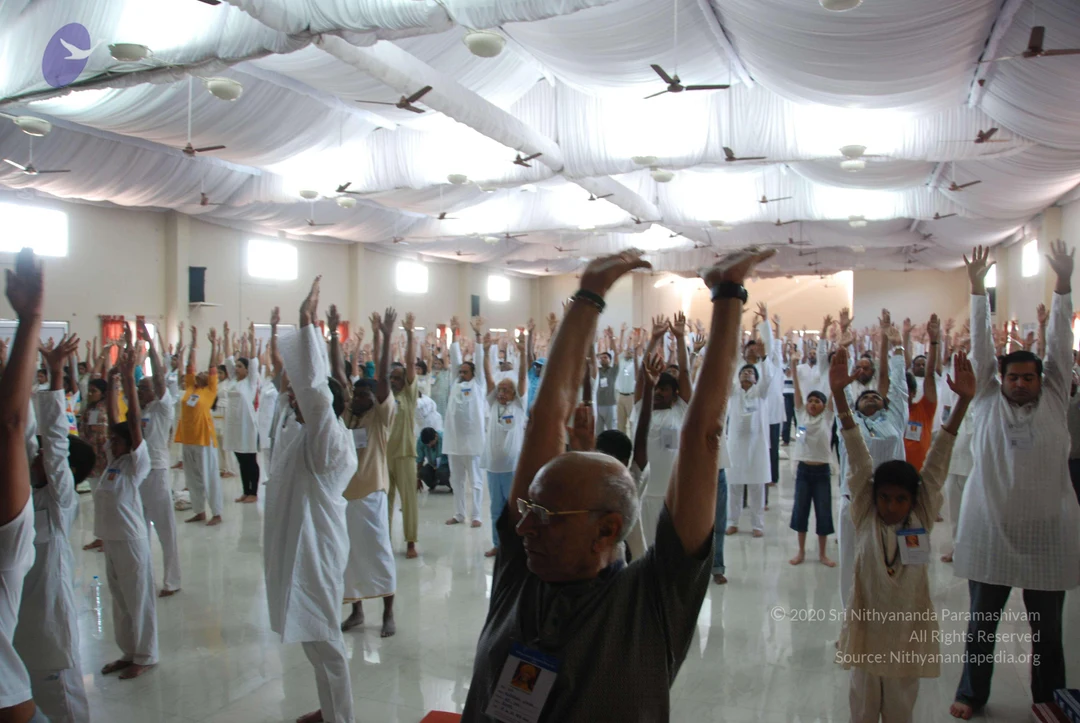
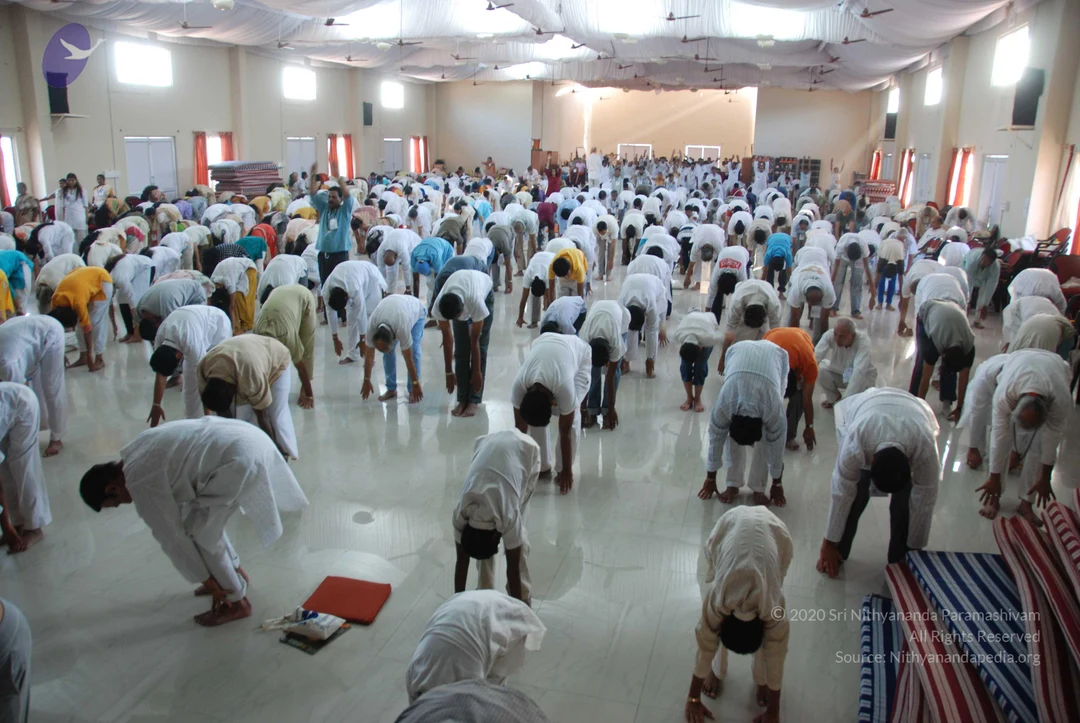
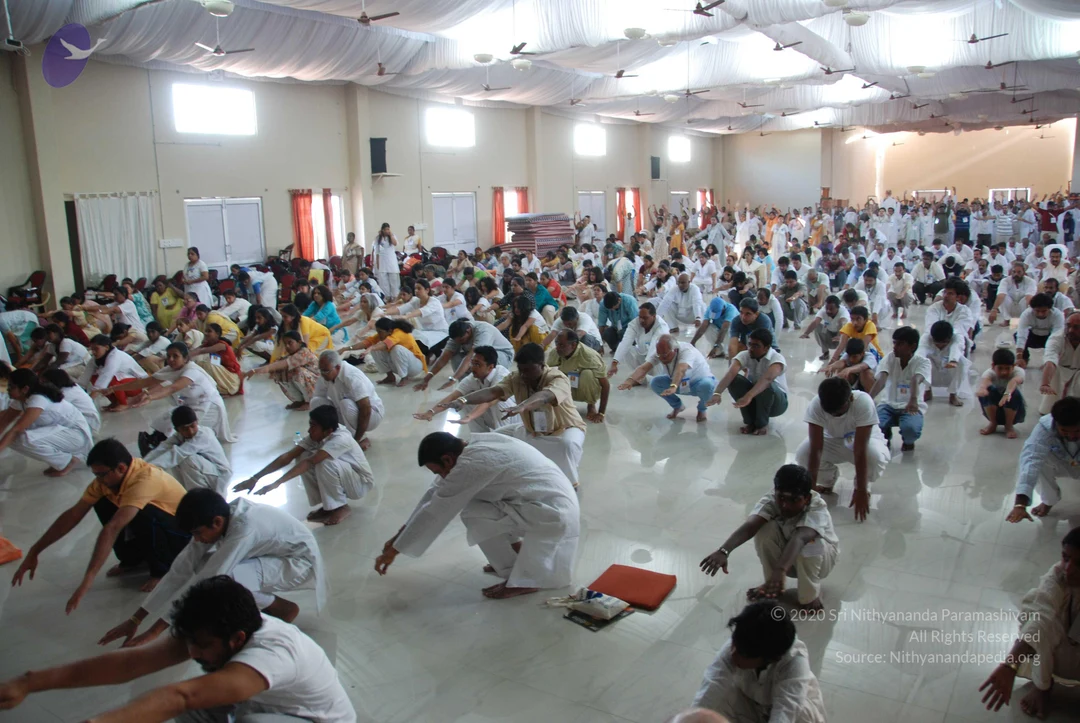
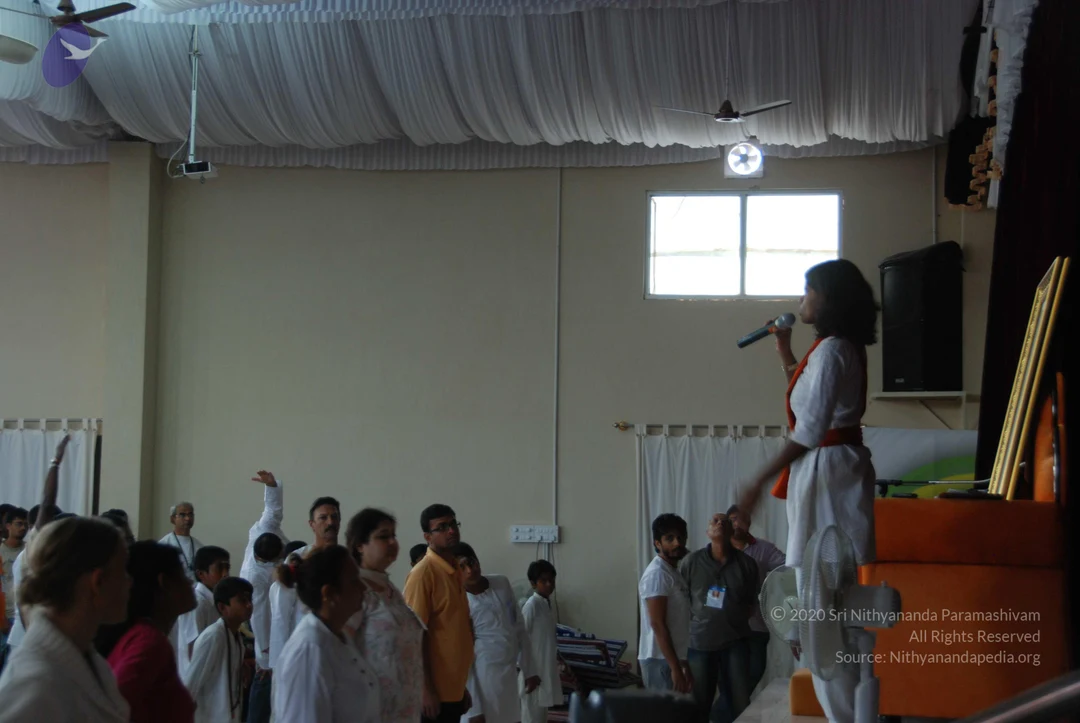
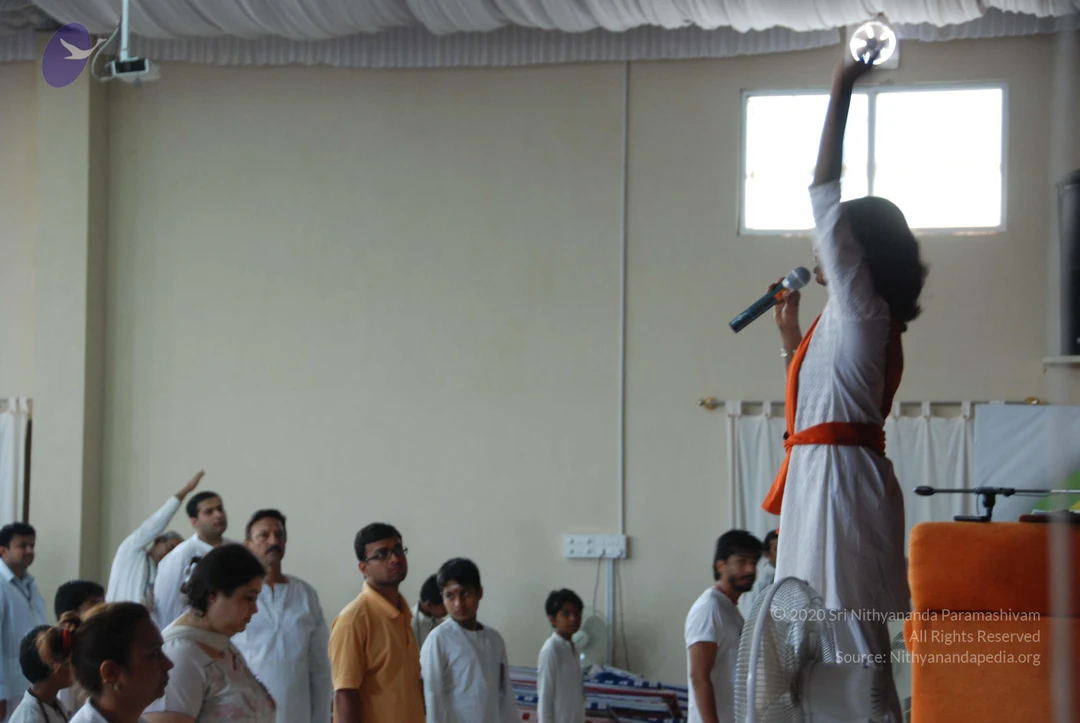
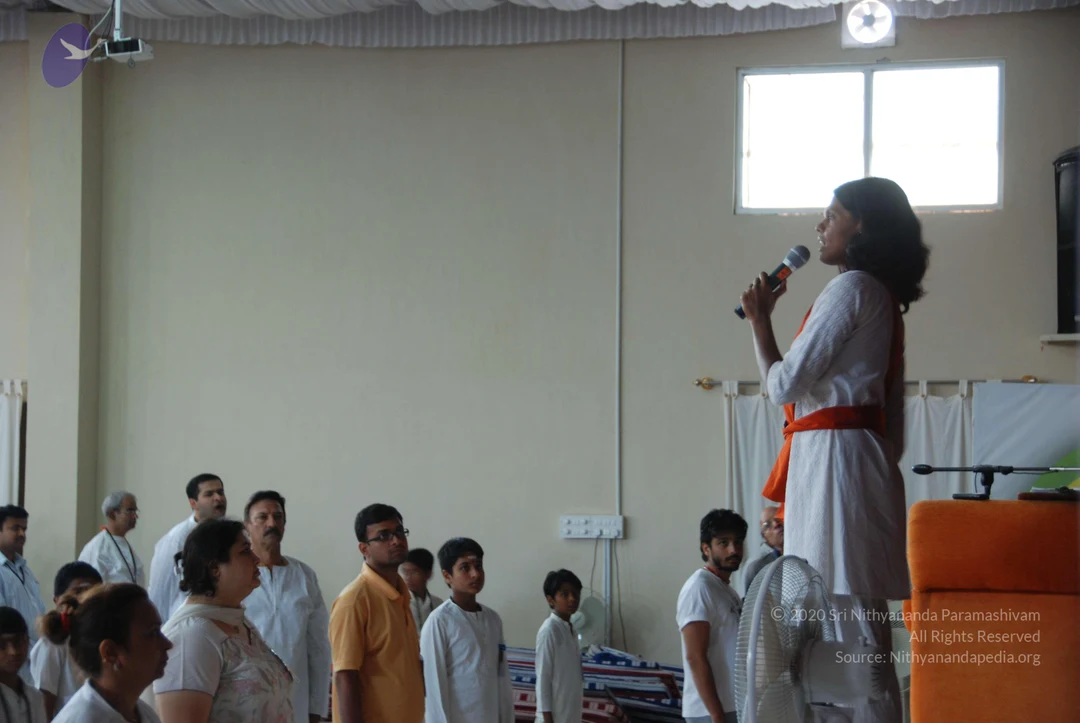
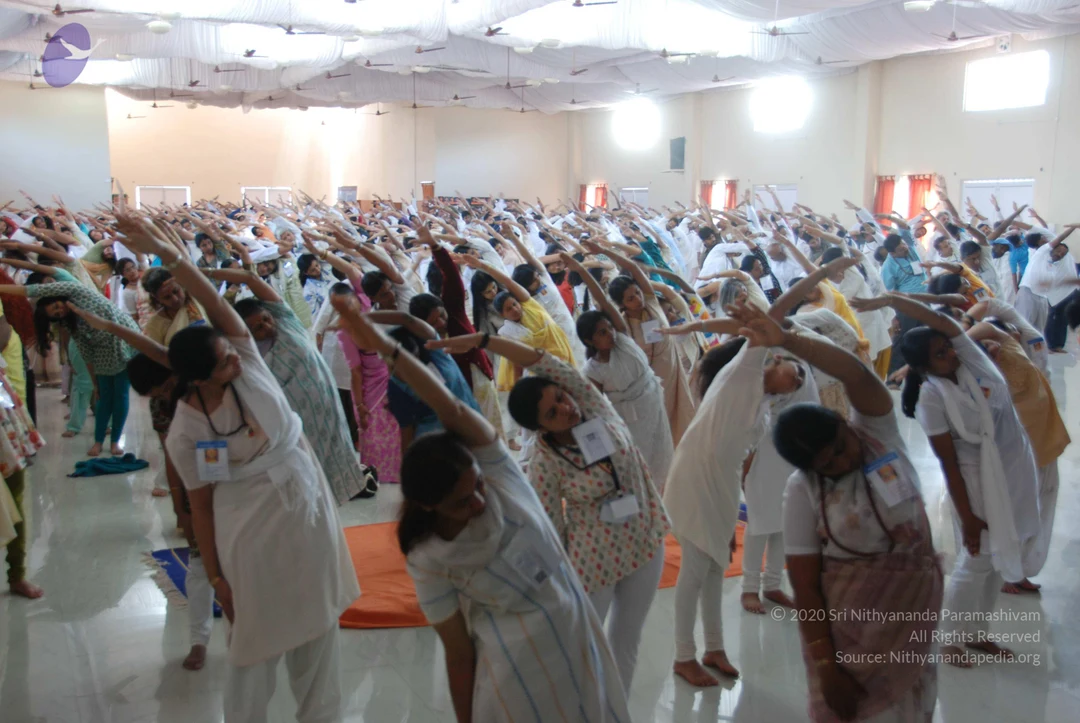
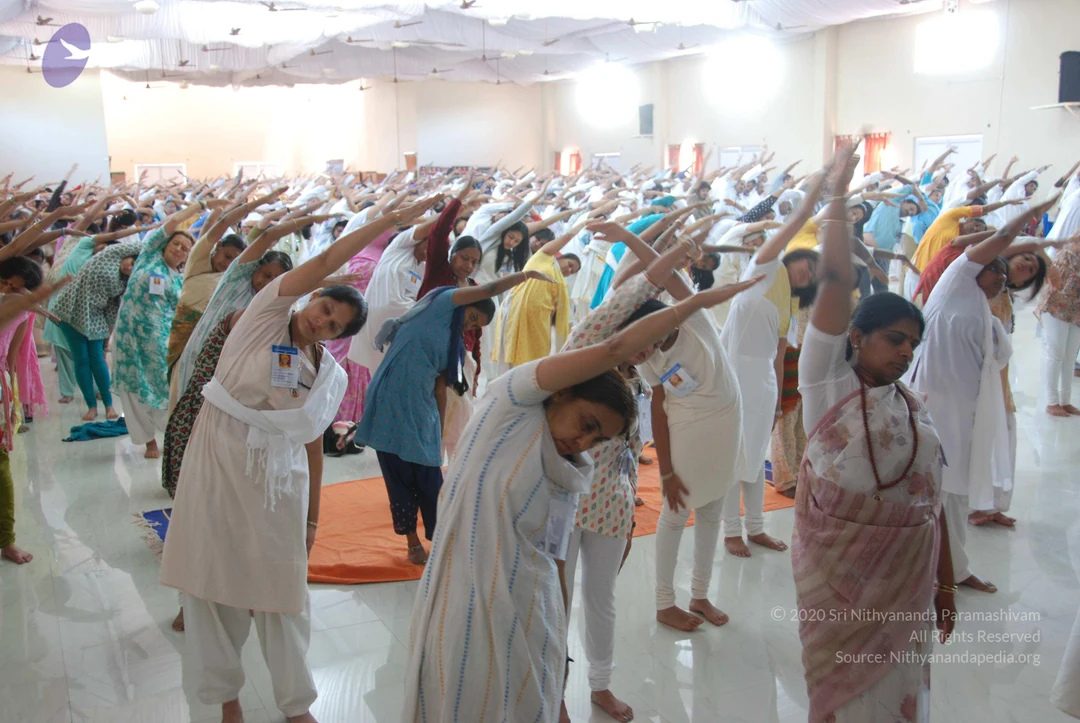
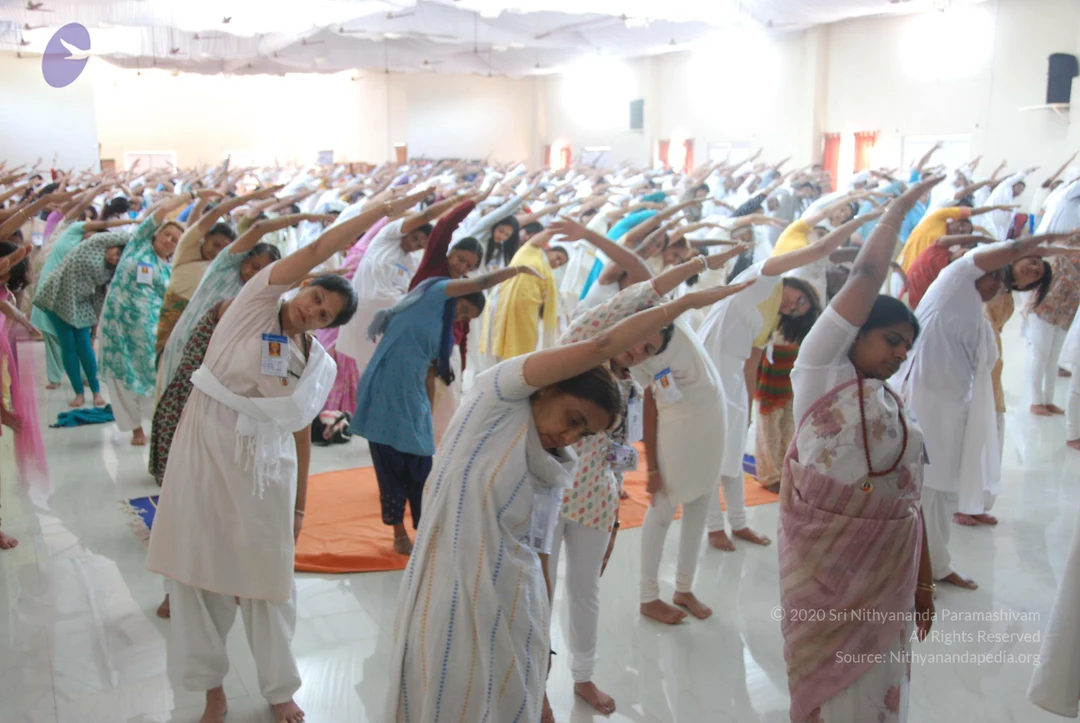
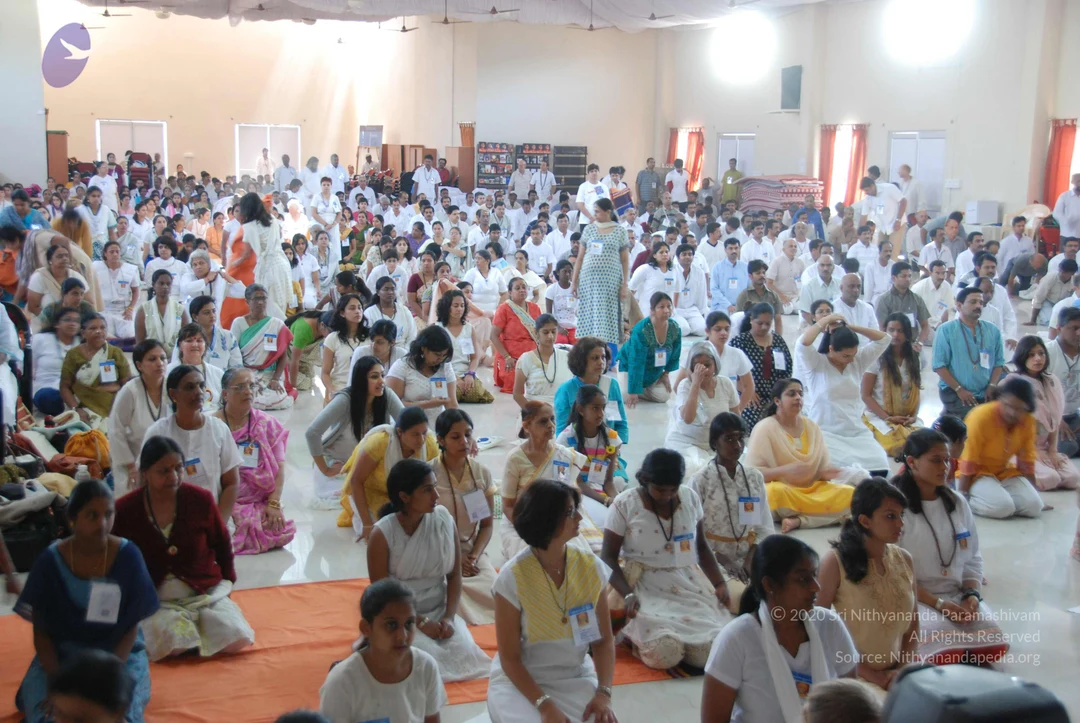
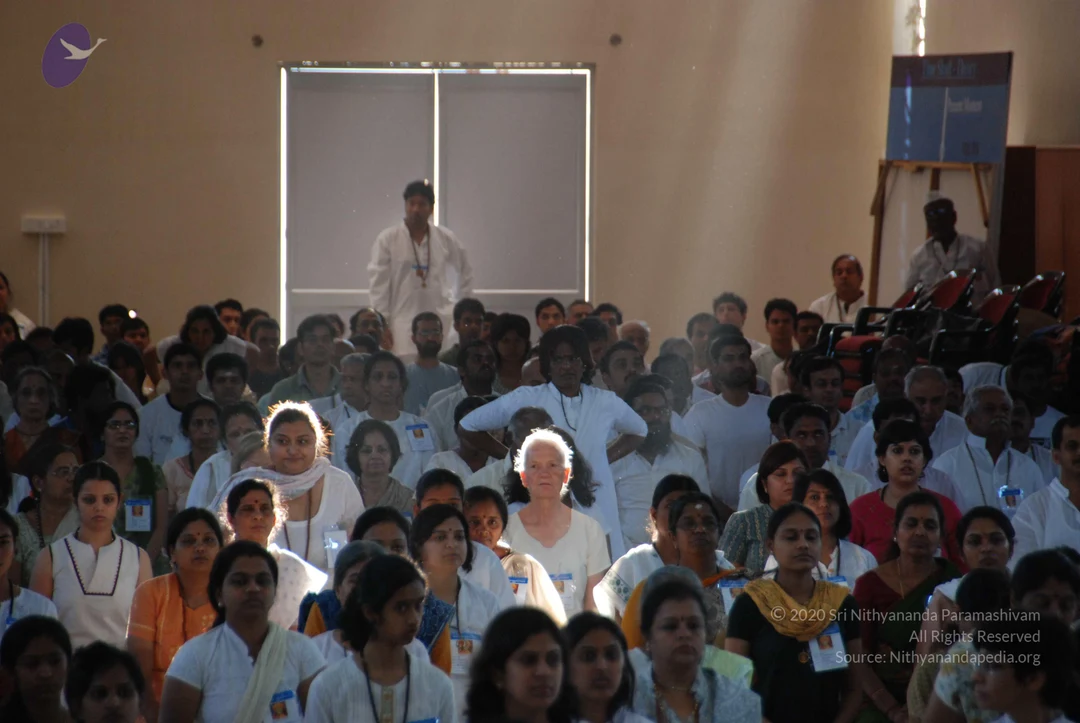
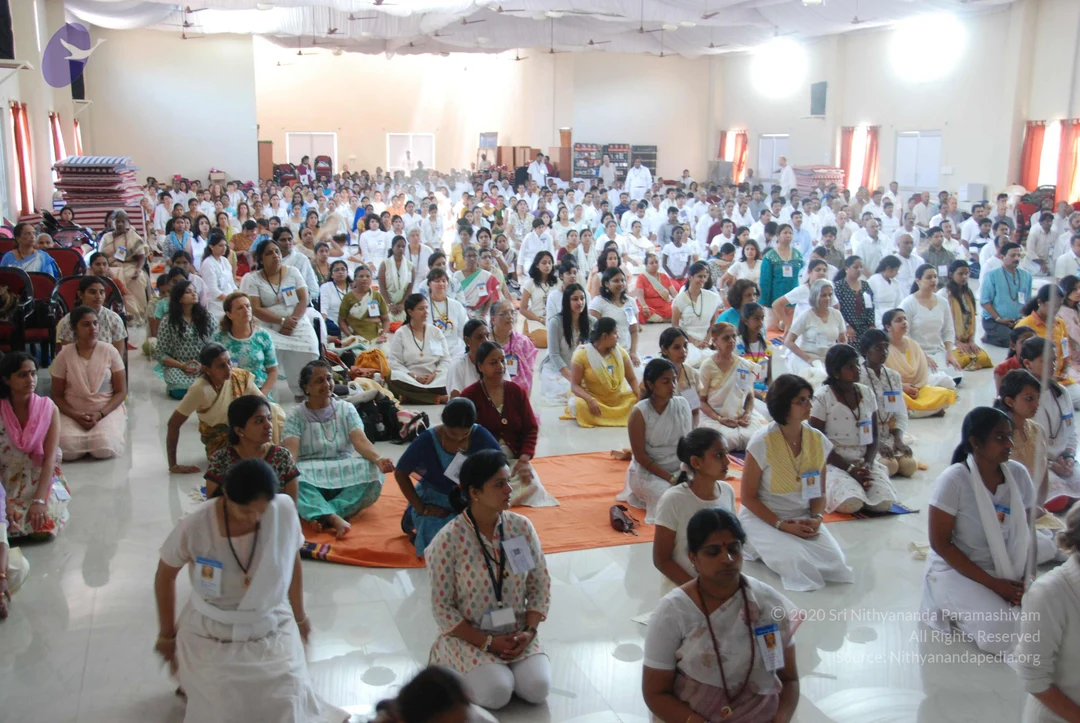
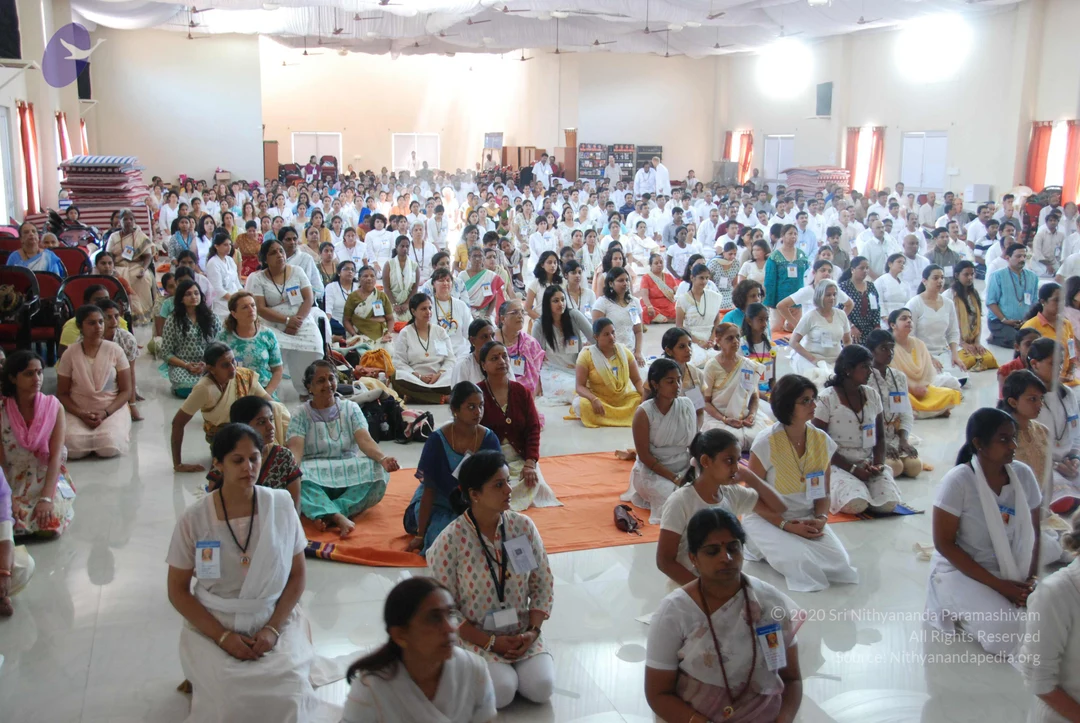
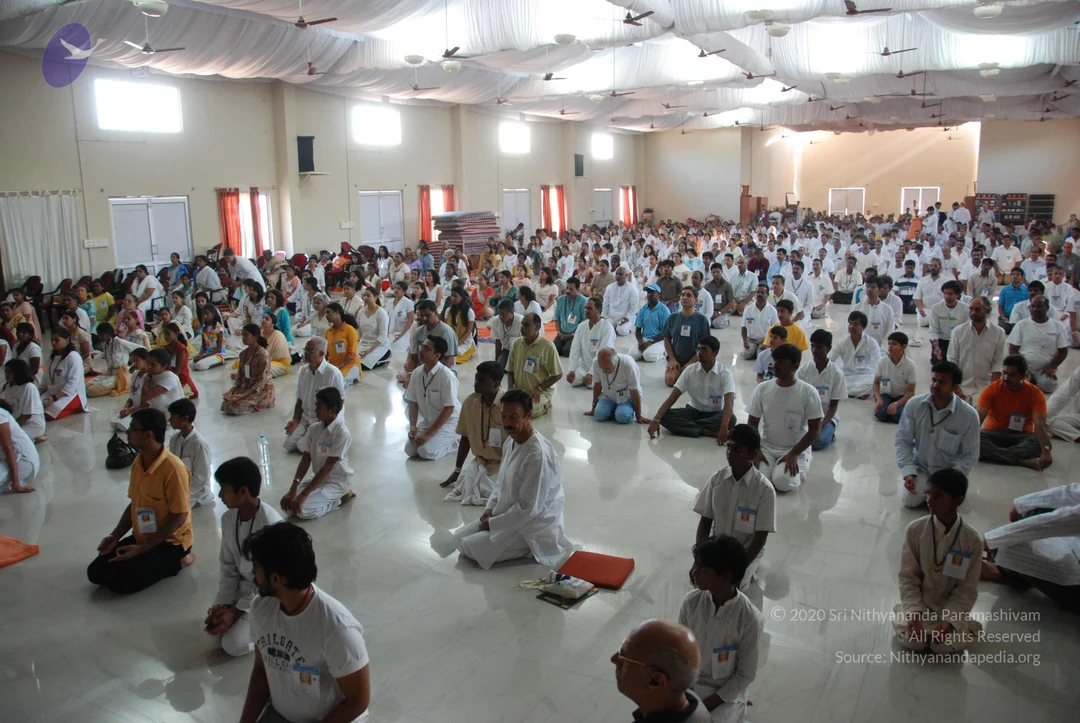
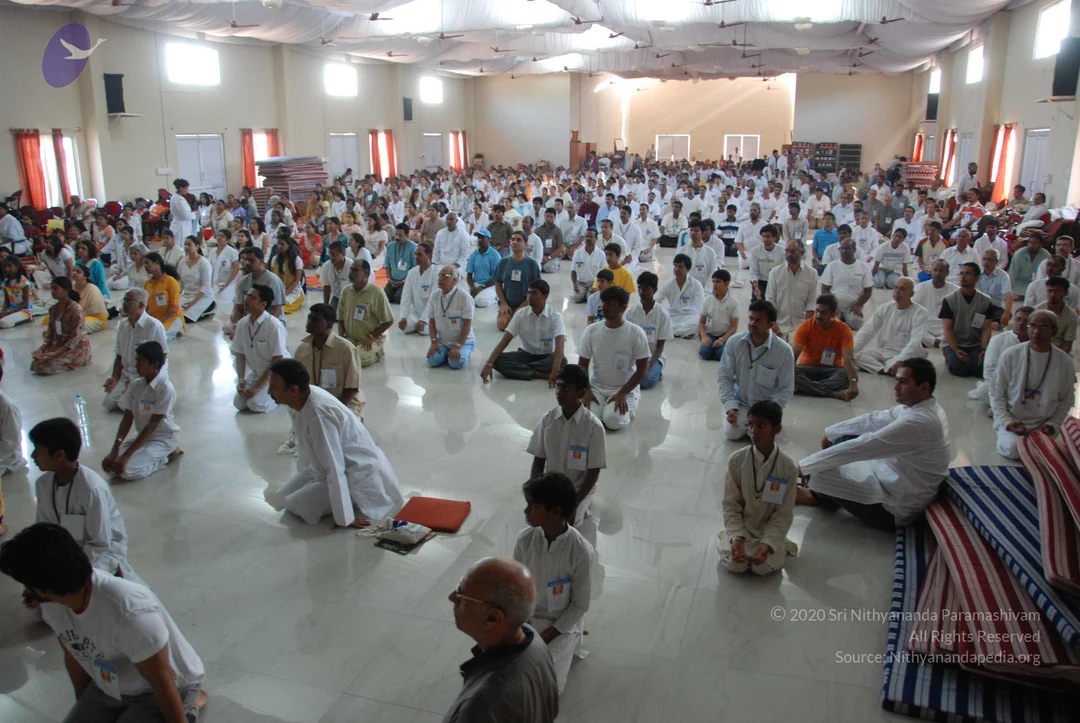
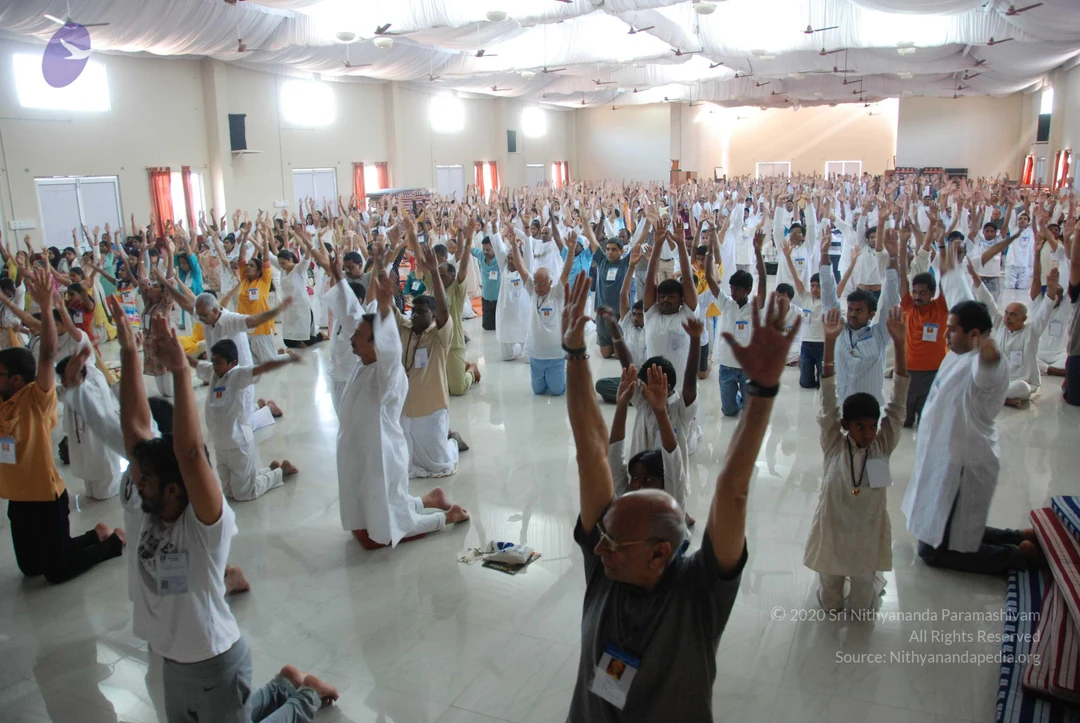
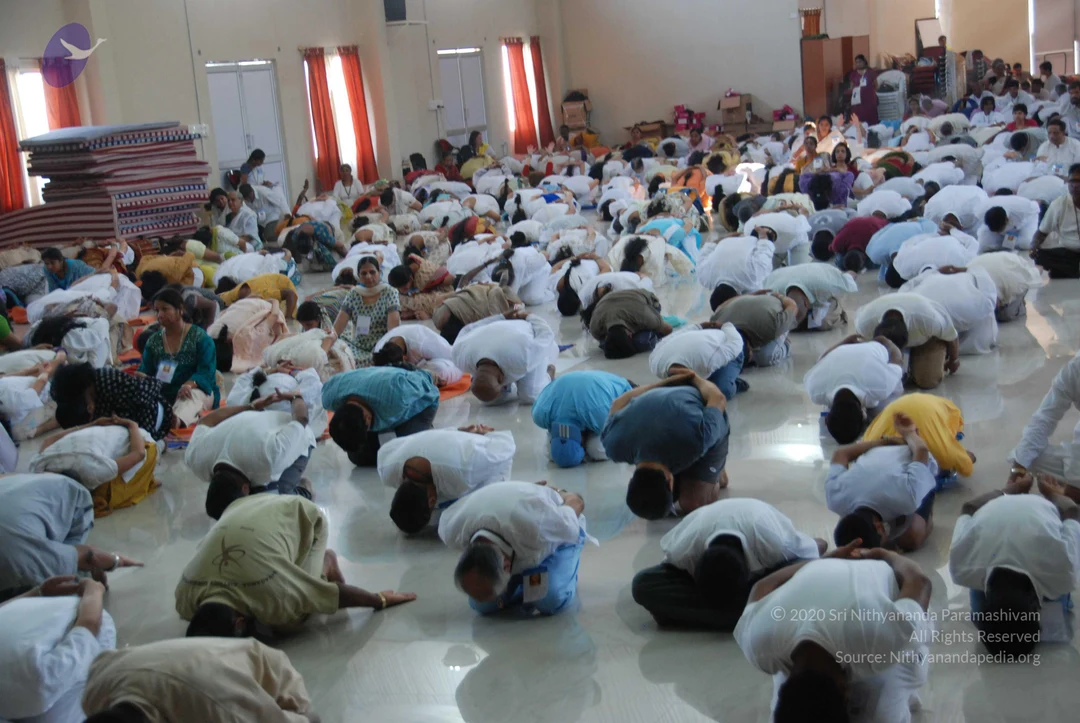
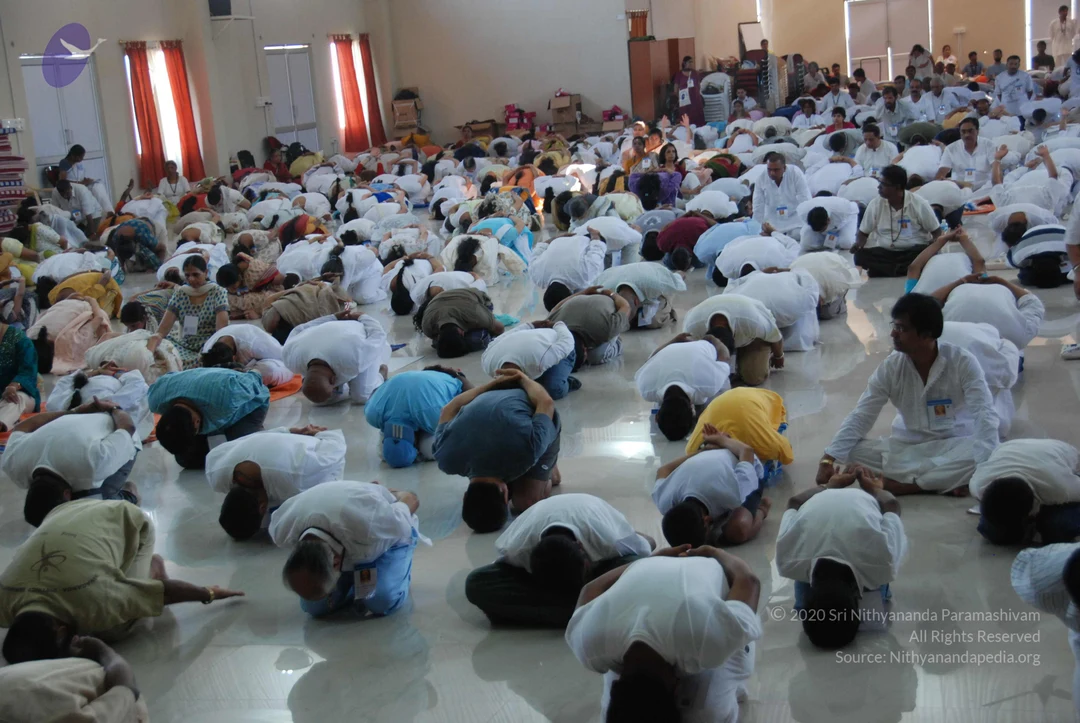
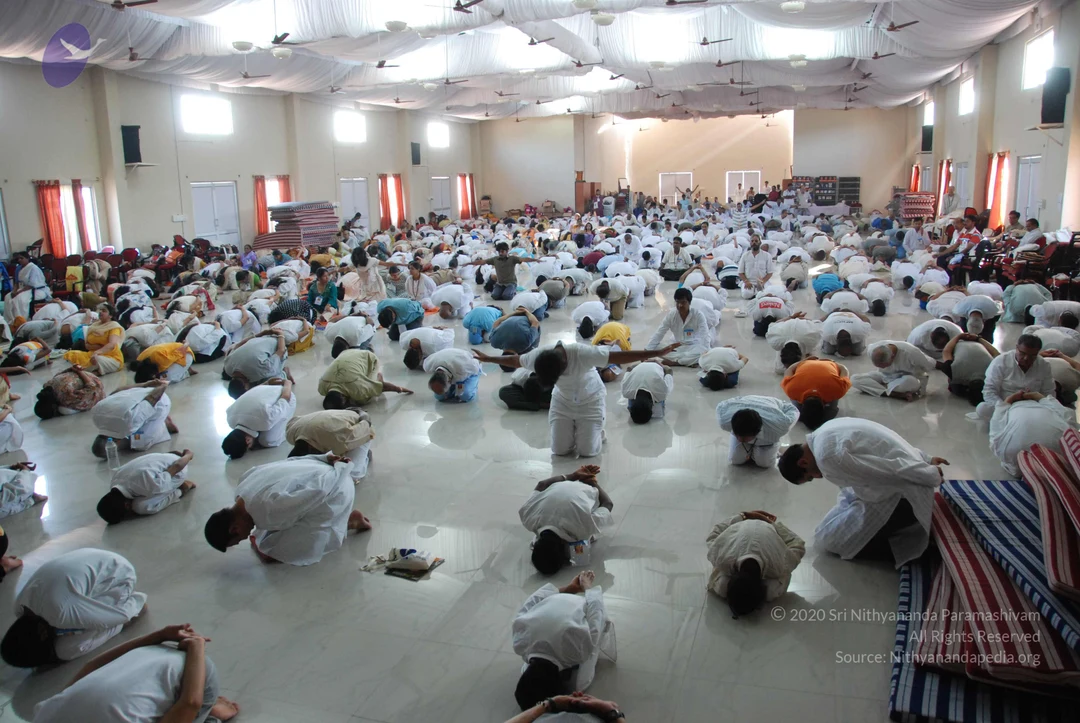
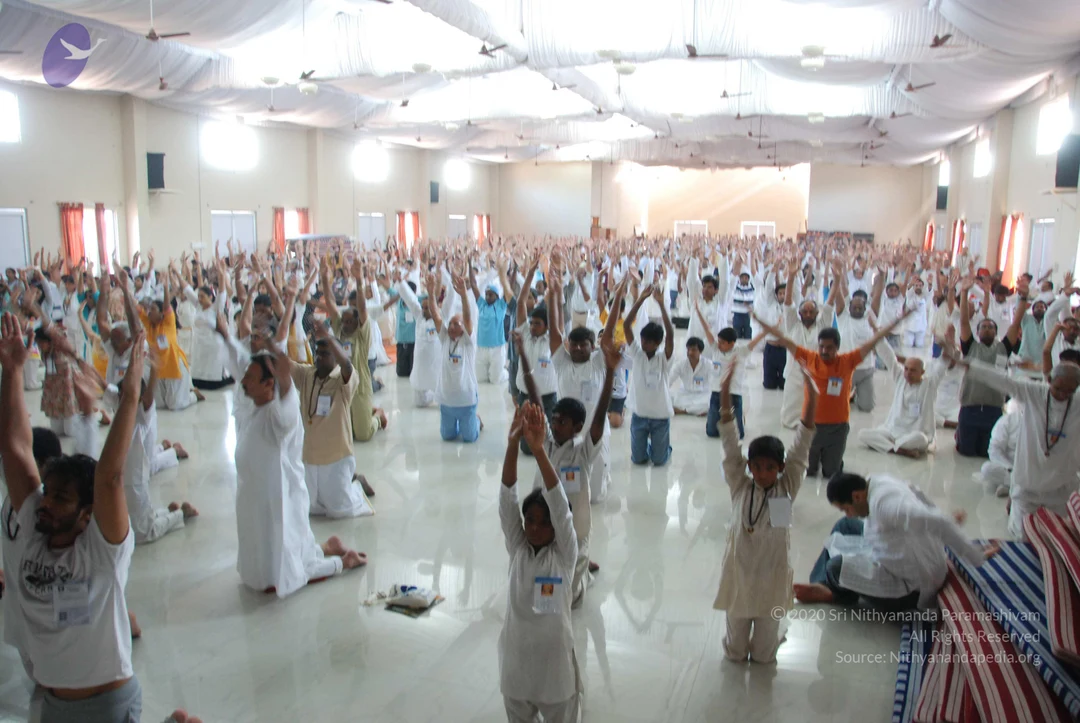
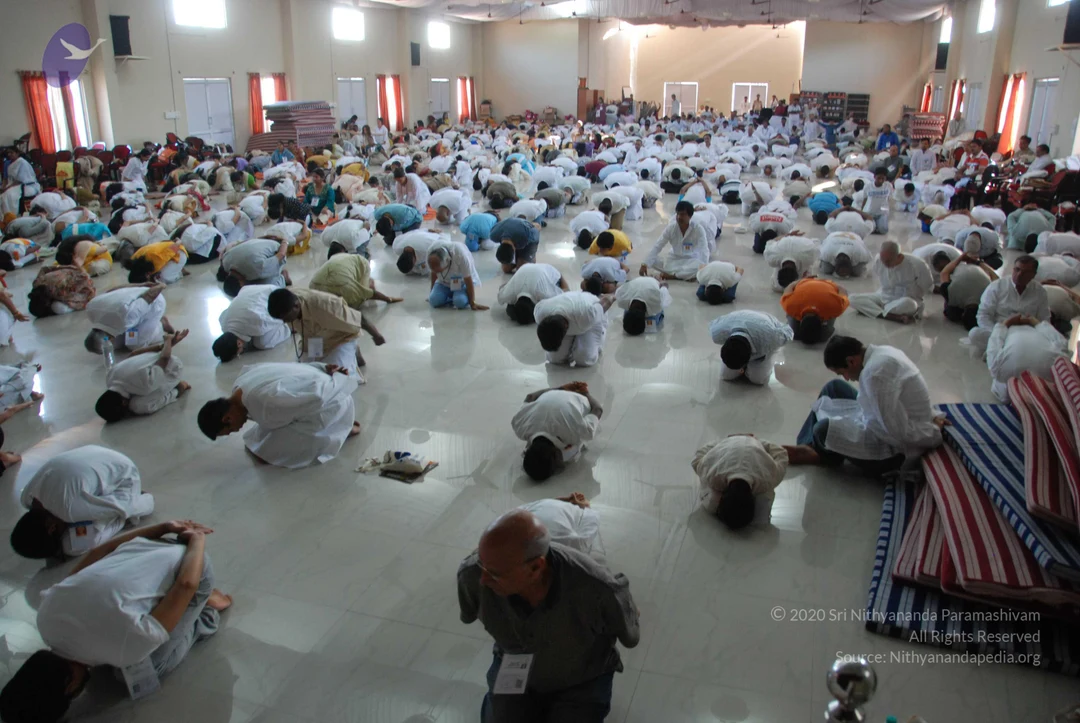
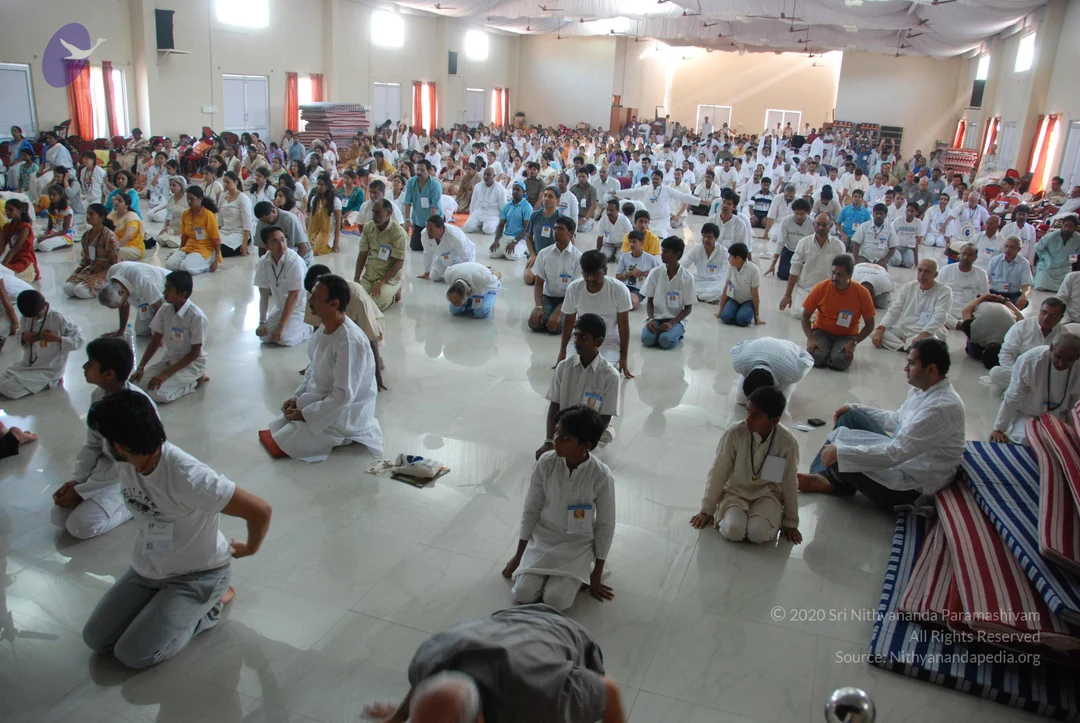
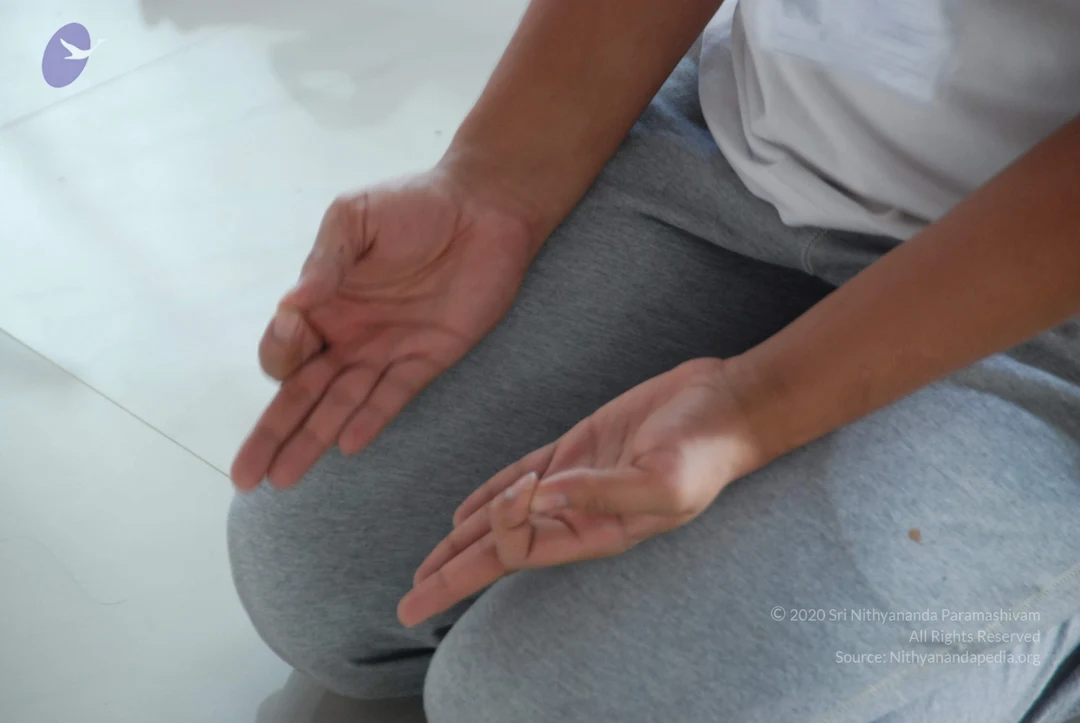
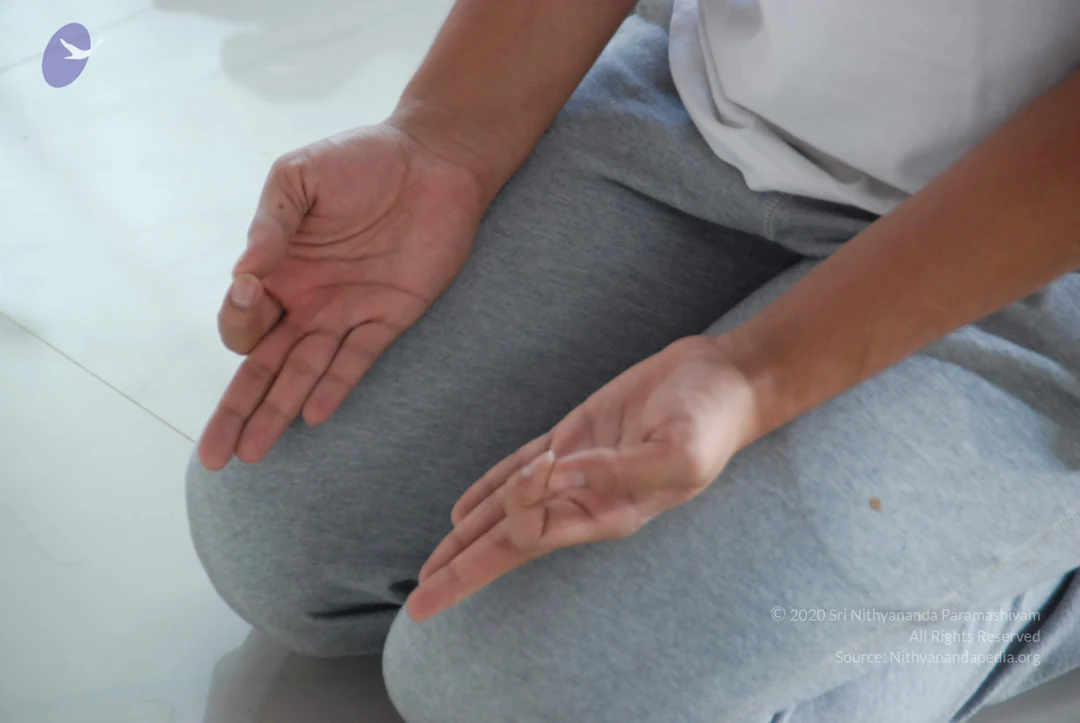
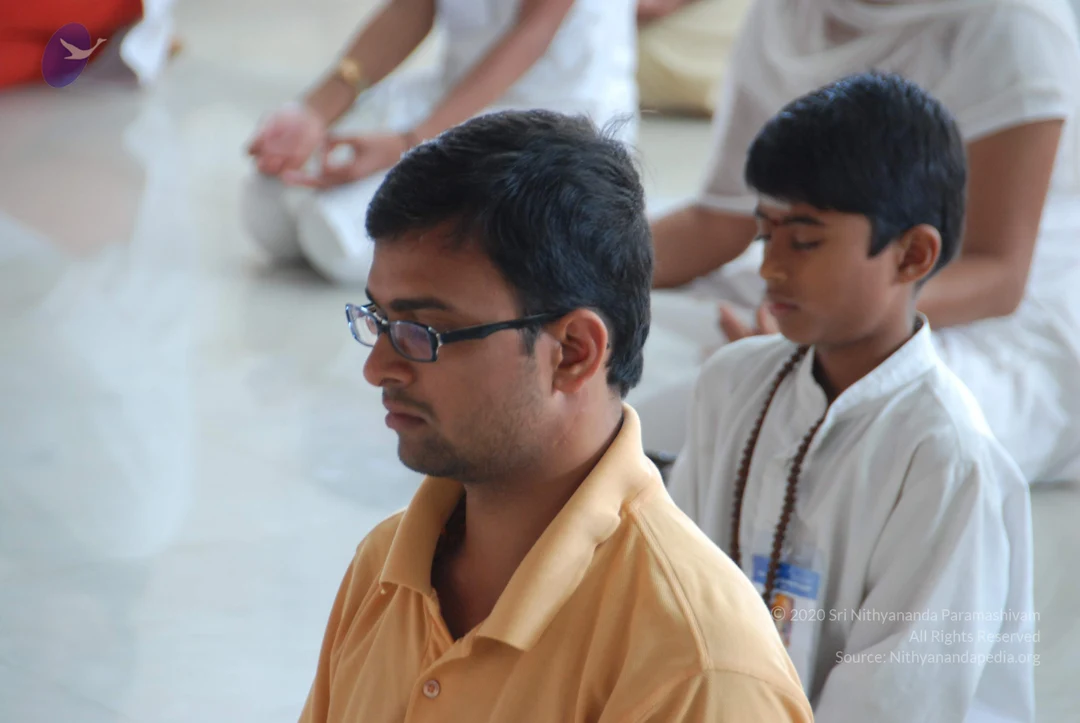
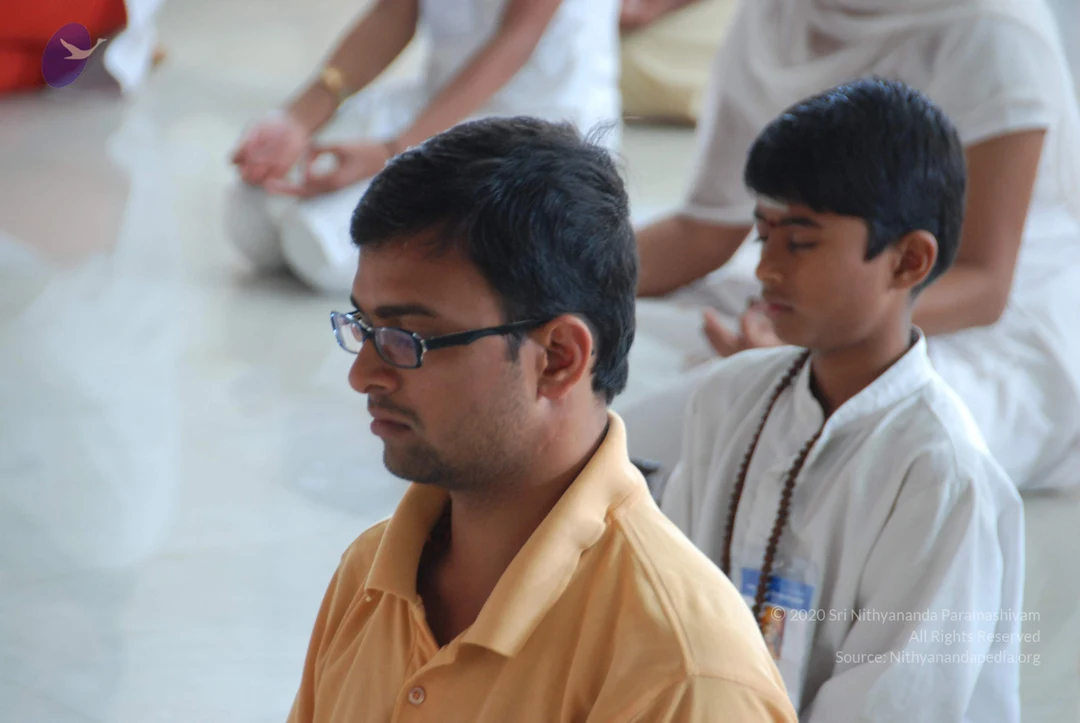
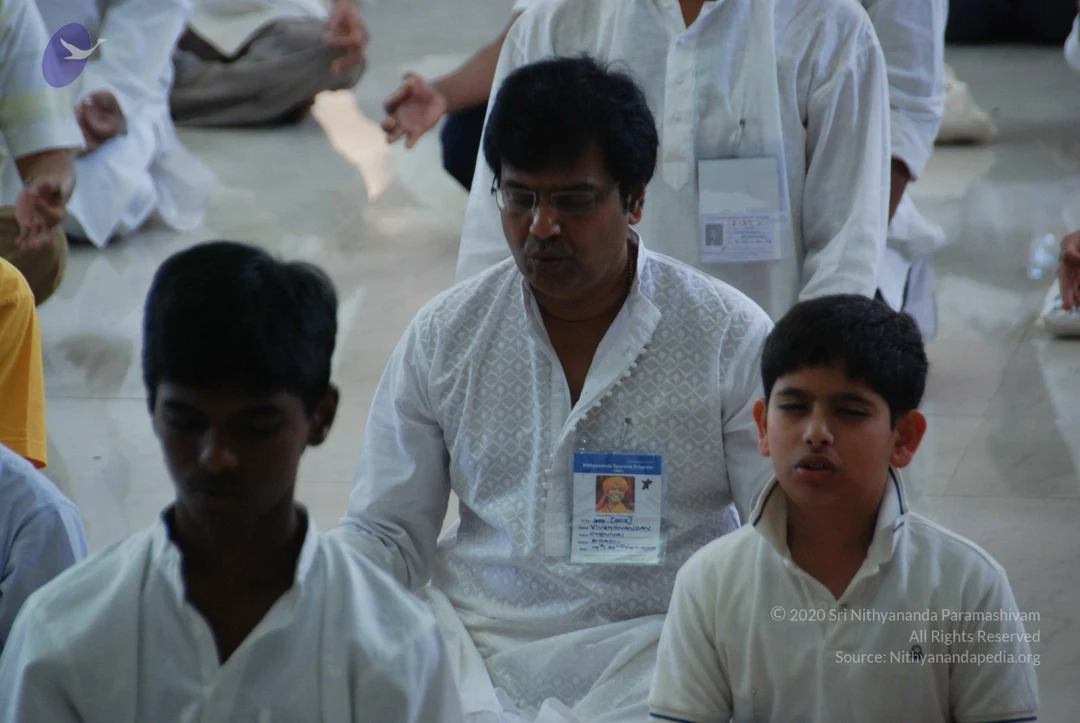
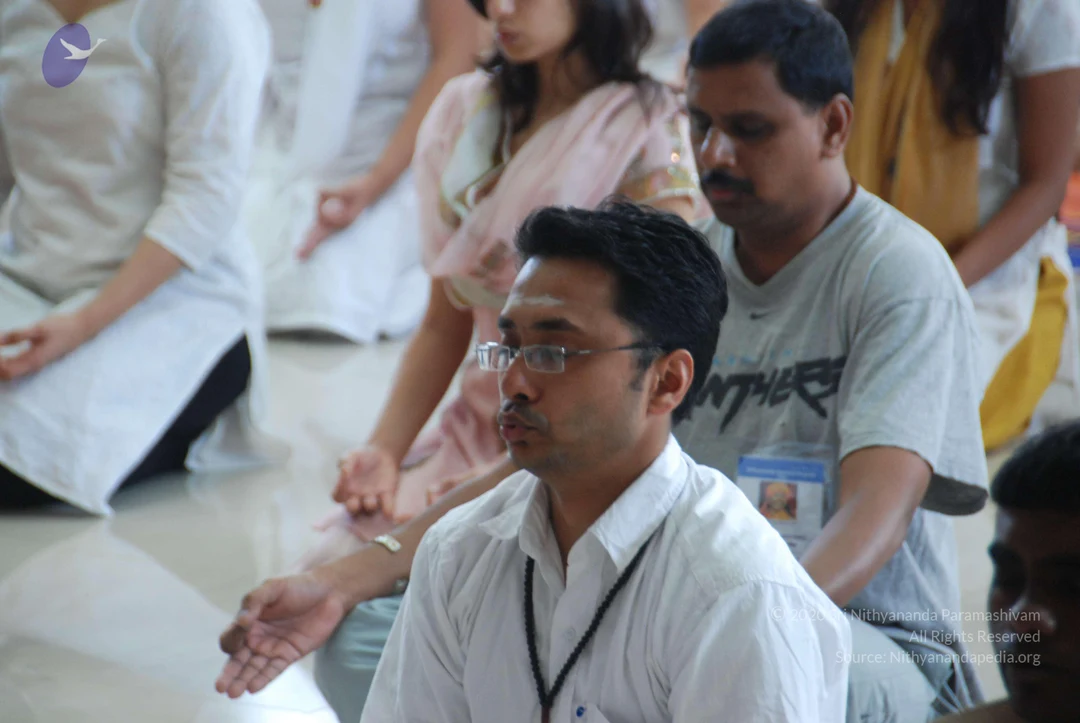
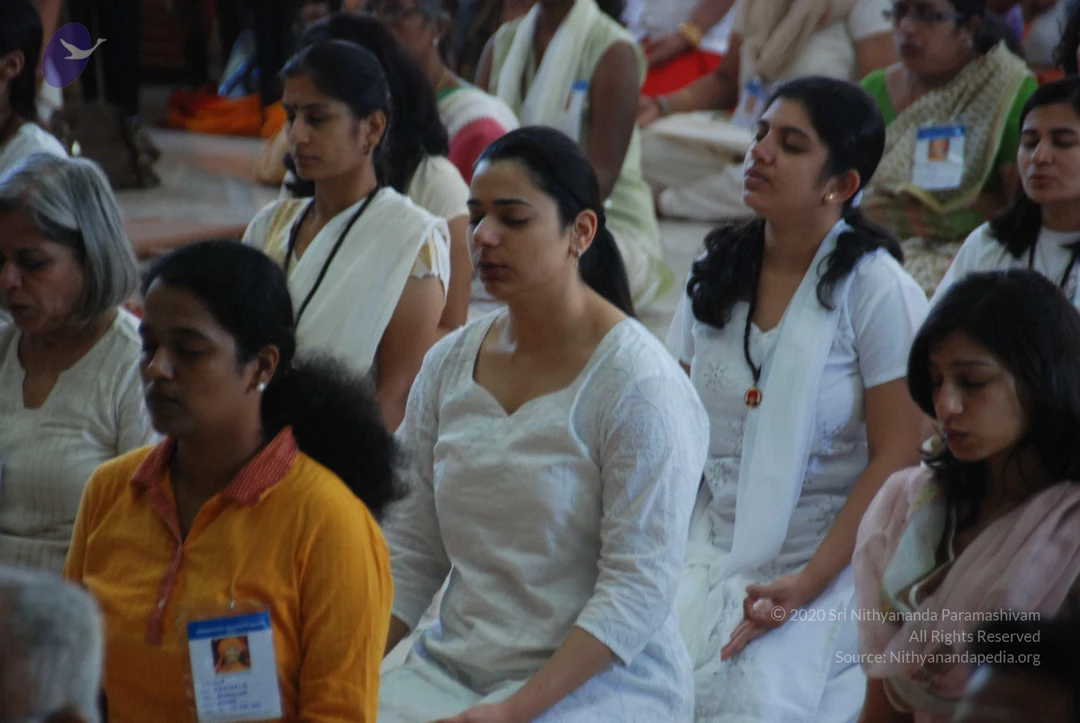
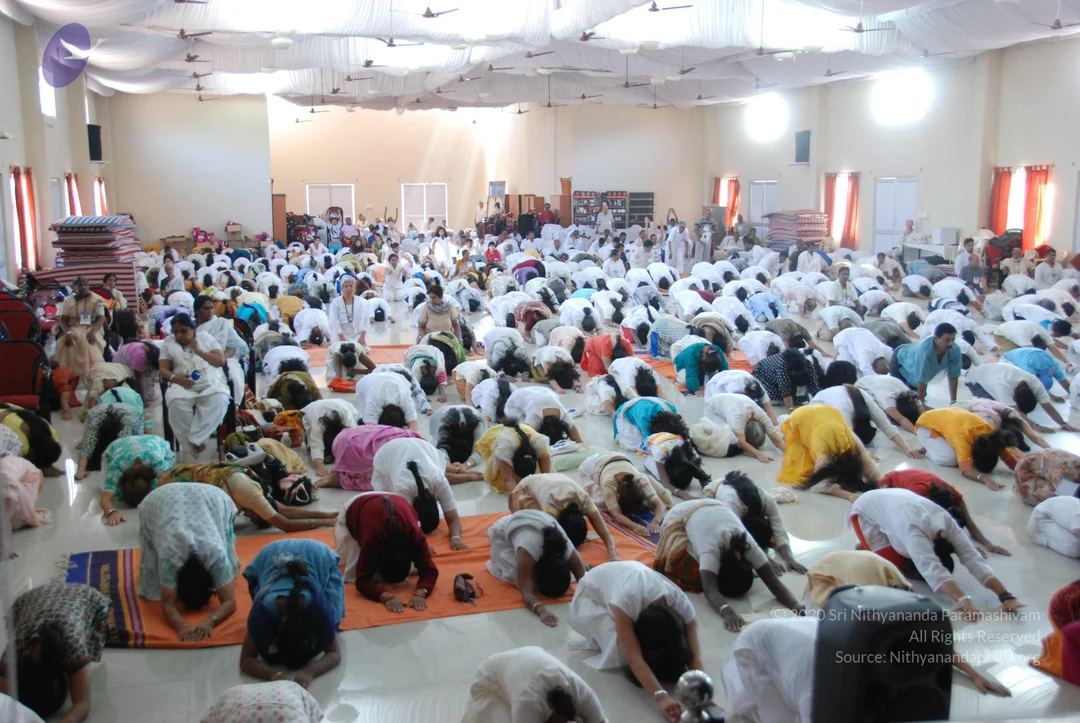
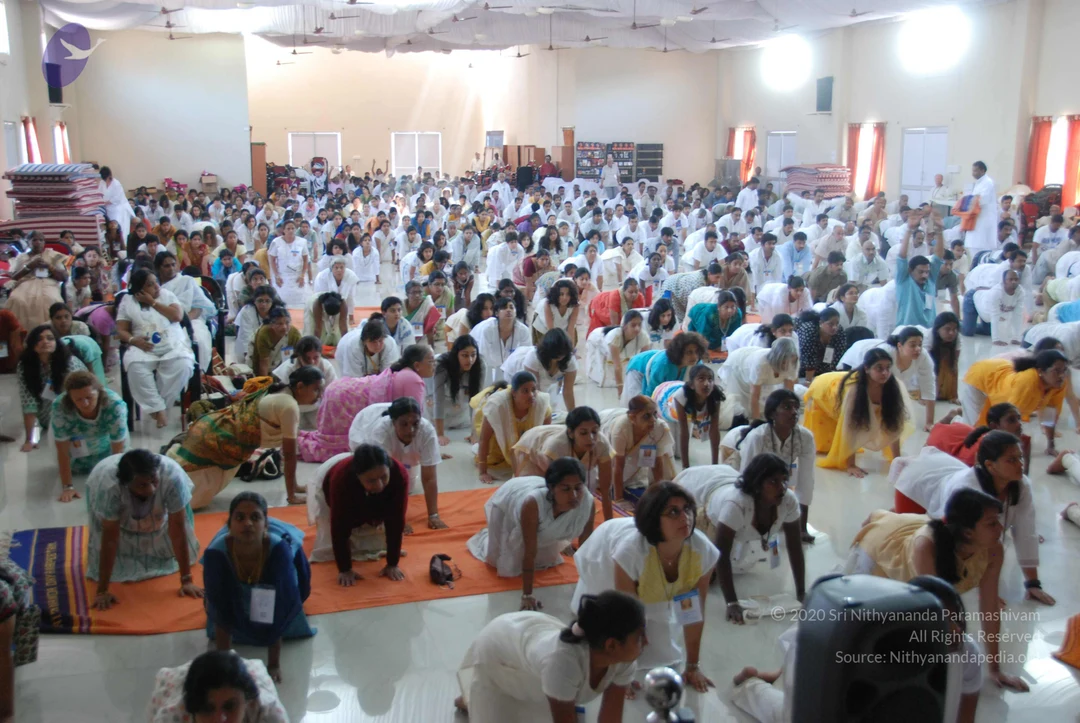
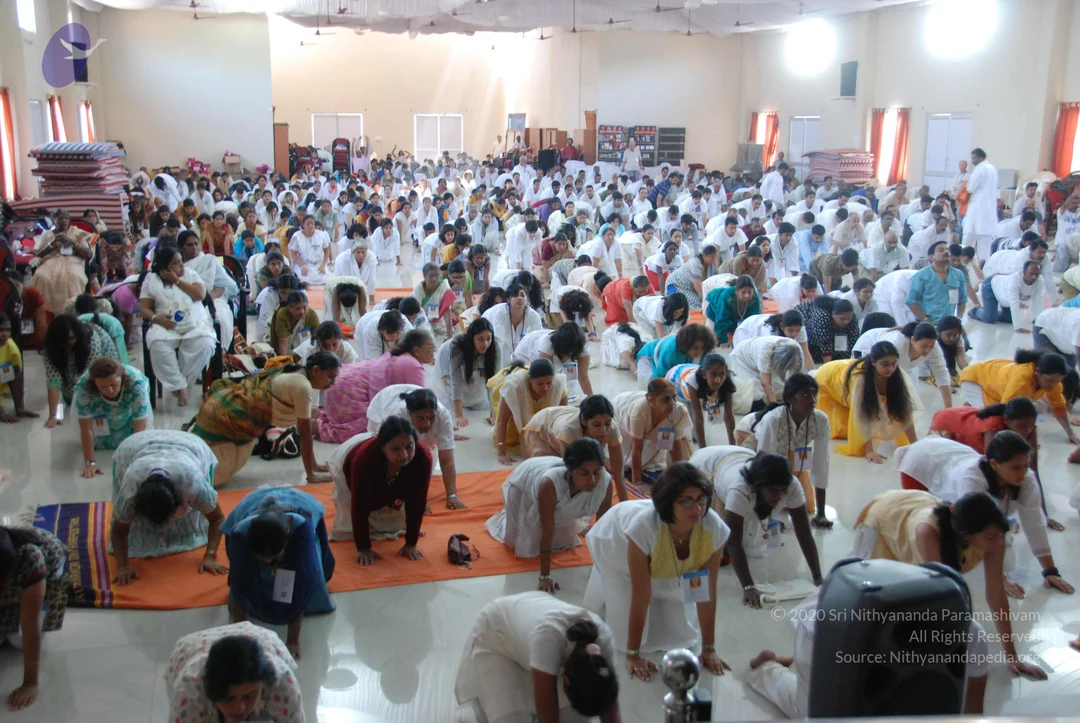
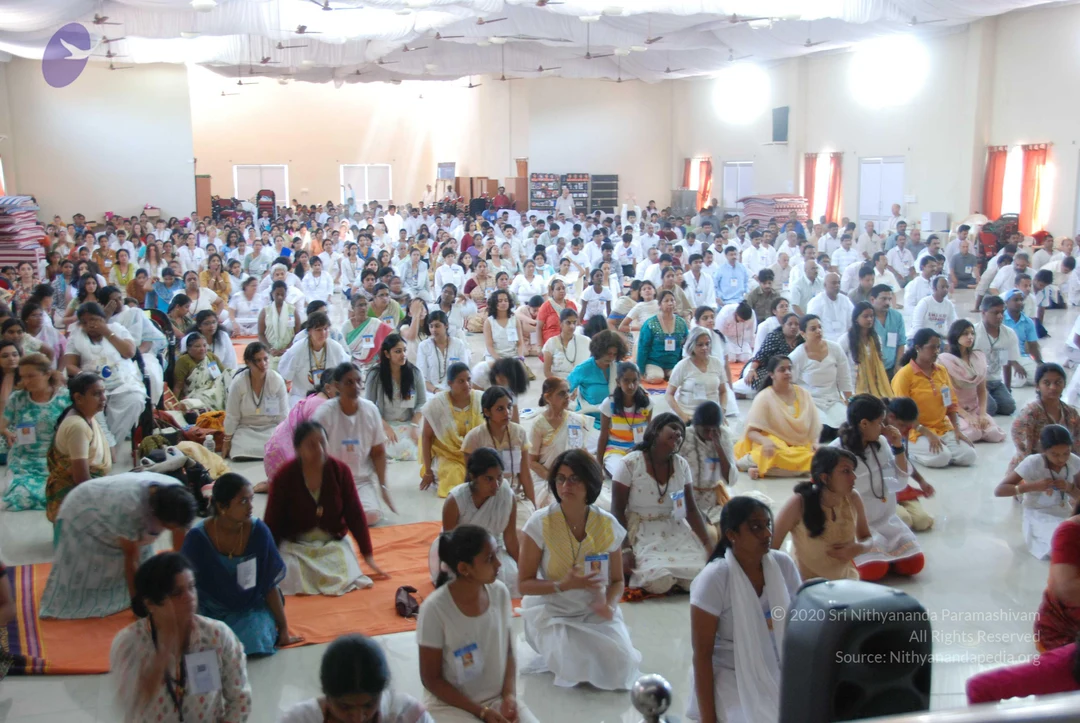
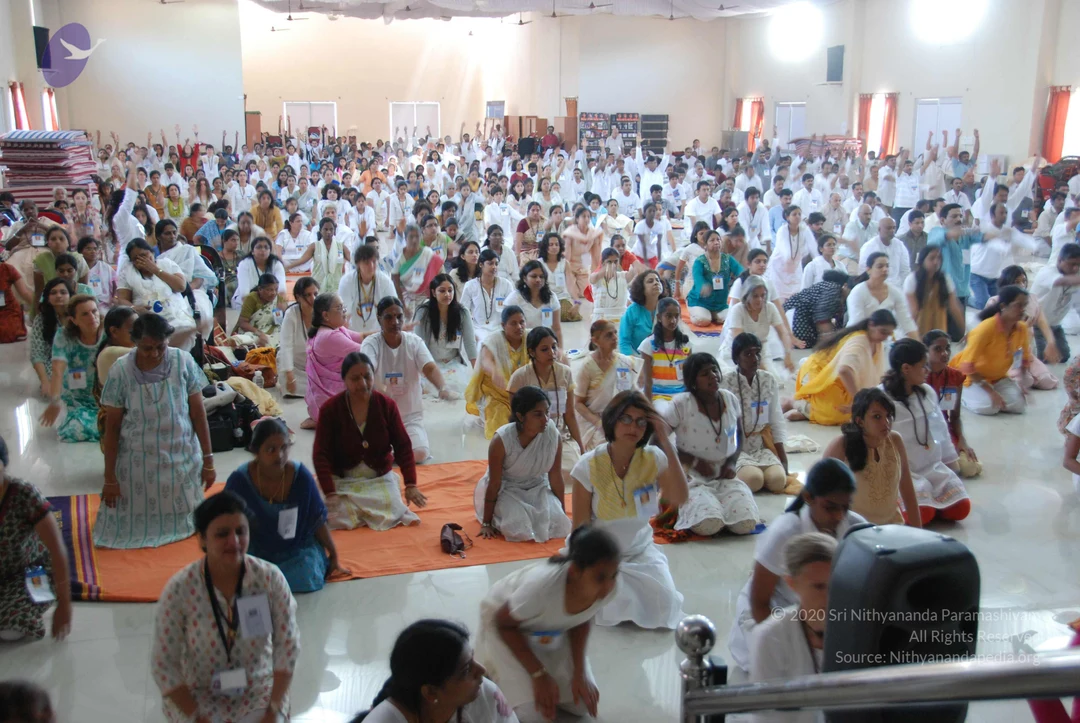
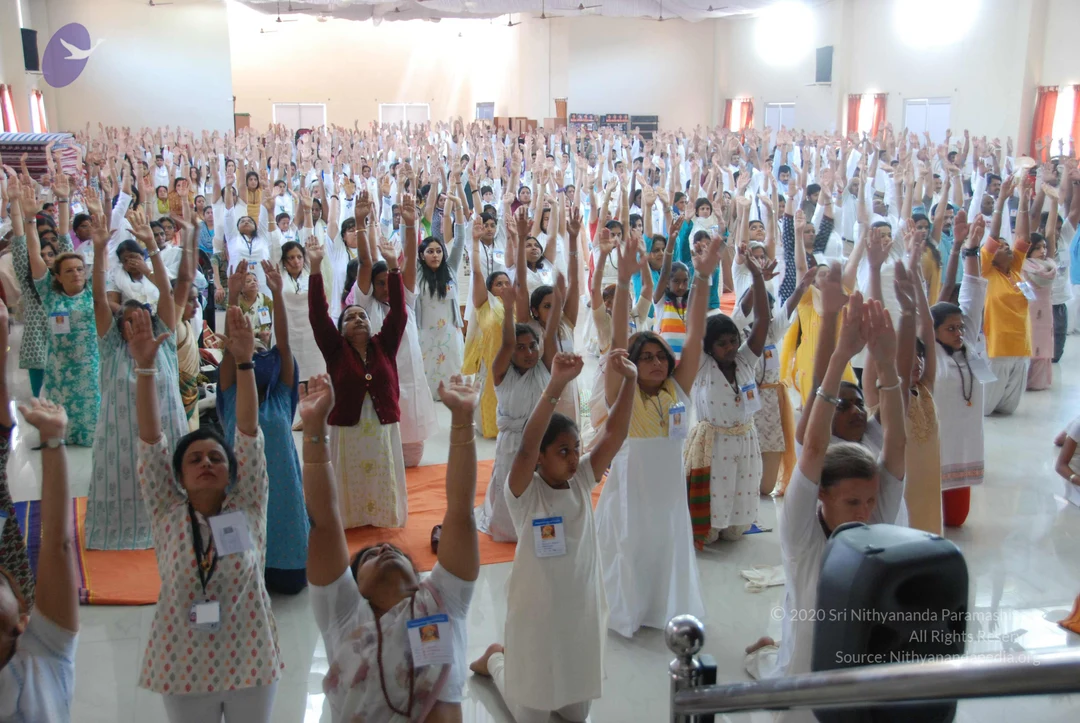
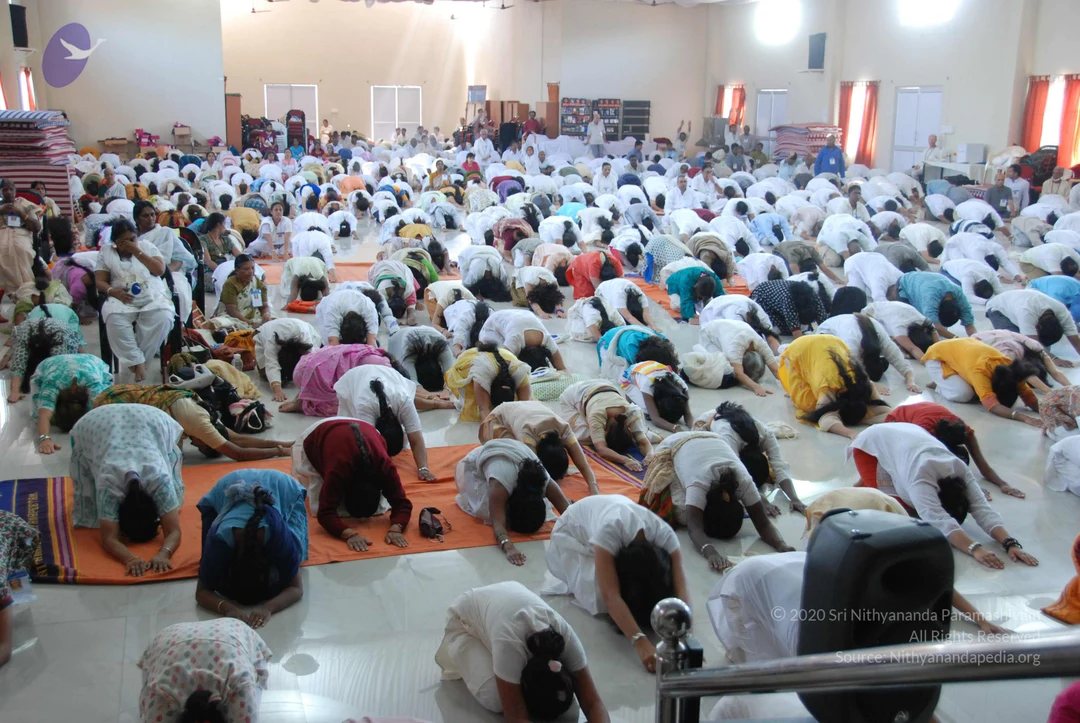
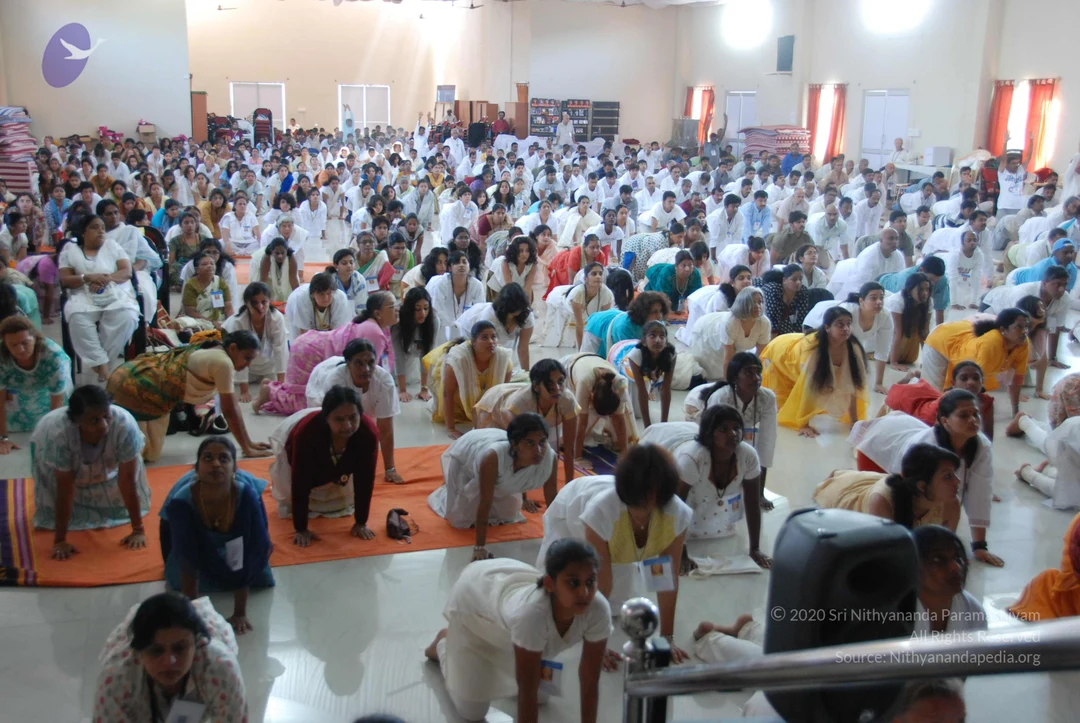
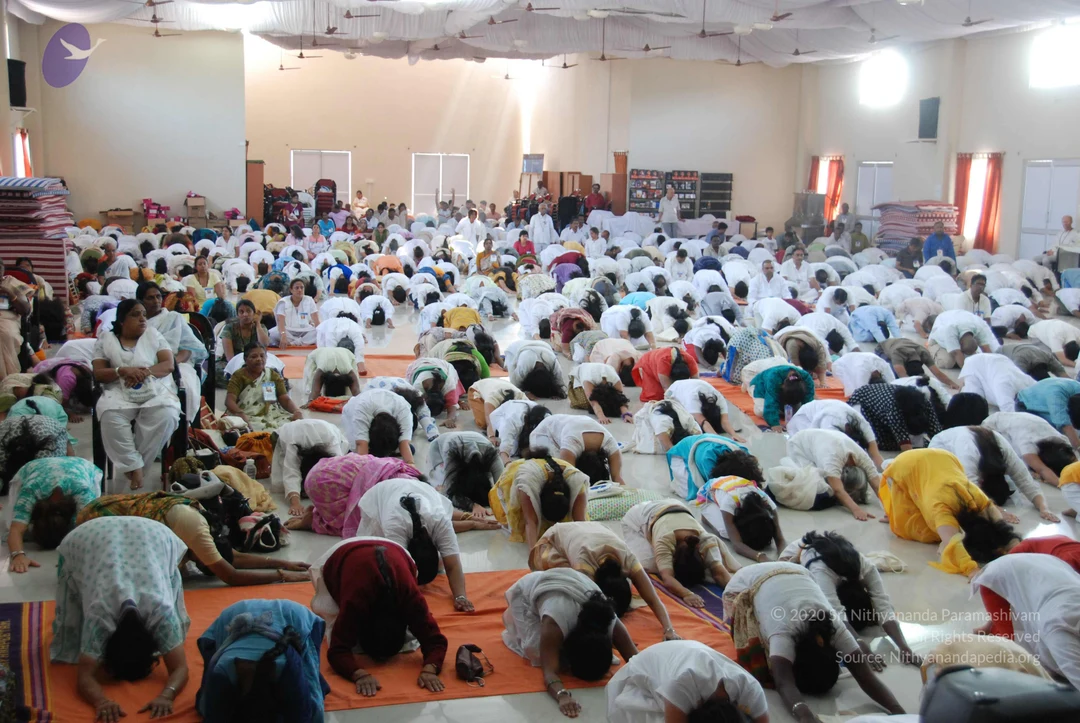
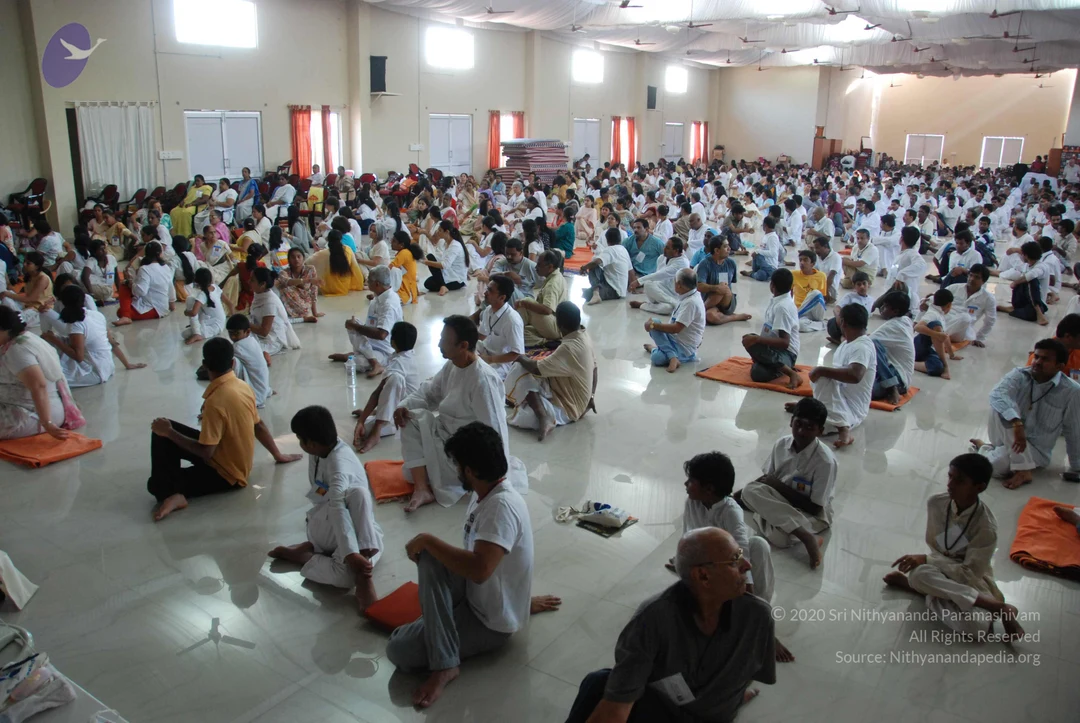
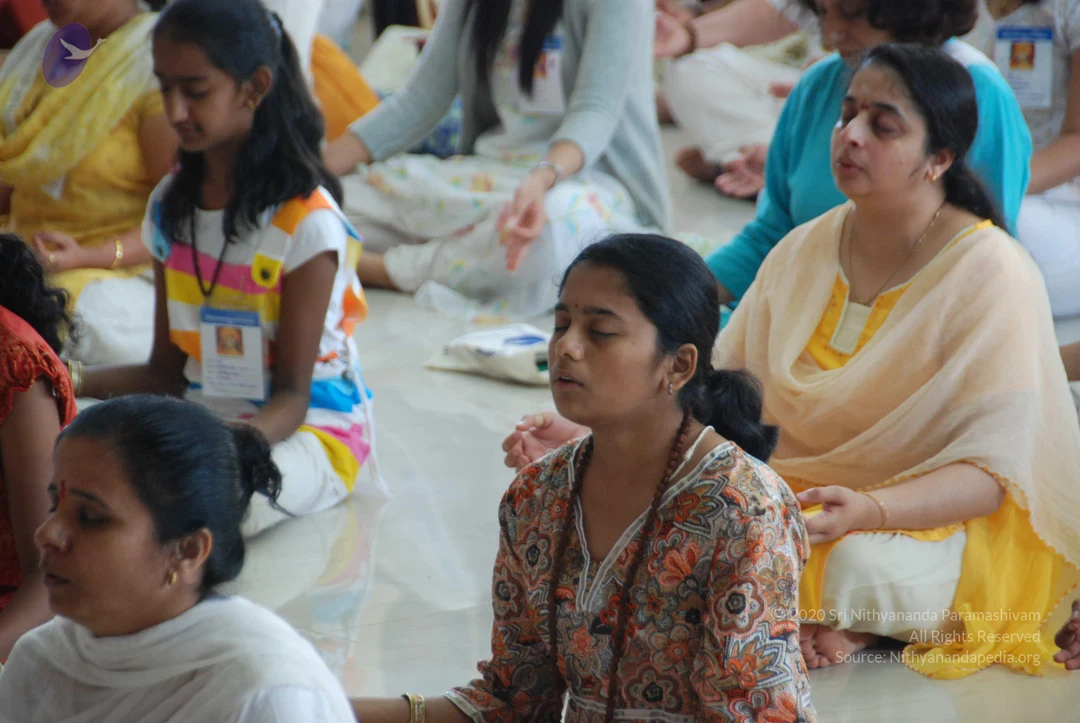
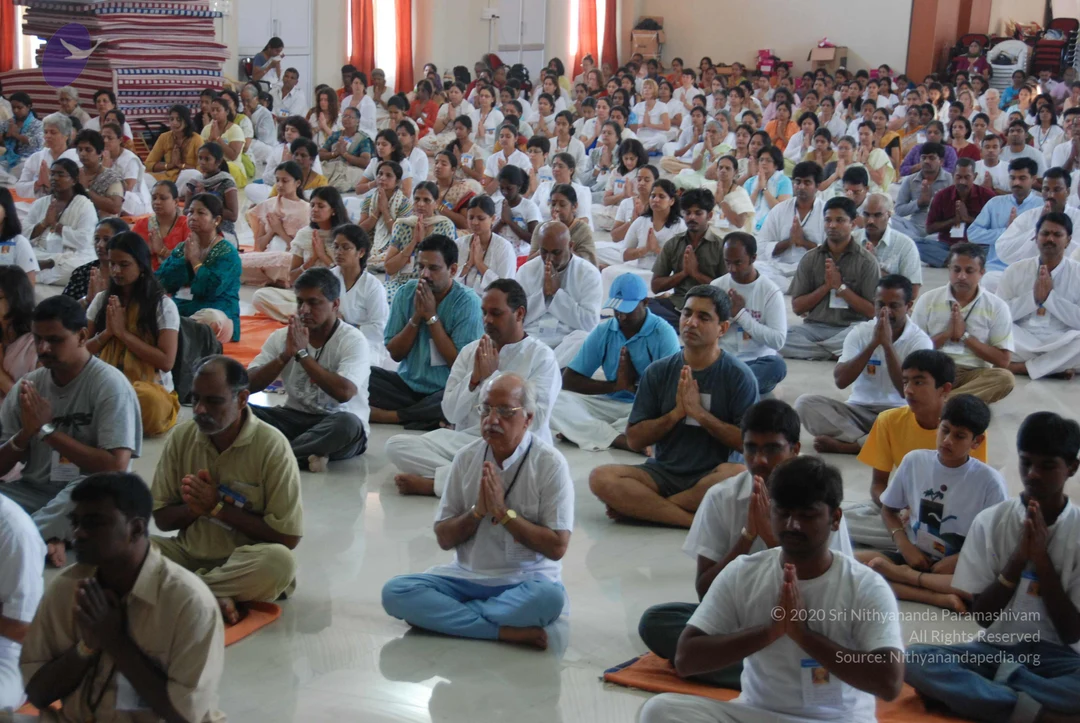
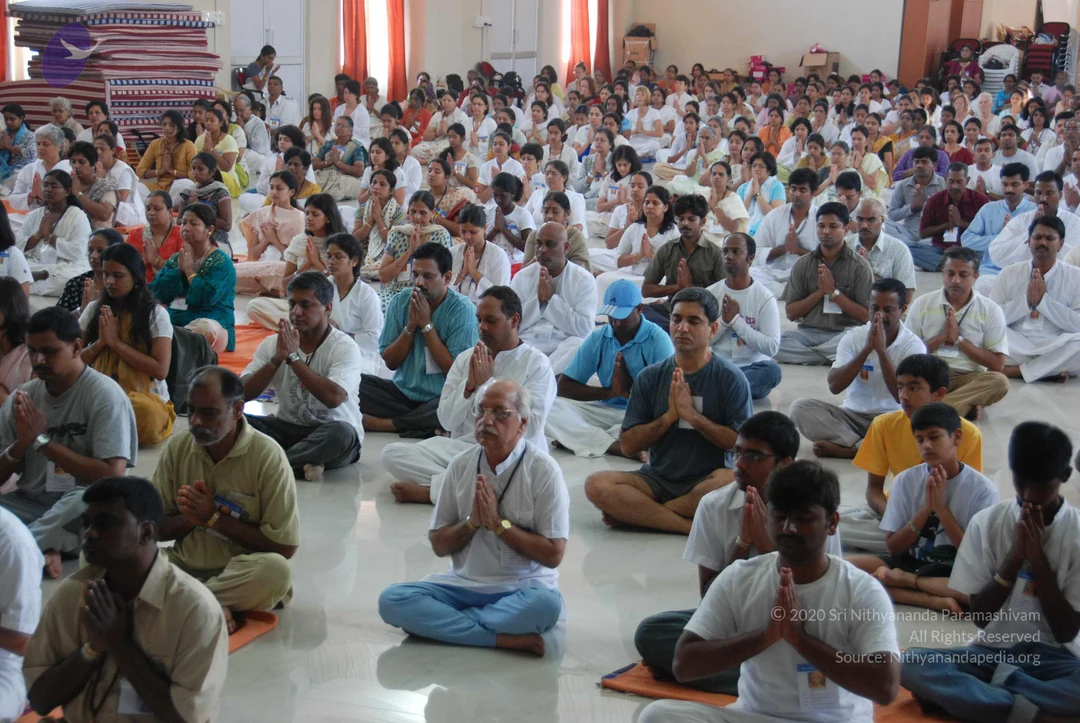
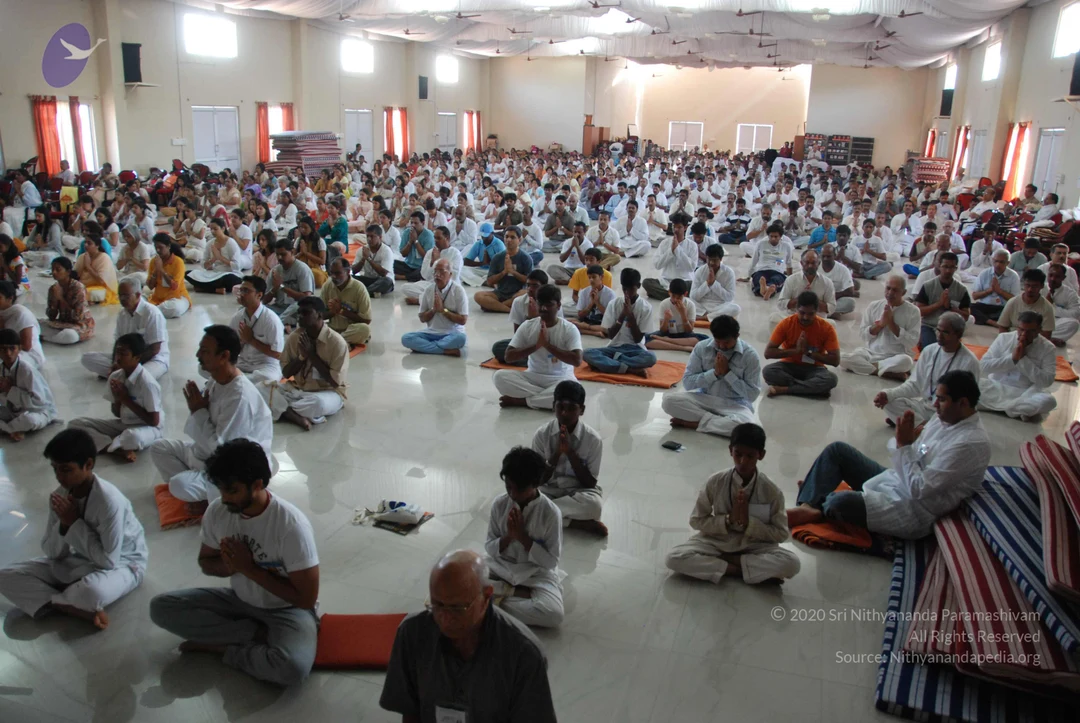
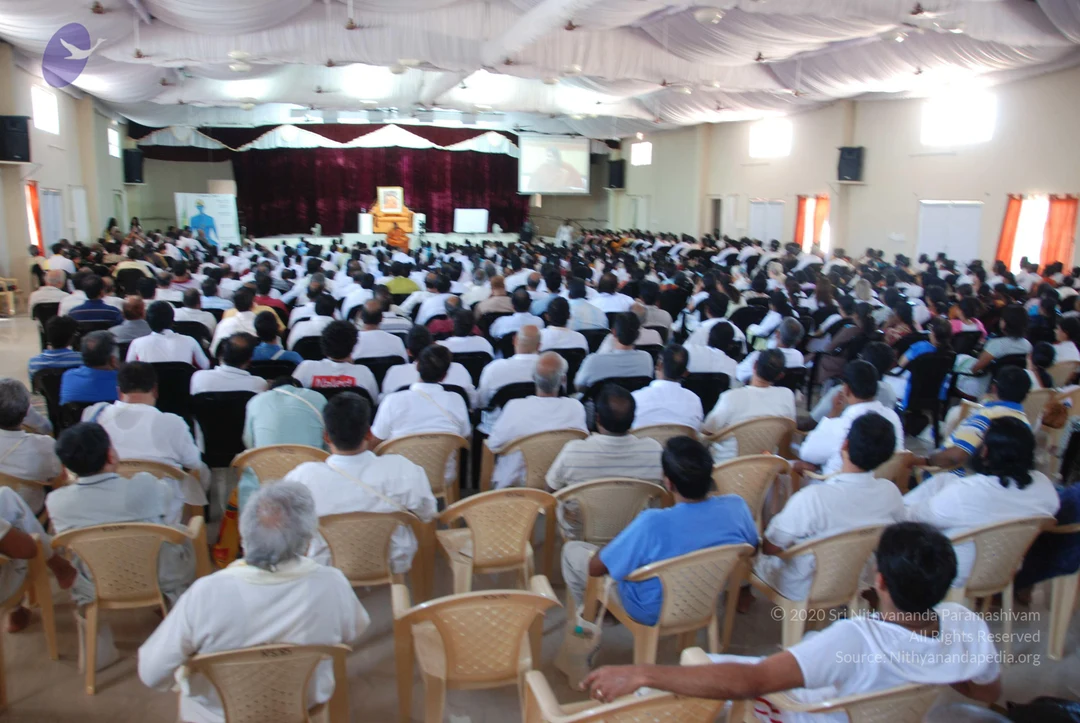
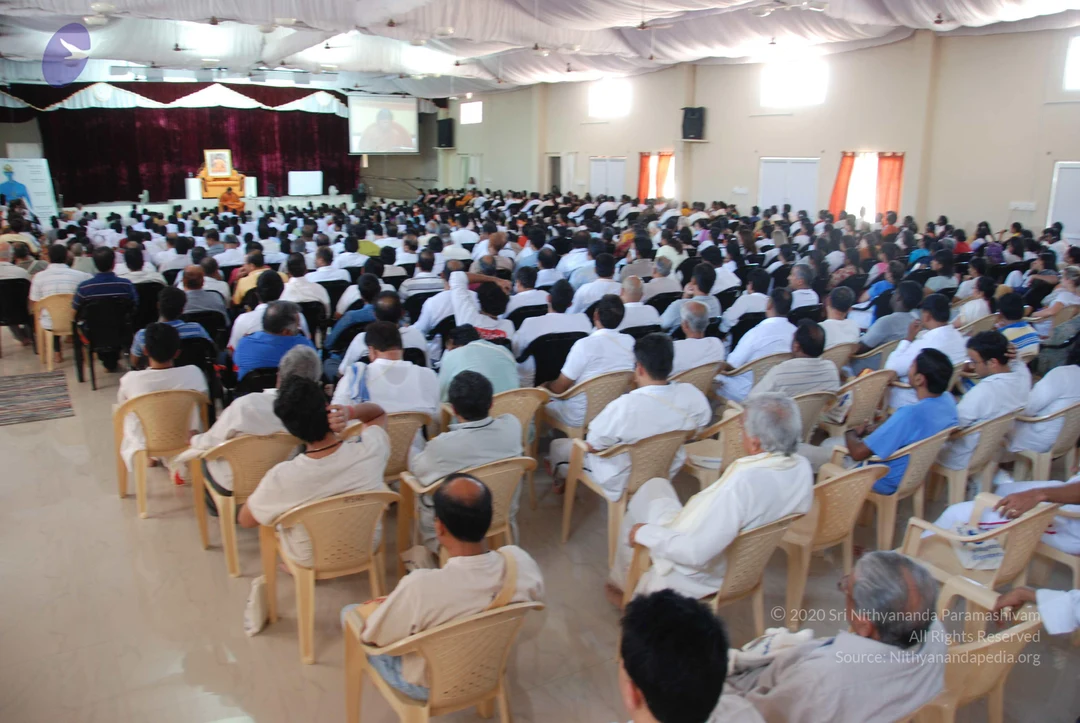
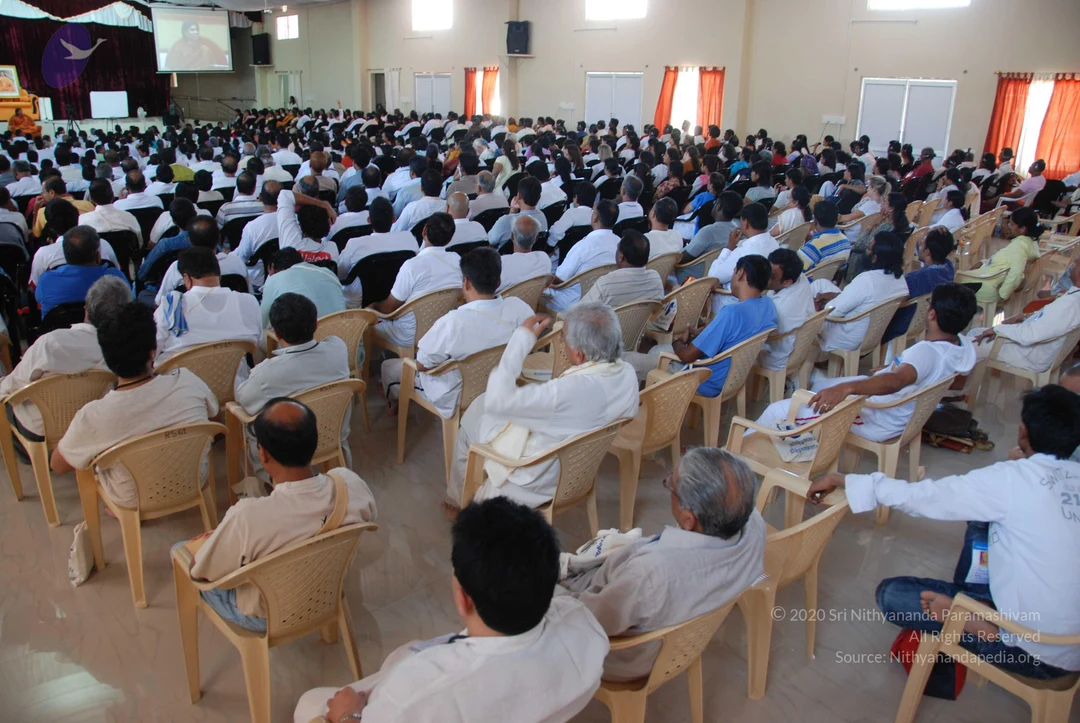
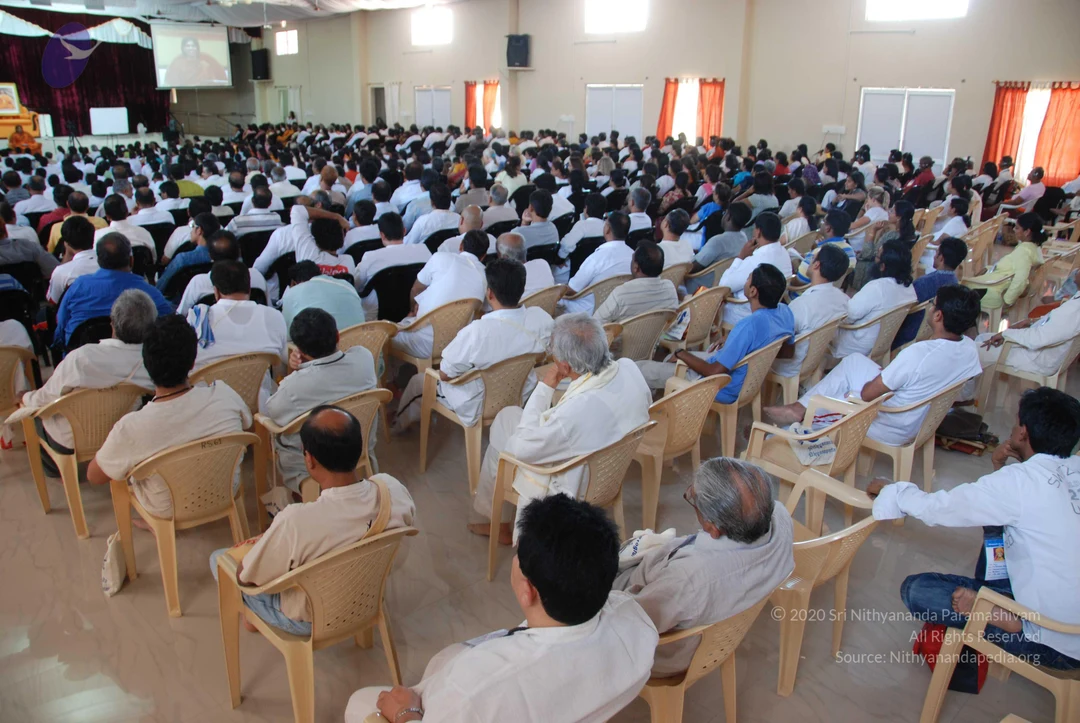
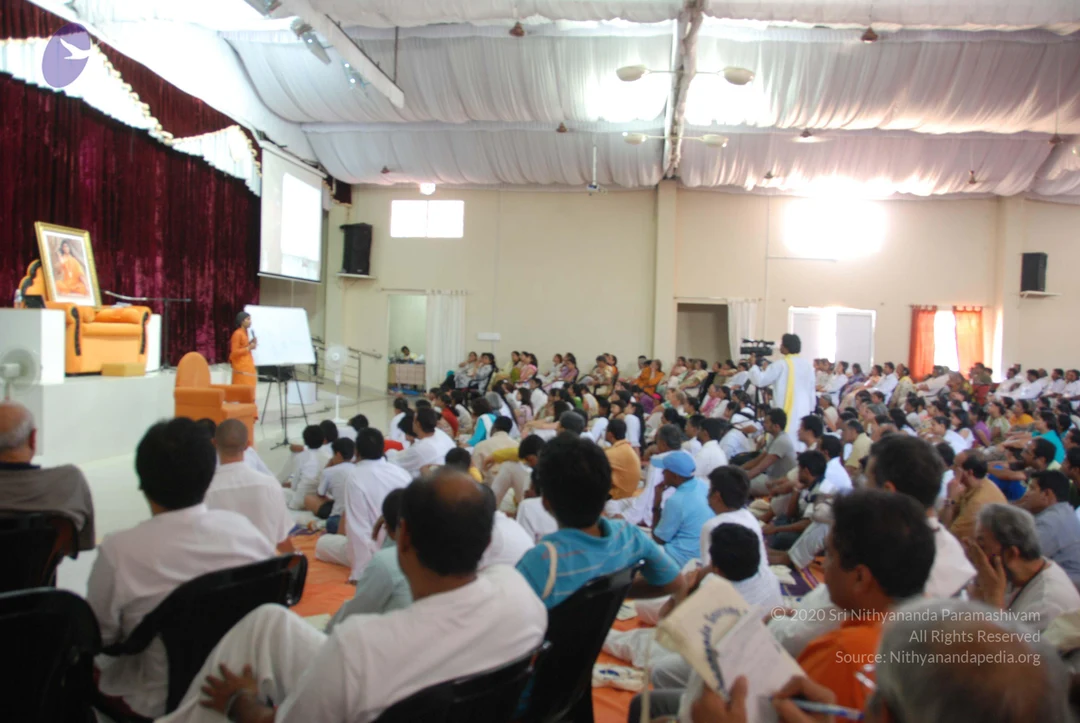
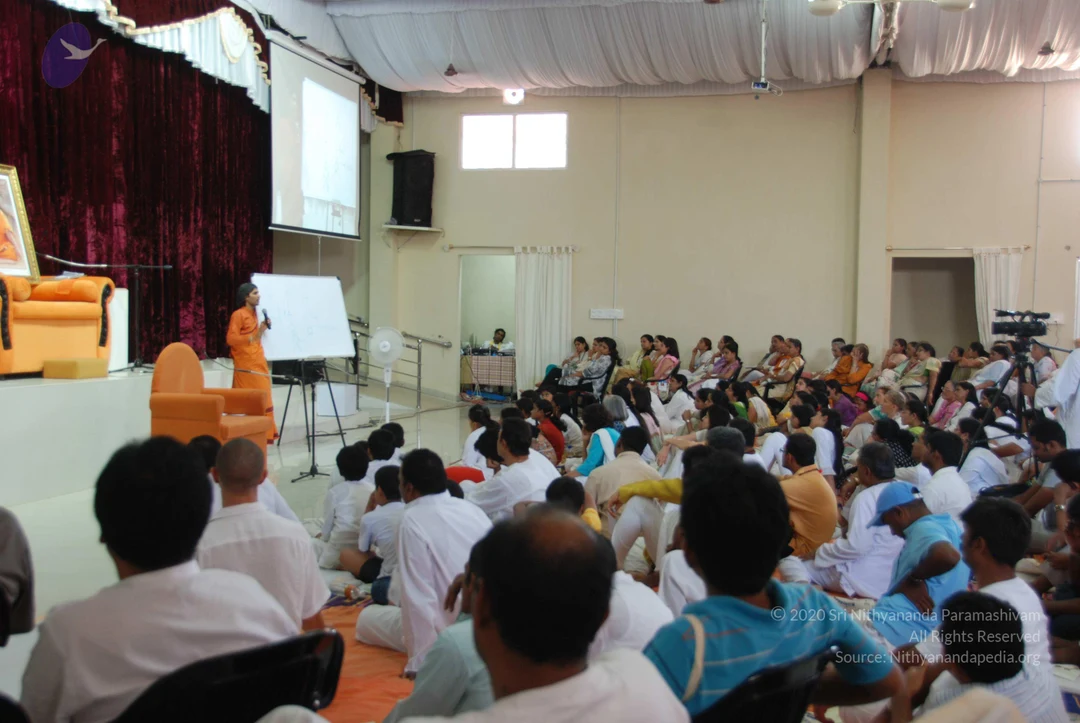
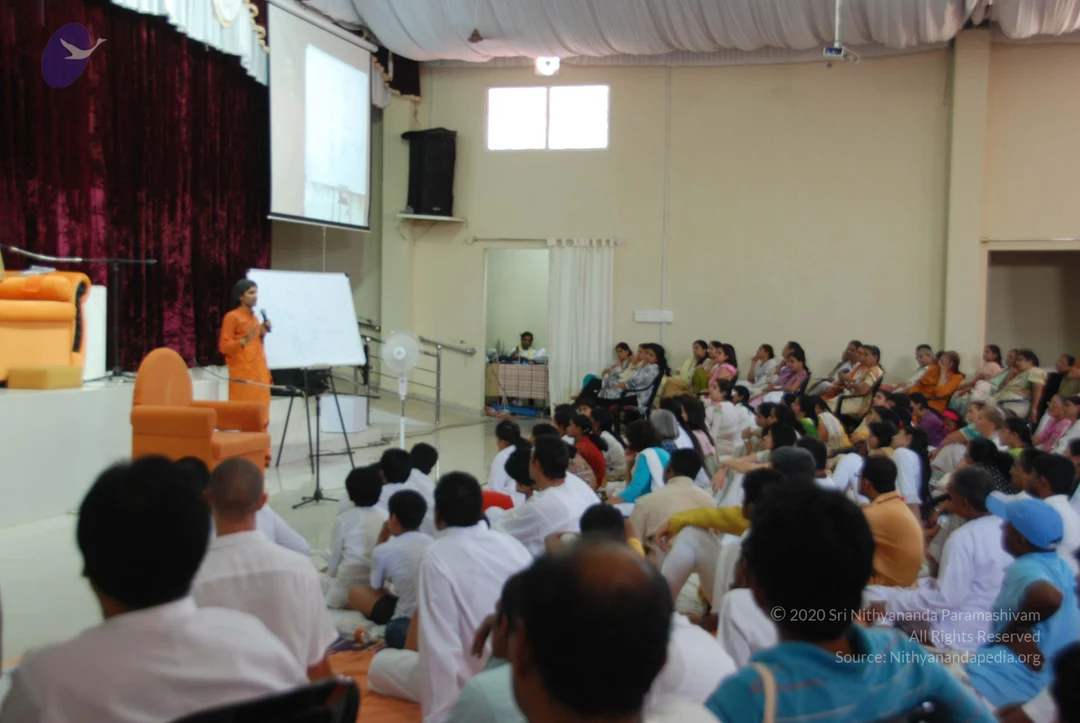
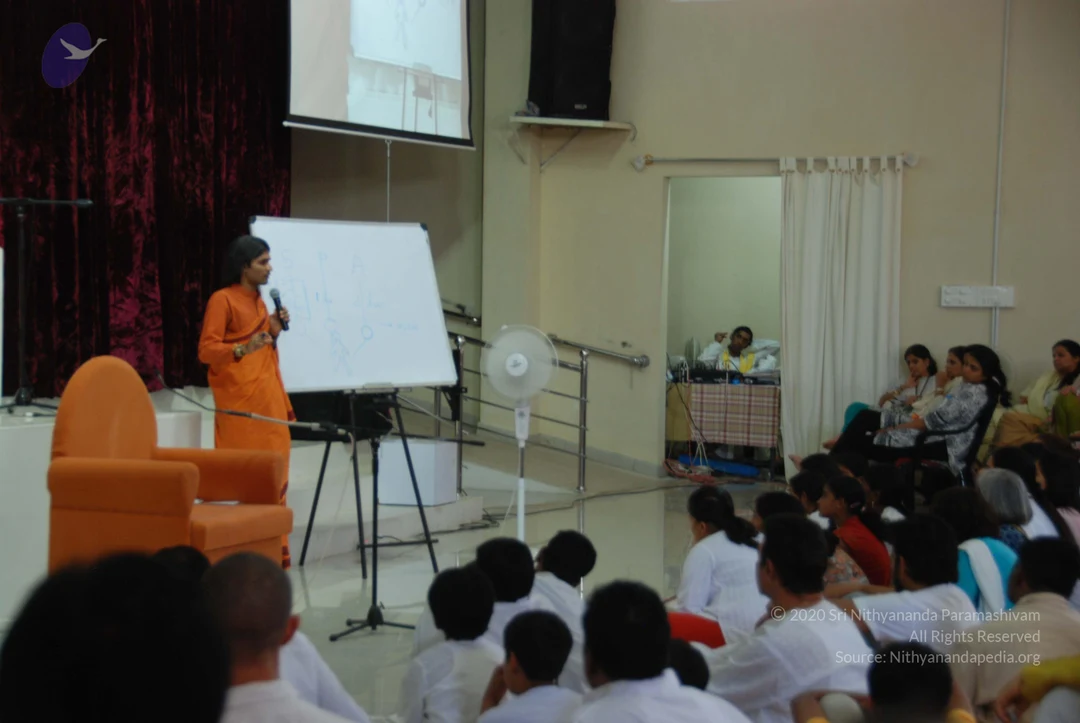
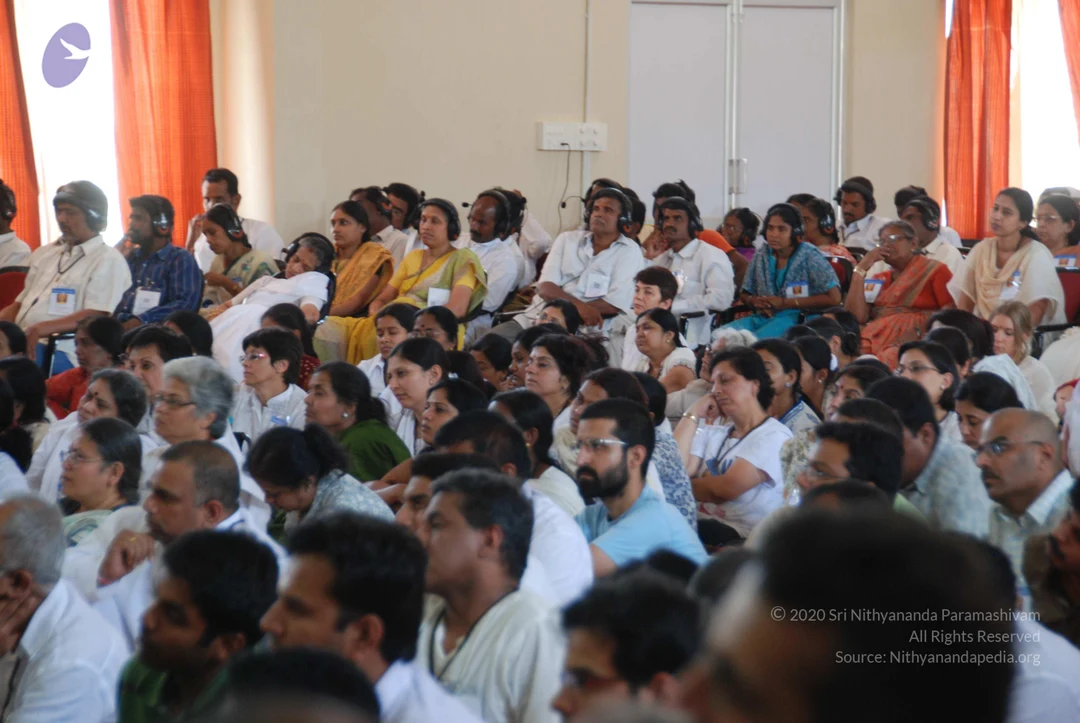
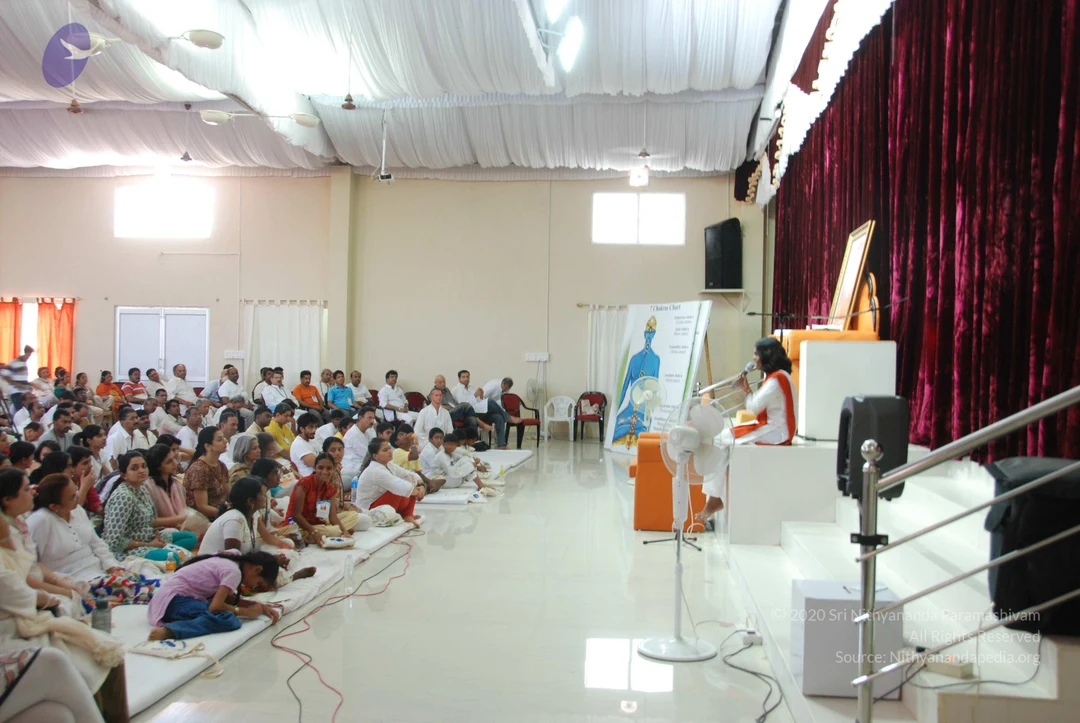
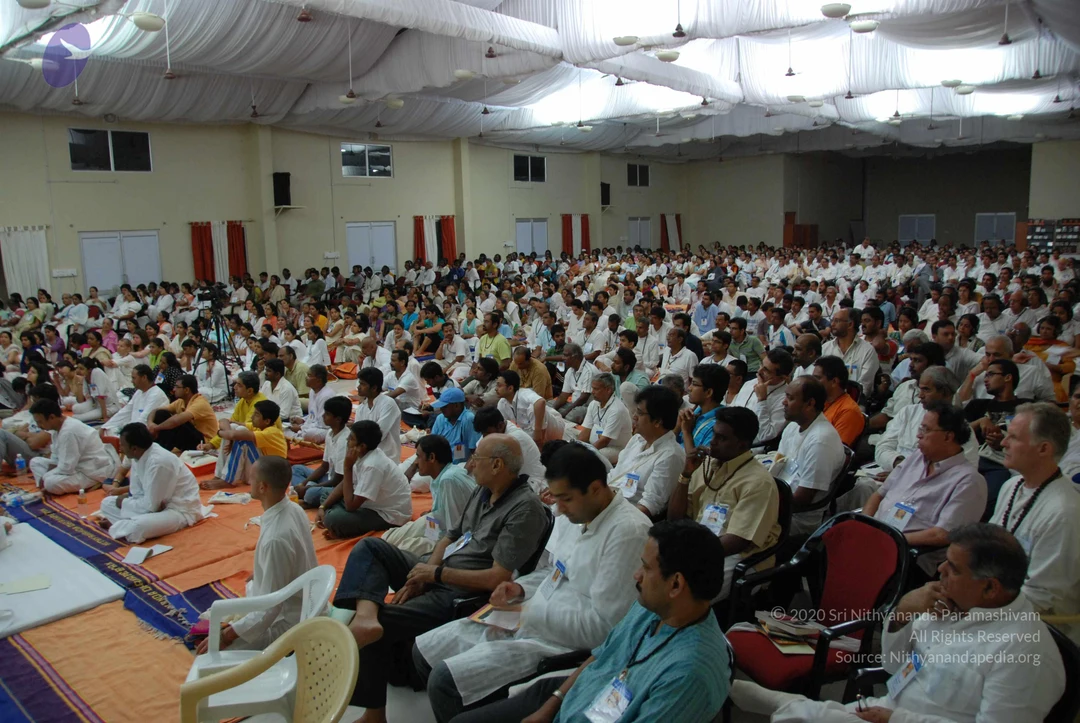
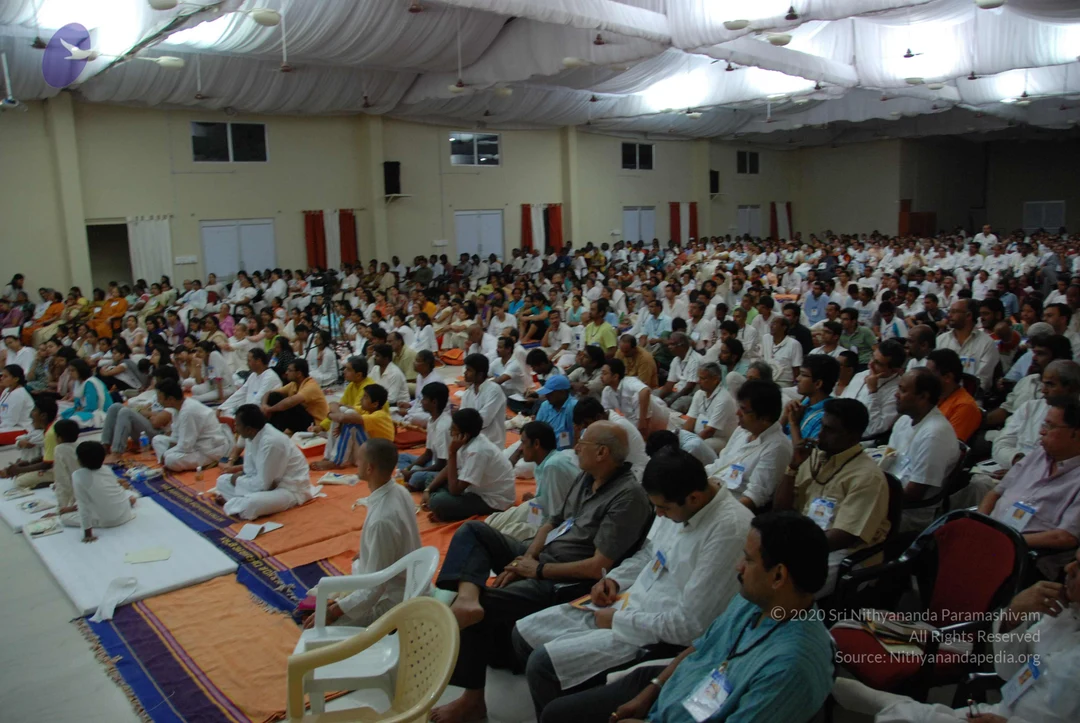
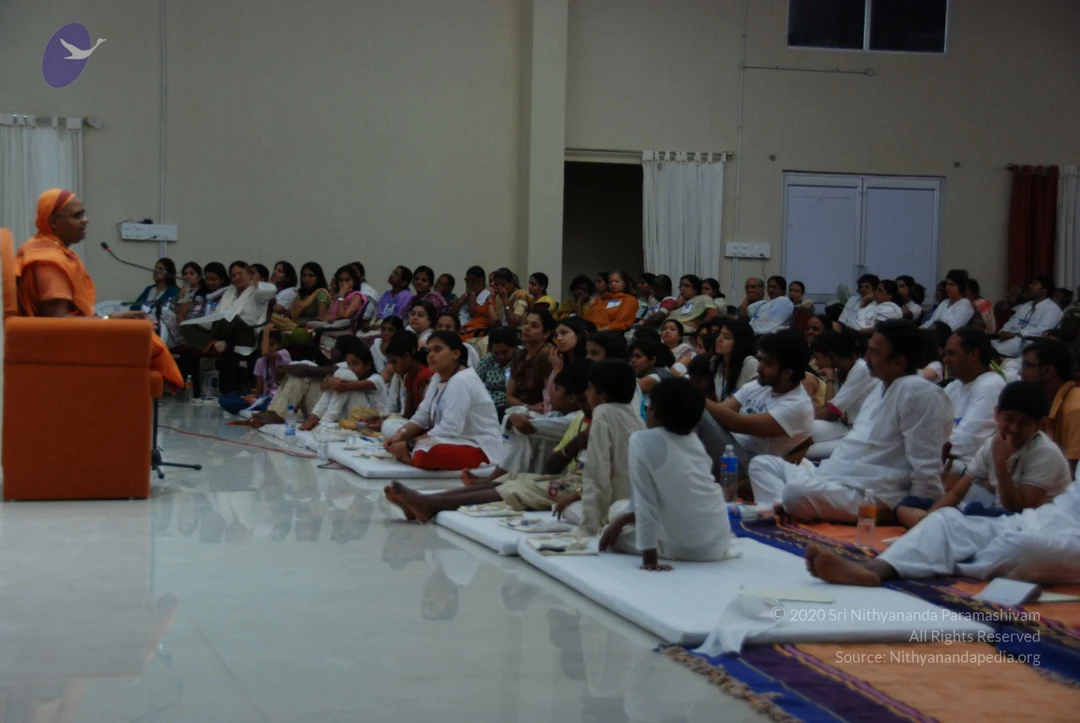
A large indoor hall with a white draped fabric ceiling and many ceiling fans, where a crowd of participants stands with both arms raised overhead in a group exercise or yoga practice. Most wear white kurta or salwar clothing, while some wear yellow, green, orange and blue. A bald older man in the foreground wears glasses, a dark grey shirt and a lanyard badge, and a child on the right wears white with a badge. The floor is polished and reflective. No swami is visible in this frame.A large hall with a white tented ceiling and bright tiled floor, filled with a dense crowd of people bending forward with hands reaching toward the floor, as in a group yoga or bowing posture. Most wear white clothing, with some in yellow, orange, blue and beige. Mats in red and blue-striped stand along the right edge, and a red mat lies in the foreground. Ceiling fans and large windows line the room. Crowd size exceeds one hundred visible people, so the count is 100+, and no individual is identified as a person.A large hall with a white draped ceiling and ceiling fans, filled with many participants in white clothing, some in yellow, orange and blue, seated or crouched on a pale tiled floor and stretching their arms forward in a group exercise. A few people in the background stand at the rear of the room, and a red folded cushion sits near the lower centre beside a small object. Curtains in orange and white hang along the walls. No single figure is clearly identifiable as a person in this view.A photograph of an indoor hall with white ceiling drapes and ceiling fans. On the right, a woman in a white outfit with an orange-red sash stands on an orange-fronted stage, holding a microphone and speaking. In the left foreground, a crowd of people in mostly white clothing stands, several with arms raised; one man wears a yellow shirt and another a grey shirt with a lanyard badge. A white fan sits near the stage edge, and white curtains hang along the walls.A photograph of a meditation or satsang hall with a cream wall and a white curtained window. A woman in a white kurta with an orange sash at her waist stands at right, holding a microphone in one hand and raising the other arm upward toward a ceiling light. An orange-cushioned podium and a microphone stand sit beside her. Around the room, a dozen or so people stand or sit in white and pale clothing, some with arms raised, one man in a yellow shirt, and a few children in white. Several participants stand in a line near the front, and a white fan is visible at lower right. No person is identifiable as a person in this scene.A woman with shoulder-length dark hair stands at the right side of a hall, holding a handheld microphone to her mouth while speaking or singing. She wears a white long tunic with an orange sash or stole at the waist and across the body. Beside her is an orange-upholstered seat and a small stand microphone. To the left, a group of about a dozen people stands or sits in white and light clothing, including men in white kurtas, a man in an orange polo shirt, boys in white, and a woman in a pale floral top in the foreground. A projector hangs from the ceiling, a standing fan is visible, and white curtains hang along the back wall.

February 20 2010

Original wiki page
Contents

Photos Of The Day:

01-Anandeshwara
02-Kalpataru
03-NSP-Sessions

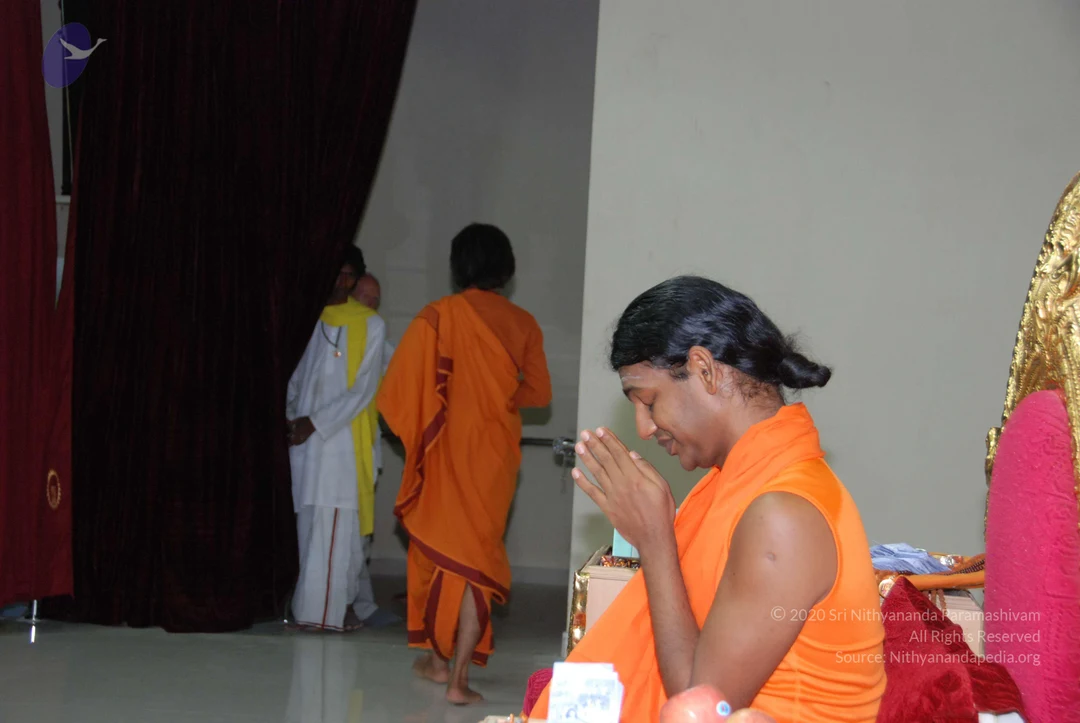
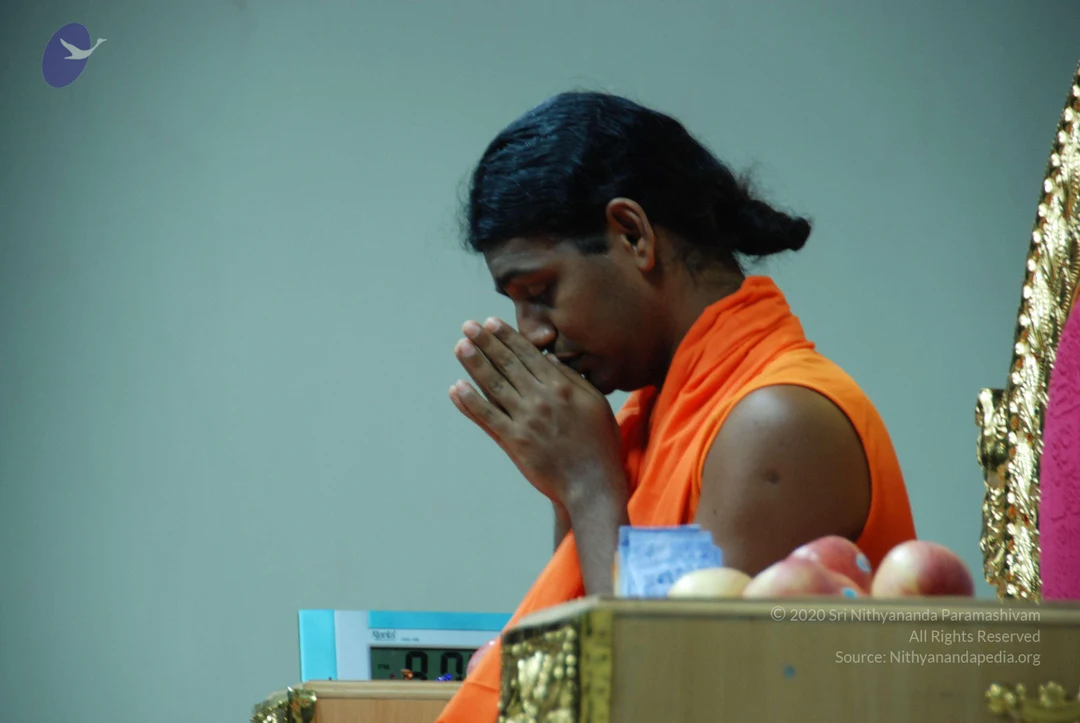
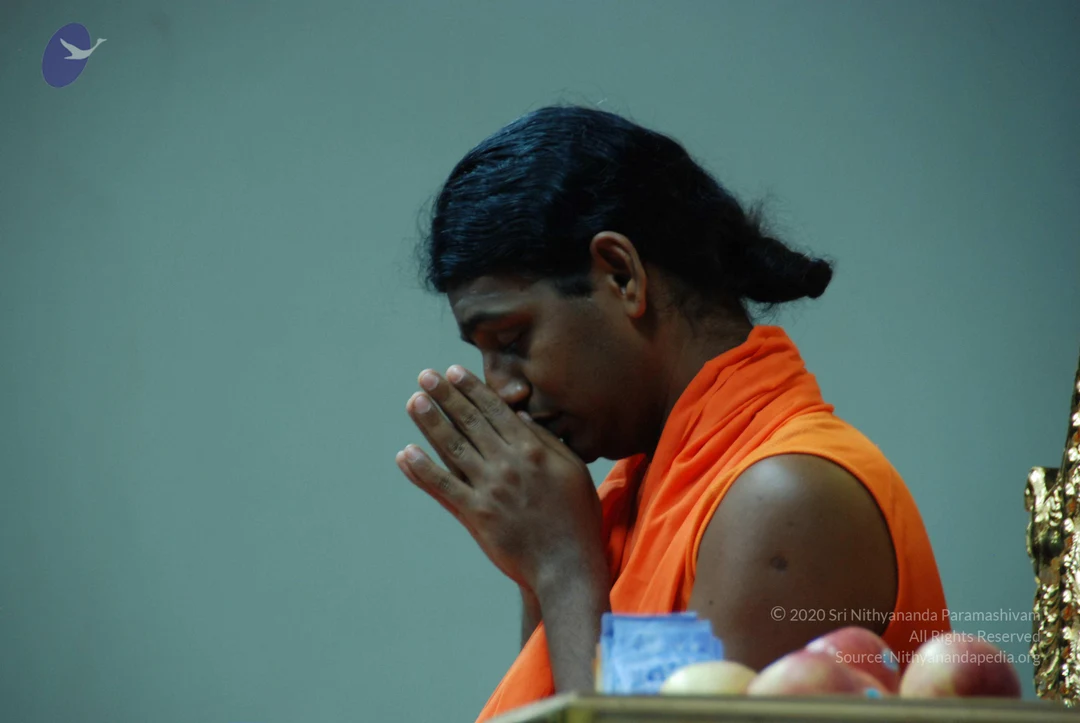
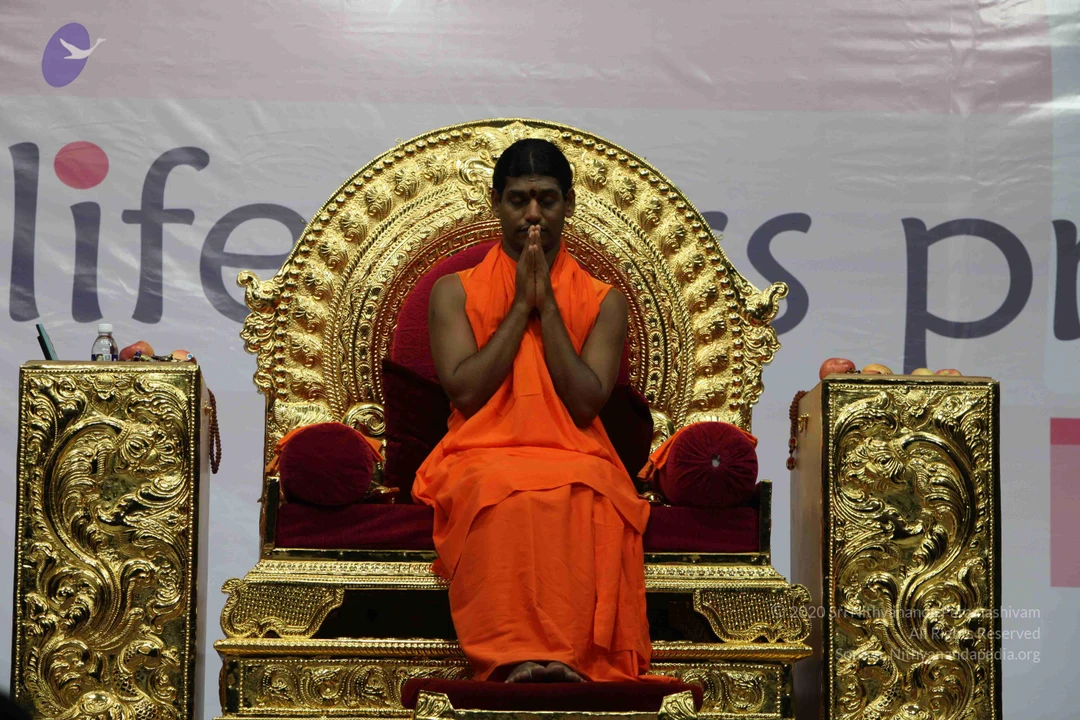
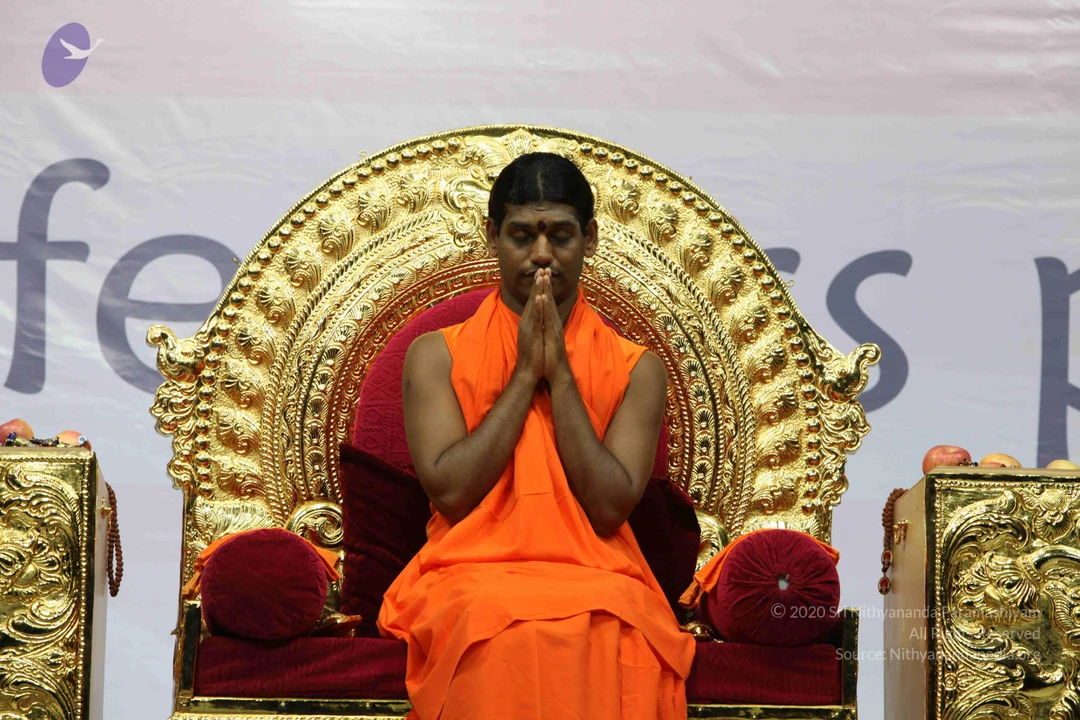
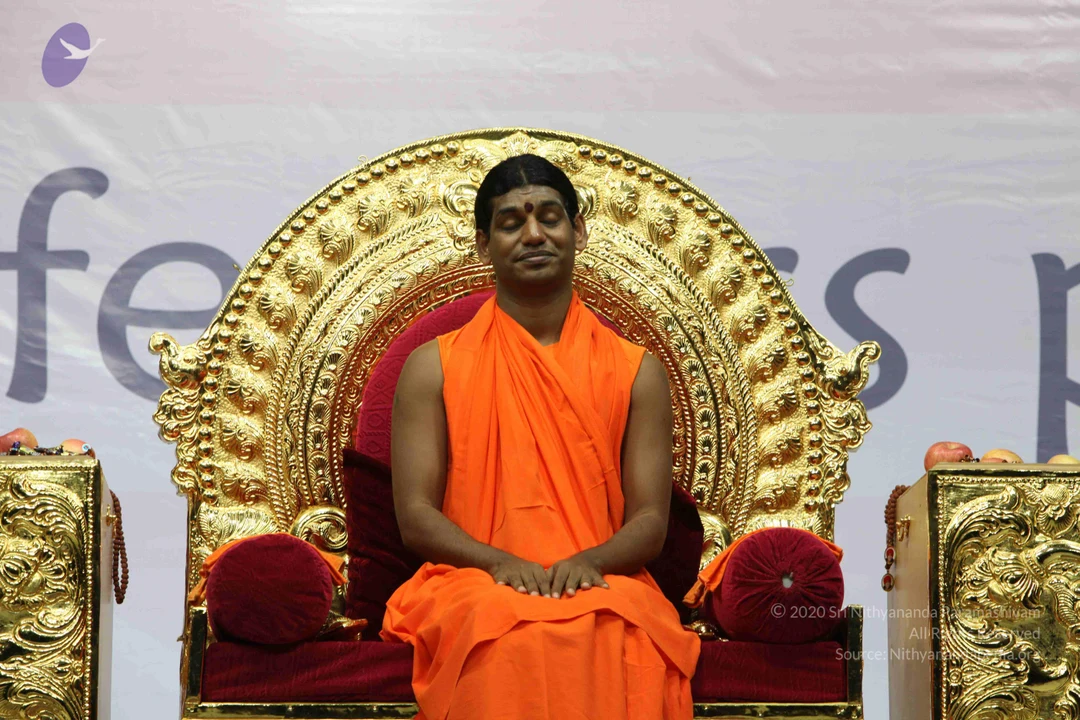
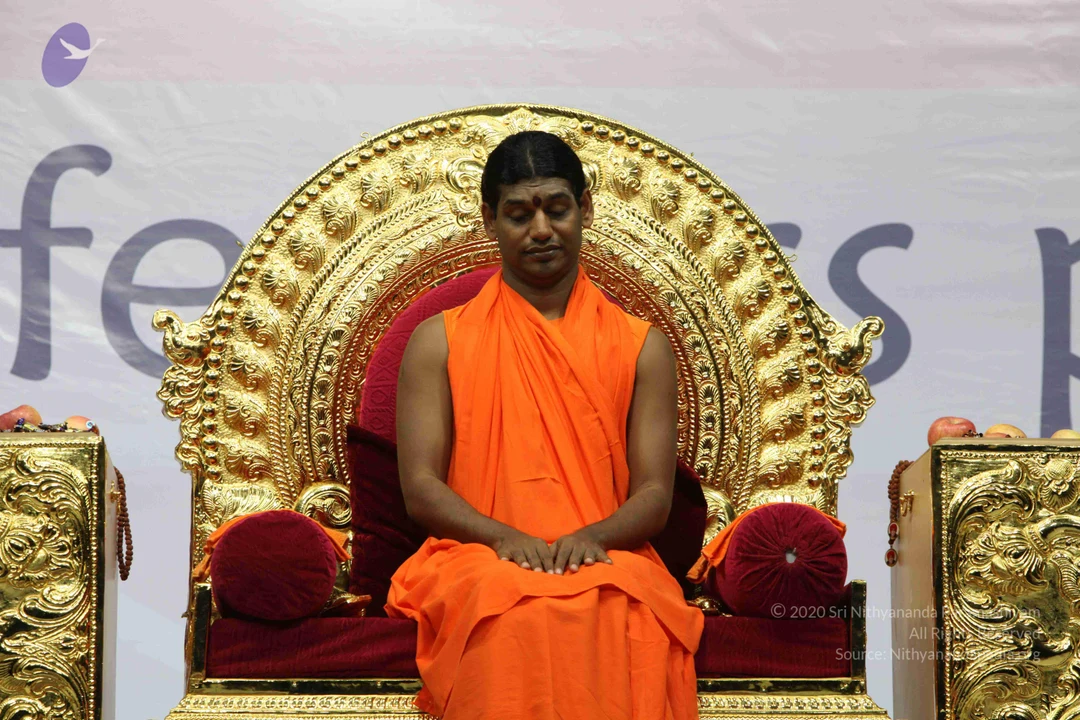
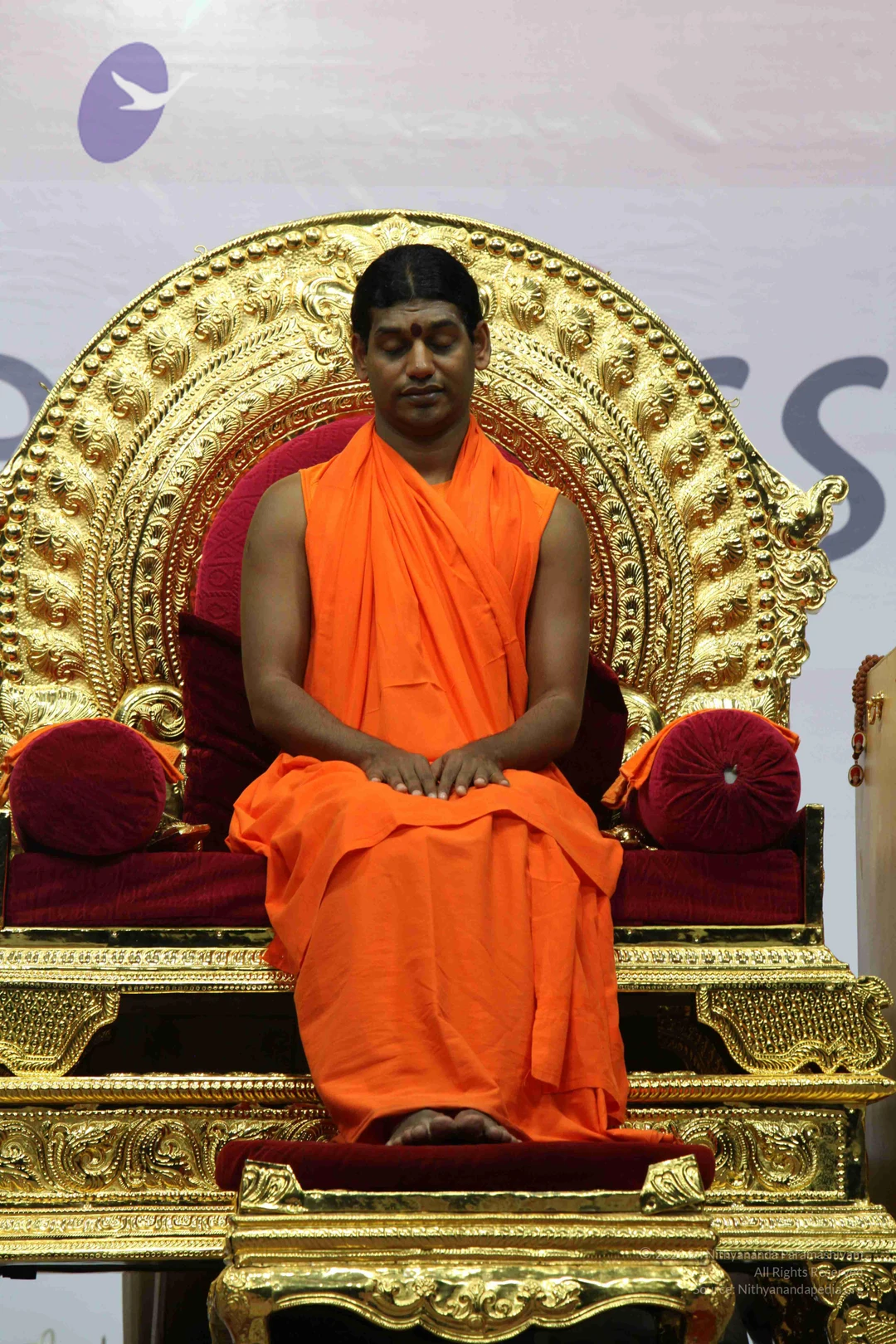
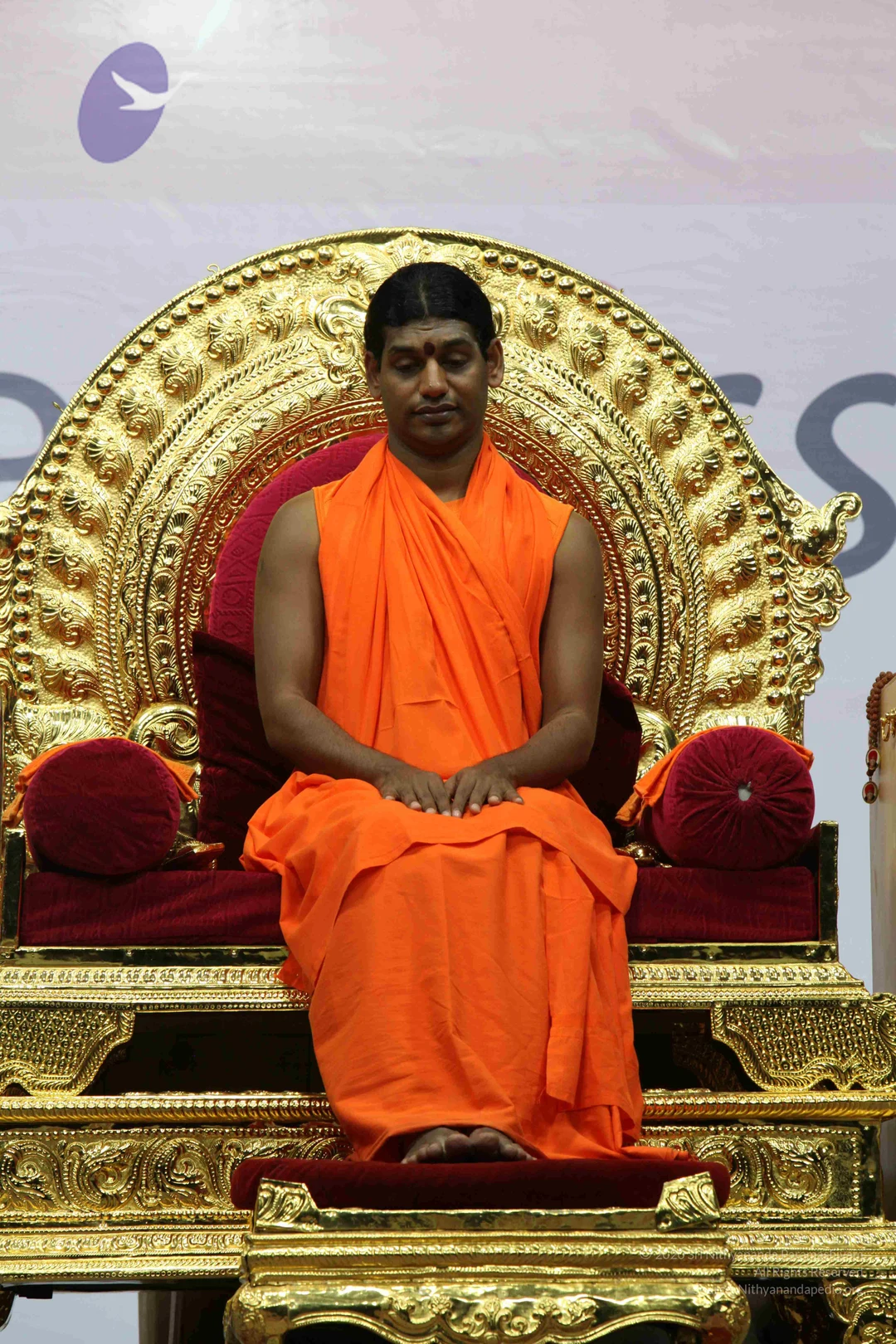
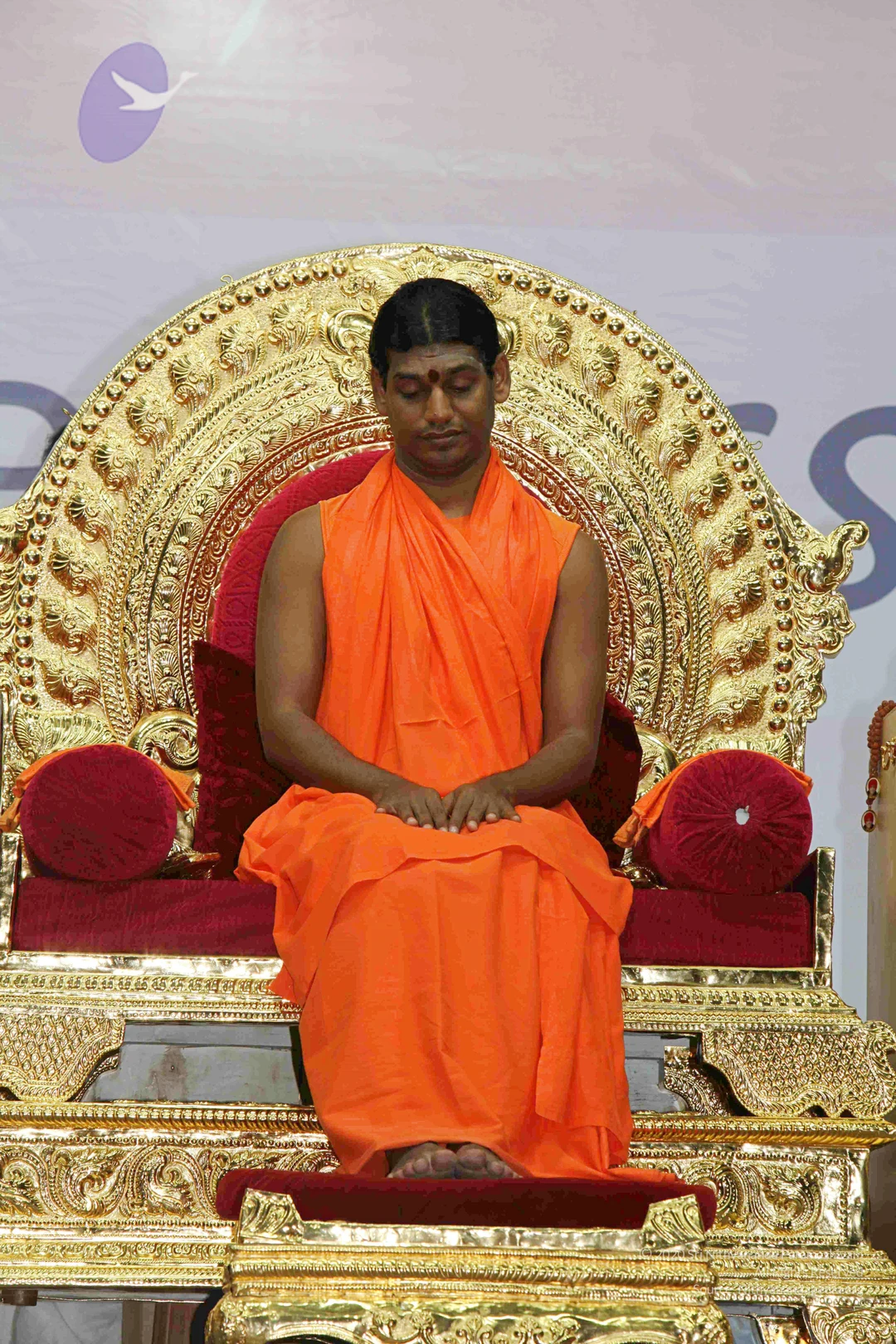
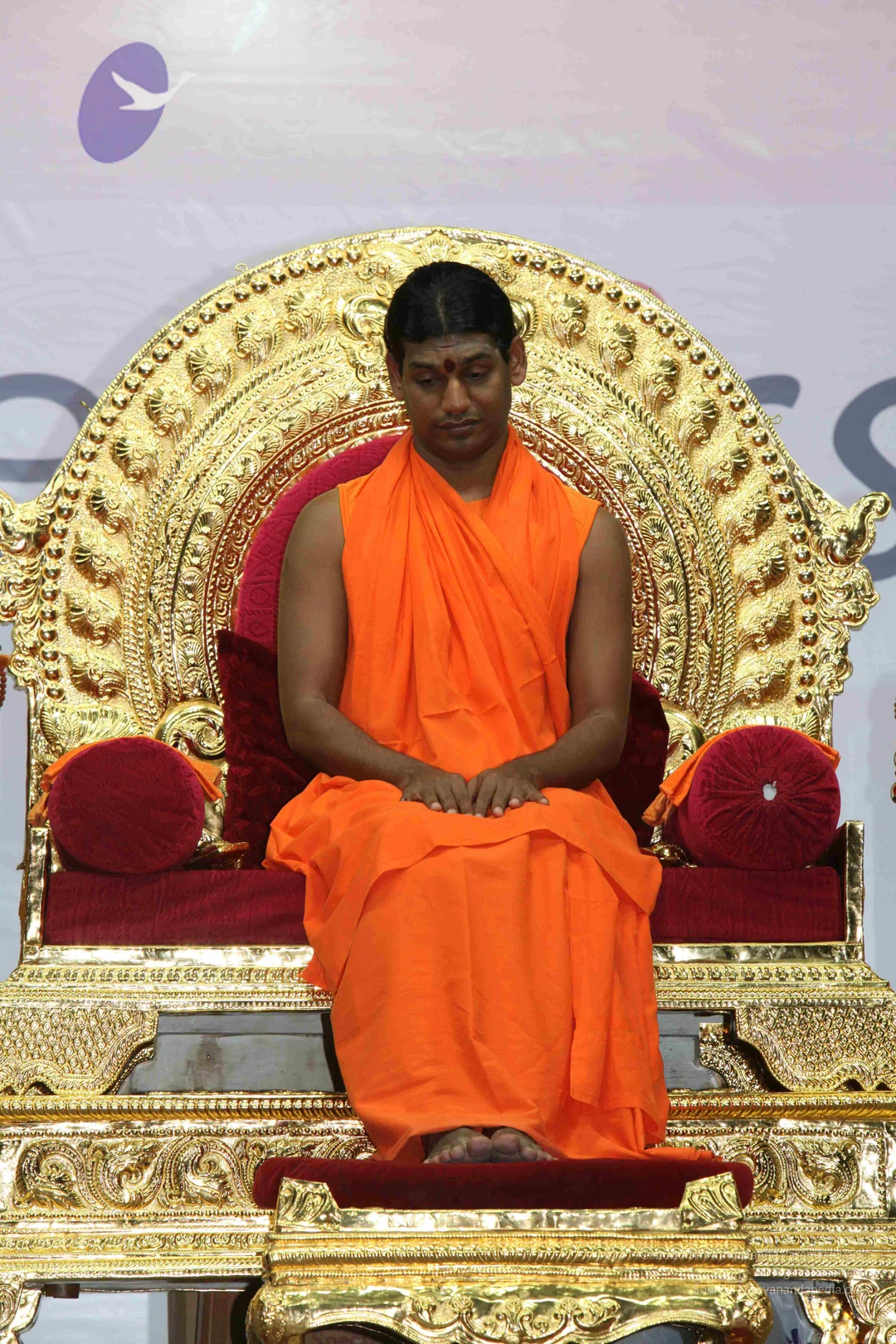
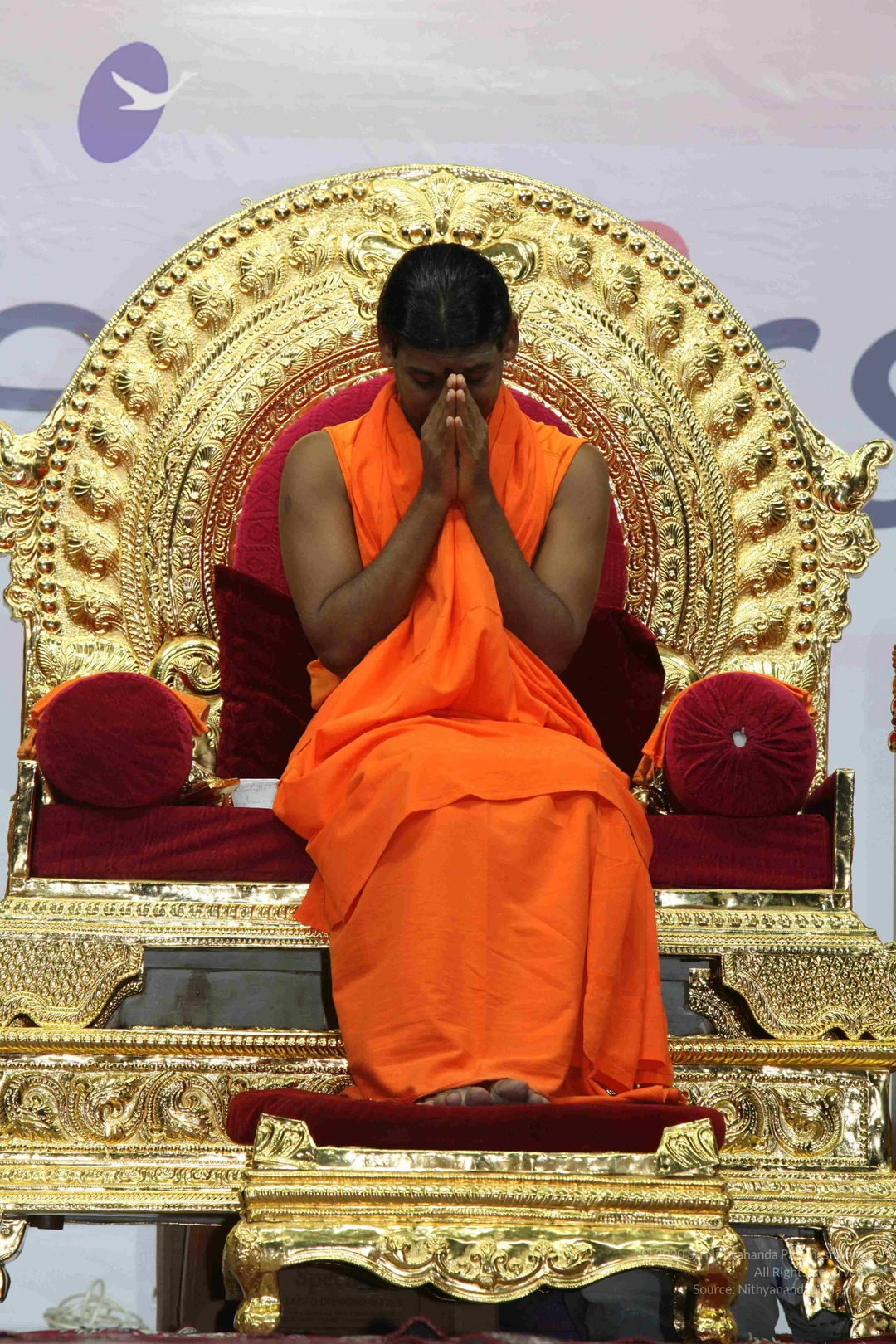
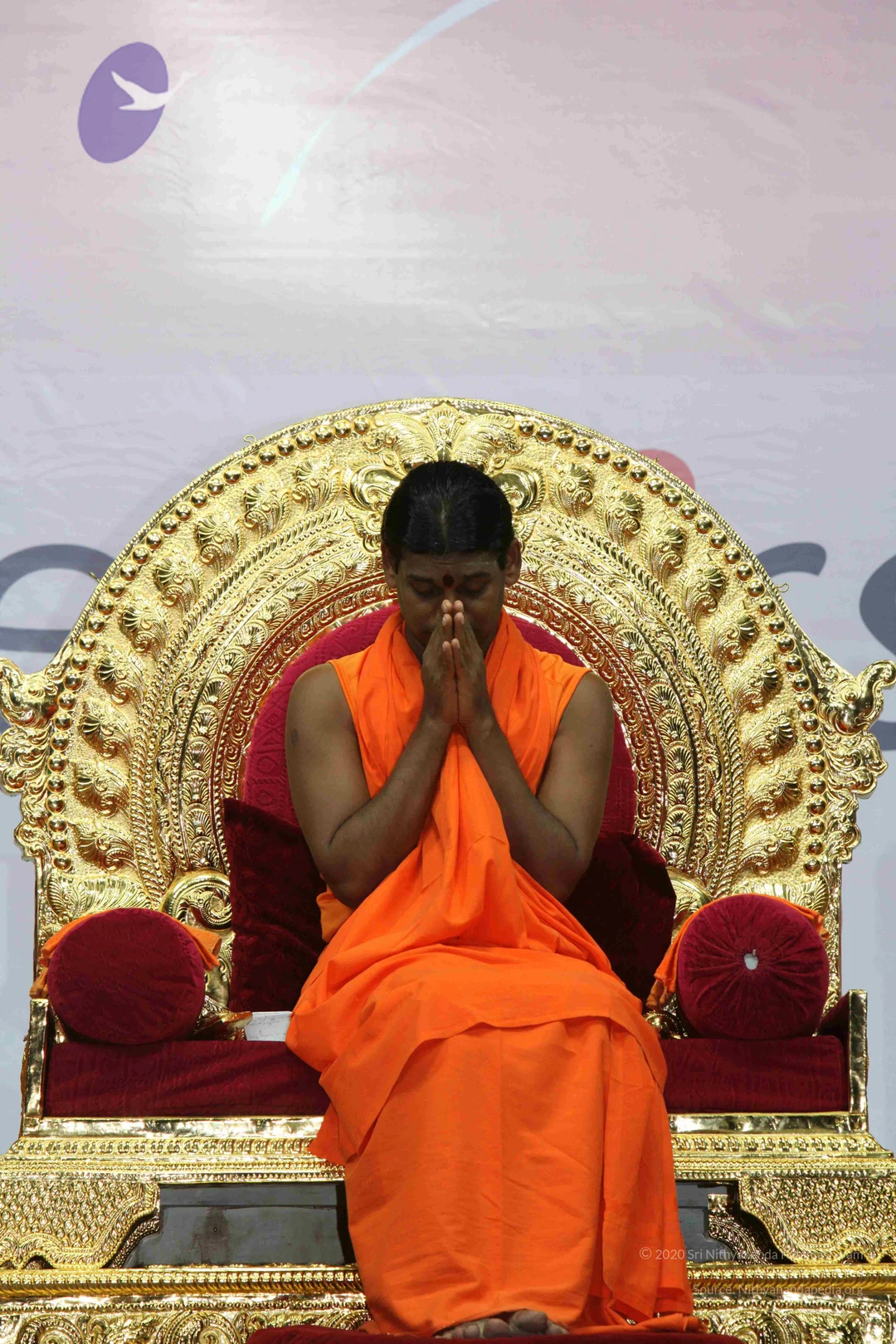
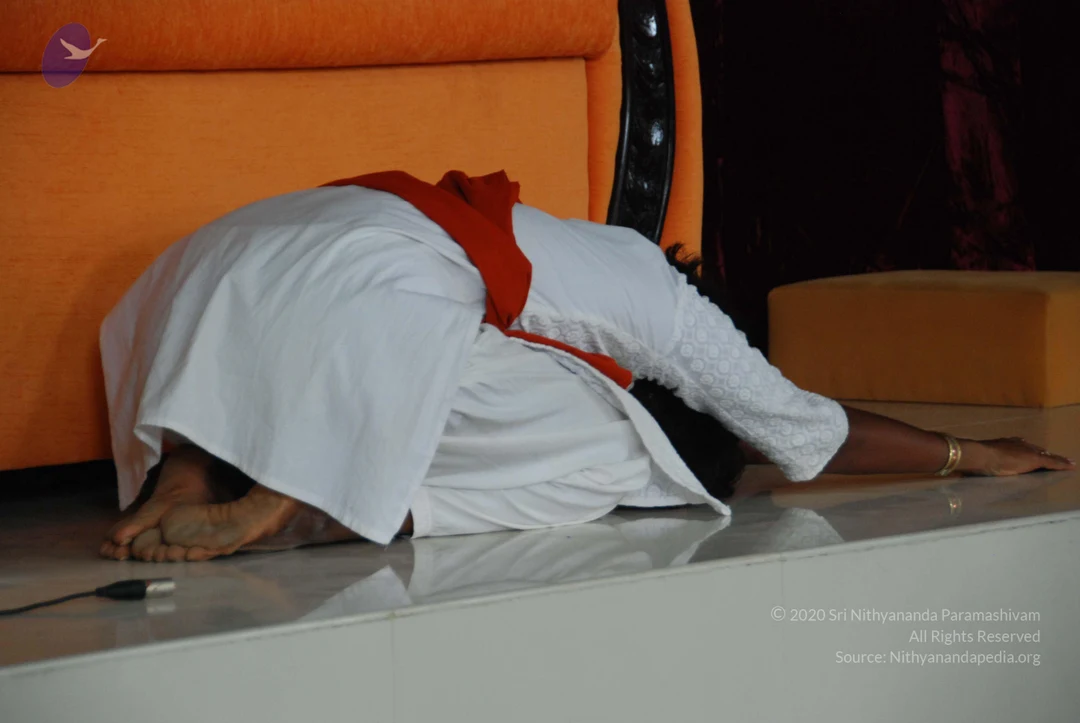
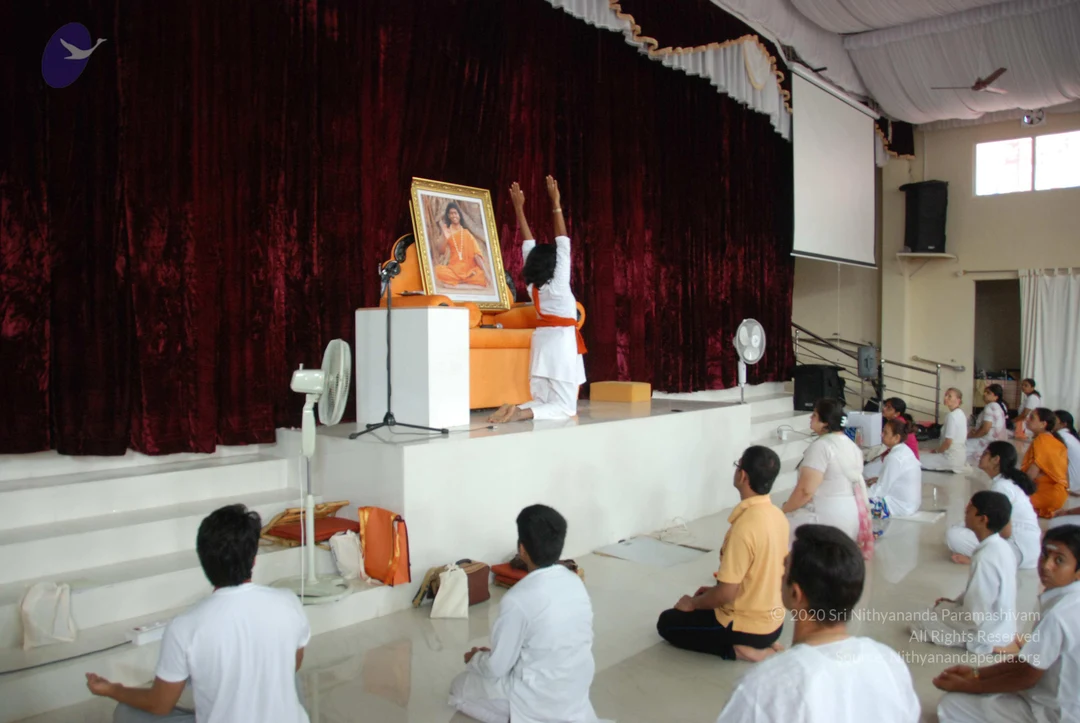
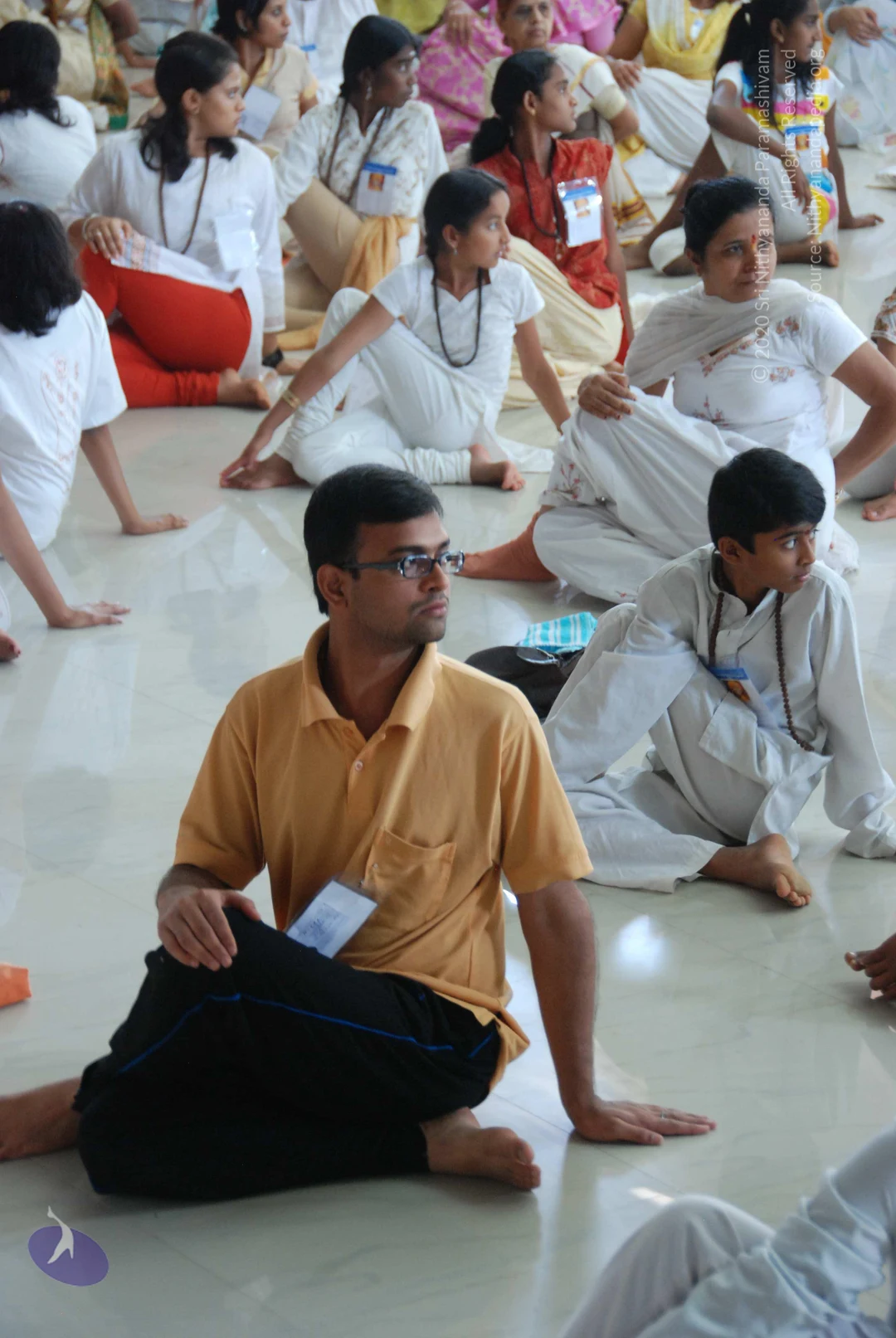
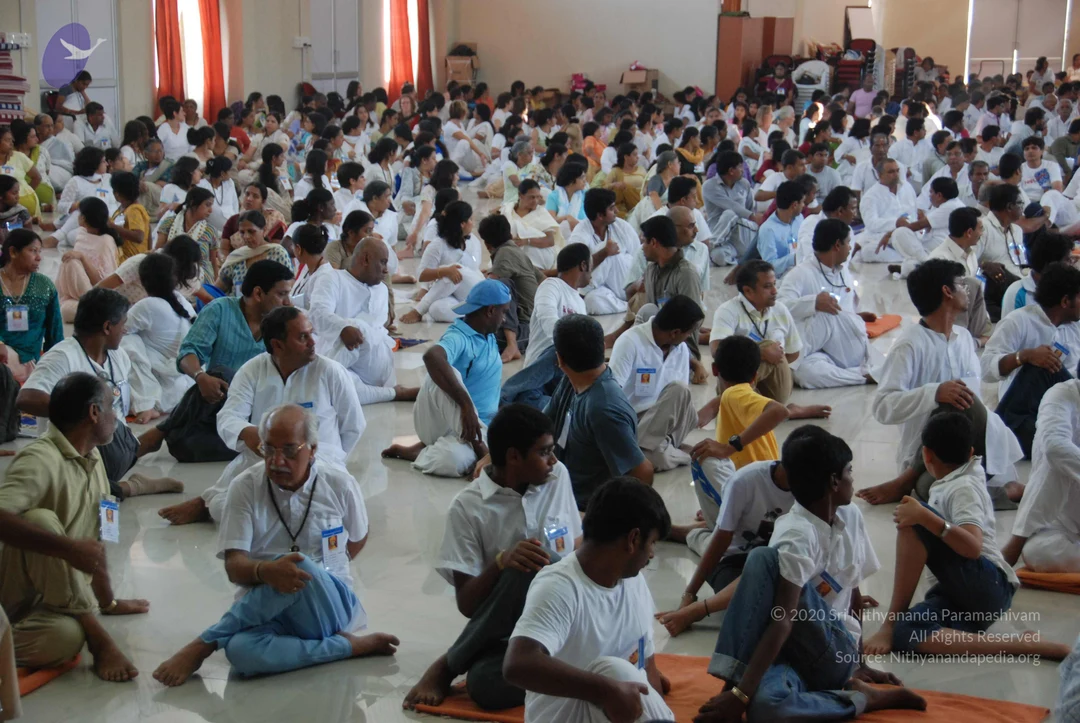
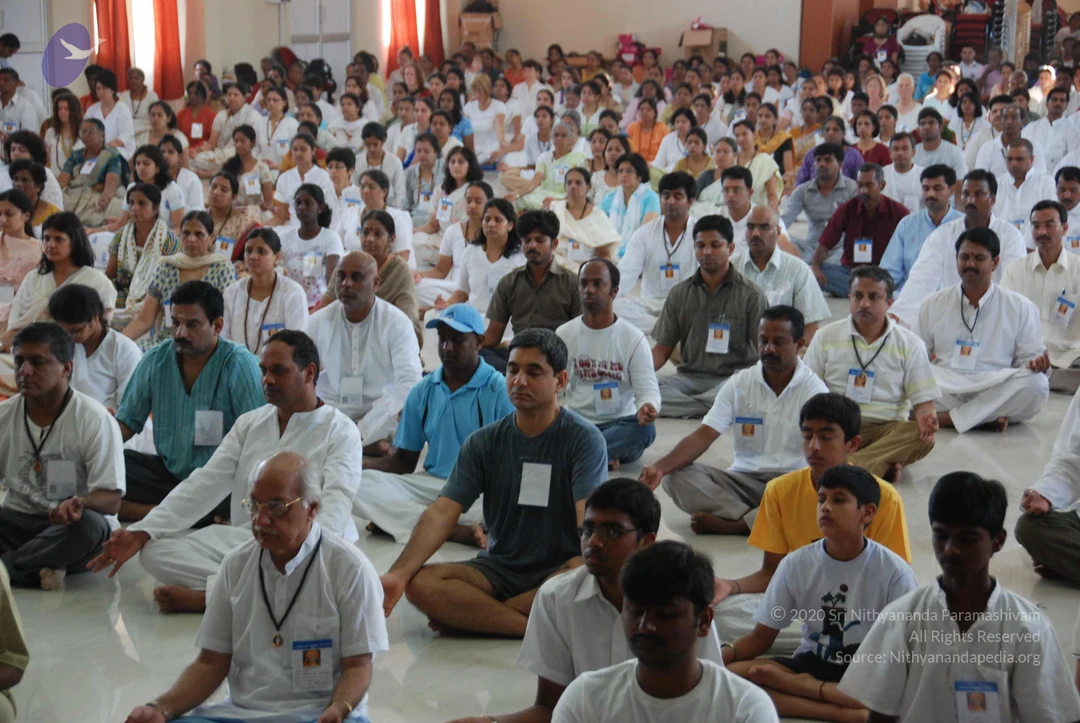
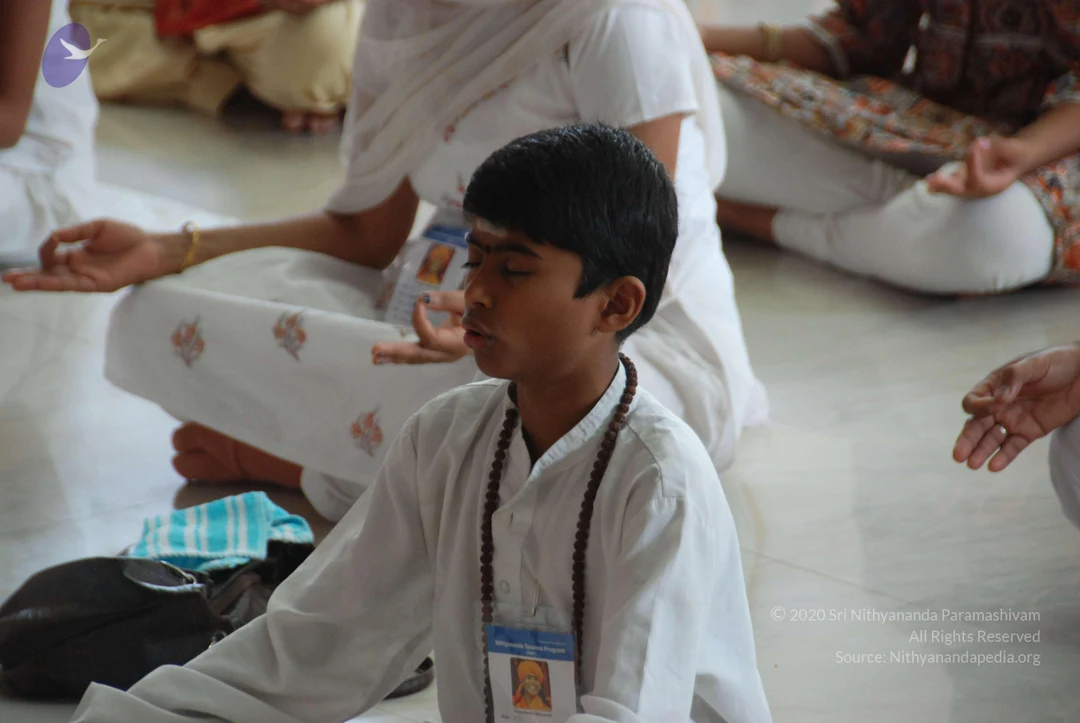
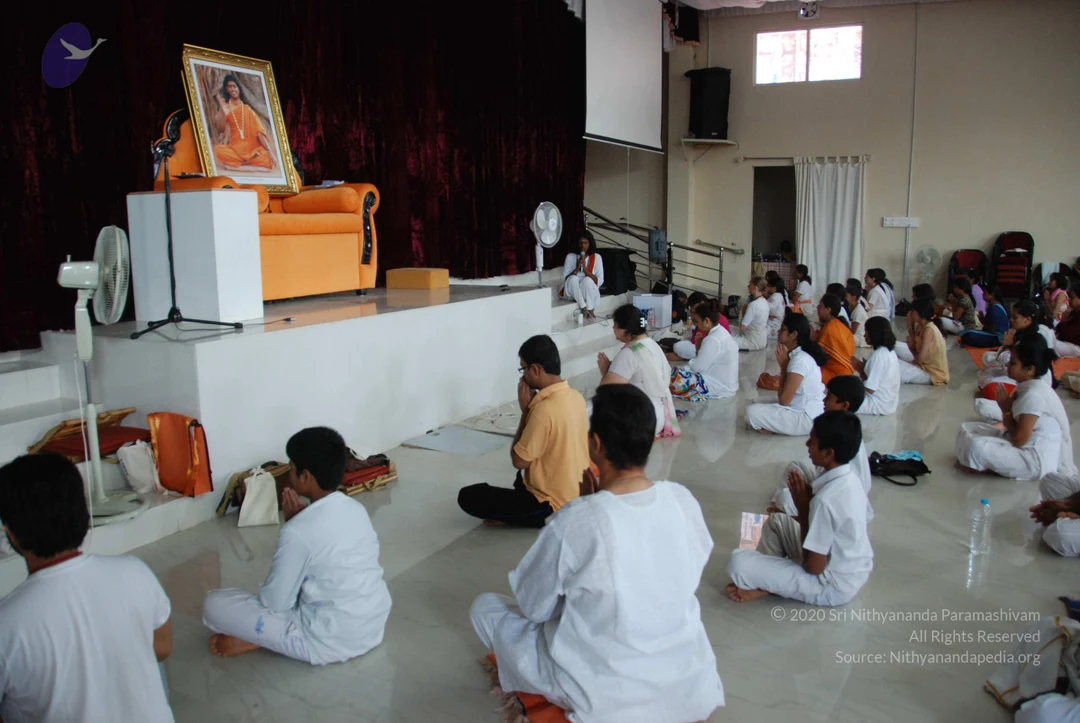
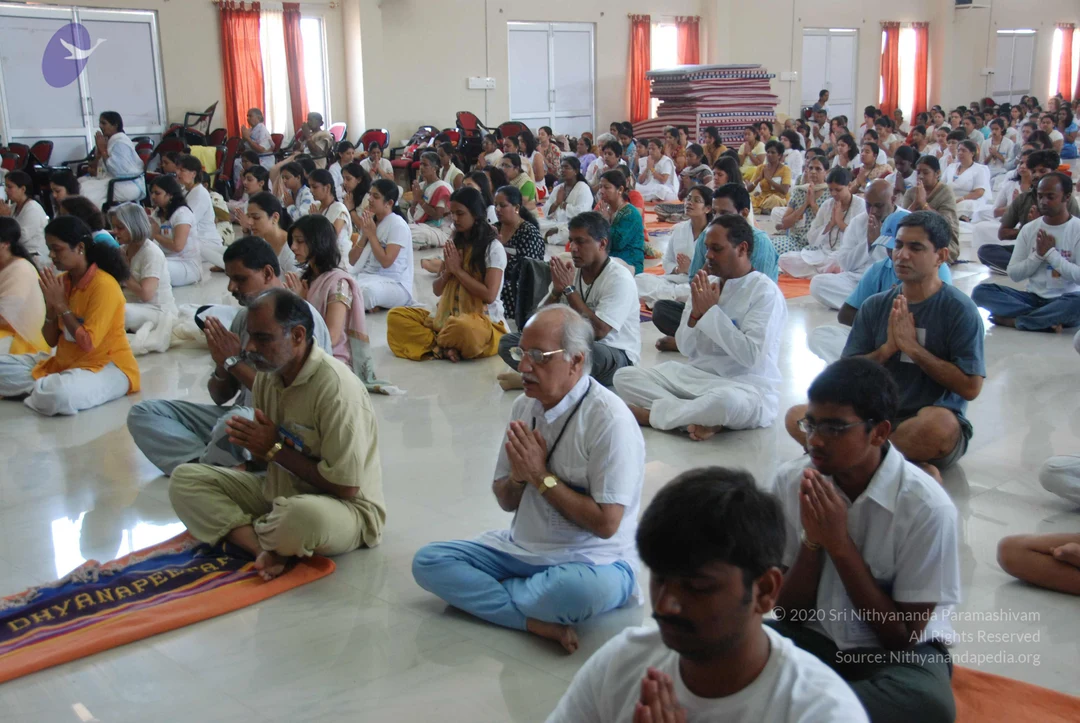
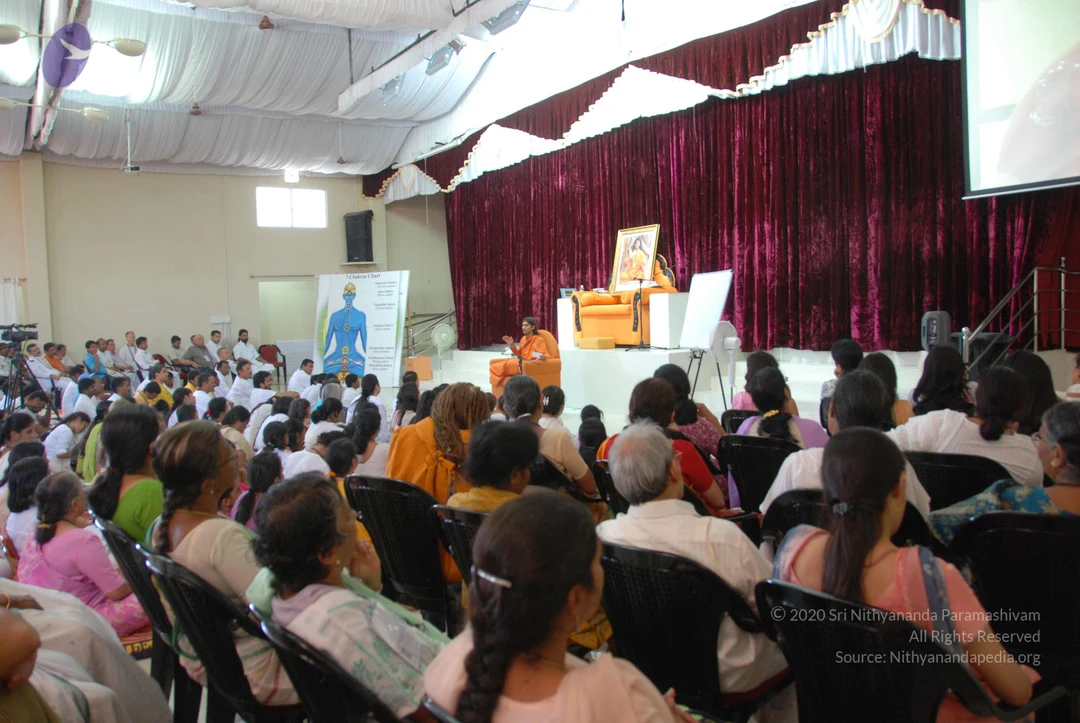
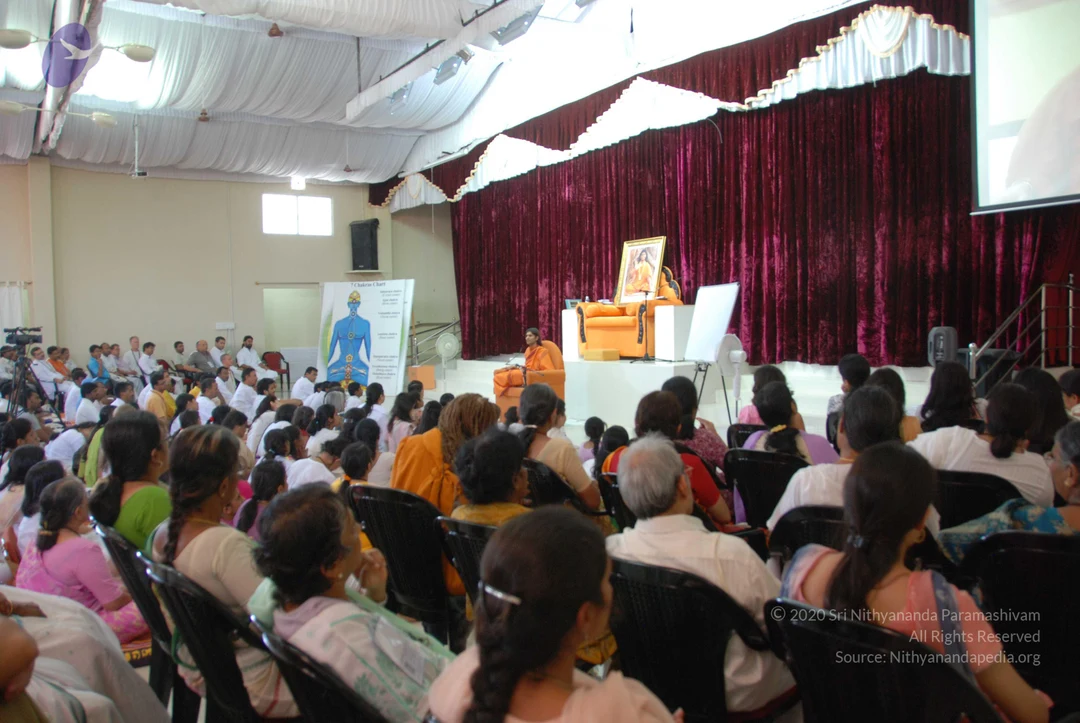
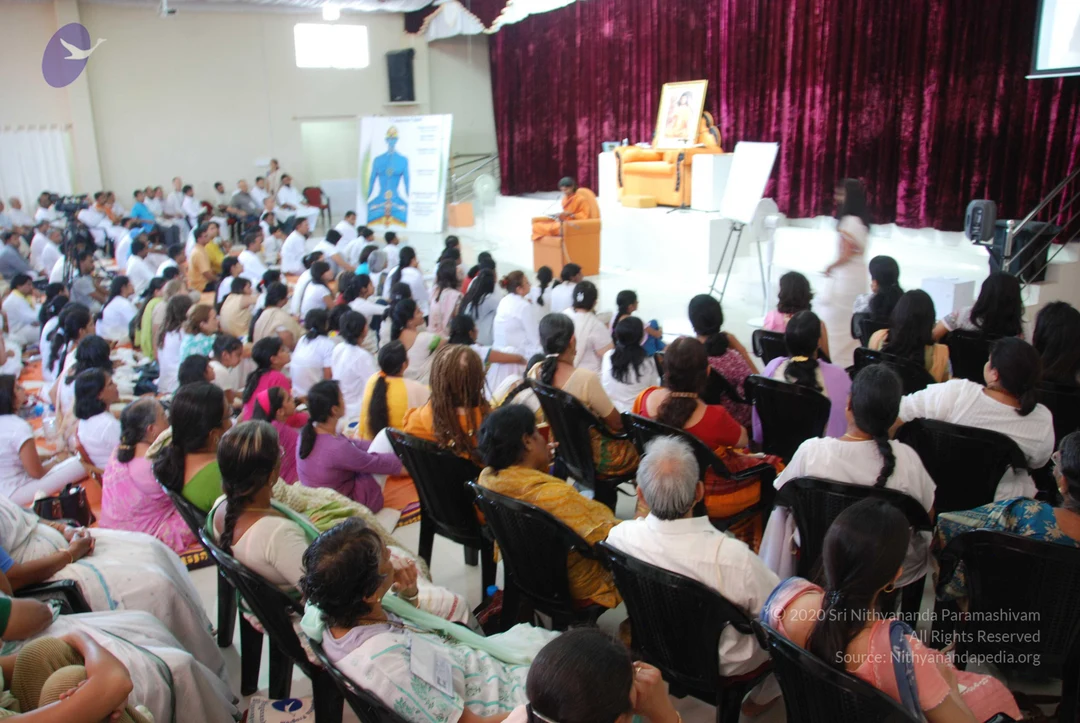
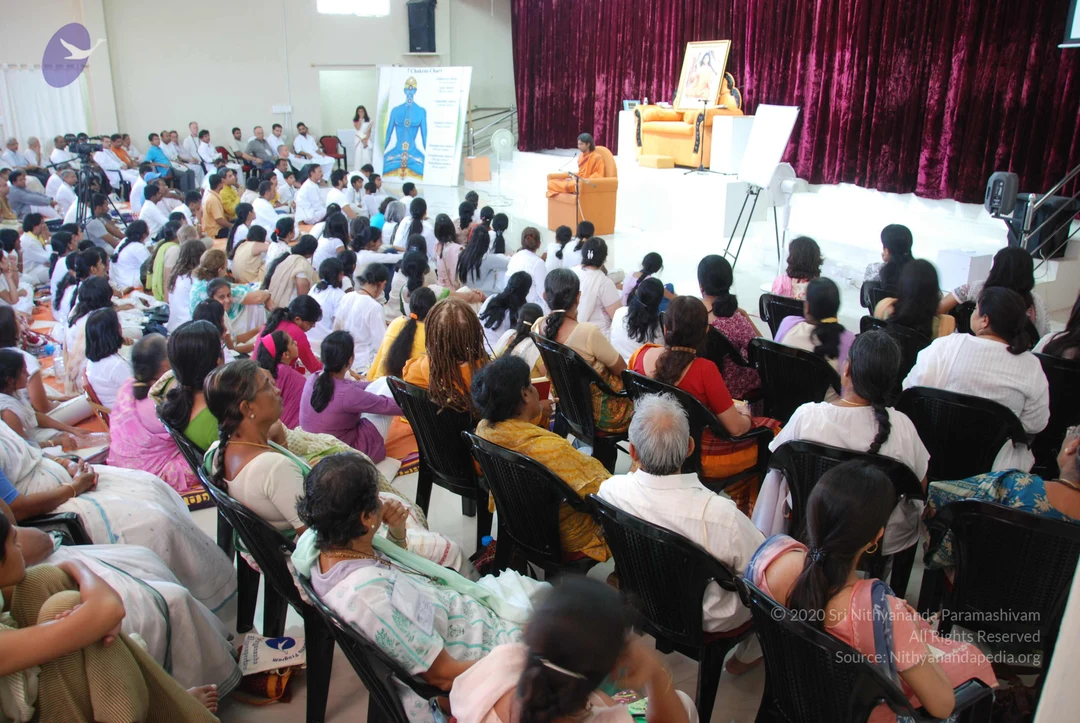
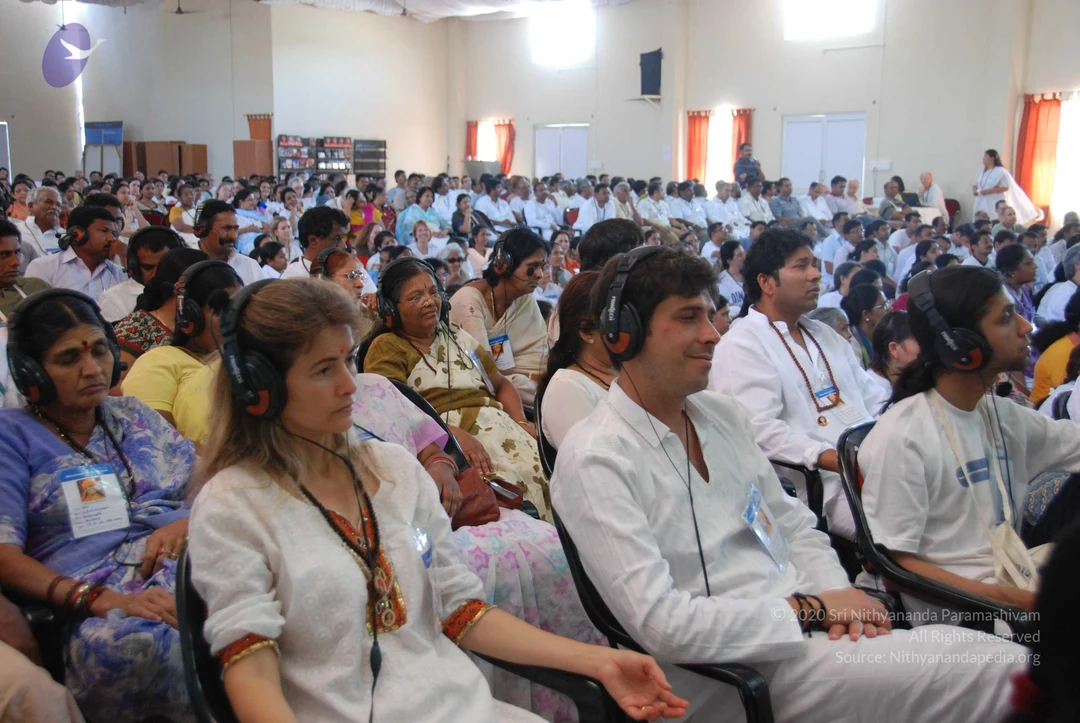
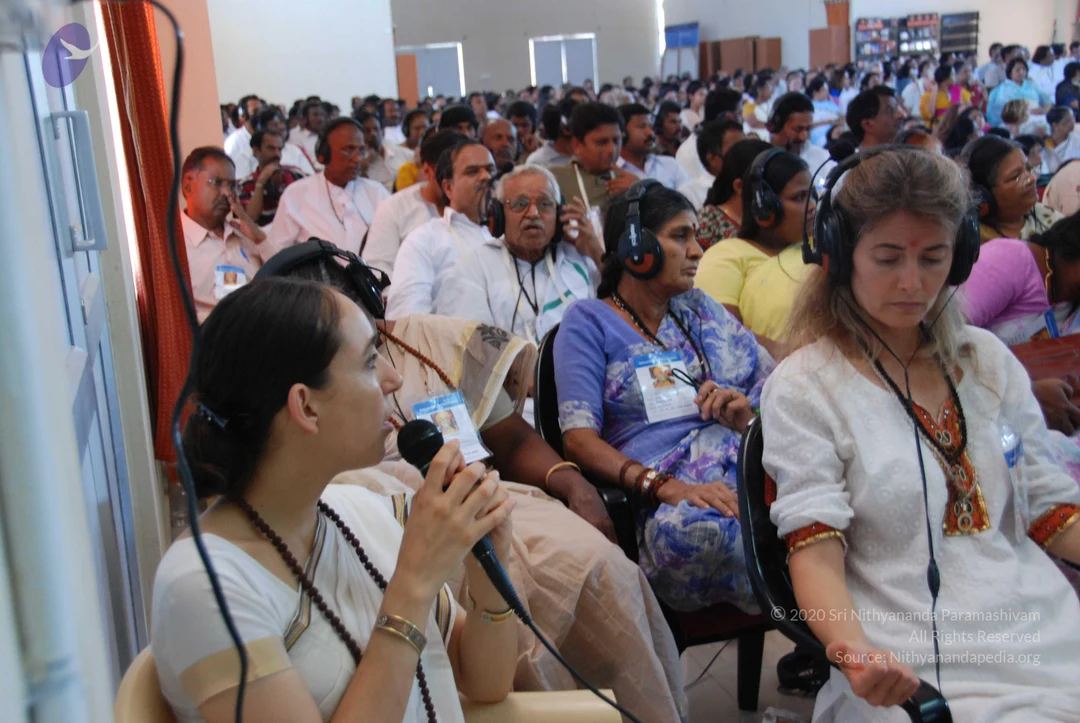
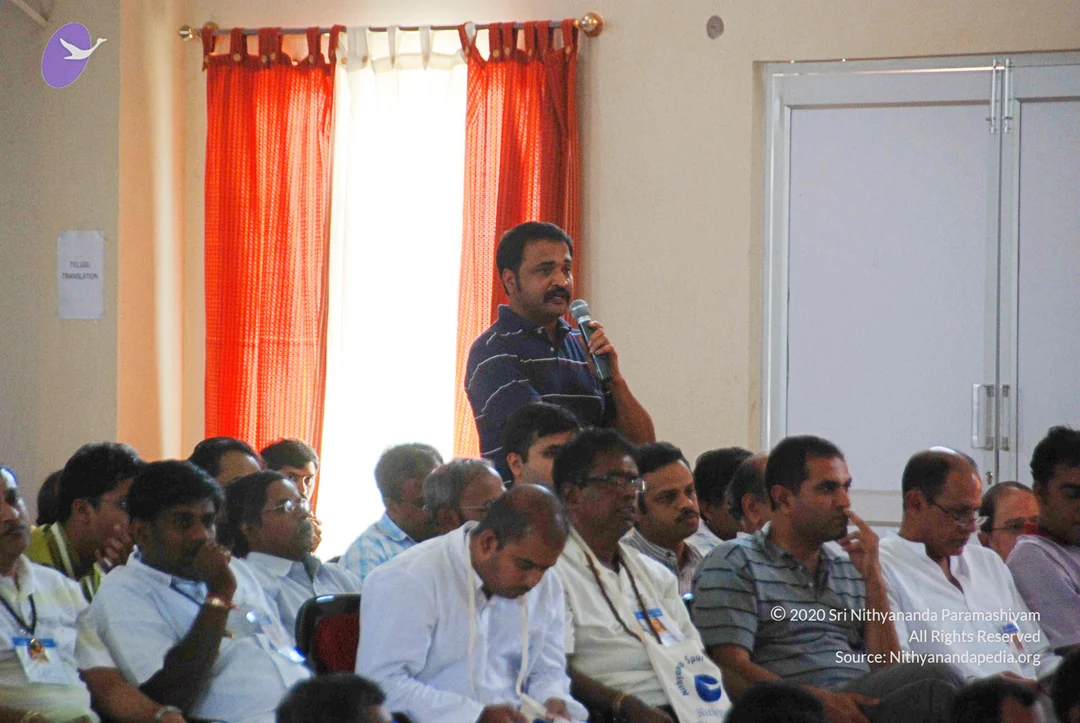
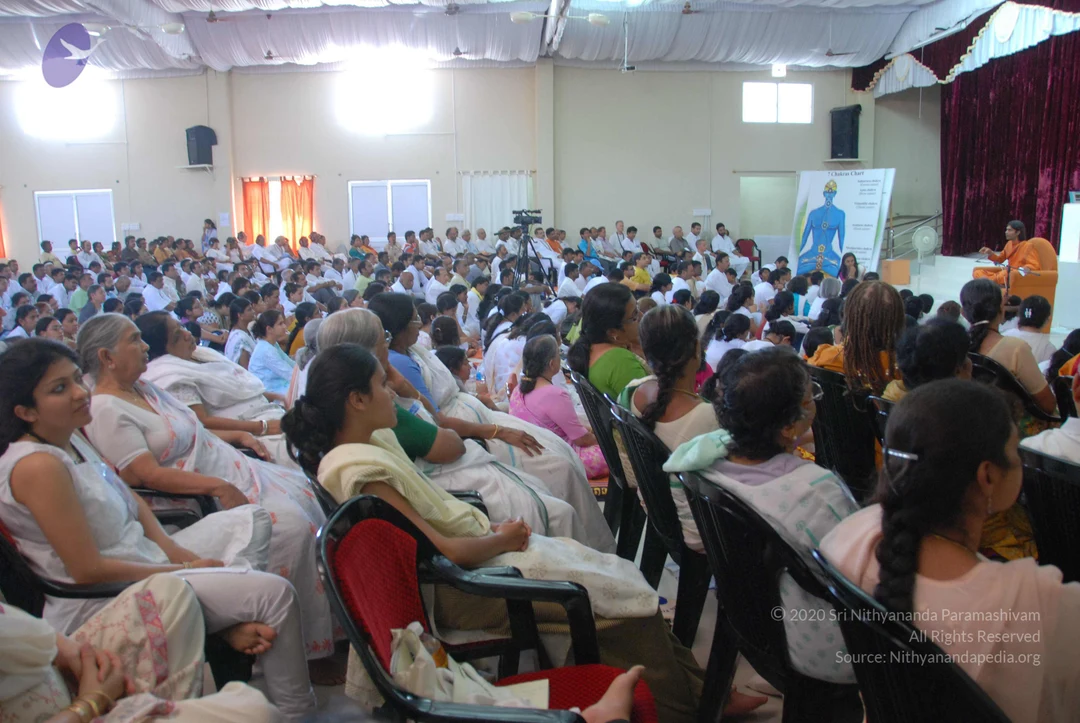
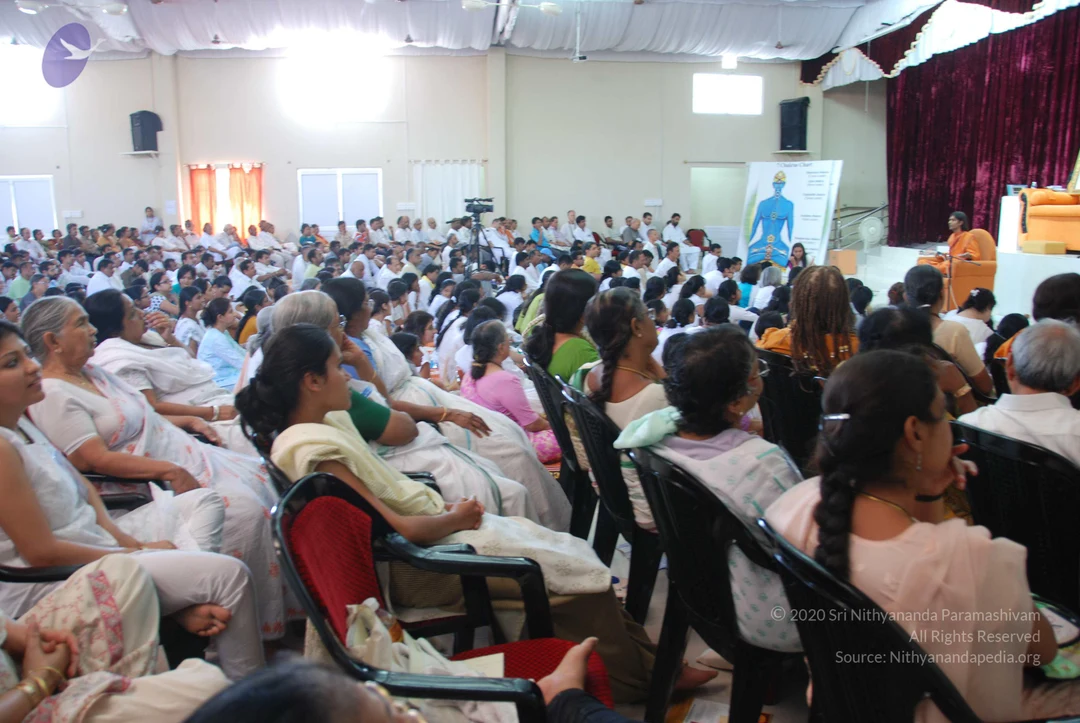
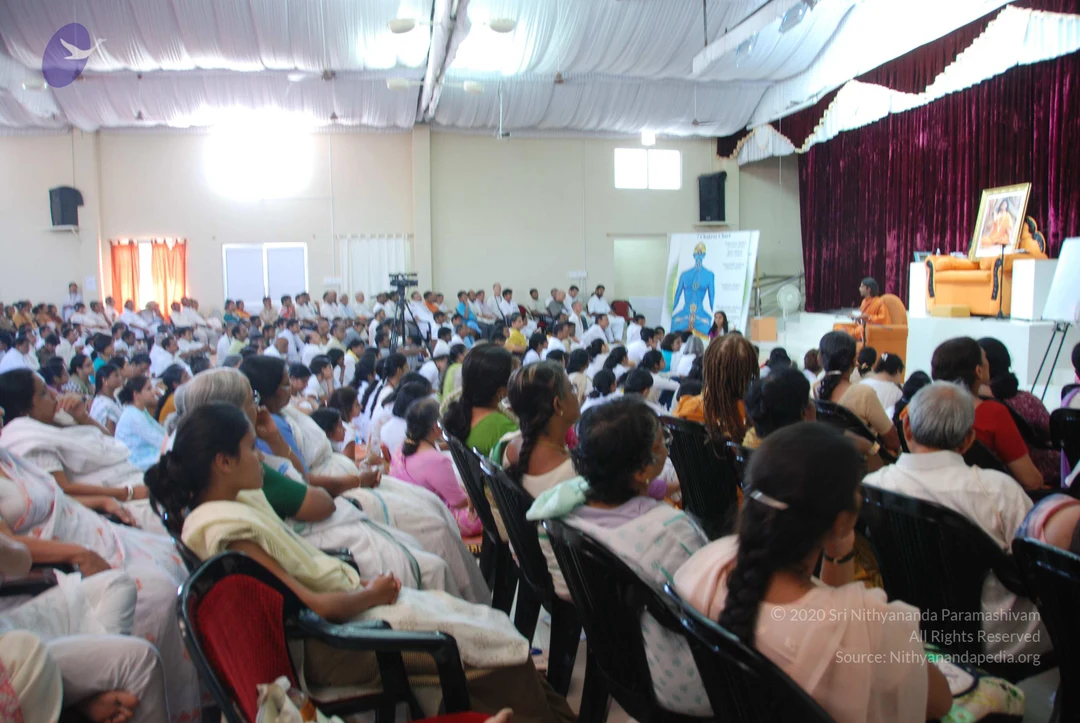
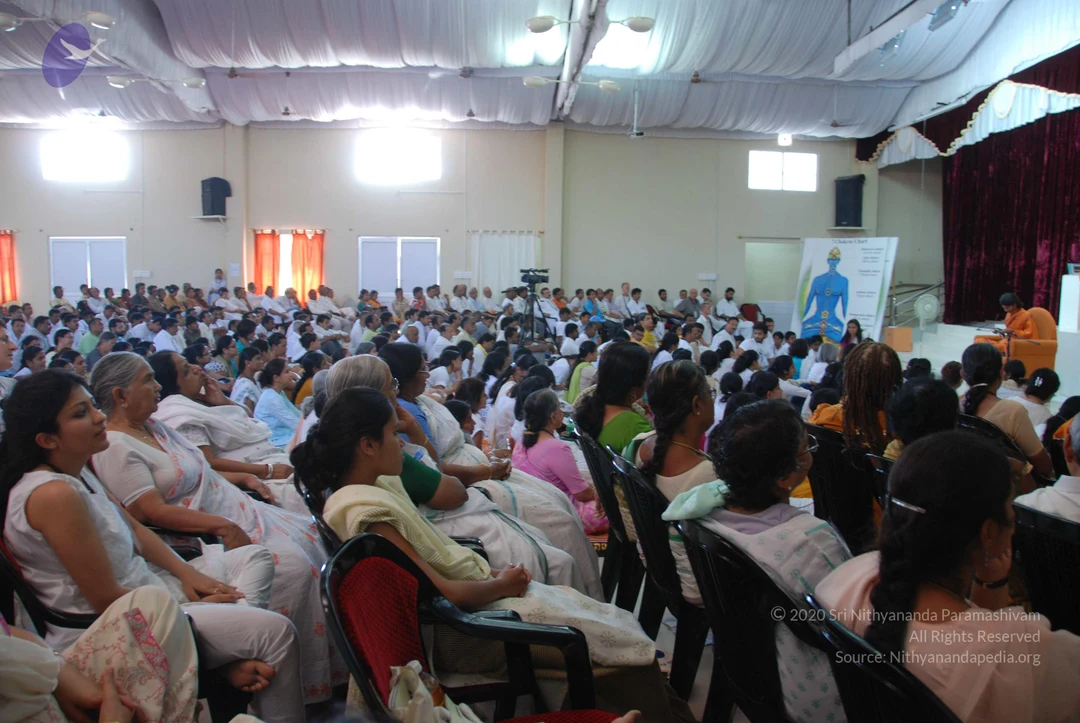
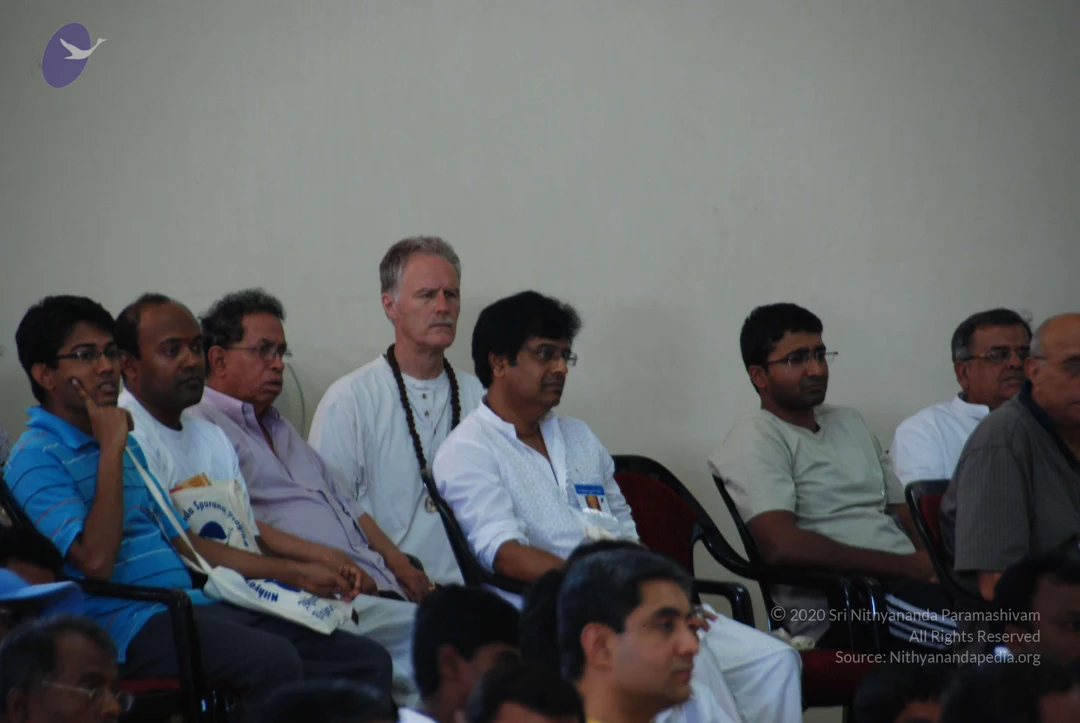
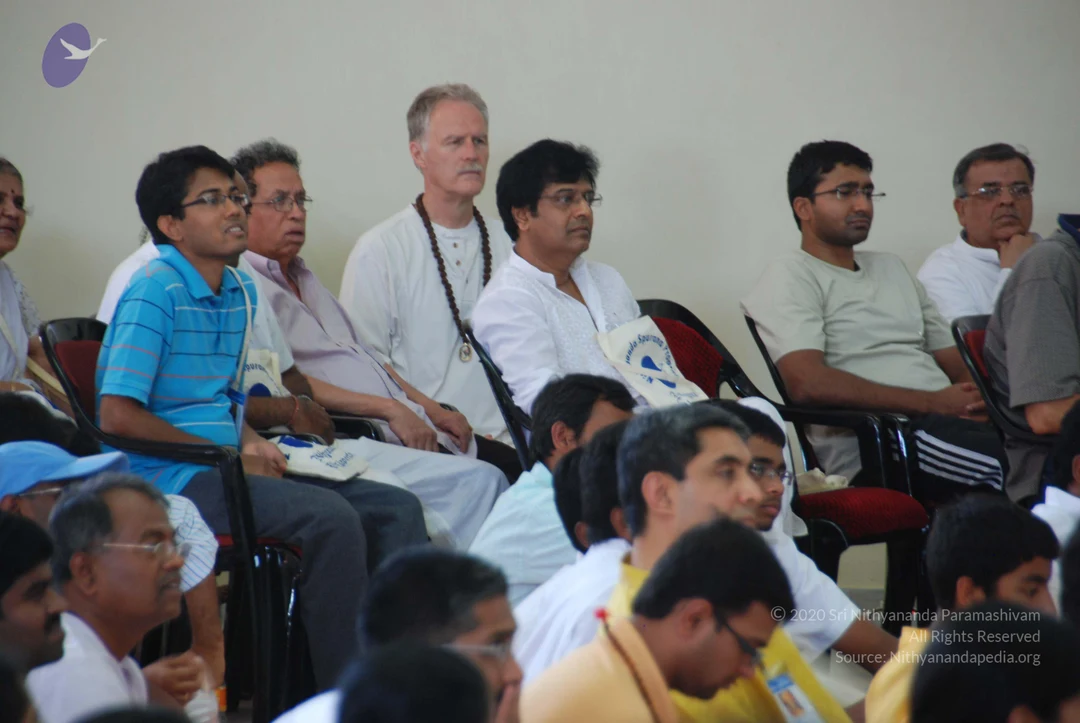
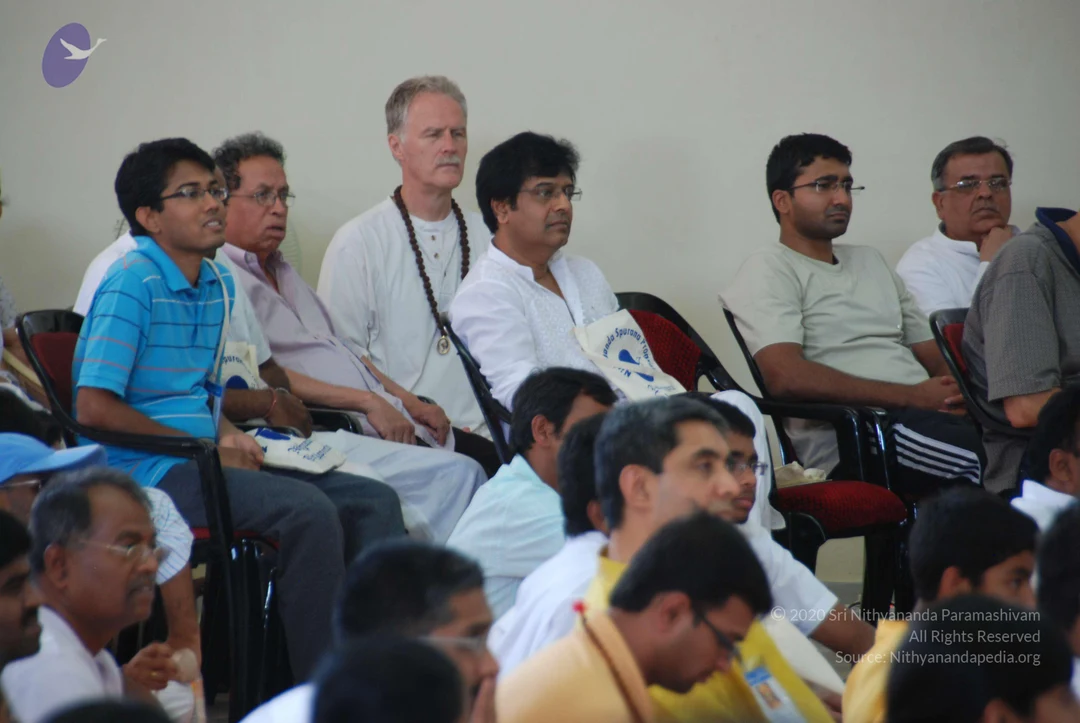
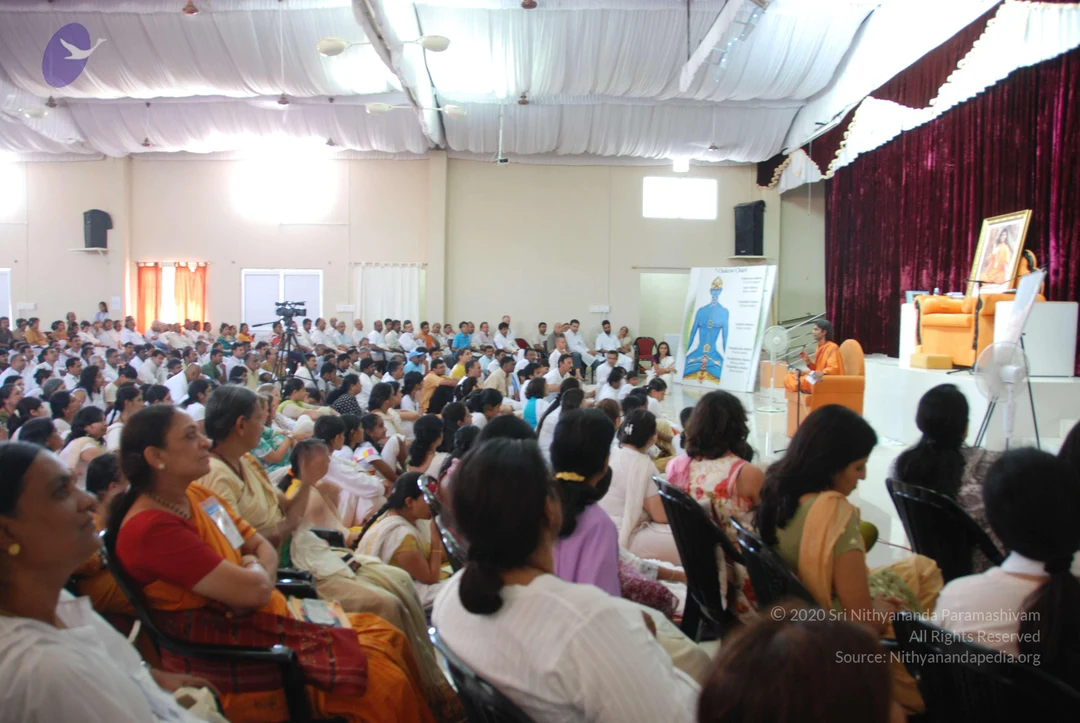
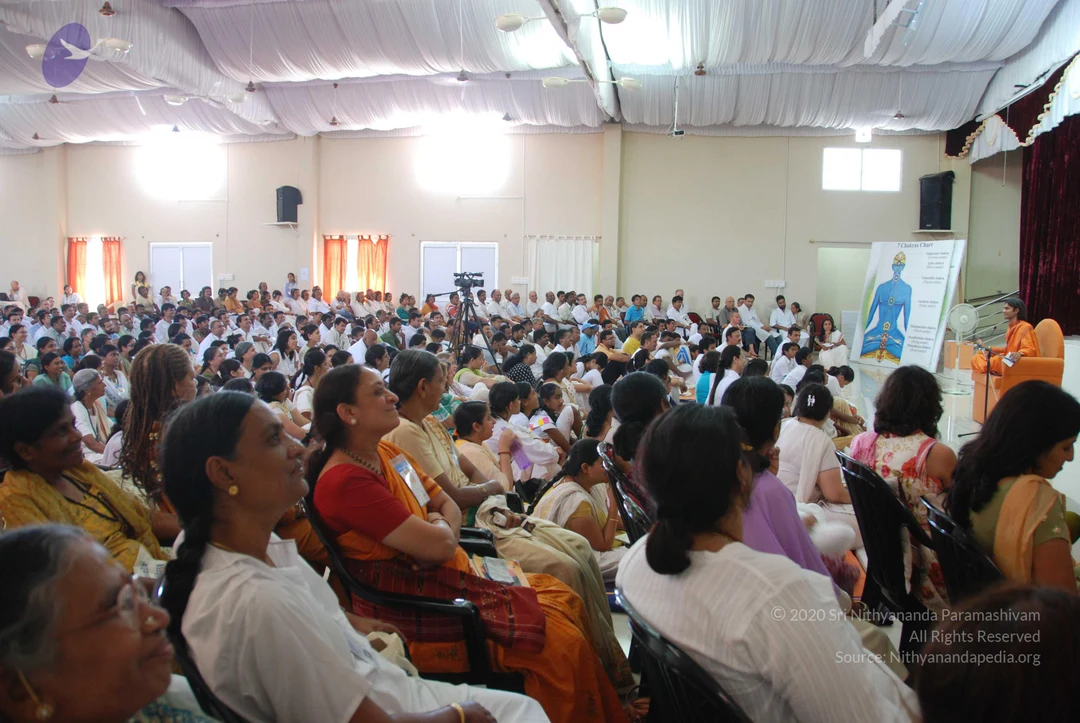
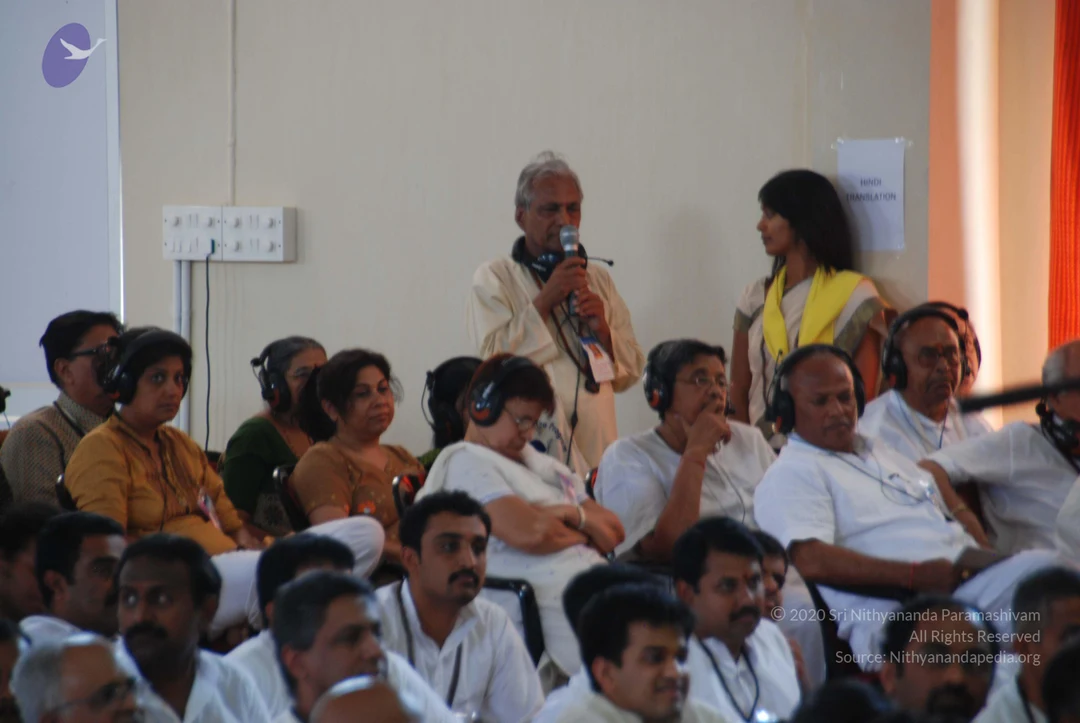
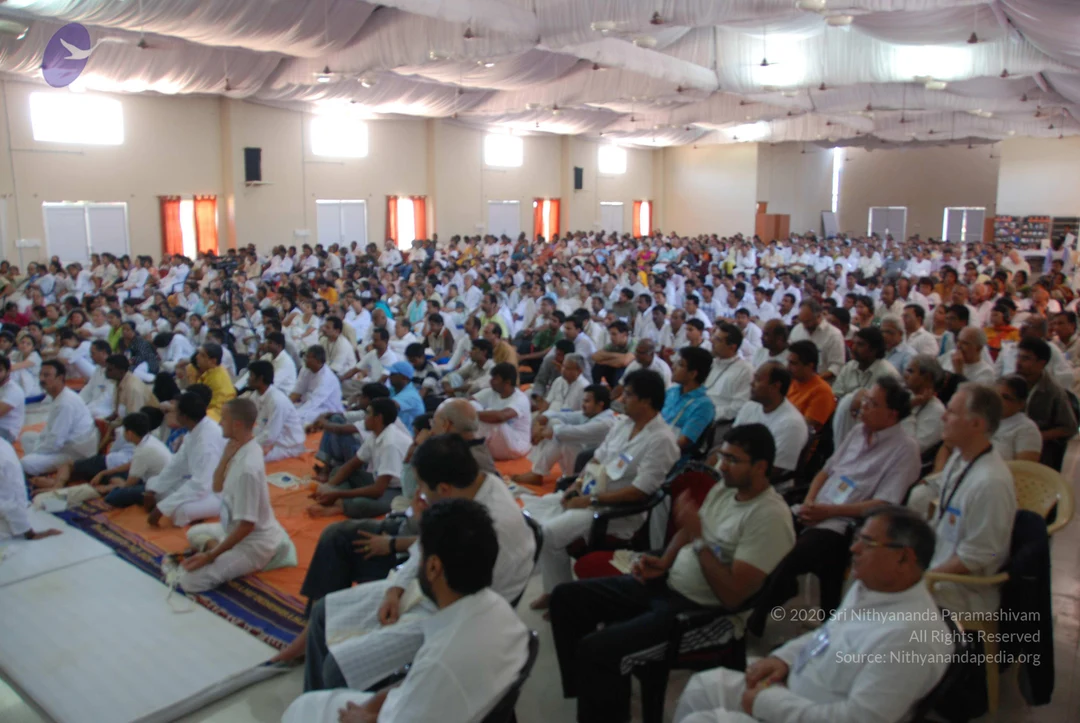
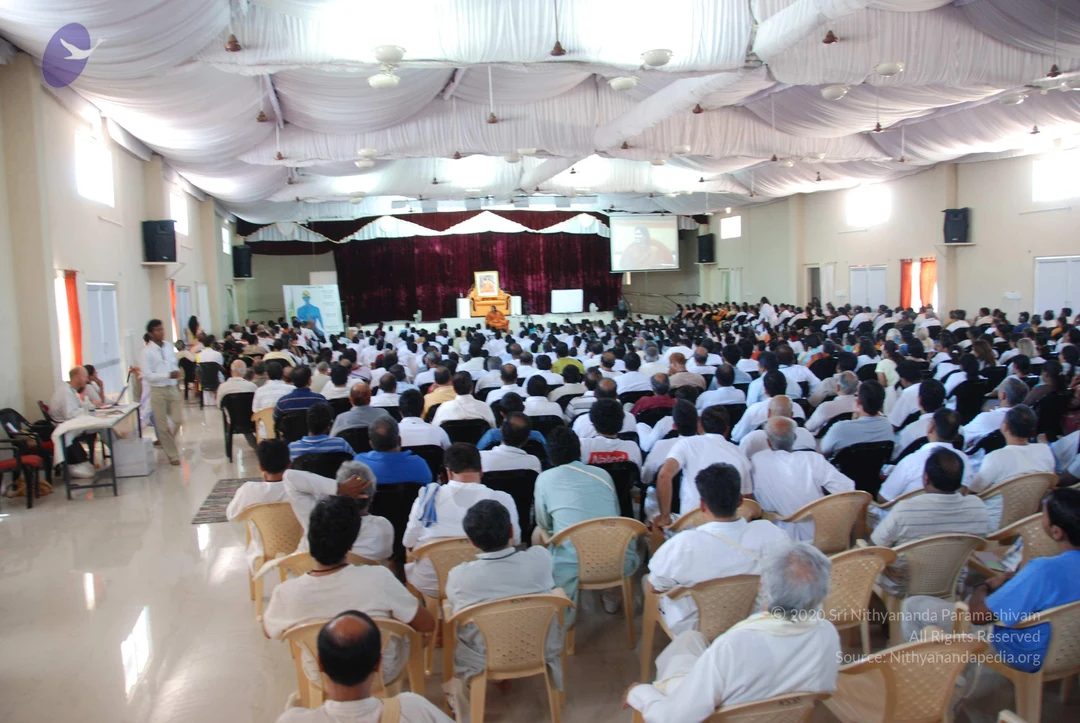
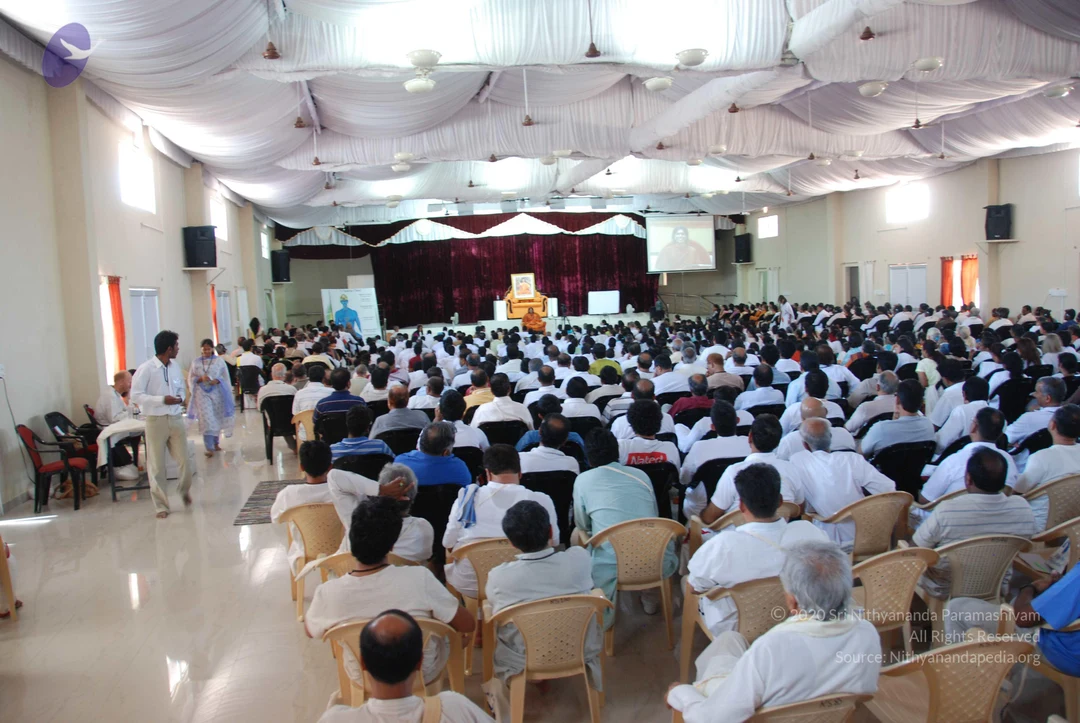
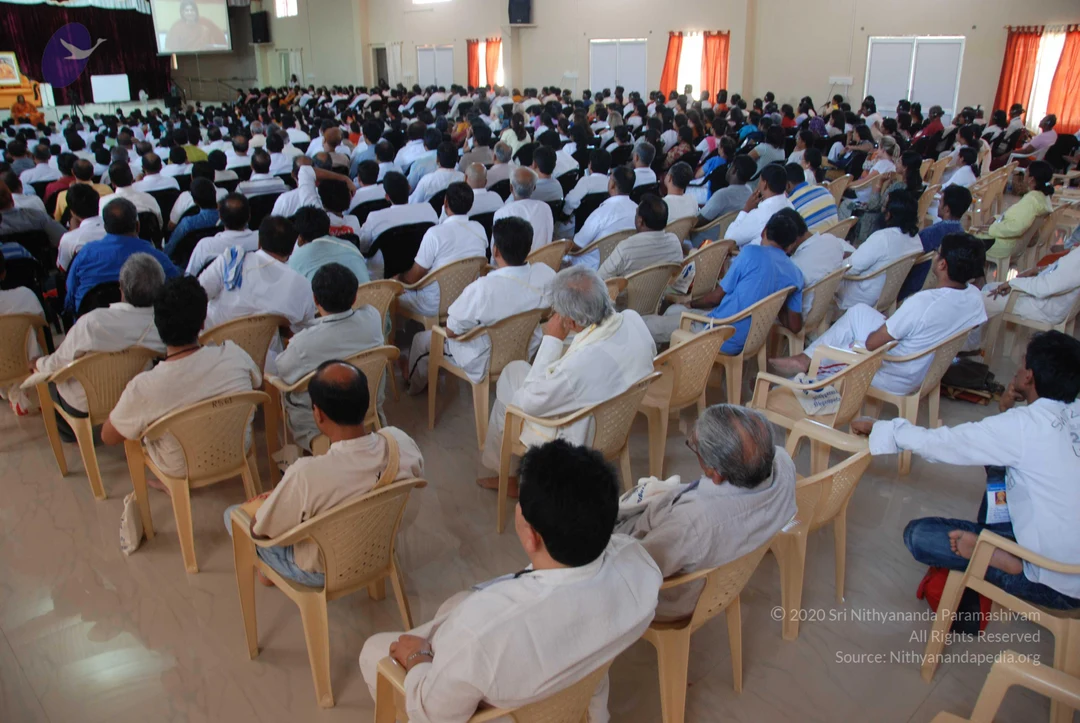
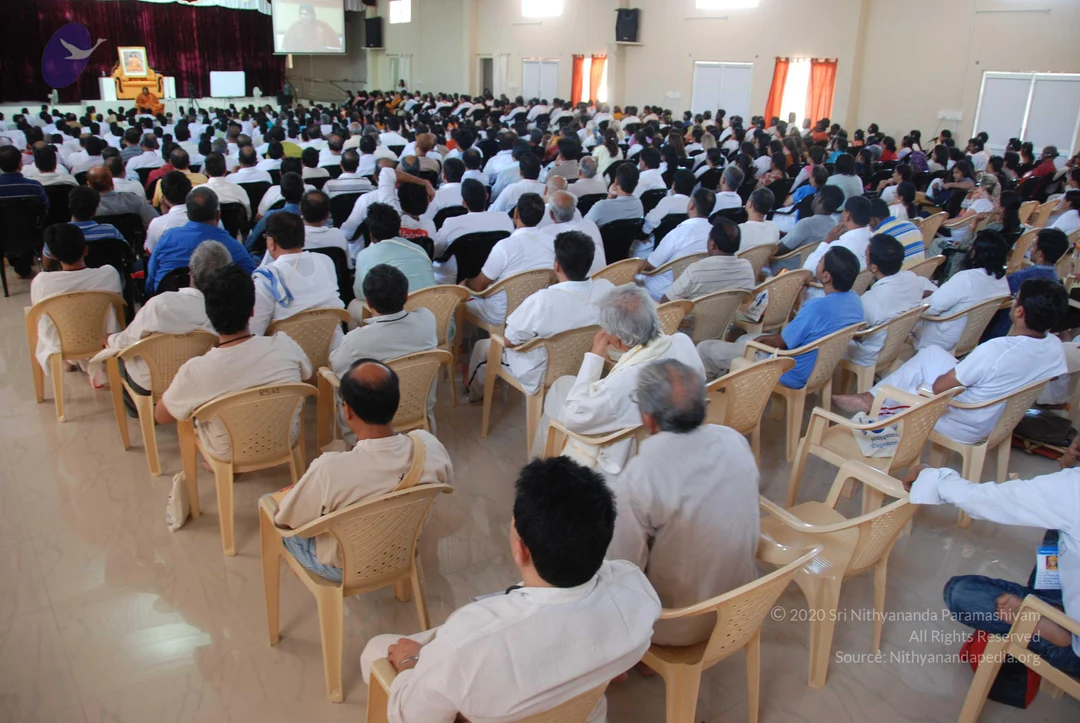
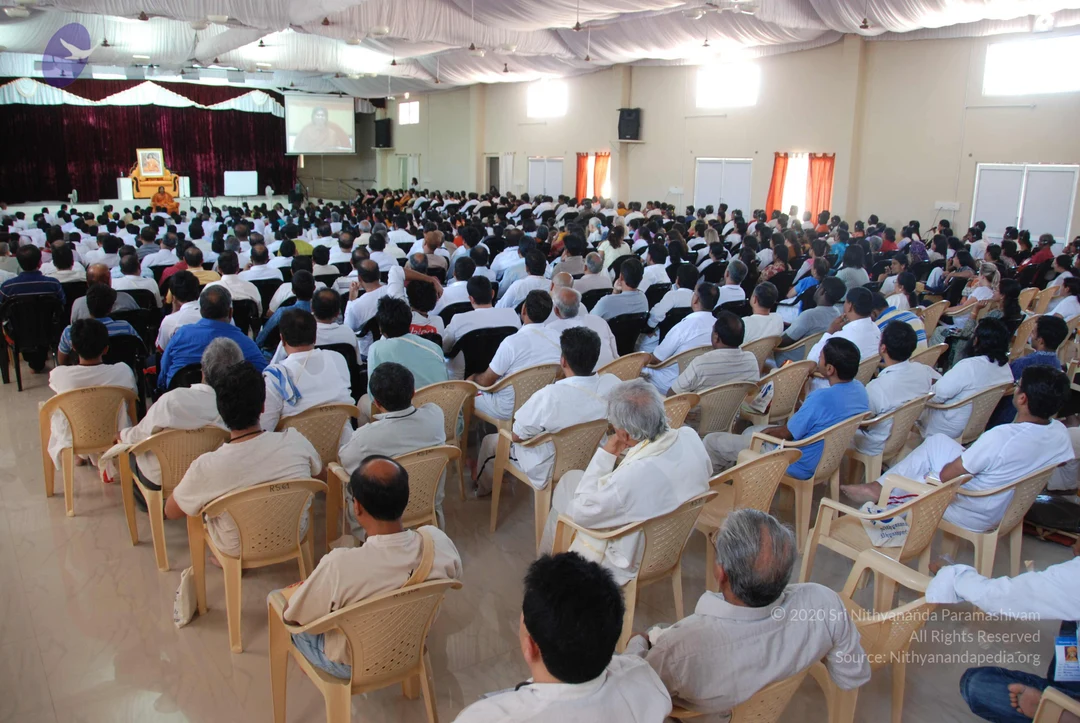
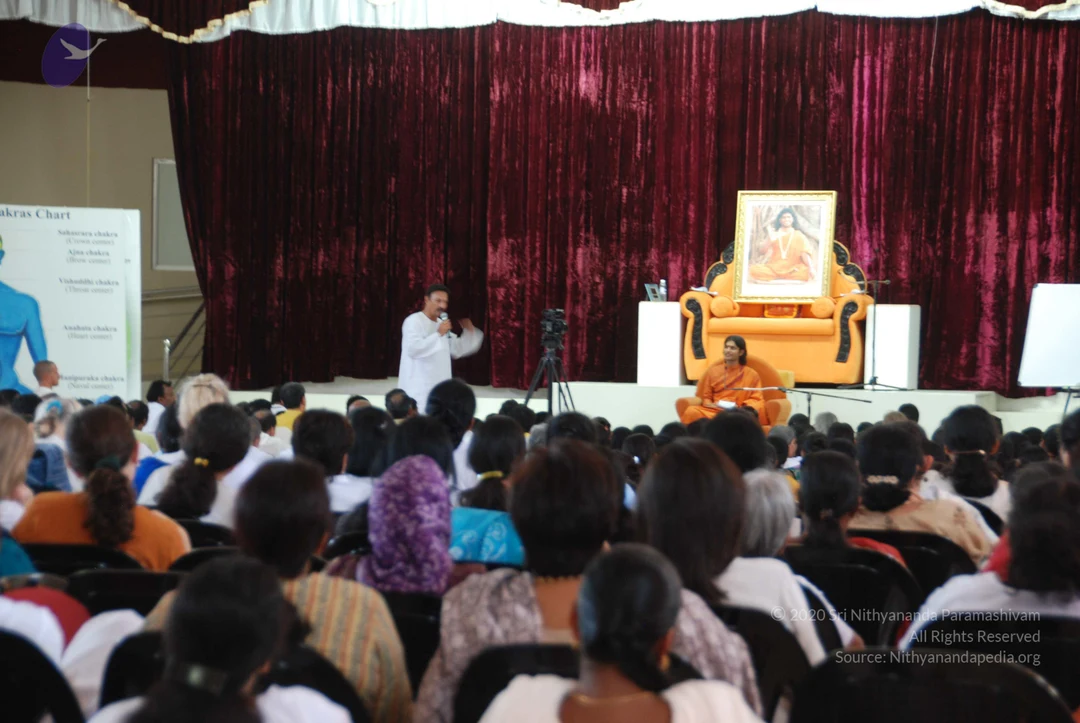
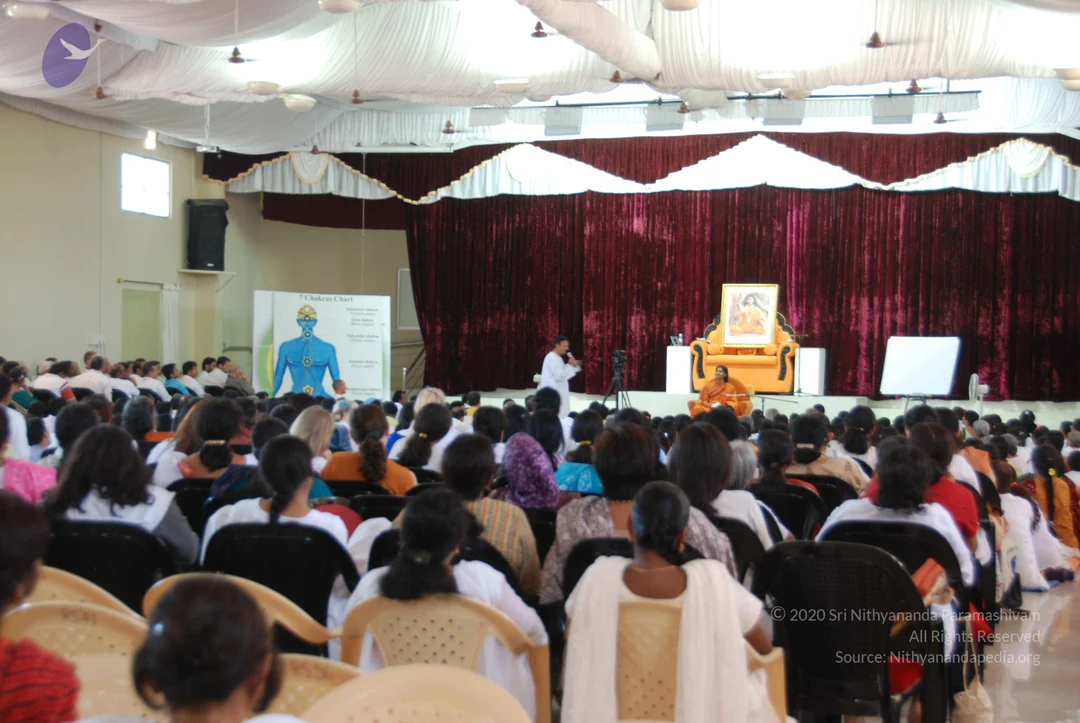
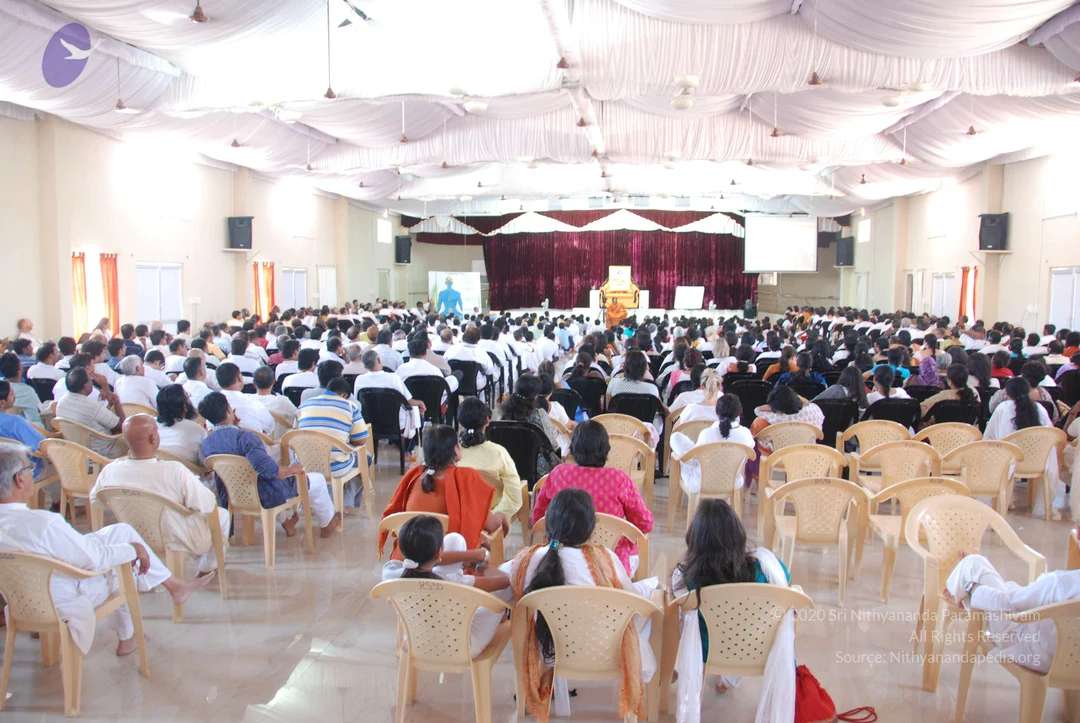
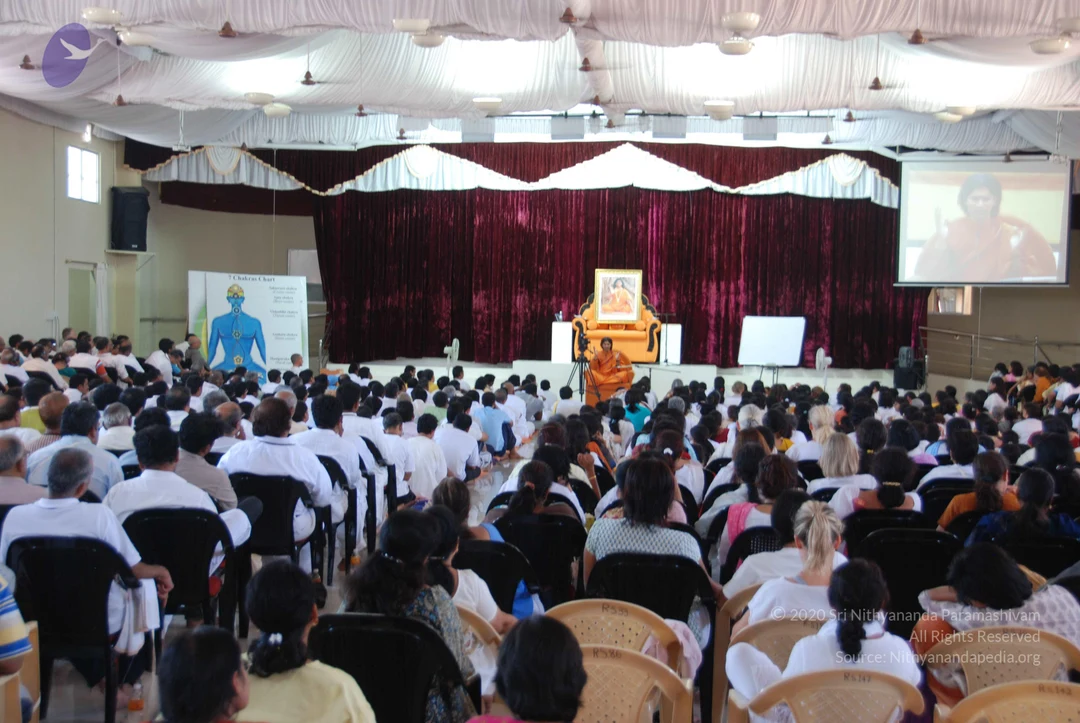
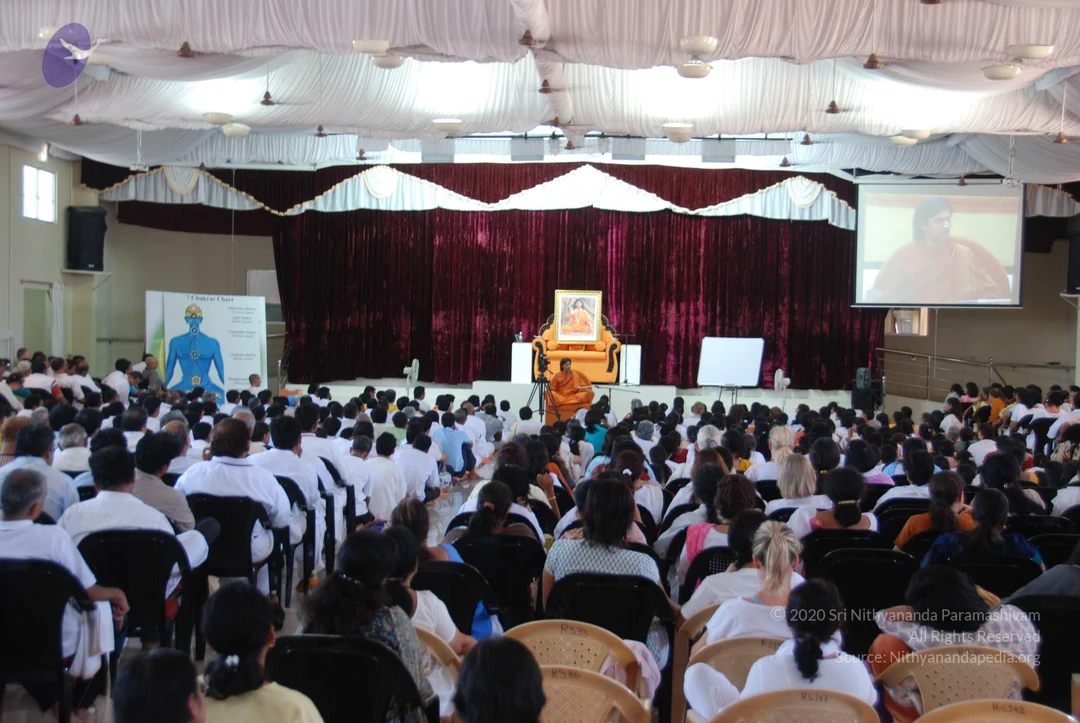
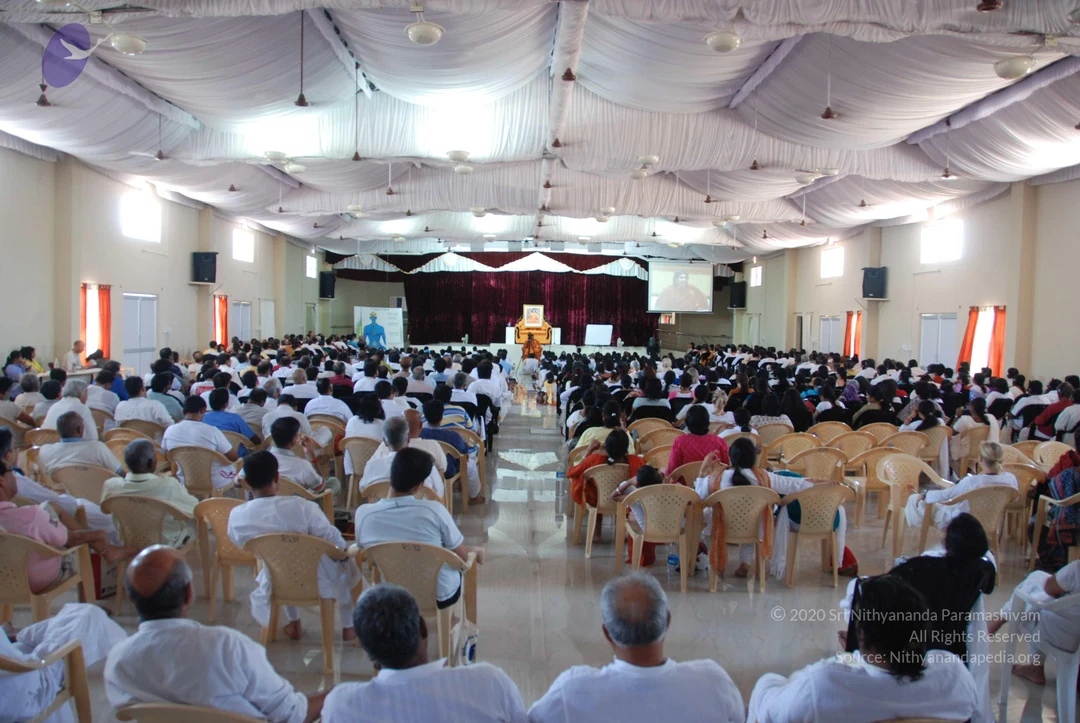
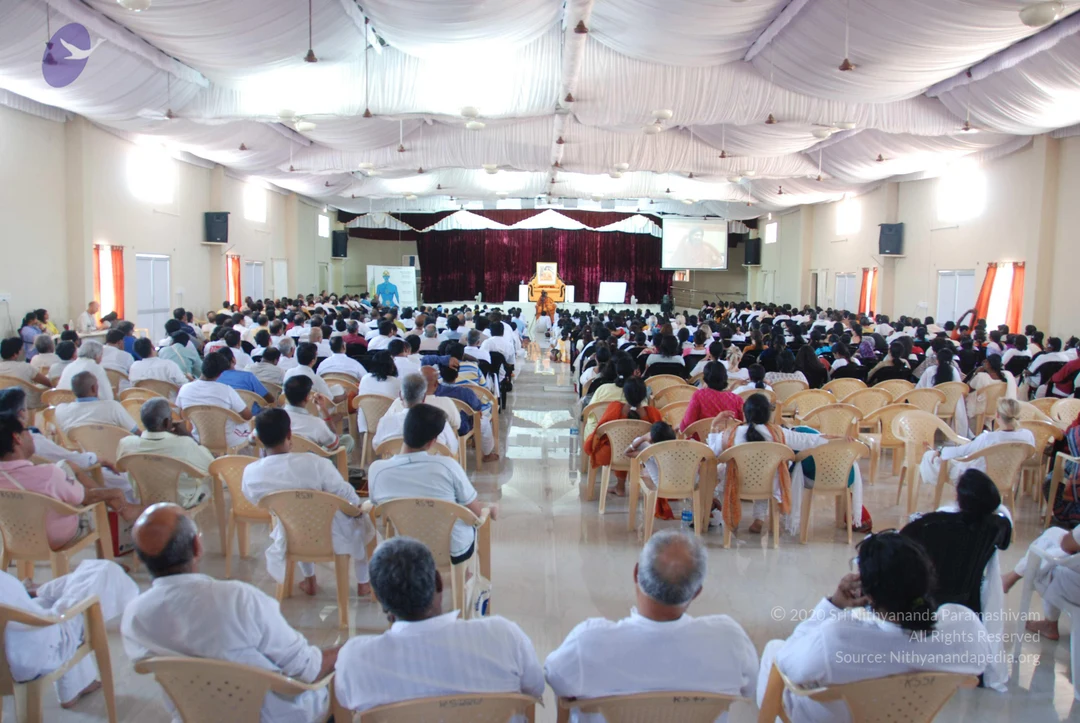
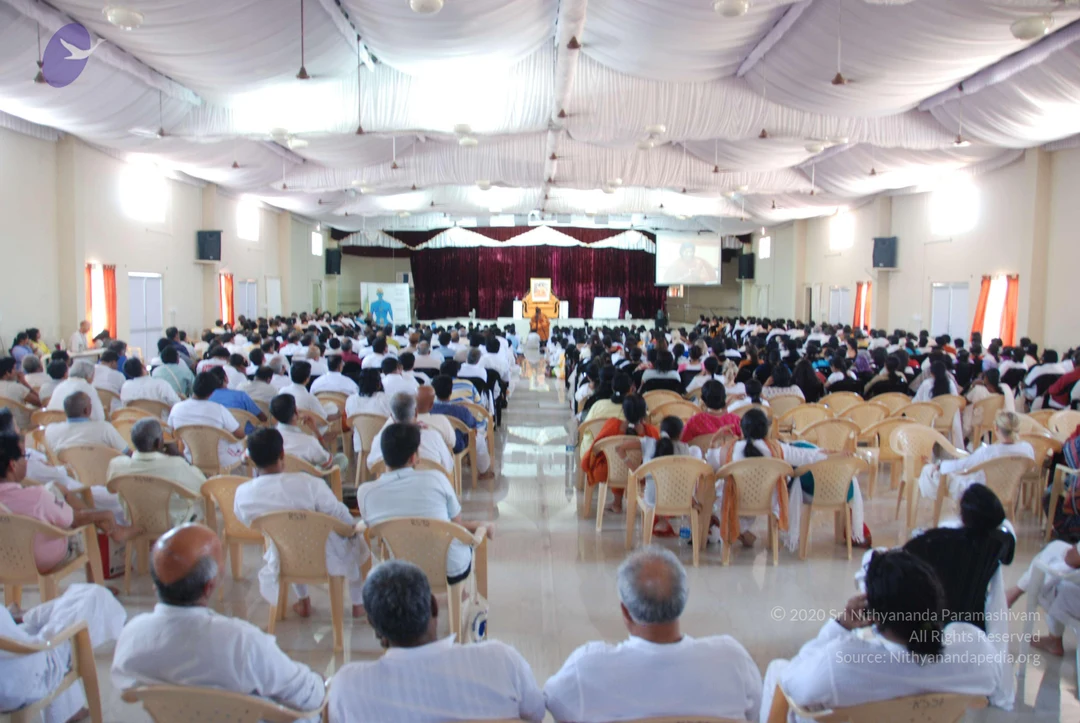
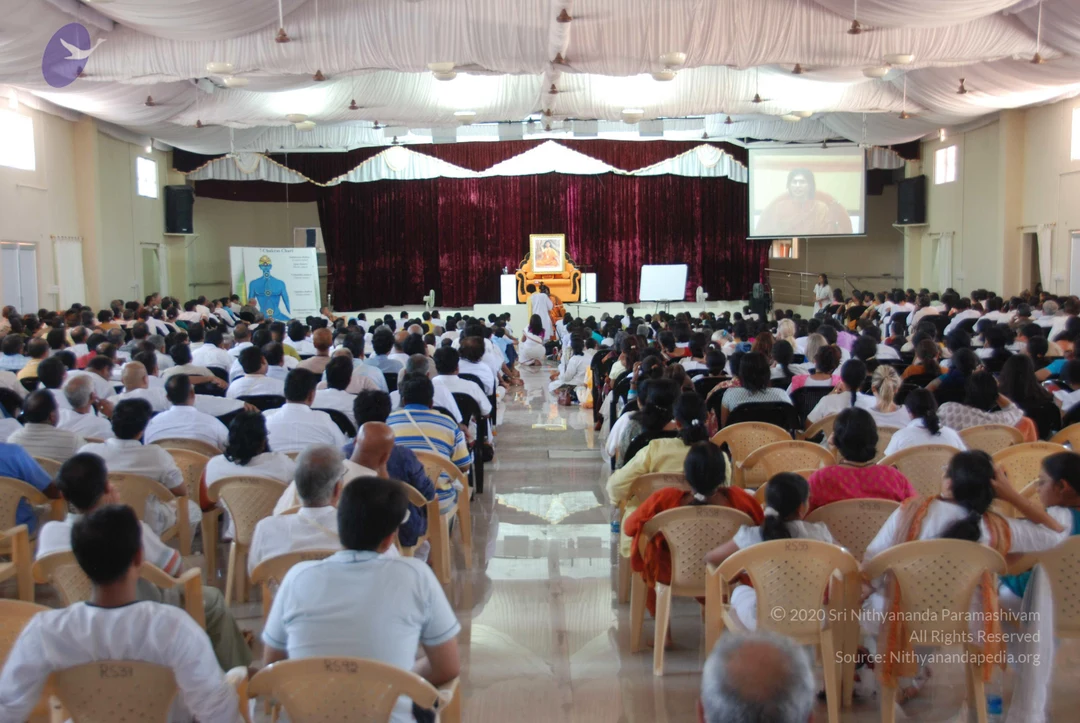
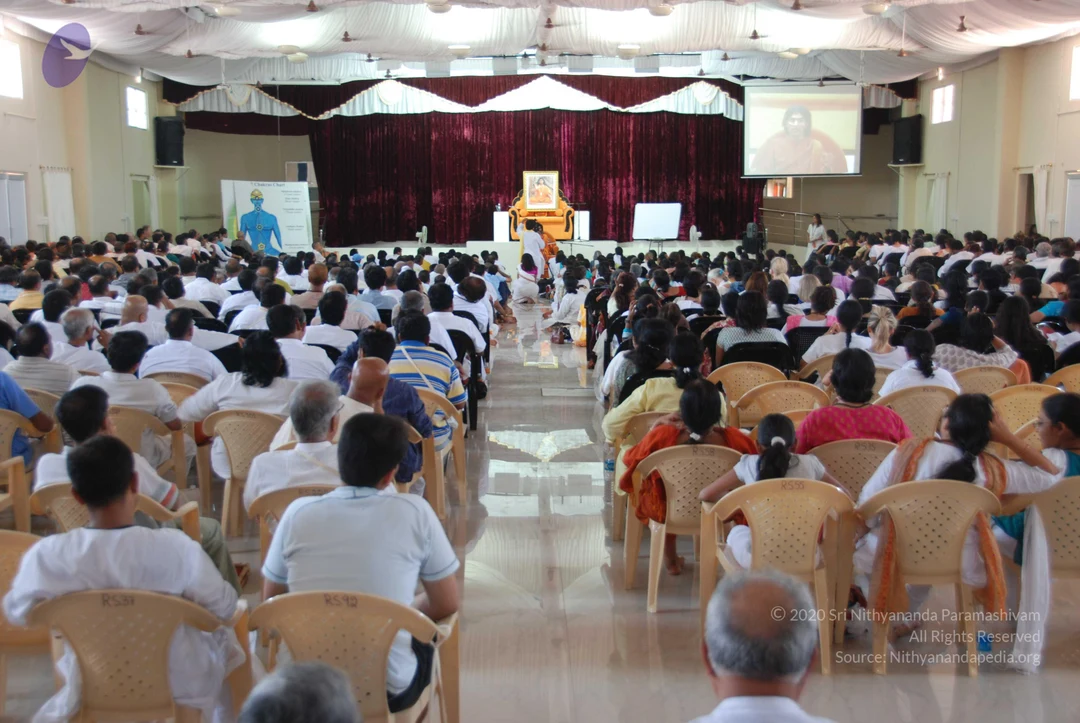
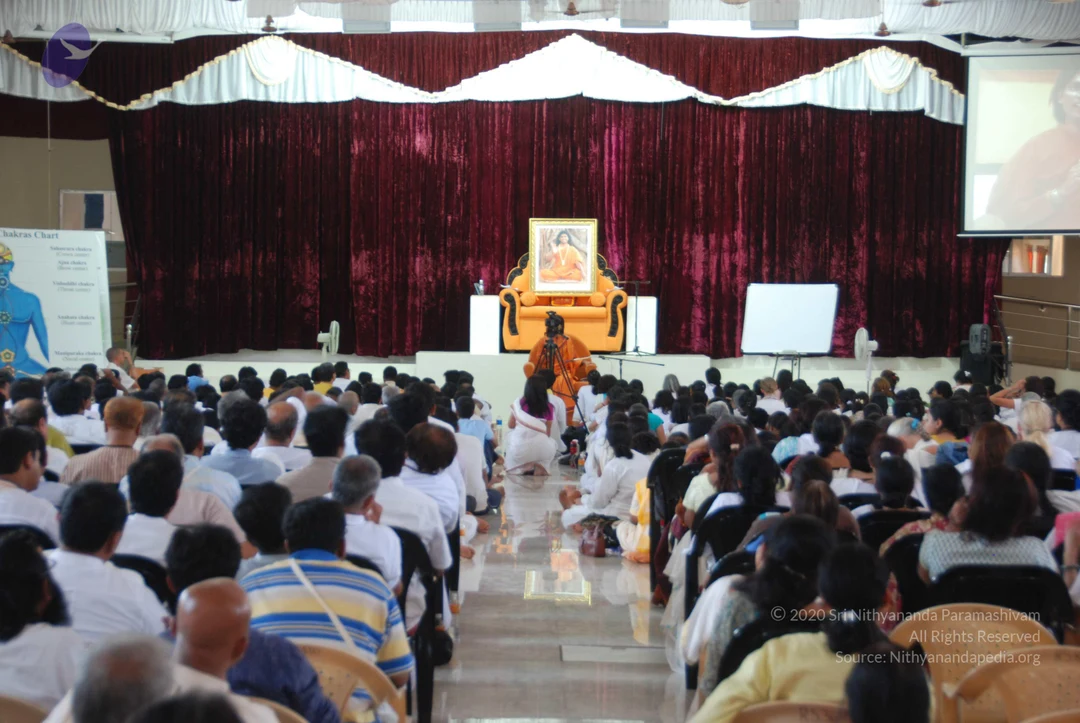
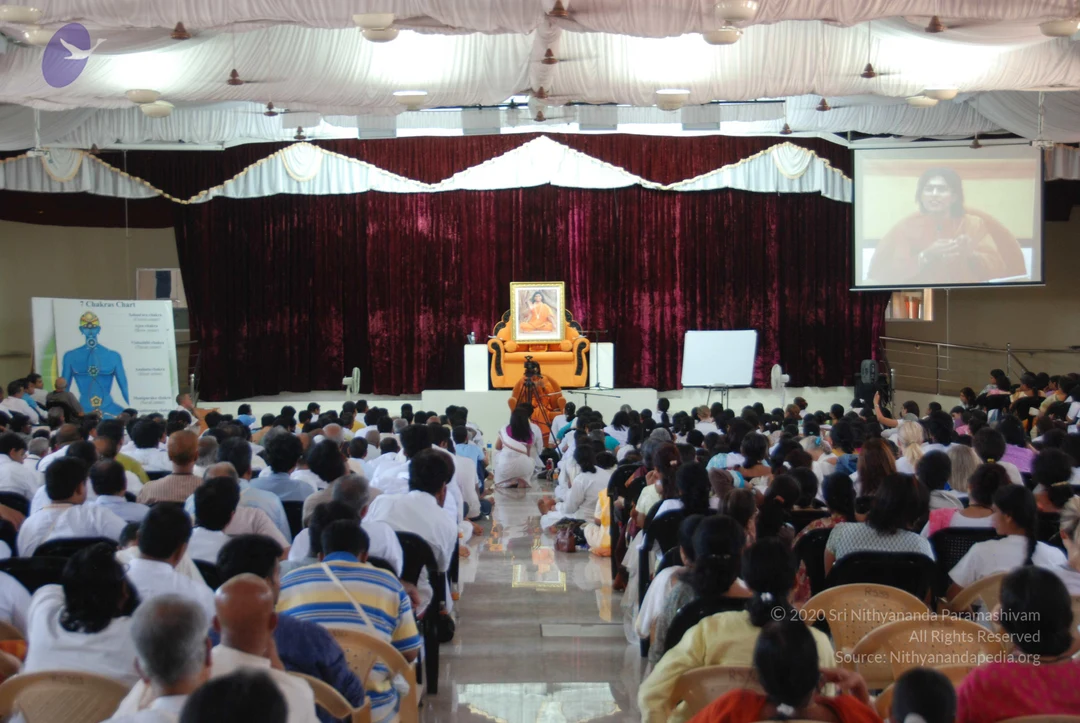
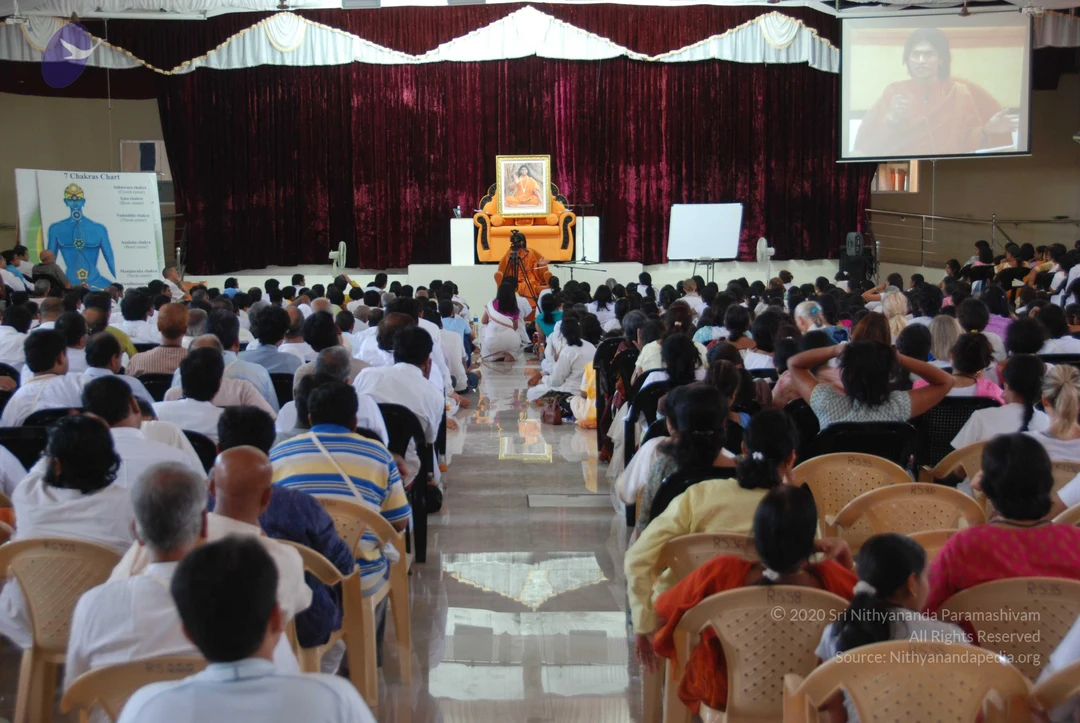
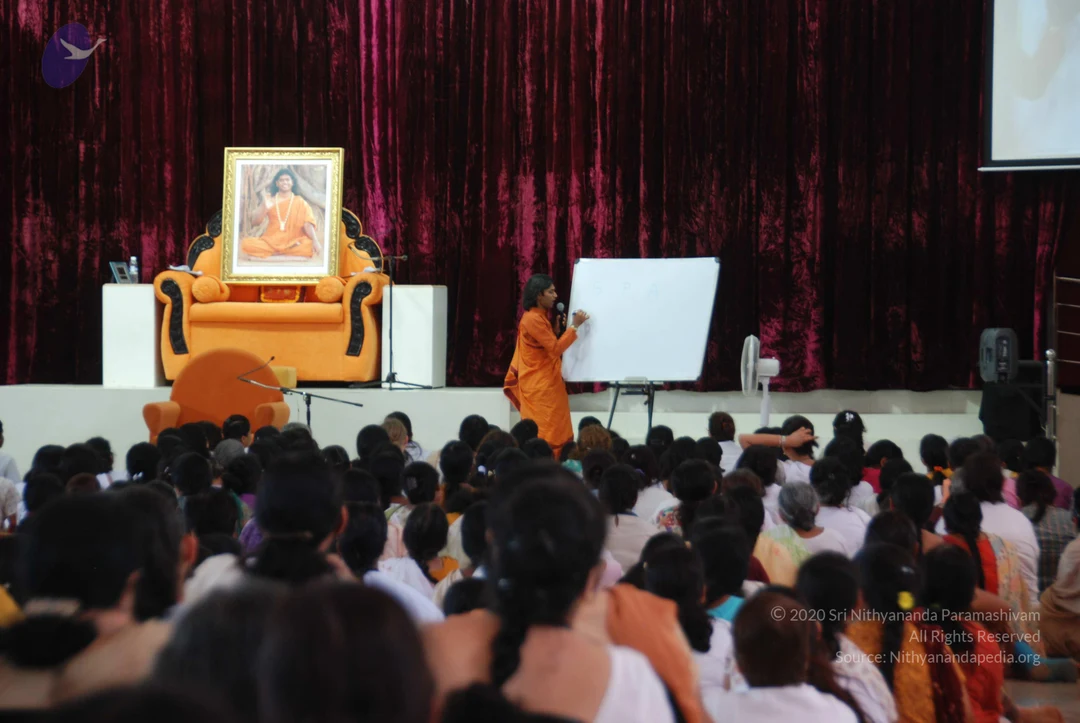
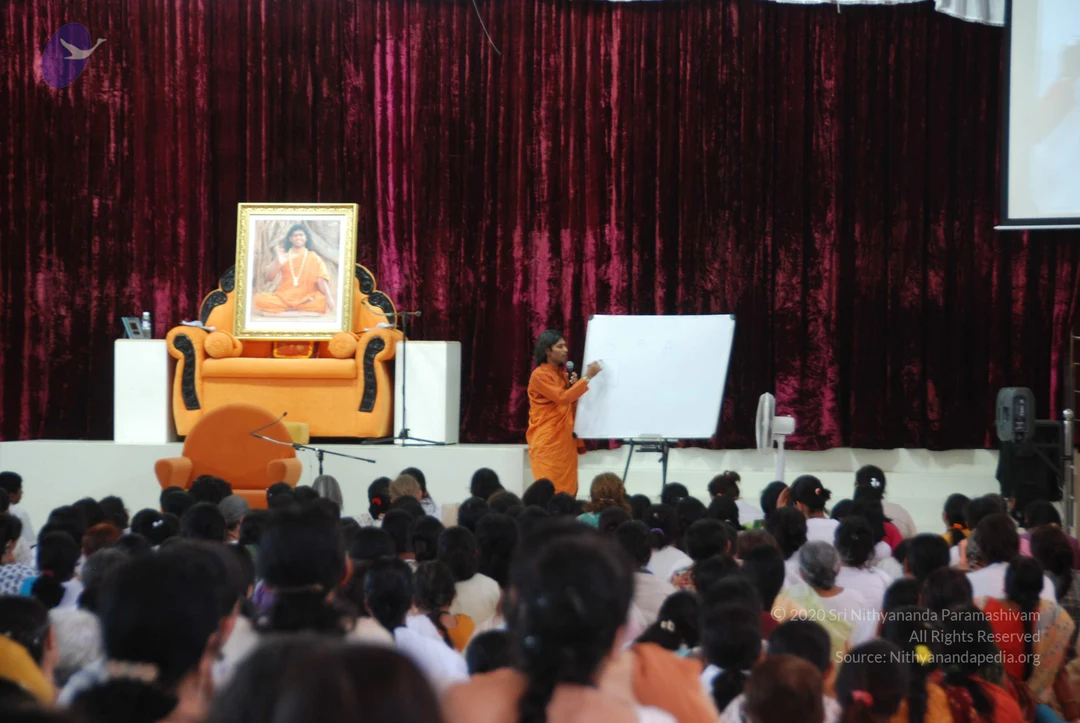
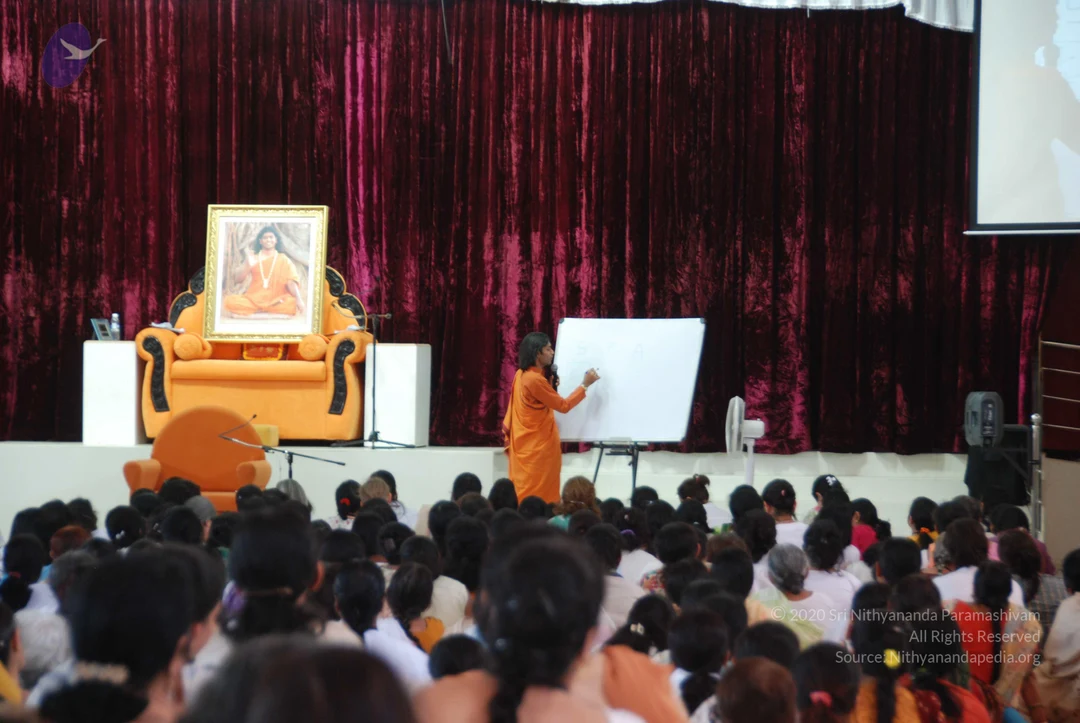
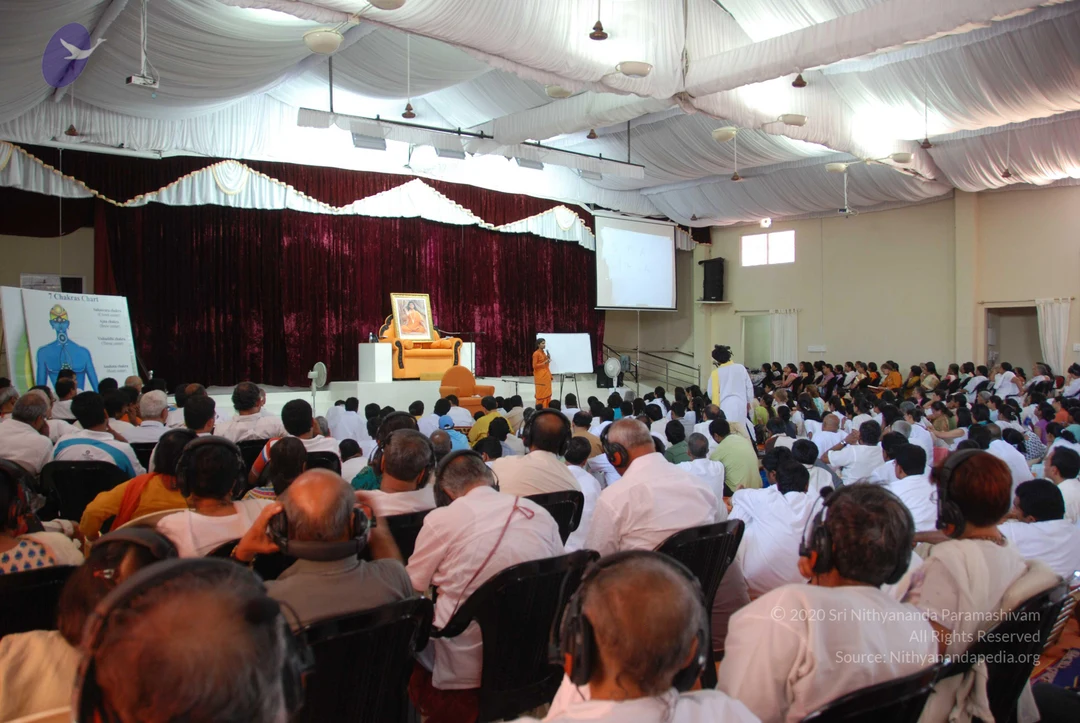
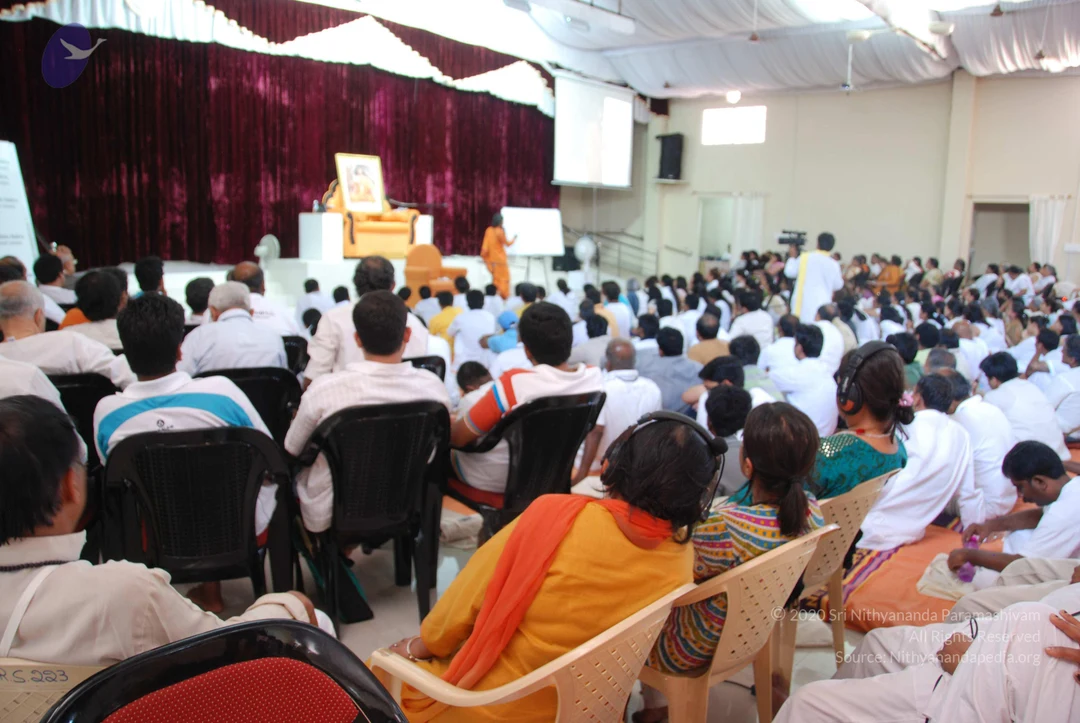
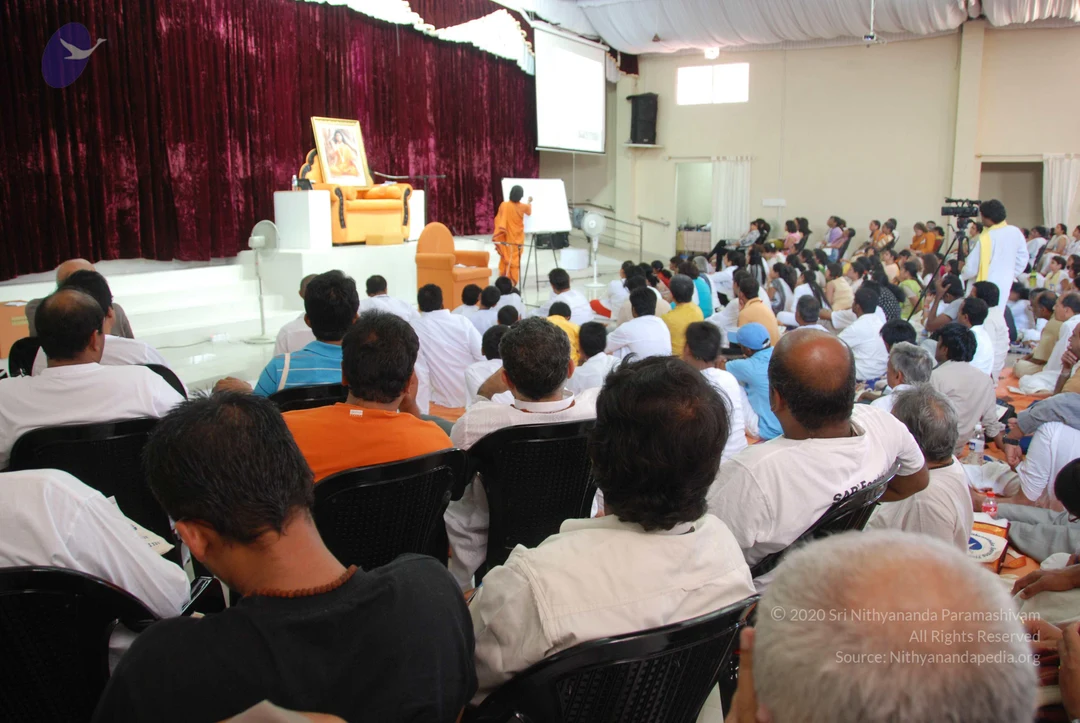
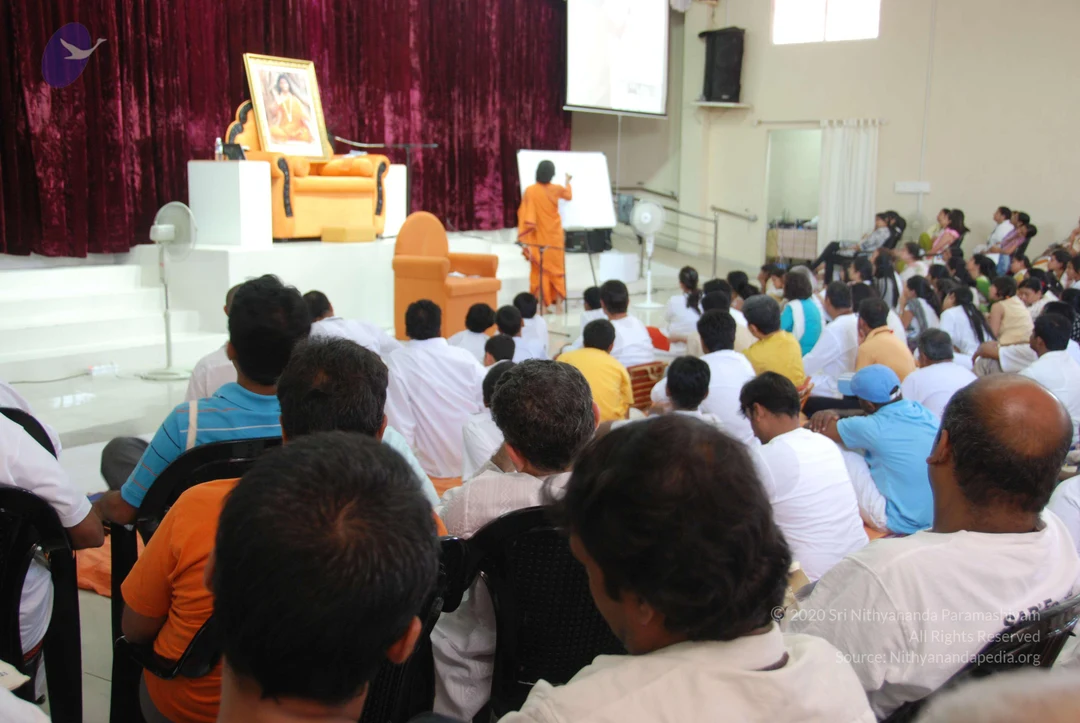
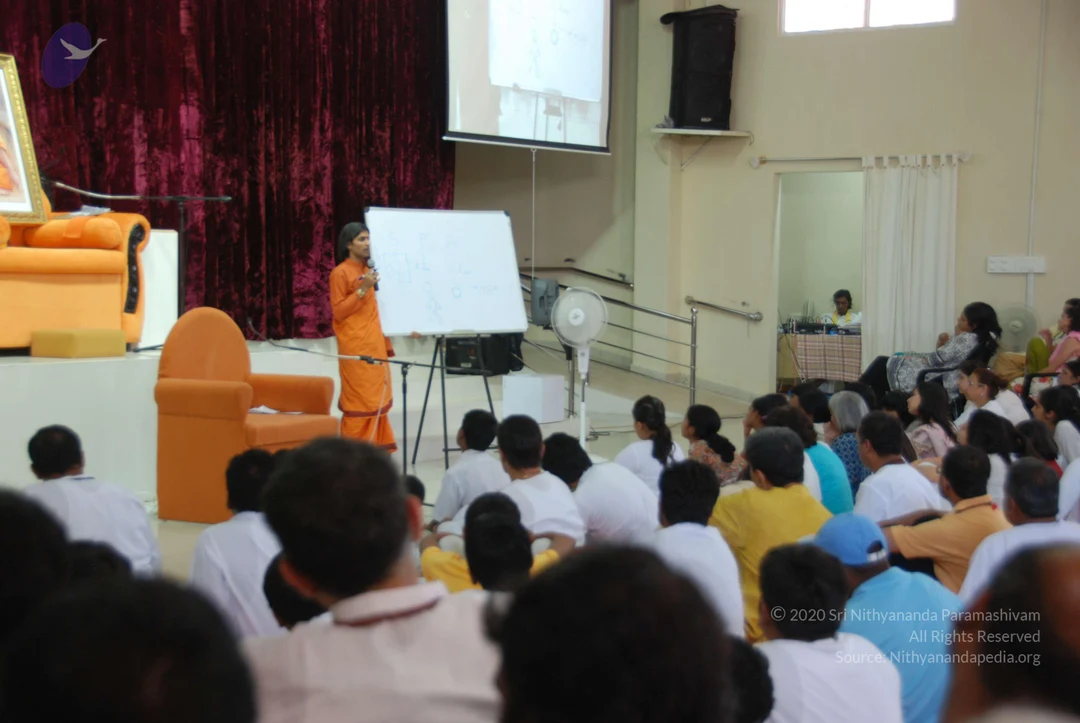
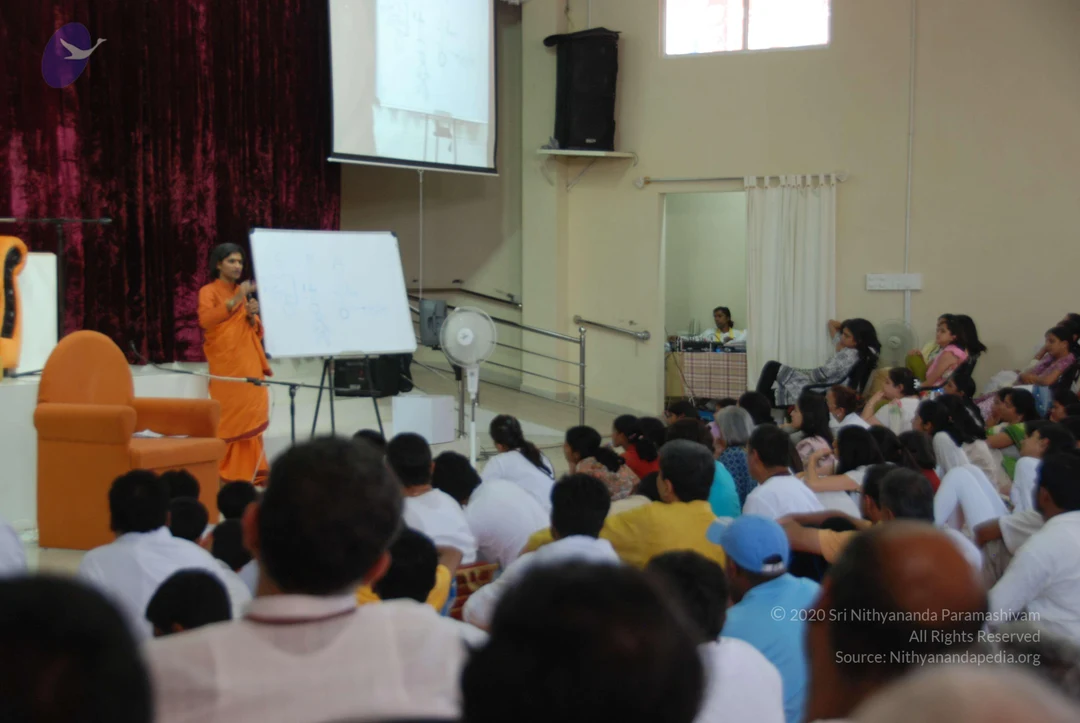
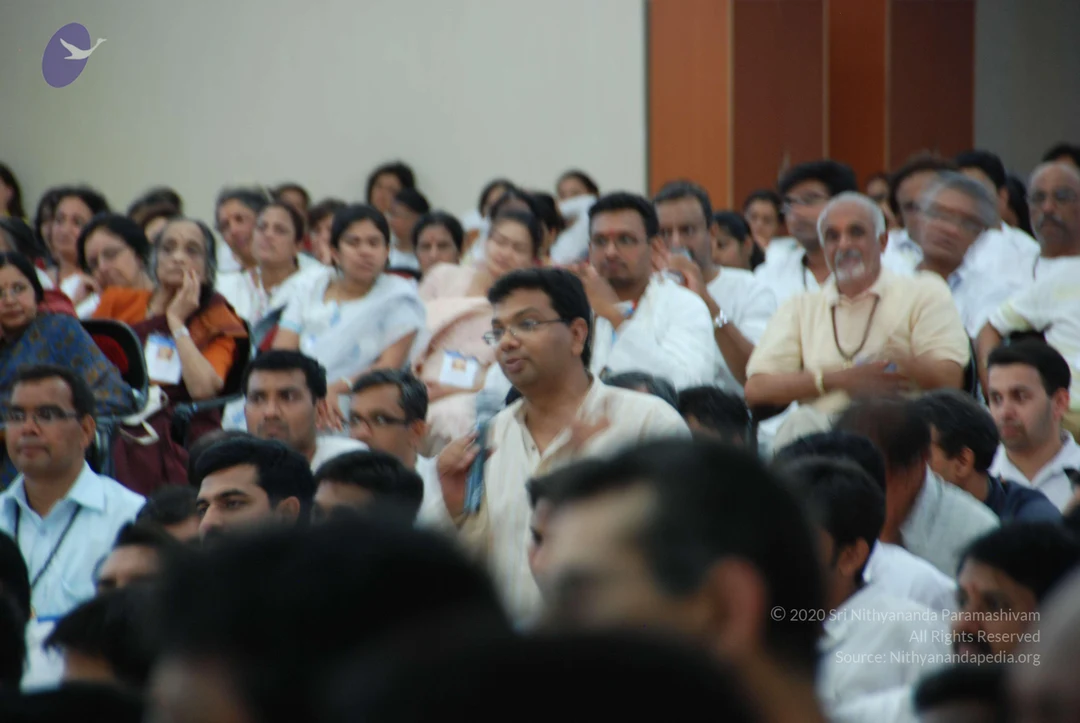
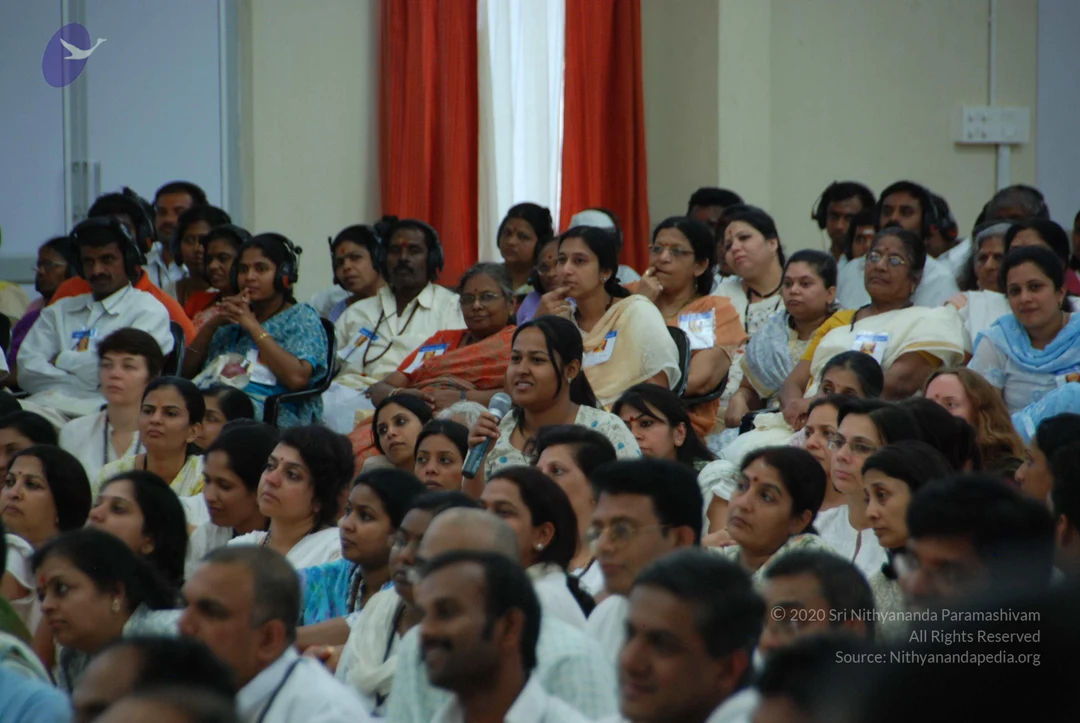
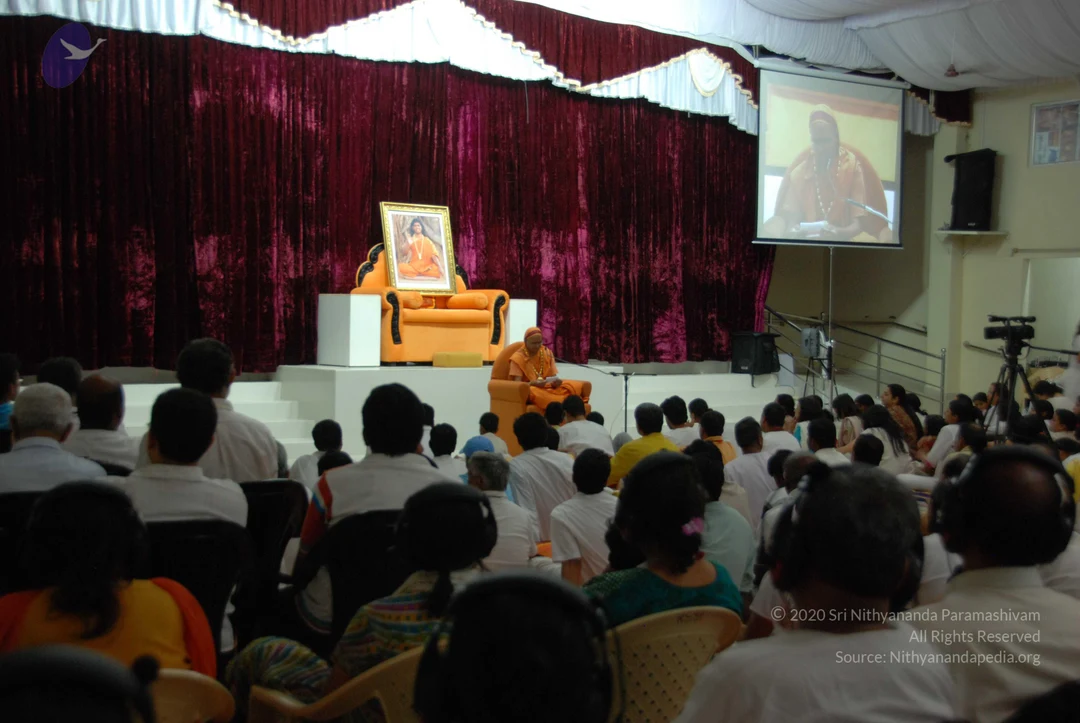
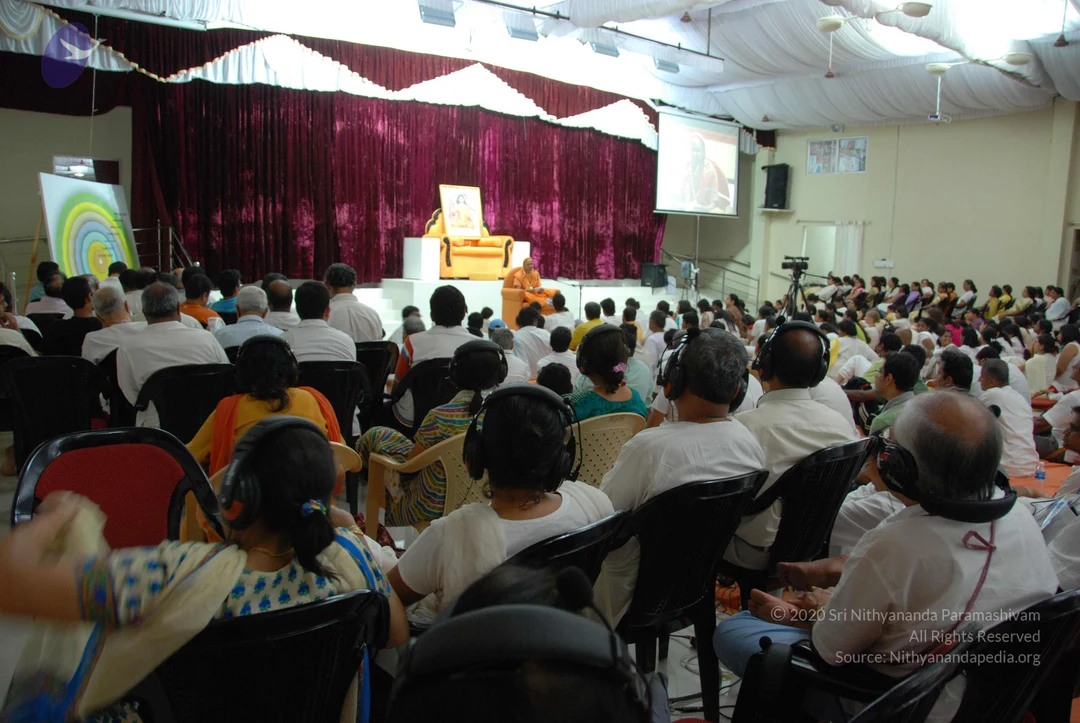
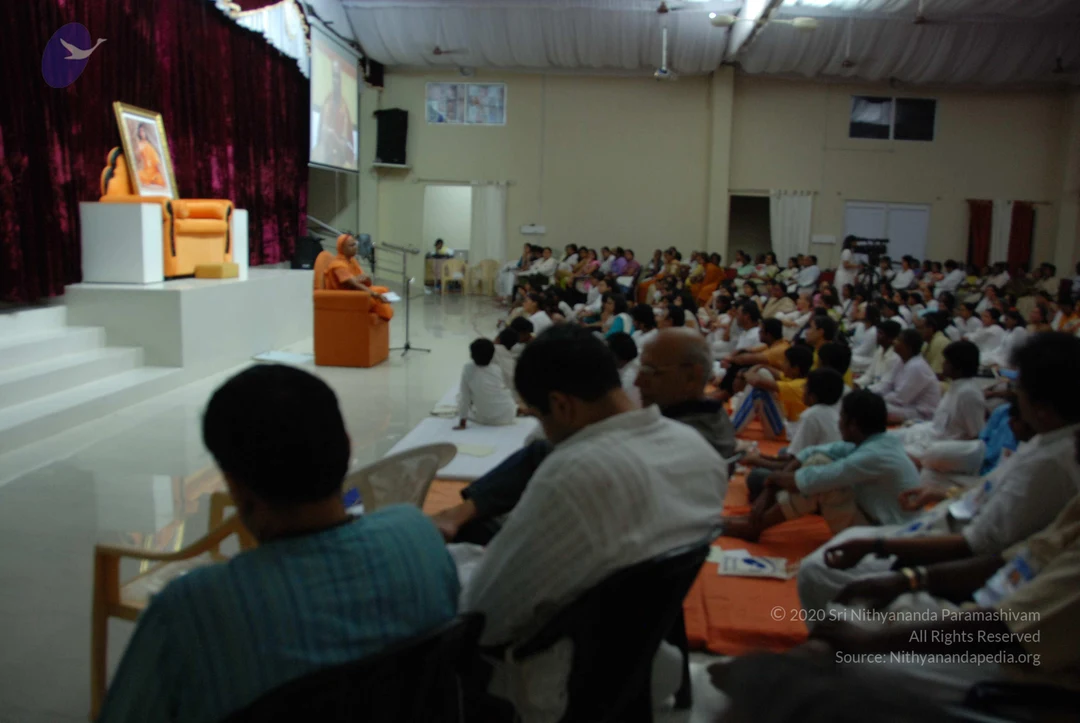
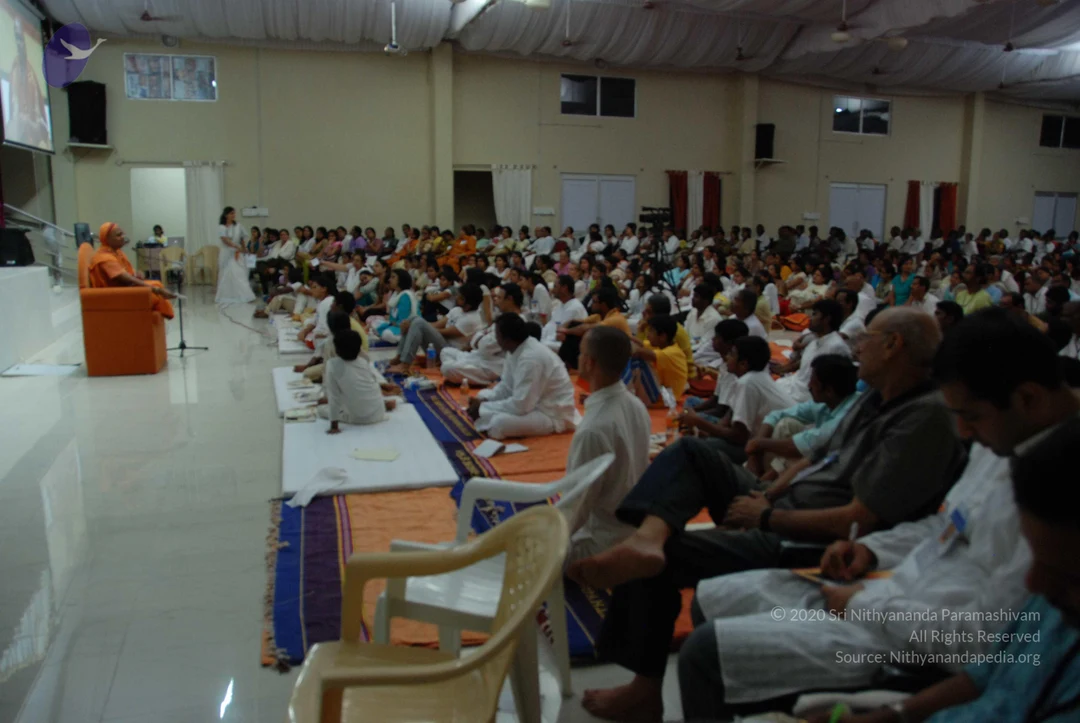
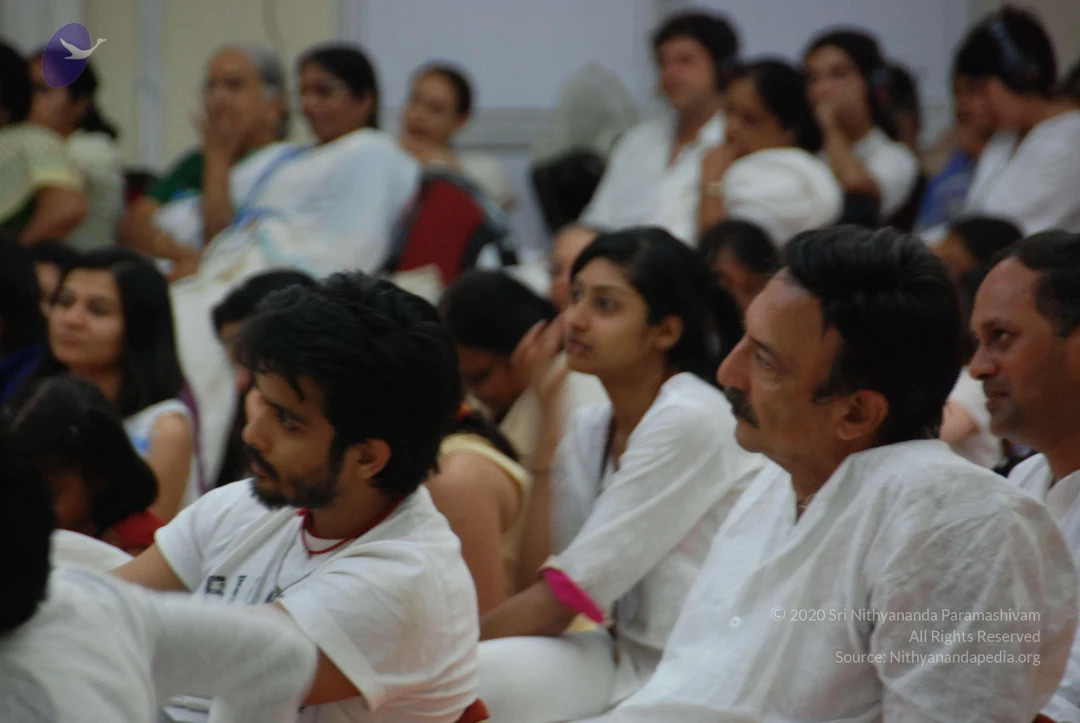
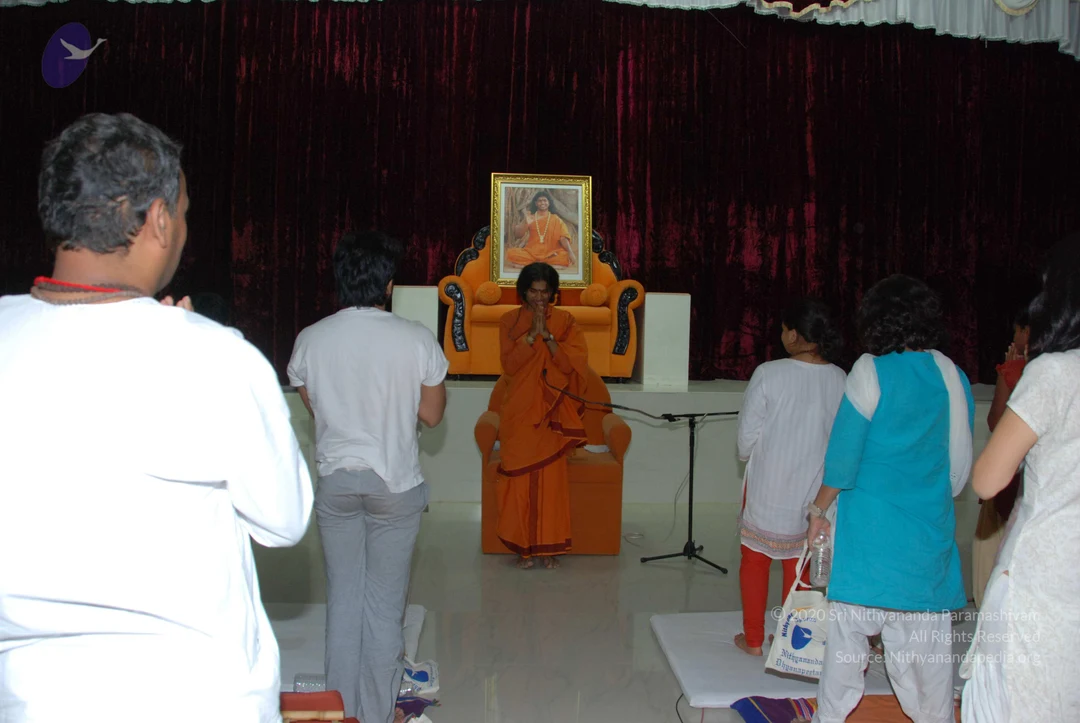
On this day, the Supreme Pontiff of Hinduism Bhagavan Nithyananda Paramashivam presided over the Nithyananda Spurana Program (NSP) and gave Darshan to the thousands who came to attend the convention. The grandest happening on Planet Earth, Paramavatara - the Ultimate Incarnation of Paramashiva, the Supreme Pontiff of Hinduism (SPH) Bhagavan Nithyananda Paramashivam steered the delegates from their intellect to their being, from the mundane worship to the sheer intimacy with the Divine. During the Darshan He personally healed and blessed each and everyone imparting in them the biggest gift a disciple can have, the Guru Bhakti. That day's Nithyananda Spurana Program (NSP) was conducted by the Supreme Pontiff of Hinduism Bhagavan Nithyananda Paramashivam on 20 February 2010 in Adi Kailasa, Bengaluru, Karnataka, India.