Skip to content
Monday

28 December 2009

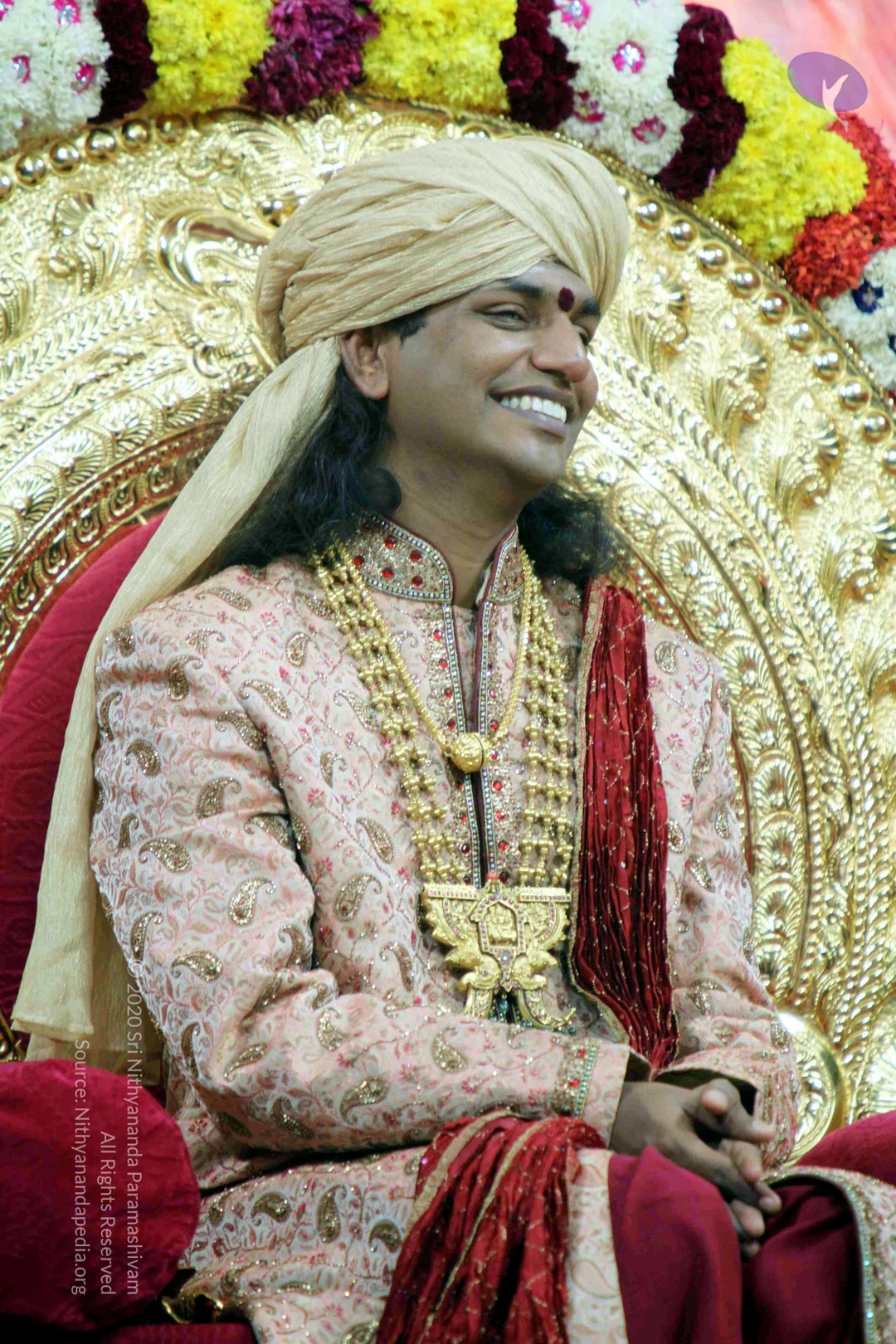
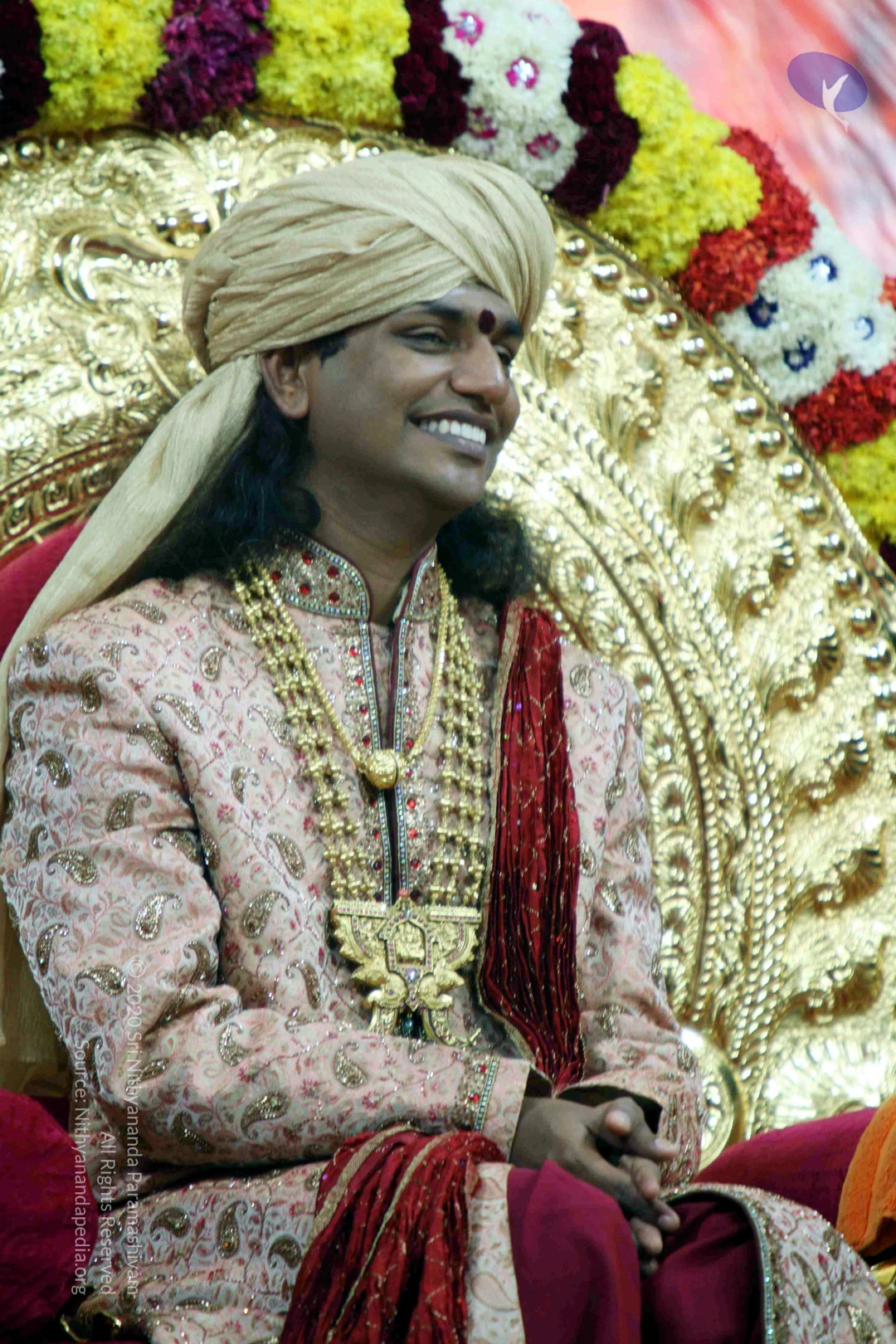
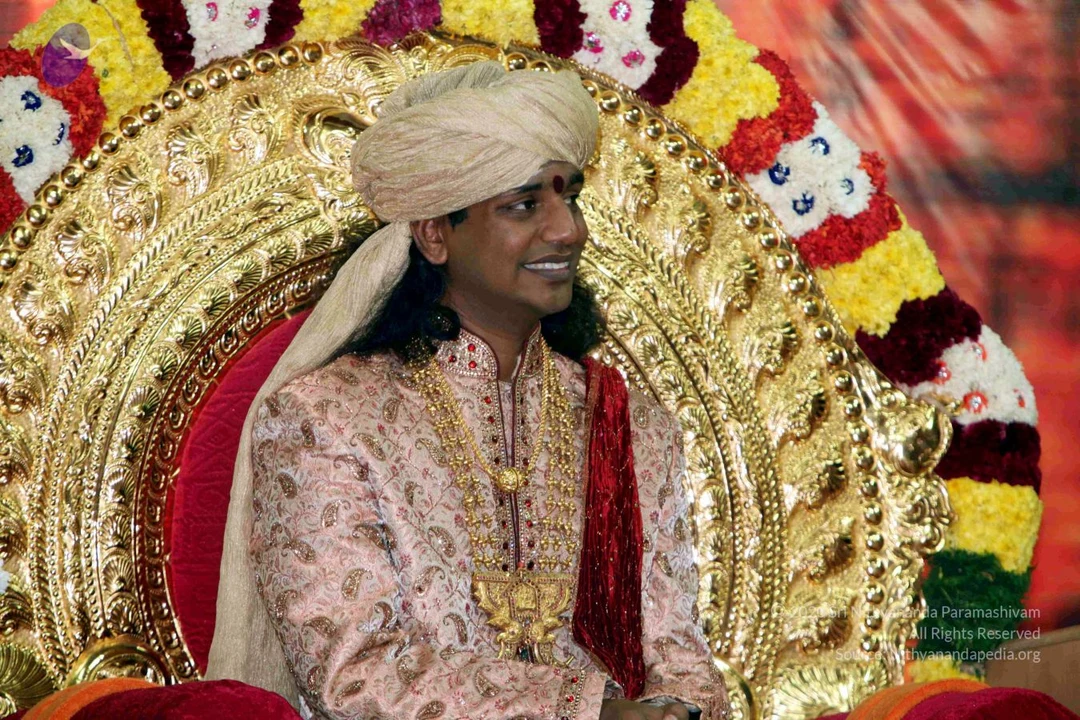
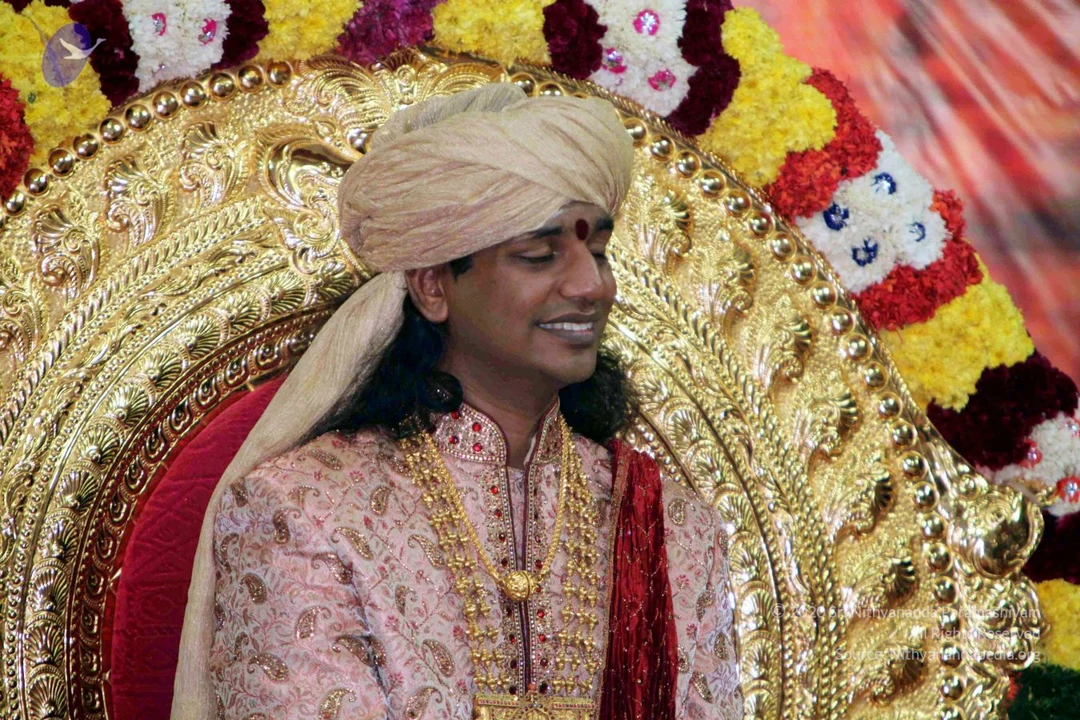
THE SUPREME PONTIFF OF HINDUISM JGM HDH BHAGAVAN SRI NITHYANANDA PARAMASHIVAM

Dated photos
525
Source pages
1
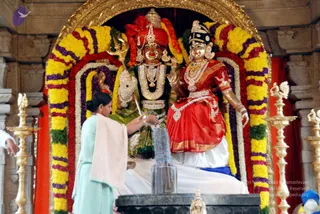
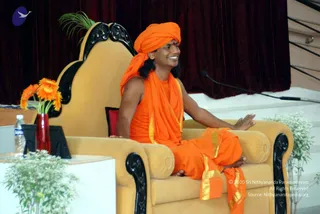
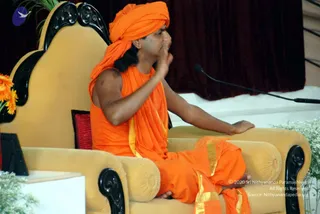
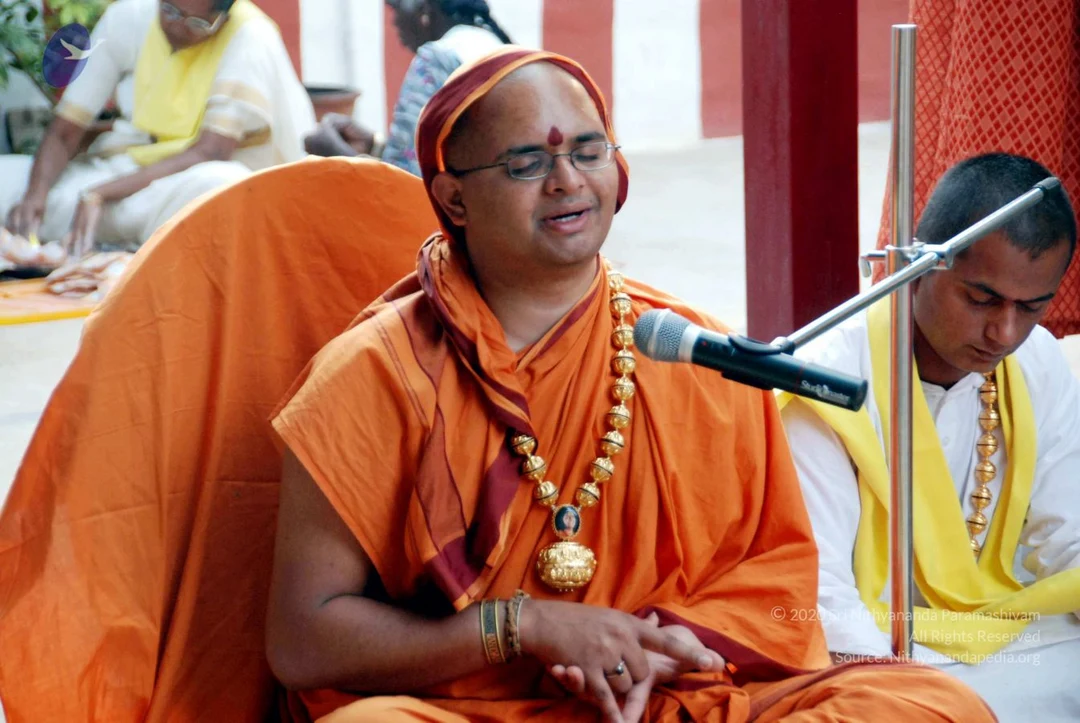
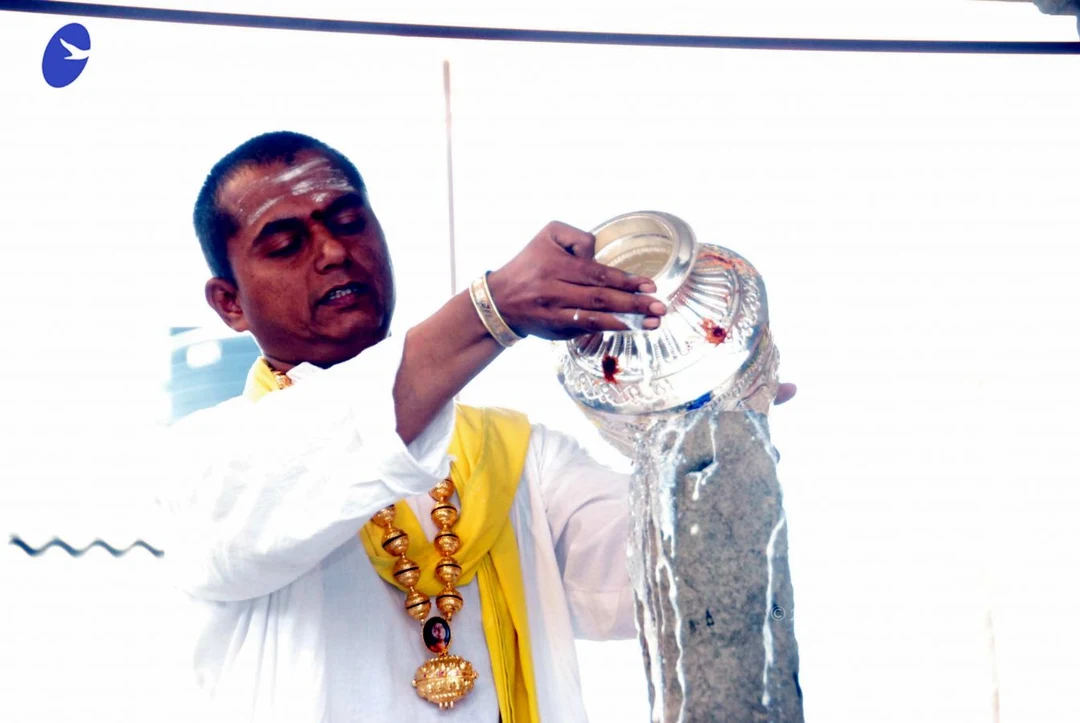
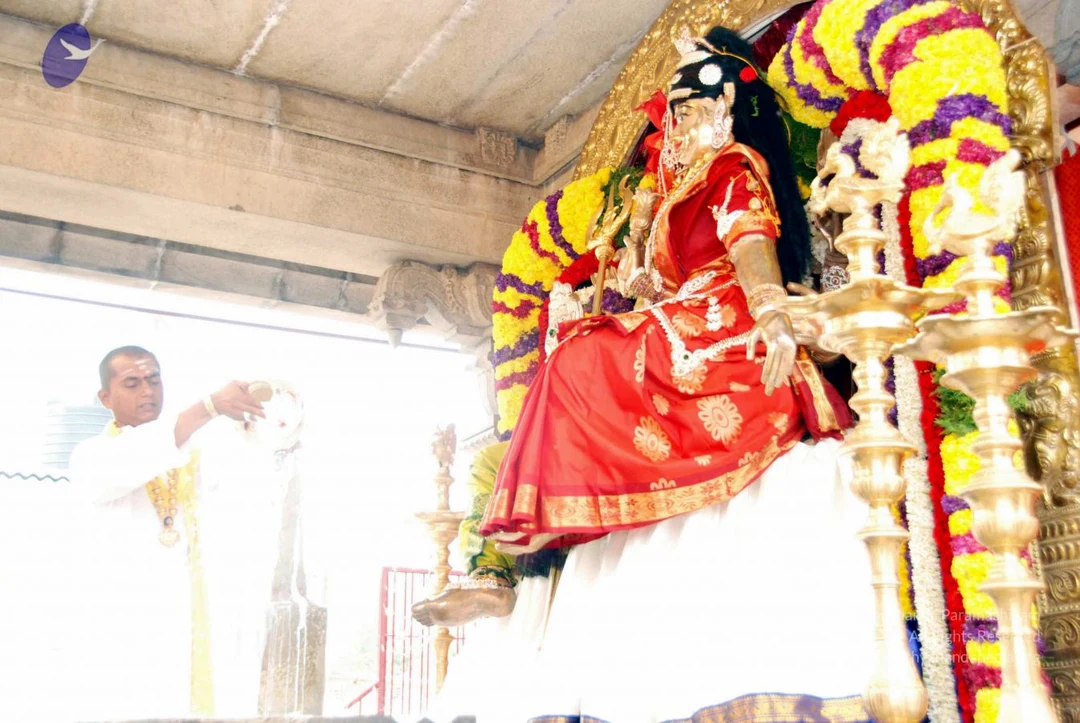
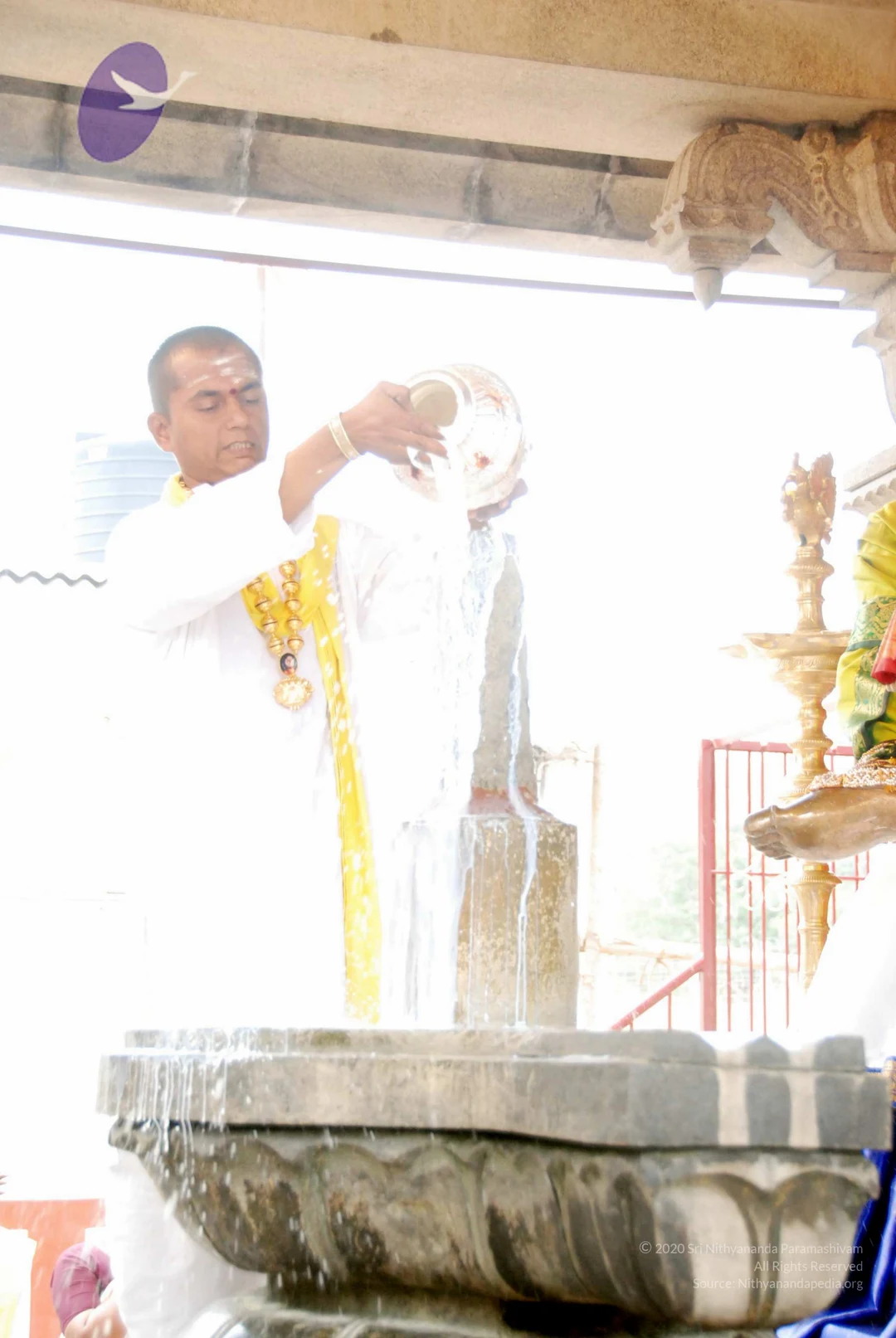
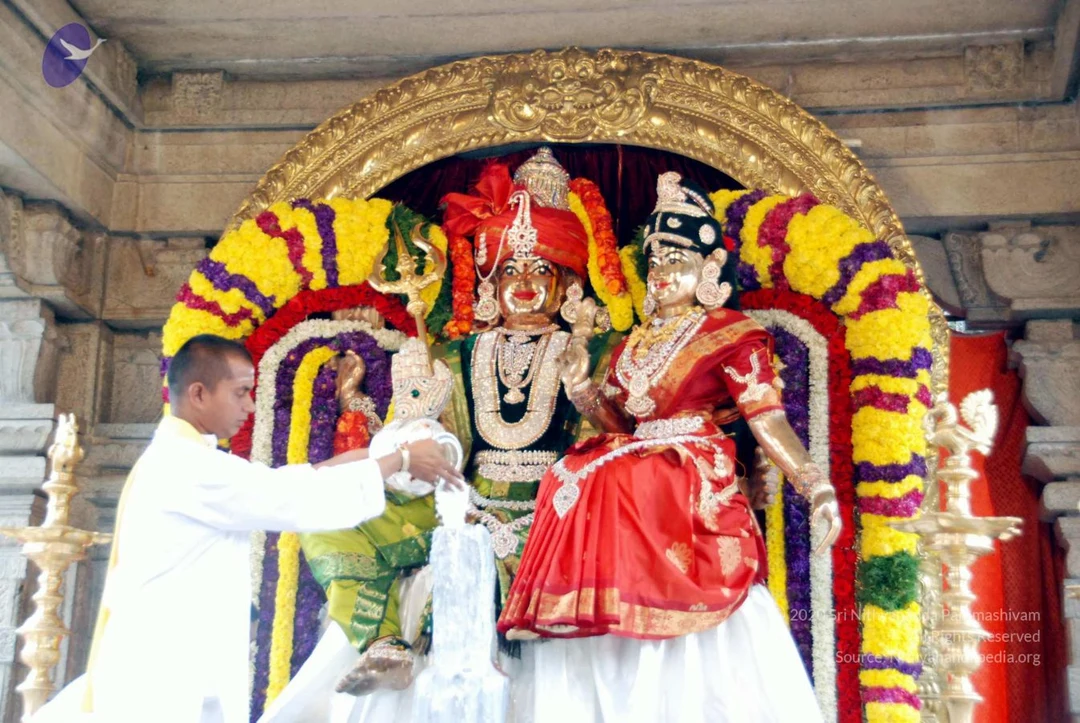
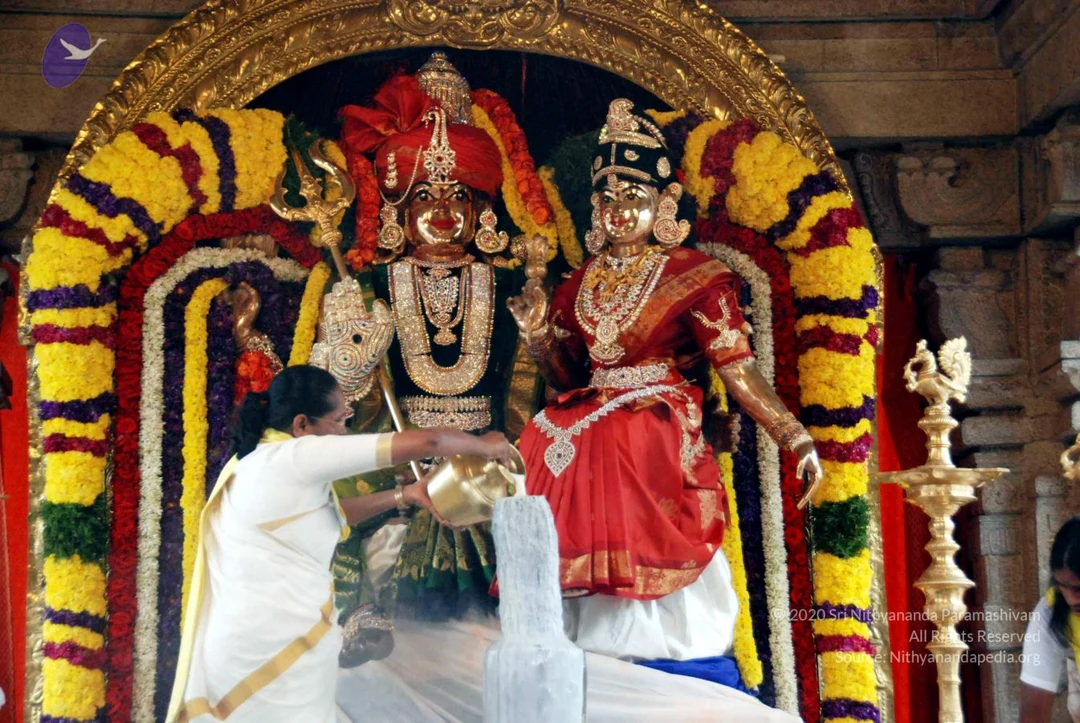
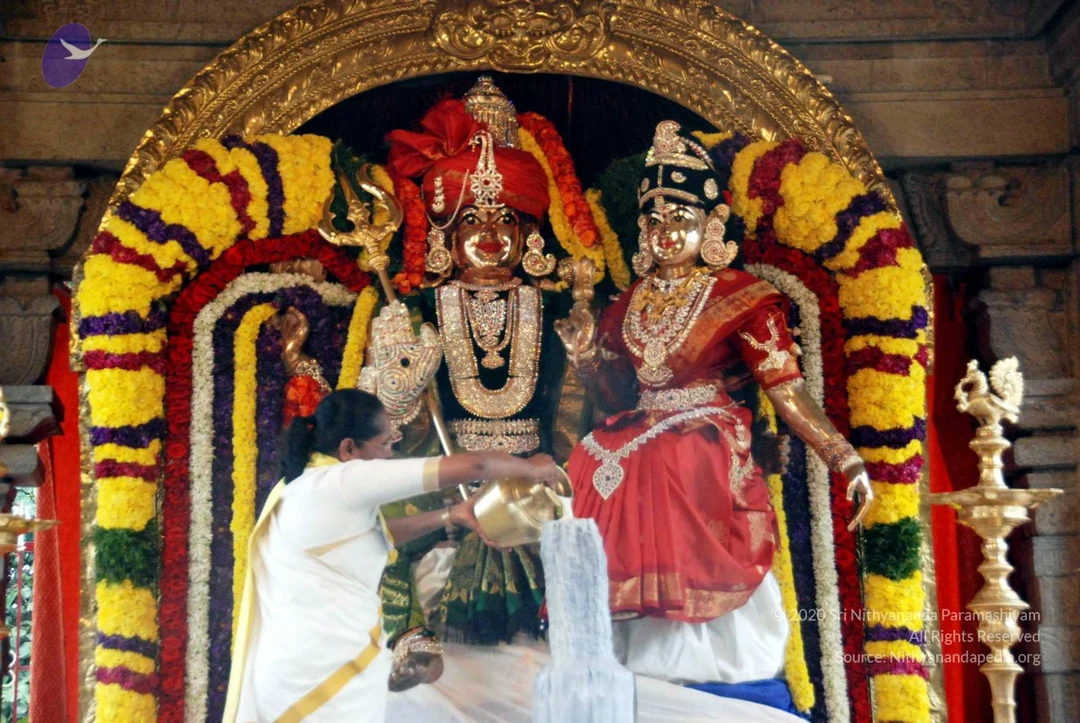
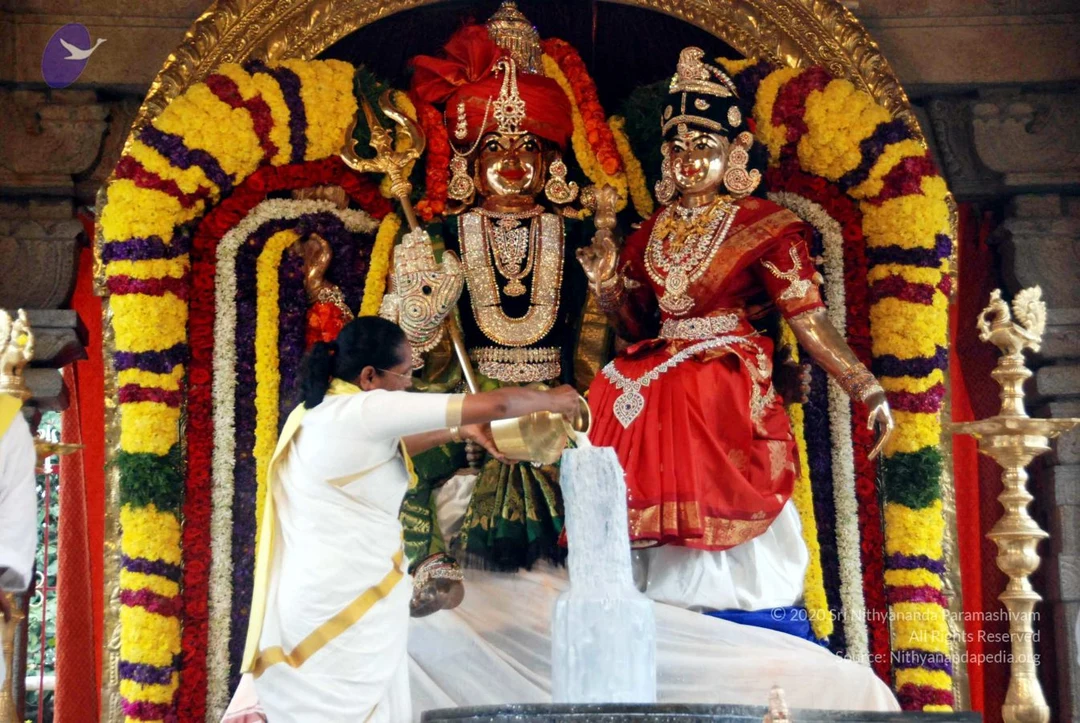
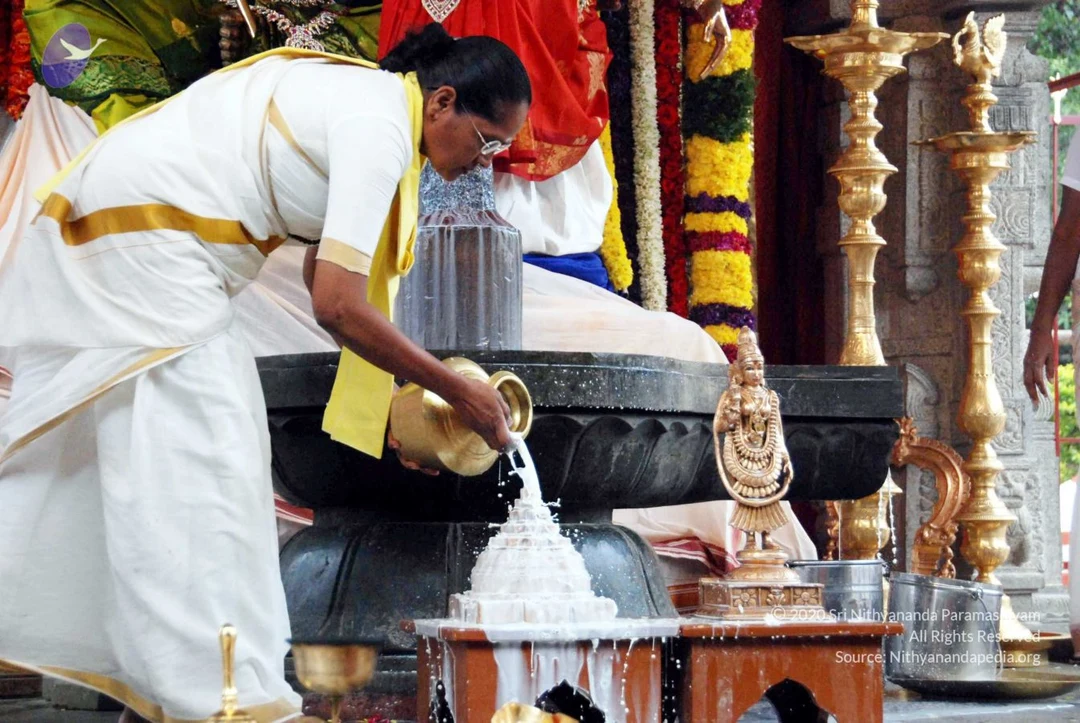
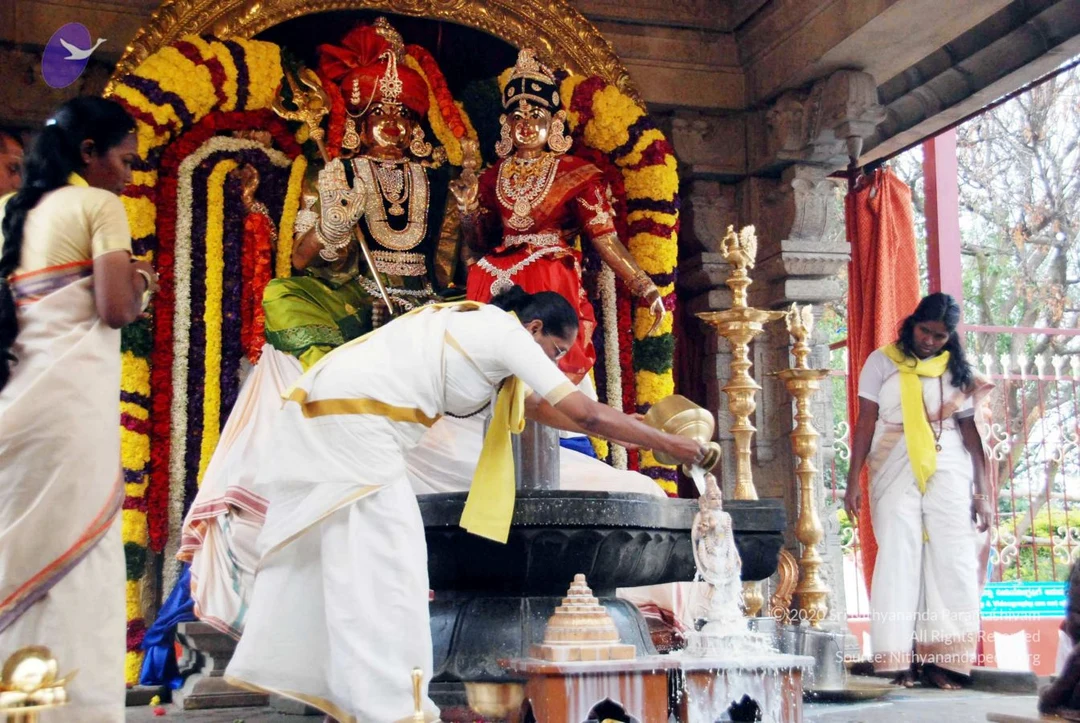
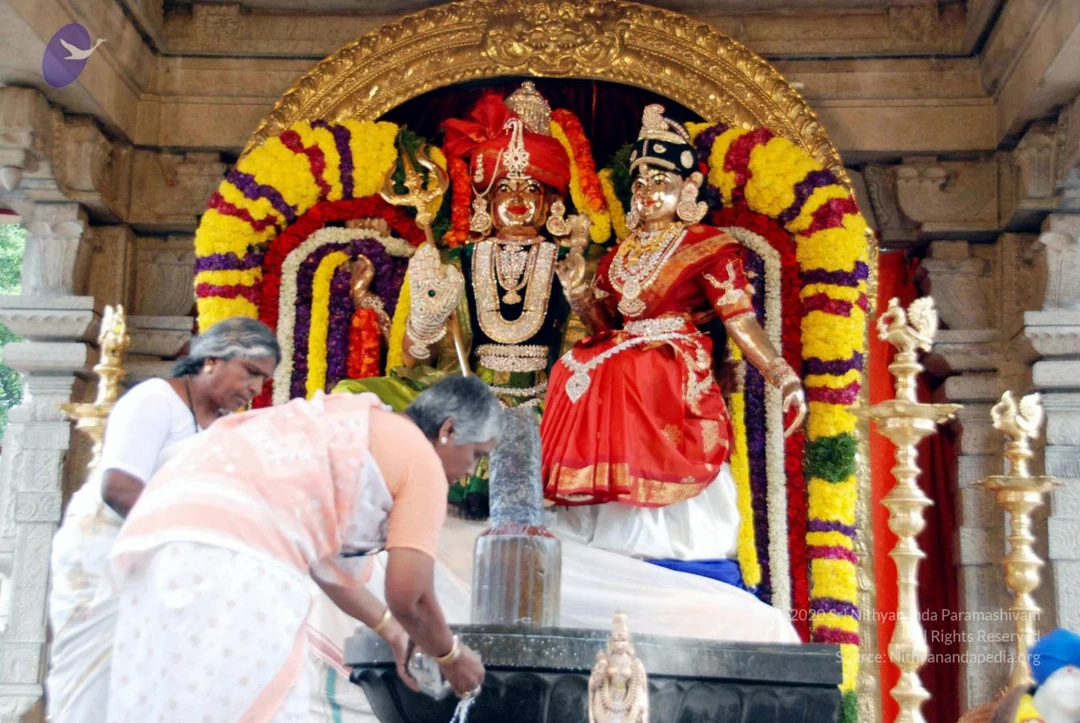
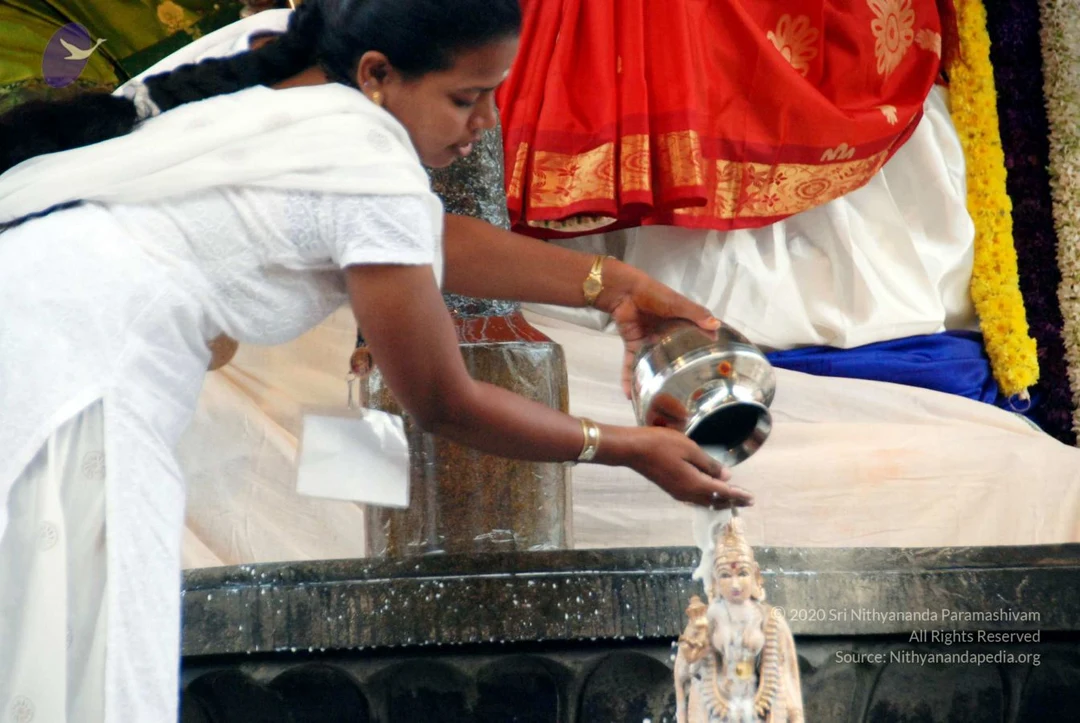
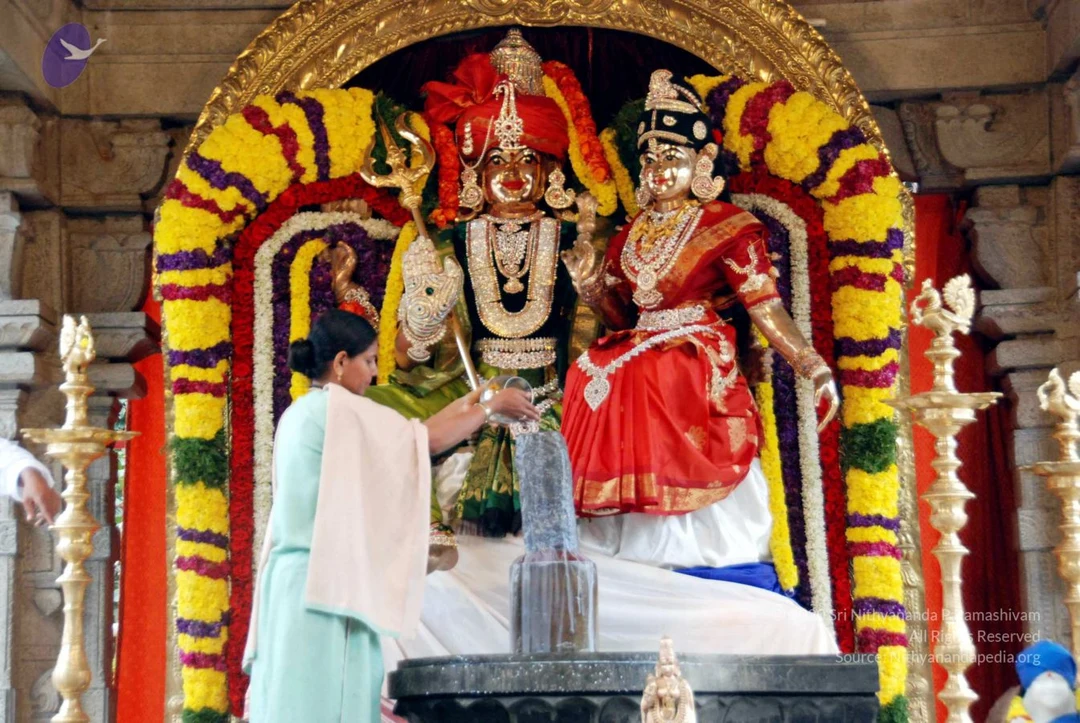
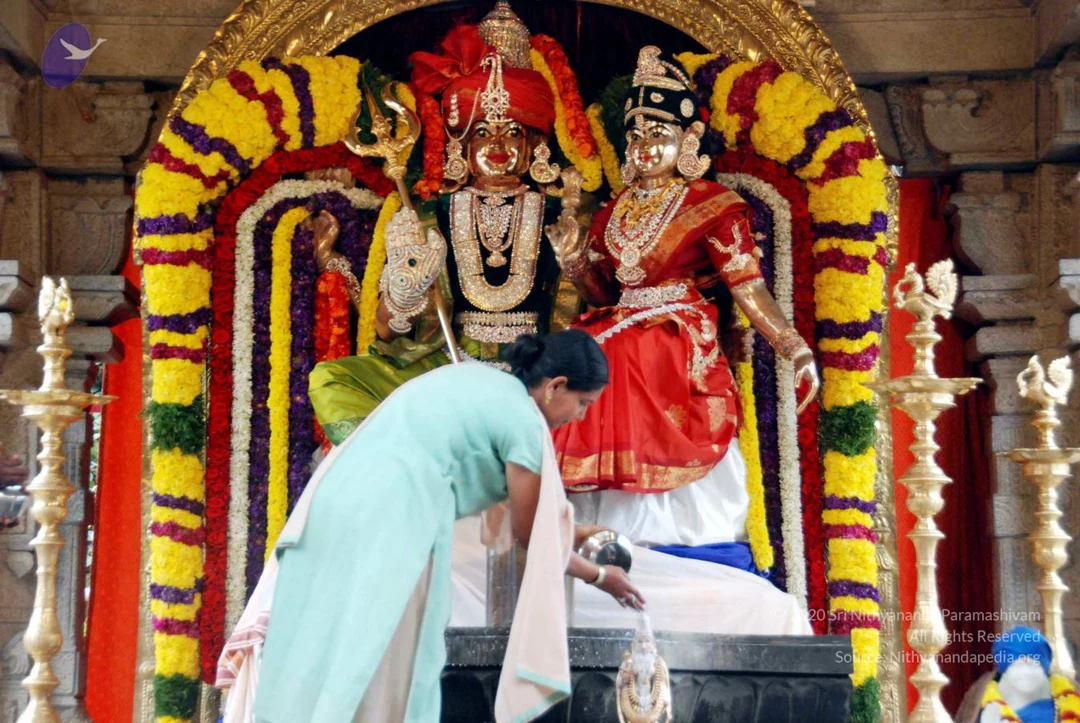
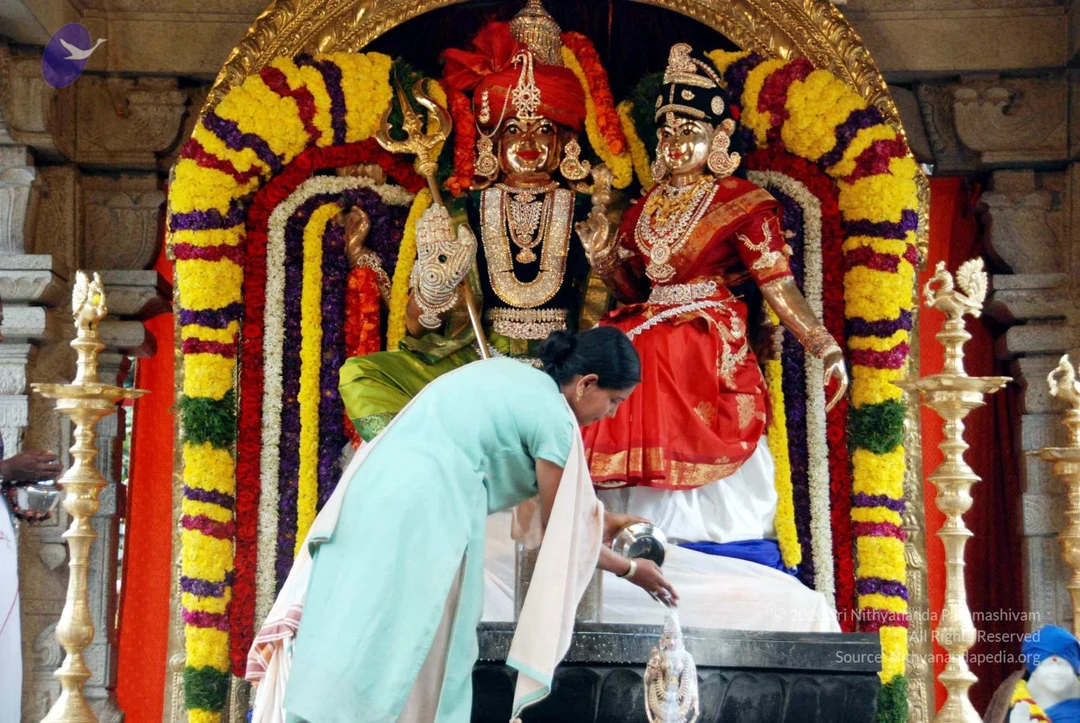
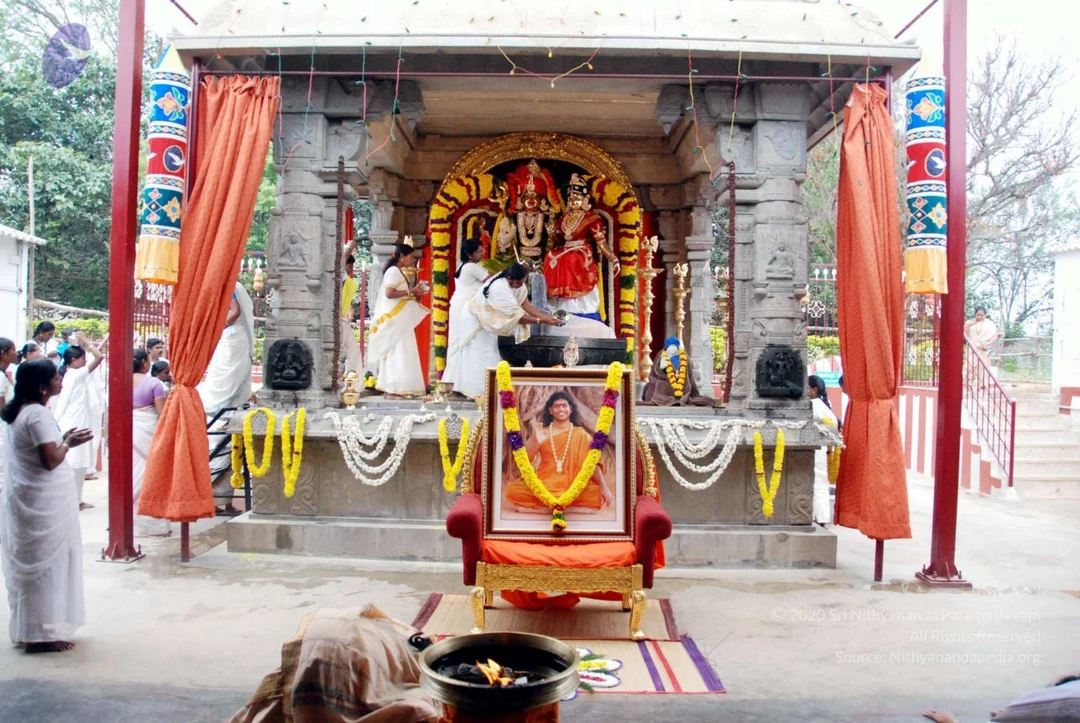
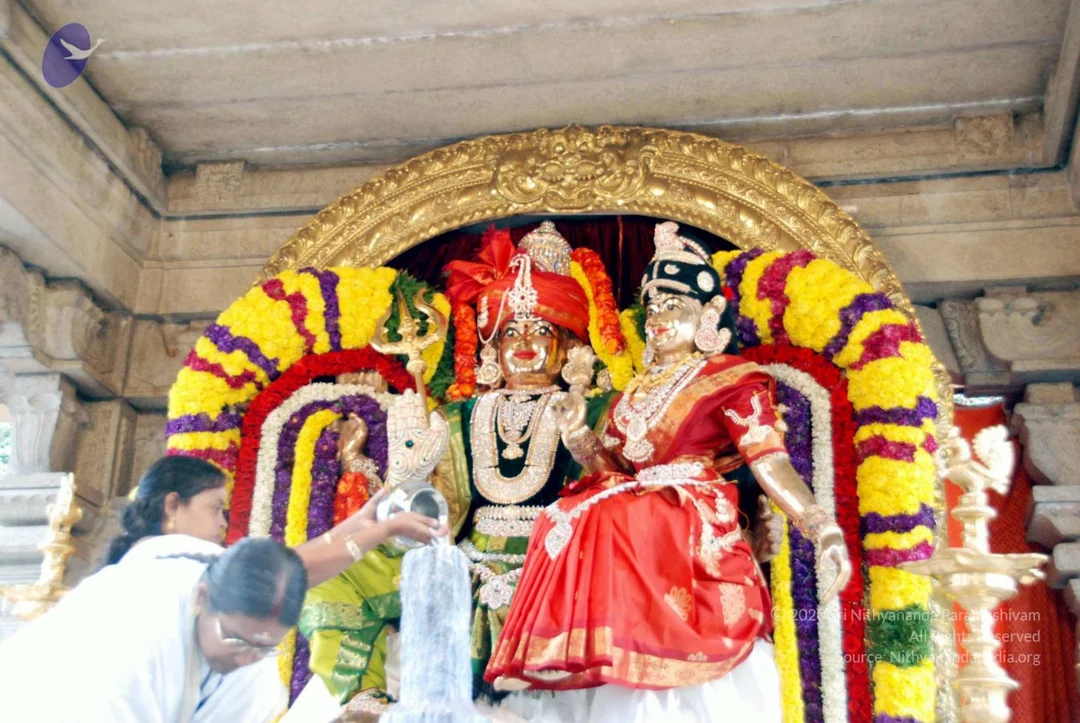
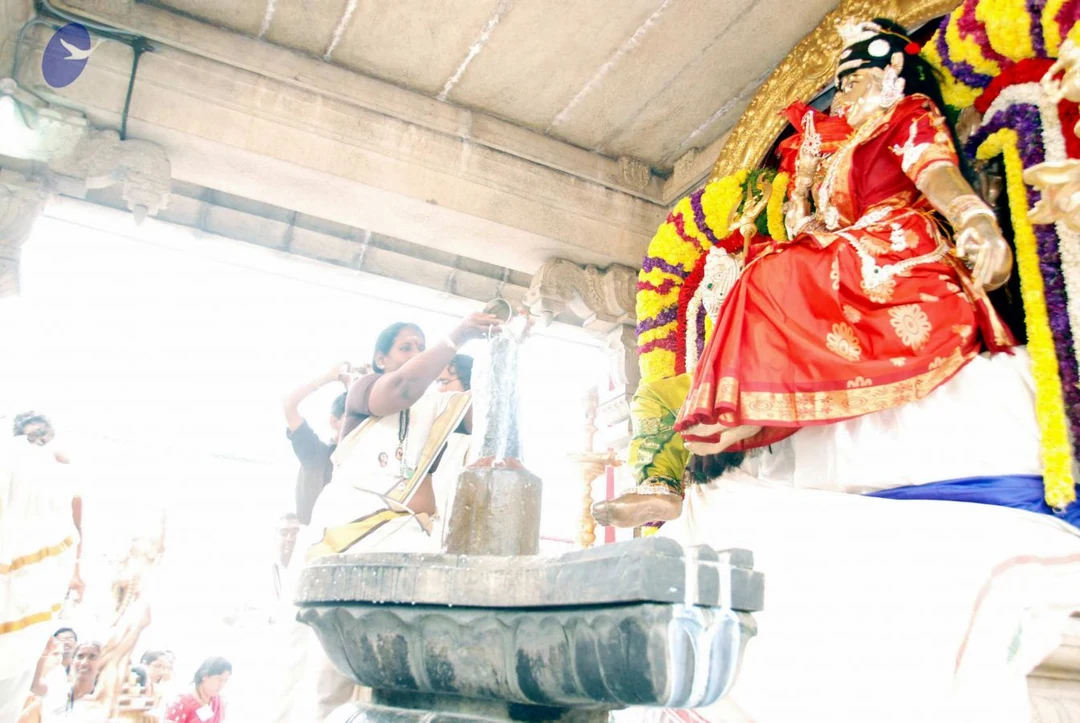
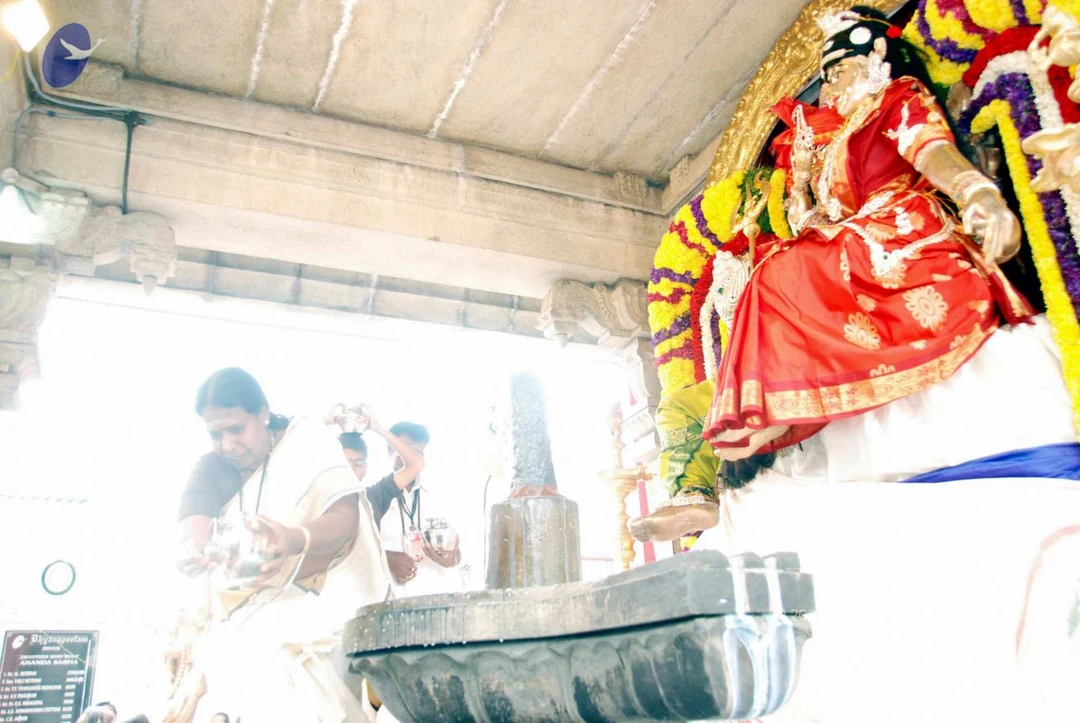
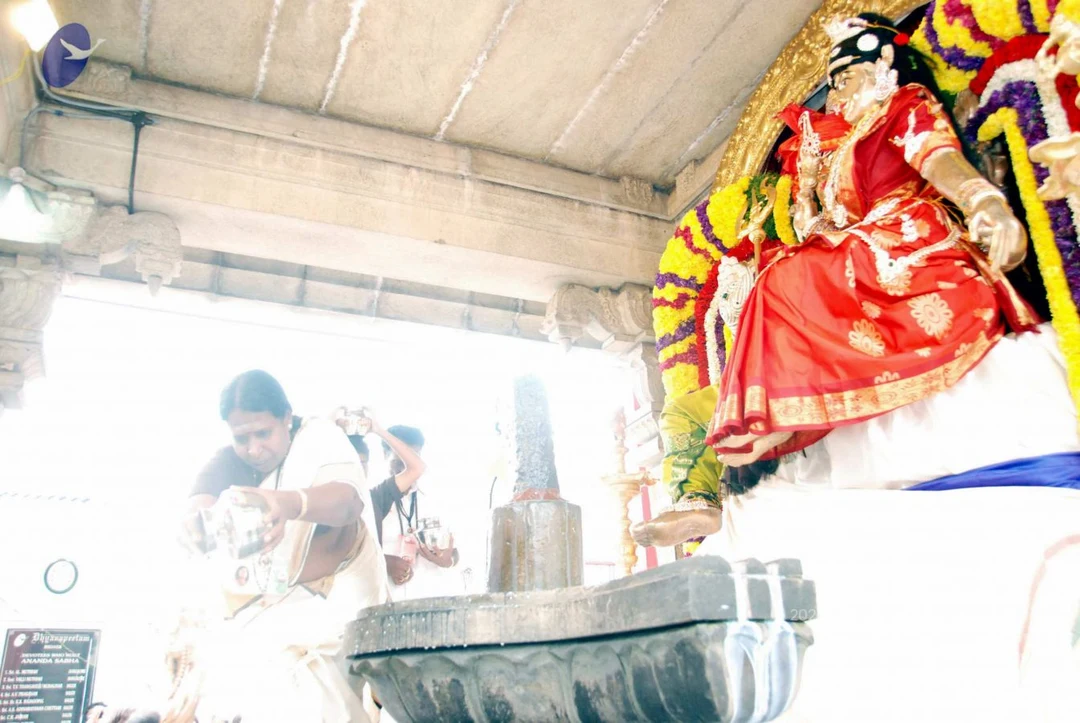
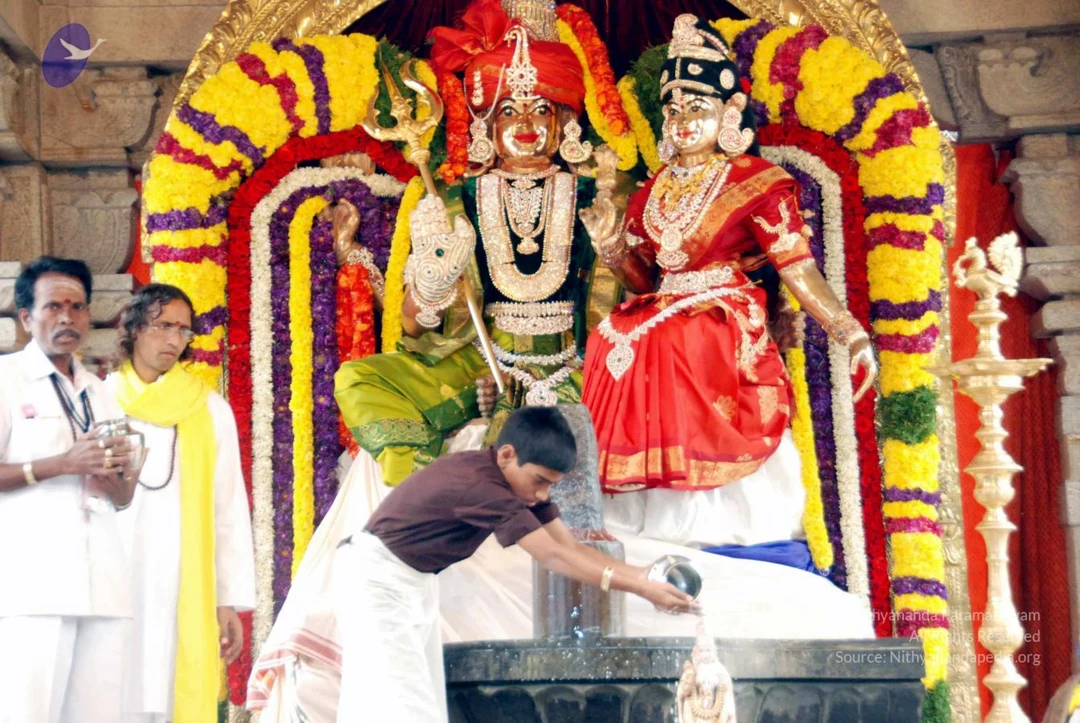
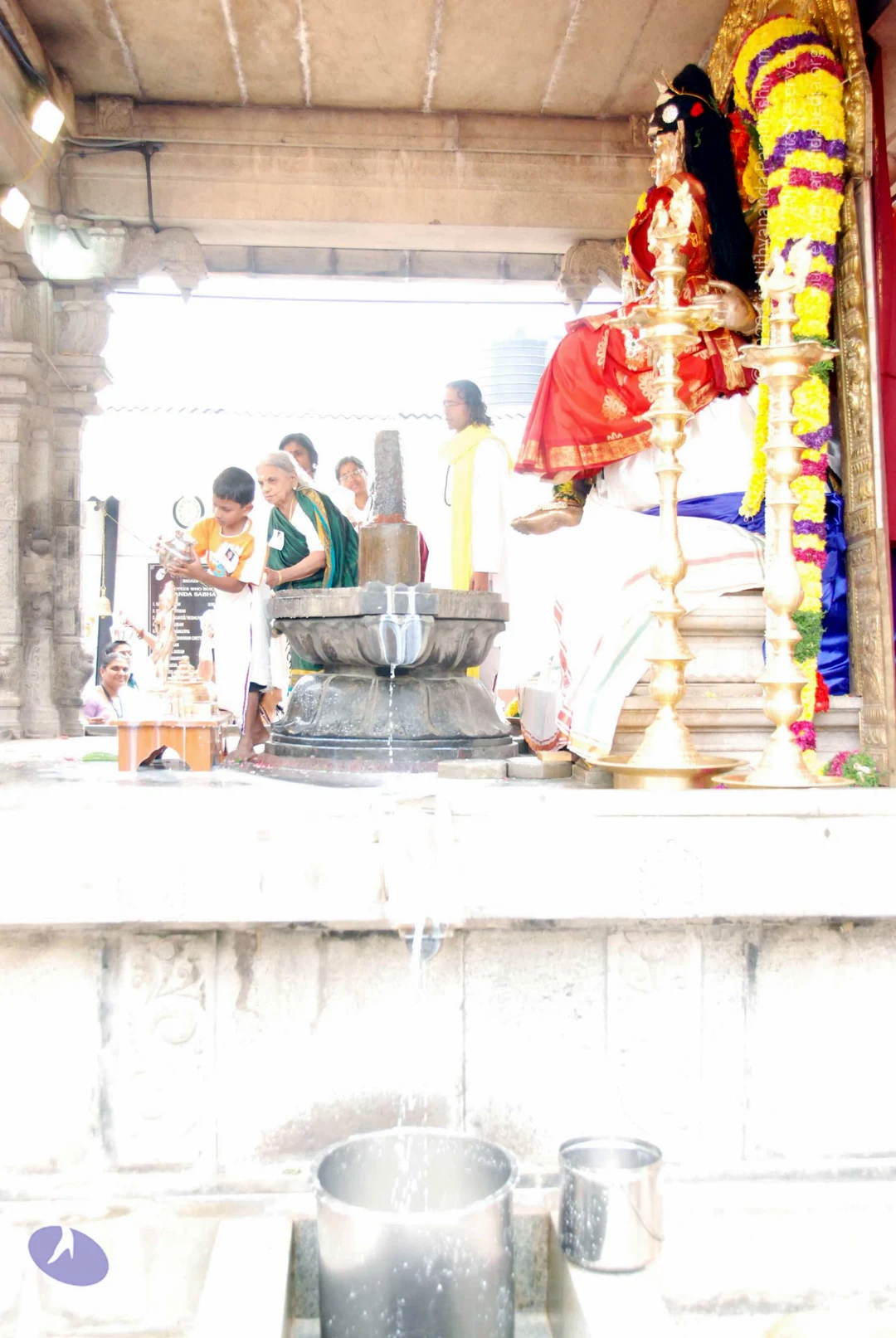
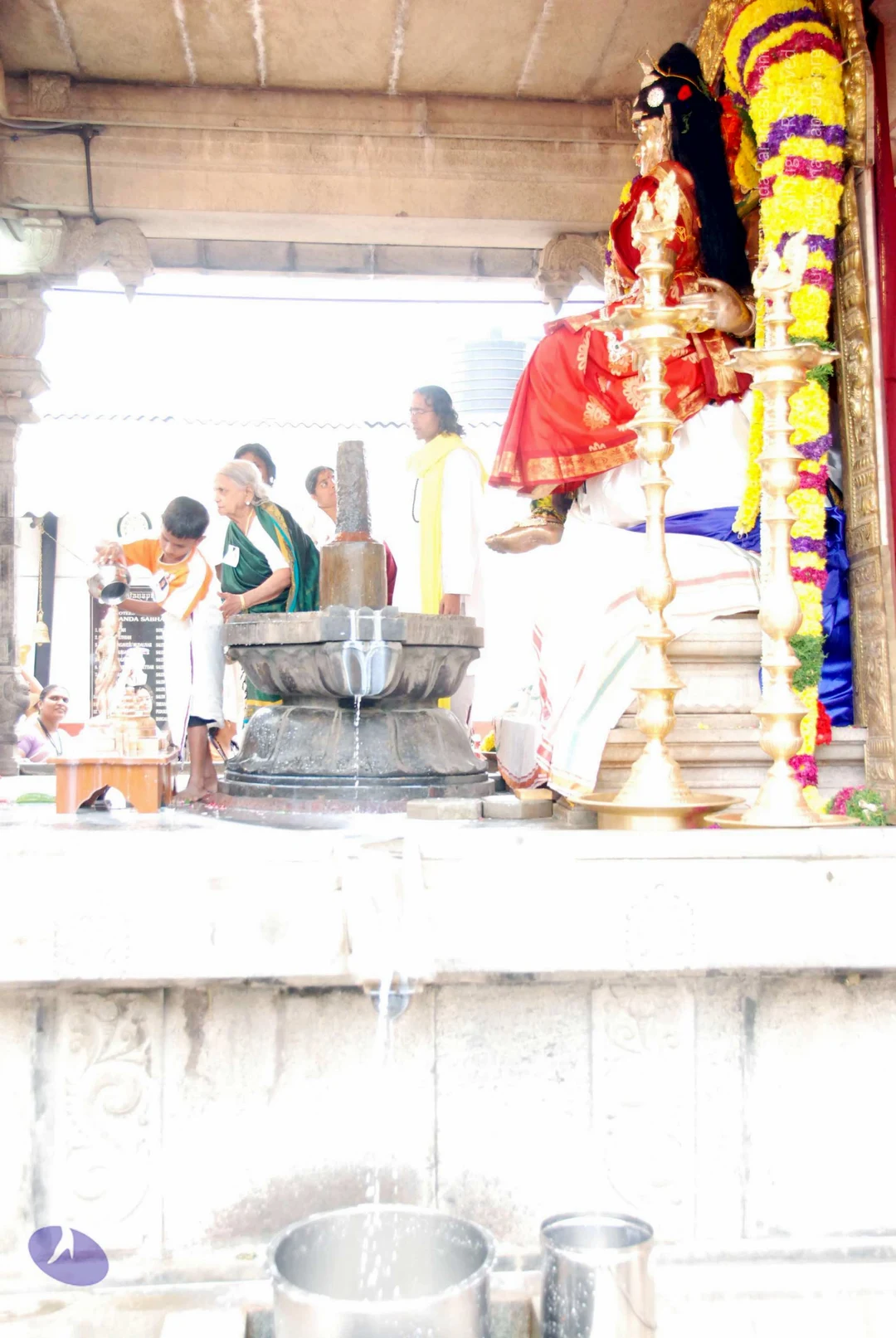
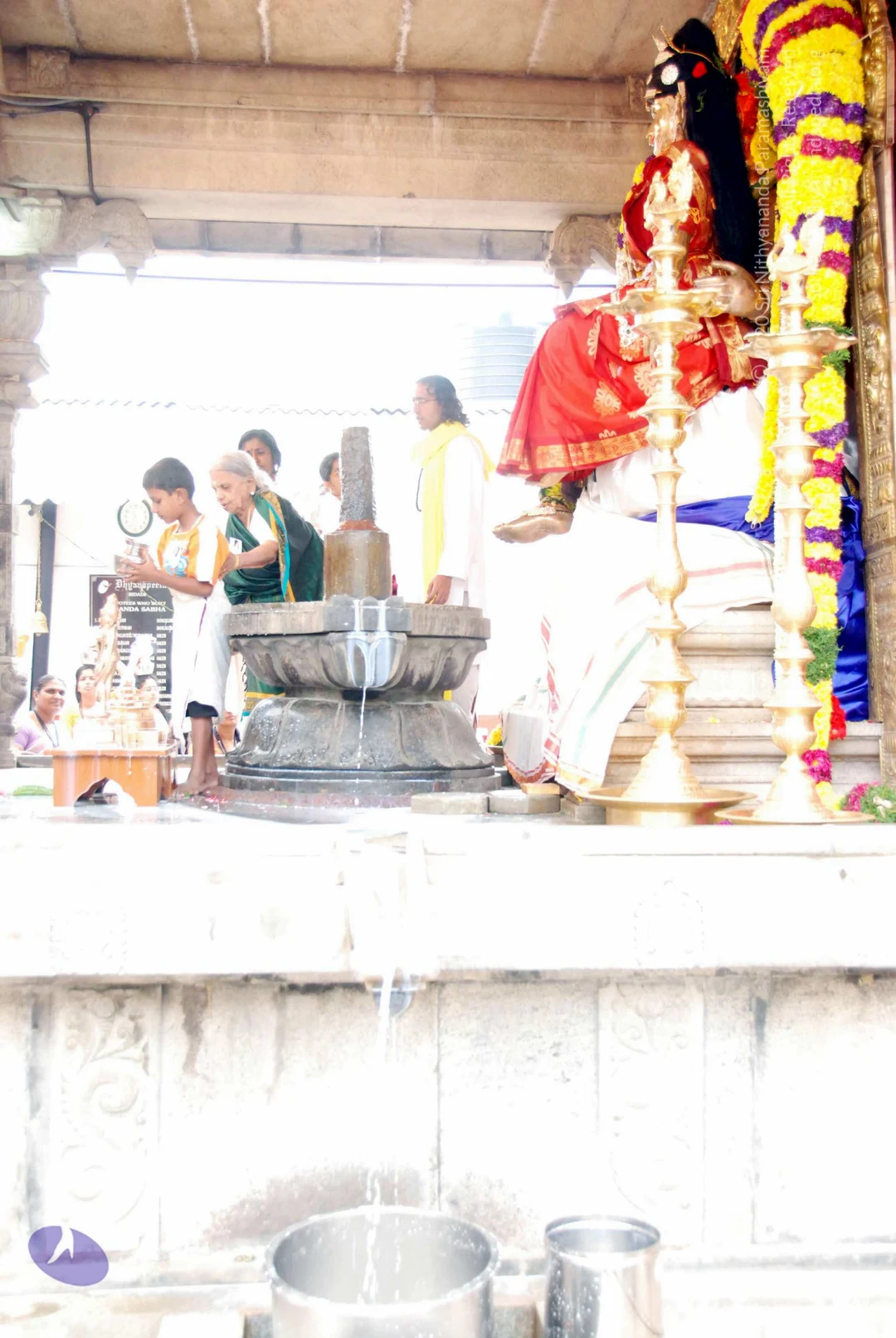
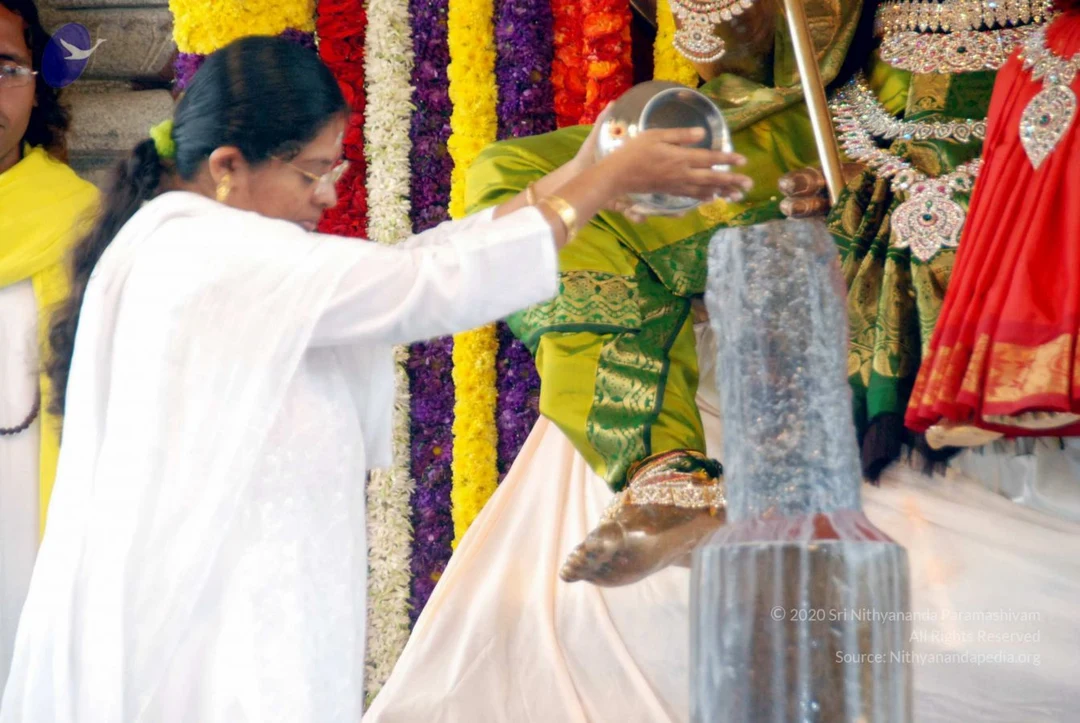
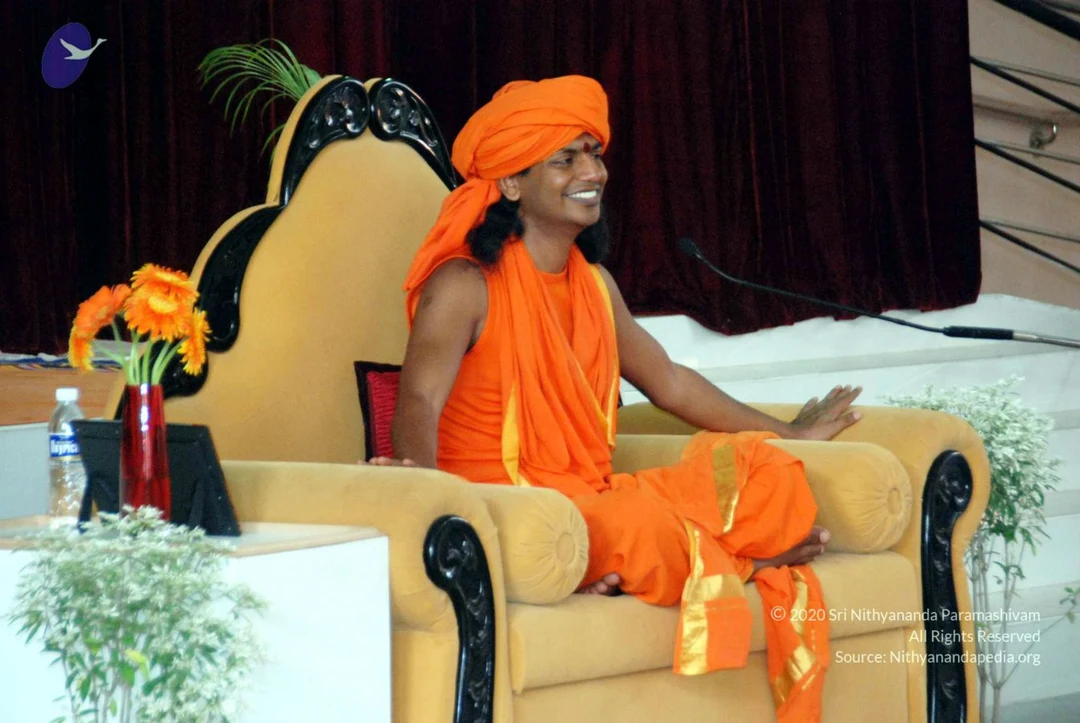
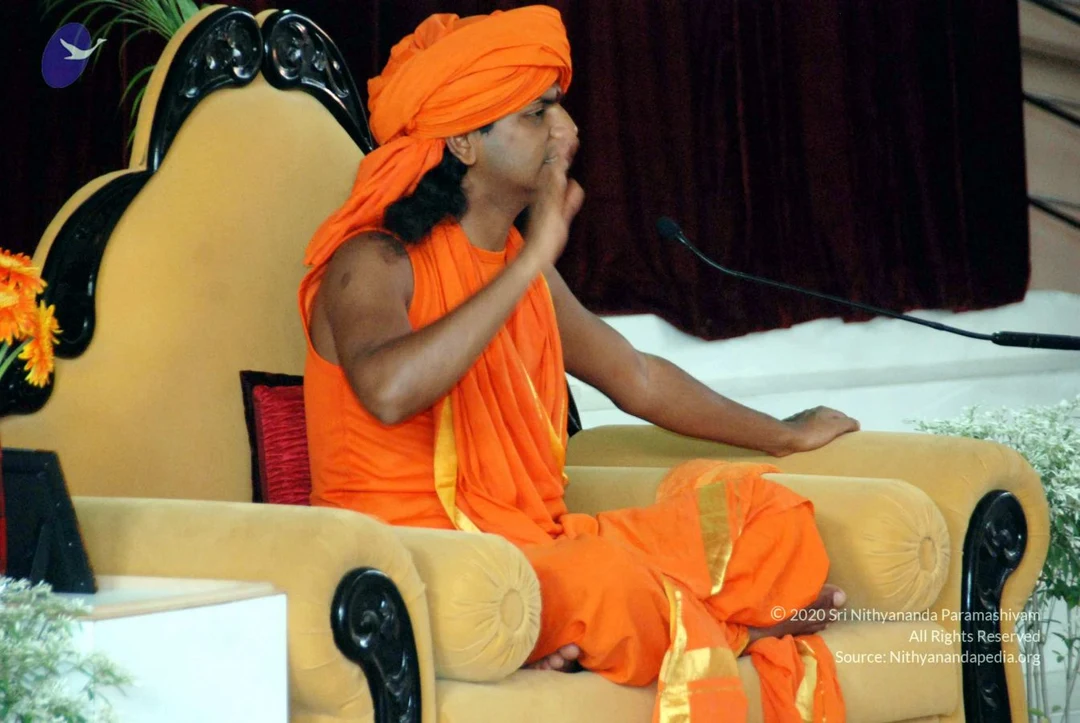
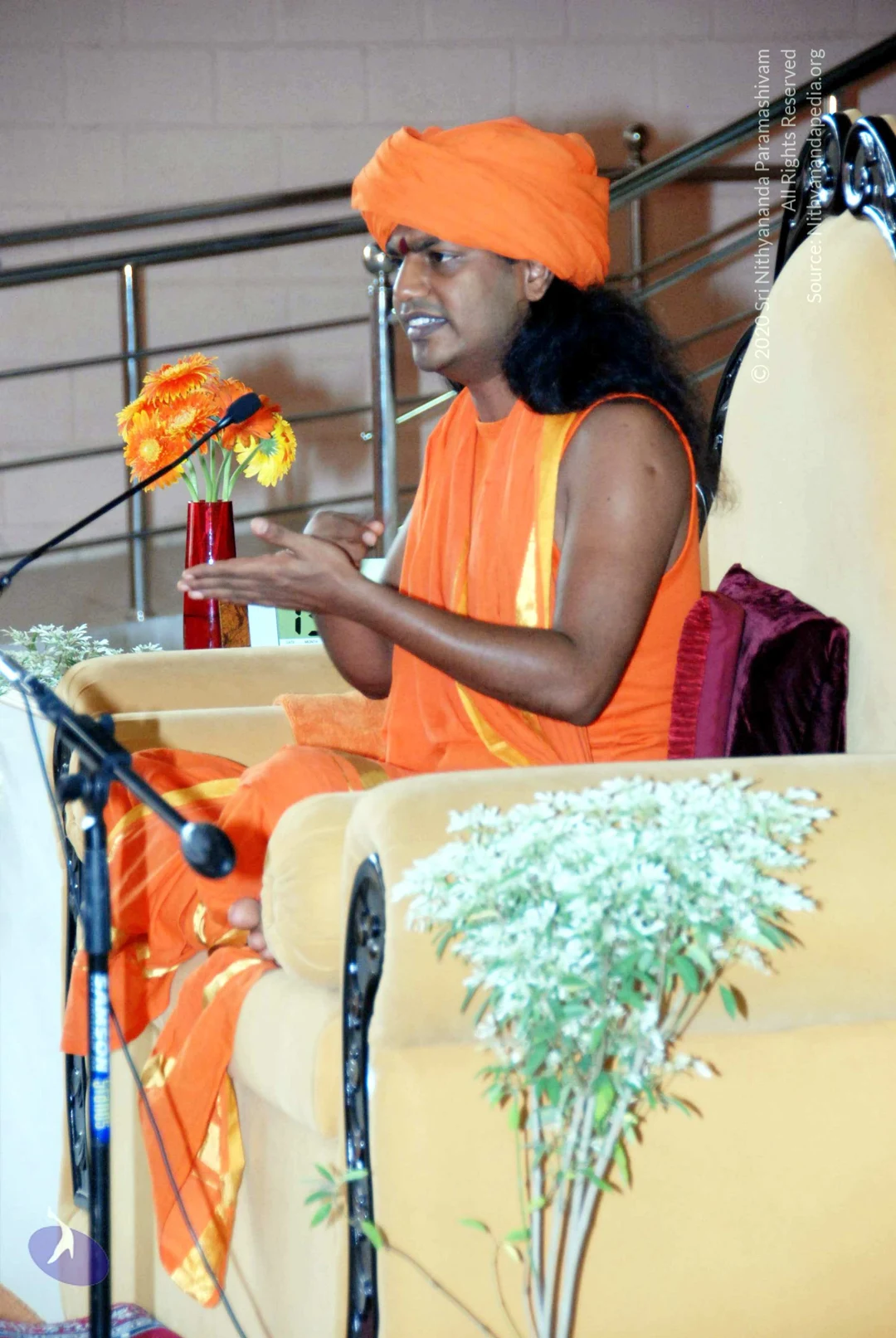
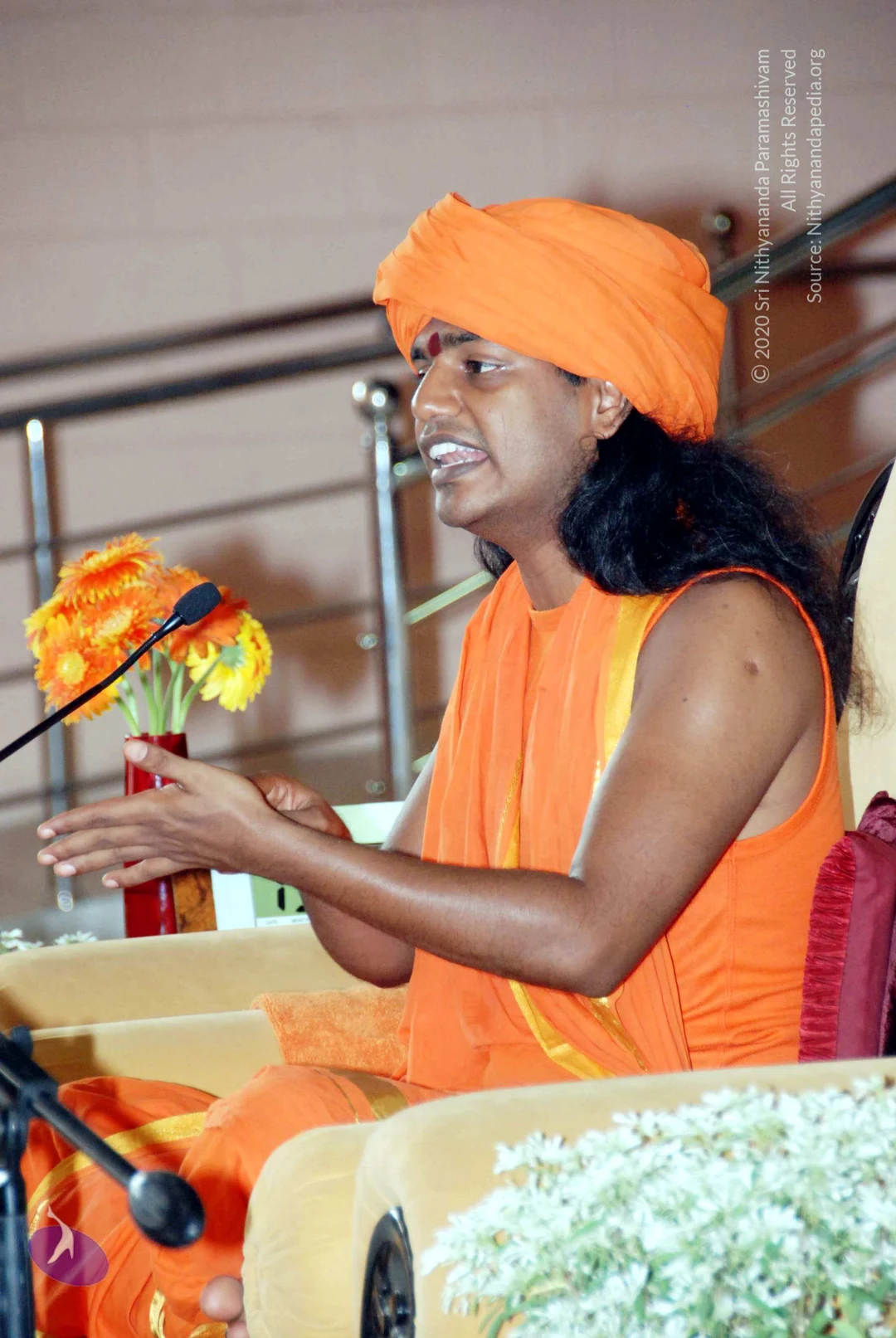
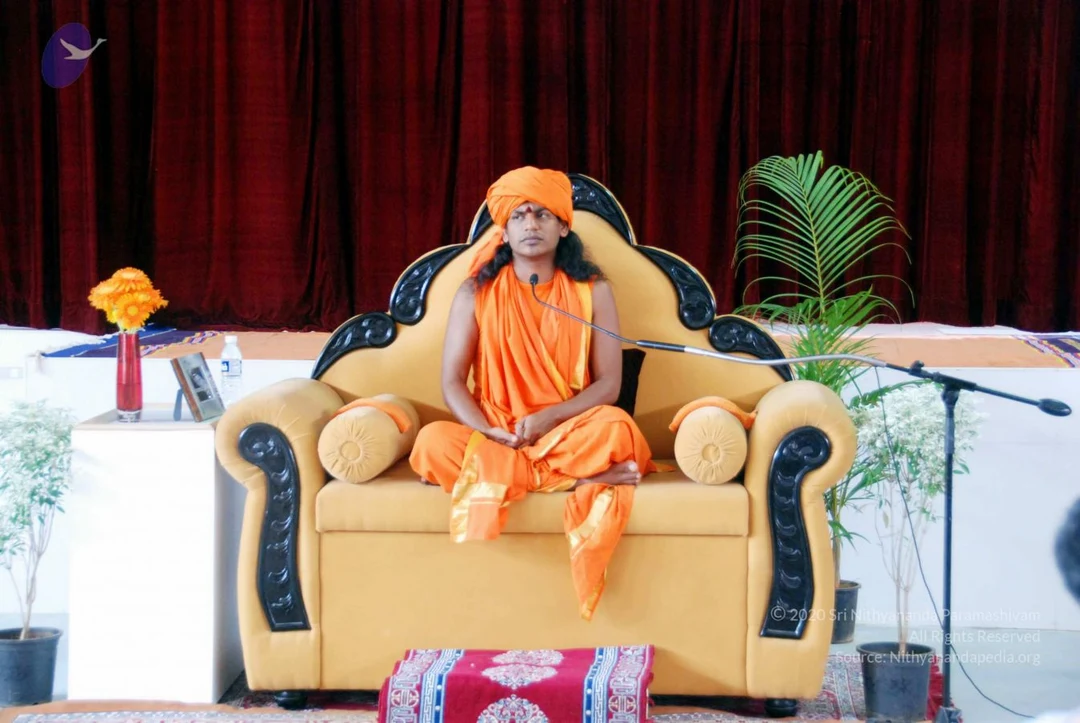
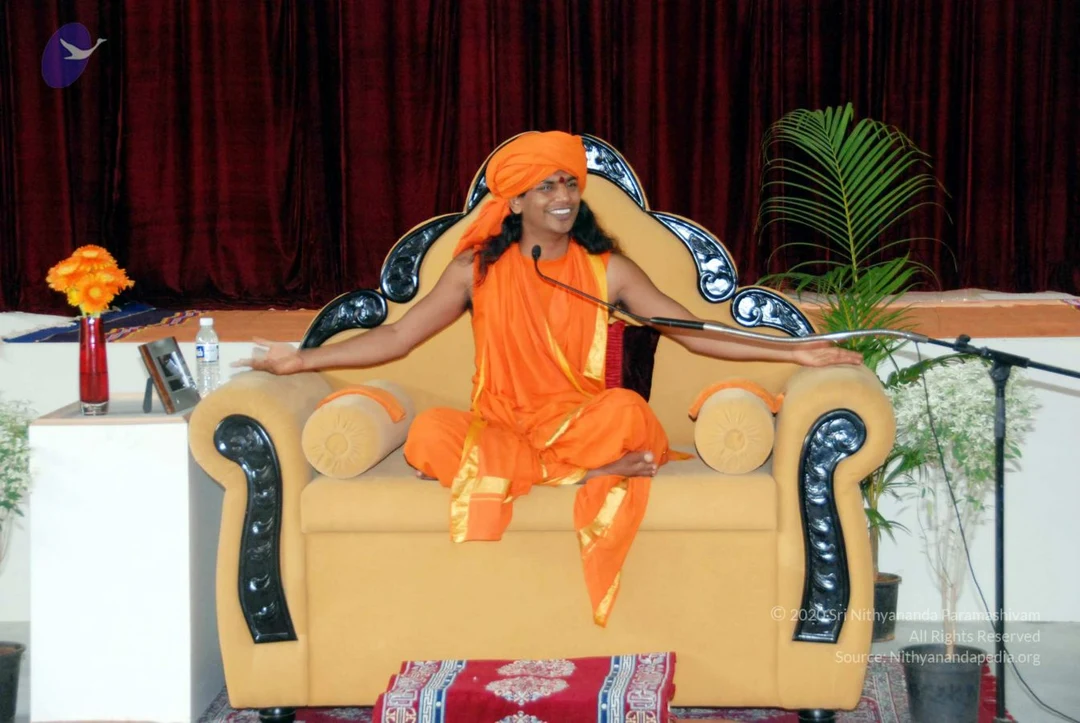
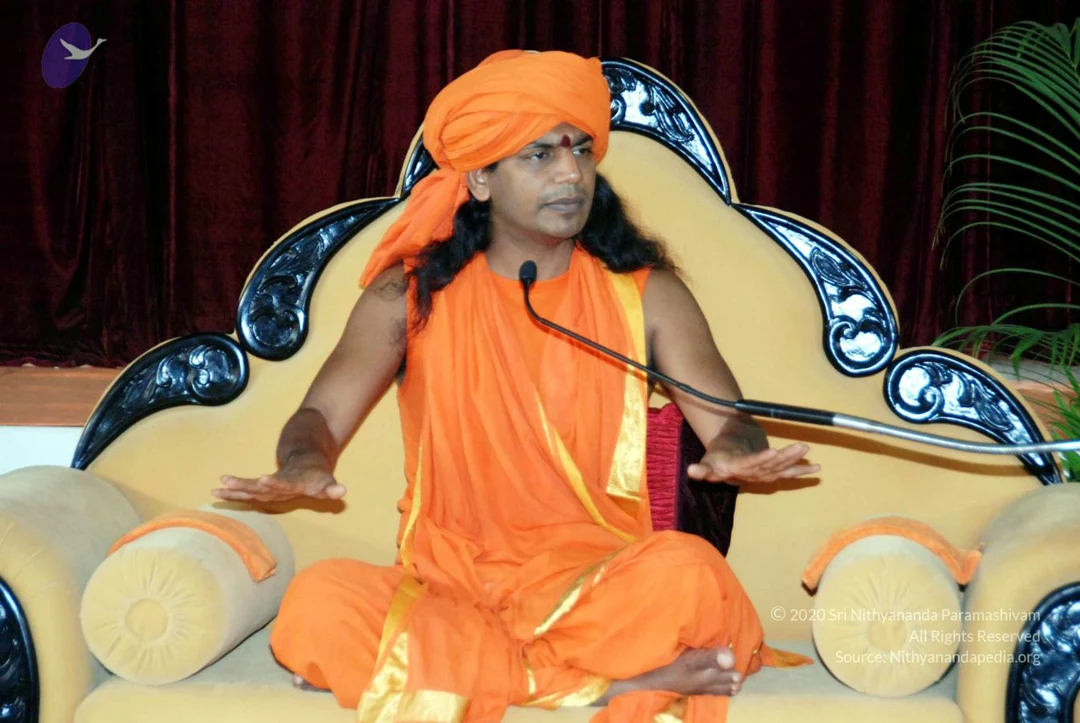
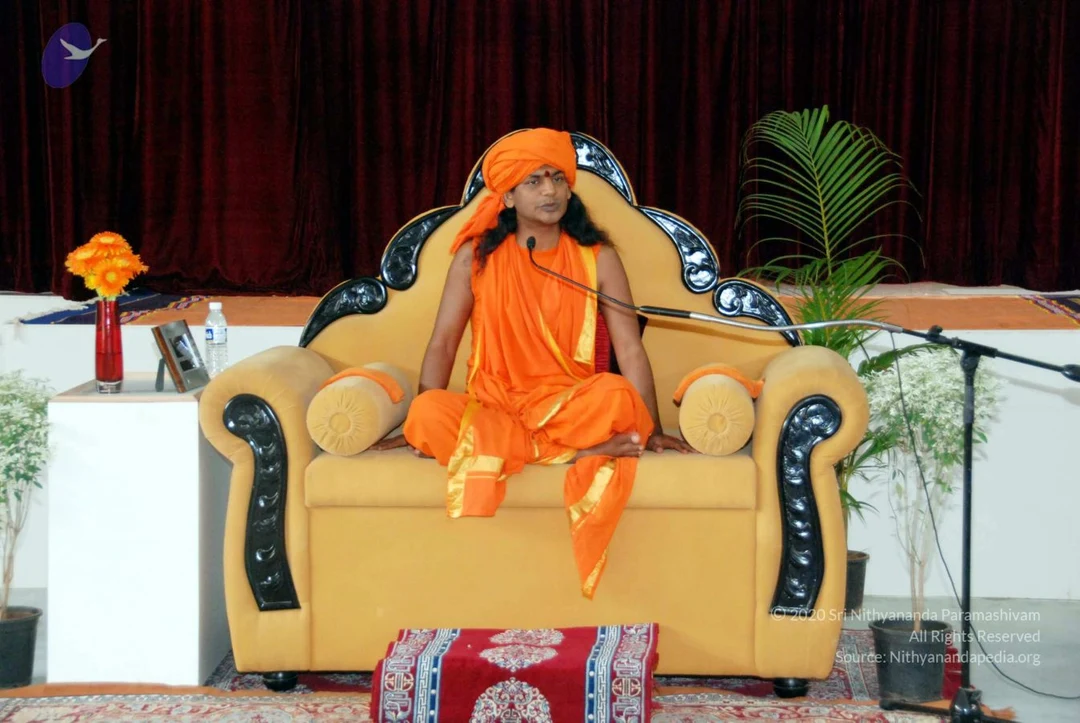
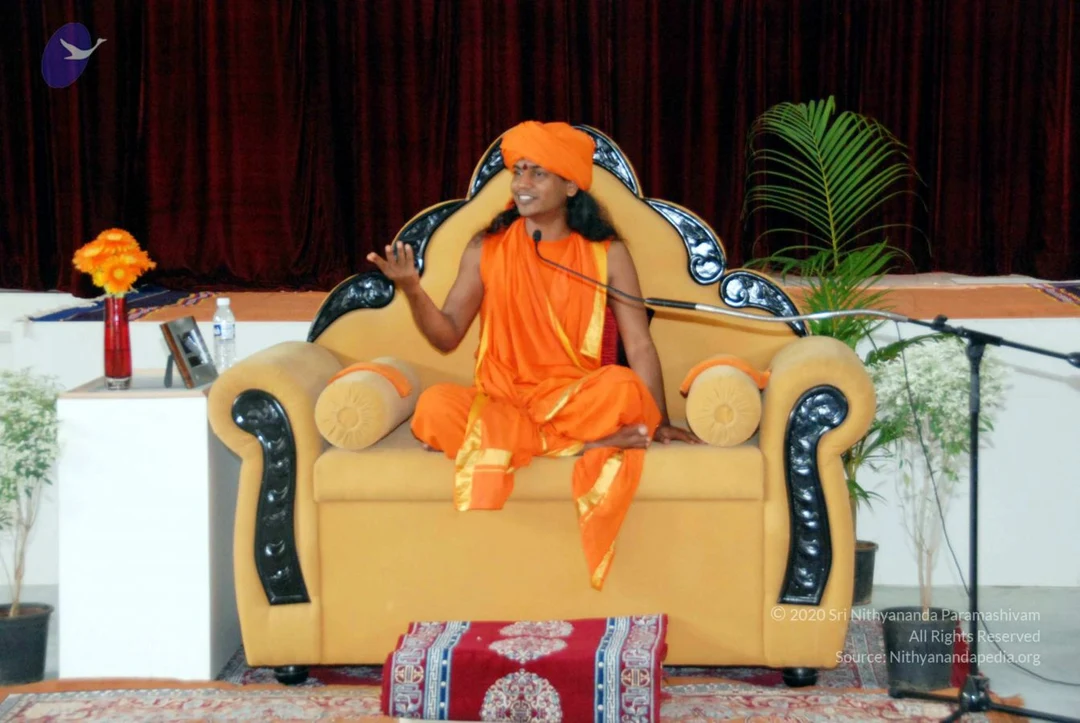
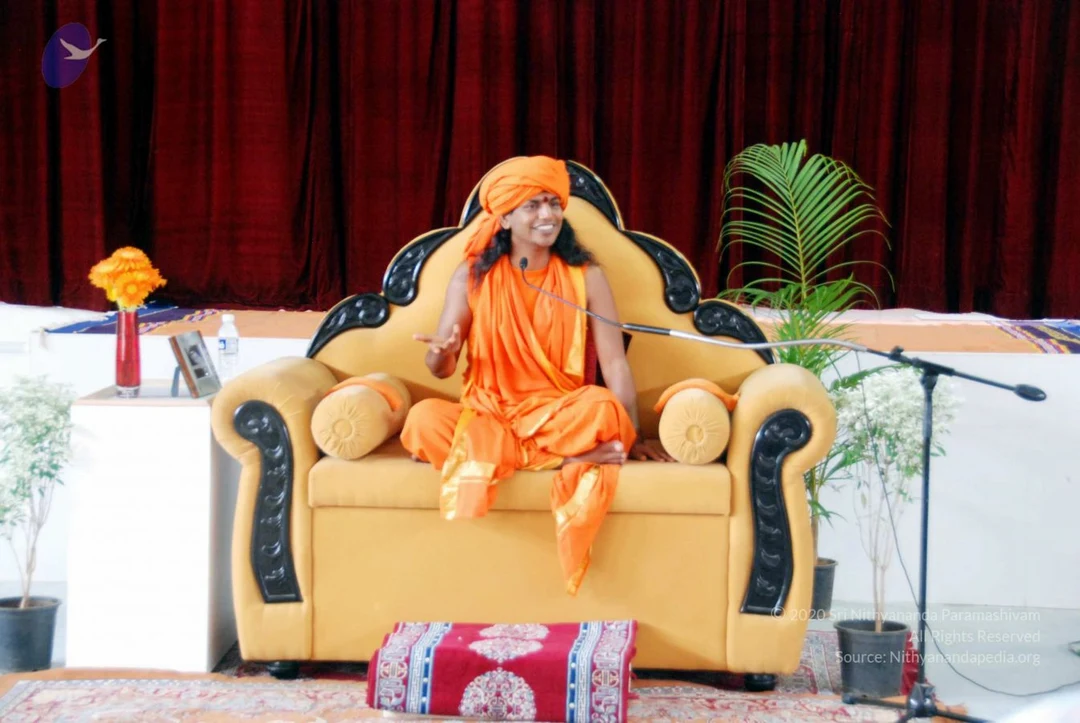
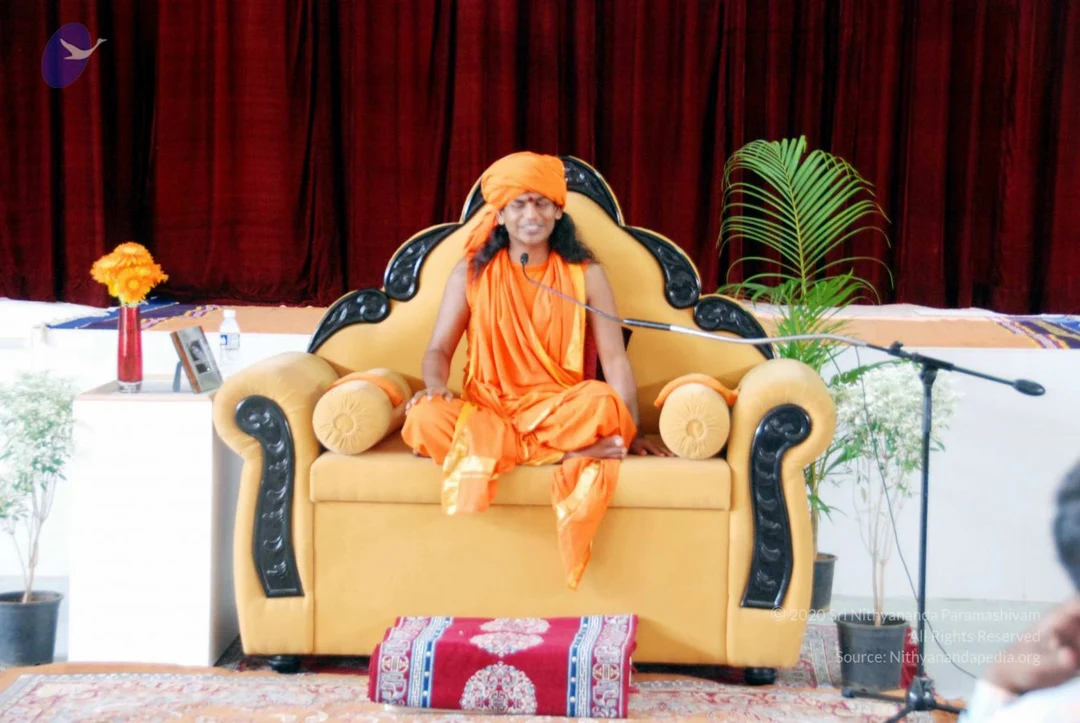
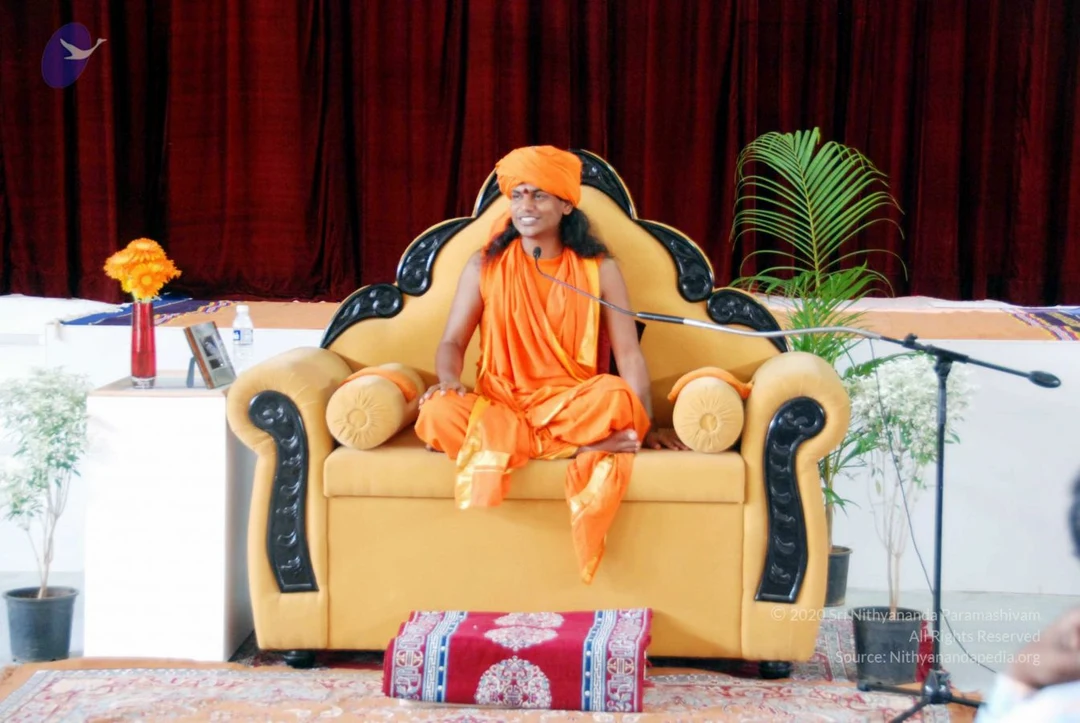
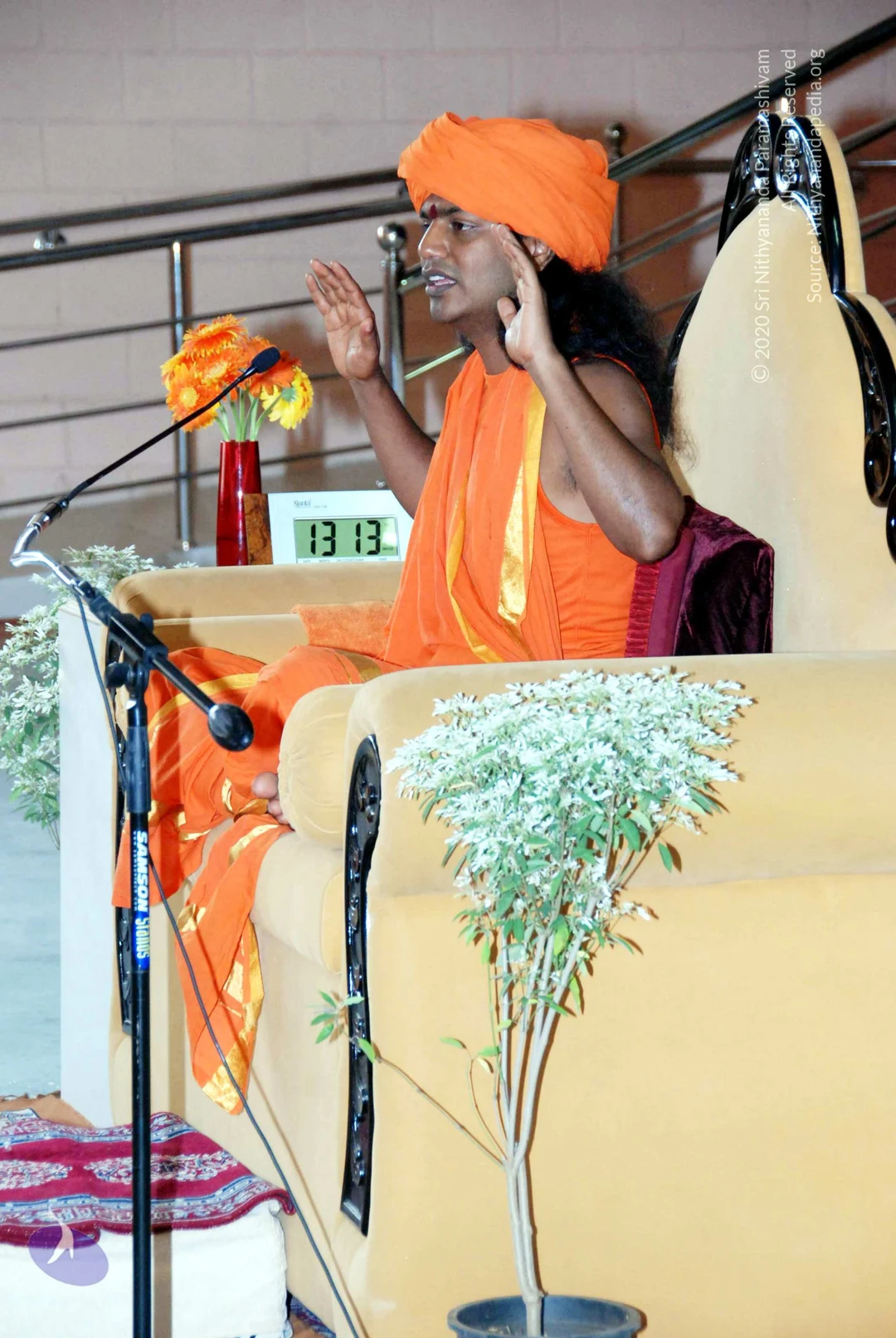
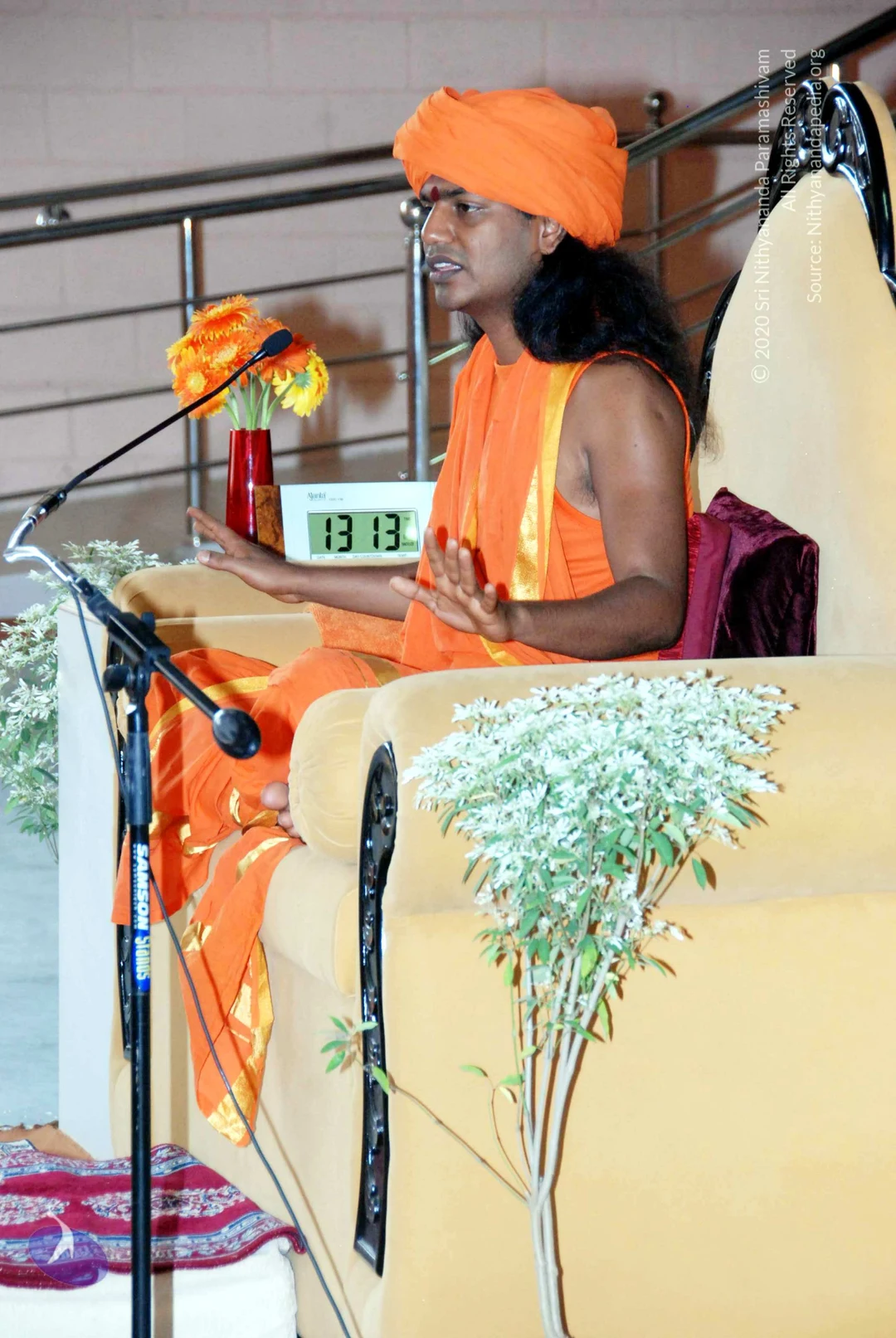
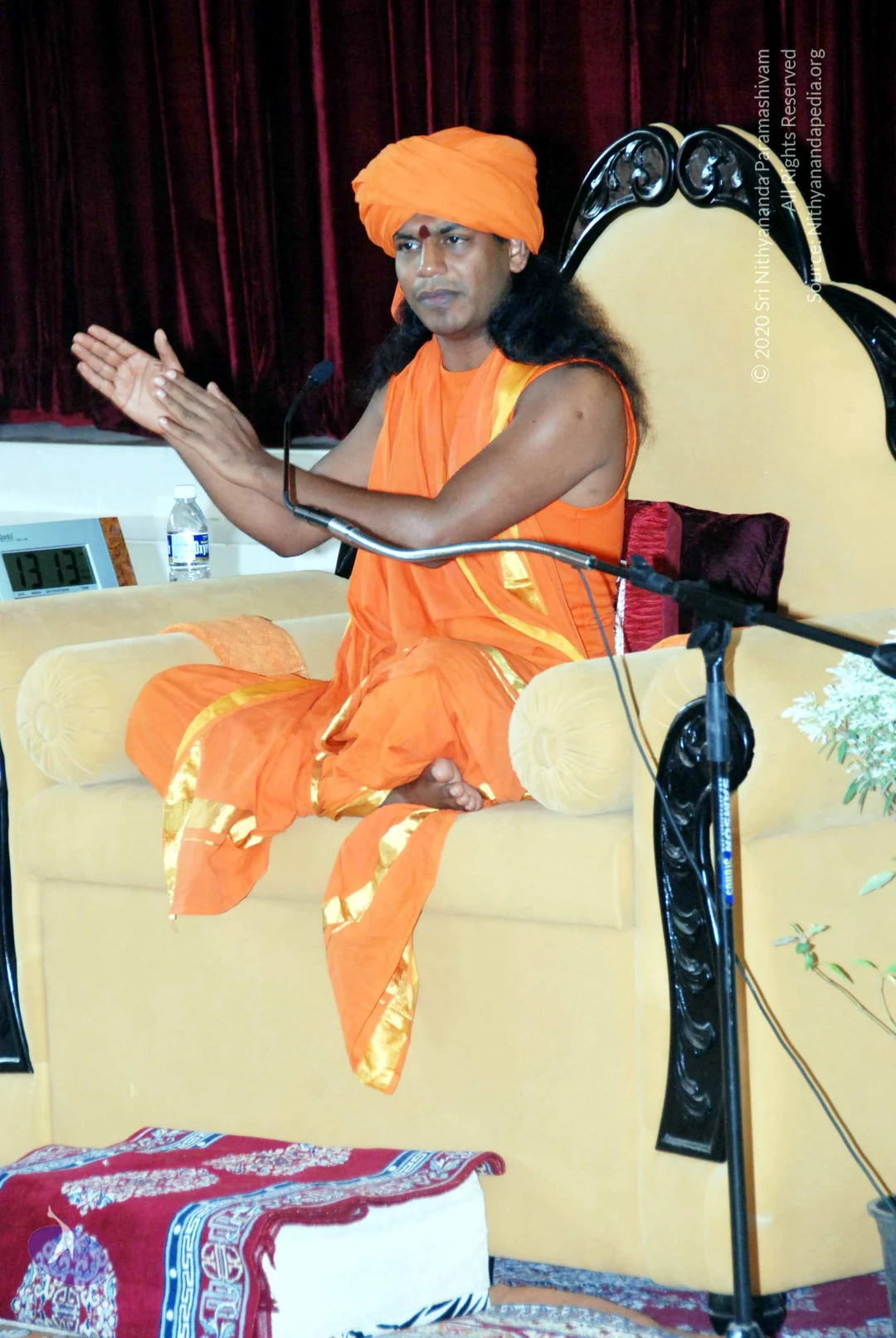
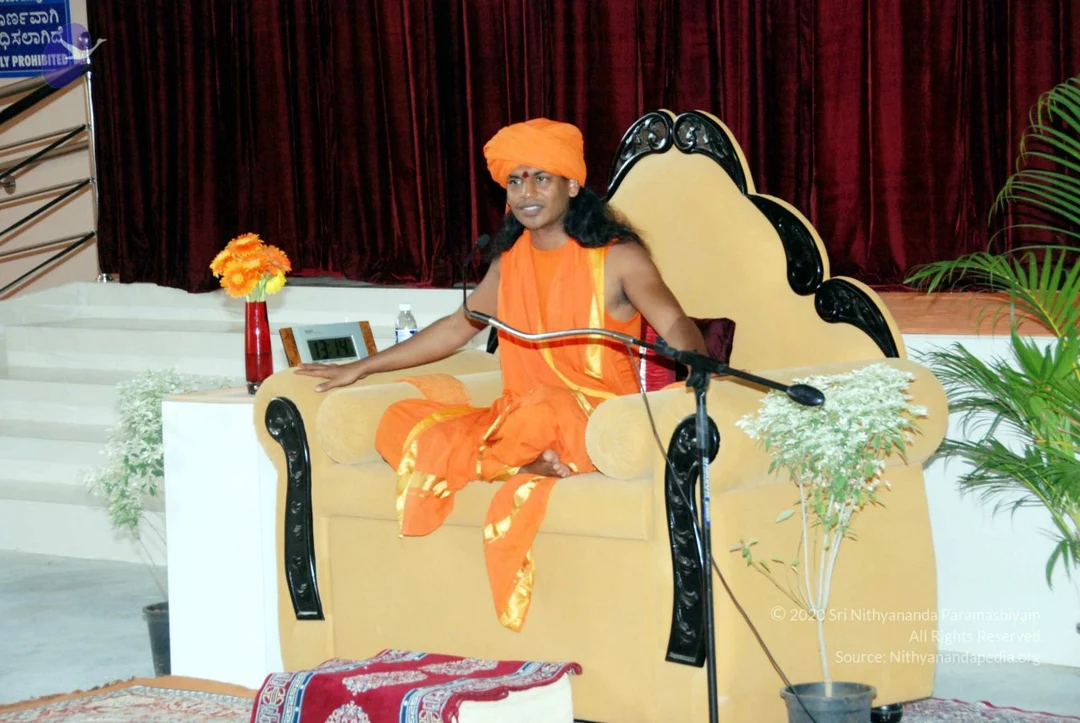
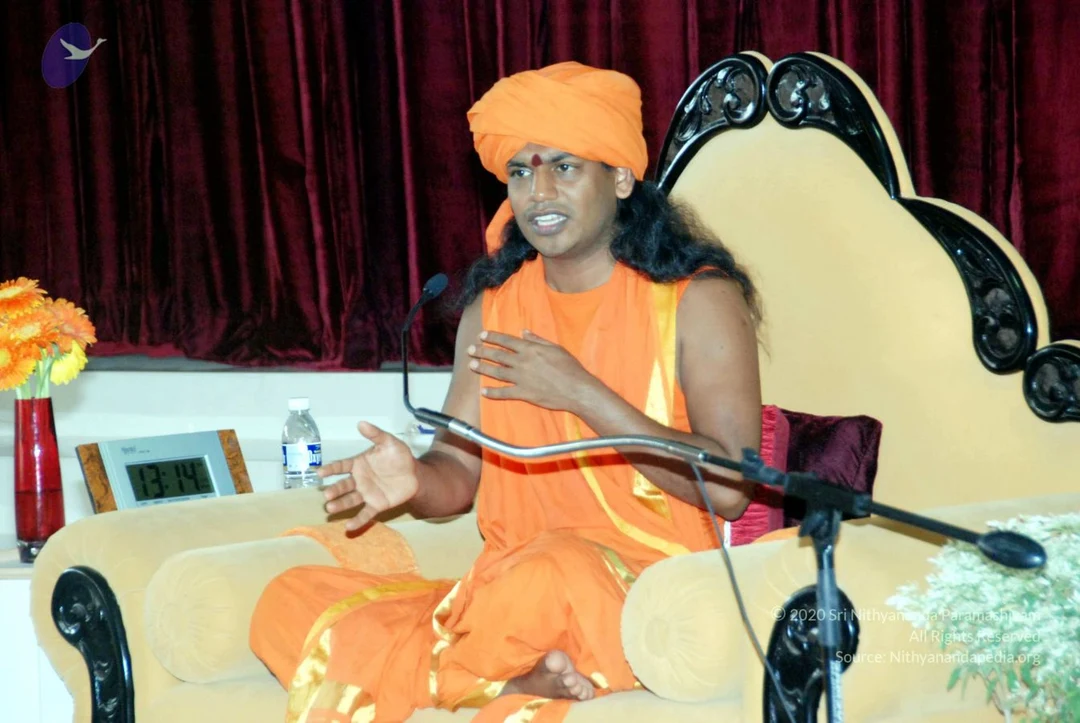
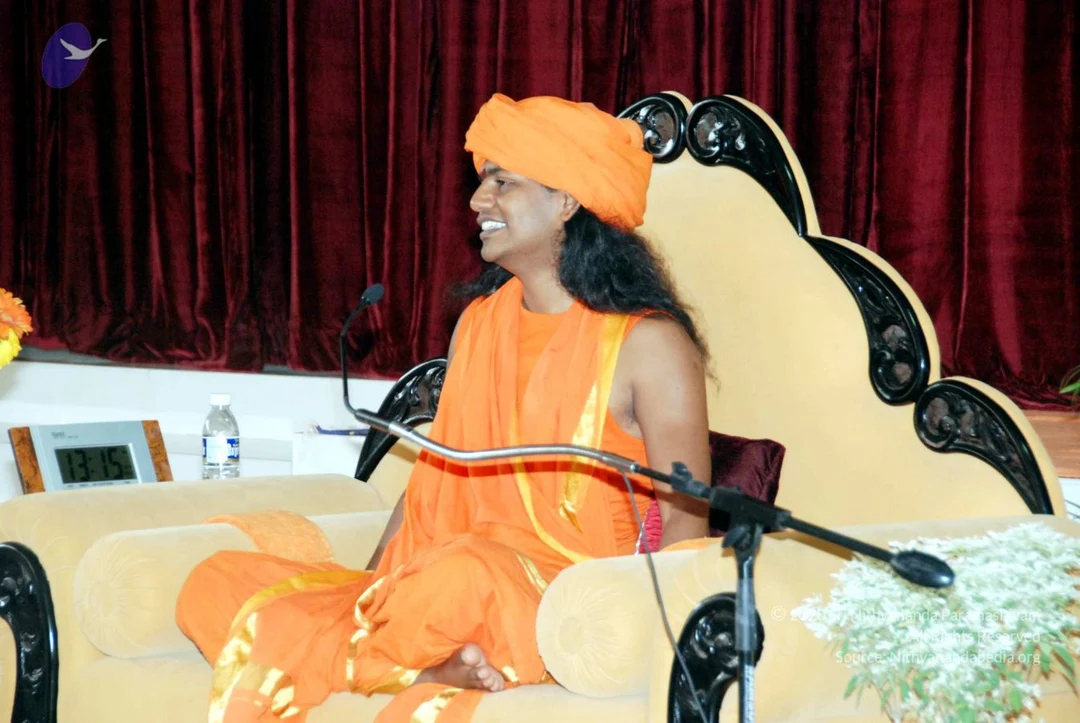
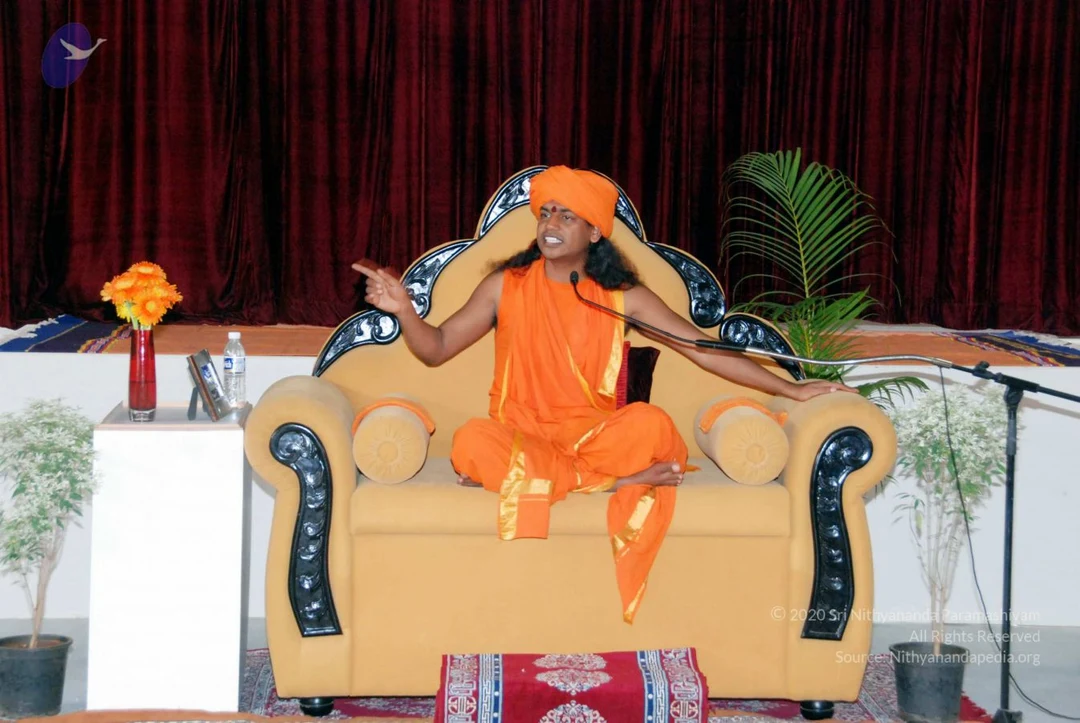
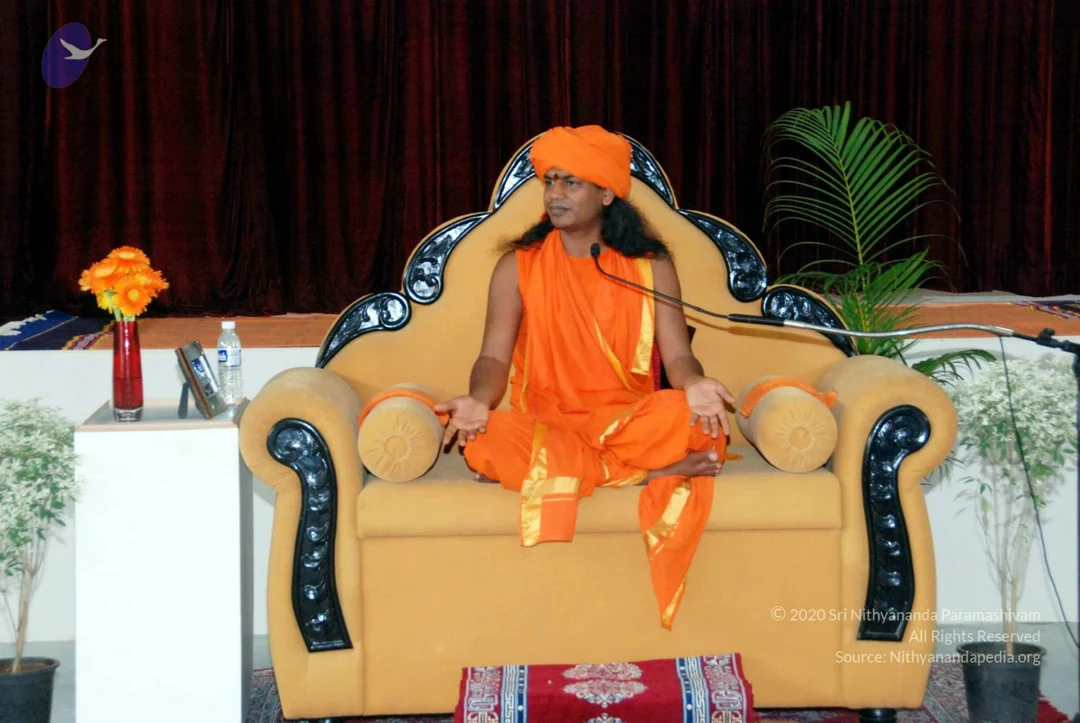
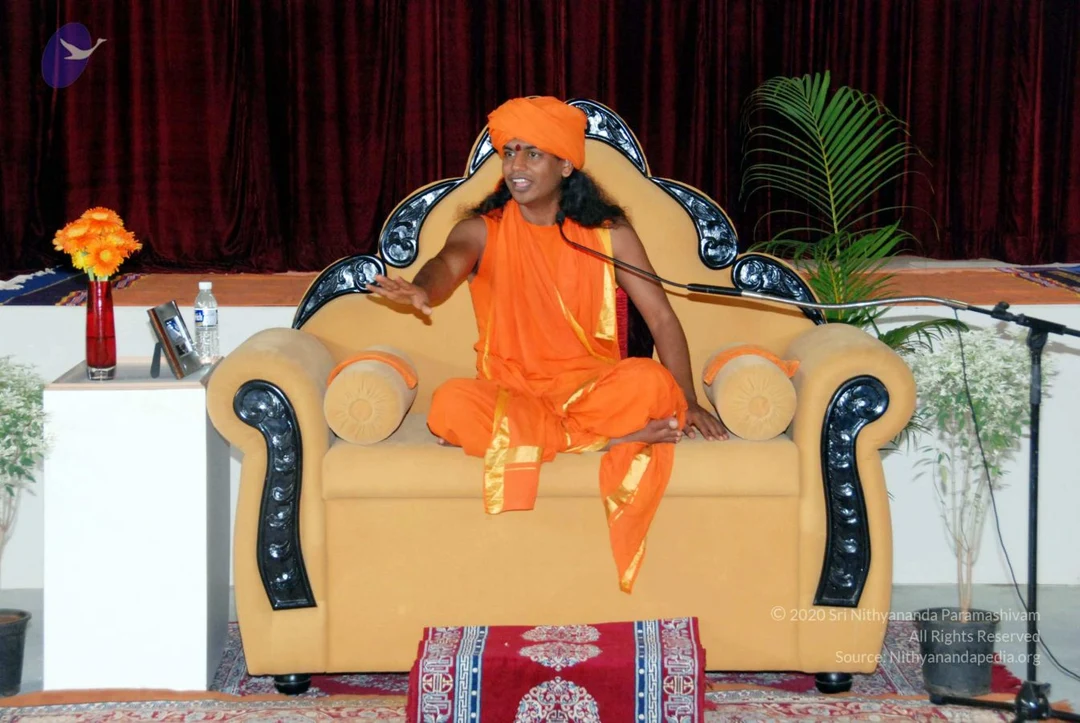
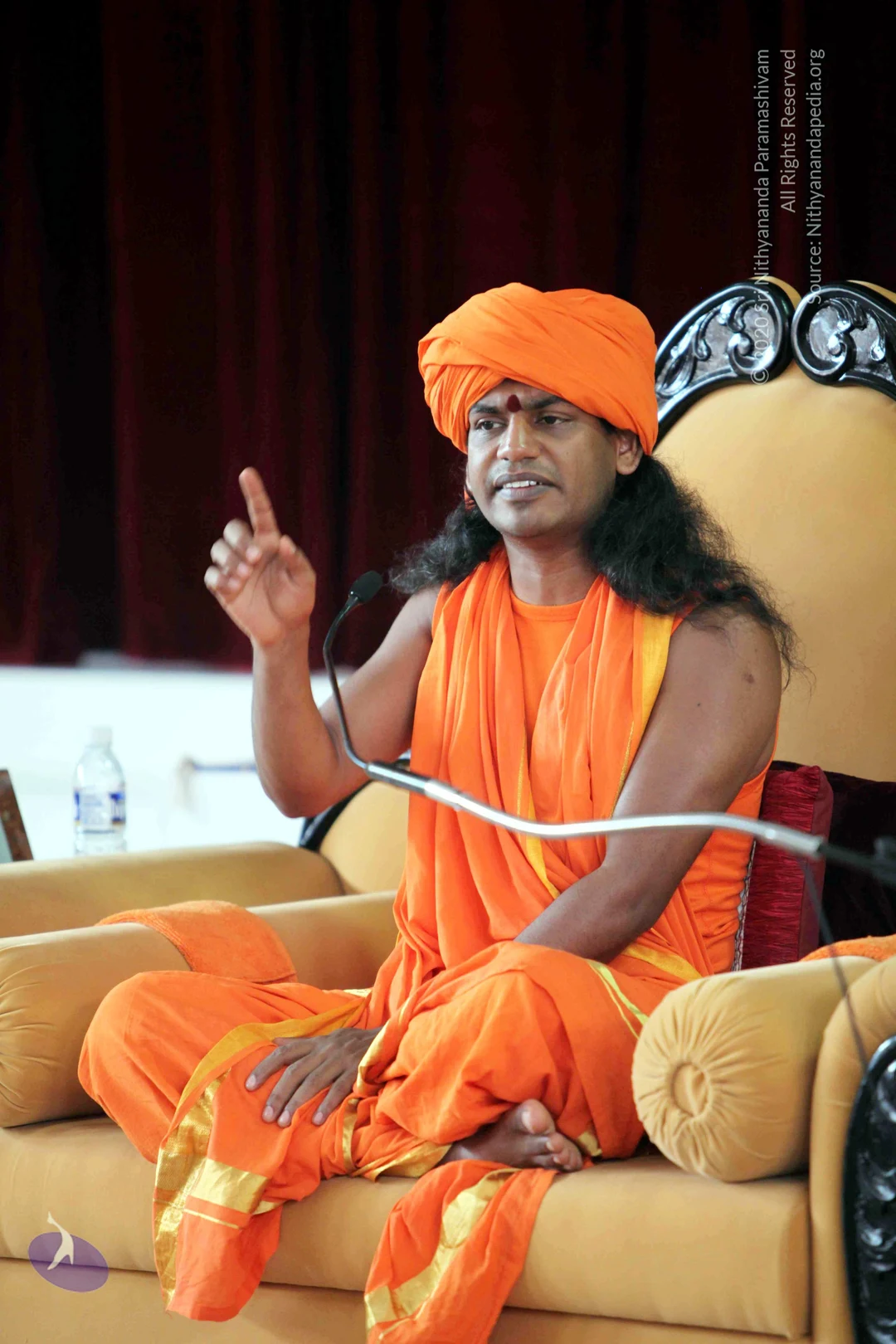
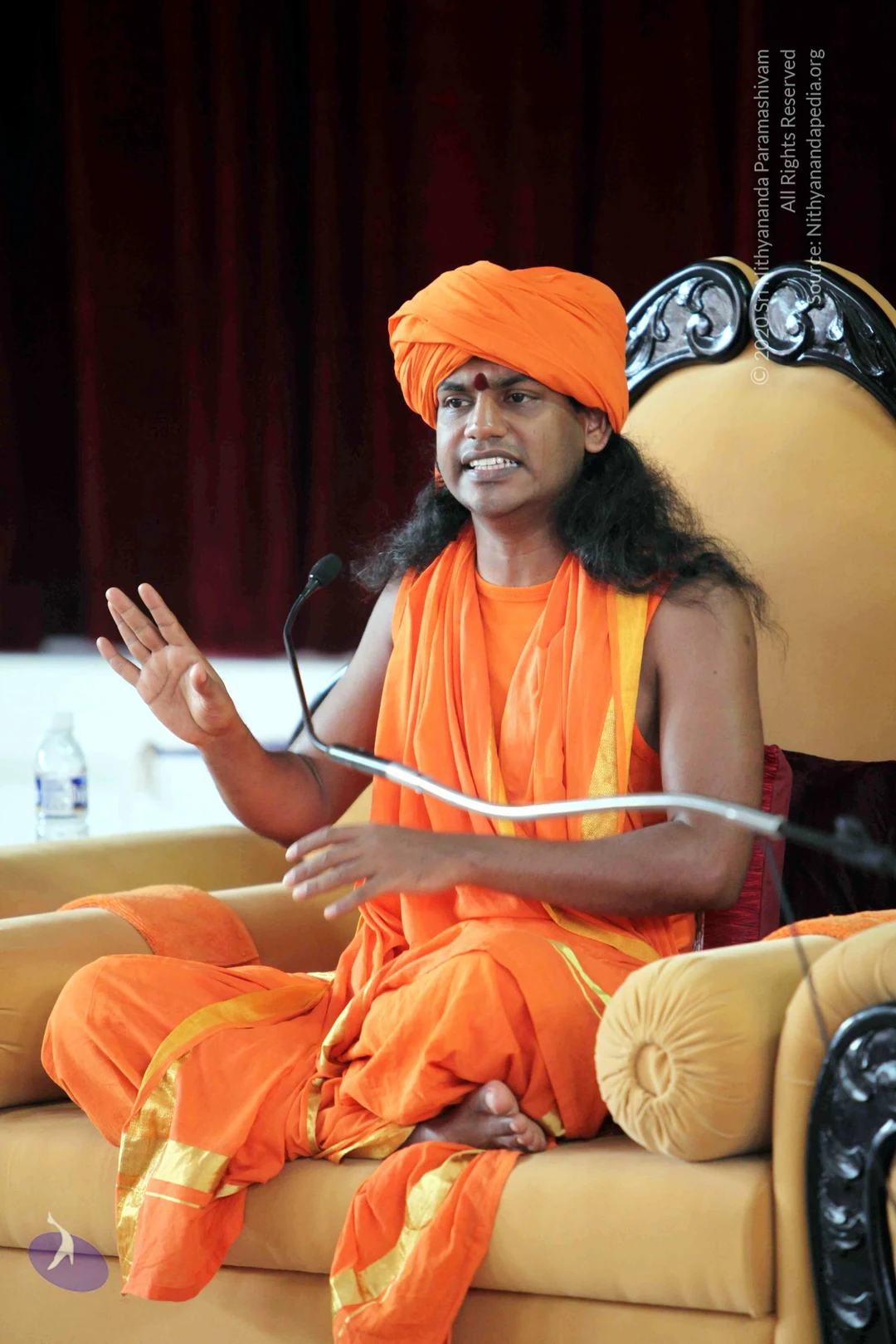
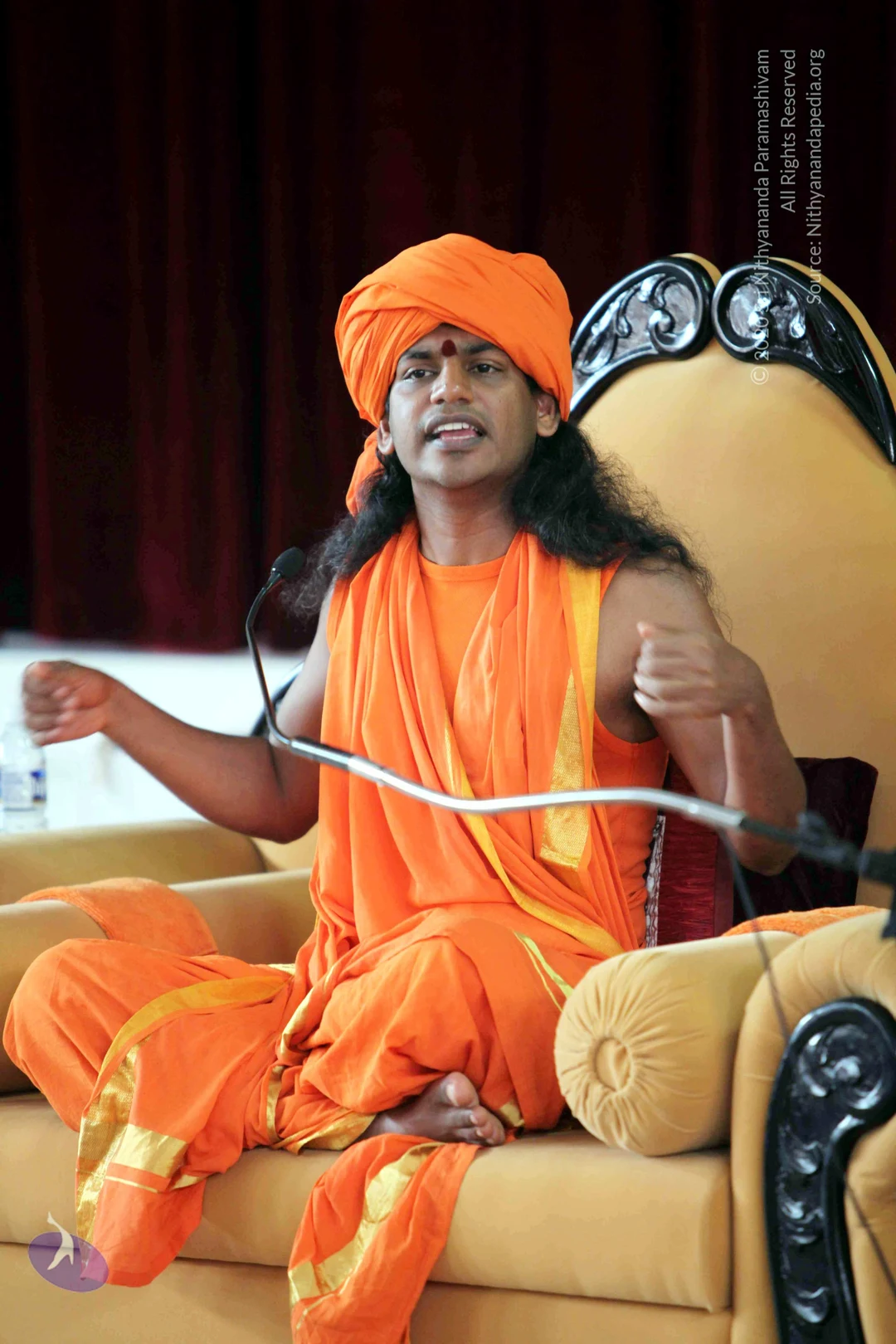
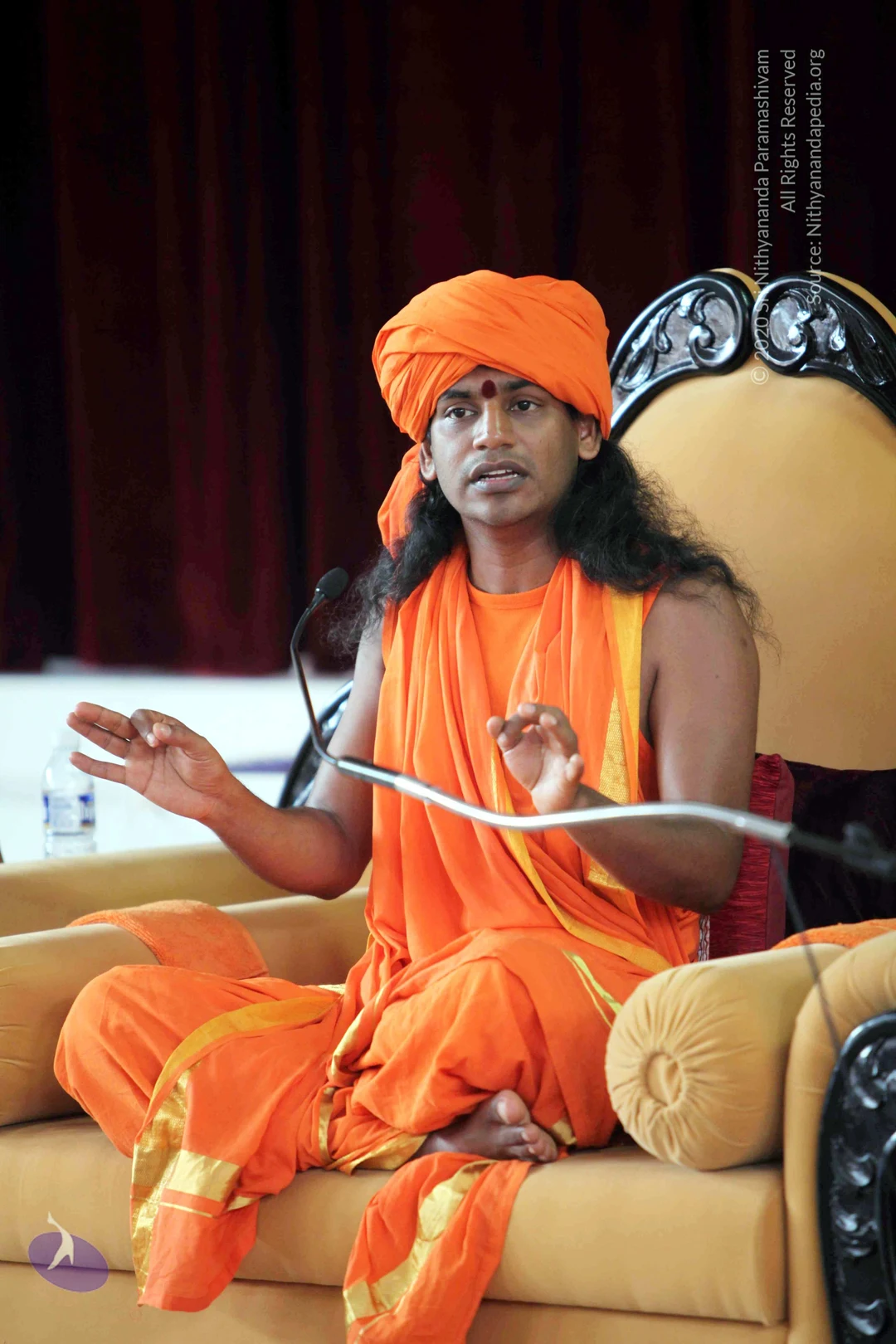
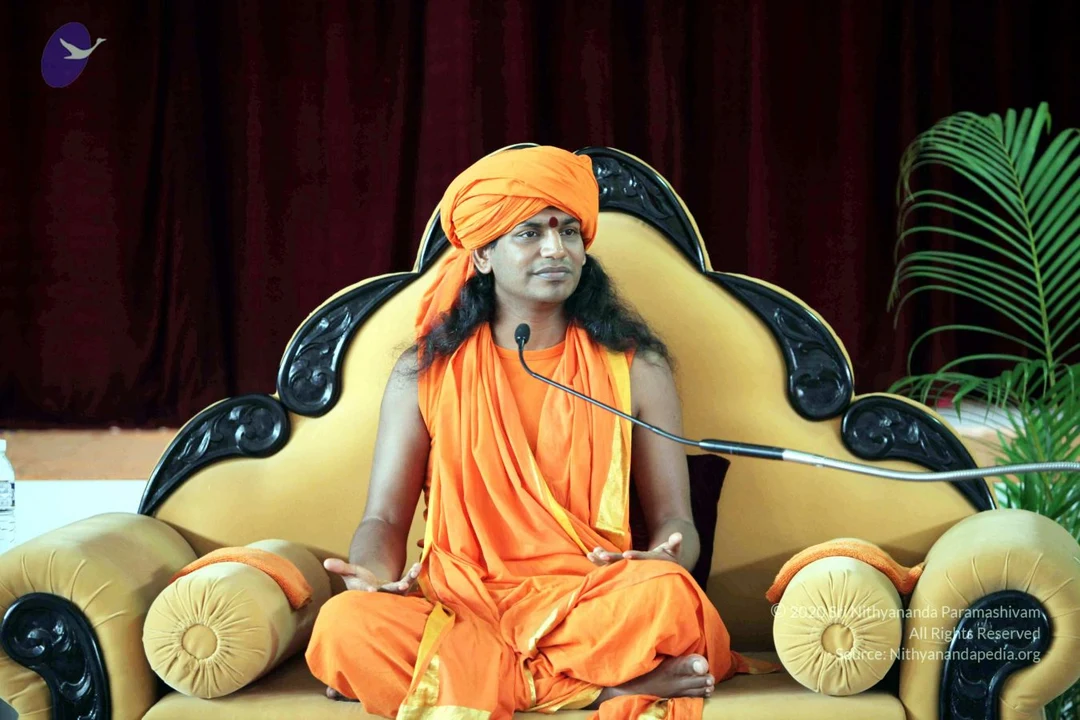
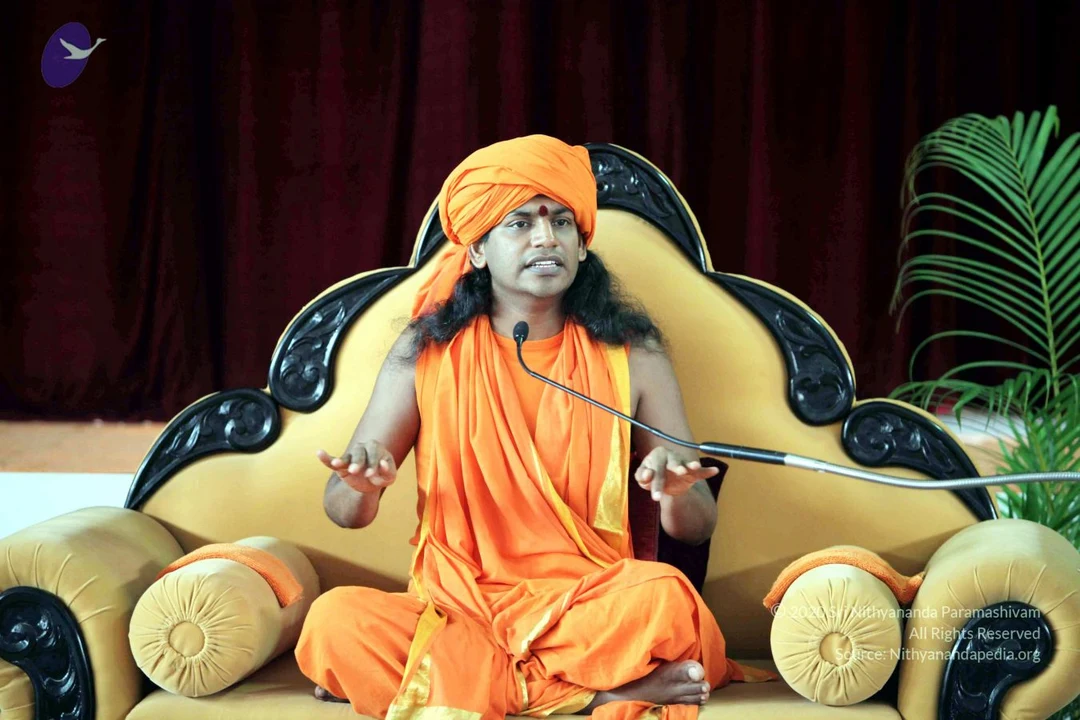
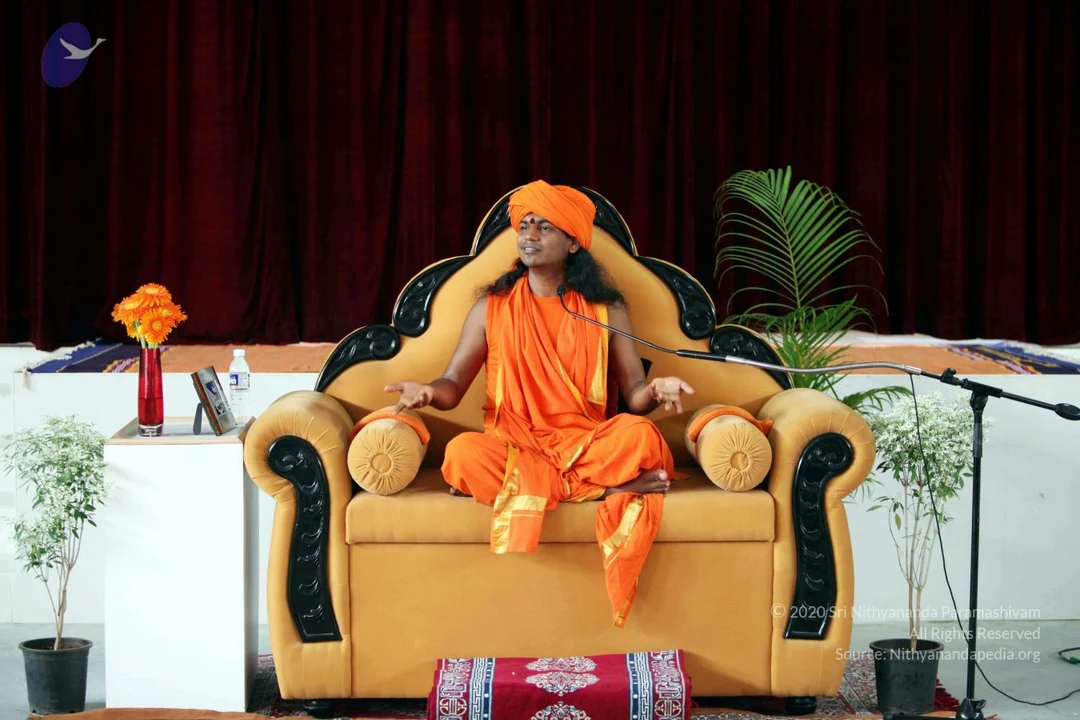
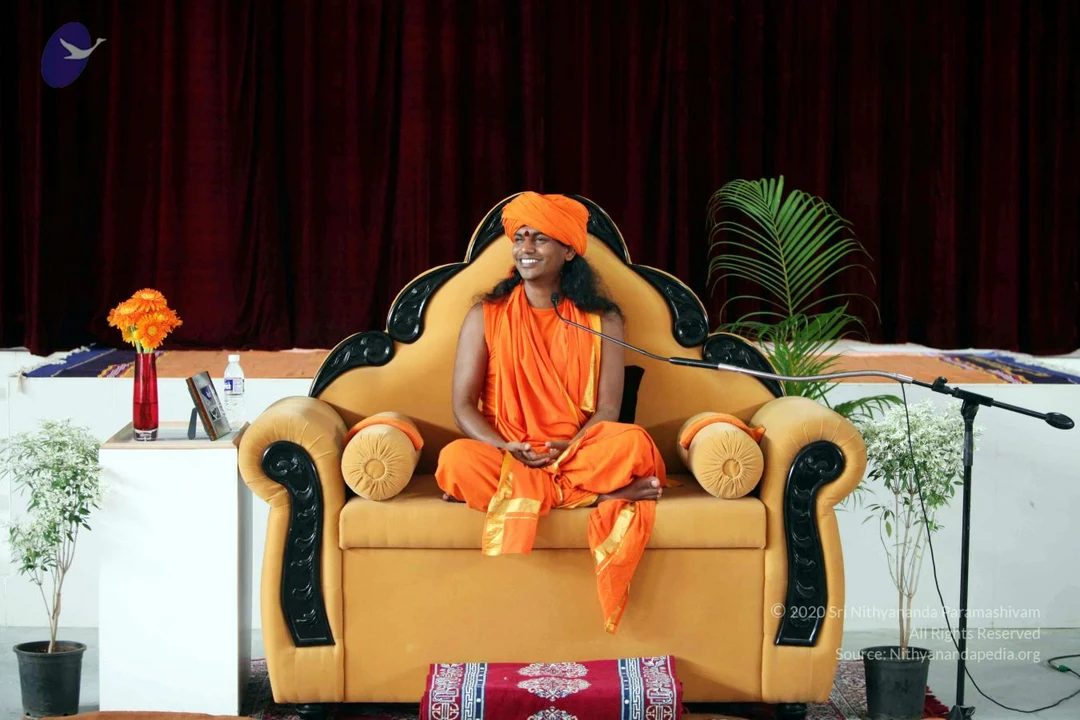
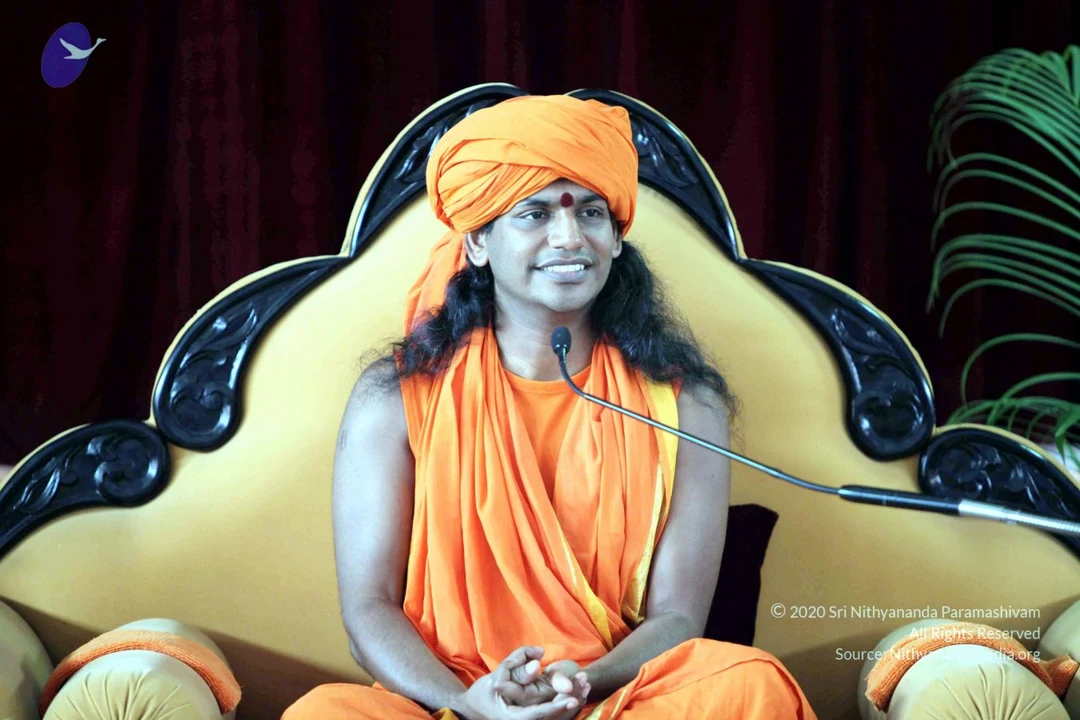
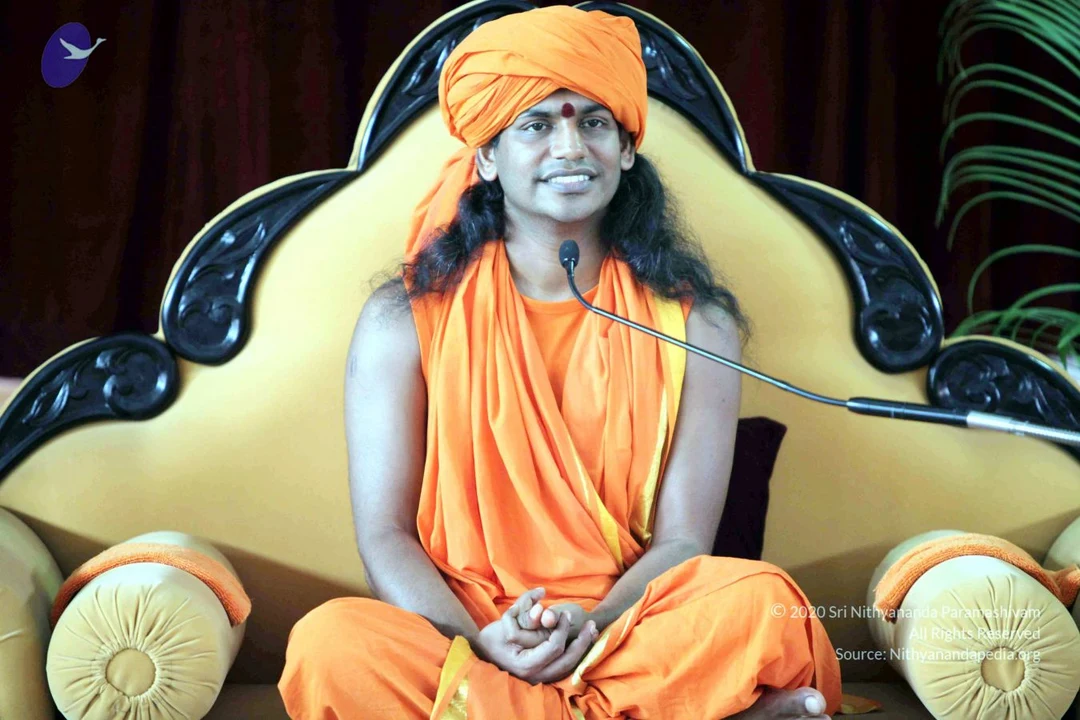
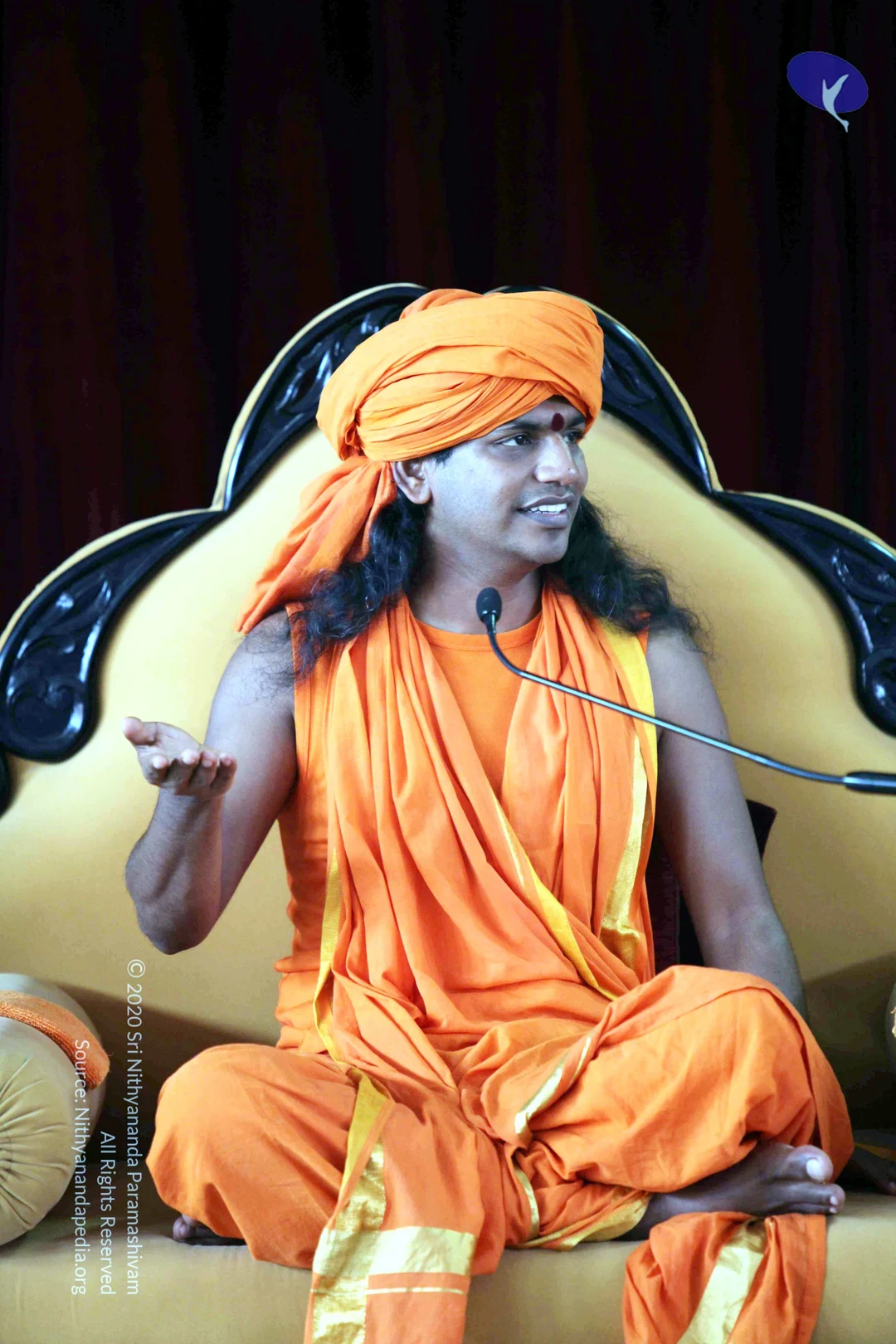
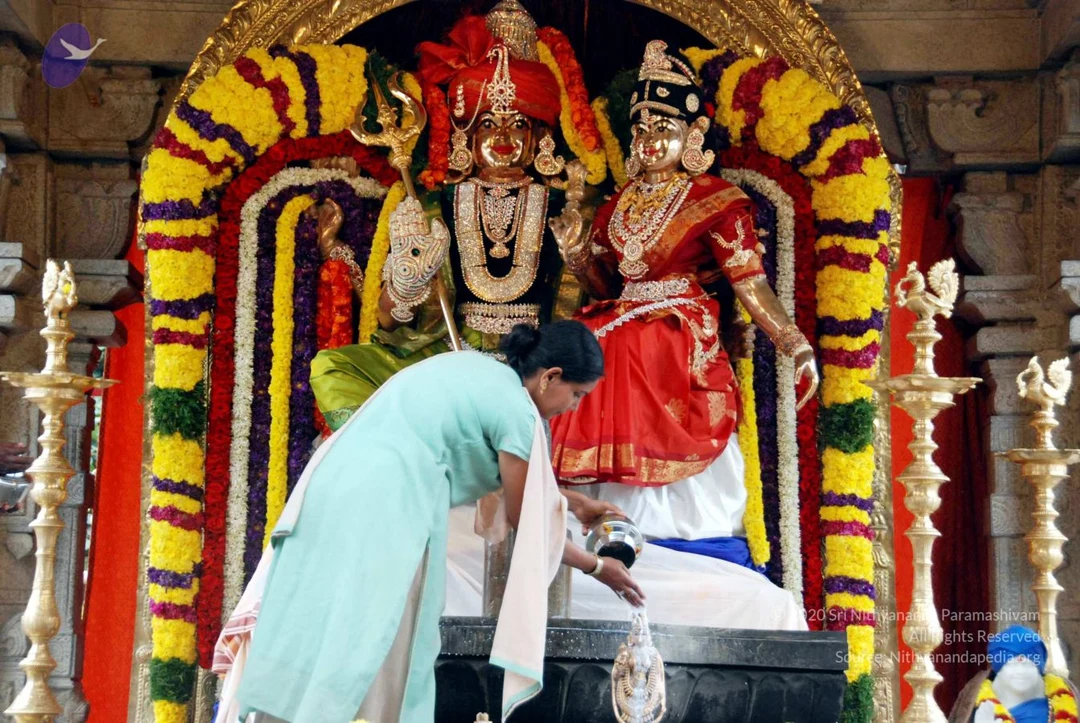
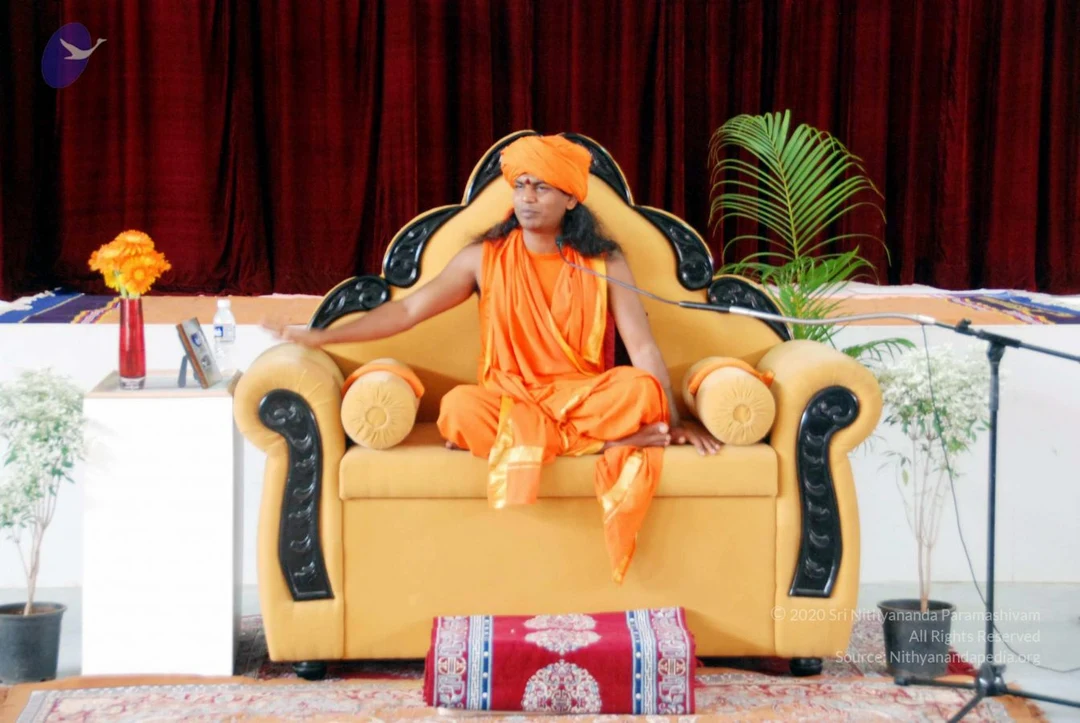
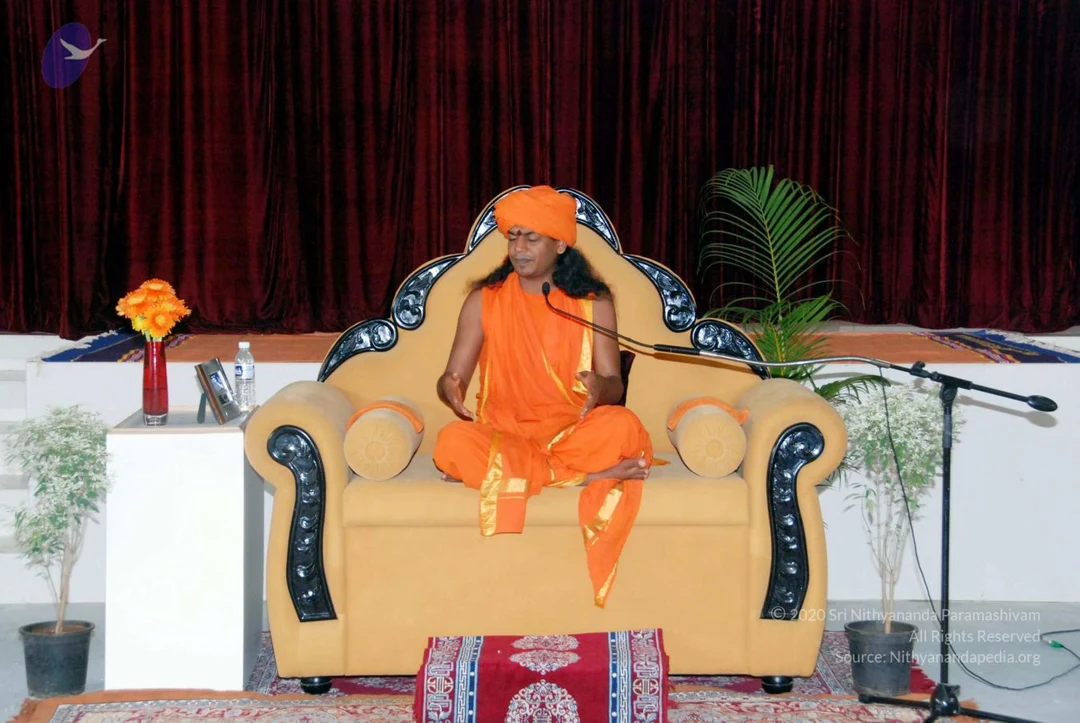
A woman in a pale turquoise salwar kameez with a cream dupatta pours milk from a small steel vessel over a black stone shivalinga in a temple shrine. Behind the lingam stand two gilded metal deity murtis adorned with thick garlands of yellow and purple flowers. The left murti wears a red turban and carries a trident, with a large gold necklace; the right wears a red and gold sari, a black crown and heavy gold jewellery. Brass oil lamps stand on both sides of the arch. This is a milk abhishekam at a shrine.A photograph of a man seated on an ornate golden-yellow throne-style armchair with carved black wooden trim against a dark maroon draped backdrop. He wears an orange turban, an orange sleeveless robe with gold-edged borders, and a red bindi, smiling while gesturing with one hand toward an unseen audience. A microphone on a stand is at right, an orange gerbera arrangement in a red vase and a water bottle sit on a white table at left, and white flowering plants frame the scene. Appearance-based label: a person, seated in person in the role of speaker on a throne.A man seated on an ornate gold-upholstered throne-style chair with carved black wooden armrests and a dark red cushion. He wears an orange turban and an orange sleeveless garment with gold-bordered wrap, and his legs are folded beneath him. He raises one hand near his face in a gesture while looking to the side, and a microphone stand is positioned in front of him. Orange flowers and a potted plant sit to the left, with a maroon curtain behind. Appearance-based candidate: Swamiji (probable), identified by the saffron-orange turban and clothing with gold trim, seated in a throne-like chair before a microphone.

December 28 2009

Original wiki page
Contents

Title:

THE SUPREME PONTIFF OF HINDUISM JGM HDH BHAGAVAN SRI NITHYANANDA PARAMASHIVAM

Photos

Nithyanandeshwara Paramashiva Devalayam
Homa

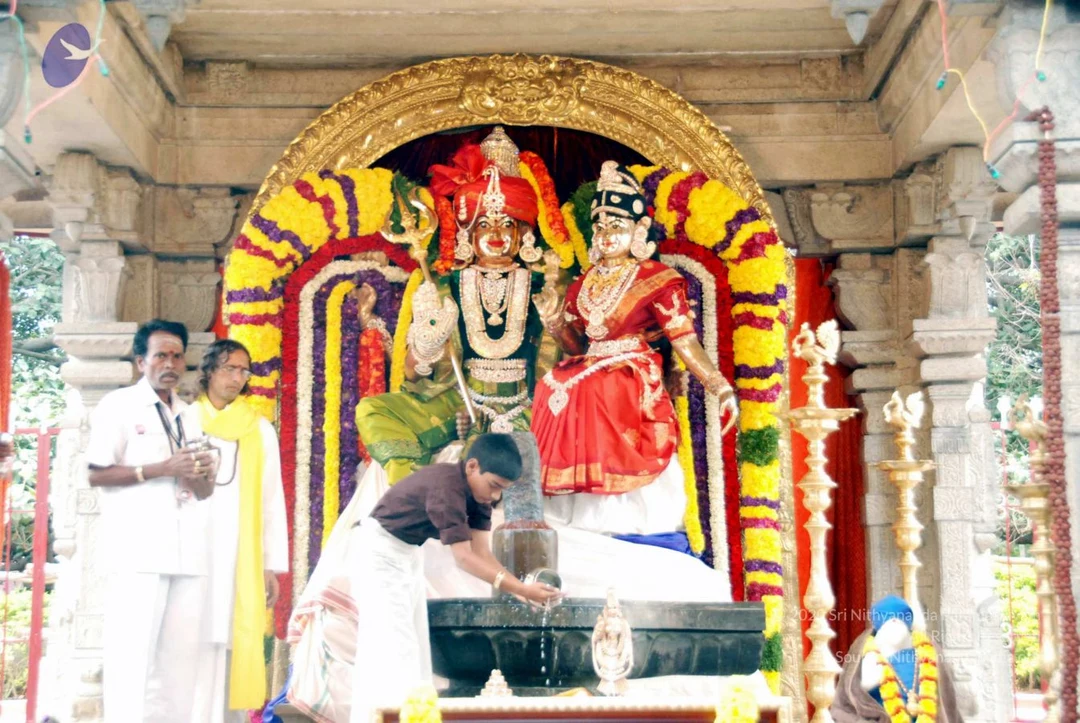
Milk Abishekam

Press Meet

Jayanthi Stall View

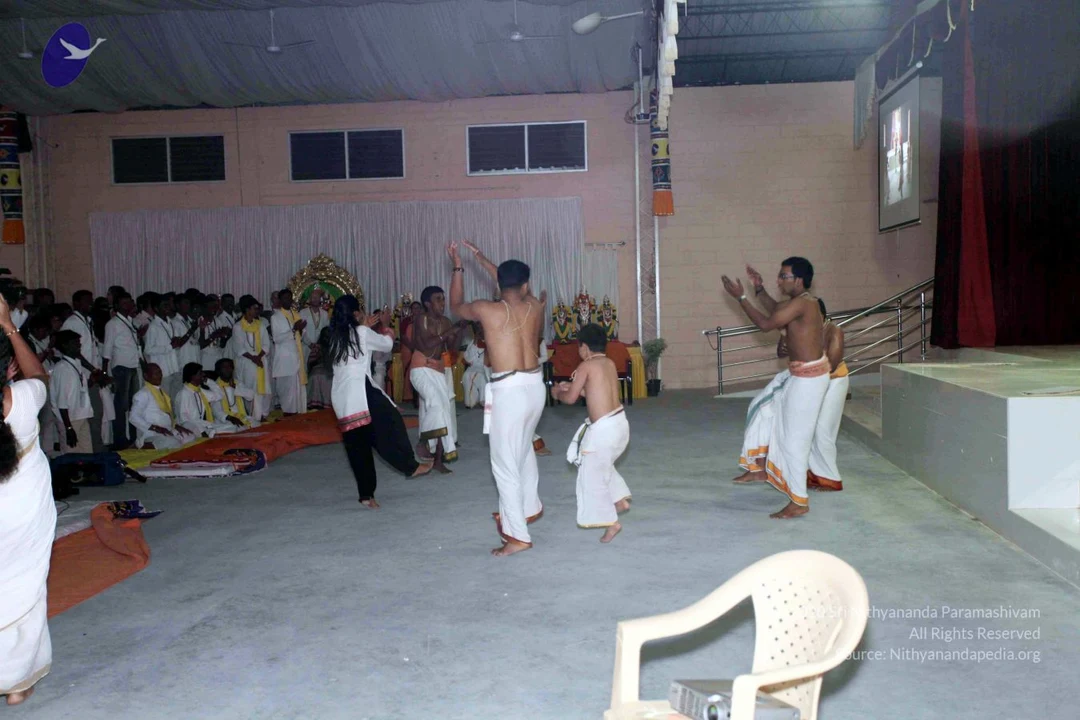
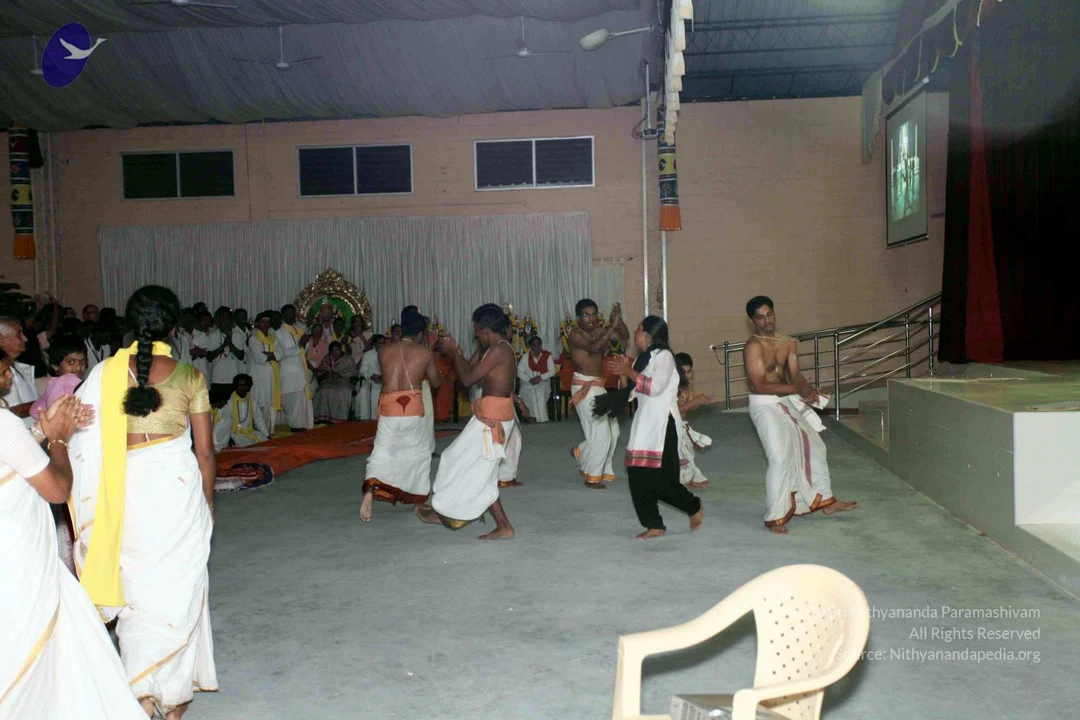
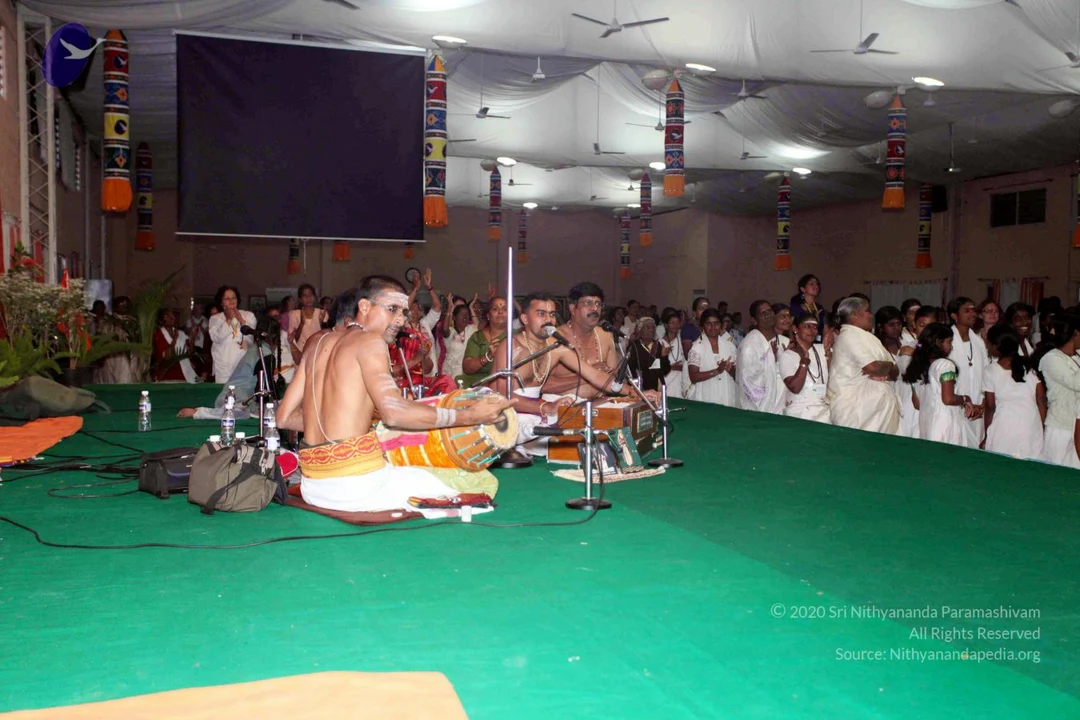
Evening Culturals

Enriching Materials

Photos Of The Day:

nithyananda-ashram

Photos from this day

View all 525 photos

Nithyanandeshwara Paramashiva Devalayam
26 photosSource gallery
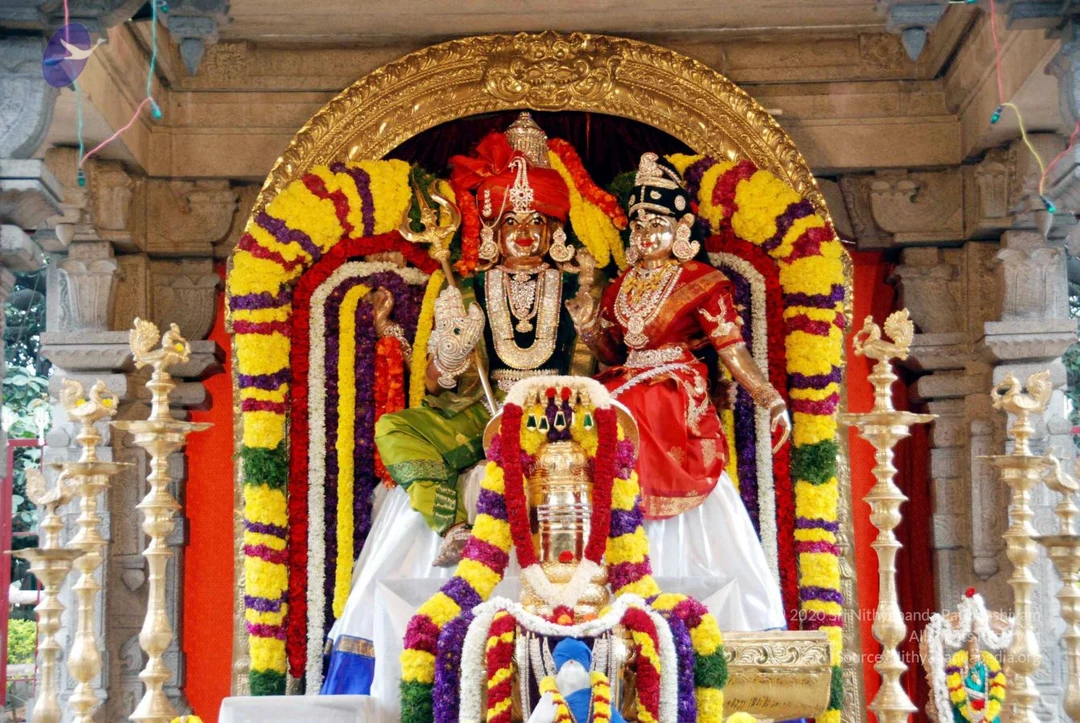
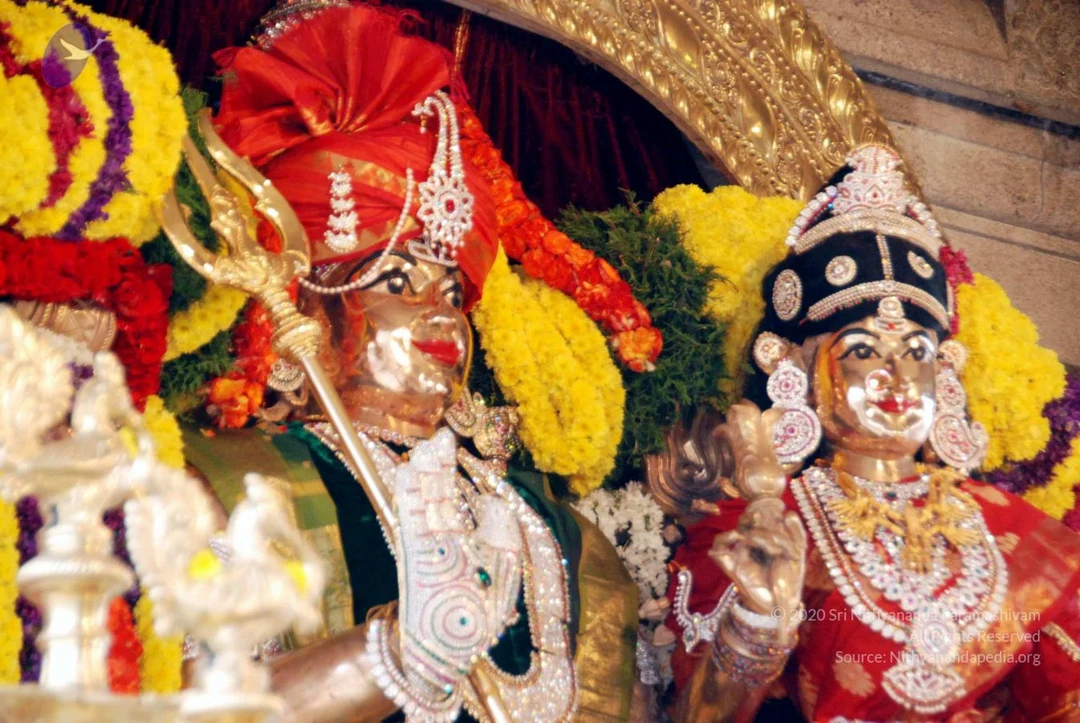
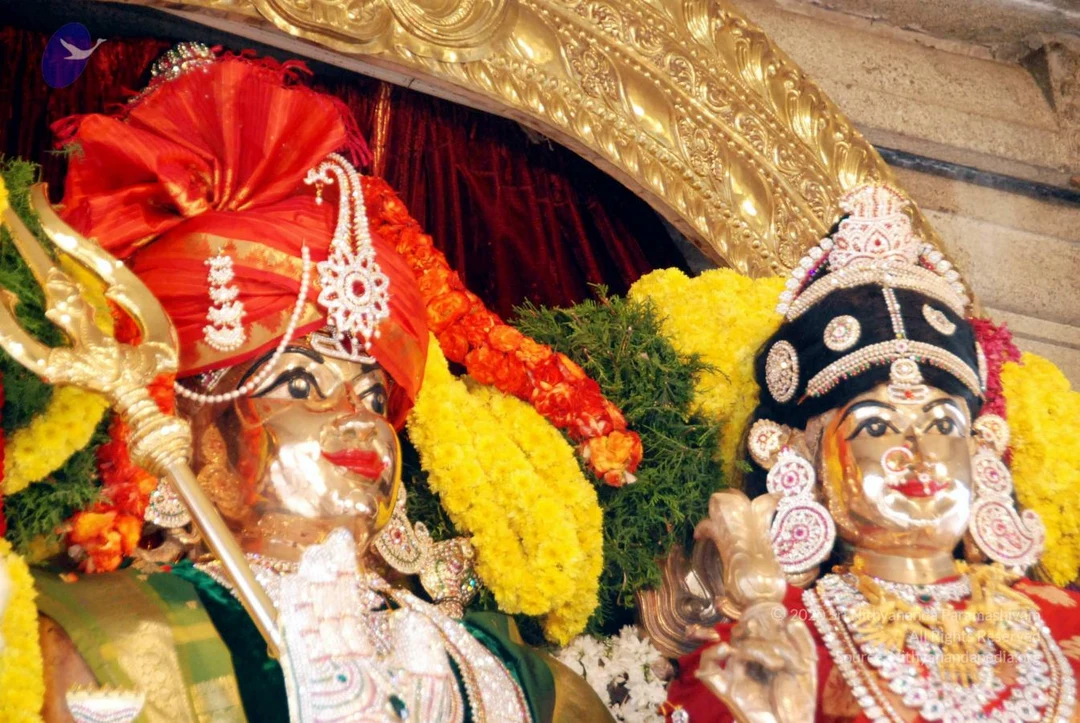
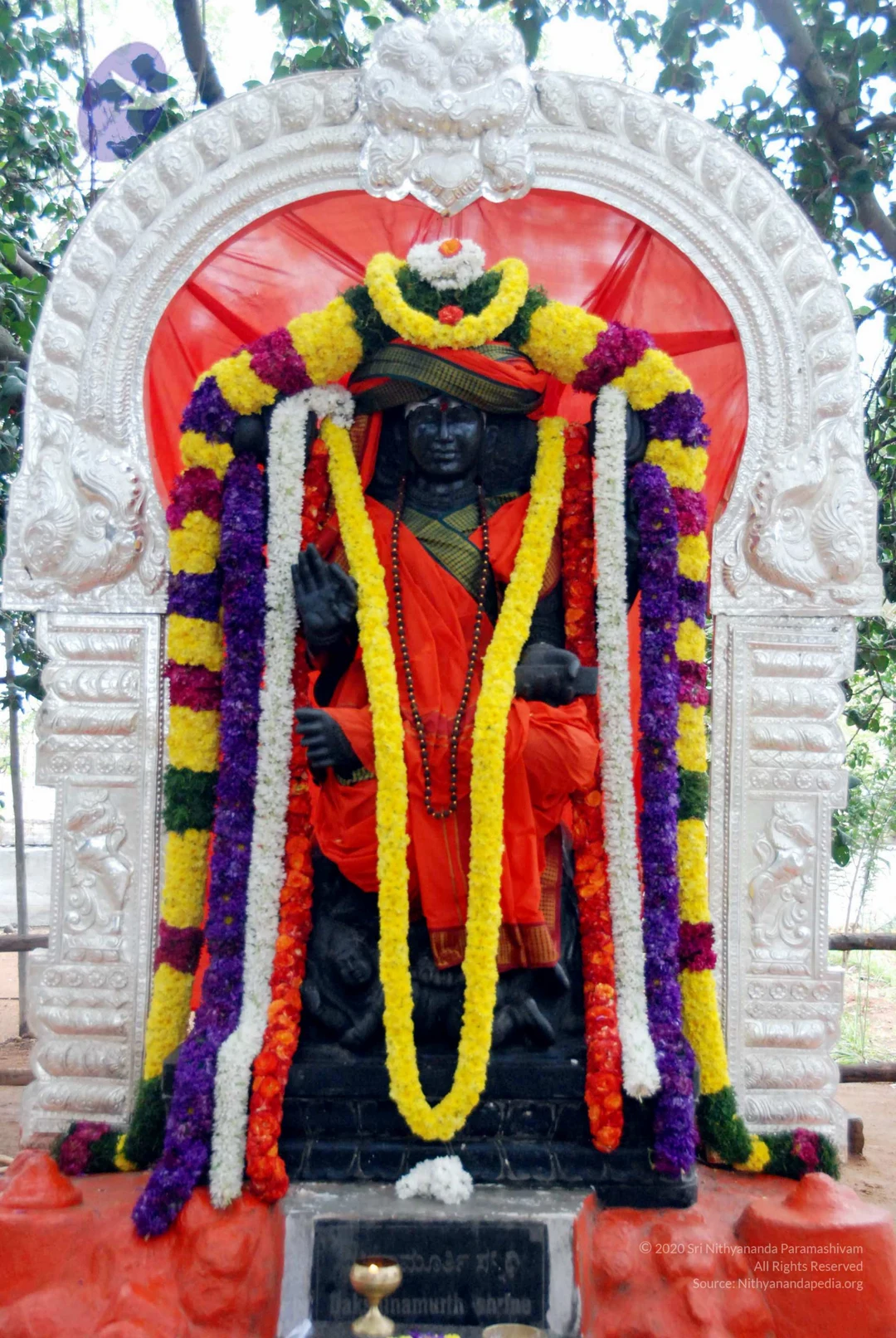
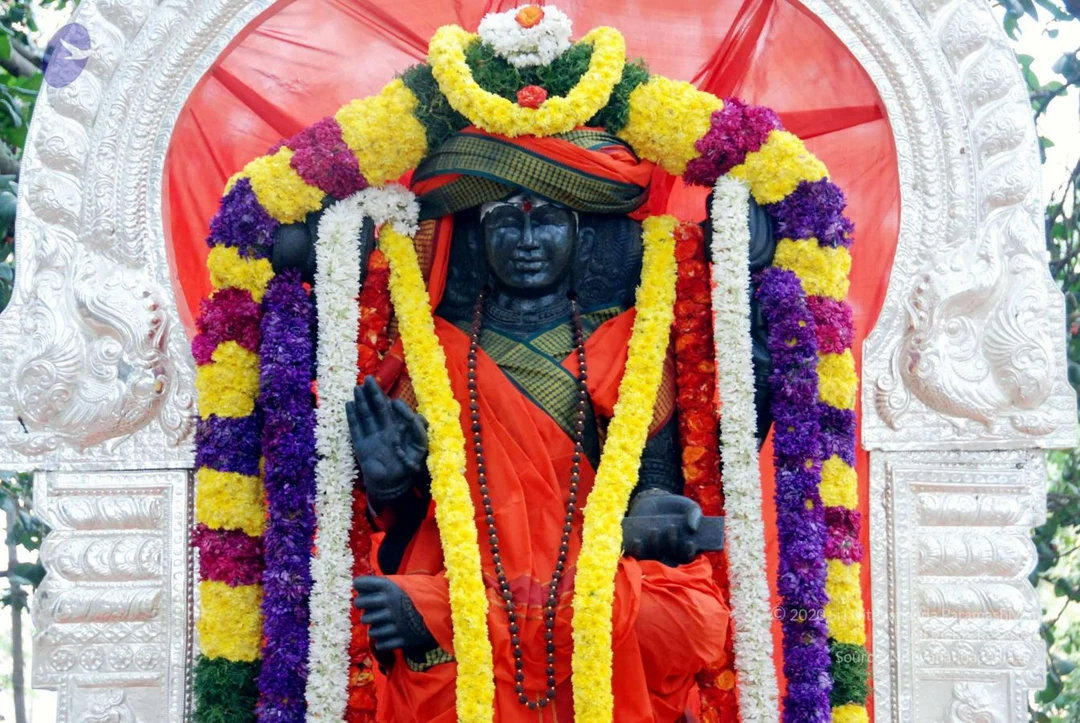
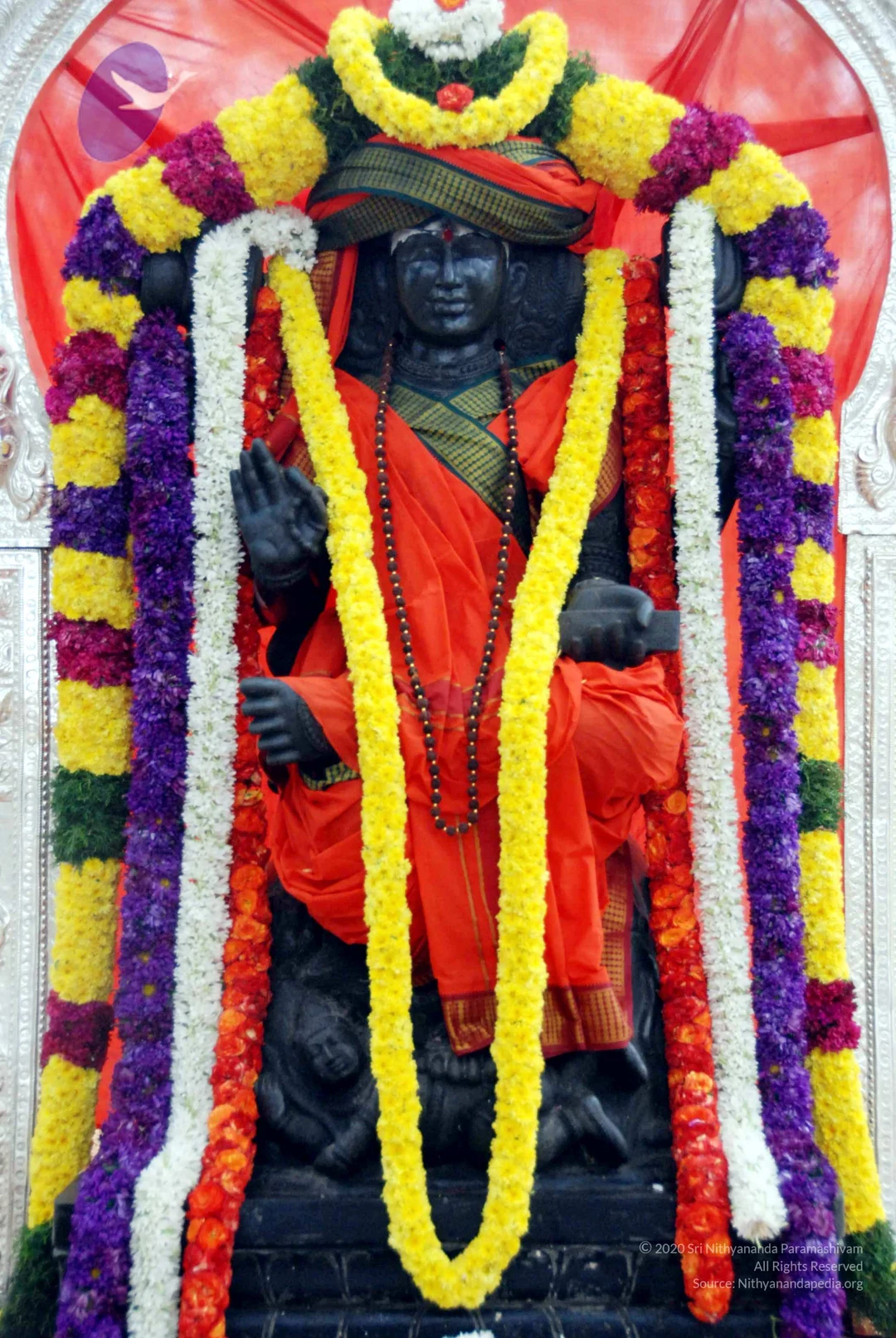
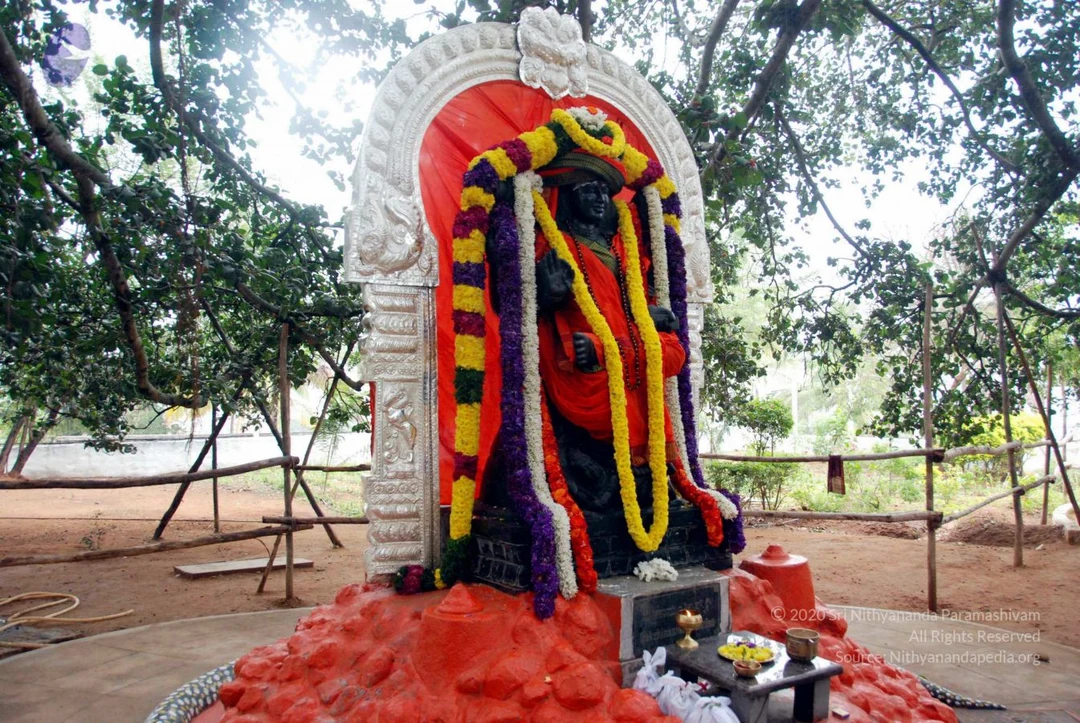
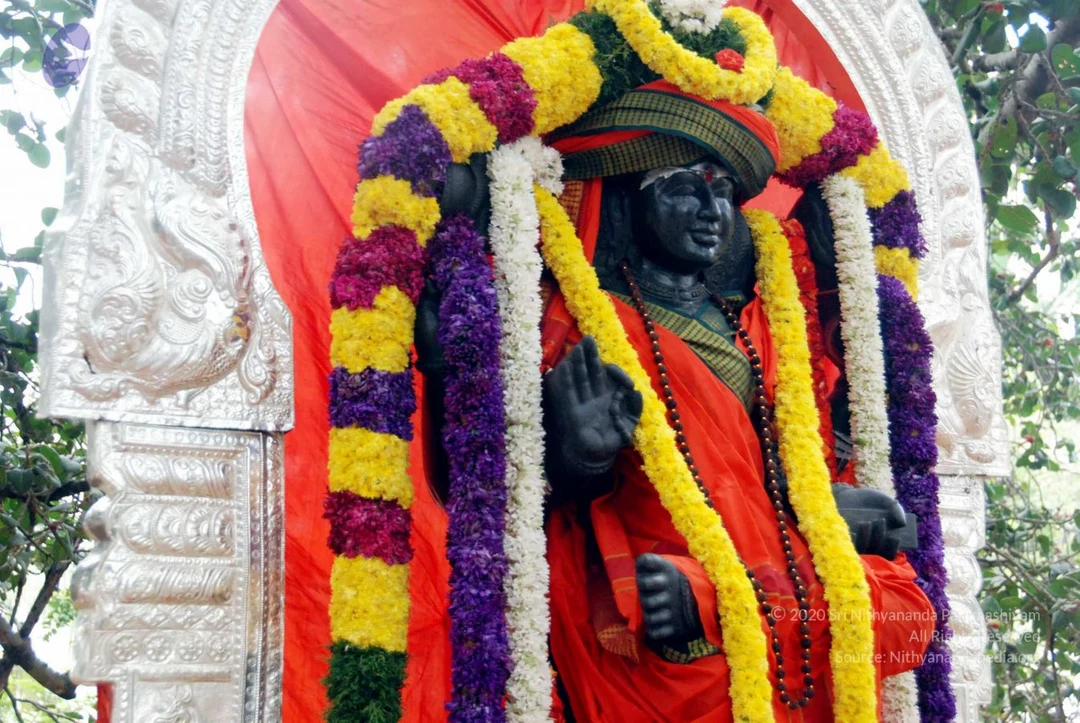
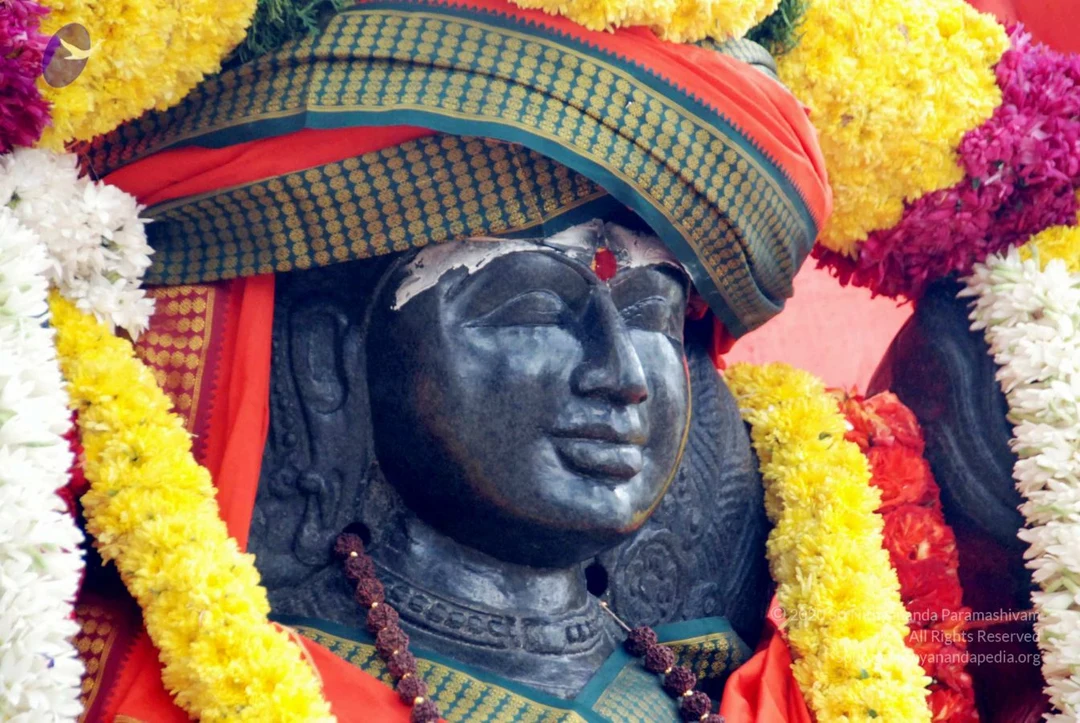
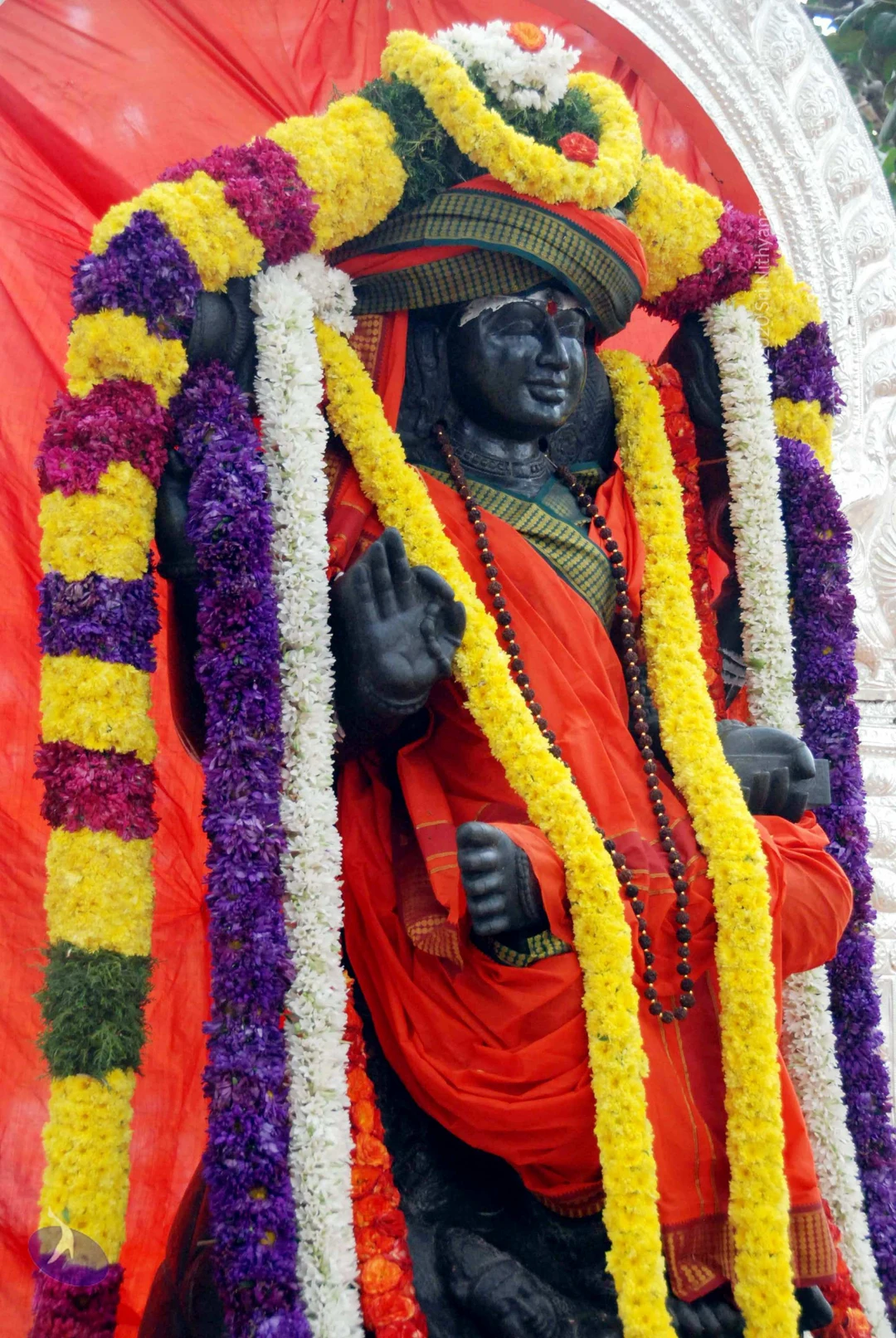
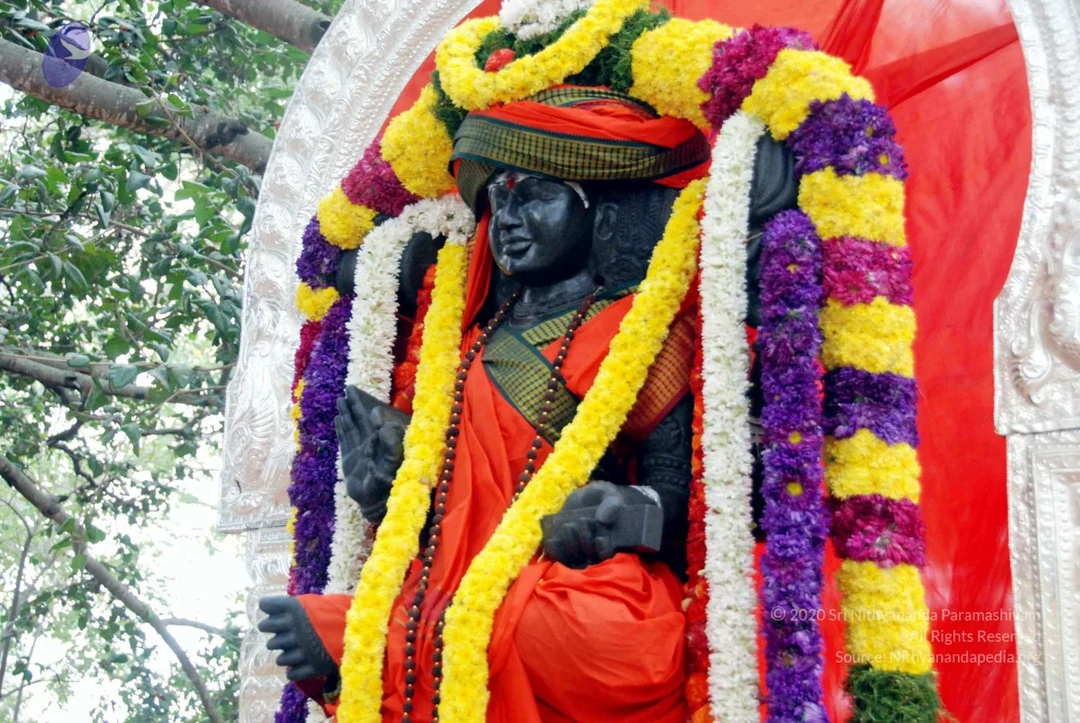
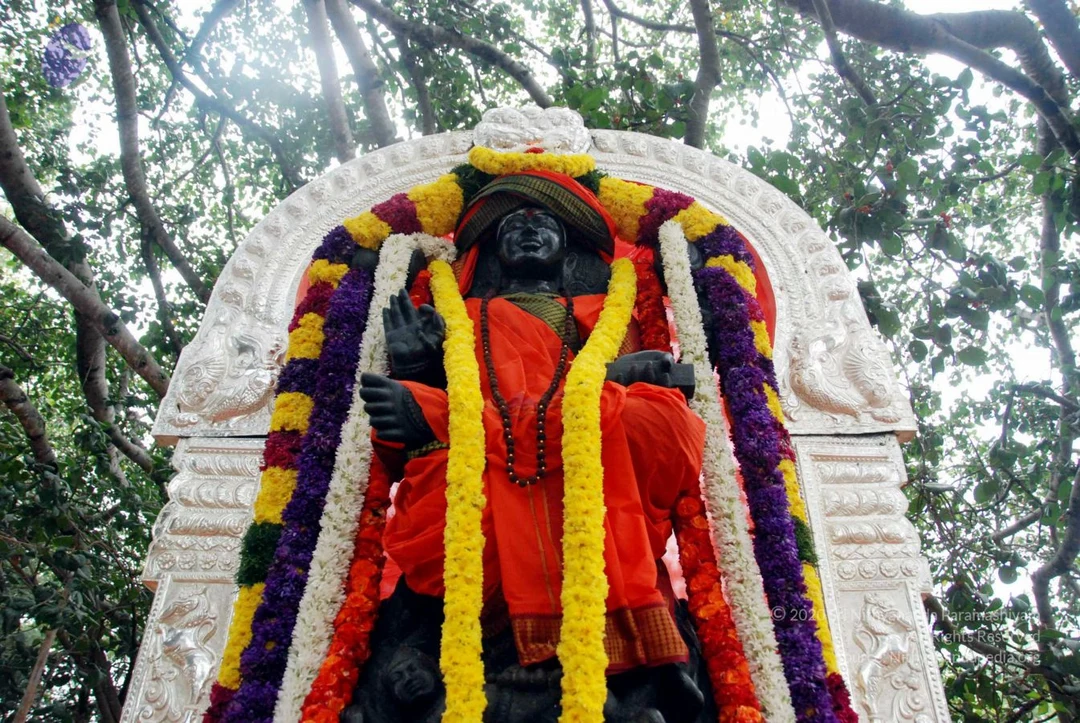
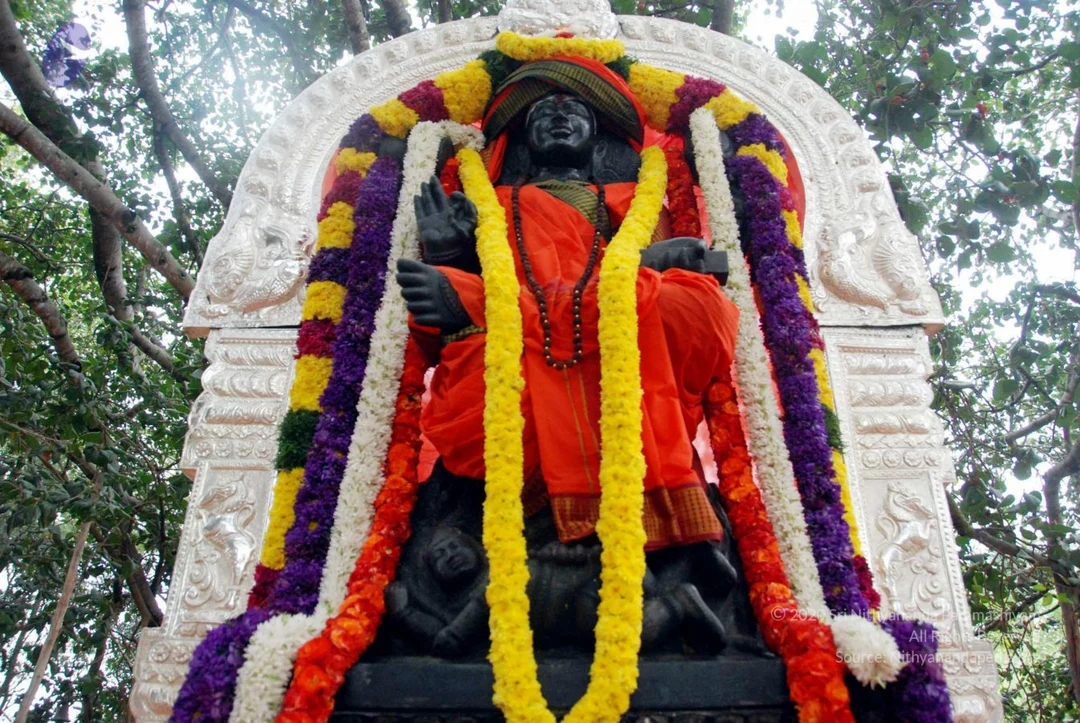
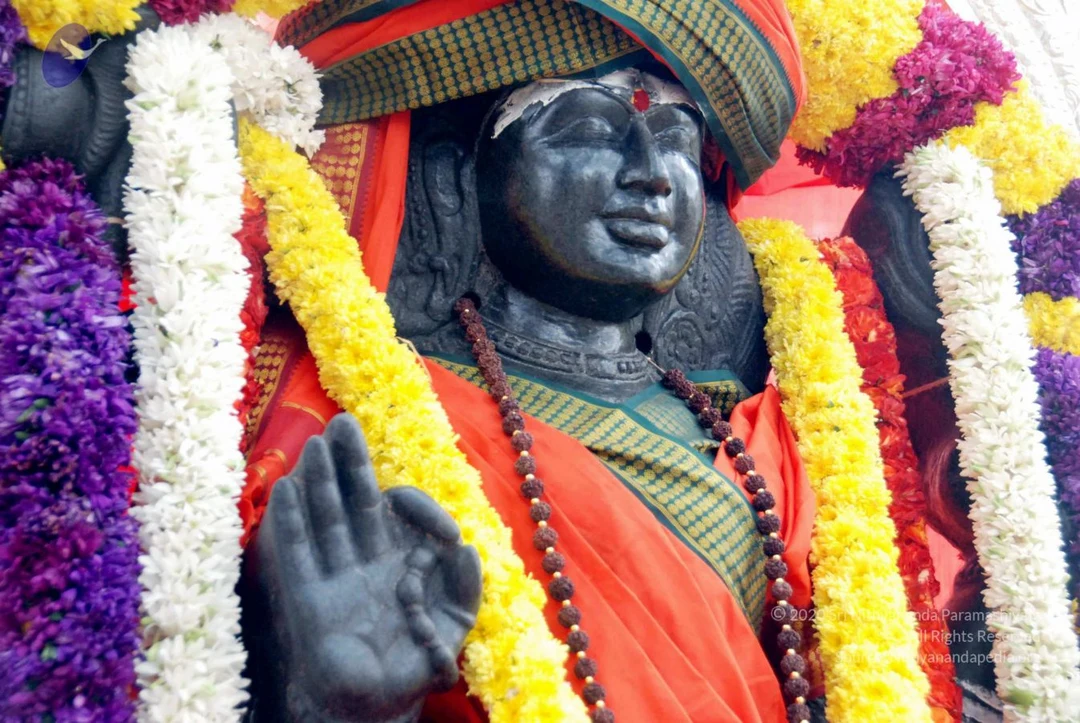
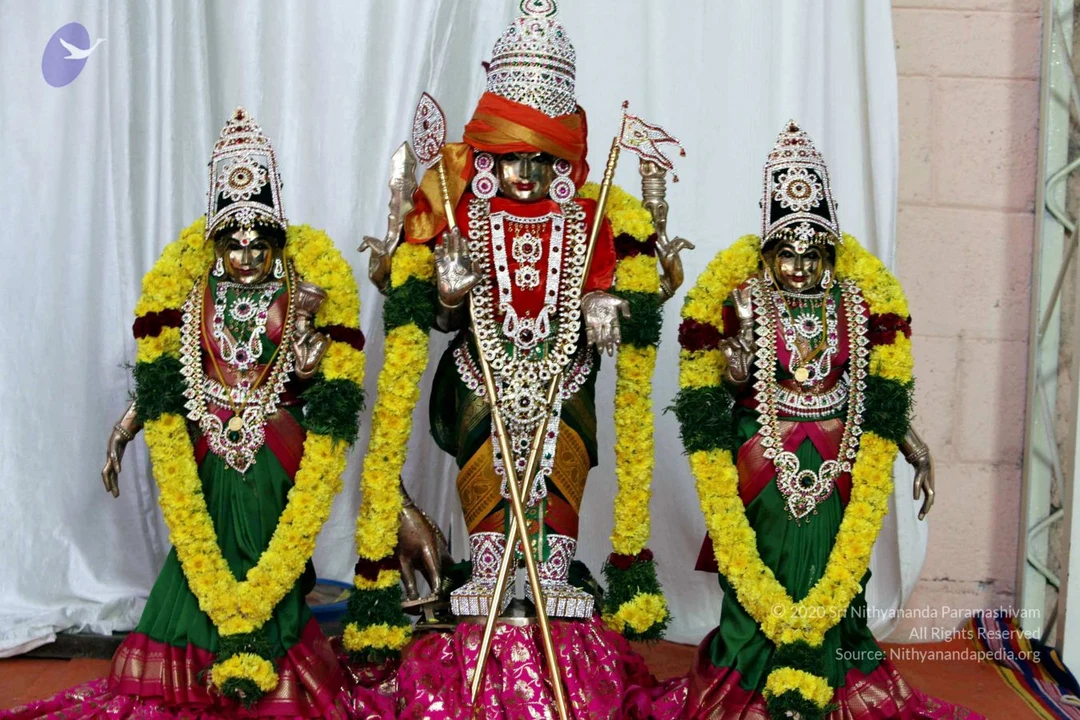
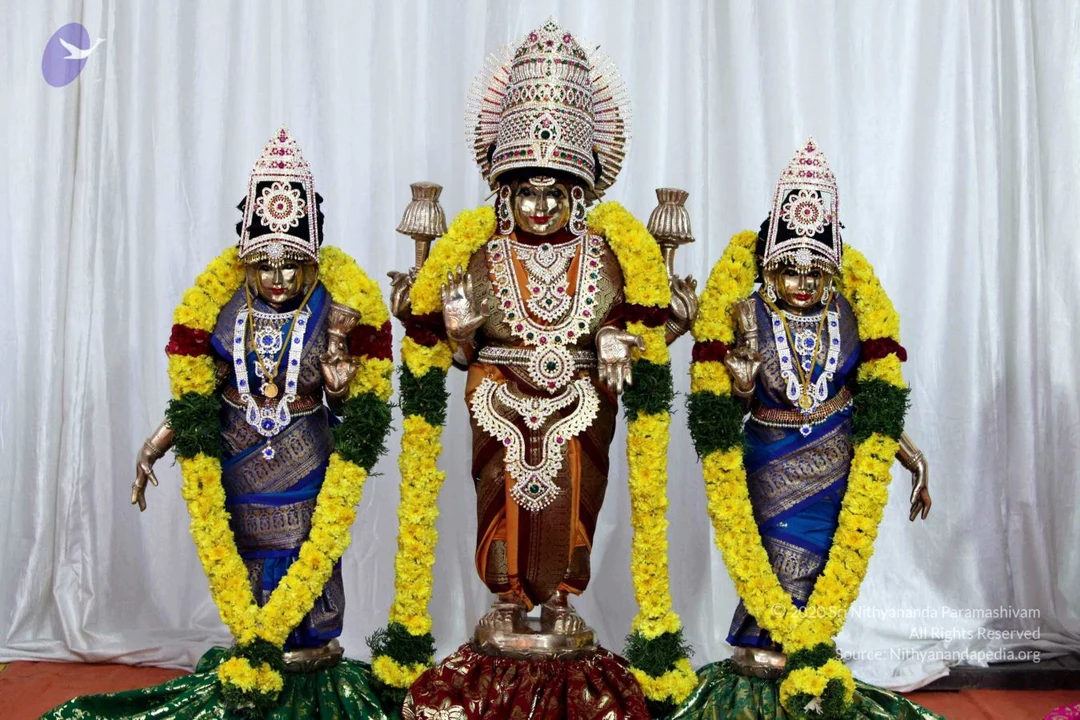
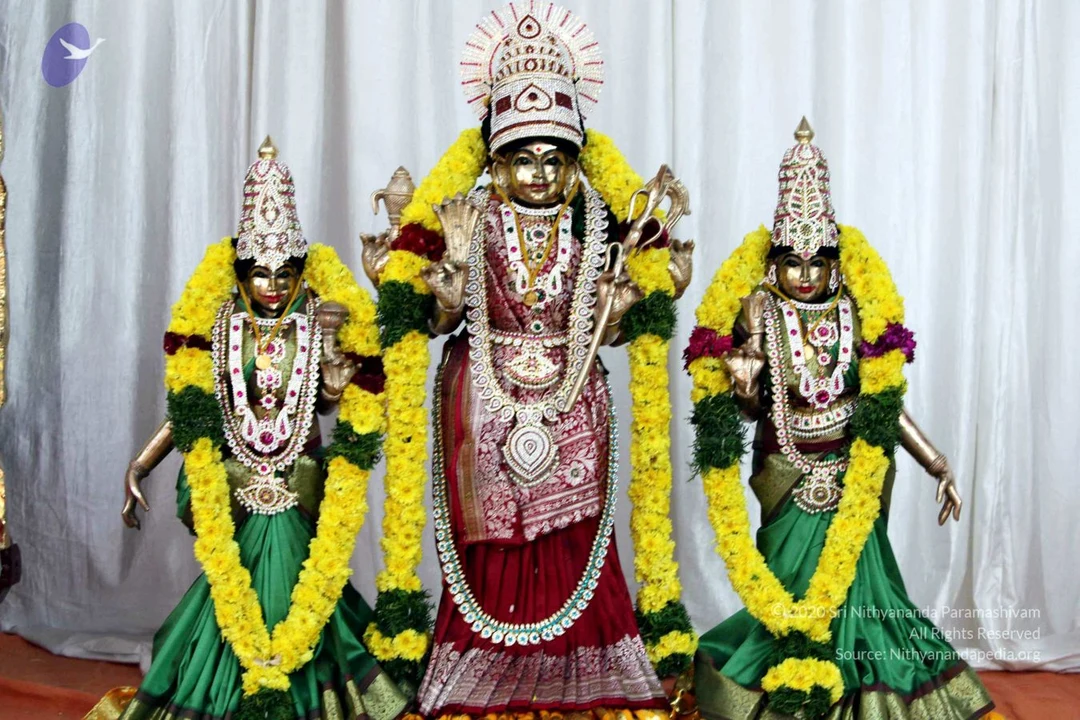
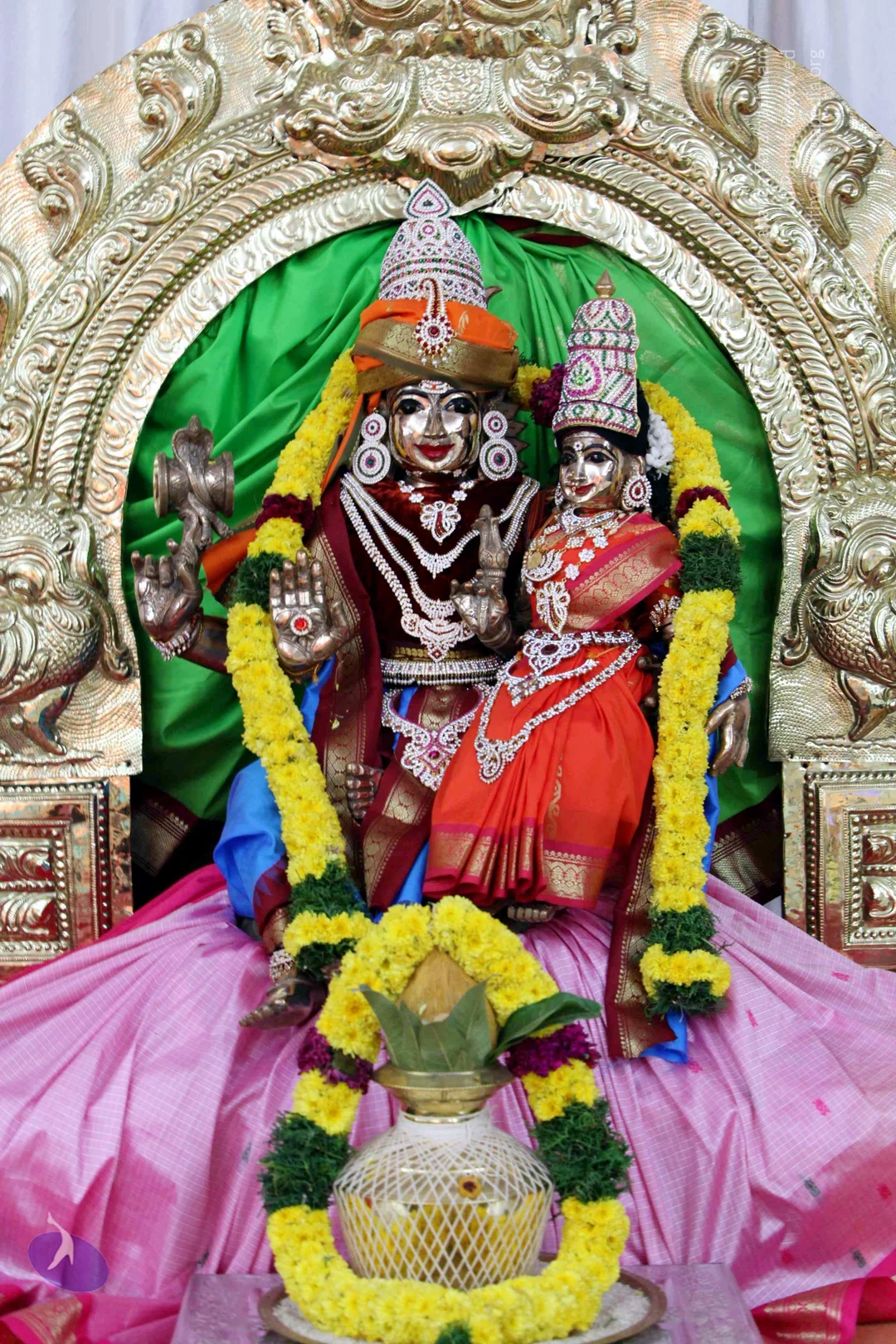
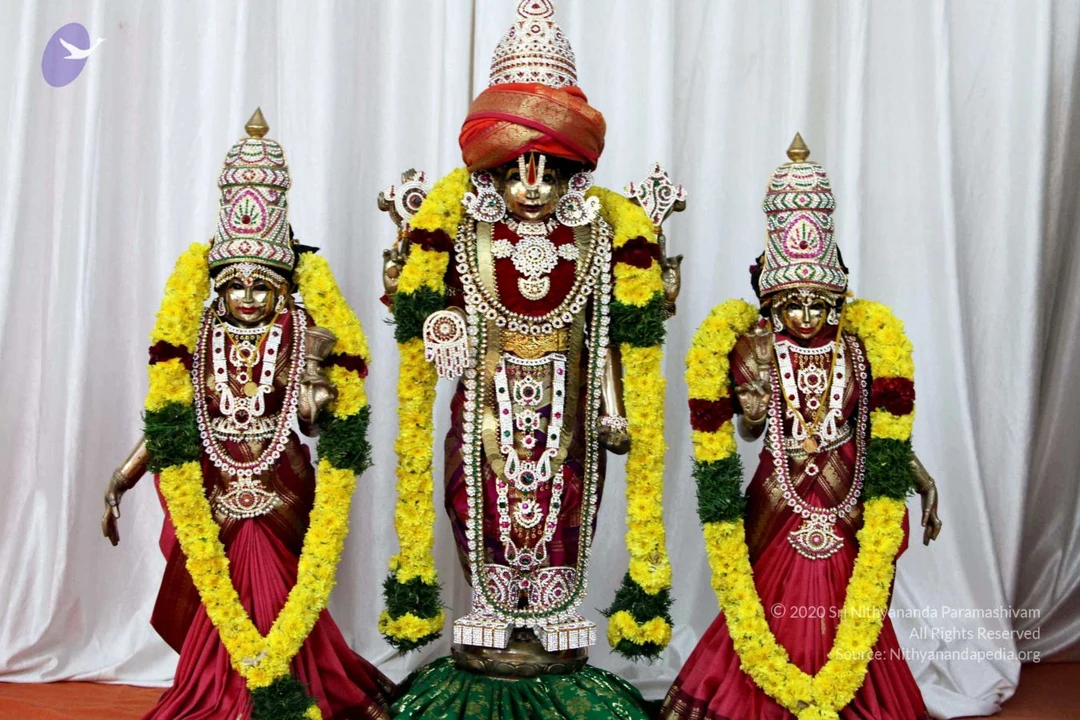
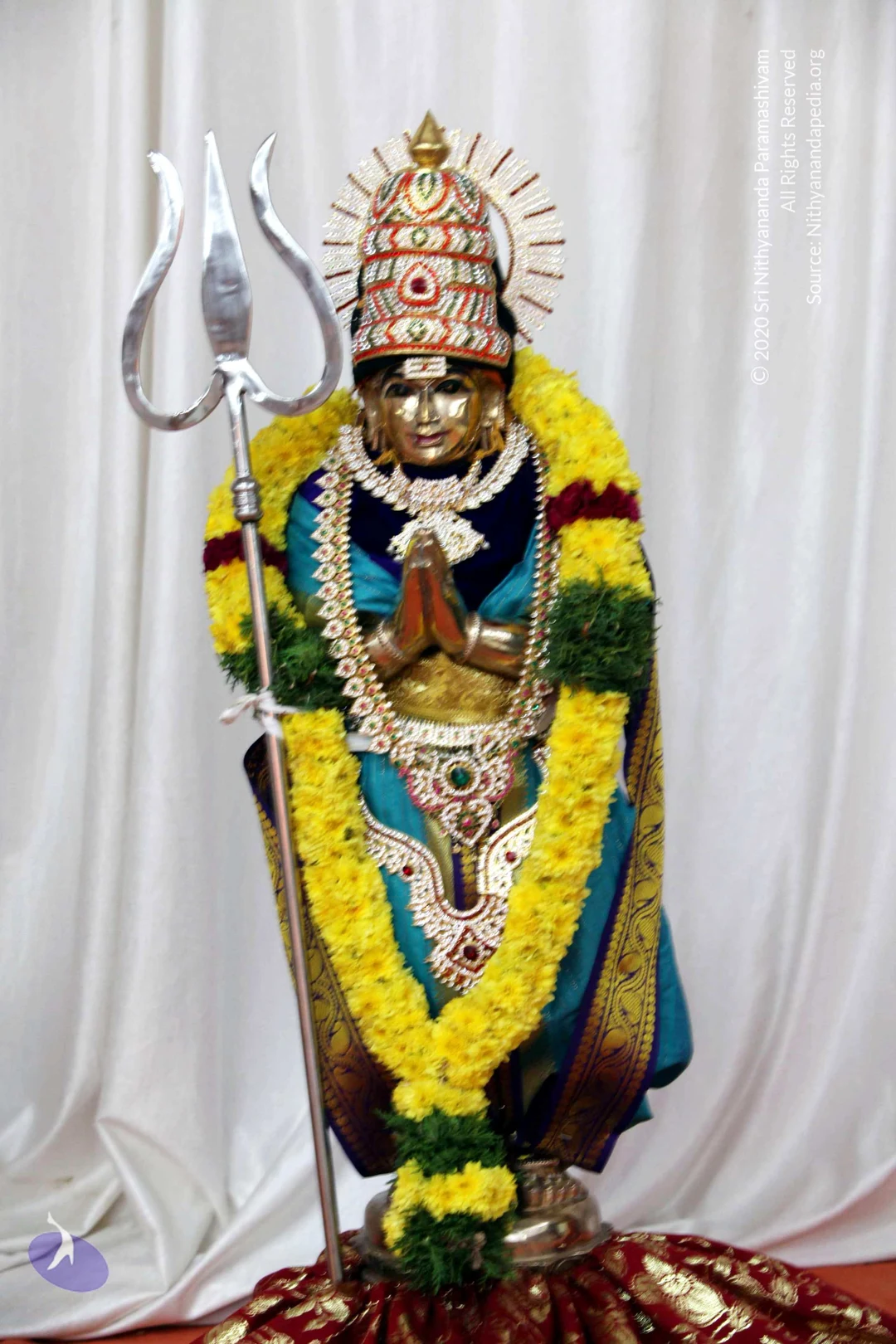
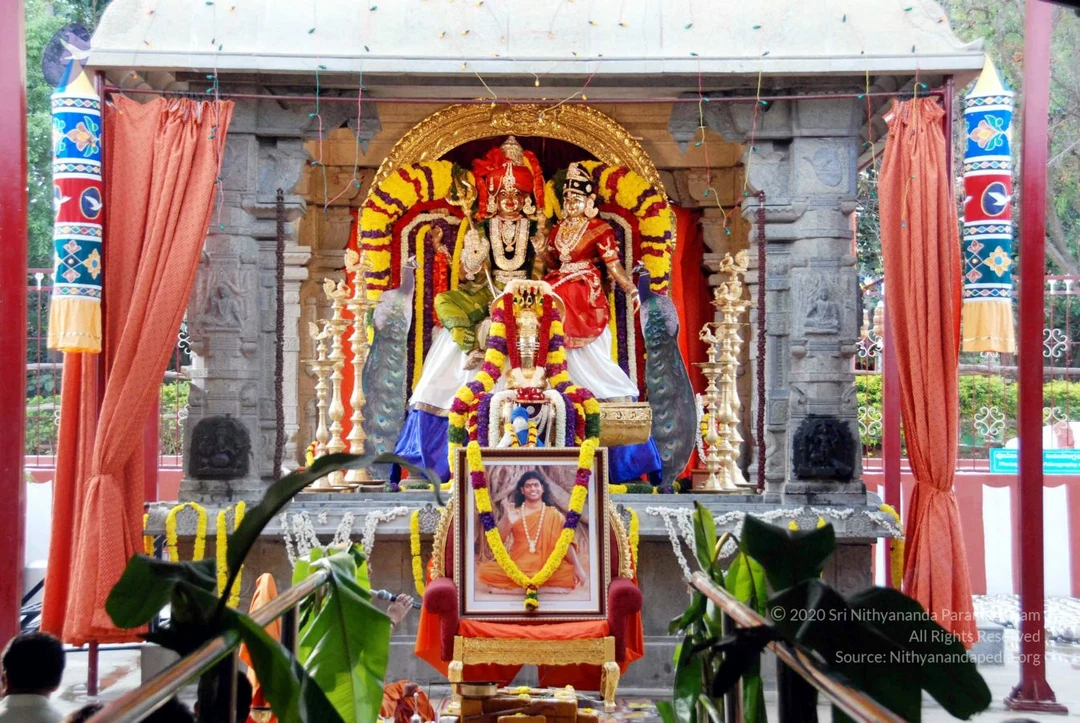
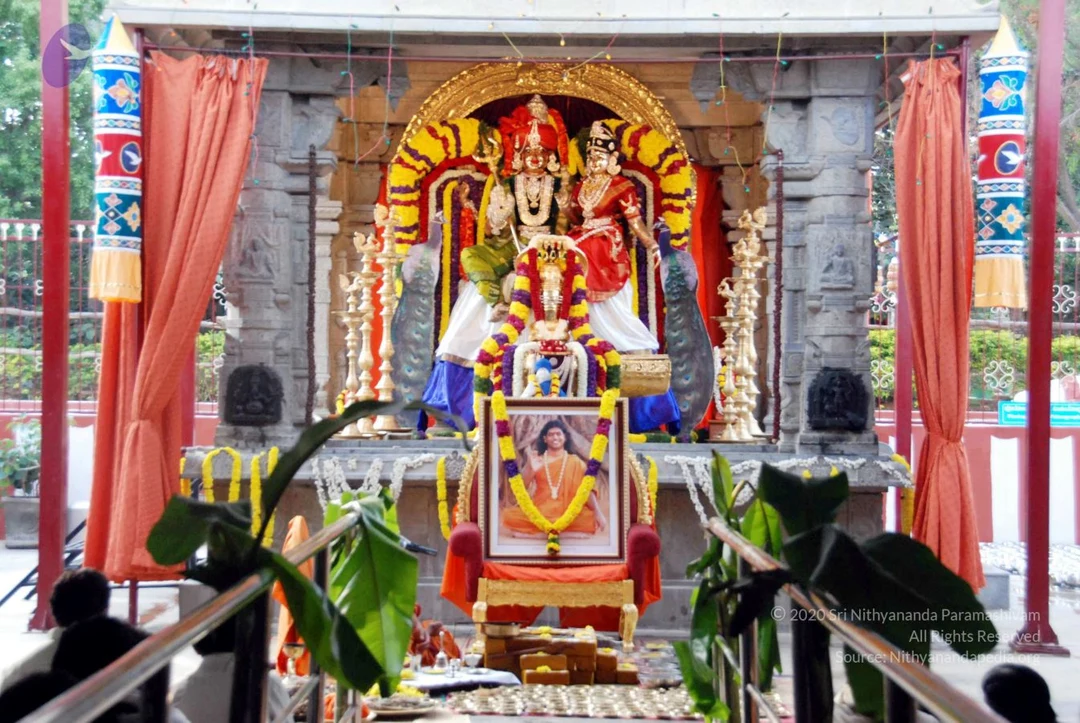
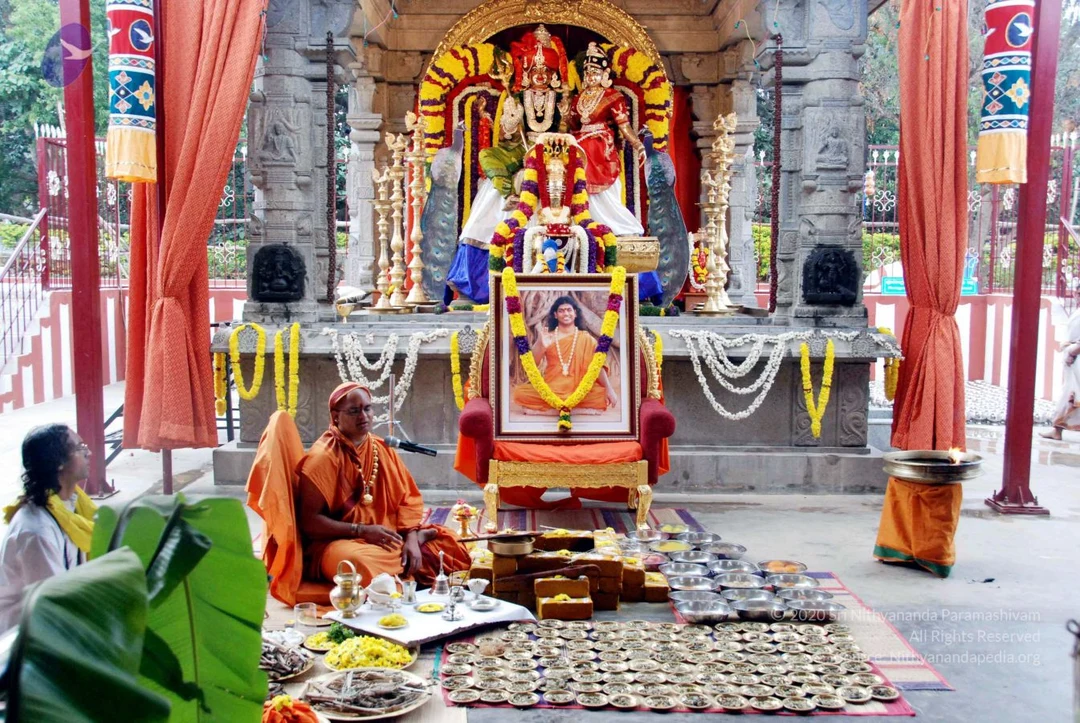
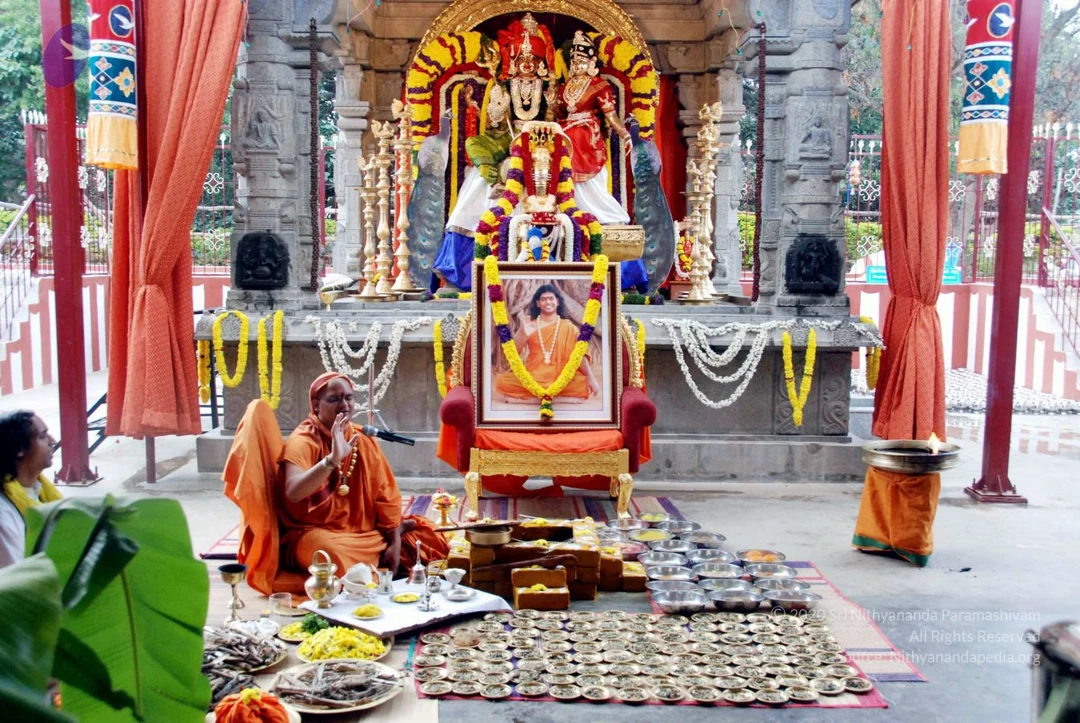
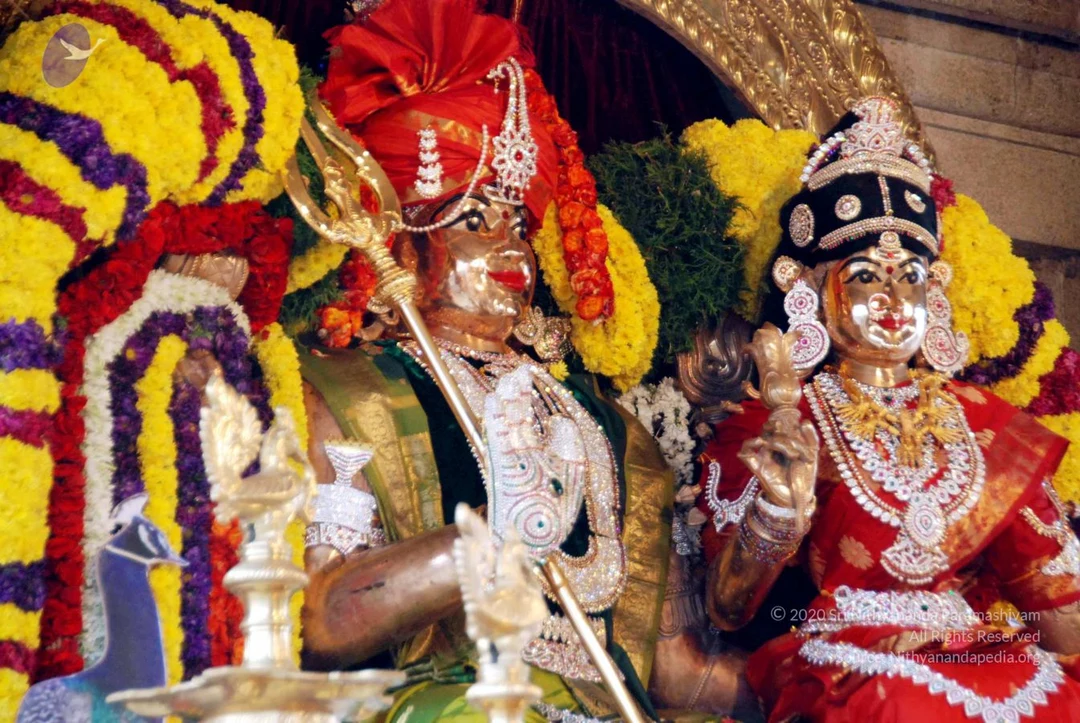
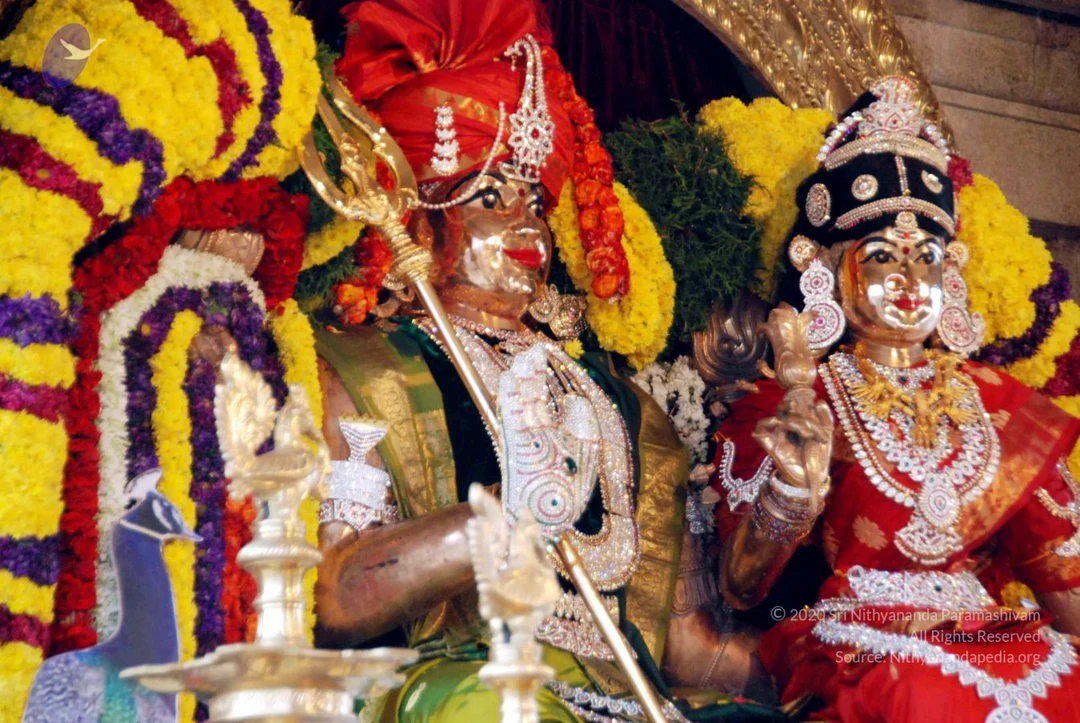
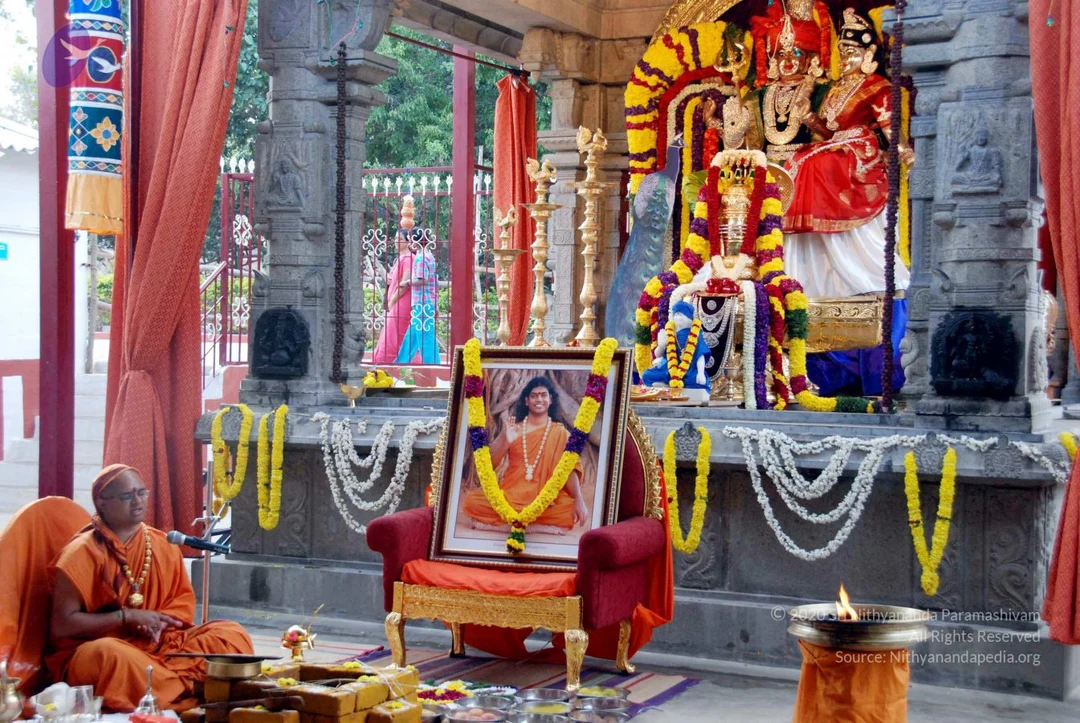
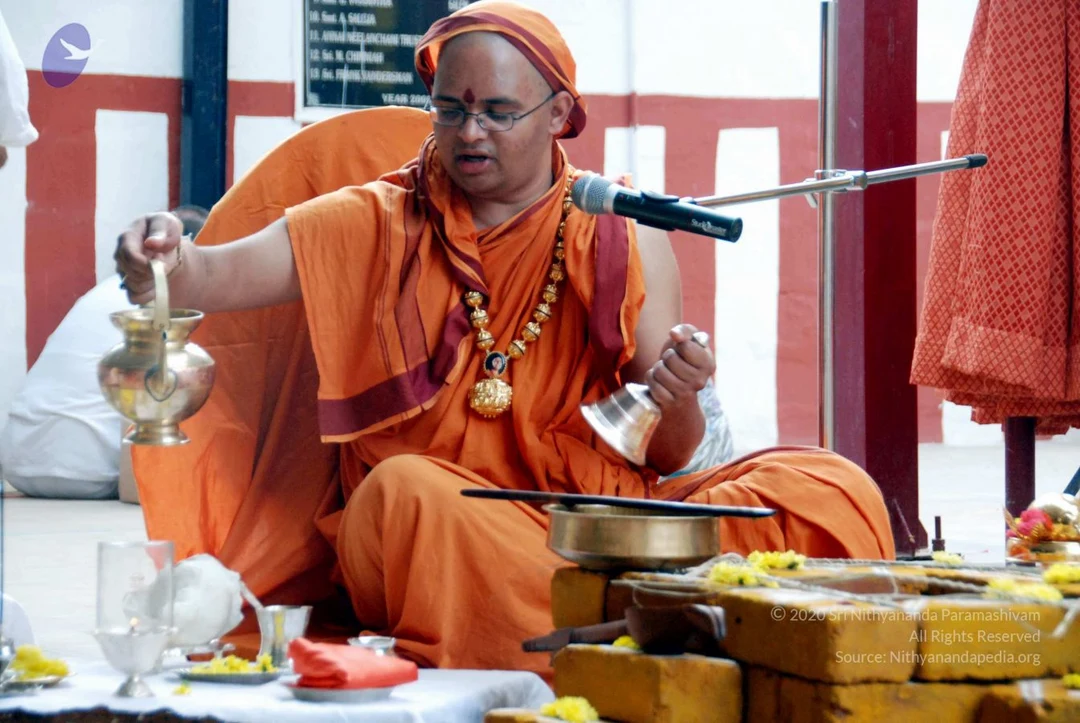
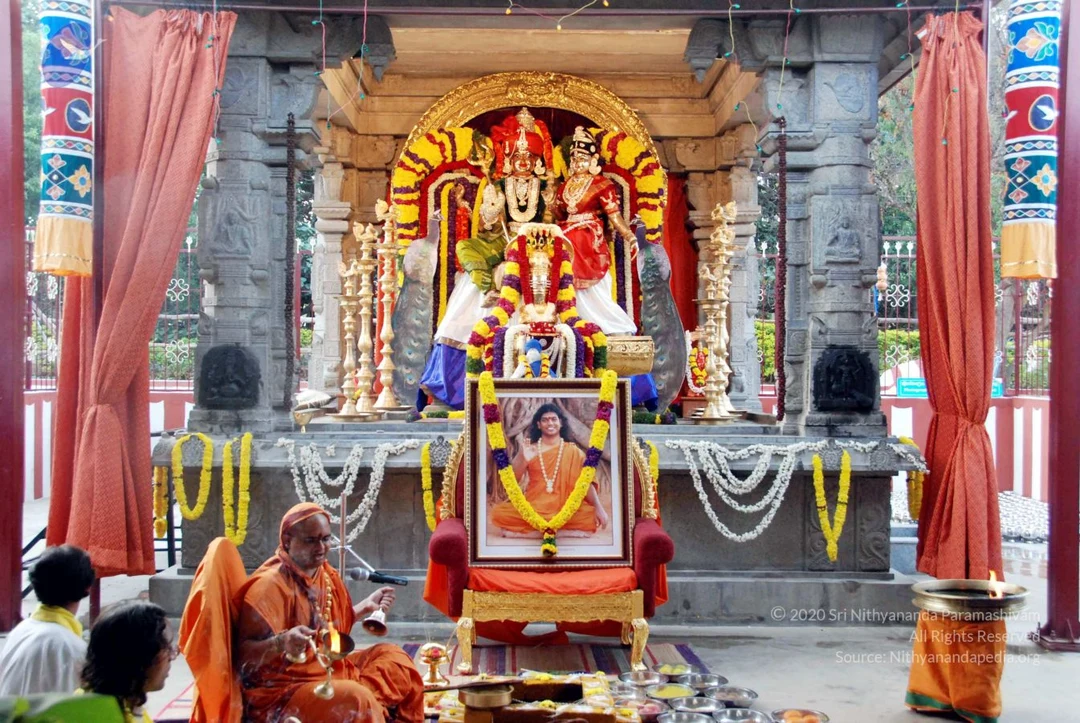
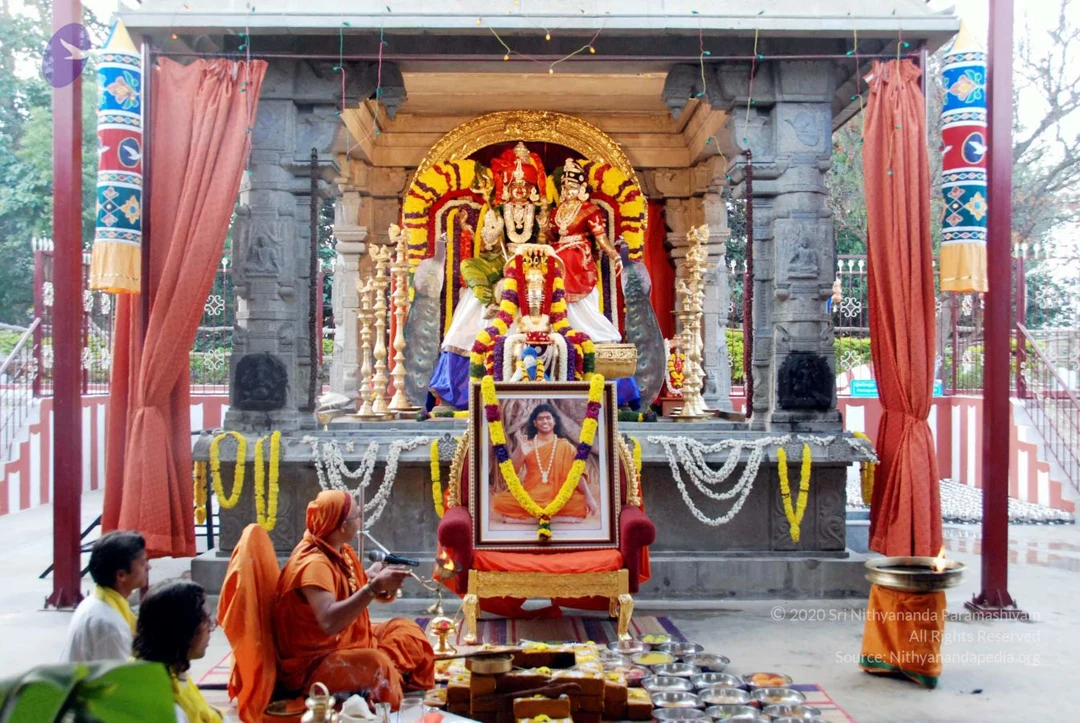
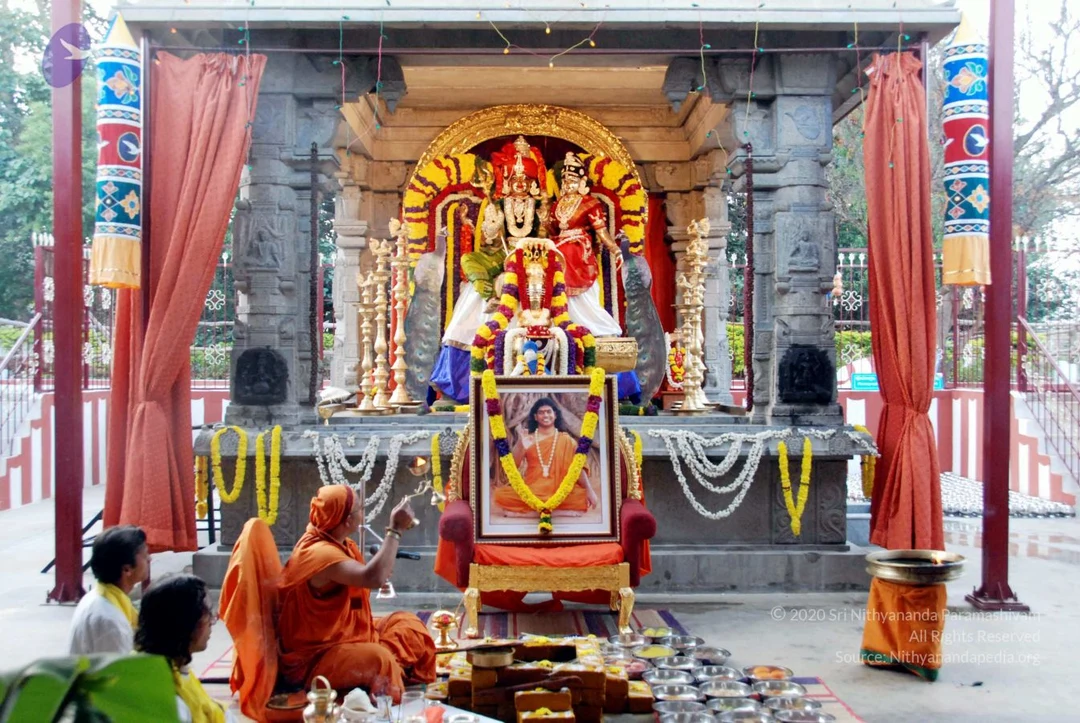
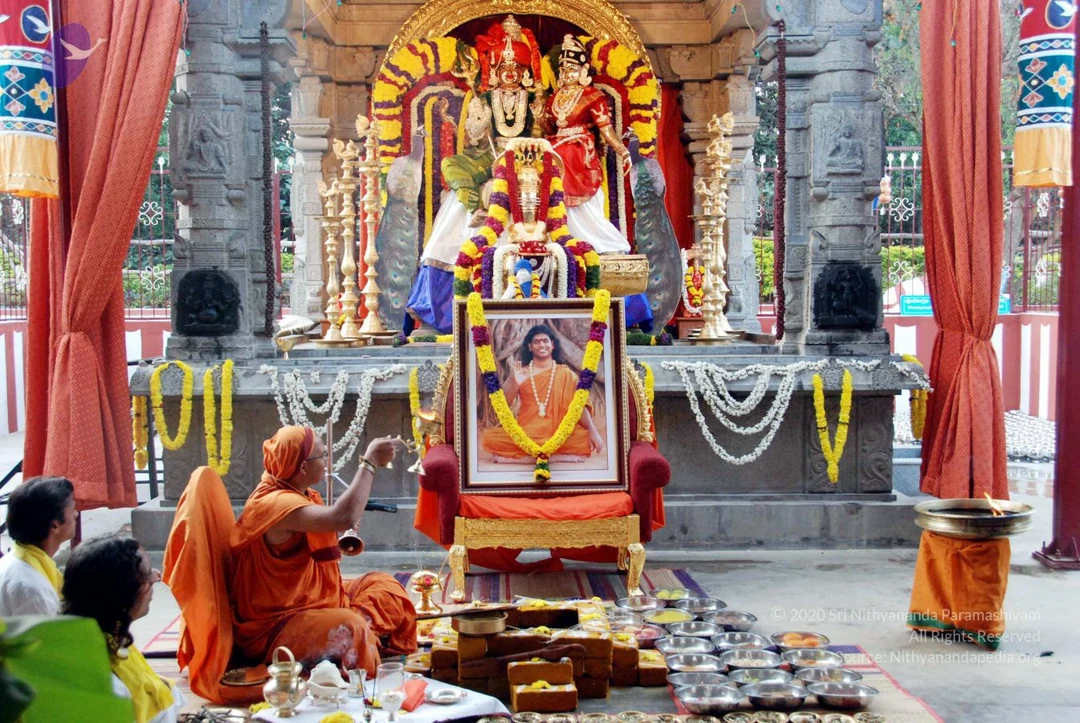
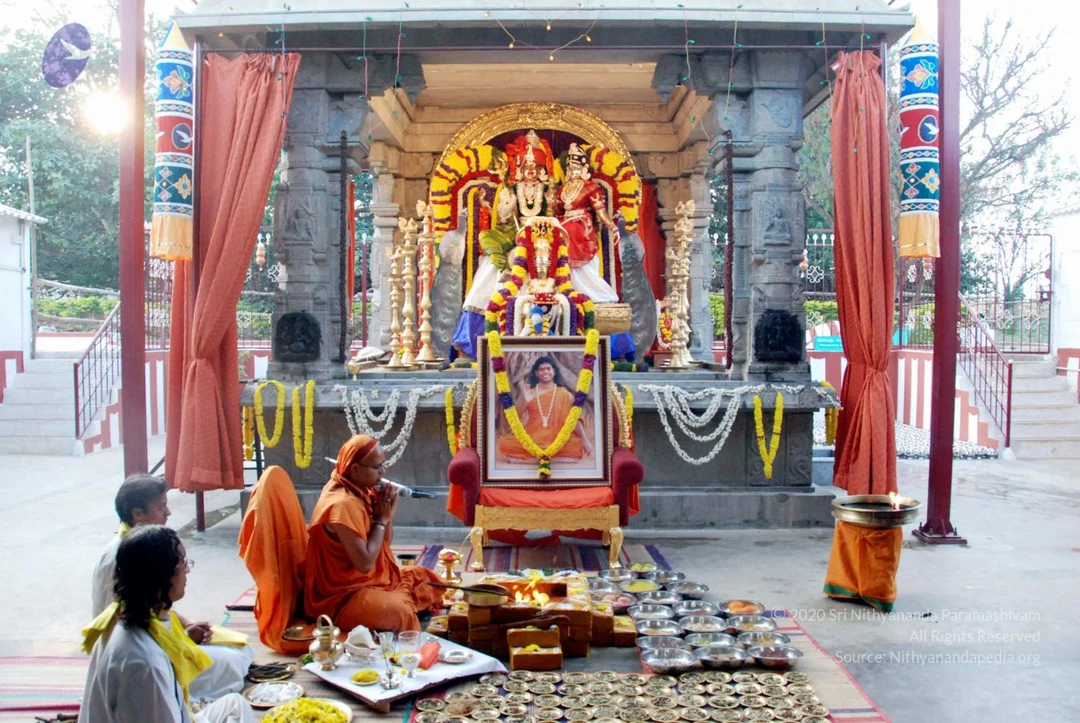
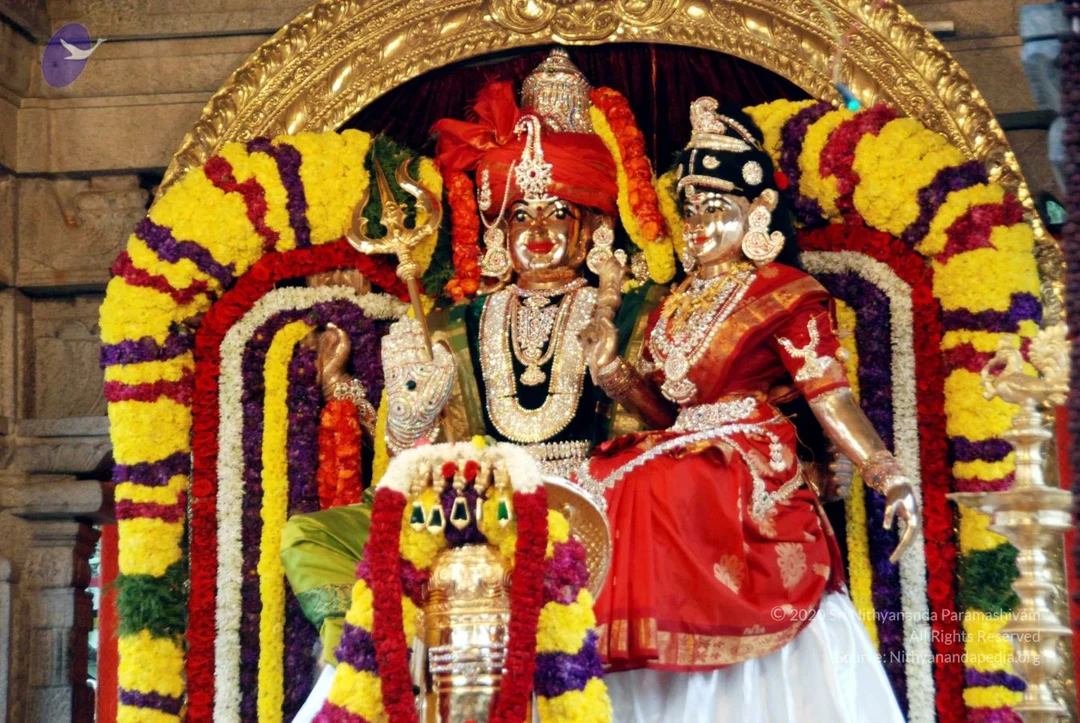
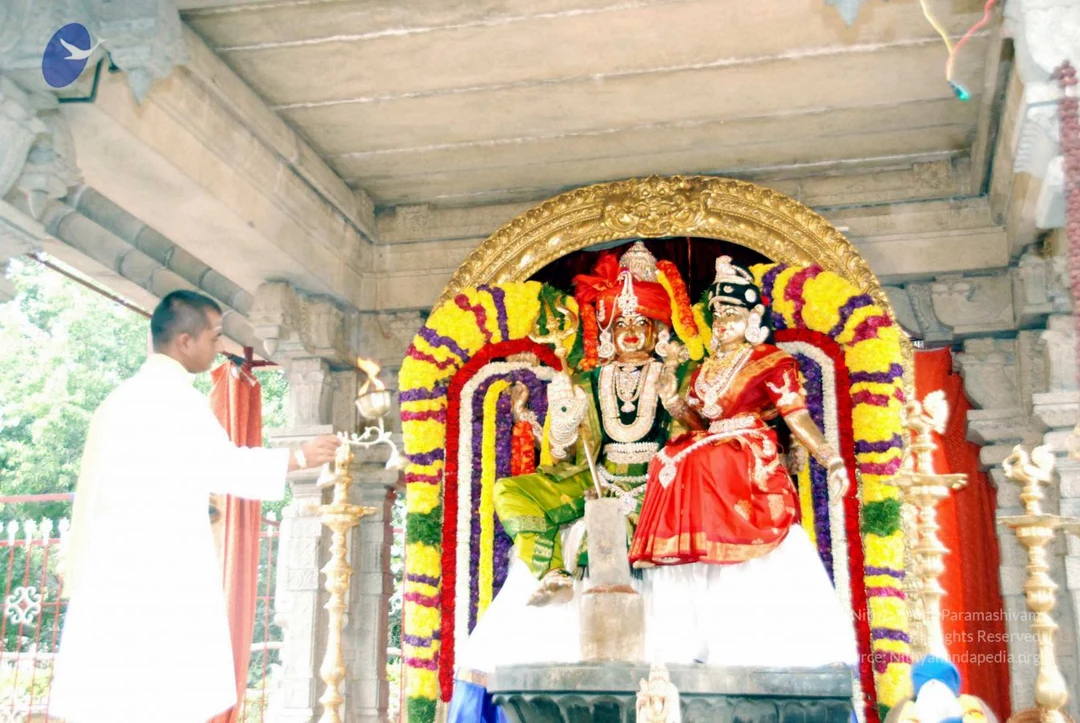
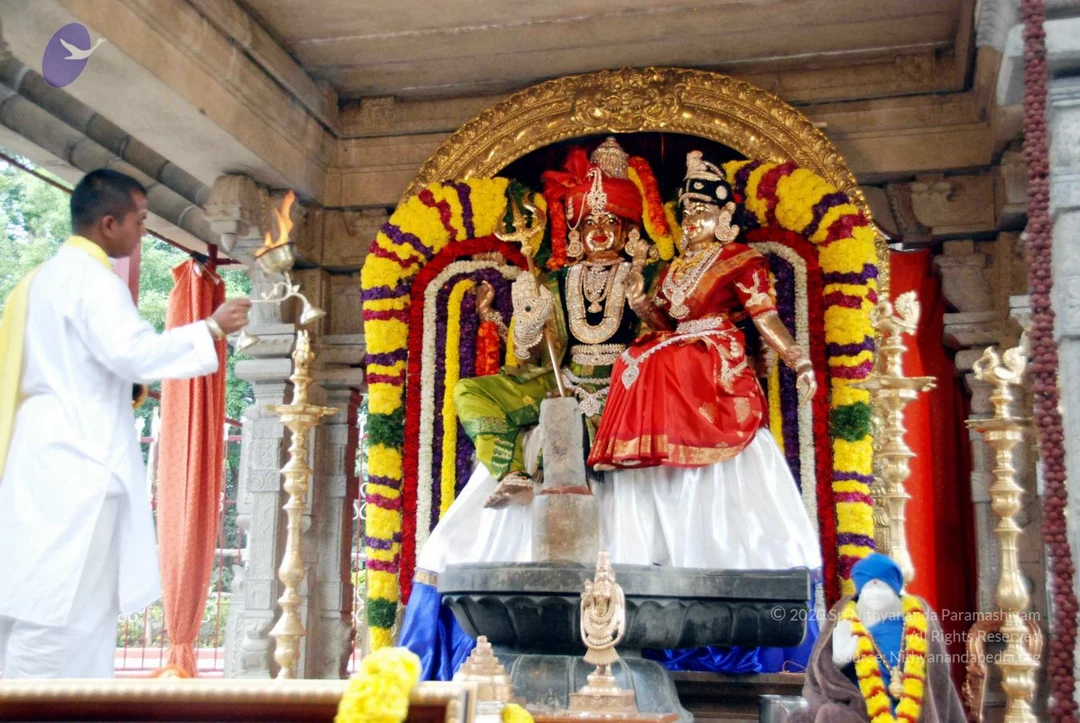
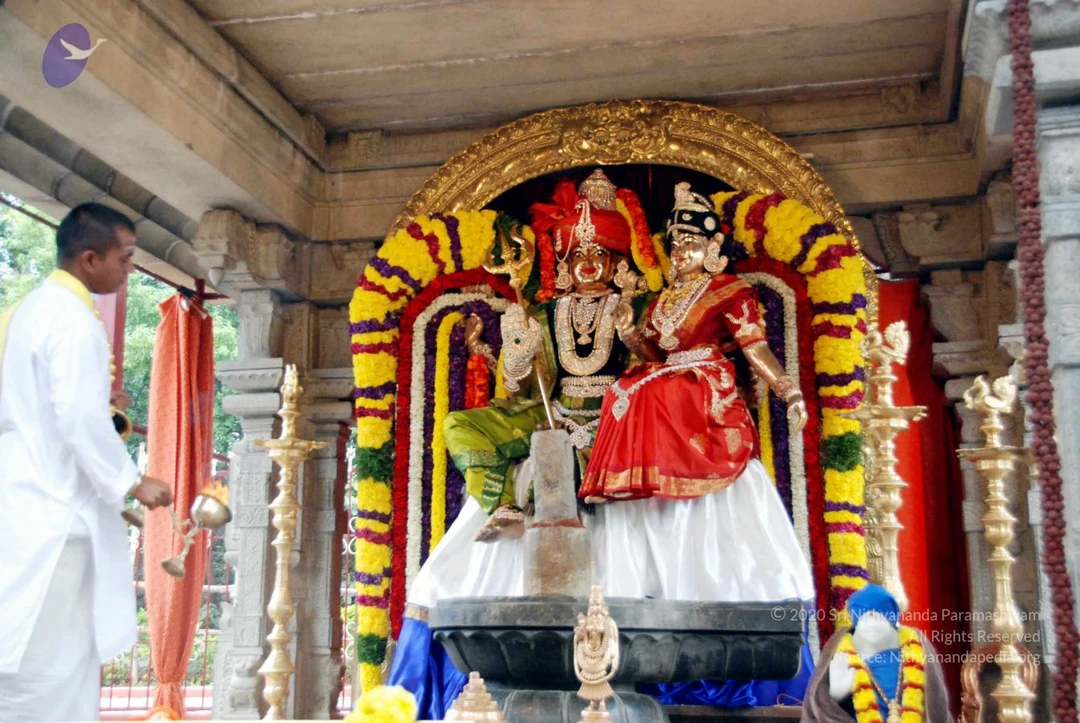
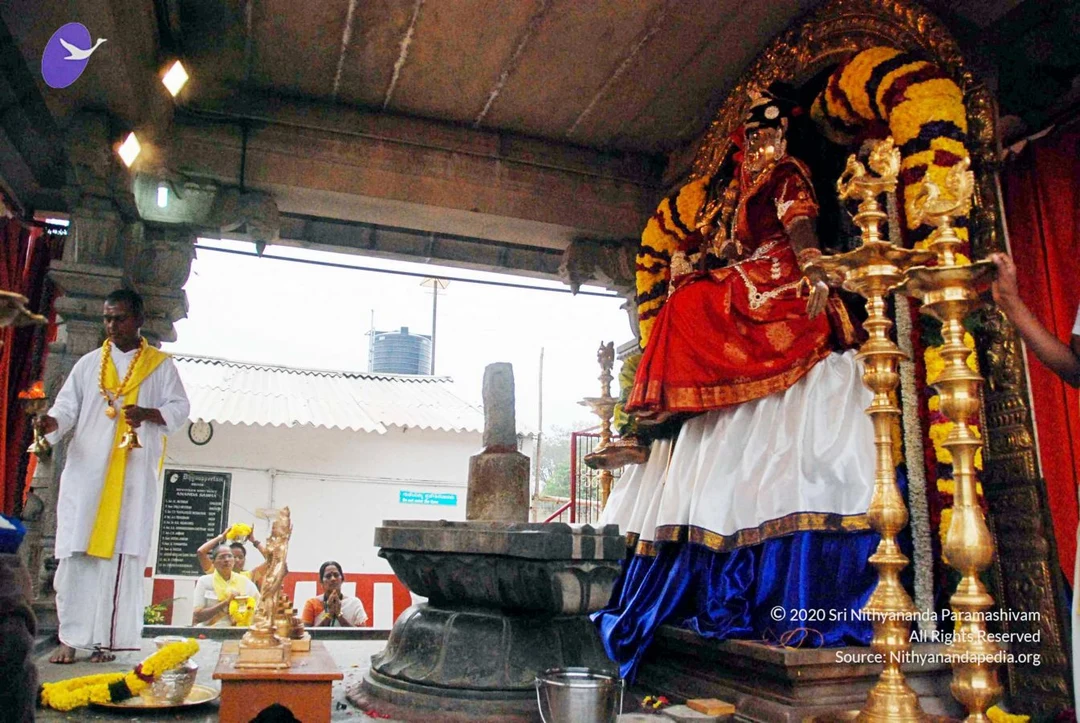
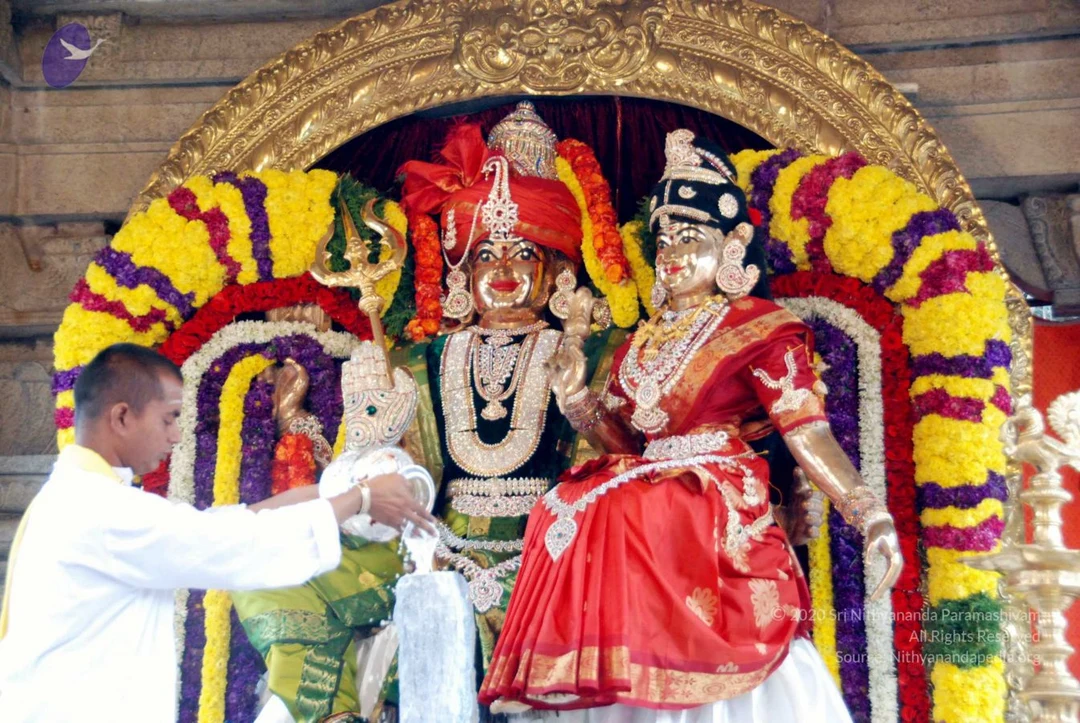
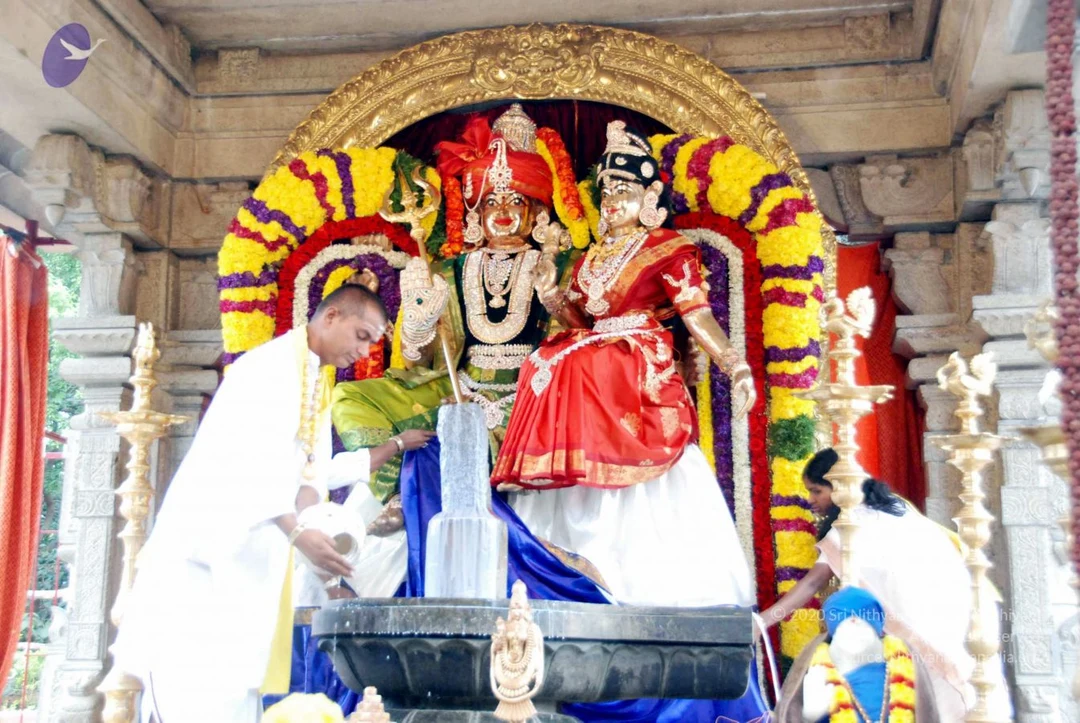
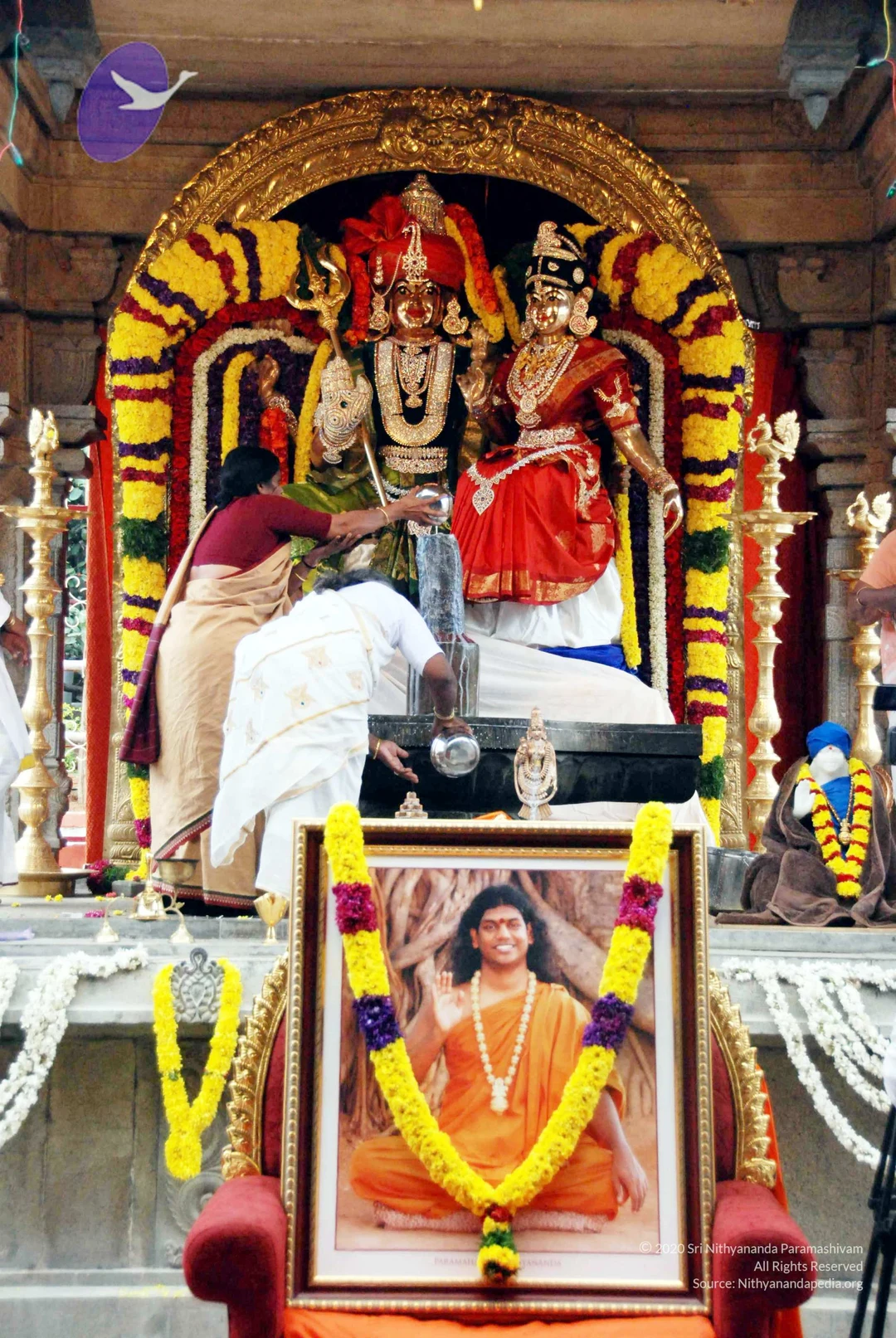
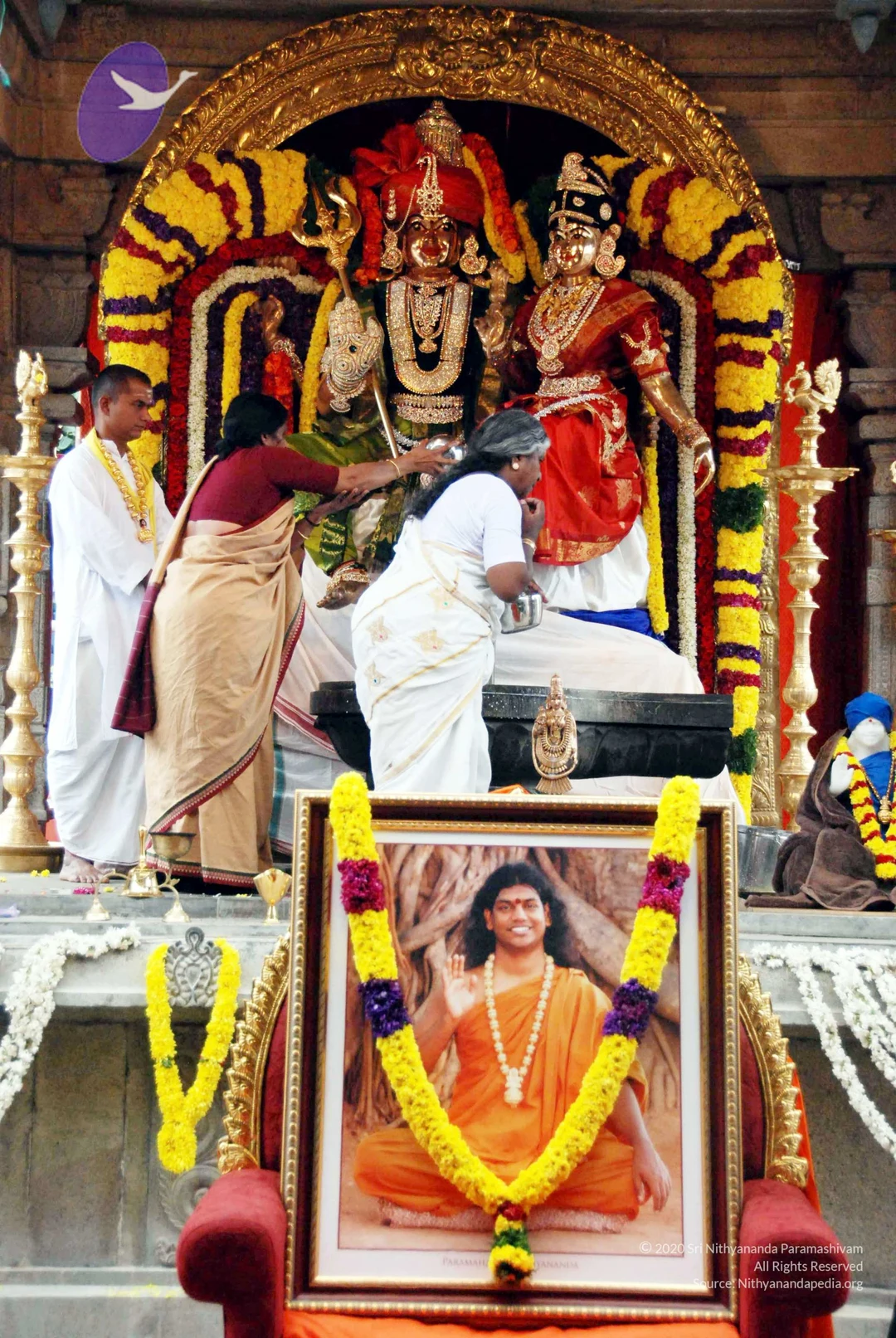
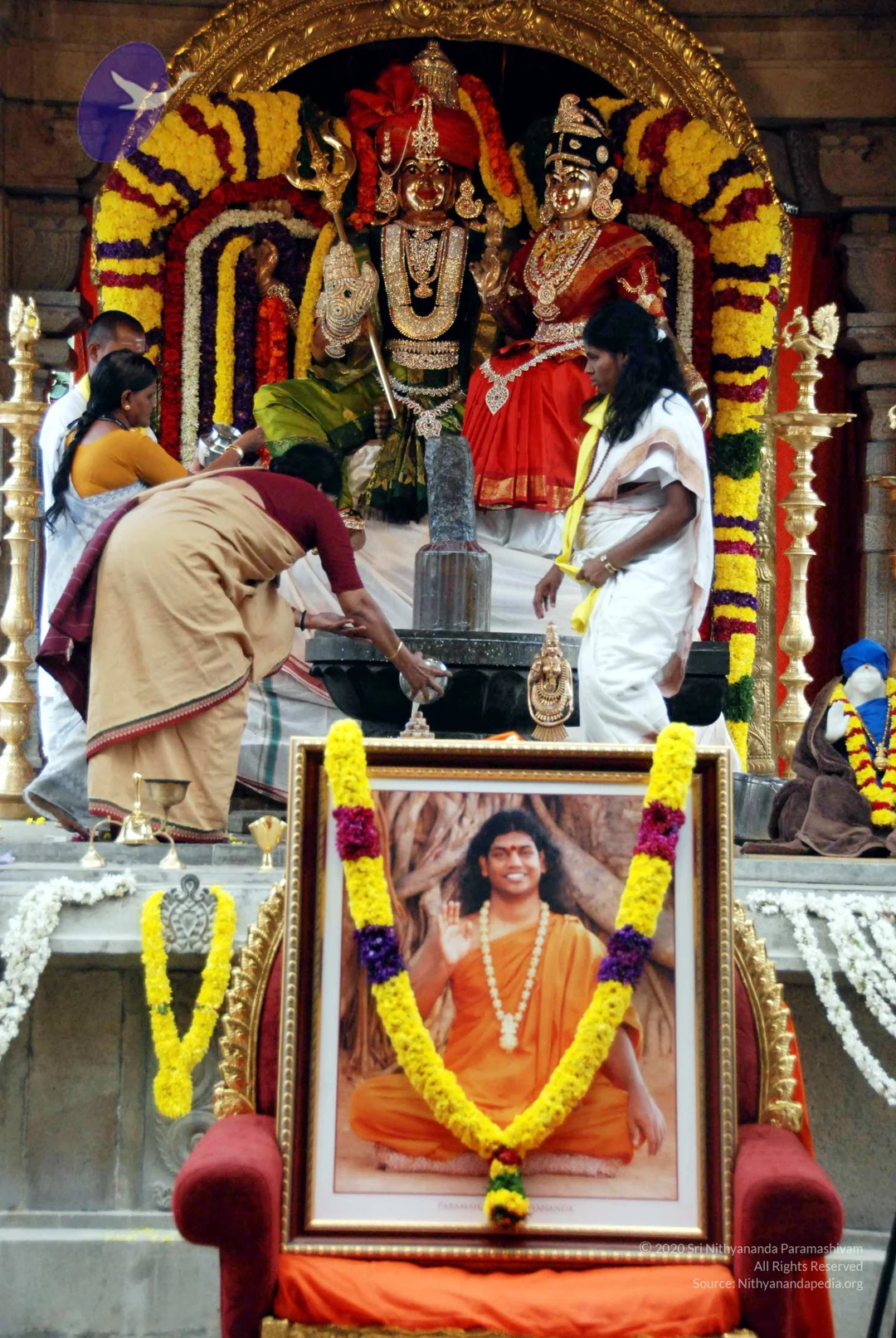
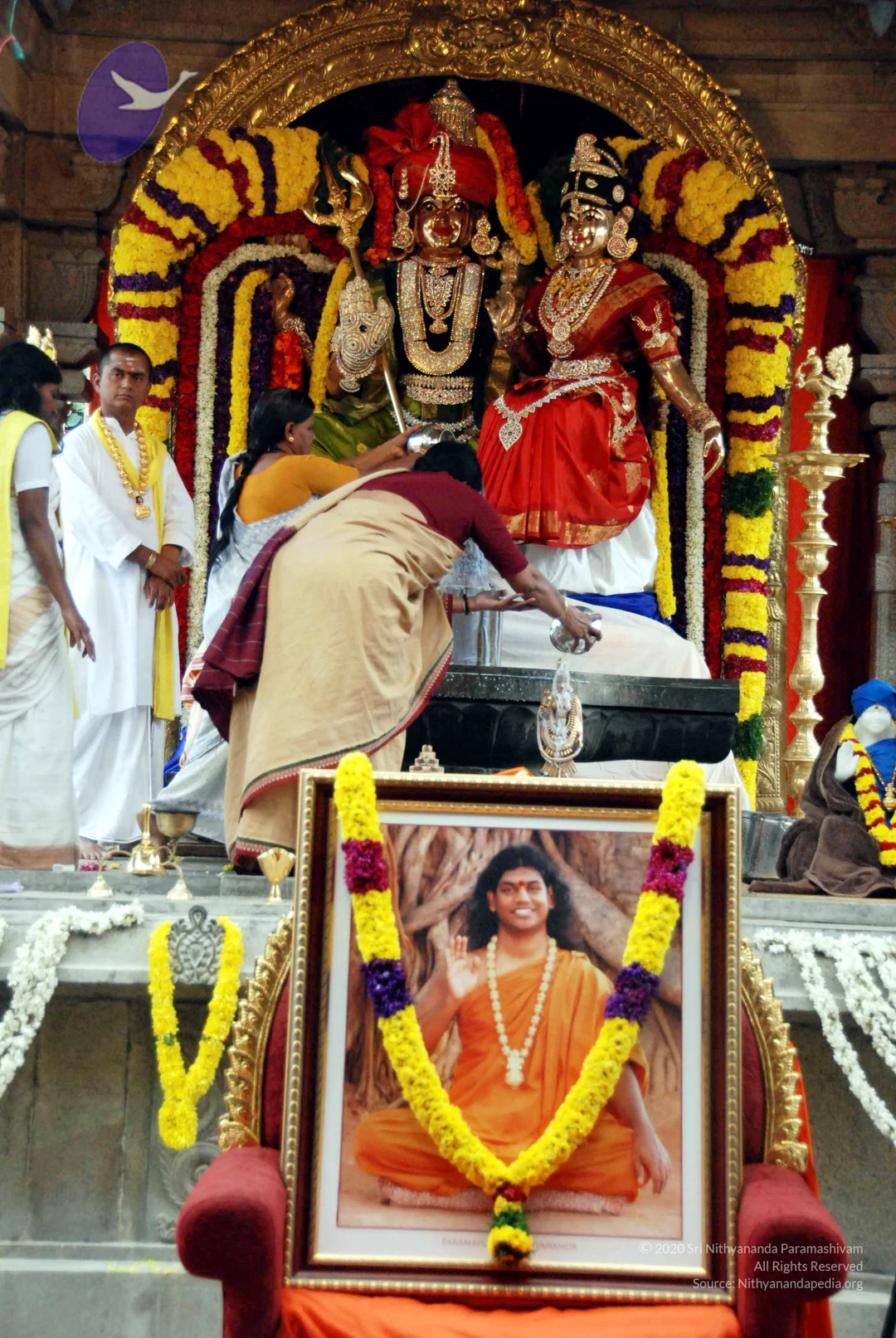
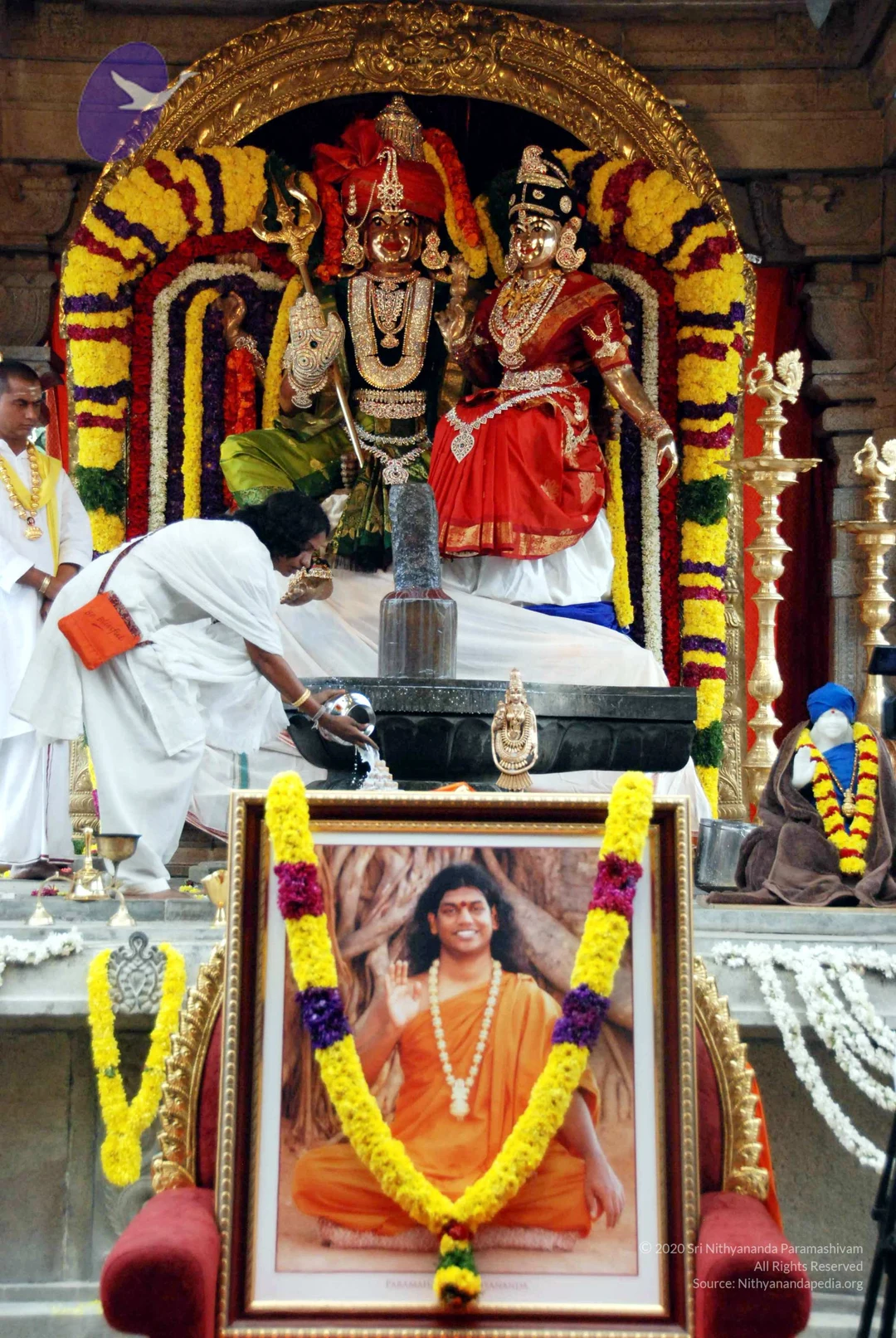
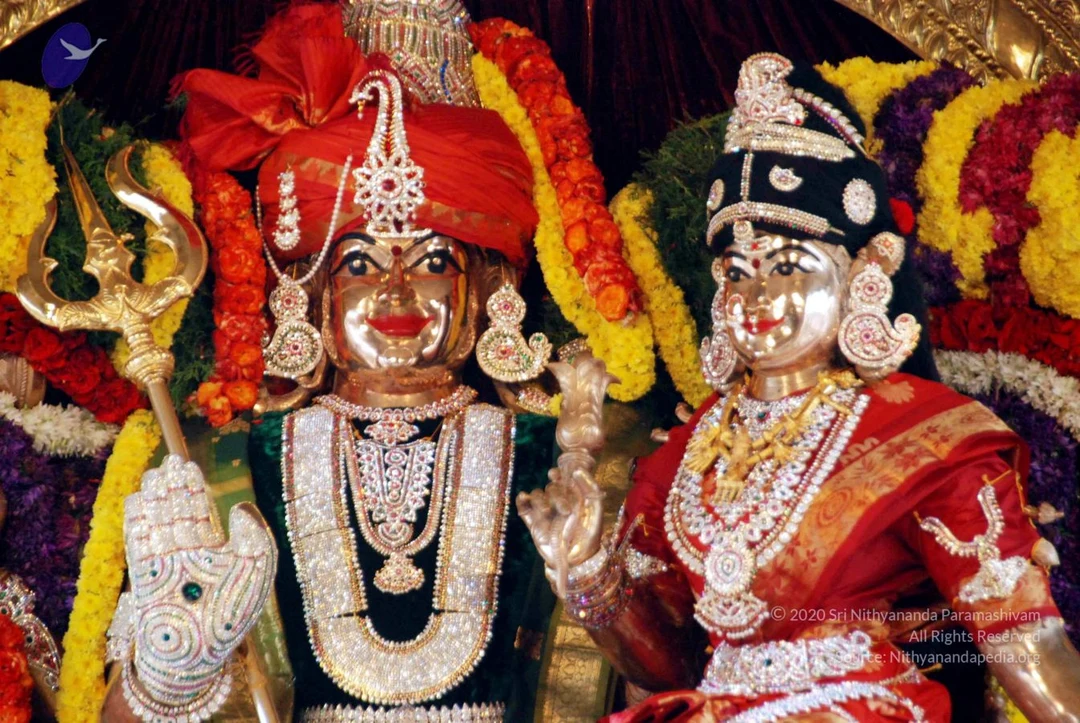
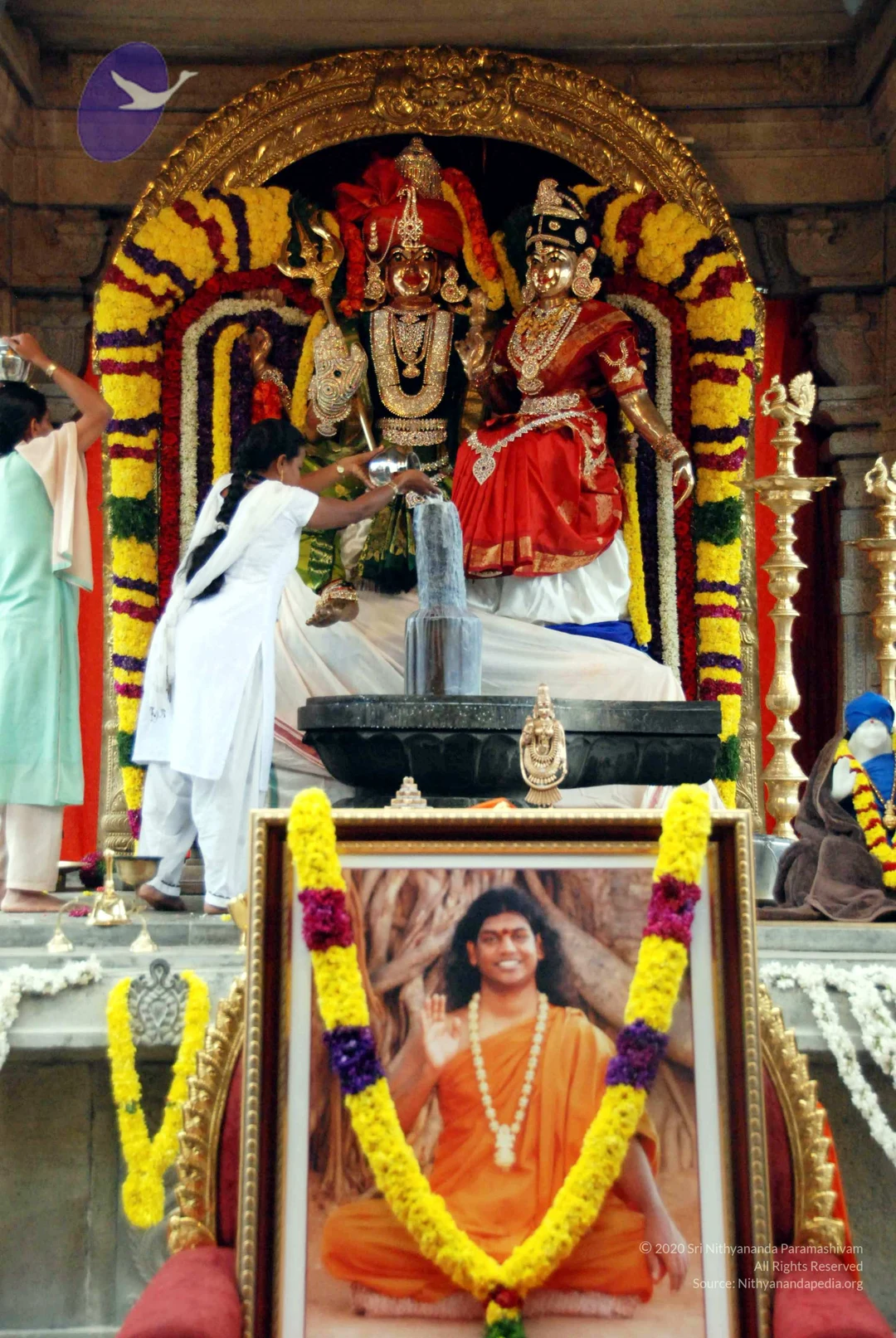
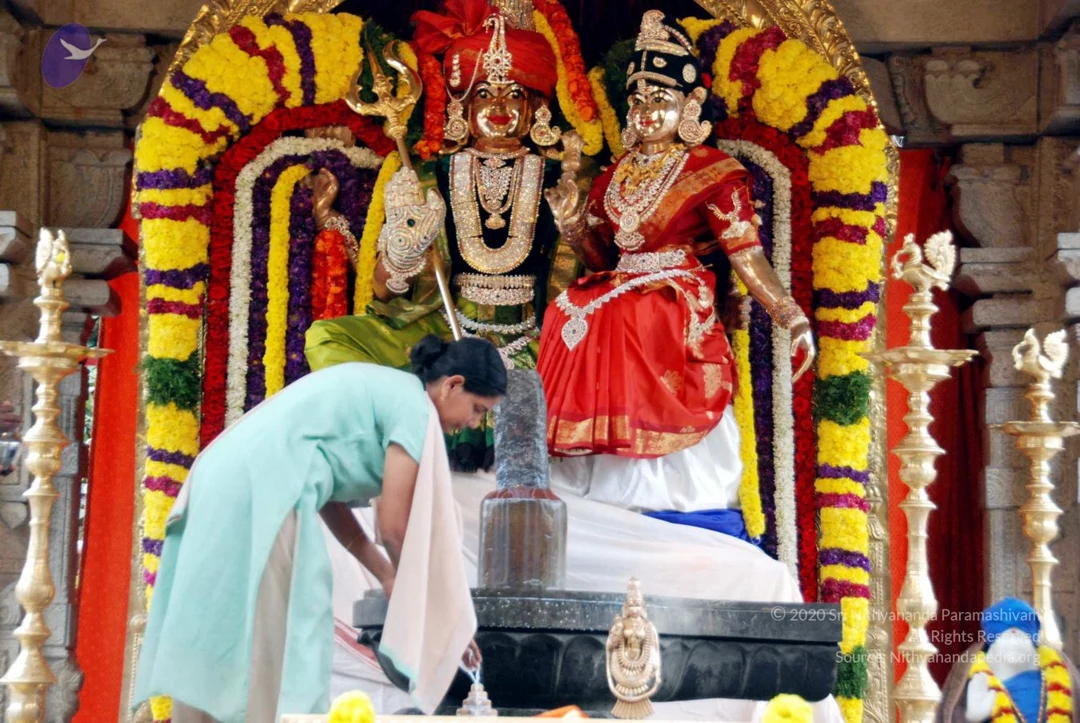
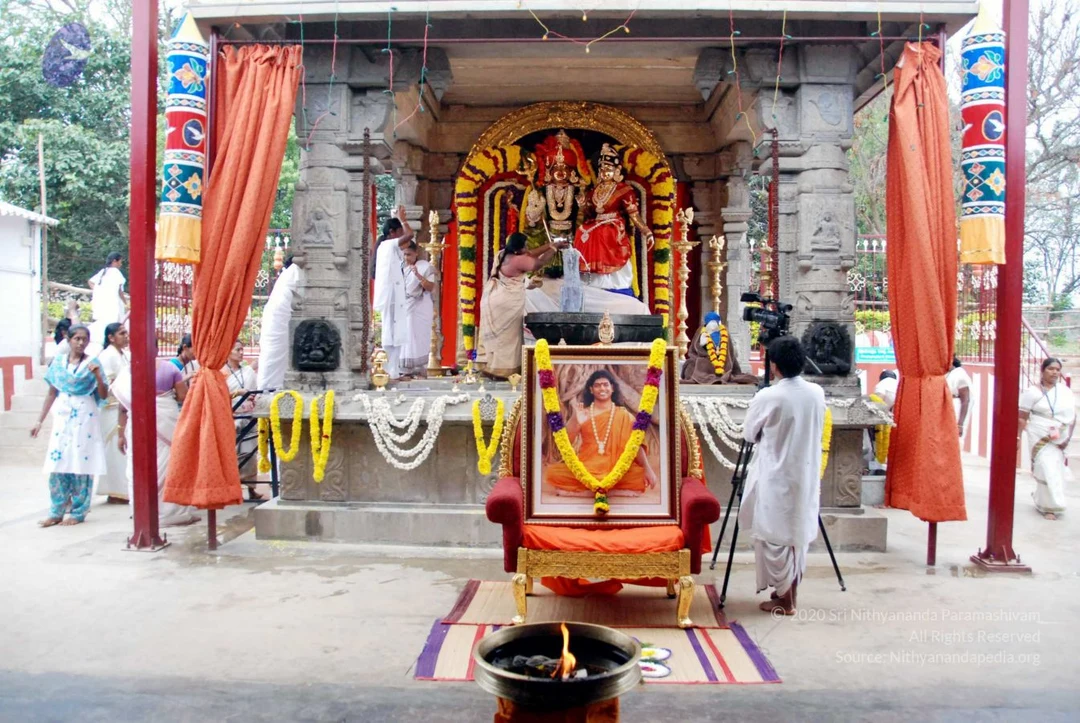
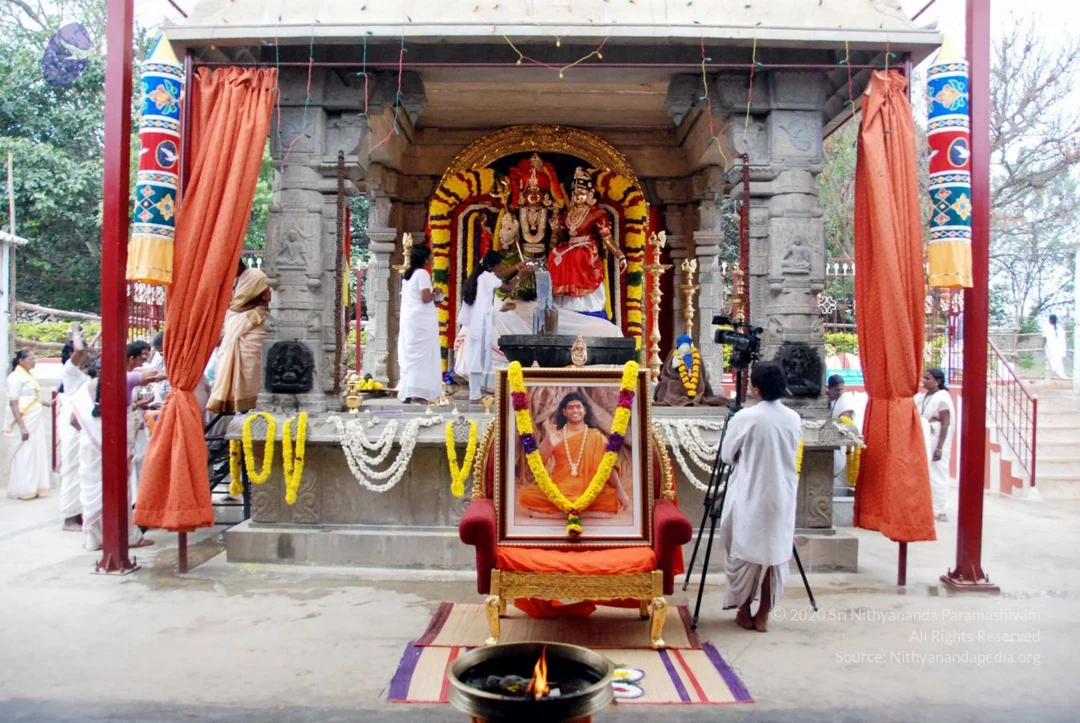
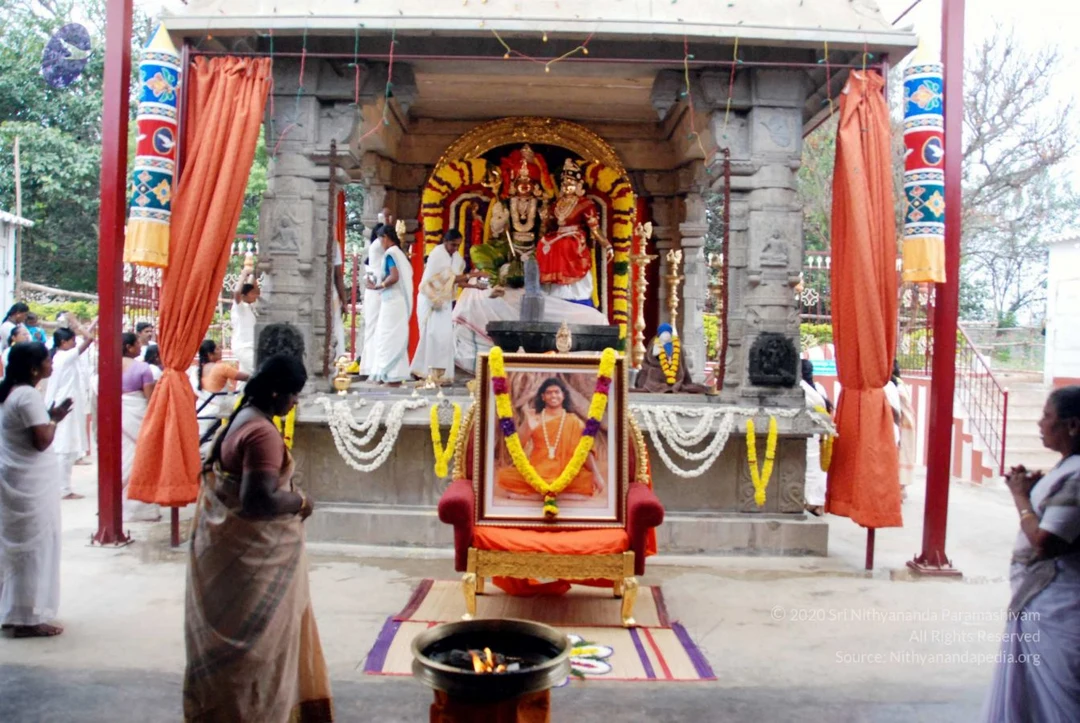
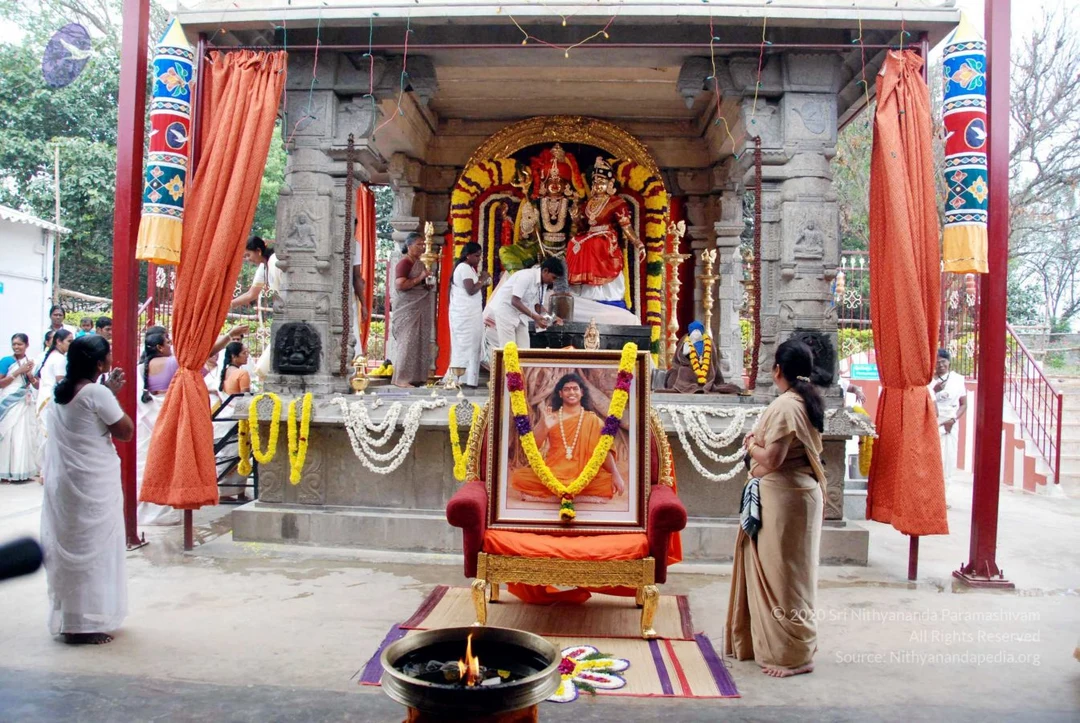
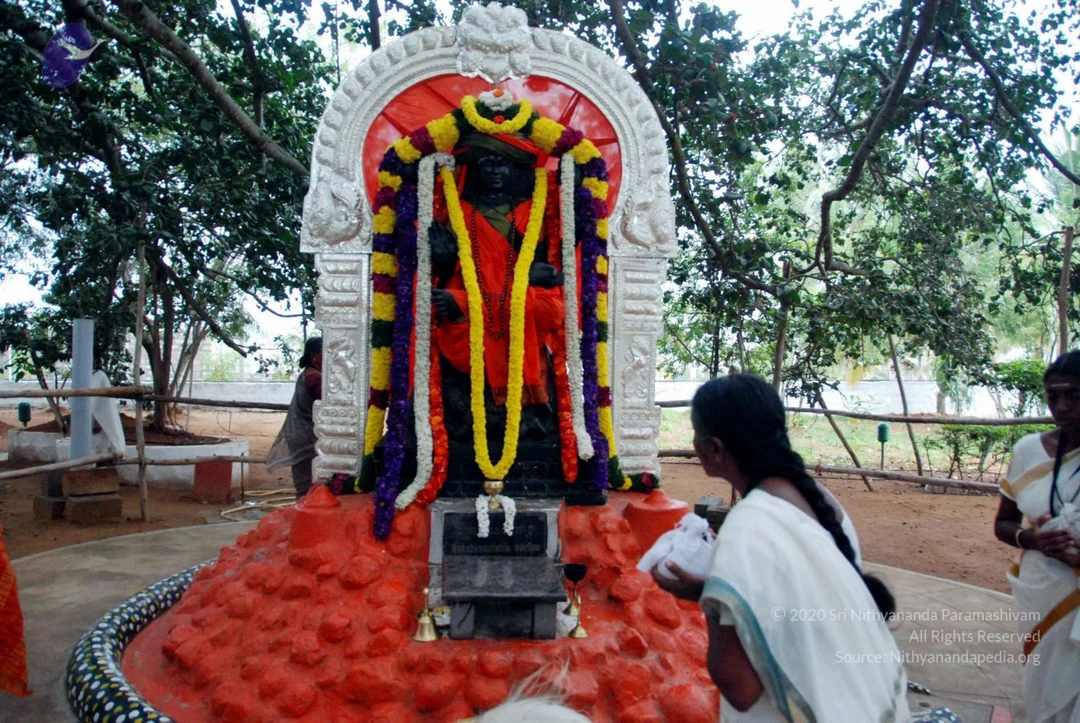
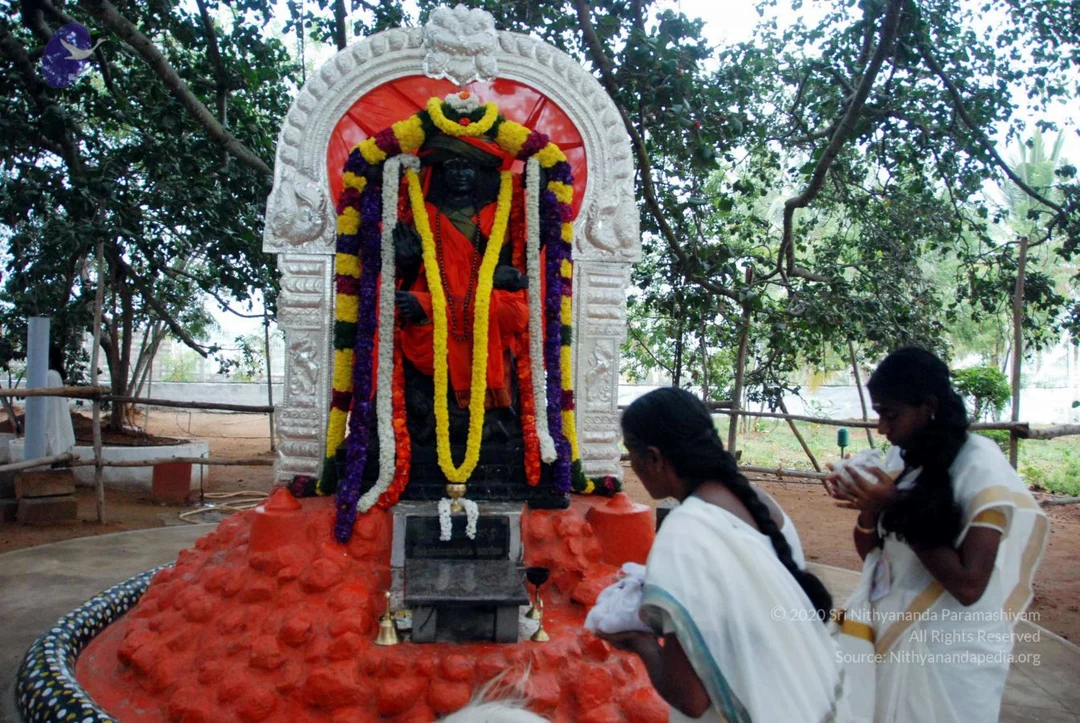
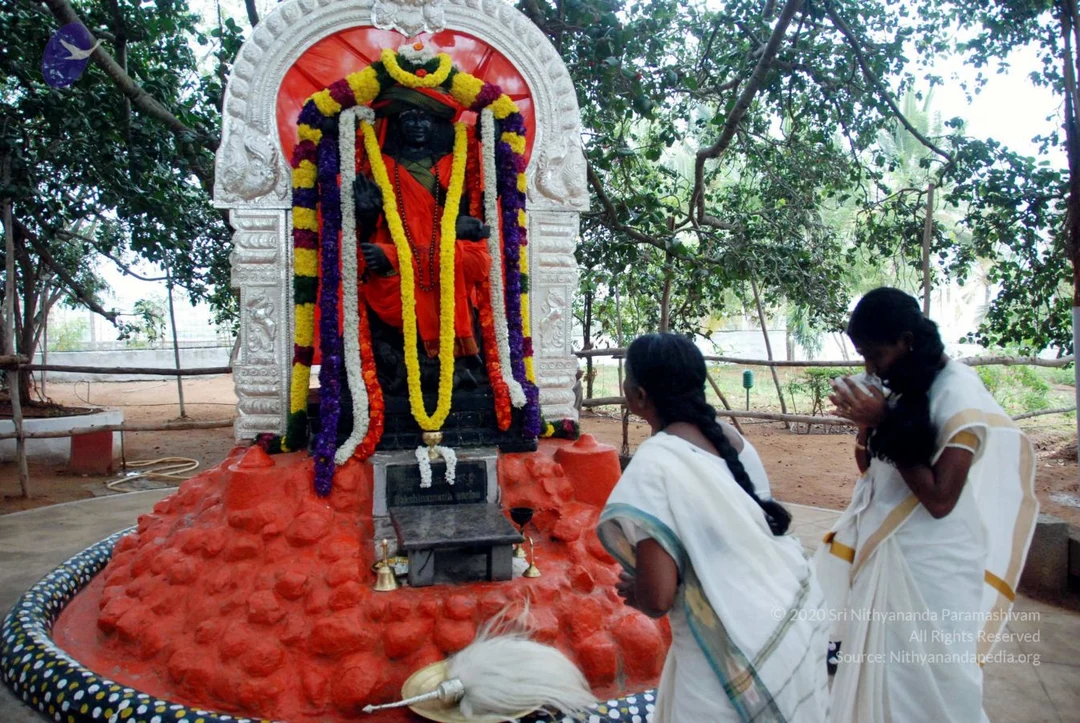
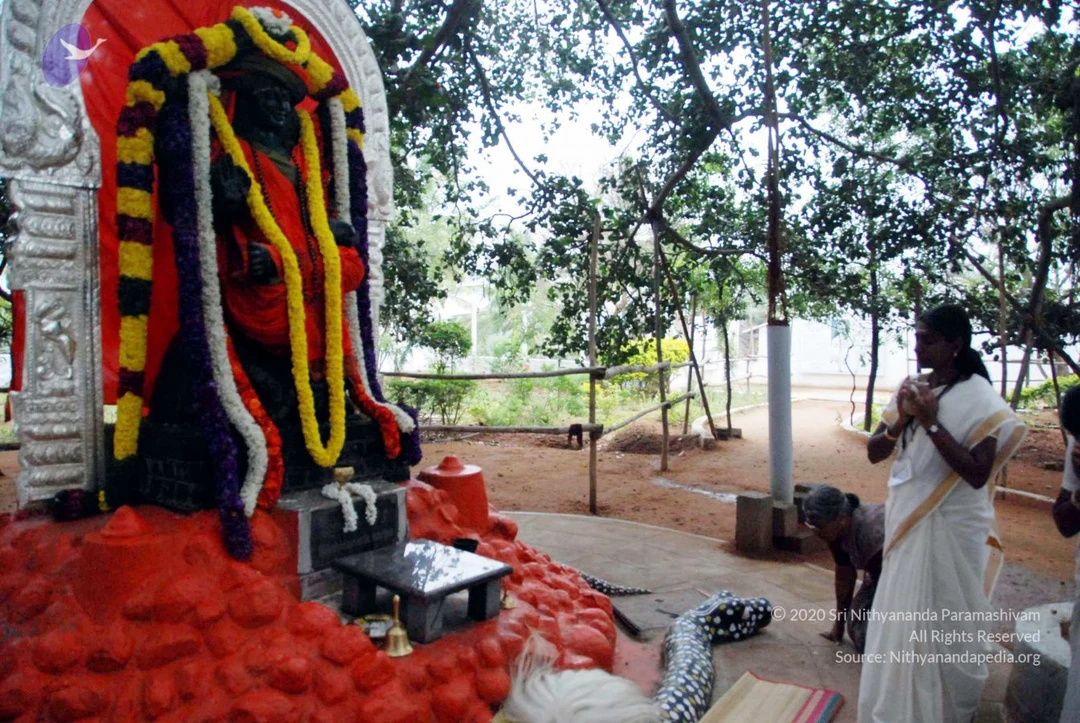
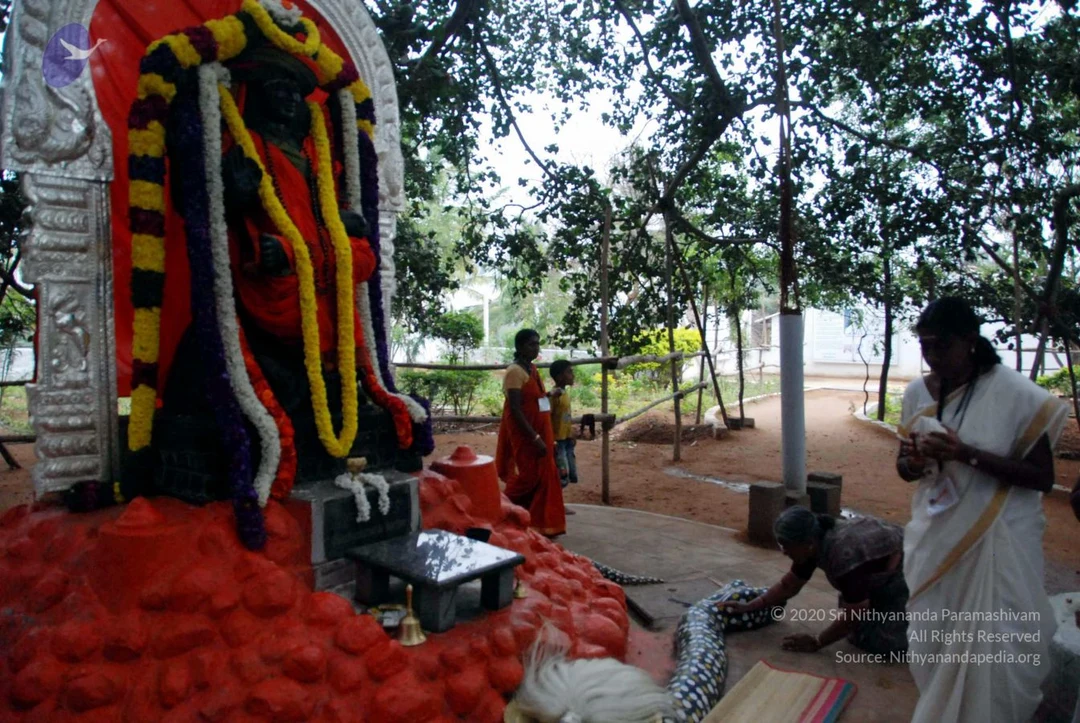
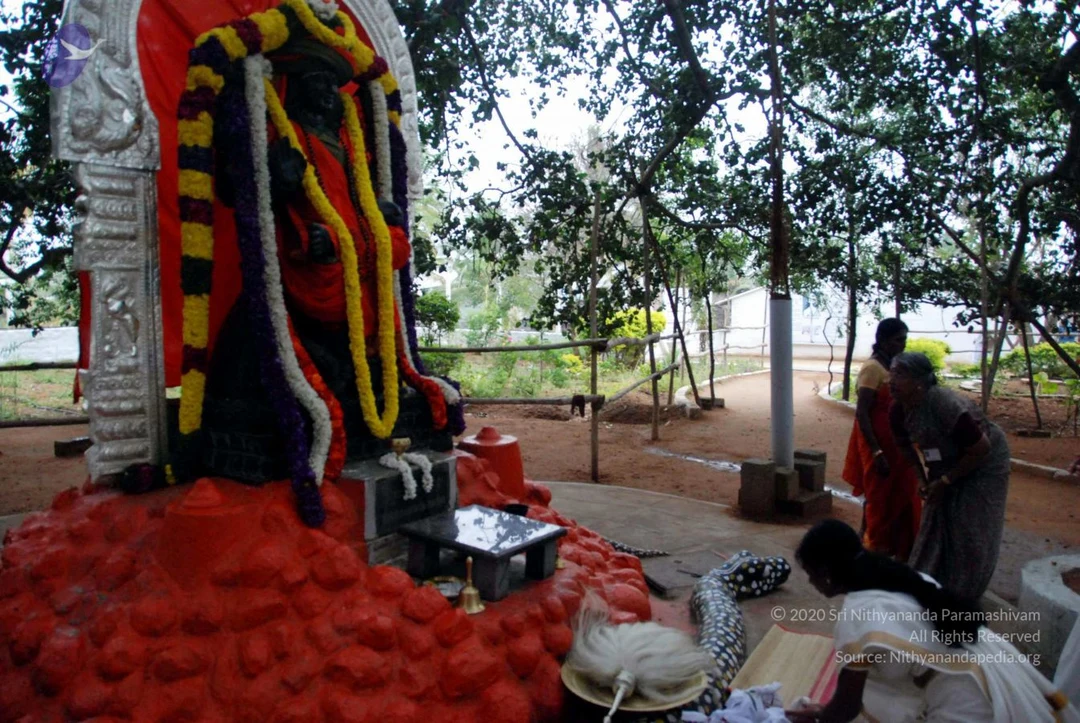
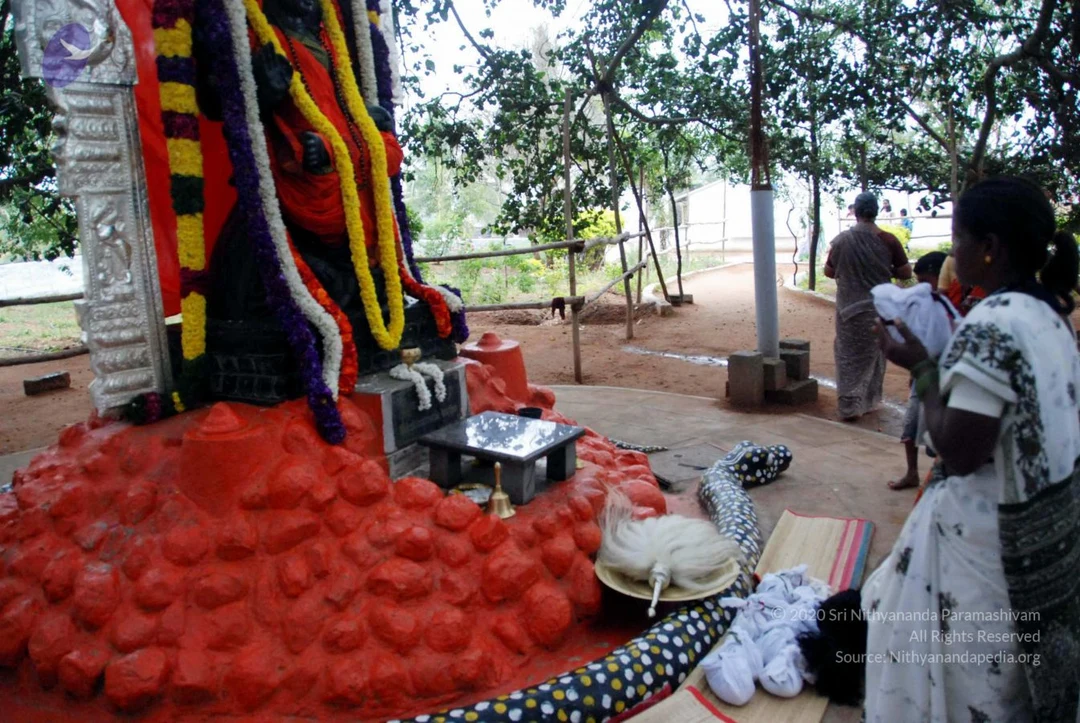
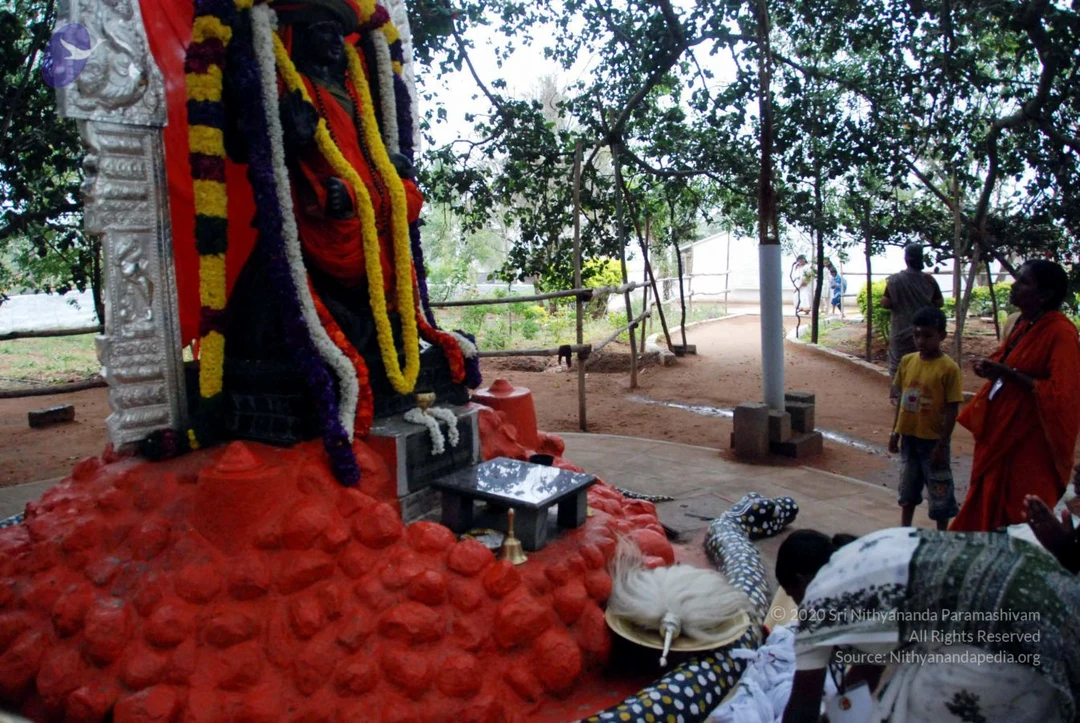
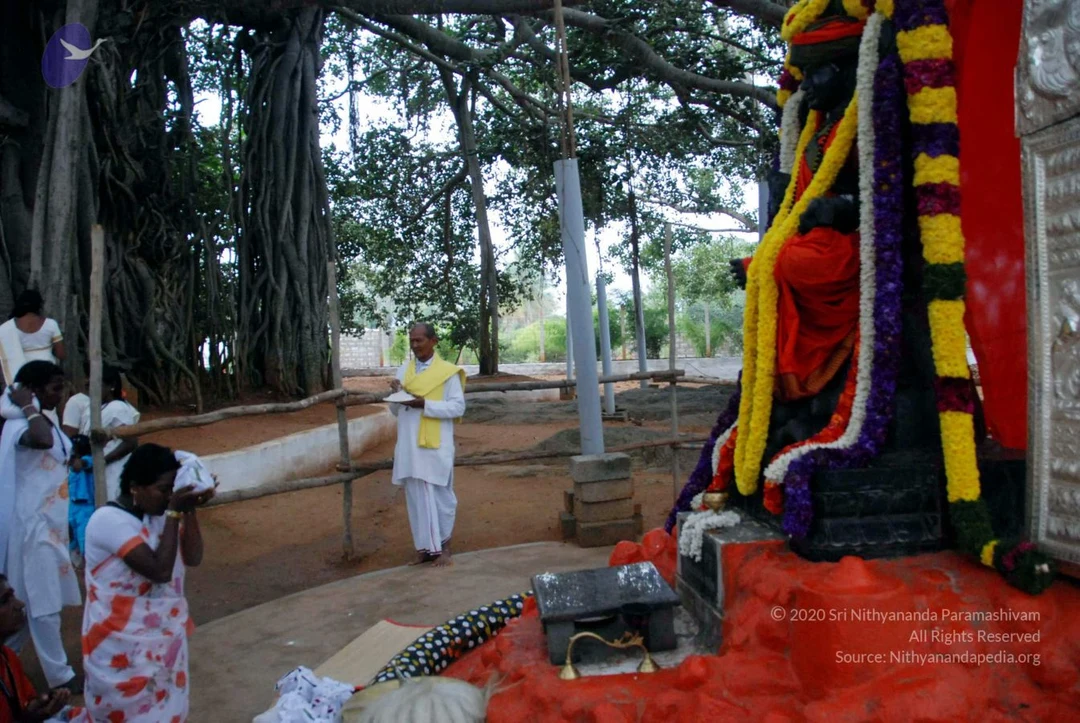
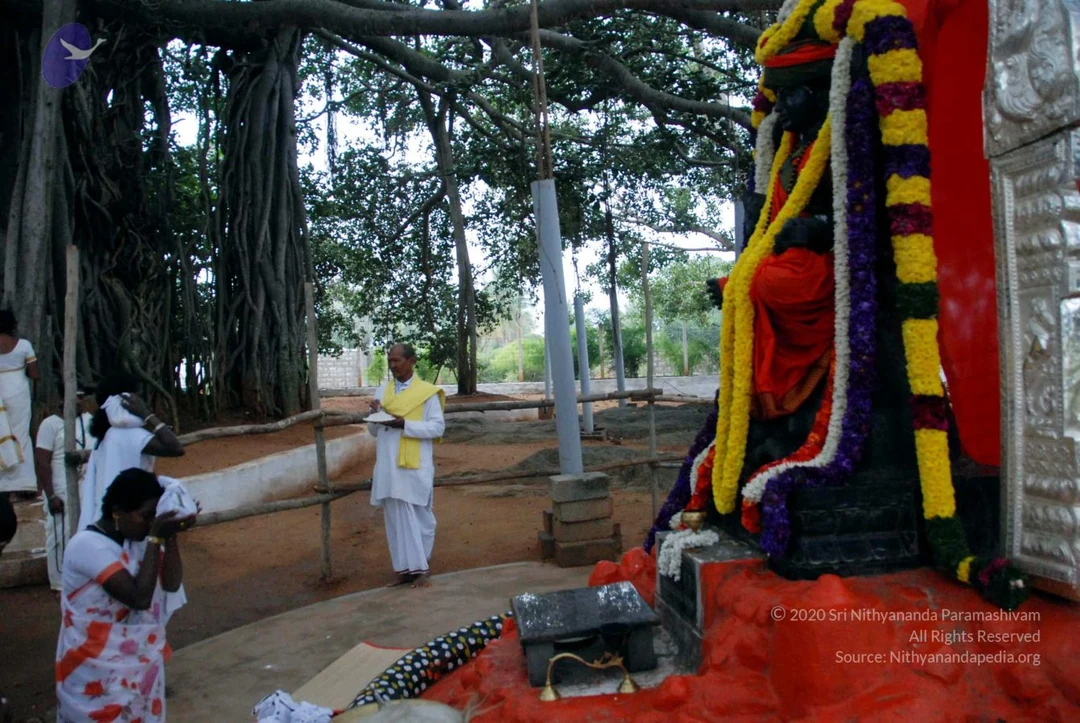
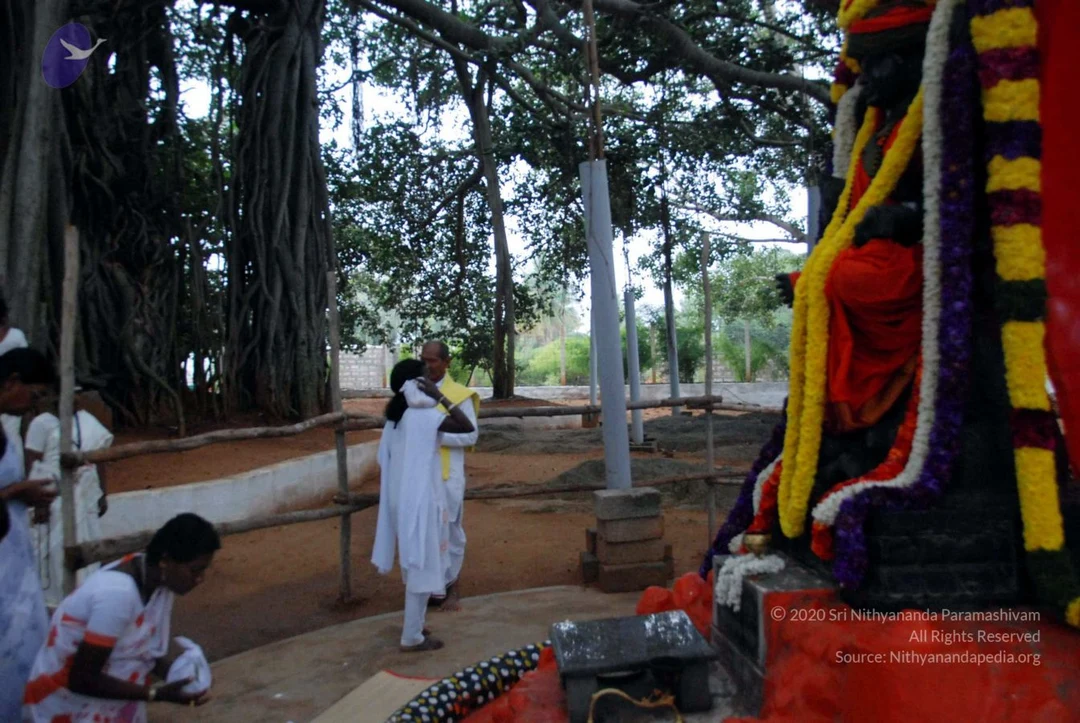
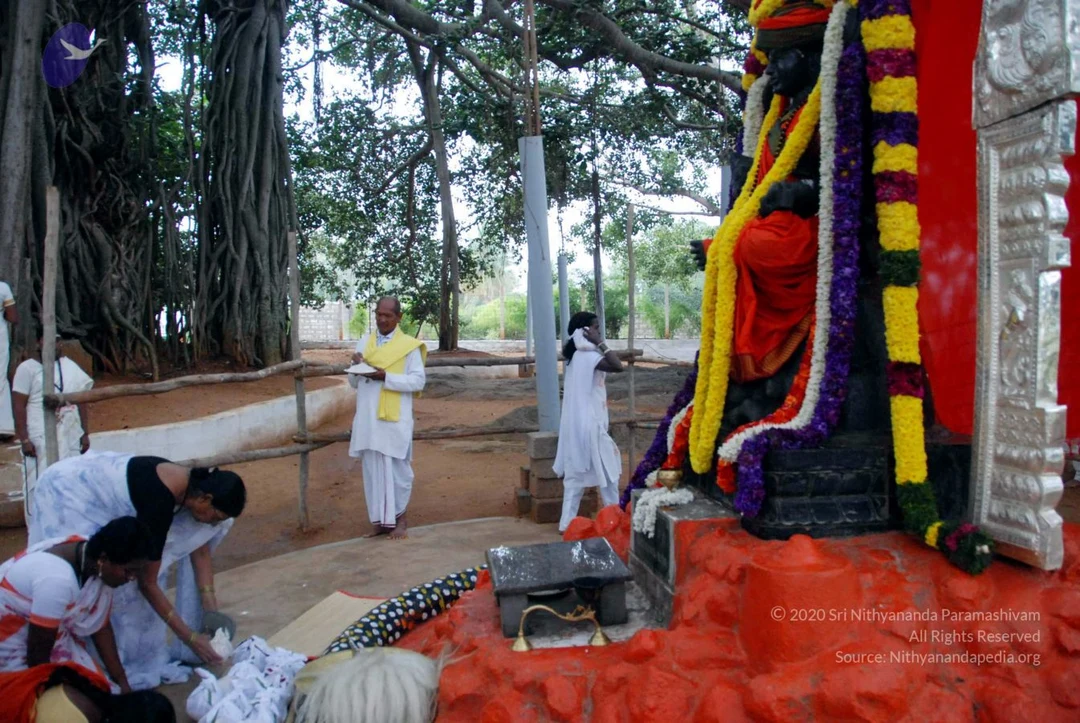
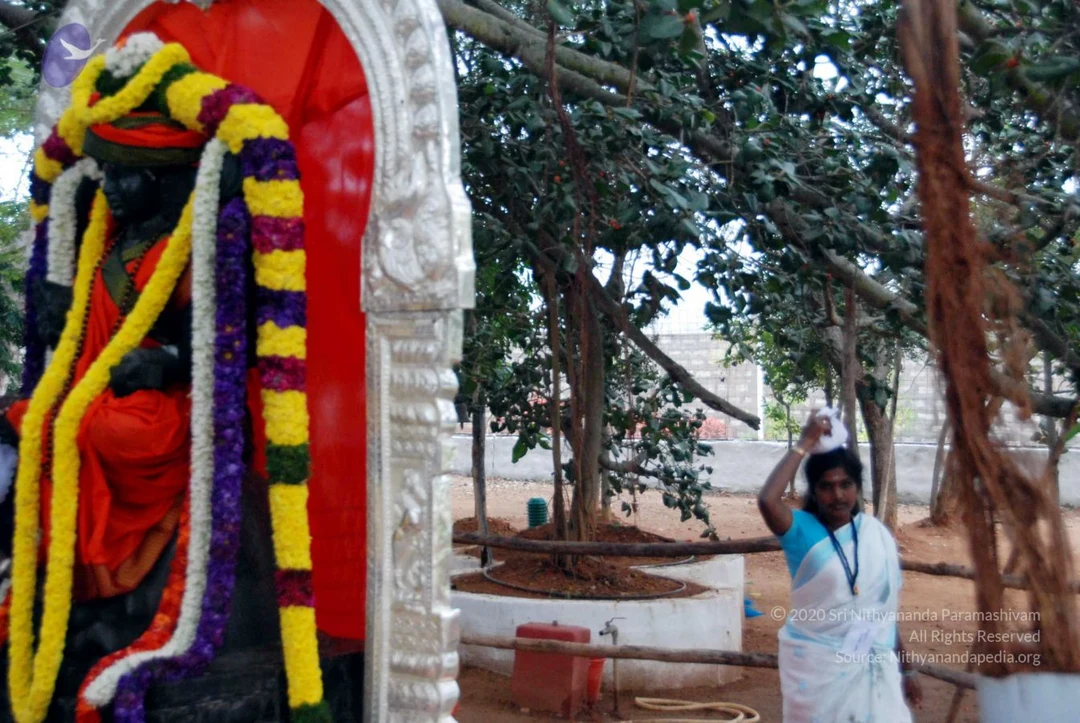
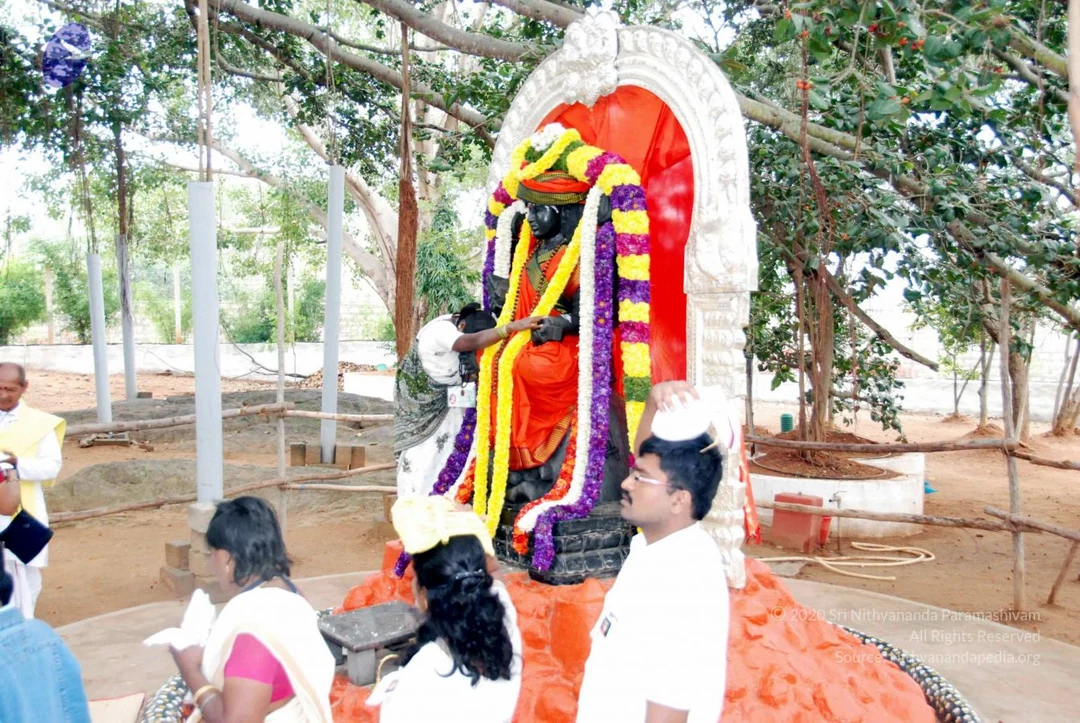
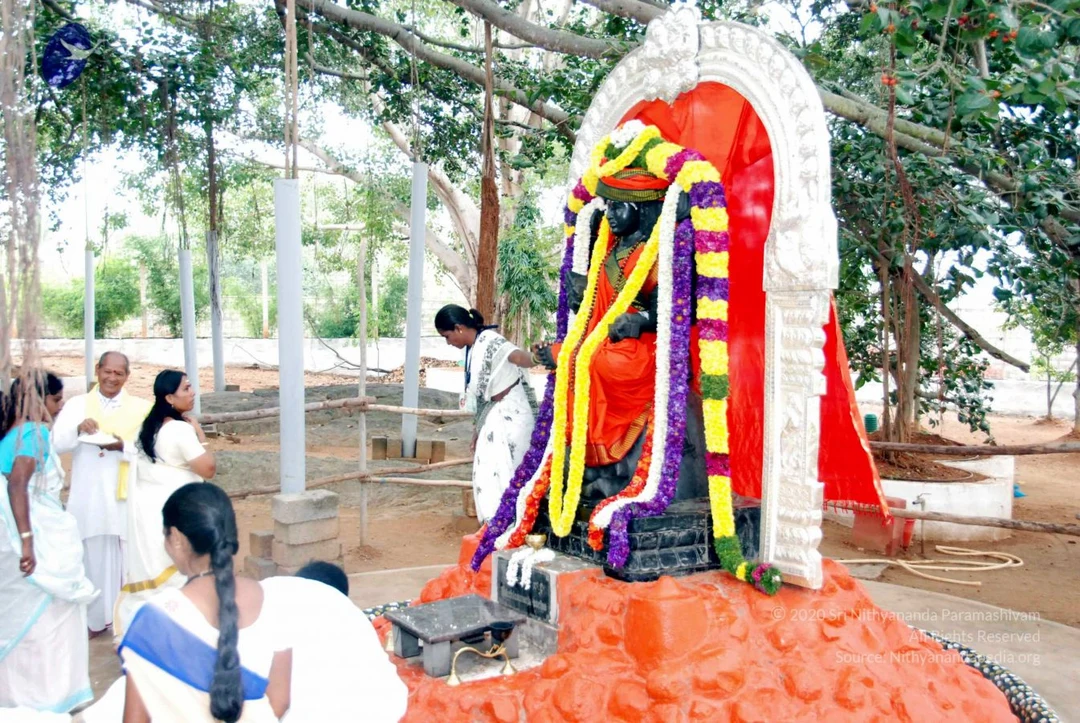
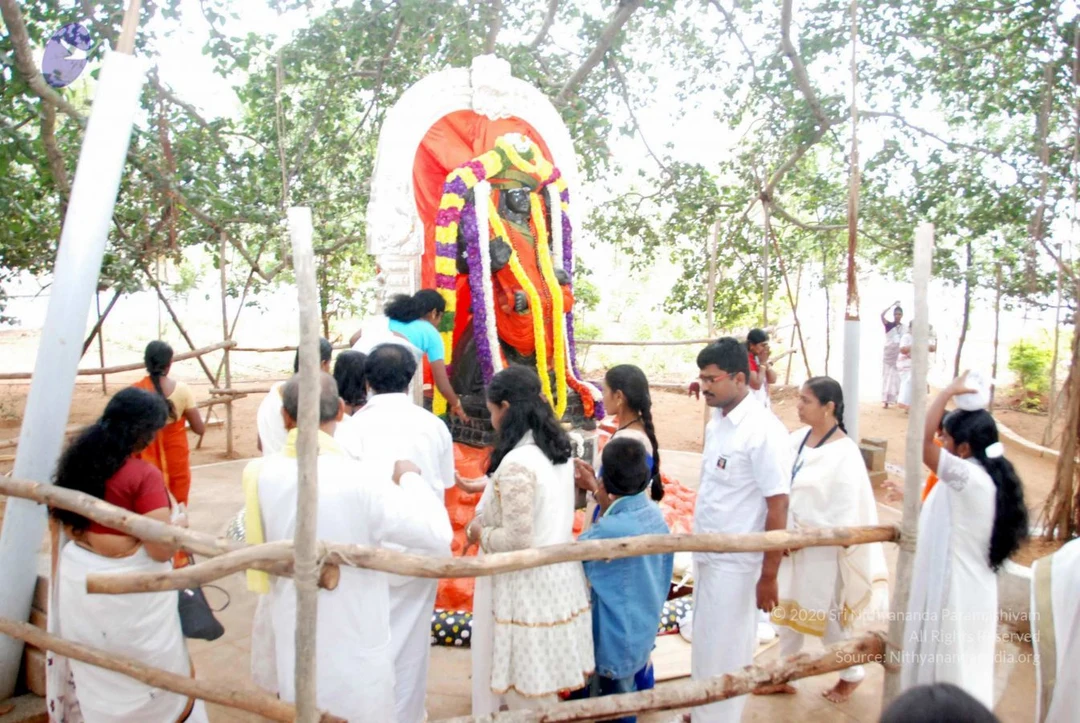
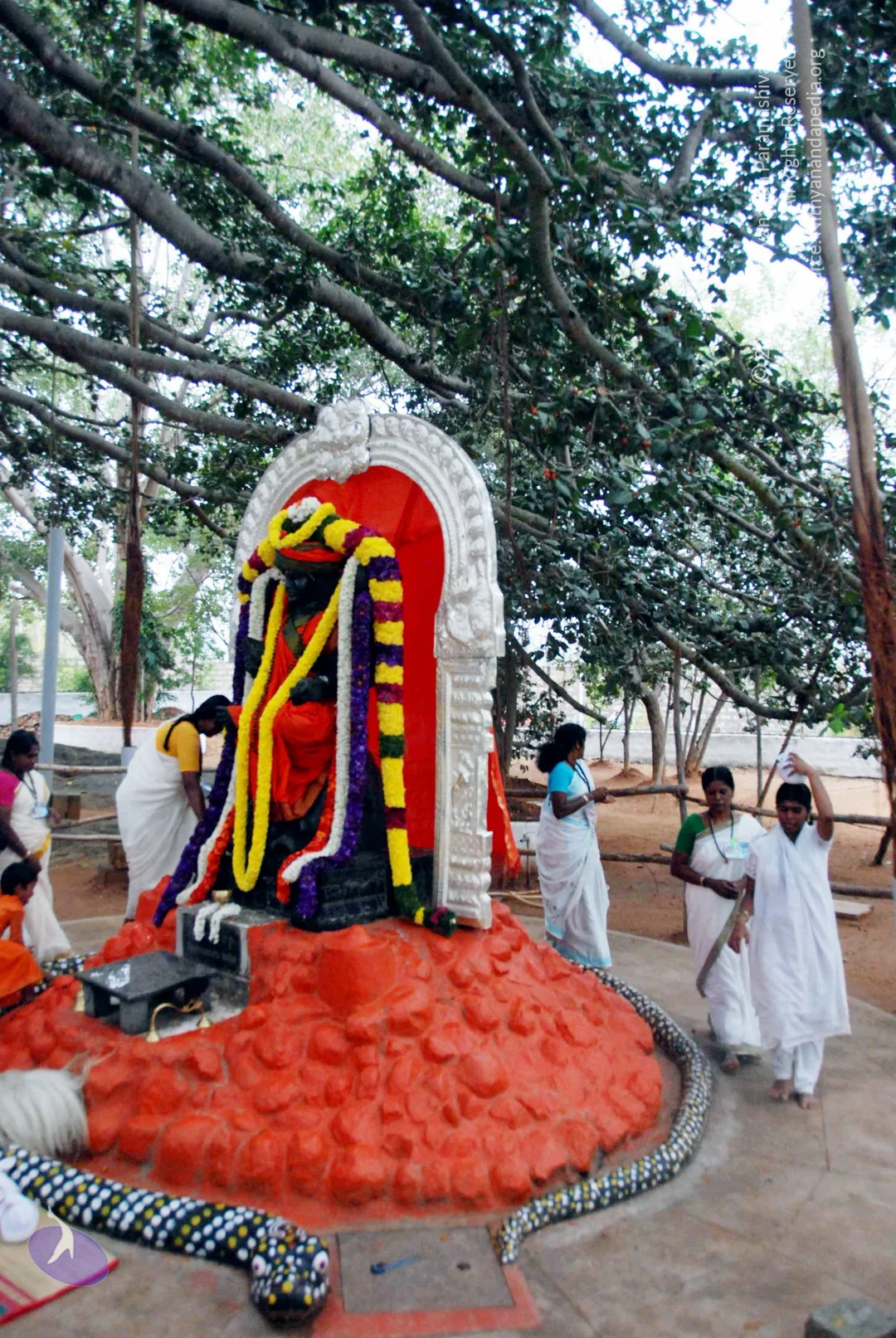
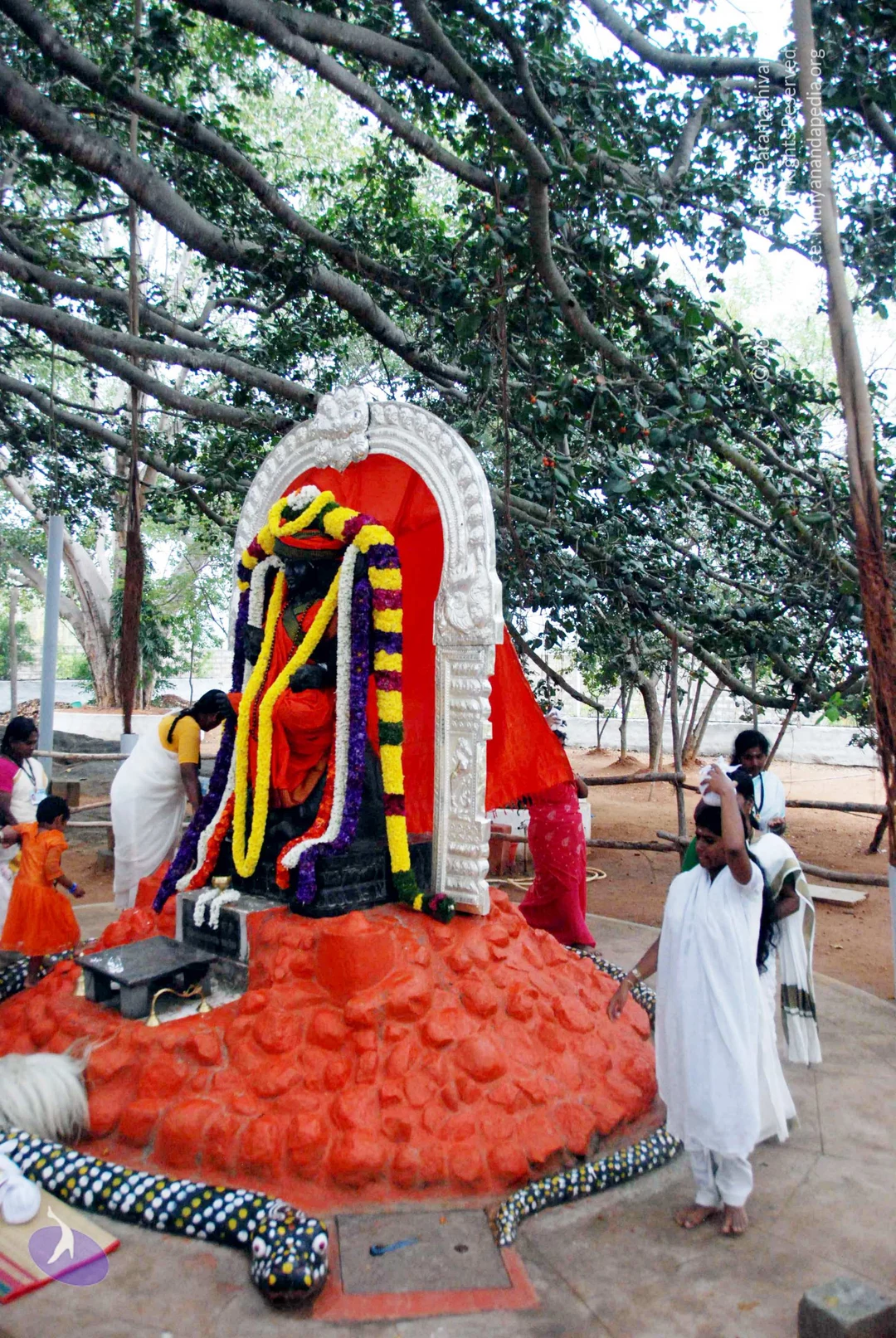
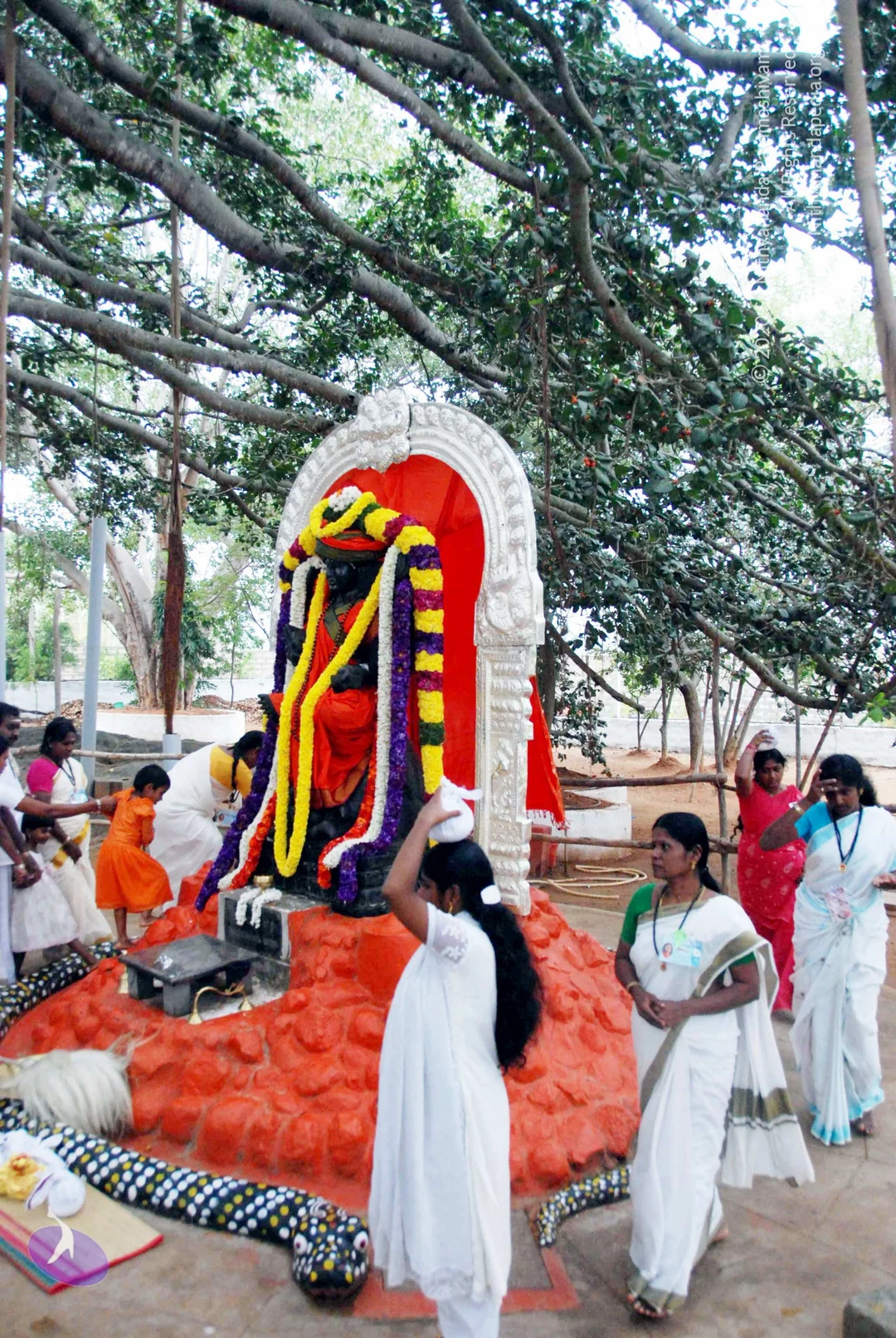
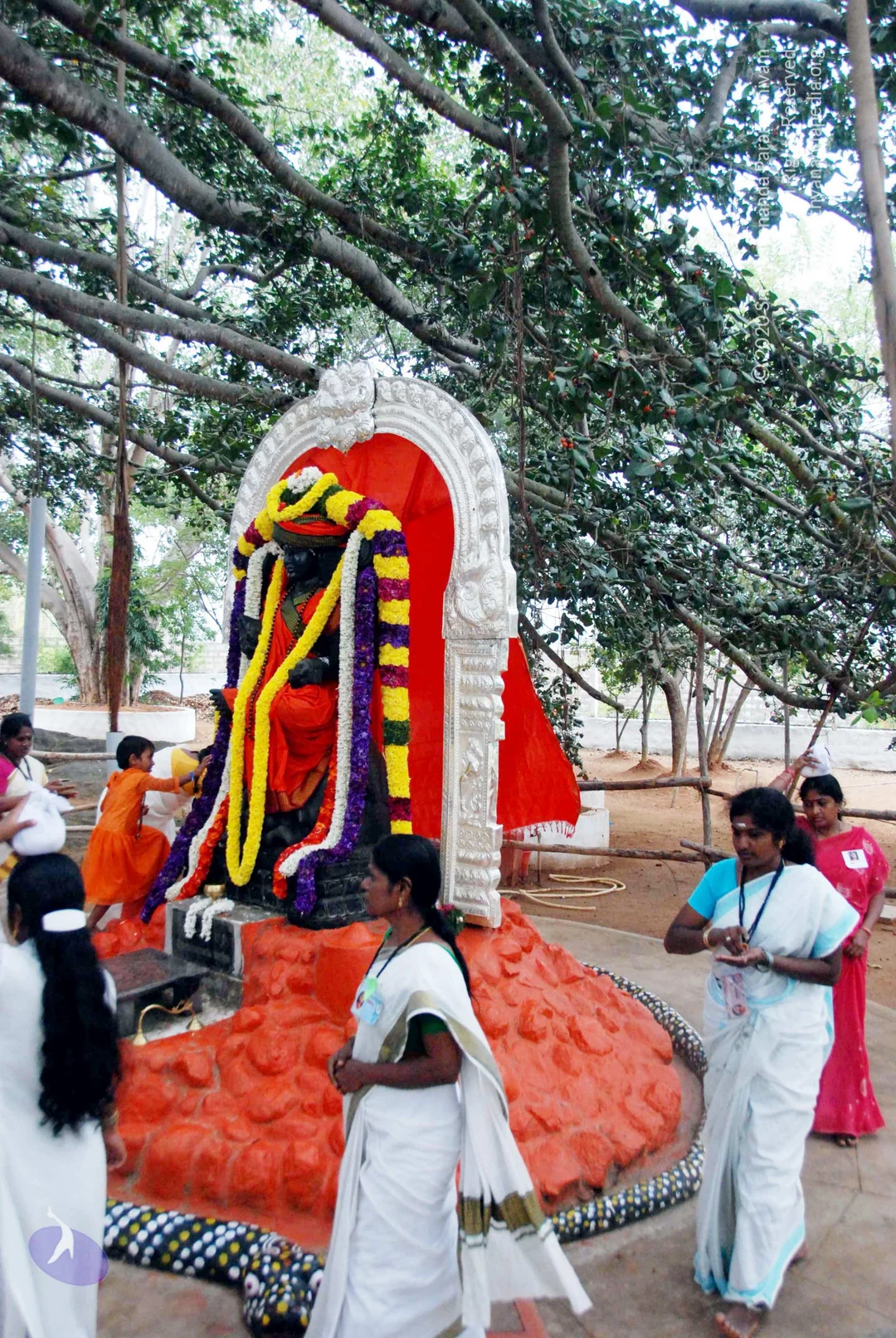
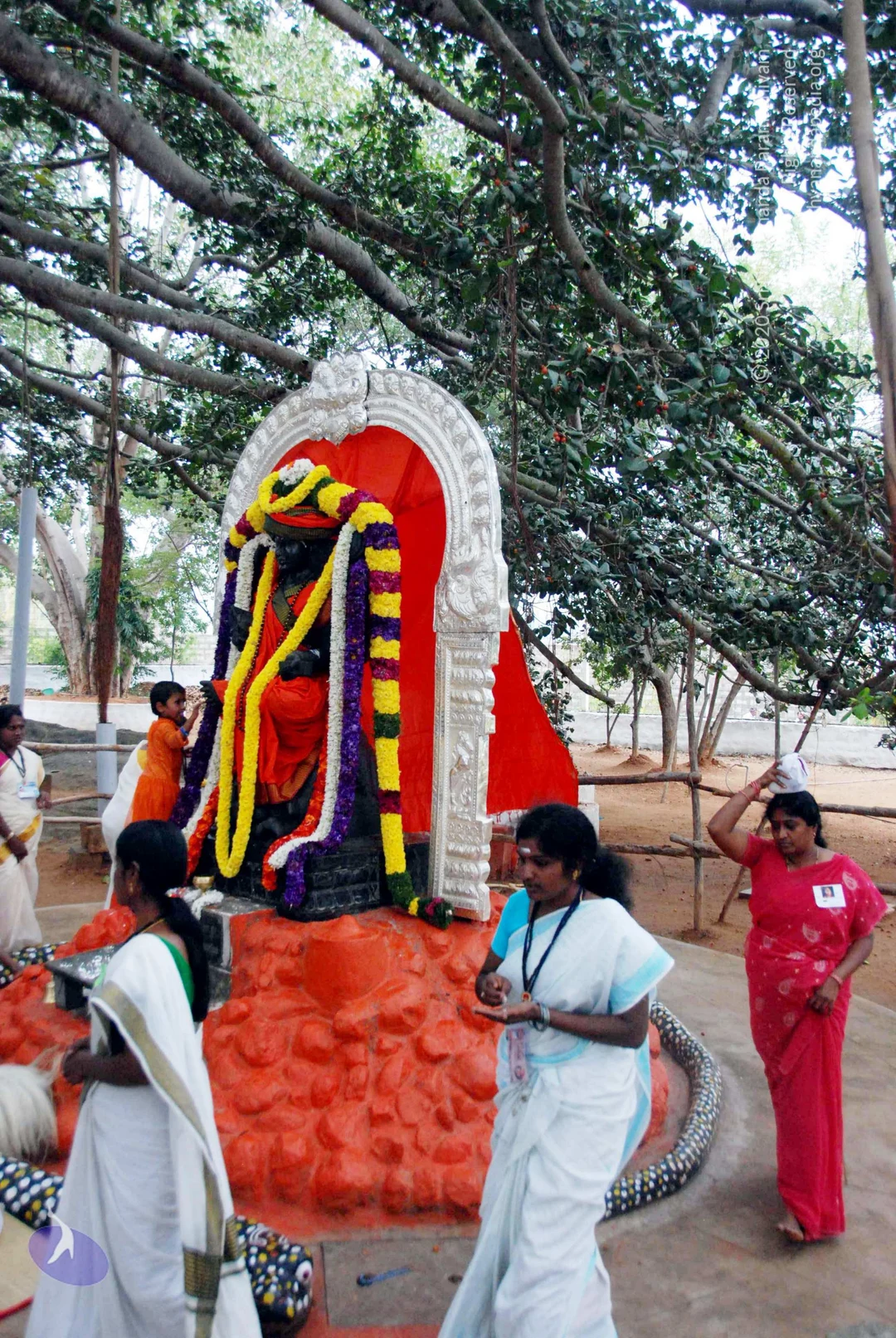
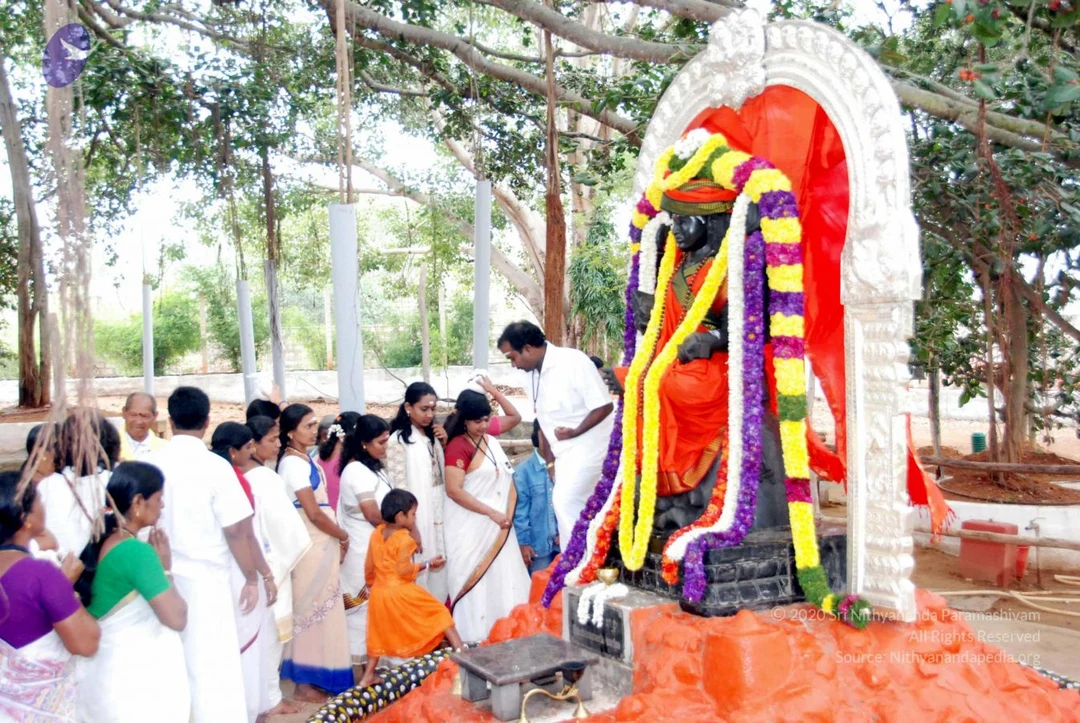
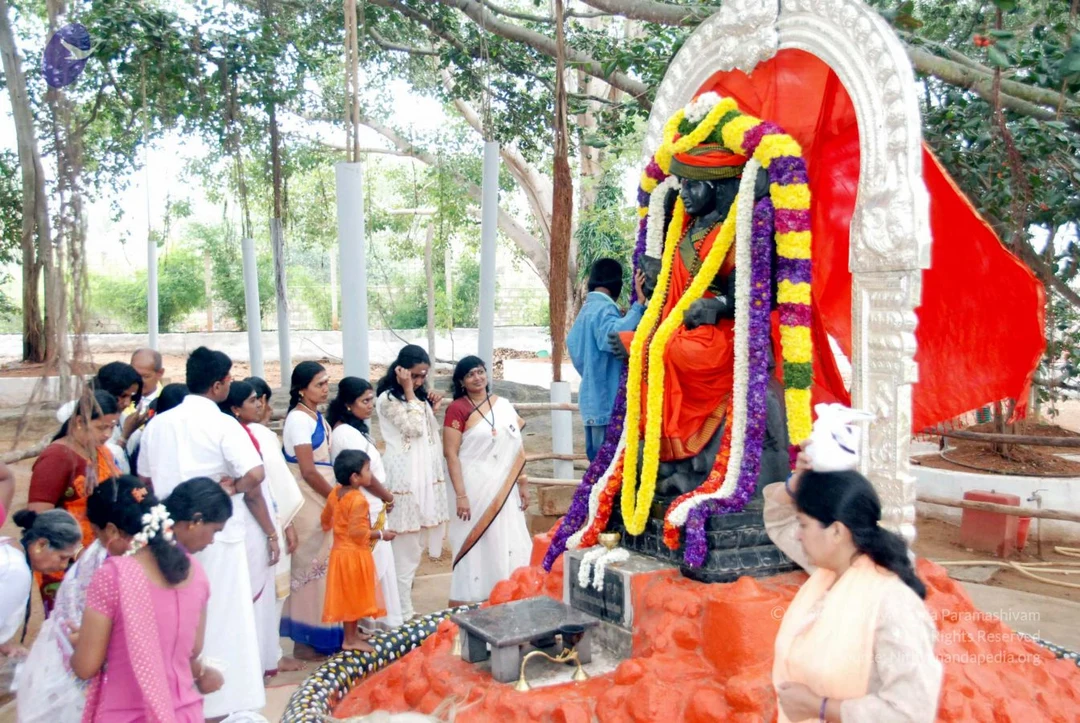
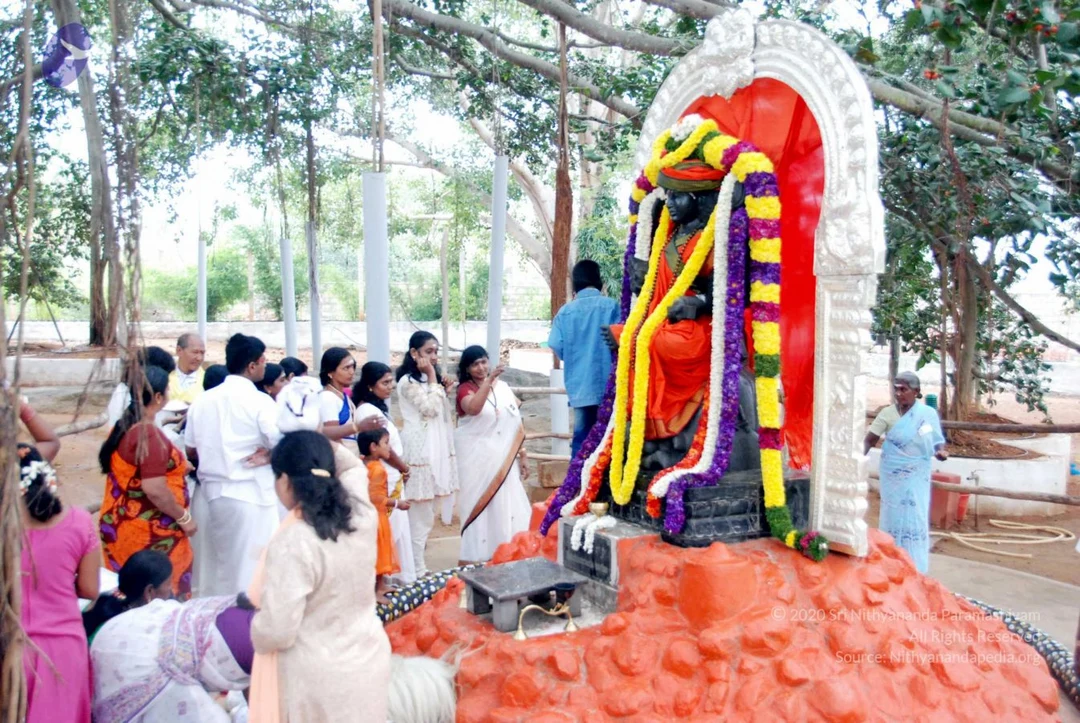
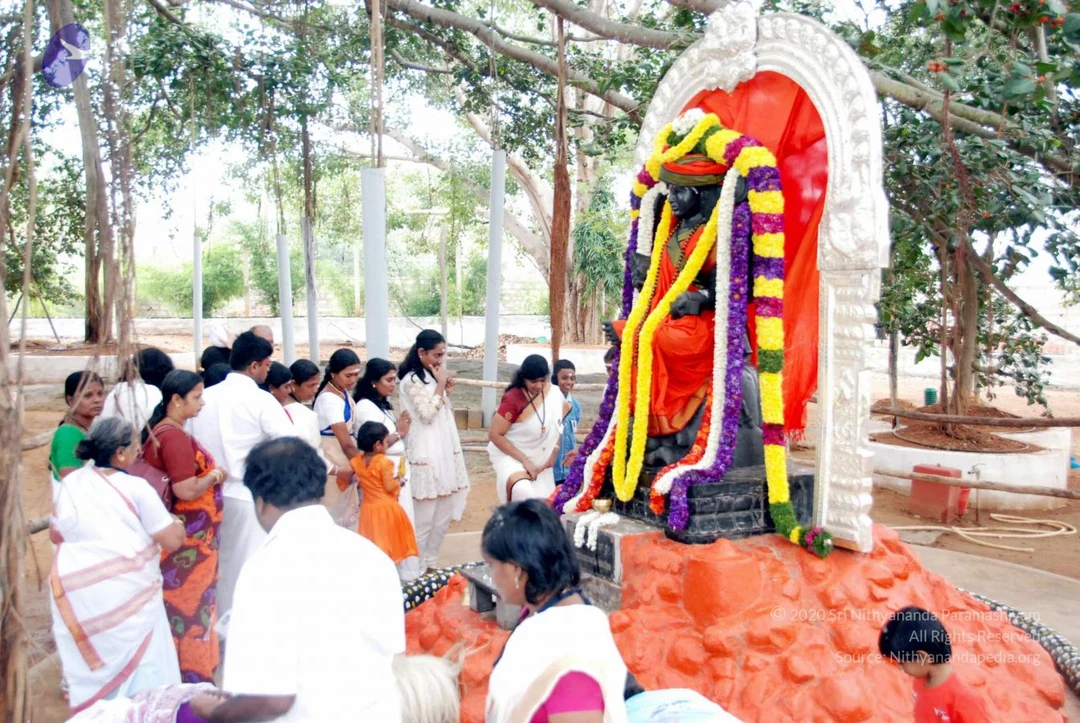
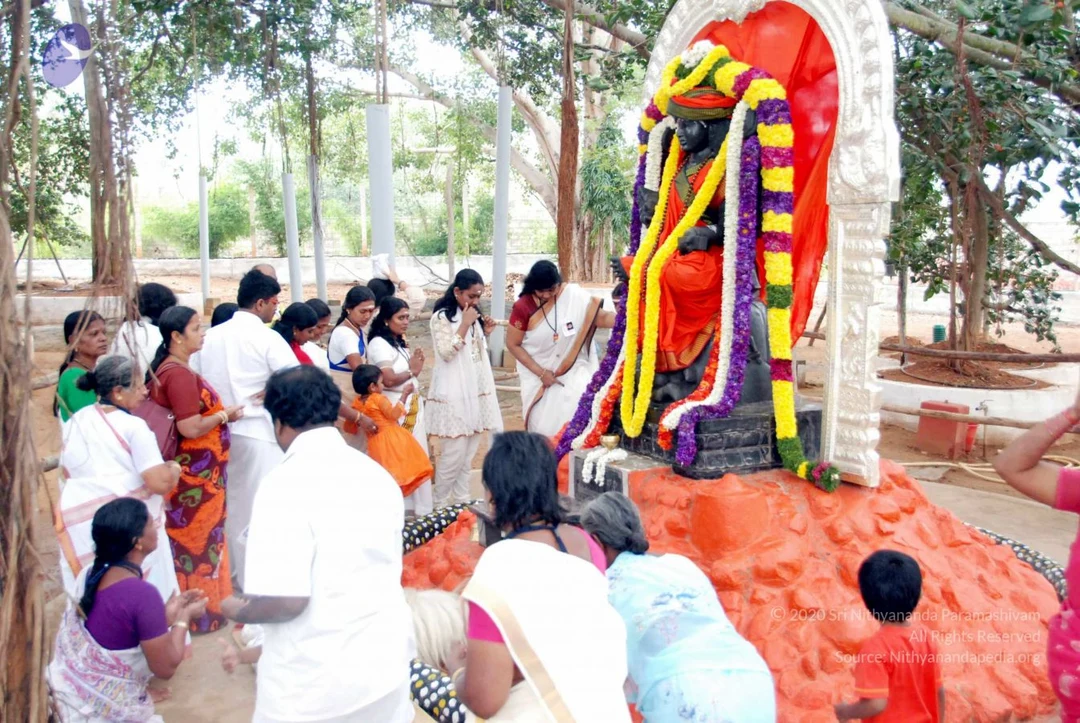
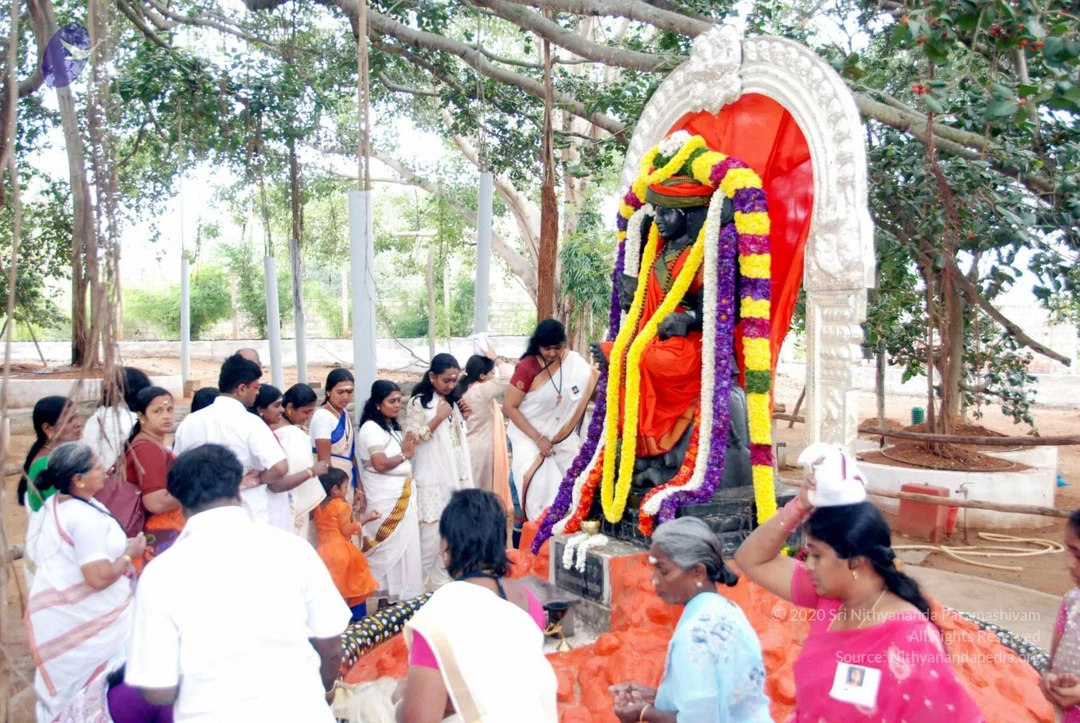
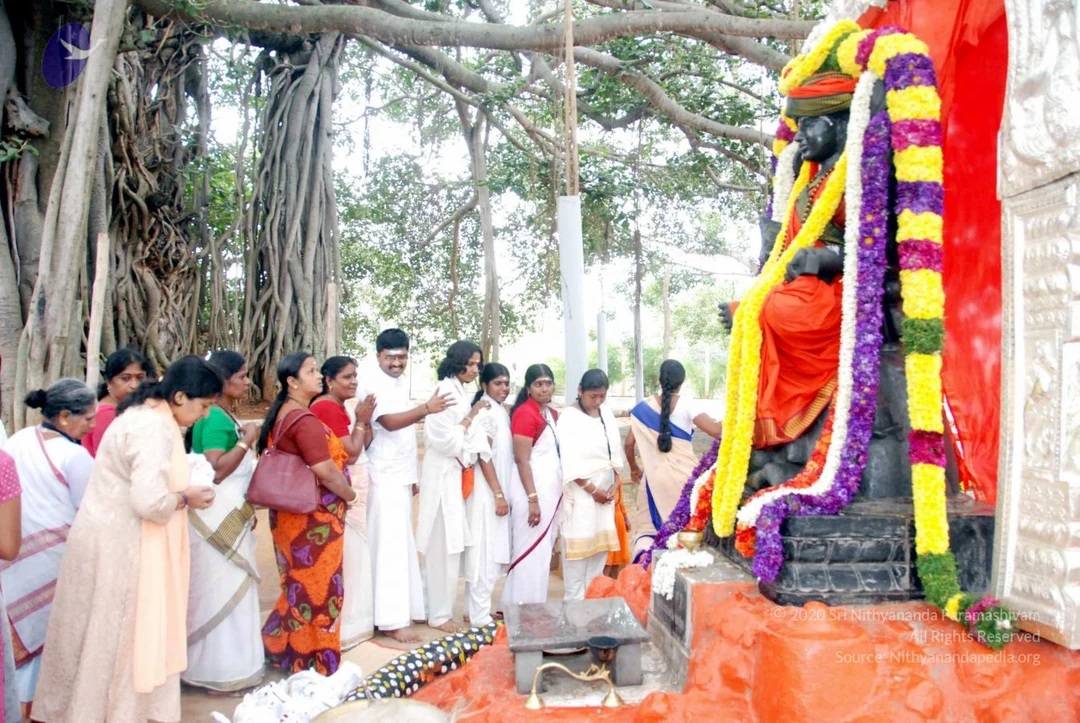
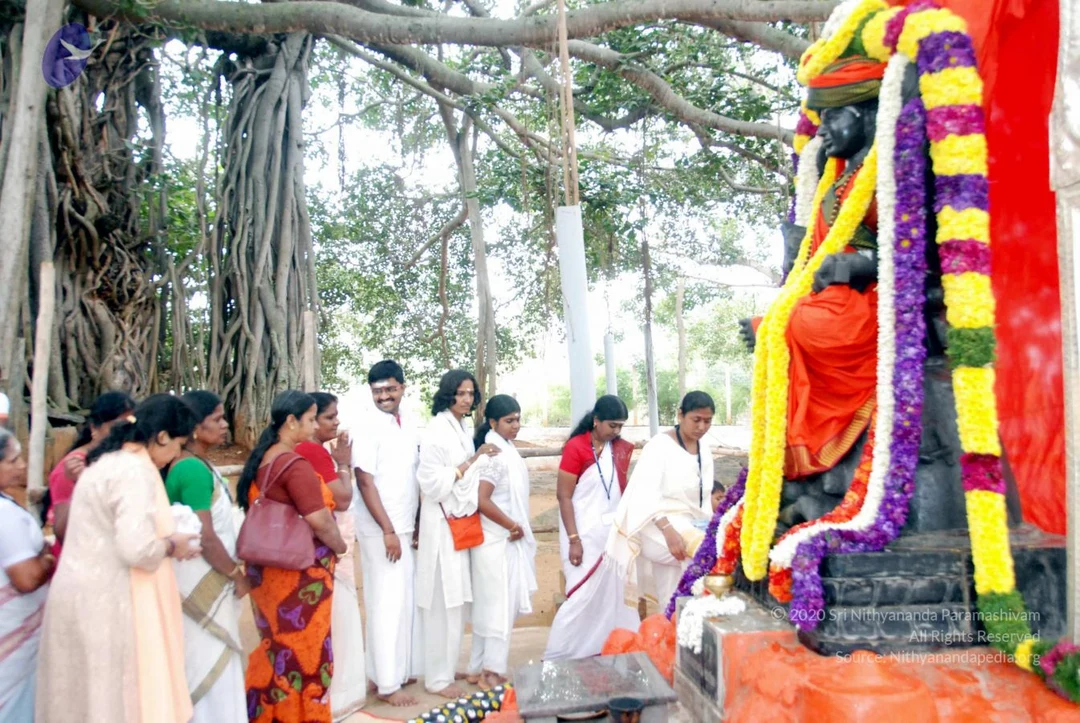
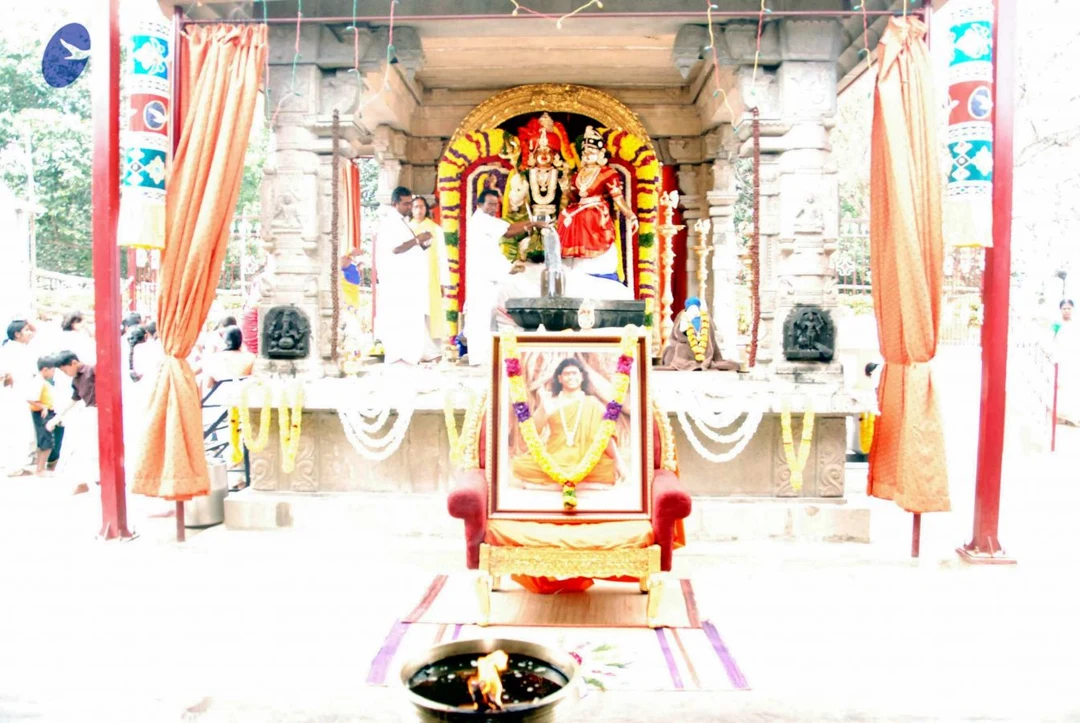
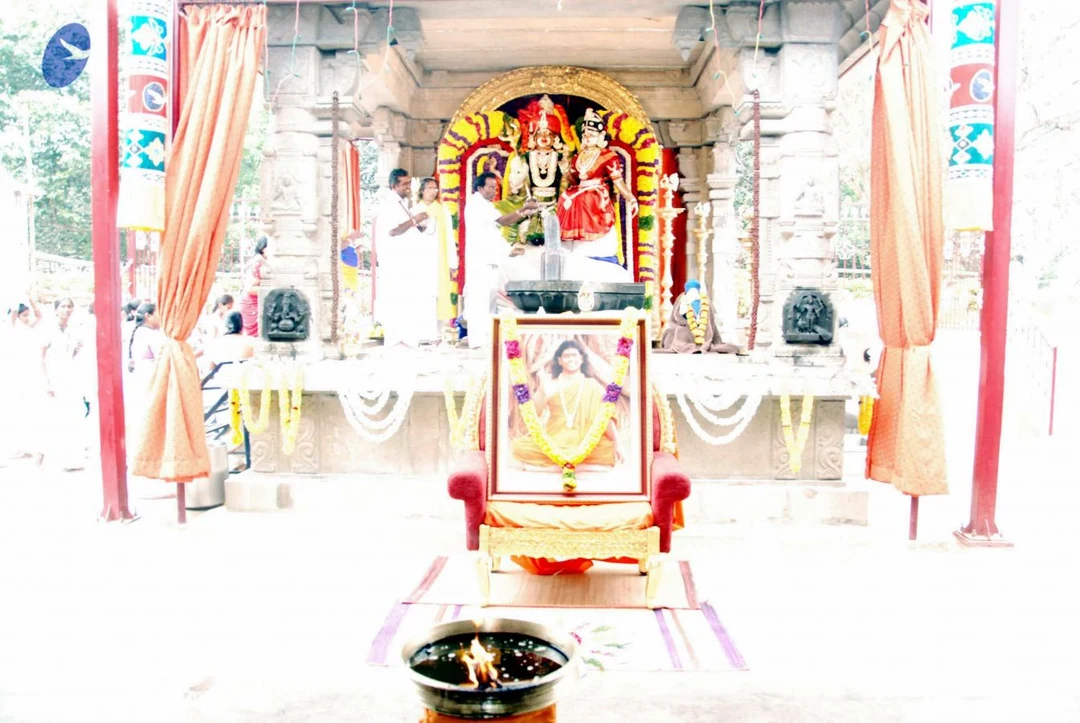
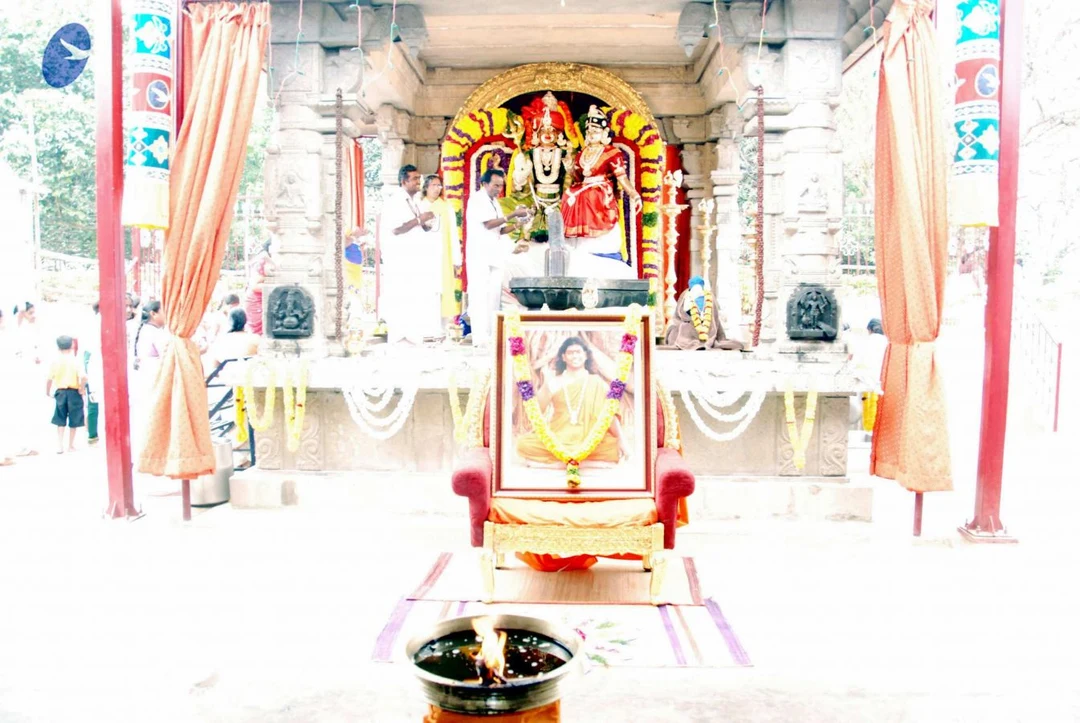
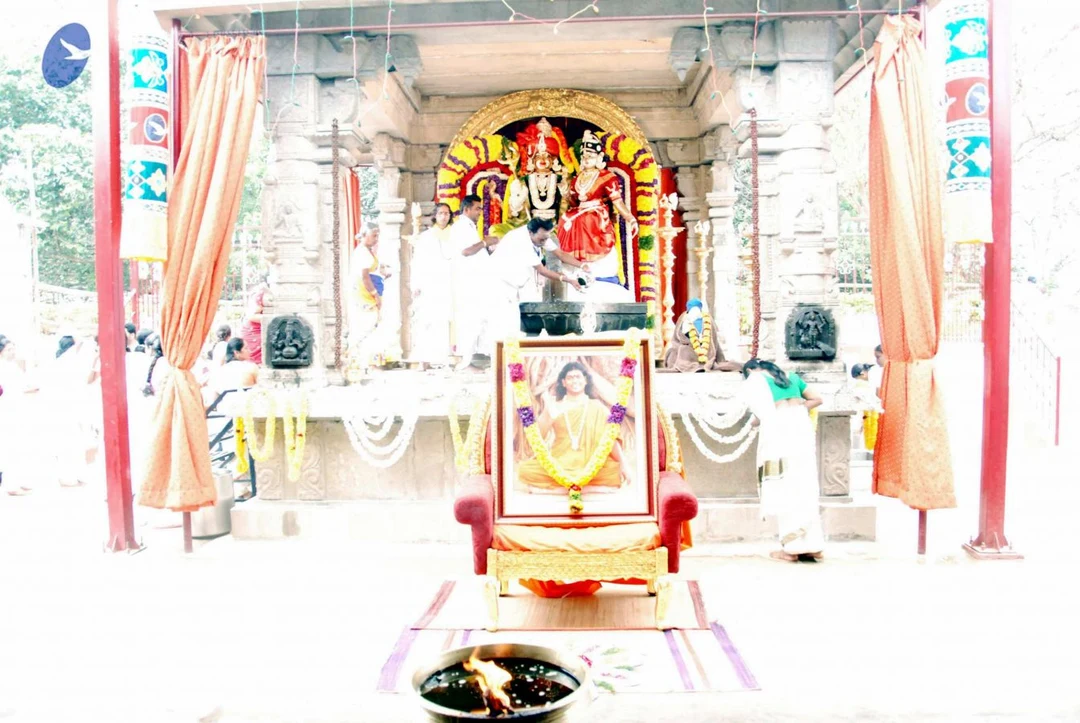
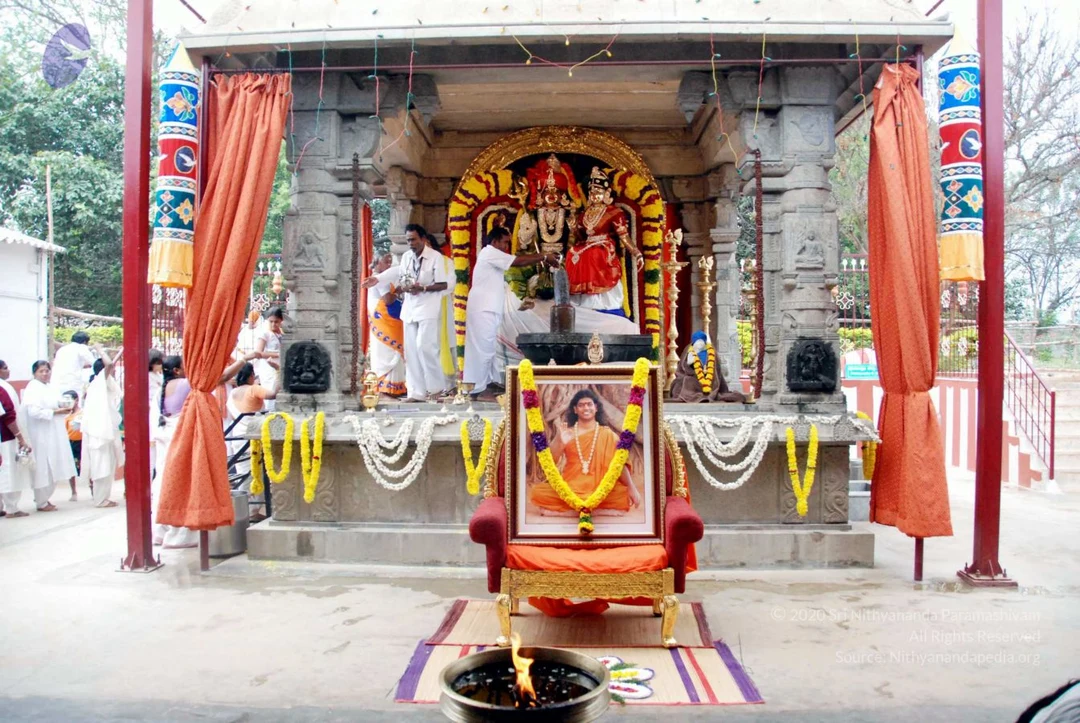
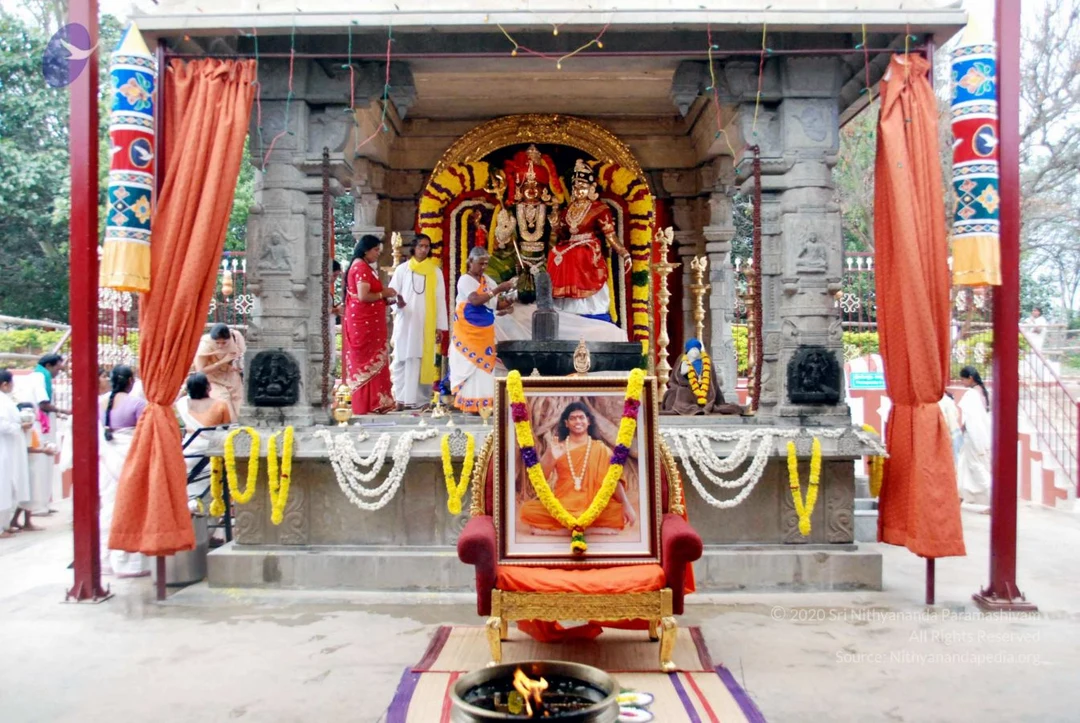
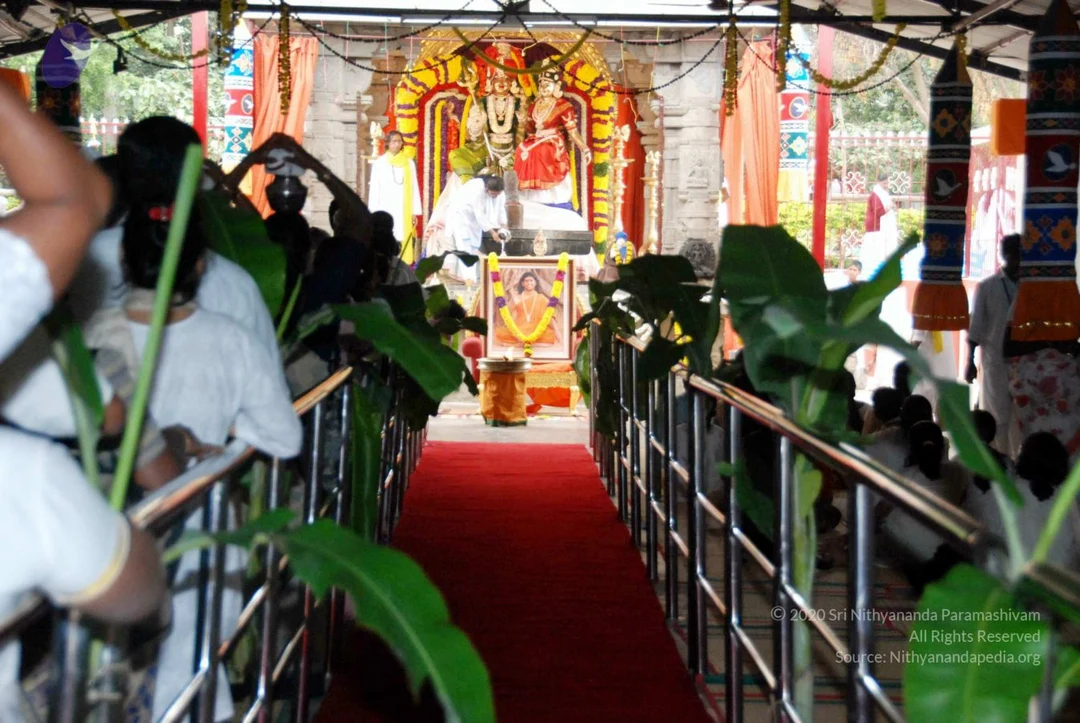
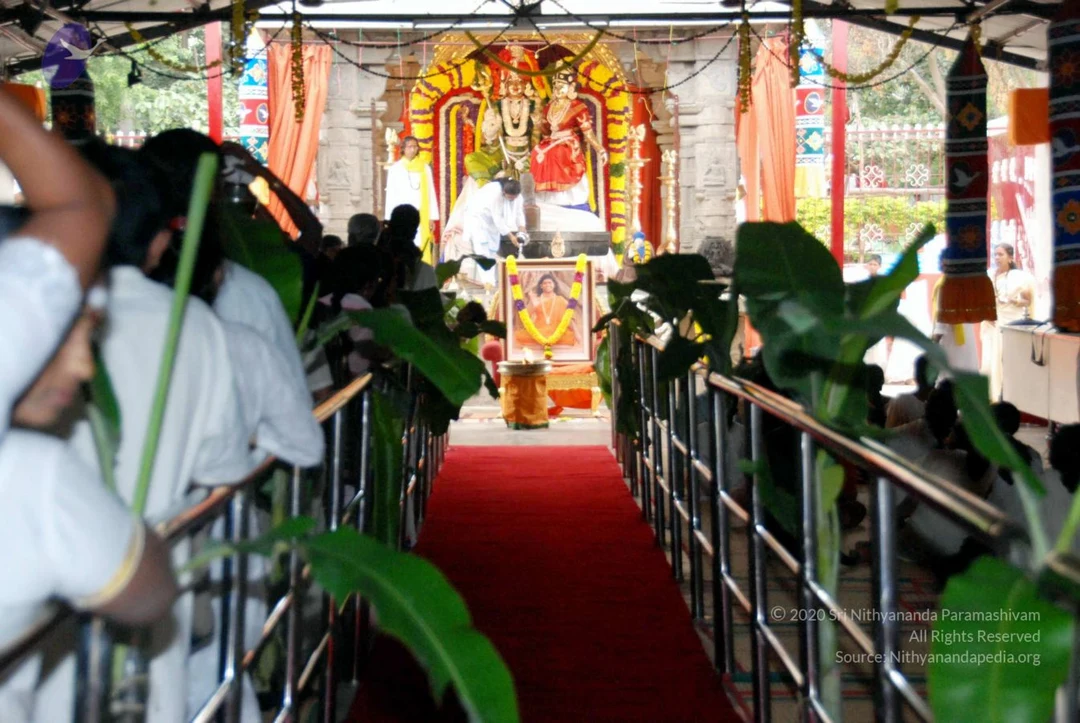
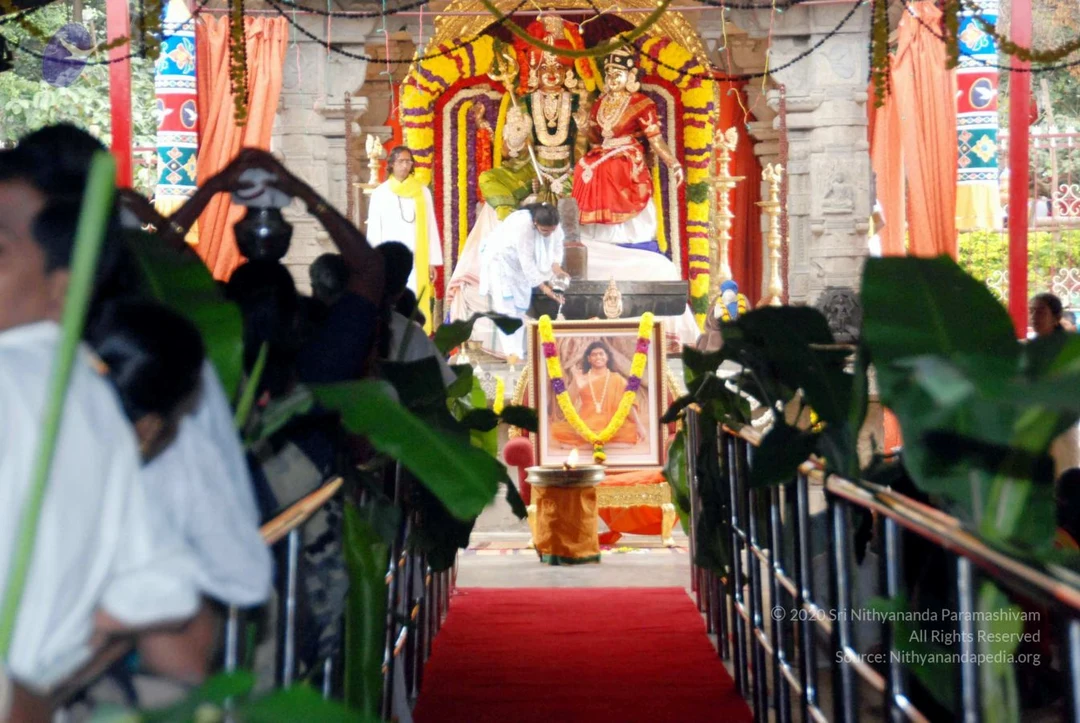
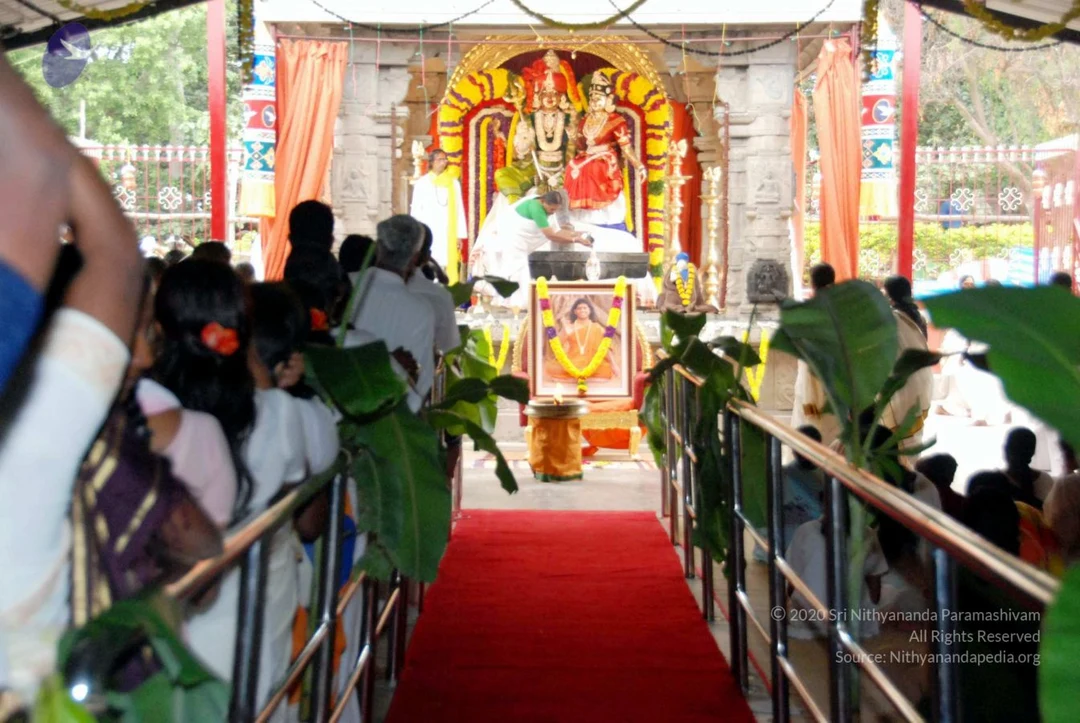
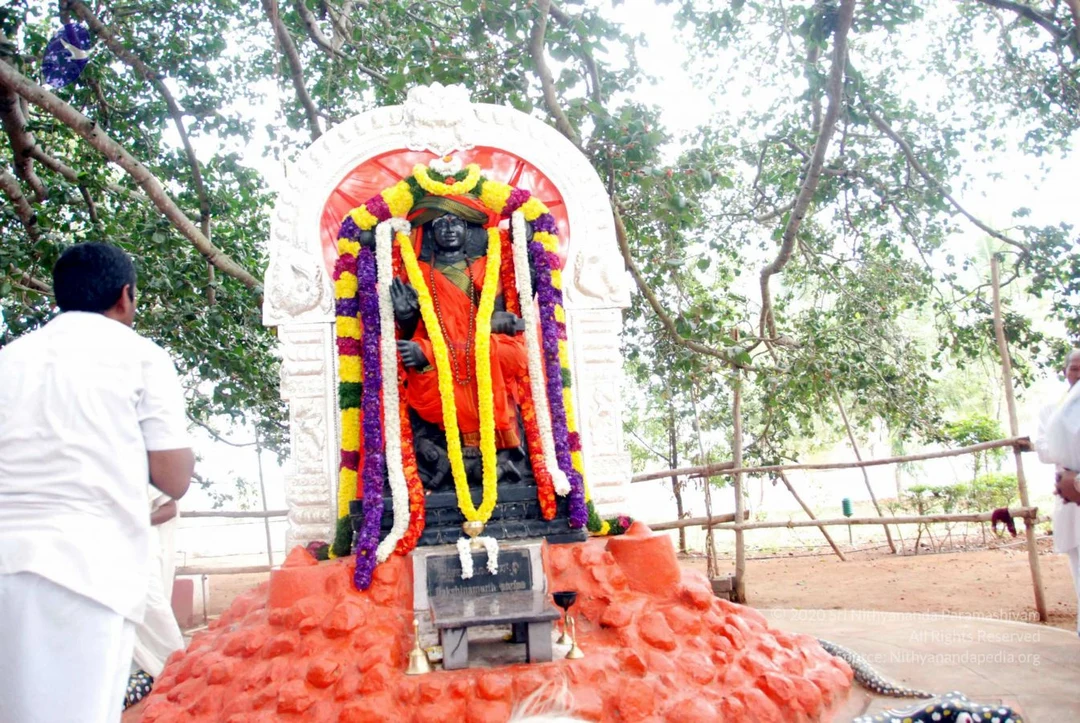
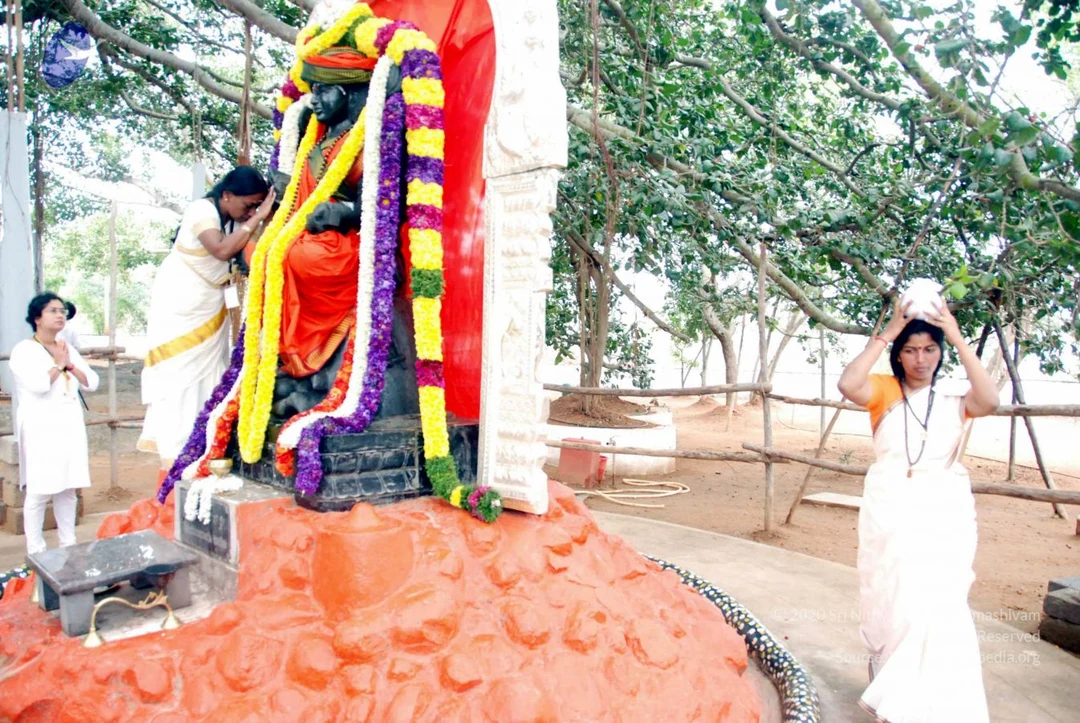
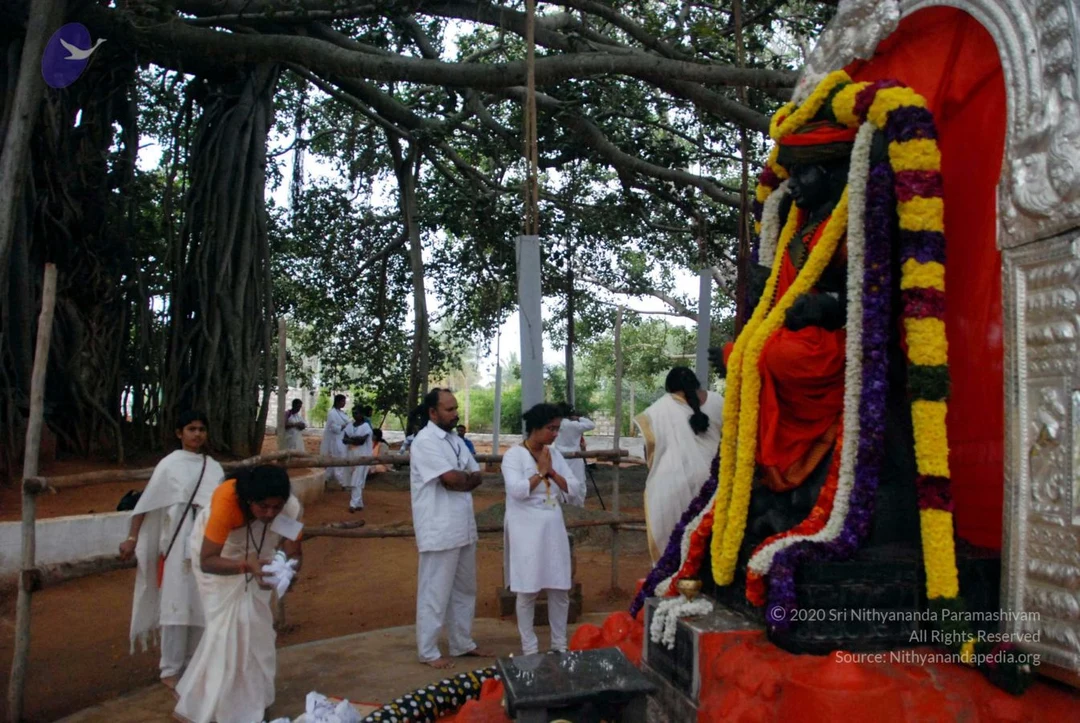
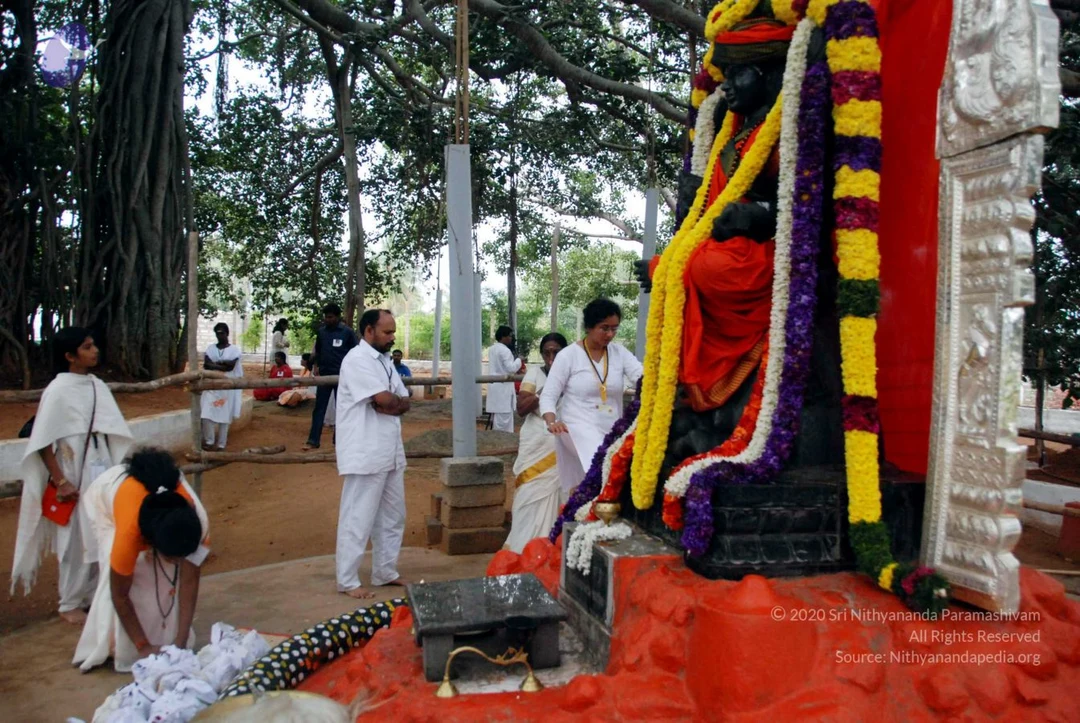
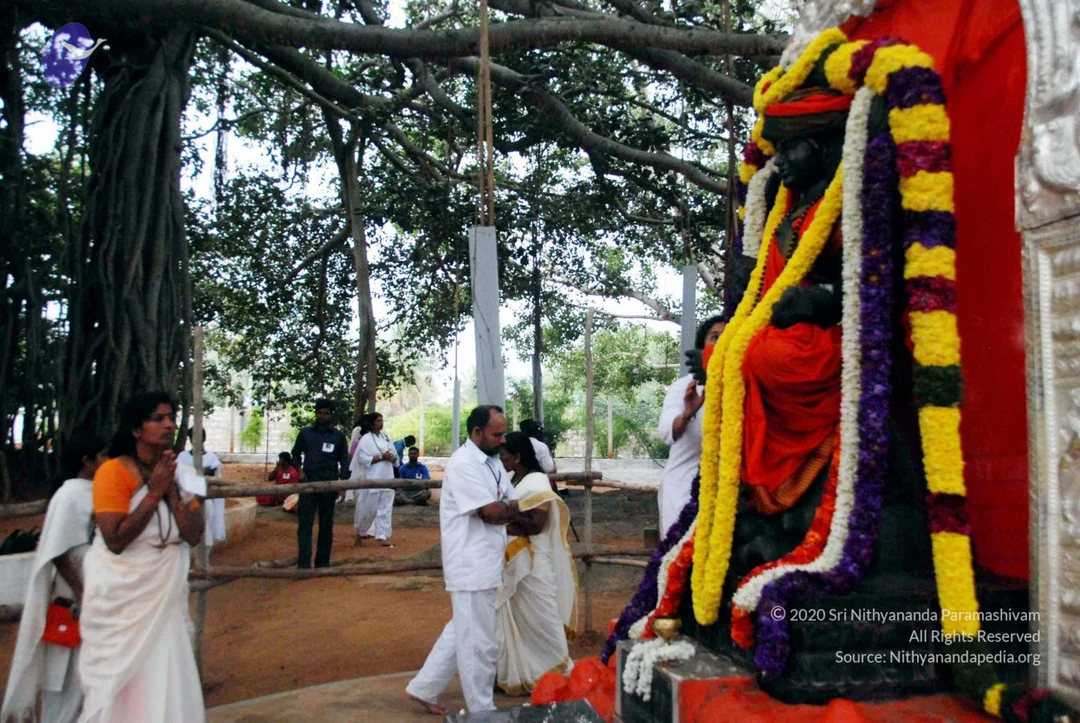
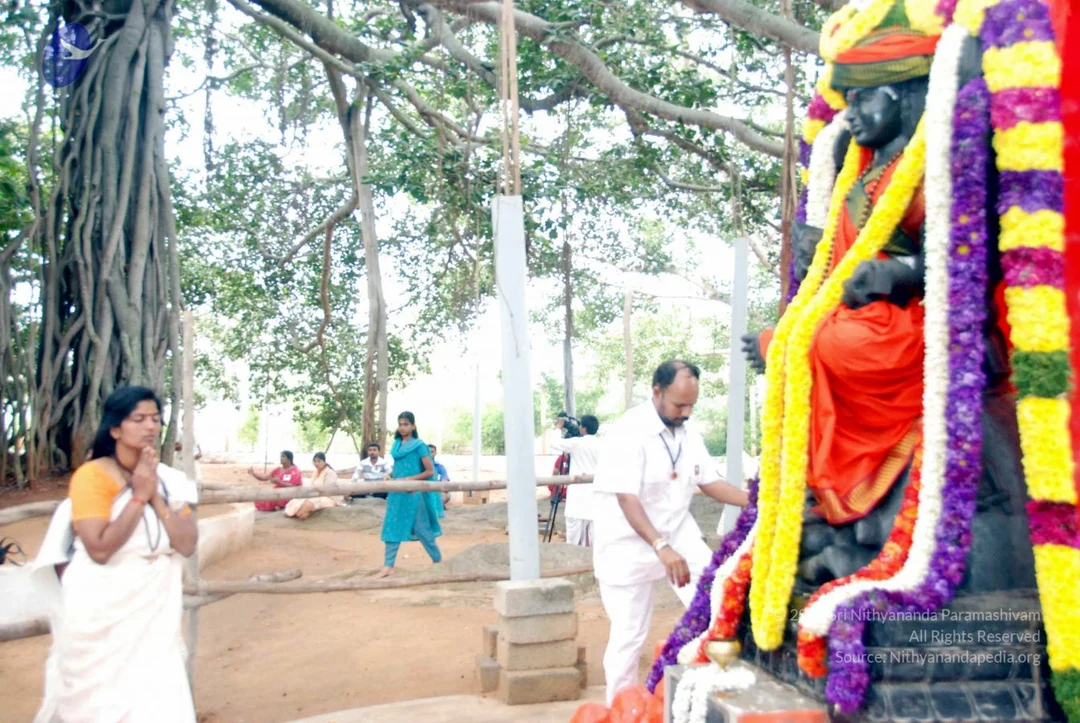
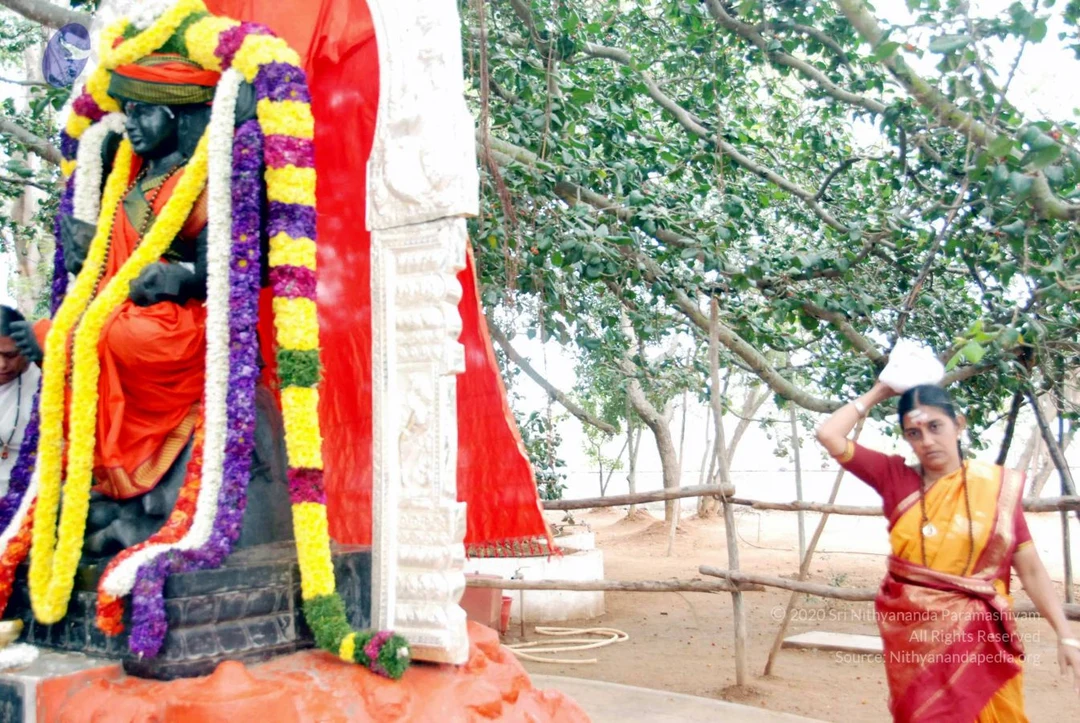
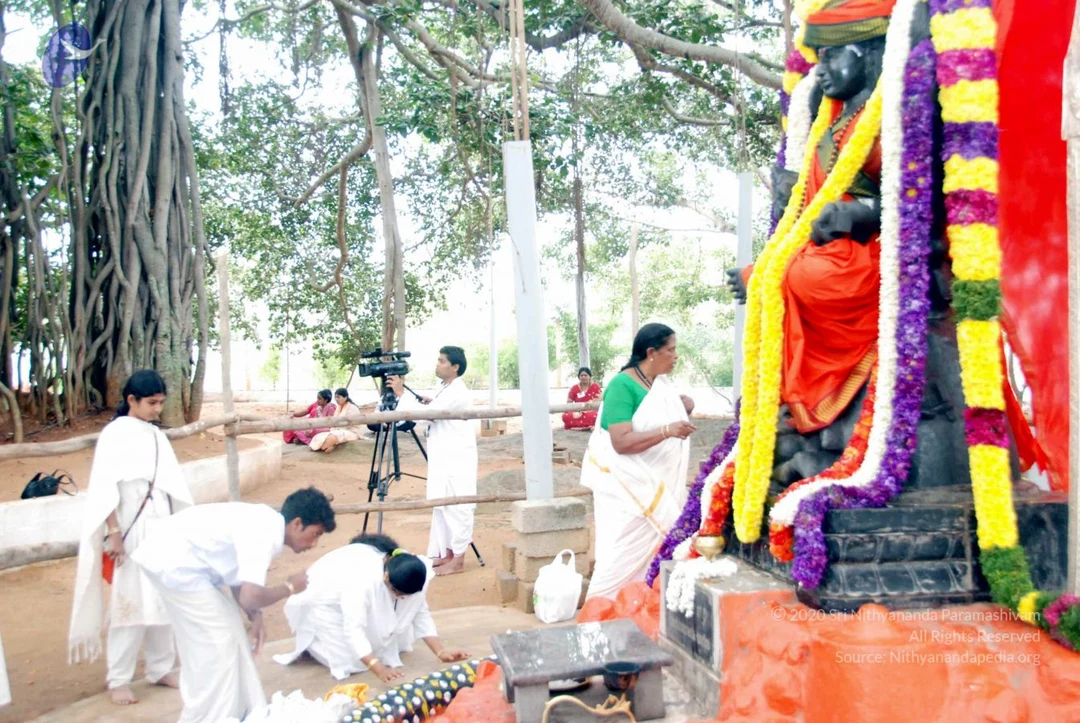
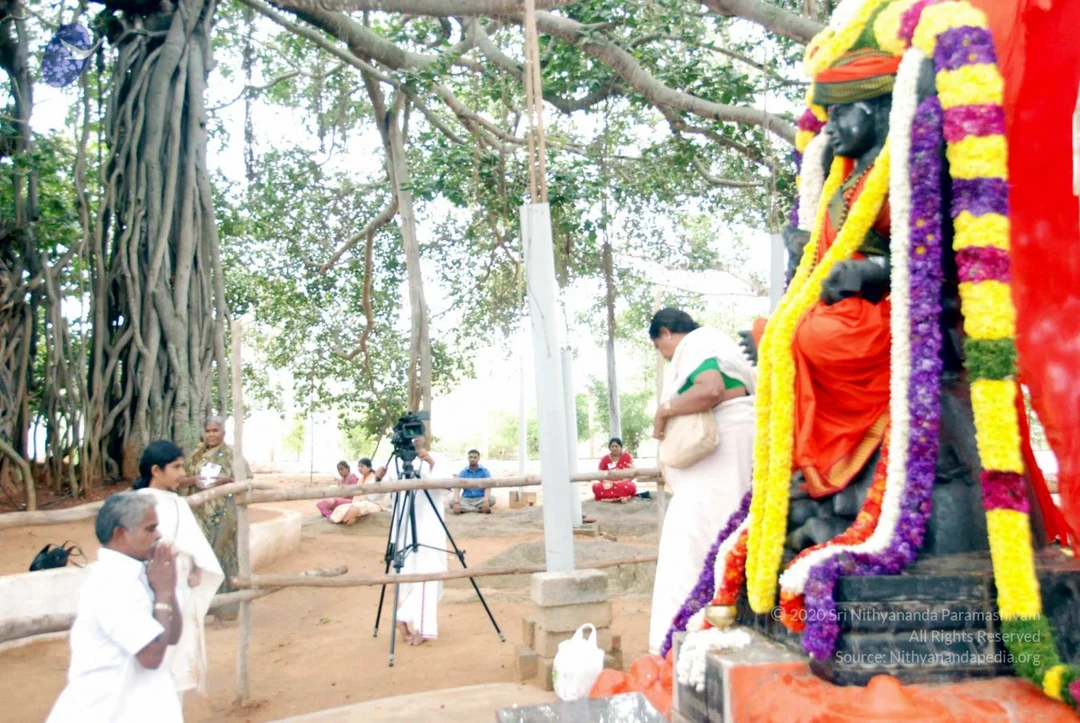
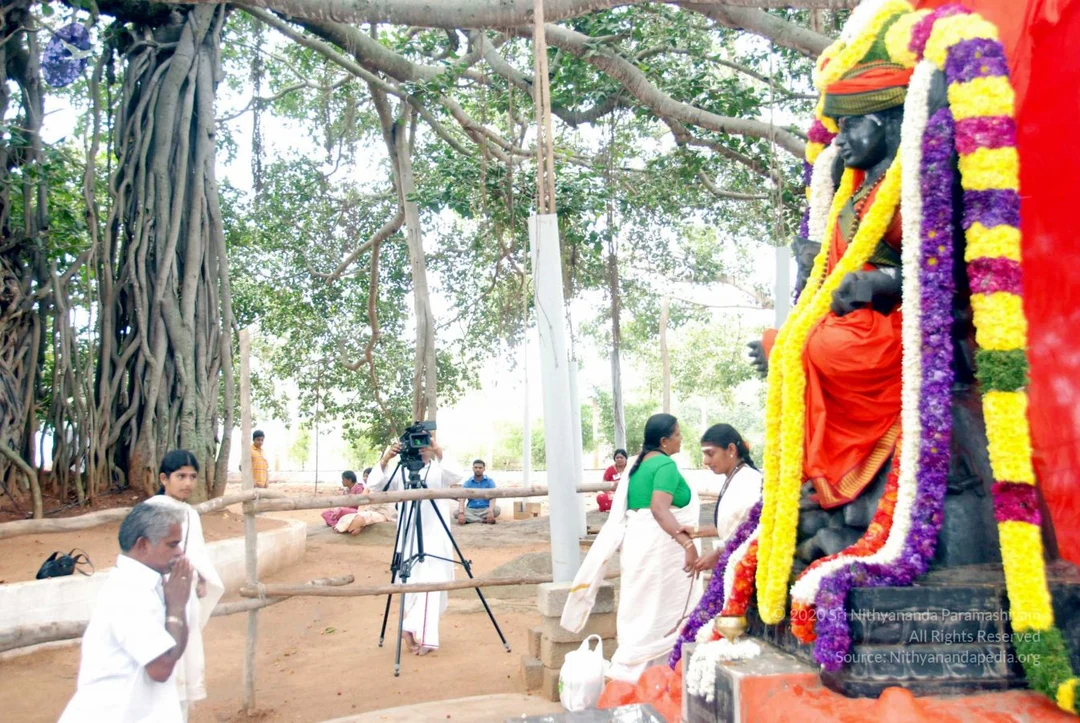
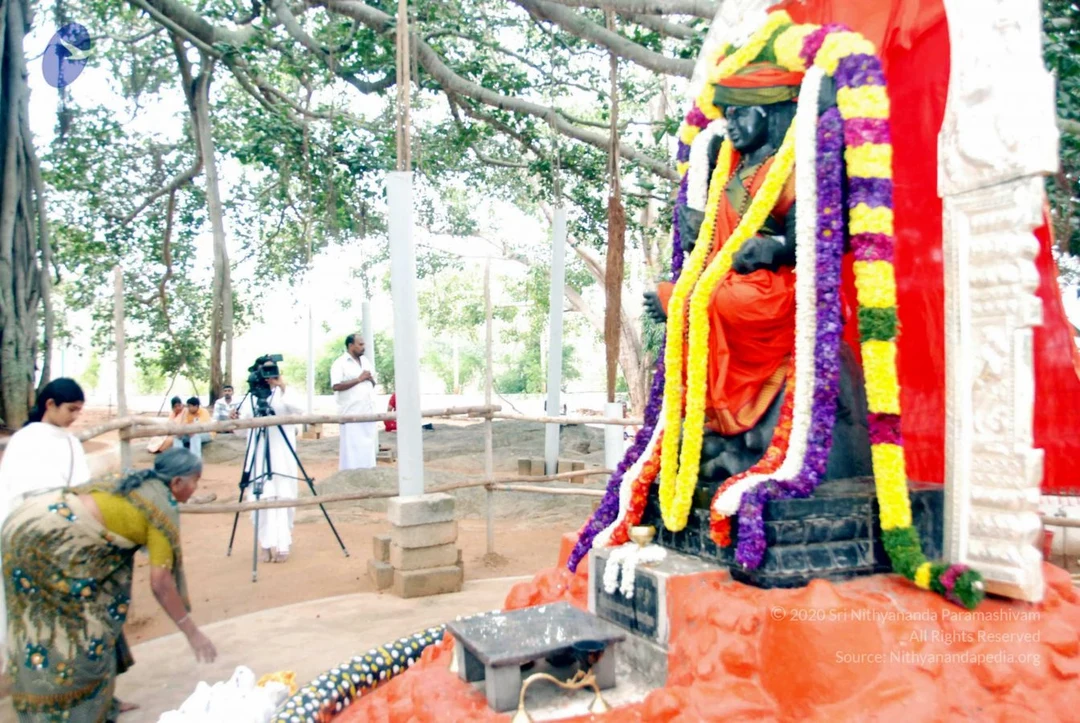
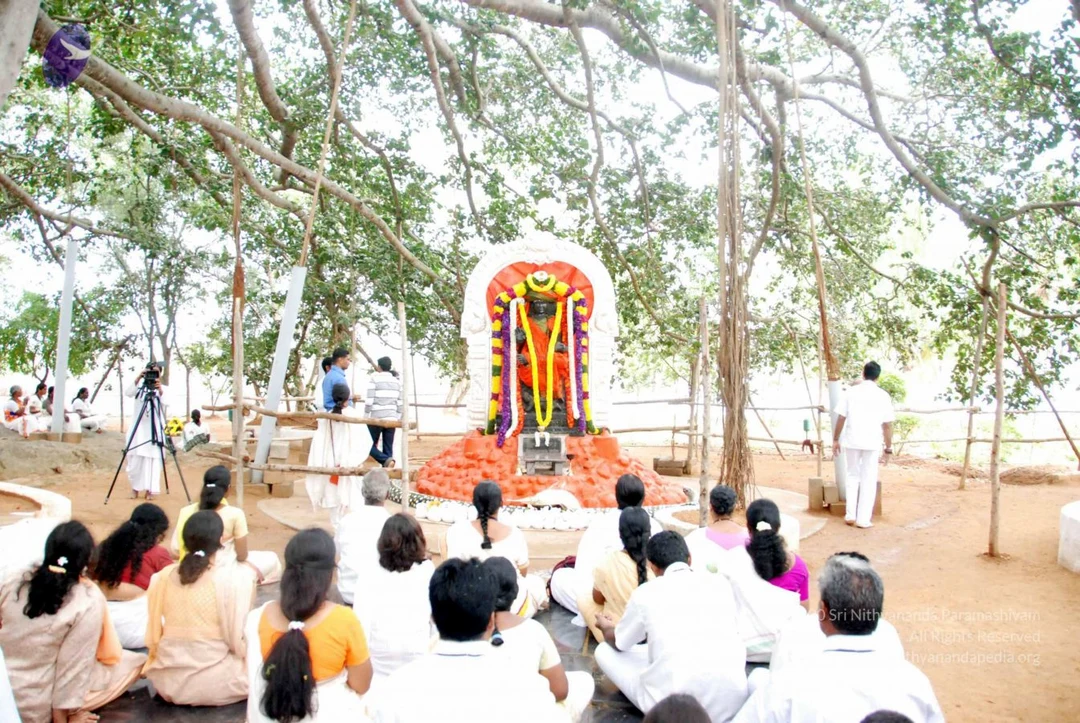
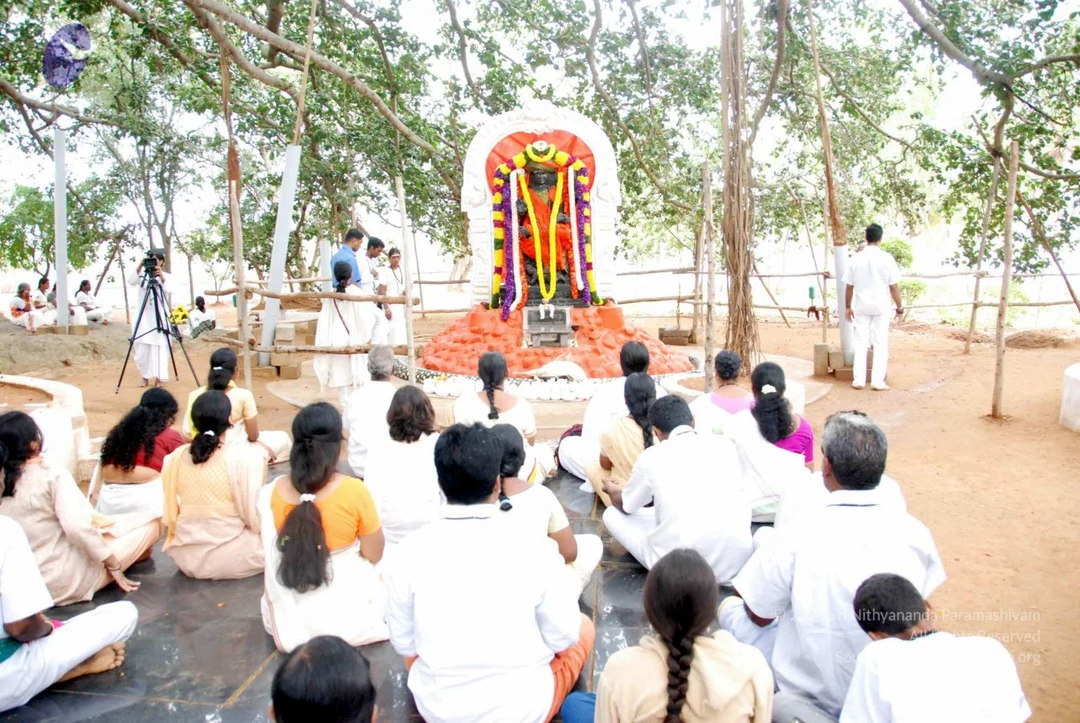
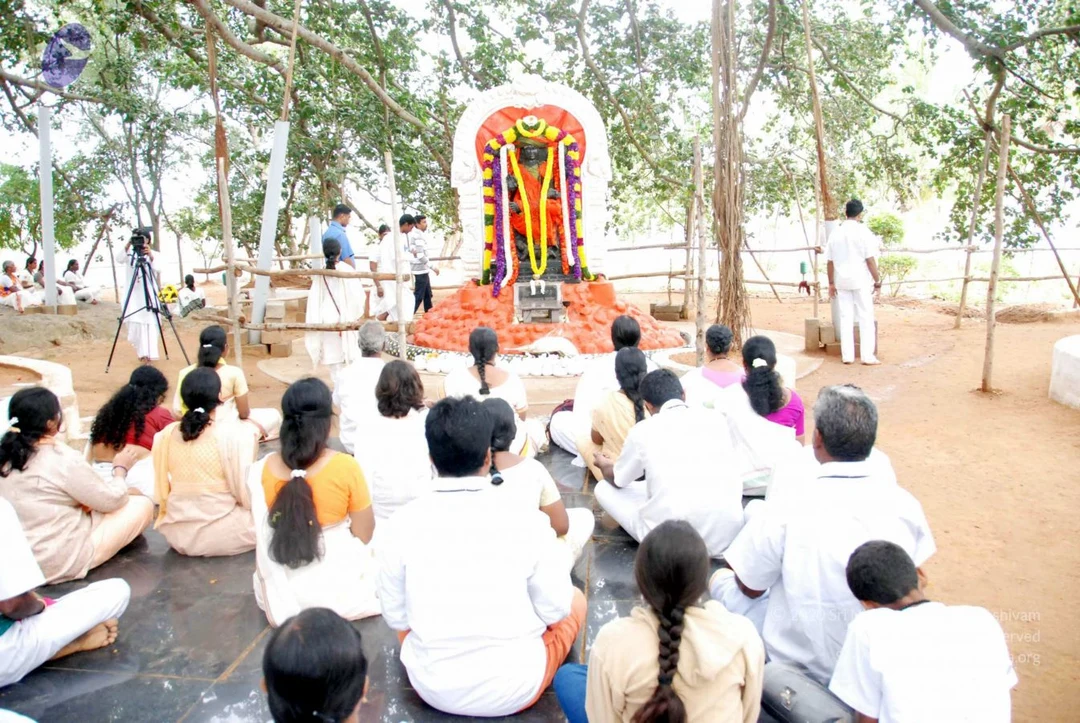
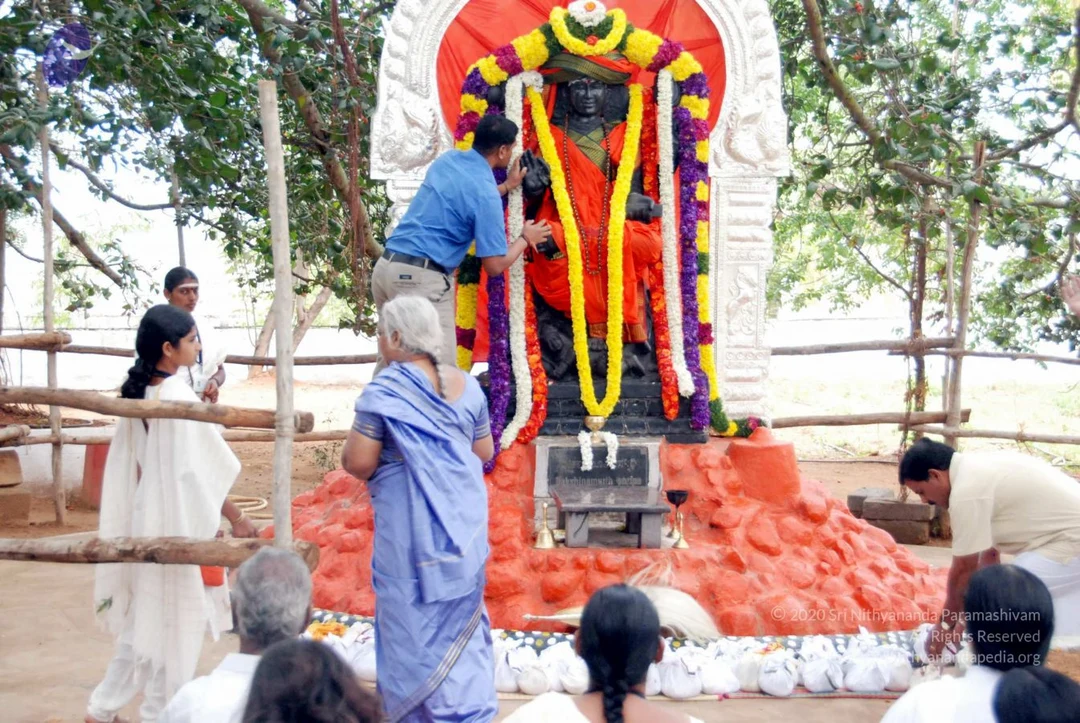
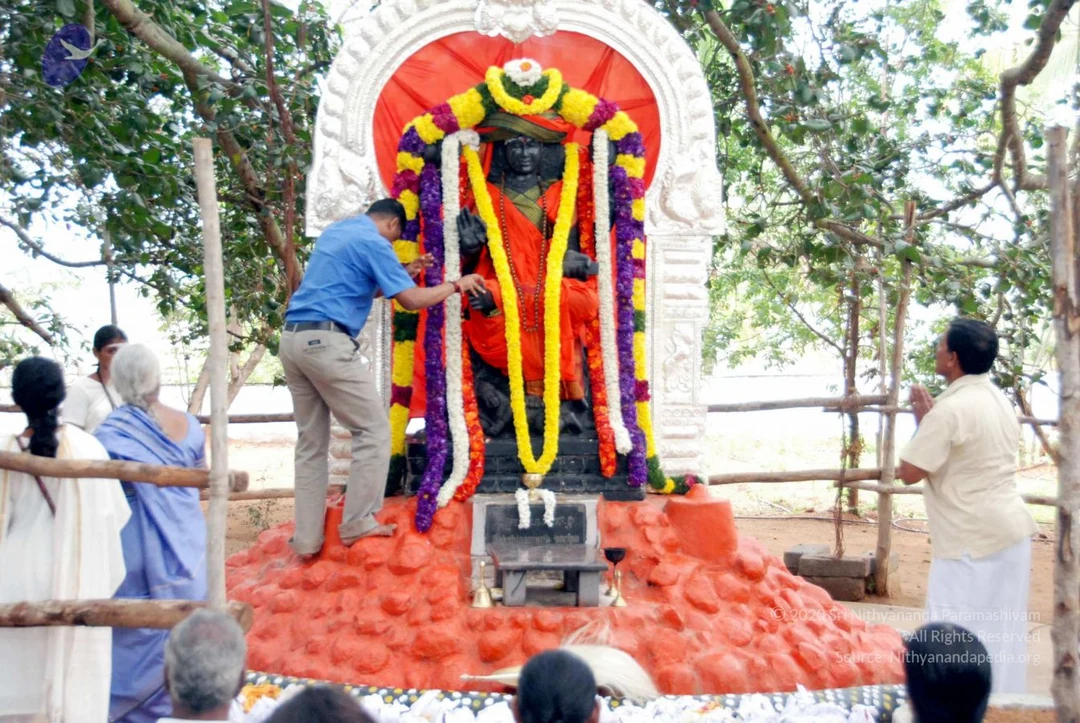
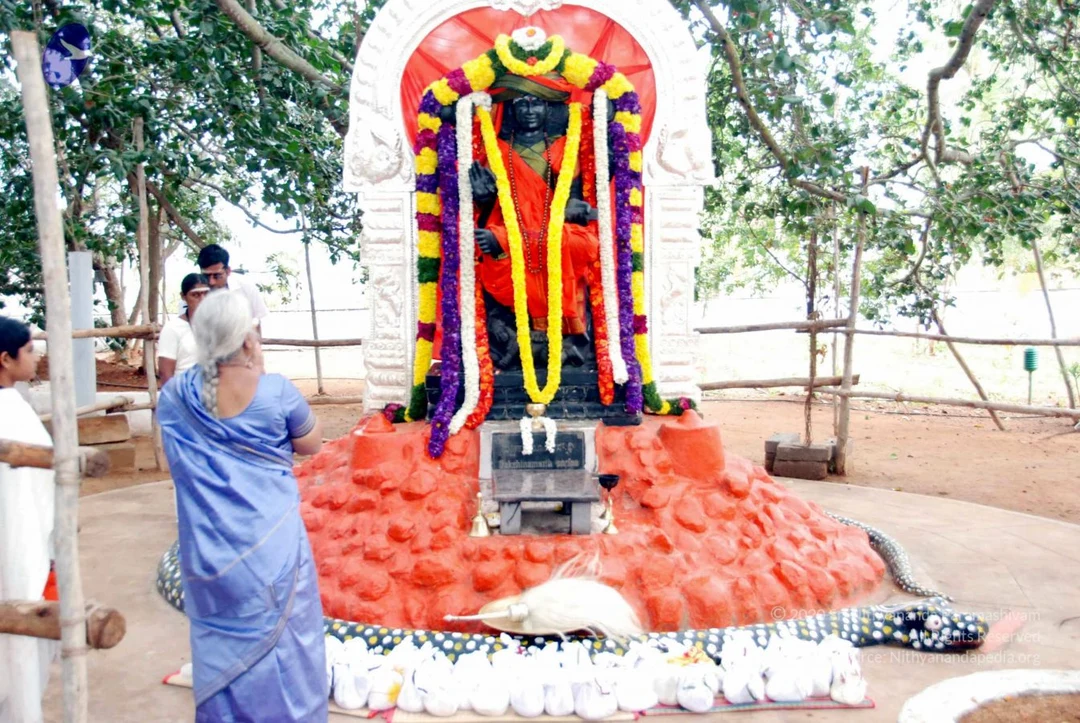
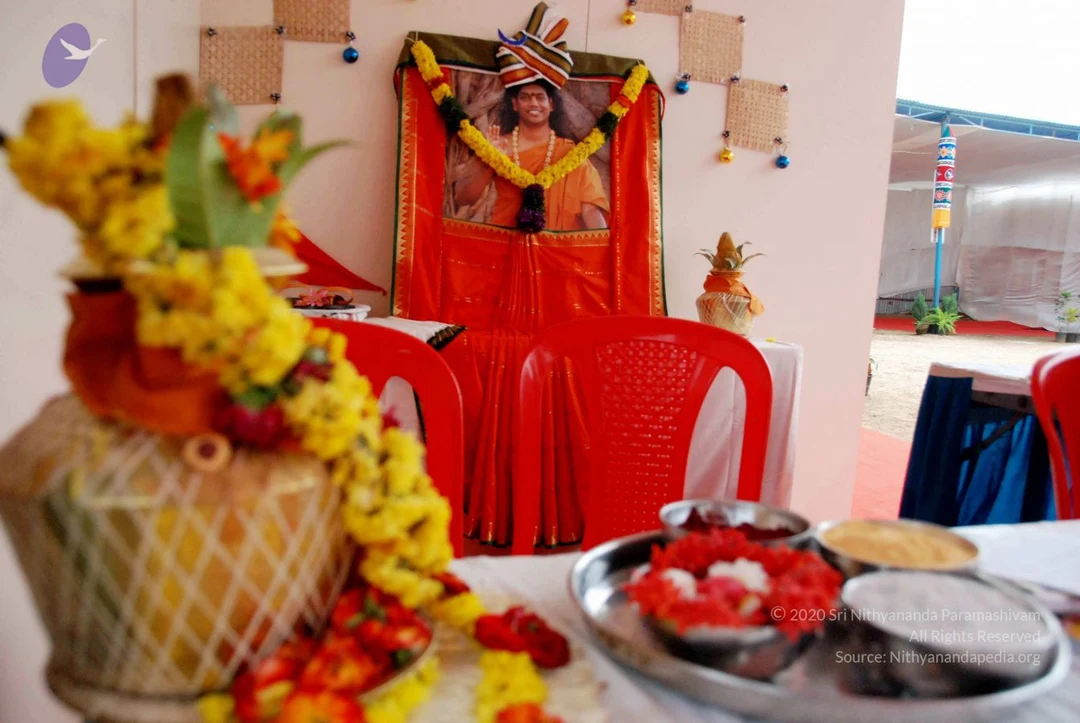
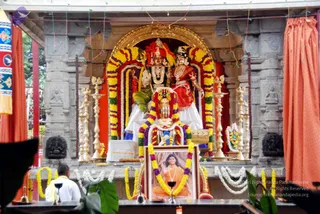
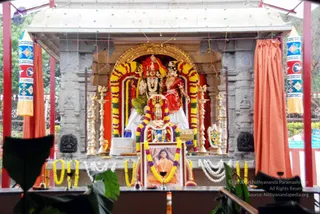
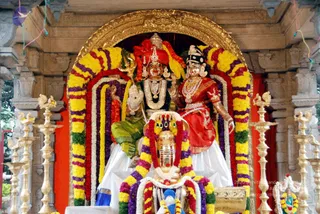
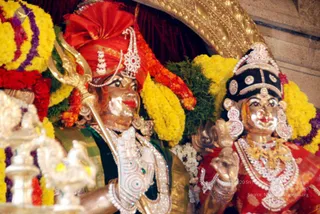
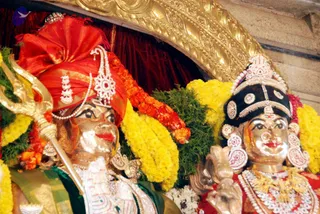
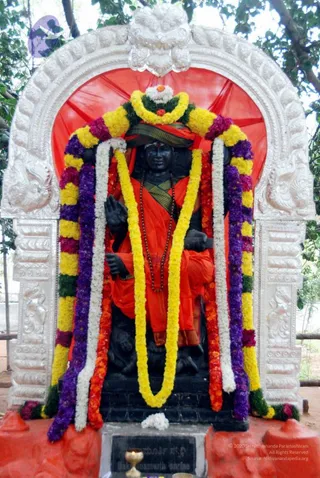
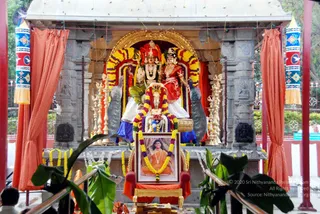
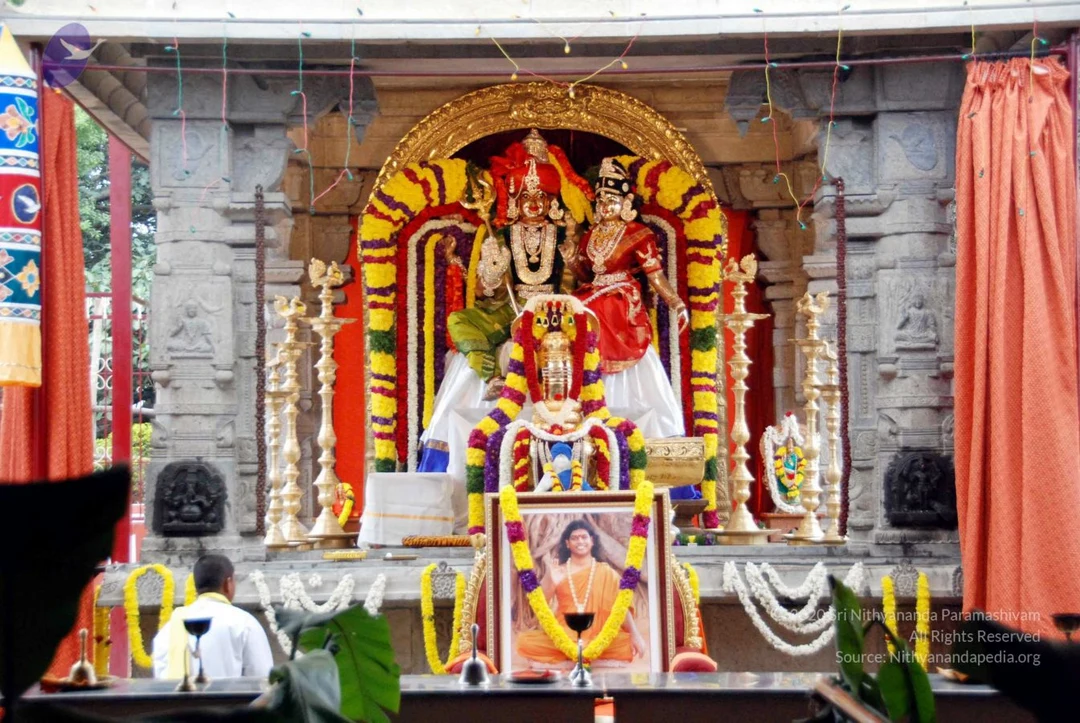
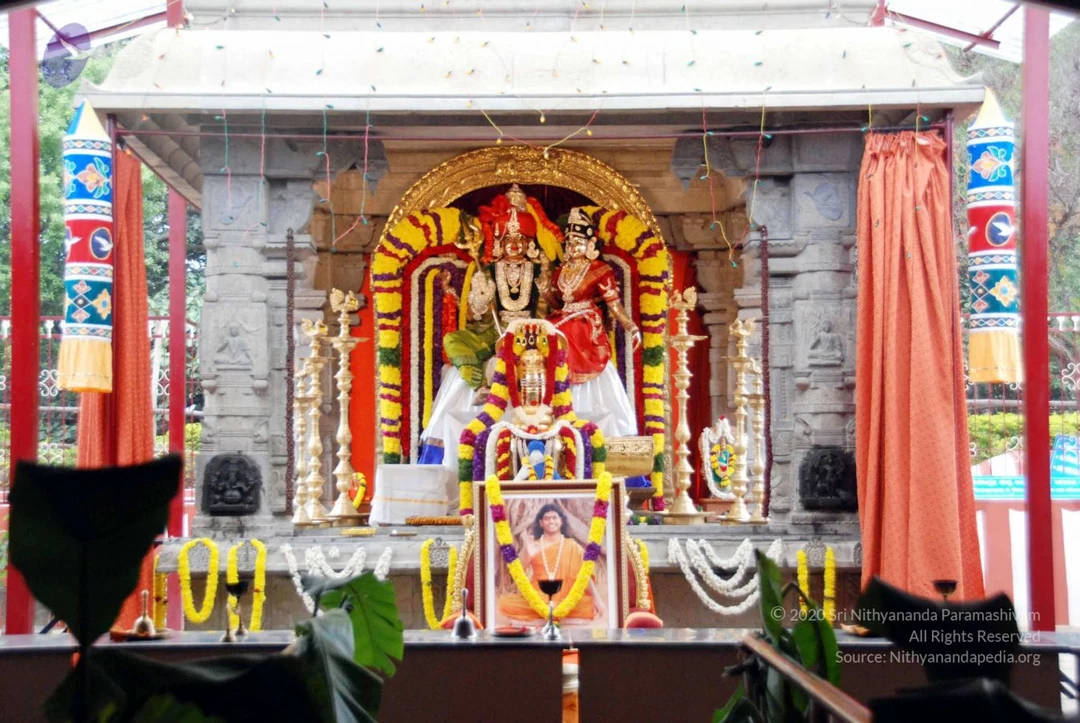
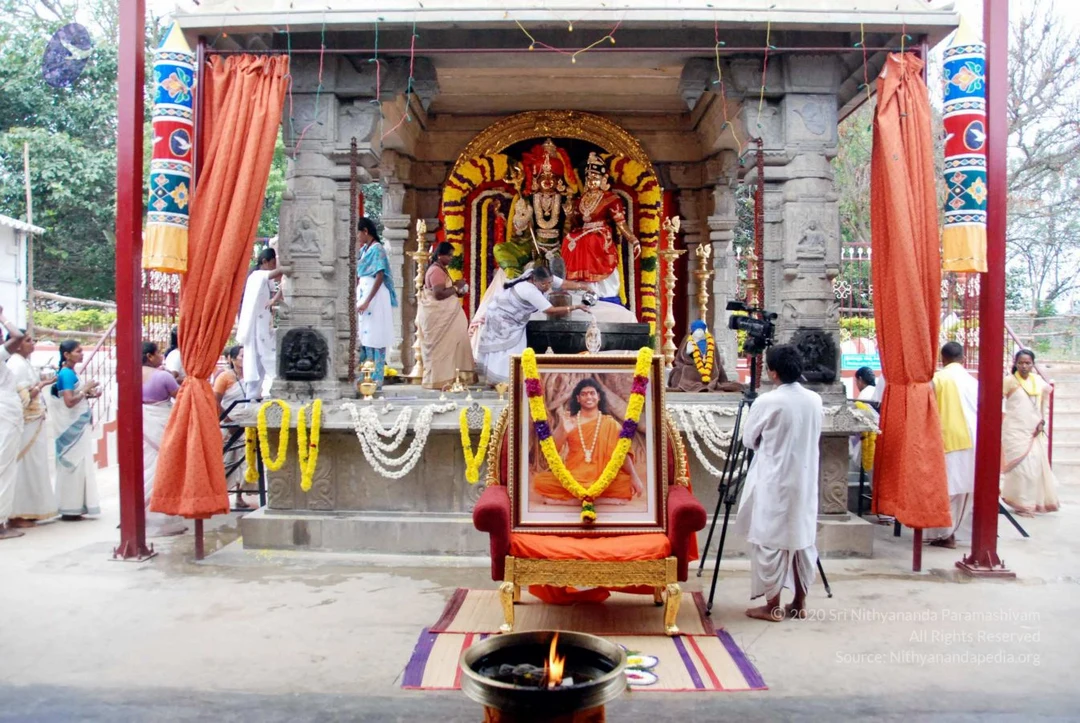
A temple shrine decorated with marigold and garland arches in yellow, purple and white. Central deity murti pair, a seated Shiva-form and consort figure with crowns and ornate necklaces, the consort in red clothing, stands behind a smaller deity figure. In front, a framed portrait labelled "Sri Nithyananda Paramashivam" shows a man in saffron robes with a garland, seated and smiling. Brass oil lamps stand on both sides, and an orange cloth backdrop hangs at the sides. At lower left, a man in white clothes sits at the edge of the frame near the shrine. A brass lamp and small offering vessels sit on the altar.A photograph of a temple shrine with a golden arched niche framing two seated deity murti: a figure in red and gold crown and a consort in red and white garments, both garlanded with yellow and white flowers. In front stands a framed portrait of a man in saffron/orange robes with a rudraksha mala and long hair, surrounded by yellow marigold garlands, a small lamp and brass oil lamps on the altar. Orange curtains hang on both sides of the shrine, and colourful painted pillars flank the structure with strings of lights overhead. No physical people are visible.Shrine at a temple with an arched gold-framed niche decorated with marigold and multicolour garlands. Two gilded murtis of a male deity and a female deity sit on a white draped pedestal; the male figure in green dhoti with a red turban and trident, the female in a red saree with elaborate ornaments. A silver linga-shaped object sits before them, garlanded. Brass oil lamps flank both sides, and a small red and gold banner hangs in the upper corner. No physical people are visible.Close photo of two ornate metal deity murtis decorated for worship in a temple shrine. The figure on the left wears a red turban and green-and-gold garment, holds a golden trident, and has a silvery-white decorated sash; the figure on the right wears a black crown with pearl-like ornaments, a red-and-gold sari, a heavy necklace and large earrings, and holds a small ritual object. Both are surrounded by garlands of yellow marigolds, red and orange flowers, and green leaves, with a gold arched frame behind and silver lamps at the lower left.Close-up photograph of two decorated murti statues in a temple shrine, framed by a gilded arch and red curtain. On the left, a golden-faced deity figure wears a large red turban with white jeweled ornaments, holds a golden trident, and has a green and white embroidered garment. On the right, a golden-faced goddess figure wears a black crown with pearl and gem ornaments, a red garment, and layered white and gold necklaces. Both are adorned with yellow marigold garlands, orange flower strands and green leaves. The statues are depictions, not living people.A black stone murti of a standing sage-like figure, dressed in an orange-red shawl and a striped saffron turban, with a long rudraksha mala hanging on the chest and hands raised in a blessing mudra. The statue stands in a silver-framed shrine arch with a red fabric backdrop, draped with garlands of yellow, purple, white and orange flowers. A small brass oil lamp and white flower offering sit at the base, beside a dark plaque with inscribed text. Trees frame the open-air shrine.

Homa
38 photosSource gallery
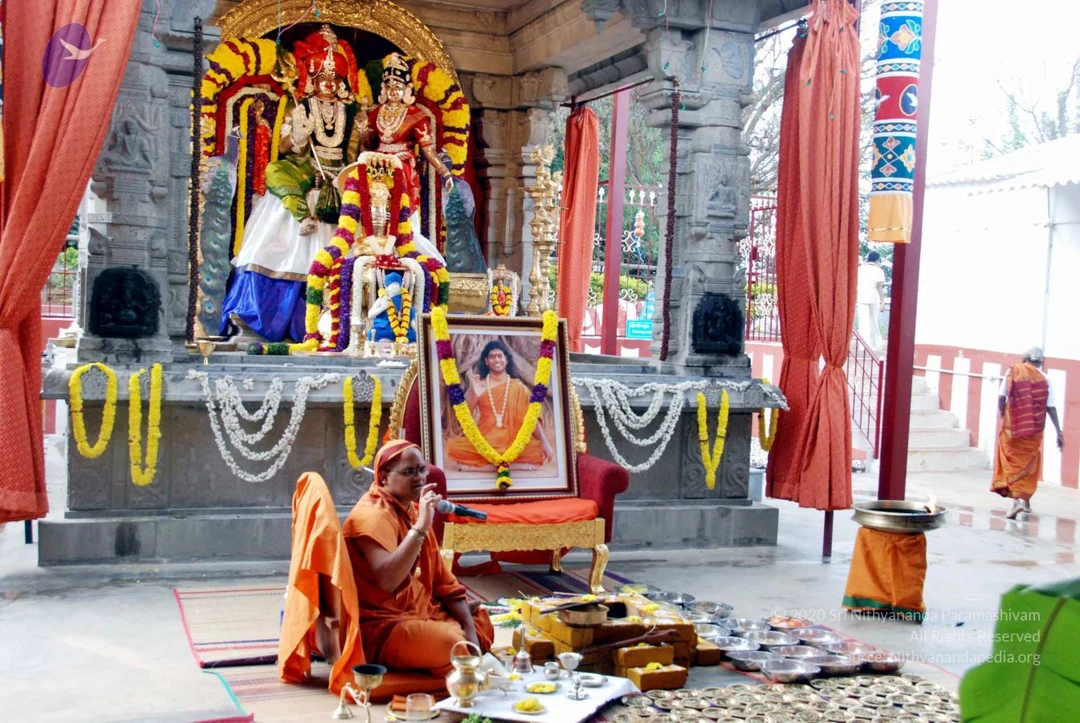
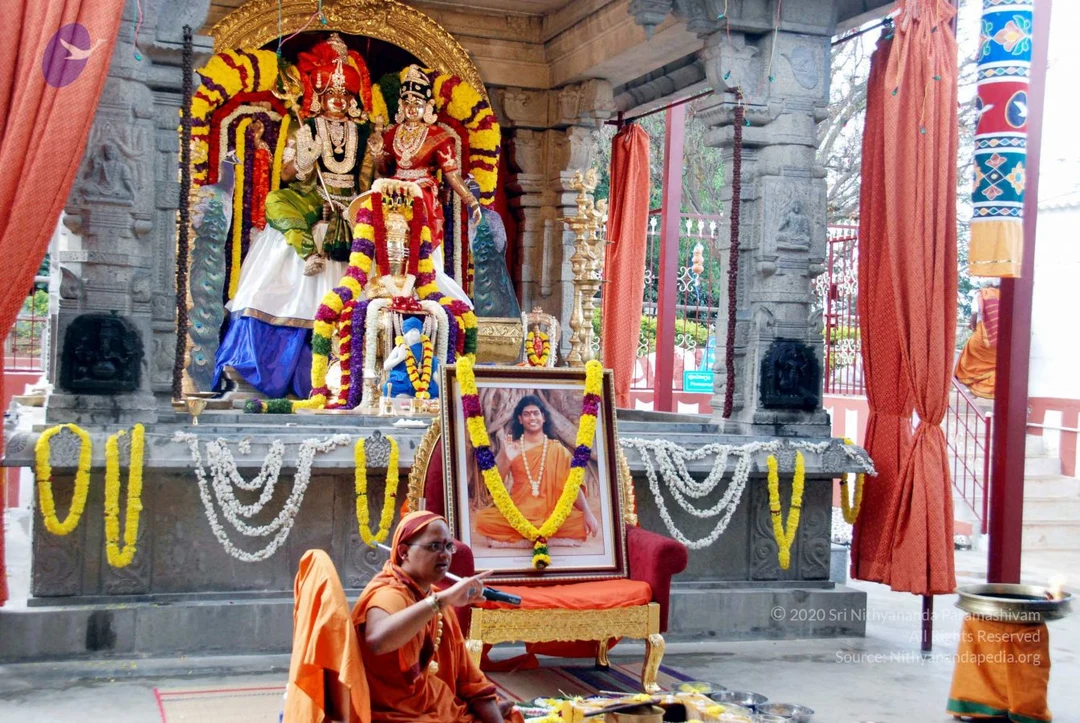
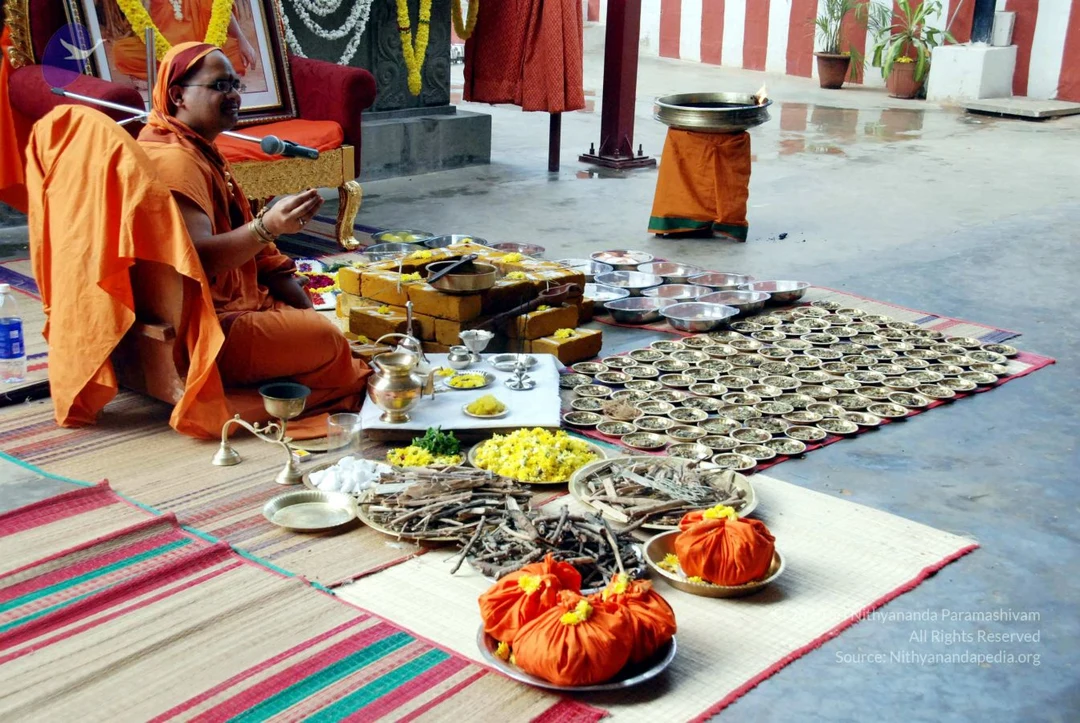
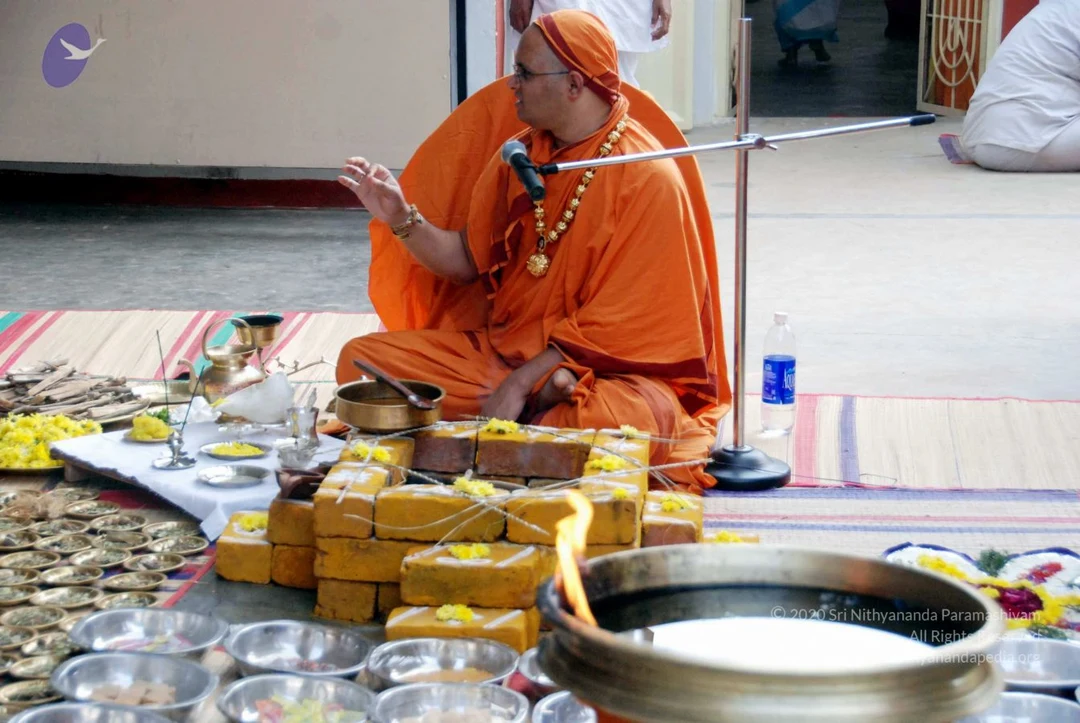
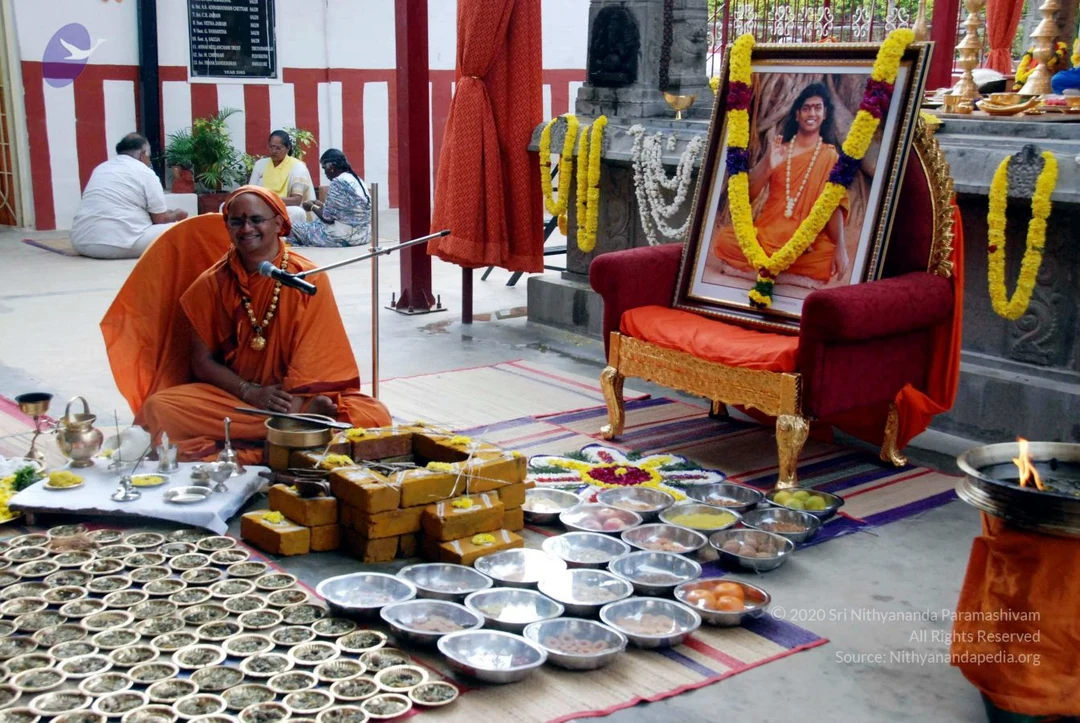
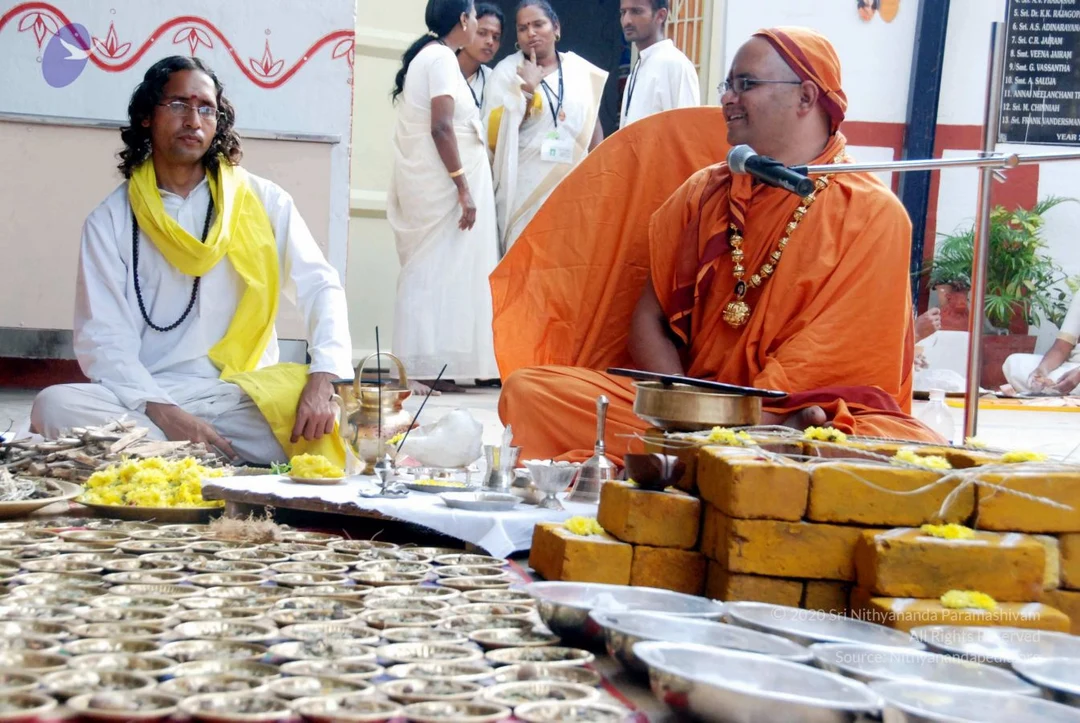
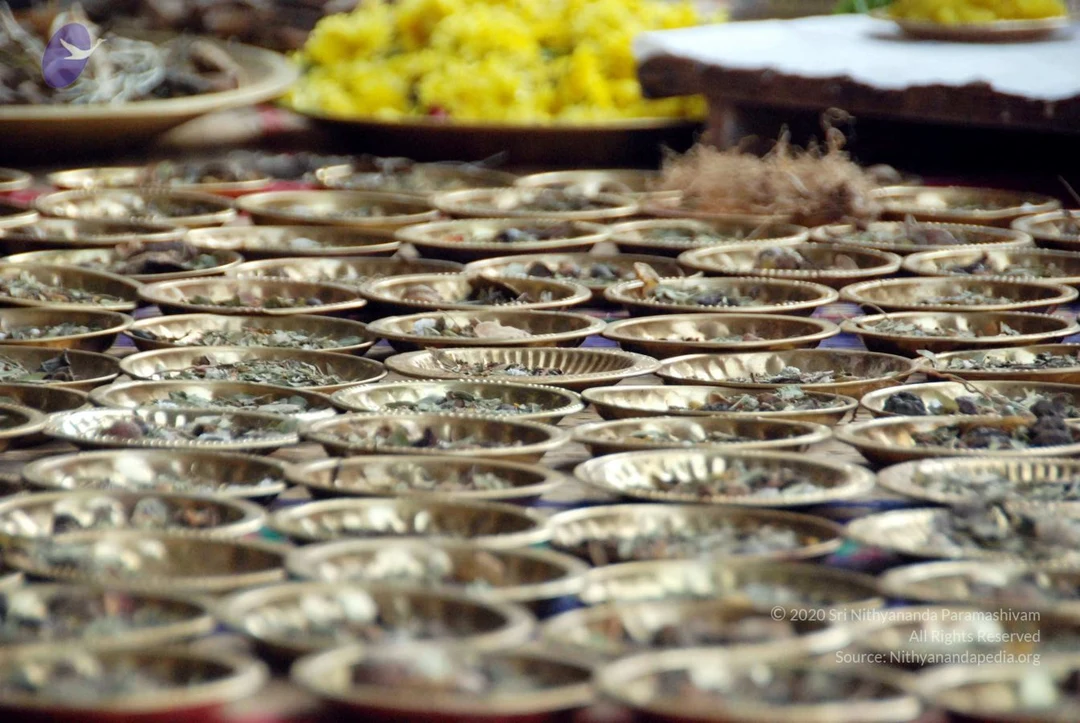
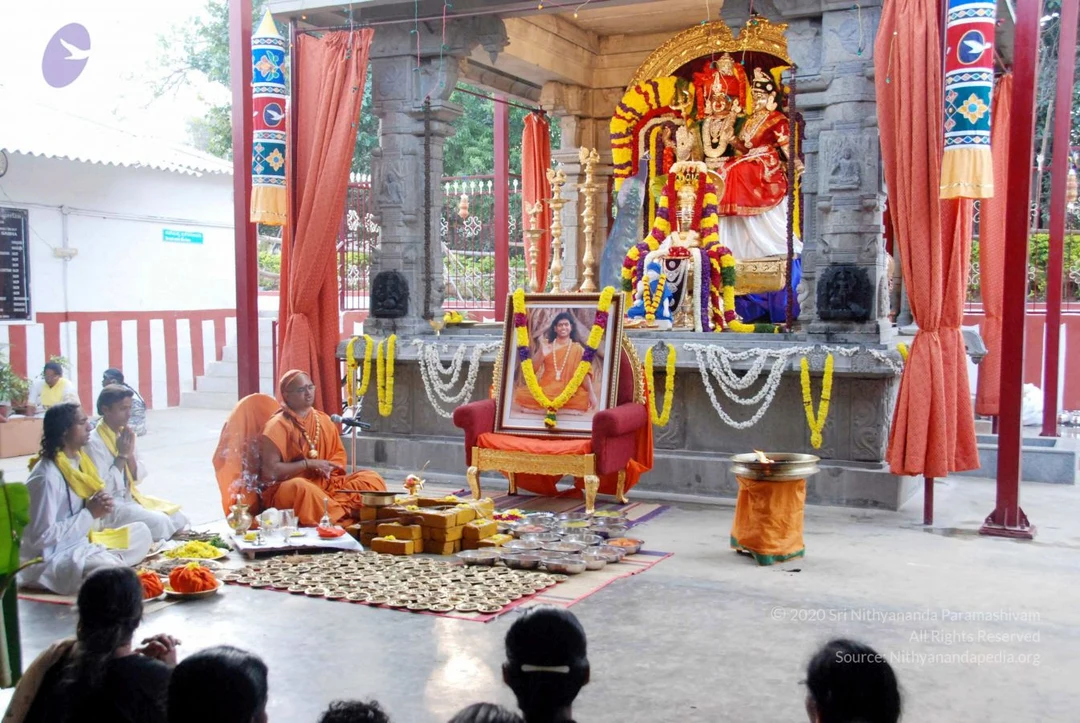
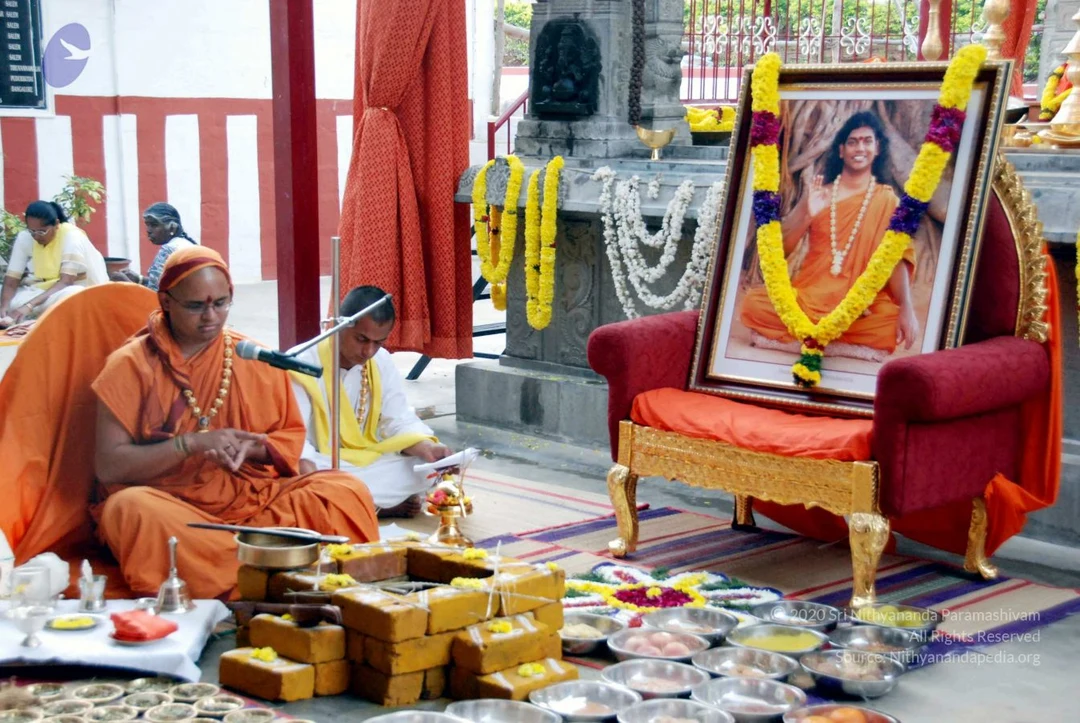
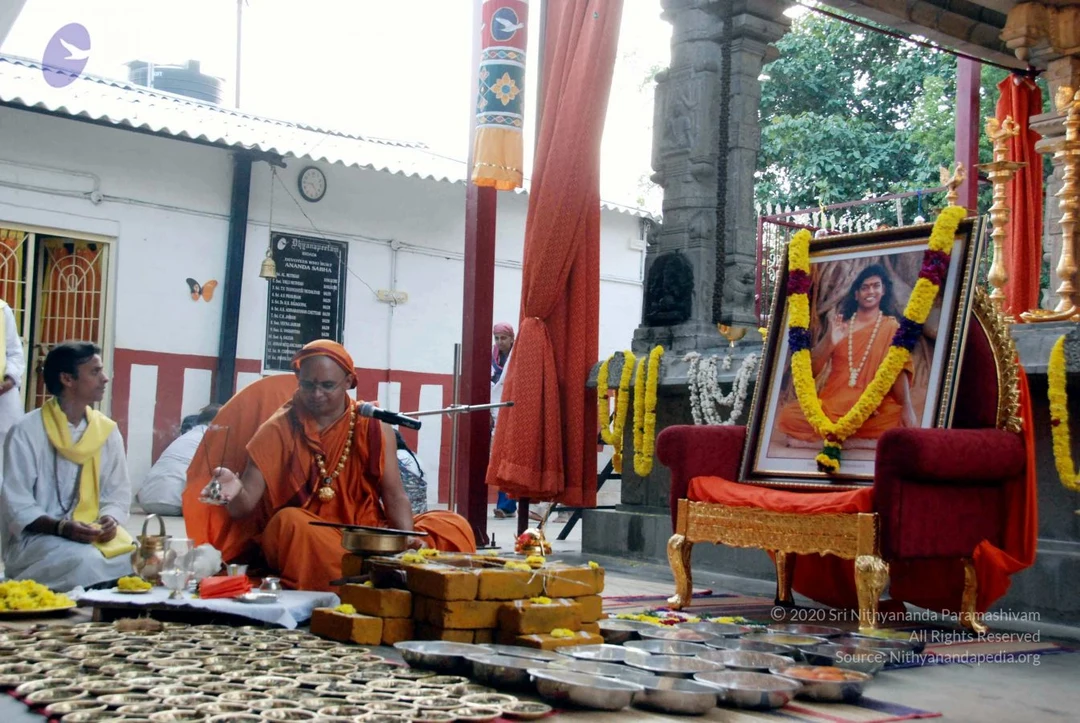
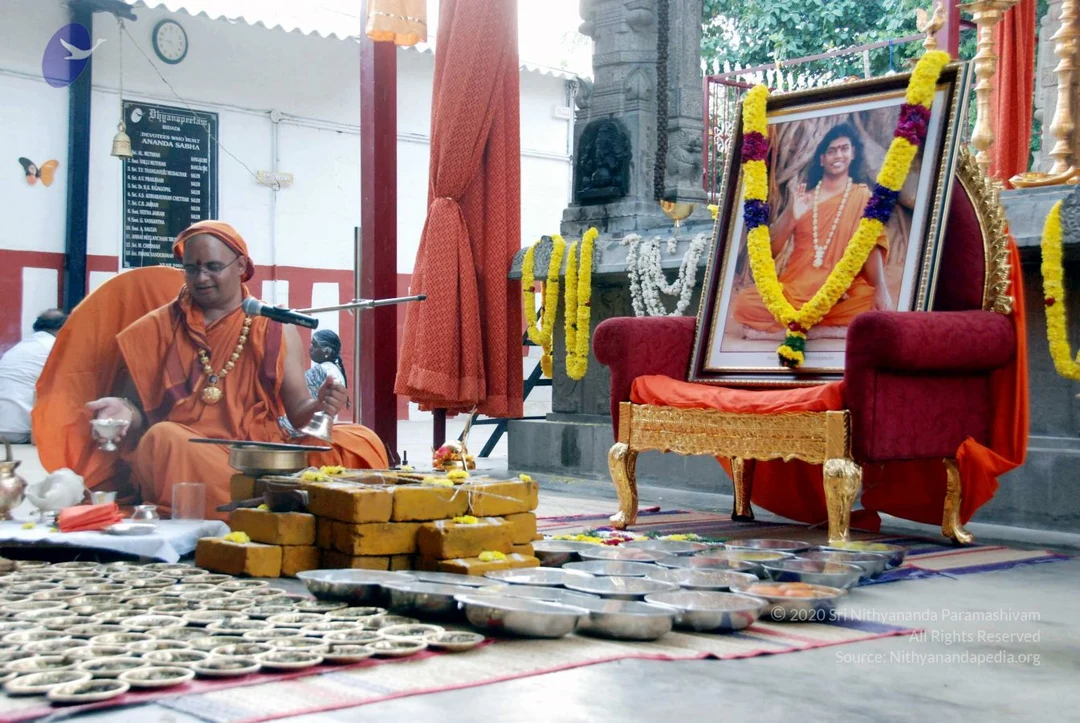
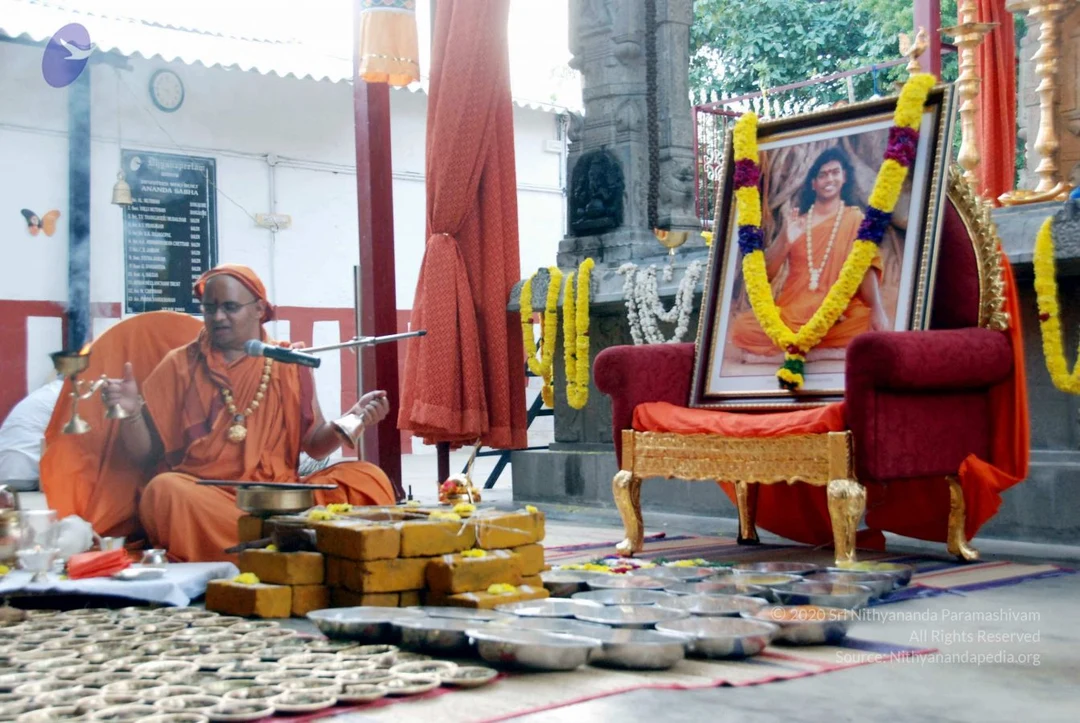
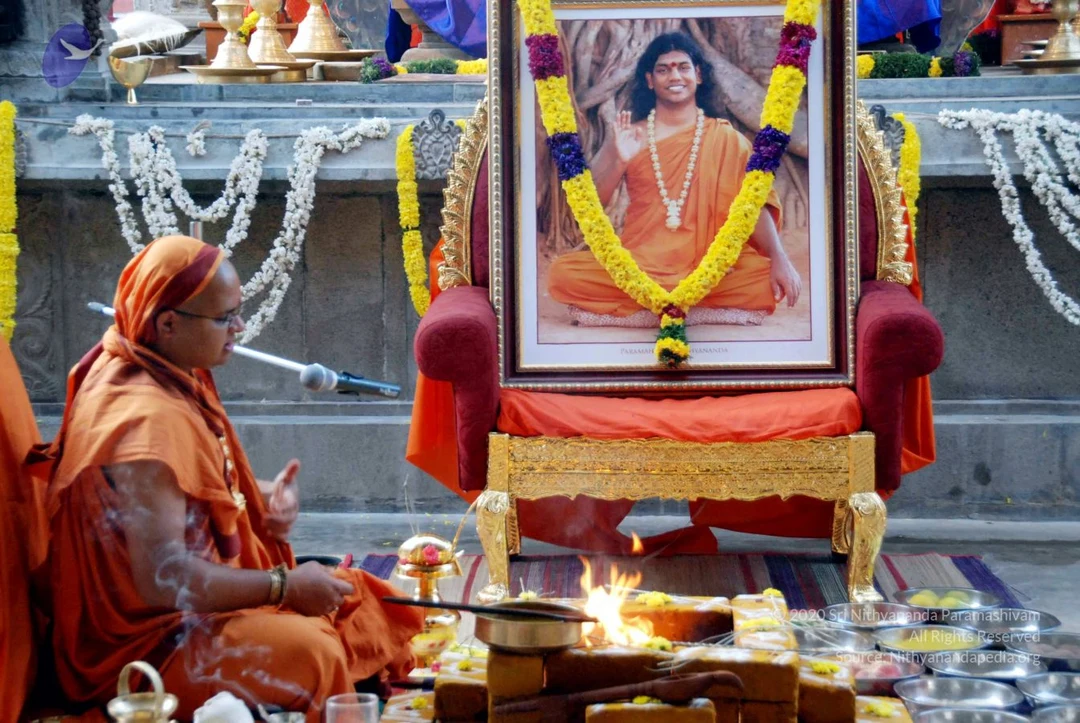
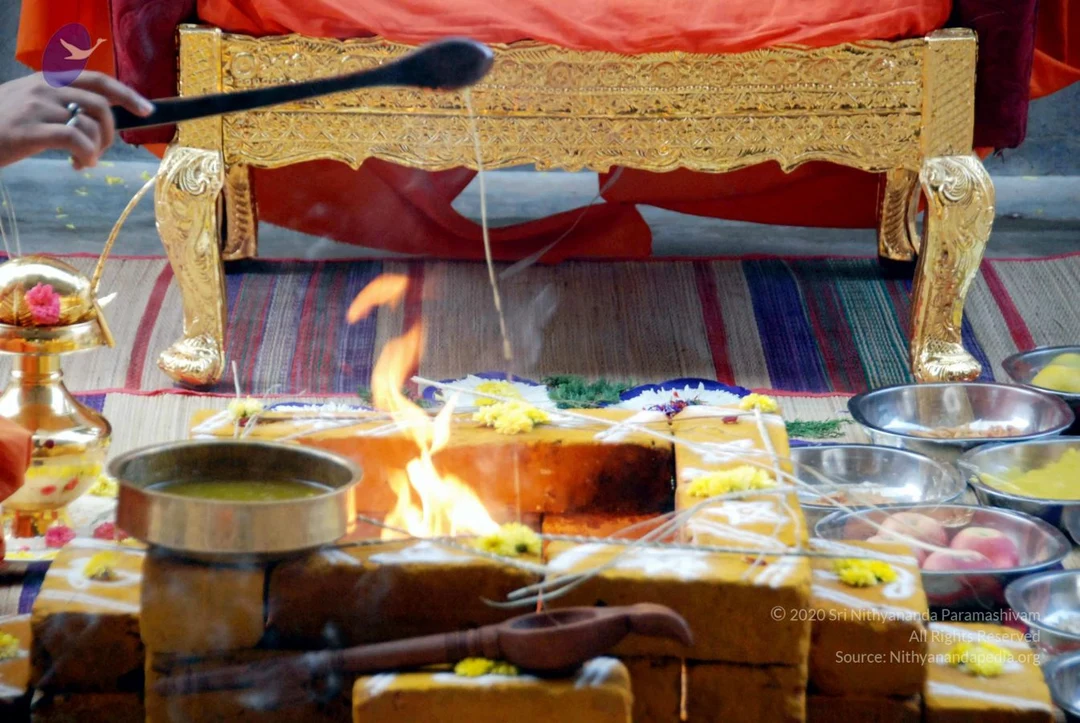
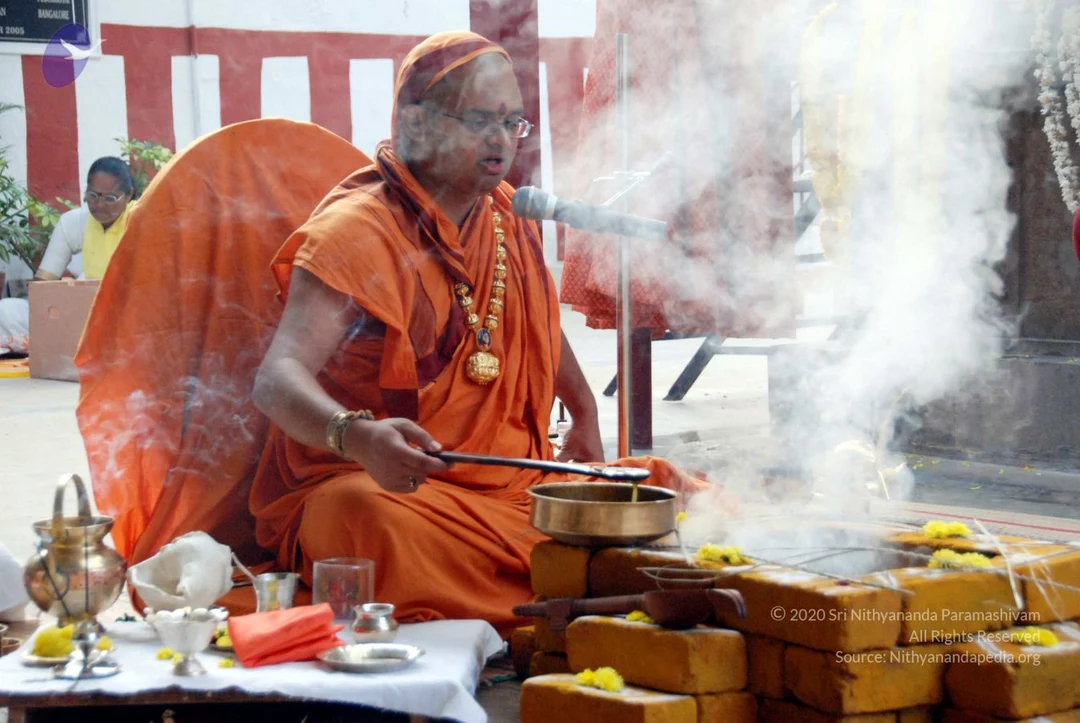
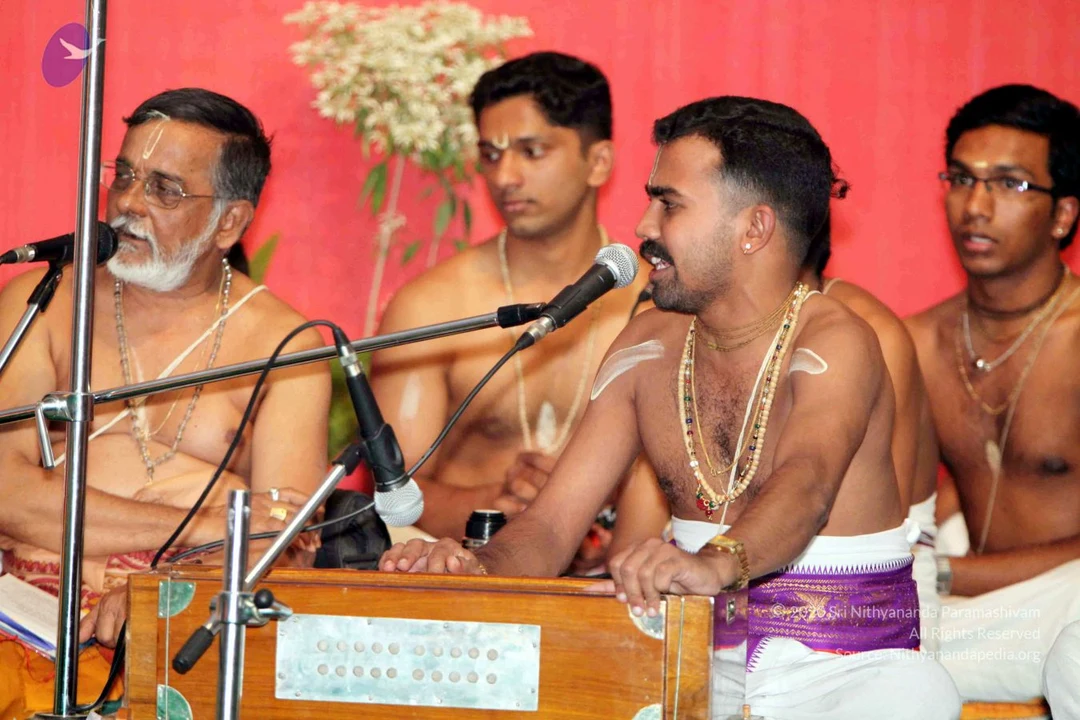
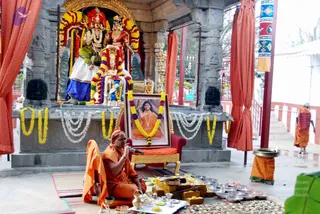
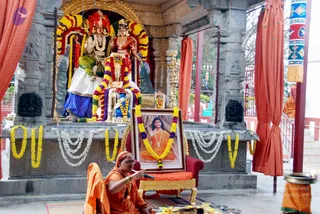
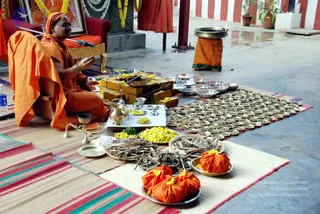
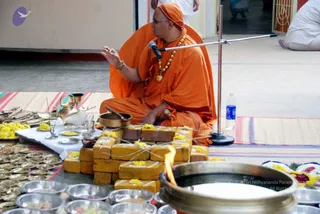
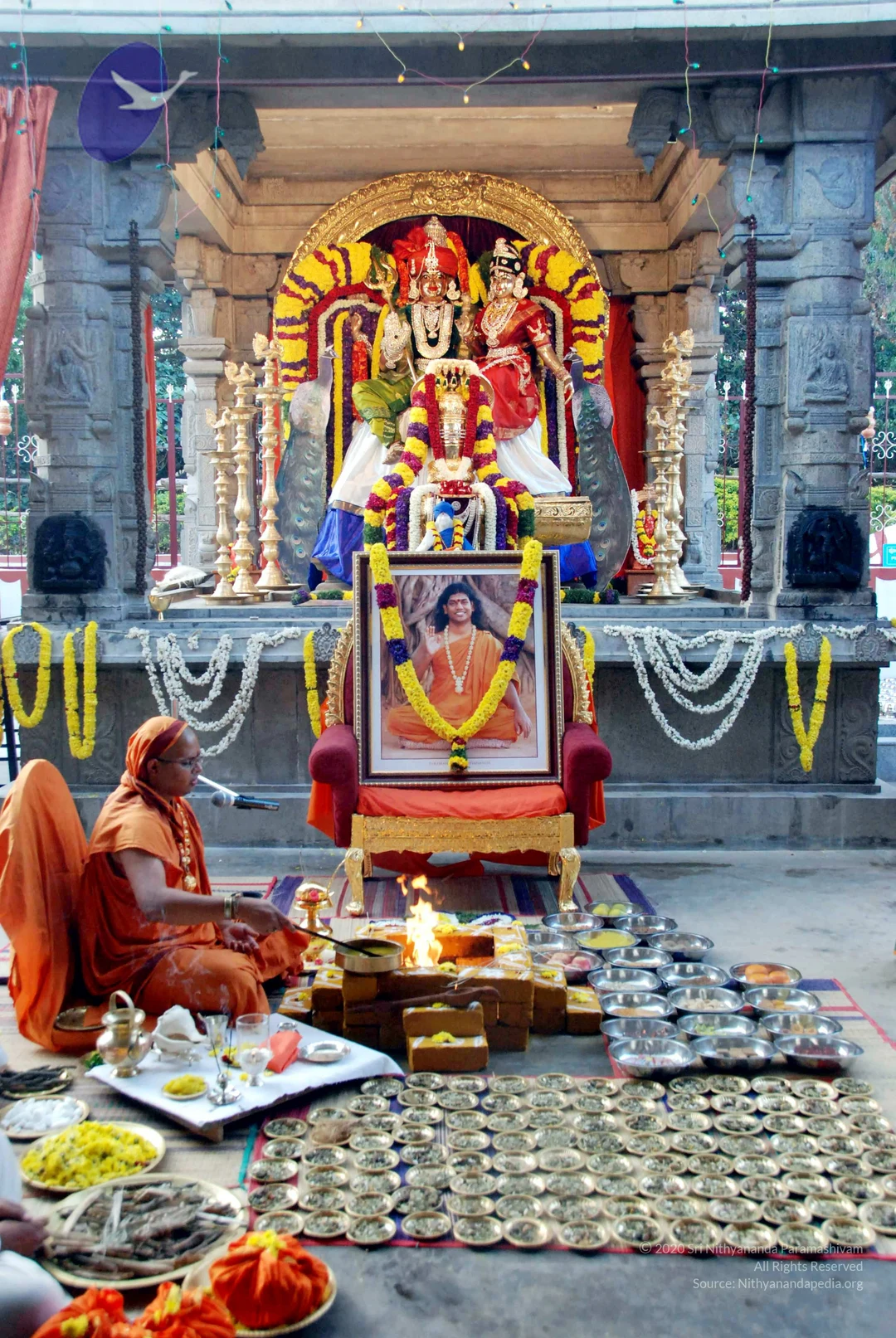
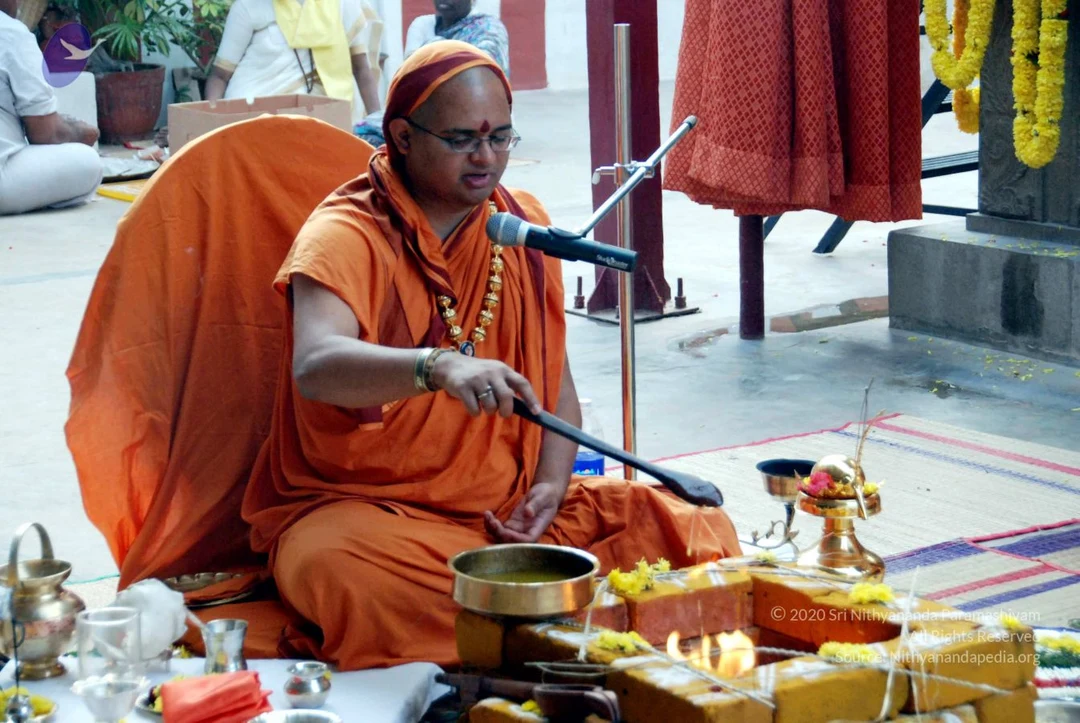
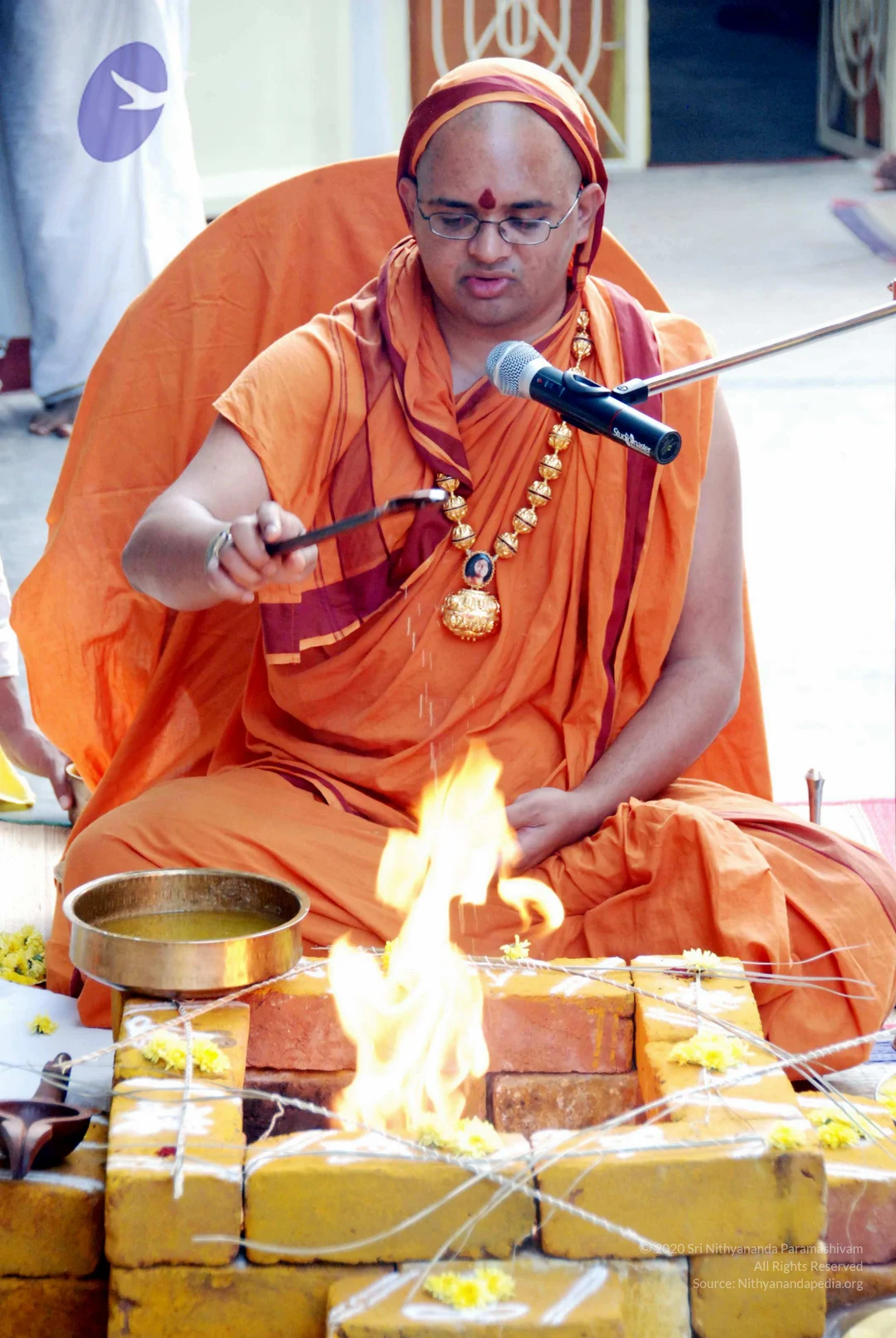
A shrine with a grey stone arch and gold-framed niche holds two deity murtis, a male figure in red crown and a female figure in red sari with gold jewellery, flanked by peacocks. Marigold garlands drape the shrine and a framed portrait of a saffron-robed man wearing a rudraksha mala and gold necklace sits on a golden throne-like seat below. Brass oil lamps stand on either side, with orange curtains, a kalasha-like vessel and offerings in front. Flags on the pillars show colourful patterns. No people are visible in the scene.A temple shrine decorated with marigold garlands and orange drapes, with a central framed photograph of a saffron-robed, long-haired man wearing a rudraksha-style necklace, garlanded below. Behind it stands a gilded arched shrine housing two deity murtis, one seated figure in red and gold with a crown and a second in white and blue with a crown. Brass lamps and offerings in trays sit on the altar in front, with silver-toned railings, a plant in the foreground, and a few devotees' heads visible at the lower edge. Colourful painted pillars flank the shrine.A photograph inside a stone temple shrine hung with orange curtains and marigold and white garlands. Two deity murtis stand in the back alcove, one in white and blue and one in red, with a central figure seated on a decorated peetha. In front, a framed portrait labelled "Paramahamsa Nithyananda" sits on a red chair draped in orange cloth, wearing a marigold garland. A seated priest in saffron robes with a headcloth speaks into a microphone beside brass plates of offerings, a kalasha and oil lamps on the floor. Another saffron-clad person walks in the background, and a copper vessel with a lit wick stands on the right.A shrine inside a stone temple pavilion decorated with yellow and purple marigold garlands and white flower strings. Two deity murtis stand within the shrine, one in red and white with a crown. In front, a framed portrait labelled "Paramahamsa Nithyananda" shows a figure with long hair in orange robes and a rudraksha mala, garlanded with yellow and purple flowers. A seated woman in orange robes and an orange head wrap, wearing glasses and a beaded necklace, holds a small object and sits before brass plates and offerings. Orange drapes frame the pavilion and a brass oil lamp stands at the right edge.A seated priest in saffron-orange robes and a matching head wrap sits cross-legged on a woven mat beside a homa setup, with a microphone on a stand before him. Brass and steel bowls surround a low stack of yellow brick-like blocks, and rows of small brass oil lamps fill a mat on the right. Piles of wooden sticks, yellow marigold garlands and small orange cloth bundles tied with flowers rest on plates in front. A second figure in orange dhoti holds a lit fire vessel aloft in the background, beneath a framed portrait garlanded with yellow flowers. The priest's appearance does not clearly match a known identity, so the figure is described by role.A seated man in orange robes and an orange head wrap leads a ritual while speaking into a microphone on a stand. He wears a large gold necklace pendant and gold bracelets, and gestures with his raised right hand. Before him are rows of brass bowls, yellow-flowered brass dishes, and stacked yellow-and-orange blocks tied with string, with a brass vessel and a lit fire pit in the foreground. A second robed figure in orange sits behind him. Brass pots and marigold-type yellow flowers sit on a white cloth at left, with a striped mat underneath.
Milk Abishekam

194 photosSource gallery
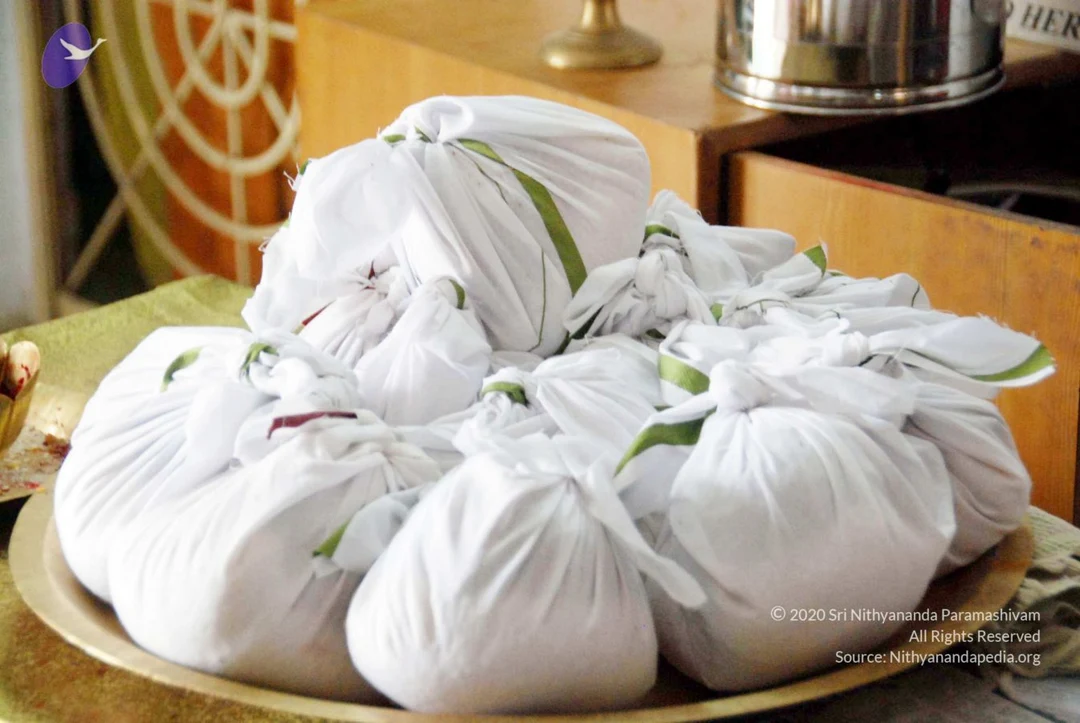
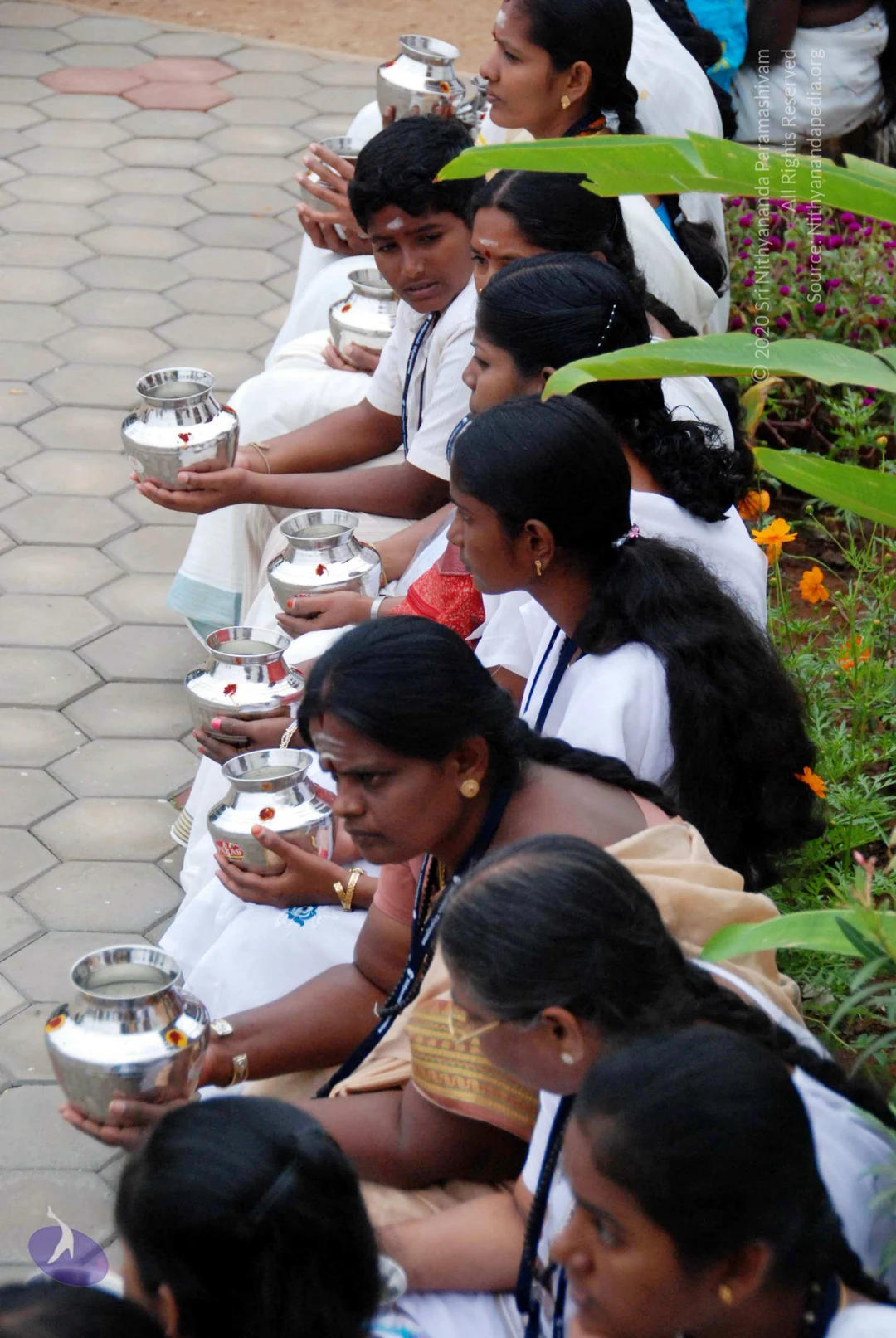
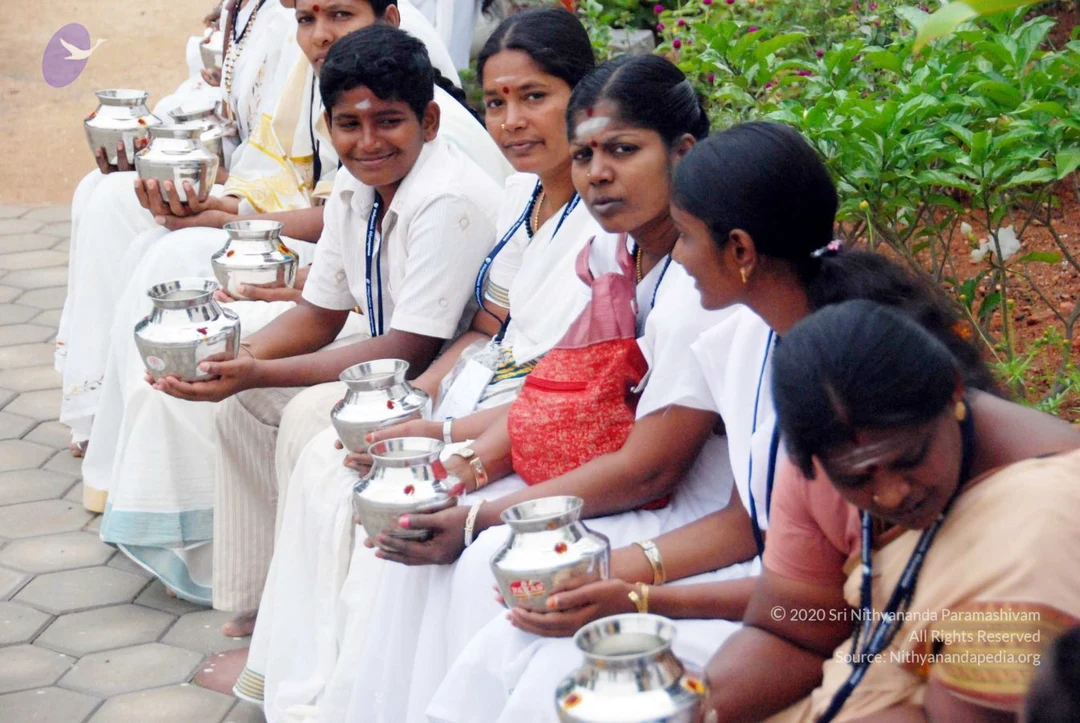
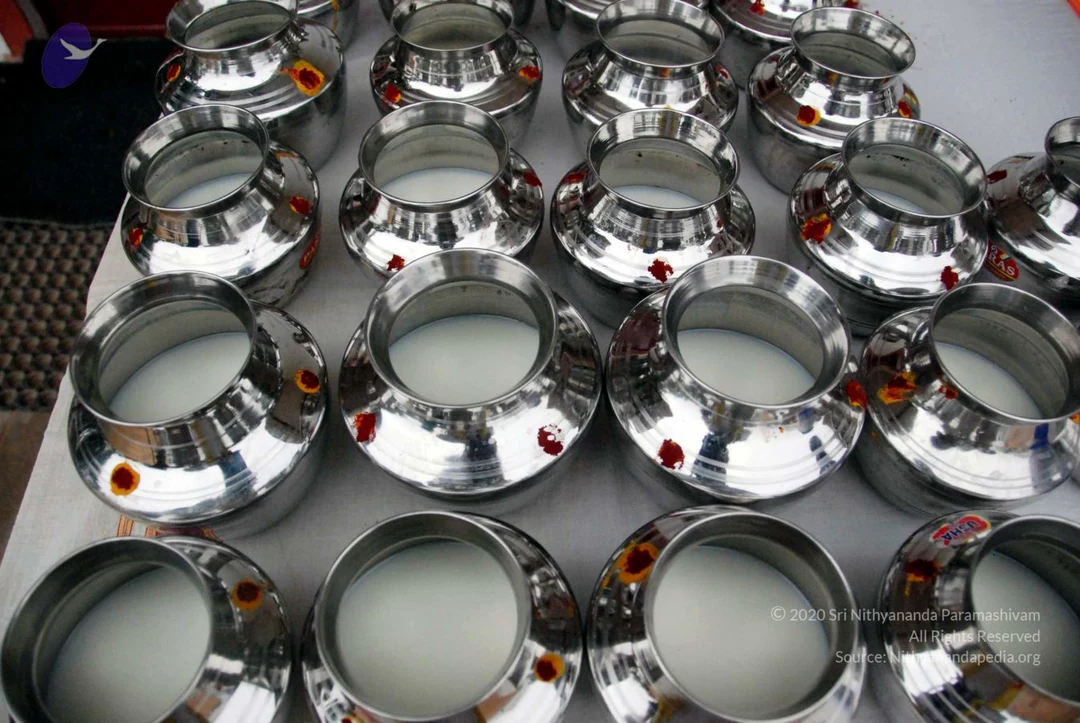
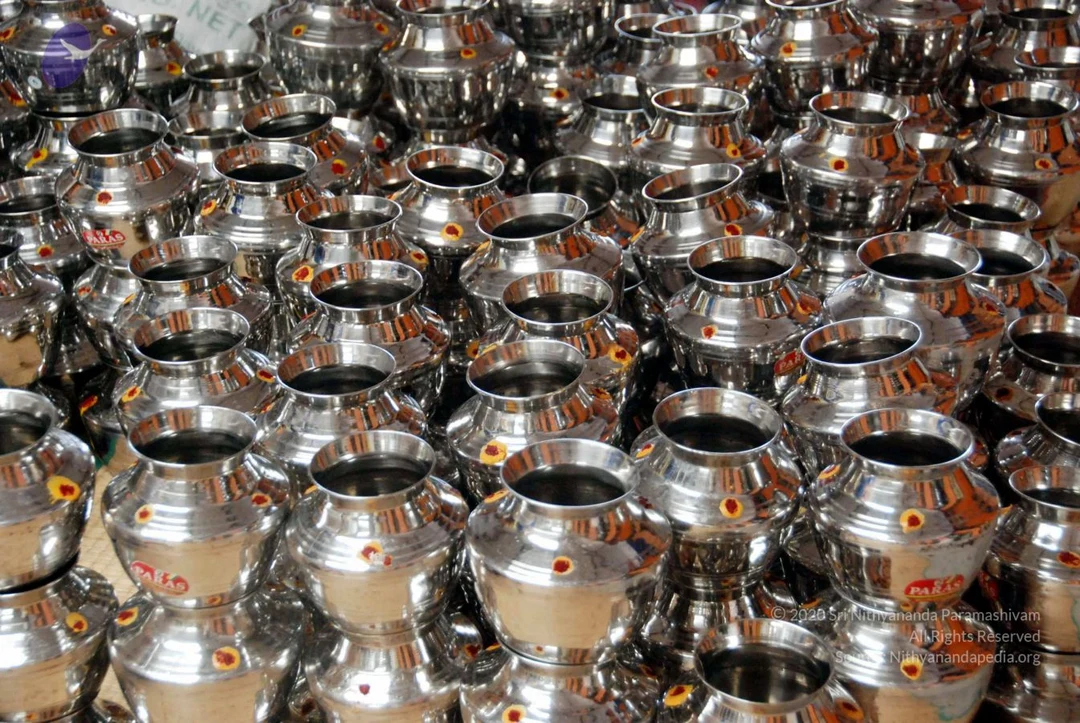
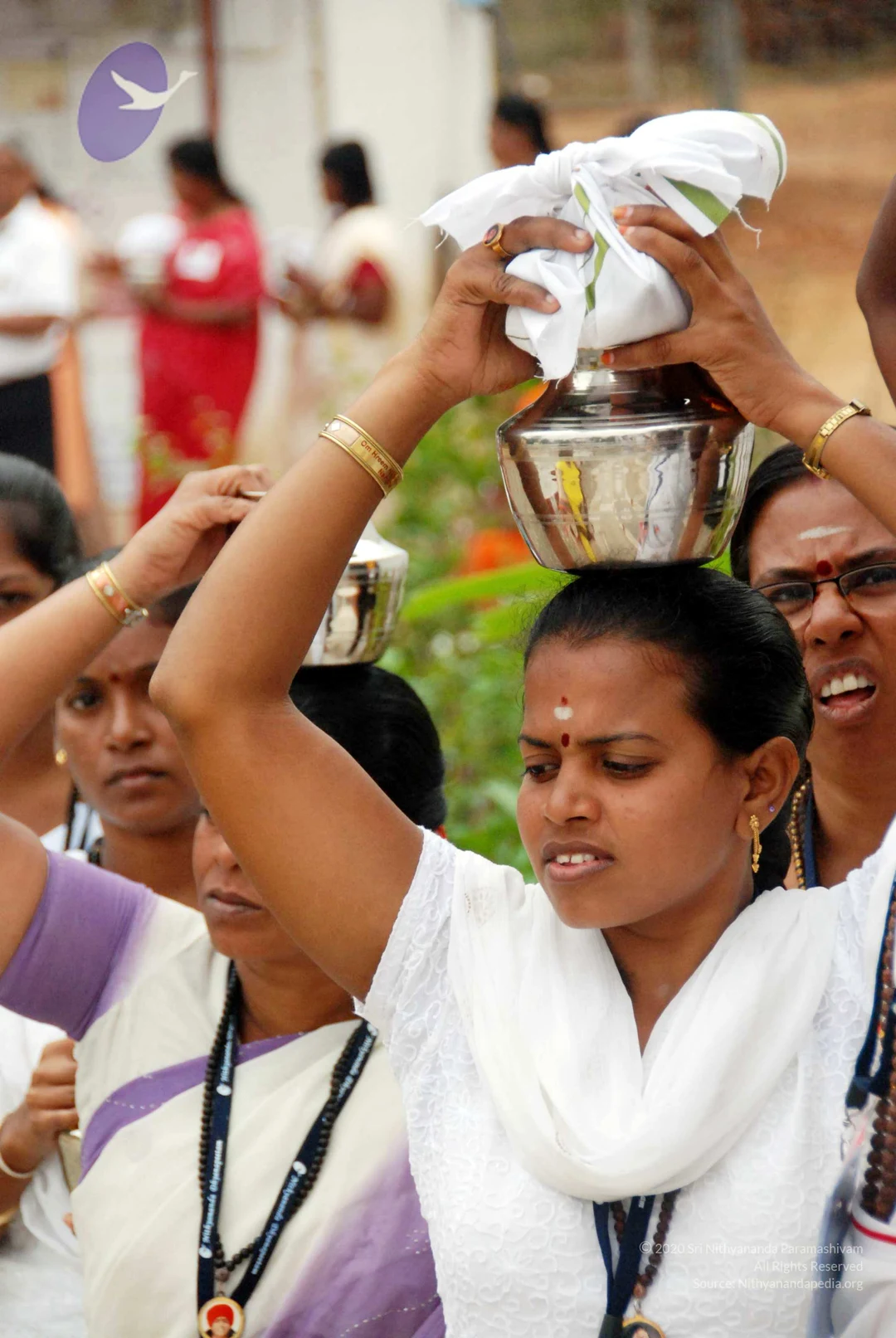
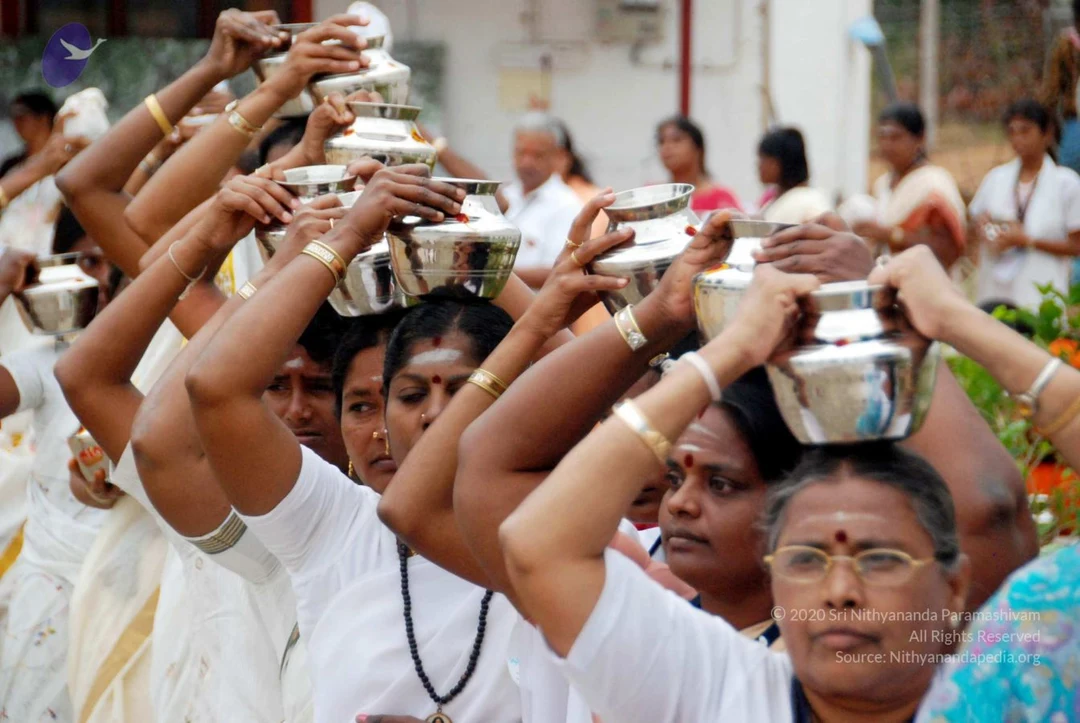
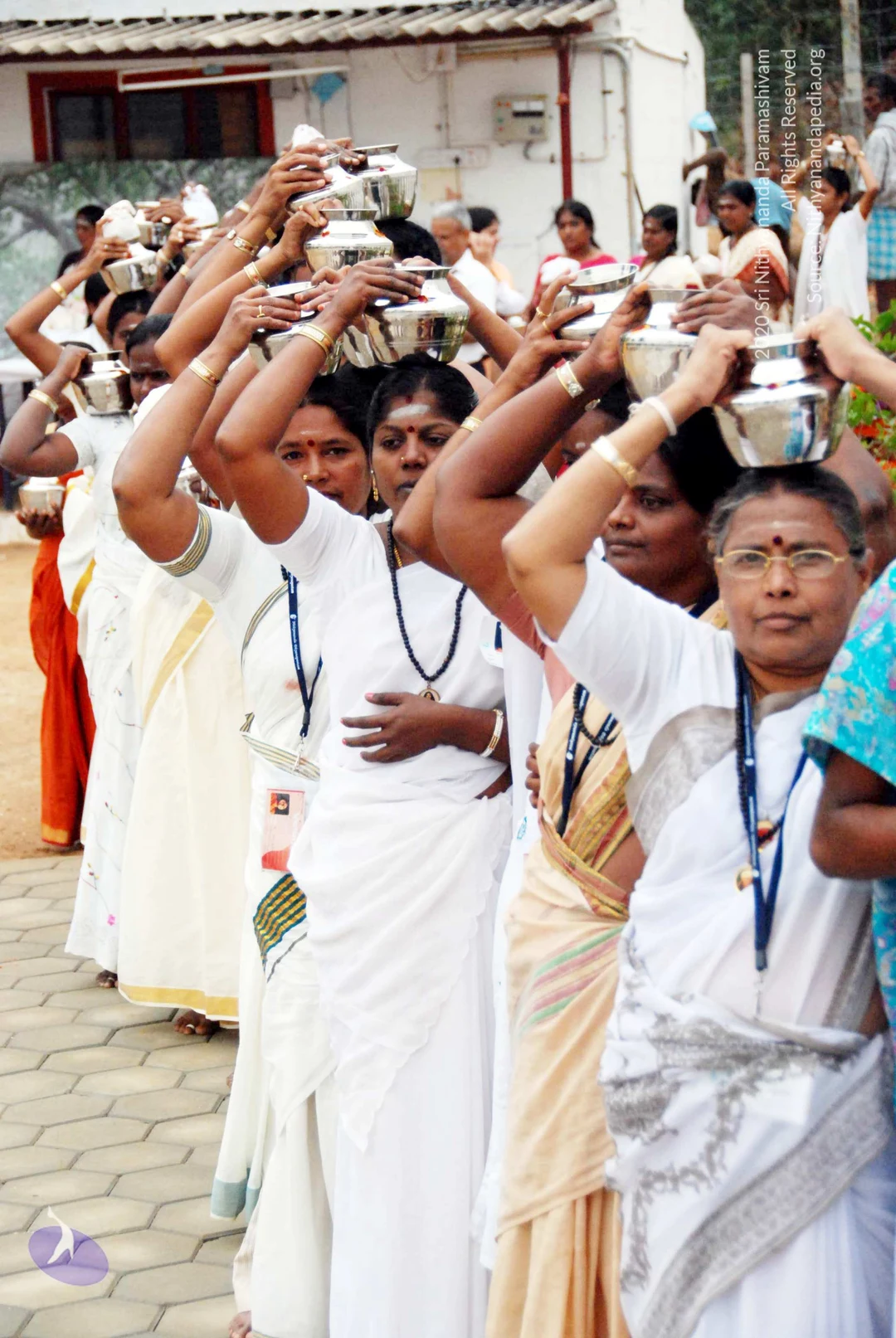
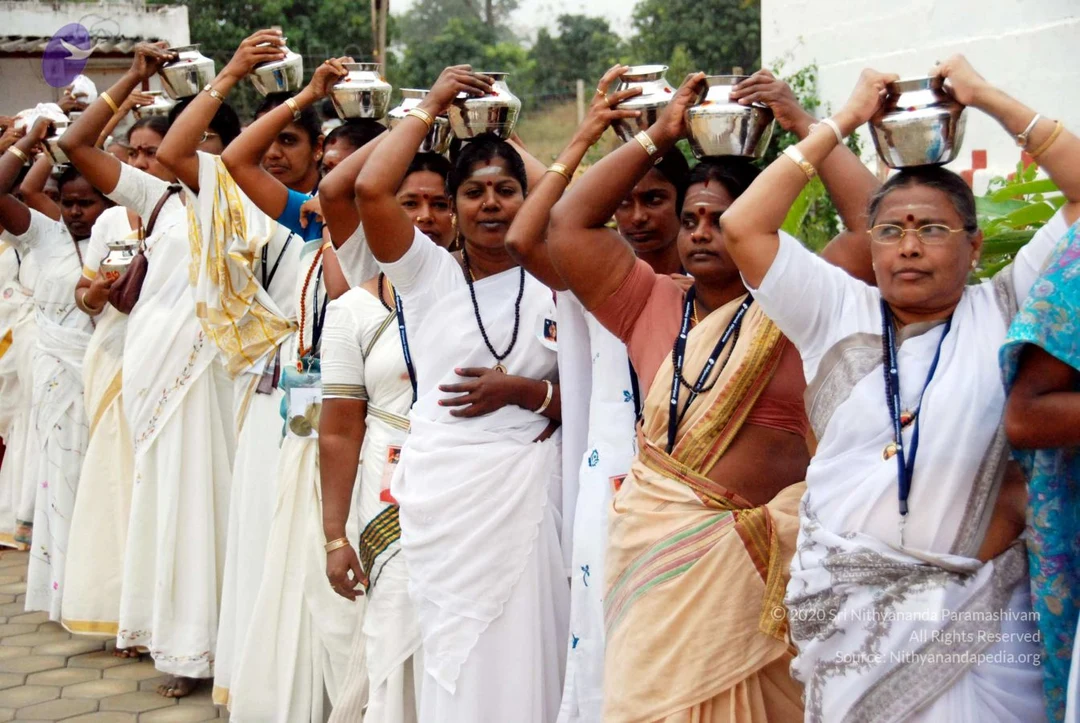
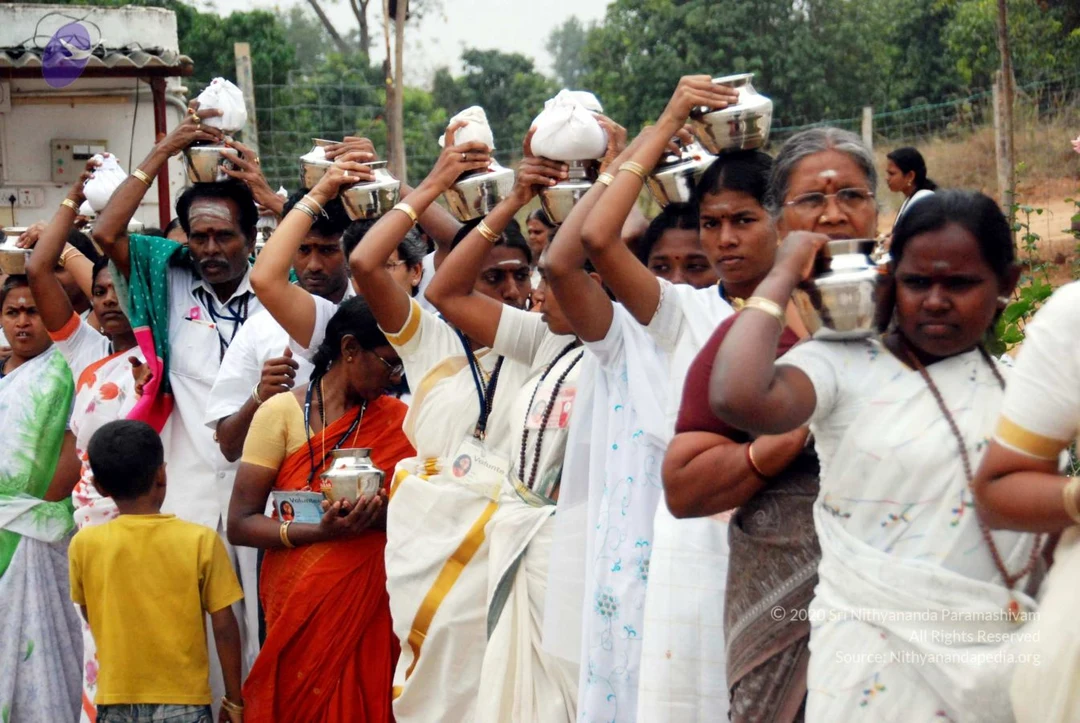
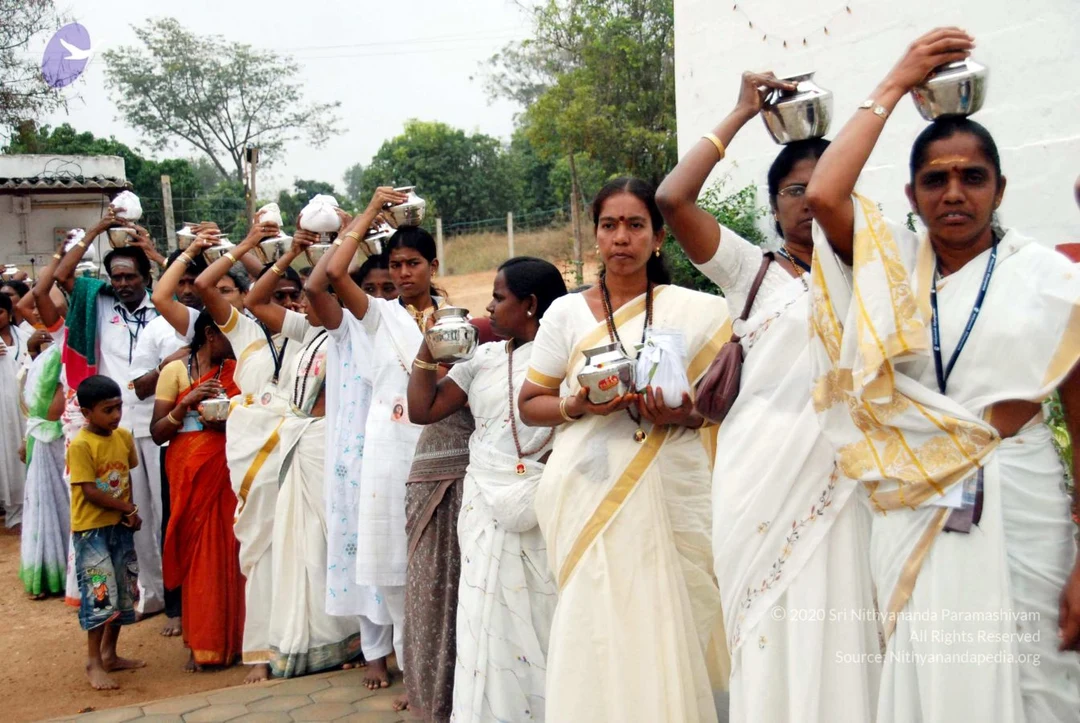
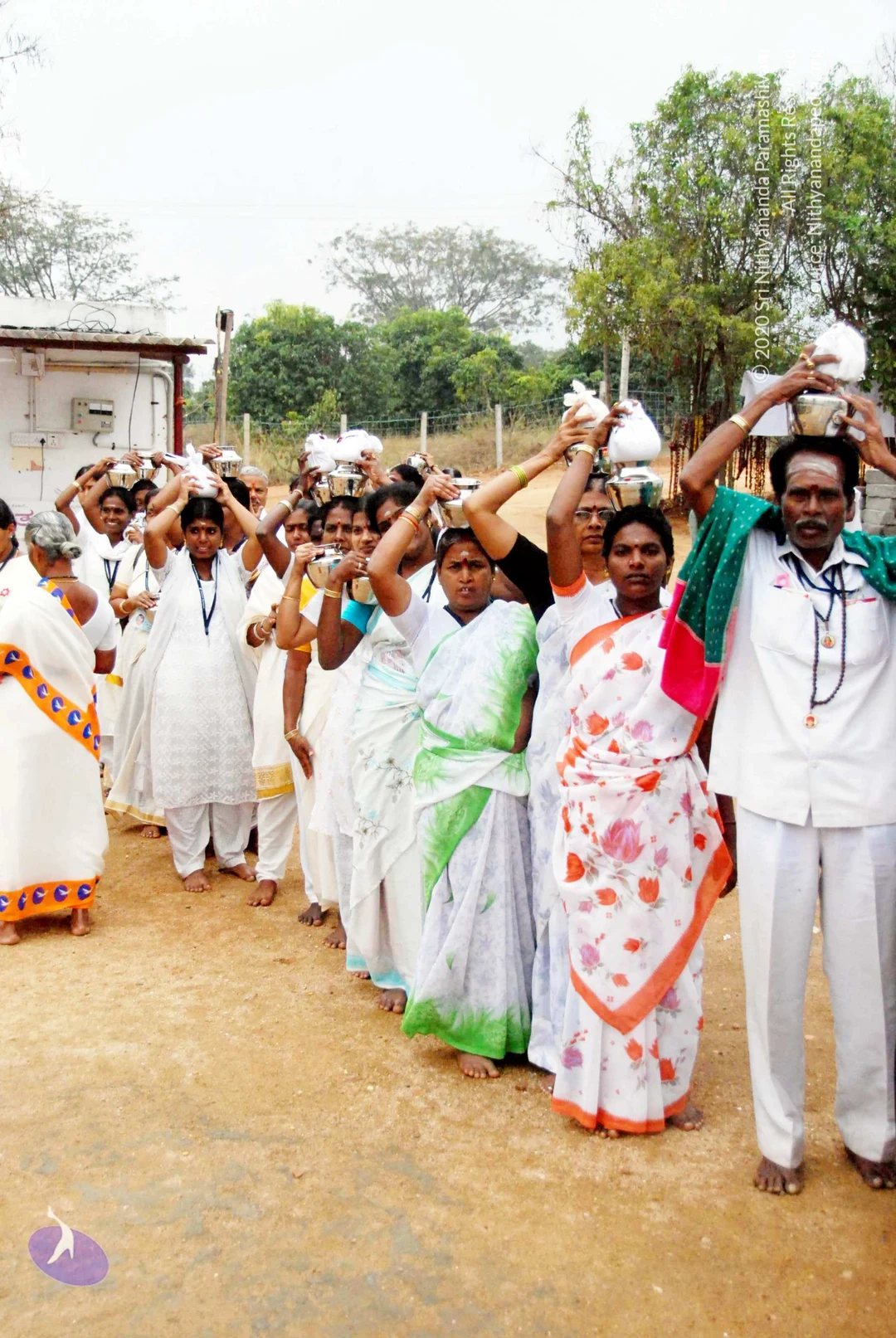
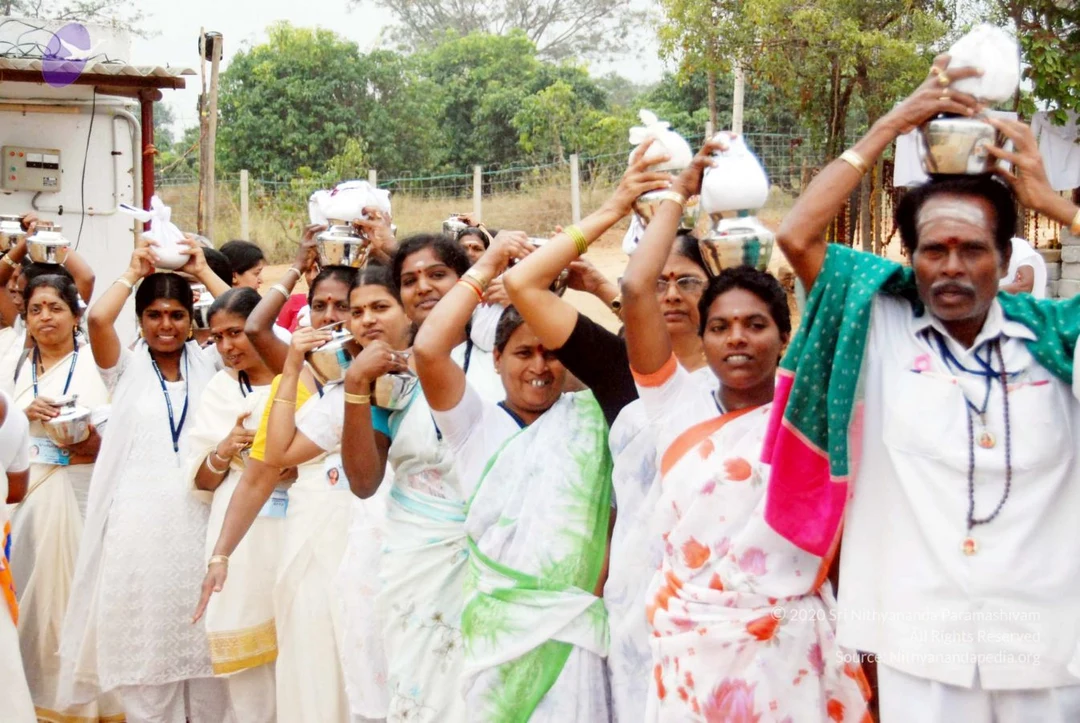
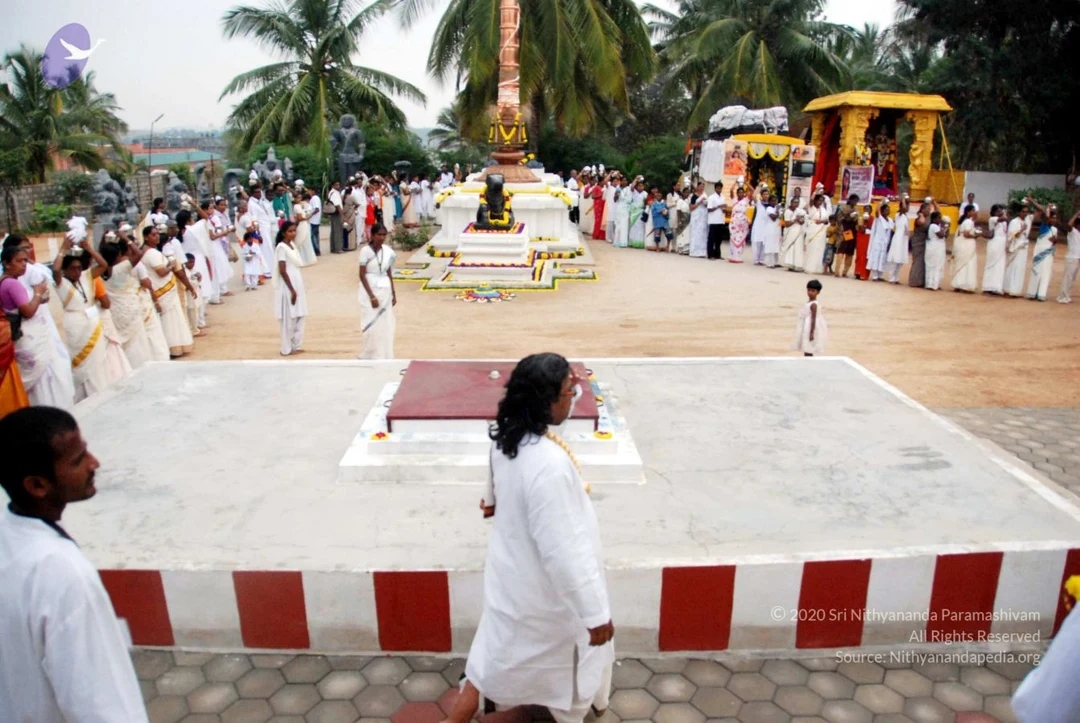
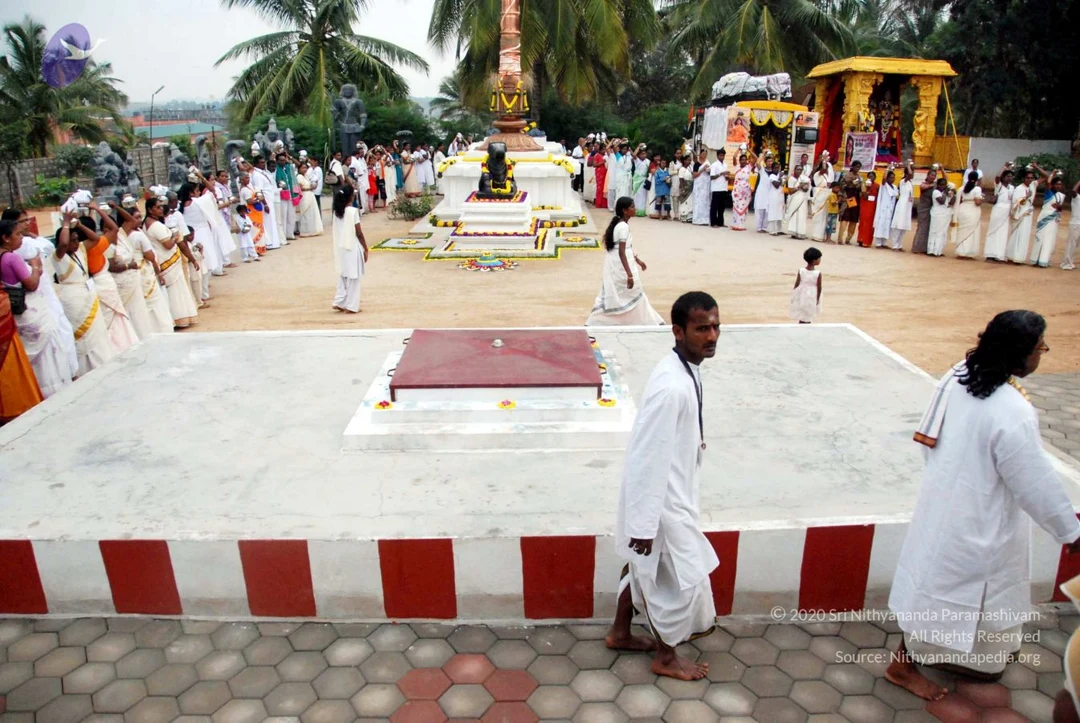
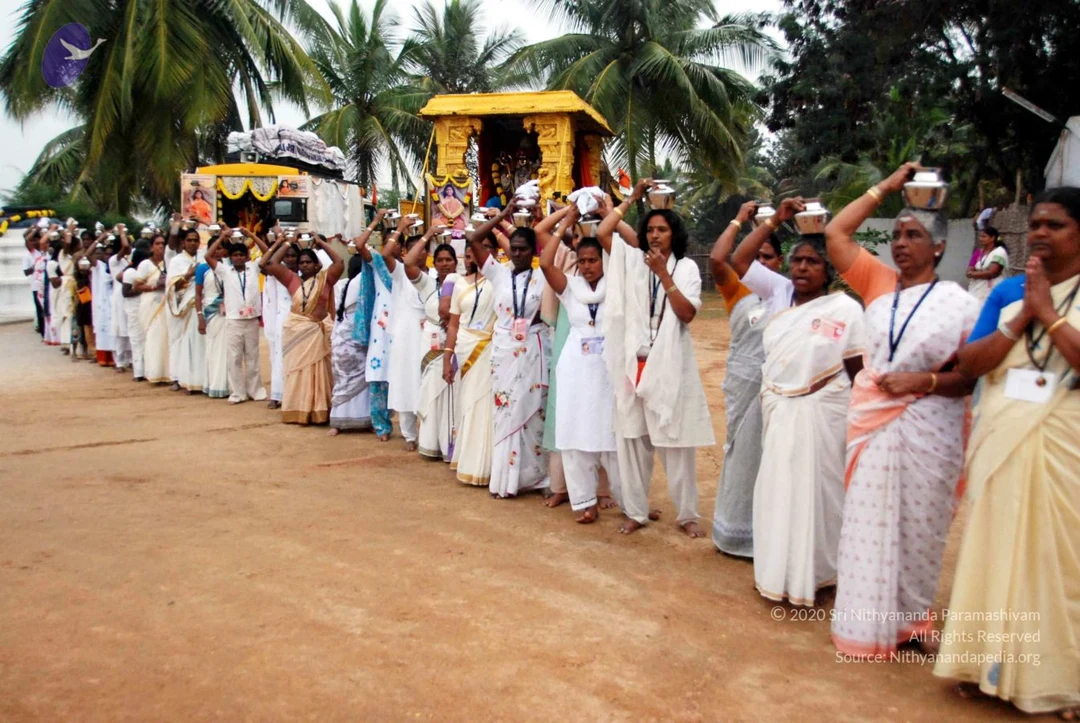
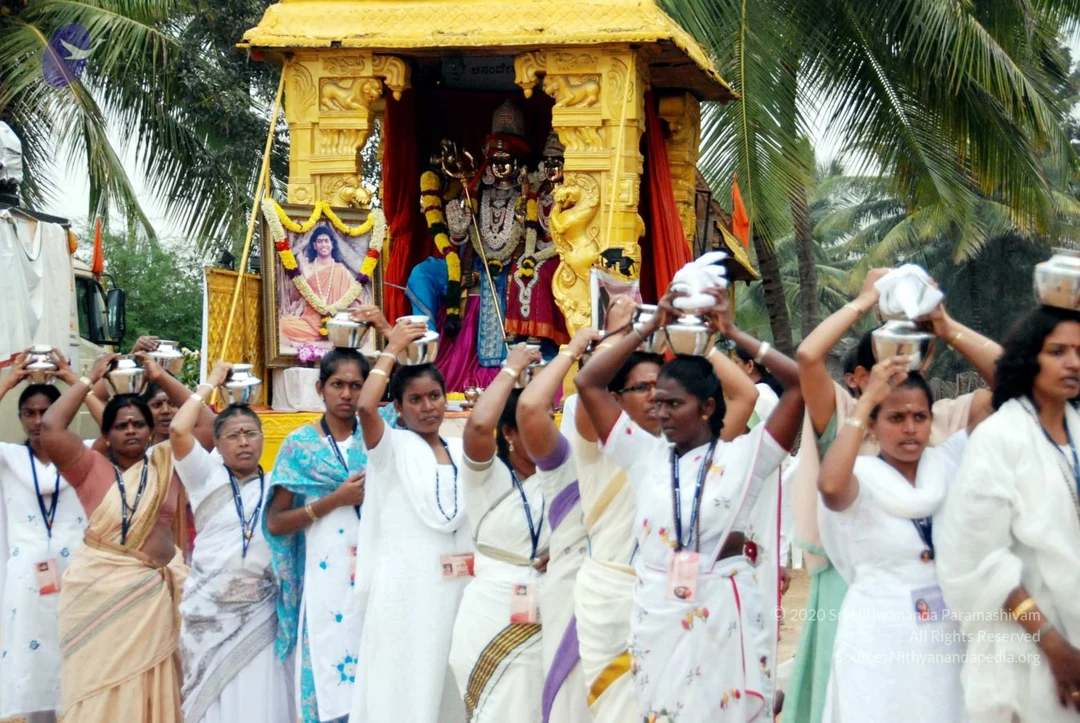
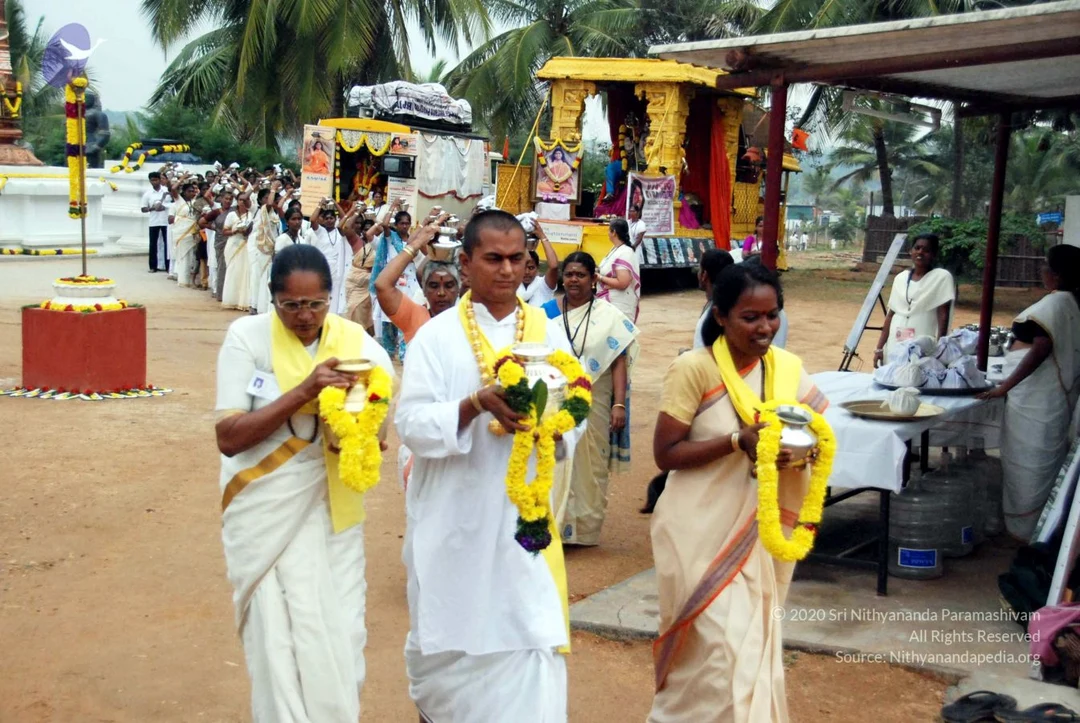
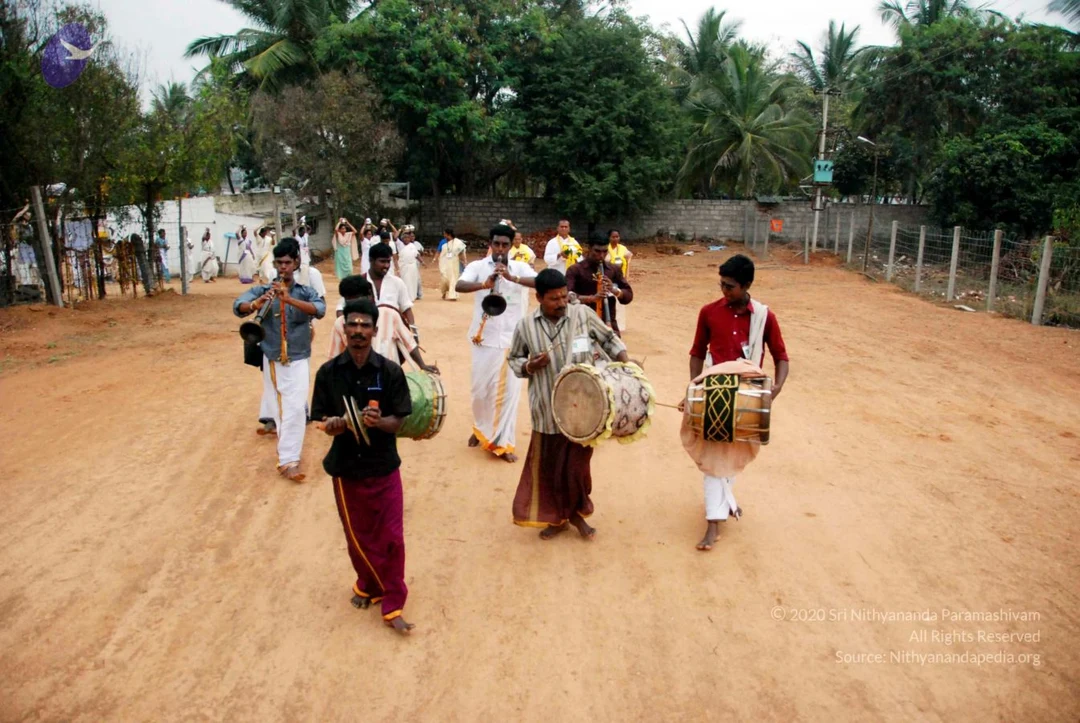
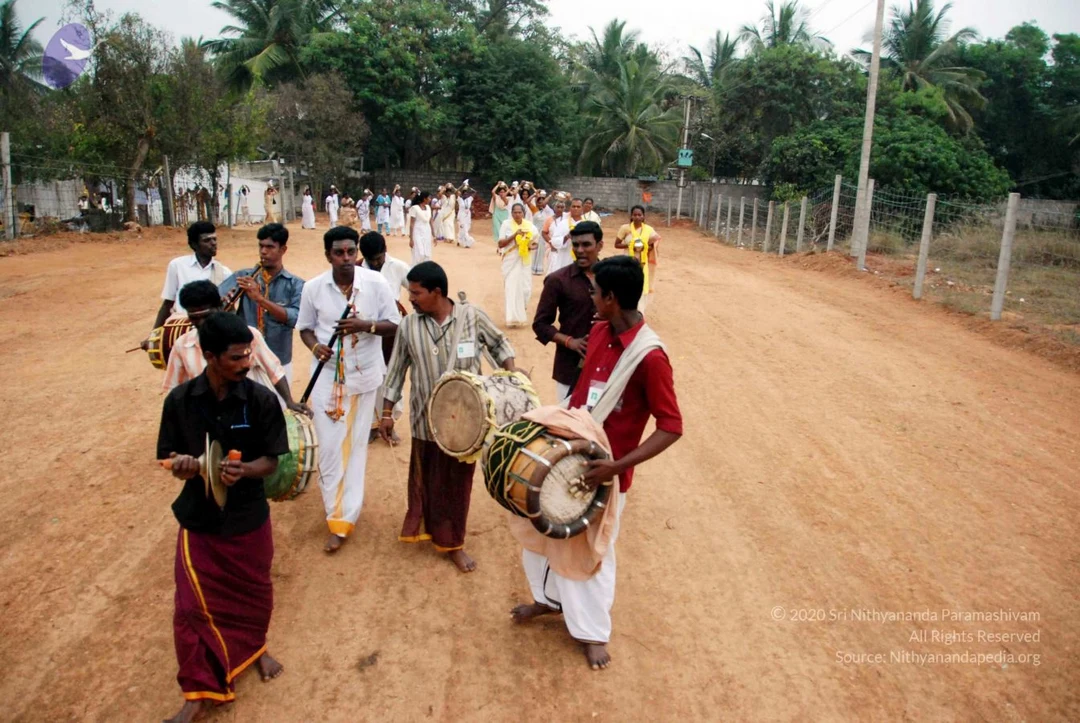
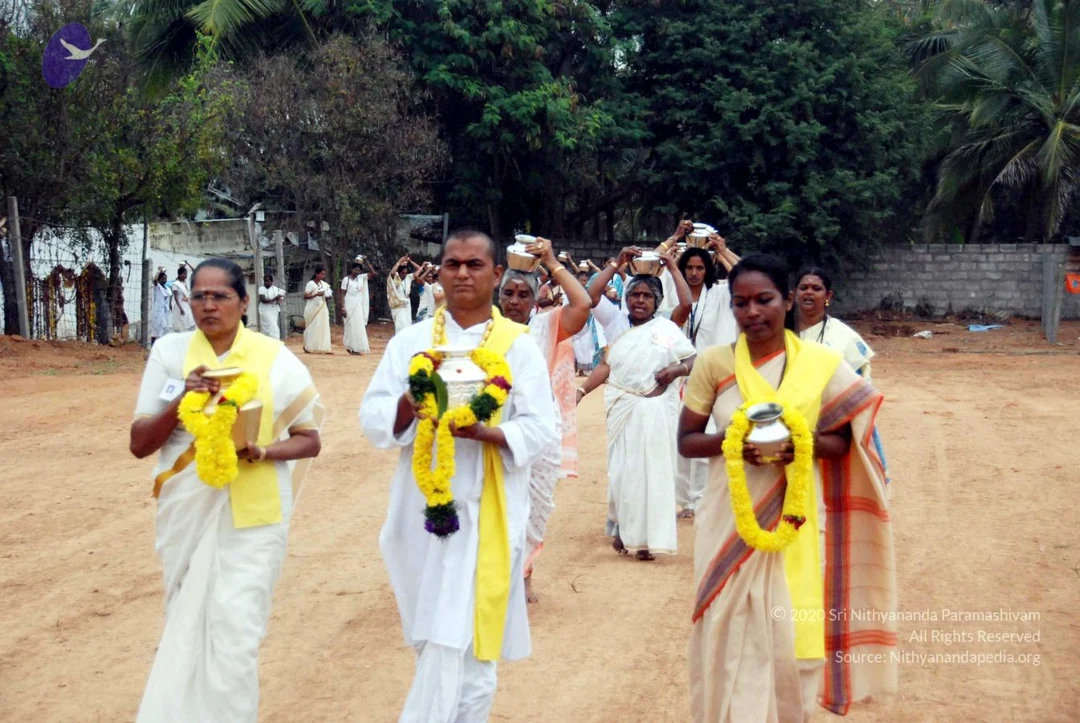
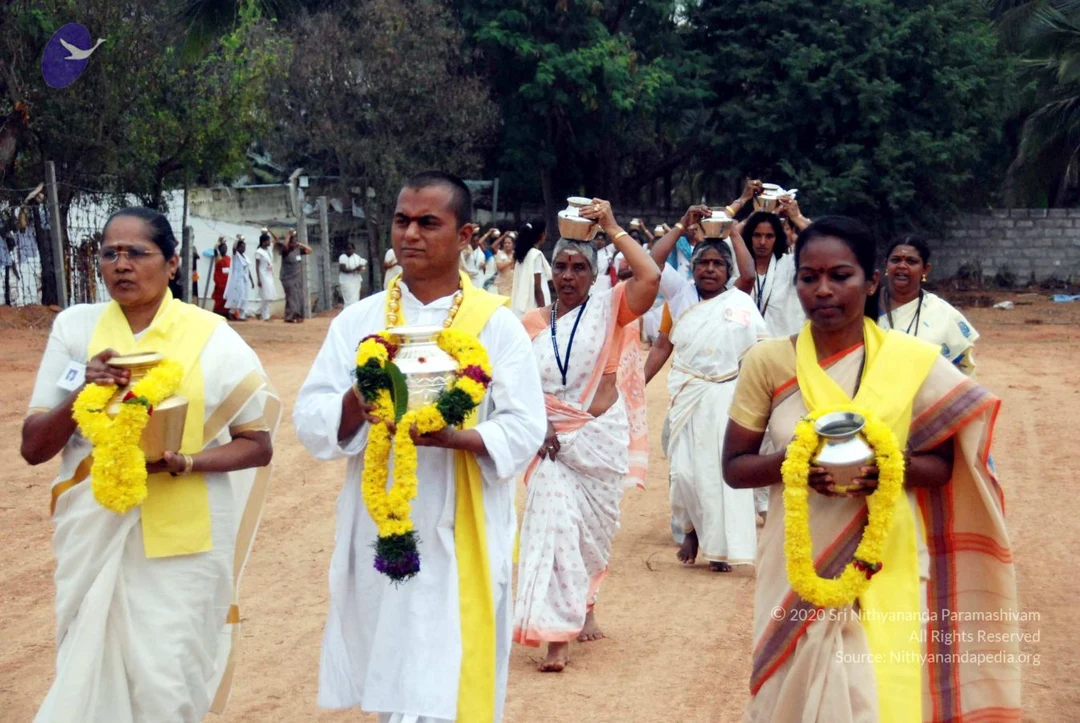
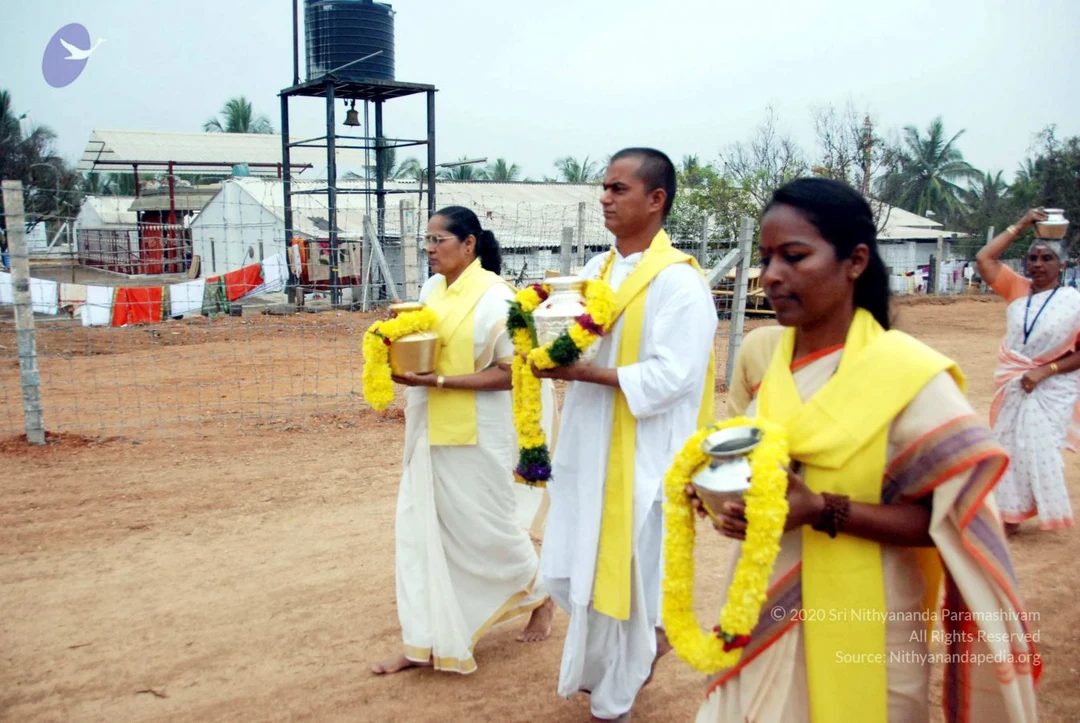
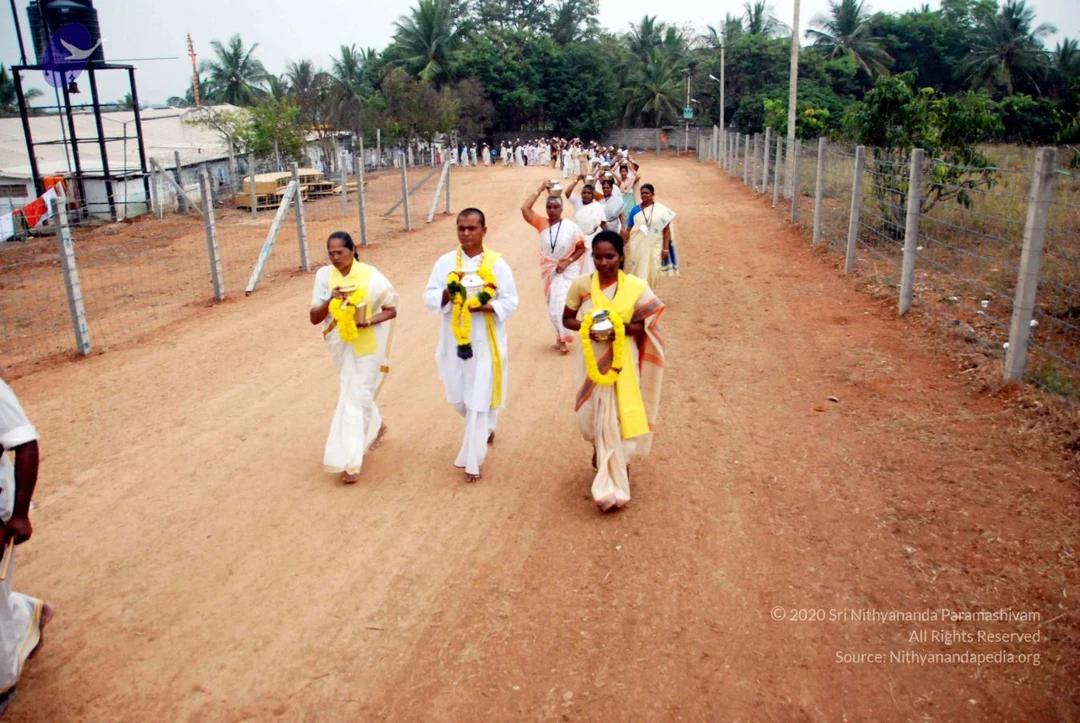
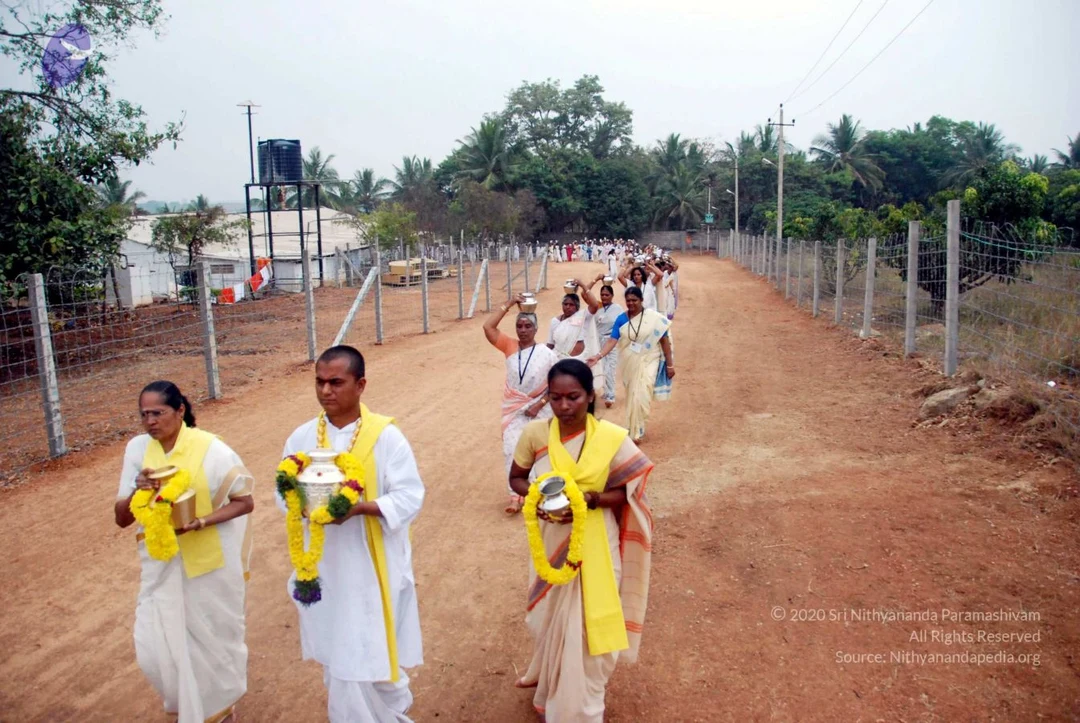
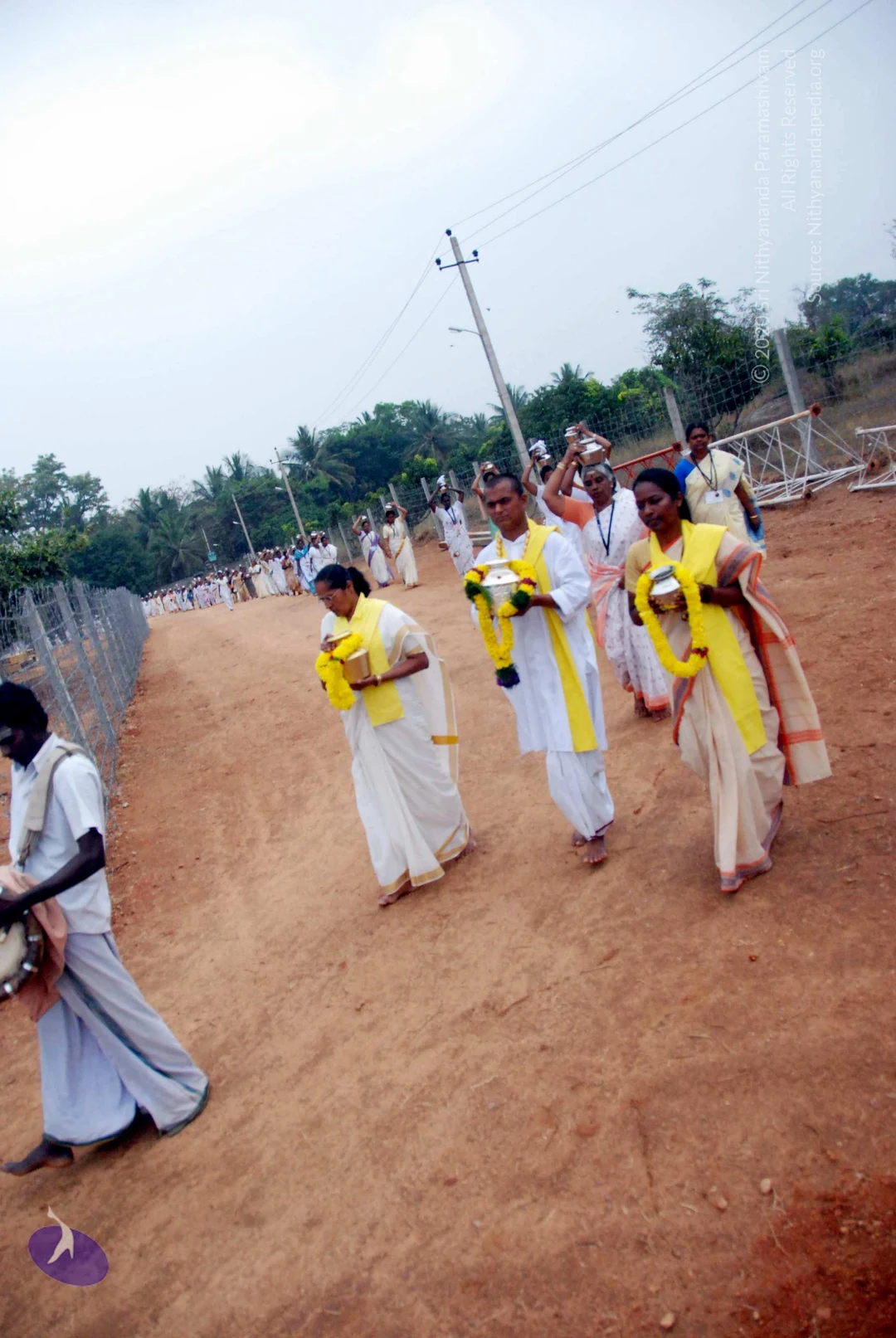
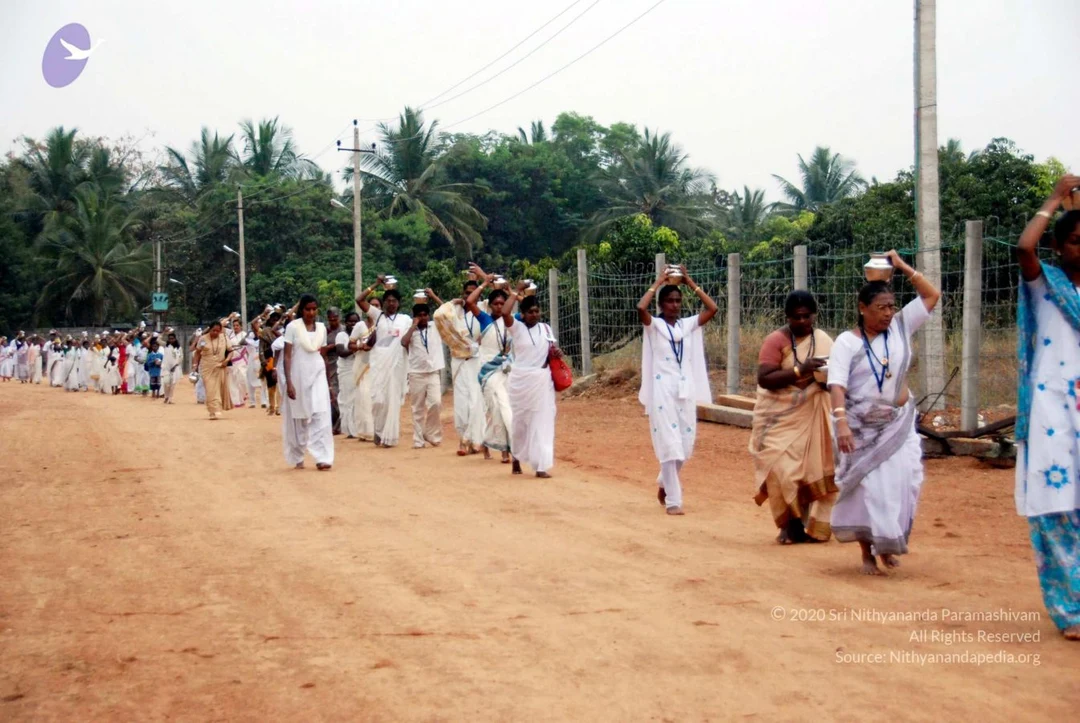
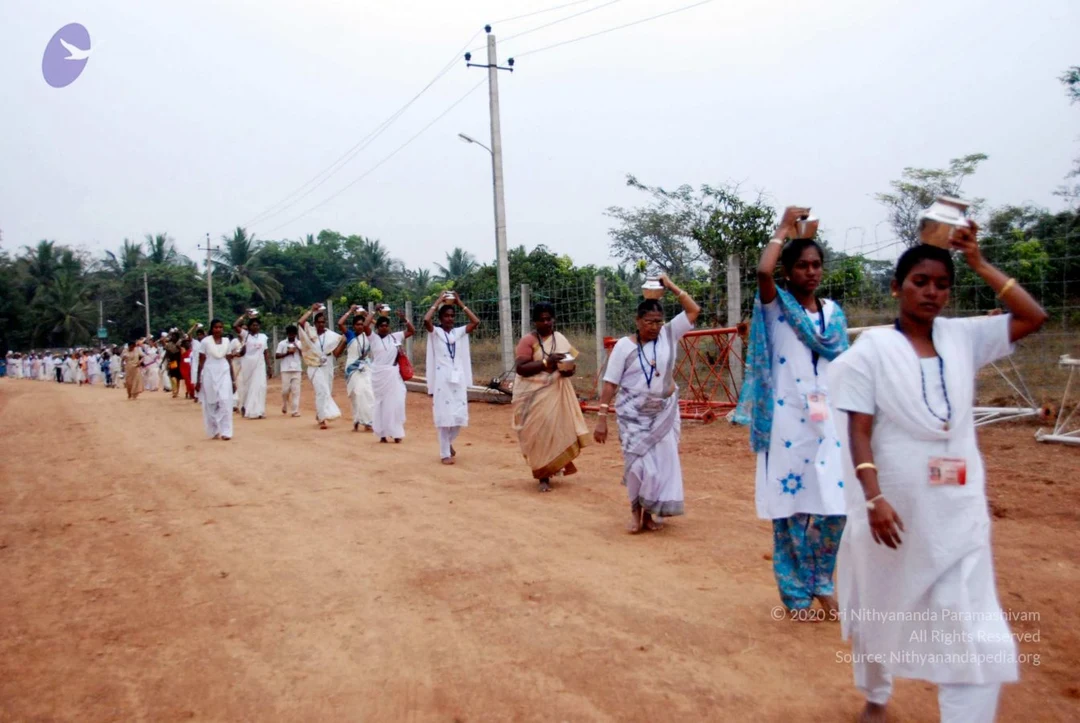
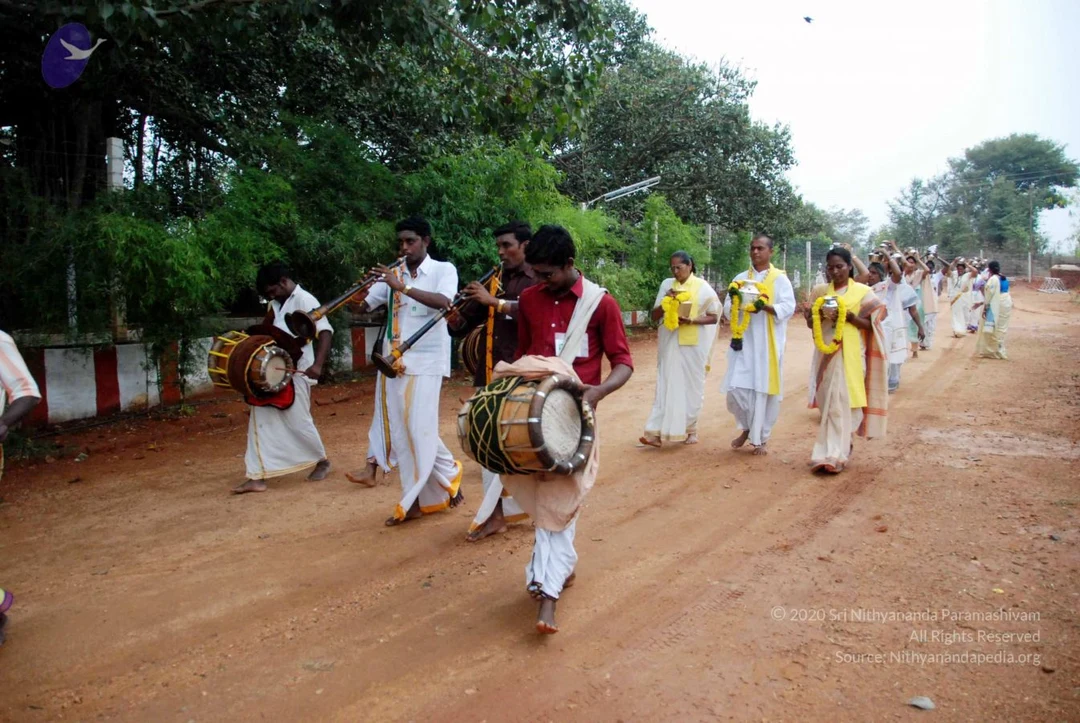
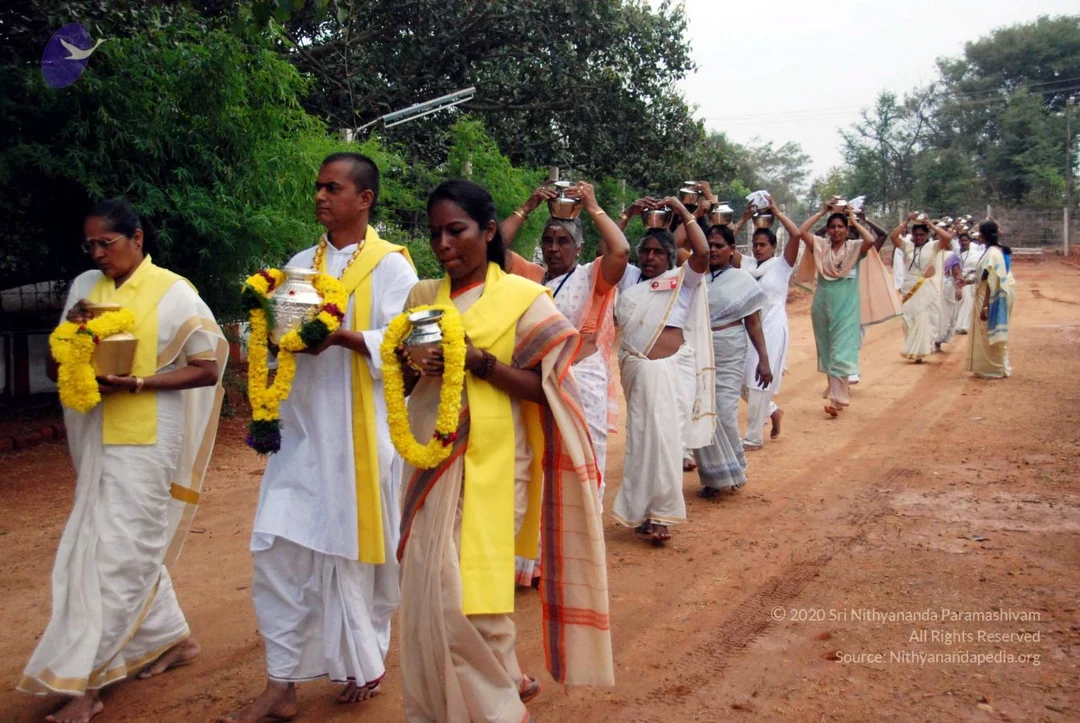
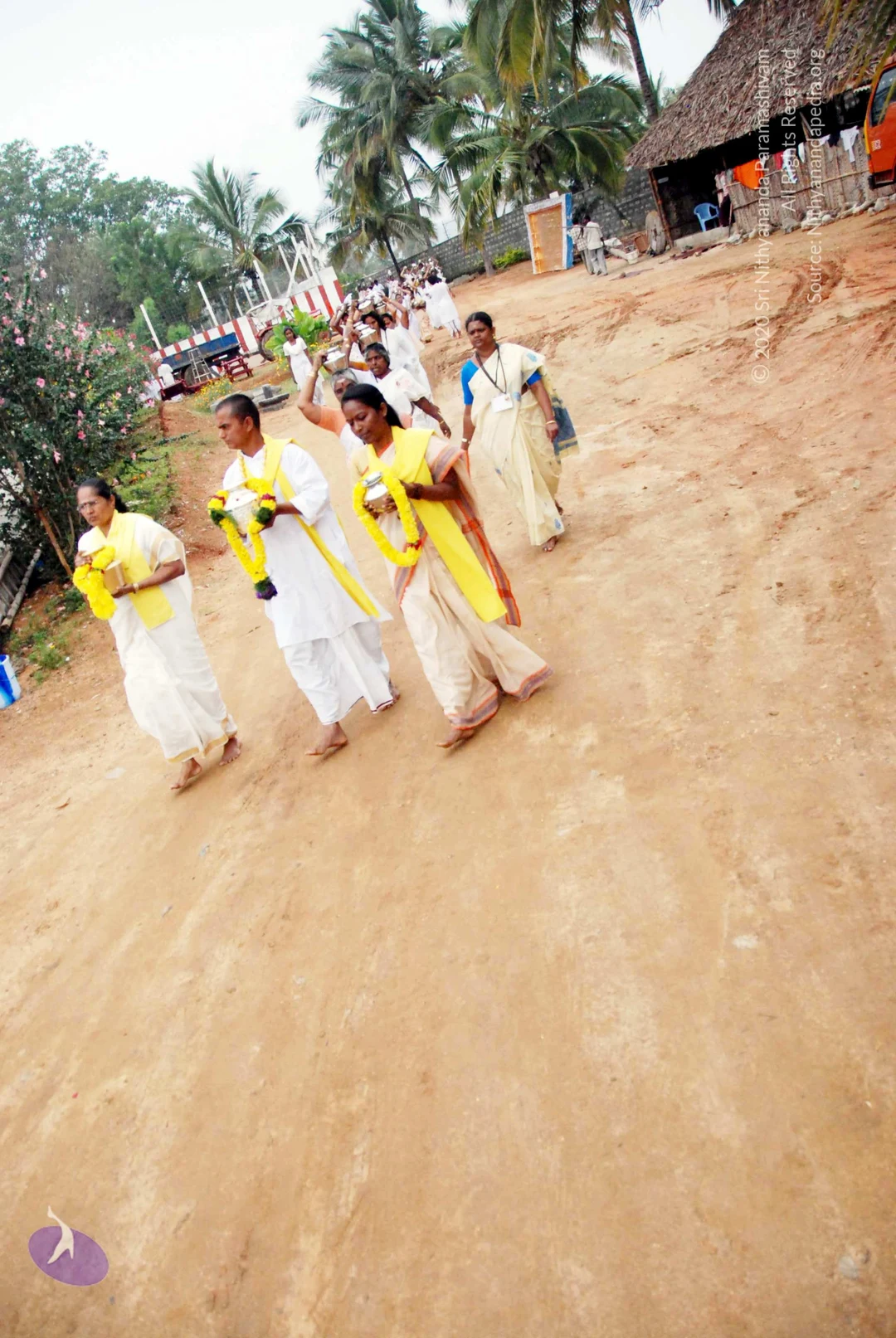
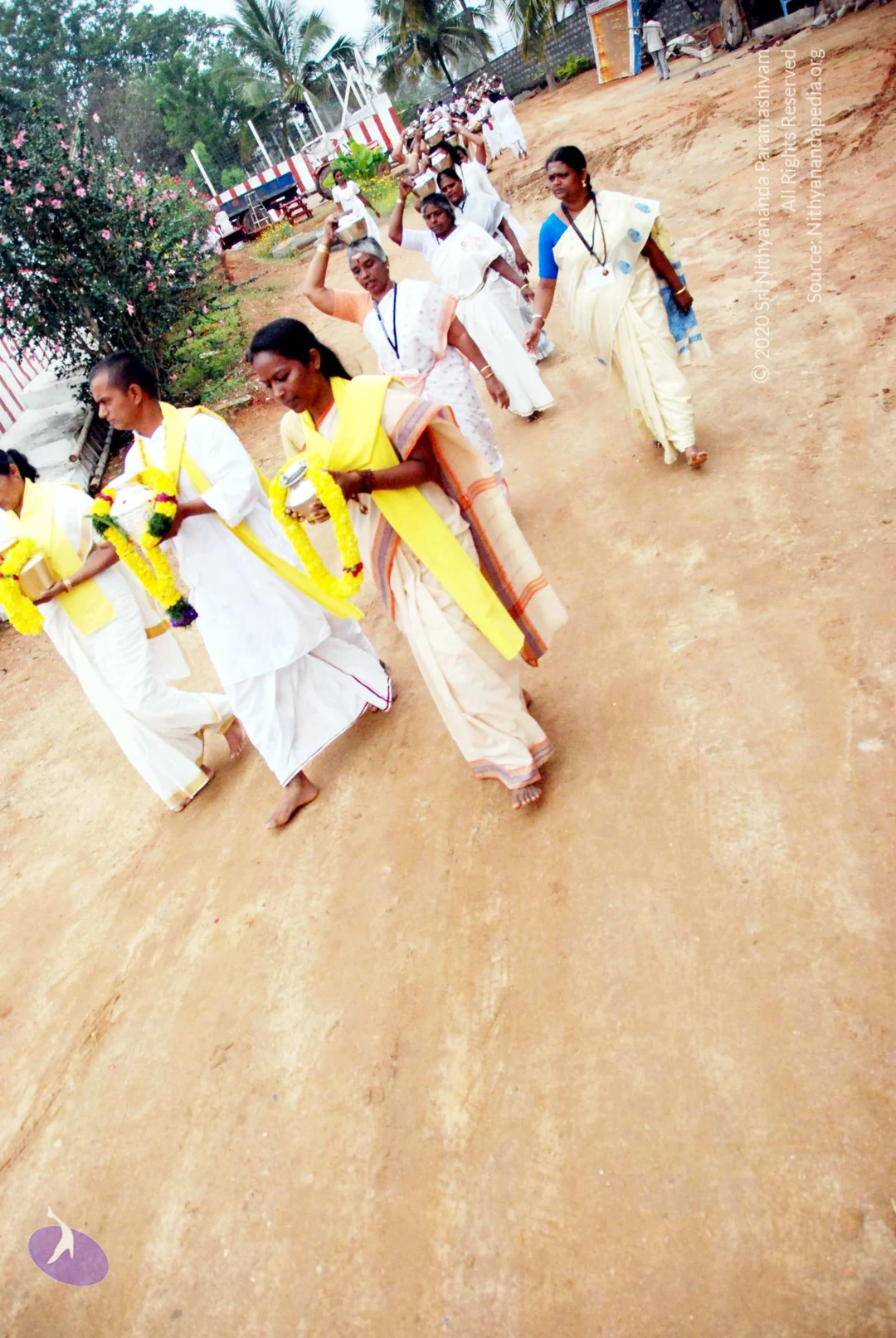
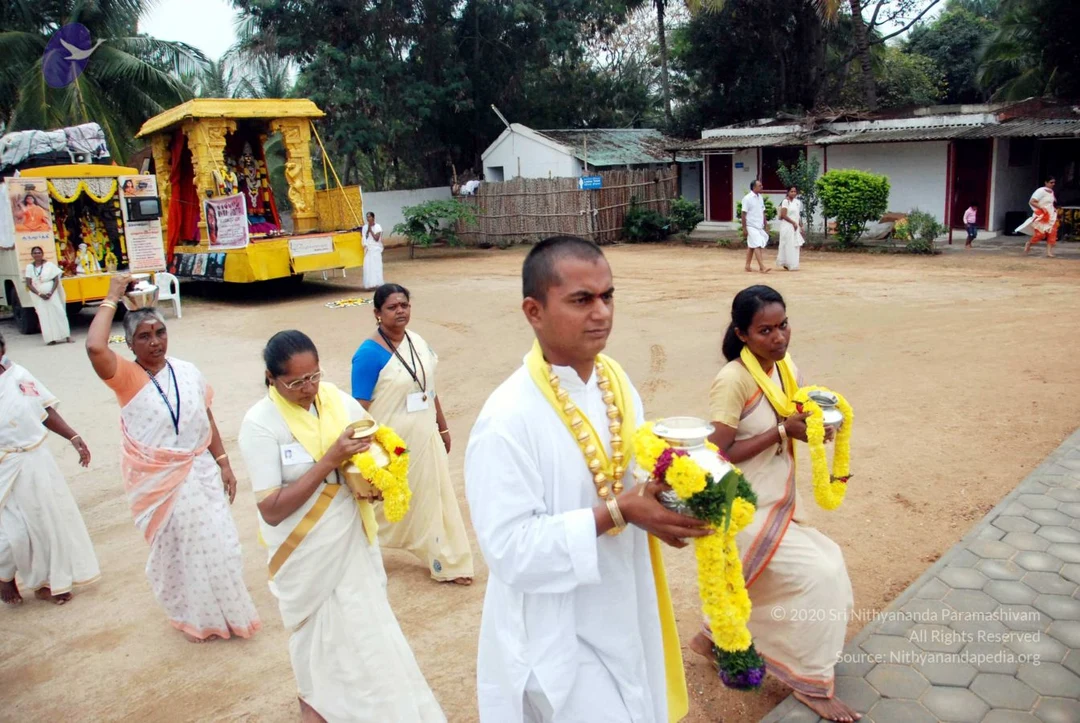
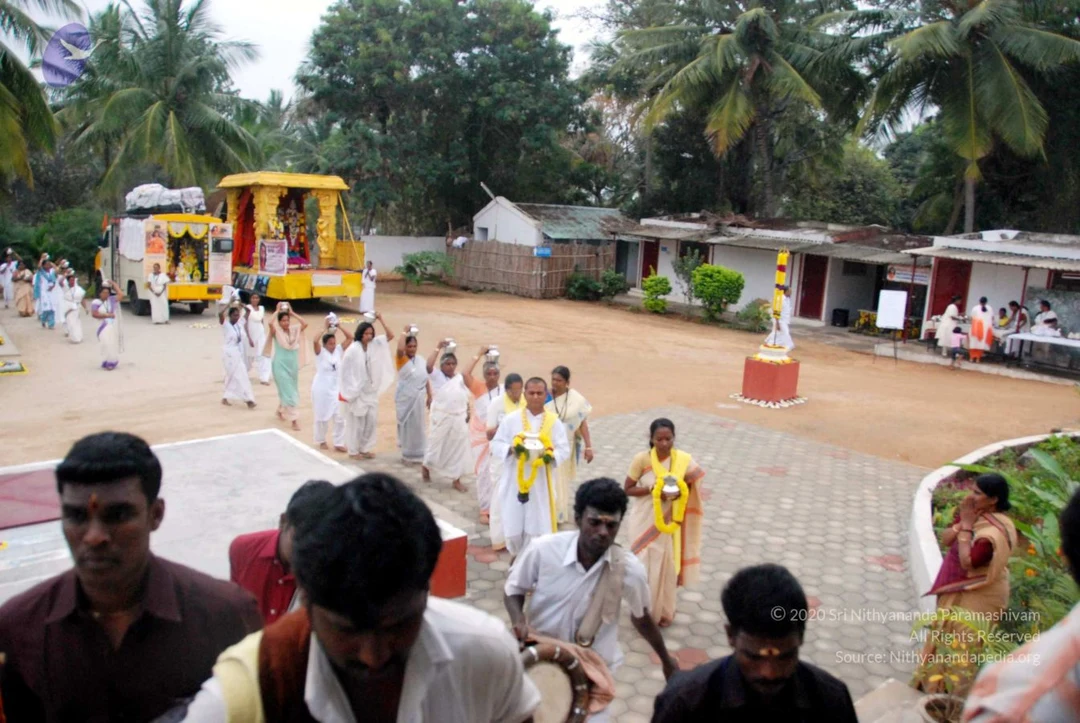
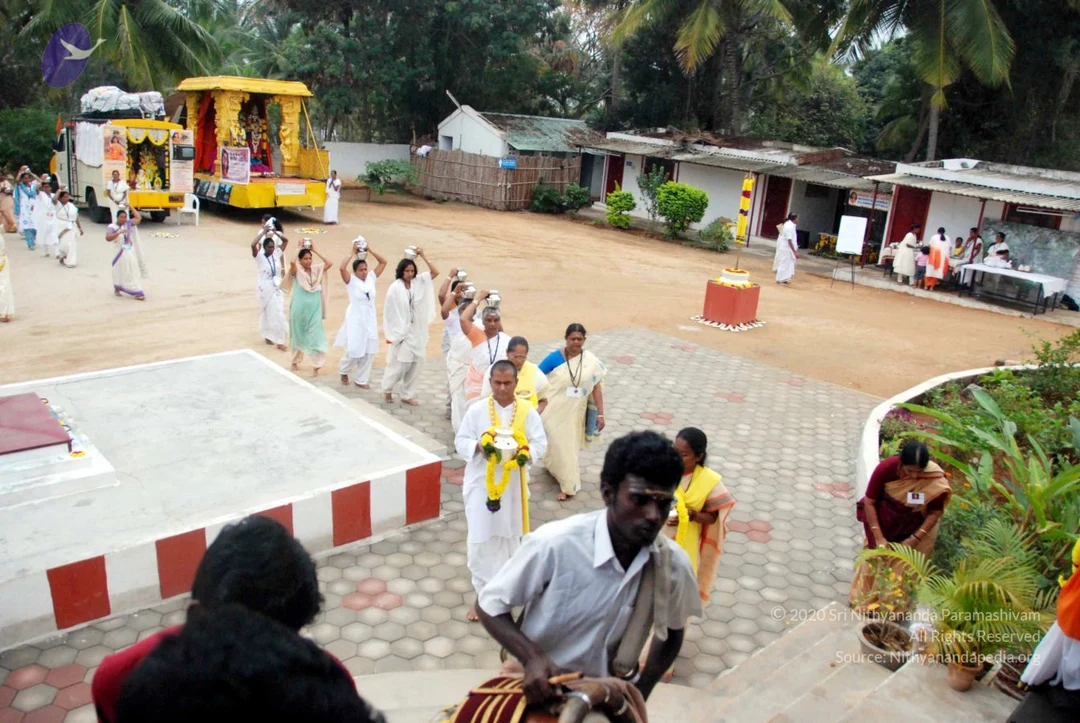
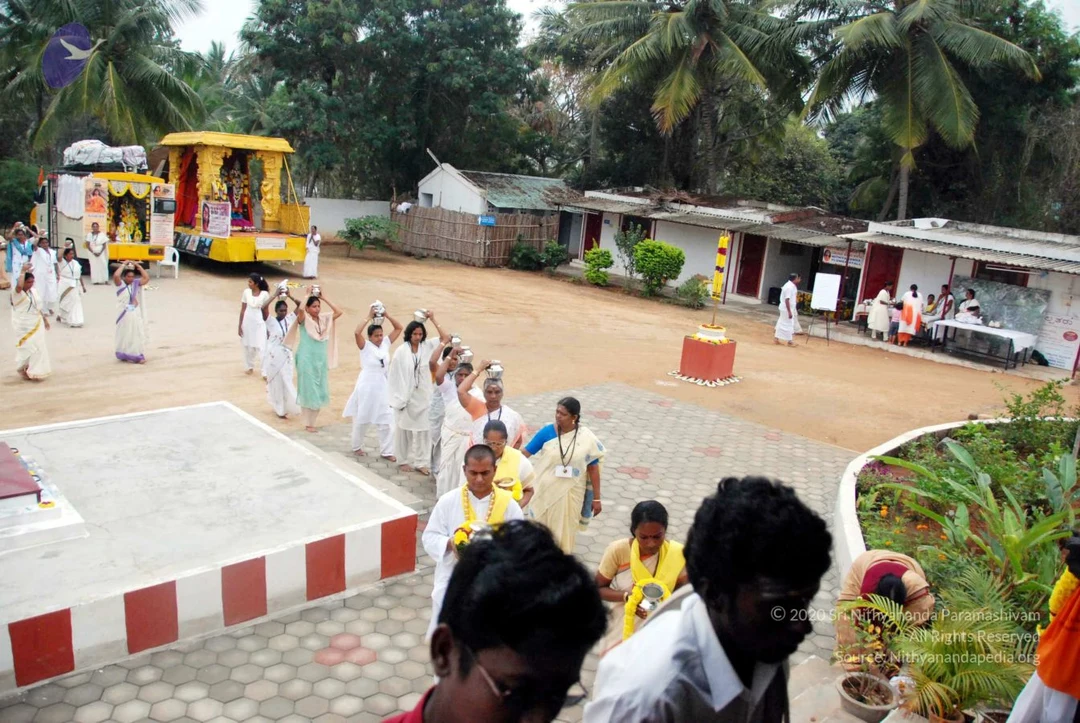
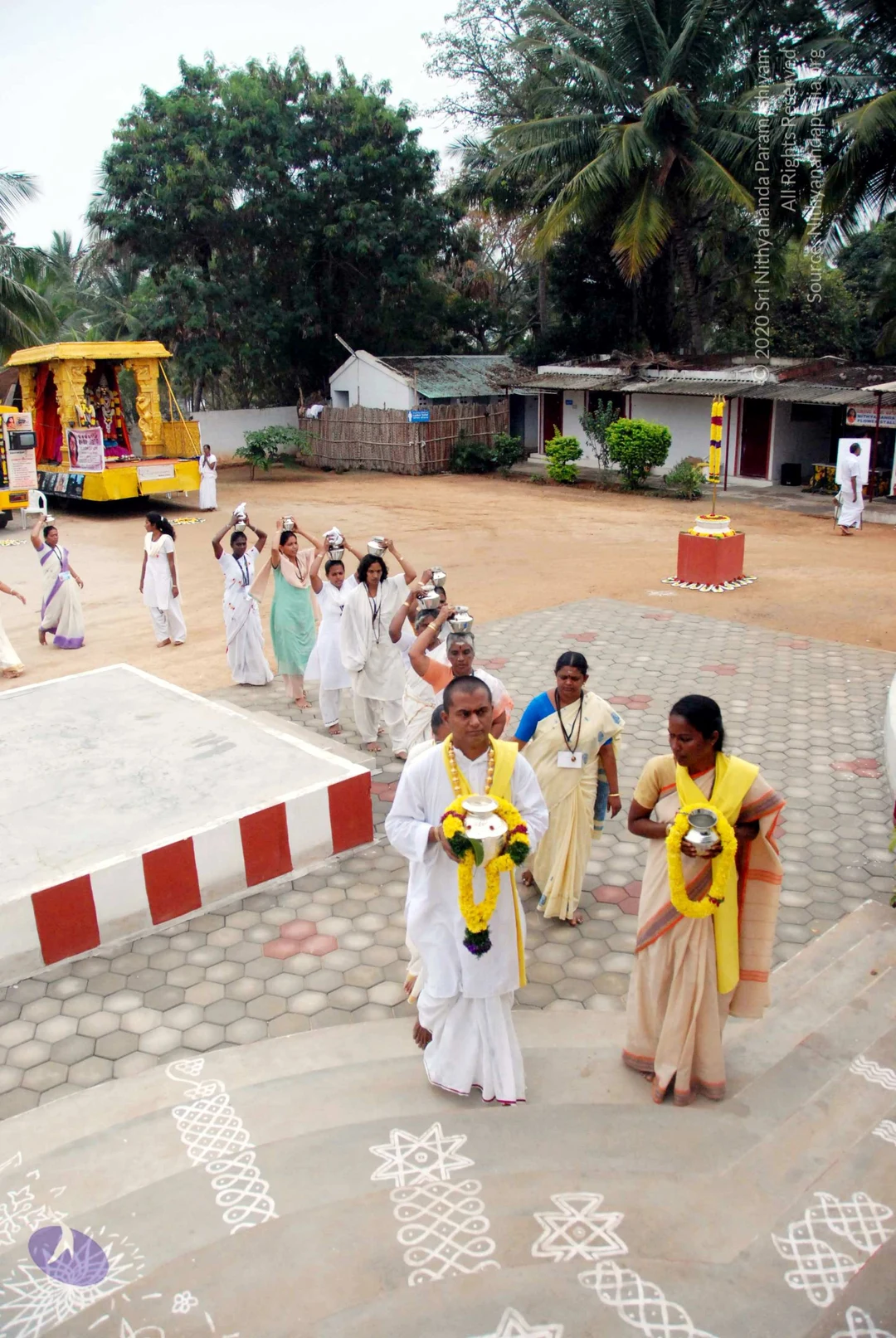
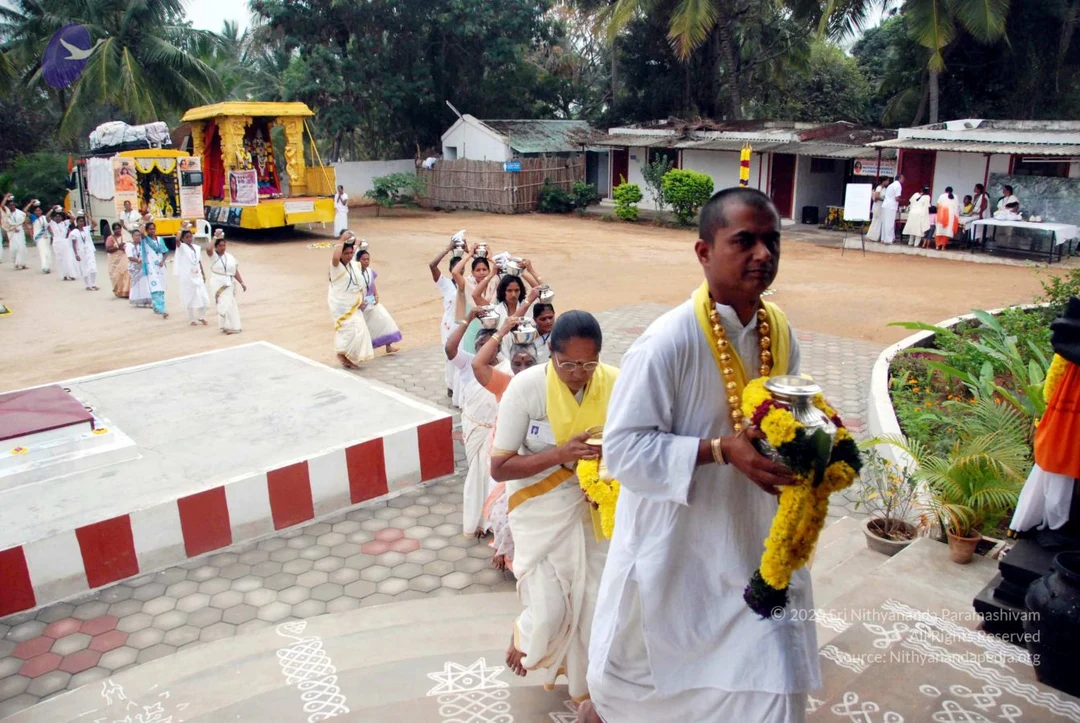
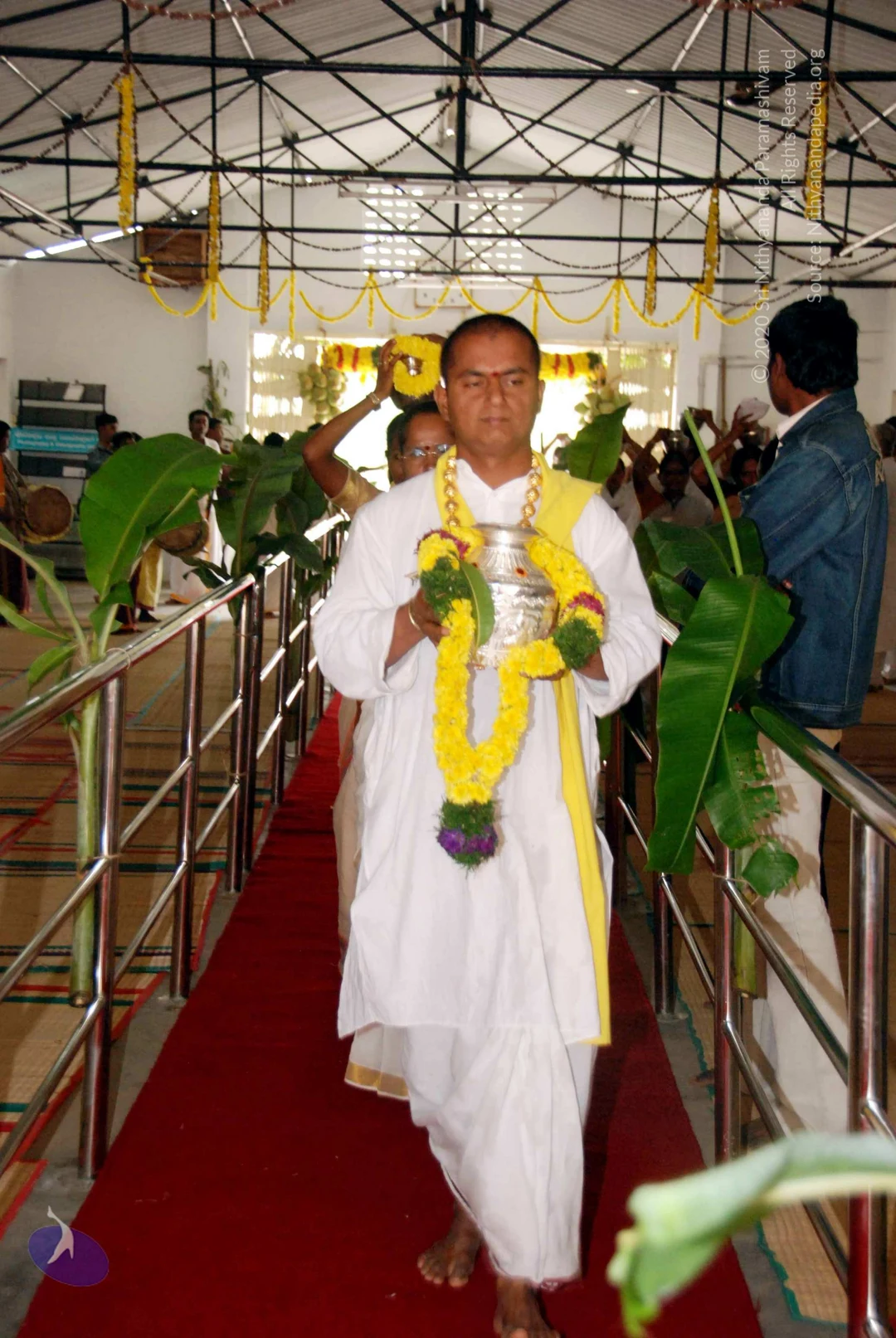
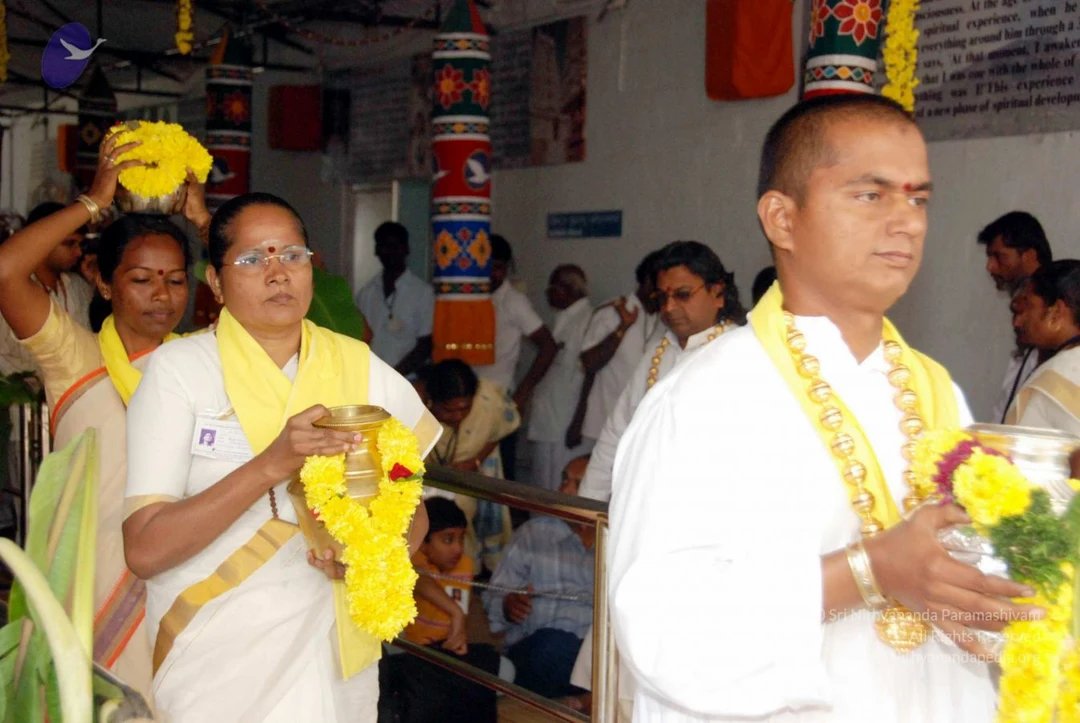
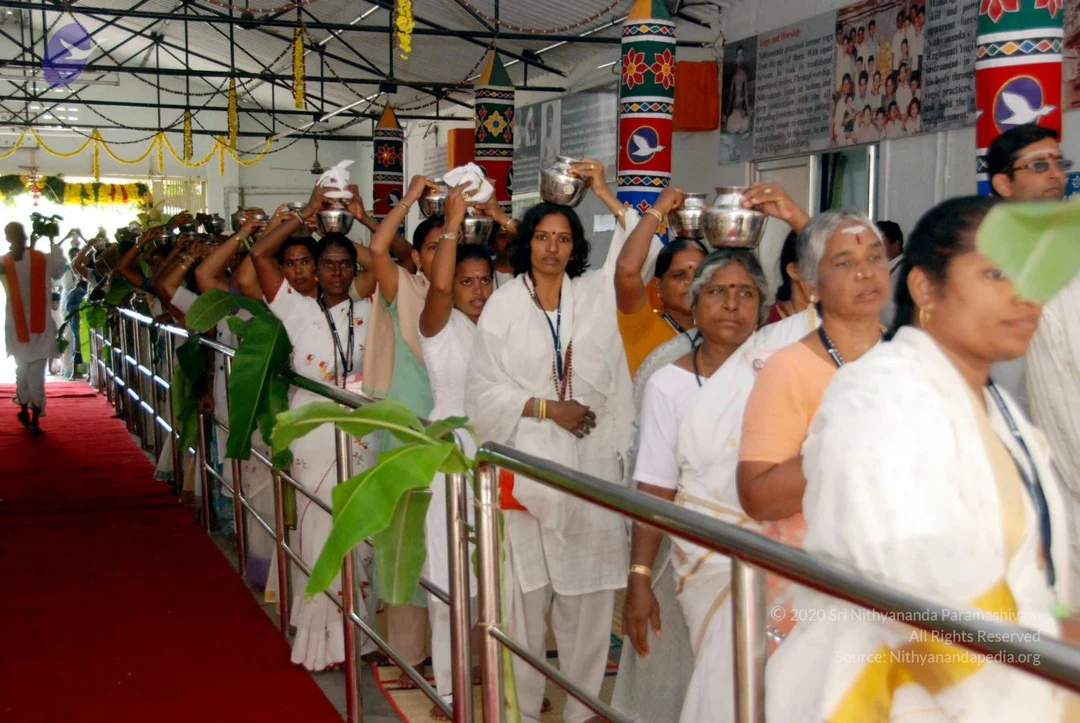
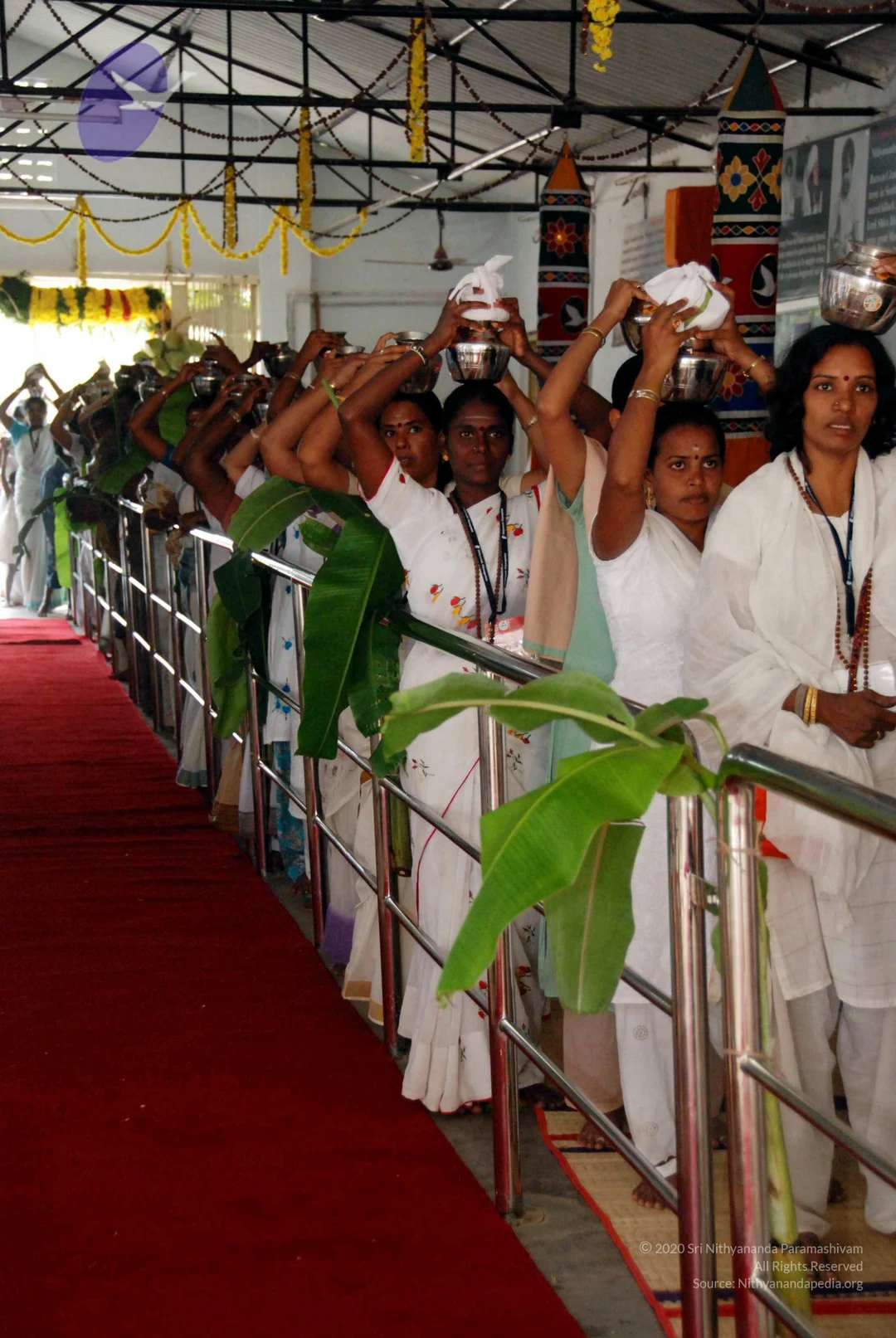
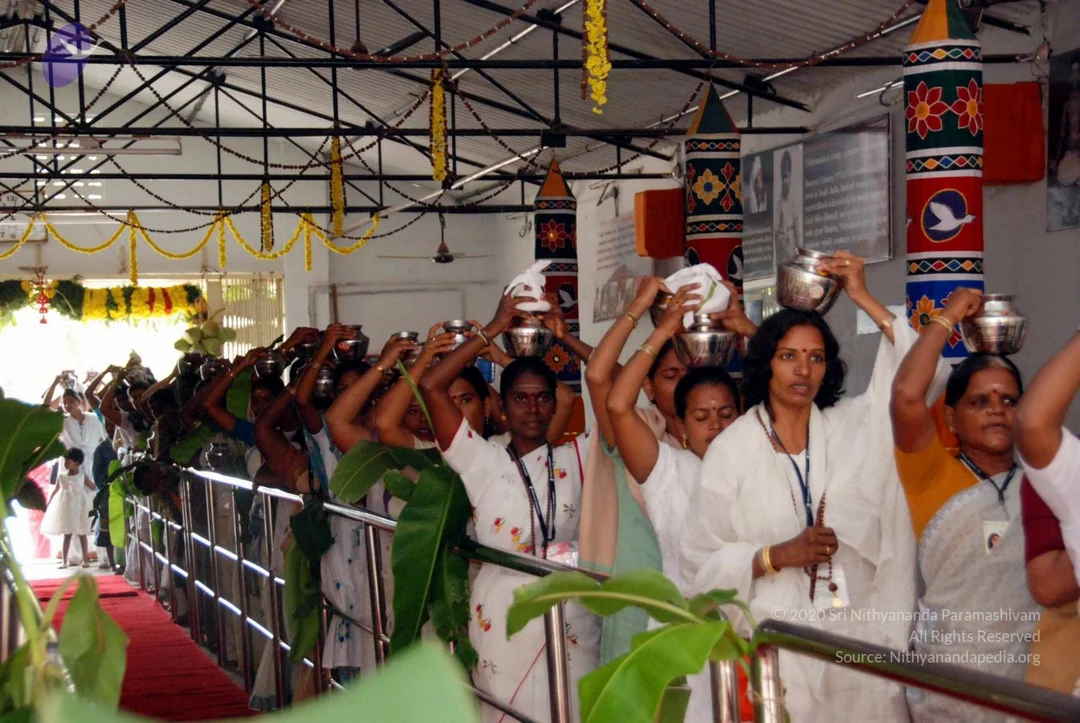
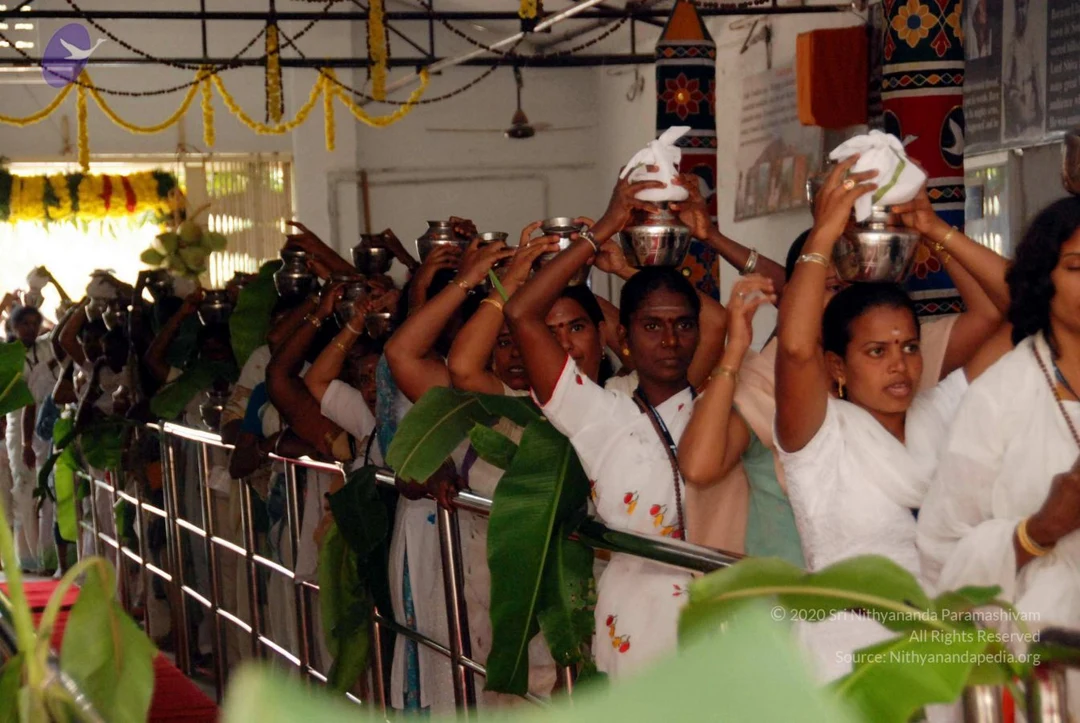
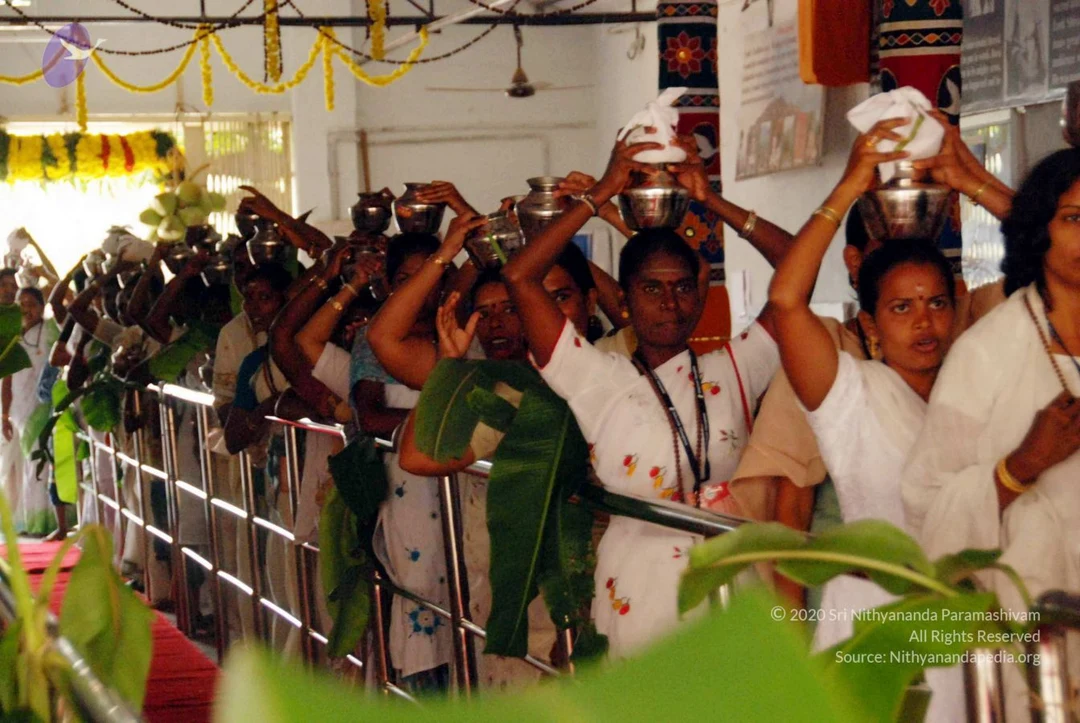
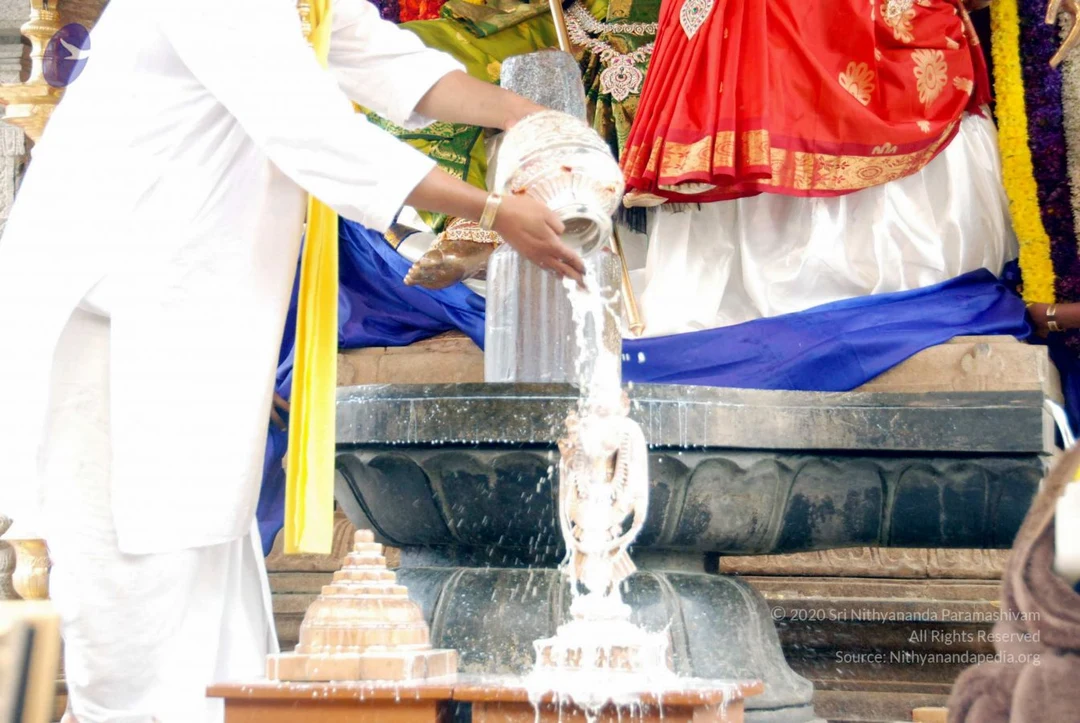
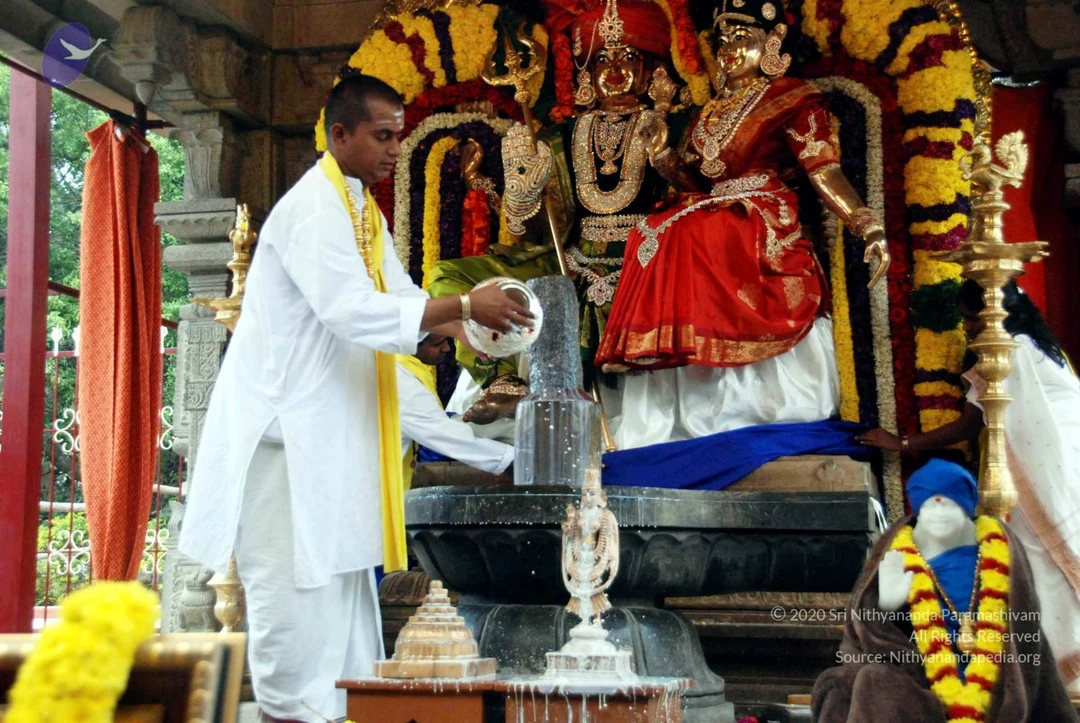
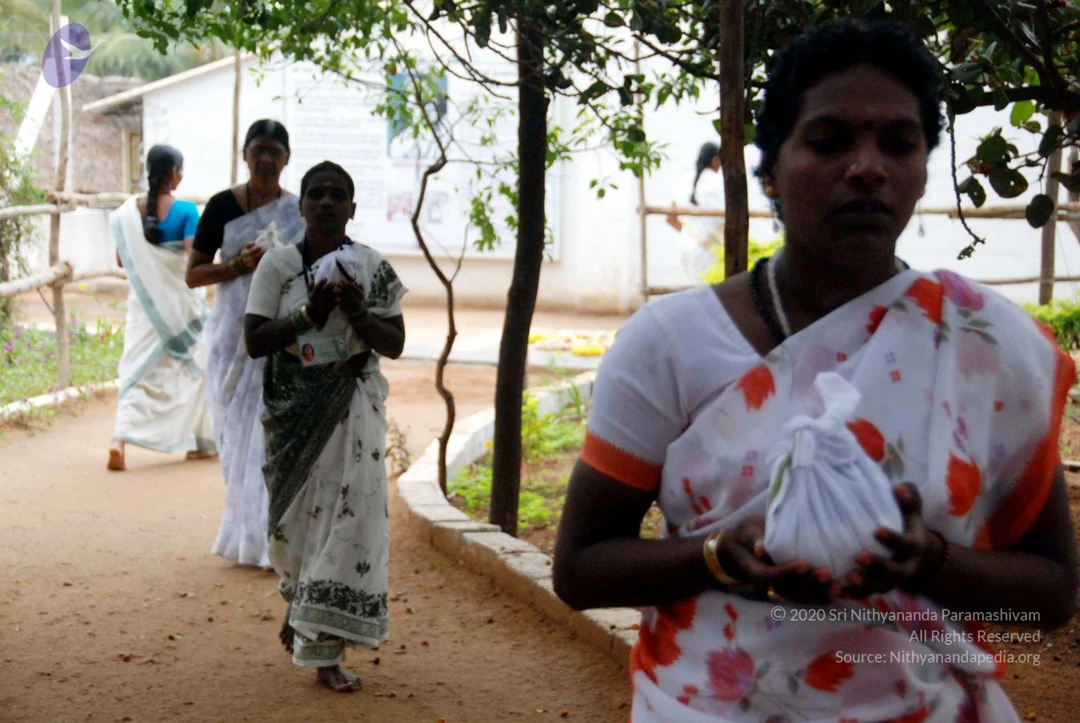
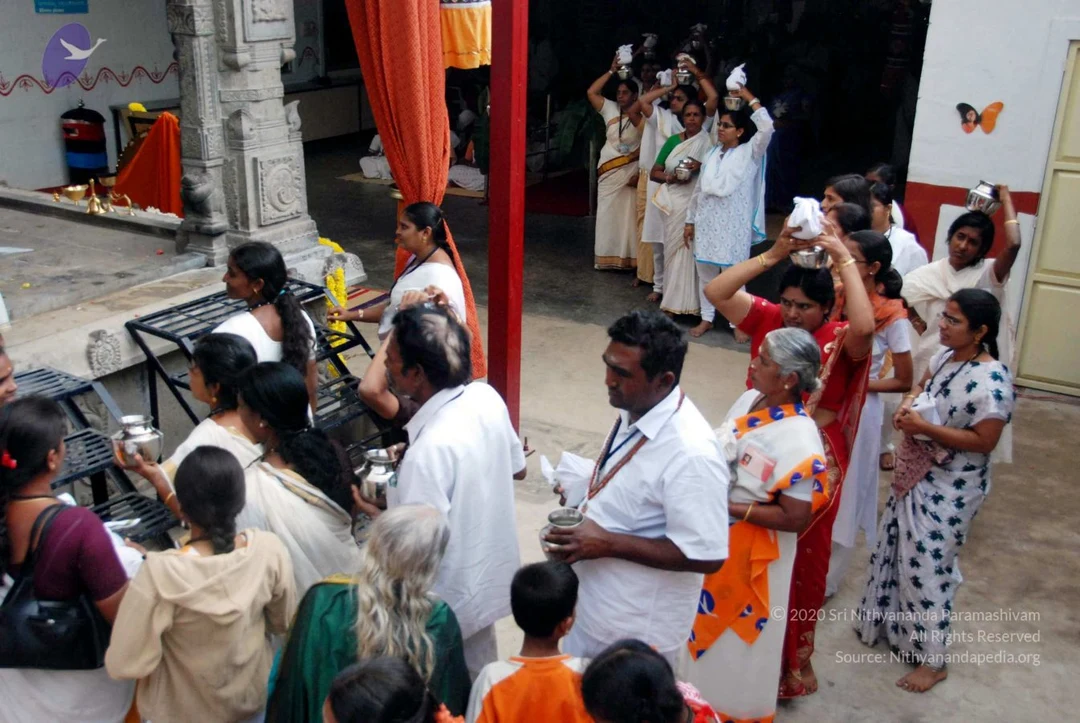
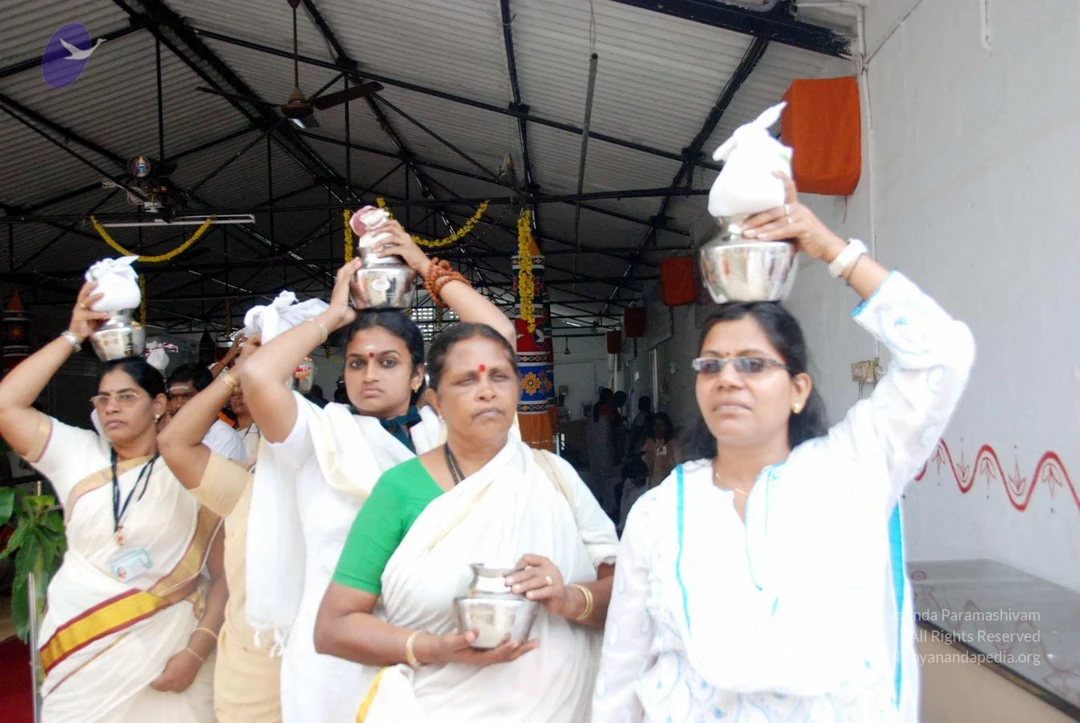
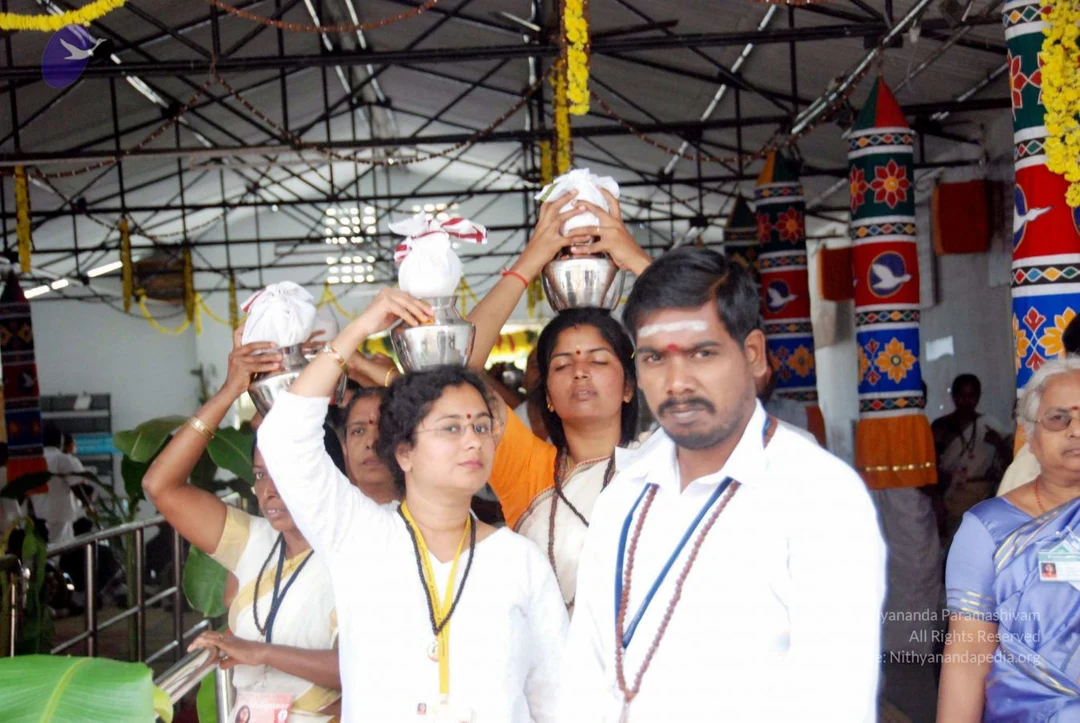
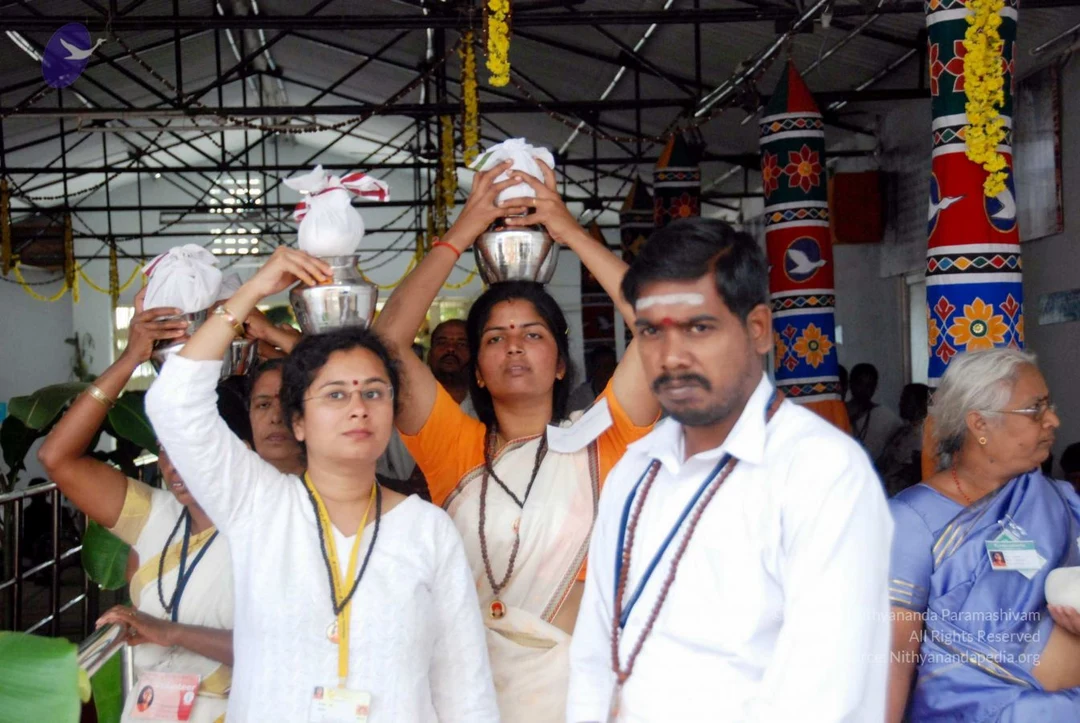
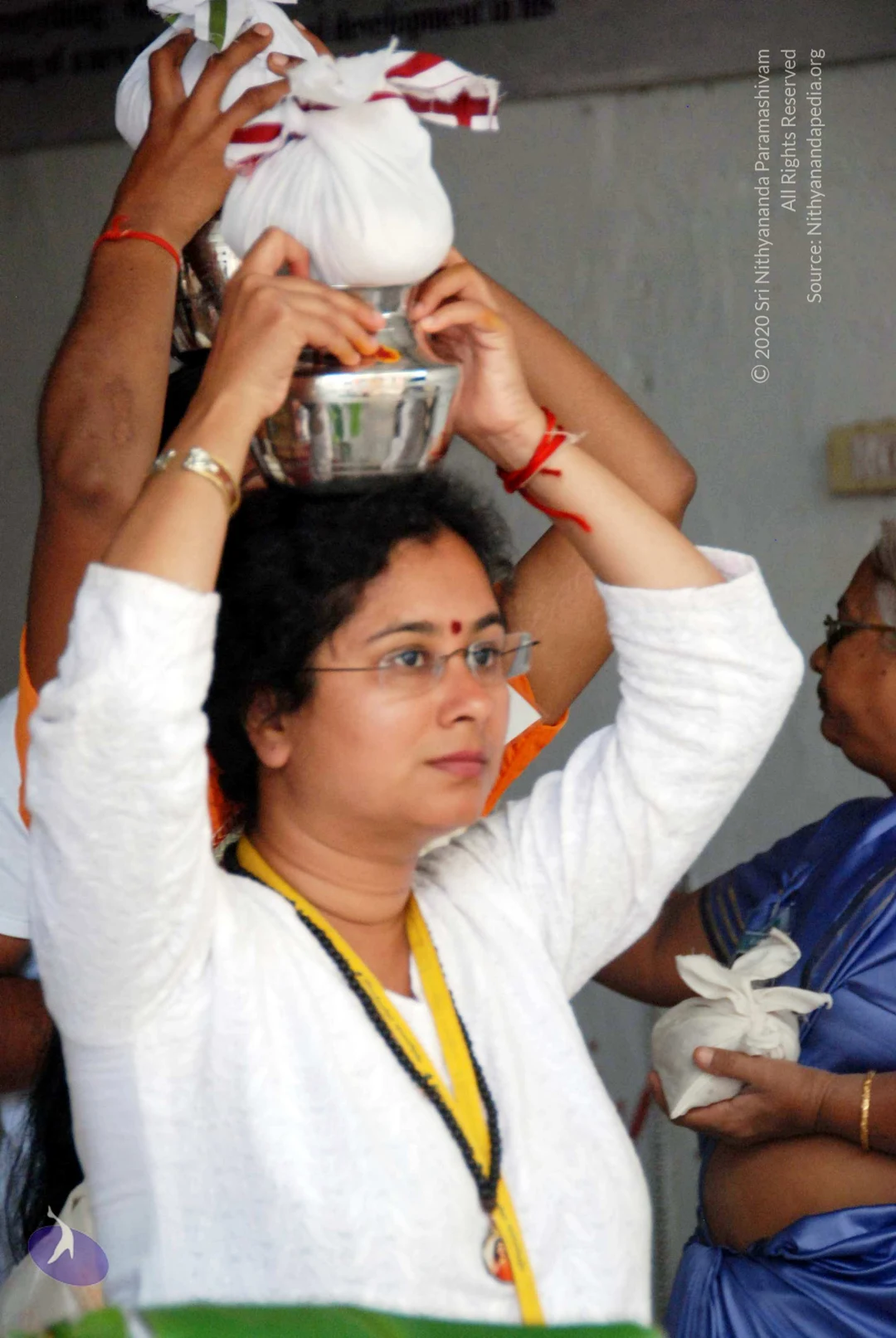
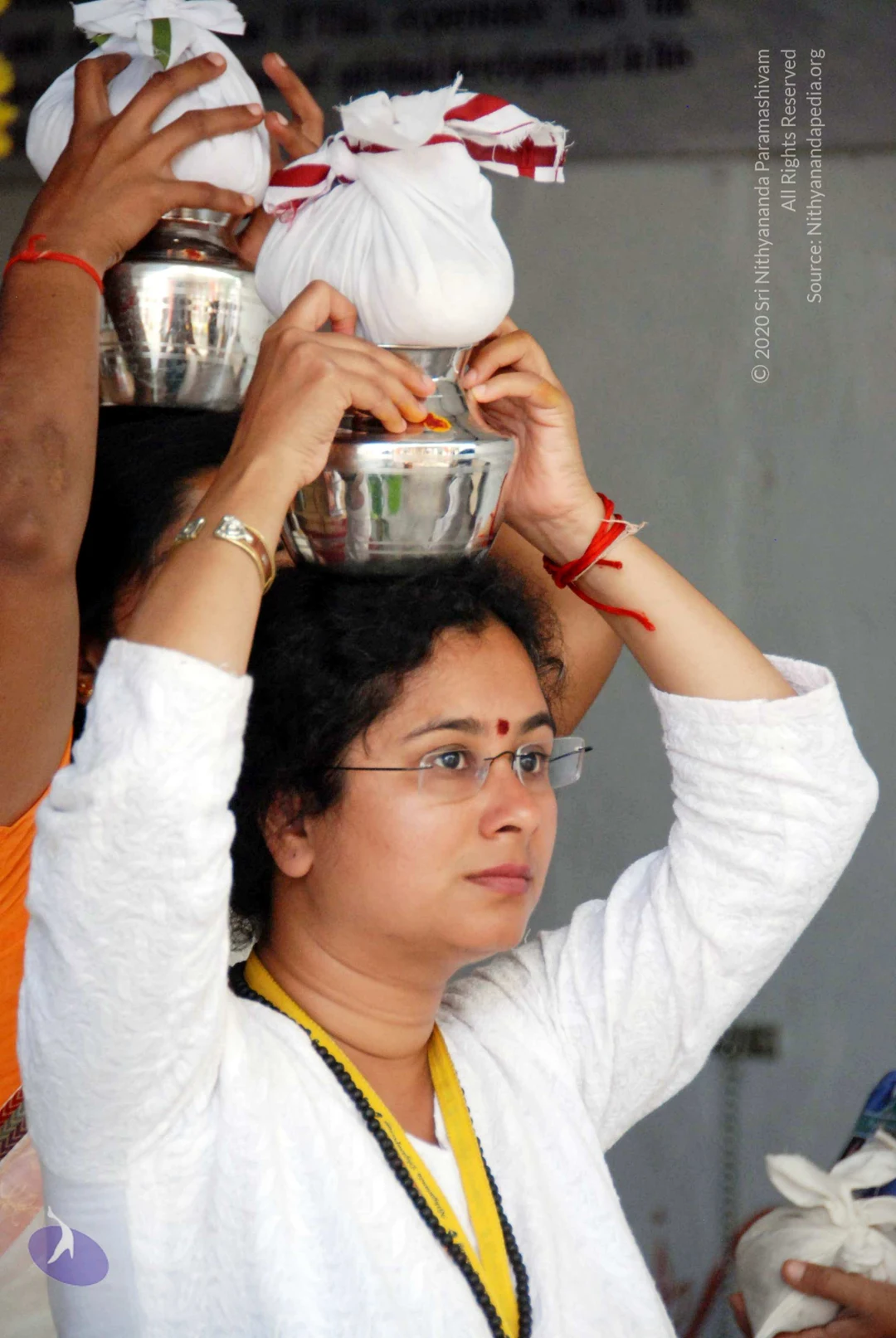
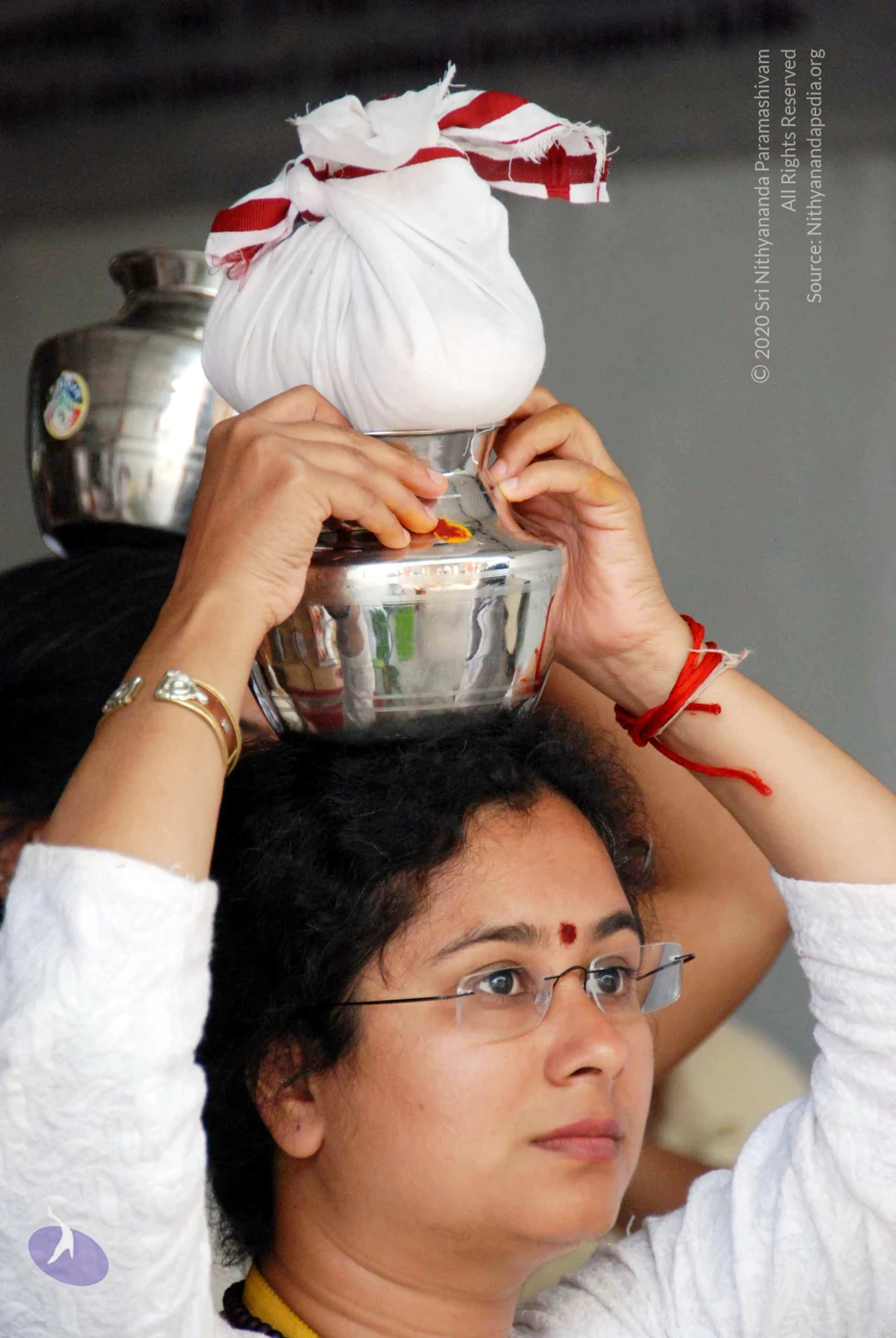
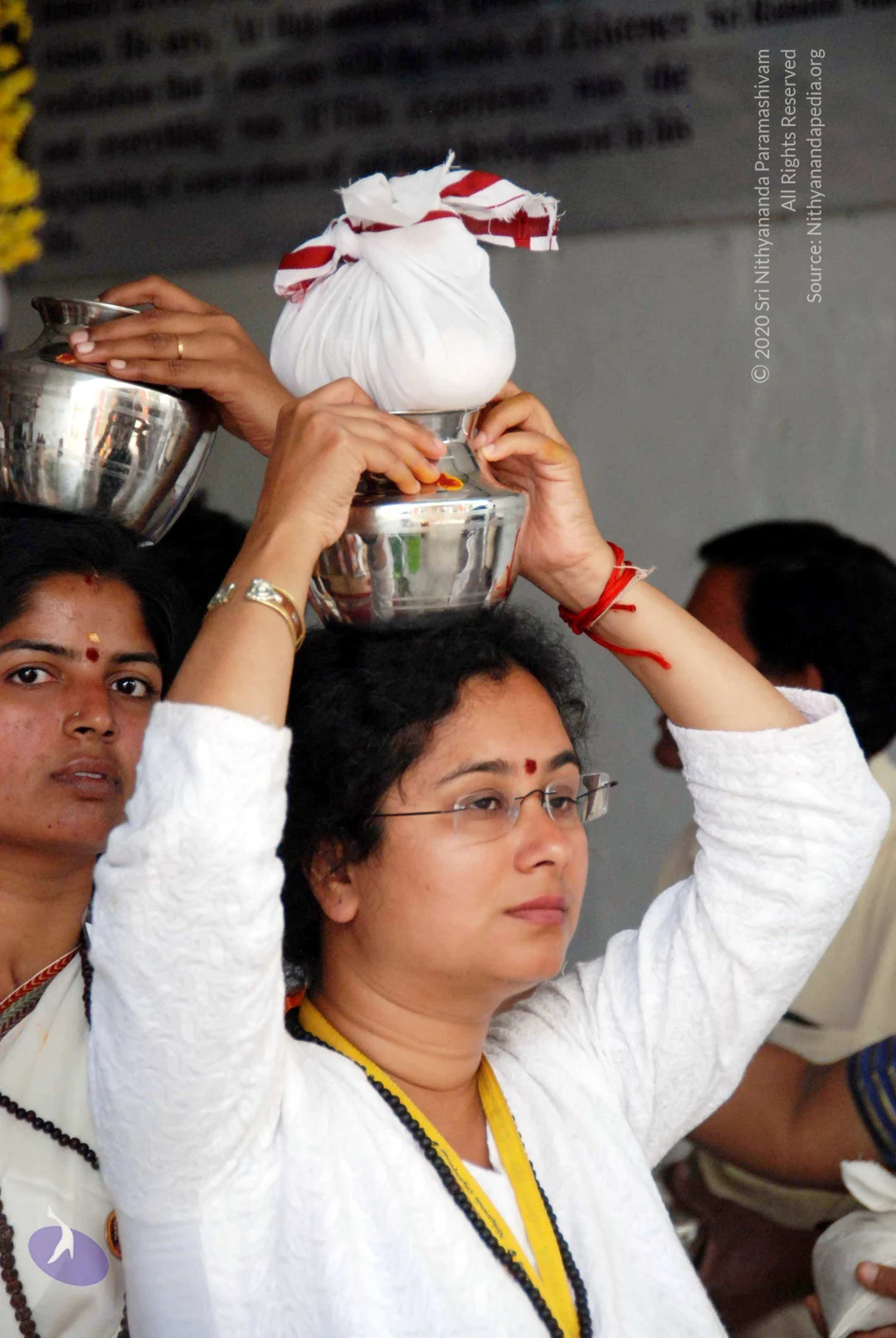
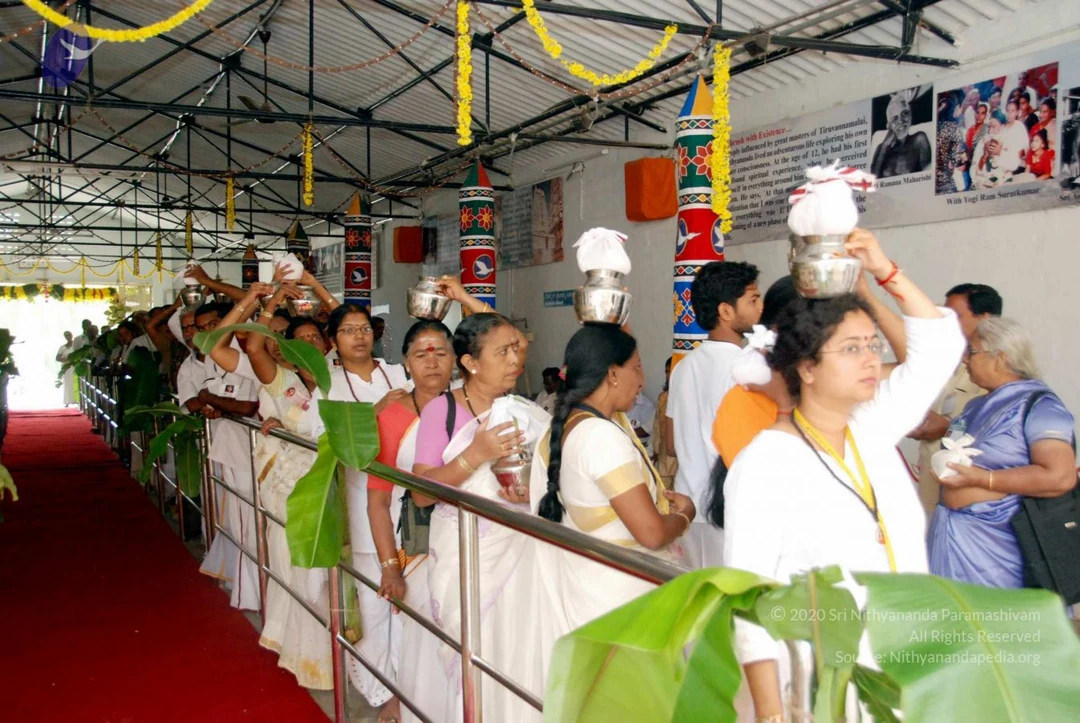
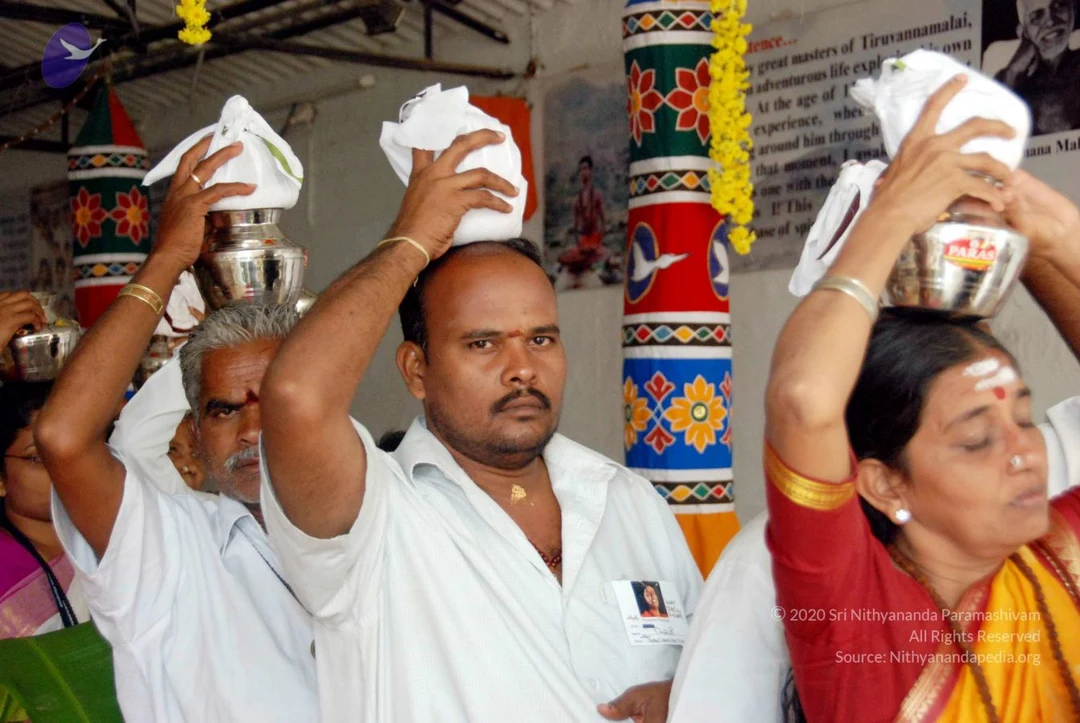
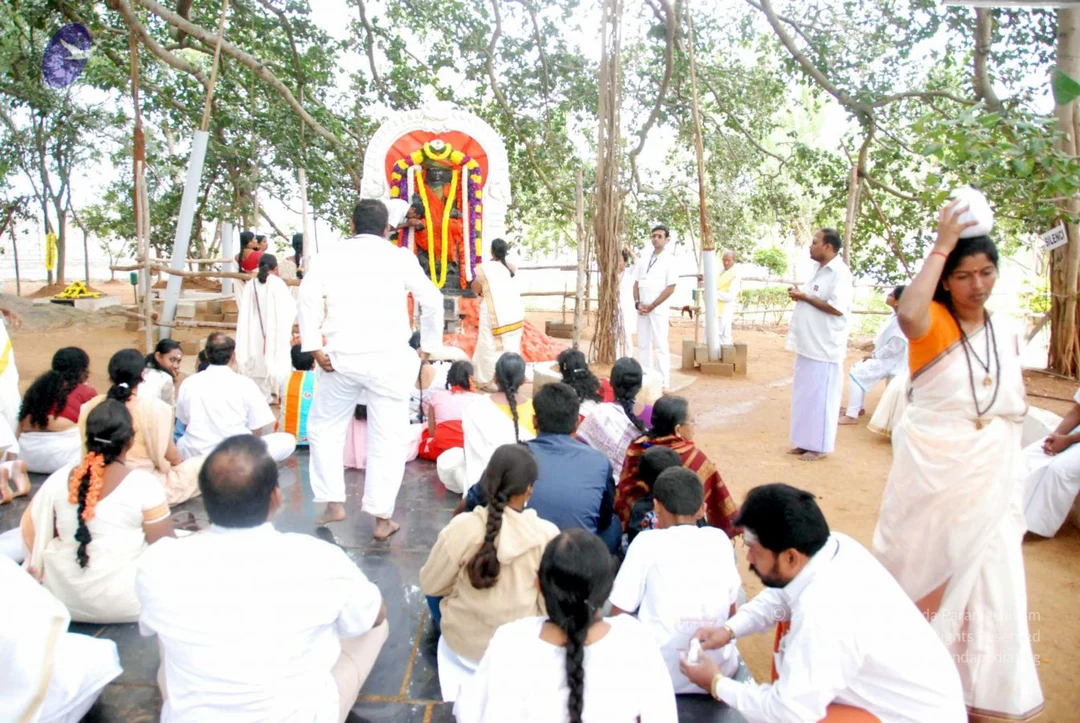
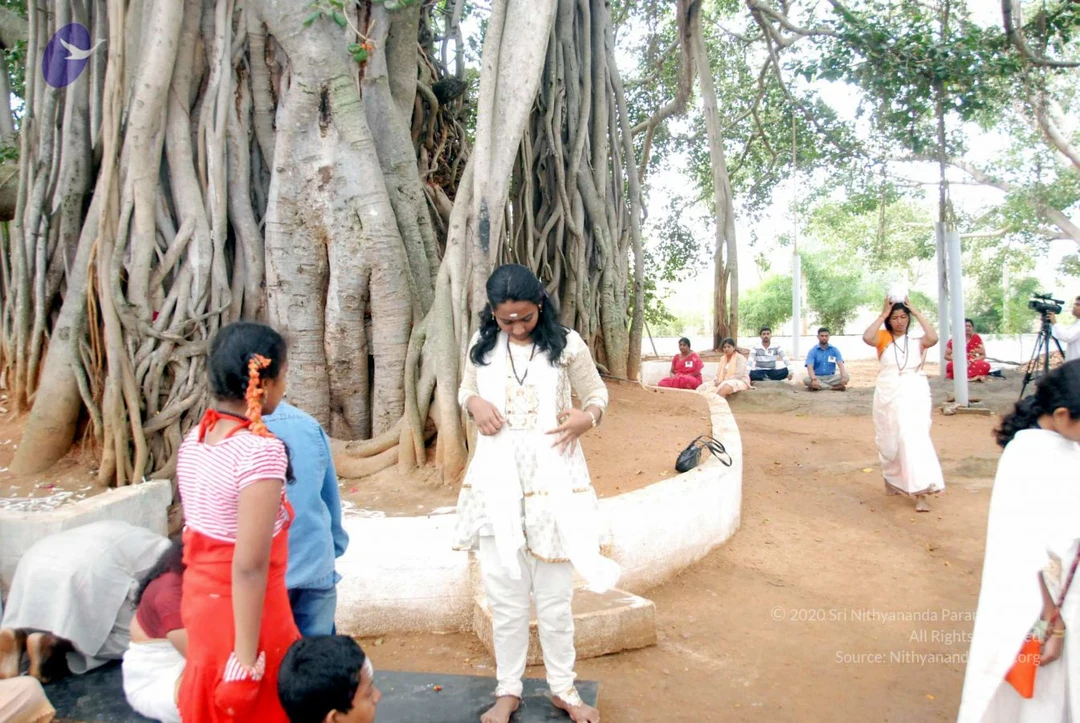
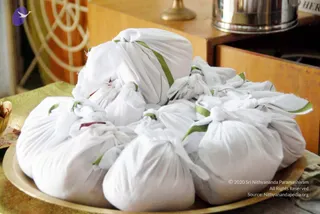
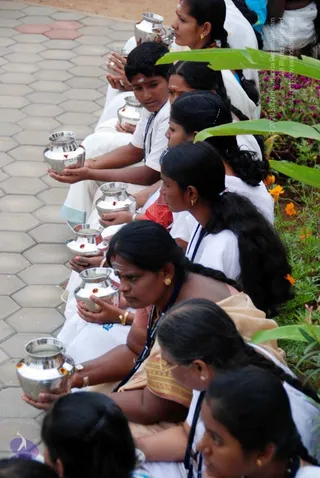
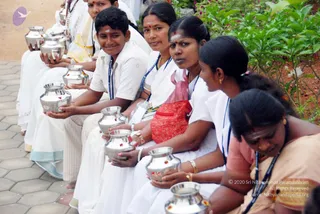
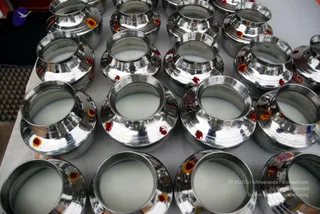
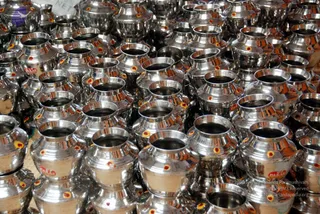
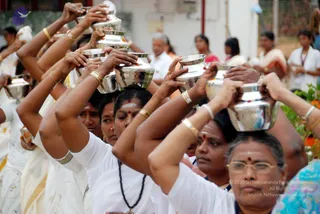
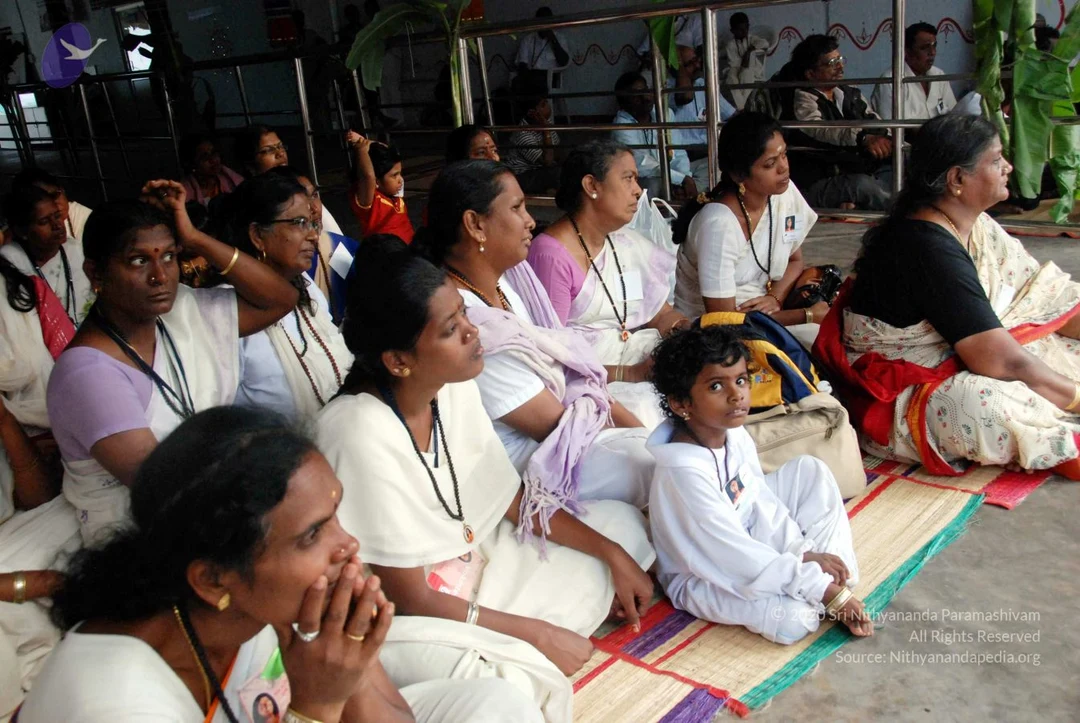
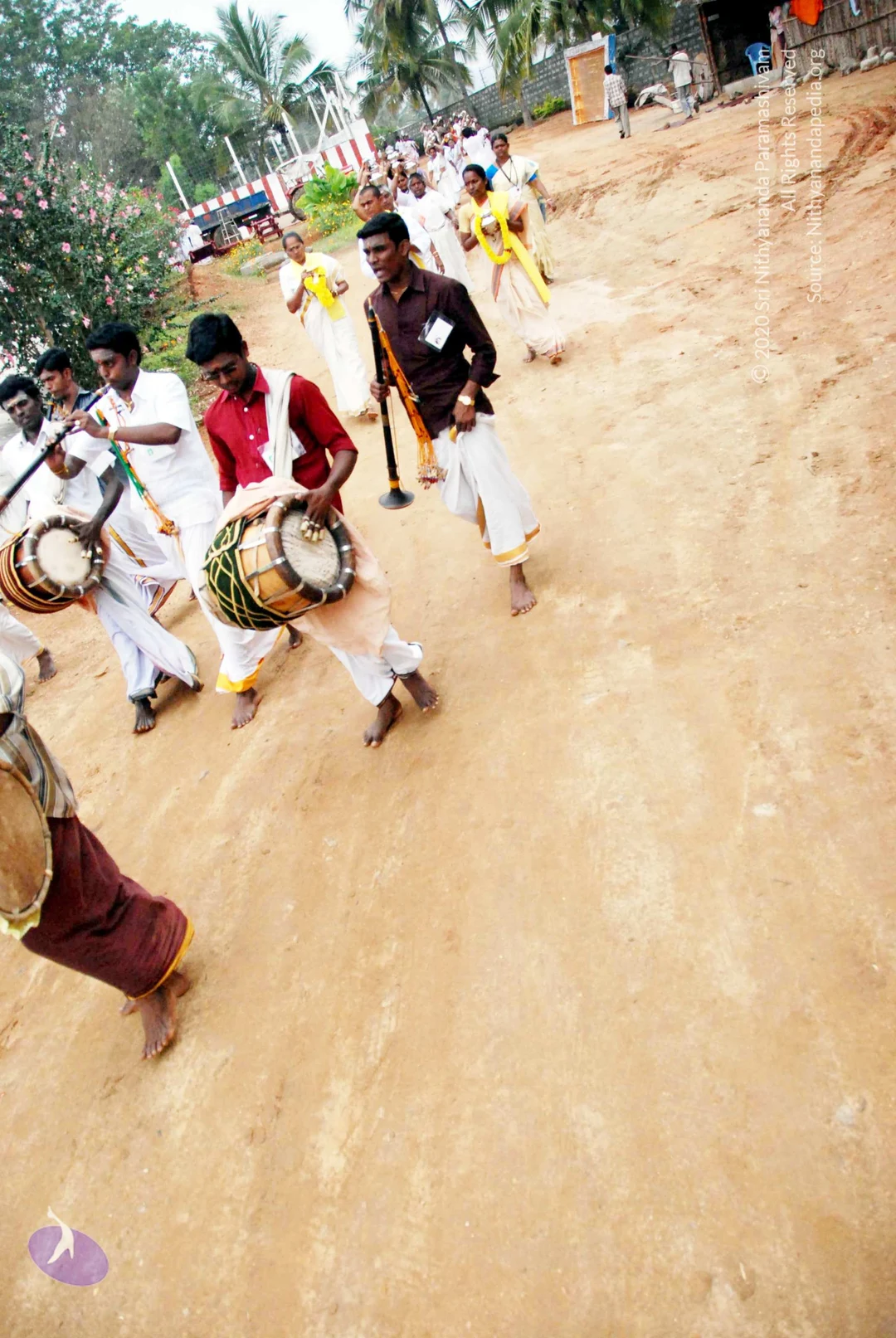
A brass tray holds a heap of small white cloth bundles tied with green ribbon-like strips. The tray rests on a green cloth on a wooden surface, with a brass lamp base and a steel vessel in the background. No people are visible.Several women and a young boy sit in a row on a paved hexagonal walkway beside a flowerbed of orange and pink blooms, each holding a silver kalasha pot filled with milk and marked with a red kumkum dot. They wear white garments and blue lanyards, and several have vibhuti or tilak marks on their foreheads. Their attention is fixed on the pots. No swami is visible in this image.A row of devotees seated on a paved path beside green shrubs and pink flowers, each holding a polished steel pot filled with white liquid. In the foreground a woman in a dark-orange sari with a red-marked forehead looks down, and a young boy in a white shirt smiles. Several women wear white saris and blue lanyard-style cords, with vibhuti on their foreheads. A small purple bird logo appears at the upper left. No a person is visible.Overhead photo of many polished stainless steel vessels filled with white milk, arranged in rows on a white-draped table. Each vessel has a wide rim and a flared base, and several show small red and orange marks. No people are visible. The setting suggests preparation of milk for abhishekam offerings to a deity murti.A close-up photograph of many polished stainless steel pots, each with a wide mouth and filled with water, packed tightly together in rows. Several pots bear small red and yellow floral or dot decorations and a red label. The shiny metal reflects the surrounding pots. No people or a person are visible; the scene suggests ritual water vessels prepared for an abhishekam.A photograph of a procession of women in white and cream clothing carrying silver-coloured metal vessels on their heads, arms raised with bangled wrists and fingers gripping the pots. Several women wear white or cream saris with gold borders, one wears a rudraksha mala, and others have vibhuti or kumkum marks on their foreheads. Onlookers stand in the background among green foliage.

Press Meet

54 photosSource gallery
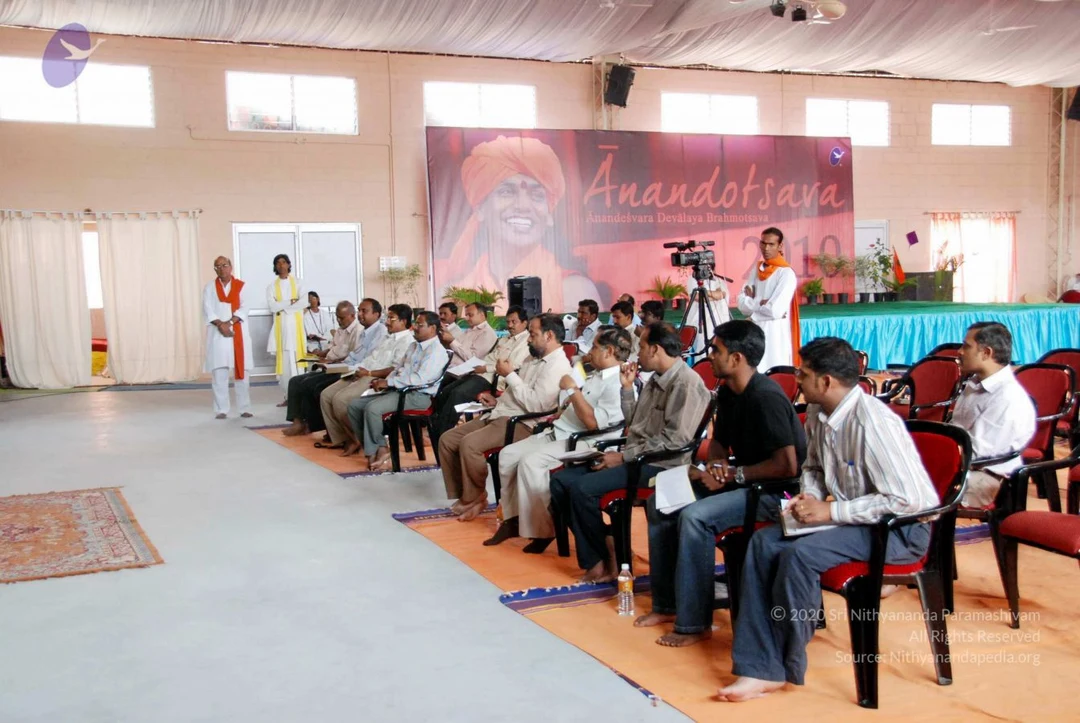
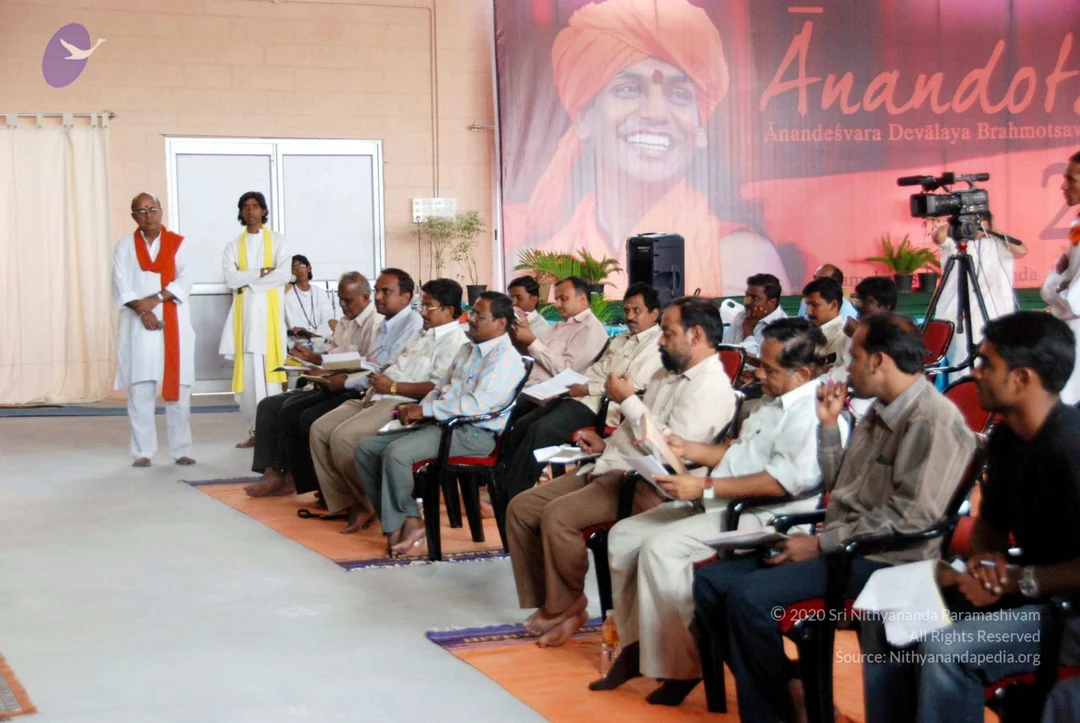
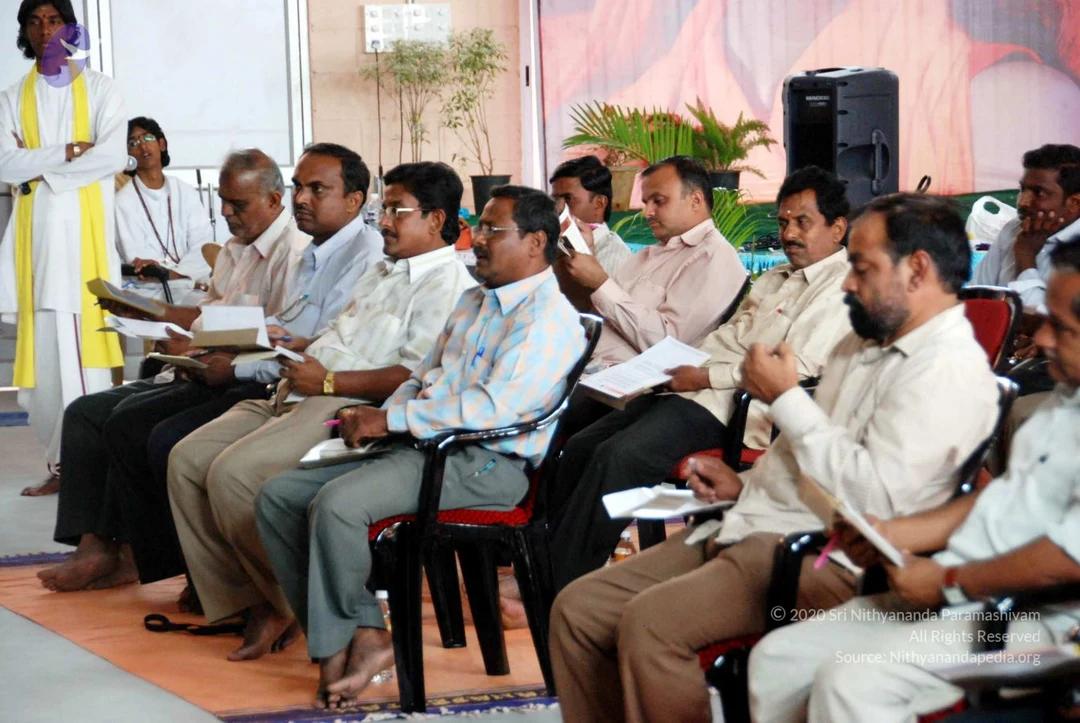
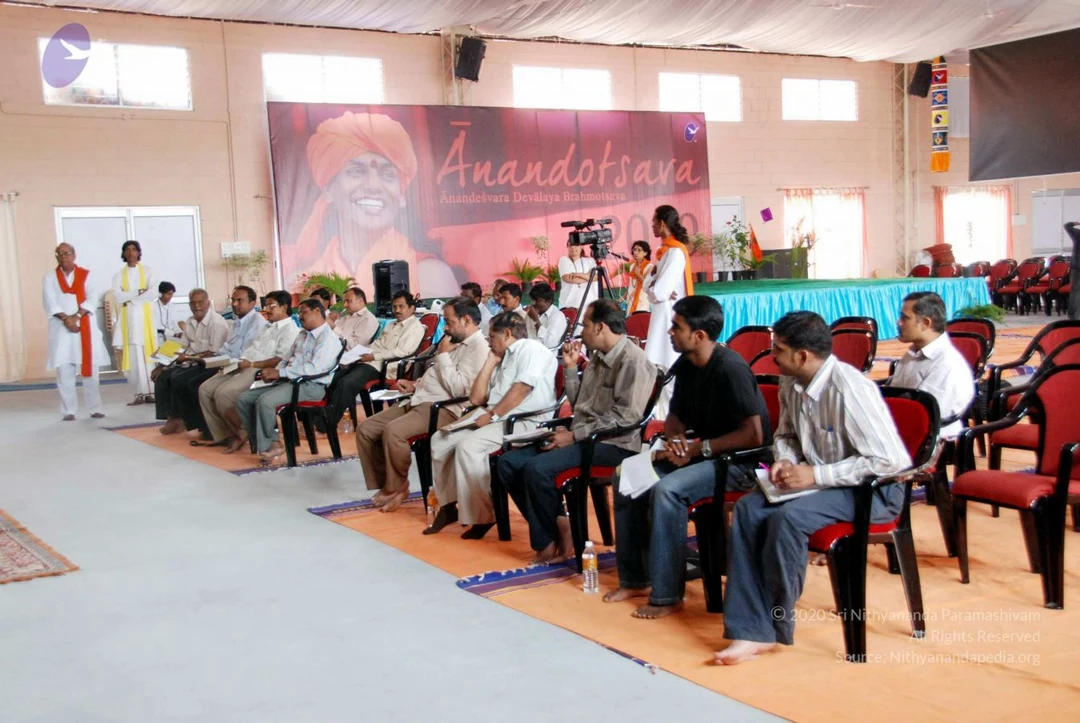
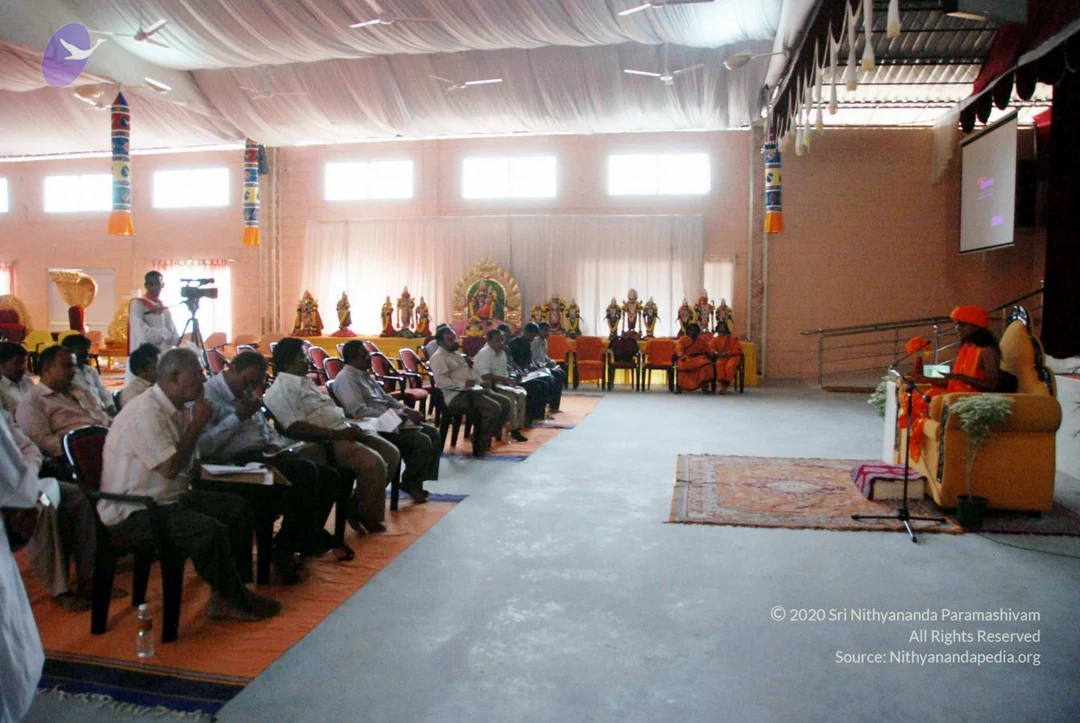
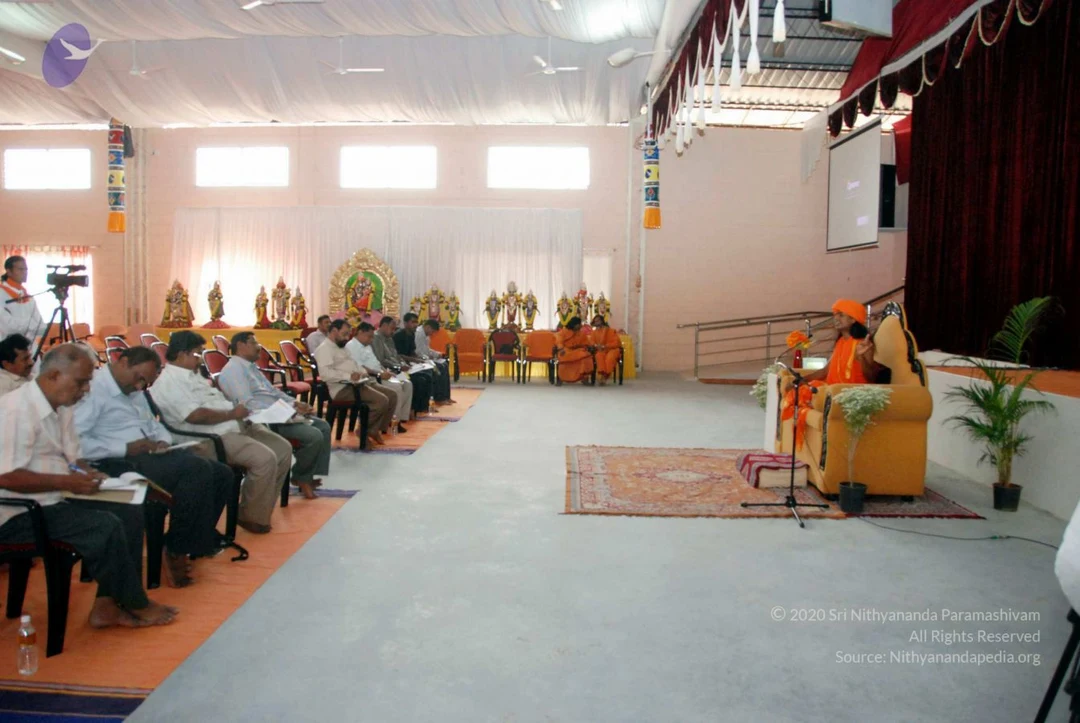
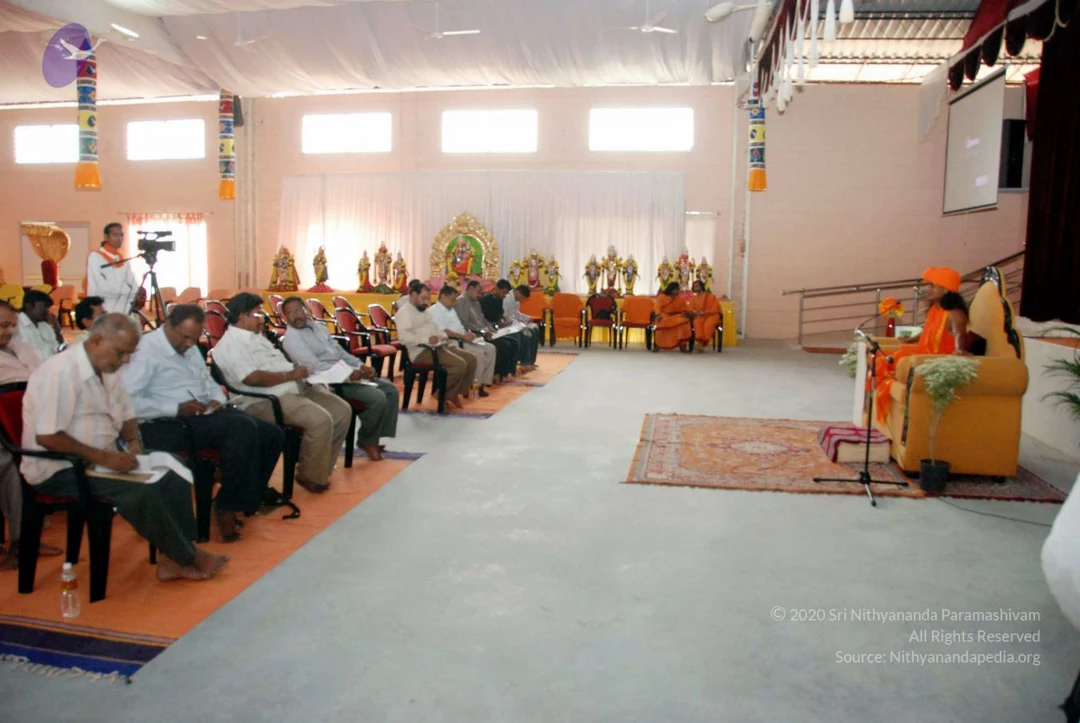
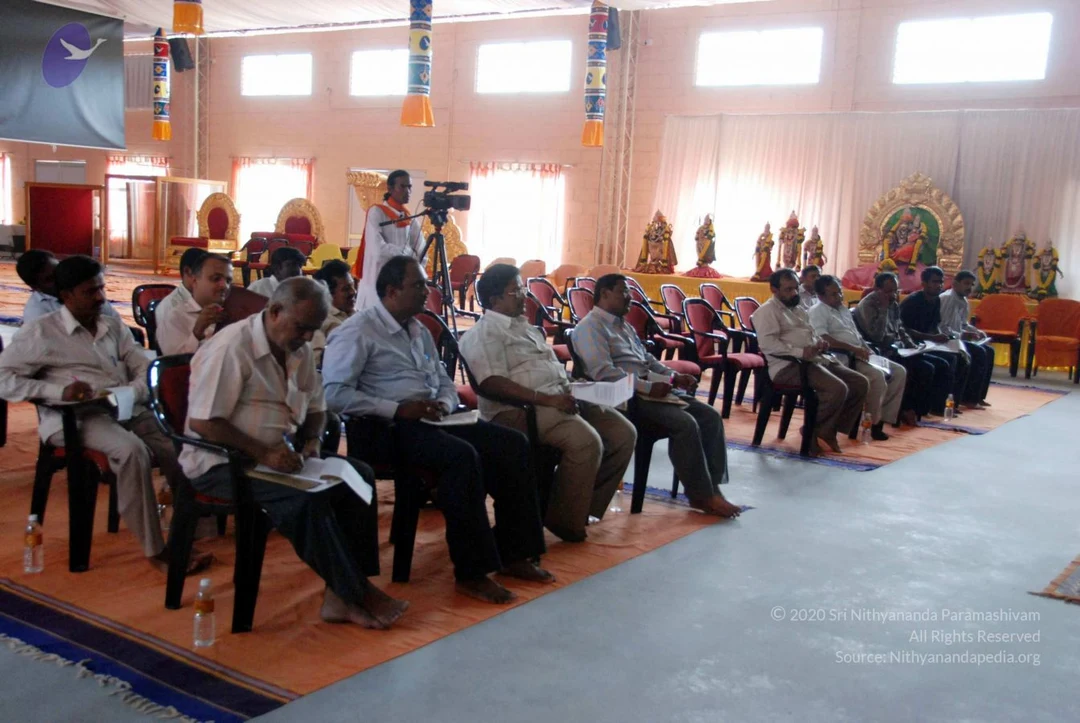
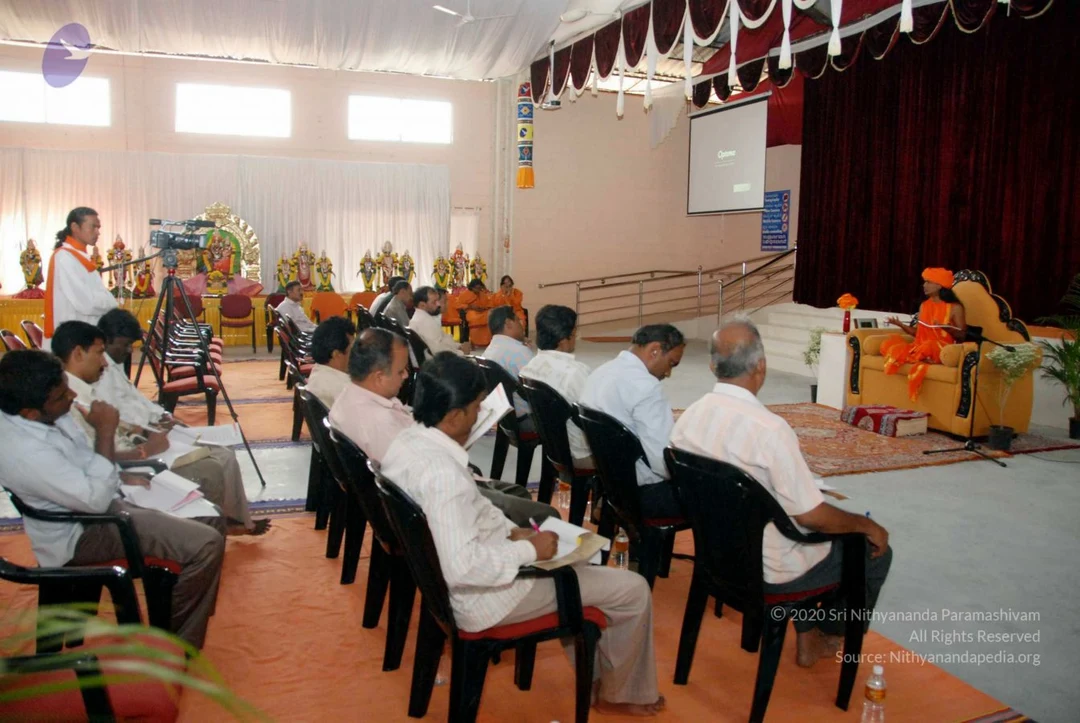
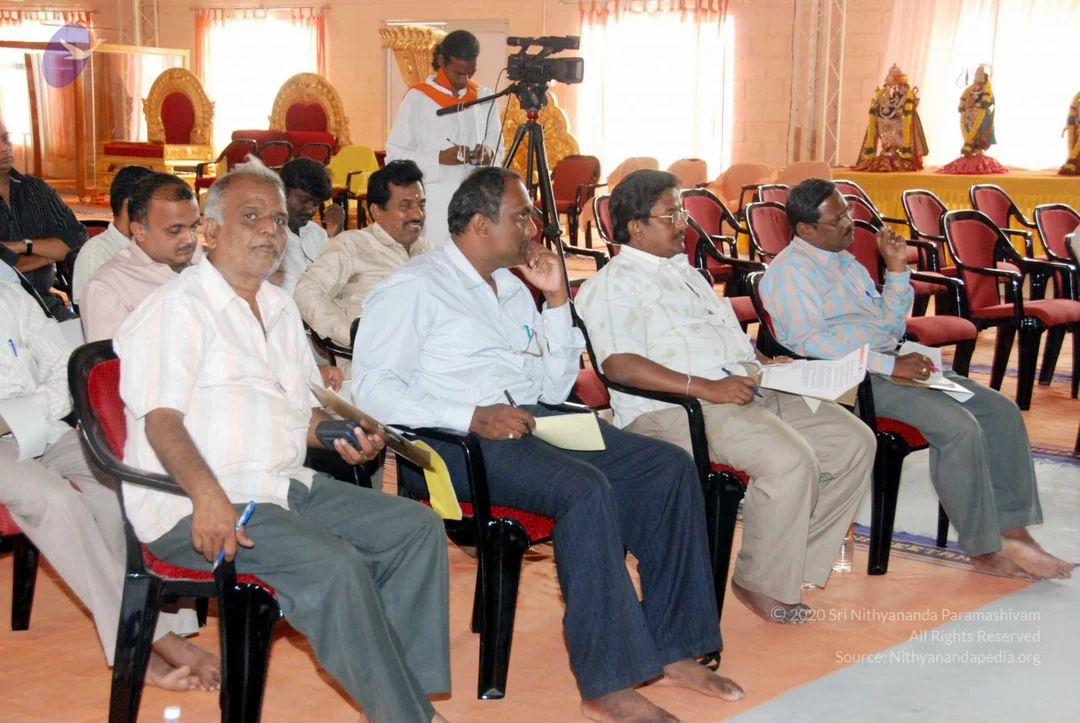
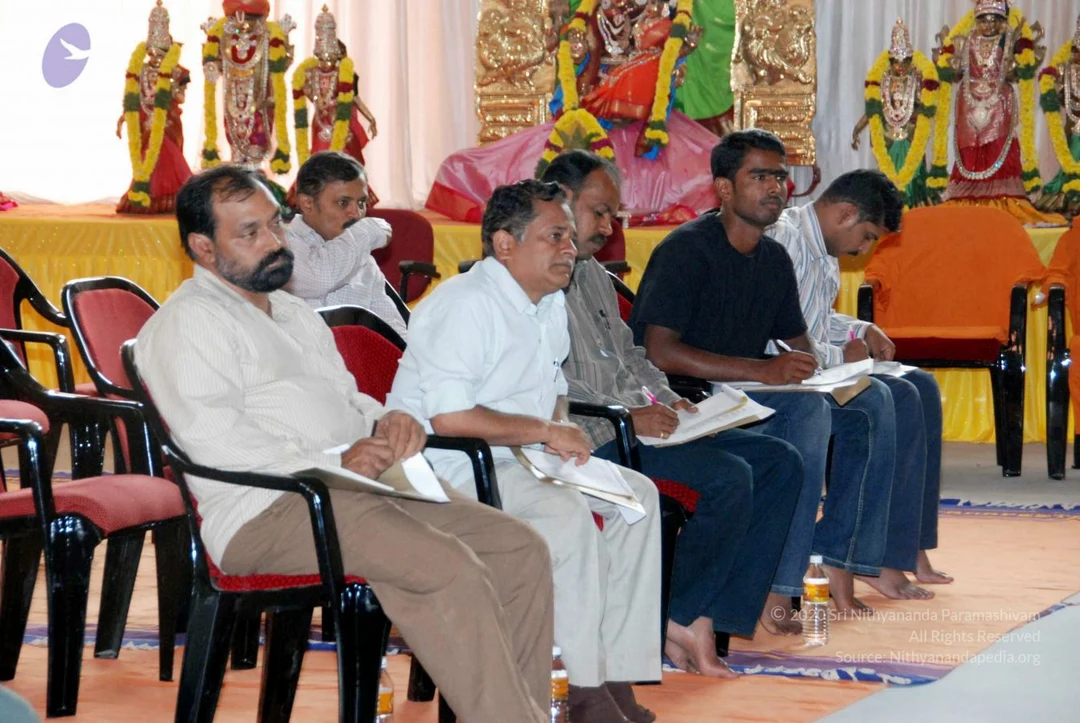
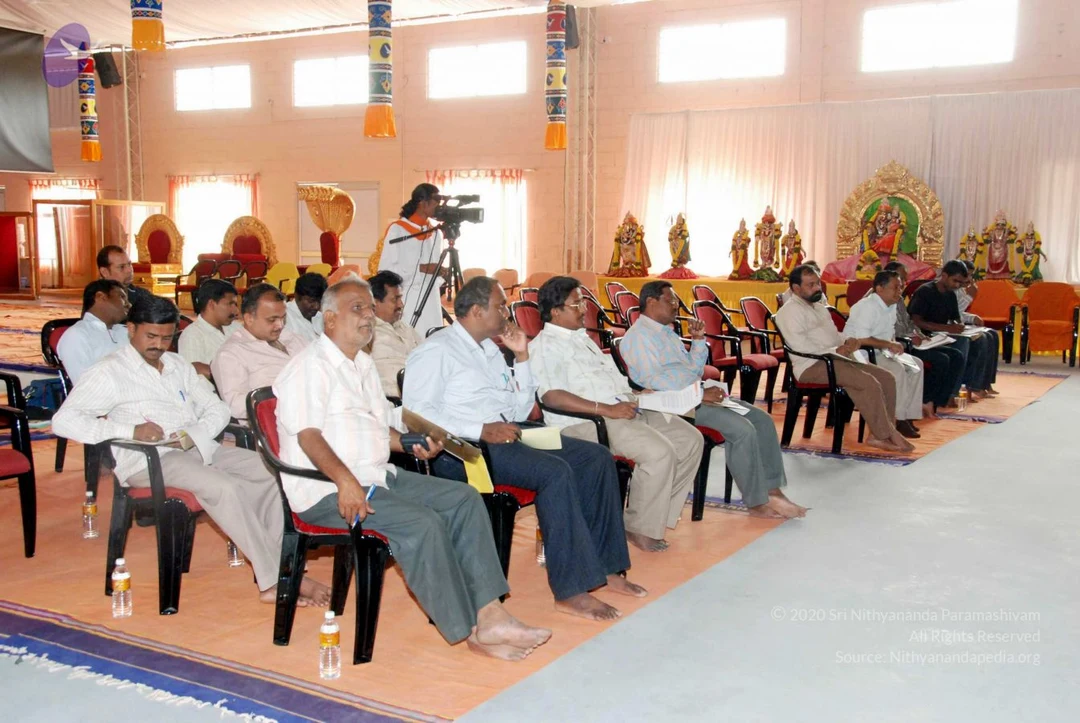
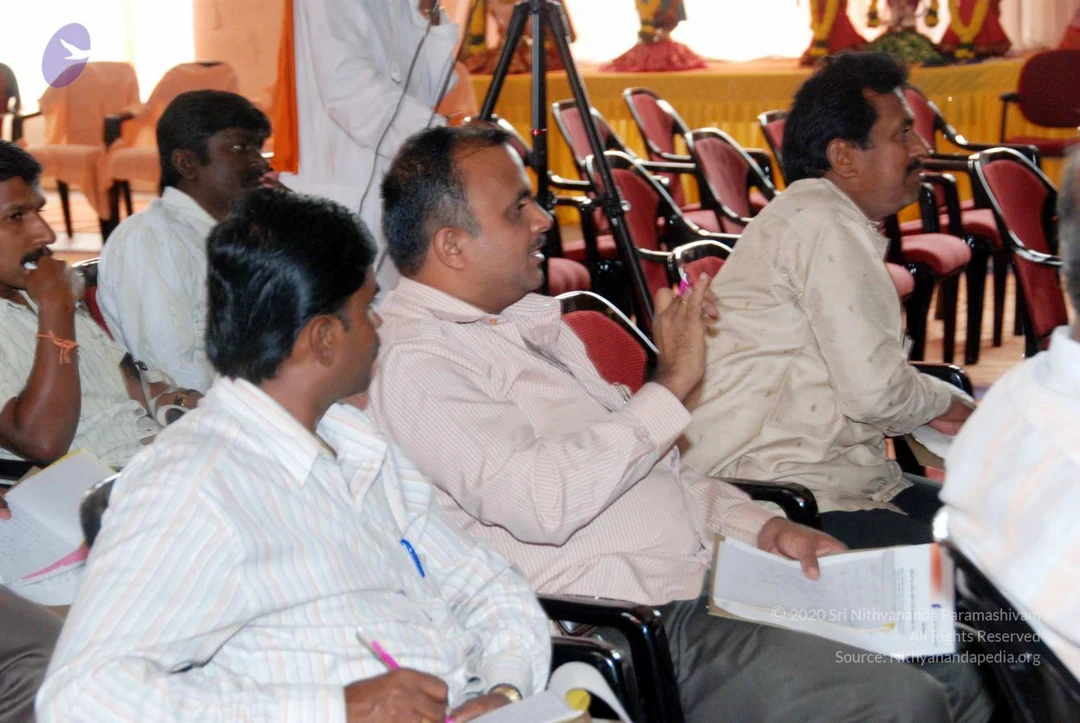
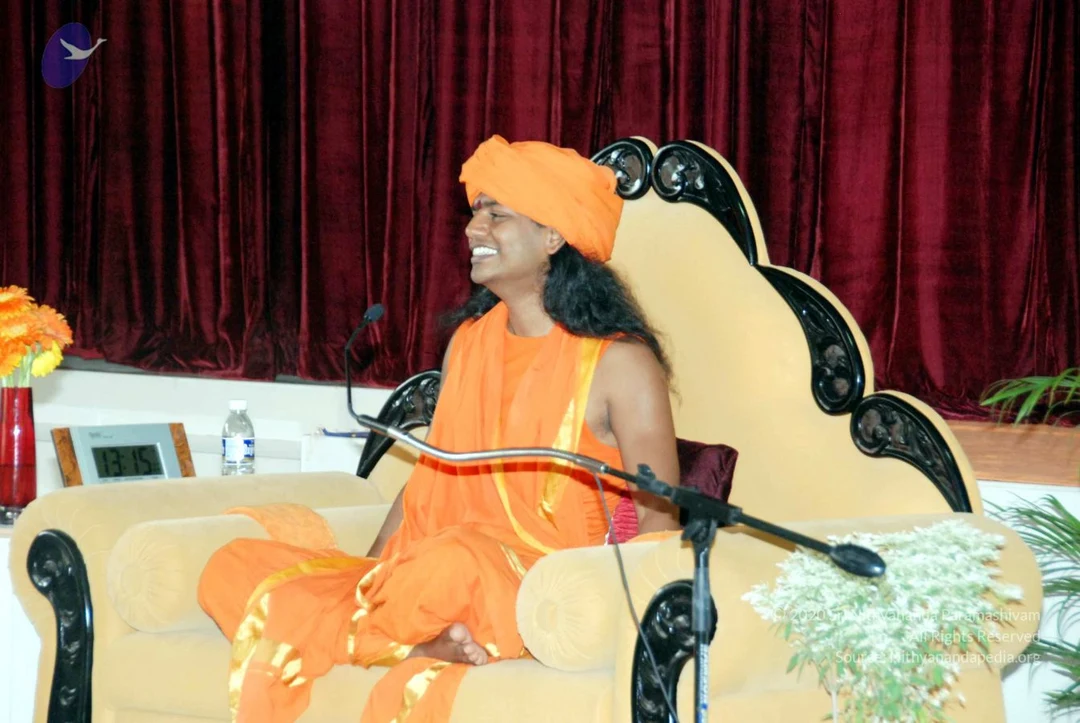
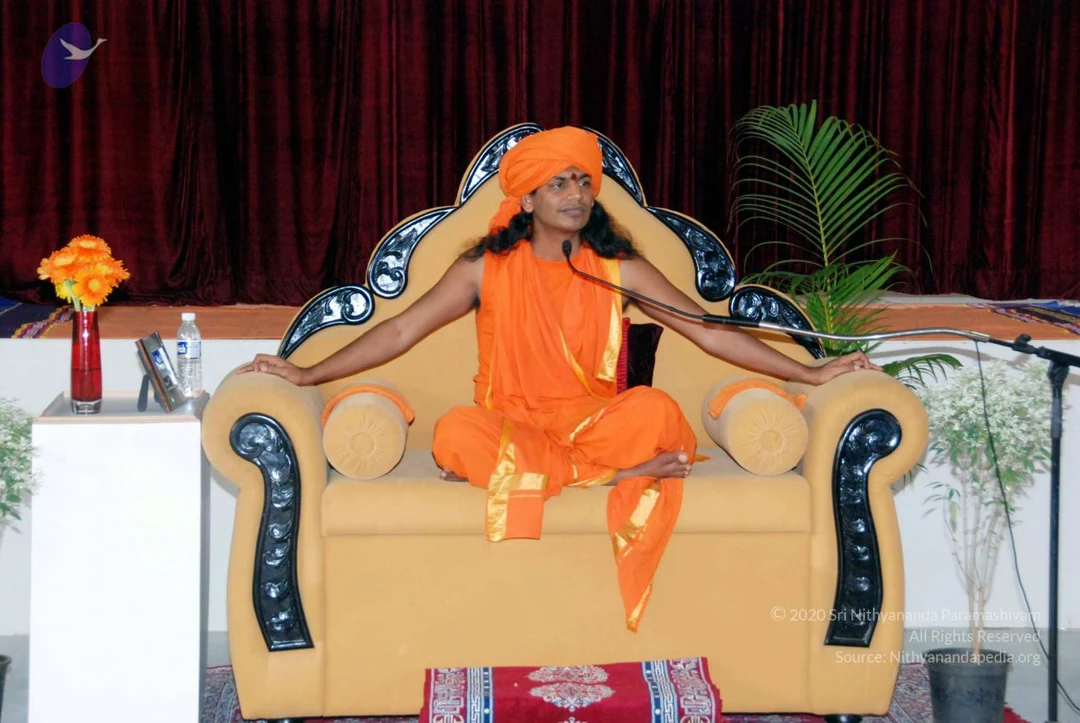
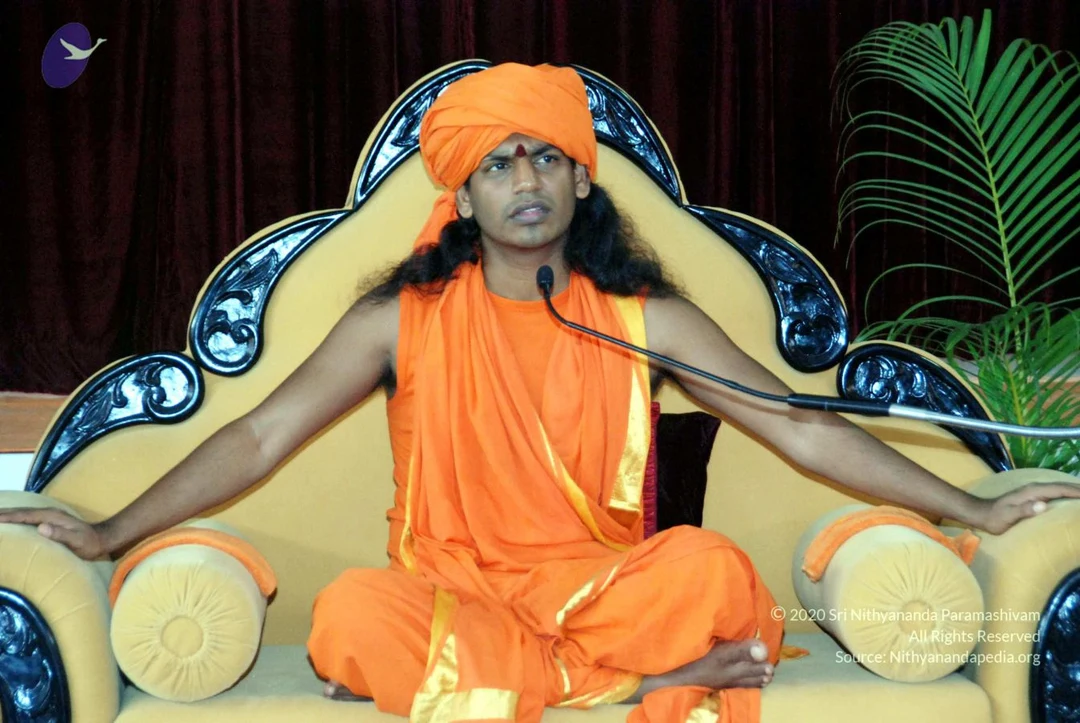
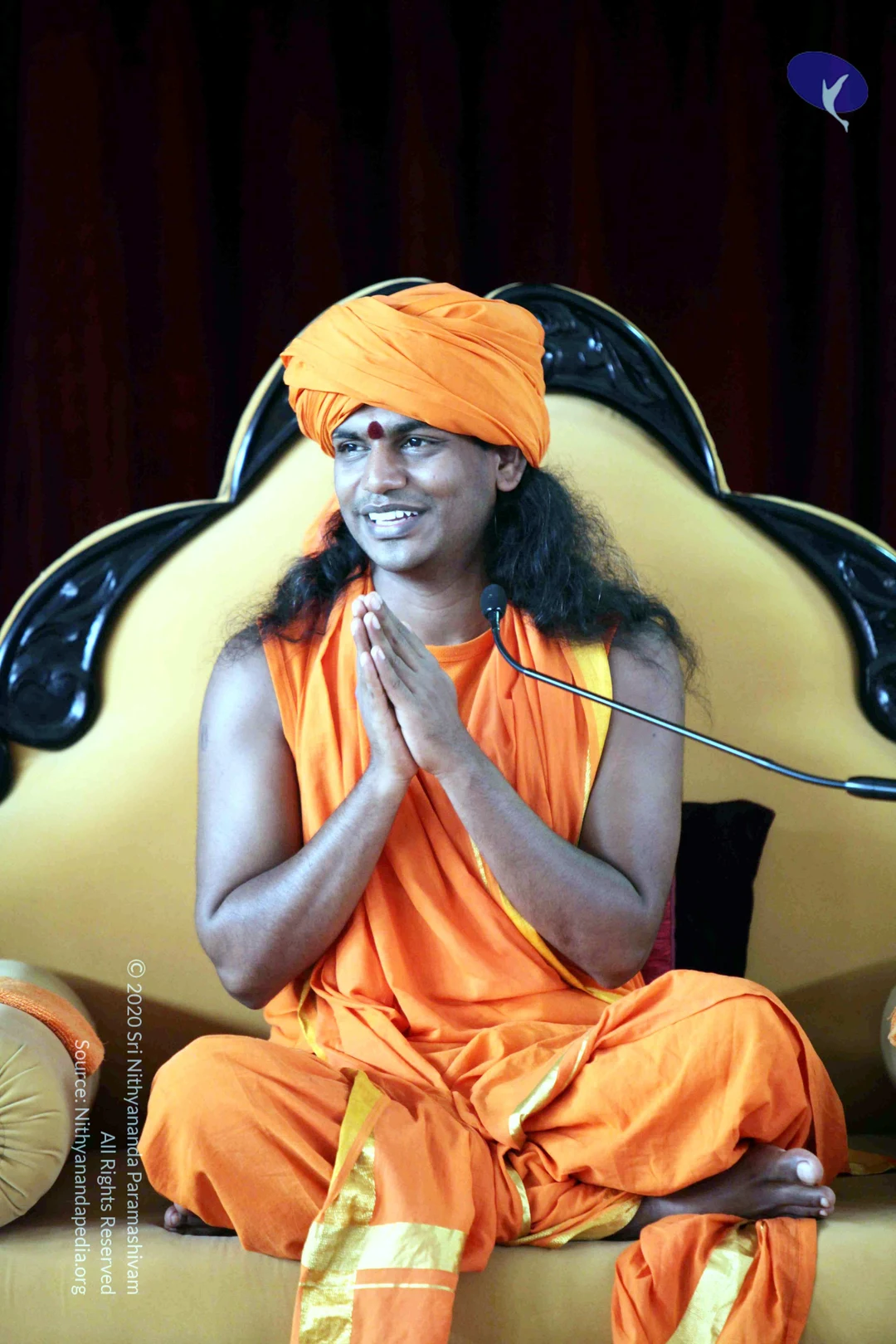
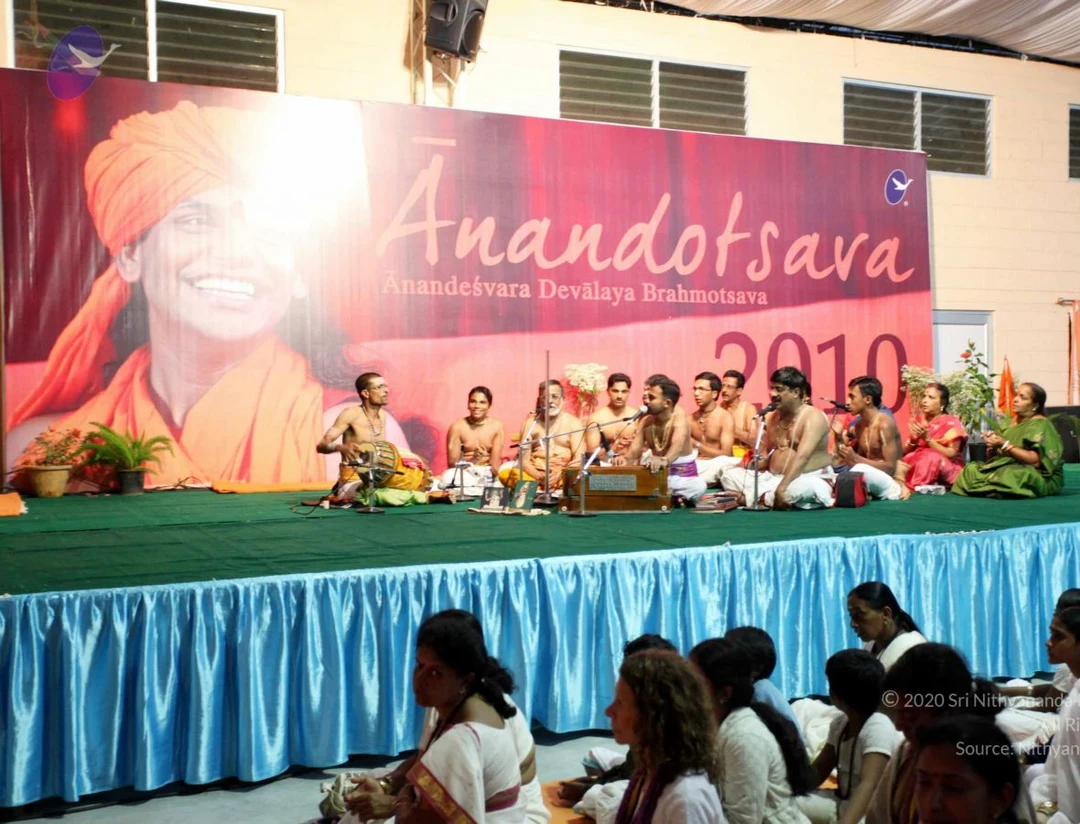
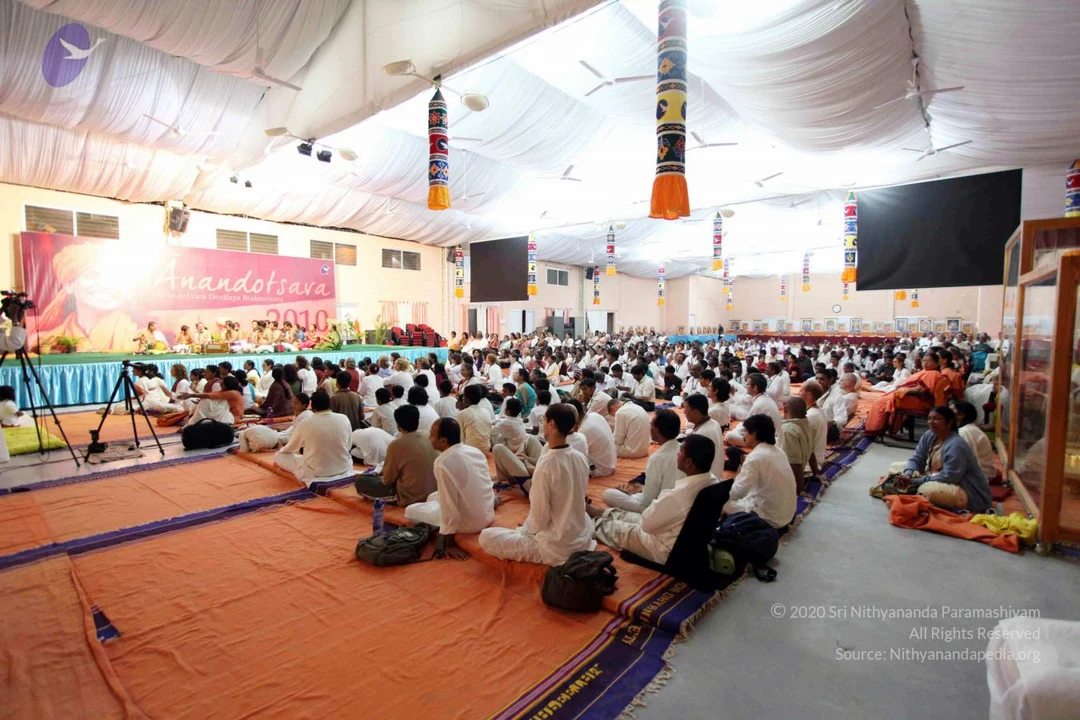
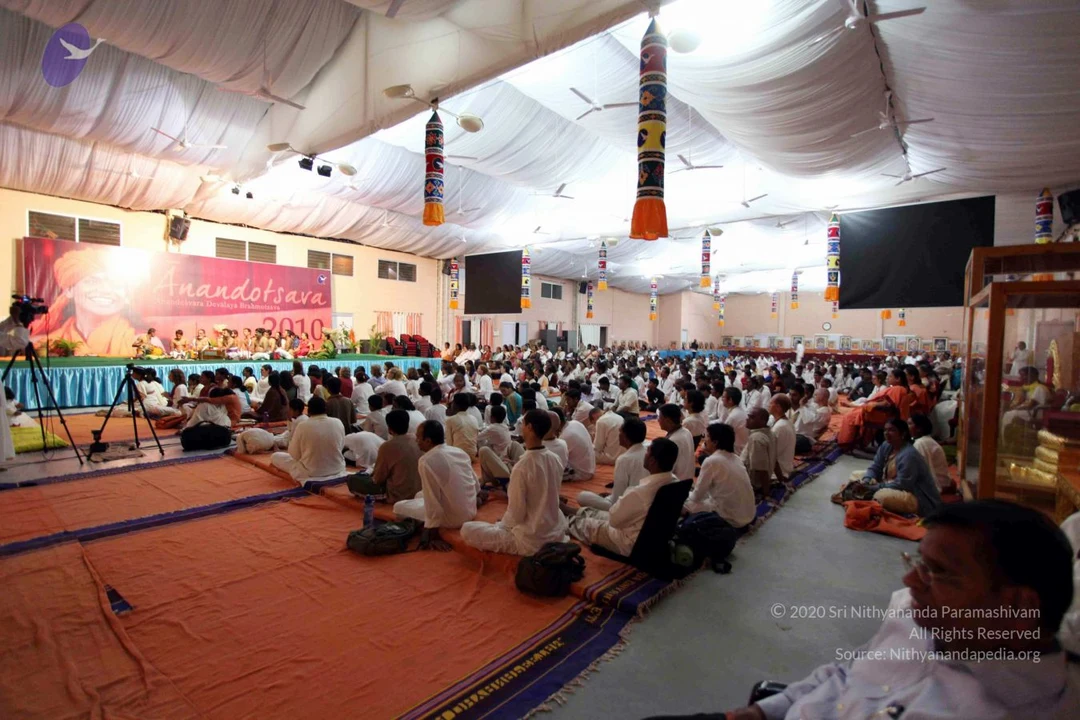
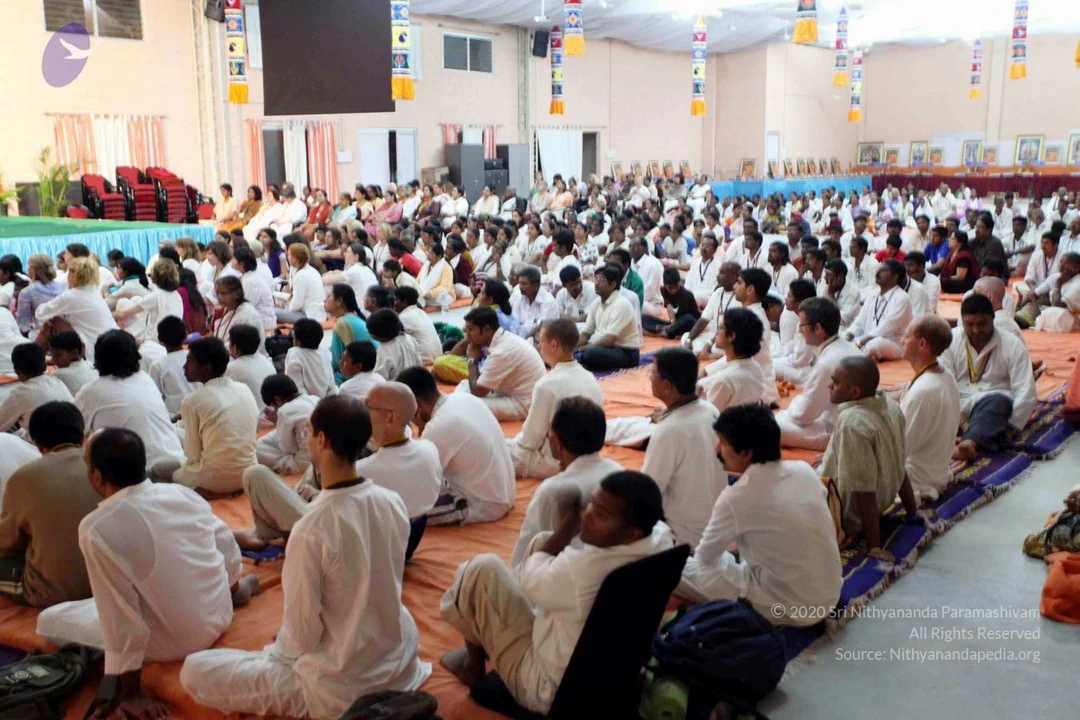
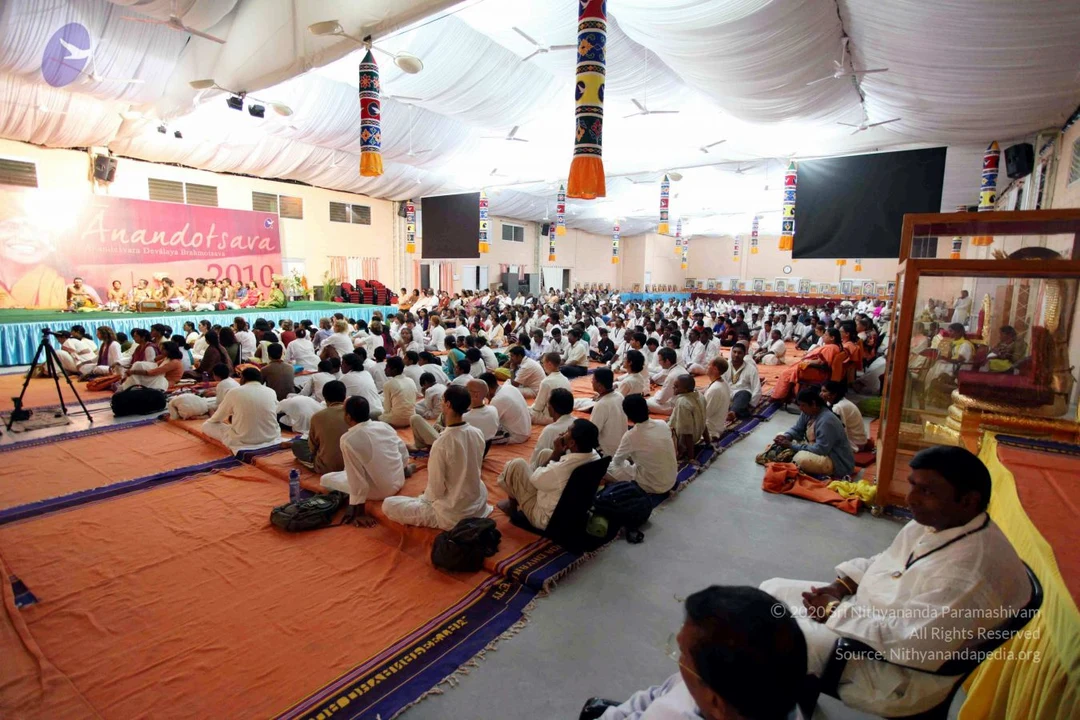
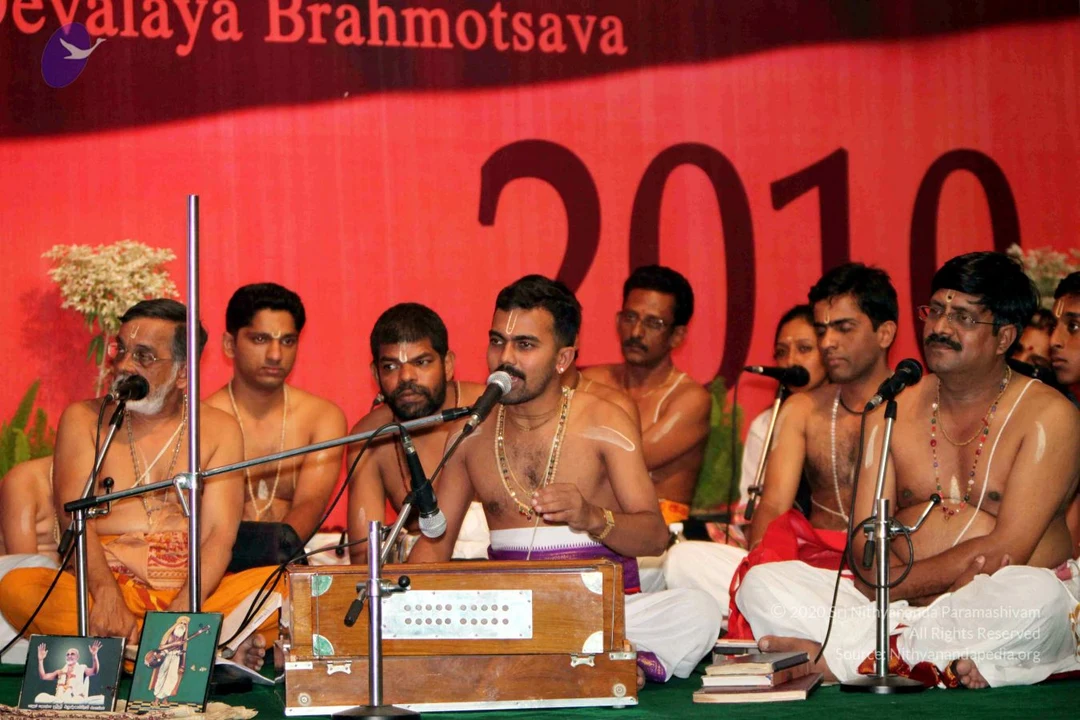
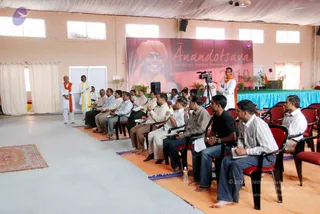
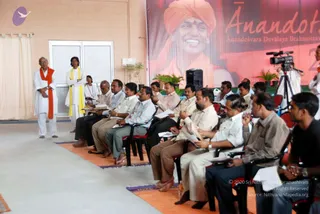
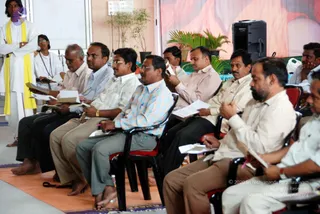
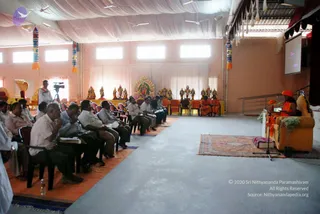
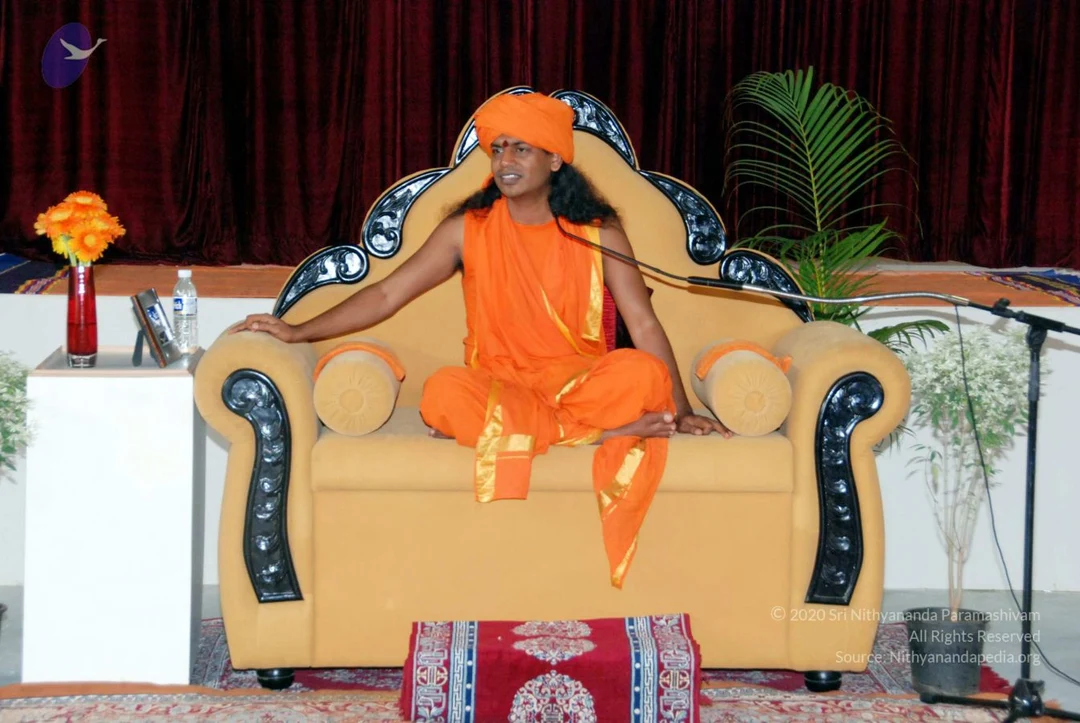
A press meet in a hall with a large banner reading "Ānandotsava Ānandeshvara Devalaya Brahmotsava" showing a smiling figure in an orange turban and the year 2010 partly visible. Rows of seated men in formal shirts and trousers, several holding notepads and pens, face the stage on an orange-and-blue carpeted platform with red chairs. On the left, two standing people in white with orange or yellow shawls stand near the wall, and on the right a man in white with an orange shawl stands by a camera on a tripod. Potted plants and a small rug are visible, and a water bottle sits near the front row.A seated audience of about twelve men sits in white plastic chairs on orange-and-purple mats in a bare hall. A standing man in a white kurta with a red shawl at left addresses them, while a younger man in white with a yellow shawl stands behind him. Several seated men hold papers or notepads. At right, a cameraman films with a tripod-mounted video camera. Behind them hangs a large banner showing a smiling figure in an orange turban and orange robe, with a bold orange heading reading Anandotsava, Anandeshvara Devalaya Brahmotsavam and a date, beside potted plants and a speaker.A seated group of men in collared shirts and trousers sit in plastic chairs on an orange mat in an indoor hall, many holding open notebooks or papers and writing. A standing person in white robes with a yellow shawl stands at the left edge, and a woman in white stands behind them. Potted palms and a black speaker sit near a pink backdrop at the back of the room.A photograph of a man seated on an ornate golden-yellow throne-style armchair with carved black wooden trim against a dark maroon draped backdrop. He wears an orange turban, an orange sleeveless robe with gold-edged borders, and a red bindi, smiling while gesturing with one hand toward an unseen audience. A microphone on a stand is at right, an orange gerbera arrangement in a red vase and a water bottle sit on a white table at left, and white flowering plants frame the scene. Appearance-based label: a person, seated in person in the role of speaker on a throne.A man seated on an ornate gold-upholstered throne-style chair with carved black wooden armrests and a dark red cushion. He wears an orange turban and an orange sleeveless garment with gold-bordered wrap, and his legs are folded beneath him. He raises one hand near his face in a gesture while looking to the side, and a microphone stand is positioned in front of him. Orange flowers and a potted plant sit to the left, with a maroon curtain behind. Appearance-based candidate: Swamiji (probable), identified by the saffron-orange turban and clothing with gold trim, seated in a throne-like chair before a microphone.Wide view of an indoor hall with a white draped ceiling and peach walls, where a seated audience of men in white and light shirts sits in rows of red chairs on orange mats facing a raised platform. On the right, a figure in orange robes and an orange head wrap sits on a yellow armchair beside a small table and a potted plant, with a projection screen behind. Several more monks in orange sit on a dais near a row of colourful deity murti statues and a large ornate golden backdrop. A man in white stands at left beside a video camera on a tripod. Colourful tassels hang from the ceiling and a patterned carpet lies before the platform.

Jayanthi Stall View

20 photosSource gallery
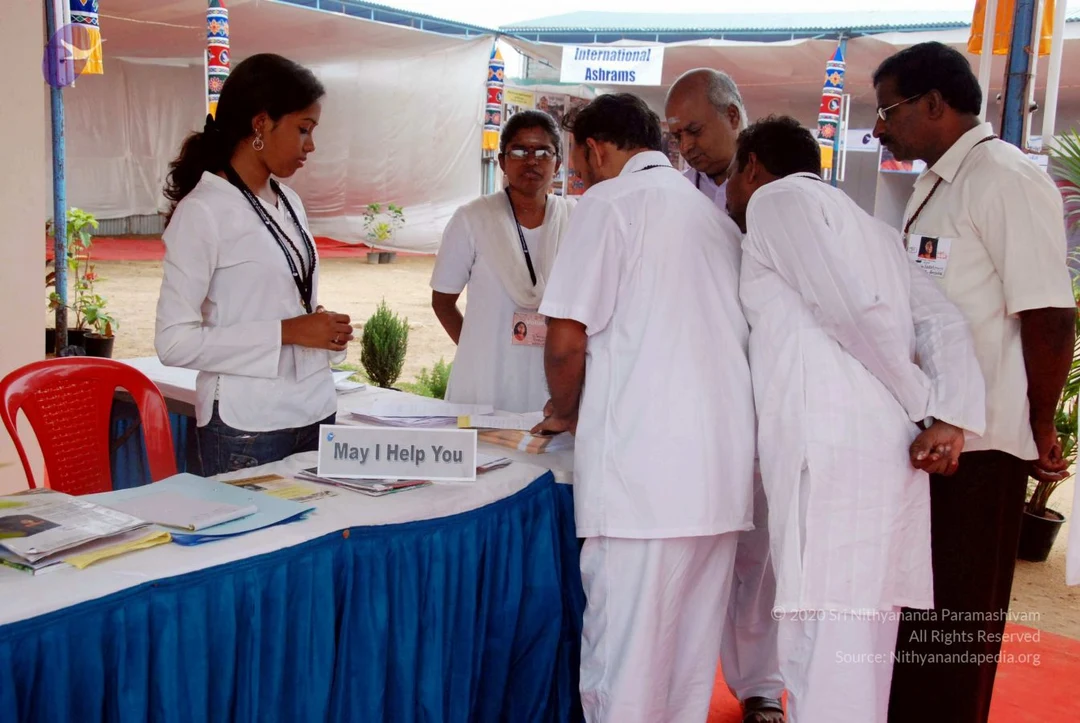
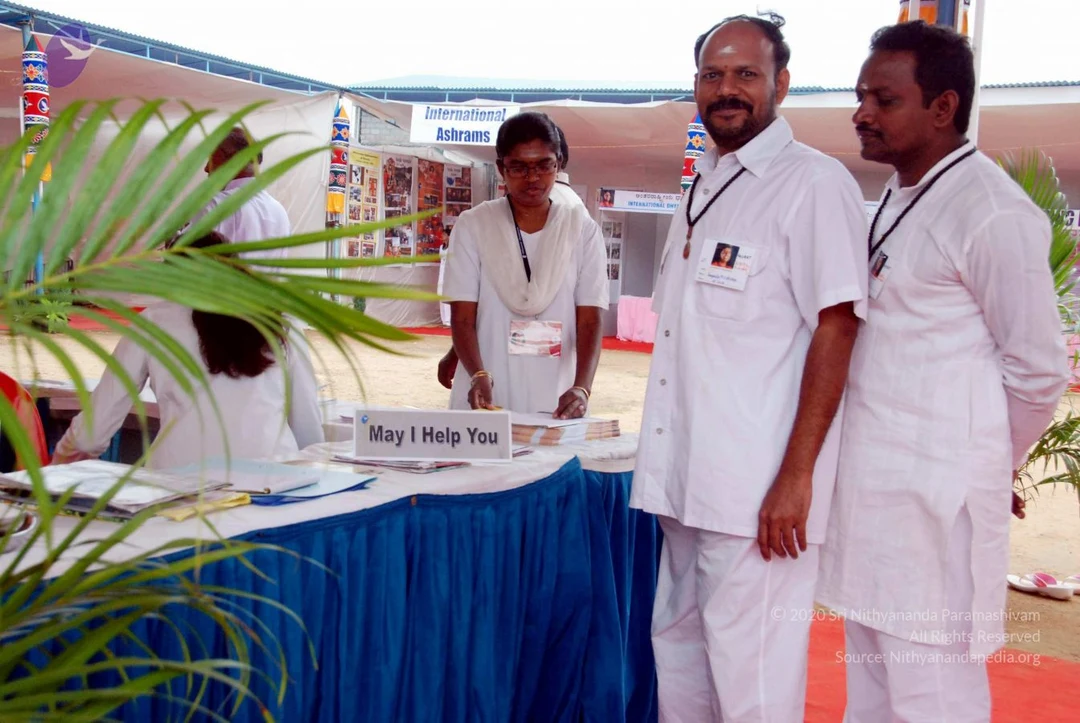
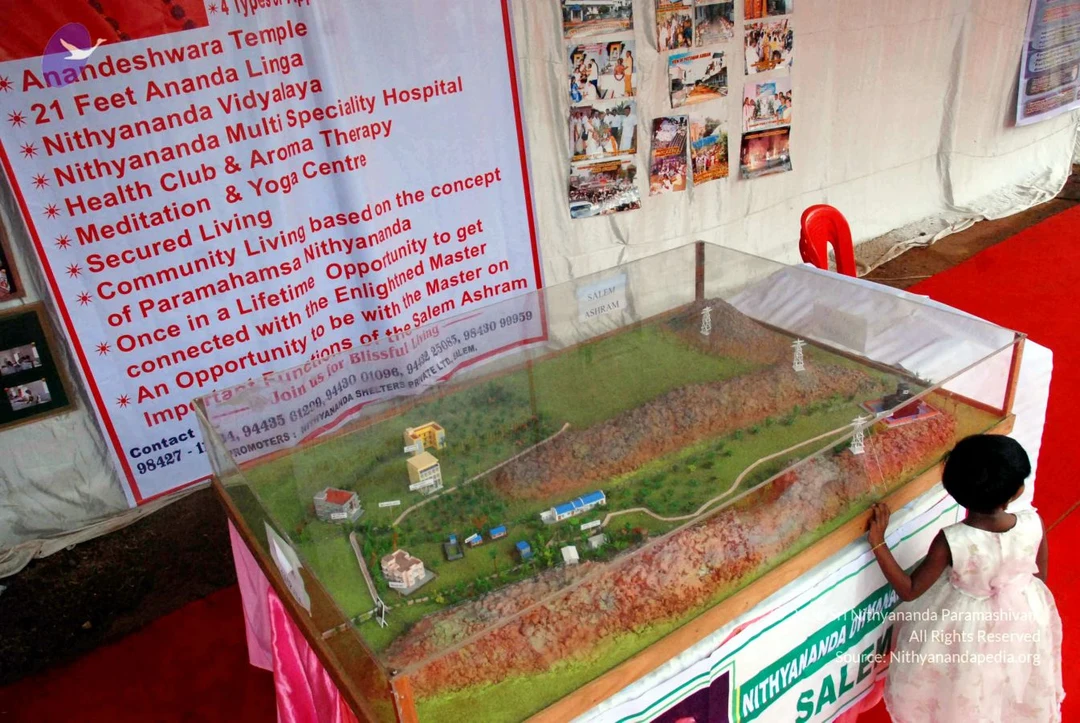
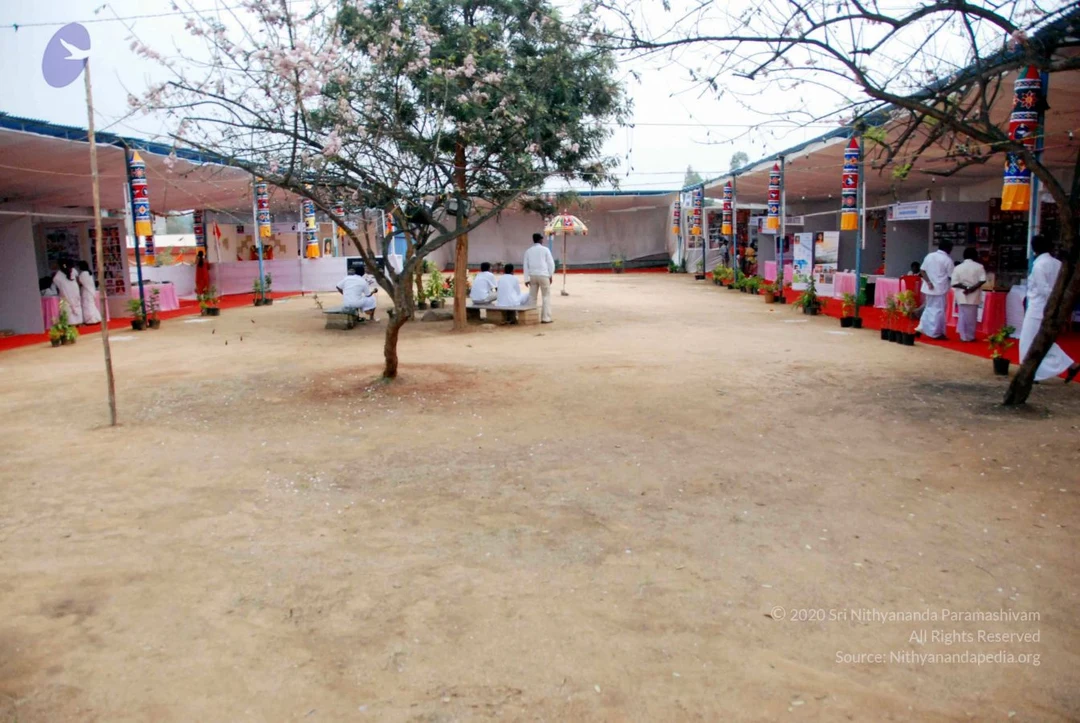
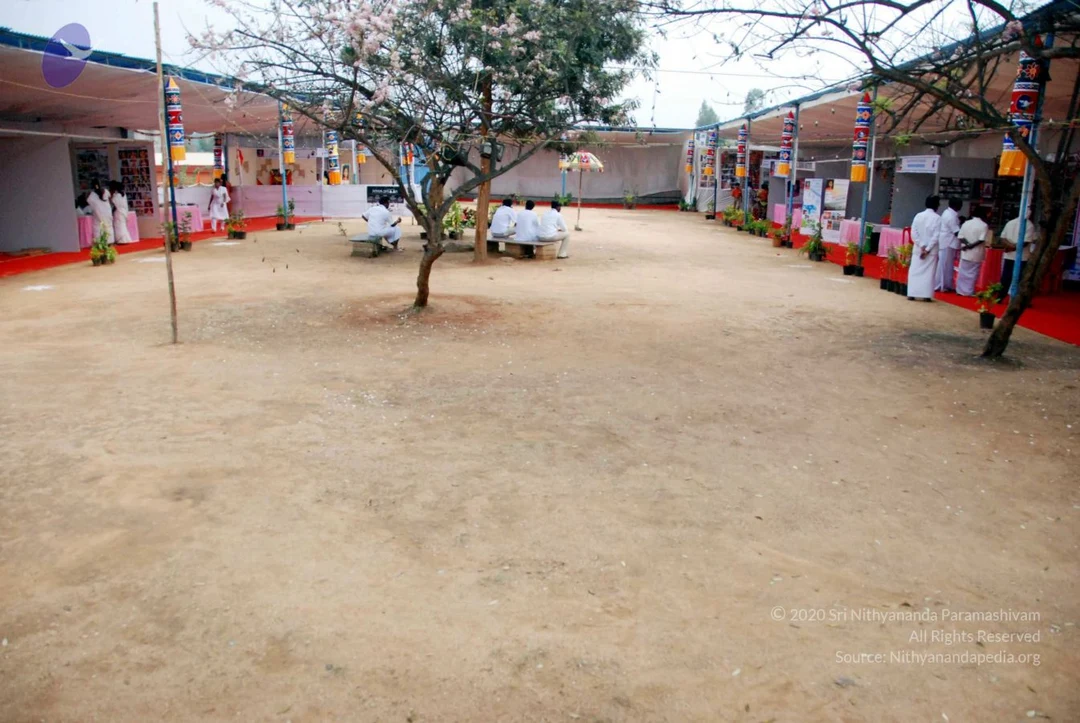
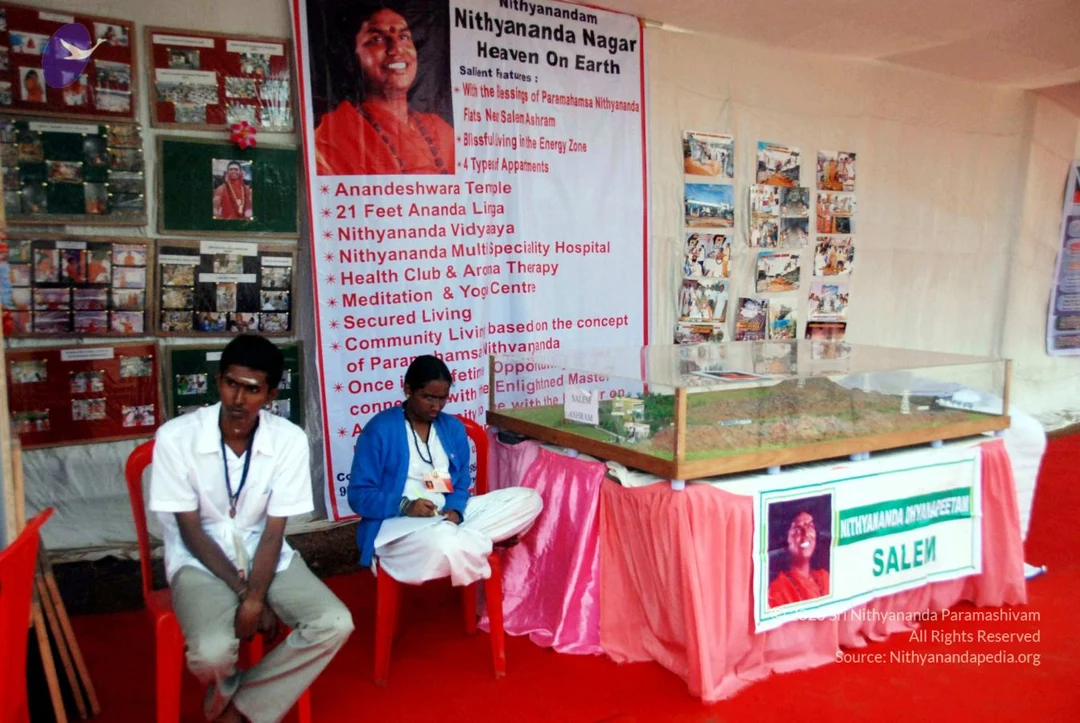
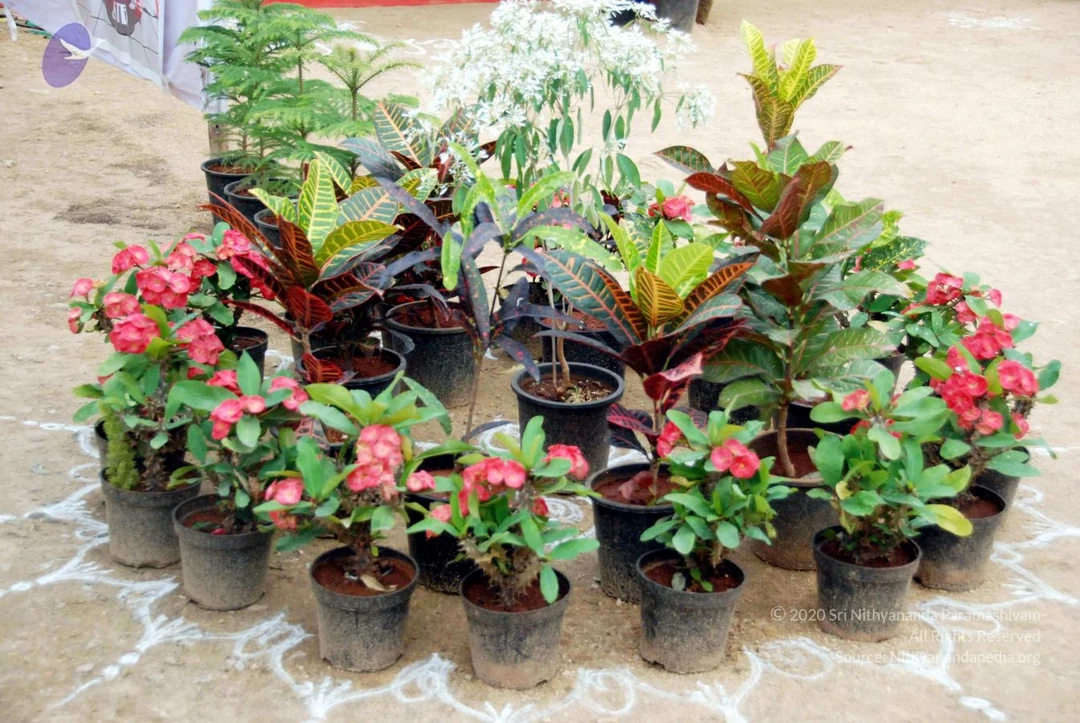
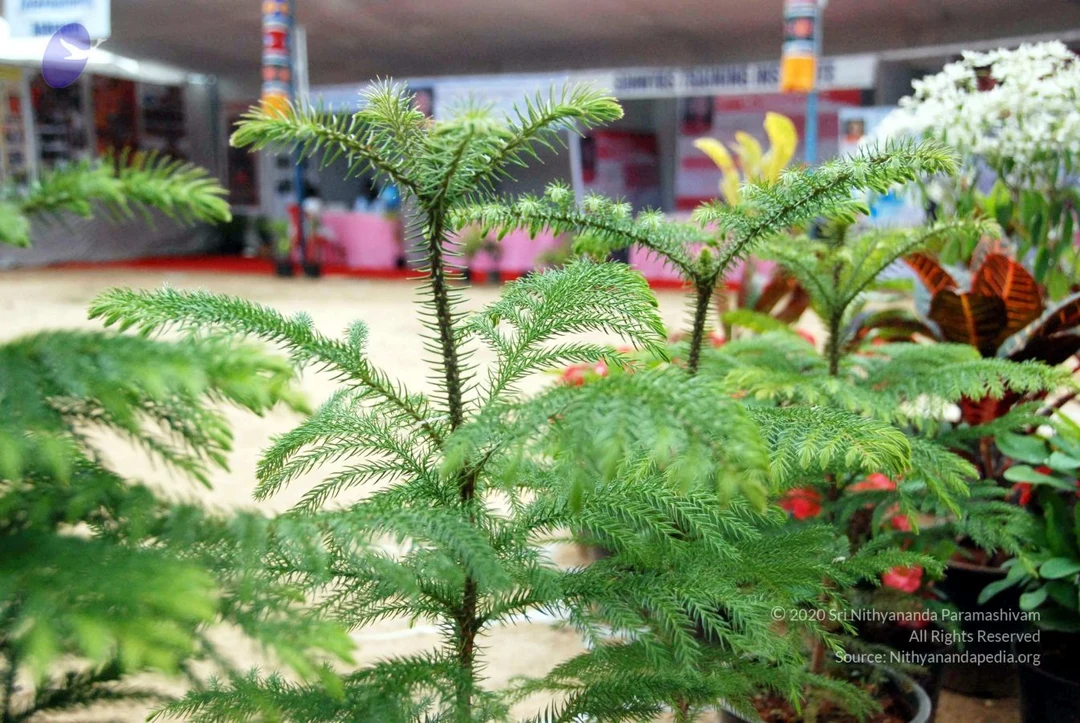
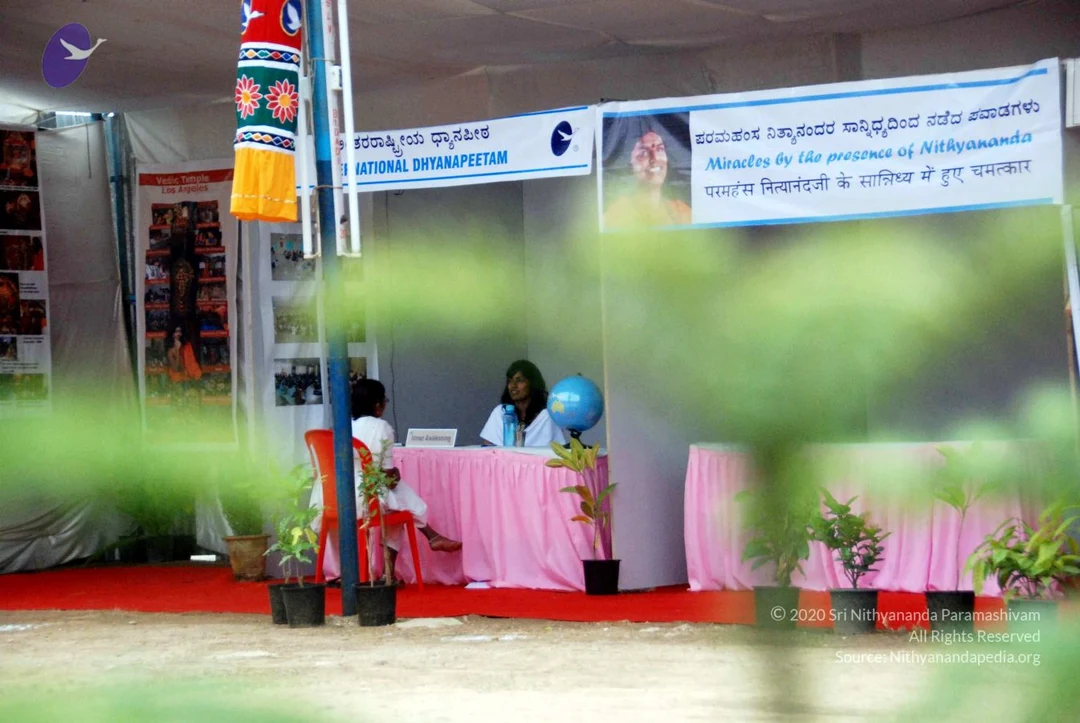
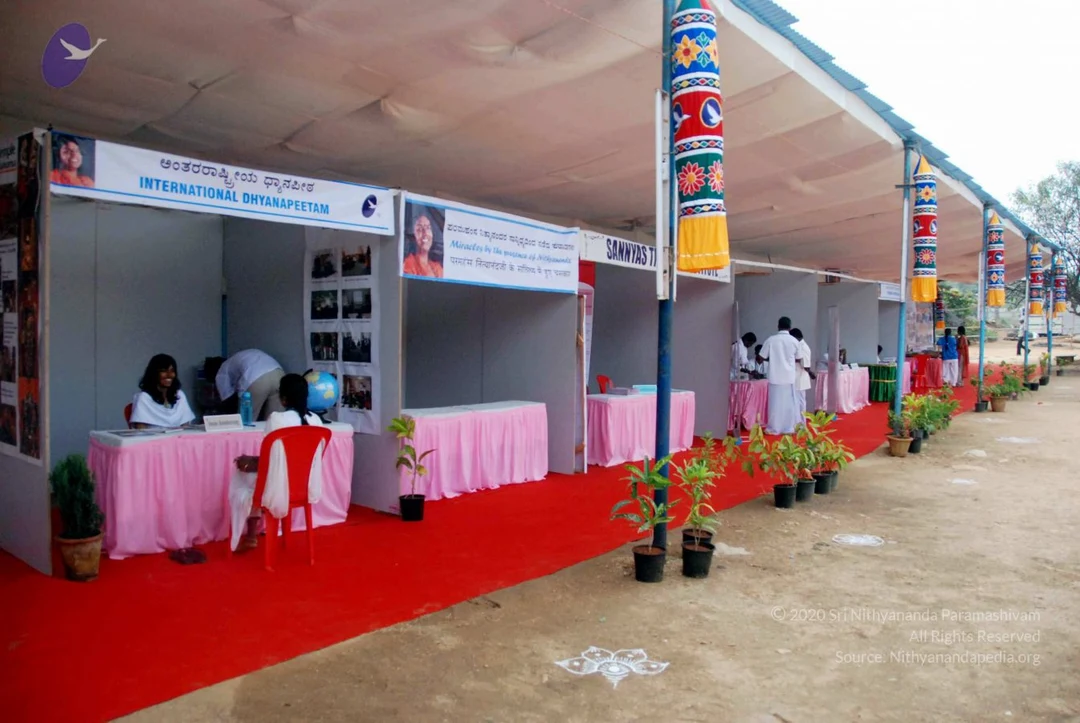
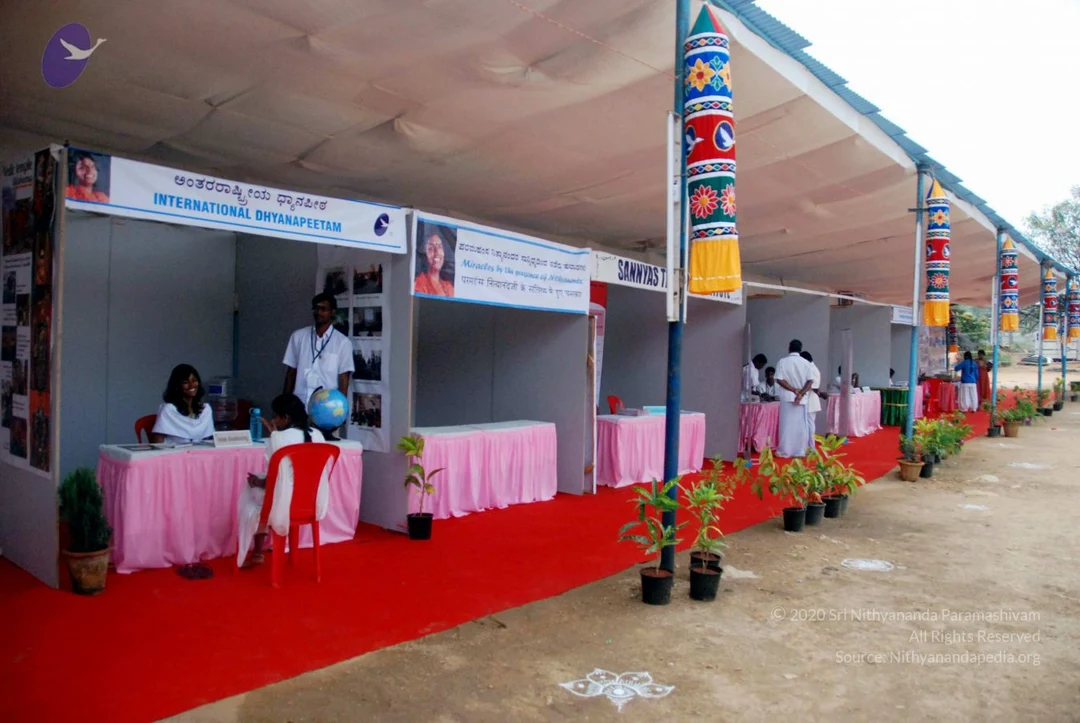
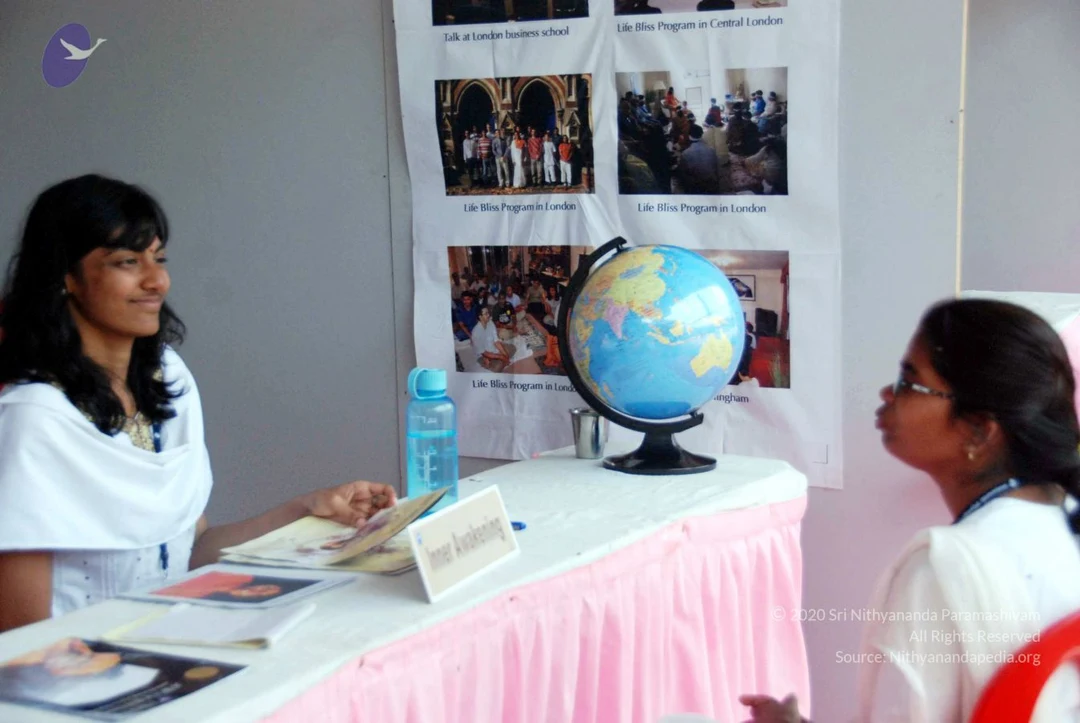
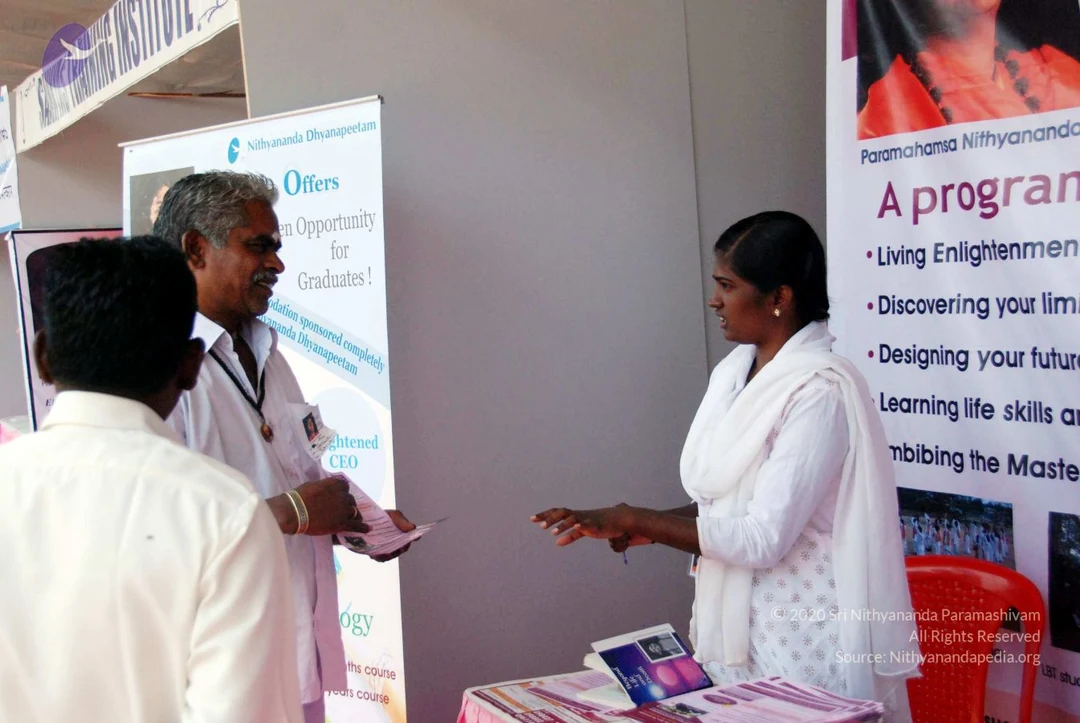
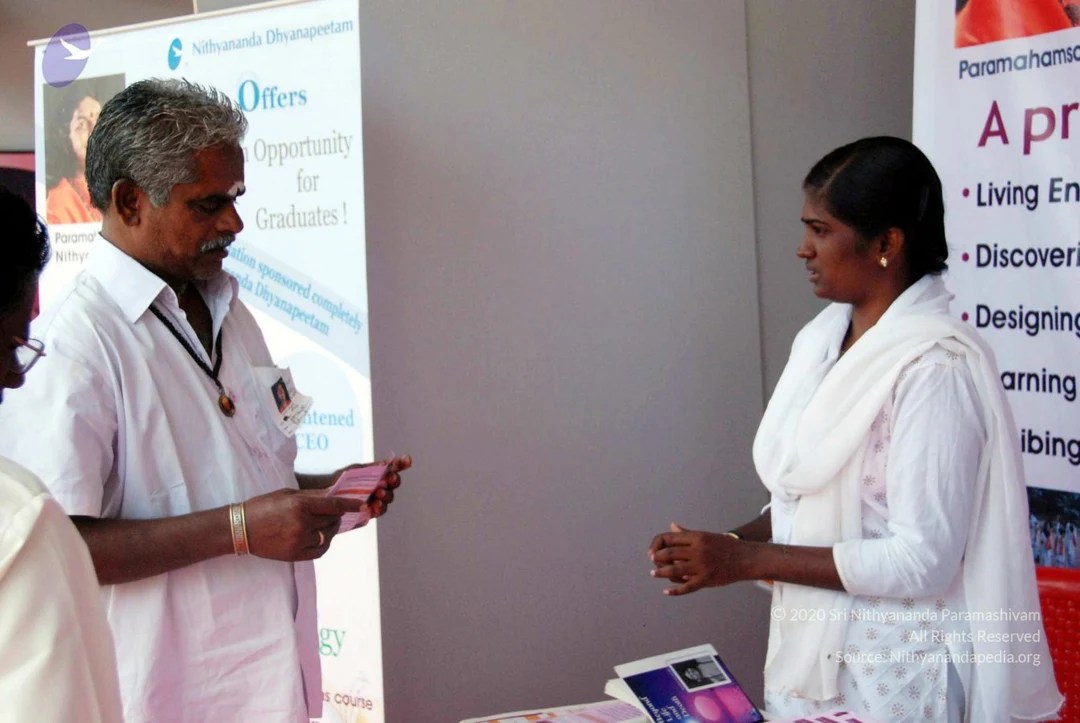
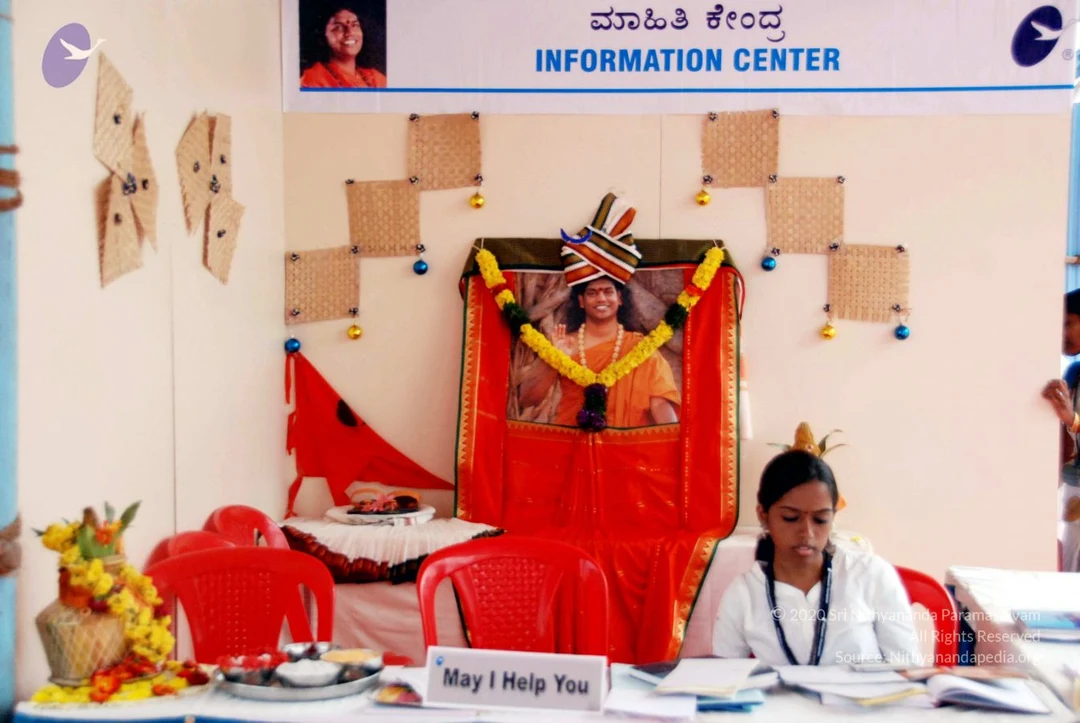
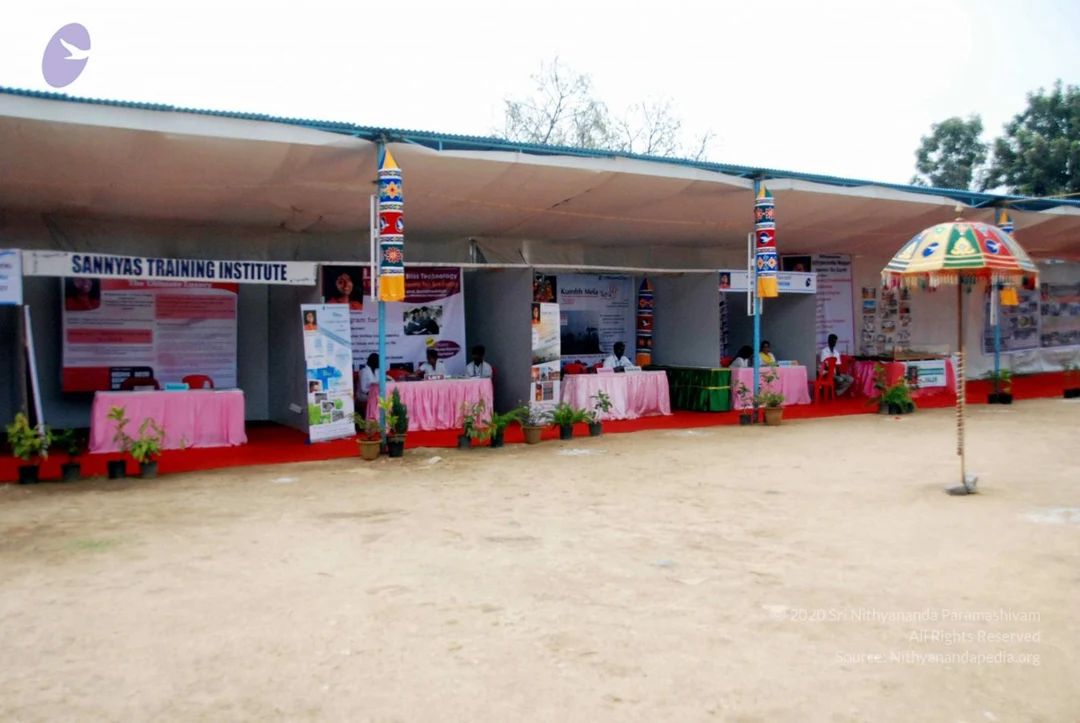
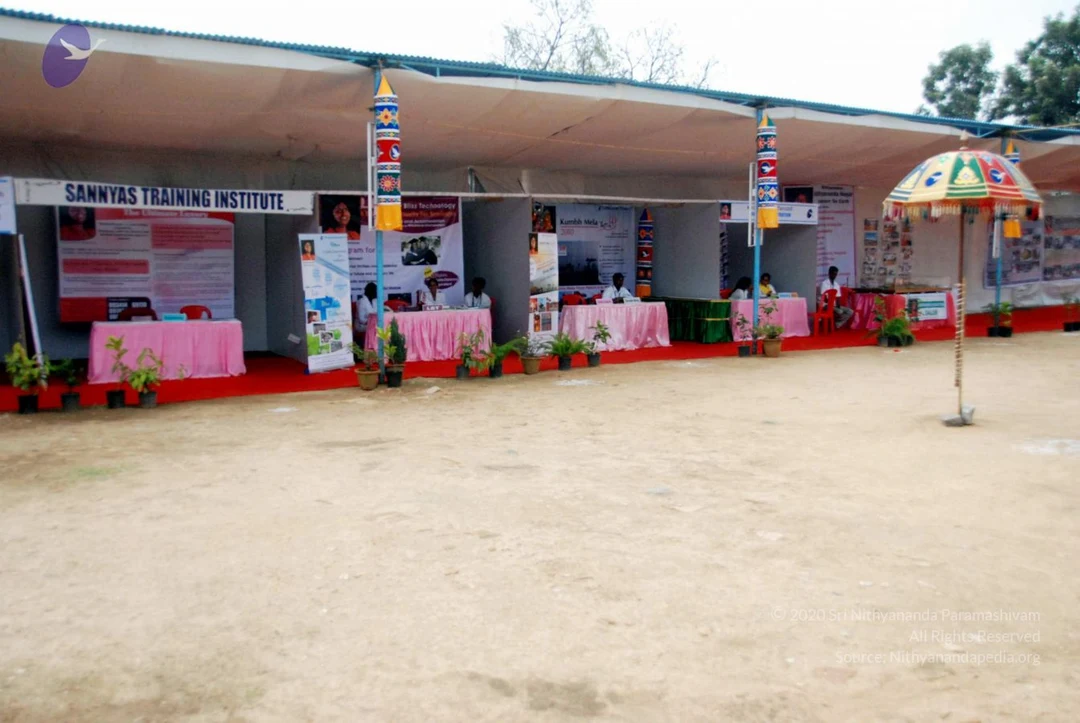
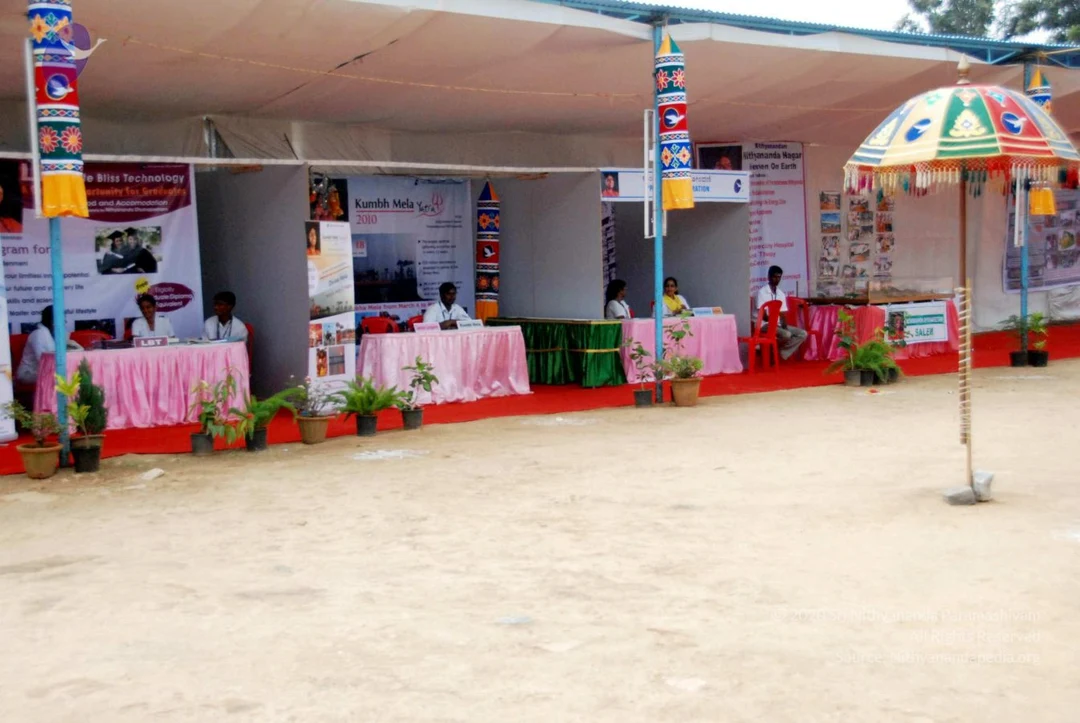
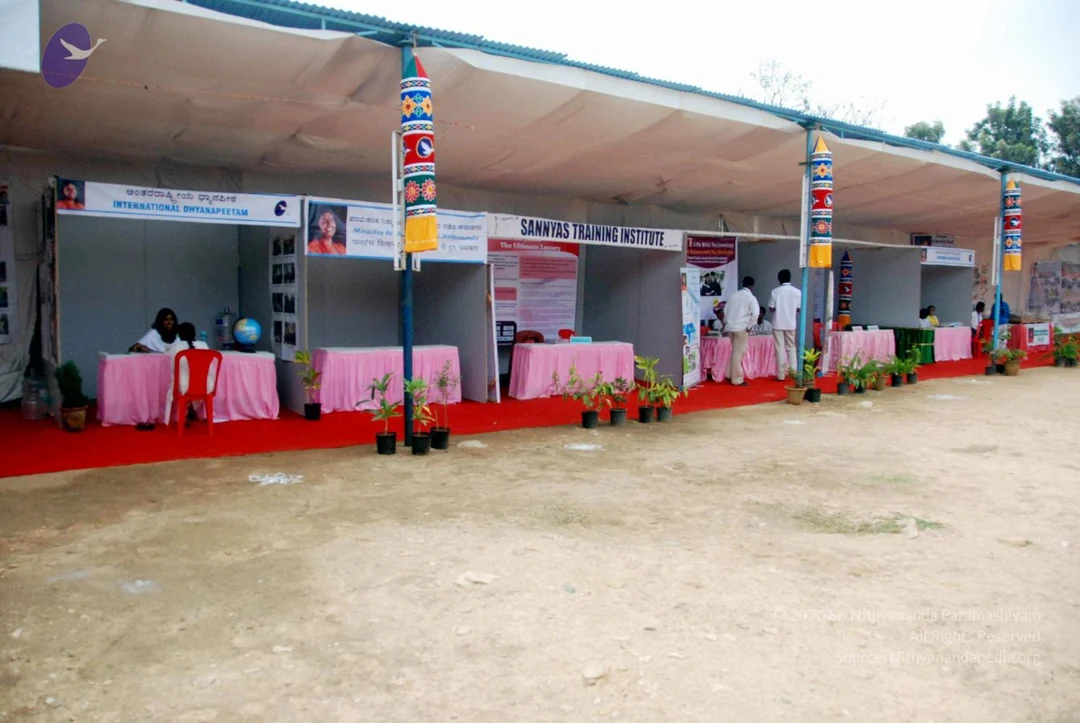
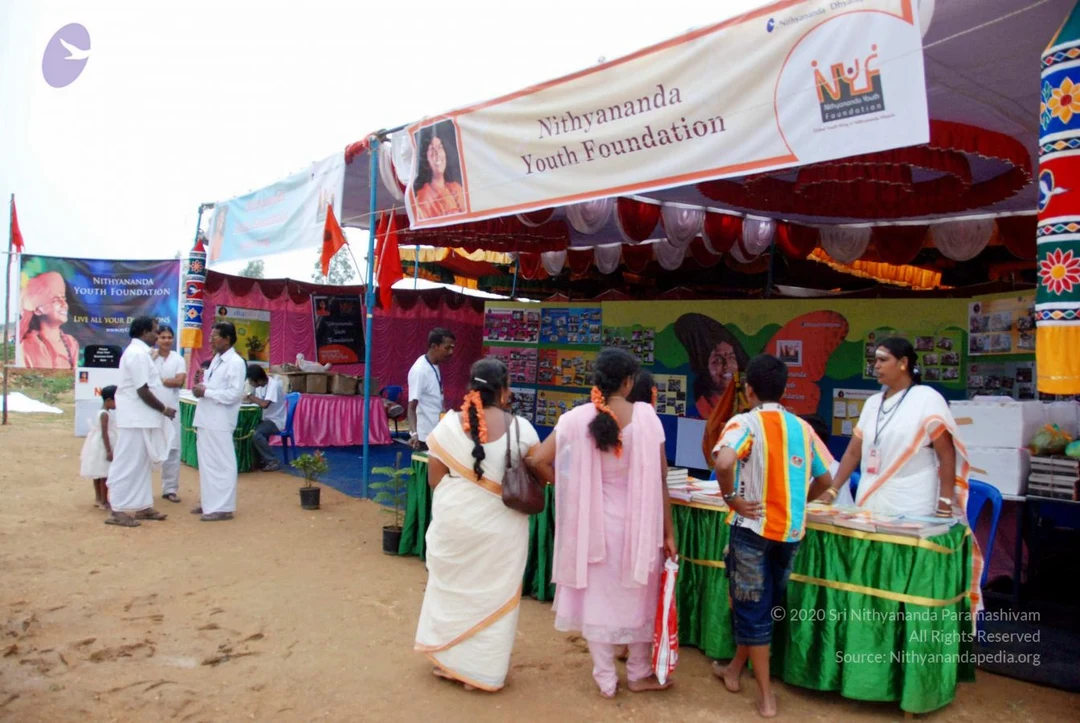
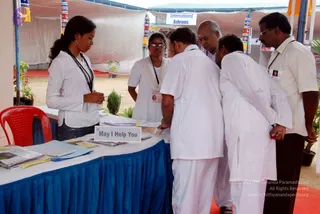
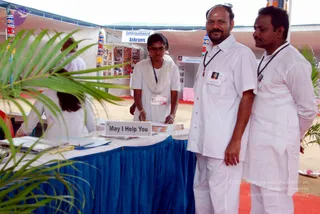
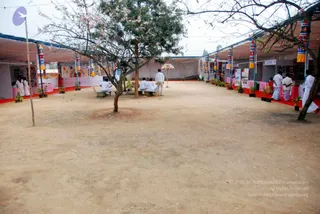
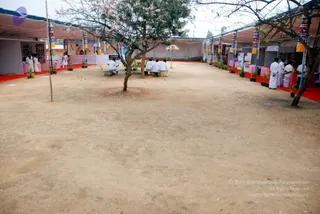
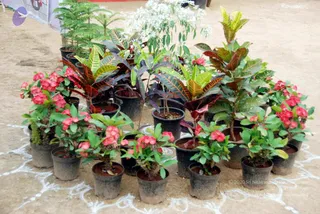
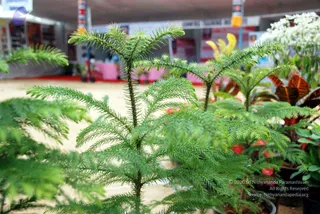
A photograph at an outdoor information stall under a white tent with a blue-draped table. A young woman in a white shirt with a lanyard stands behind a sign reading "May I Help You". Opposite, a man in white kurta-pyjama and a woman in a white sari with a lanyard lean over the table, and two more men in white shirts and a man in a light shirt with glasses look on. A banner above reads "International Ashrams". Printed magazines and brochures lie on the table, and a red chair and potted plants are nearby.Outdoor exhibition stall under a white canopy with a blue-skirted table and a sign reading "May I Help You". Two men stand at the right in matching white kurta-style clothes with dark beaded rudraksha-style necklaces and ID badges. Beside them a woman in white with a white shawl and glasses stands at the table, and another person in white is partly visible at left, framed by a palm frond. Behind them a banner reads "International Ashrams" with posters on display, and colourful decorative poles frame the tent.Outdoor exhibition courtyard with bare dirt ground under a blossoming tree with pink flowers in the centre. Covered stall lanes with cream canopies line both sides, decorated with tall striped banner poles in red, yellow and blue, and red carpeting runs along the stall fronts. Several people in white clothing sit on a bench under the tree and others stand near the stalls, while a small pink-and-white umbrella stands in the distance. Stall tables with pink cloths and potted plants are visible.A wide open dusty courtyard at an outdoor exhibition or stall fair, with a small flowering tree in the centre. Covered stall lanes with beige canopies line both sides, their posts hung with red, yellow and blue cylindrical banners. Red carpeting runs along the stall fronts and pink tablecloths sit on the counters. Several men in white dhotis and white shirts sit on benches under the tree and stand at the stalls on the right, while a few people in white clothes stand near the stalls on the left. Potted plants line the walkways.A photograph of potted plants arranged on bare ground within a white kolam or chalk-line design. Pots hold red-flowered euphorbia shrubs, multicoloured croton plants with yellow, green and red leaves, and a feathery white-flowered plant at the back. A white tent or banner is visible at the upper left. No people are visible in the frame, and no one is identified.Close-up photograph of young potted conifer seedlings with feathery green needle-like branches, set in the foreground of an outdoor exhibition. Behind them are blurred pink and white display stalls and a sandy-coloured ground, with red-leaved croton and red flowers among the plants. No people are visible in the frame.
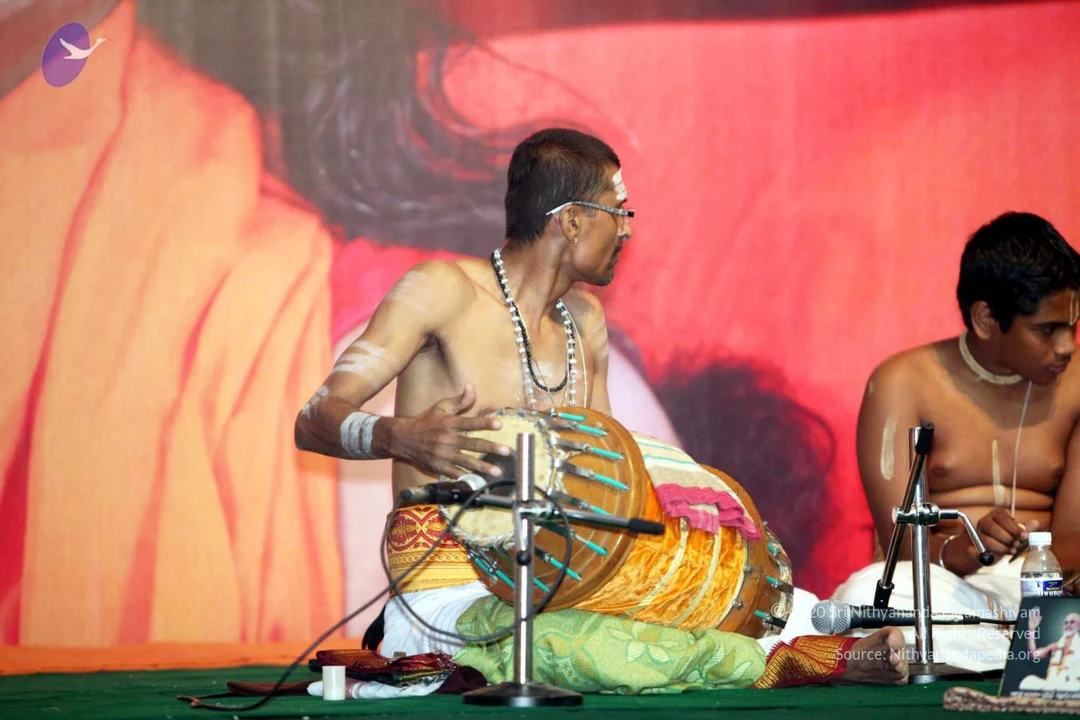
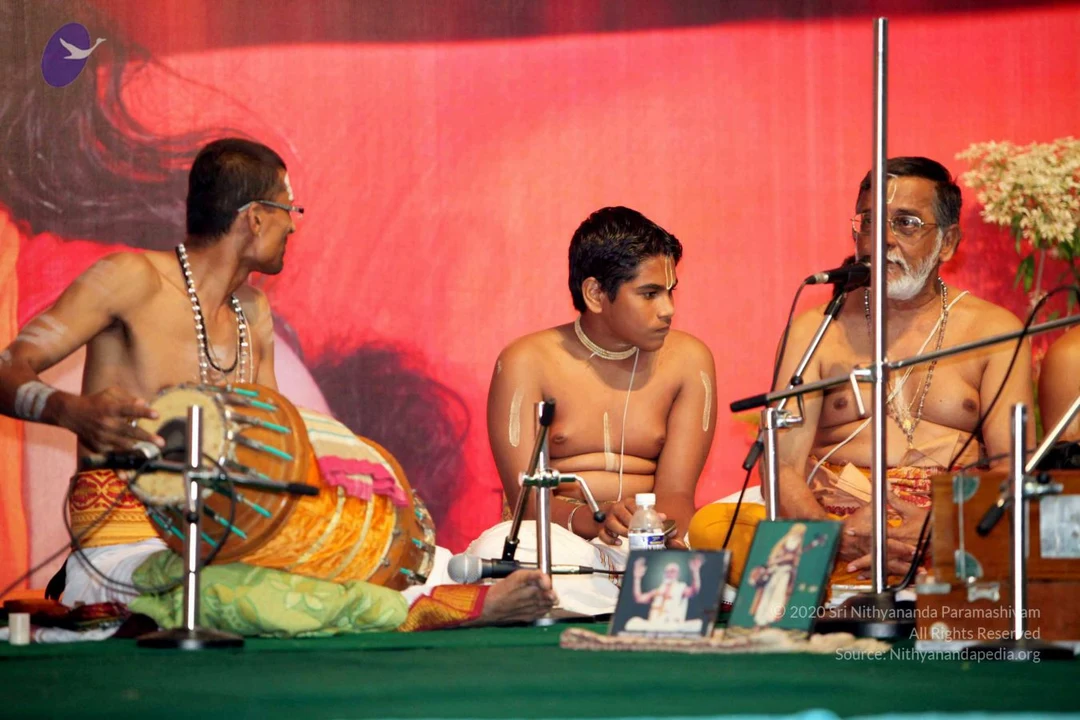
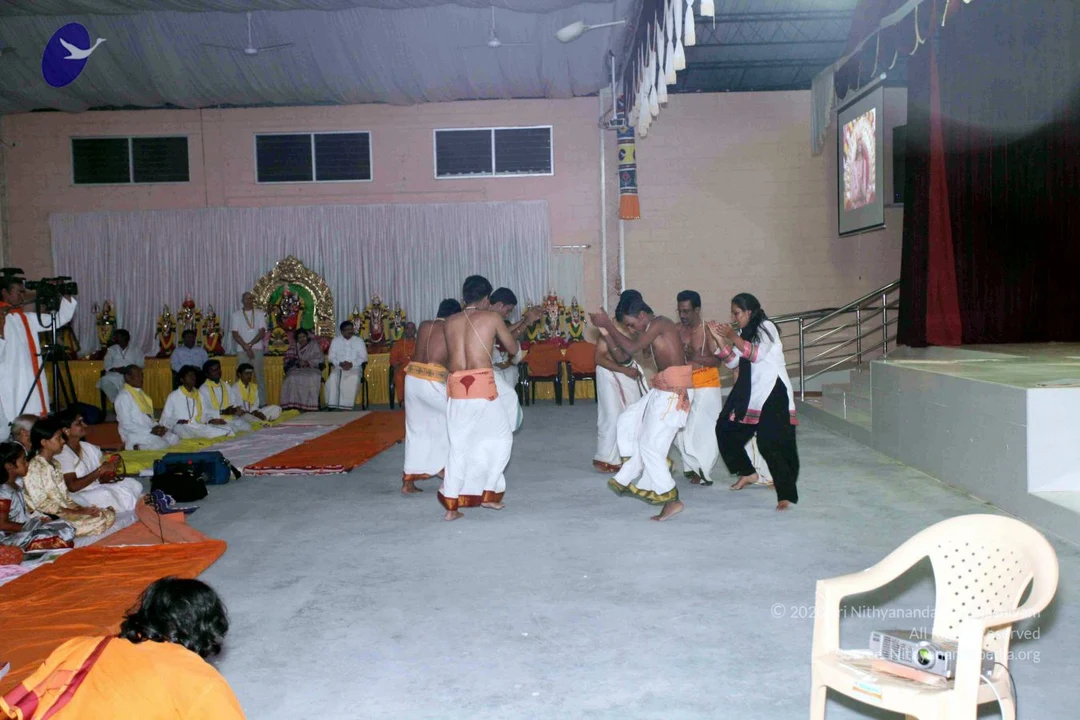
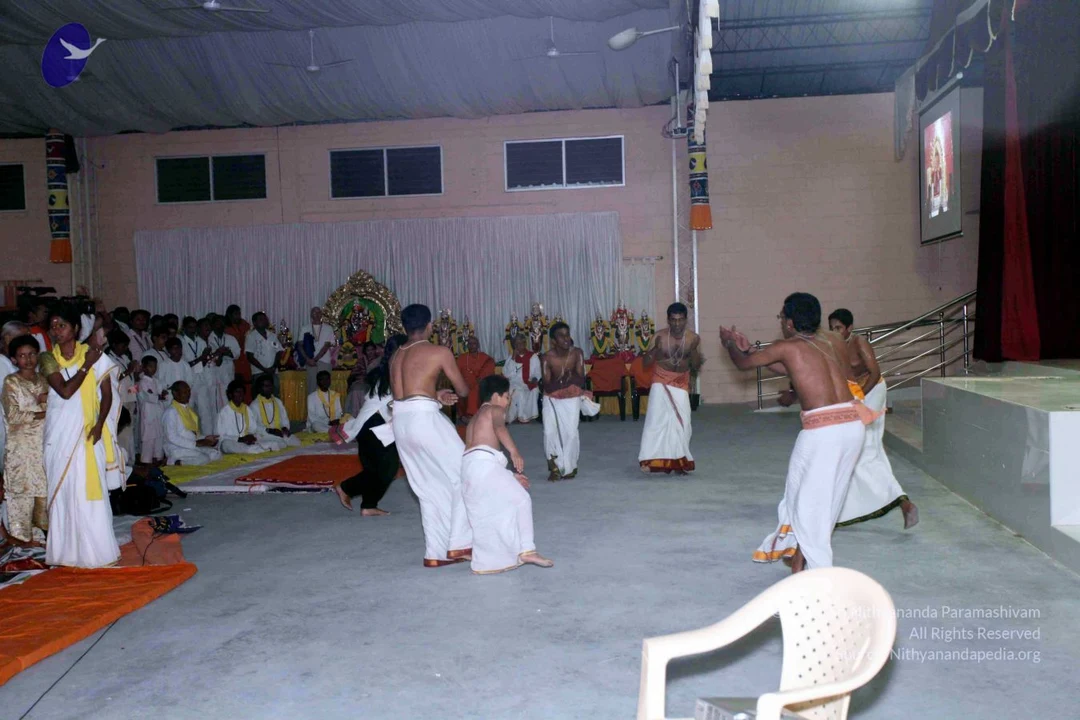
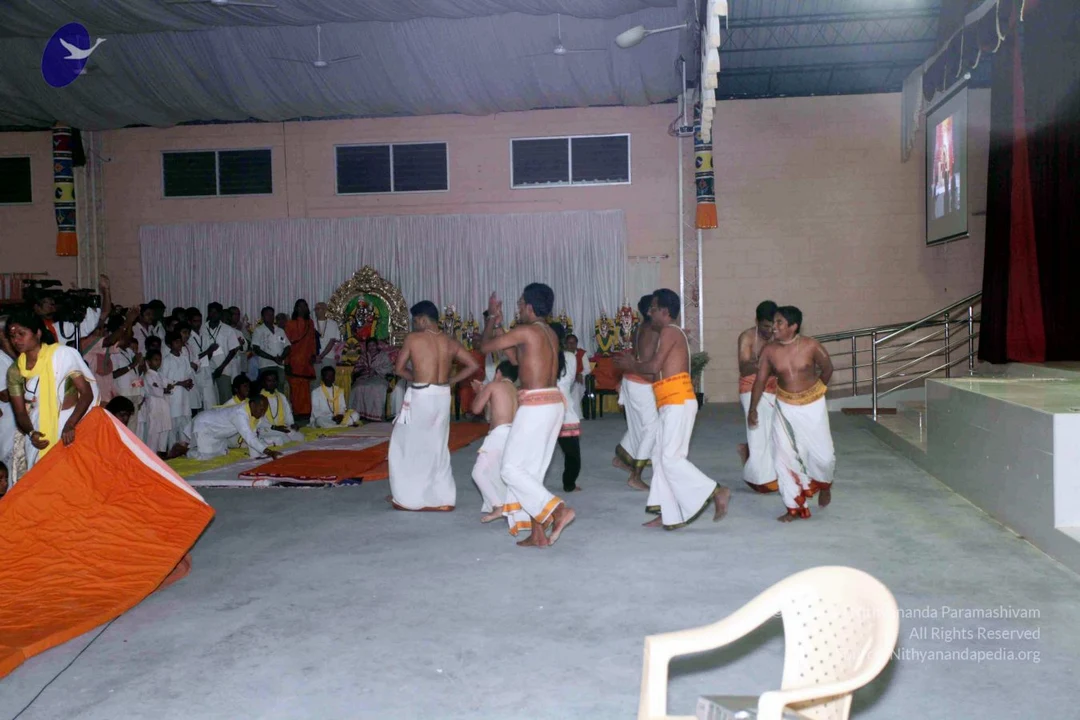
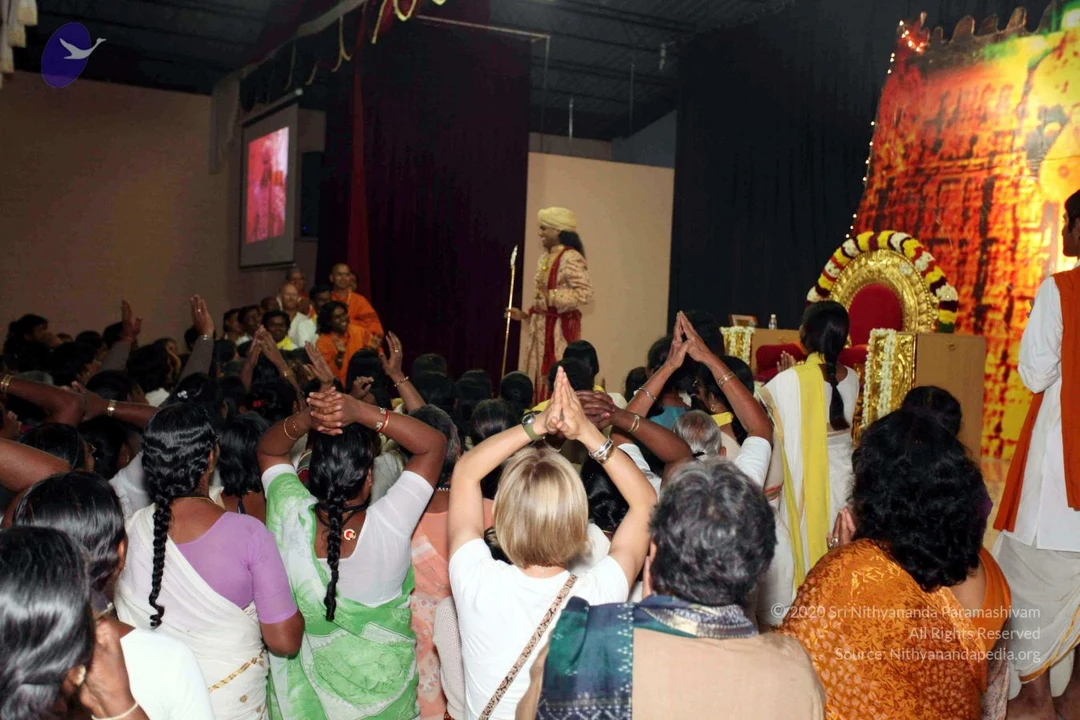
Evening Culturals

161 photosSource gallery
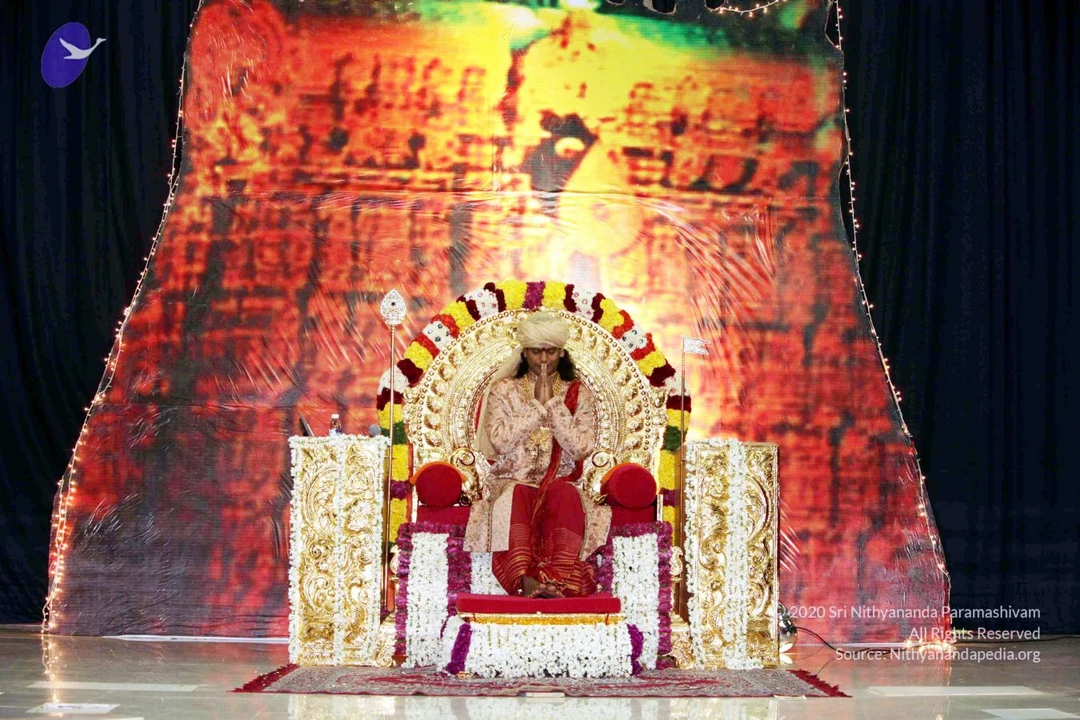
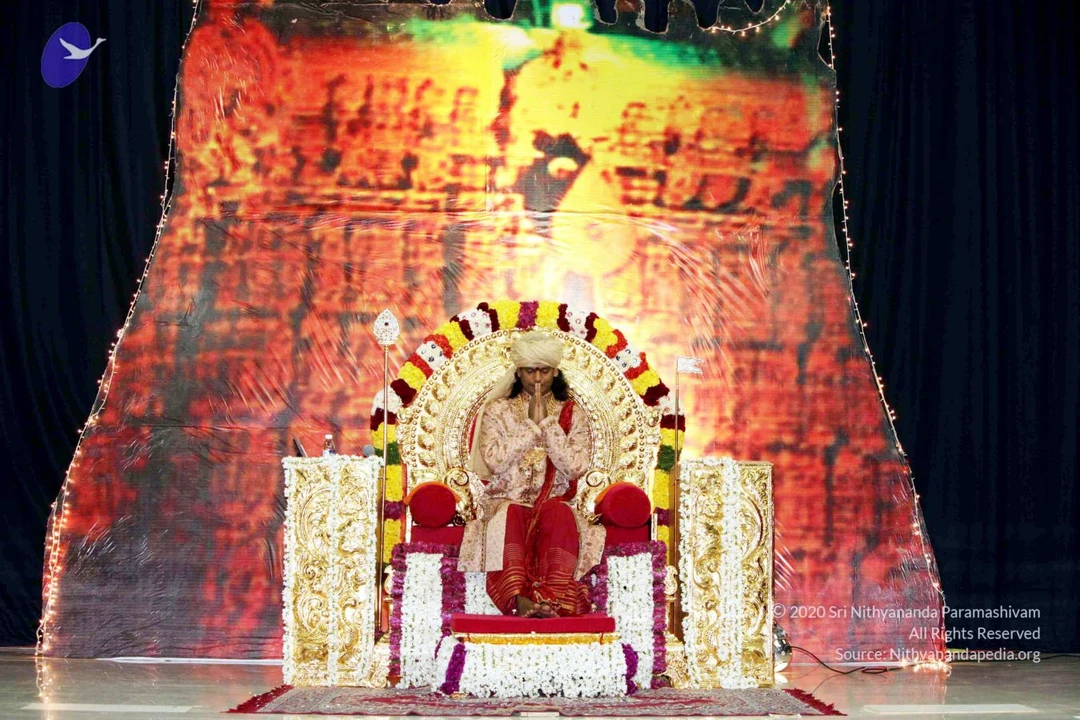
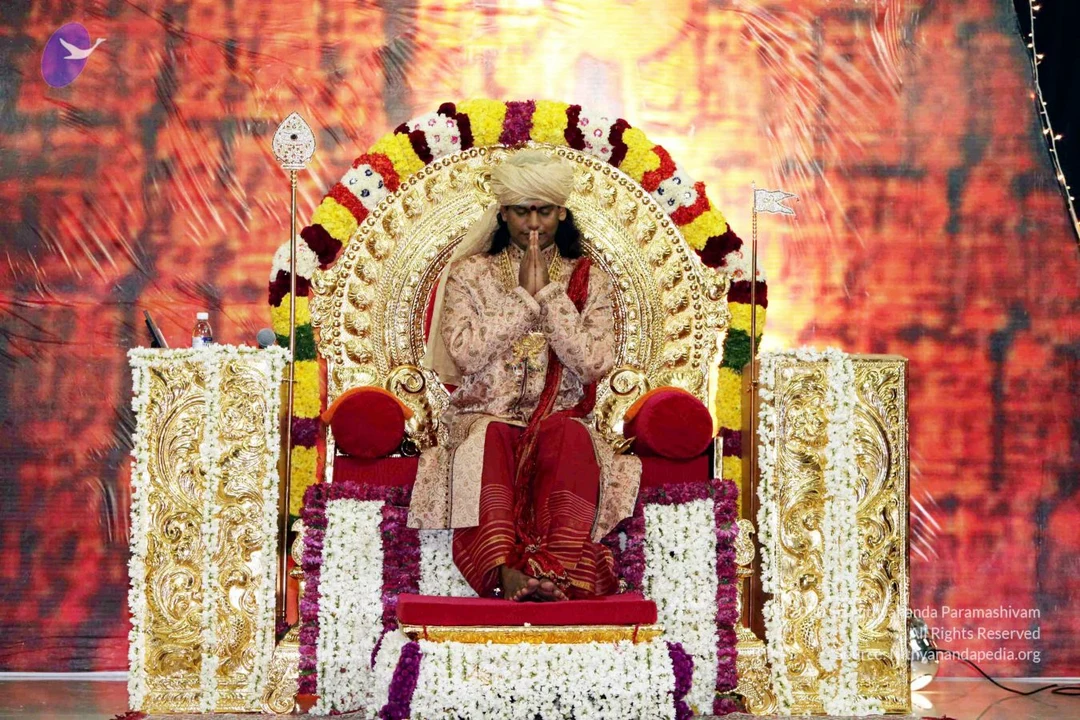
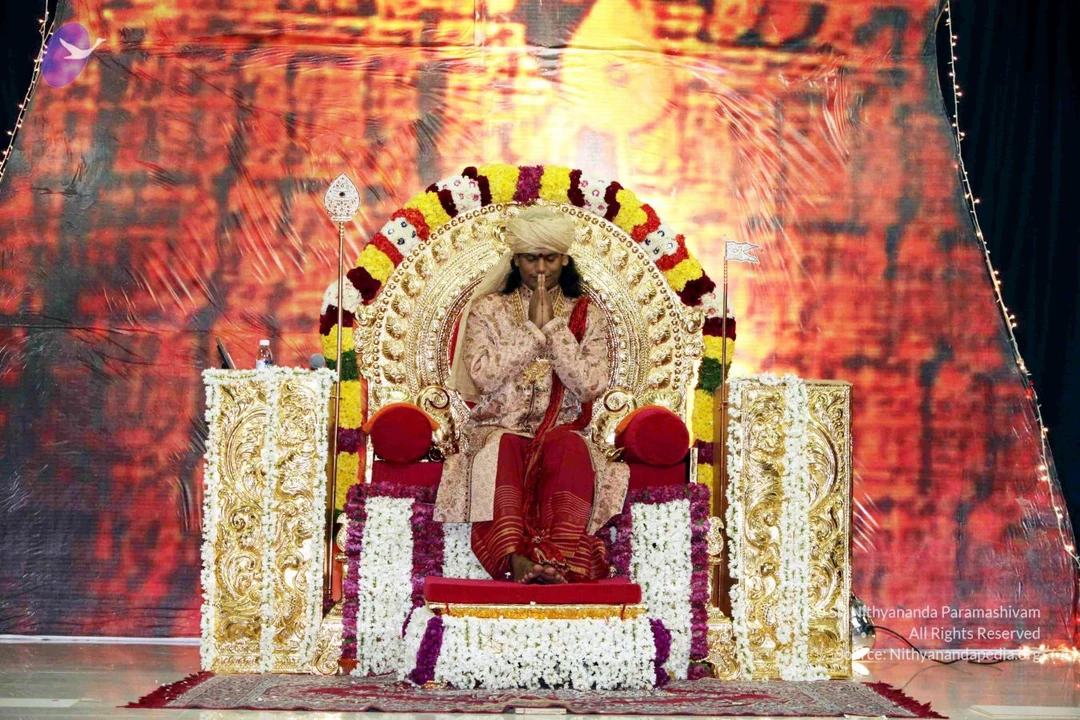
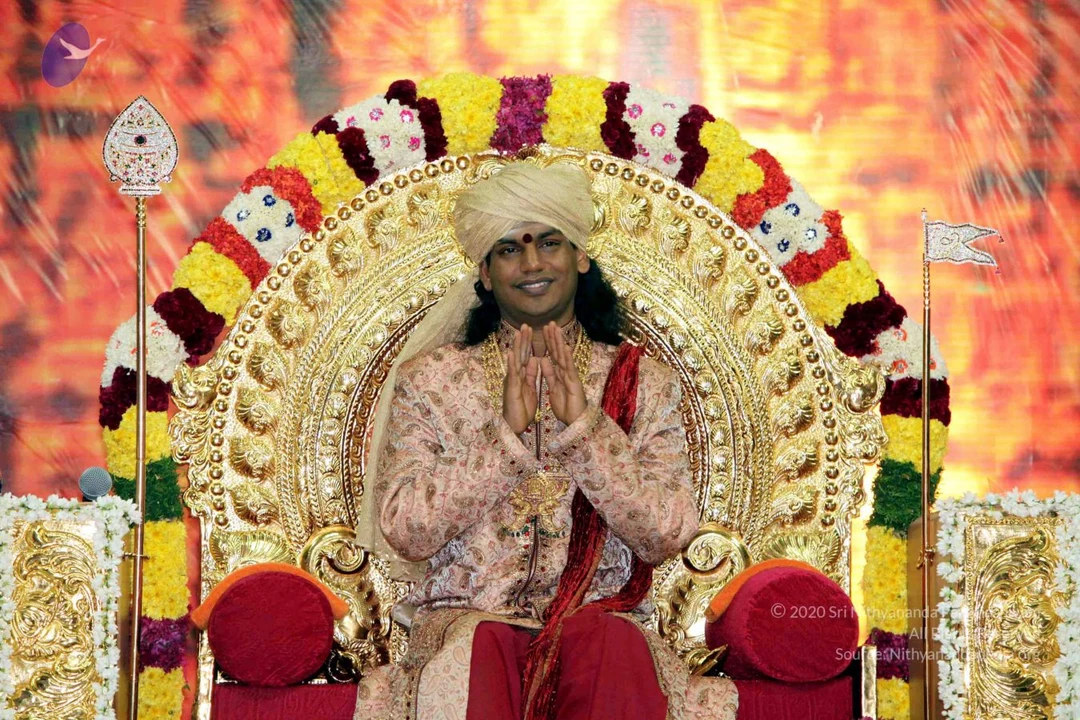
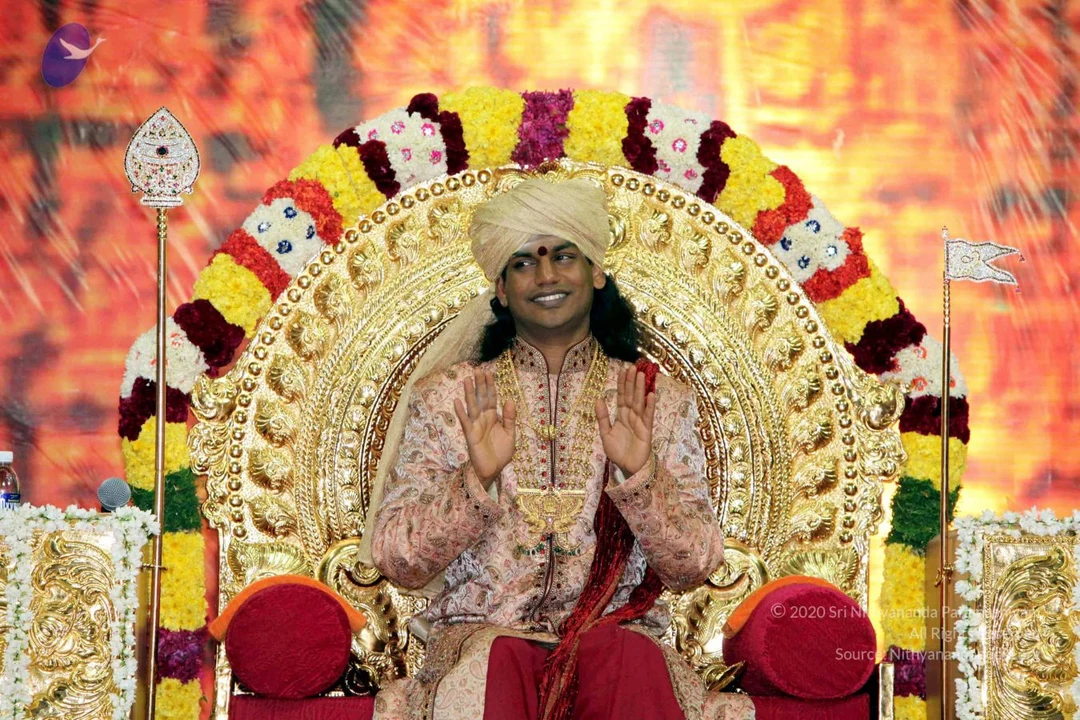
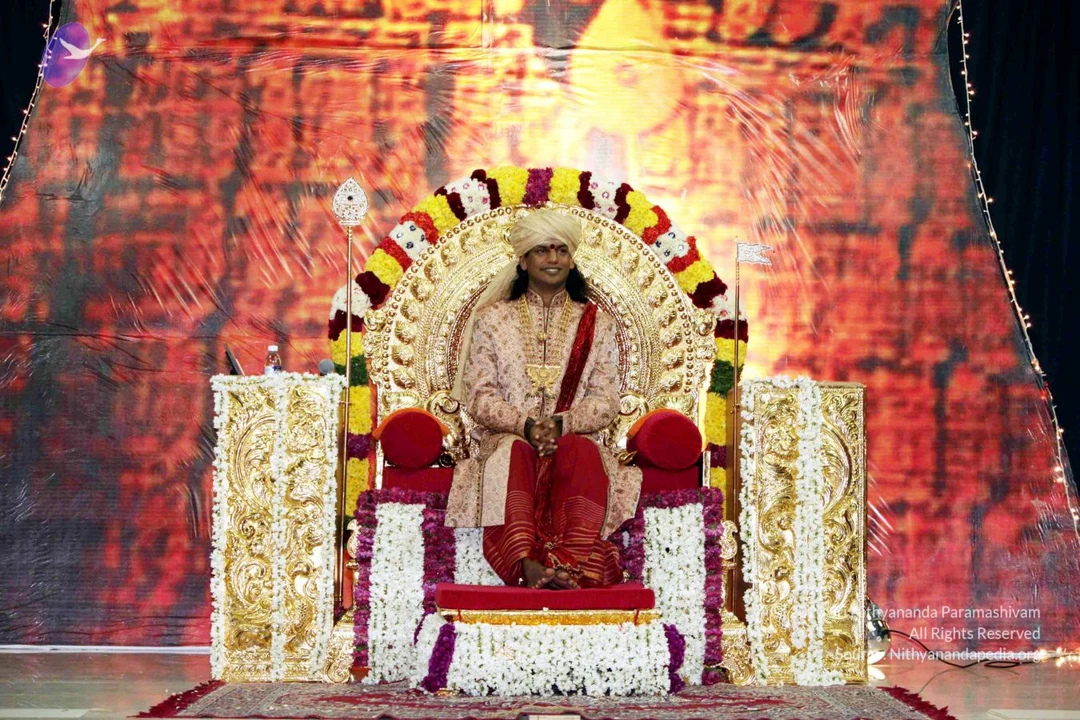
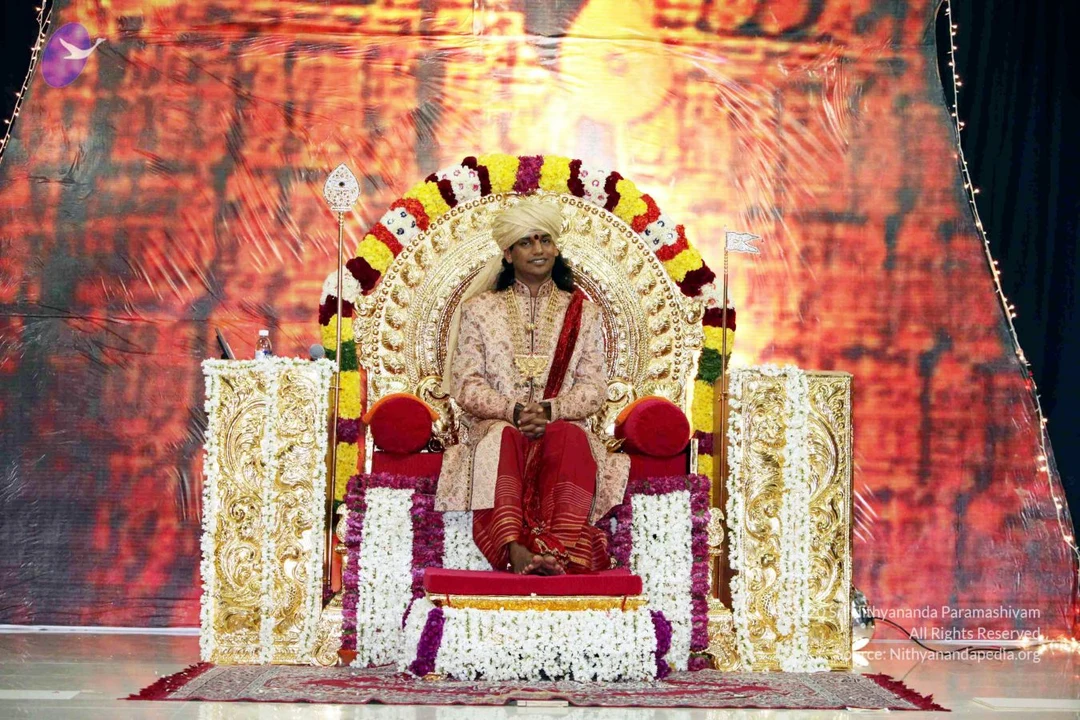
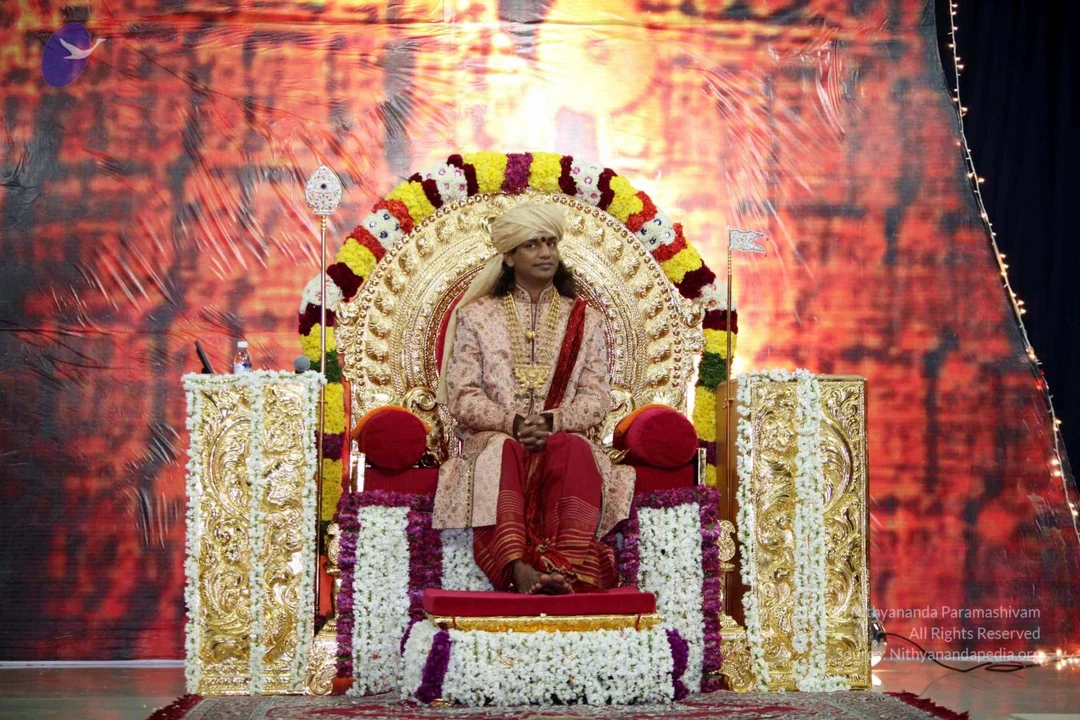
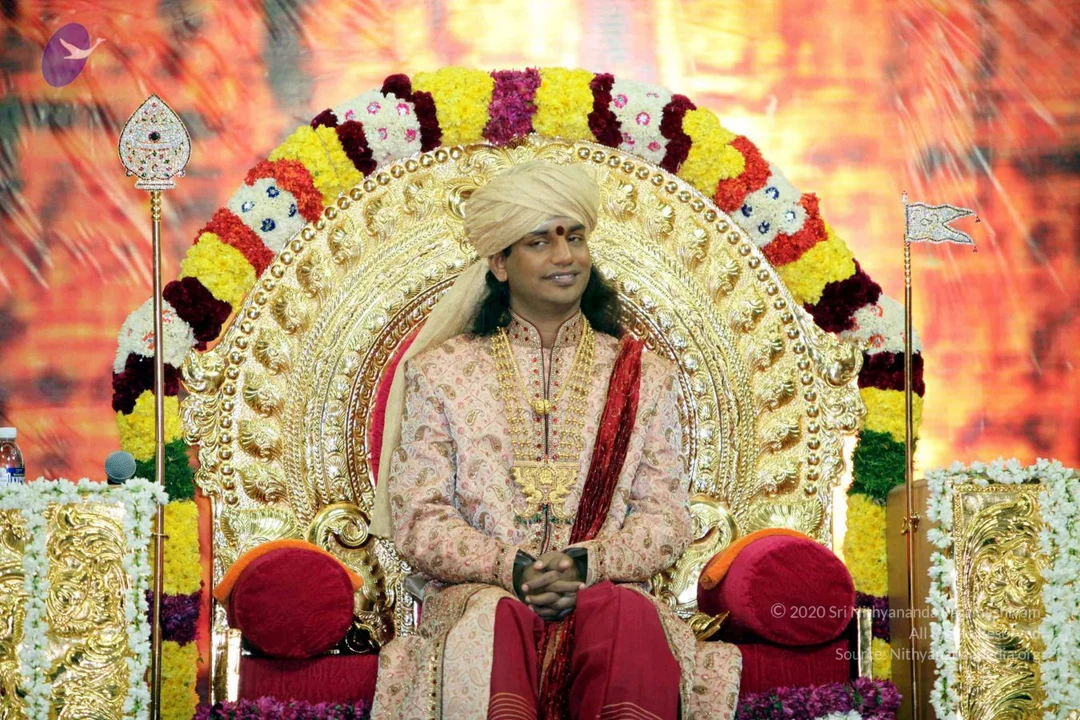
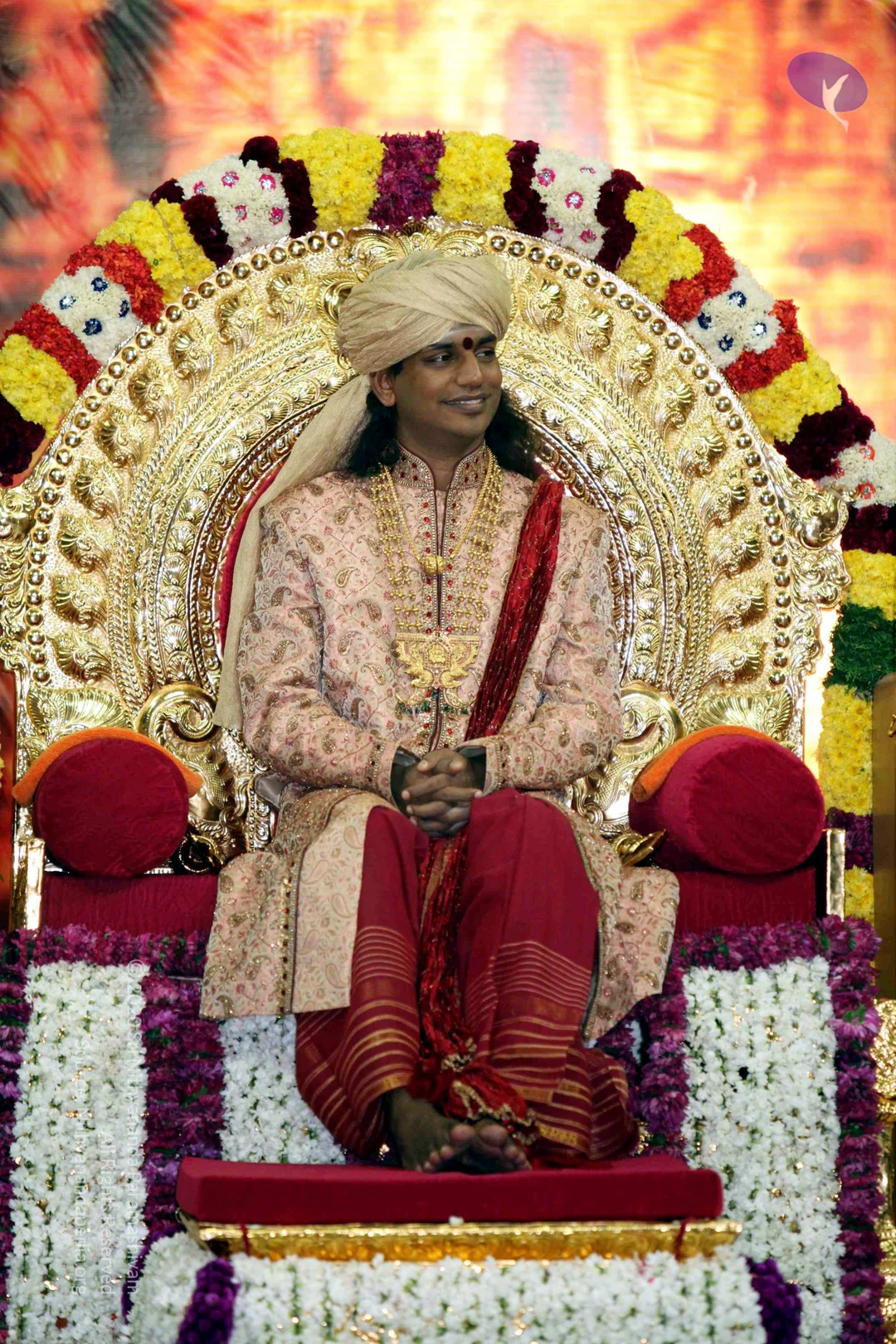
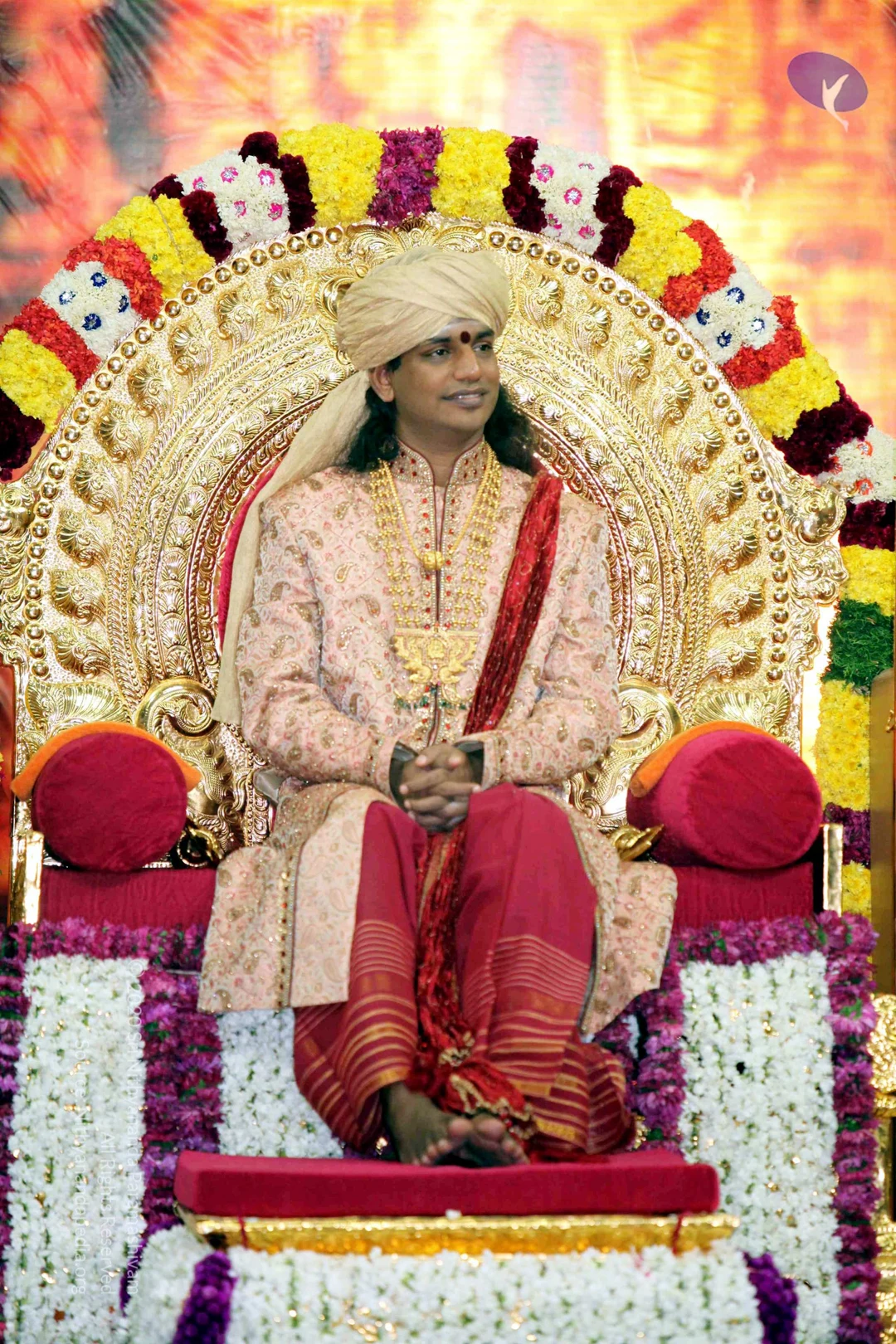
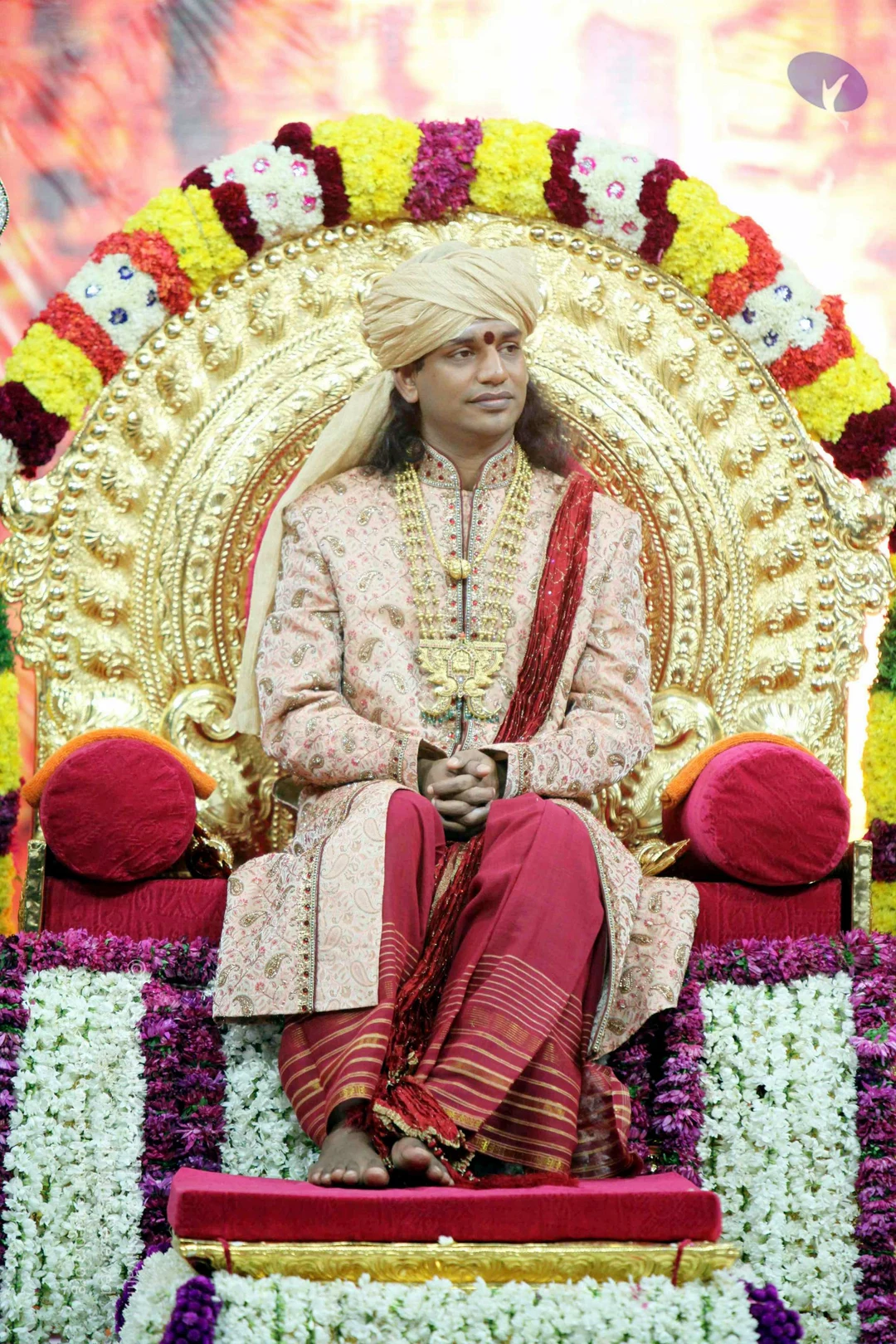
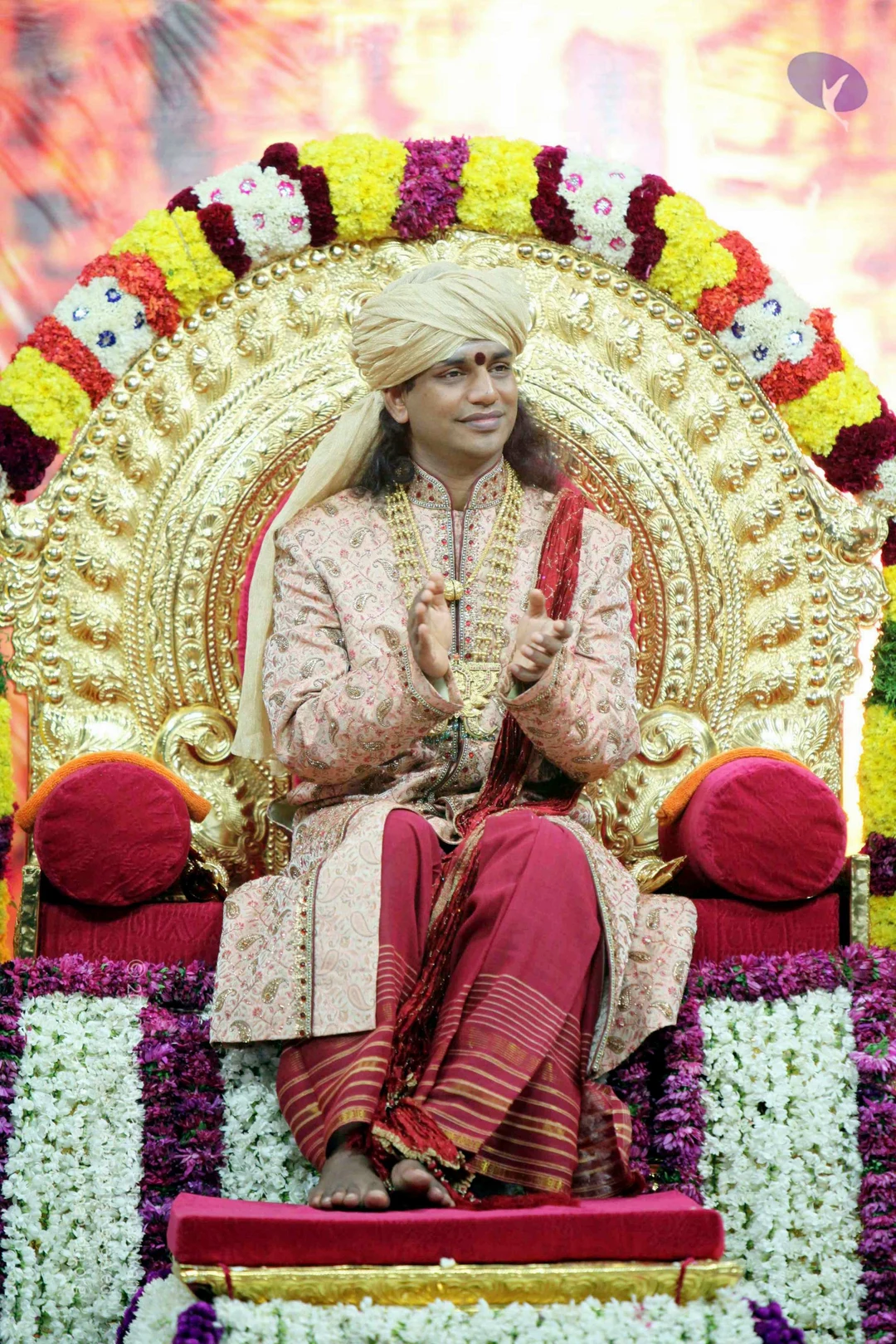
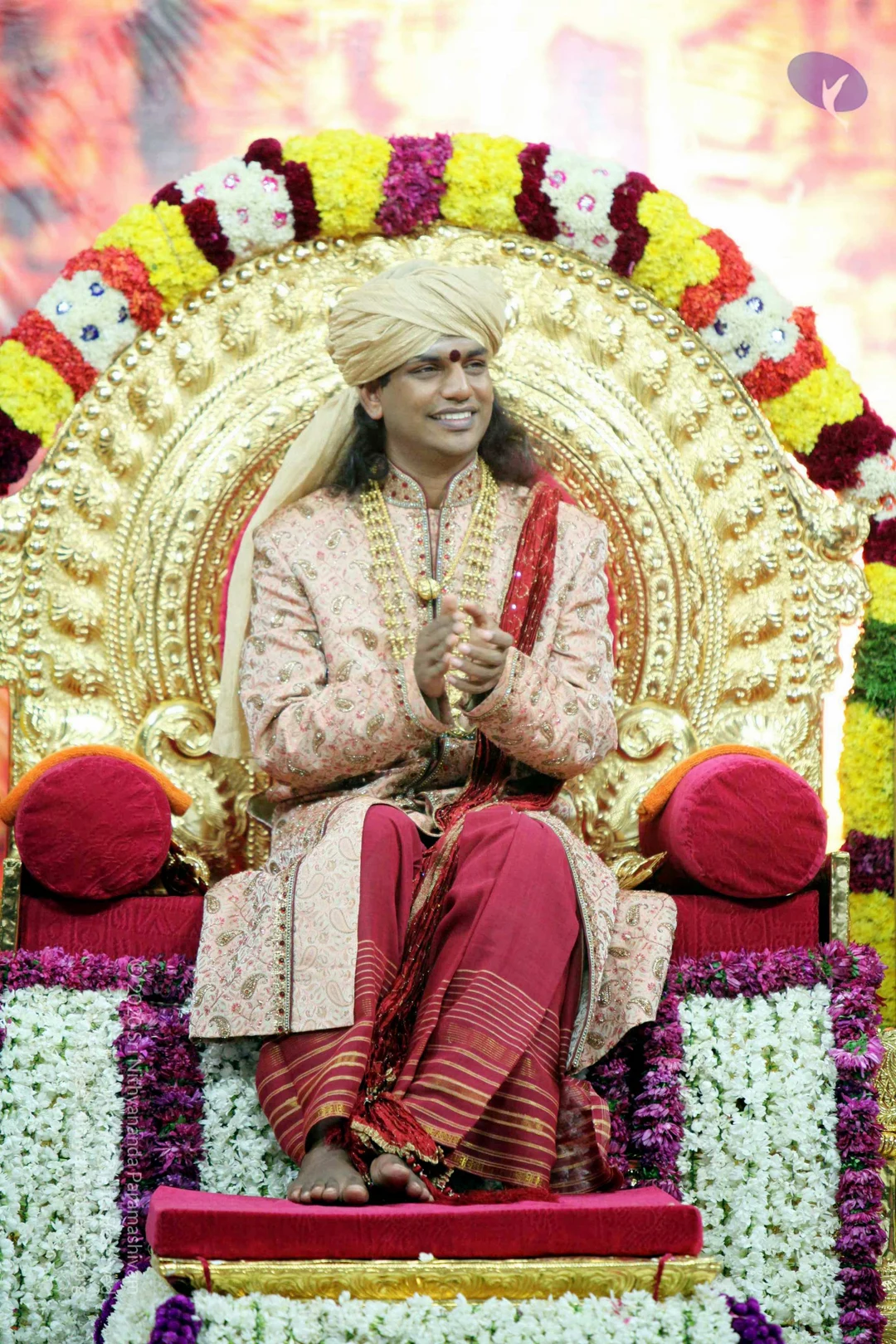
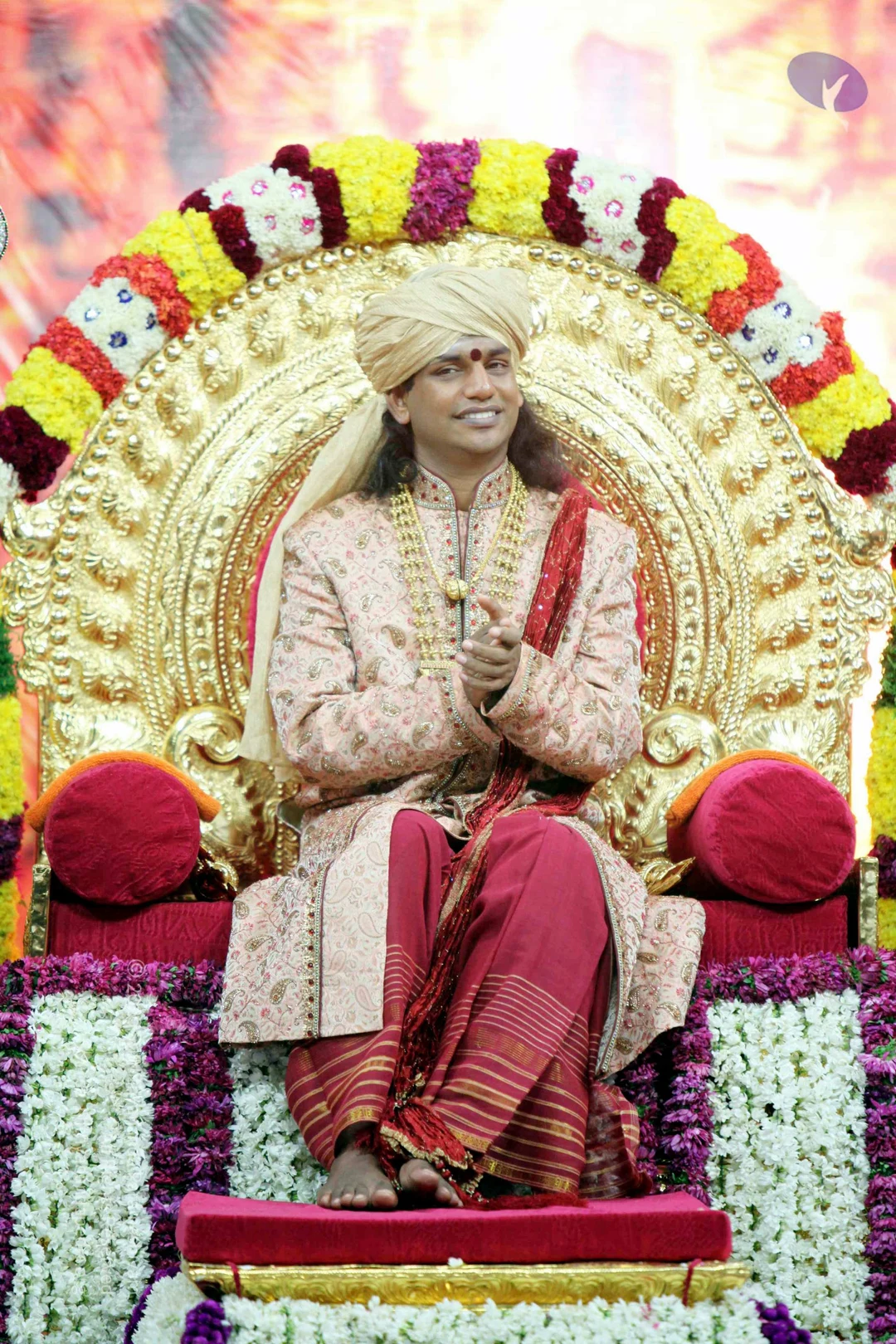
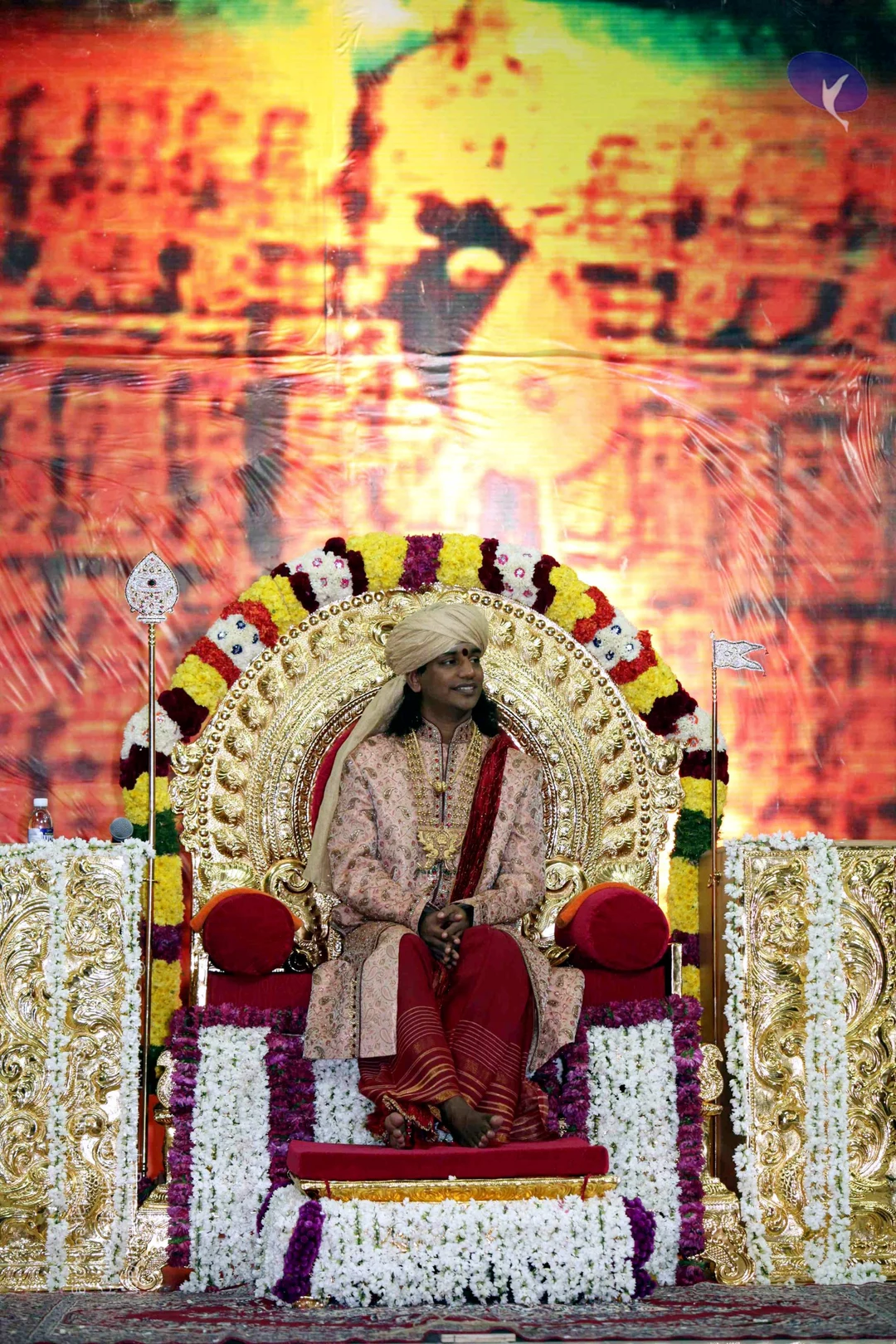
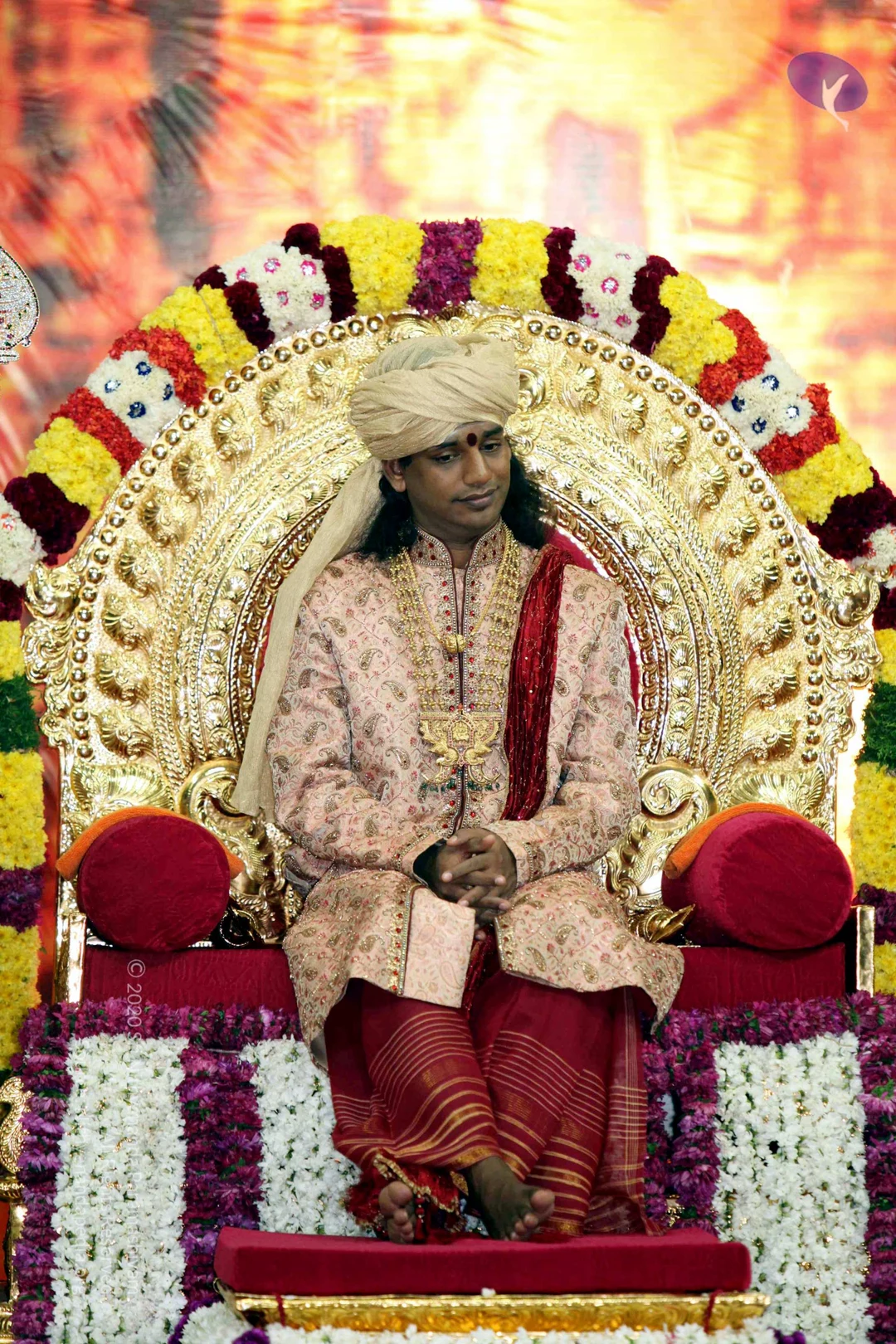
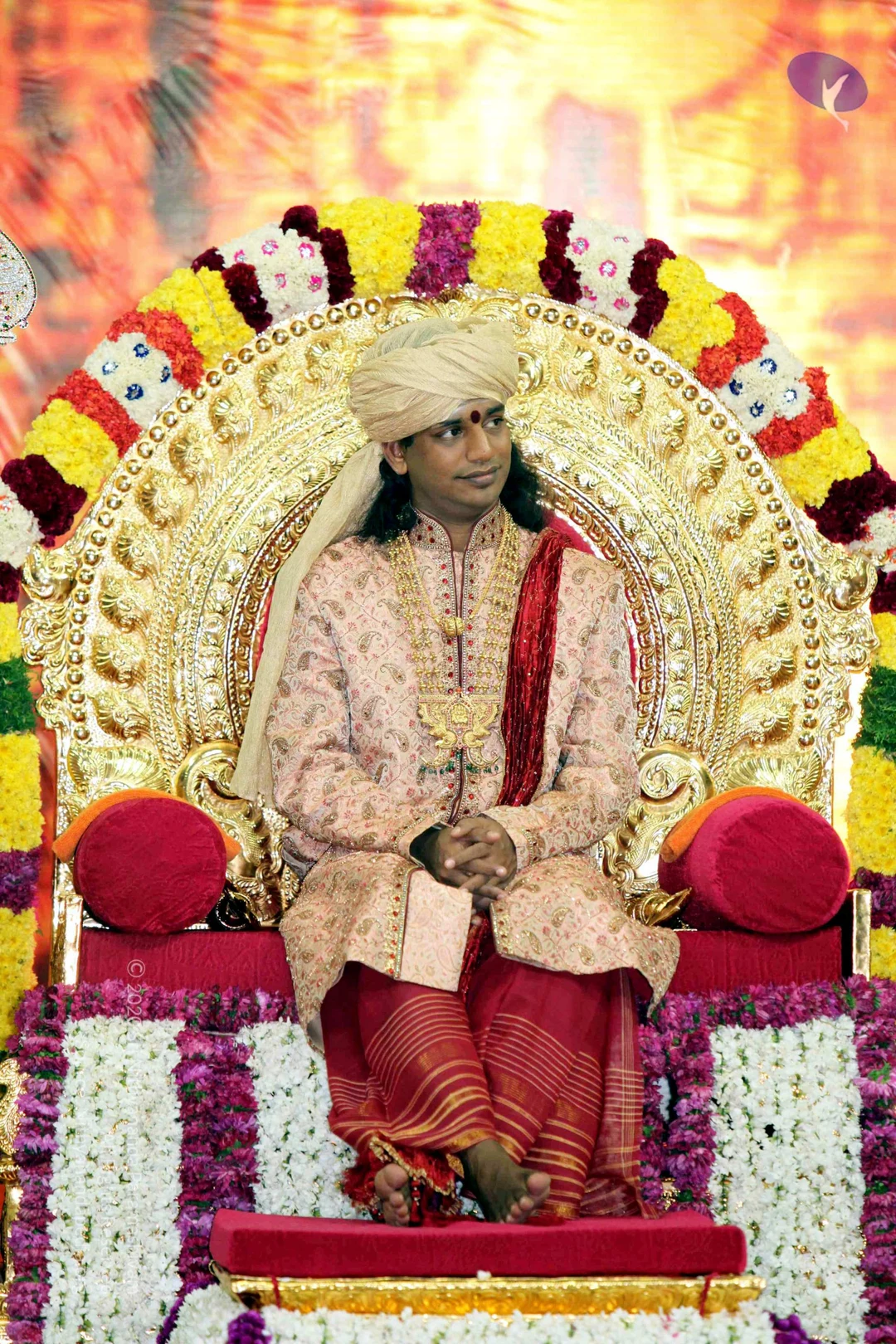
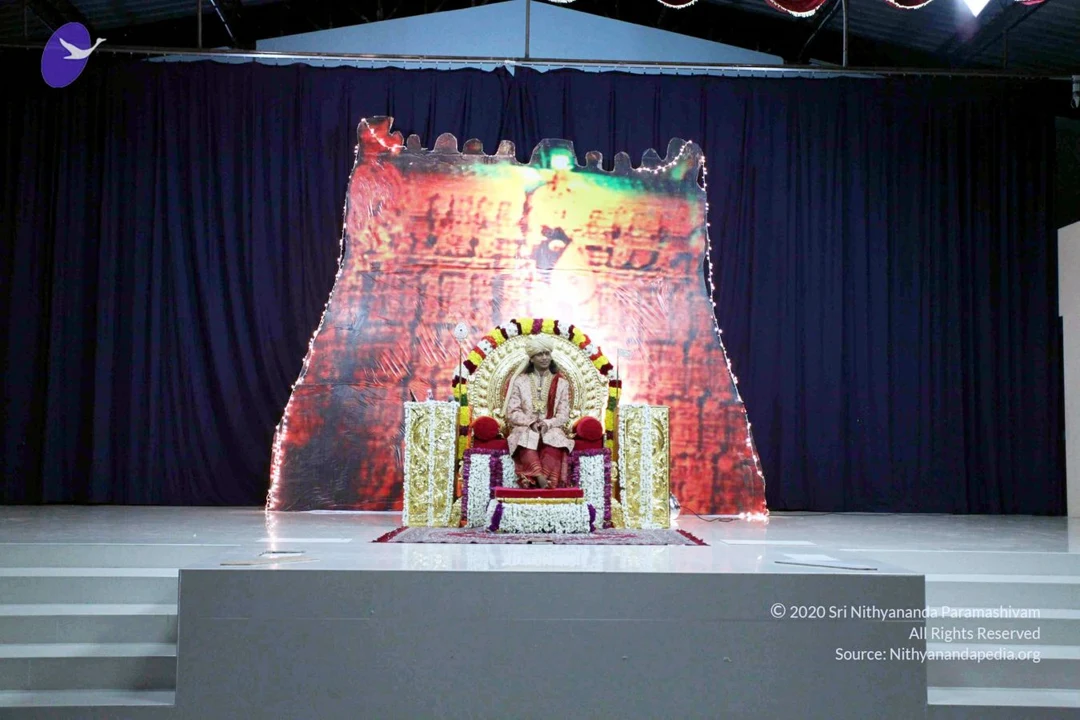
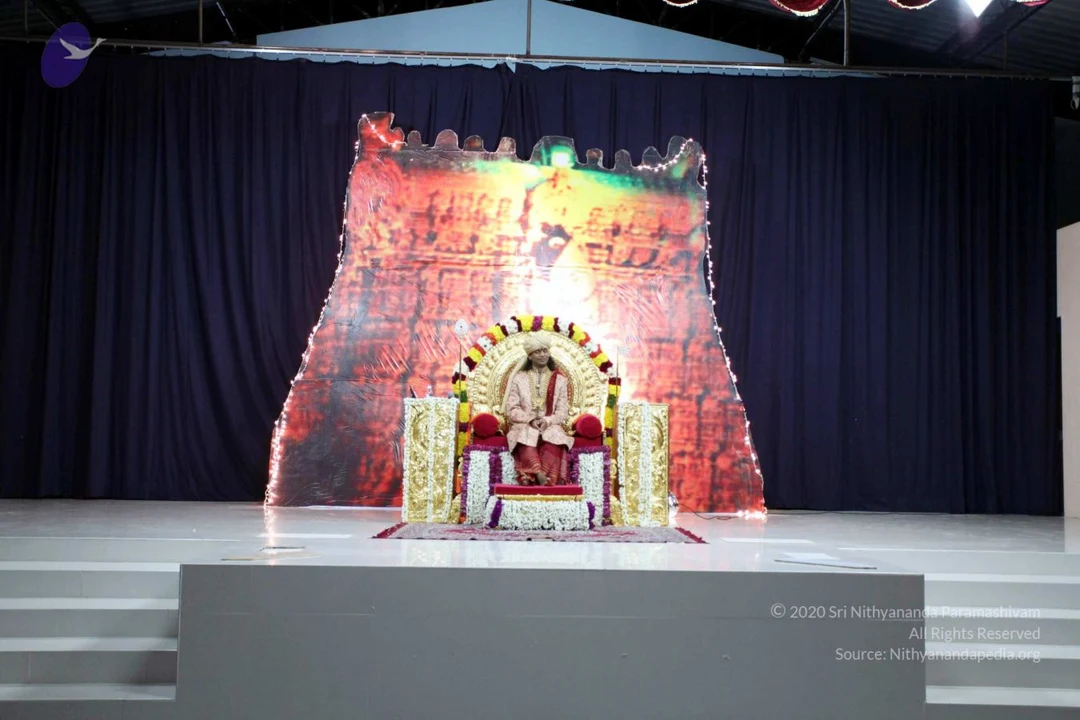
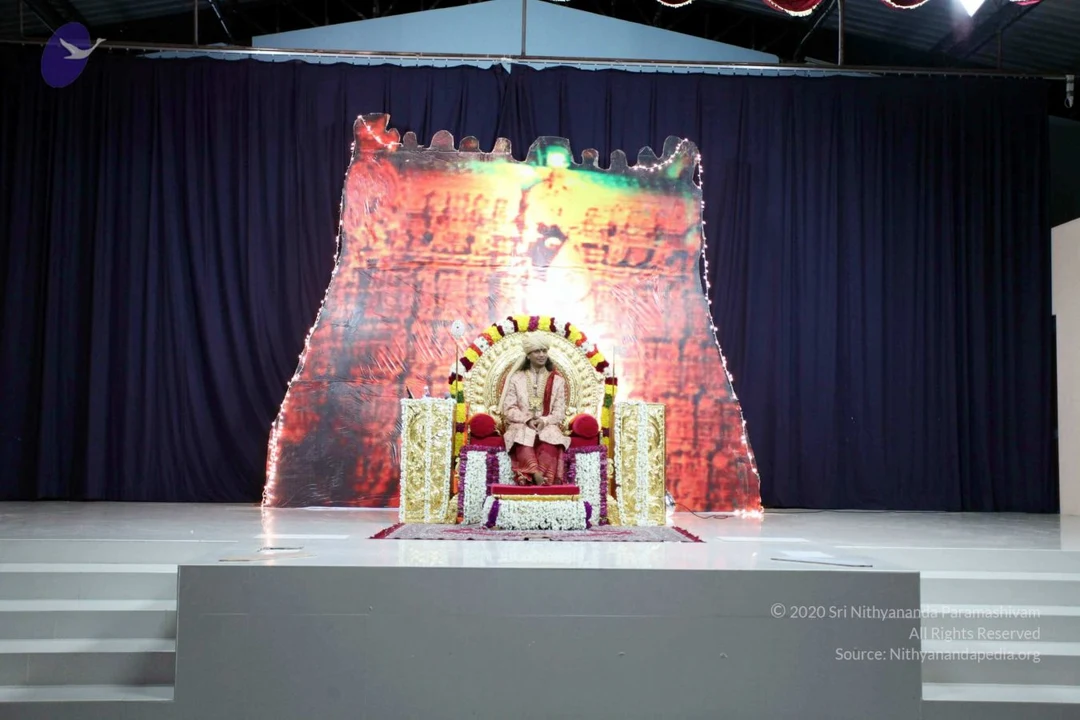
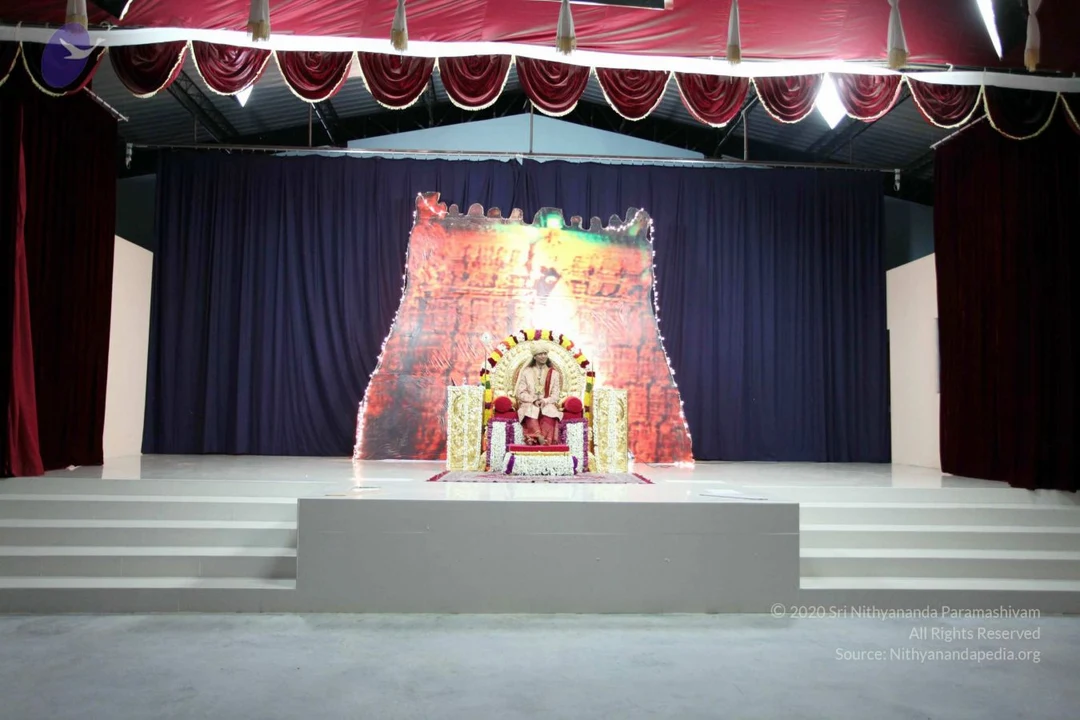
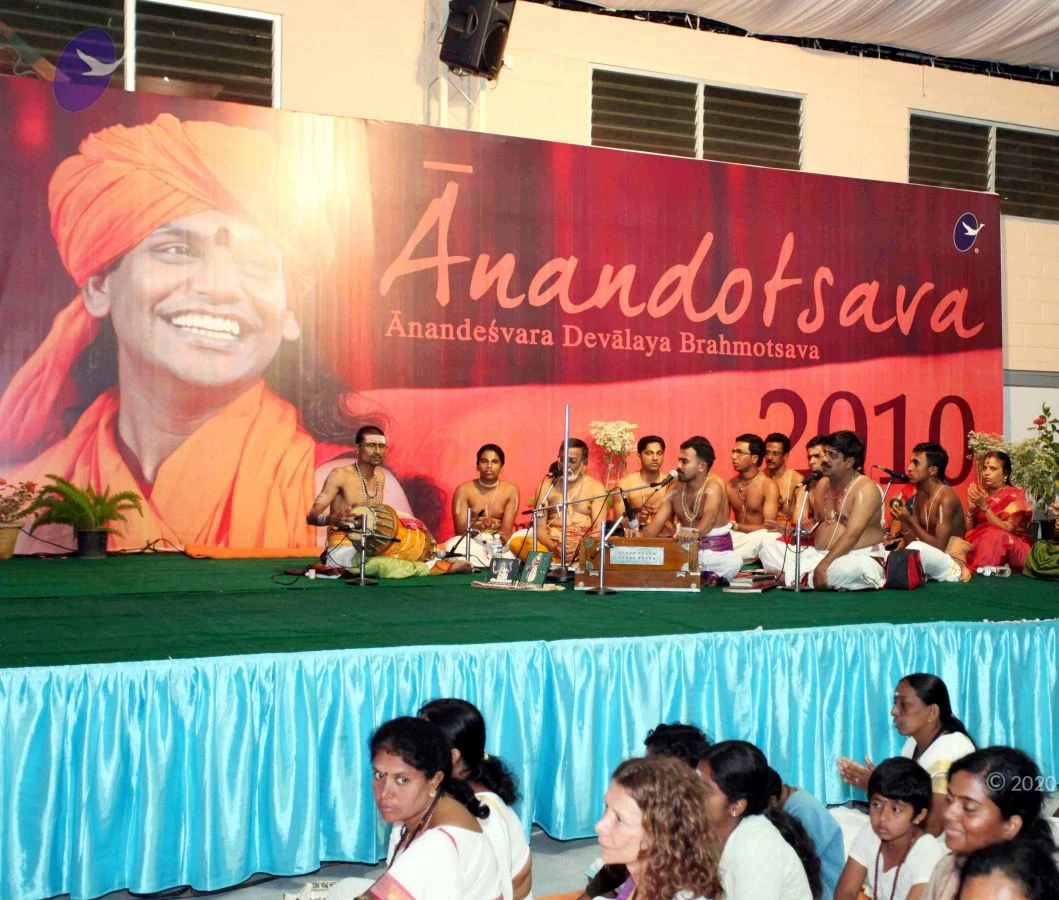
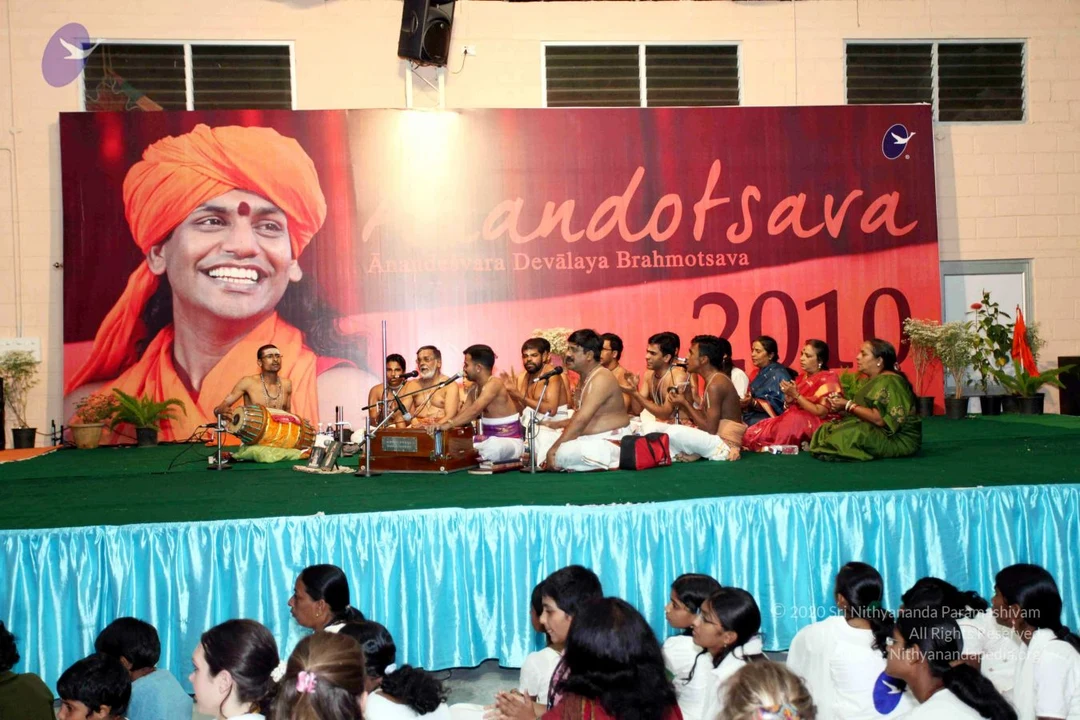
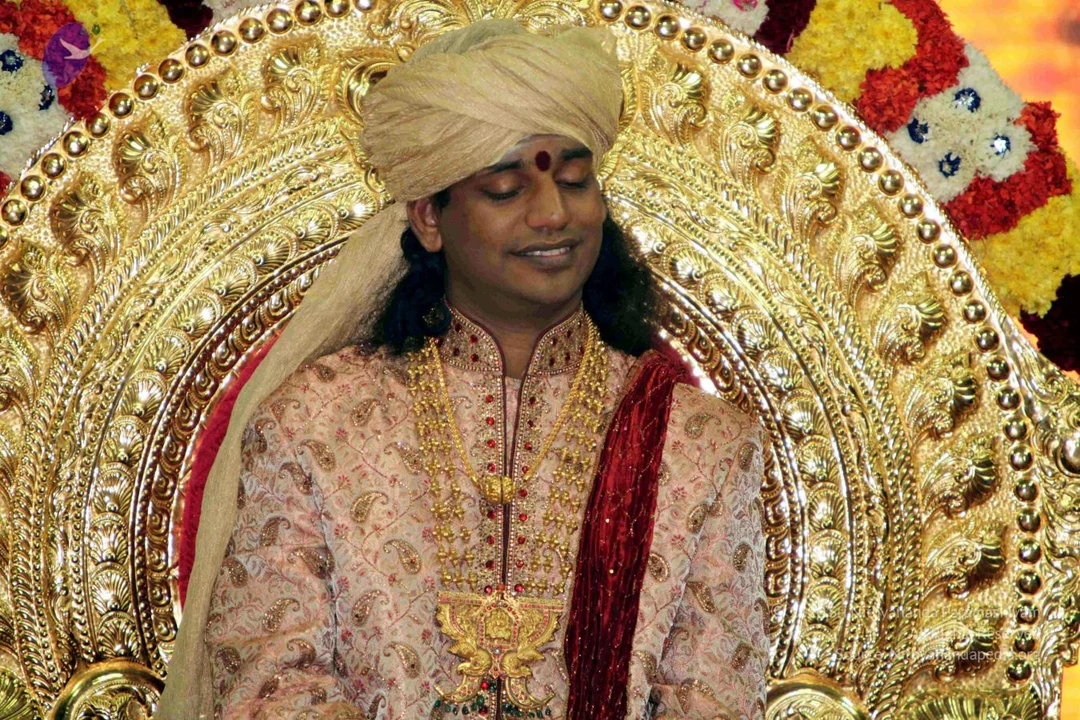
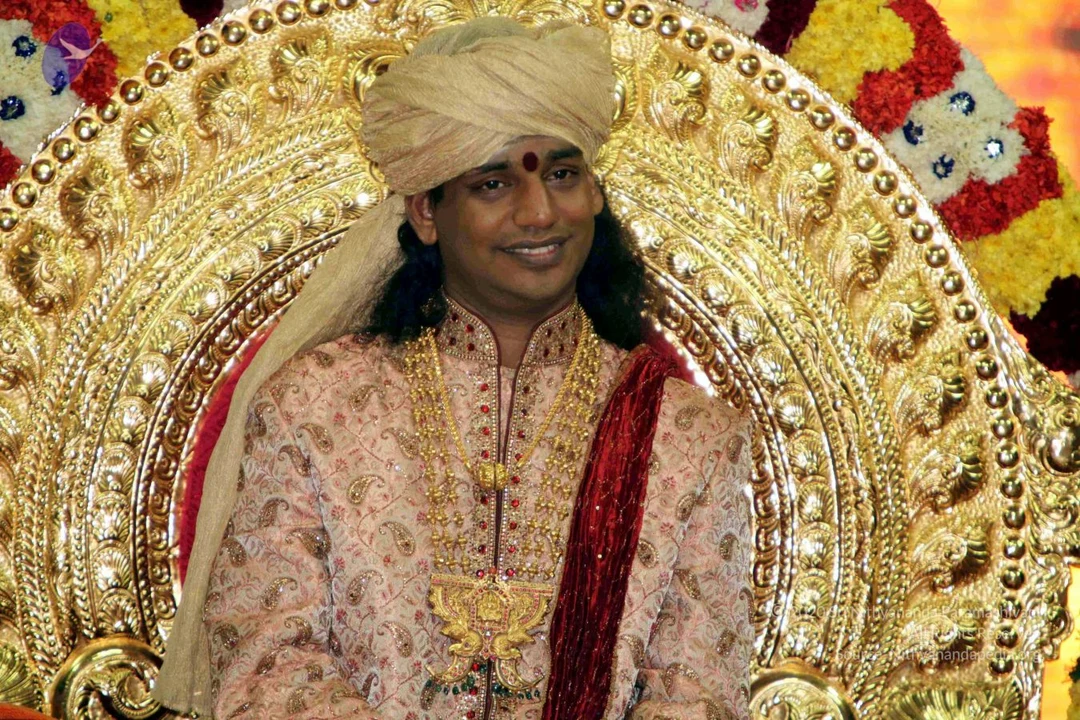
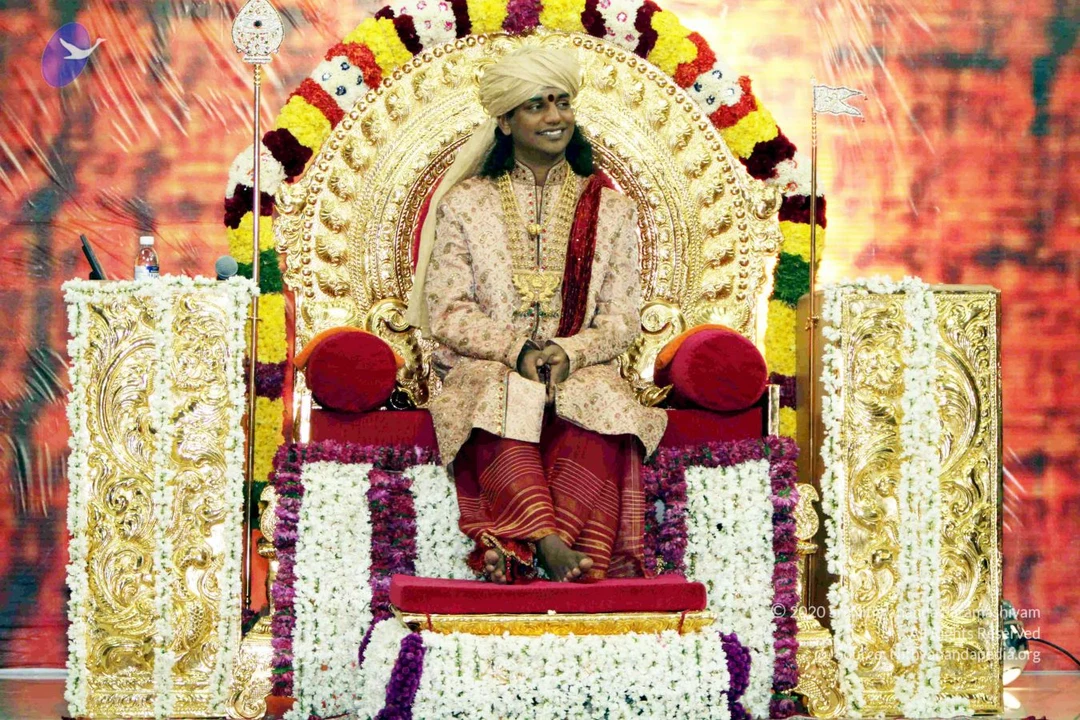
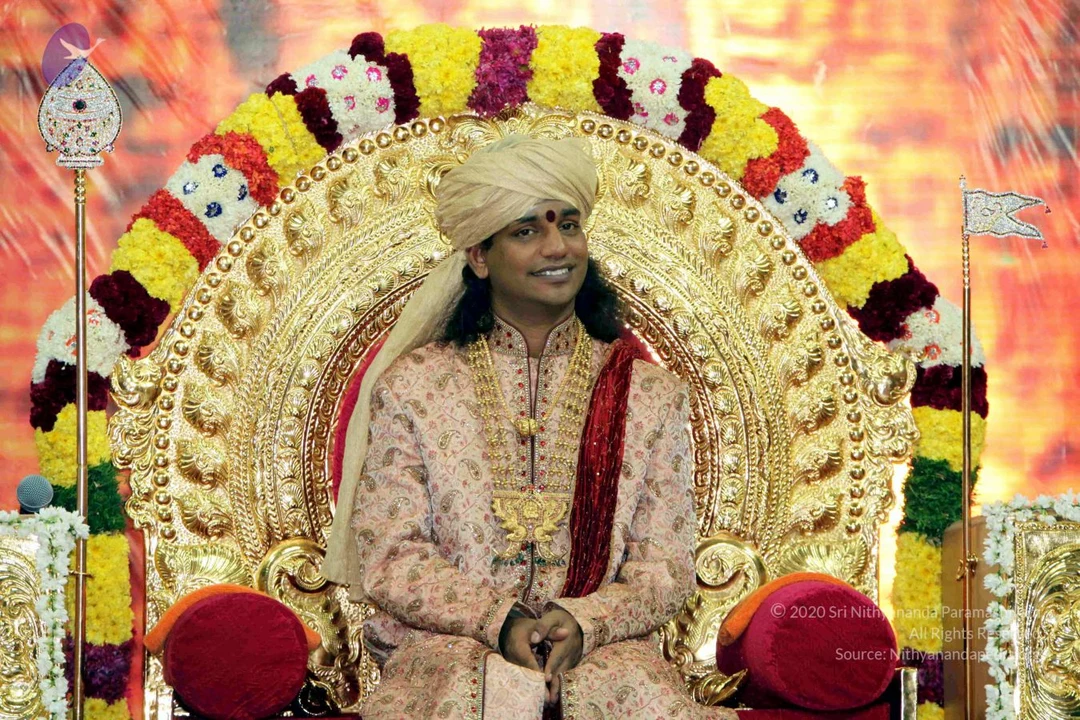
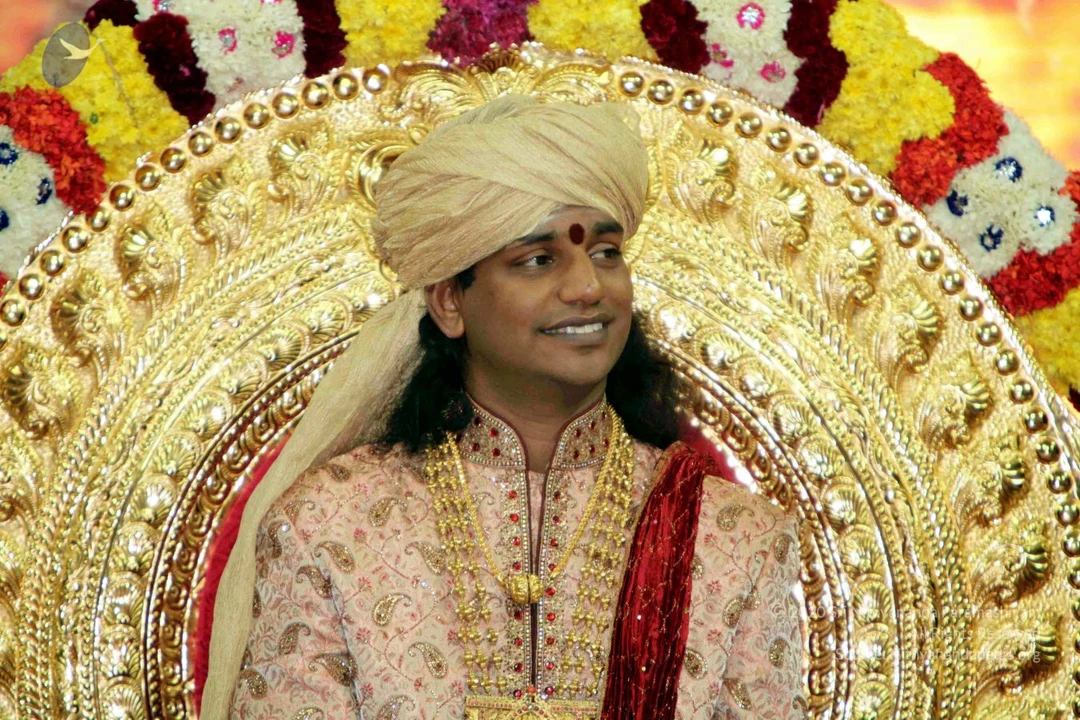
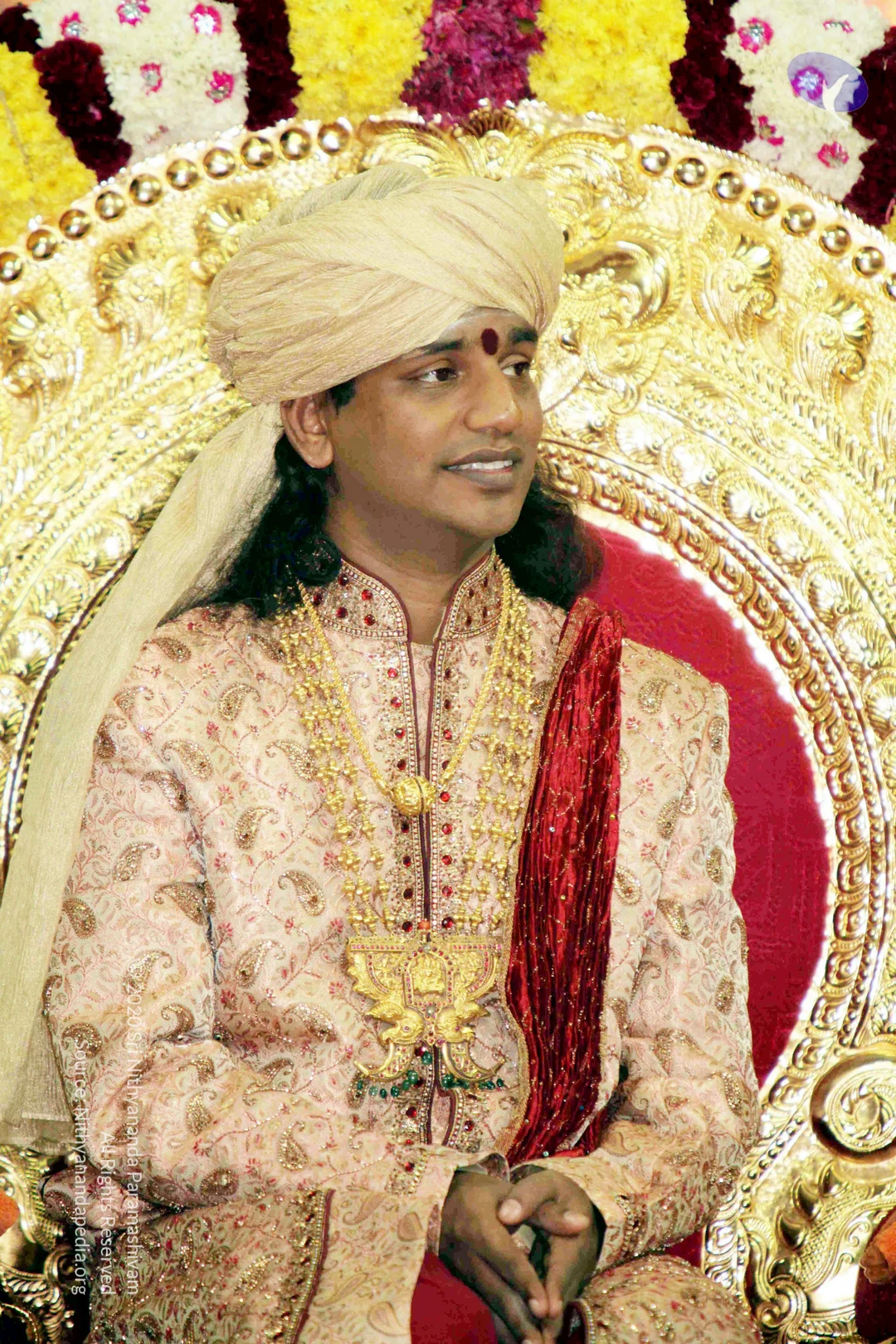
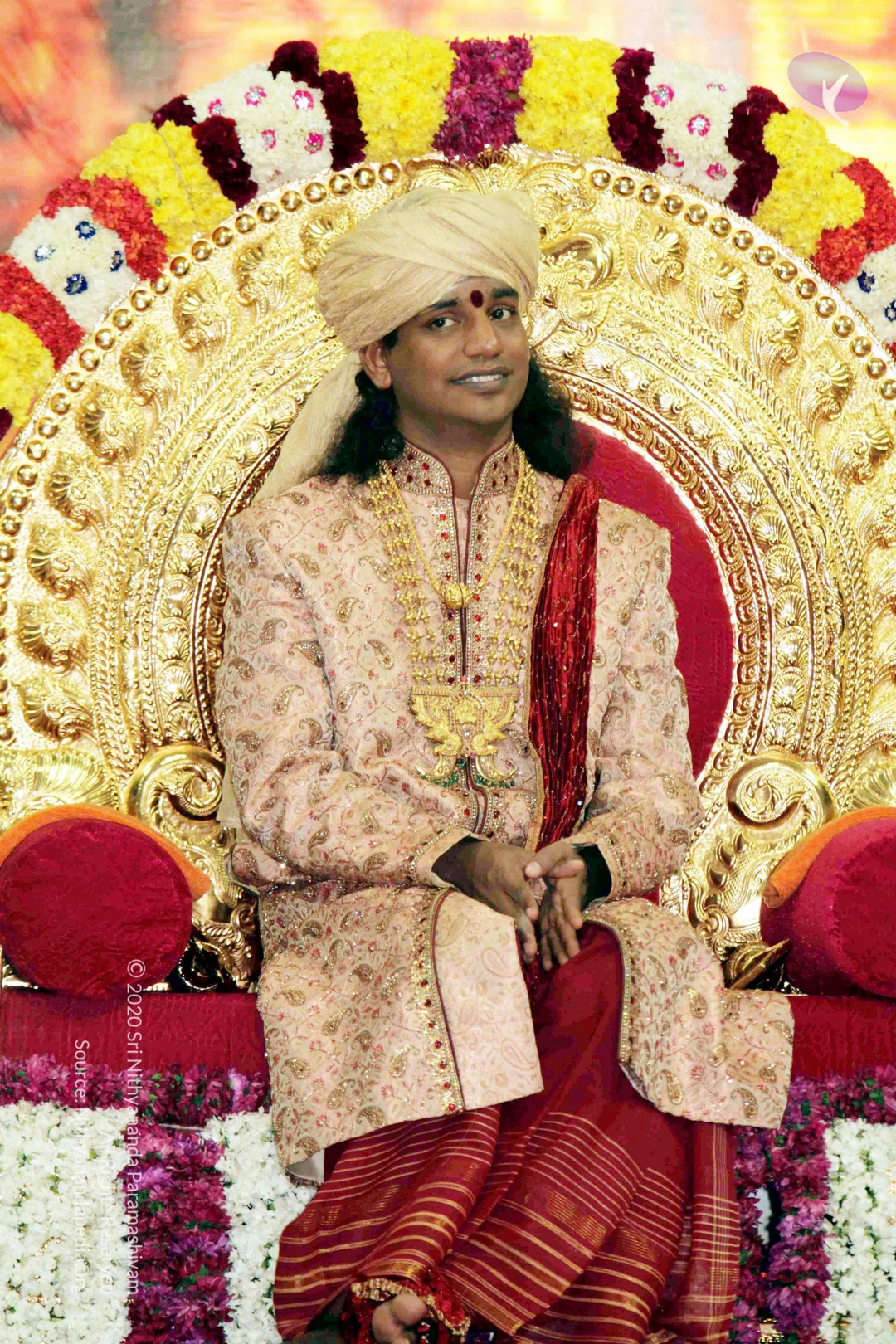
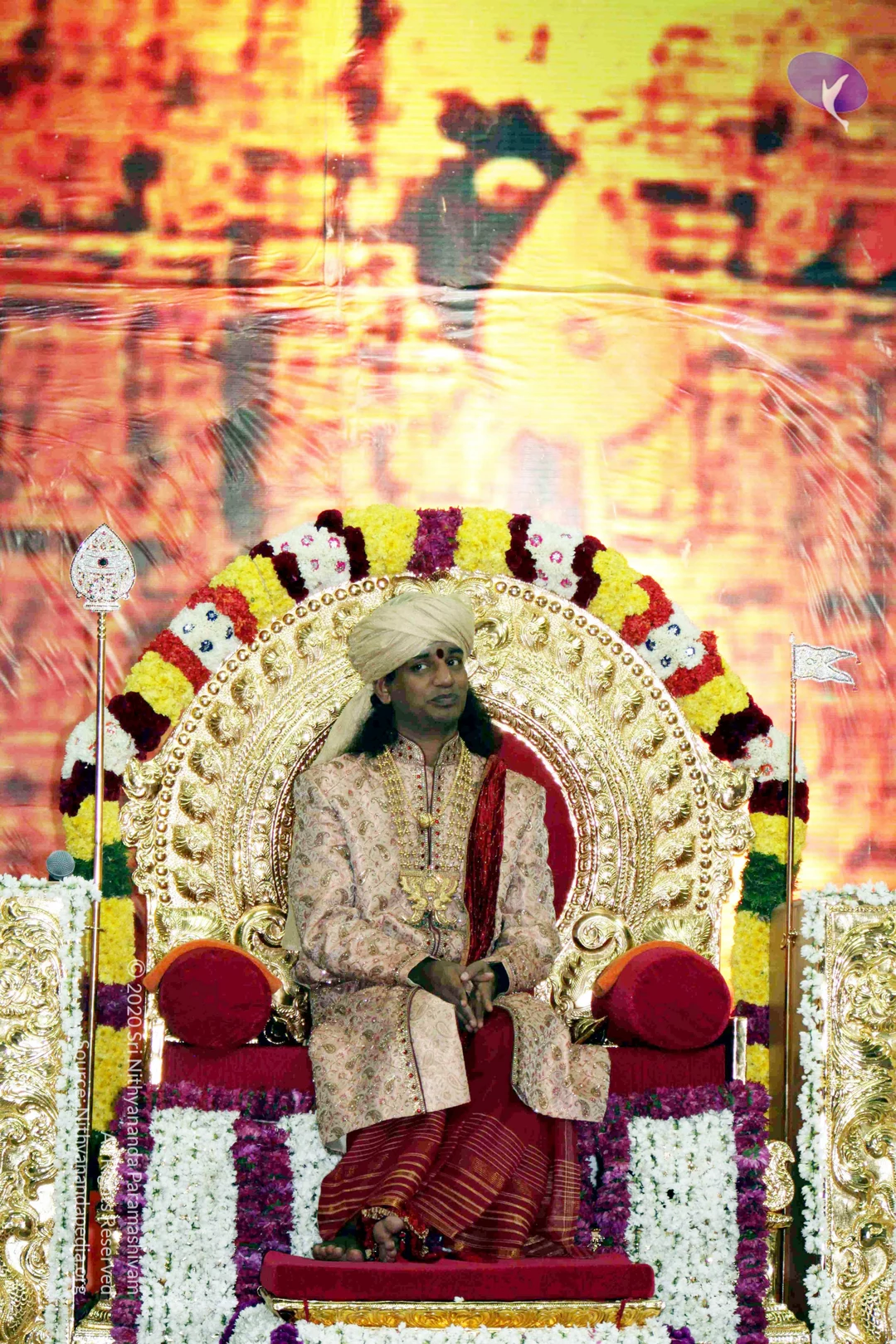
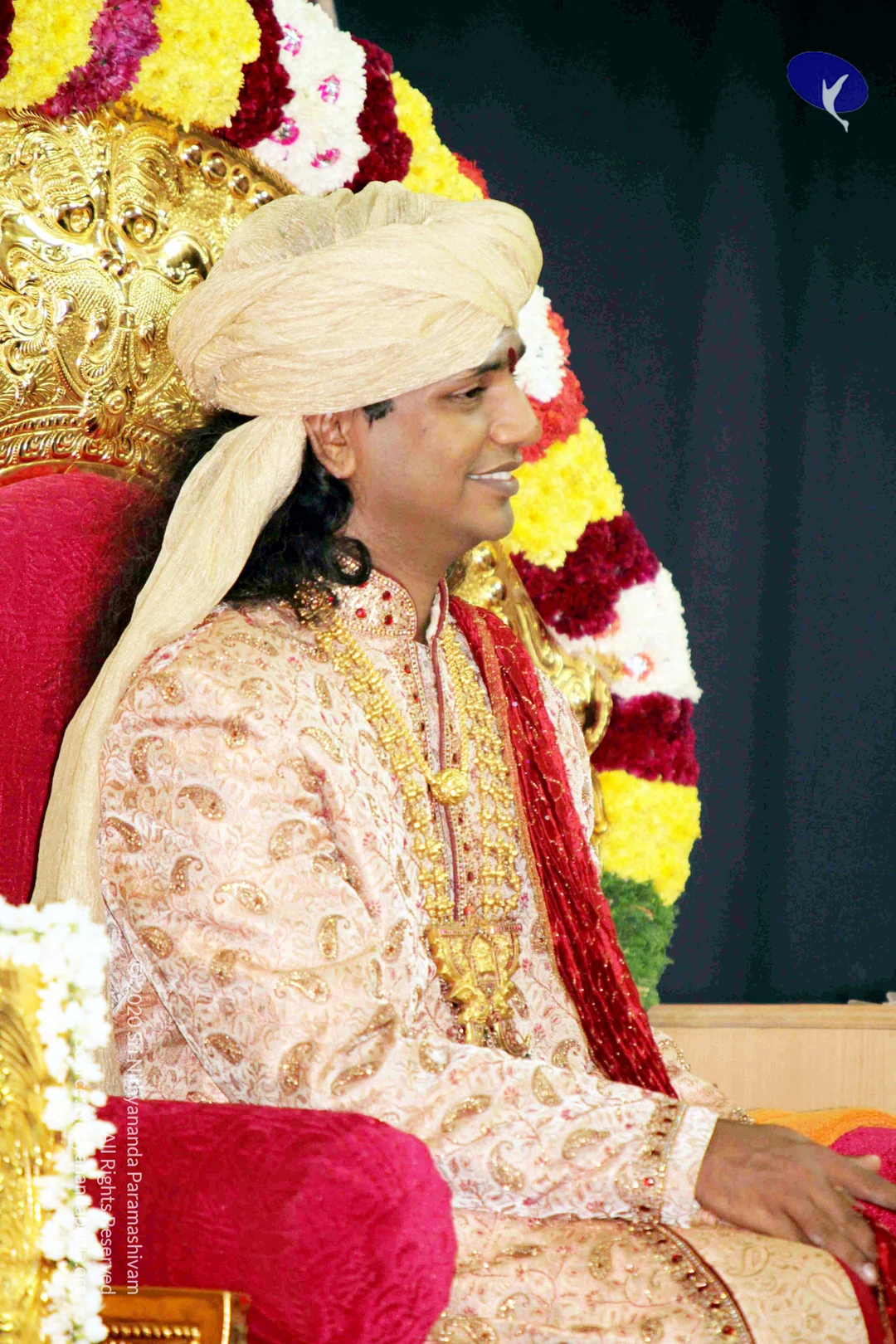
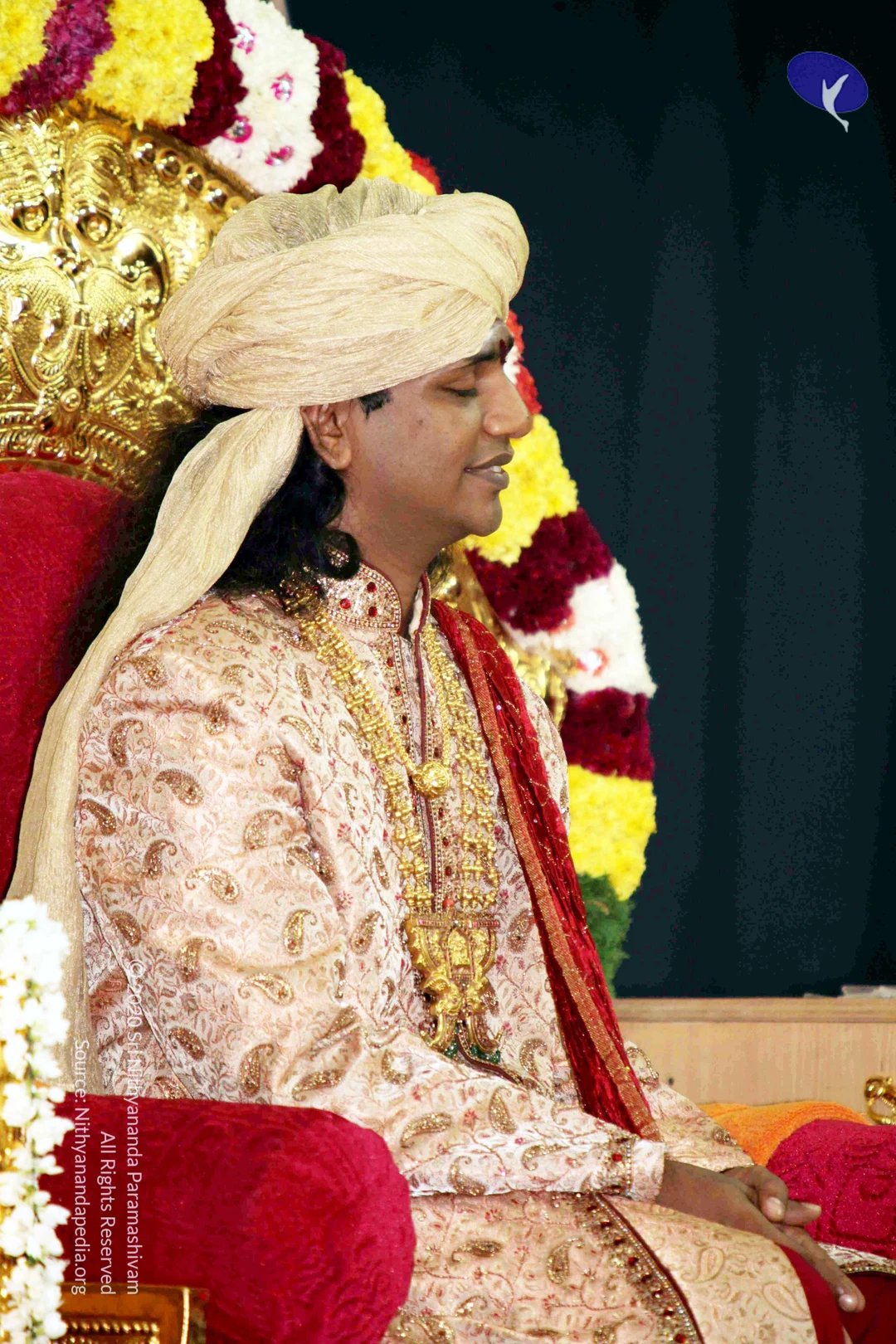
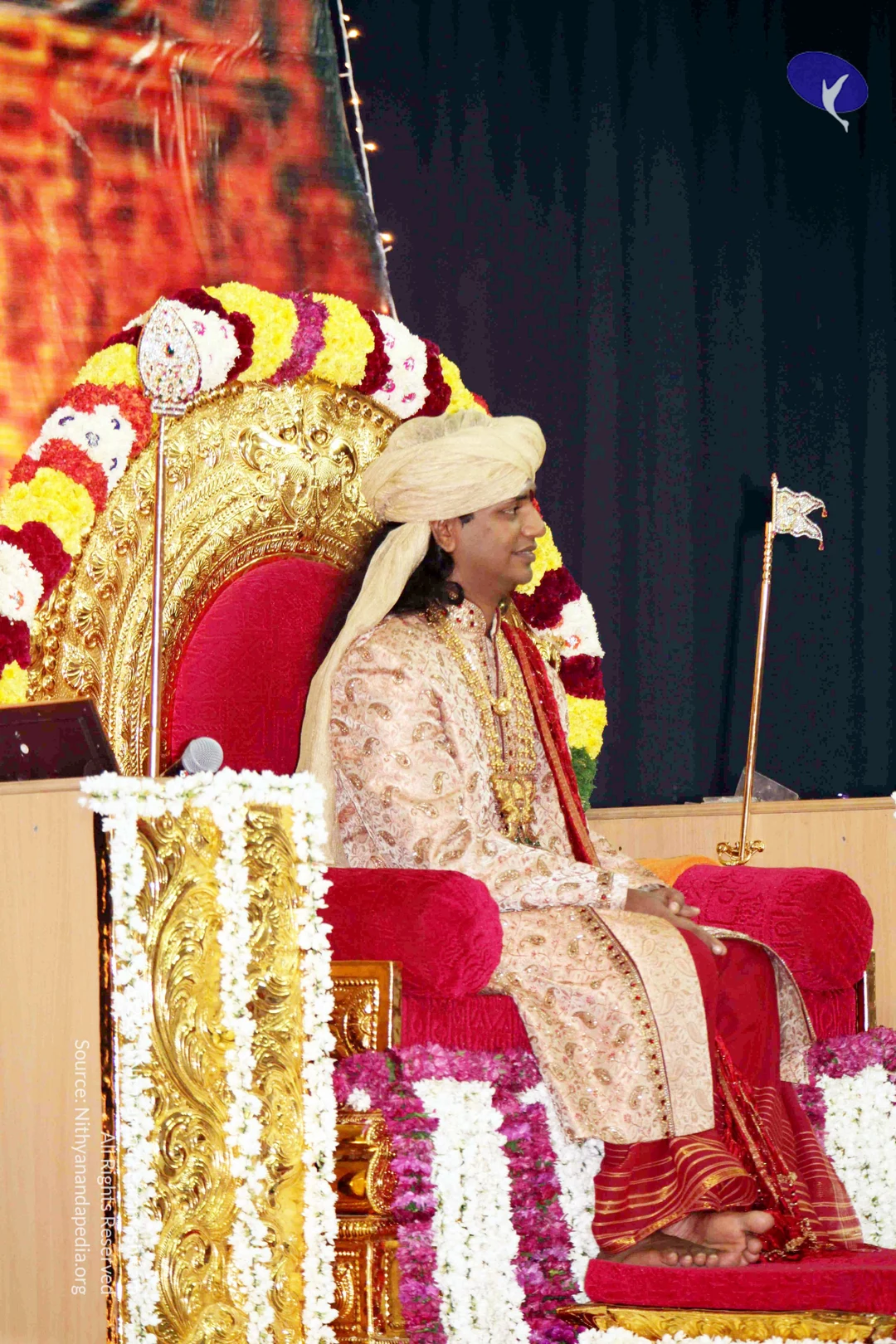
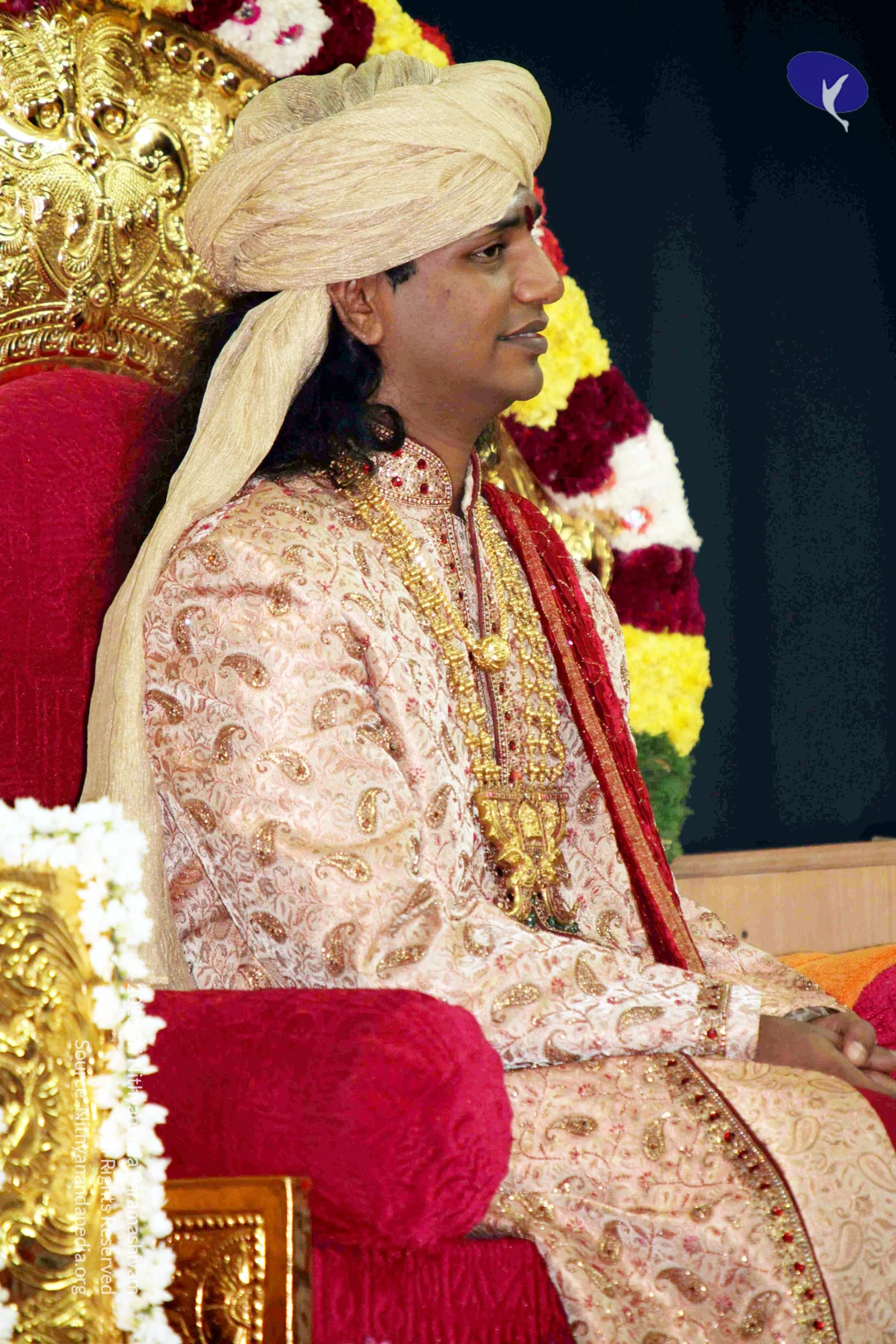
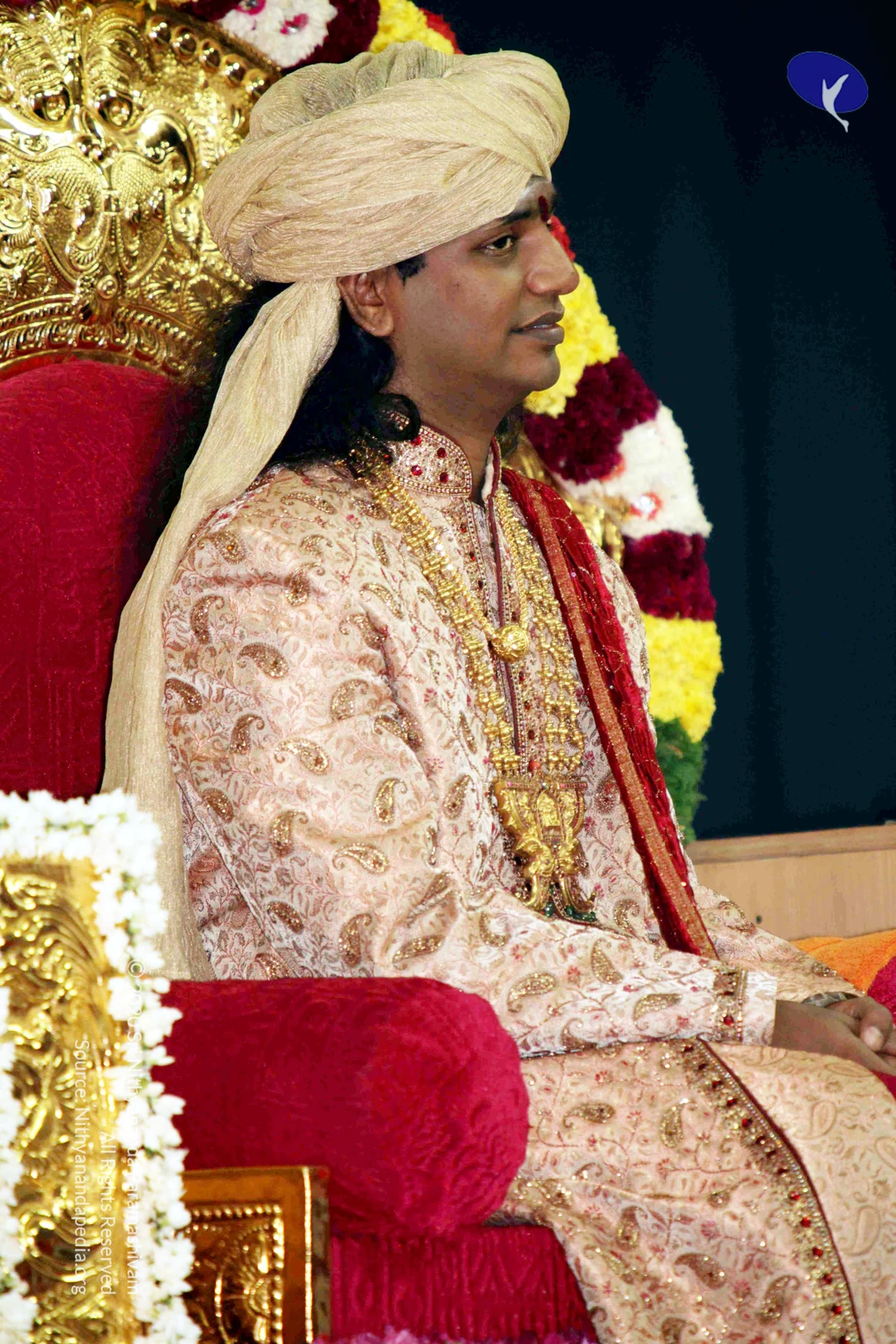
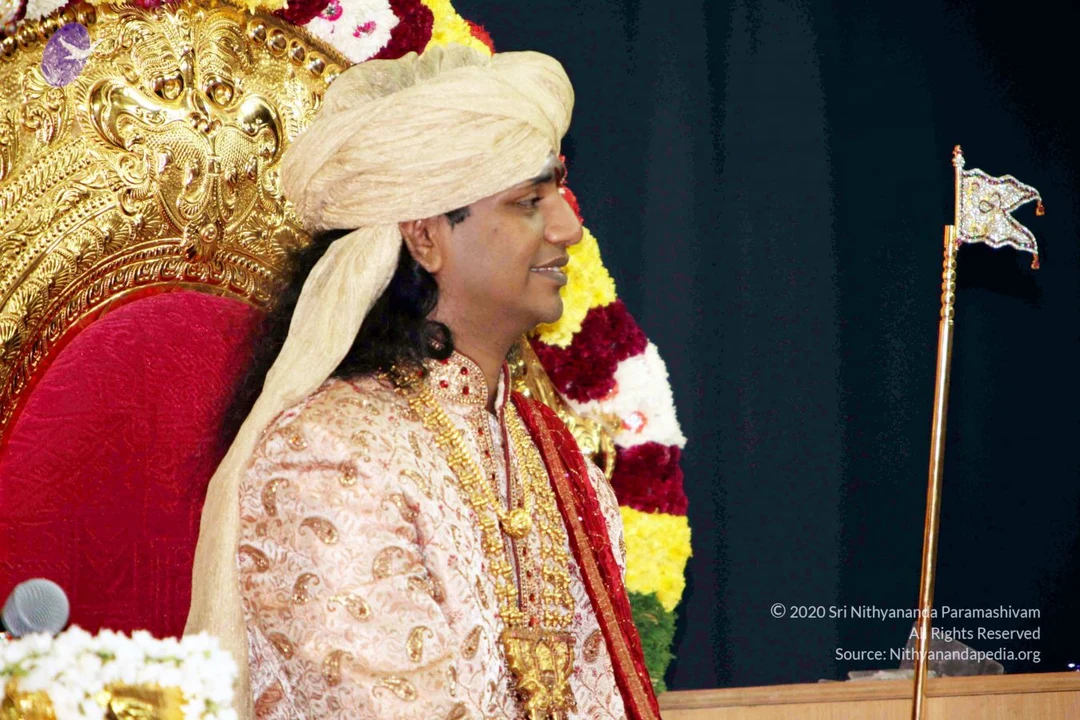
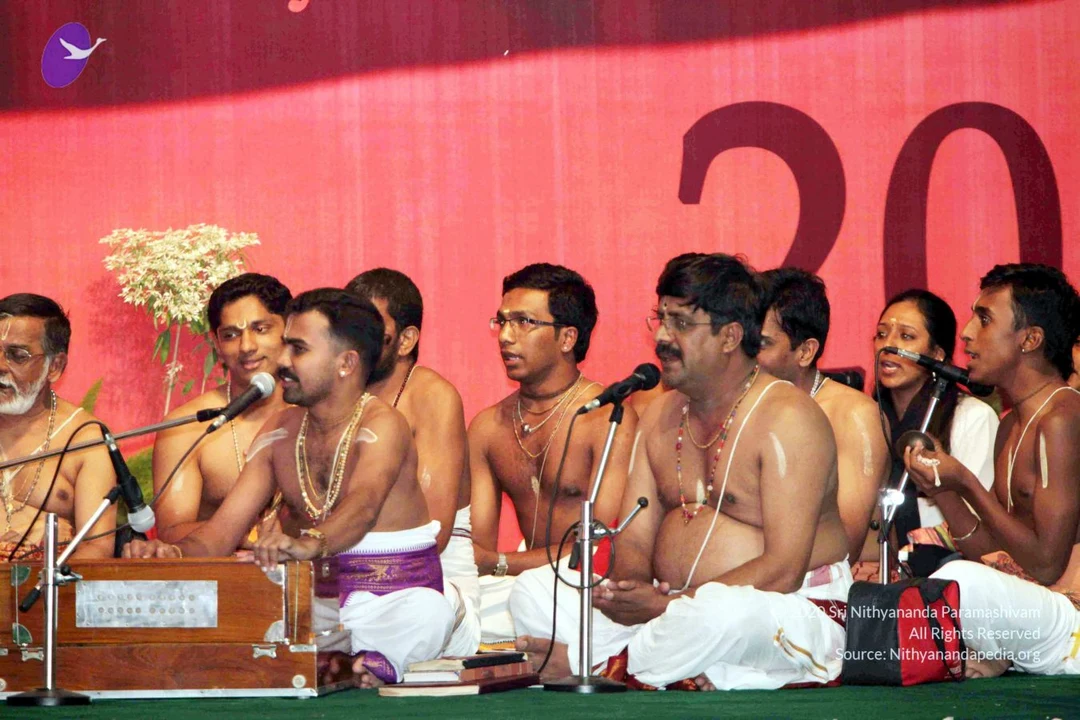
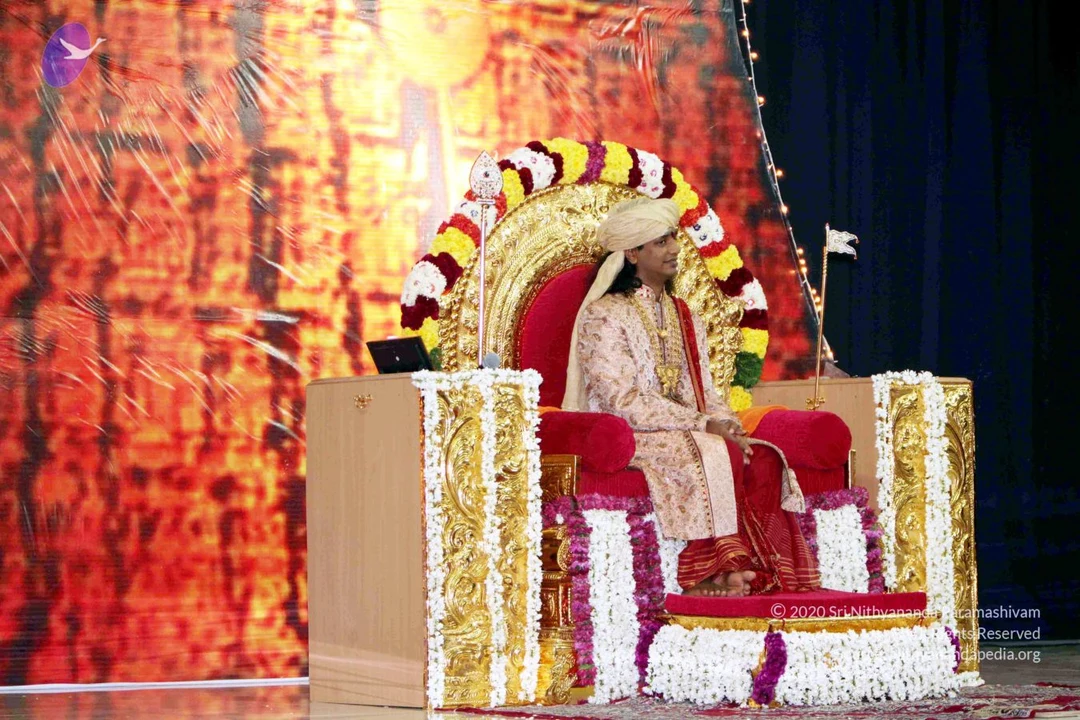
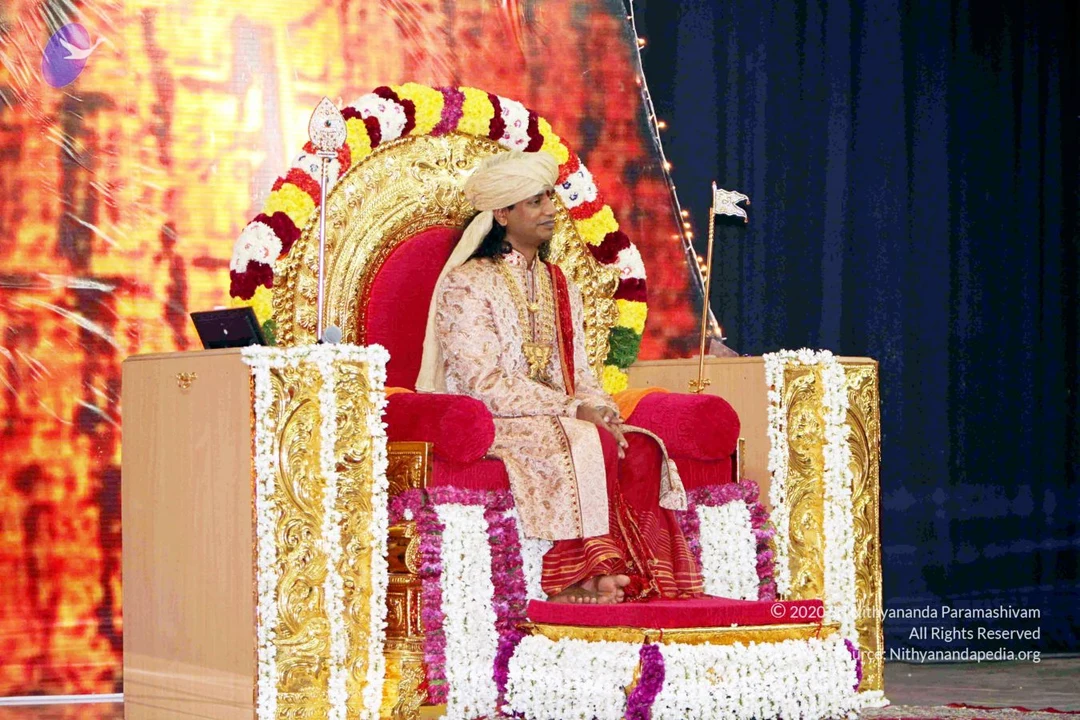
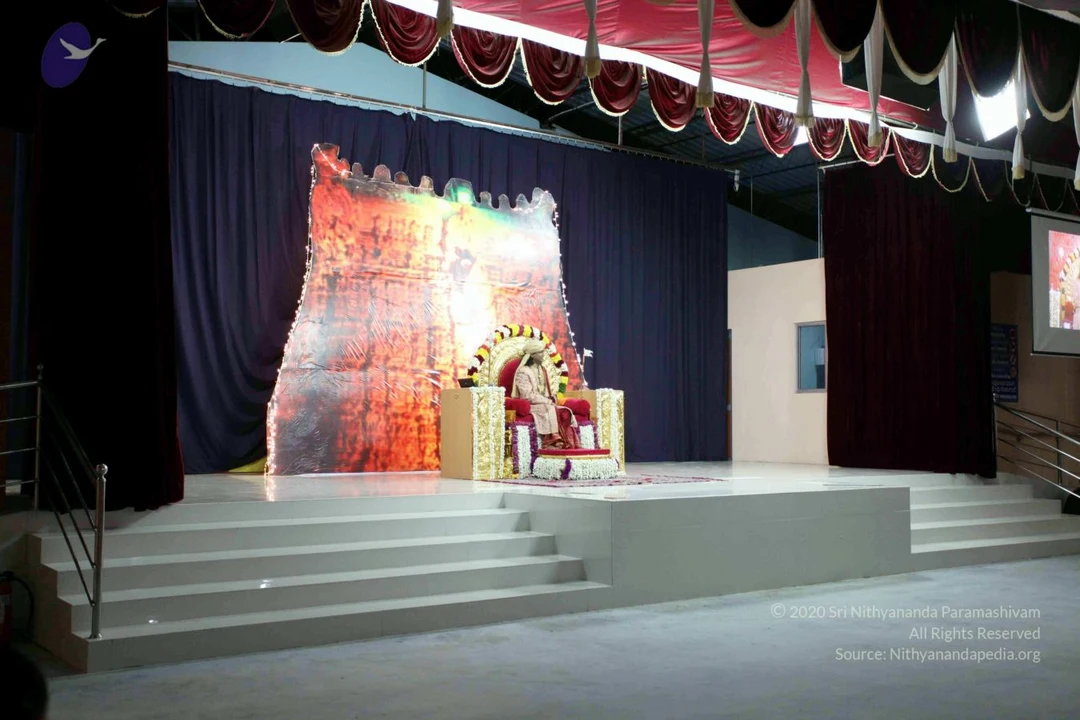
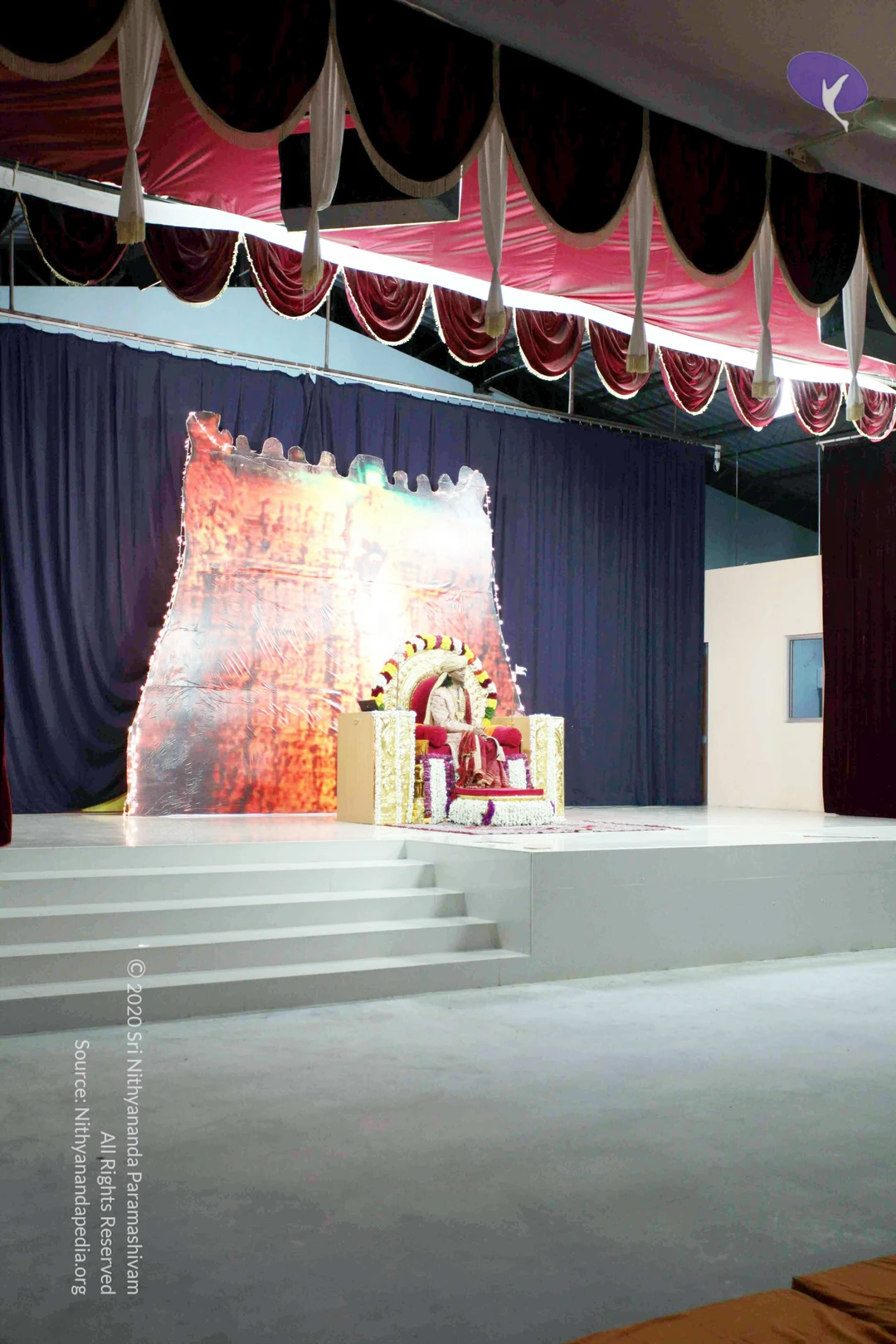
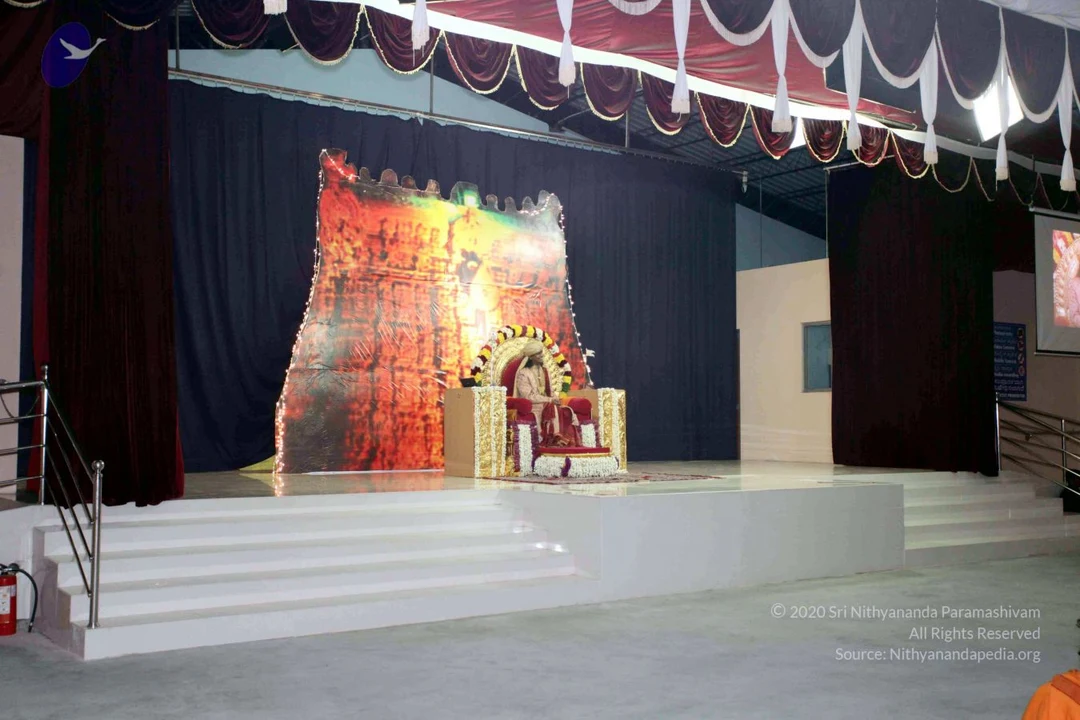
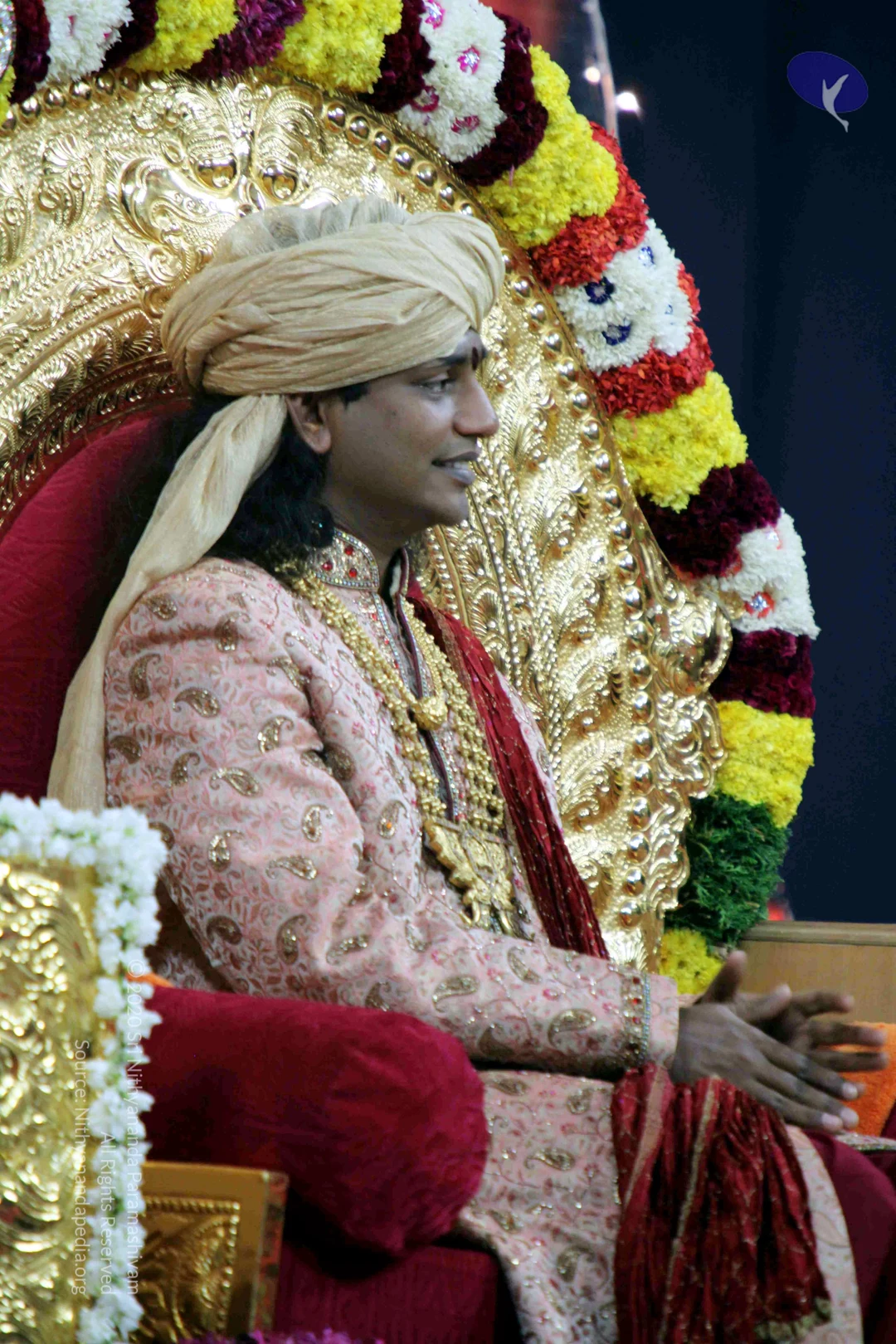
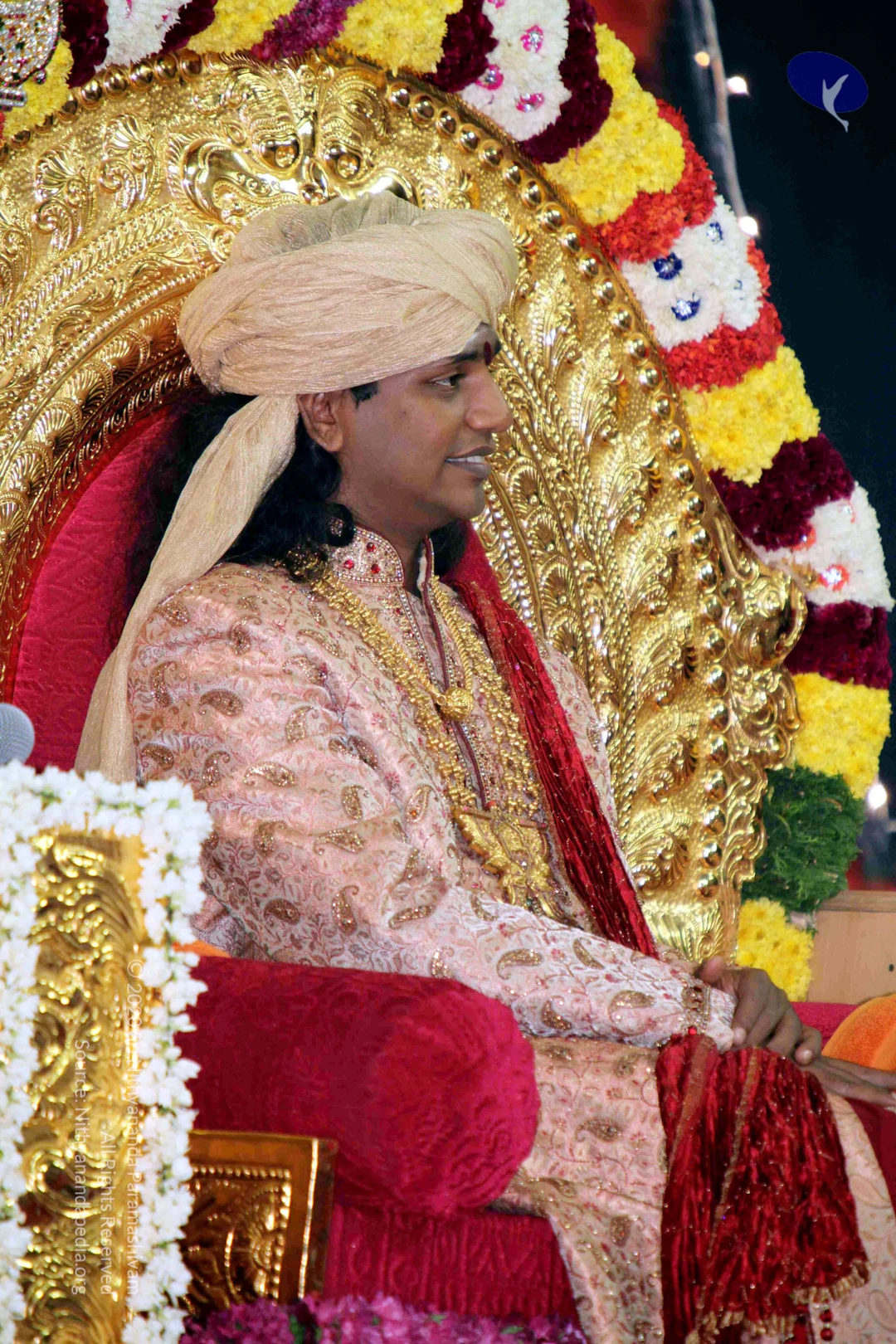
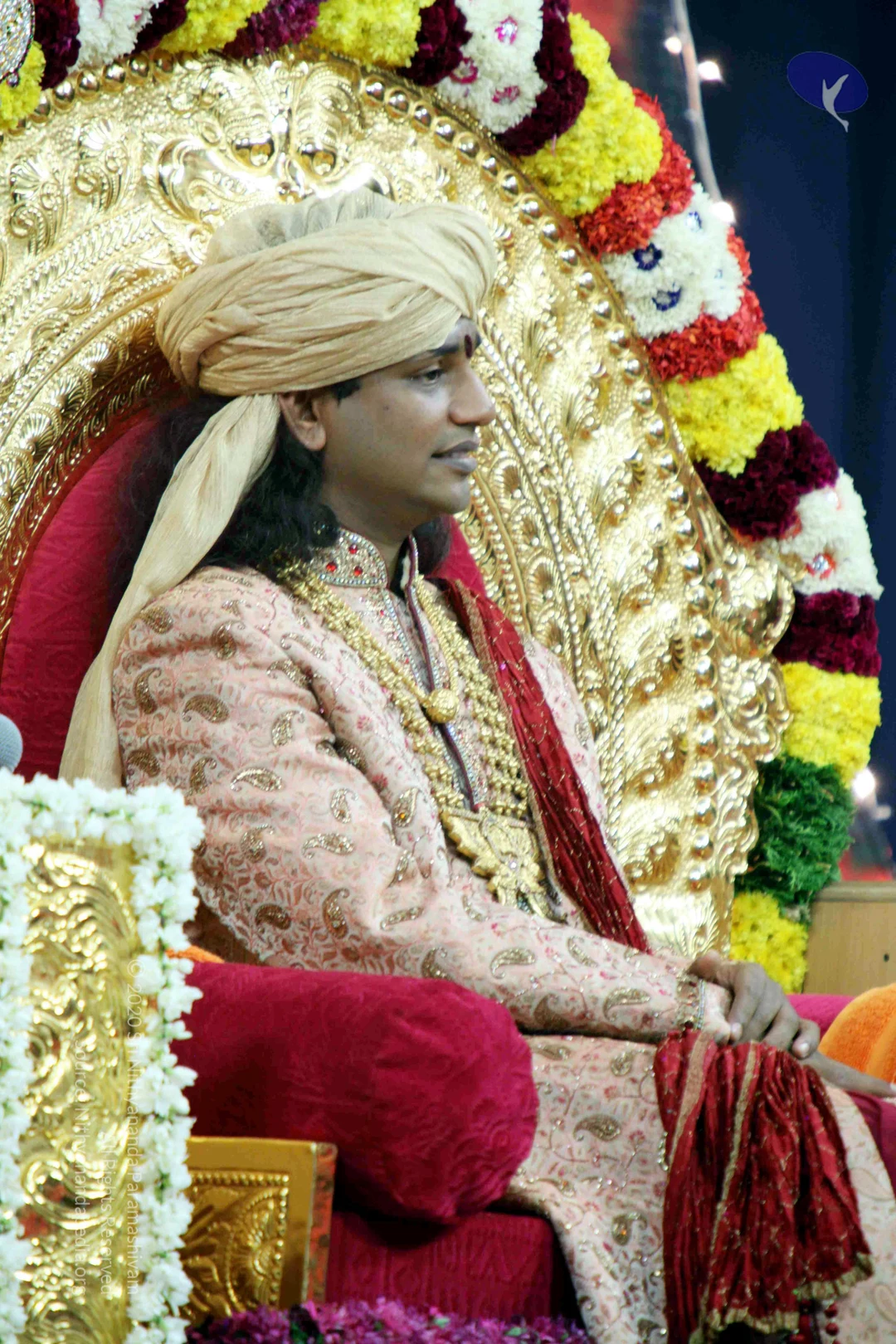
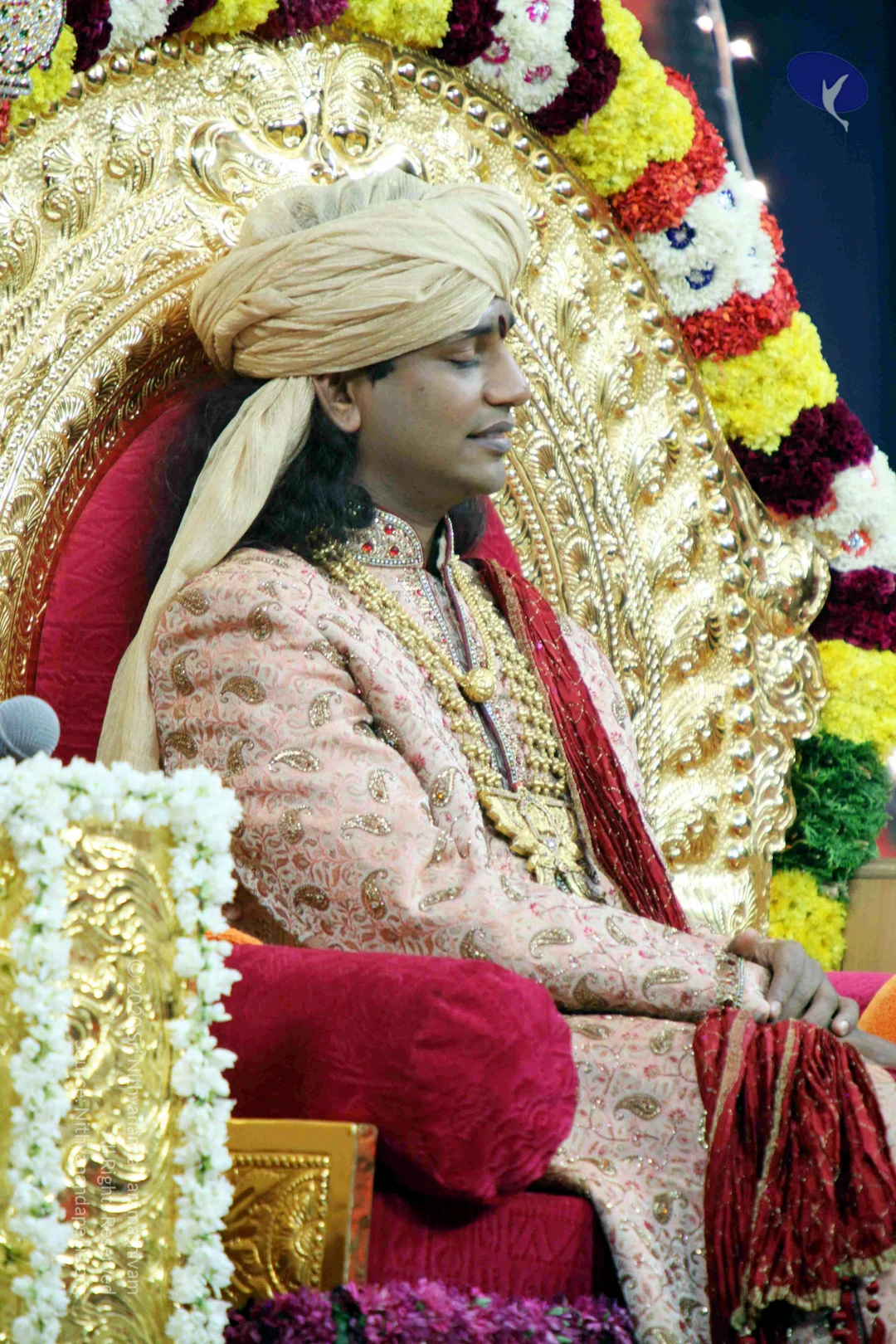
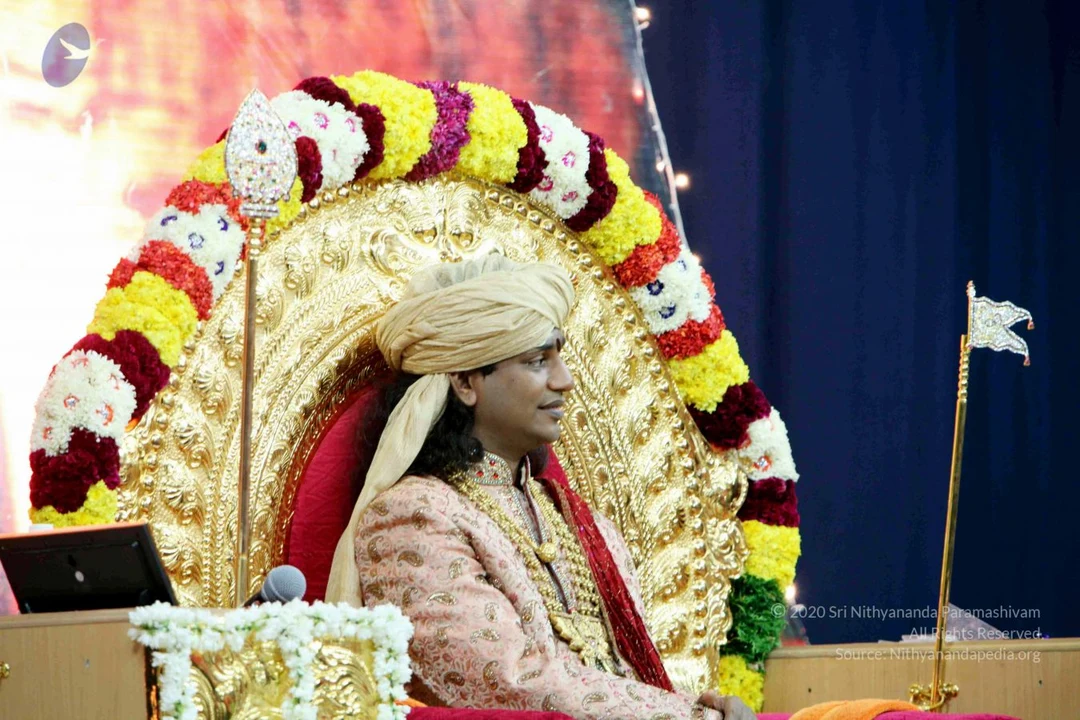
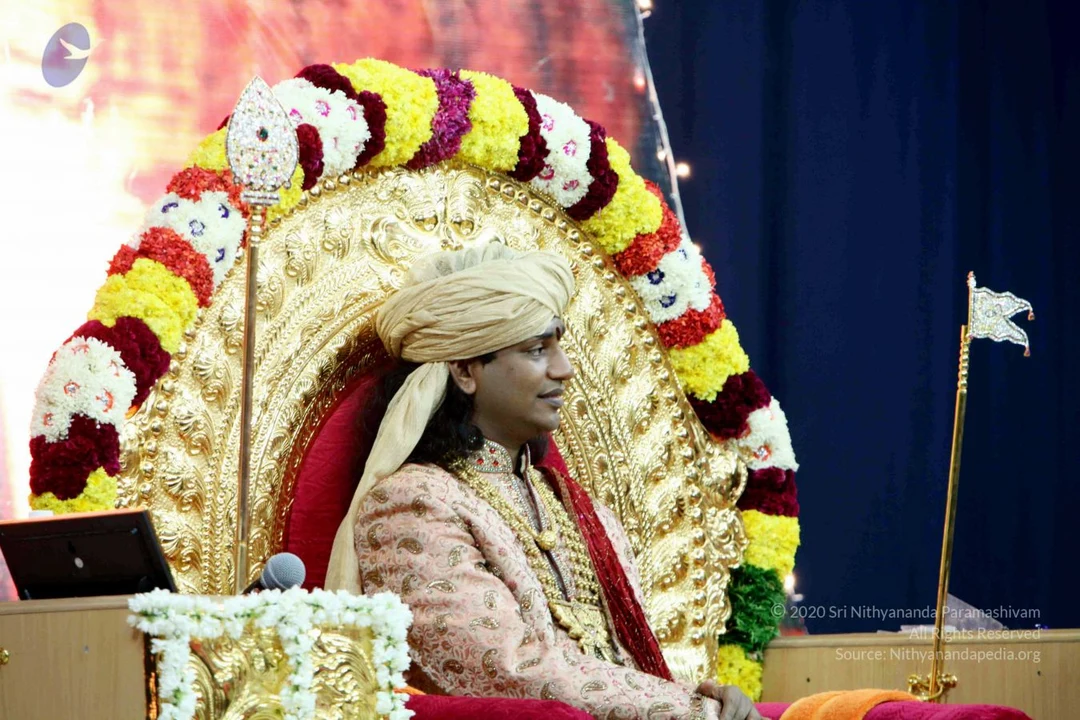
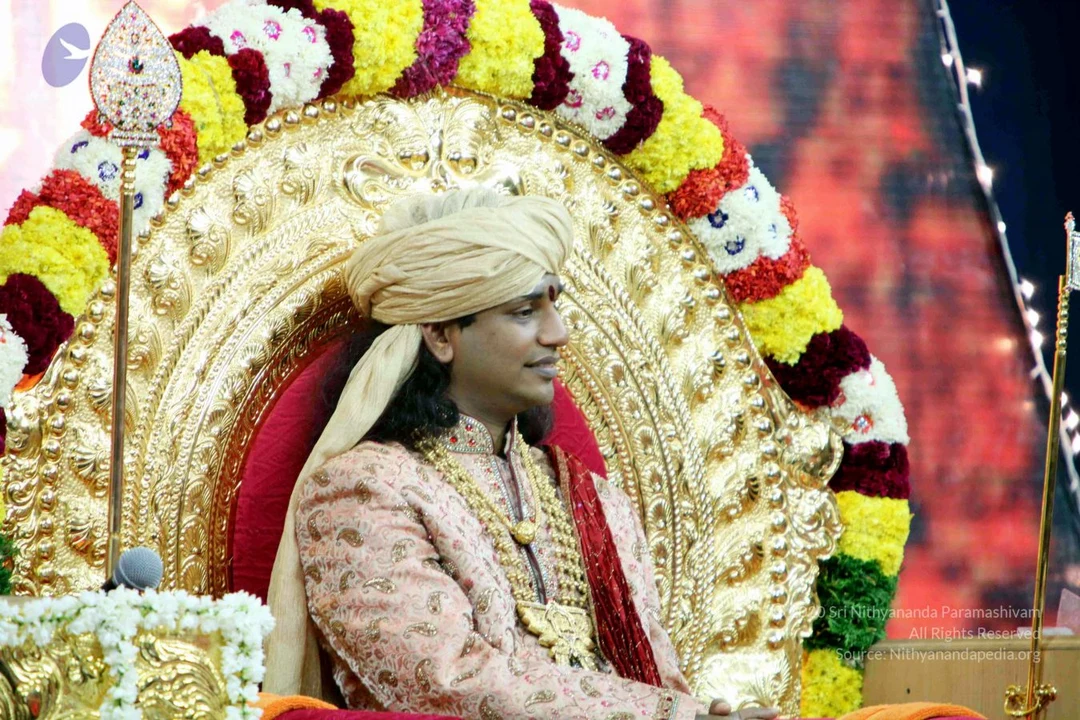
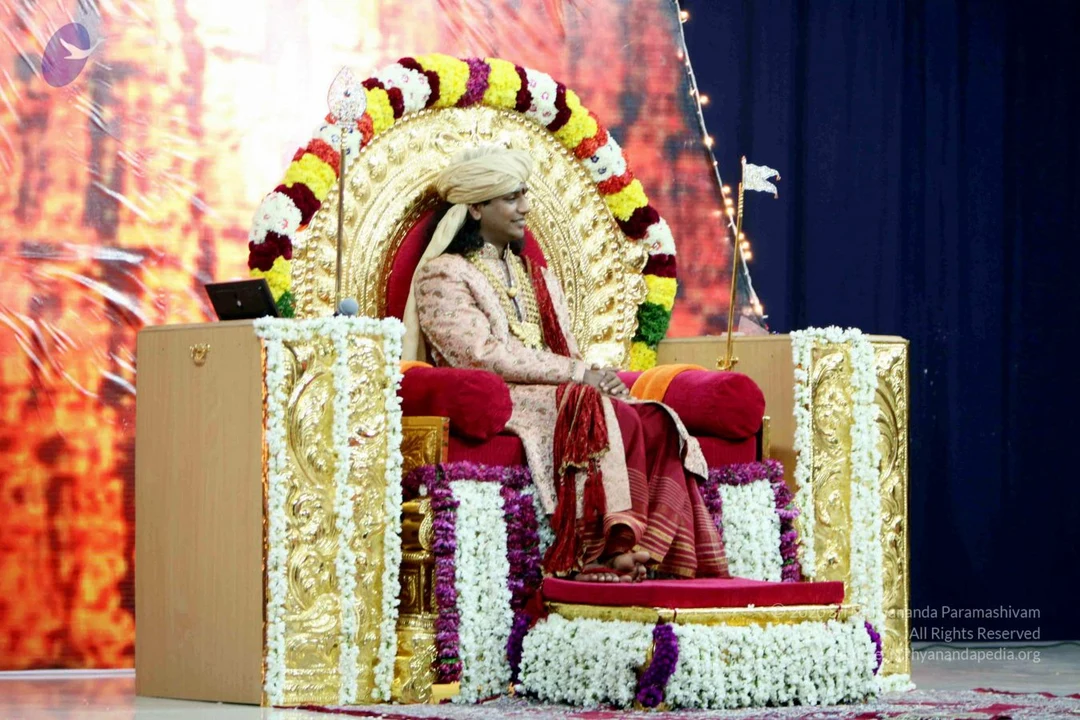
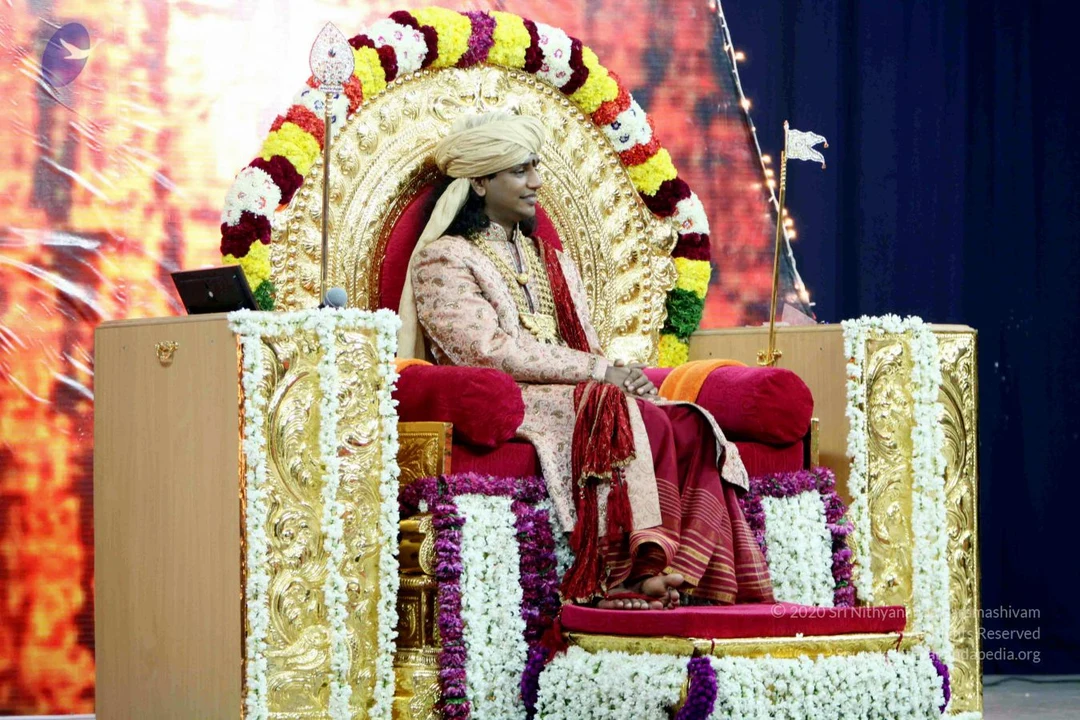
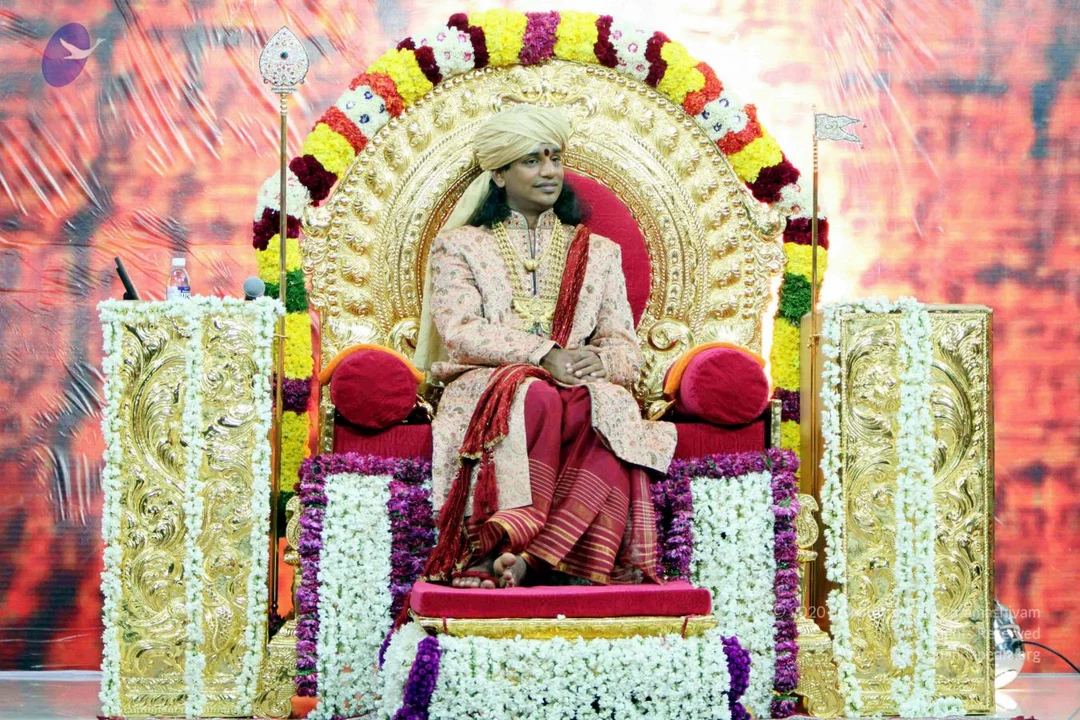
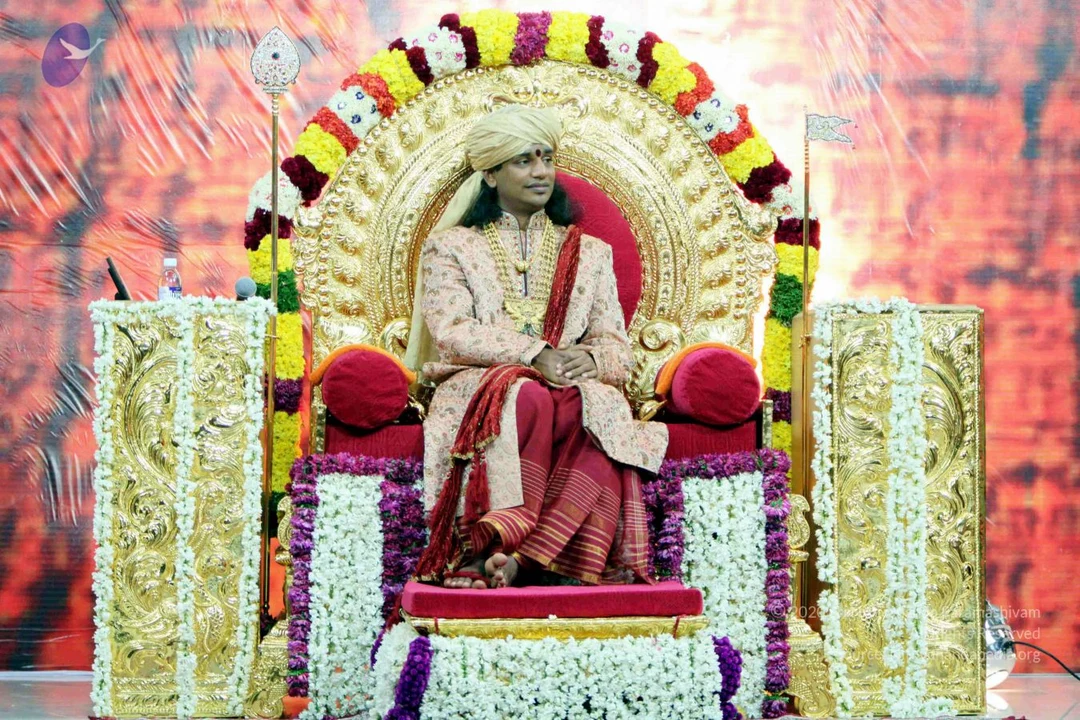
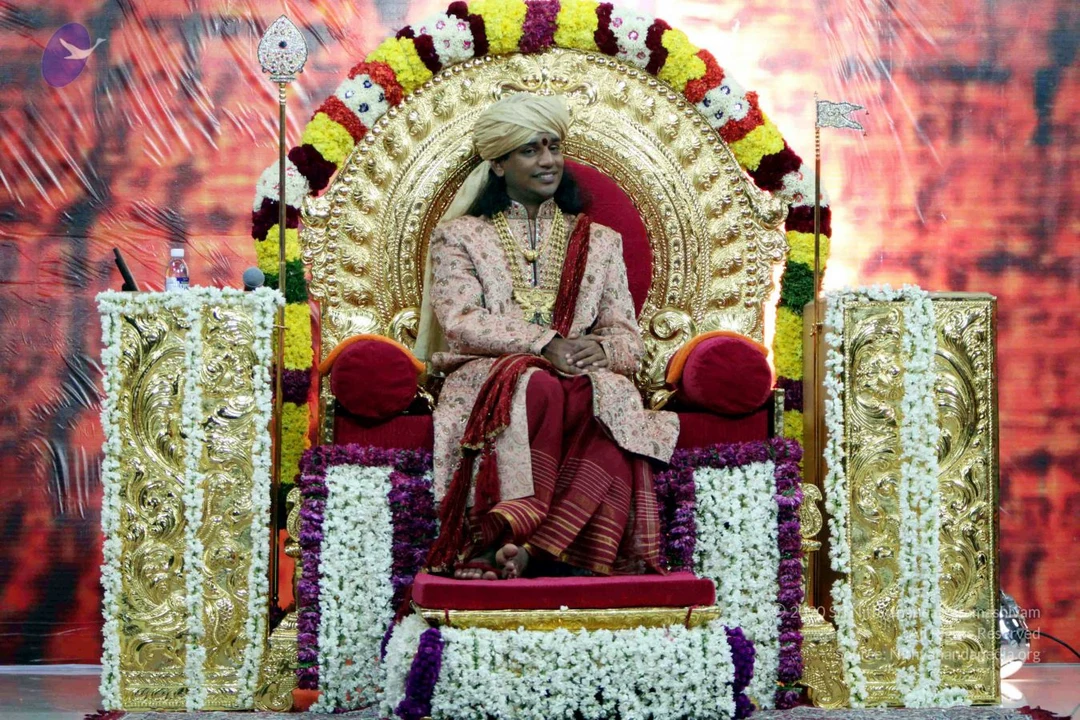
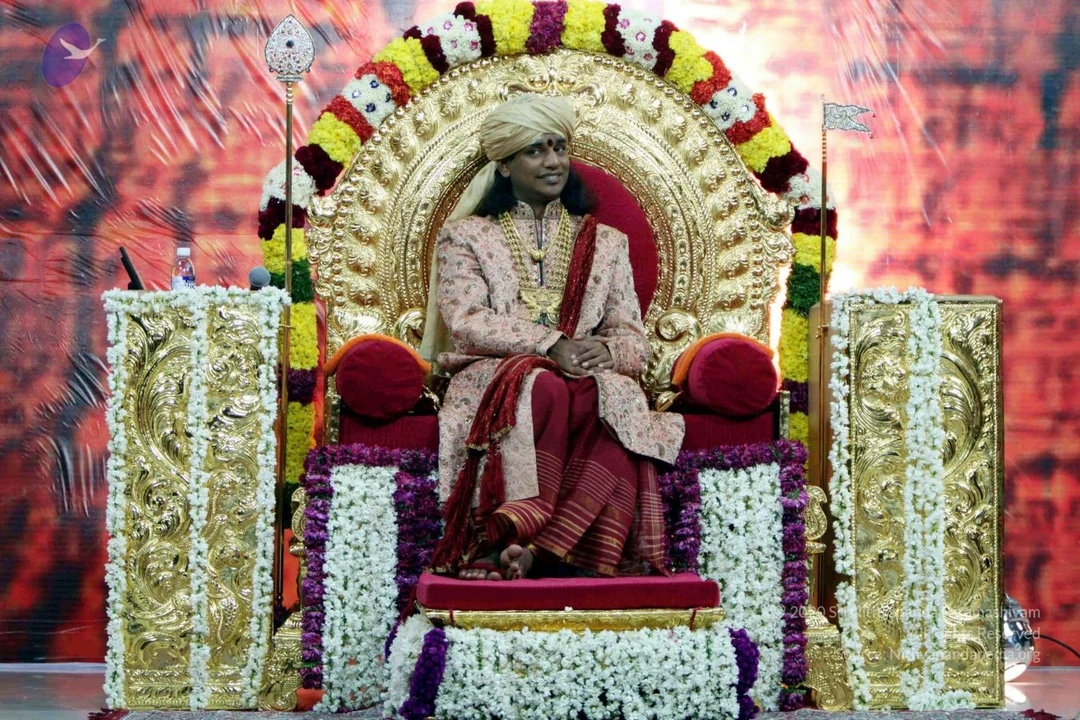
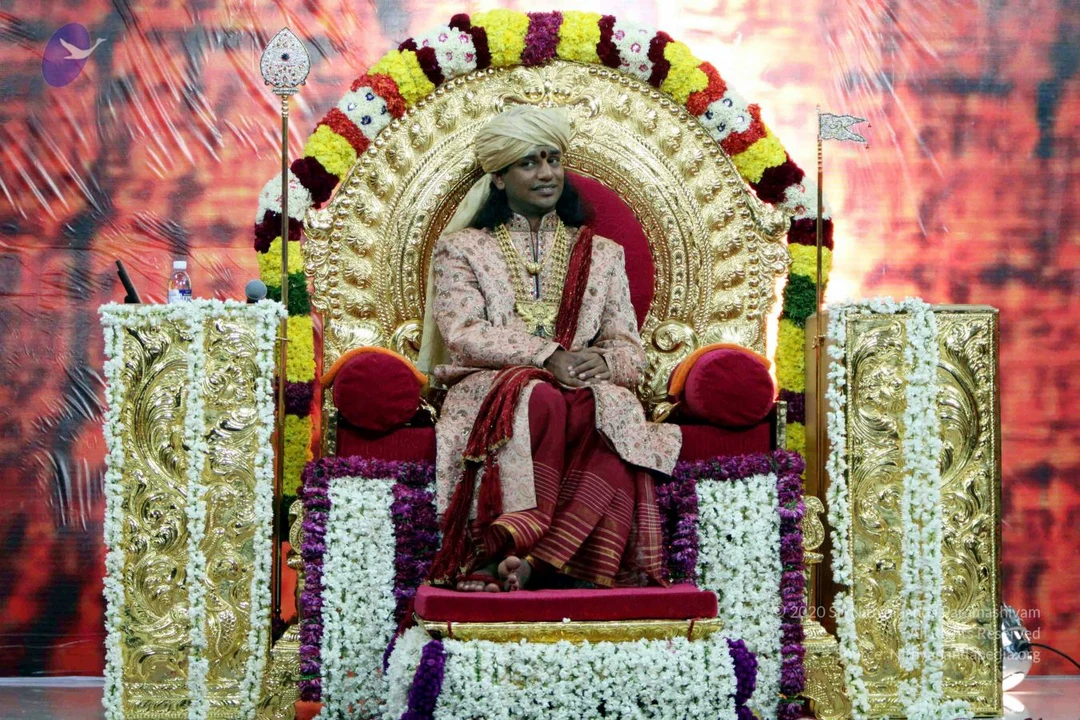
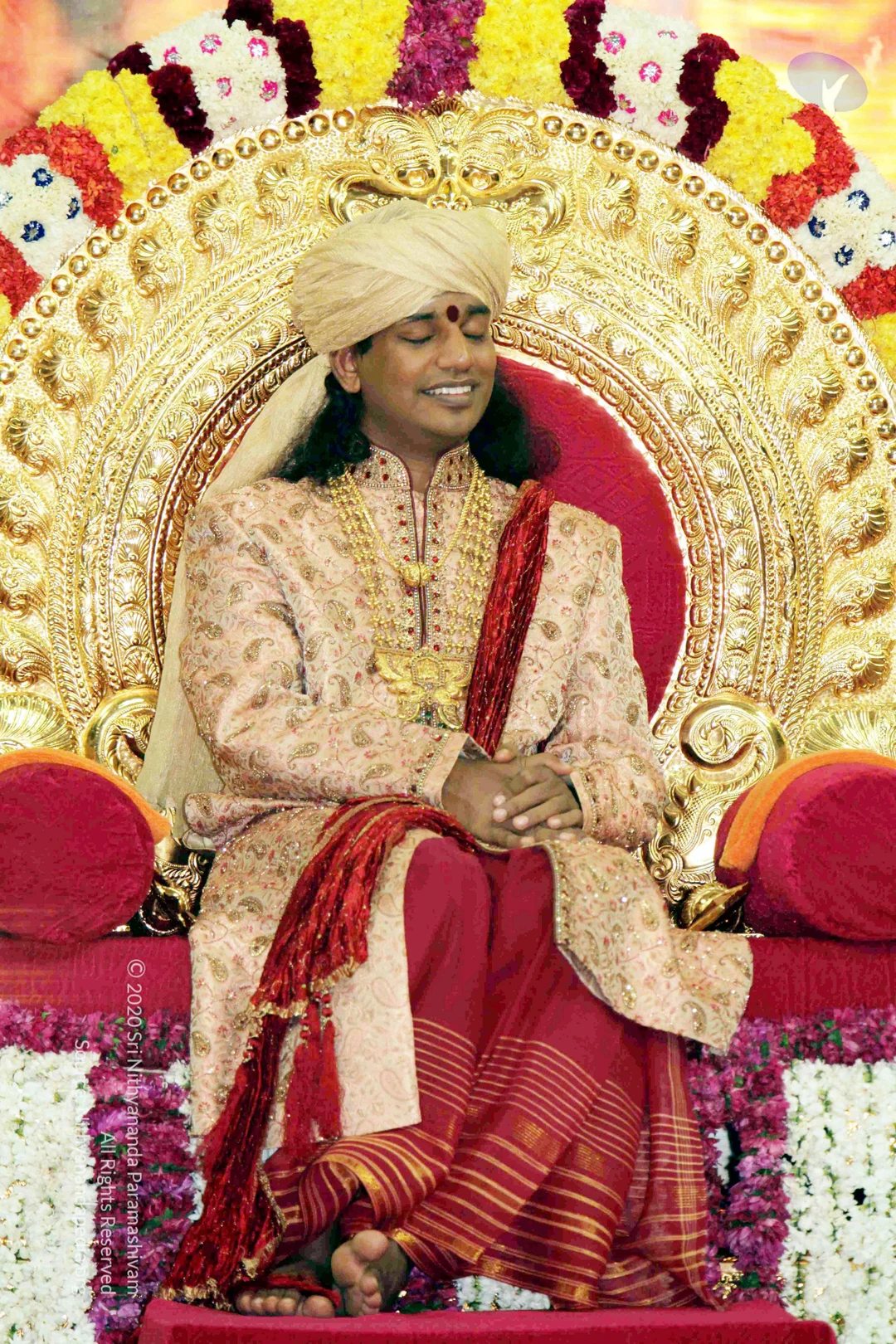
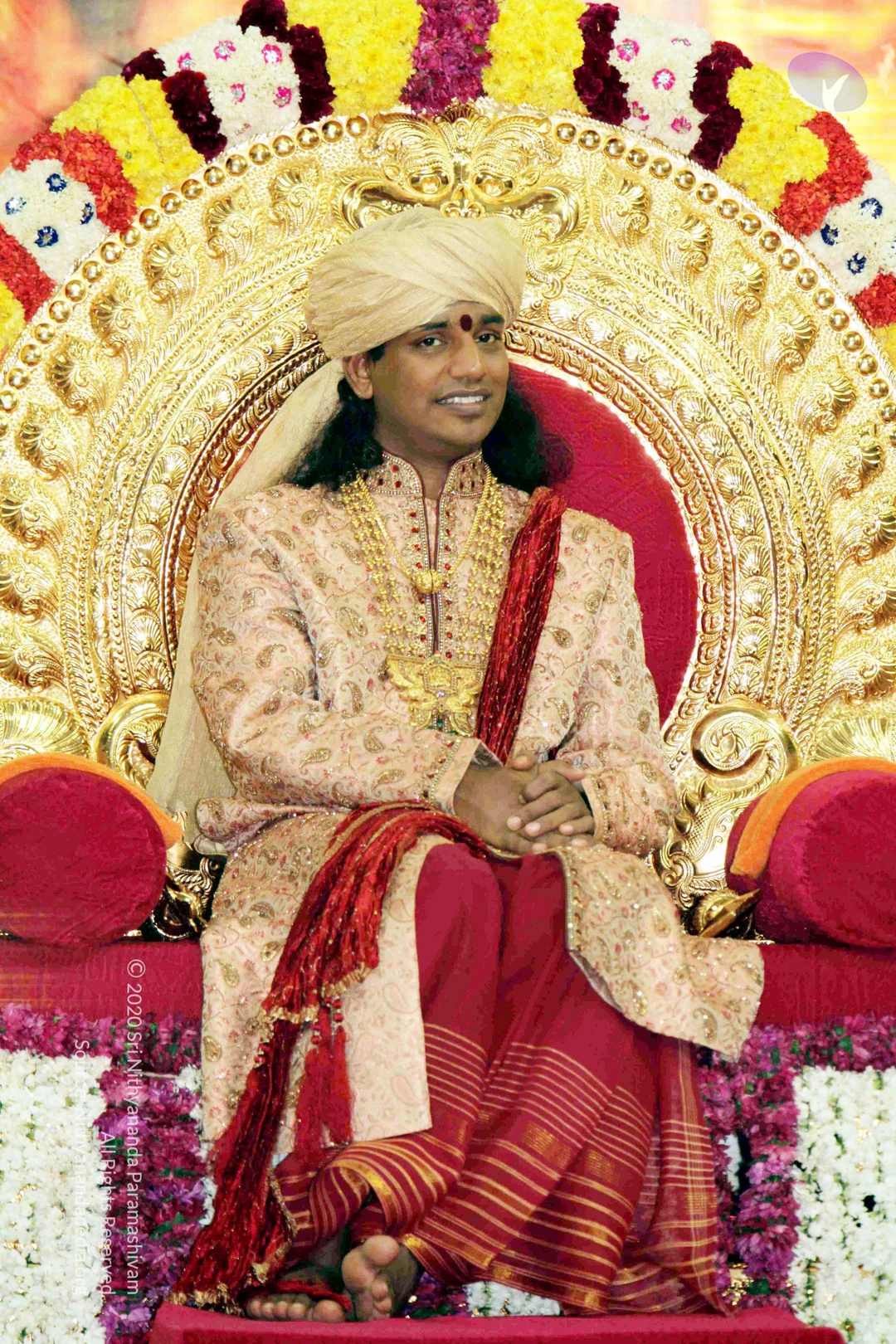
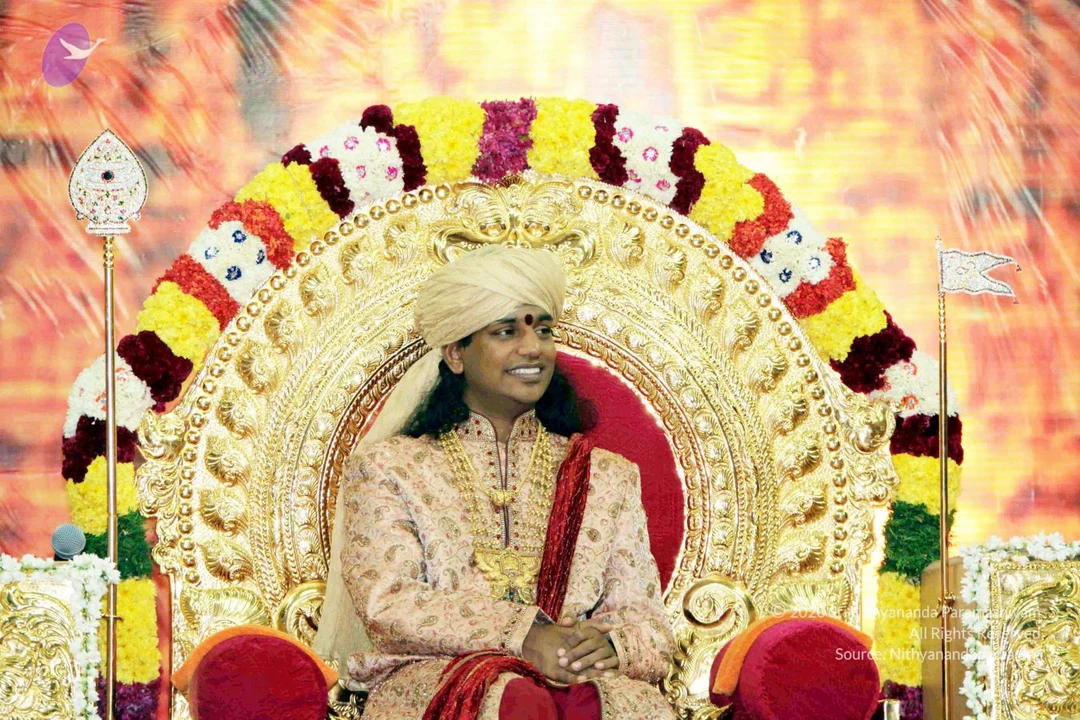
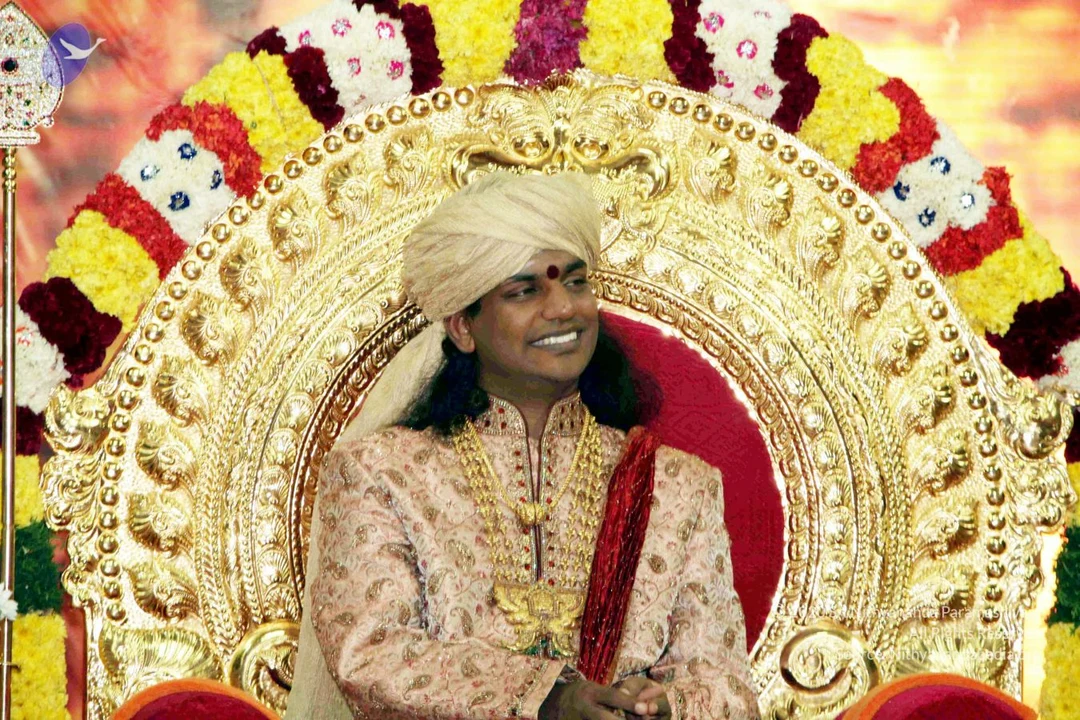
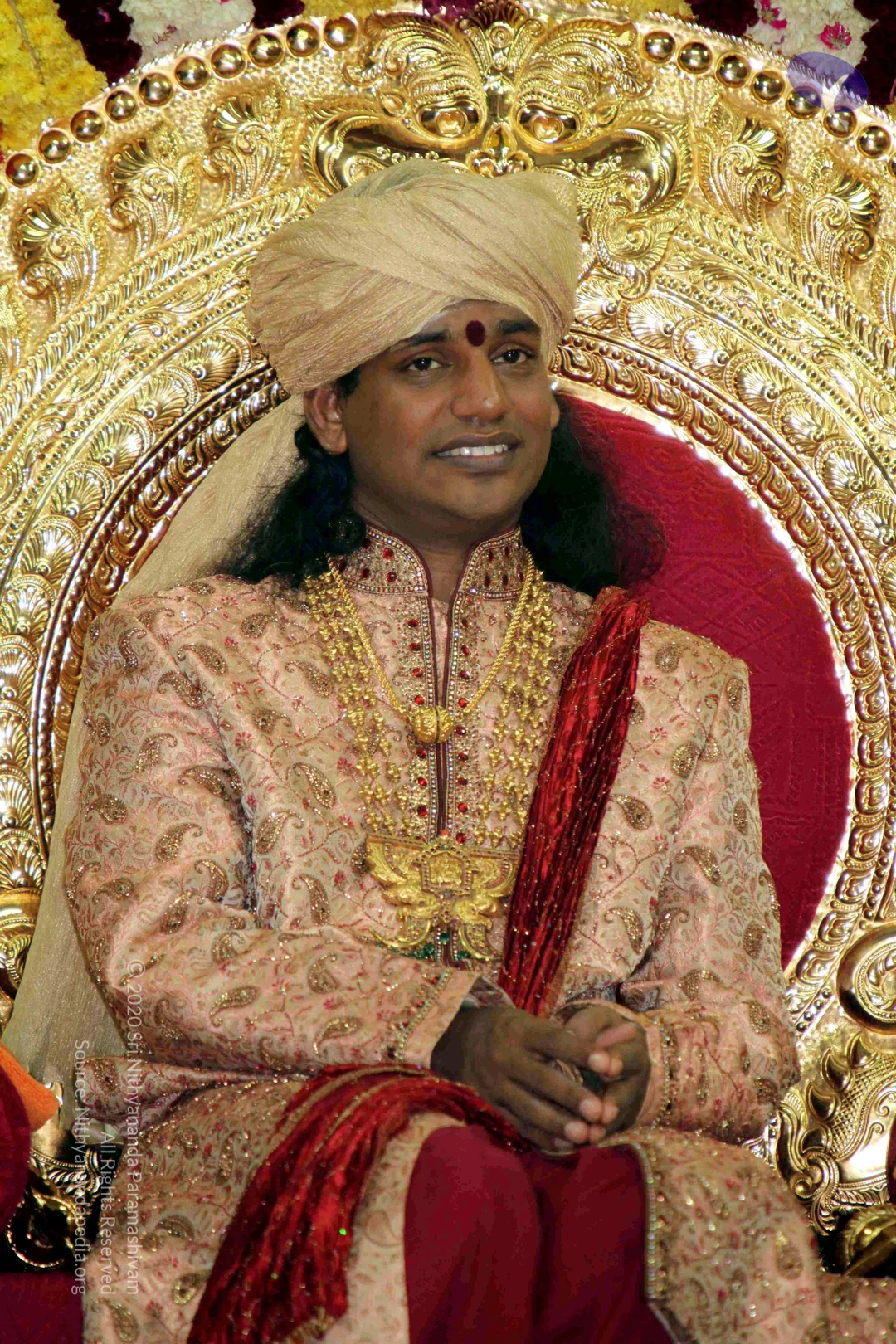
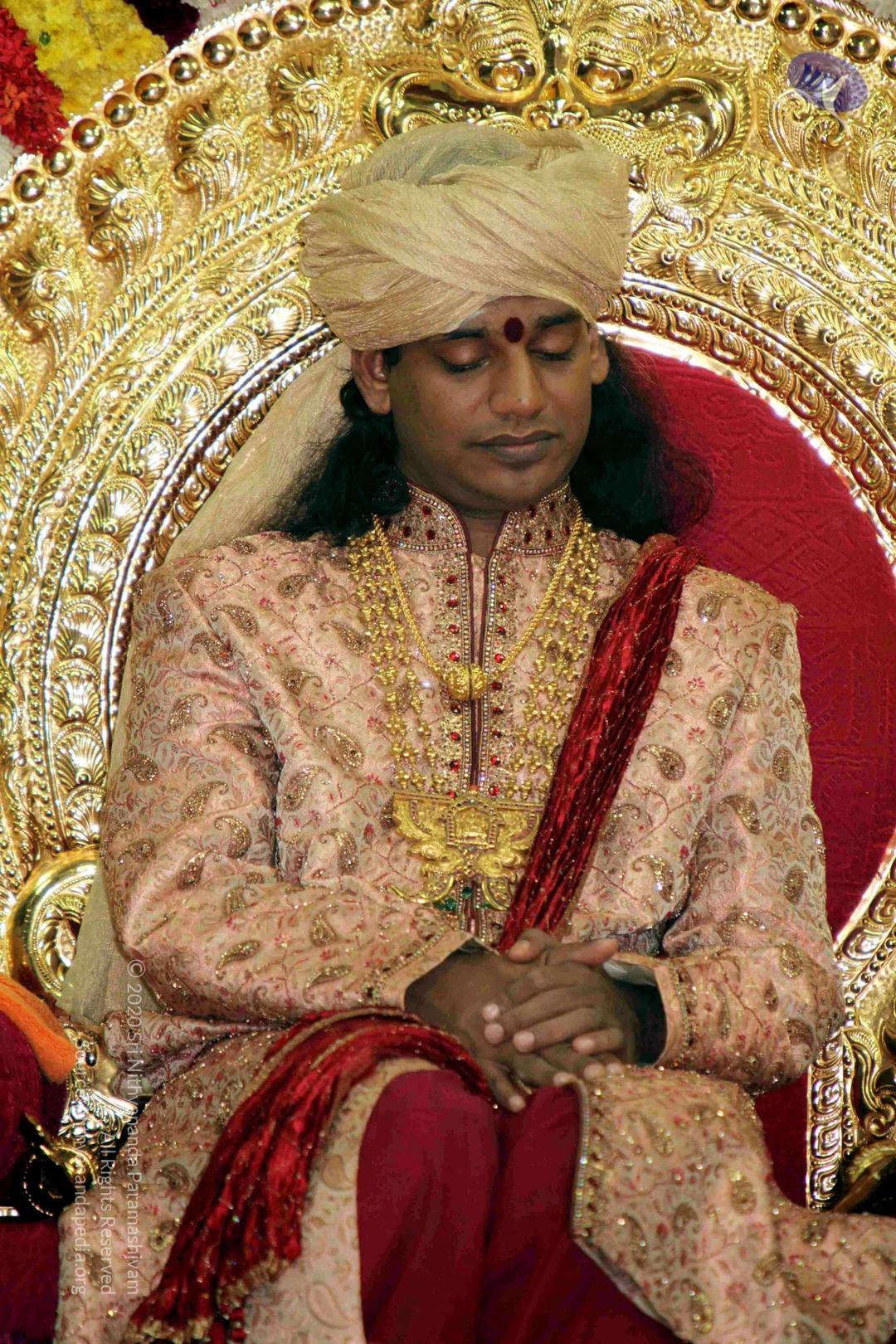
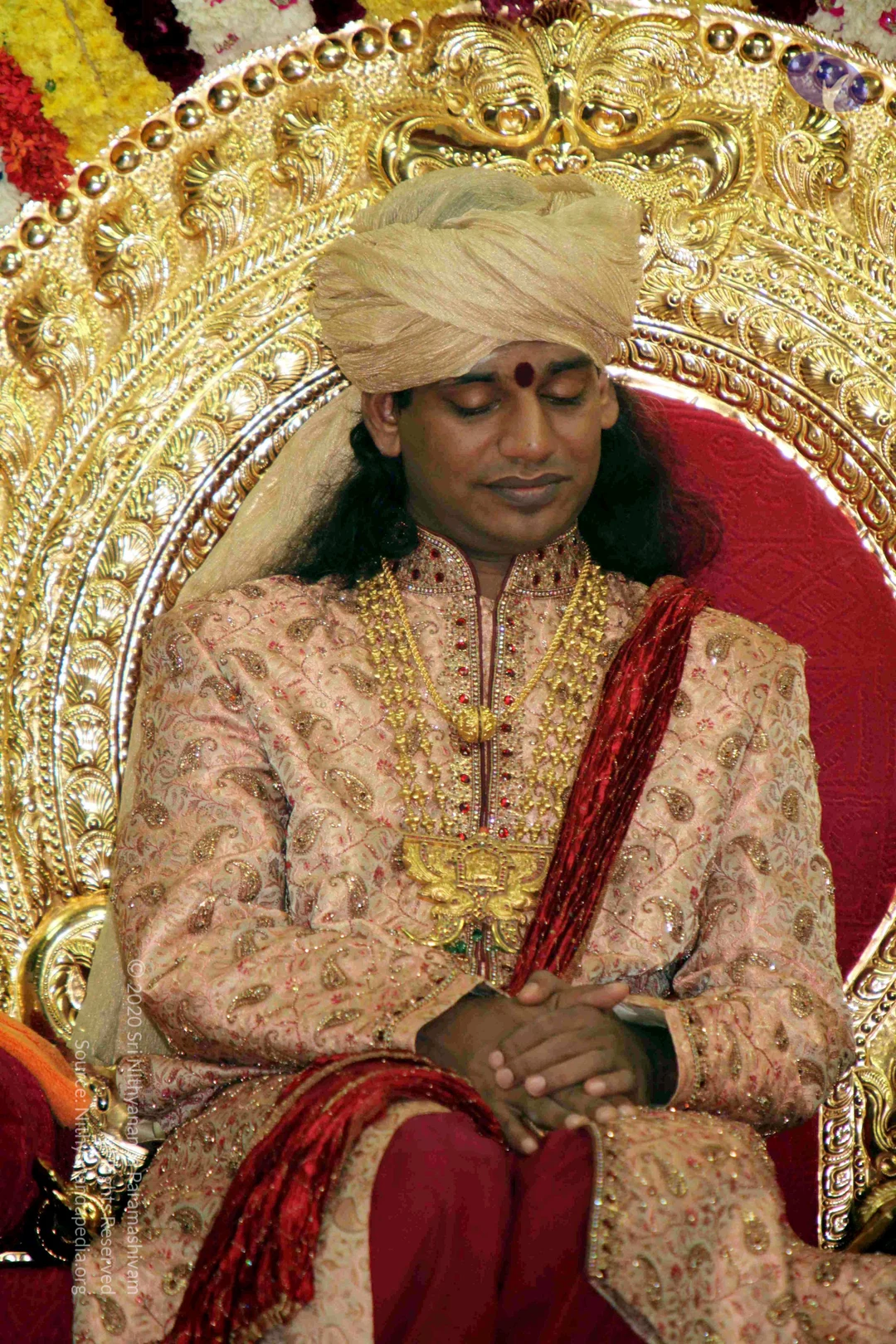
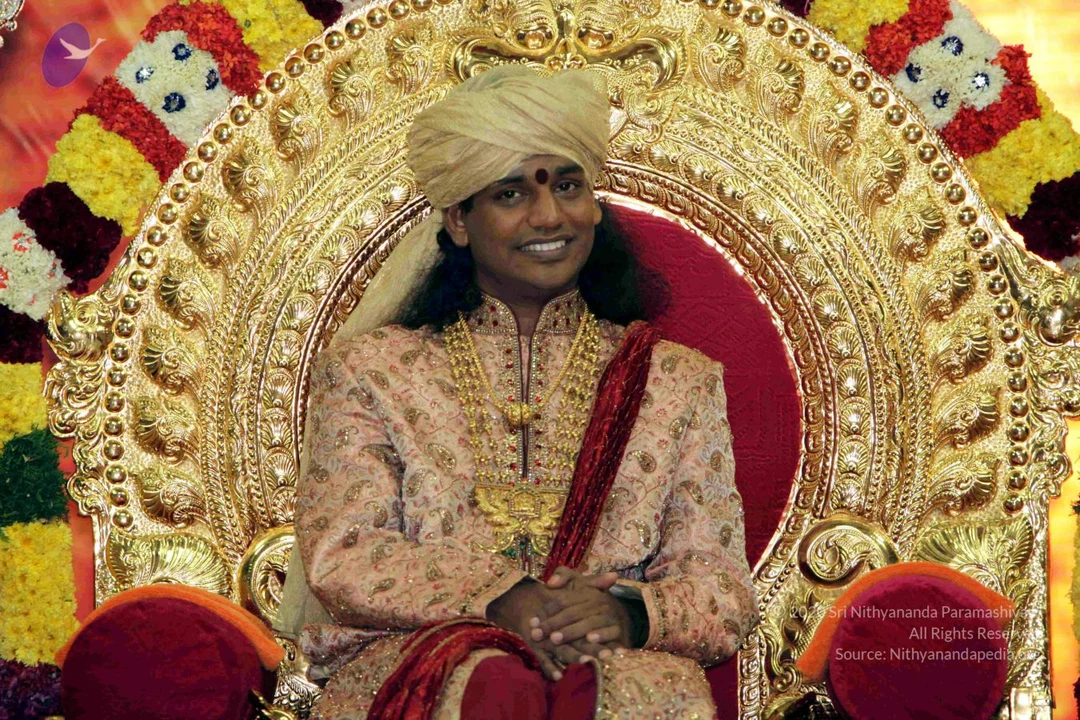
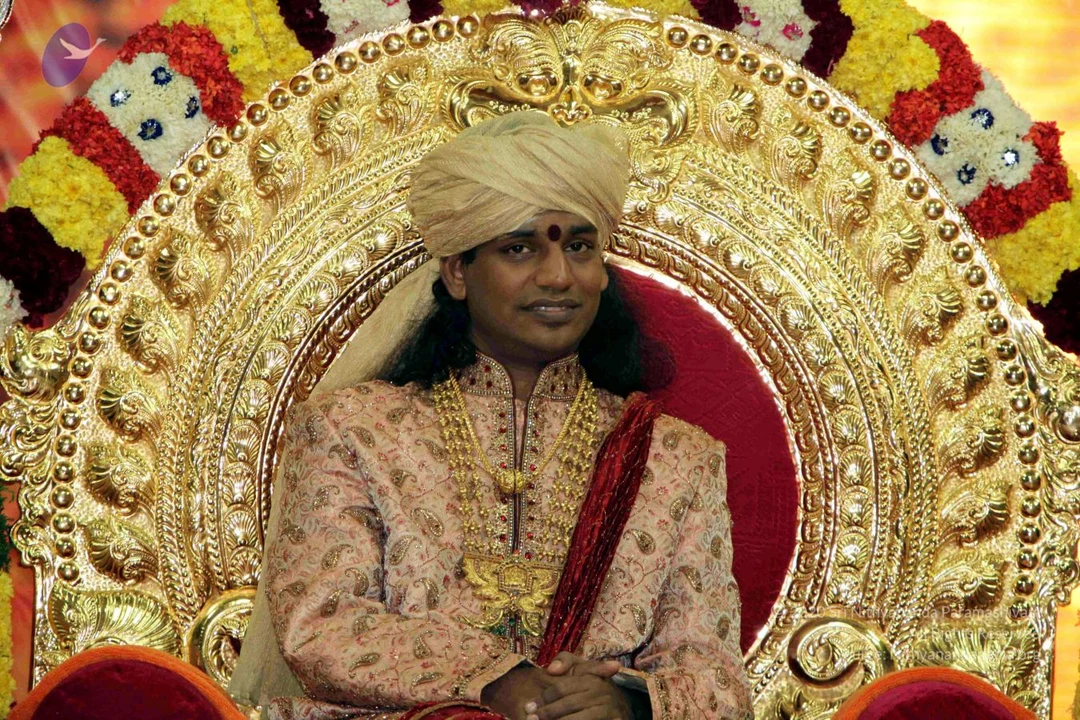
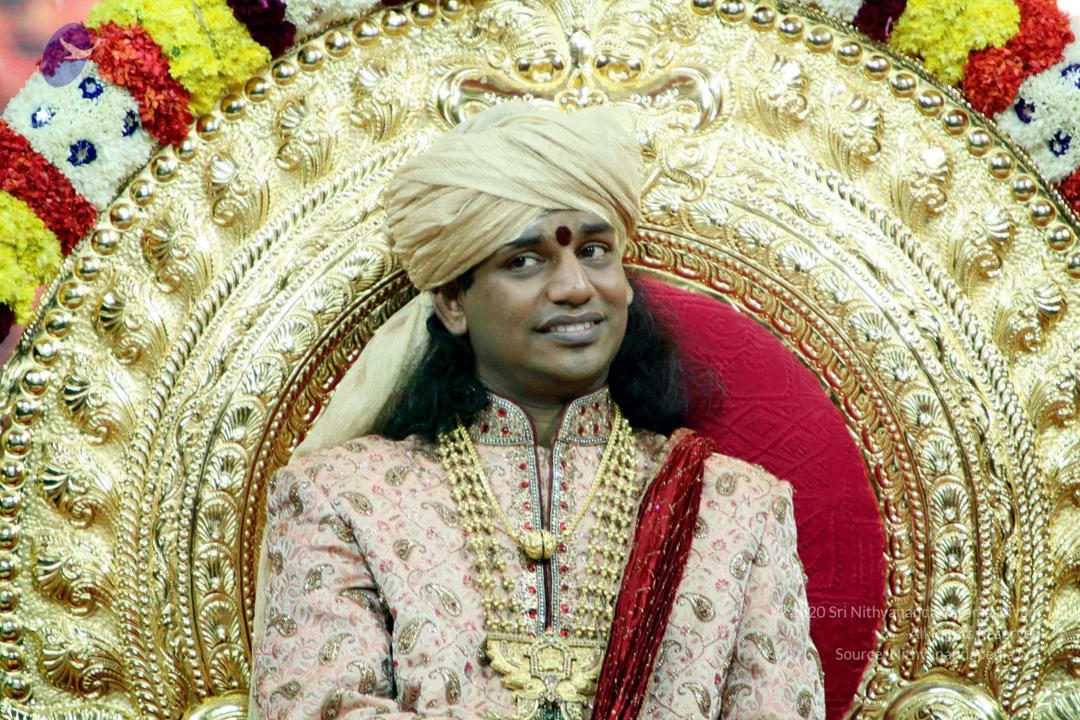
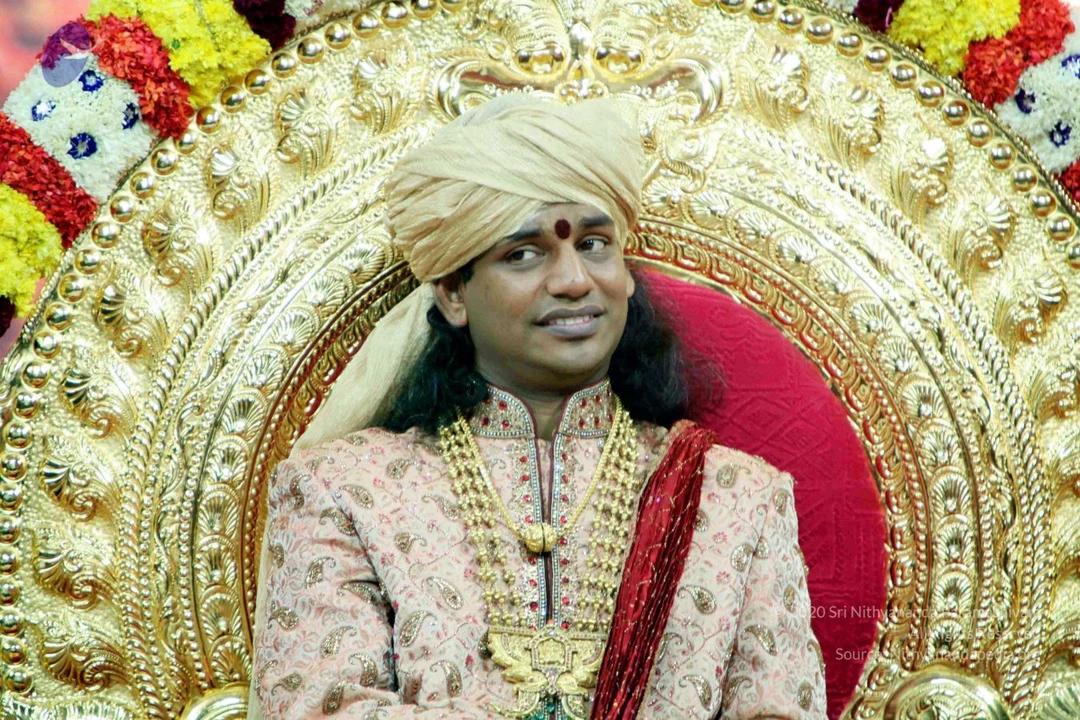
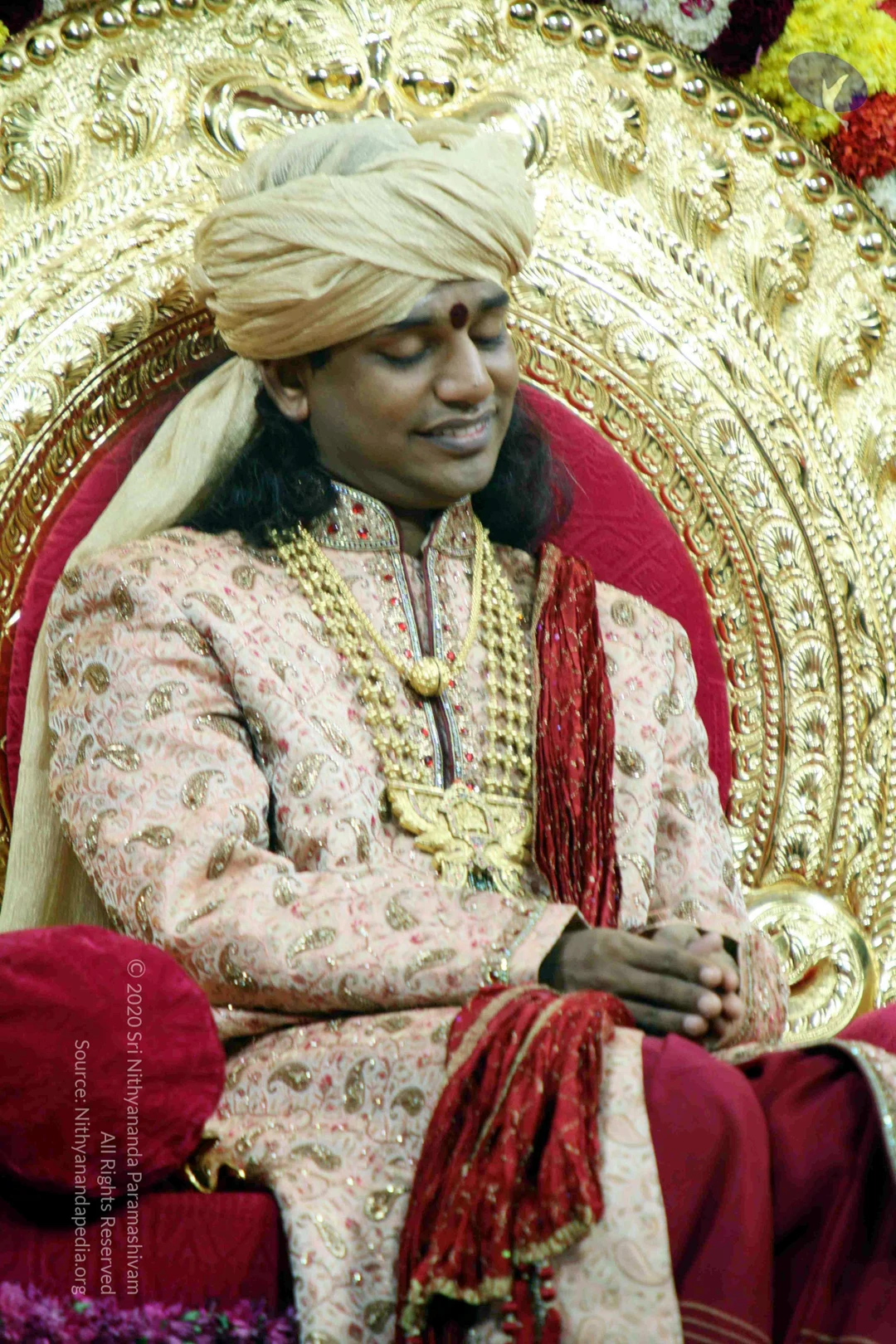
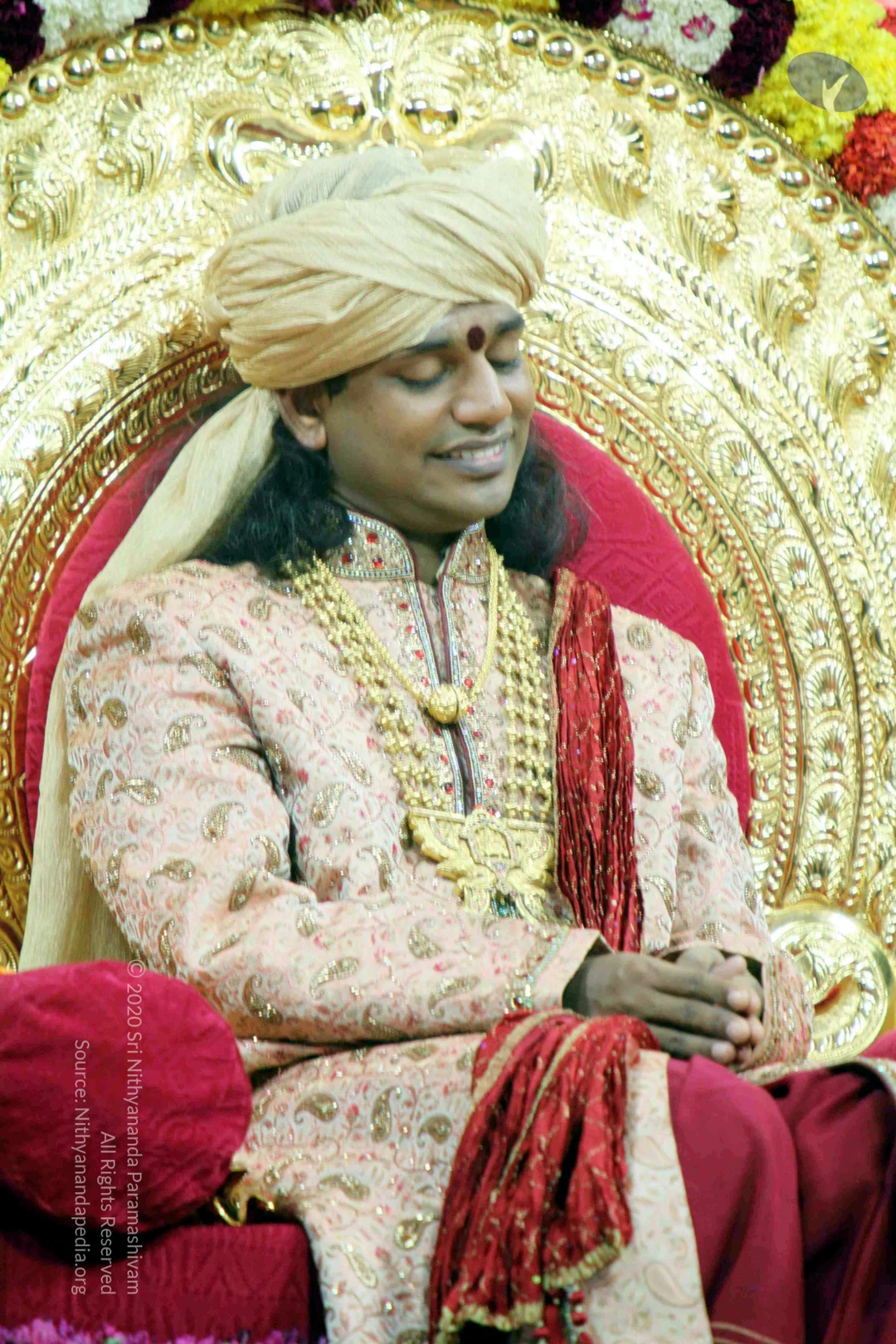
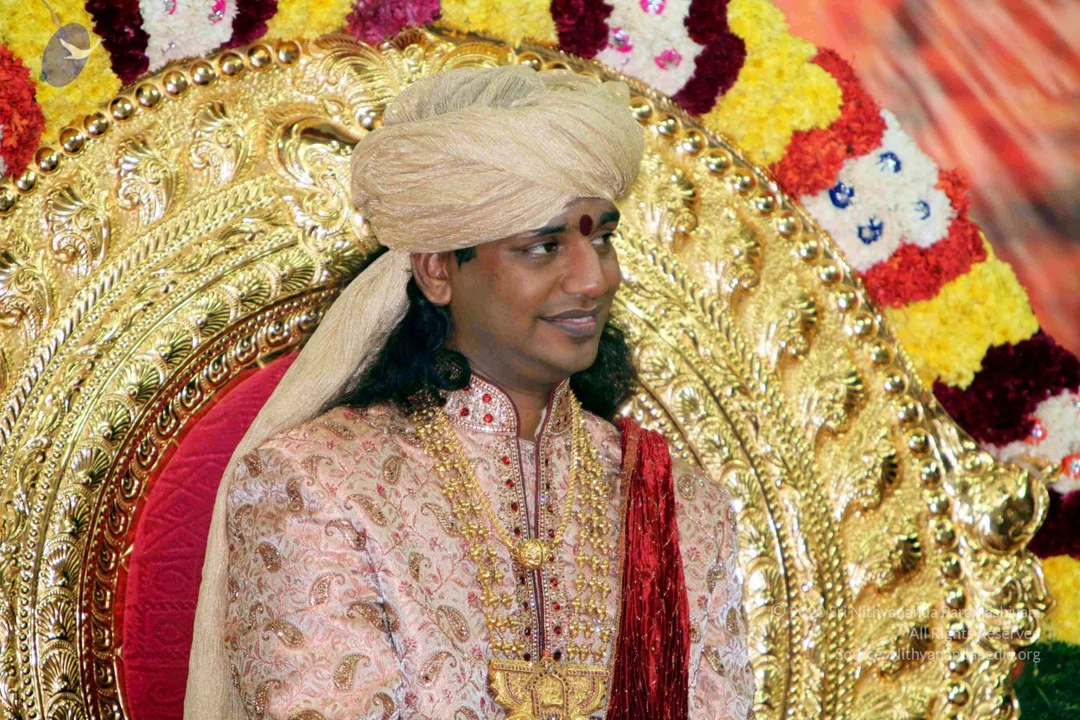
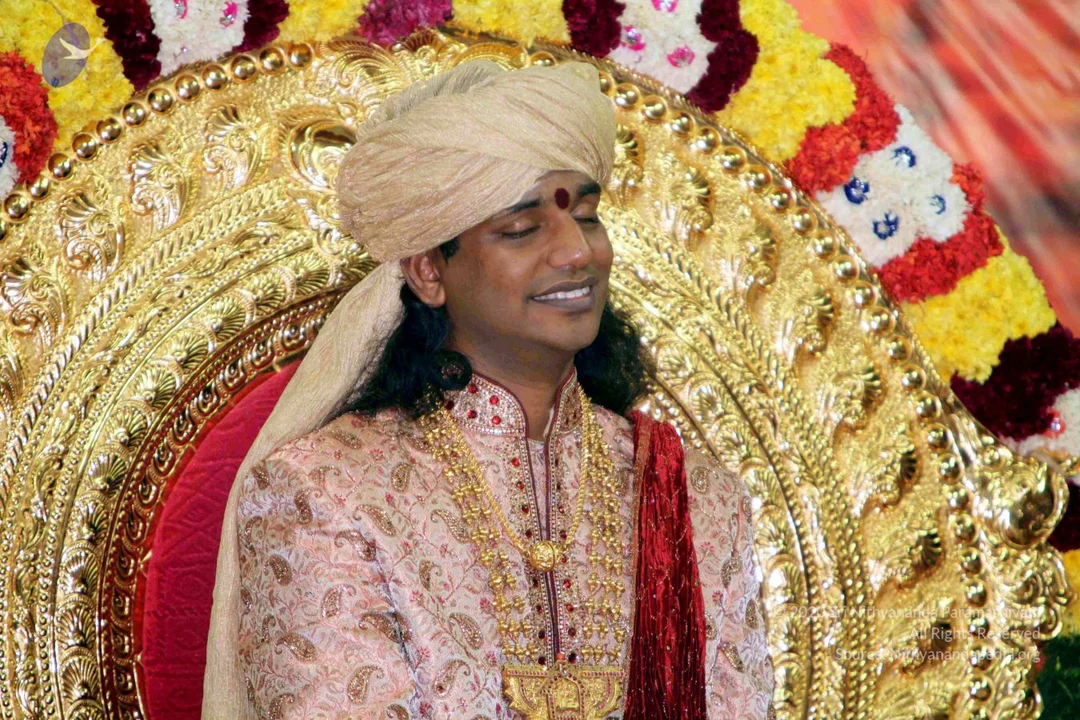
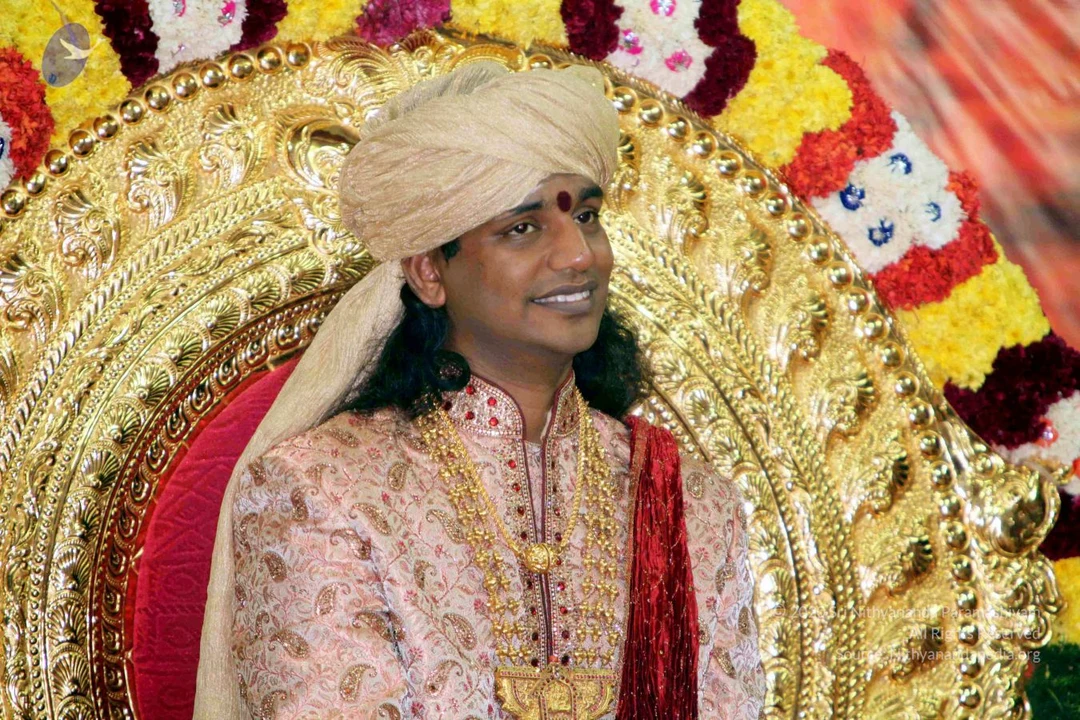
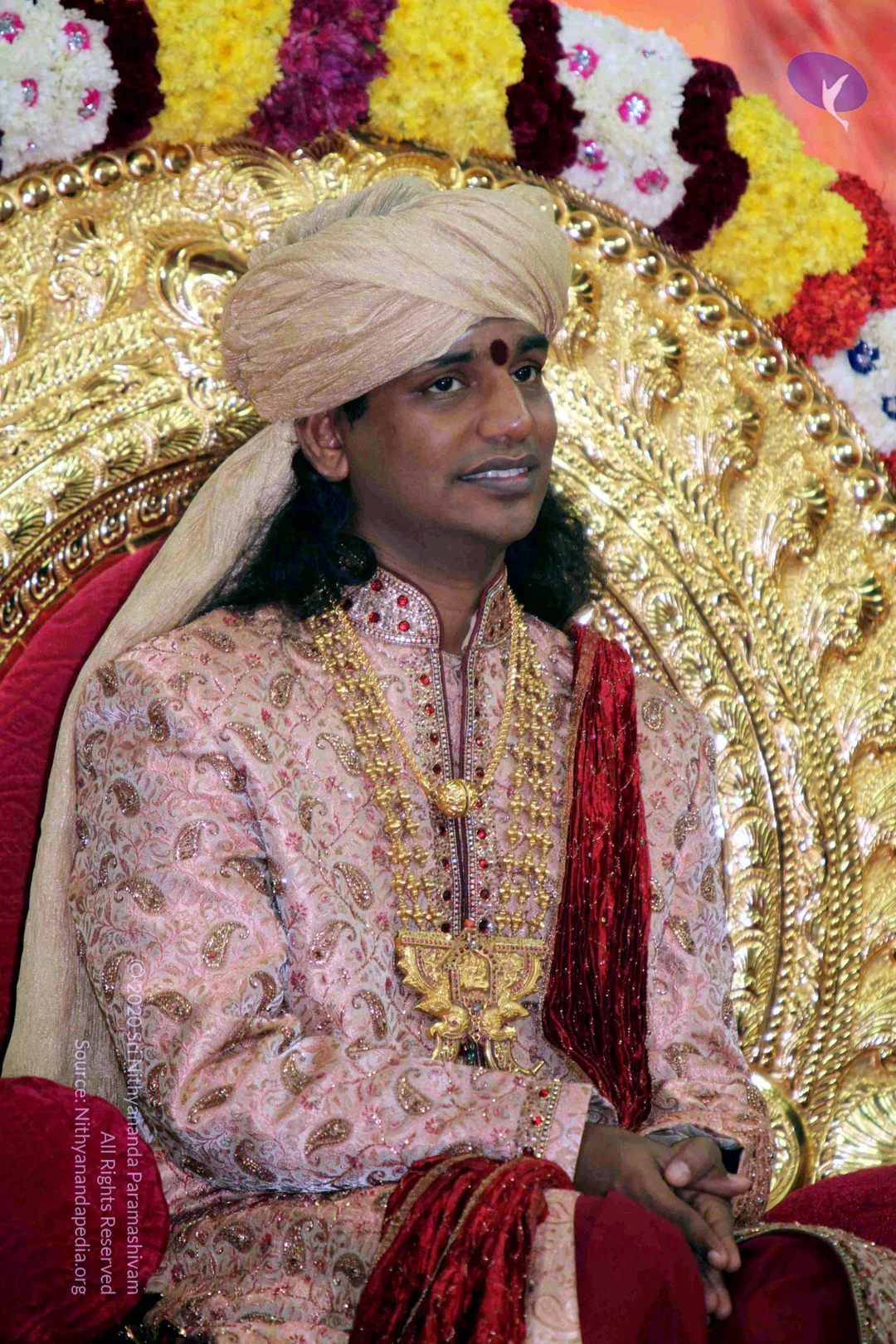
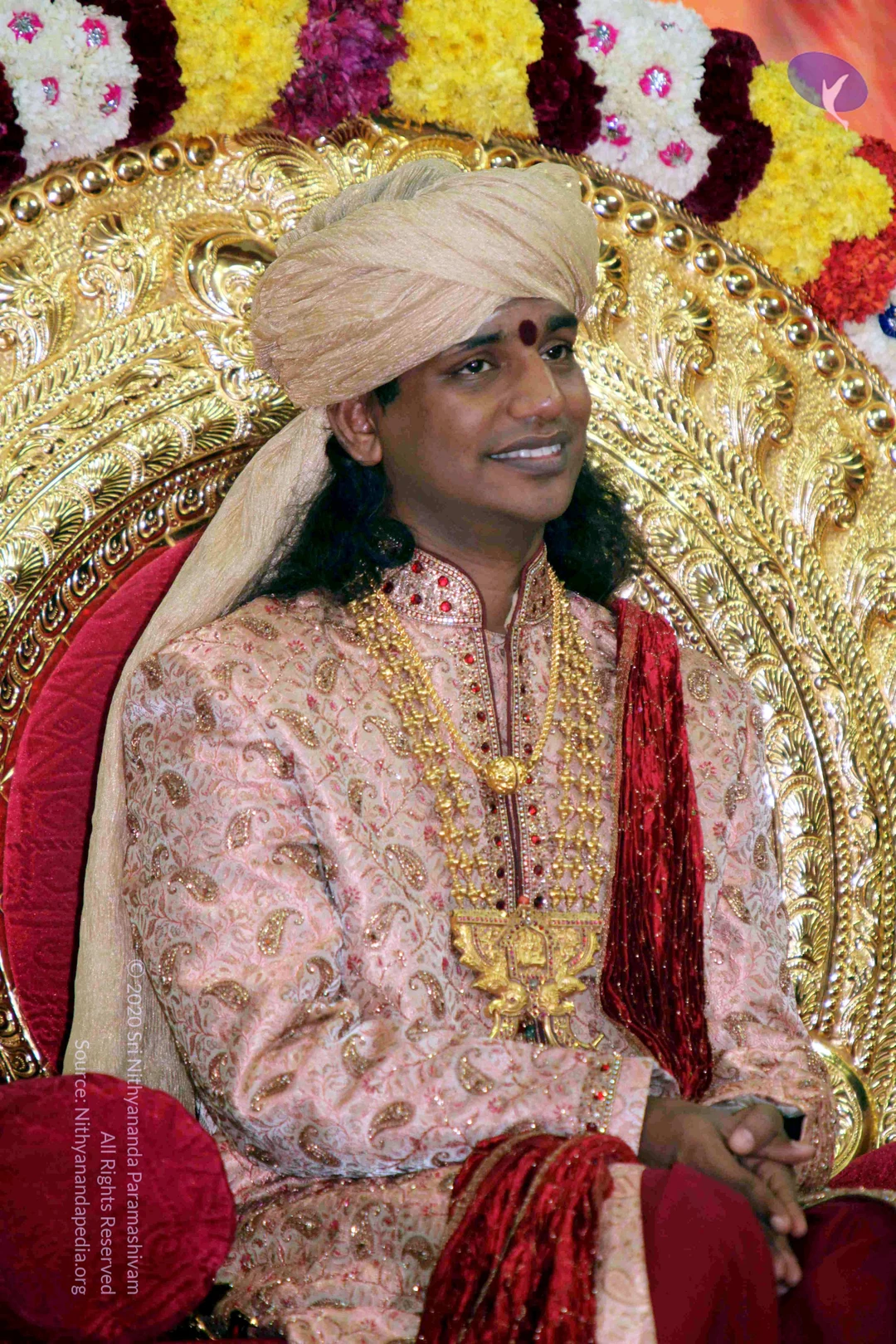
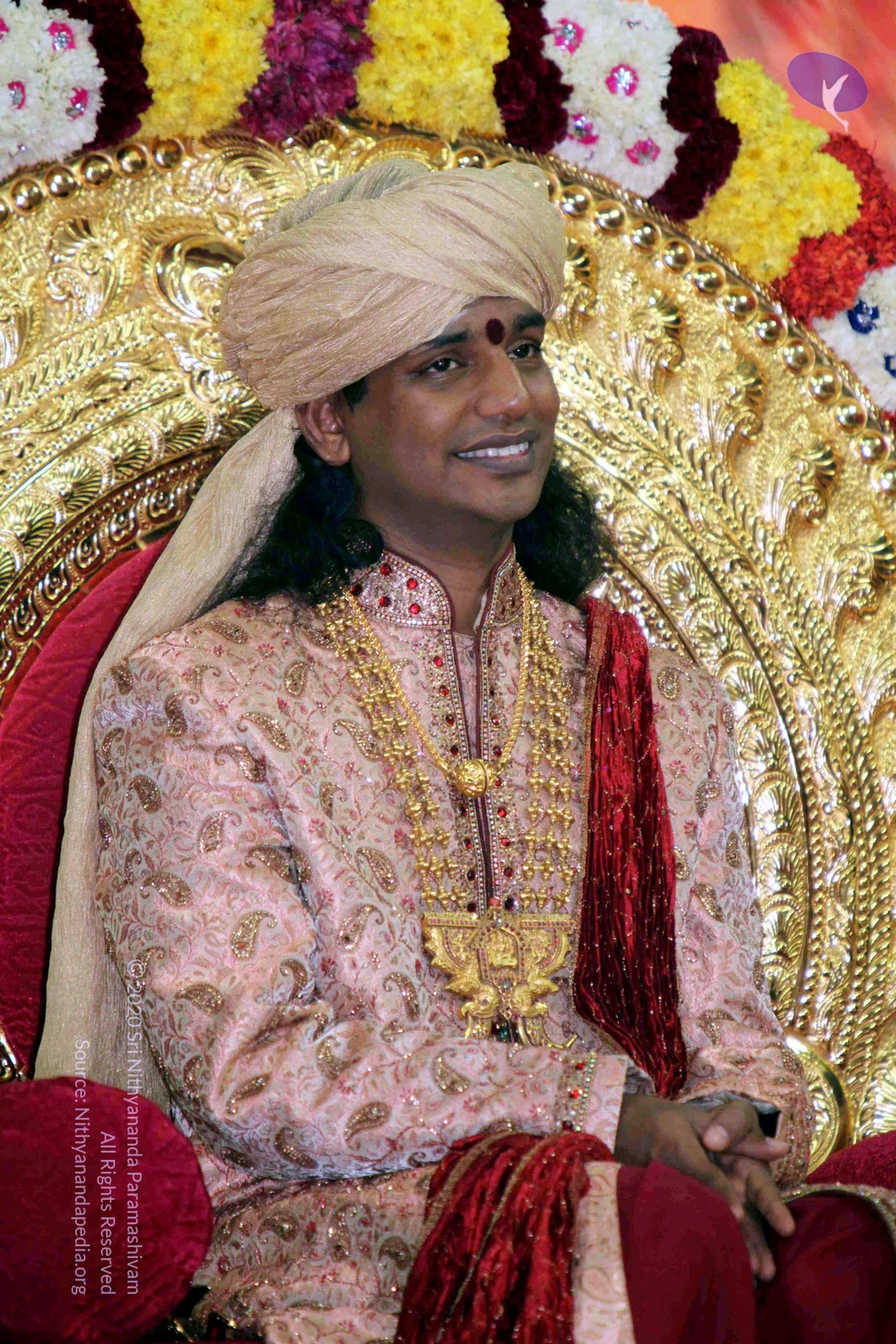
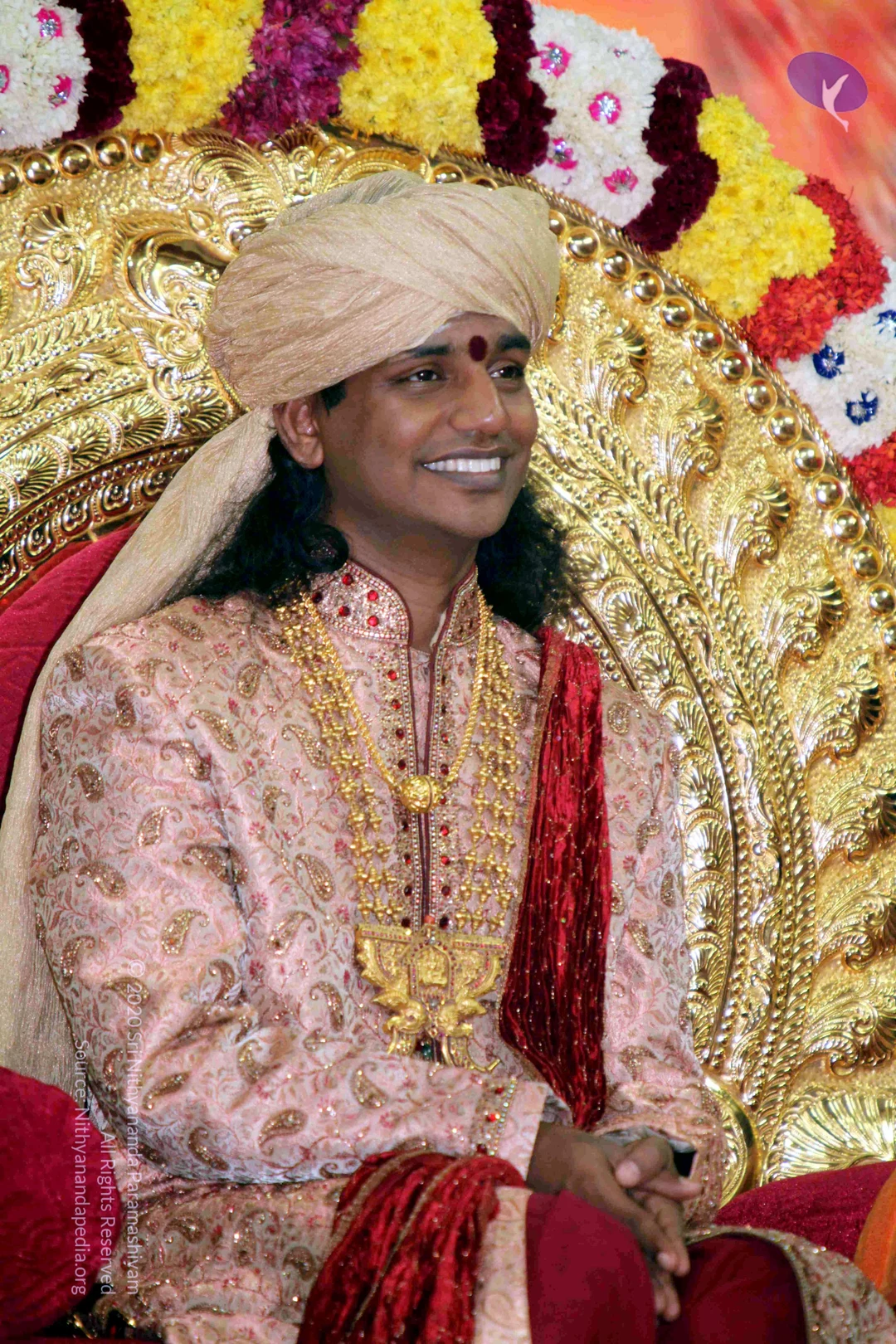
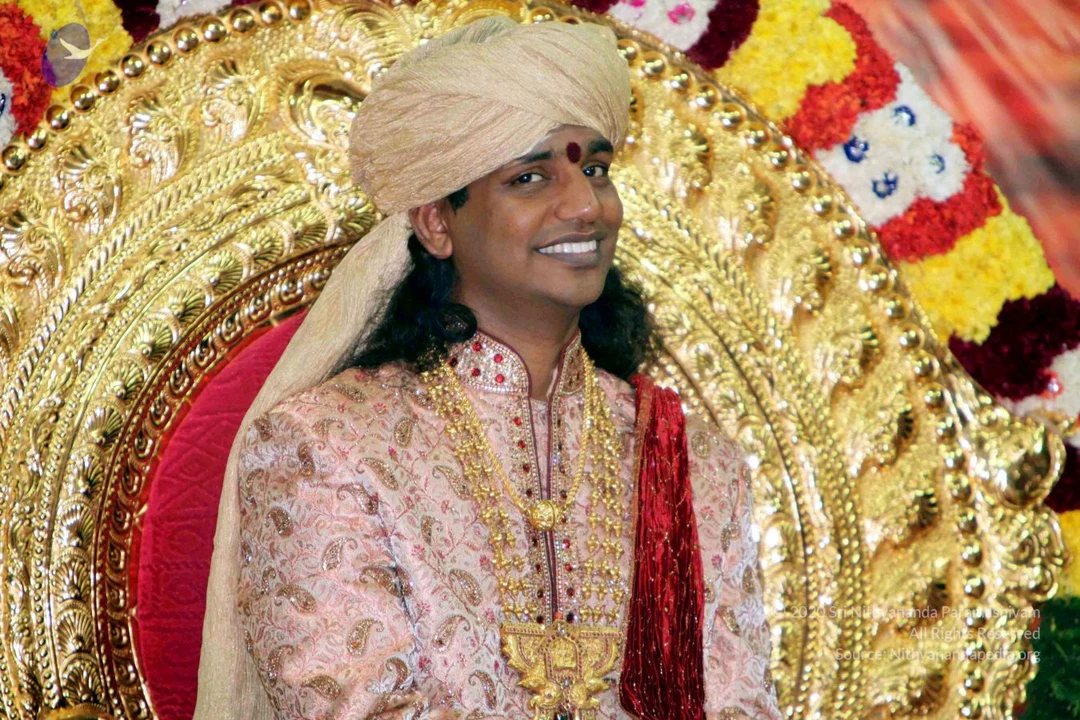
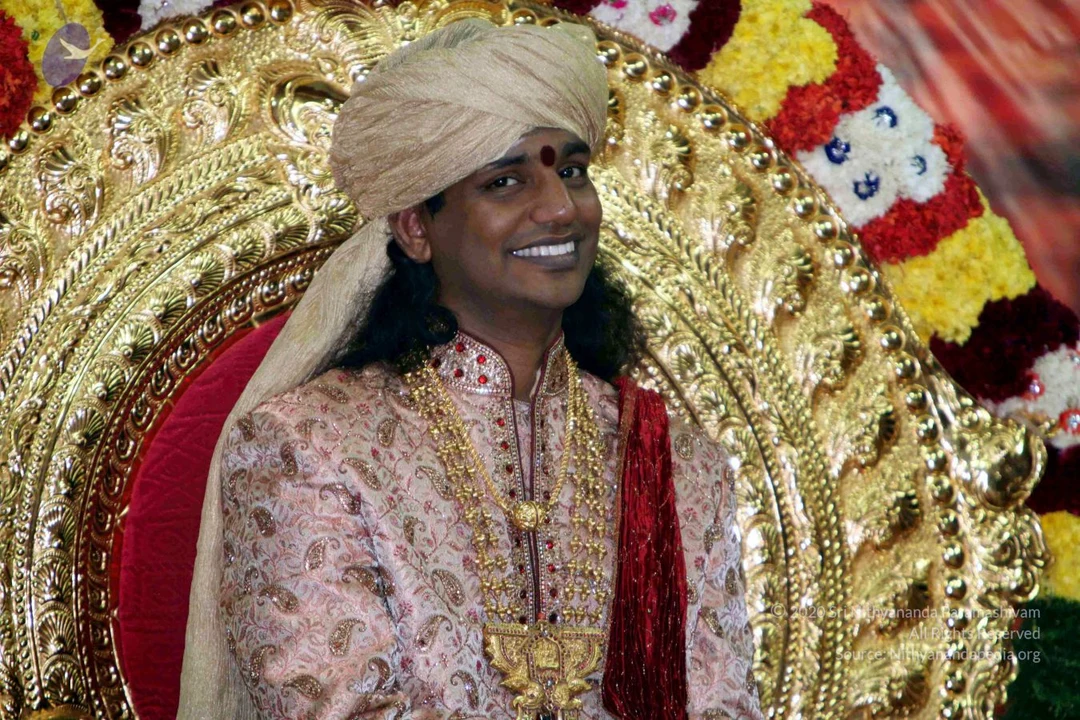
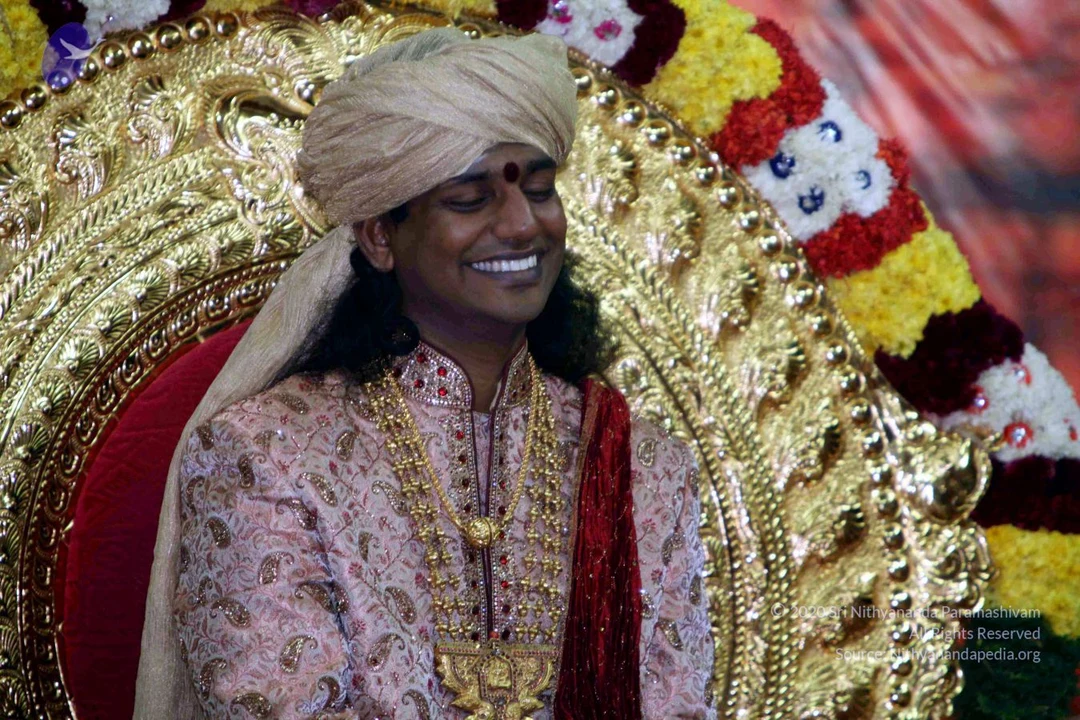
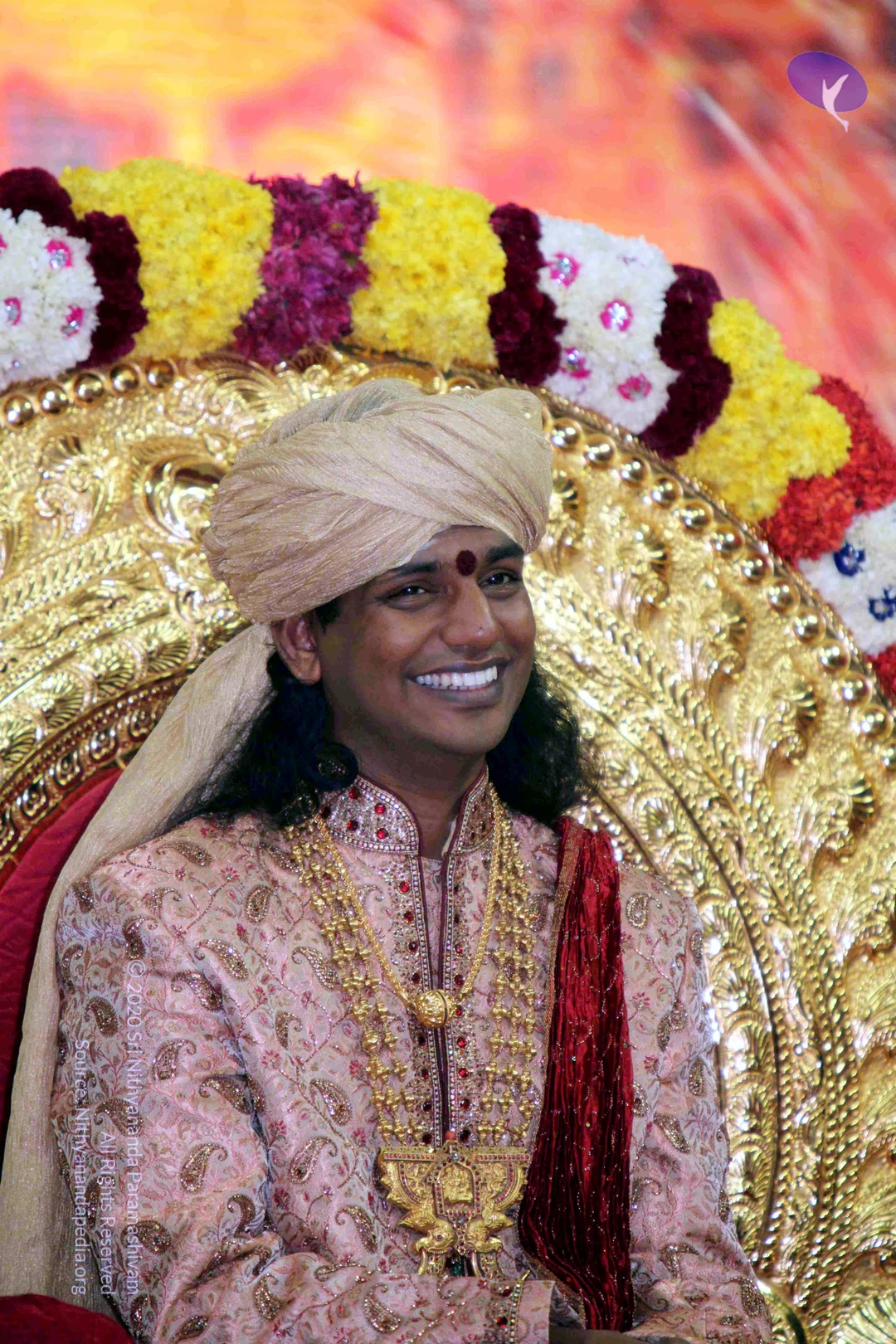
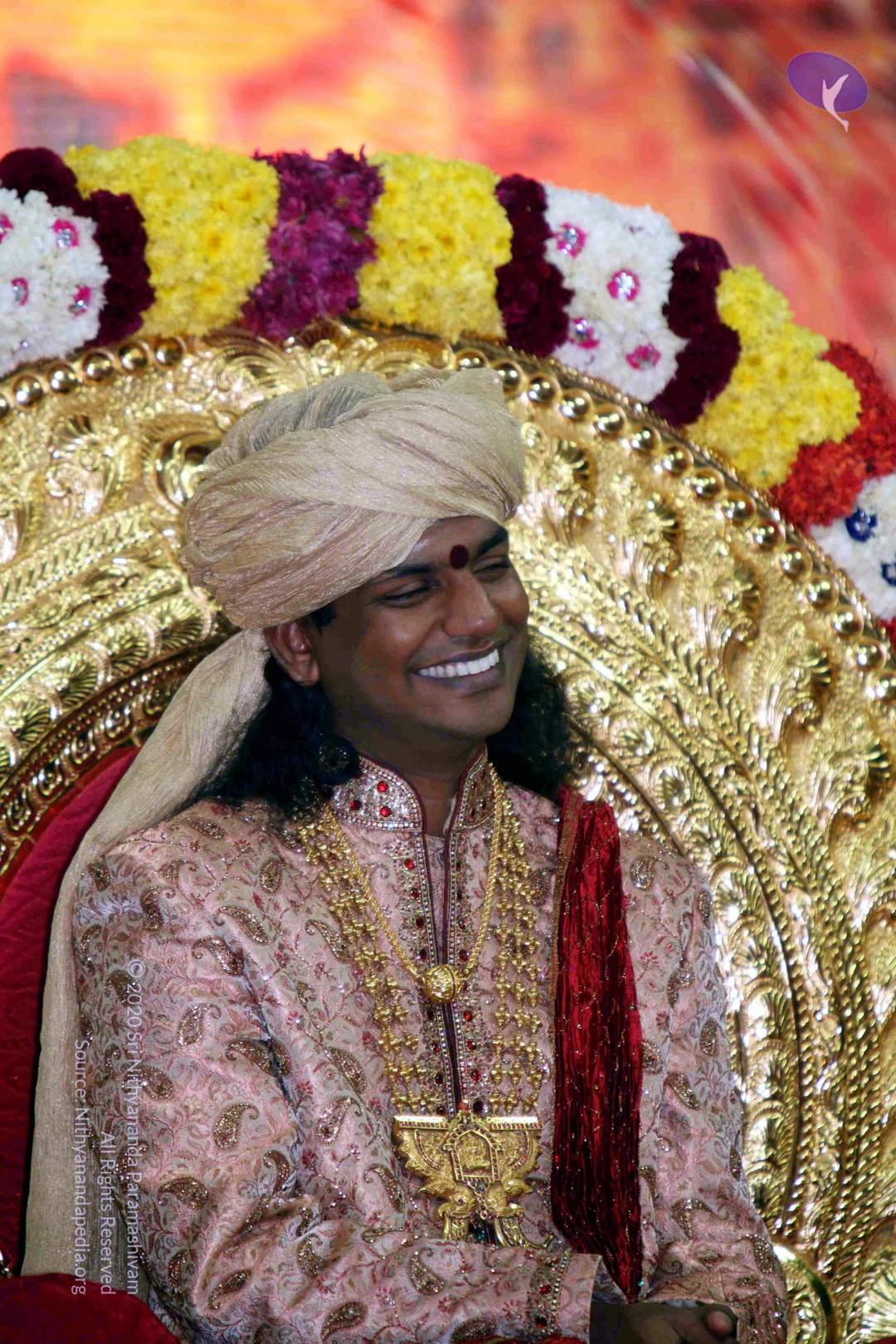
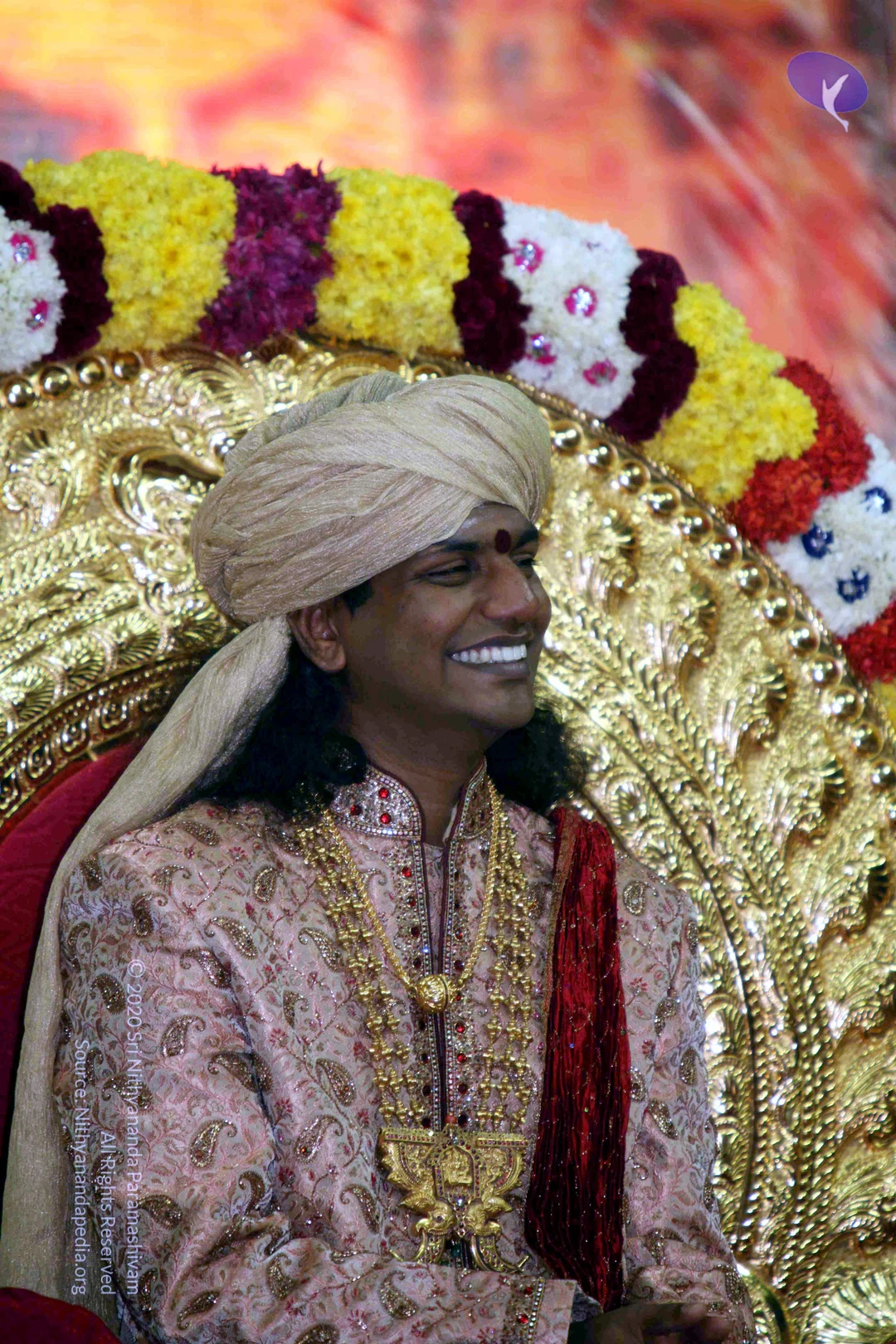
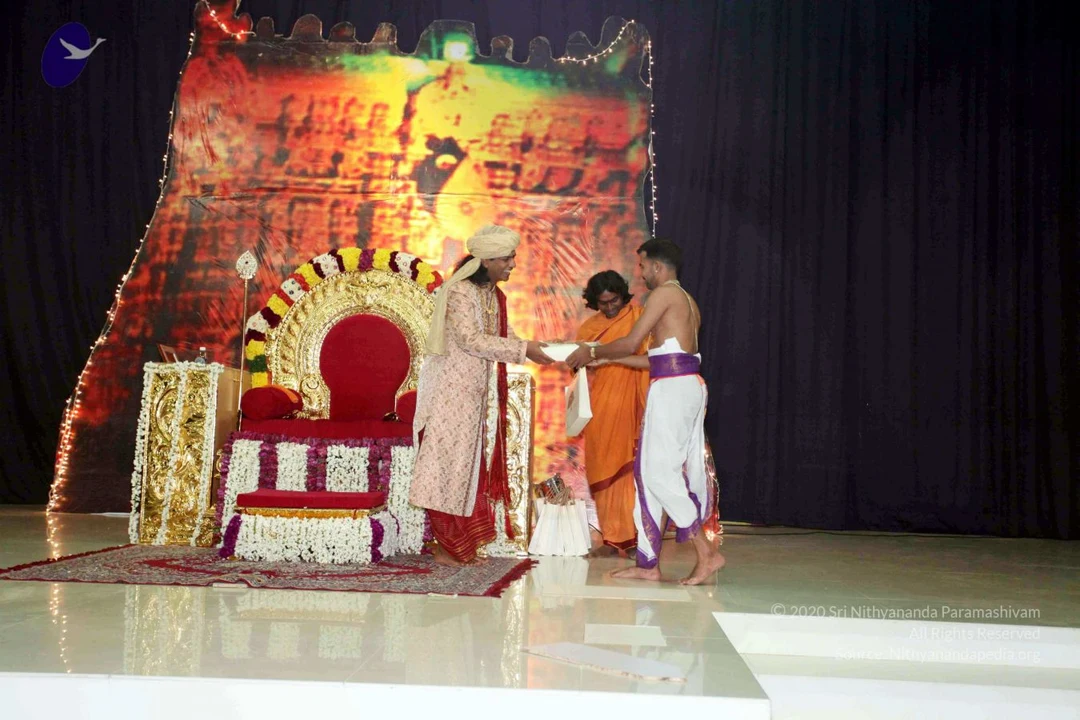
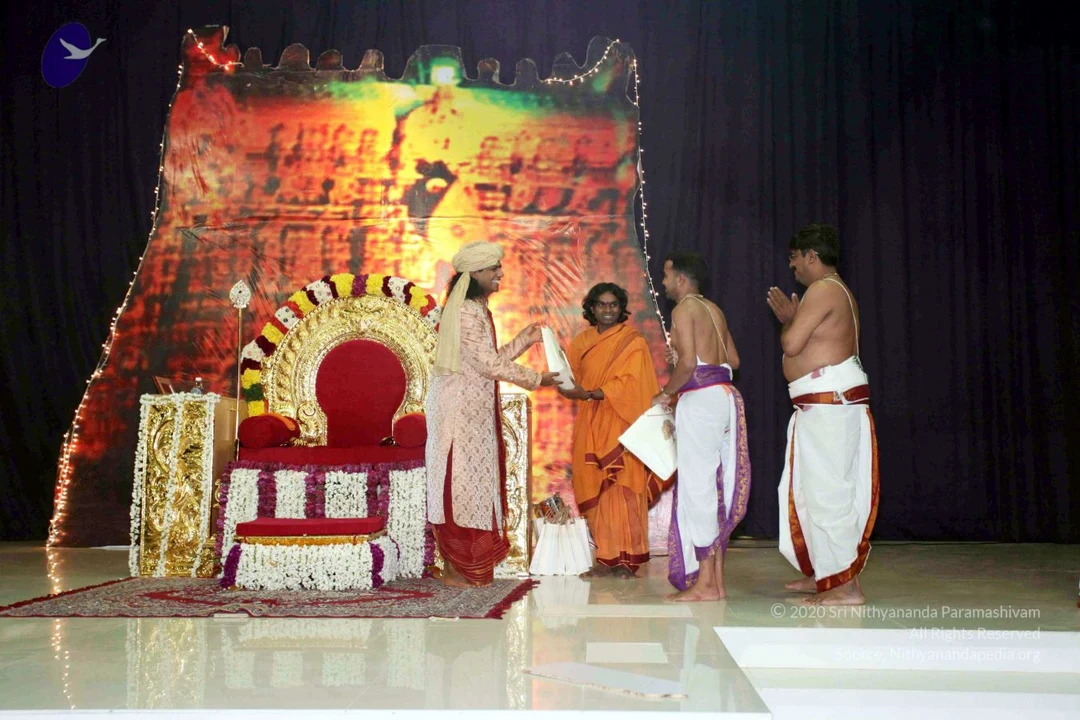
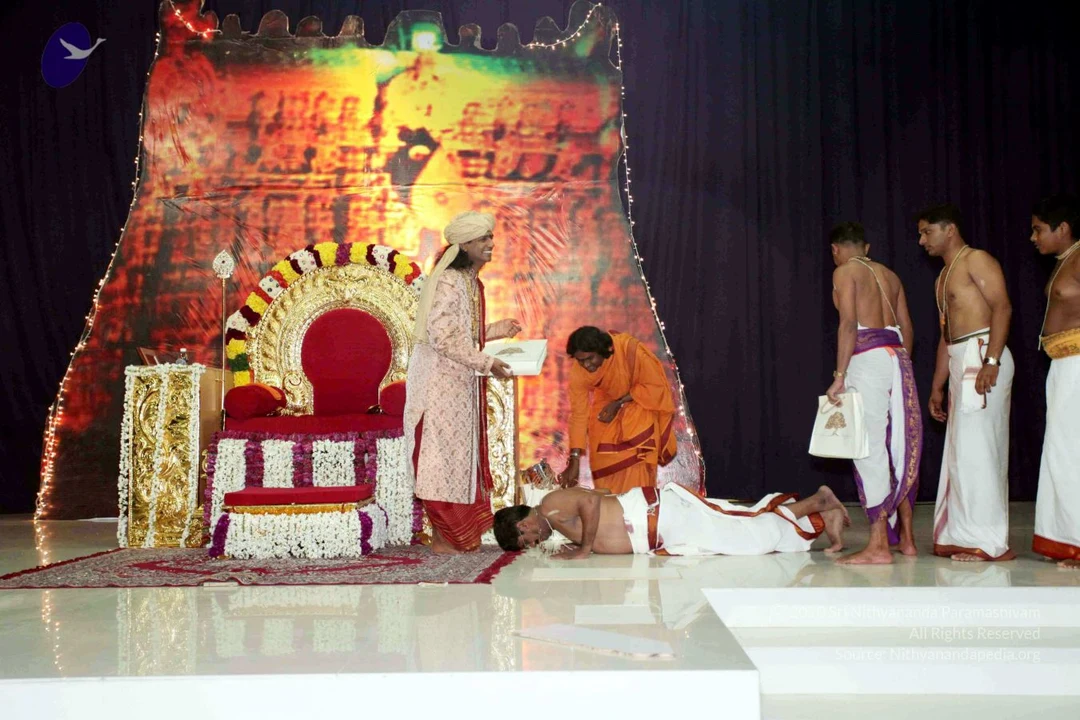
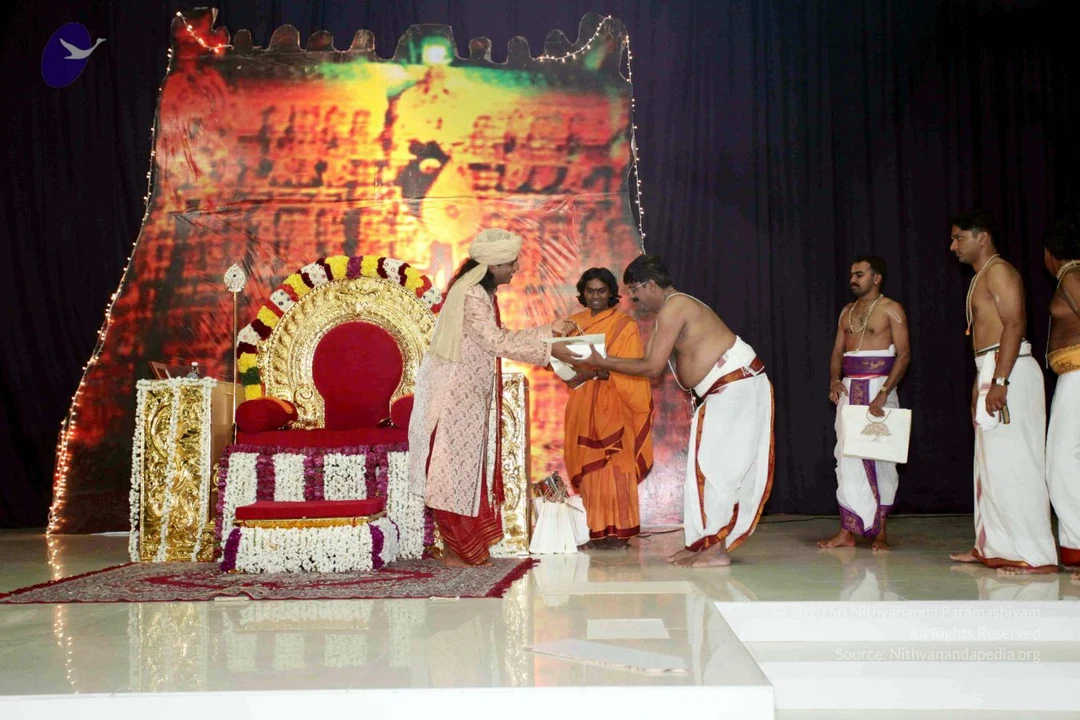
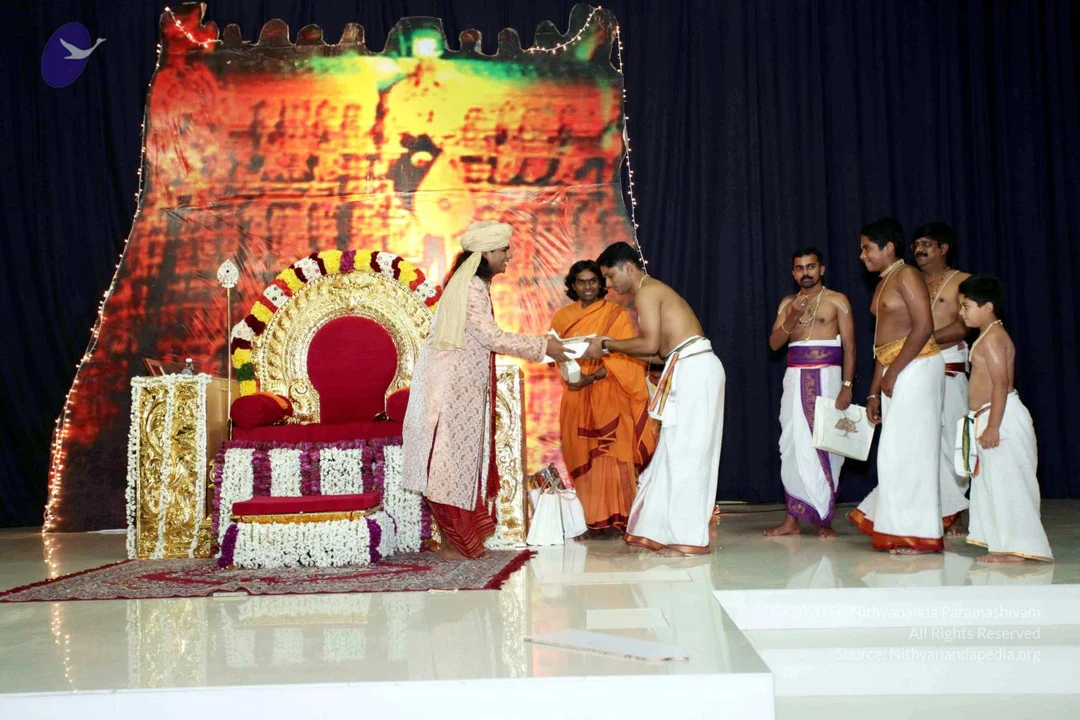
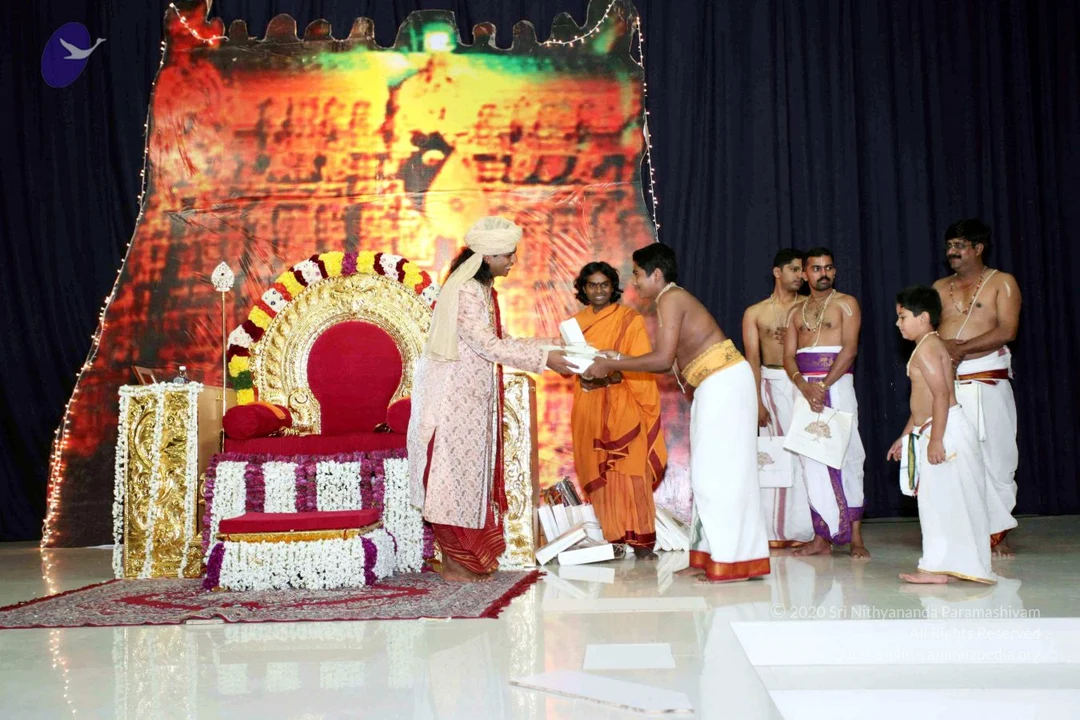
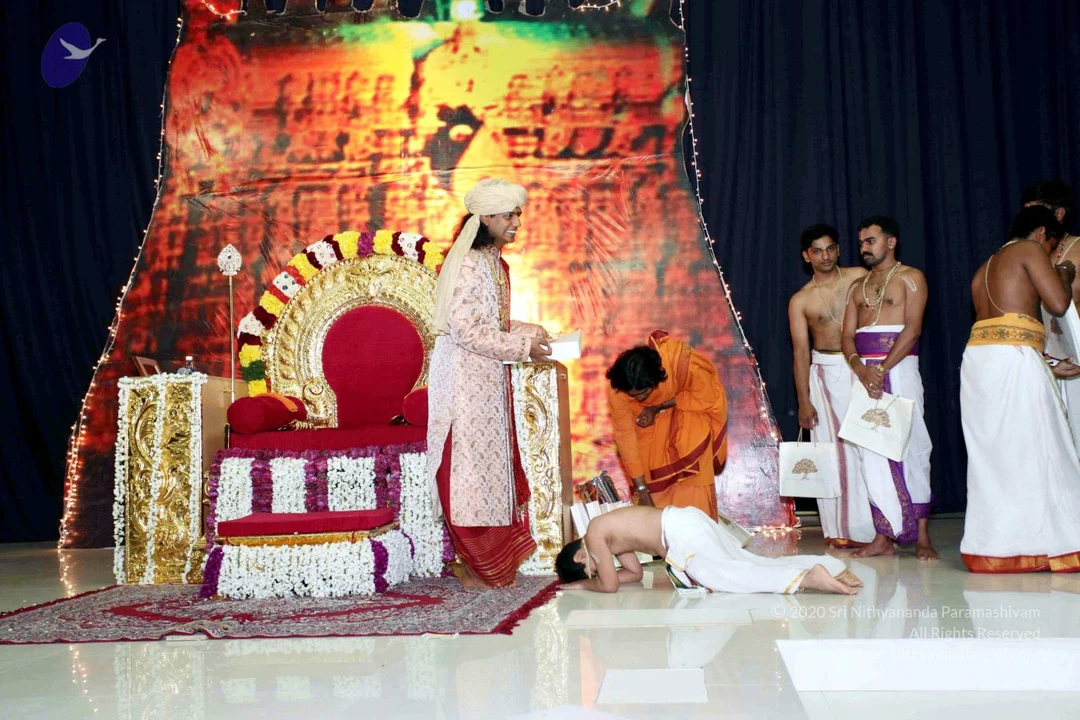
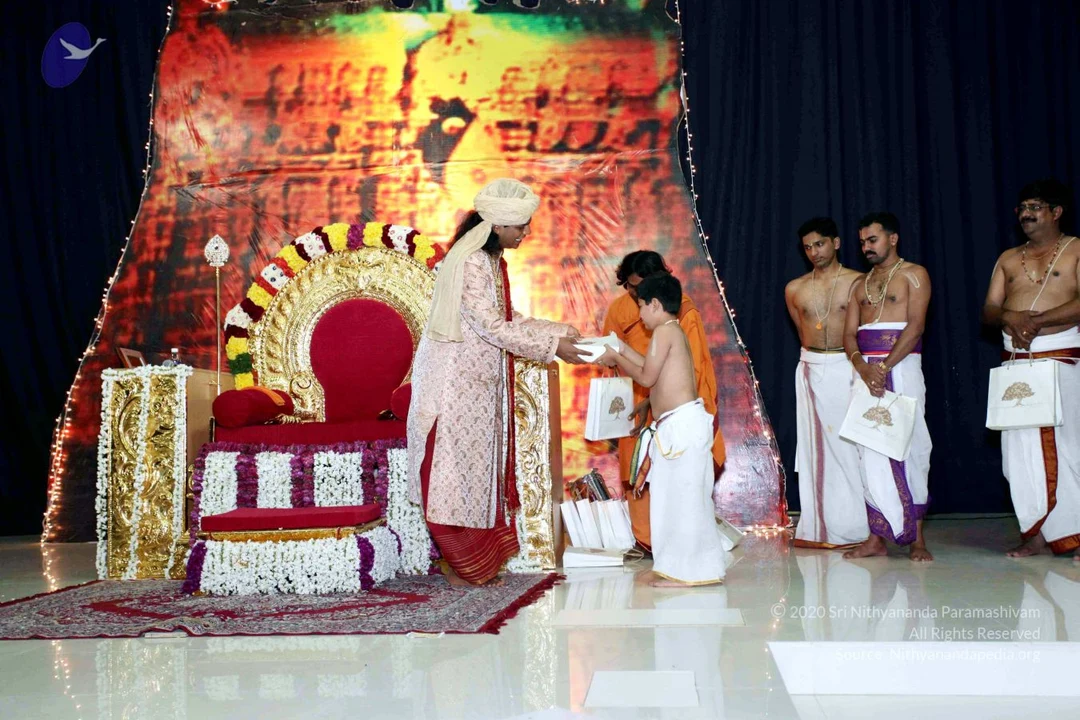
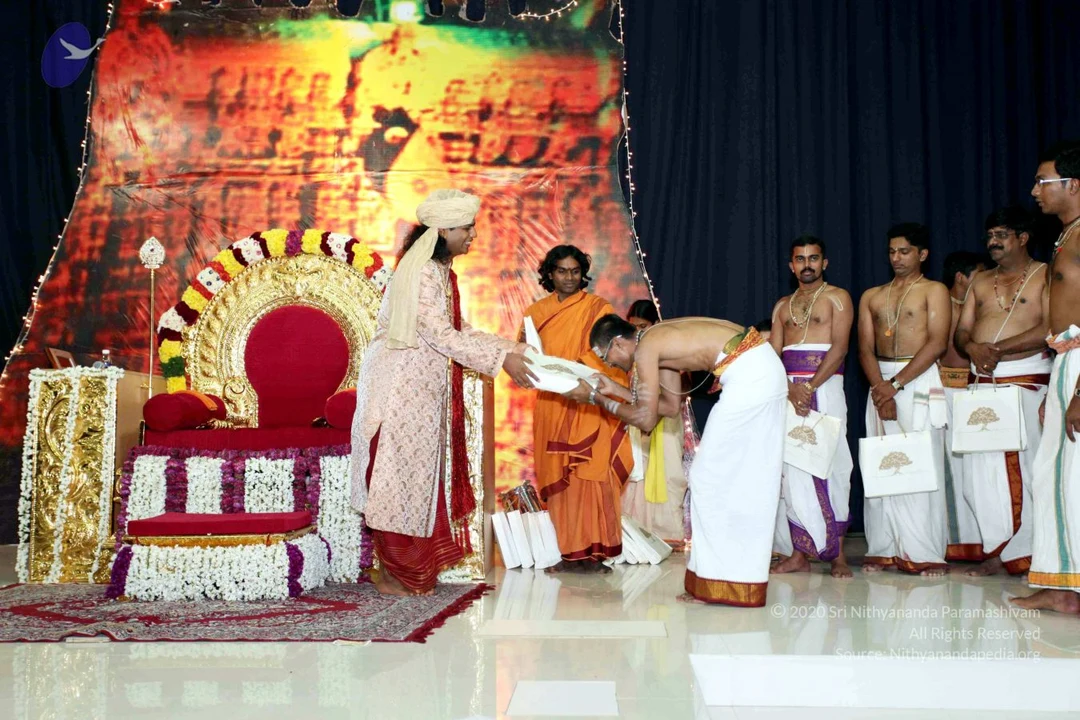
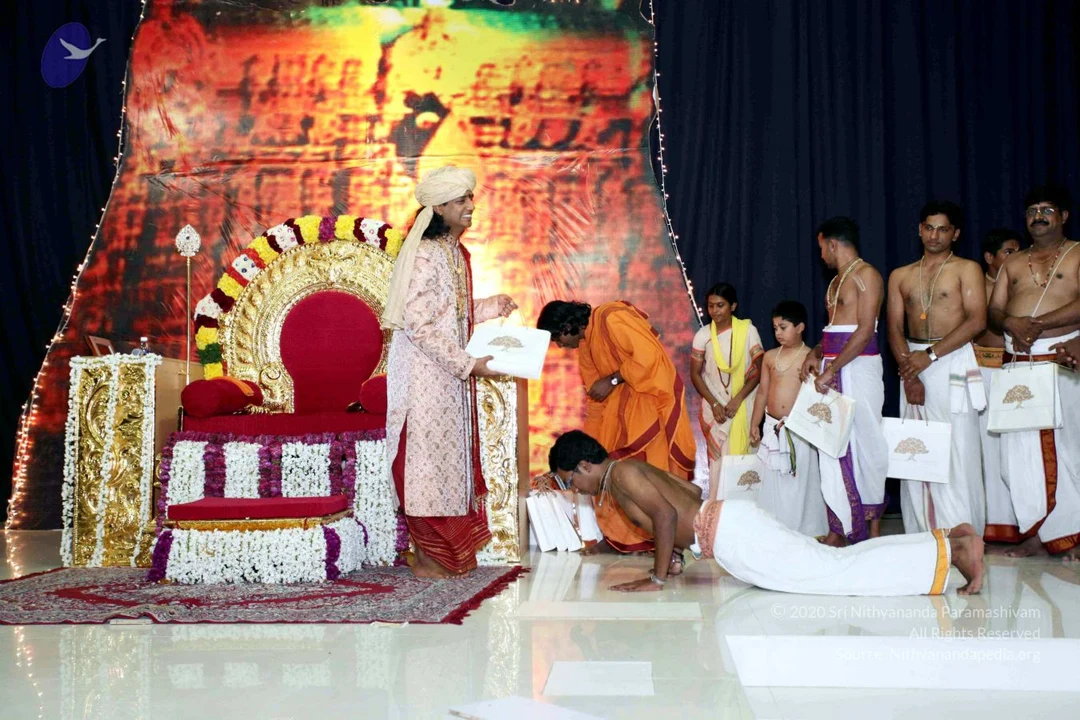
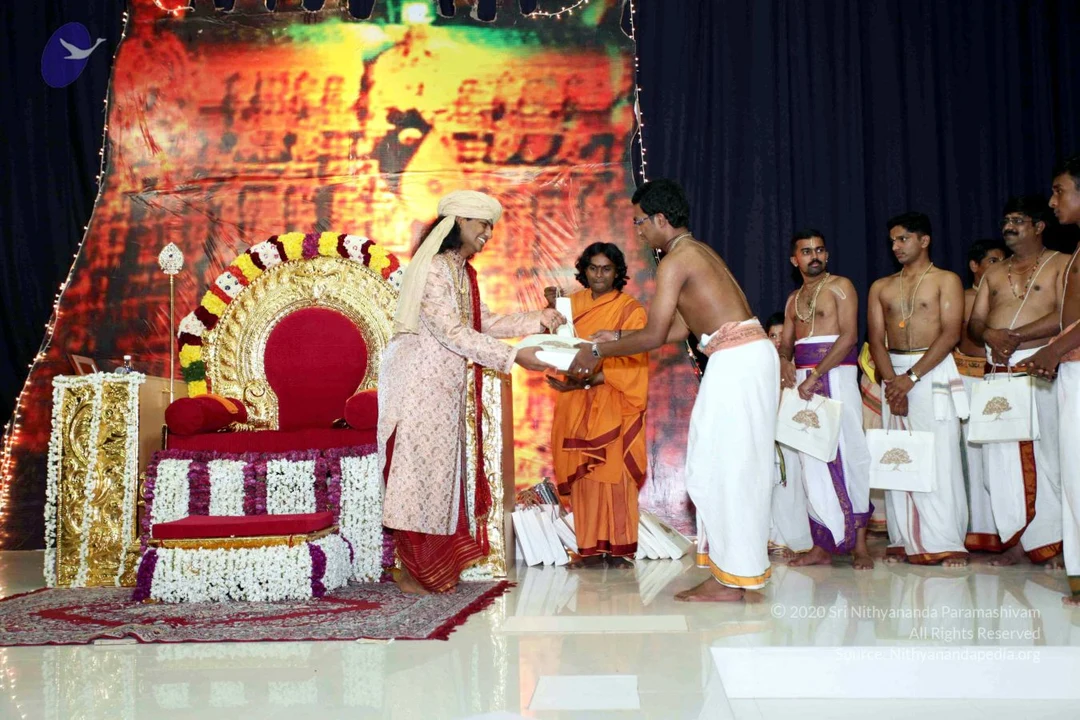
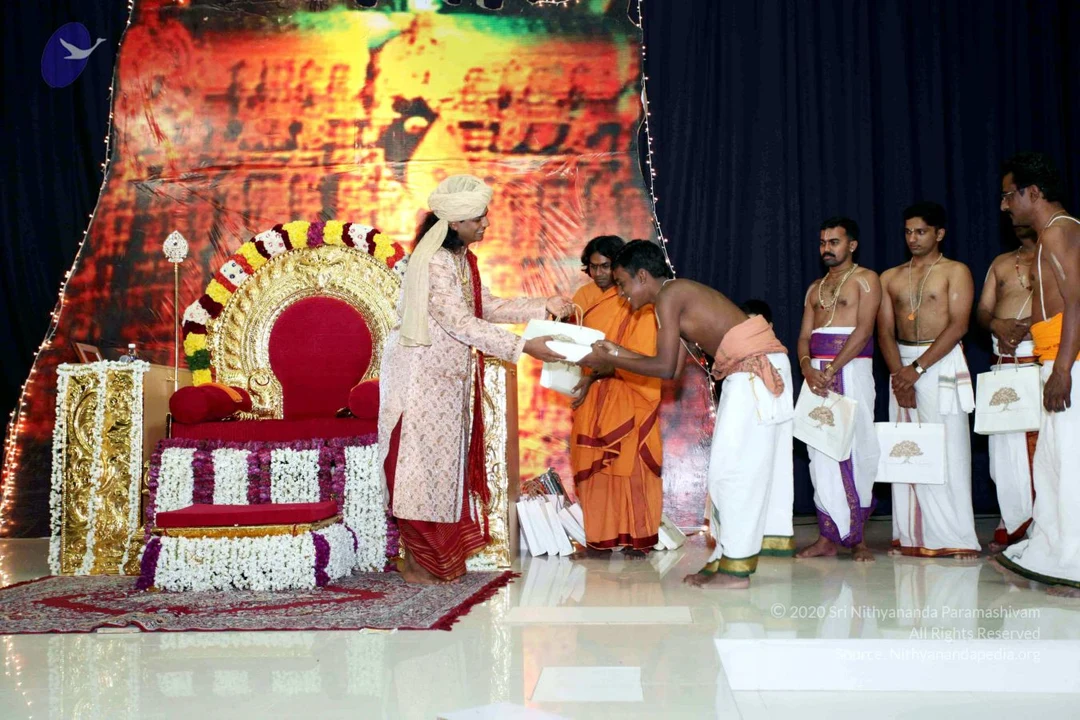
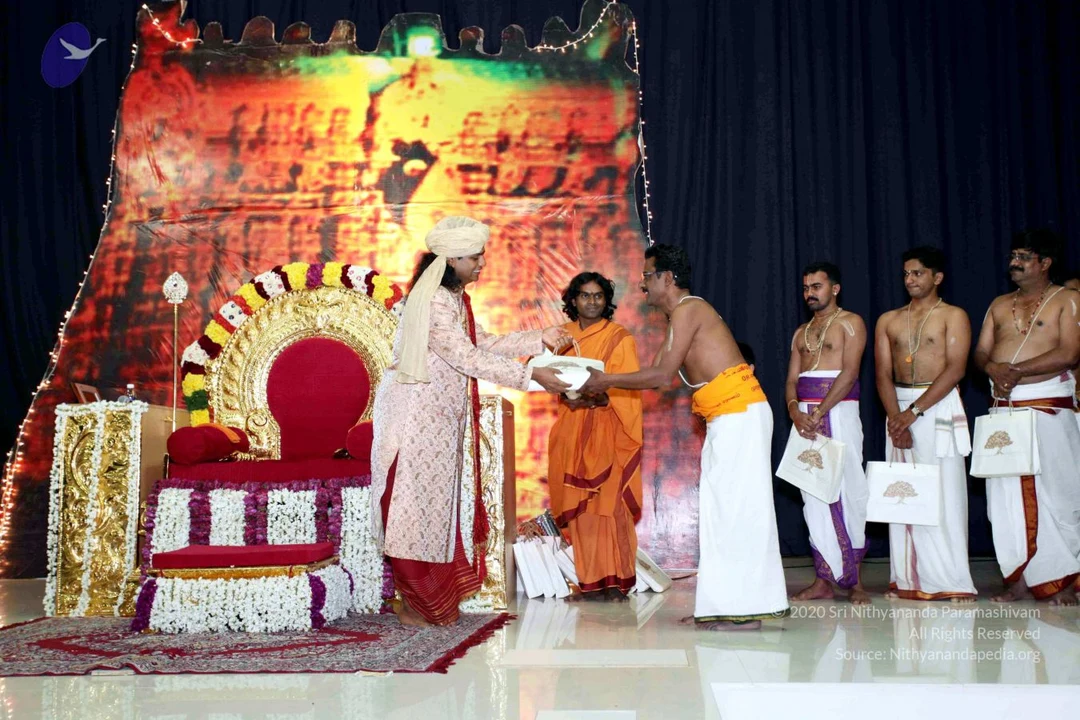
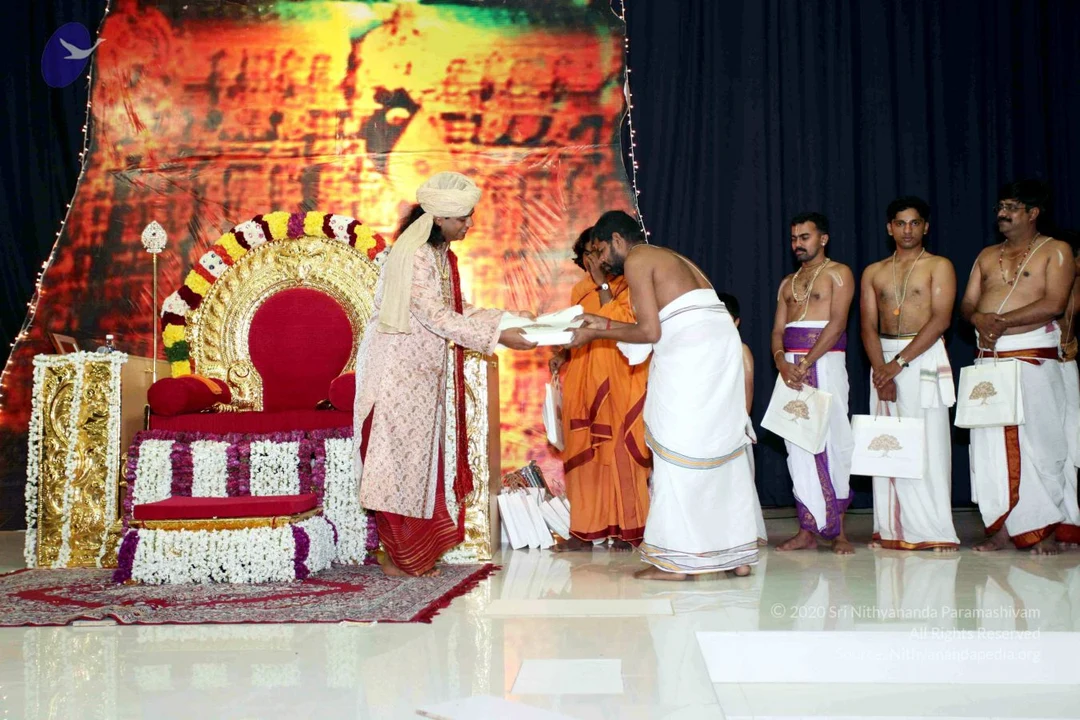
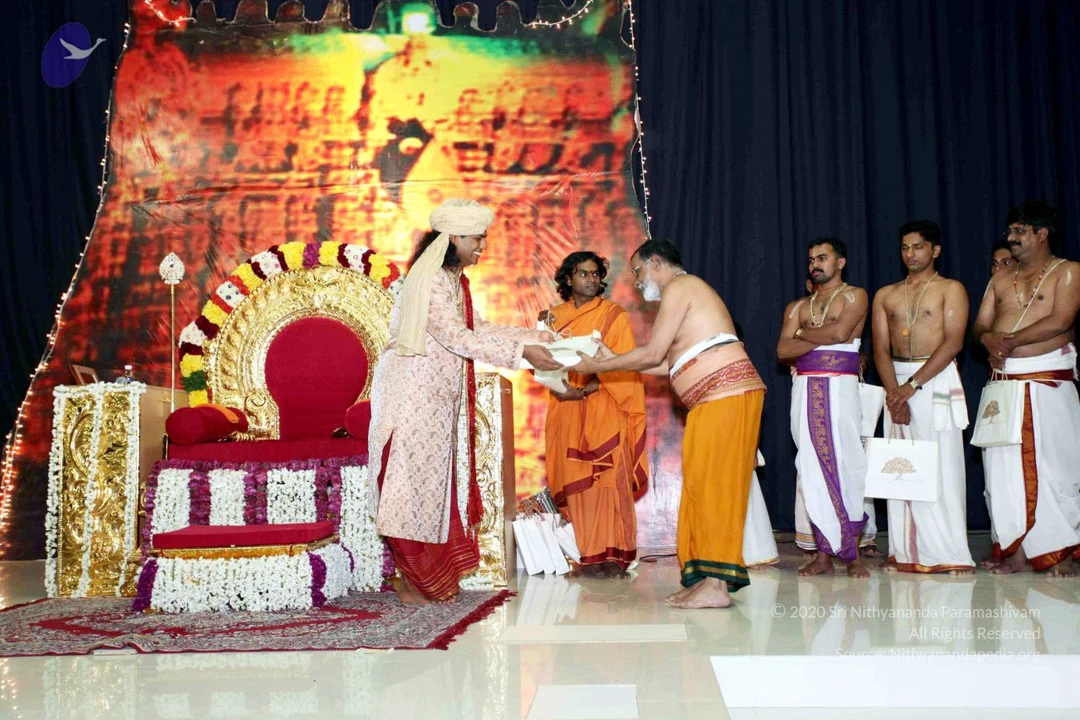
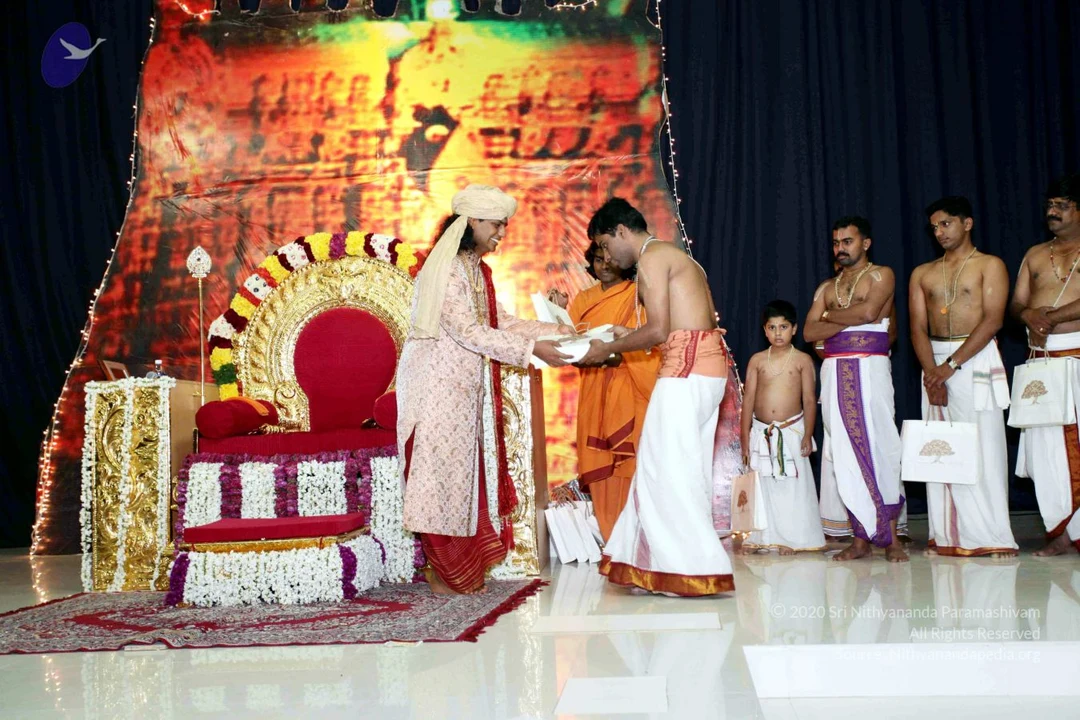
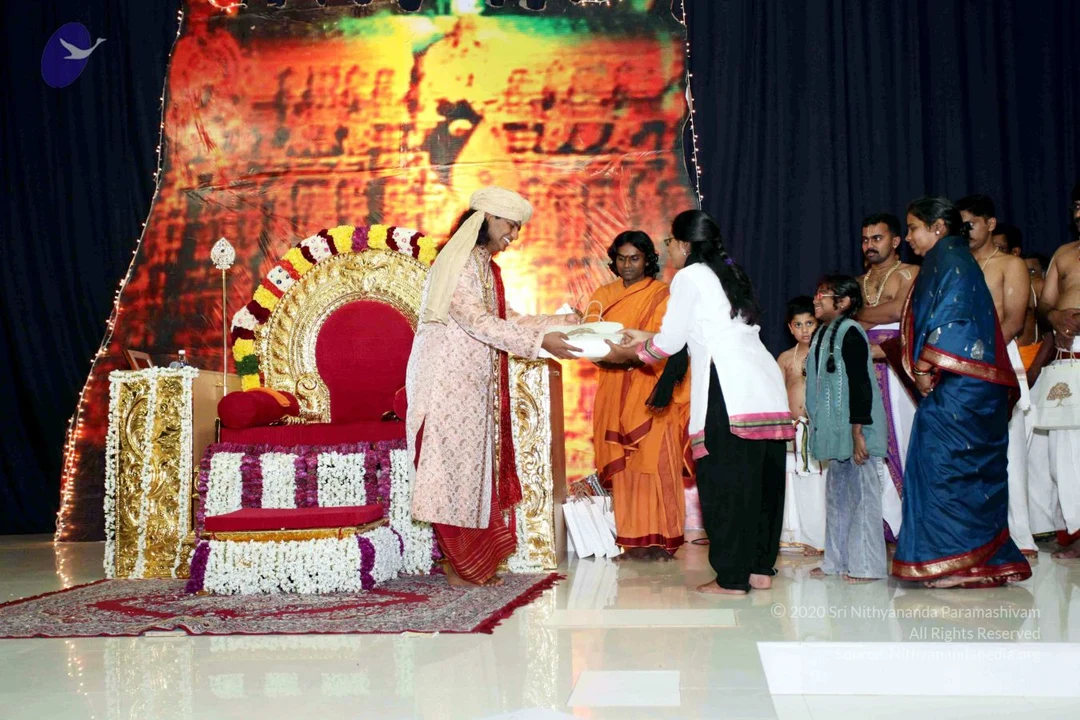
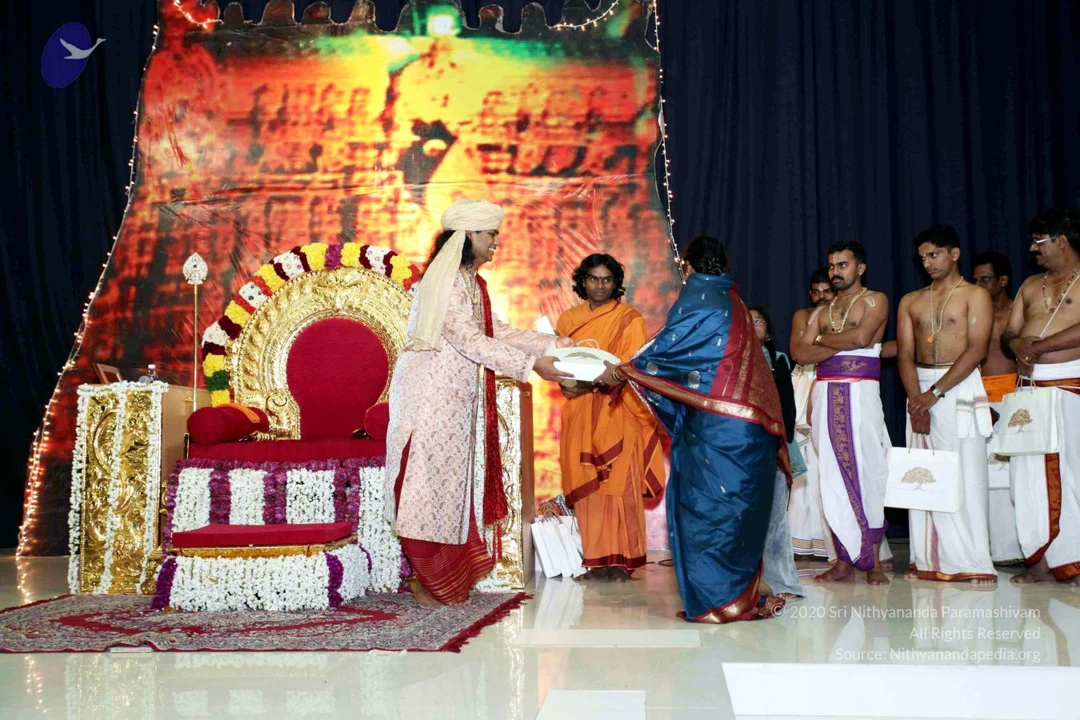
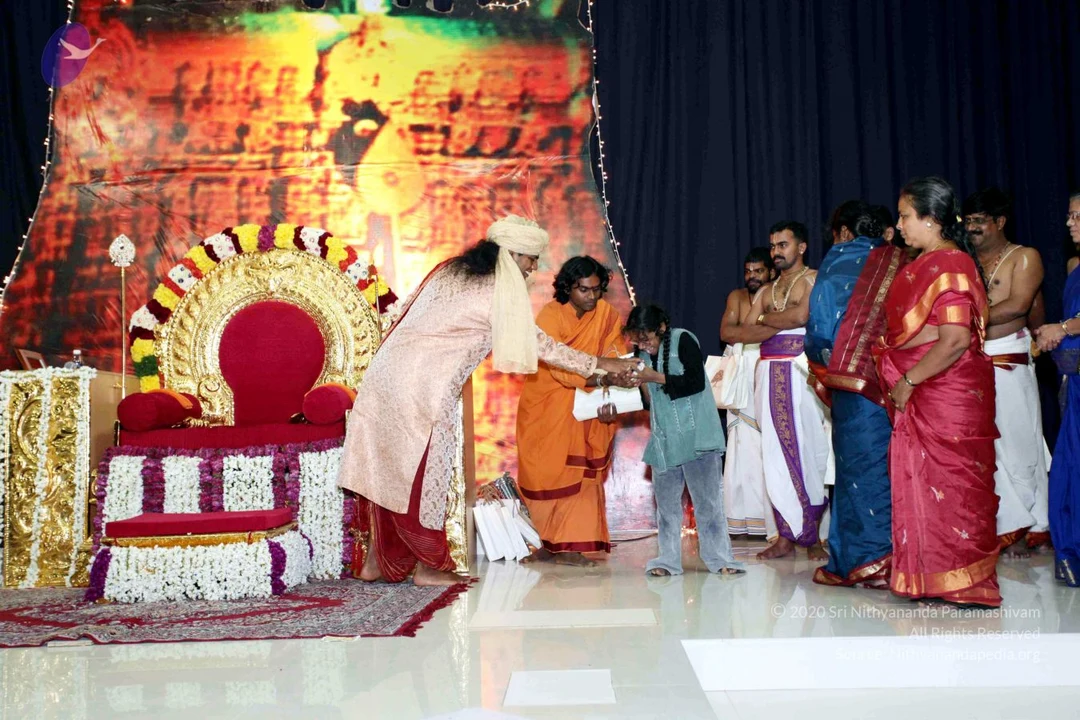
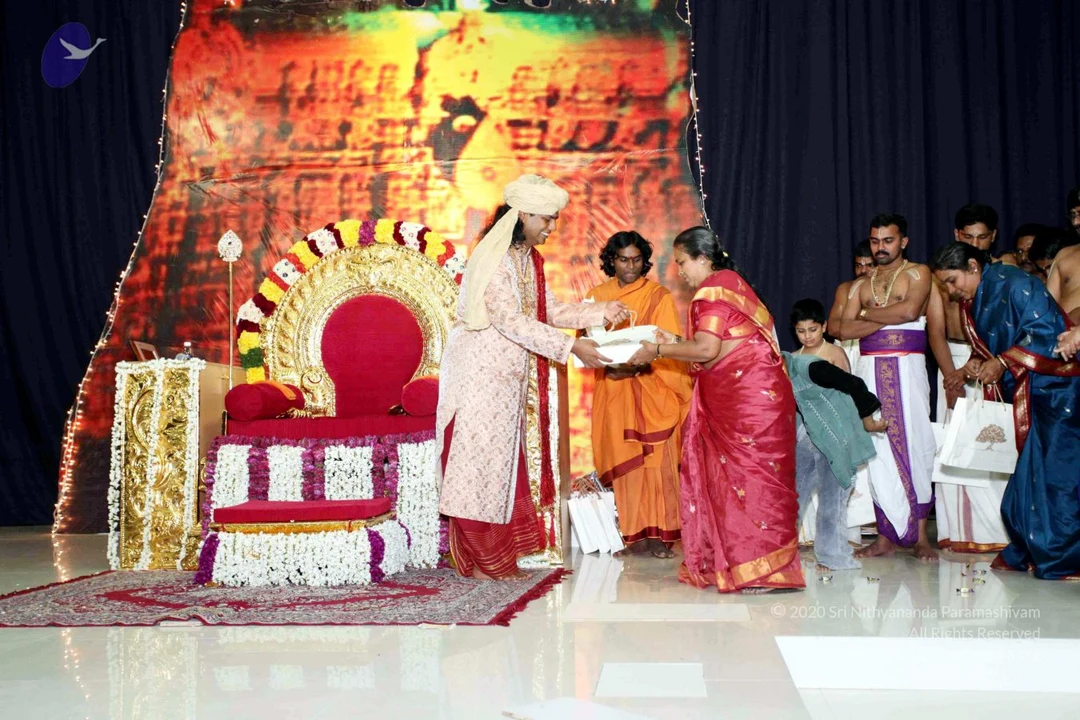
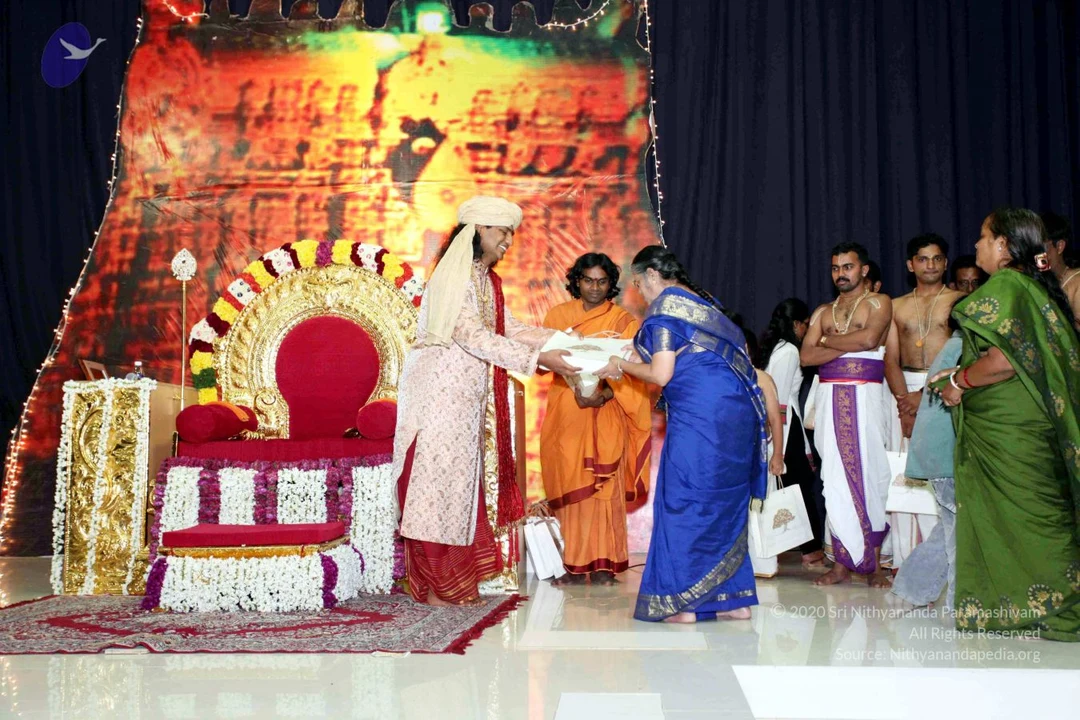
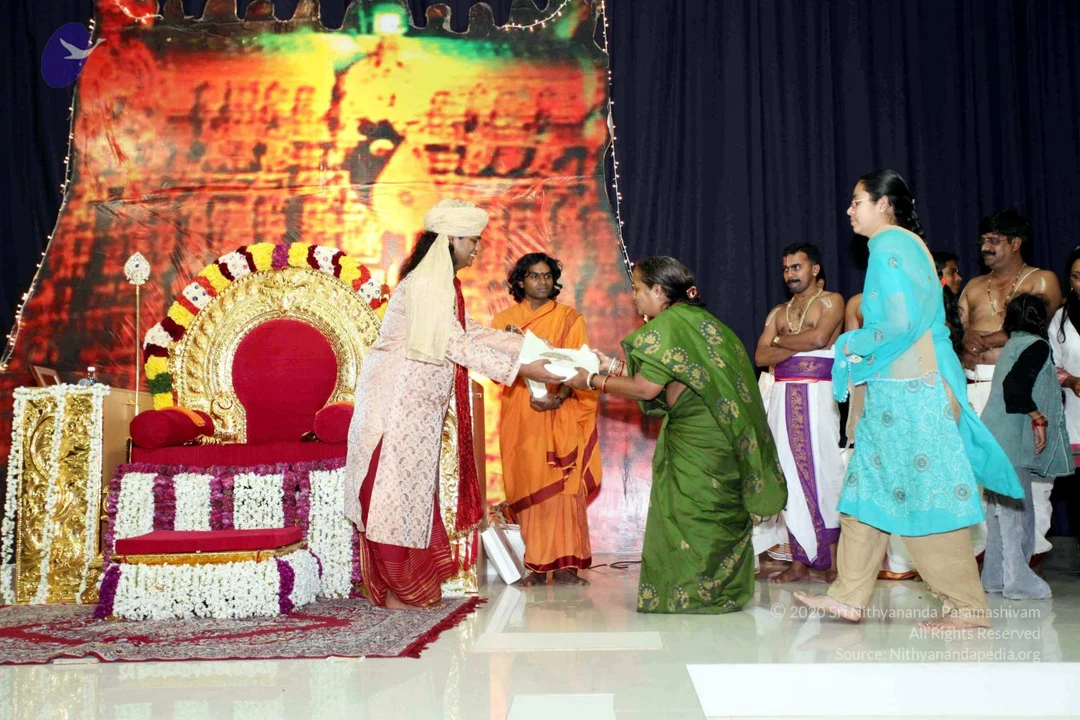
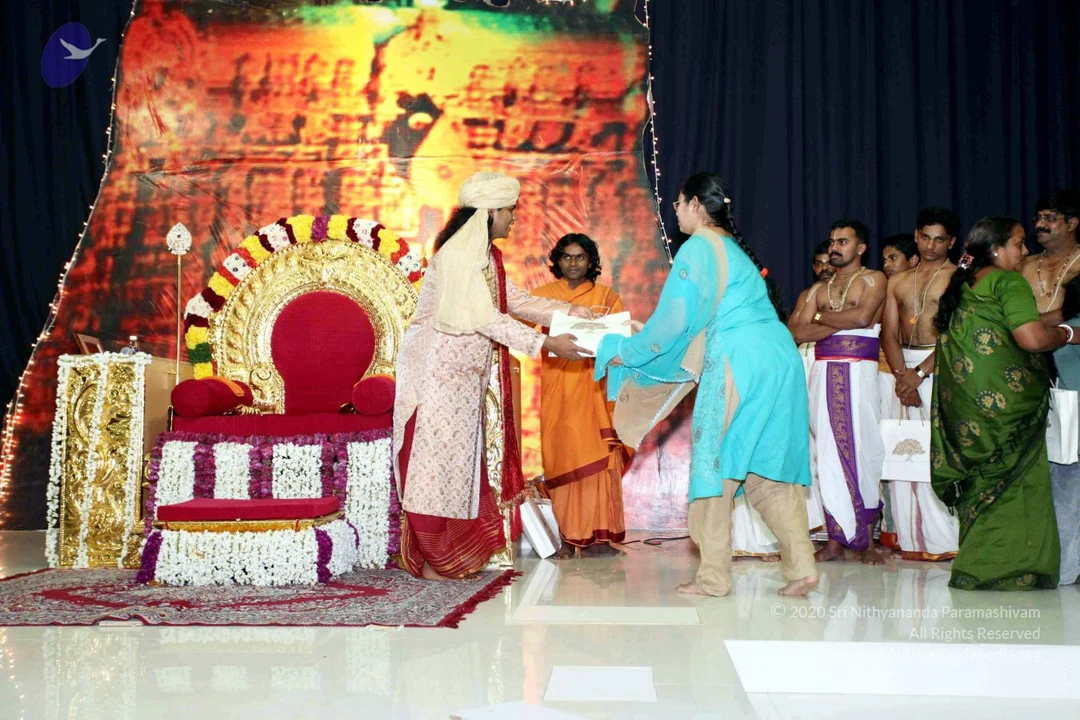
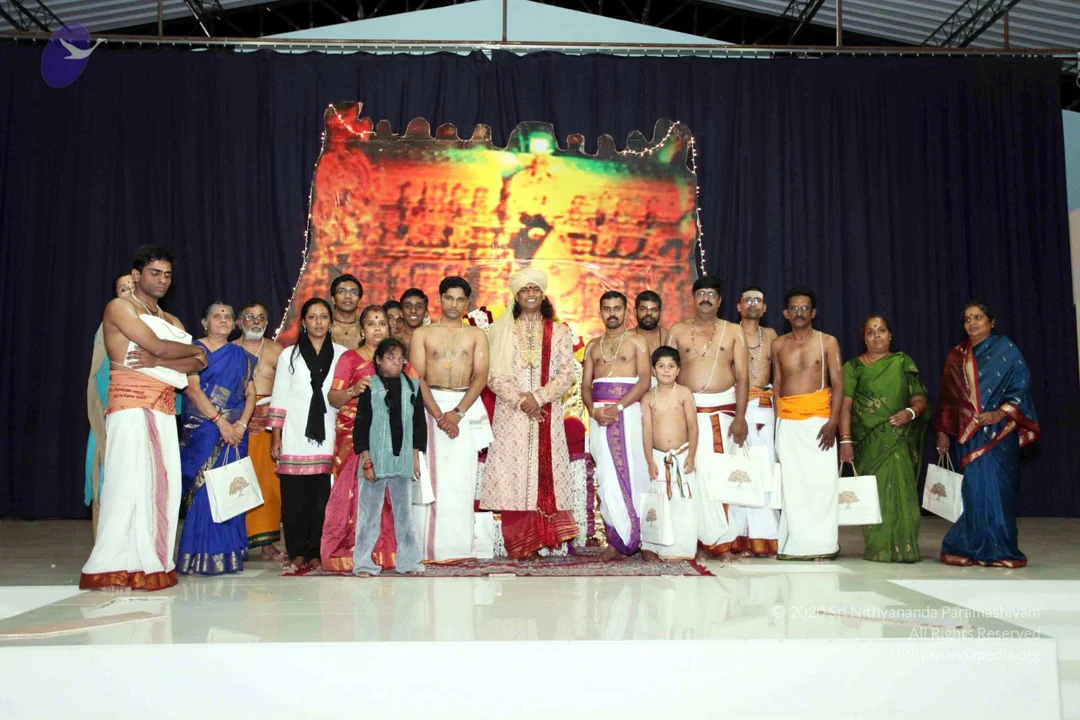
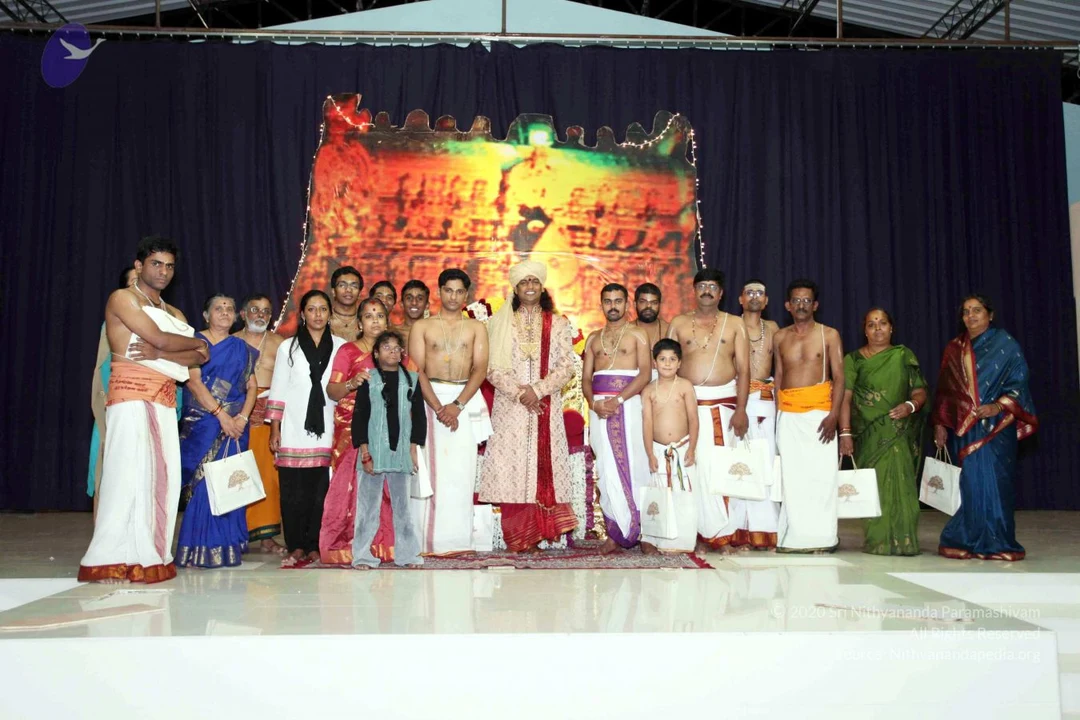
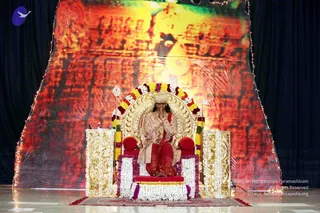
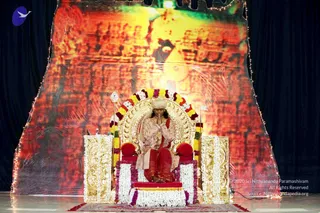
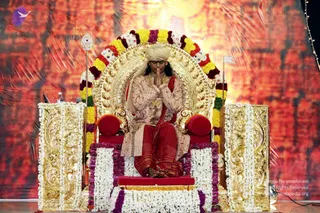
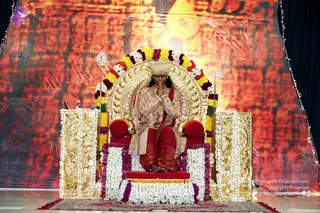
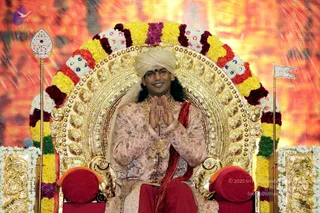
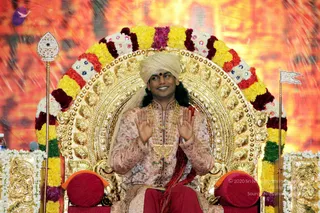
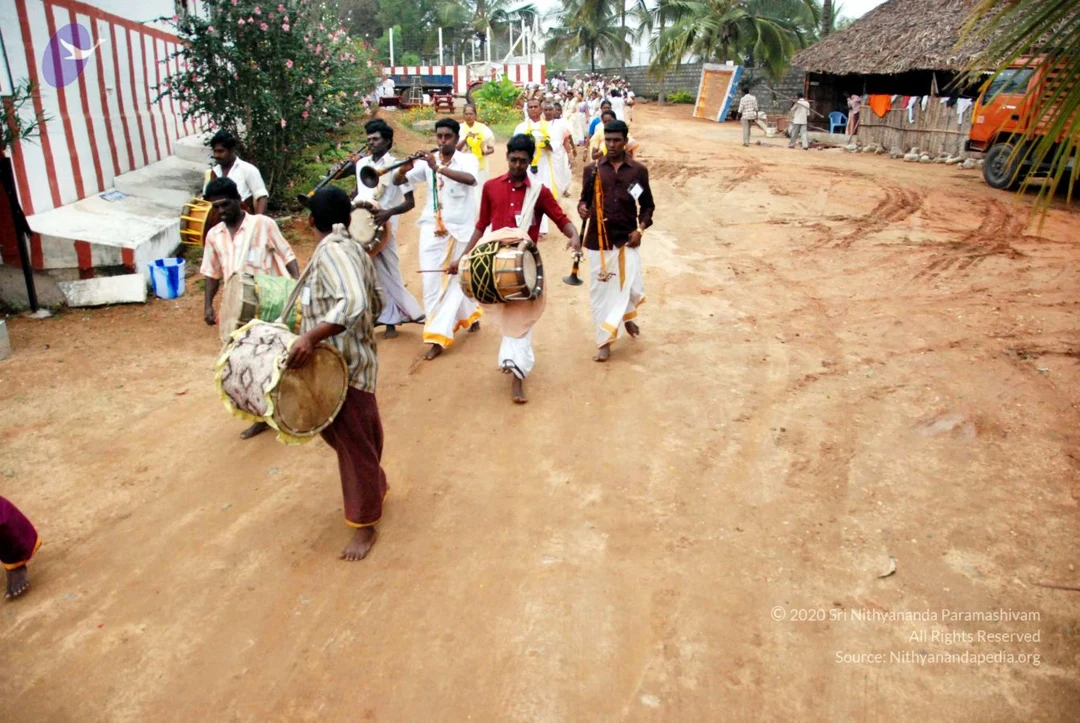
A seated man in a cream and pink ceremonial garment with a white turban sits on an ornate gold-and-red throne (peetha) with hands joined in namaskar, his eyes closed. The throne is framed by a multicolour garland of yellow, orange, red and purple flowers and white flower garlands on its base. Behind him a large backdrop shows a red-orange illuminated image of a temple-like structure, with string lights along the edges. A gold ceremonial staff stands to his left and a small flag to his right. Only one physical person is visible.A figure seated on an ornate gold throne (peetha) with a red cushioned seat, decorated with white and multicoloured flower garlands on its back and base. The person wears a white turban, a cream-and-pink embroidered robe and red trousers, with hands pressed together in namaste and bare feet resting on a red cloth. A tall gold-tipped staff stands at the left side and a small white flag at the right. Behind the throne hangs a large backdrop printed with a warm orange-red image of a temple or architectural scene, framed by black drapes and string lights. The stage floor is light wood with a small red-patterned rug at the front.A person seated cross-legged on an ornate gold throne (peetha) with red cushioned armrests, framed by a large arch of marigold and white garlands in yellow, orange, red and purple. The seated figure wears a cream turban, a cream and gold embroidered long jacket over a red dhoti-style lower garment, and a gold necklace, with palms pressed together in anjali mudra. Gold-carved pedestals flank the throne, white flower garlands drape its base, and a golden ceremonial staff with a finial stands at left beside a small water bottle. The backdrop is a glowing red-orange stage wall. The figure has long dark hair and appears to be Swamiji (probable), identified by the seated, honoured stage setting and the distinctive turban, ornate robes and gold ornaments.A seated figure in a cream and pink embroidered sherwani with red dhoti-style lower garment and a cream turban sits in namaskar posture on an ornate gold throne with red cushions. The throne is draped with white and purple flower garlands, and a marigold-and-red garland arches behind it. Gold kalasha-topped staffs and flags frame the throne on a stage with a large orange-red backdrop and string lights. Floral flower-decked steps lead to a red carpet.A seated man sits on an ornate gilded throne with a floral garland arch of yellow, orange, white and maroon blooms behind him. He wears a cream turban with a red bindi, a pale pink embroidered silk garment, gold necklaces and a red sash, and holds his palms together in anjali greeting. A microphone stands at the left edge and a small white pennant on a pole at right; a warm orange backdrop fills the background.A man seated on an ornate gold throne with a floral garland arching behind him, the garland in yellow, white, red and maroon blossoms. He wears a cream turban with a small red bindi, a pale pink brocade sherwani with paisley embroidery, layered gold necklaces, and a red sash draped over his lap. His palms are raised in a blessing gesture and he smiles. A microphone stand and a water bottle sit at the left edge, and a white pennant-style flag stands at the right beside the throne. The background is a warm orange and red backdrop. Swamiji (probable): the appearance cues are a turban, ornate brocade clothing, gold necklaces and a throne, and he is presented as the seated honoured figure.
nithyananda-ashram

7 photosSource gallery
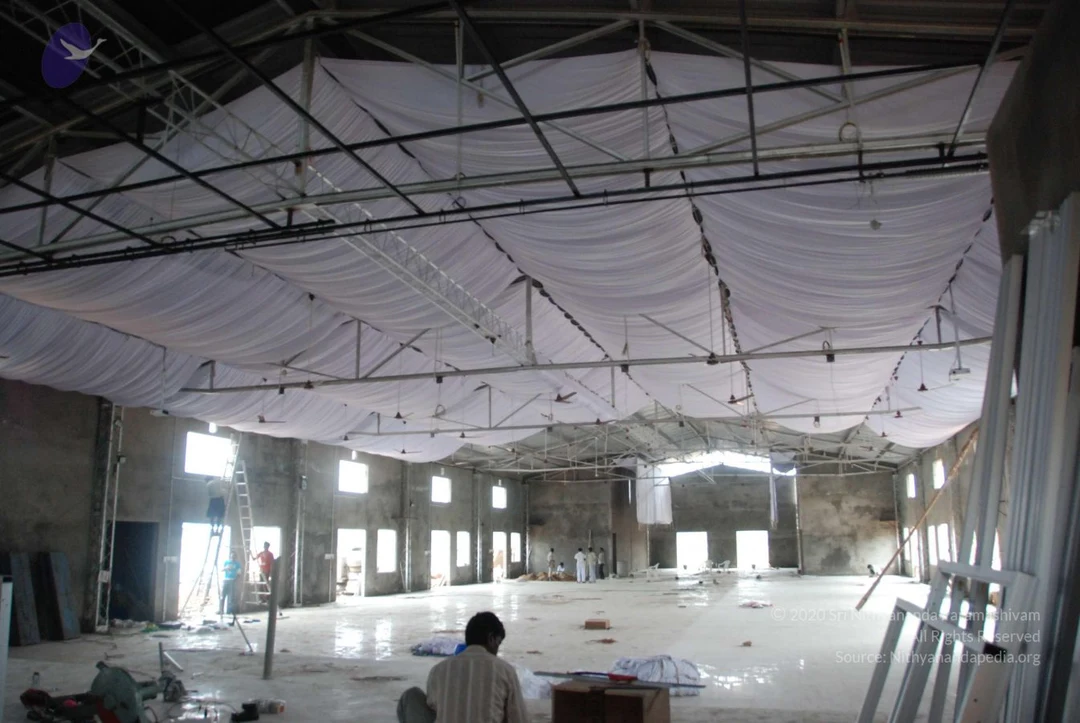
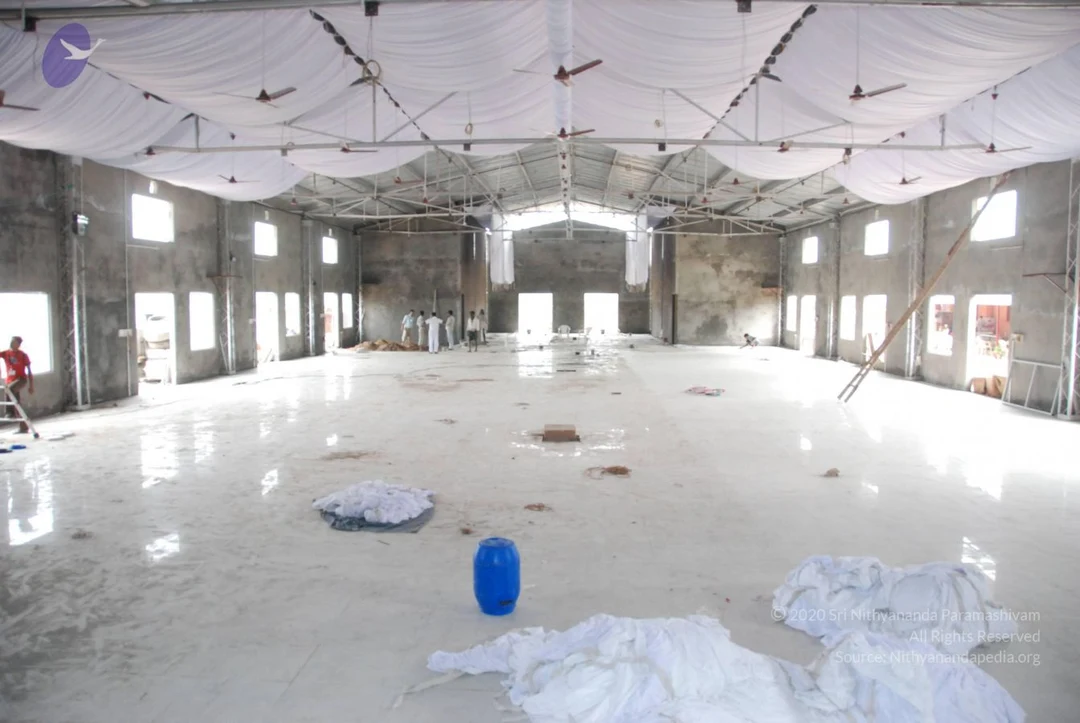
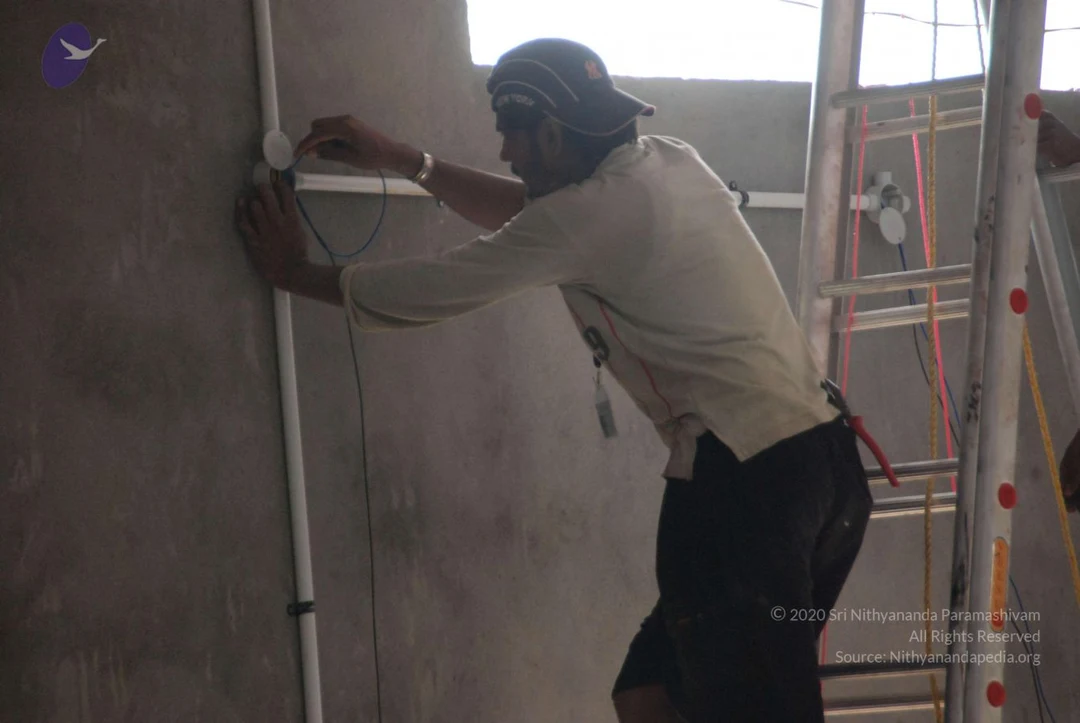
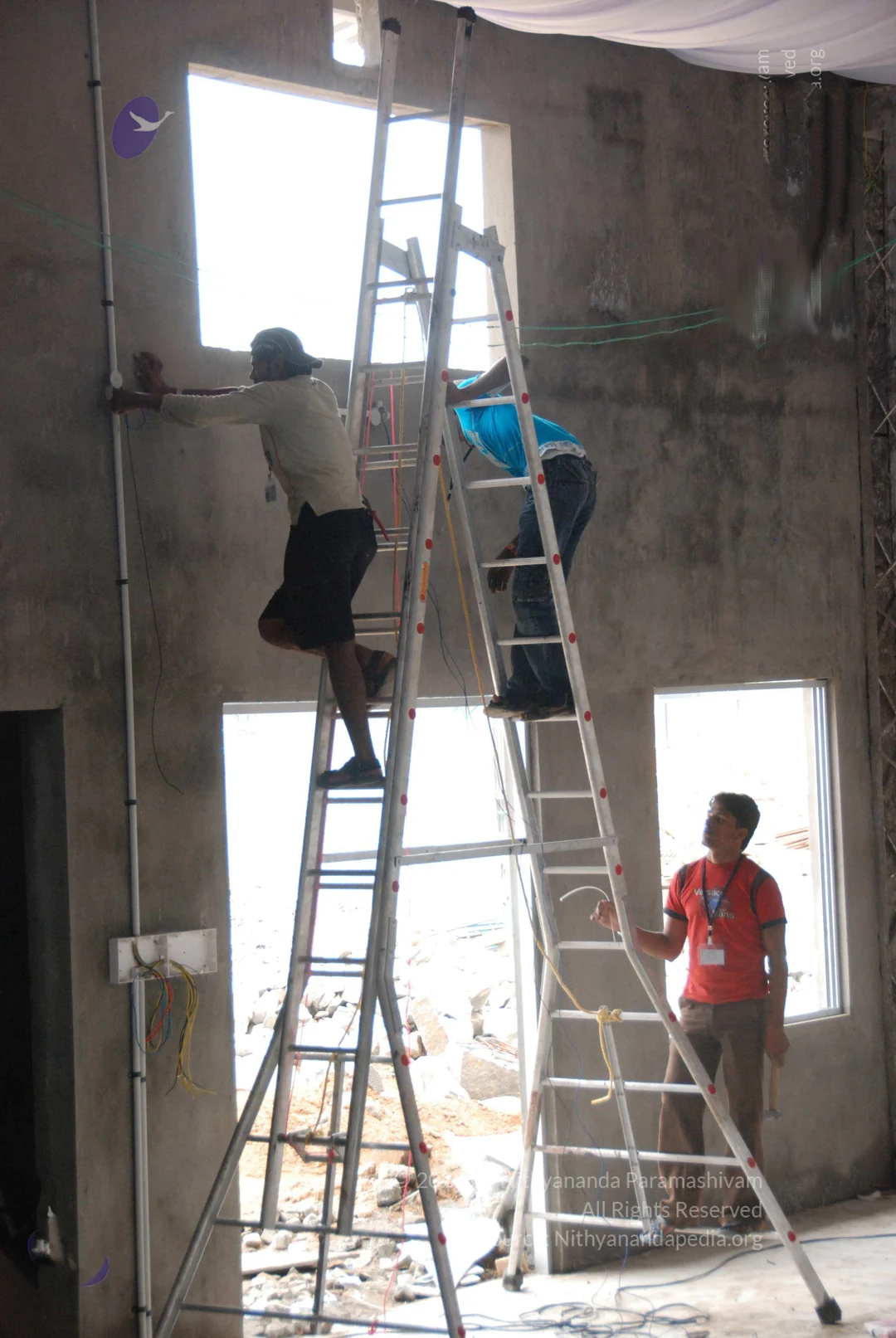
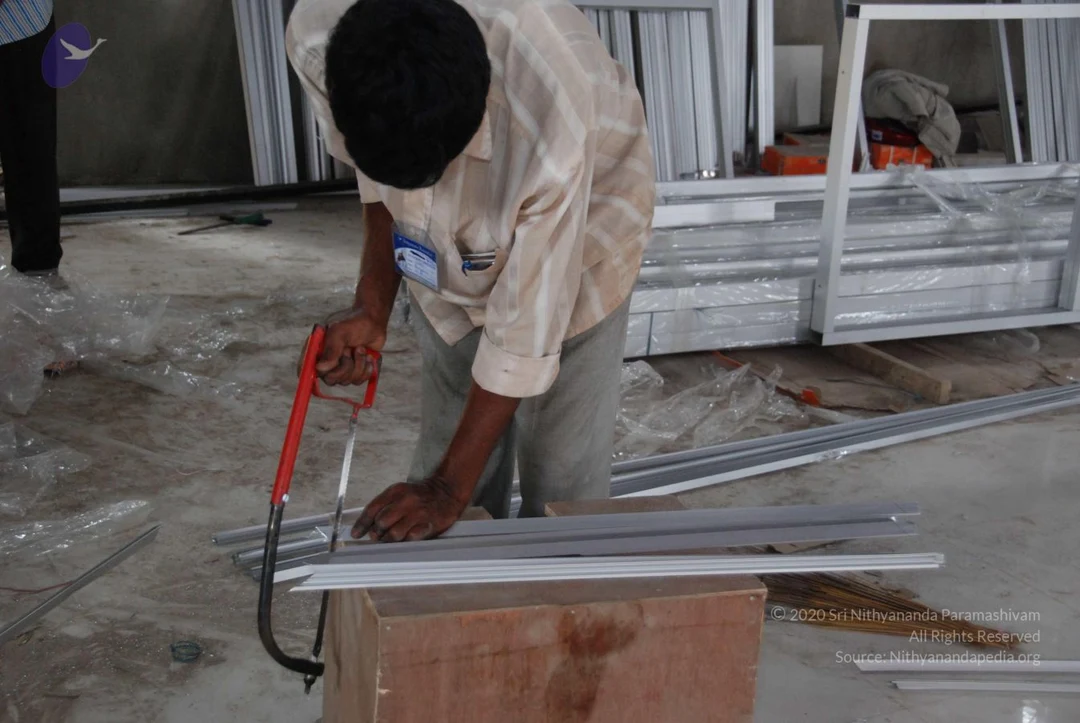
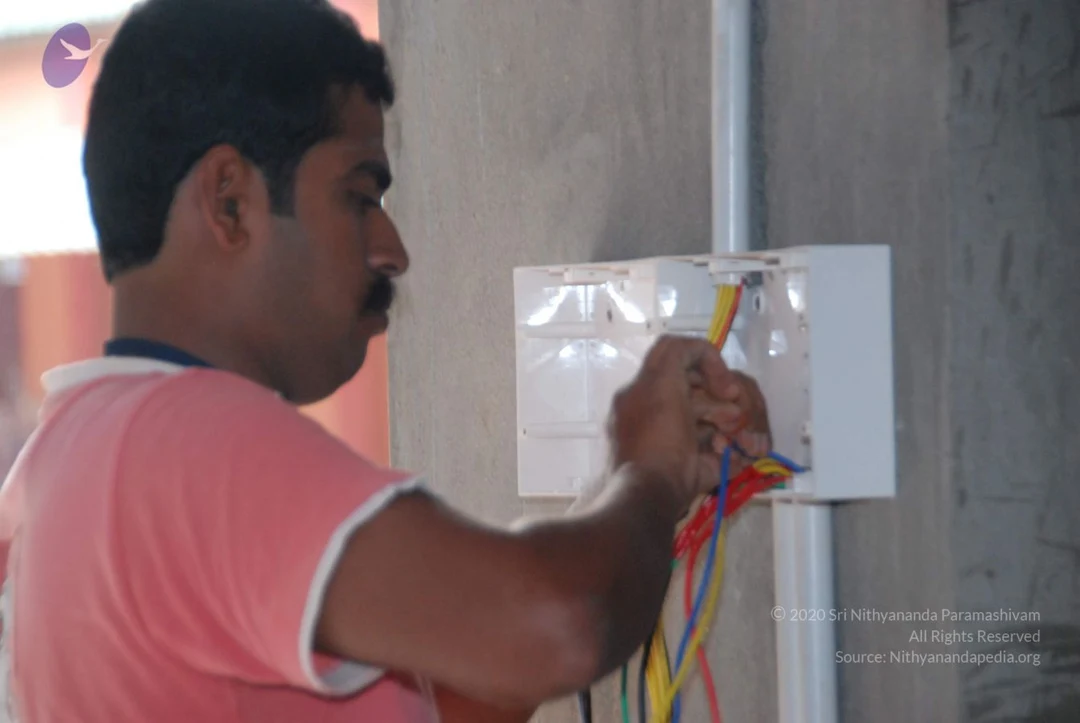
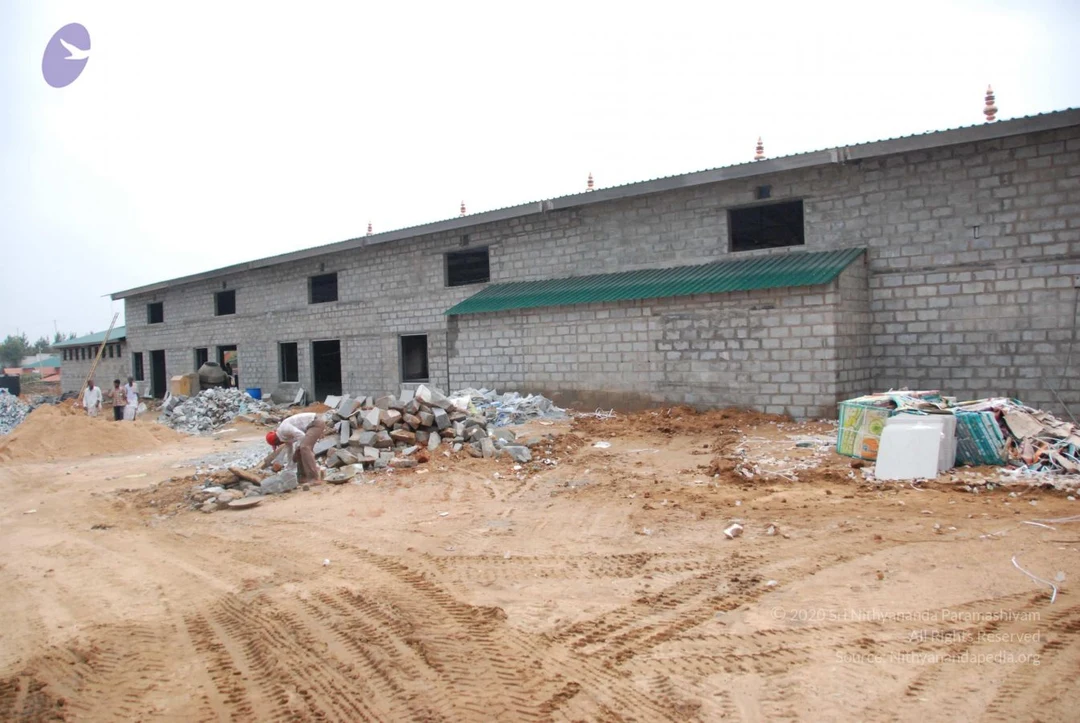
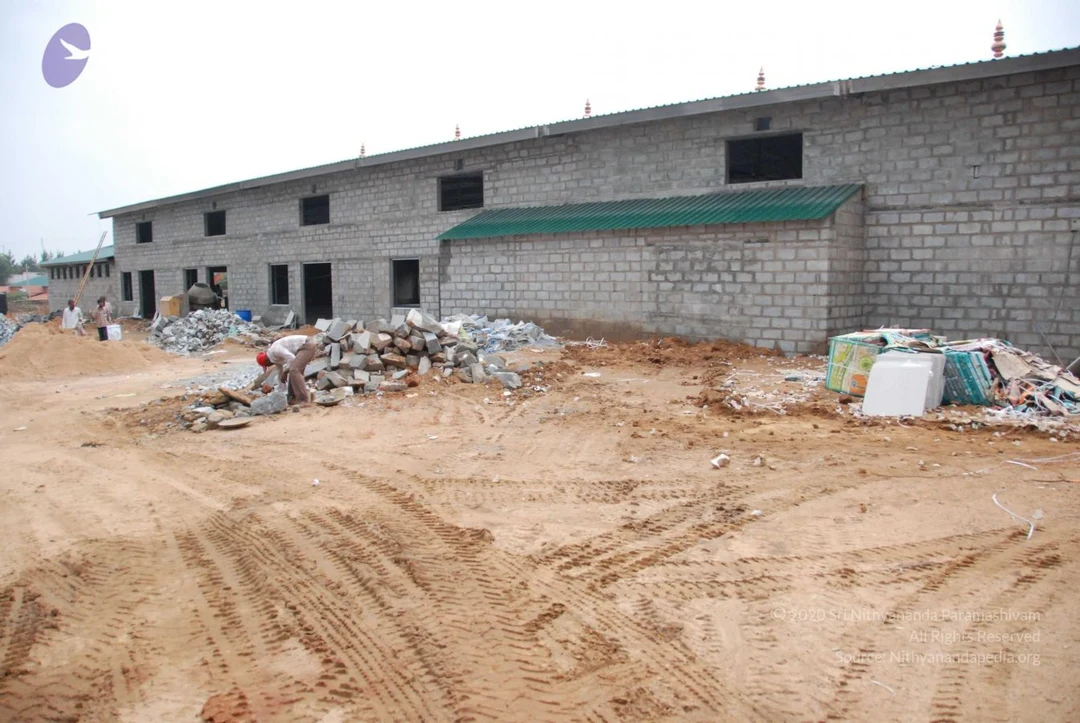
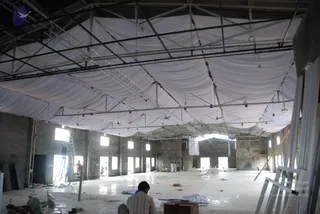
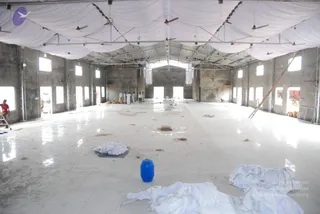
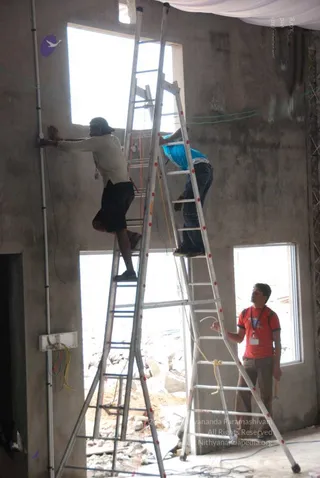
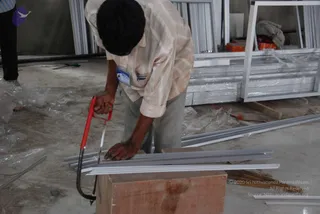
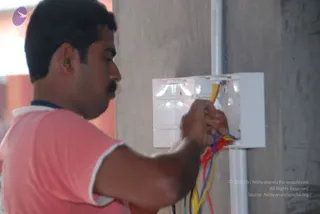
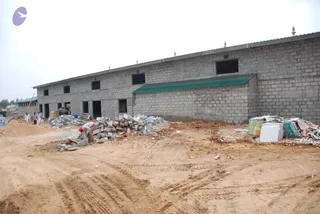
Interior of a large unfinished concrete hall being prepared for an event. White fabric drapes hang across the steel roof trusses and ceiling fans, and the bare grey walls have many window openings. The floor is polished and damp, with scattered boards, cardboard and pipes. In the centre, a few workers in white clothes stand near the back wall. A man on a ladder works at the left side, another man in a red shirt stands nearby, and a seated man in the foreground with his back to the camera faces the unfinished space. Metal framing and aluminium poles lean against the right wall.Interior of an unfinished hall with bare grey concrete walls, large window openings and a white fabric canopy stretched across the ceiling beneath a metal roof truss with fans. The floor is a wet-looking pale white surface with scattered white cloths, a blue plastic drum in the foreground and a wooden ladder leaning against the right wall. Several workers in white clothing stand near the middle of the hall, and one person in red works near the left window. No deity murti, throne or a person candidate is visible.Interior of an unfinished concrete hall under construction. Two workers climb tall aluminium ladders against a bare grey concrete wall: one in a cream long-sleeved shirt and dark shorts with a cap, reaching toward a vertical white conduit pipe, and one in a blue shirt and jeans on the ladder beside him. A third man in a red polo shirt with a lanyard stands at the base of the right ladder, looking up. Wires hang from a junction box and tall window openings show rubble outside. No ritual, deity or a person depiction is visible.A man in a beige and white plaid collared shirt and grey trousers bends over a wooden workbench, using a red-handled hacksaw to cut a long white aluminium profile. A visible ID badge hangs from his shirt pocket. Behind him, stacked white aluminium frames and rails wrapped in clear plastic sit on a concrete floor, with cardboard and an orange box in the background. No a person candidate is visible in the scene.A man in a pink short-sleeved t-shirt with a dark lanyard stands beside a concrete wall, connecting coloured electrical wires to a white wall-mounted electrical box. Red, yellow, blue and green wires are being fitted into the box's terminals while he works with his right hand. A white conduit pipe runs vertically beside the box. The scene is a close, candid view of routine electrical installation work at the ashram.A photograph of an unfinished concrete block building under construction, with exposed grey breeze-block walls, window openings without frames, and a green corrugated awning over a doorway. Small brass finials sit along the roofline. In the foreground, a worker in a white dhoti and red cap bends over a pile of broken concrete and rubble on sandy, tyre-marked ground, while several figures in white stand near the left side of the building. A stack of blue and white bags and a white plastic drum sit at right beside construction debris.