Skip to content
Saturday

26 December 2009

Nithyananda Live: December 26 2009

Dated photos
871
Source pages
1
Media
4
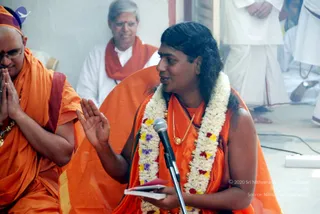
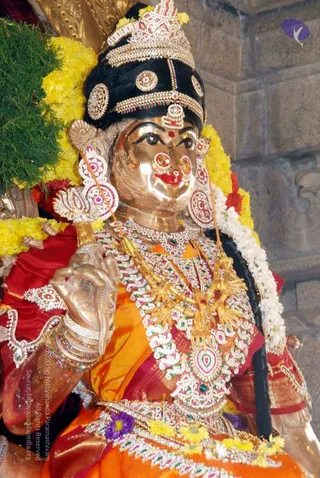
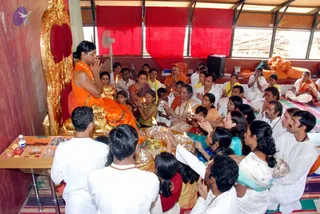
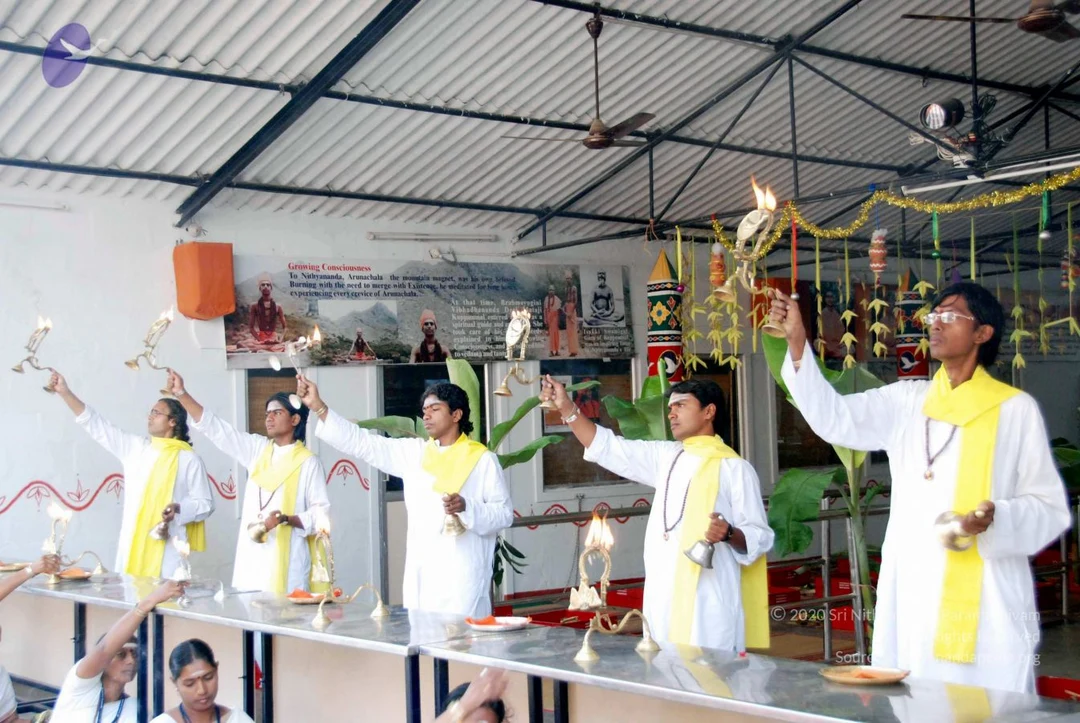
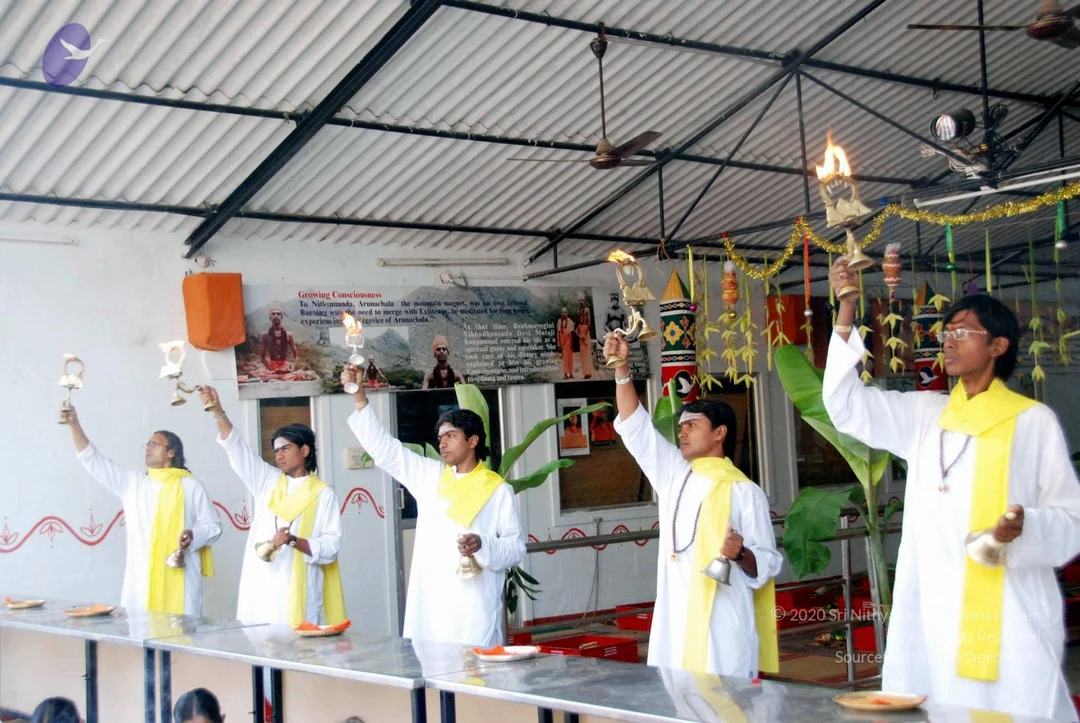
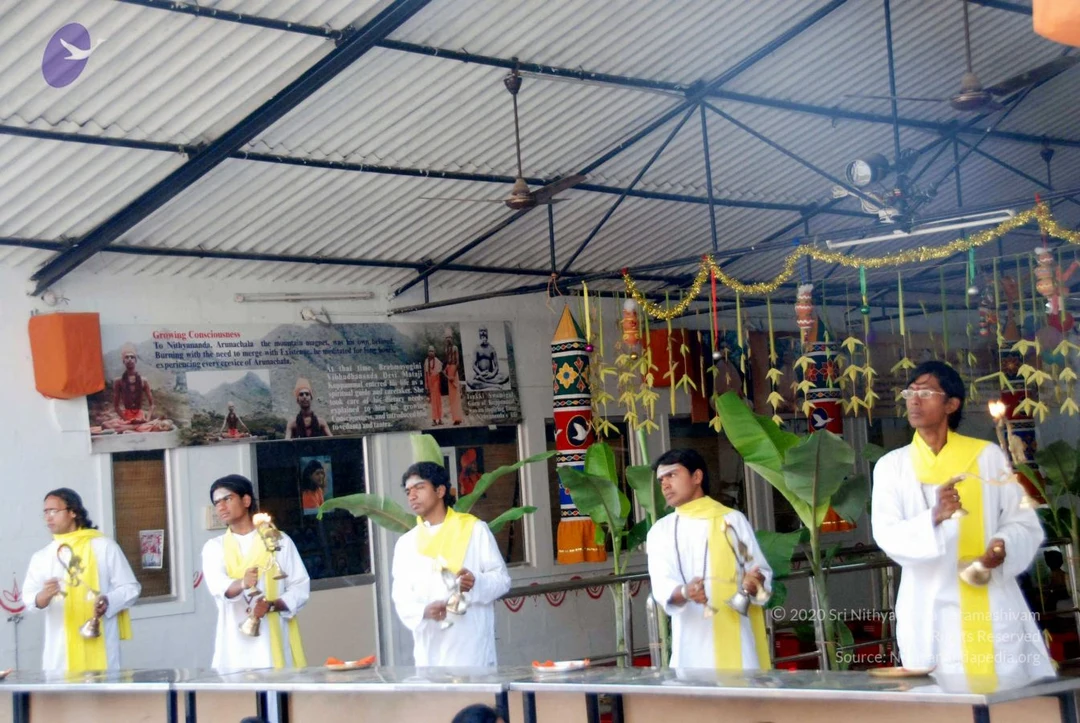
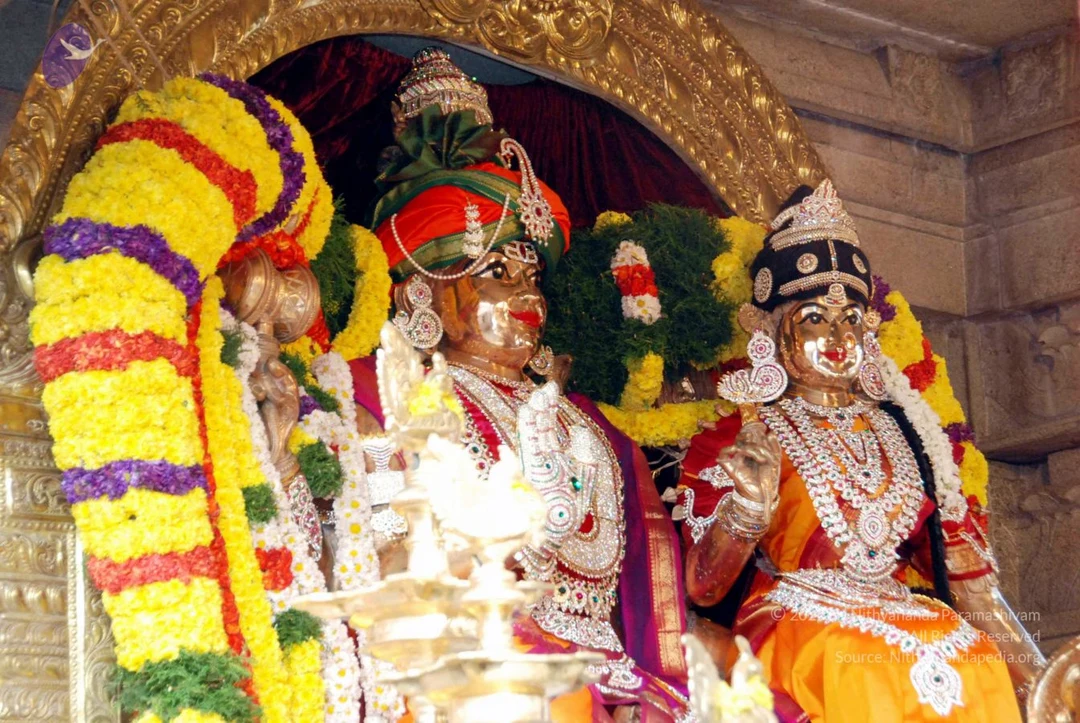
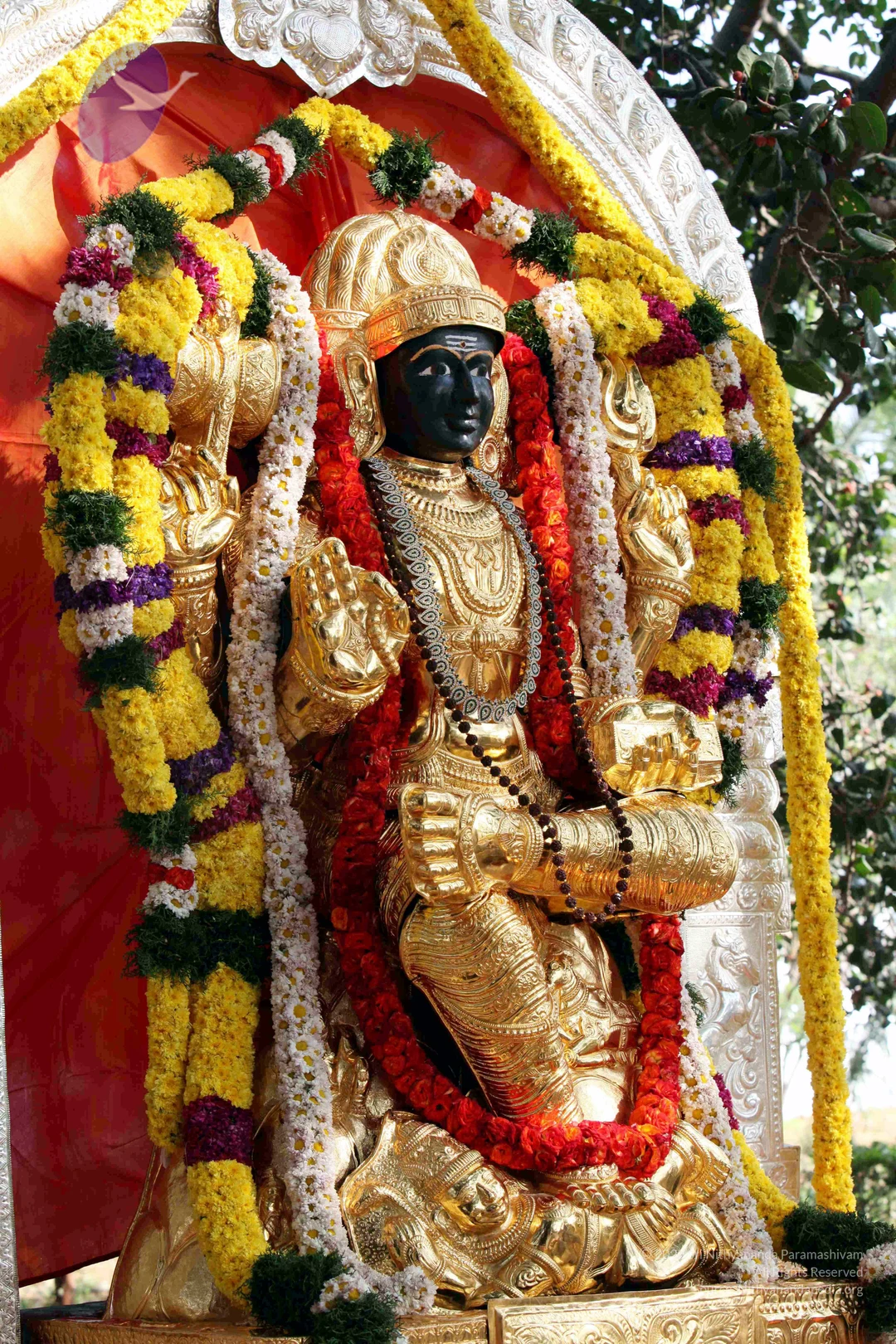
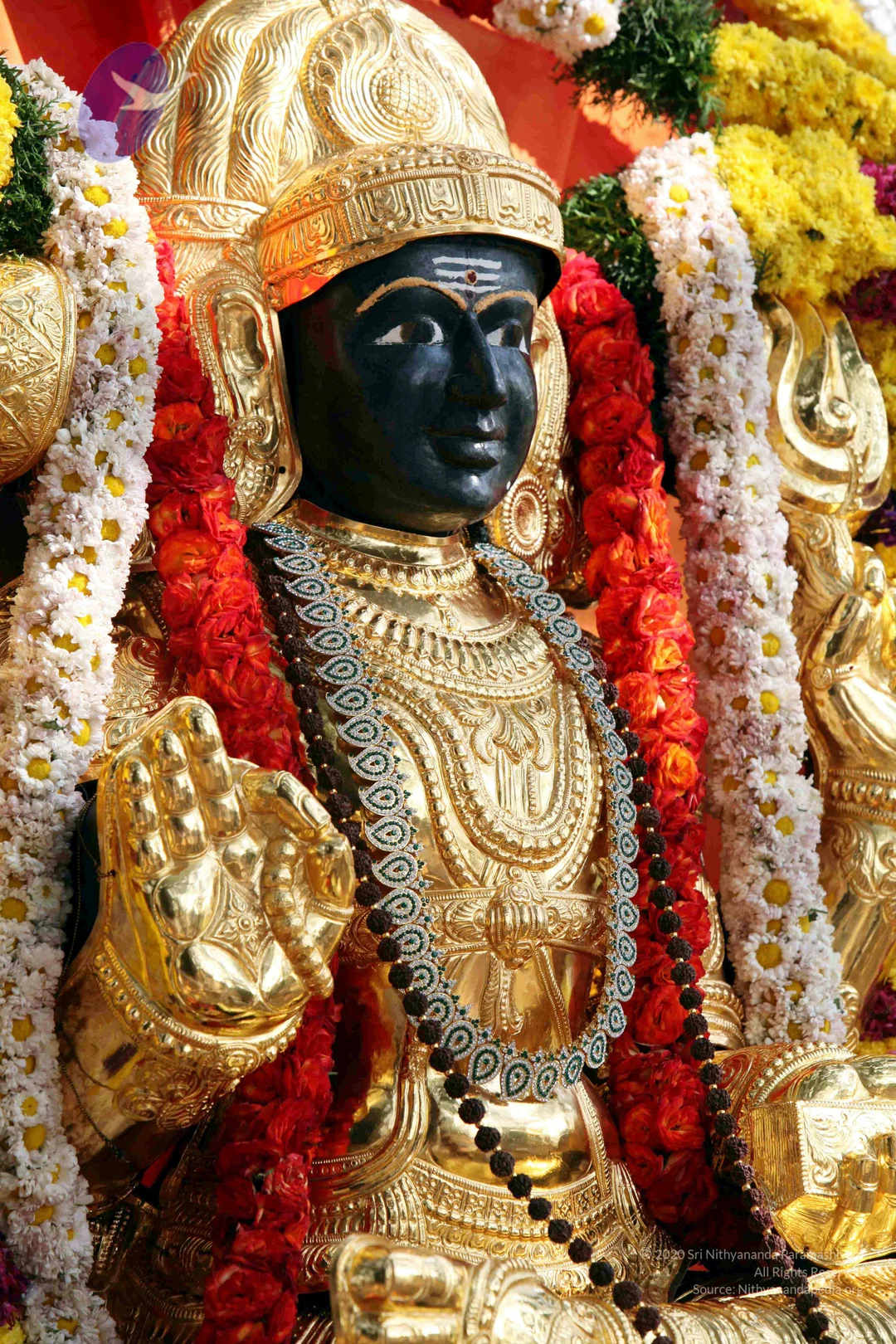
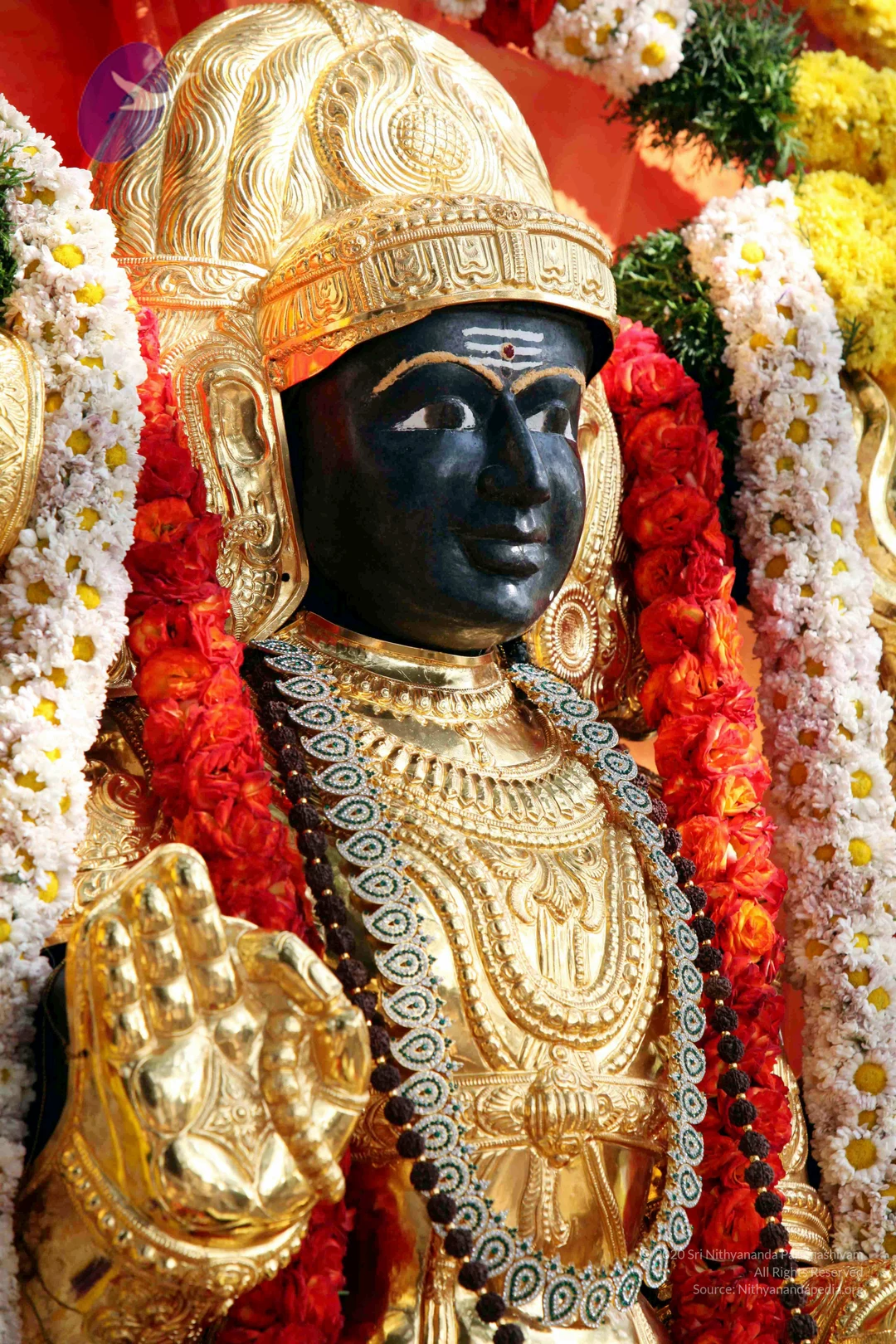
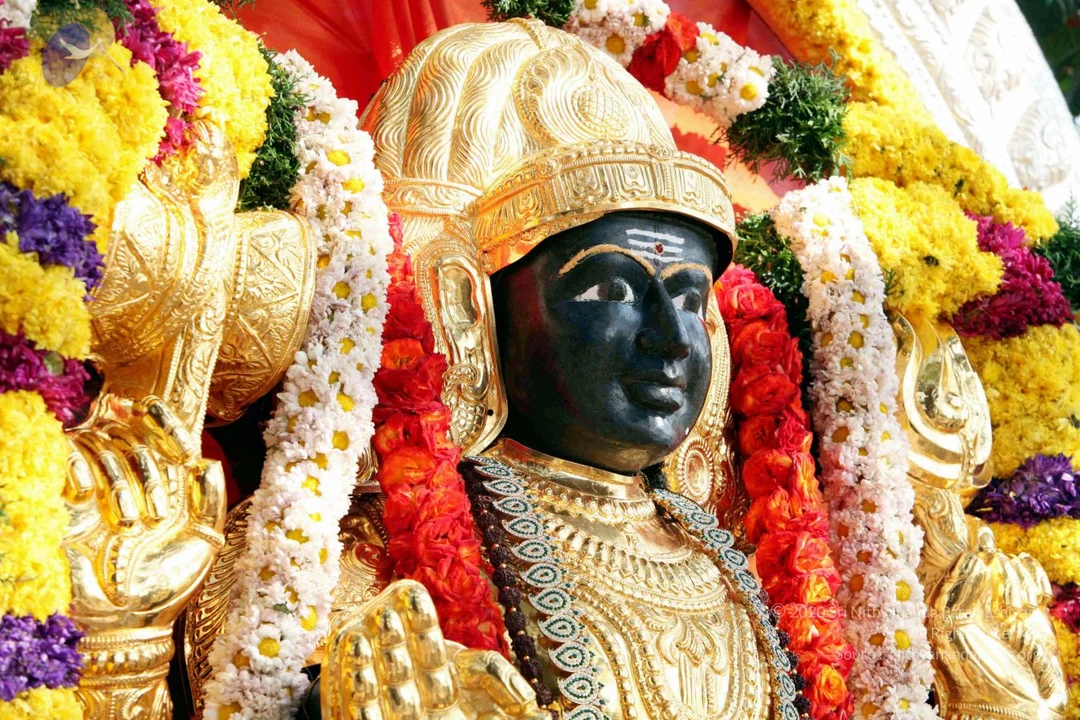
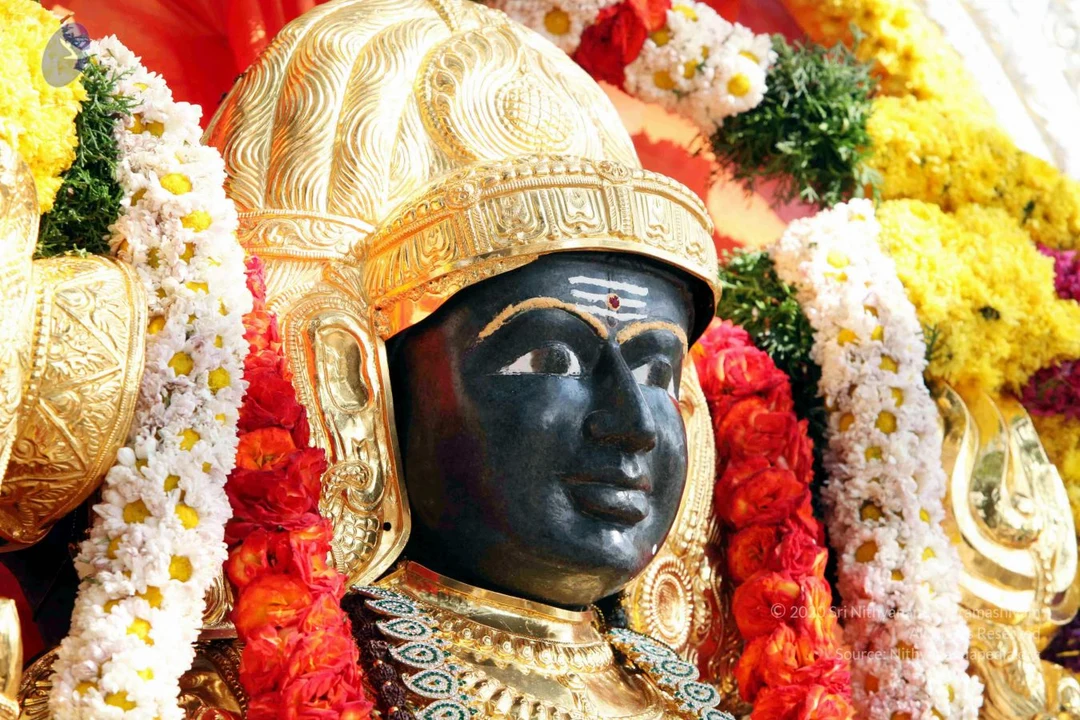
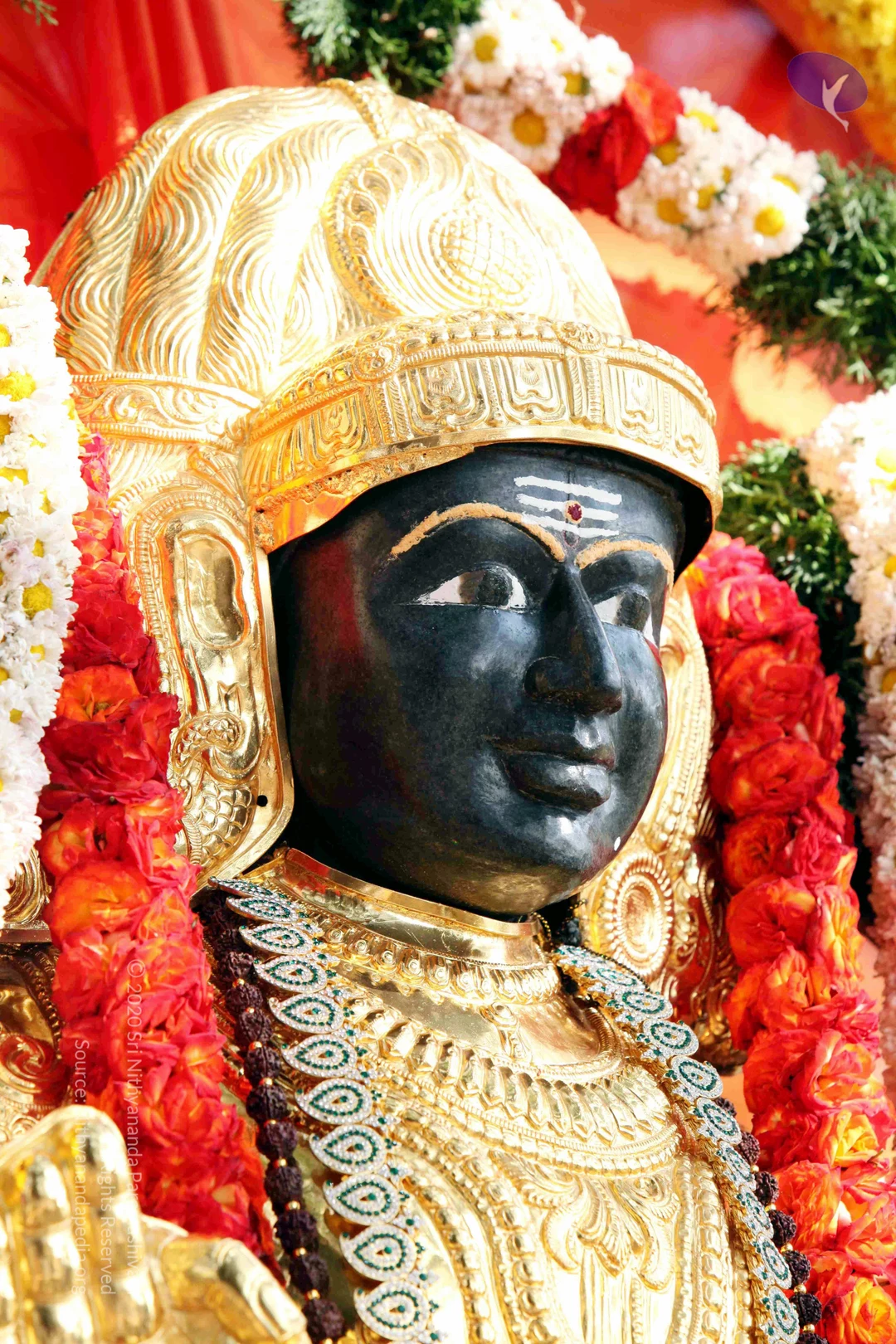
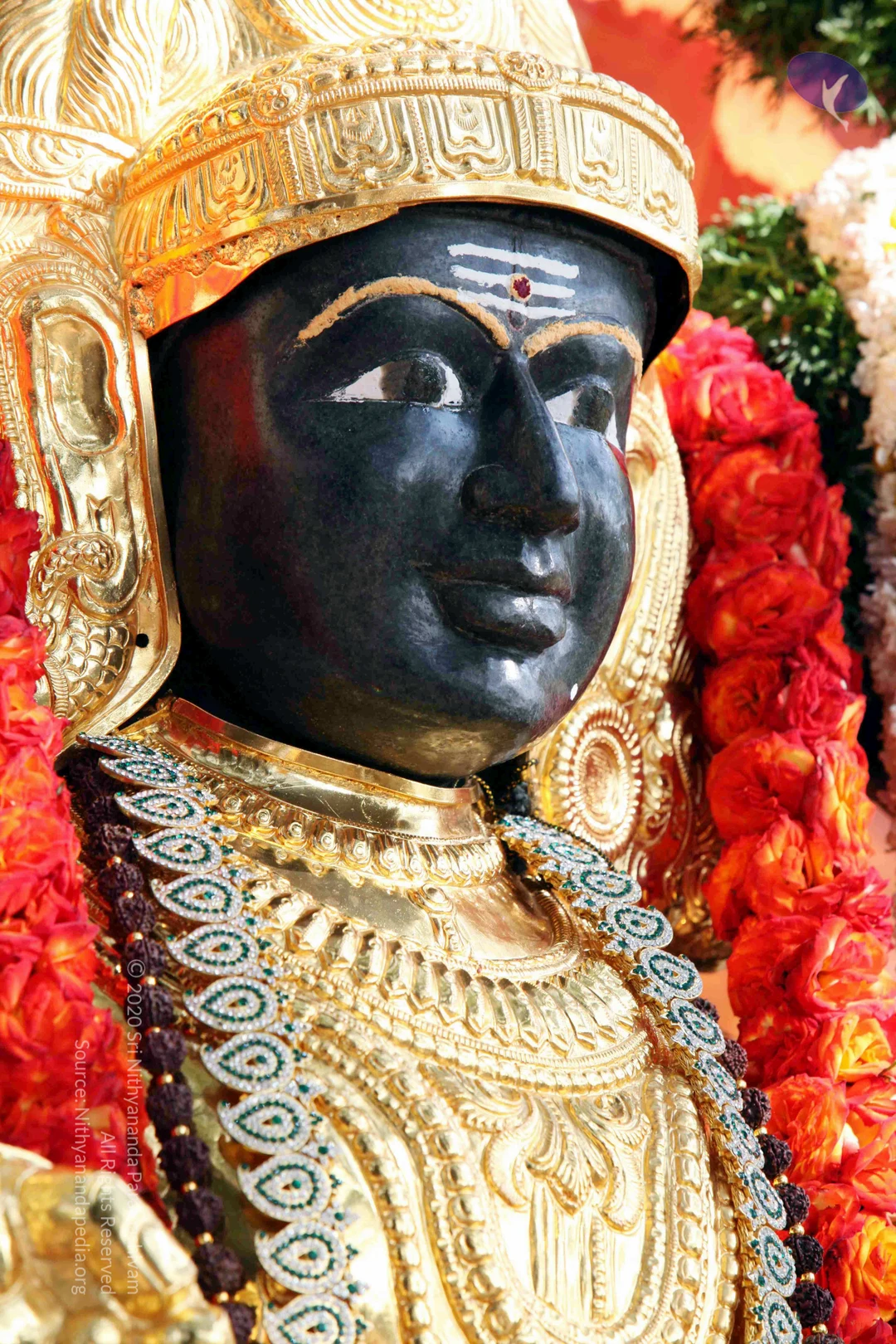
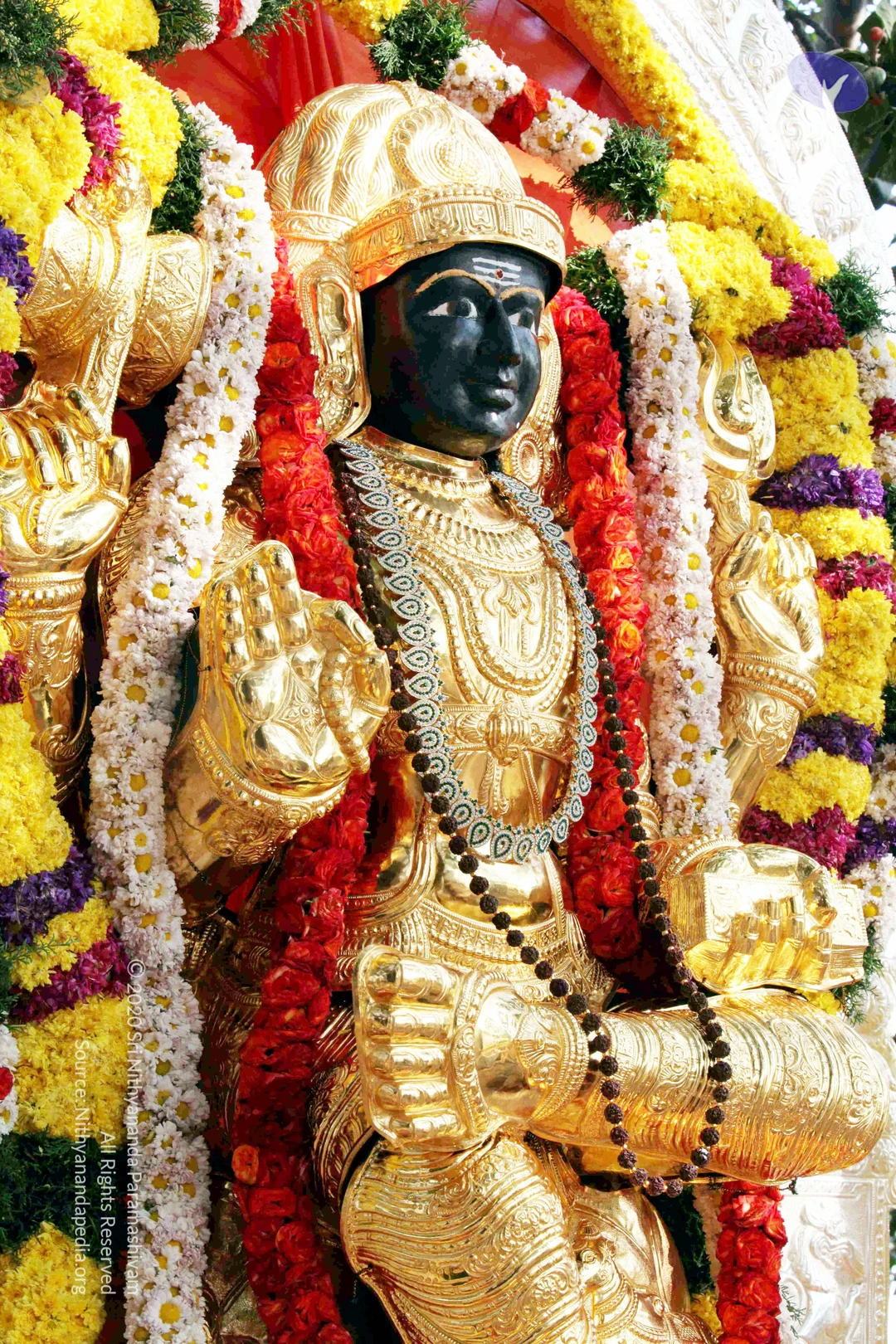
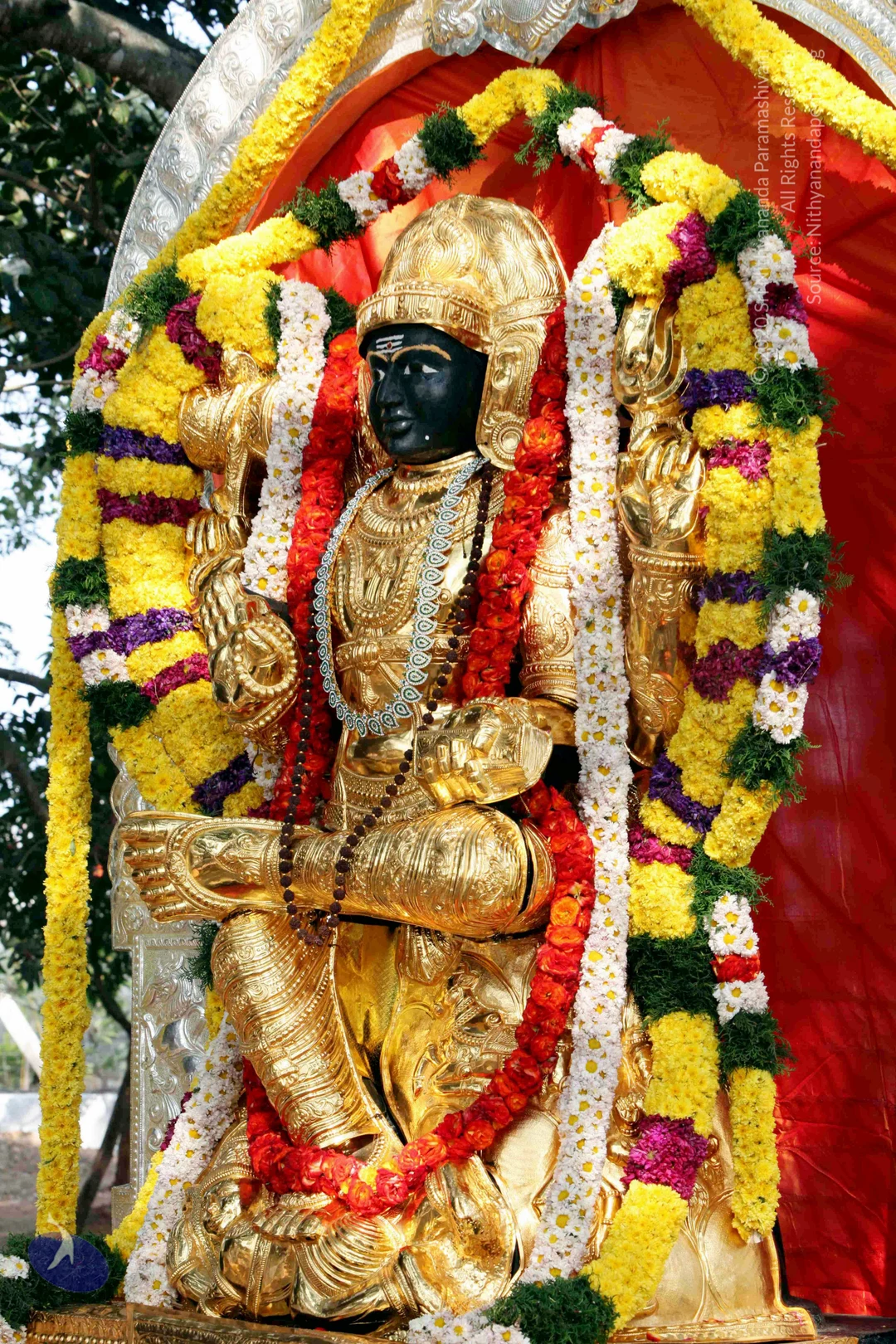
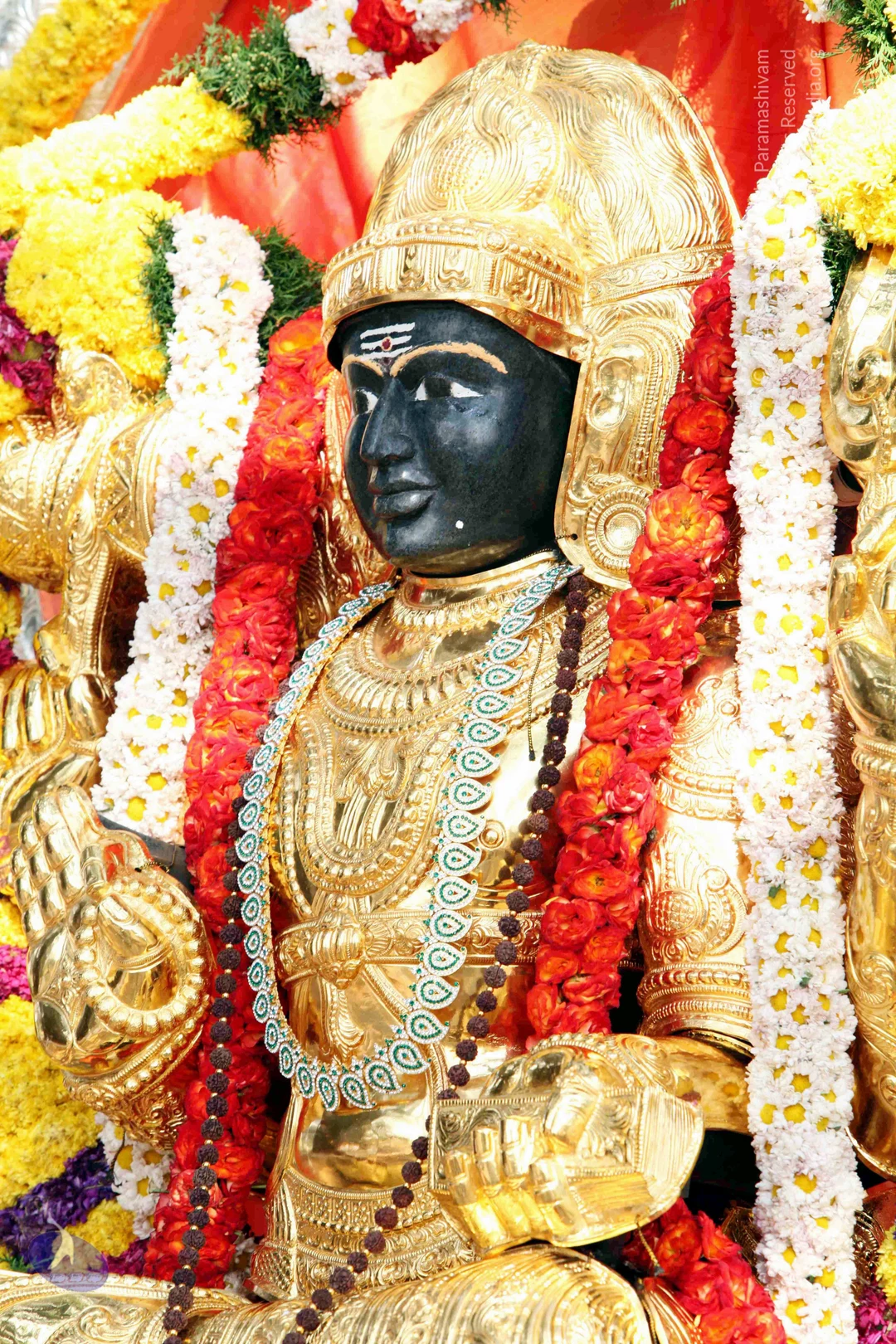
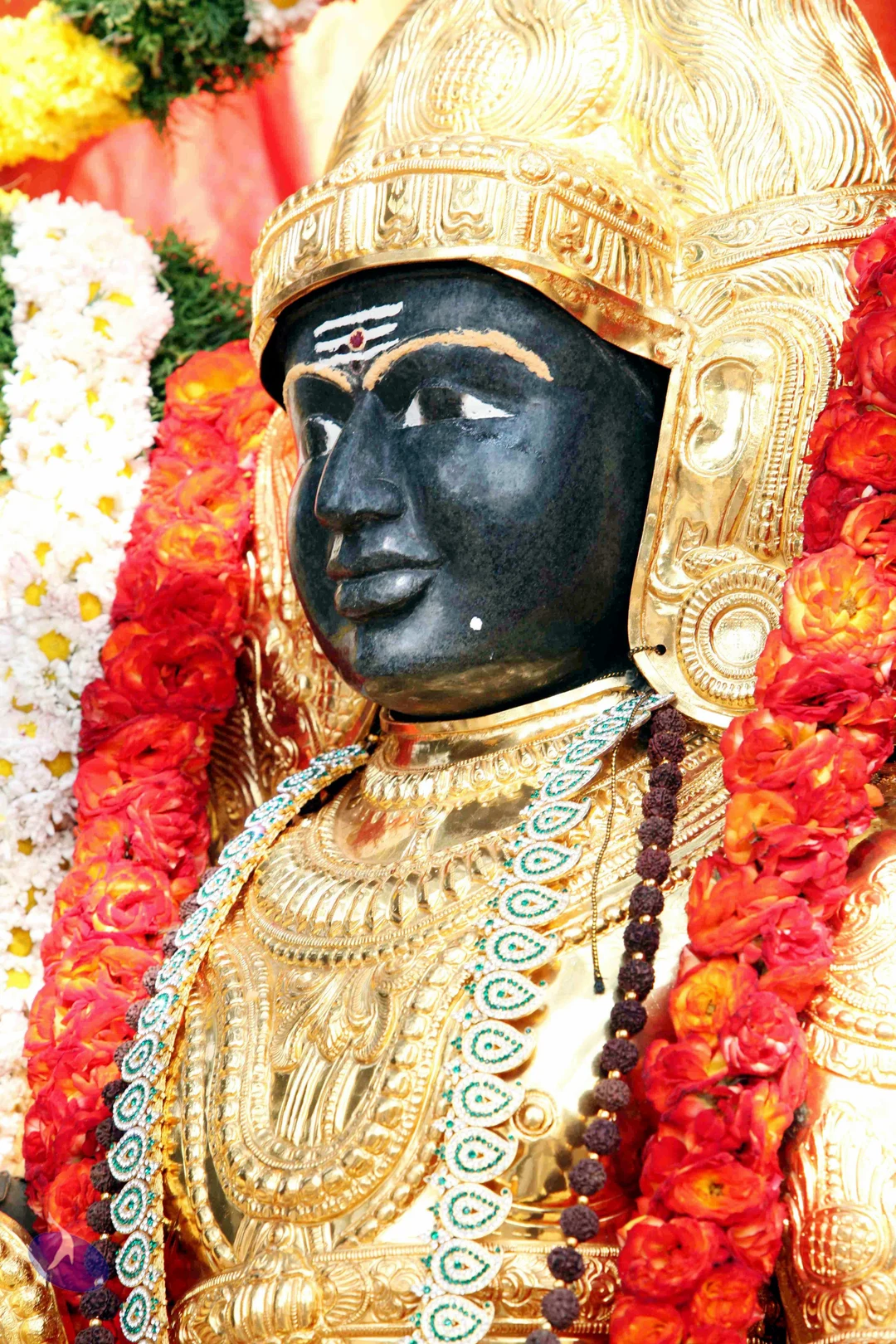
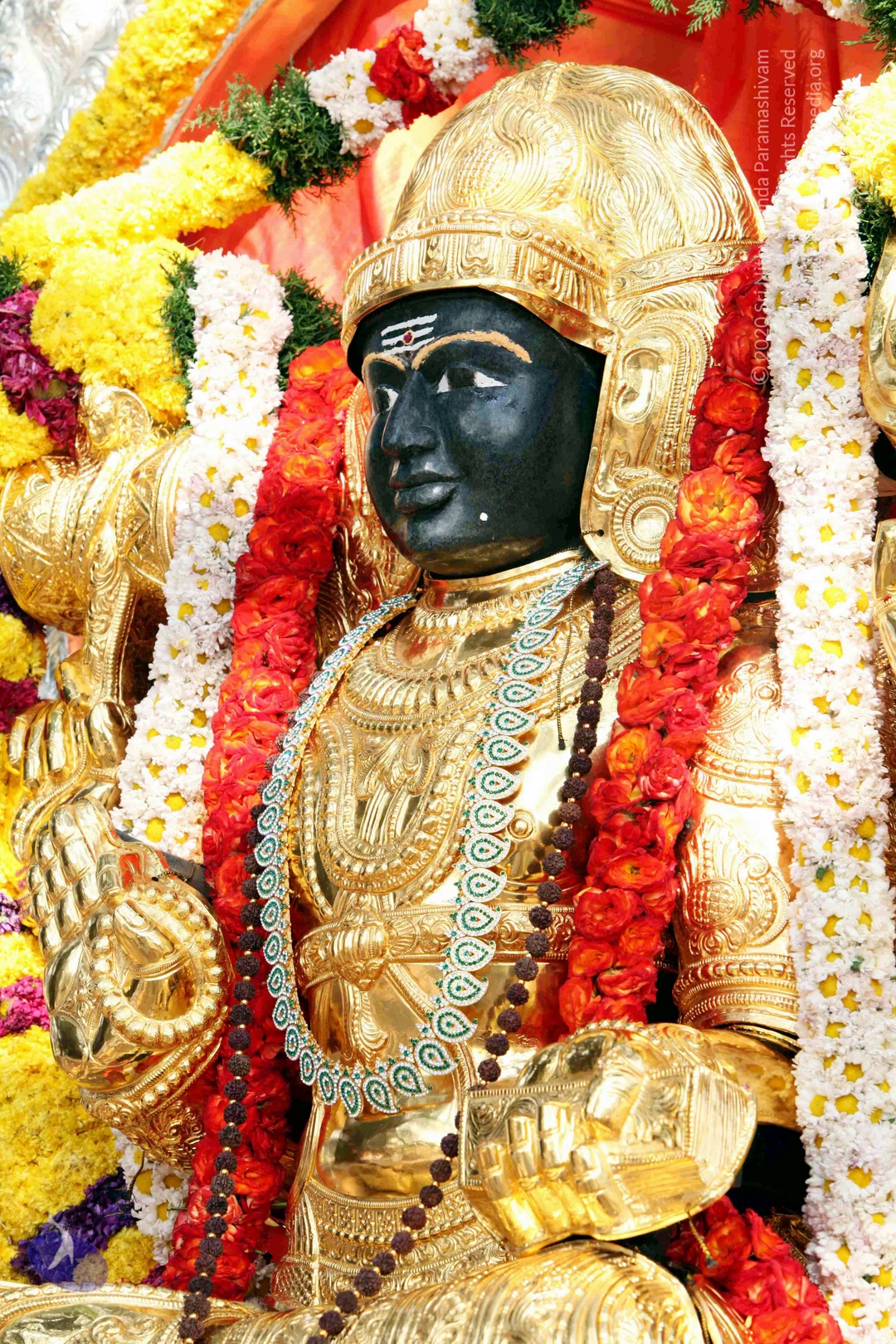
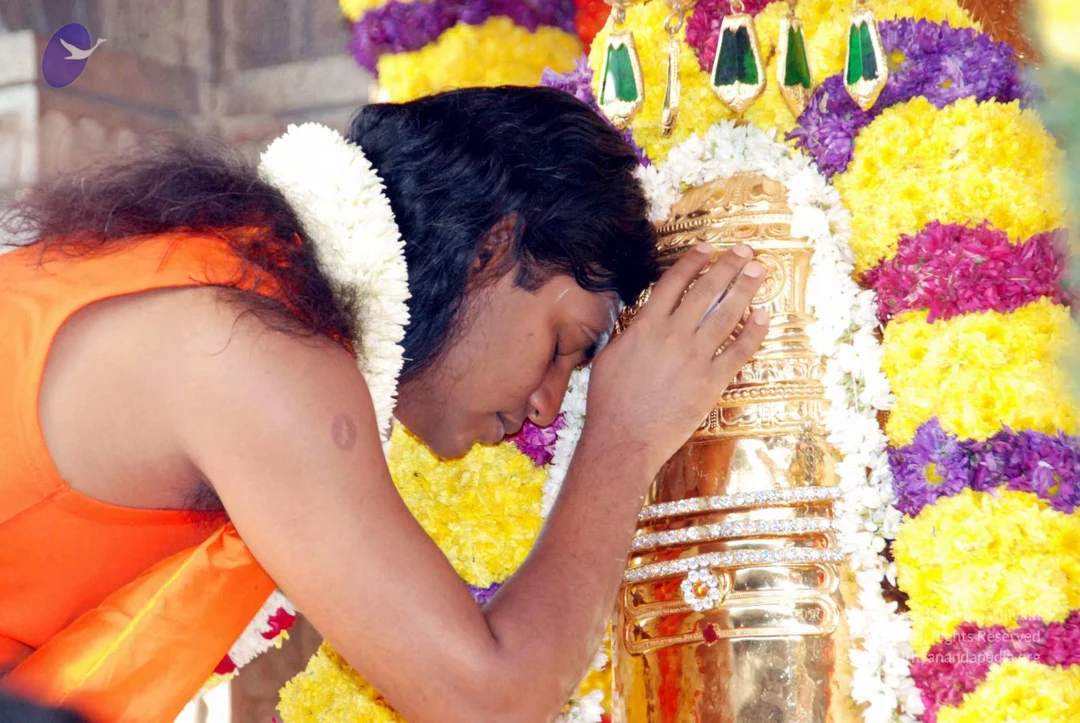
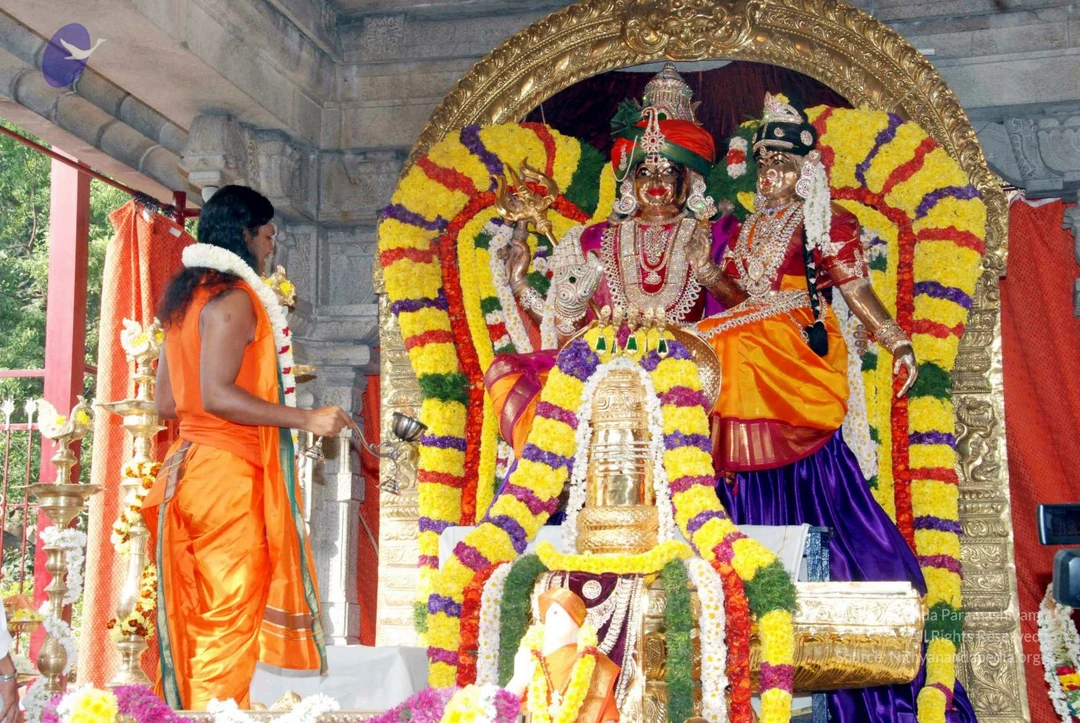
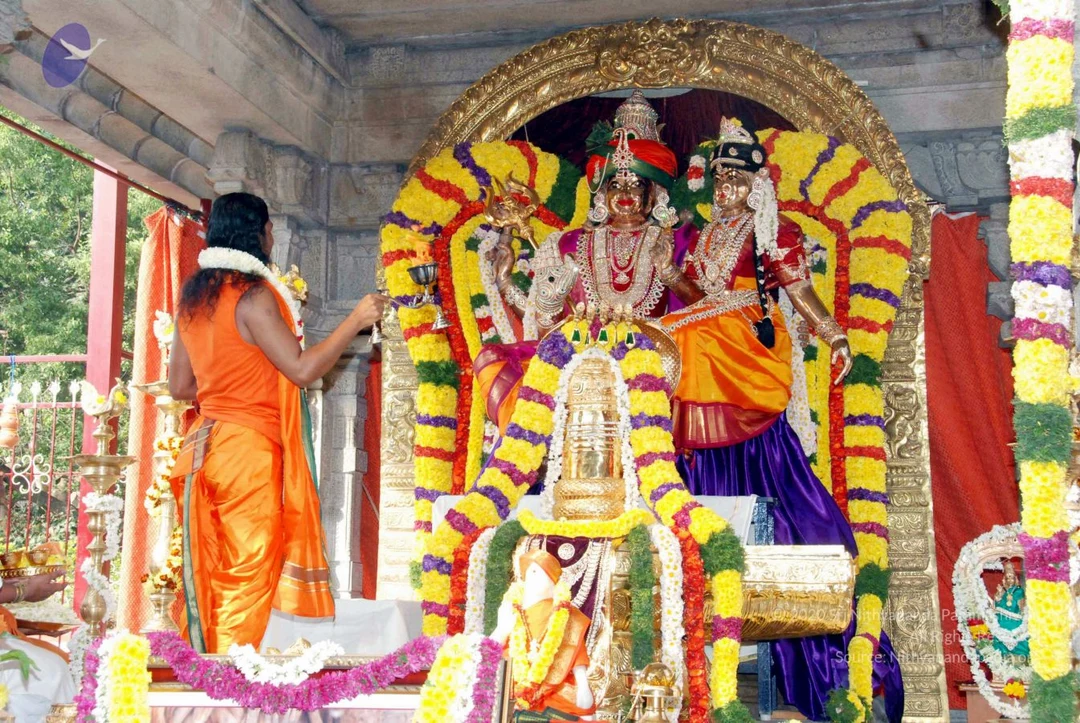
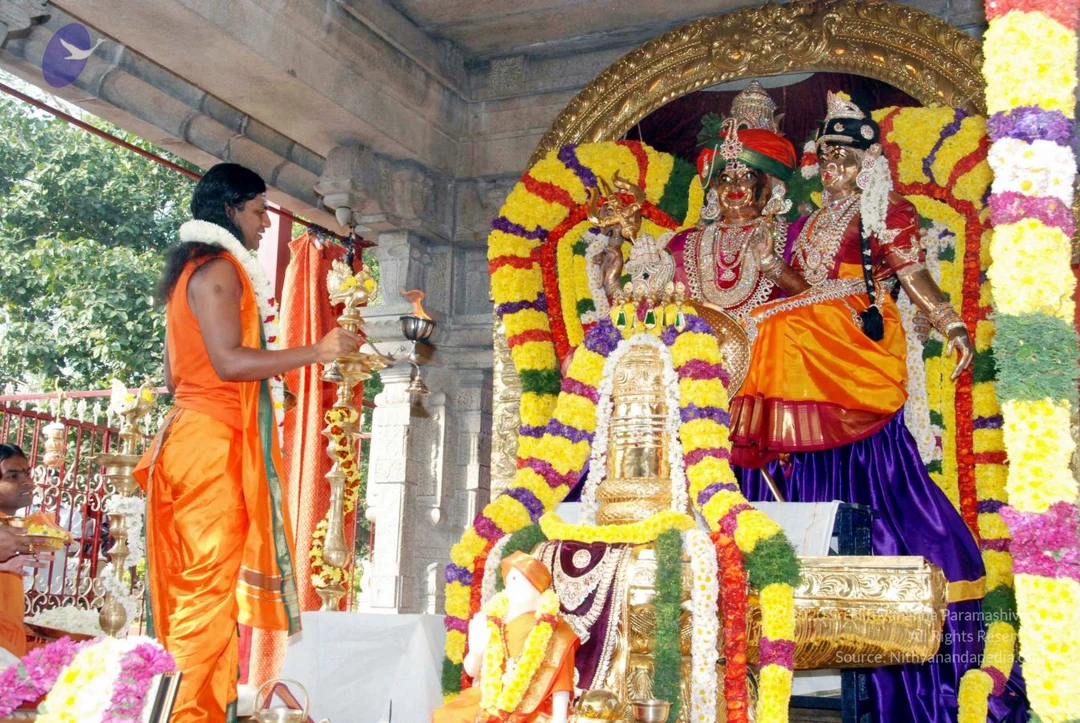
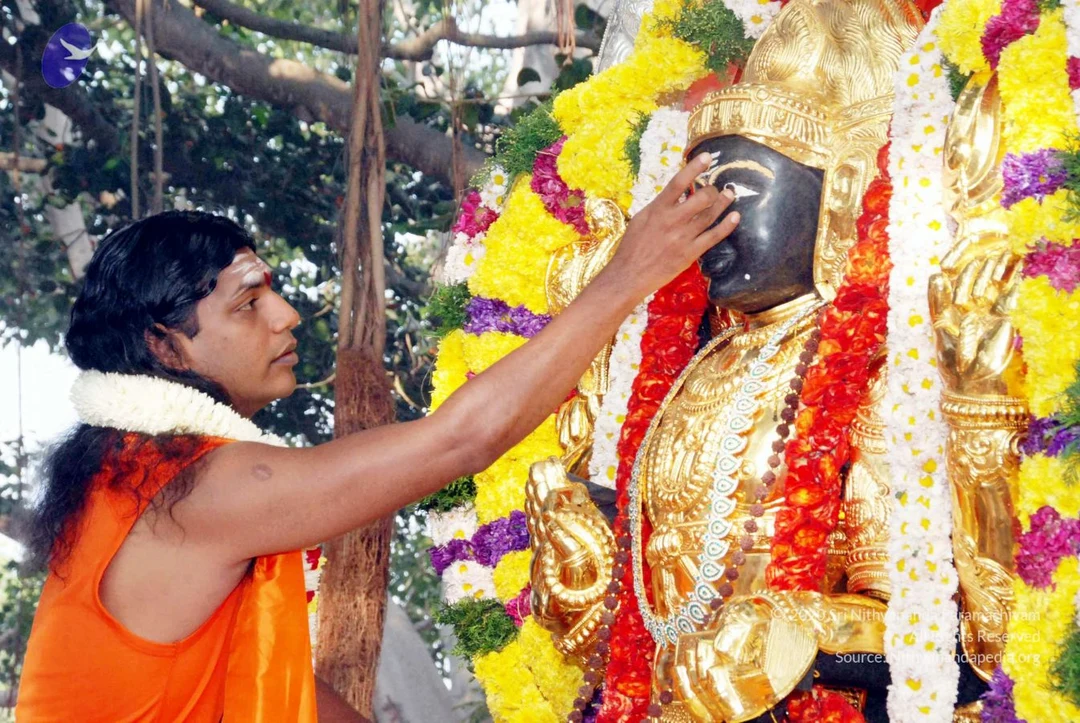
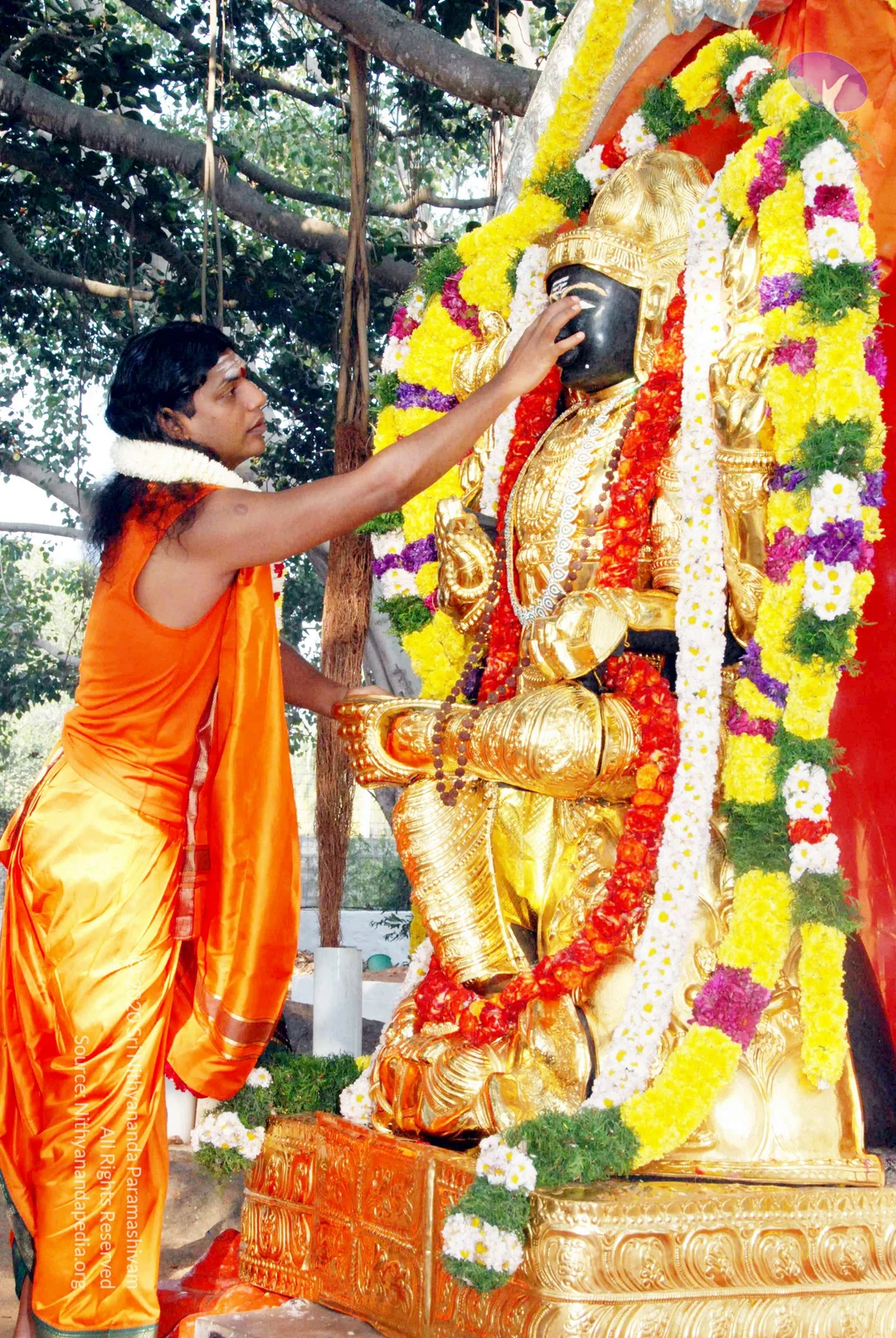
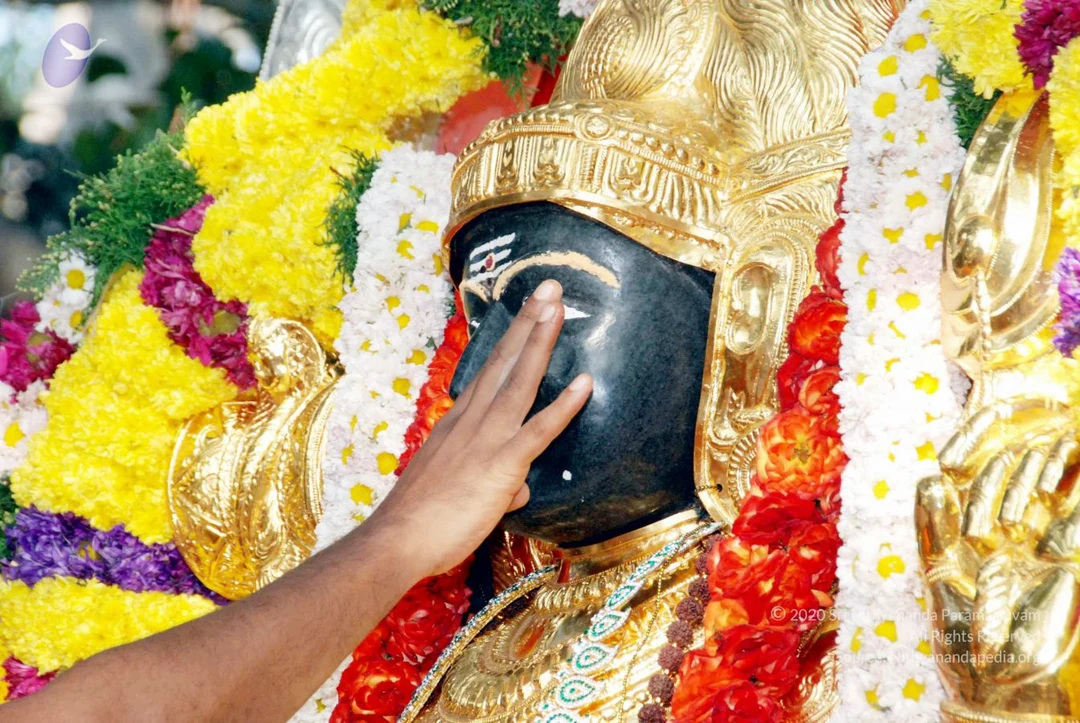
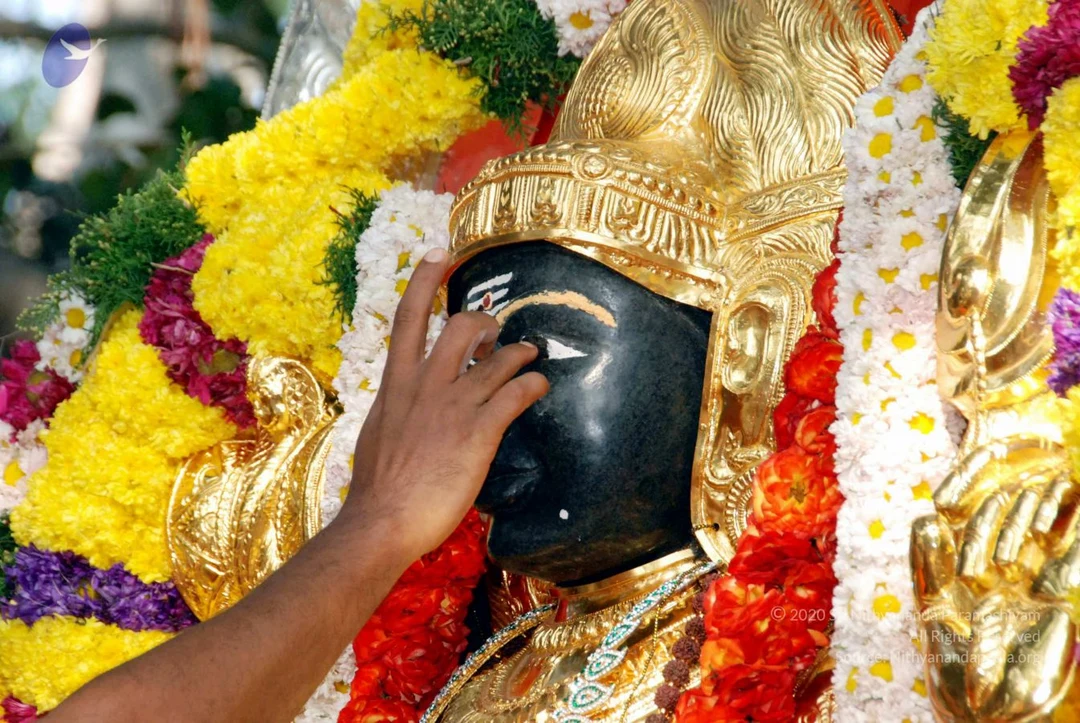
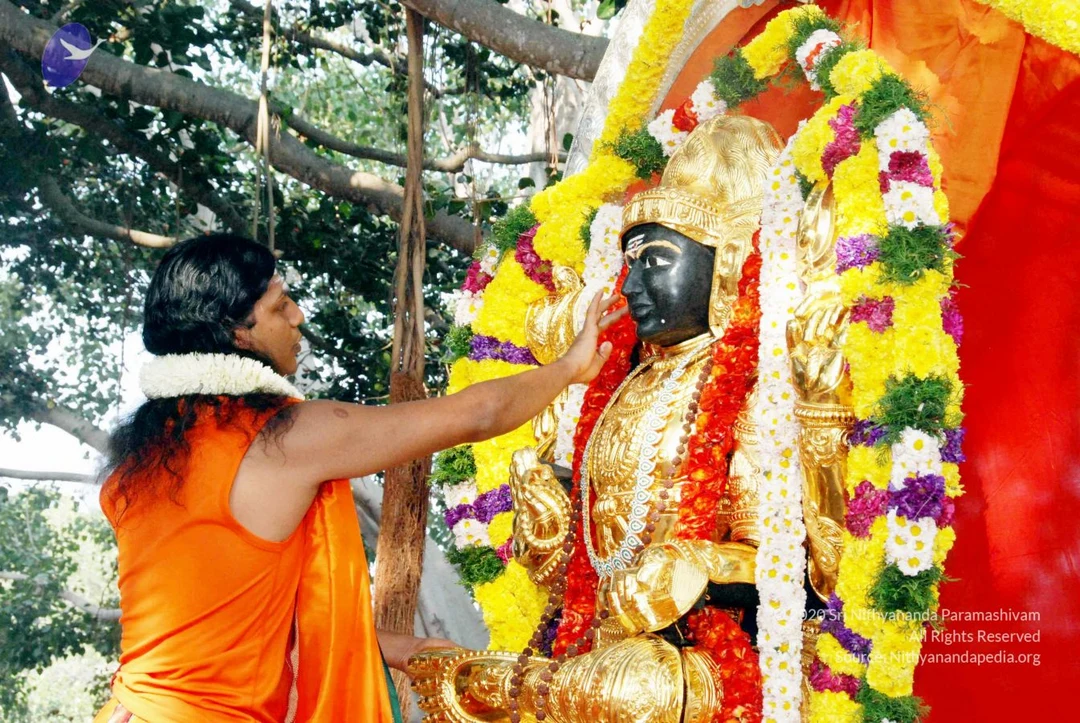
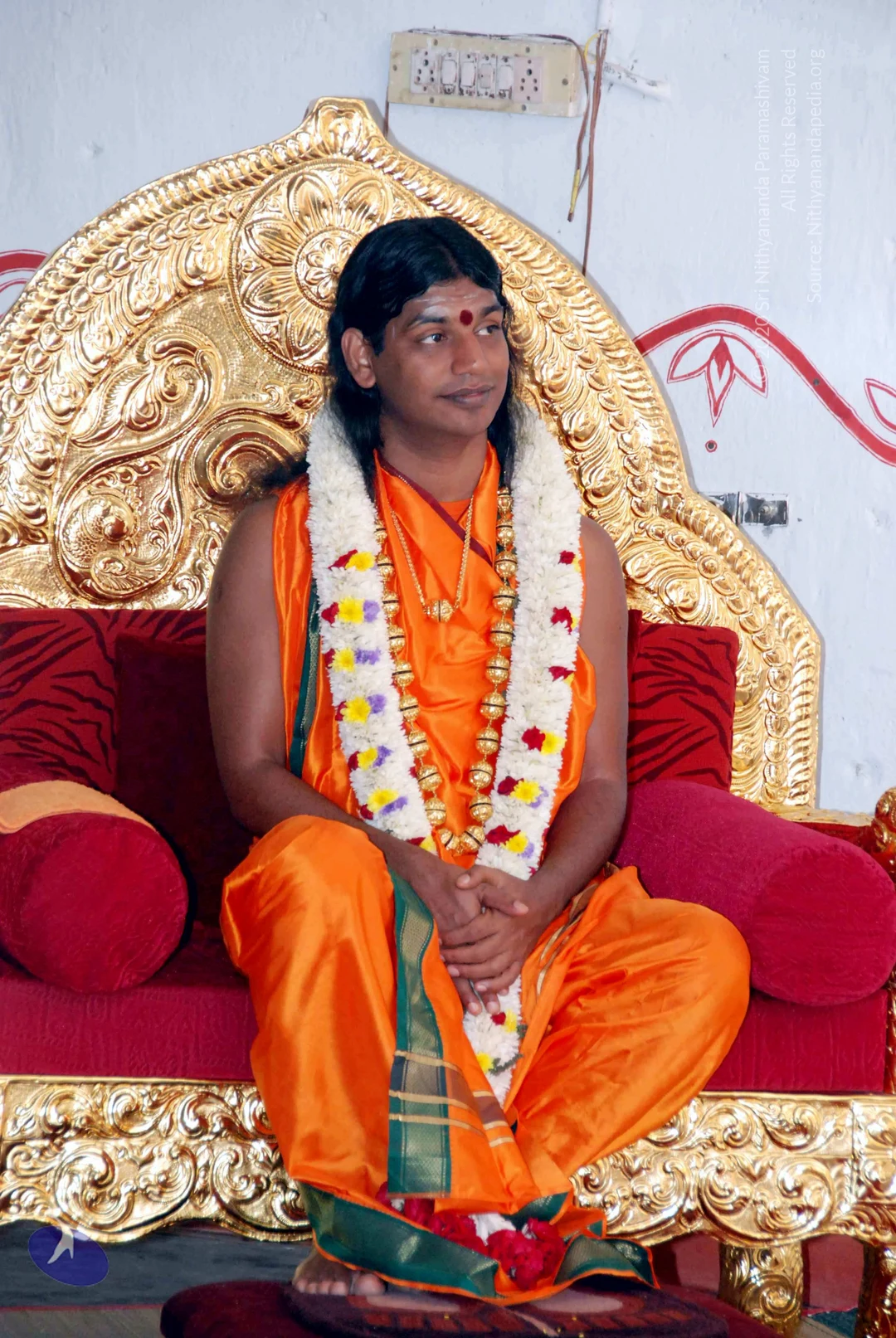
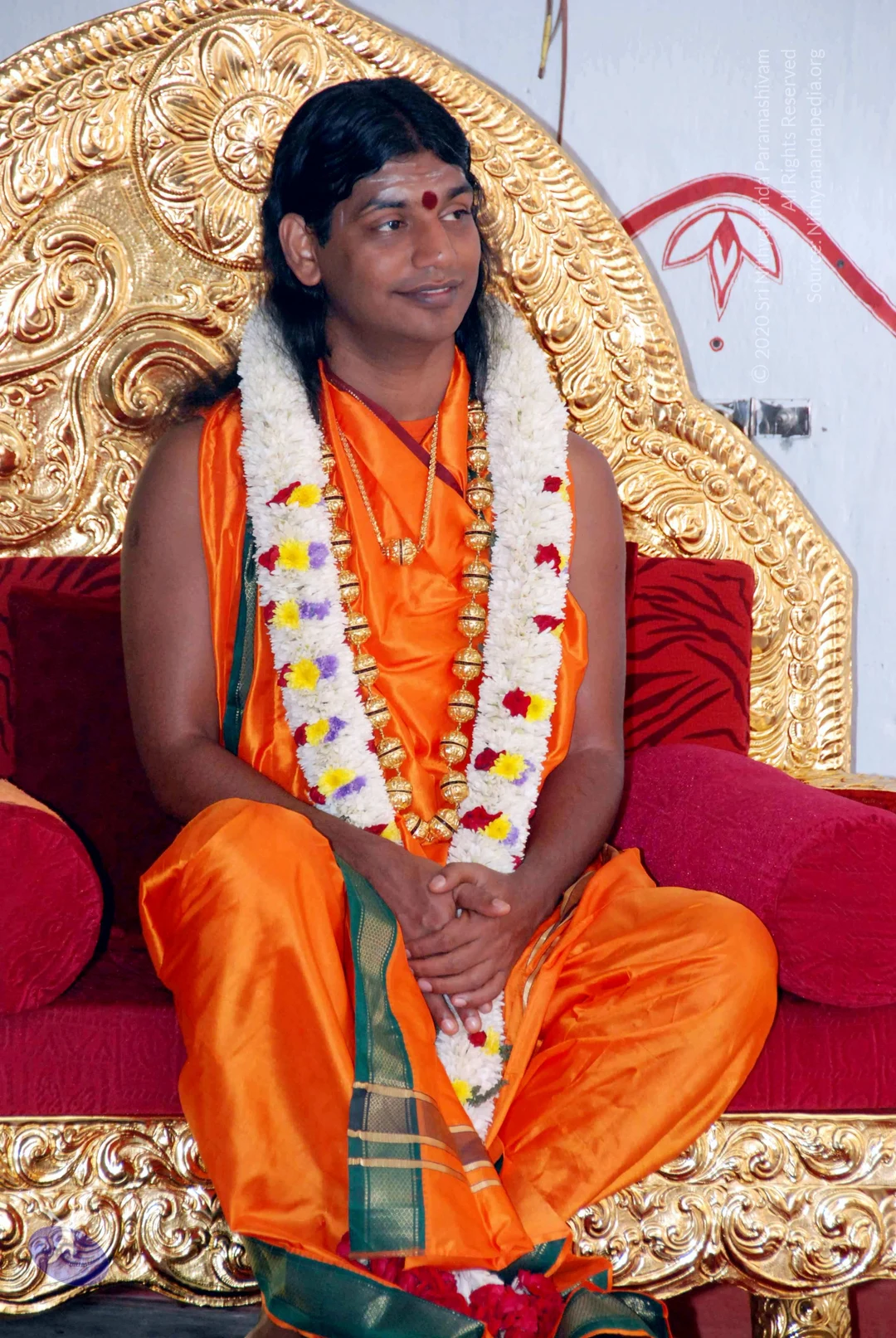
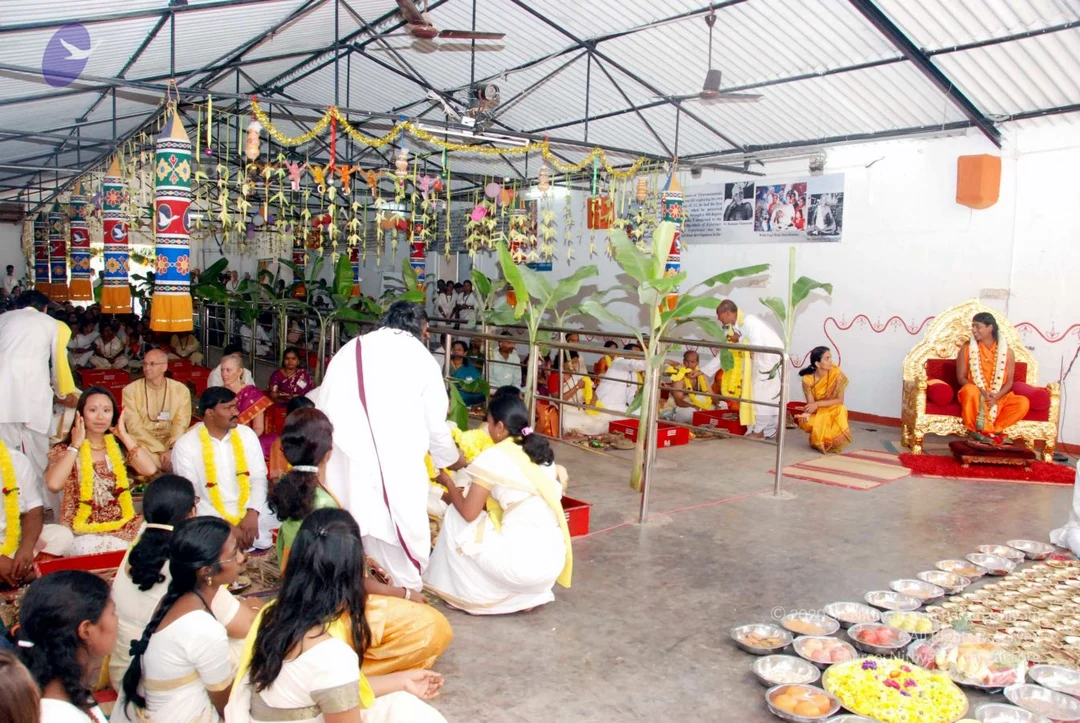
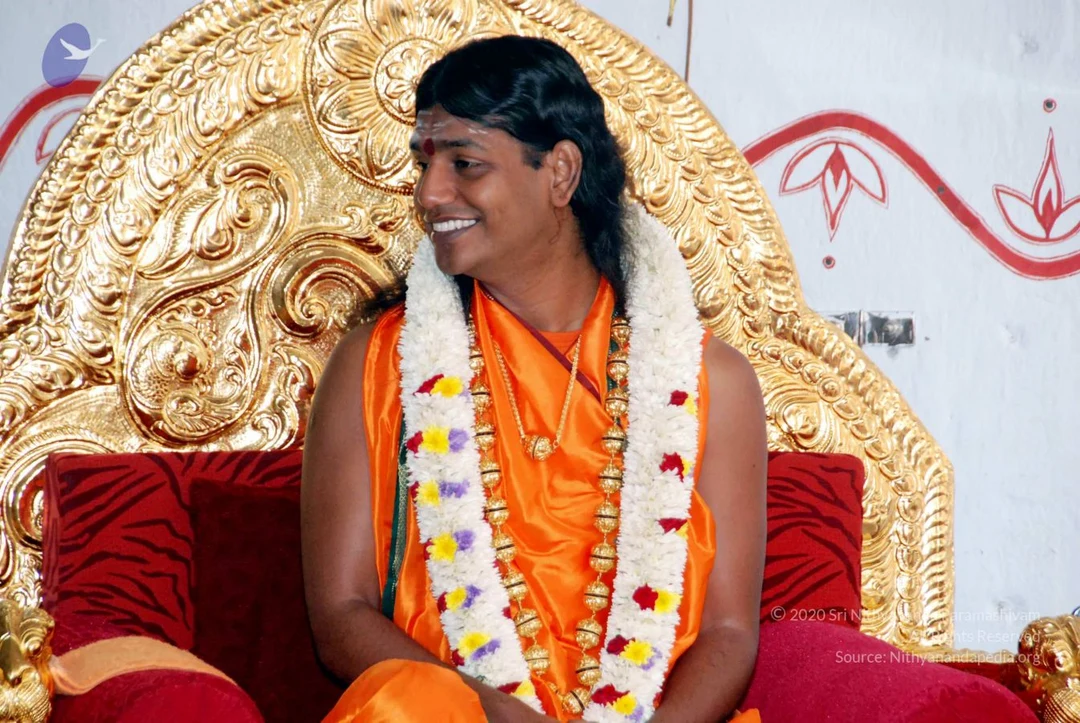
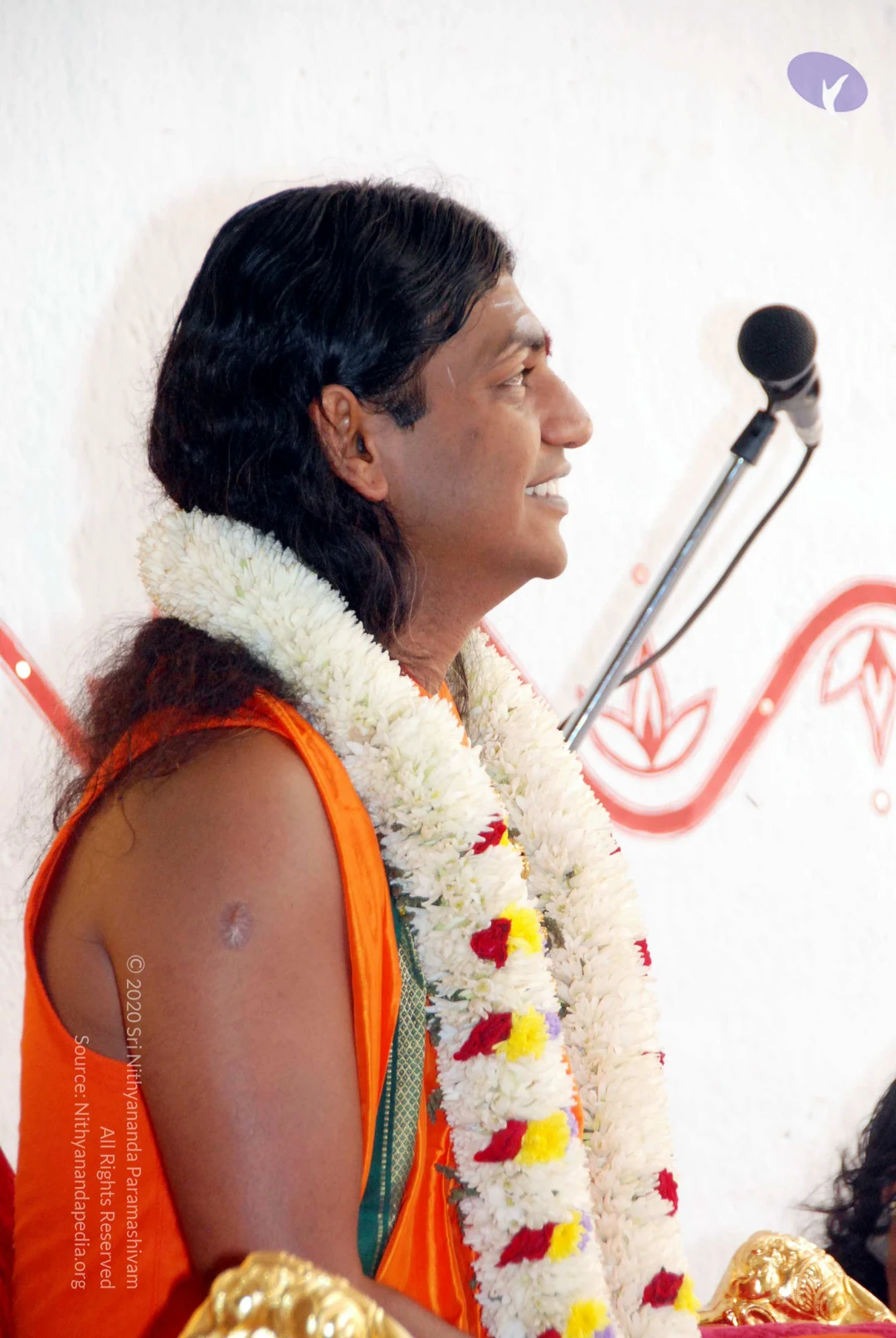
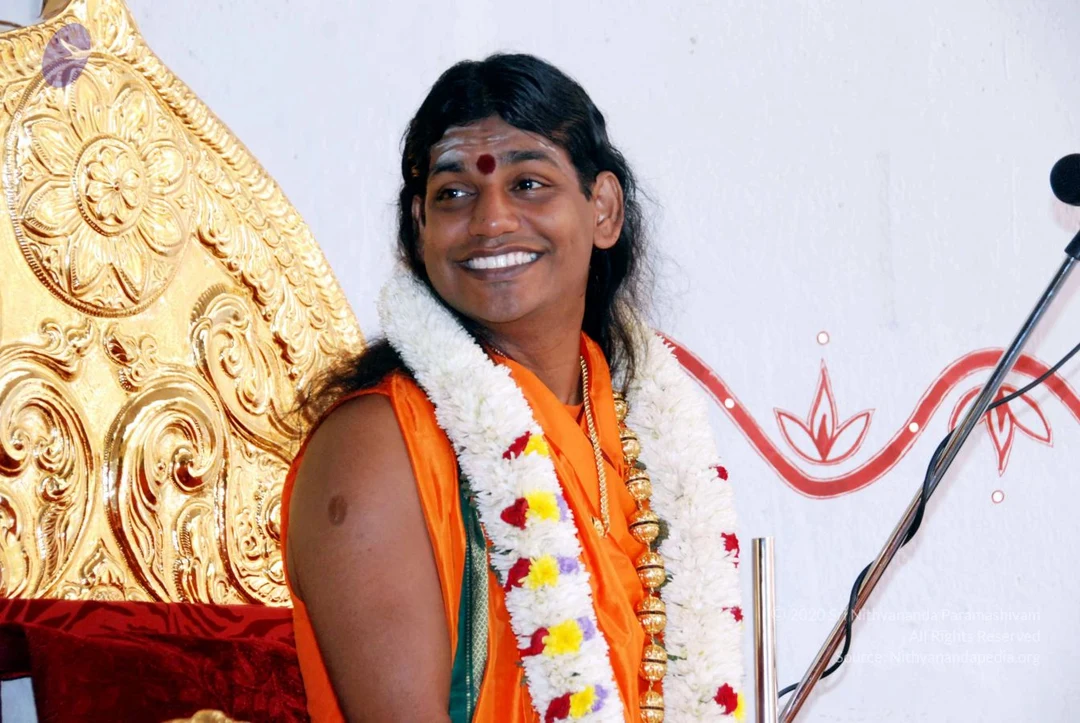
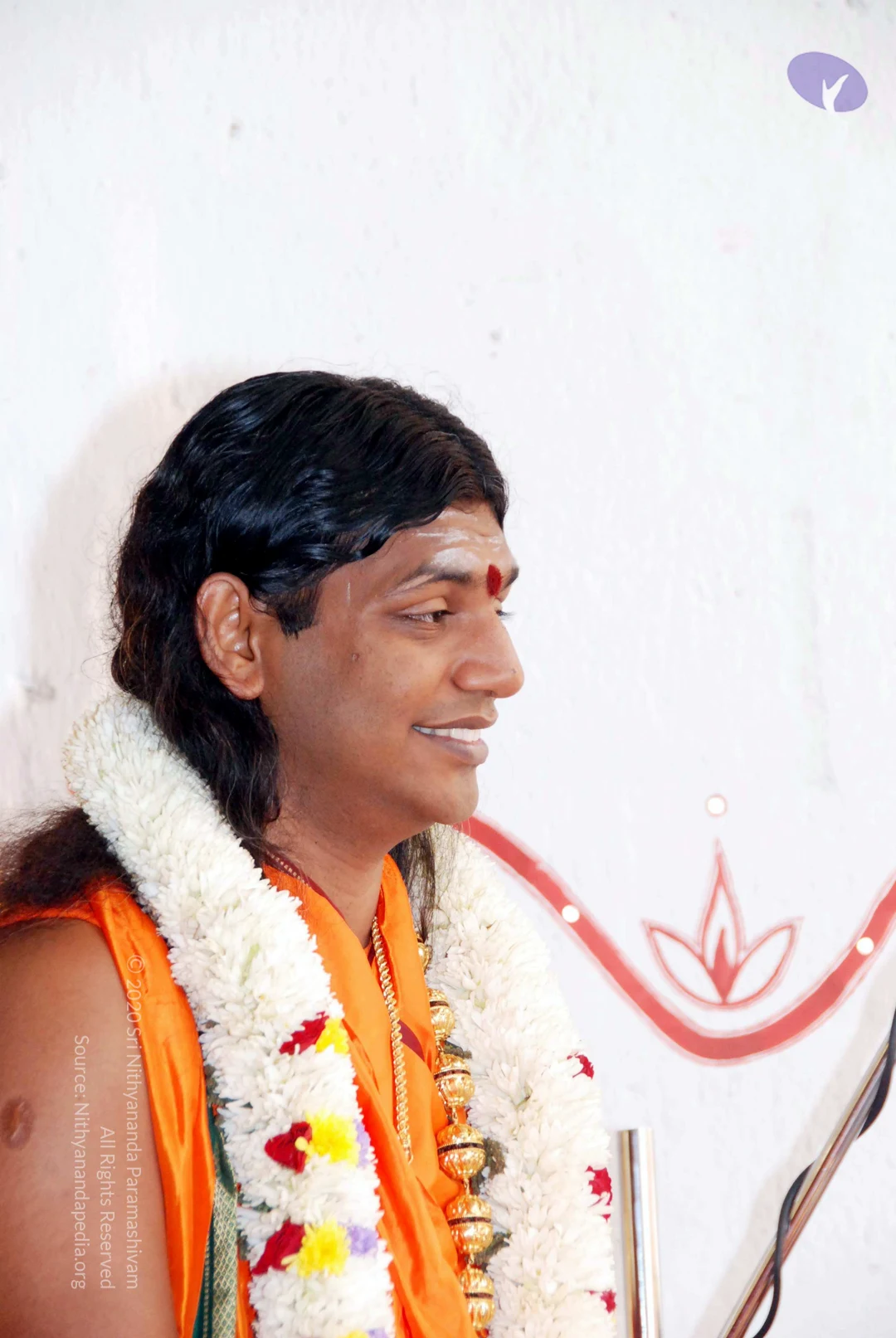
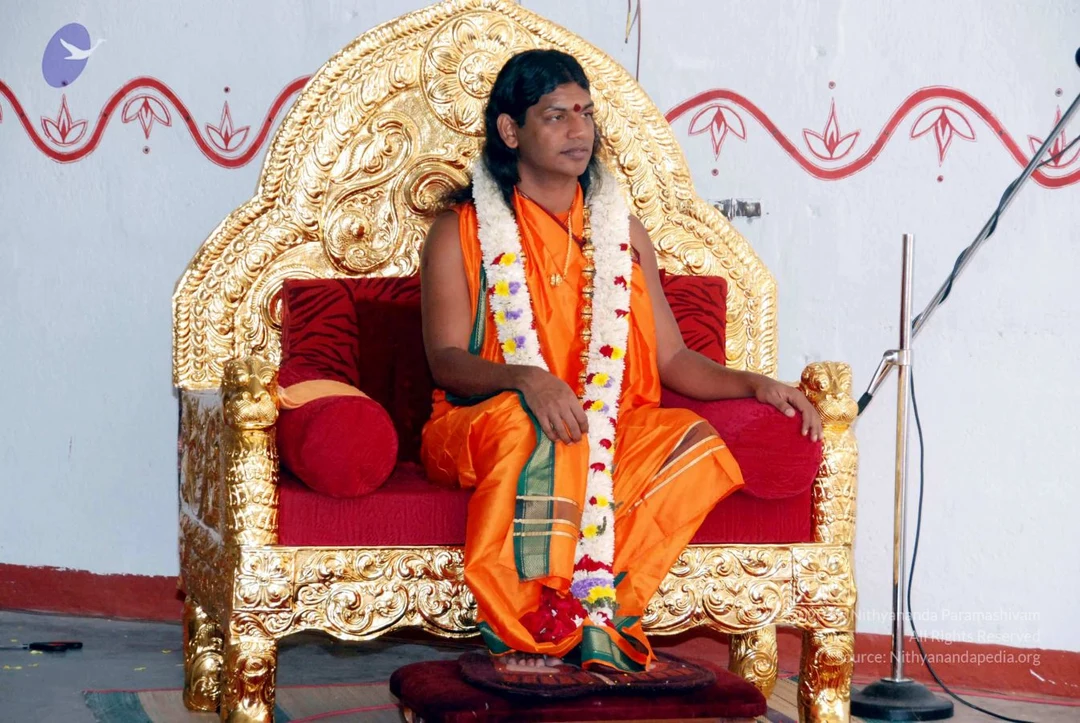
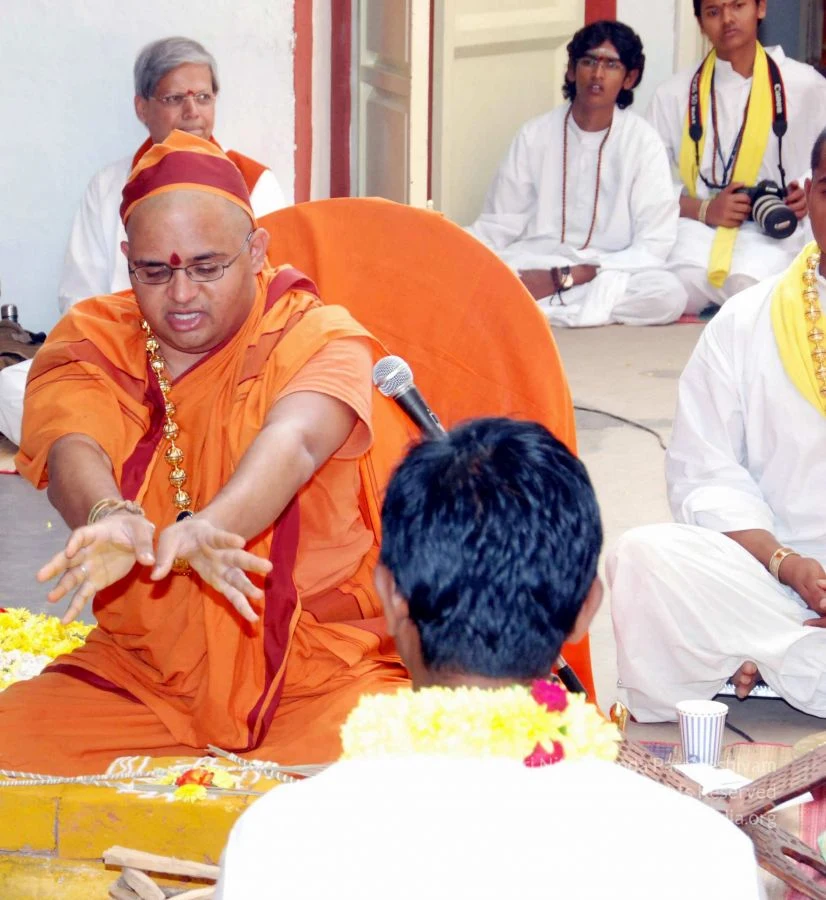
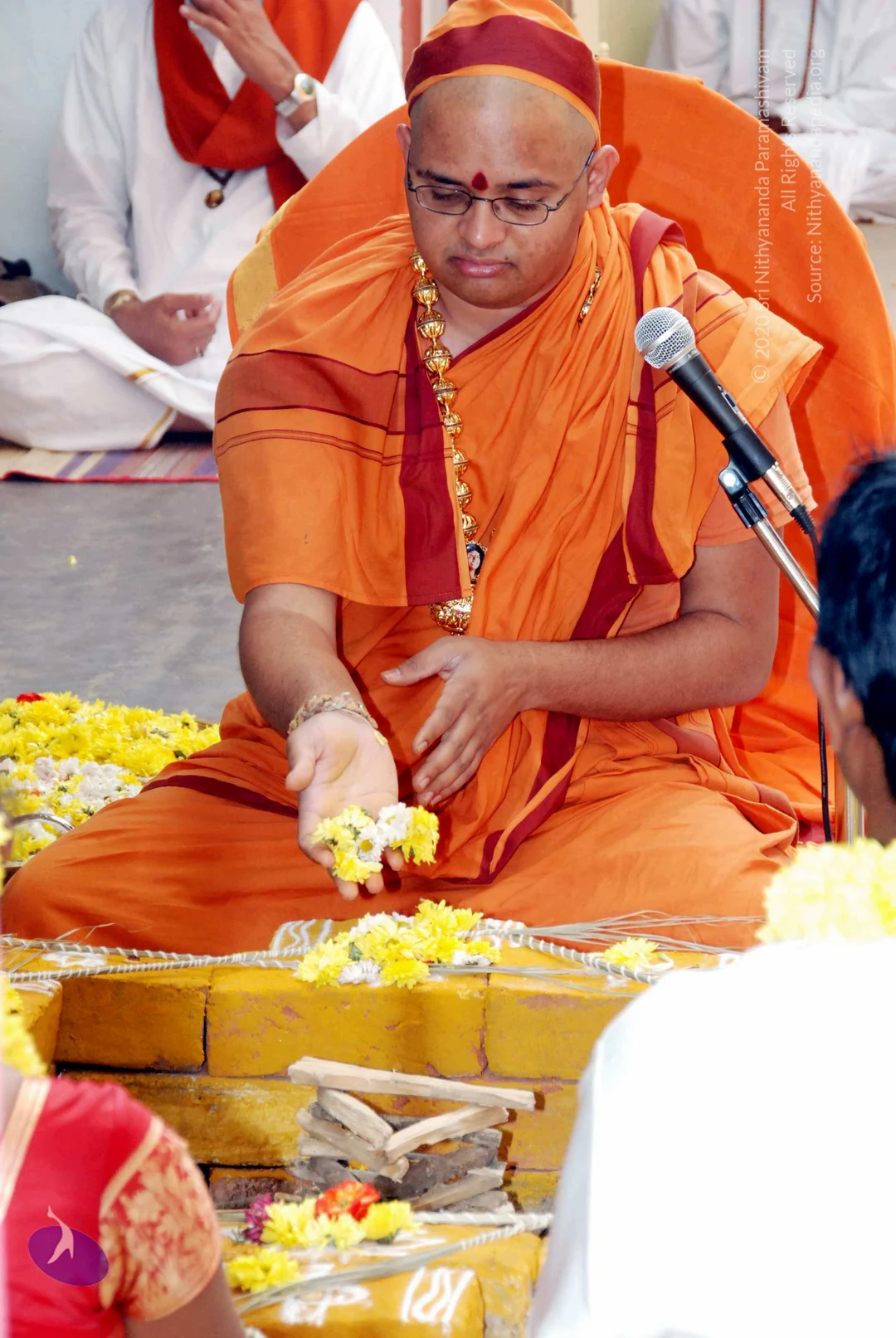
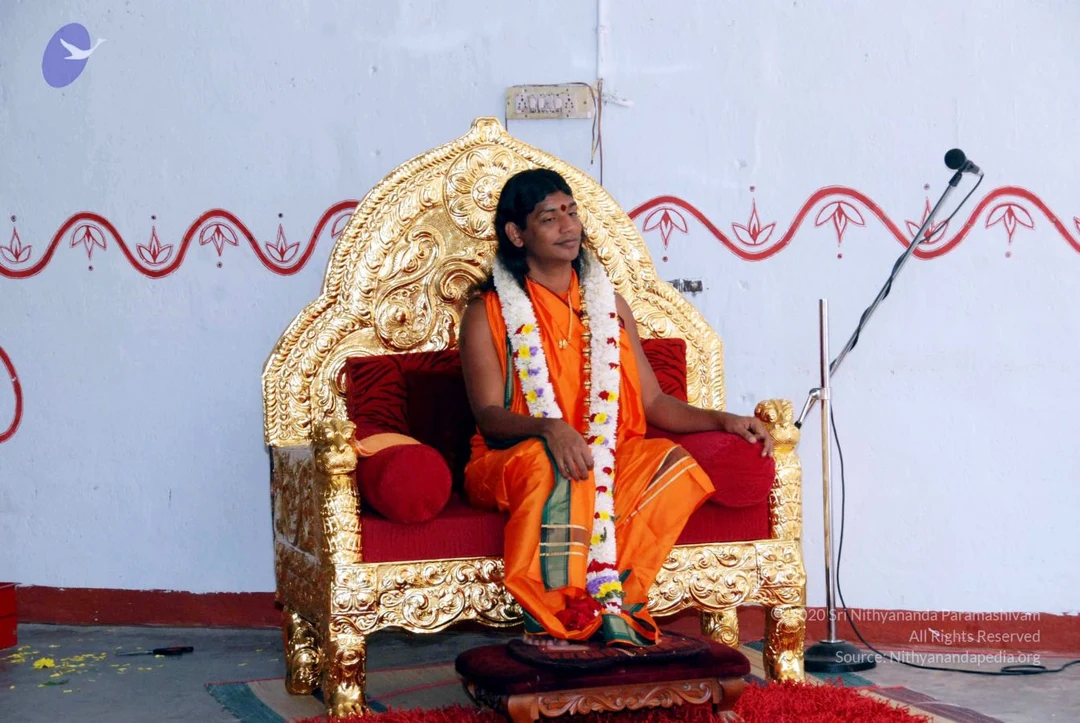
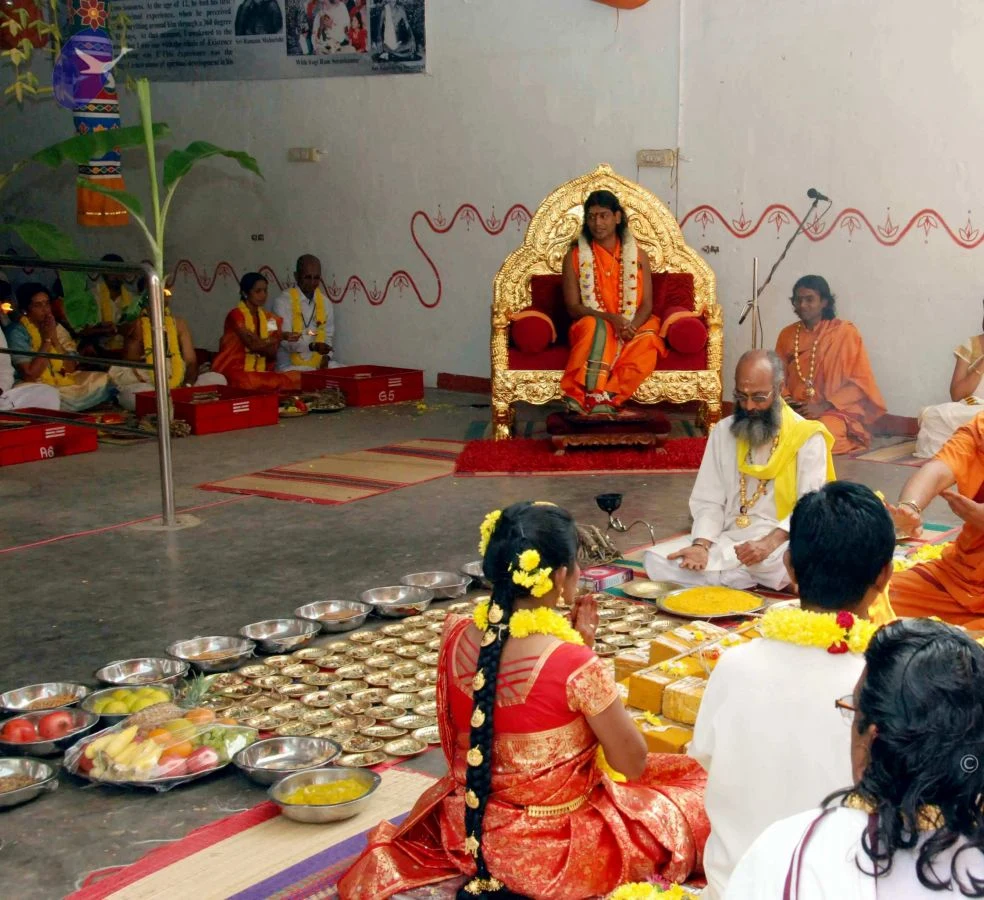
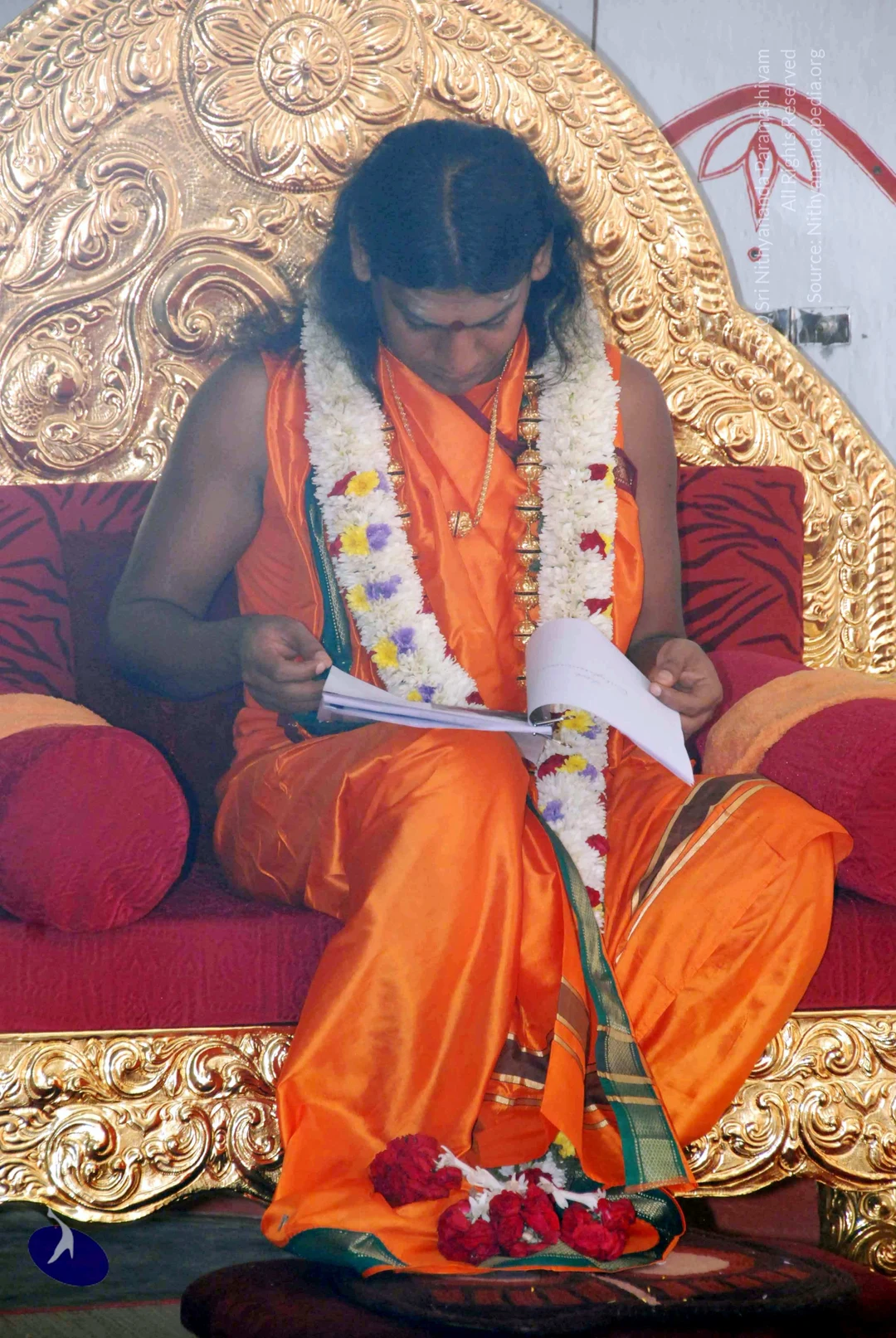
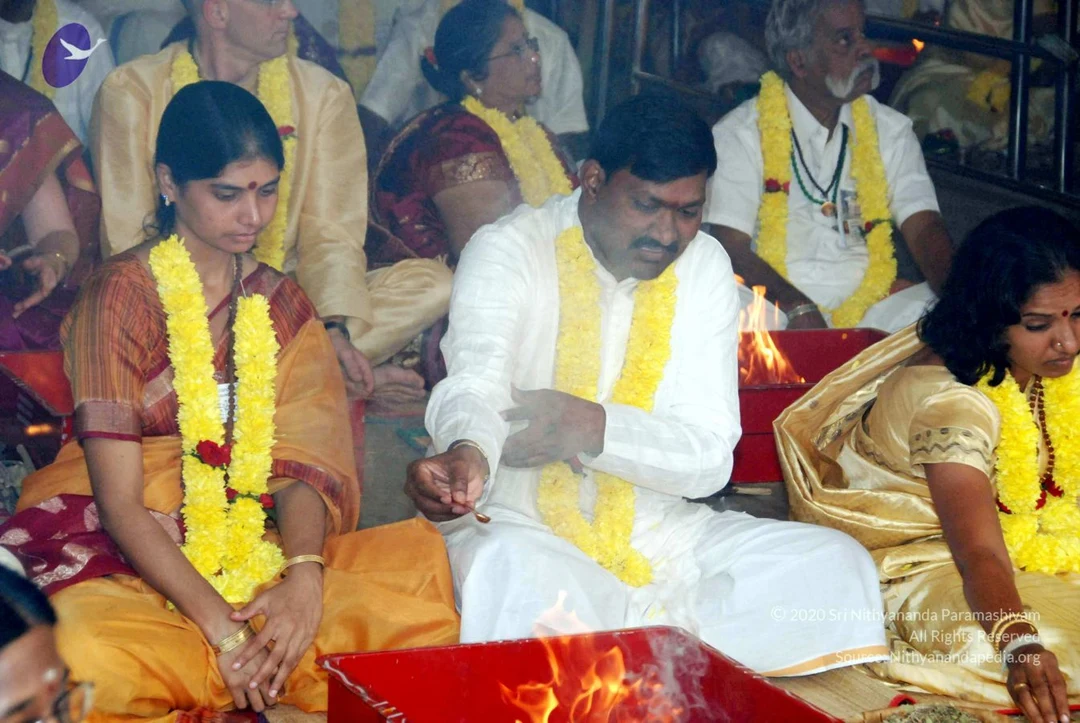
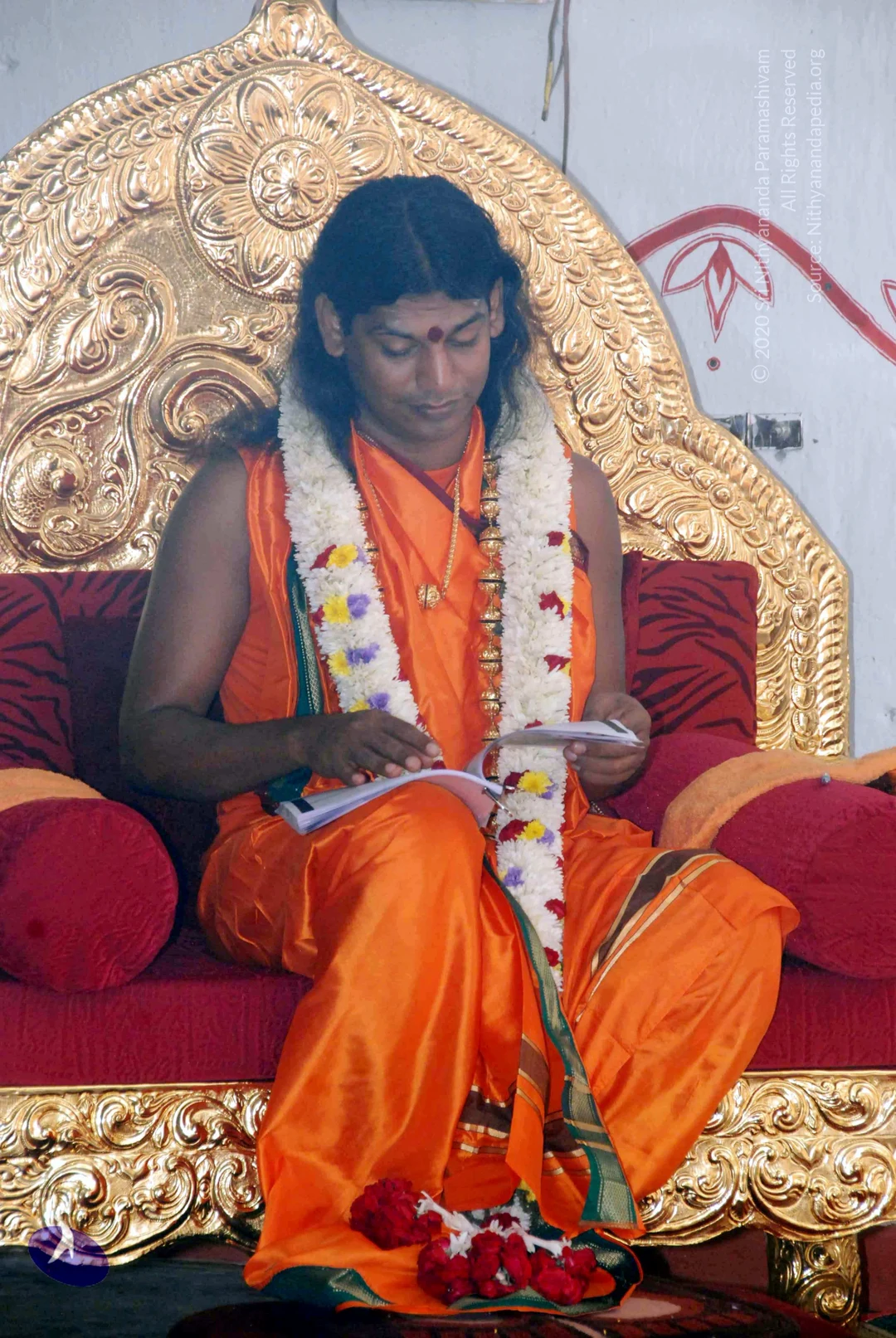
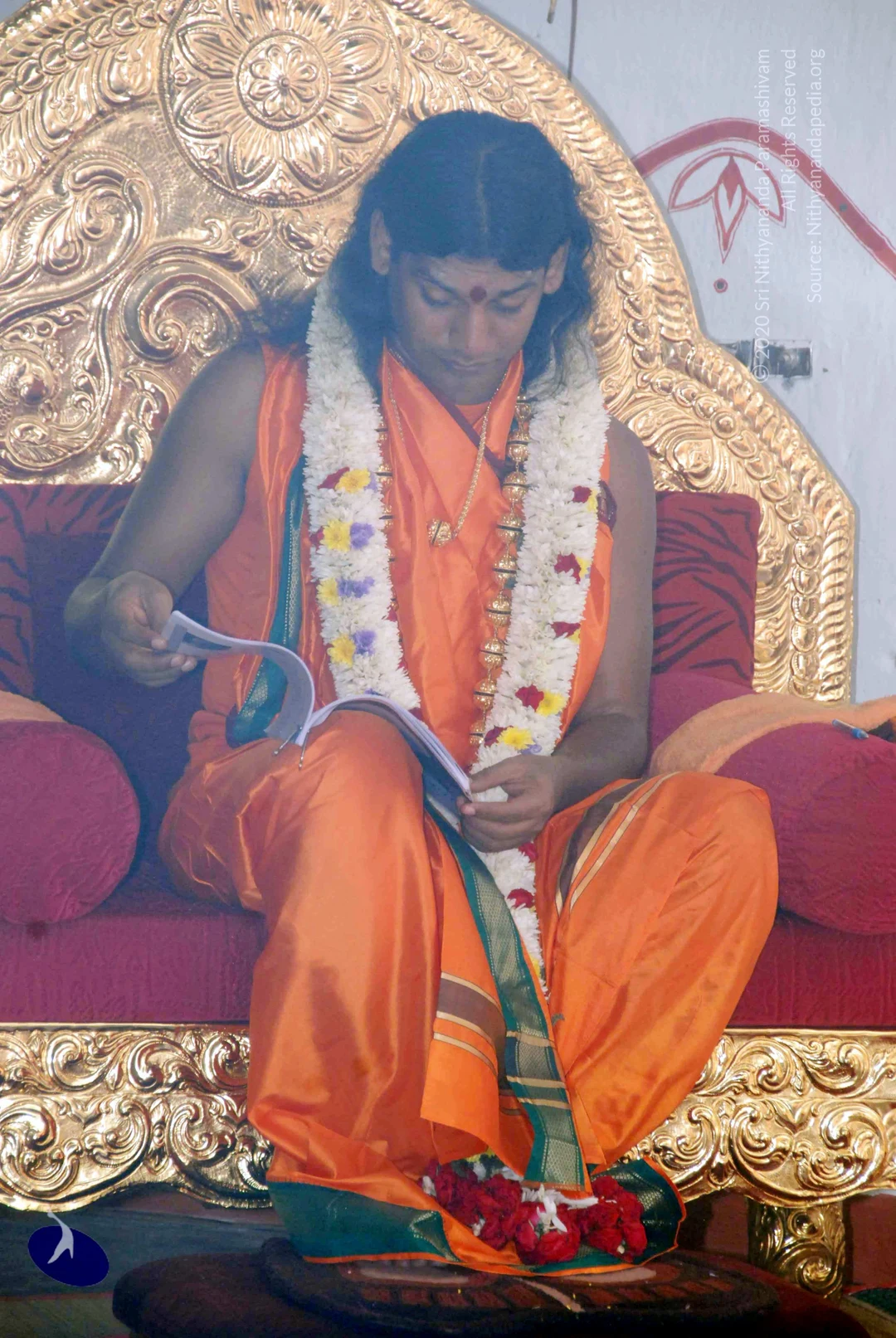
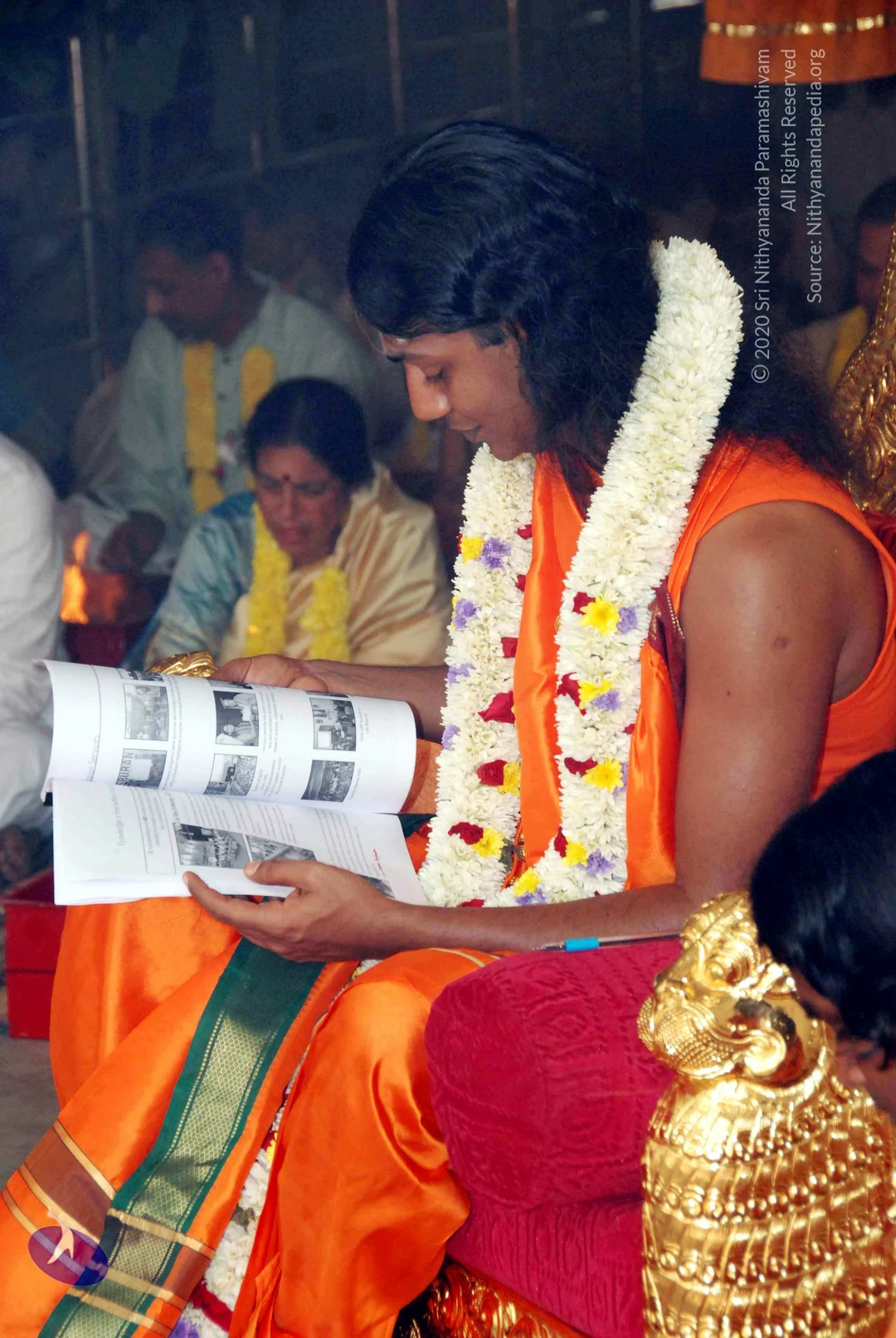
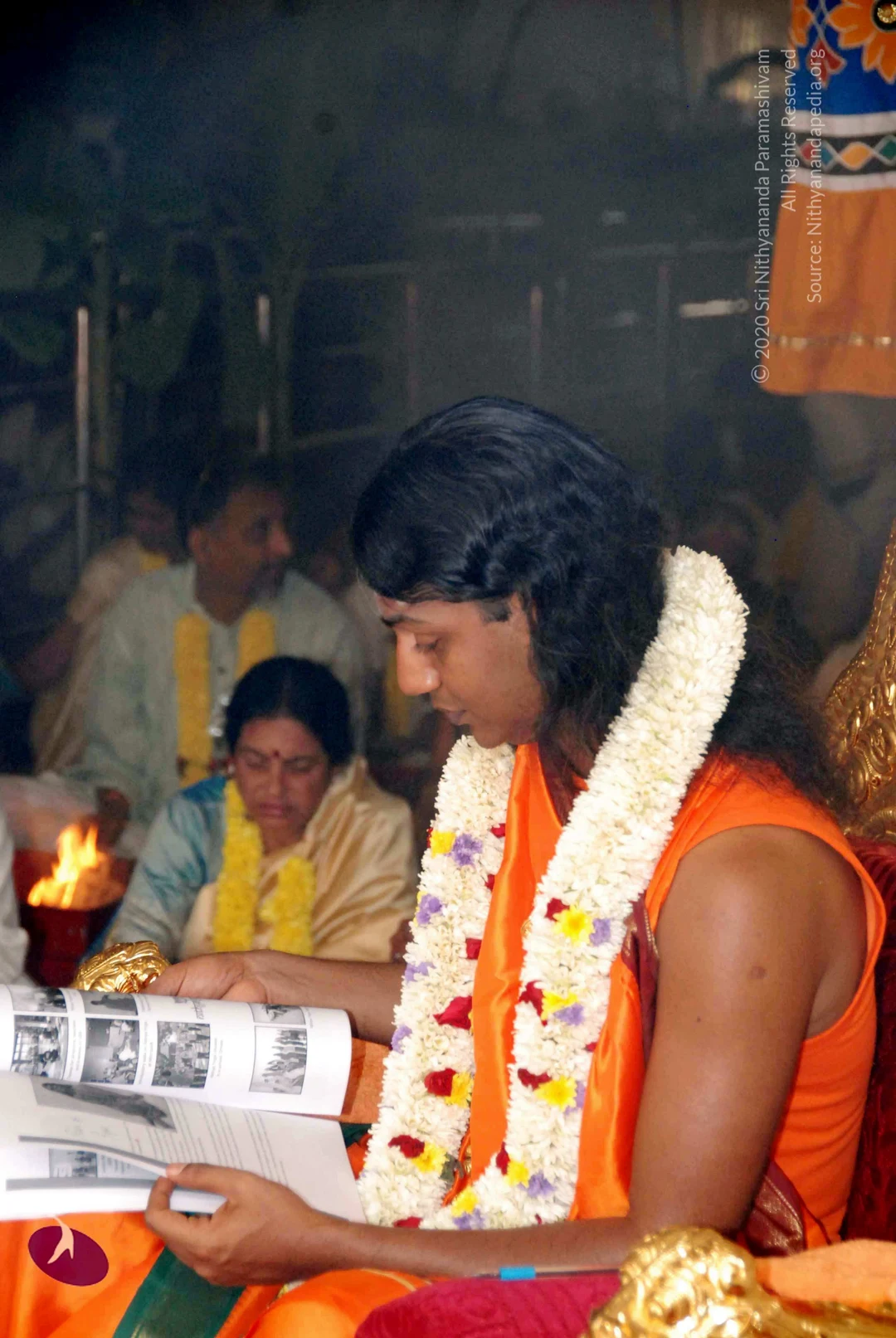
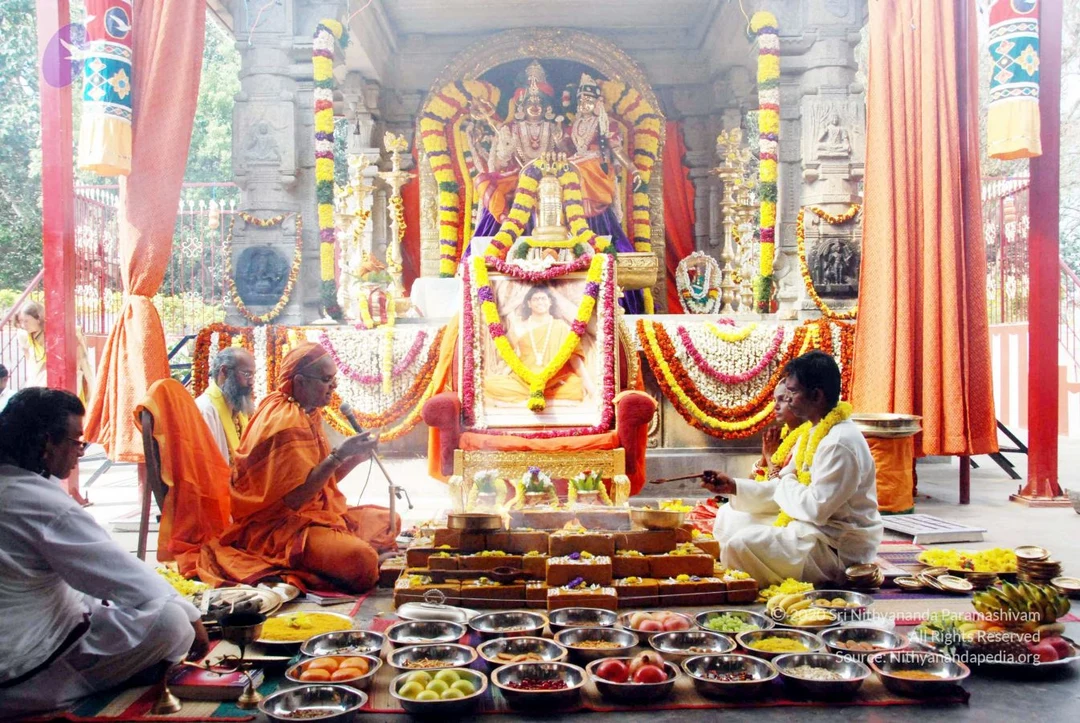
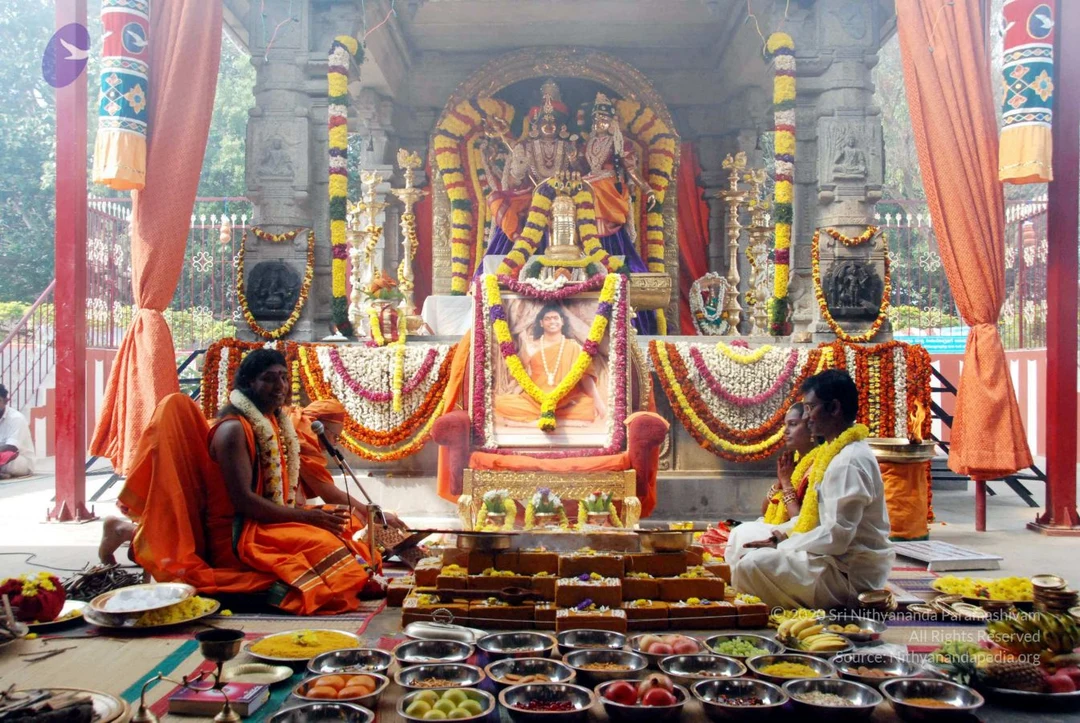
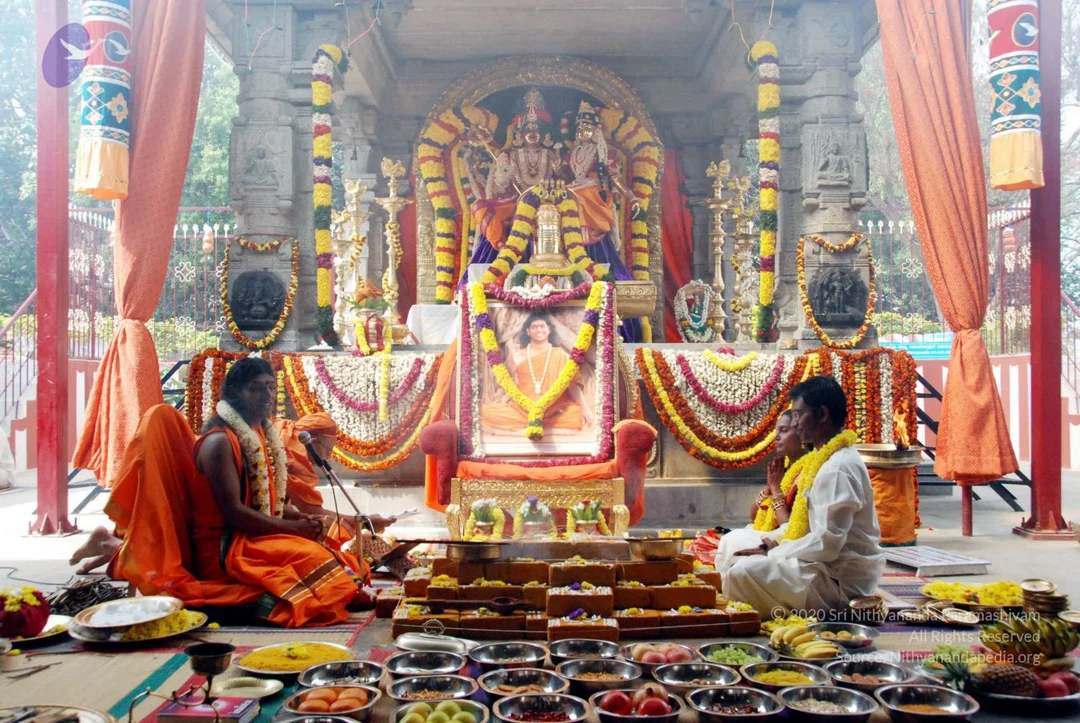
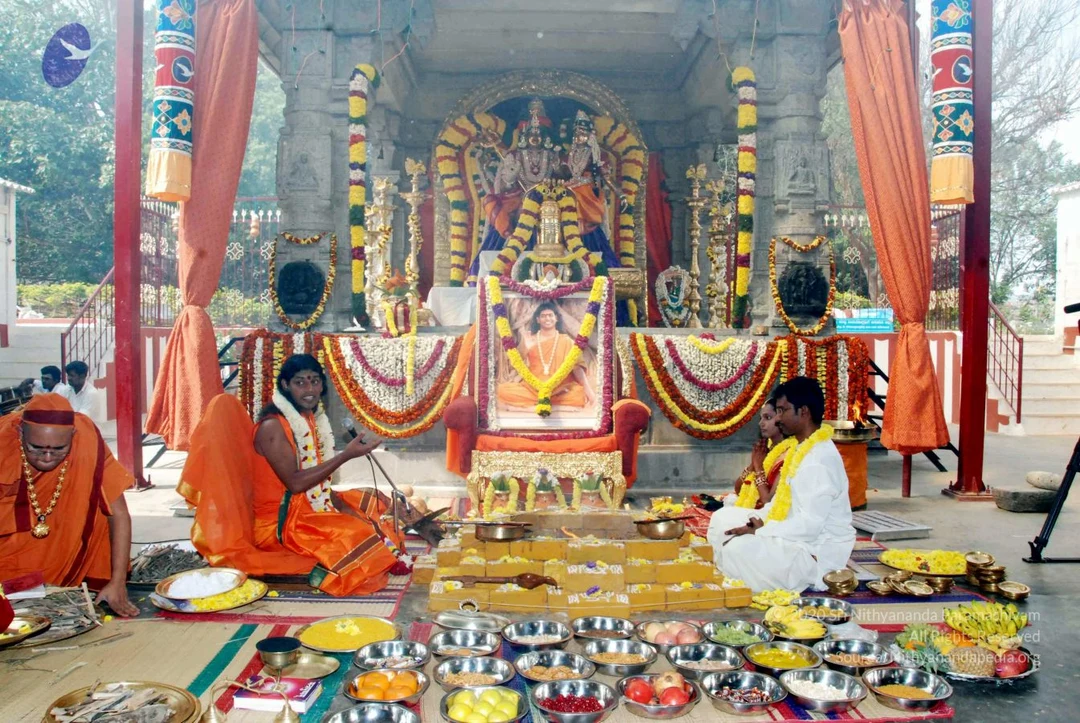
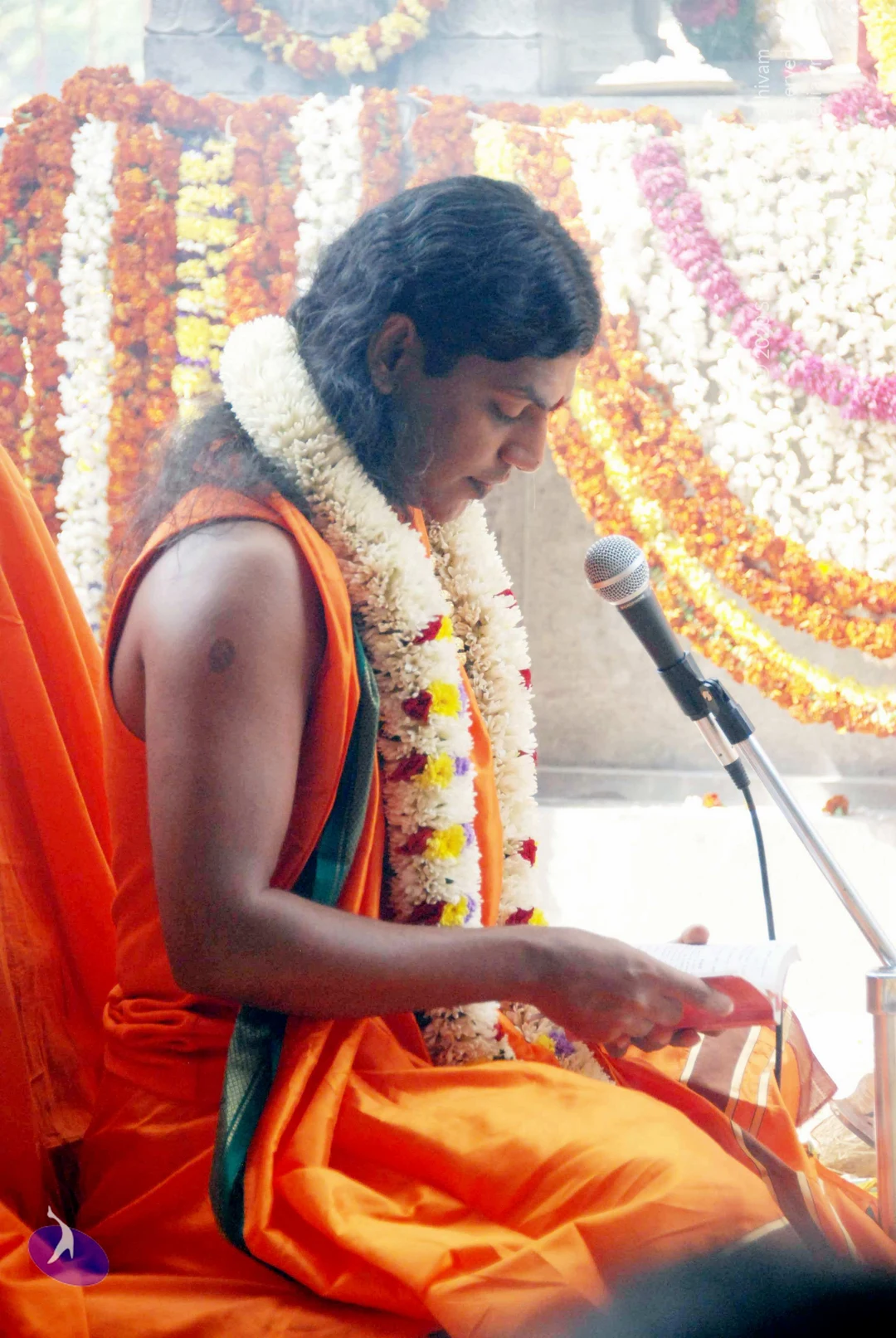
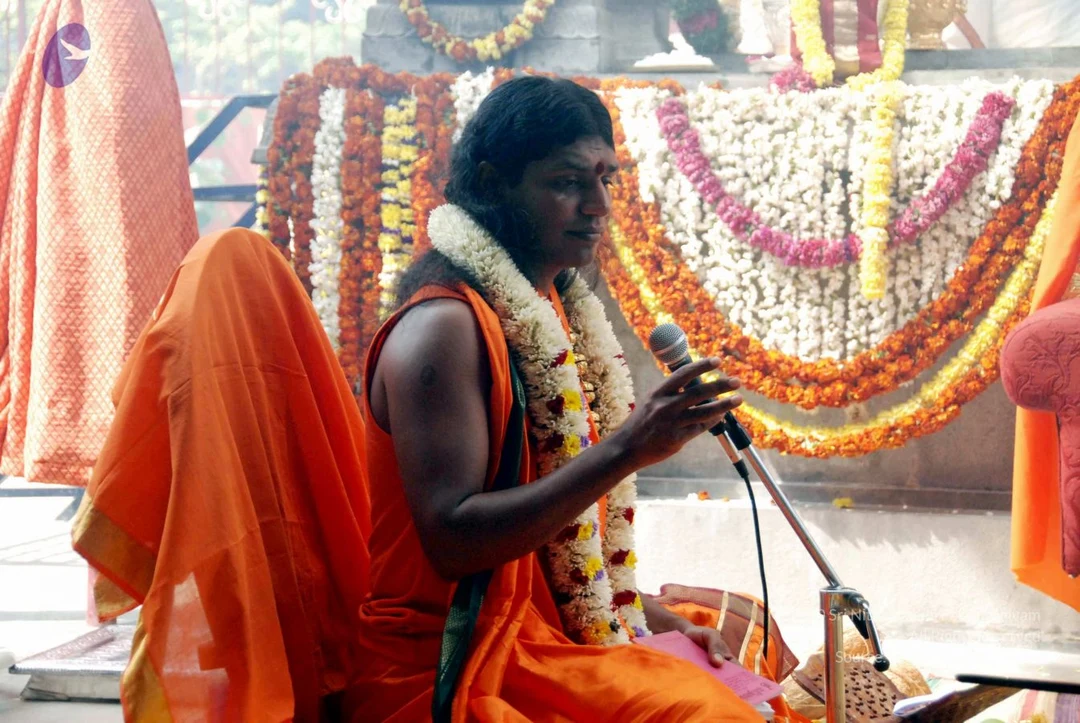
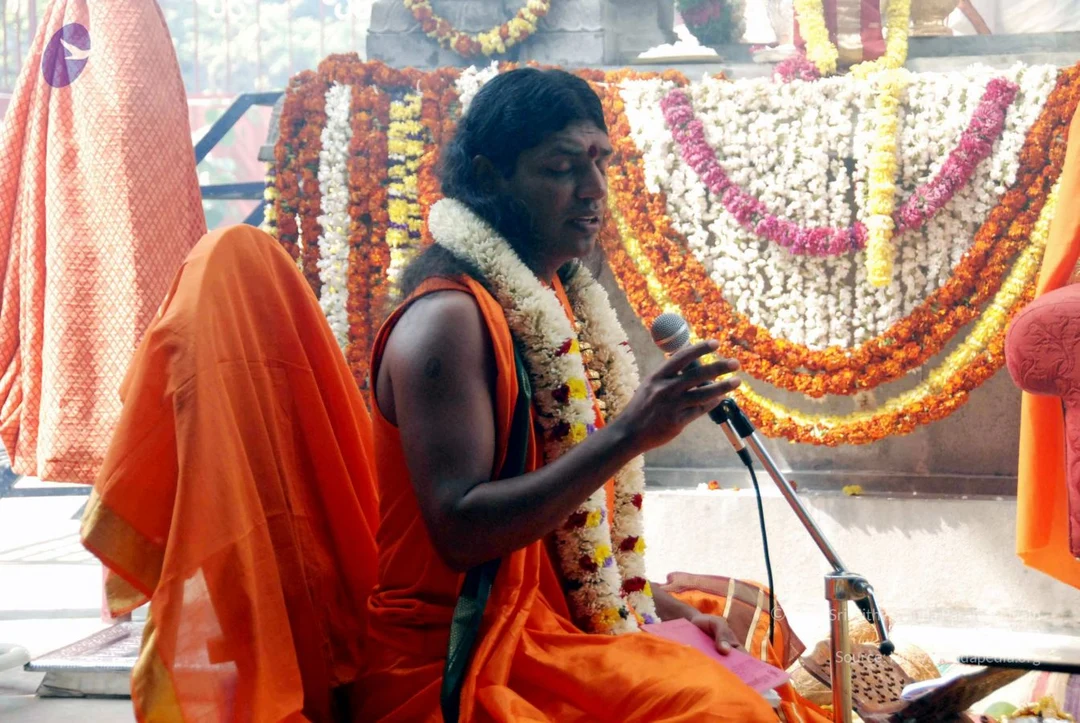
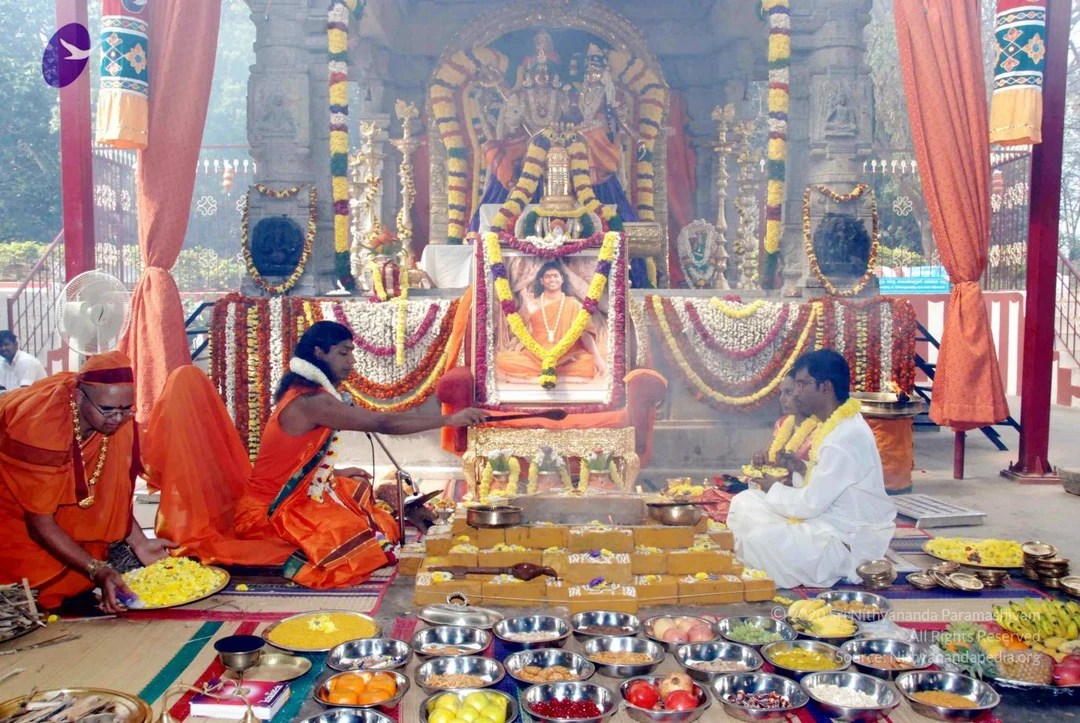
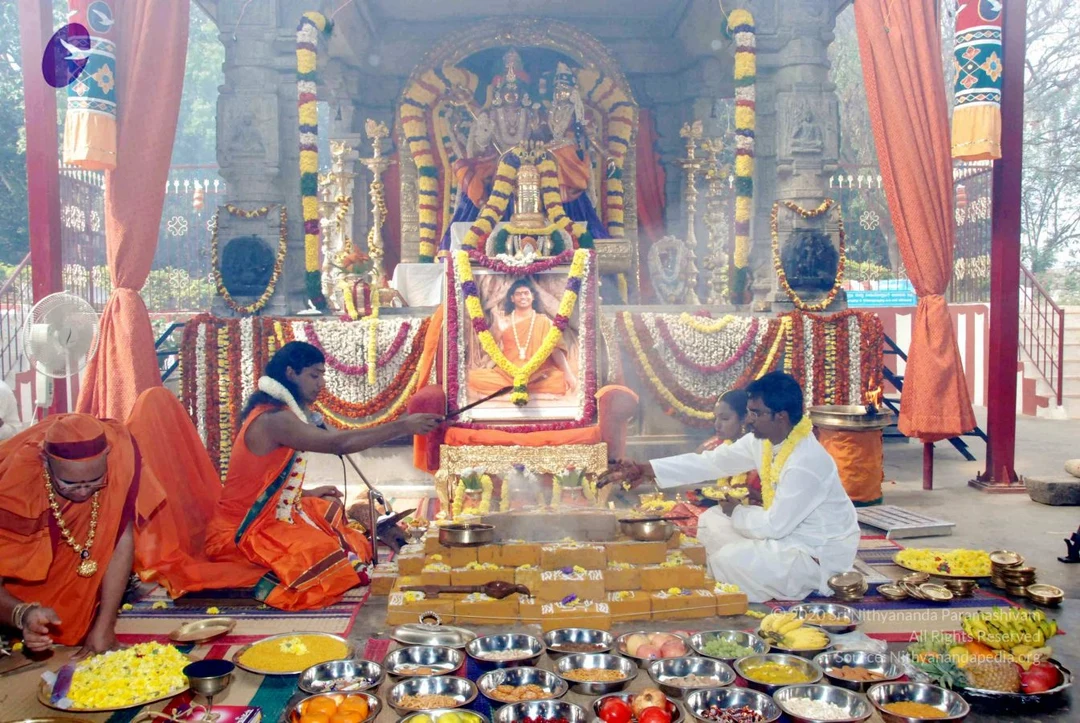
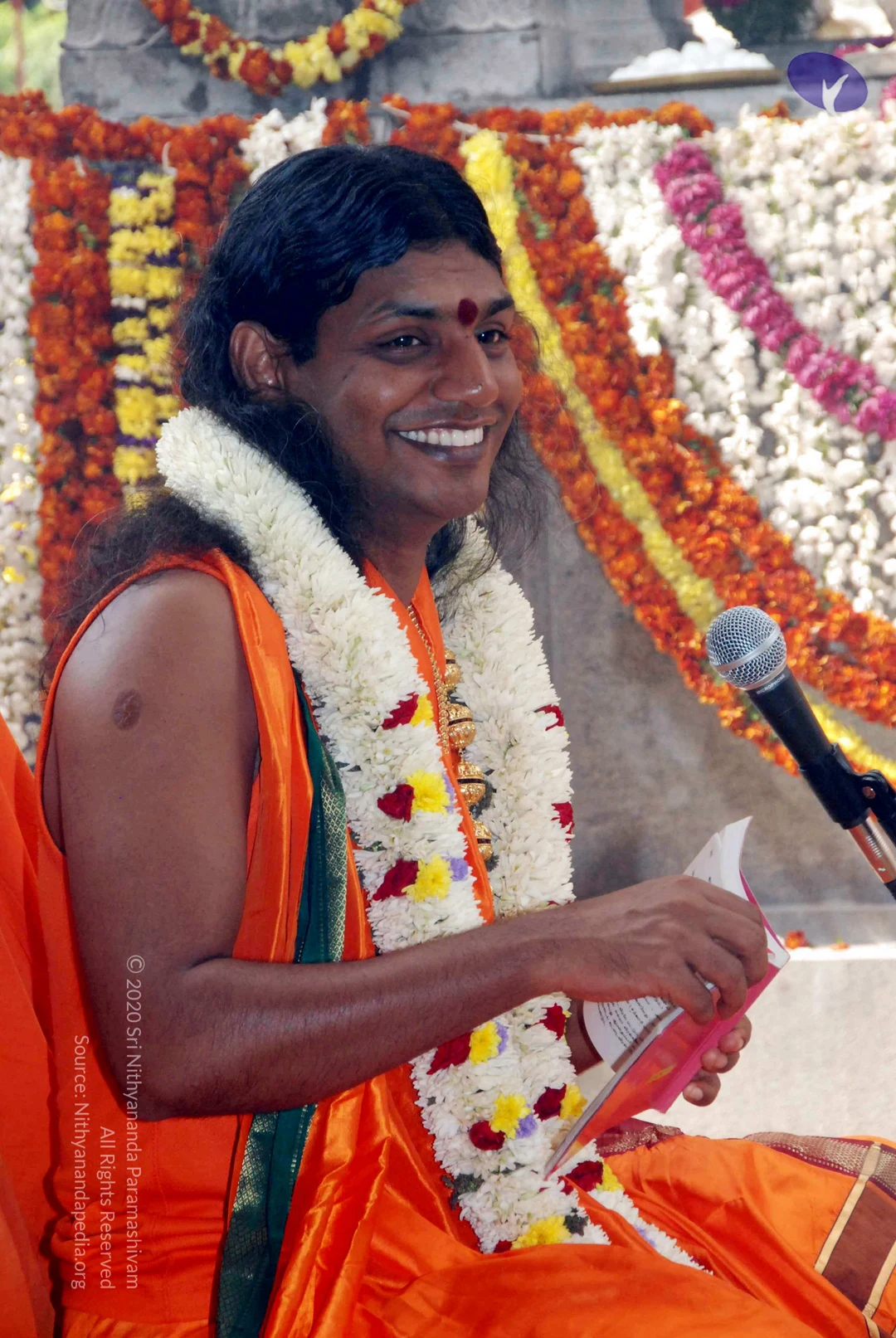
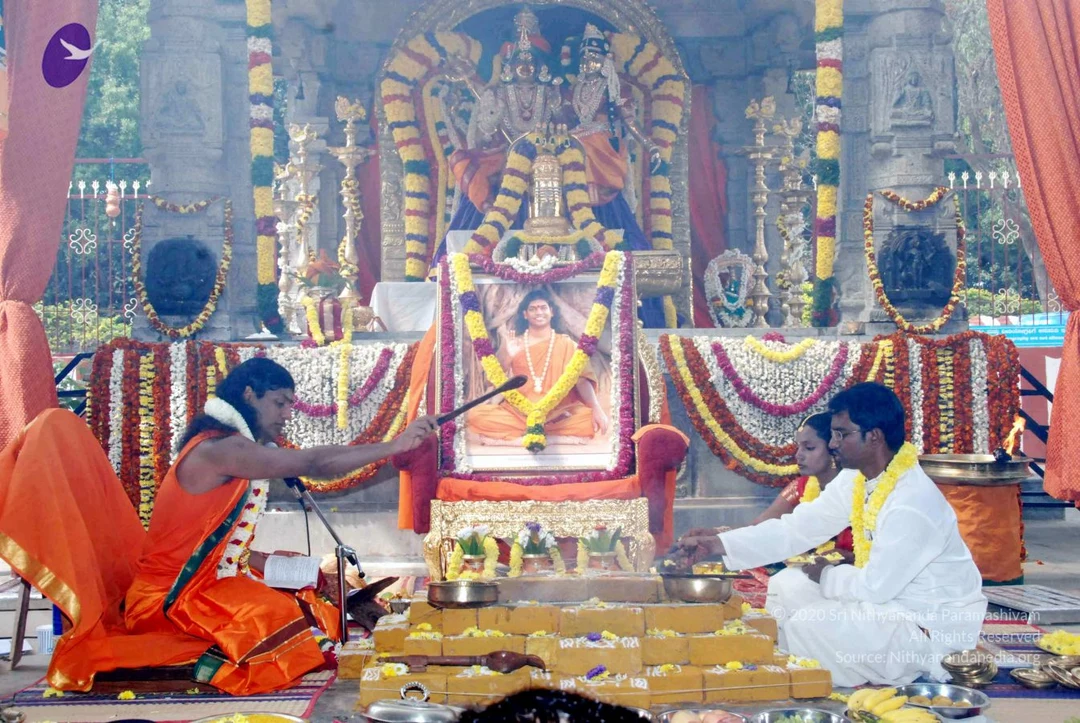
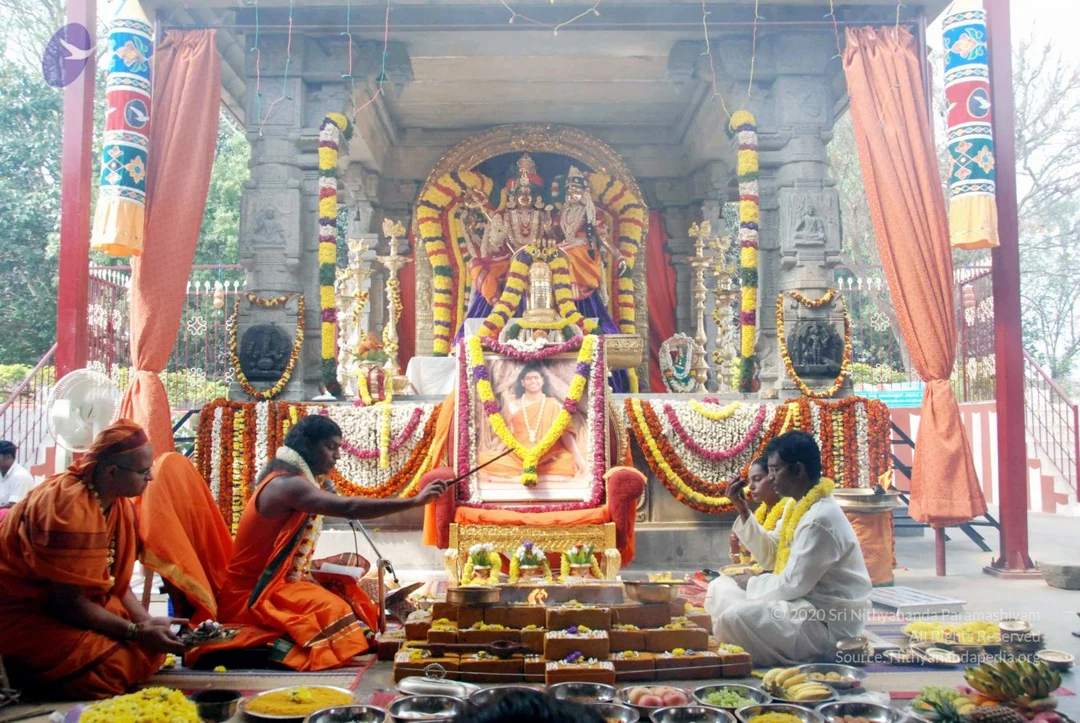
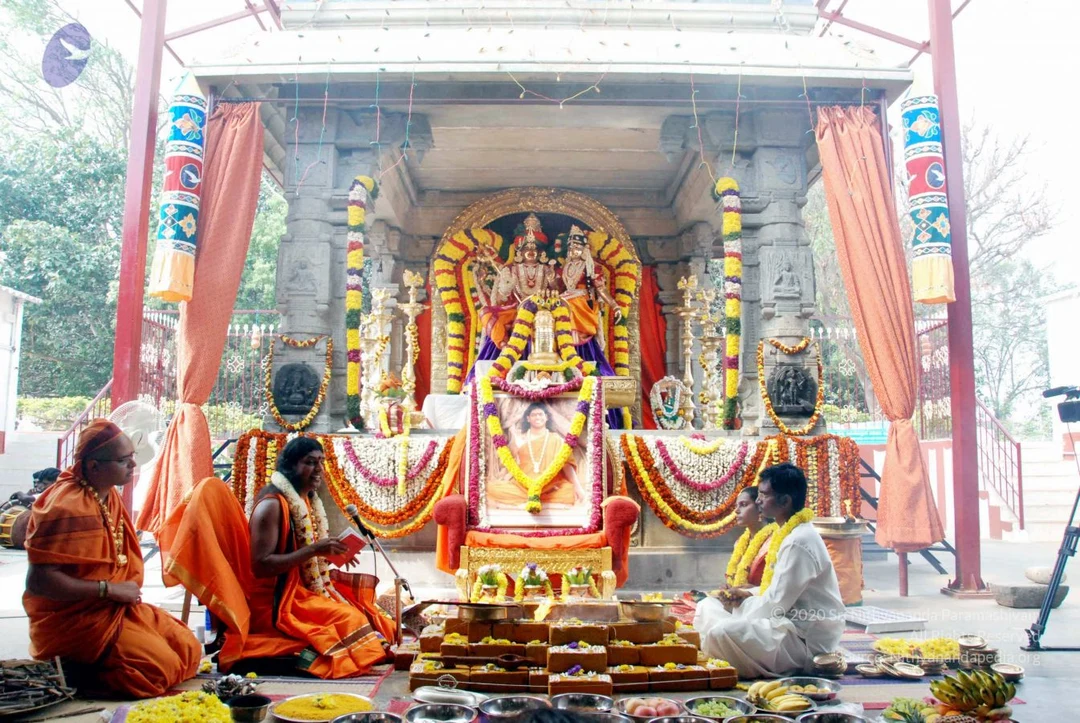
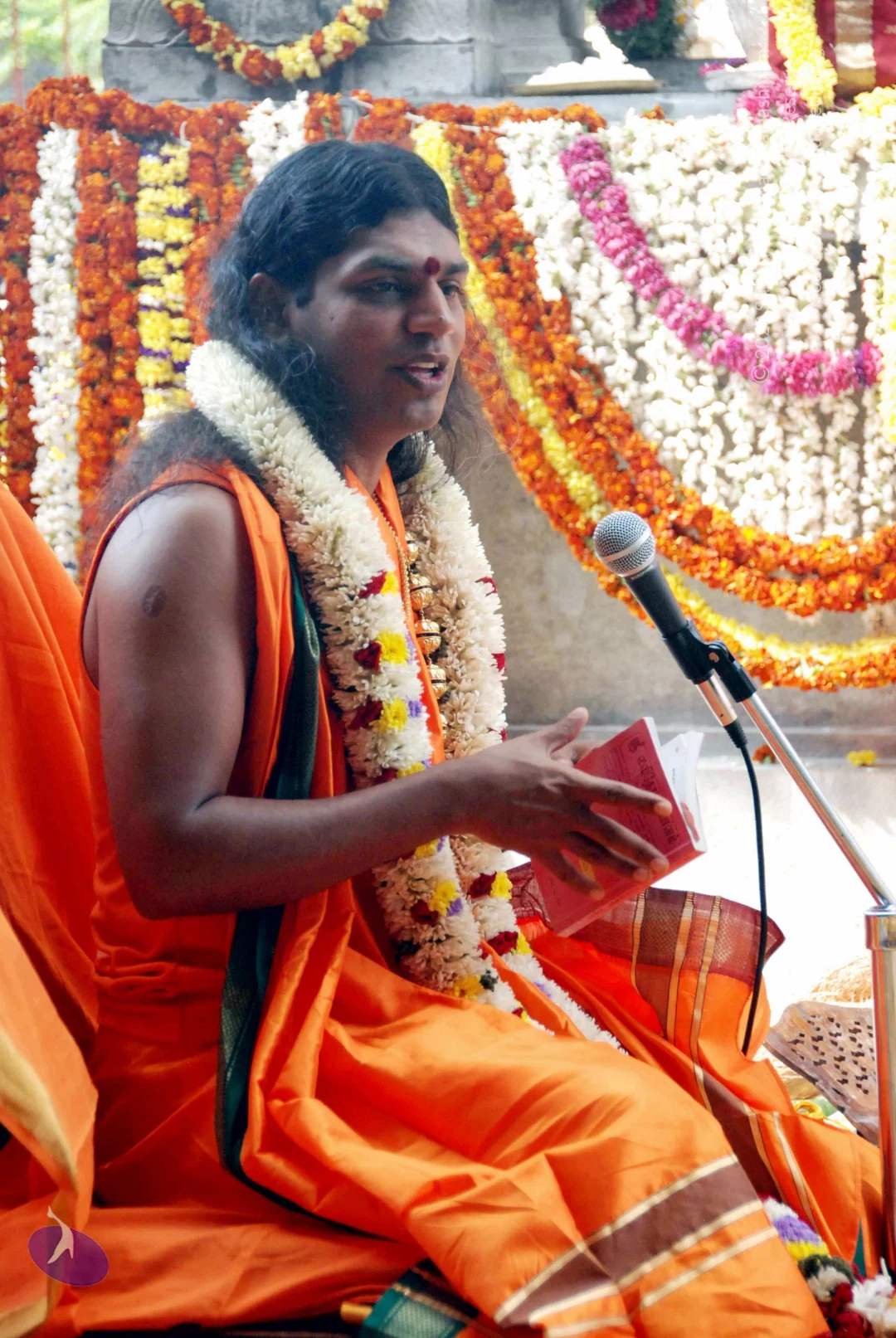
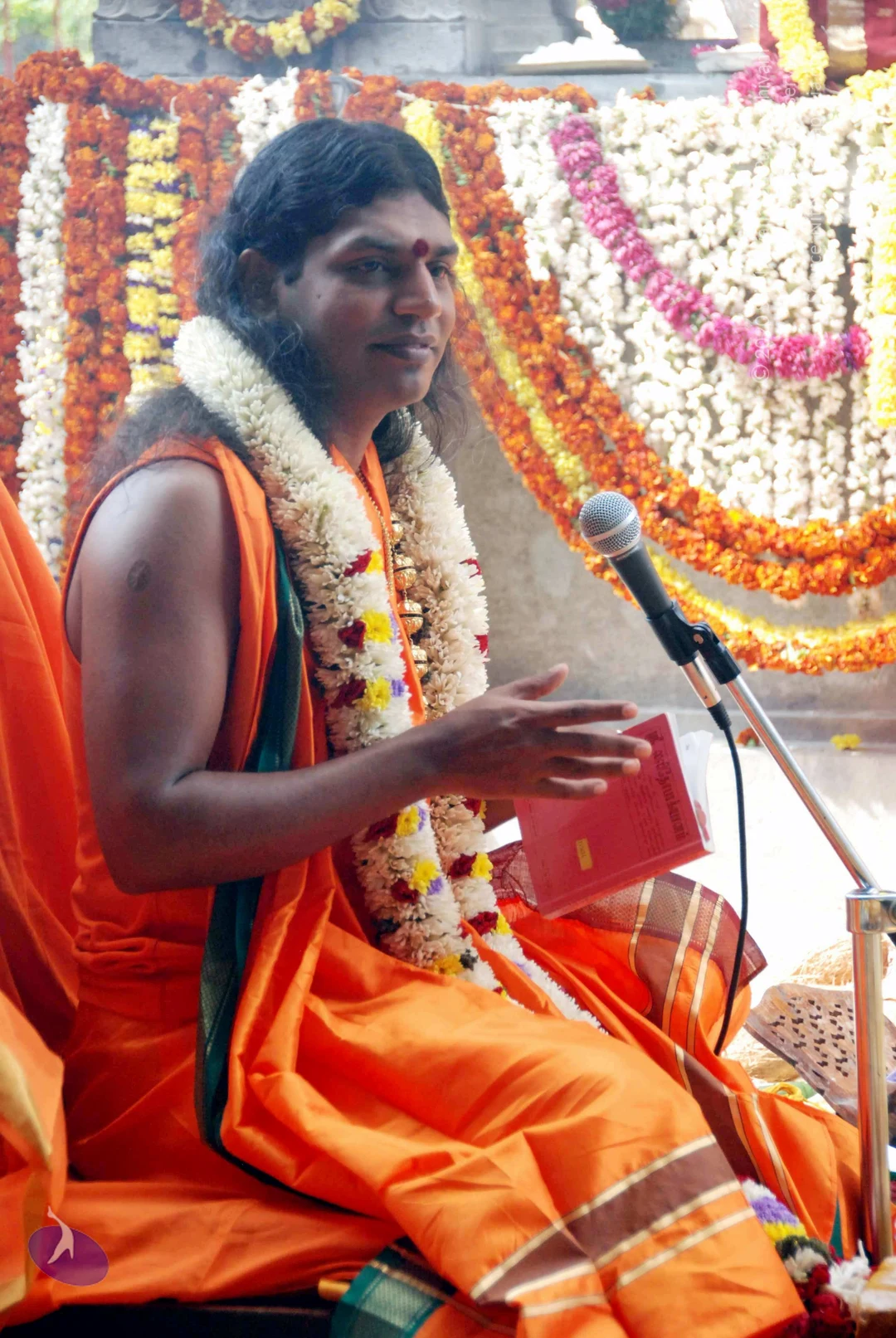
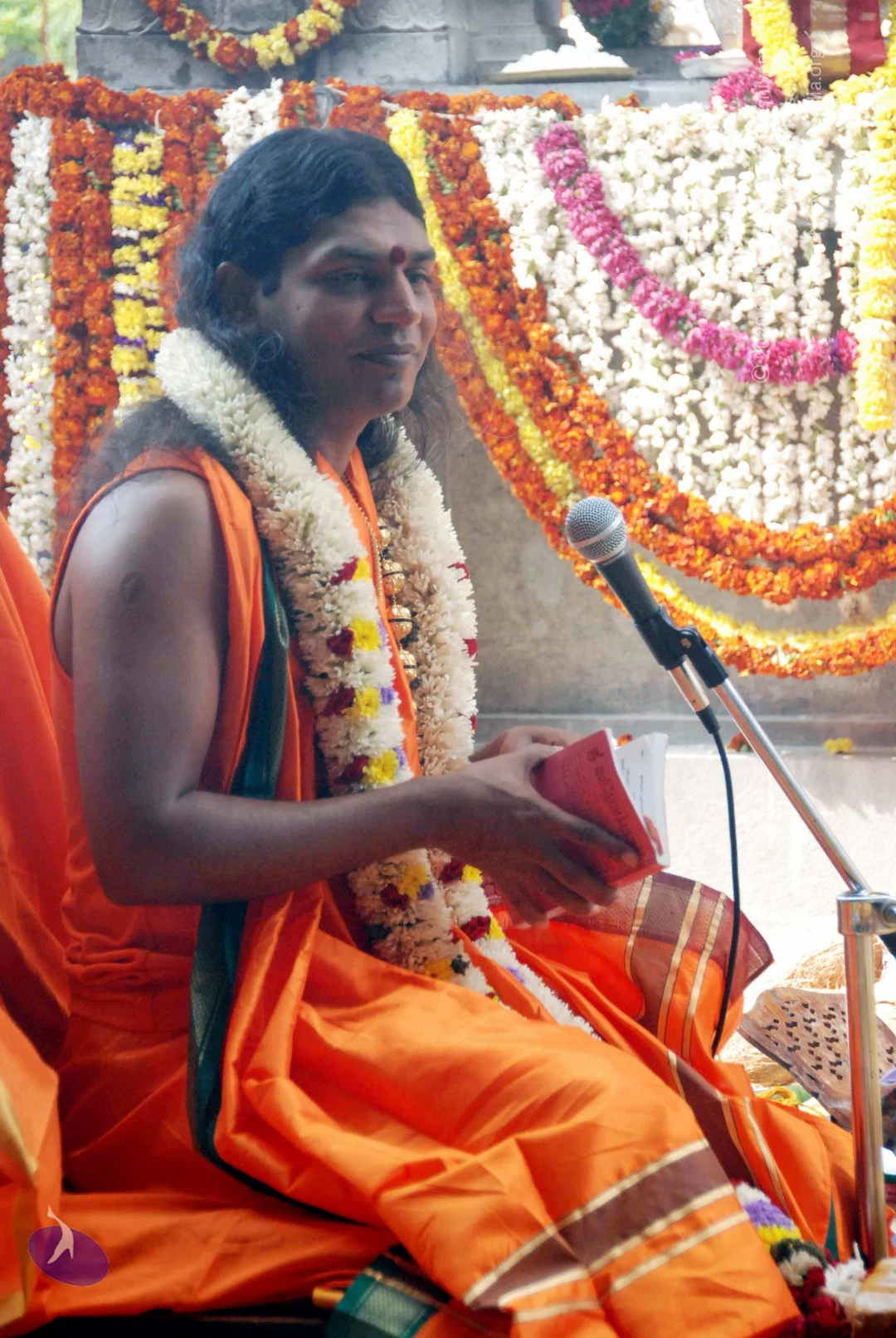
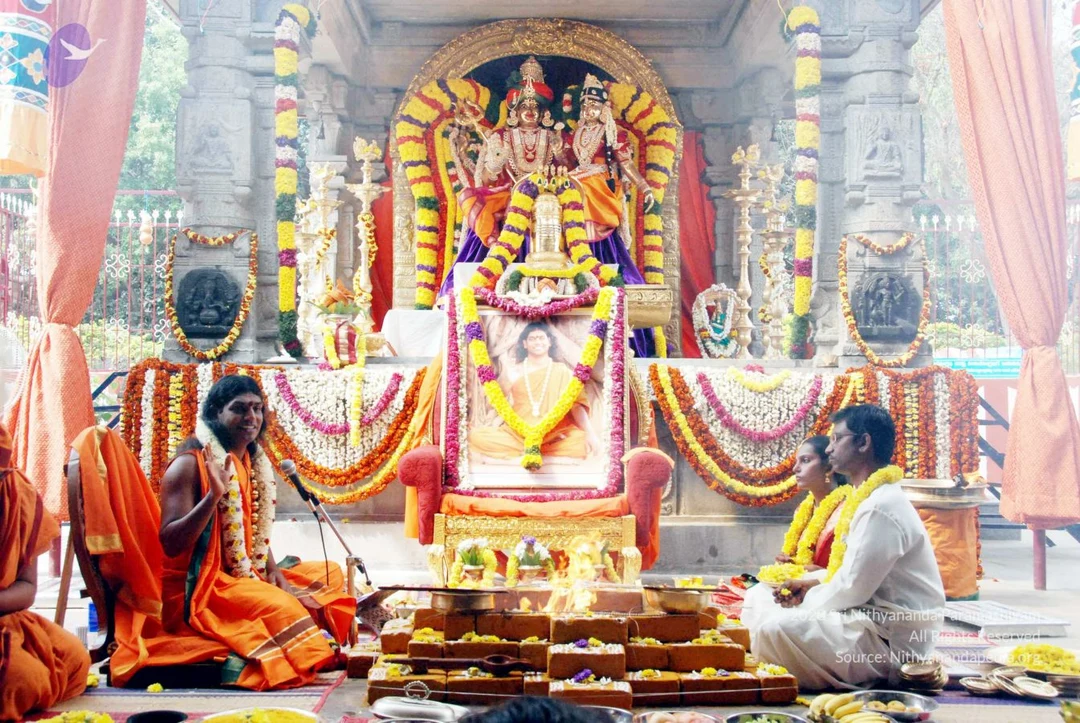
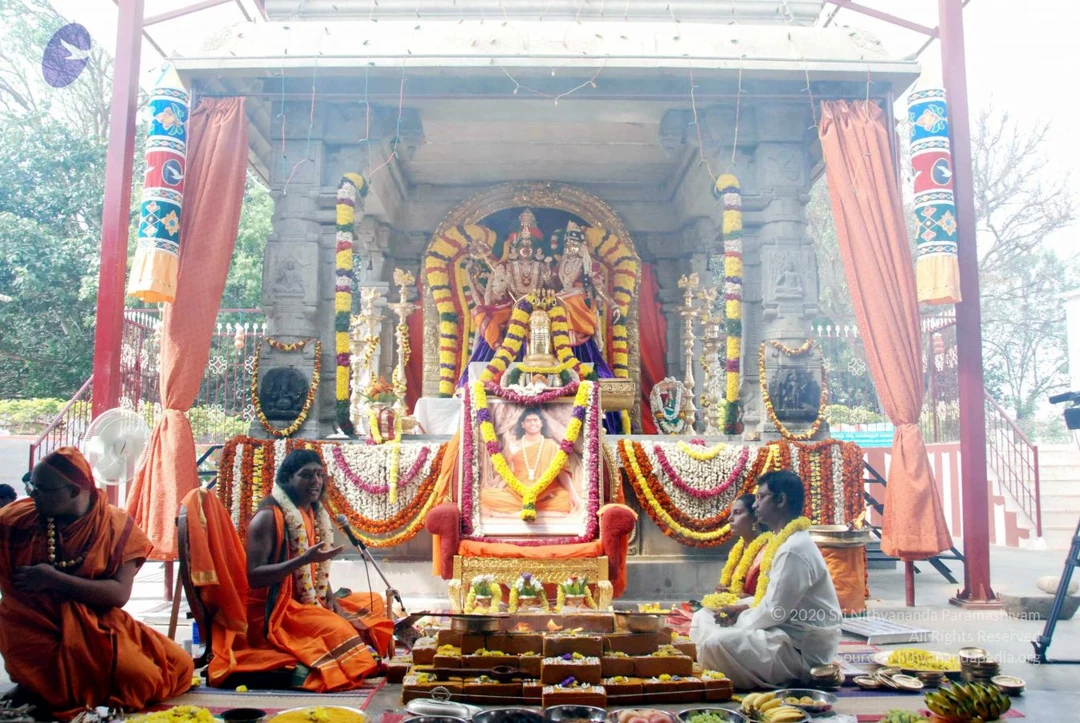
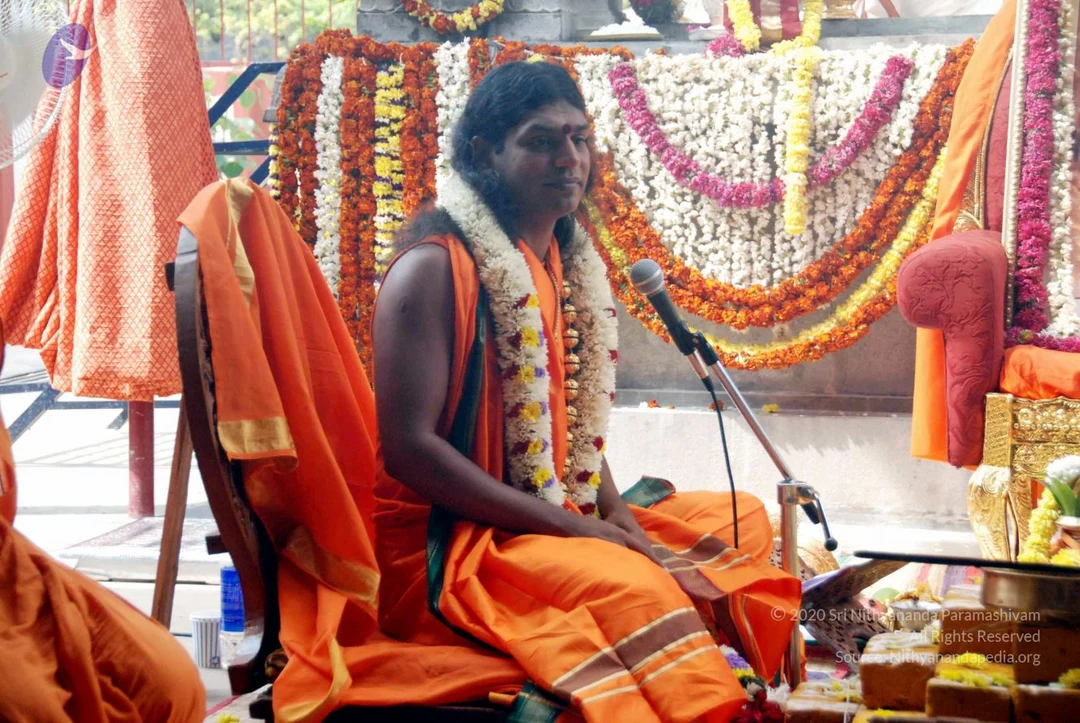
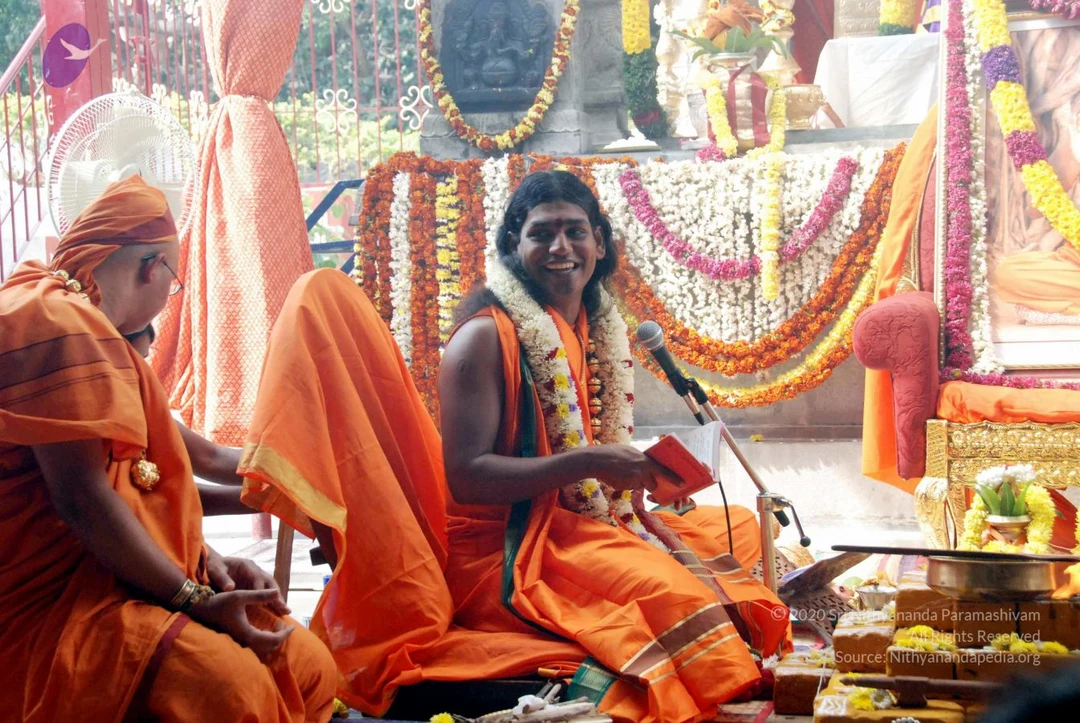
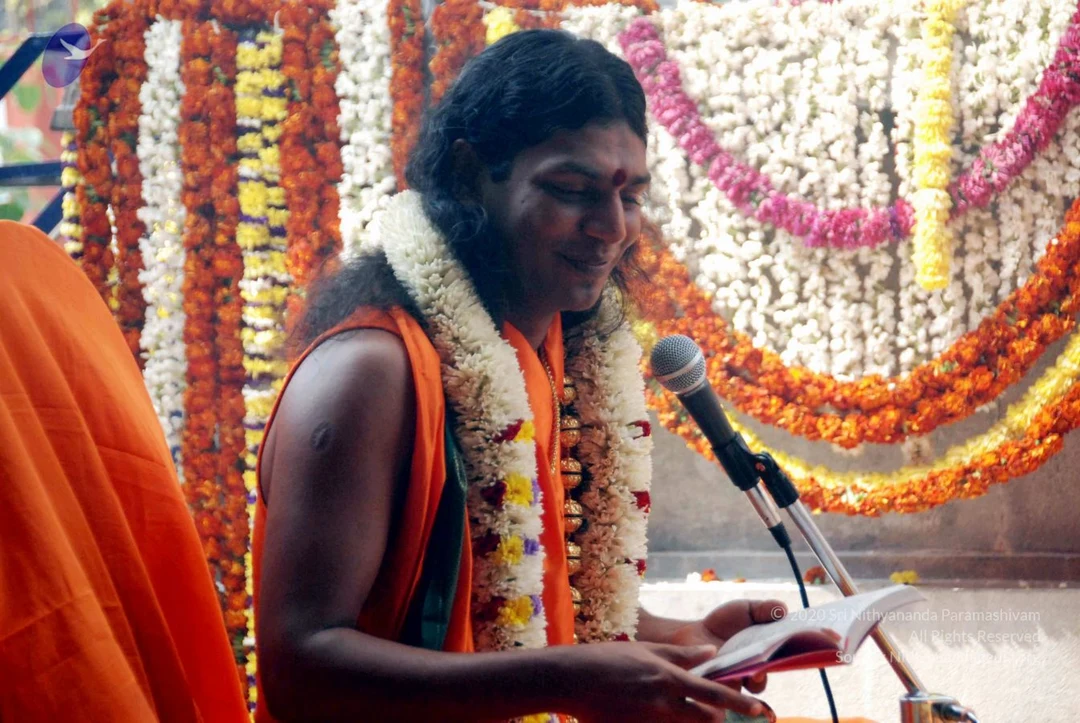
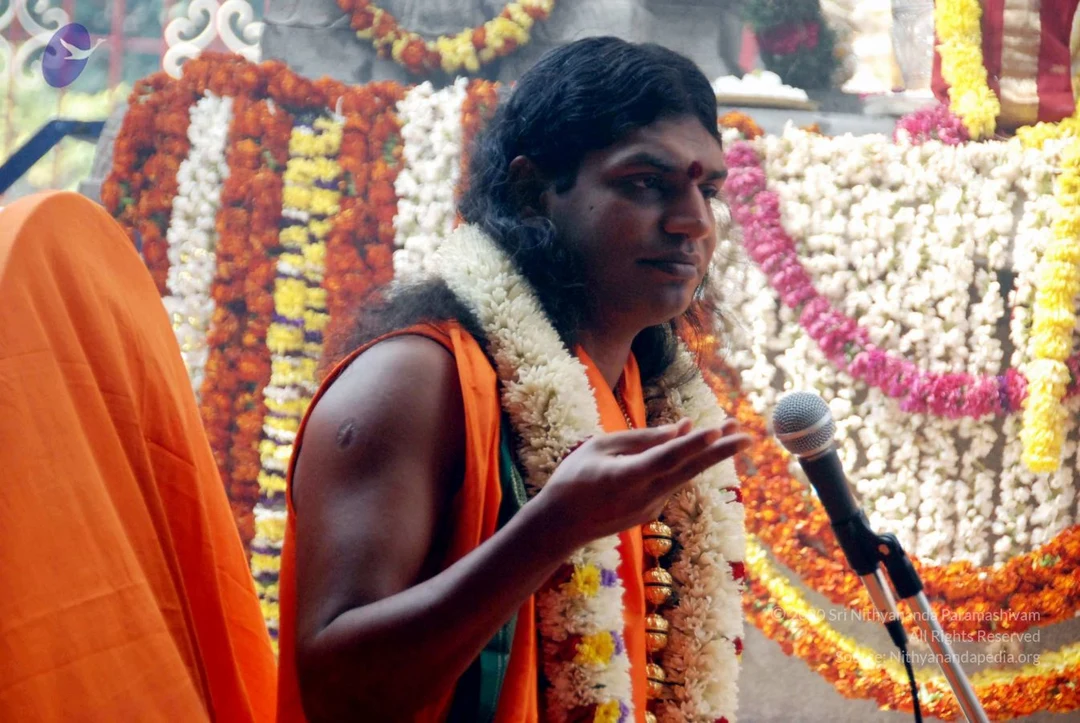
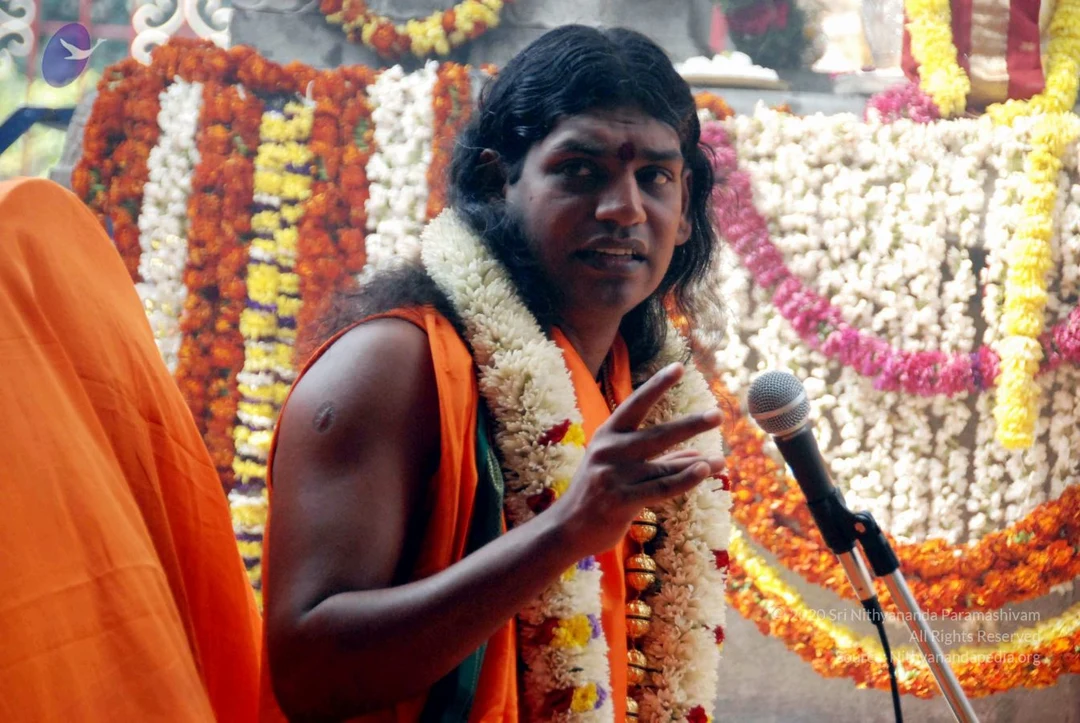
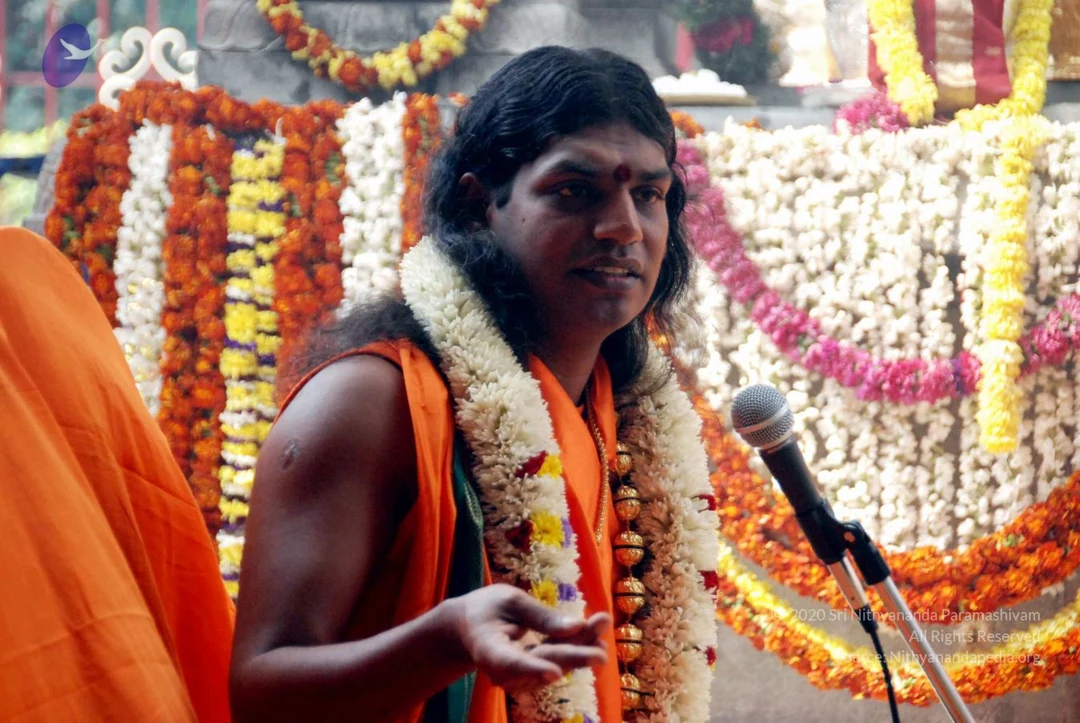
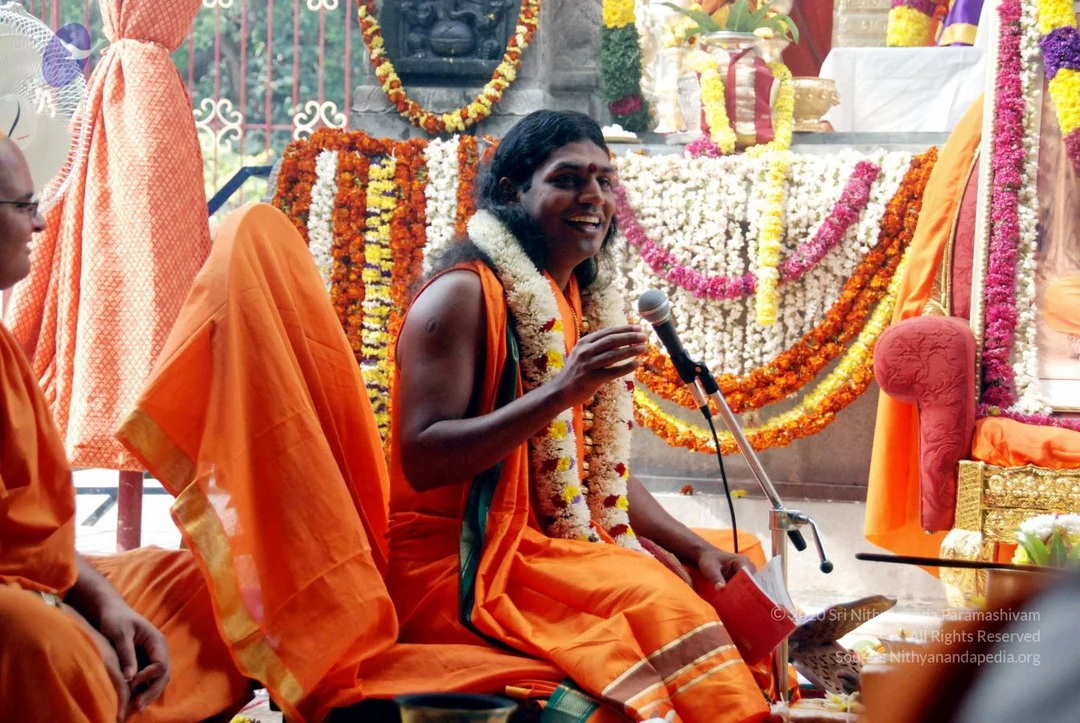
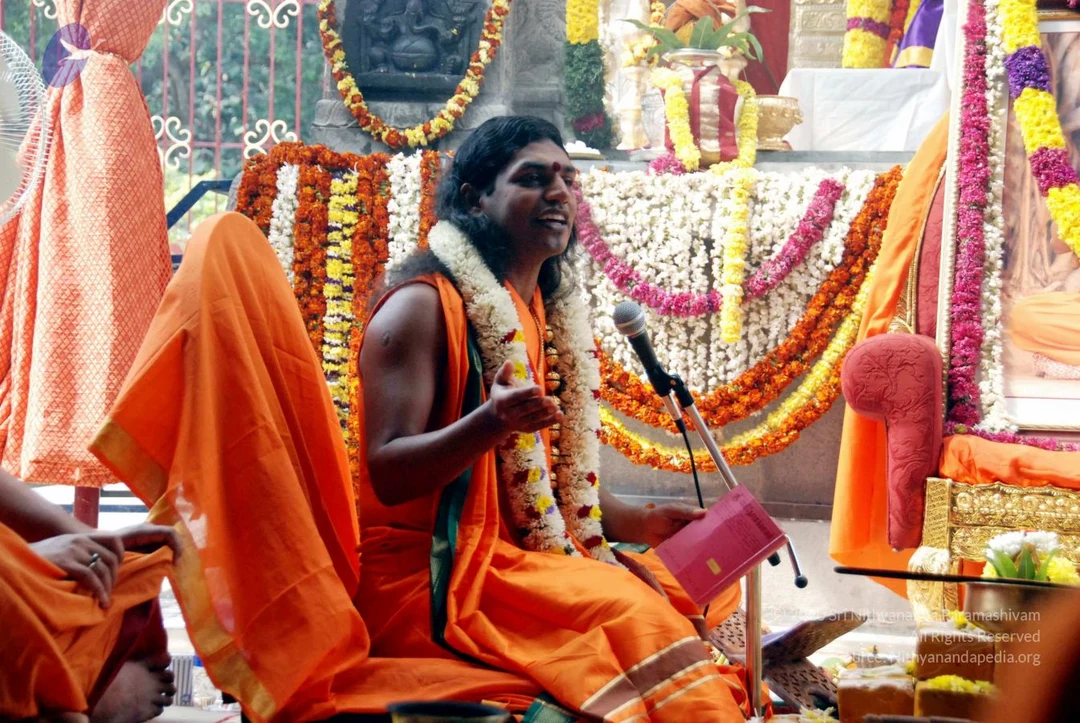
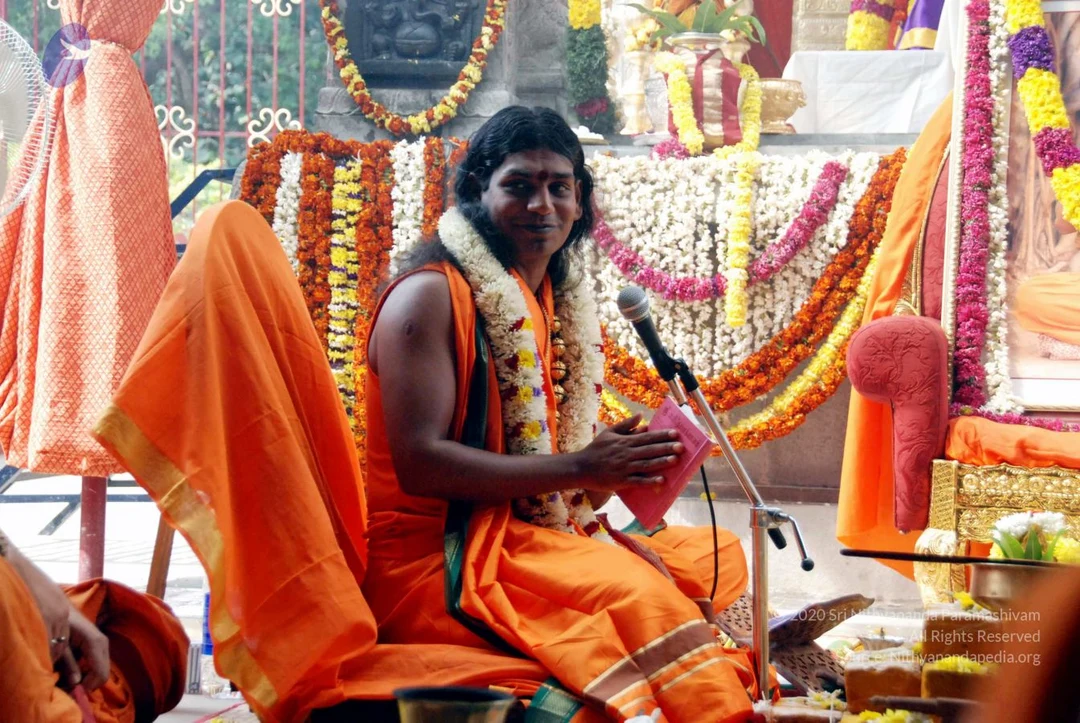
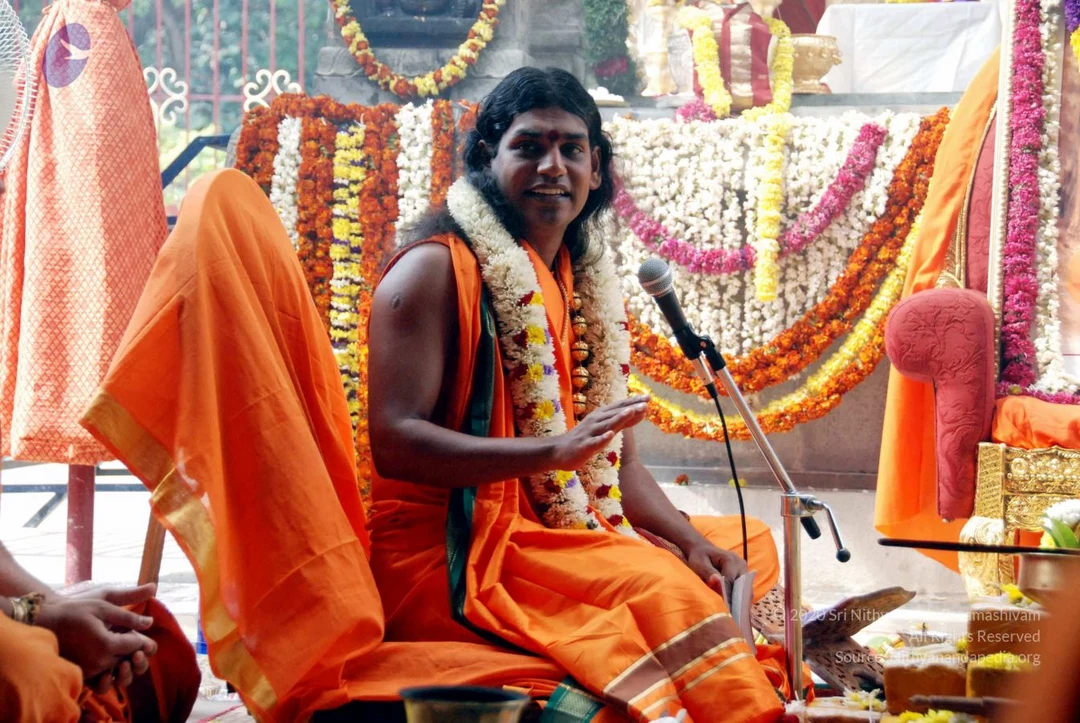
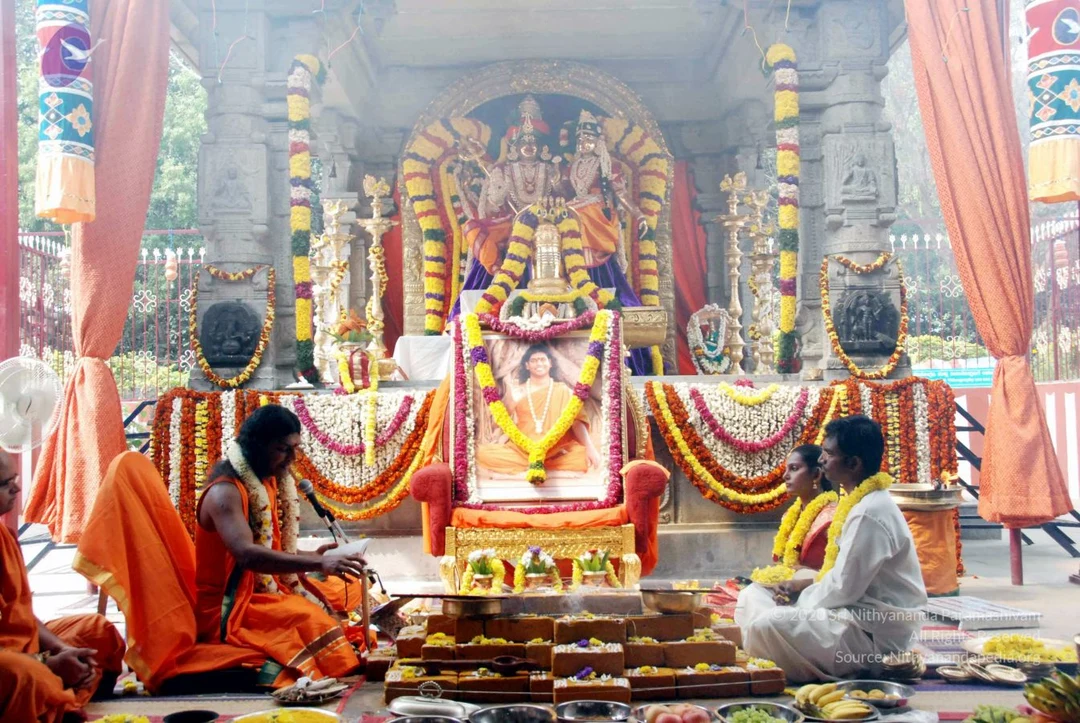
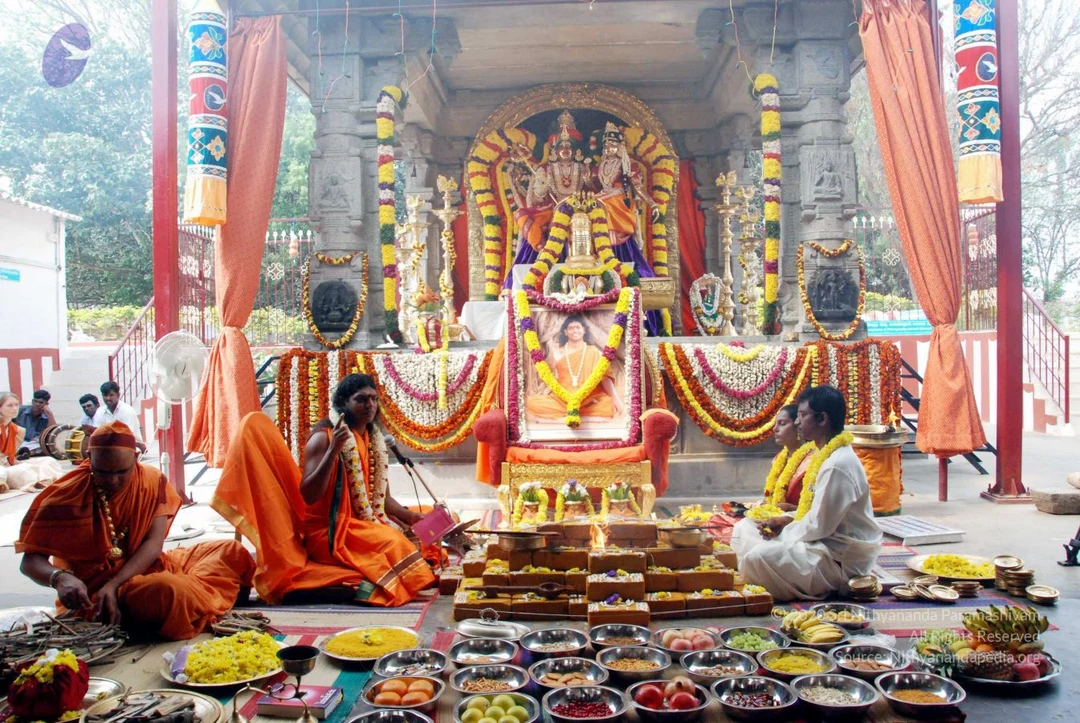
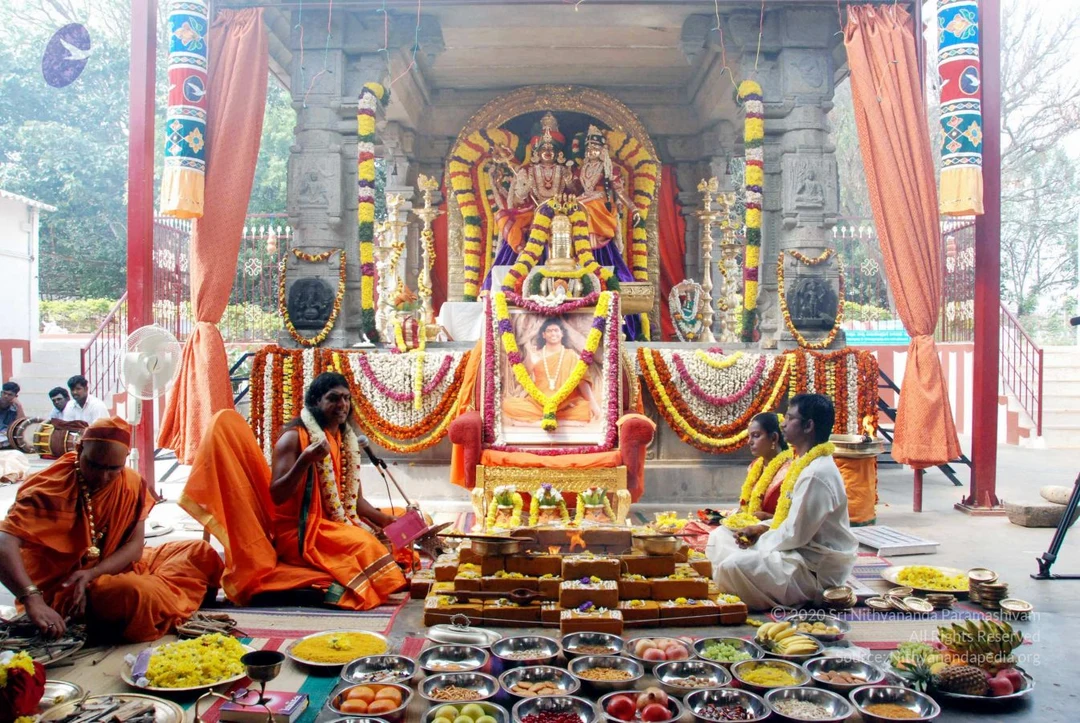
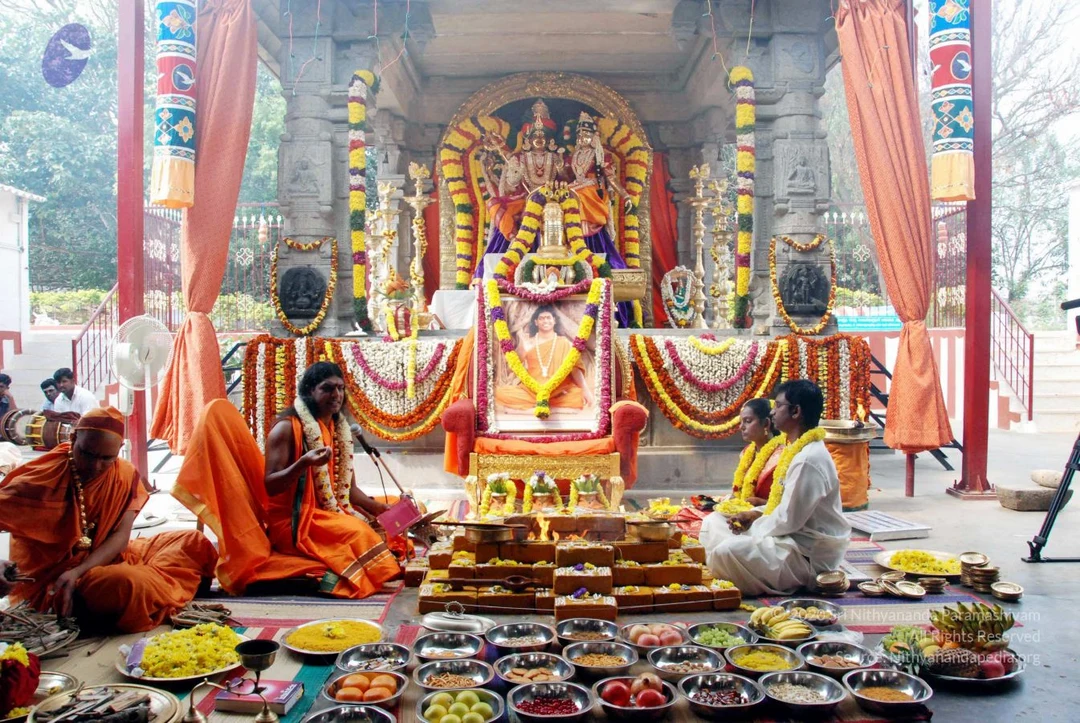
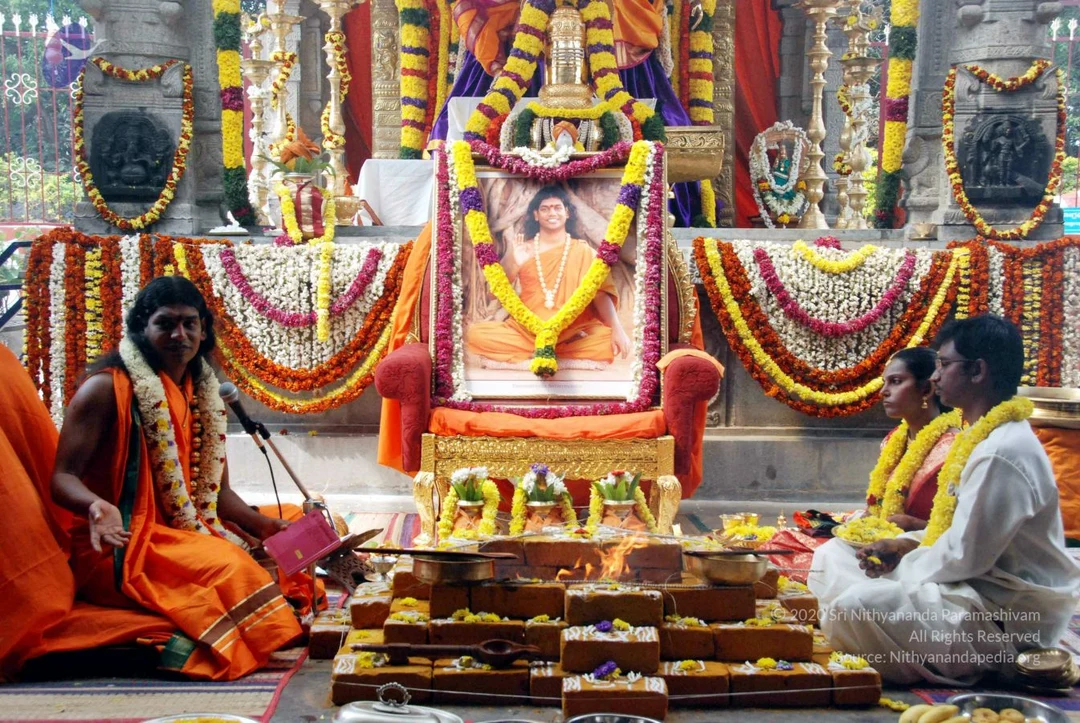
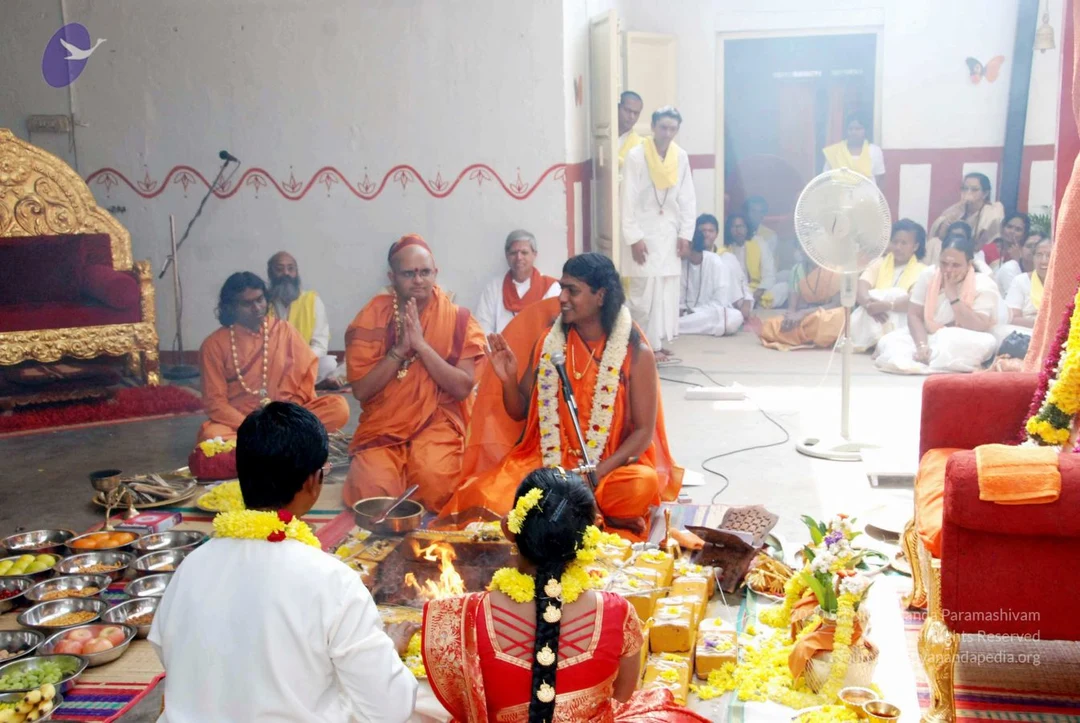
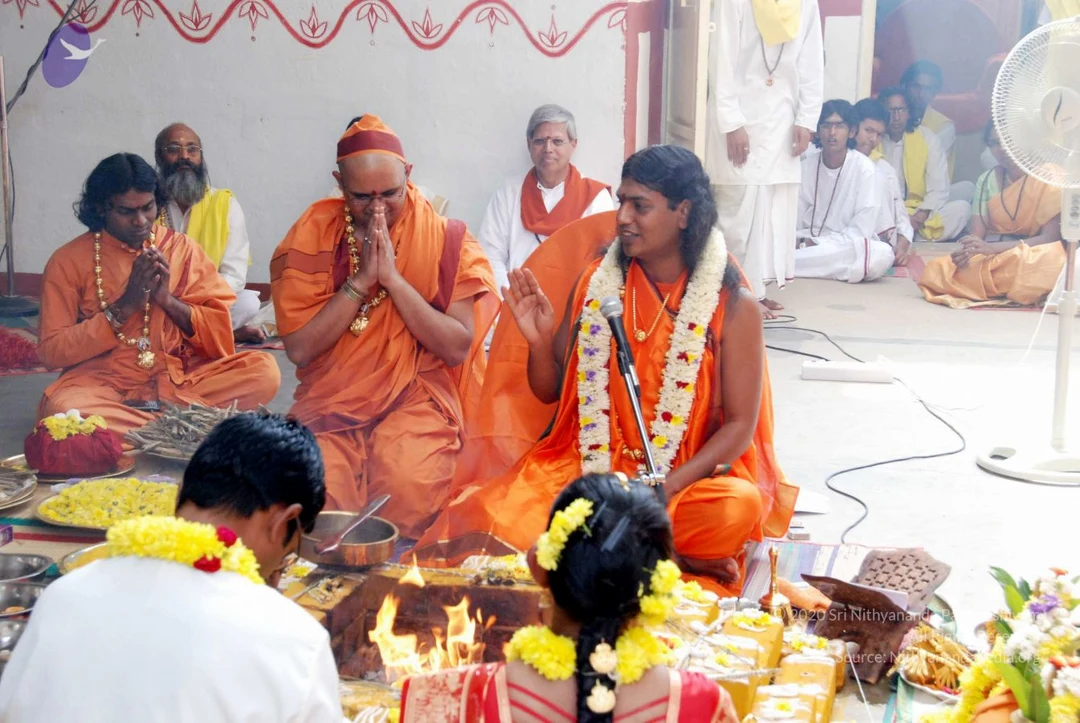
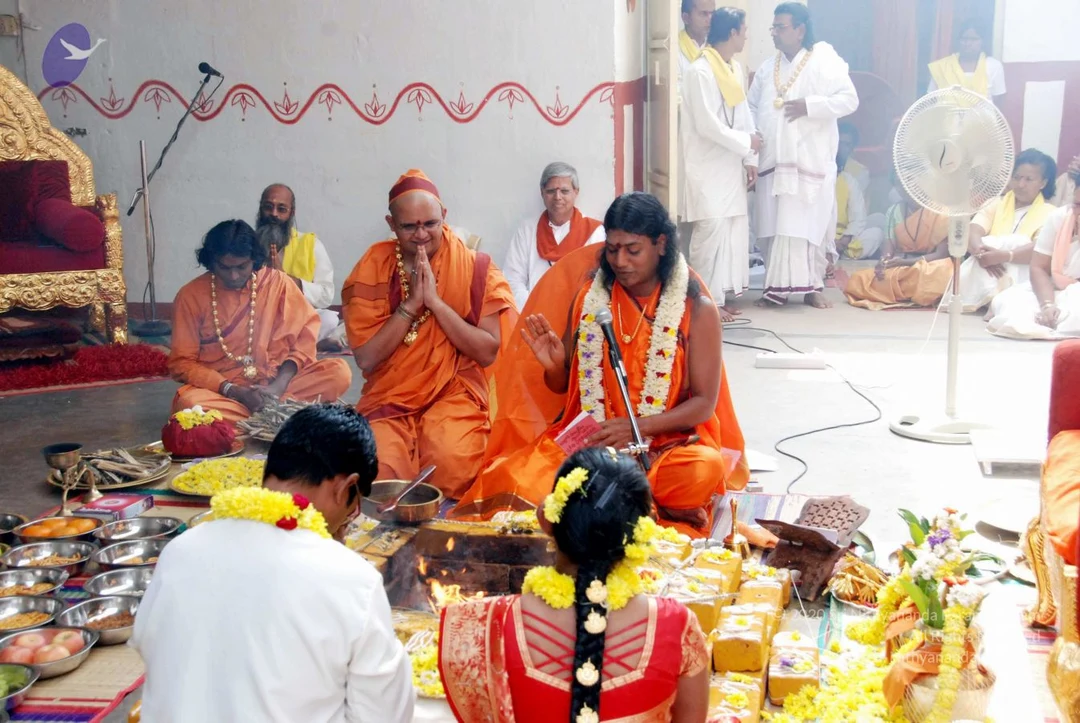
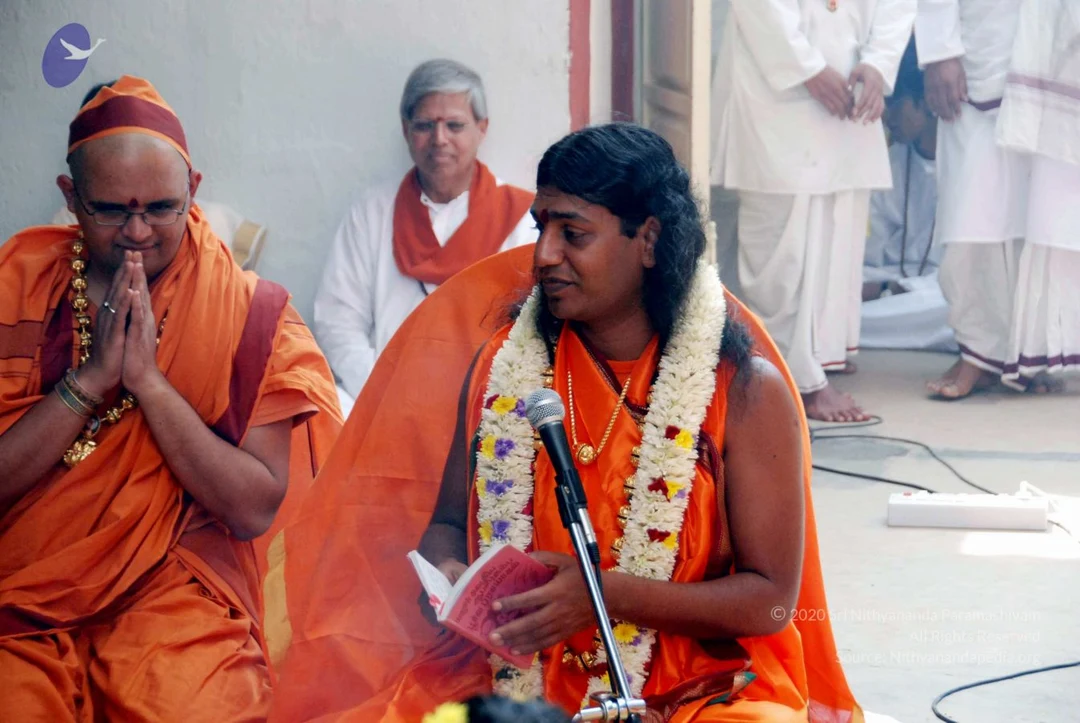
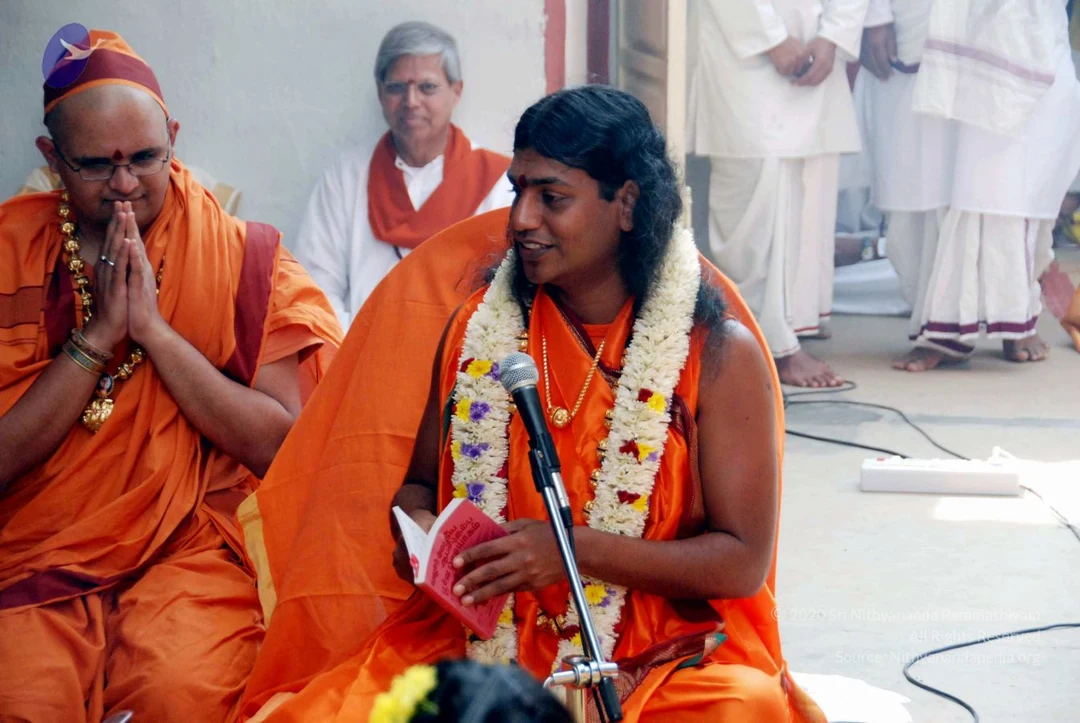
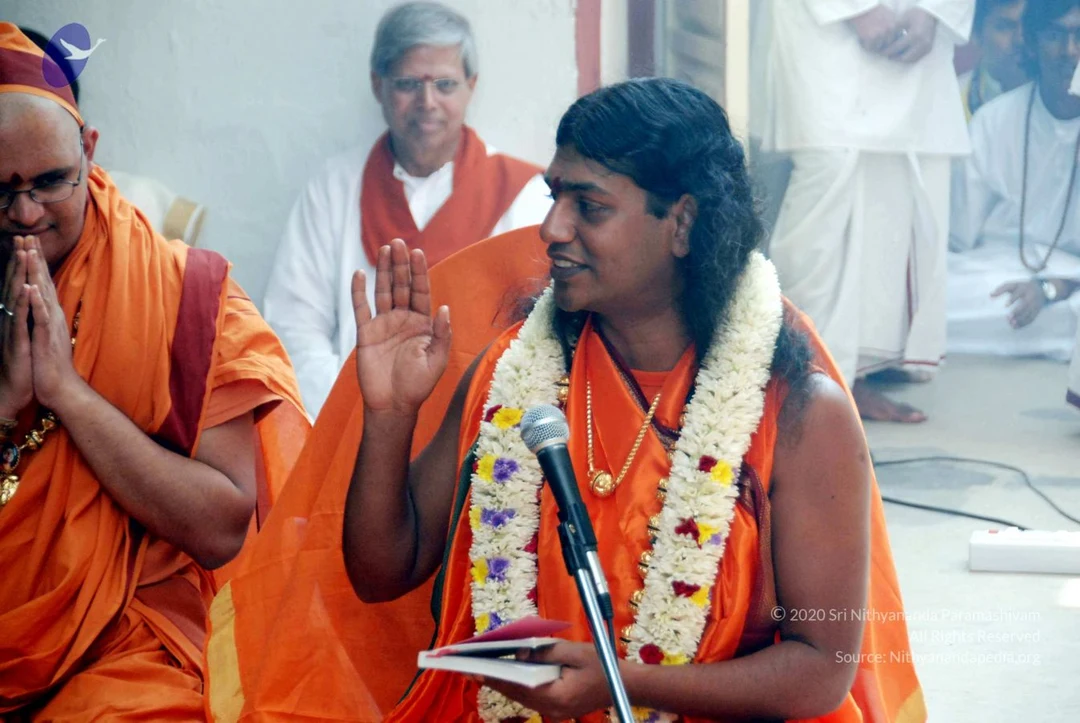
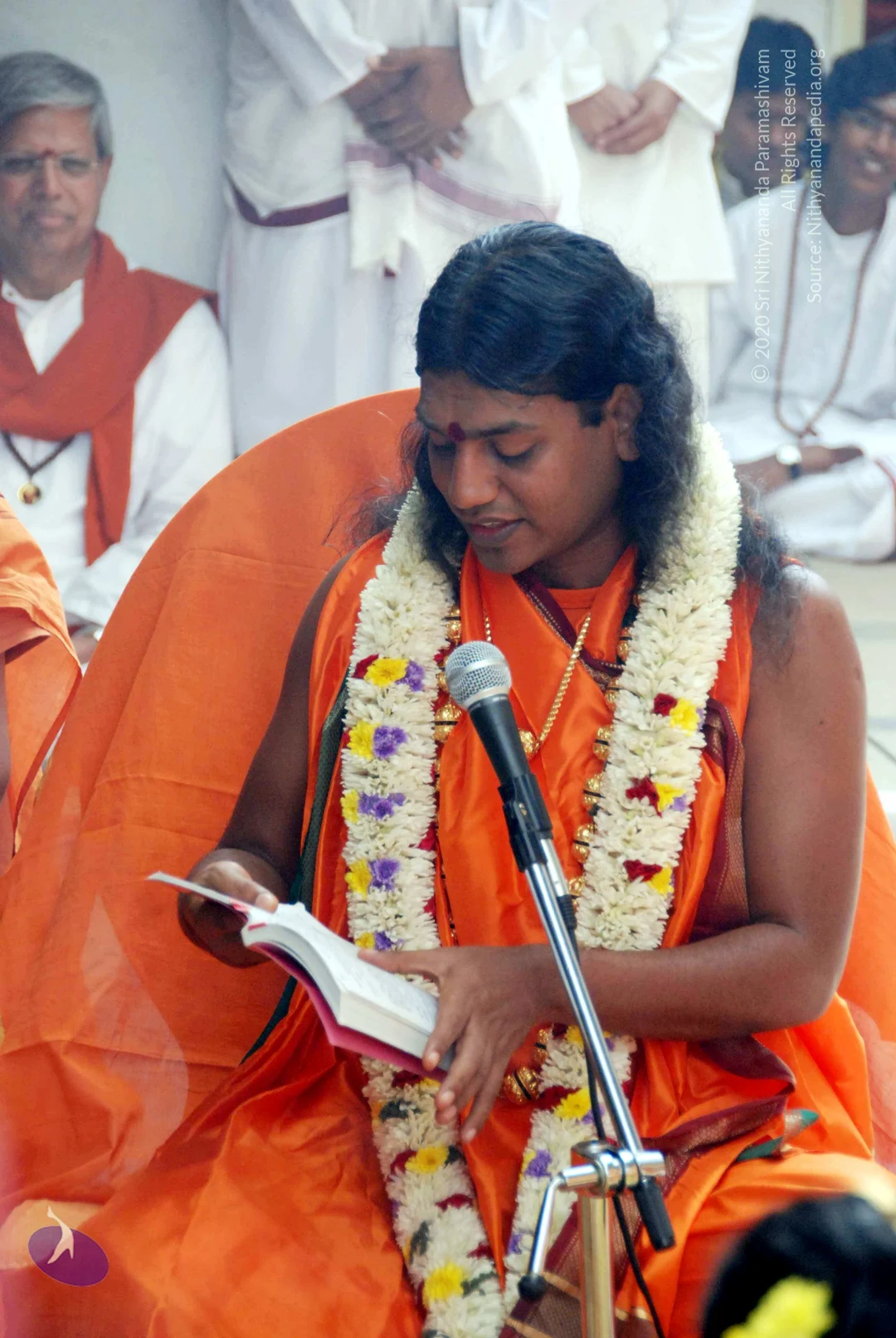
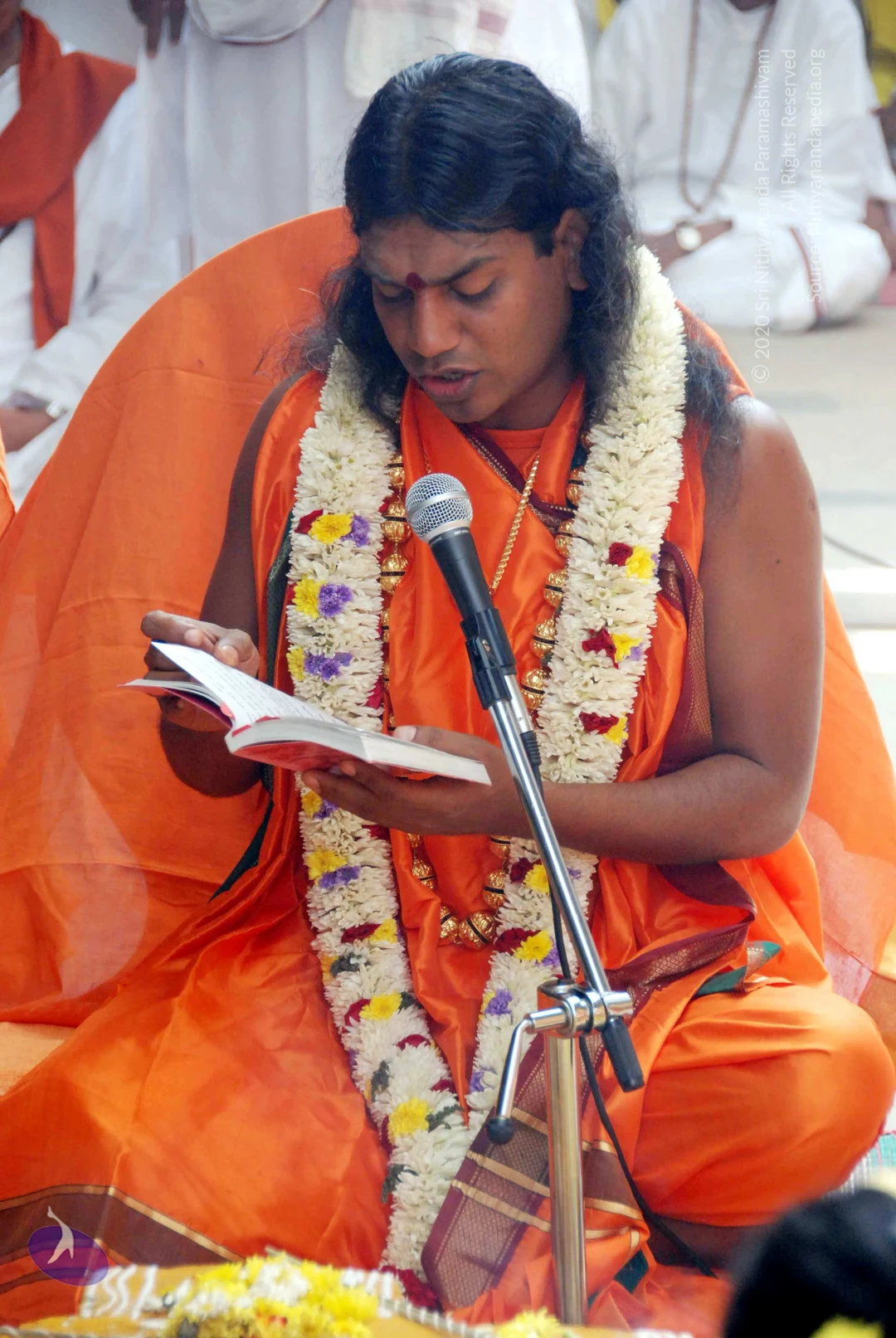
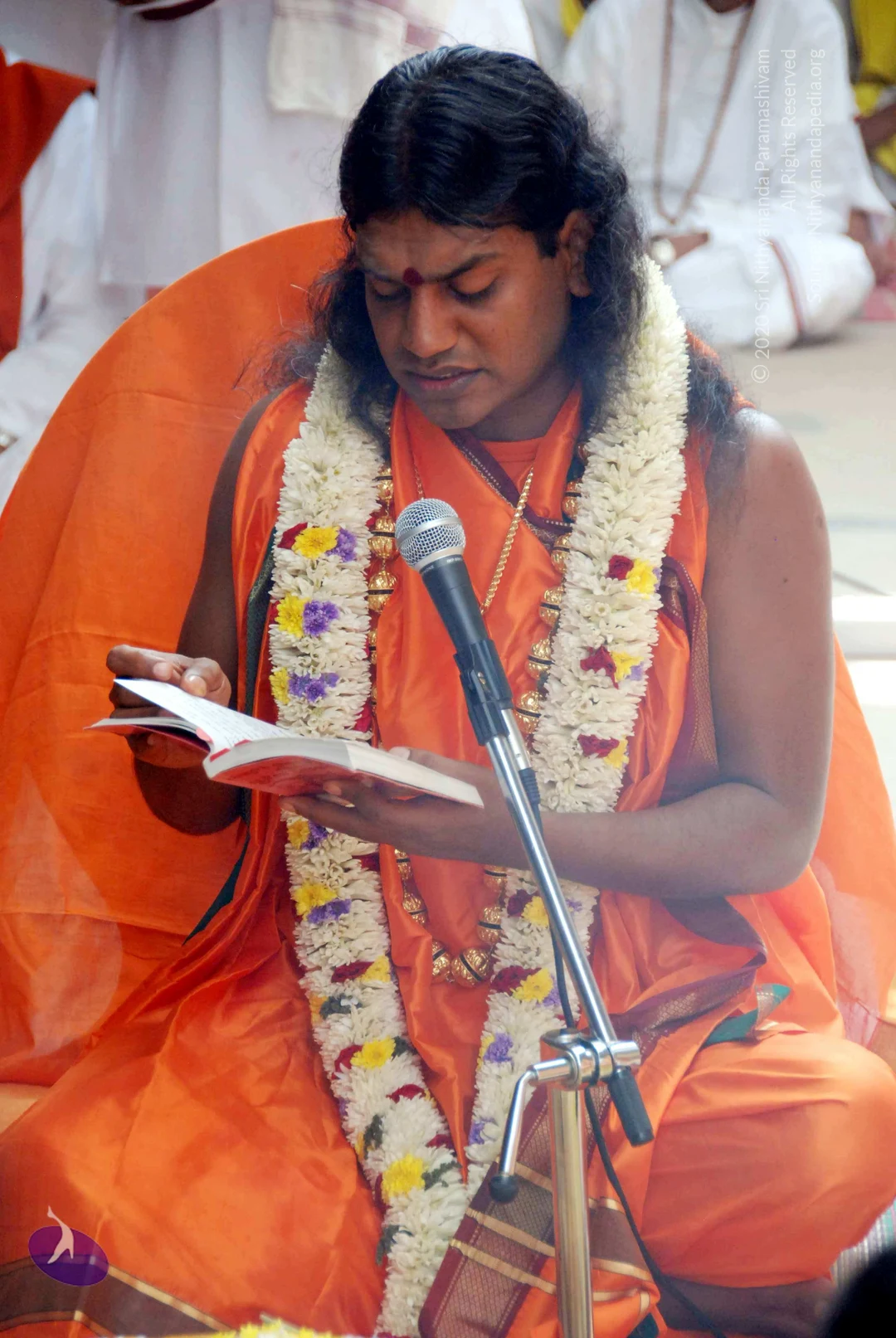
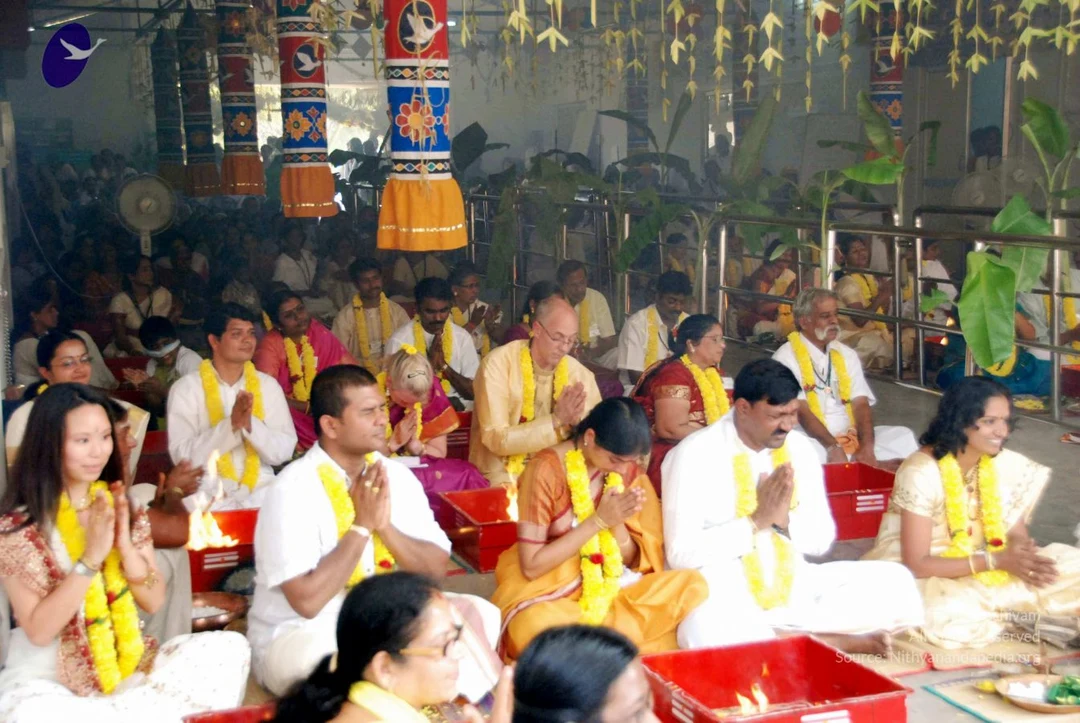
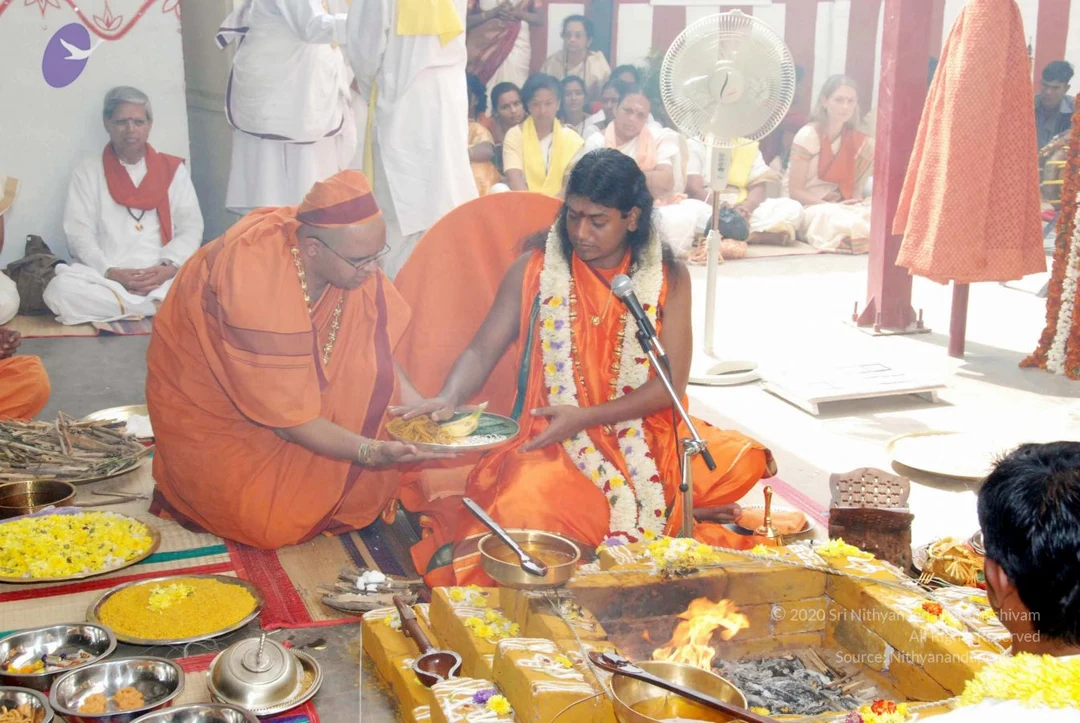
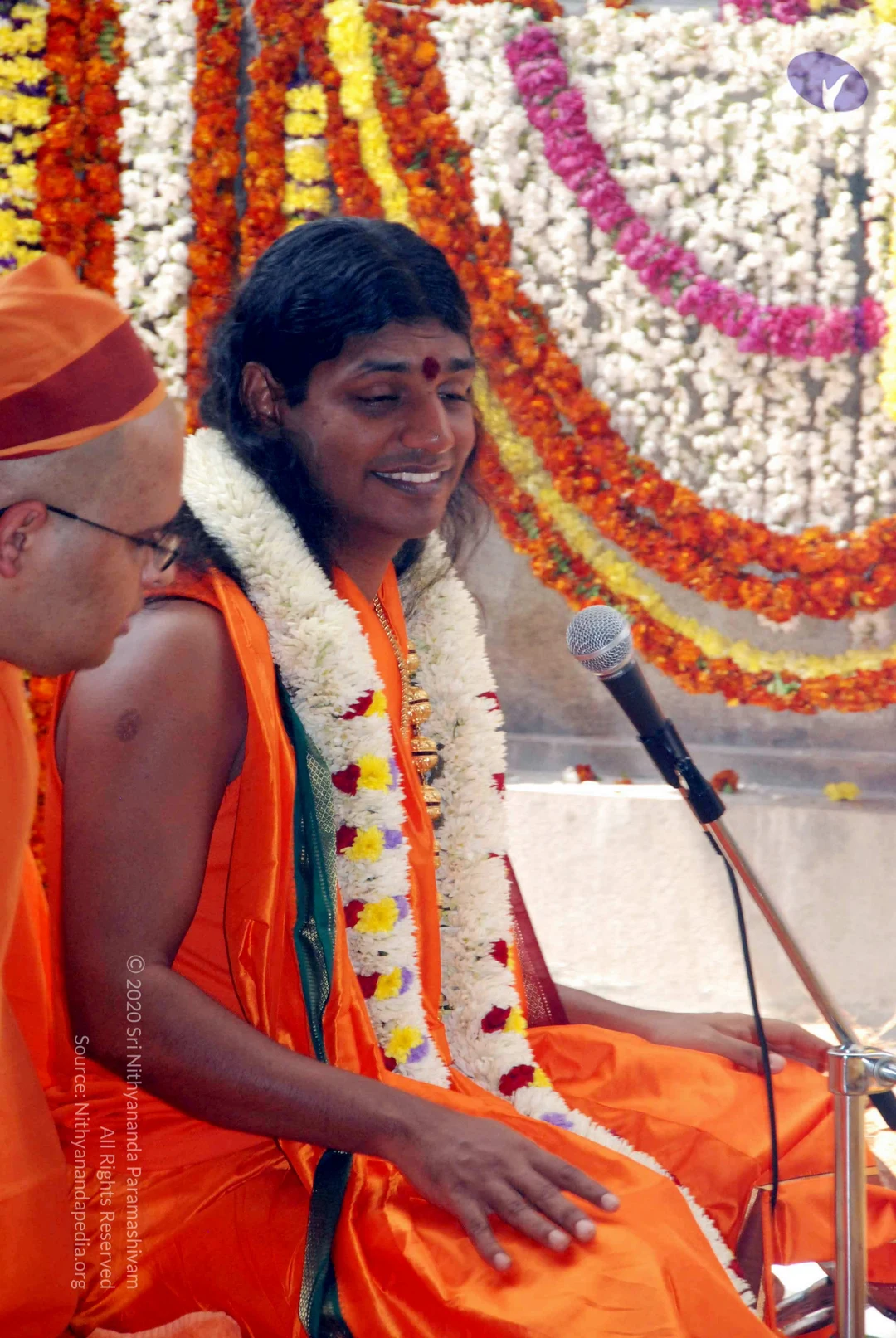
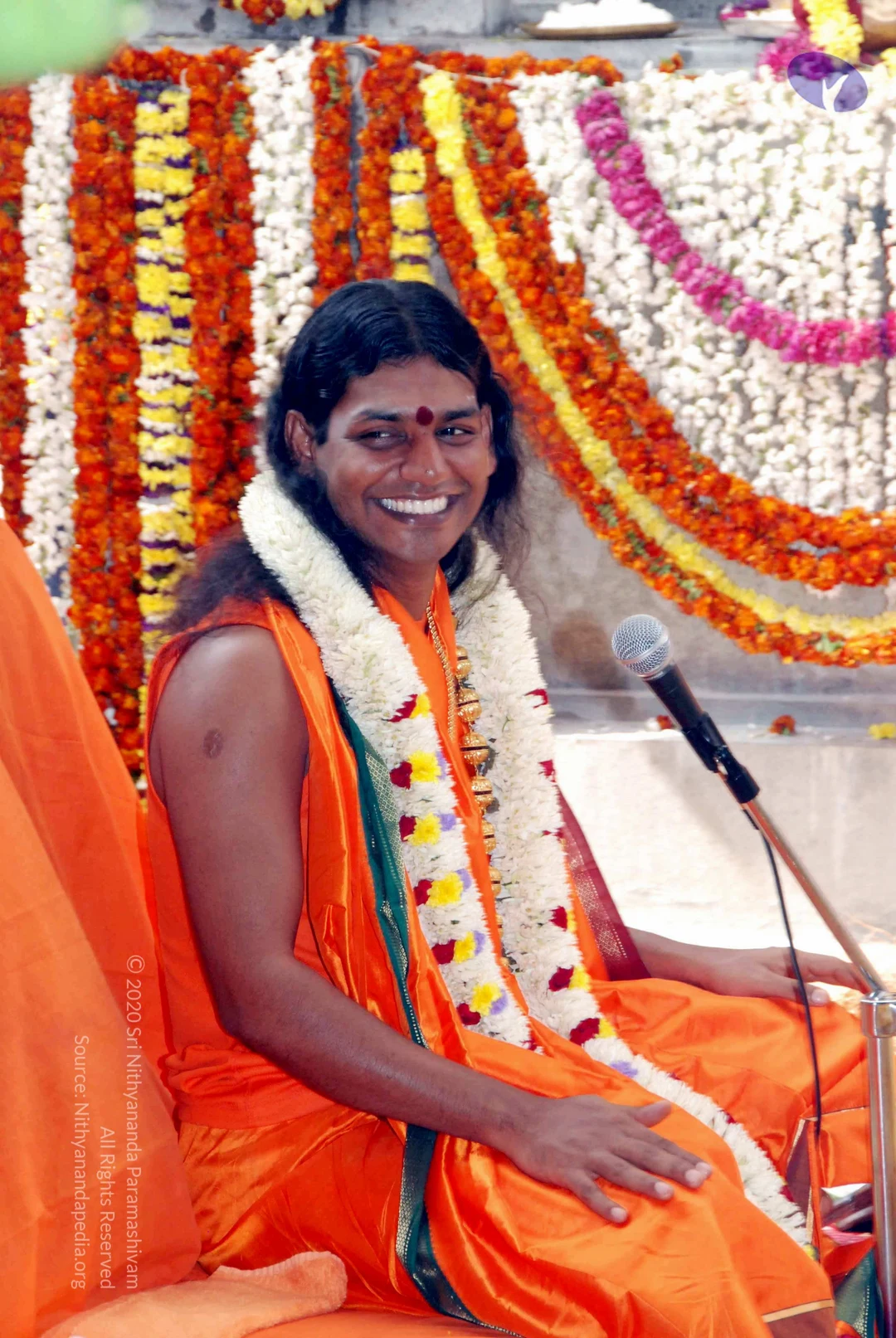
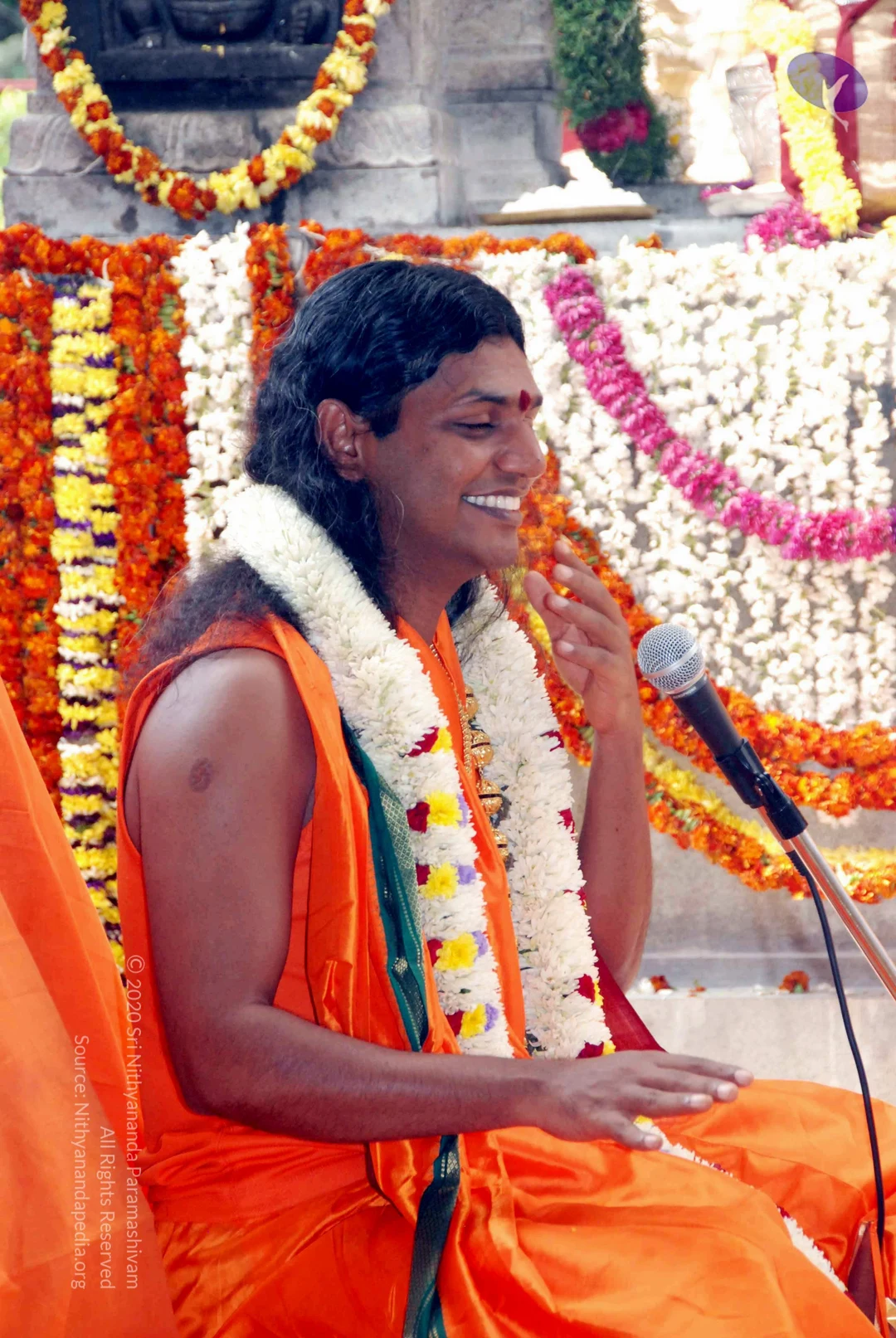
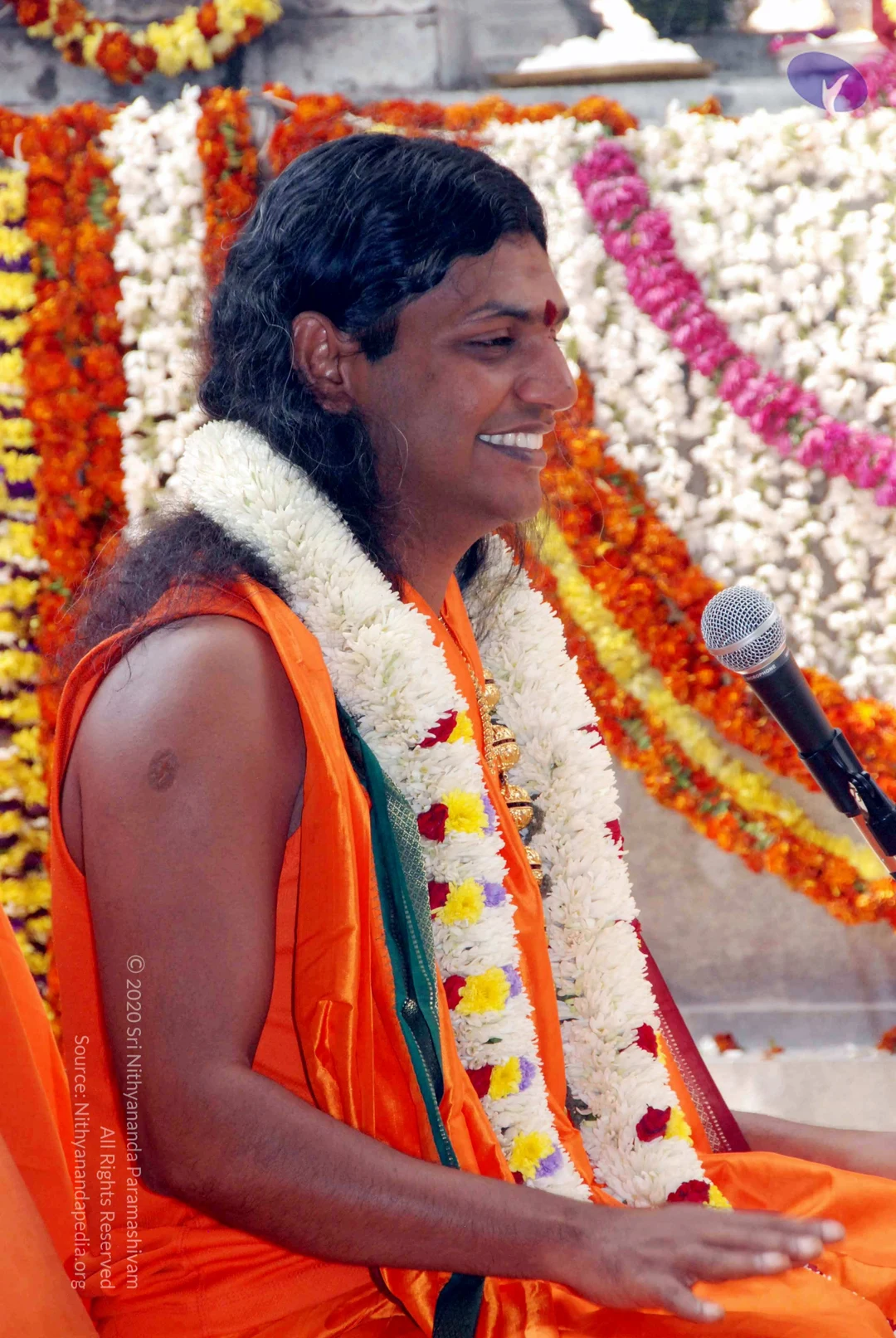
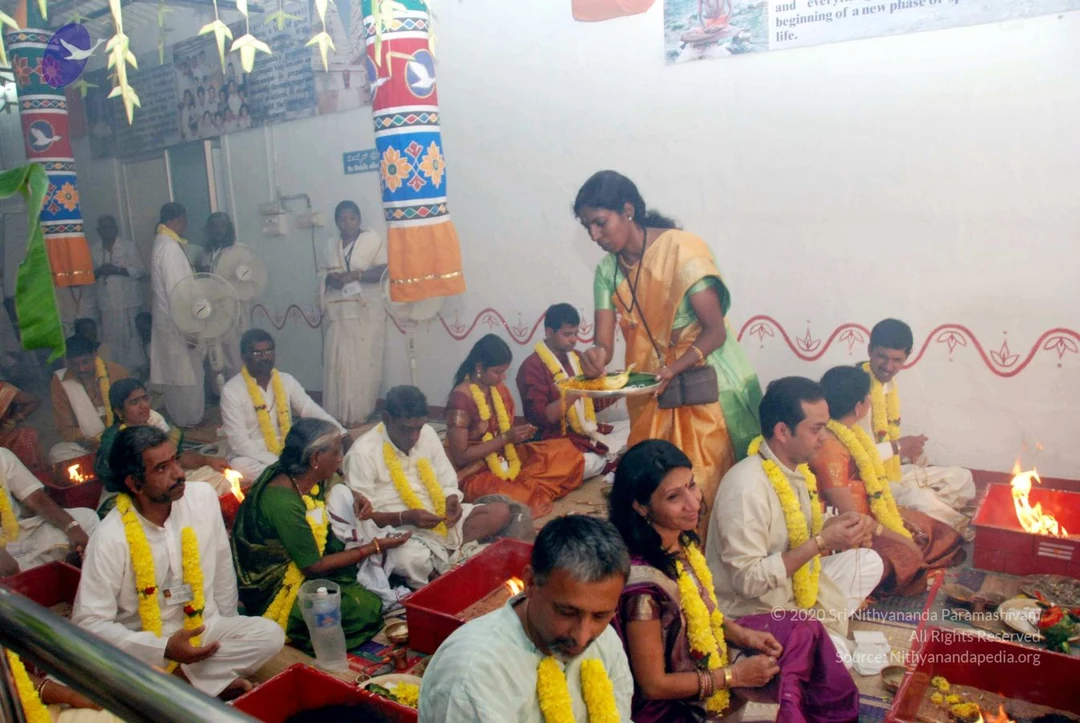
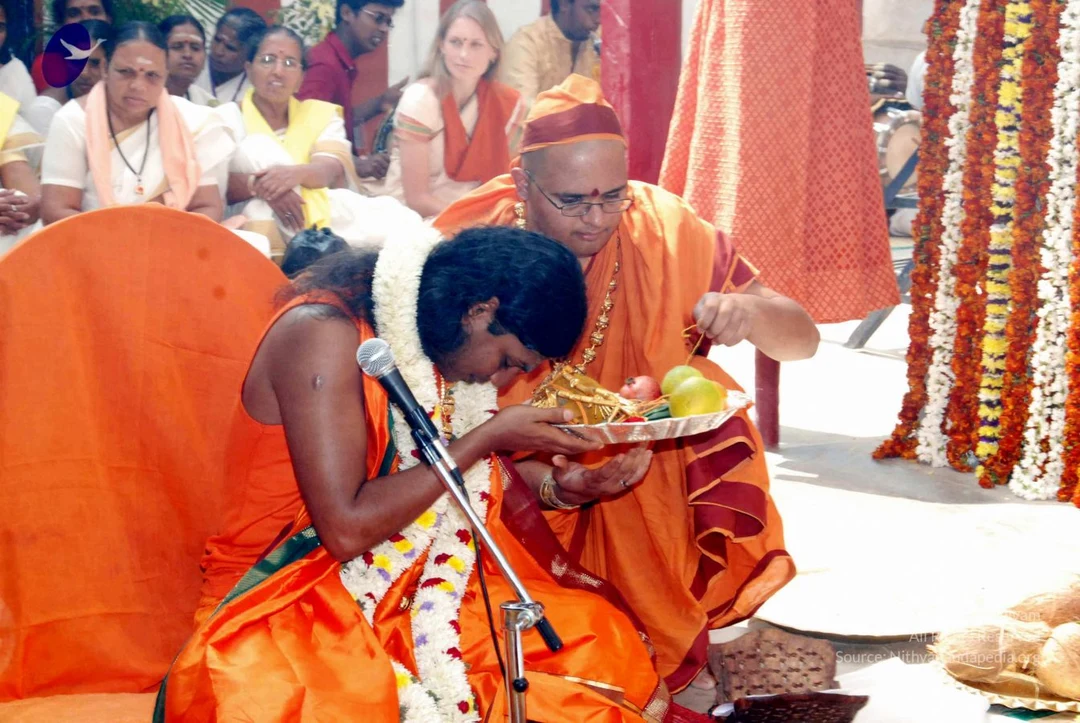
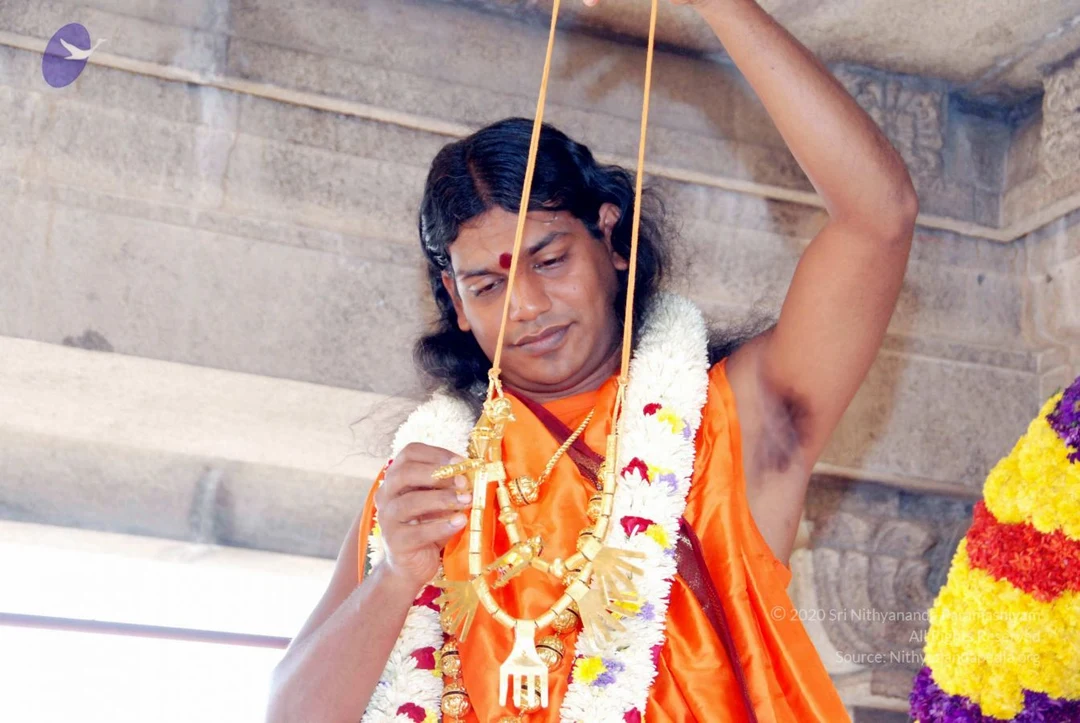
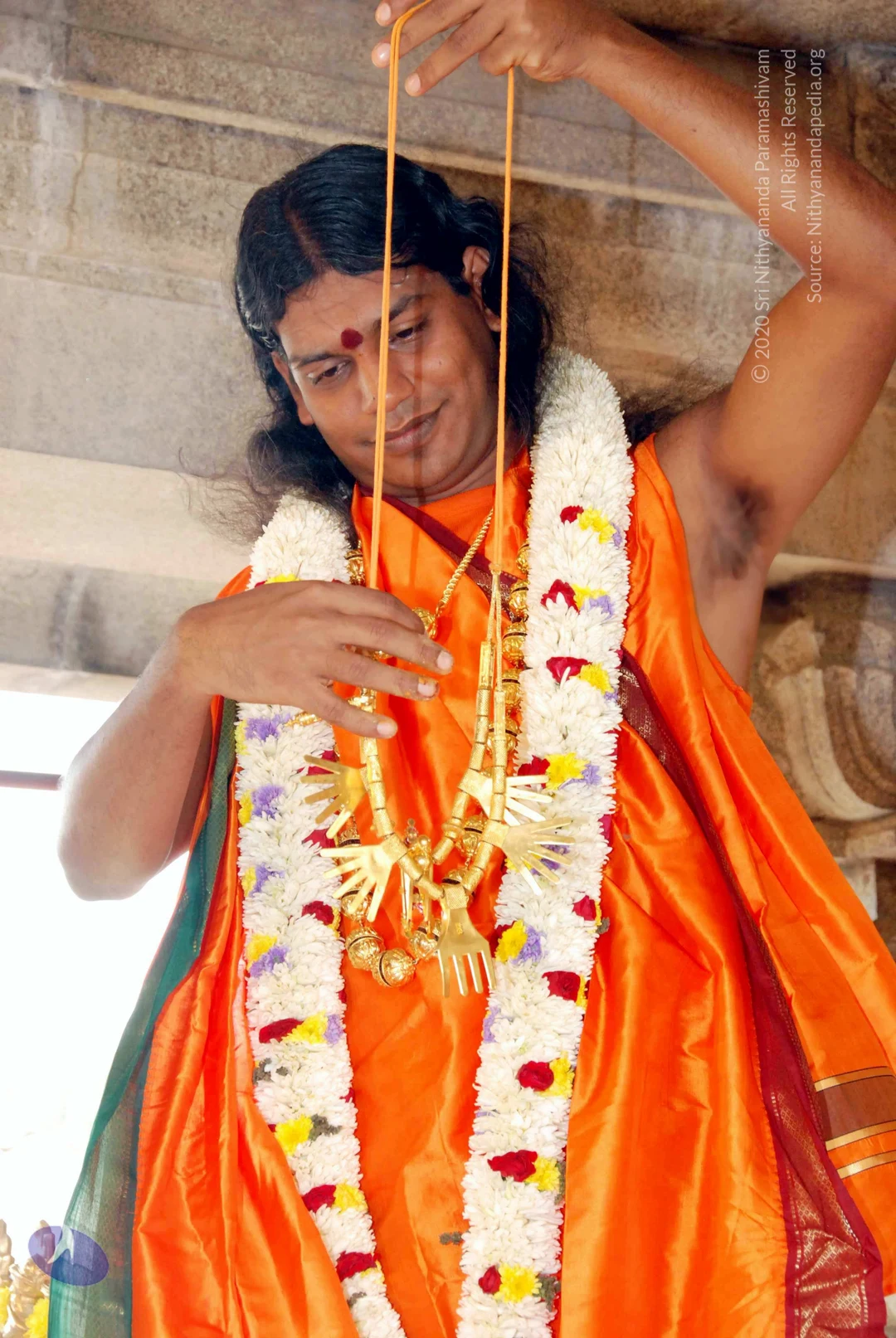
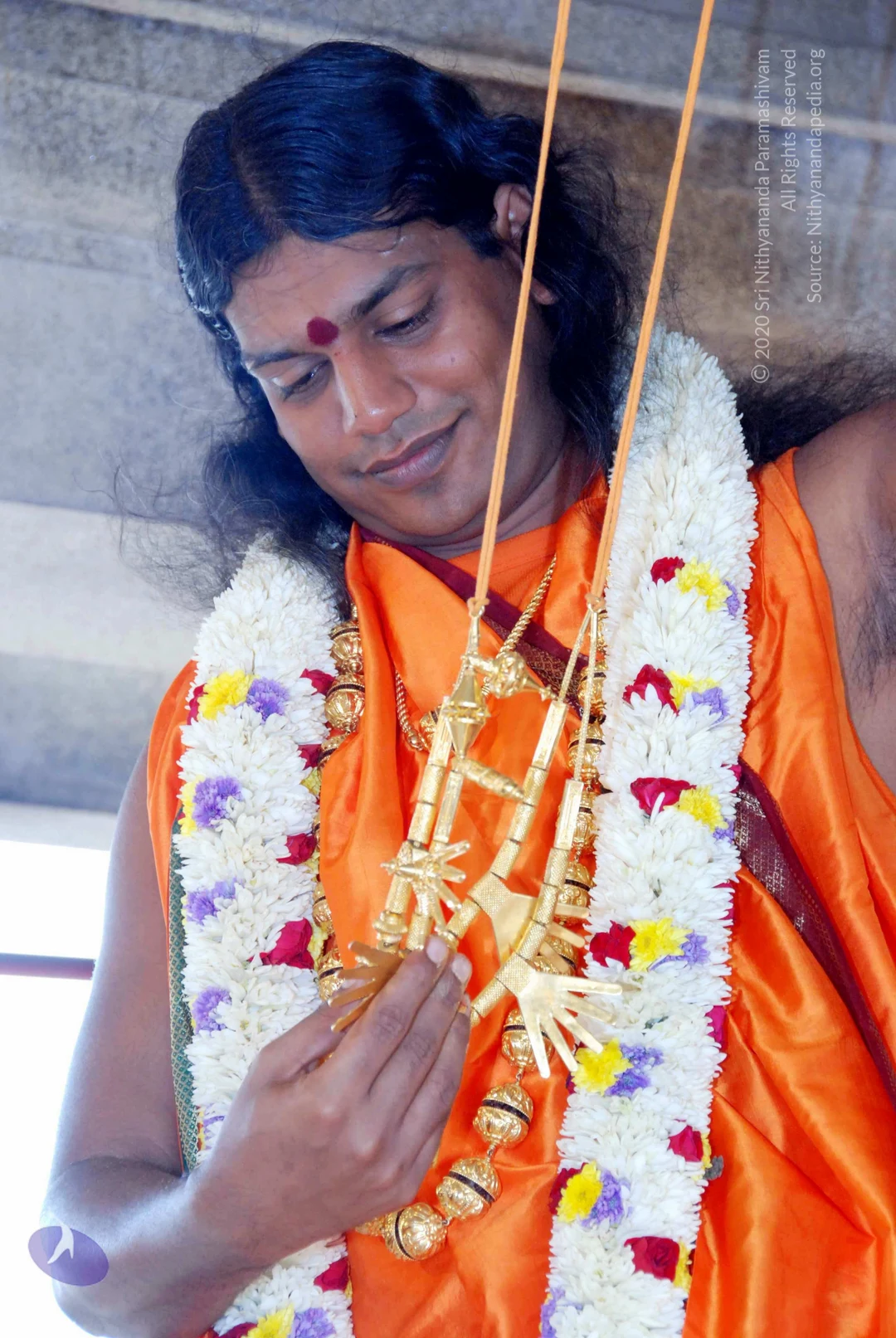
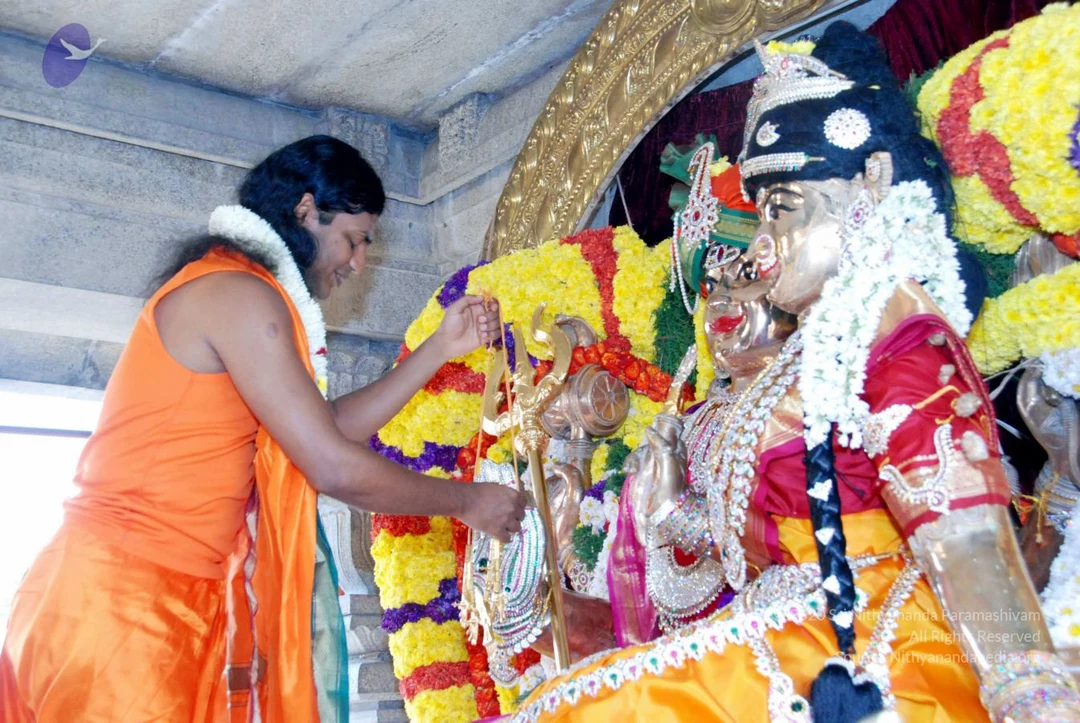
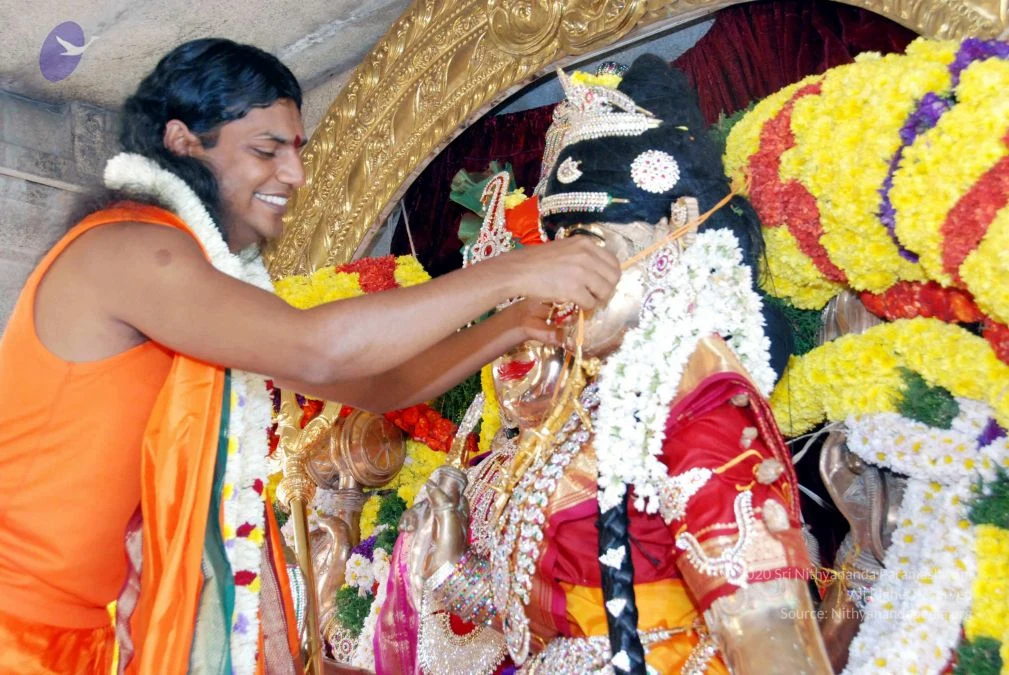
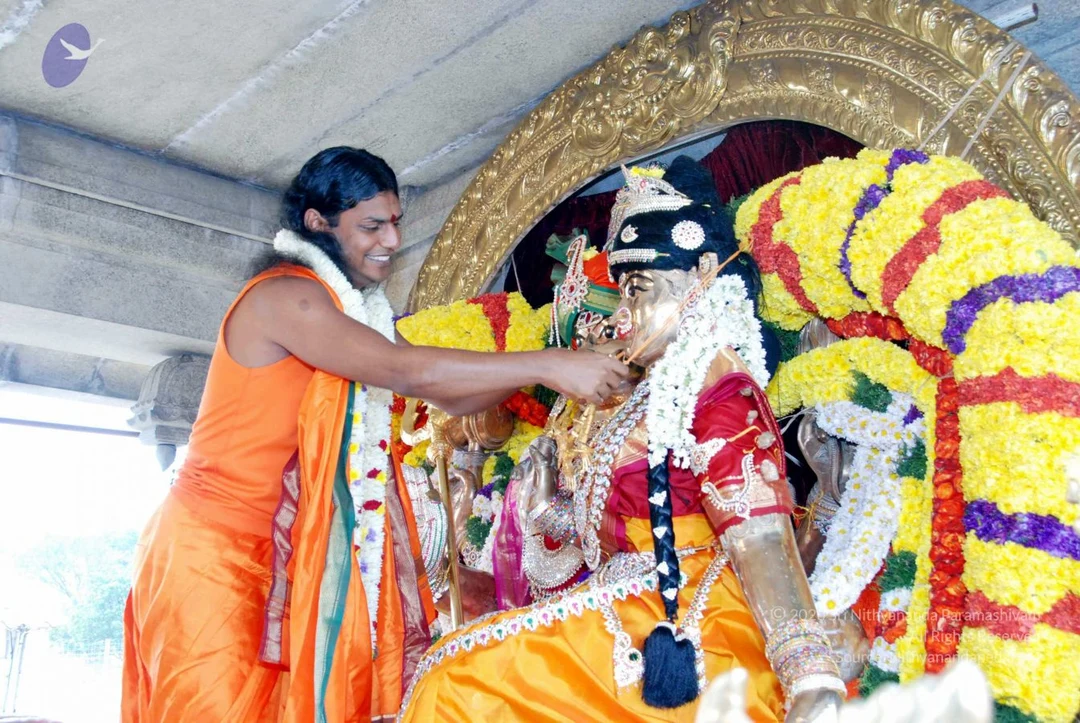
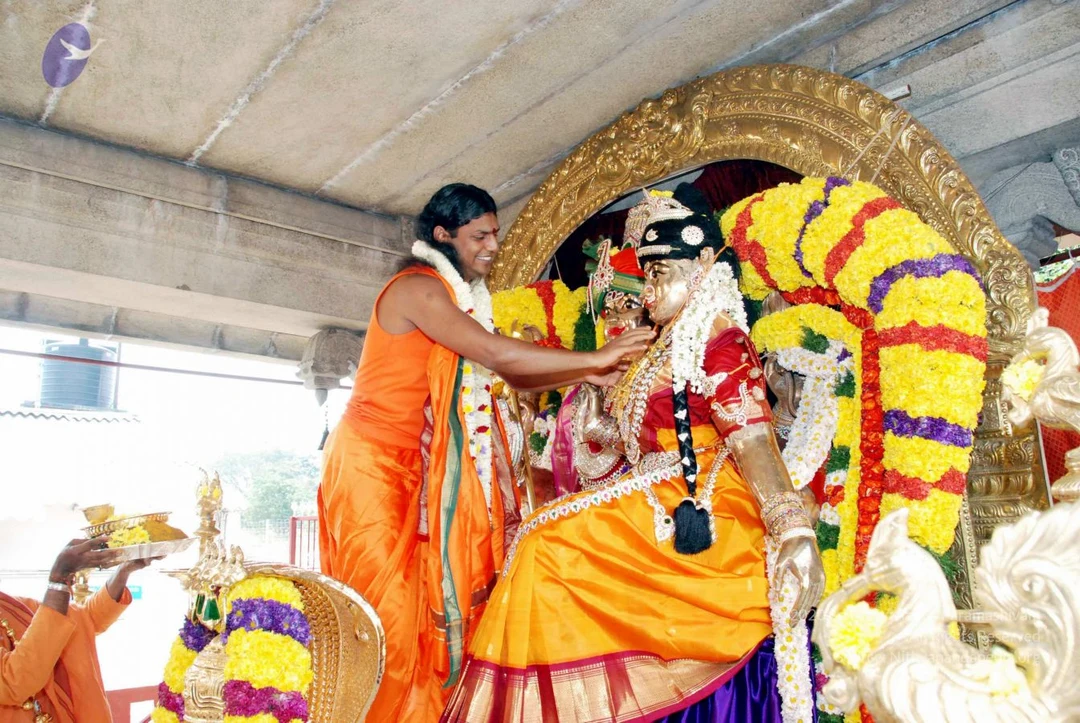
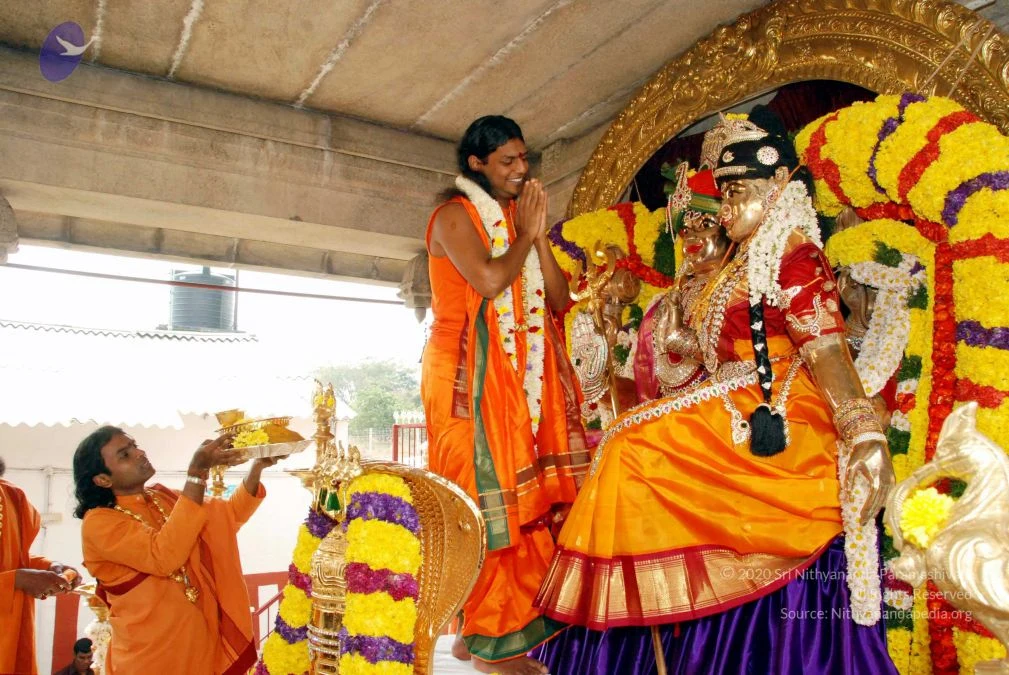
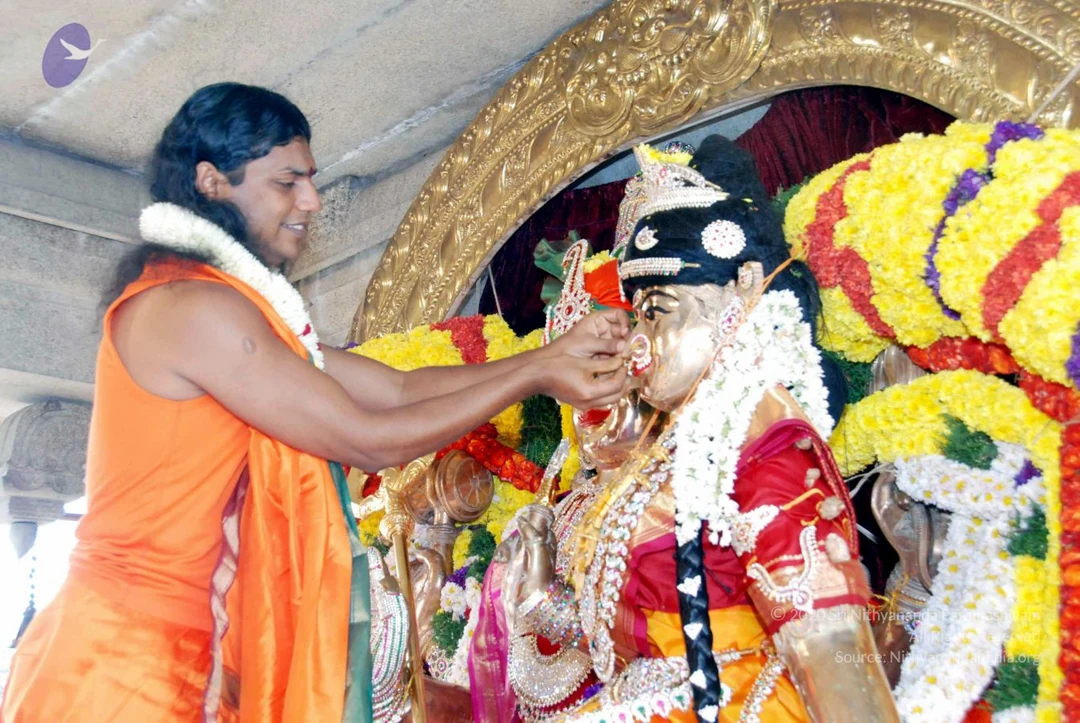
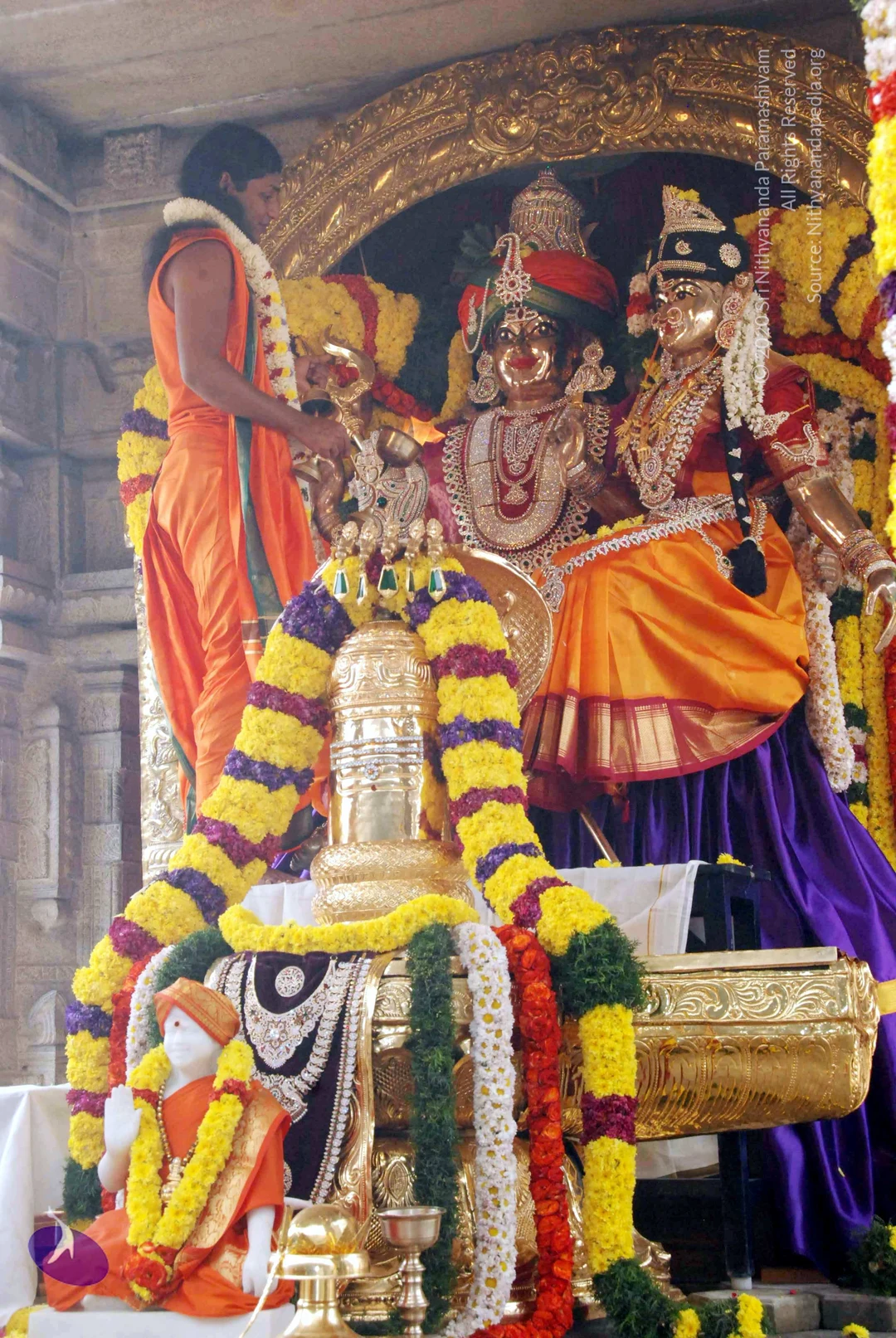
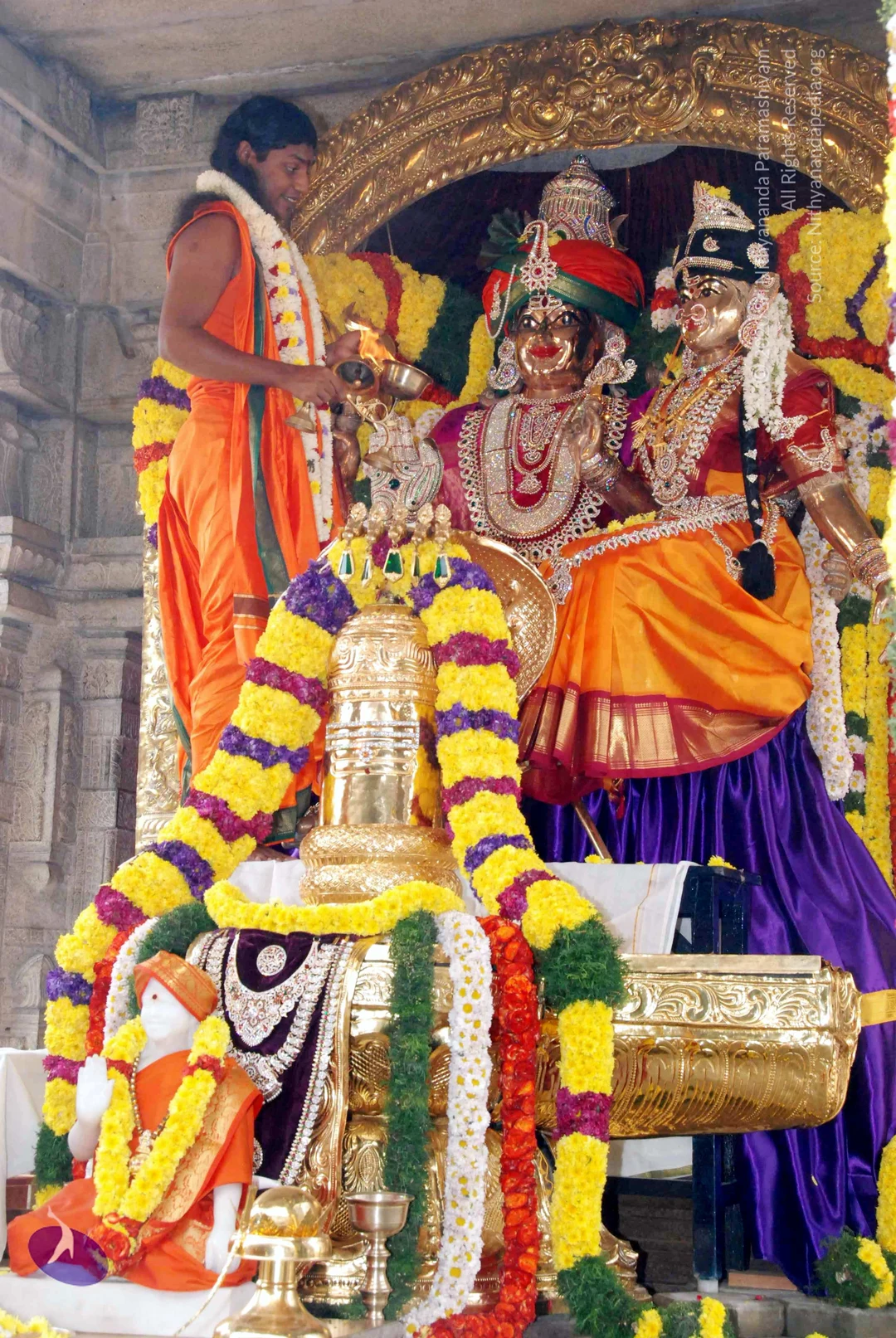
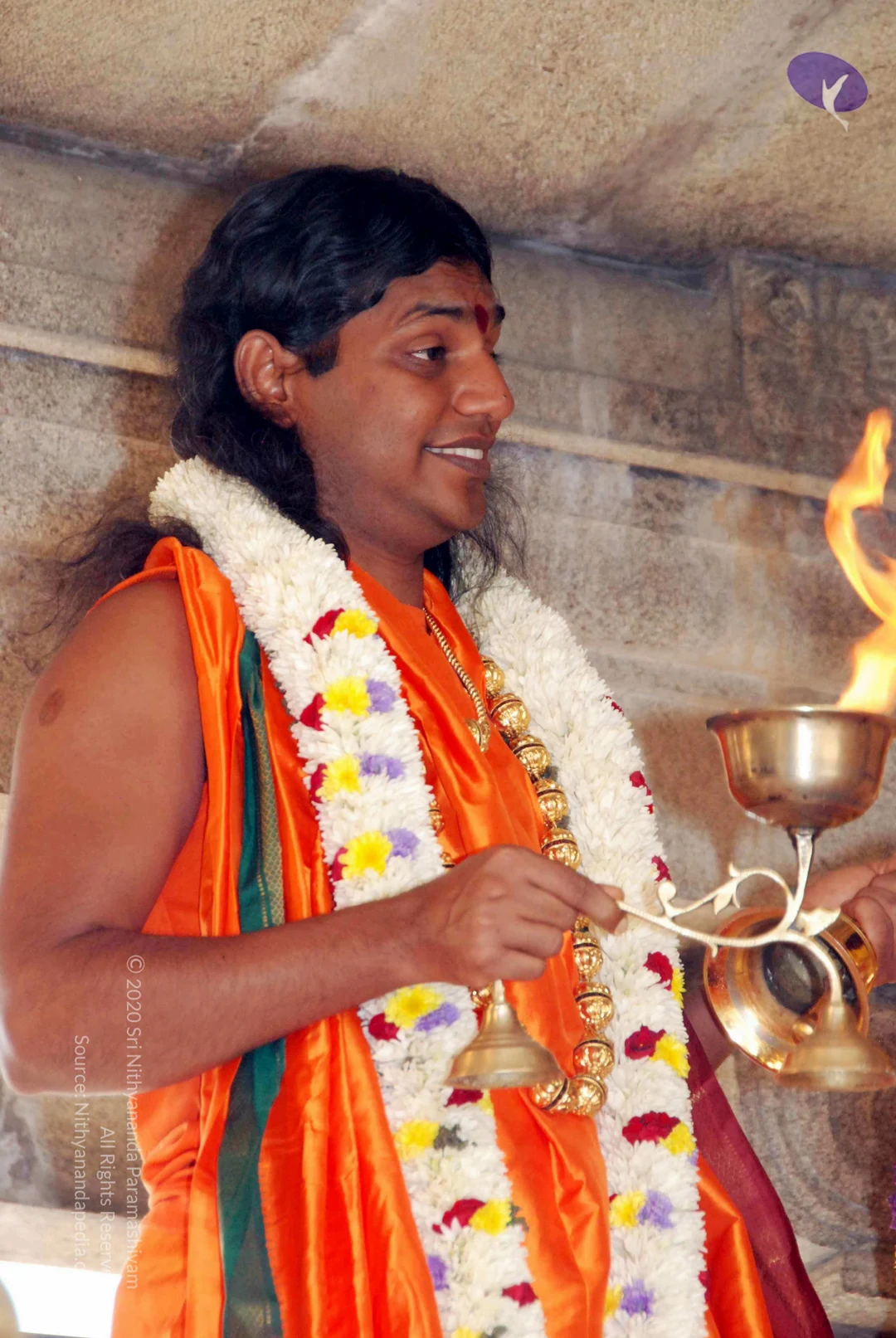
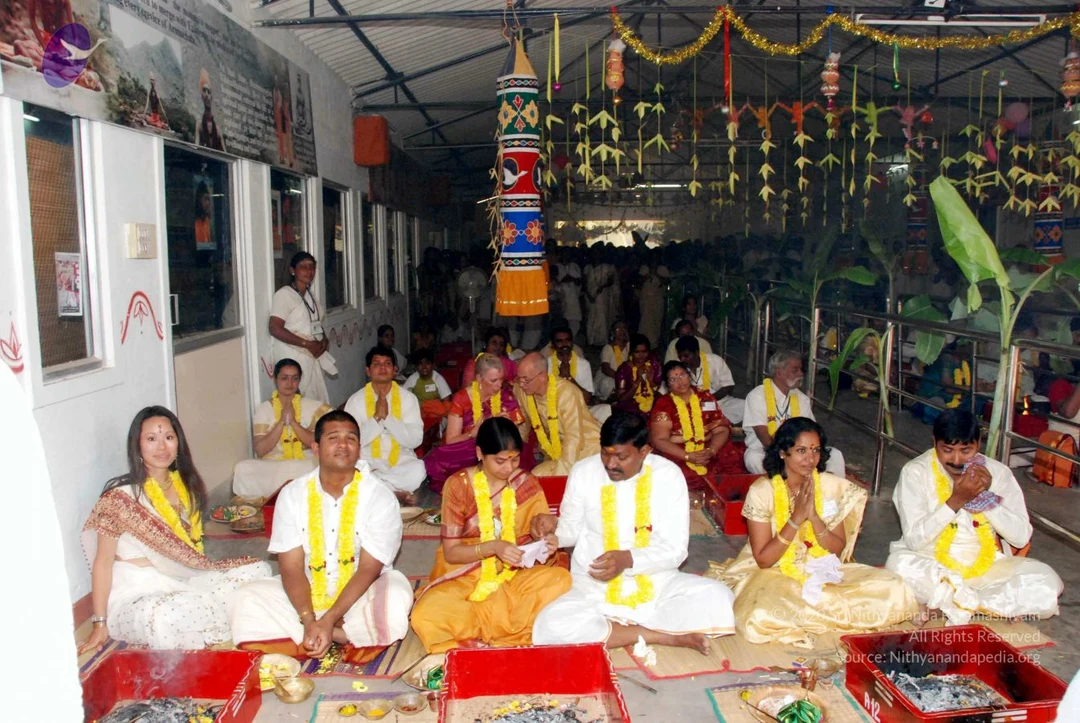
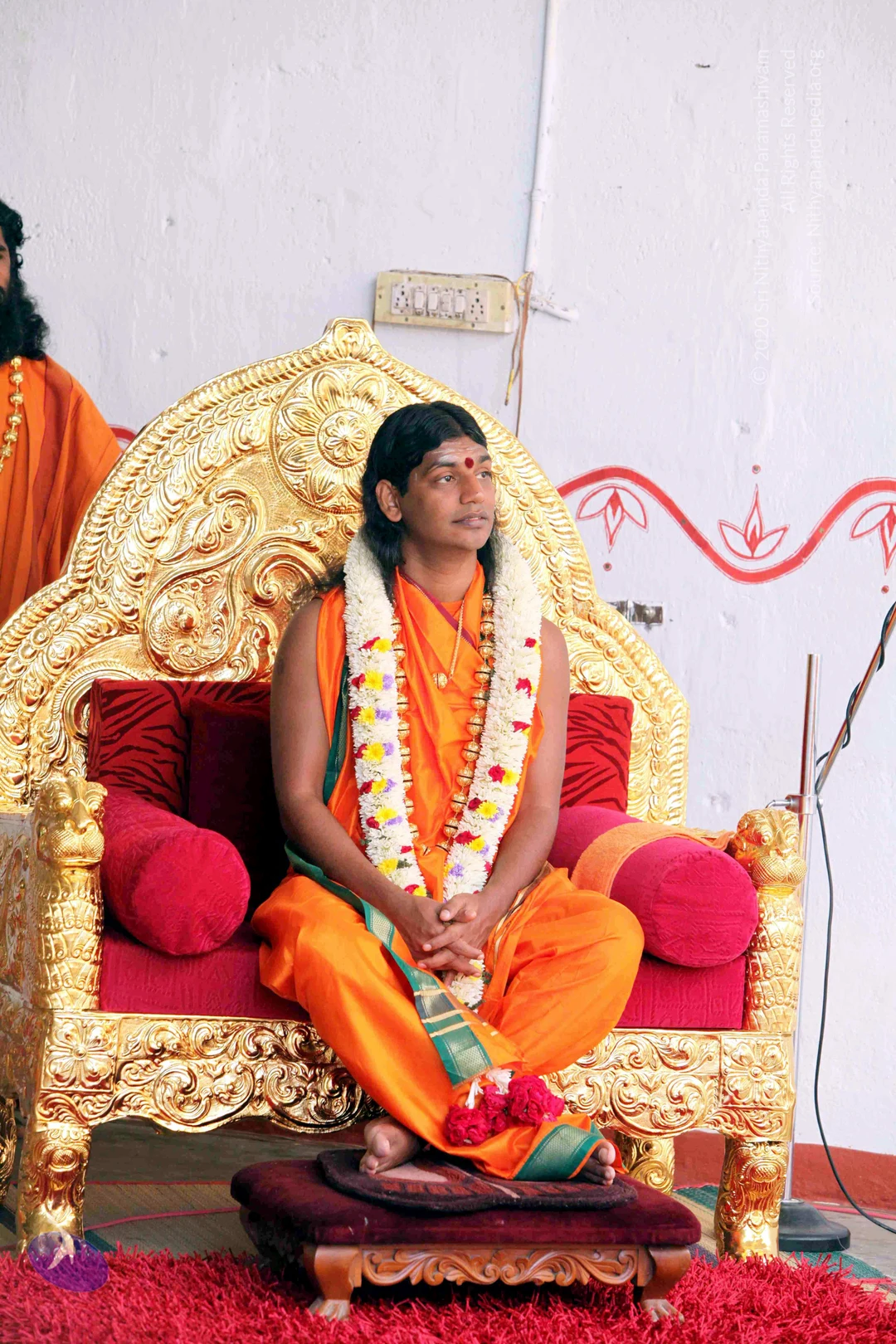
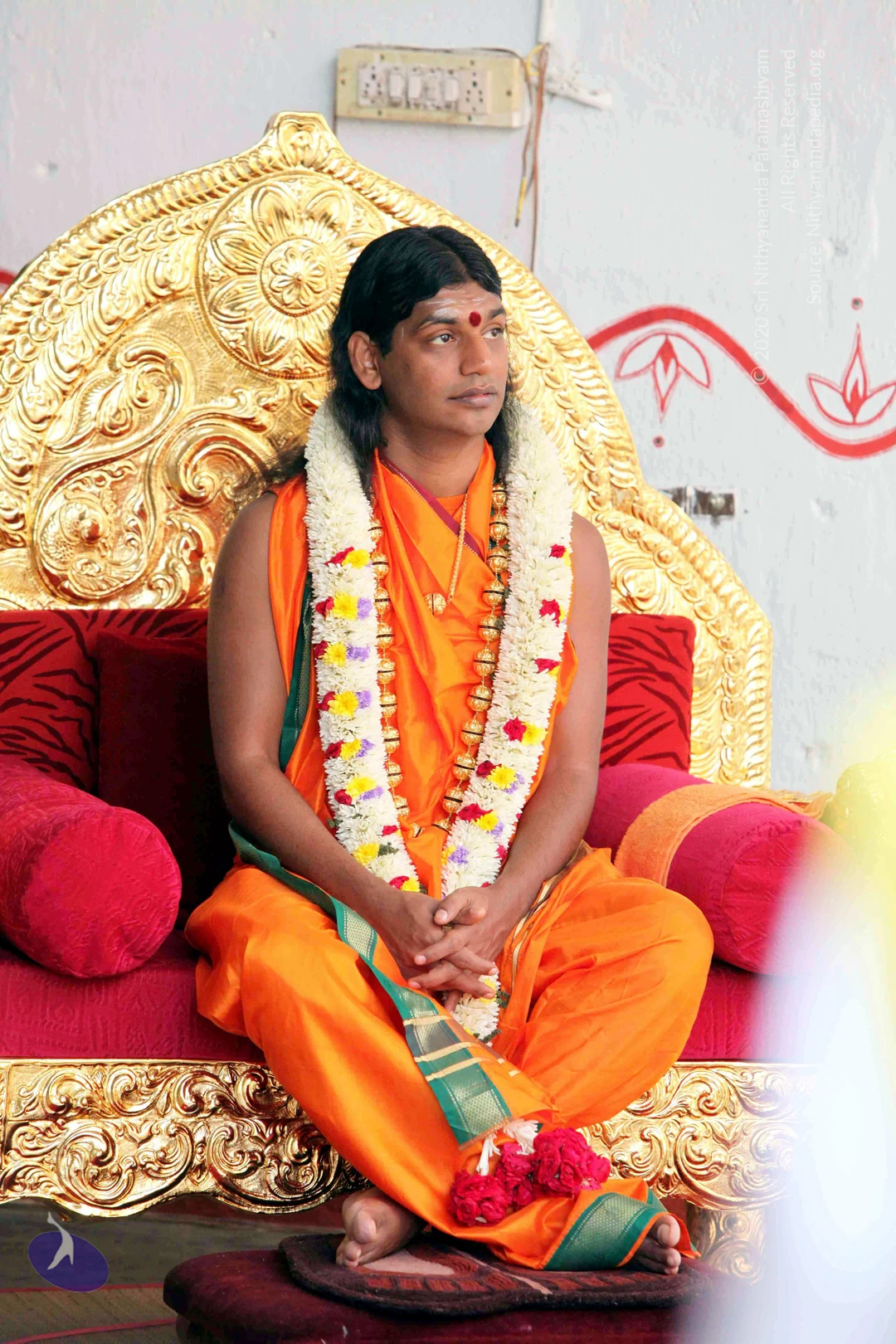
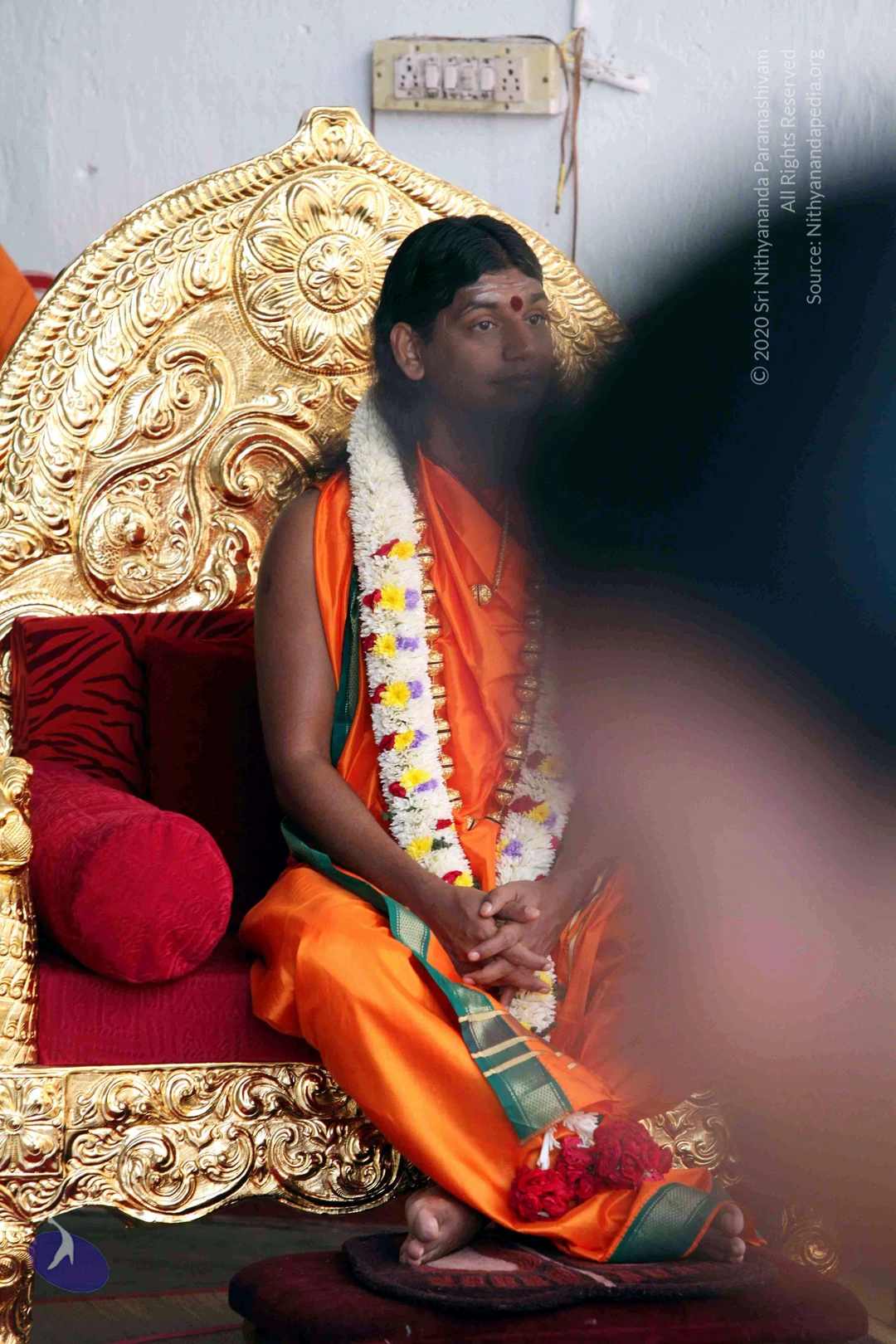
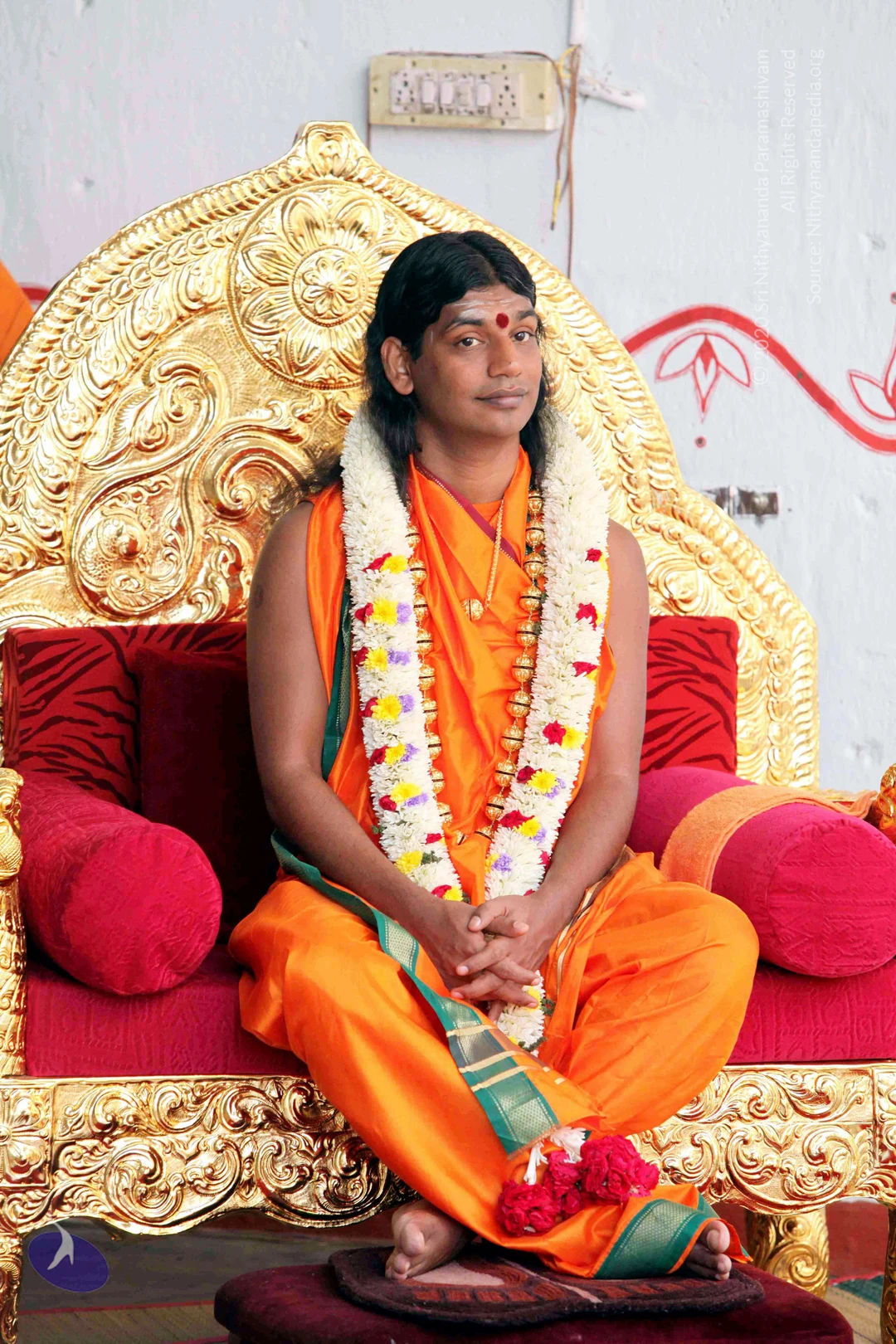
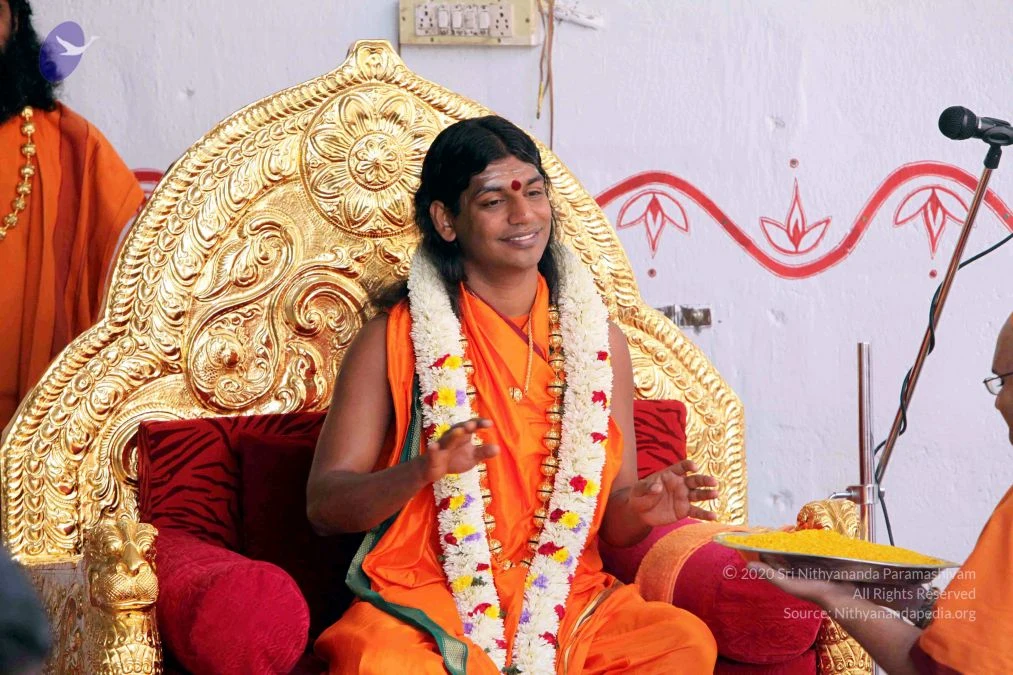
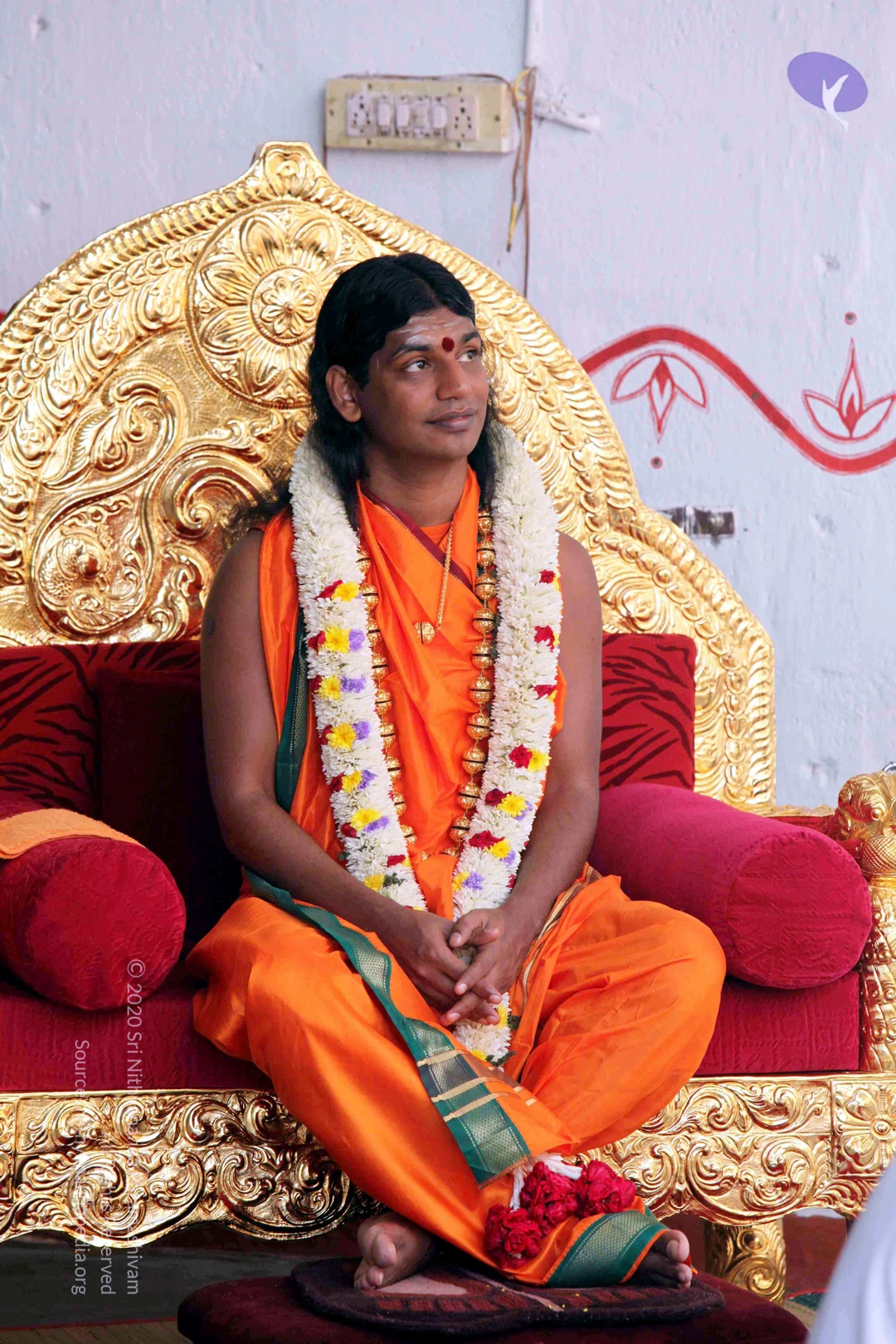
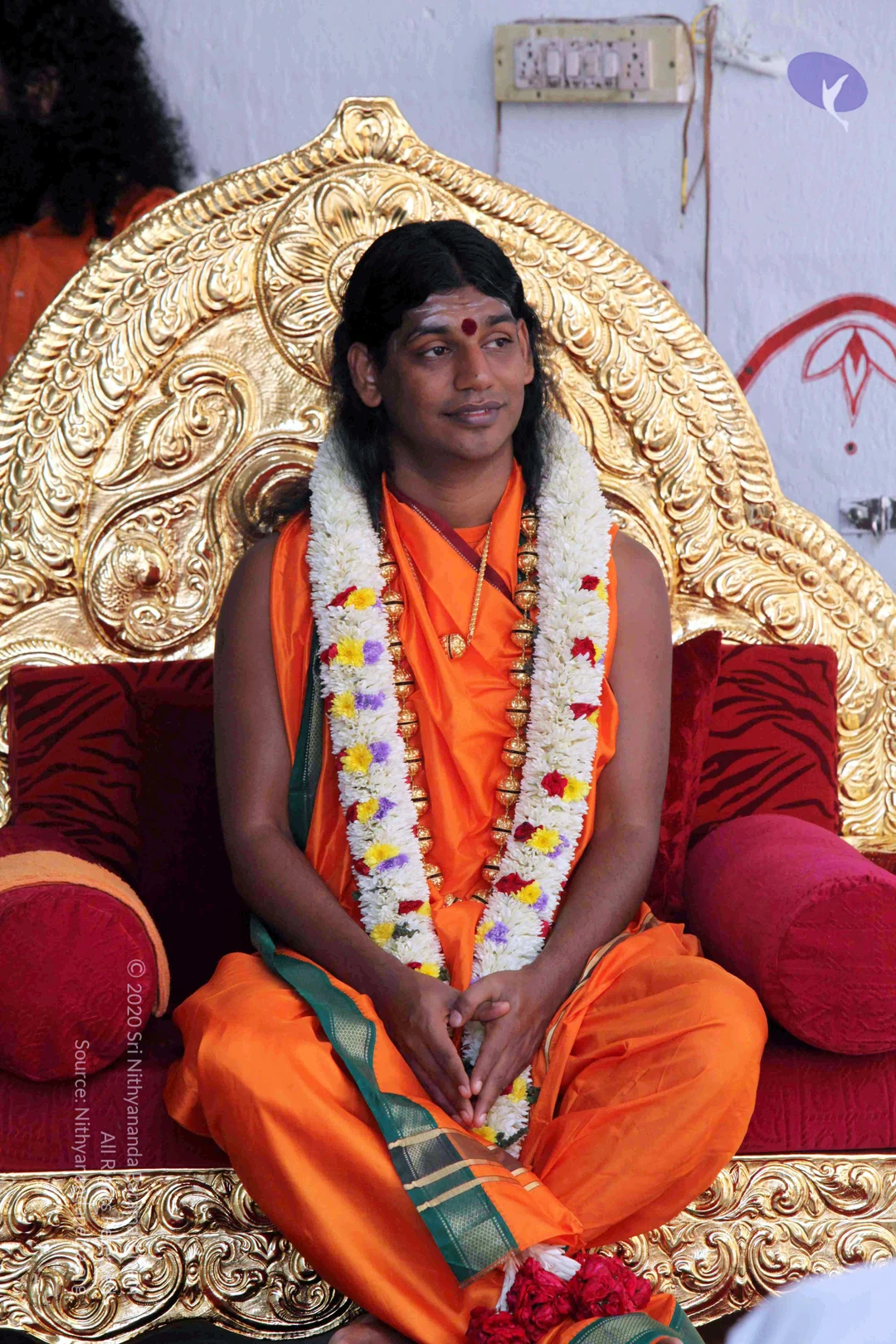
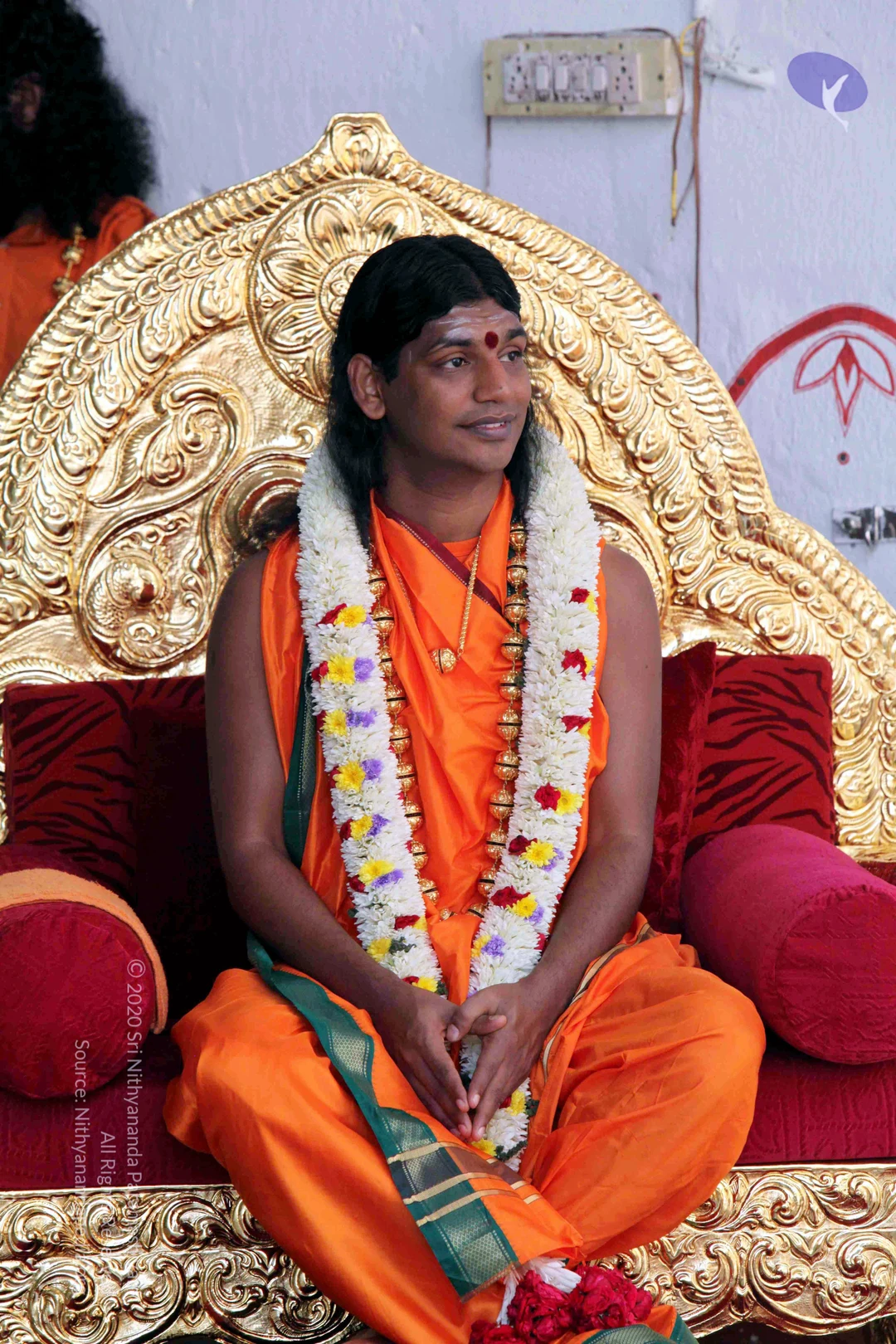
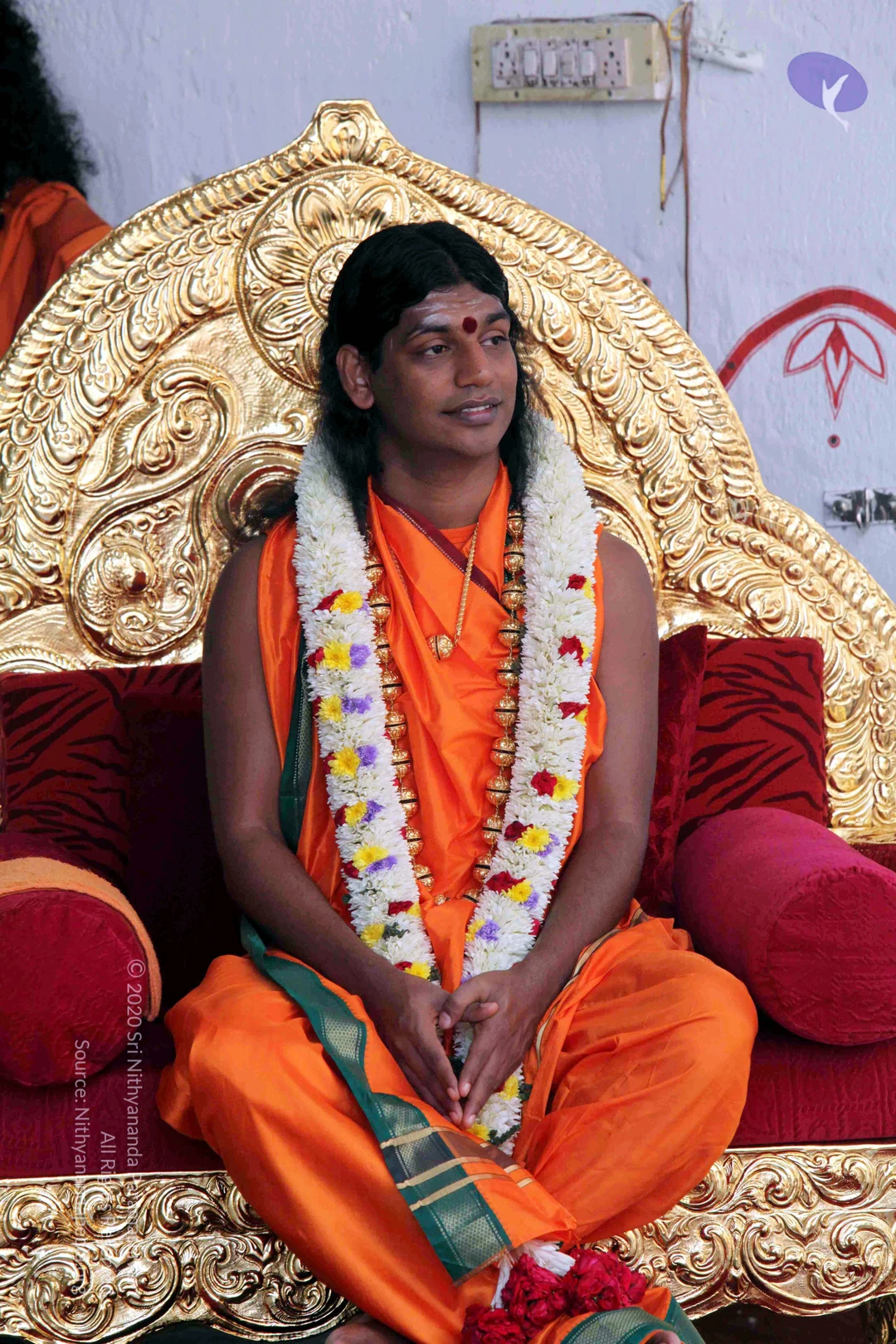
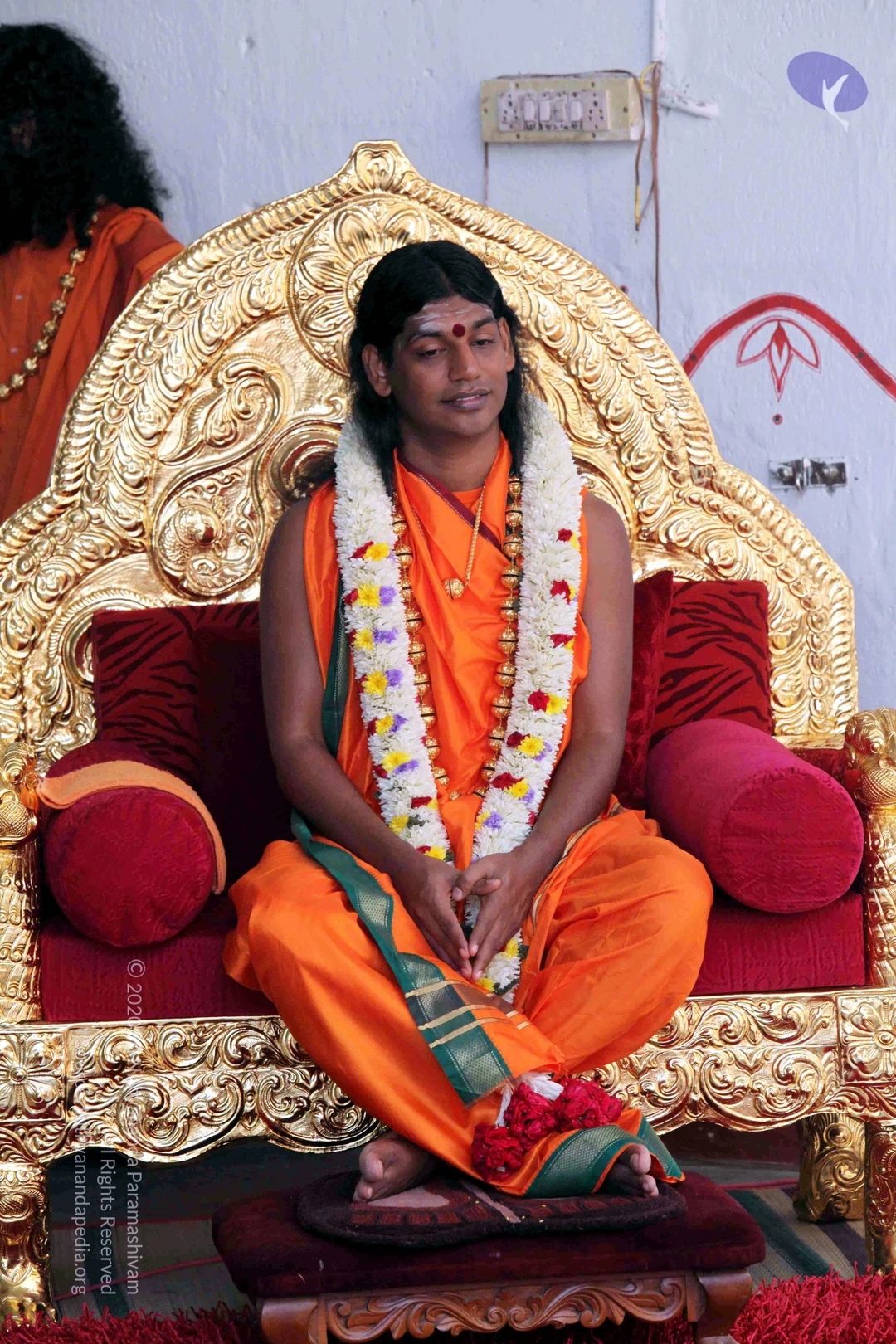
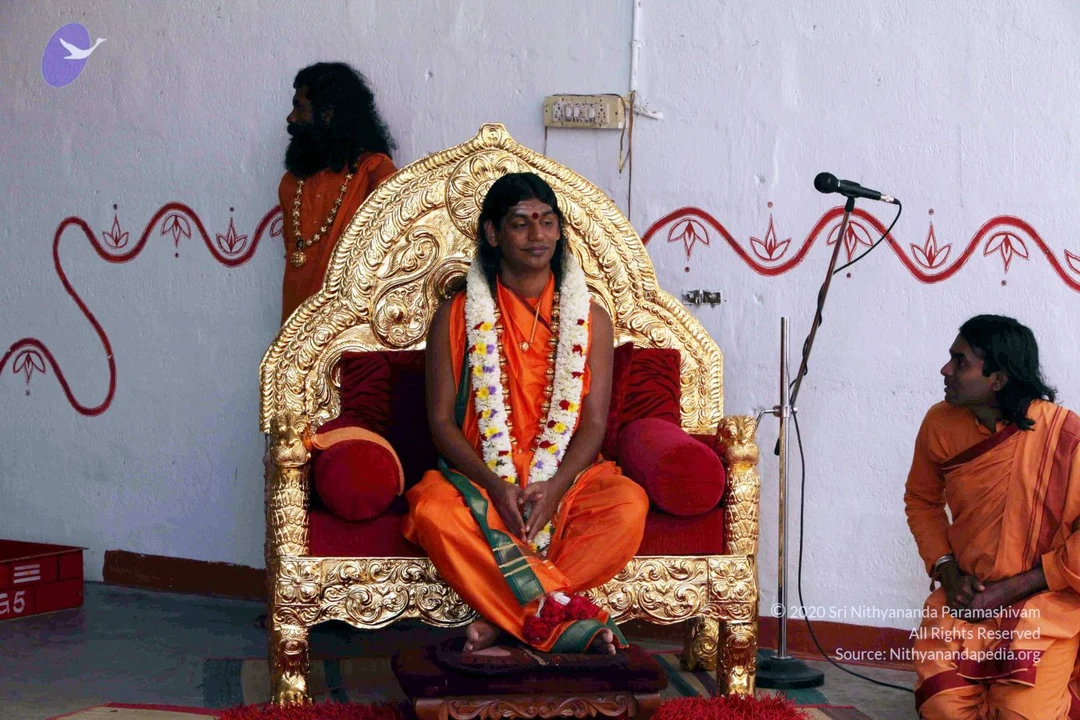
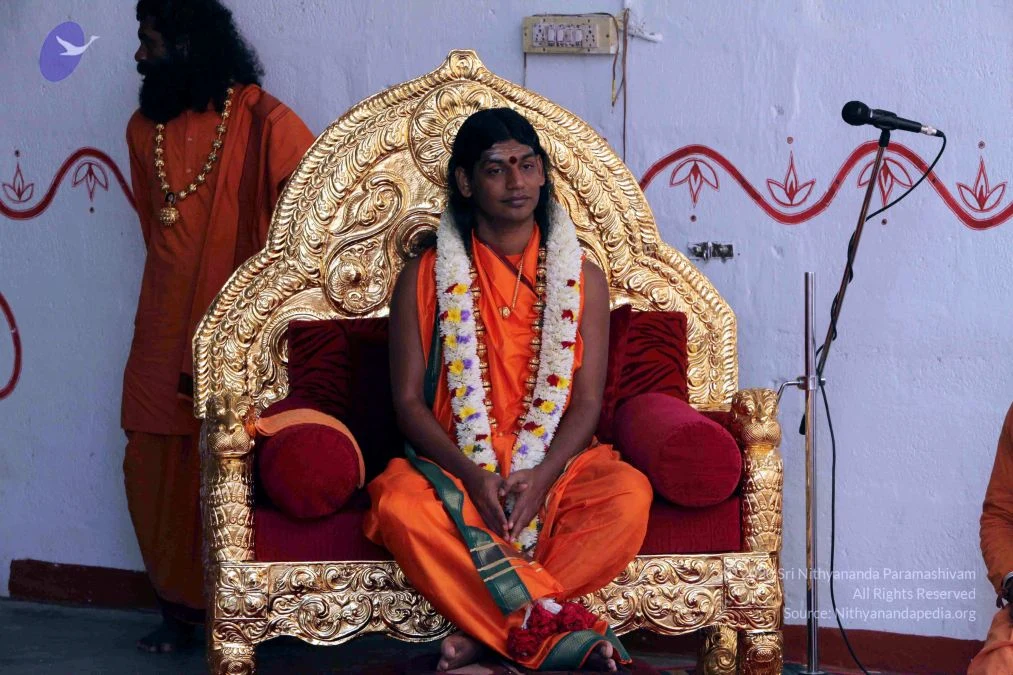
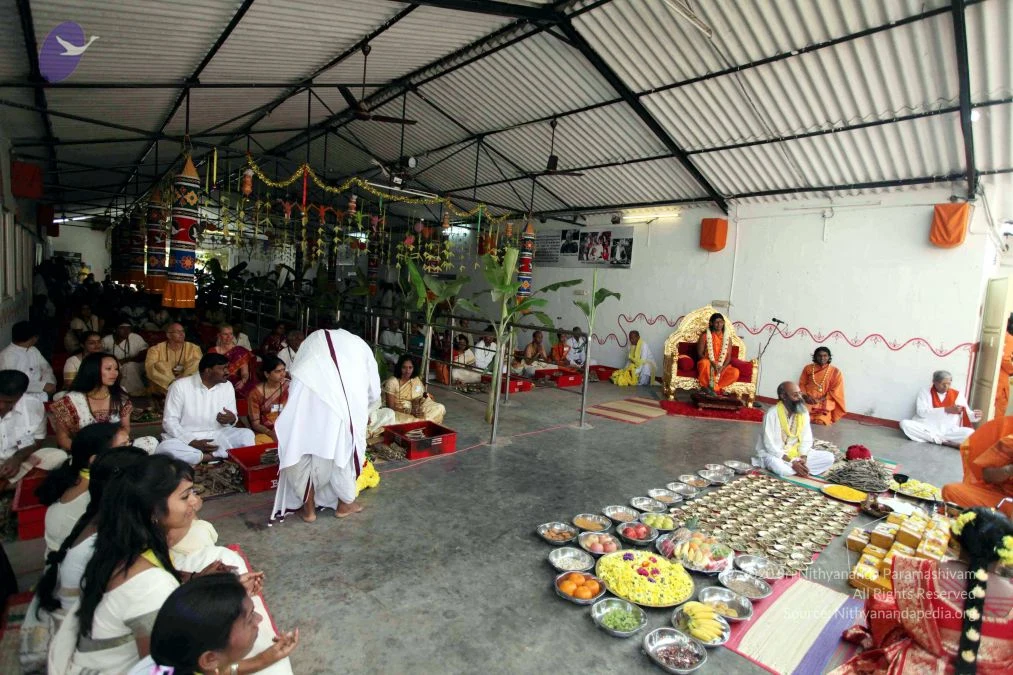
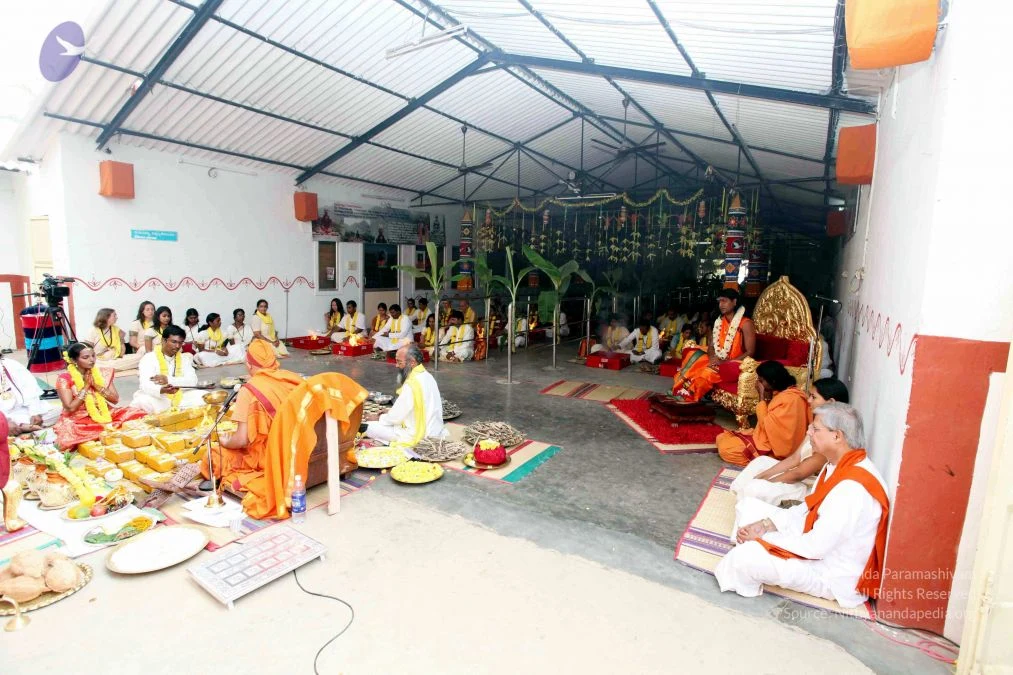
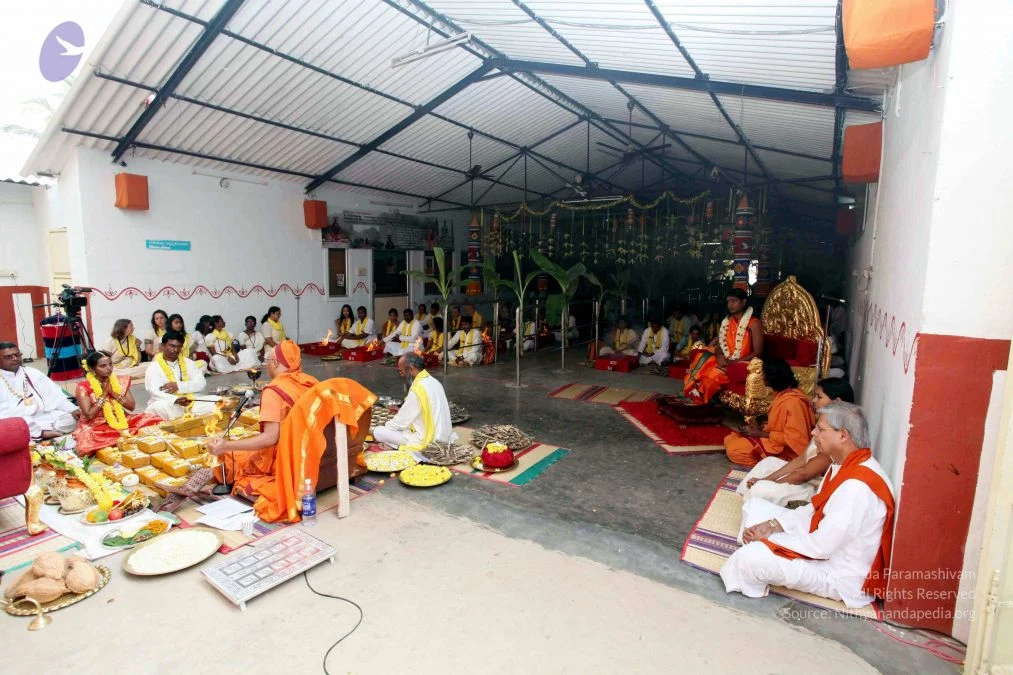
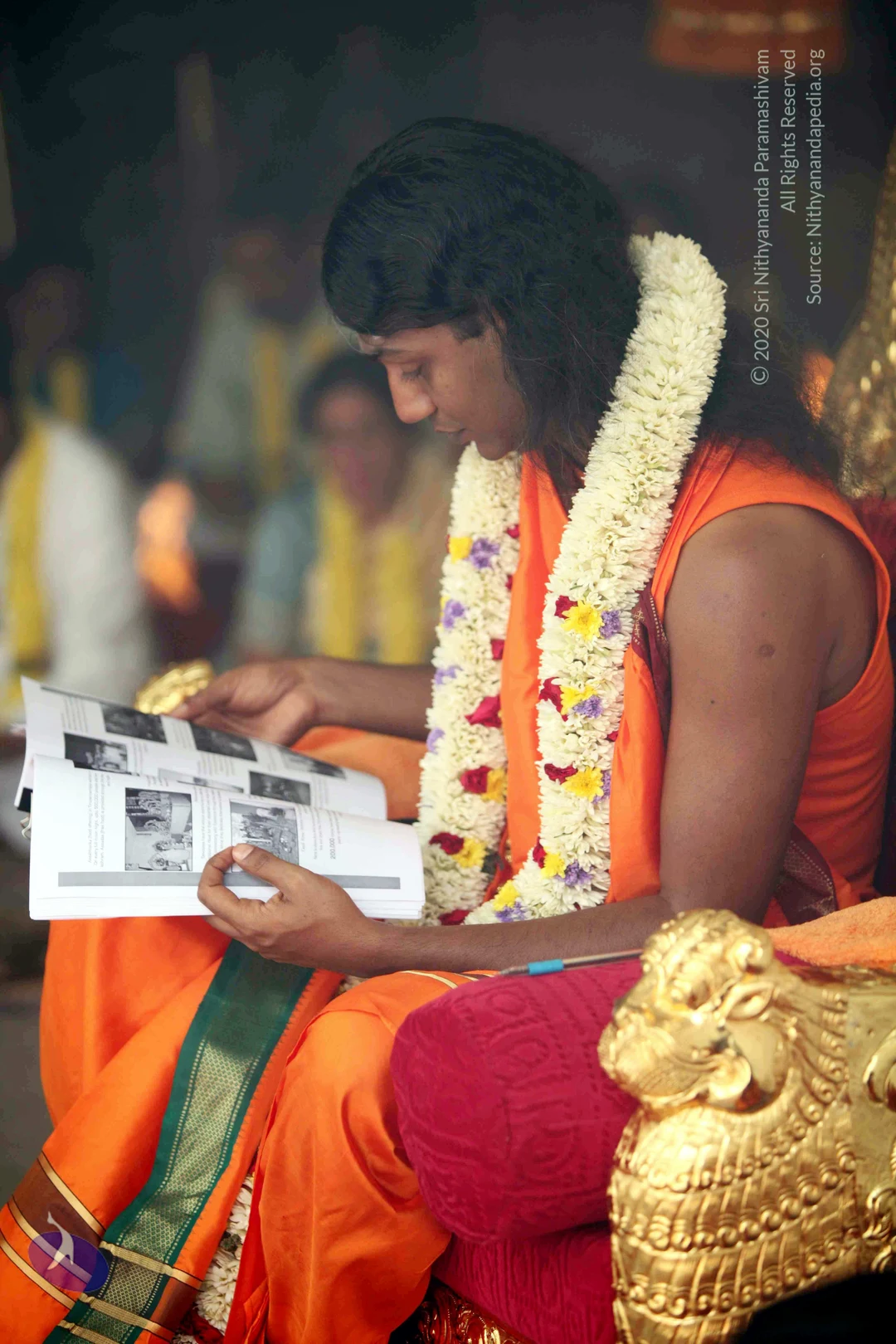
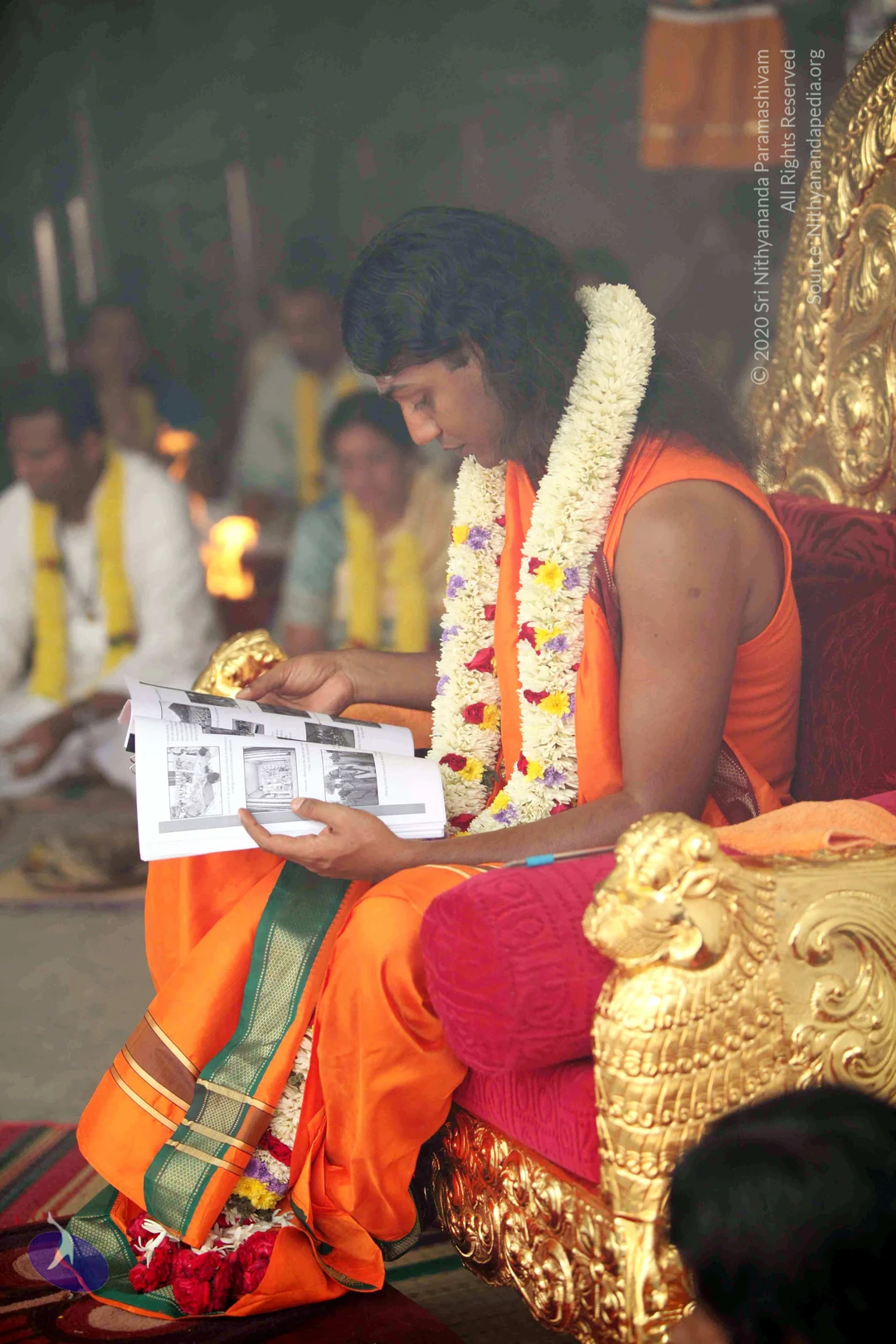
A photograph of a seated speaker in orange robes wearing a long white and multicolored flower garland and a gold pendant necklace. He holds a small booklet in one hand and gestures with the other palm raised while speaking into a microphone on a stand. Beside him on the left, a man in orange robes with a red-and-gold trim sits with palms pressed together in namaste. Behind them, a man in white dhoti and red shawl sits, and standing figures in white dhotis are partly visible at the upper right. The setting appears to be a satsang or discourse hall with white walls and a grey floor. Printed copyright text appears at the lower right.A close photograph of a golden deity murti. The murti wears a tall black-and-gold crown with jewelled ornaments, a red bindi, a jewelled nose ring and large jewelled earrings. Layers of silver-and-gem necklaces, bangles and a gold chain cover its chest. It wears an orange and red silk garment and holds a ceremonial ritual object in one raised hand. Yellow marigold garlands and white jasmine strands surround it, with green foliage at the left edge and a stone wall behind.A seated figure in an orange saffron robe with long dark hair sits on an ornate gold throne with a gilded lion-like carved base, hands pressed together in namaste before a crowd. Around him, dozens of devotees sit on red and colourful striped mats in a red-curtained hall, many in white ritual clothes, some in yellow and orange saris. Several devotees hold small lit oil lamps and brass plates with offerings, and a child in green holds a lamp at the centre. Fruit, a water bottle and flower garlands sit on a side table at left. The scene reads as an aarti or satsang ritual with lamps and offerings. Circular emblem and copyright text appear in the upper left and lower right corners.

December 26 2009

Original wiki page
Contents

Title:

Nithyananda Live: December 26 2009

Description:

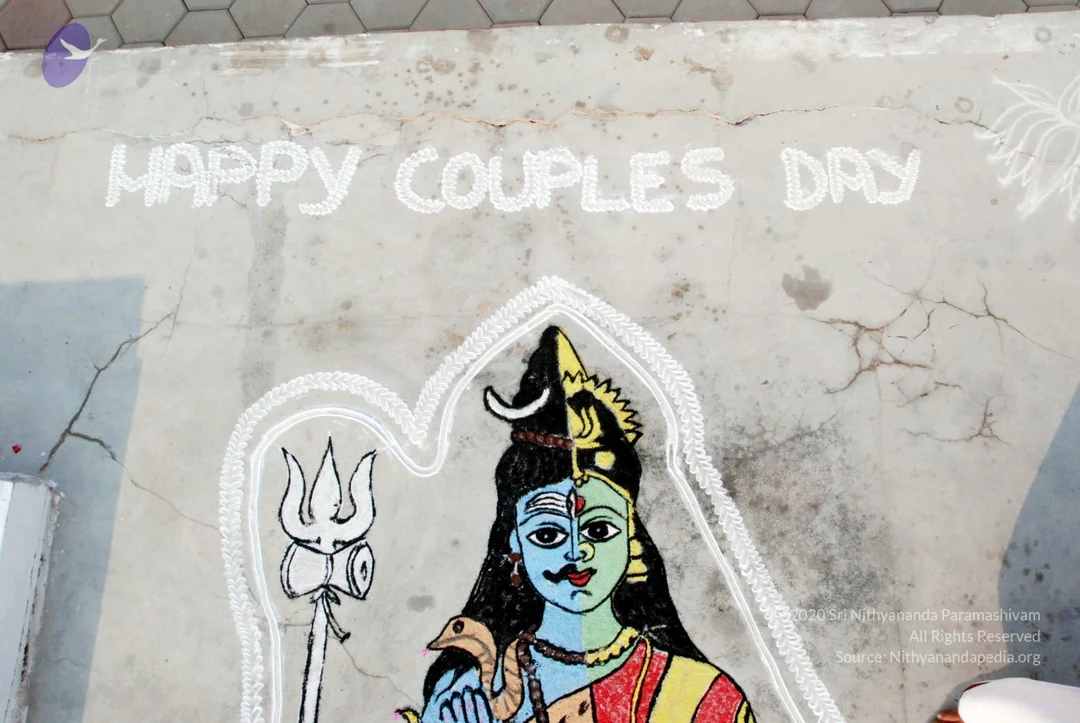
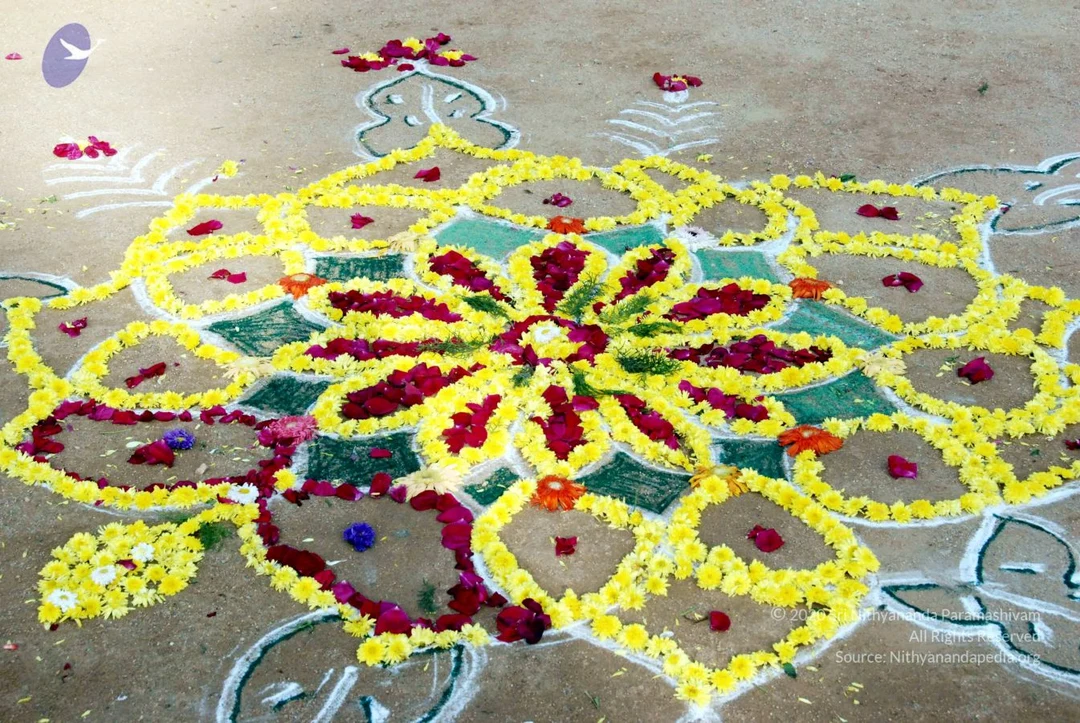
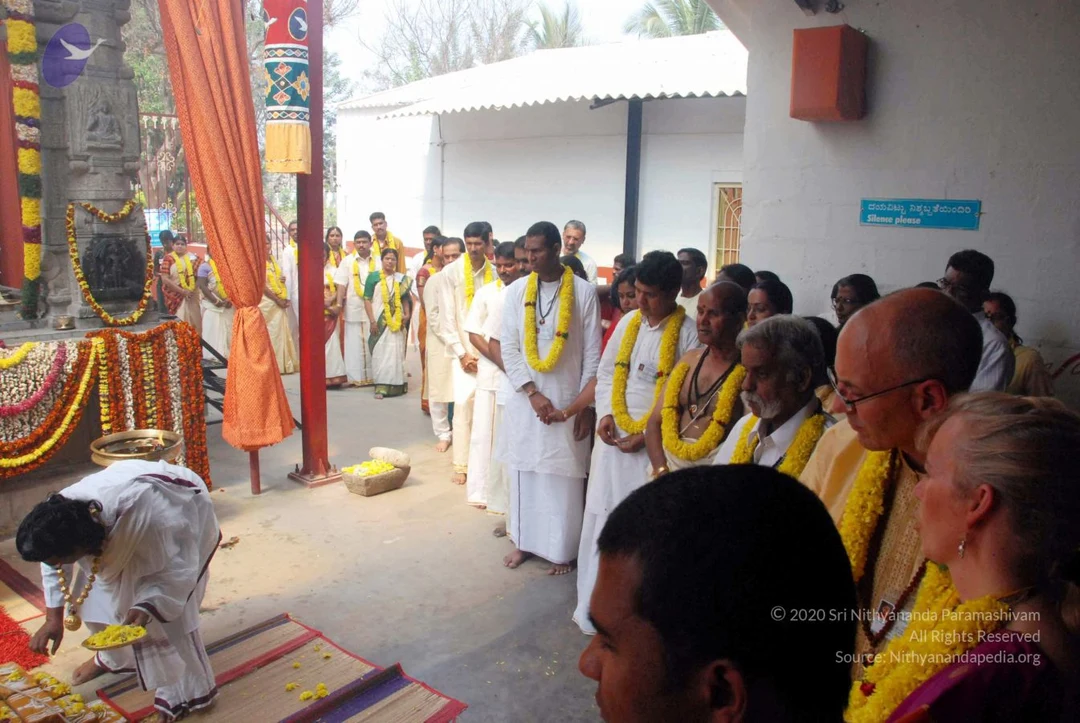
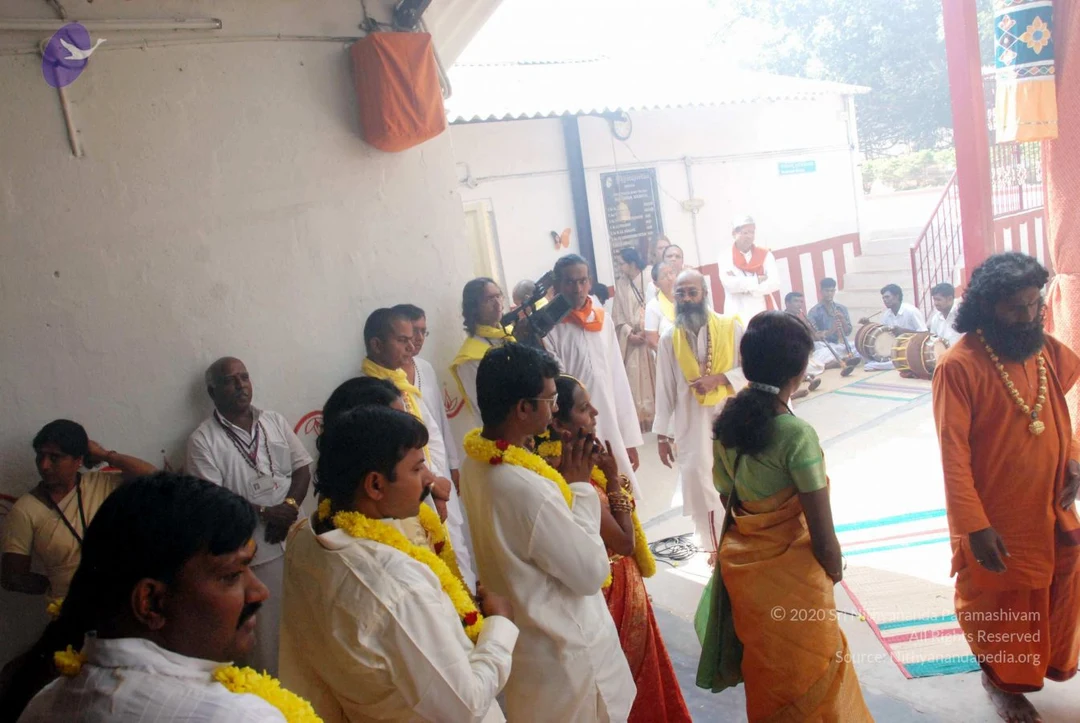
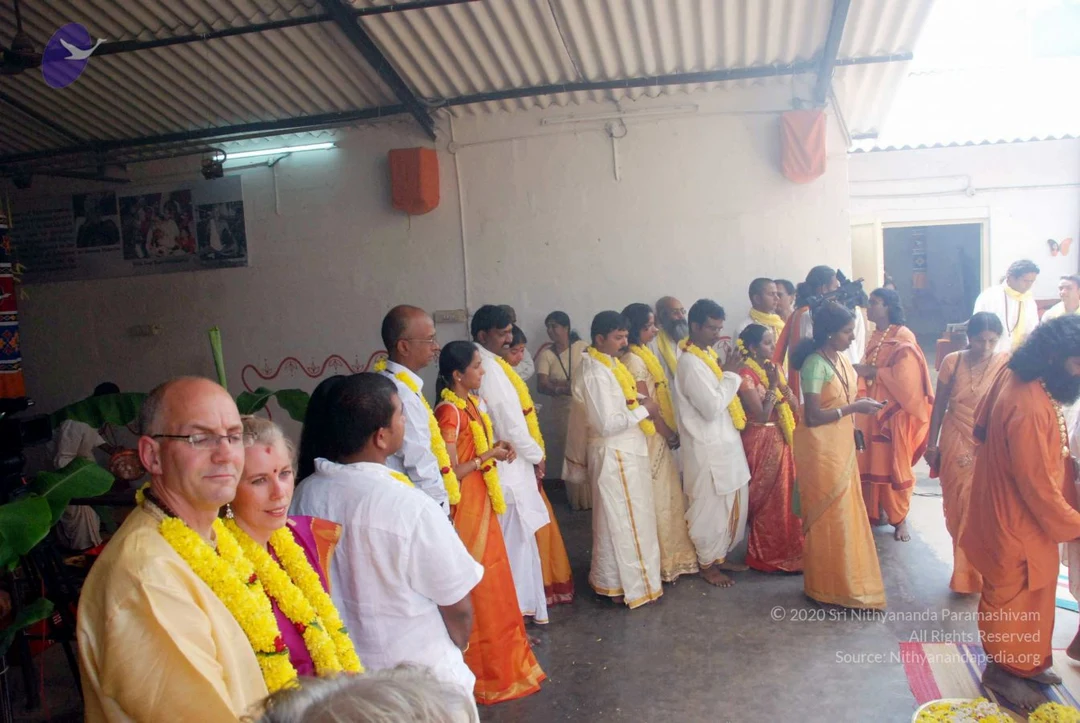
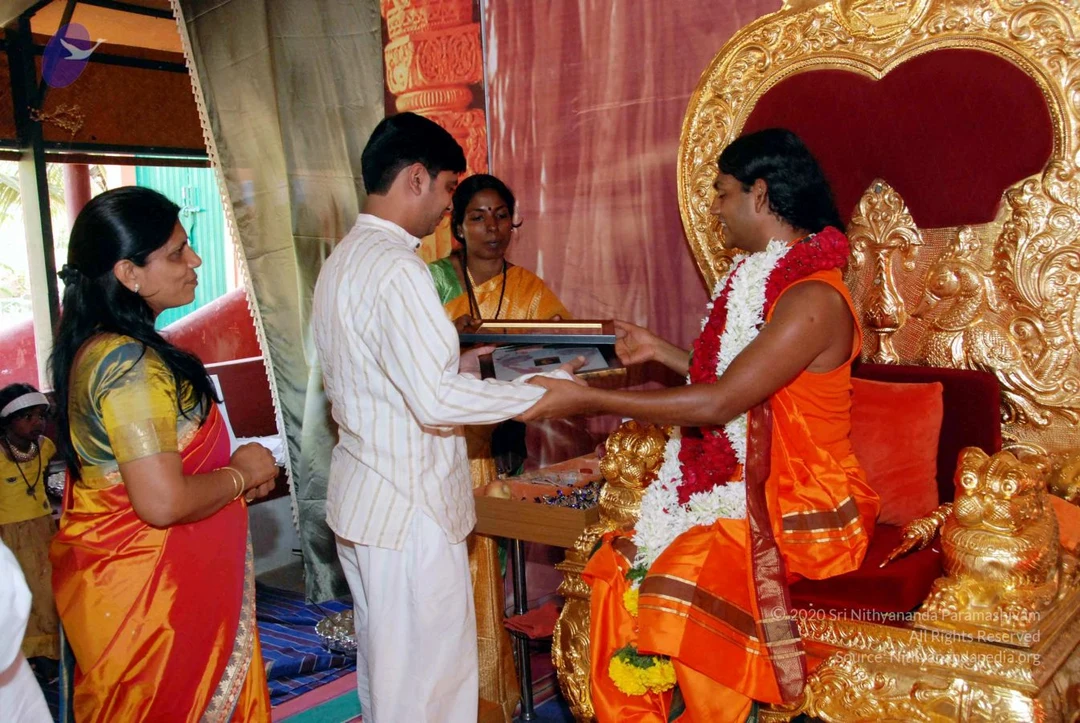
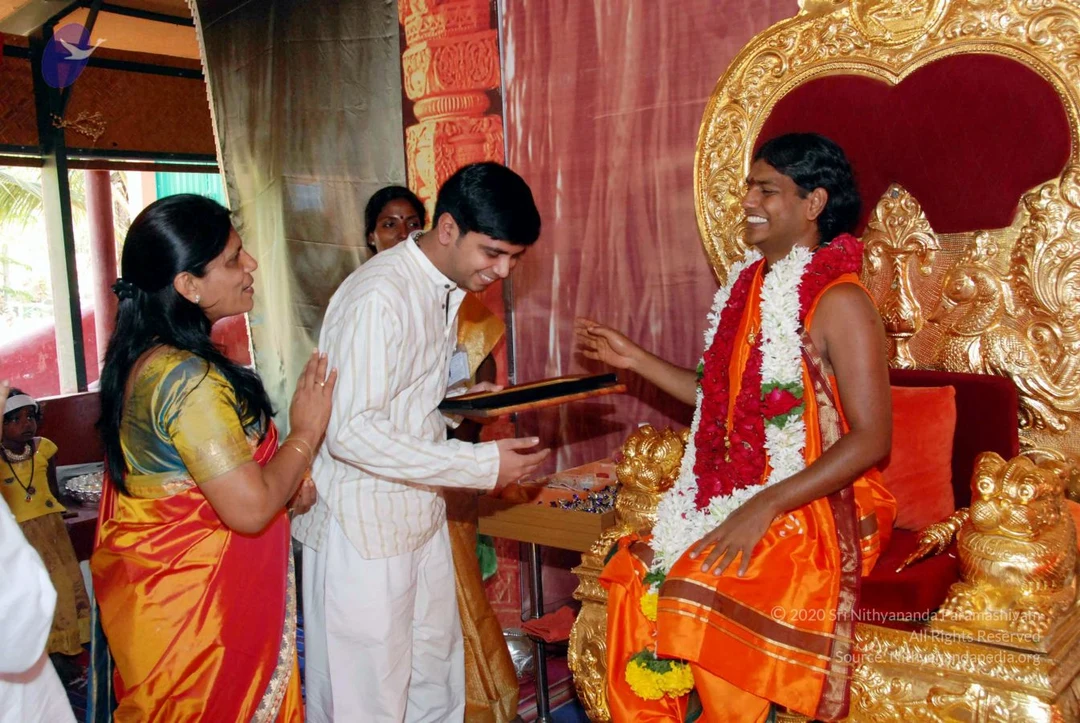
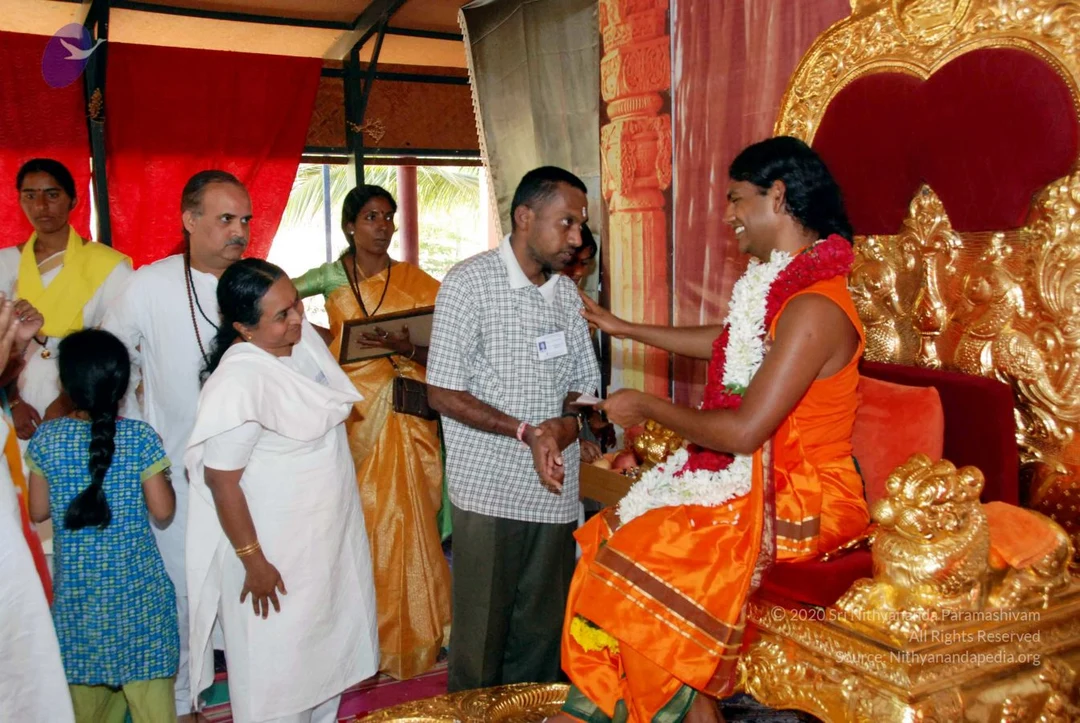
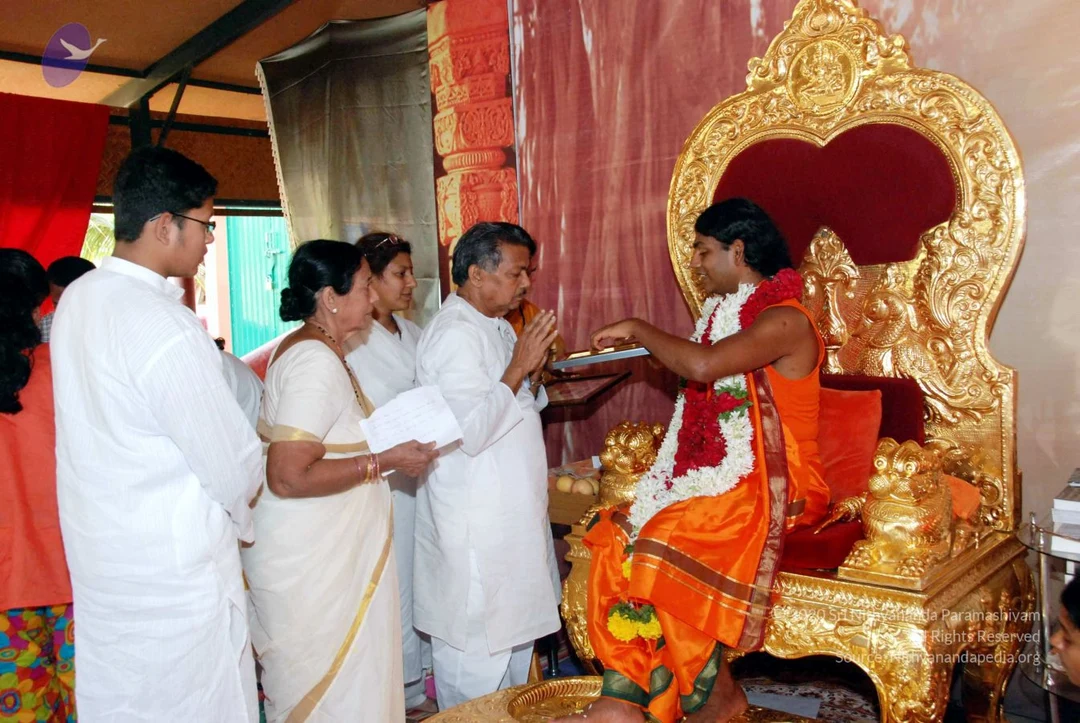
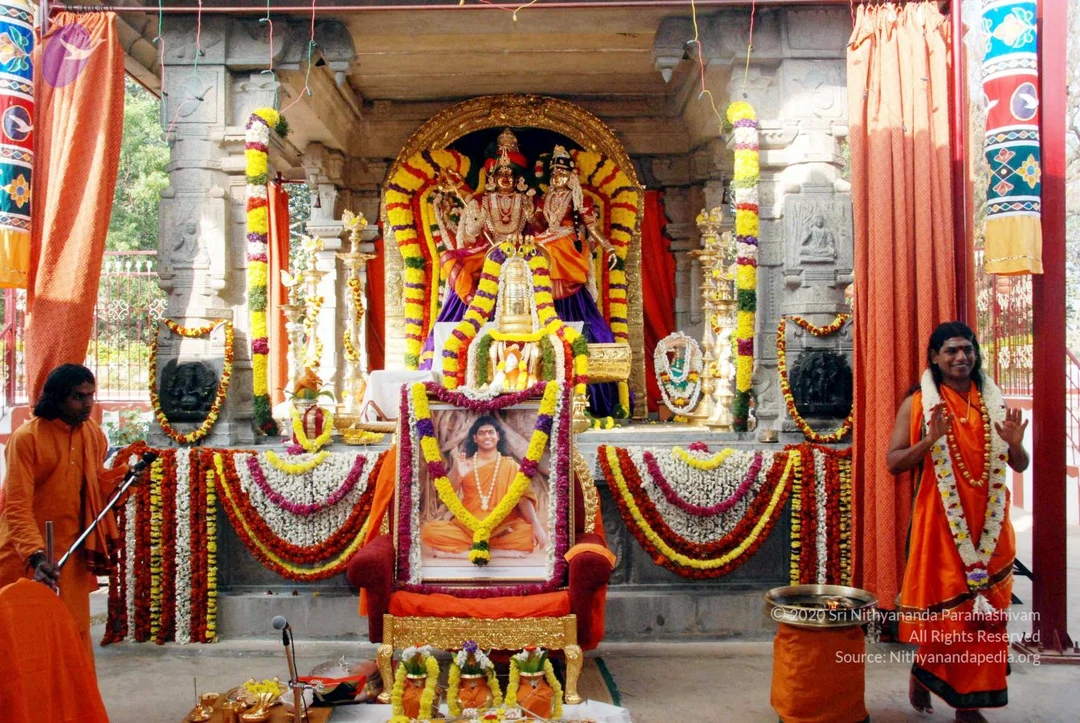
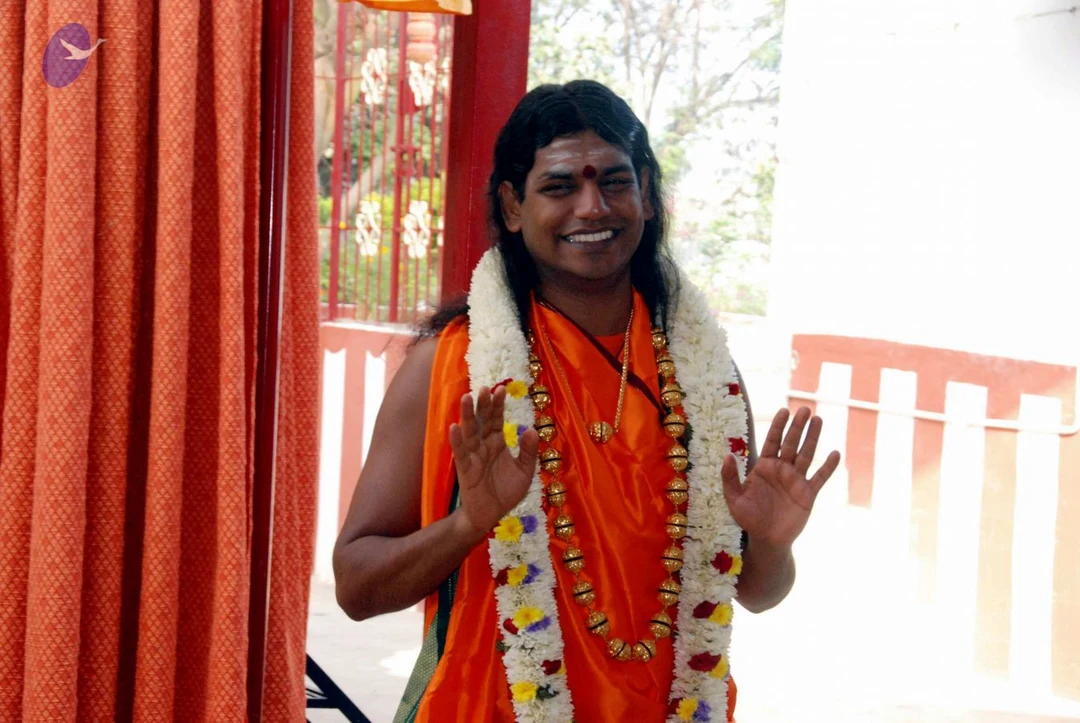
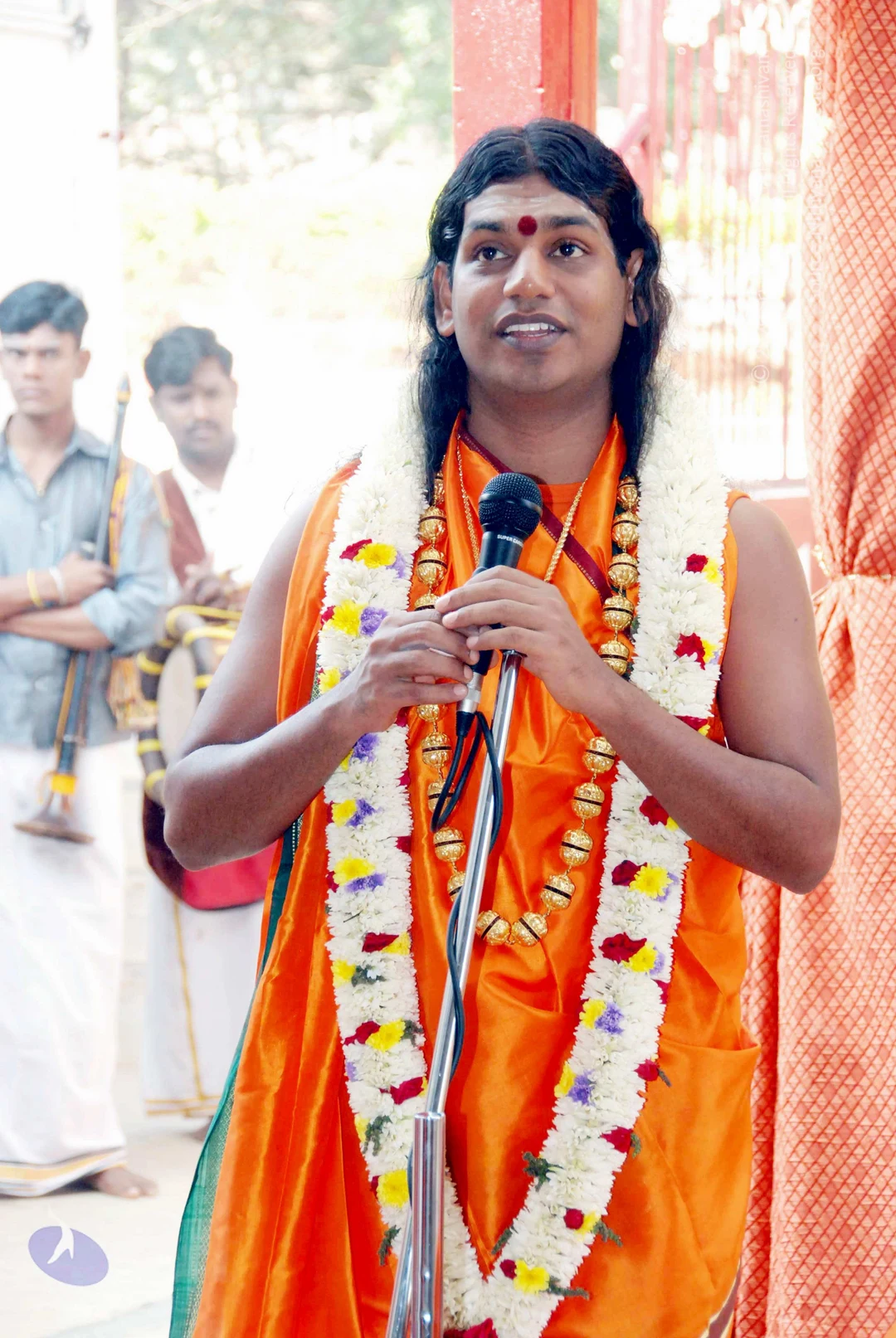
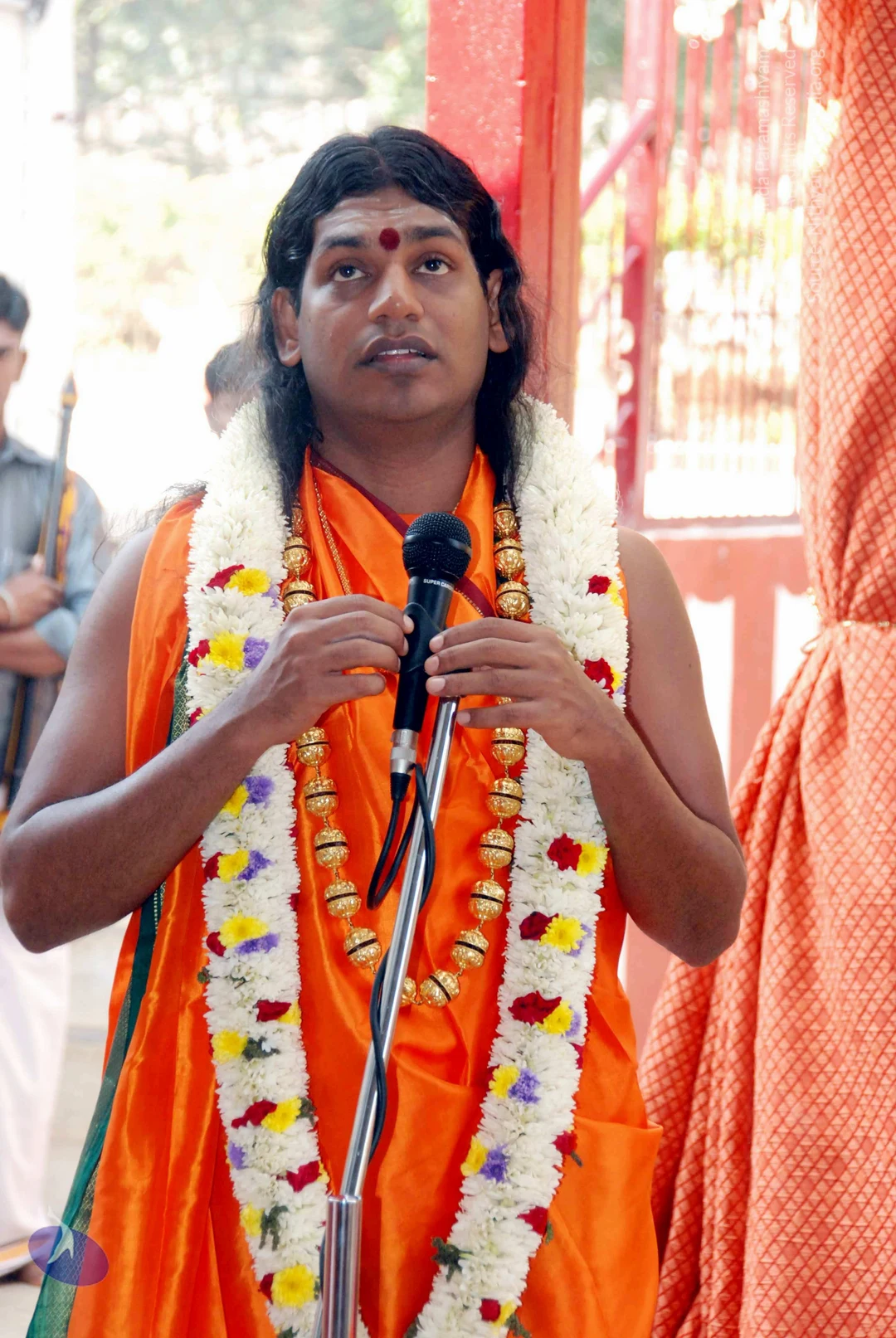
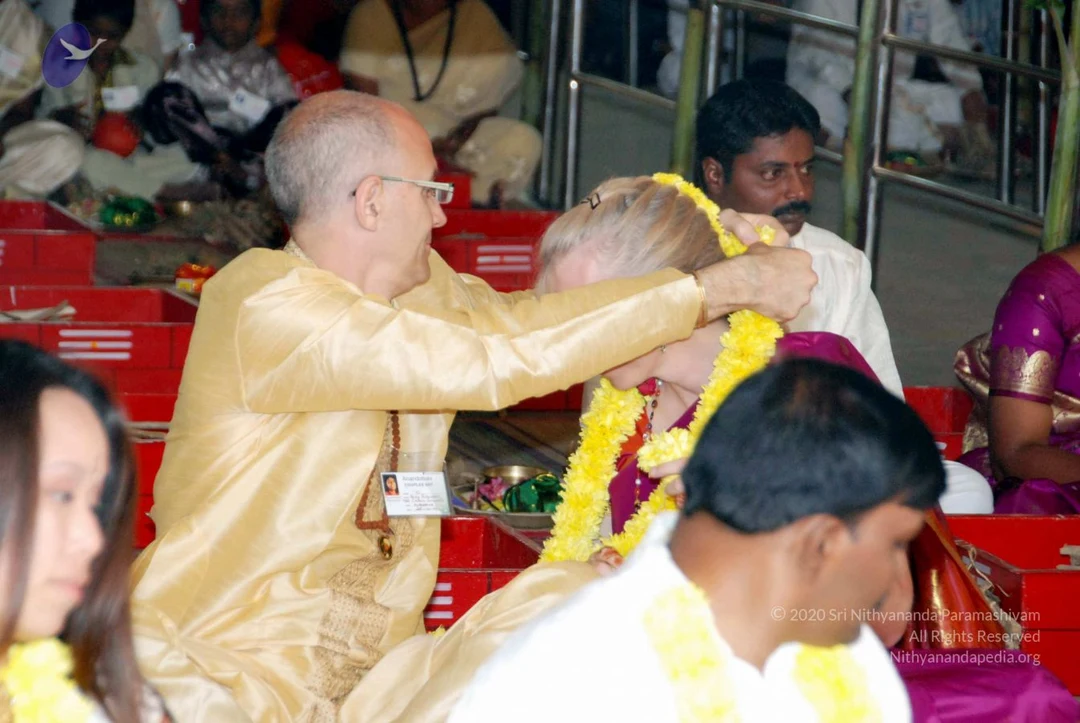
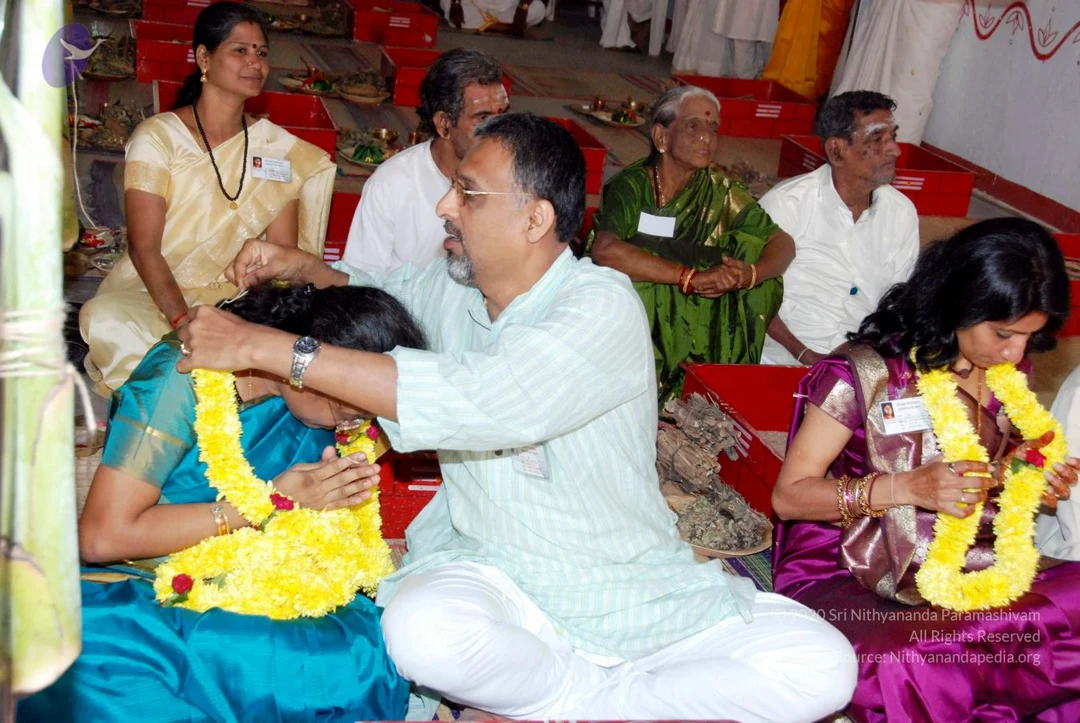
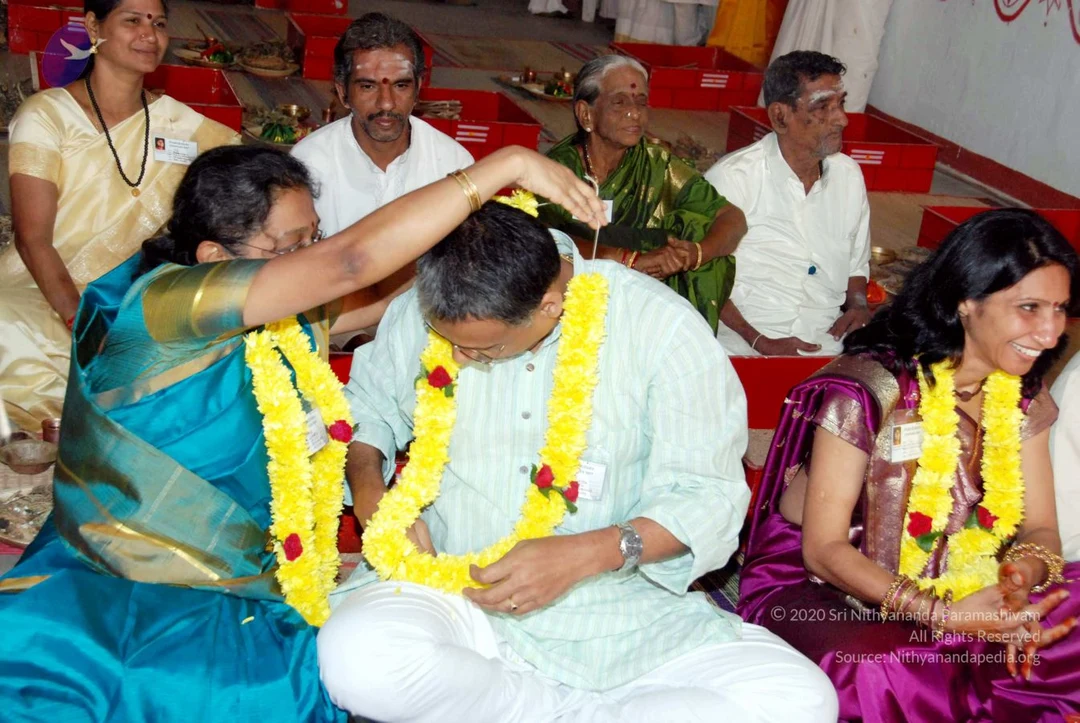
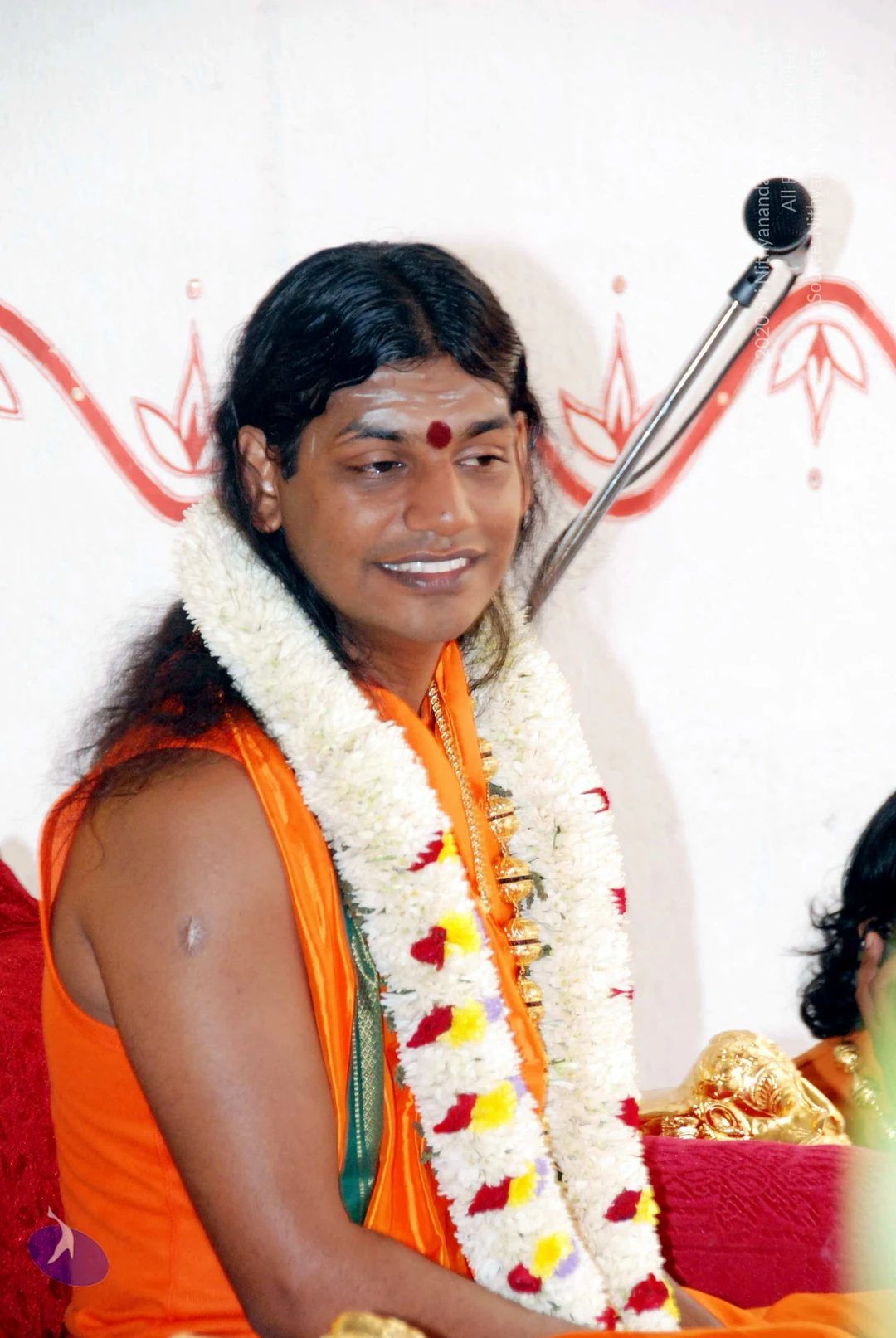
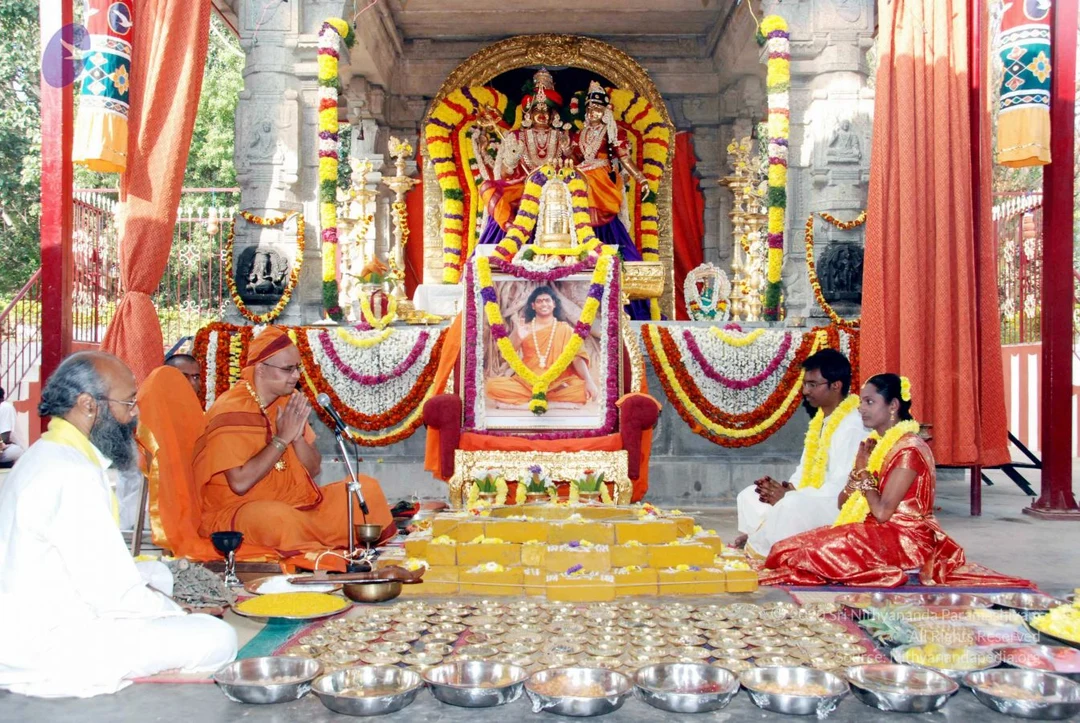
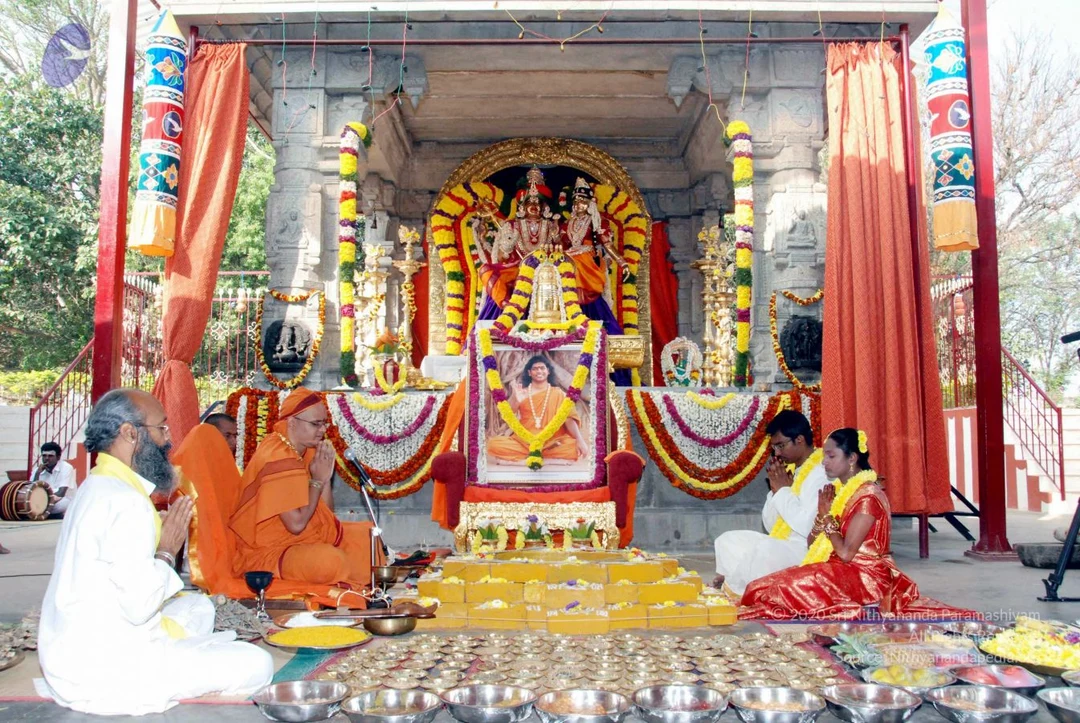
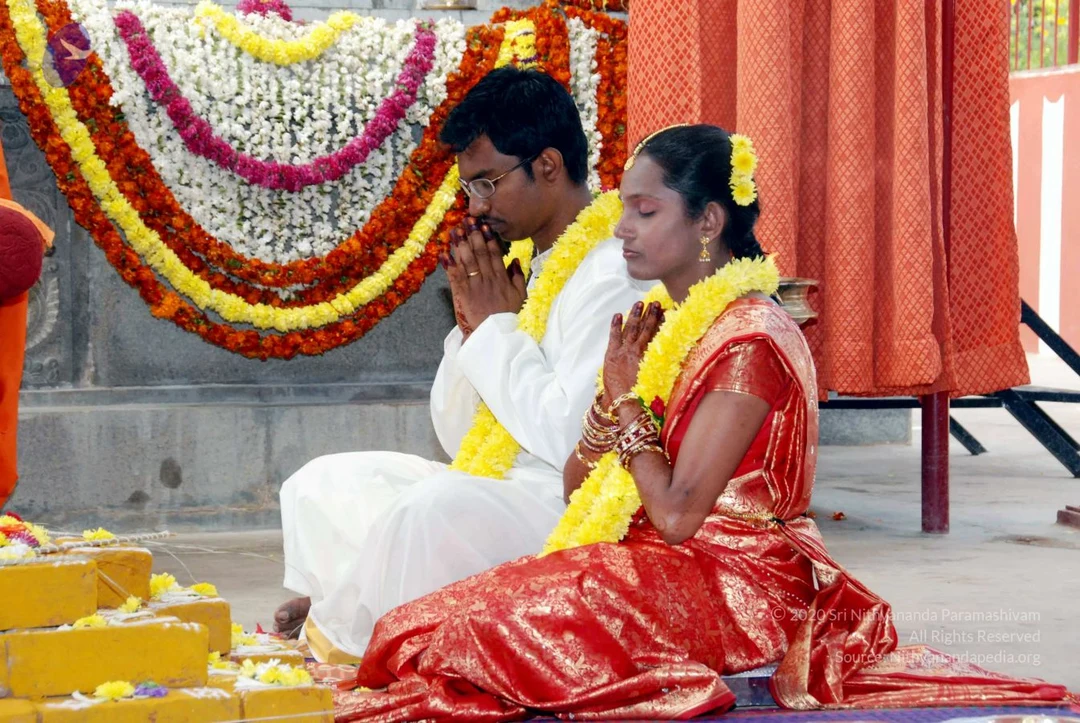
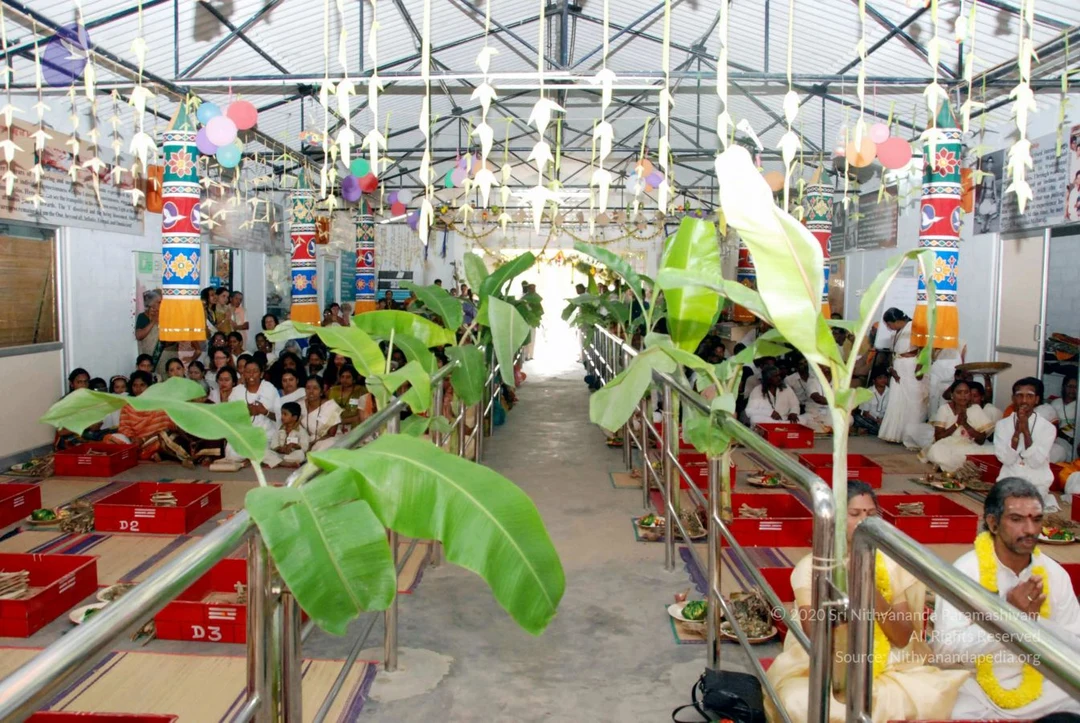
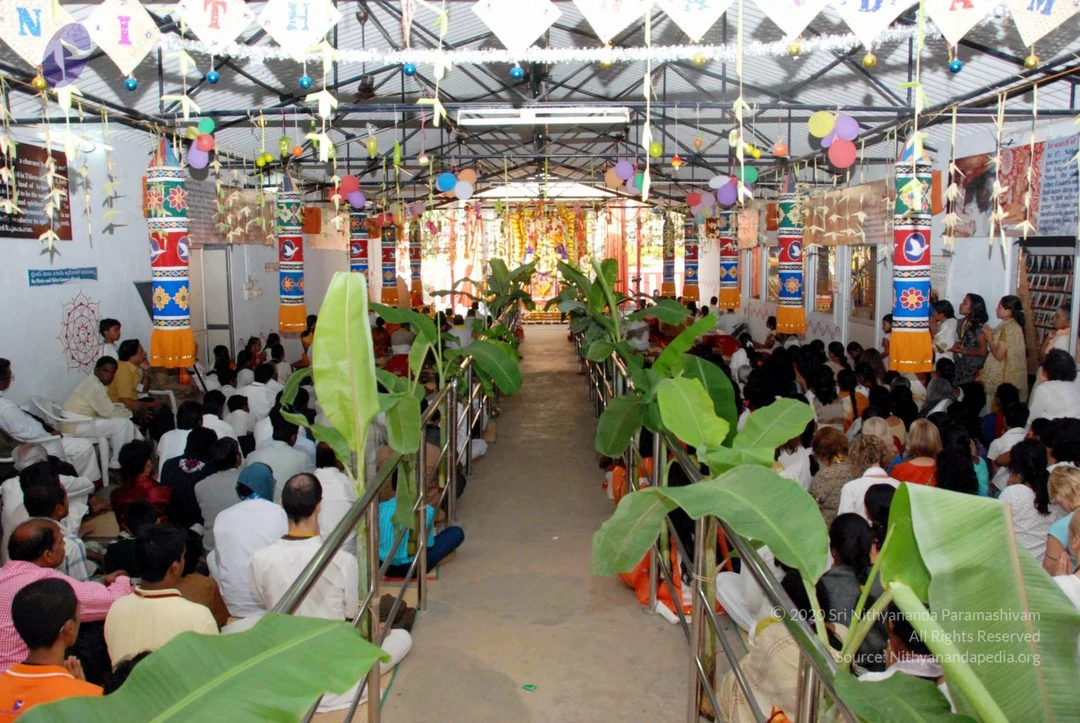
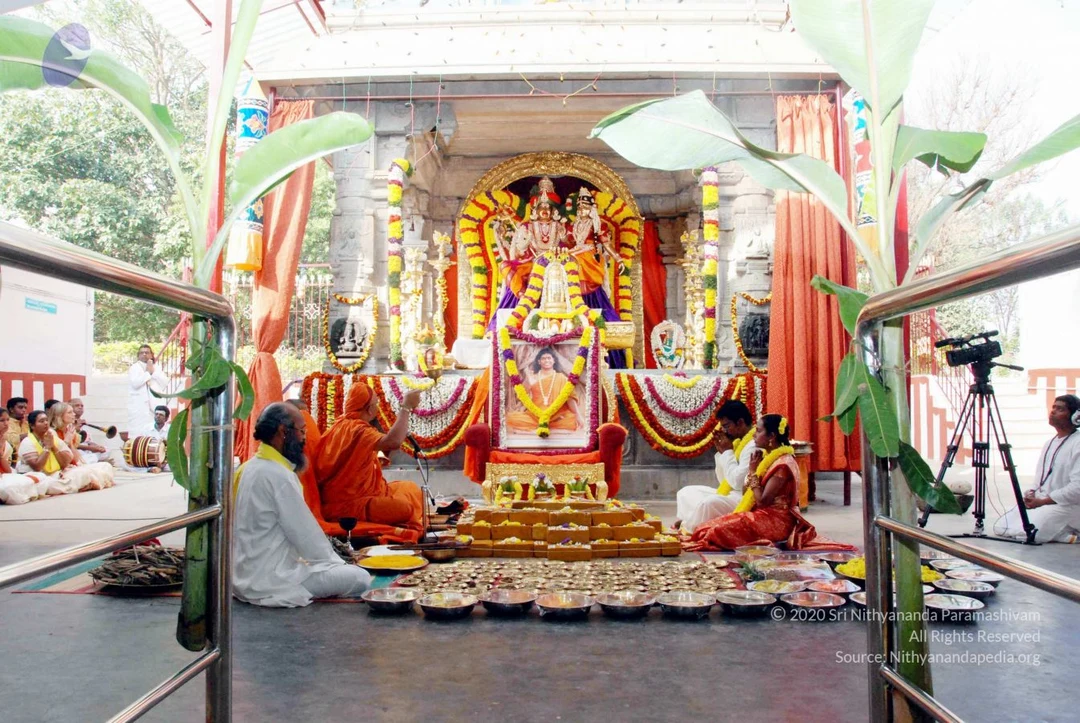
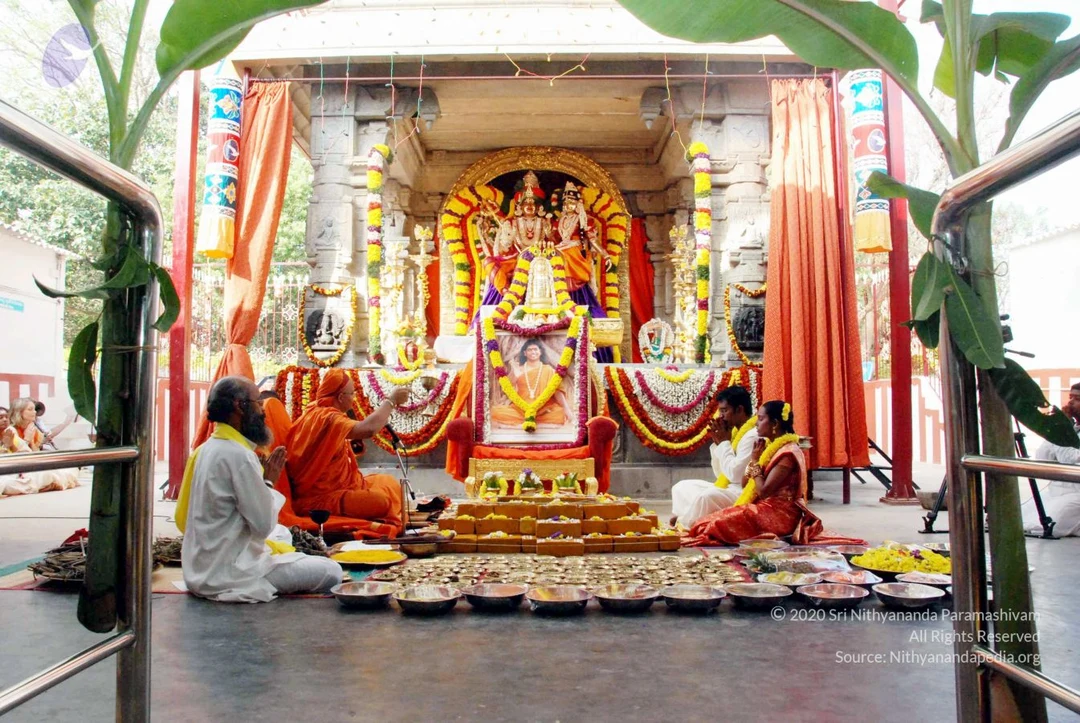
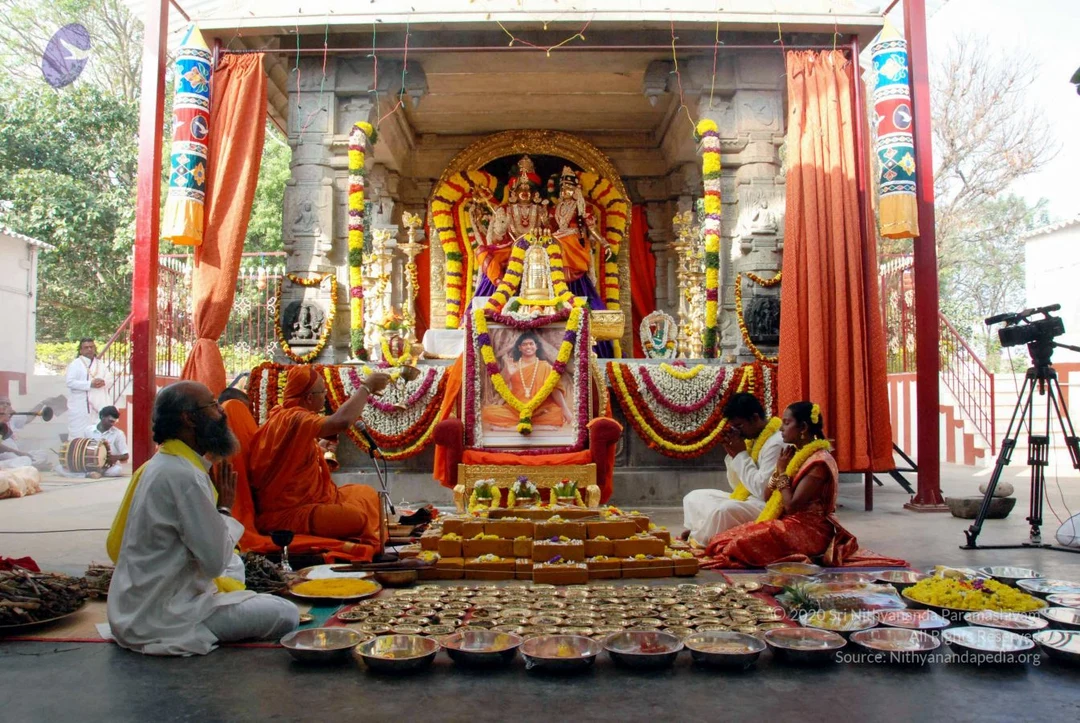
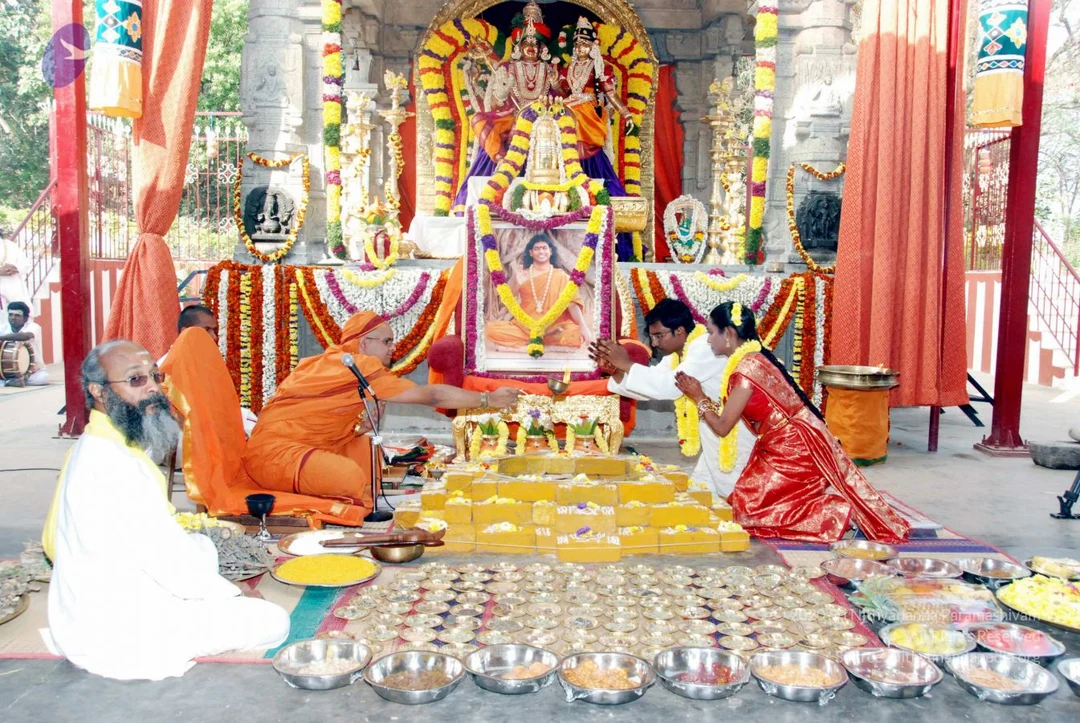
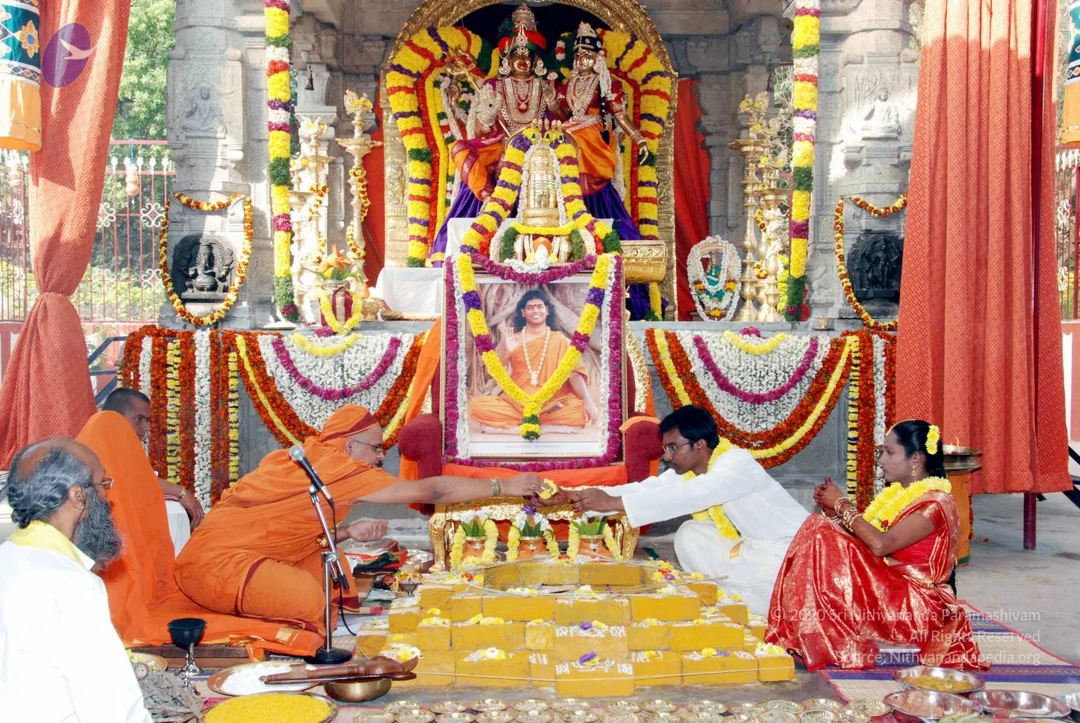
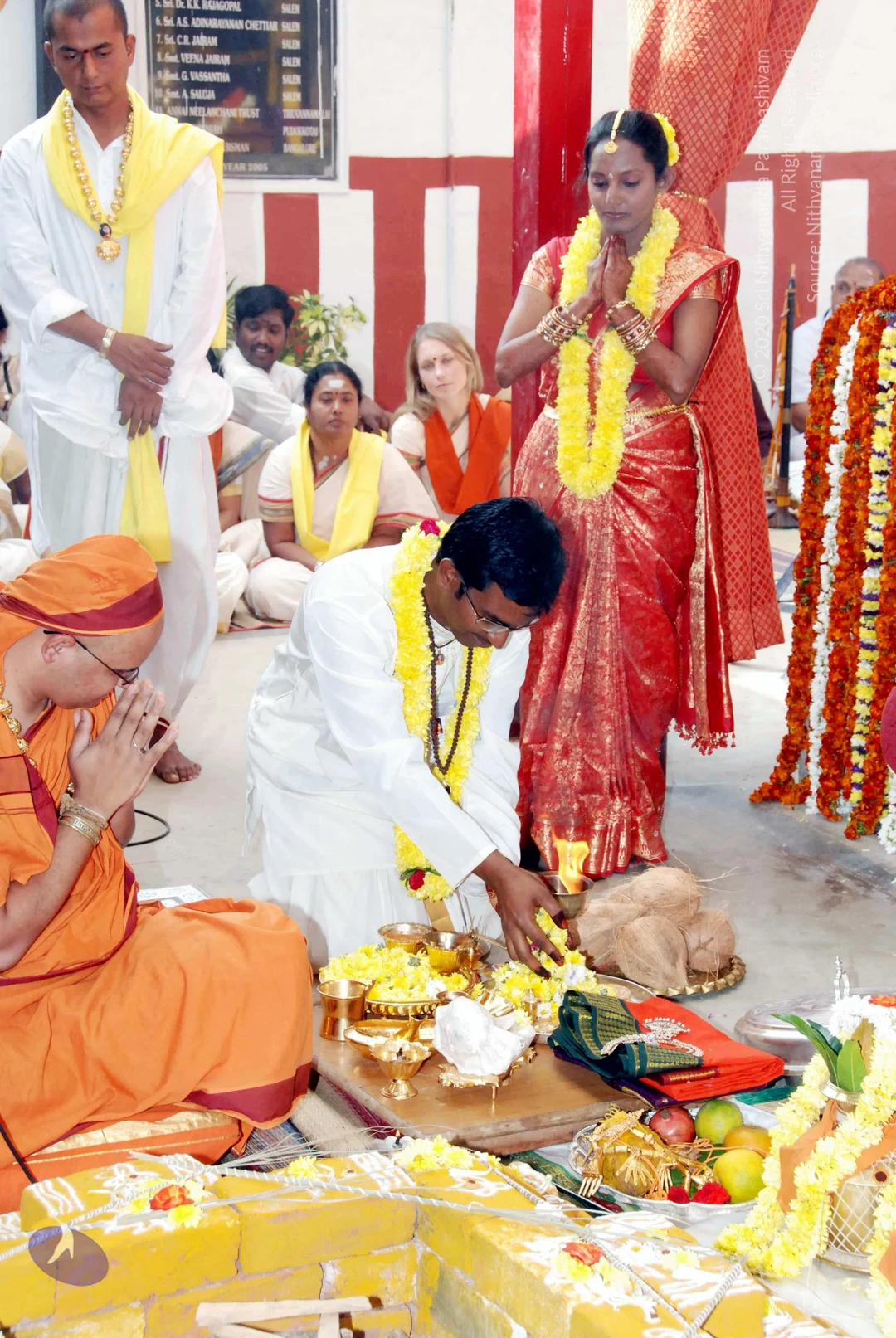
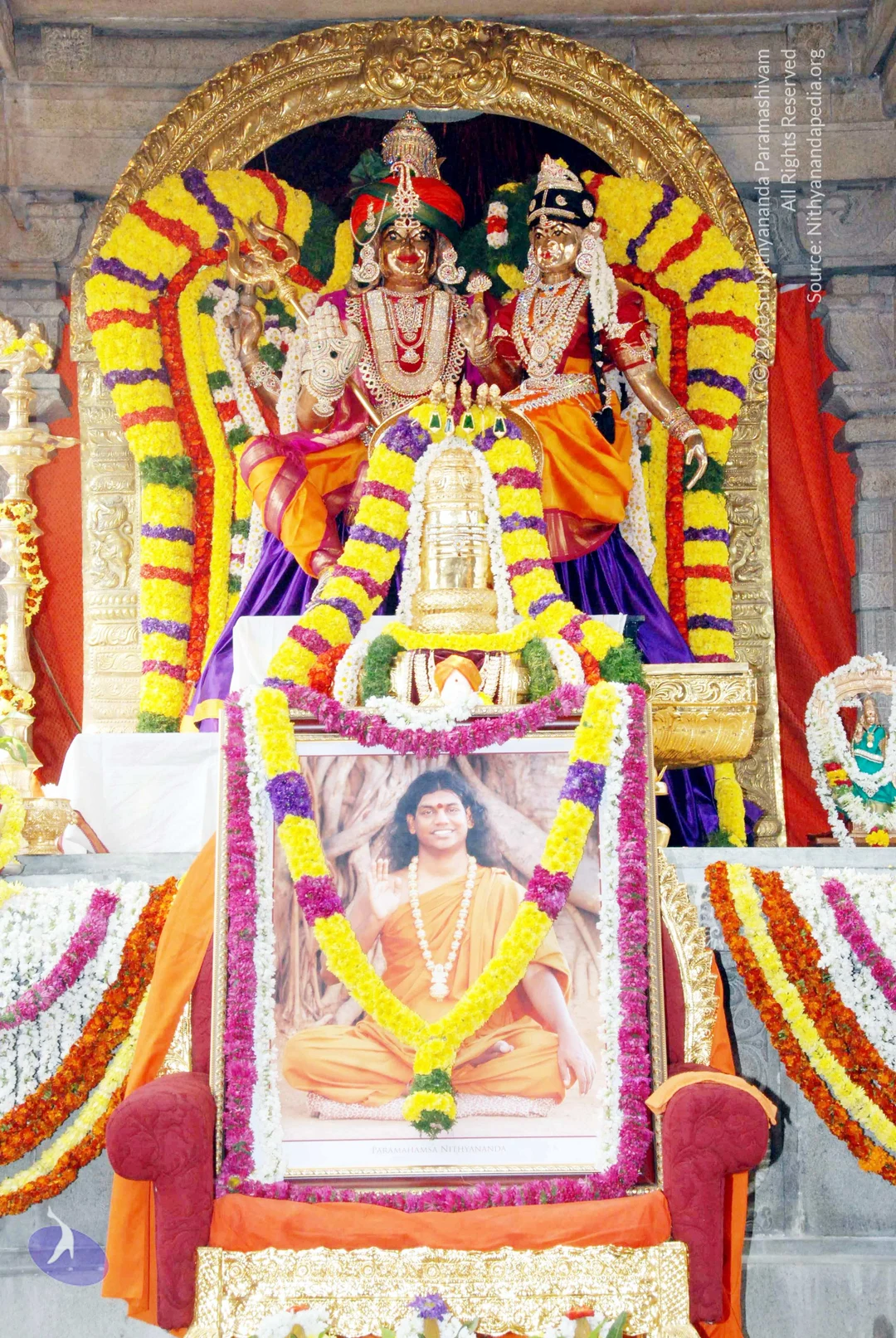
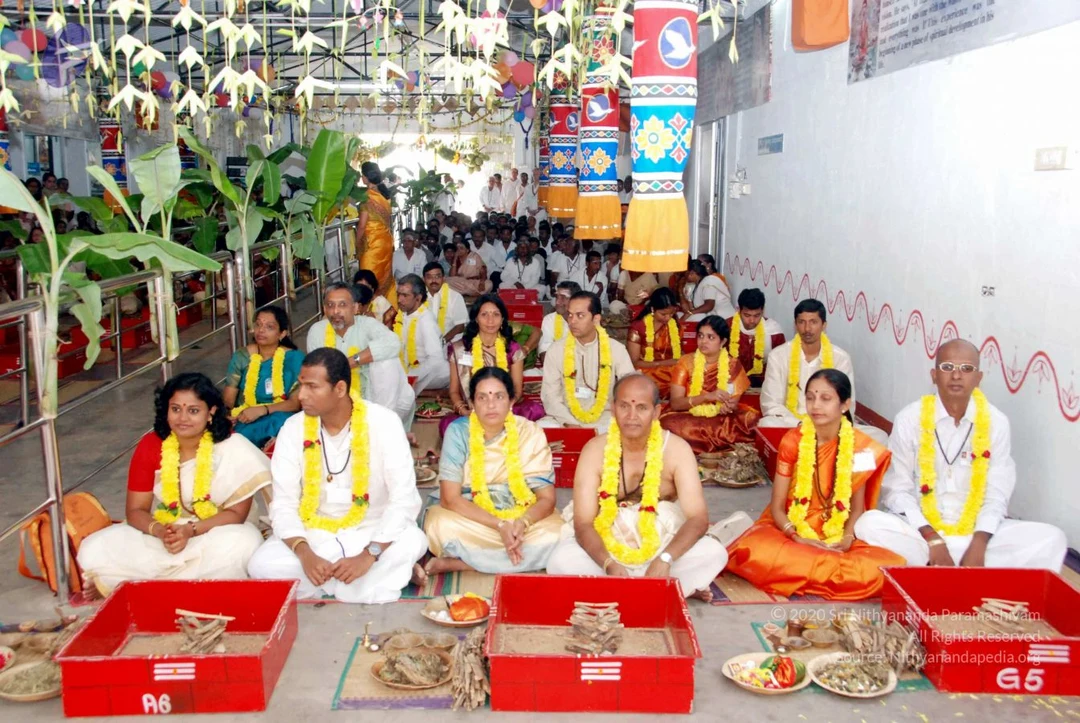
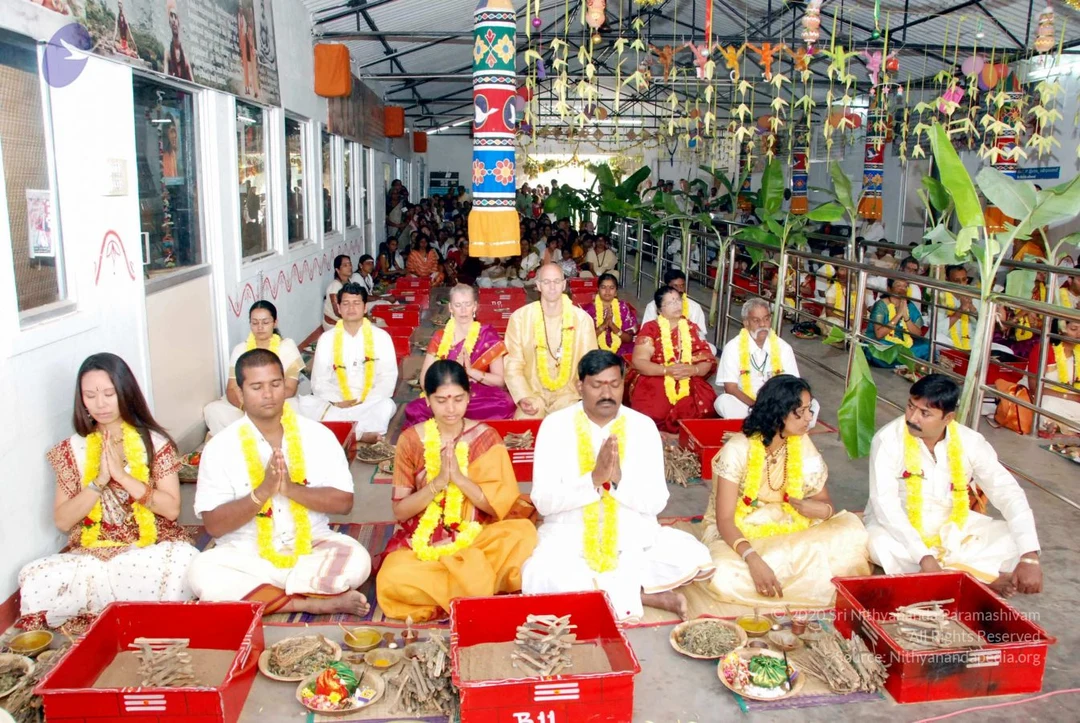
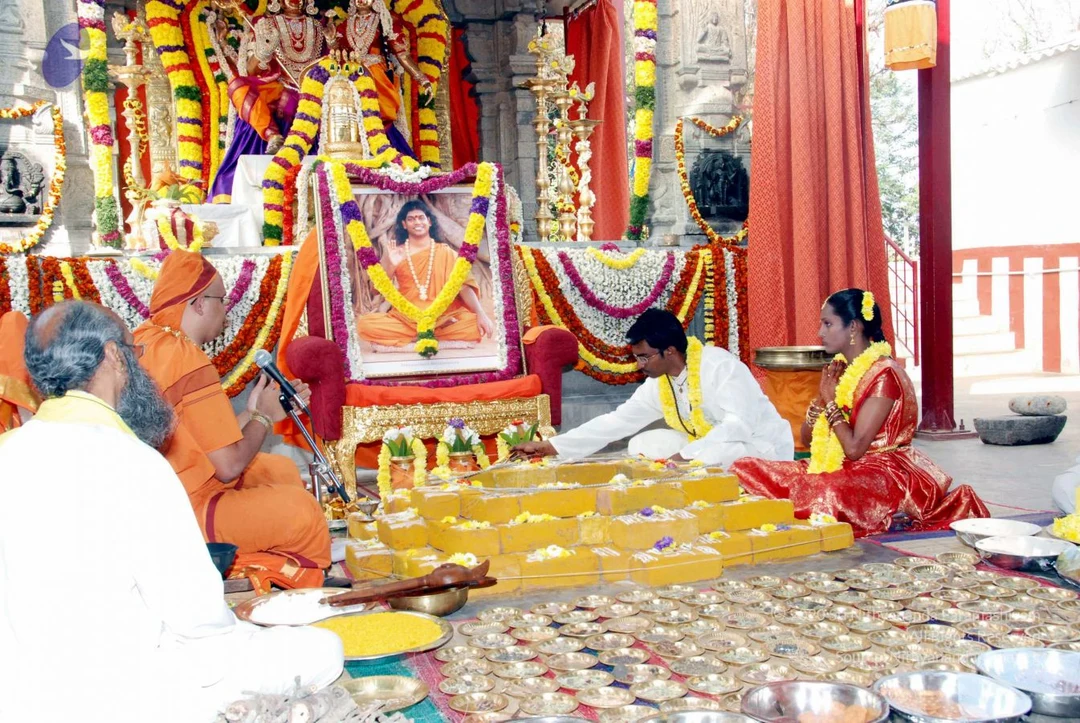
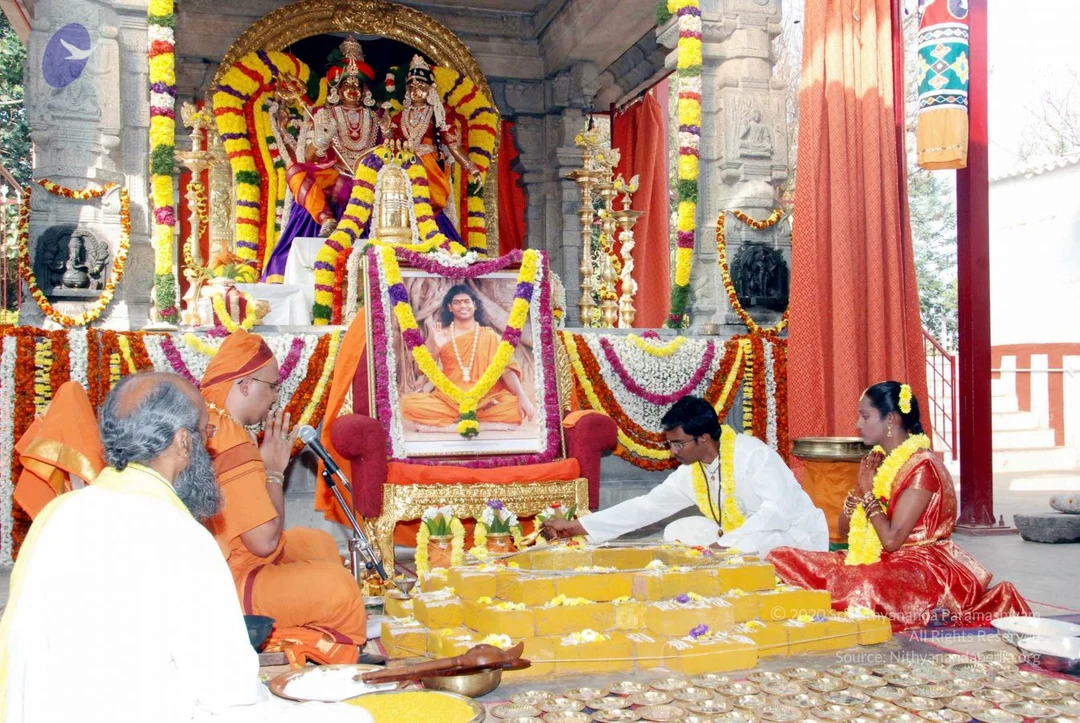
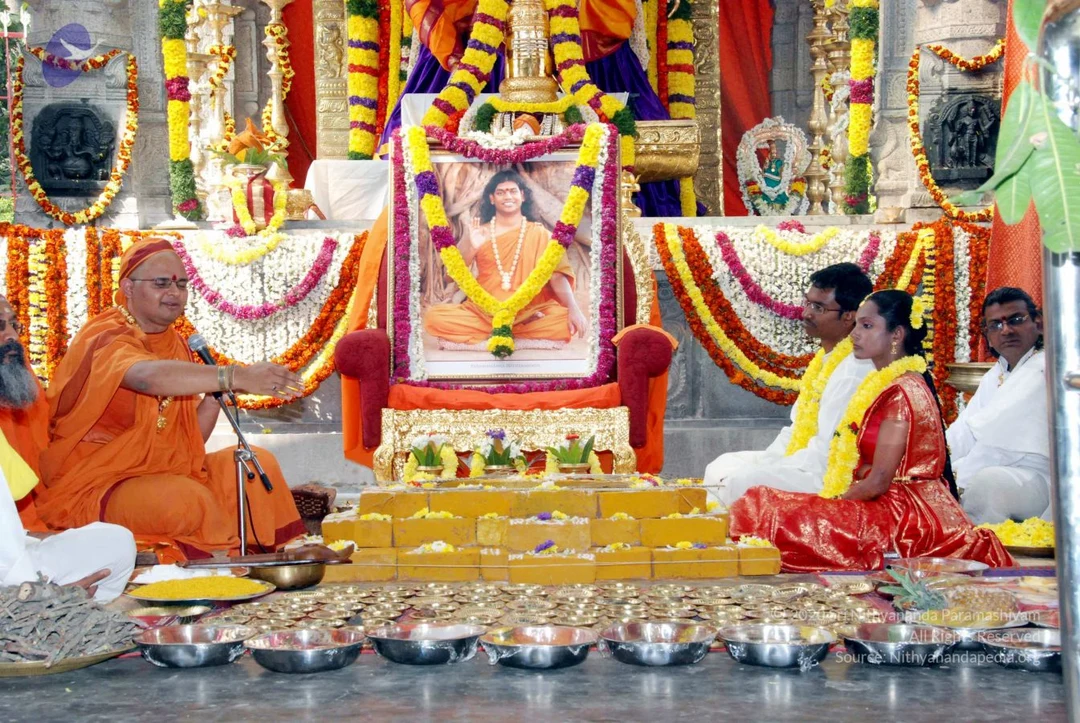
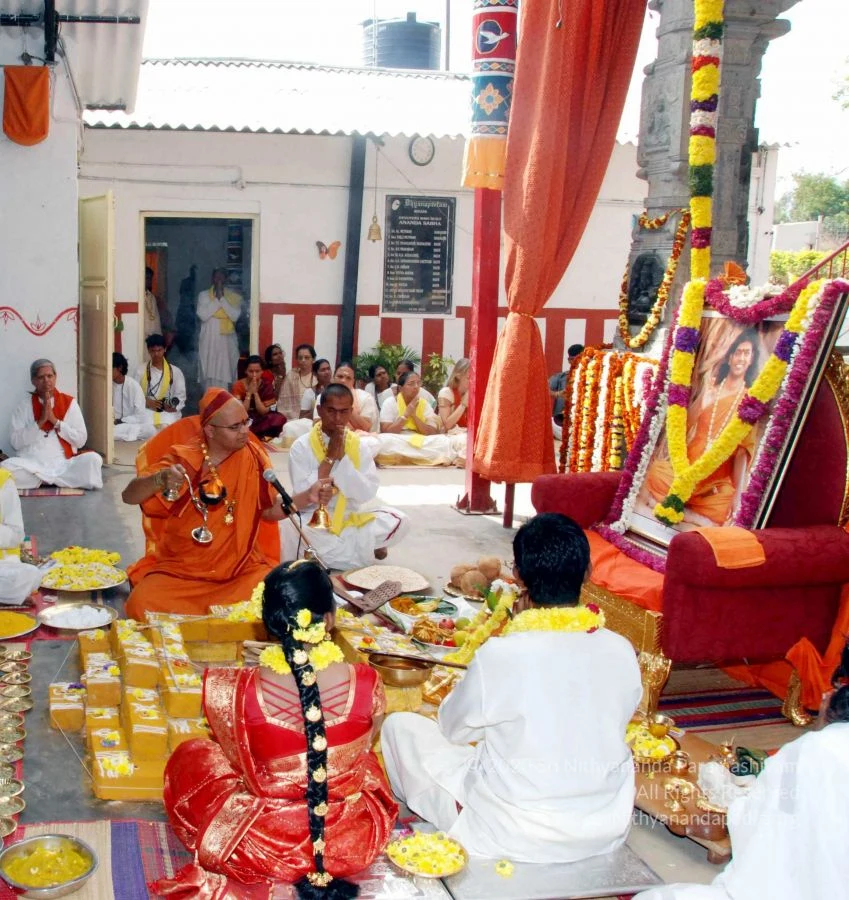
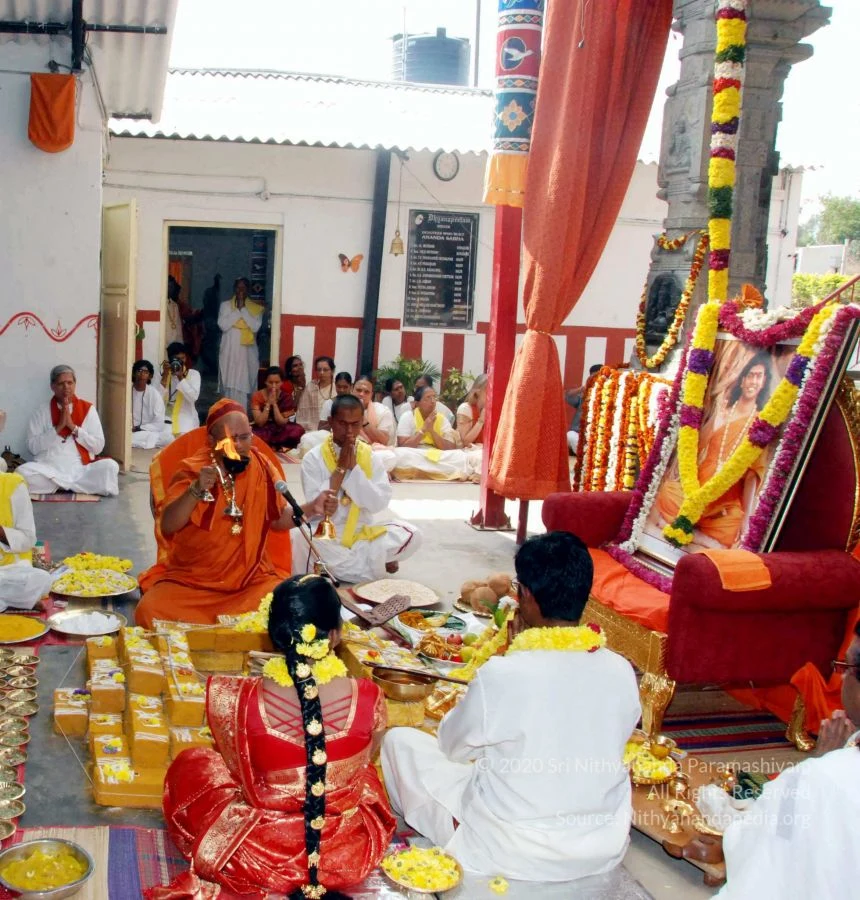
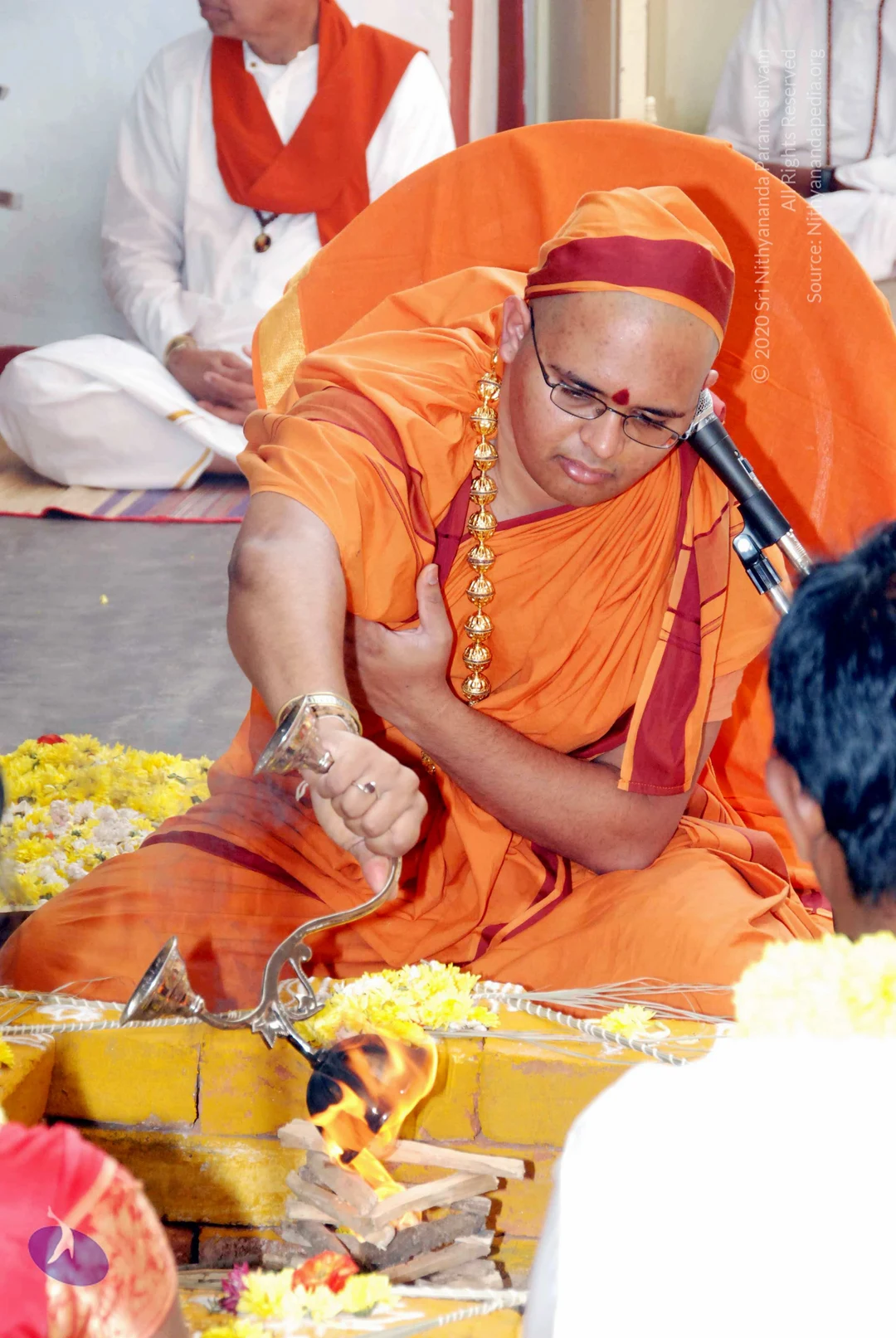
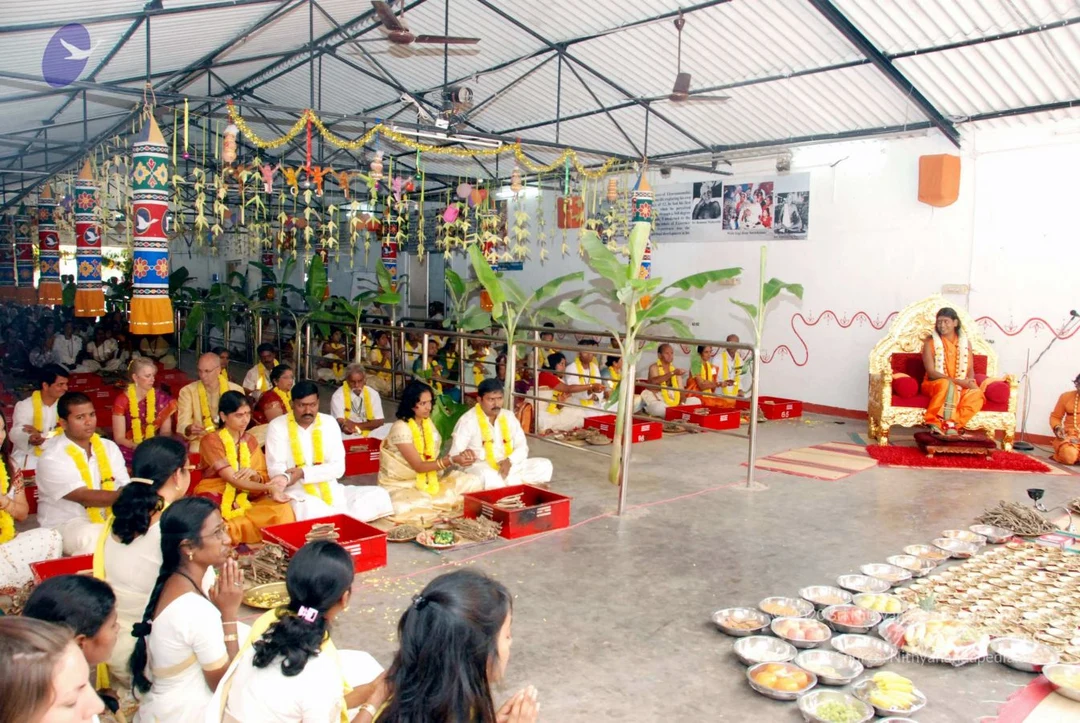
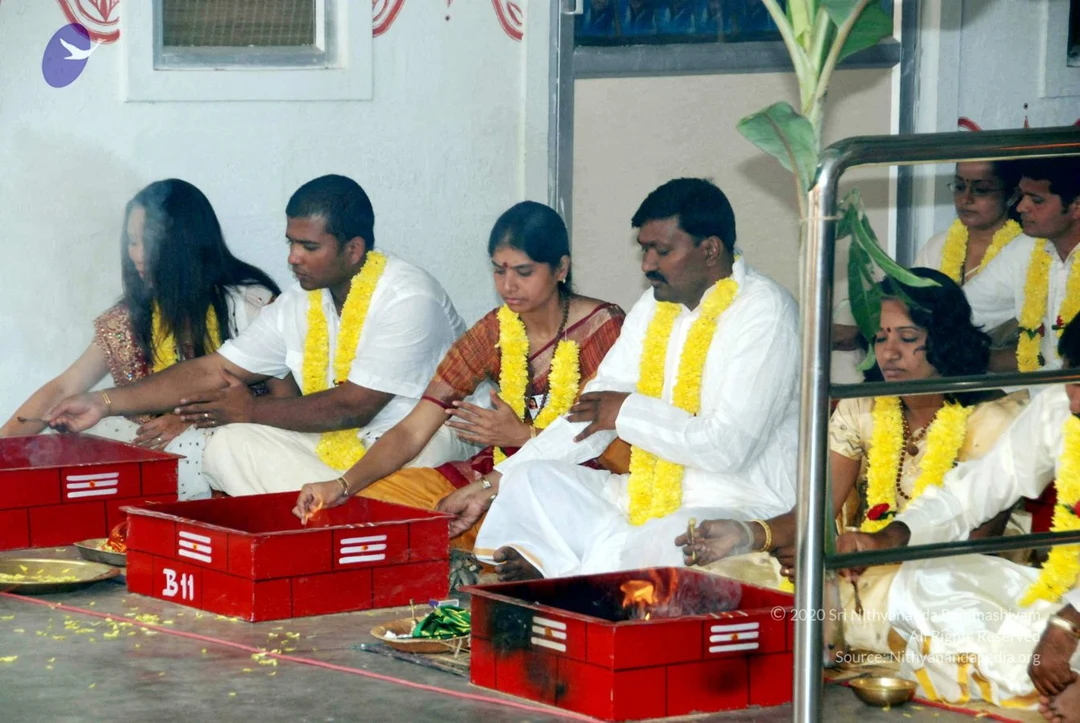
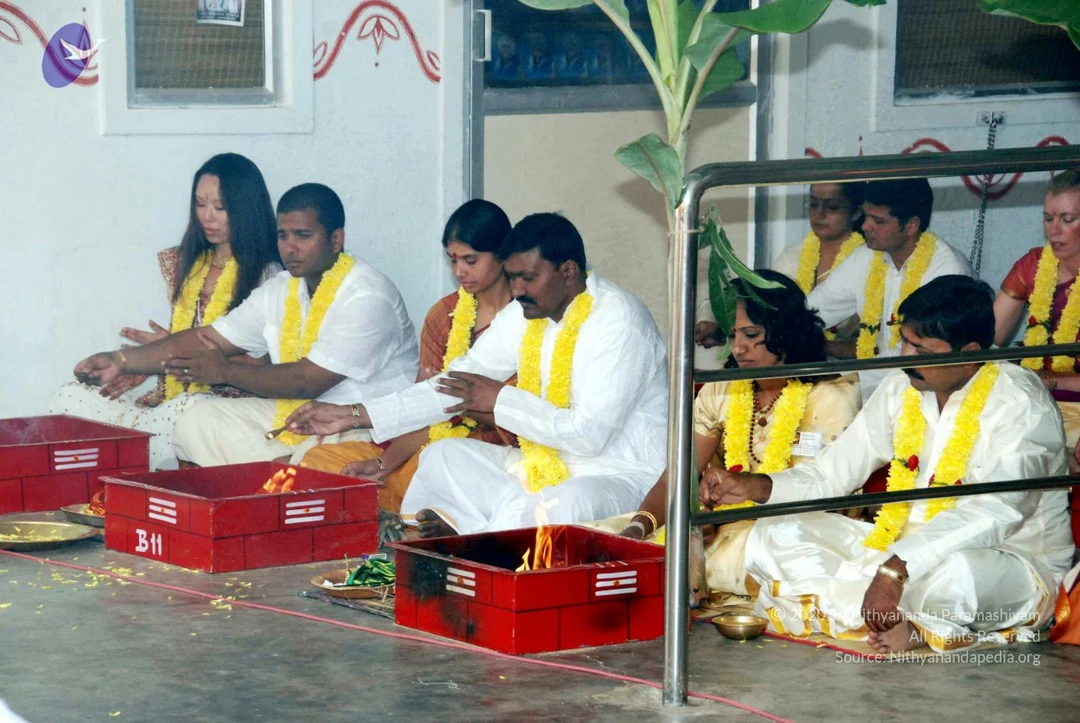
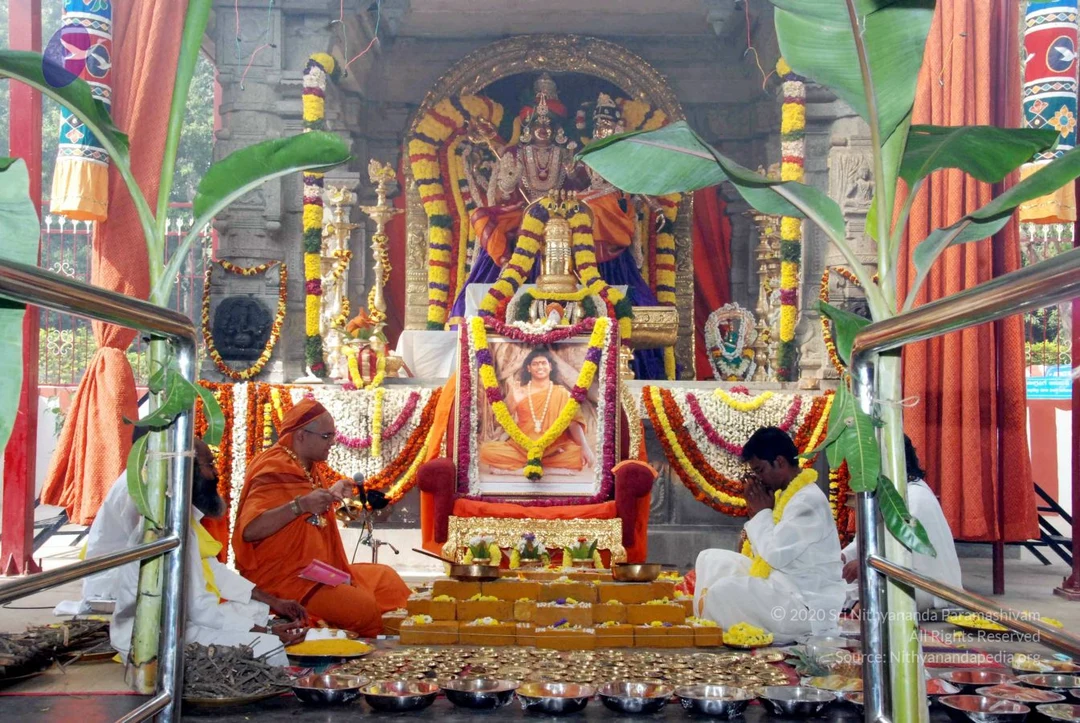
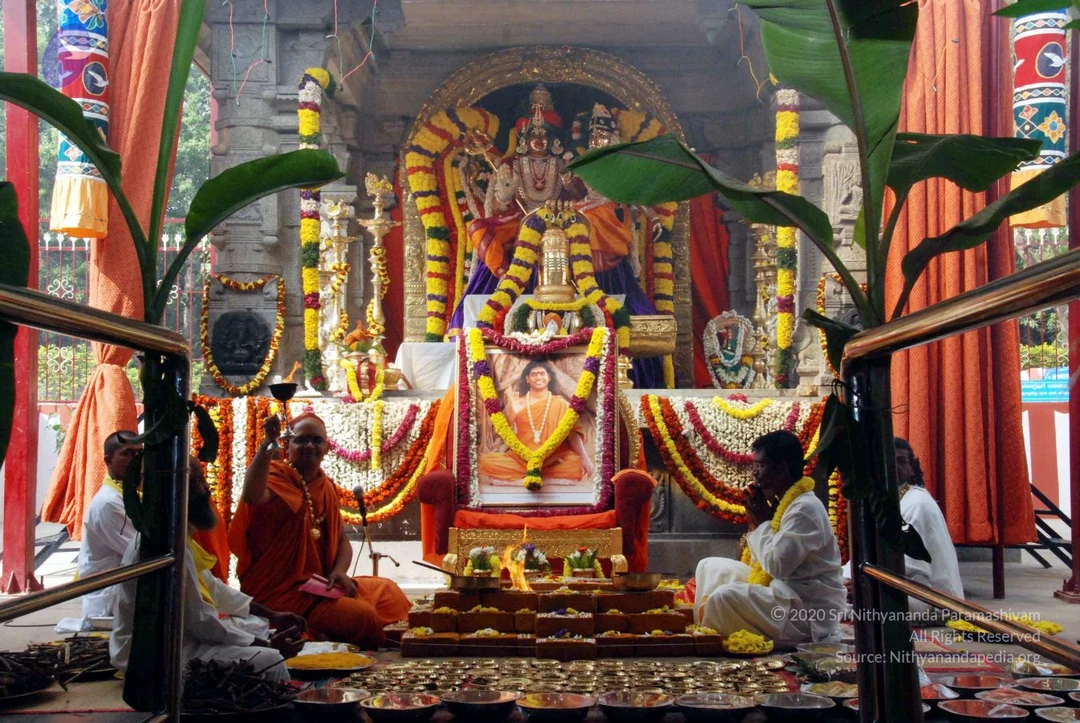
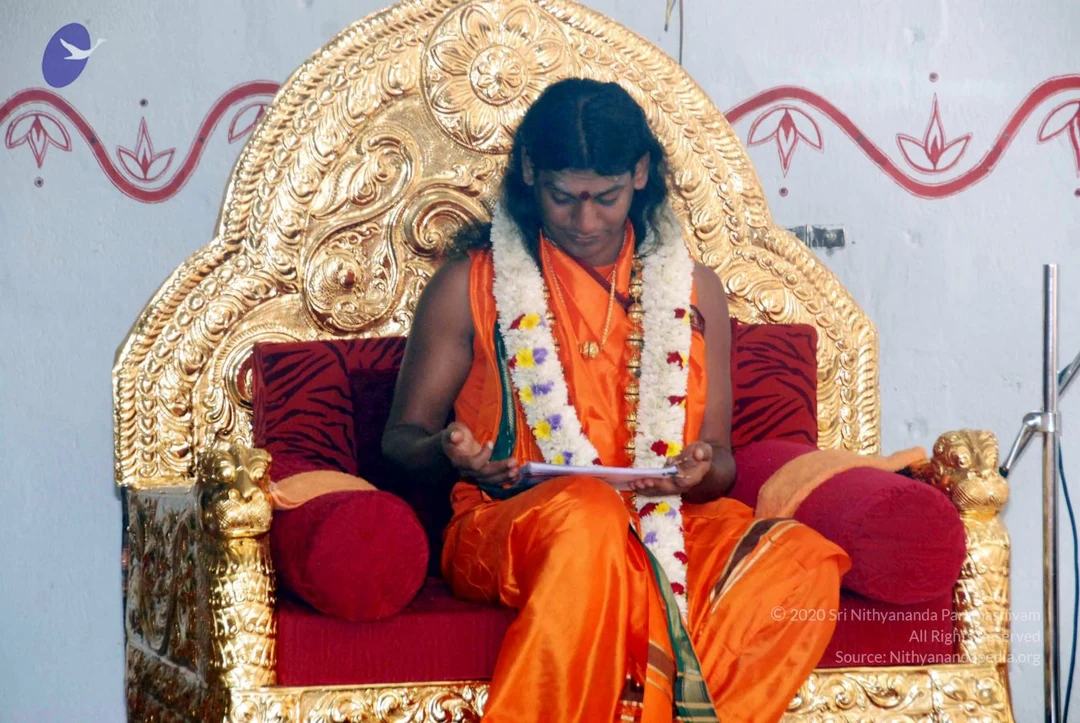
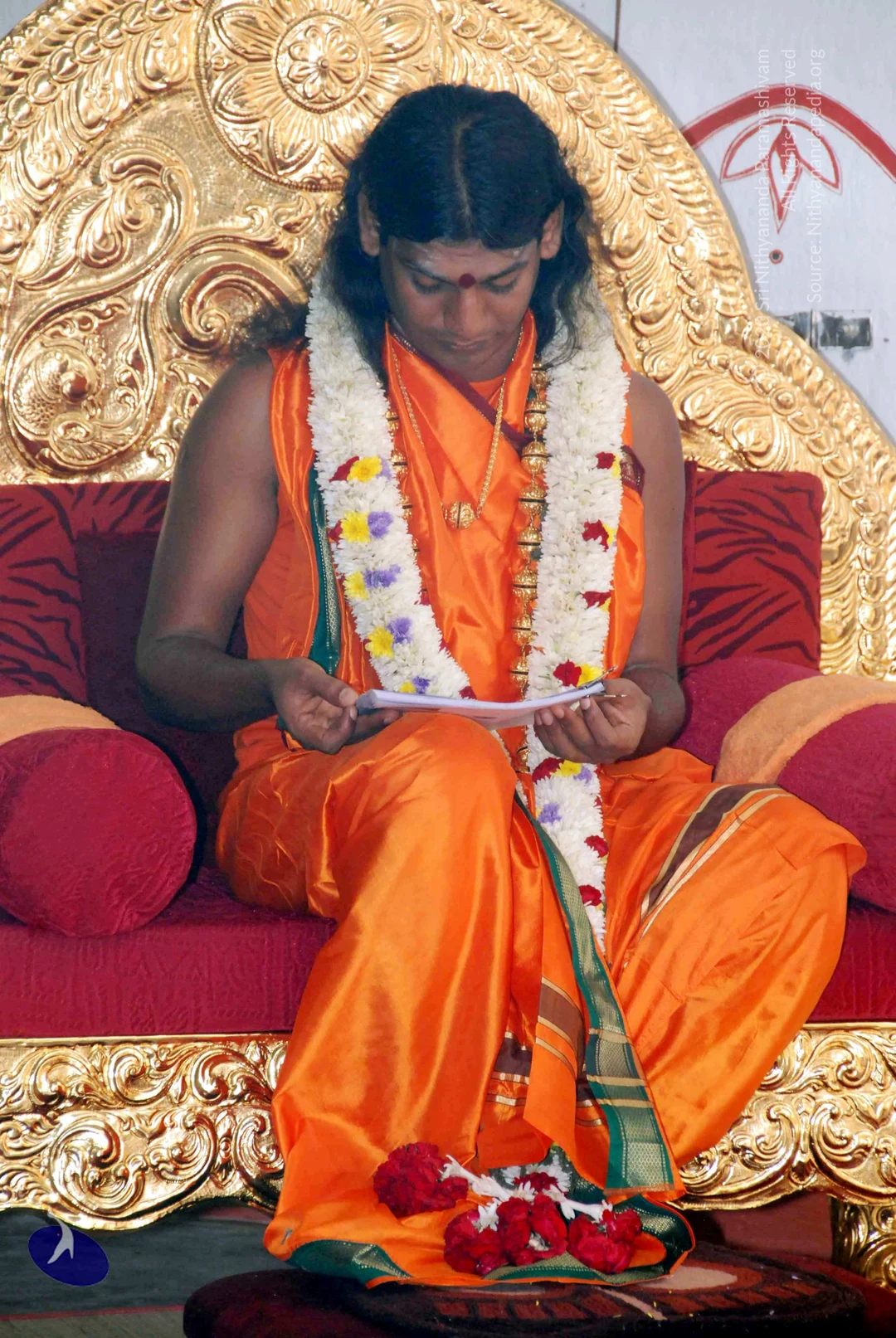
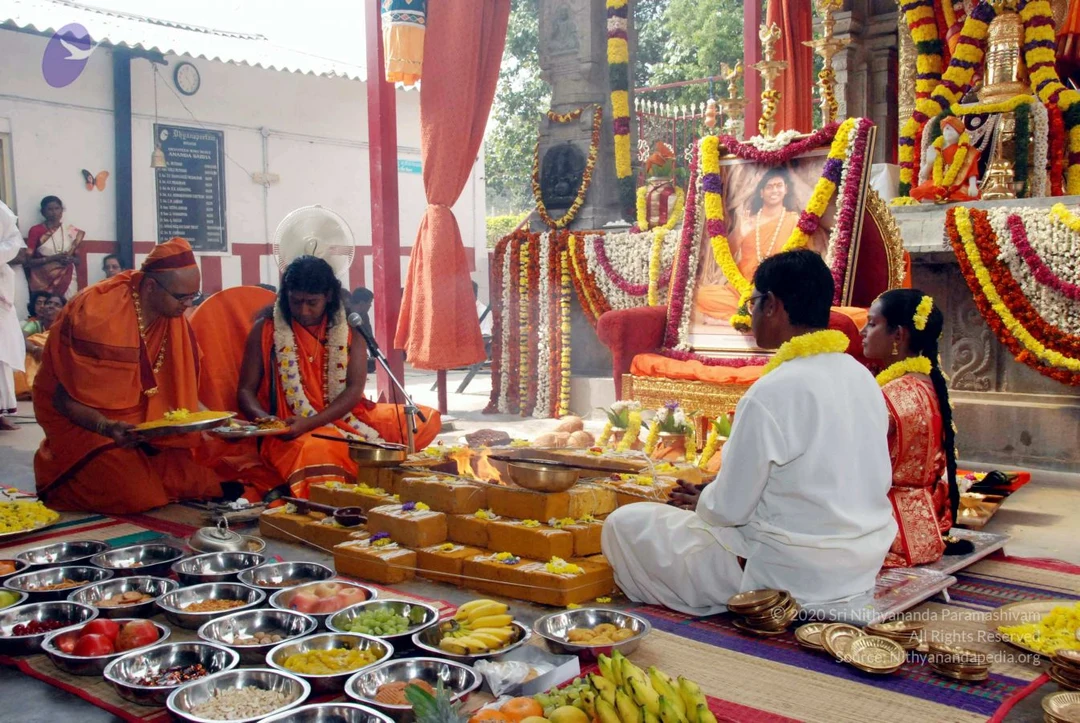
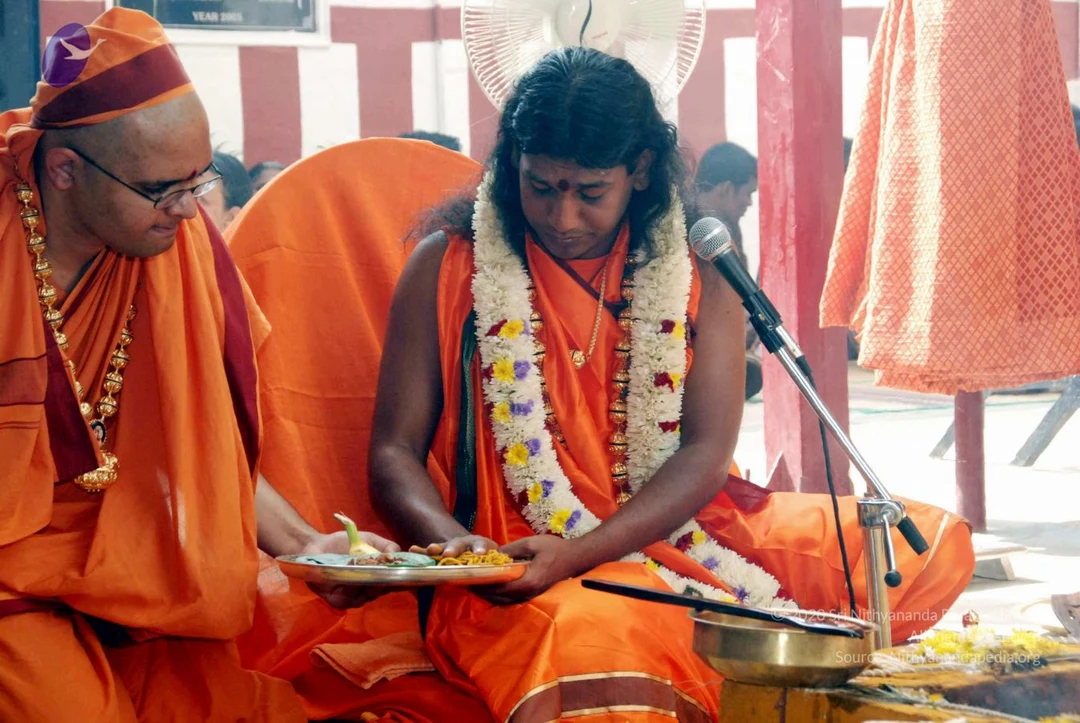
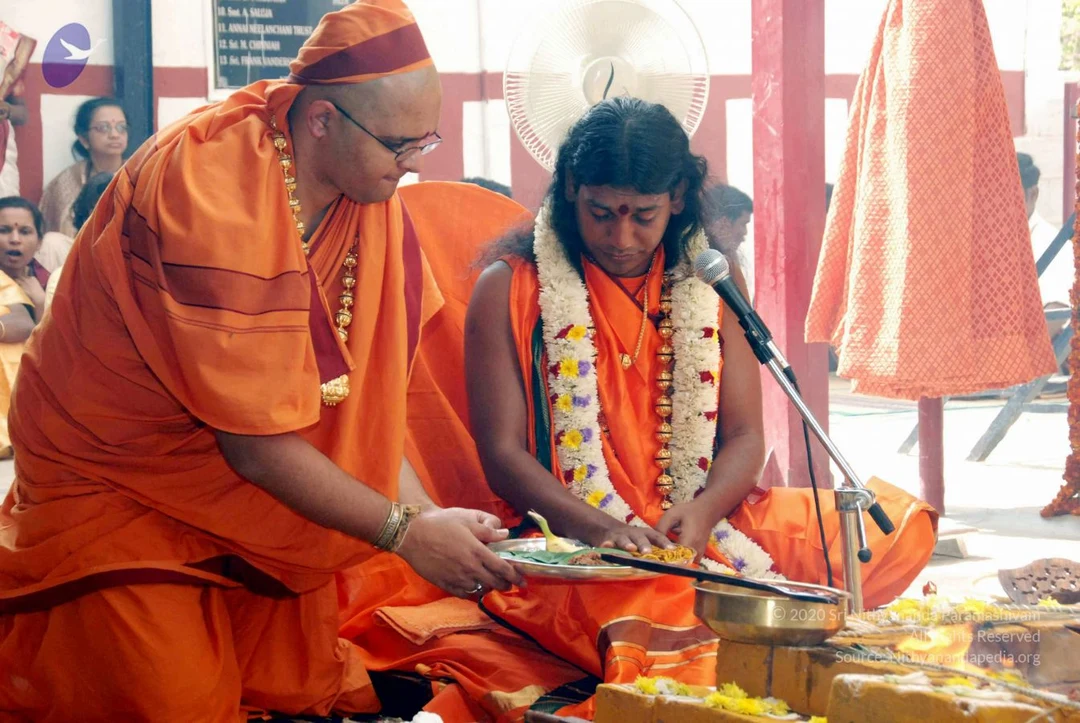
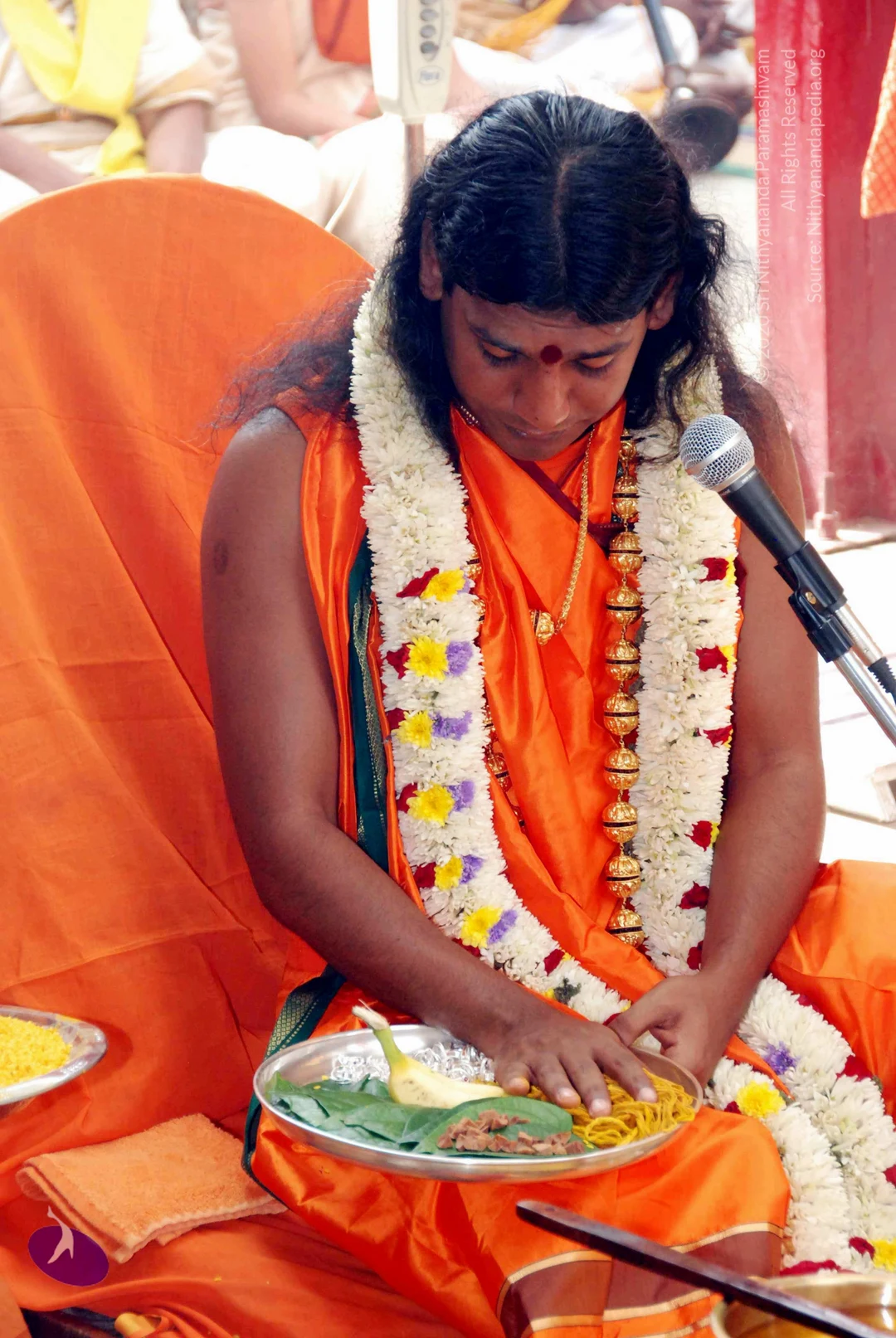
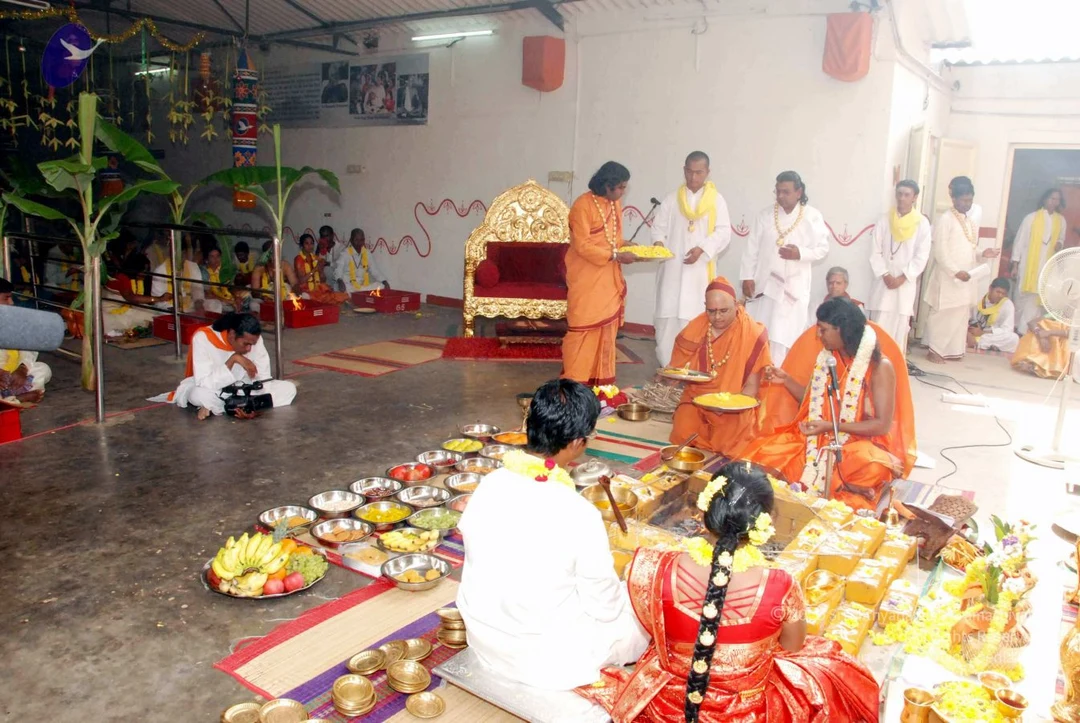
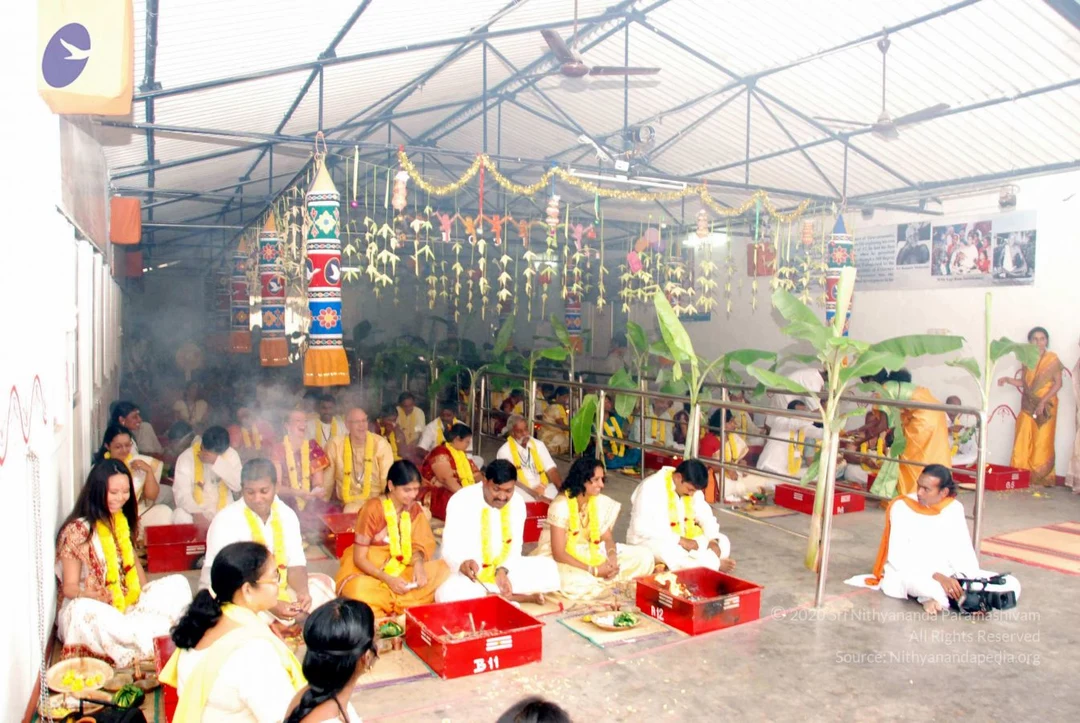
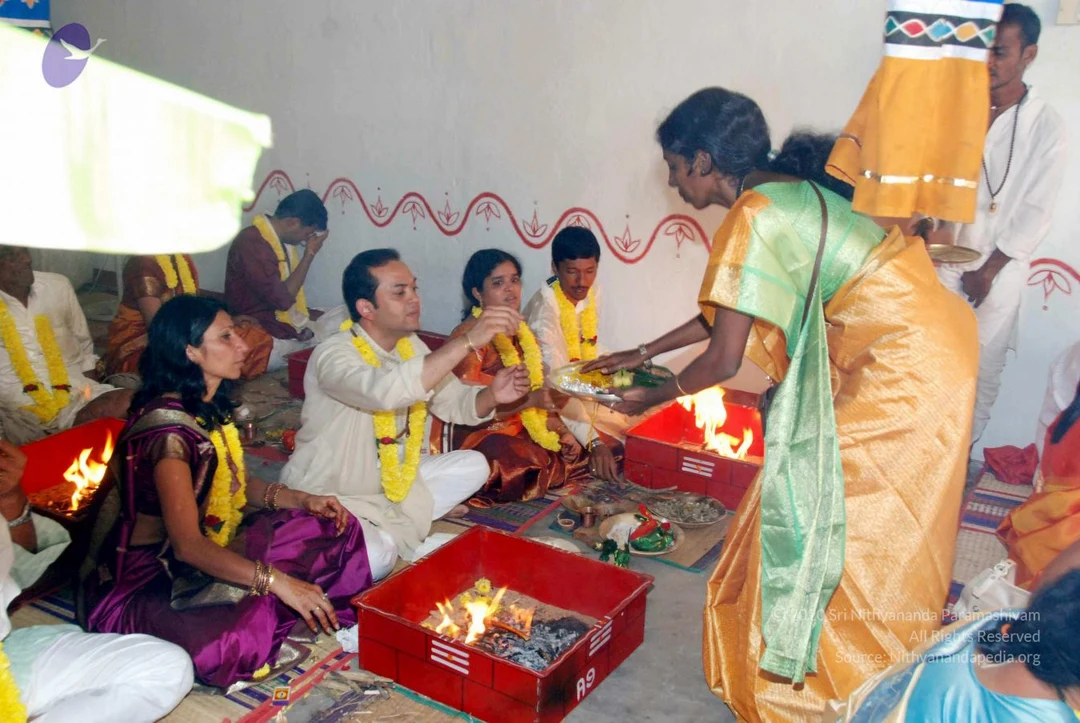
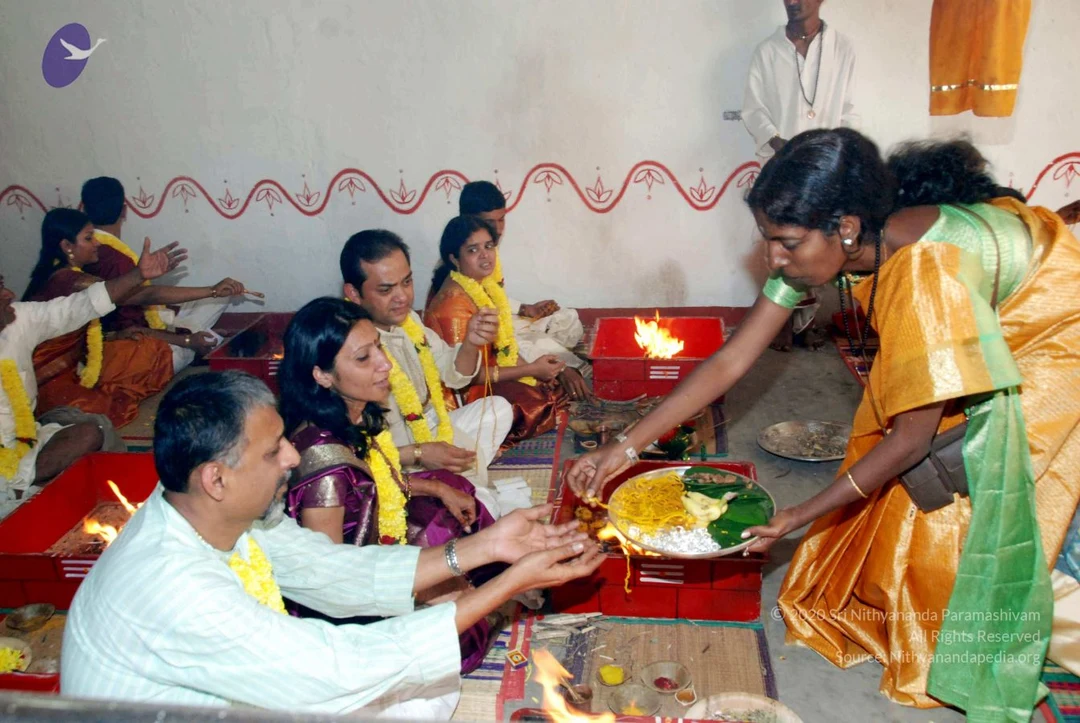
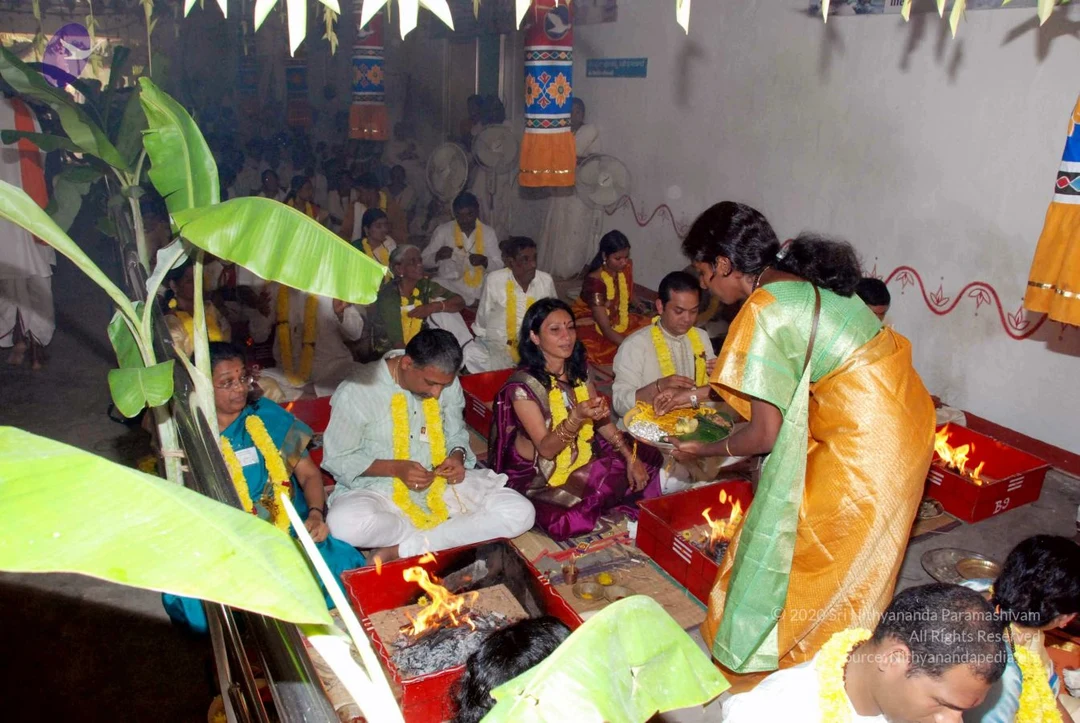
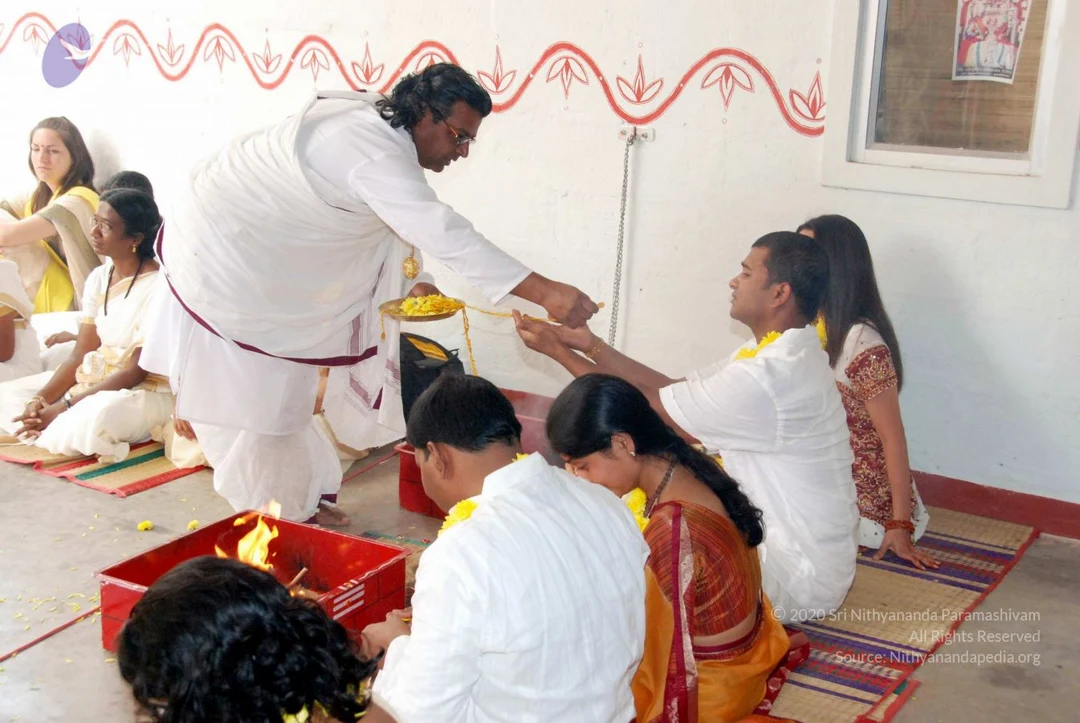
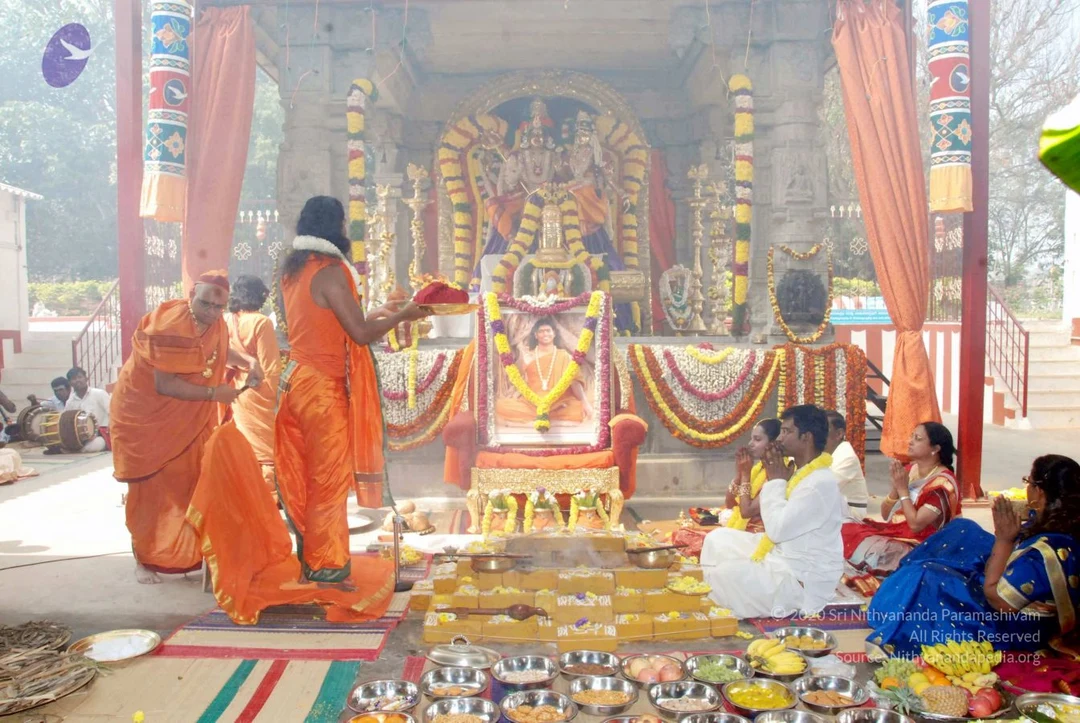
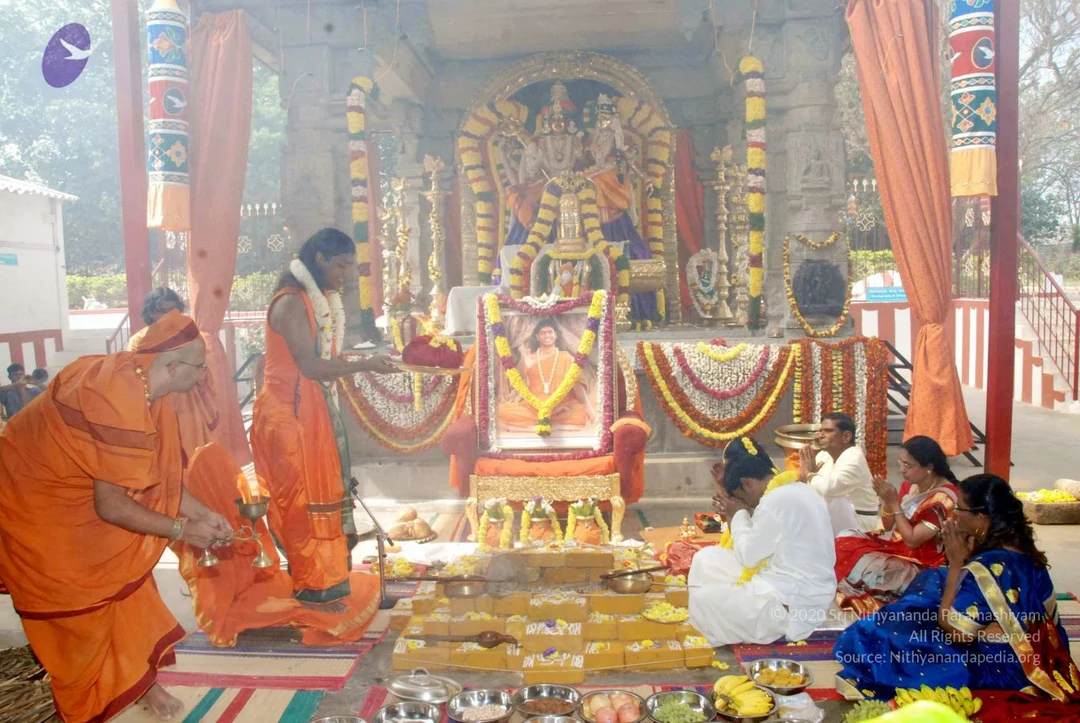
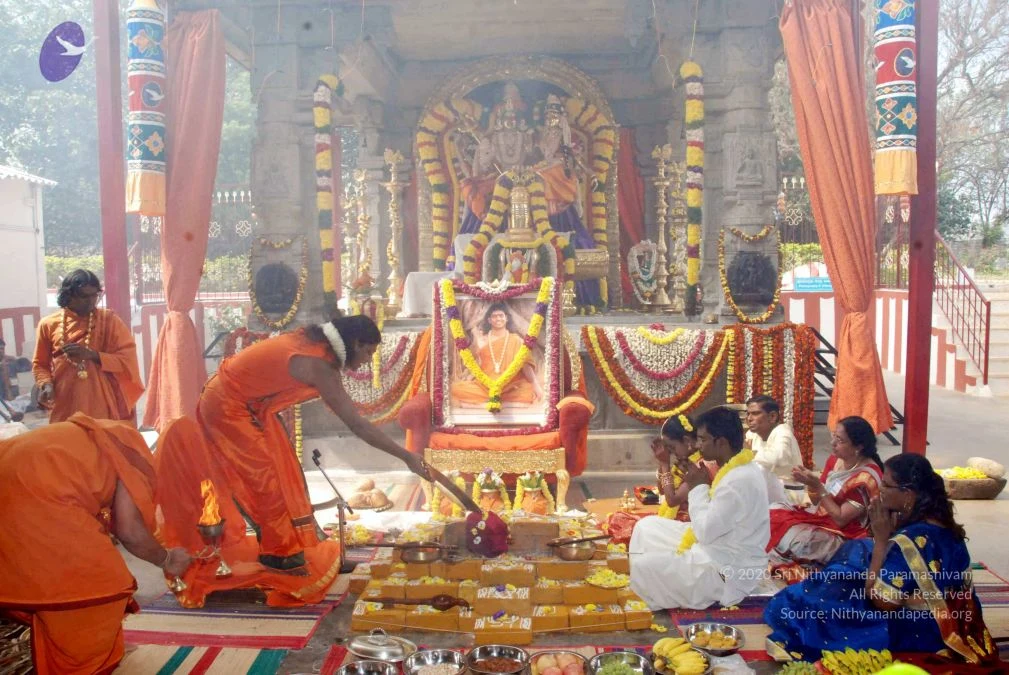
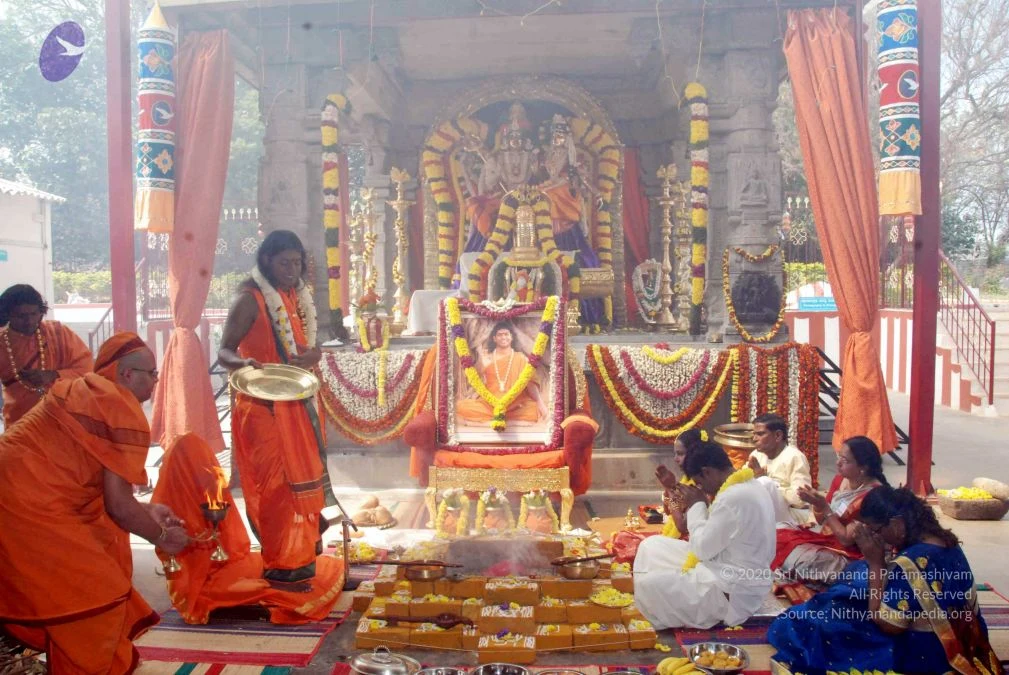
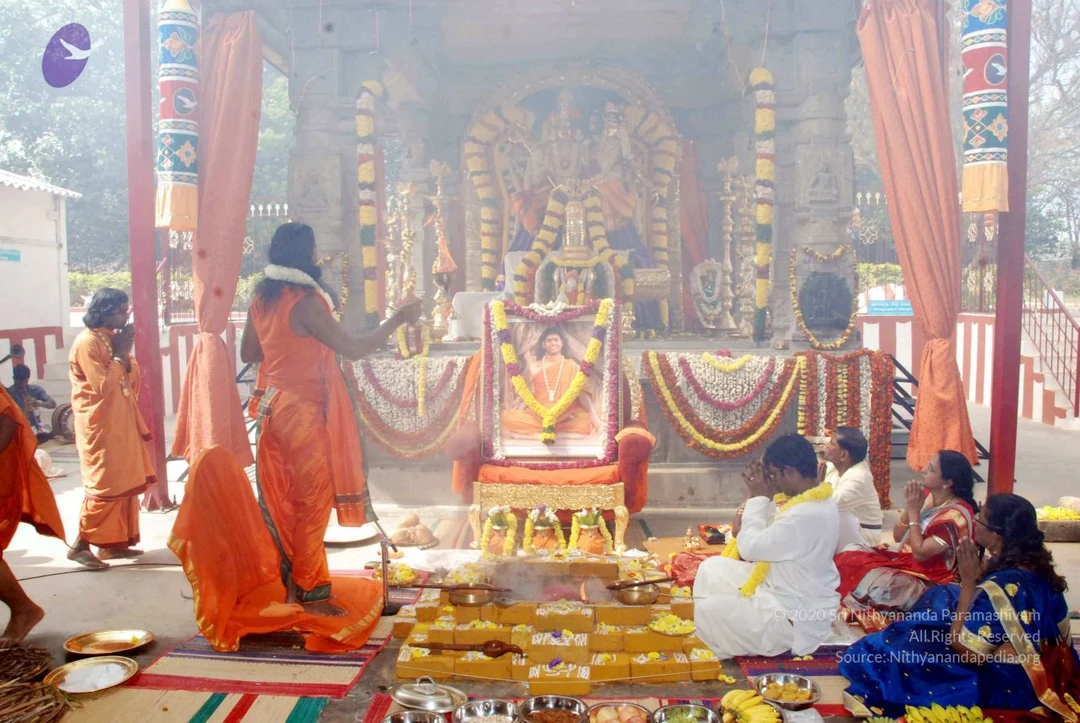
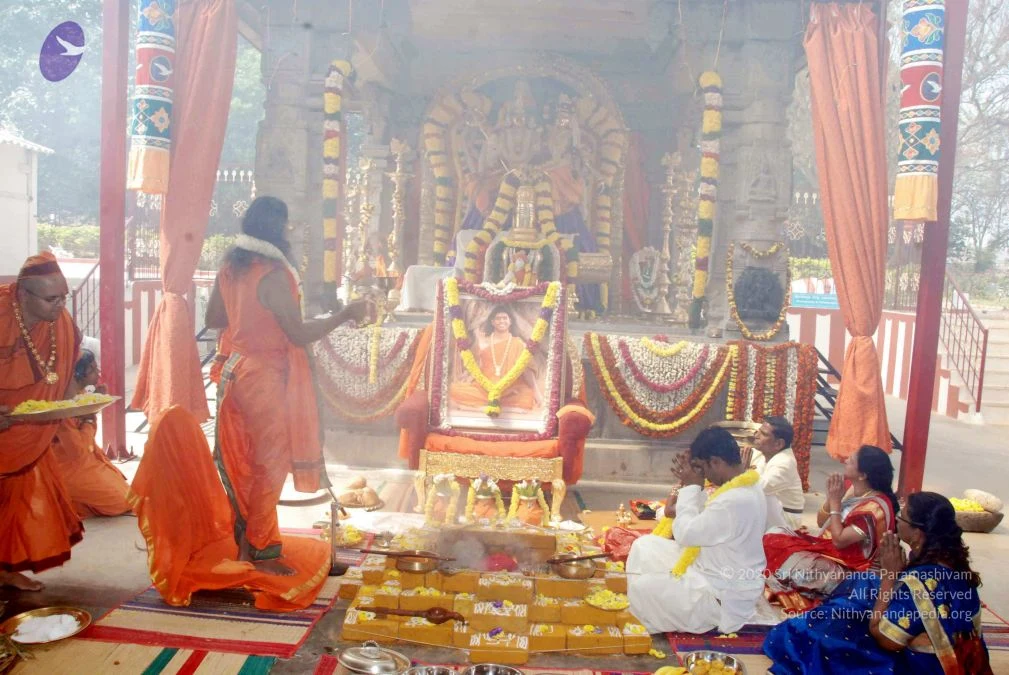
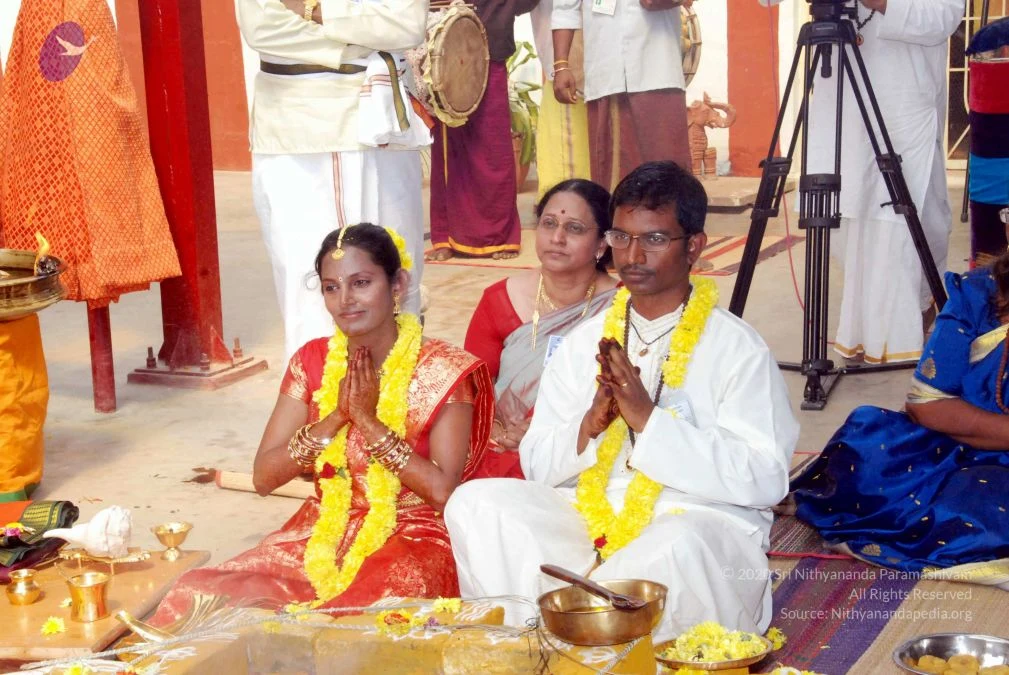
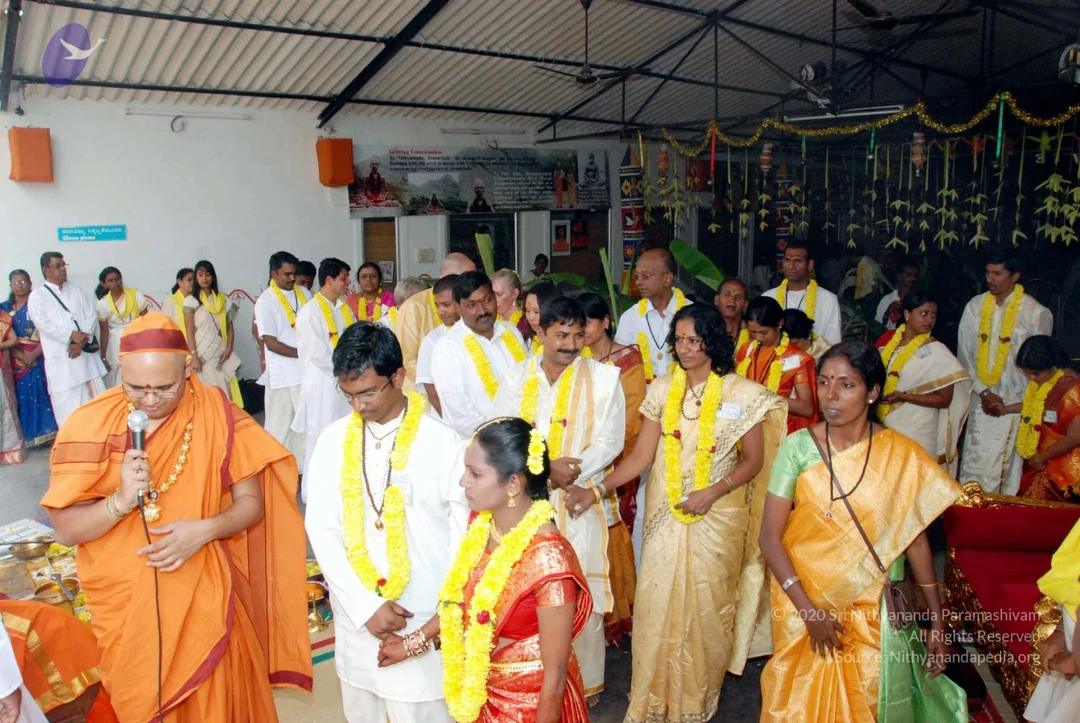
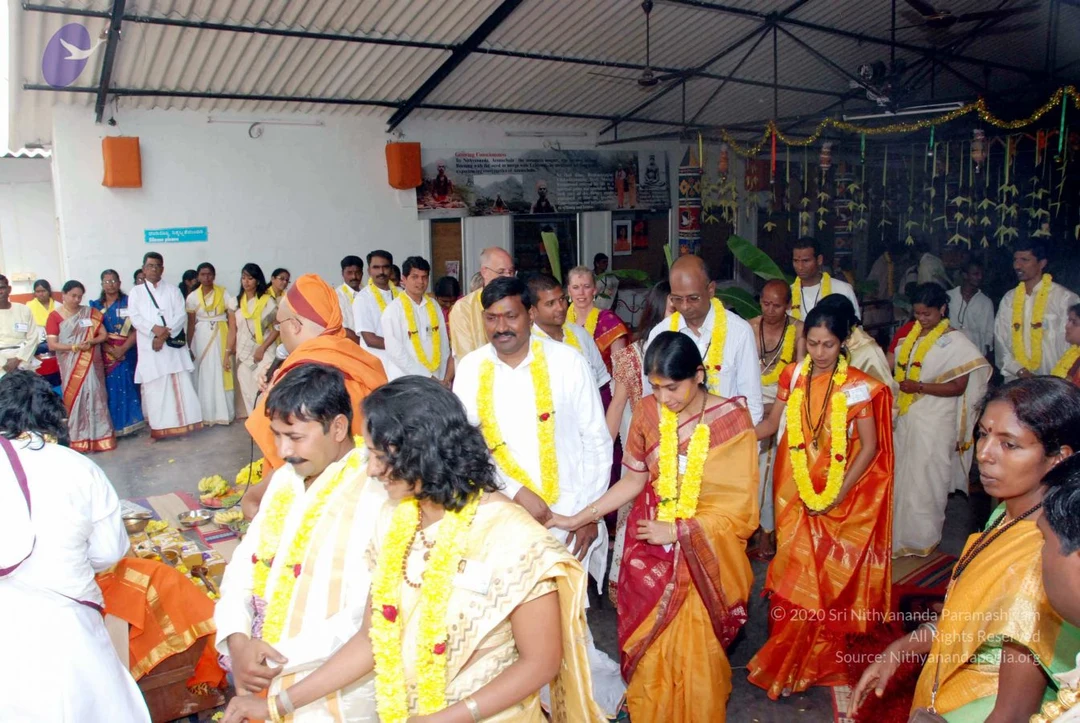
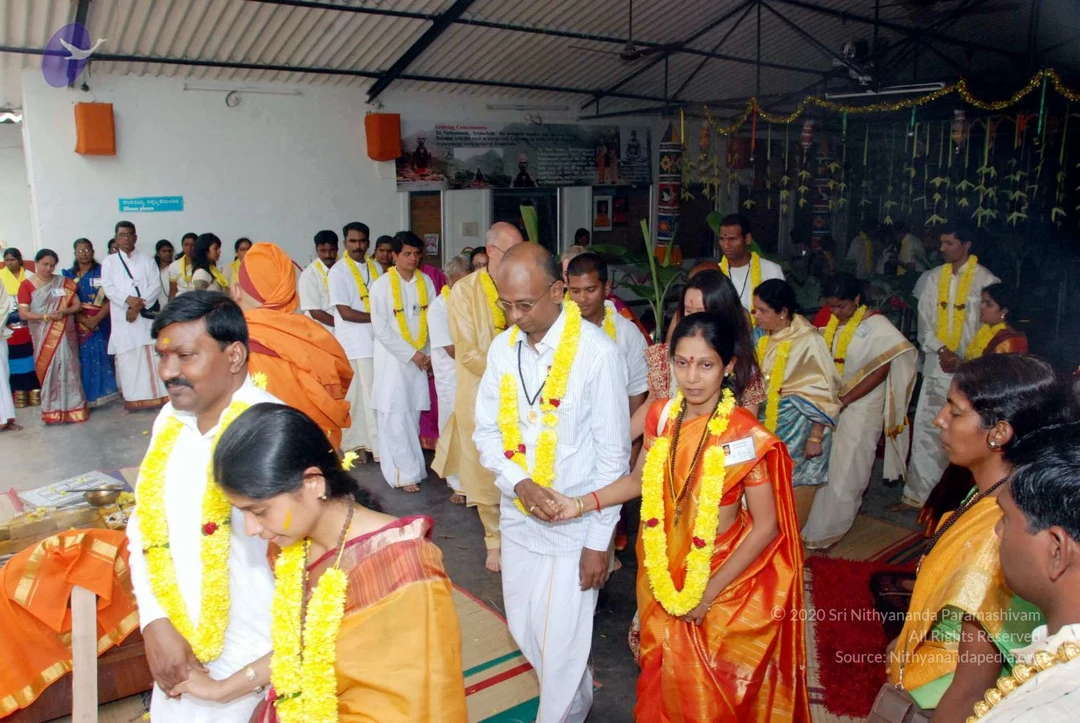
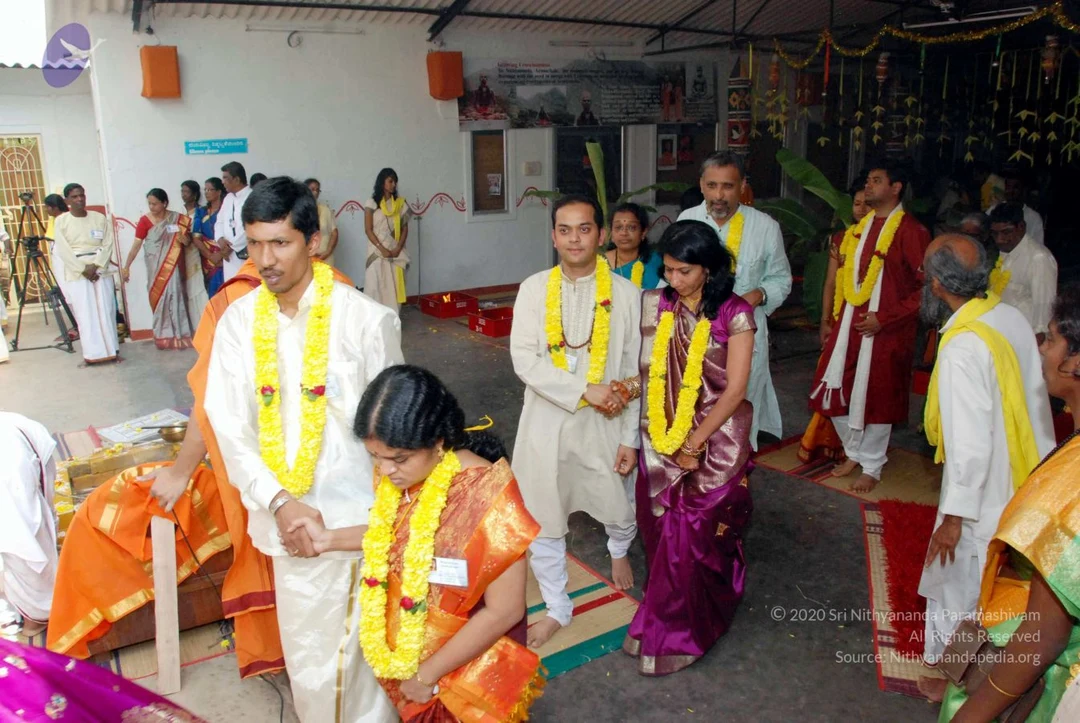
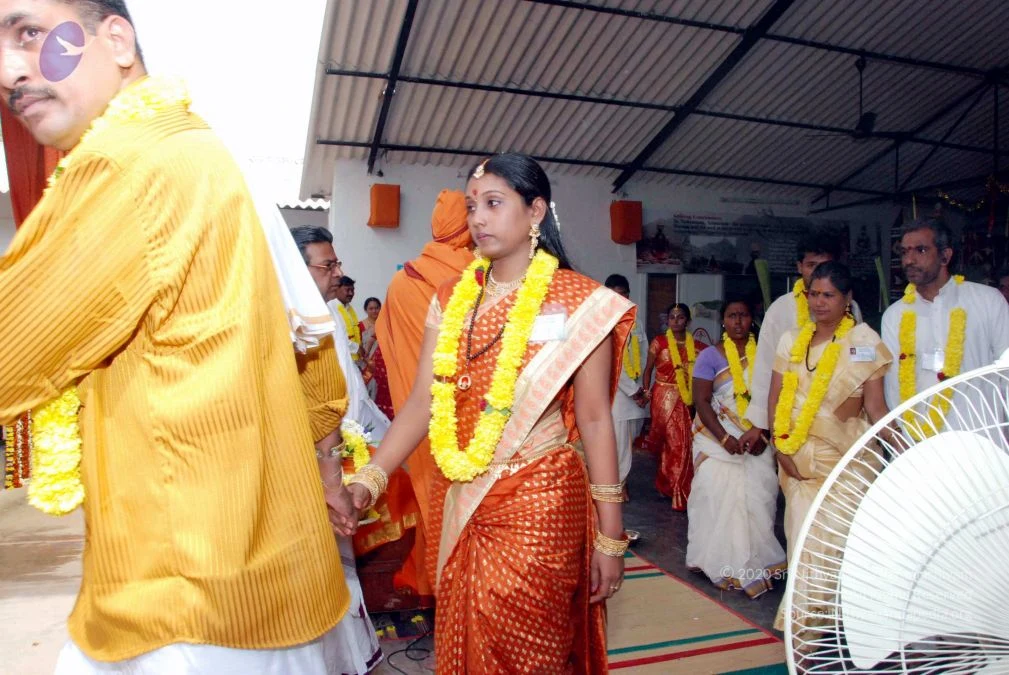
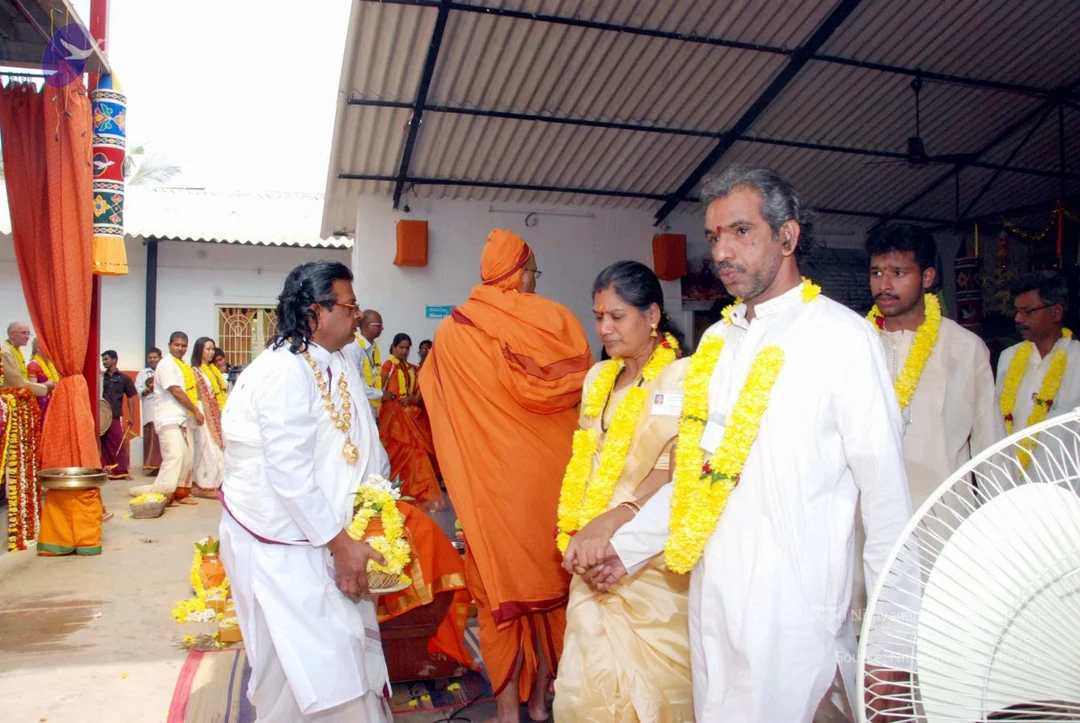
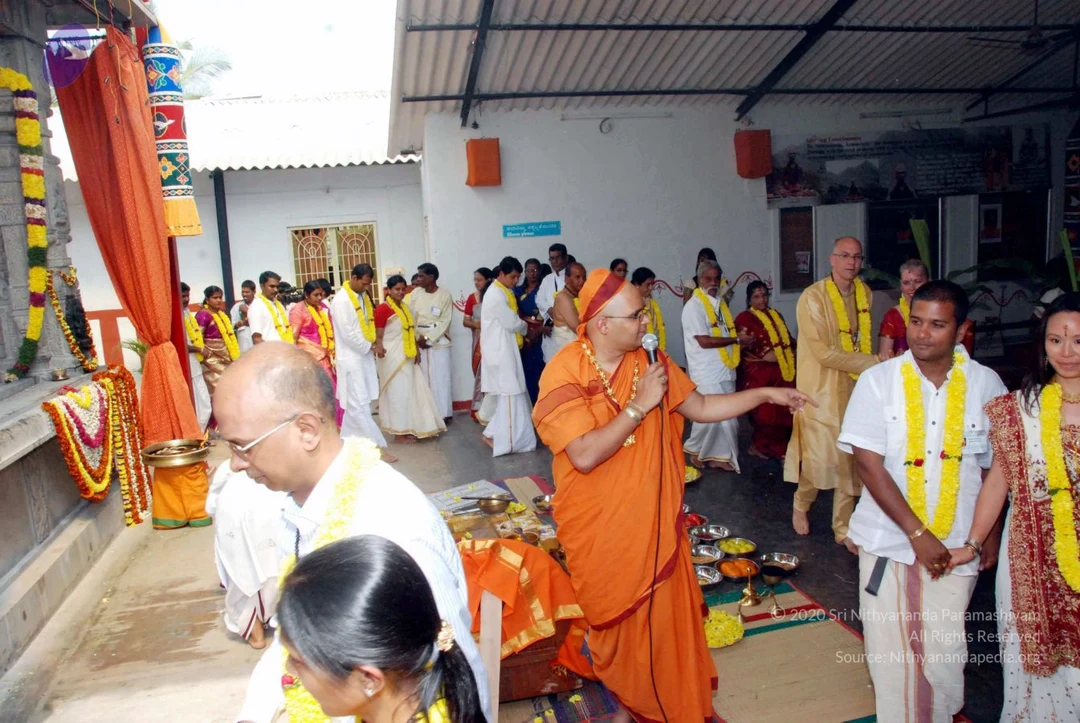
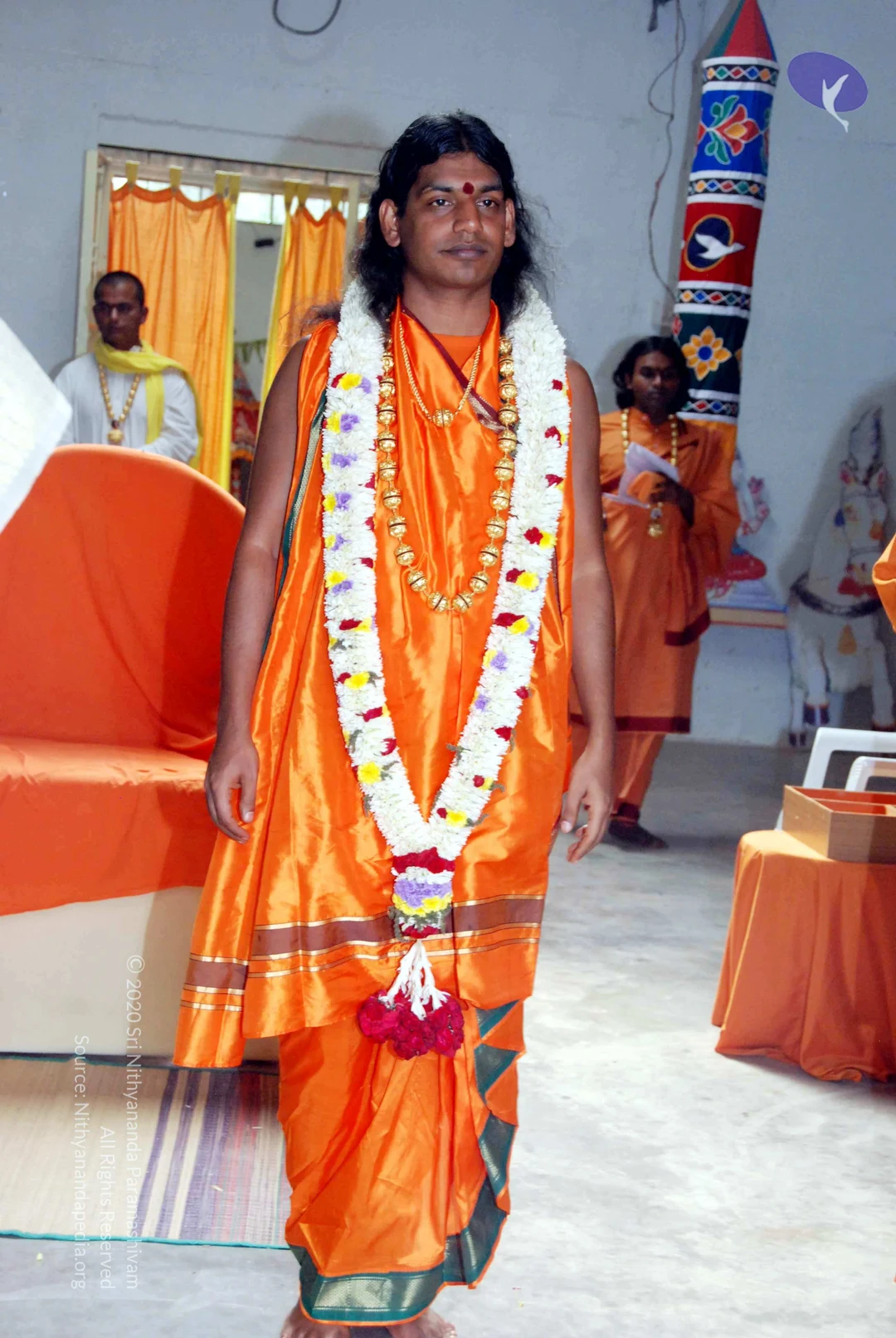
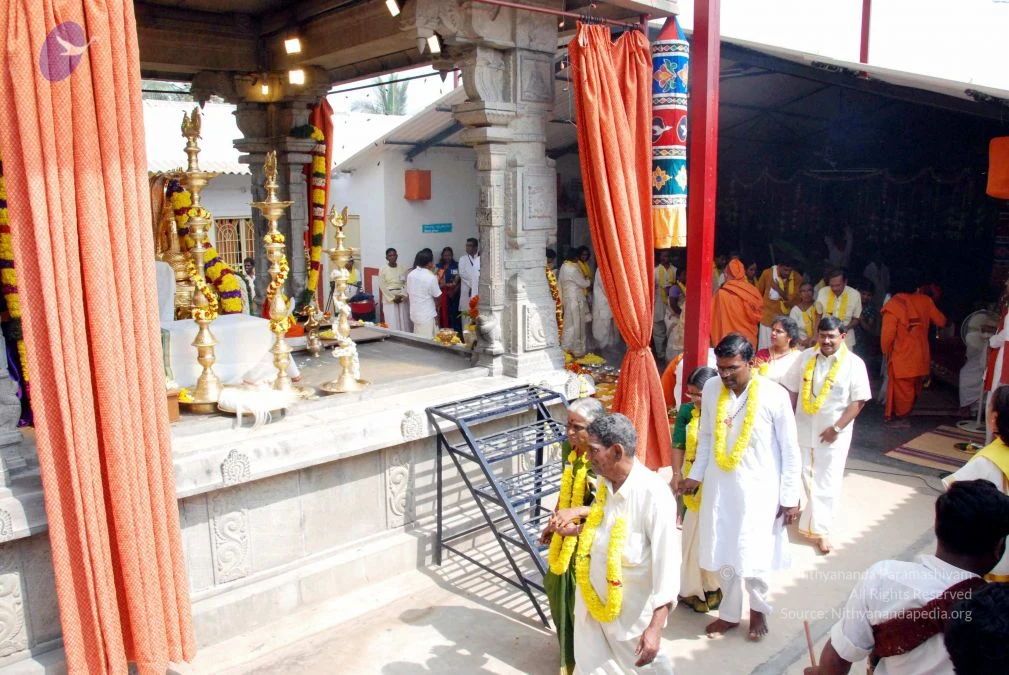
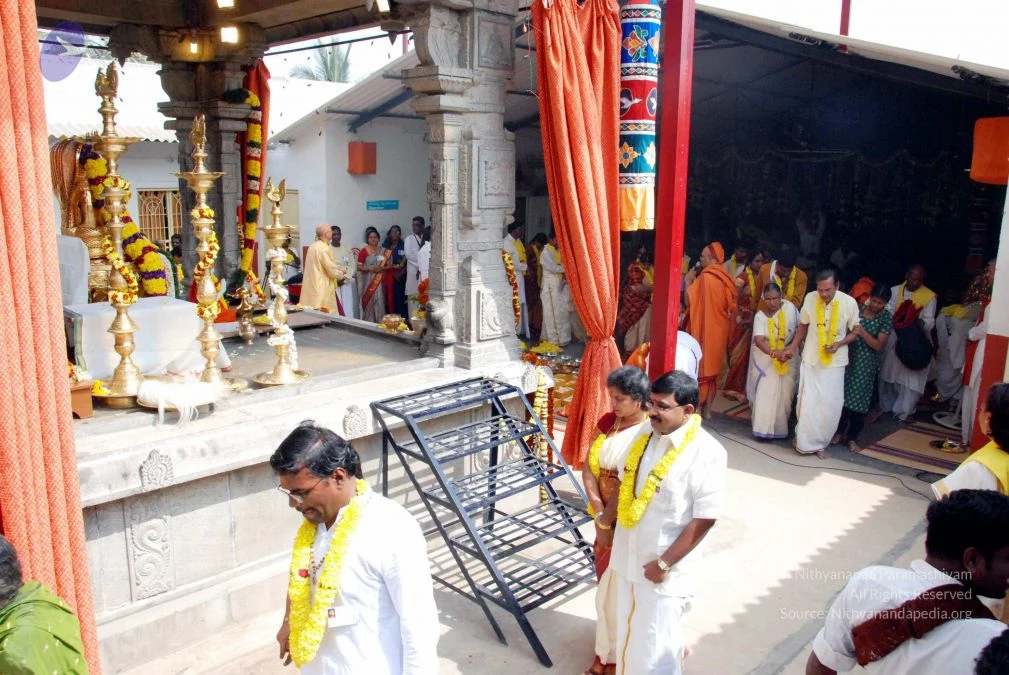
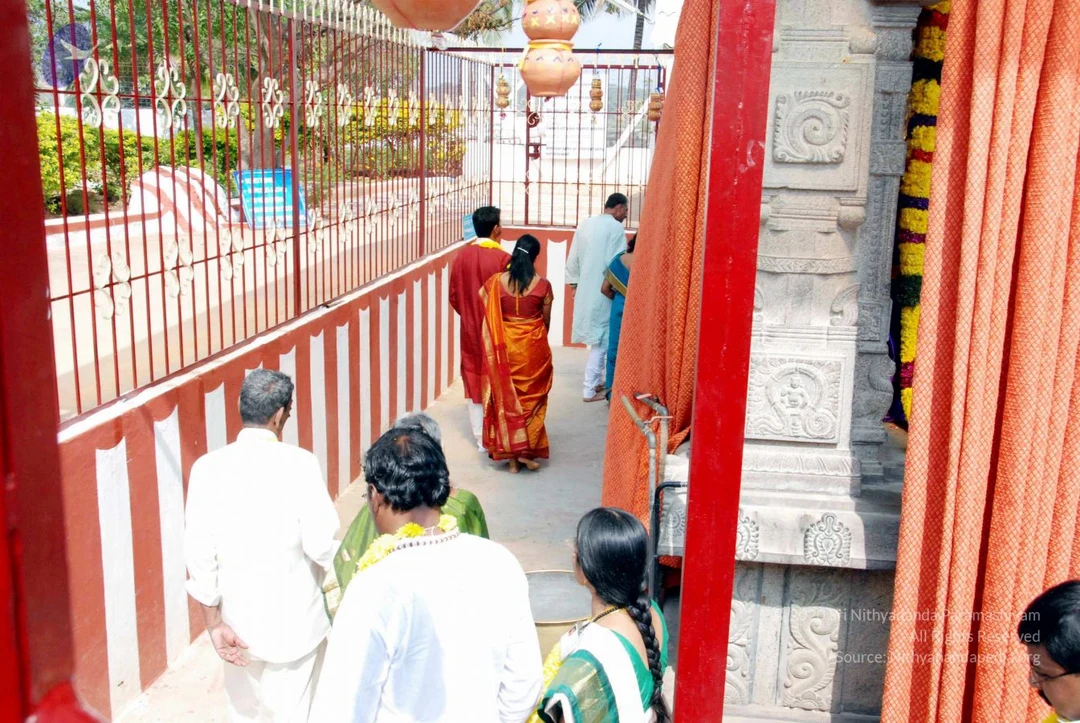
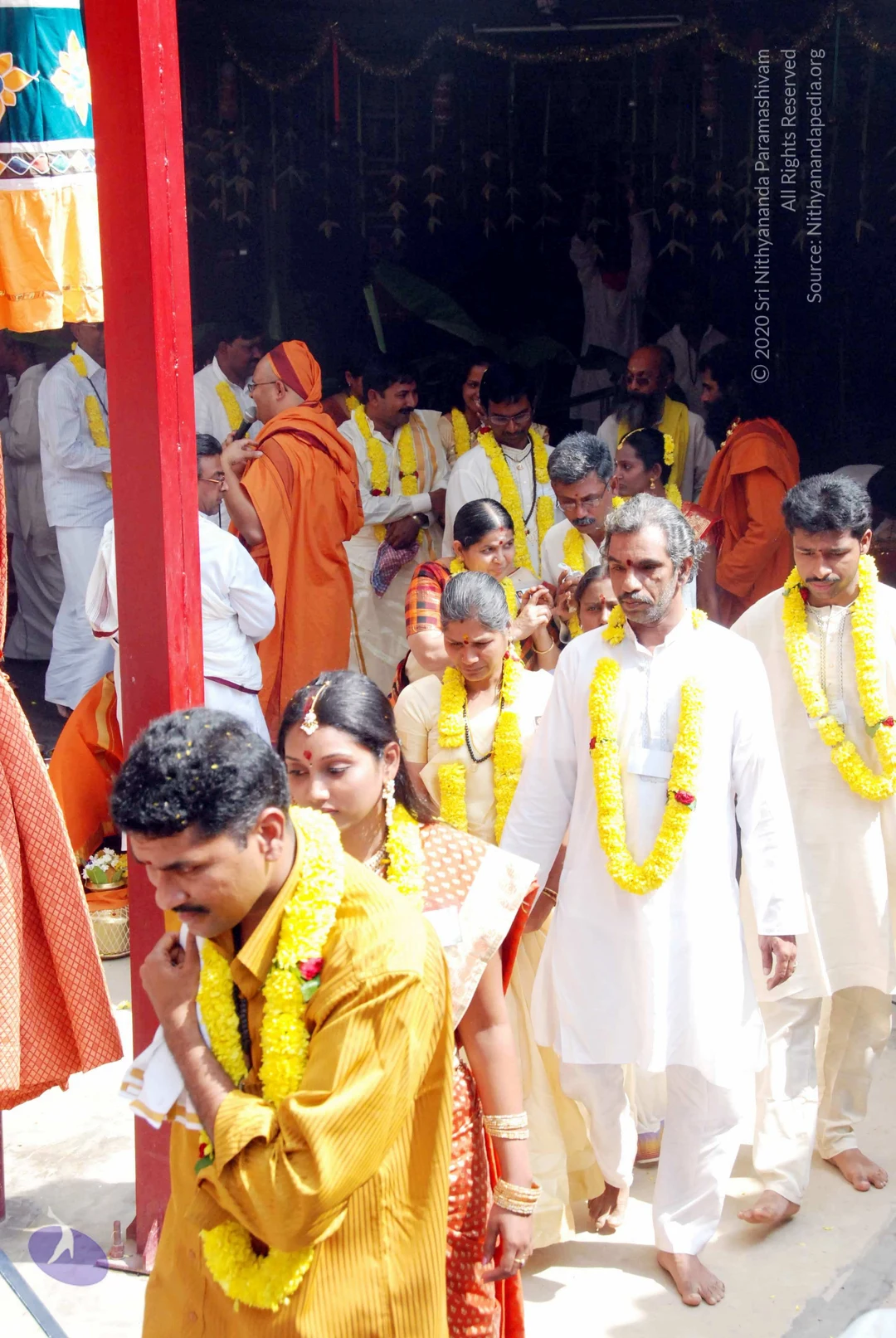
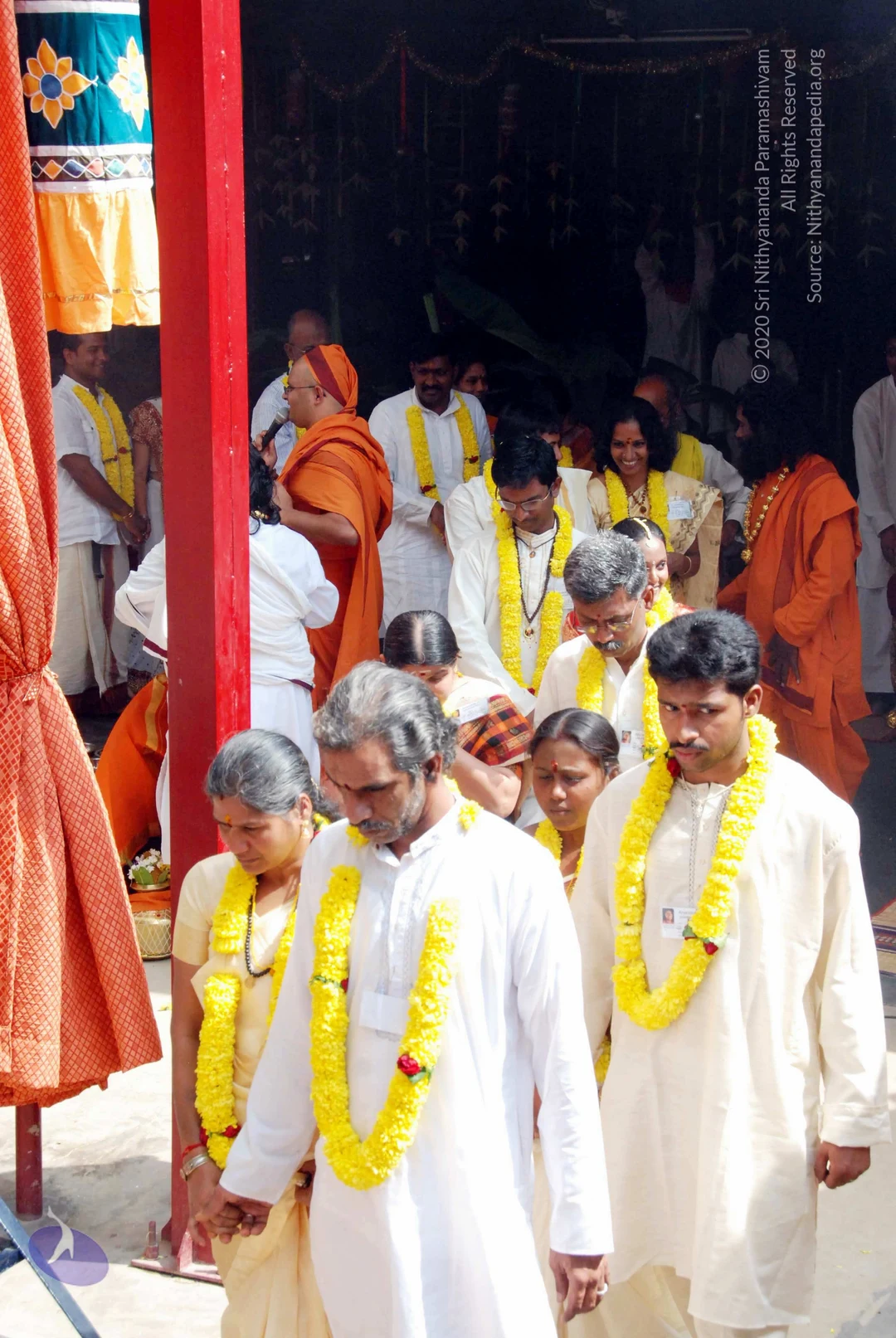
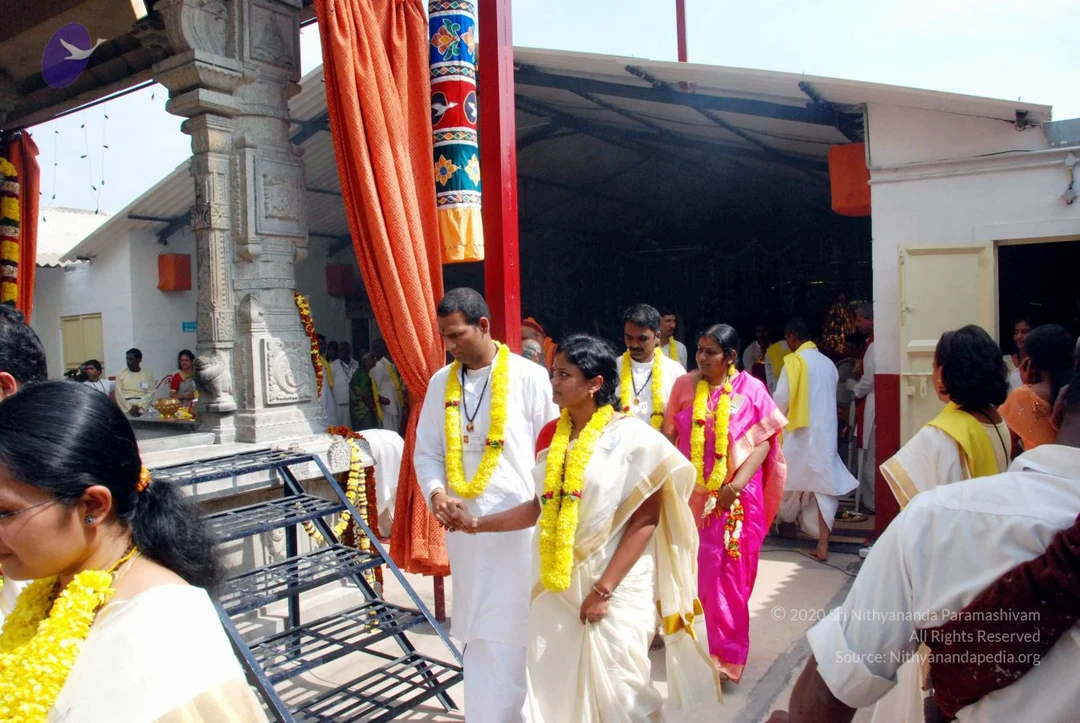
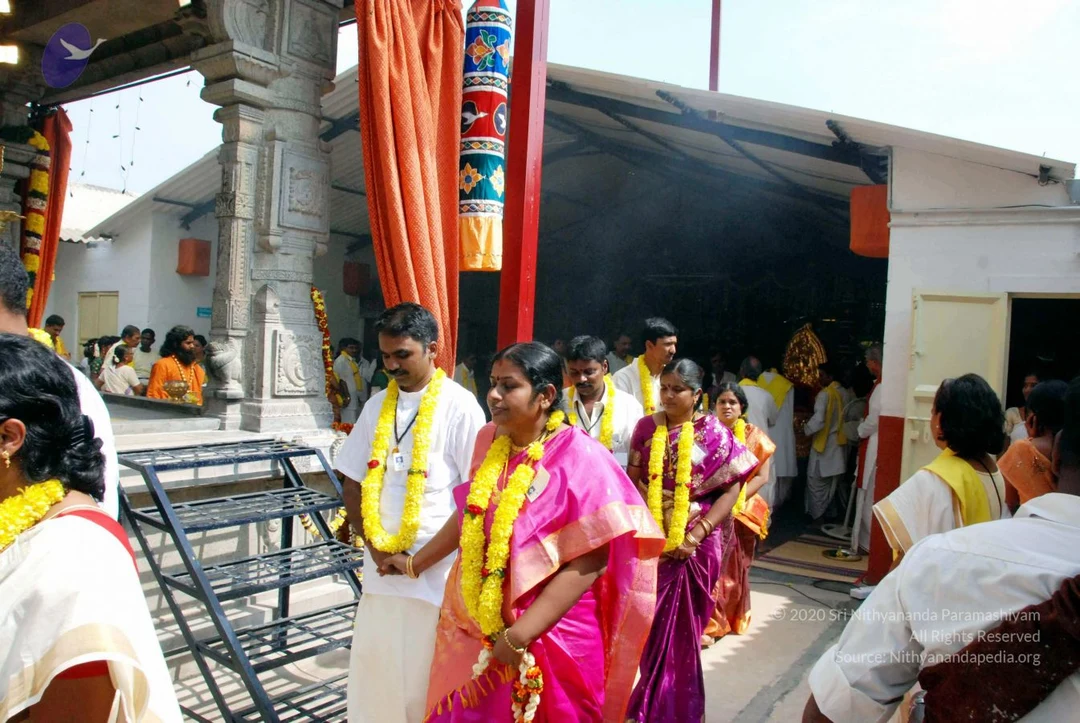
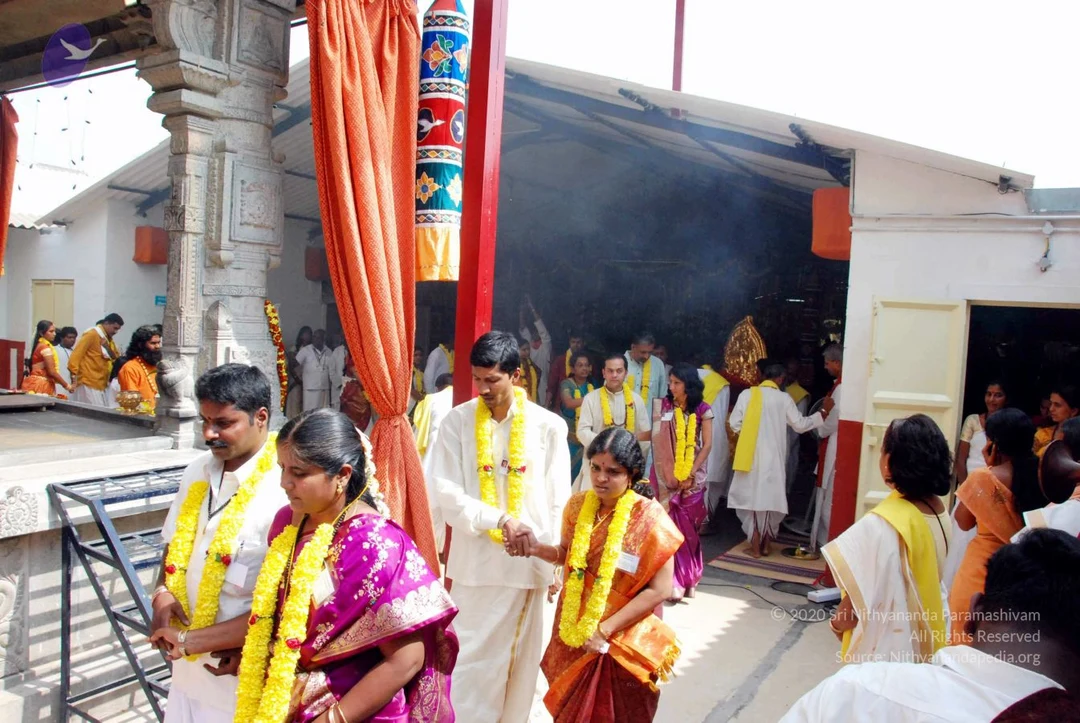
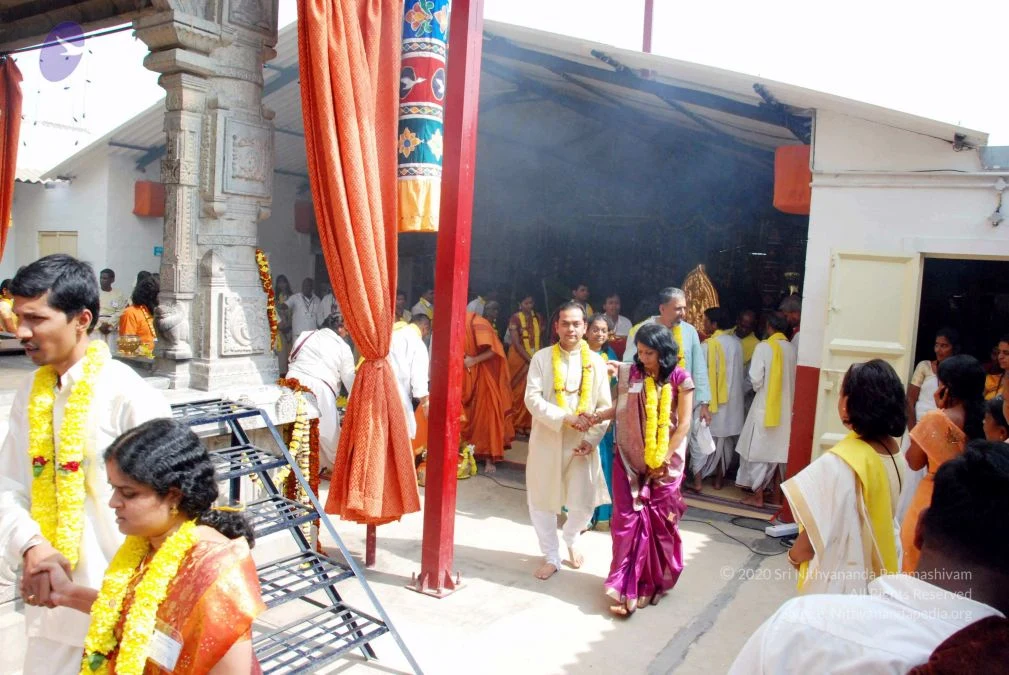
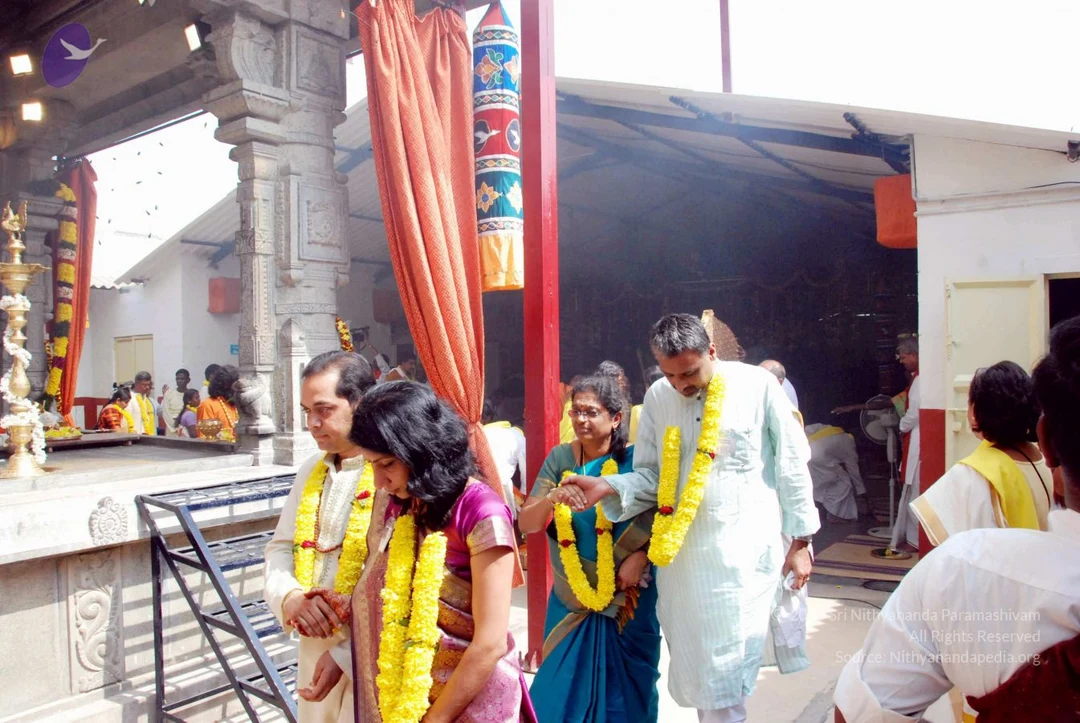
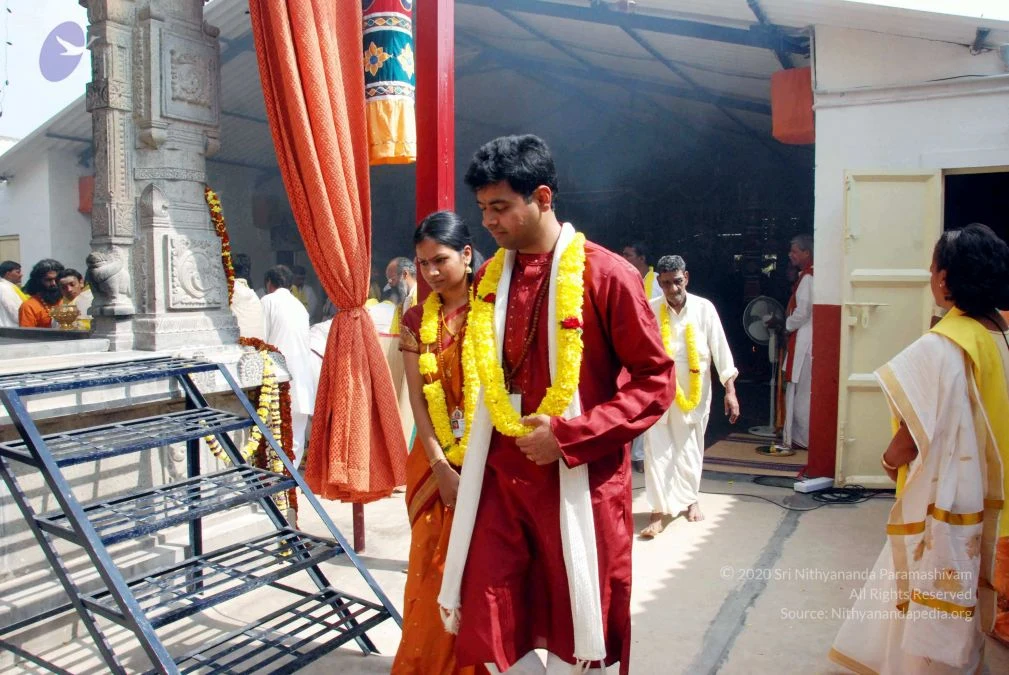
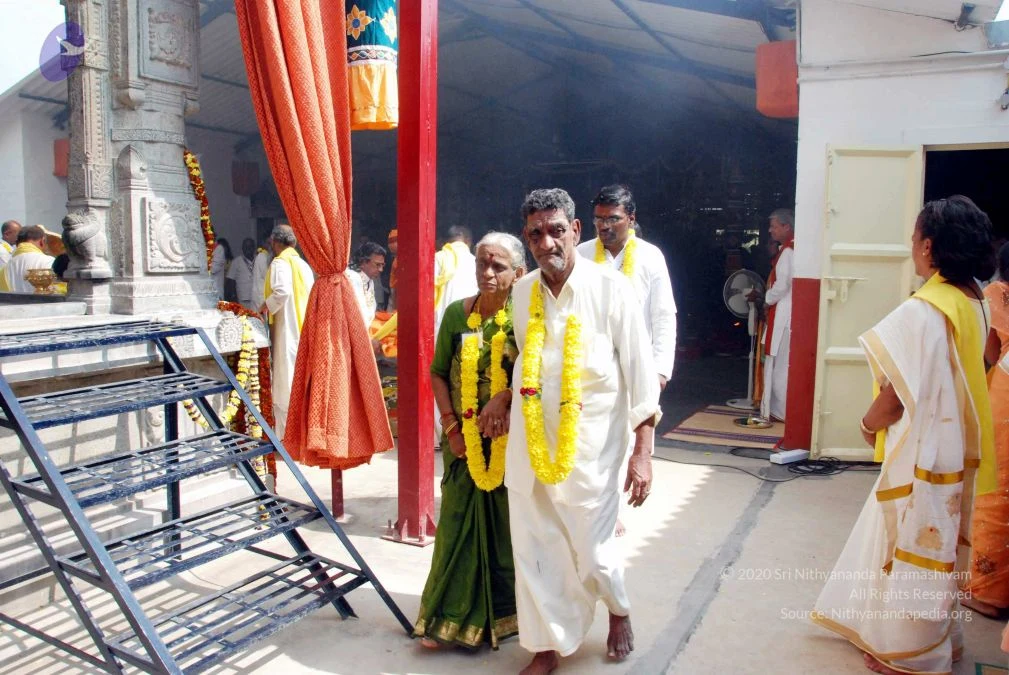
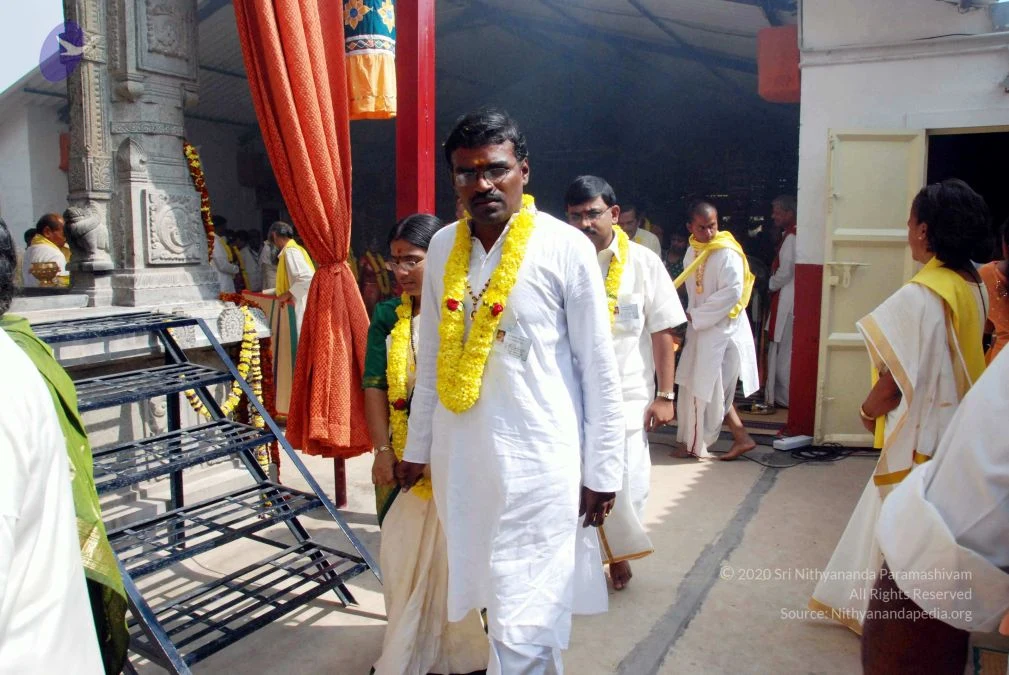
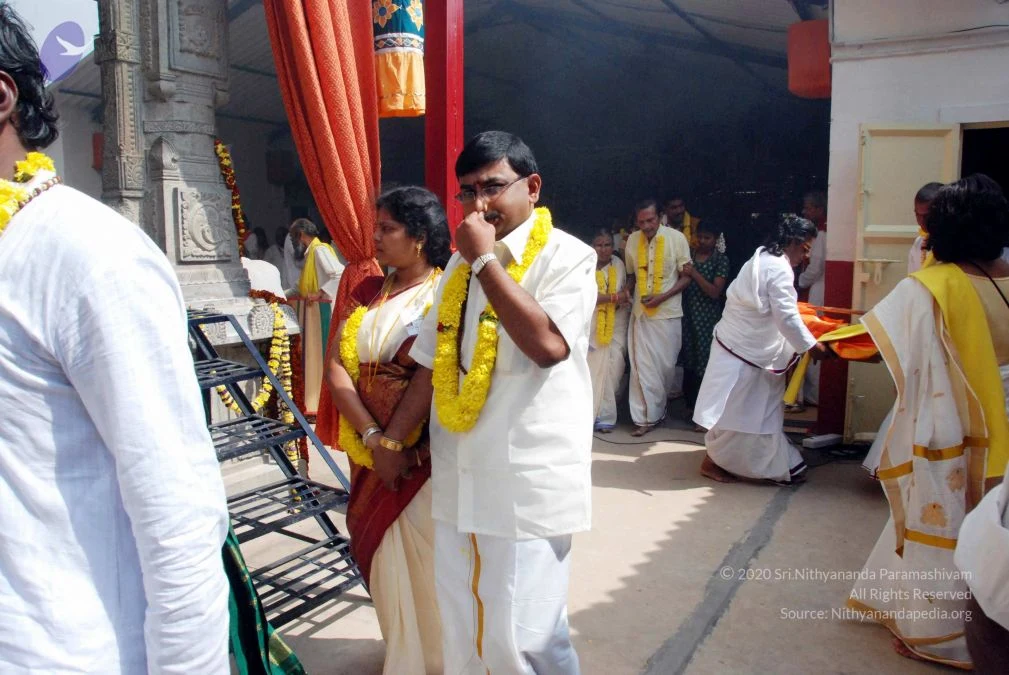
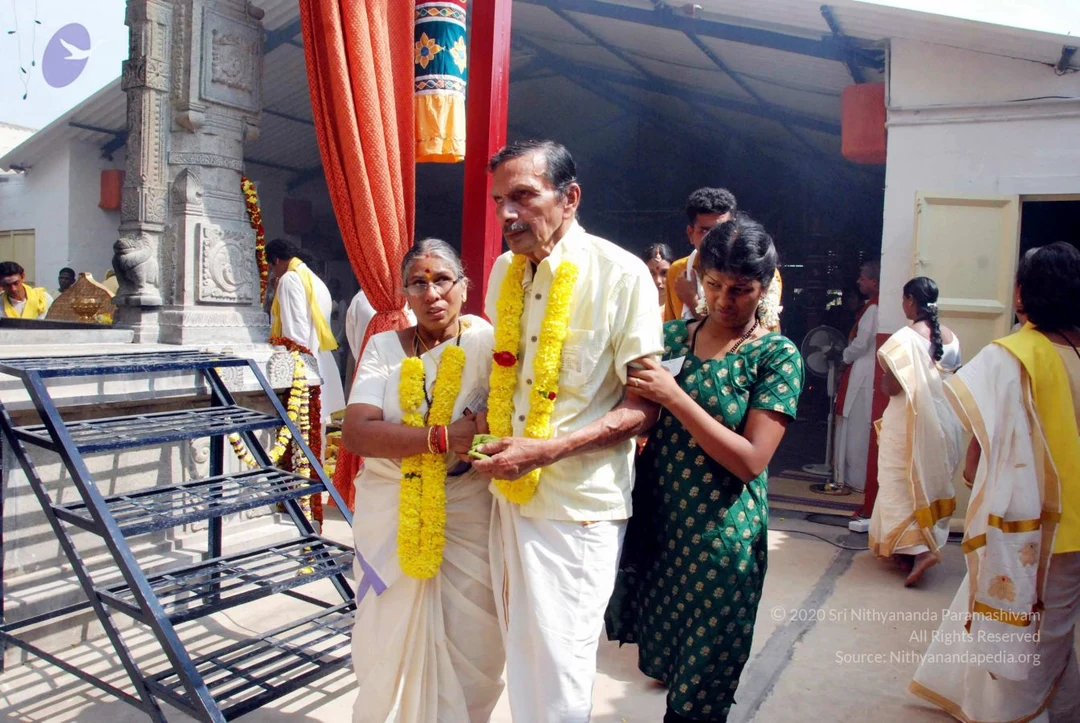
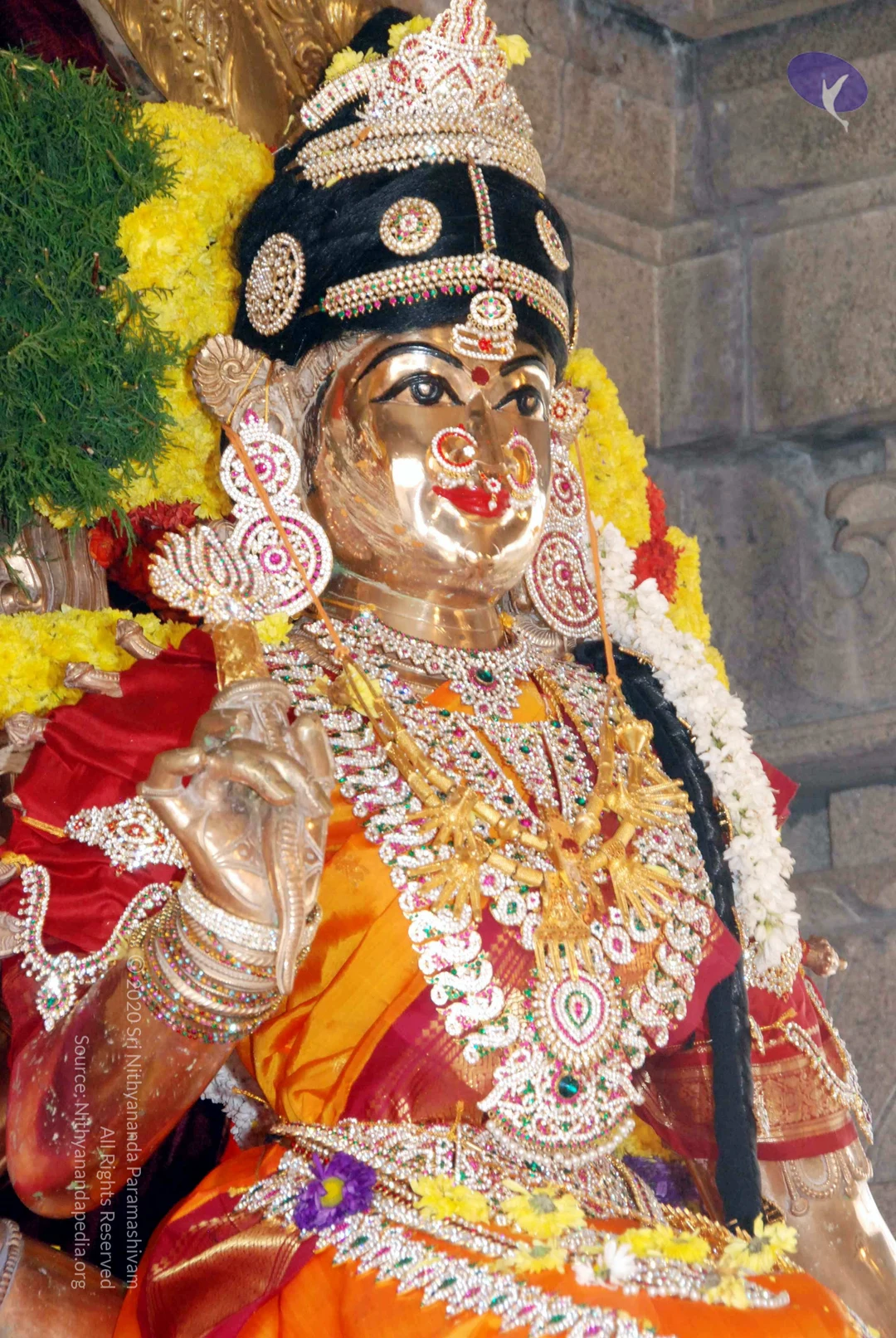
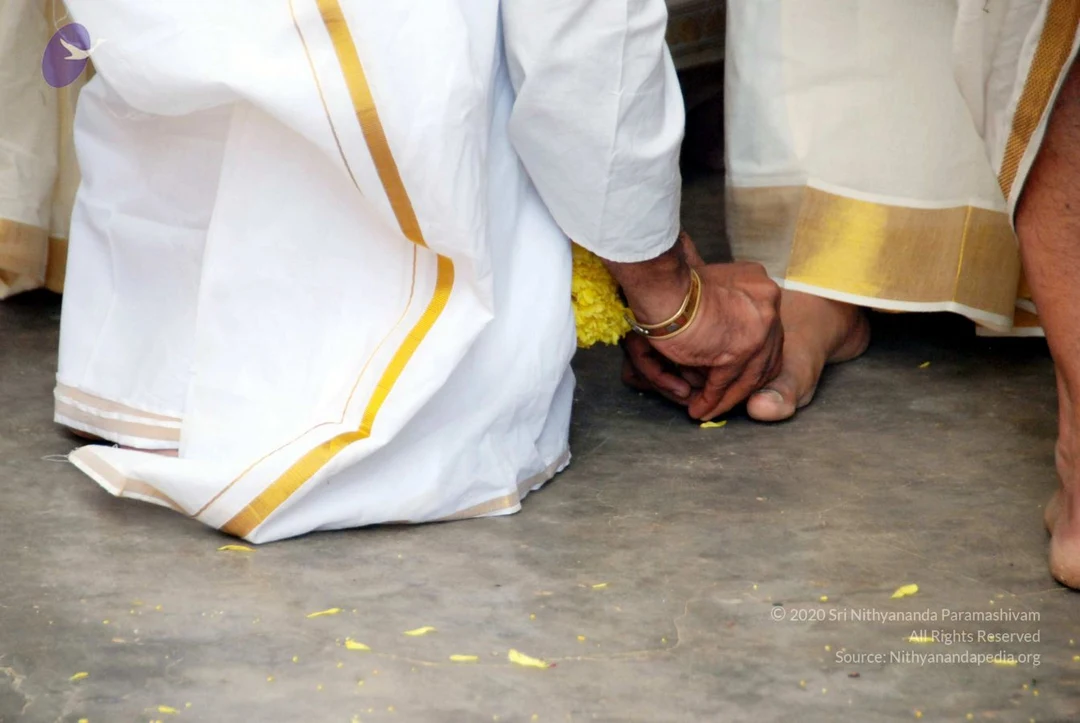
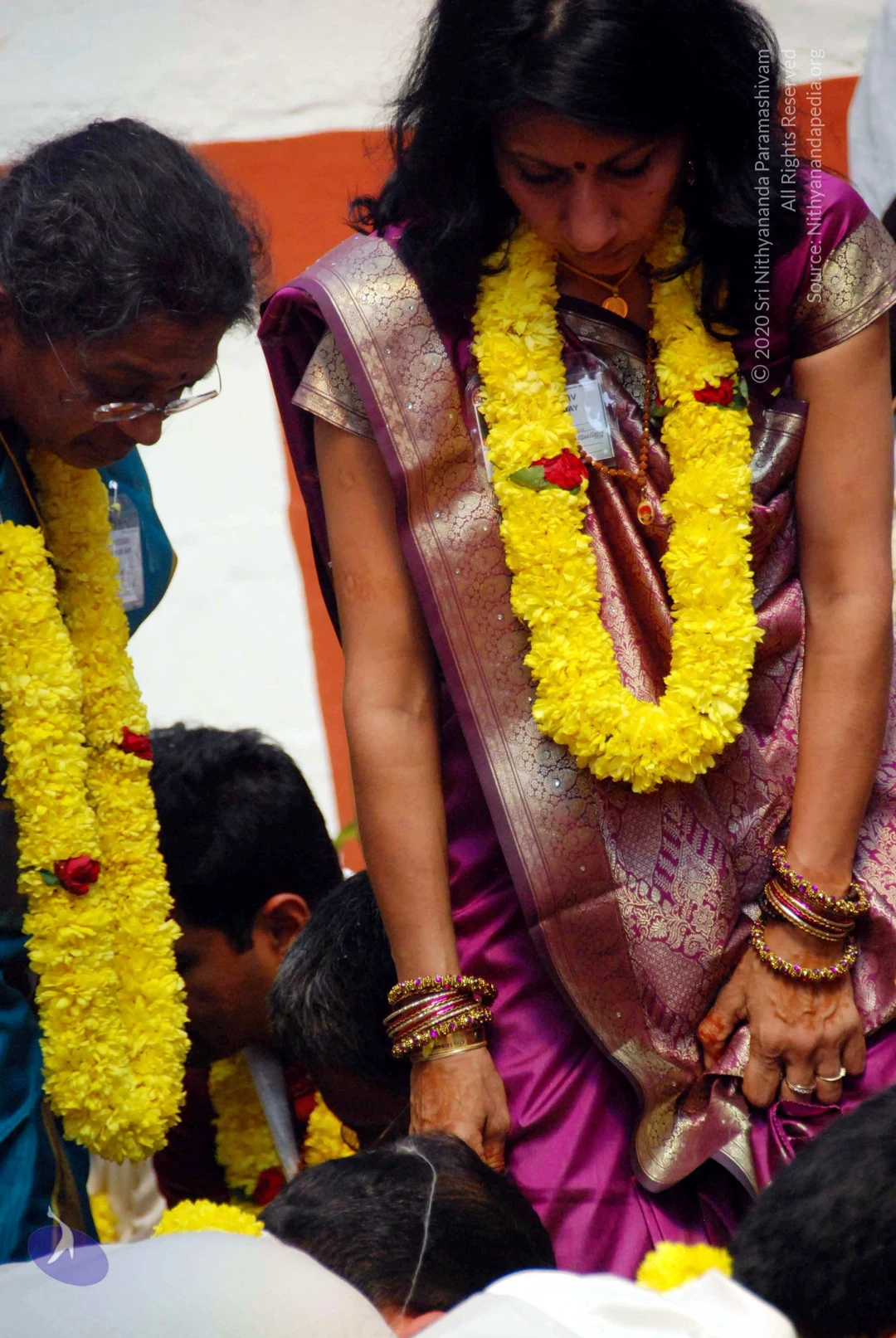
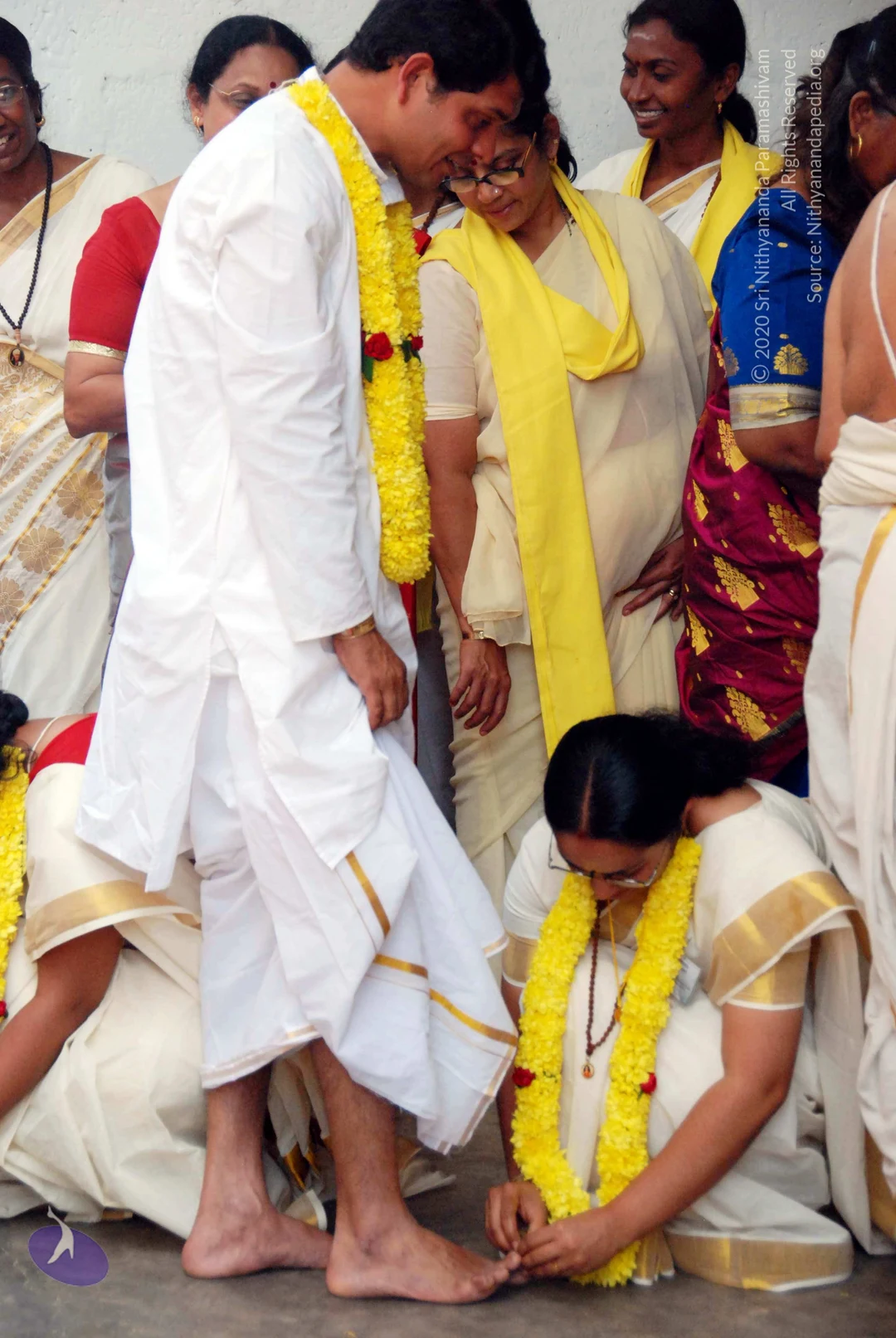
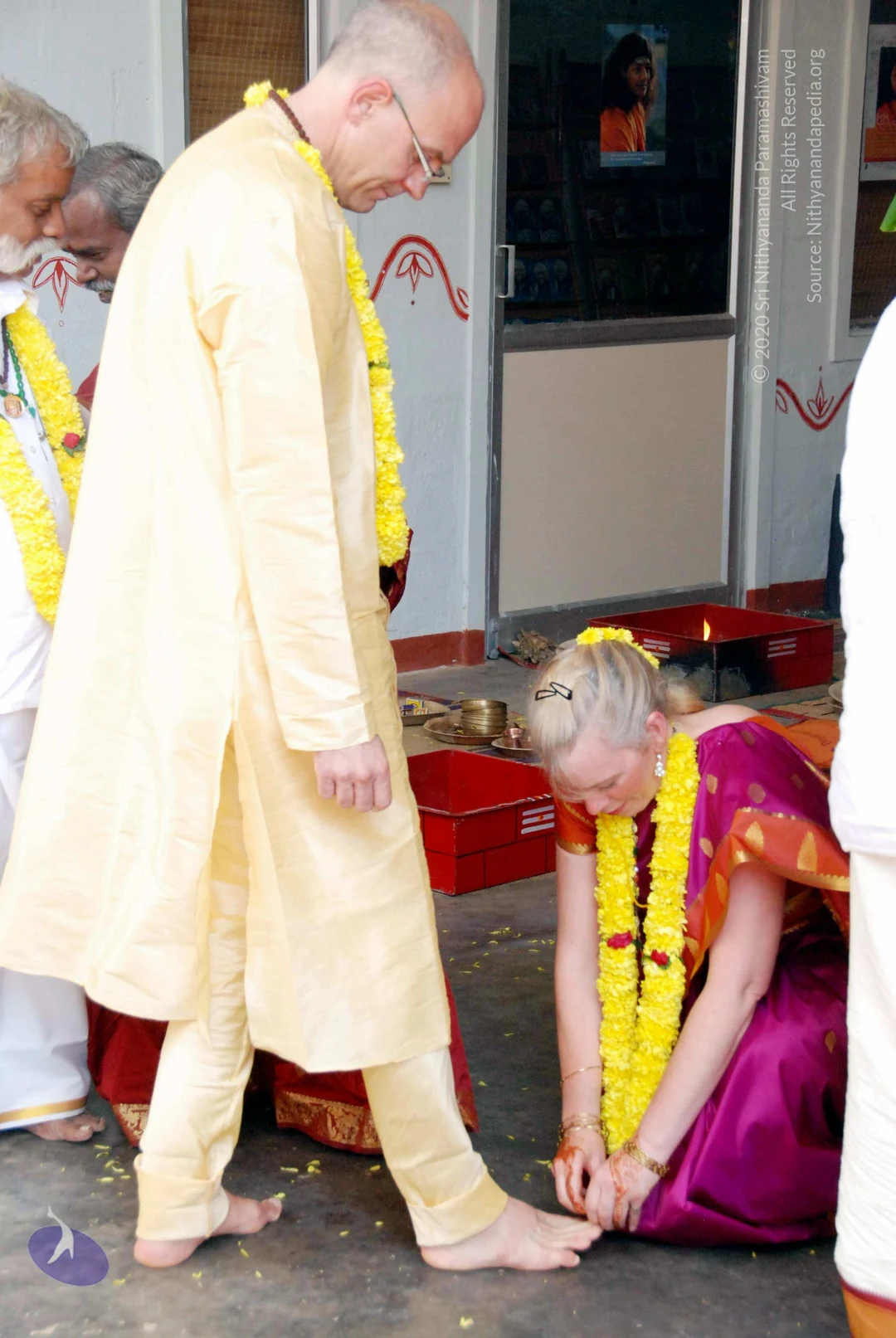
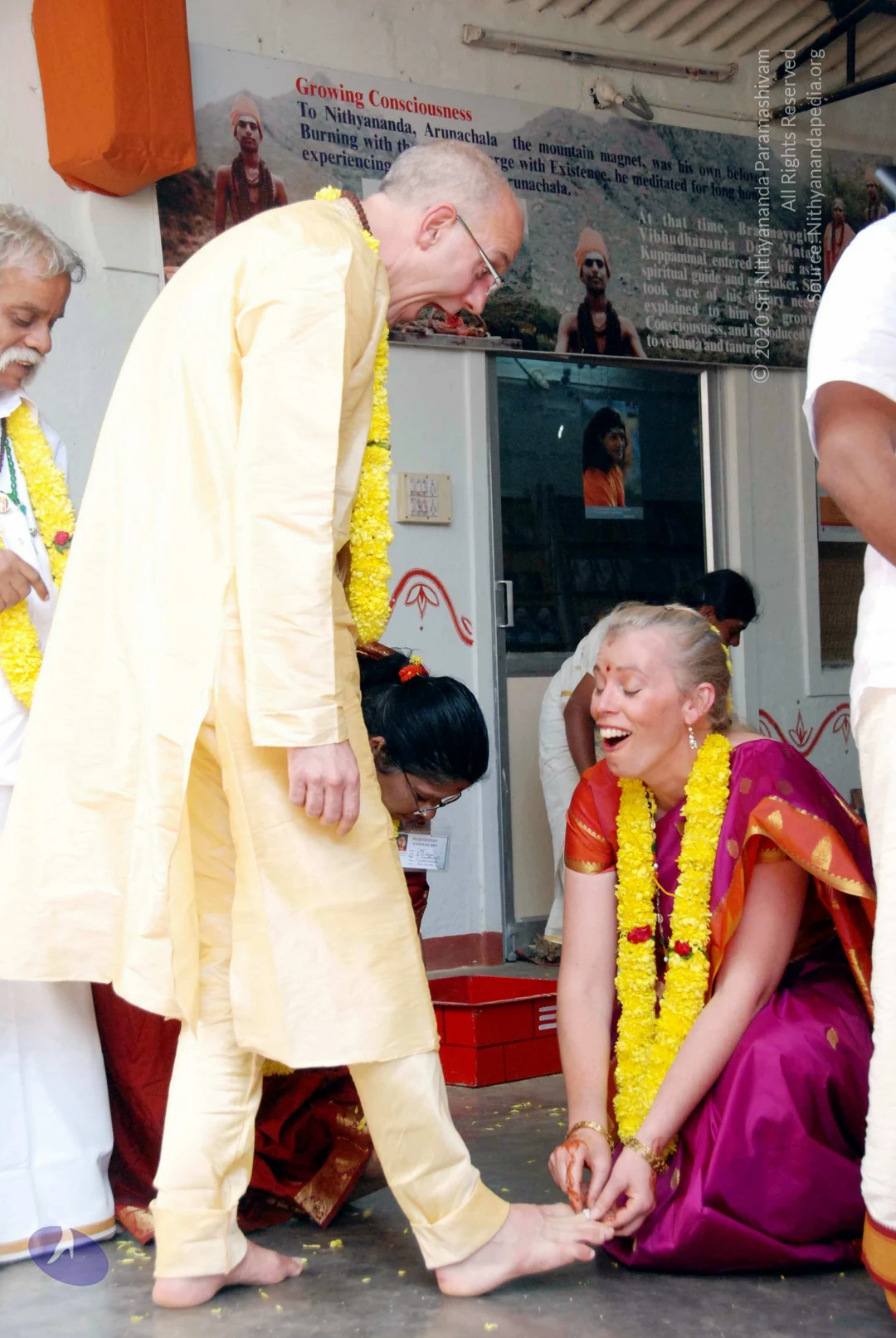
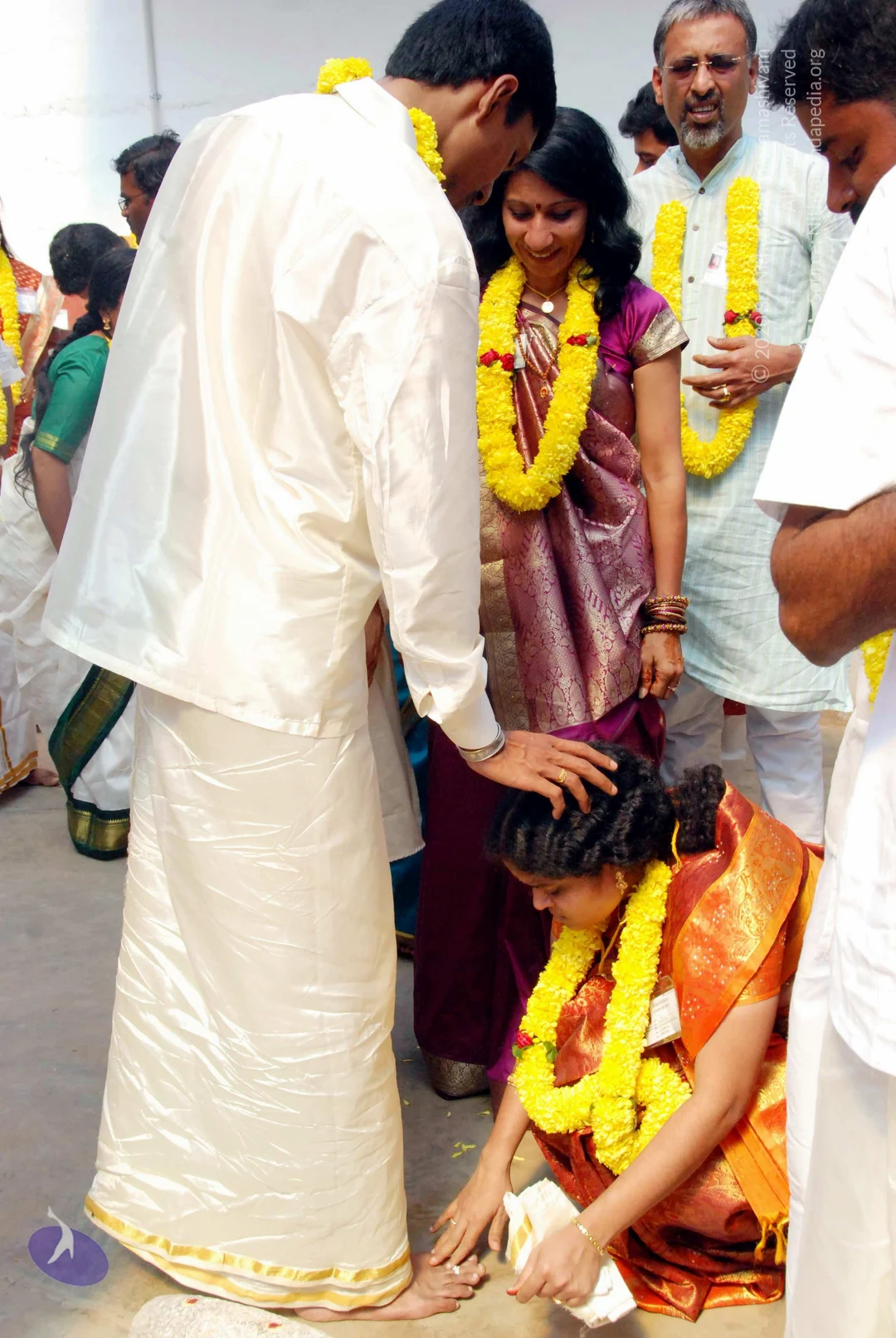
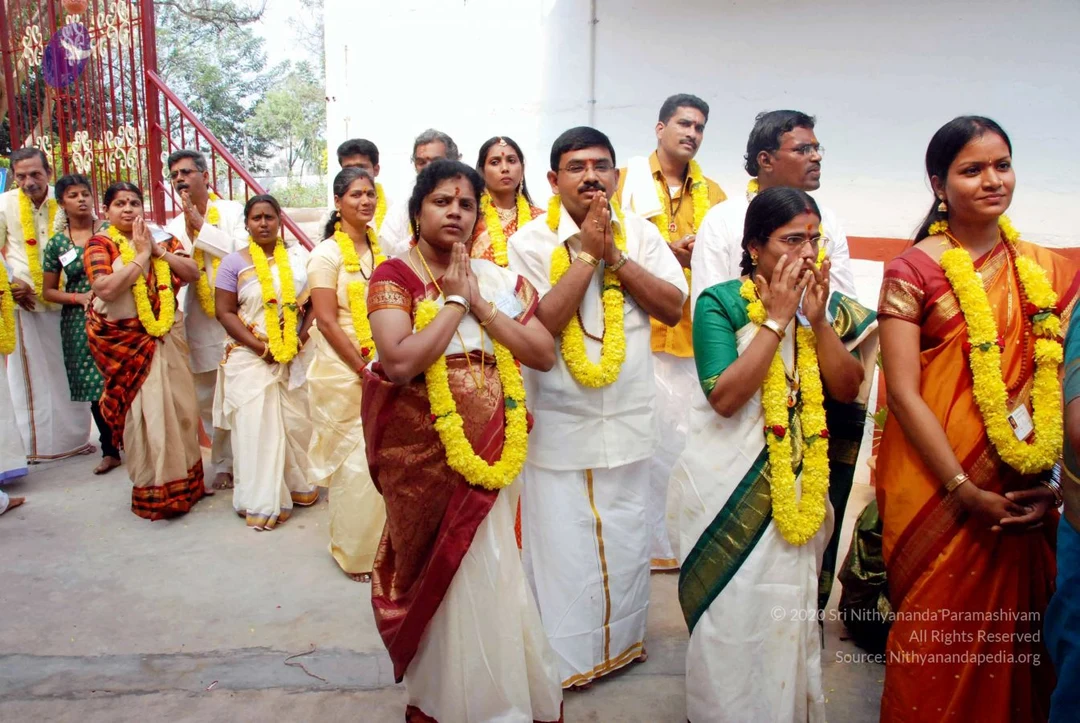
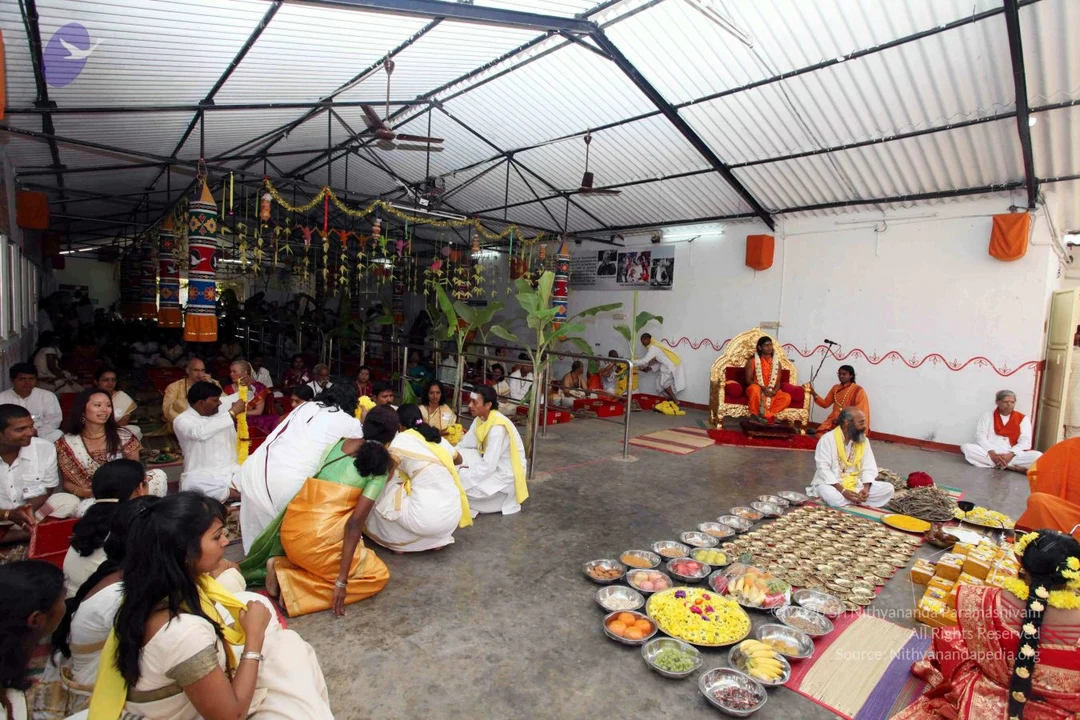
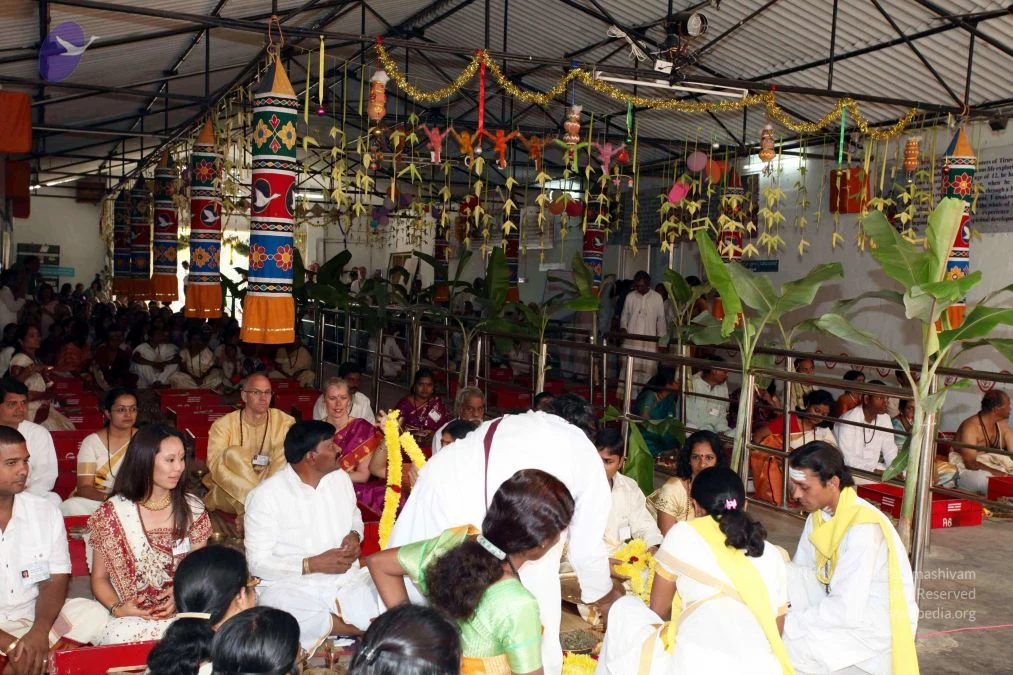
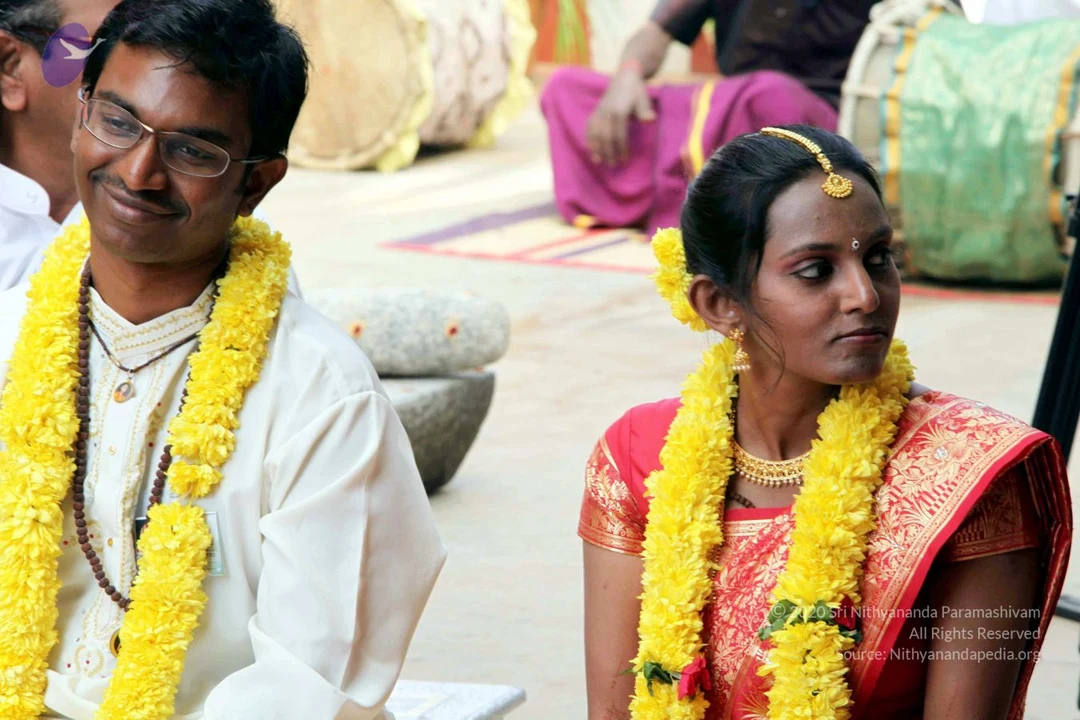
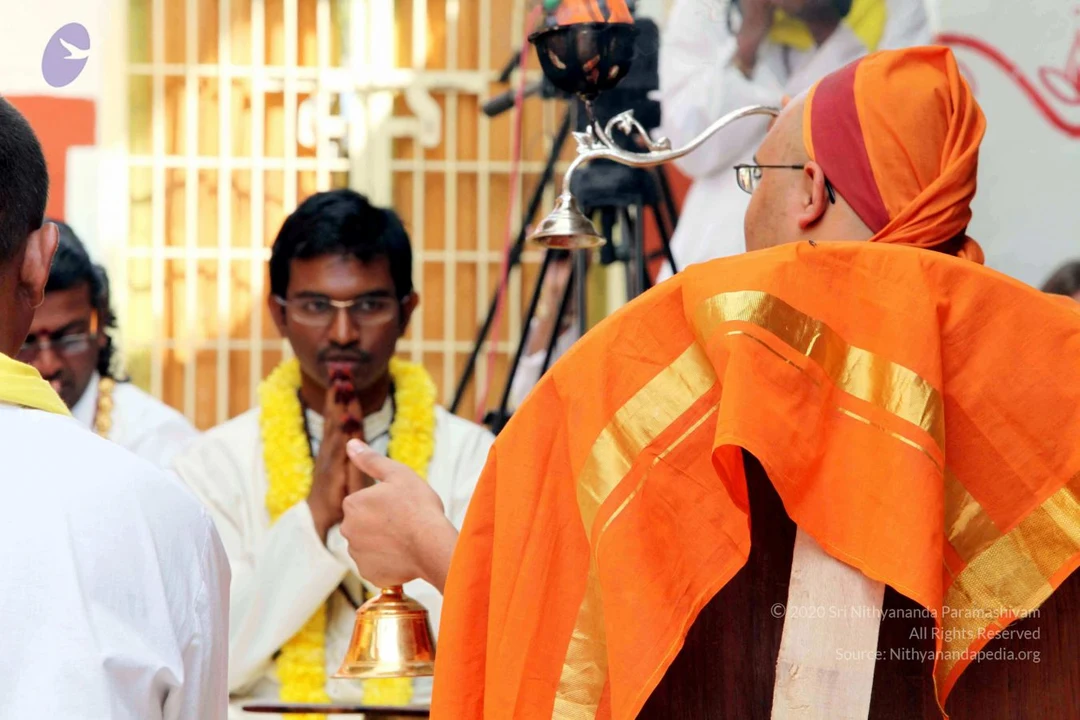
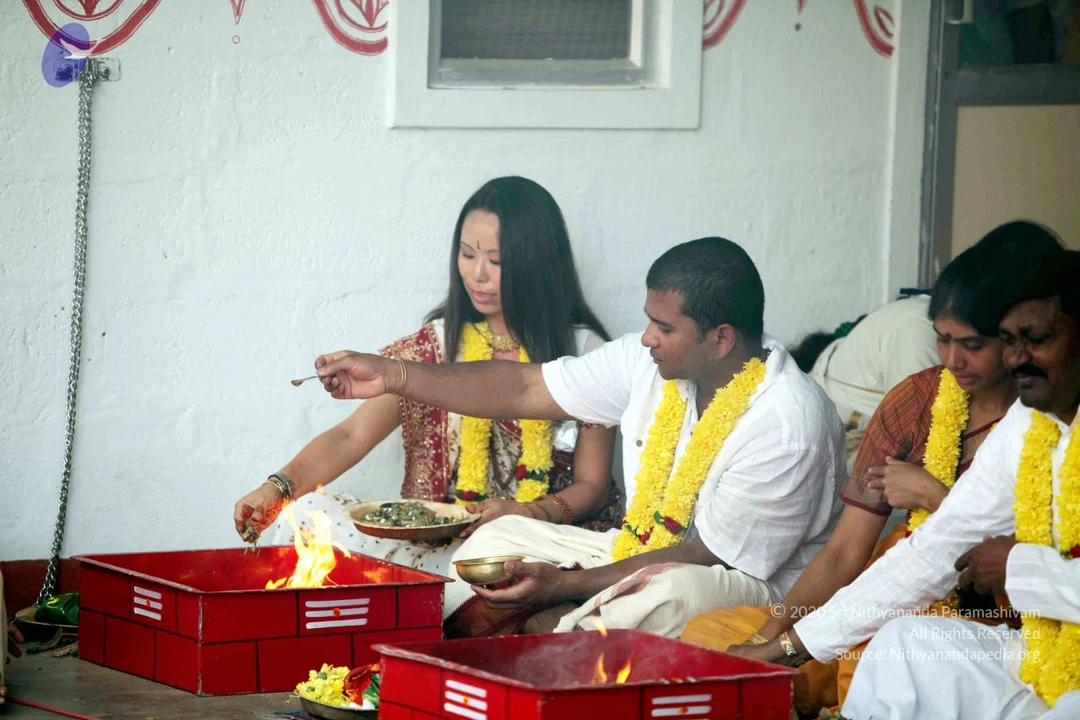
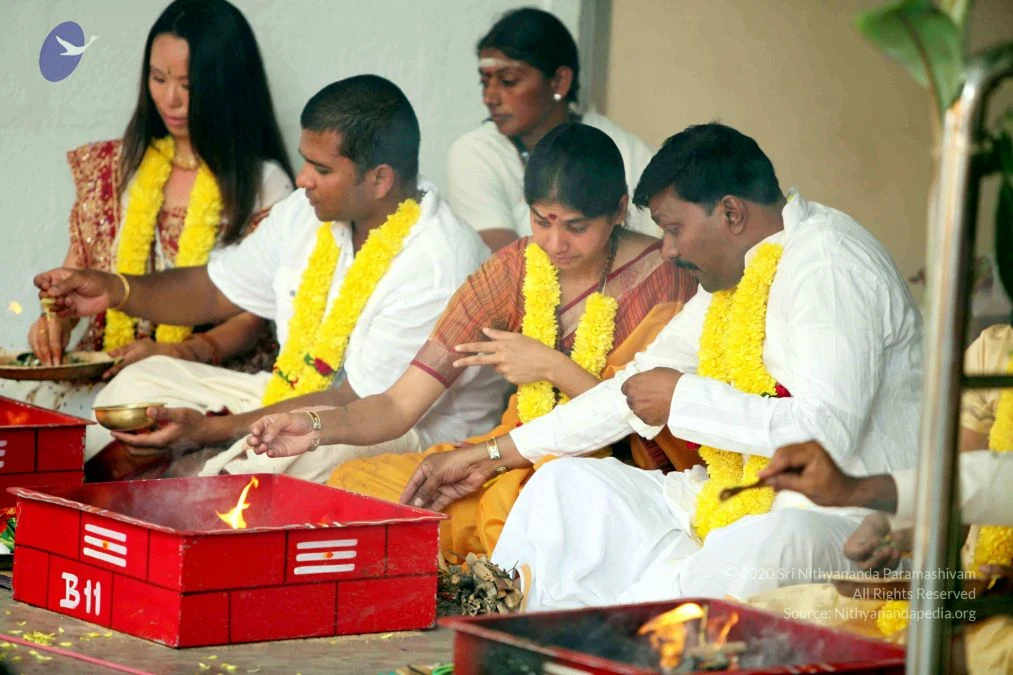
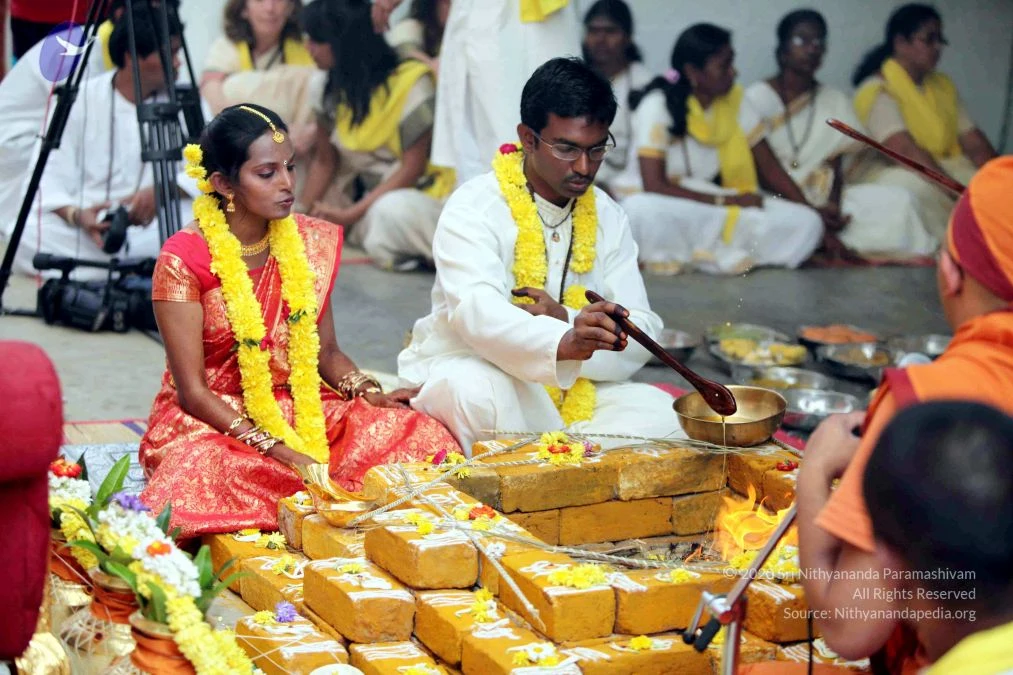
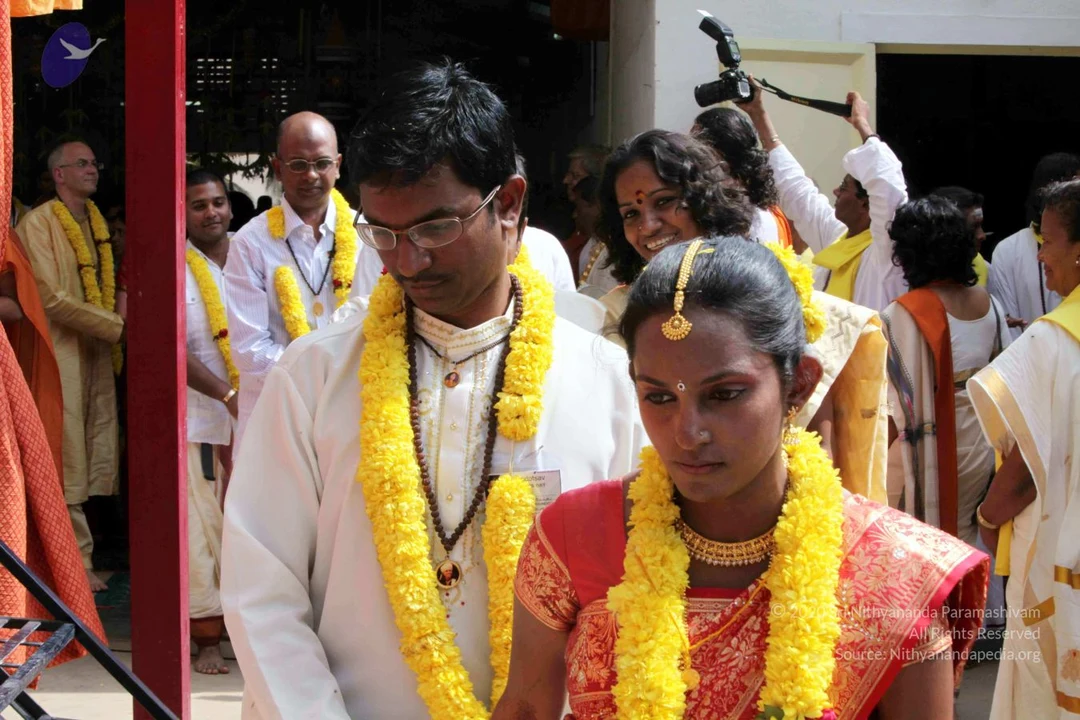
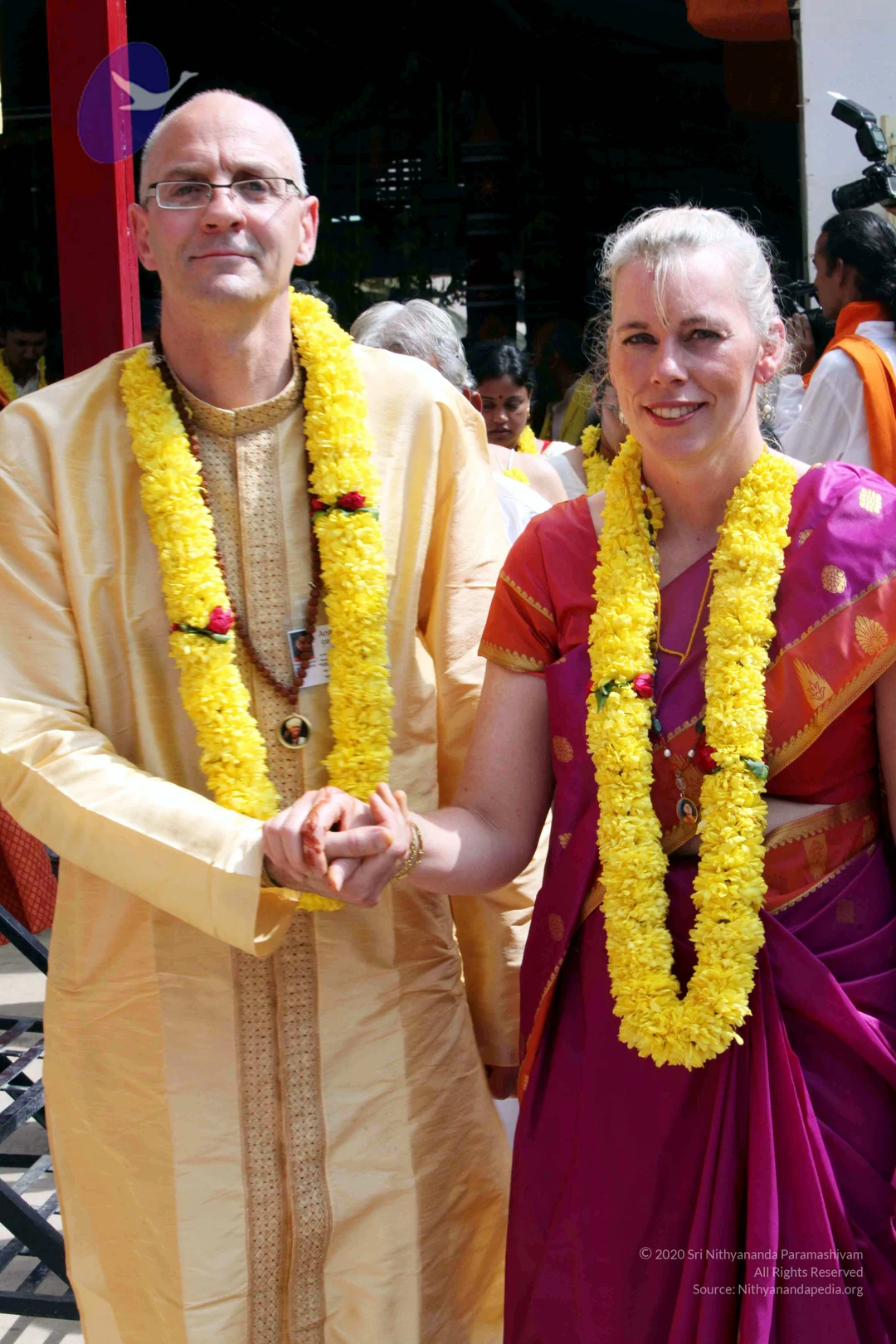
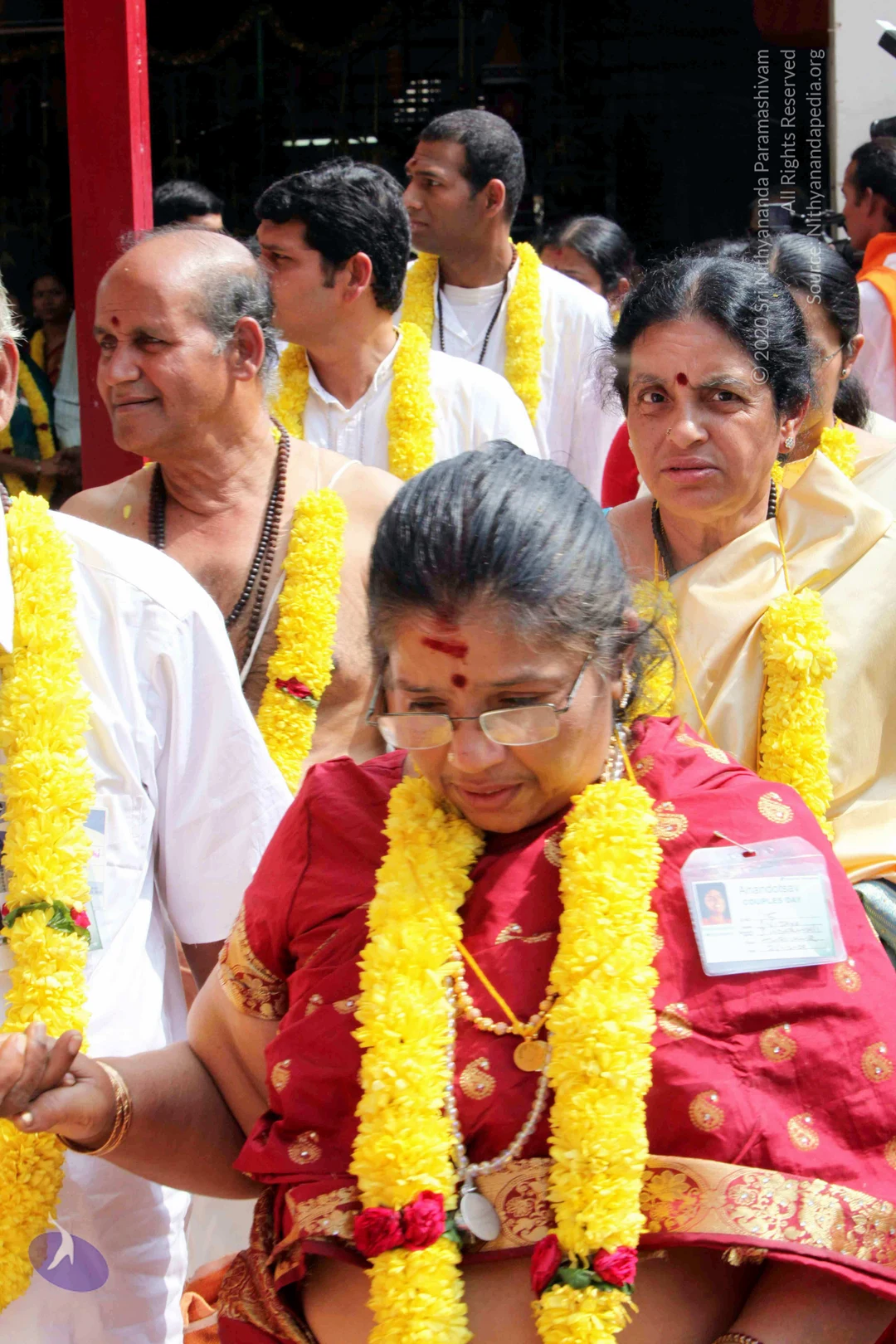
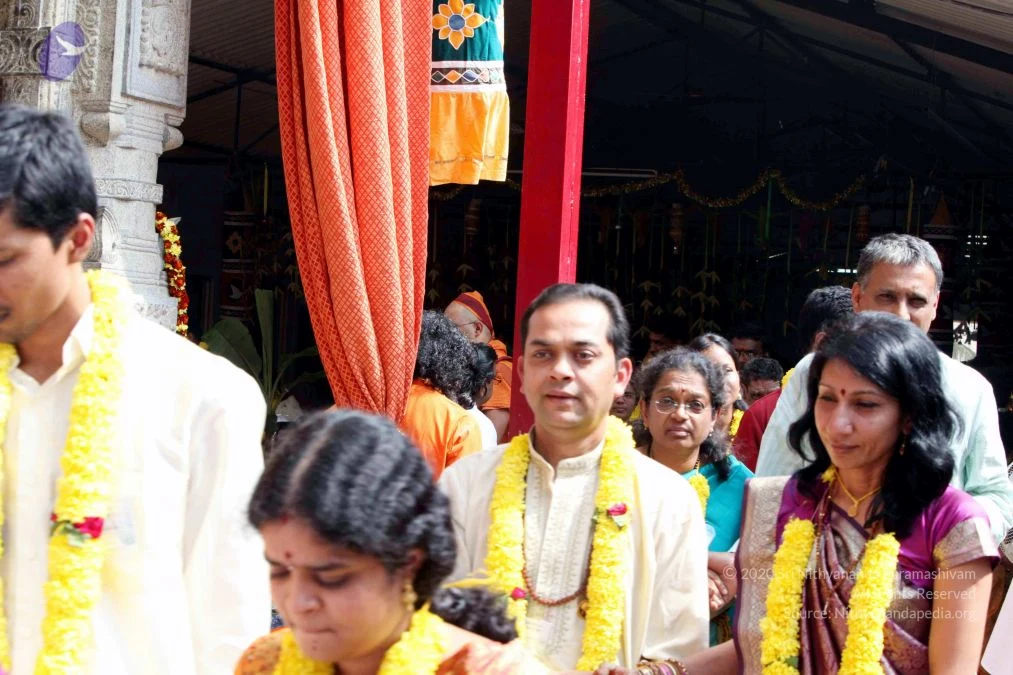
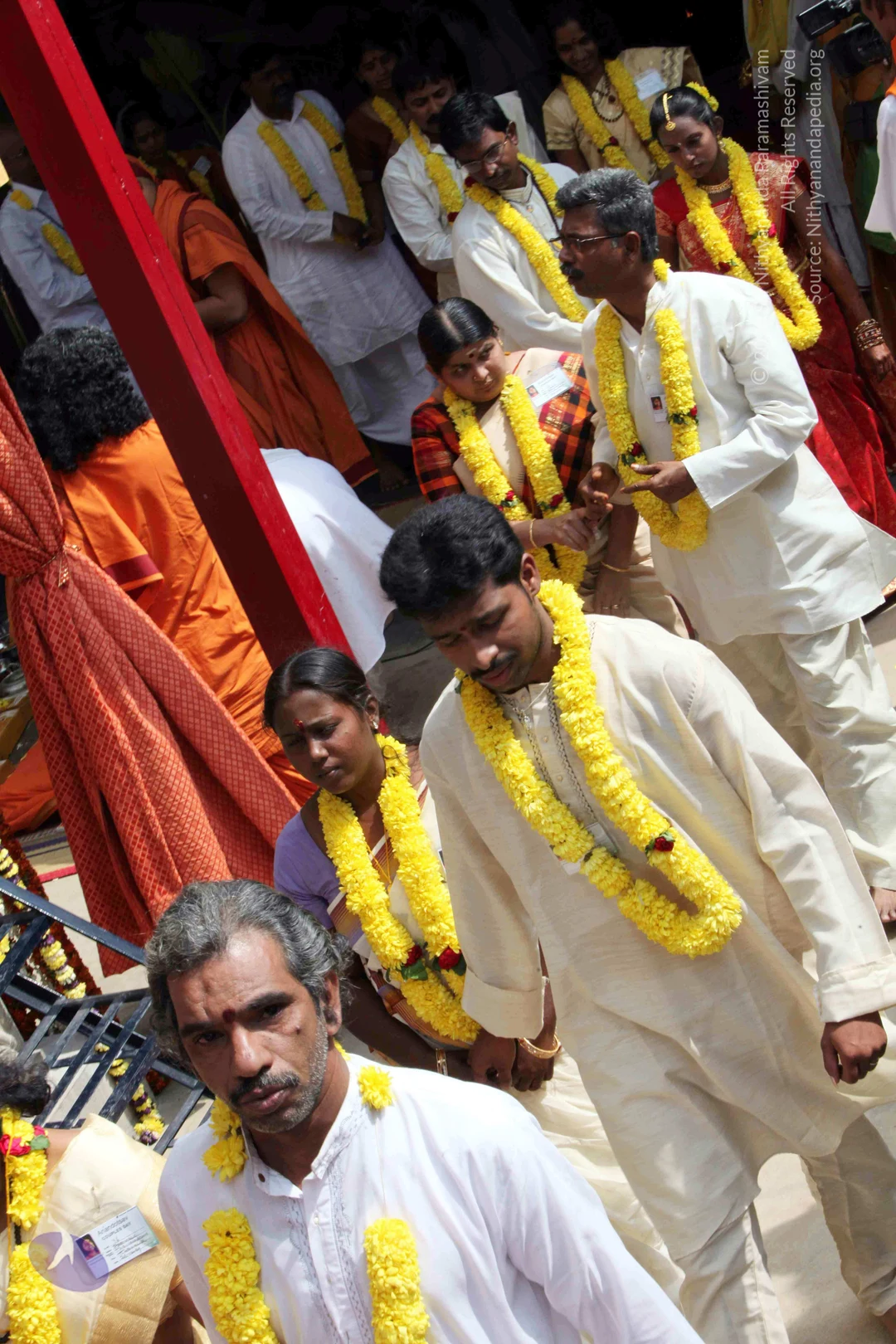
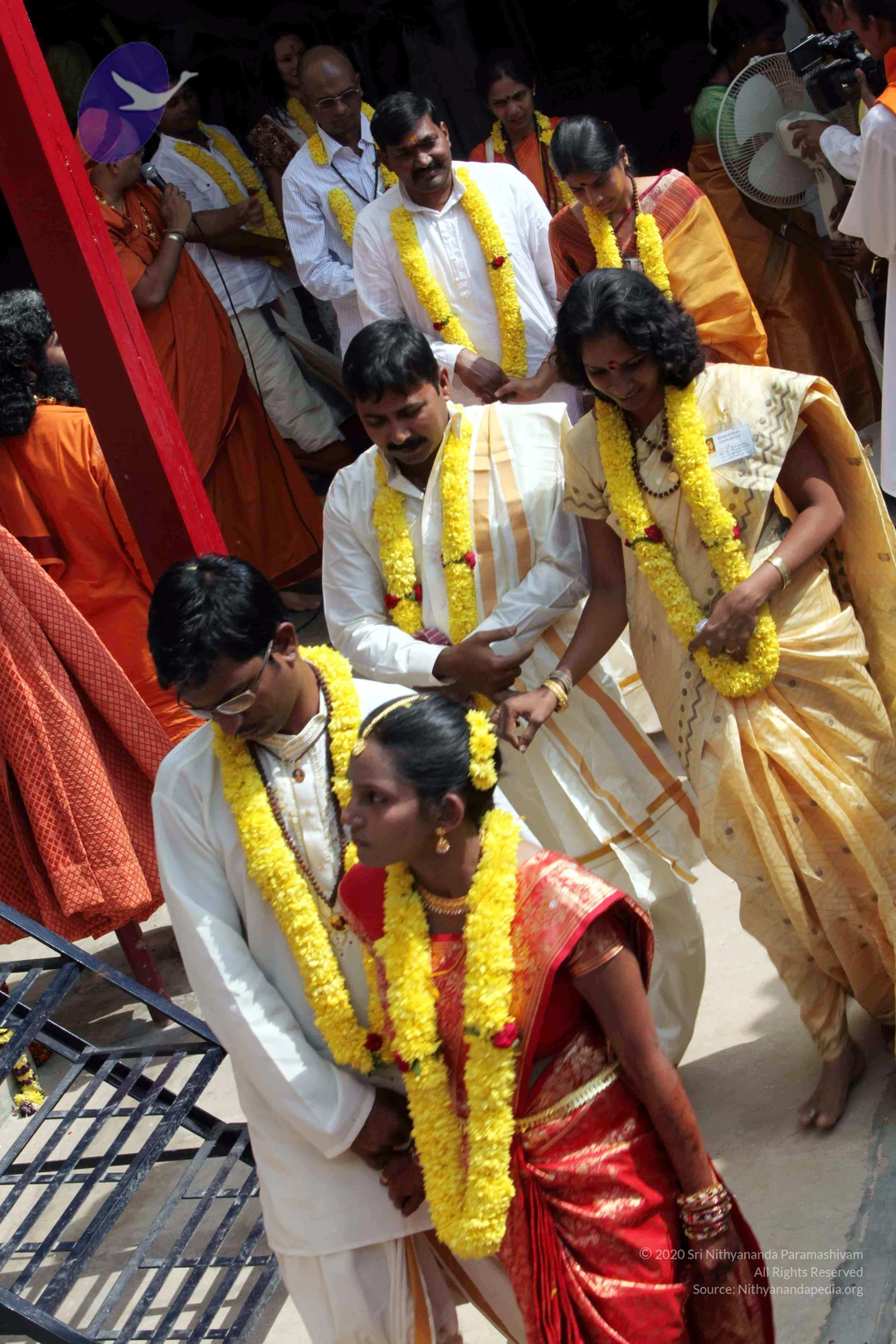
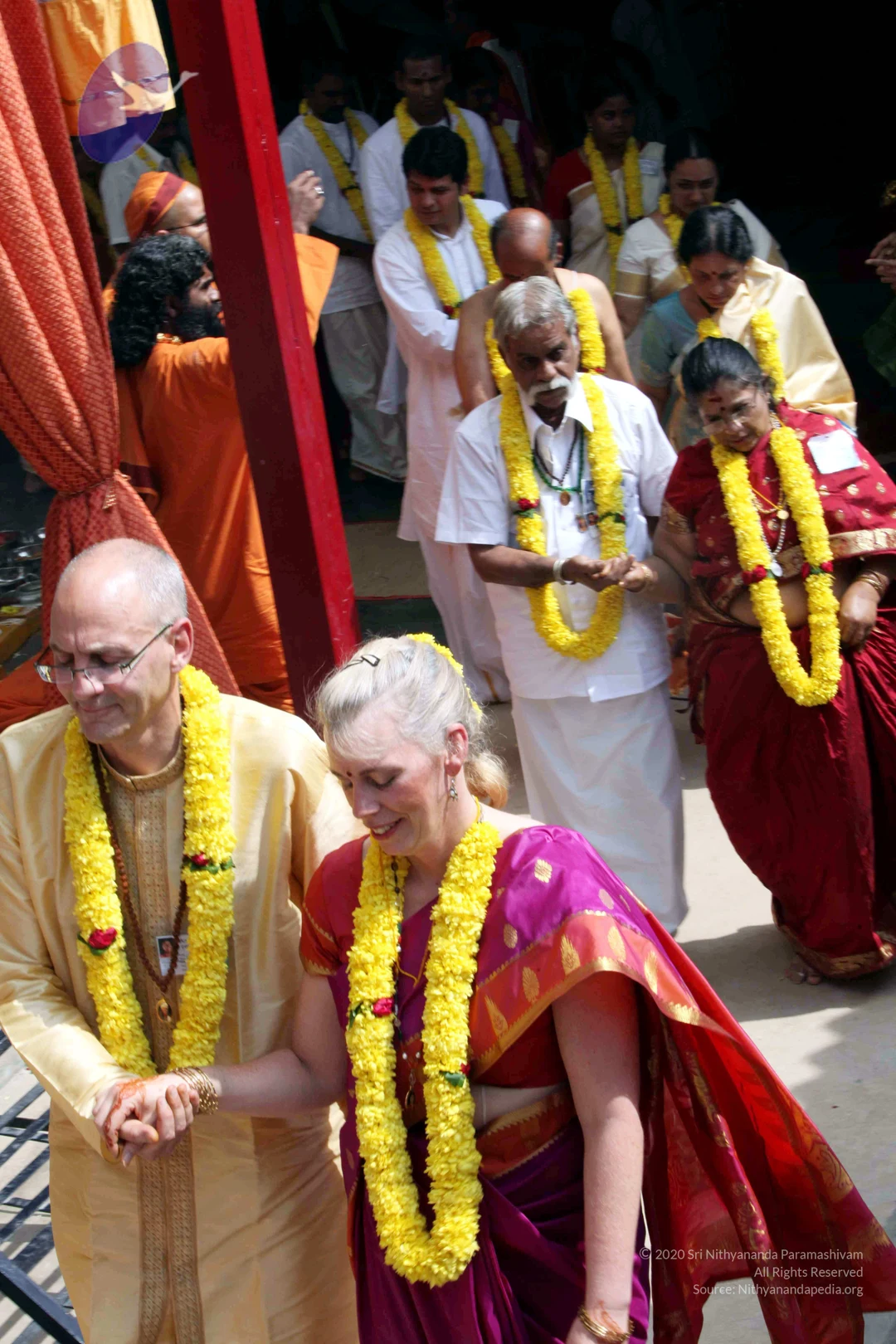
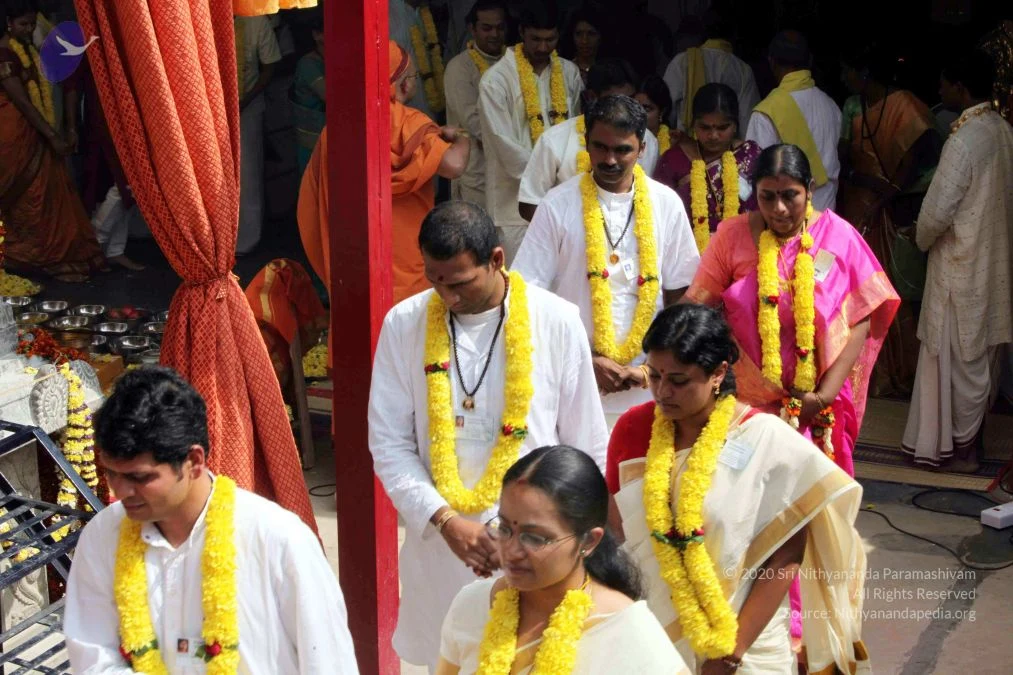
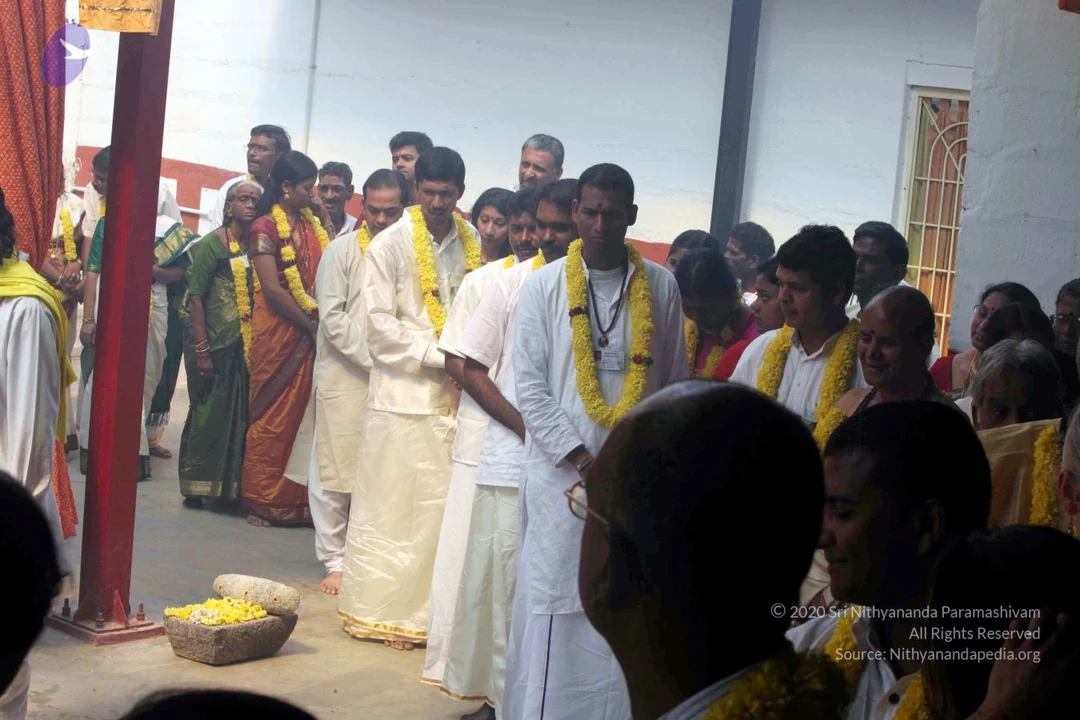
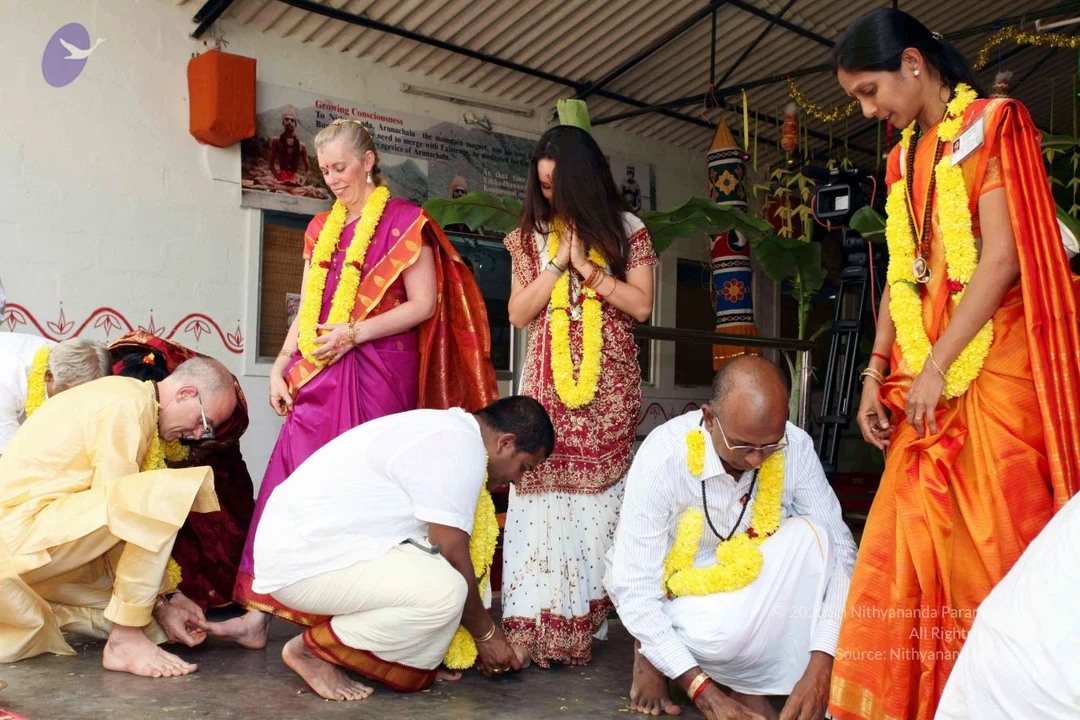
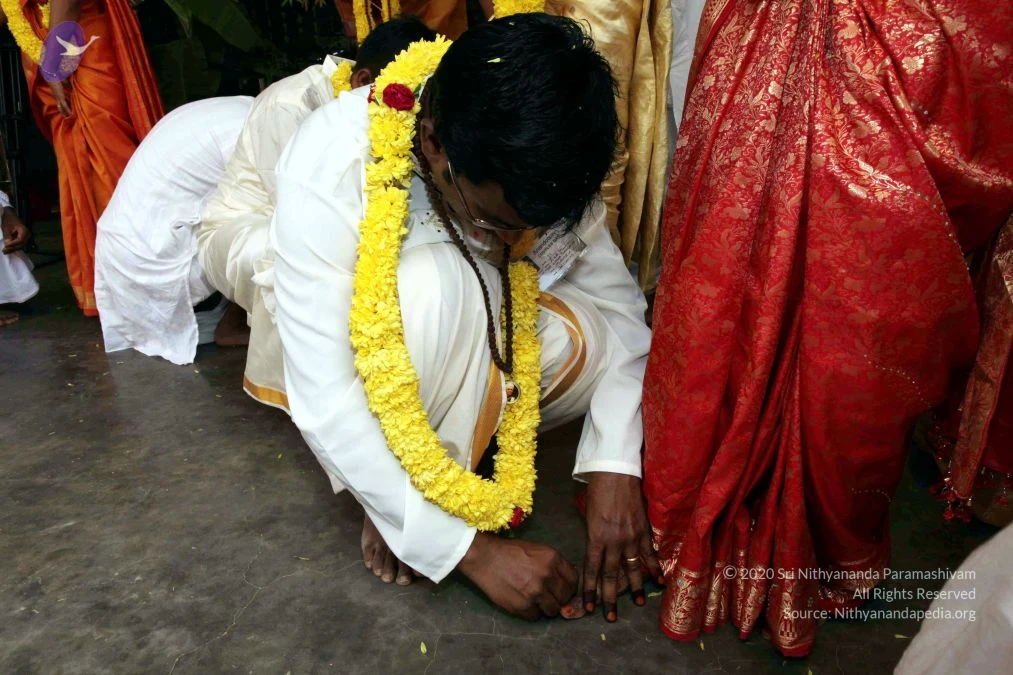
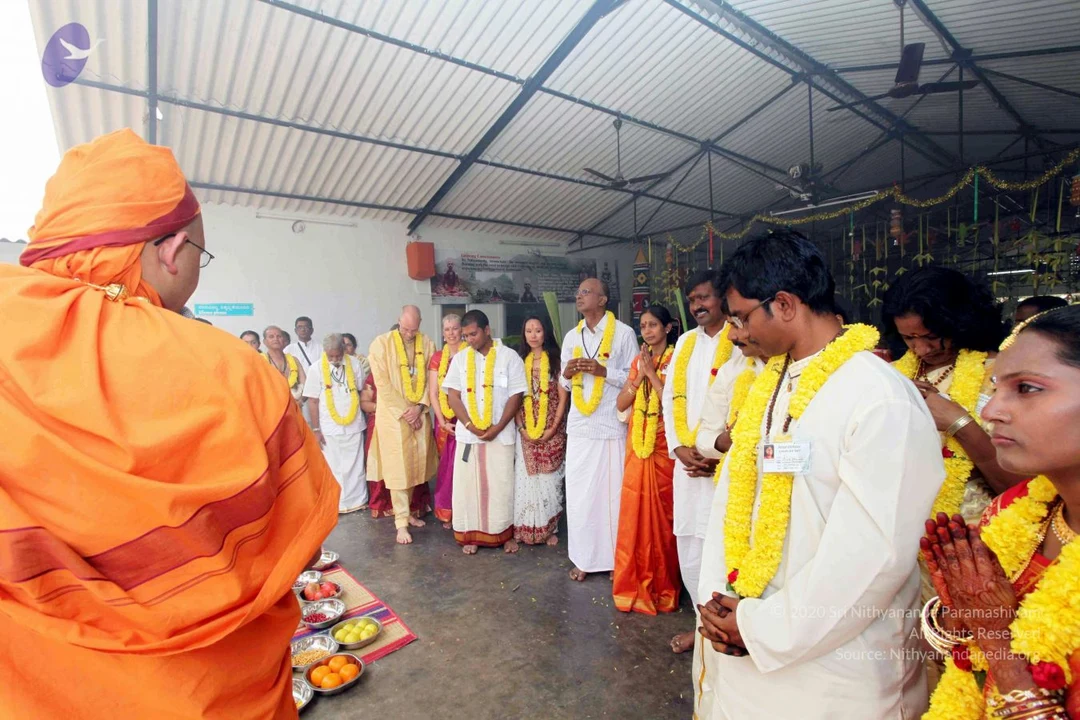
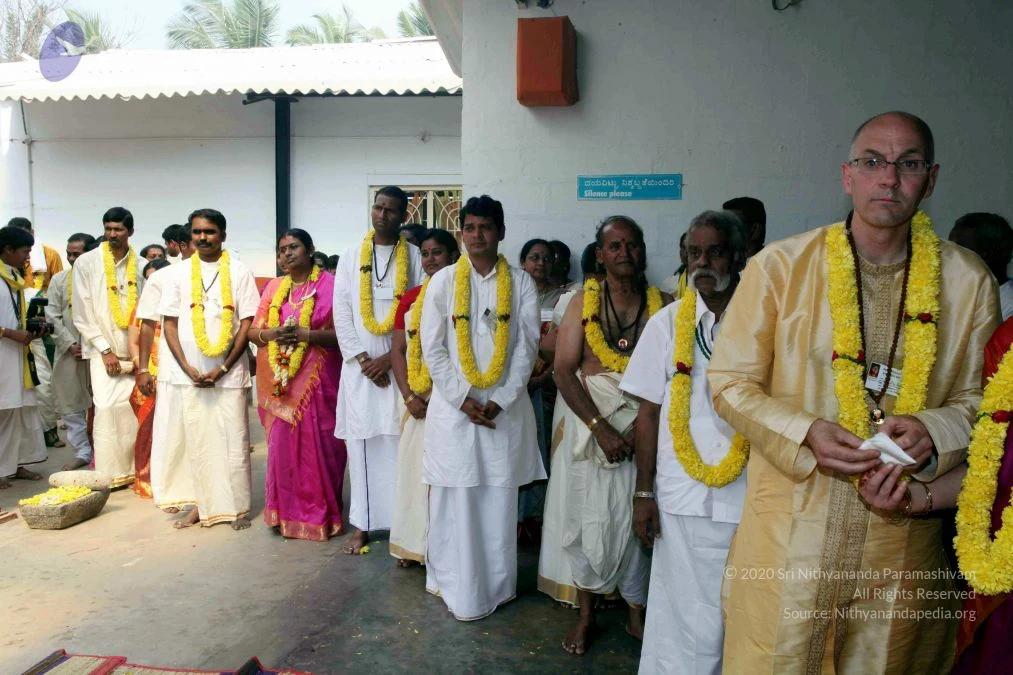
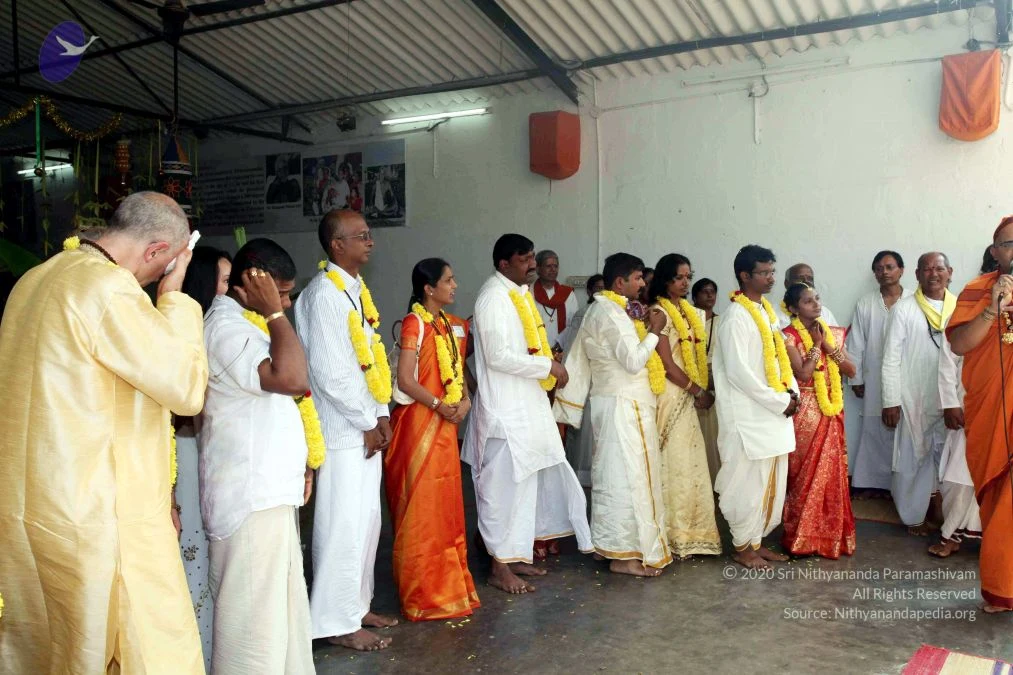
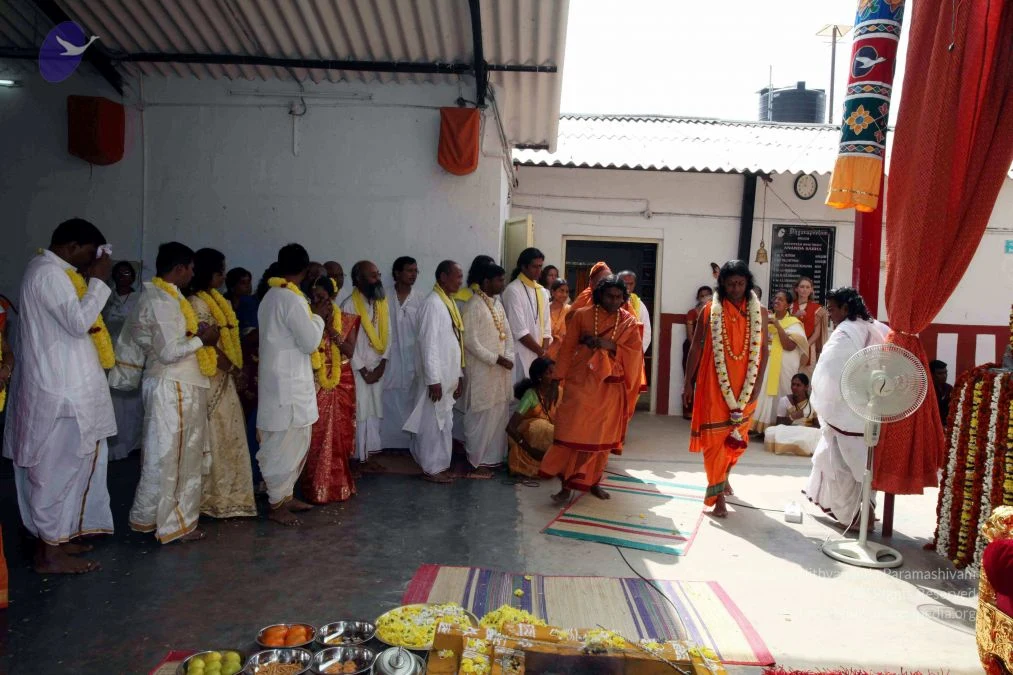
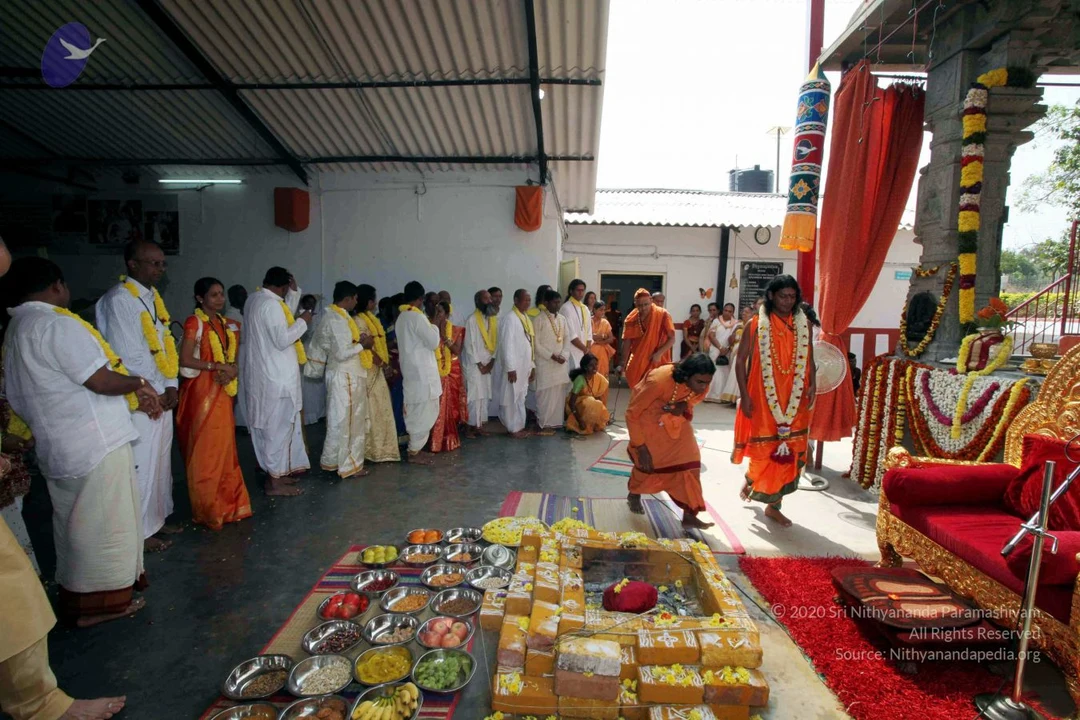
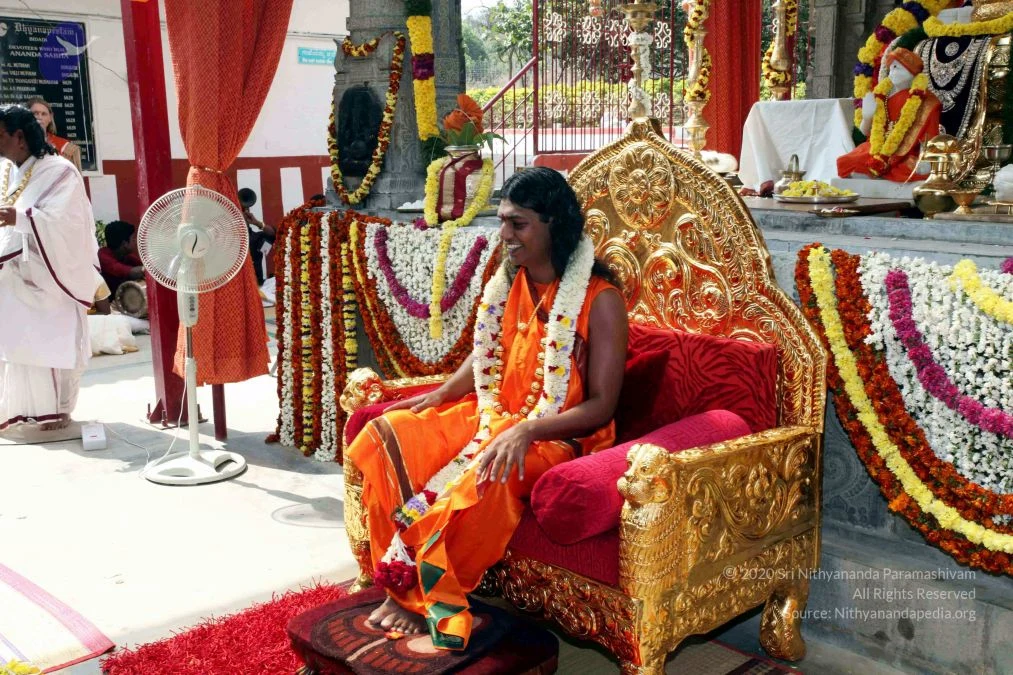
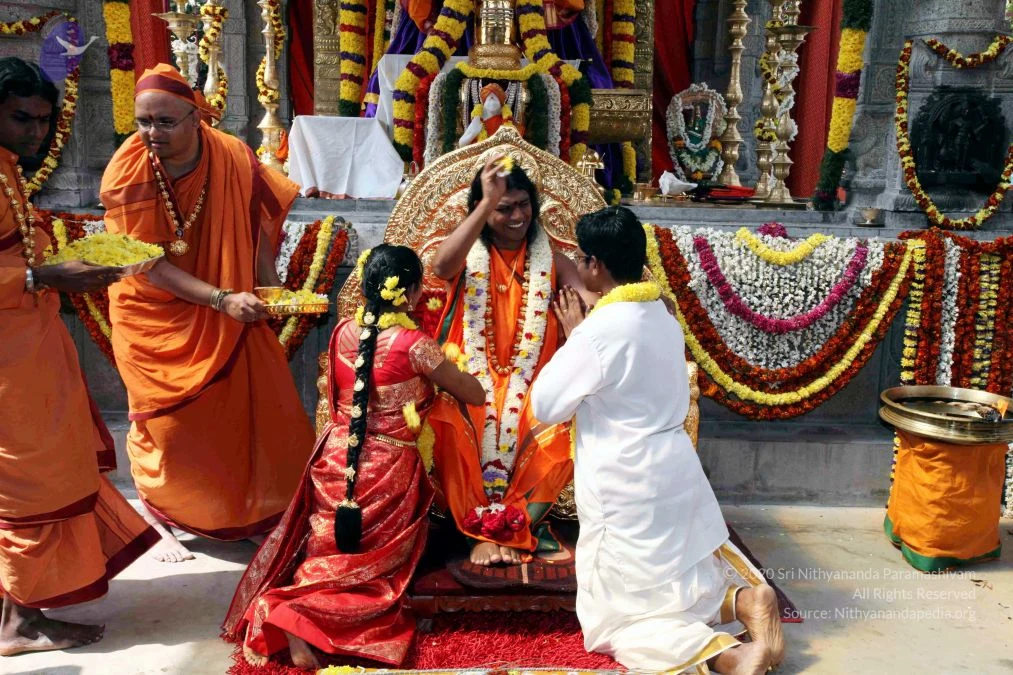
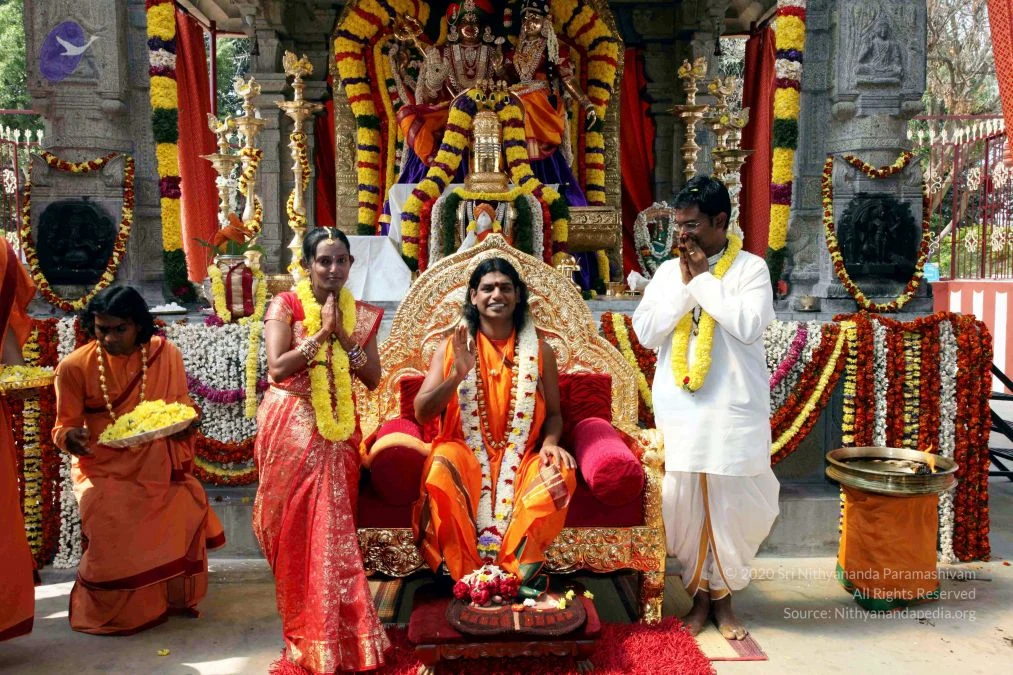
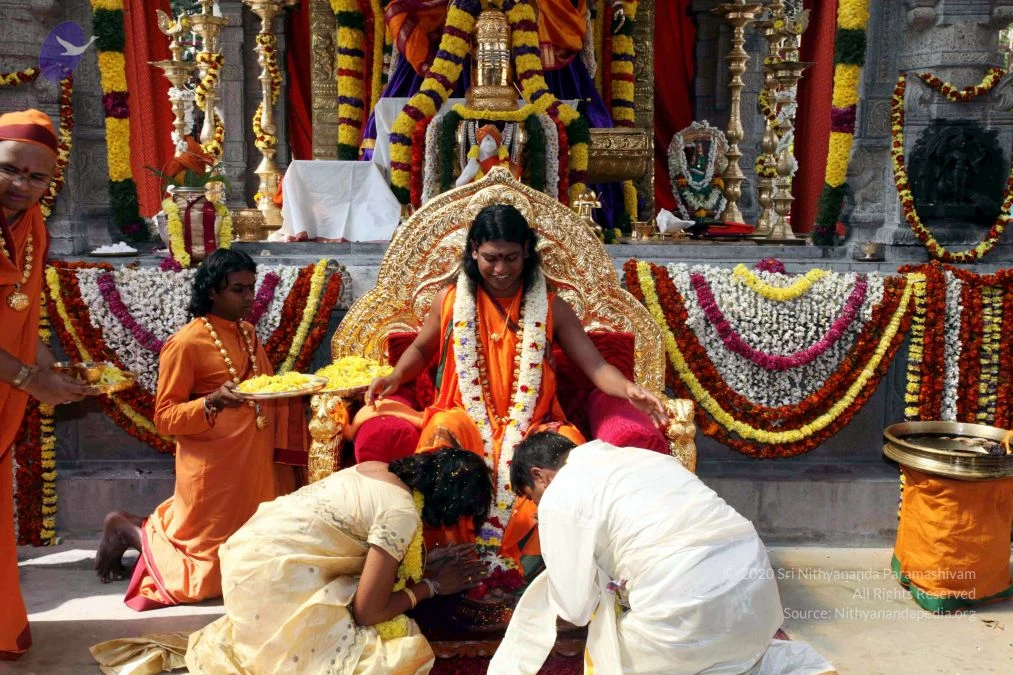
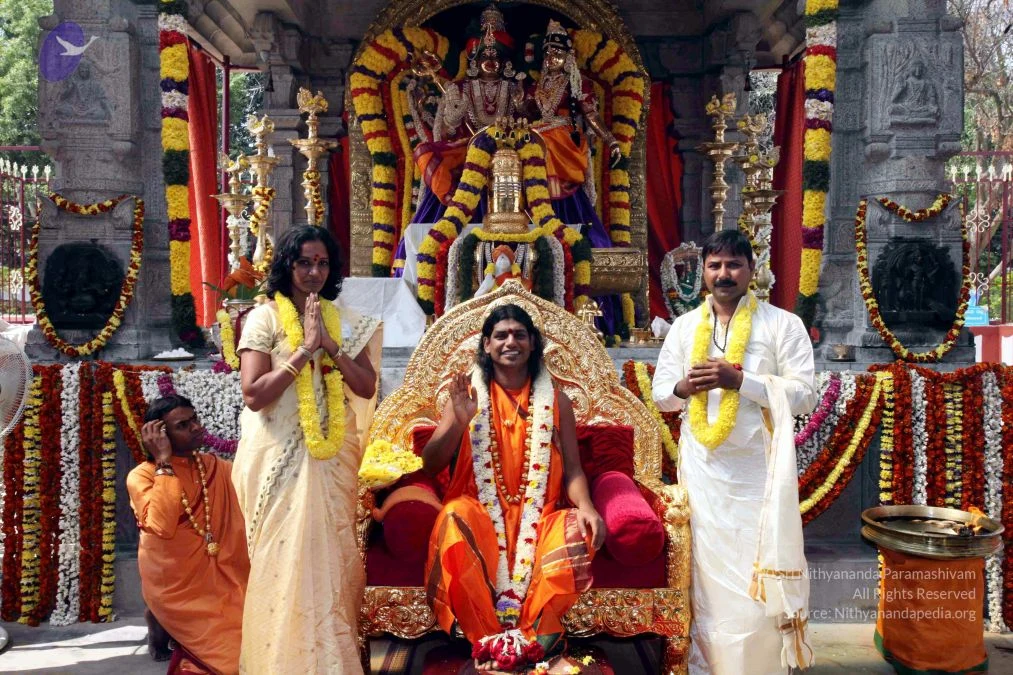
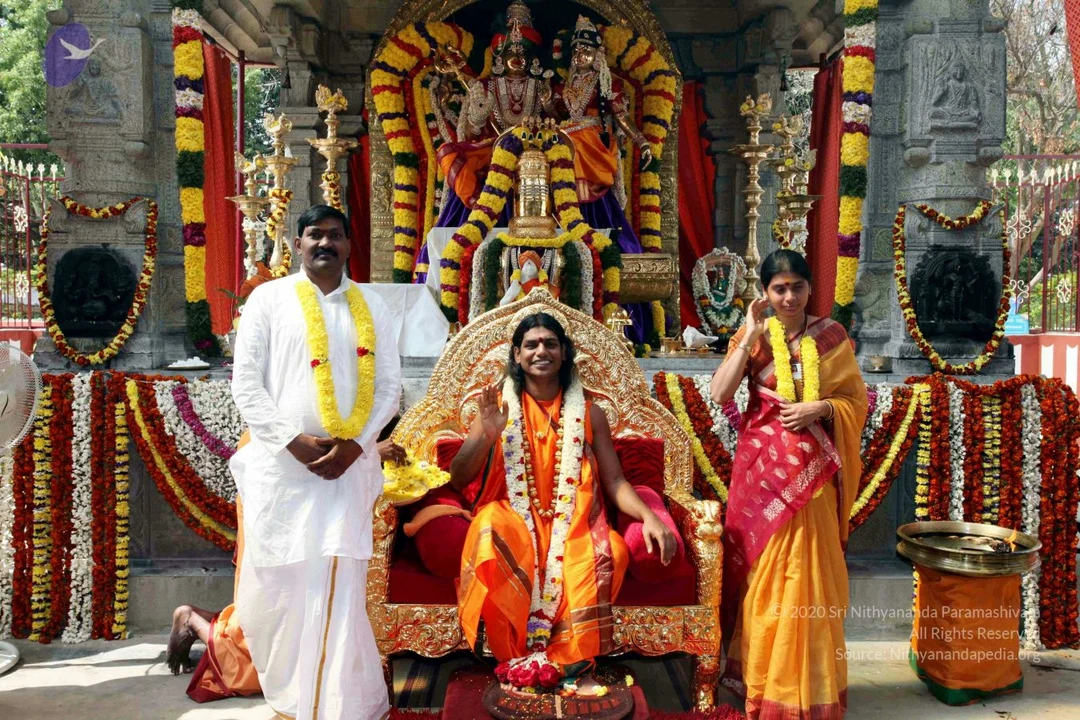
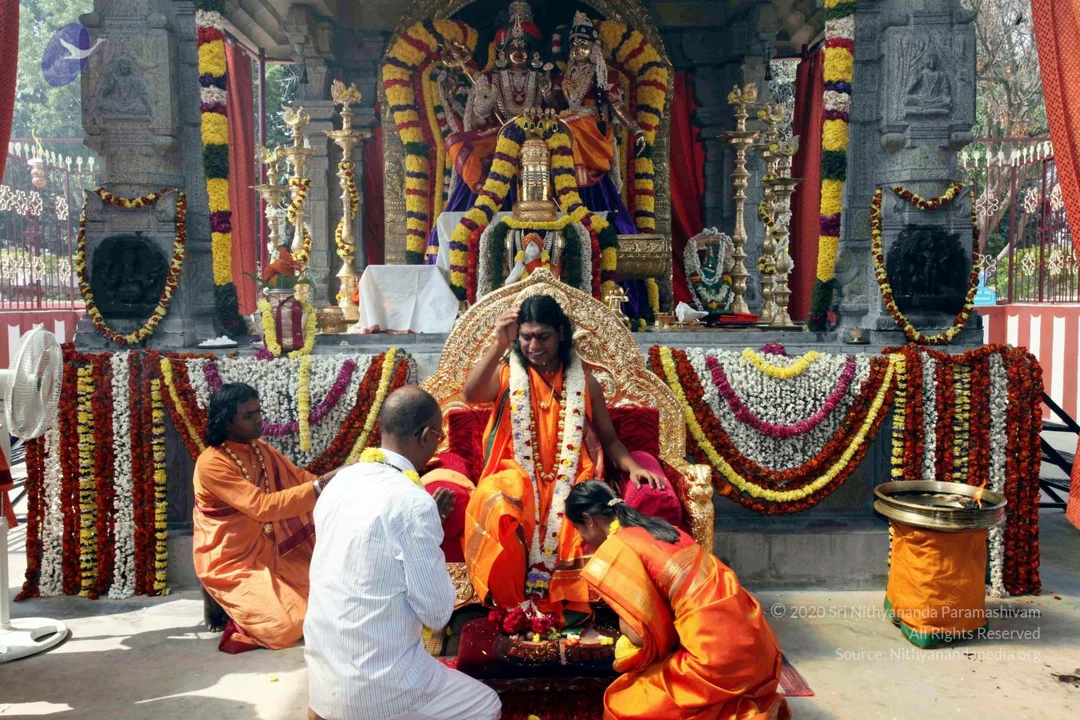
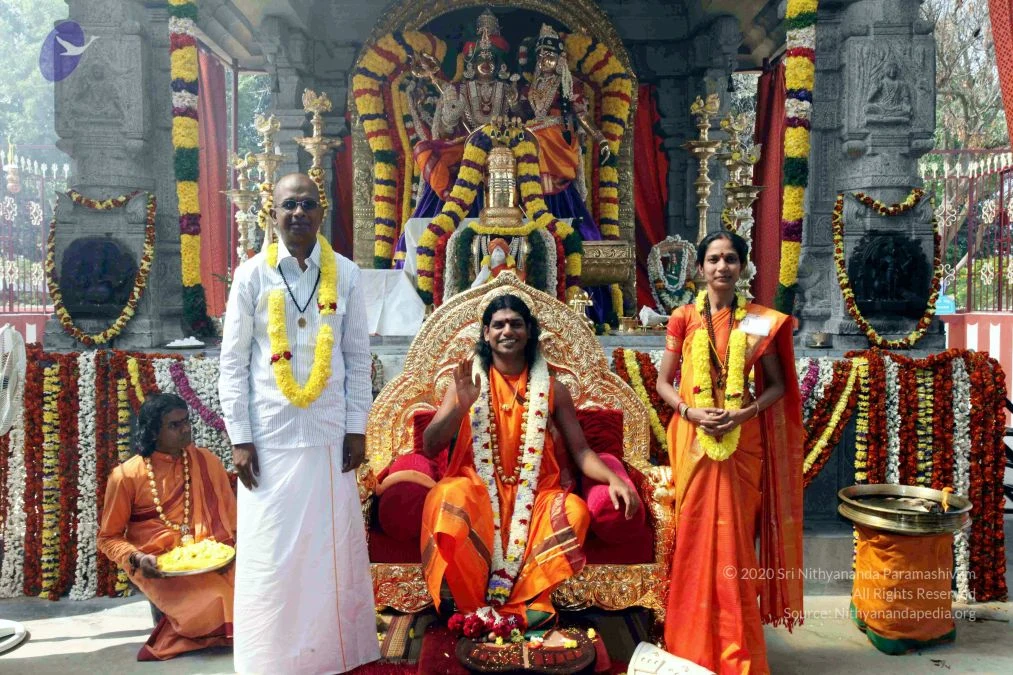
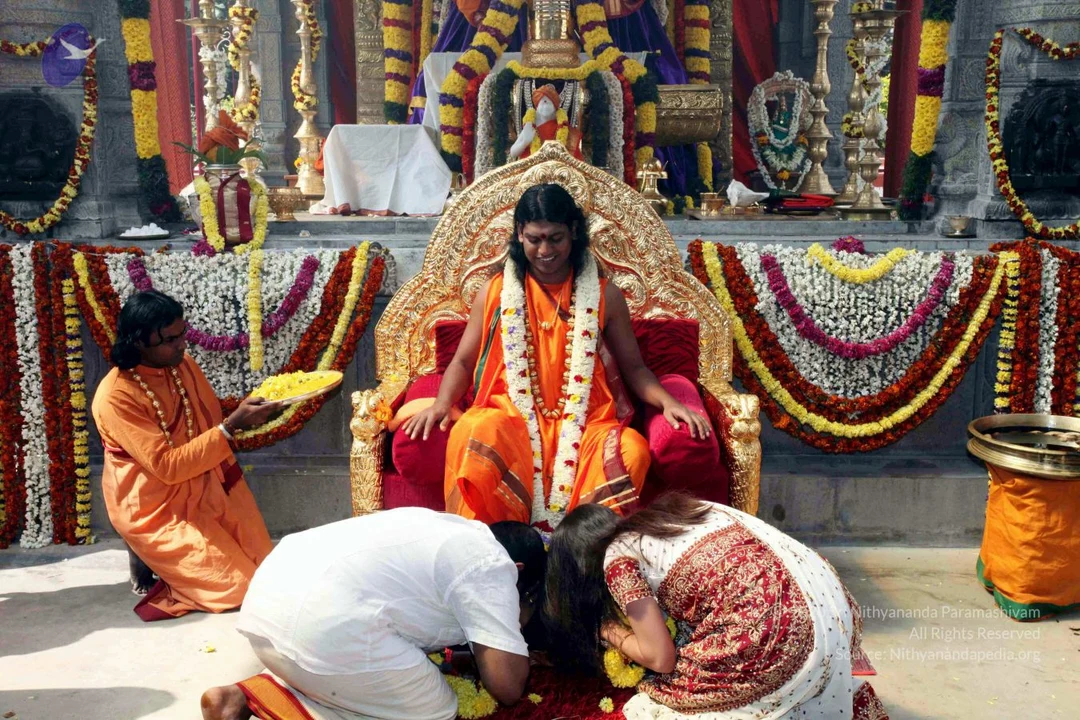
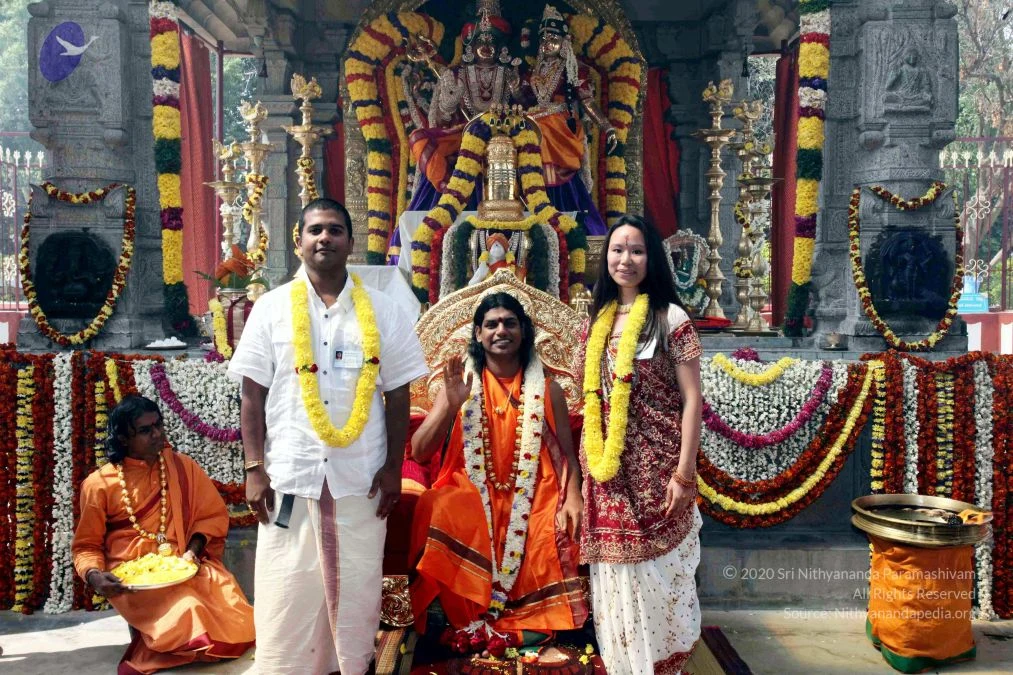
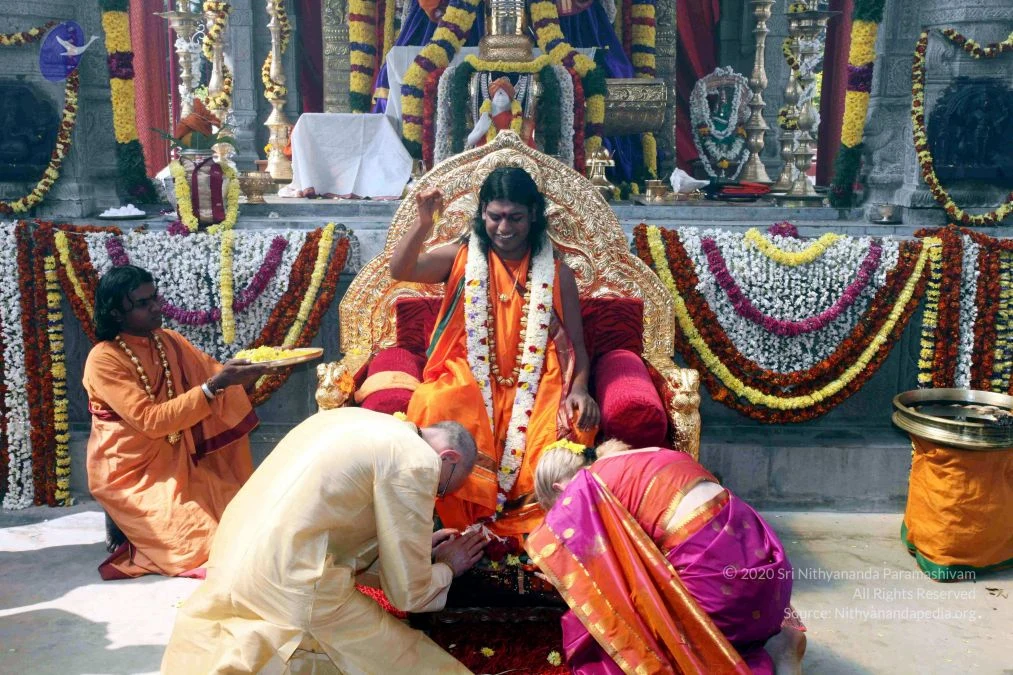
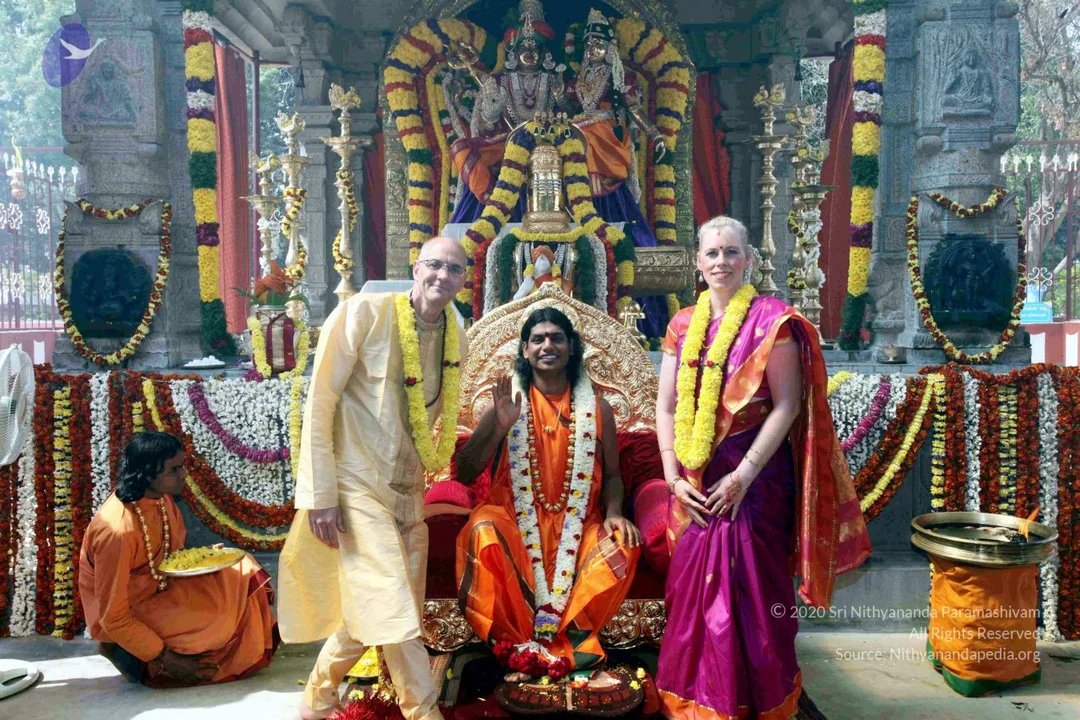
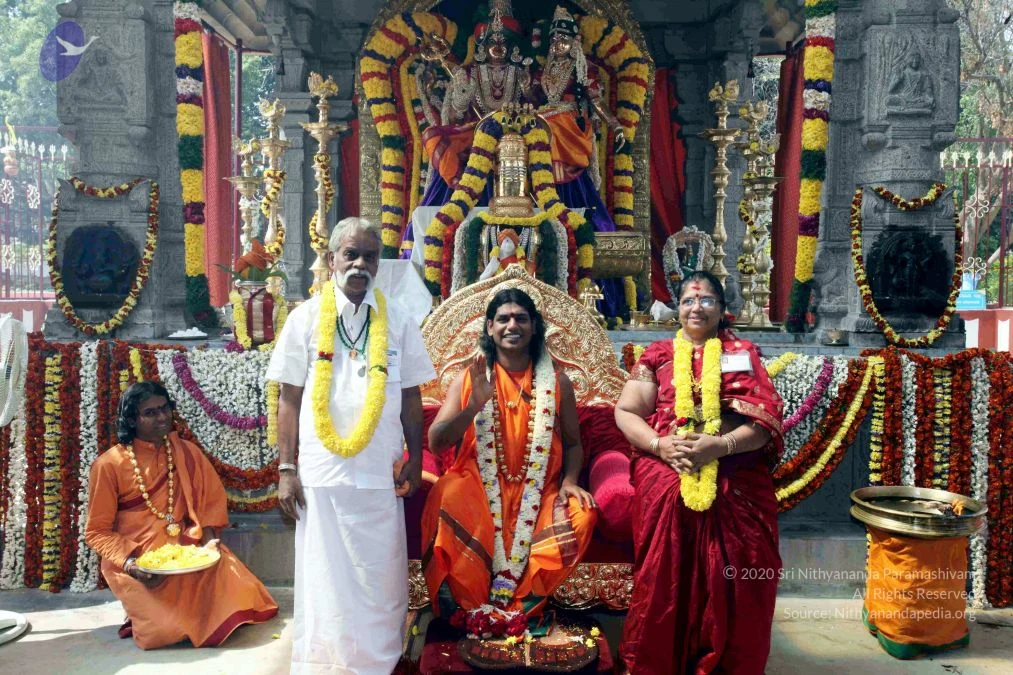
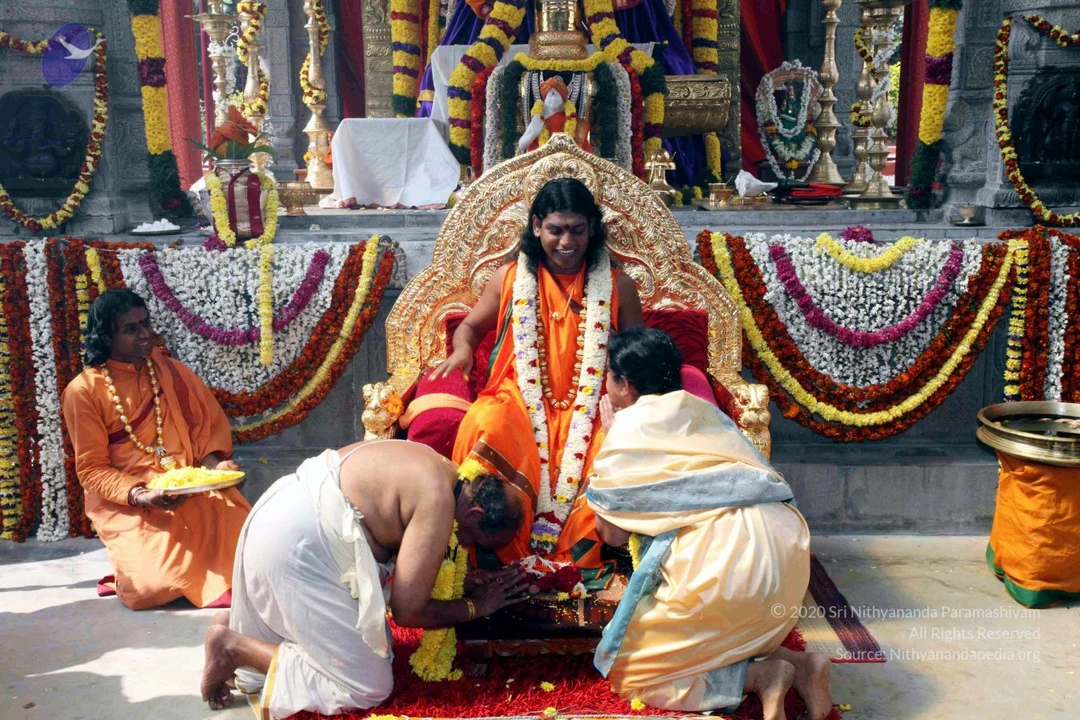
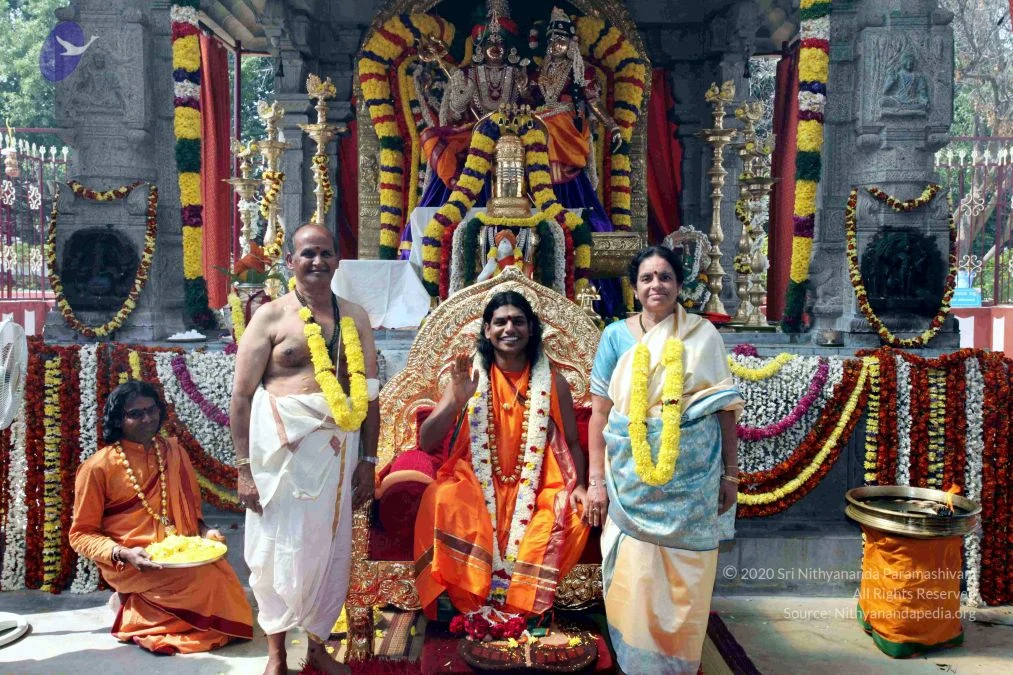
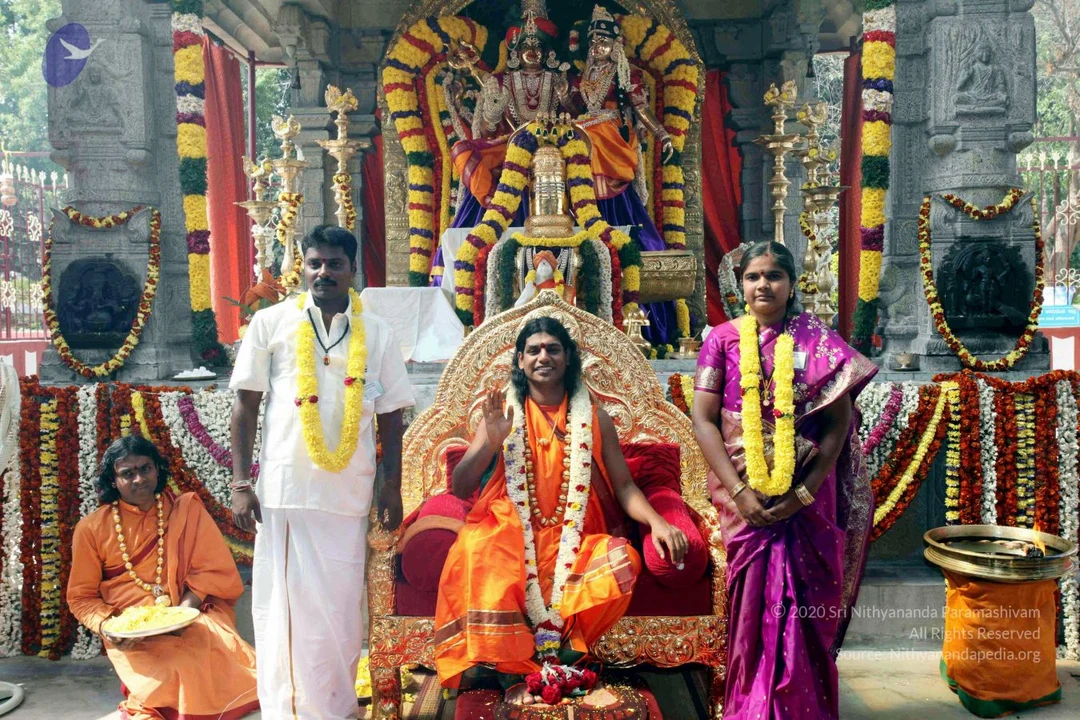
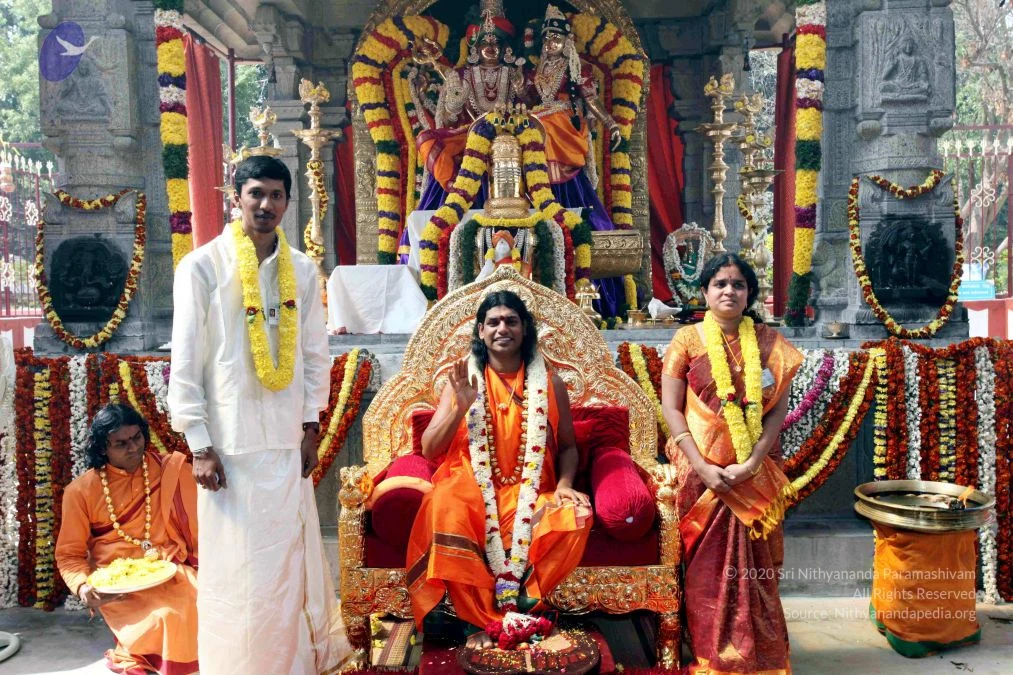
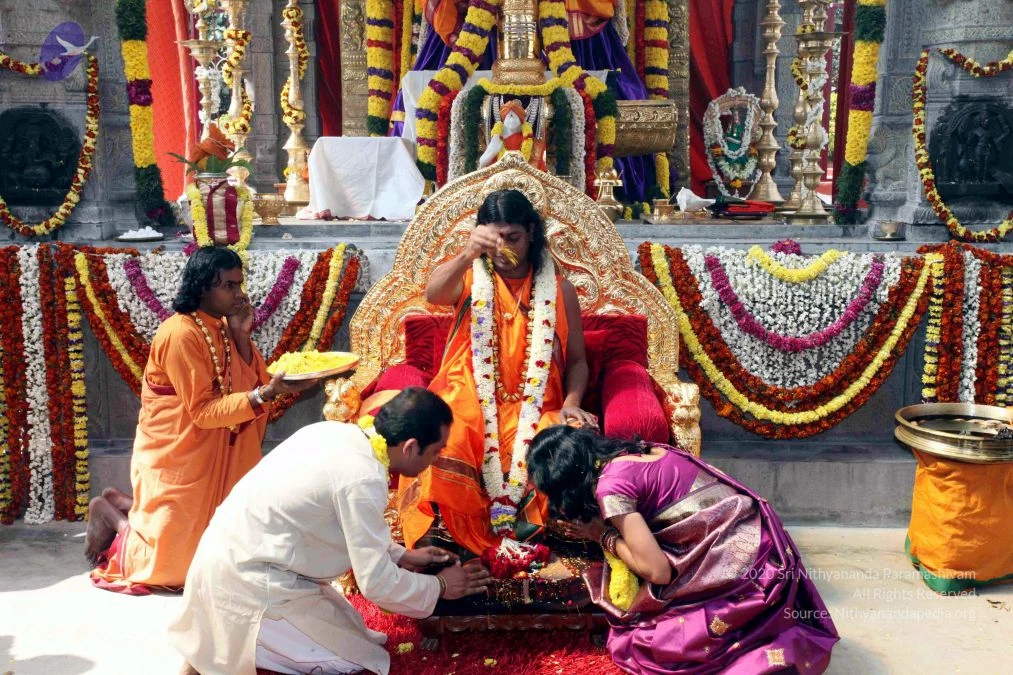
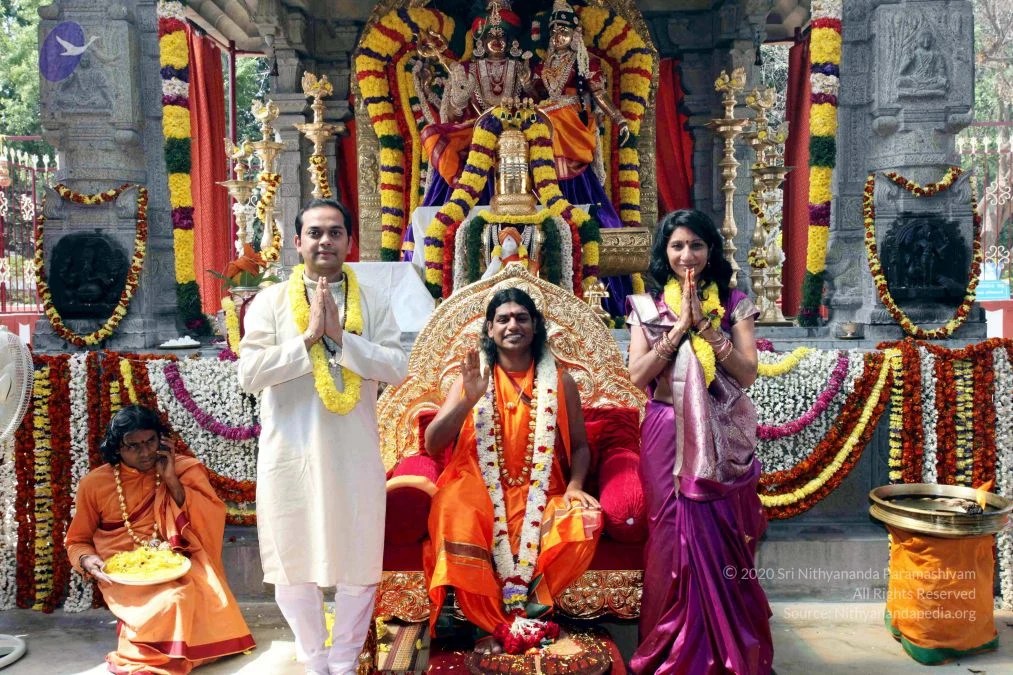
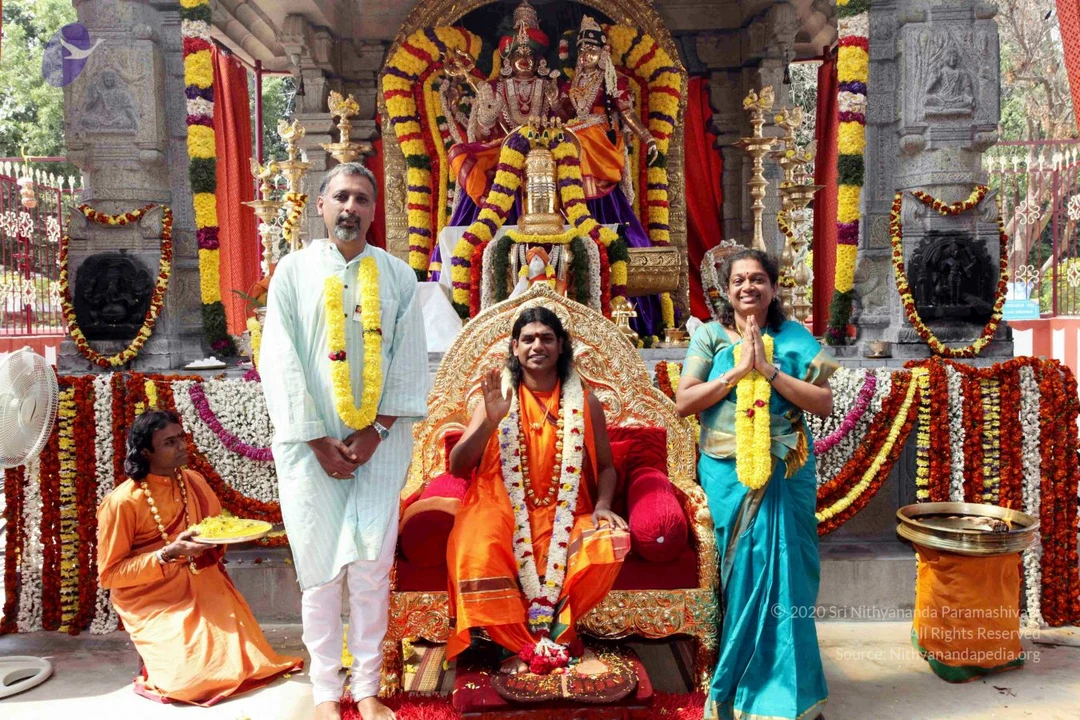
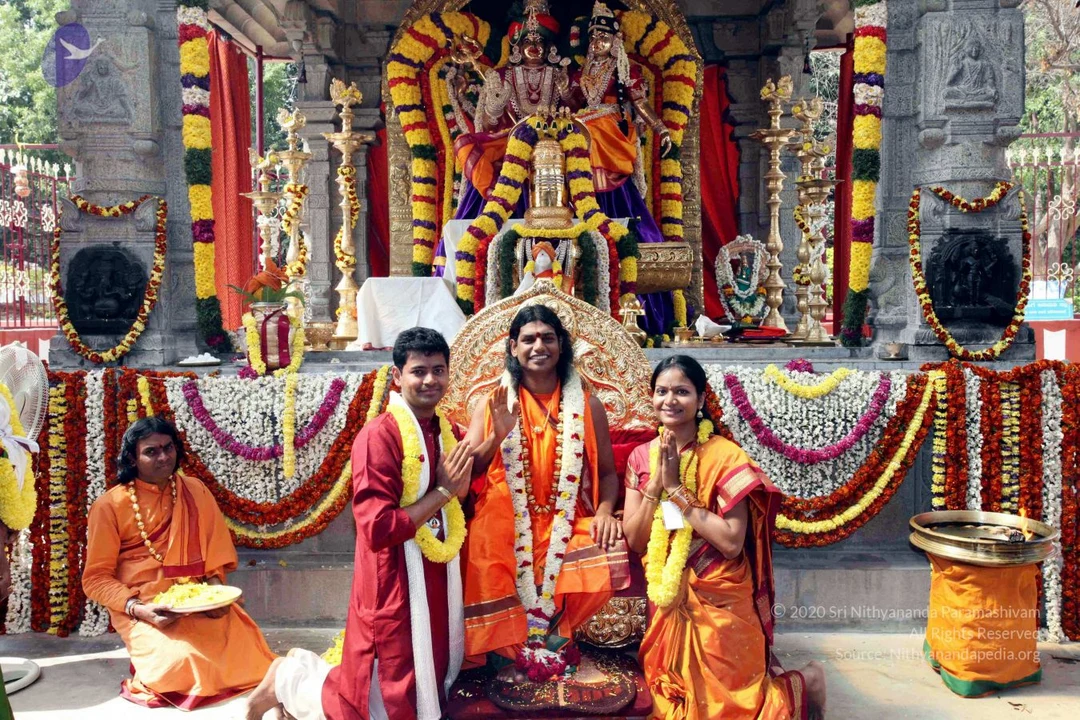
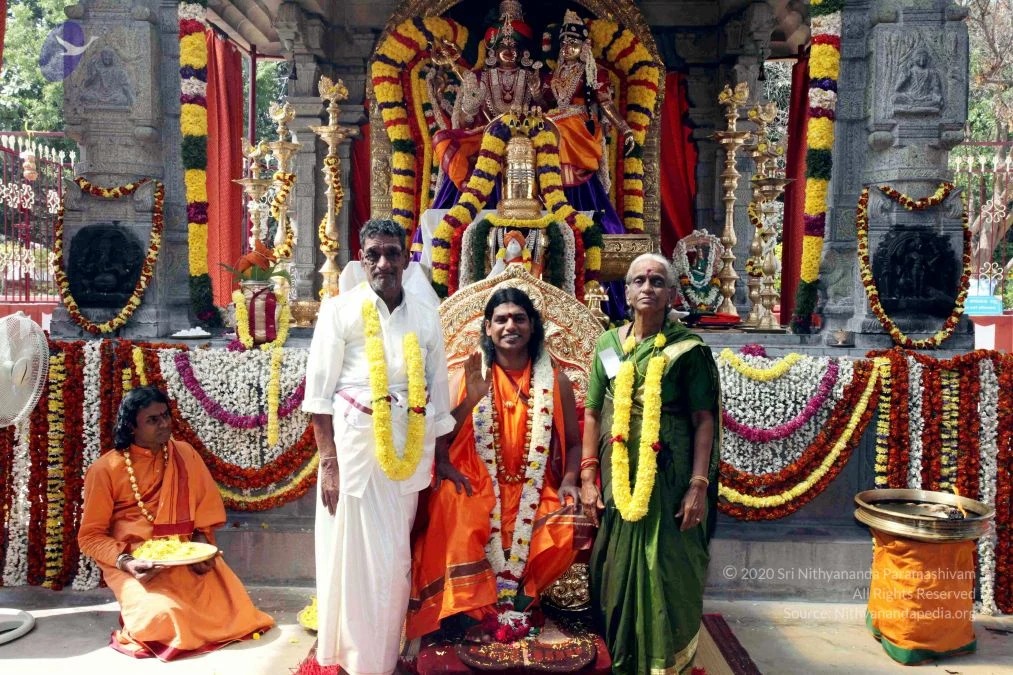
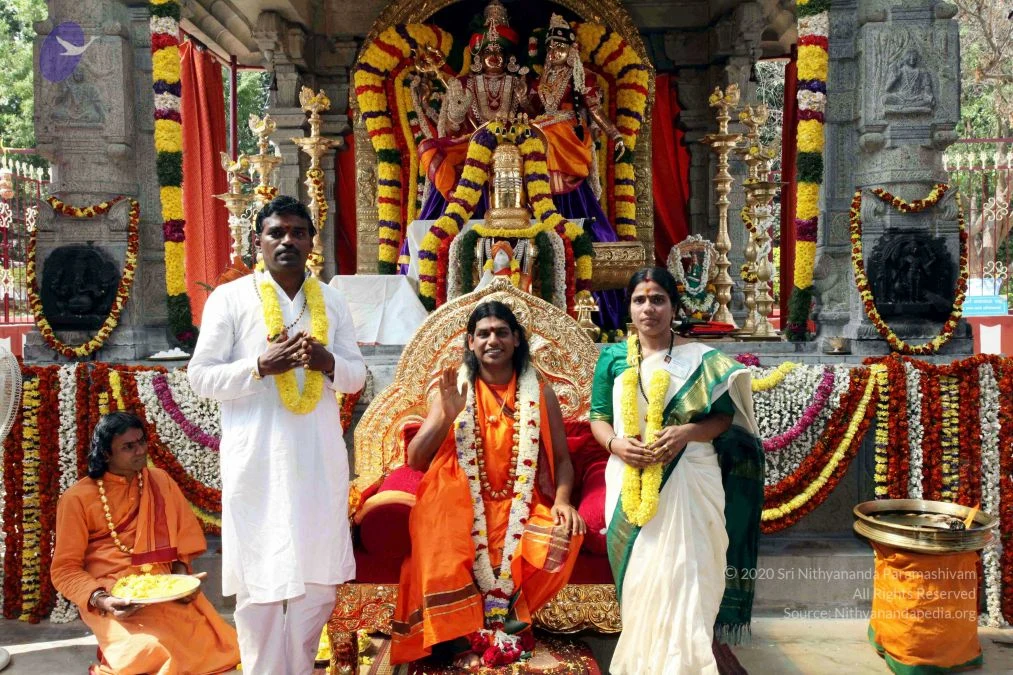
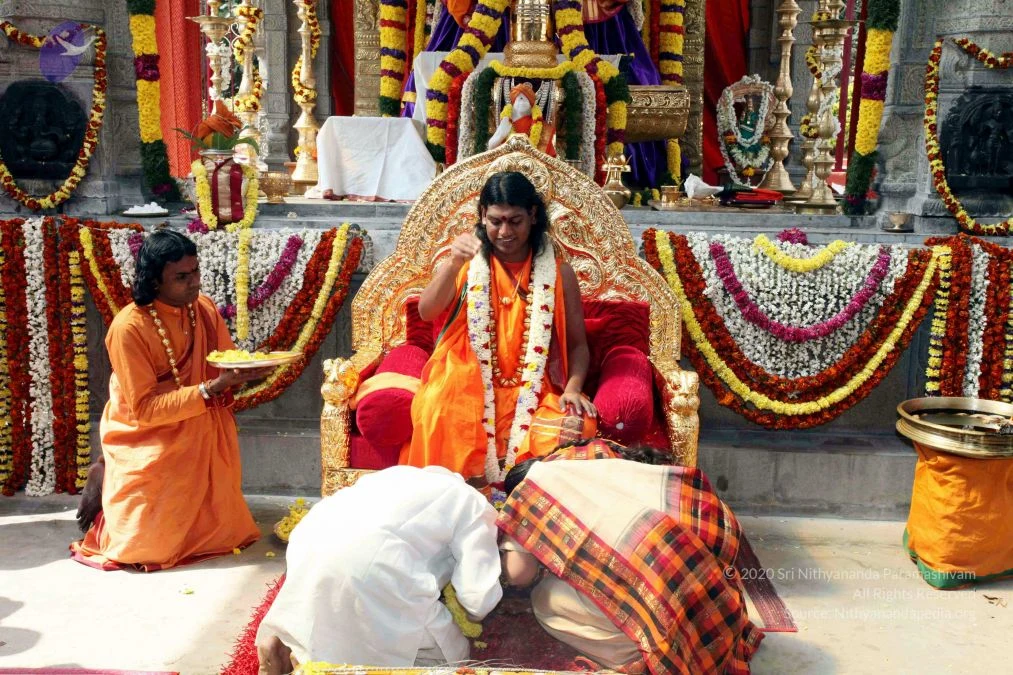
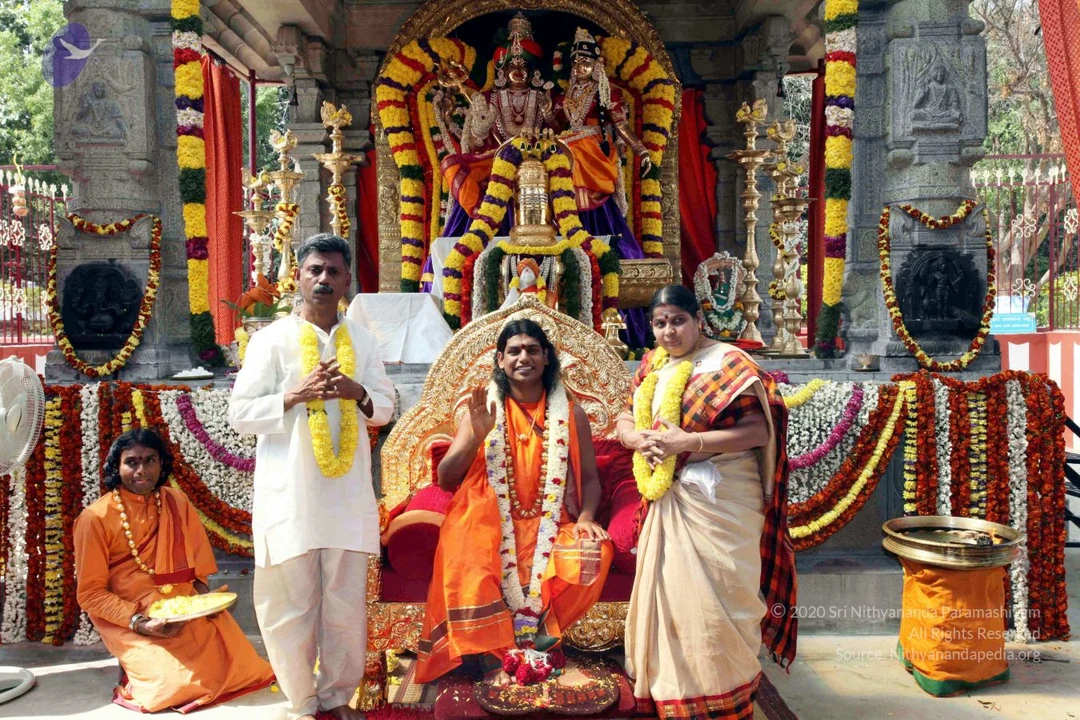
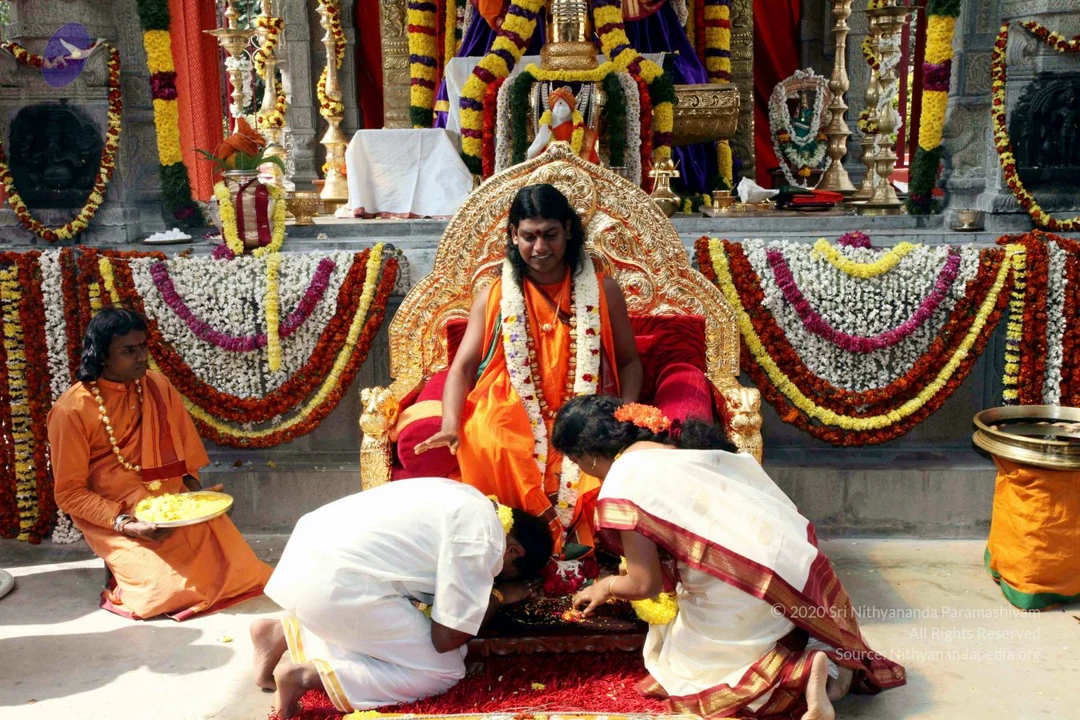
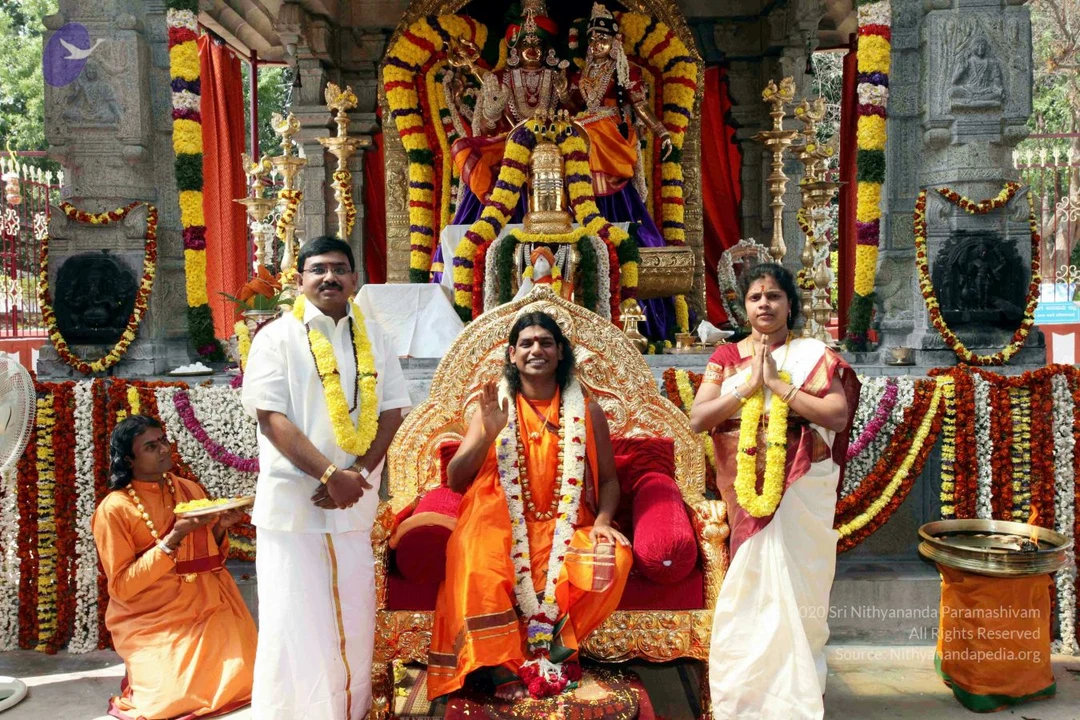
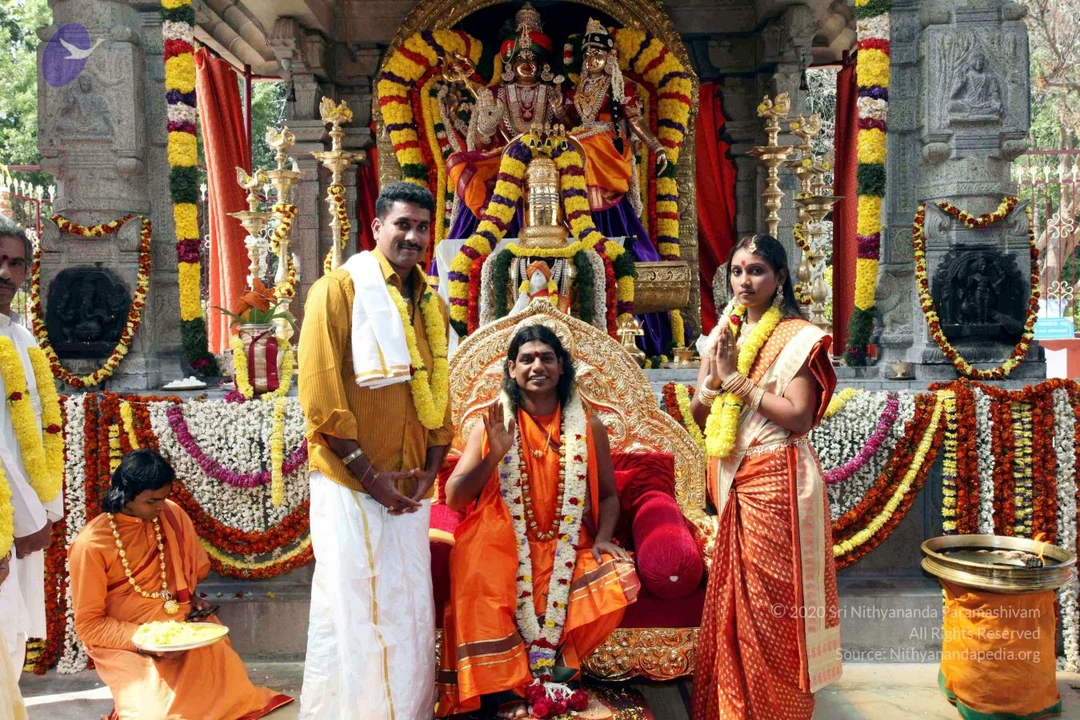
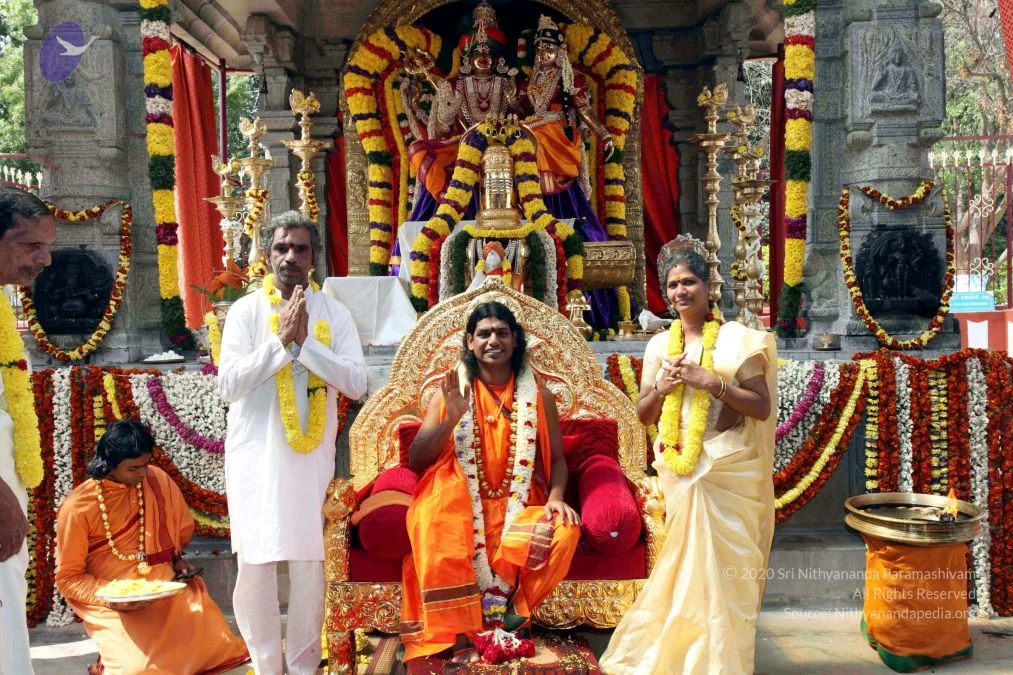
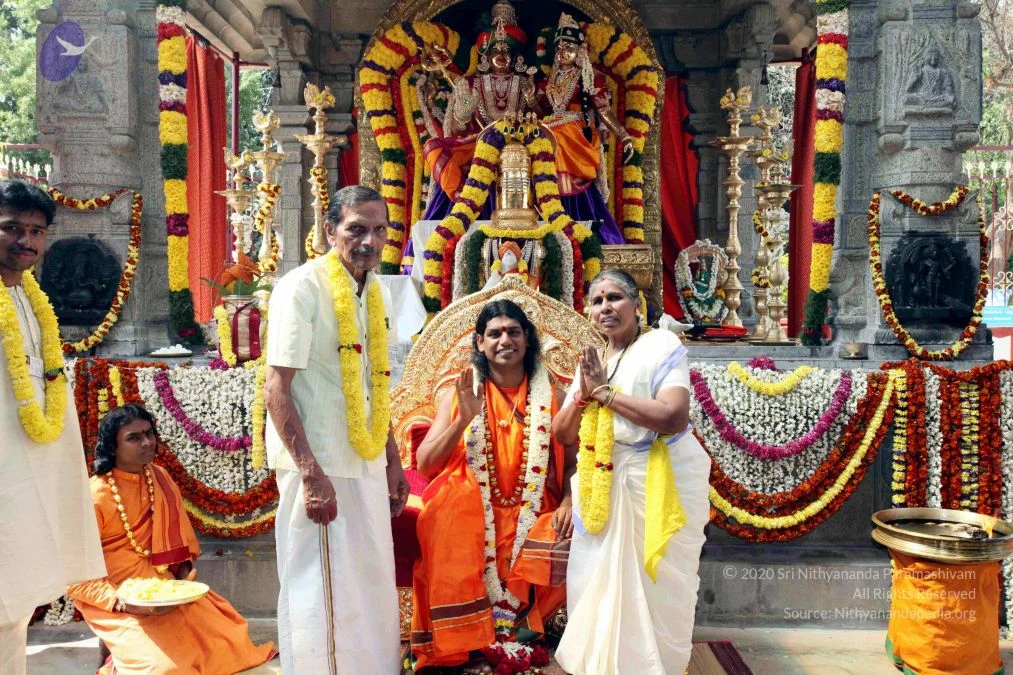
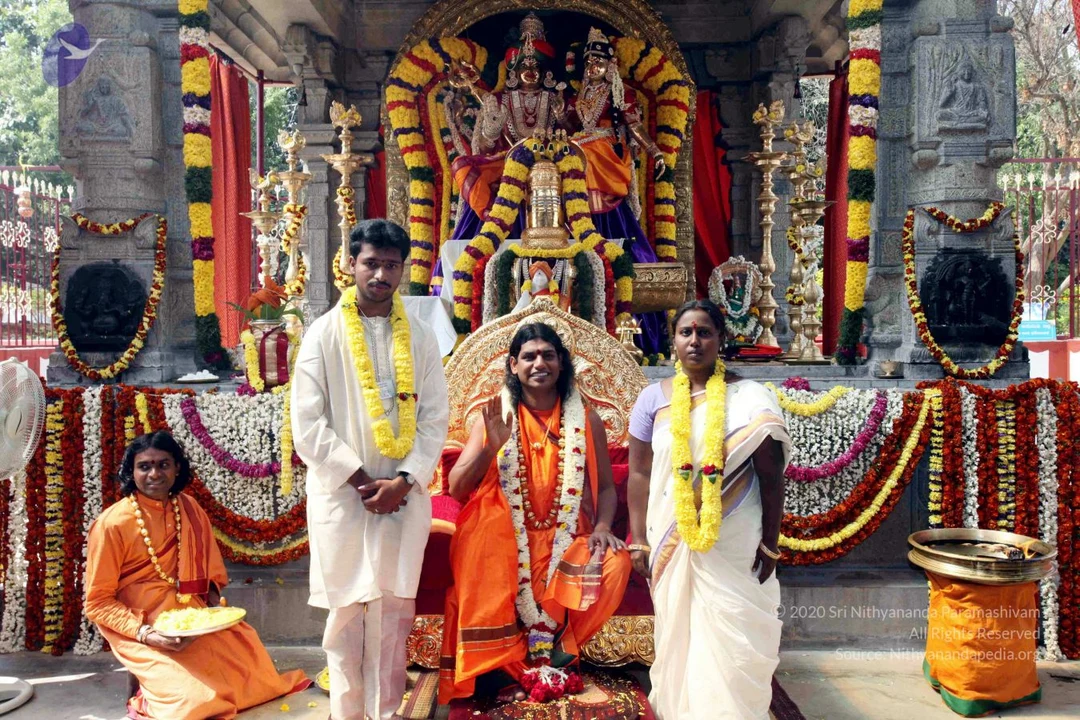
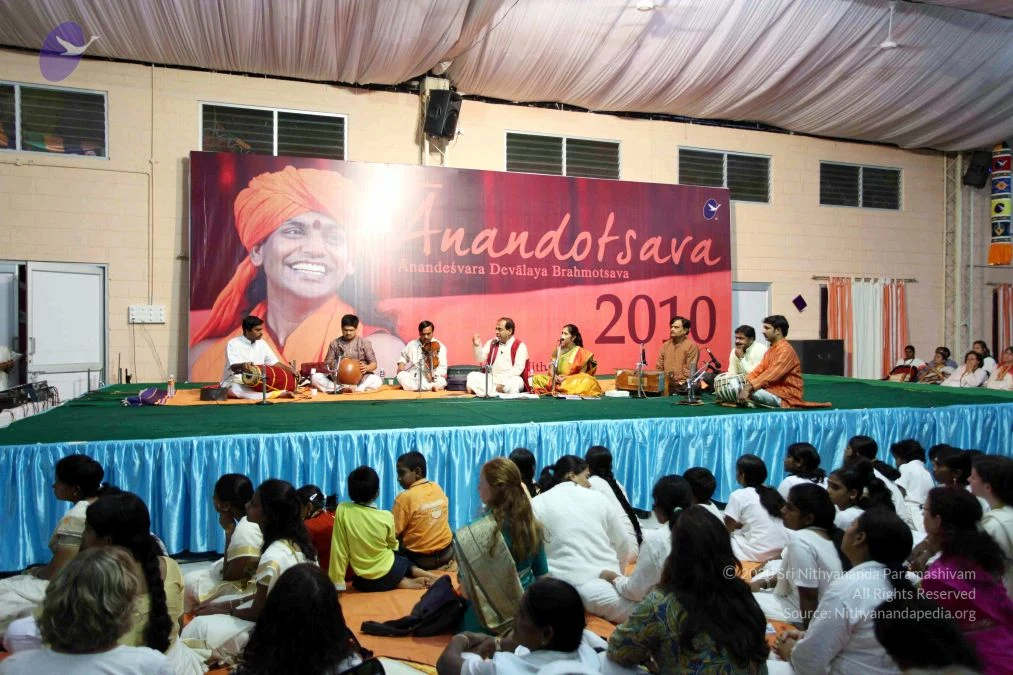
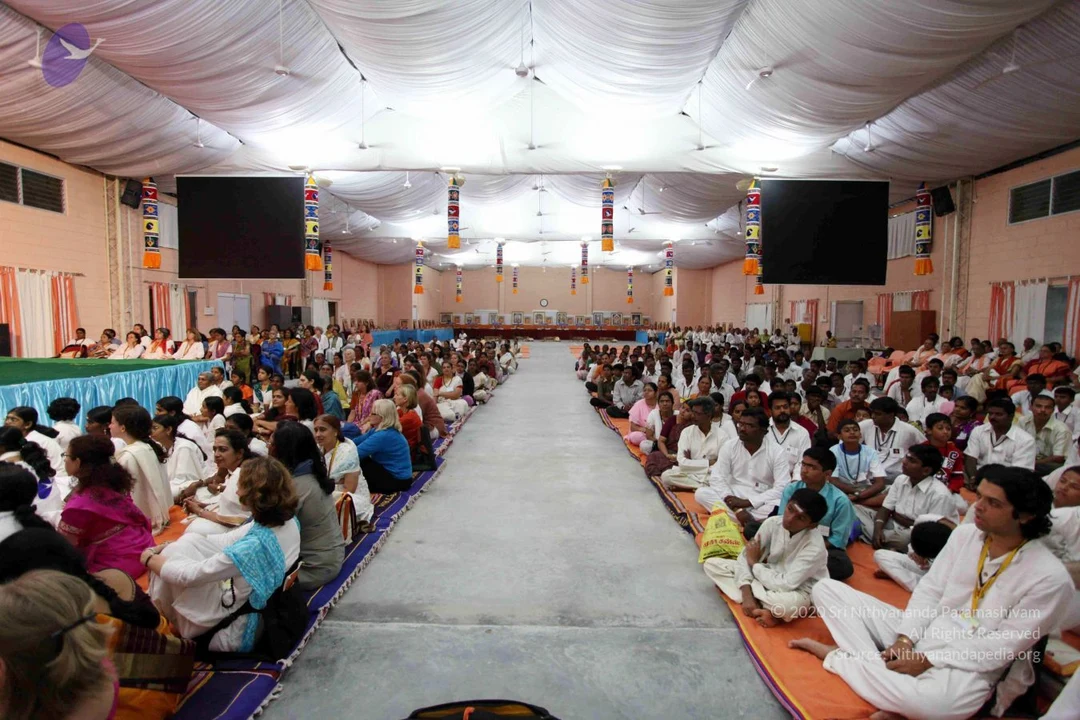
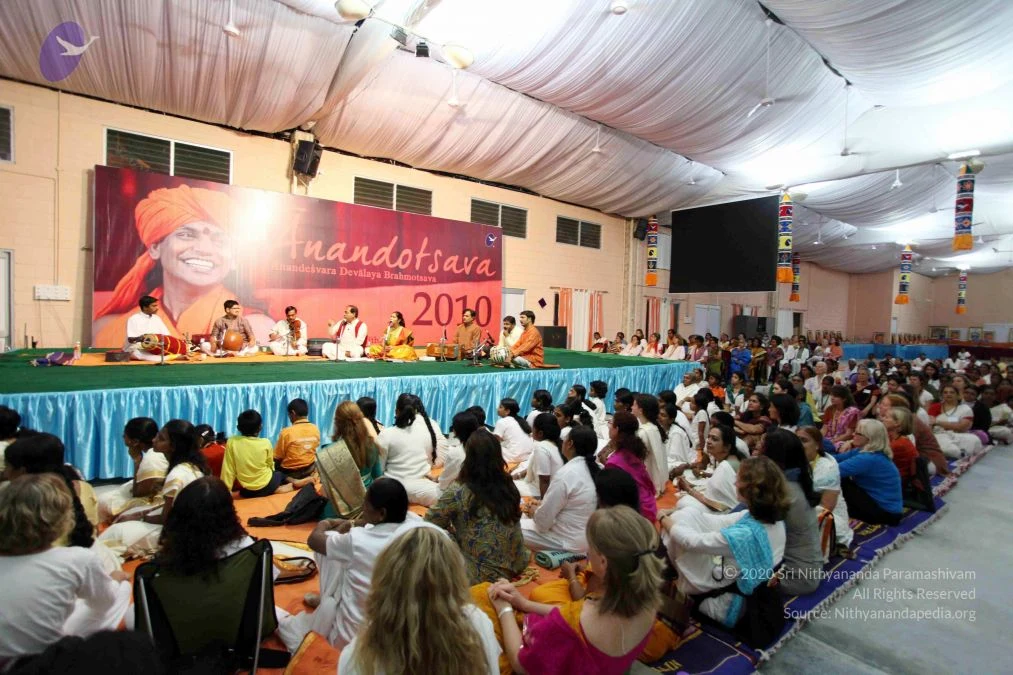
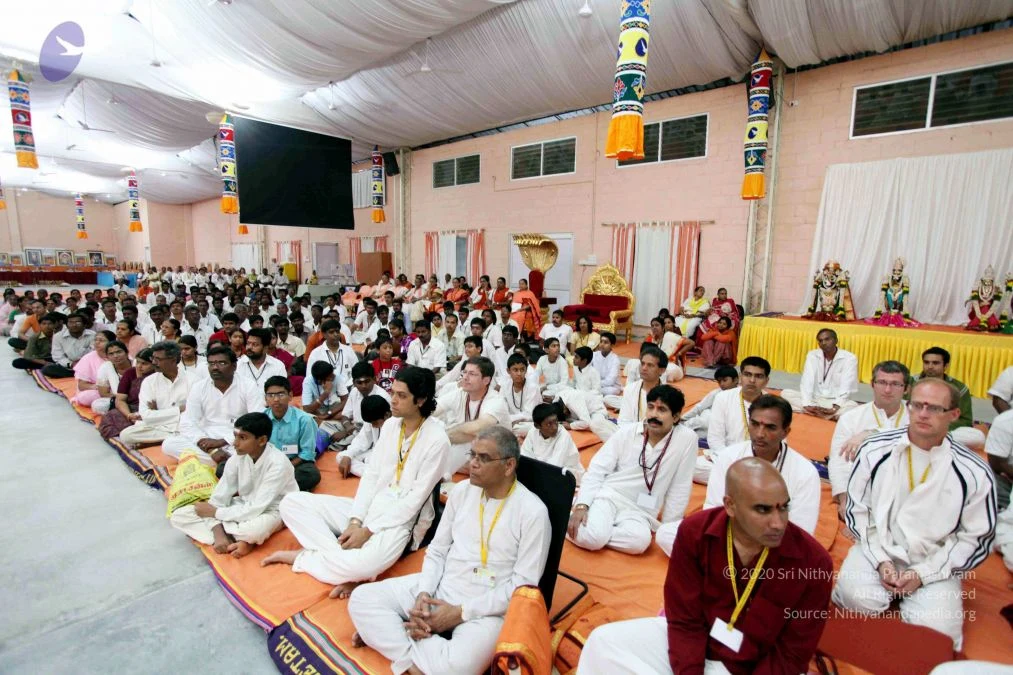
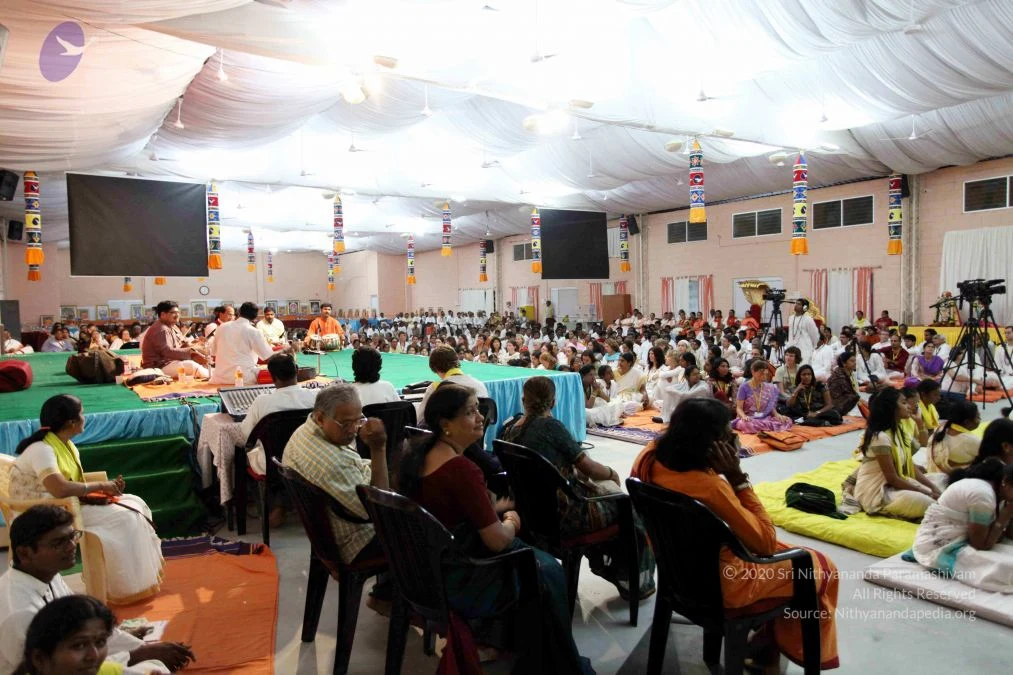
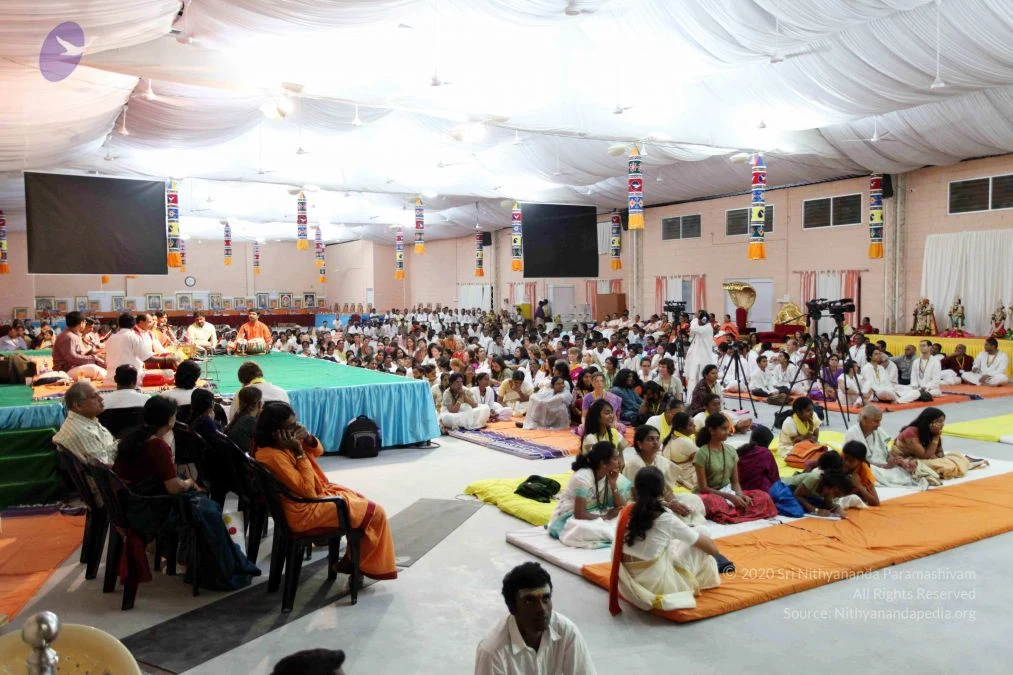
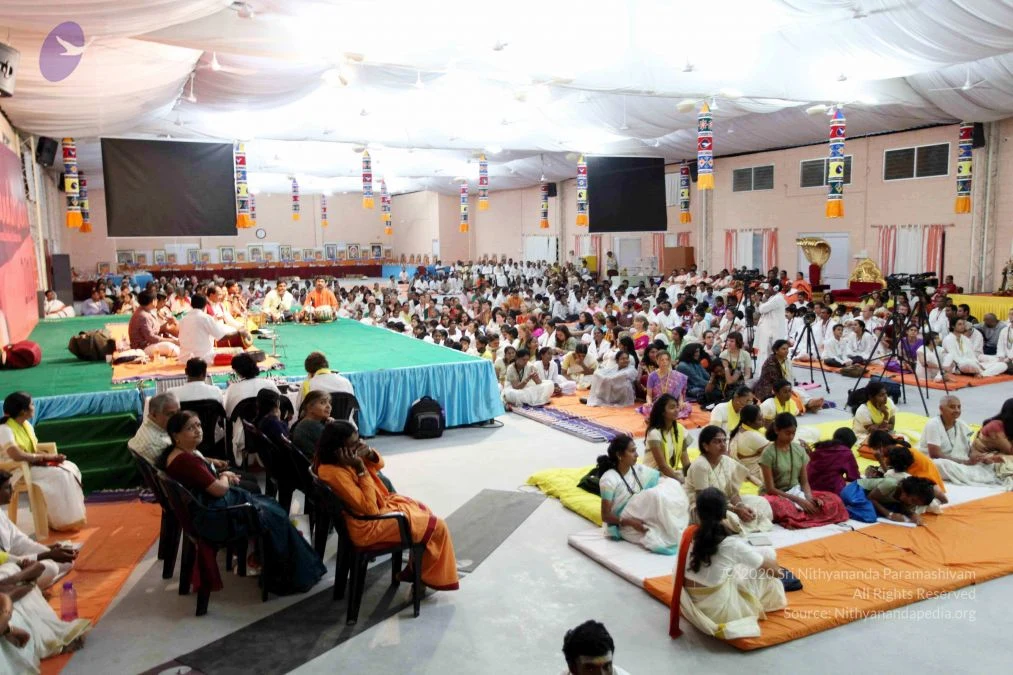
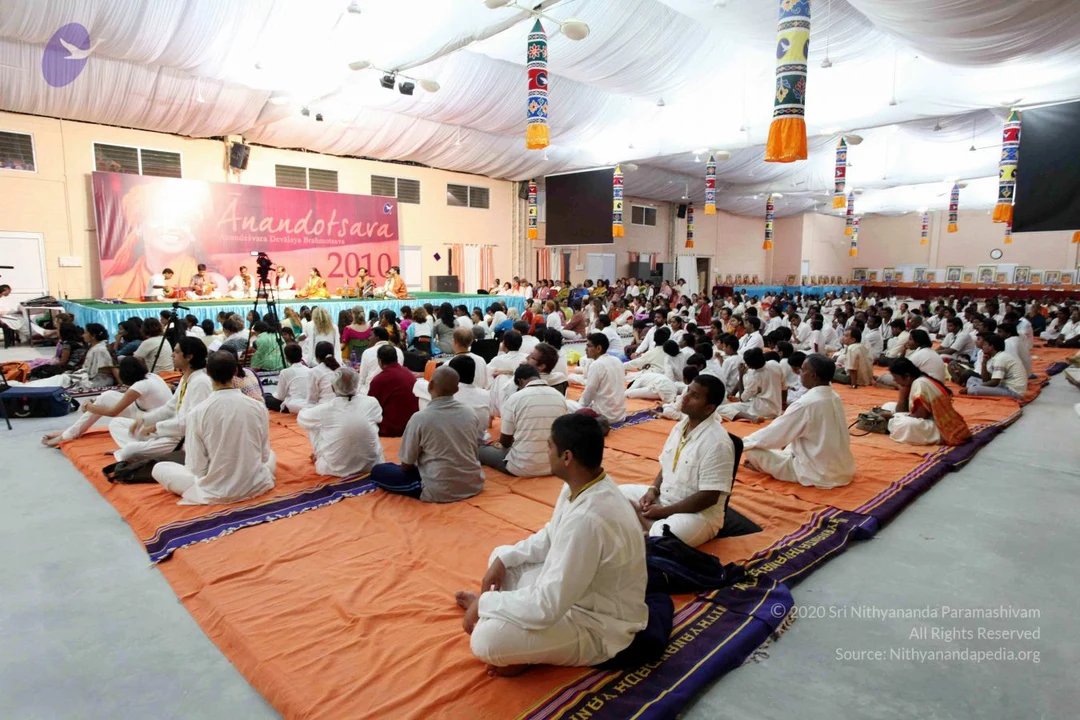
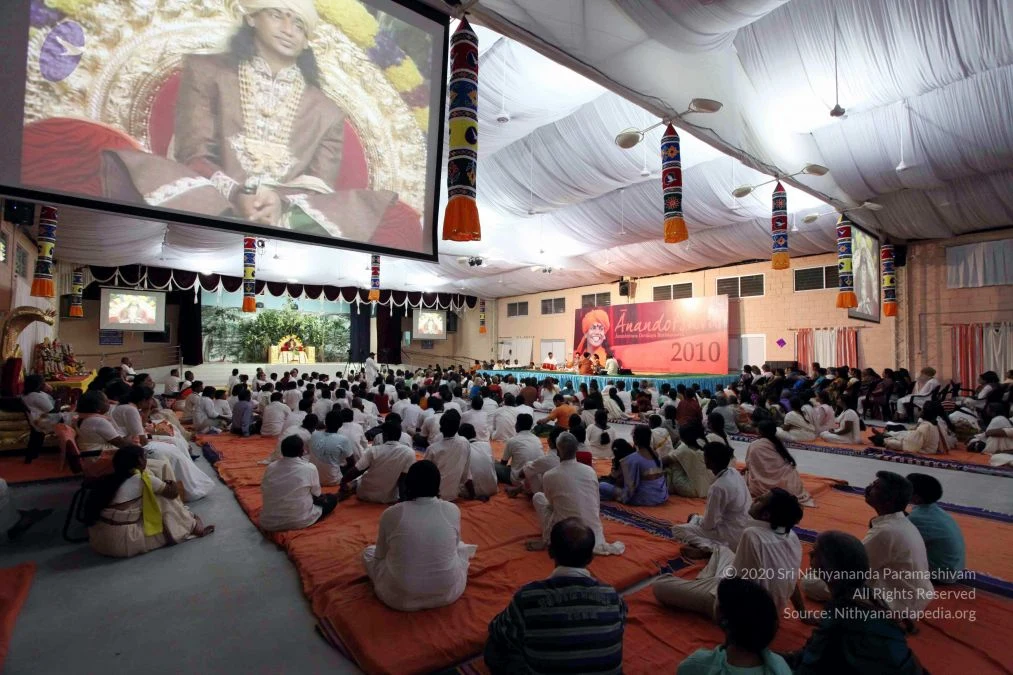
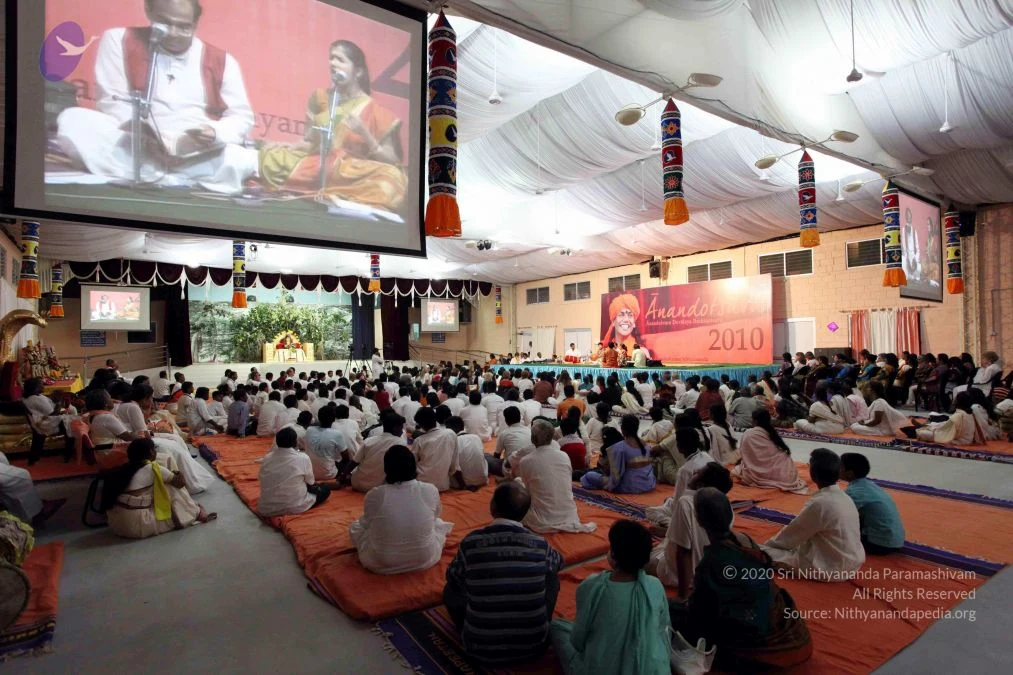
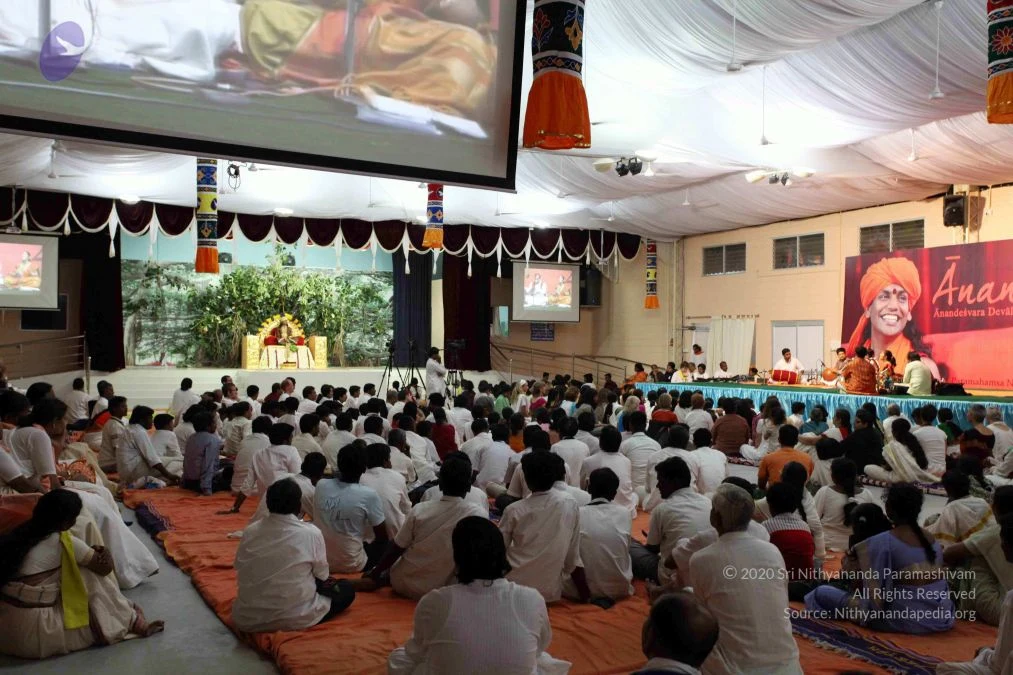
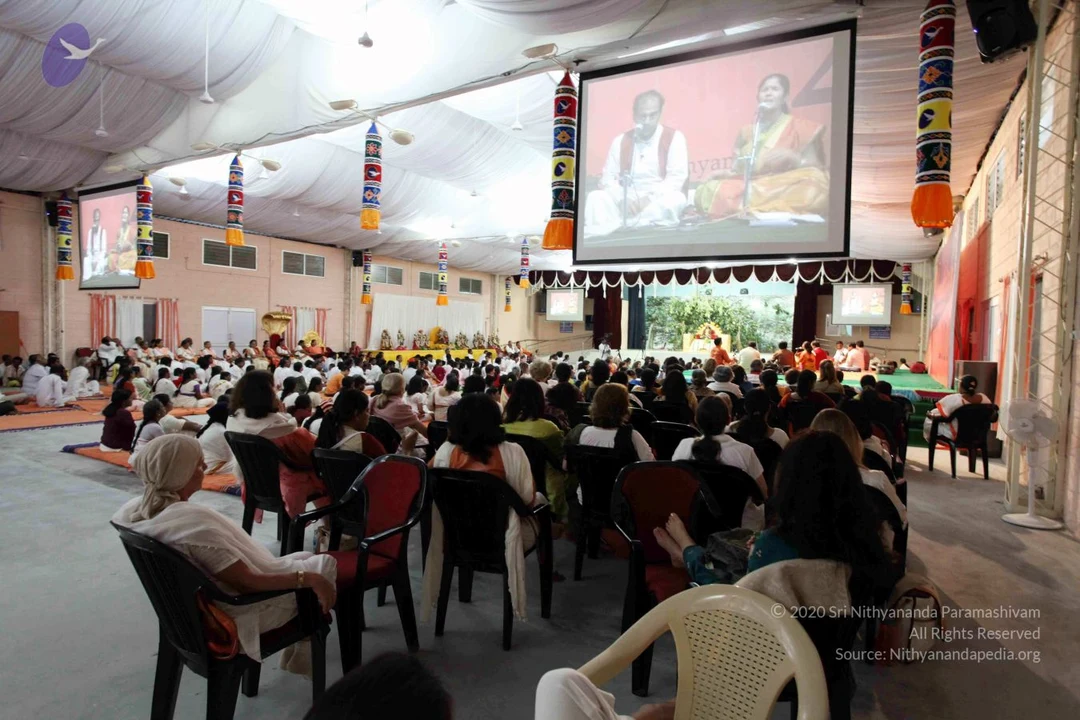
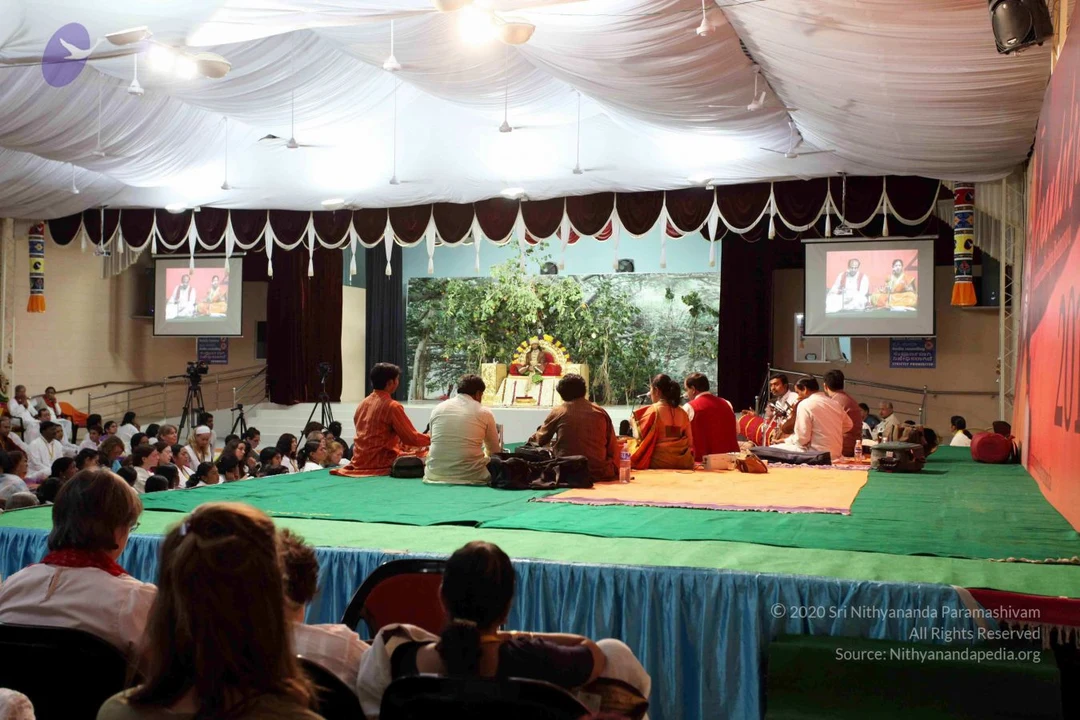
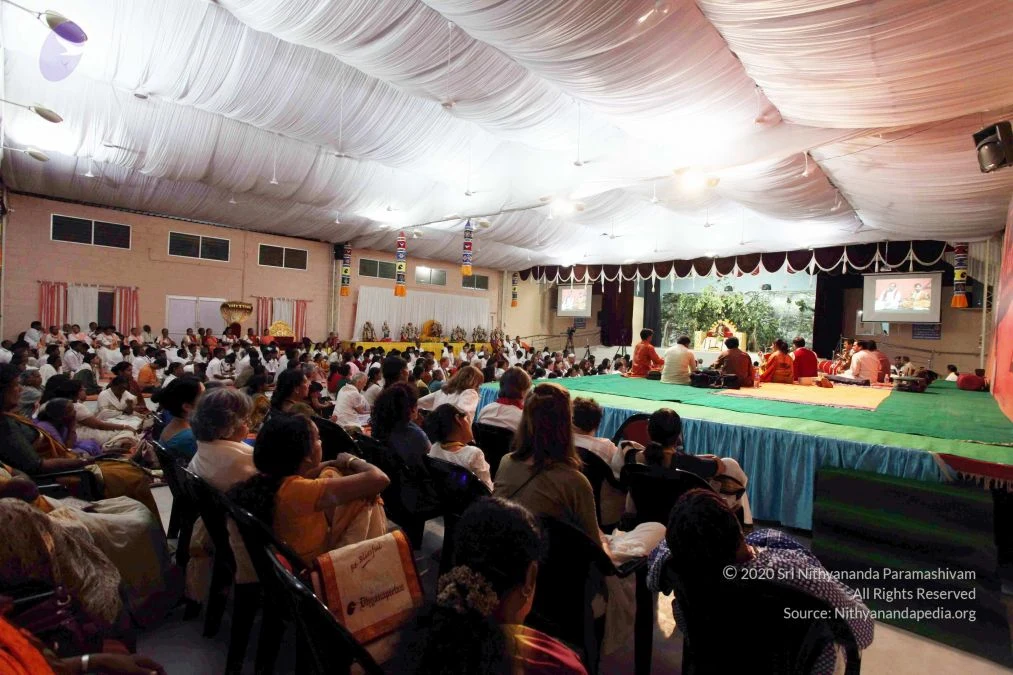
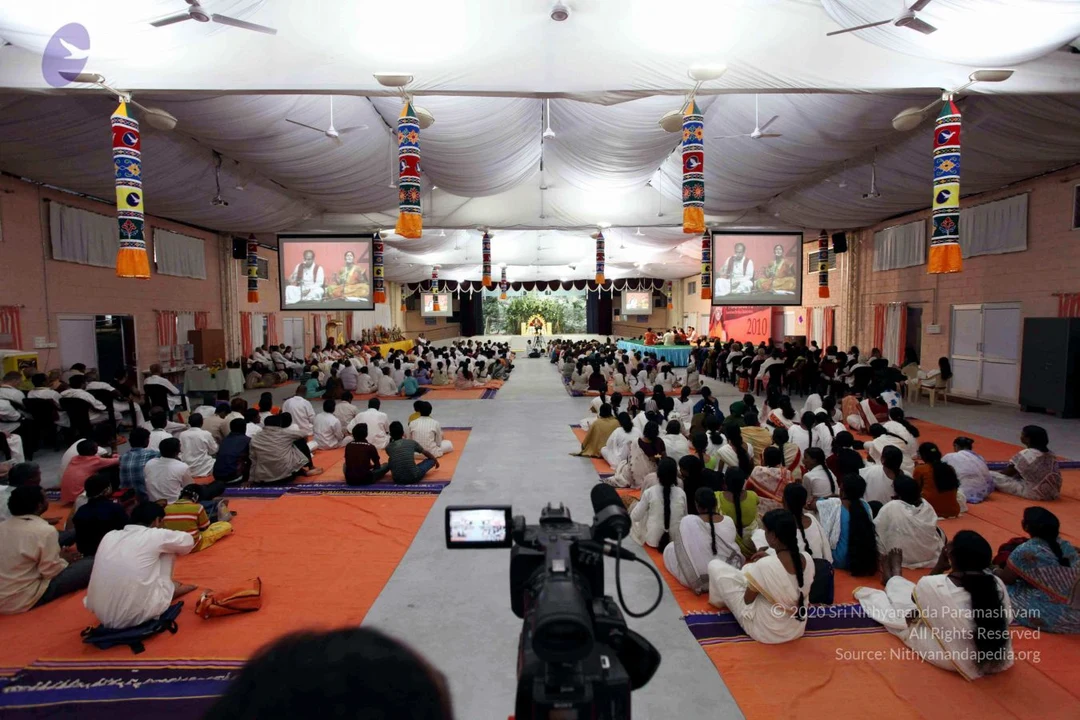
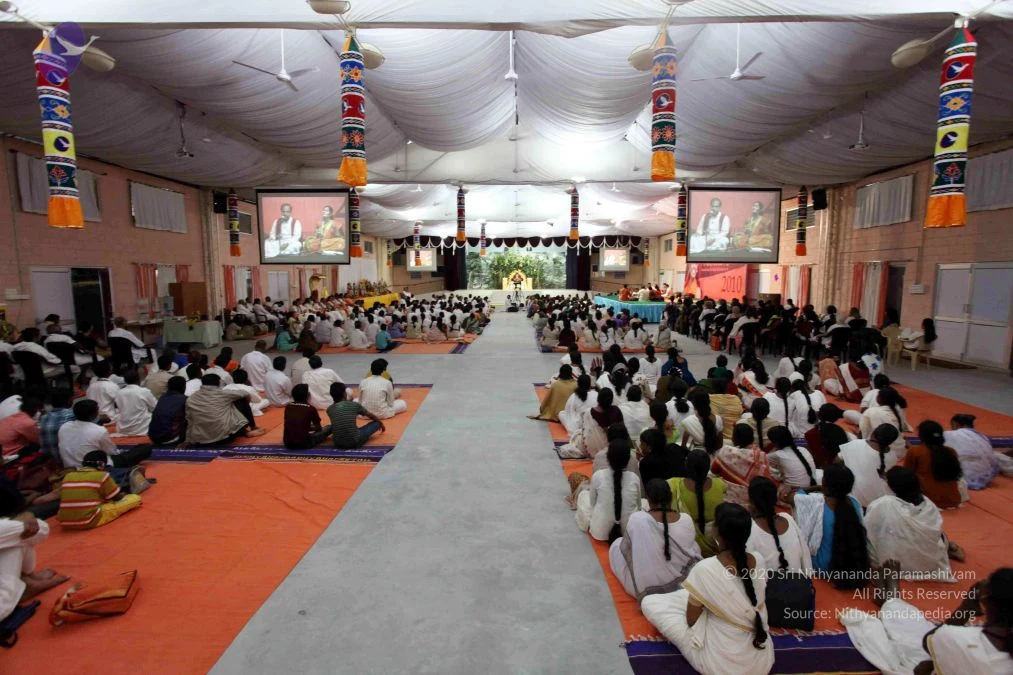
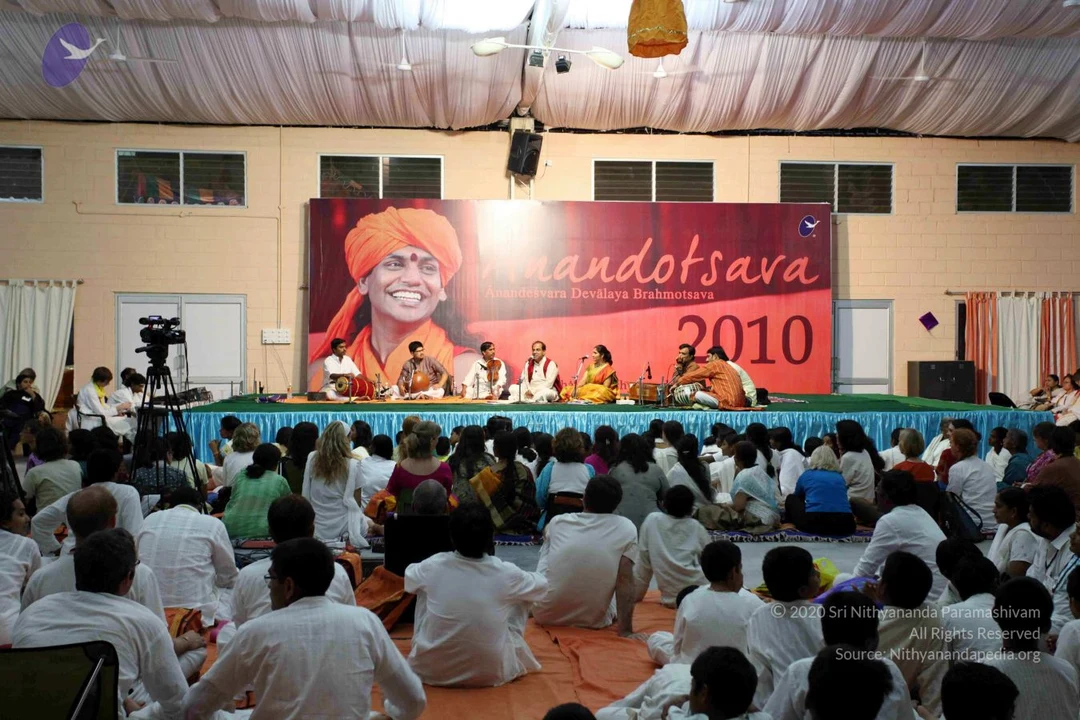
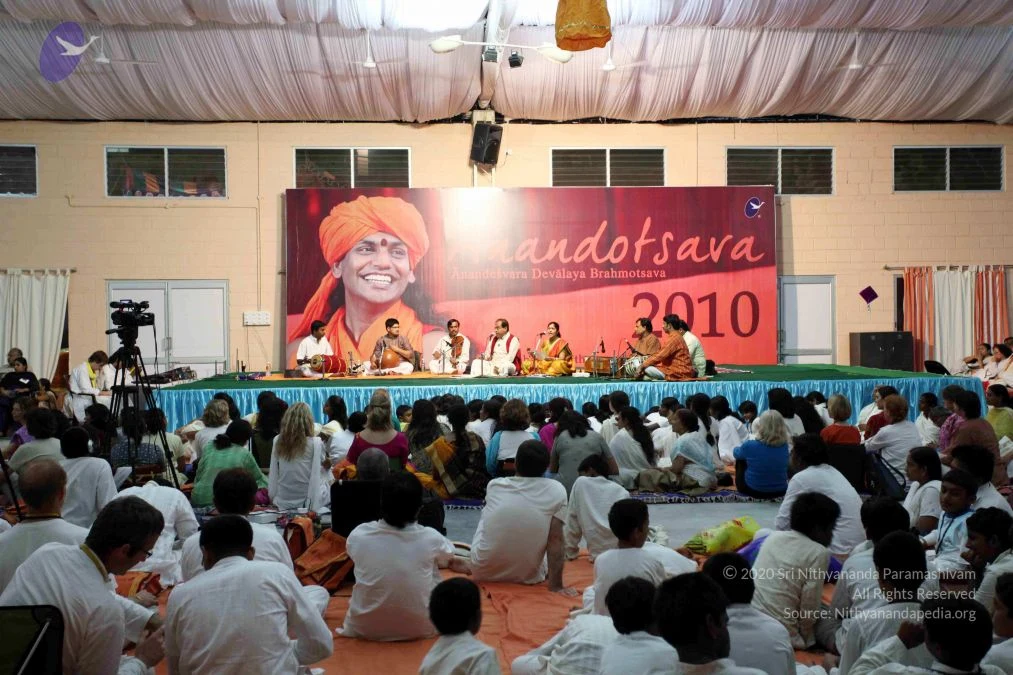
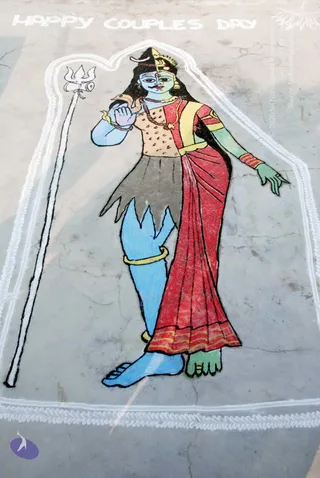
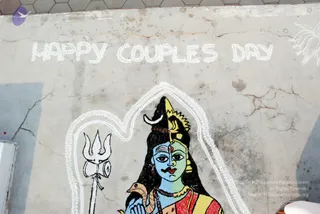
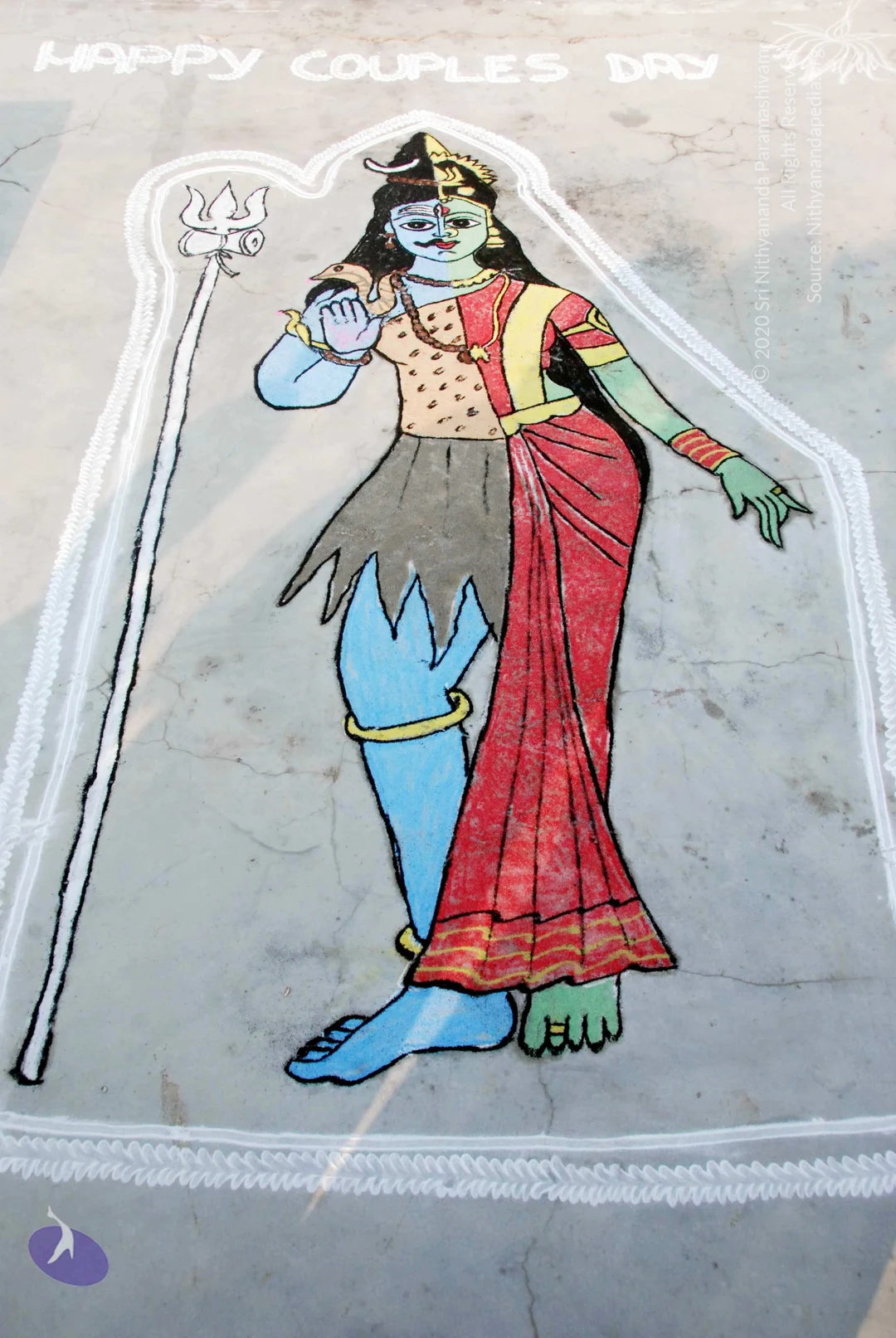
December 26 2009 was celebrated as Couples Day as part of Brahmotsav 2010 in Bengaluru ashram. On this day, several new marriages were conducted as well as marriage vows renewed afresh by several couples. In Vedic tradition, marriage is a sacred institution where both spouses come together to help and support each other in their spiritual journey. Nithyananda's message for the day and the explanation of the Vedic marriage ceremony were a beautiful beginning to a new phase of life for the fortunate couples.

Nithyananda Live is a series of video clips which capture the essence of of a day with enlightened Master Paramahamsa Nithyananda. Each day is a celebration and a lesson to live life in its full glory and joy.

Link to Video:

VideoAudio

Title:

Patanjali Yoga Sutras - Utility value of Samadhi

Description:

From the works of living enlightened master Paramahamsa Nithyananda, this clip is taken from Patanjali Yoga Sutras discourse. In this video clip, He explains why we need Samadhi, what the utility value of Samadhi is. He then briefly lists the characteristics of Samprajnata Samadhi.

Paramahamsa Nithyananda is an enlightened master living amidst us today. With a worldwide movement for meditation and inner bliss, Nithyananda continues to offer solutions for things as trivial as everyday stress to something as profound as enlightenment. Nithyananda conducts meditation programs all over the world. Inner Awakening is a 21 day program aimed at giving all the components and dimensions of living enlightenment or Jeevan Mukti (in Sanskrit) living the ultimate life, realizing ones full potential in the inner and outer worlds.

Link to Video:

VideoAudio

Enriching Materials

Photos

Nithyanandeshwara Paramashiva Devalayam
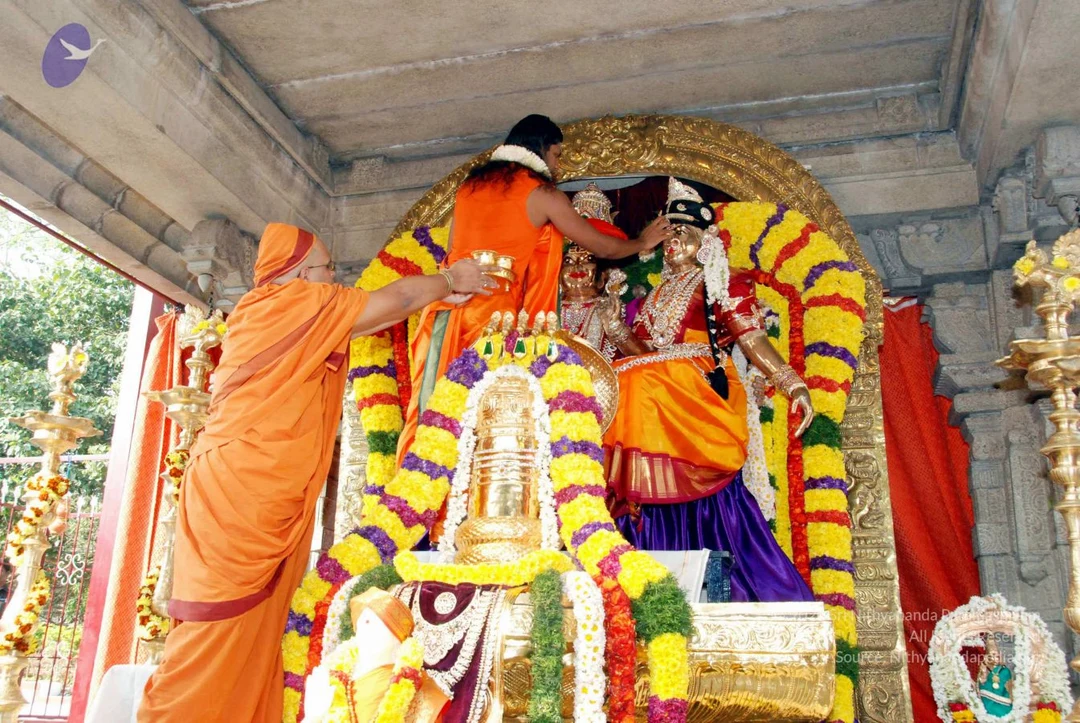
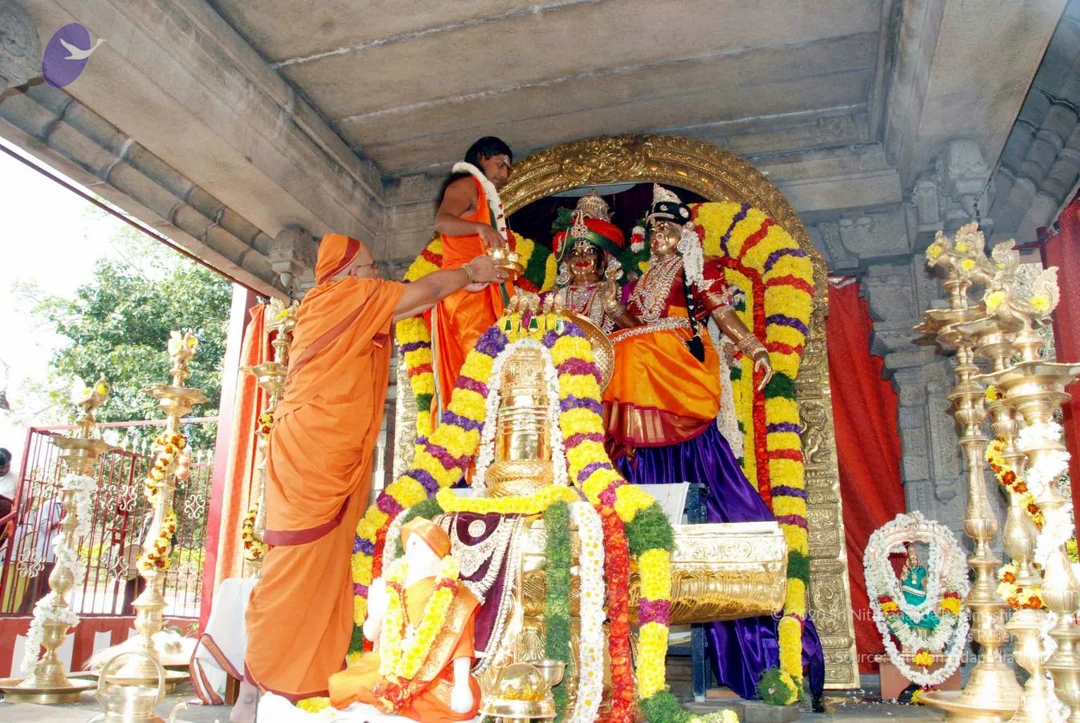
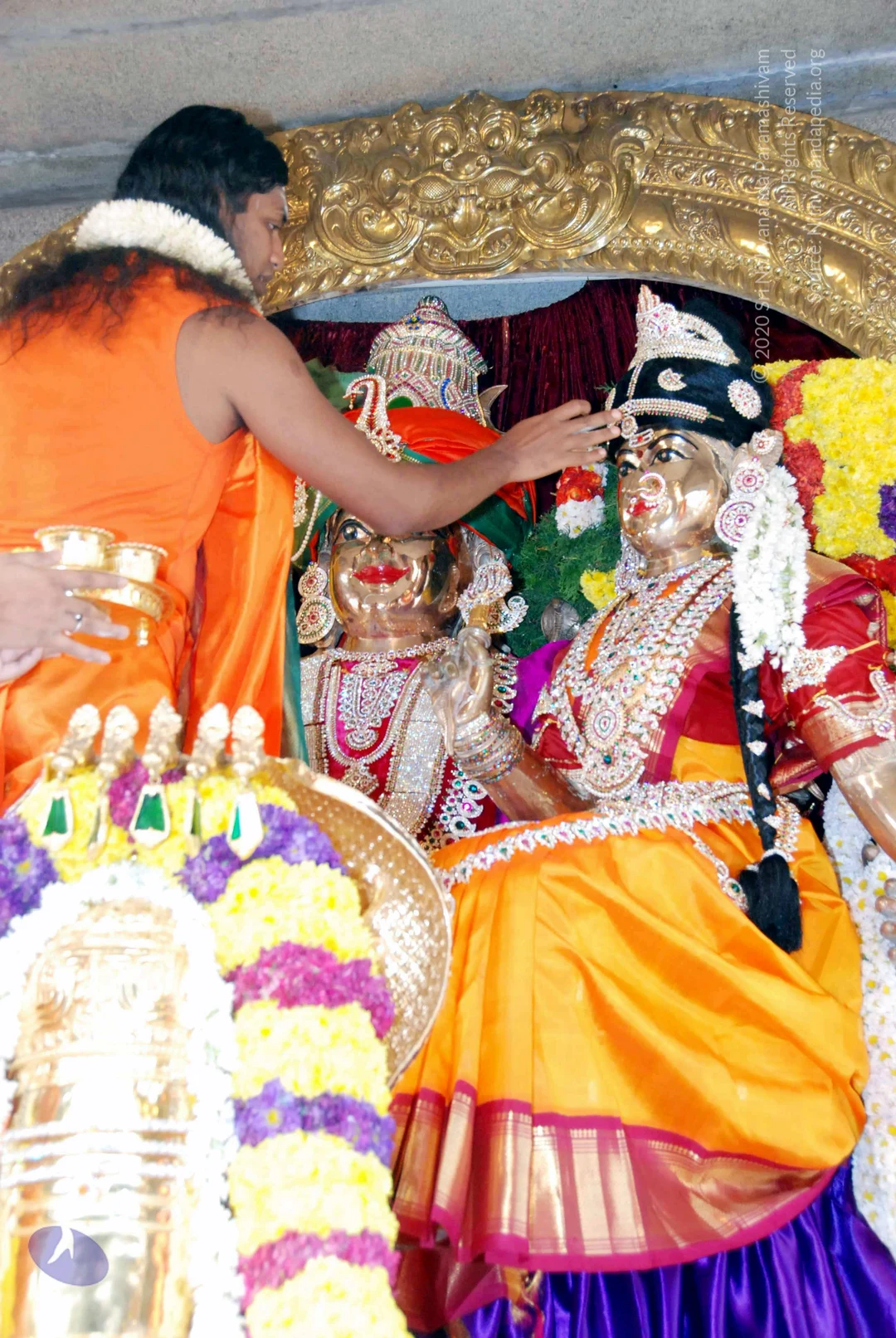
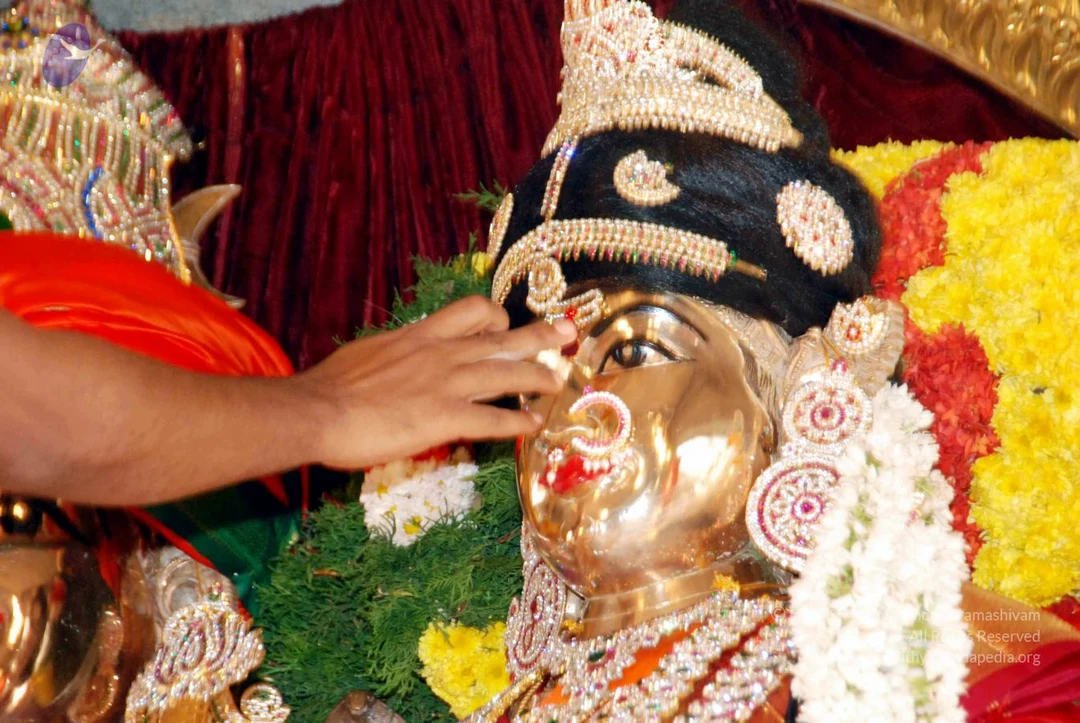
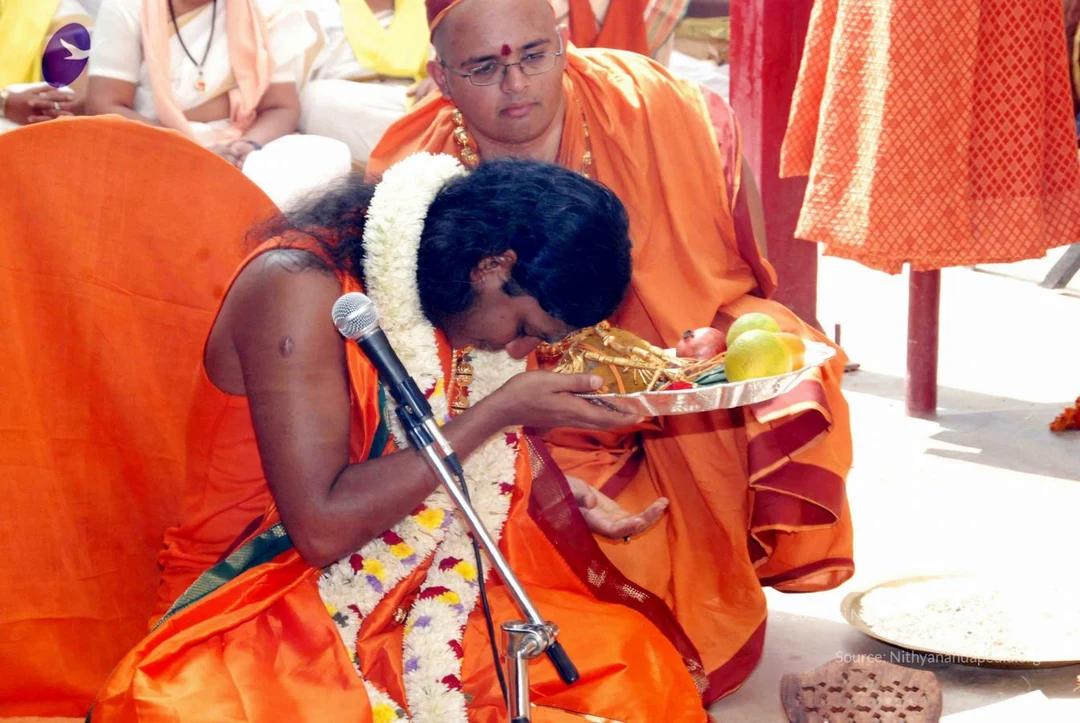
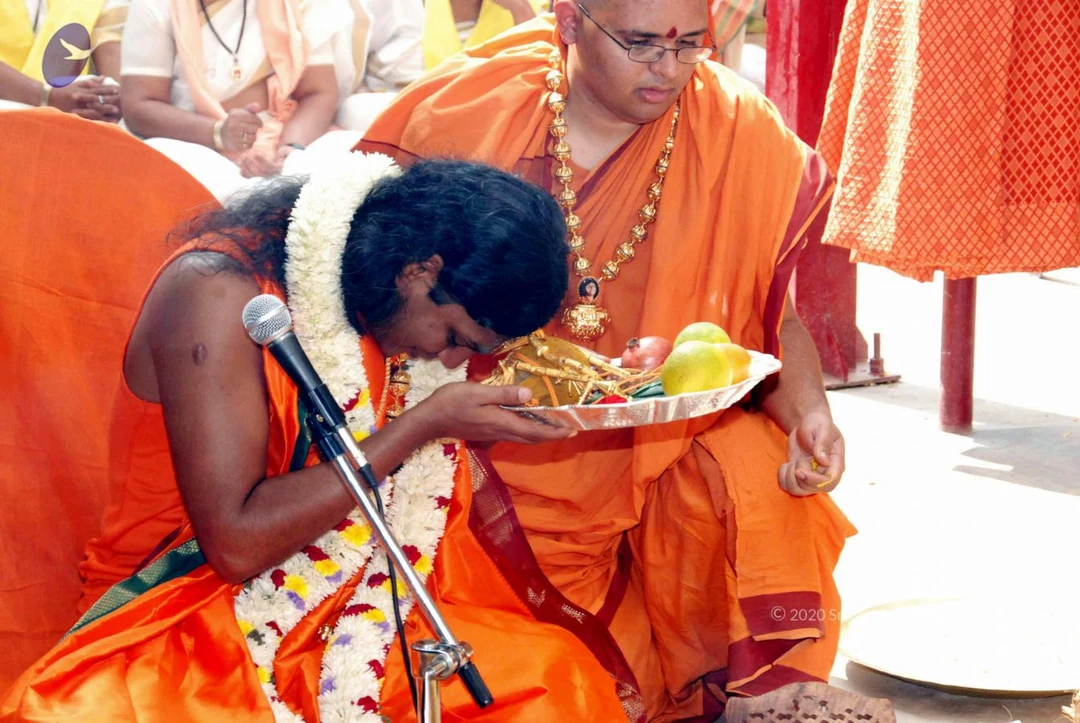
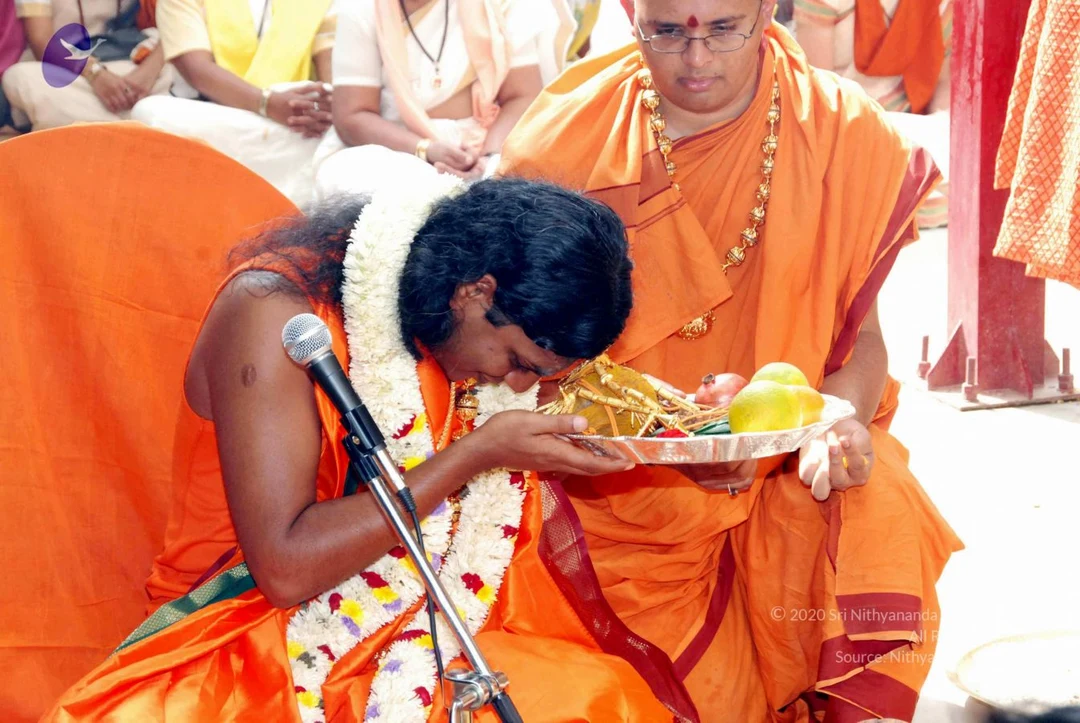
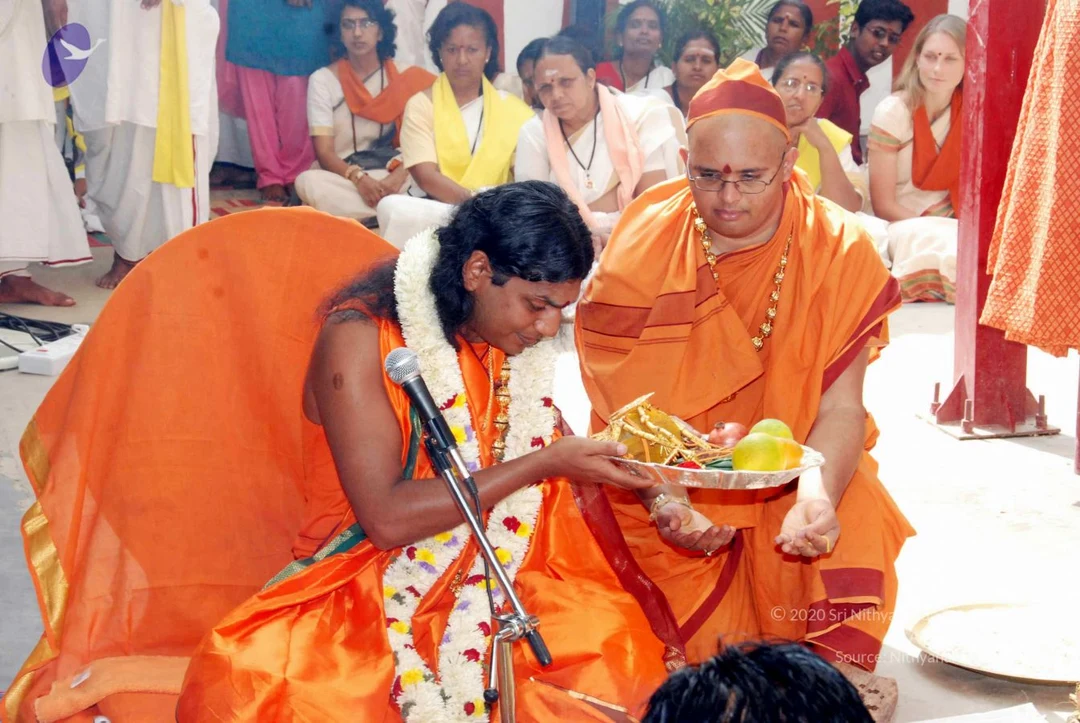
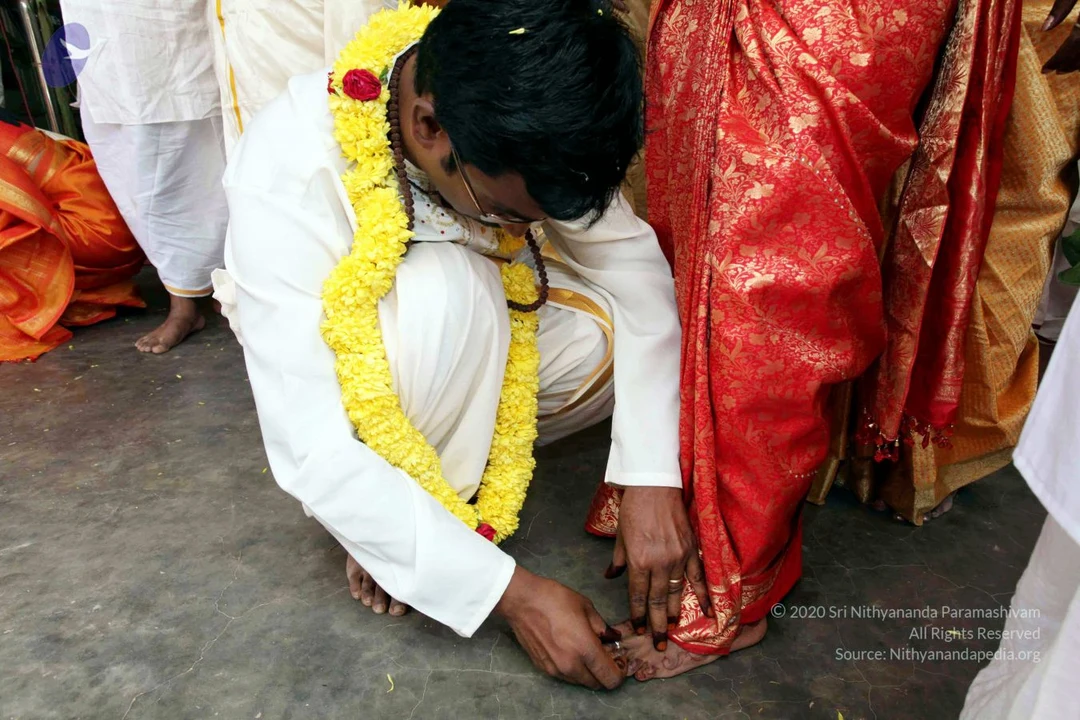
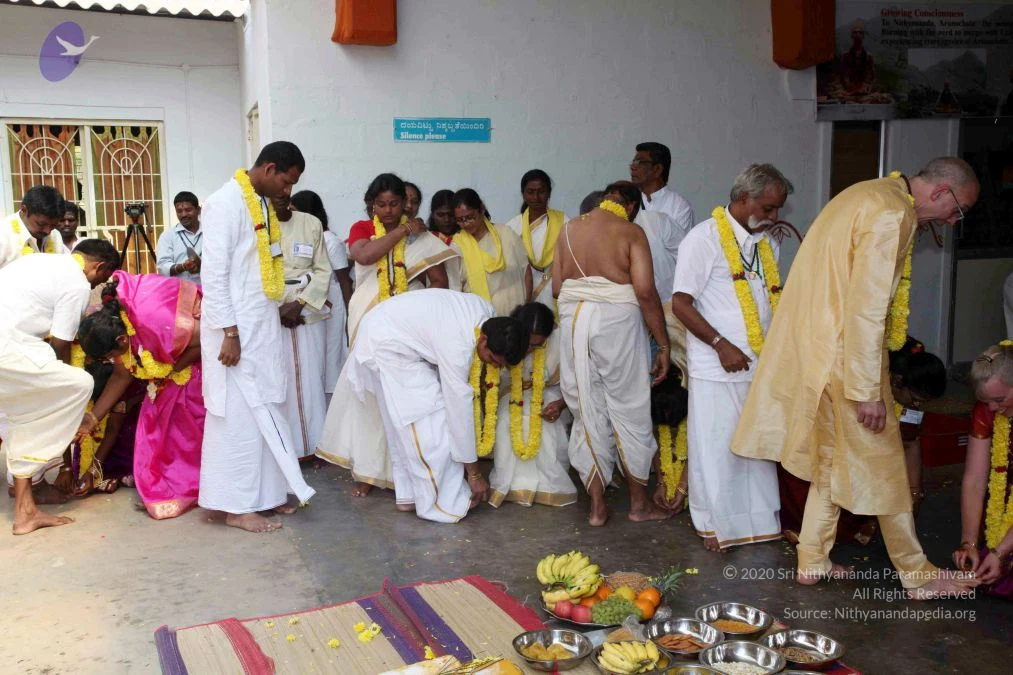
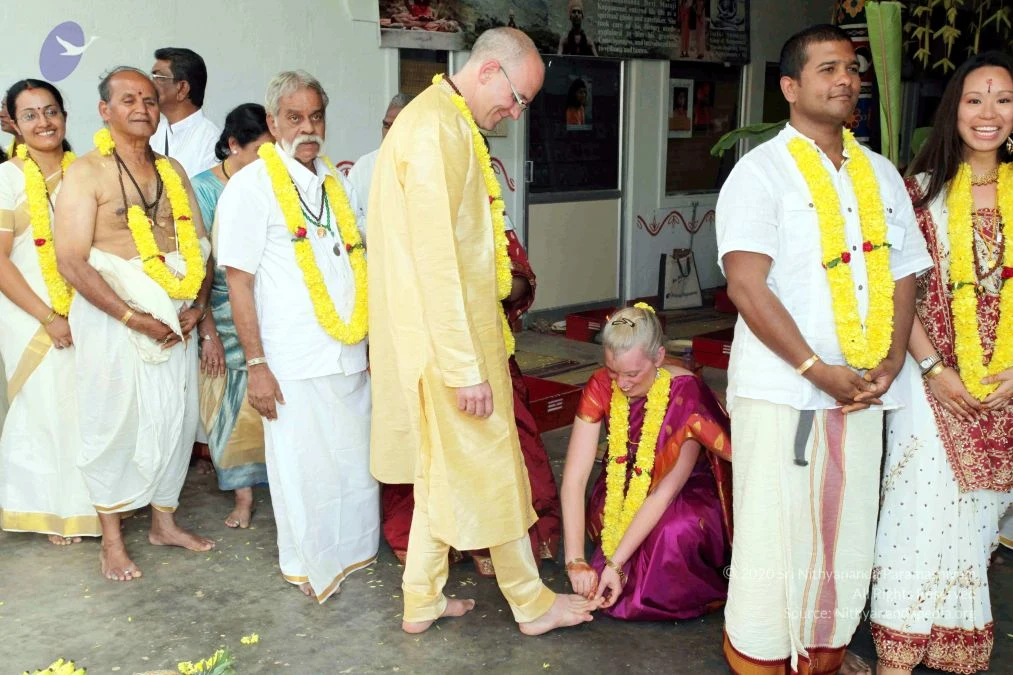
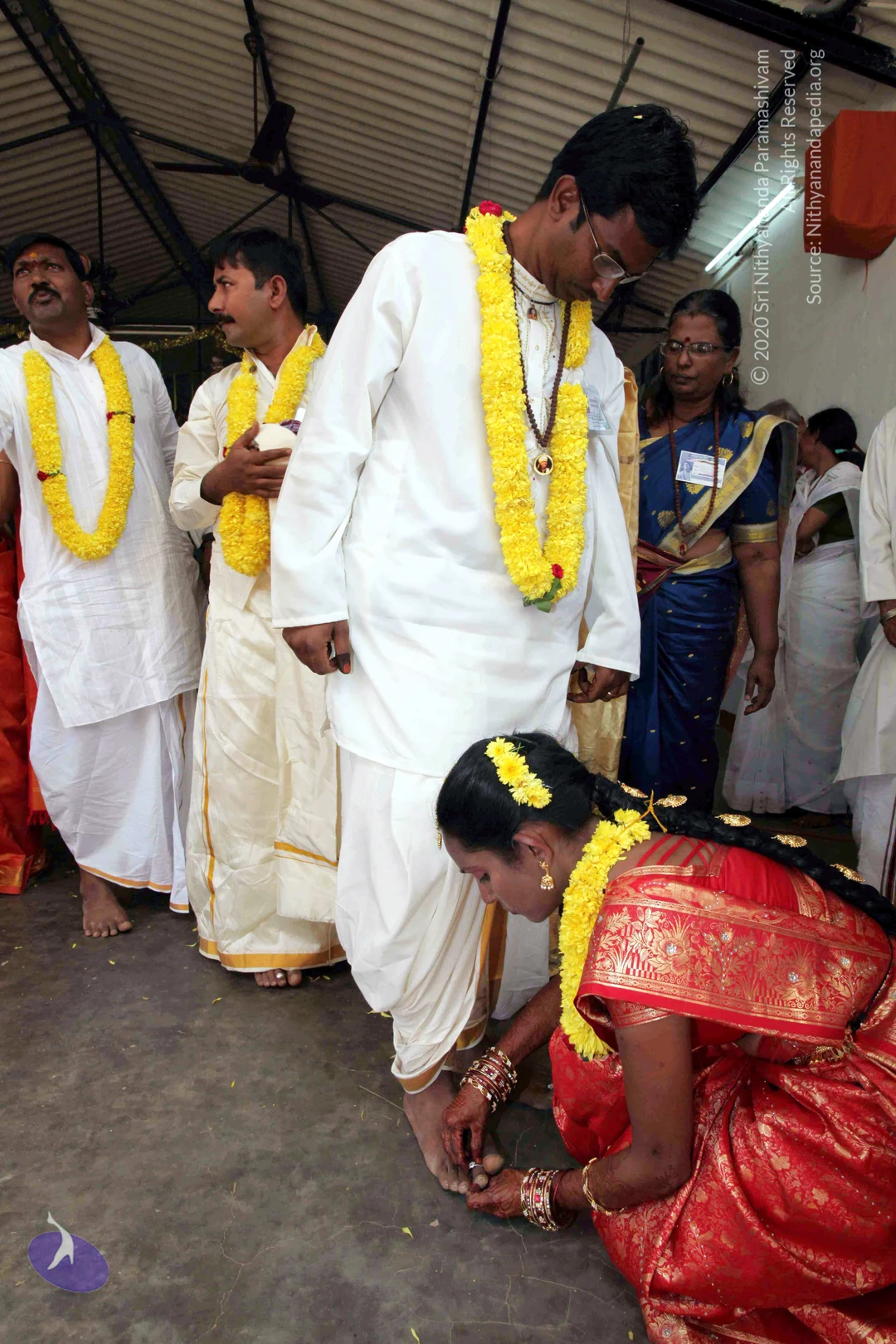
Paada Pooja

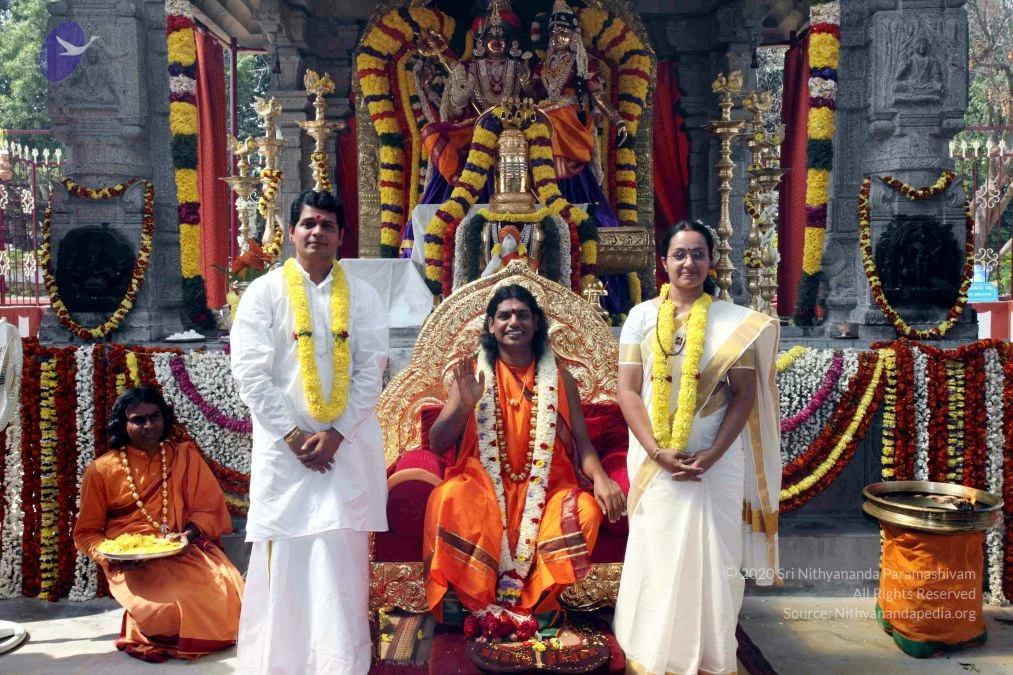
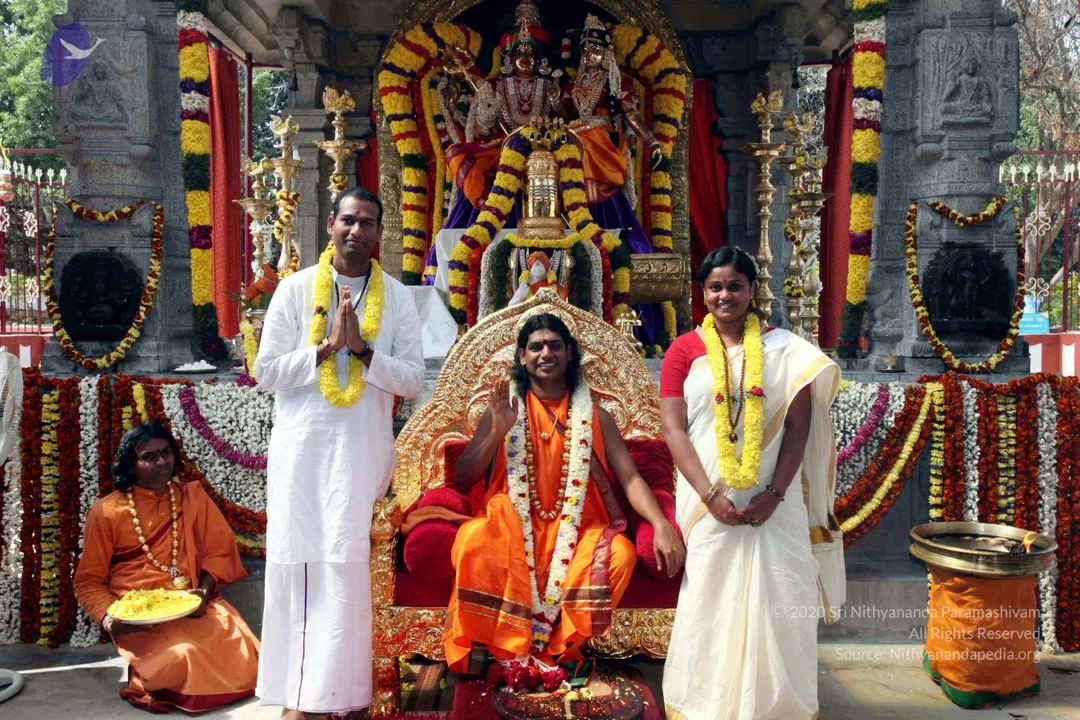
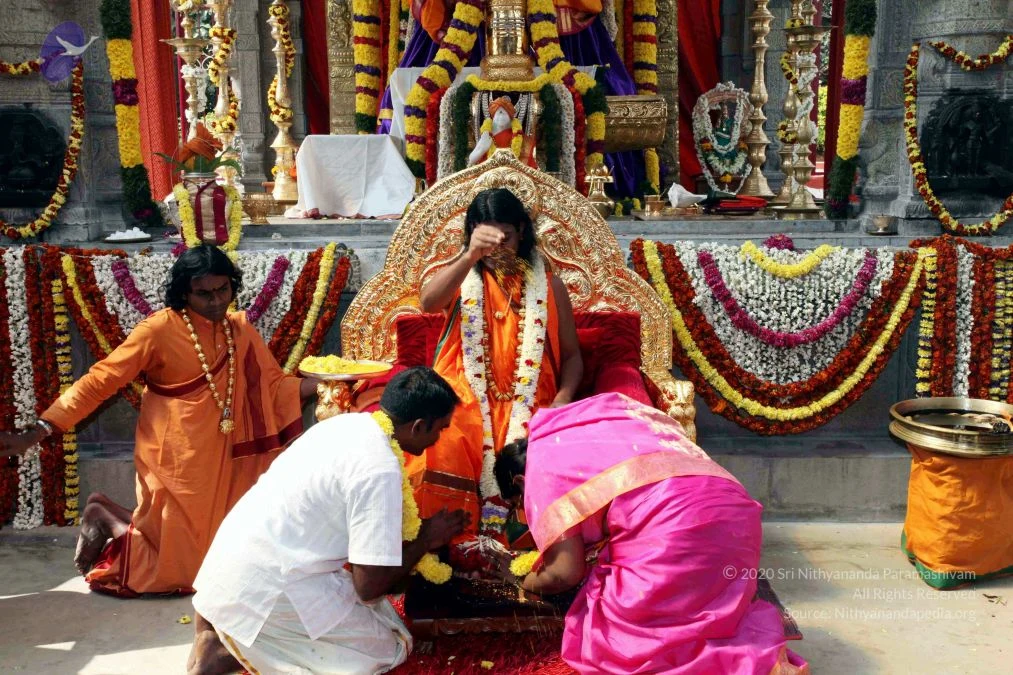
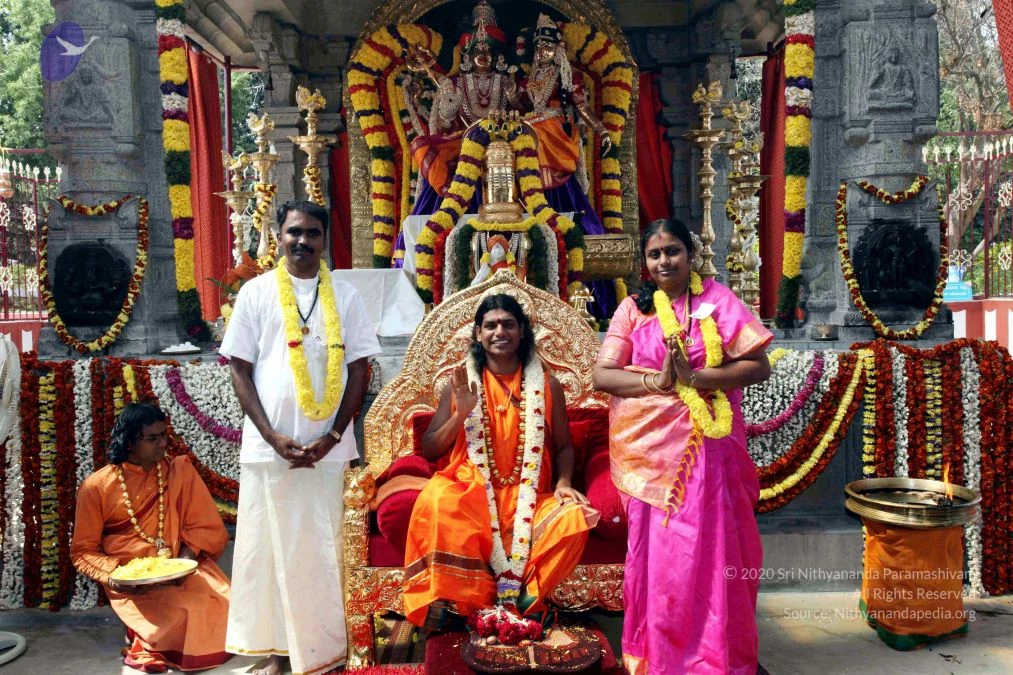
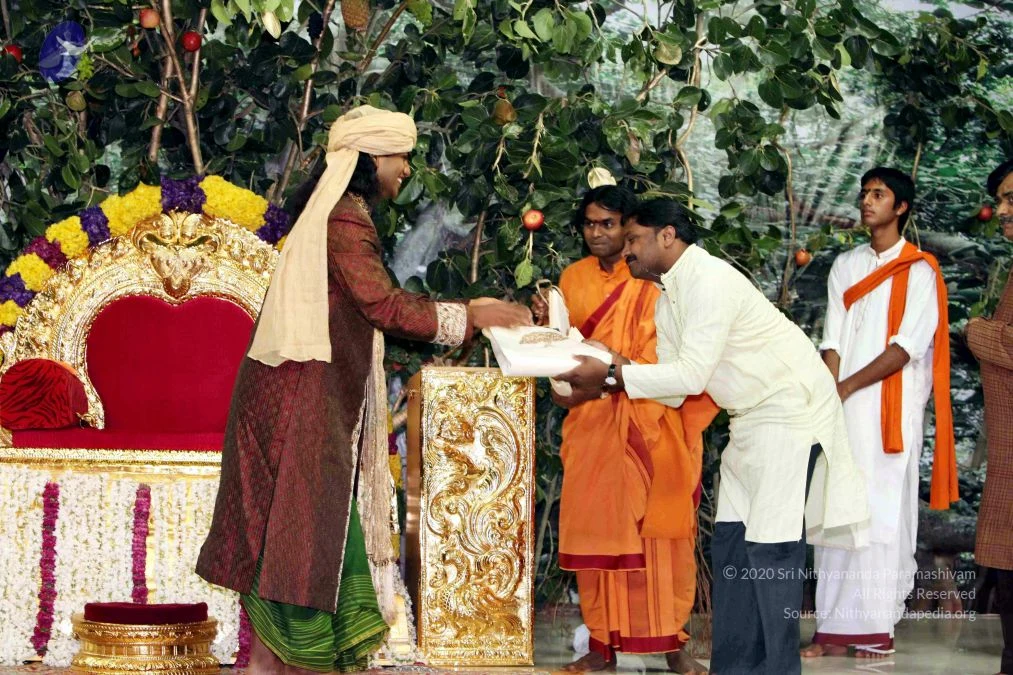
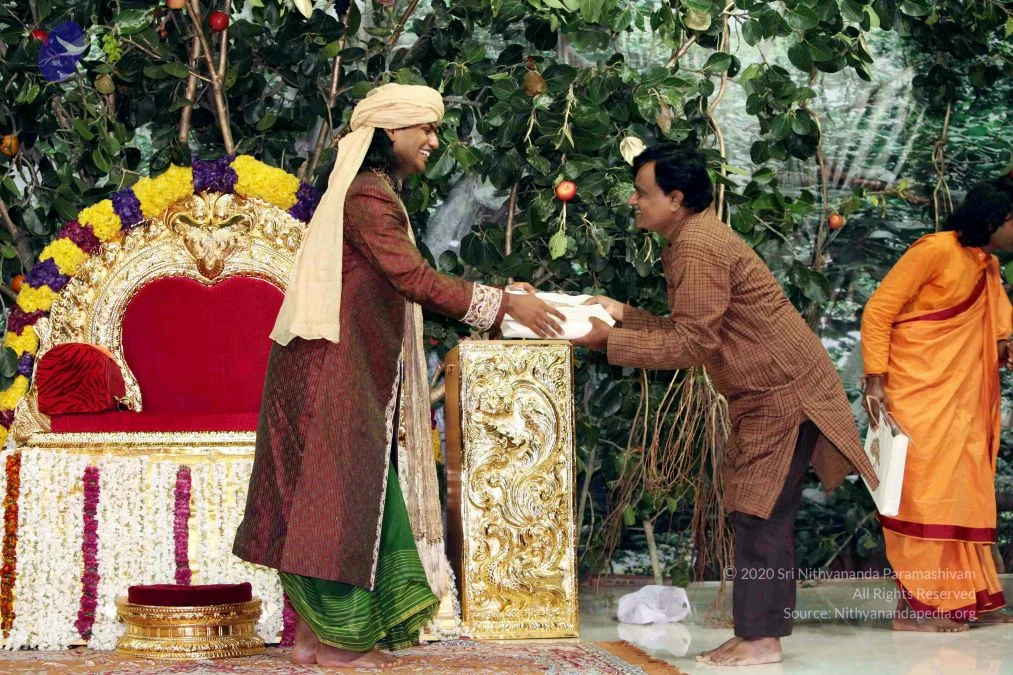
wedding Ceremony

Evening Culturals

Photos Of The Day:

nithyananda-ashram

Photos from this day

View all 871 photos

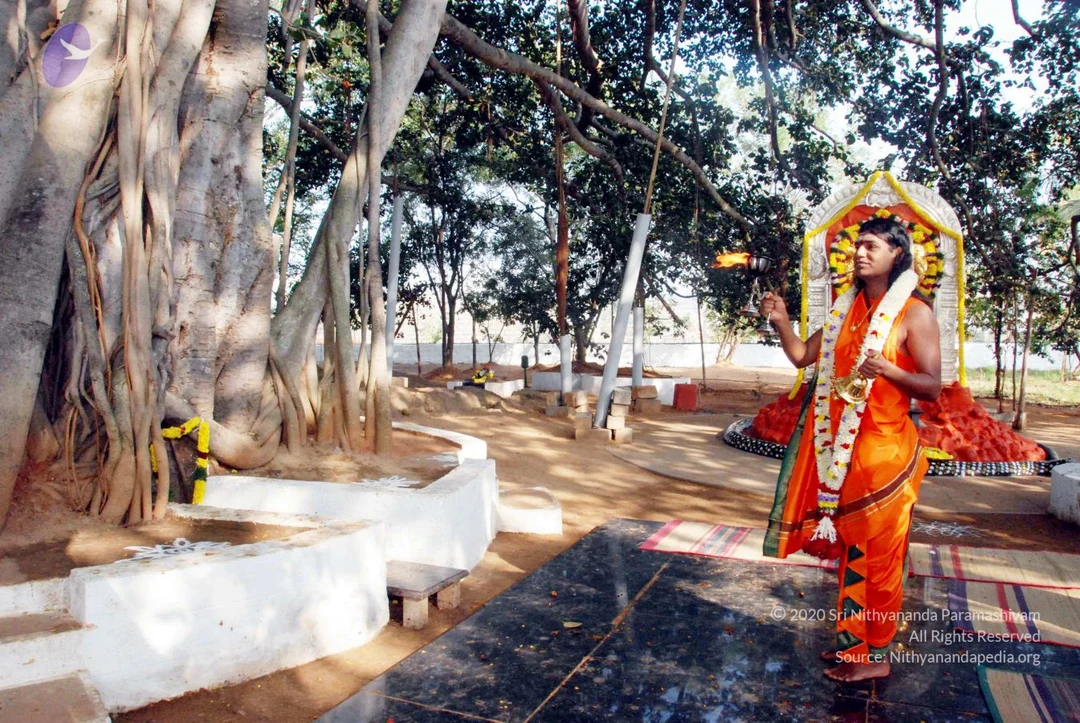
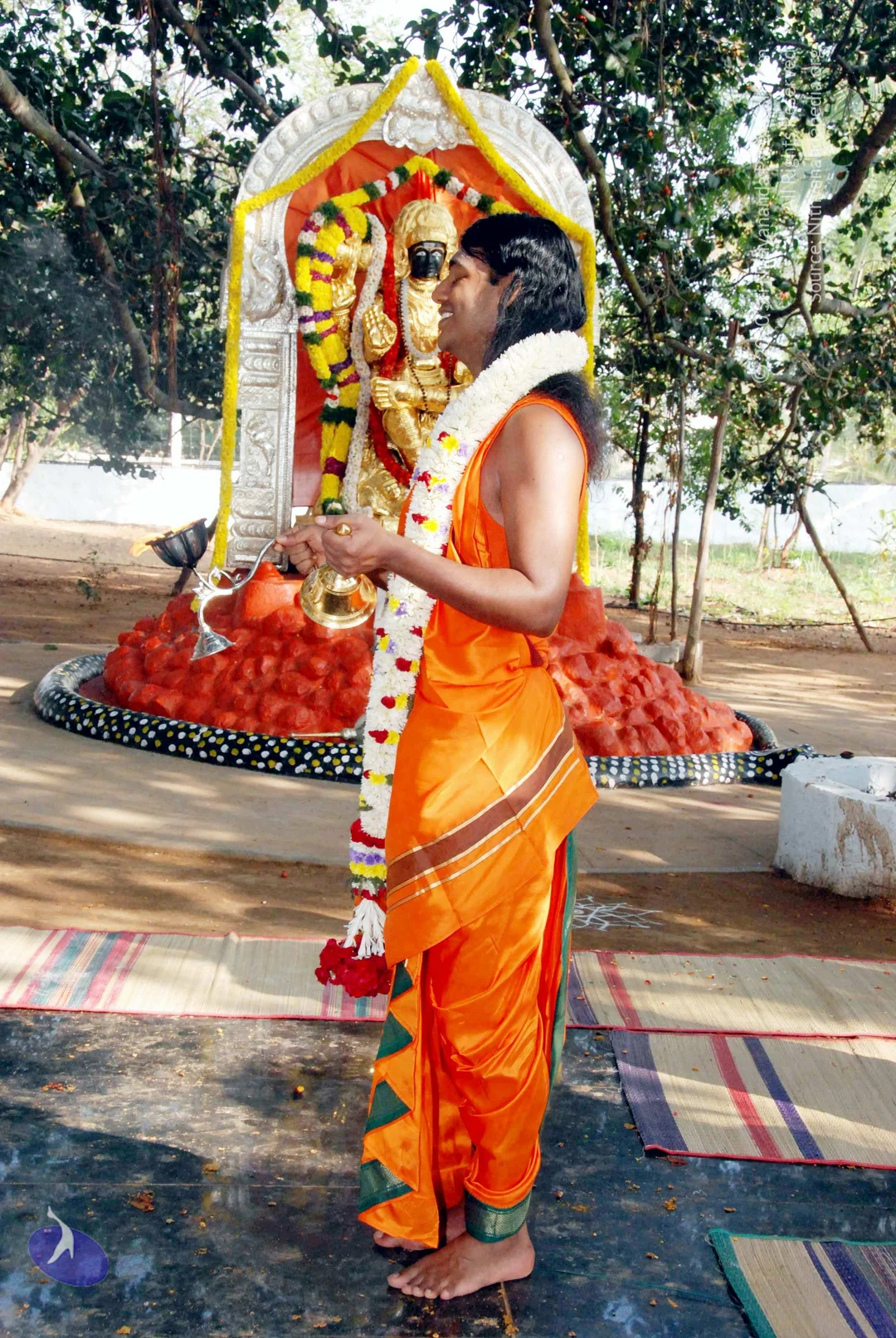
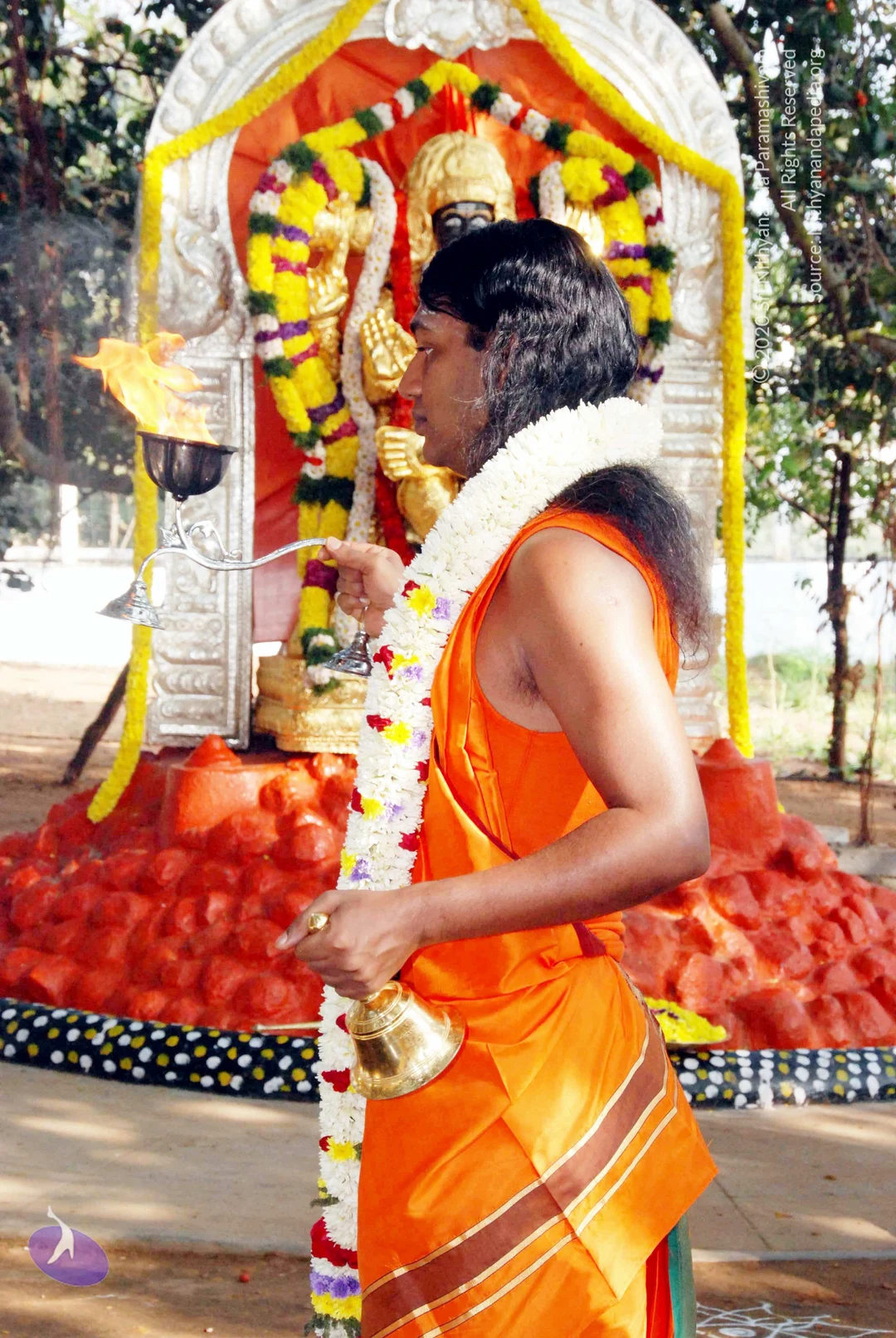
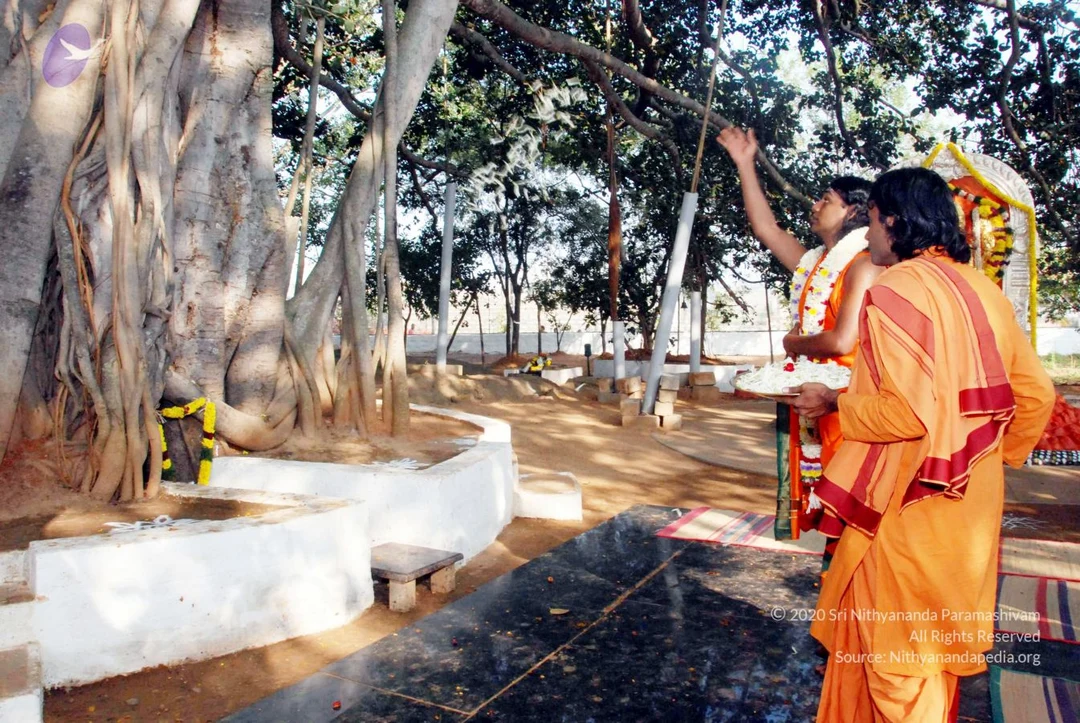
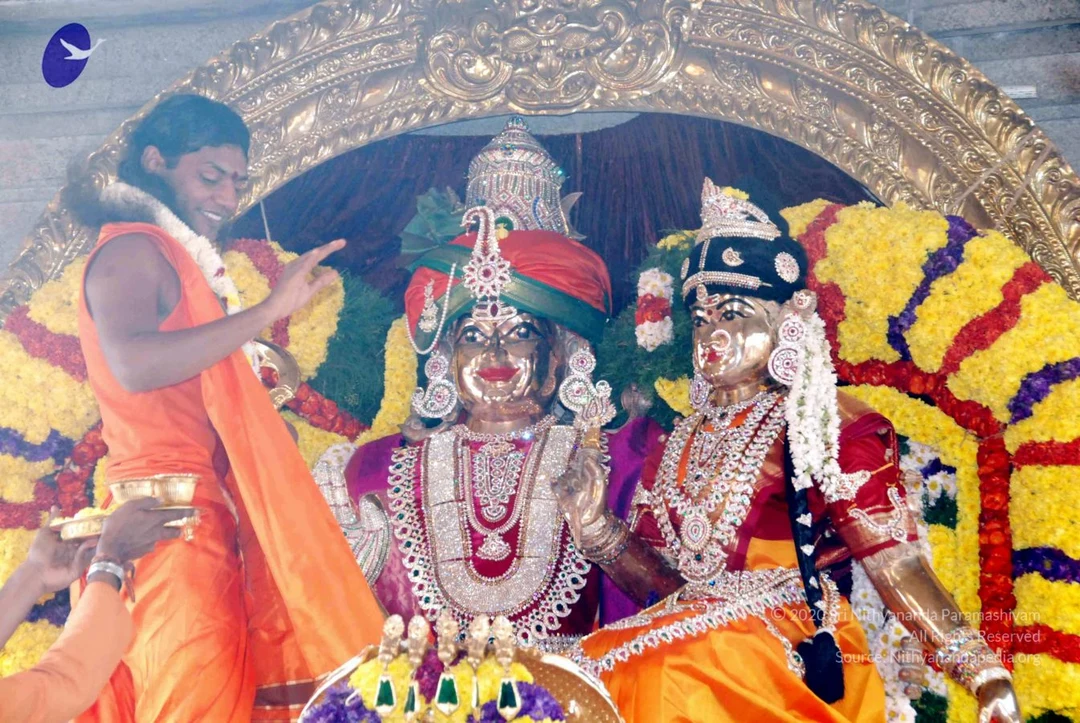
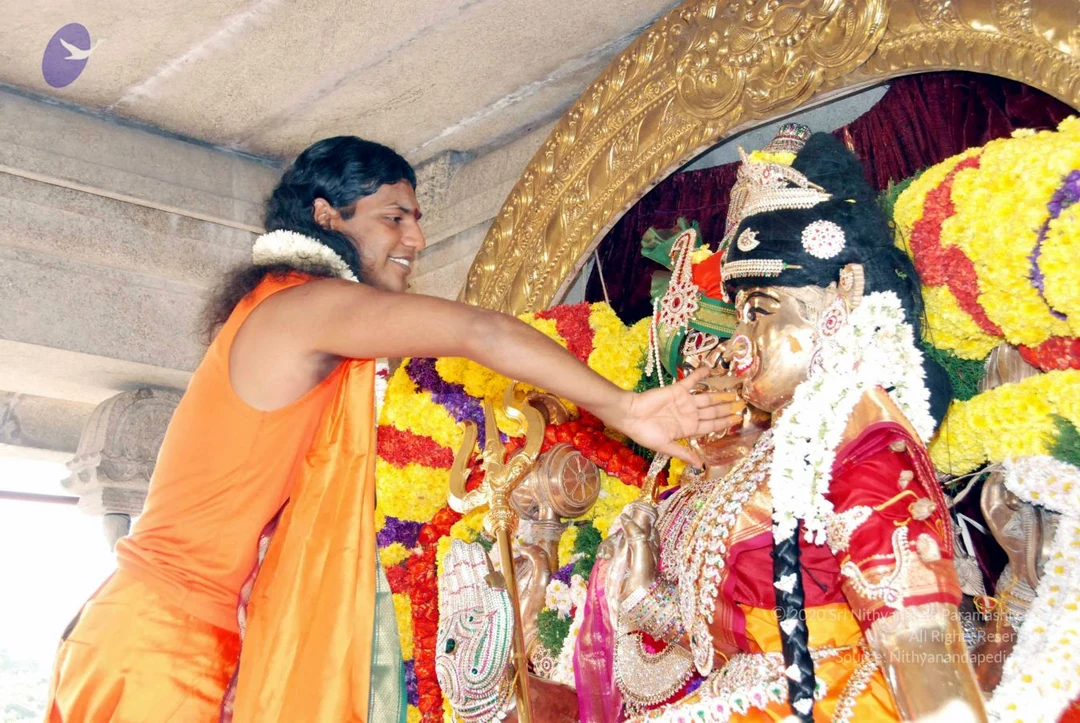
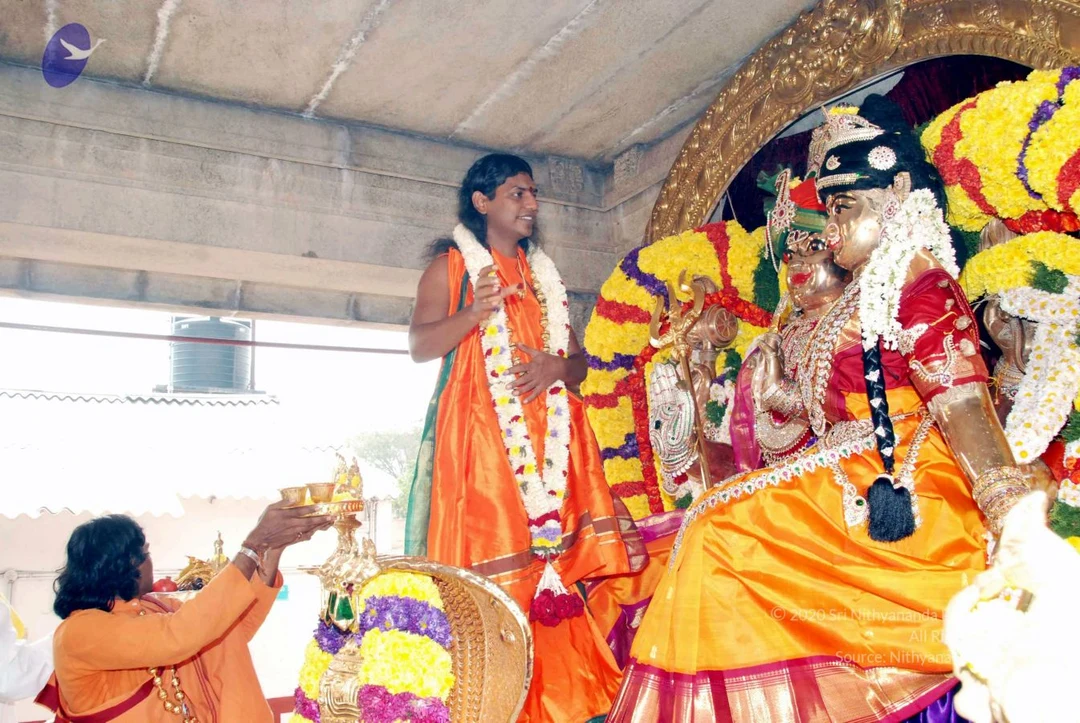
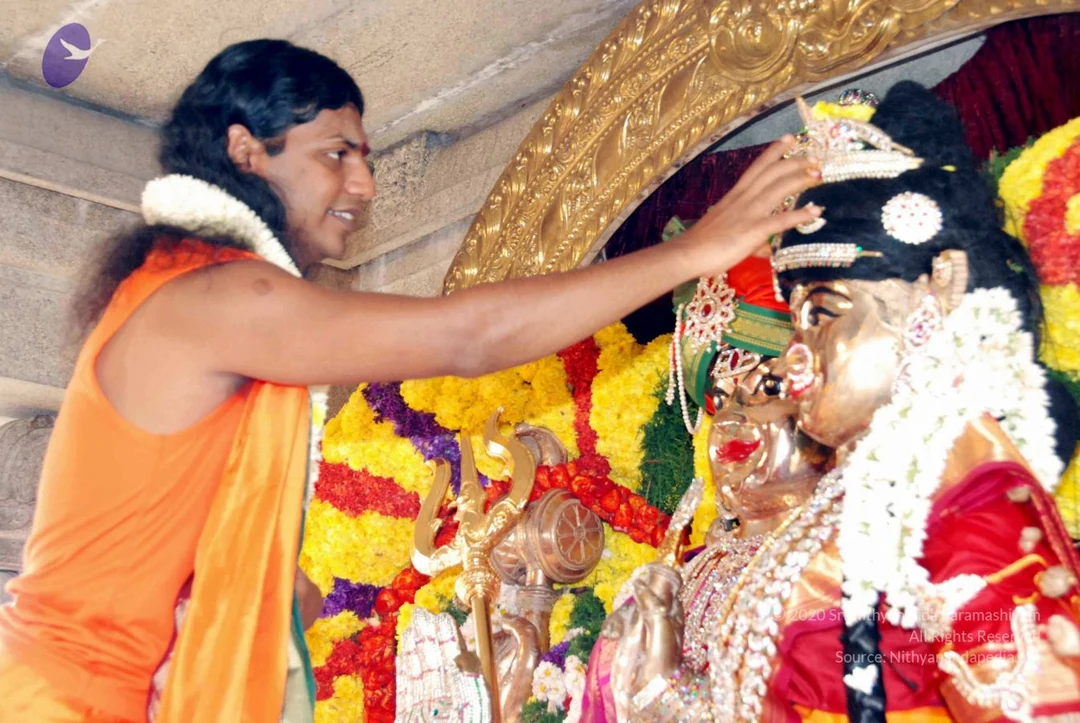
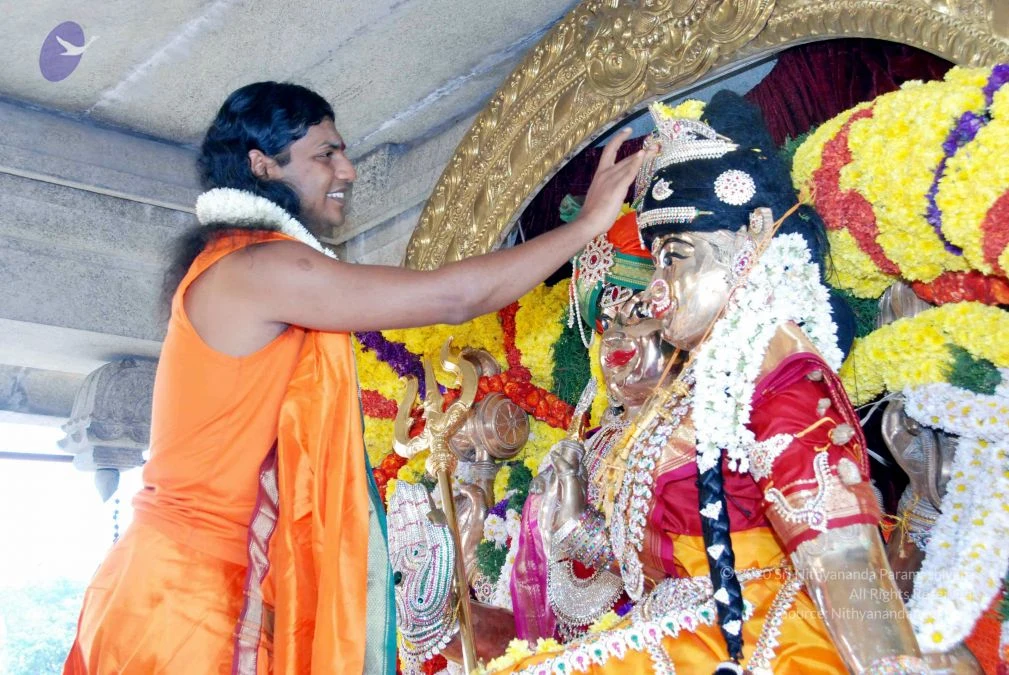
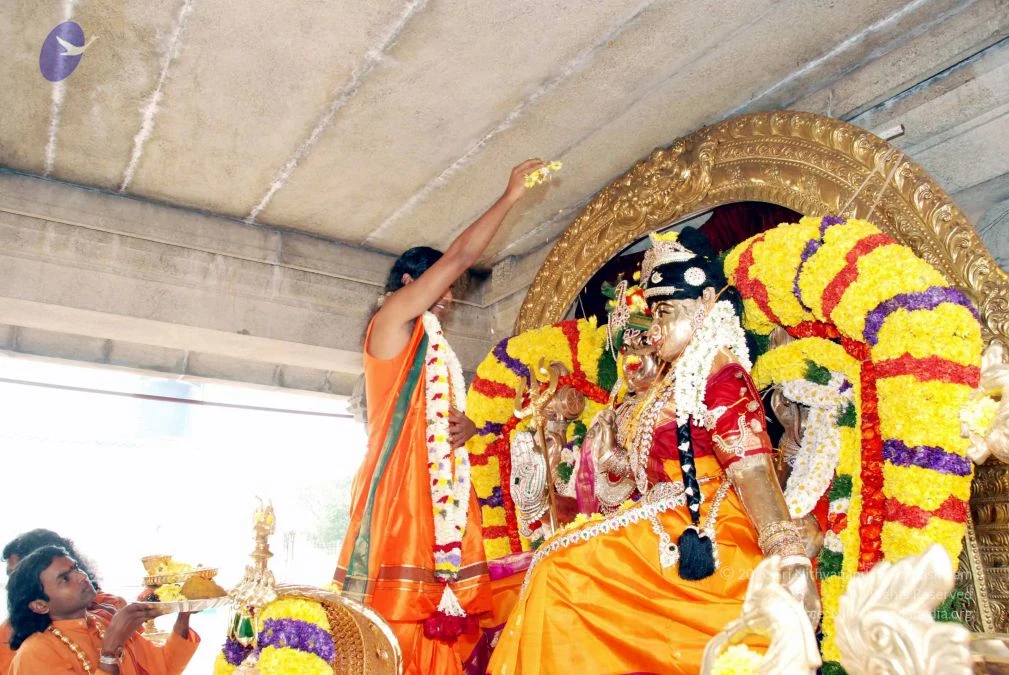
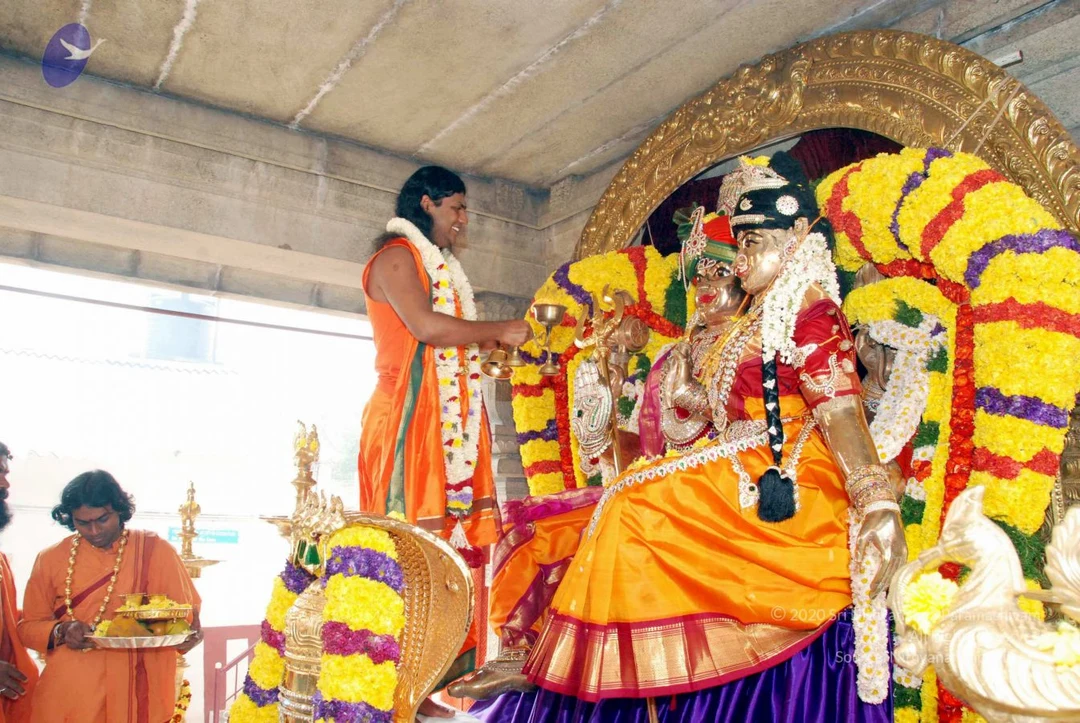
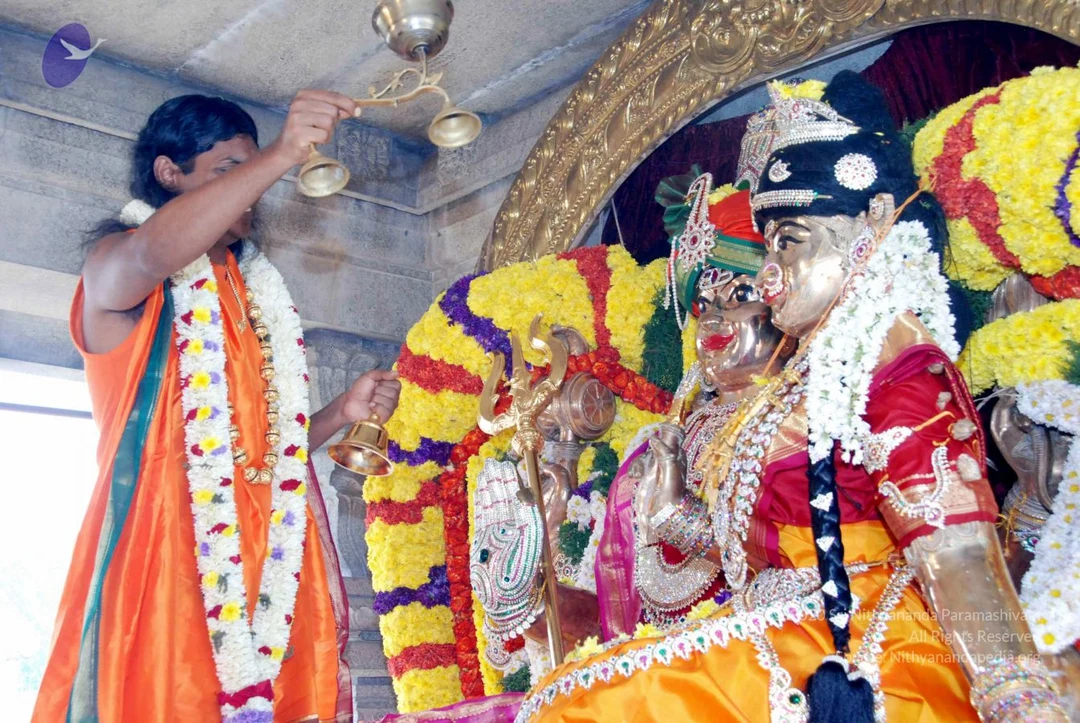
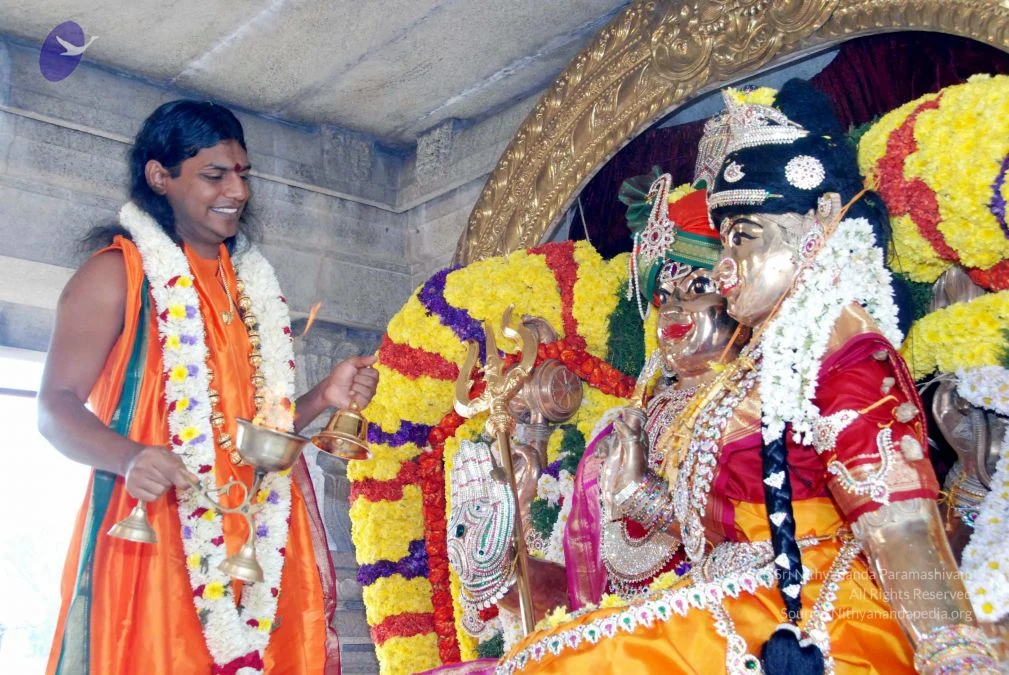
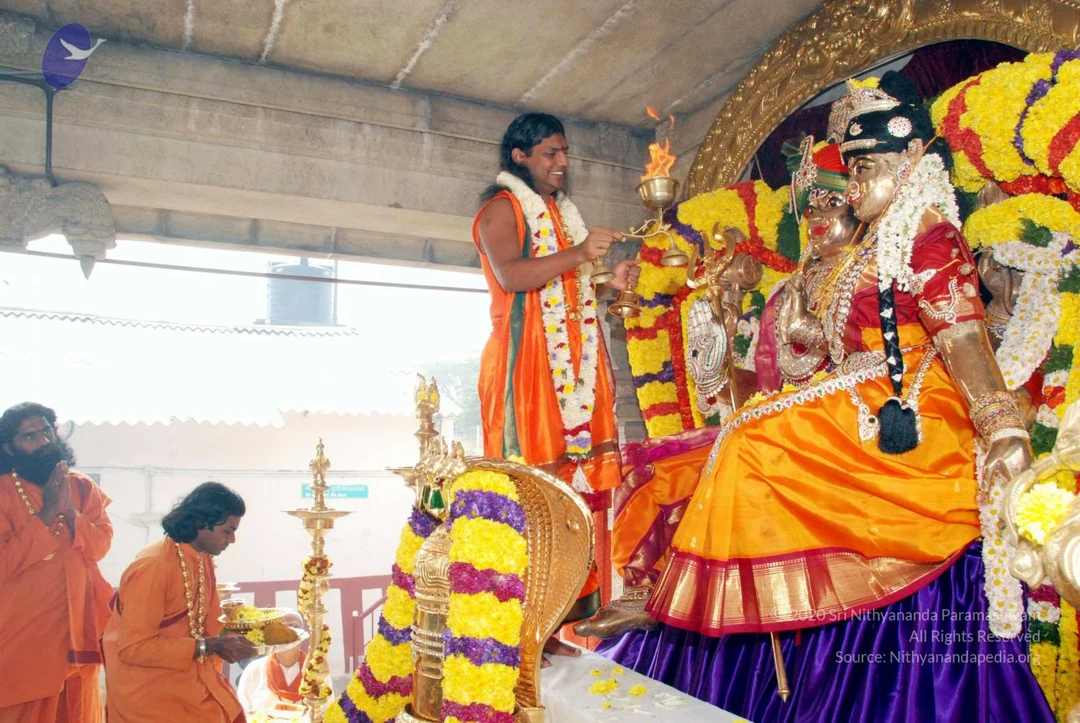
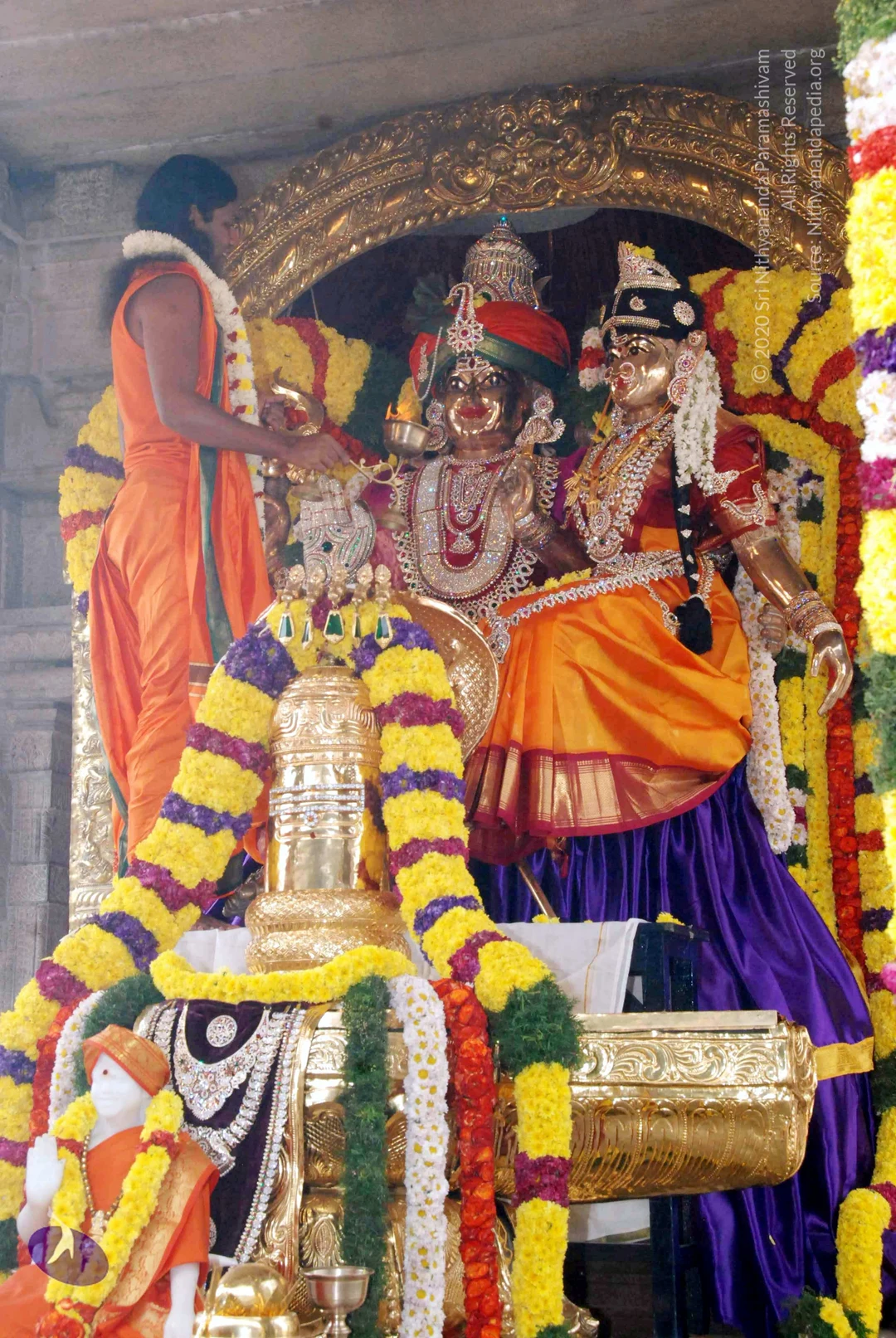
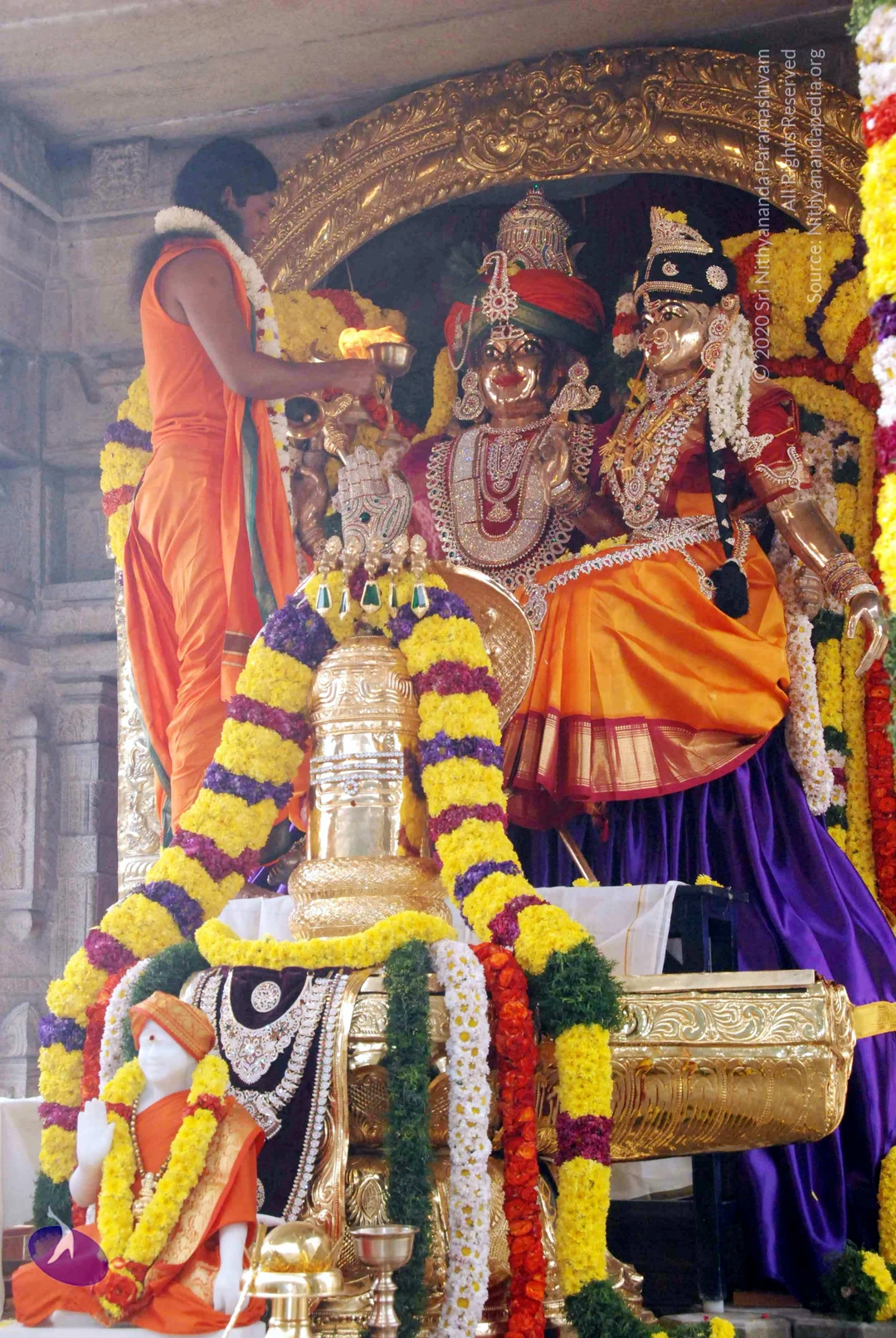
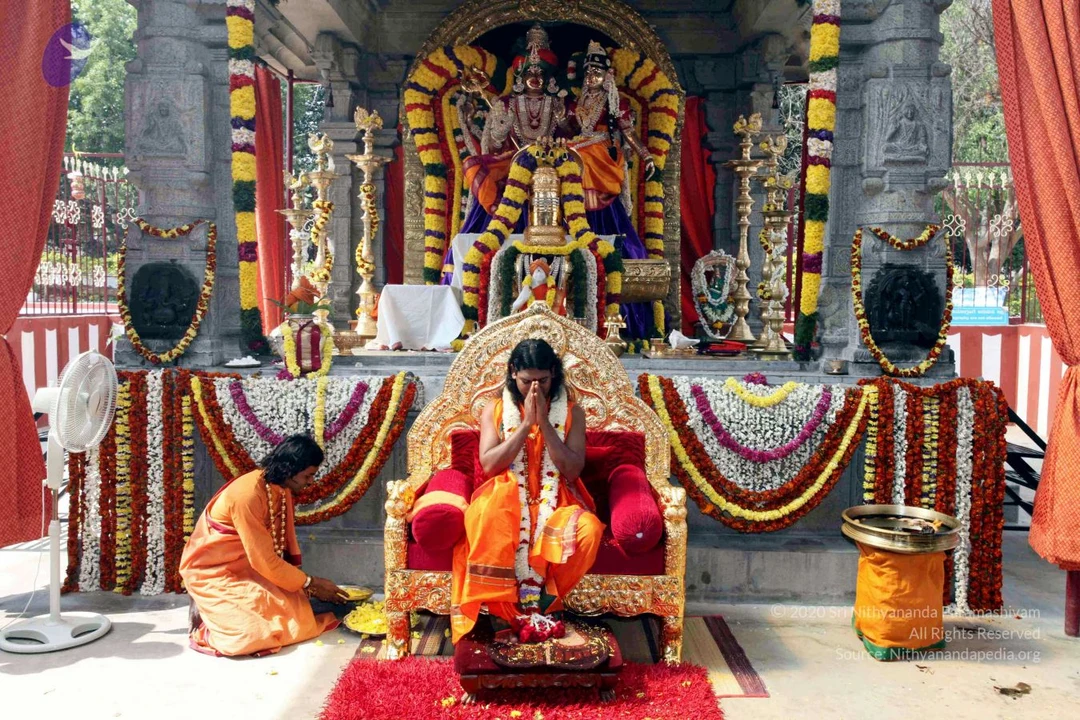
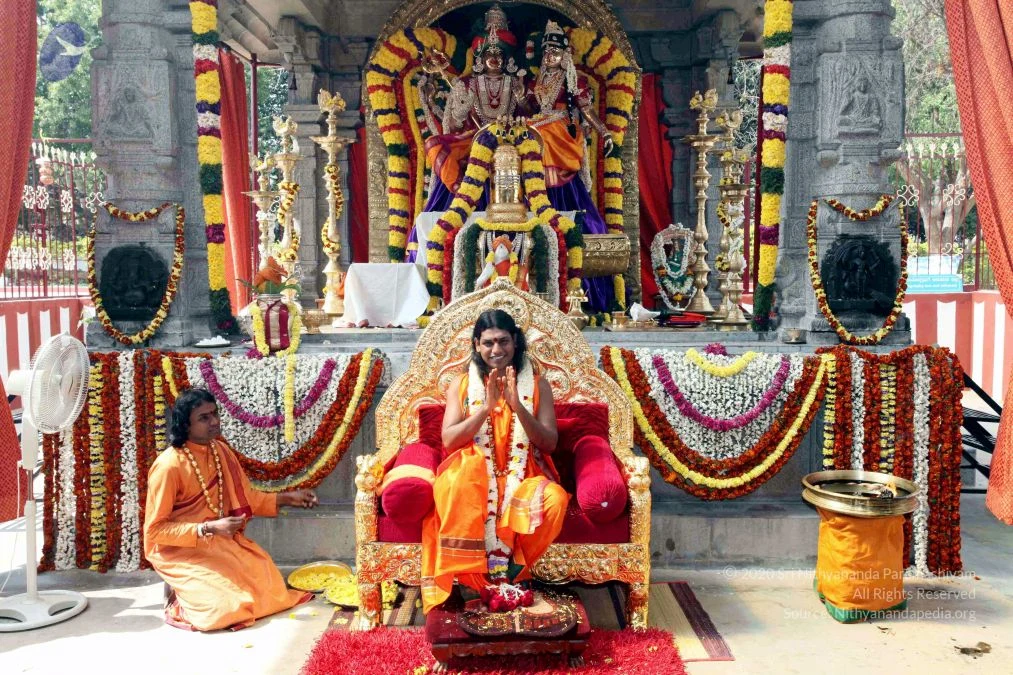
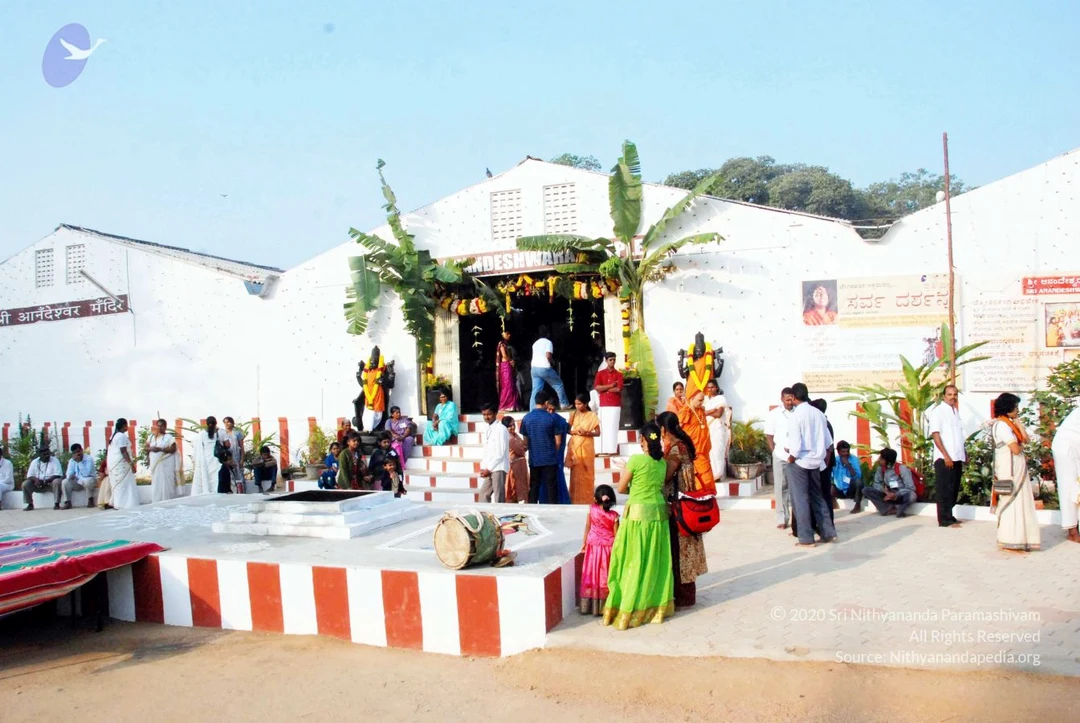
Nithyanandeshwara Paramashiva Devalayam
54 photosSource gallery
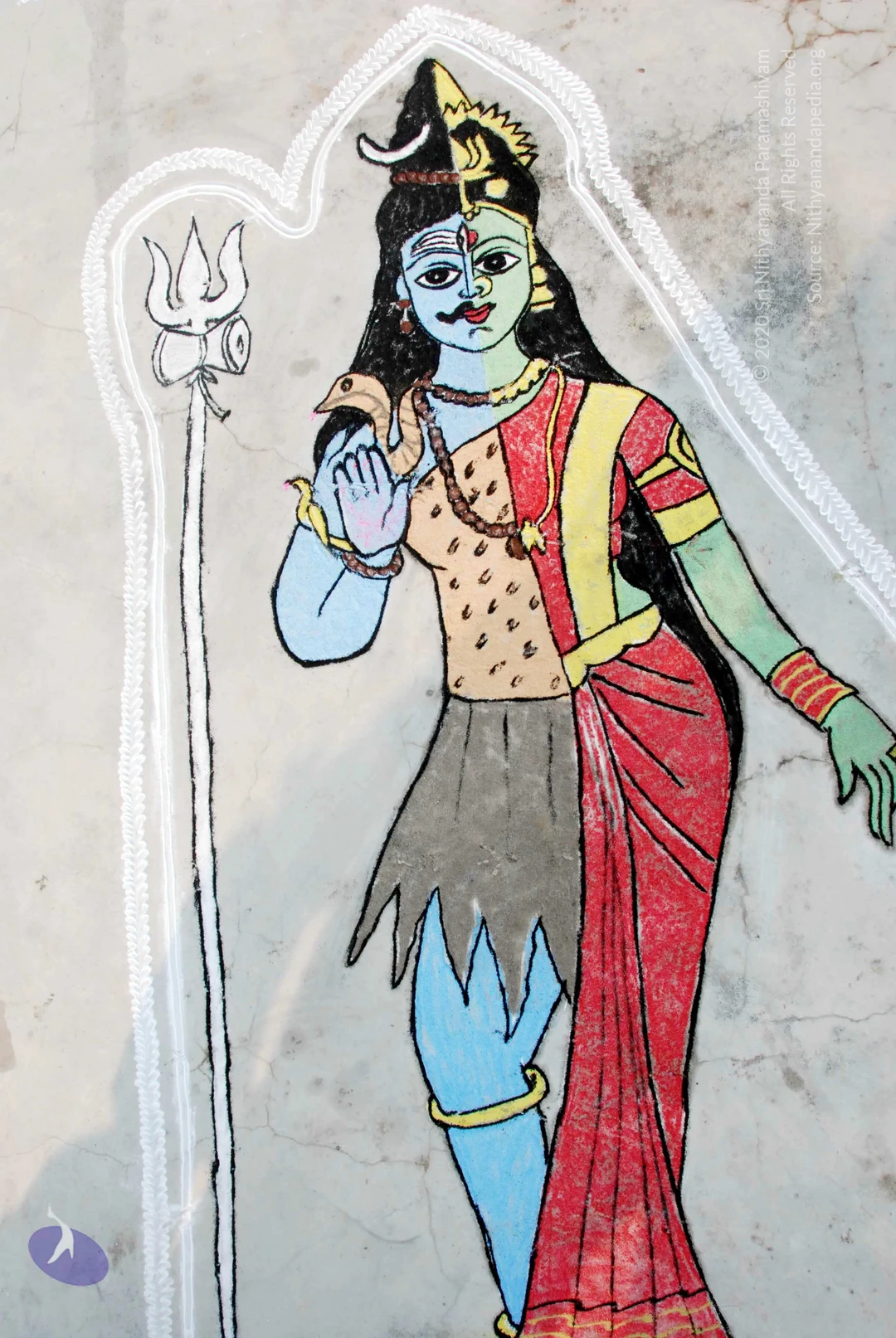
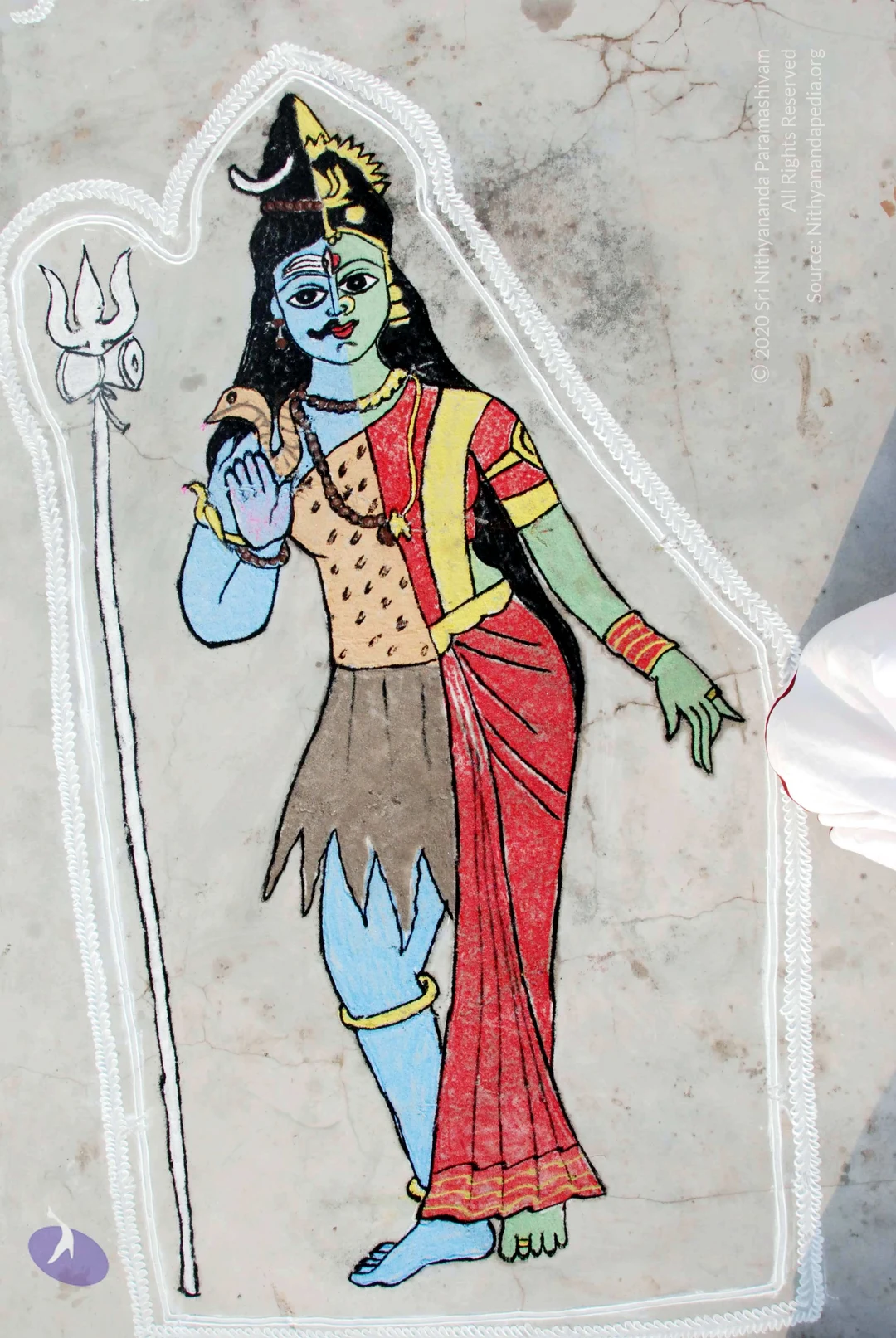
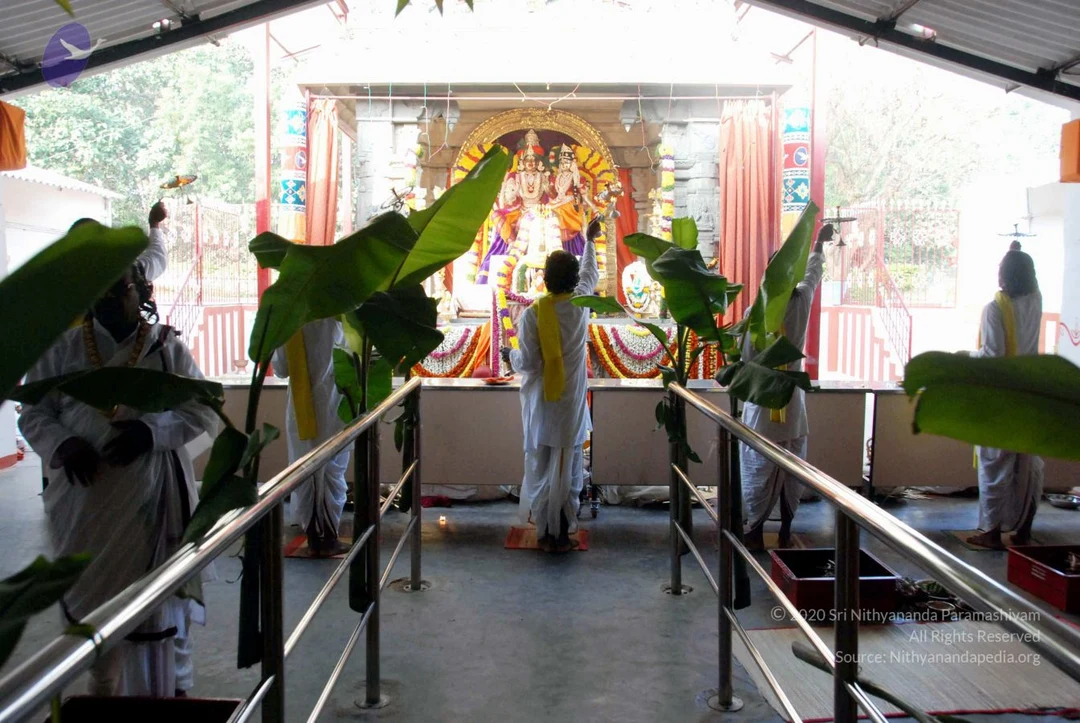
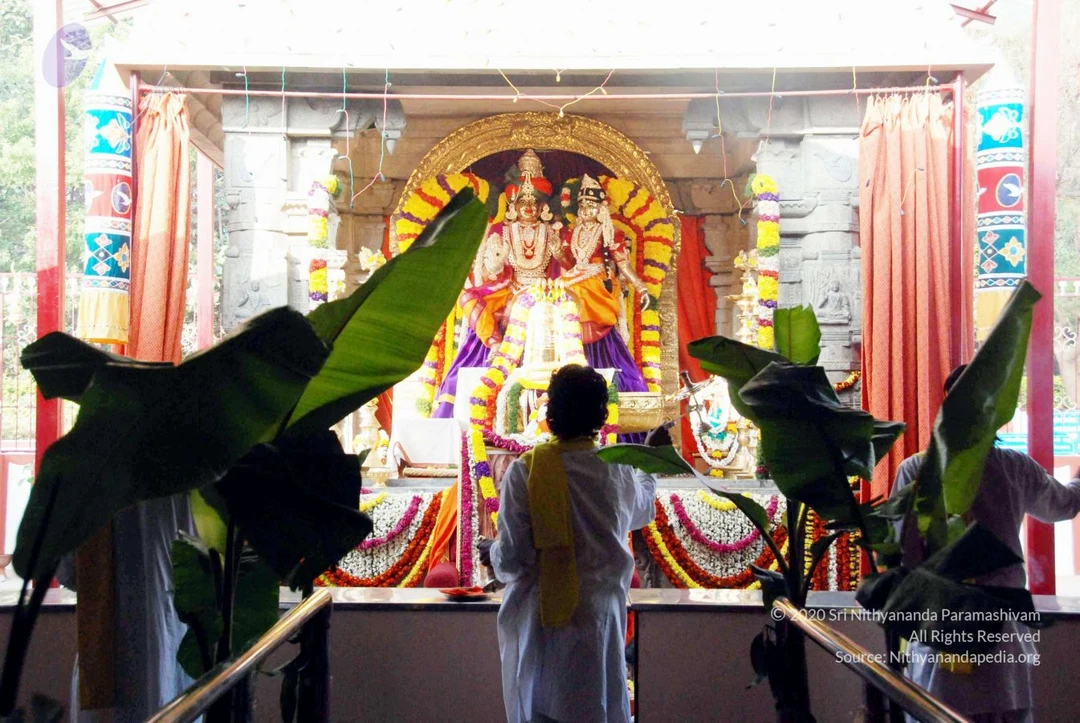
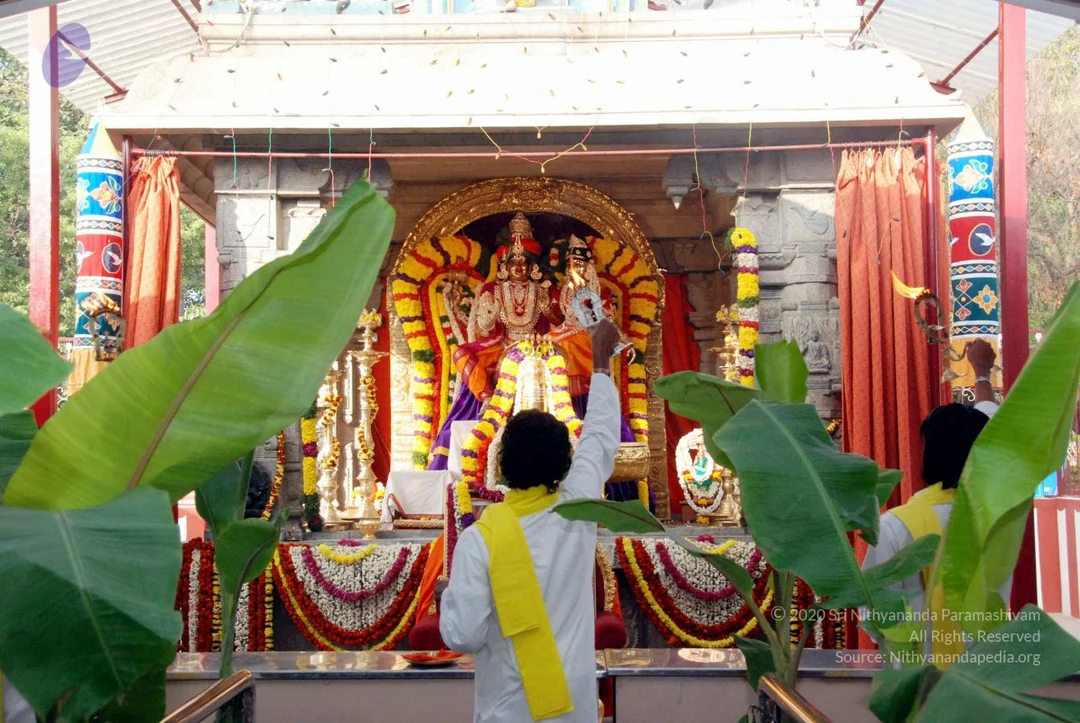
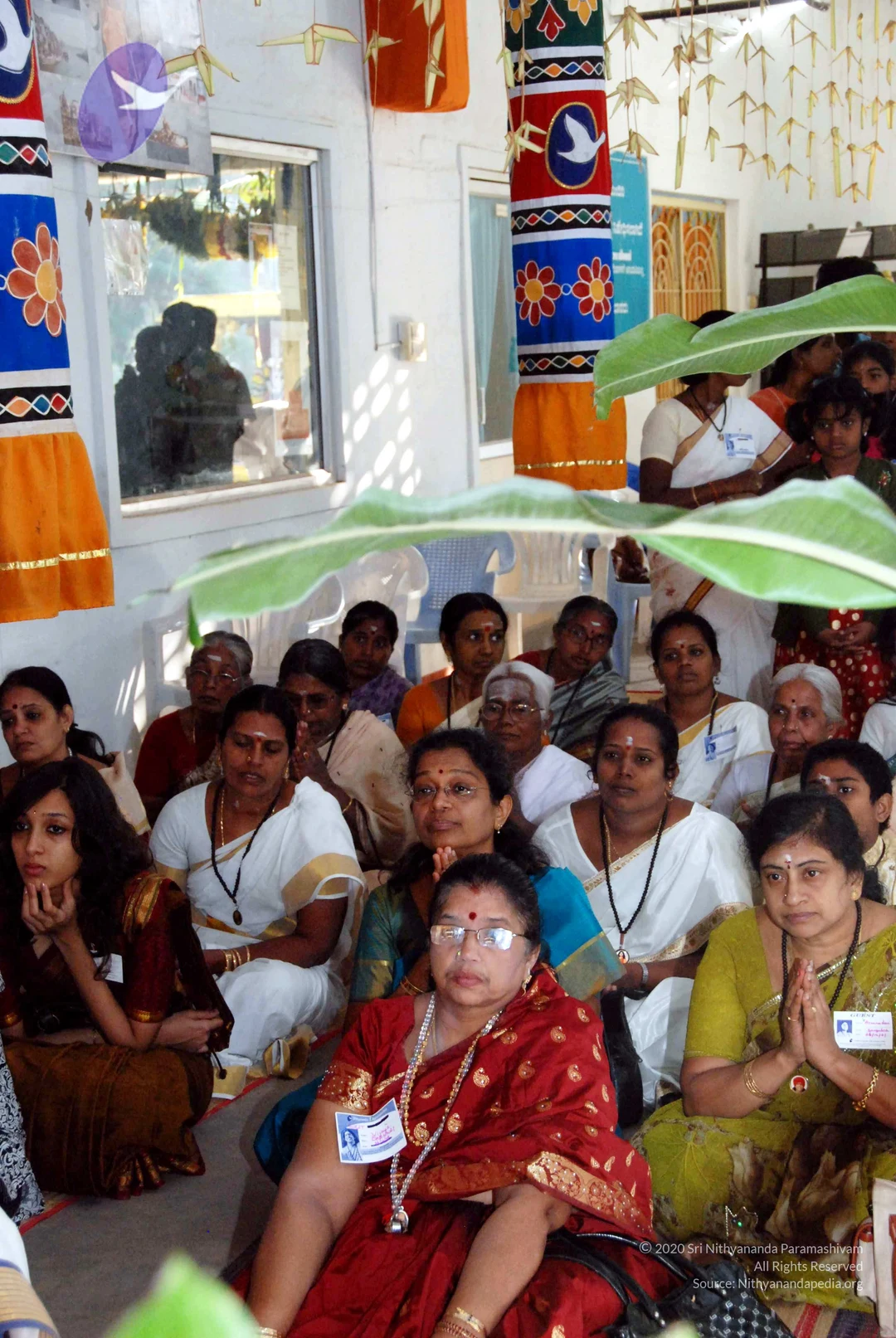
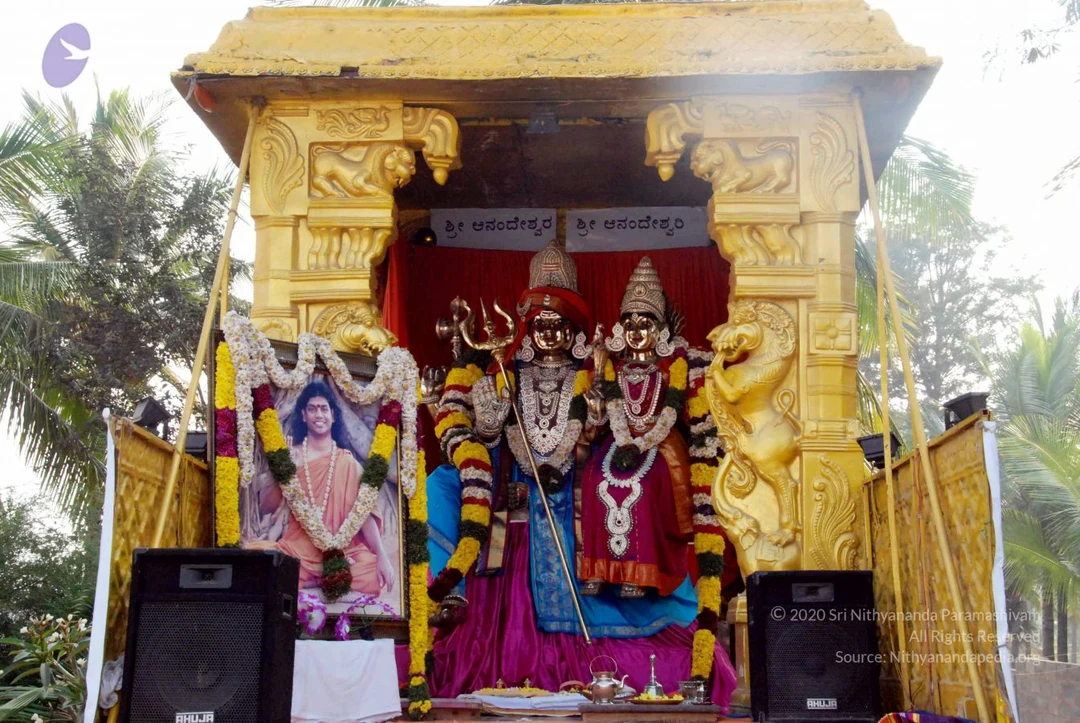
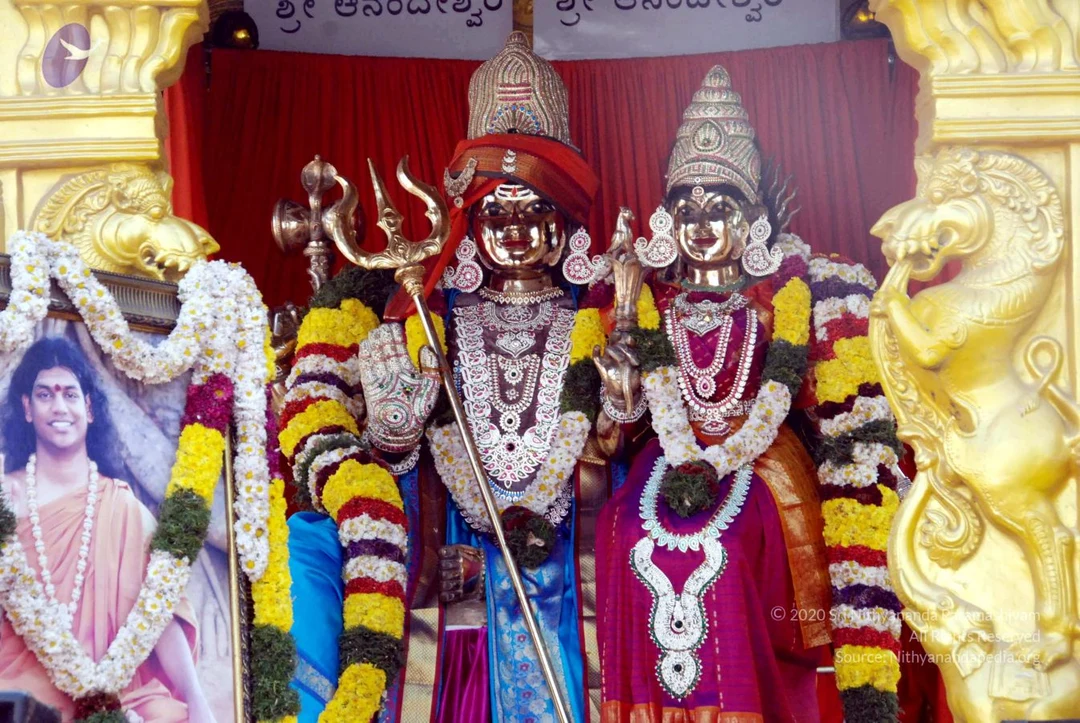
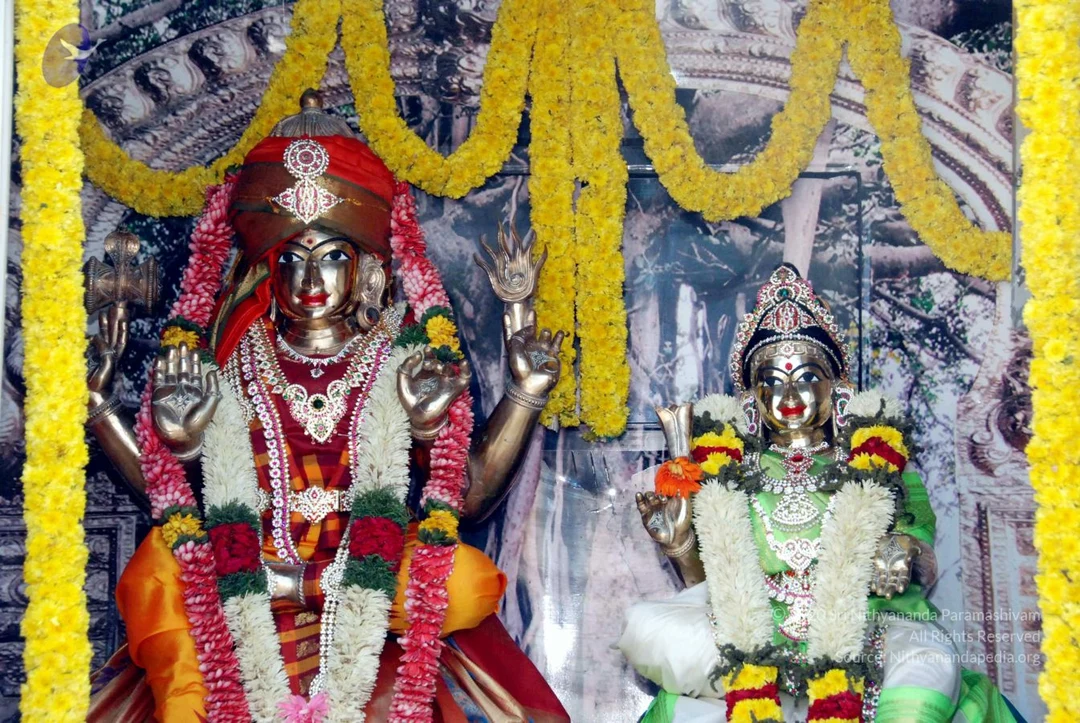
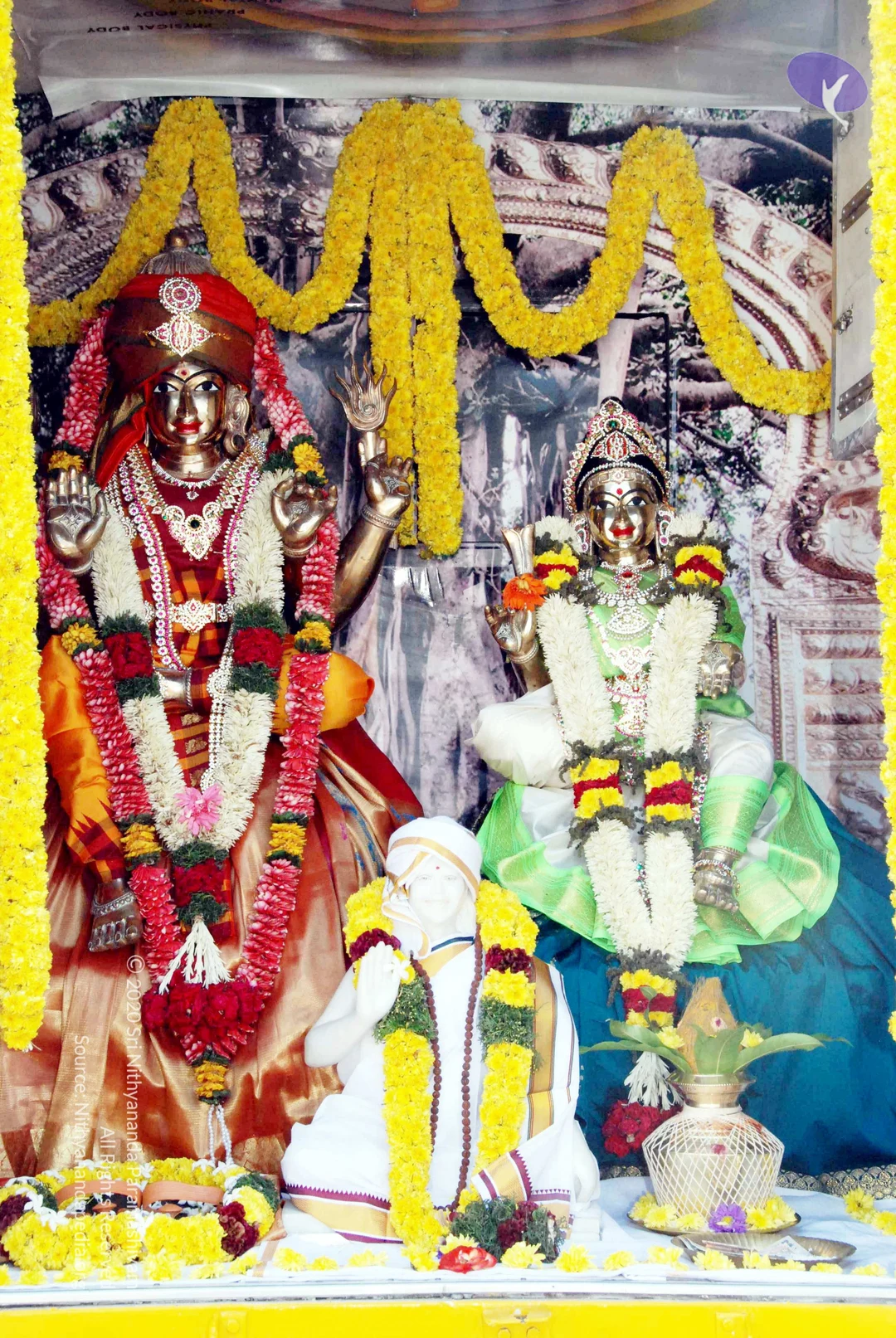
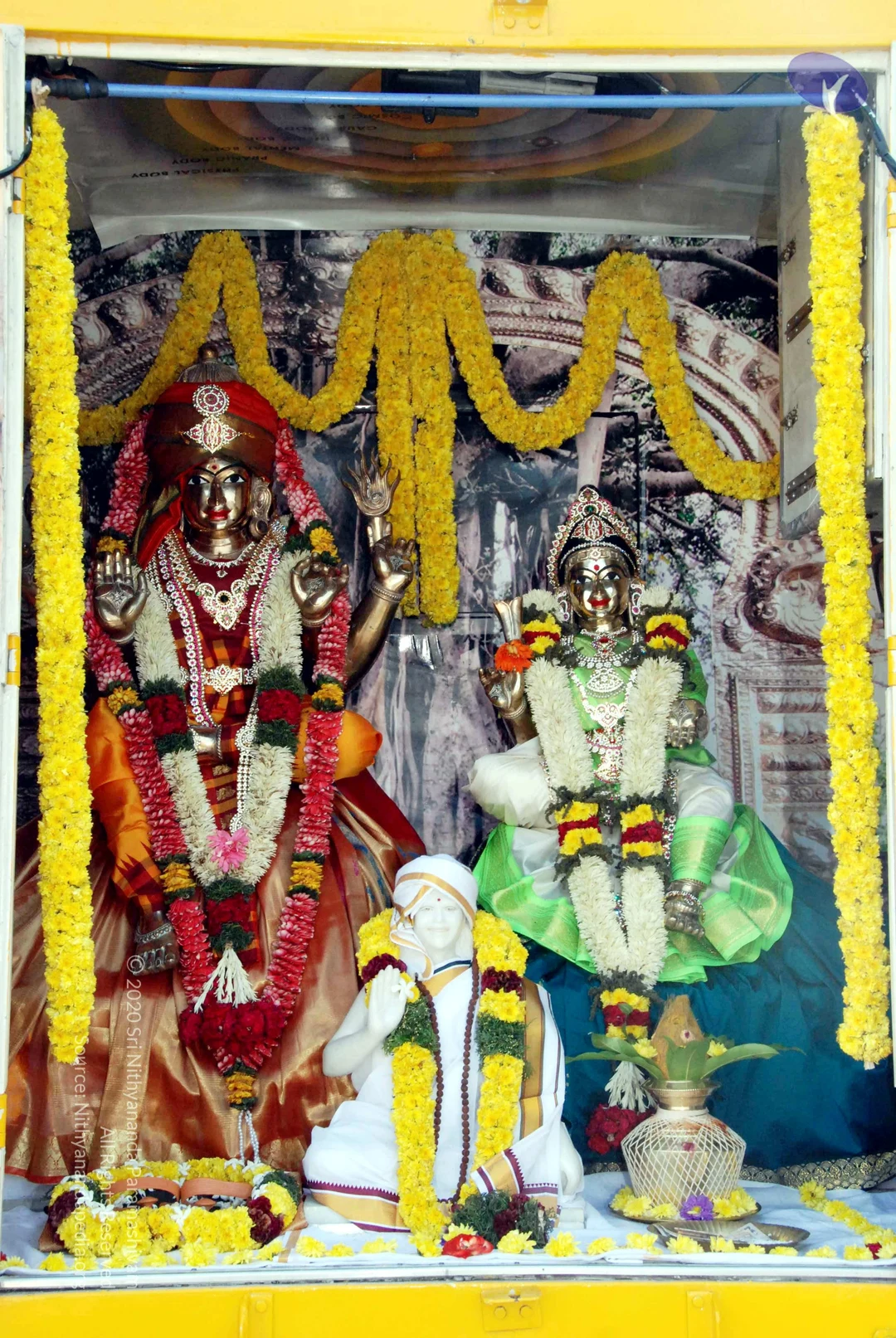
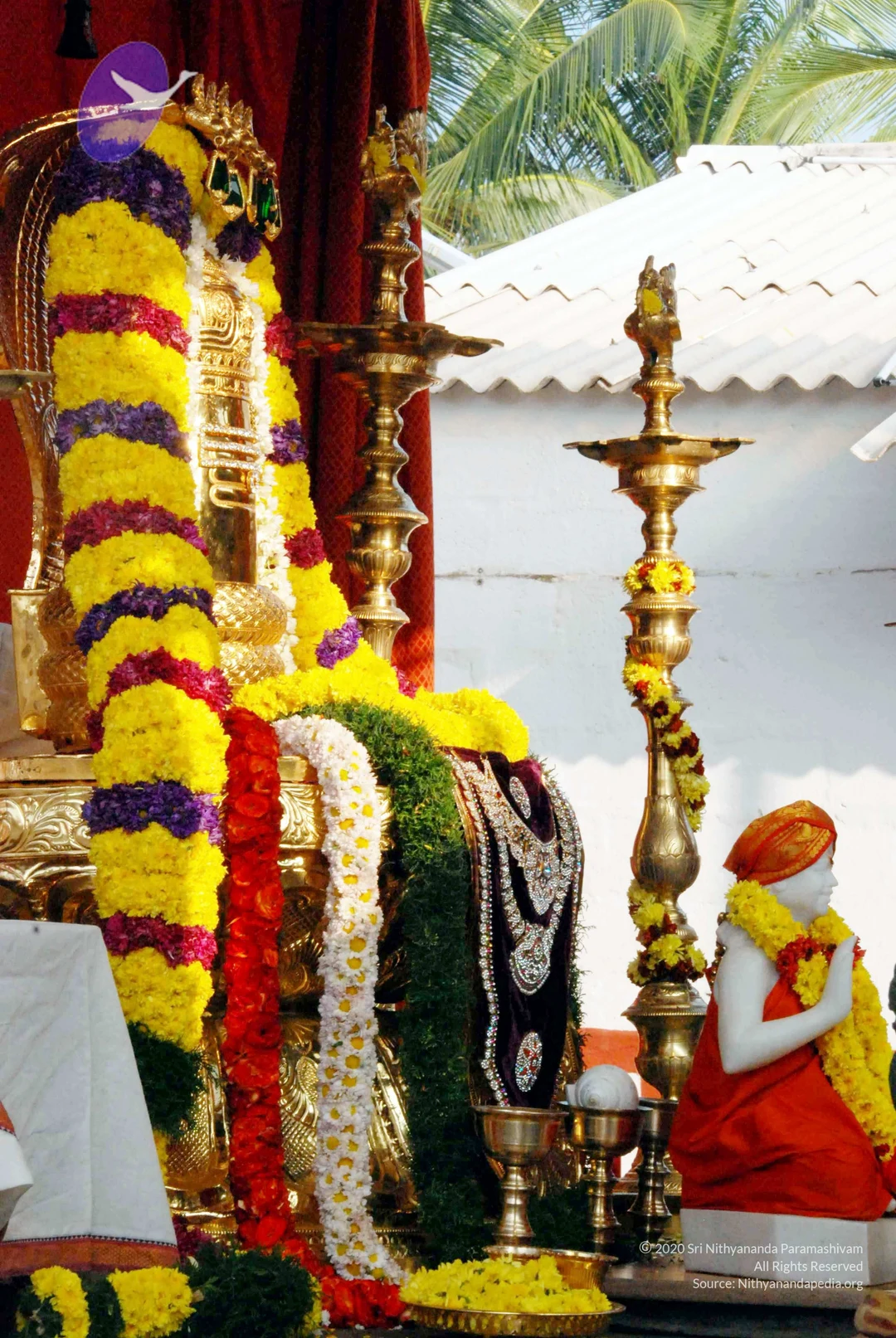
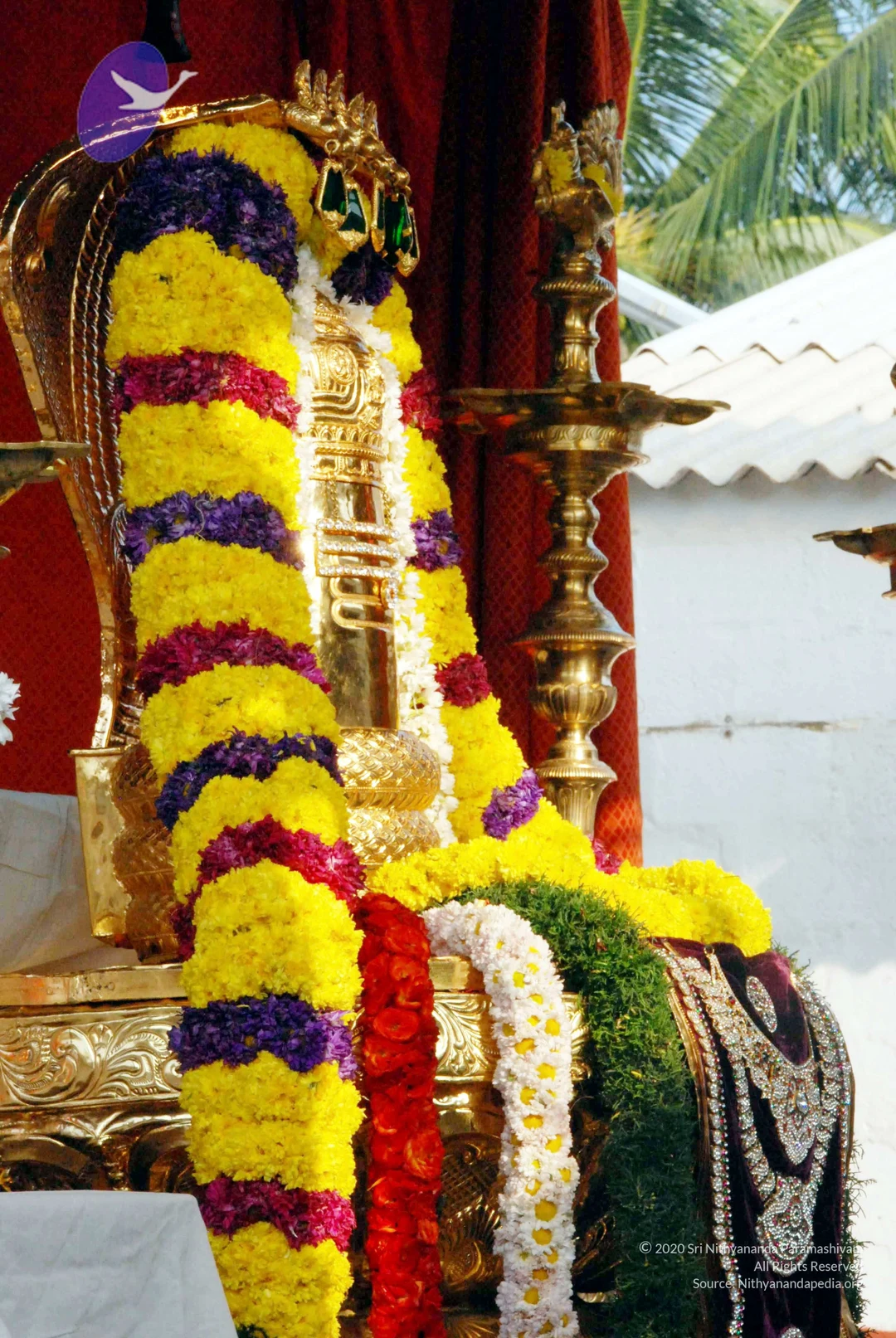
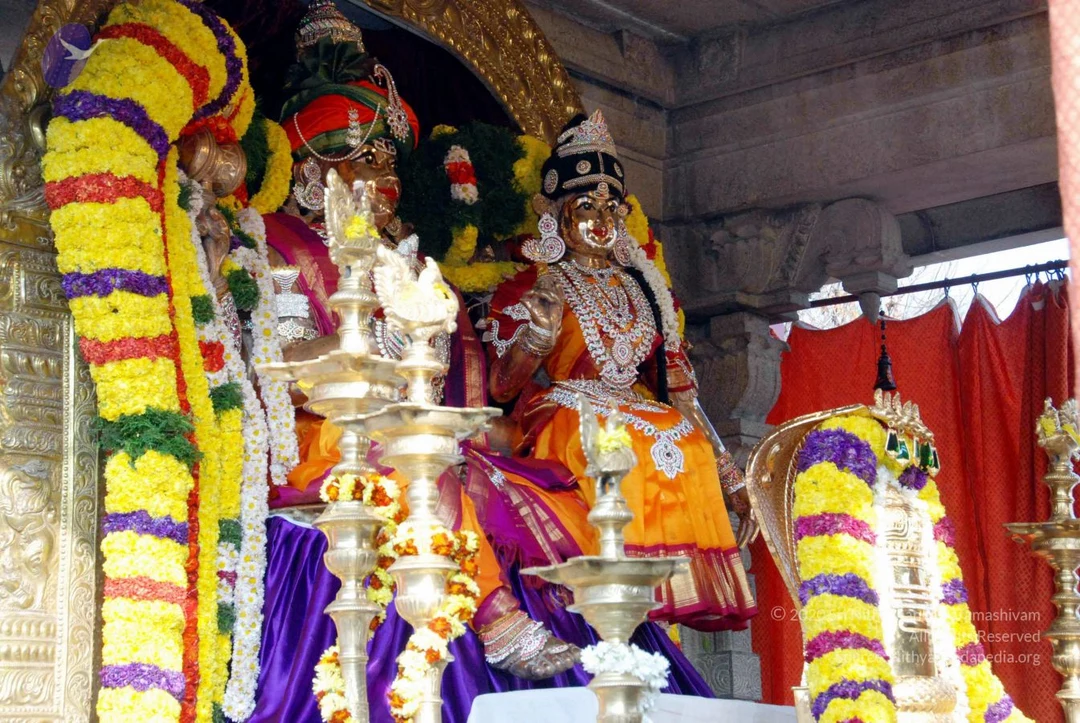
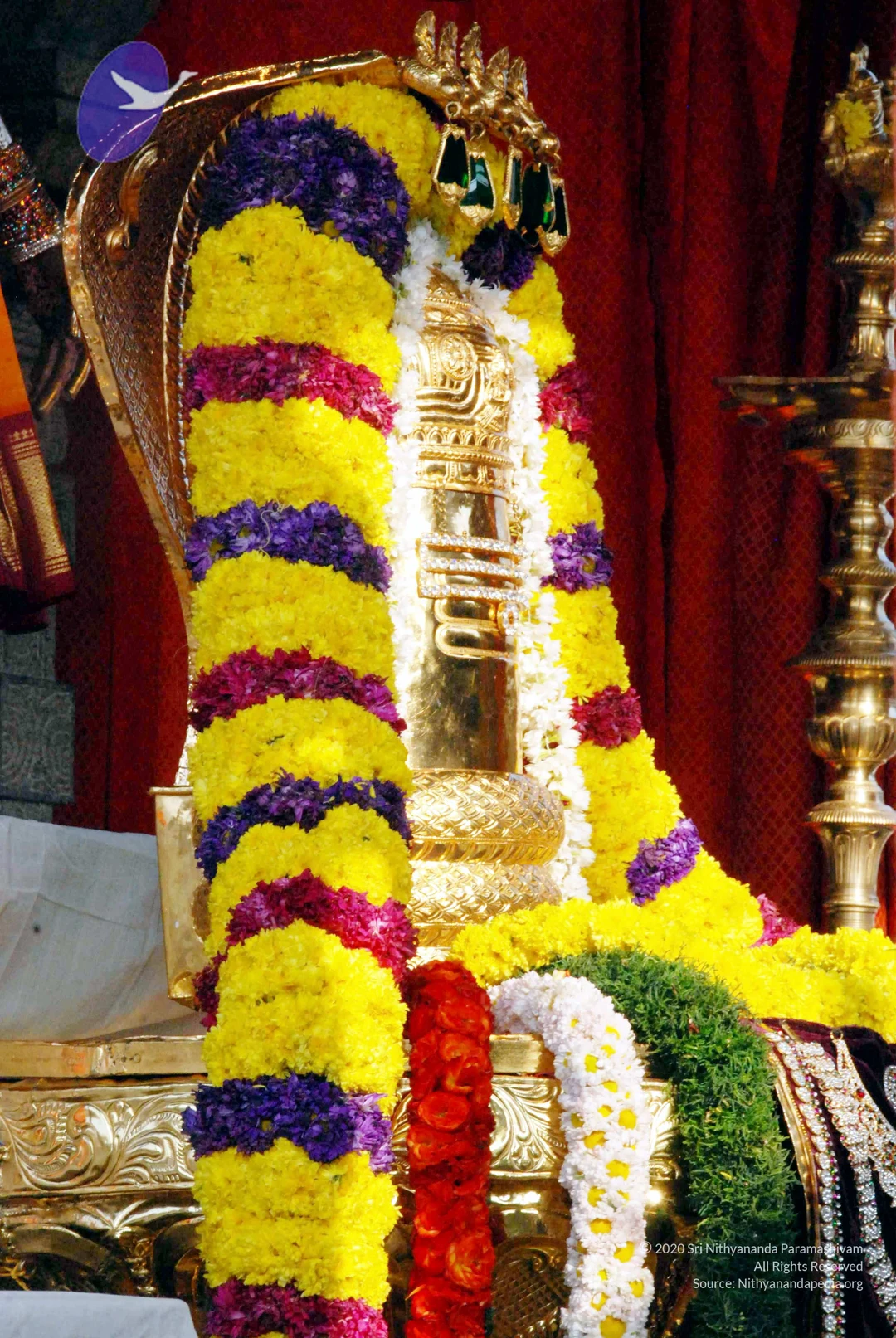
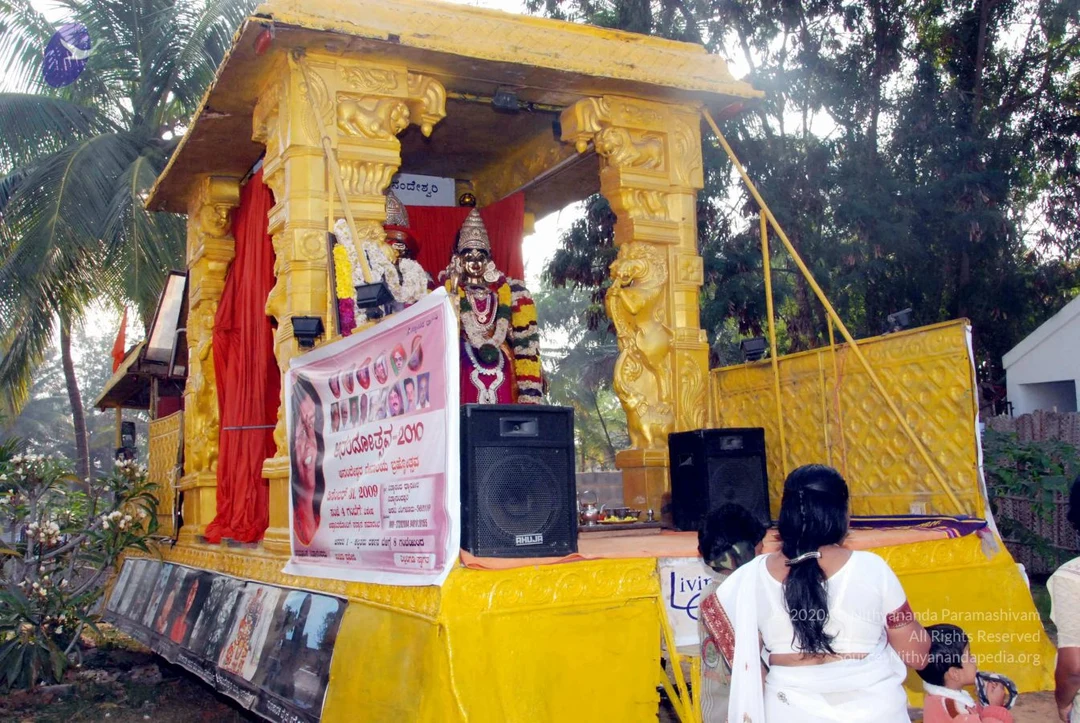
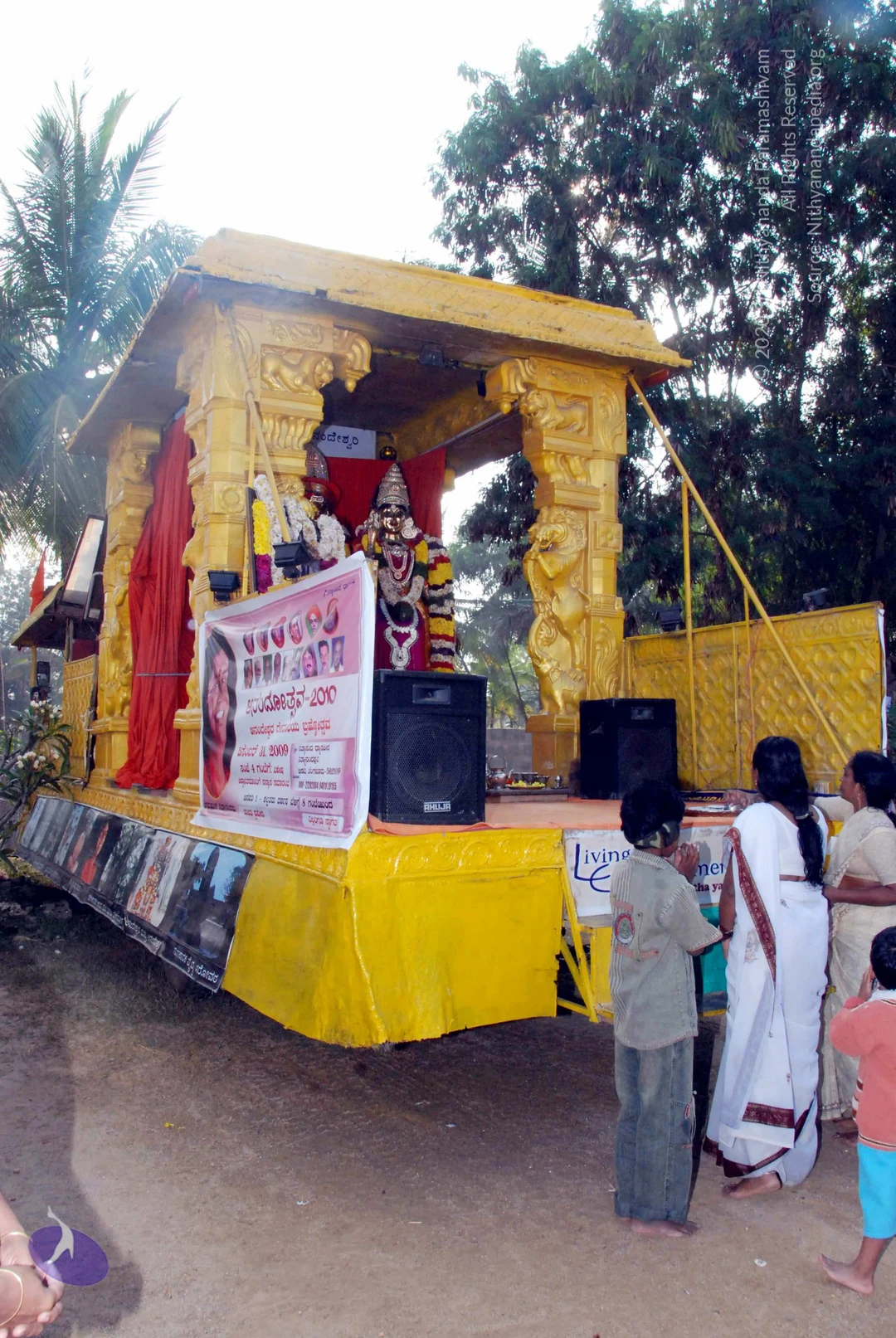
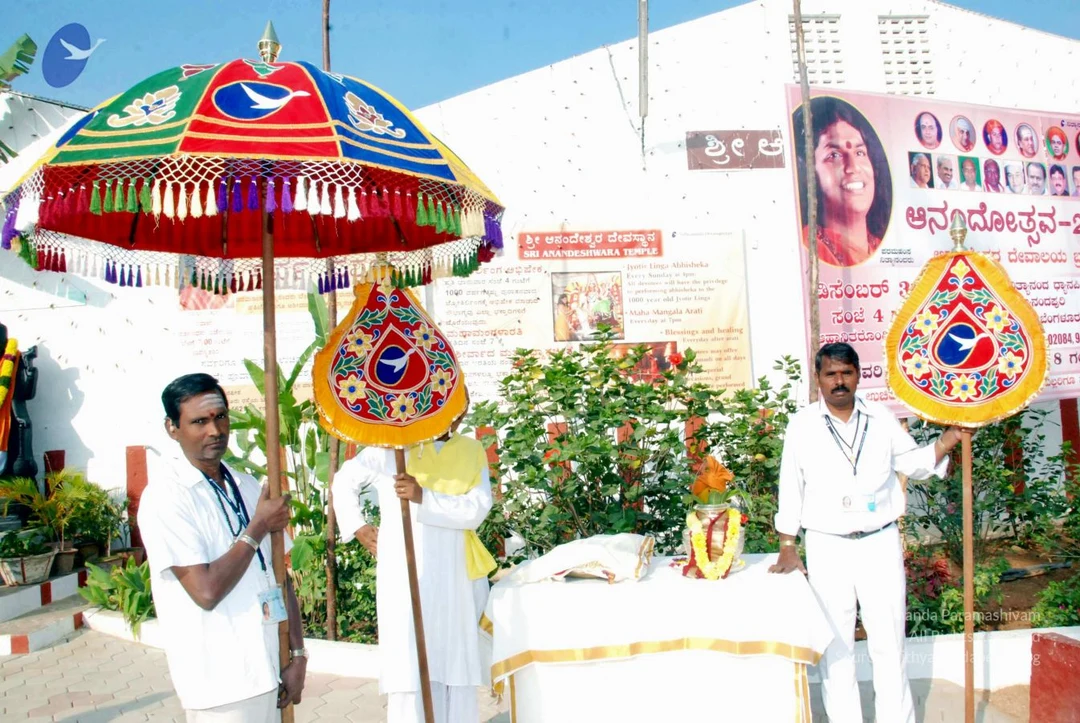
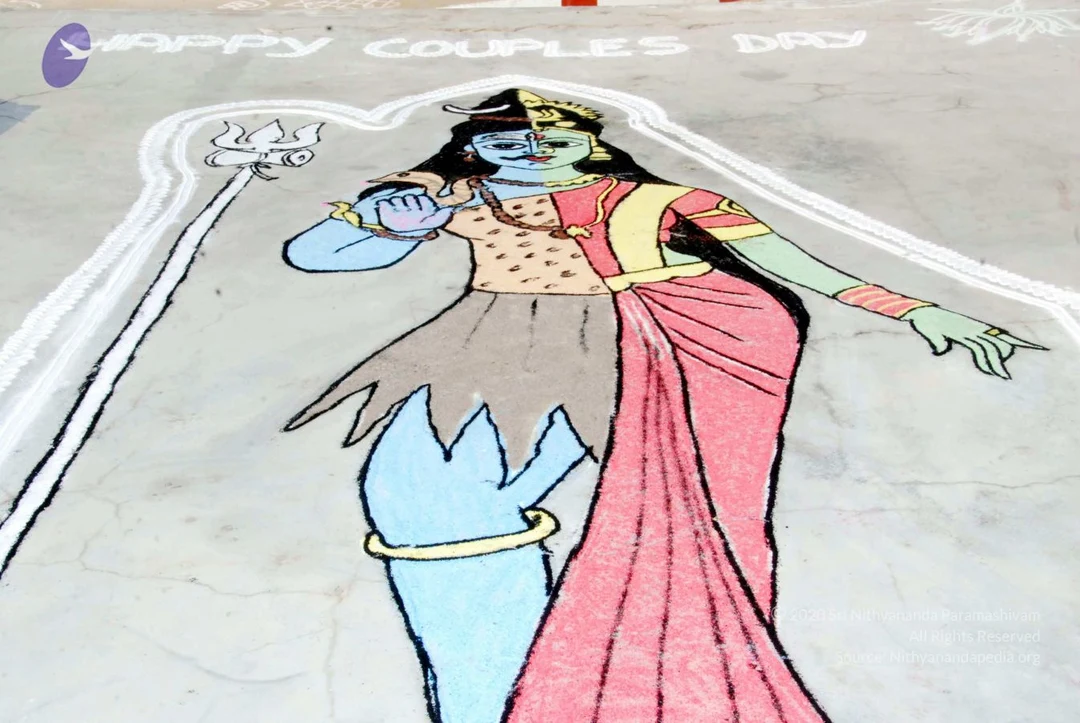
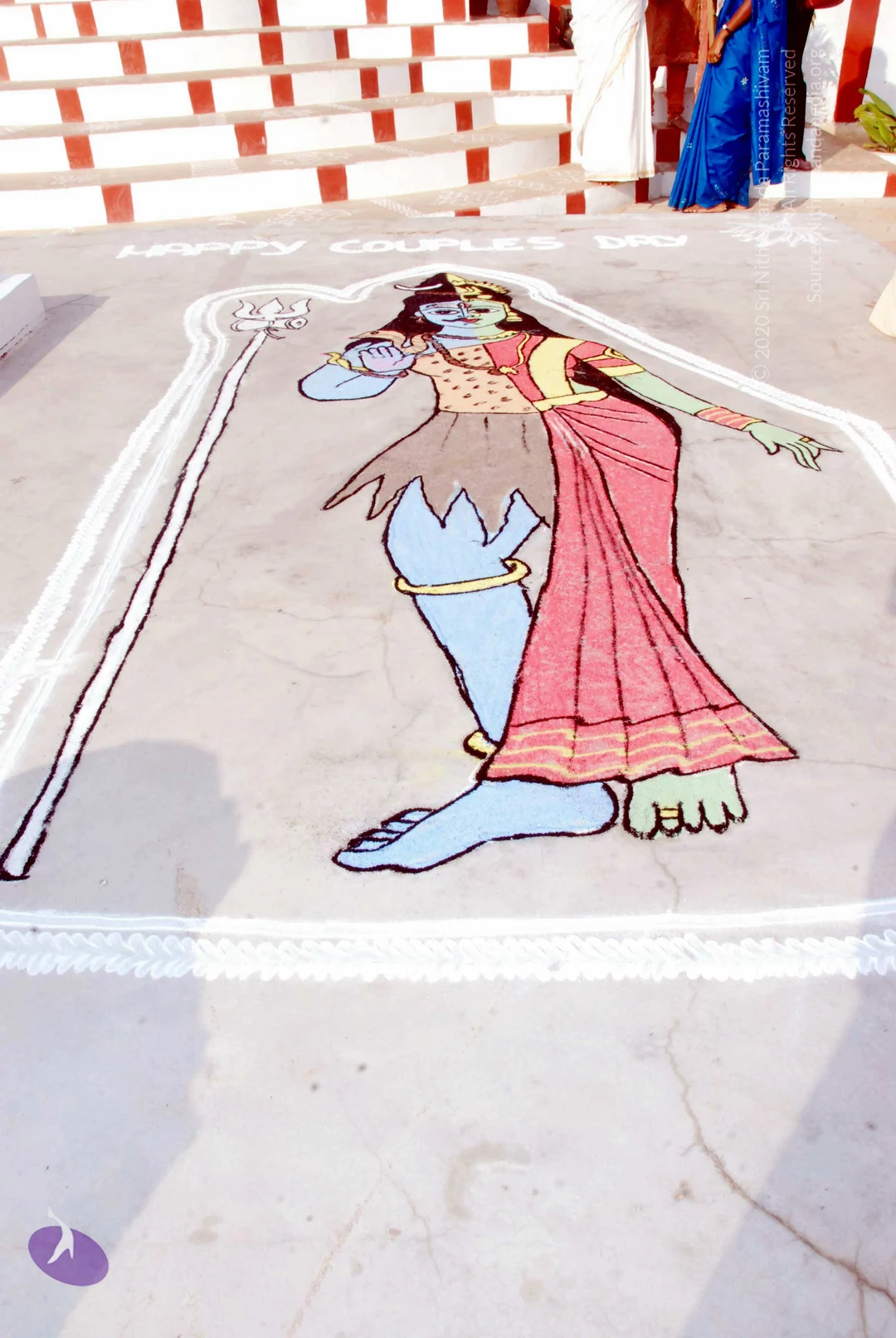
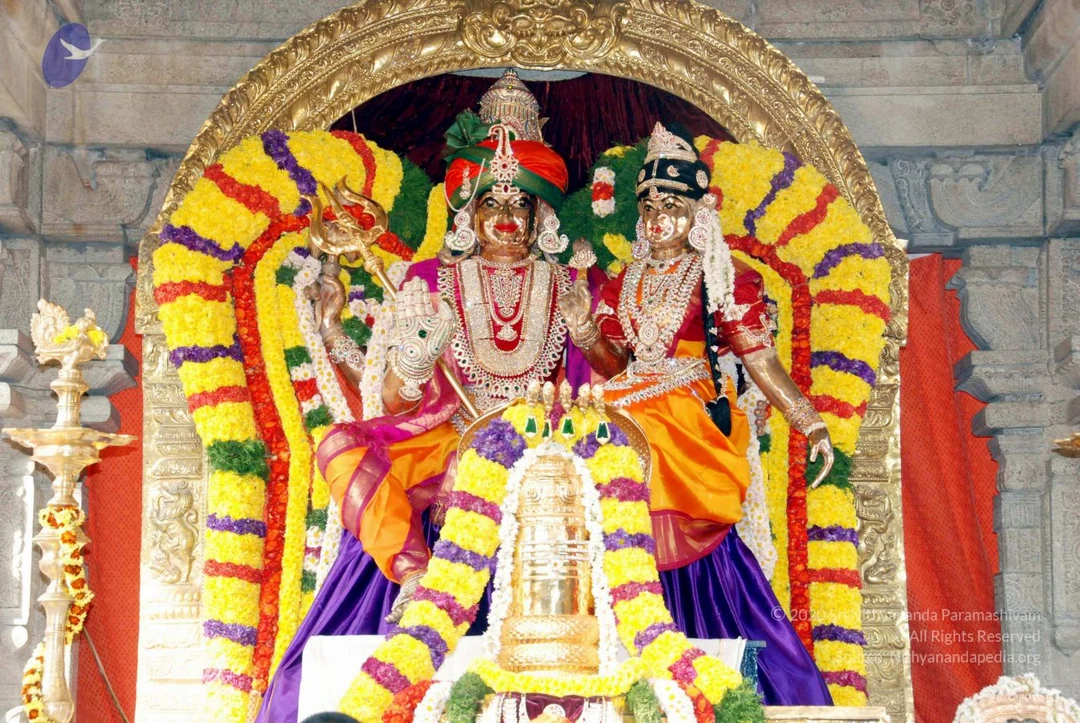
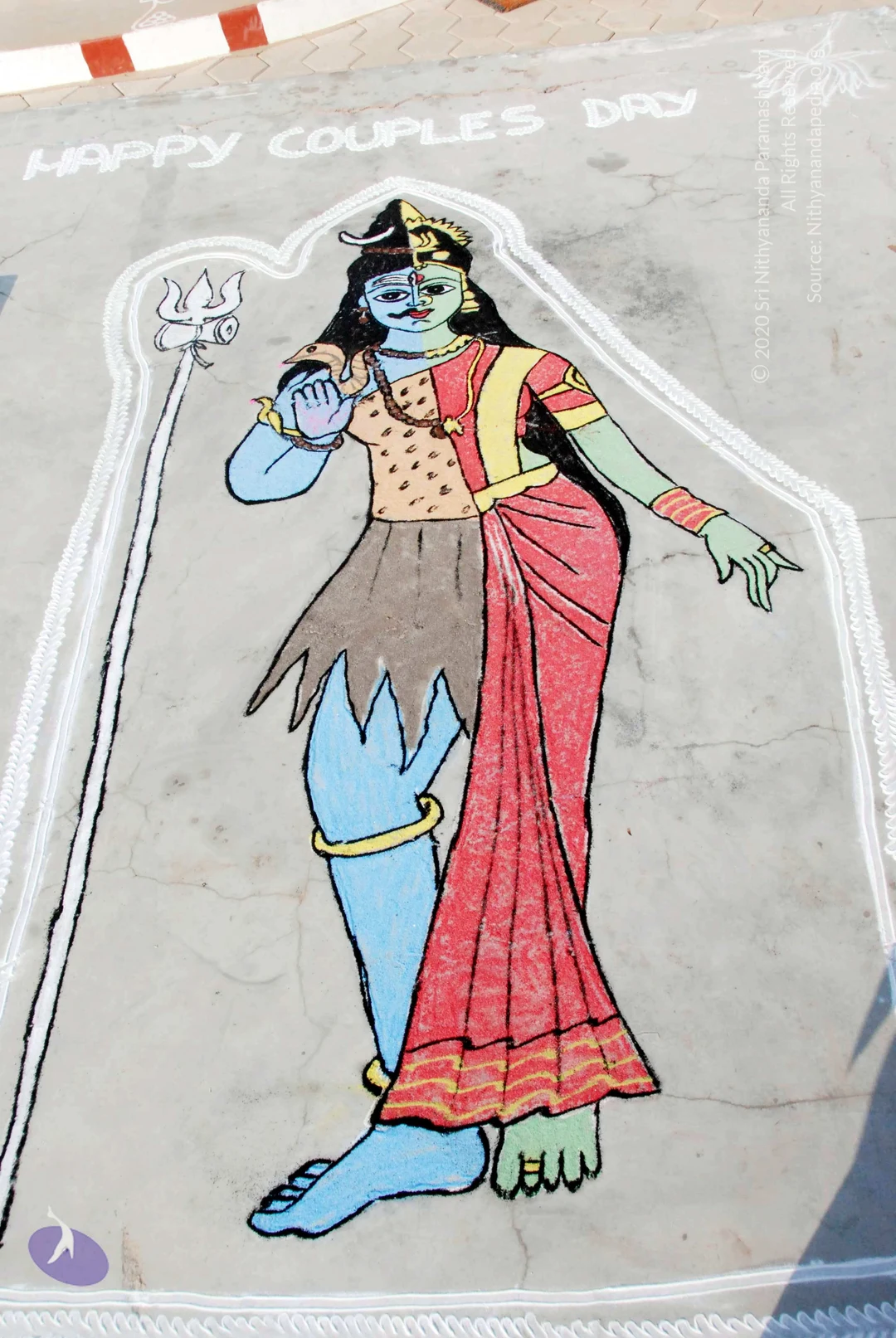
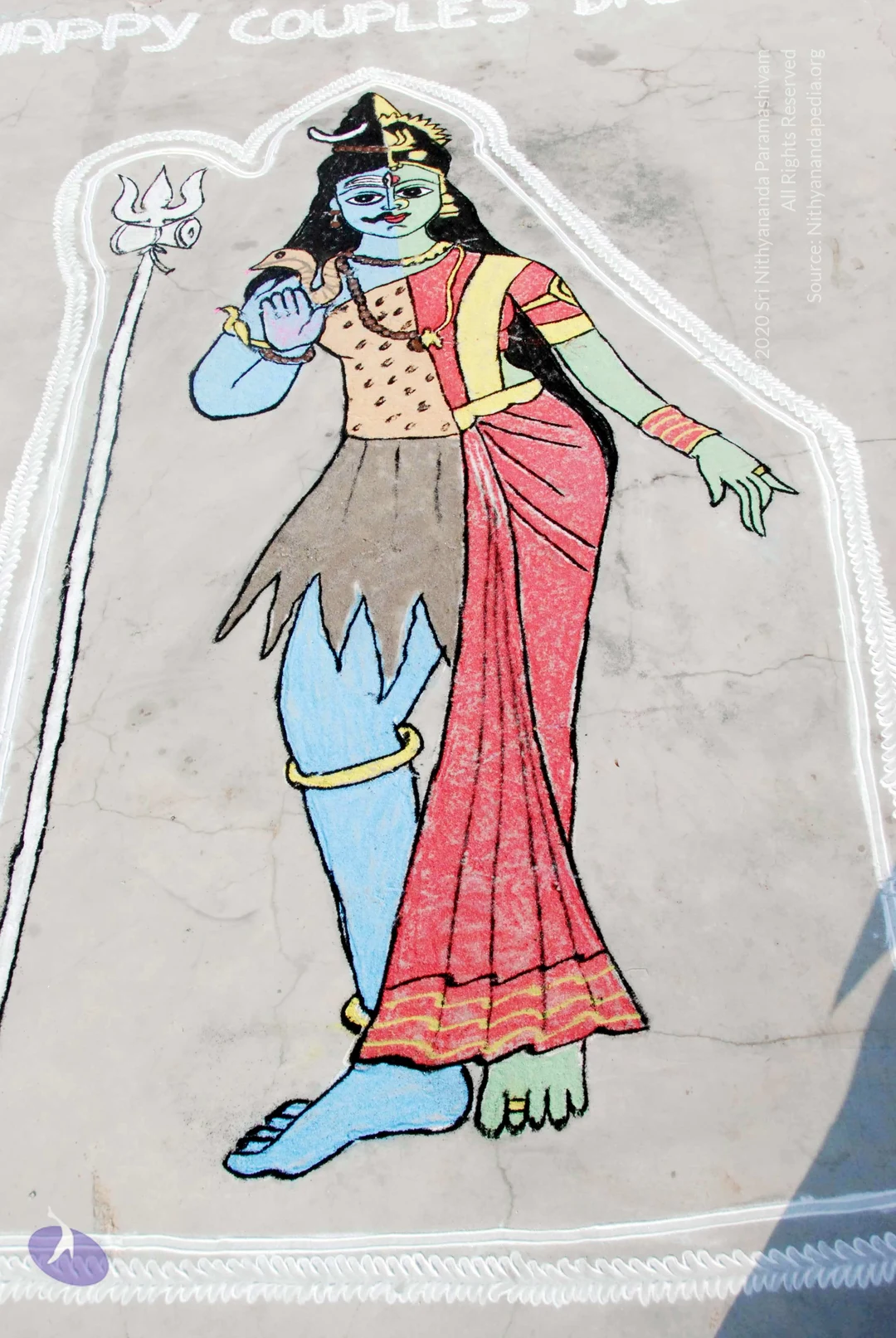
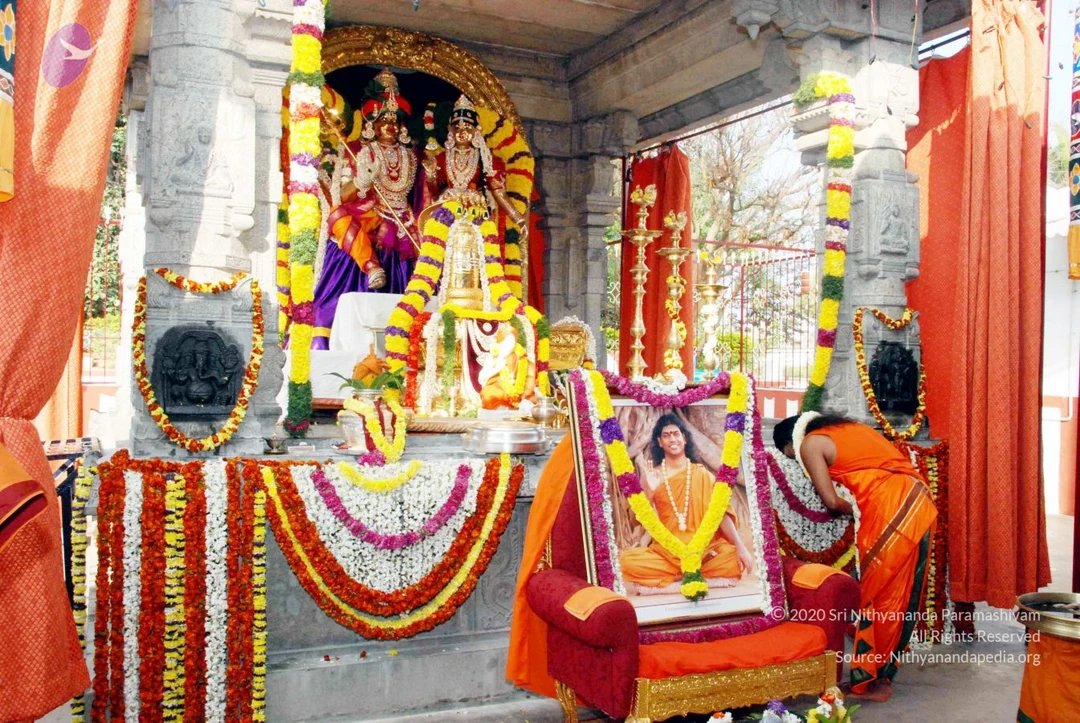
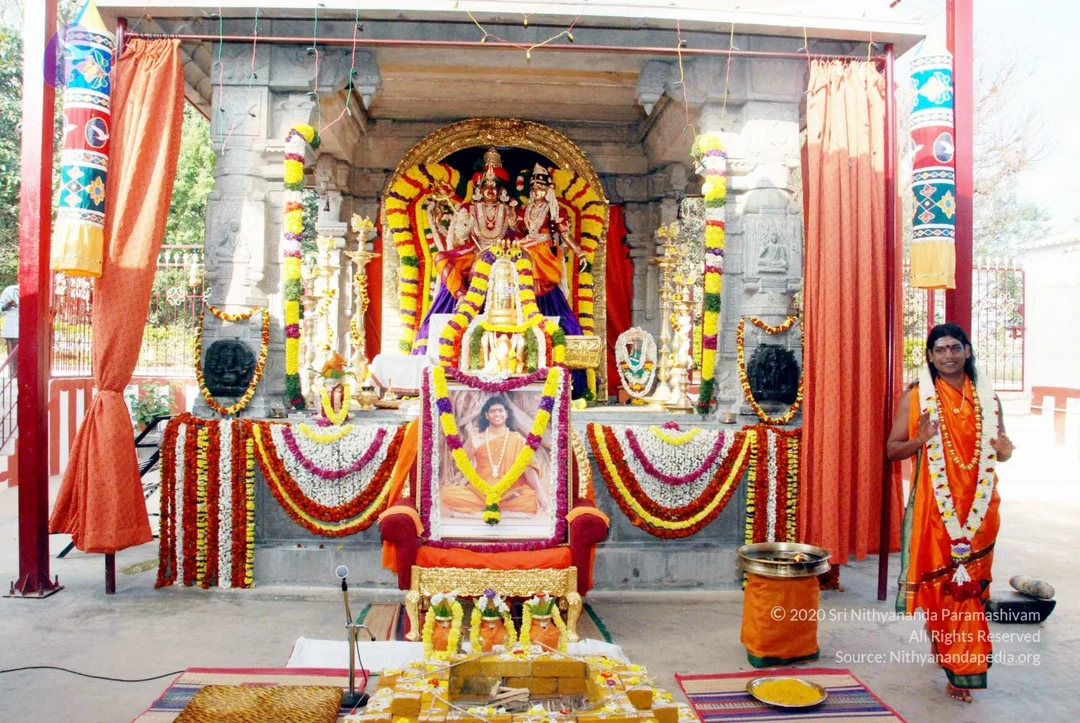
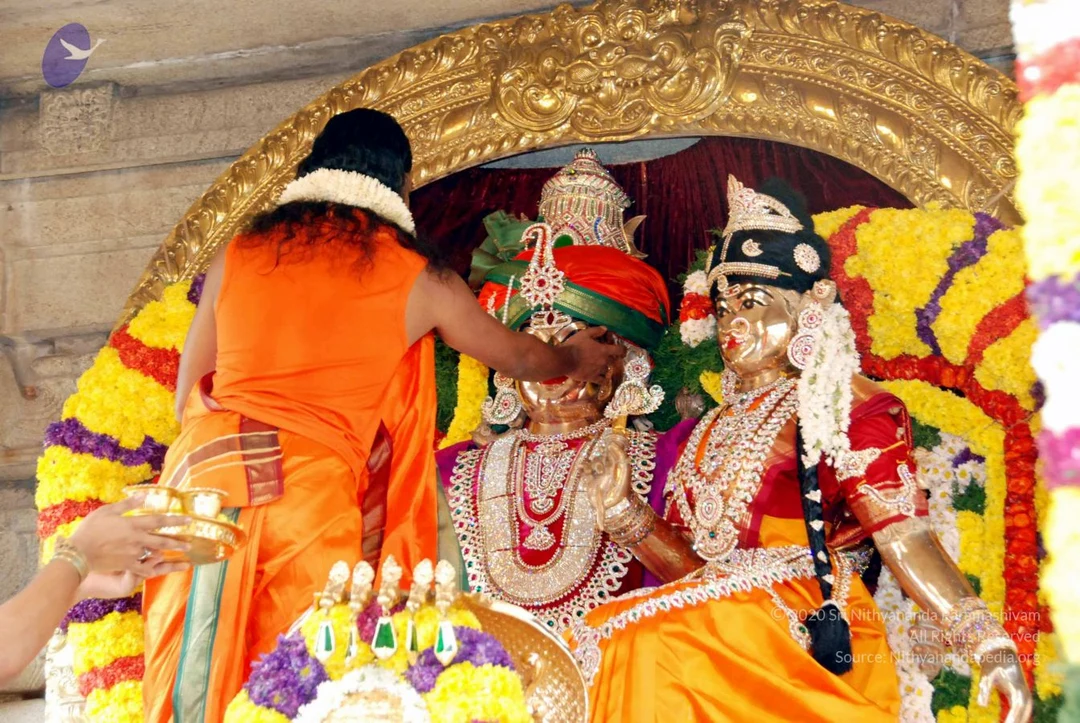
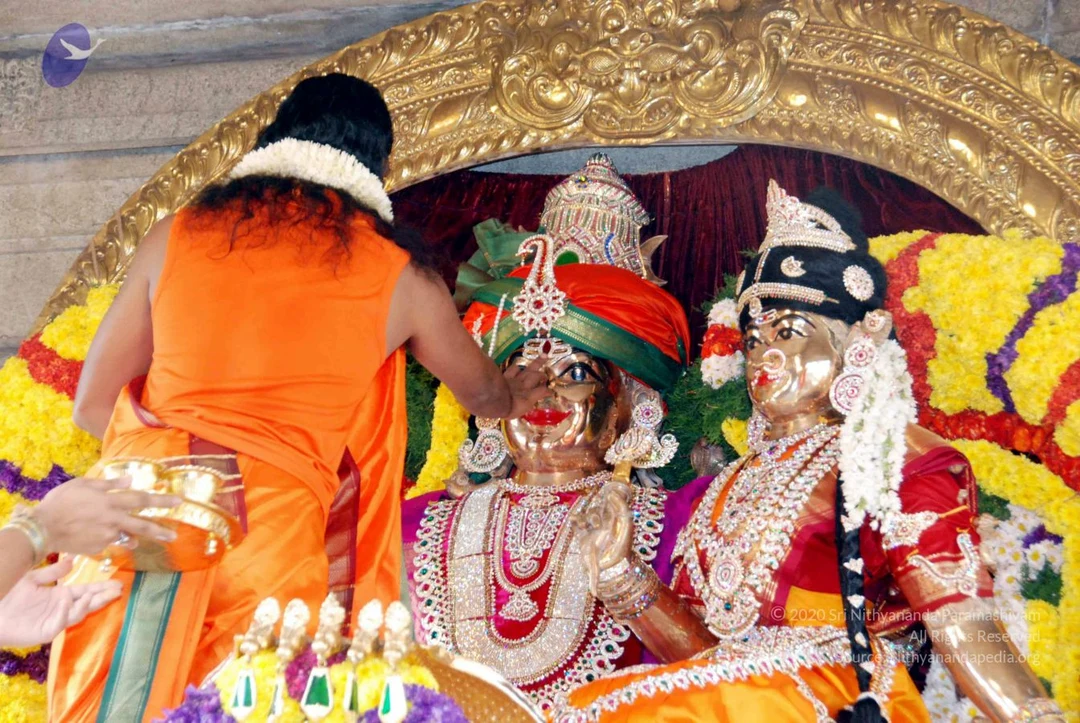
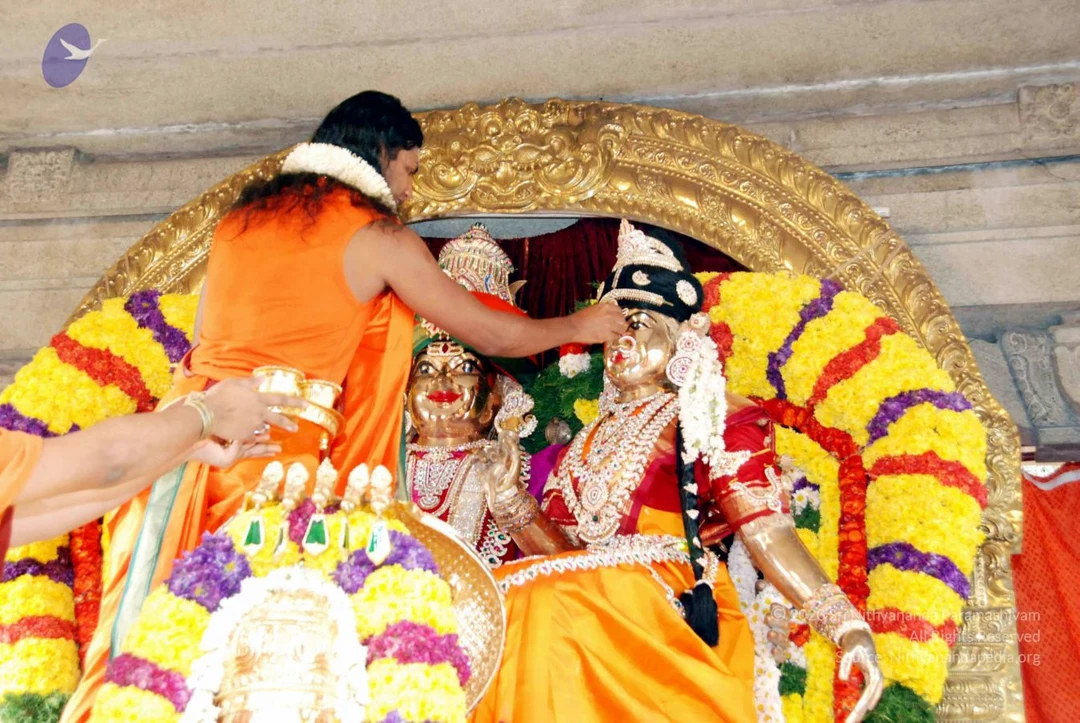
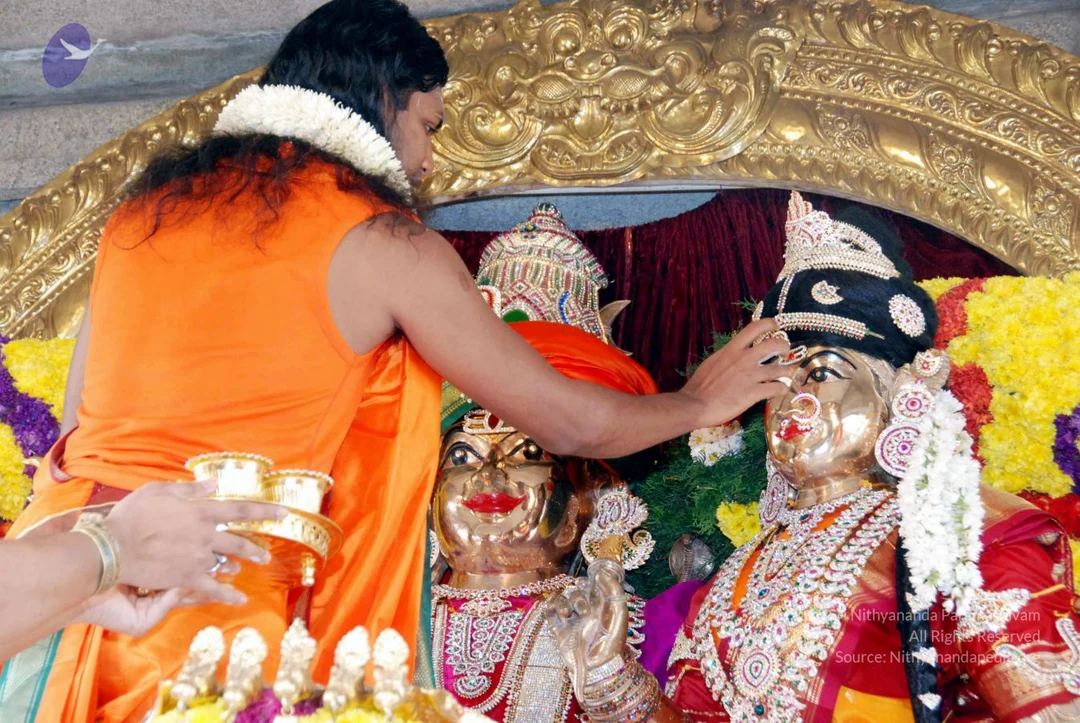
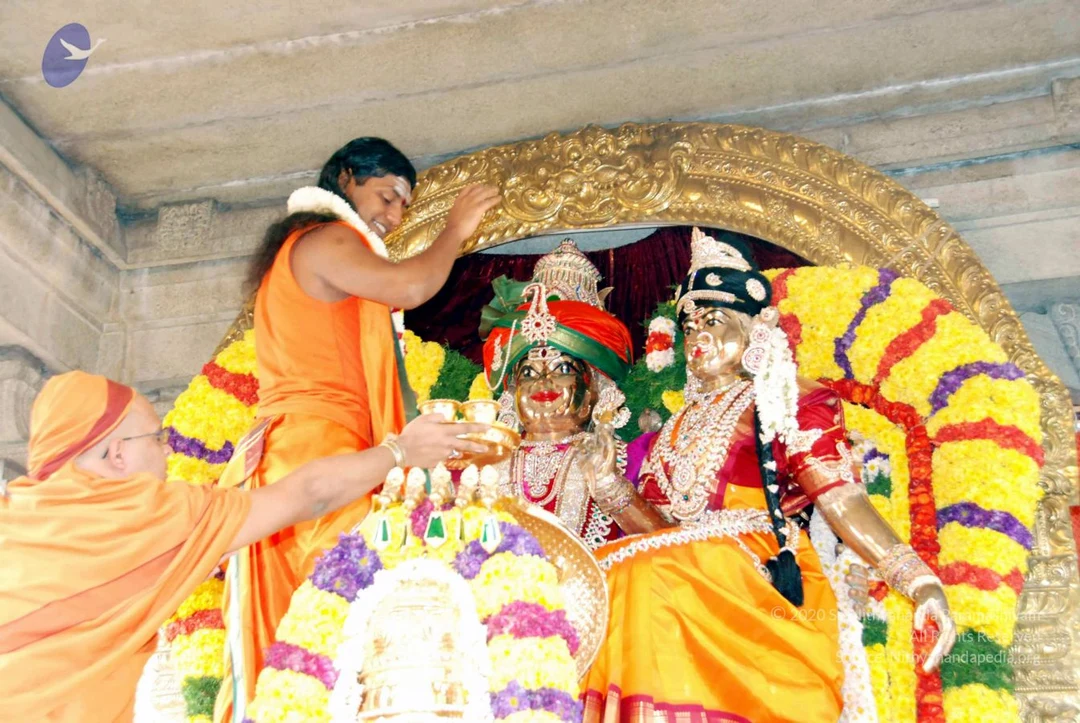
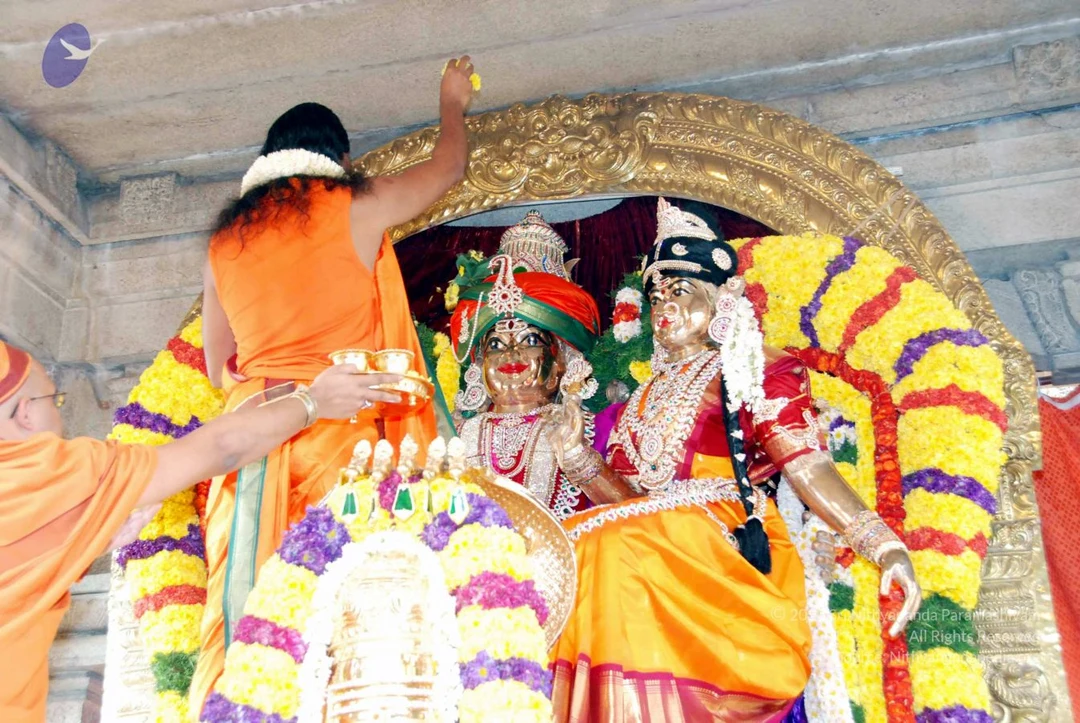
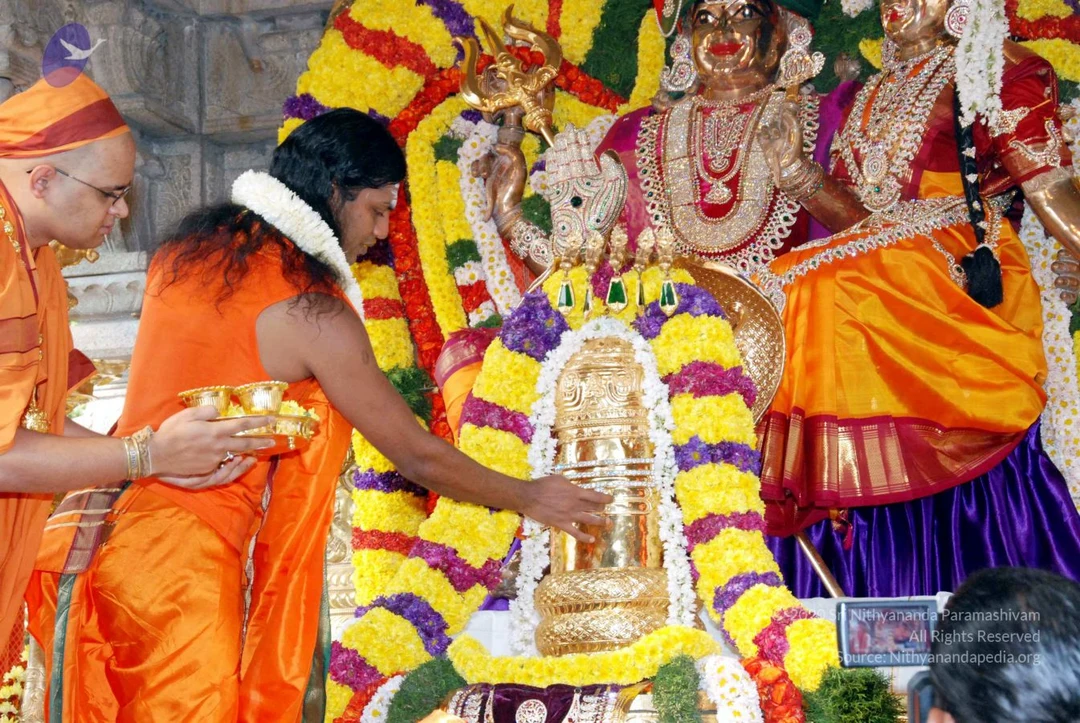
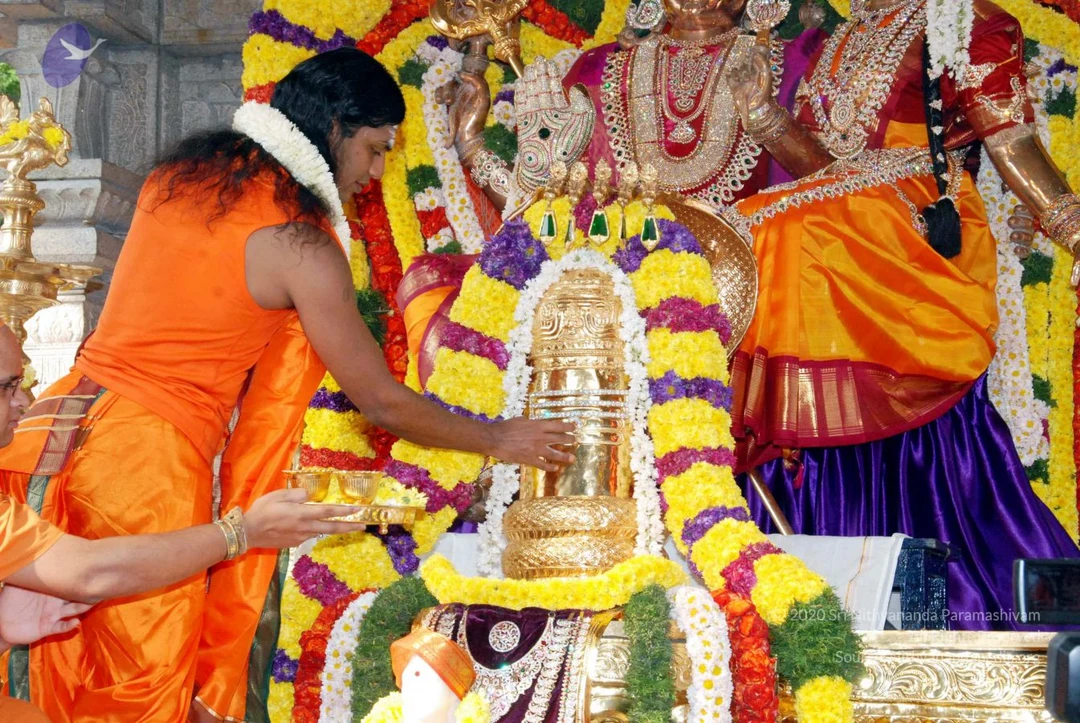
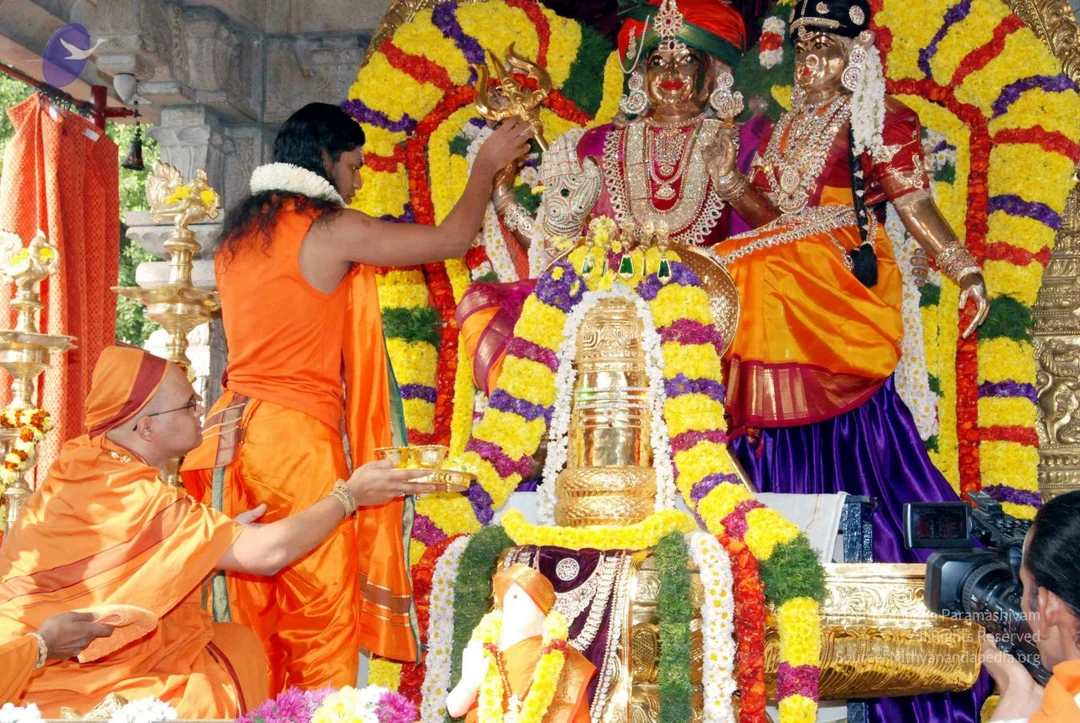
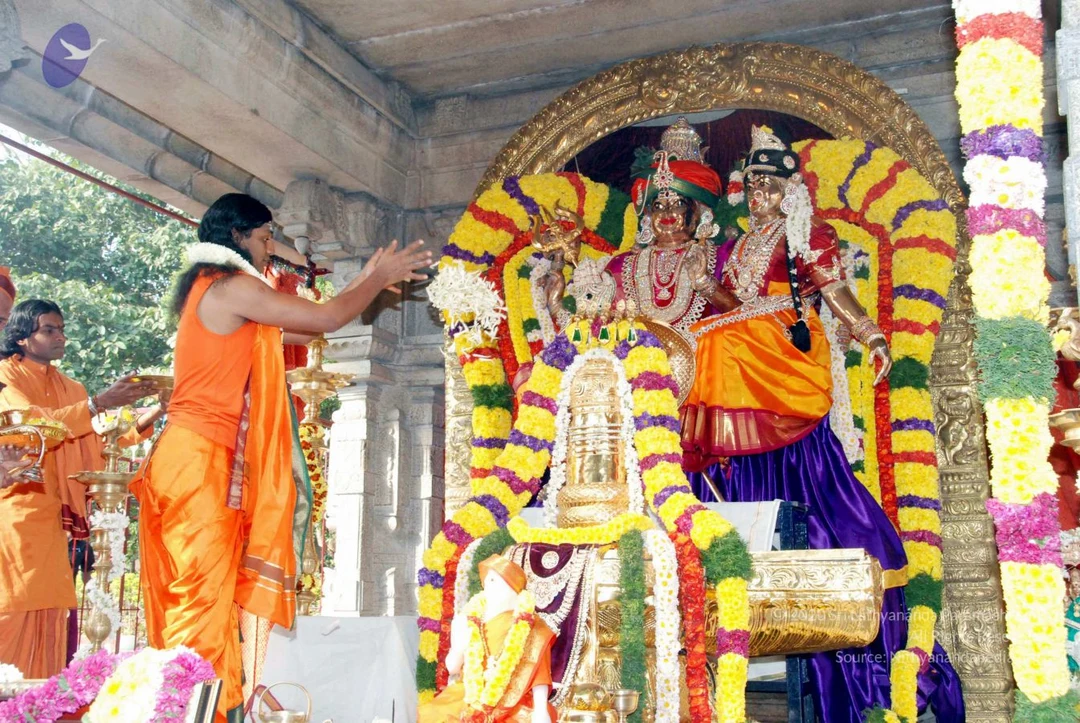
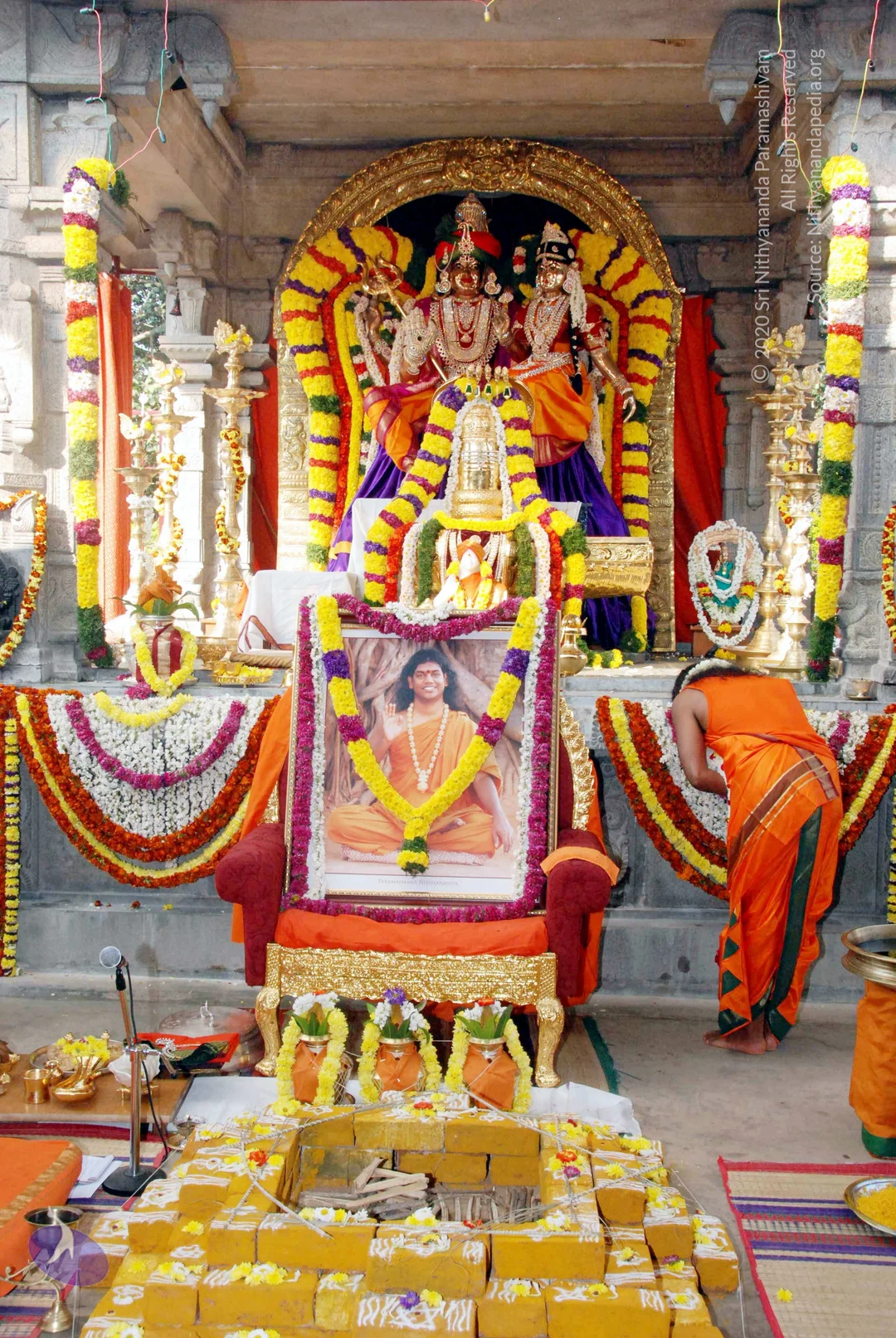
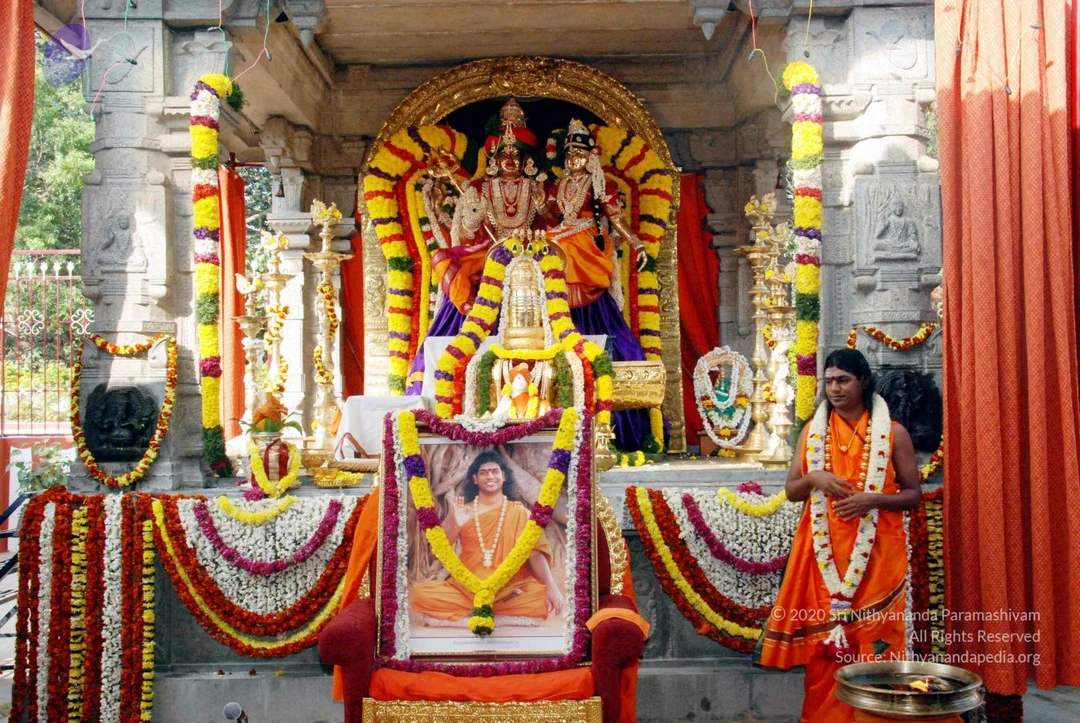
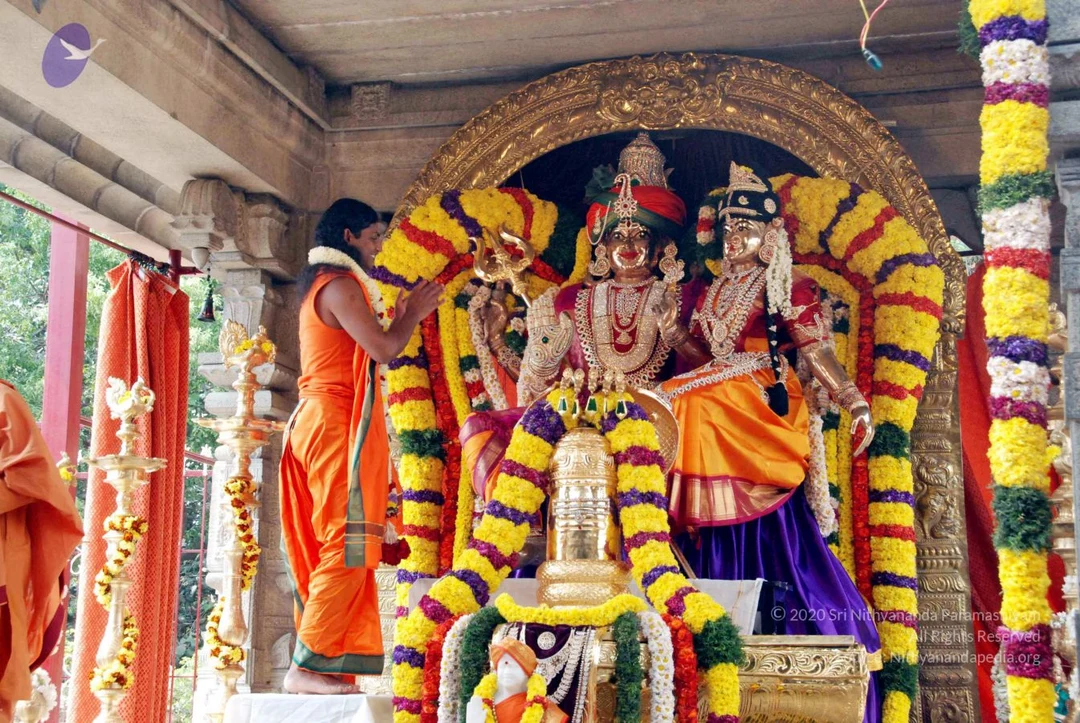
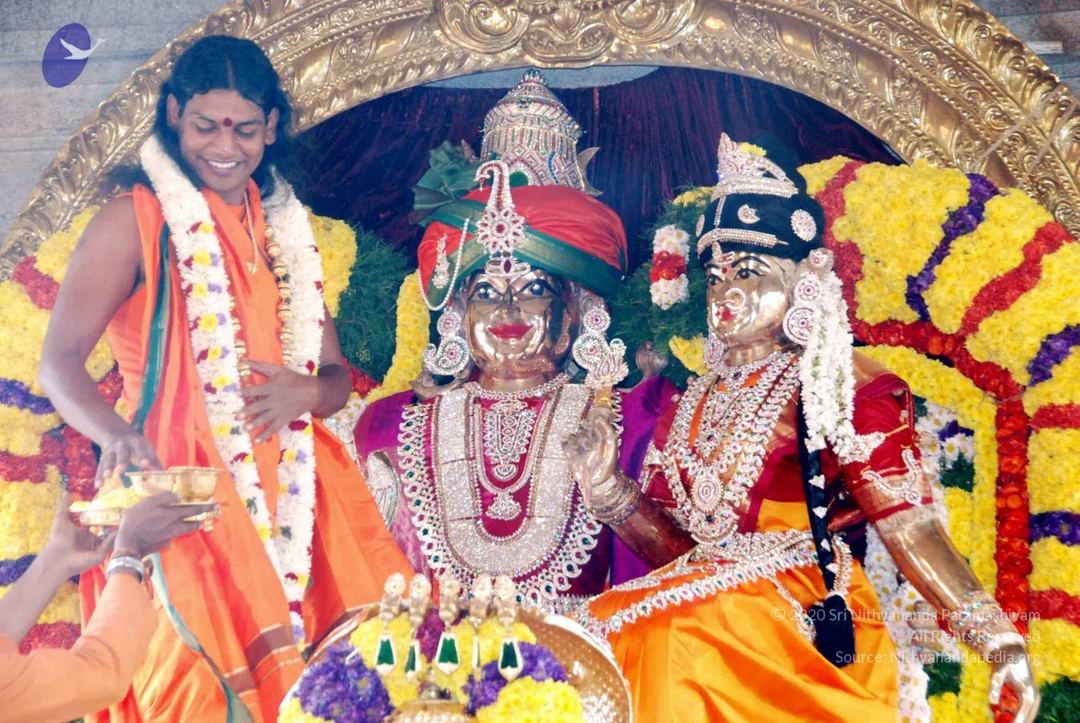
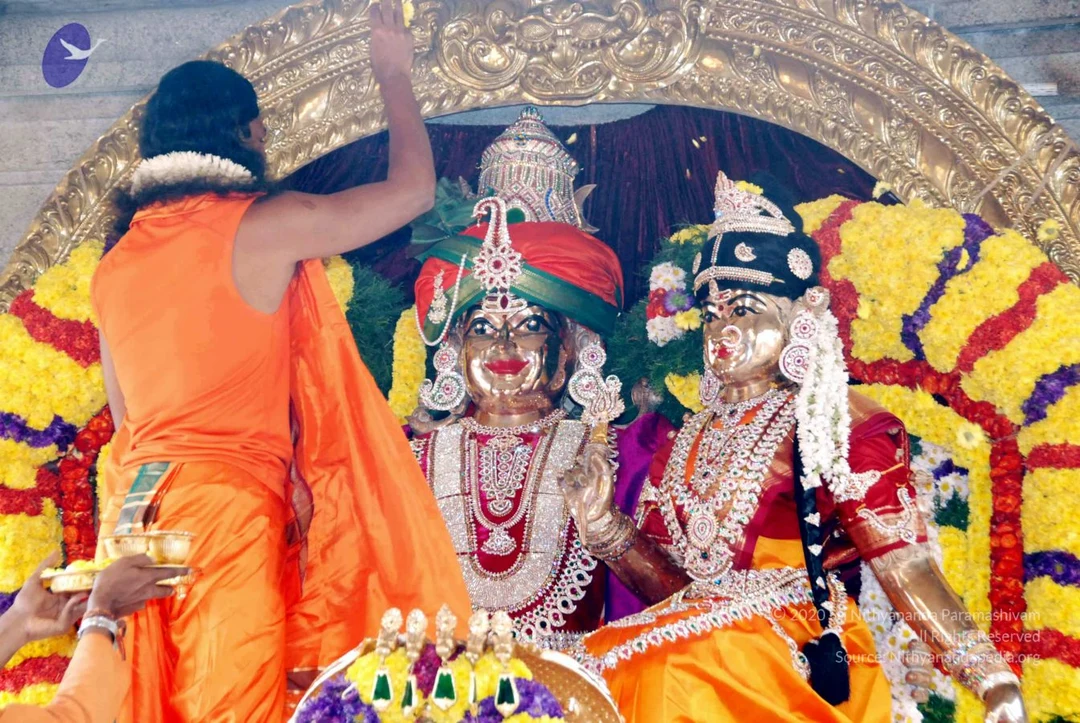
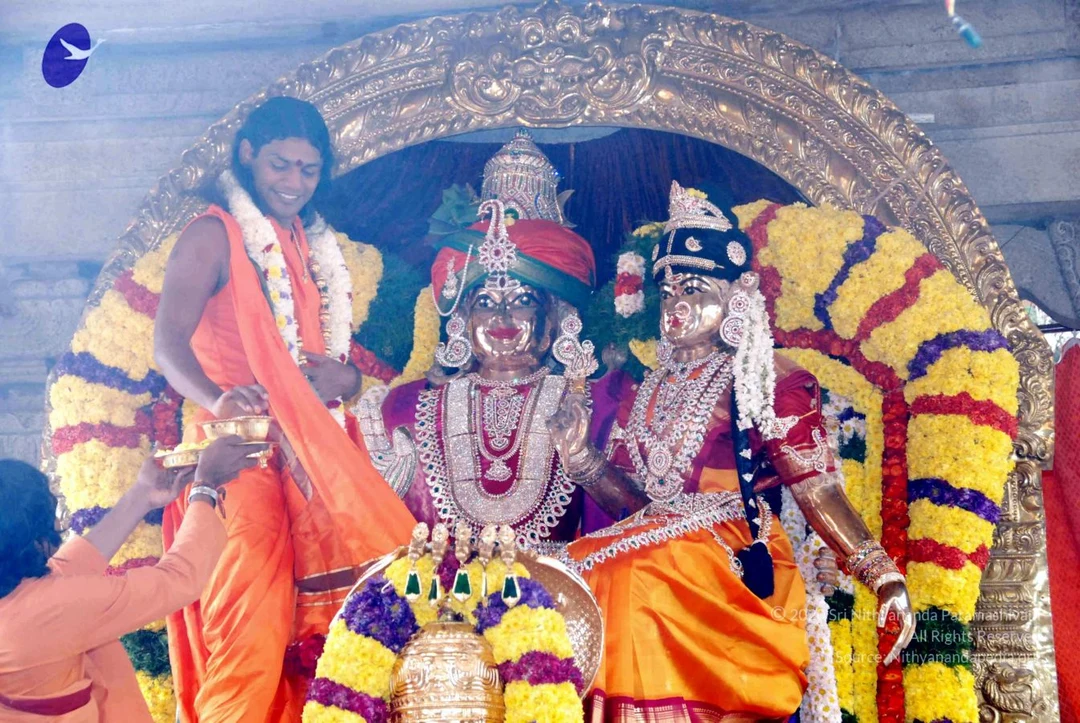
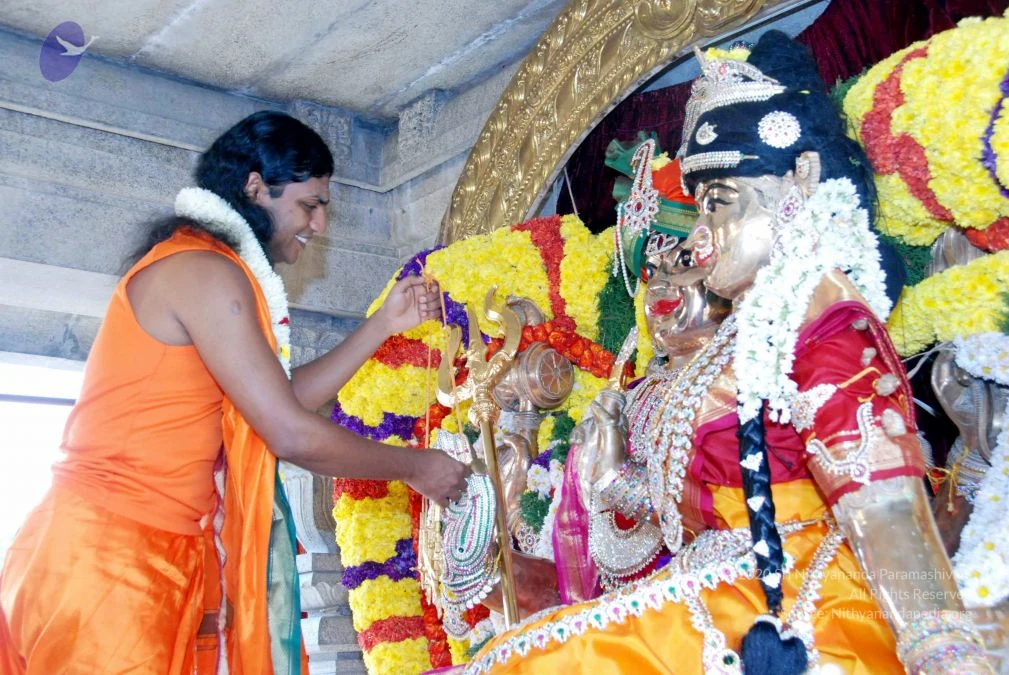
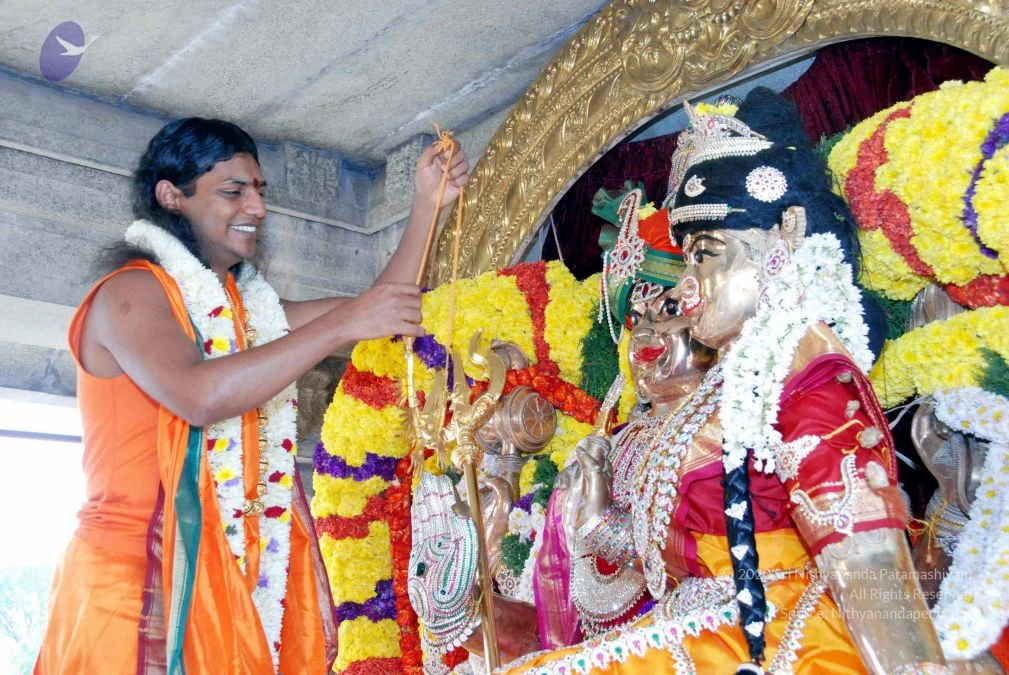
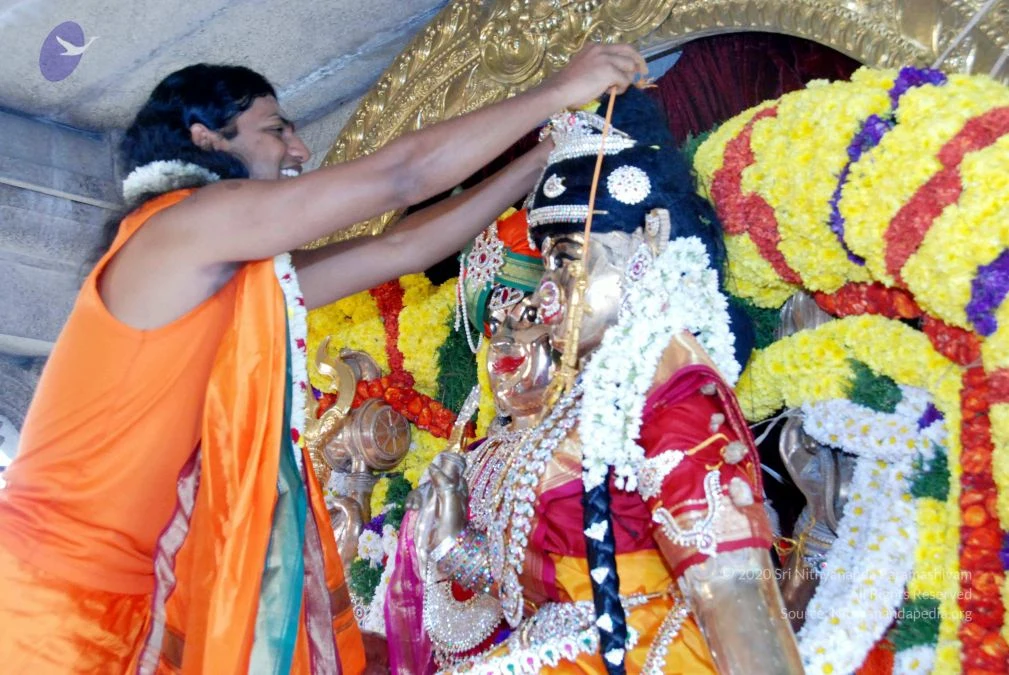
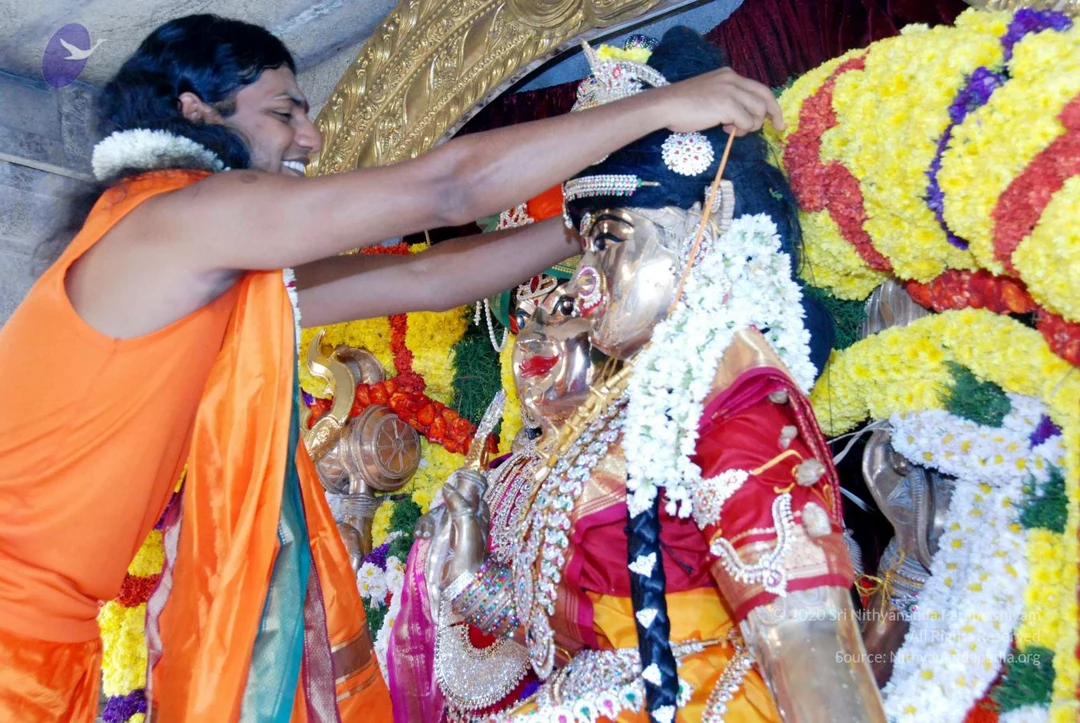
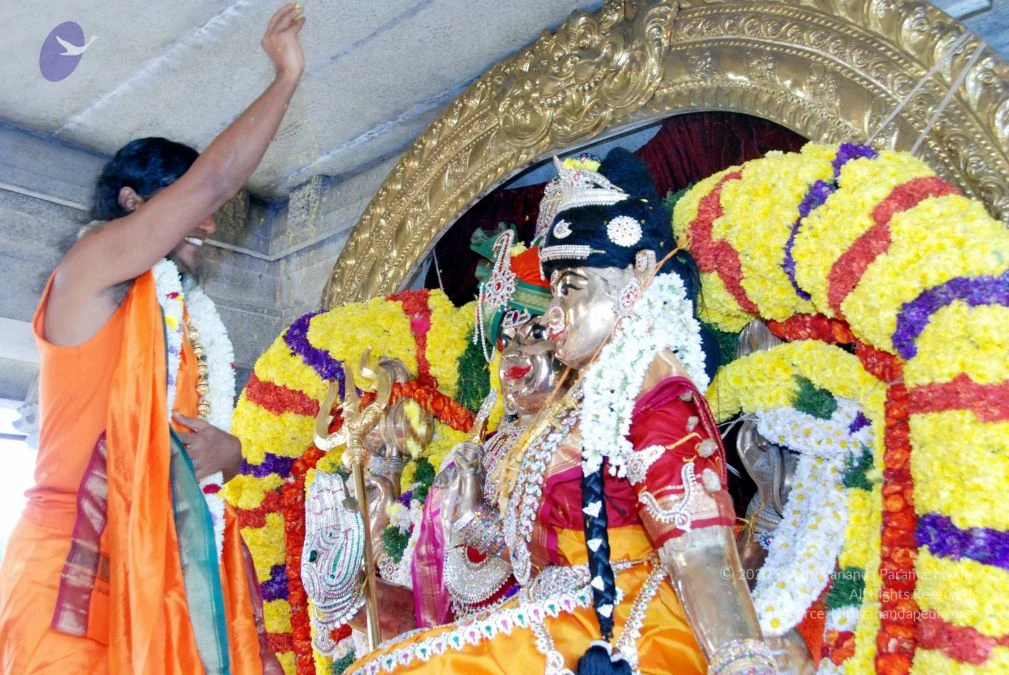
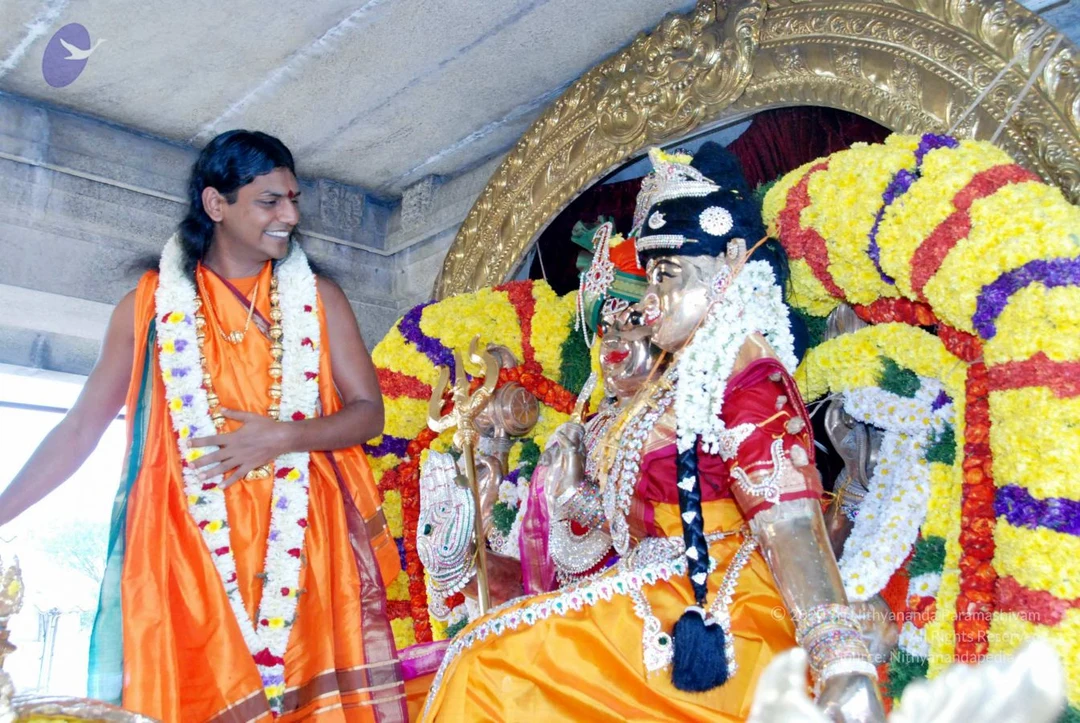
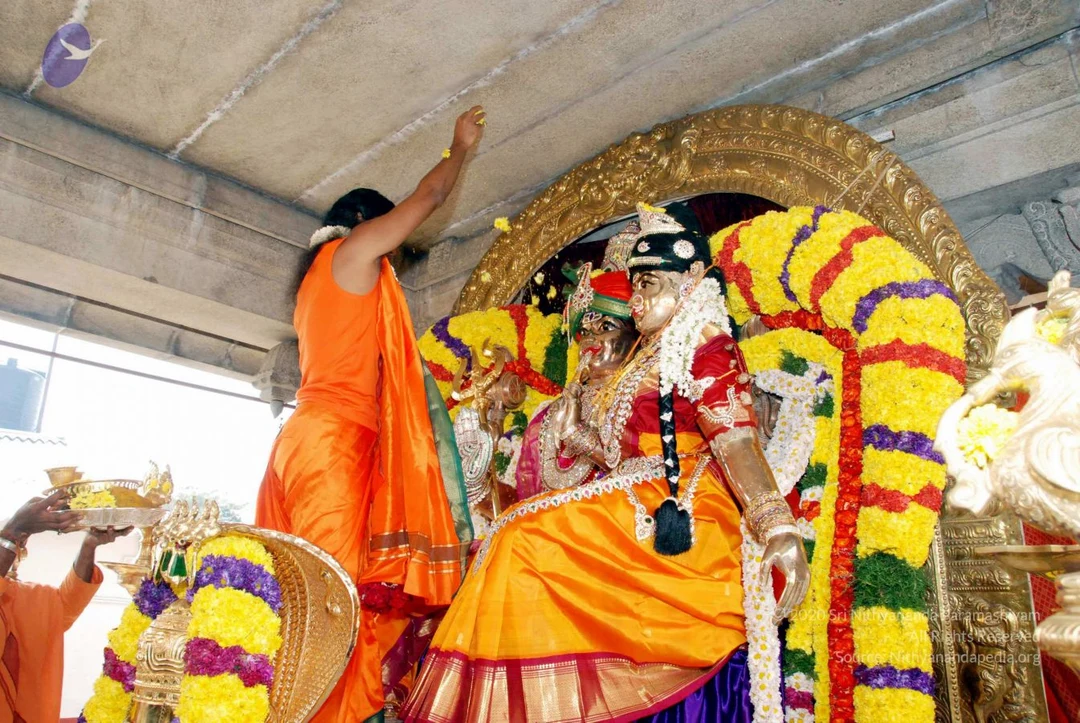
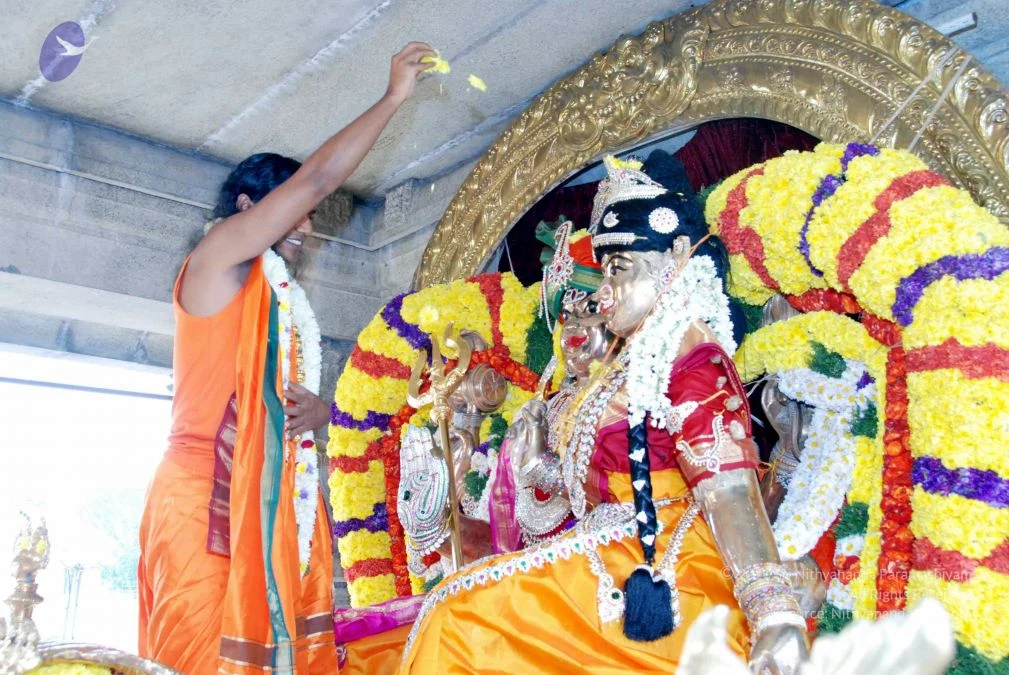
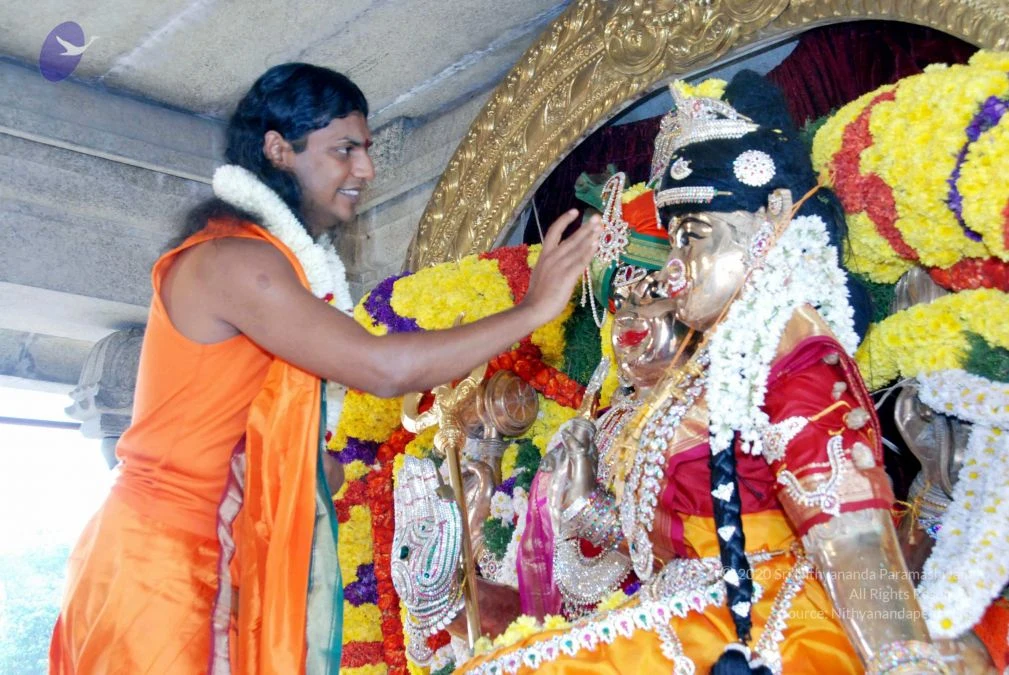
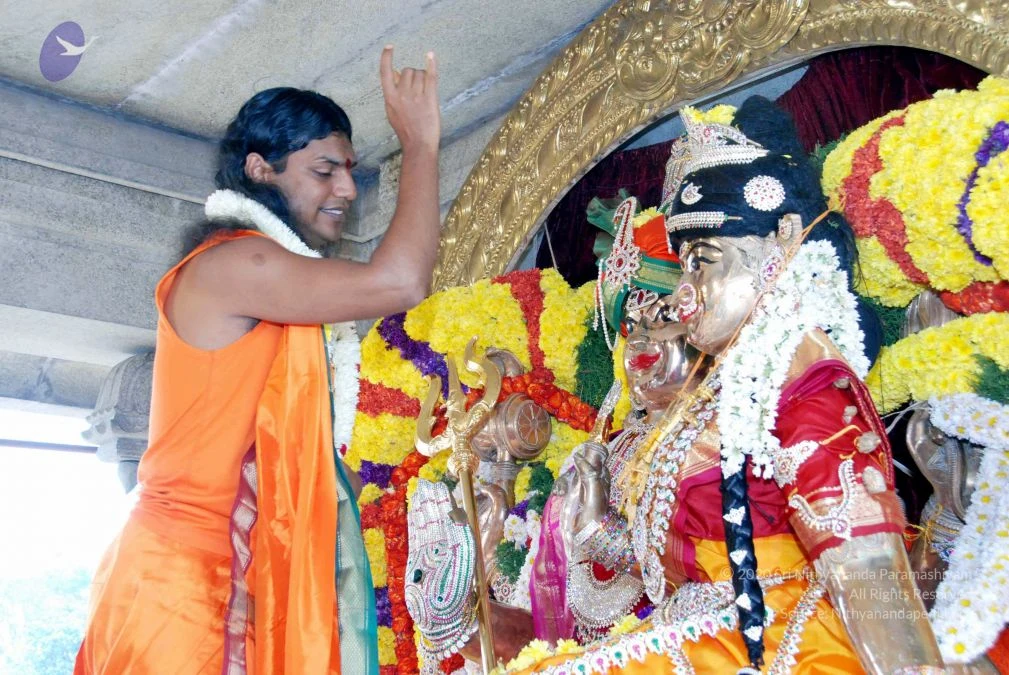
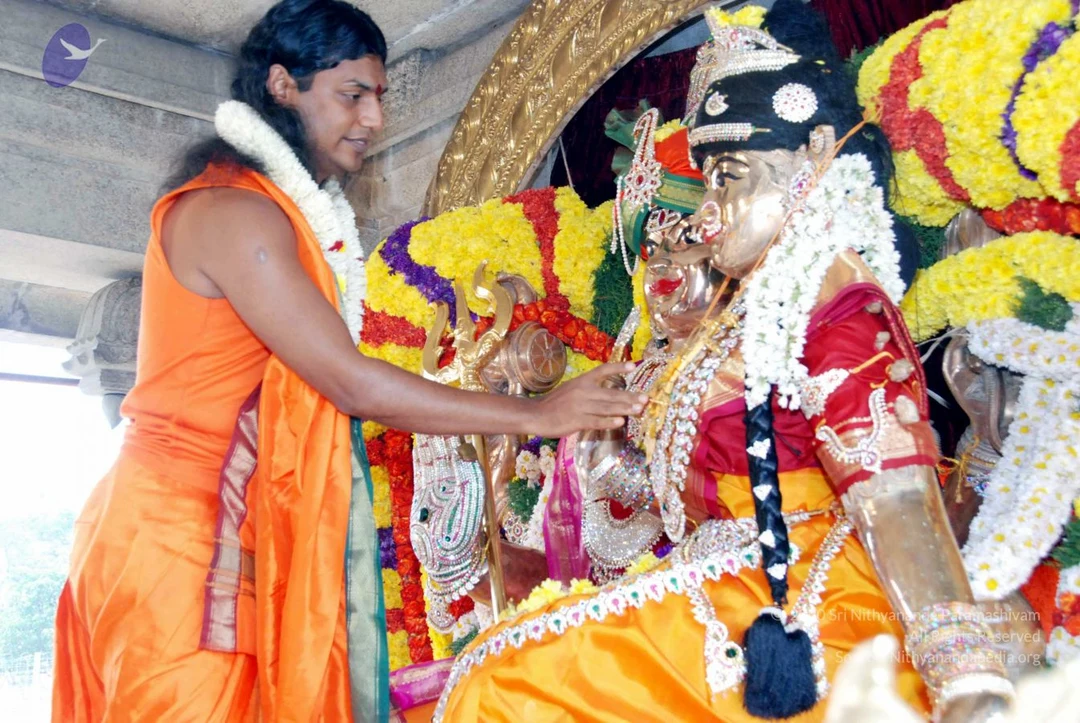
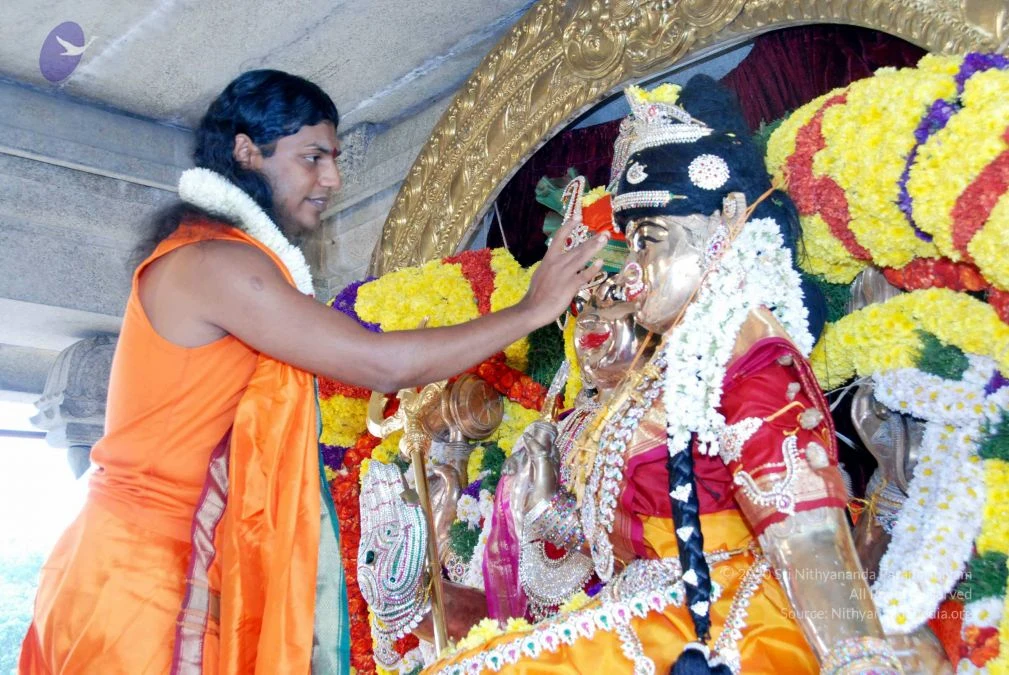
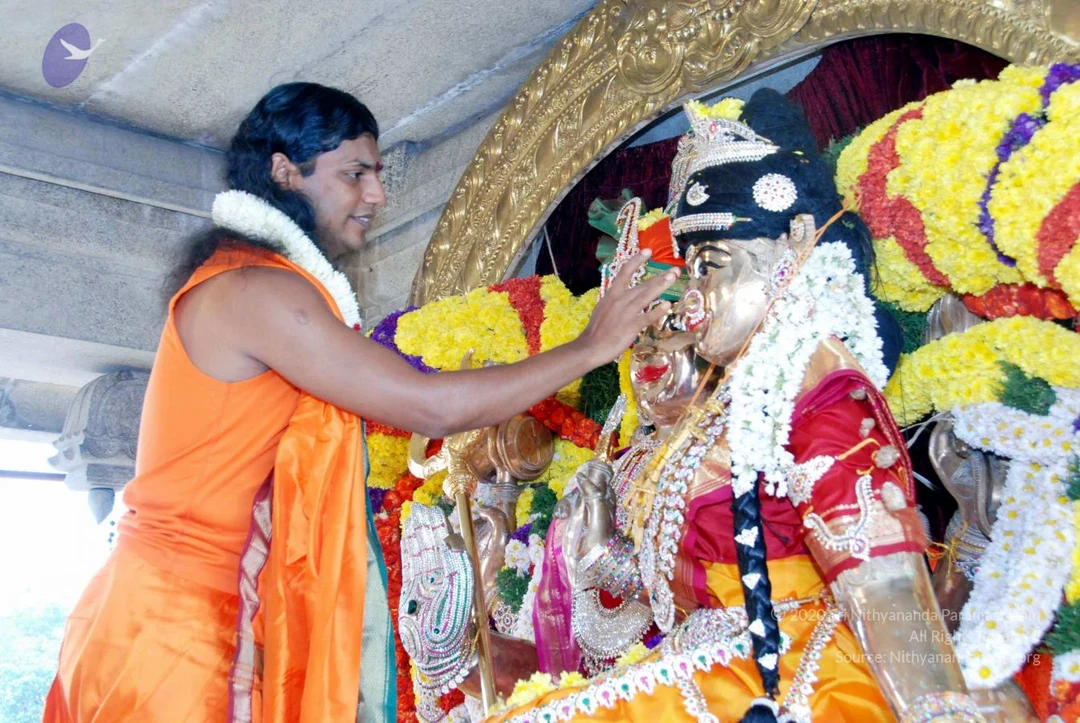
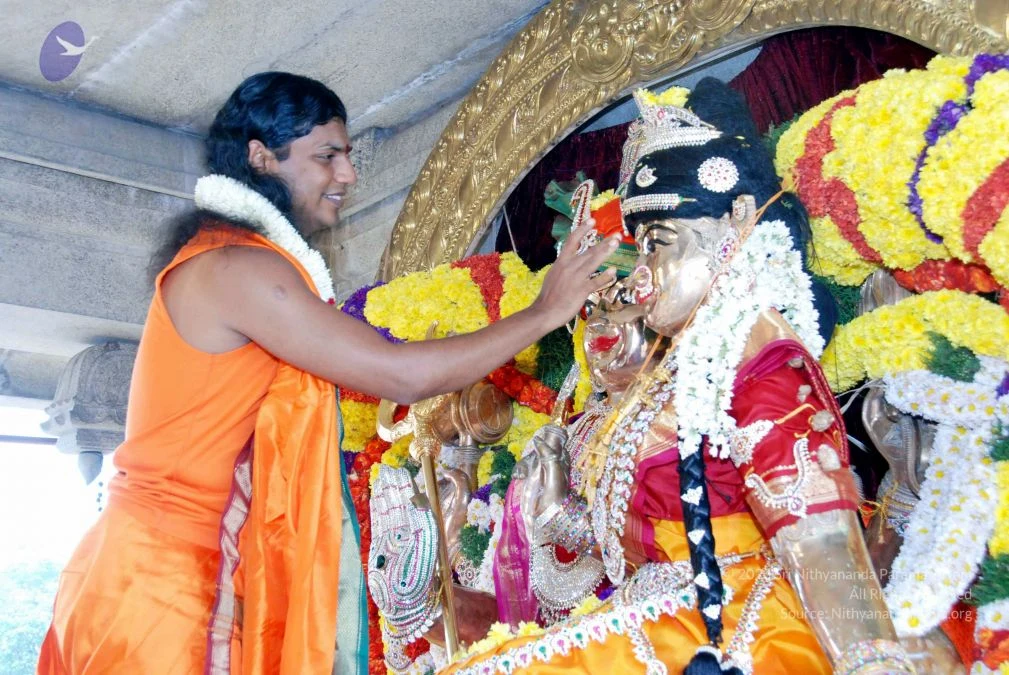
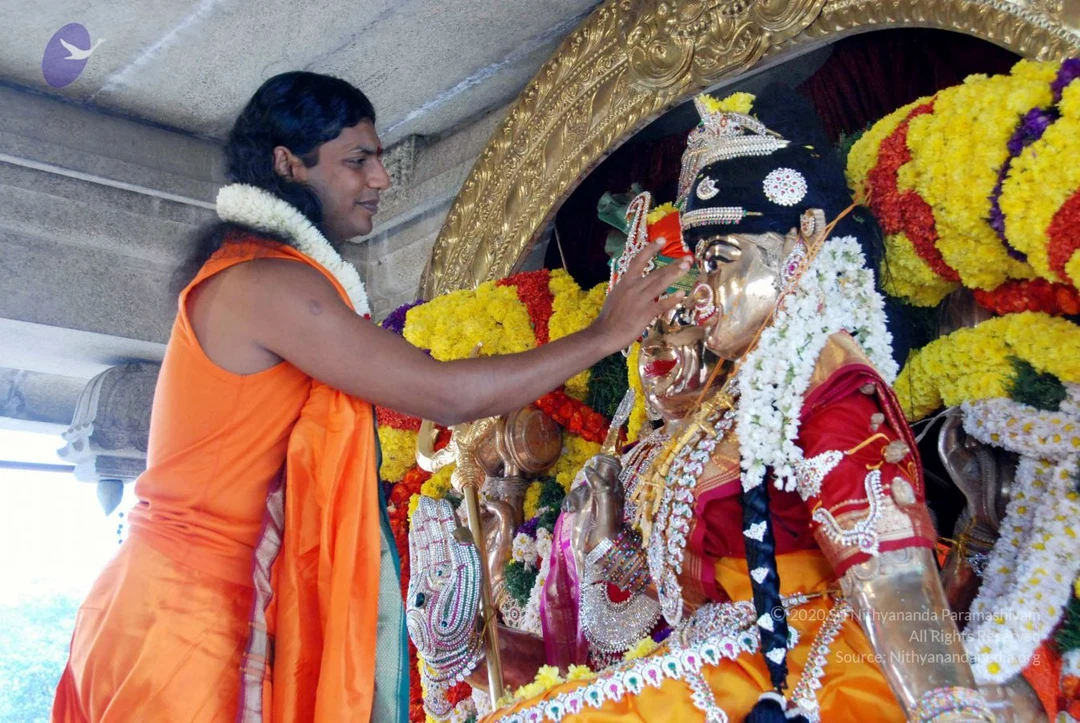
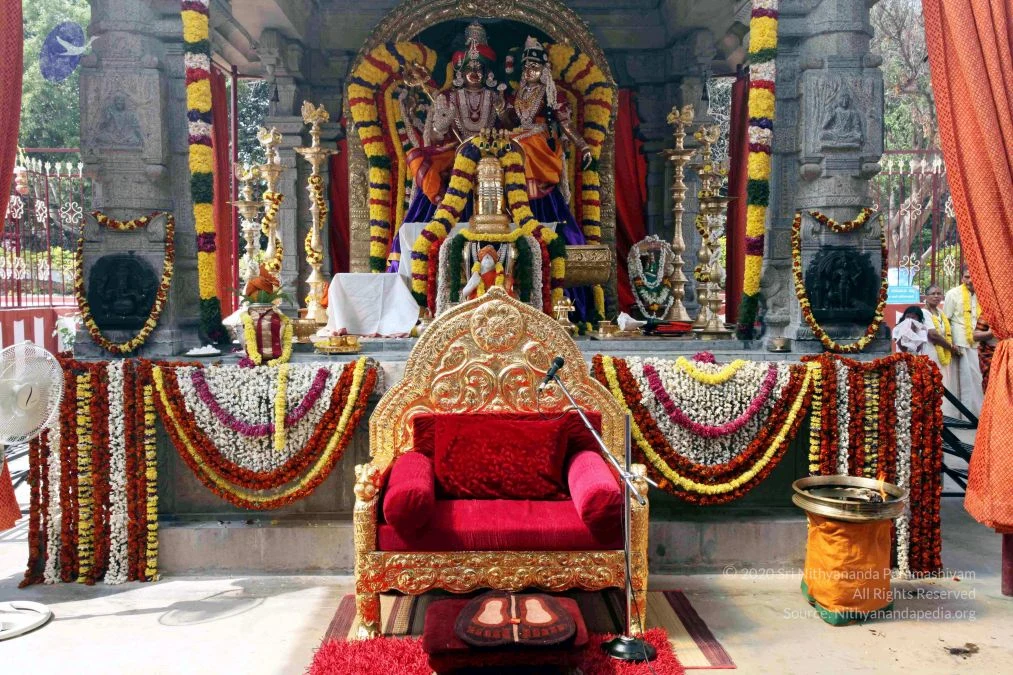
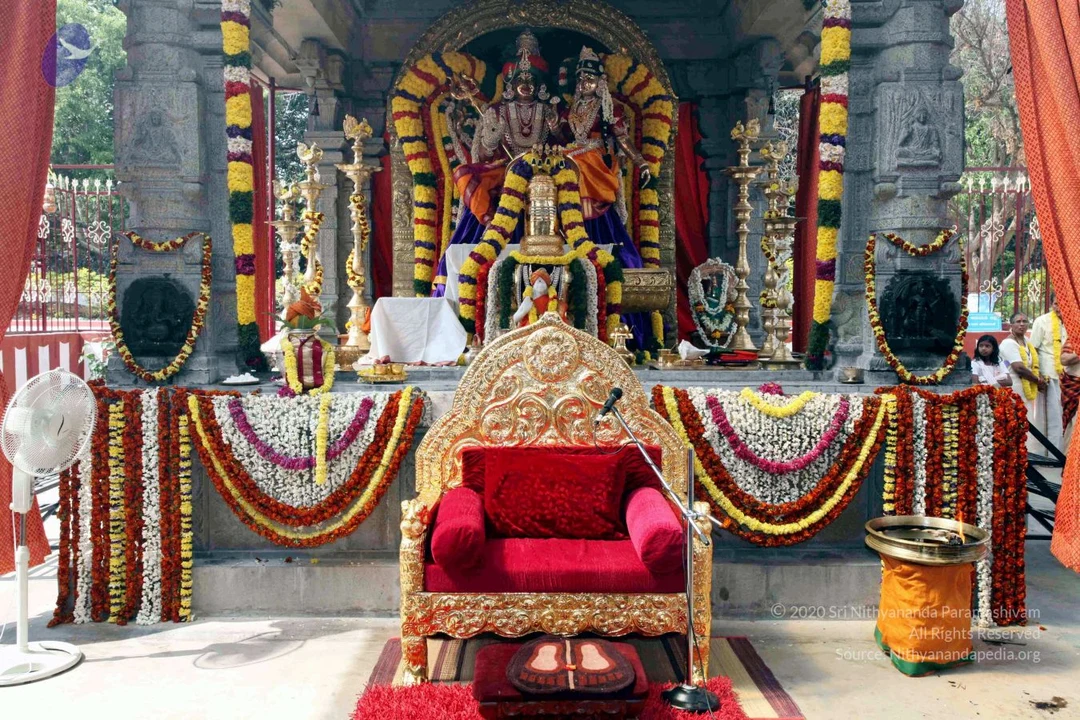
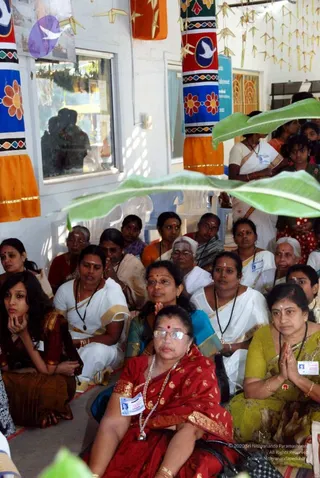
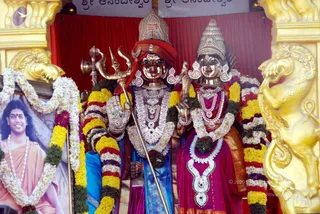
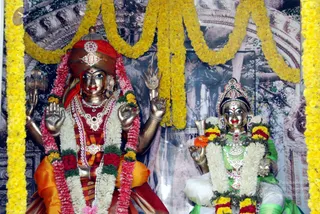
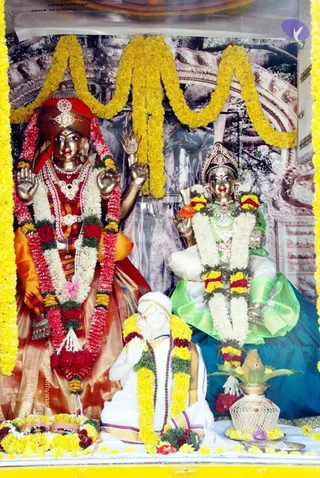
A coloured floor drawing, a rangoli-style chalk or powder artwork on grey concrete, depicts the androgynous Ardhanarishvara form of Shiva and Shakti as one standing figure. The left half is blue-skinned with a crescent, matted hair, a snake draped on the arm and a grey loincloth, while the right half is green-skinned with red sari, yellow bangles and a gold crown. A white outlined trident leans at the left. White border lines frame the figure, with the top text reading Happy Couples Day. The artwork is shown flat from above, with no people visible.A chalk or powder floor drawing on a grey concrete surface, made as a kolam-style rangoli. White outlined text reads HAPPY COUPLES DAY across the top. Below, a painted Ardhanarishvara-style deity murti with half blue and half green skin, a crescent moon and white tusk-like ornament in dark hair, a snake draped over the shoulder, and a rudraksha mala. A white outlined trident stands on the left, and a red-and-yellow garment is shown on the right. No physical people are visible.A photograph of a seated congregation inside a decorated hall with colourful hanging cloth banners in blue, orange and green and paper crane strings overhead, with large green leaves hanging in the foreground. Most attendees are women in white sarees with gold borders and black beaded mala necklaces, some in red, teal and green saris. Several sit with hands folded in anjali, others listen attentively. A child stands at the back right. No identifiable a person is visible in this scene.Golden murti of a deity couple, Shiva and Parvati, stands on a decorated stage before a red curtain. The left figure holds a golden trident and wears a red headcloth with a tilak, a silver chest ornament and a blue garment. The right figure wears a crown, large earrings, layered silver necklaces and a magenta sari. Both are garlanded with white jasmine, yellow marigold and red and green leaves. A golden lion-faced pillar frames the right edge. On the left, a framed printed portrait of a long-haired man in saffron robes with a white garland appears. No physical people are visible.Two gold-coloured metal deity murti stand in front of a backdrop printed with a temple-architecture photograph, both heavily garlanded. The figure on the left has four arms, a red and gold headdress, red lips, a red and orange garment and a long white and pink garland, holding a trident-like implement and raised hands. The figure on the right wears a green and gold sari, a jewelled crown, a white and yellow garland and an orange flower at the hip. Yellow marigold strings frame the top and sides. No people are visible; the statues are the subject.A photograph of a decorated shrine display with golden deity murti and a seated white-clad figure in front. The left murti has four arms, one raised holding a trident-like emblem, wearing red and orange garments, a red headdress and layered jasmine and marigold garlands. The right murti wears a green and blue sari, a jewelled crown and a garland, holding a flower. A small white-robed figure kneels at the base wearing a white dhoti with a gold border, rudraksha mala and a garland, with hands joined. Yellow marigold garlands frame the display, and a brass kalasha with leaves and flowers sits at the lower right. A photo backdrop of carved temple pillars sits behind.

Paada Pooja

18 photosSource gallery
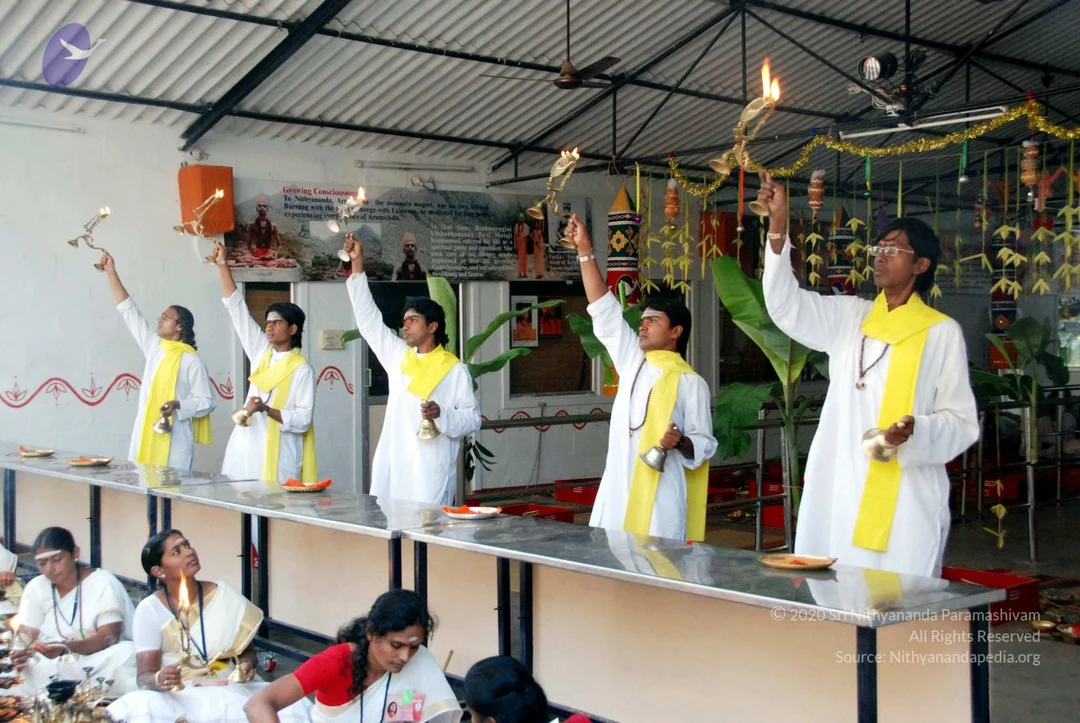
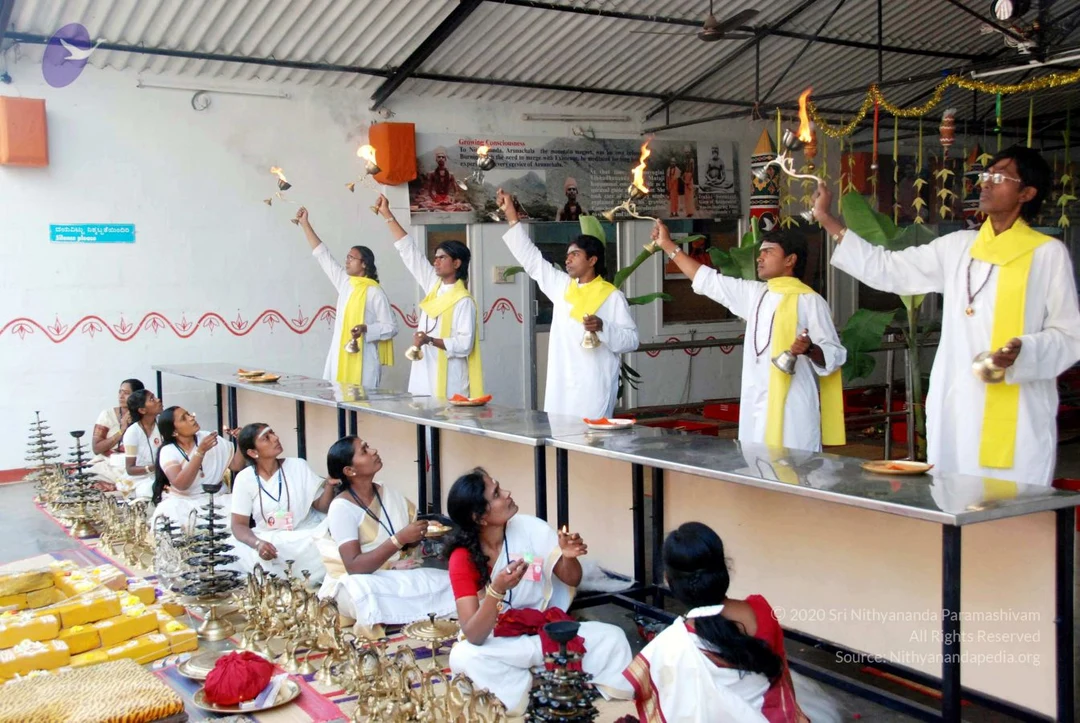
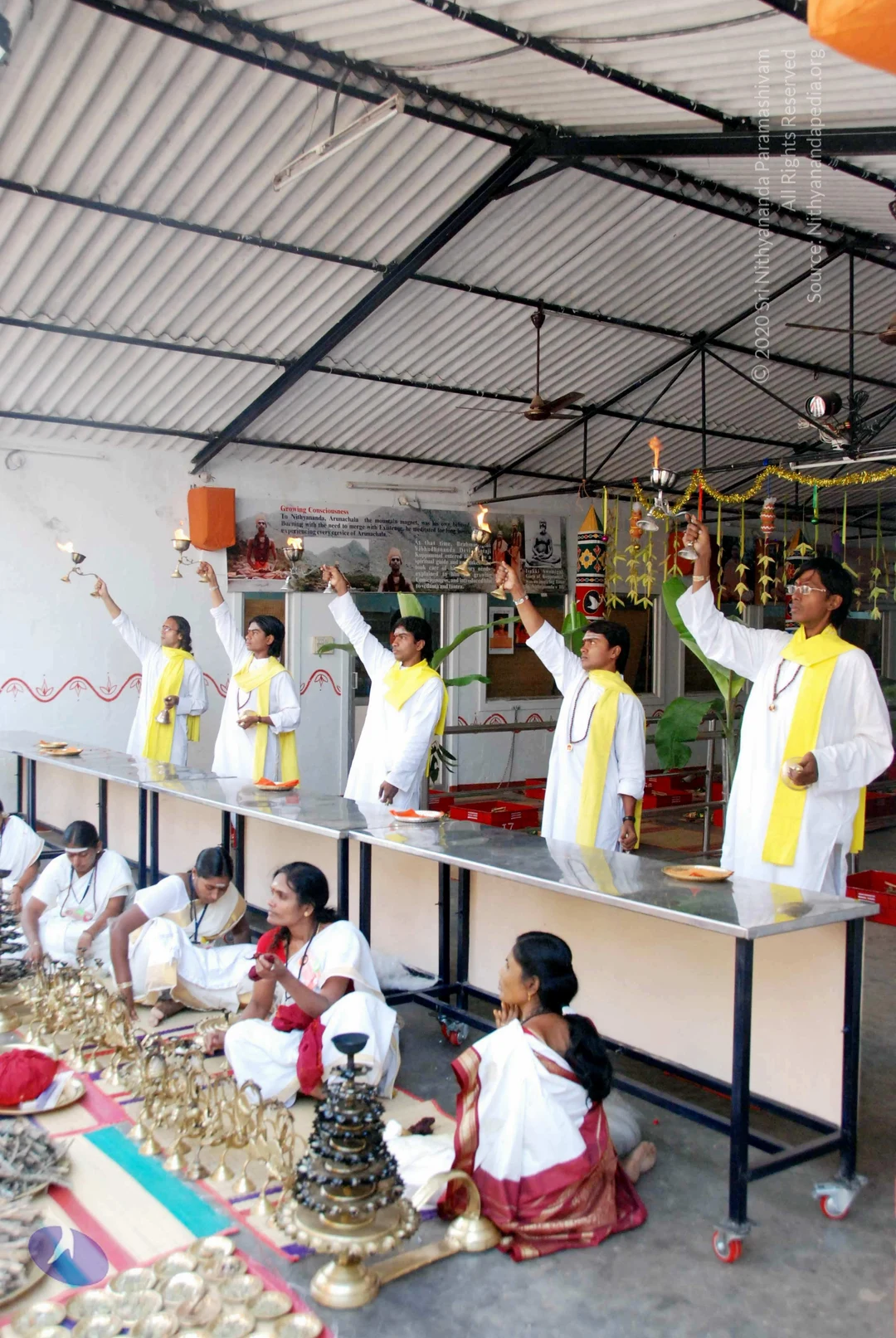
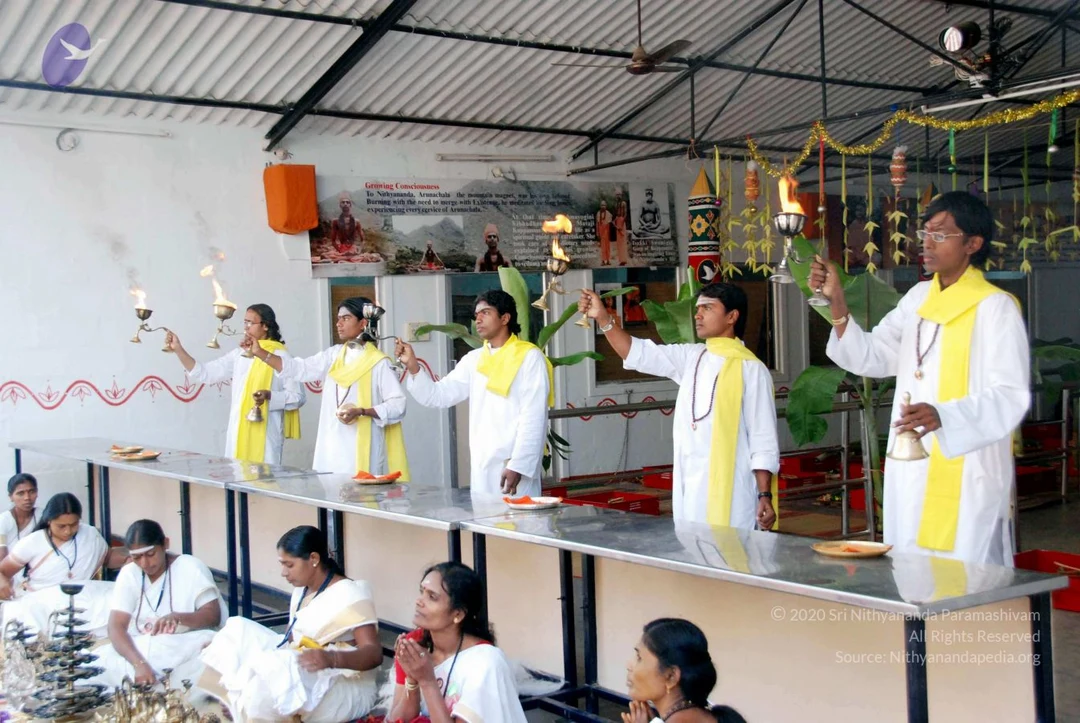
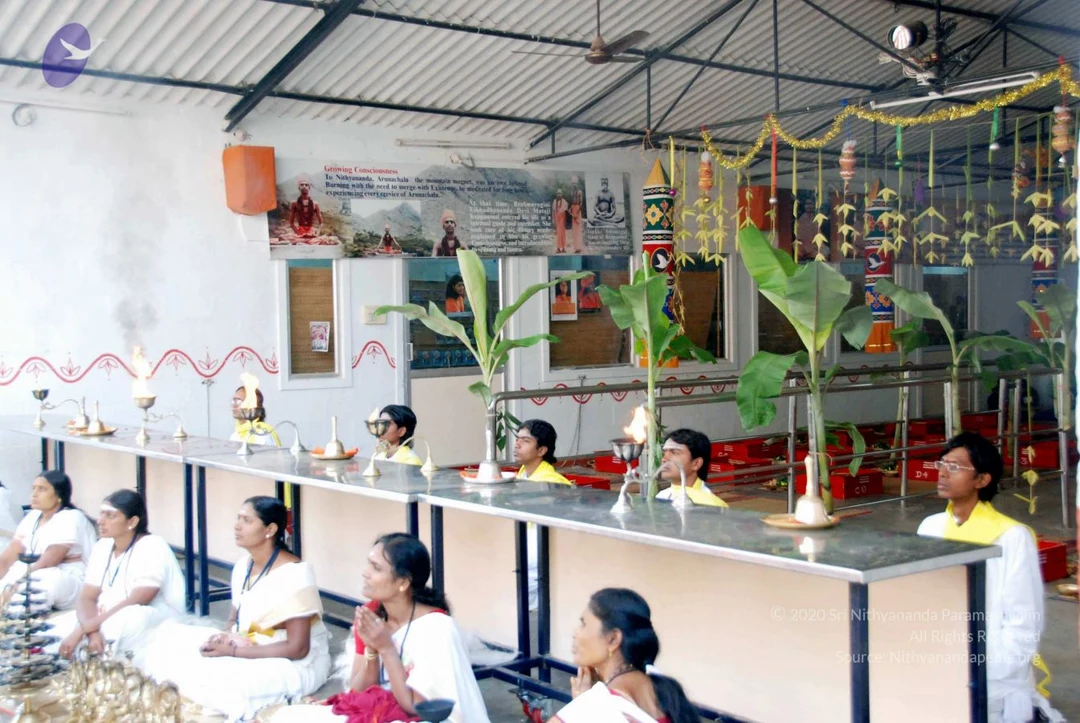
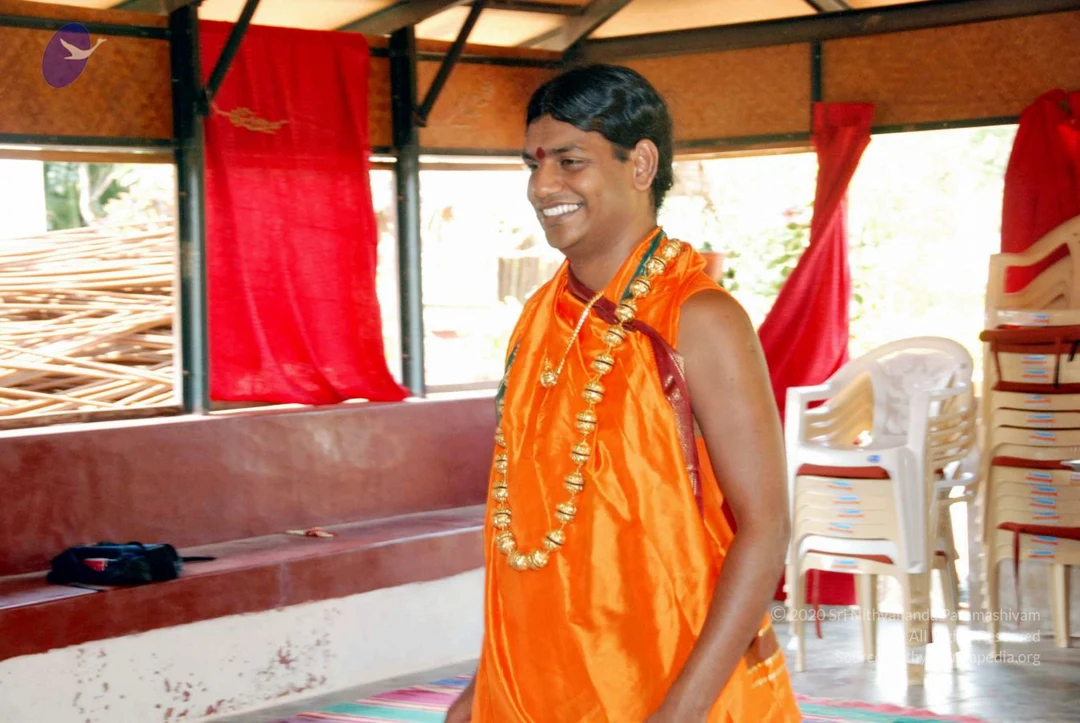
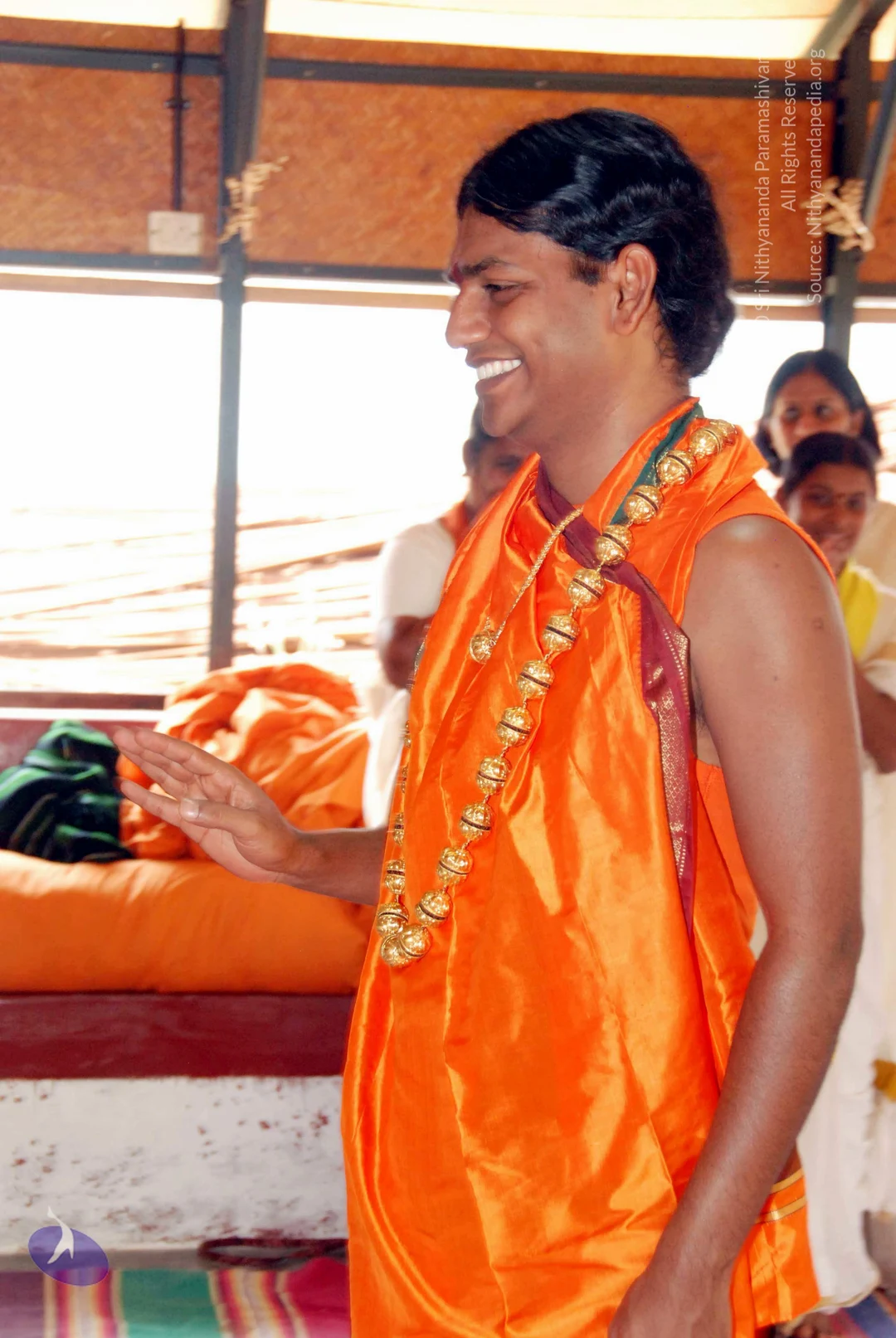
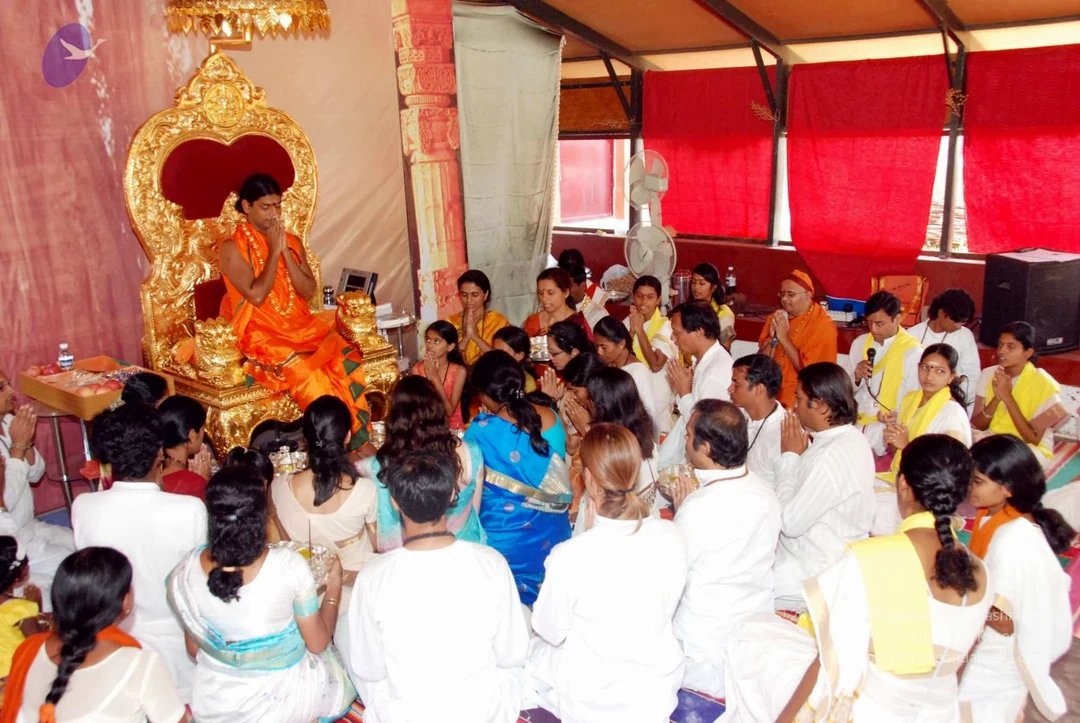
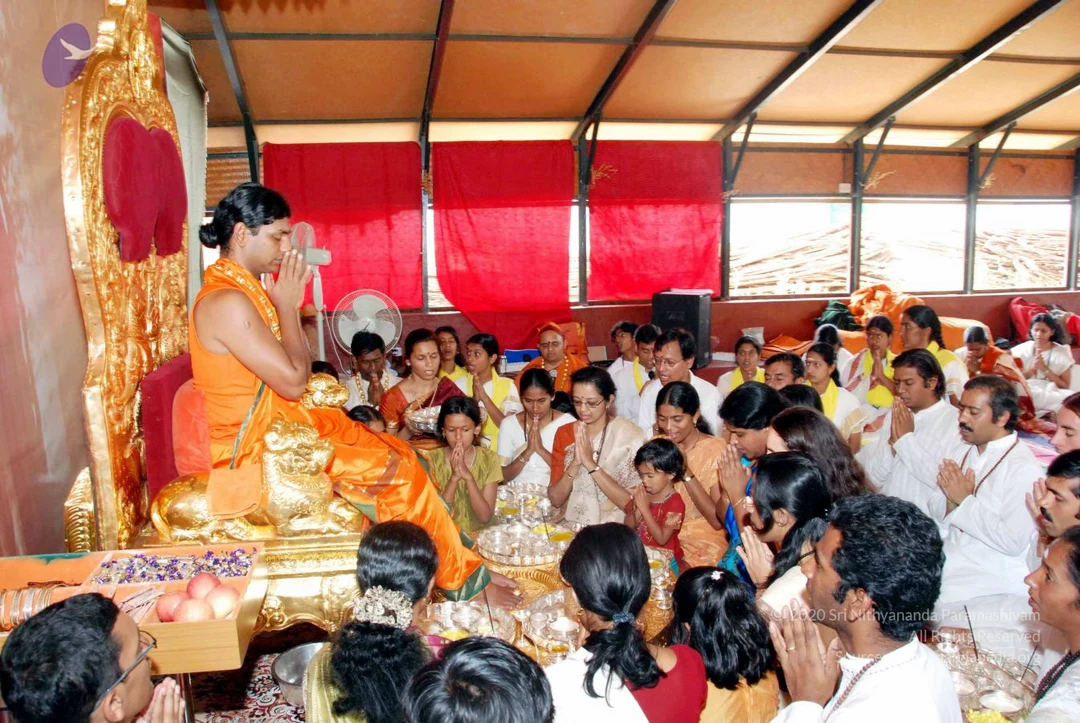
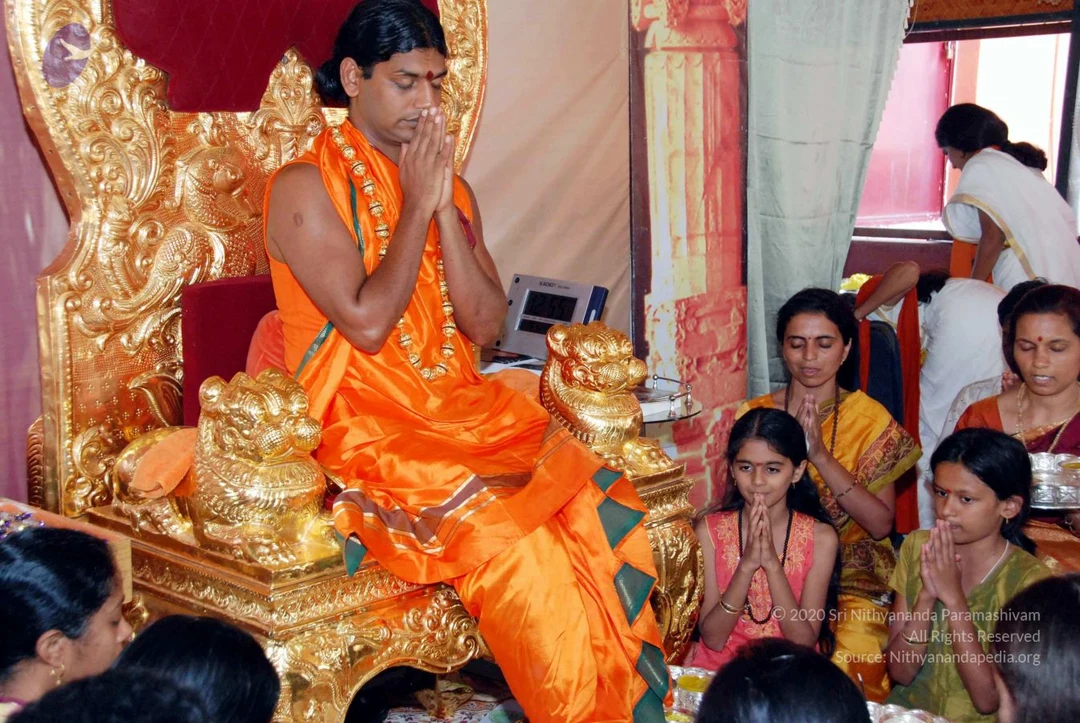
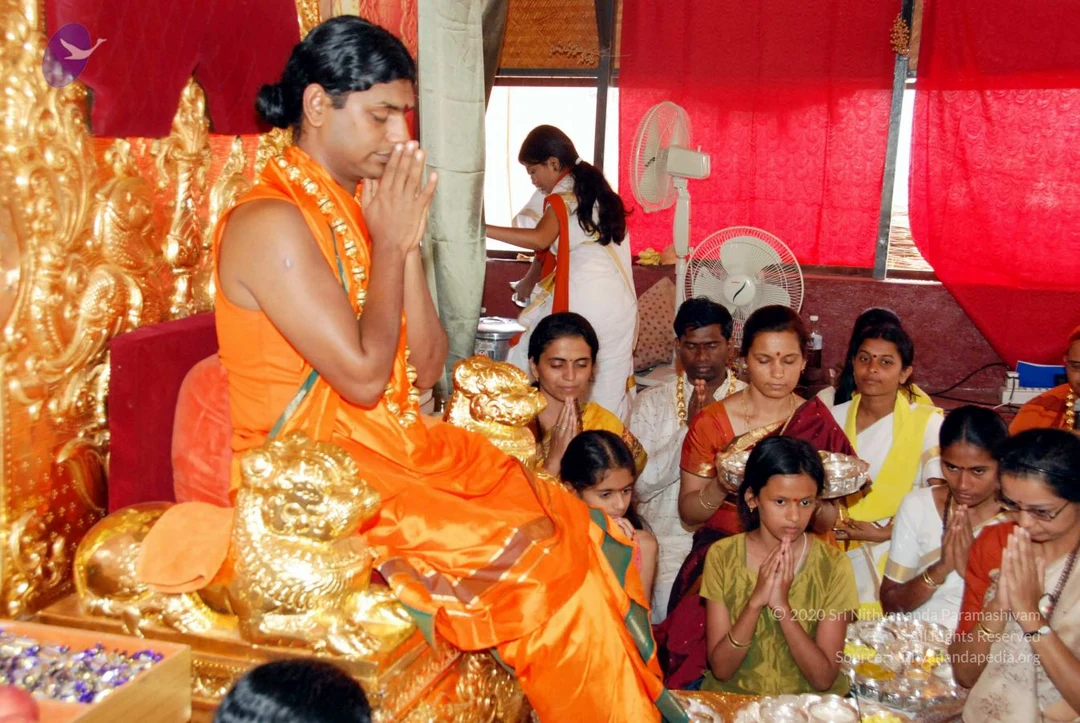
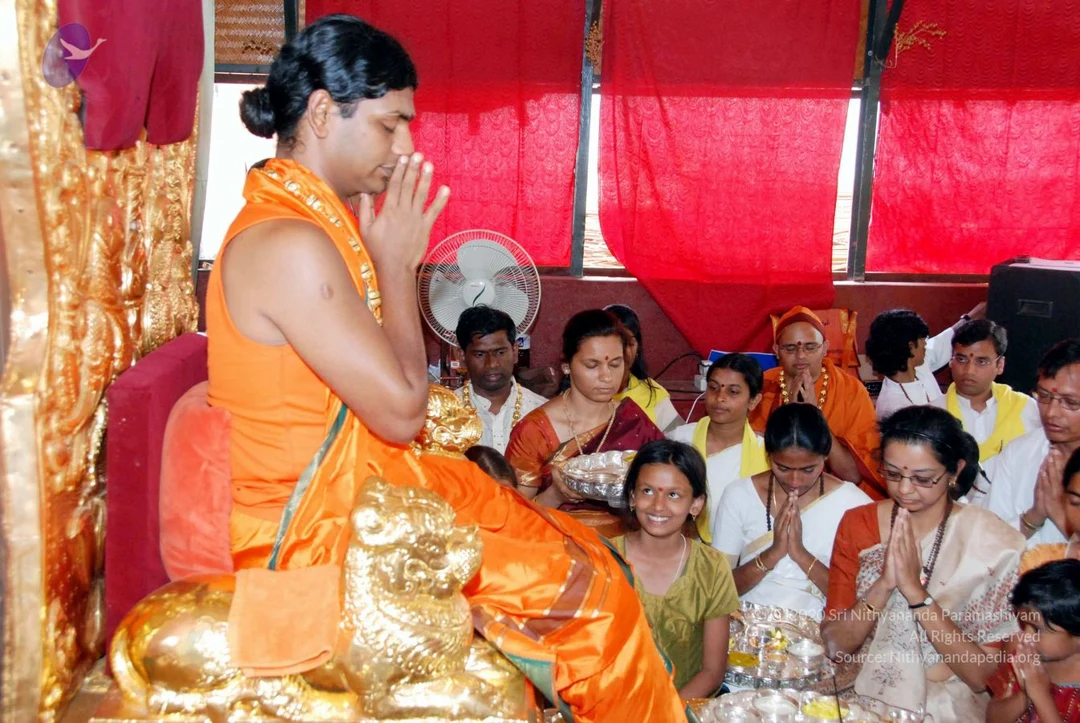
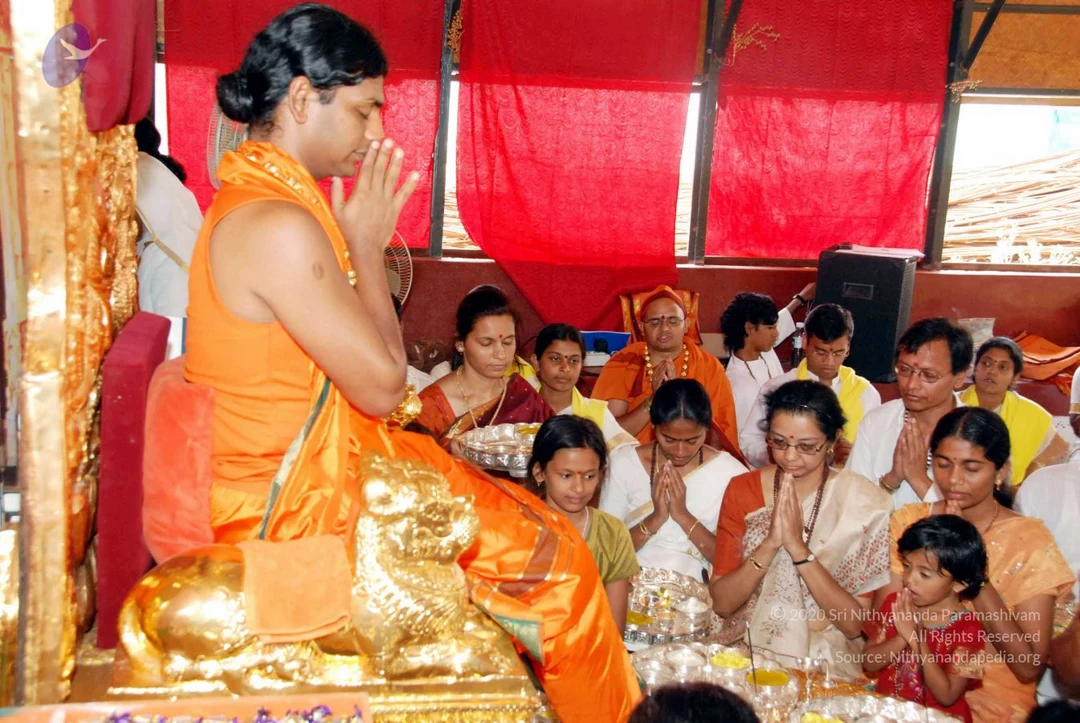
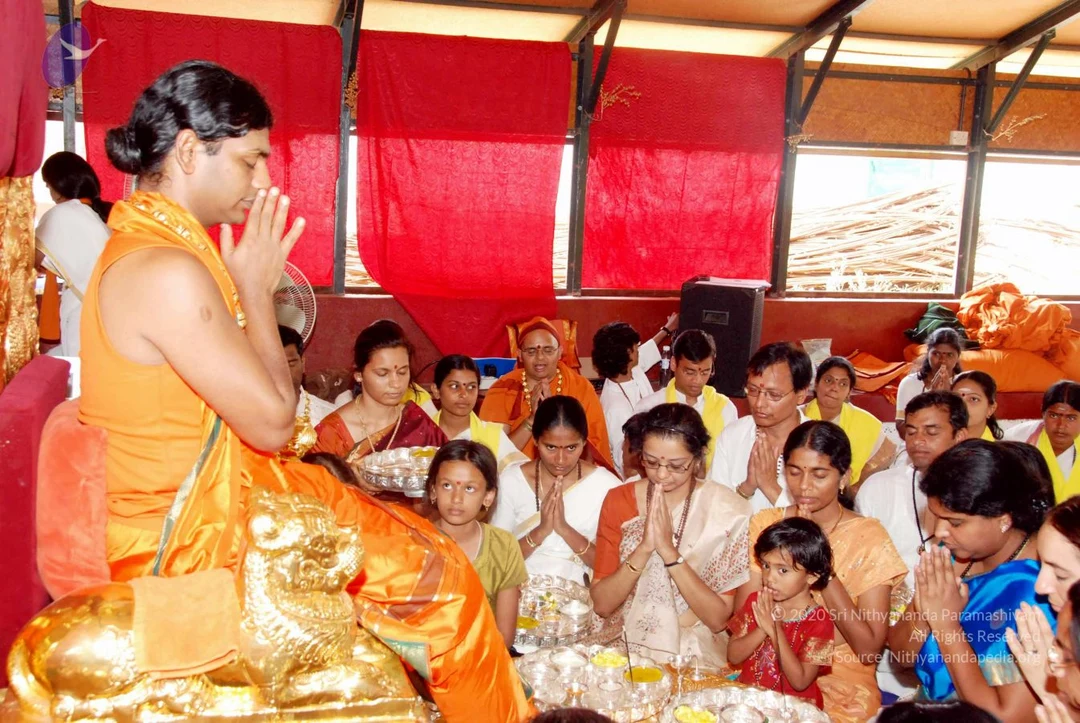
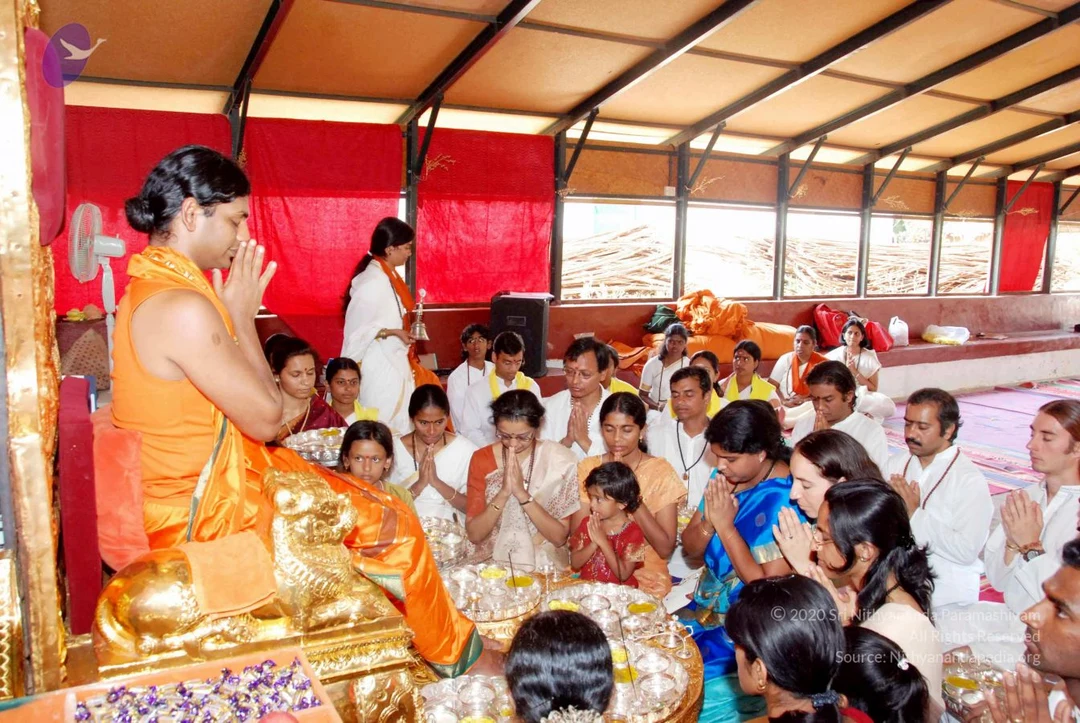
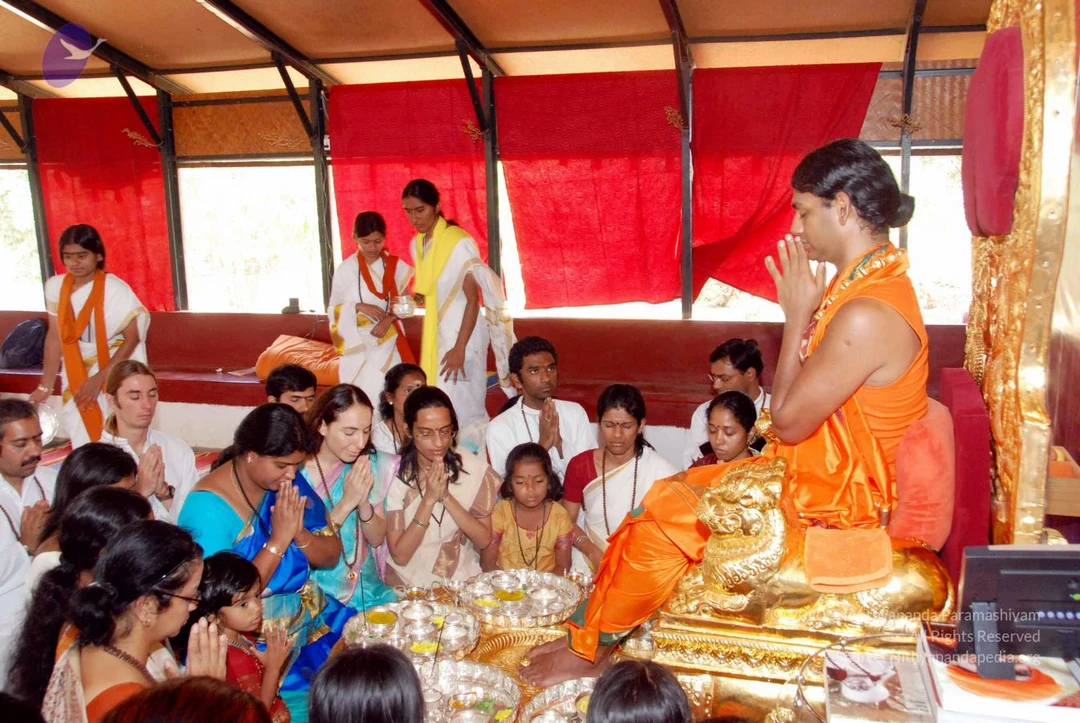
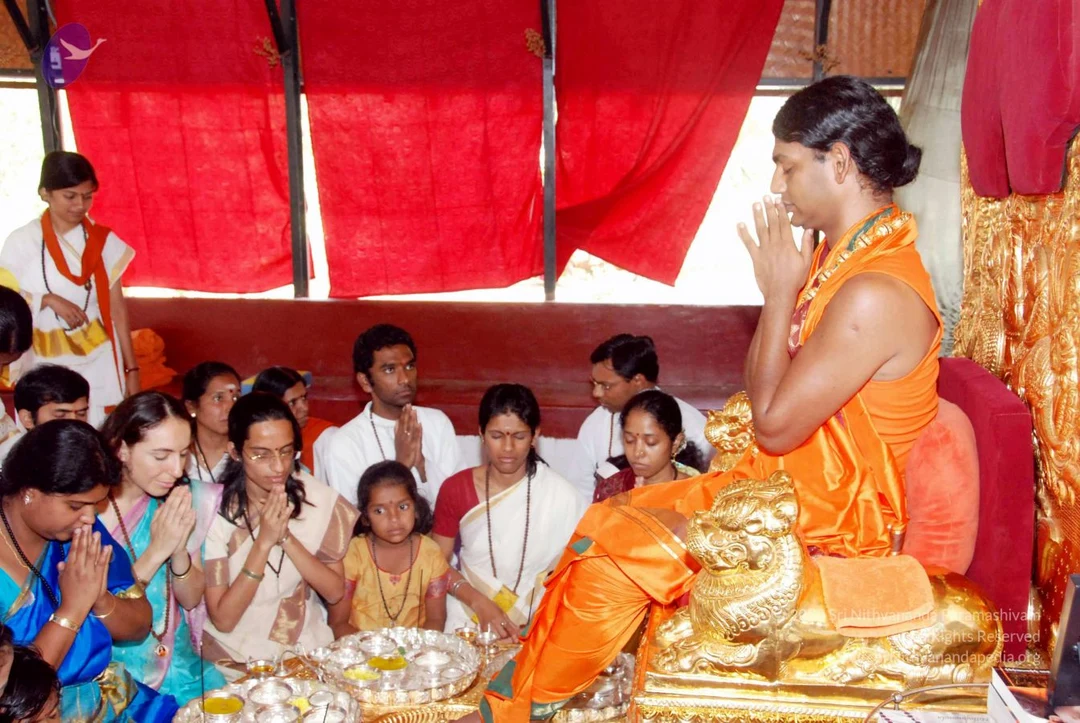
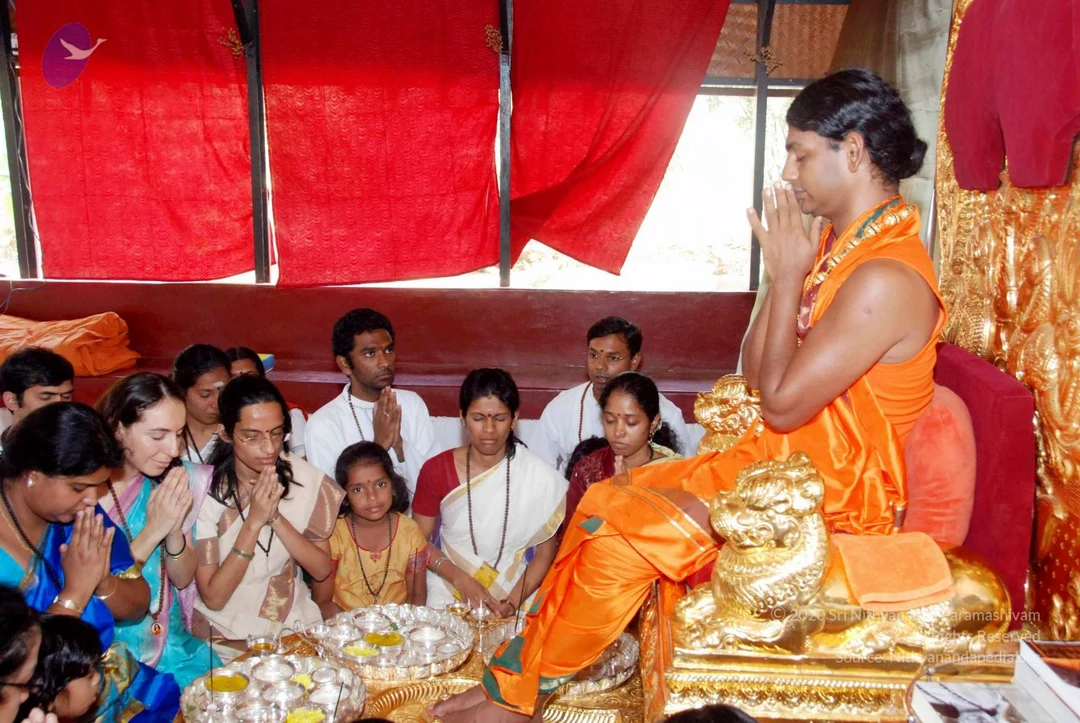
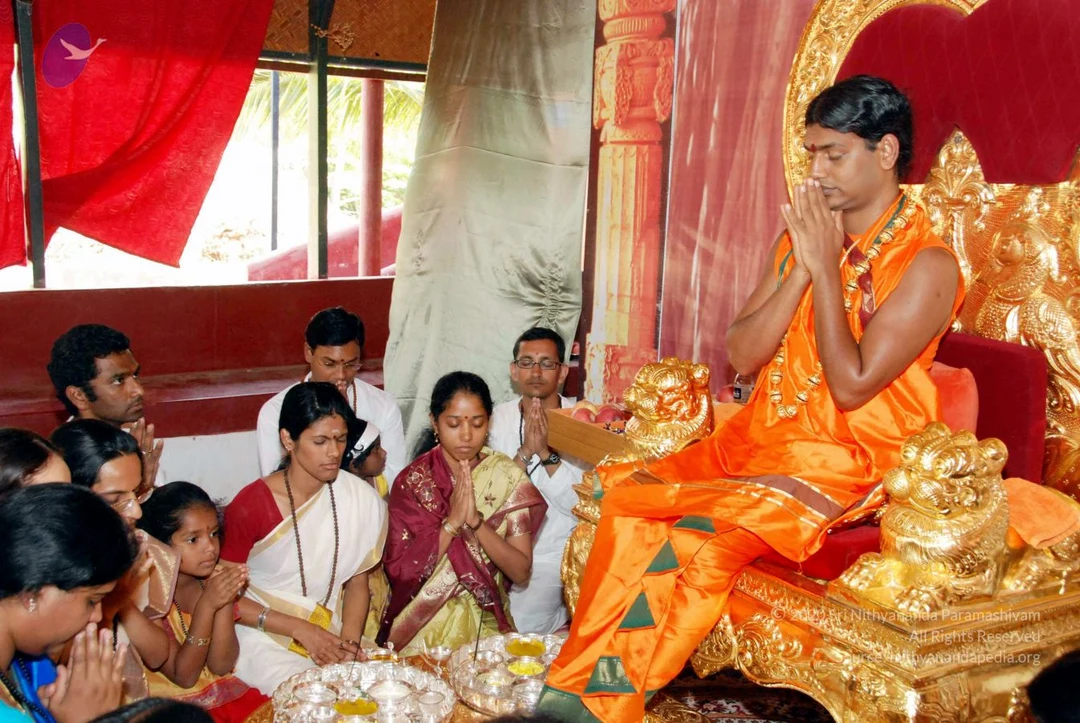
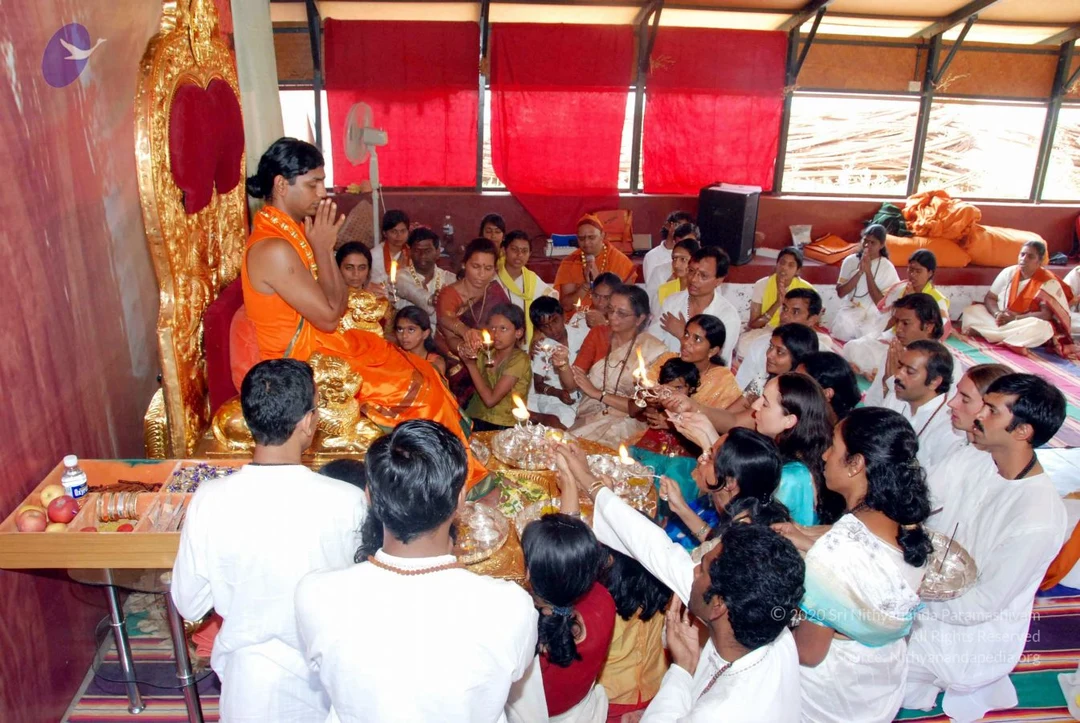
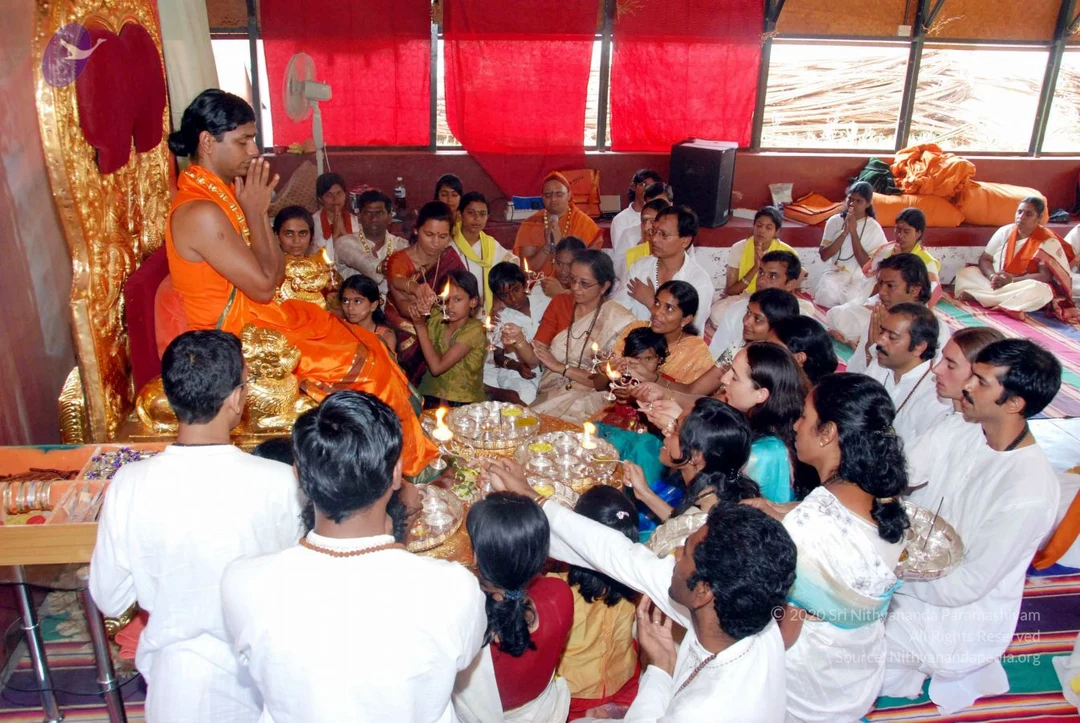
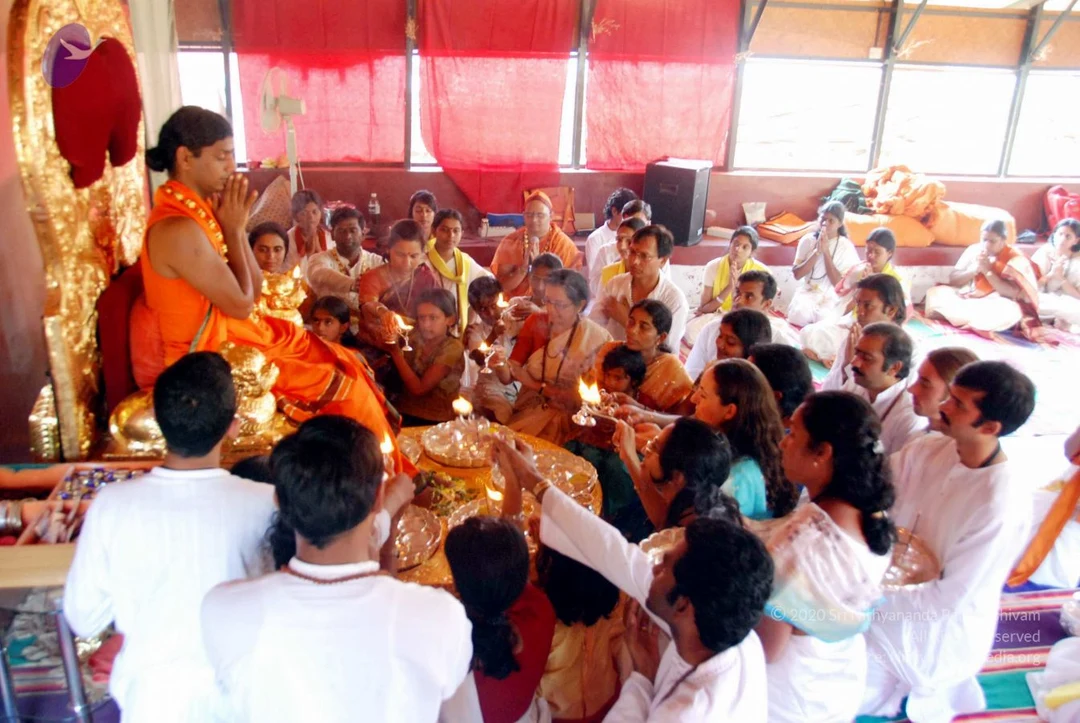
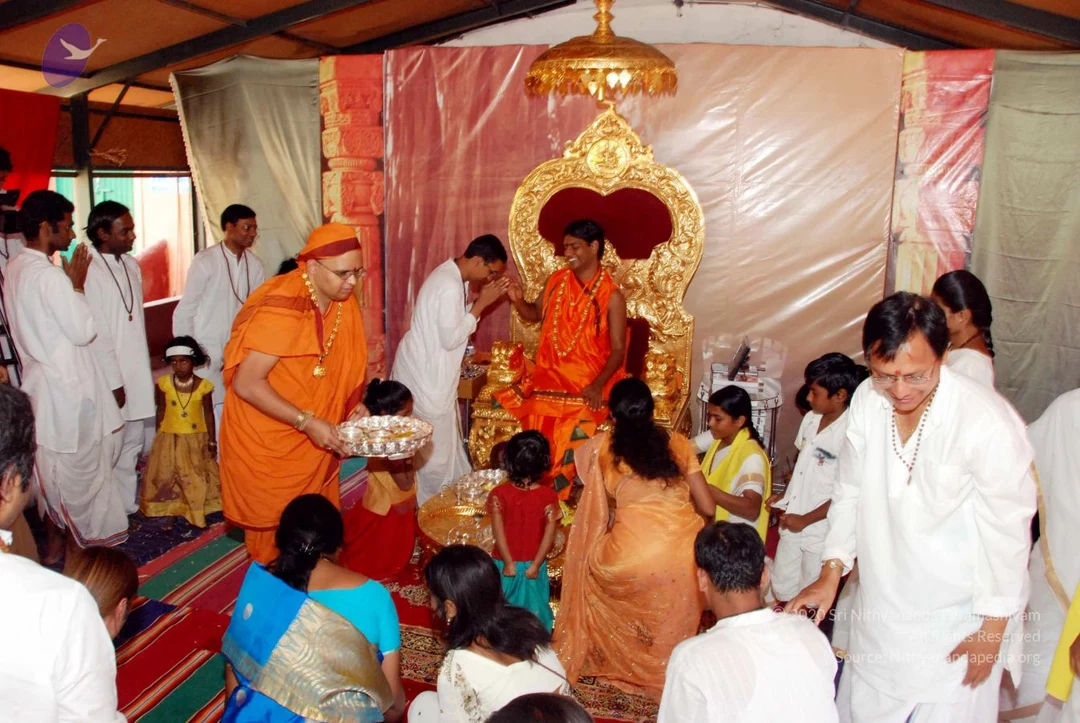
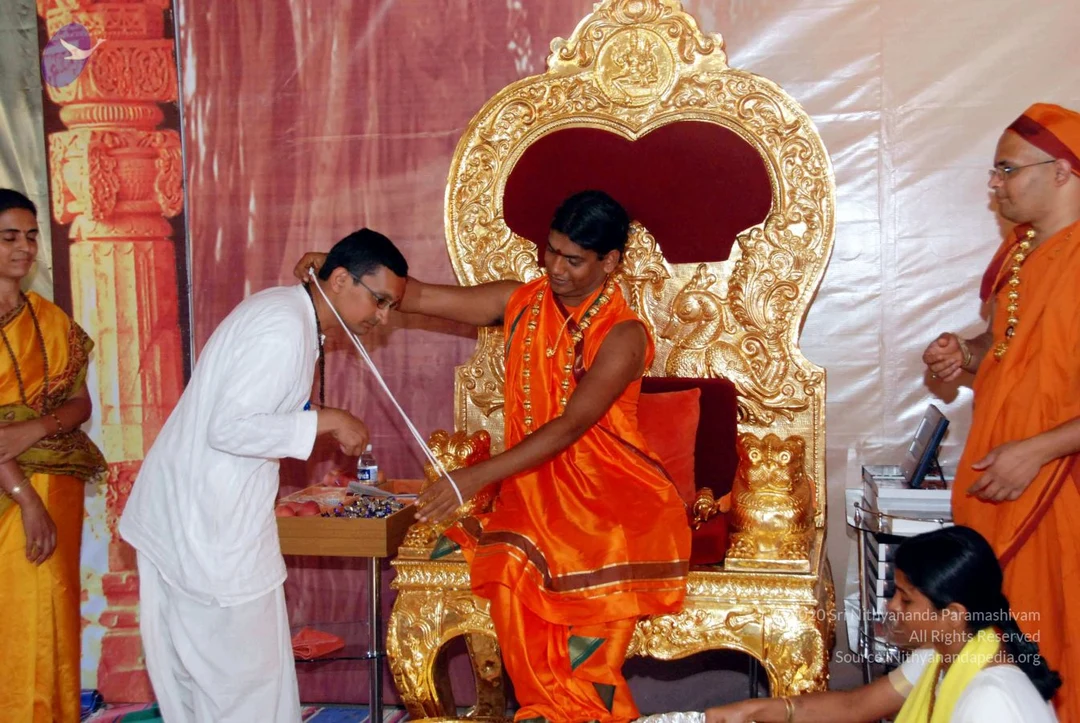
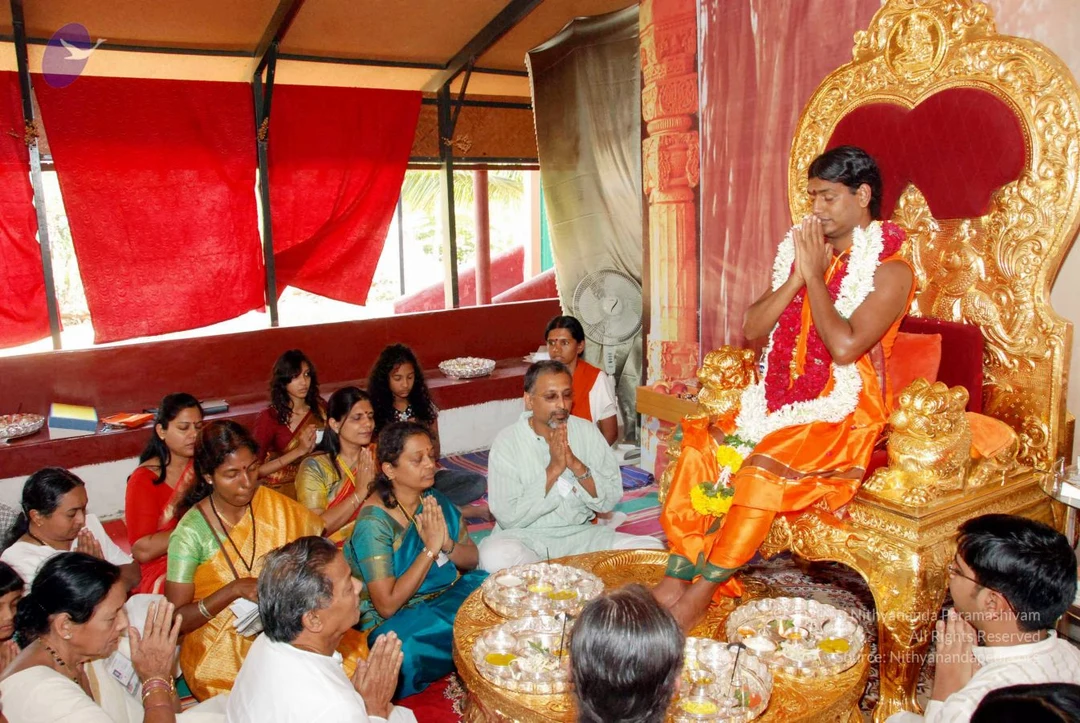
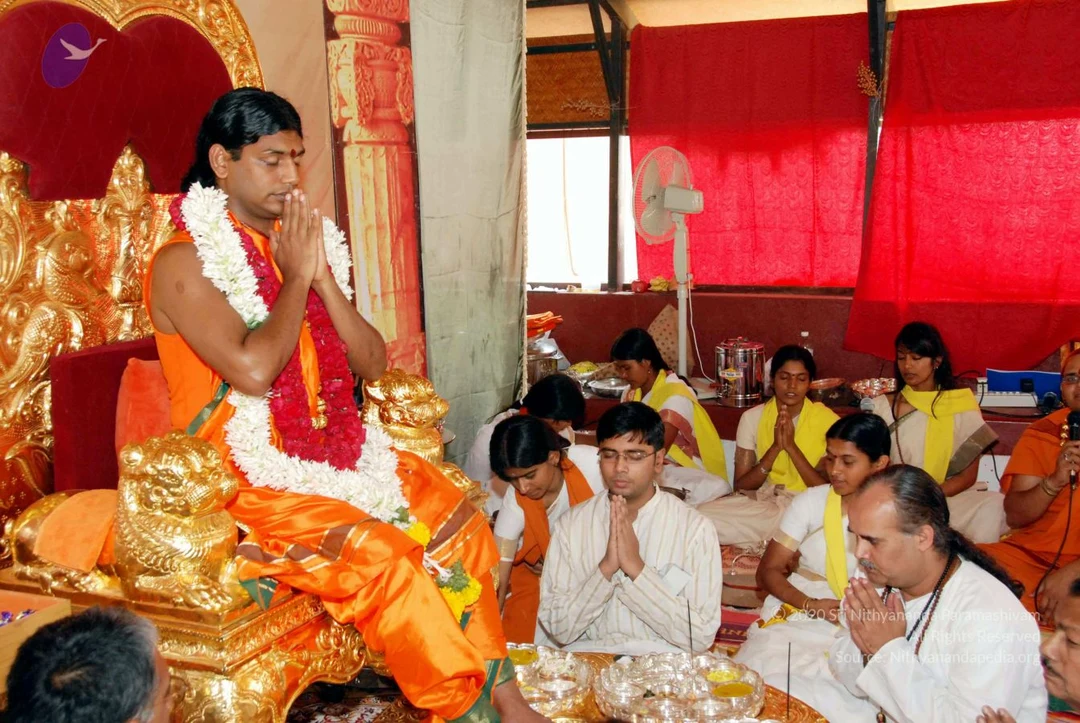
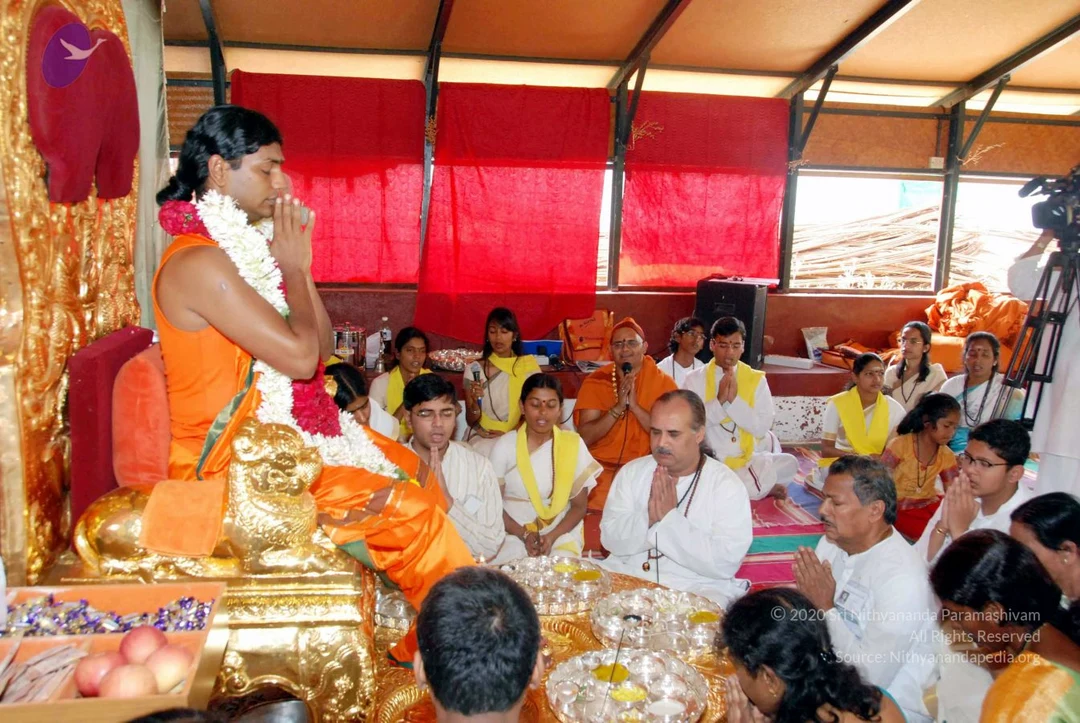
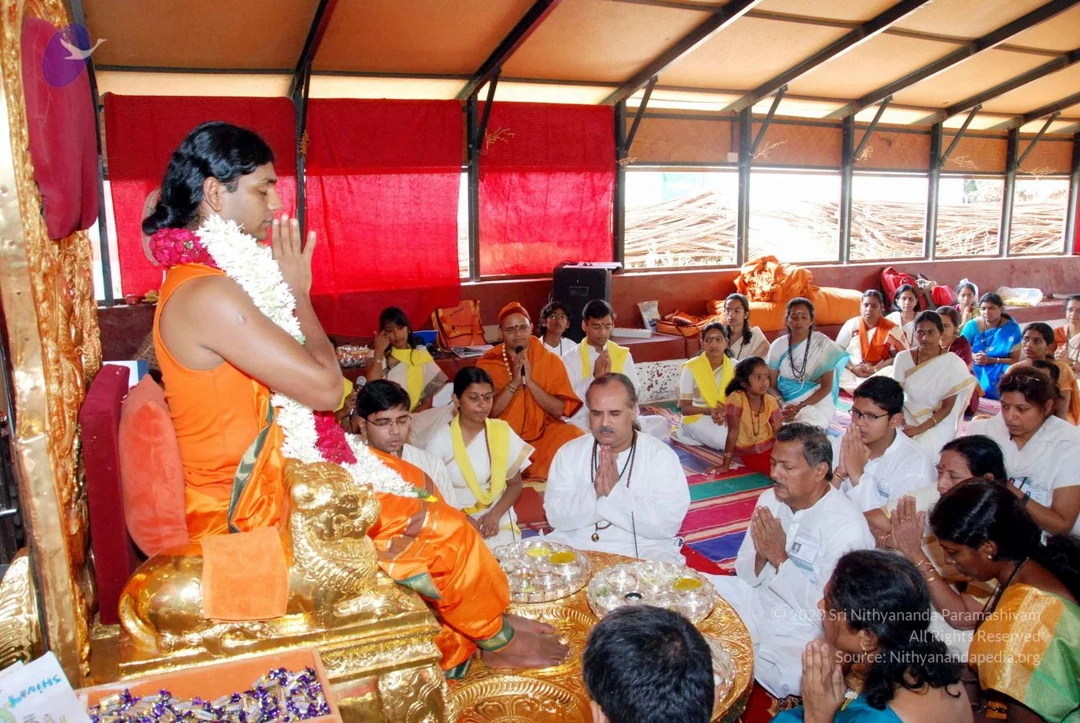
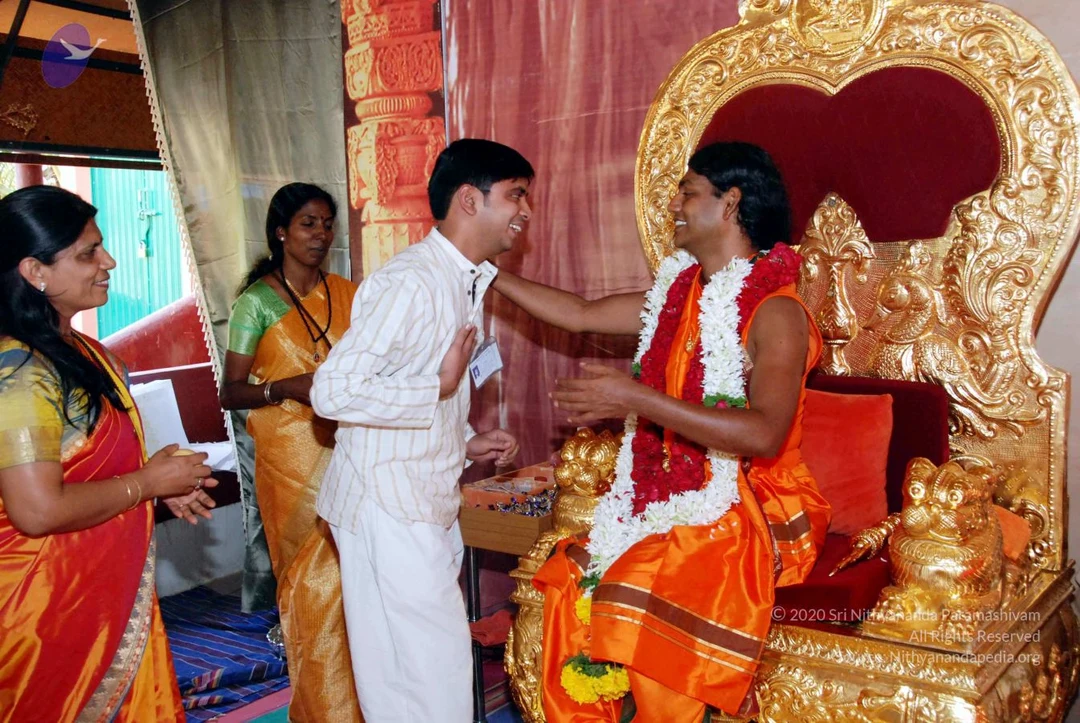
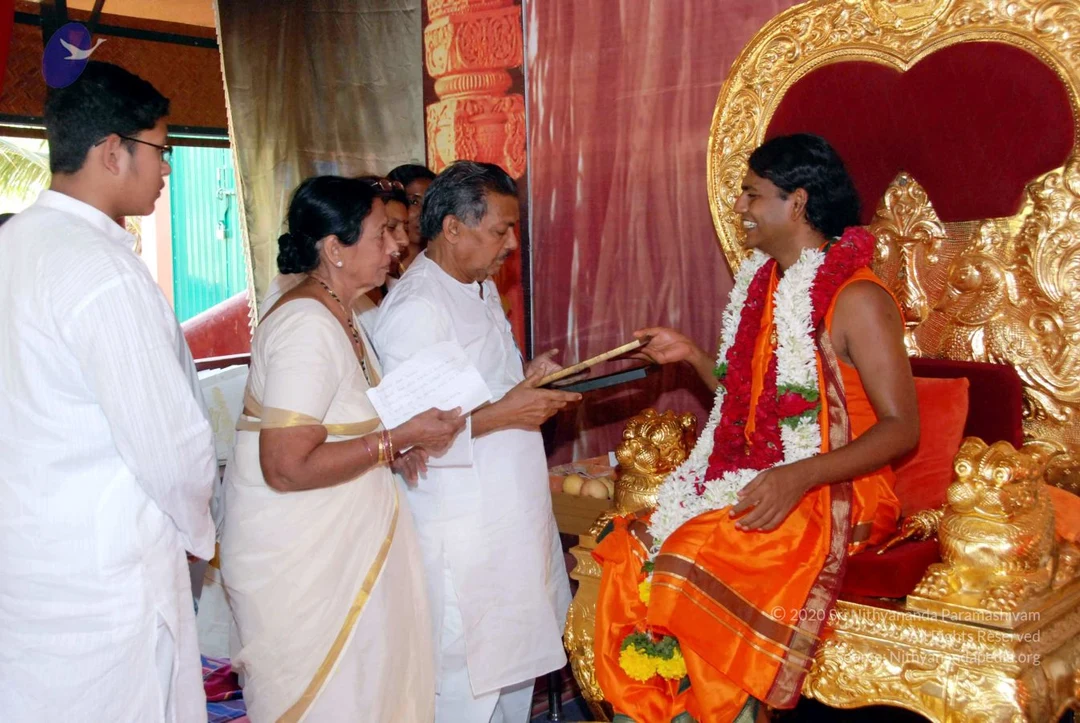
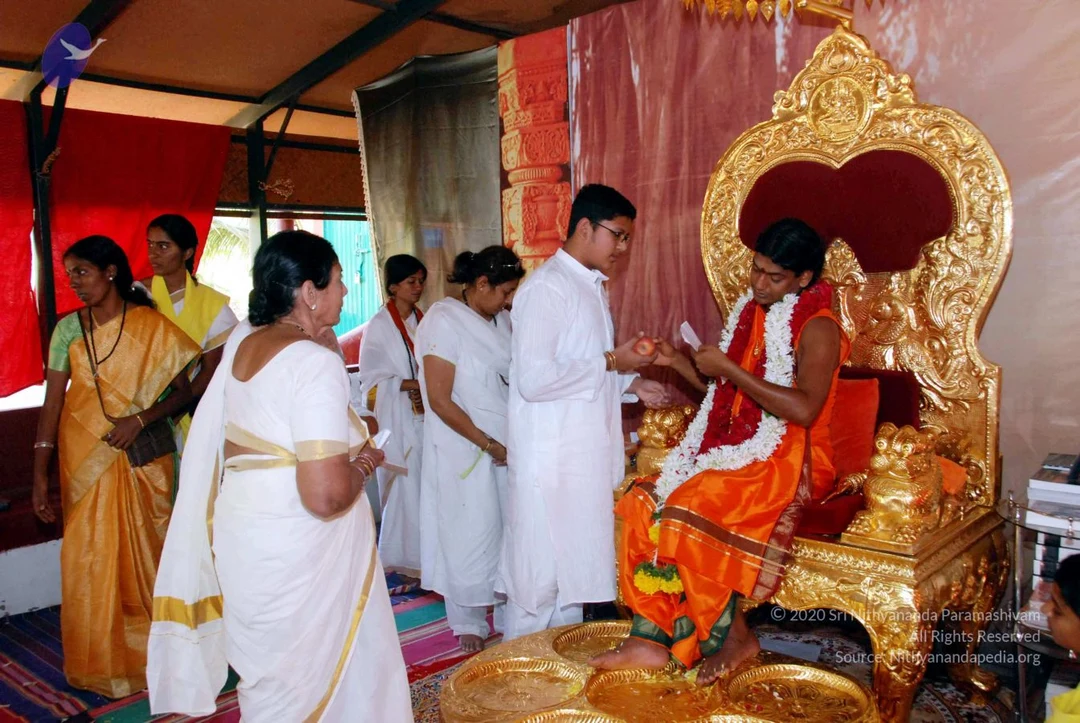
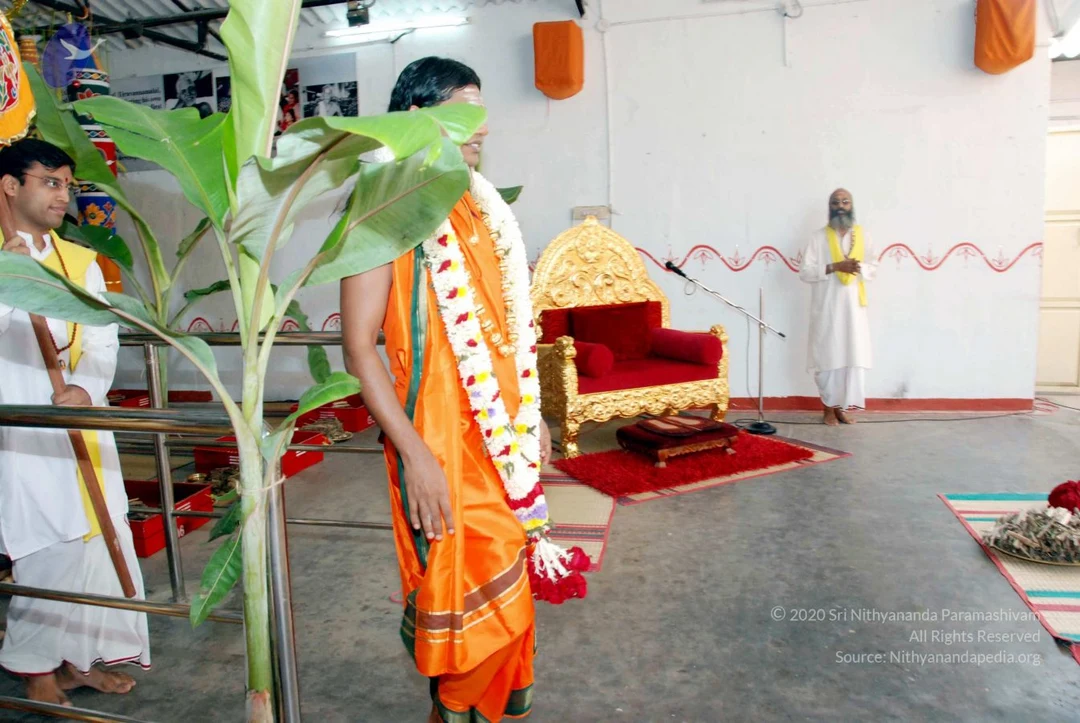
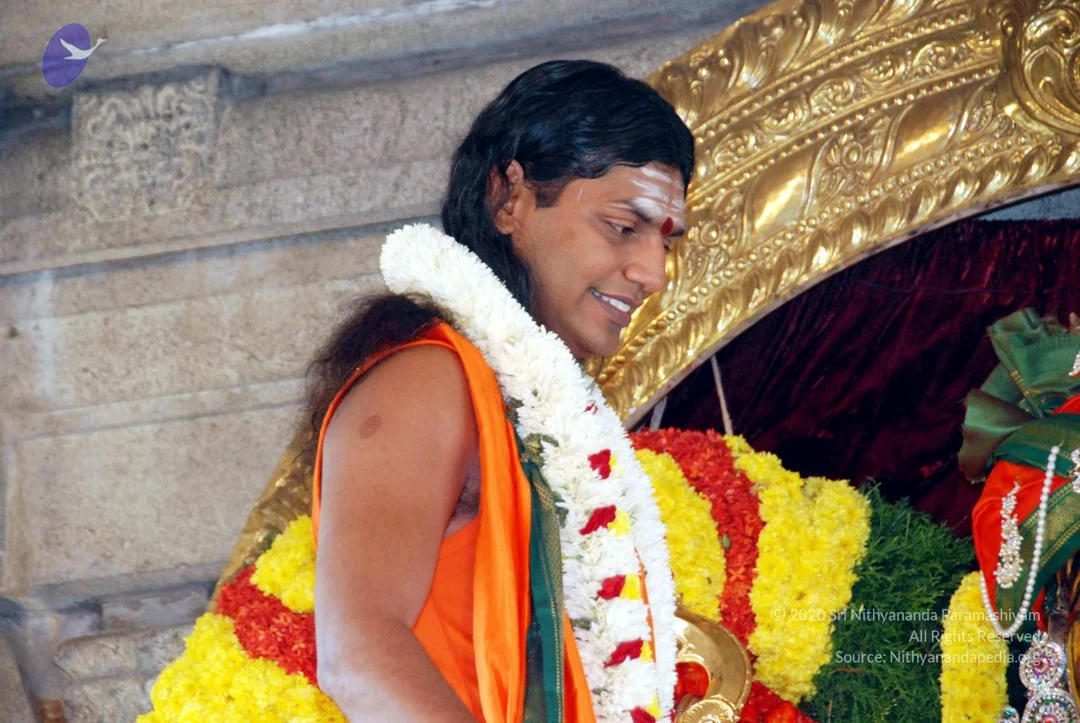
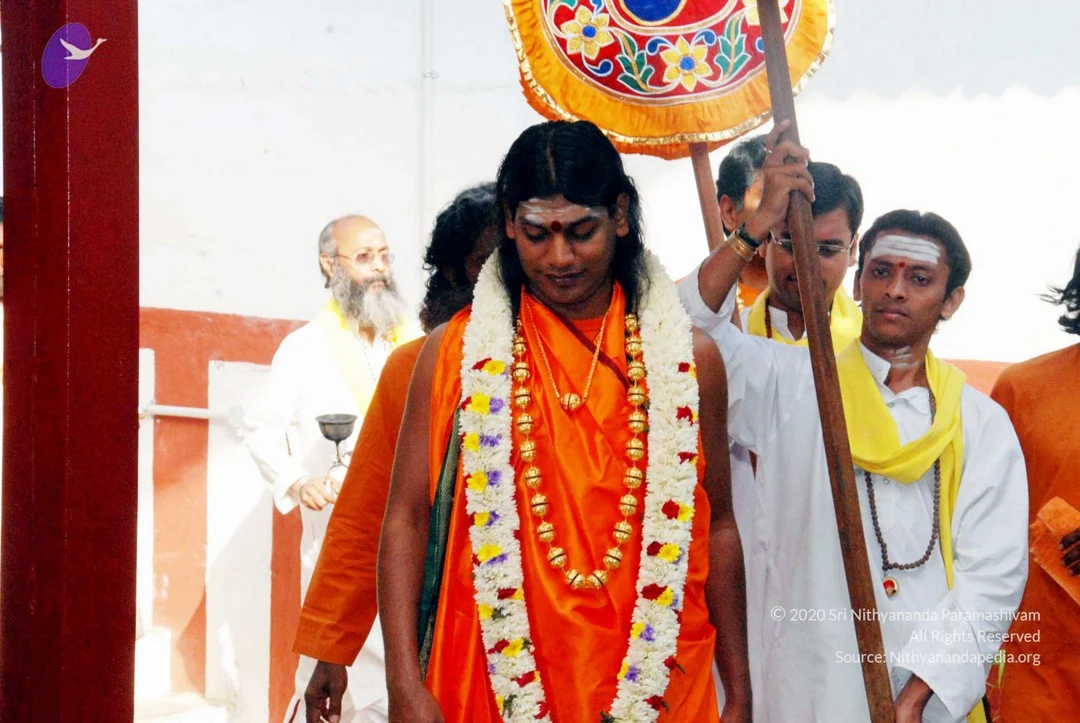
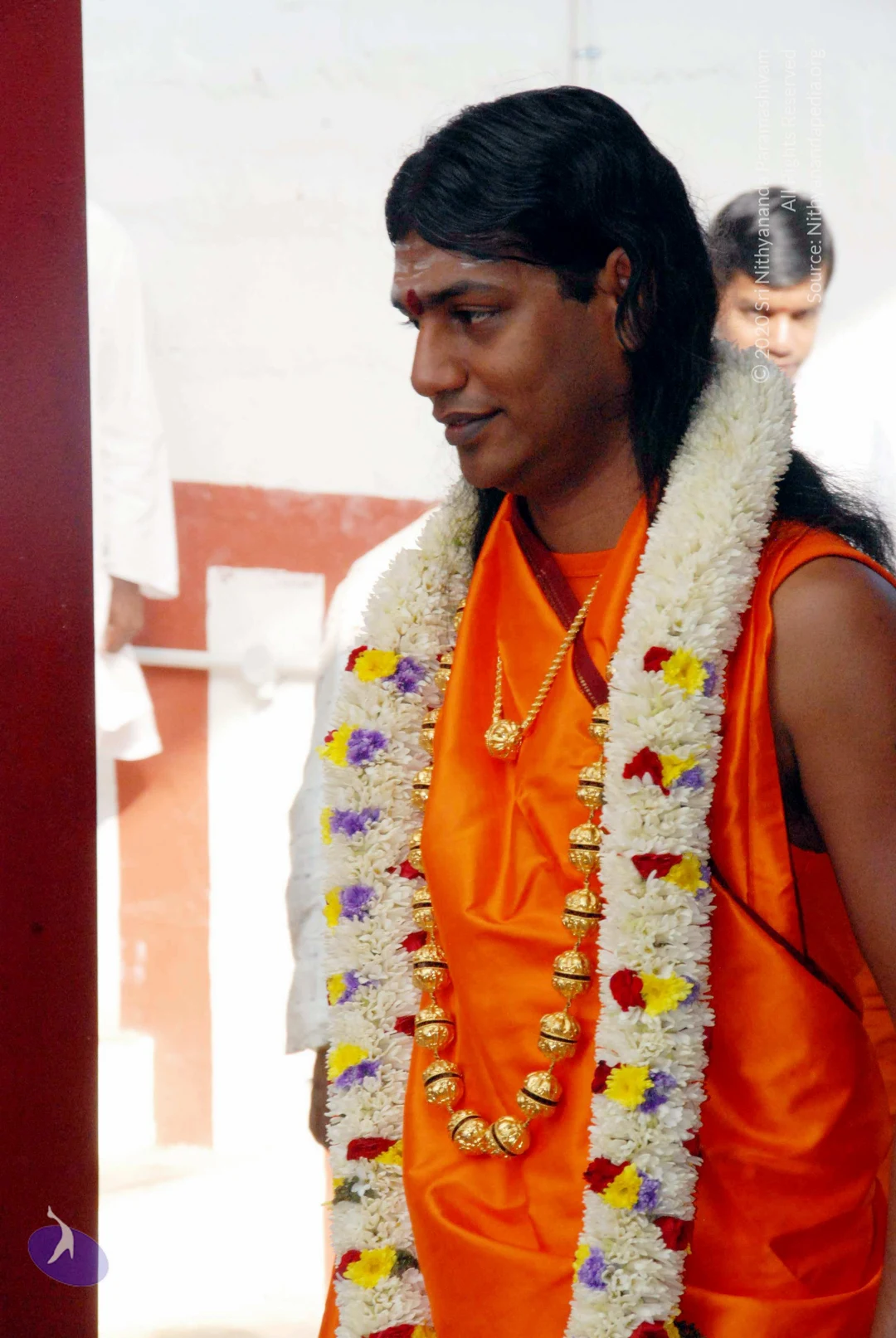
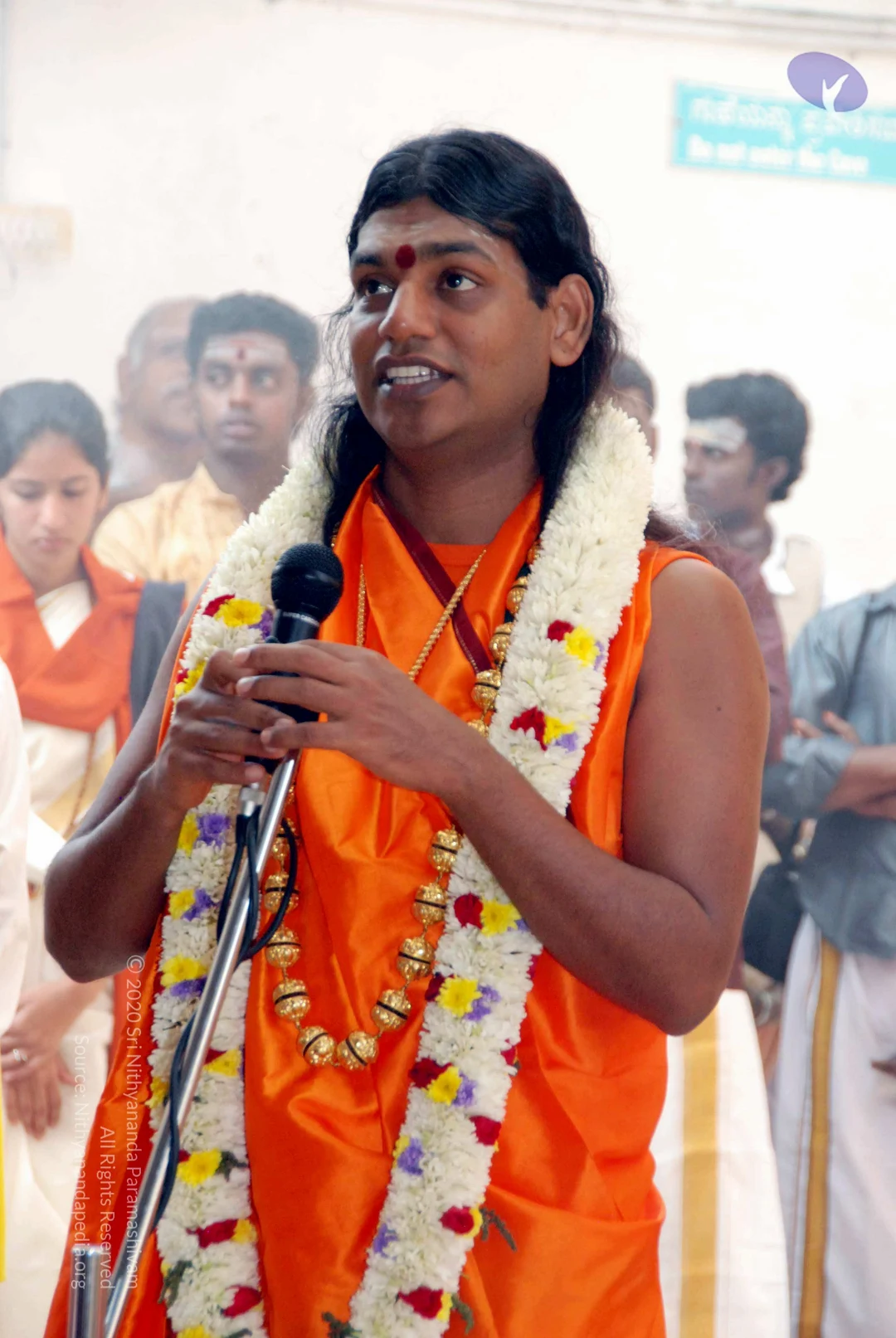
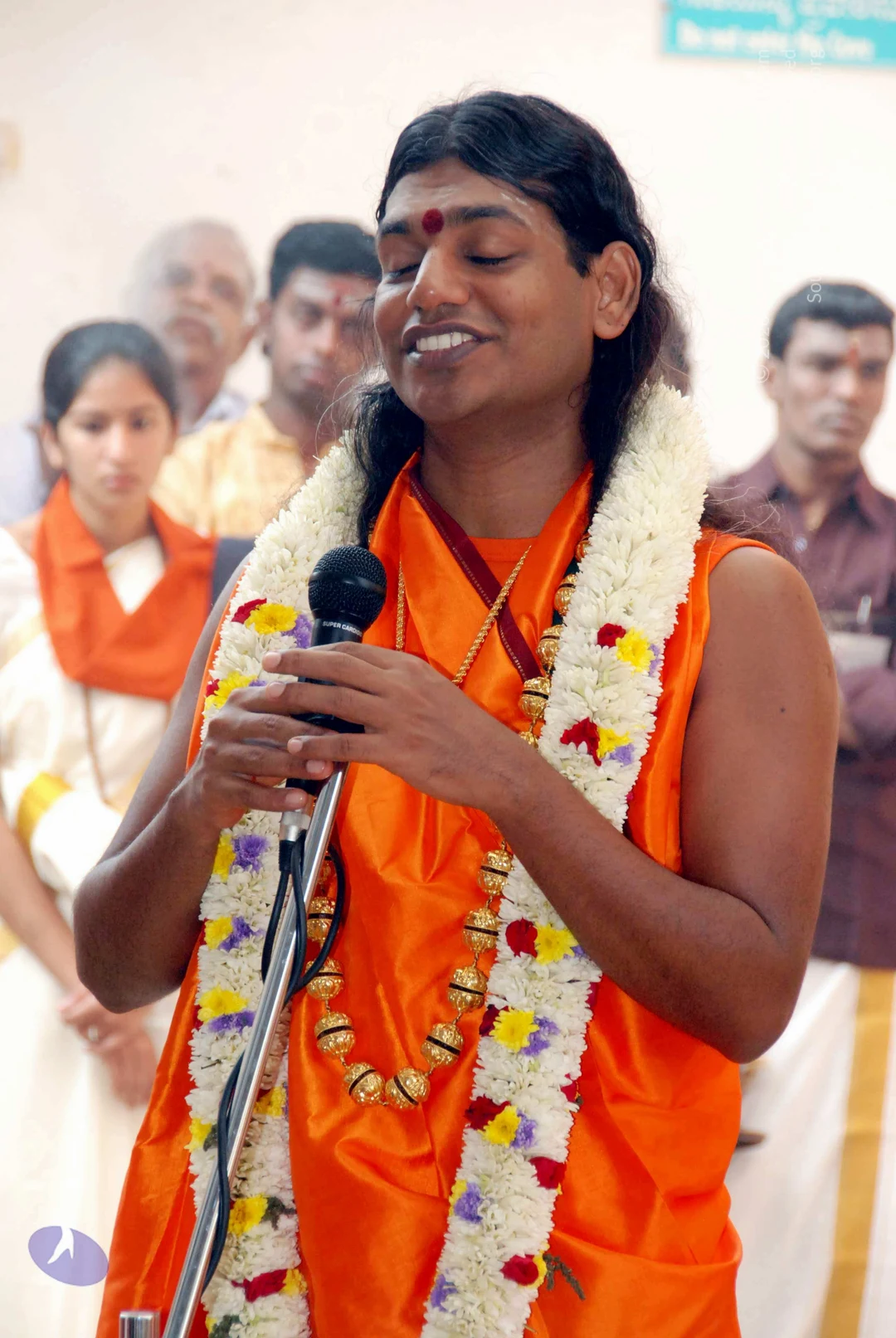
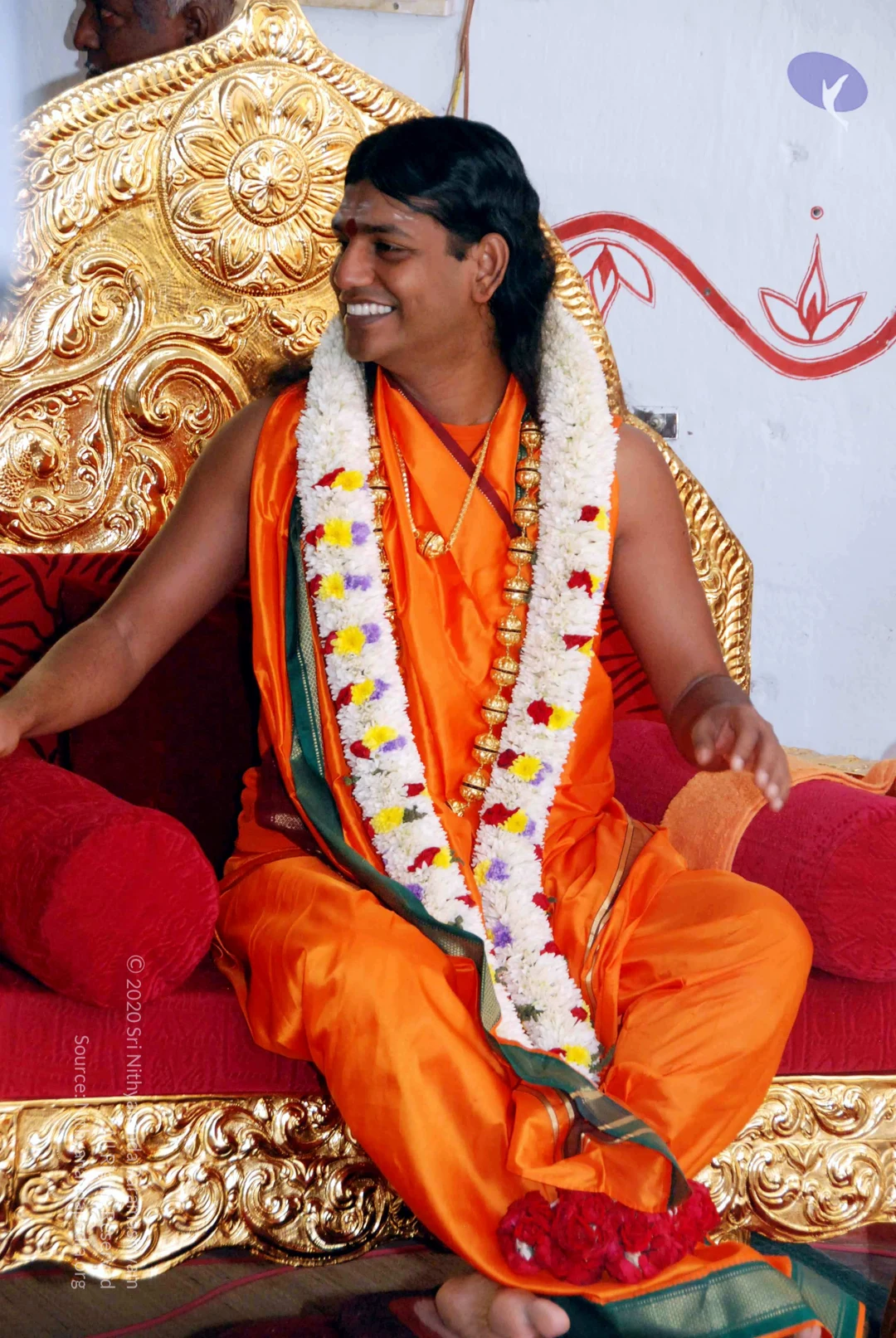
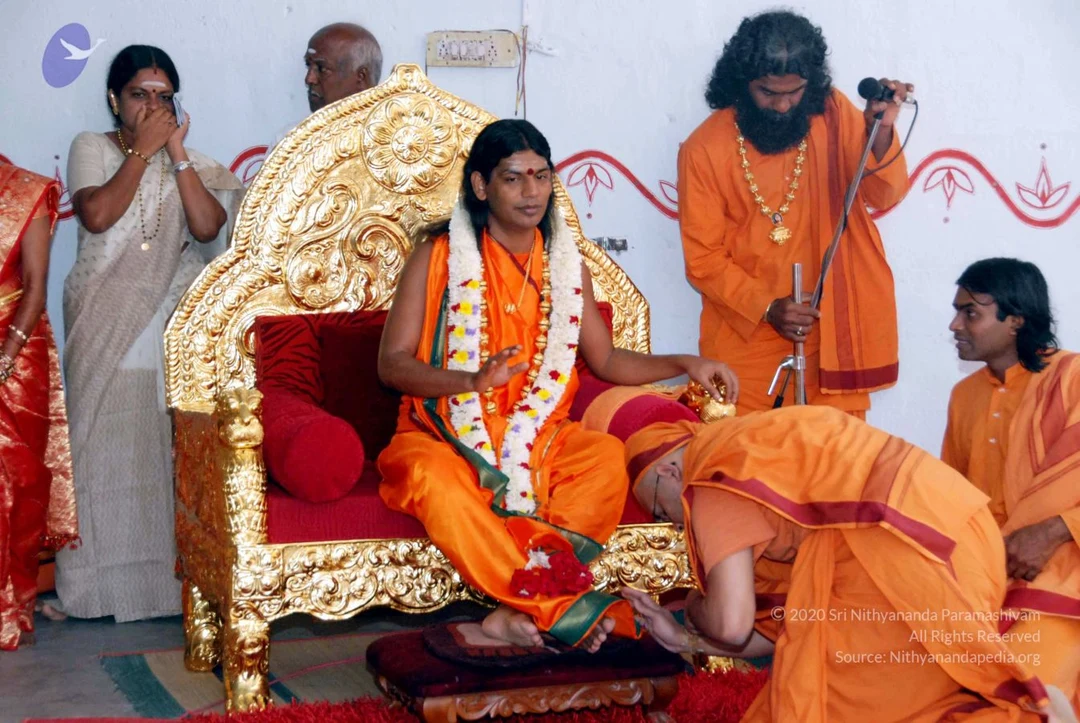
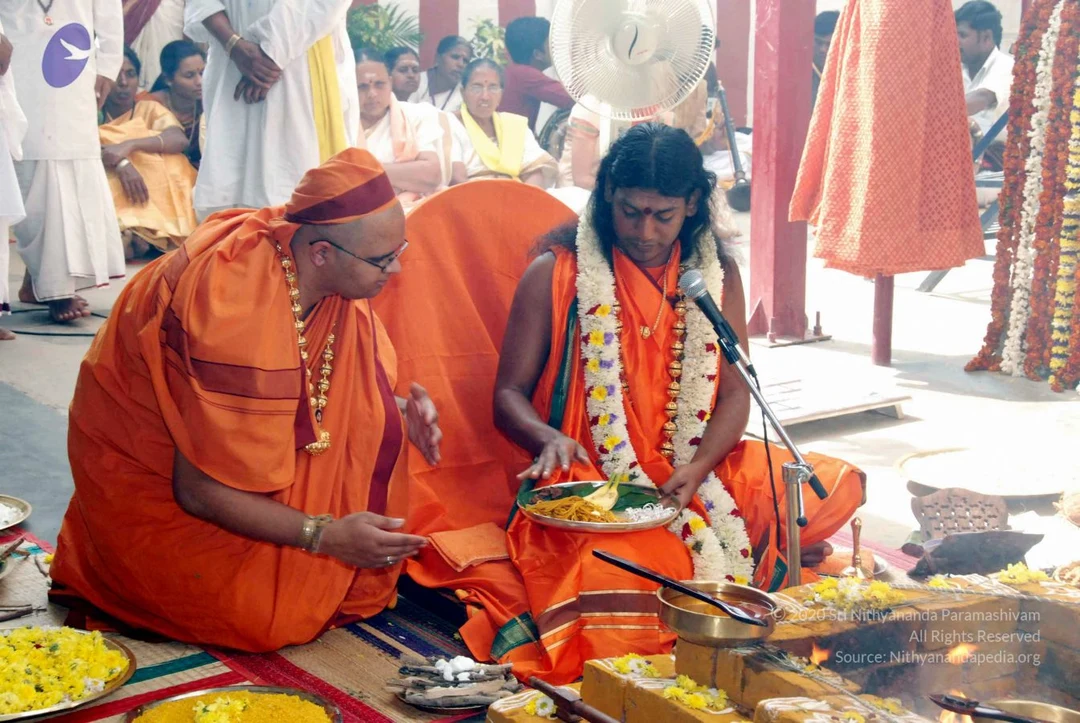
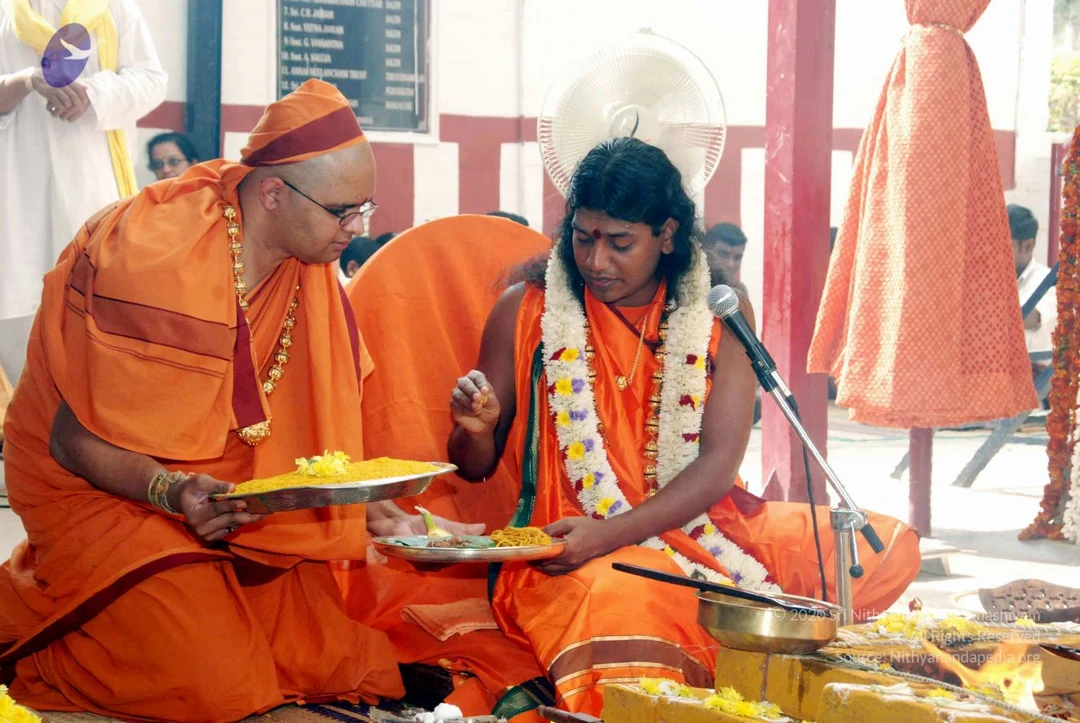
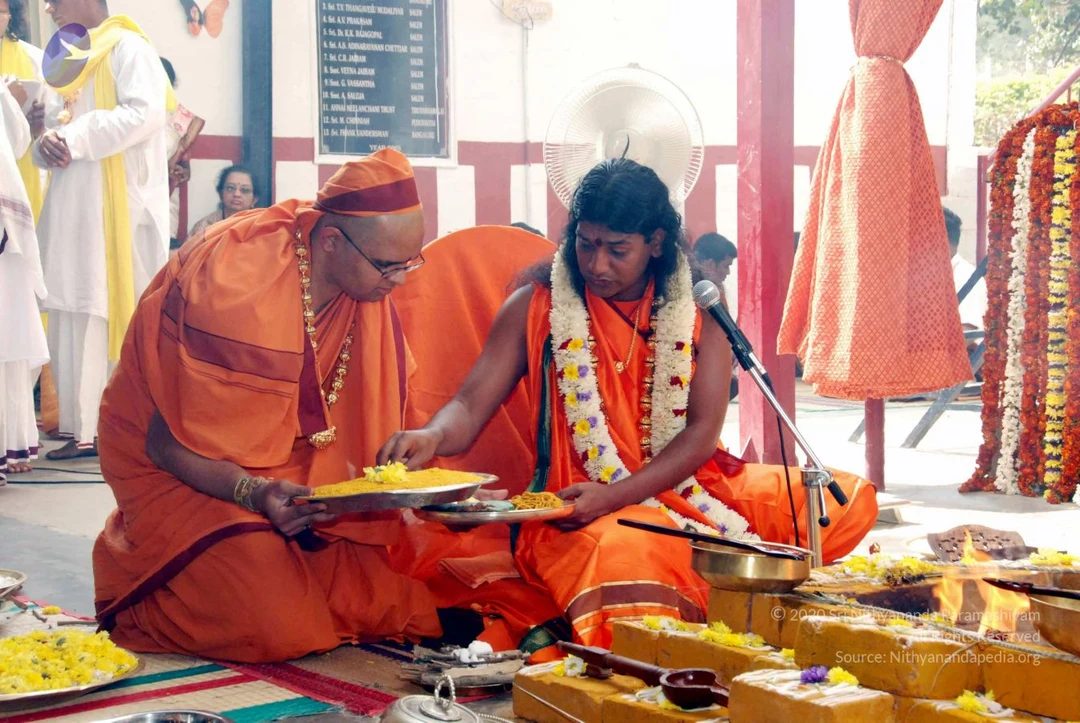
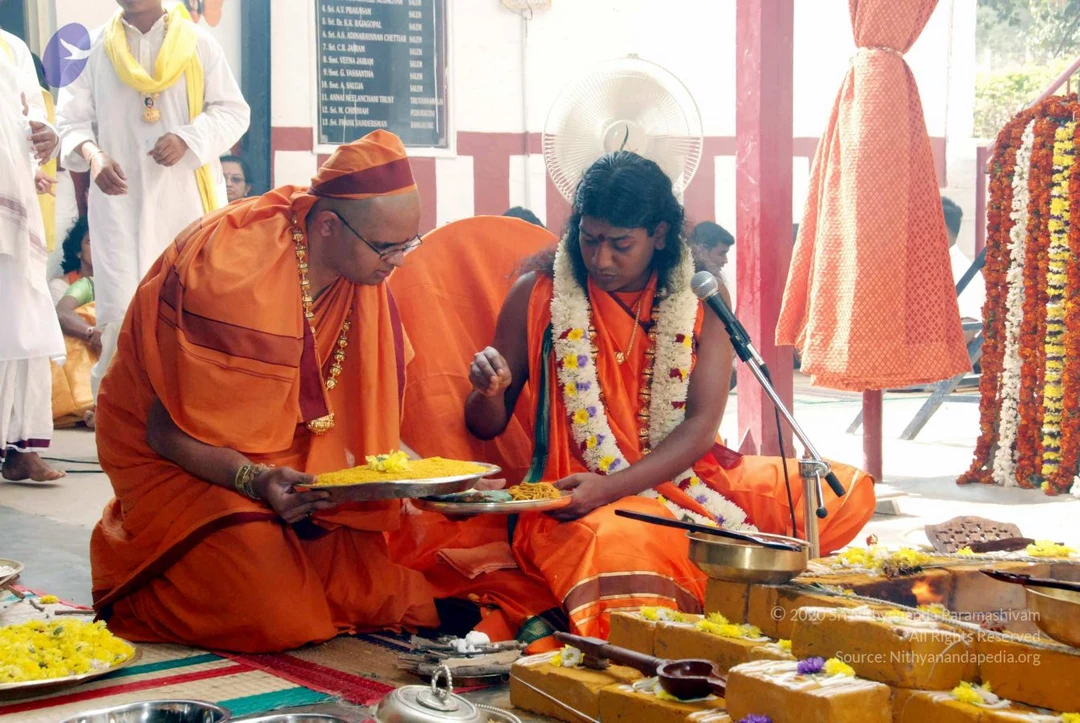
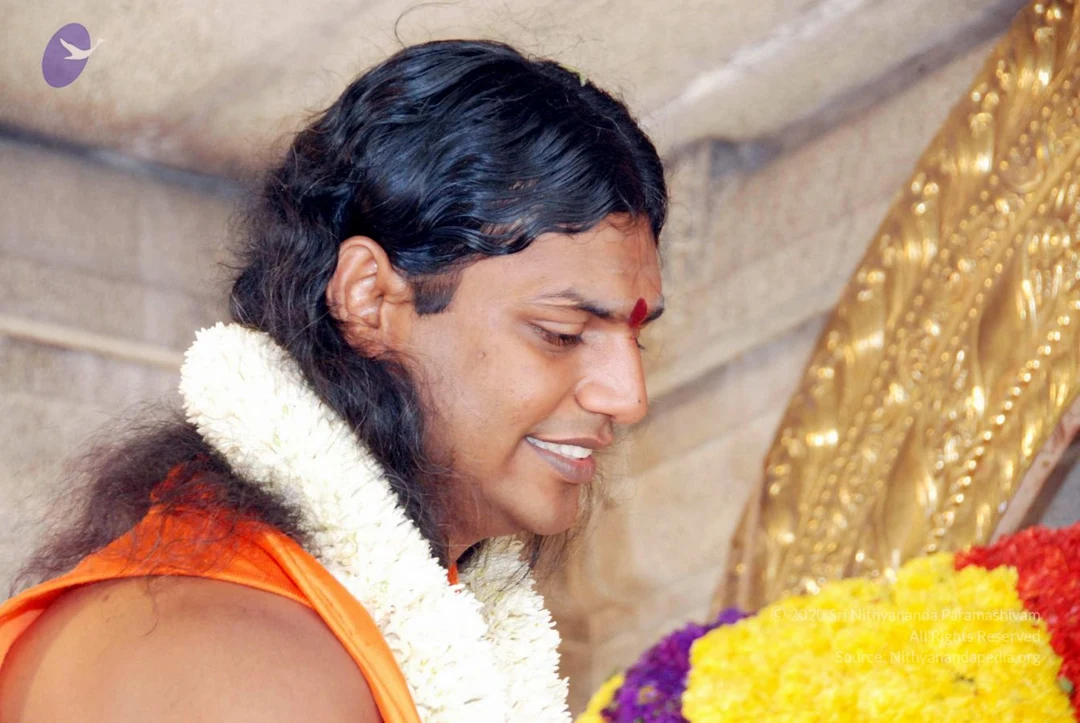
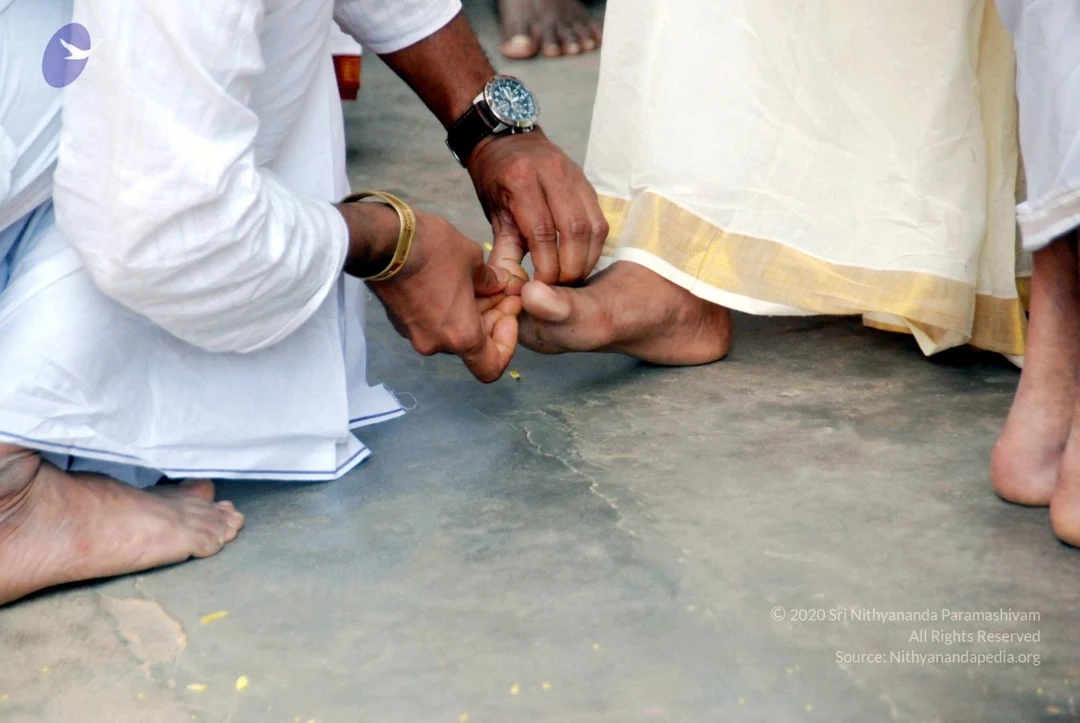
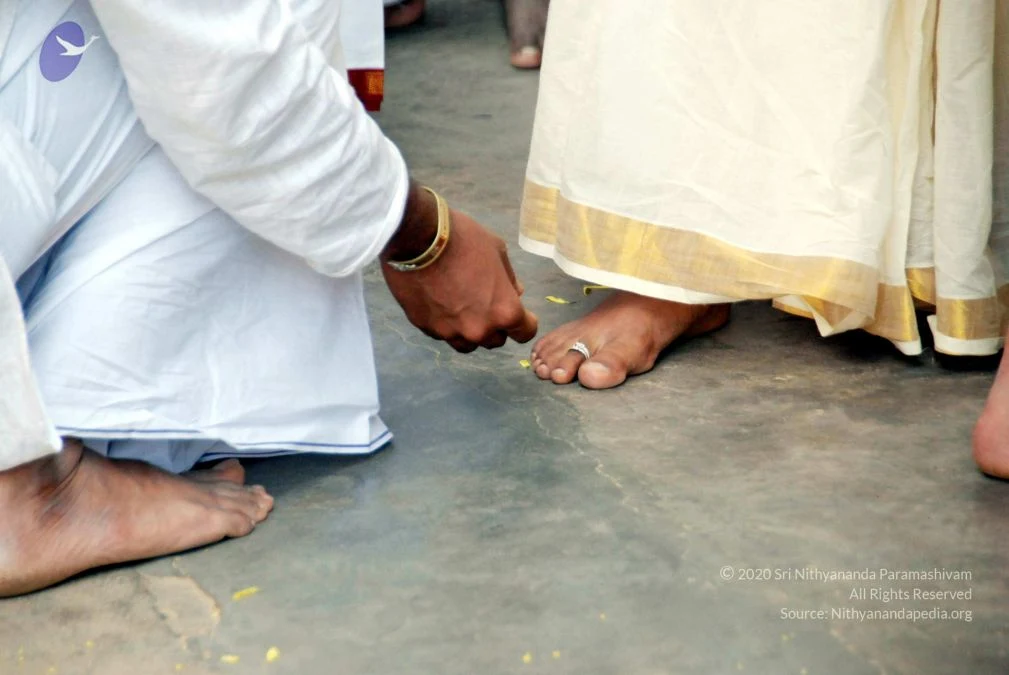
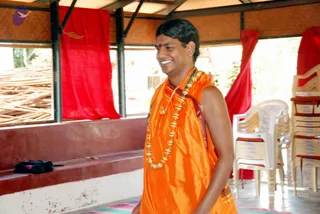
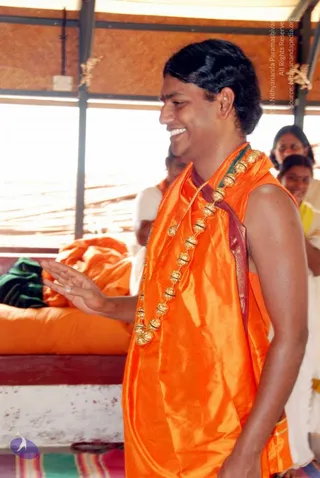
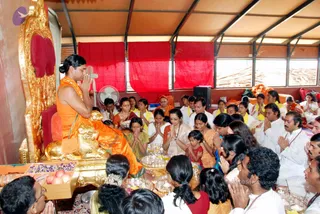
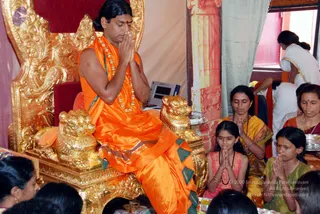
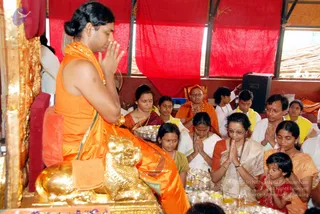
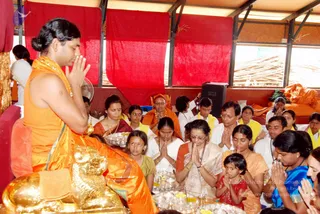
A smiling man stands in a open-sided thatched hall with red curtains and white plastic chairs stacked at right. He wears a sleeveless saffron-orange silk garment with a red sash across his chest and a long gold bead necklace with a red thread, and has a red tilak on his forehead. A woven mat lies on the floor and a dark bag sits on the red-and-white bench at left. A small logo appears at top left.A smiling man with swept-back dark hair stands in profile in a covered open-sided hall, one hand raised mid-gesture as if speaking. He wears a sleeveless orange silk garment draped over one shoulder with a maroon border, and a long ceremonial necklace of large gold beads with a rudraksha-style mala look. Behind him, two women in white and yellow saris stand near a bench draped with orange cloth and dark green fabric.A photograph of a seated figure in orange robes and an orange shawl on an ornate golden throne with a red backrest, hands joined in namaskar, hair tied up in a bun. Around the throne, a large crowd sits on the floor of an open-sided pavilion with red drapes and a pedestal fan. Devotees in white kurtas and yellow shawls, and women in saris, sit with palms pressed together, while brass and silver plates of flowers, fruit and lamps are set before them. Descriptions here are limited to visible scene content.A man with long swept-back dark hair sits on an ornate gold throne carved with lion heads, with his palms joined in anjali mudra. He wears a saffron-orange robe with green-trimmed edges, a rudraksha-style mala of beads and a red tilak on his forehead. Three girls and women in front of him, including a girl in a pink dress and a woman in a yellow sari, sit with hands pressed together in prayer. Behind them a woman in a white sari moves through the room, and a small electronic device sits by the throne. The setting is a red and gold decorated hall, with a silver tray of offerings at the lower right.A photograph of a seated figure on a raised golden throne with a golden lion-shaped base, in an orange saffron garment with a gold-trimmed shawl, hands pressed together in namaskar. Red drapes hang behind. Around him, devotees sit in prayer with palms joined: a woman in a maroon sari with a gold necklace, a girl in a yellow top, a woman in a white sari with rudraksha mala, a woman in an orange sari, a man in white with glasses, a man in saffron with a rudraksha mala seated behind, and several children in white and yellow kurtas. Brass plates and offerings sit on the floor in front.A photograph of a ritual gathering under a red-draped canopy. In the left foreground a man with hair tied in a bun wears an orange saffron robe and a shawl, sits beside a golden lion-figure seat, and presses his palms together in anjali. Seated in front, a woman in a white and orange sari with a beaded necklace presses her hands together beside a silver tray holding small lamps and offerings; a girl in a red dress and a young girl in green sit near the tray. Behind them, many devotees sit on the floor, several in white with yellow shawls, others in orange and blue saris, all with hands folded in prayer. An elderly man in an orange robe and a turban sits in the background, and wooden thatch is visible through the open side. Oil lamps and trays of puja offerings sit on the floor.

wedding Ceremony

210 photosSource gallery
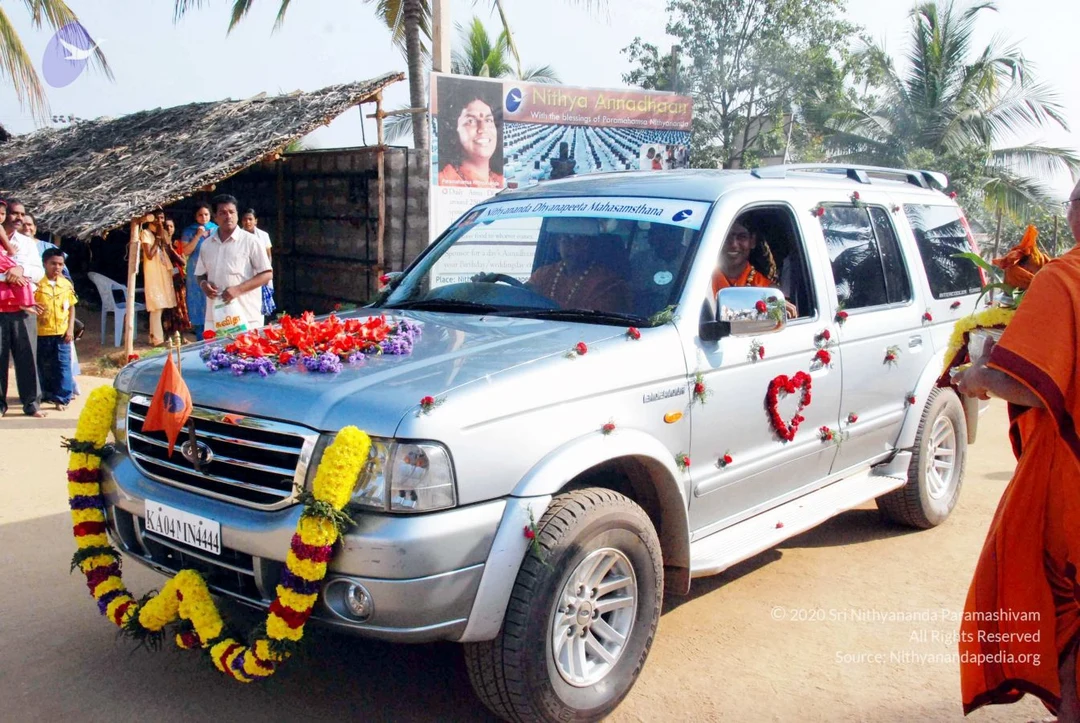
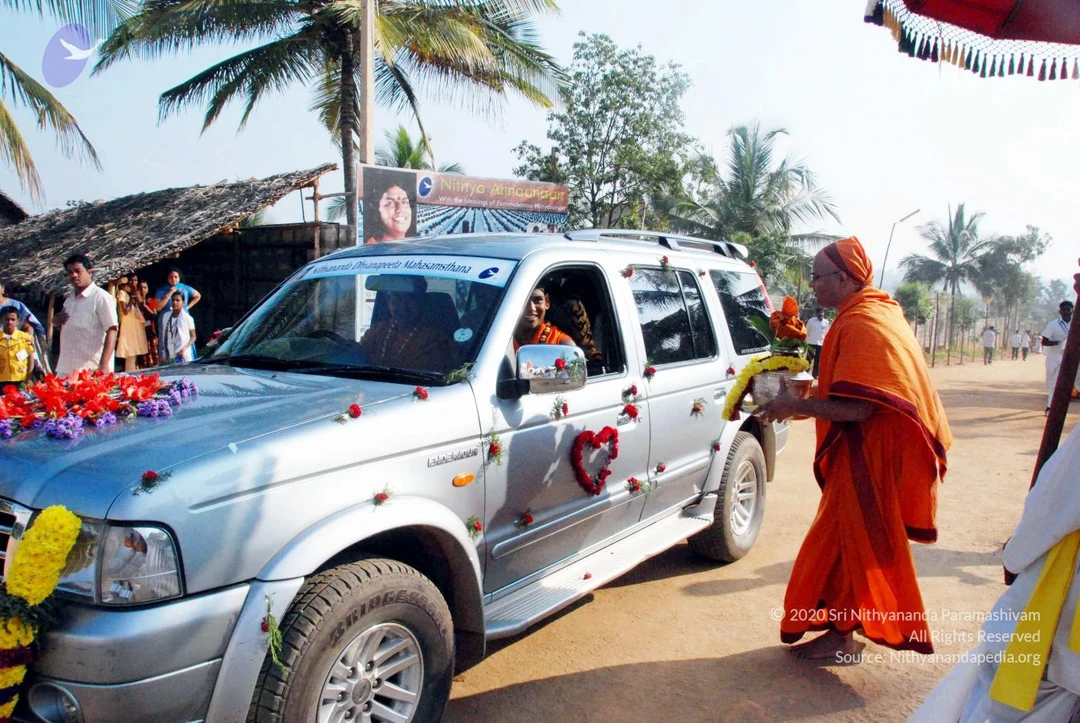
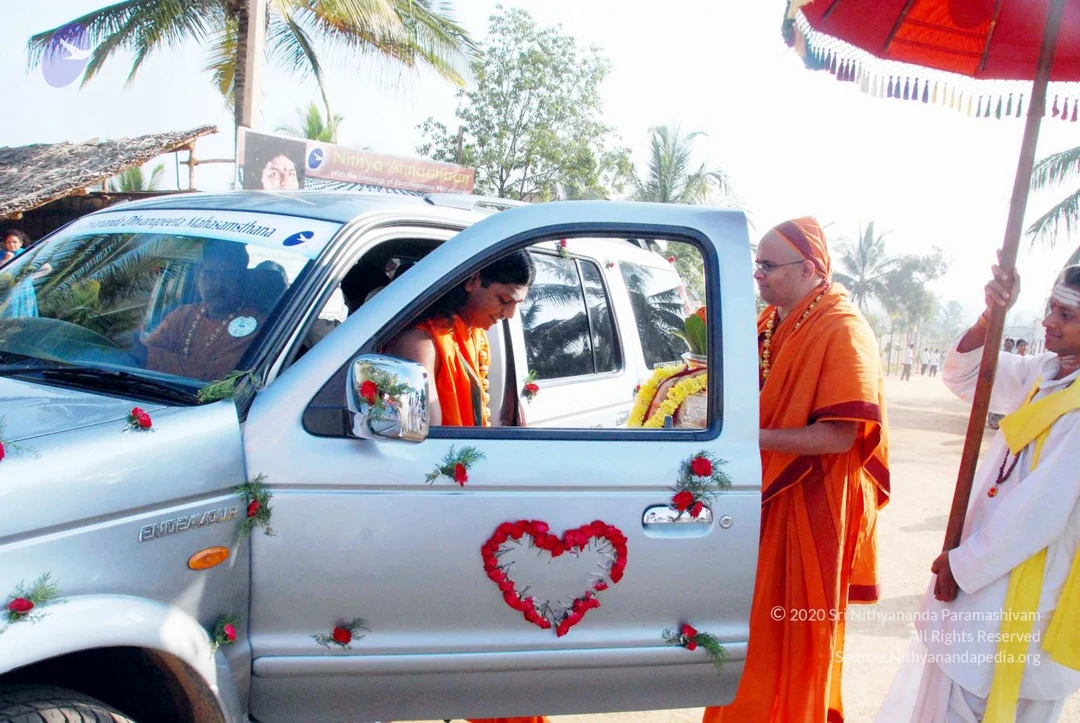
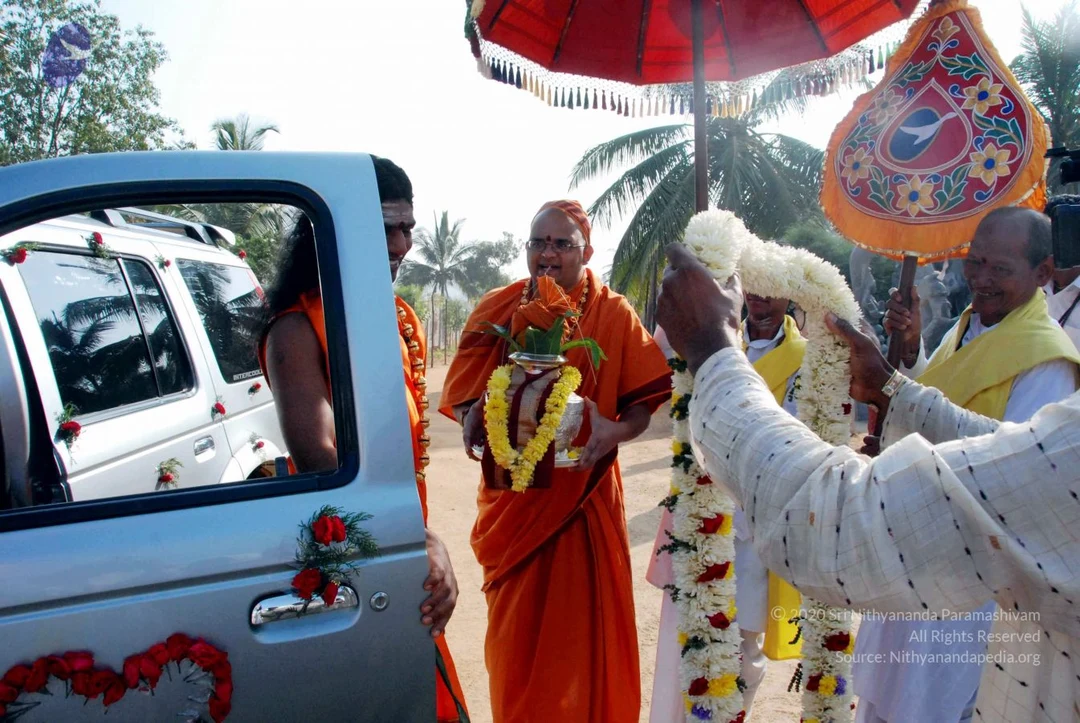
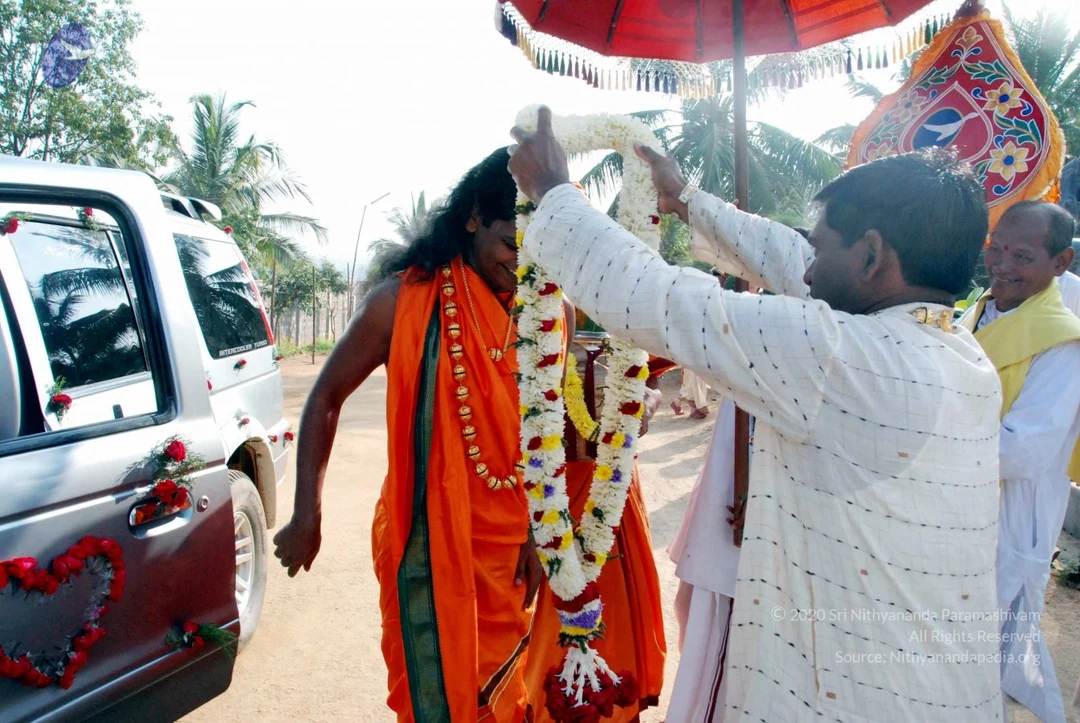
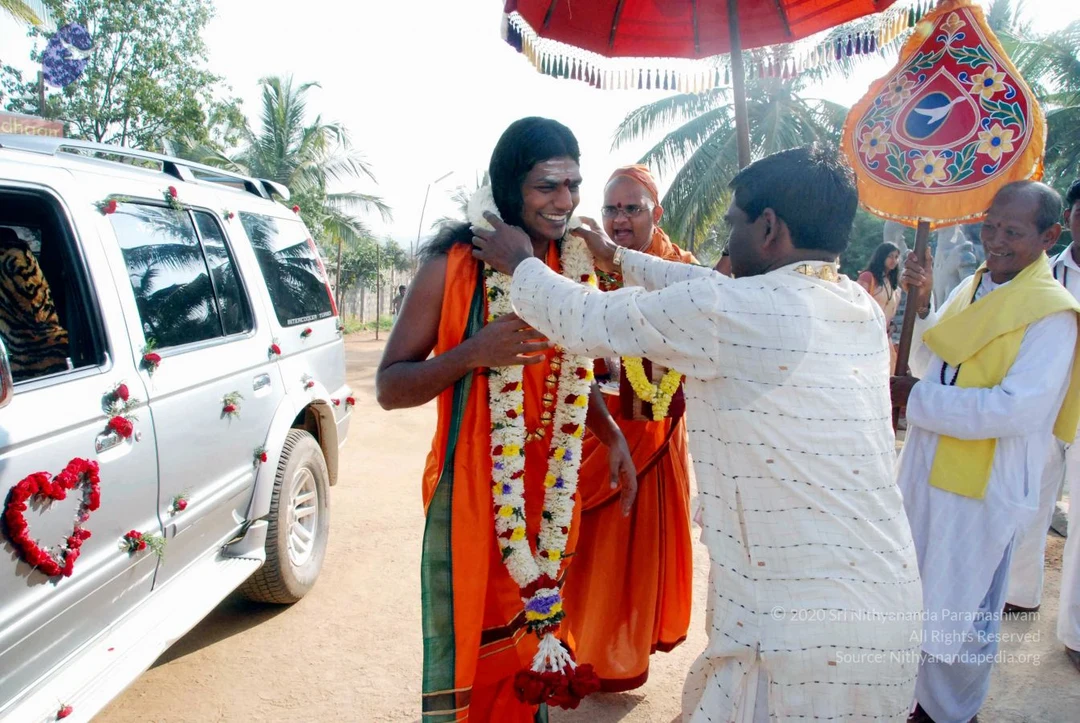
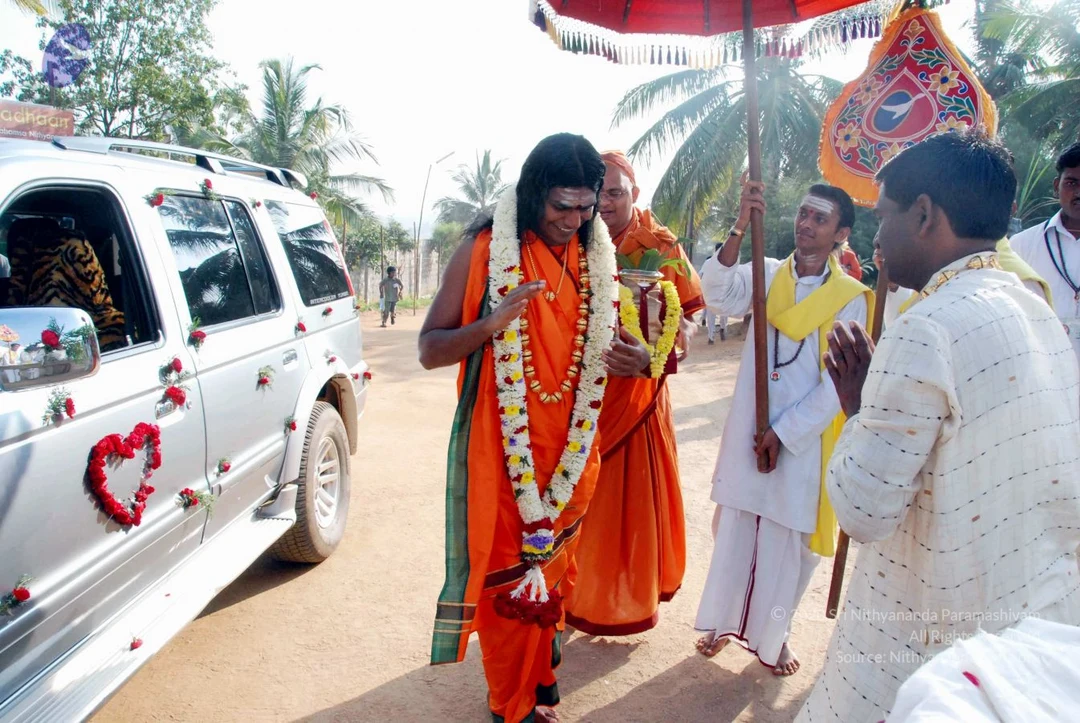
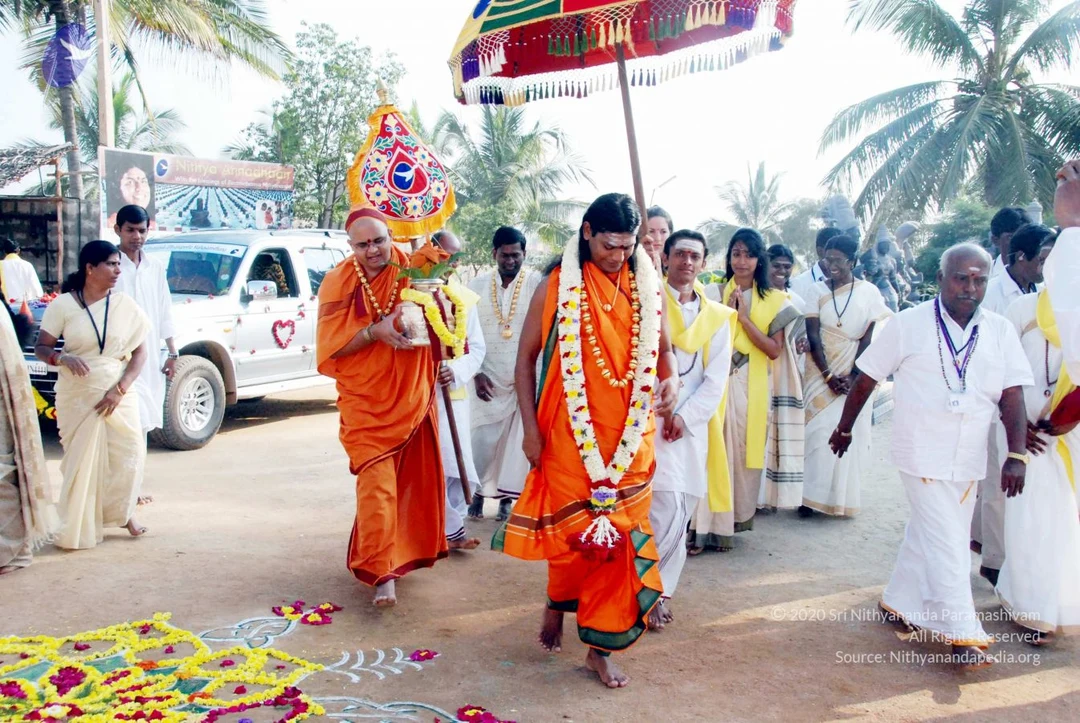
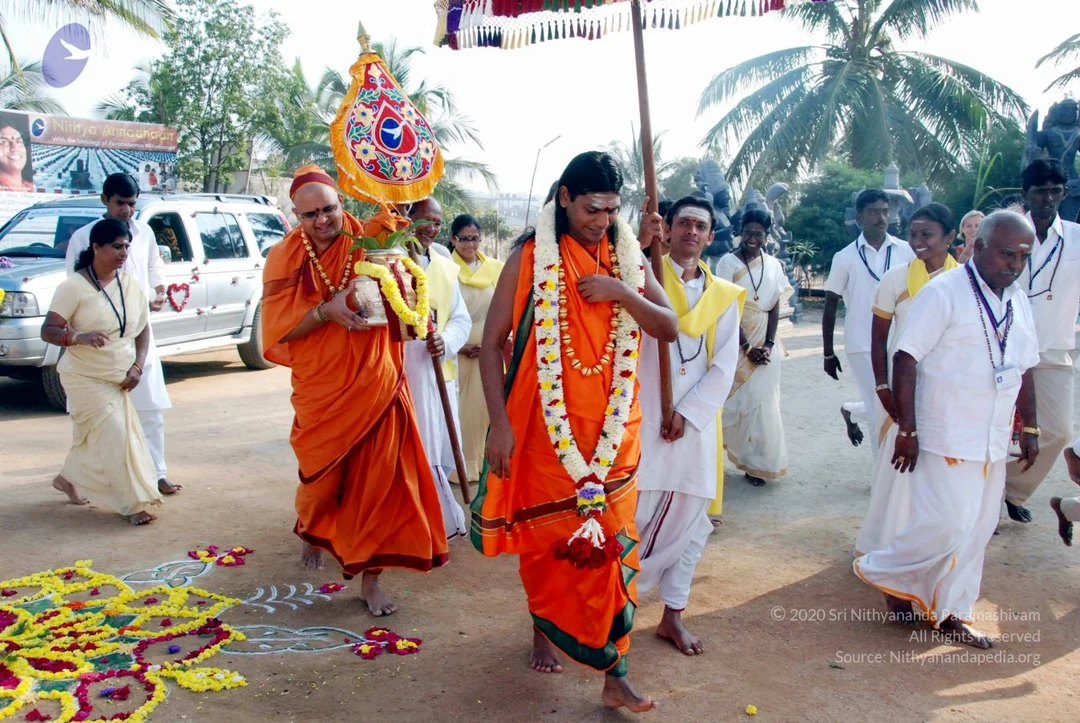
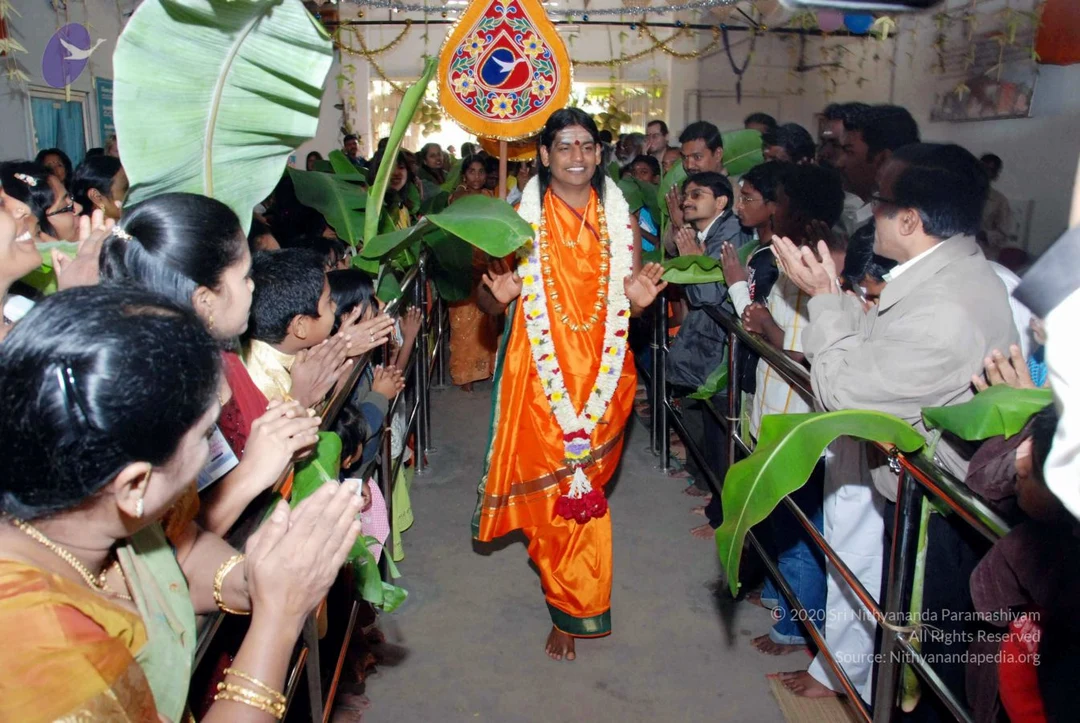
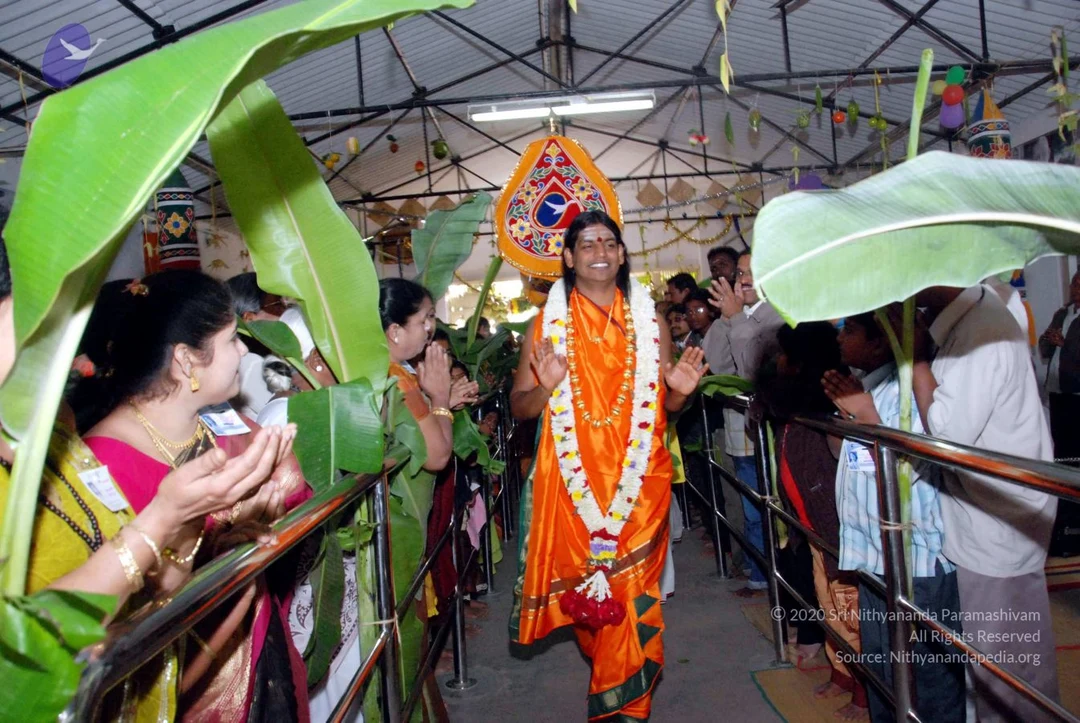
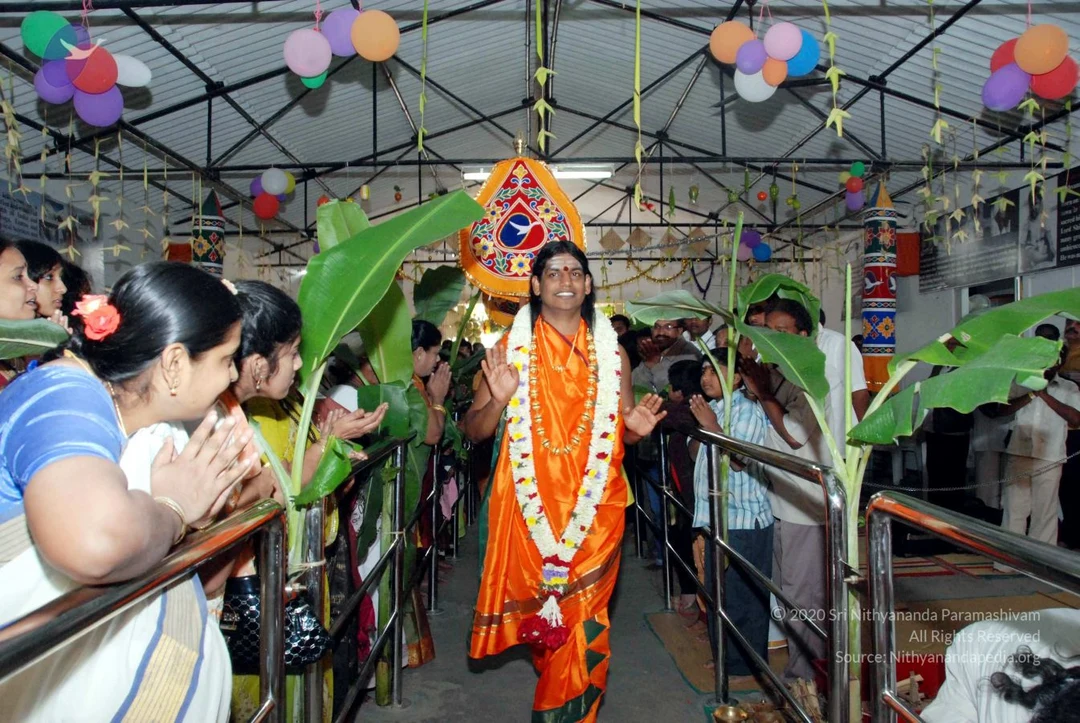
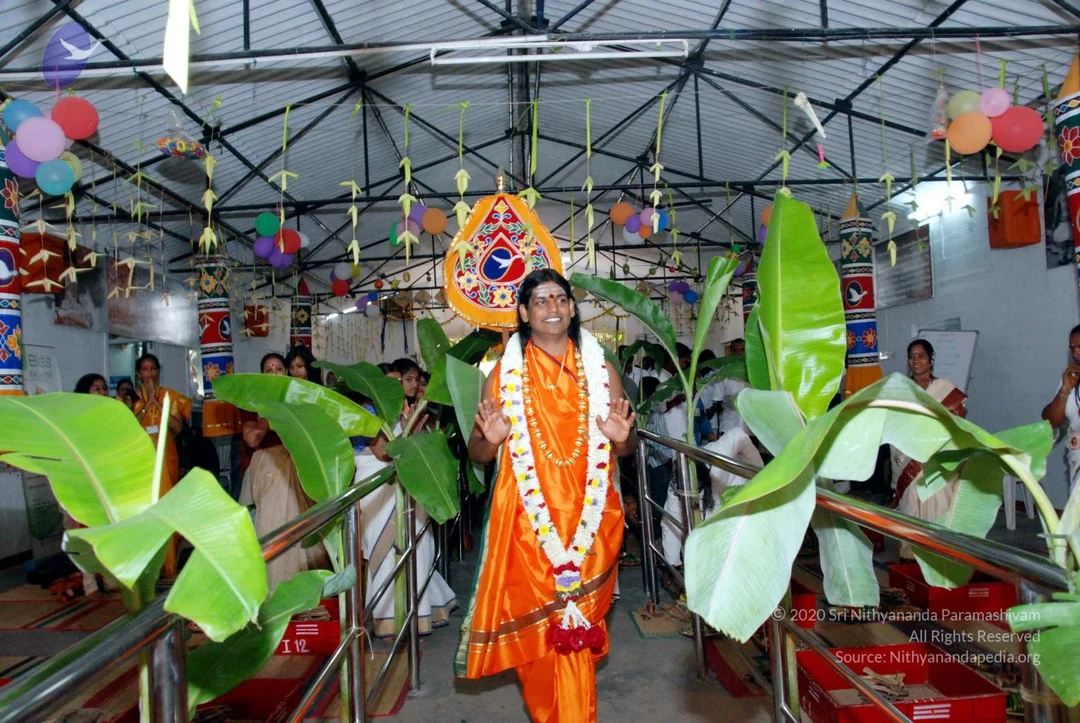
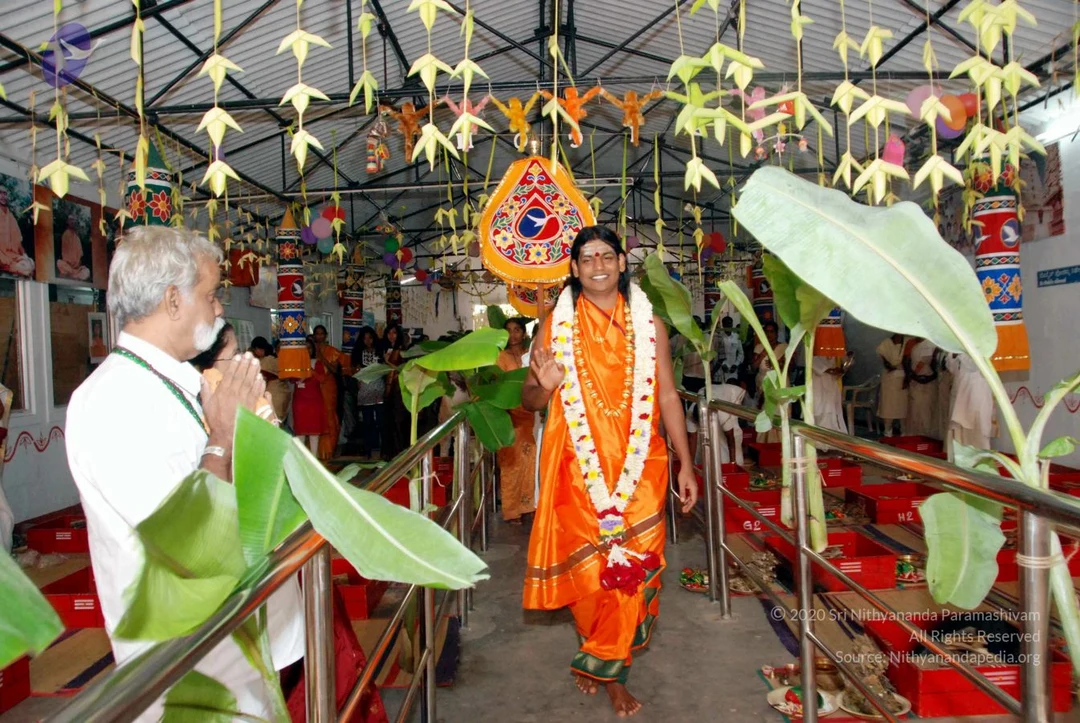
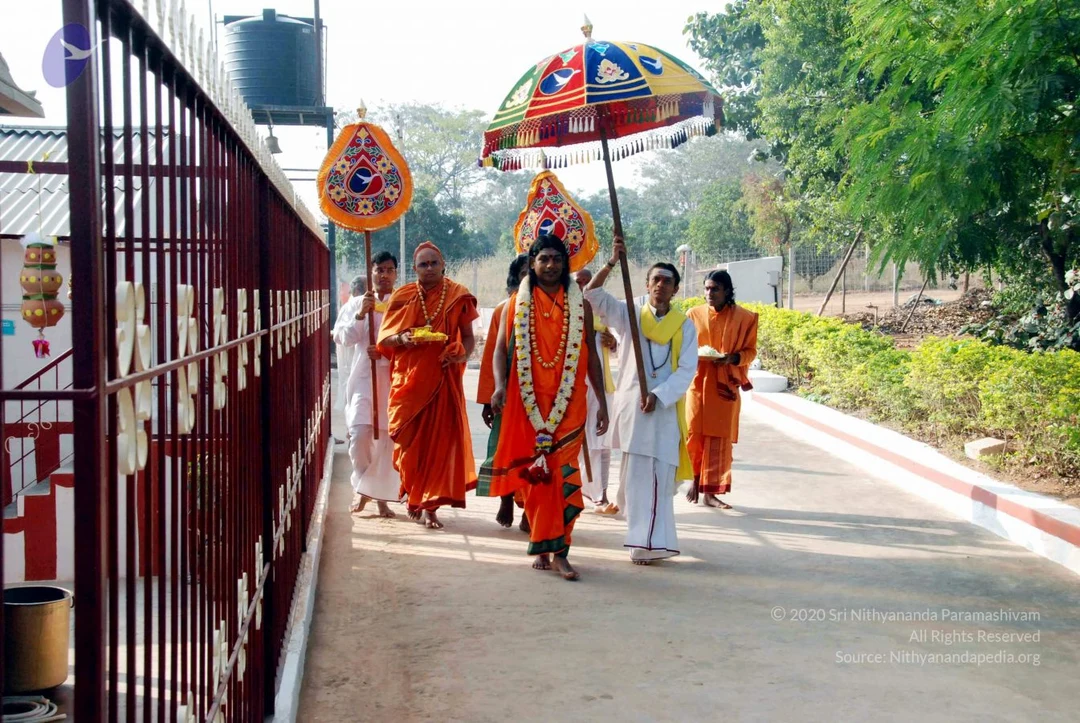
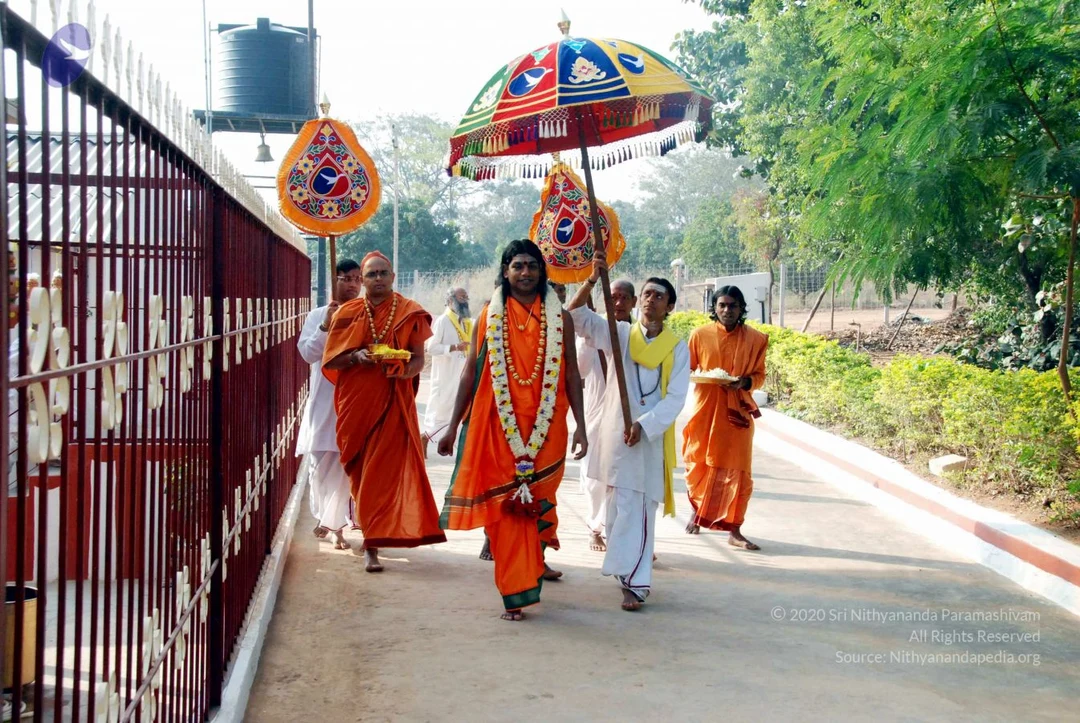
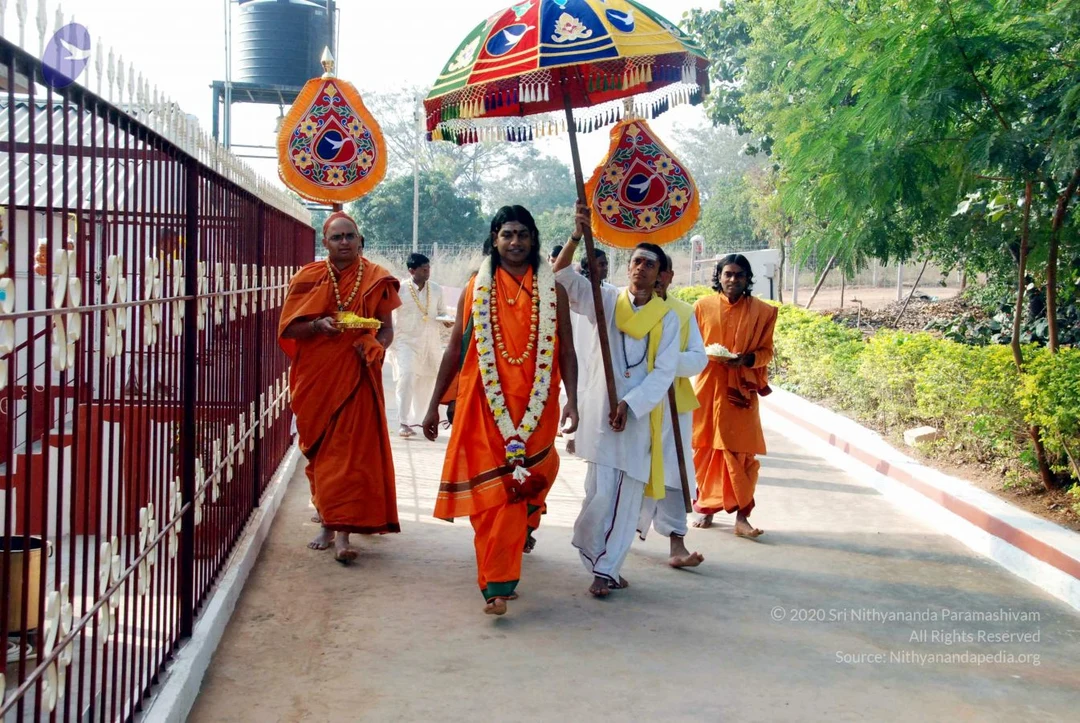
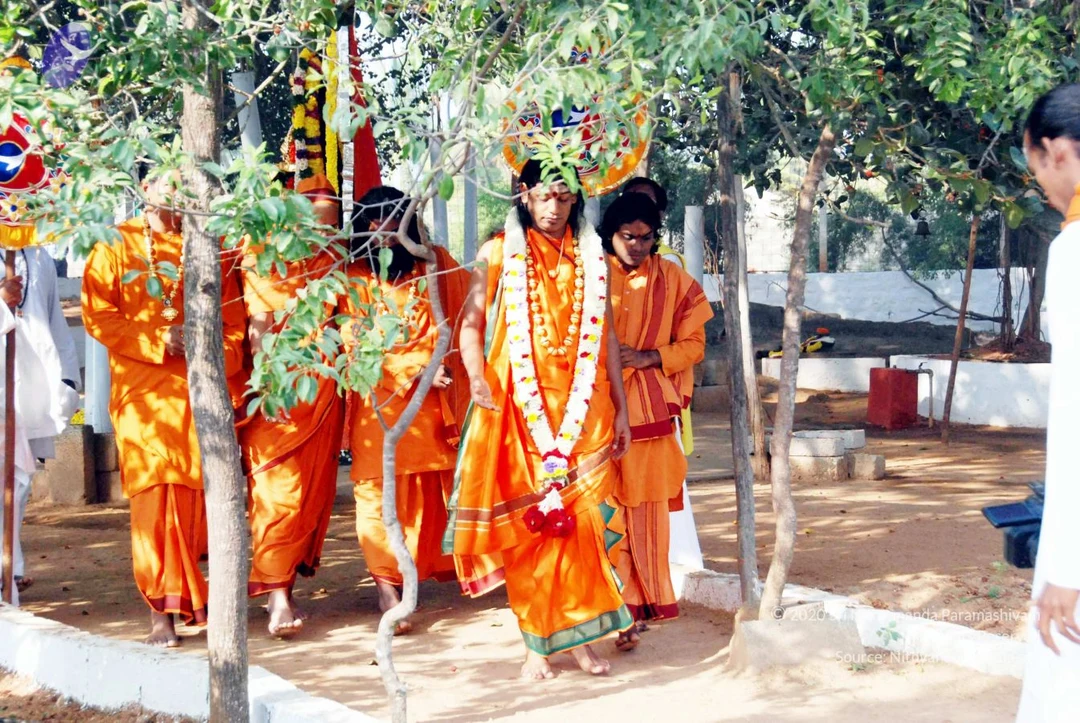
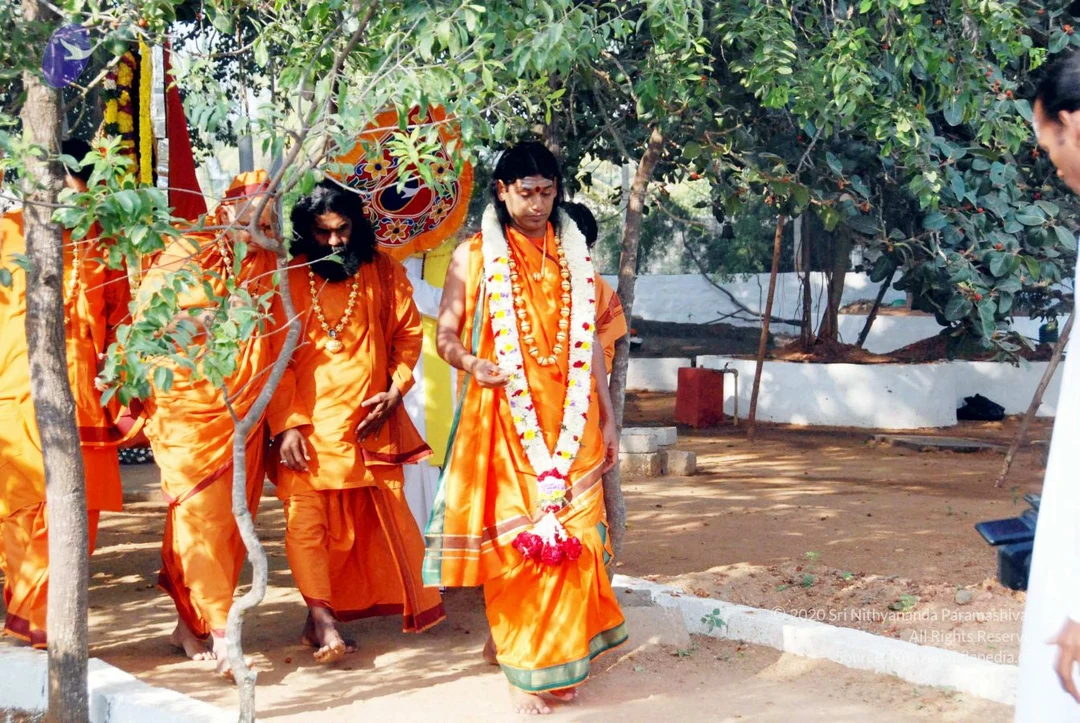
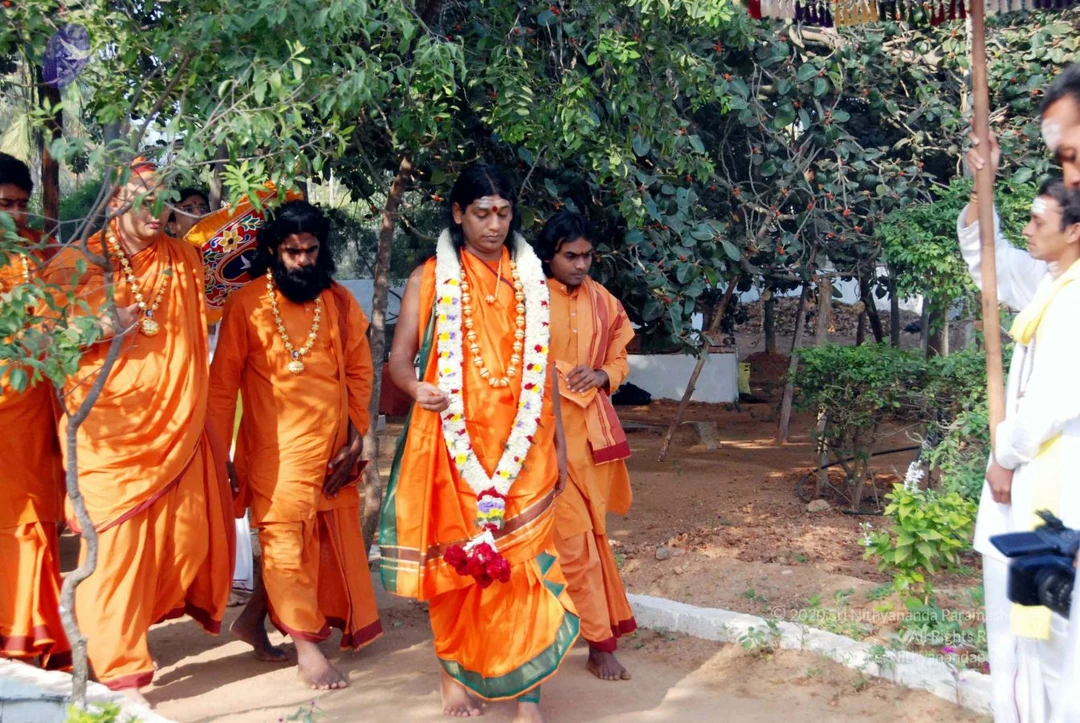
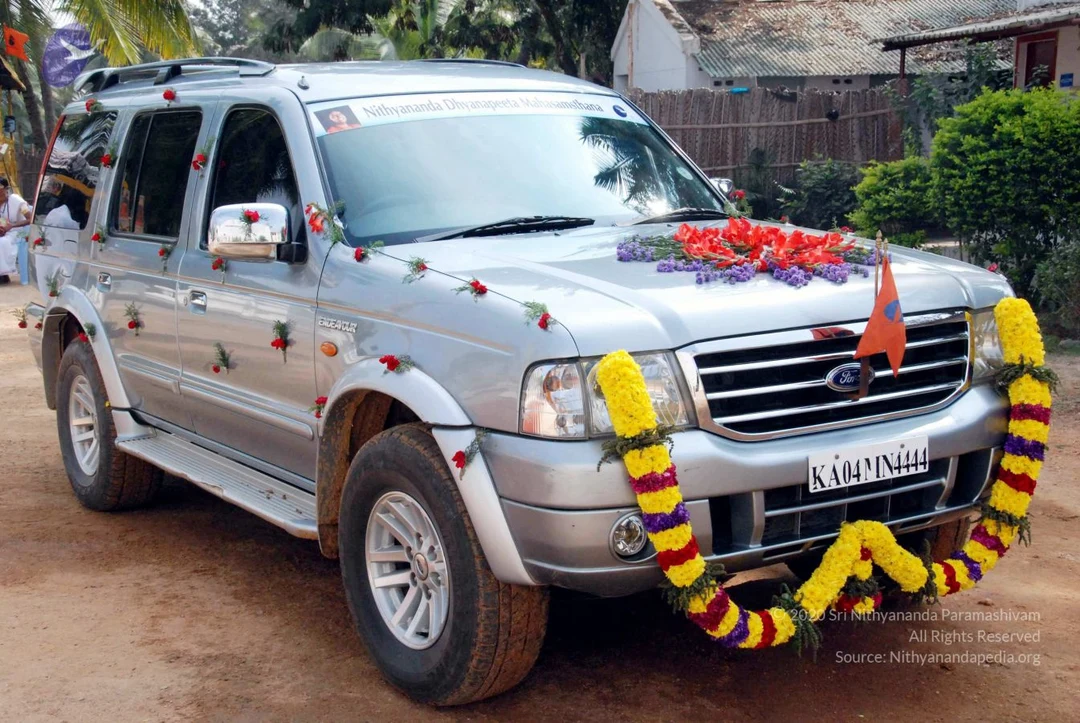
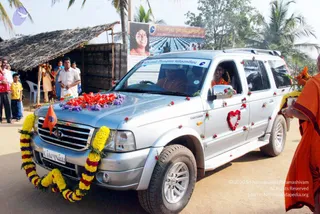
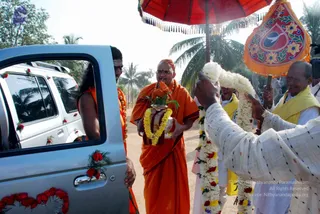
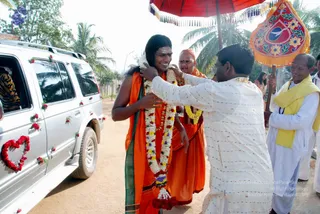
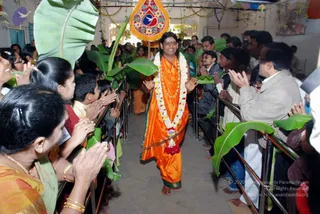
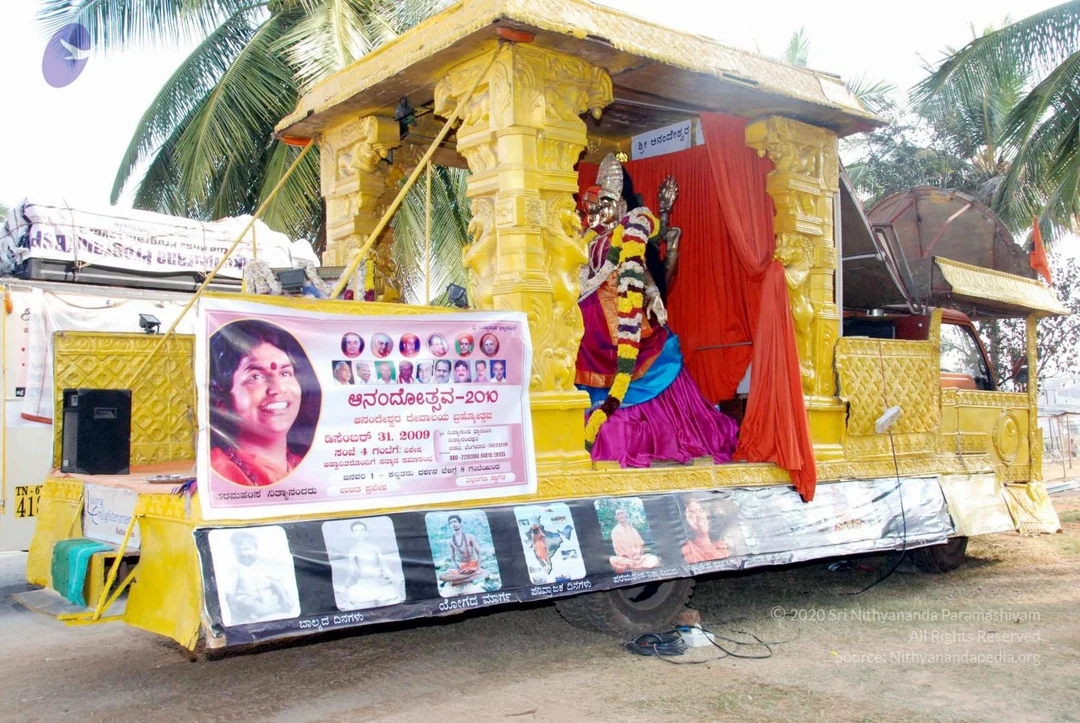
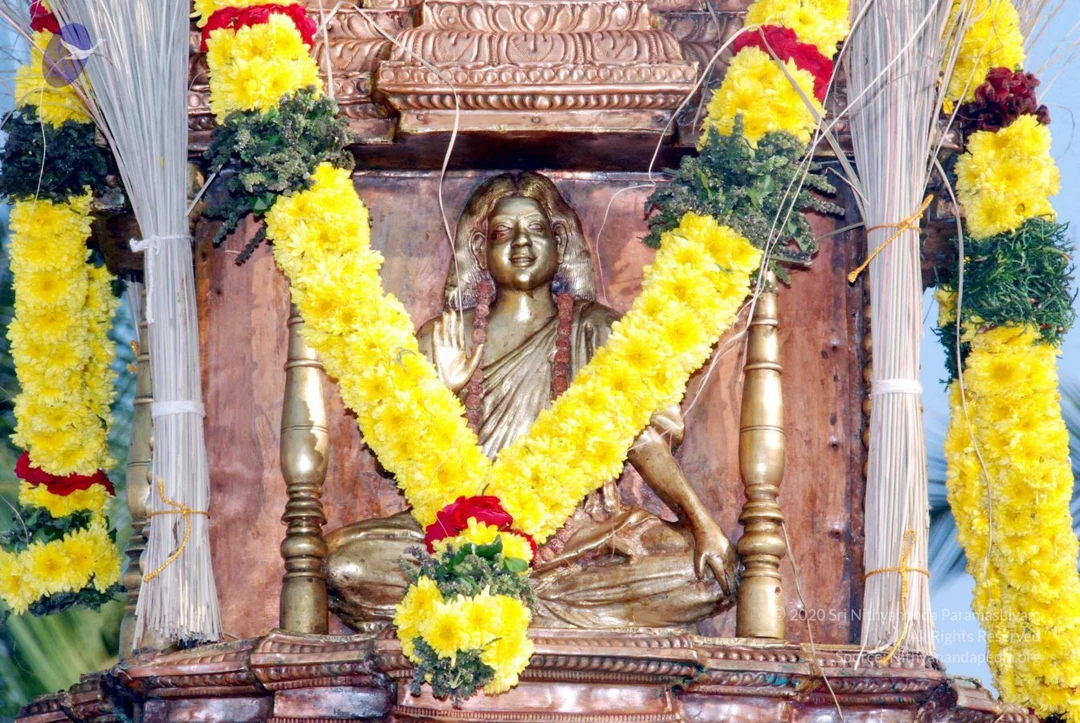
A silver SUV decorated for a welcome procession drives along a dirt road past a thatched hut and palm trees. The vehicle is draped with a long garland of yellow and red marigold flowers on its front, with a red floral heart on the side door and a bouquet of red and purple flowers on the bonnet. A man in an orange robe stands at the right edge, and a figure in orange clothing sits in the front passenger seat, partly visible through the open window. A few onlookers stand along the left side of the road, including a man in a white shirt and a child in yellow. A roadside banner reads Nithya Annadhanam with the blessings of Paramahamsa Nithyananda and shows a woman's portrait beside a large assembly of people. An orange flag is attached to the front of the vehicle.A photograph of an outdoor welcome on a dirt road lined with palm trees. A silver car stands at left, its doors and windows decorated with red roses and garlands. A man in saffron robes with a rudraksha mala stands by the open car door. In the centre, a man in saffron robes and an orange head wrap holds a brass tray with a flower and a white-and-yellow garland, and wears a garland himself. Behind him, a man in a white shirt holds a tall red umbrella and an orange banner with a floral emblem. At right, a man in a yellow shawl and white clothing smiles, and a man in white holds a long white flower garland. Visible people: about five.Outdoor photo on a dirt road beside palm trees. A long-haired man in an orange sannyasi-style robe with a green border smiles as a man in a white kurta with a yellow-lined dark garment helps place a large white-and-yellow flower garland over his shoulders. Behind him, another person in orange robes stands with a second garland. A red-and-gold decorated umbrella is held overhead, and a silver SUV on the left is decorated with red flowers and a red heart-shaped floral arrangement. Older men in white and yellow stand at the right. a person: the long-haired man in the orange robe with garlands is being honoured with a welcome garland, matching the page's account of an event with a person present.A photograph of a procession through a decorated hall lined with banana leaves and metal barricades. A central figure in a saffron-orange robe and green-bordered dhoti walks barefoot, wearing a long white and multicoloured flower garland with a red tassel, and a tall ornate orange-and-gold umbrella-like canopy is held above him. Lines of people on both sides, many women in orange and yellow saris with gold bangles, press palms together in greeting and clap. Hanging garlands and festive decorations fill the ceiling. The central figure's appearance is consistent with a saffron-clad guru receiving a welcome, but this is uncertain from the image alone.A man in an orange-saffron silk robe and a white and multicolour flower garland walks down a covered lane between metal railings, palms pressed together in greeting. Crowds line both sides: women in saris clap and fold hands, and men stand behind them. Large green banana leaves frame the path, and paper decorations and a painted orange wall hanging hang from the tent roof. a person: long dark hair and a saffron robe with a garland match the ashram appearance cues, and the page notes his presence, so he is identified as the walking figure.A festive procession lane in a covered hall decorated with multicolored balloons and hanging paper streamers. A man in an orange saffron garment with a white and pink flower garland and a red-tipped rudraksha-style flower necklace walks forward with palms pressed together in greeting. Banana leaves line the path, and metal railings separate devotees on both sides. Women on the left wear a blue top and white dupatta and press their hands in namaste, while a woman in a yellow saree and red flower in her hair stands nearby. Onlookers in white and light shirts watch from the right. Colorful decorative poles and an ornate orange and red canopy frame the scene.
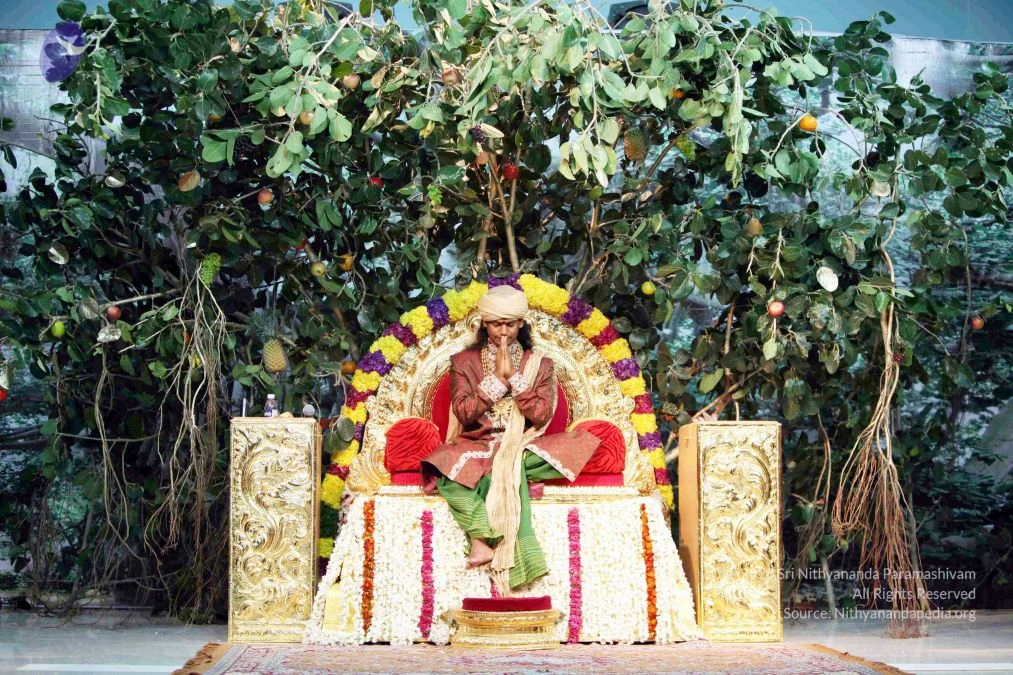
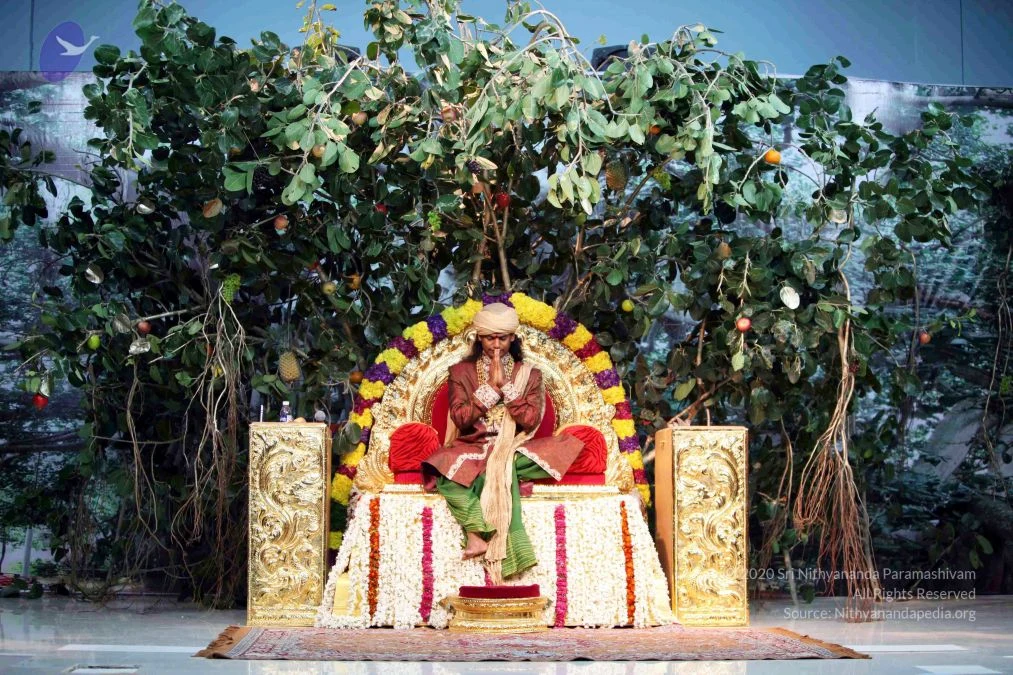
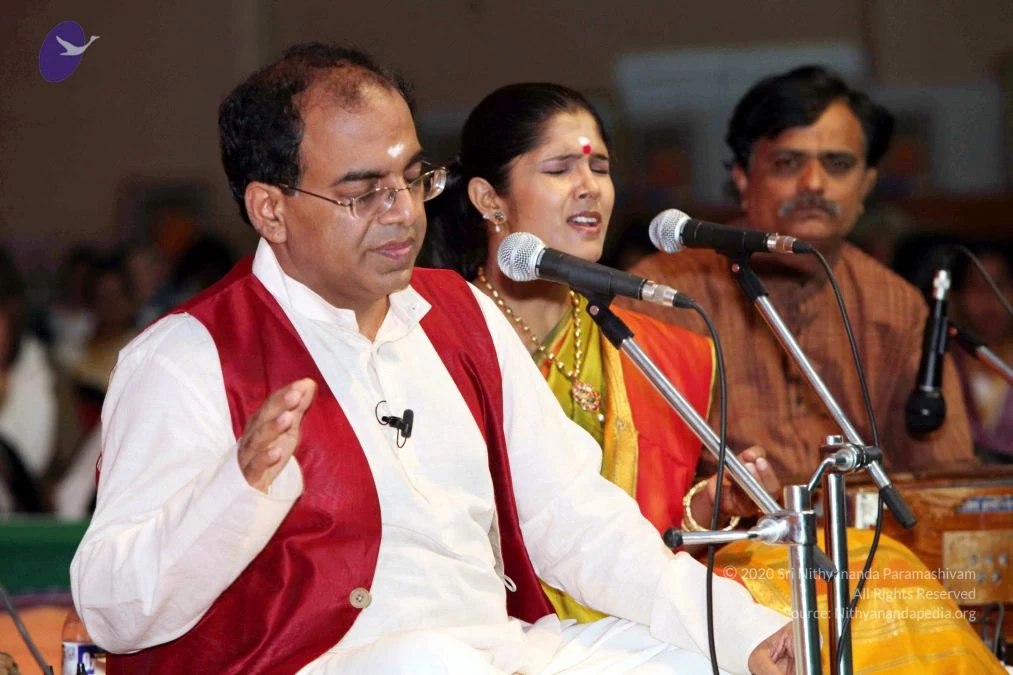
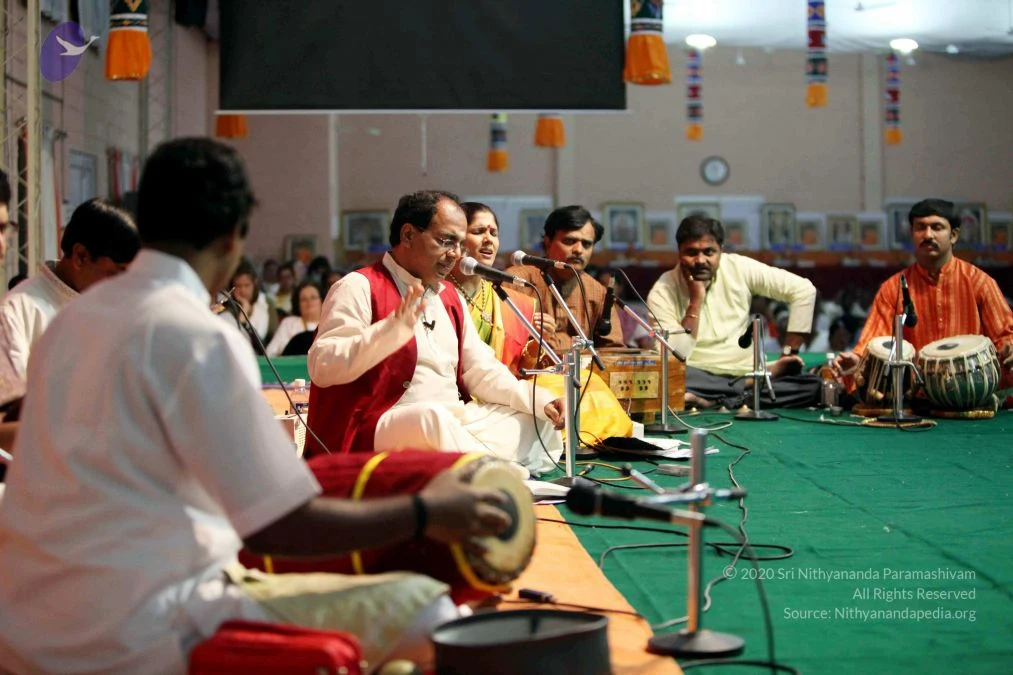
Evening Culturals

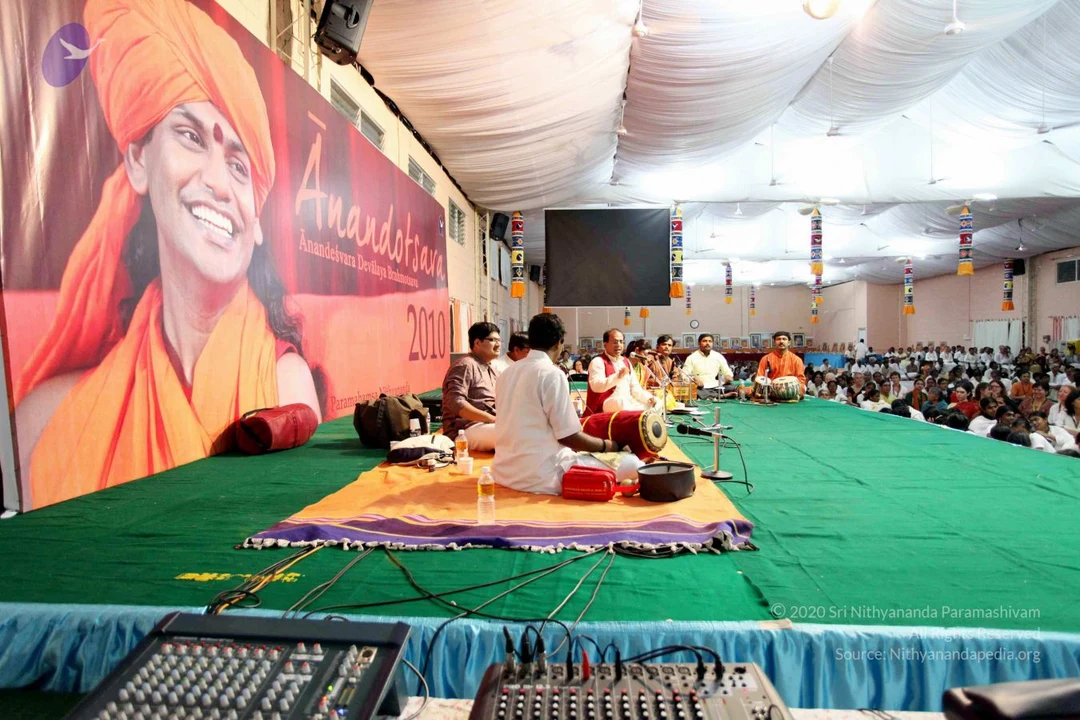
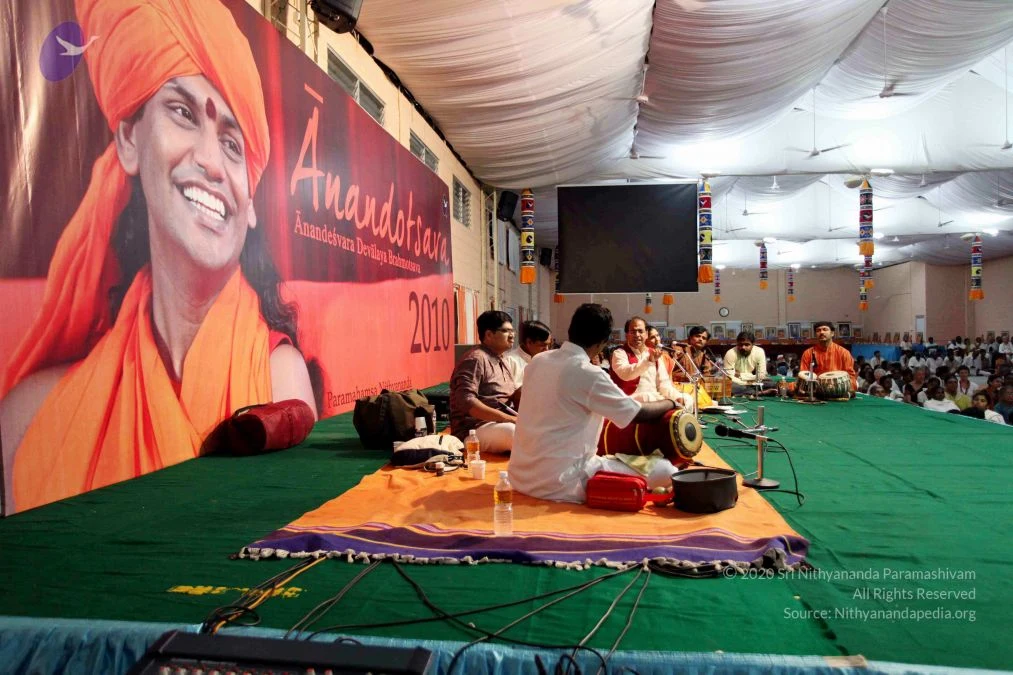
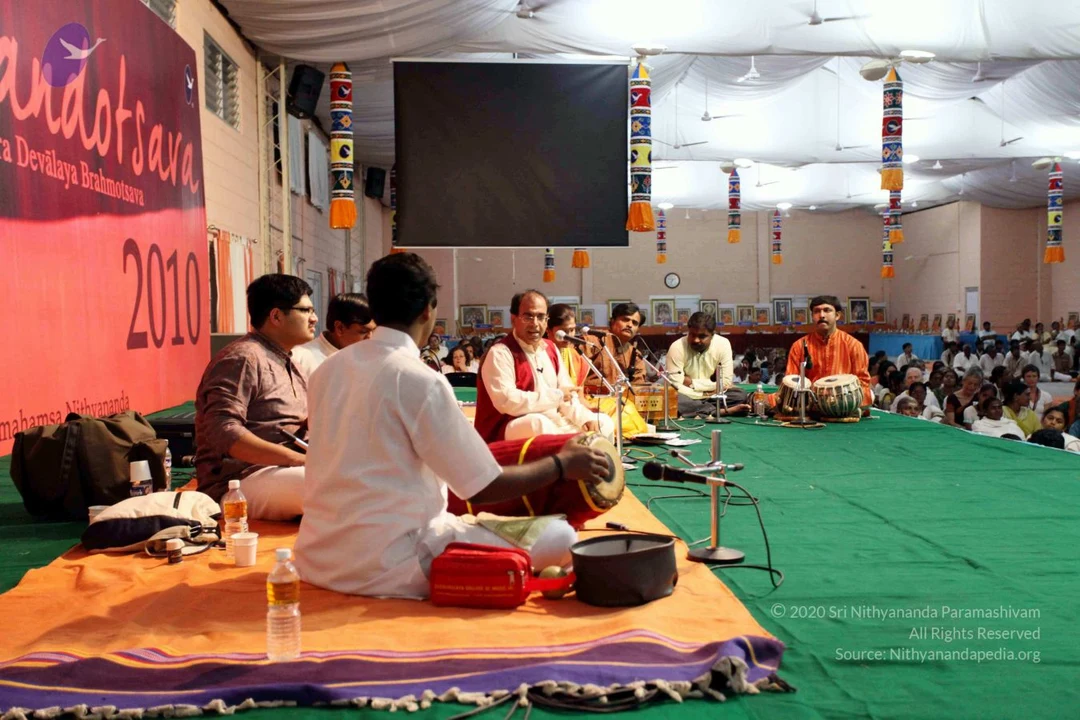
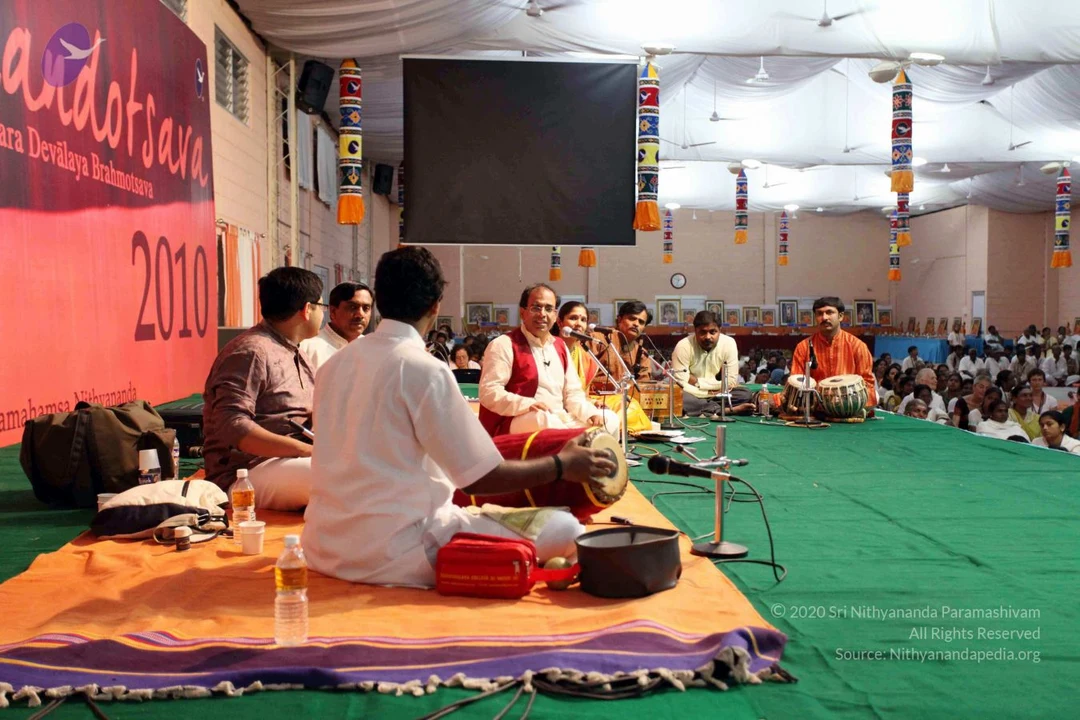
210 photosSource gallery
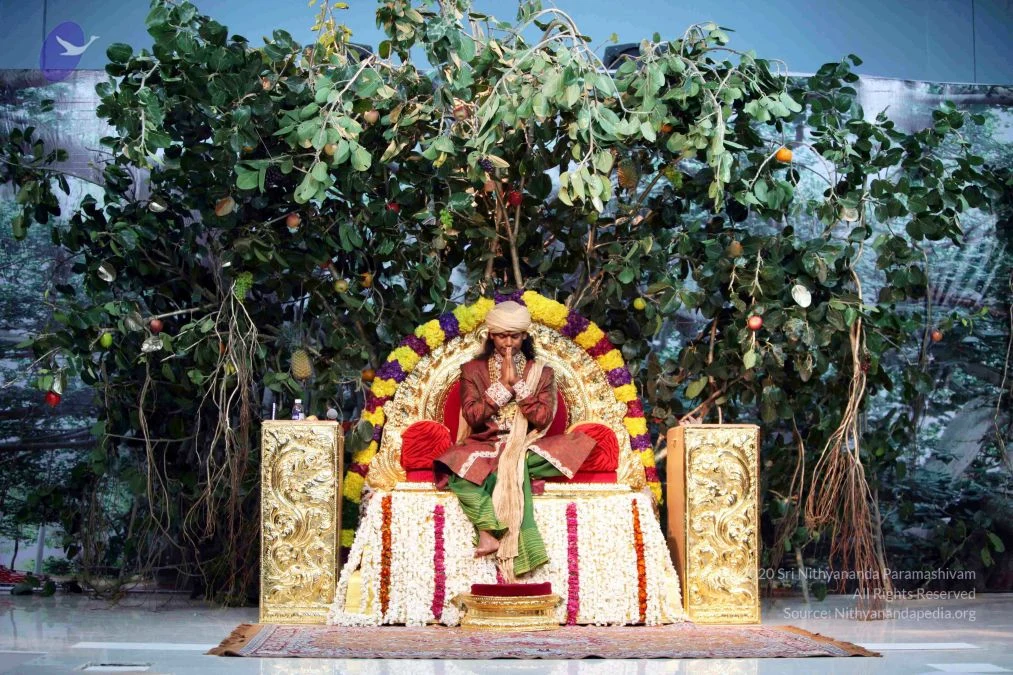
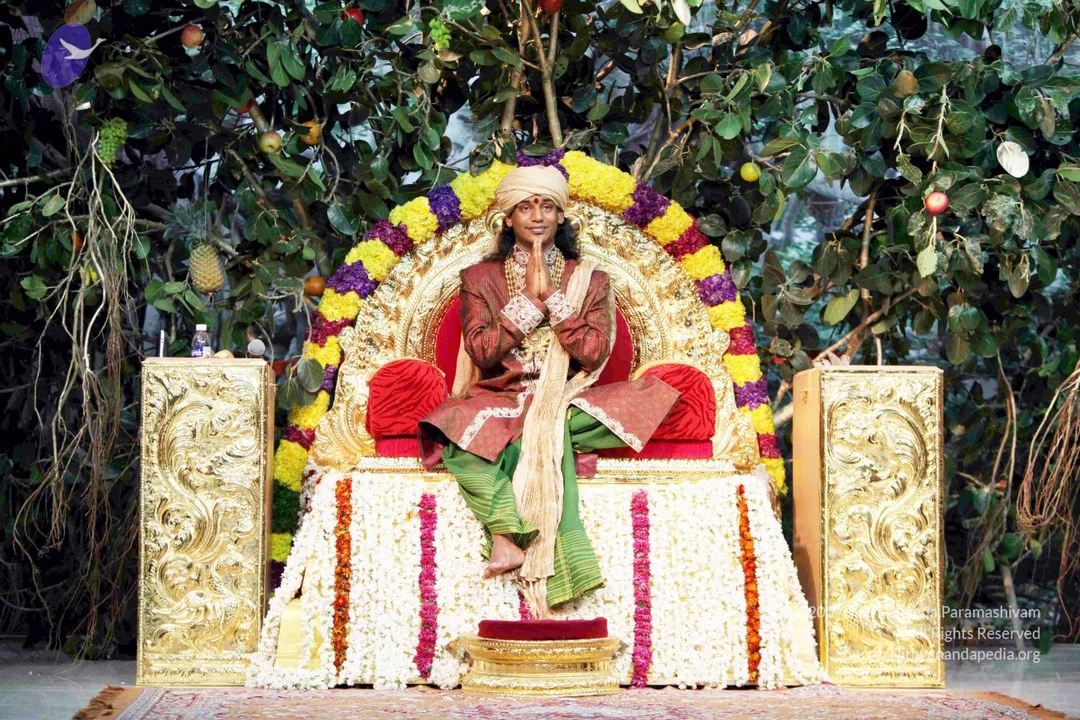
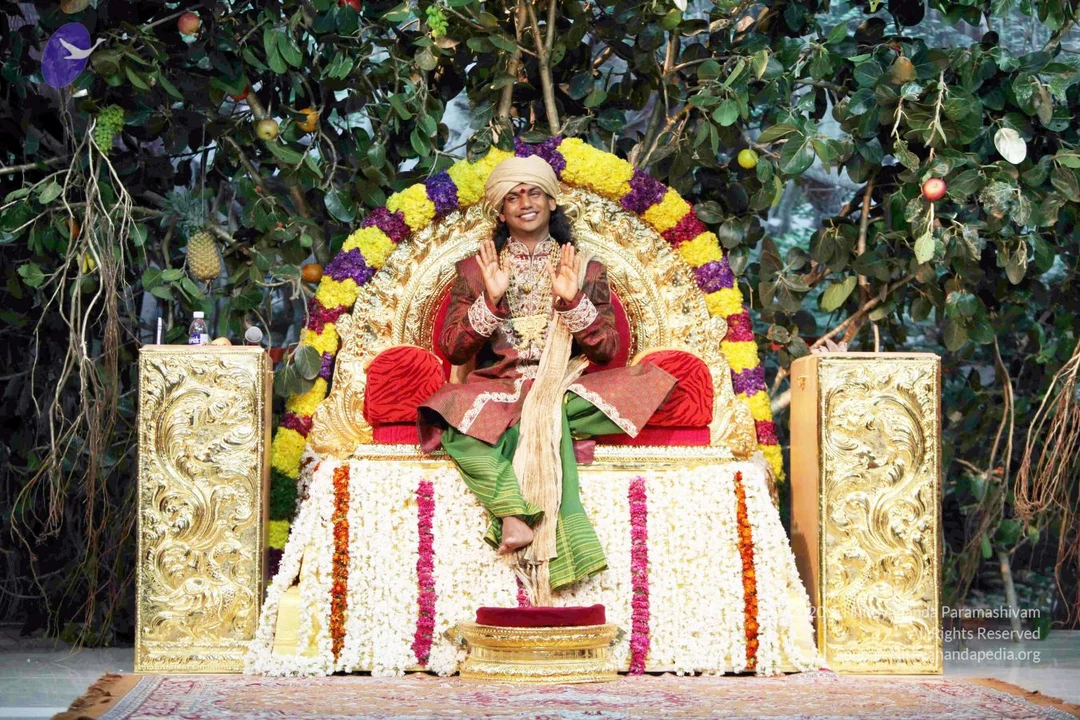
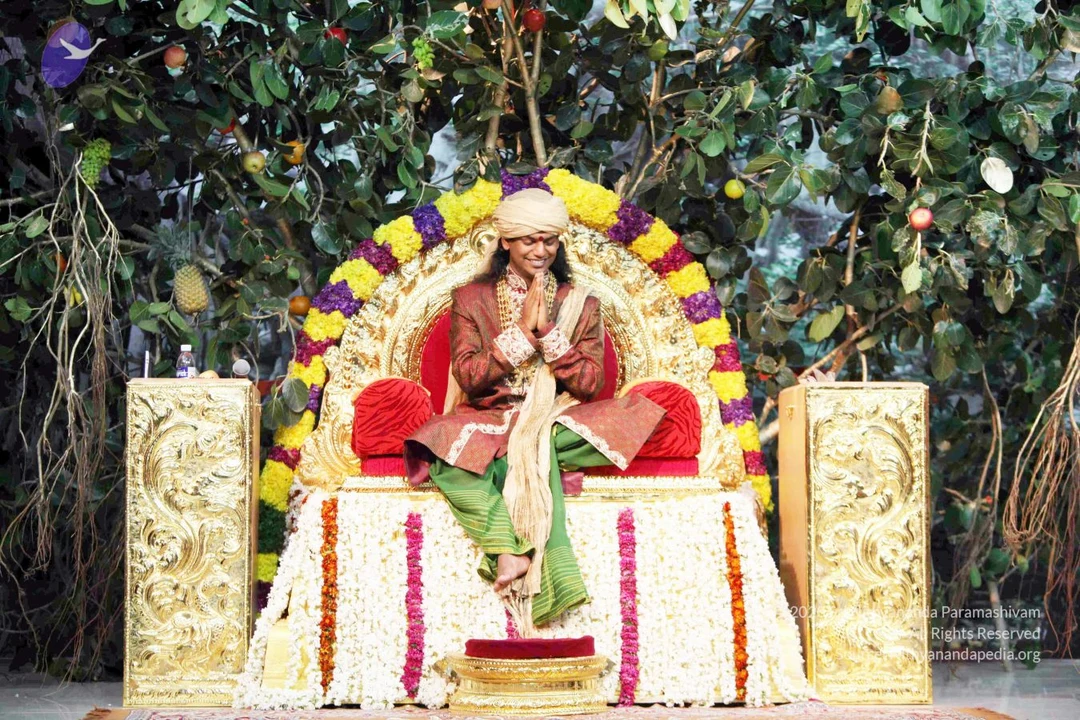
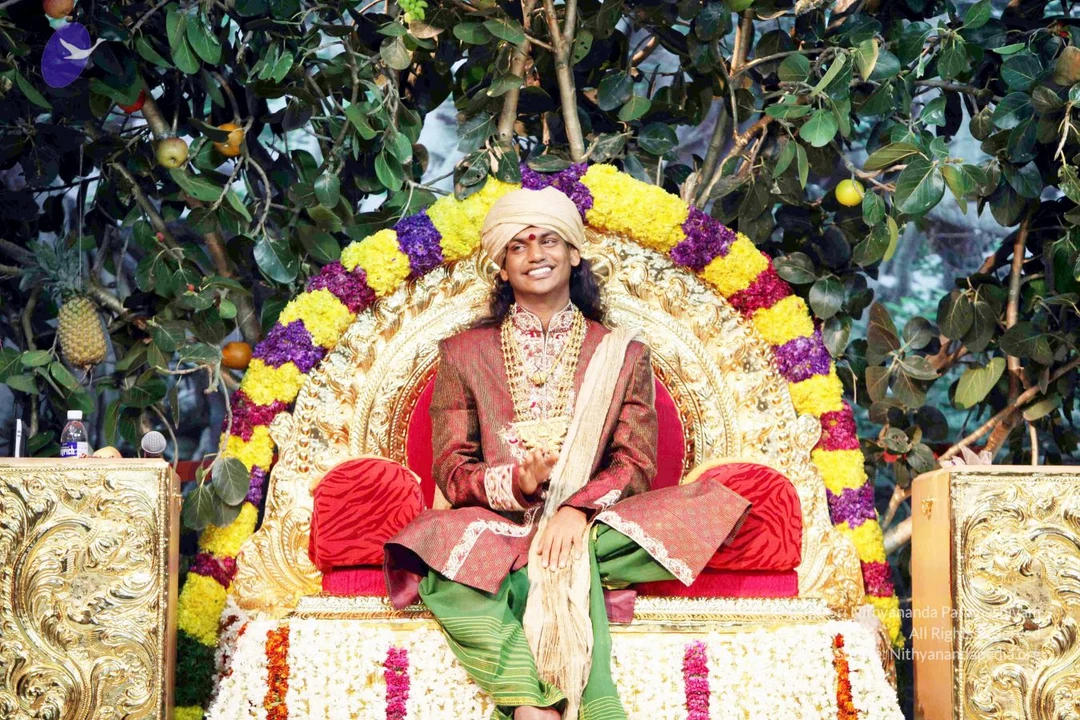
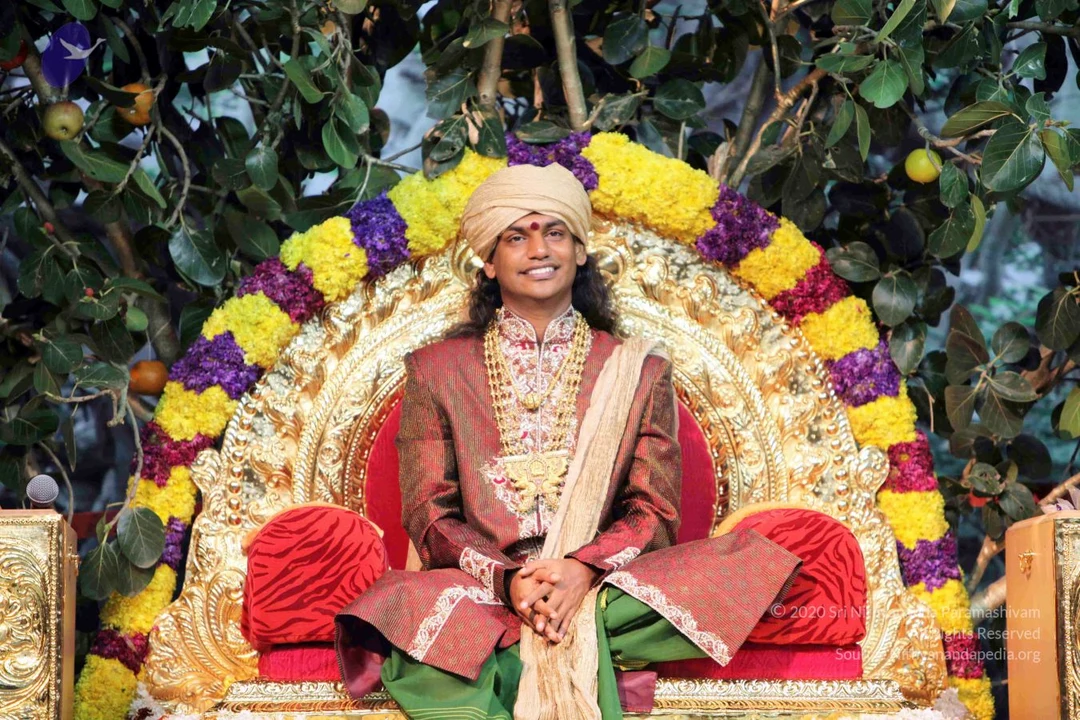
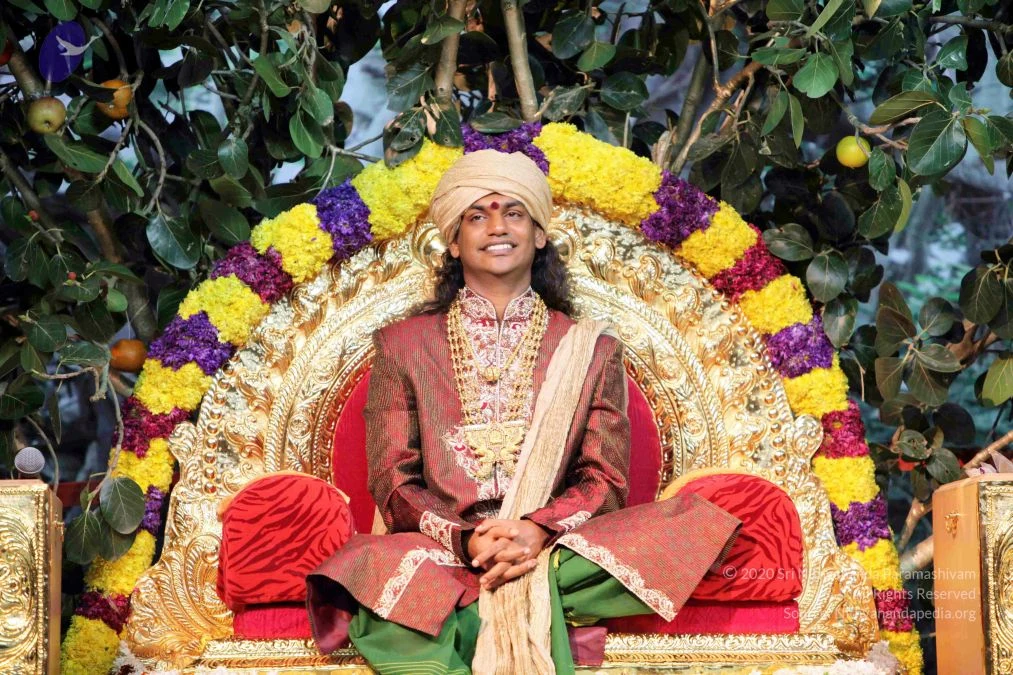
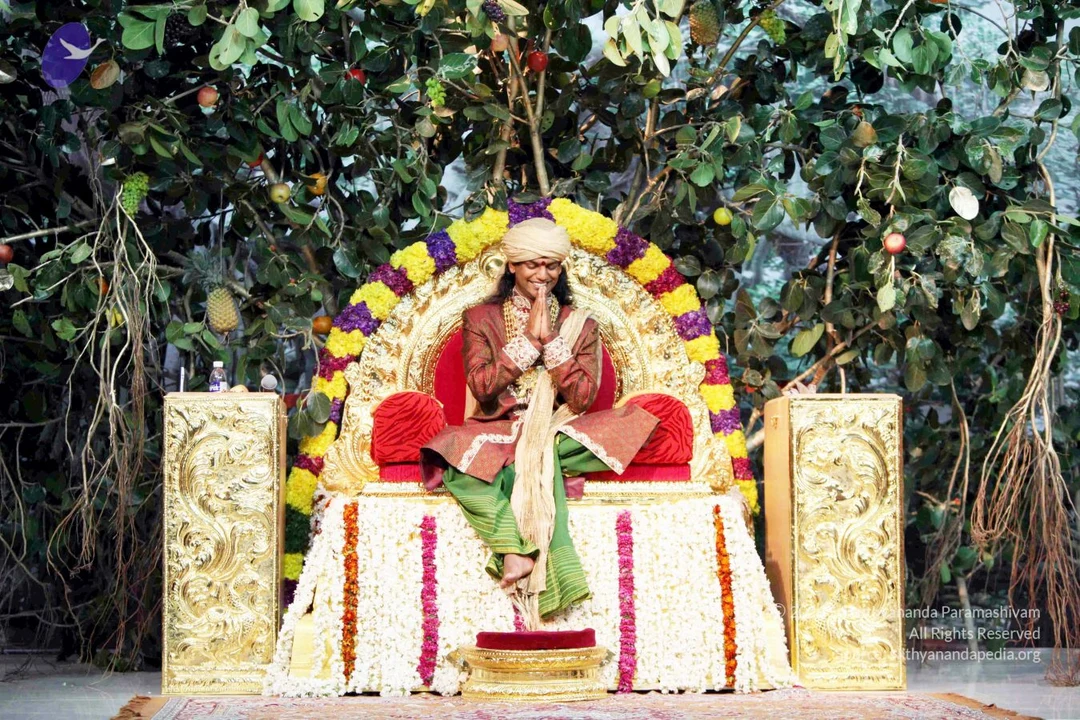
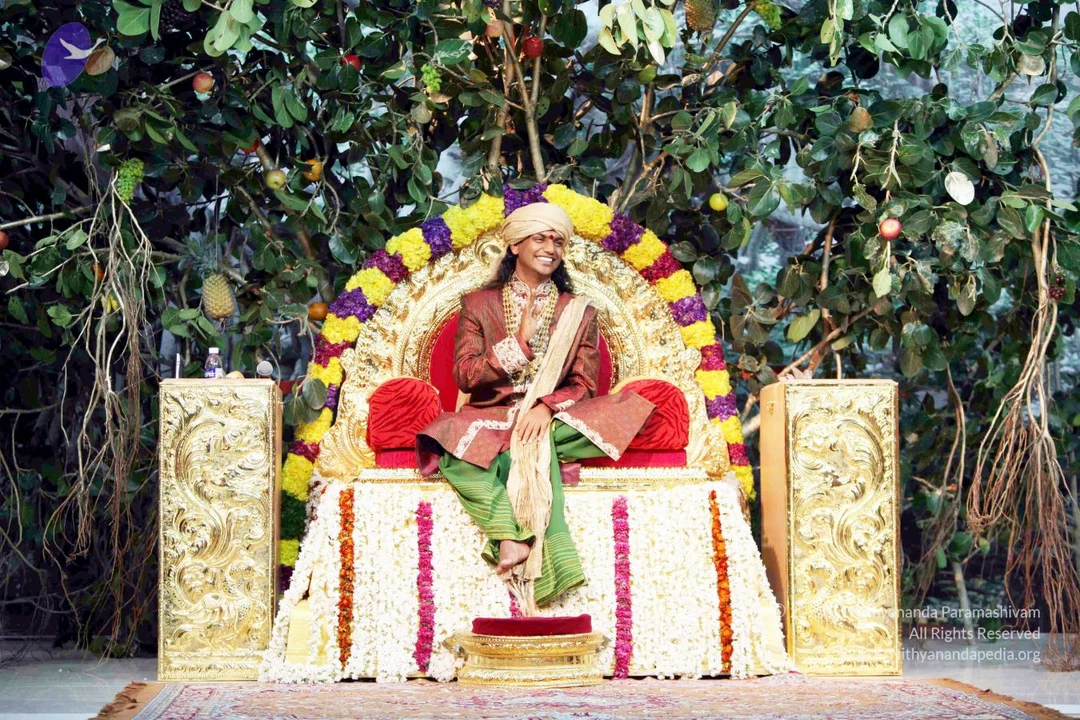
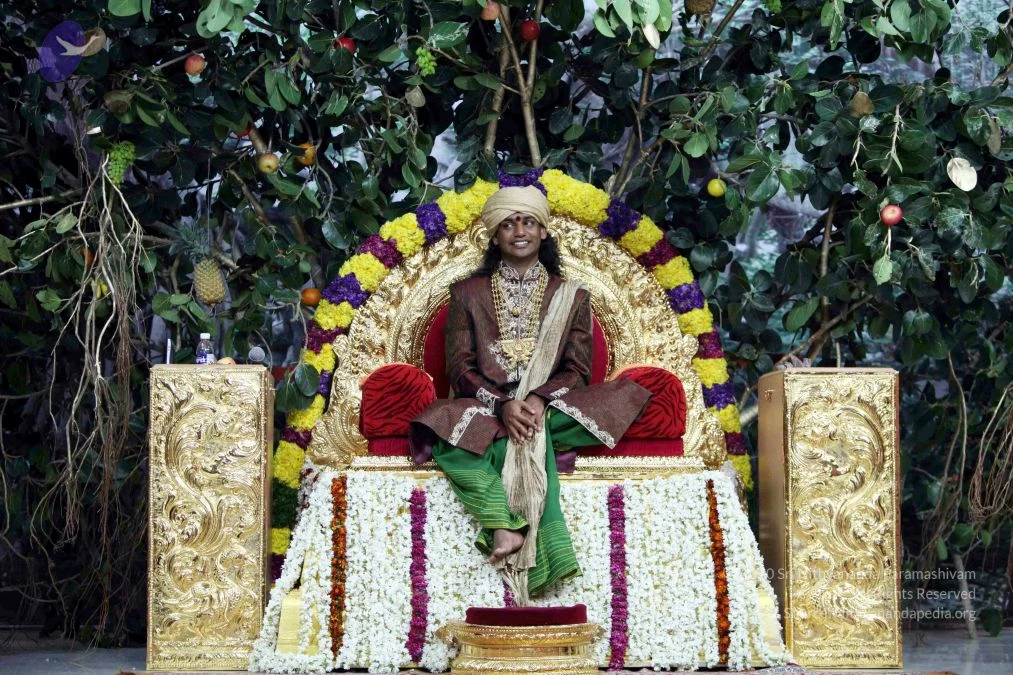
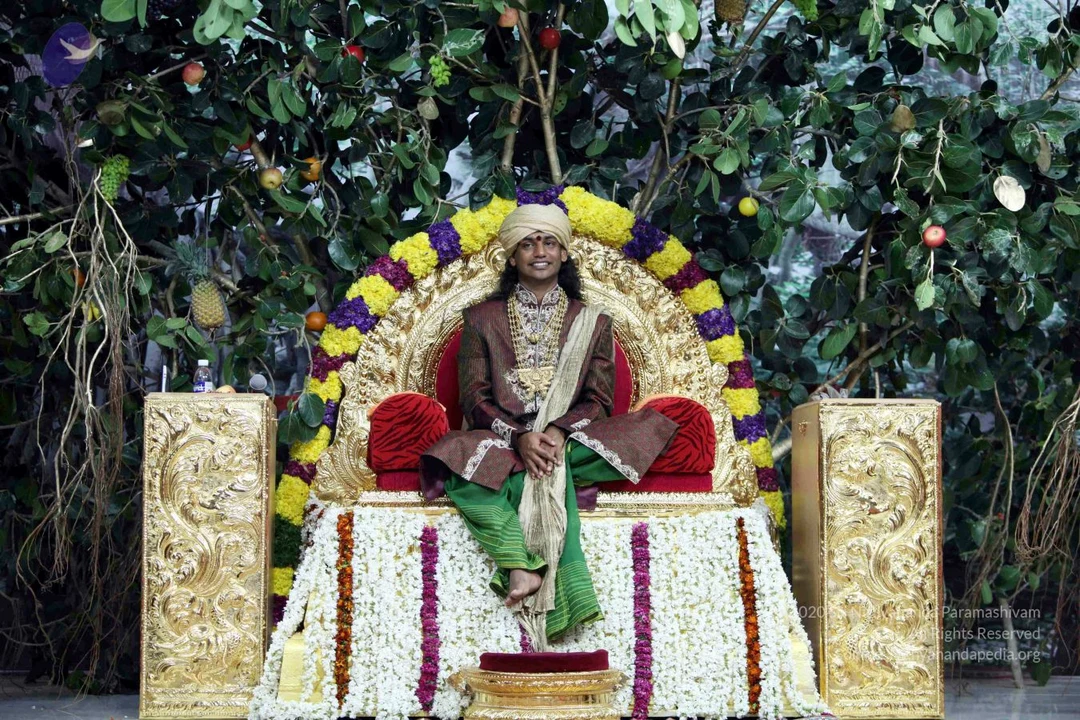
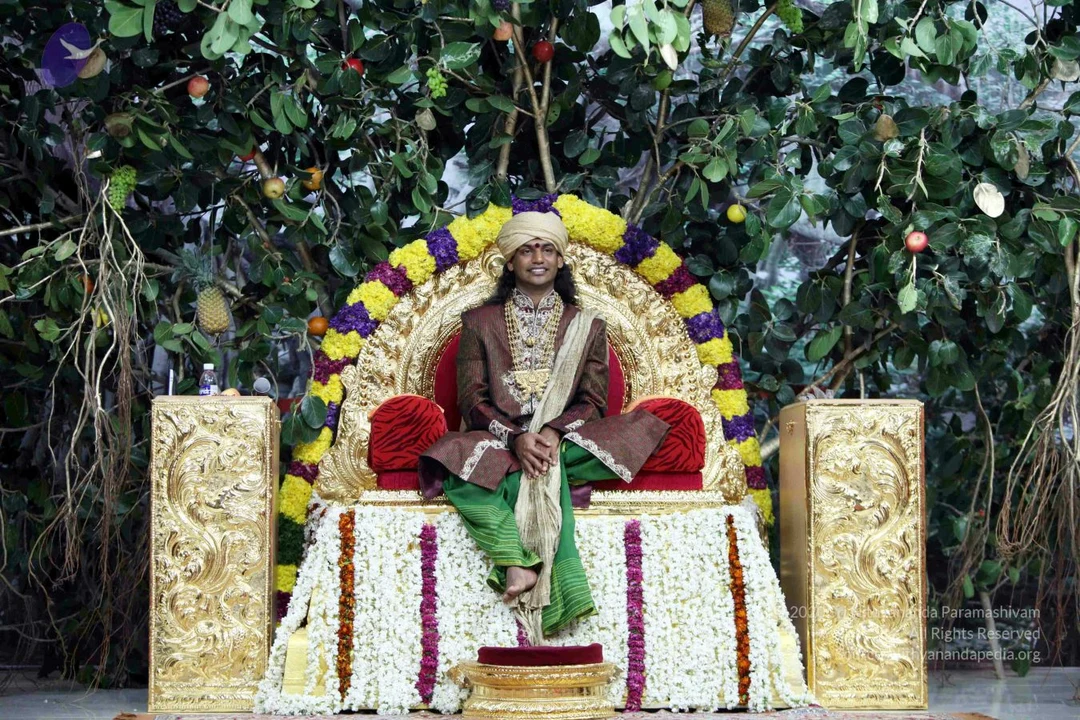
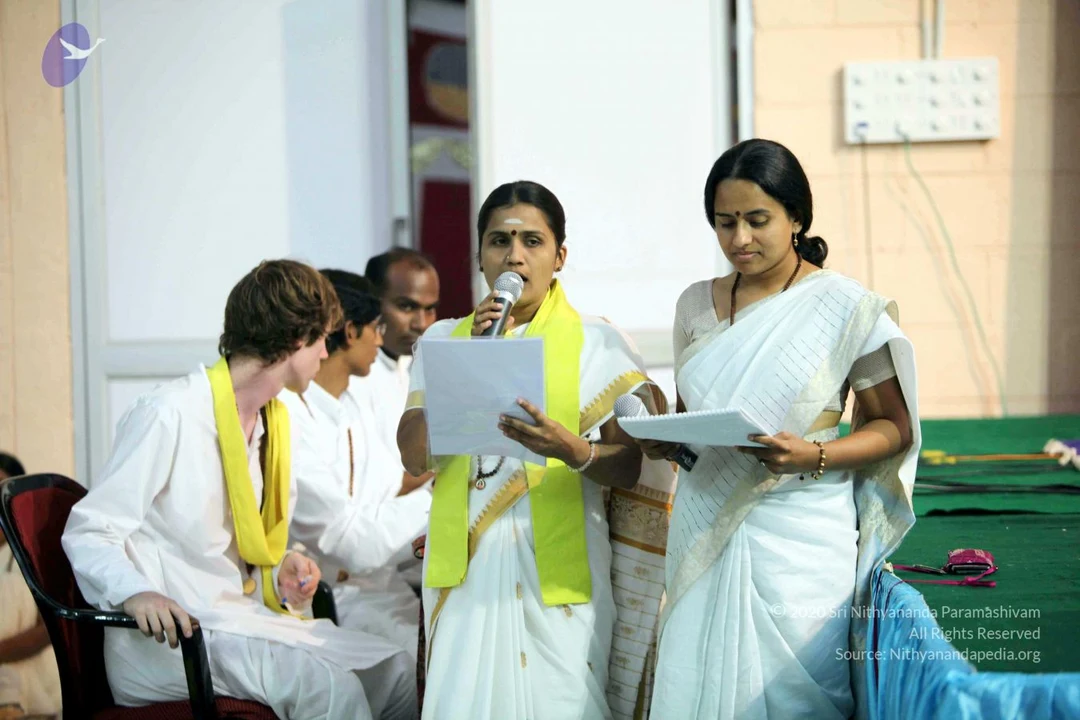
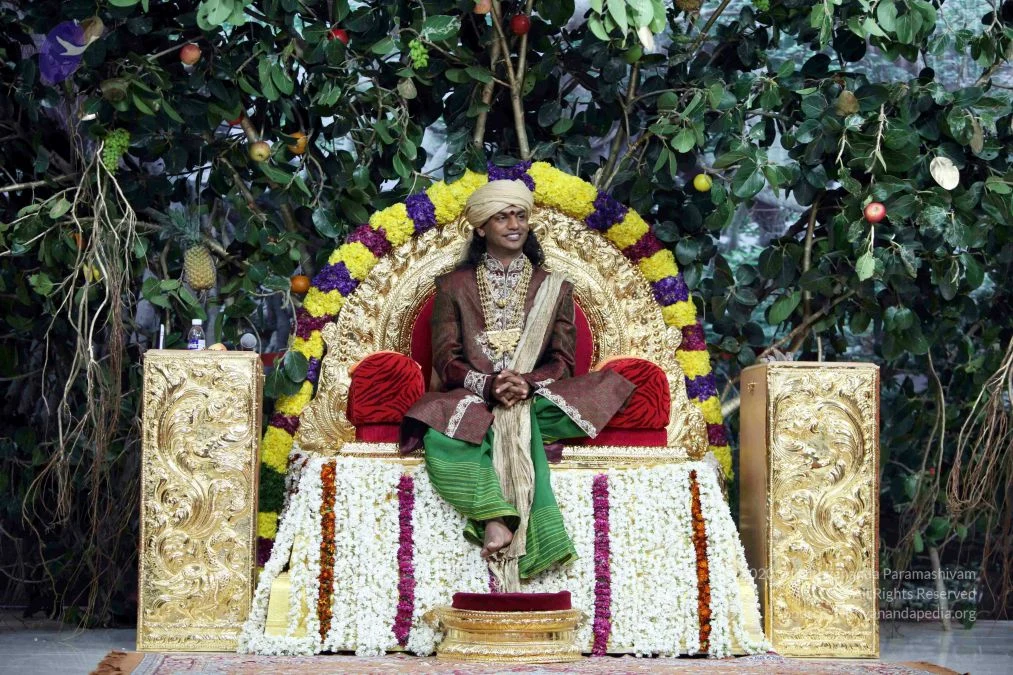
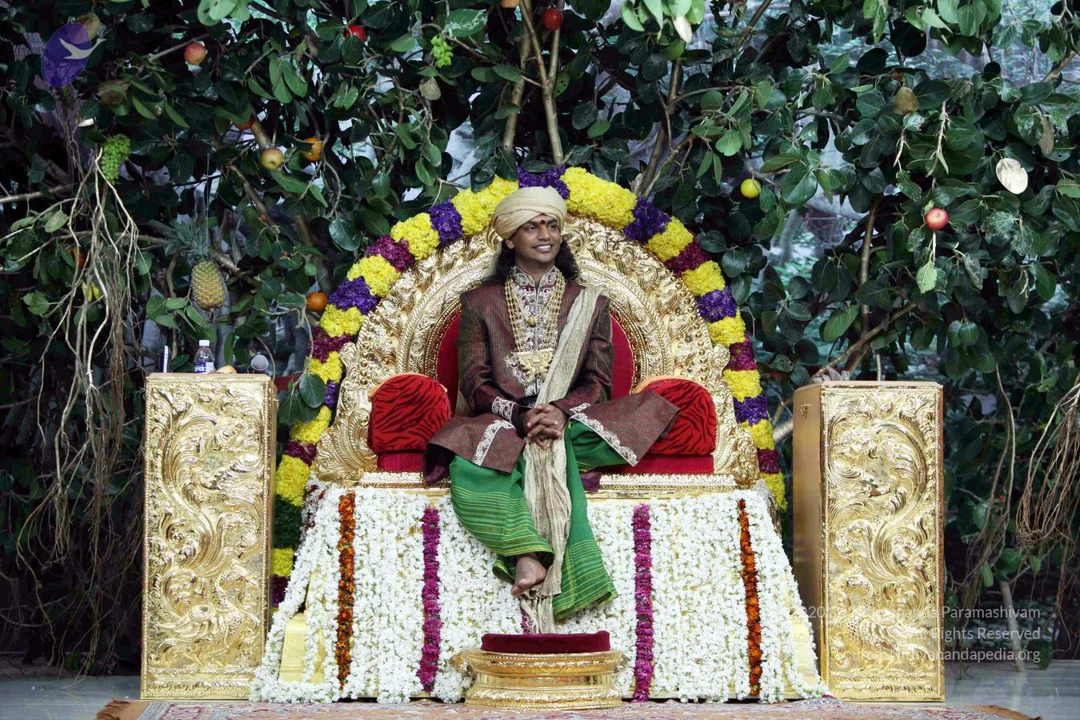
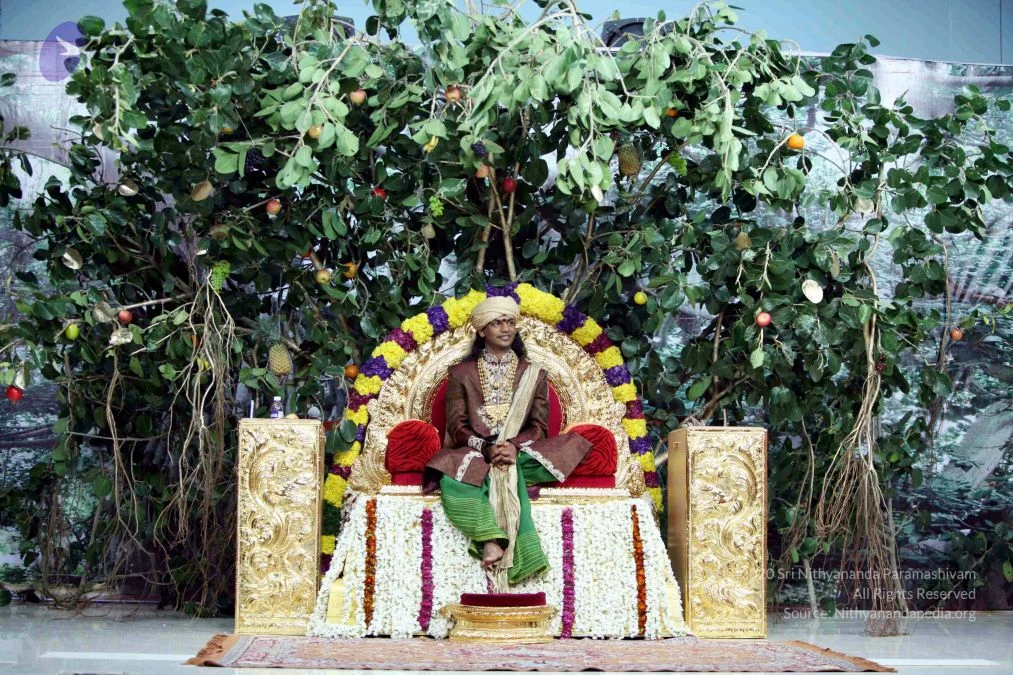
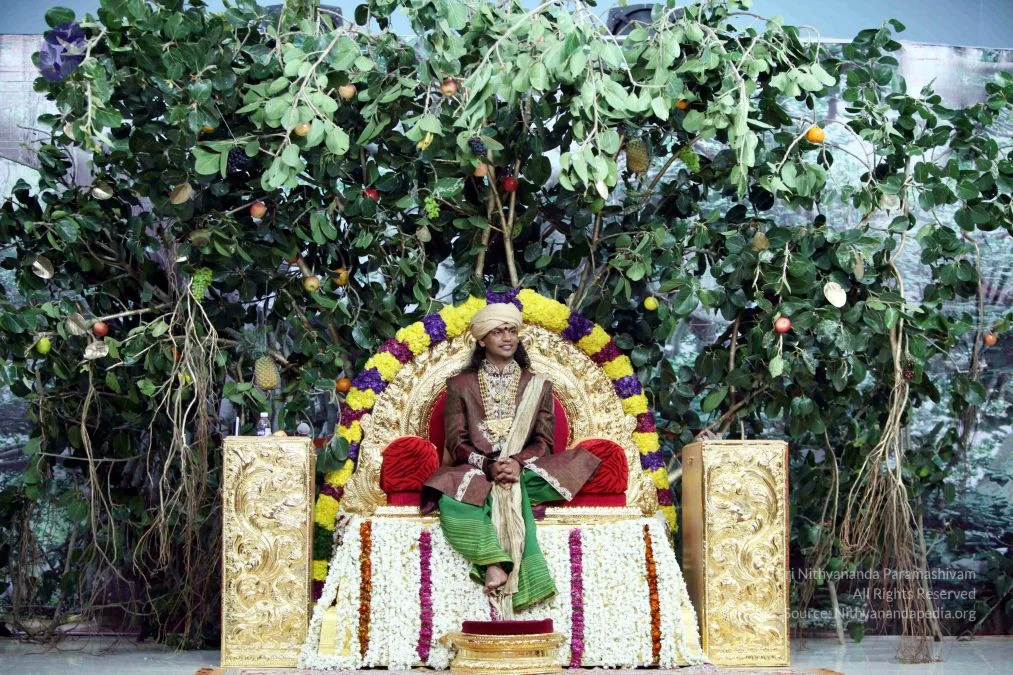
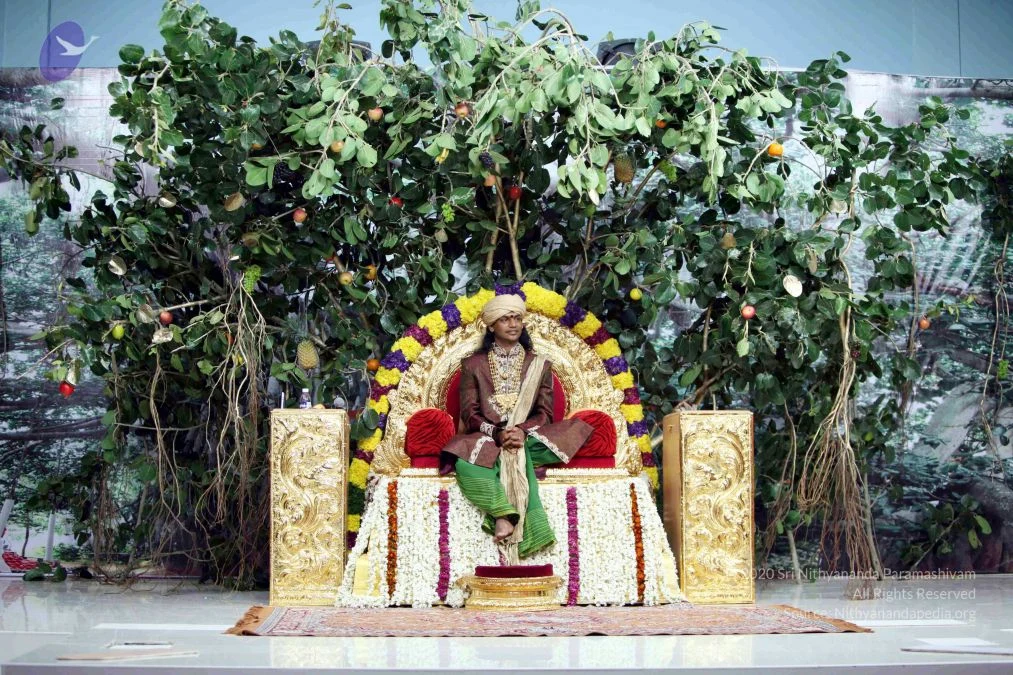
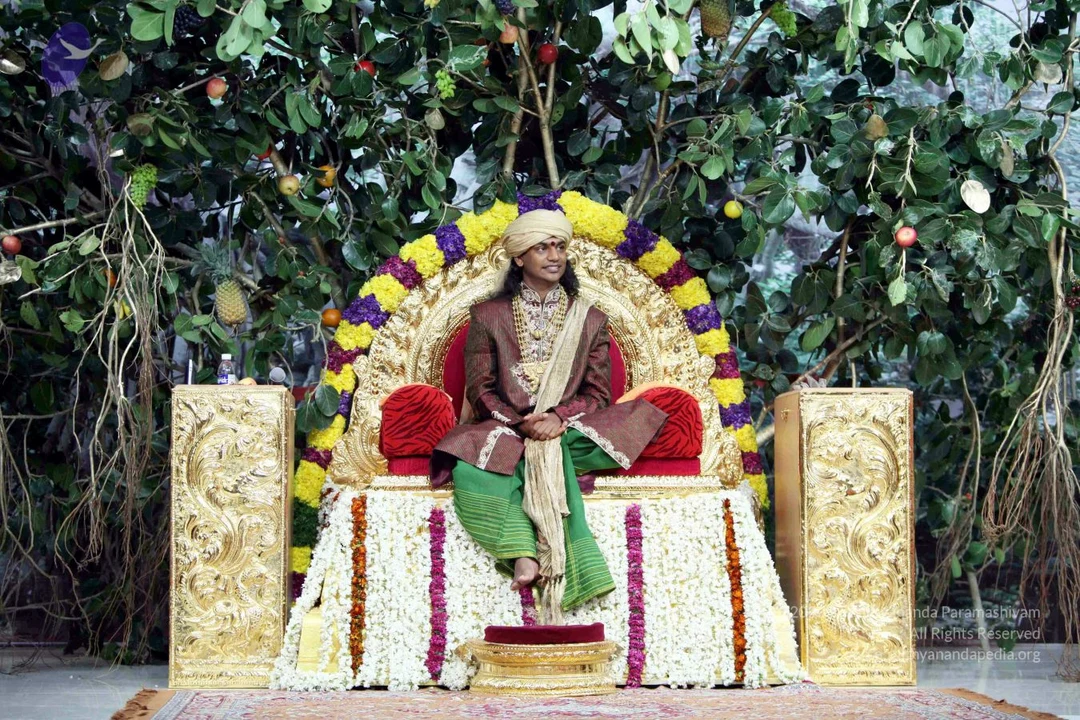
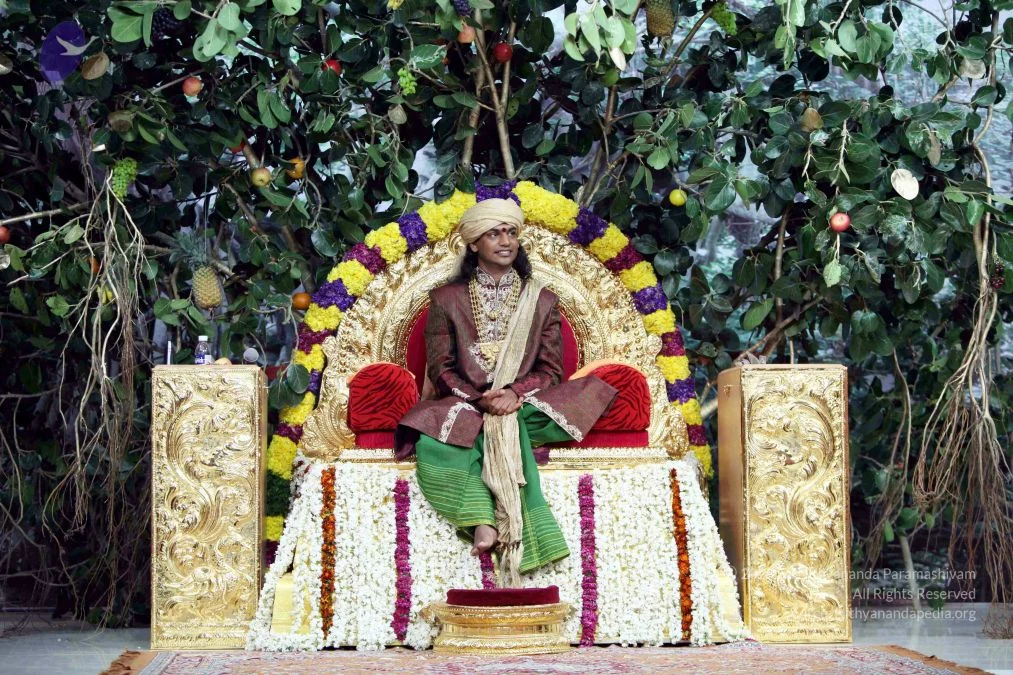
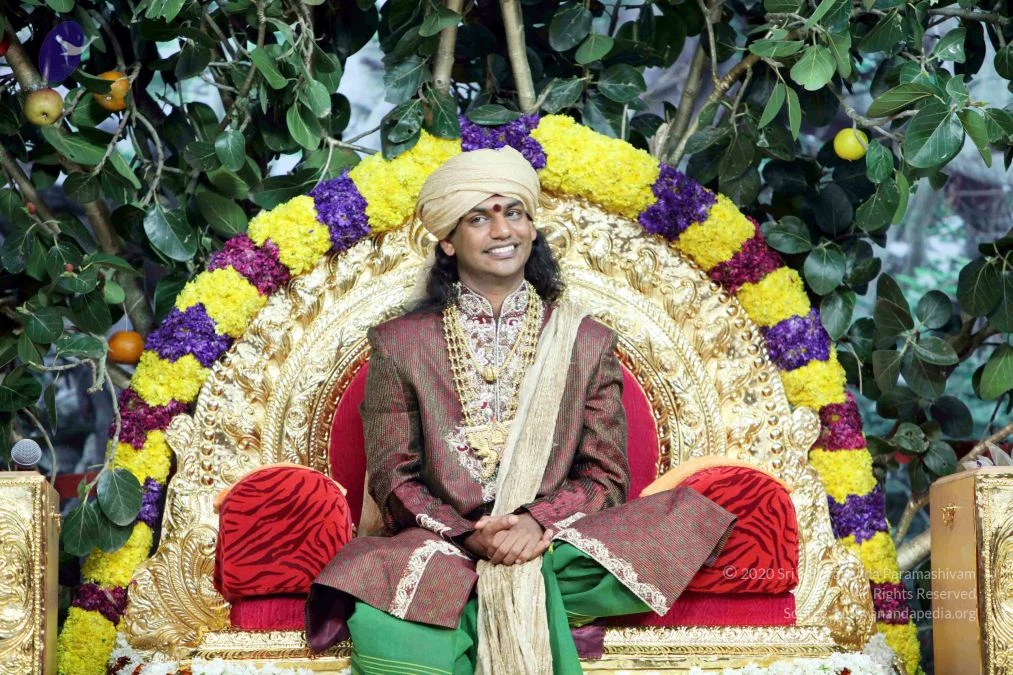
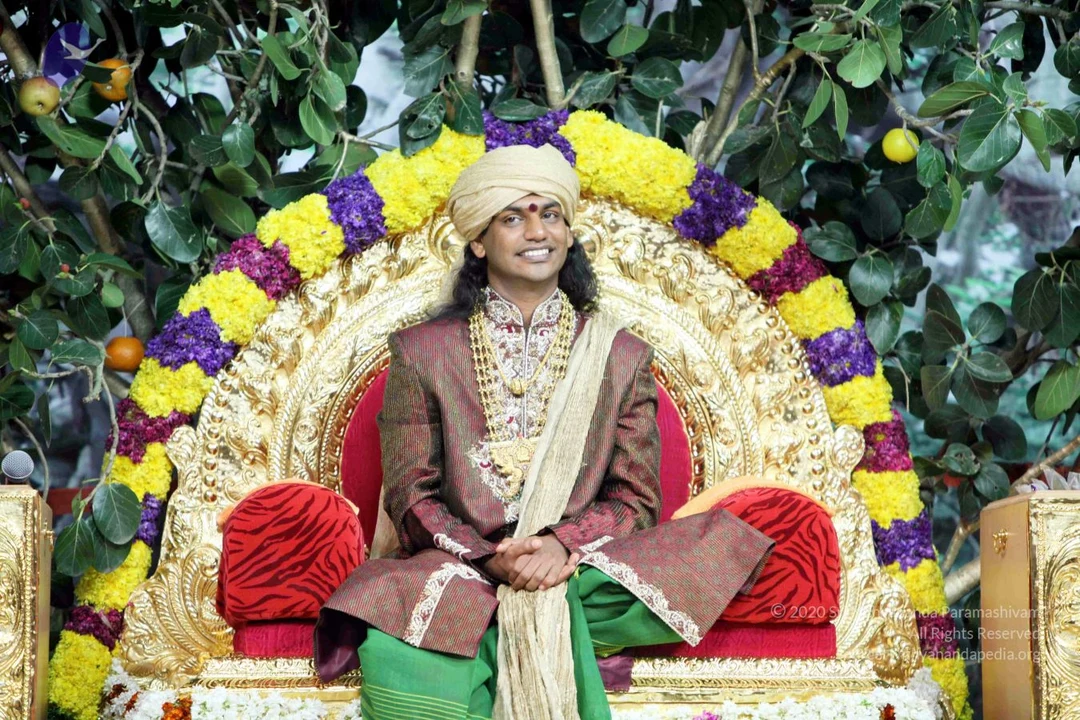
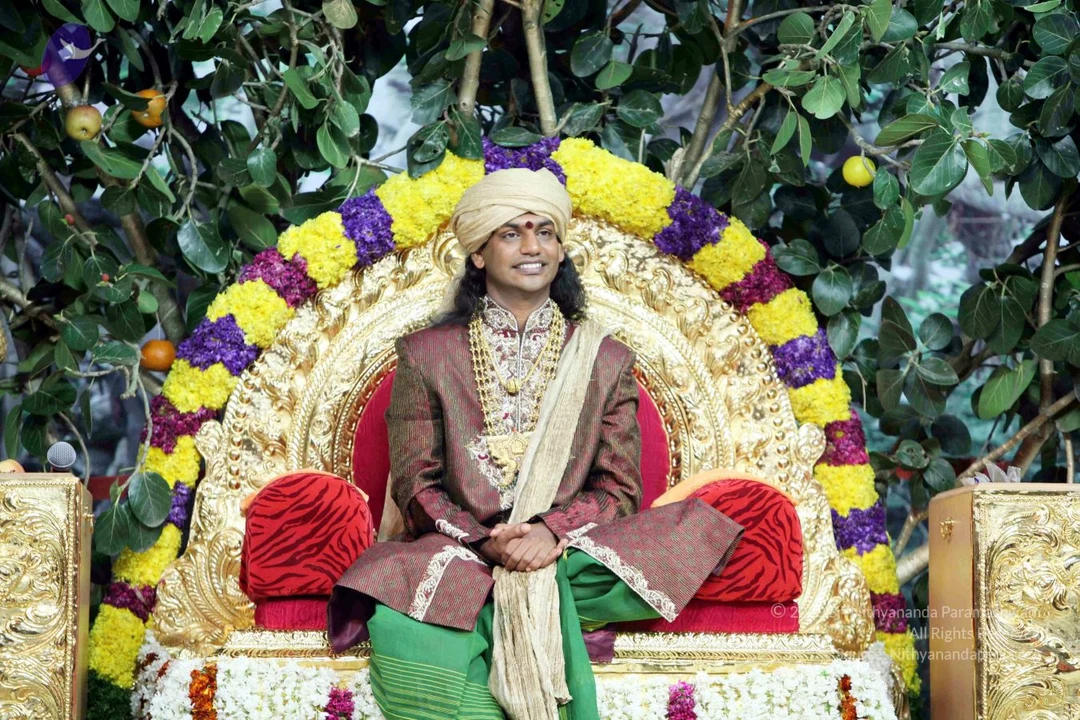
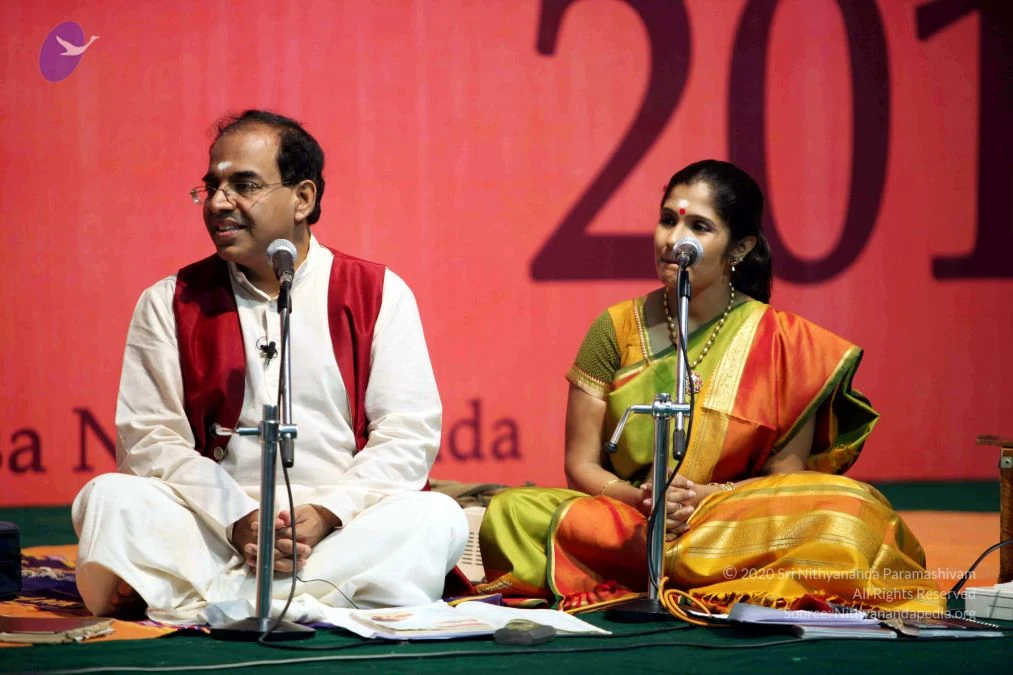
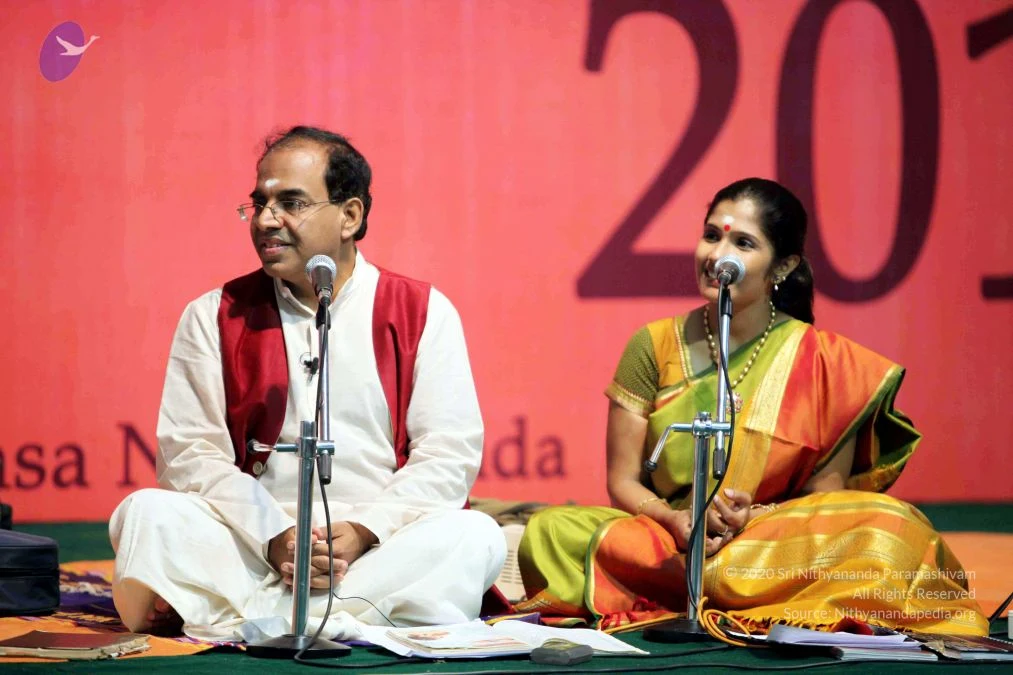
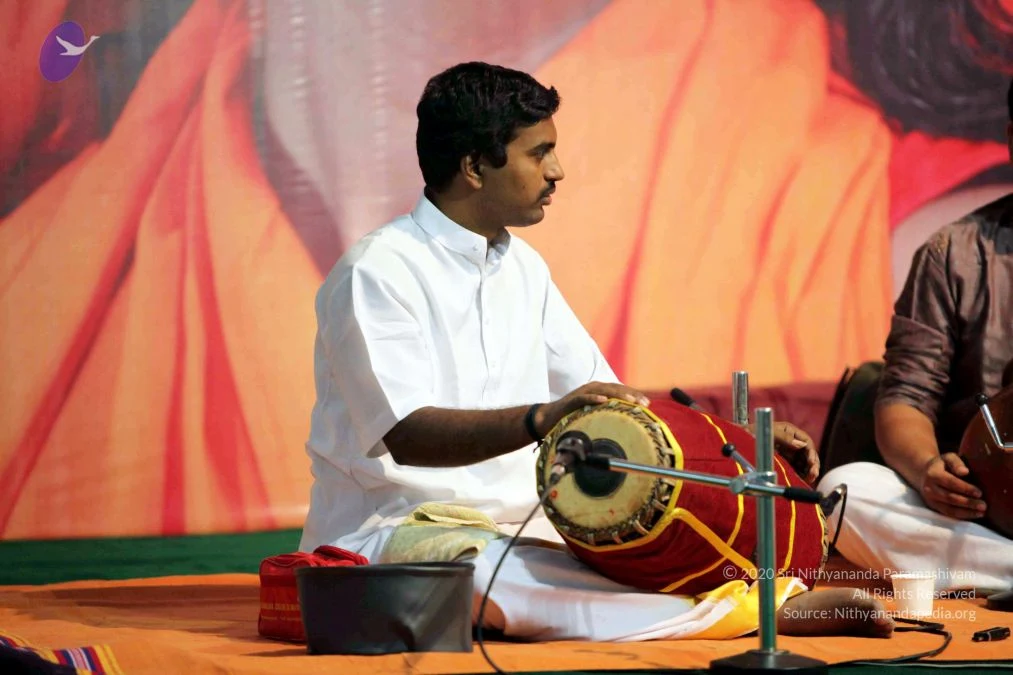
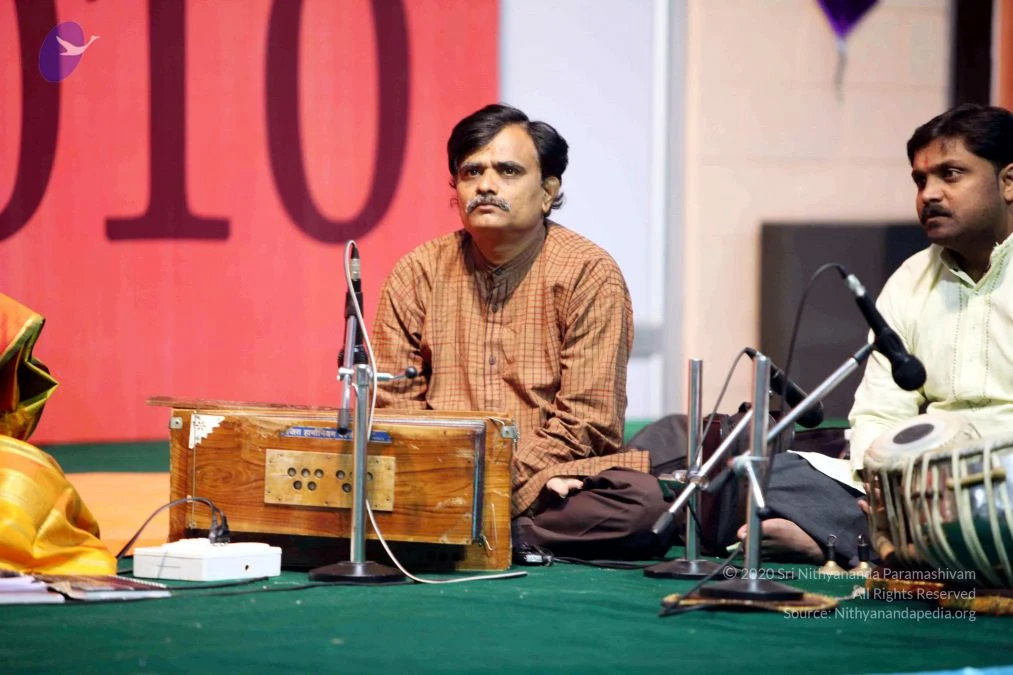
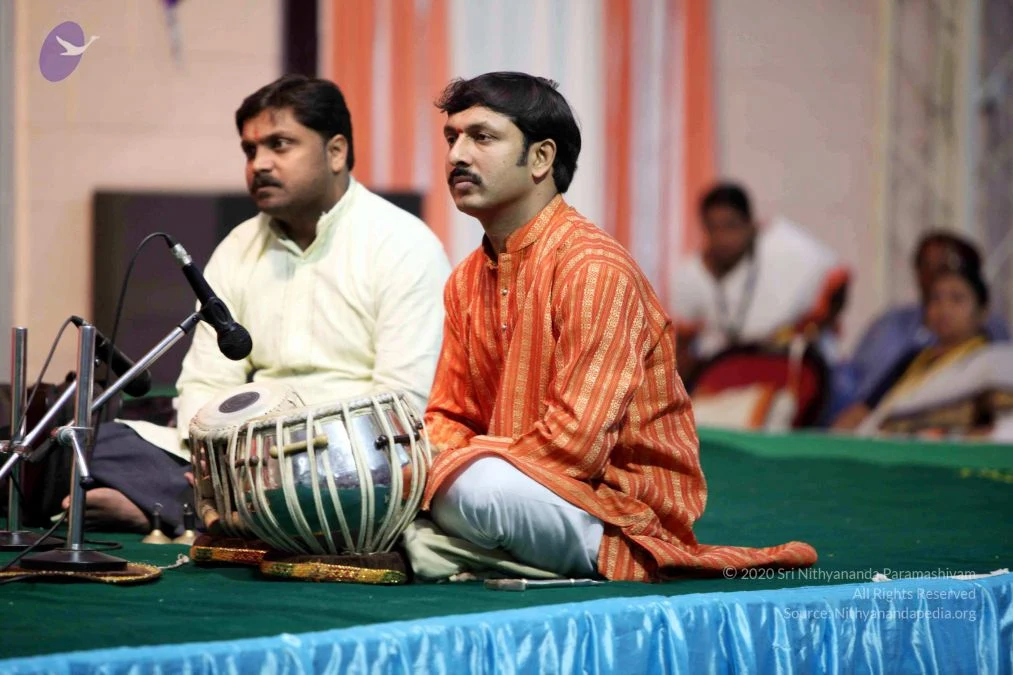
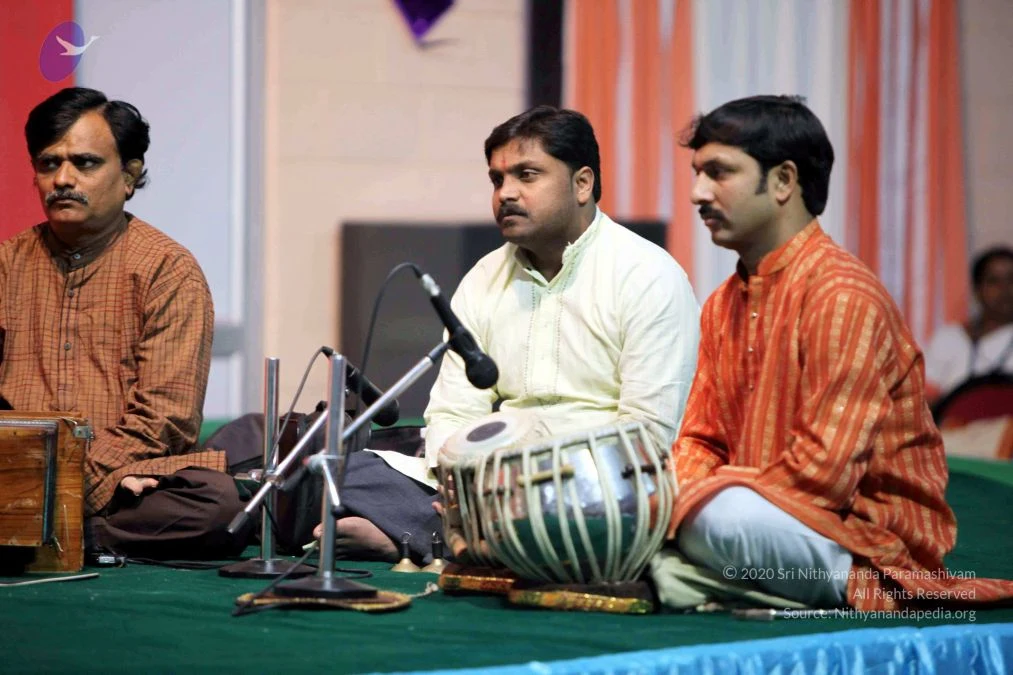
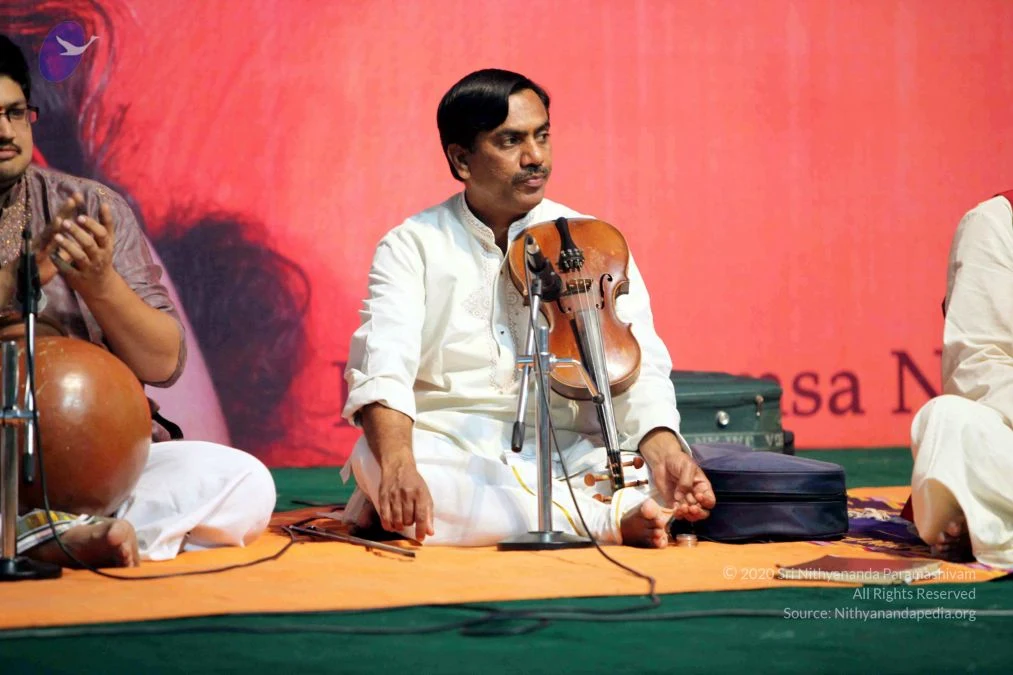
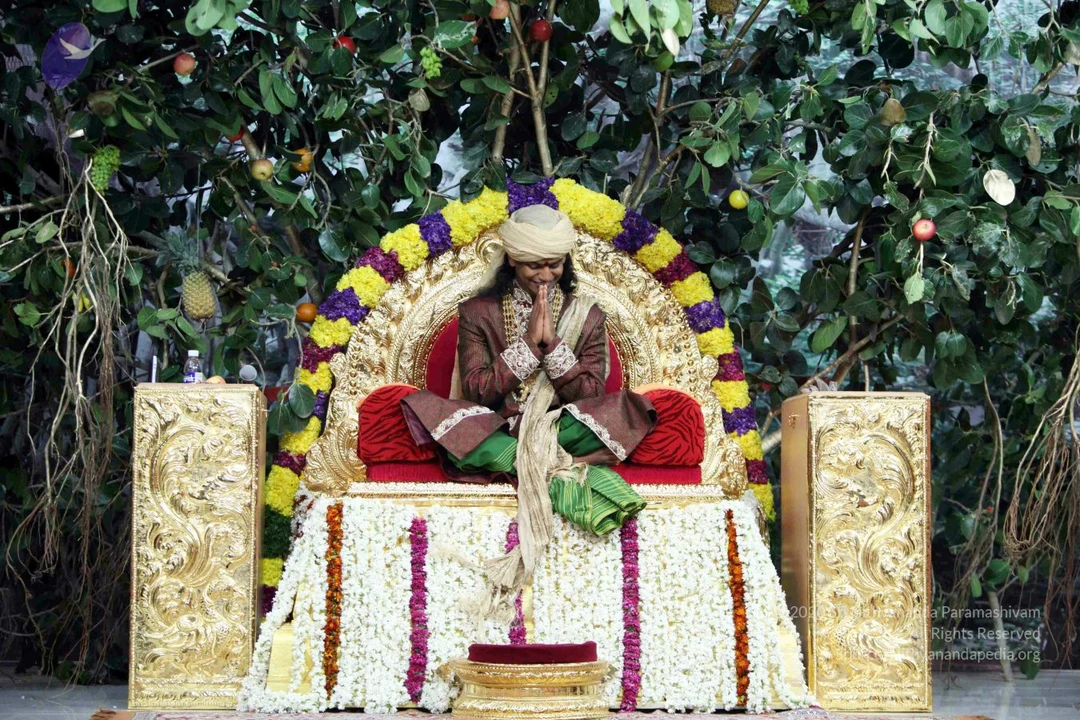
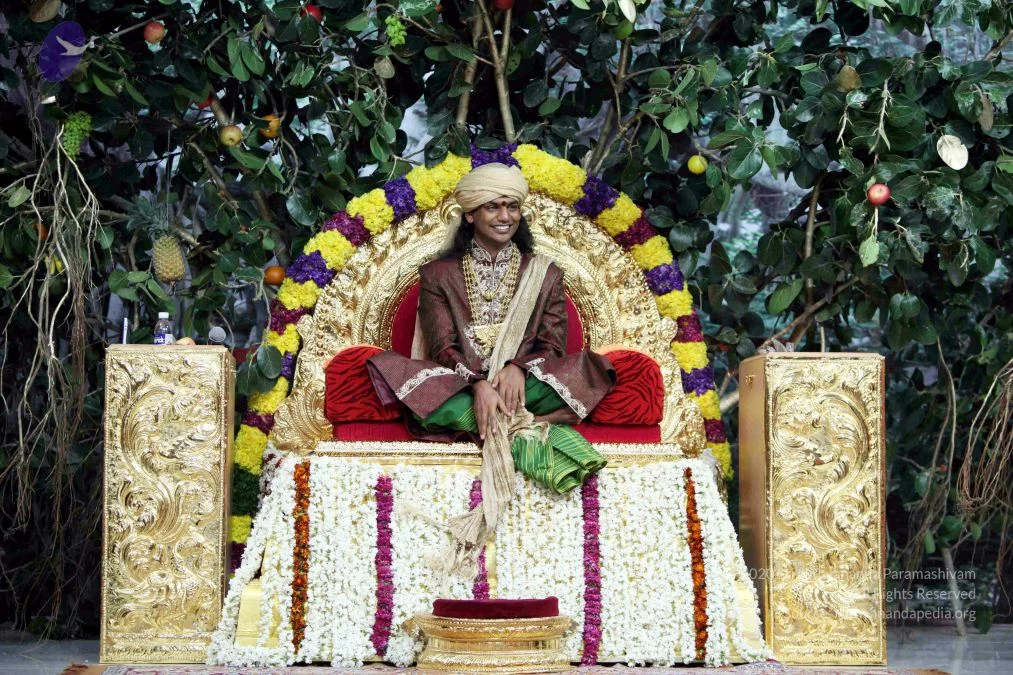
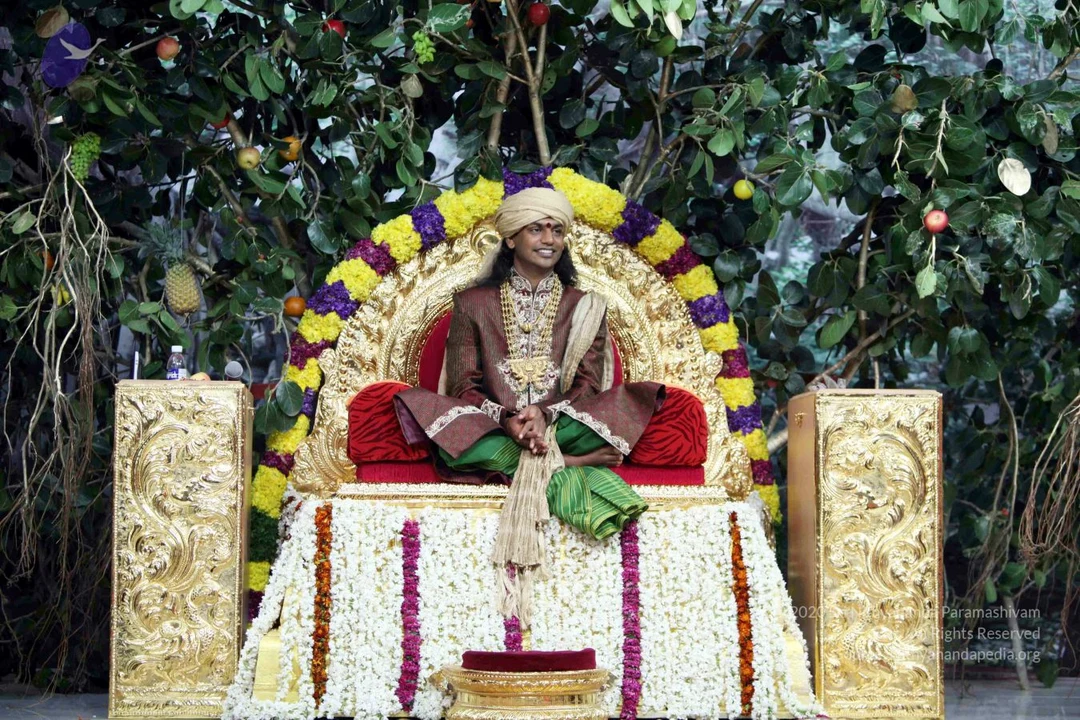
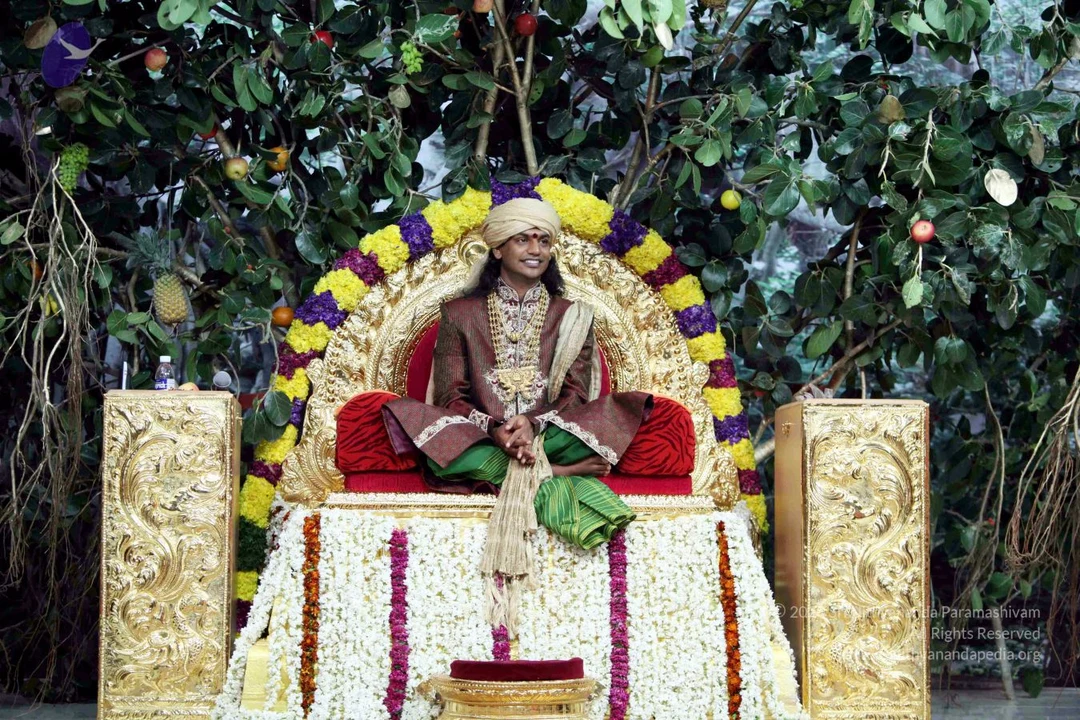
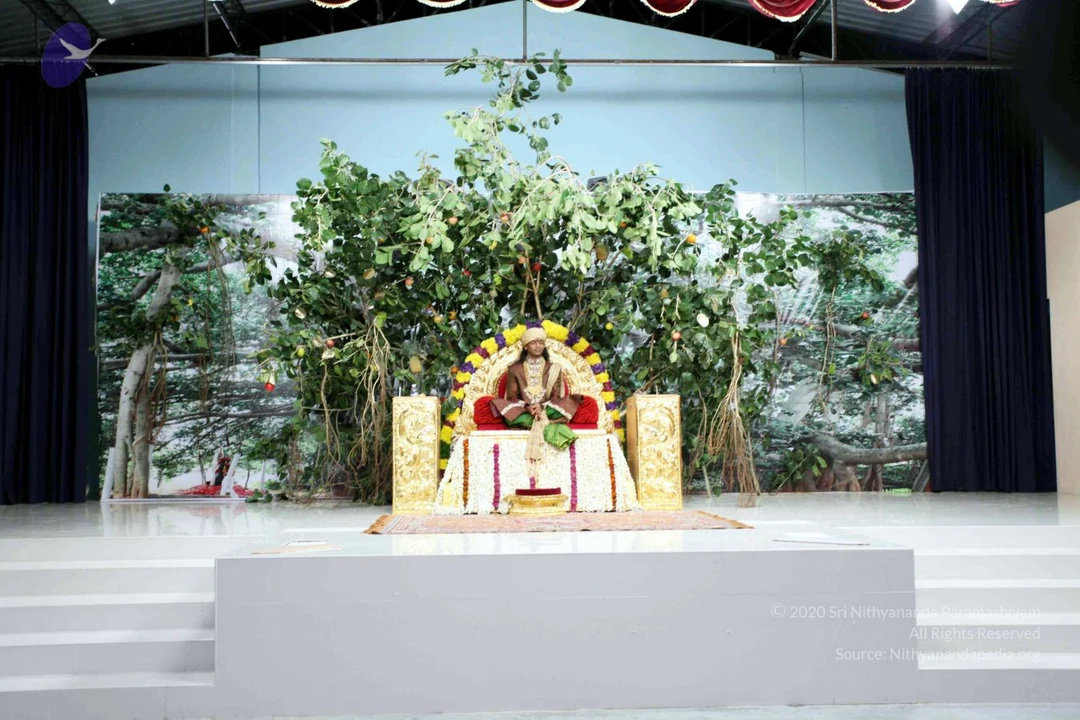
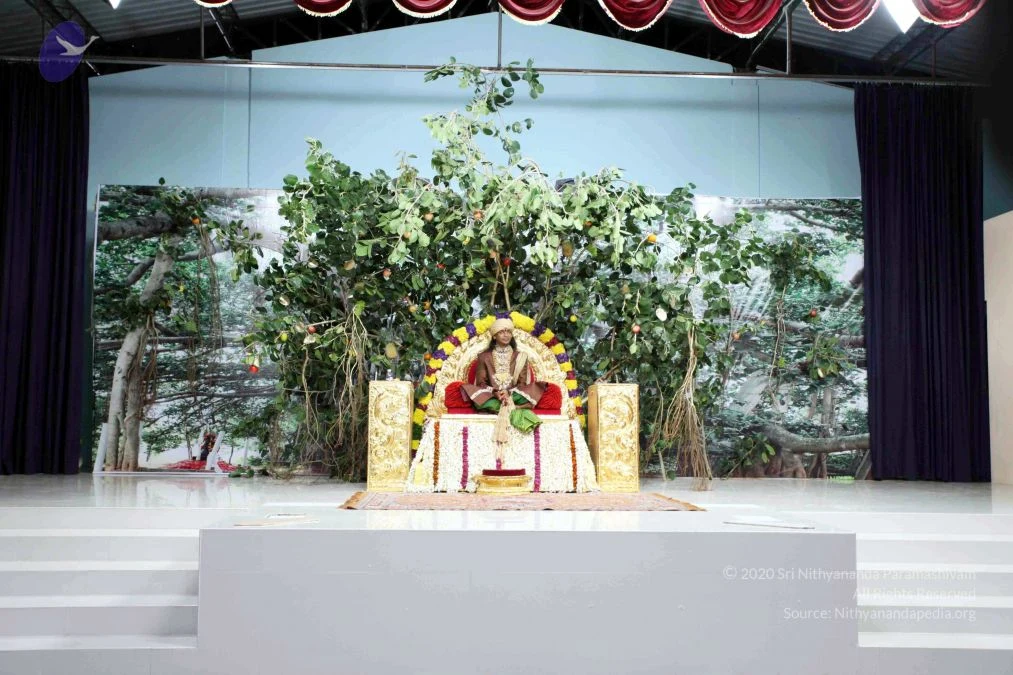
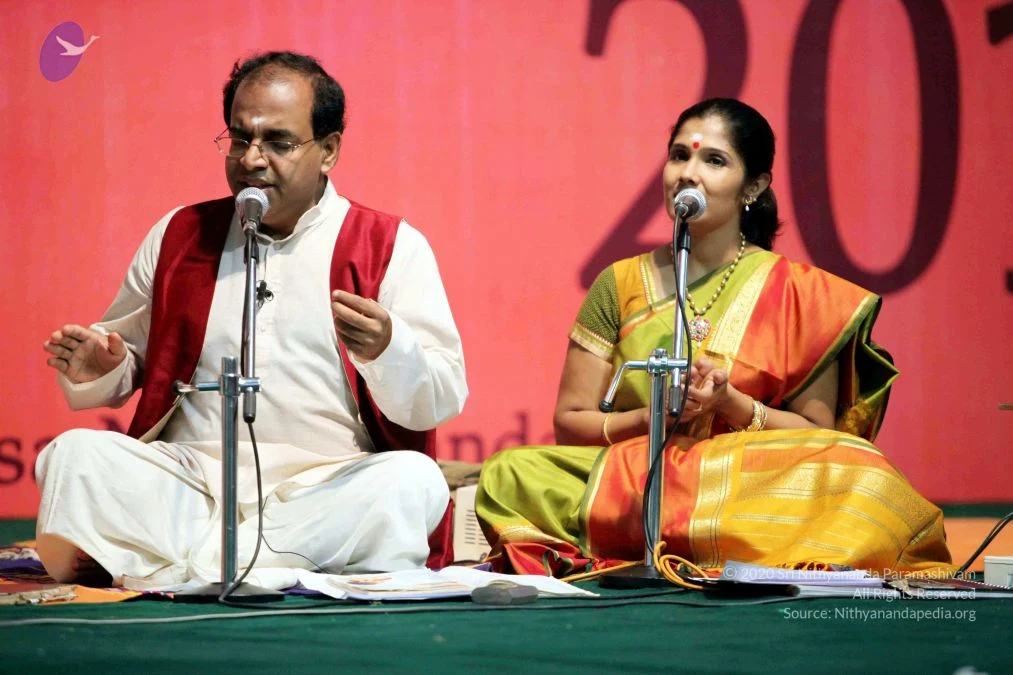
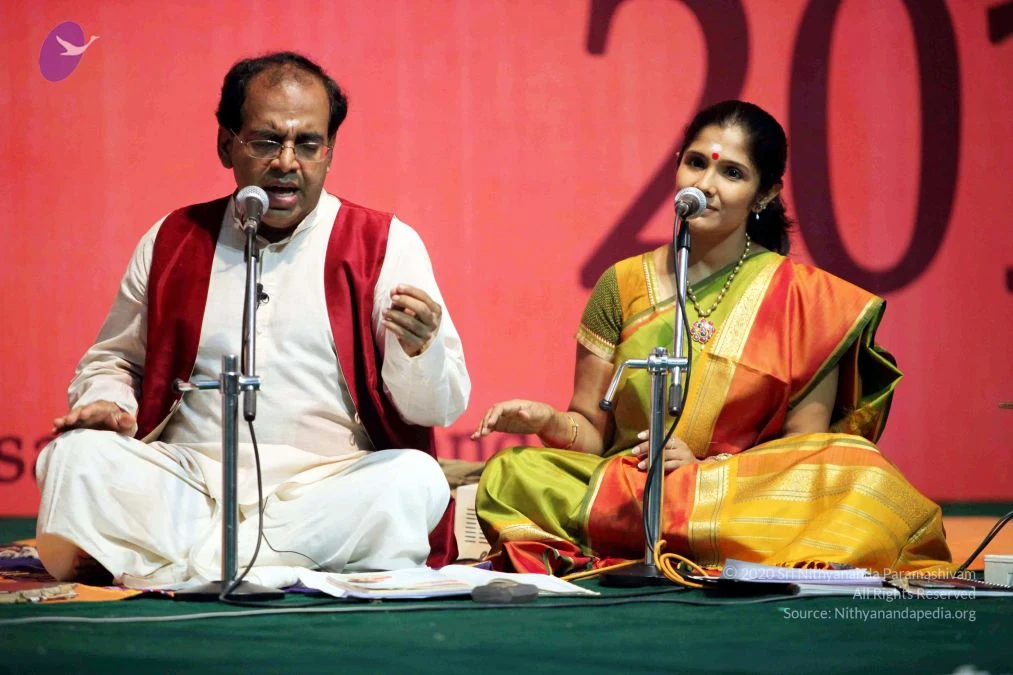
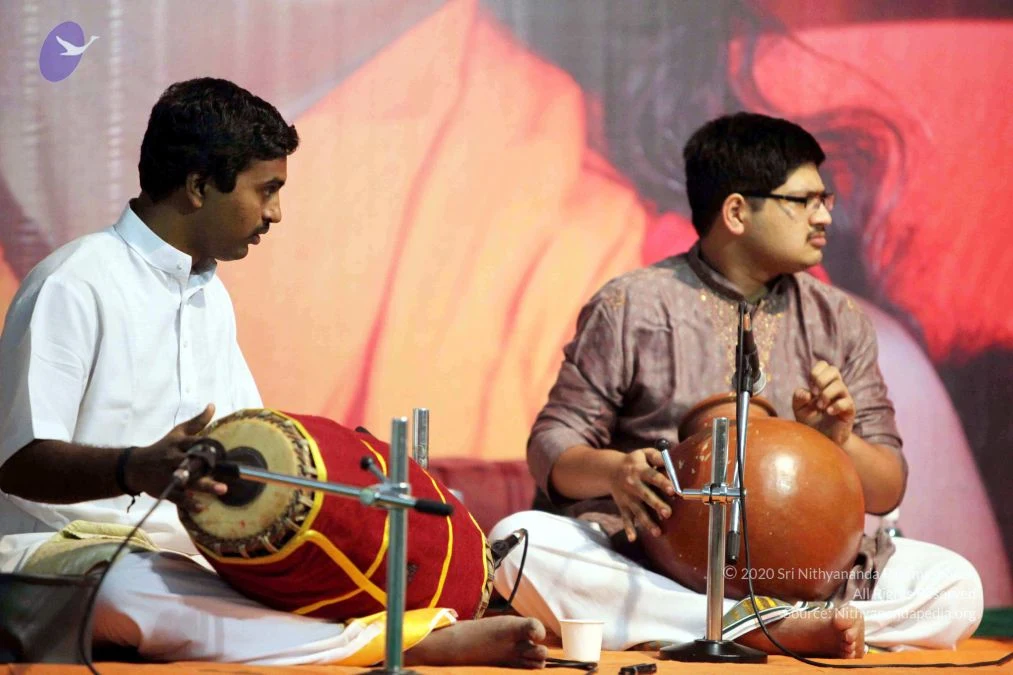
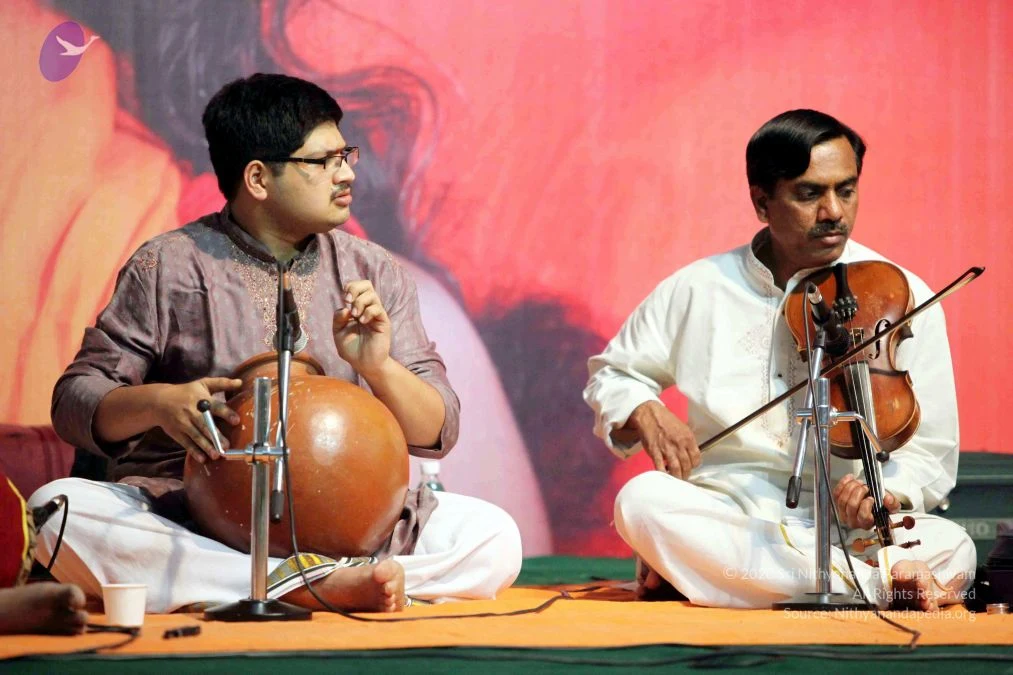
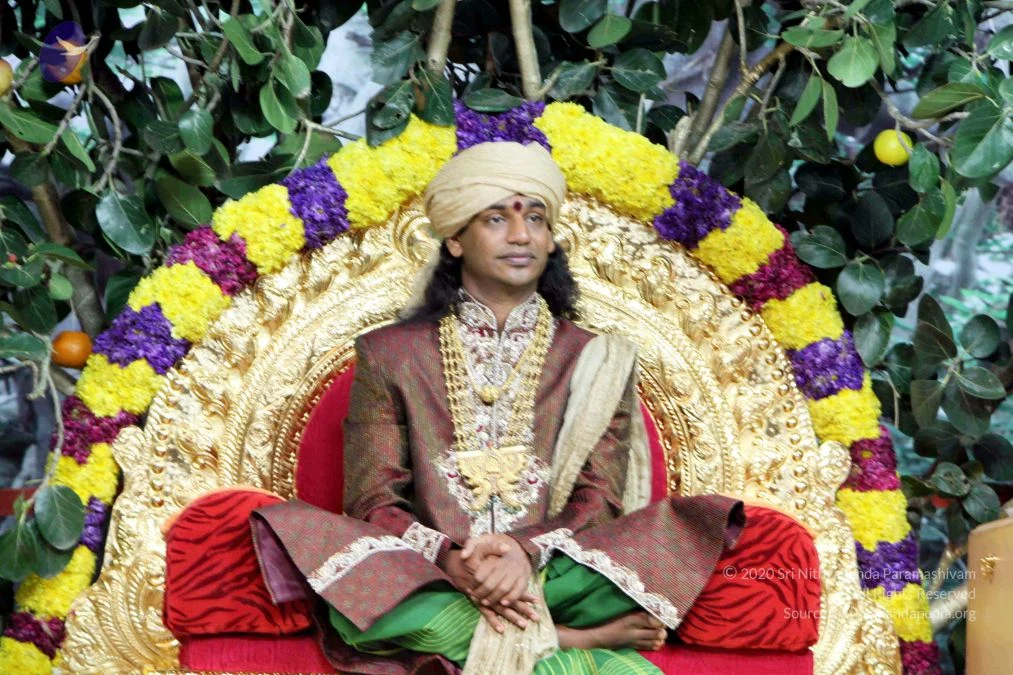
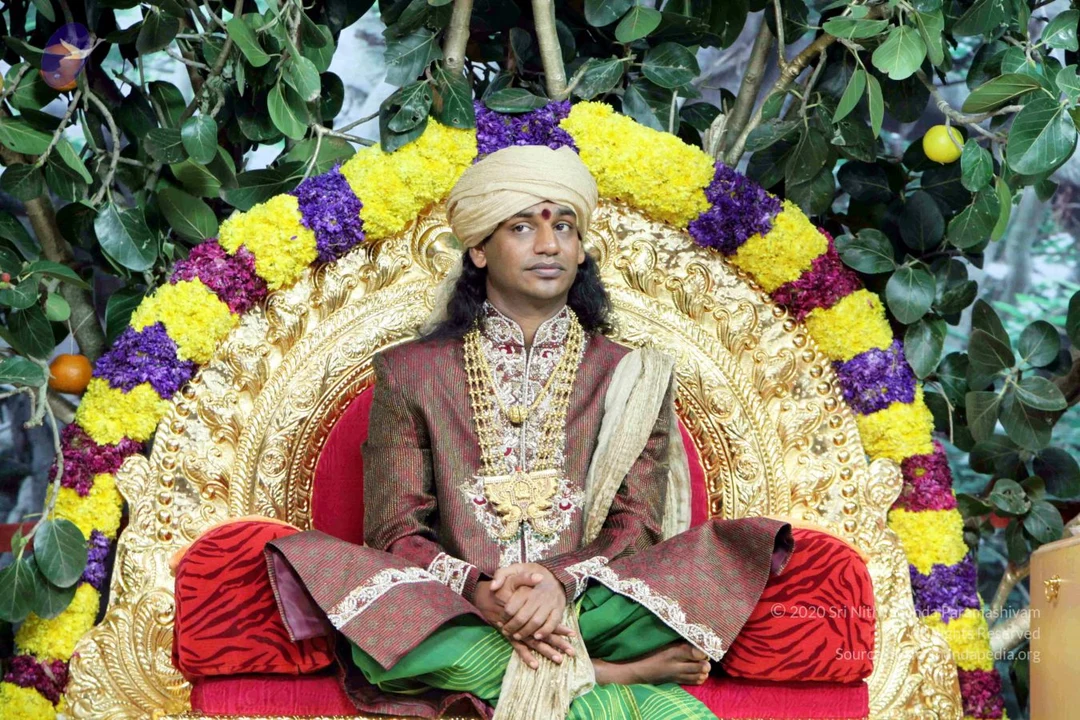
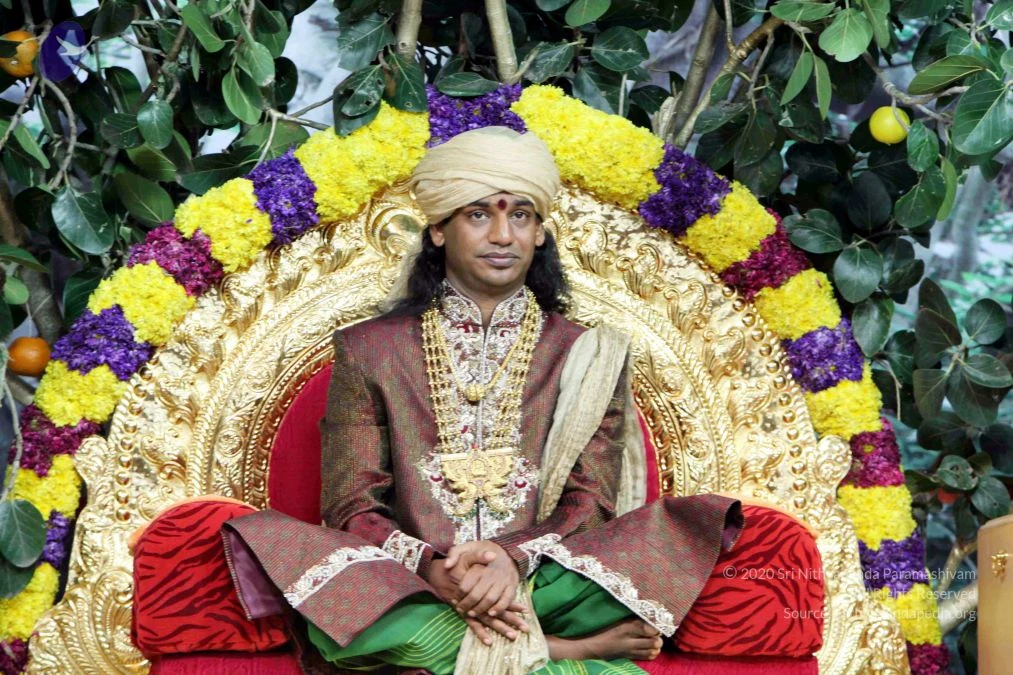
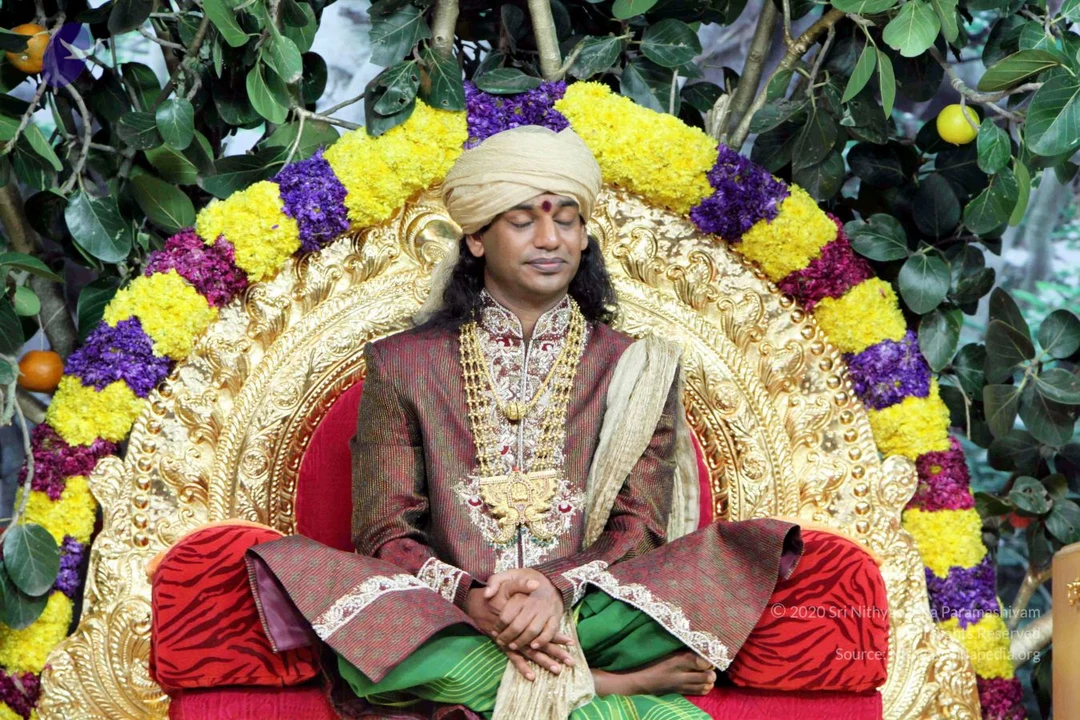
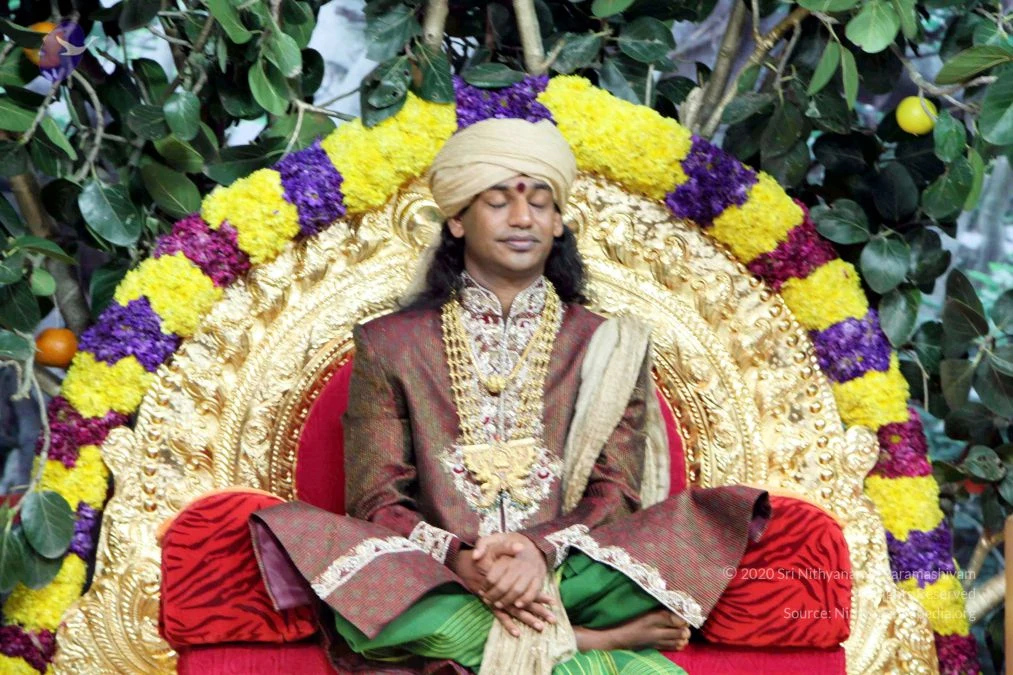
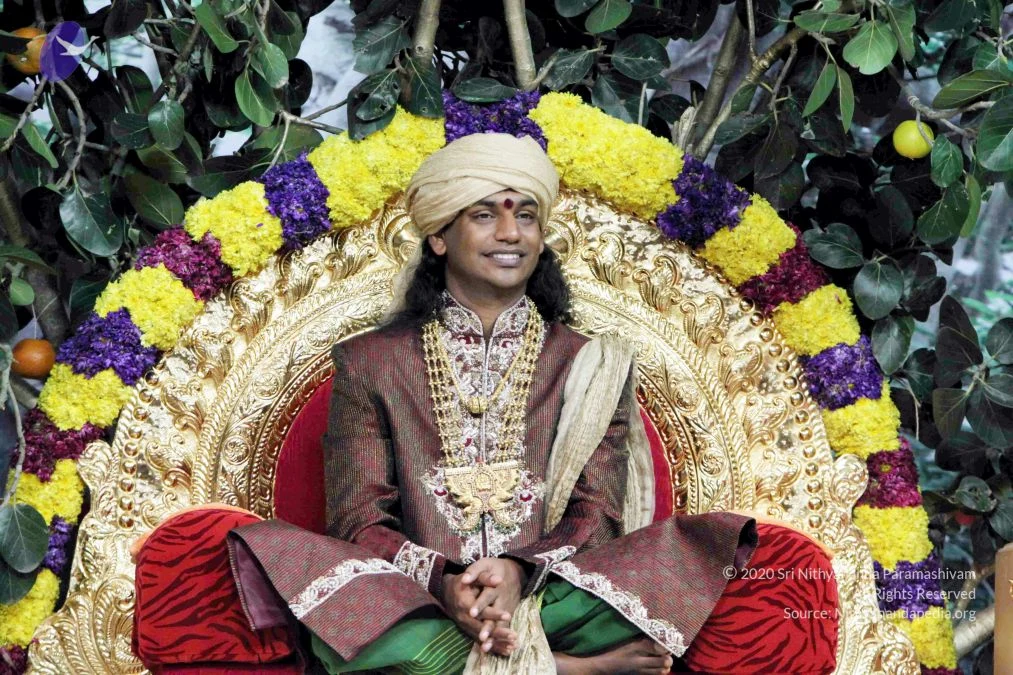
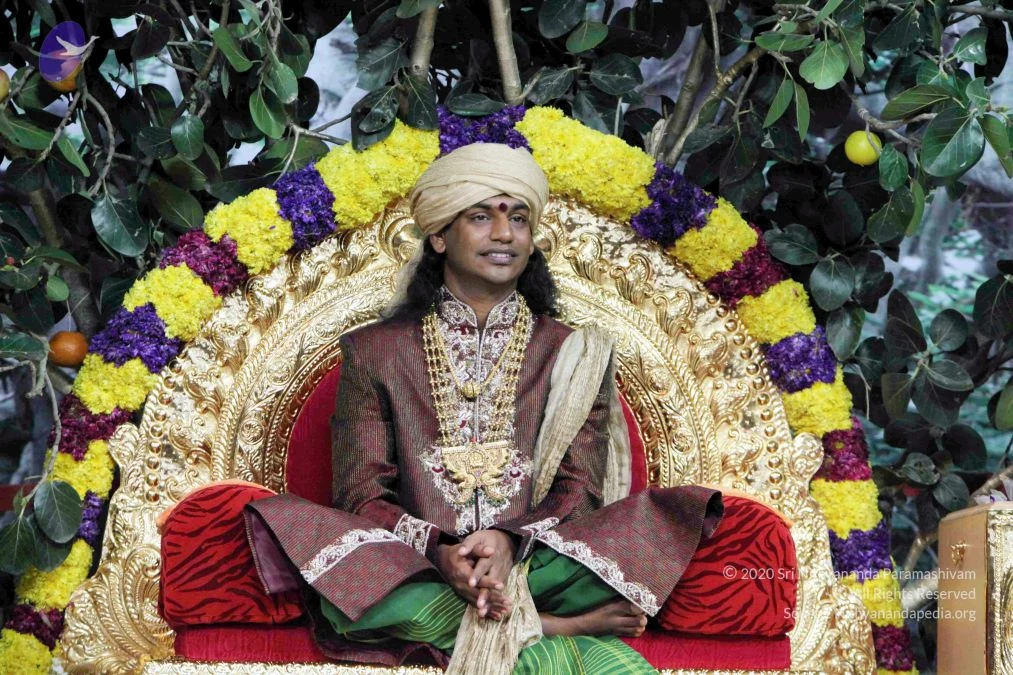
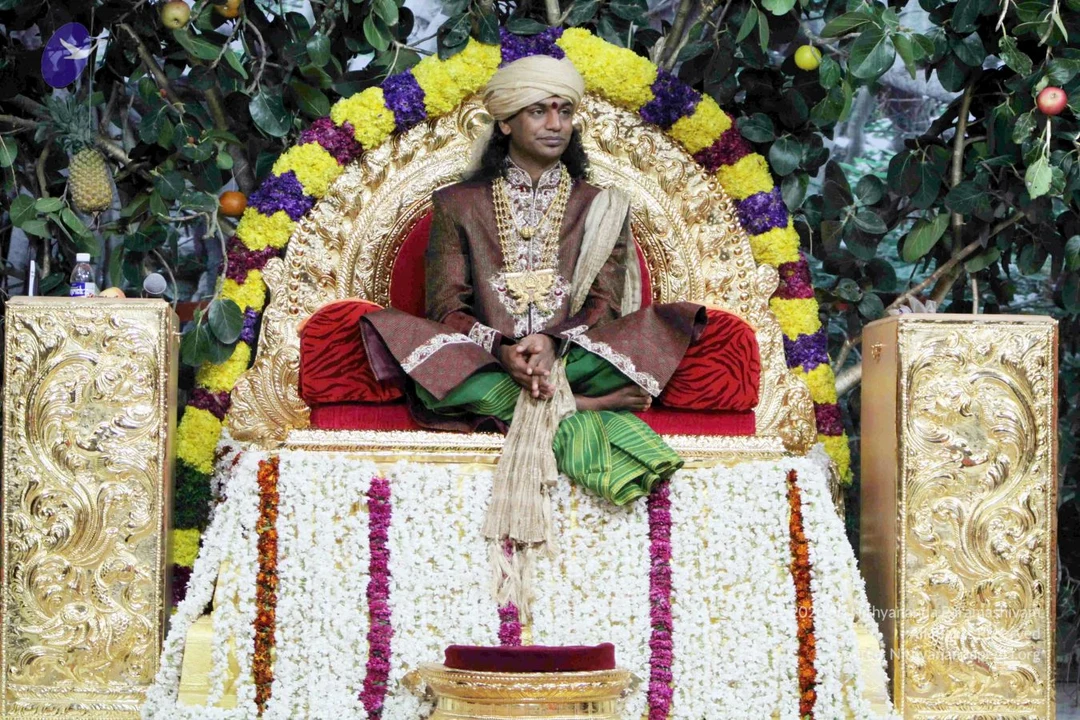
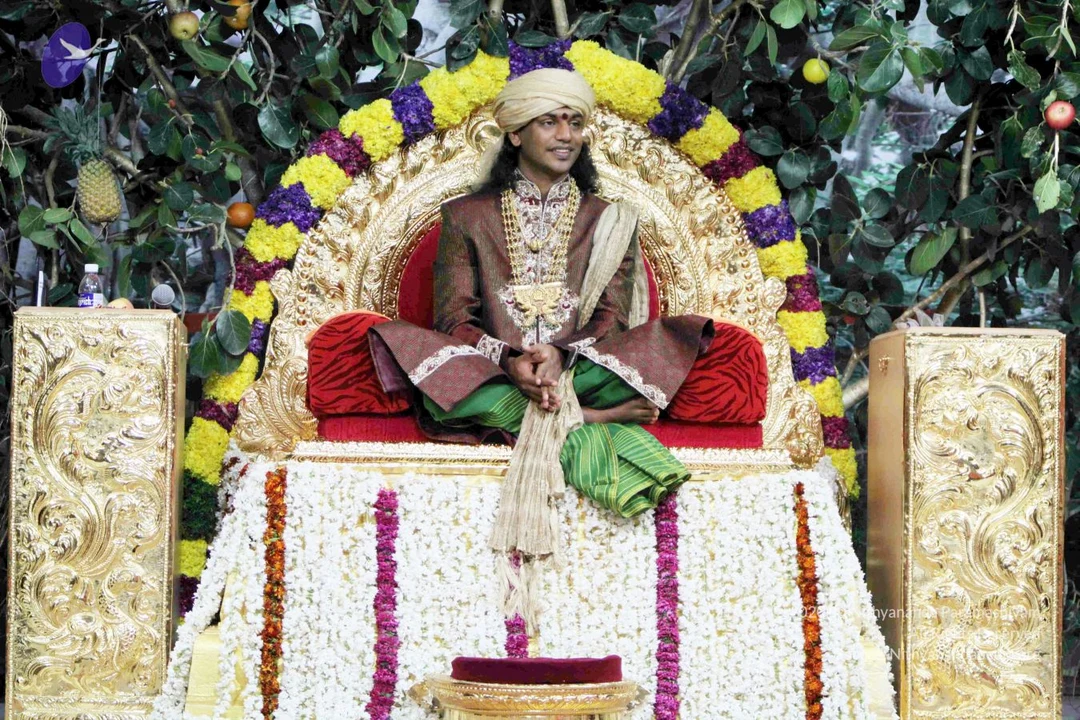
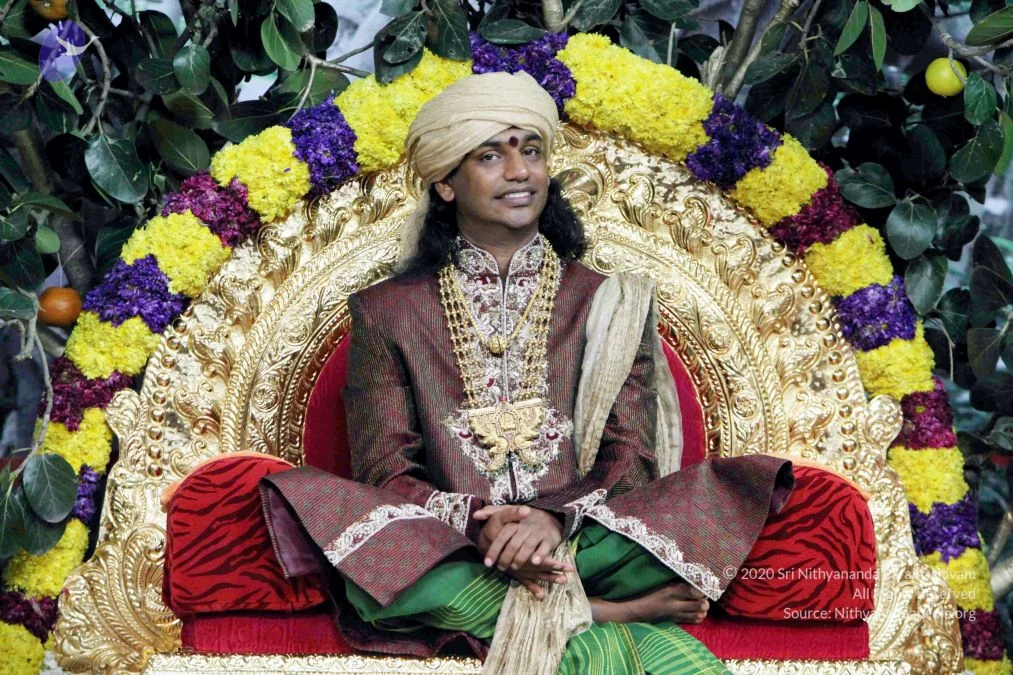
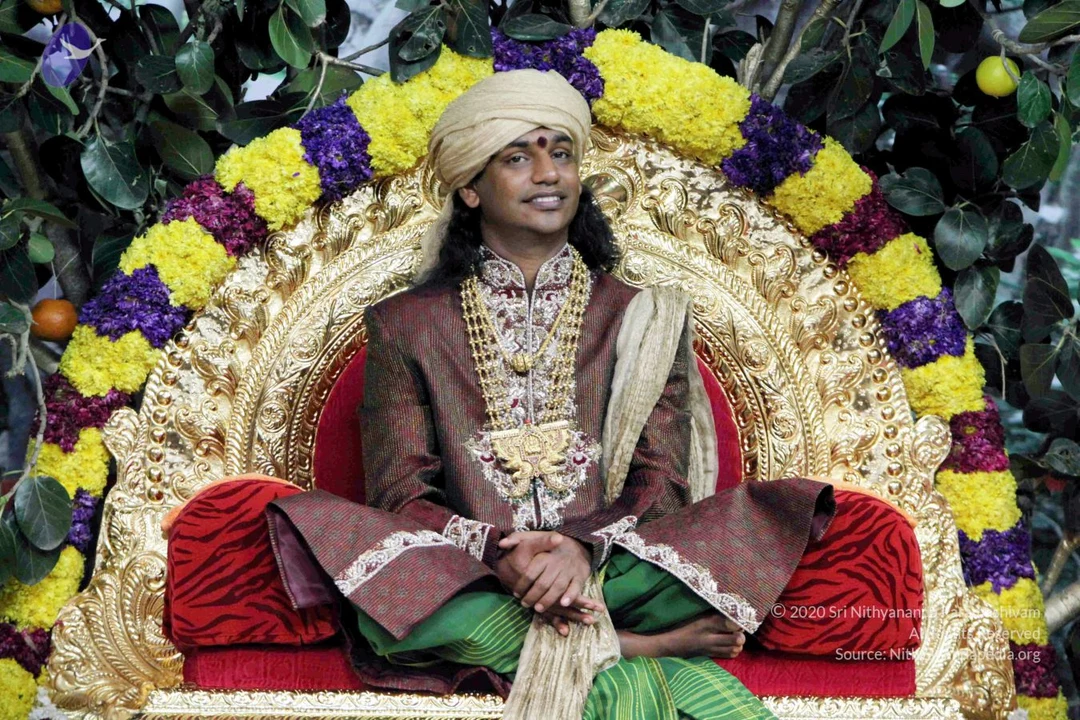
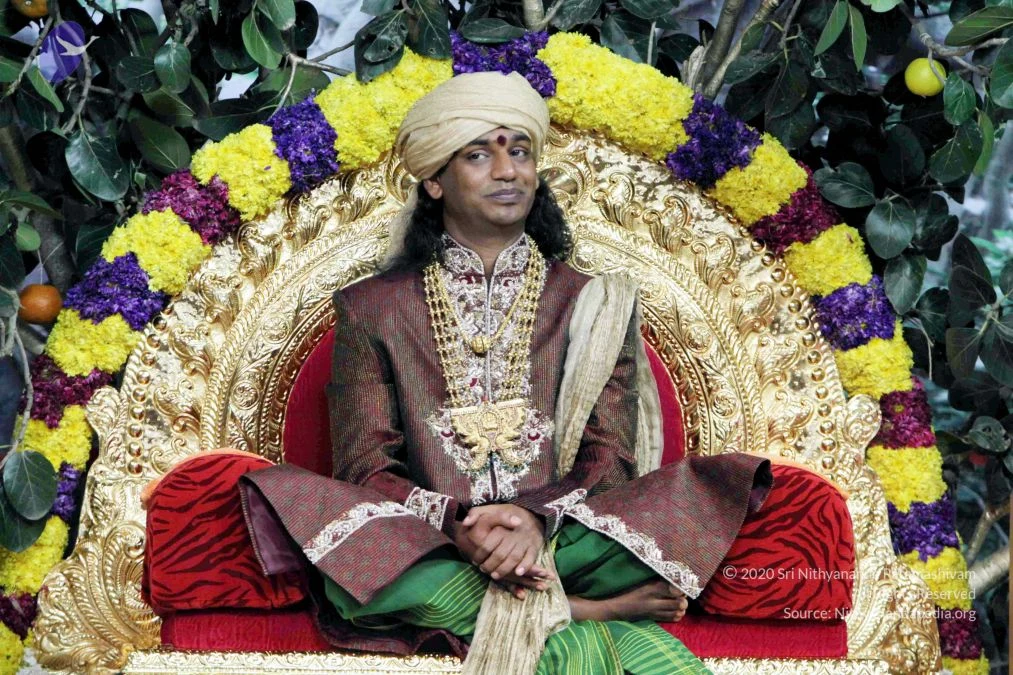
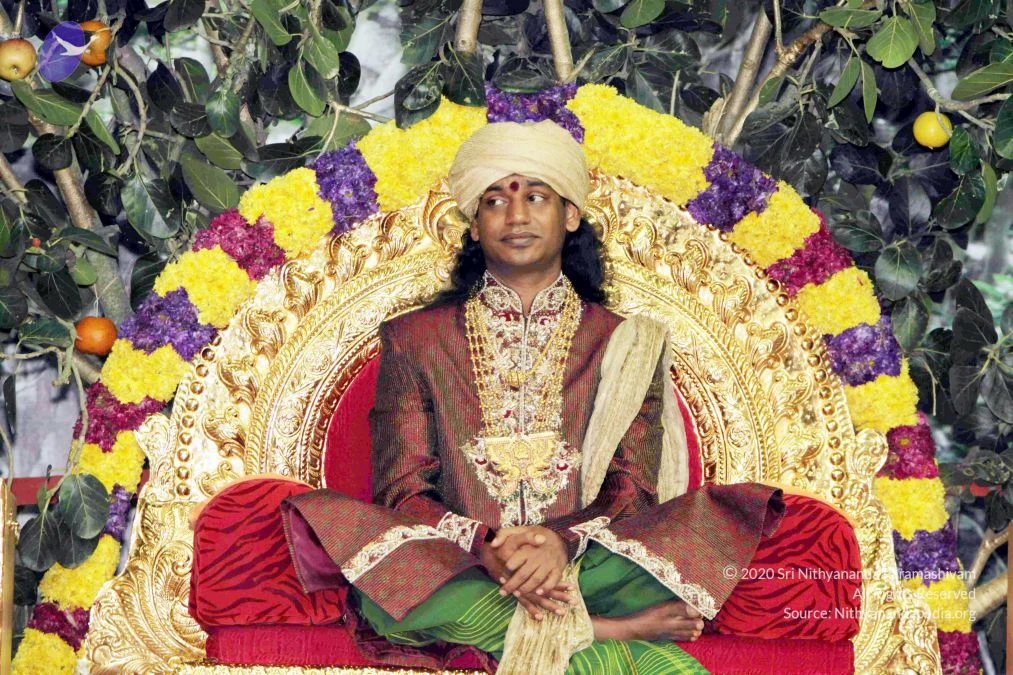
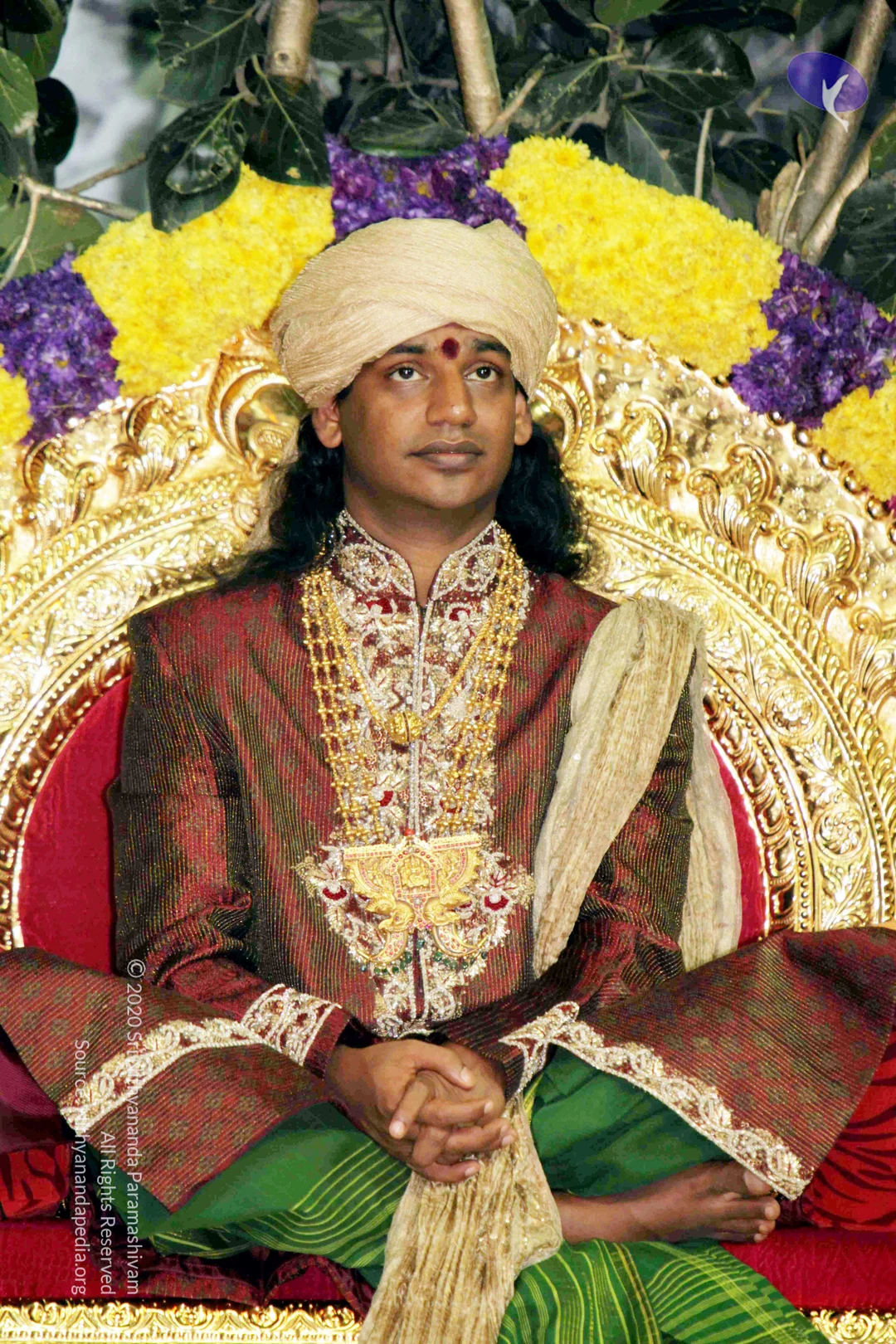
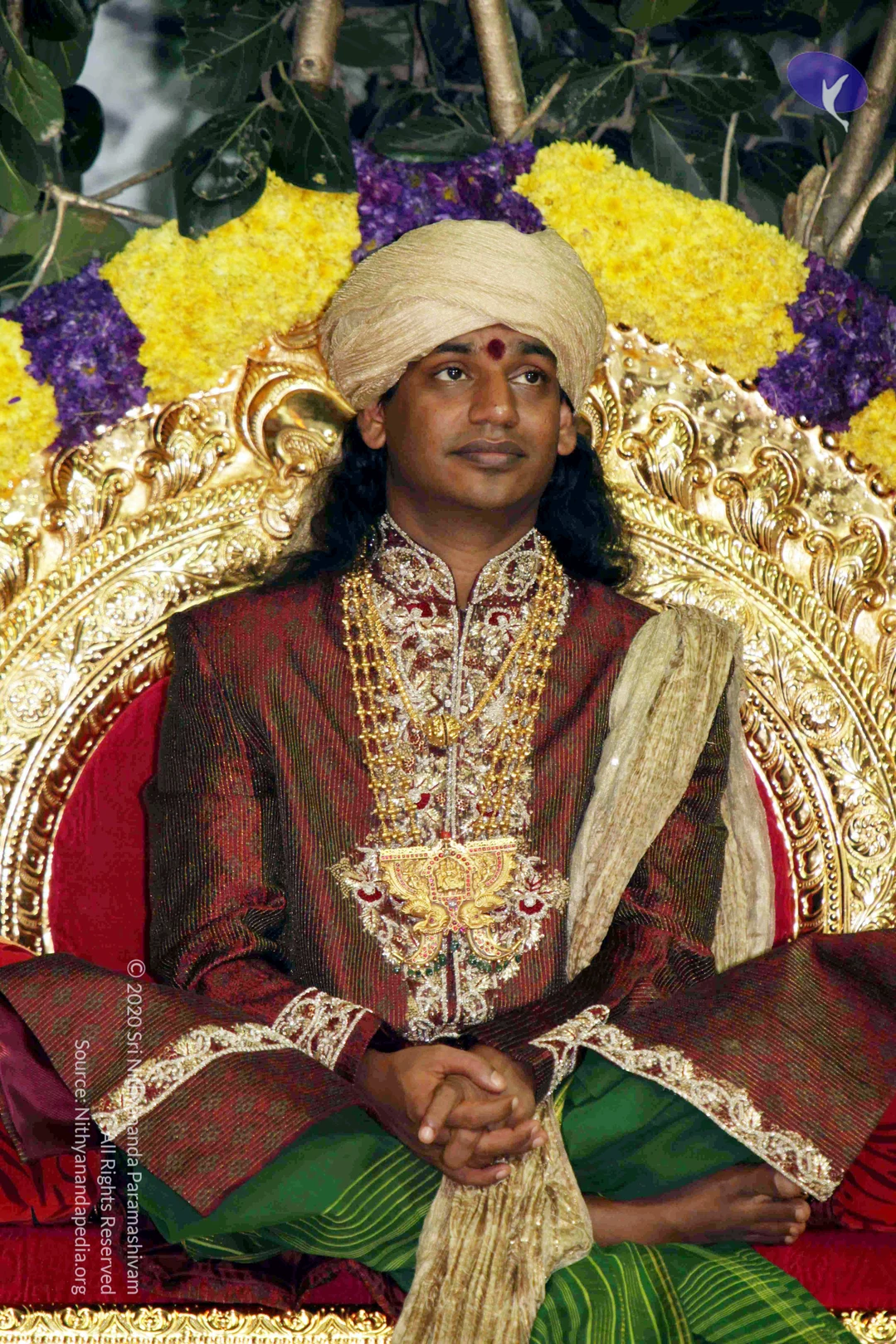
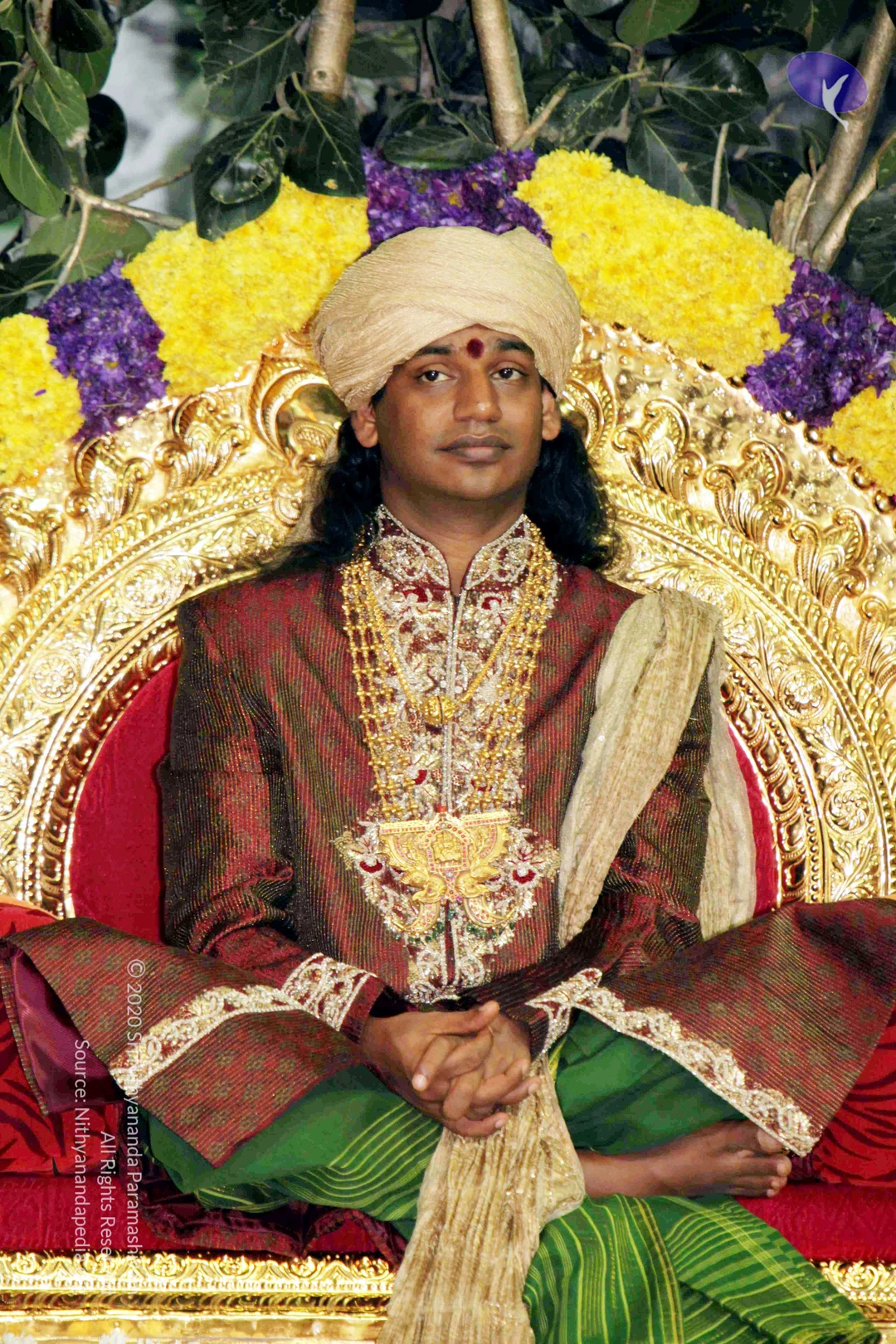
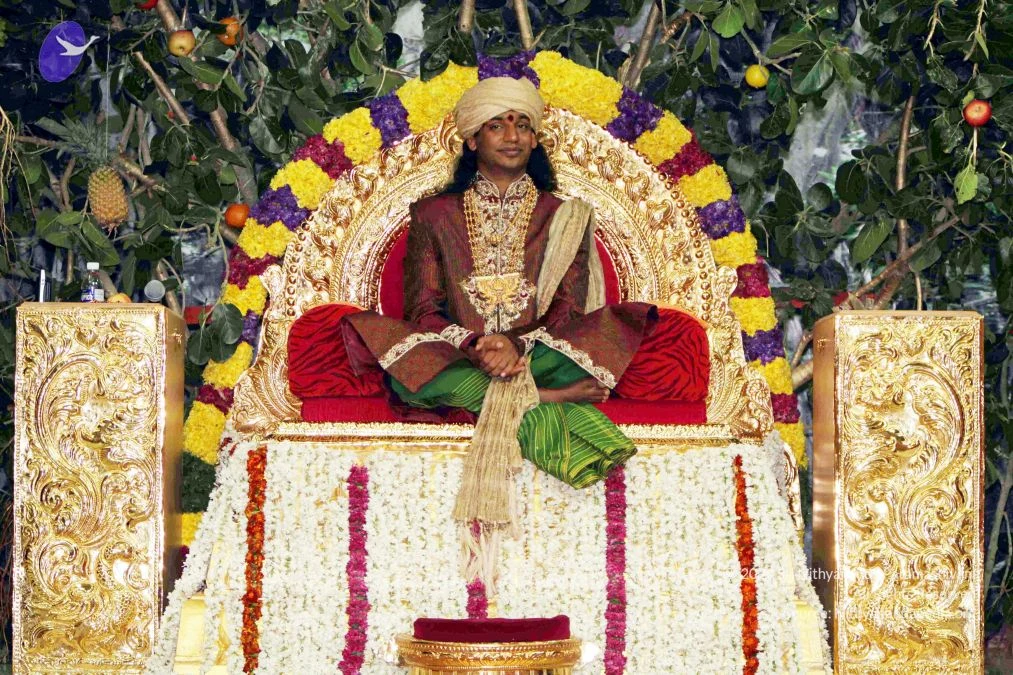
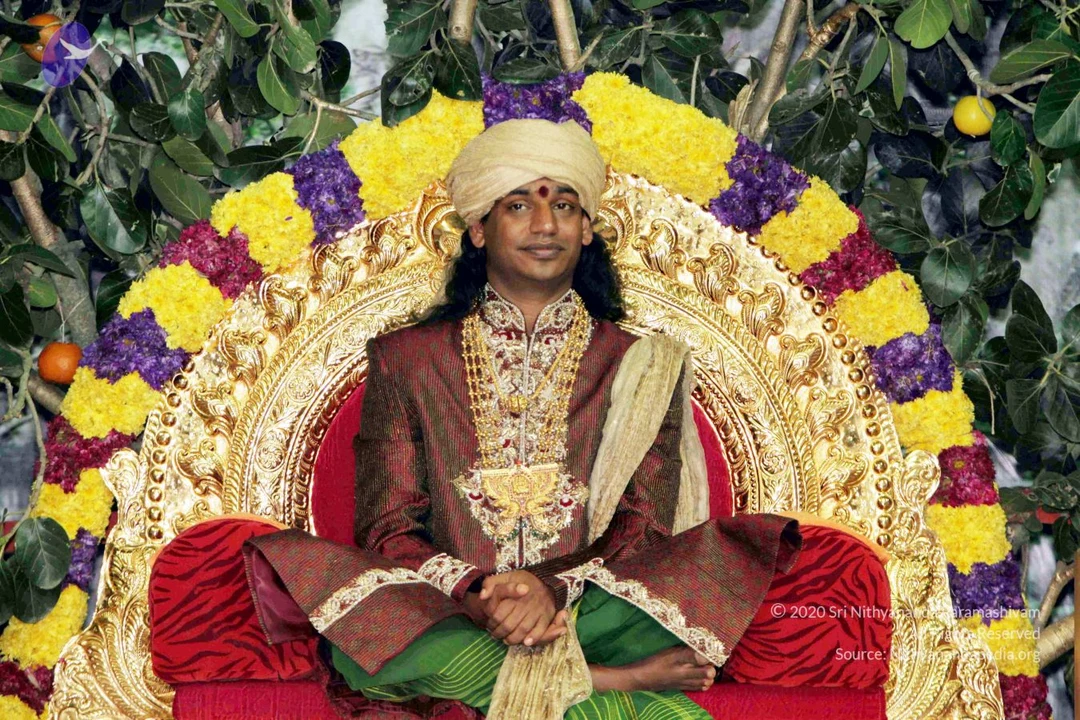
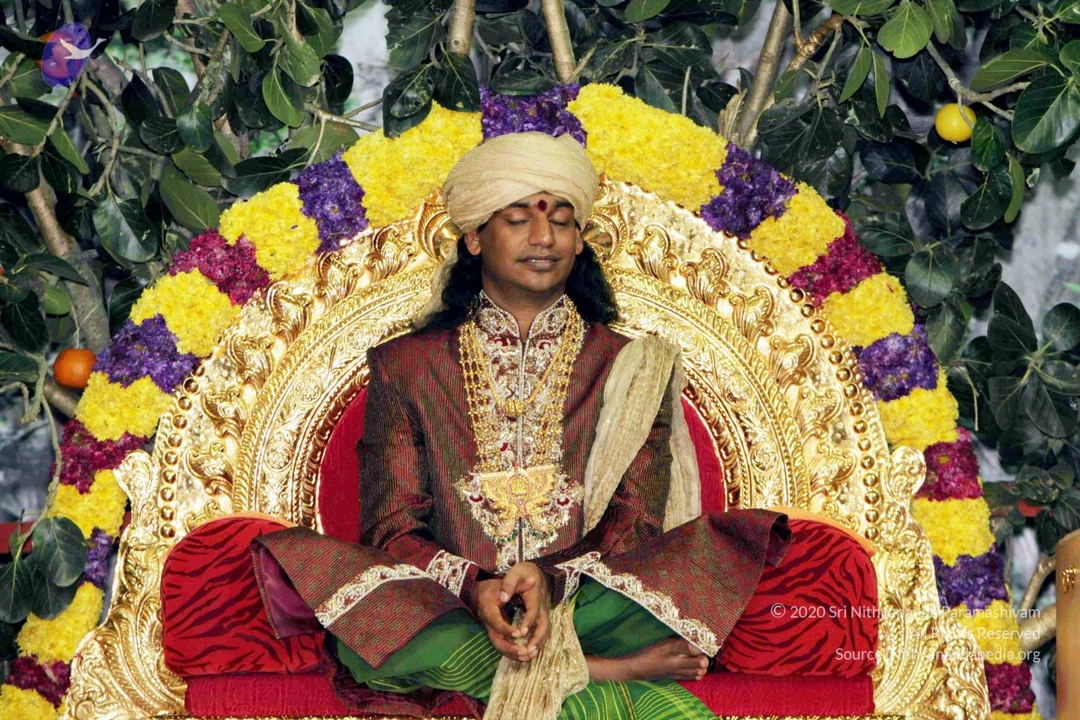
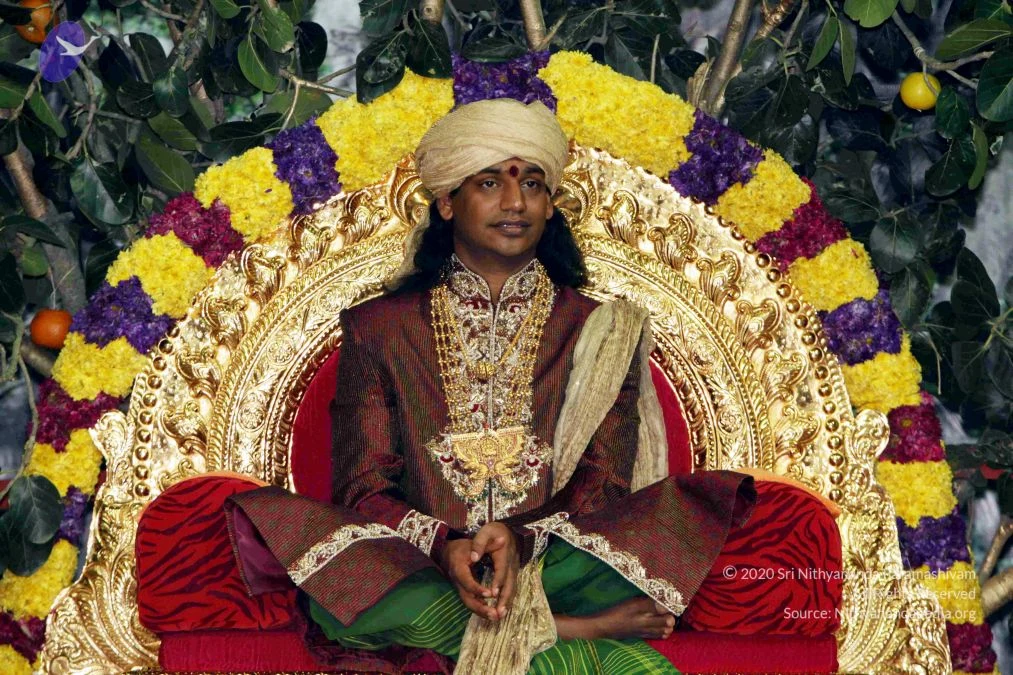
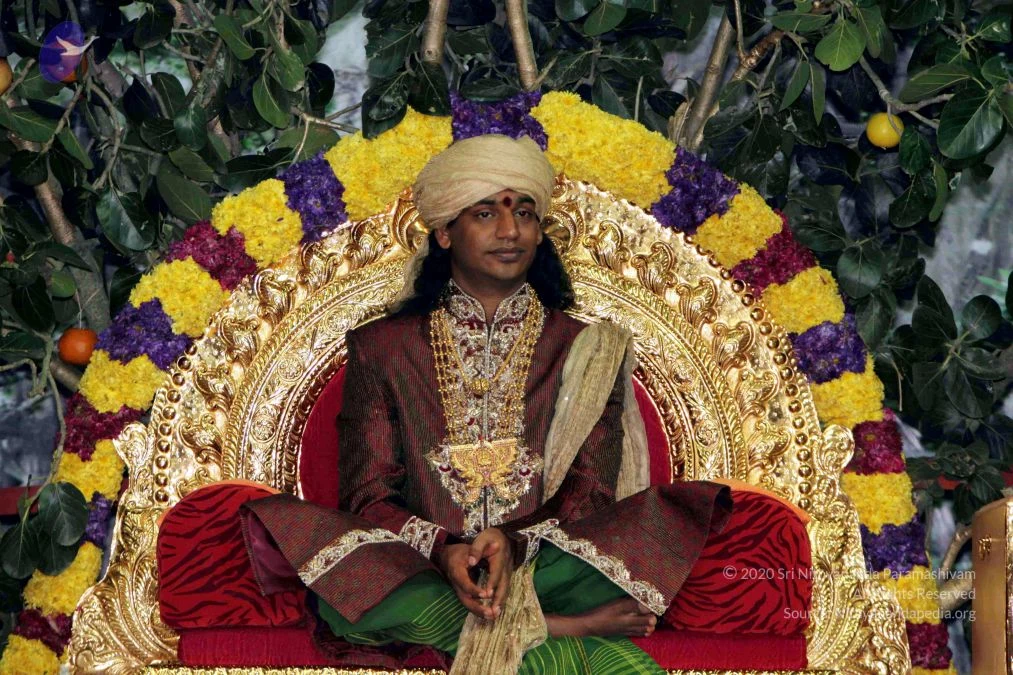
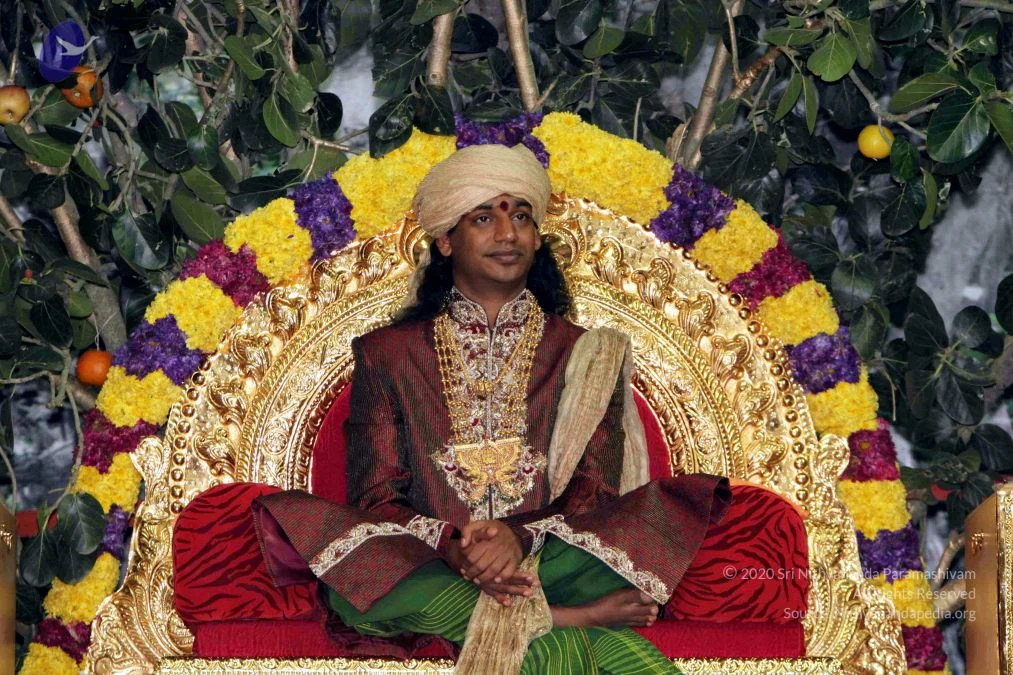
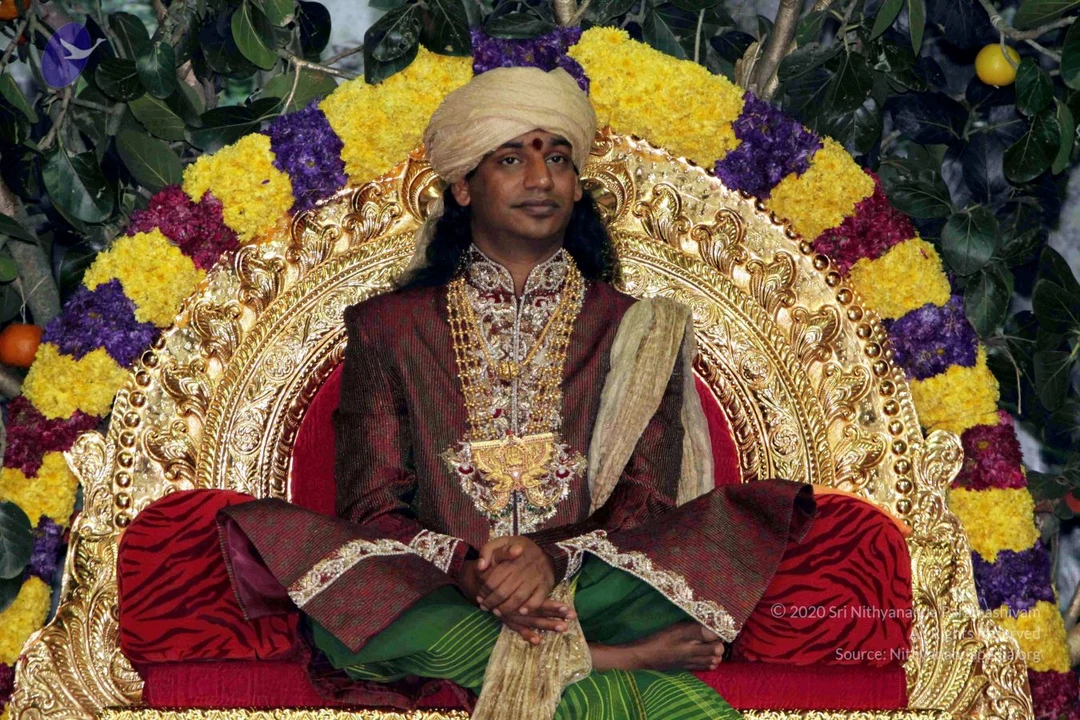
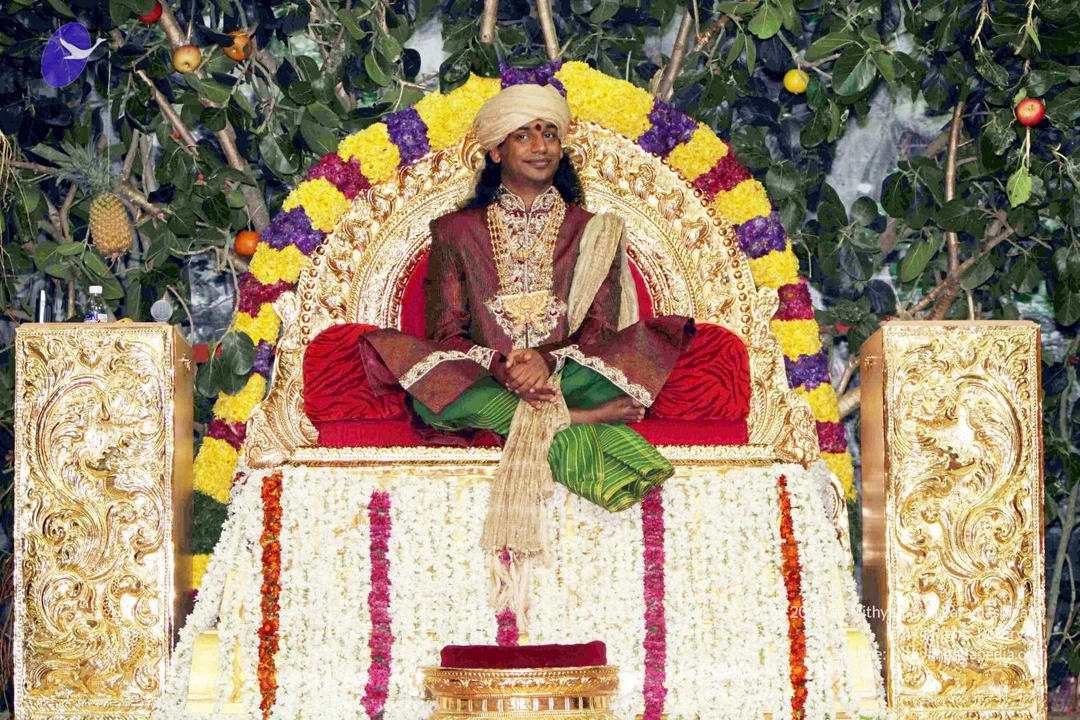
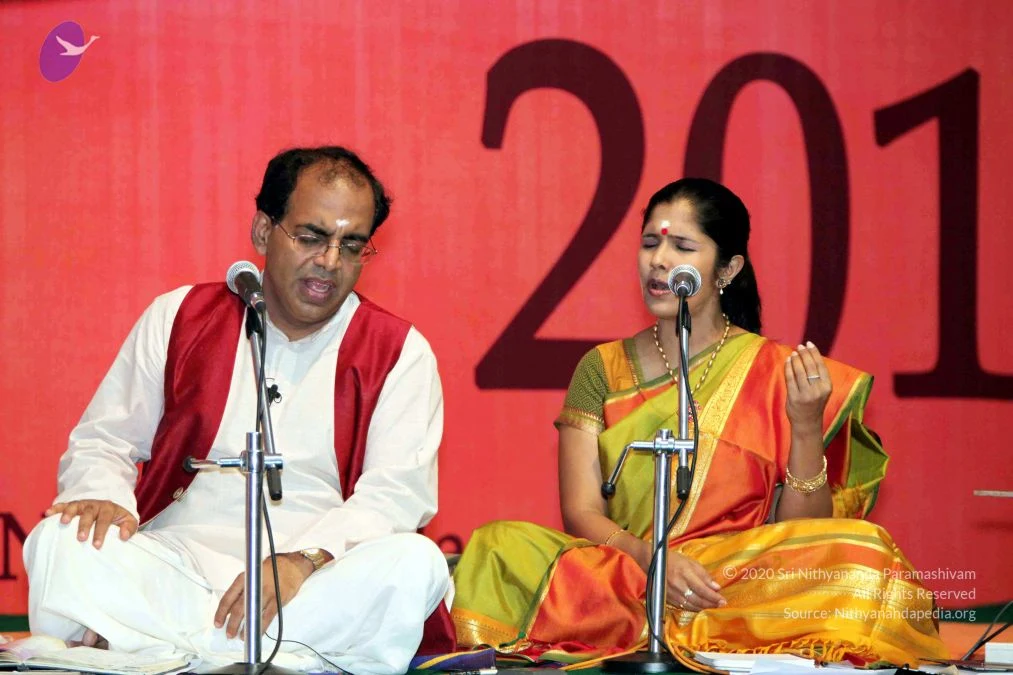
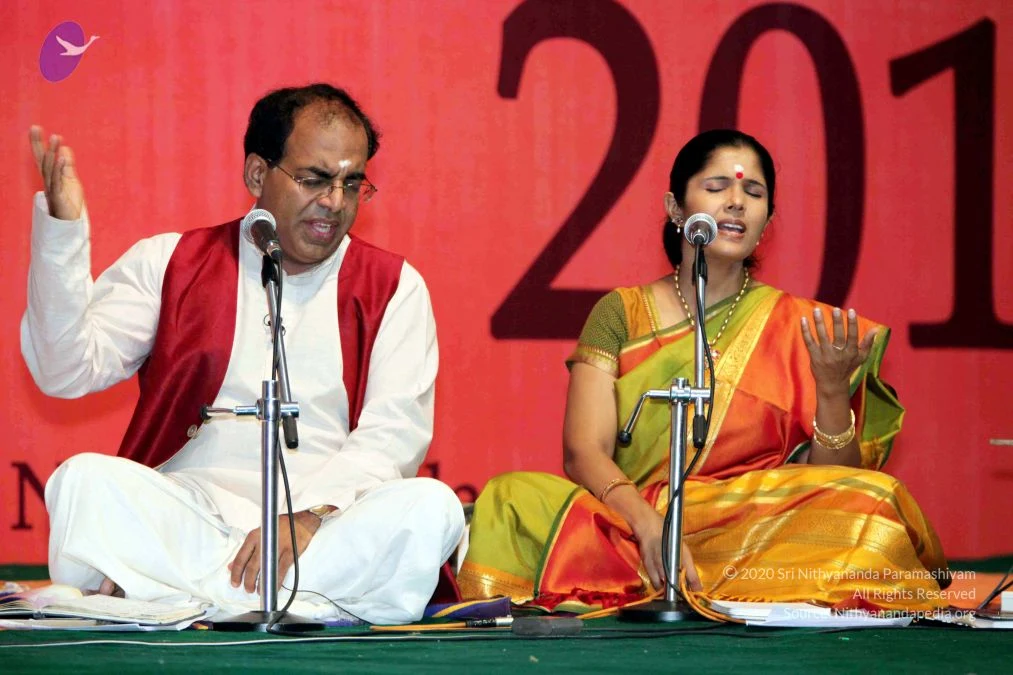
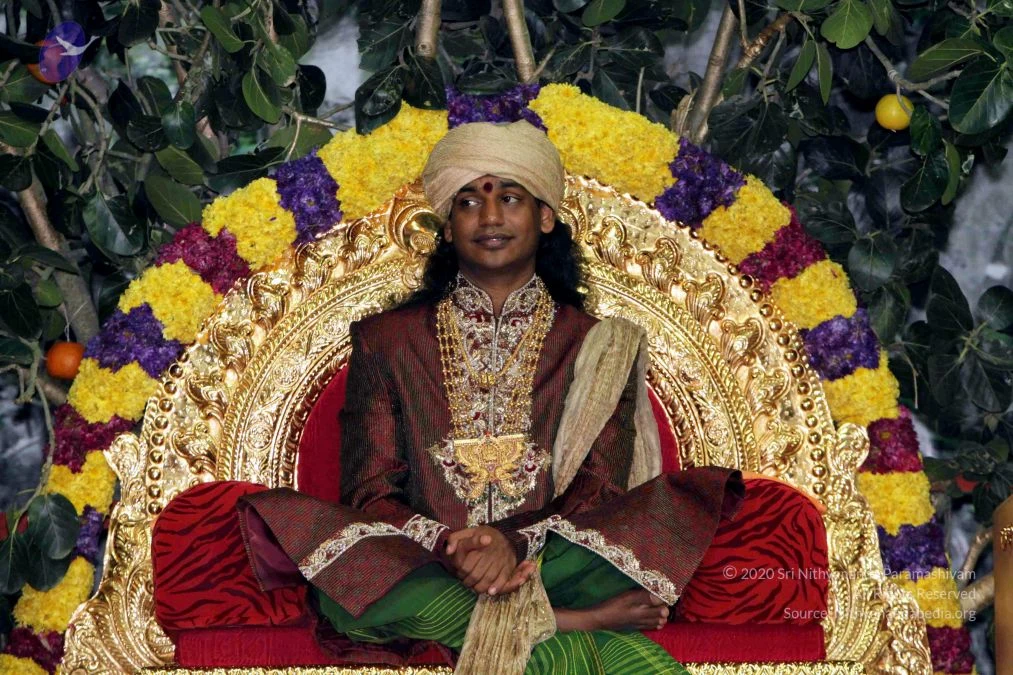
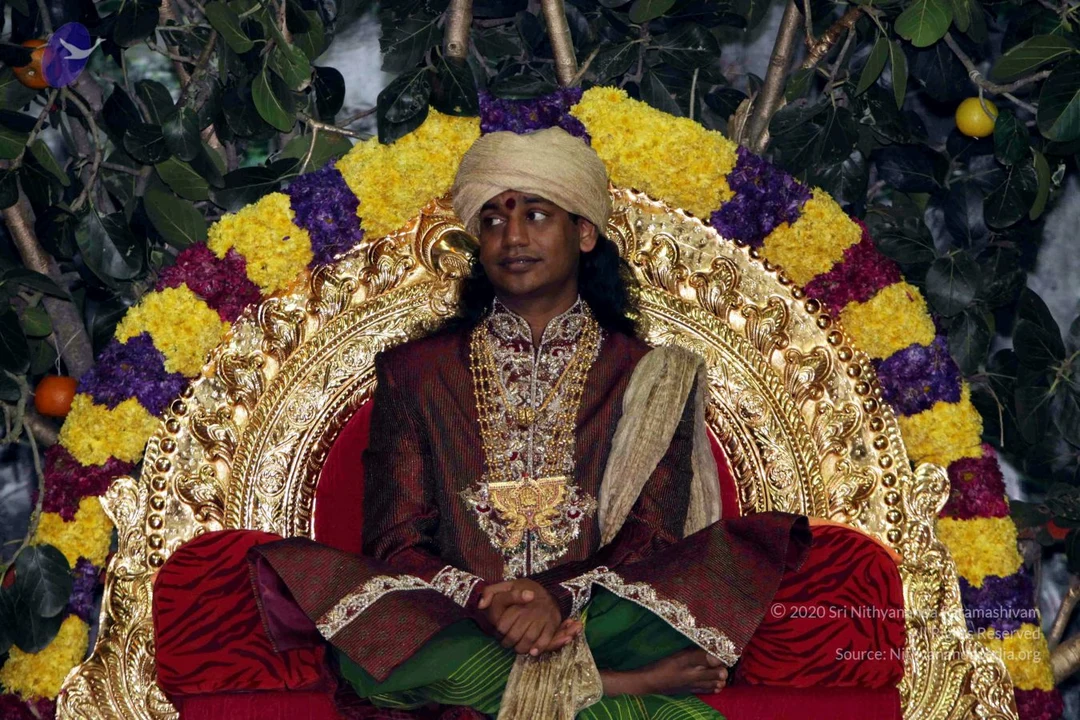
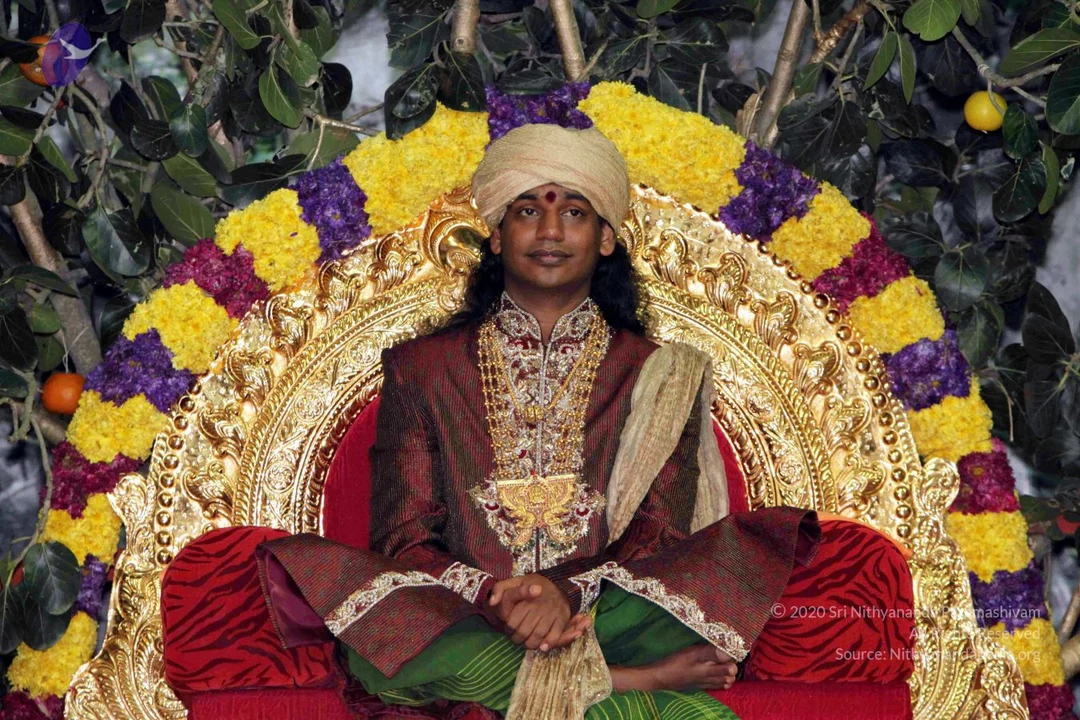
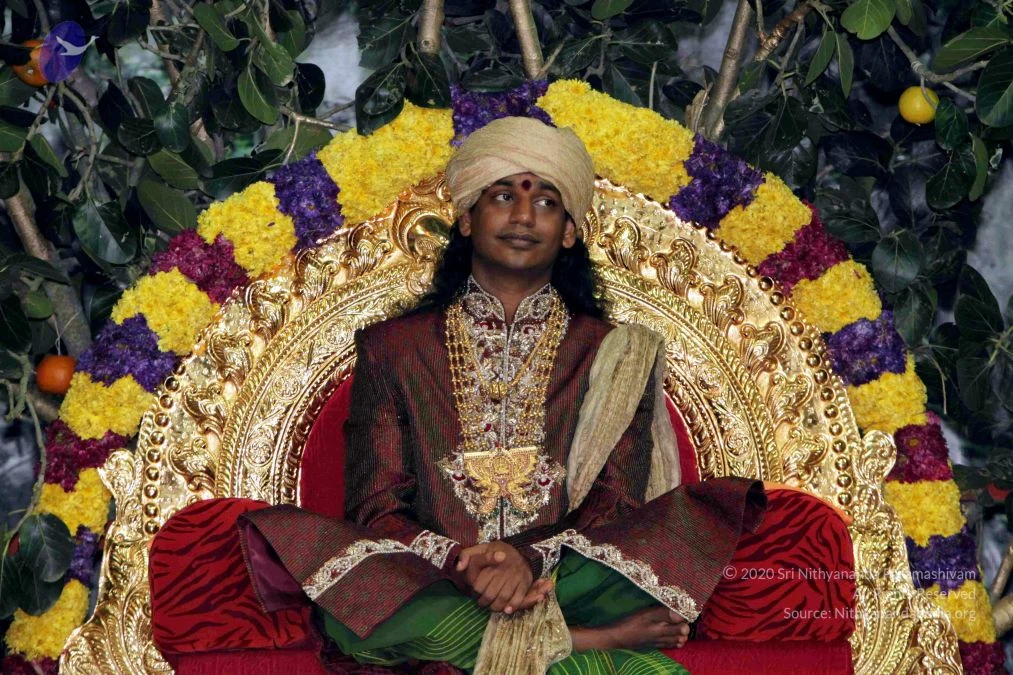
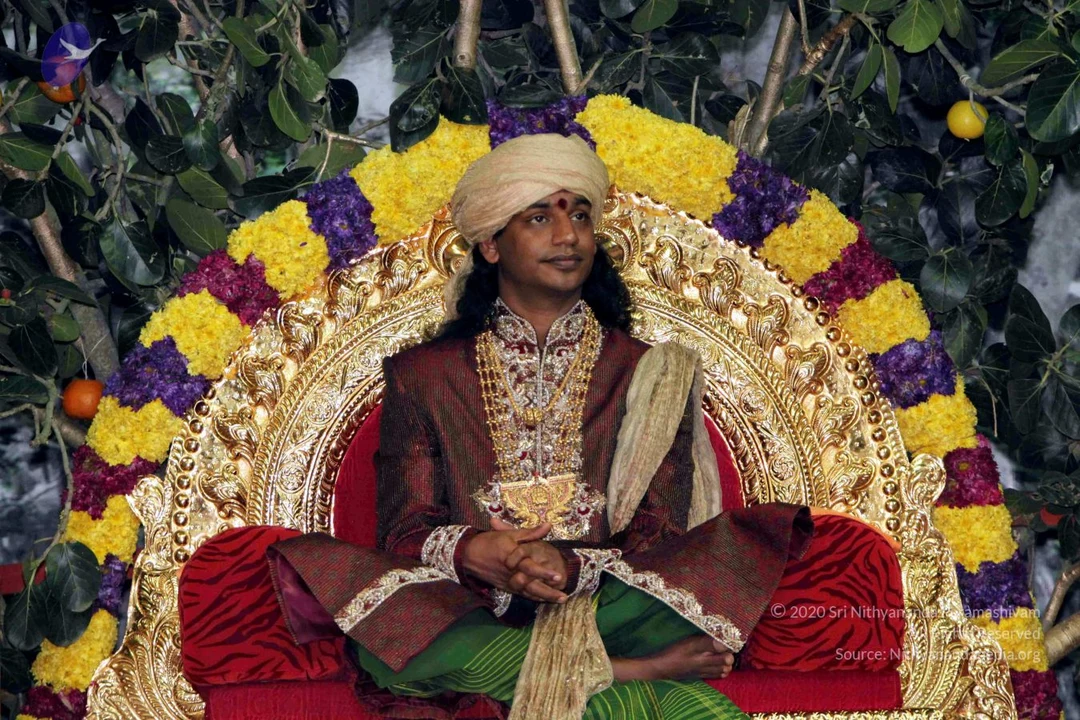
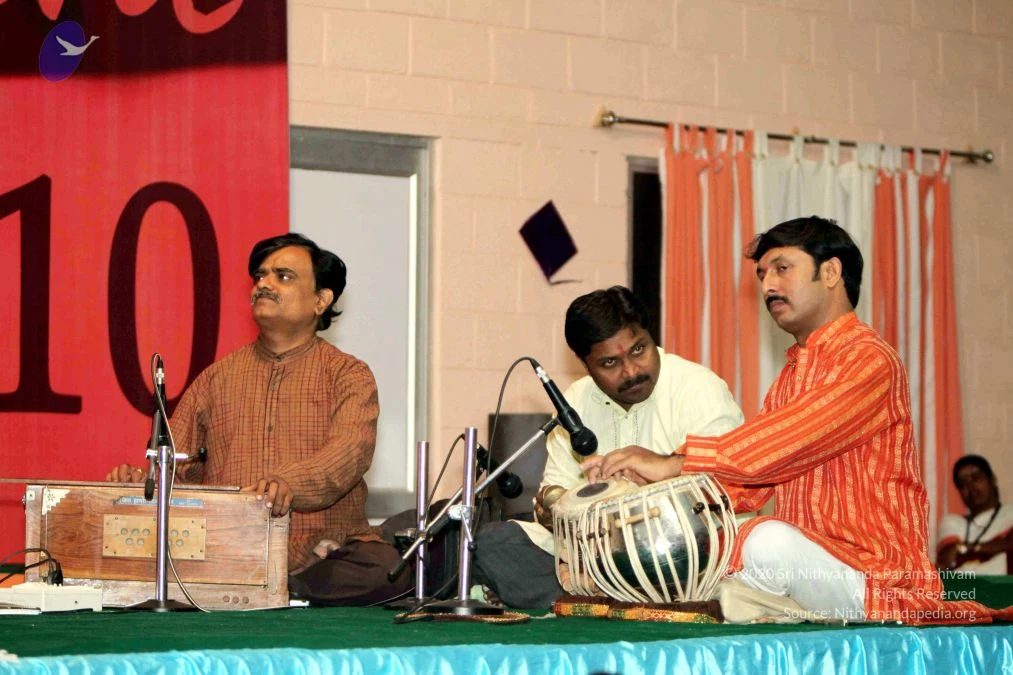
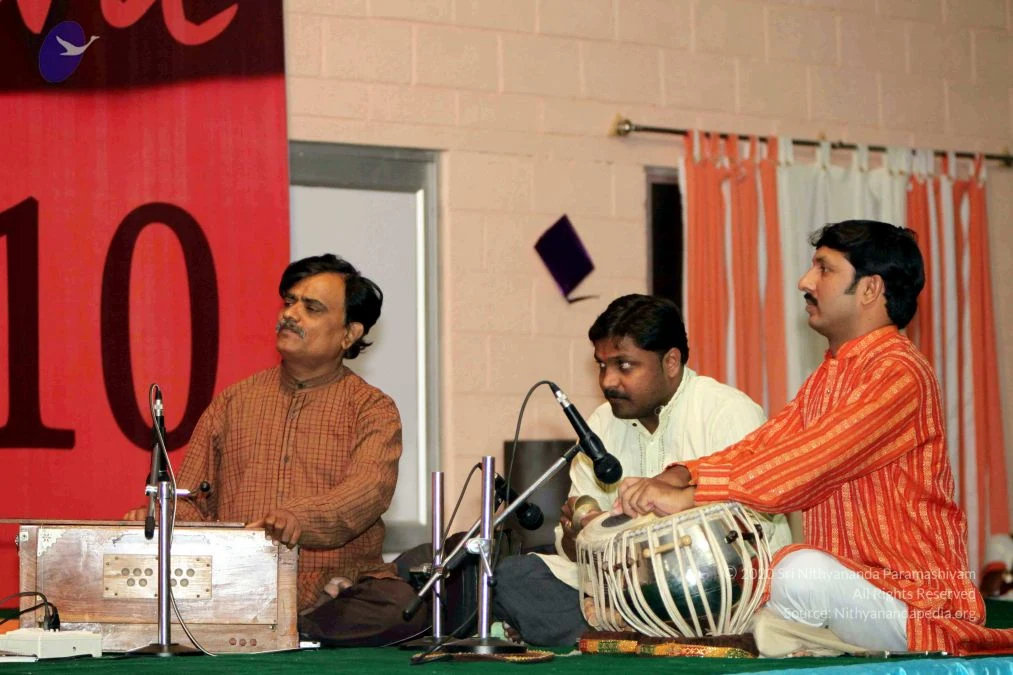
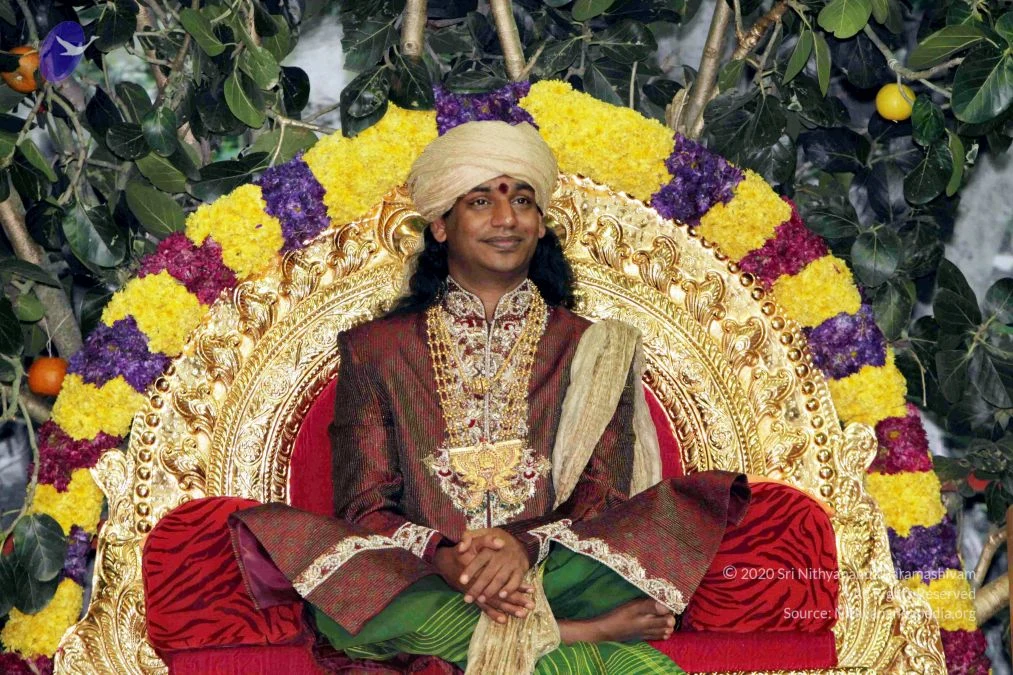
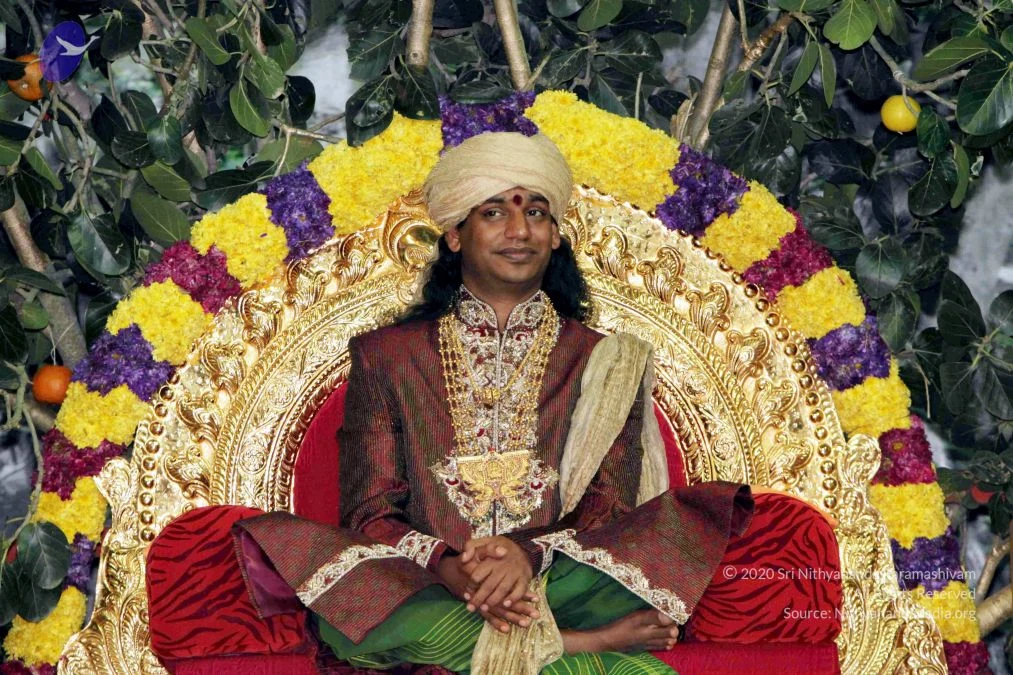
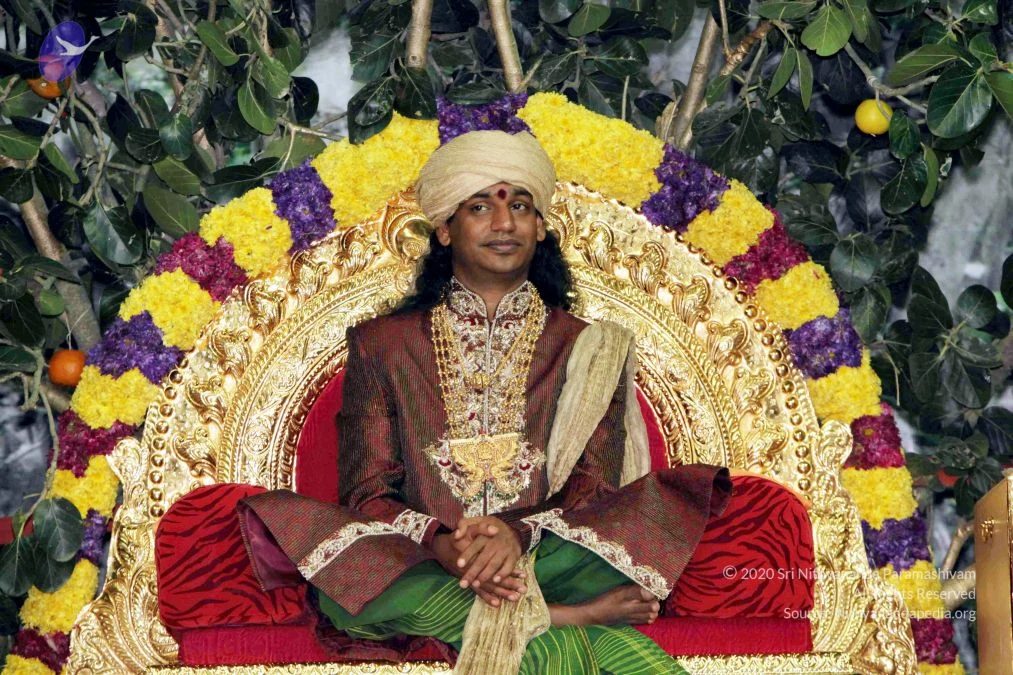
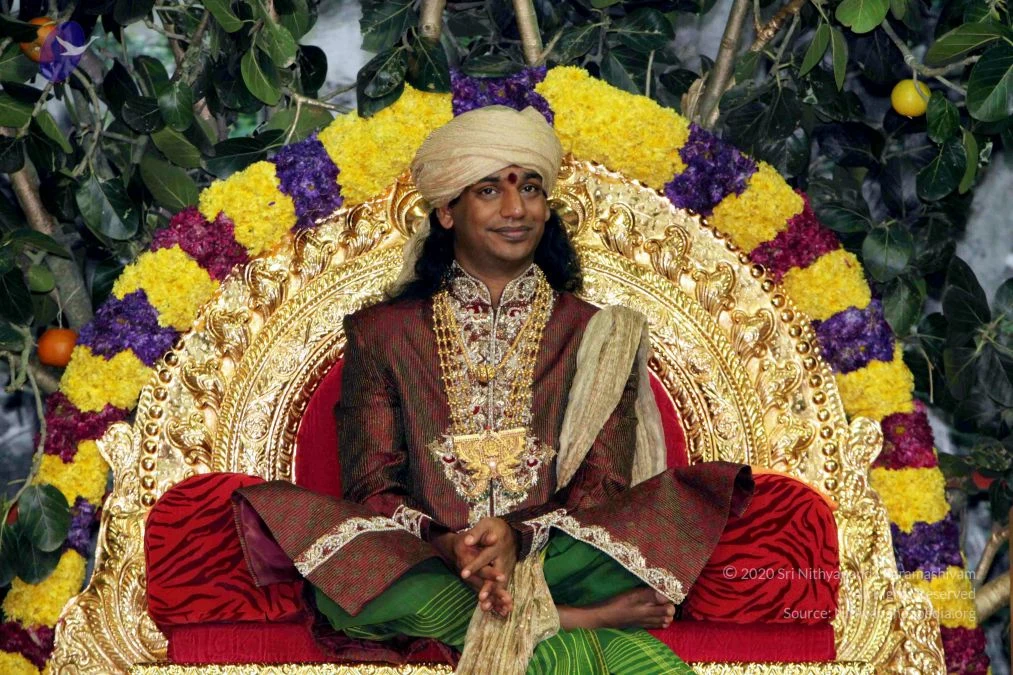
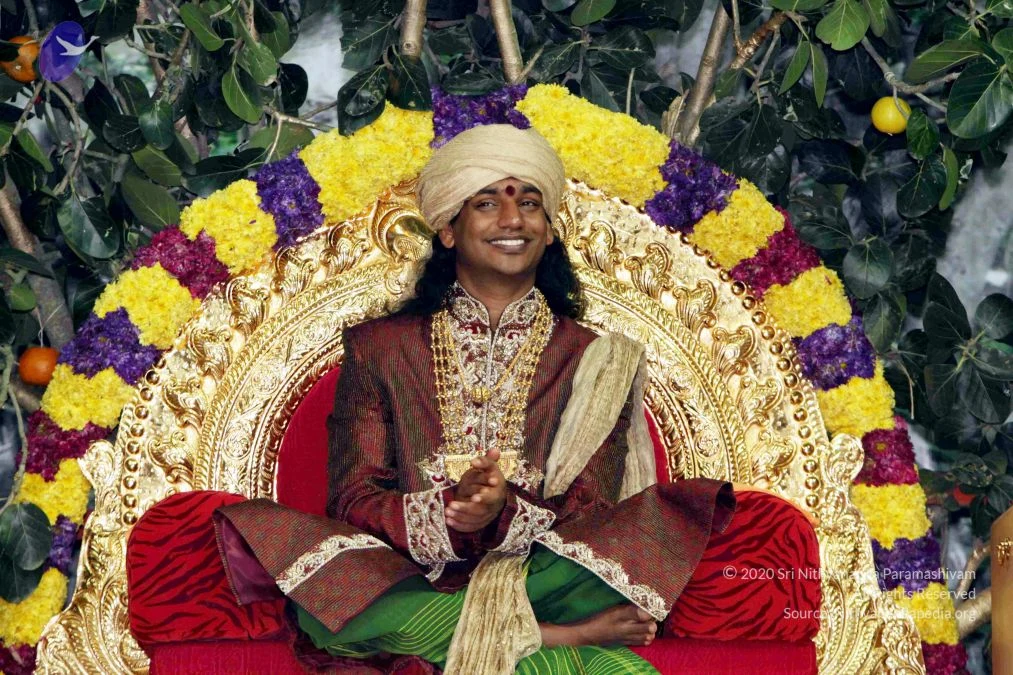
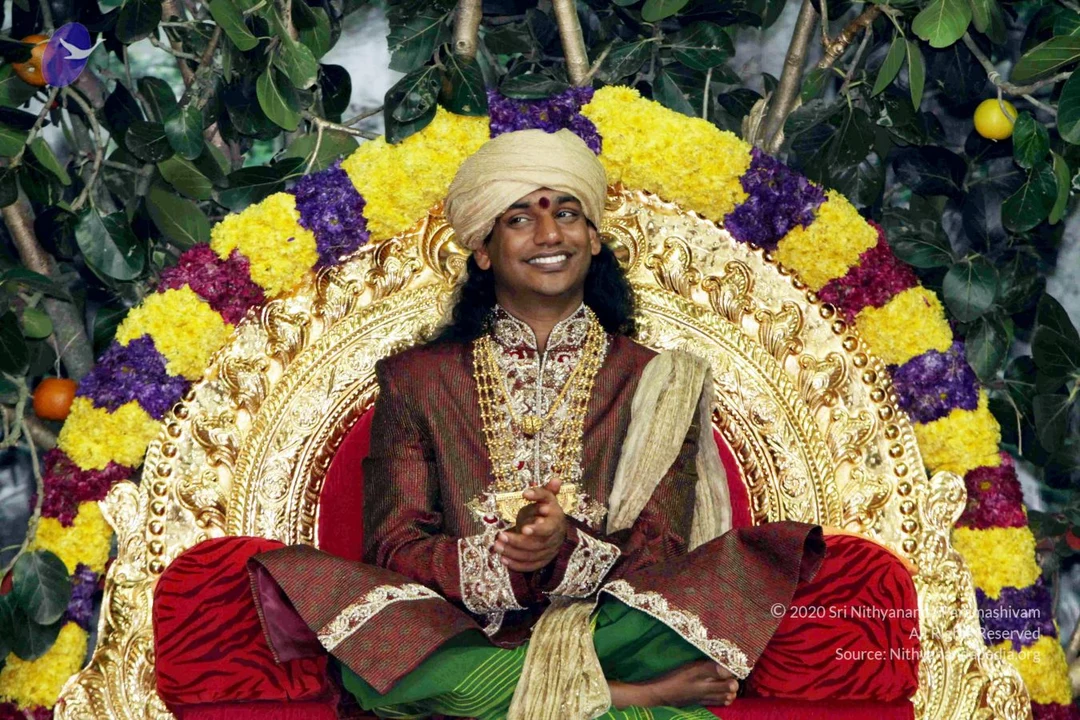
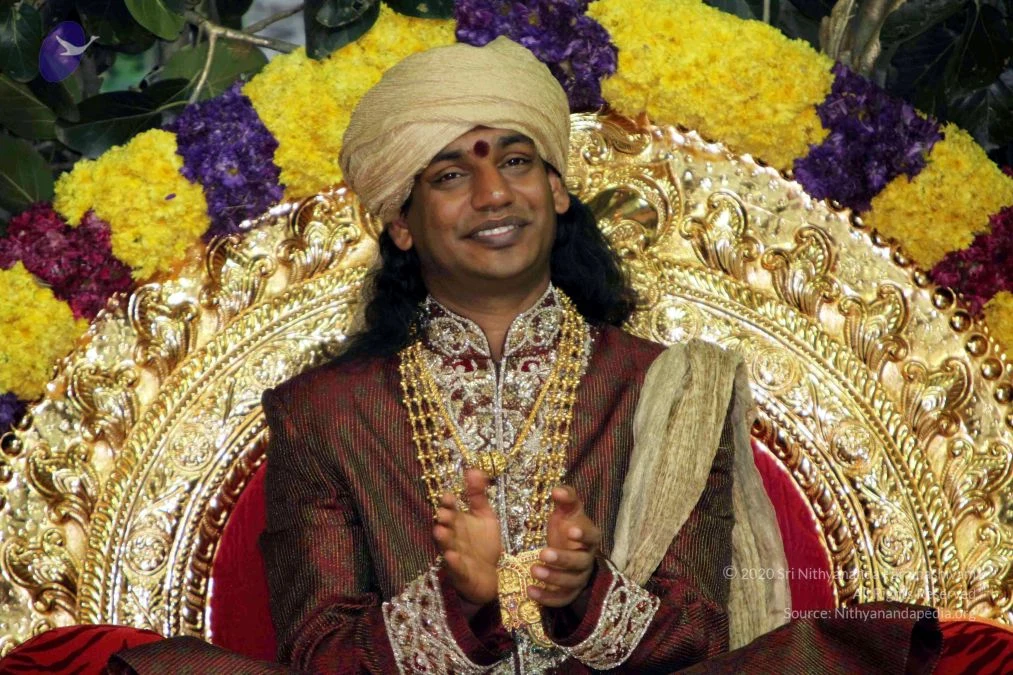
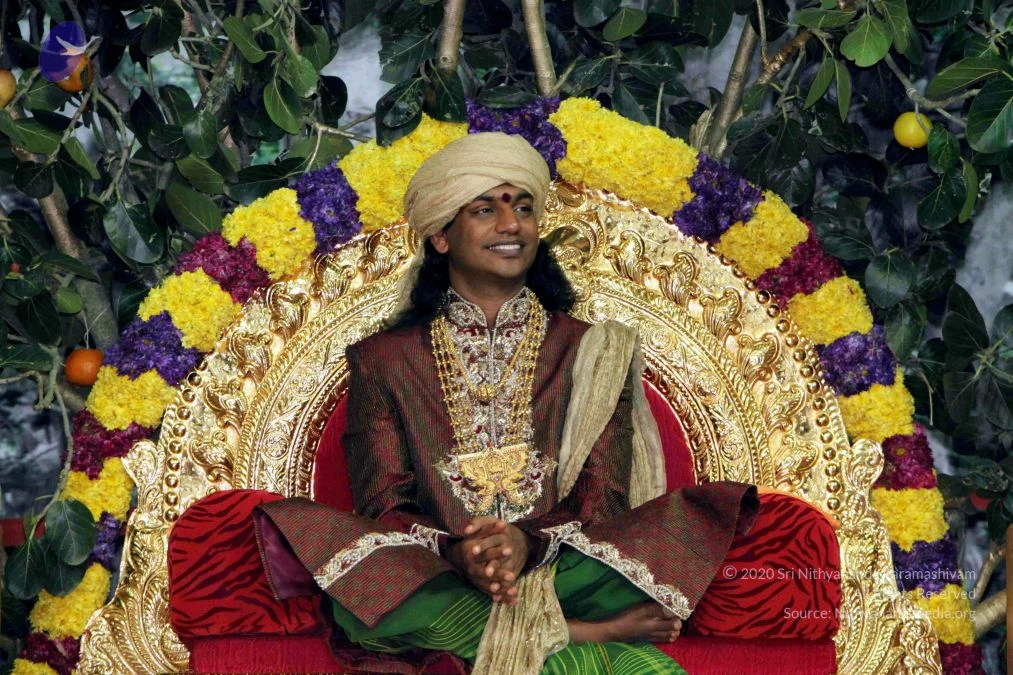
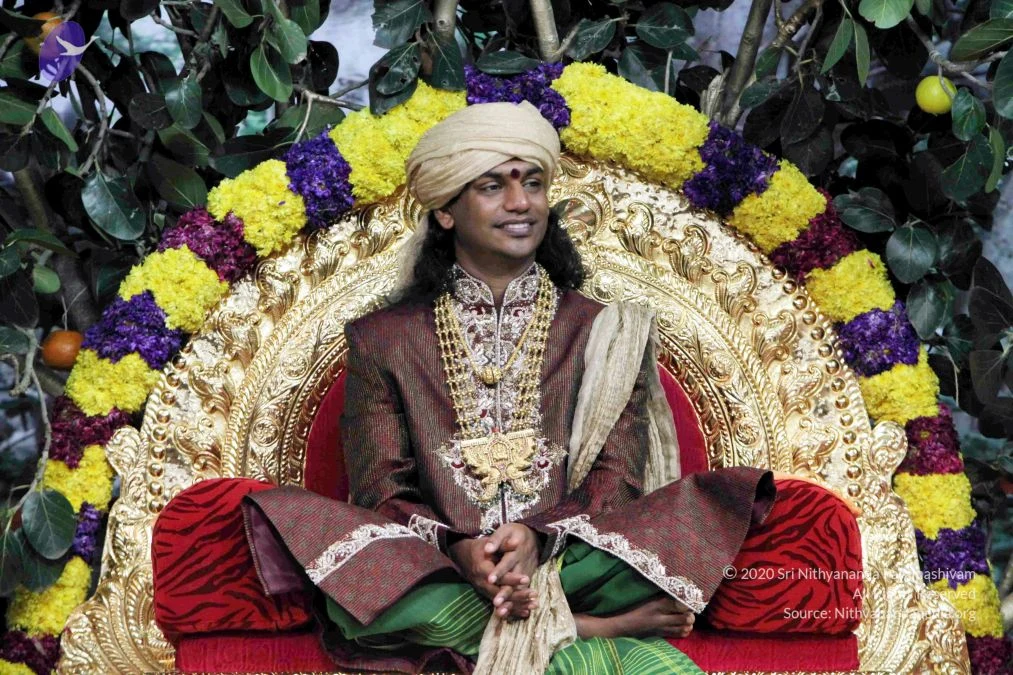
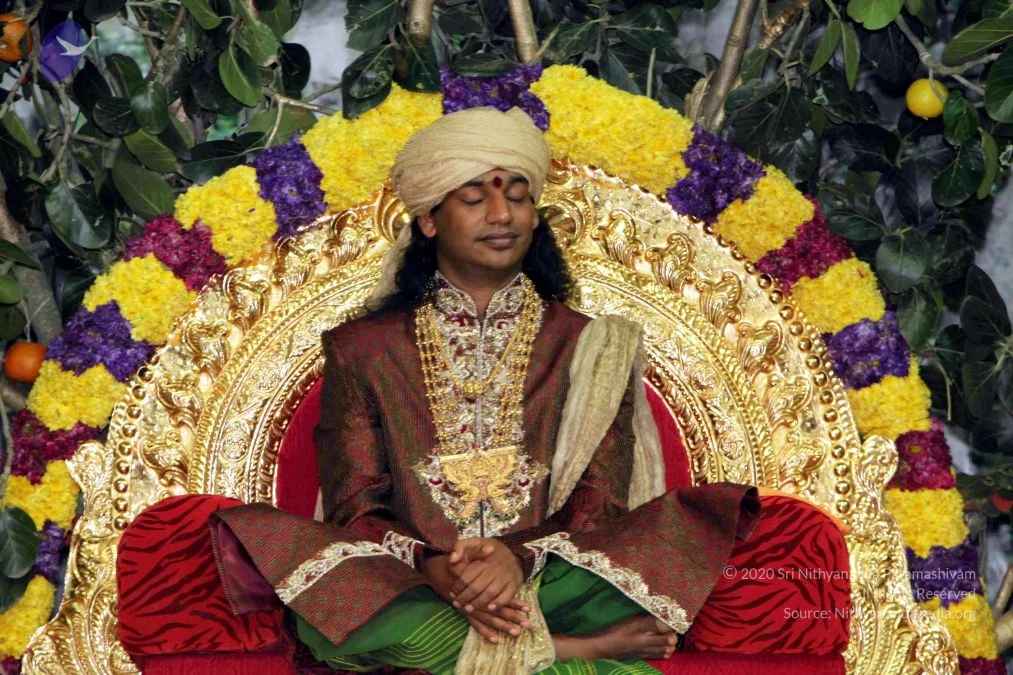
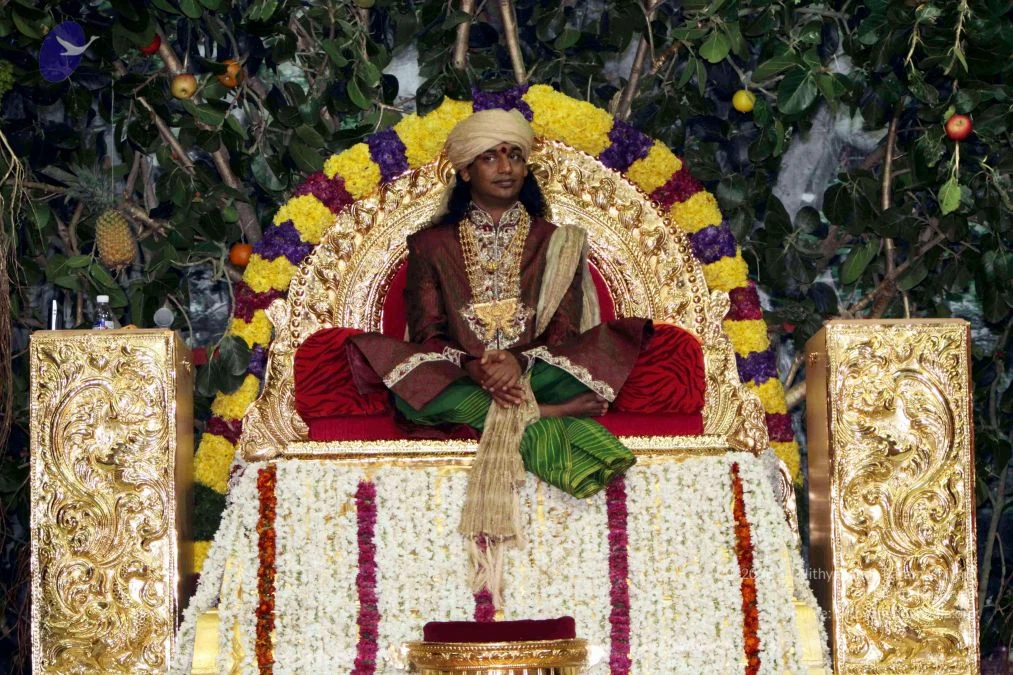
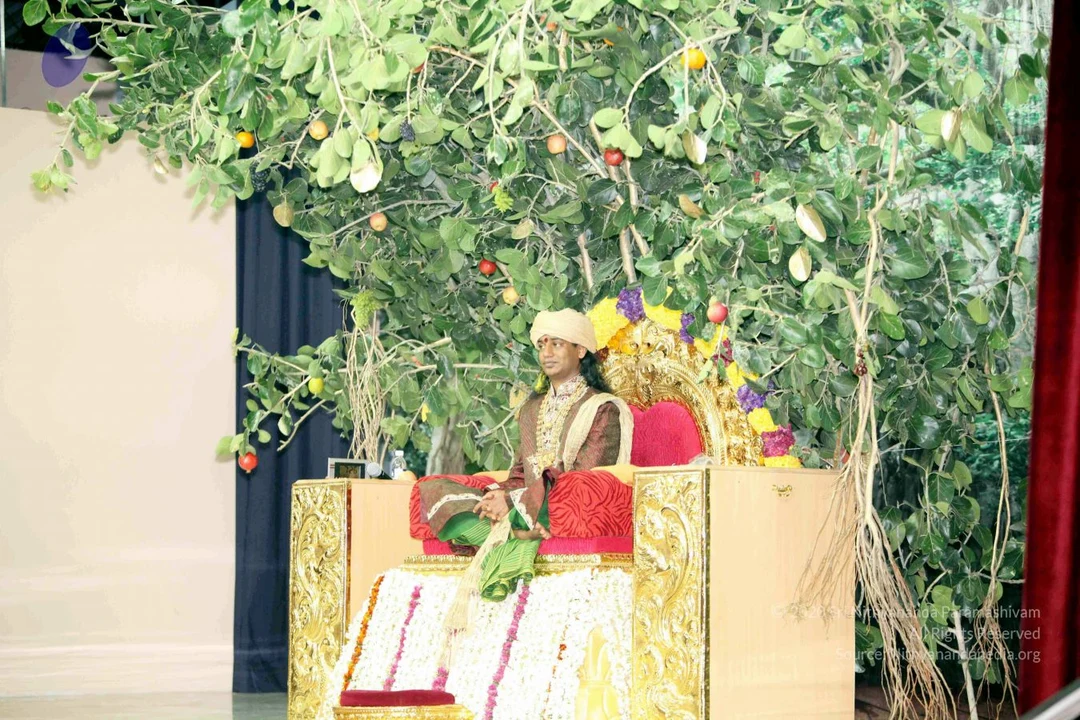
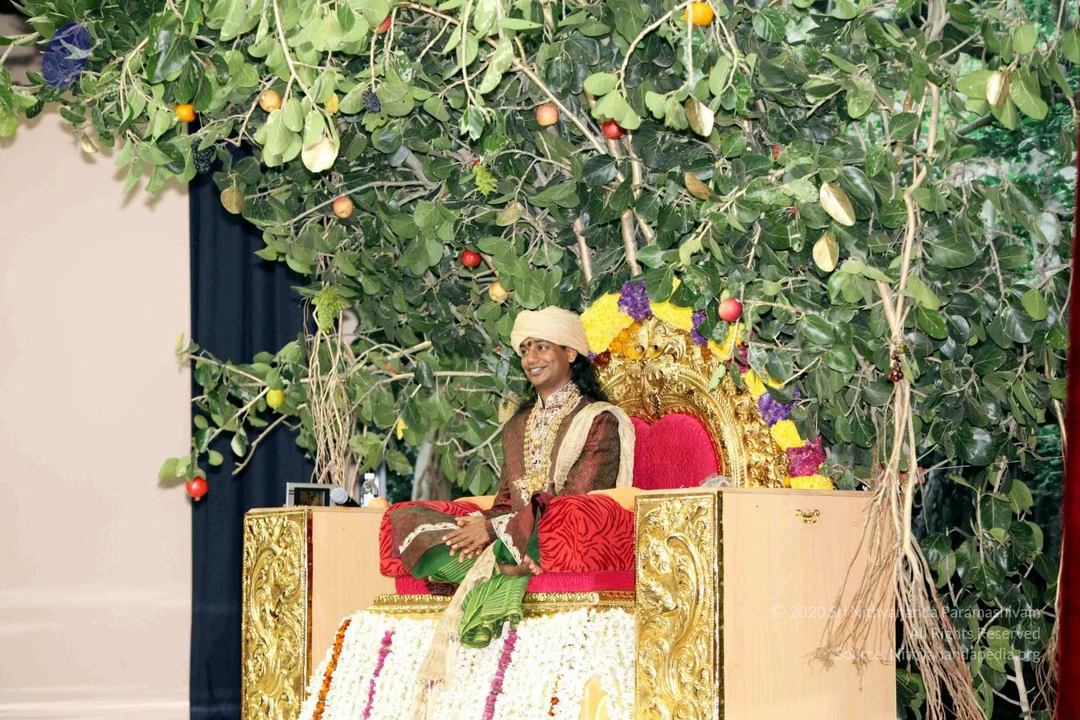
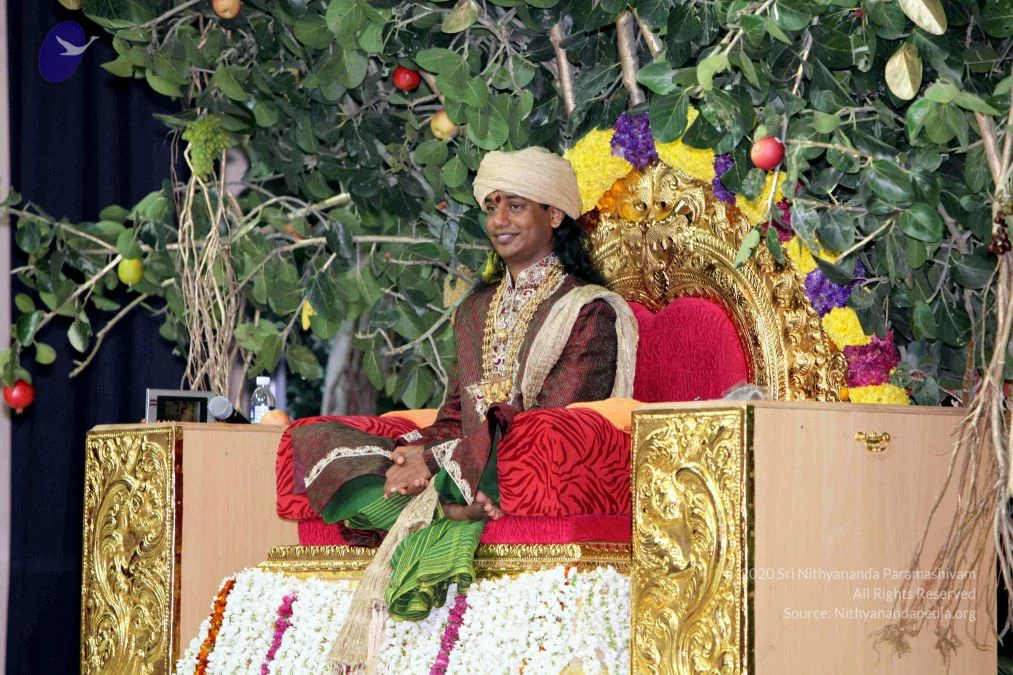
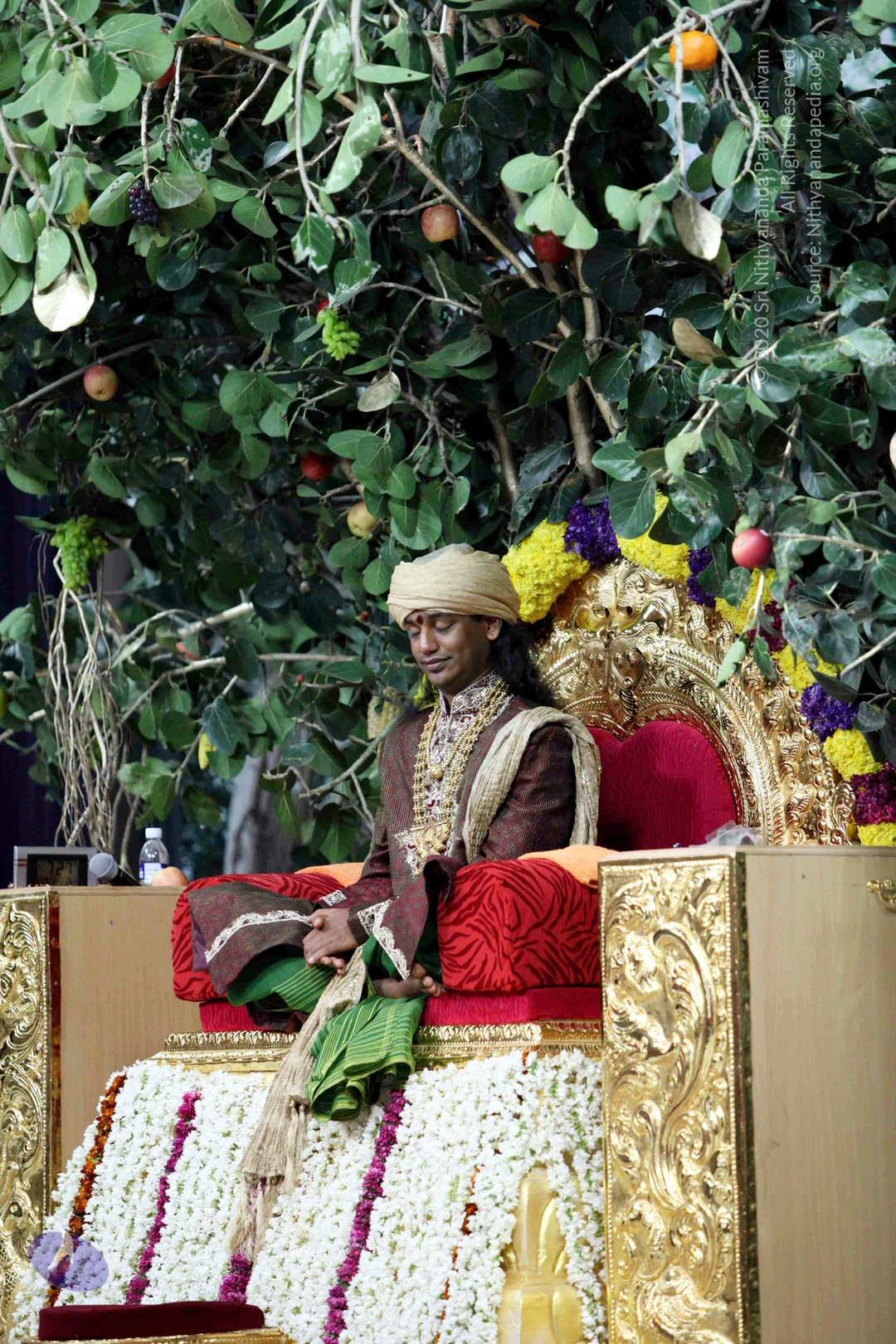
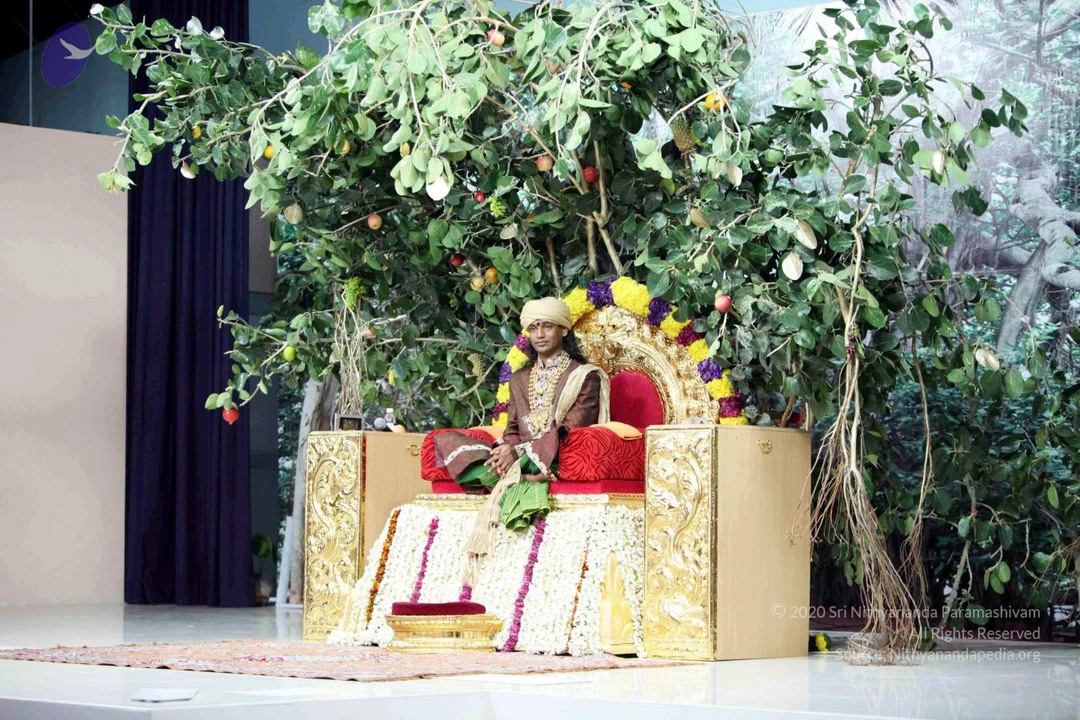
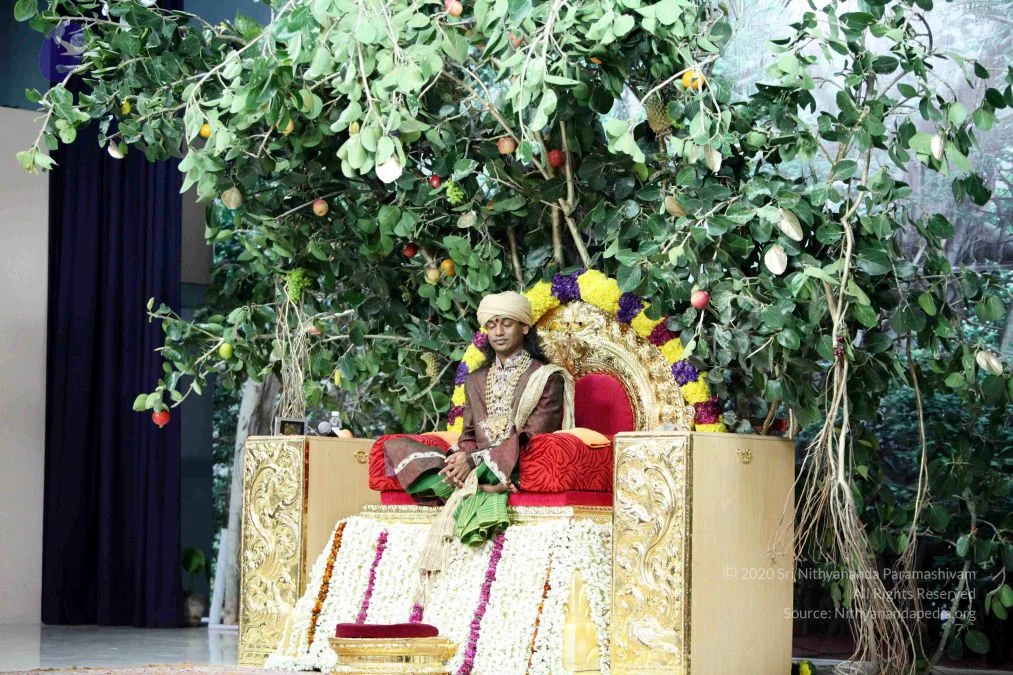
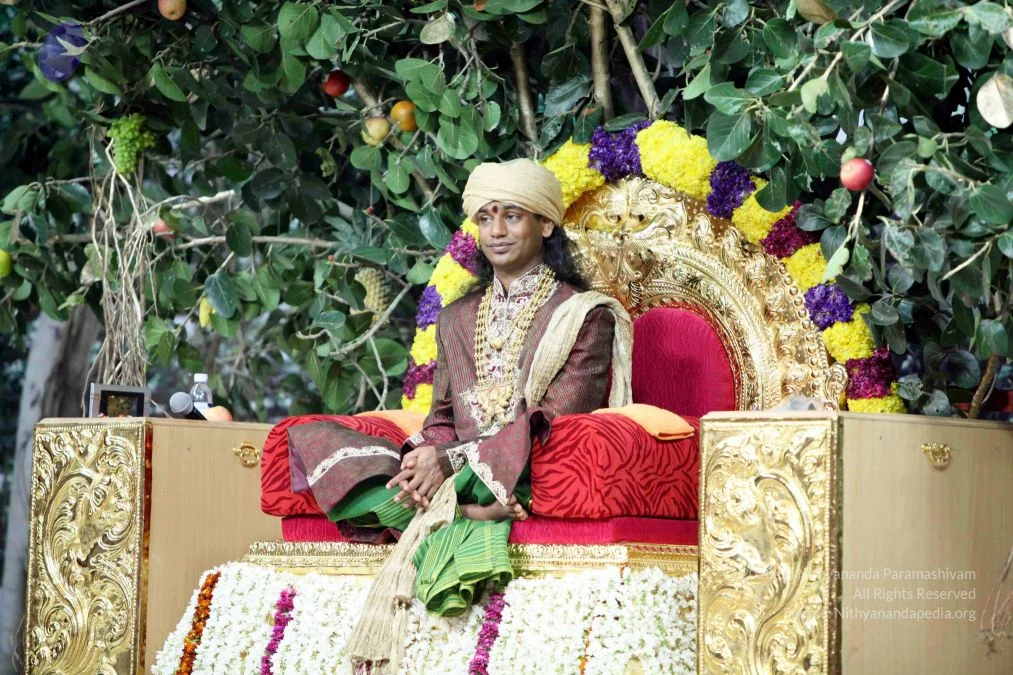
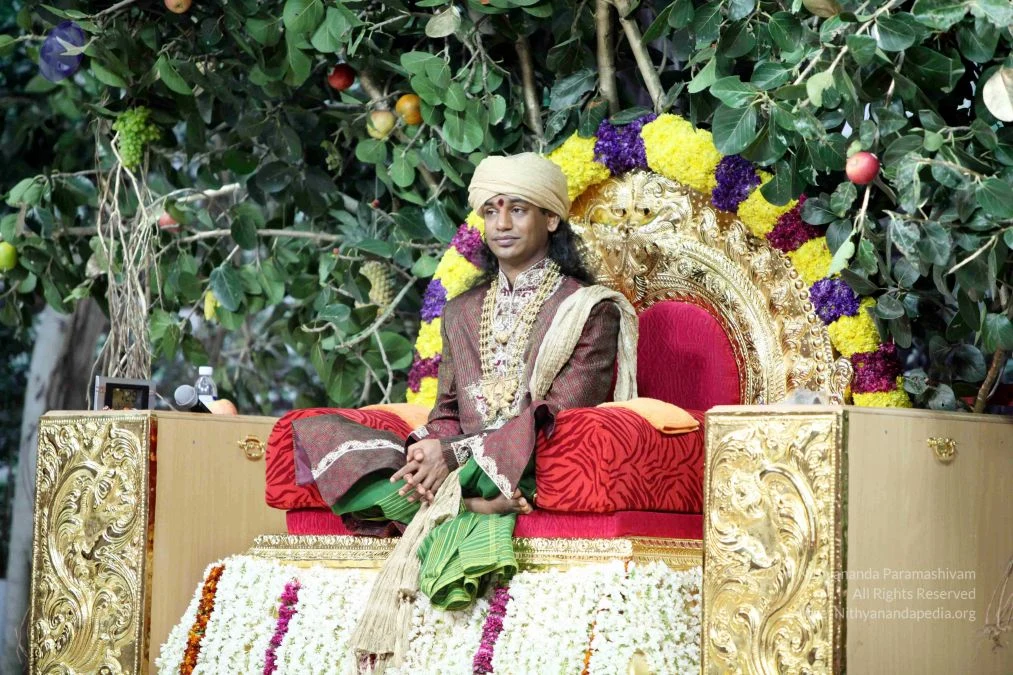
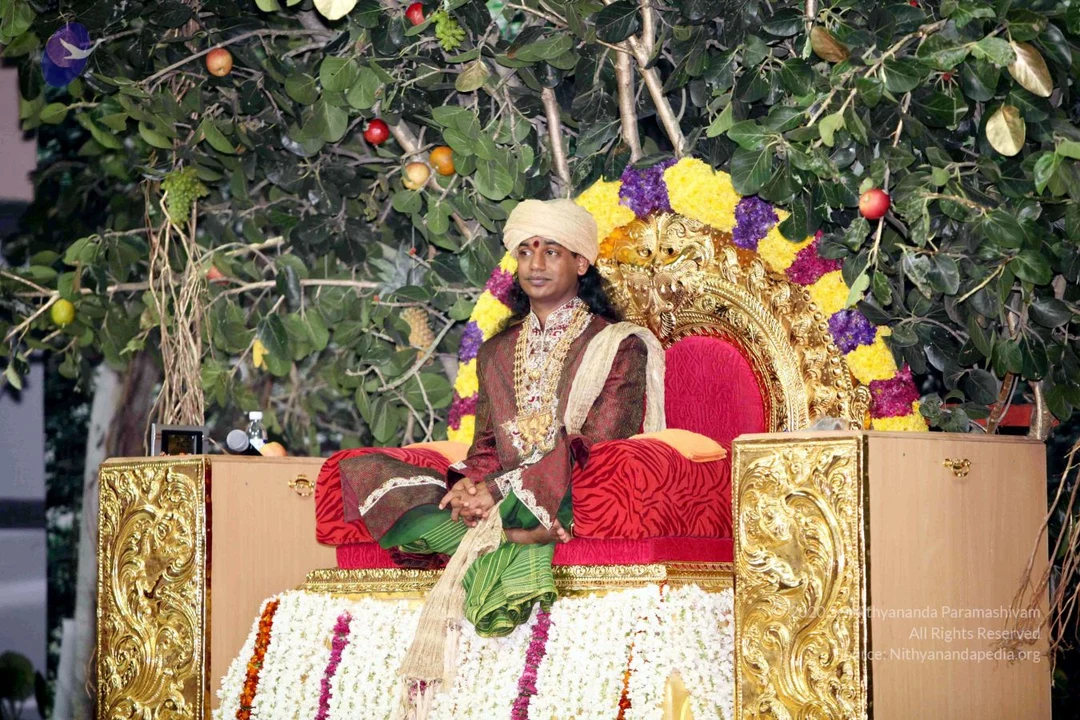
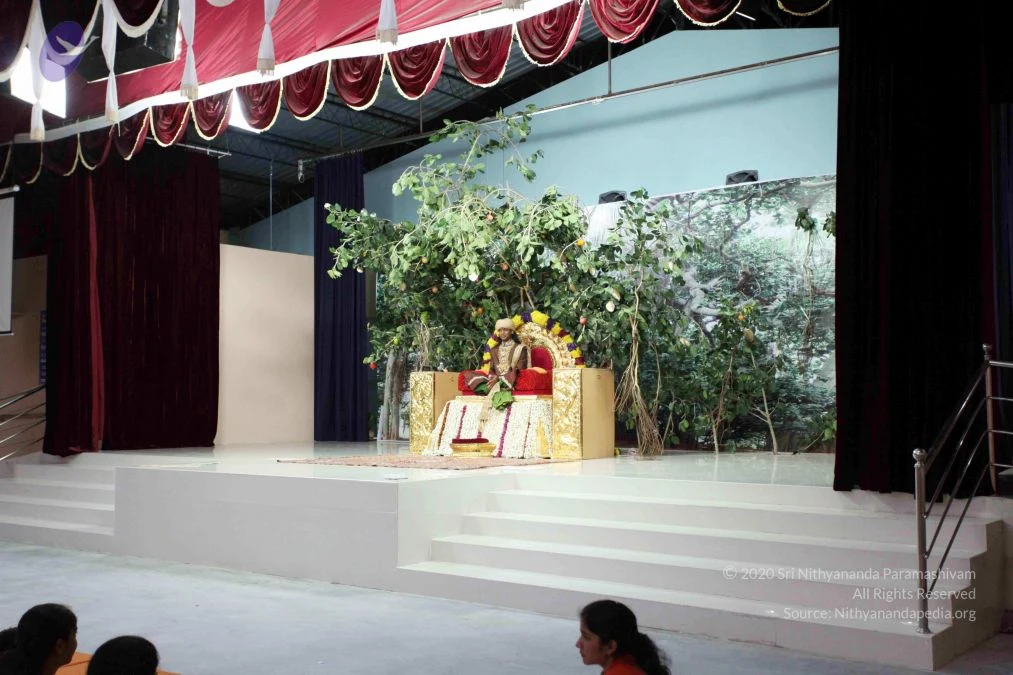
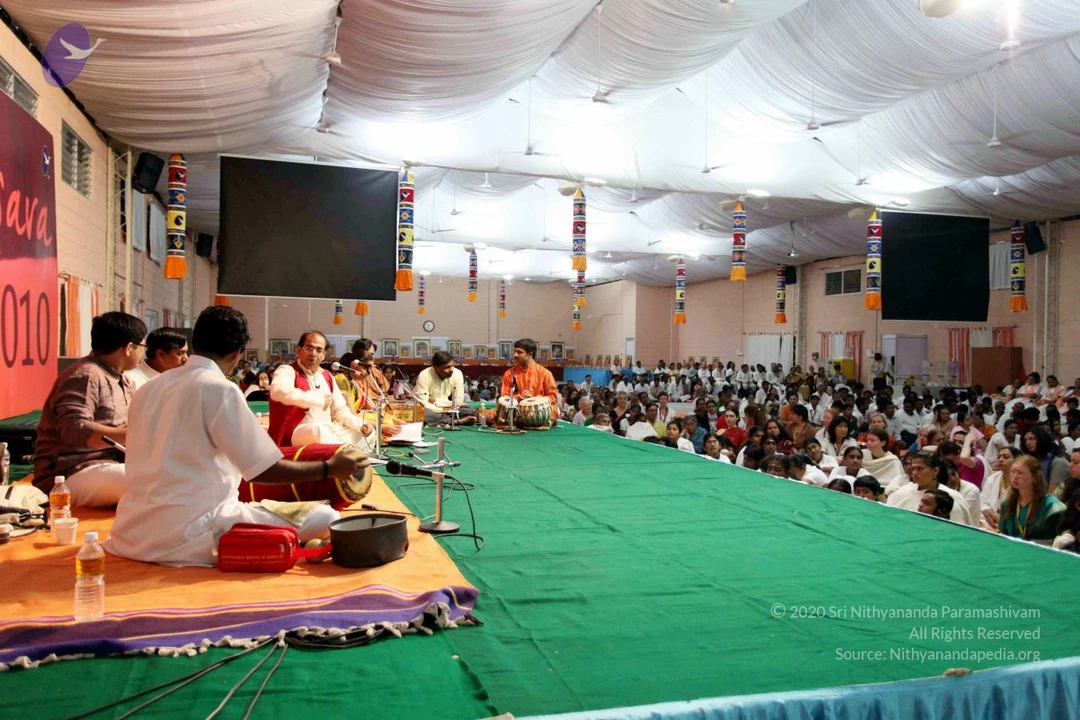
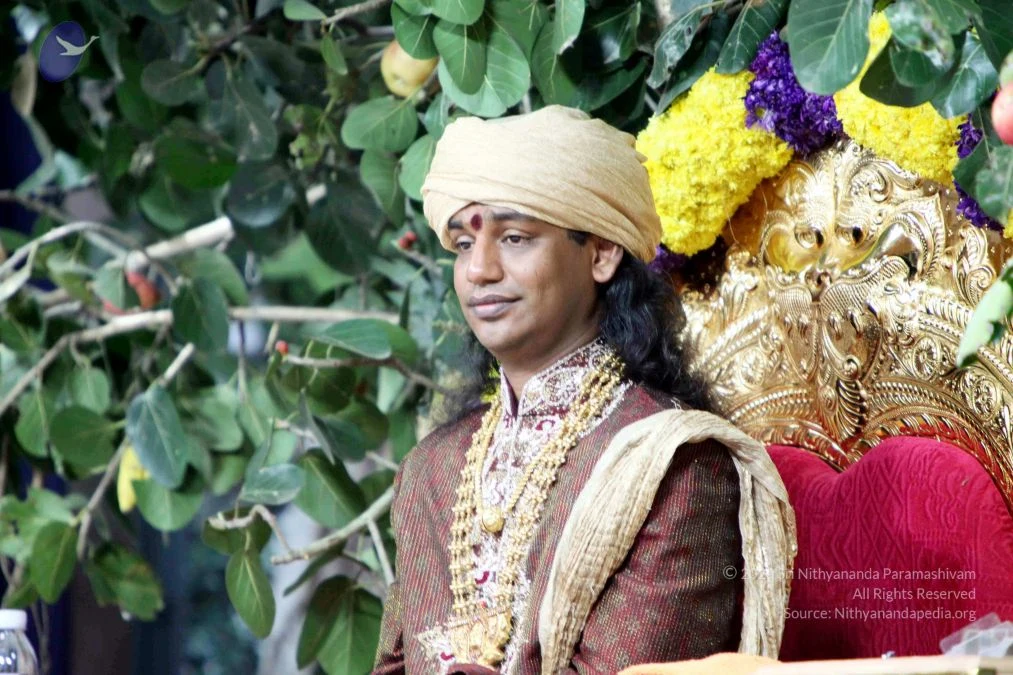
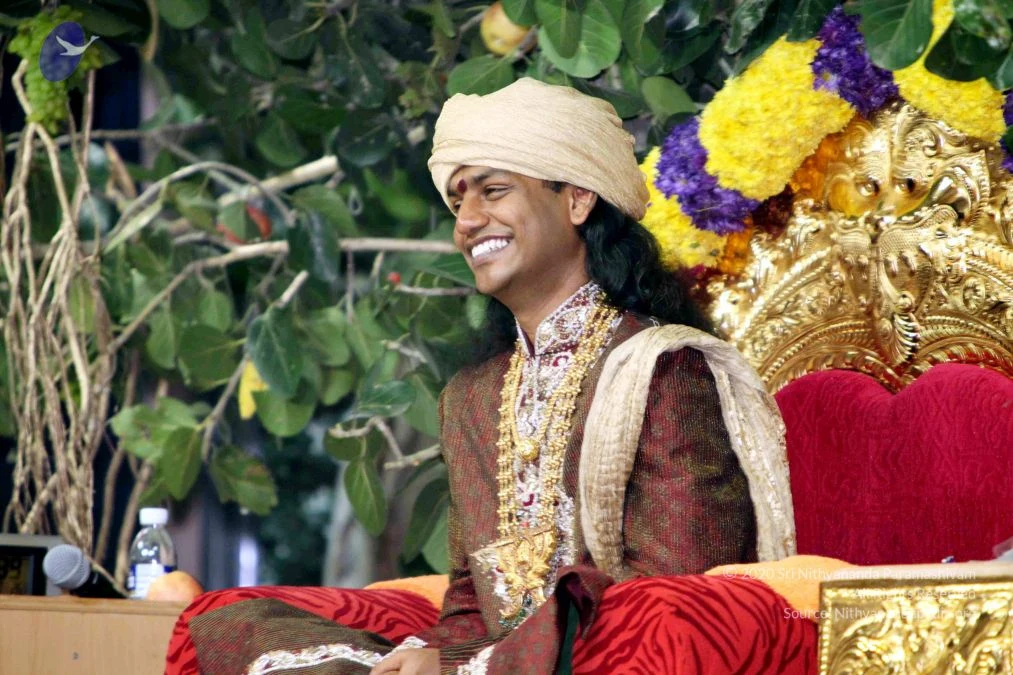
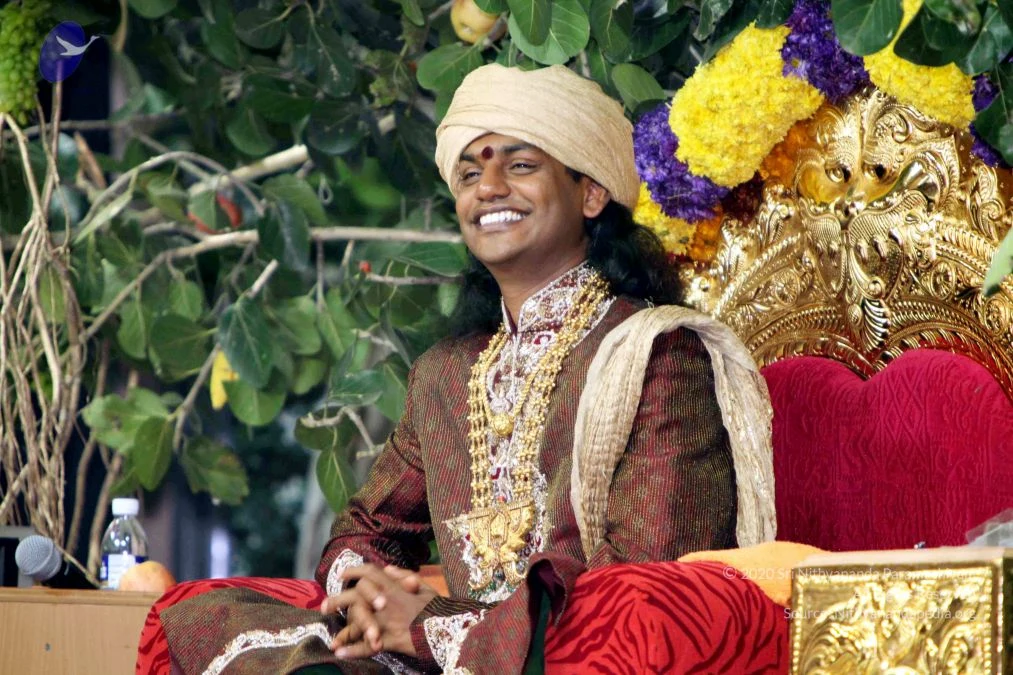
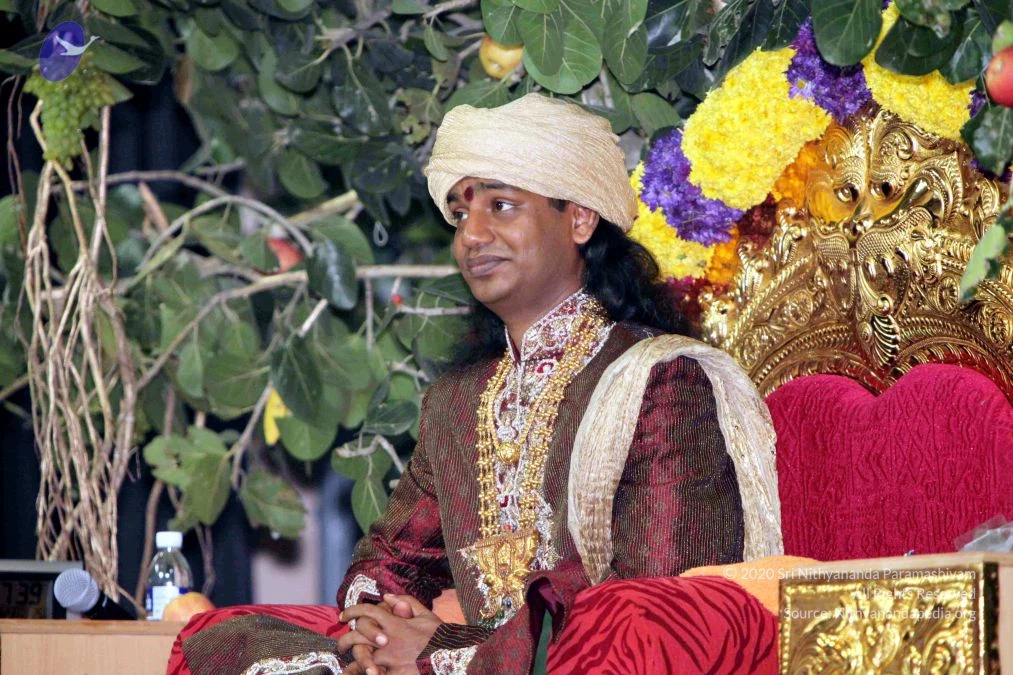
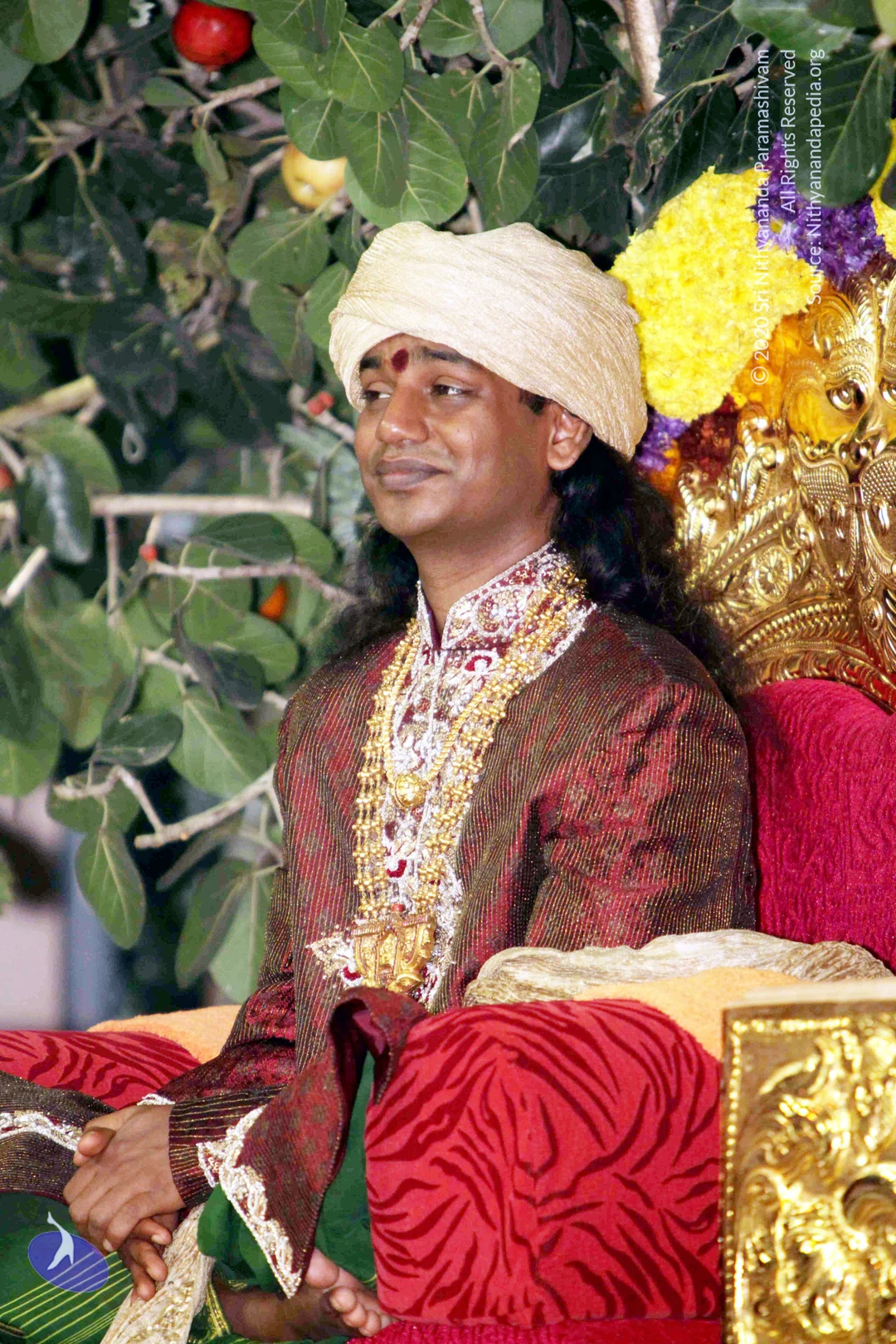
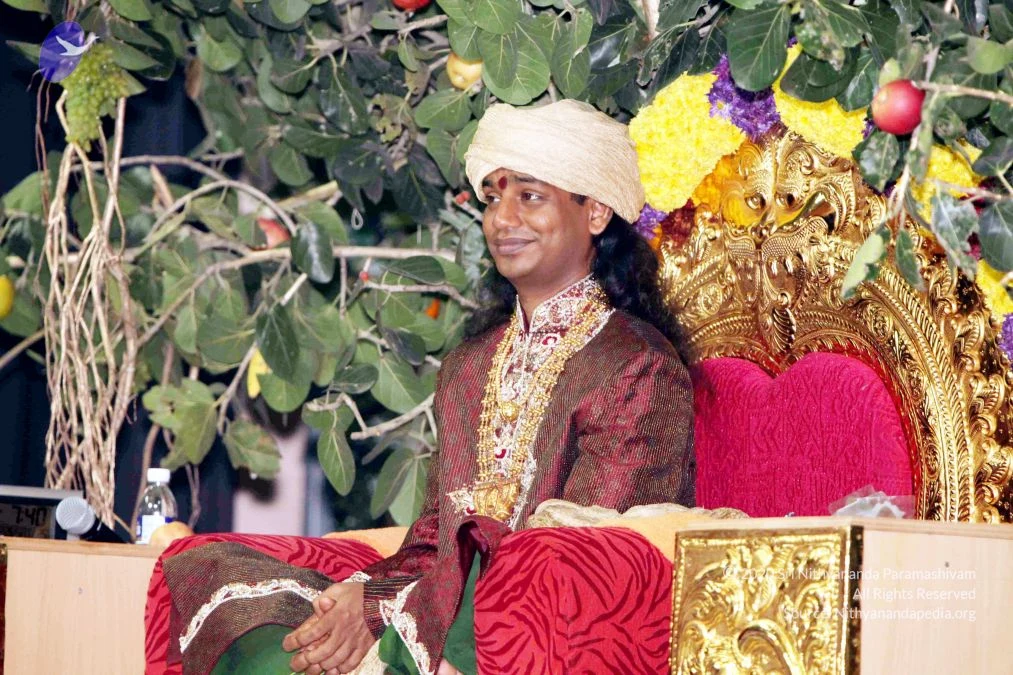
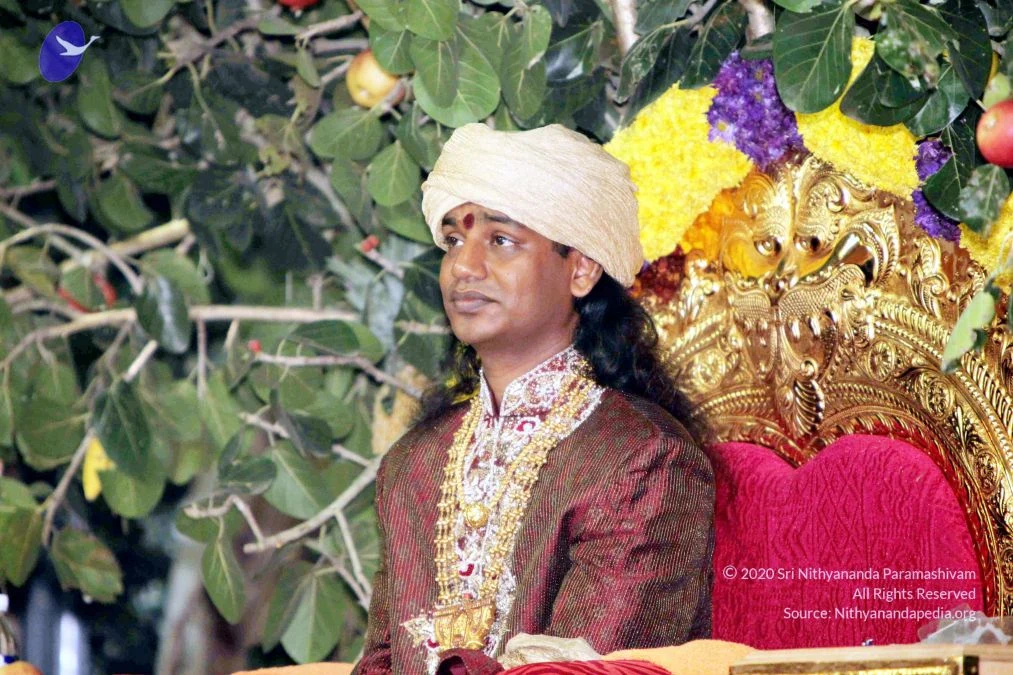
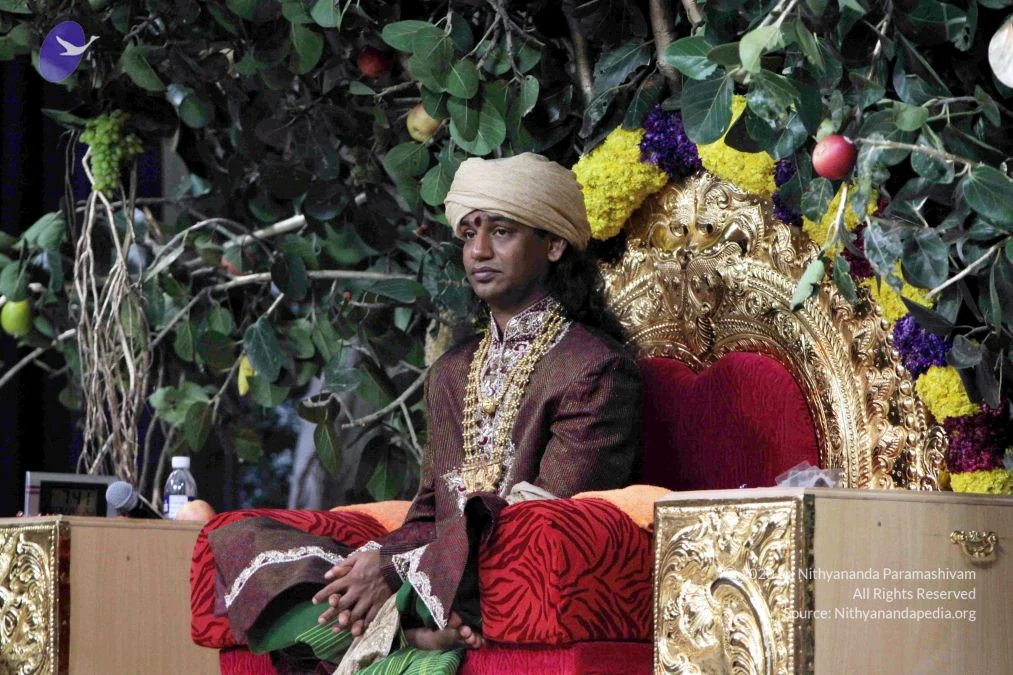
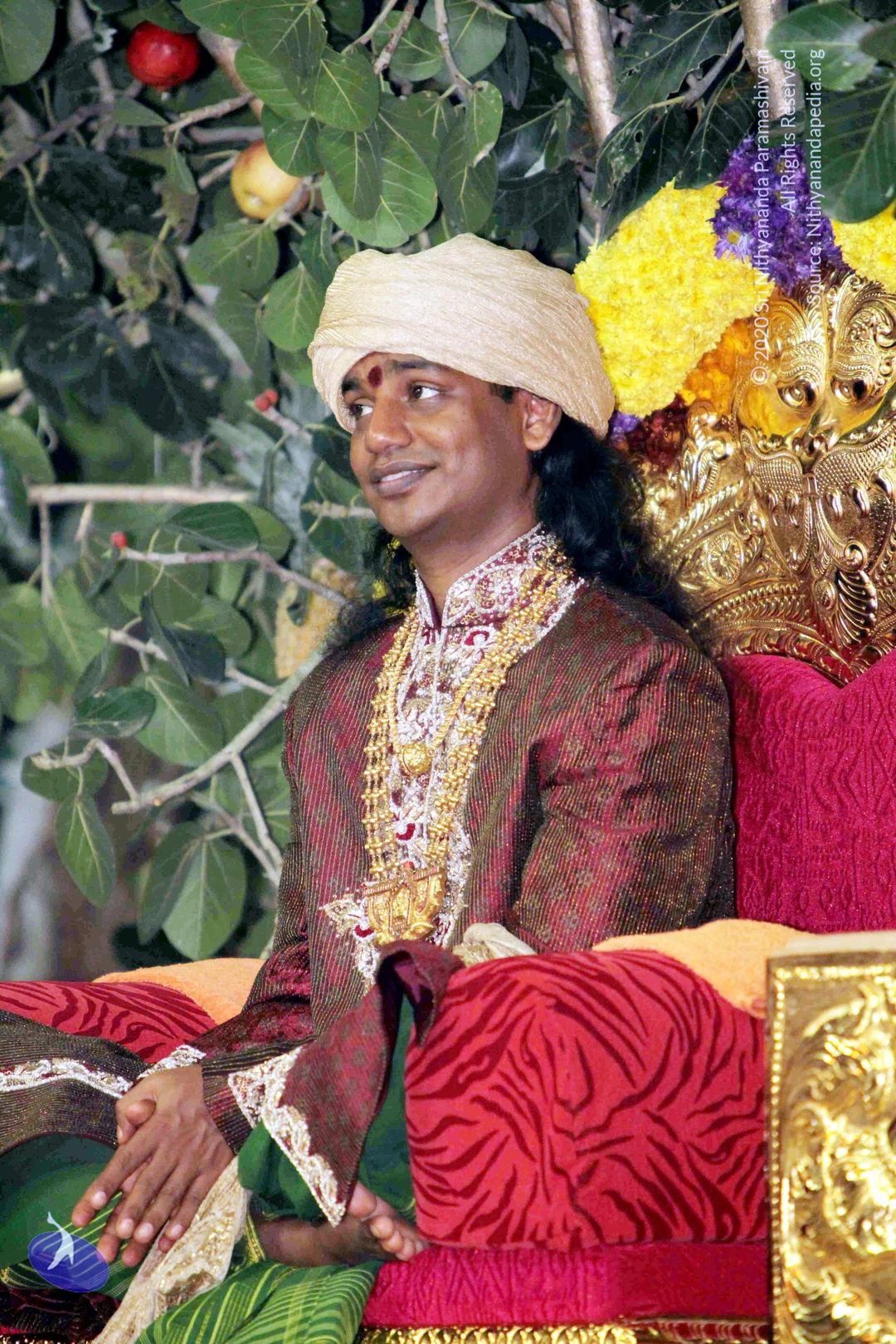
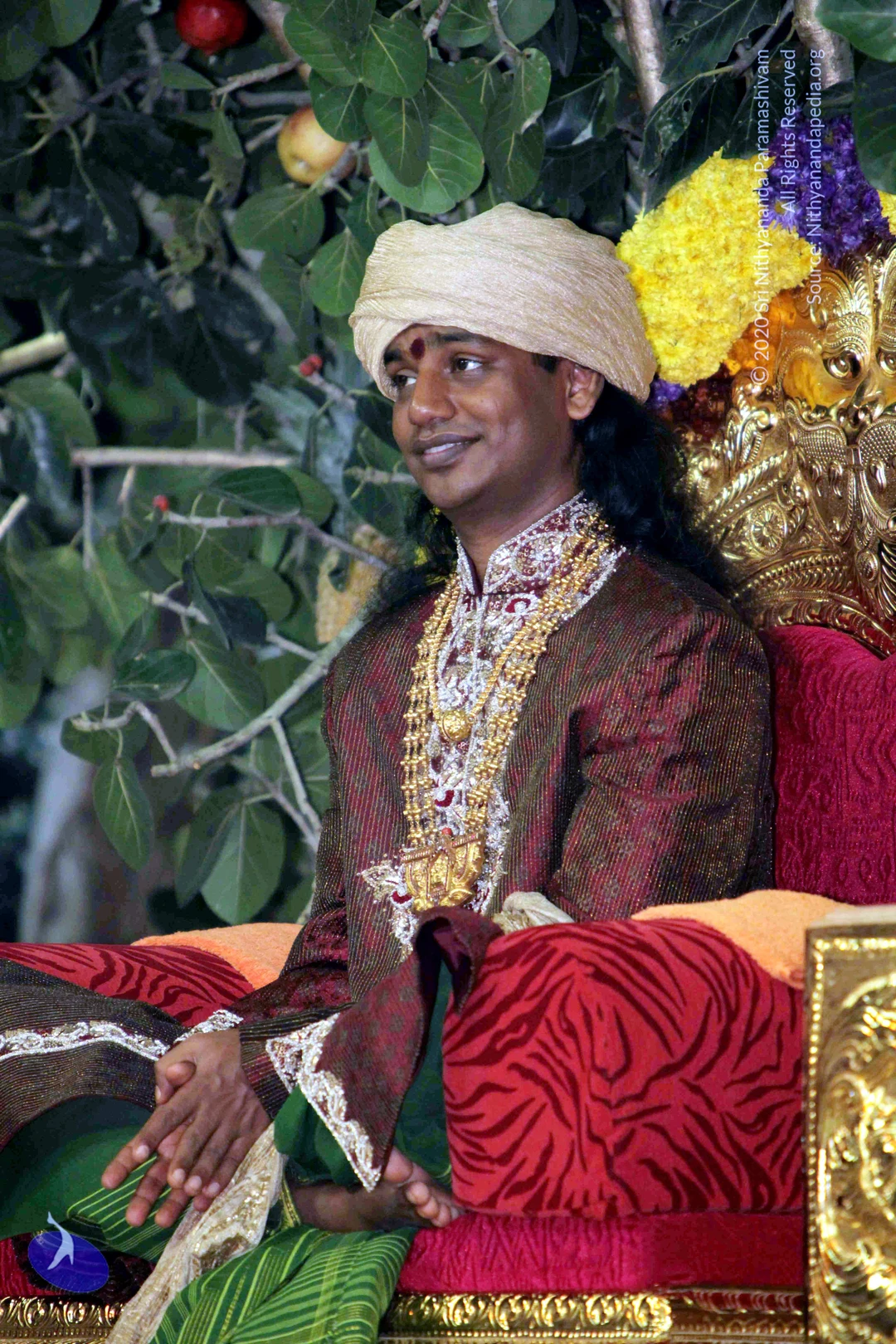
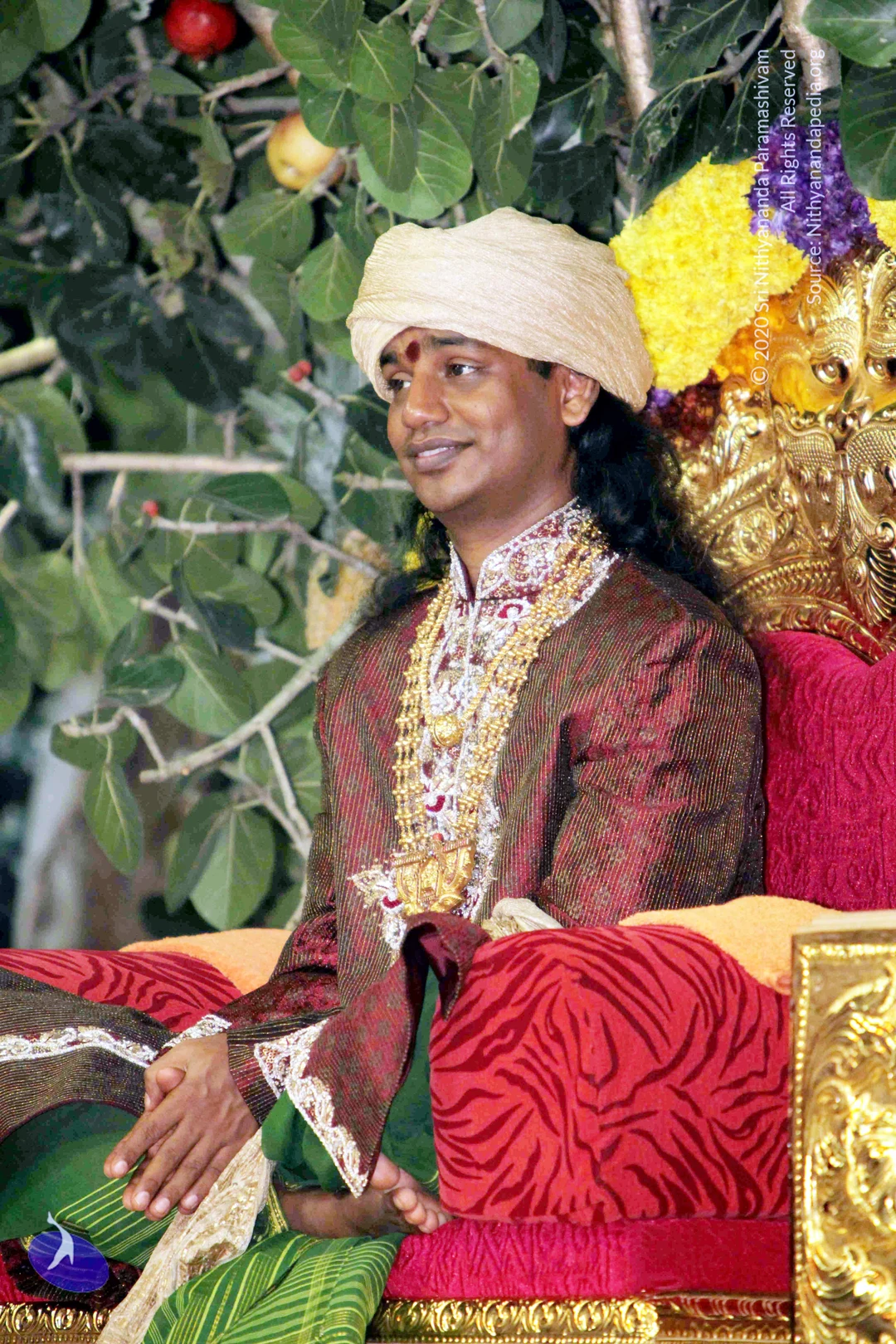
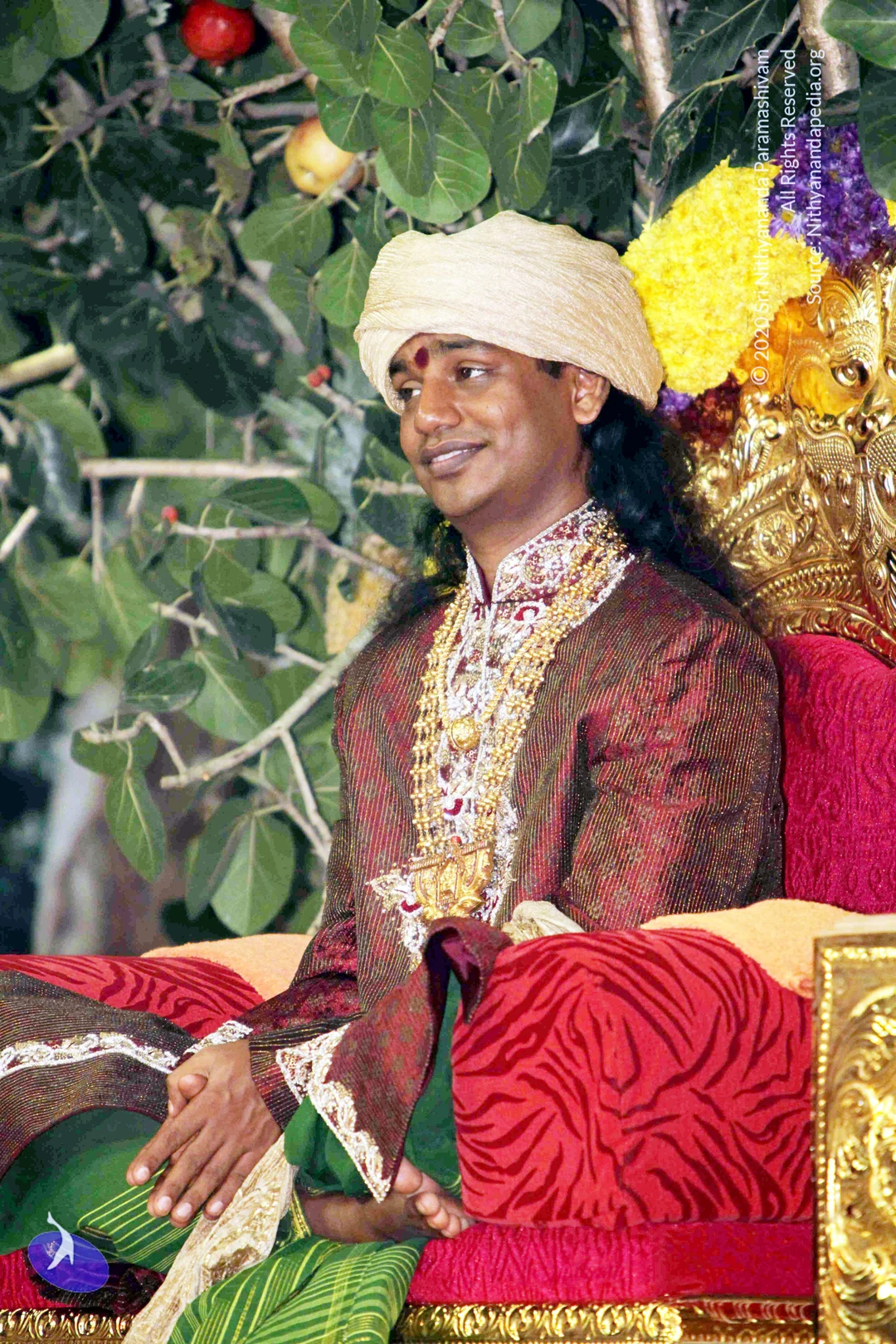
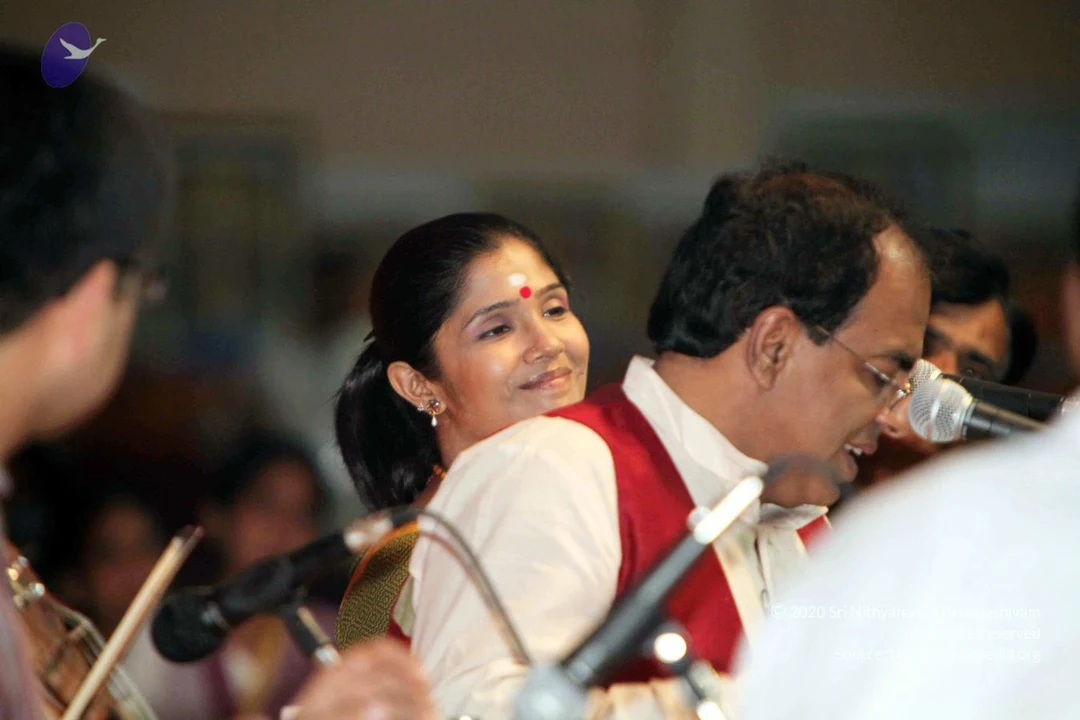
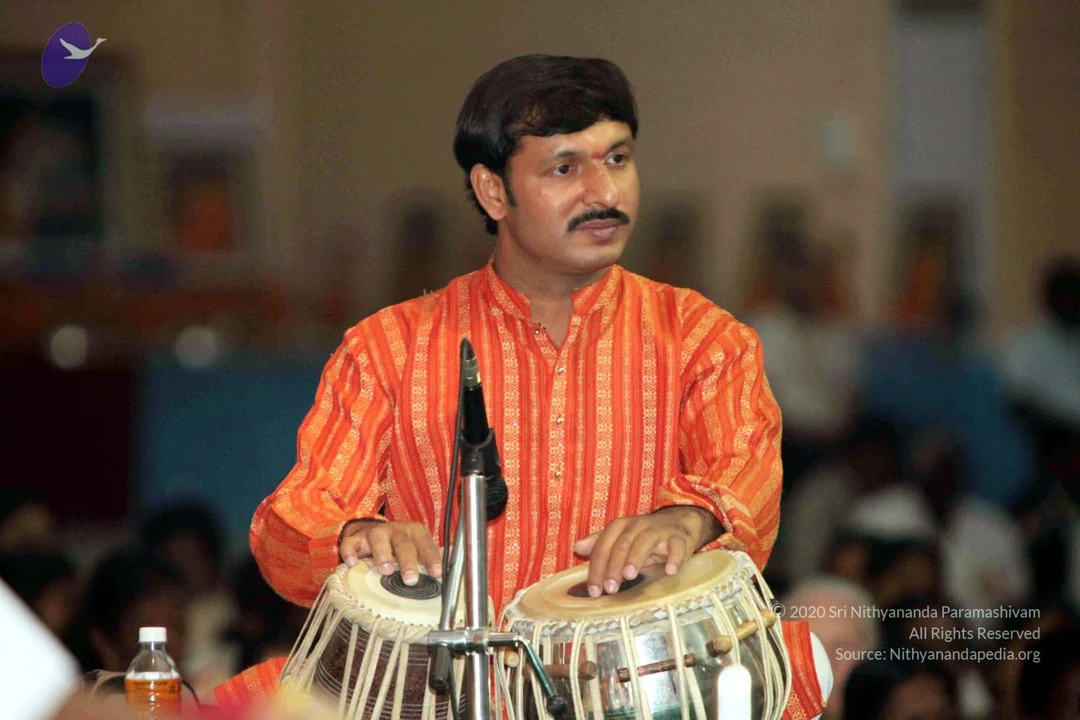
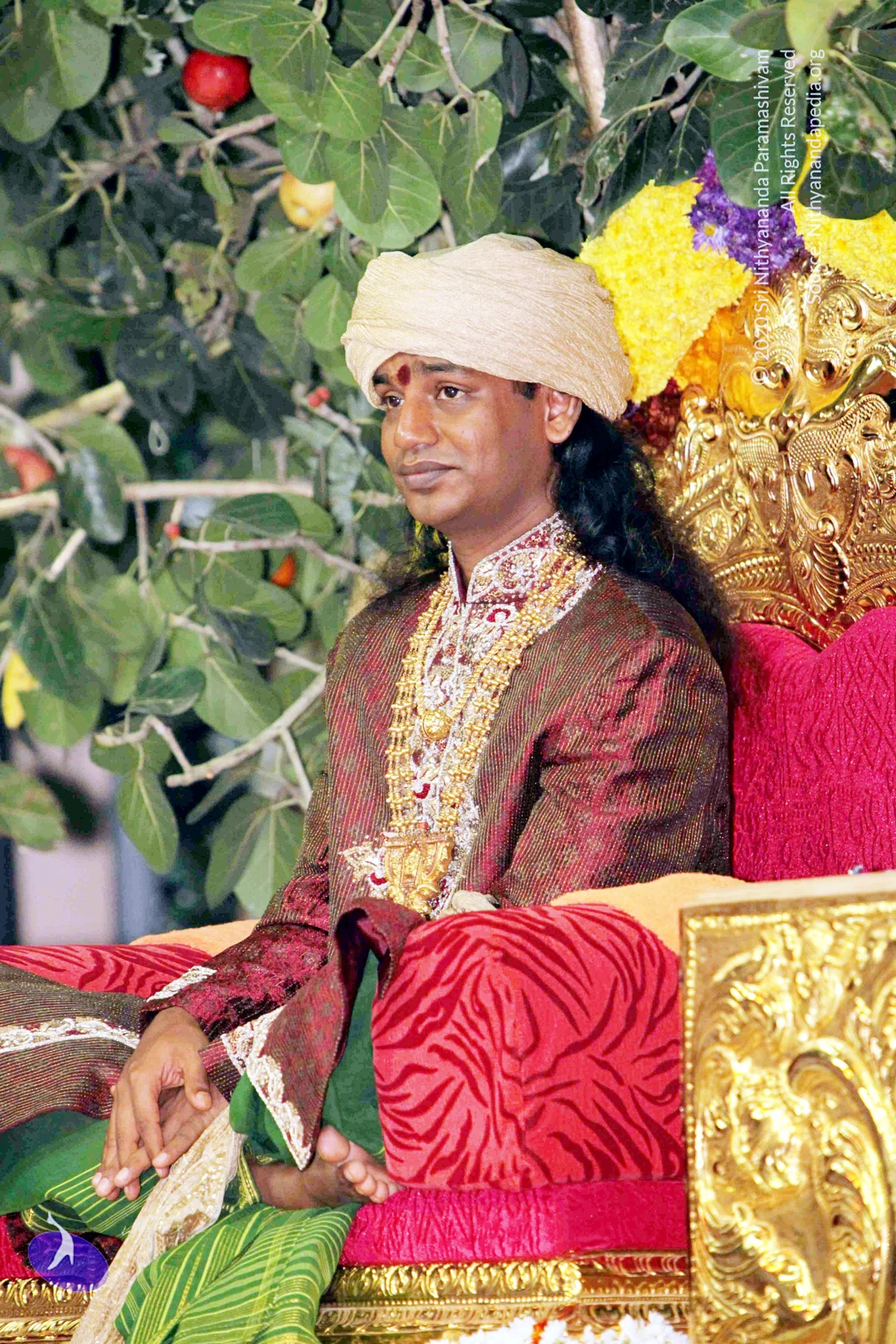
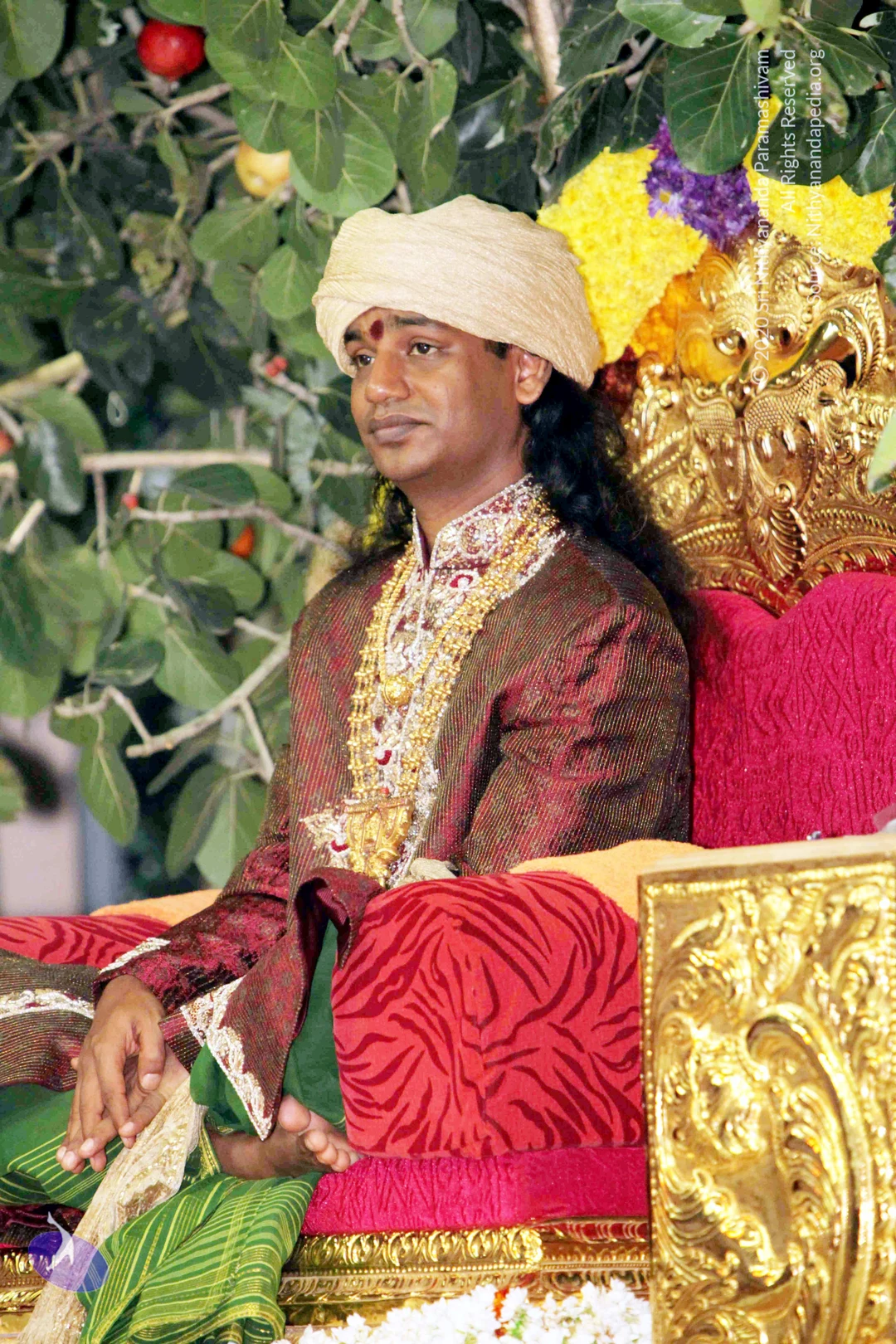
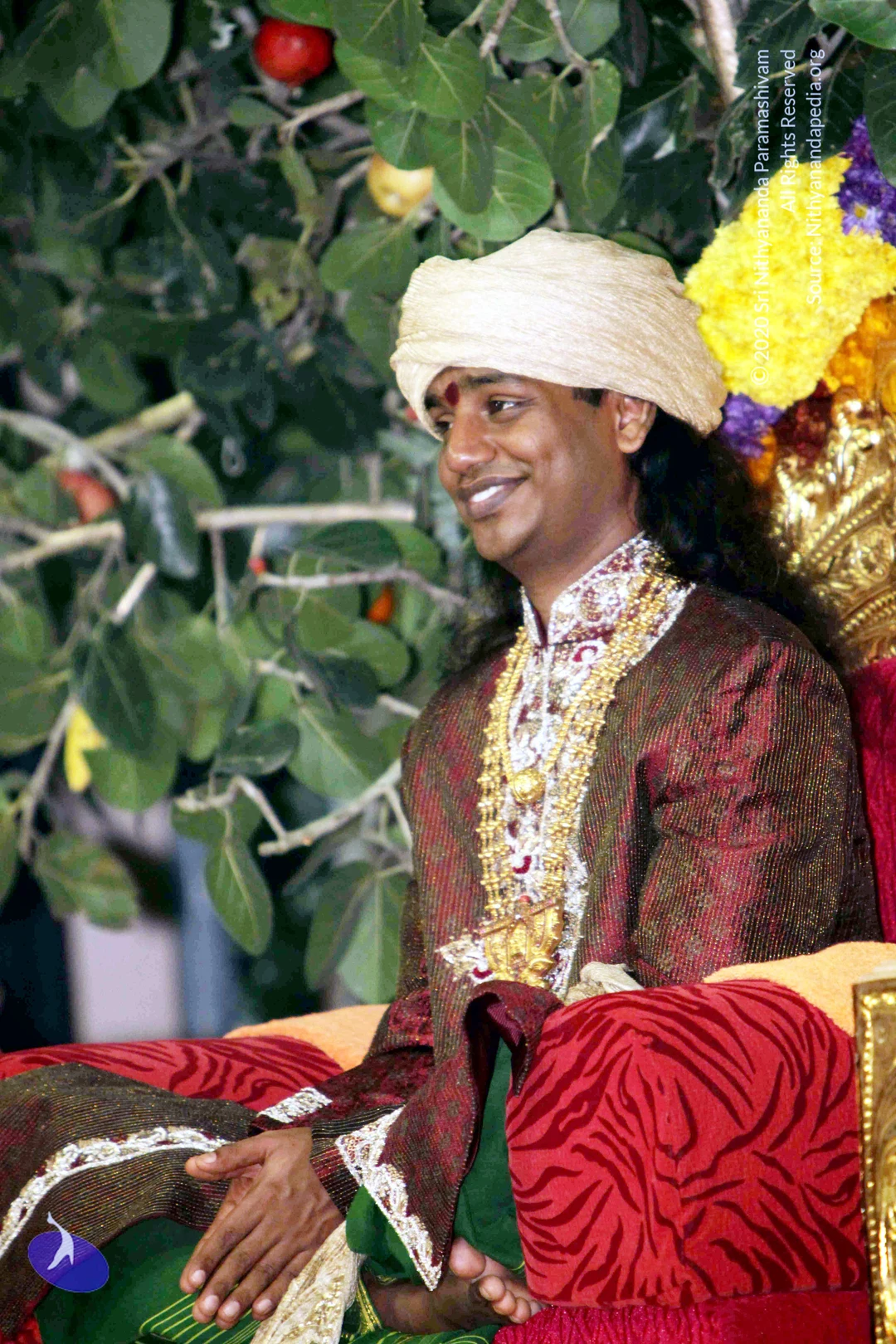
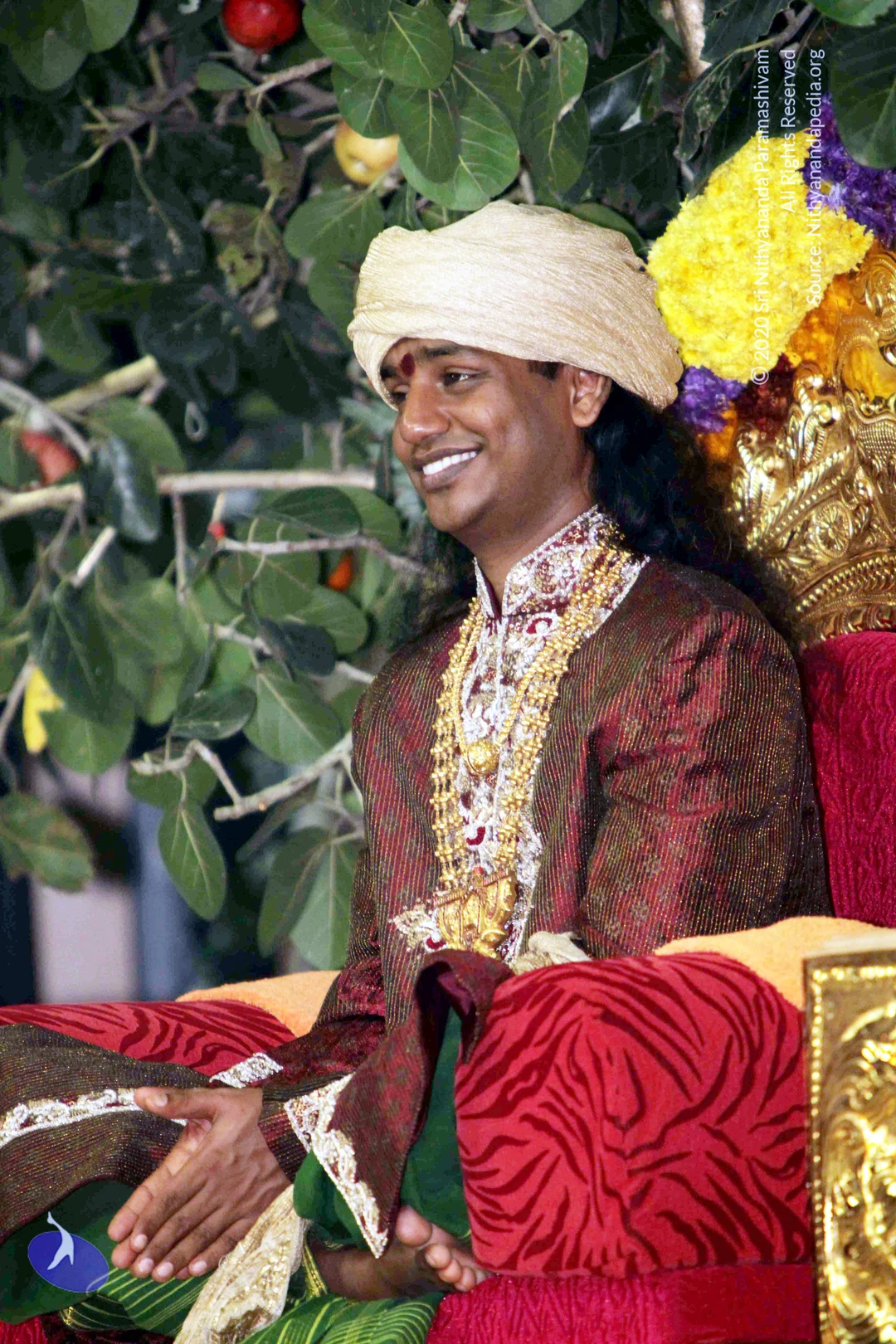
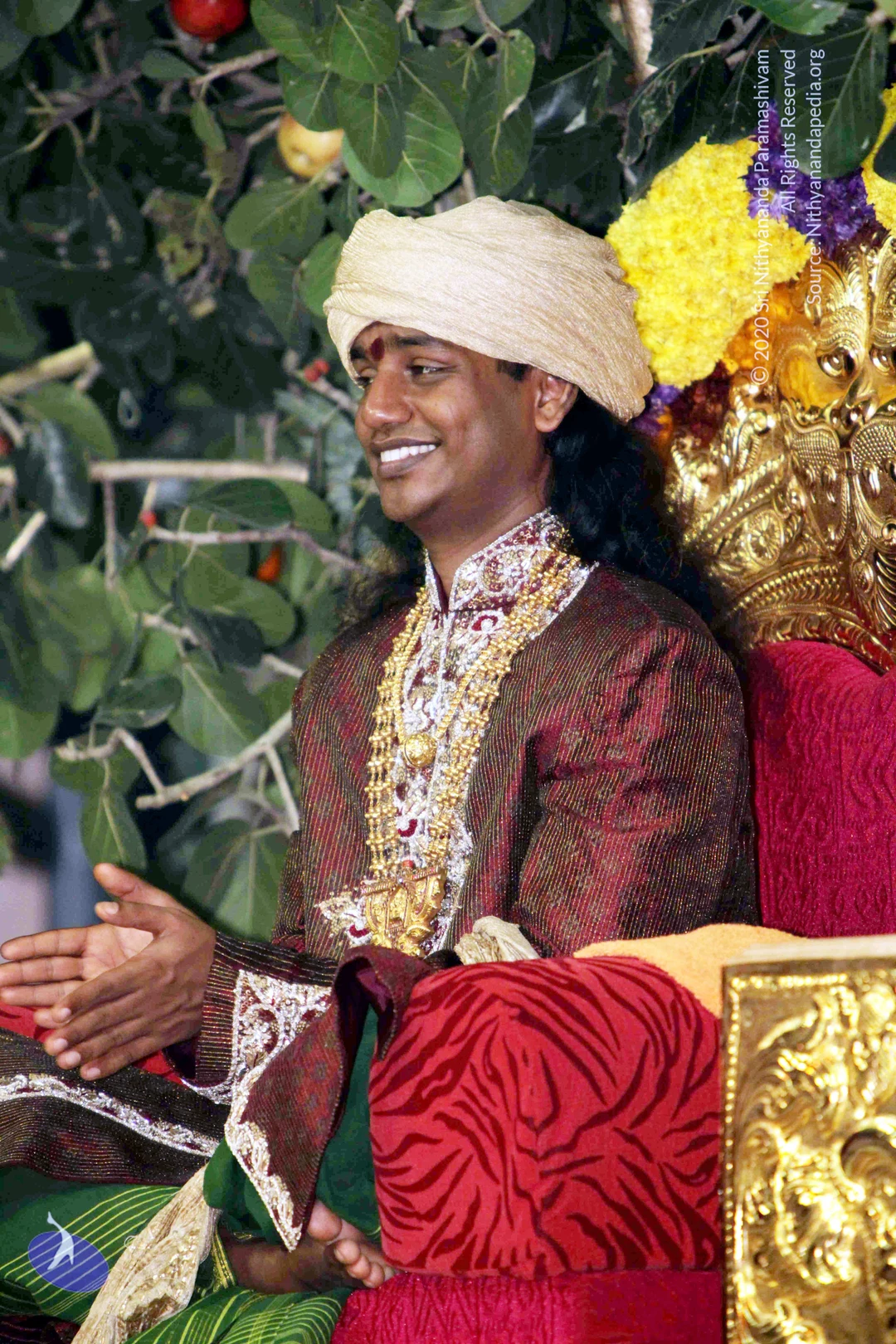
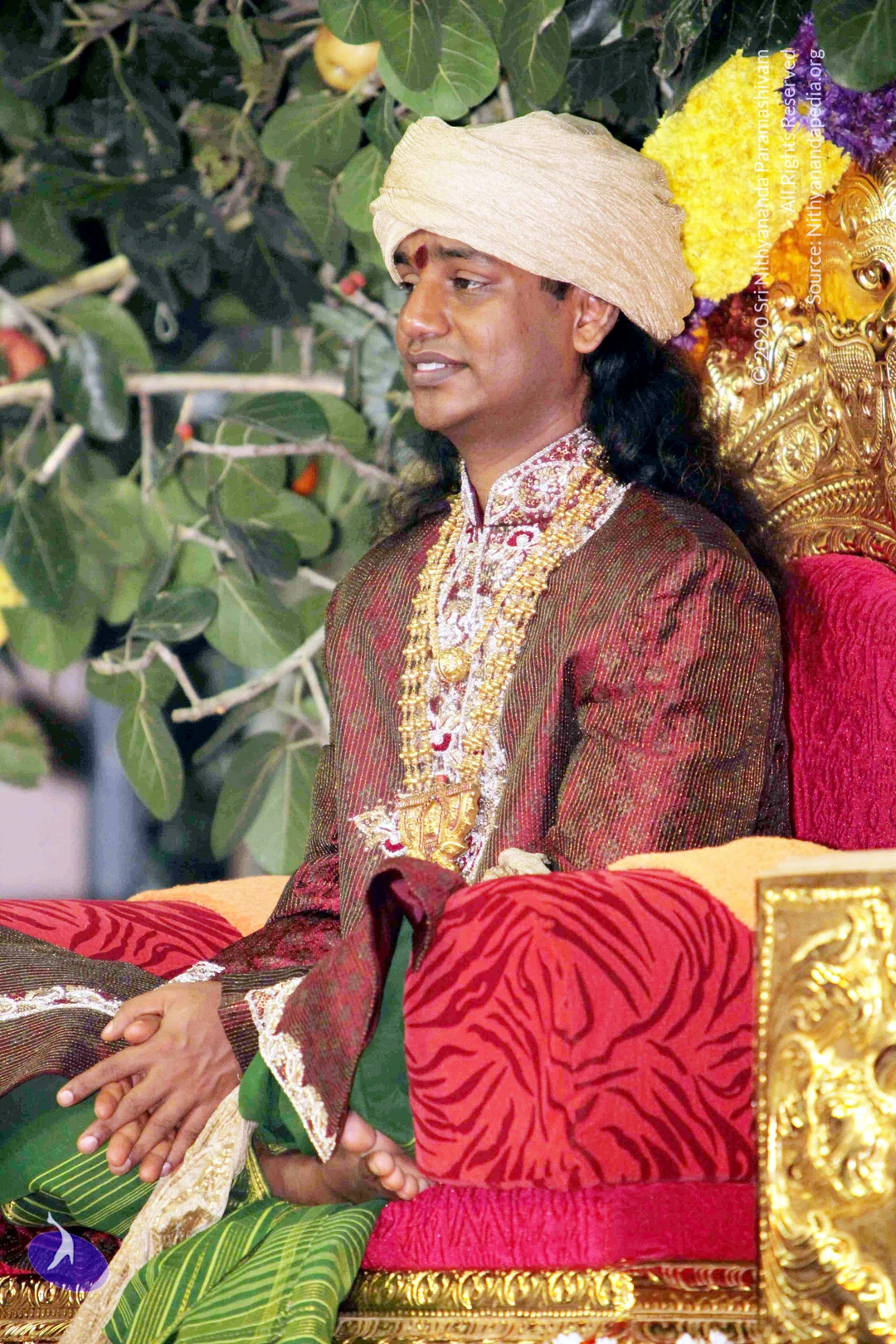
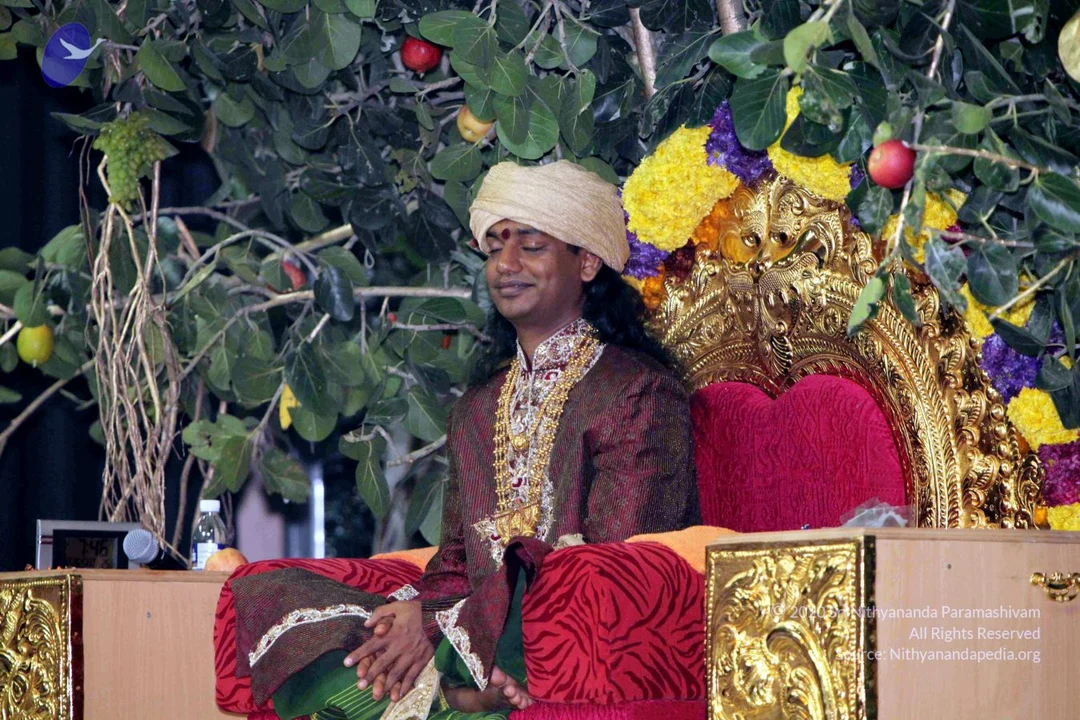
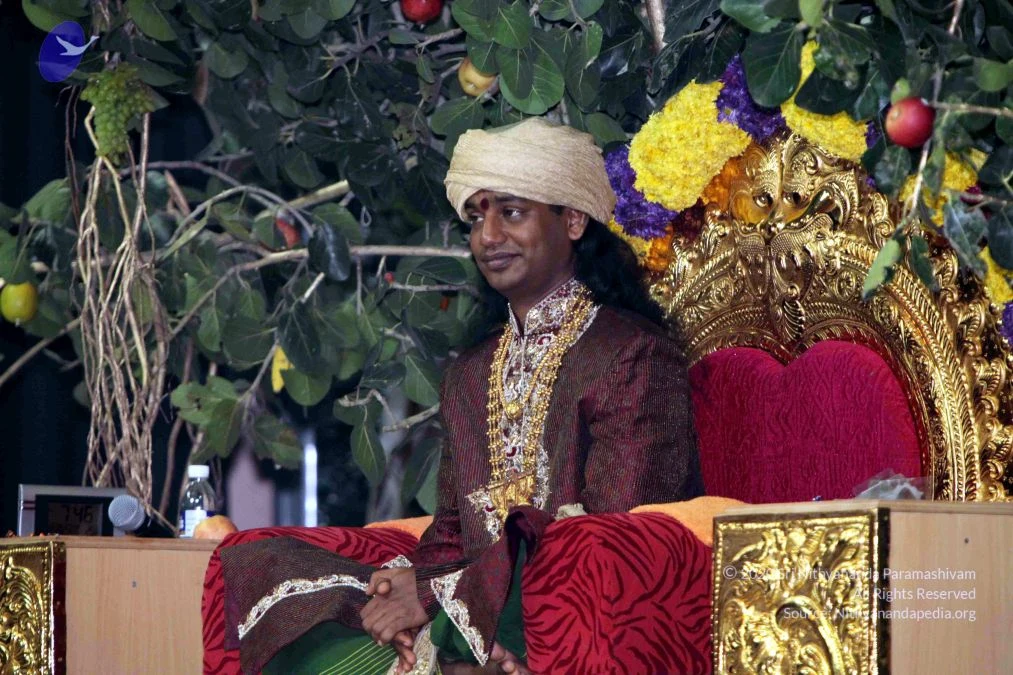
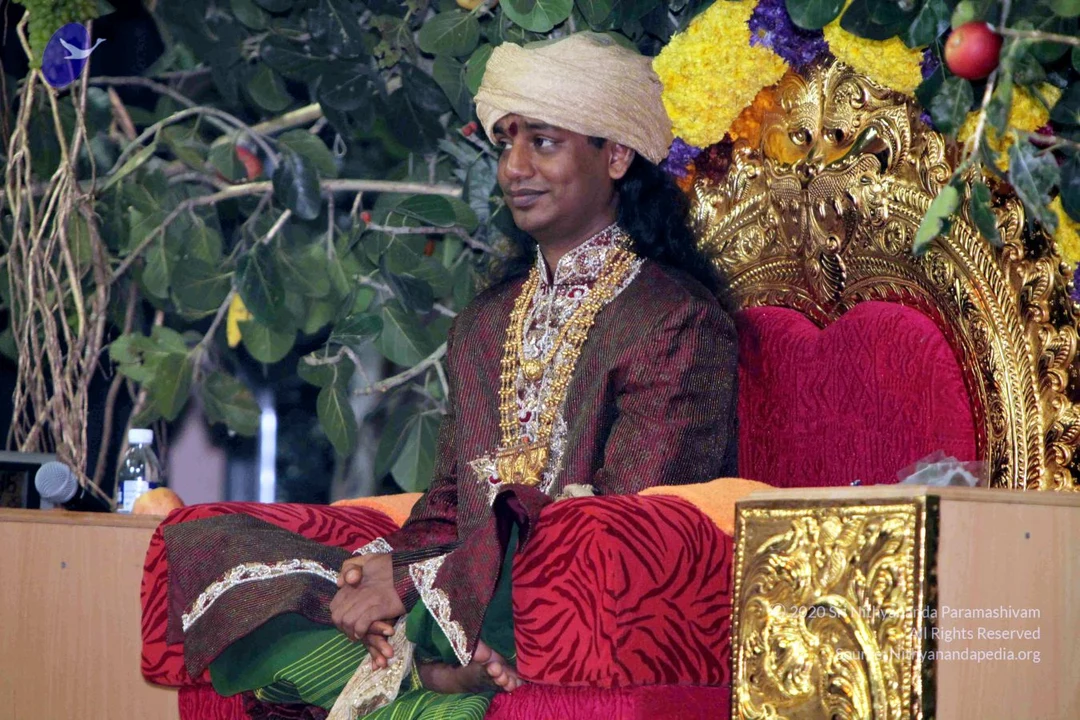
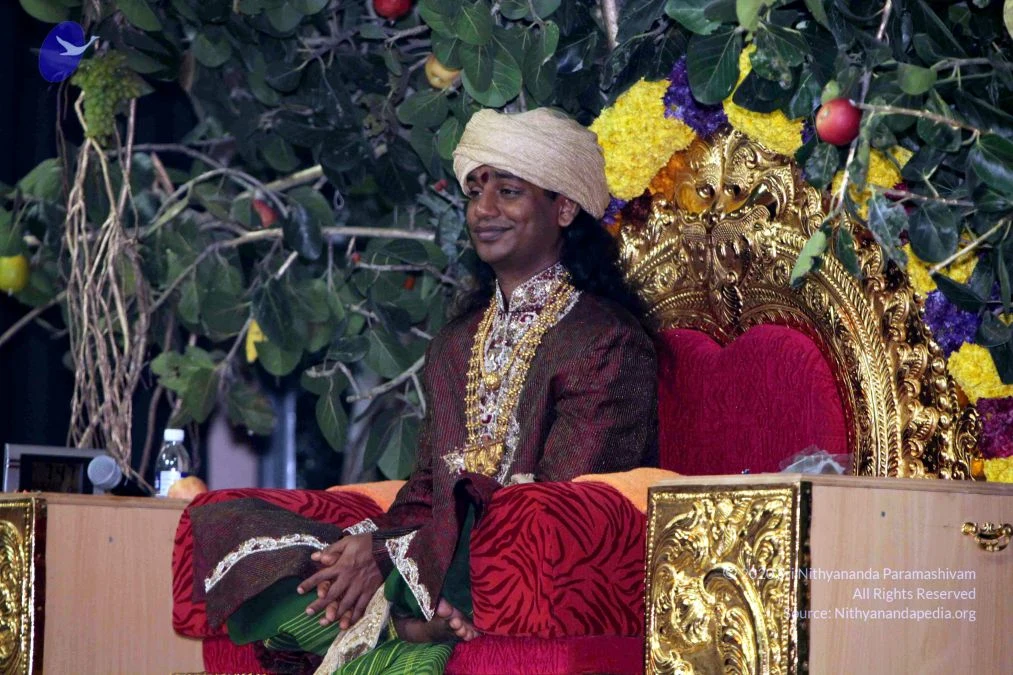
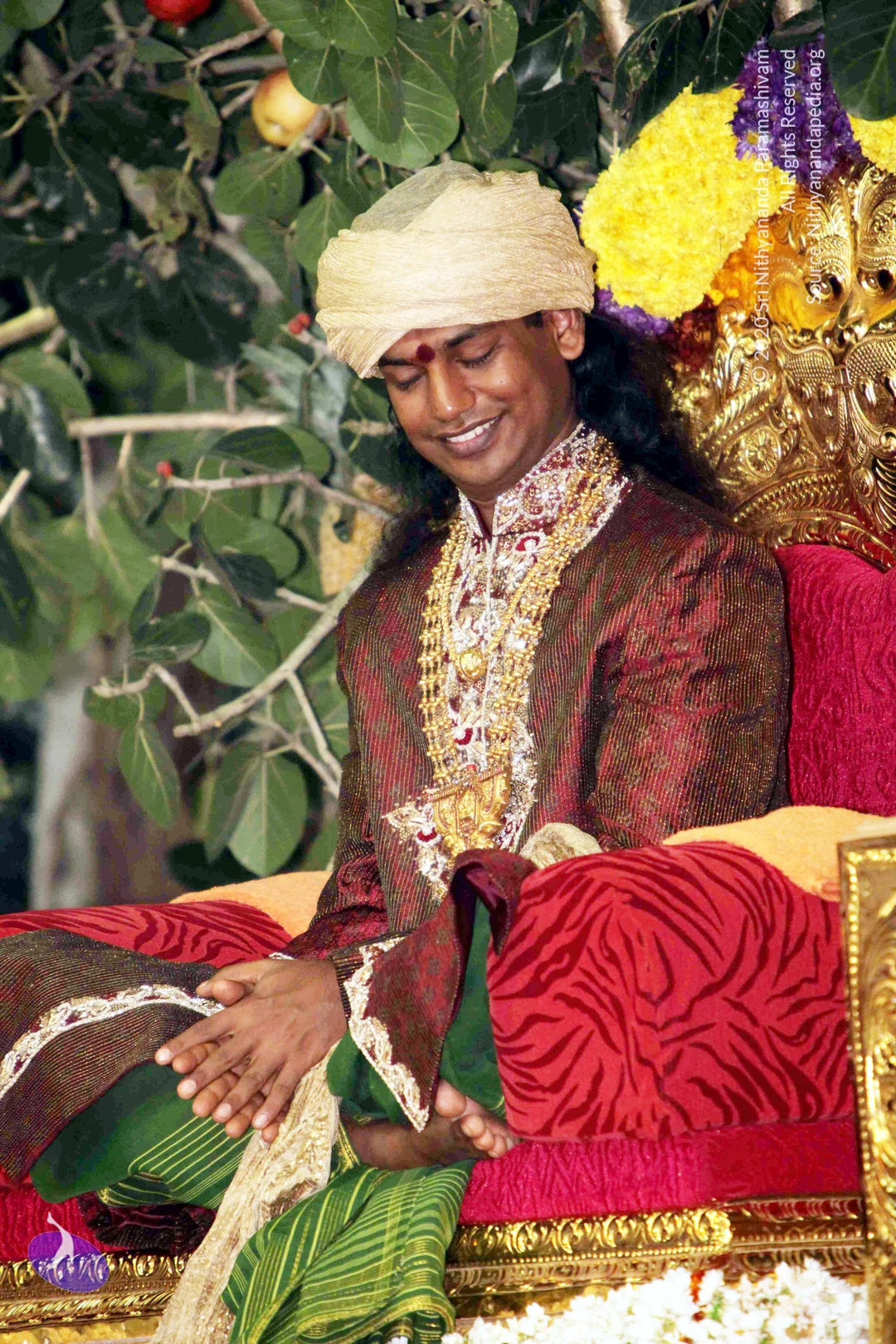
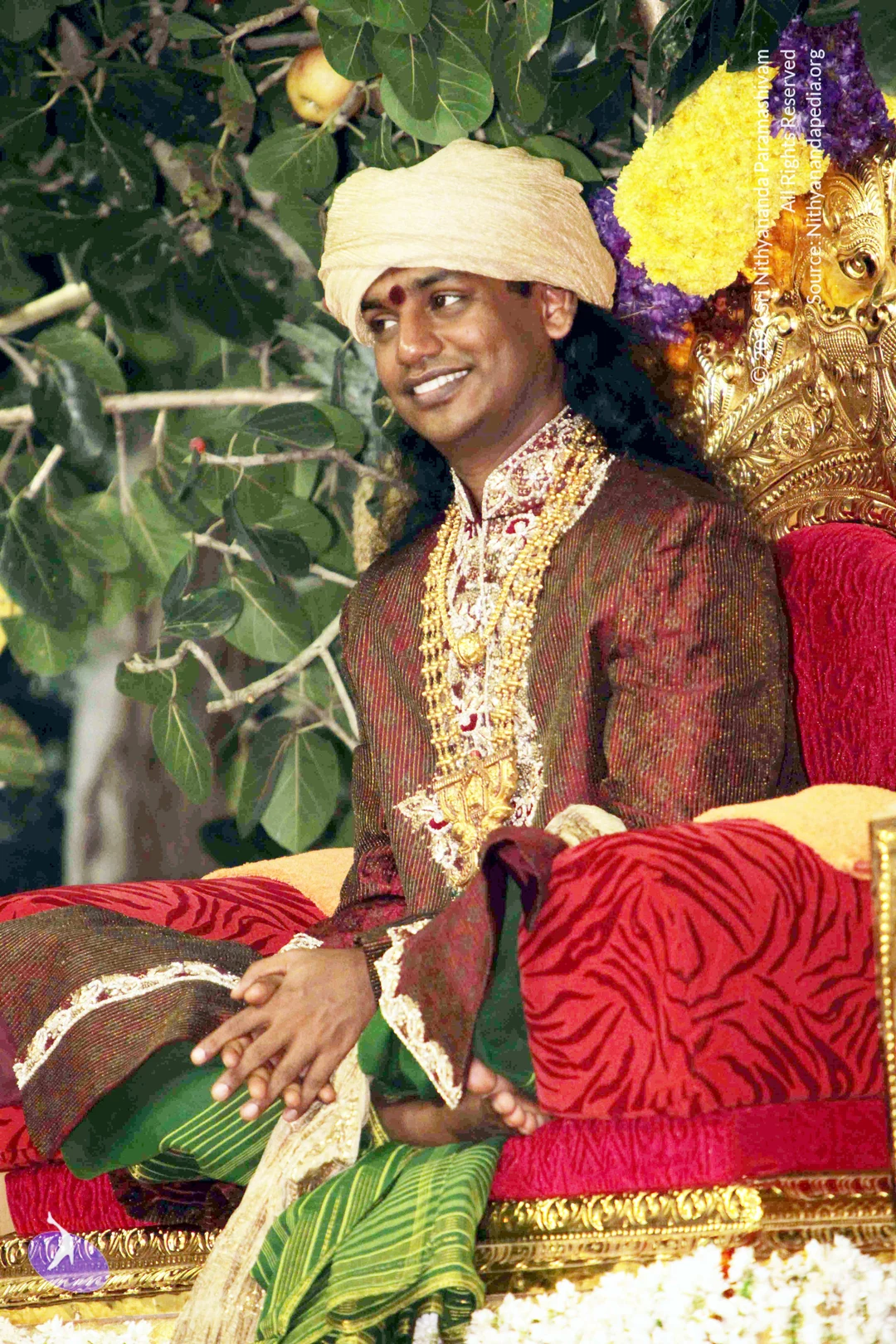
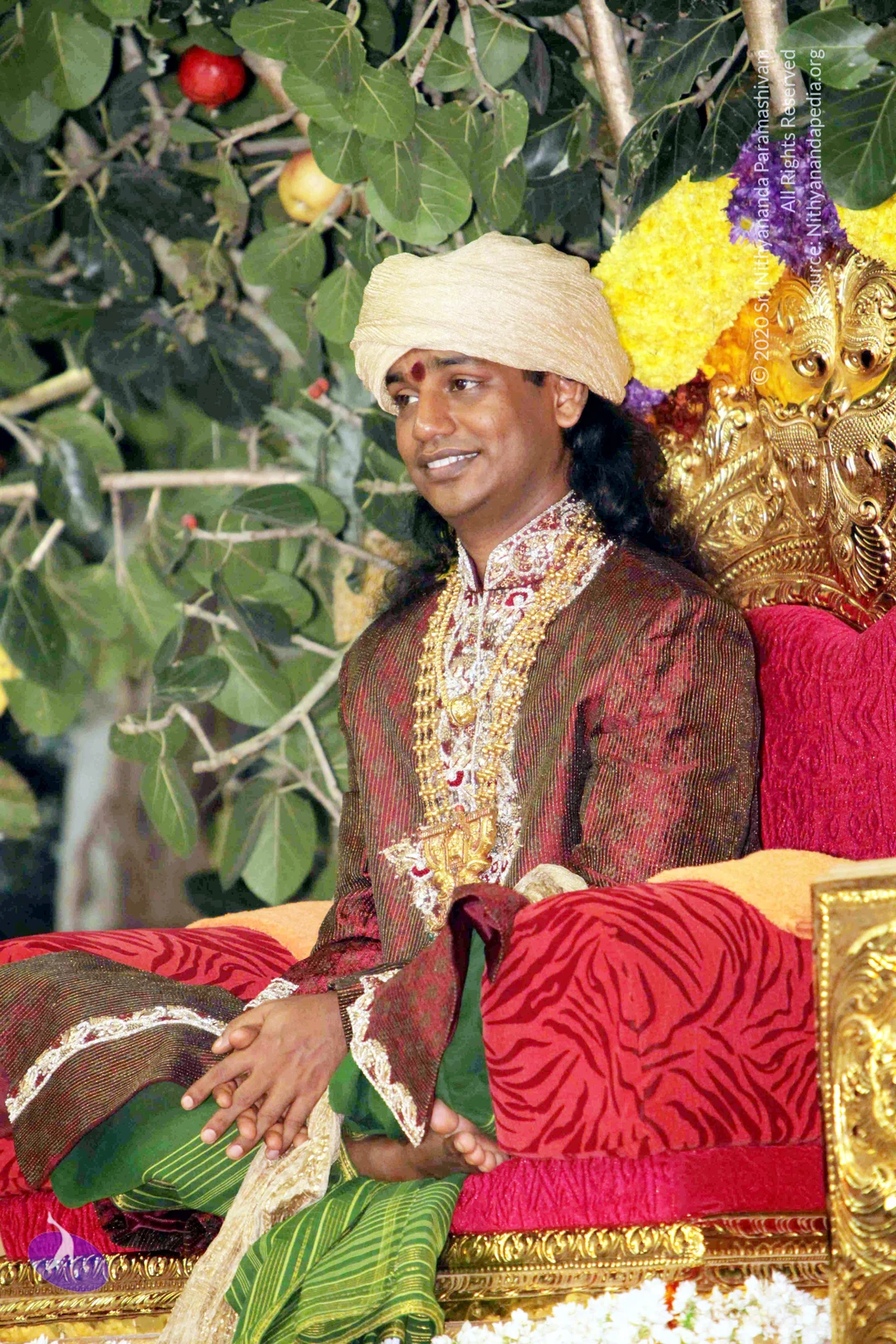
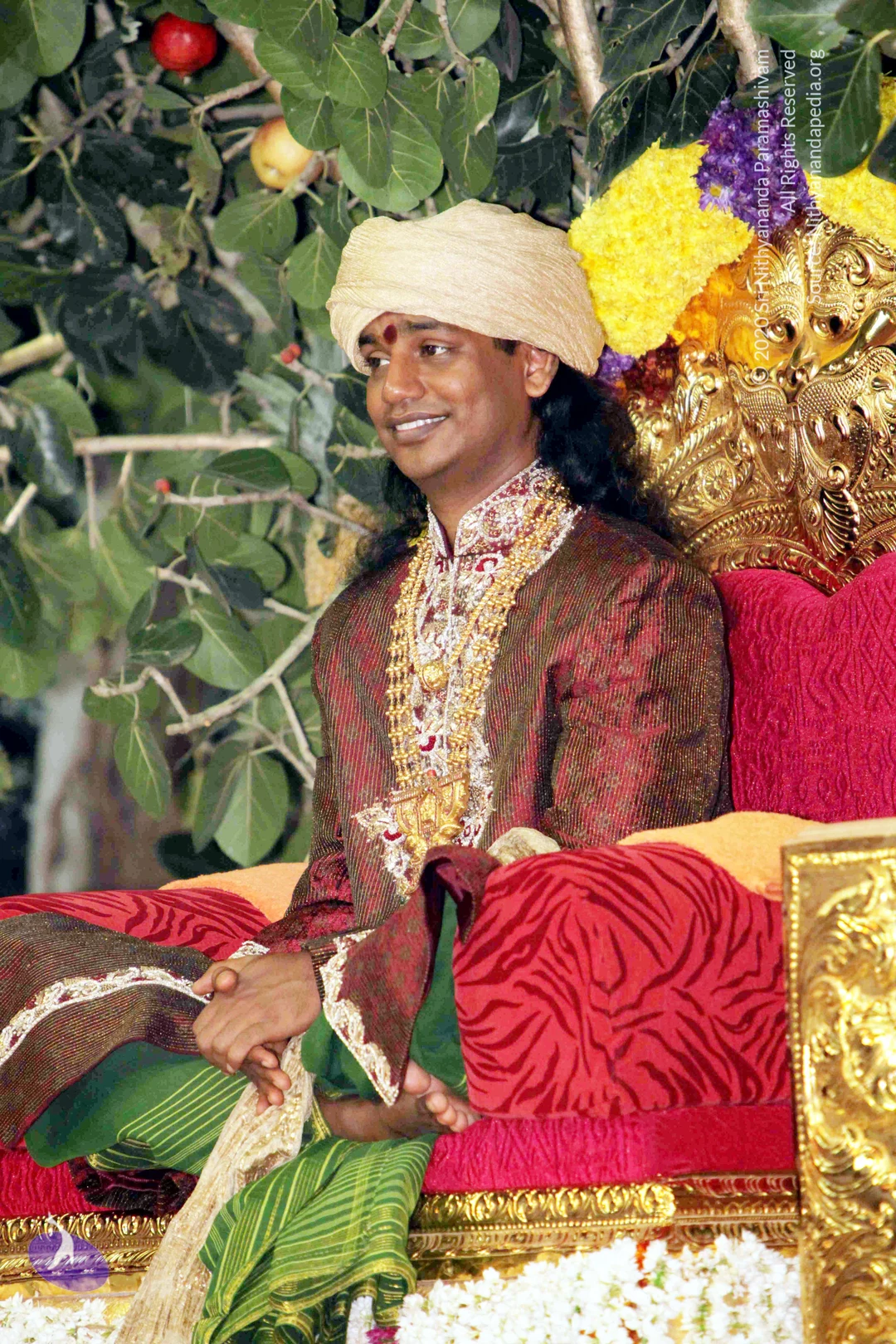
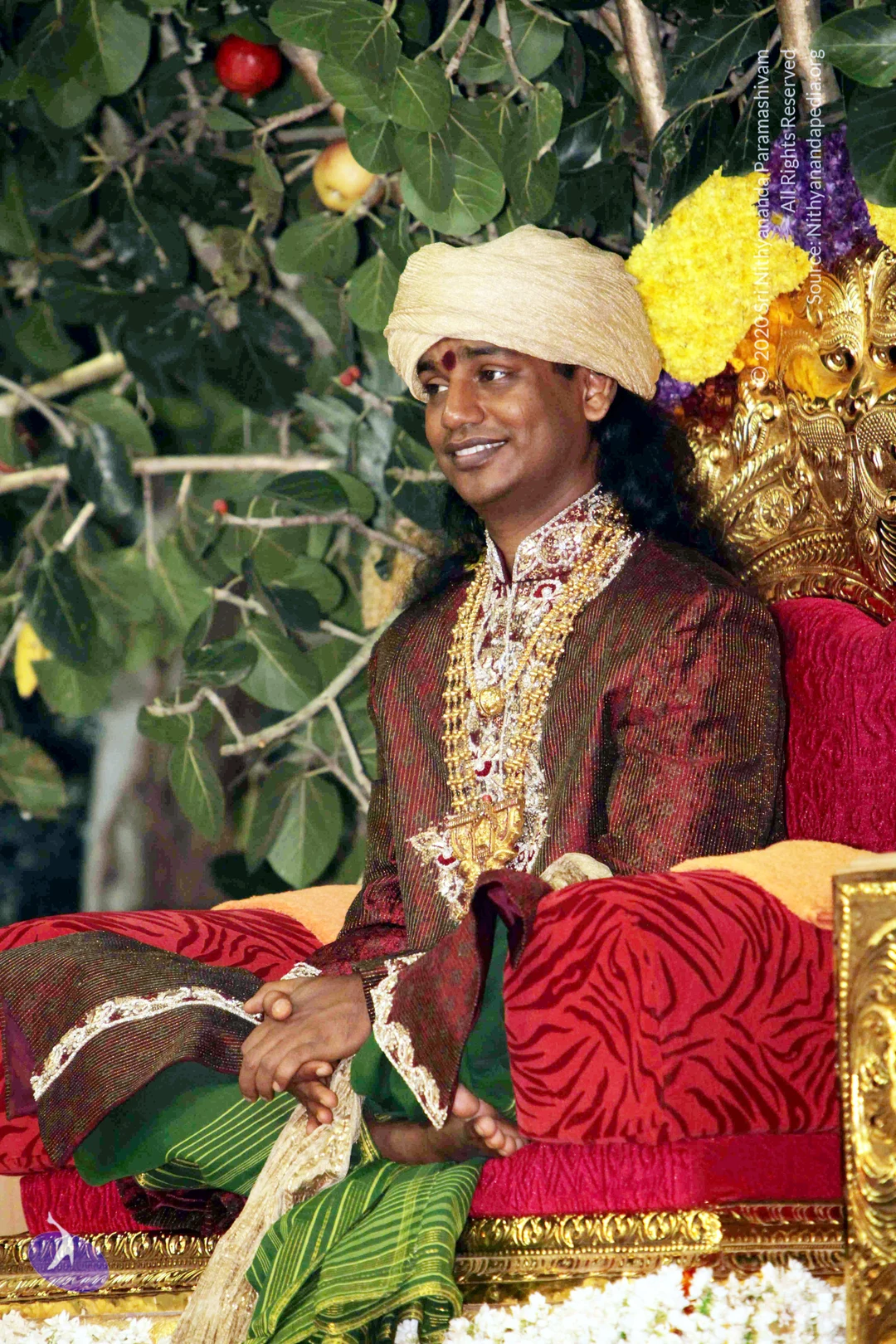
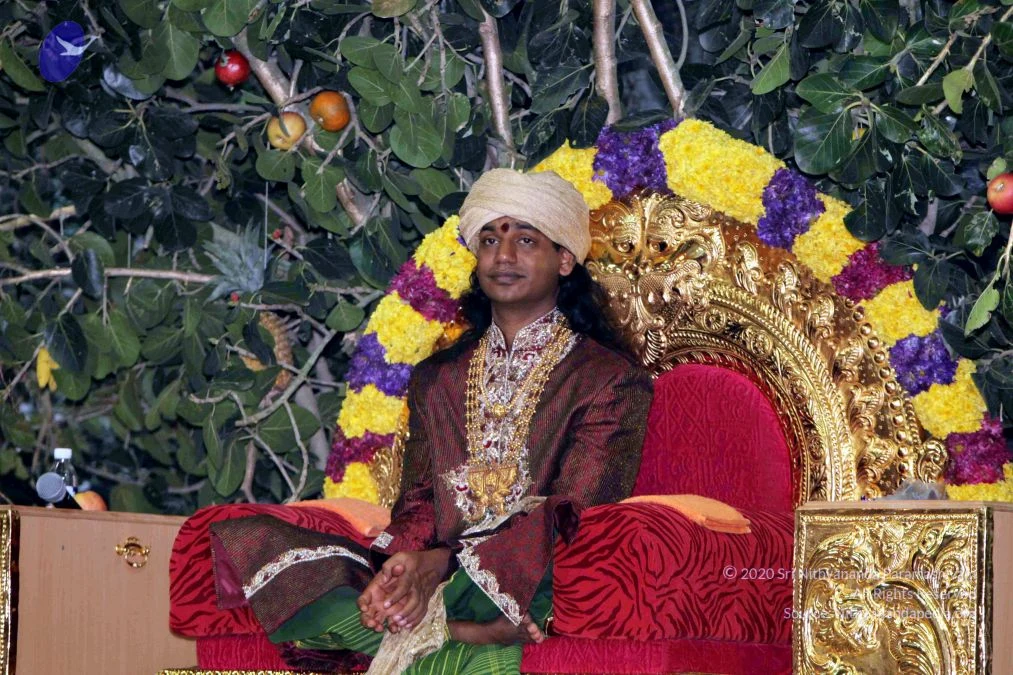
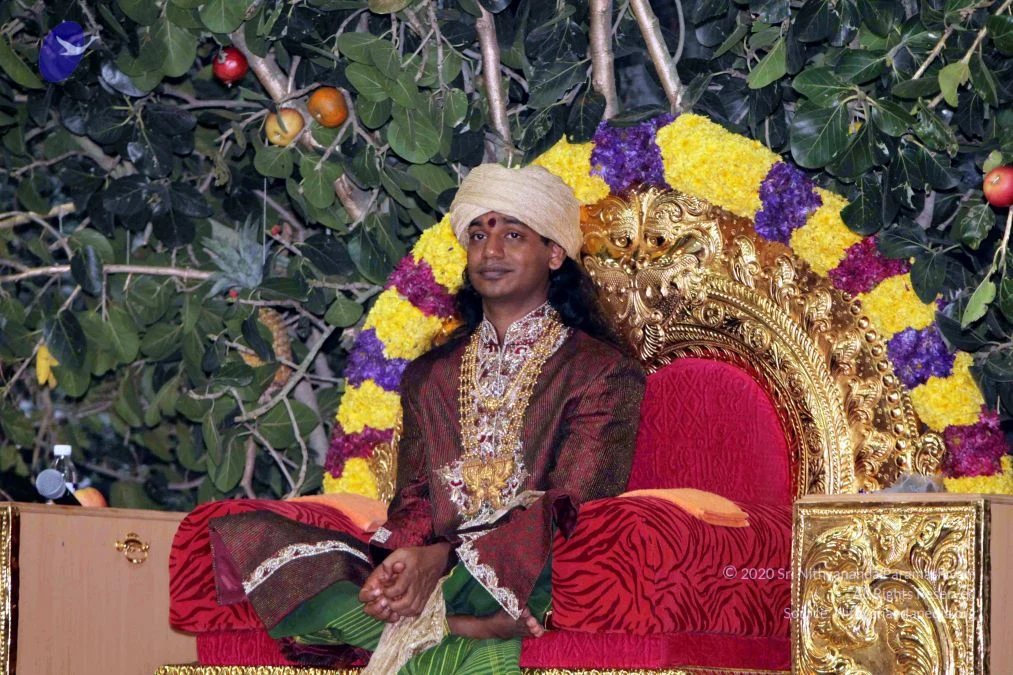
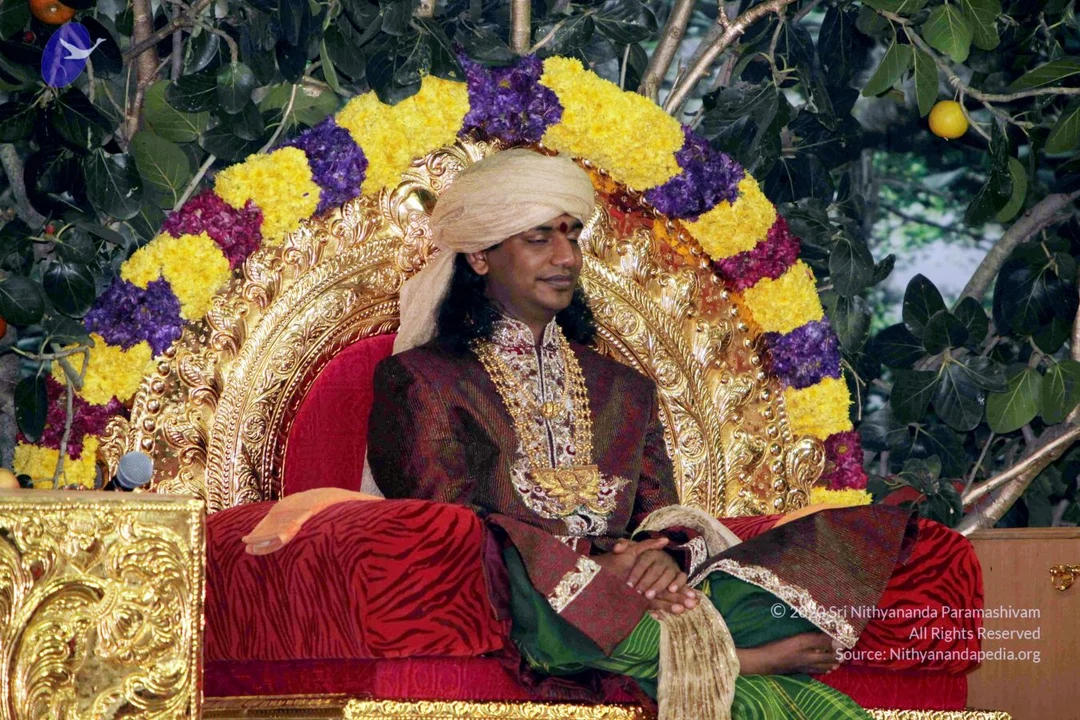
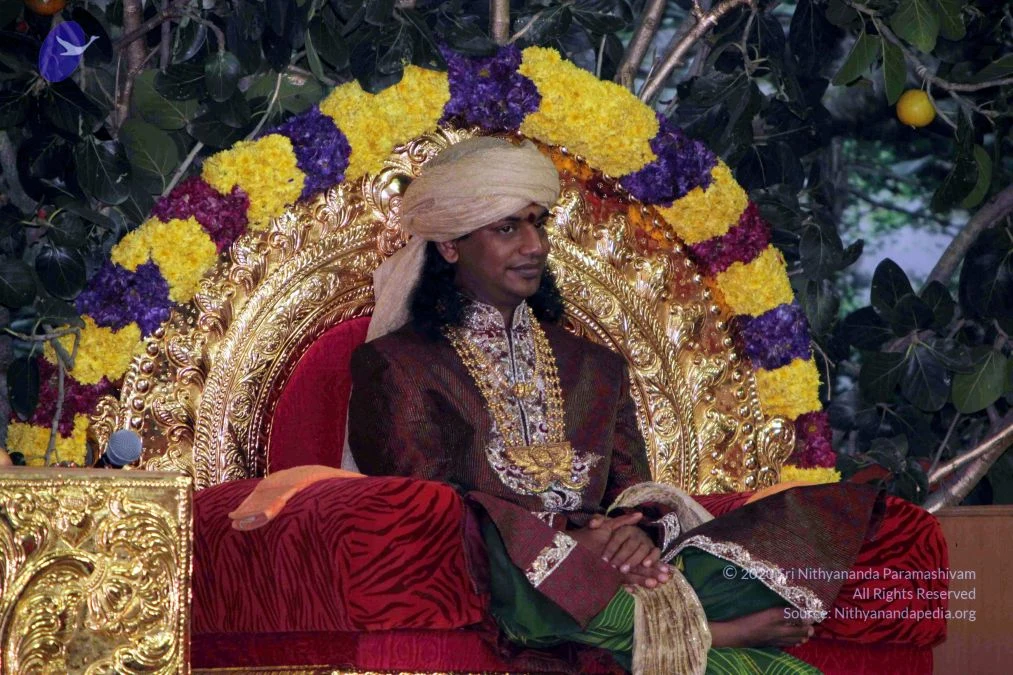
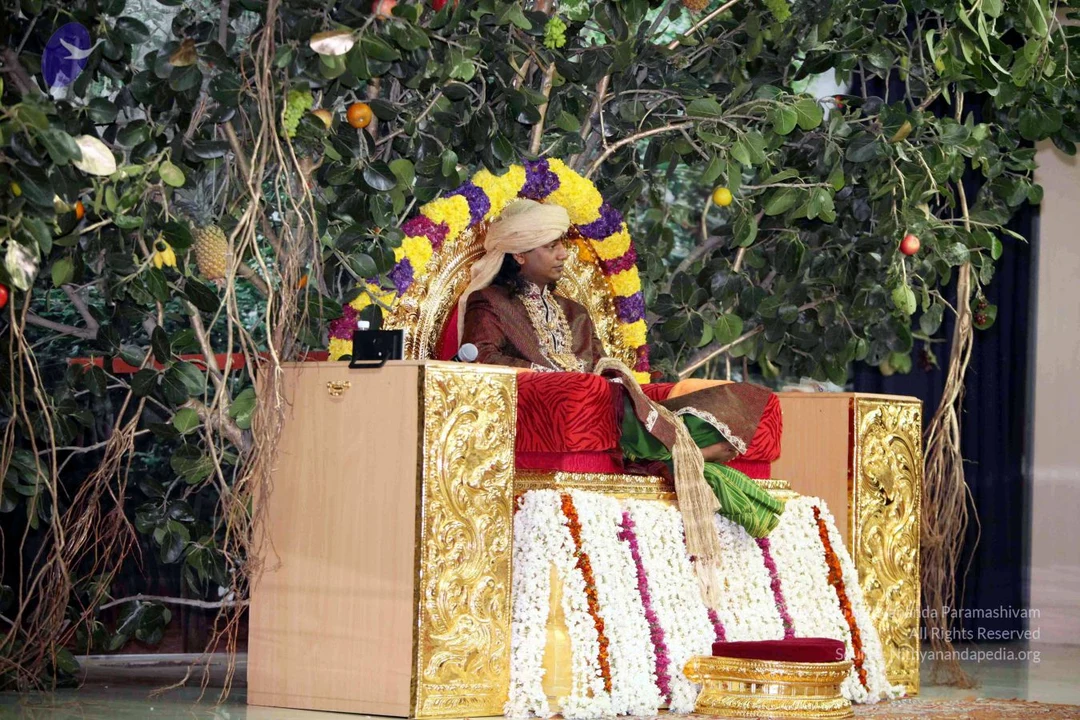
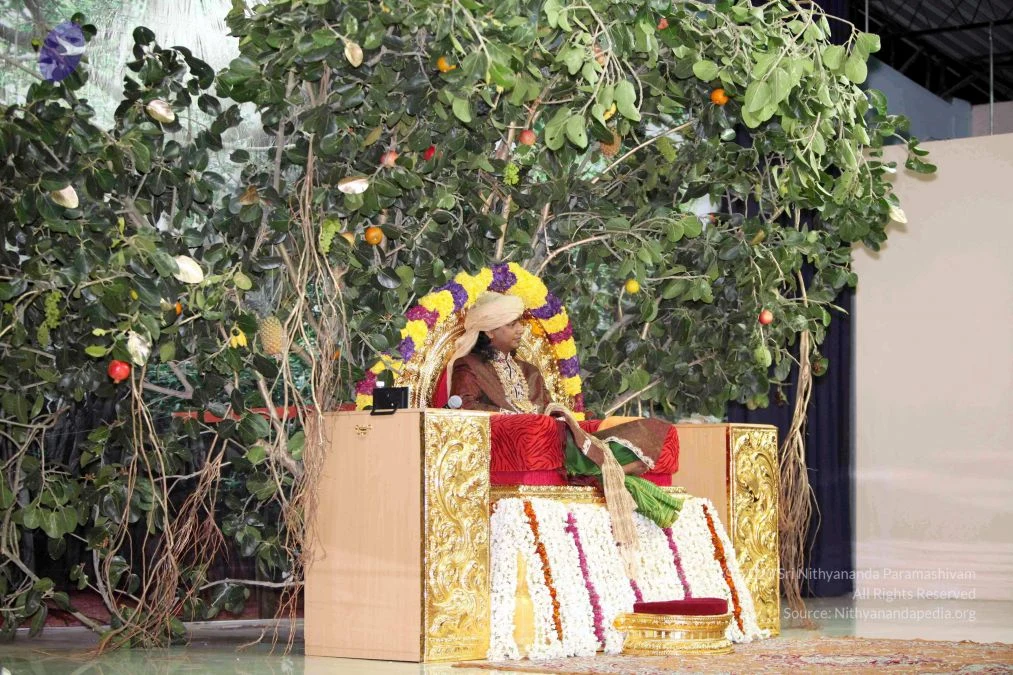
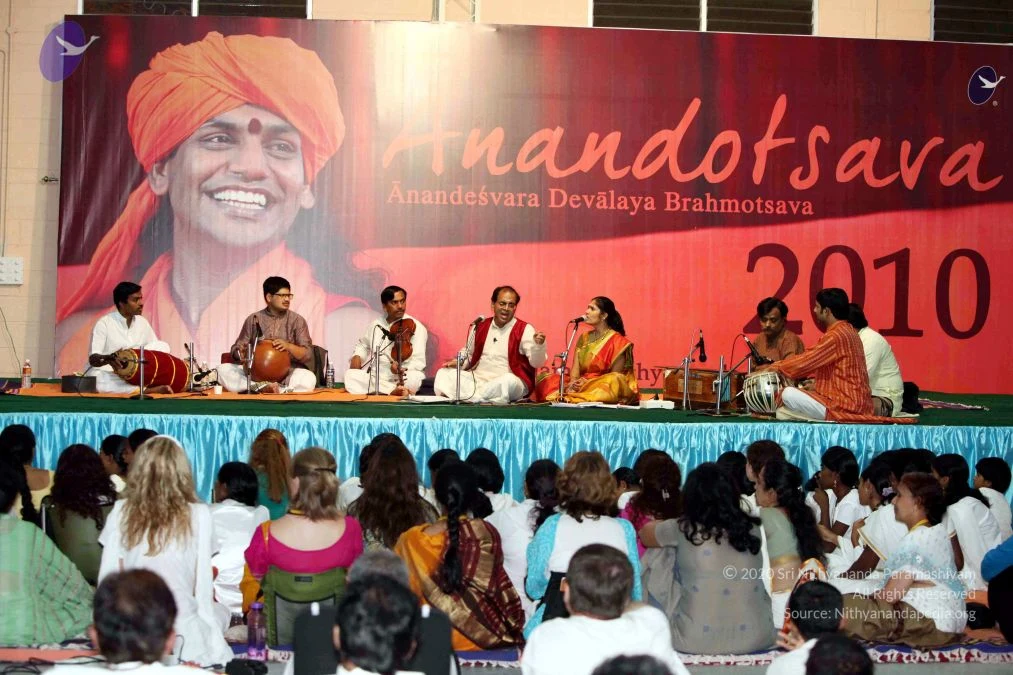
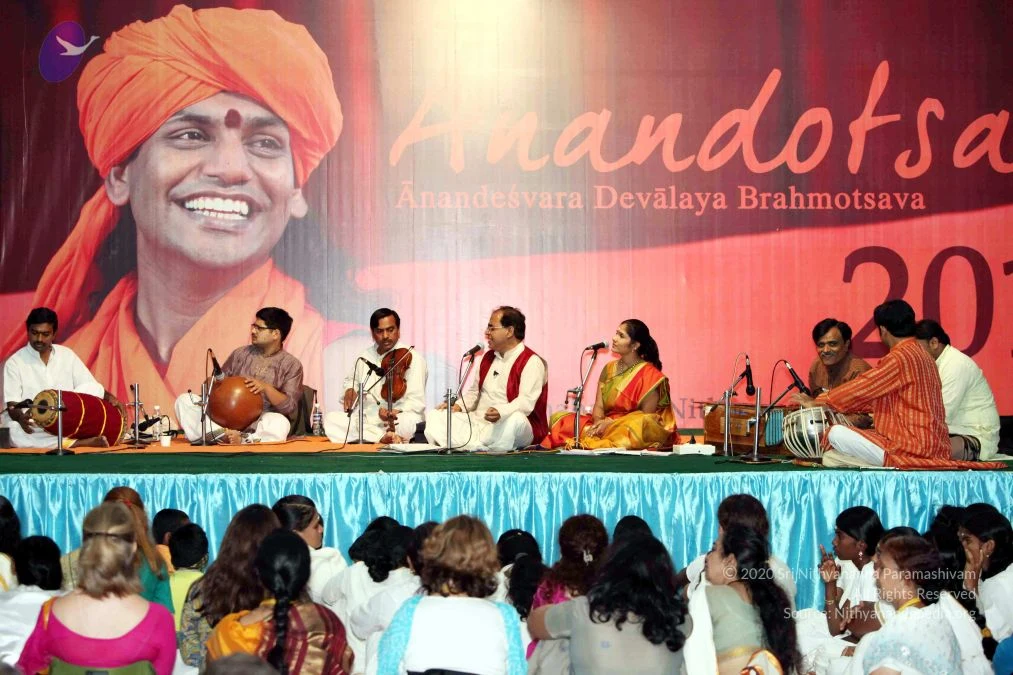
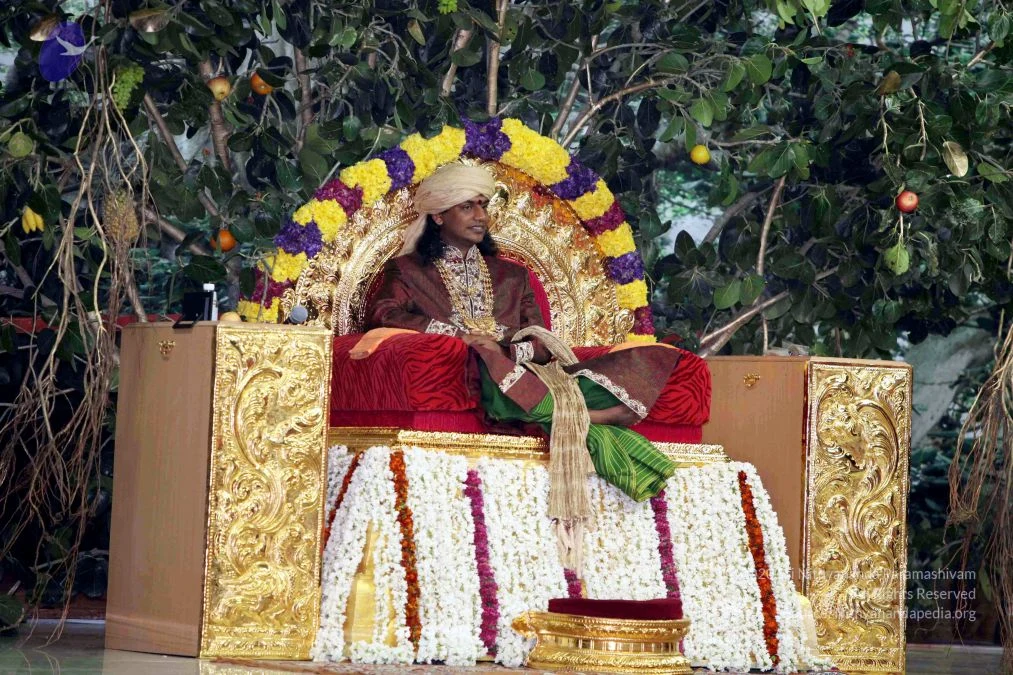
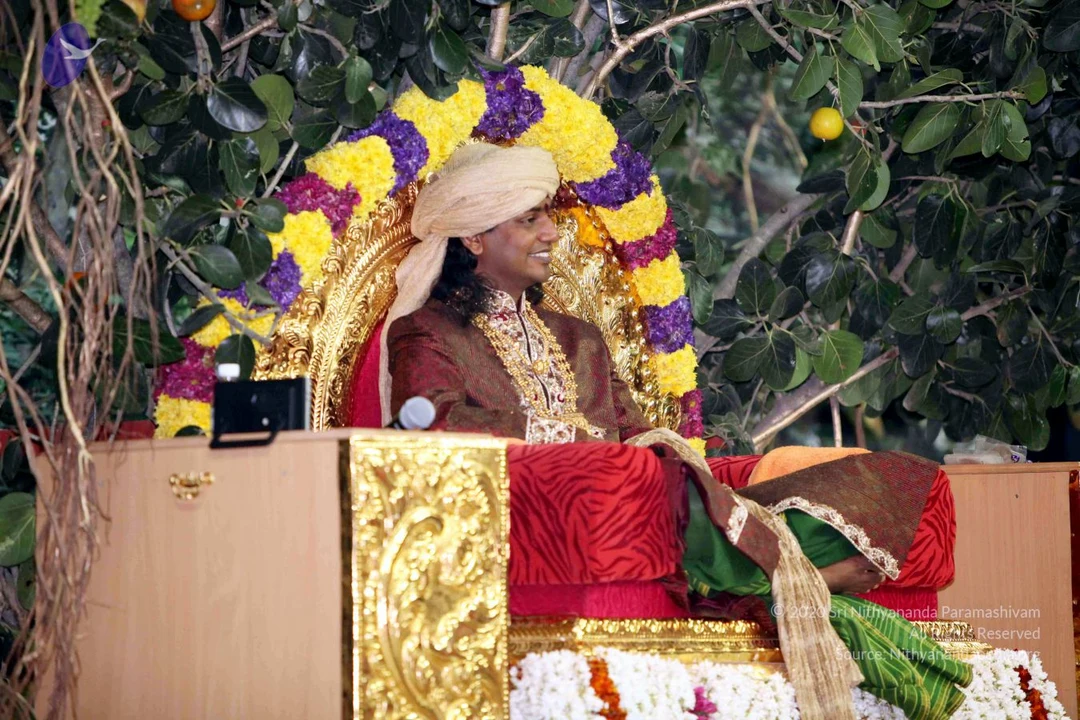
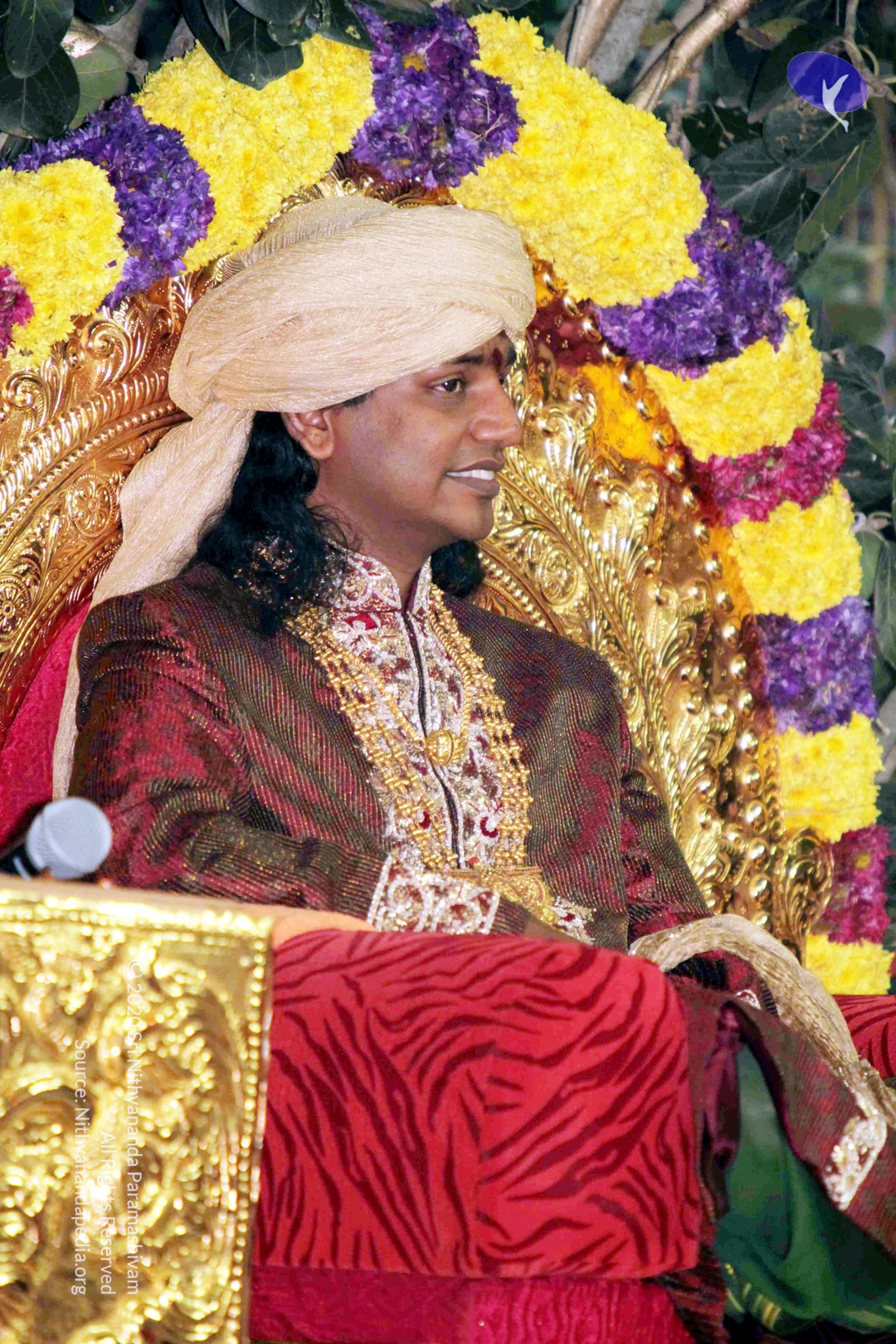
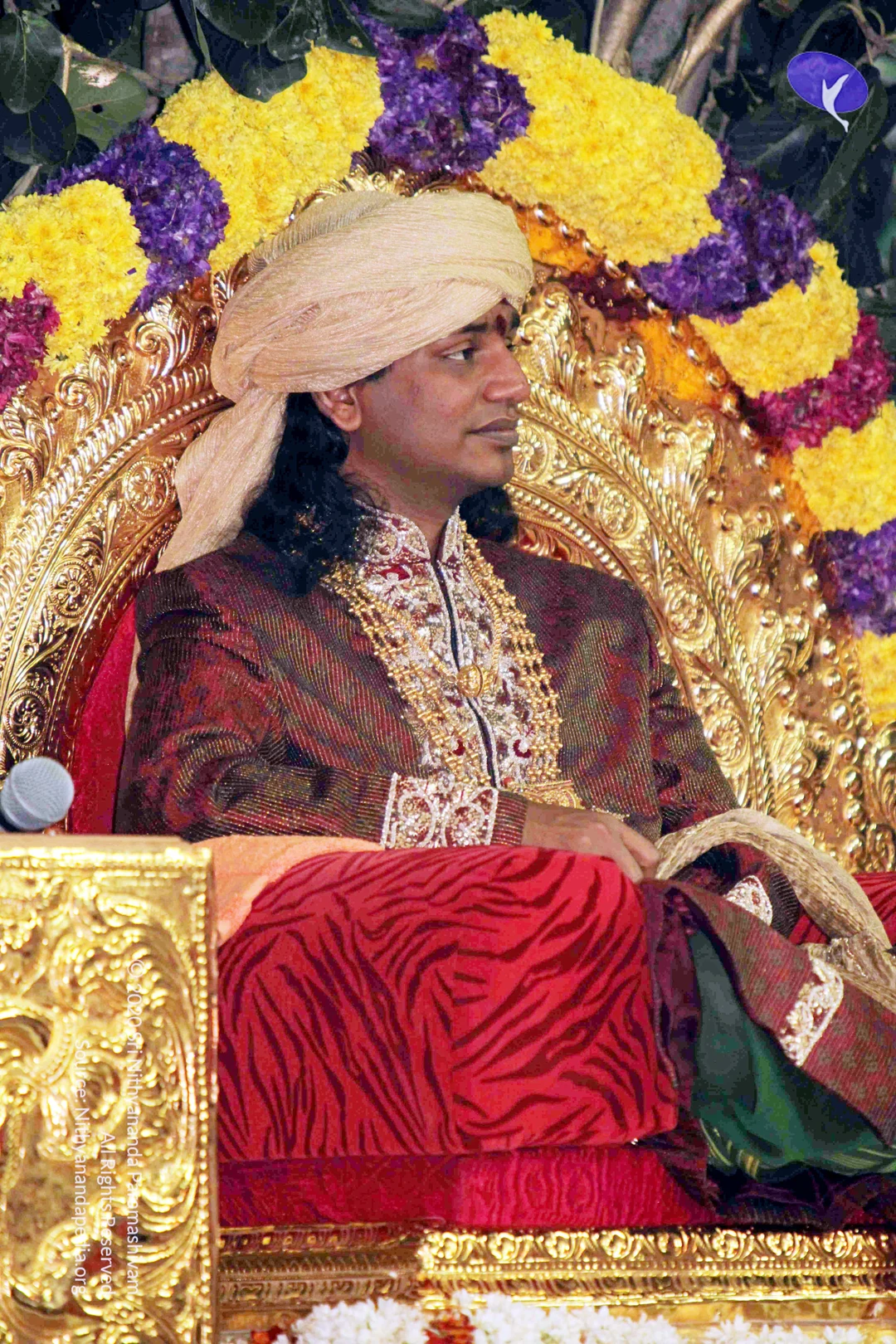
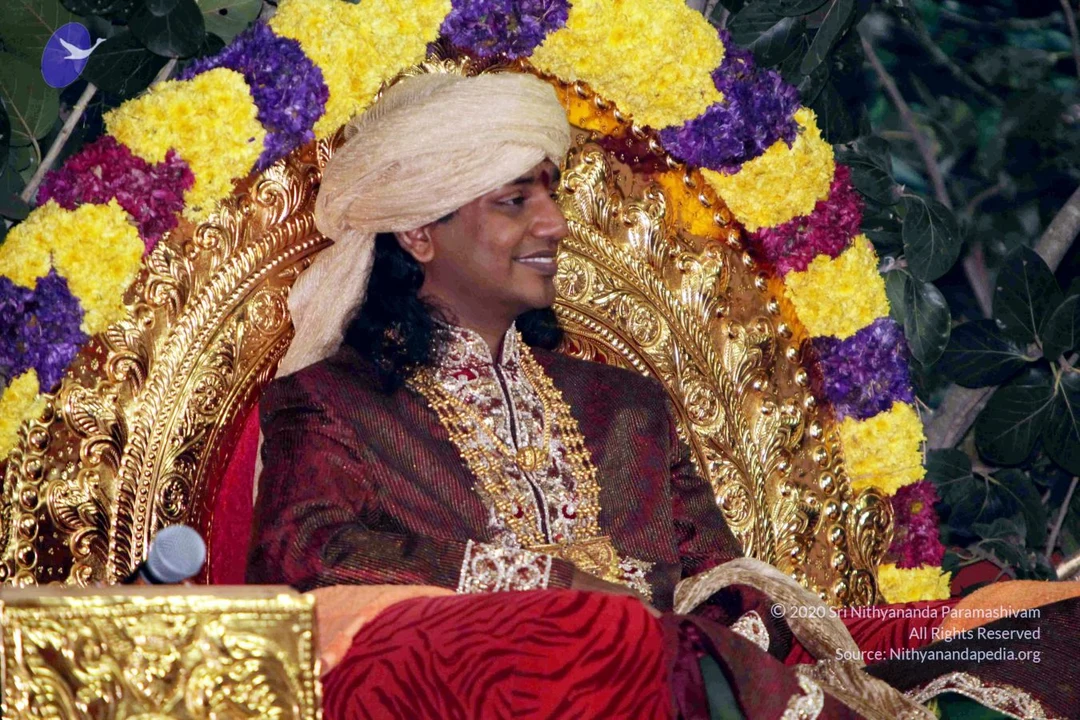
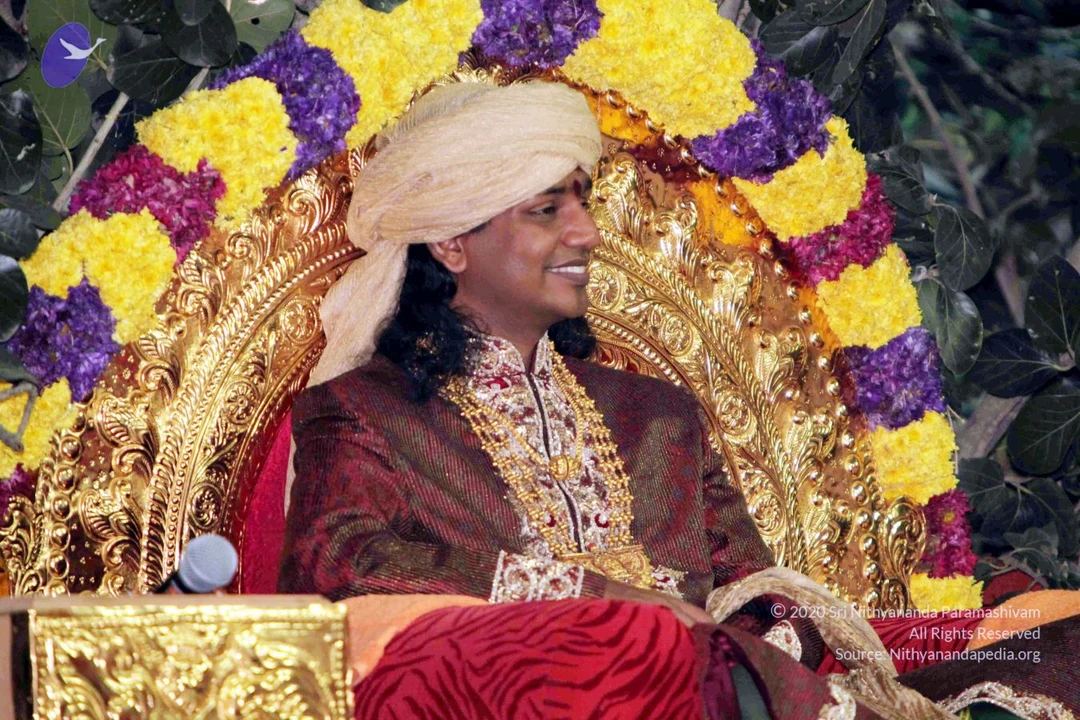
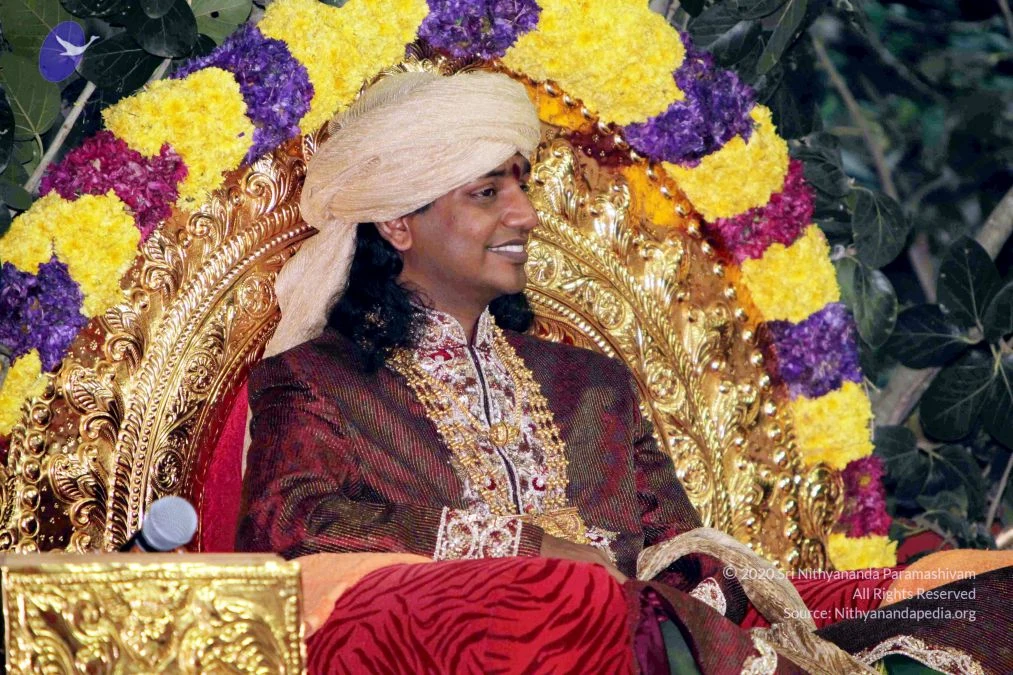
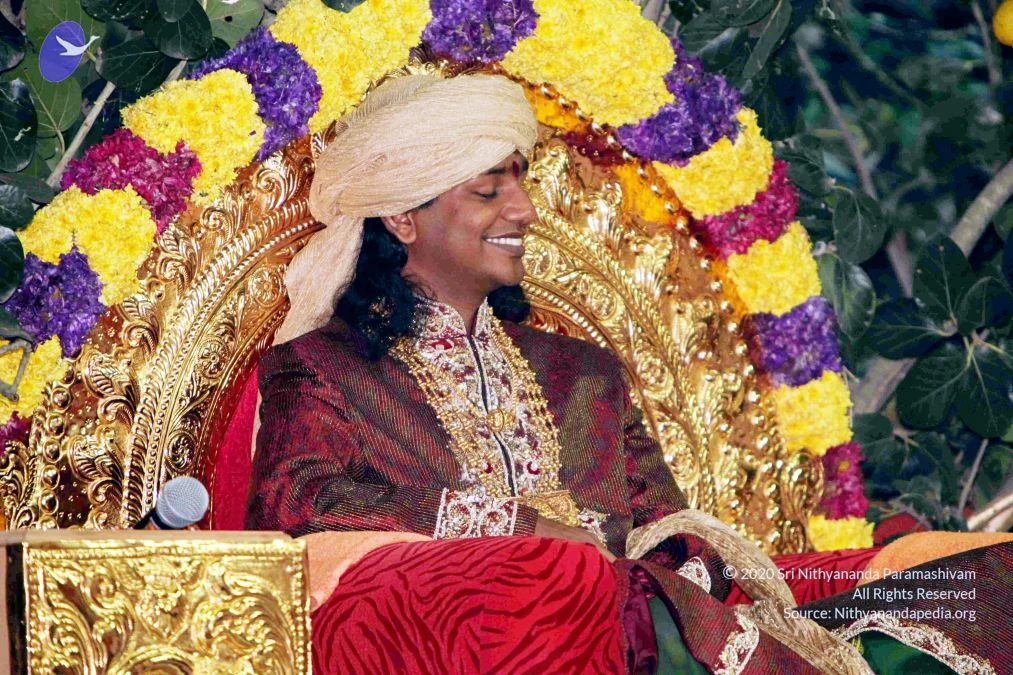
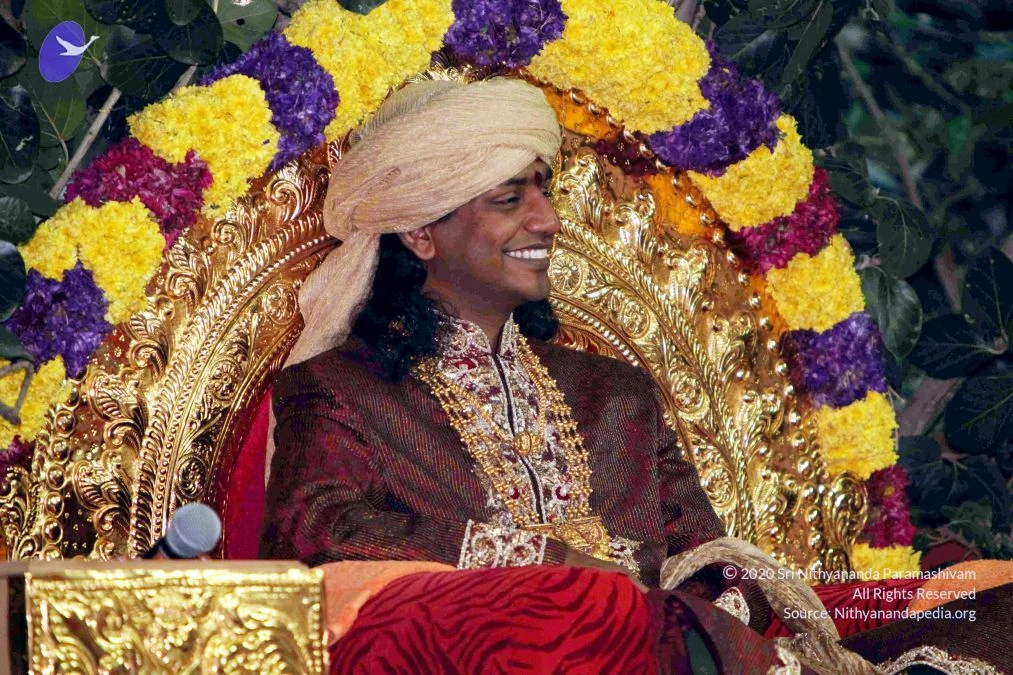
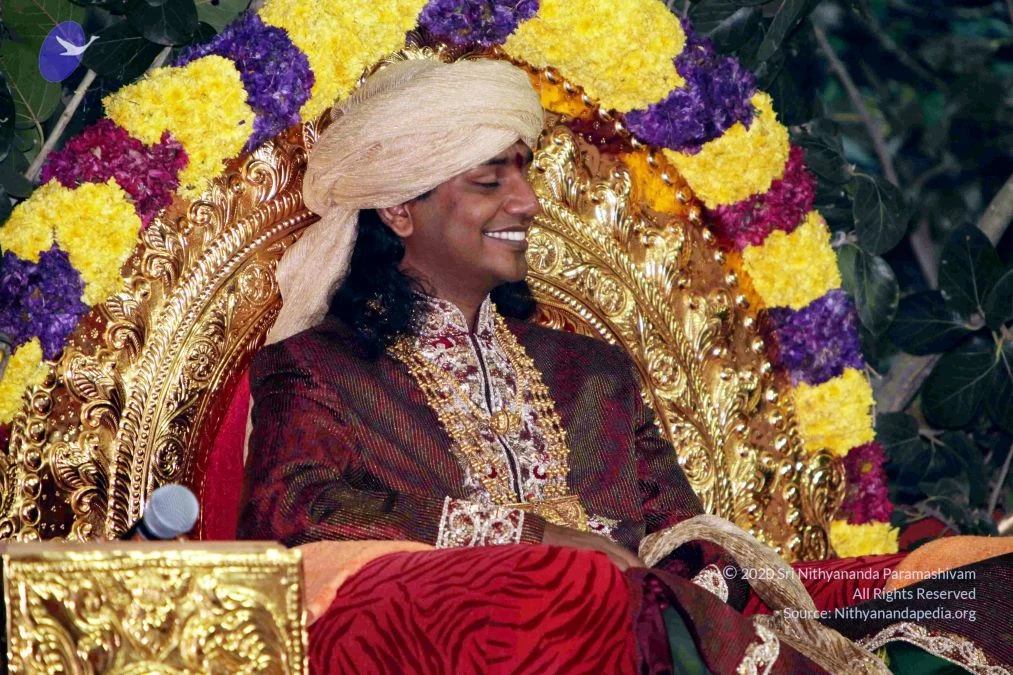
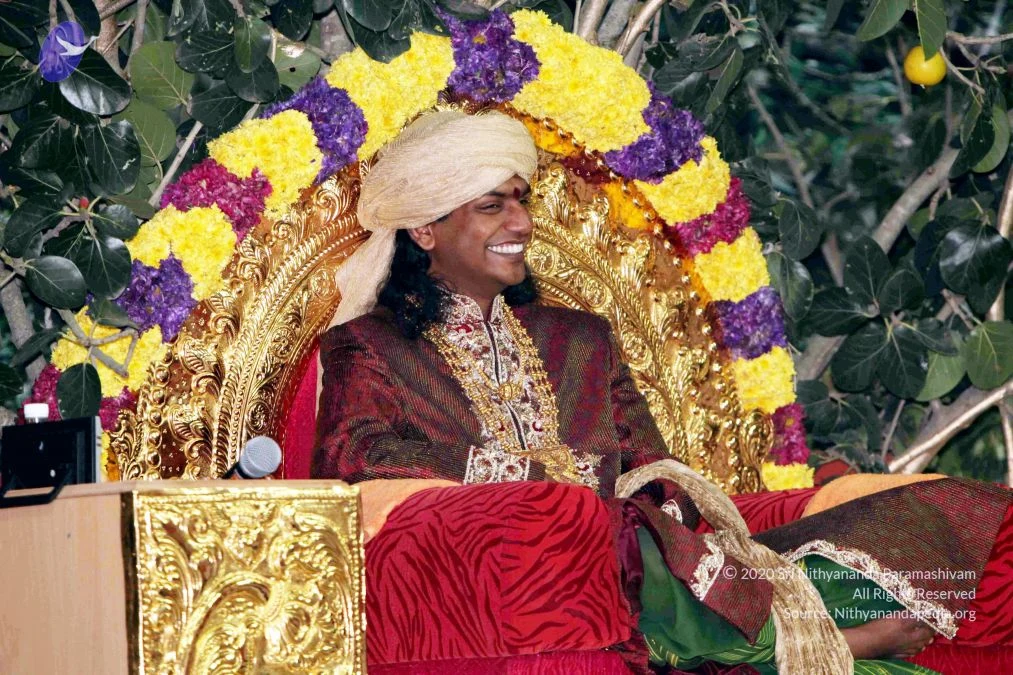
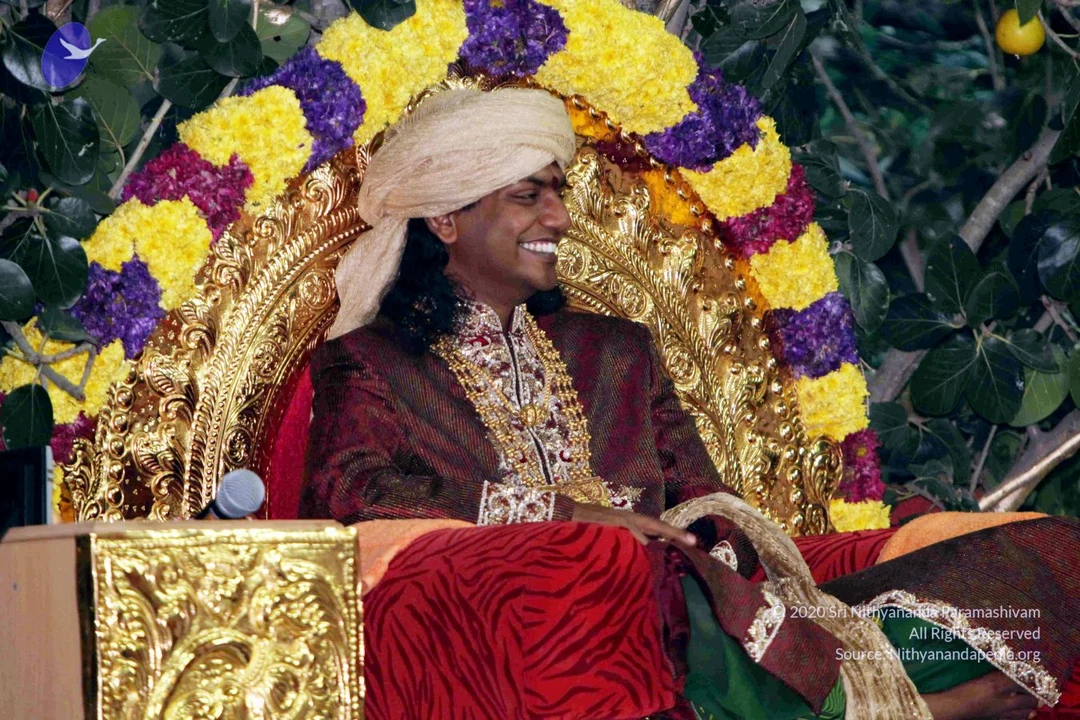
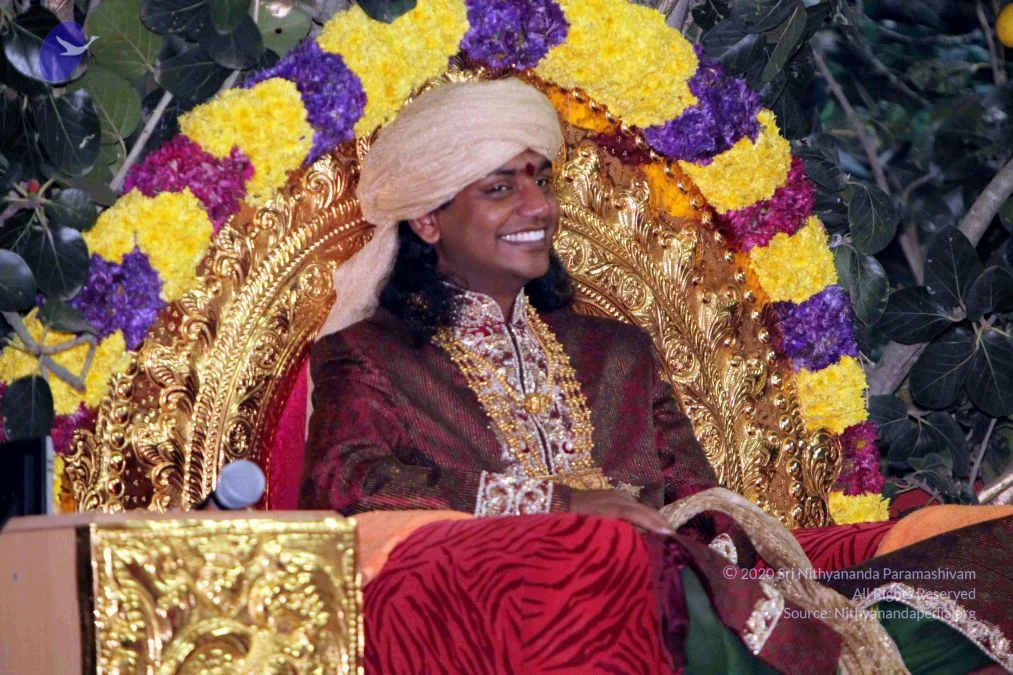
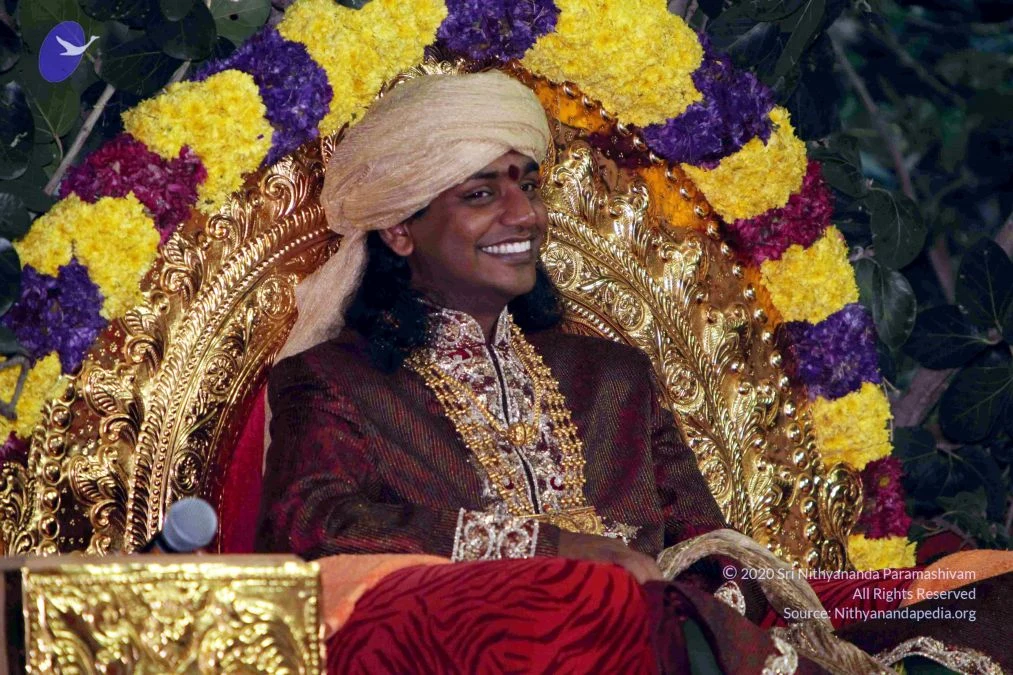
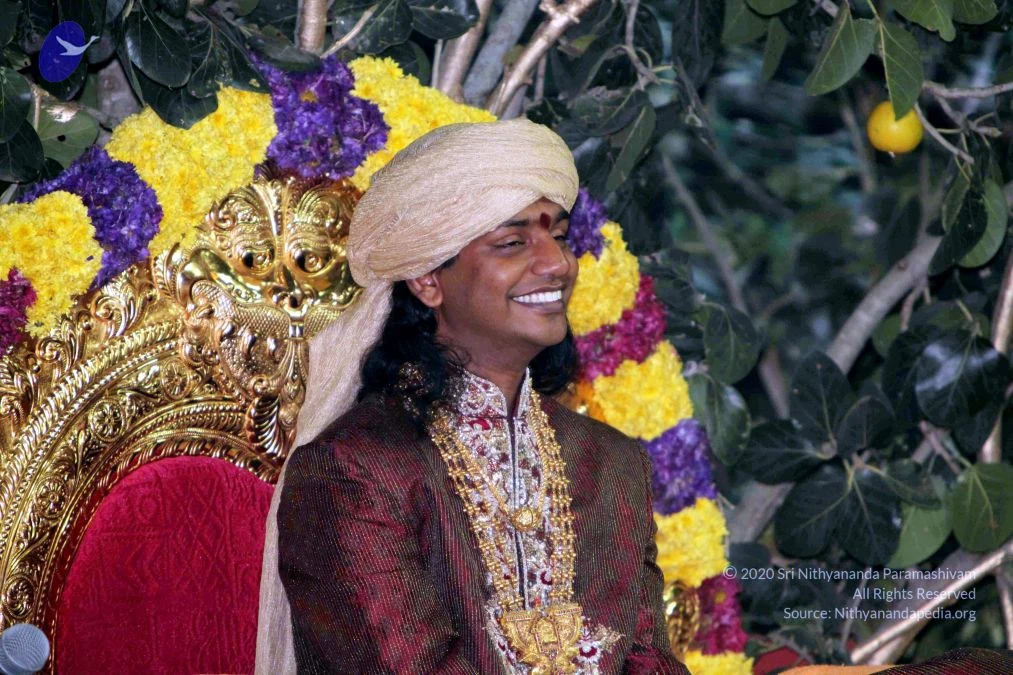
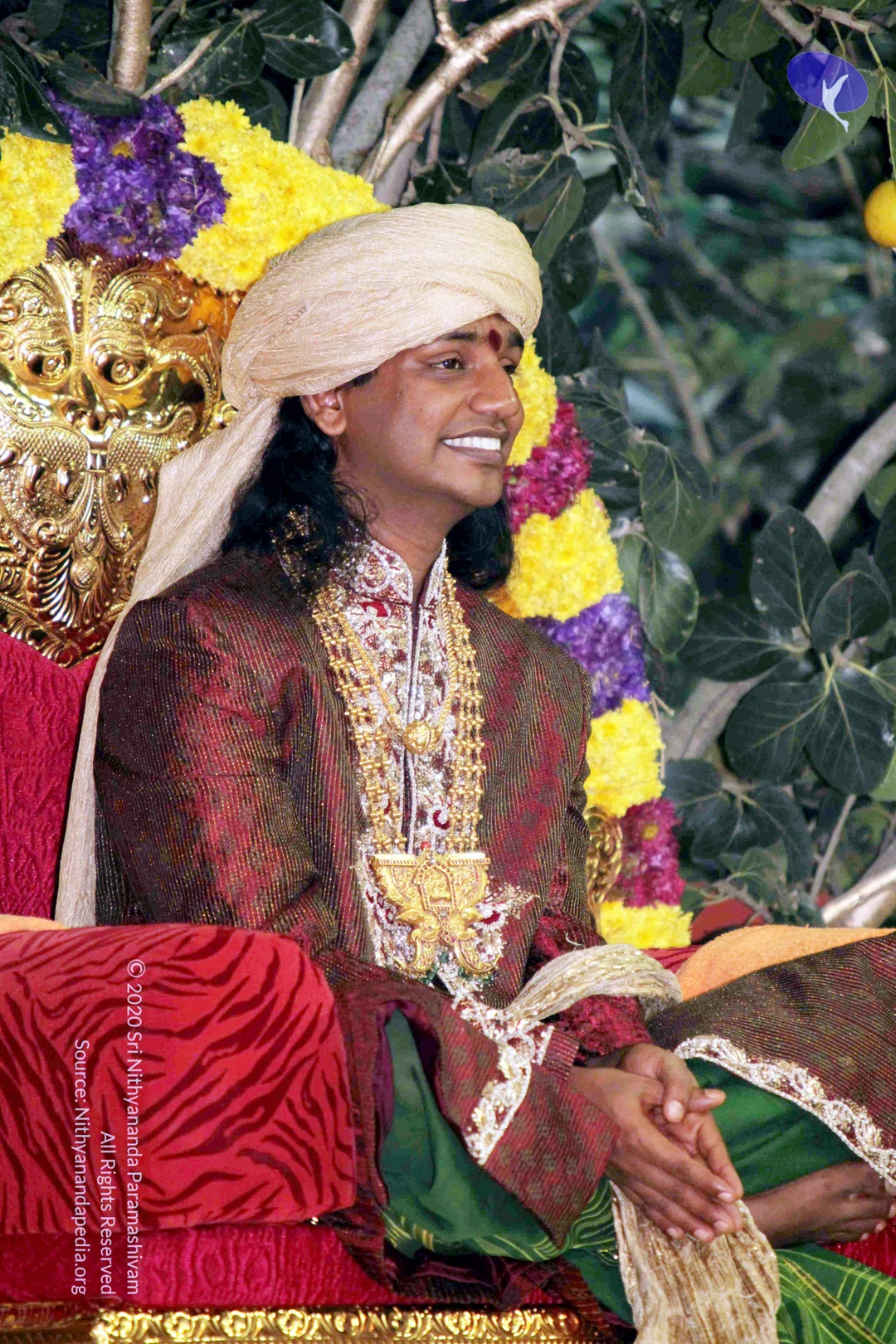
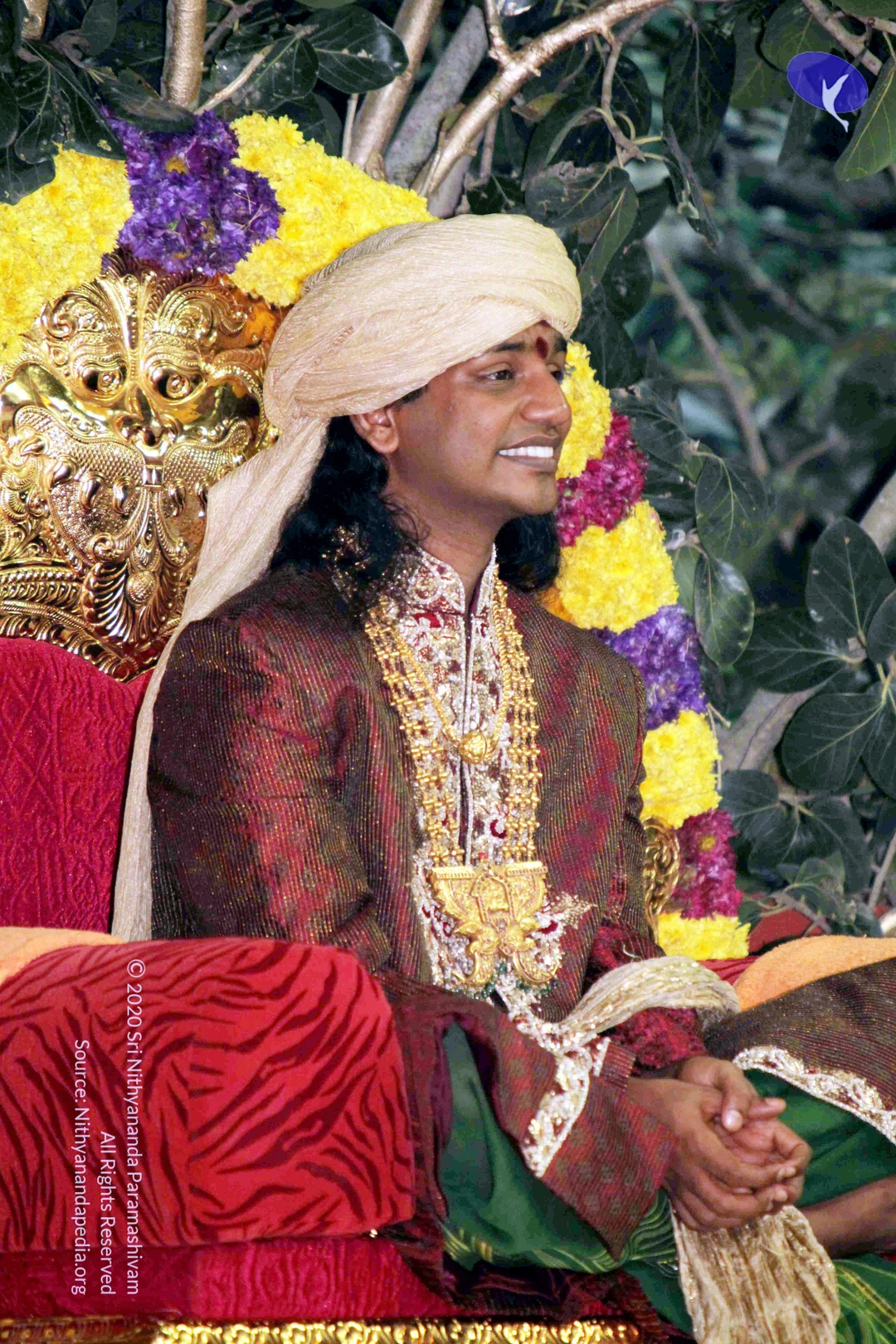
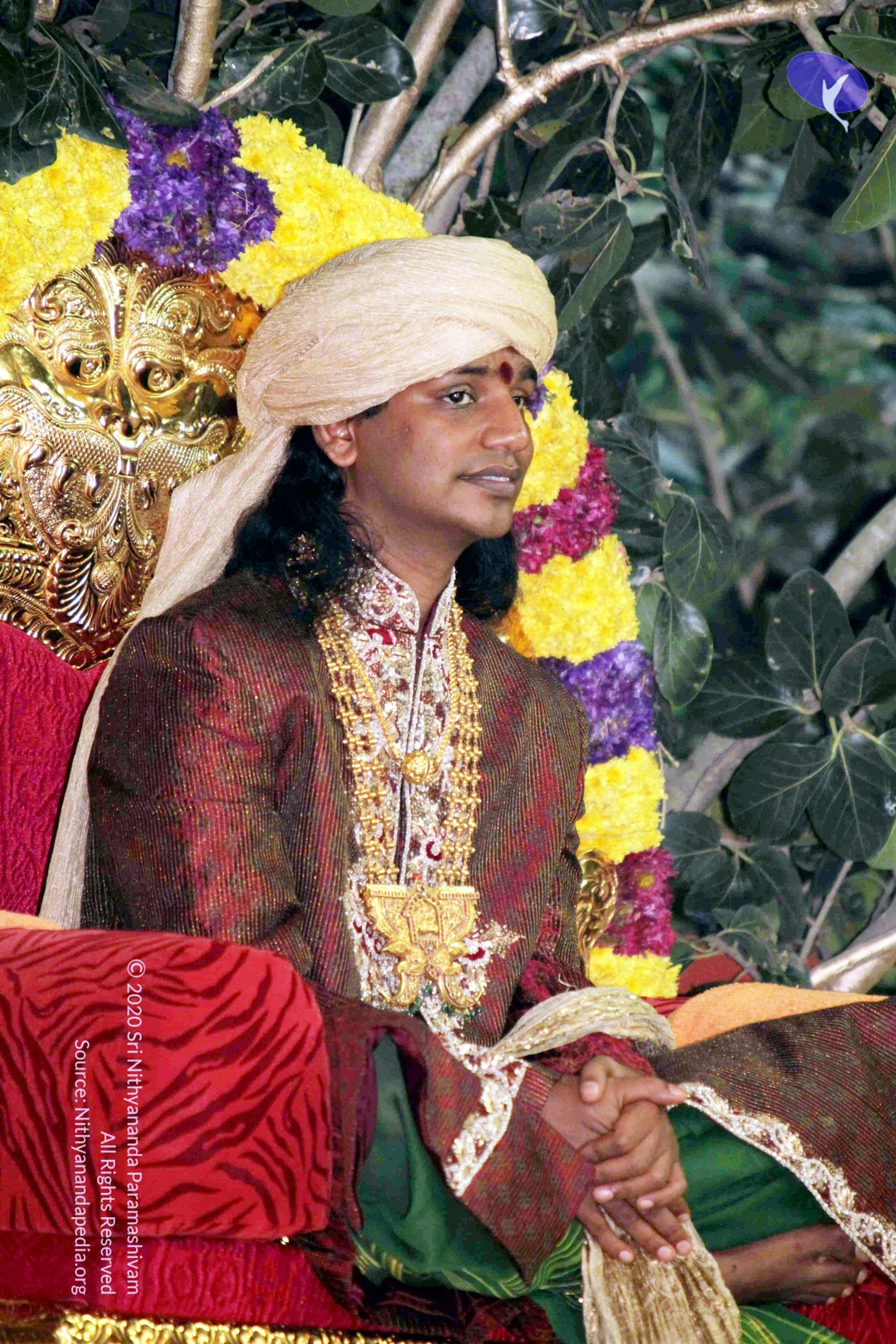
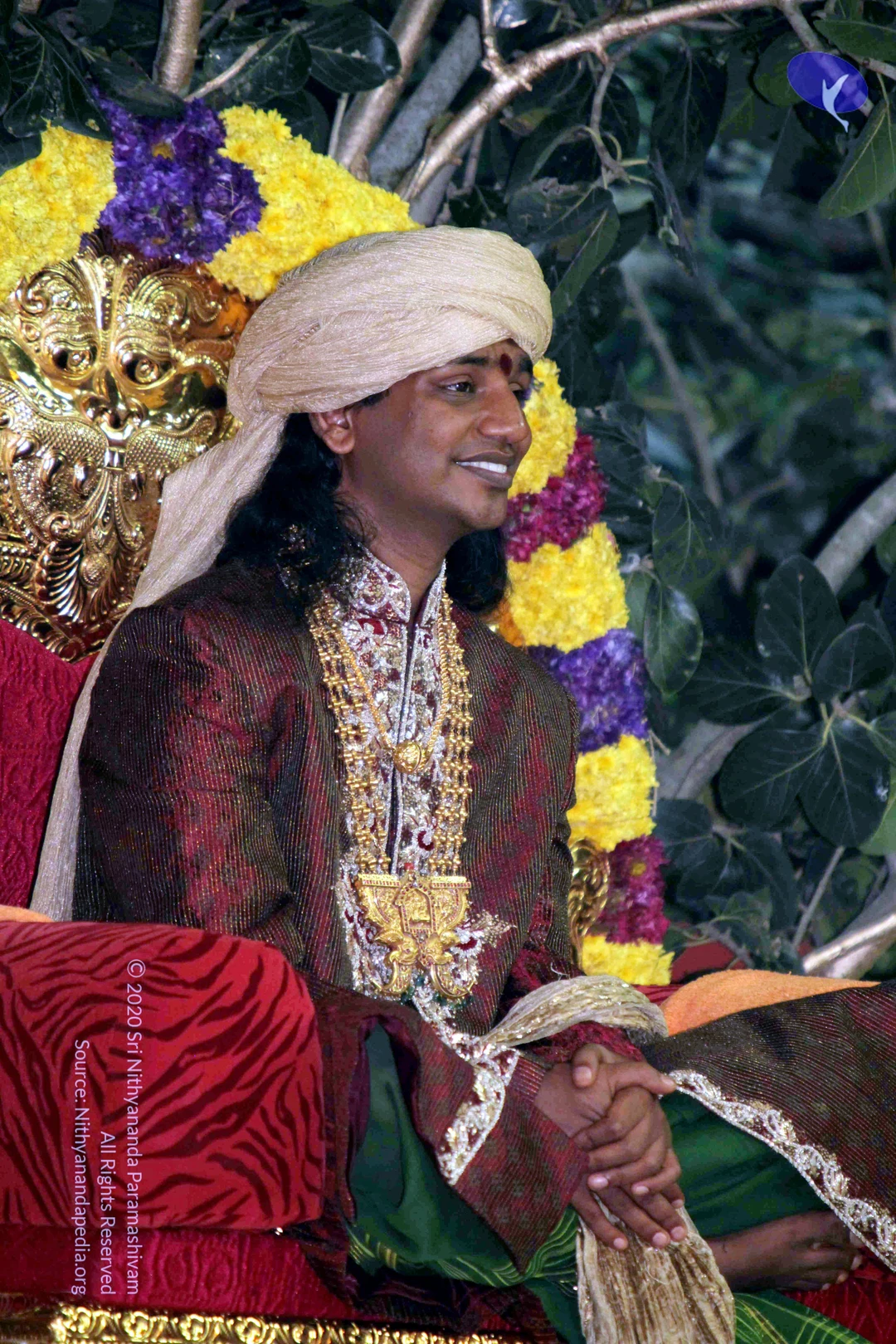
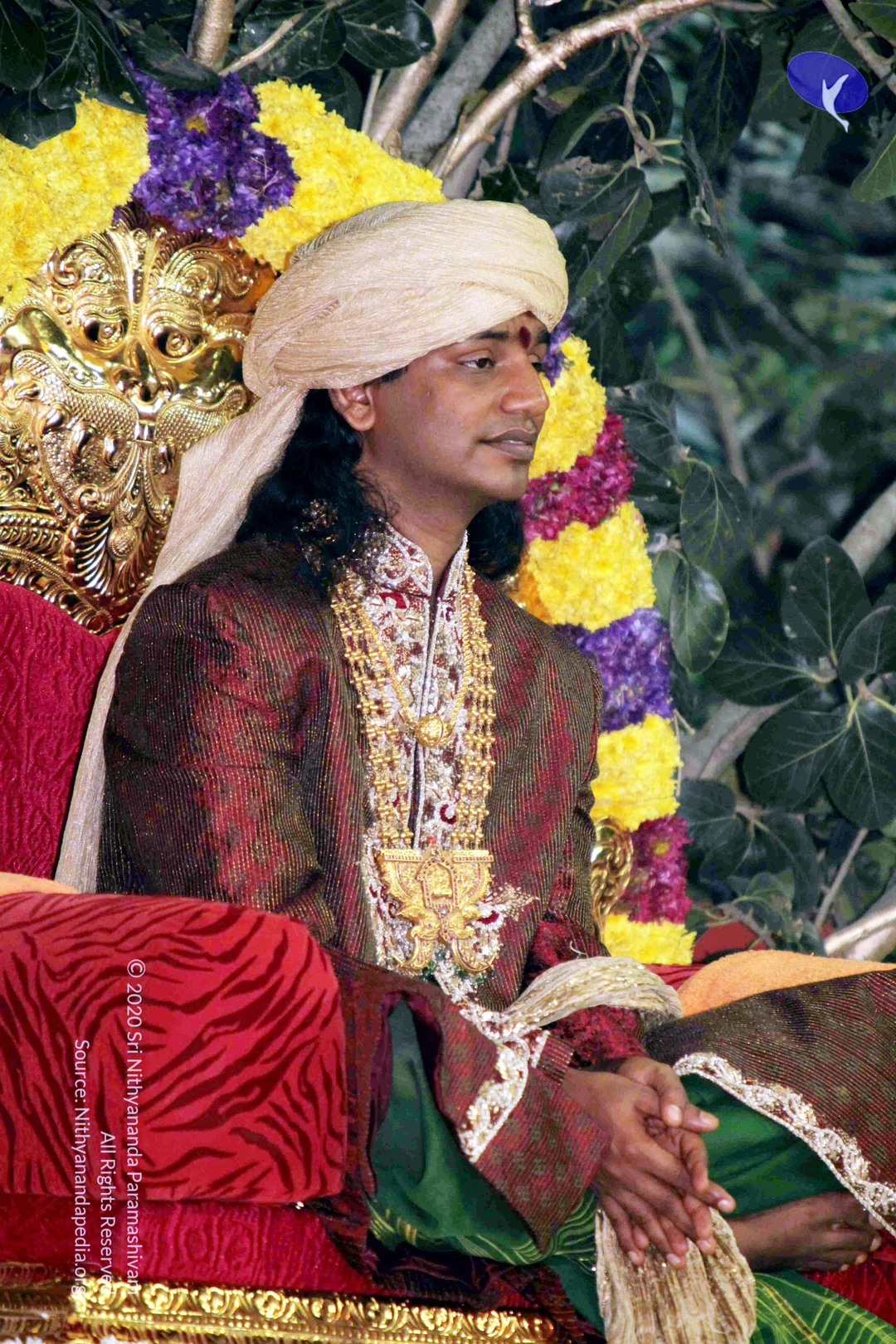
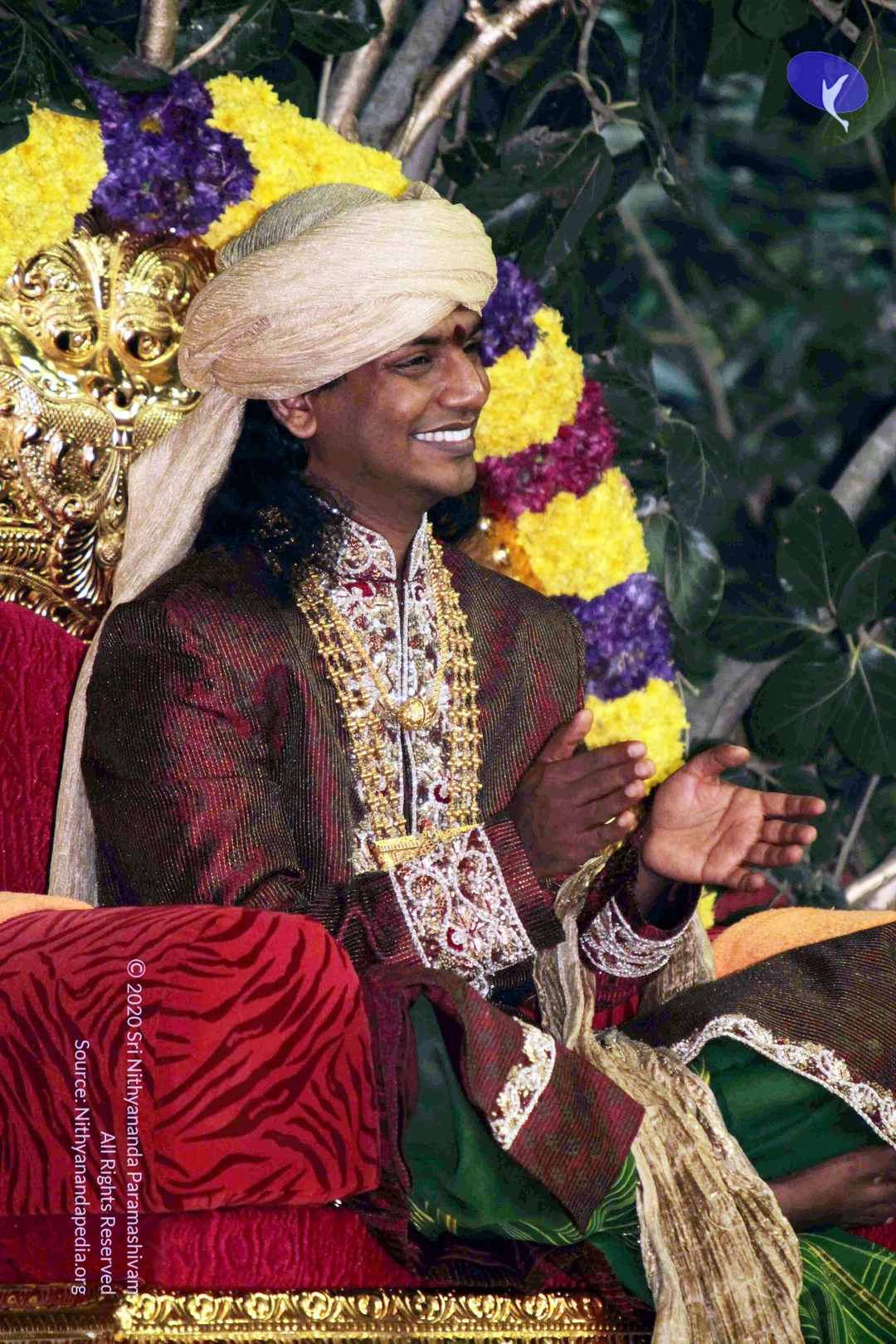
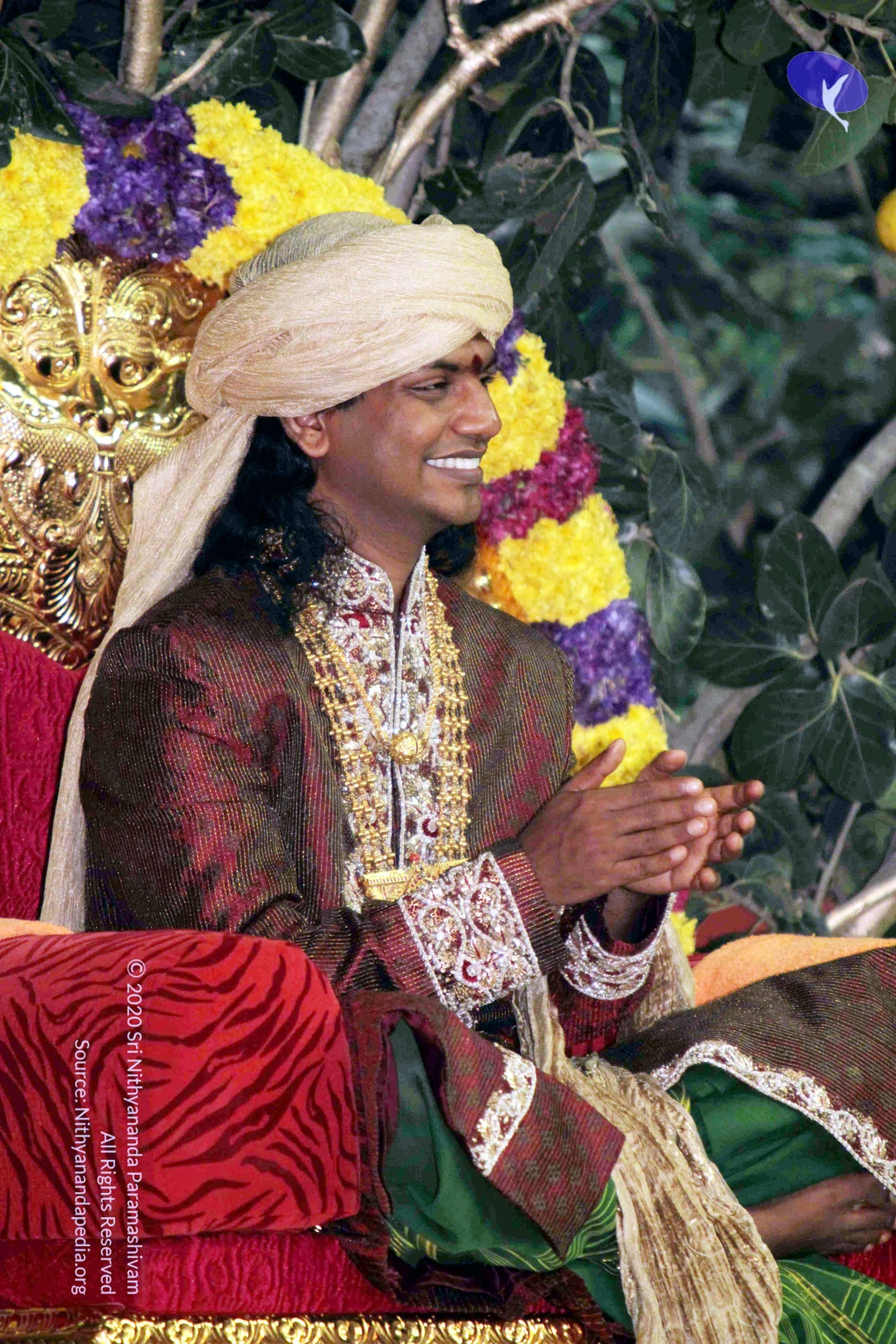
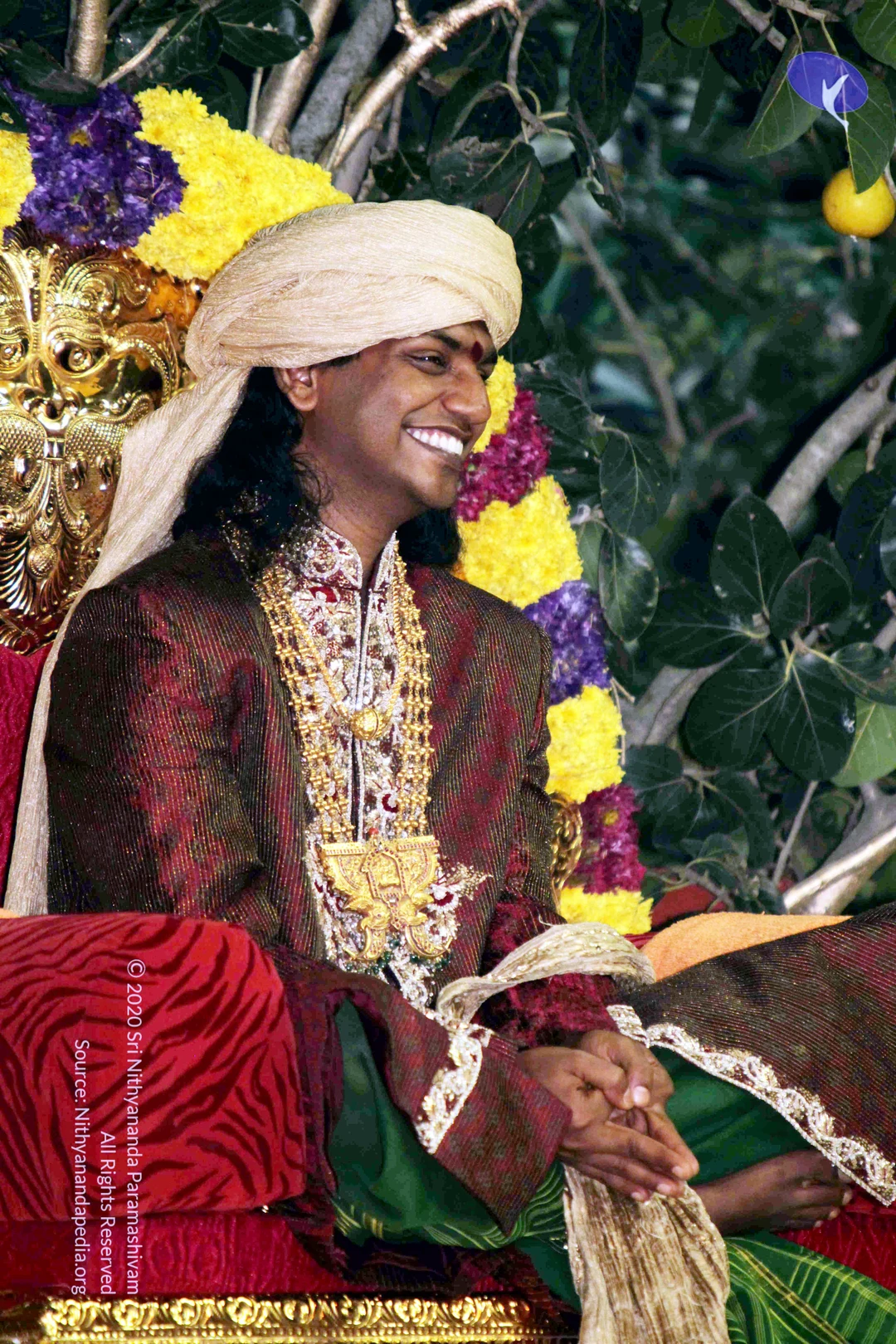
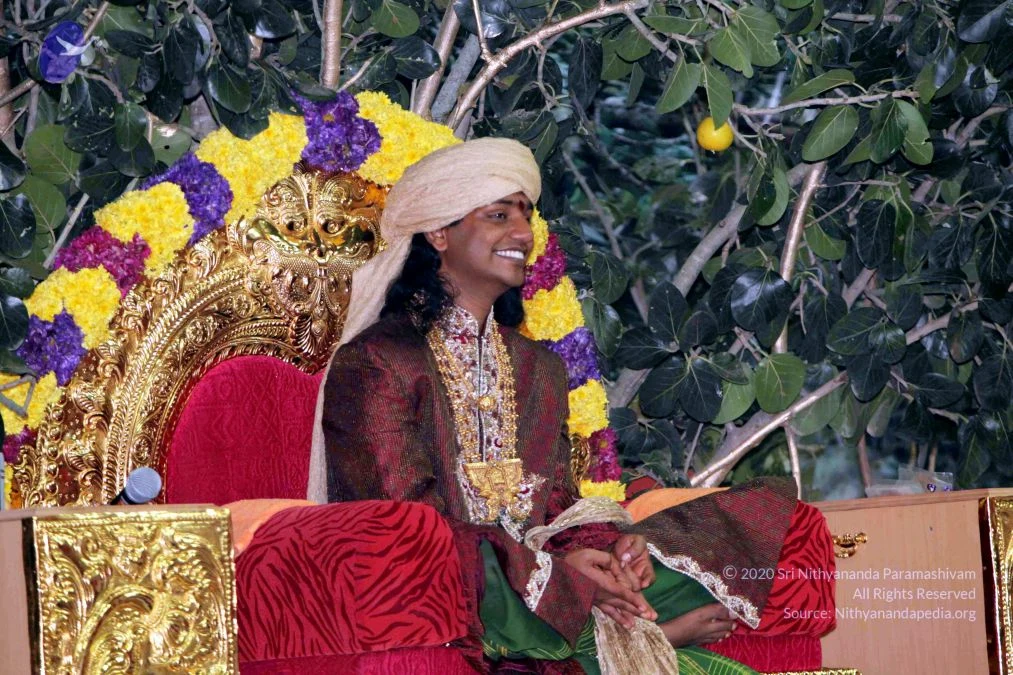
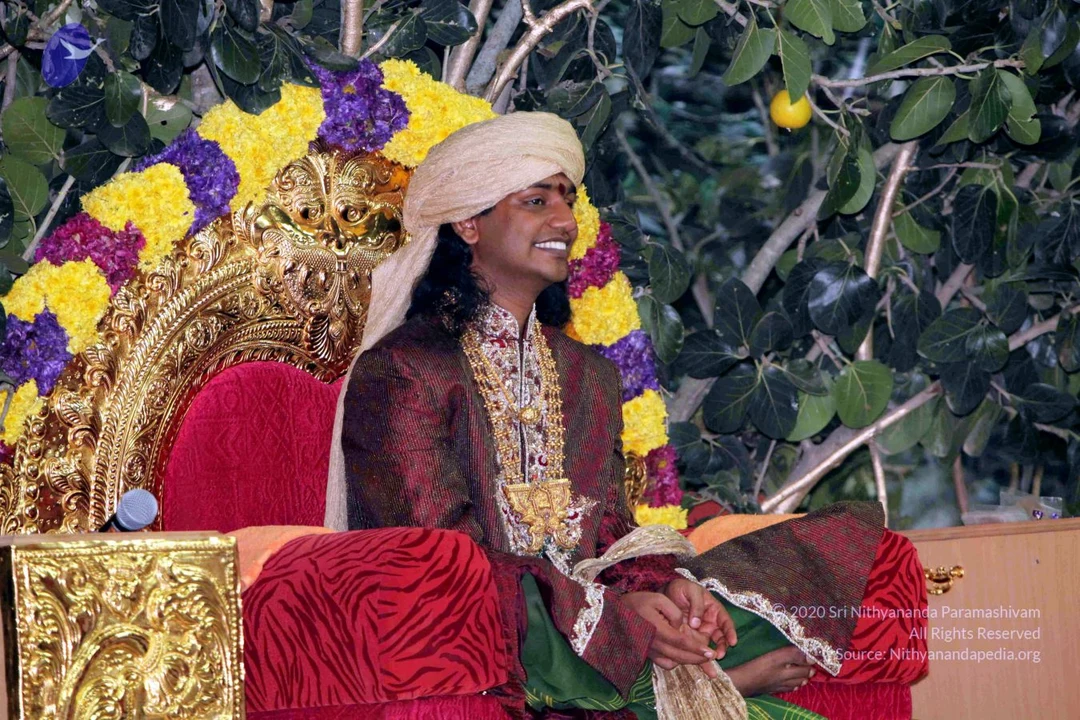
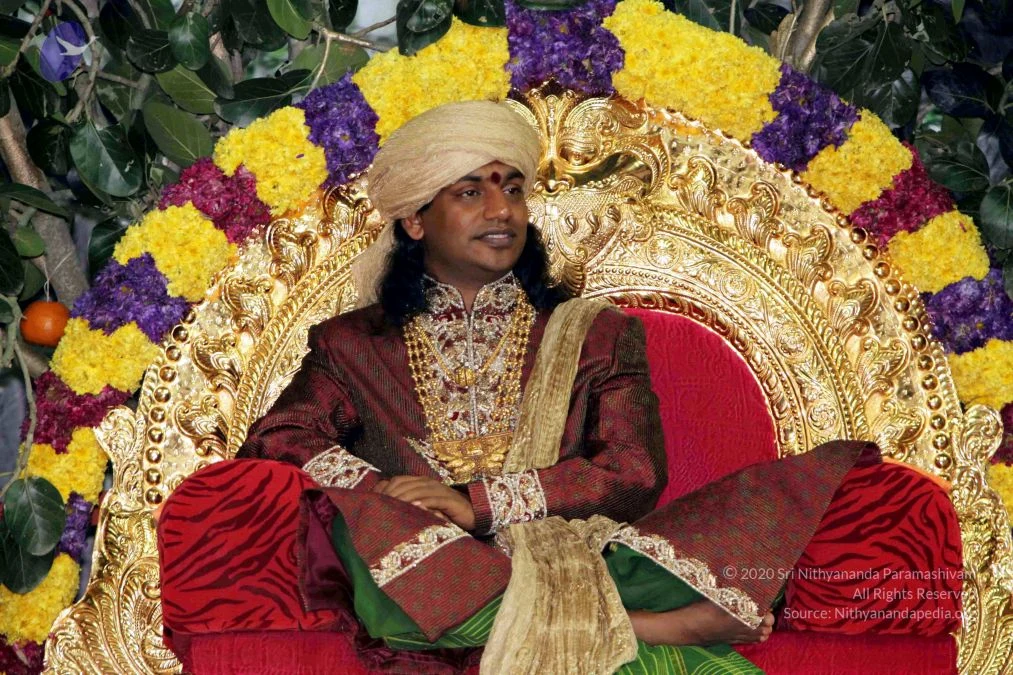
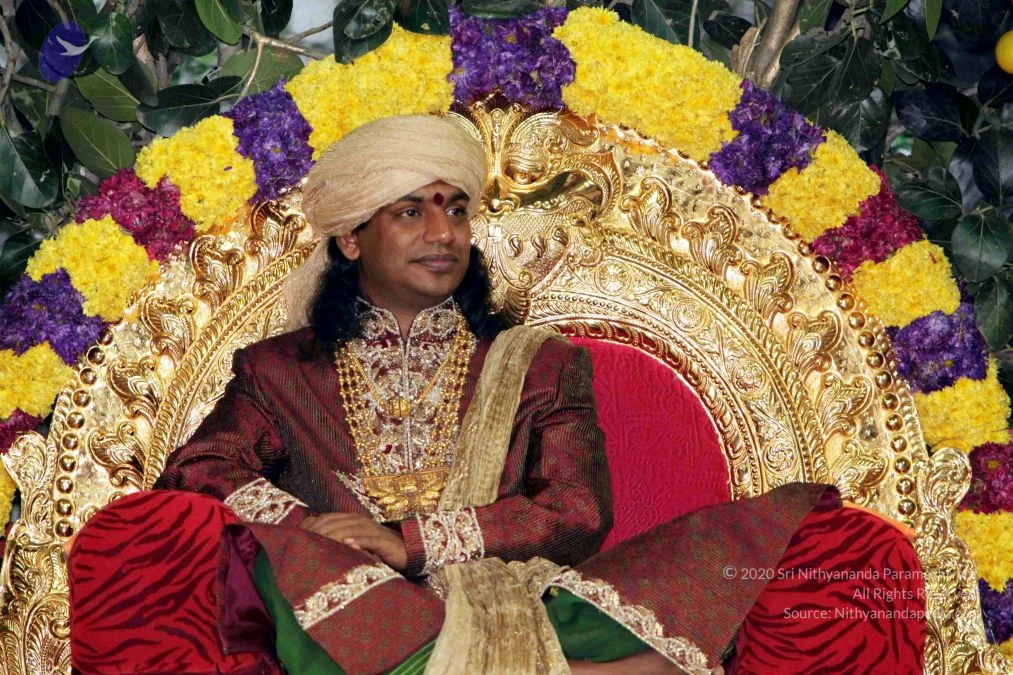
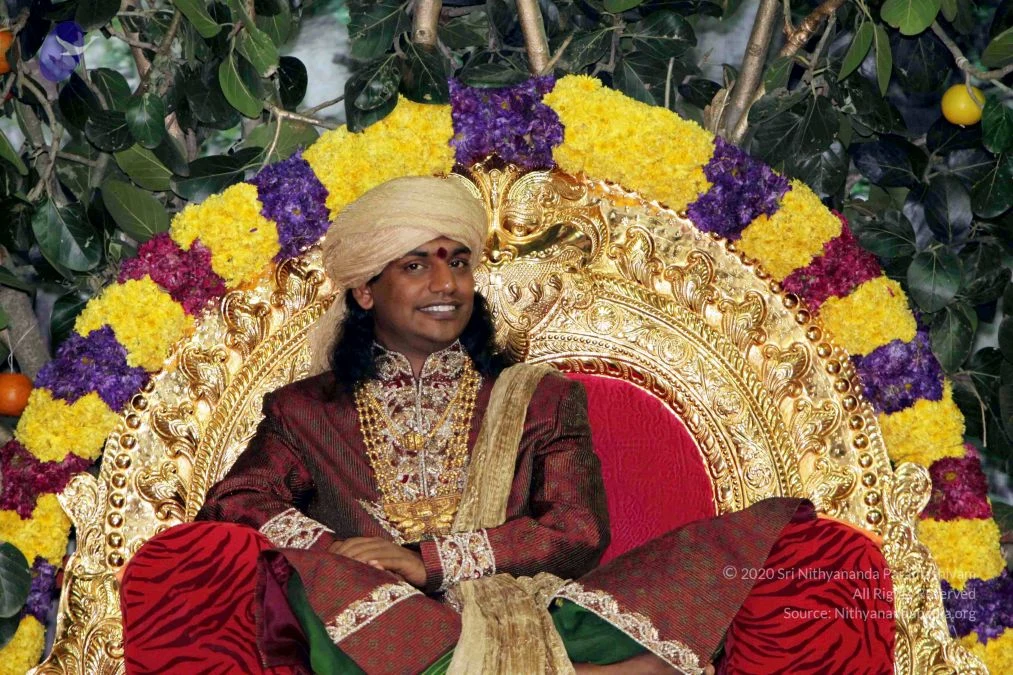
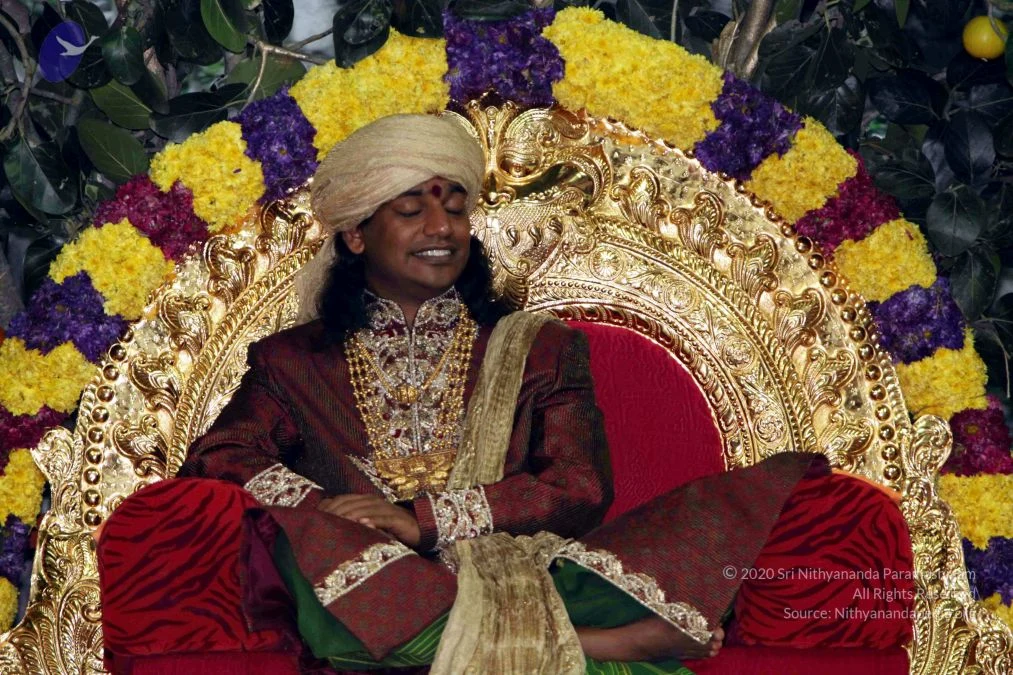
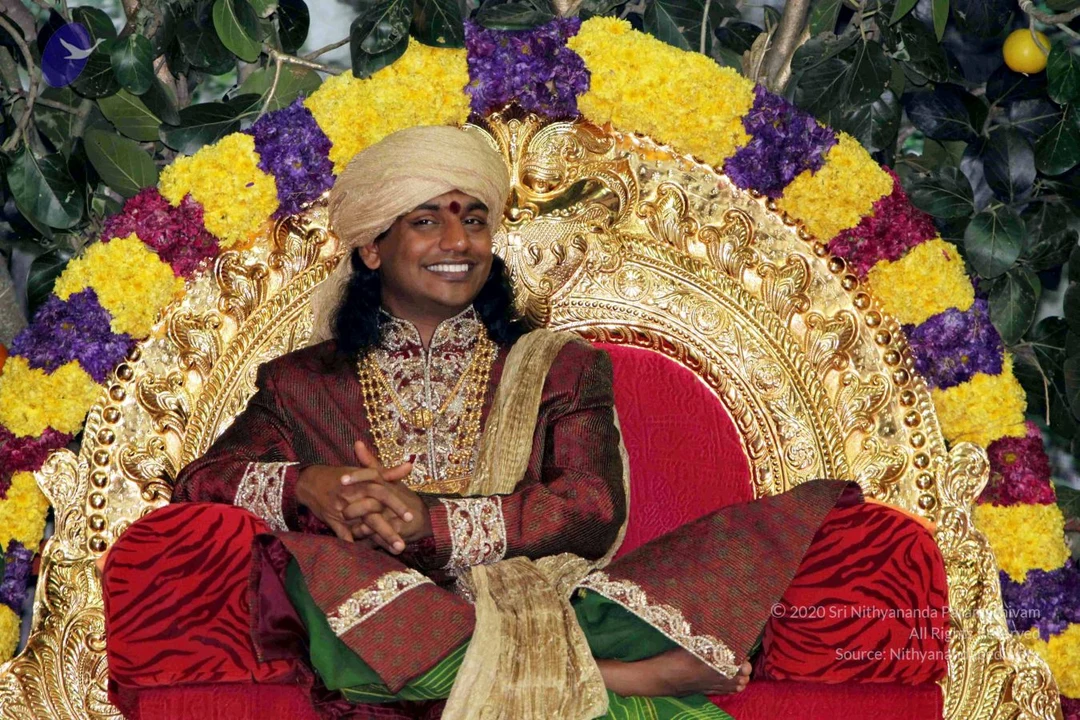
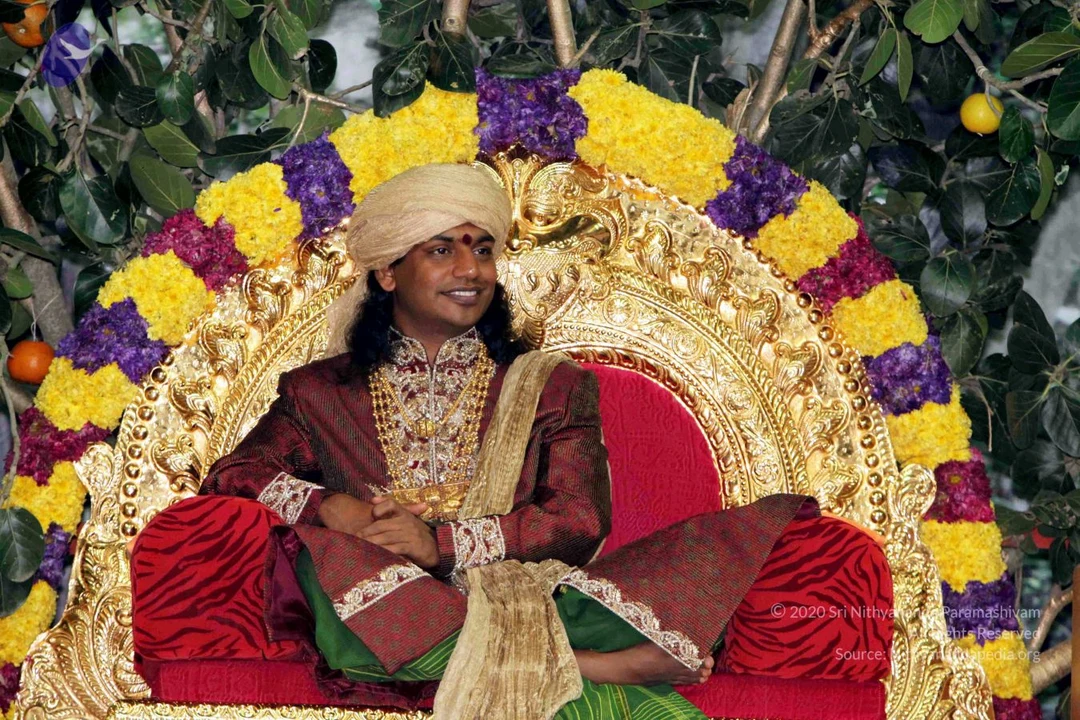
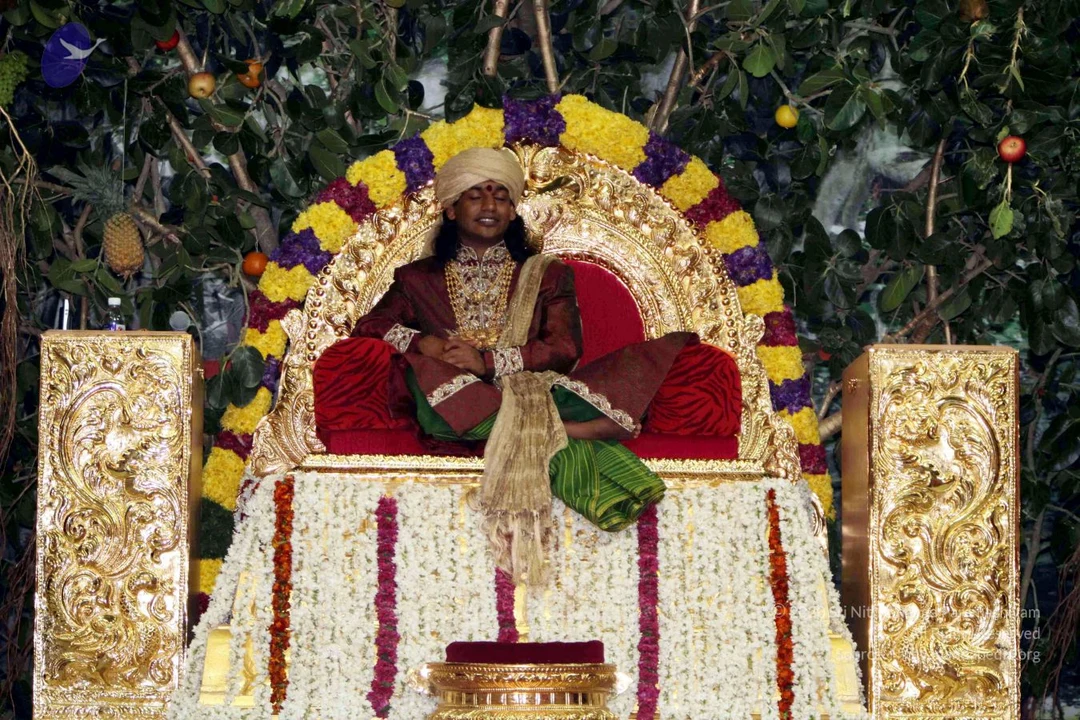
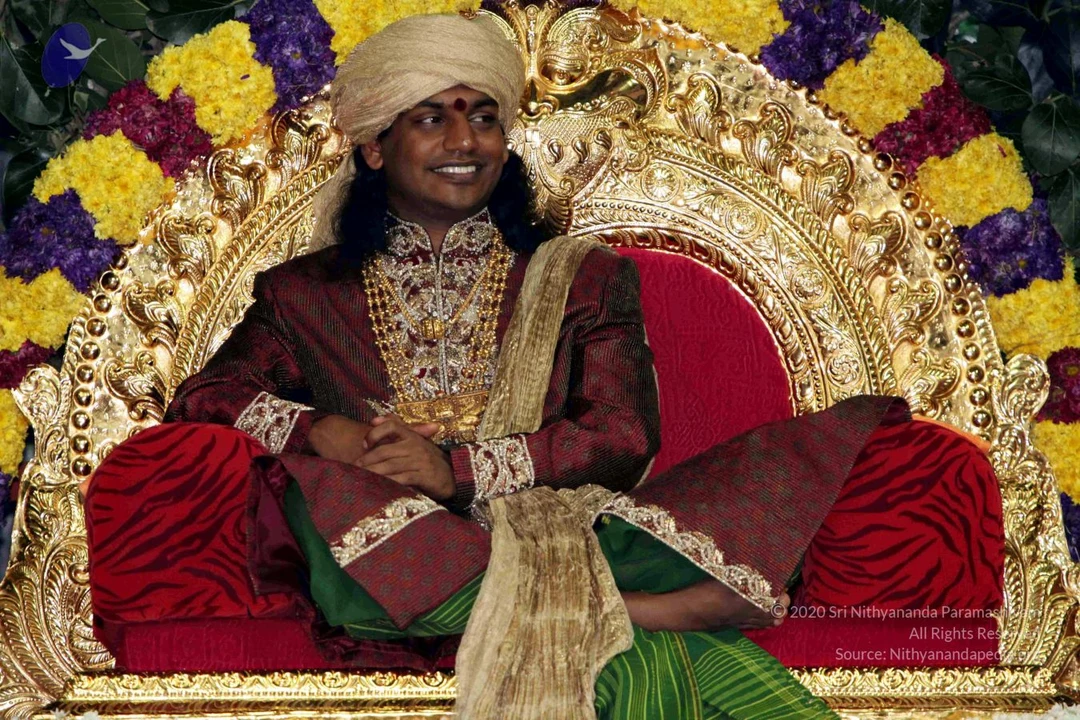
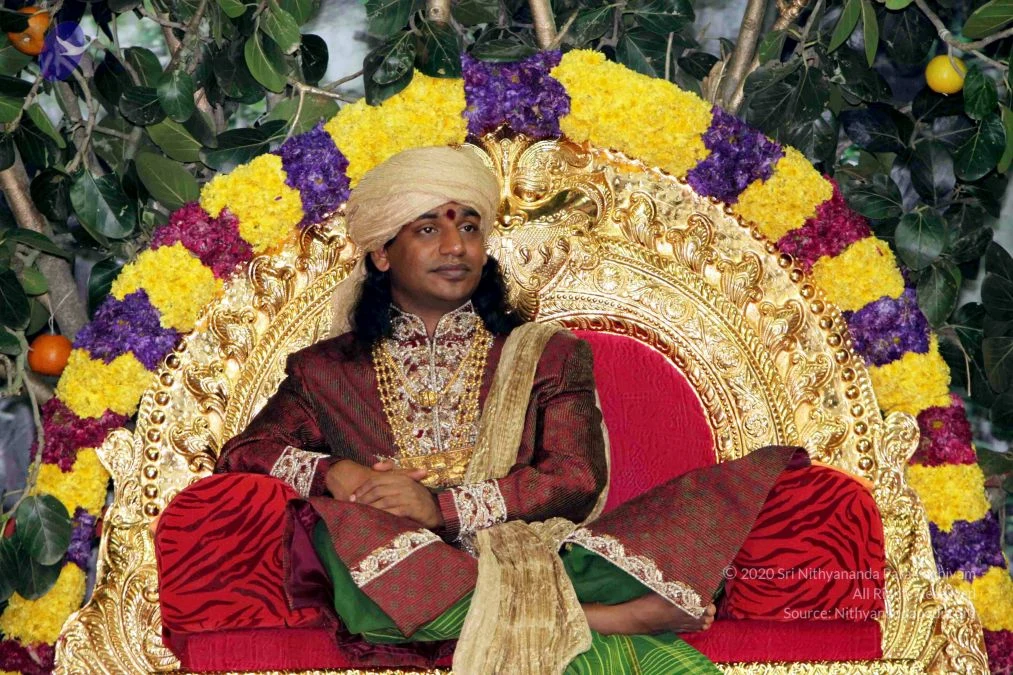
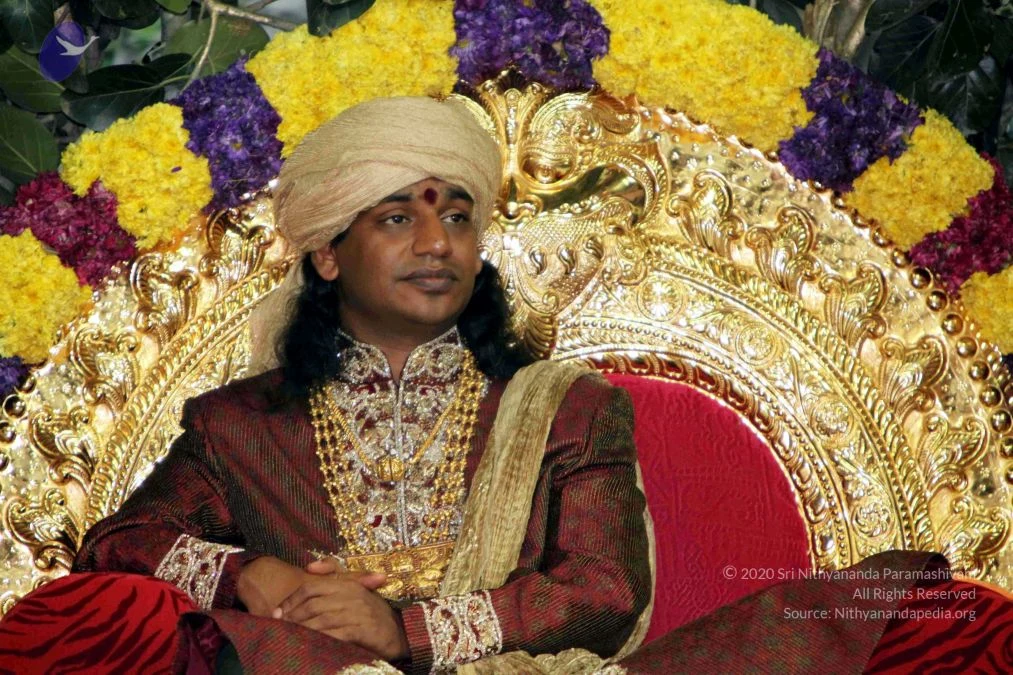
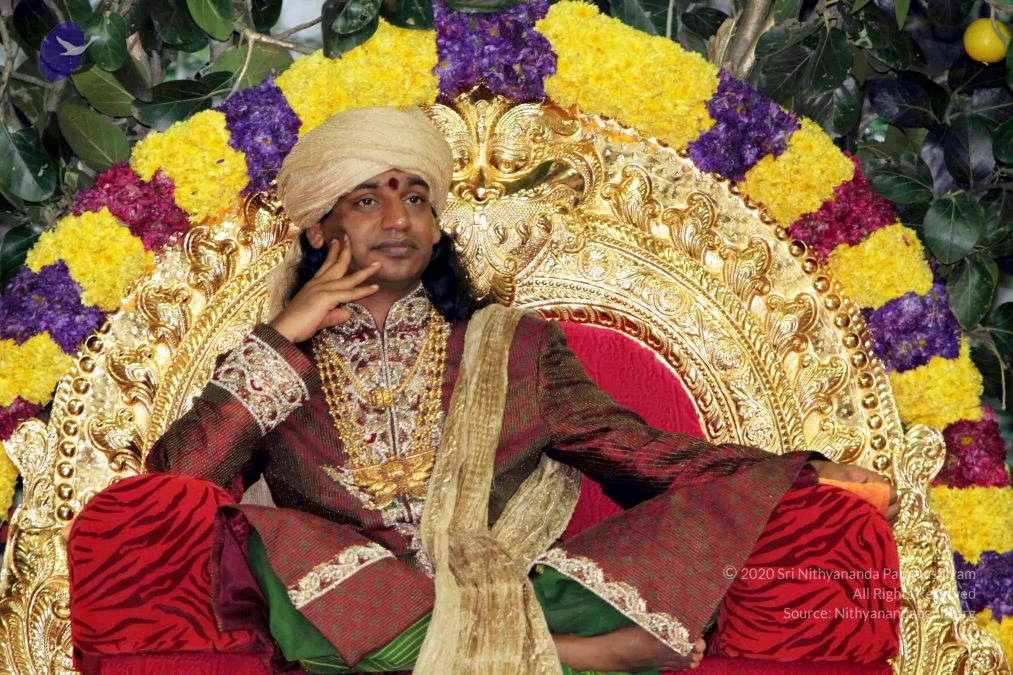
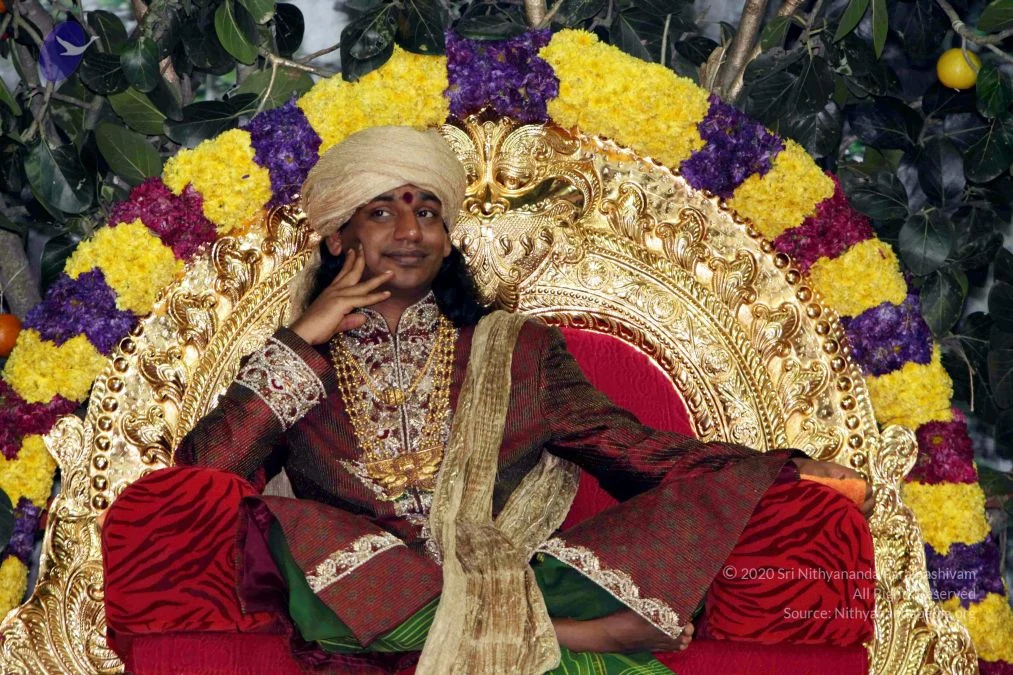
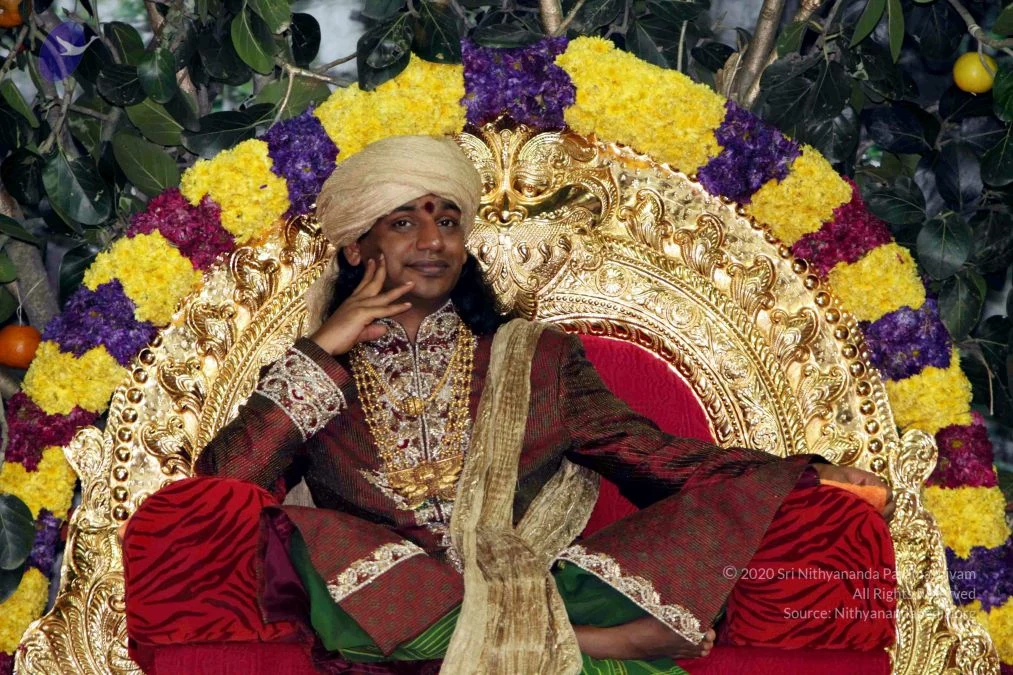
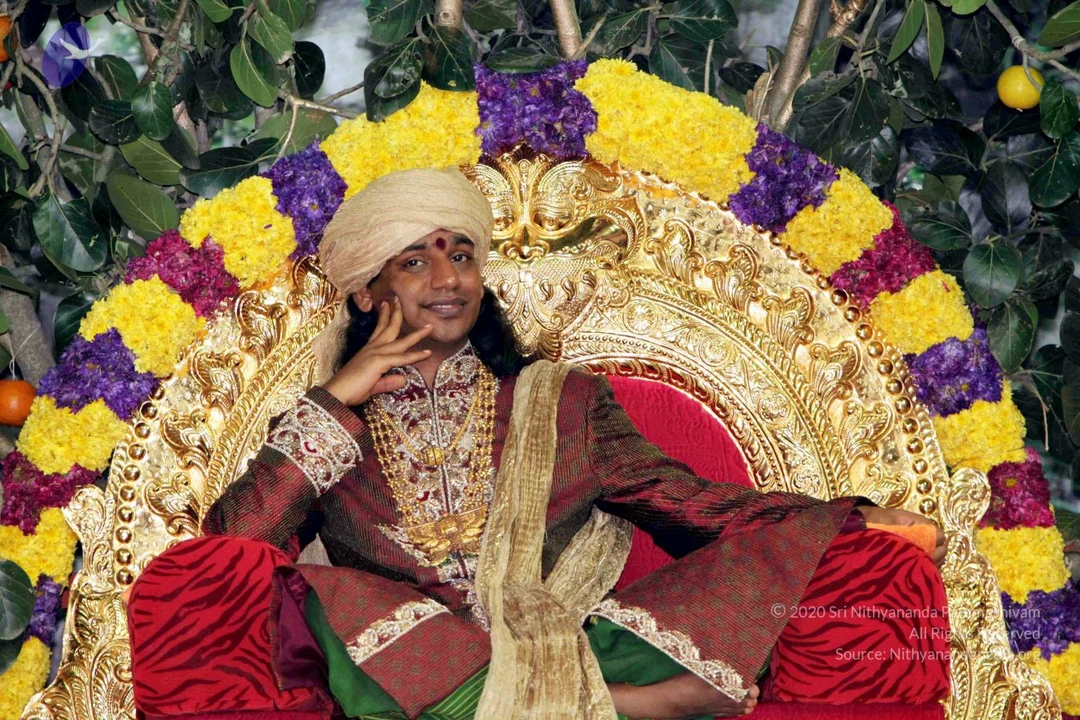
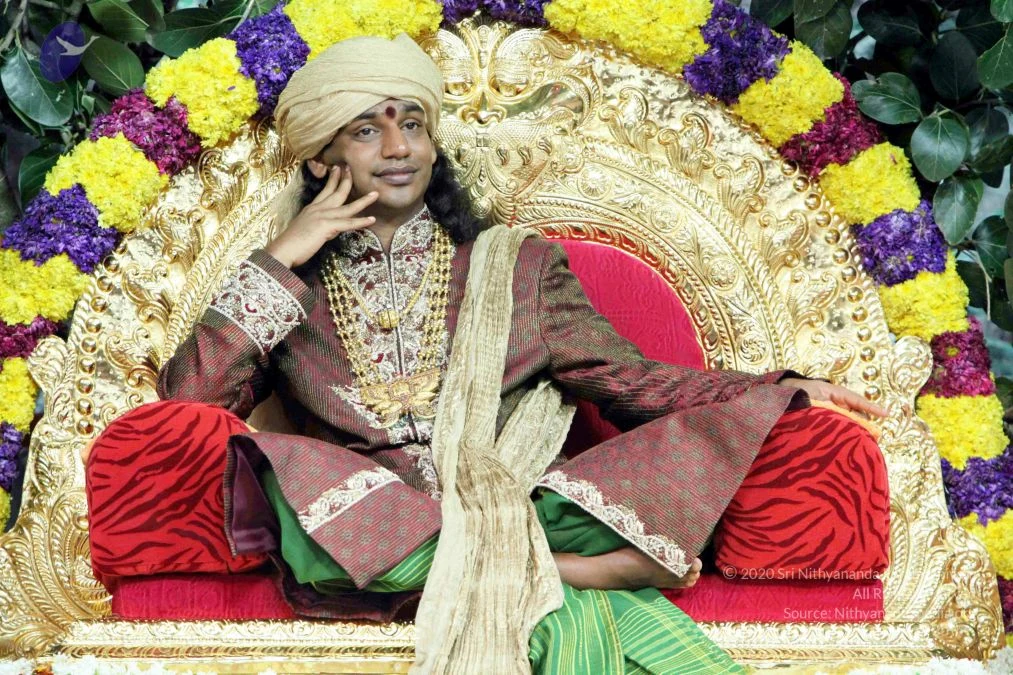
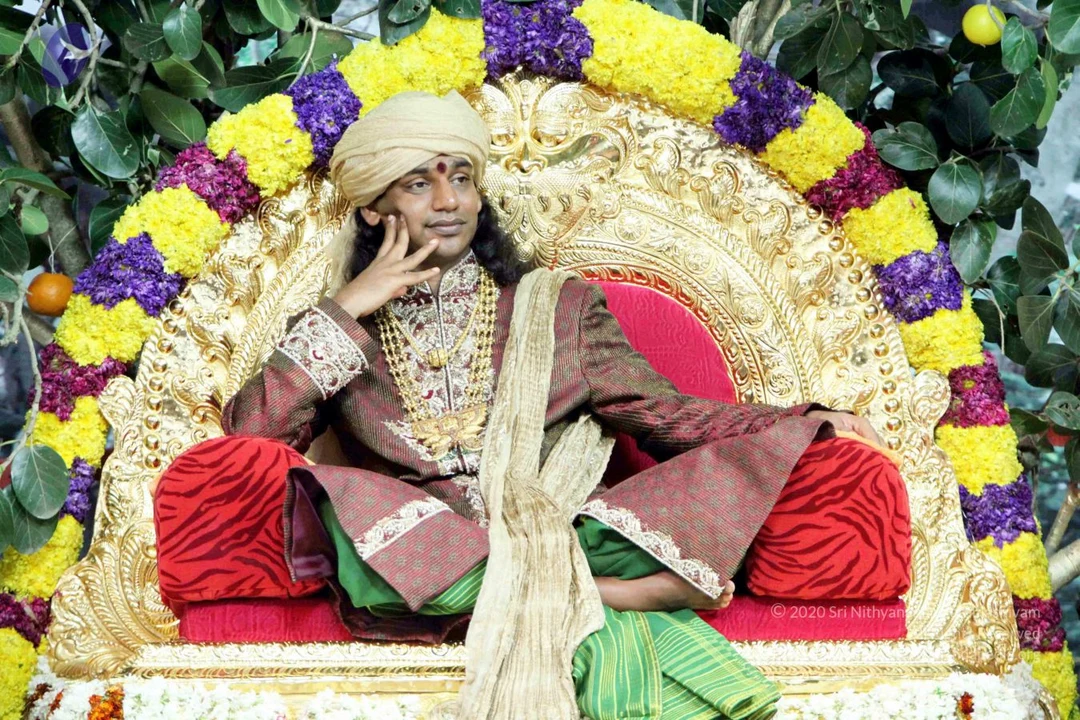
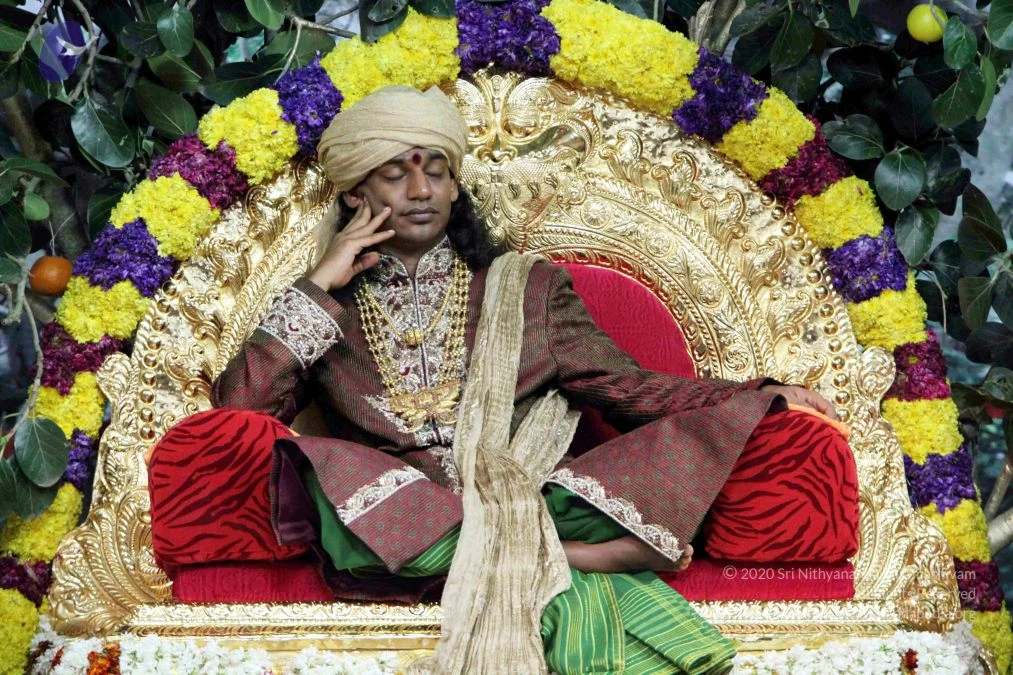
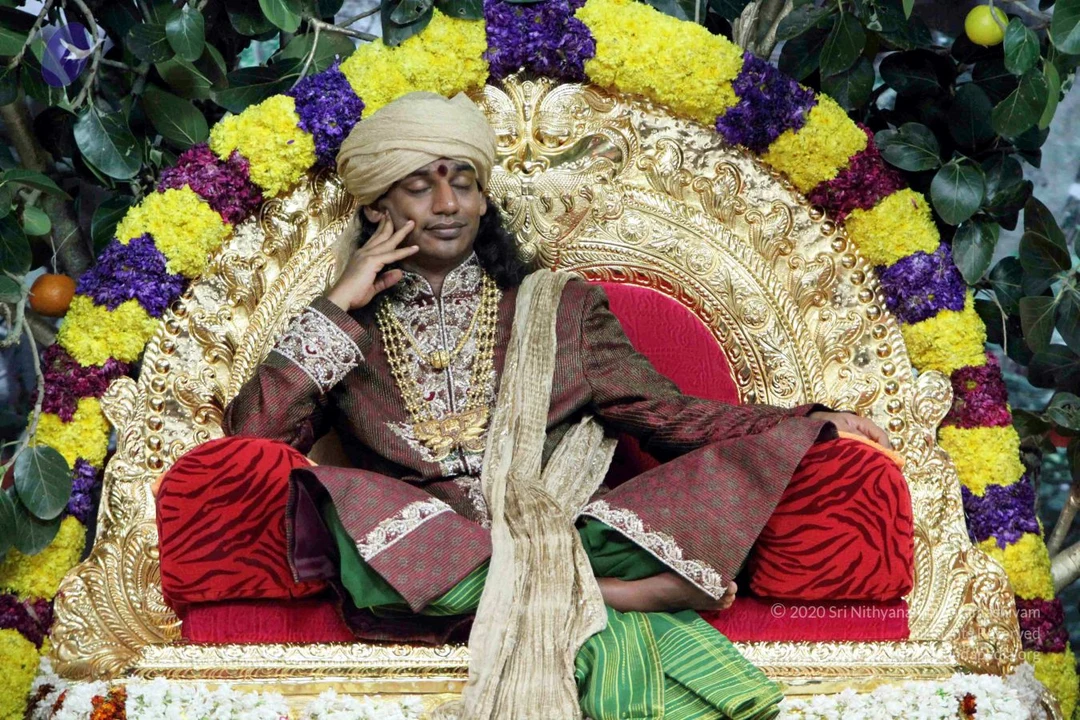
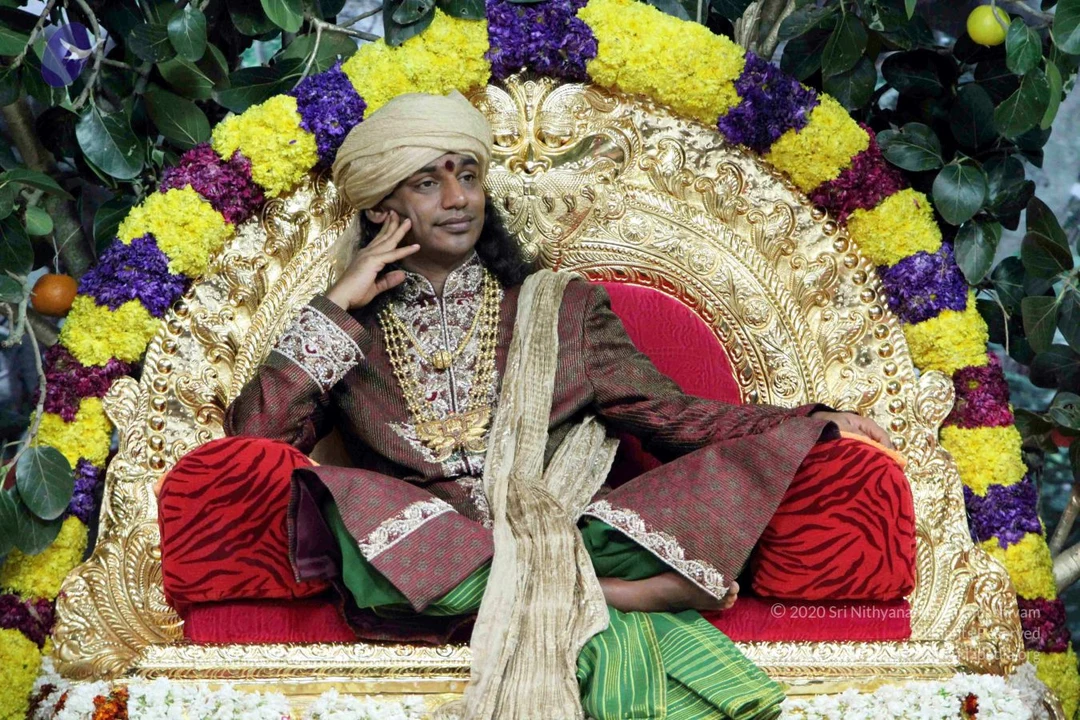
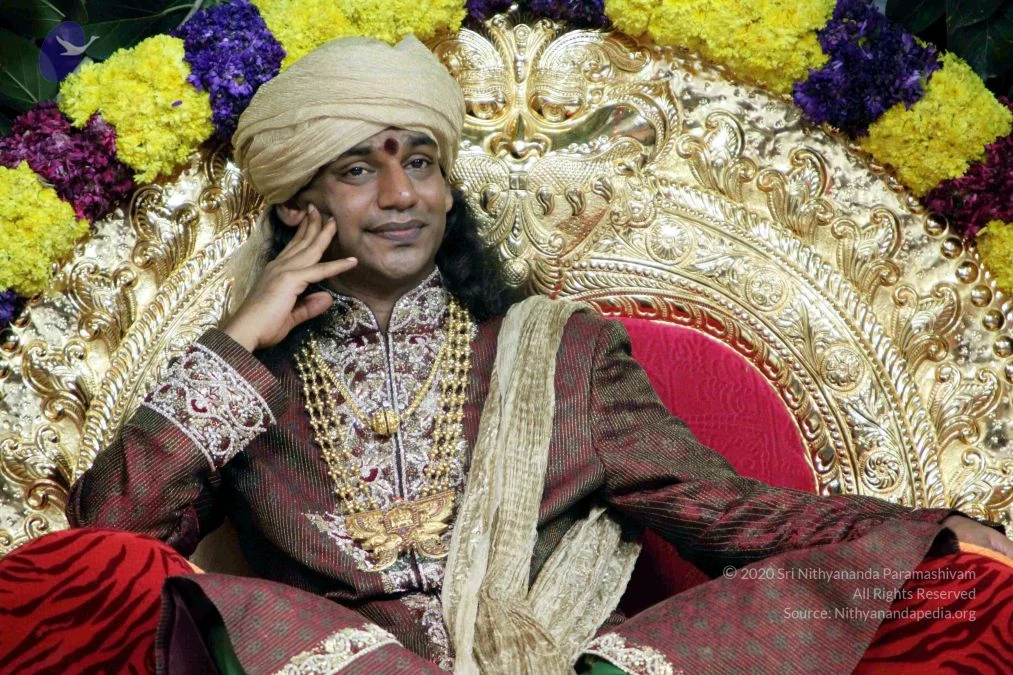
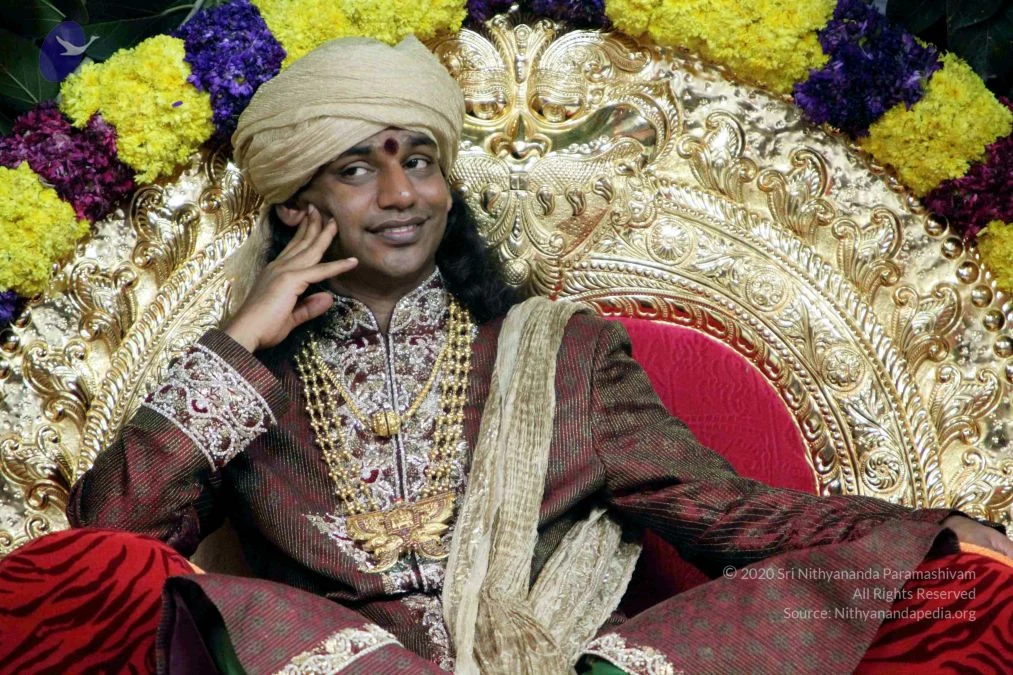
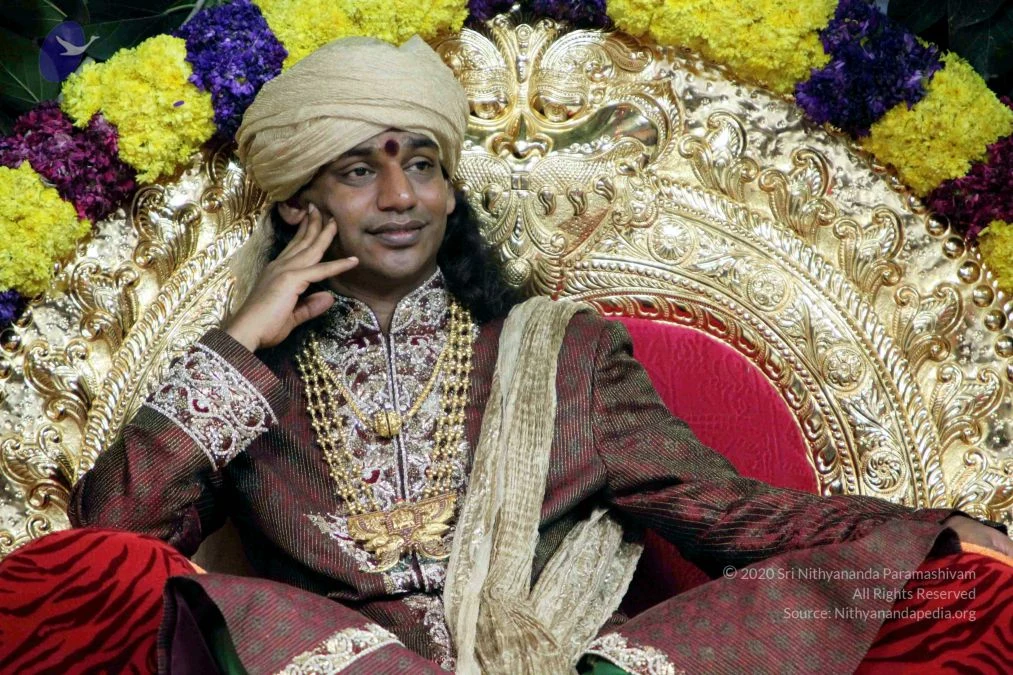
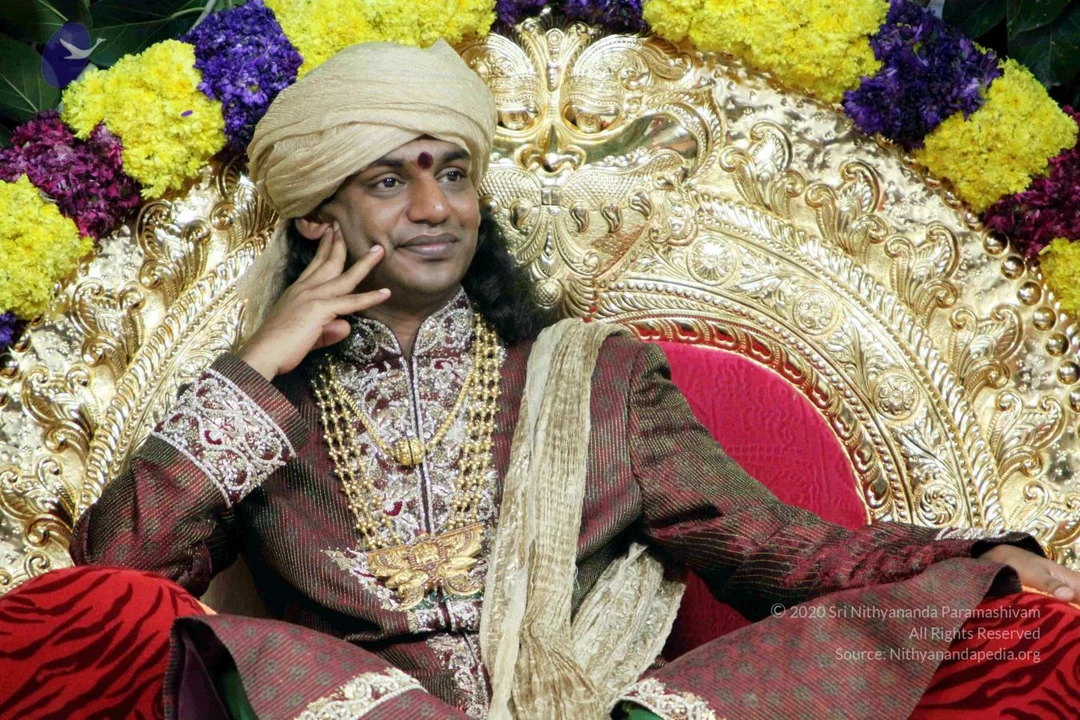
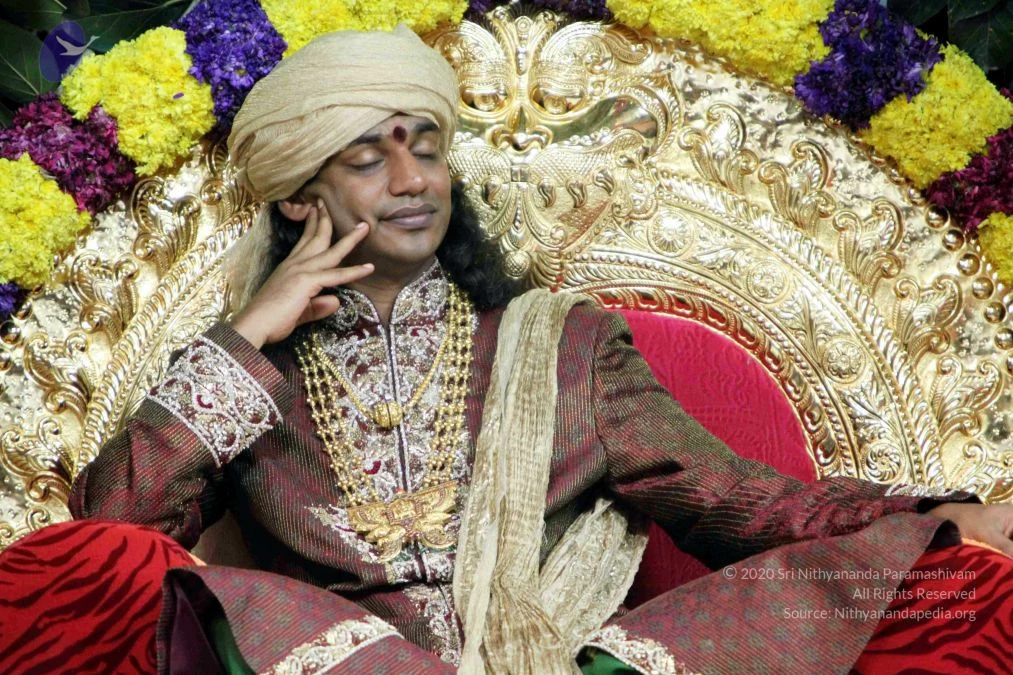
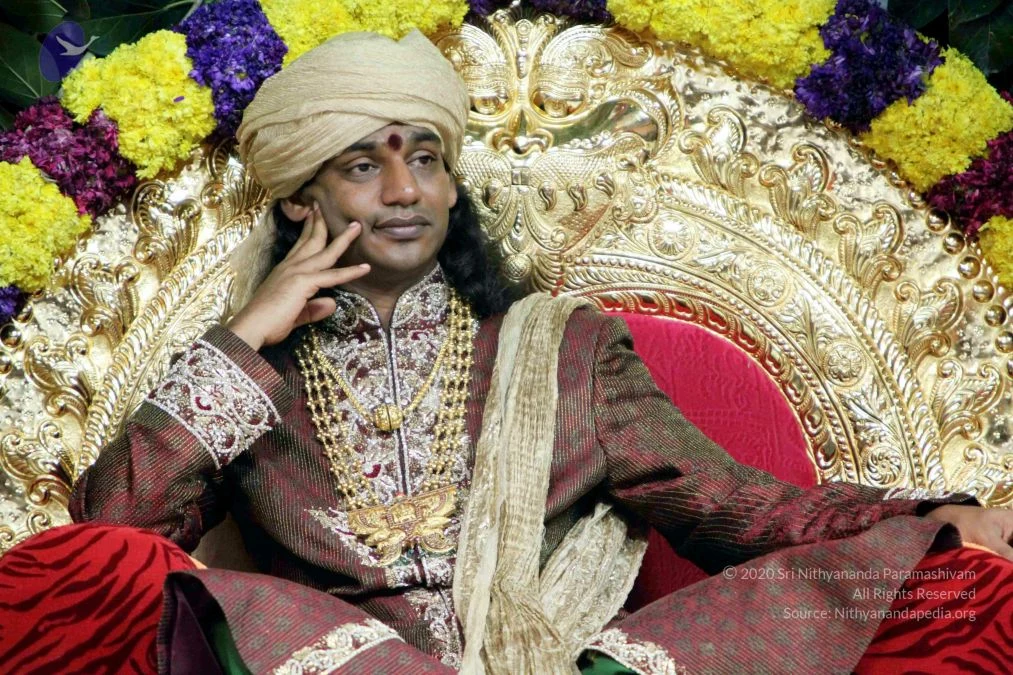
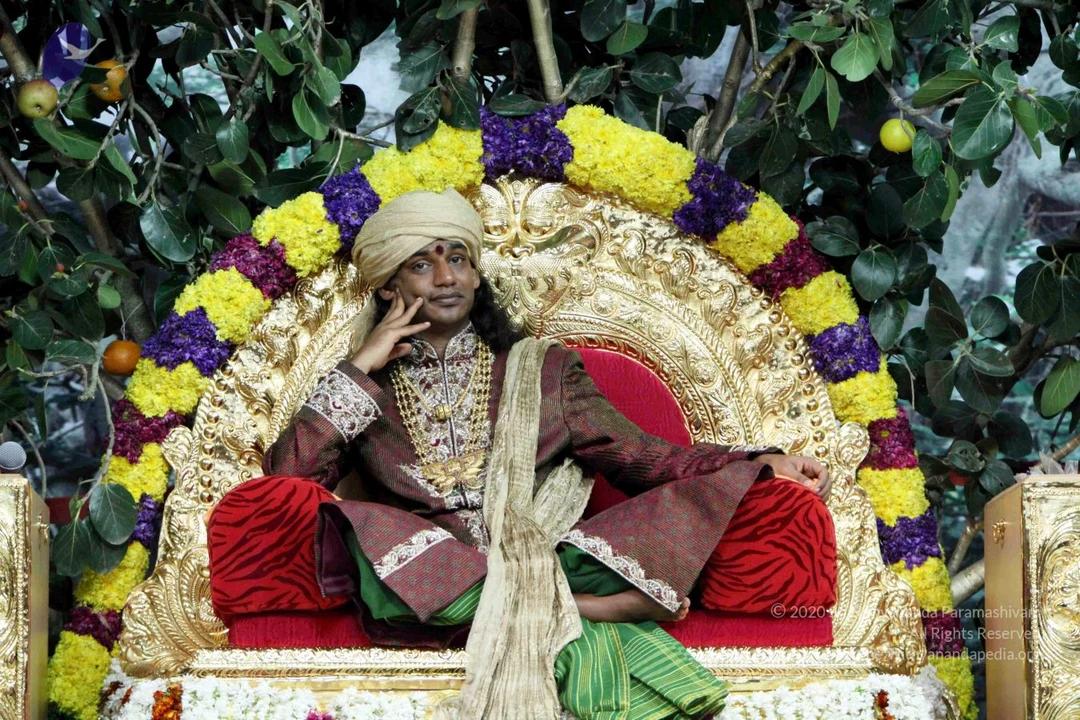
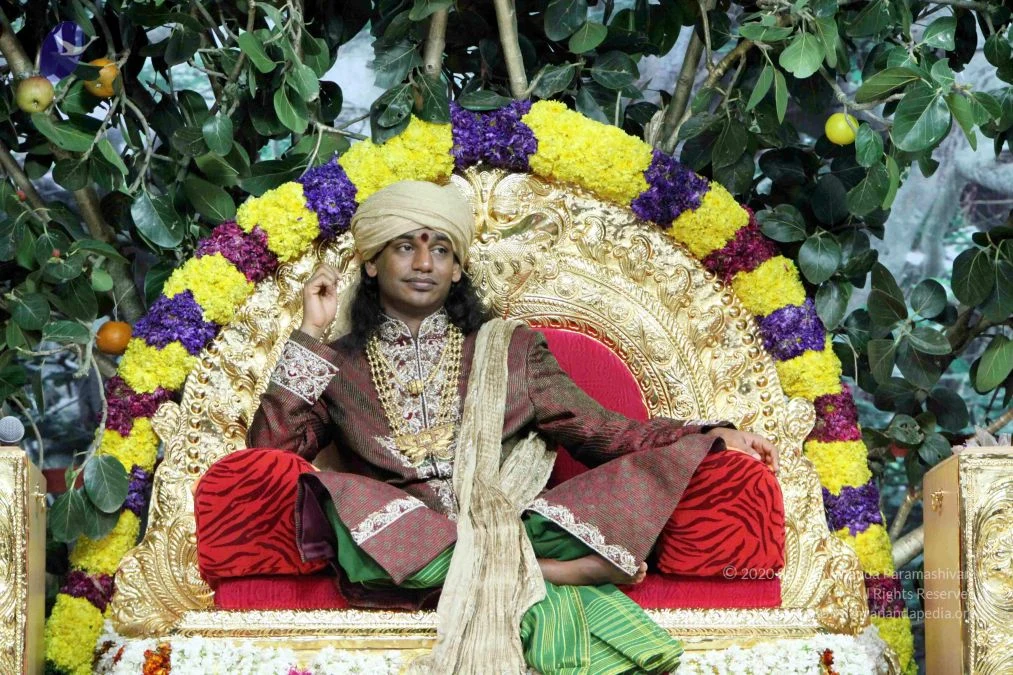
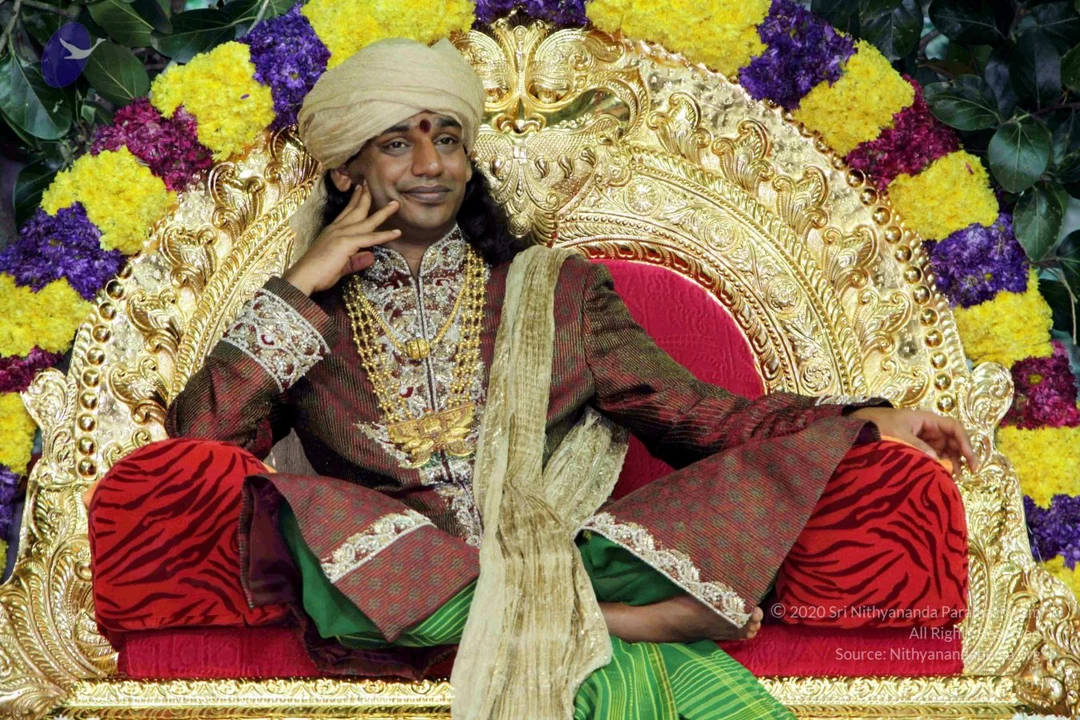
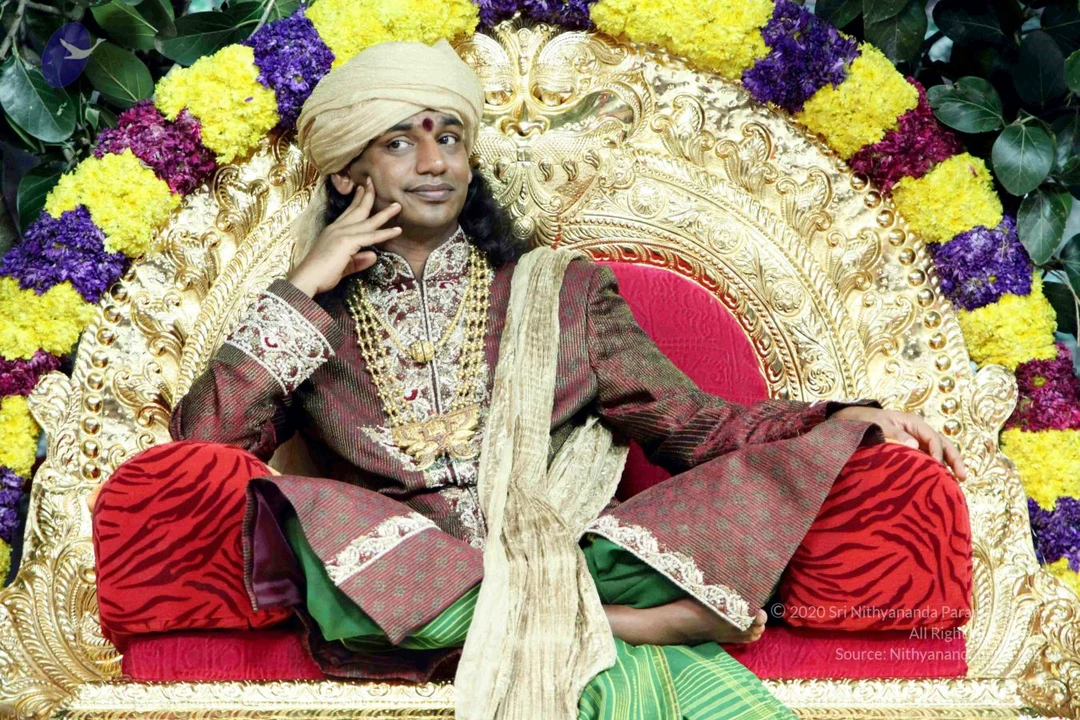
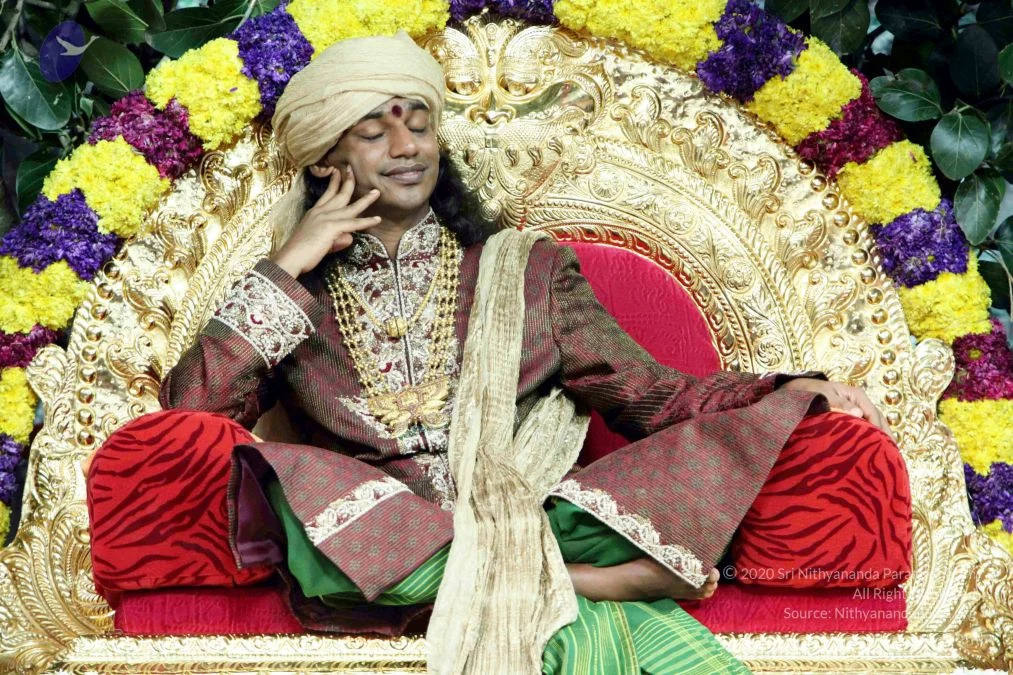
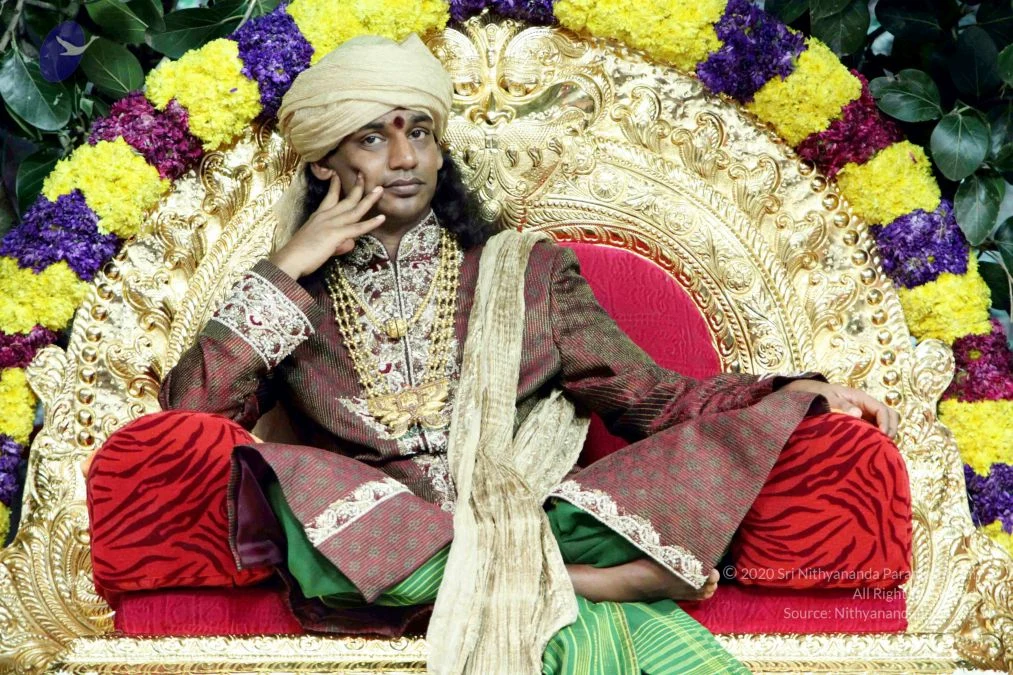
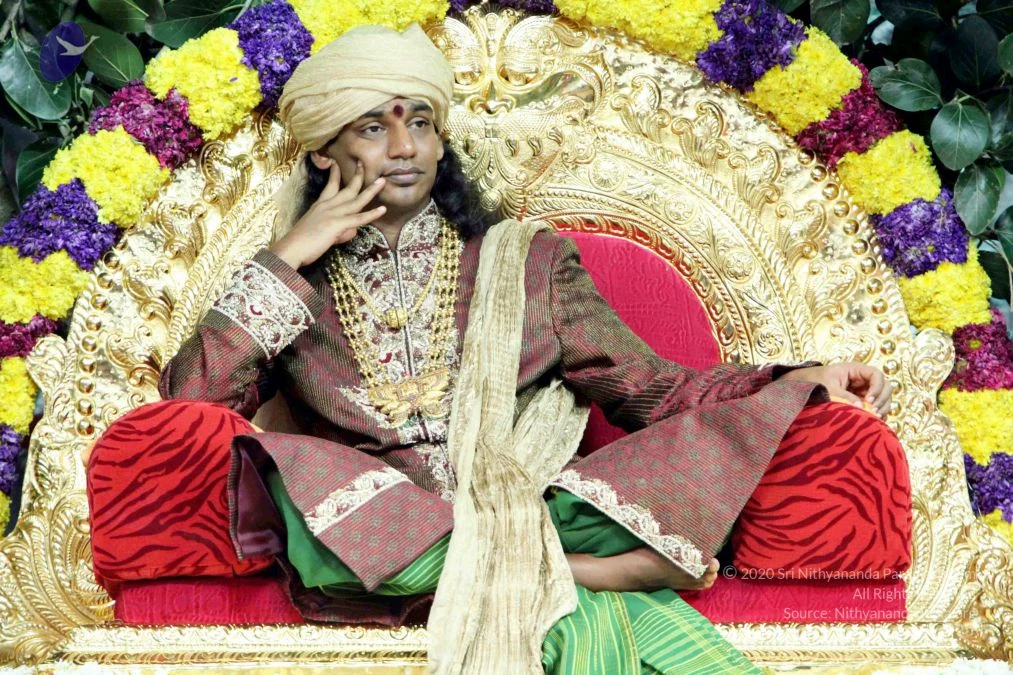
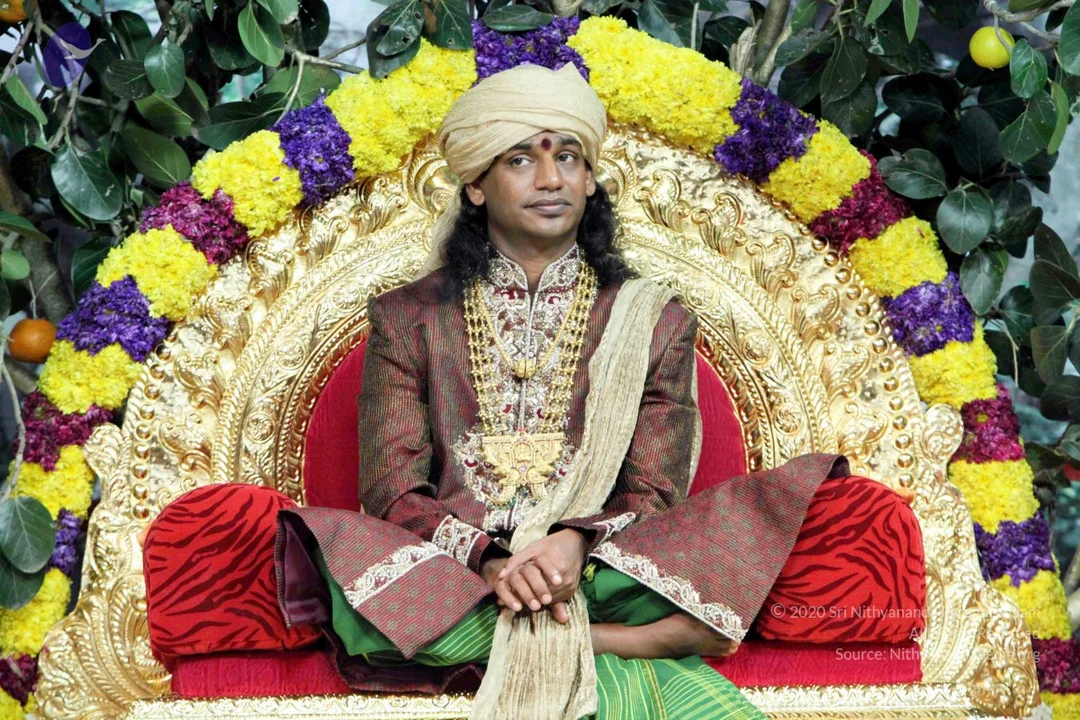
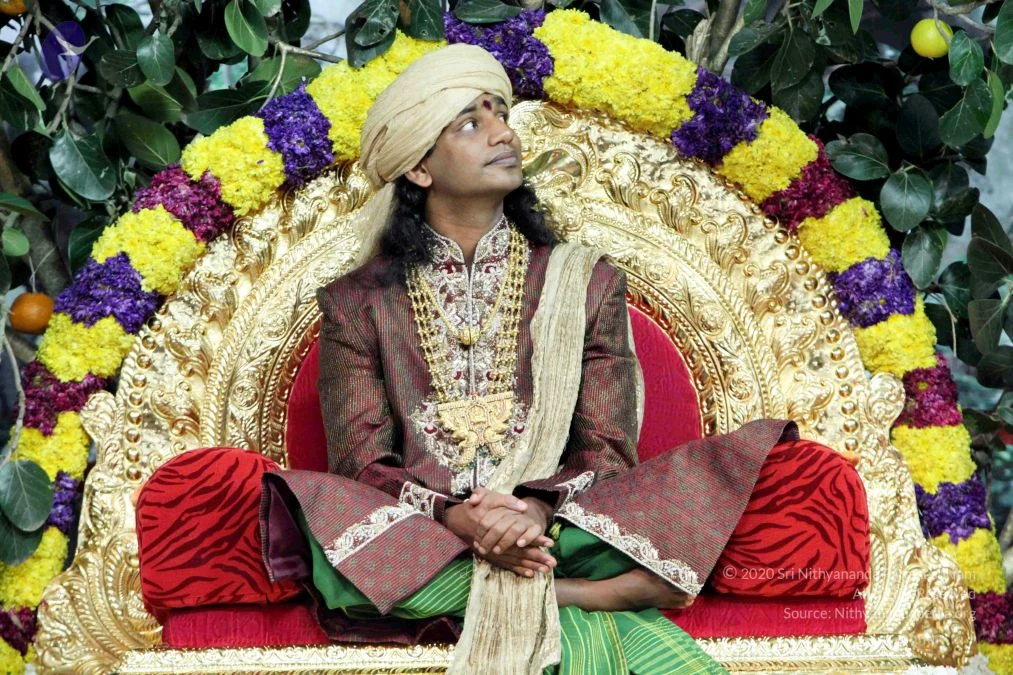
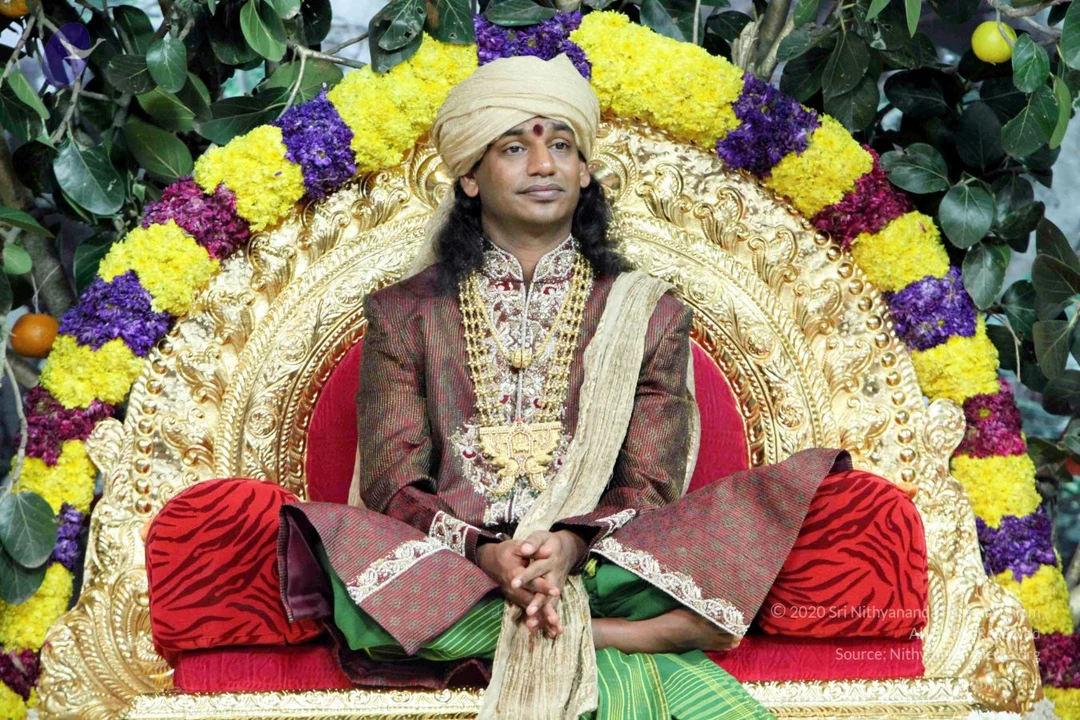
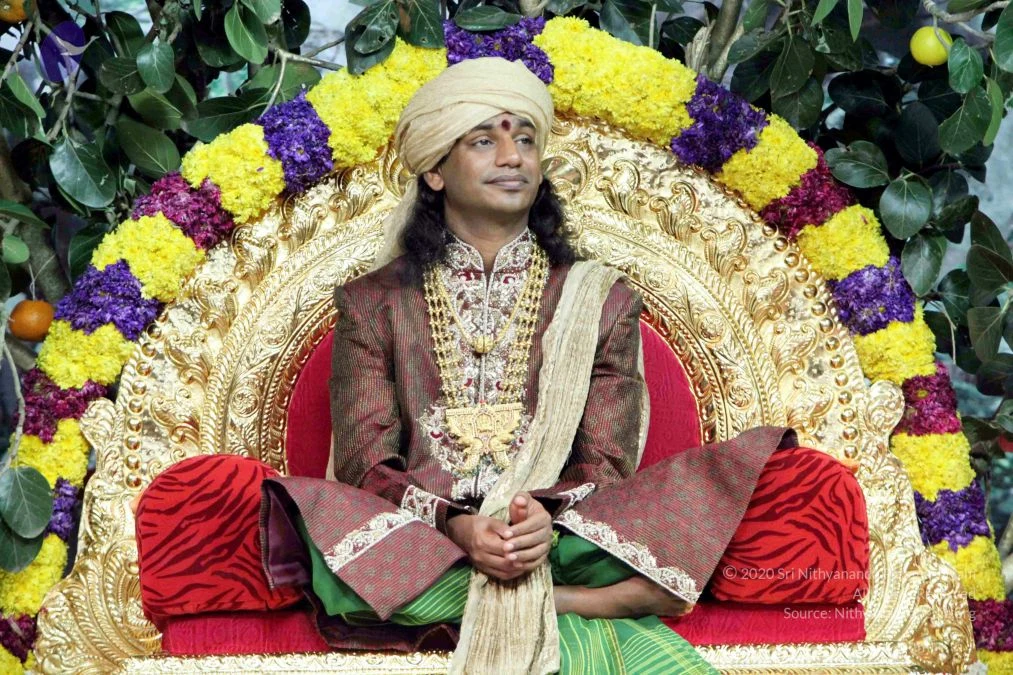
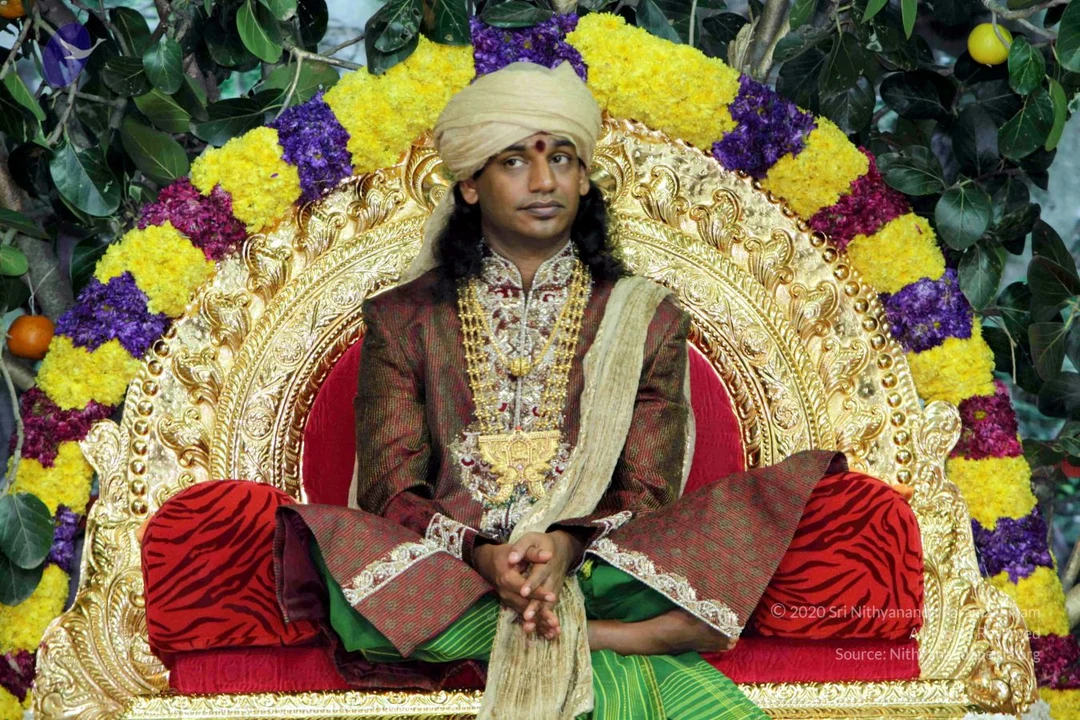
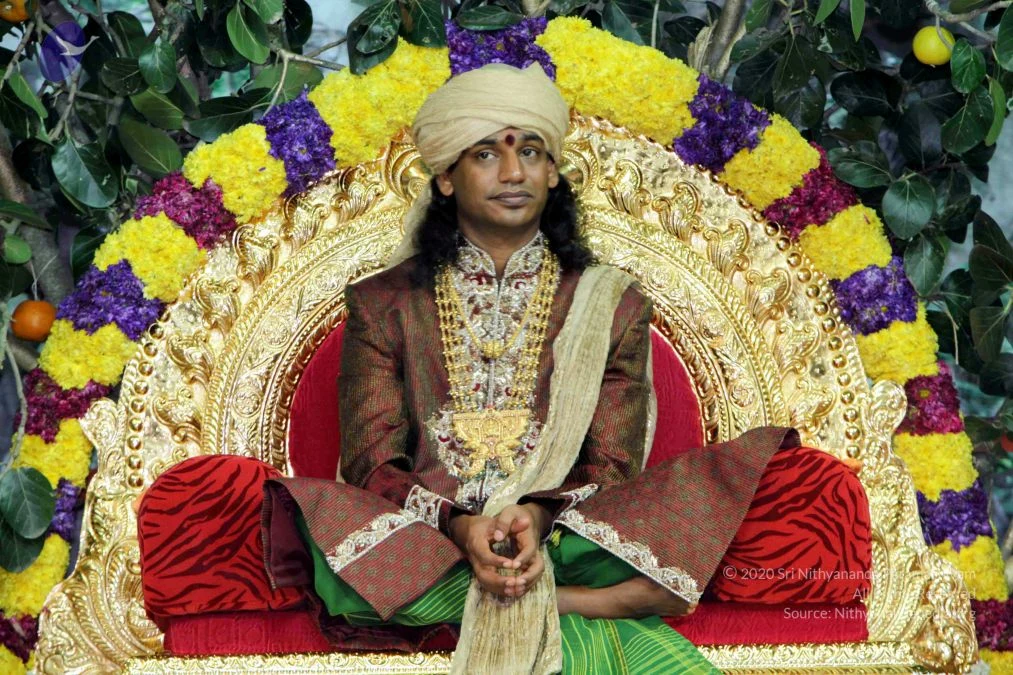
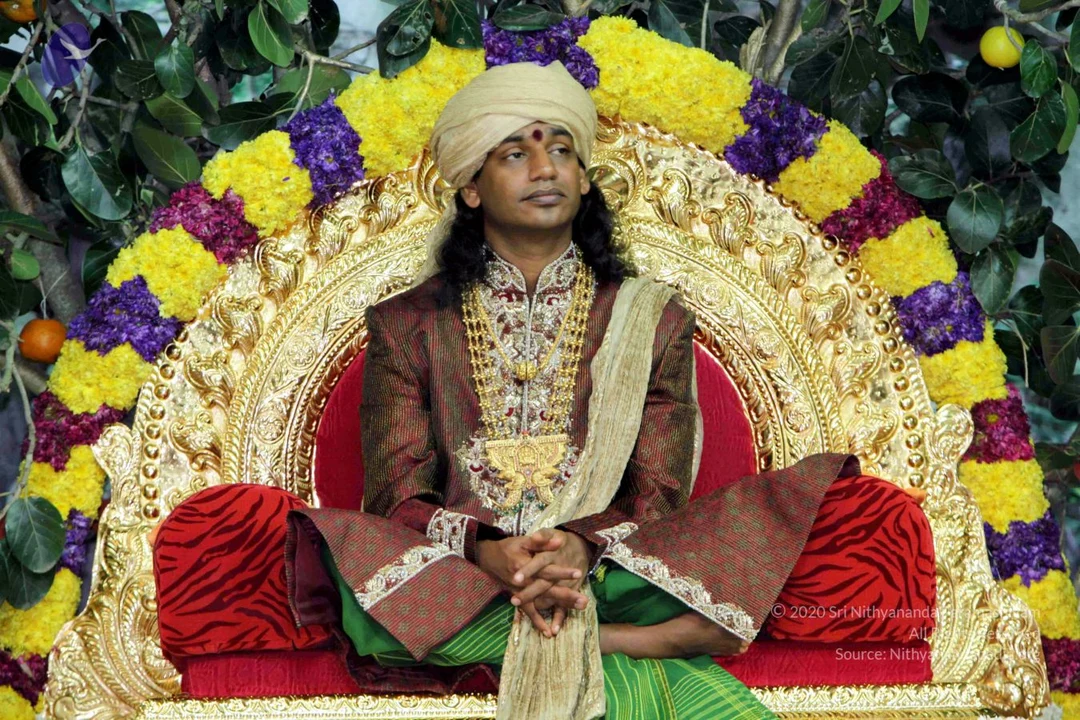
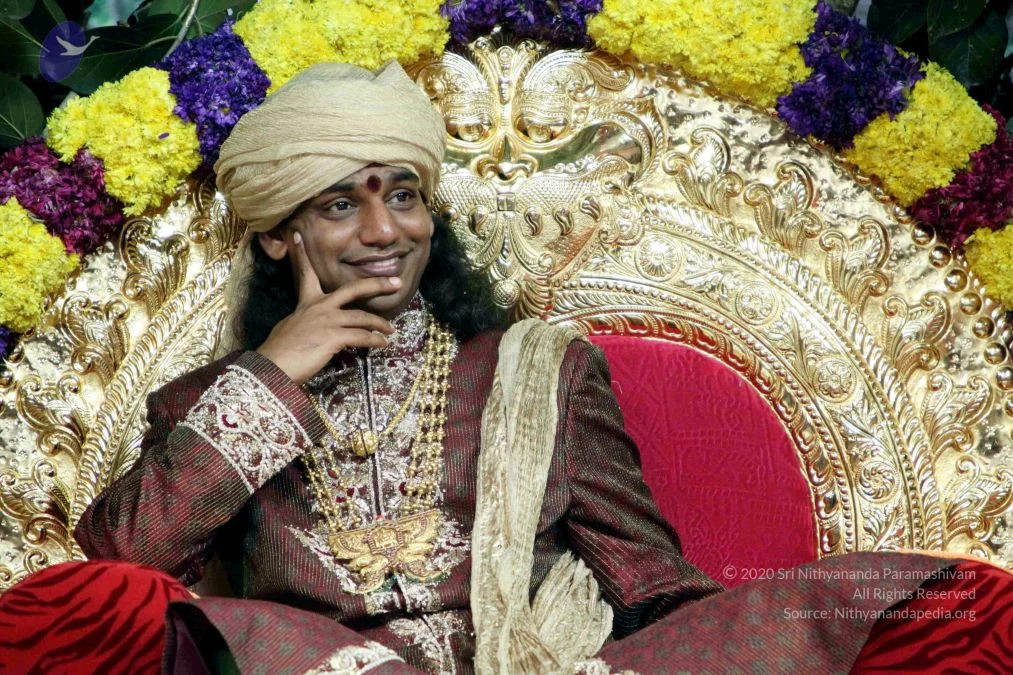
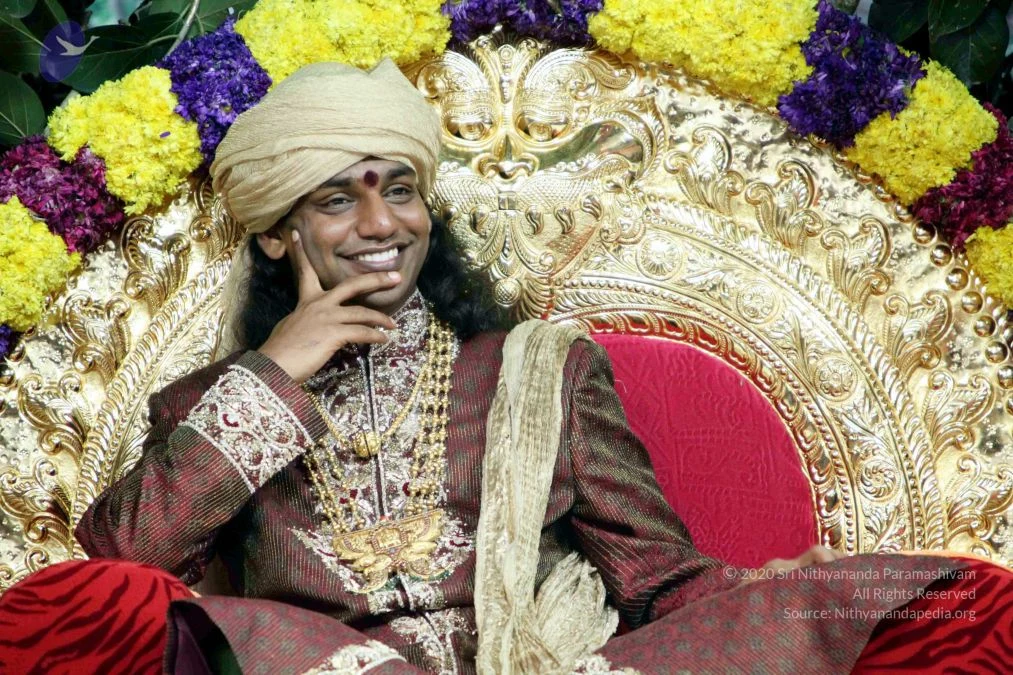
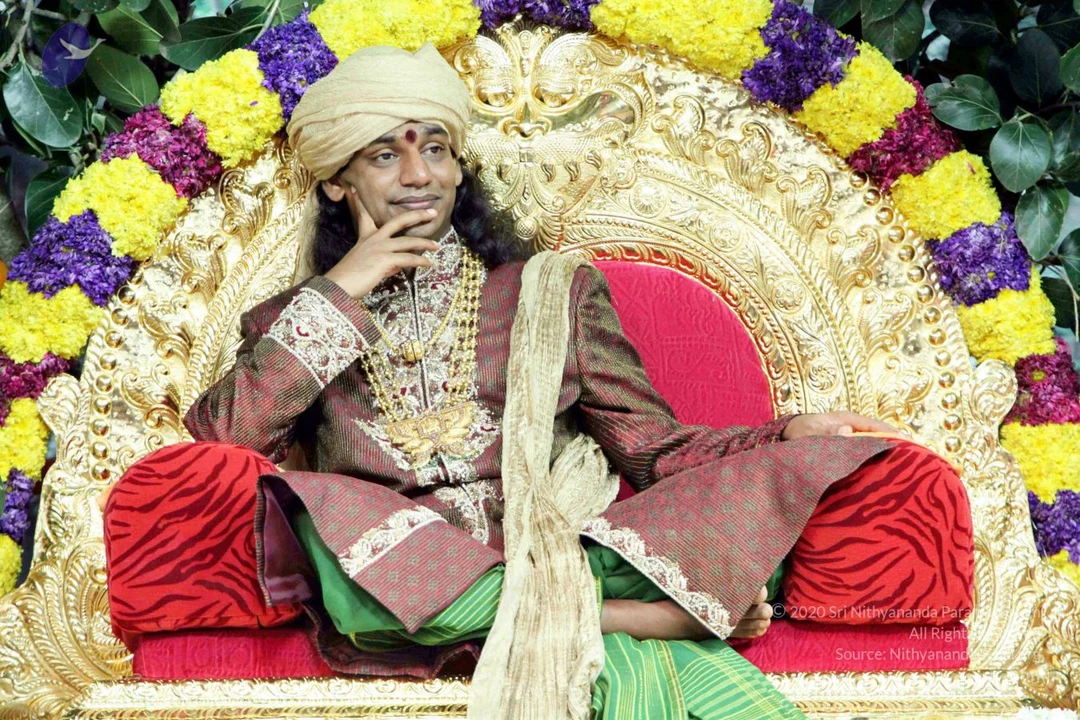
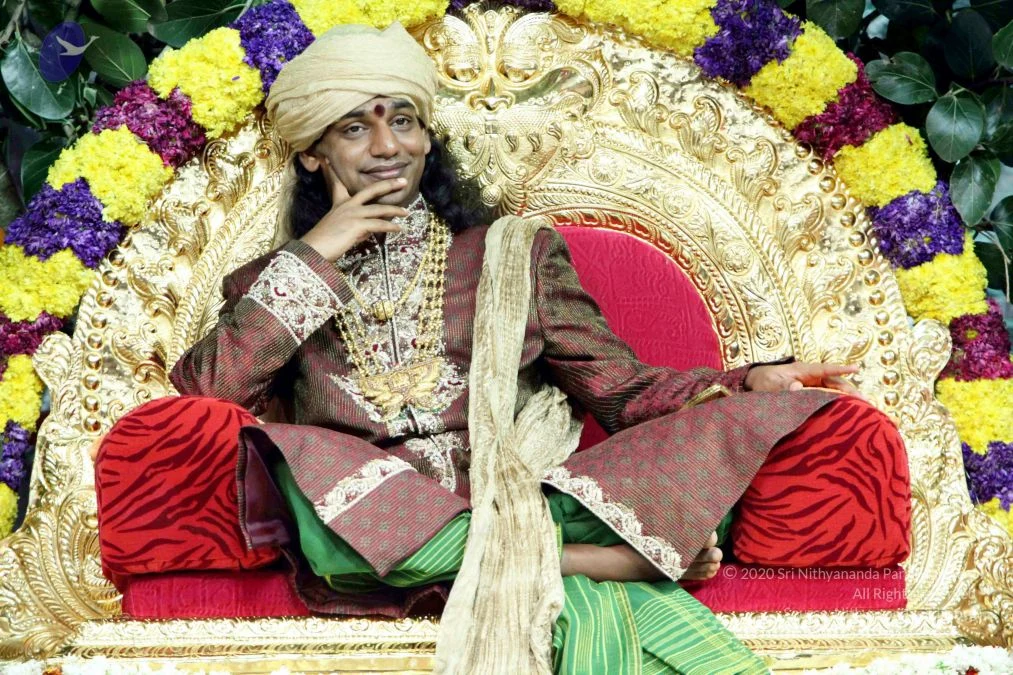
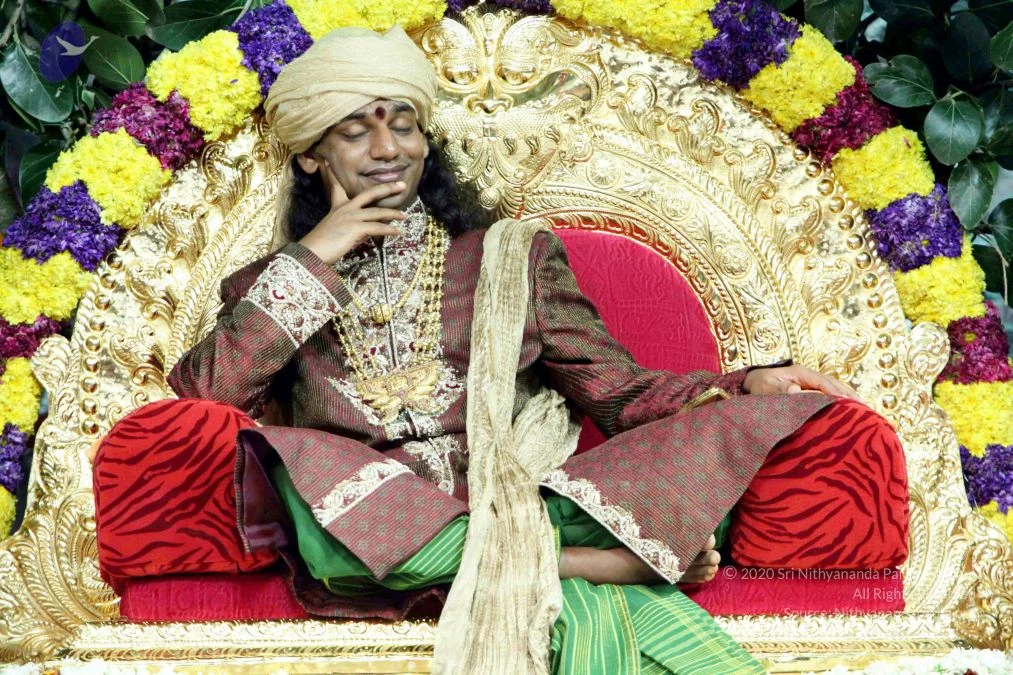
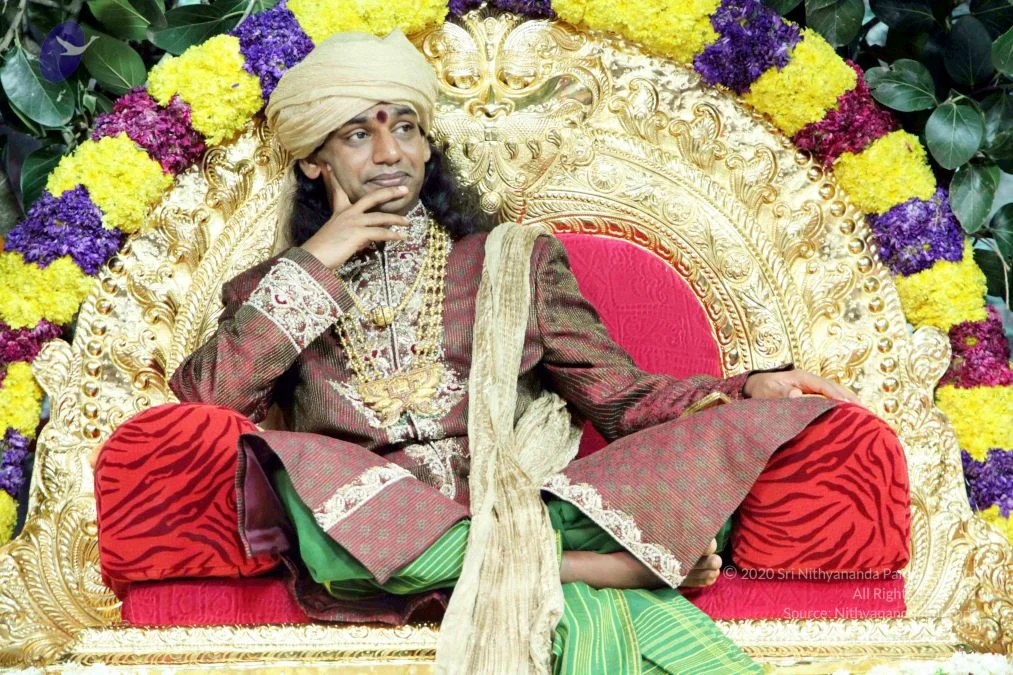
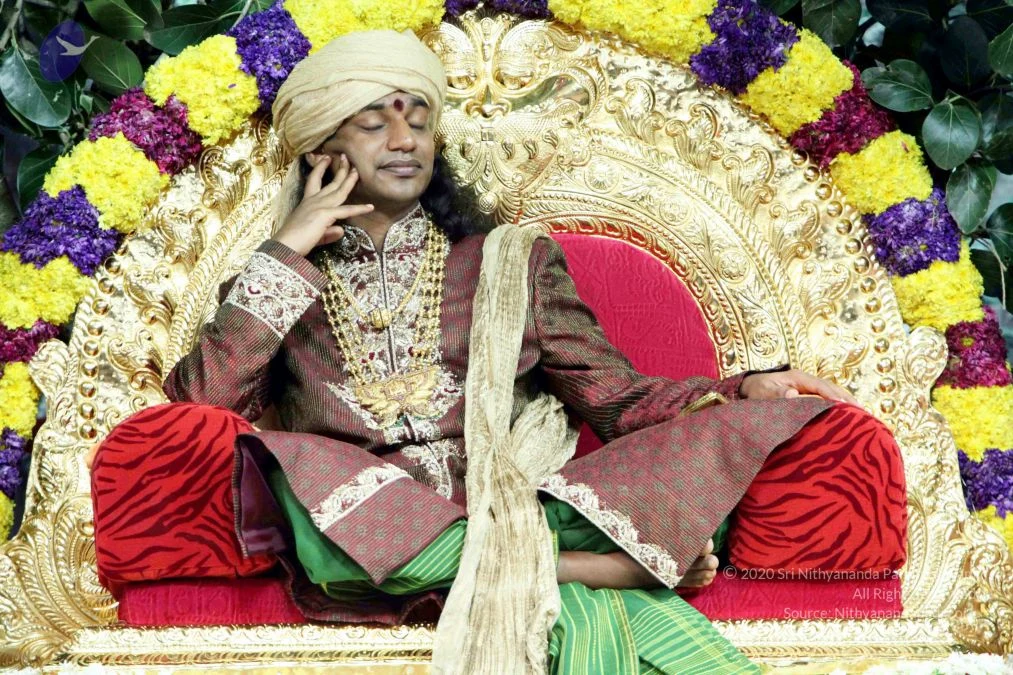
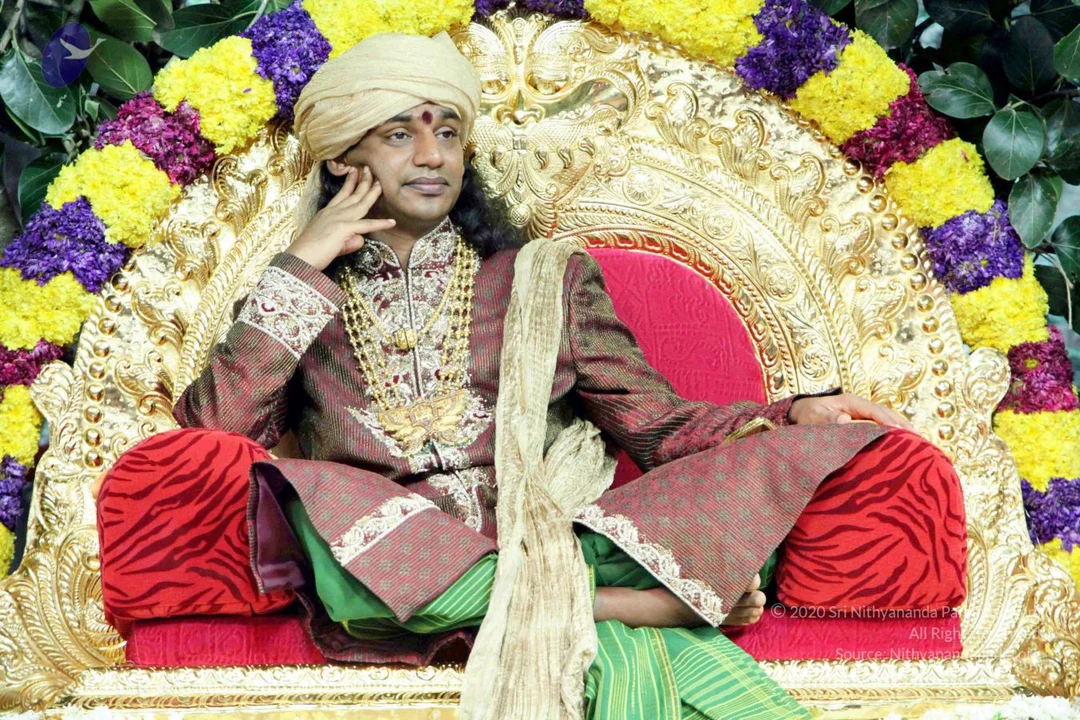
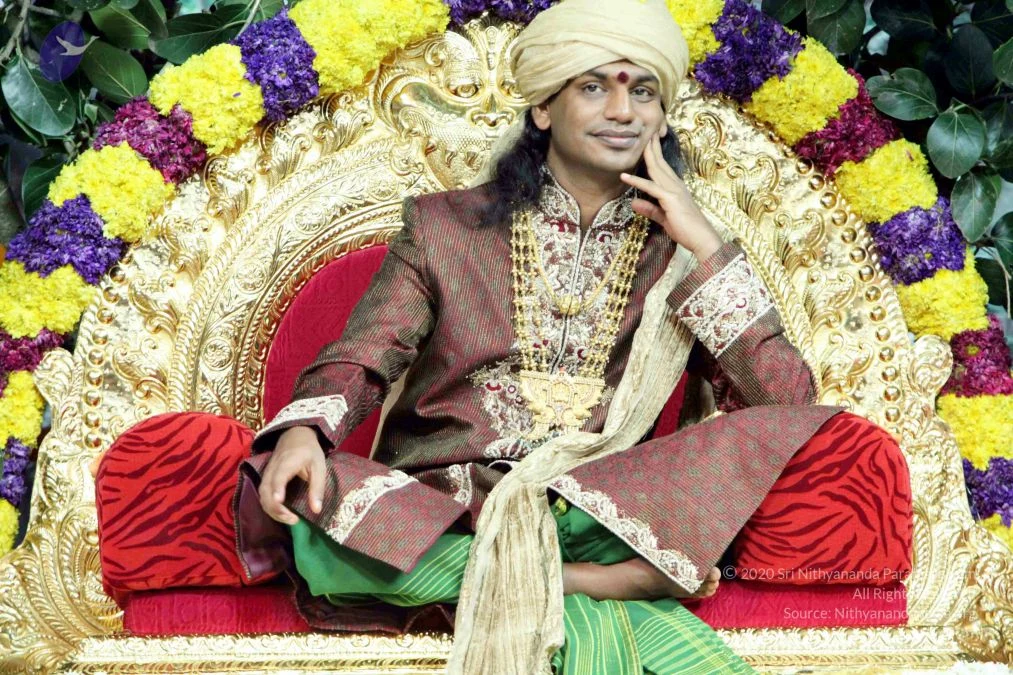
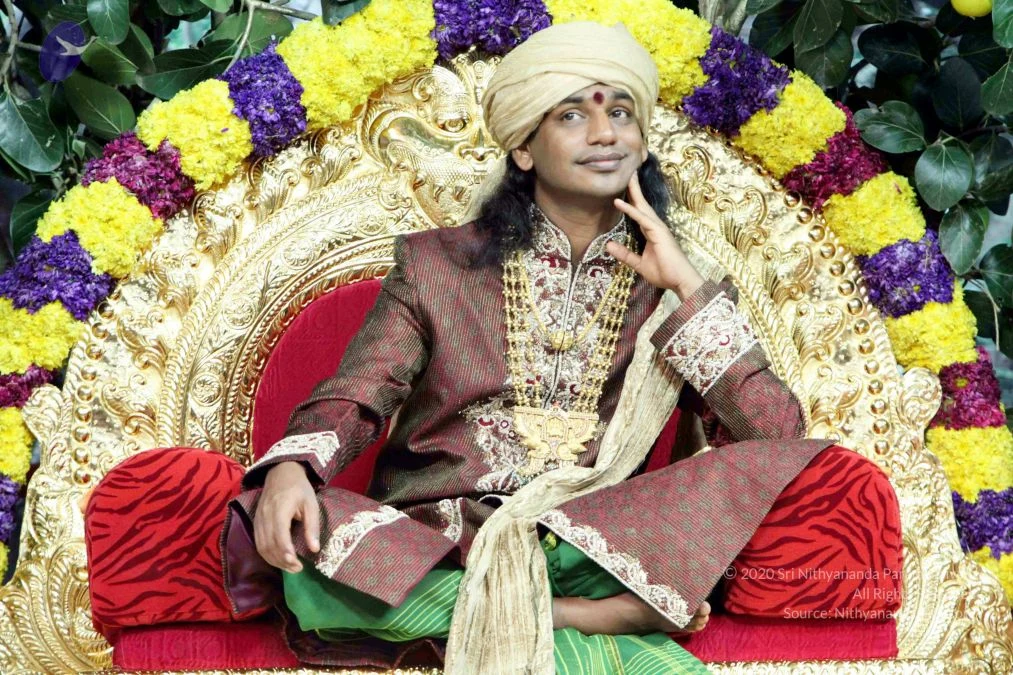
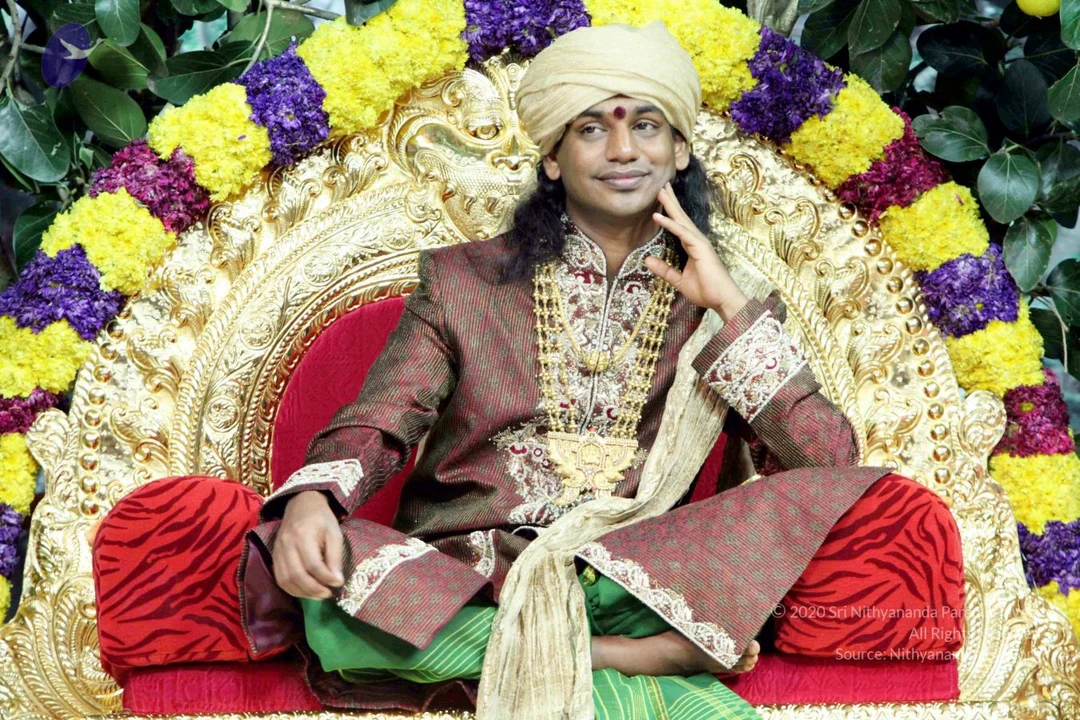
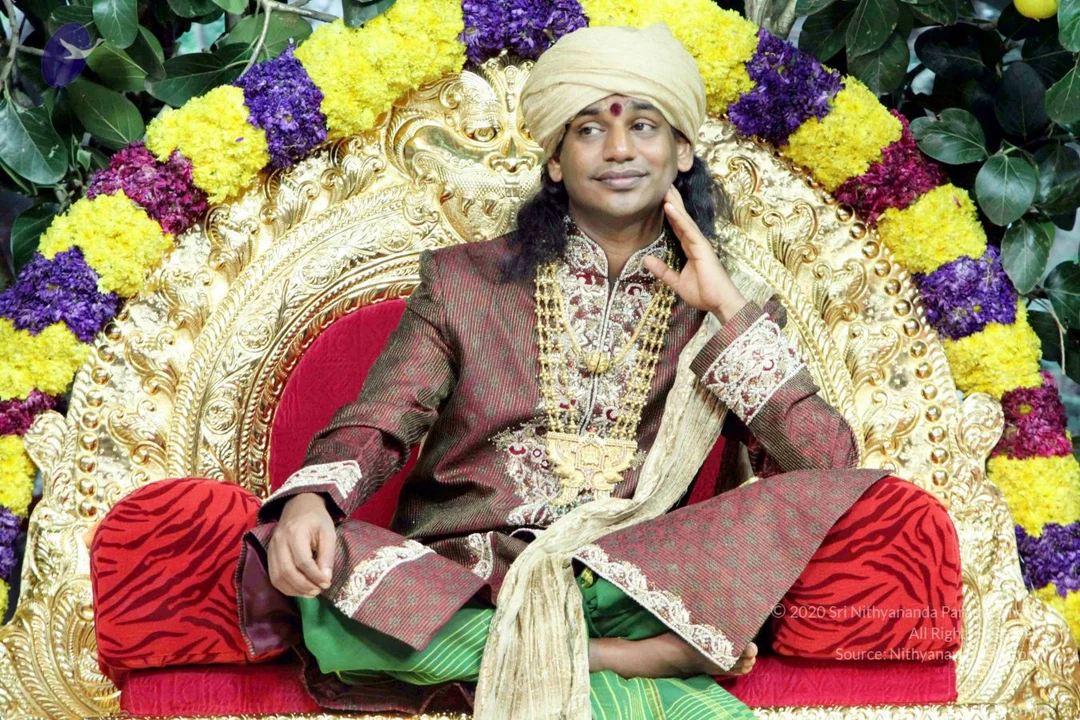
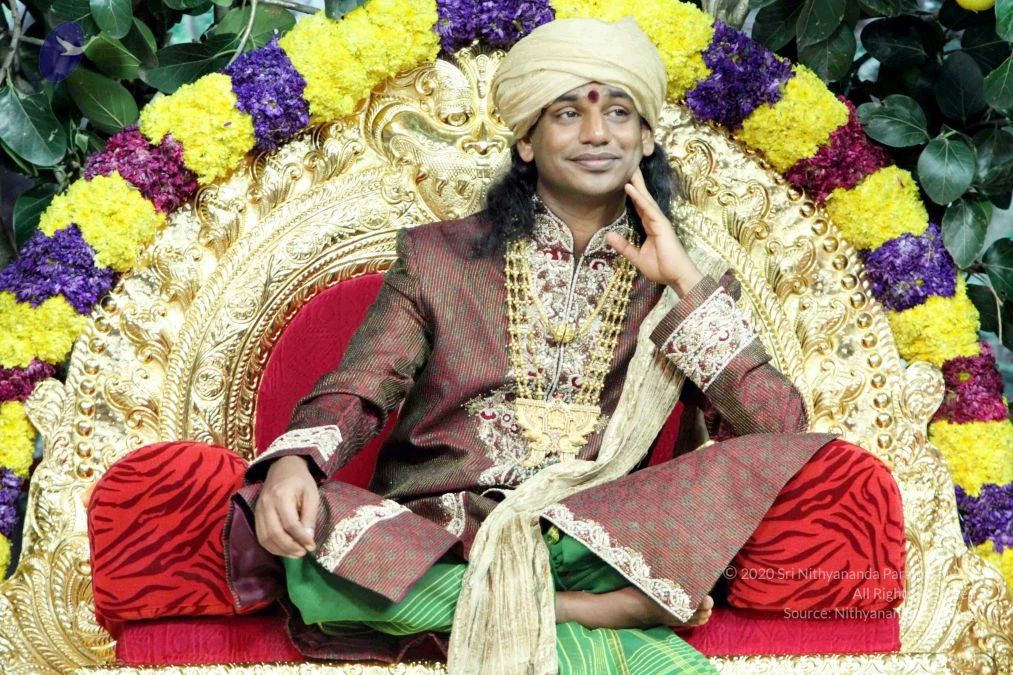
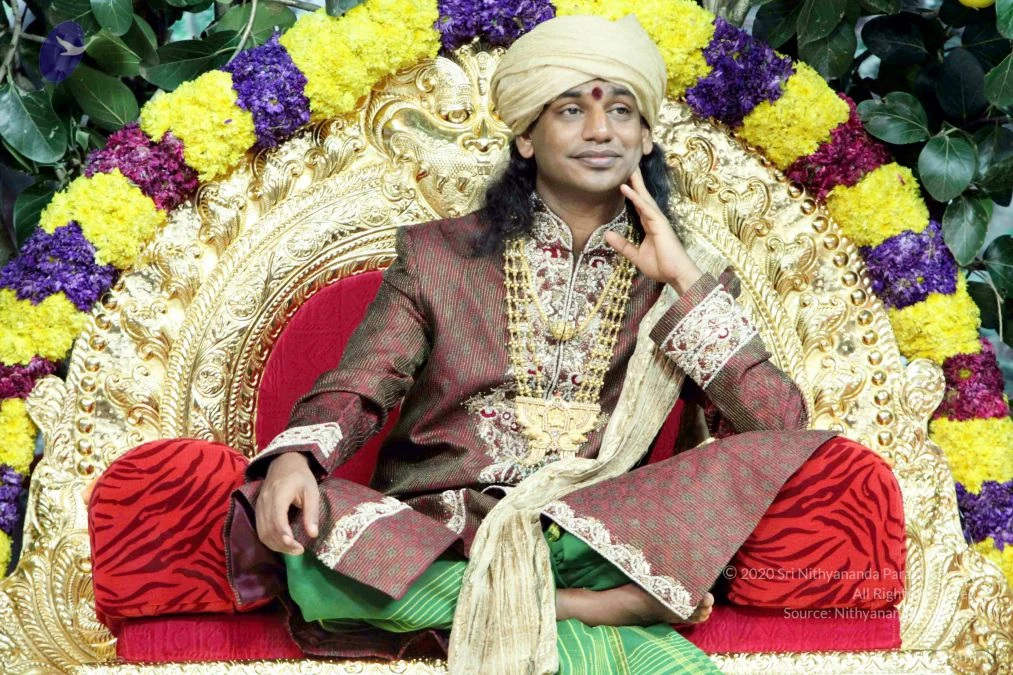
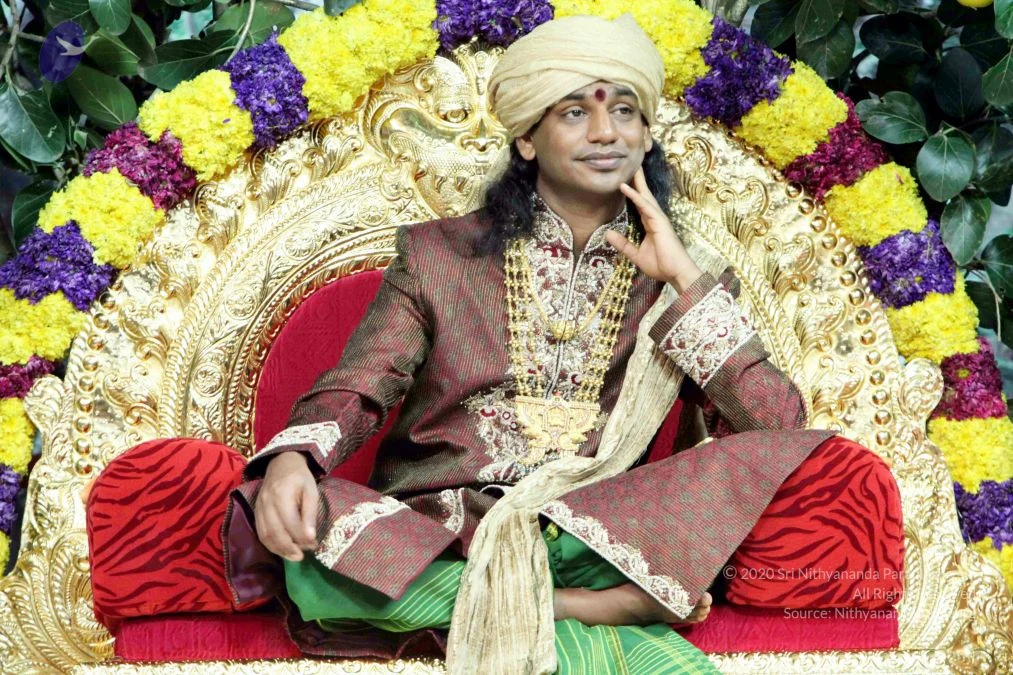
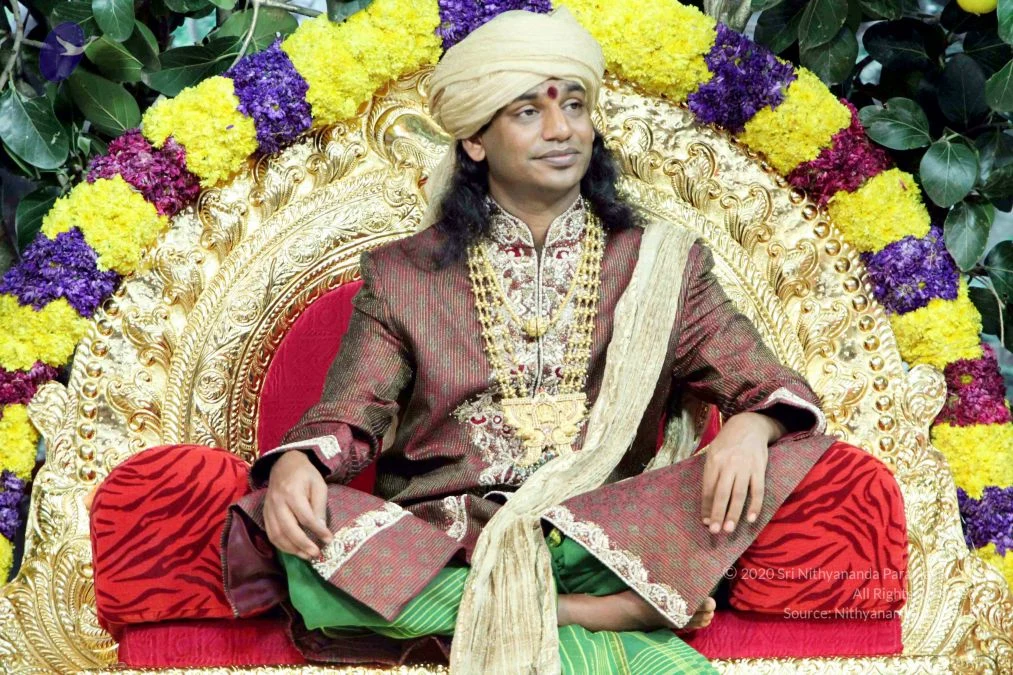
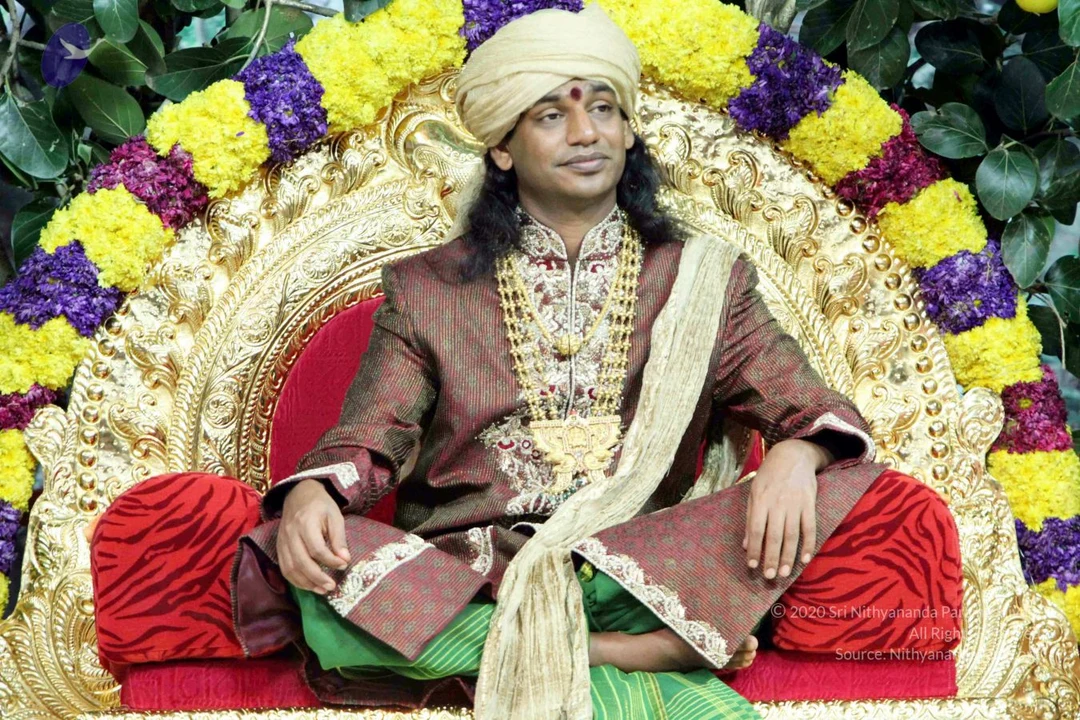
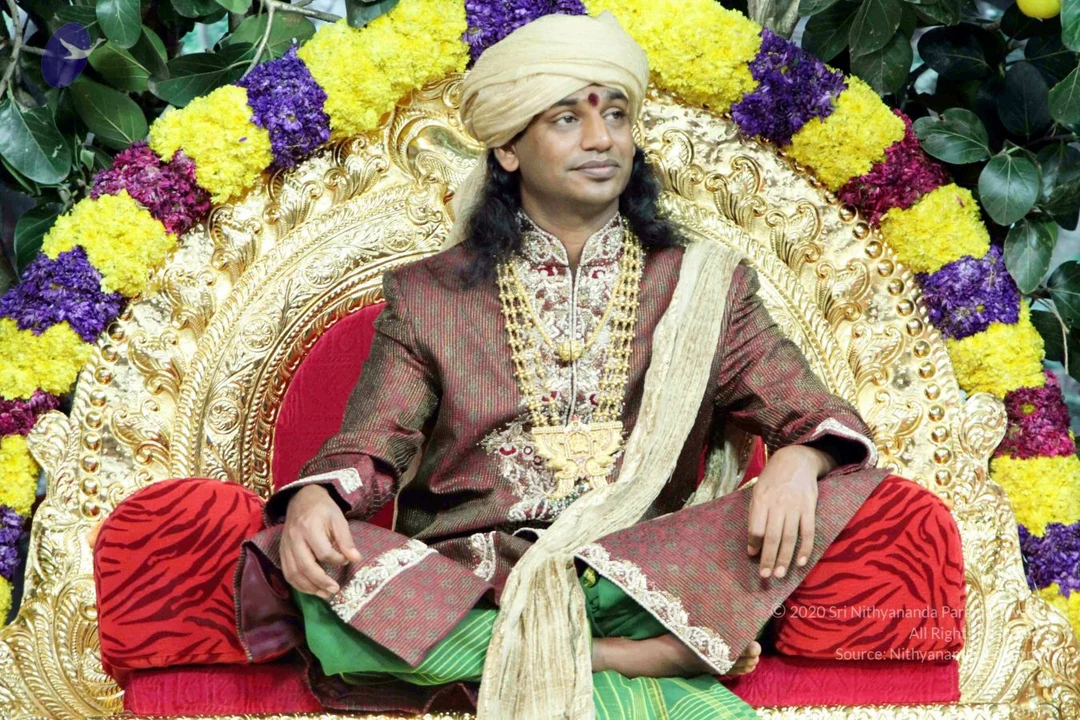
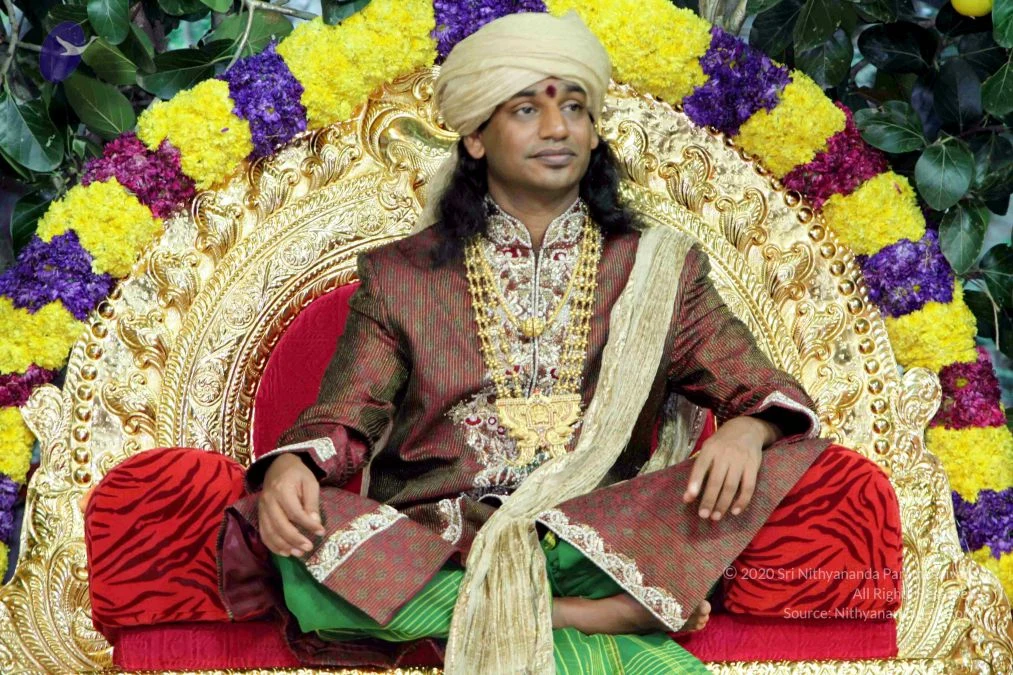
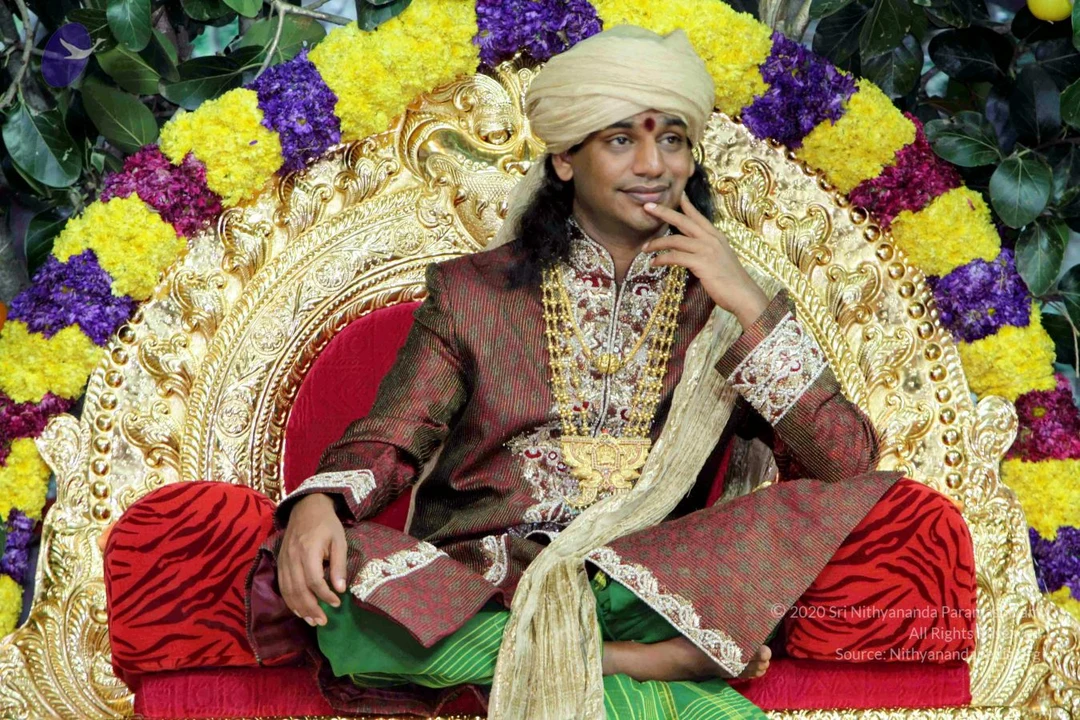
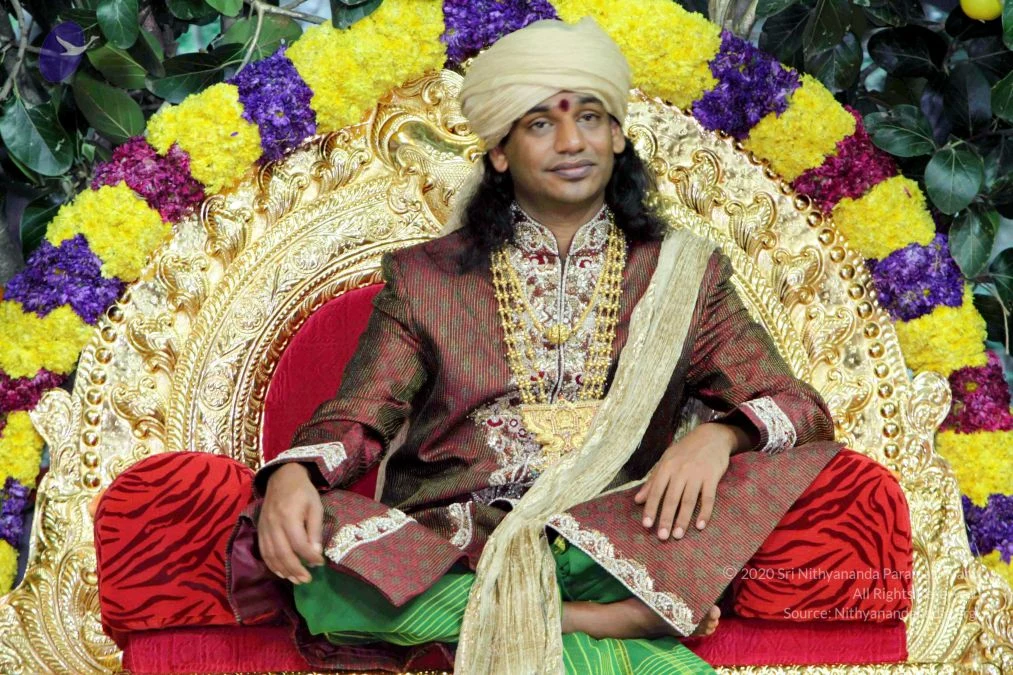
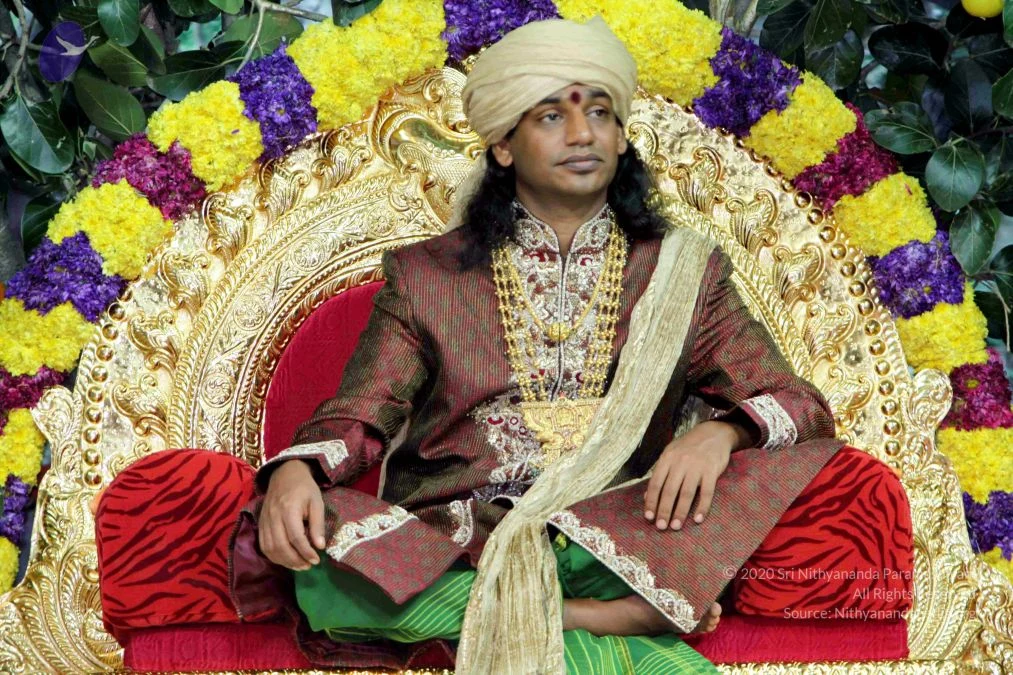
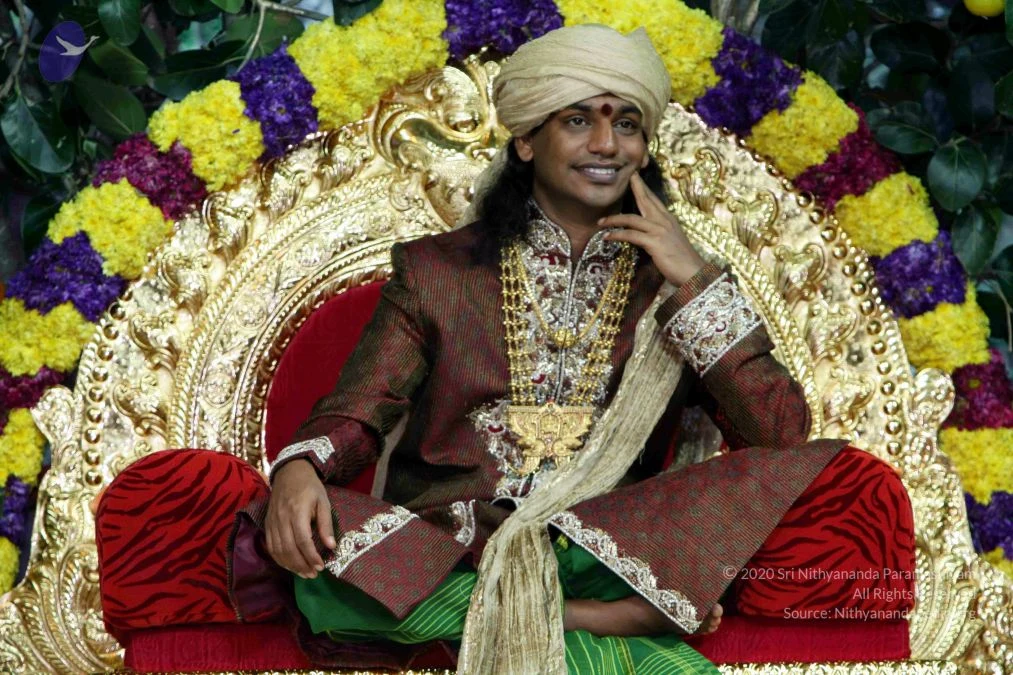
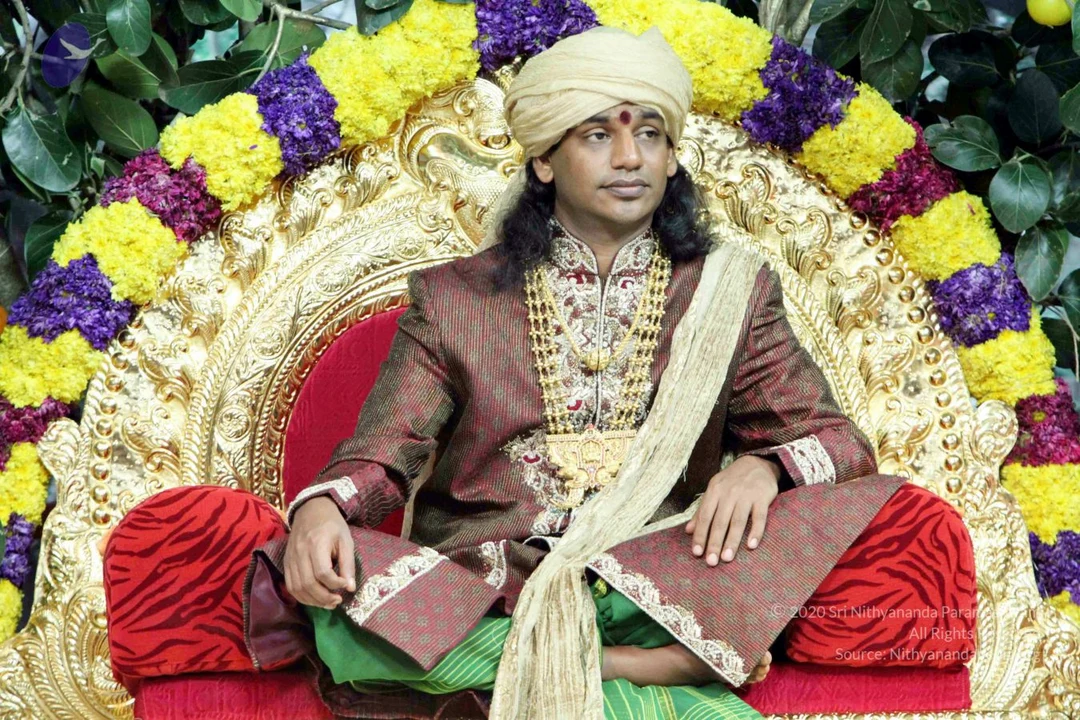
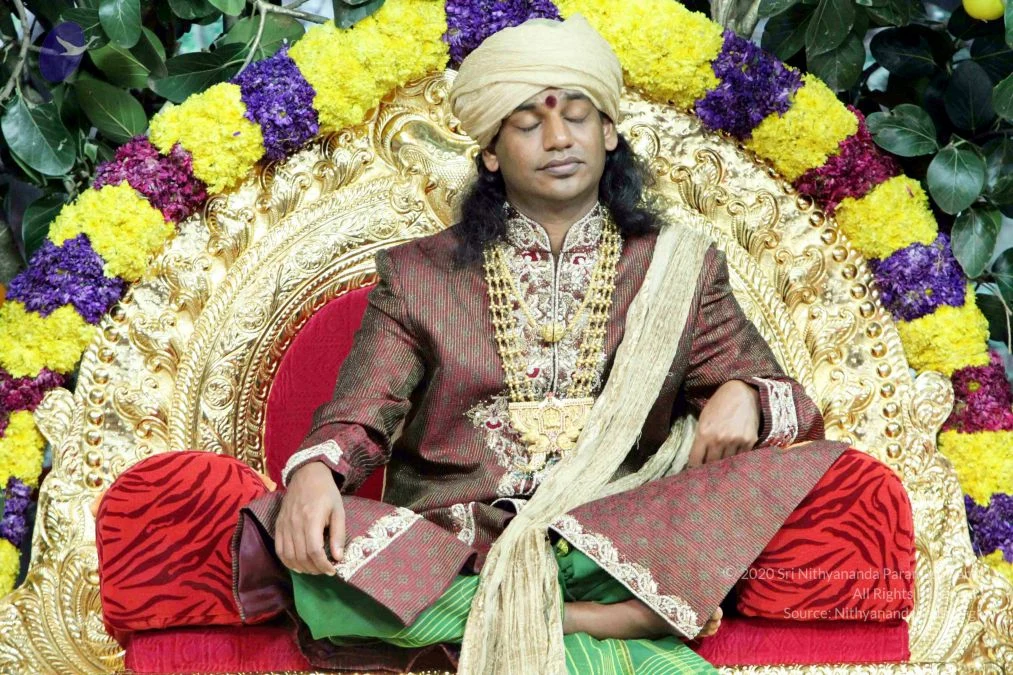
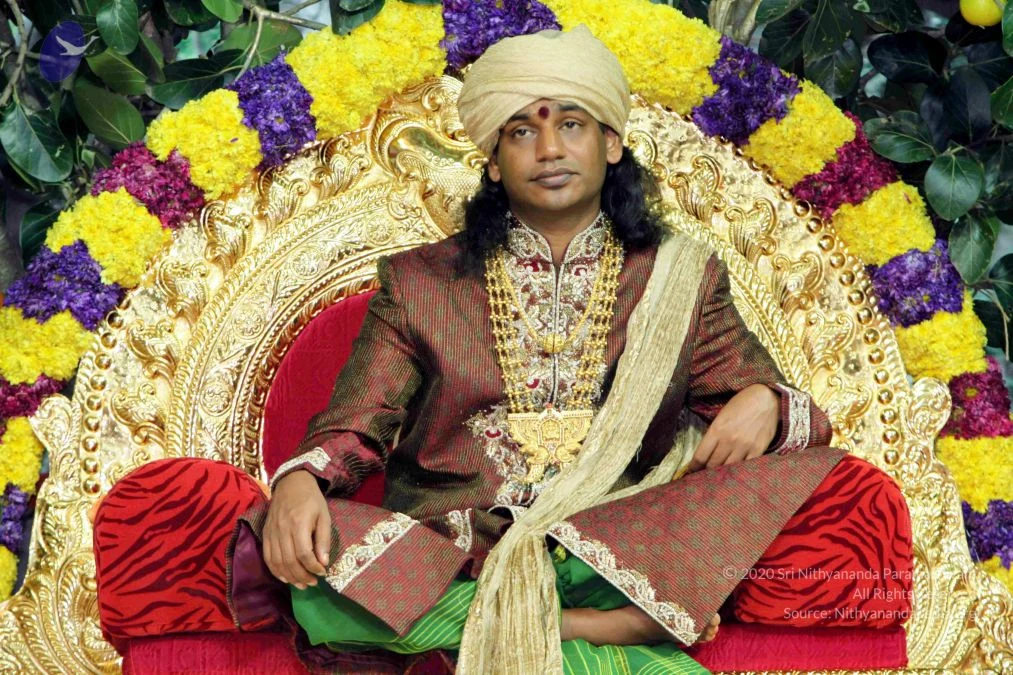
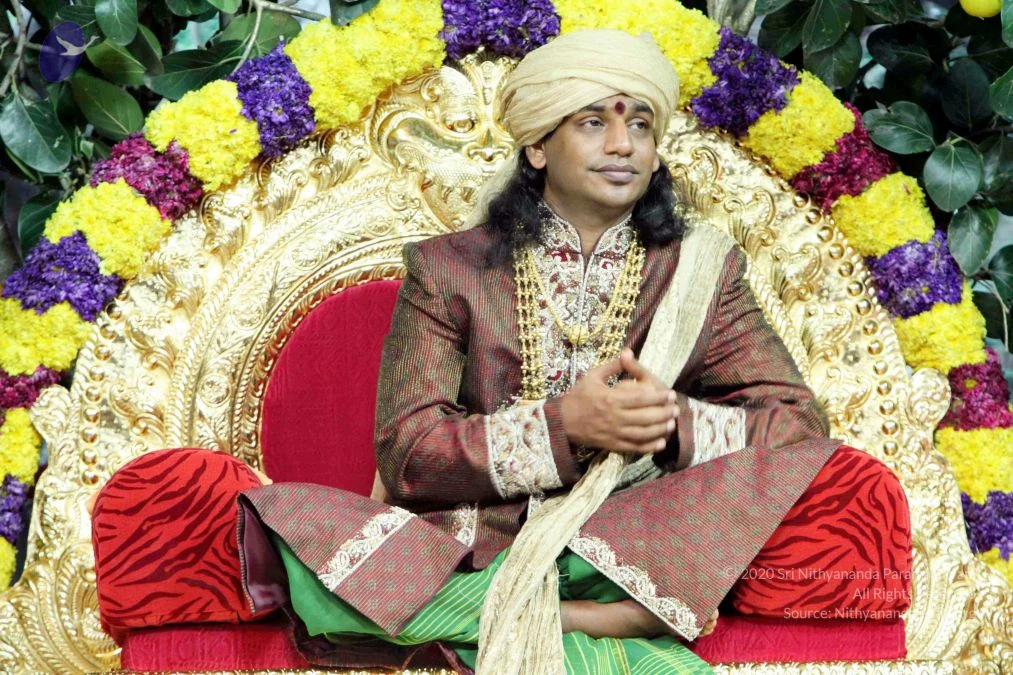
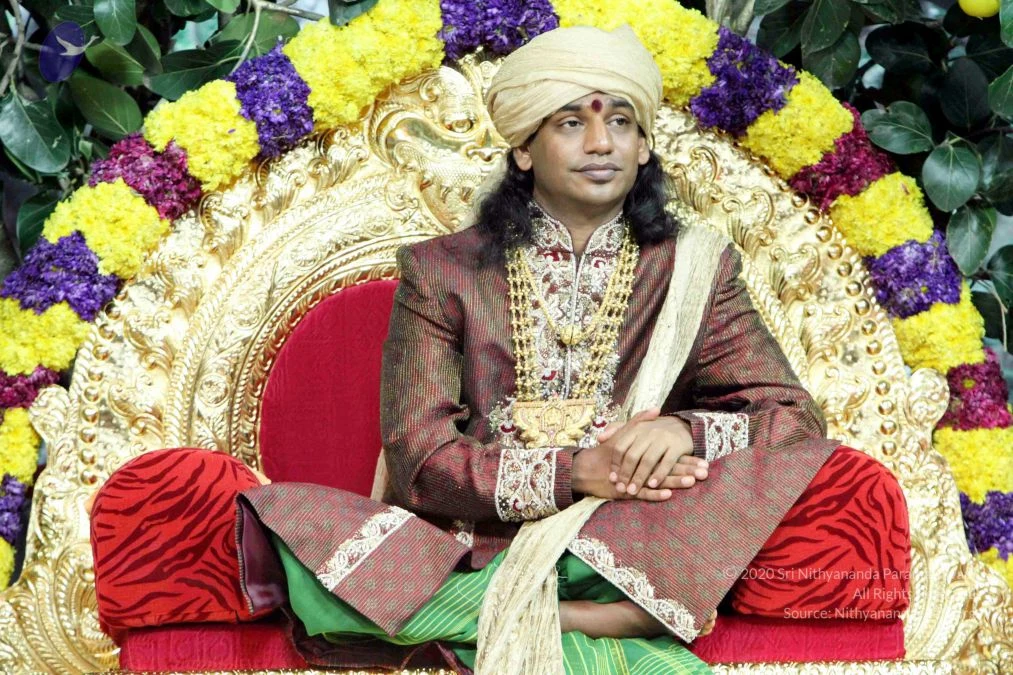
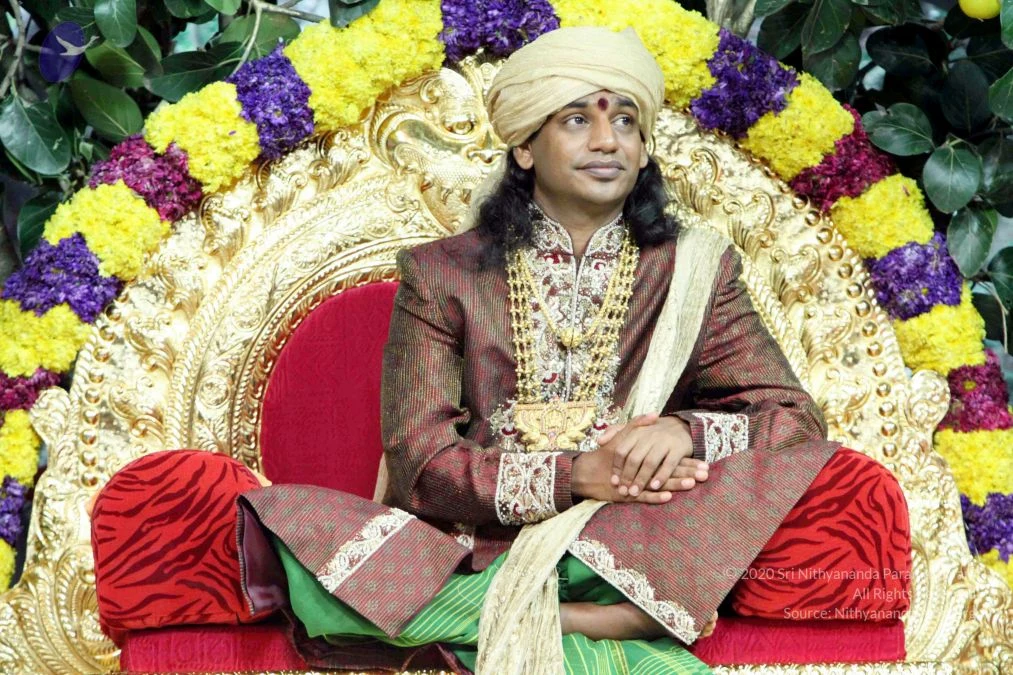
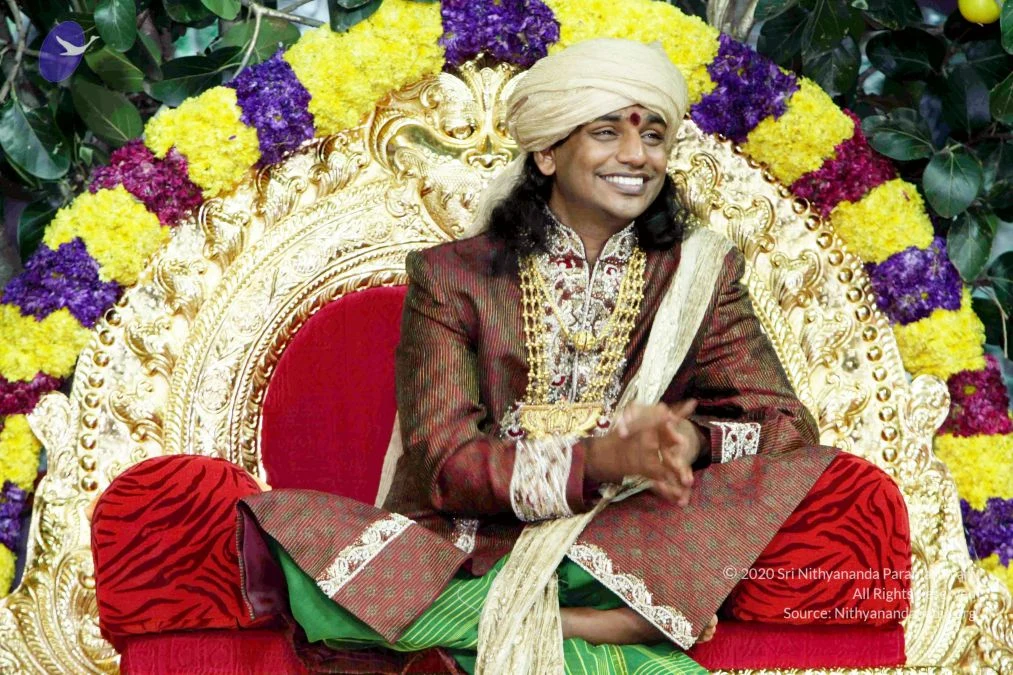
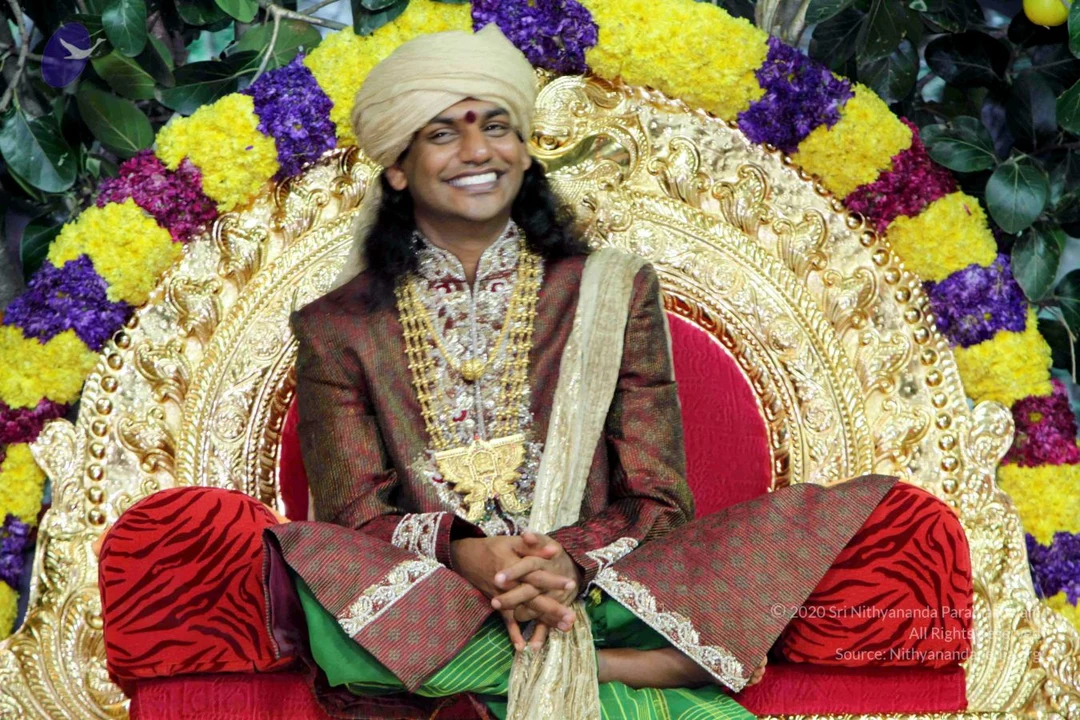
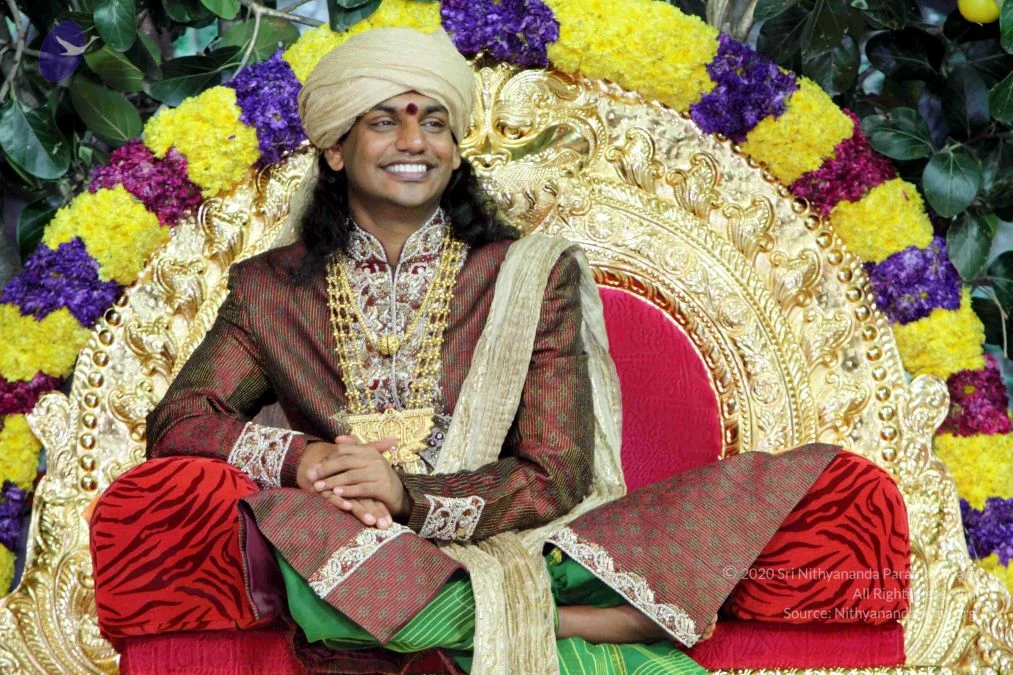
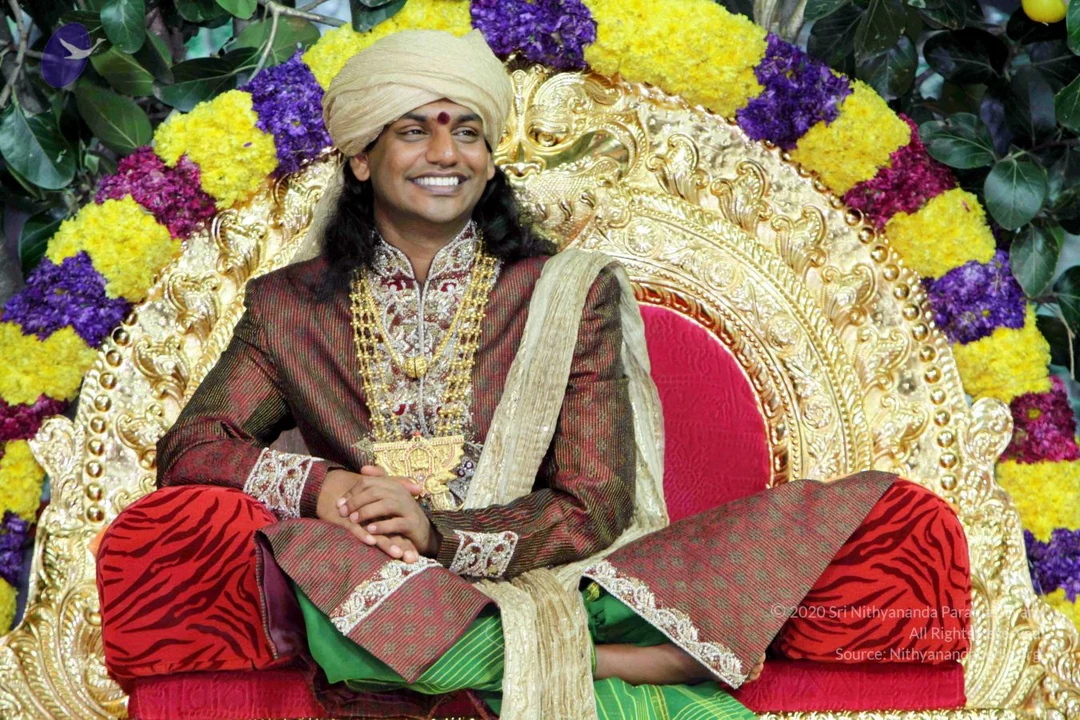
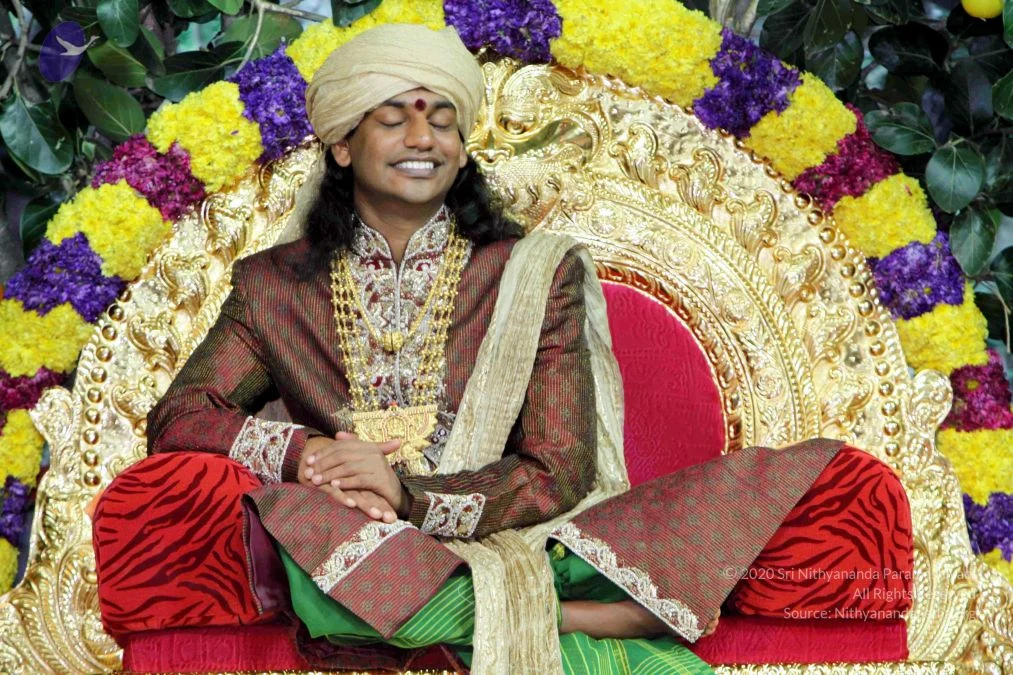
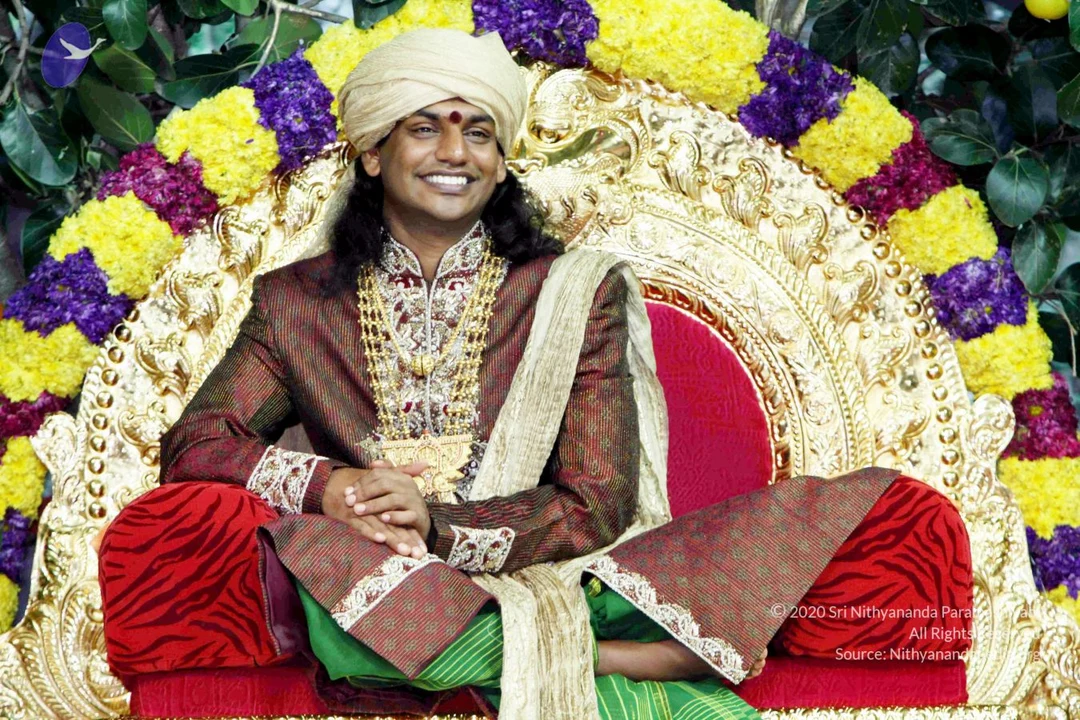
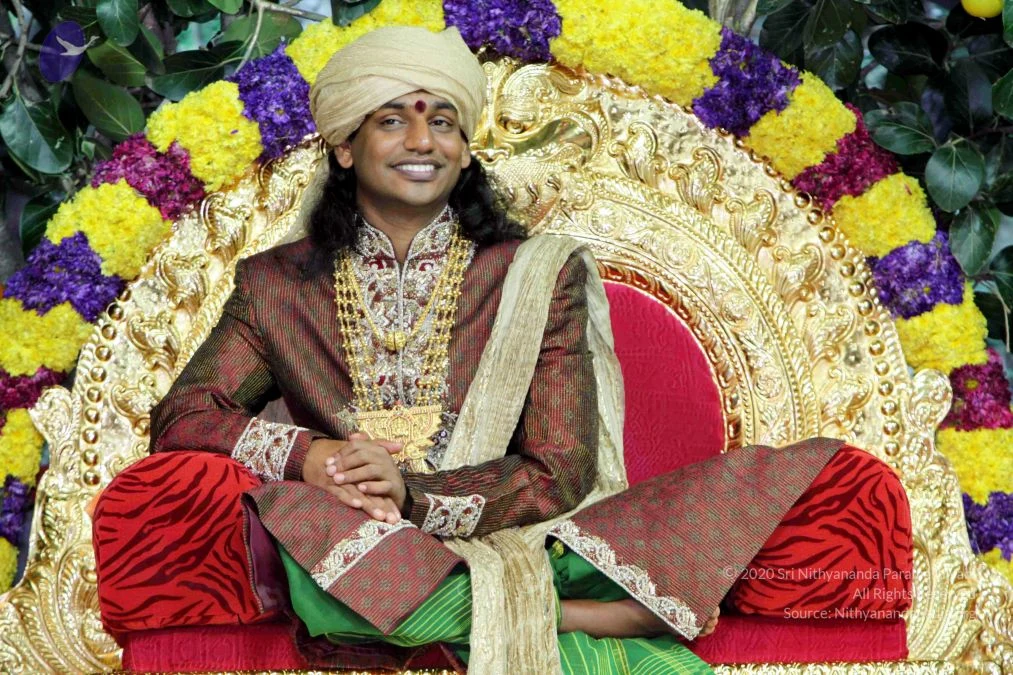
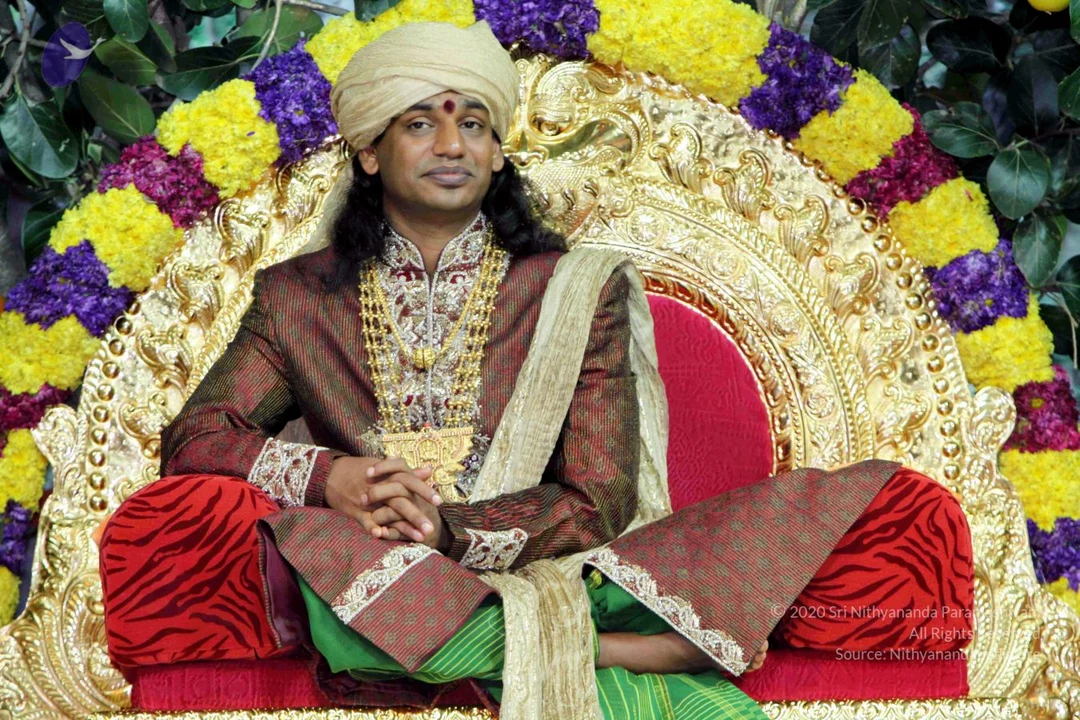
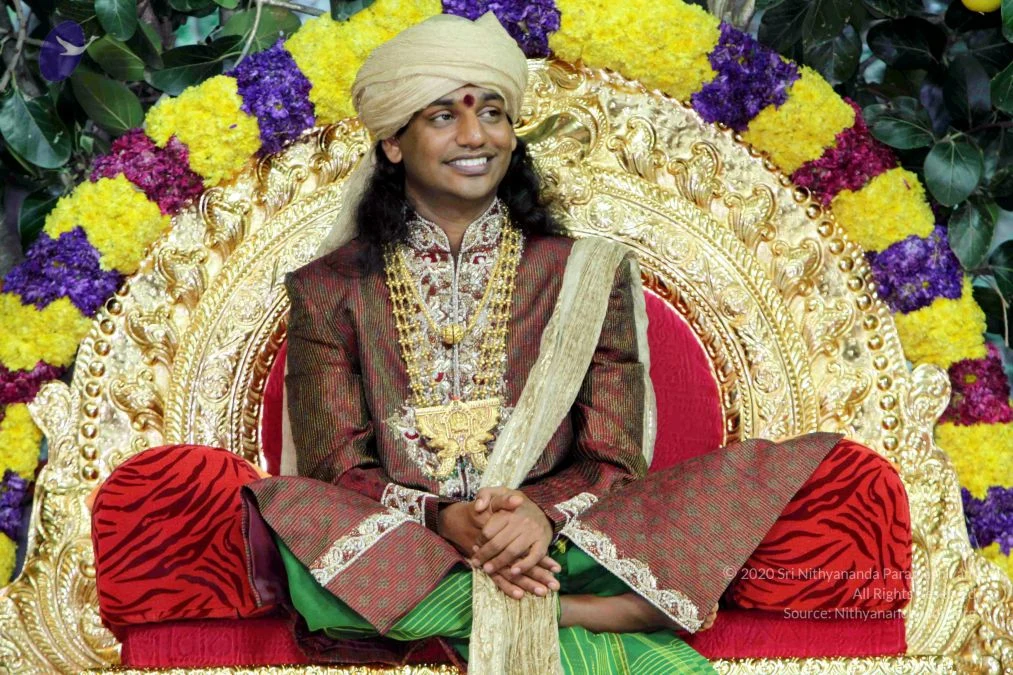
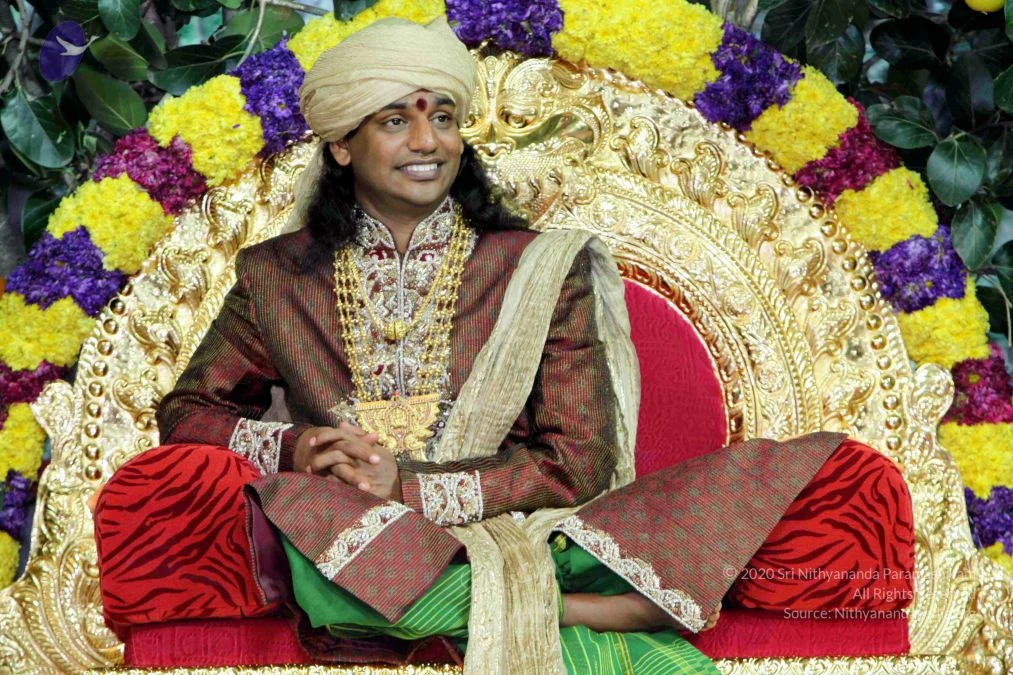
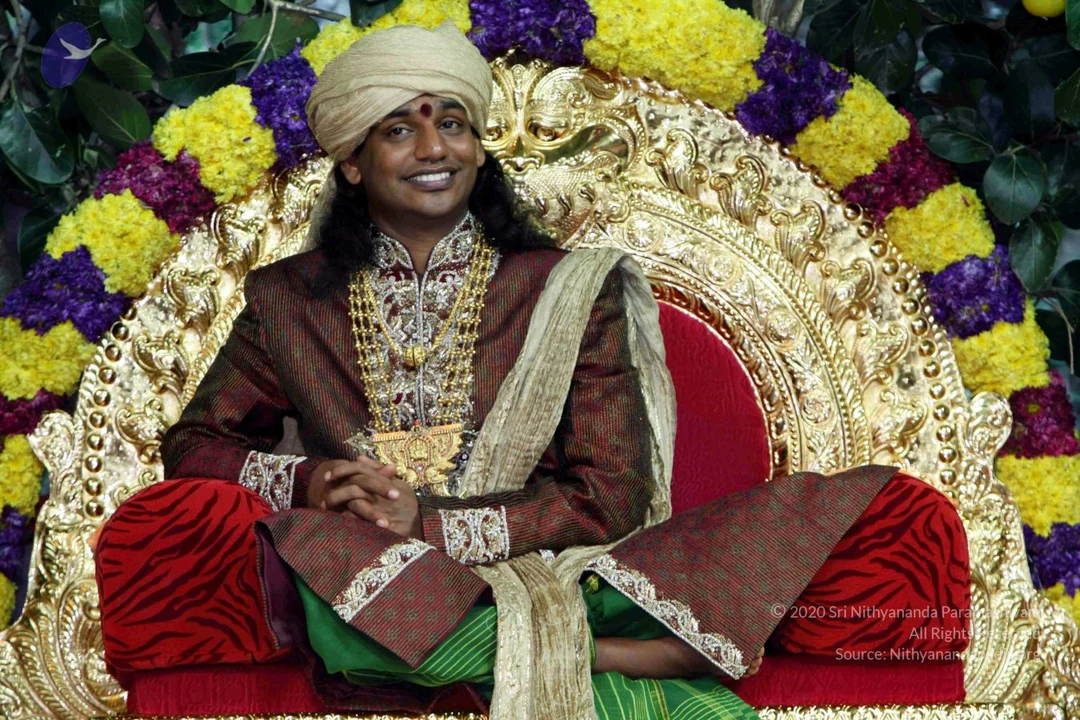
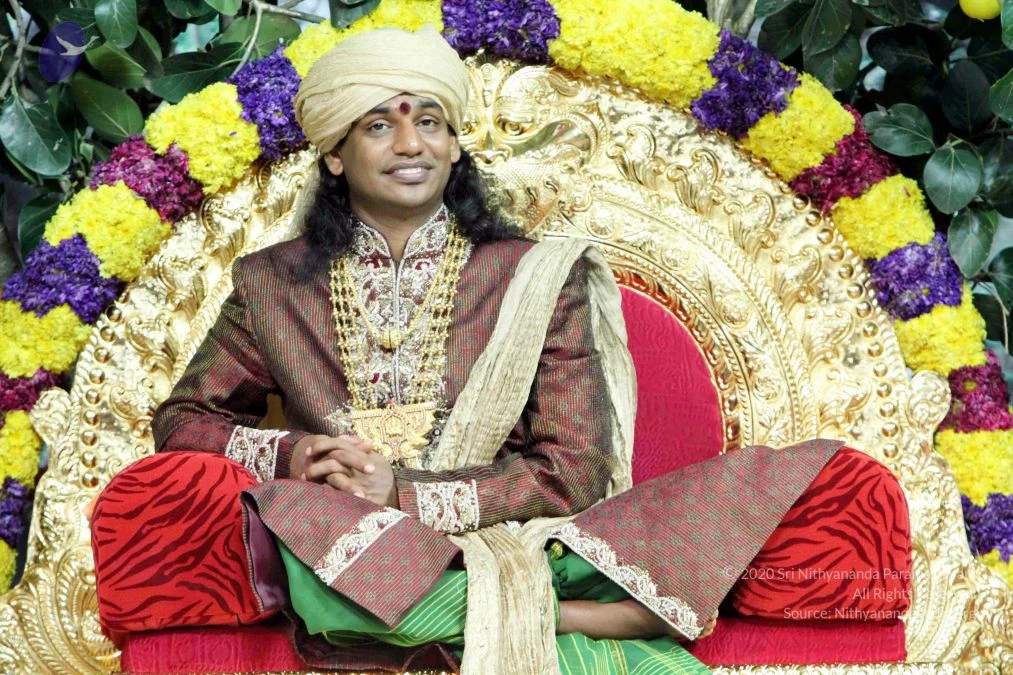
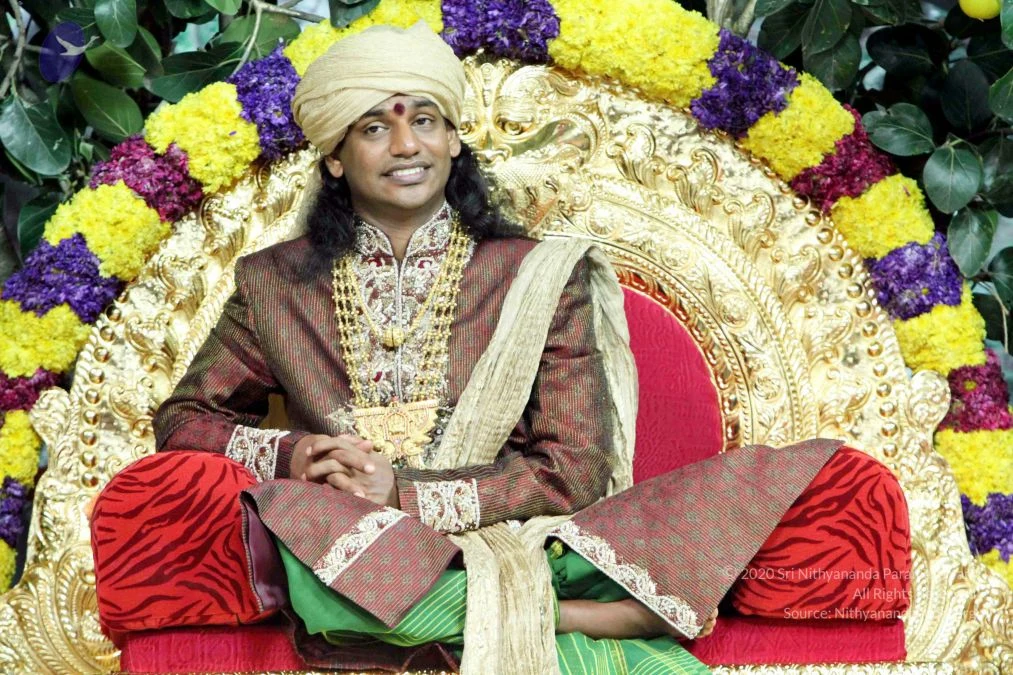
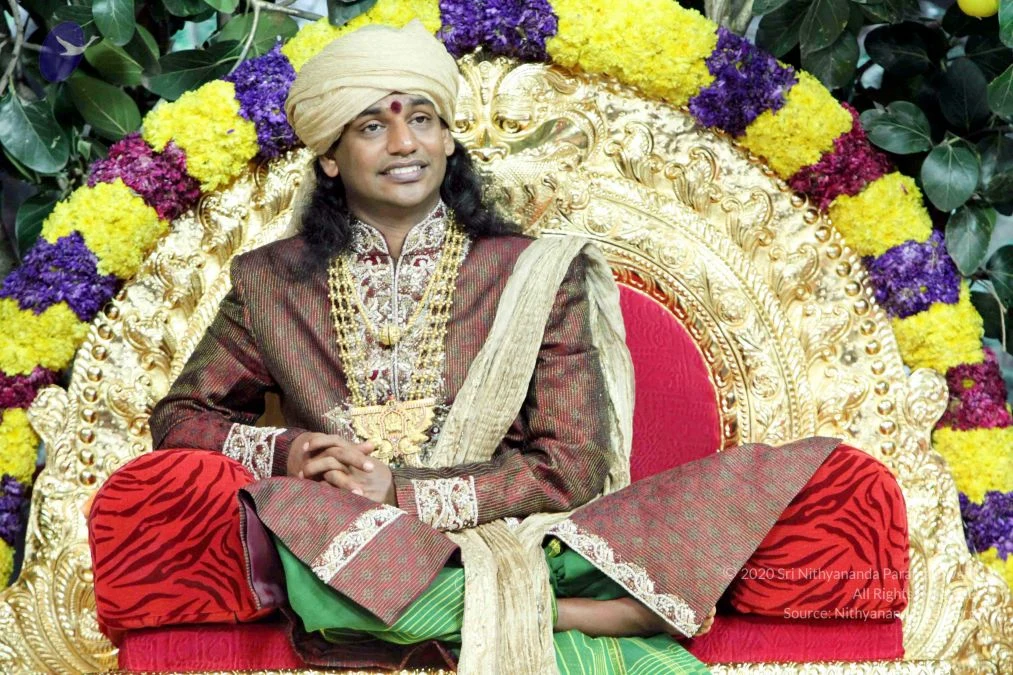
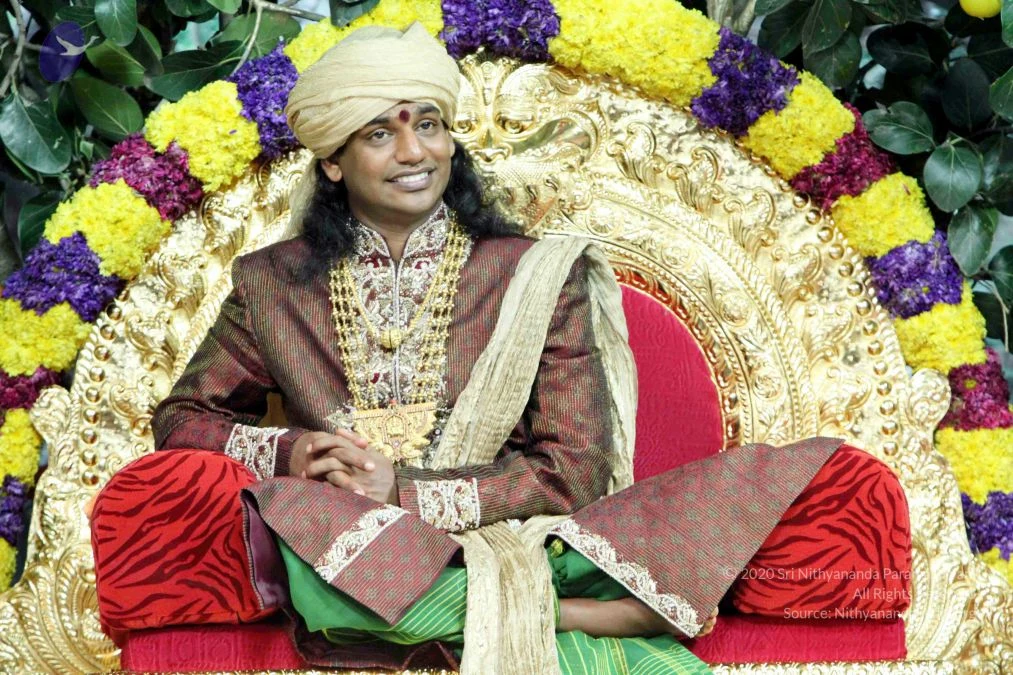
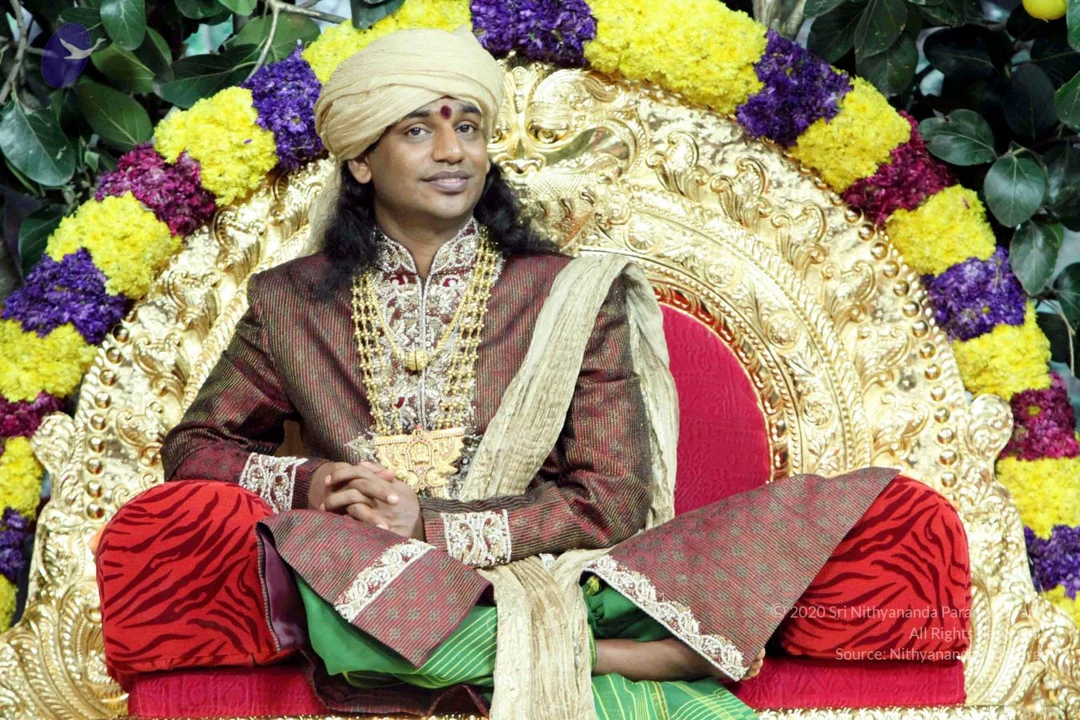
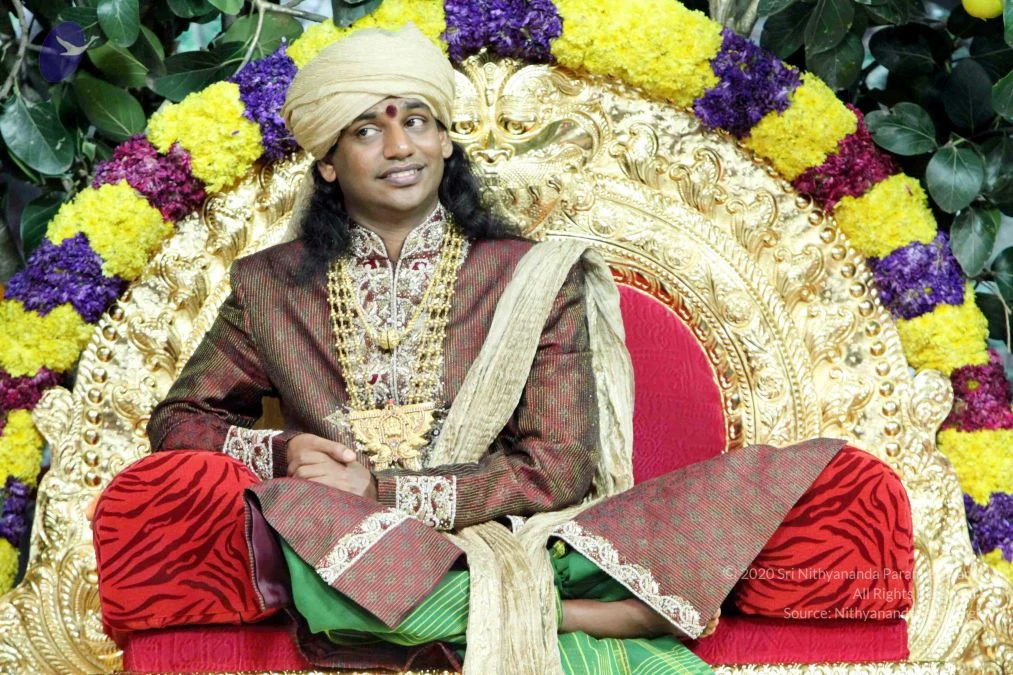
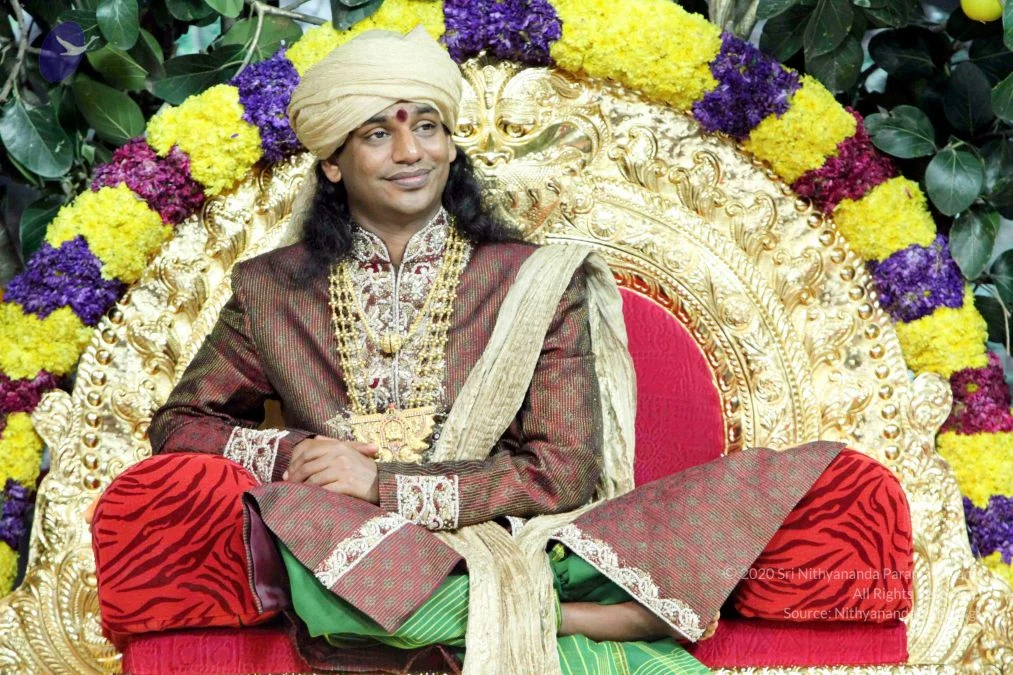
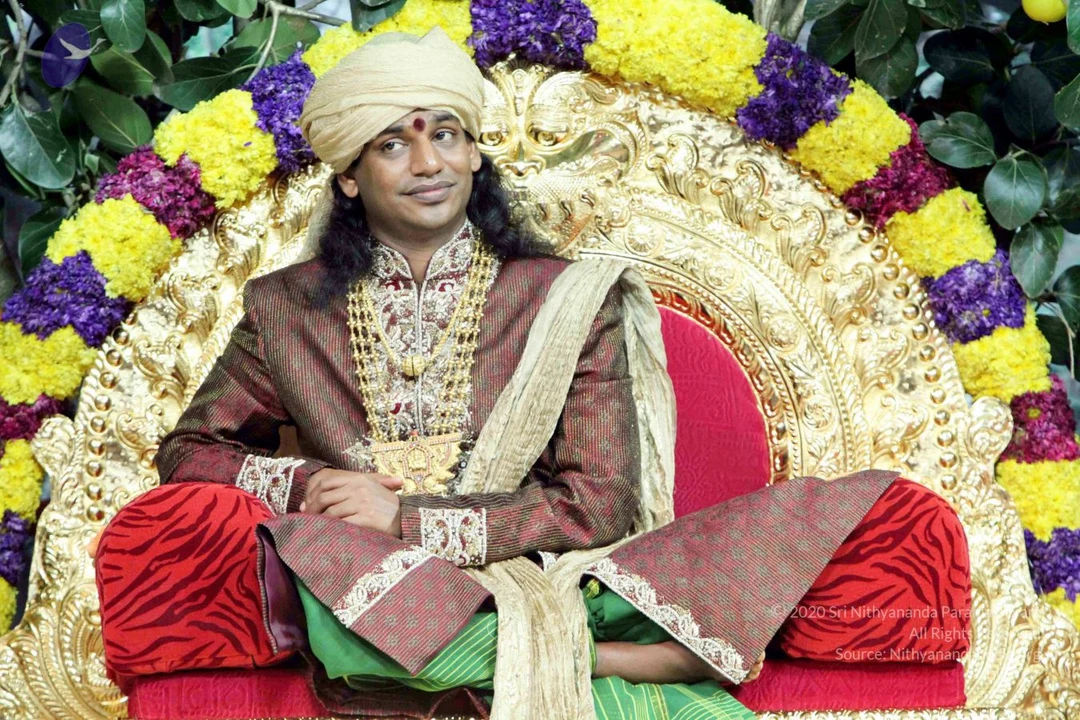
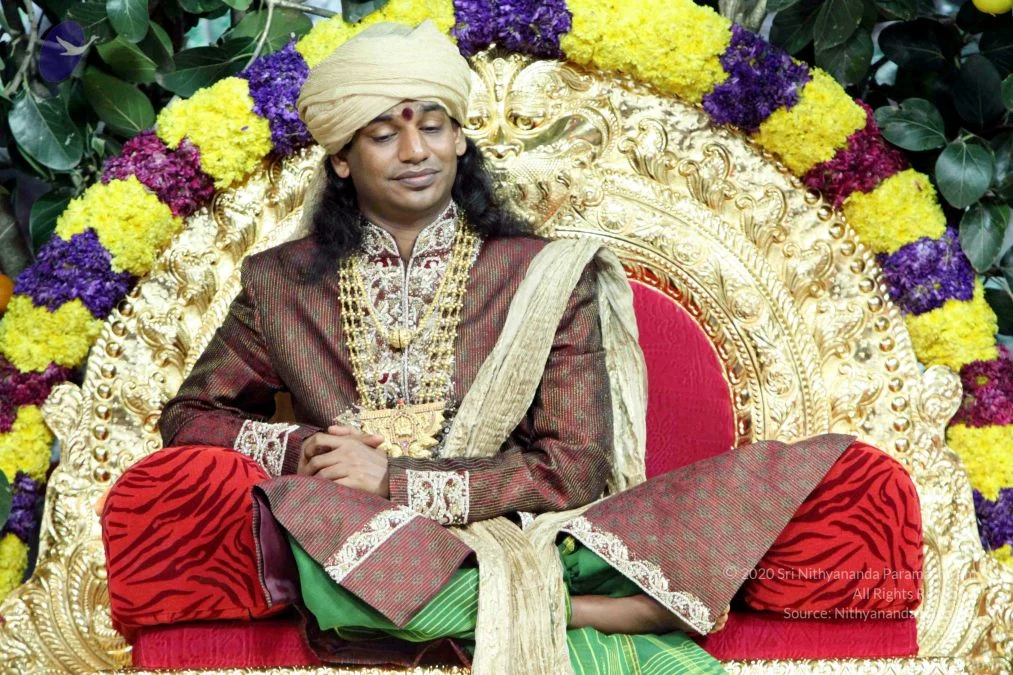
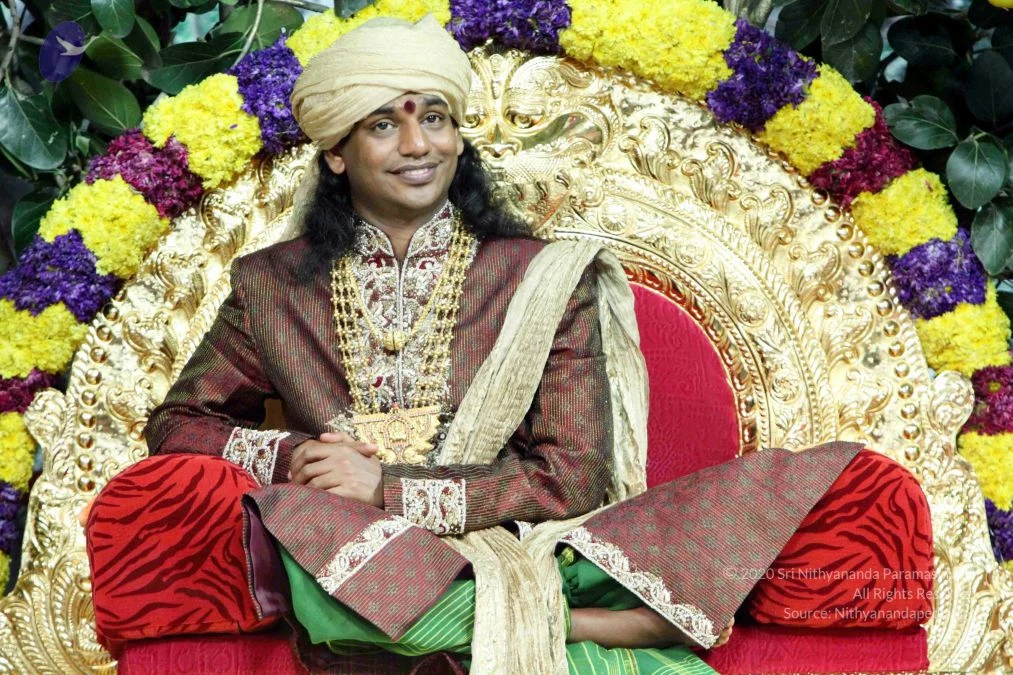
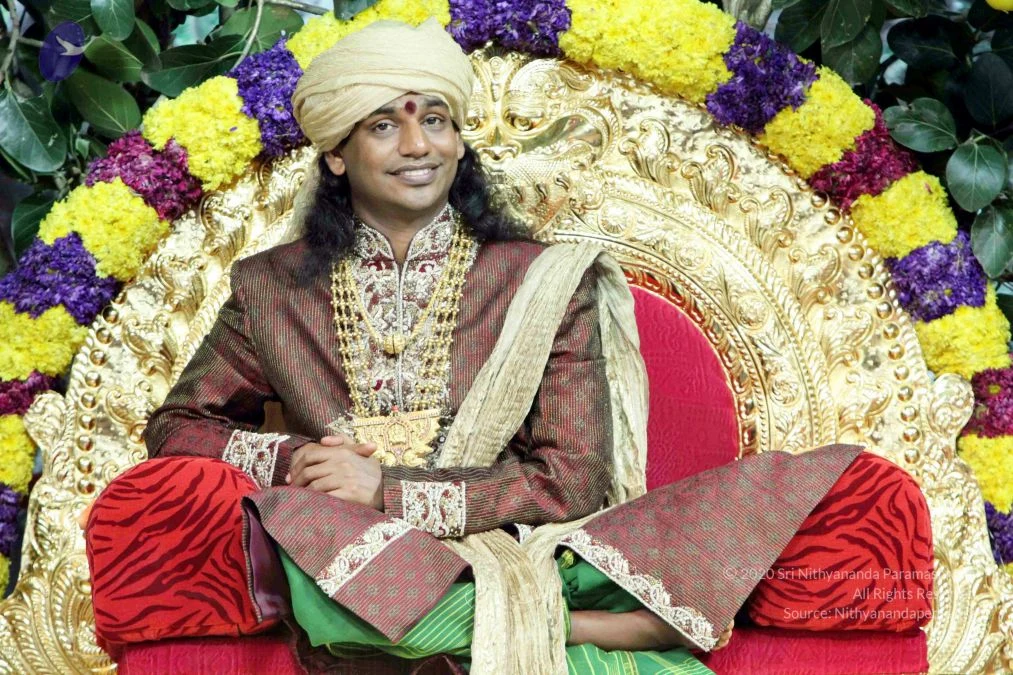
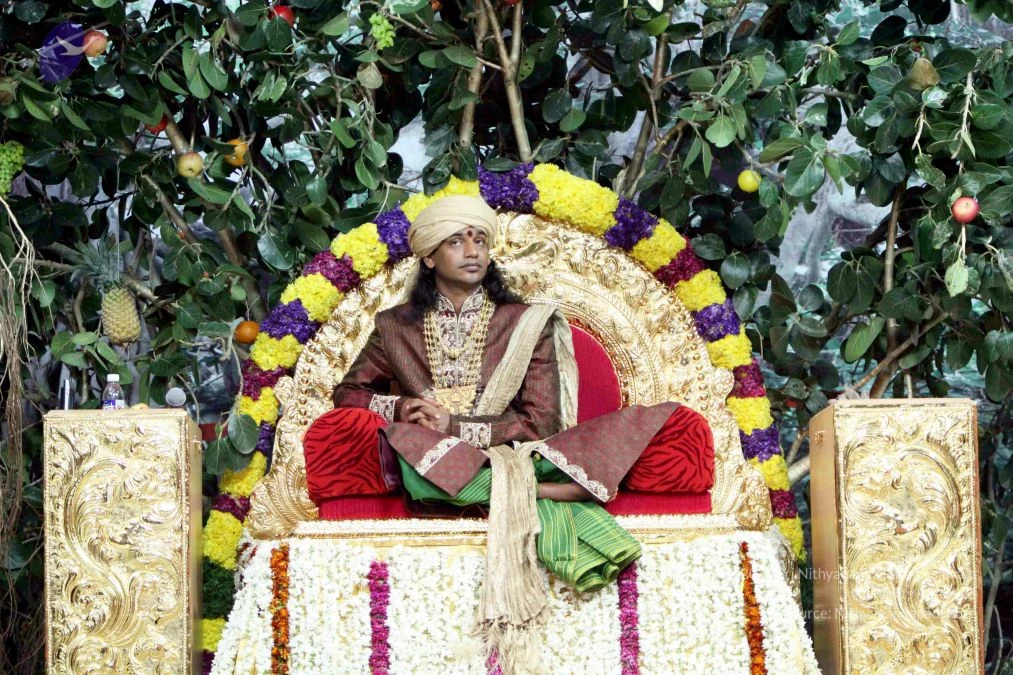
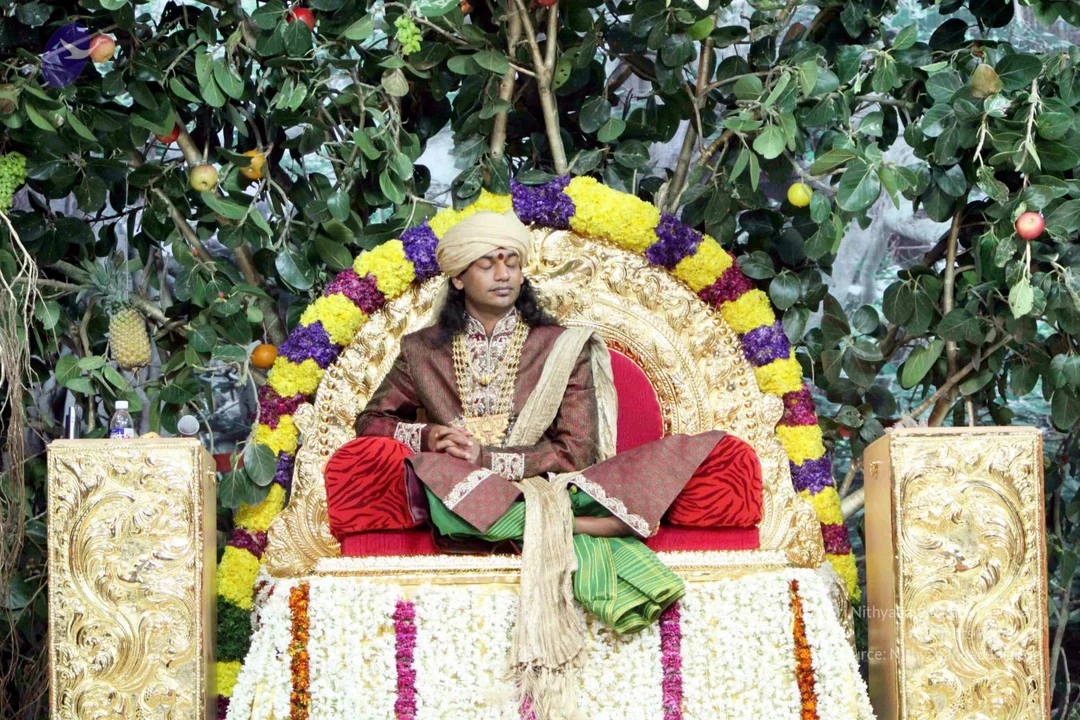
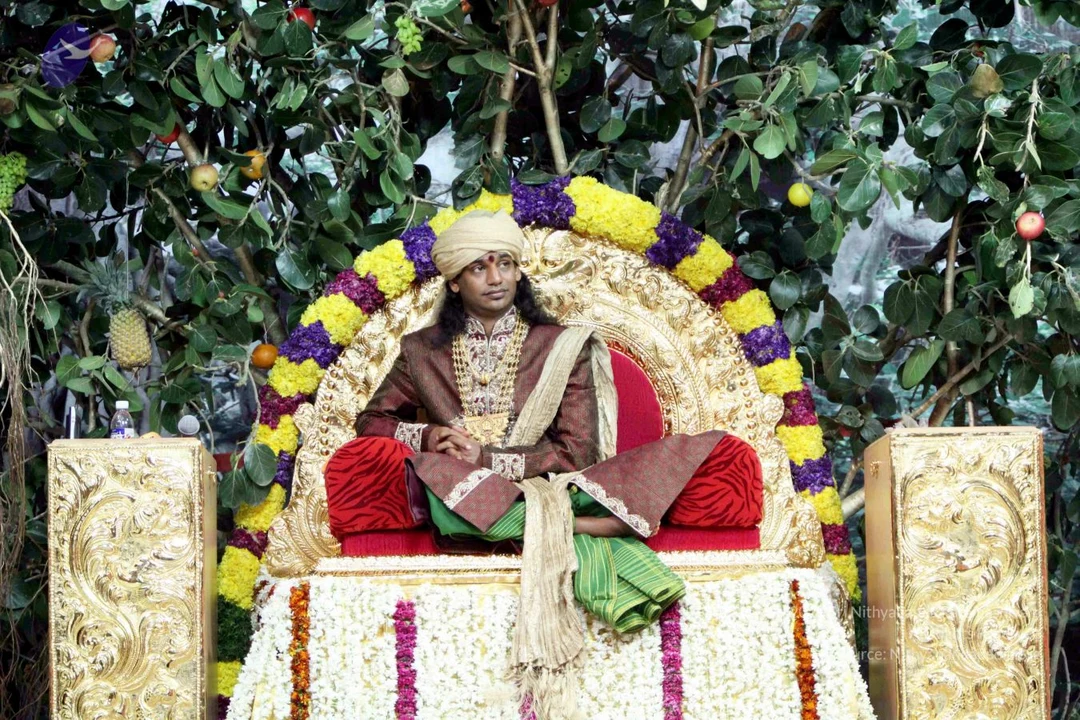
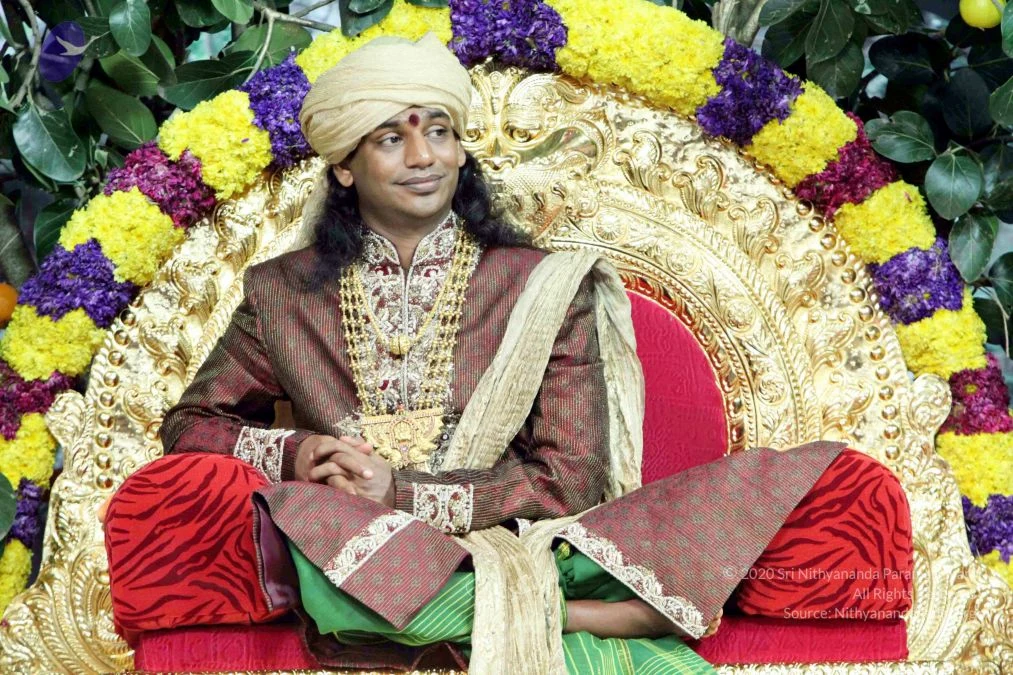
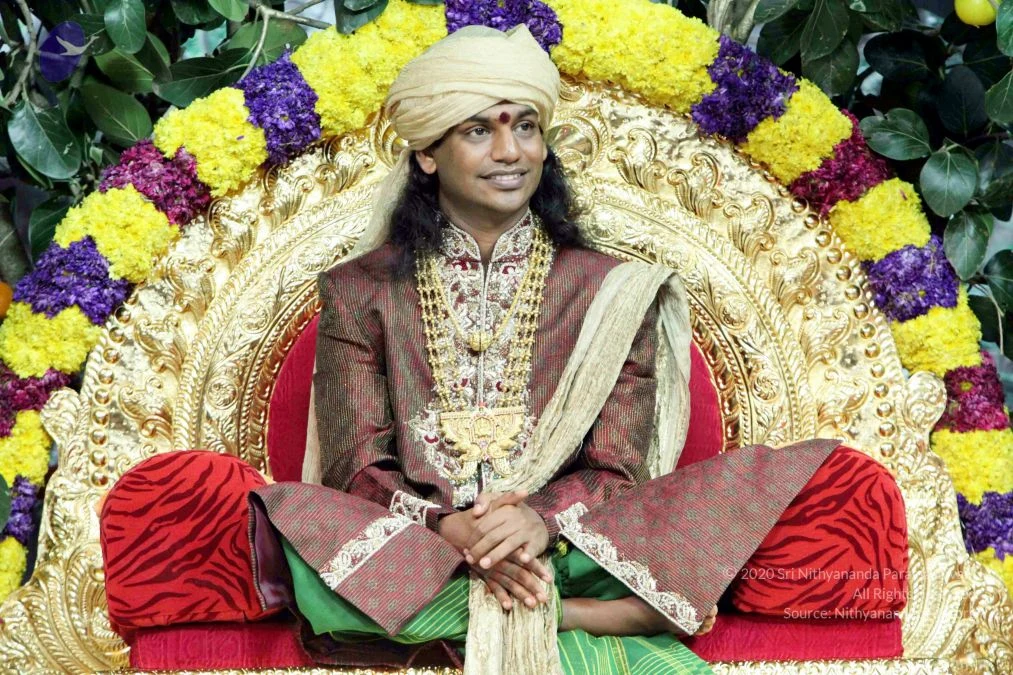
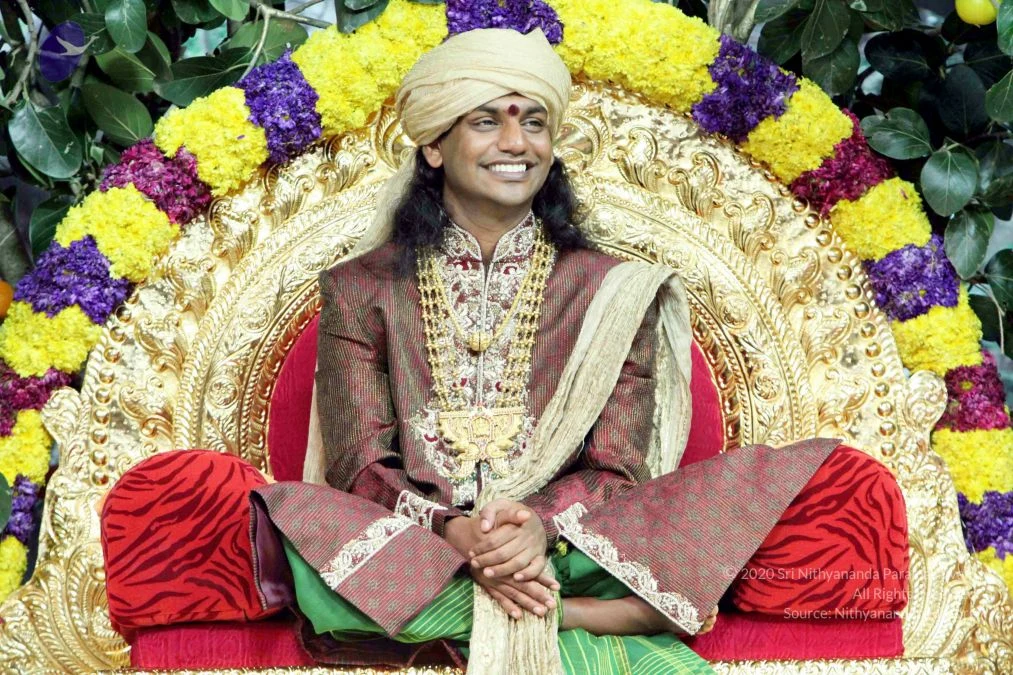
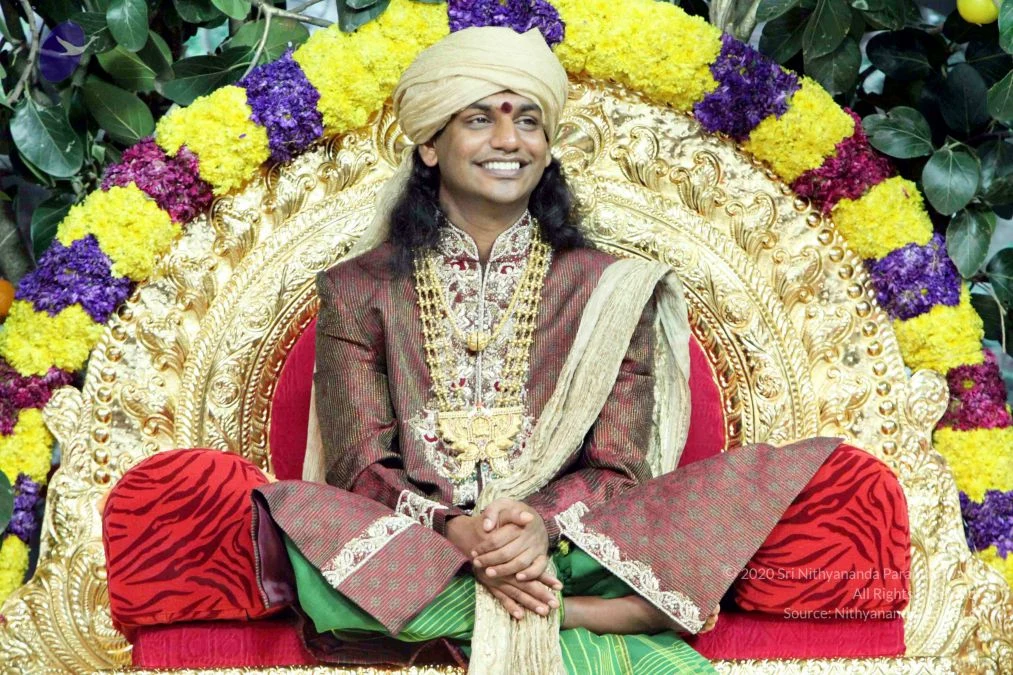
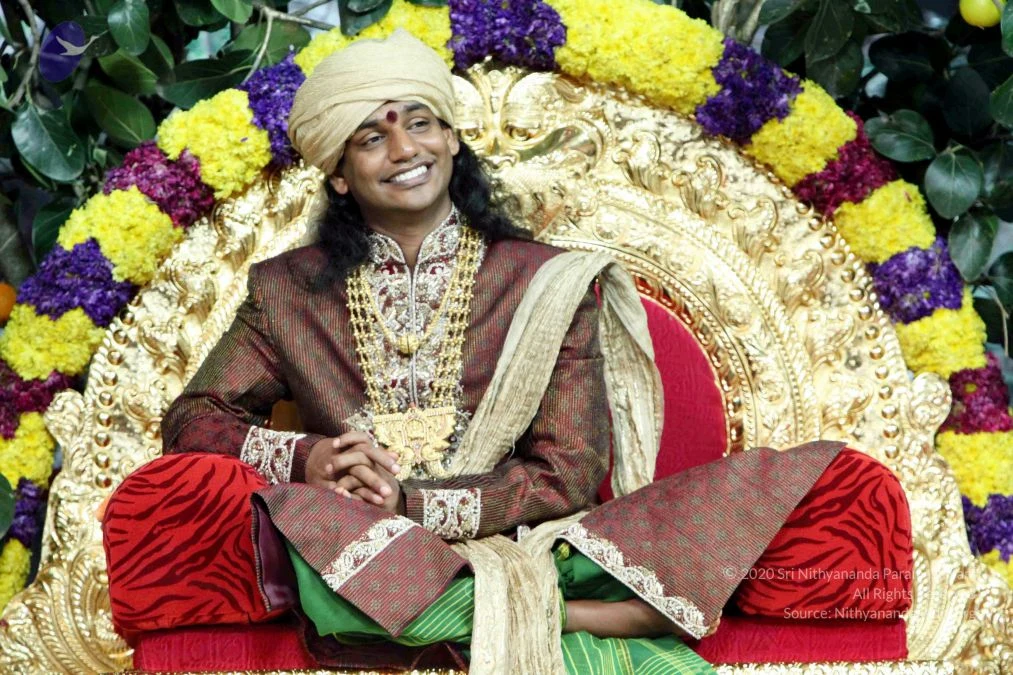
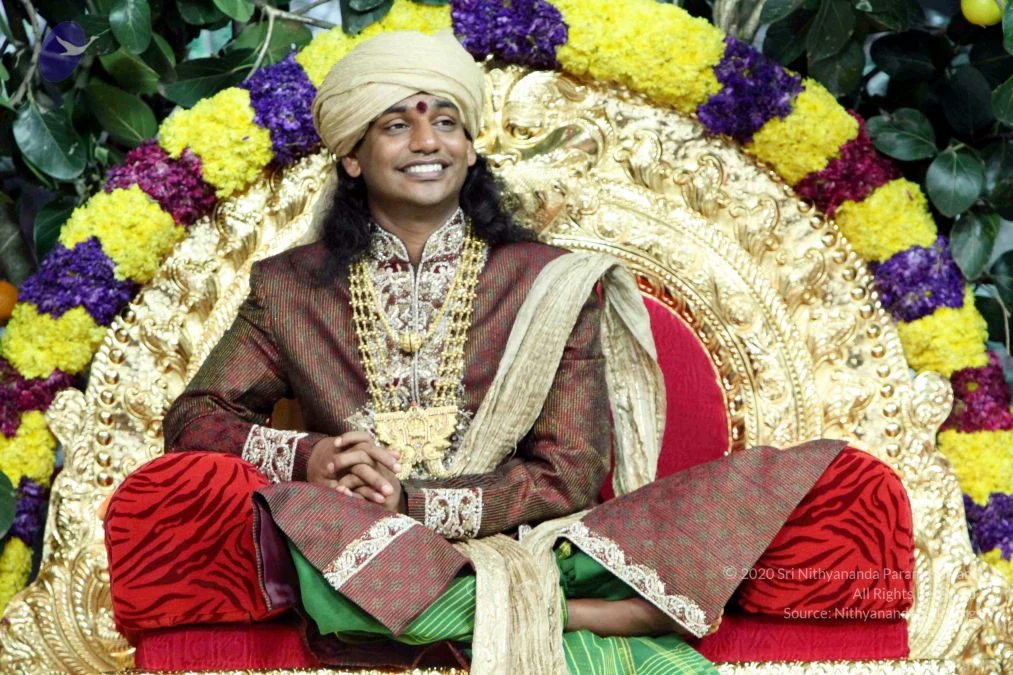
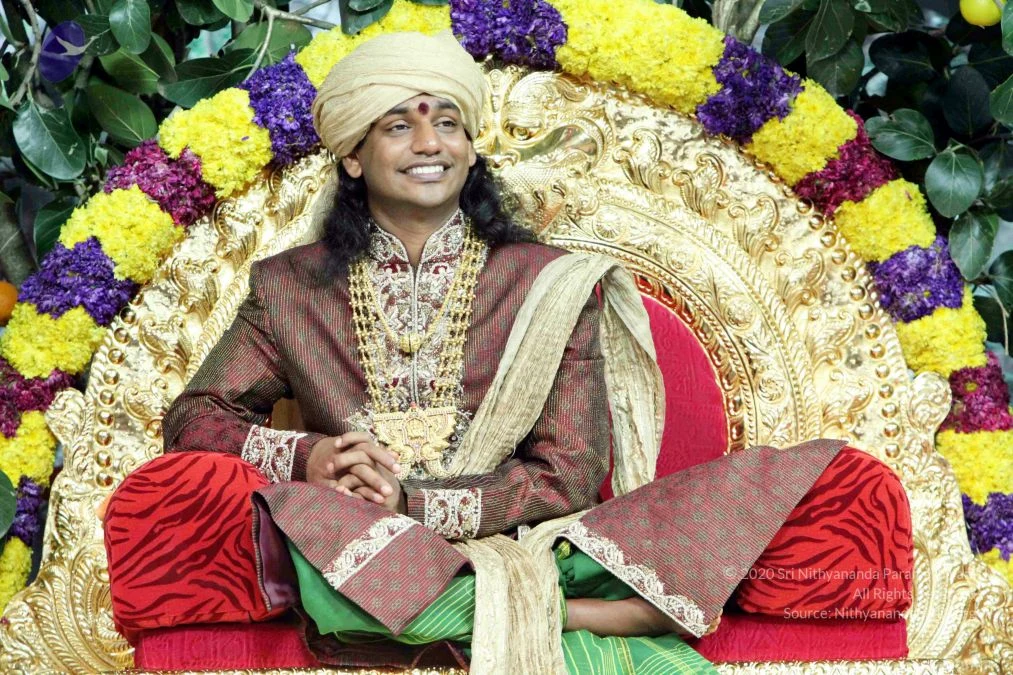
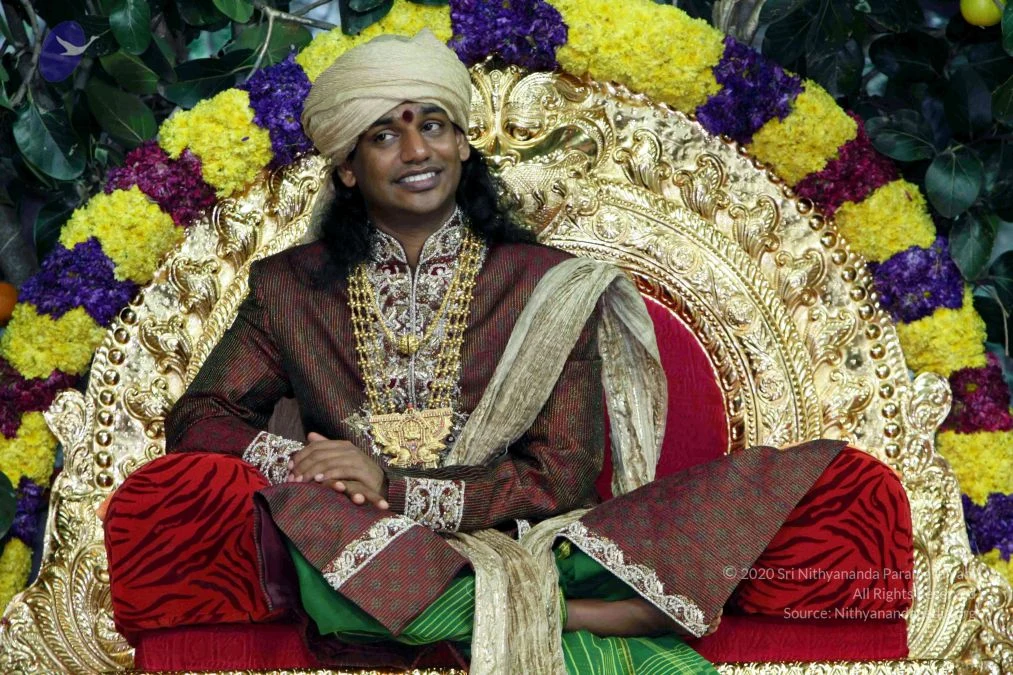
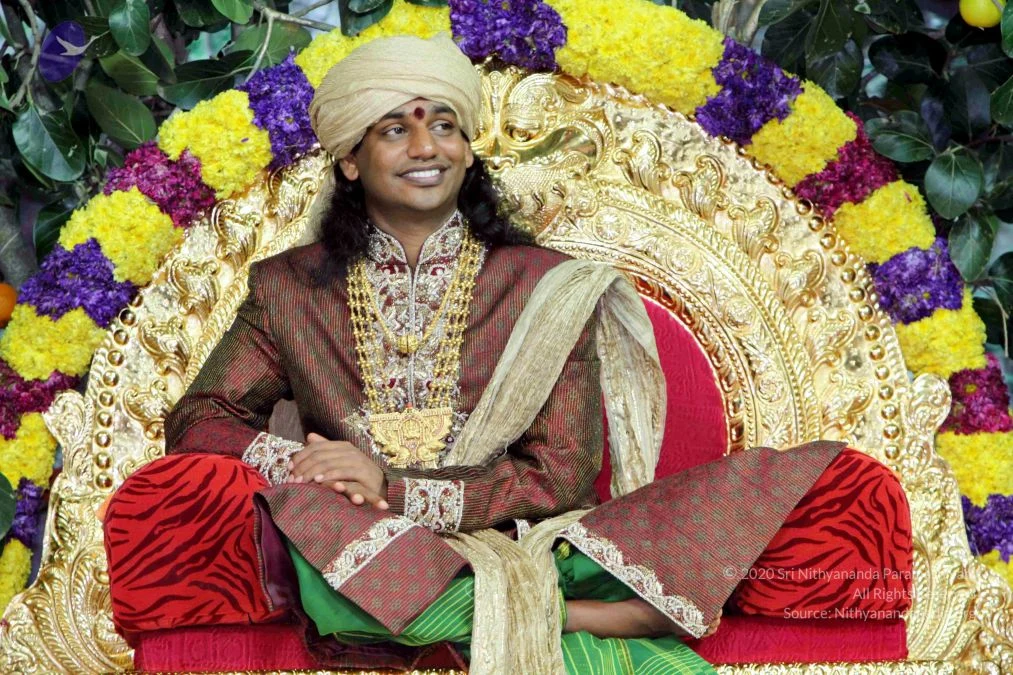
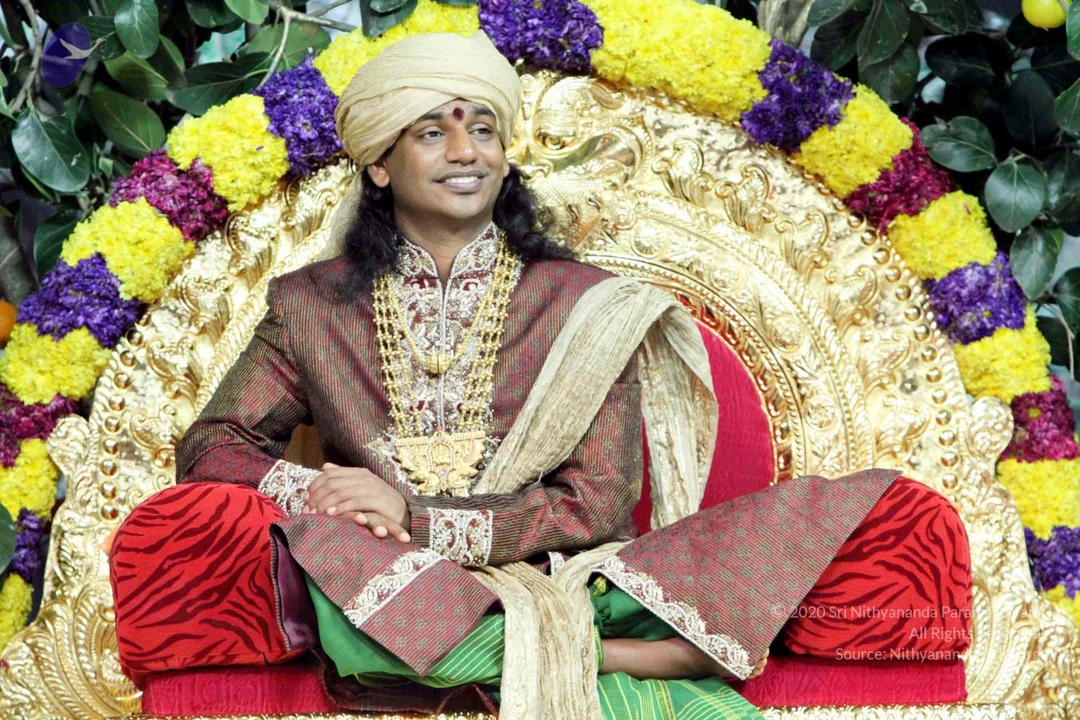
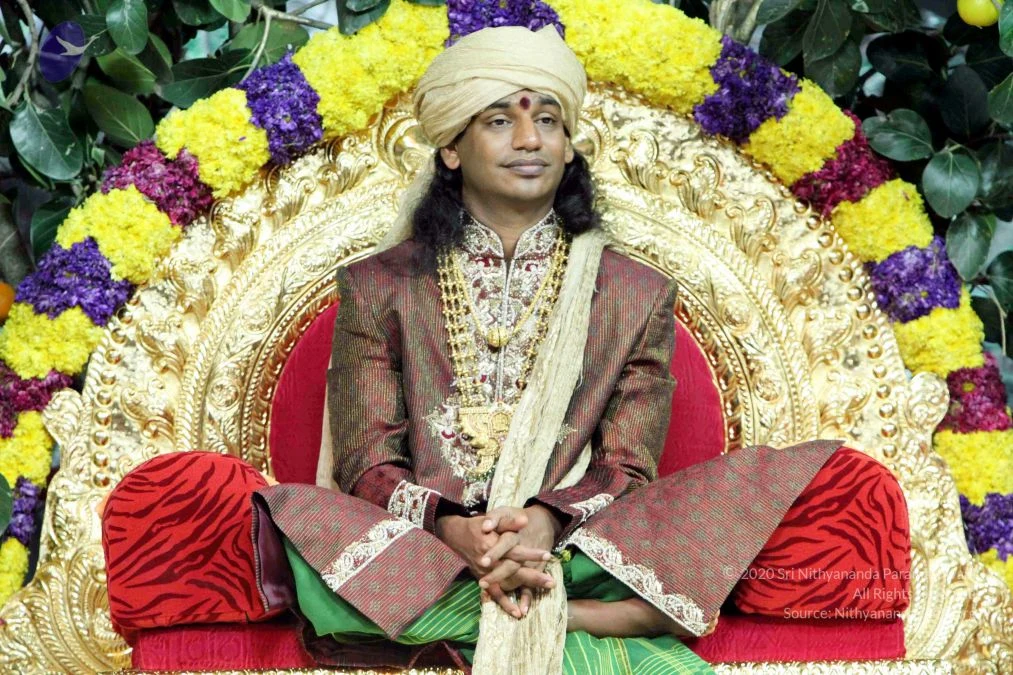
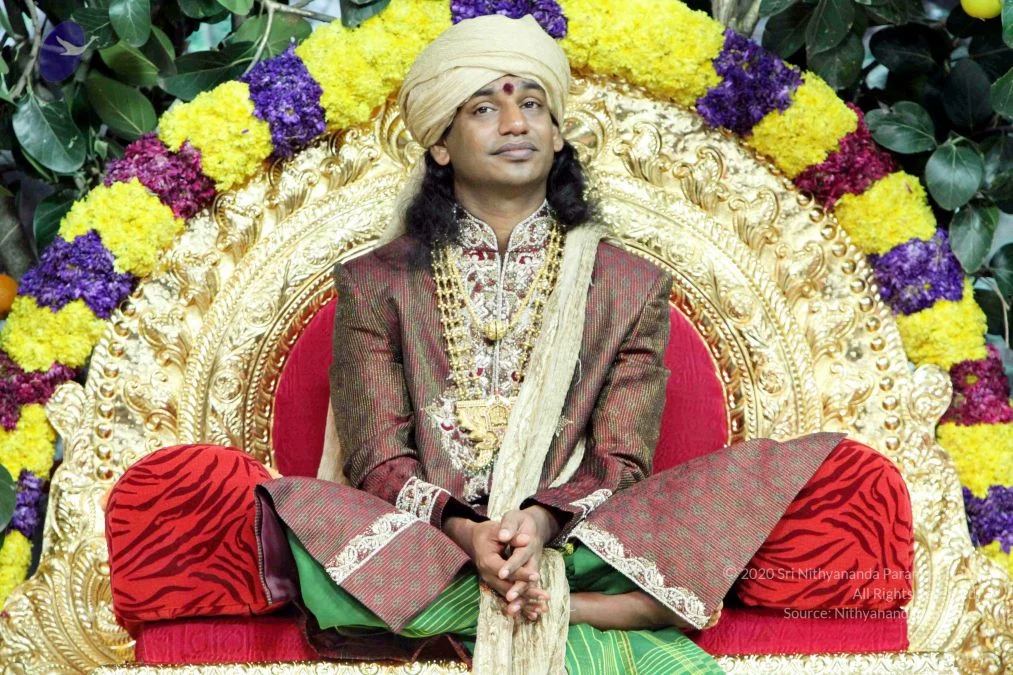
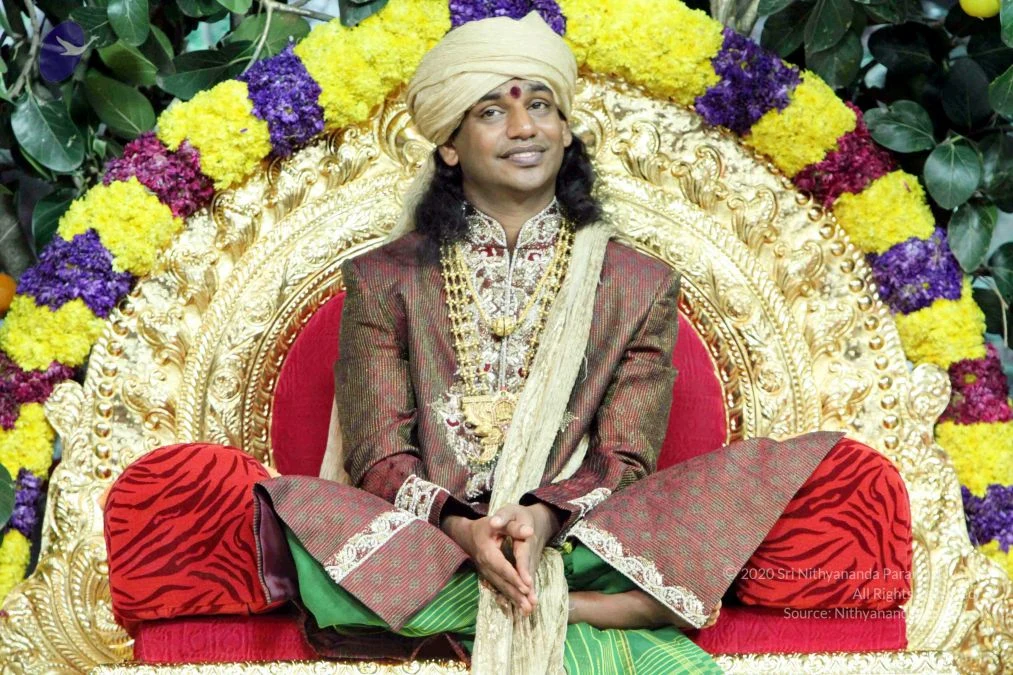
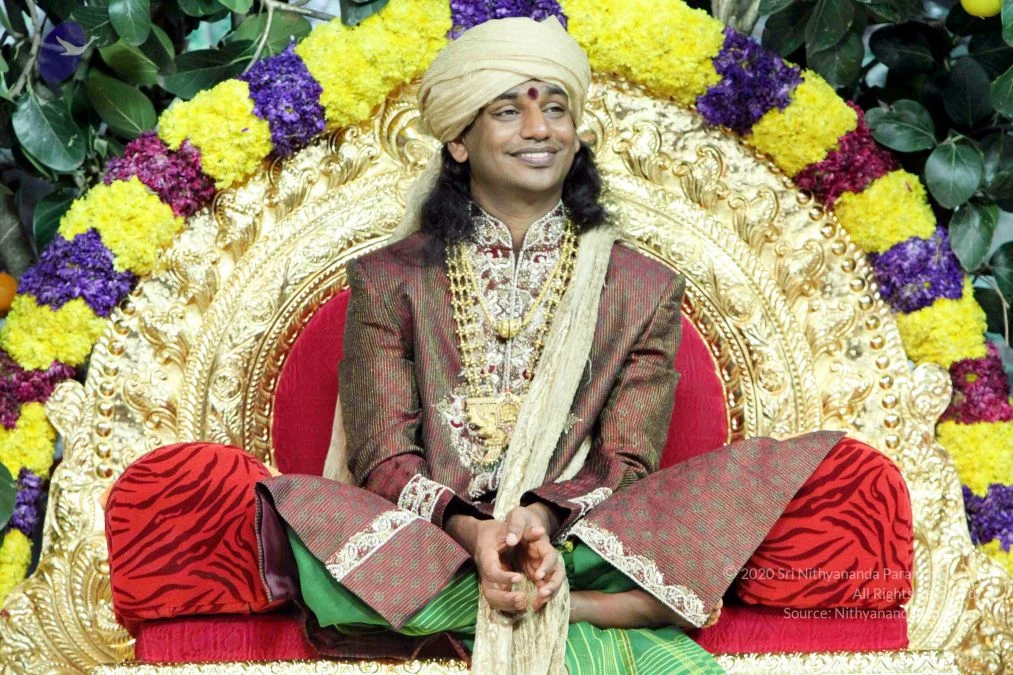
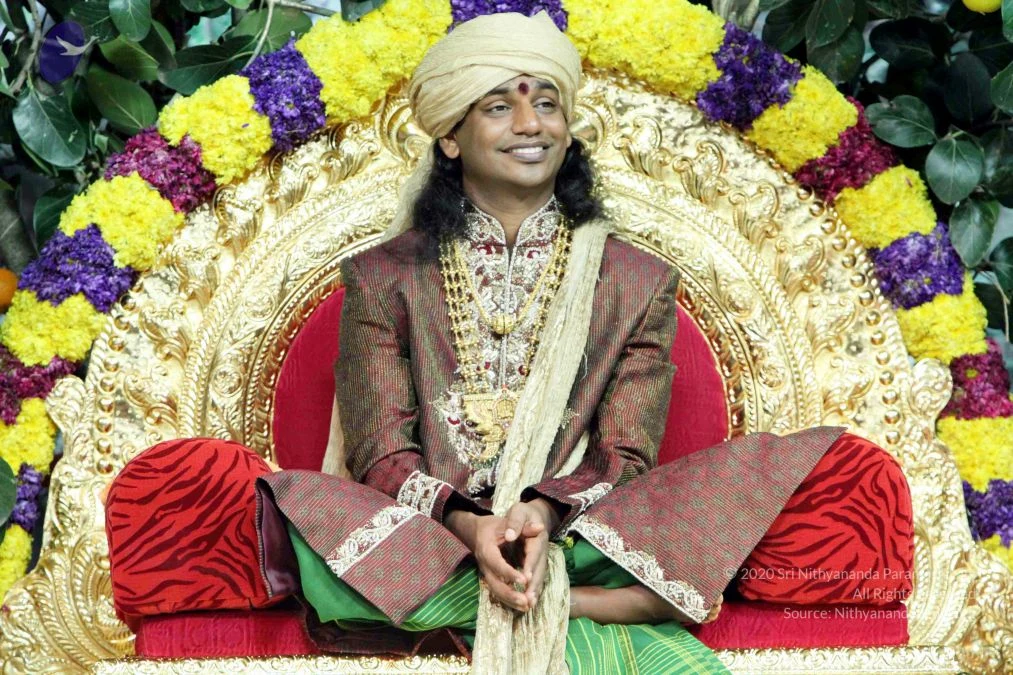
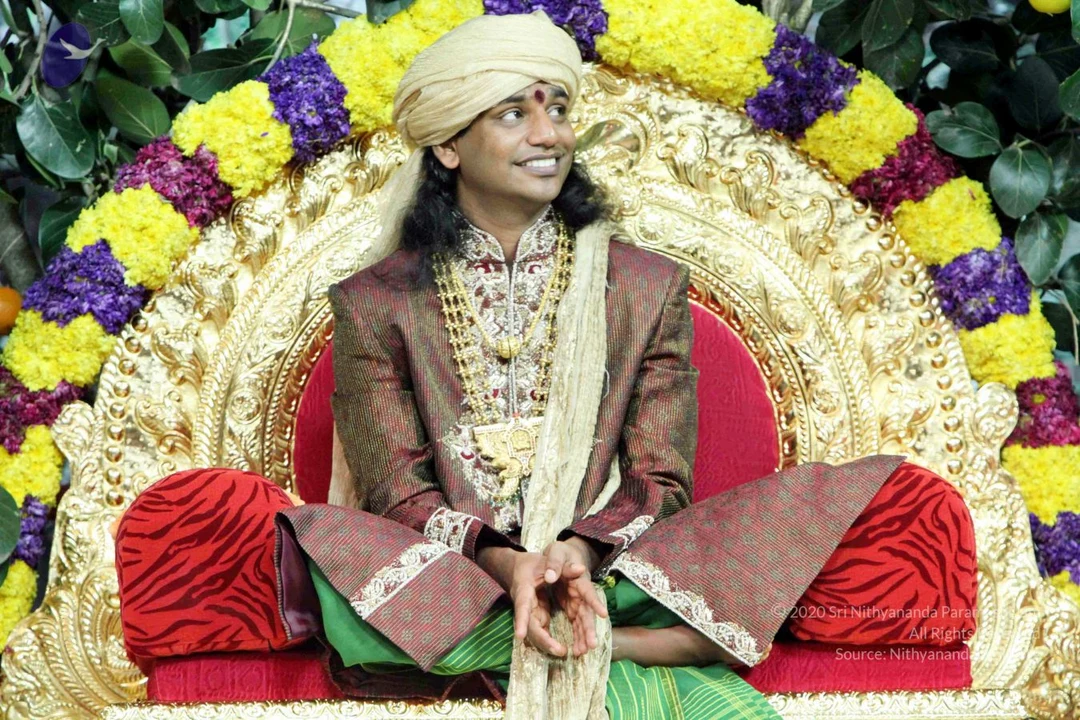
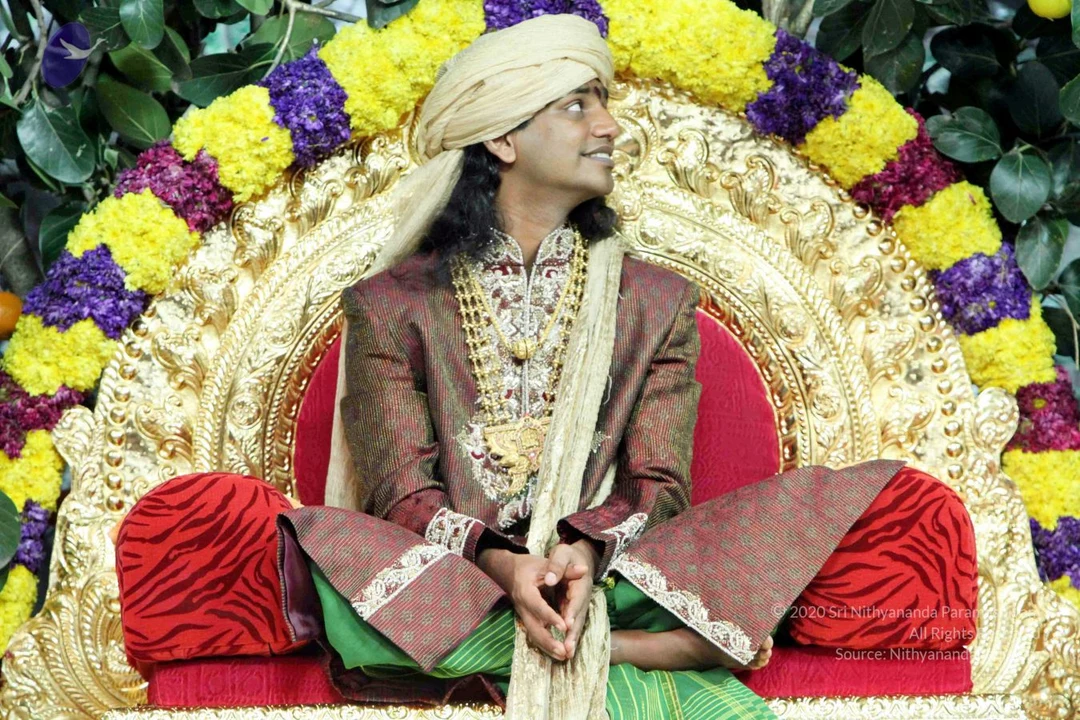
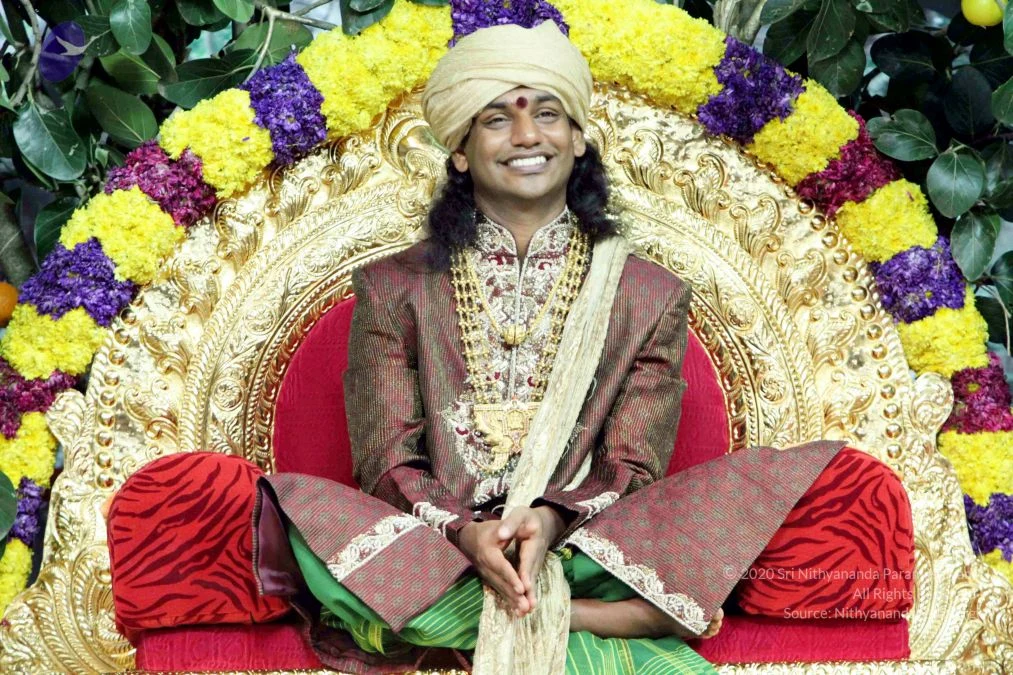
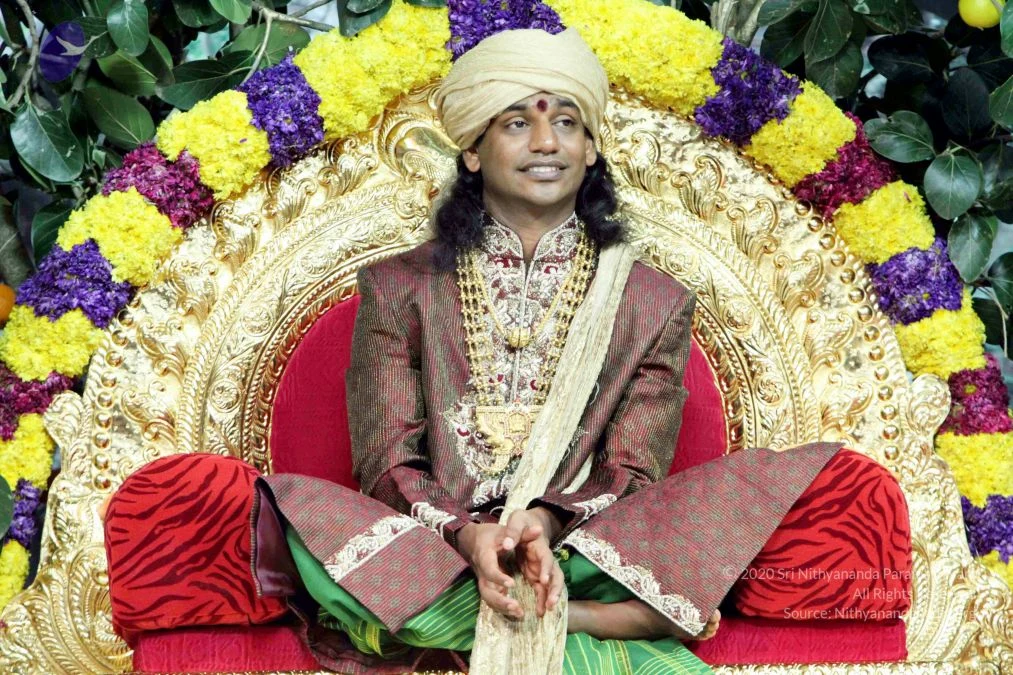
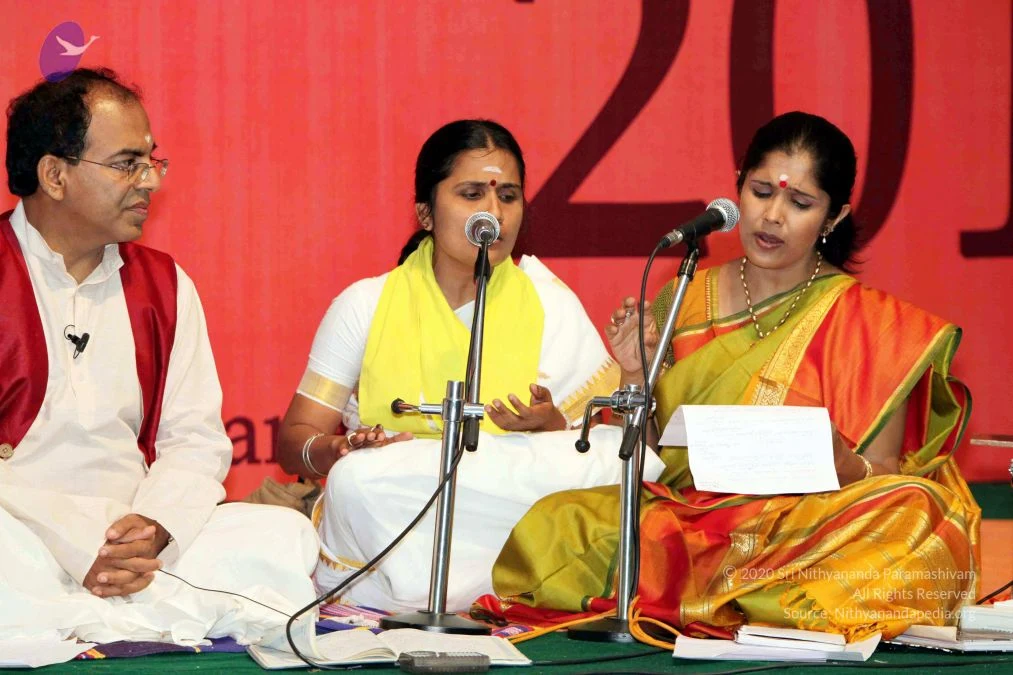
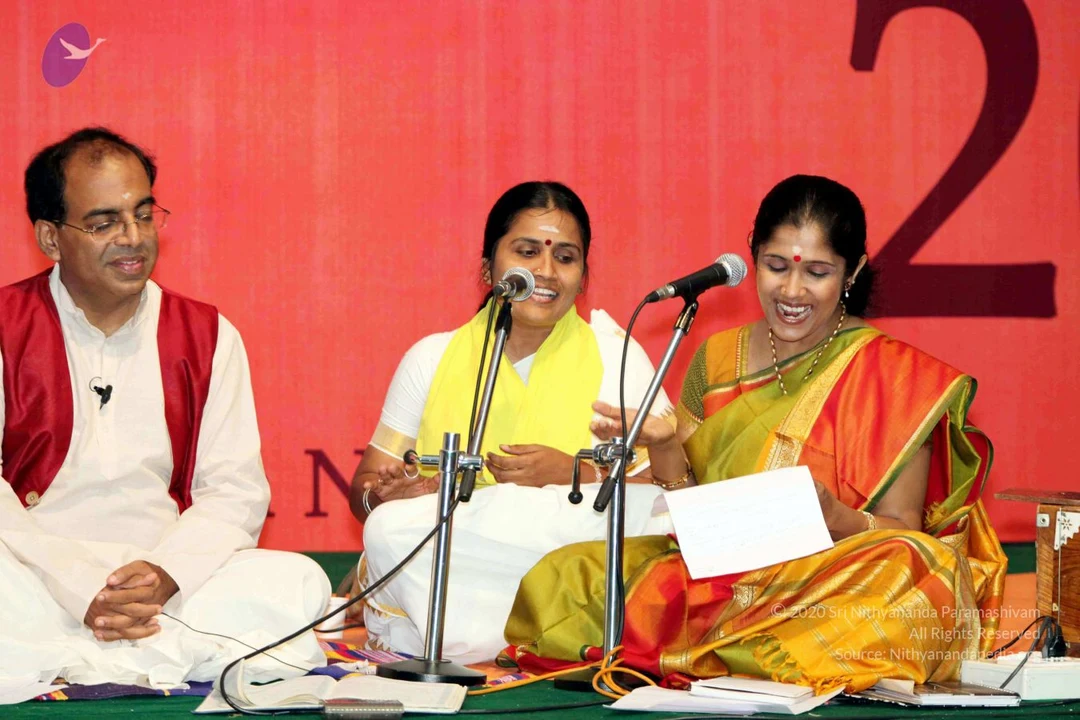
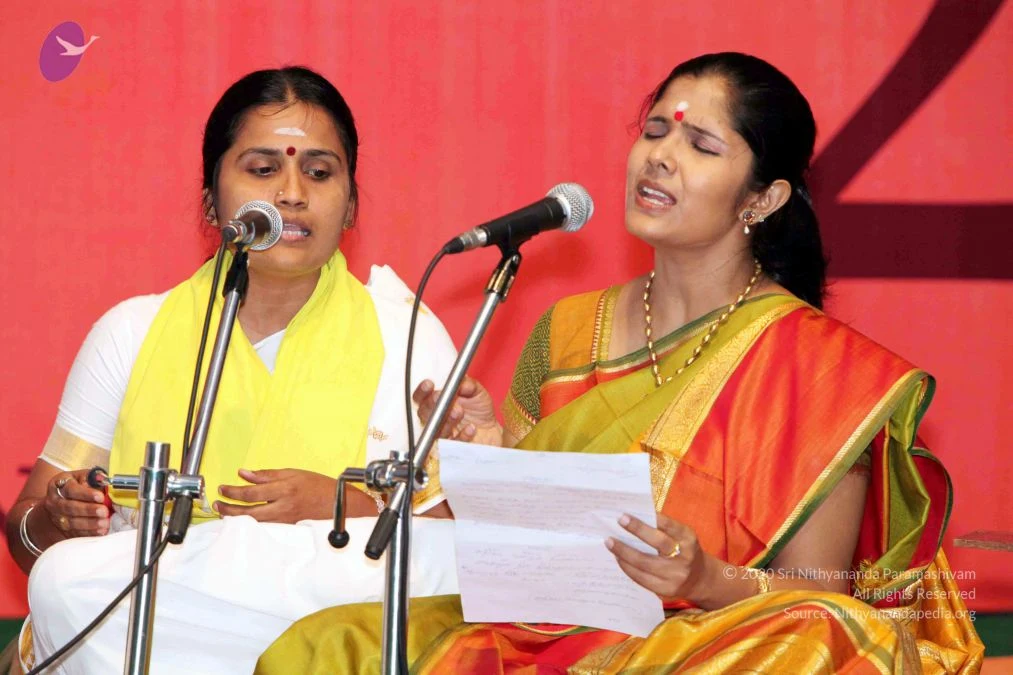
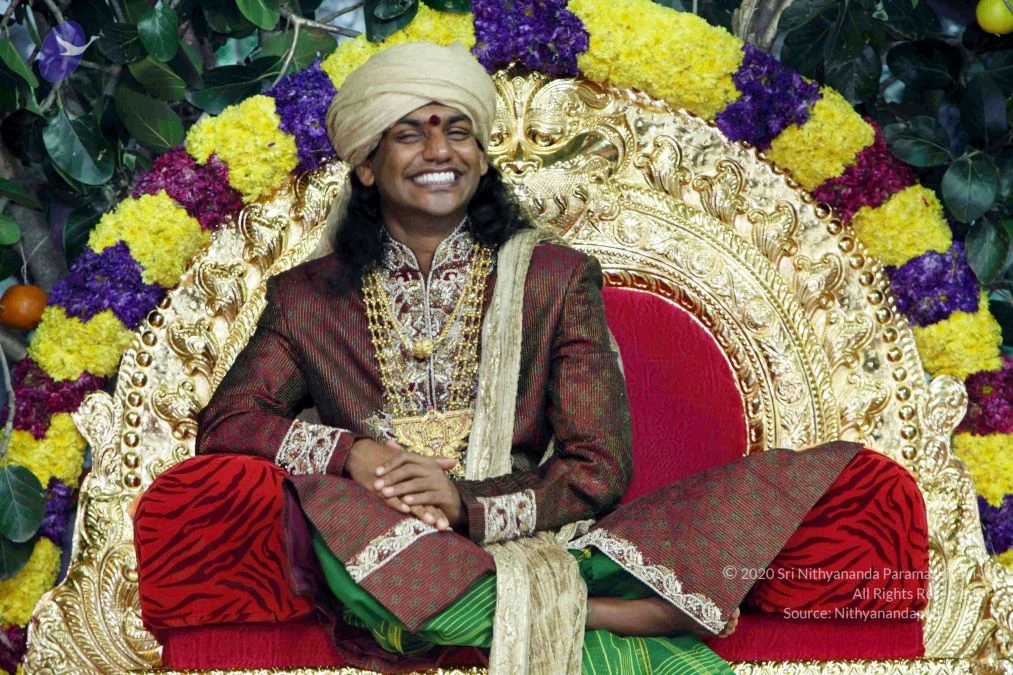
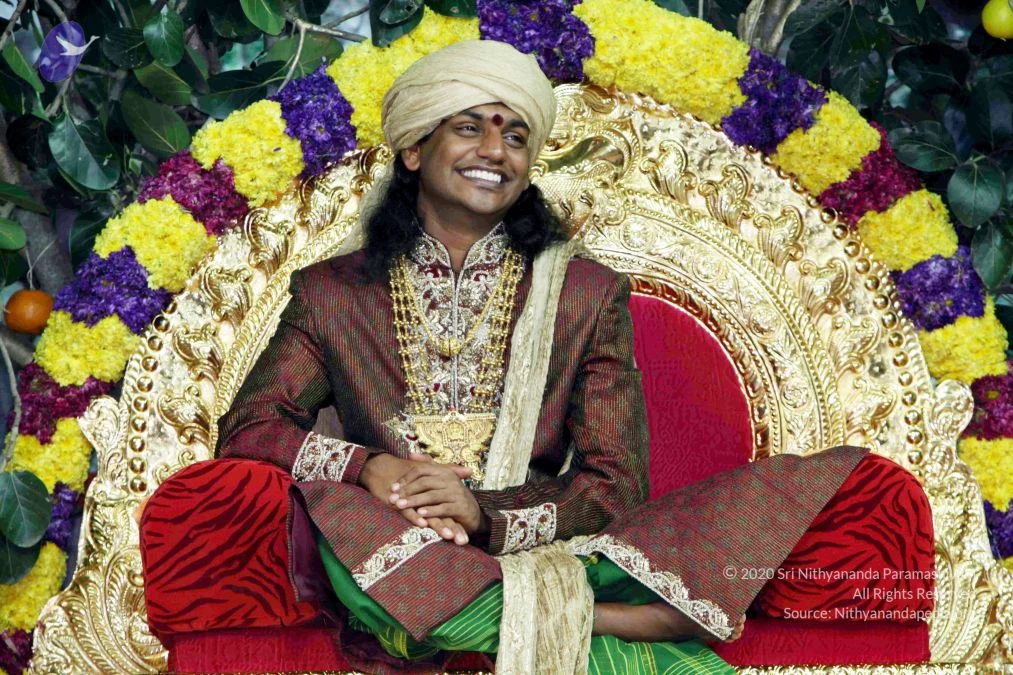
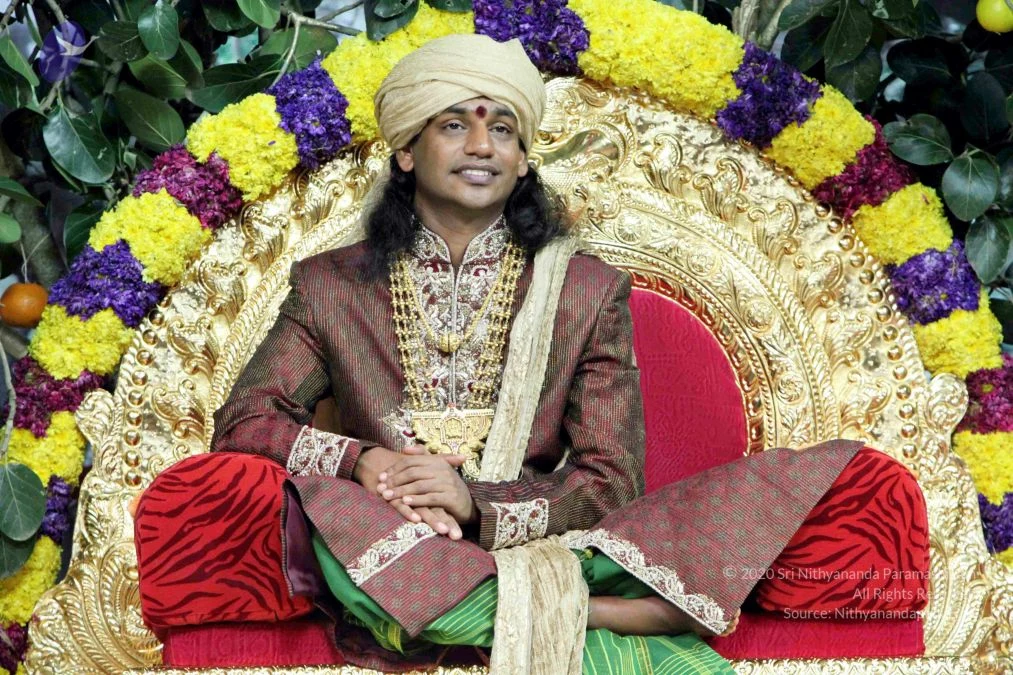
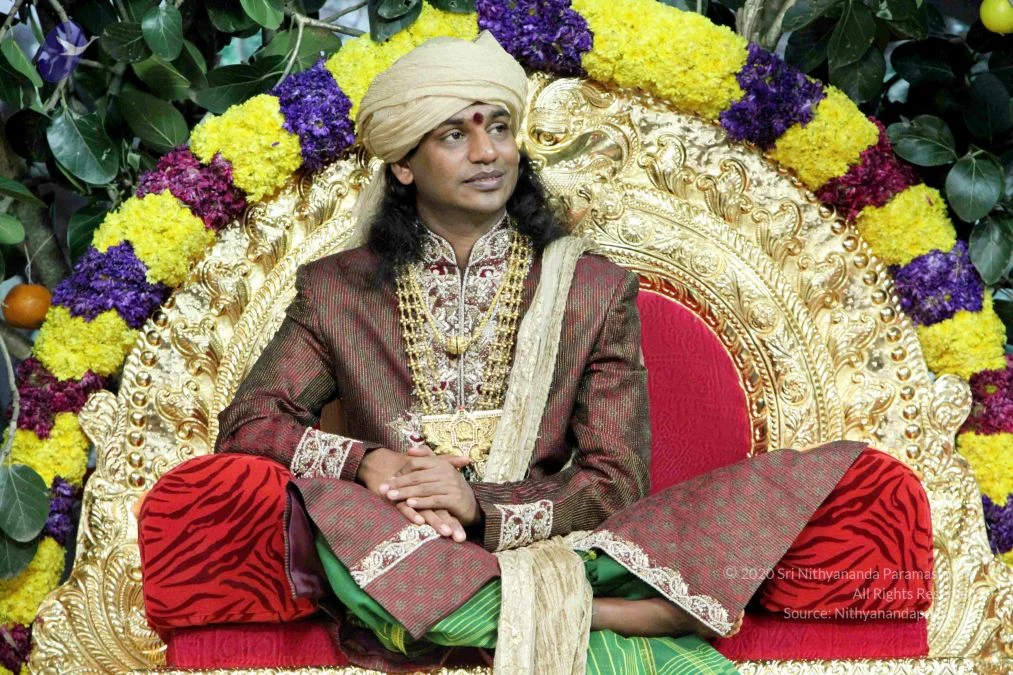
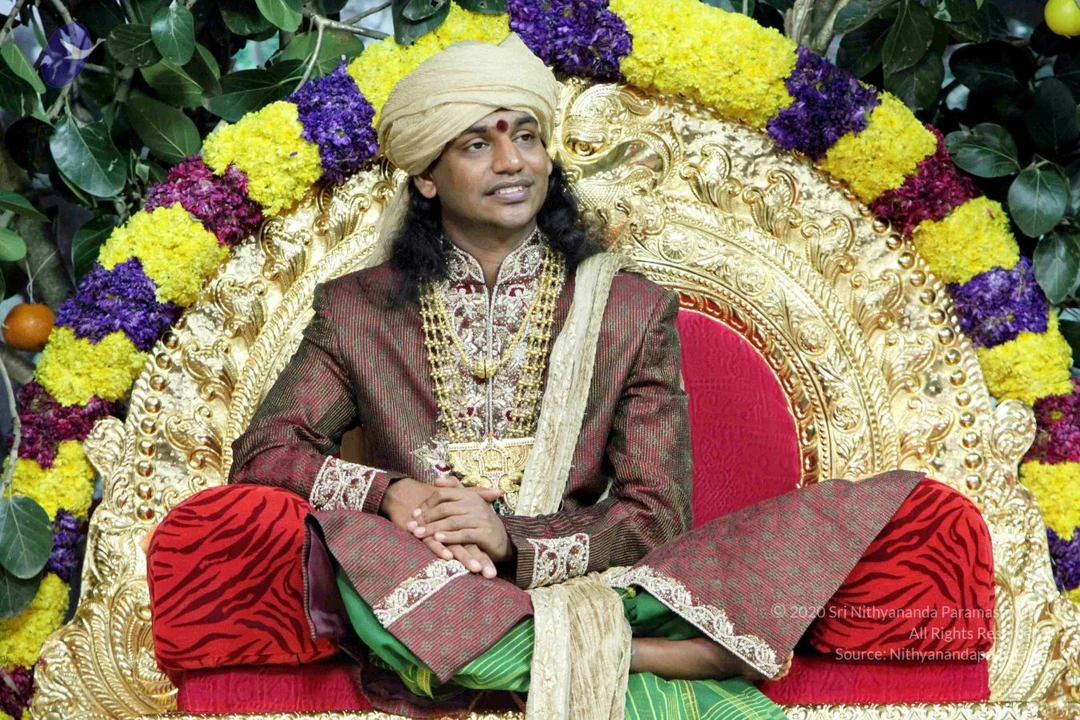
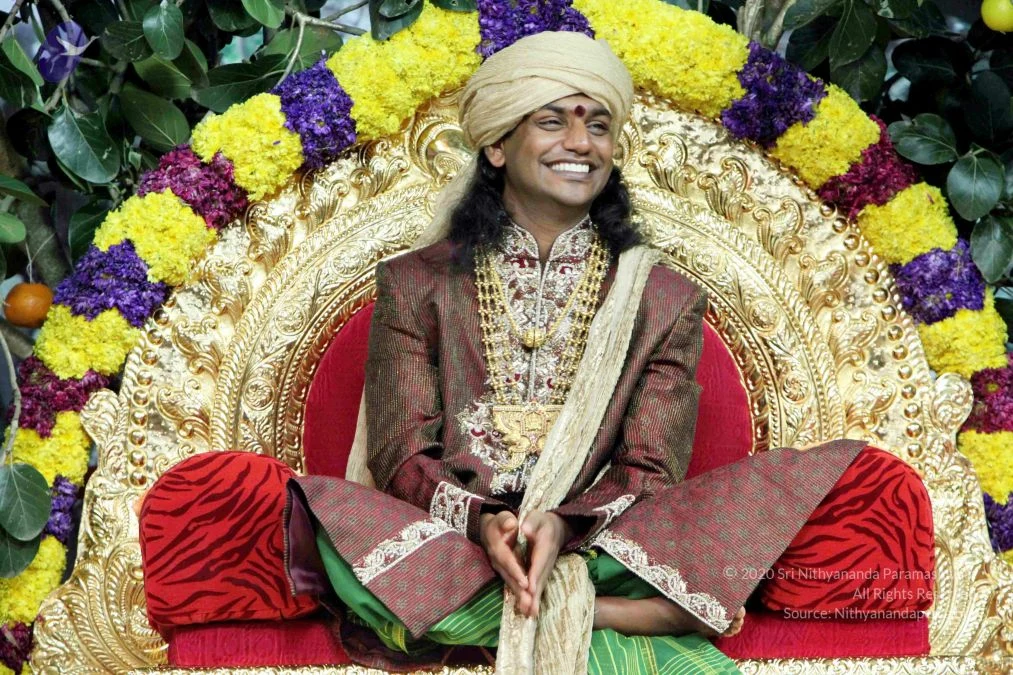
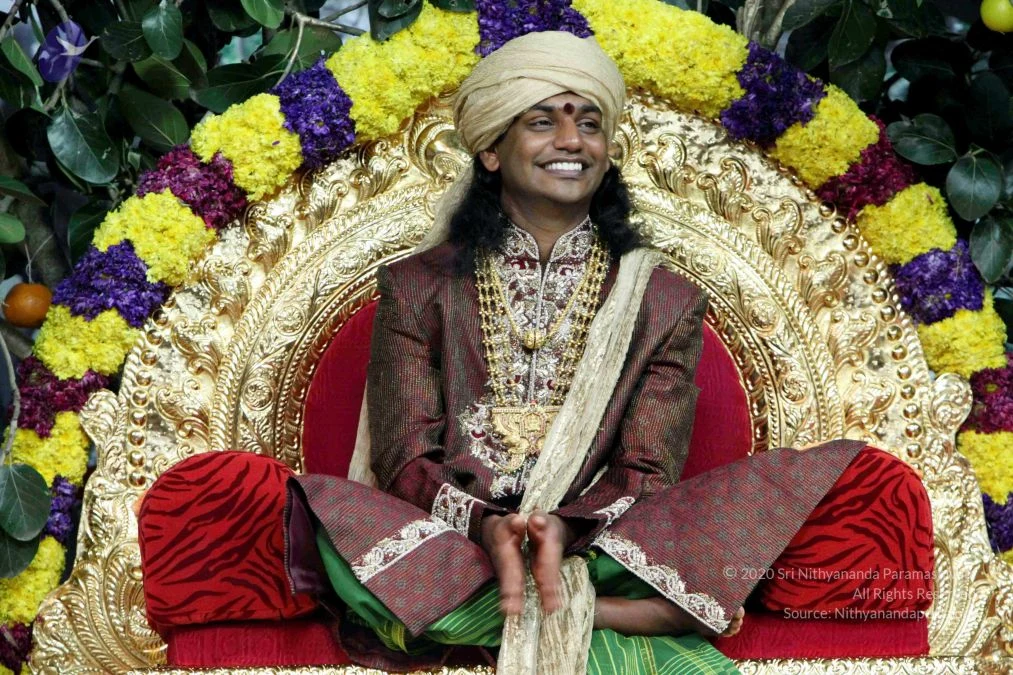
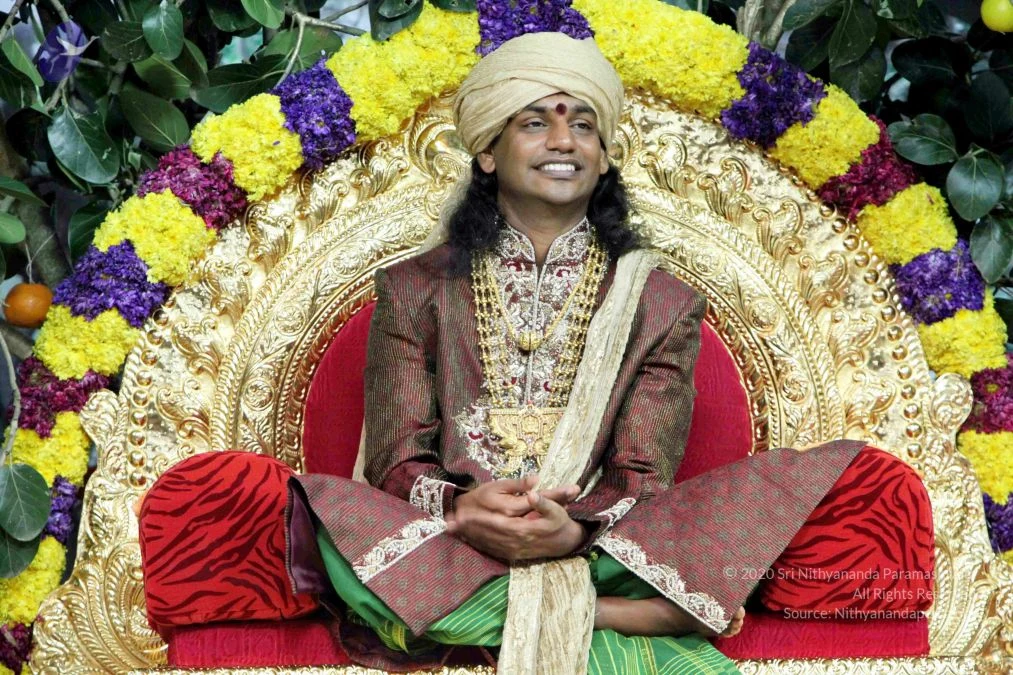
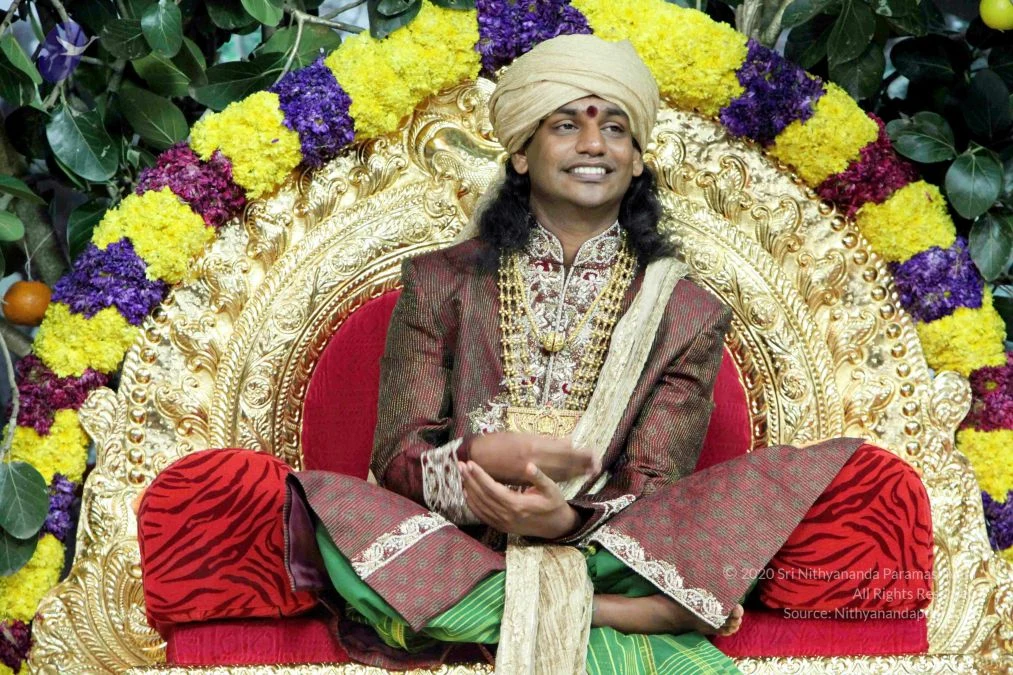
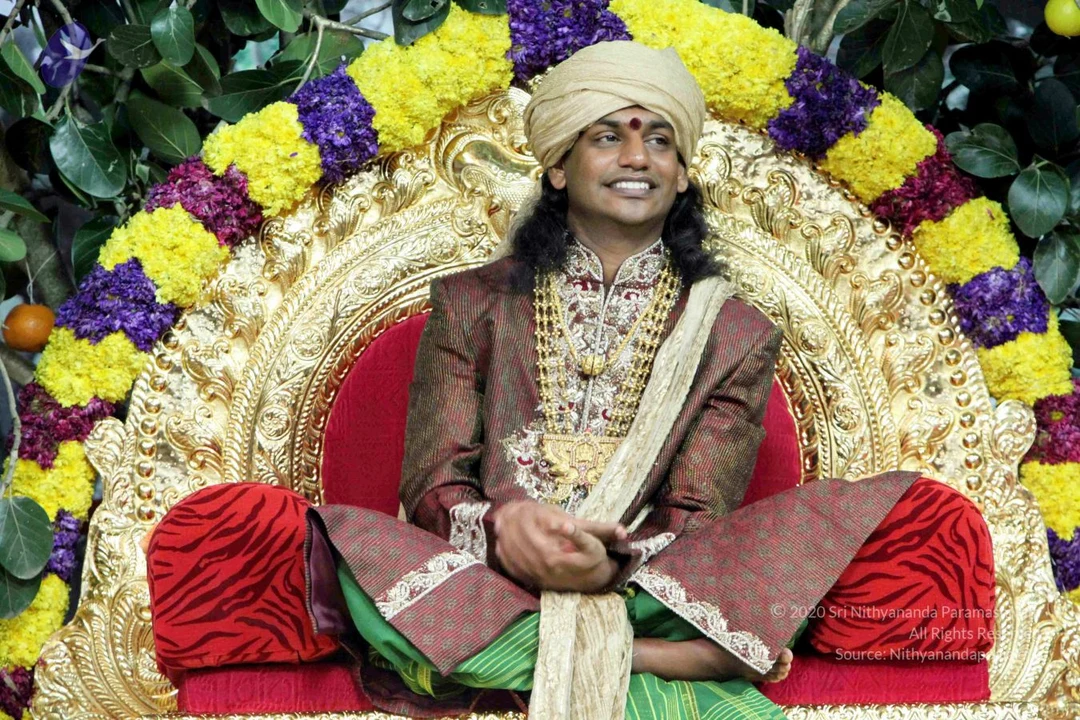
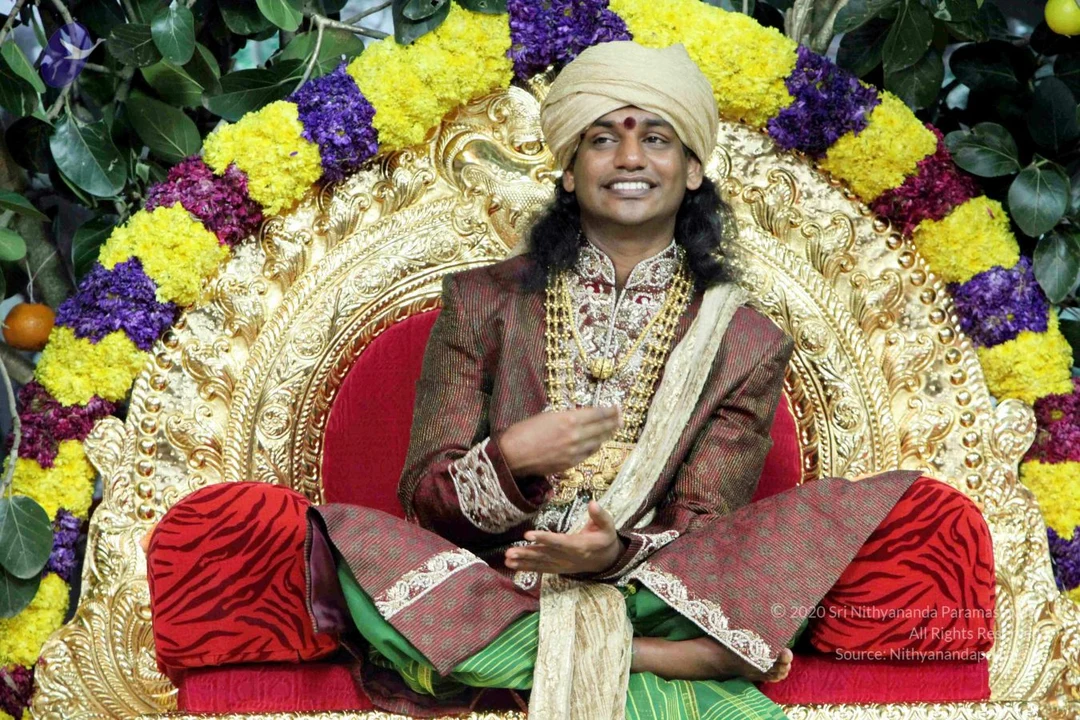
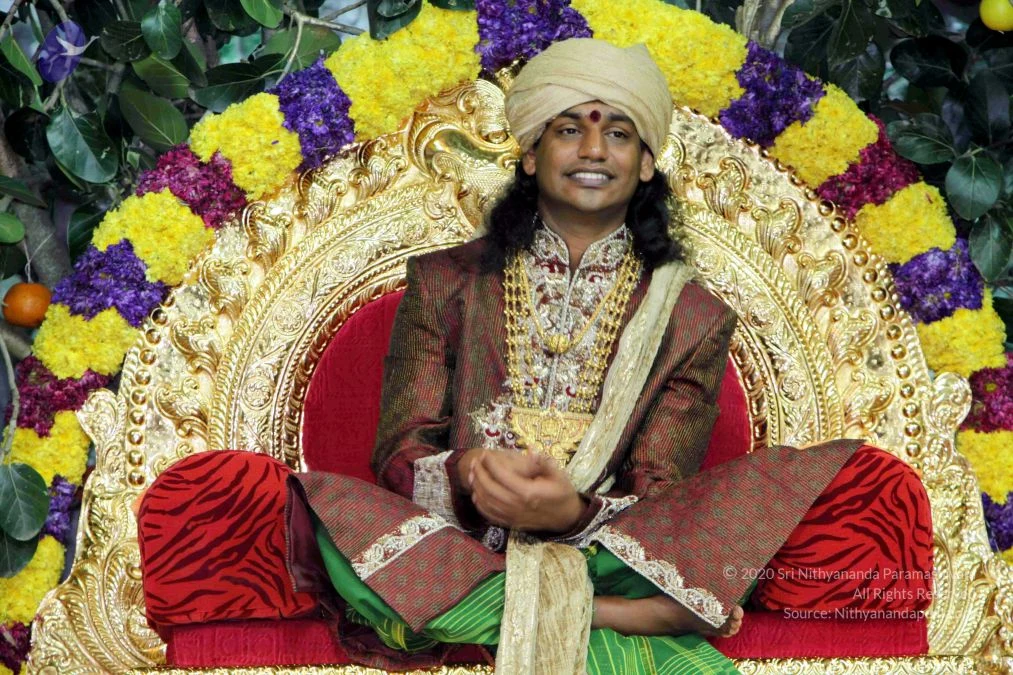
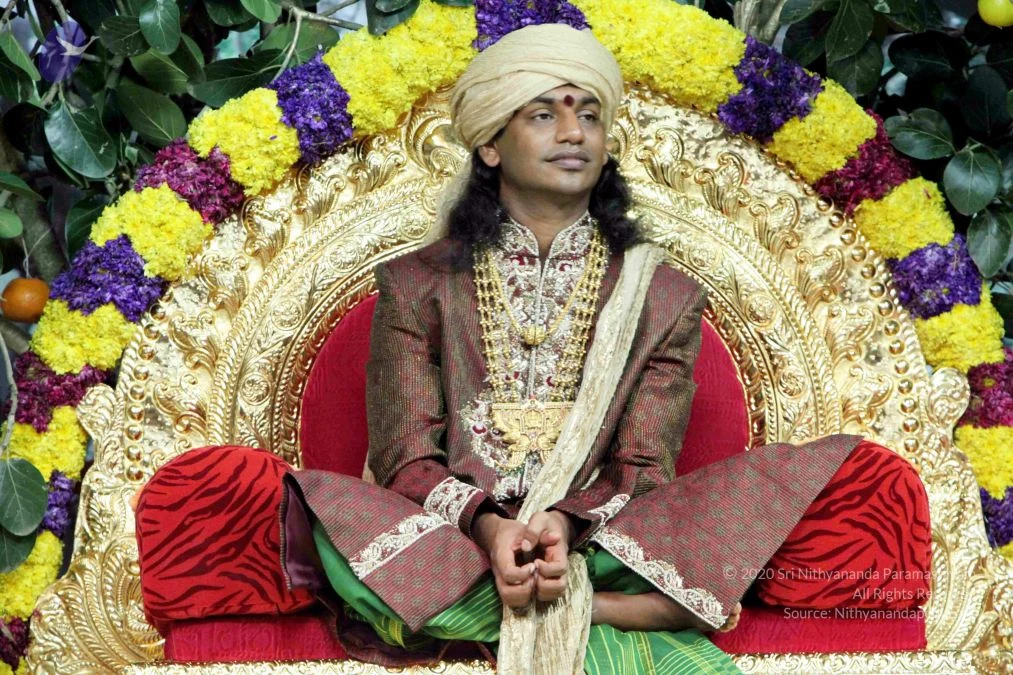
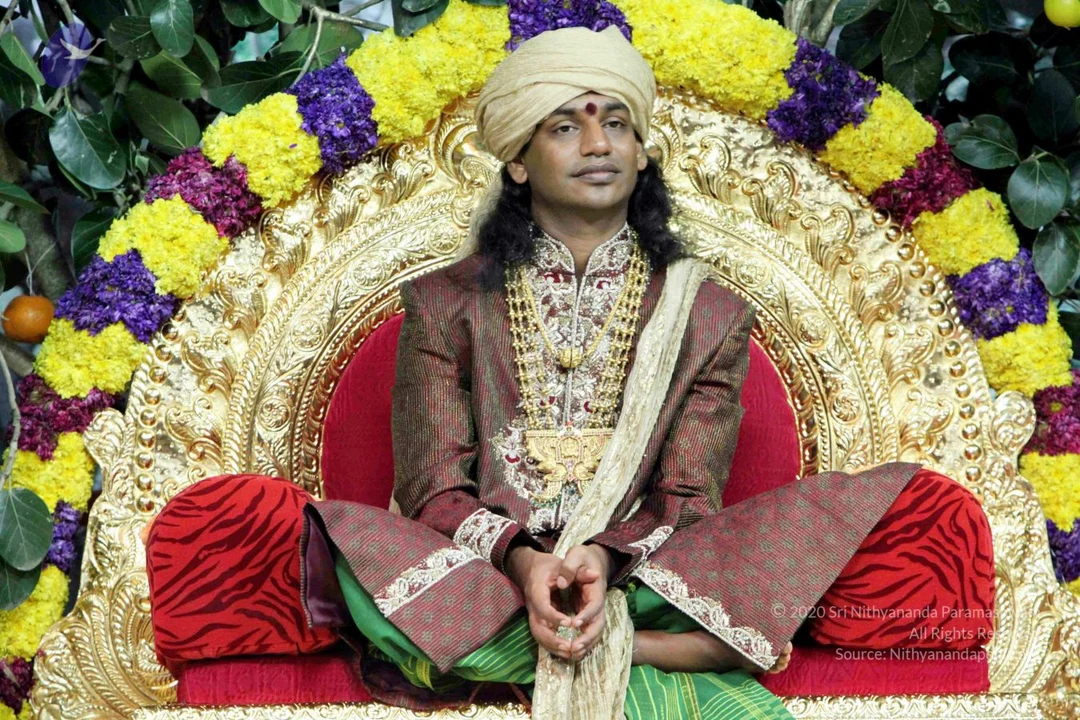
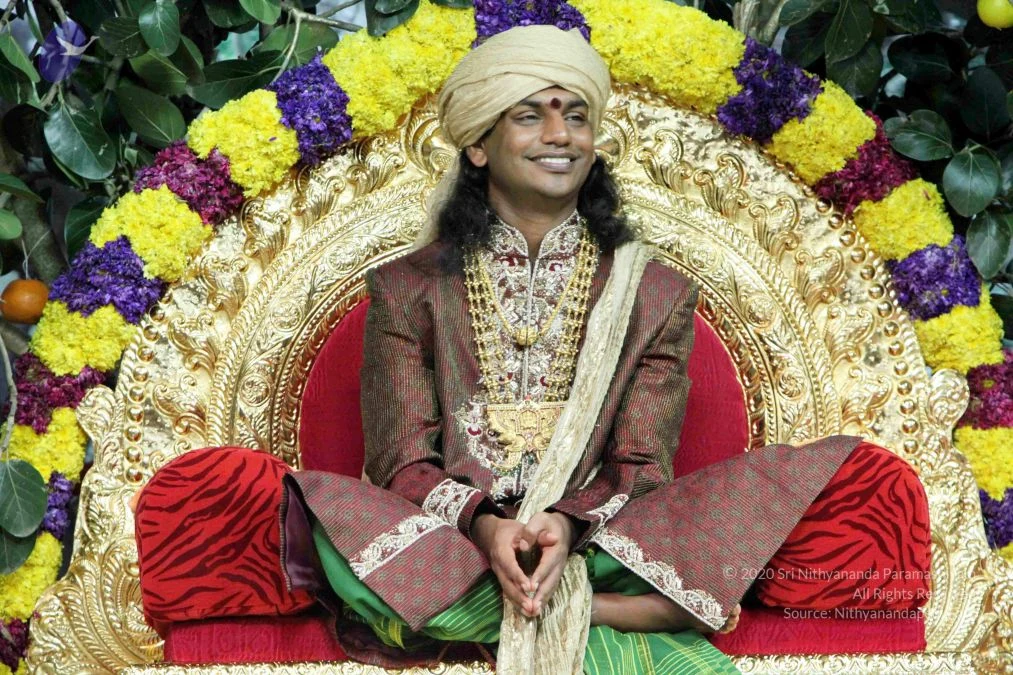
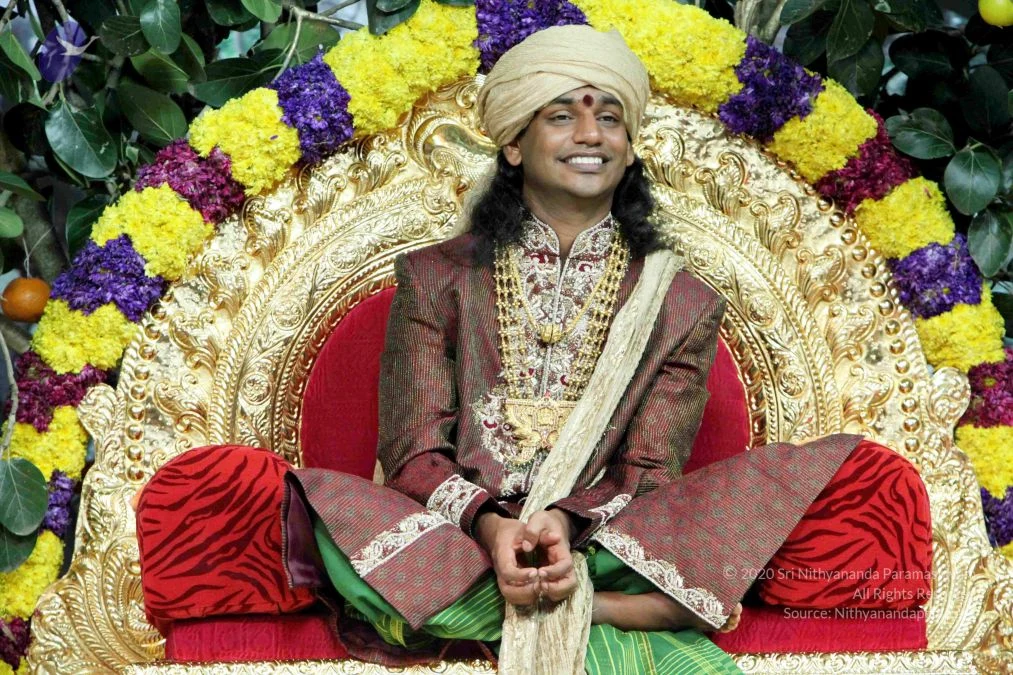
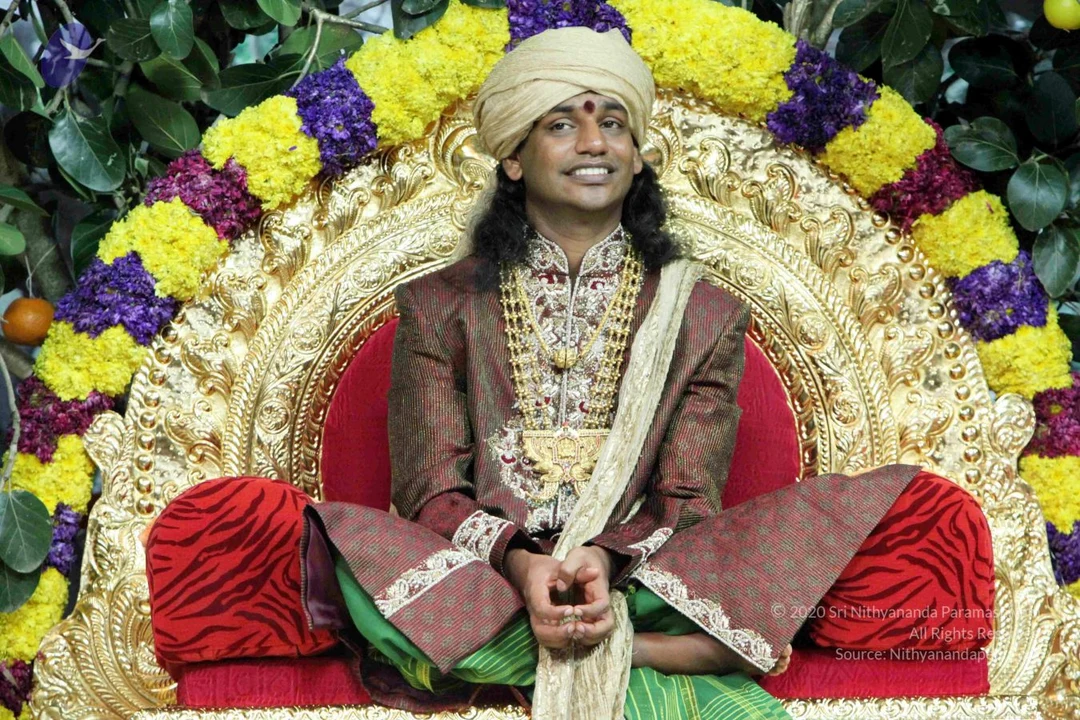
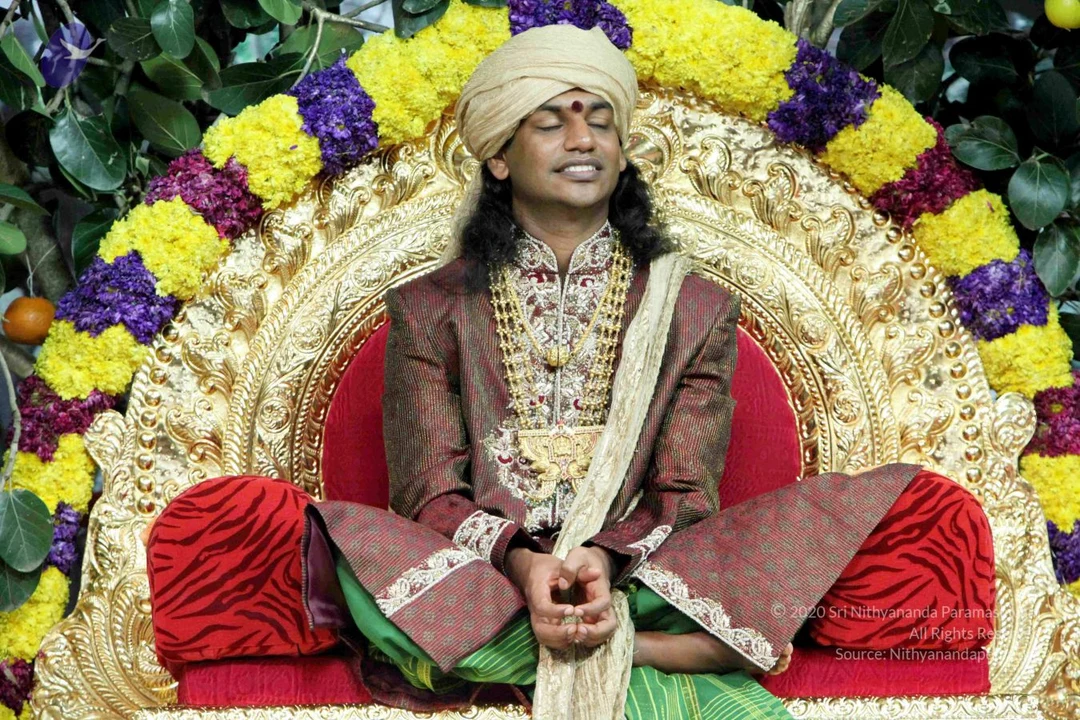
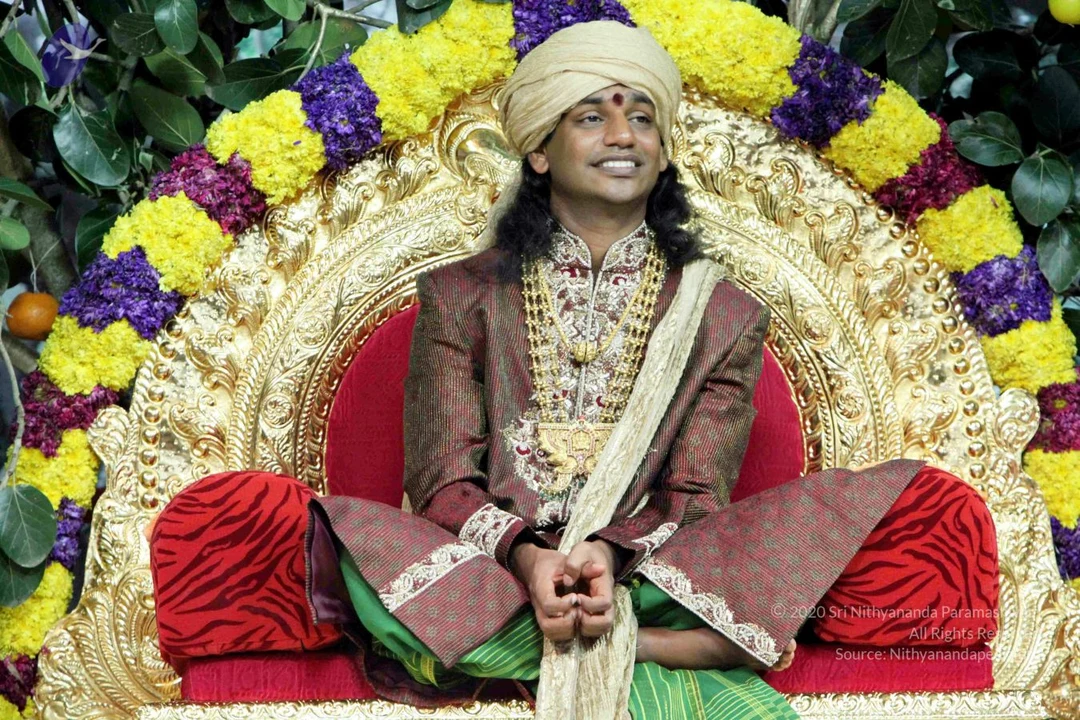
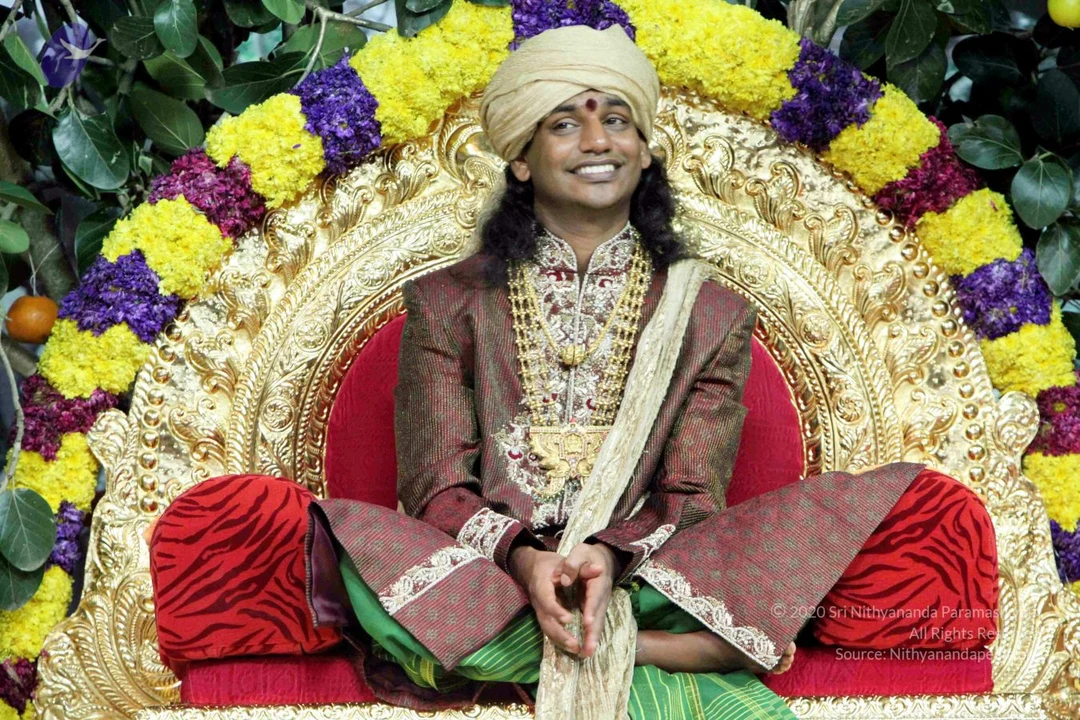
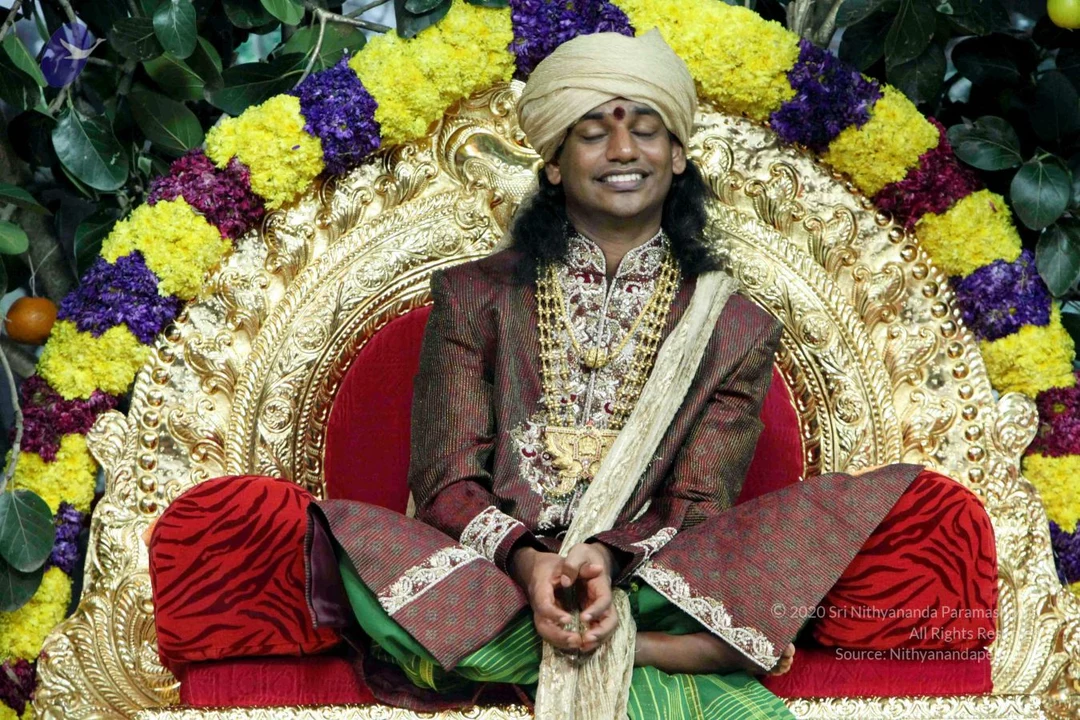
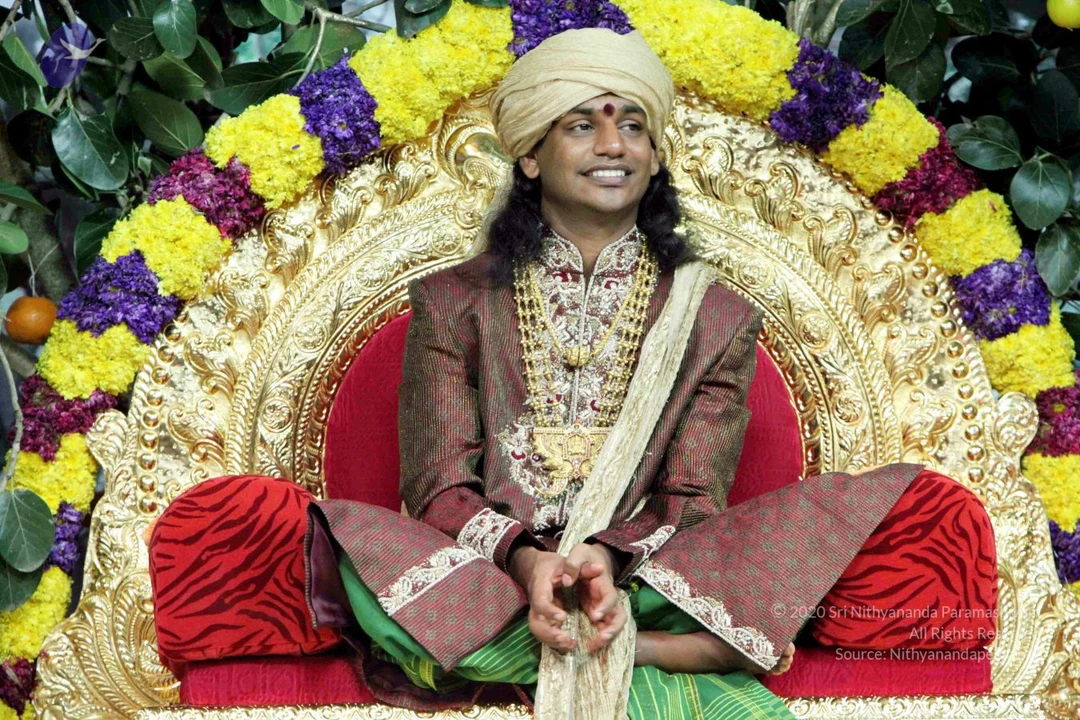
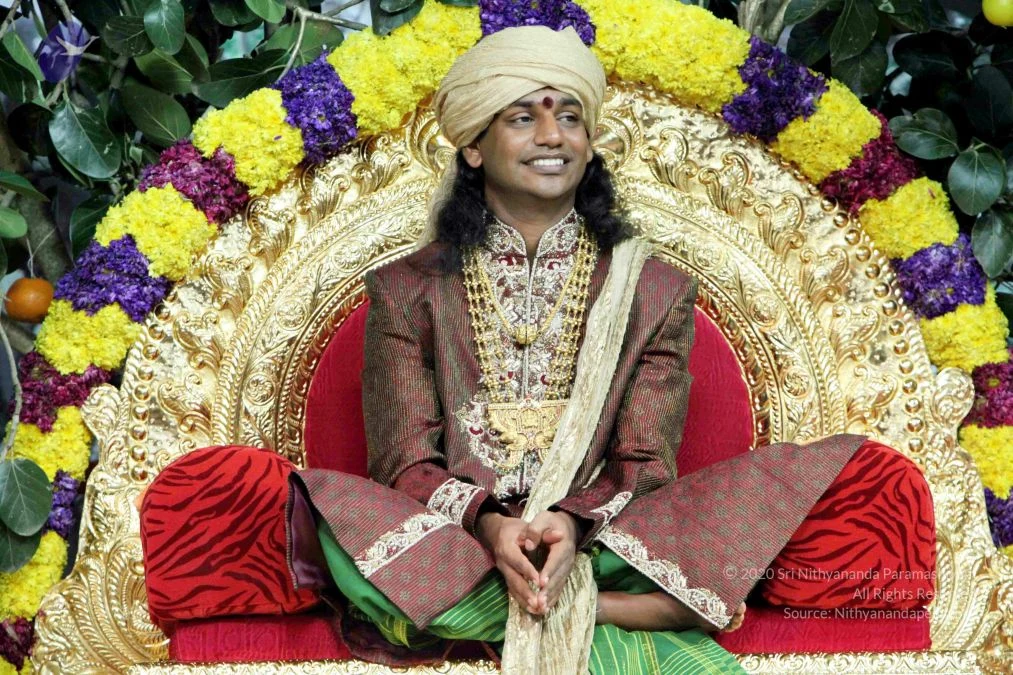
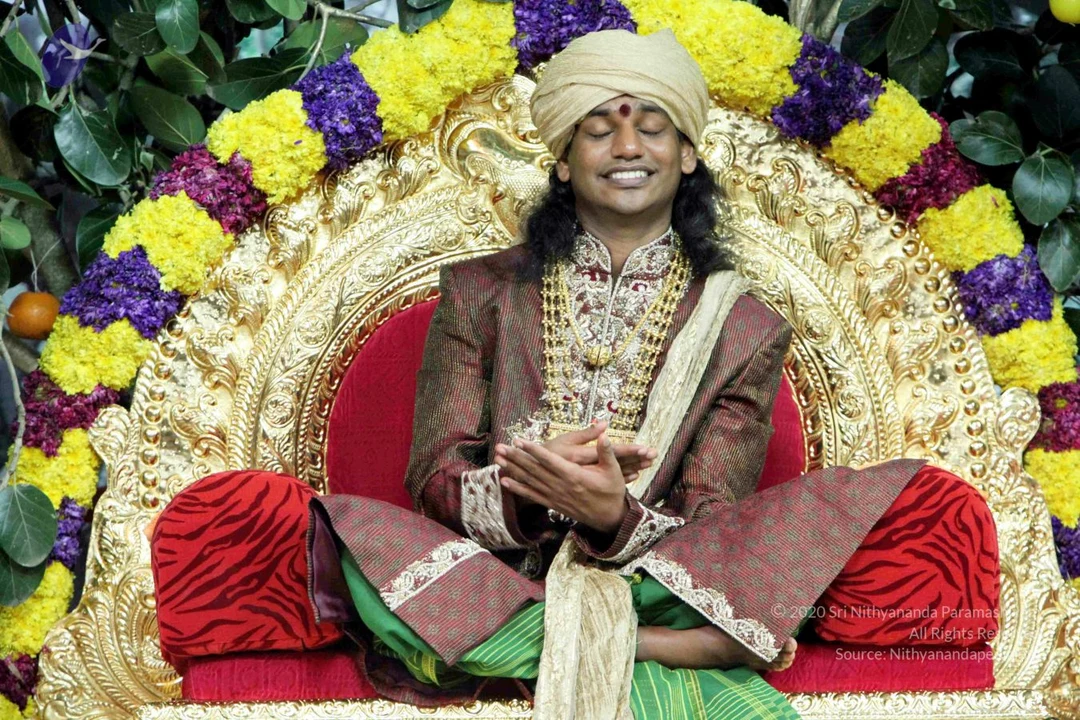
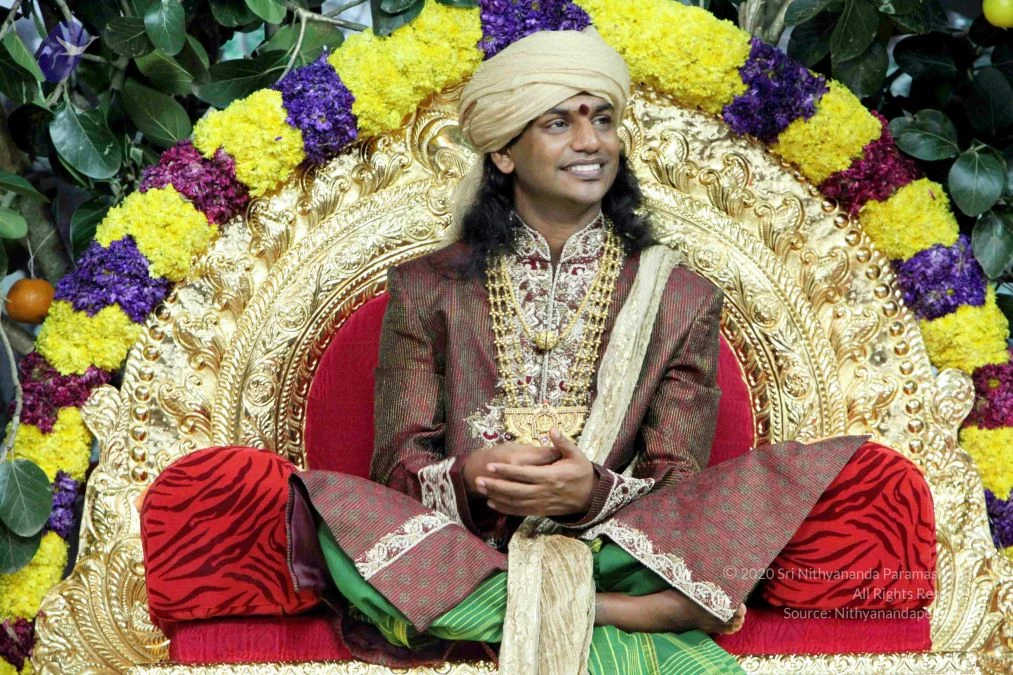
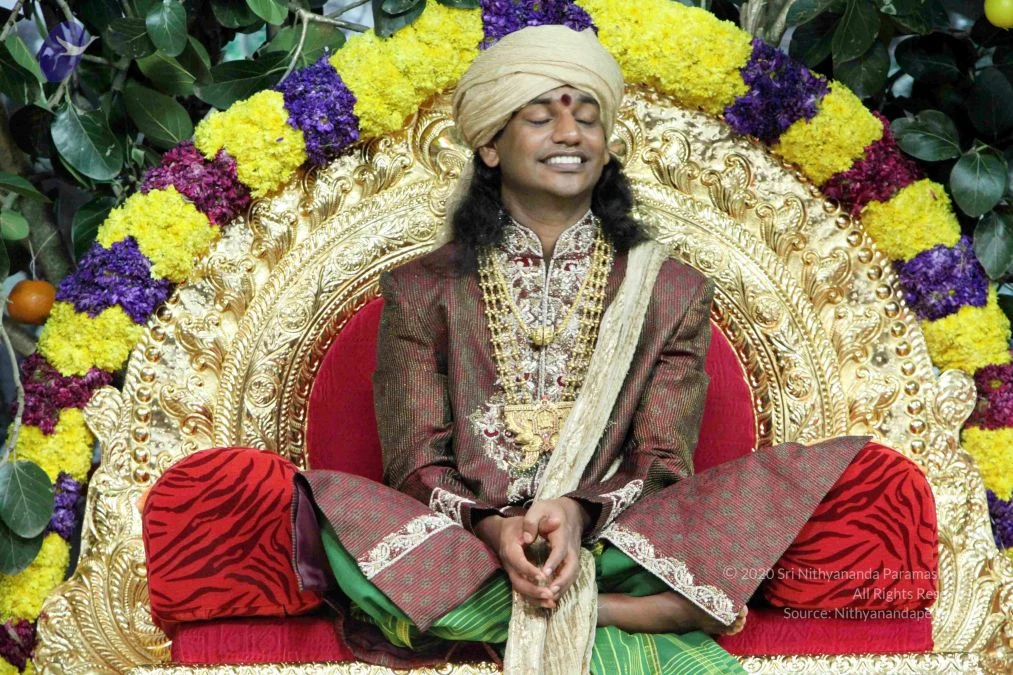
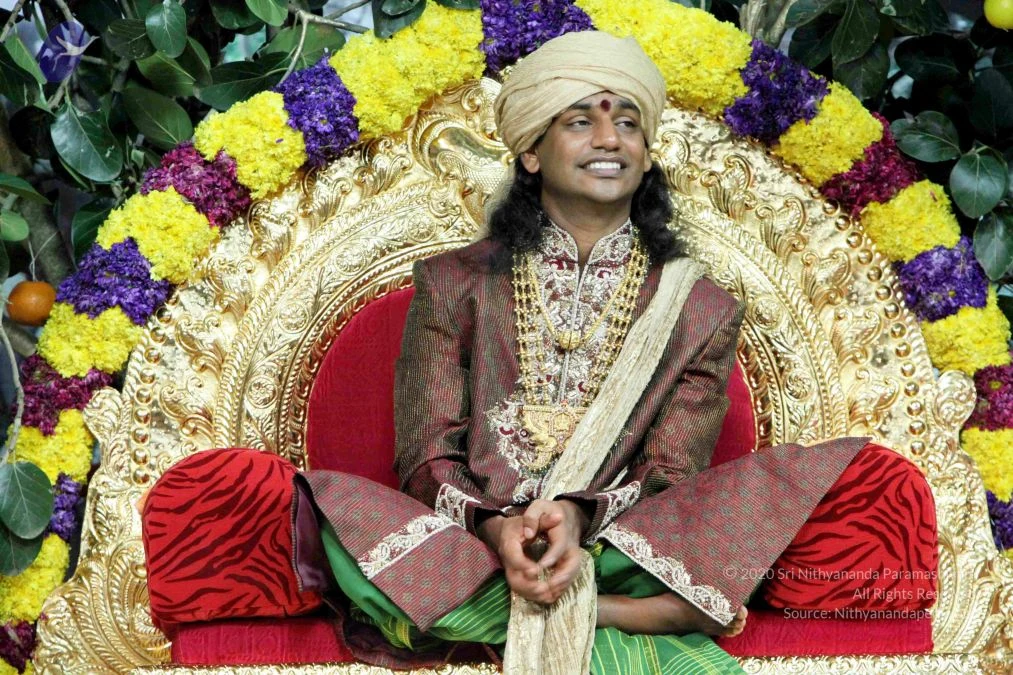
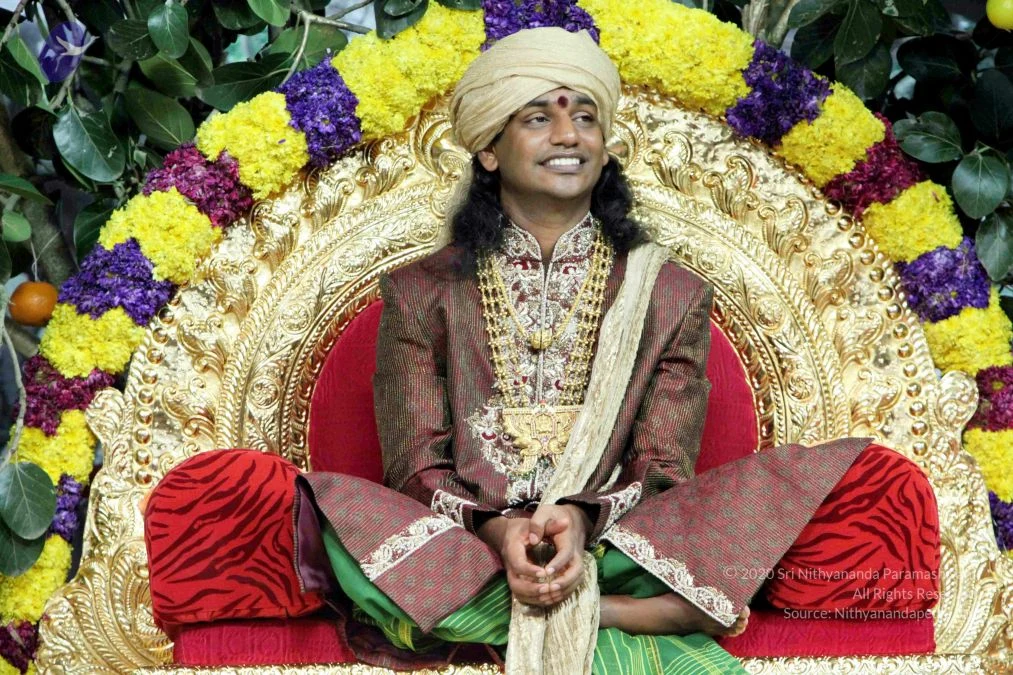
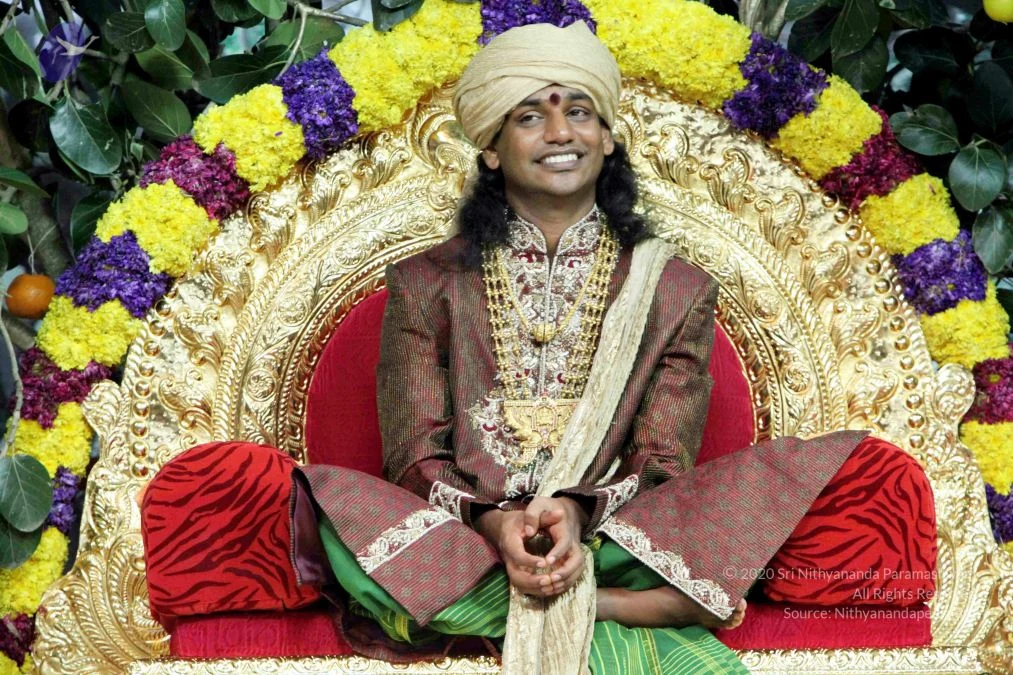
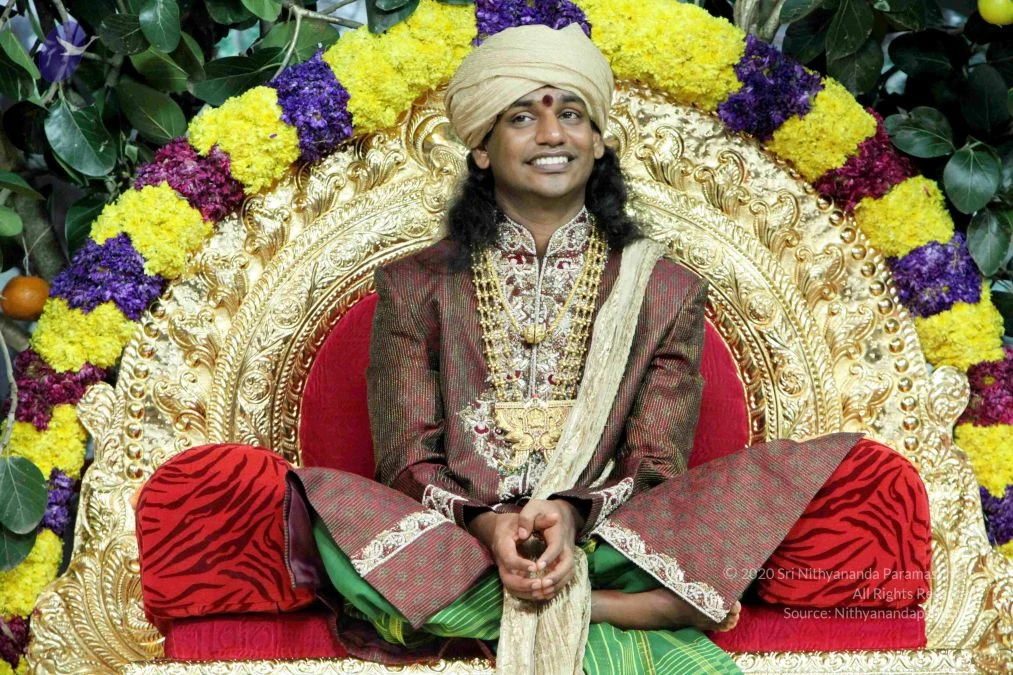
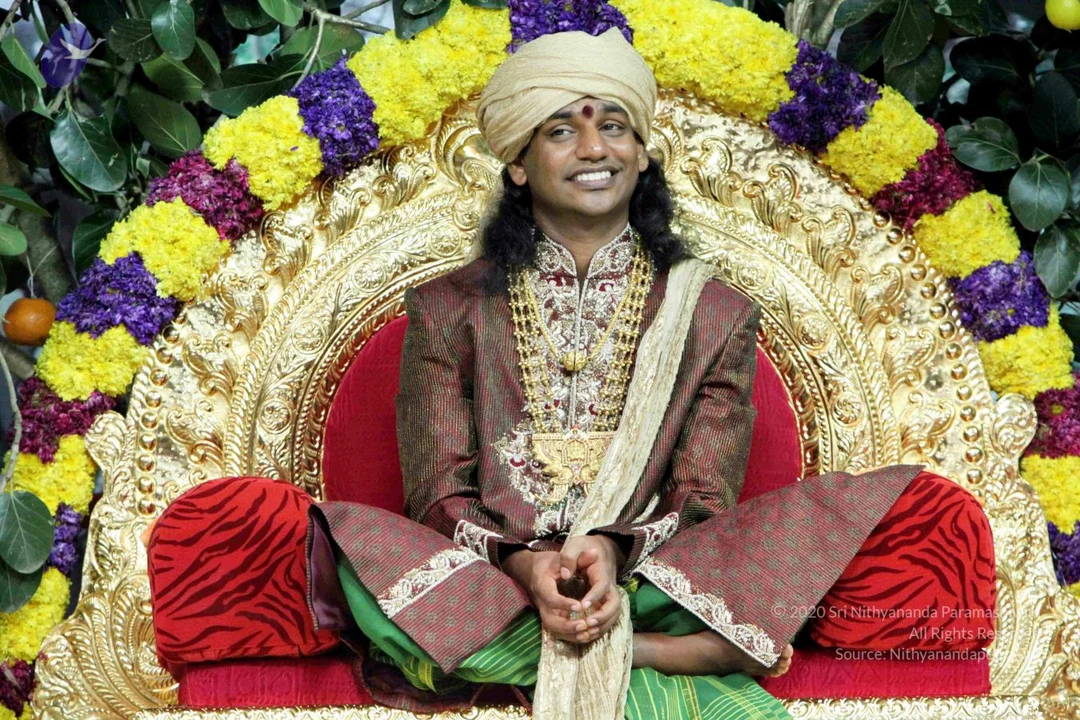
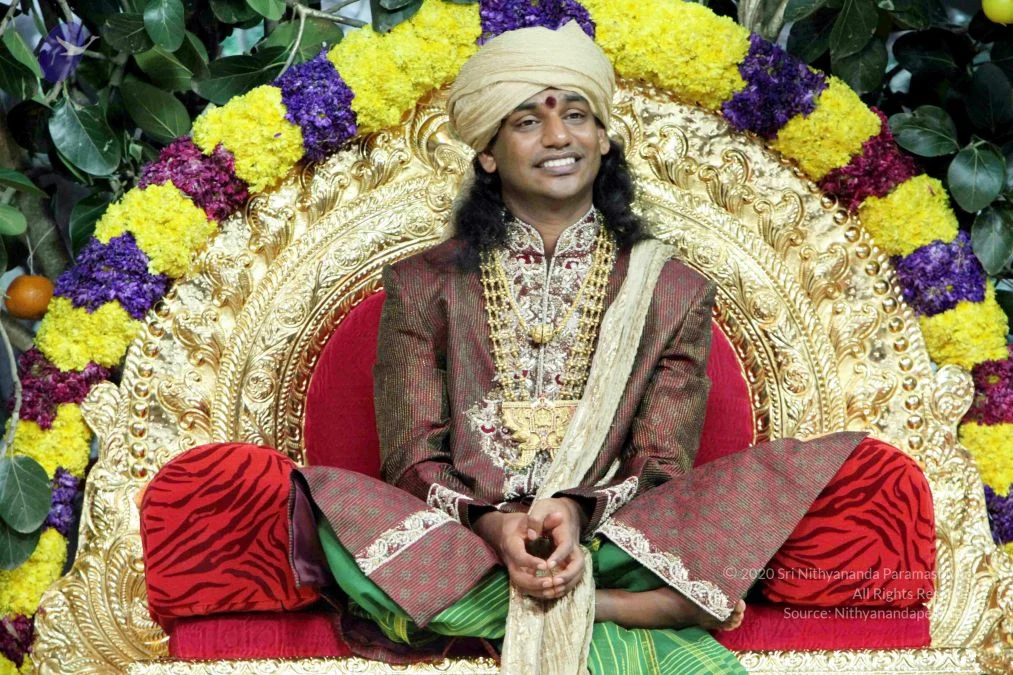
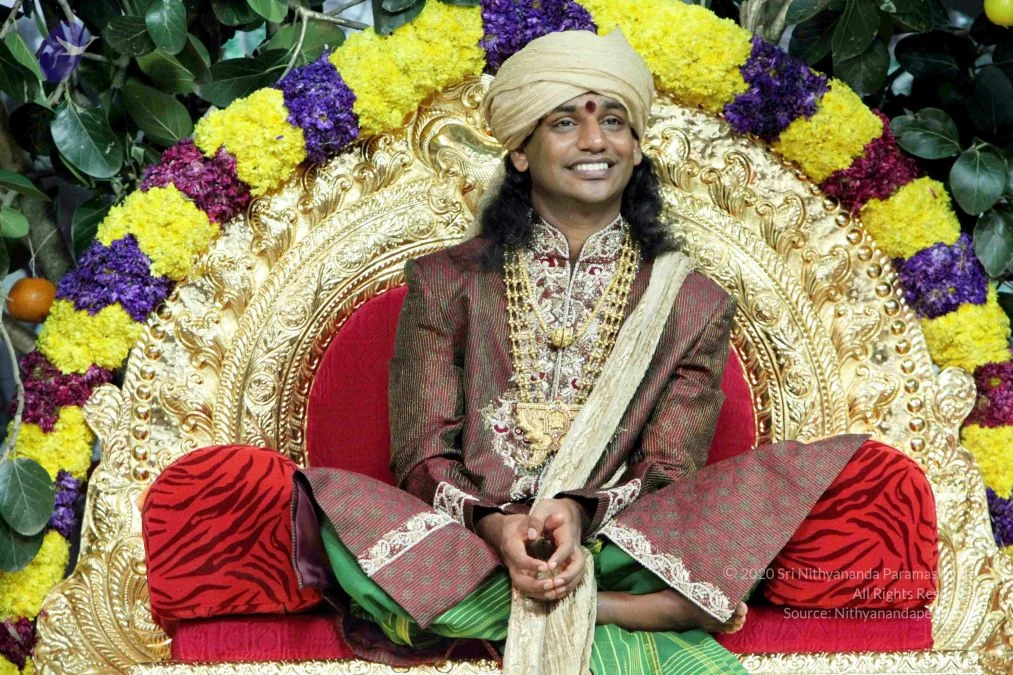
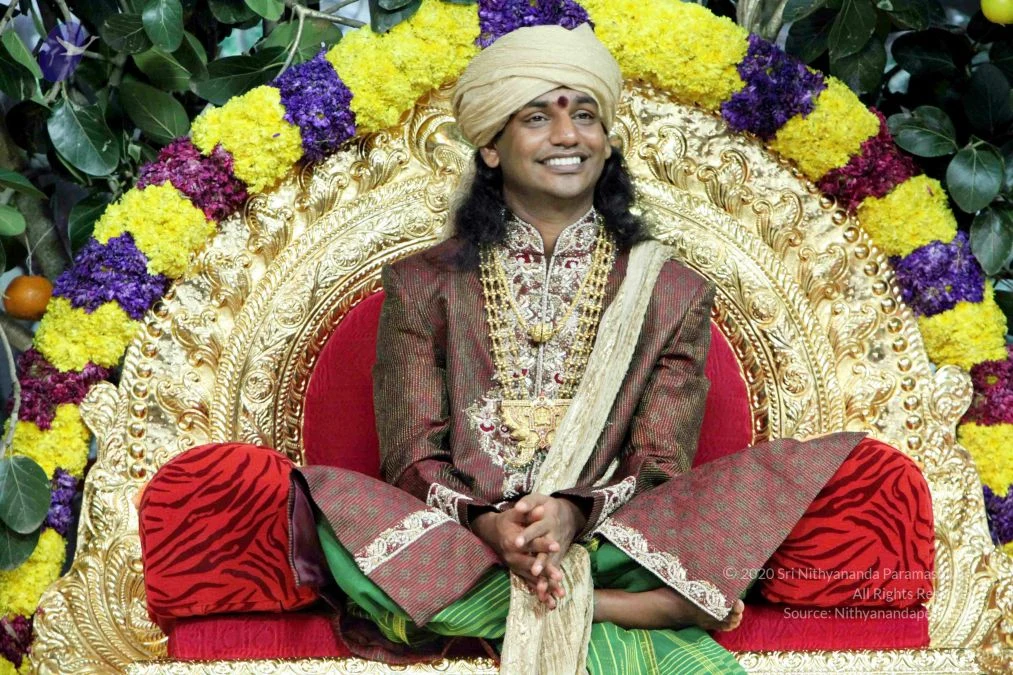
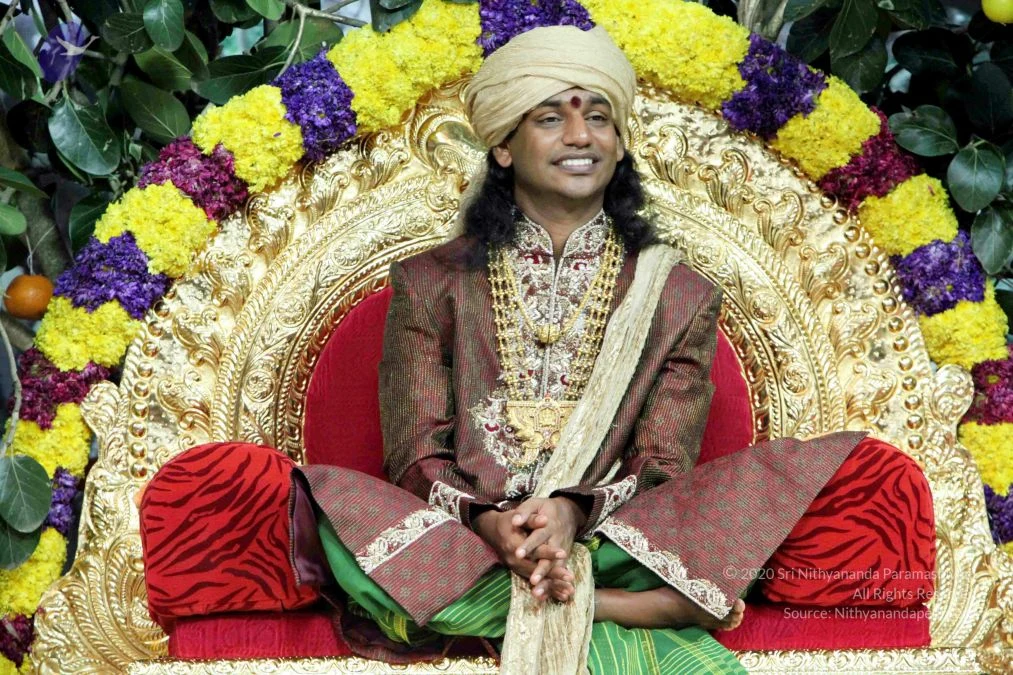
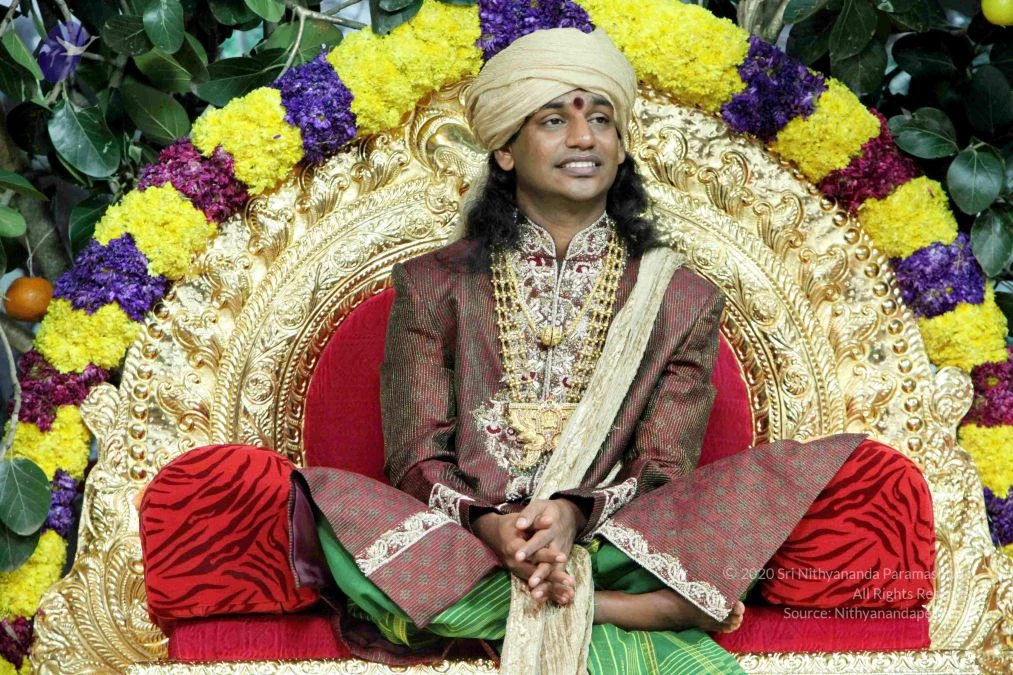
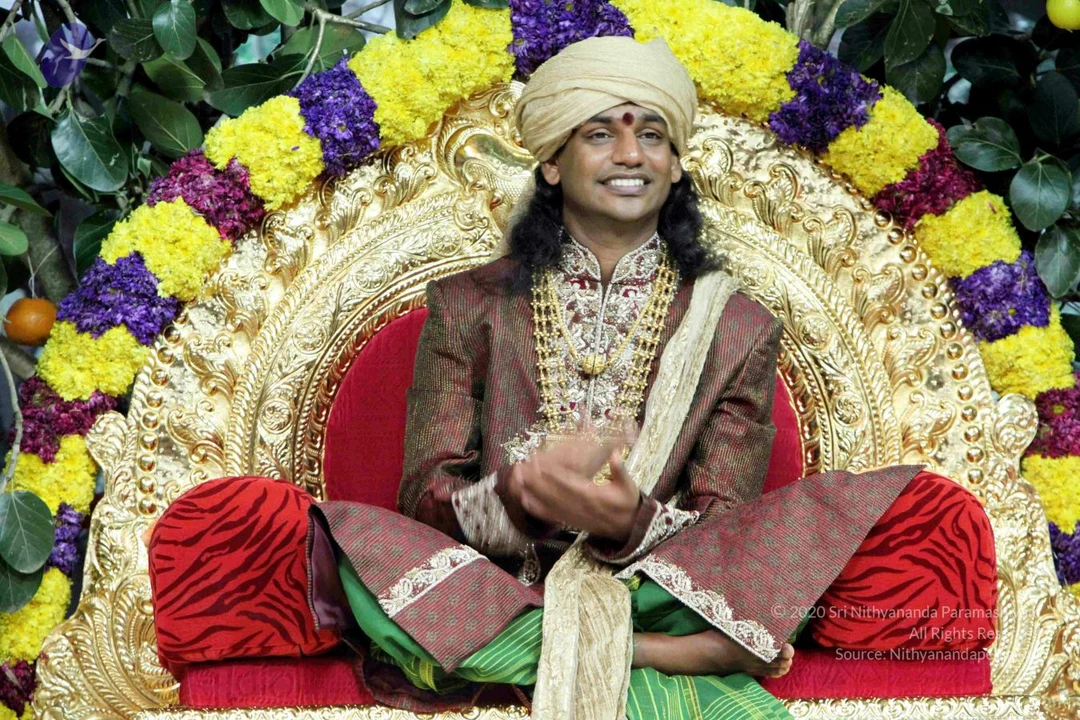
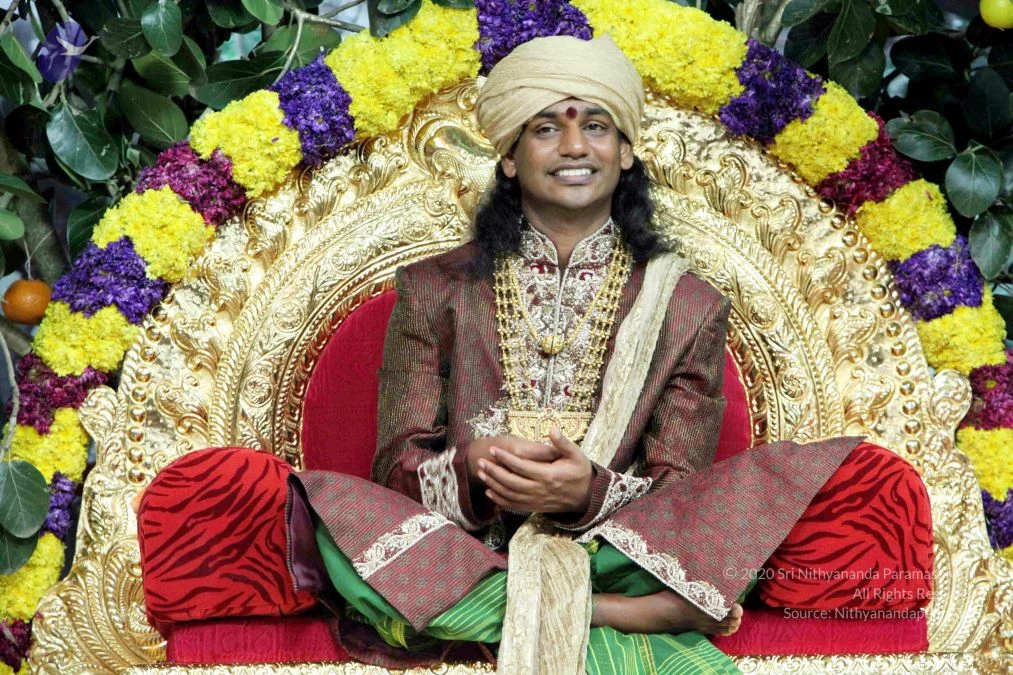
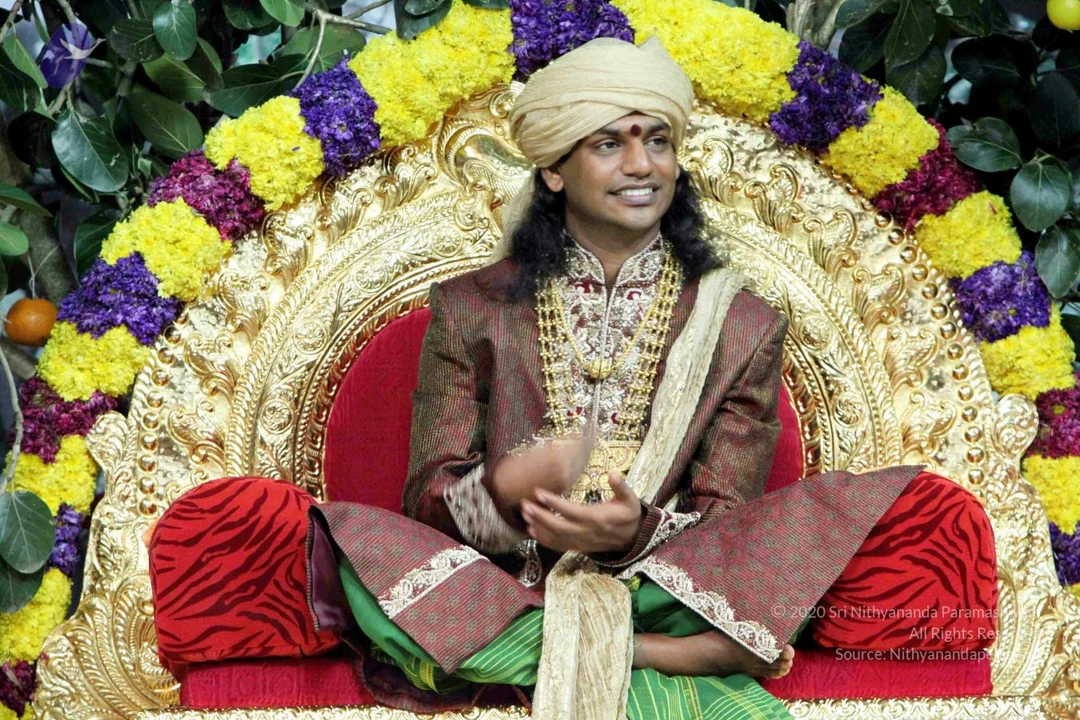
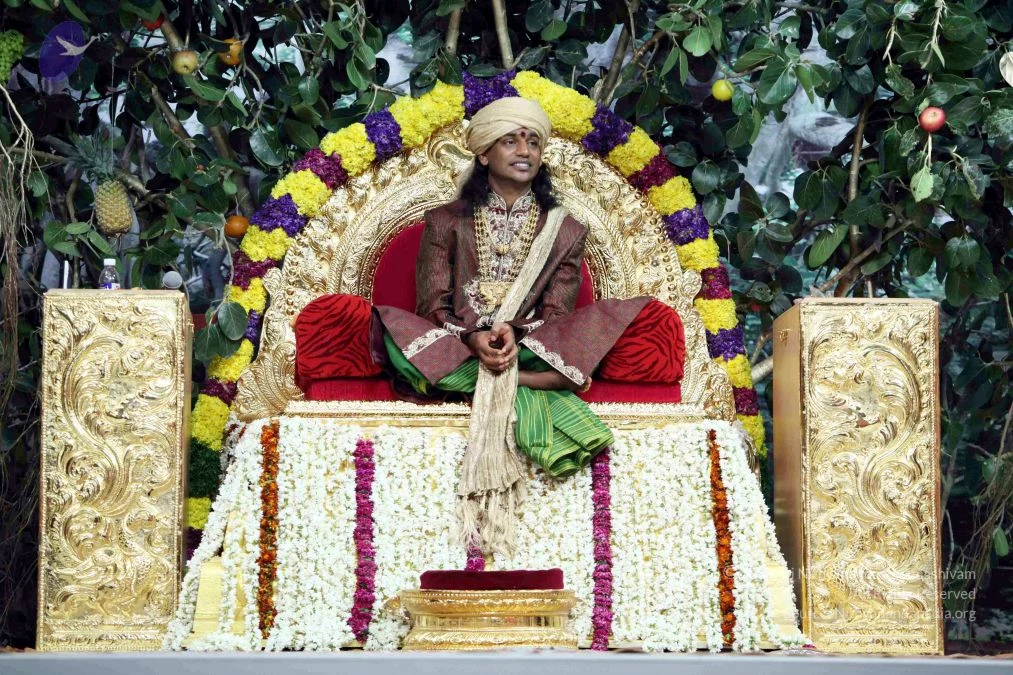
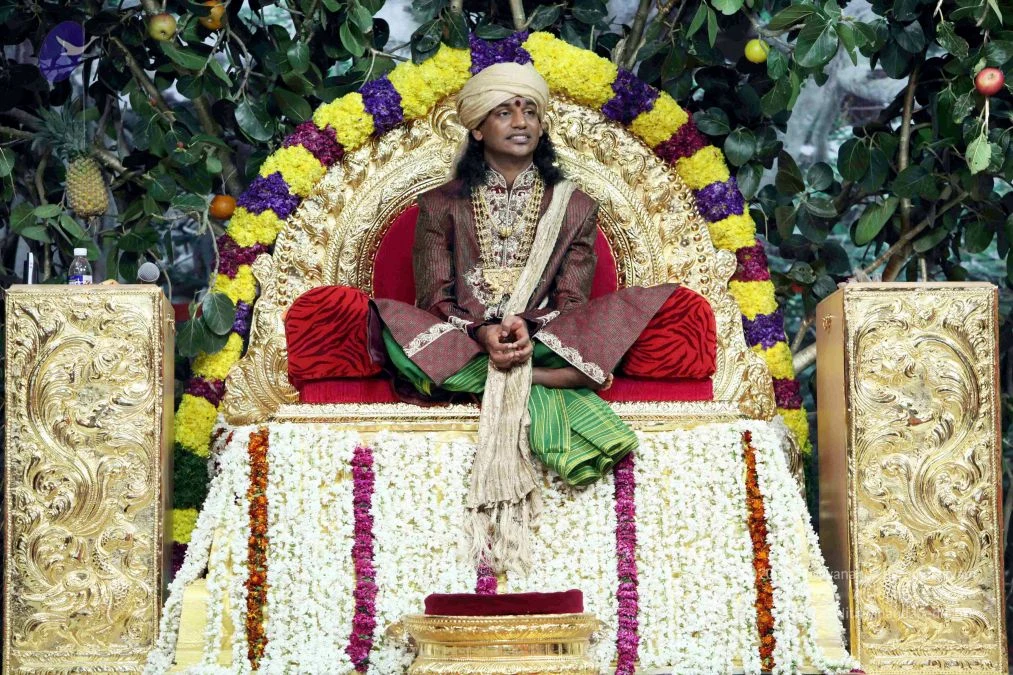
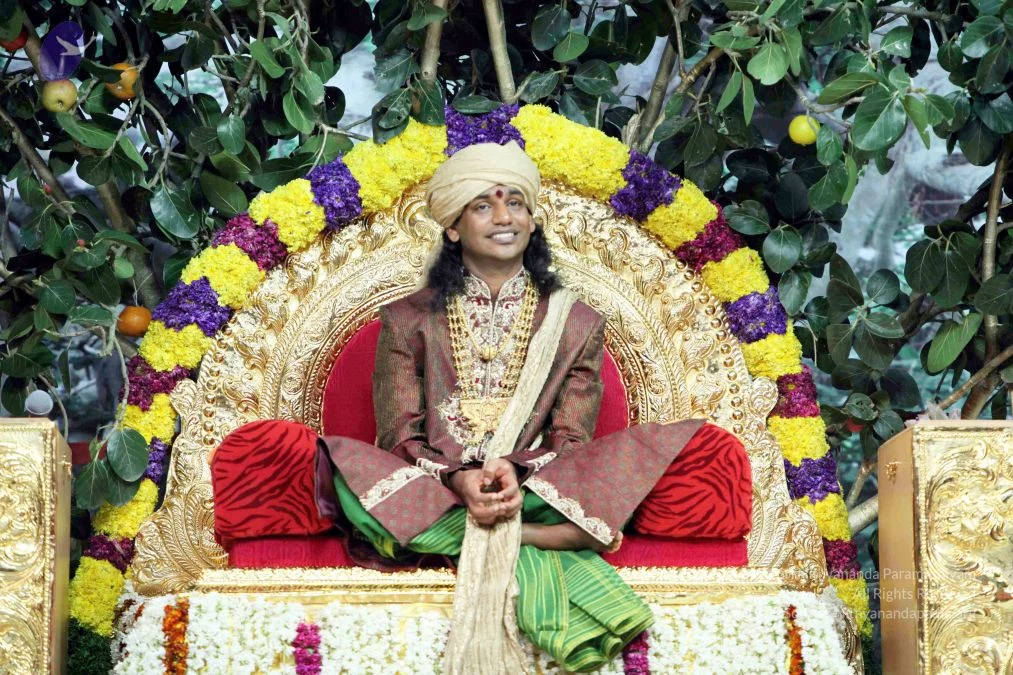
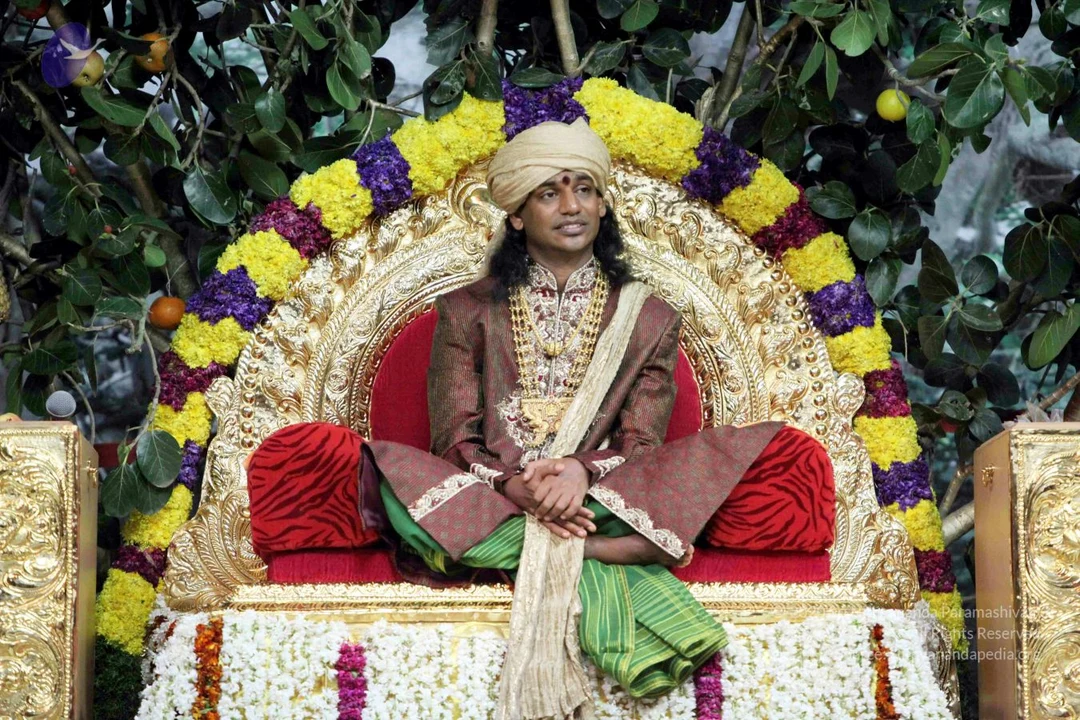
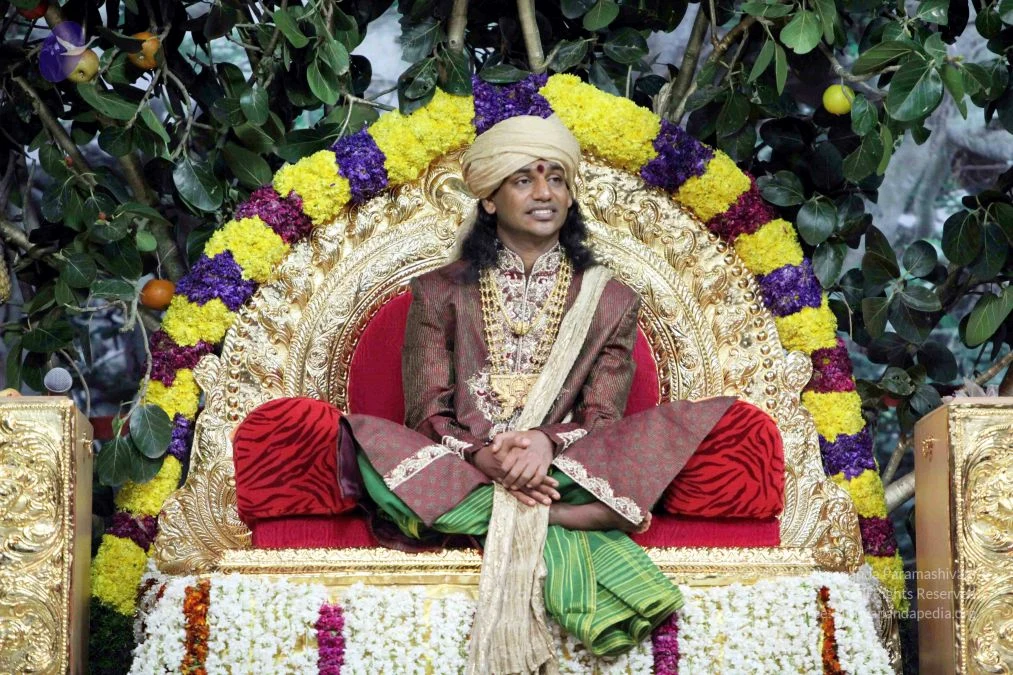
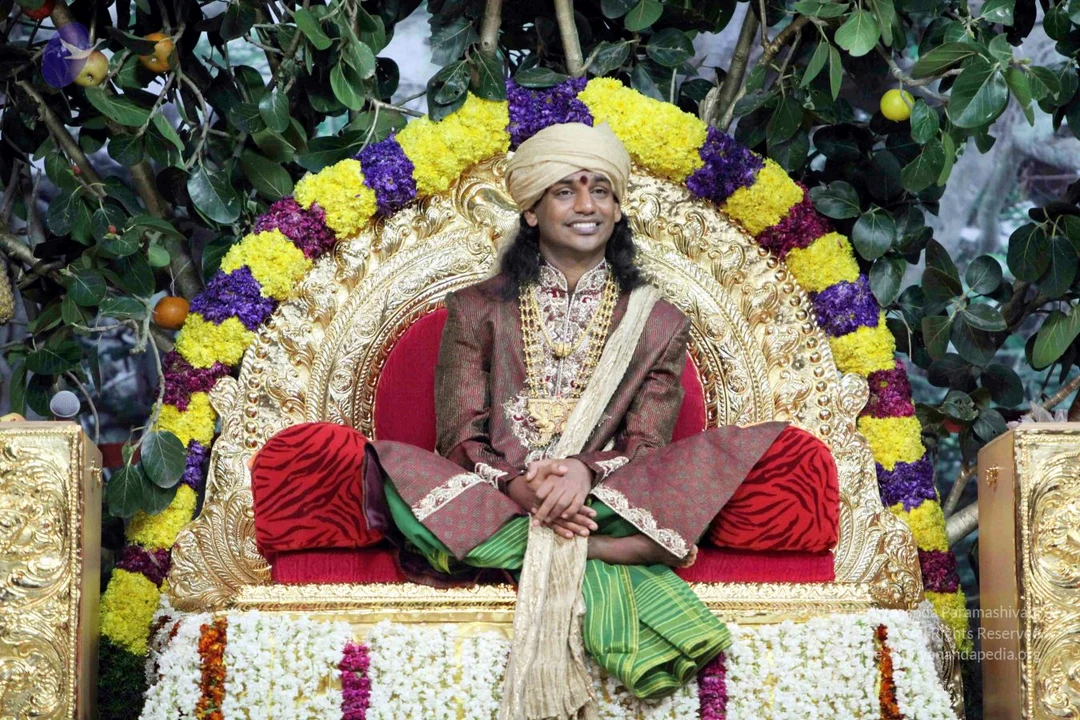
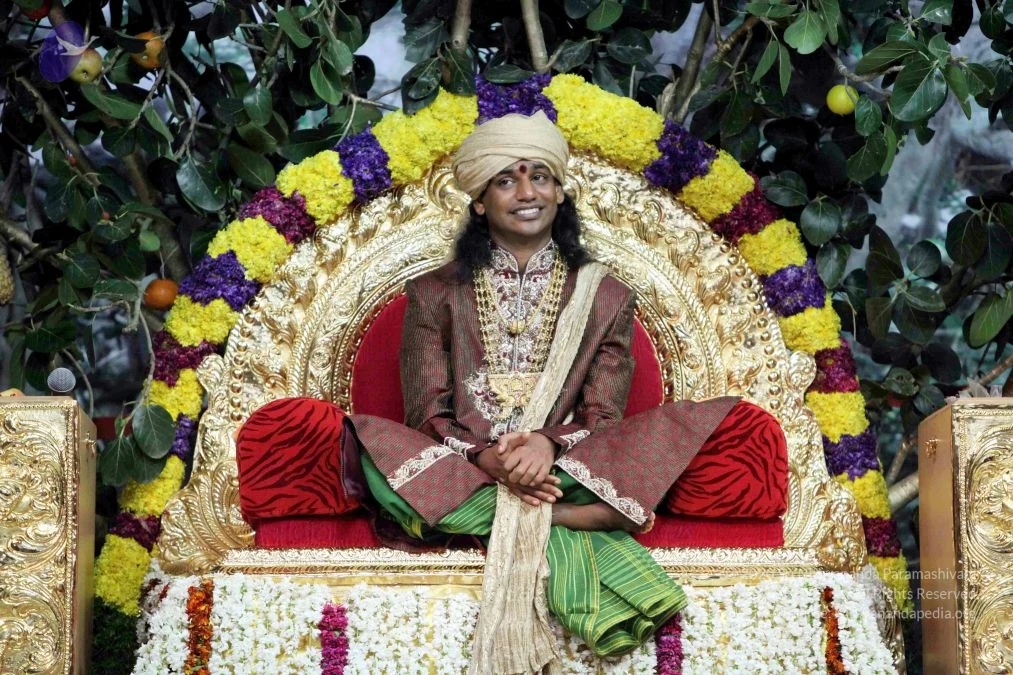
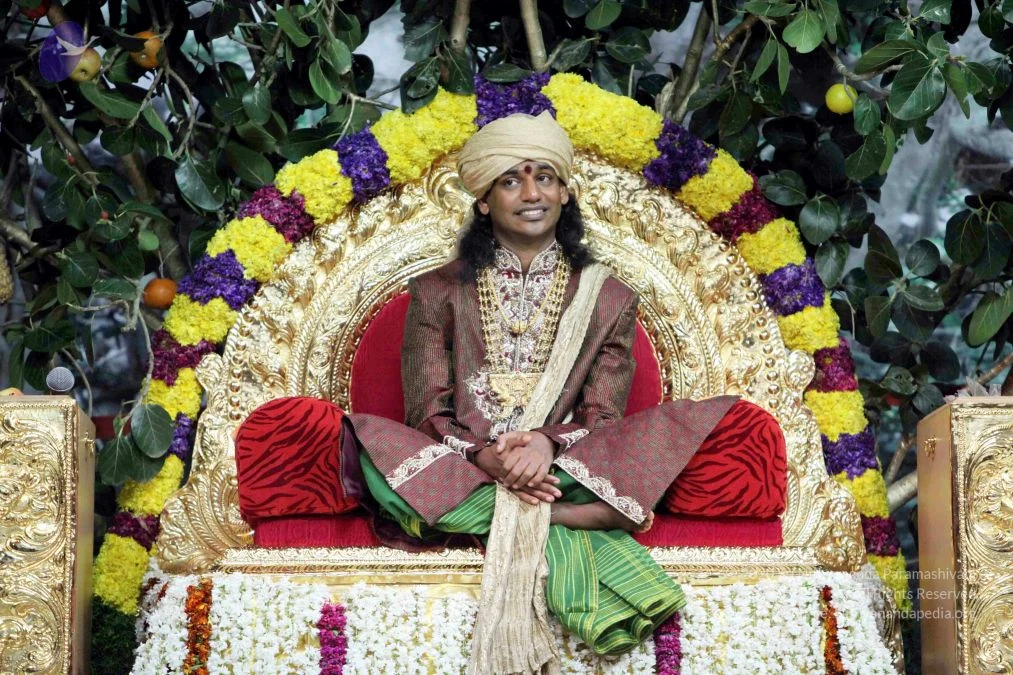
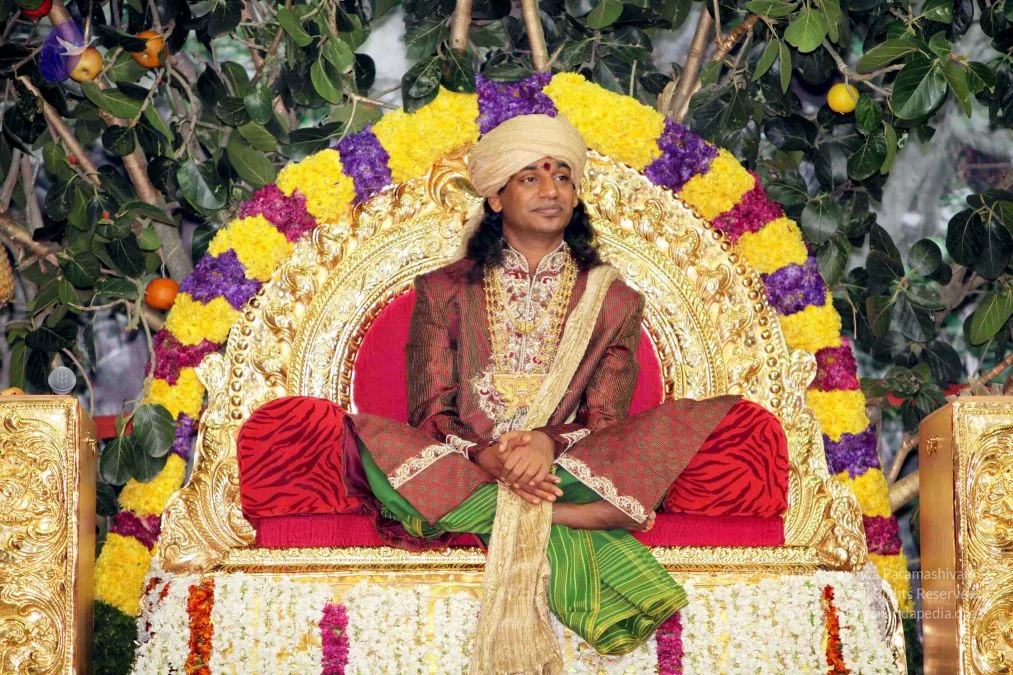
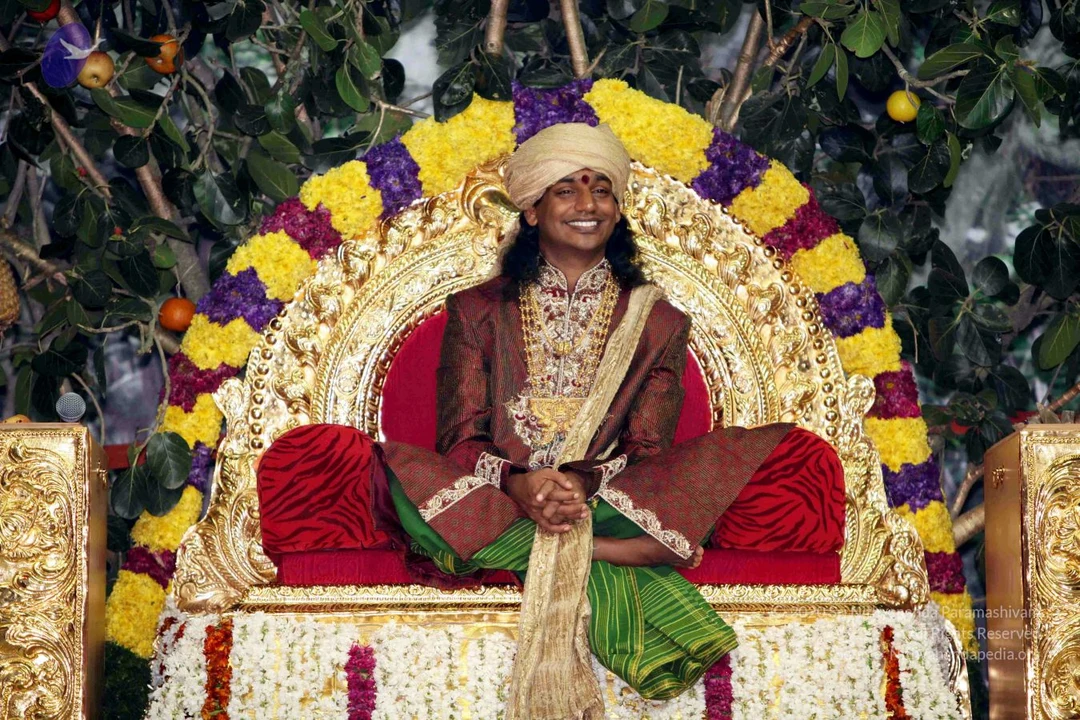
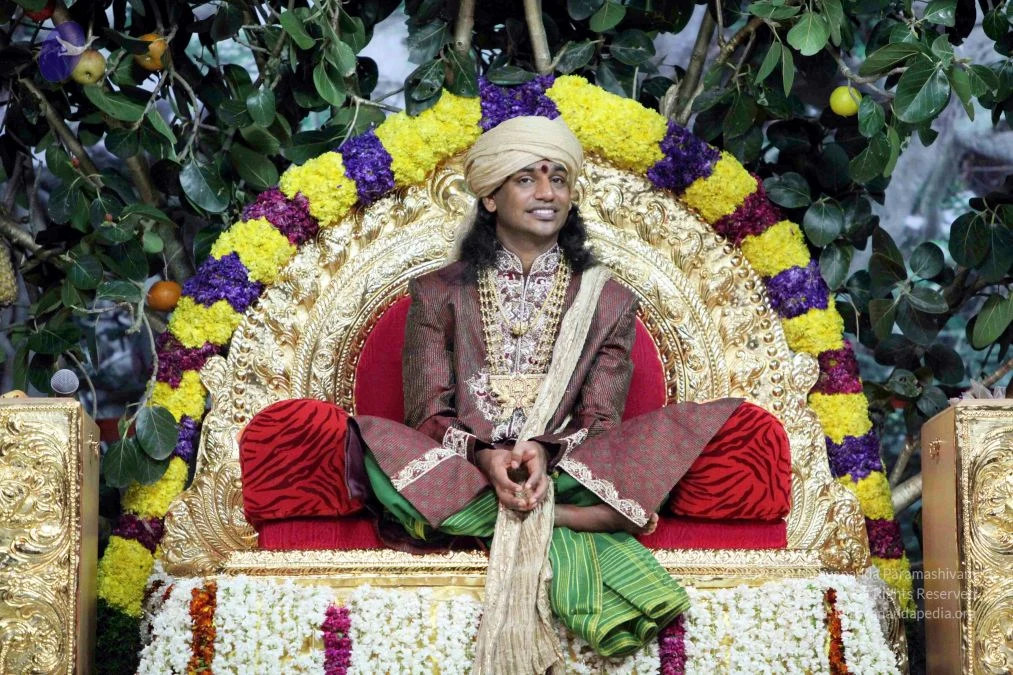
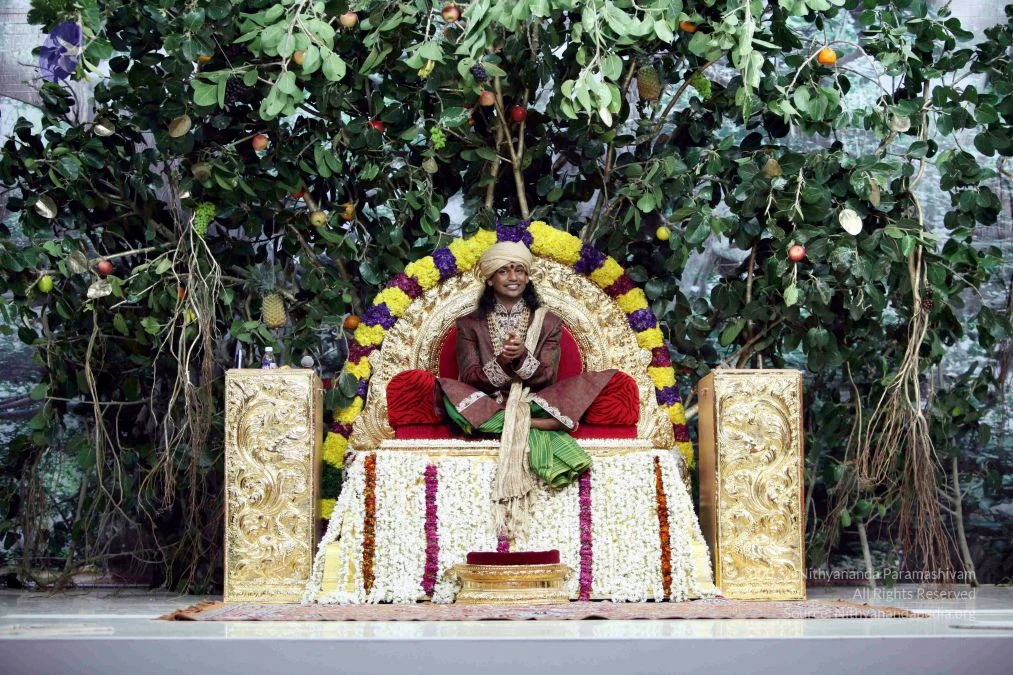
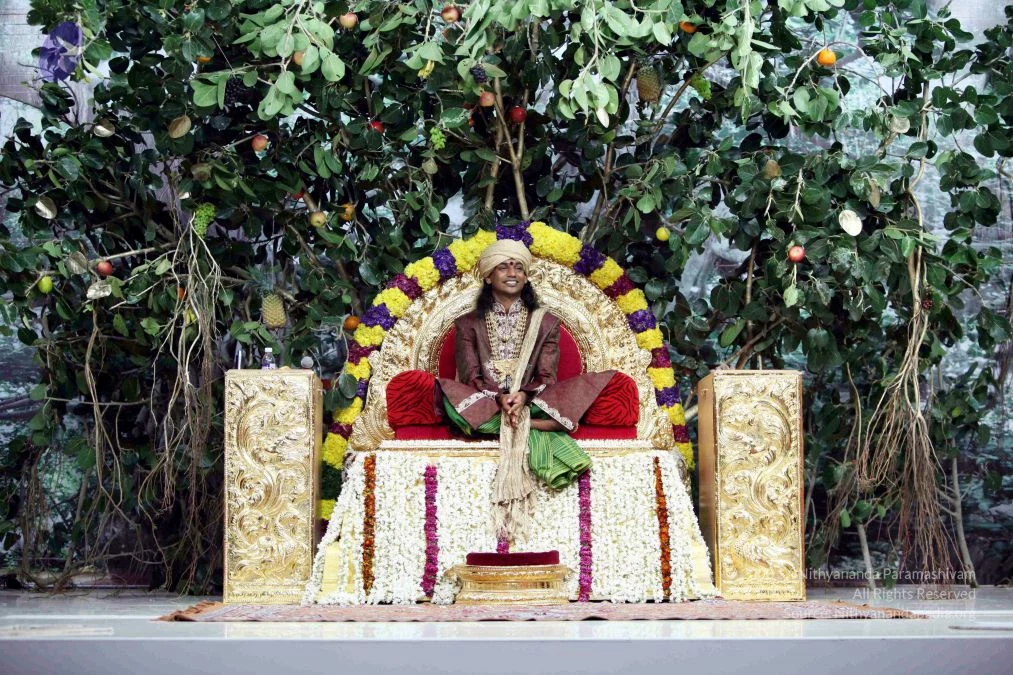
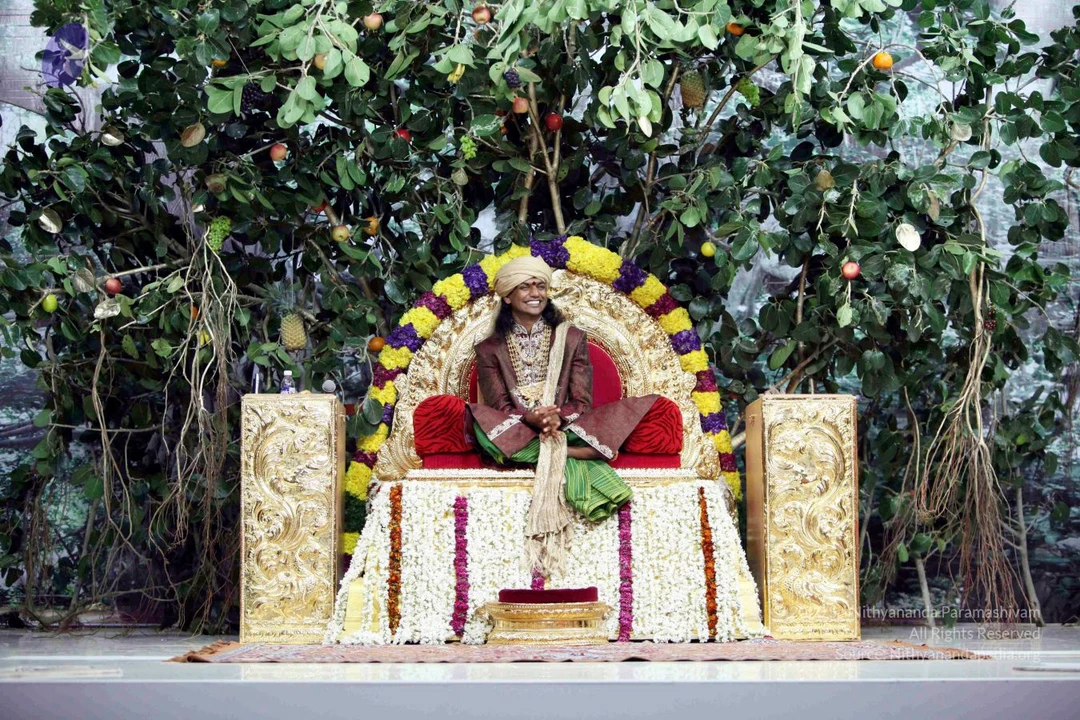
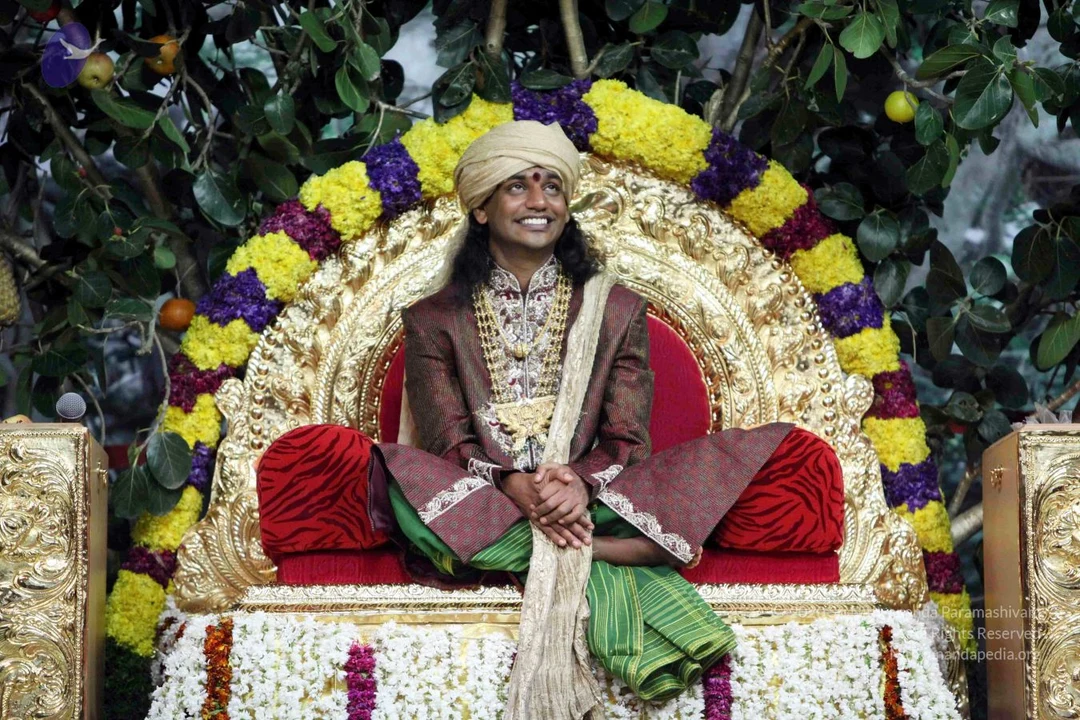
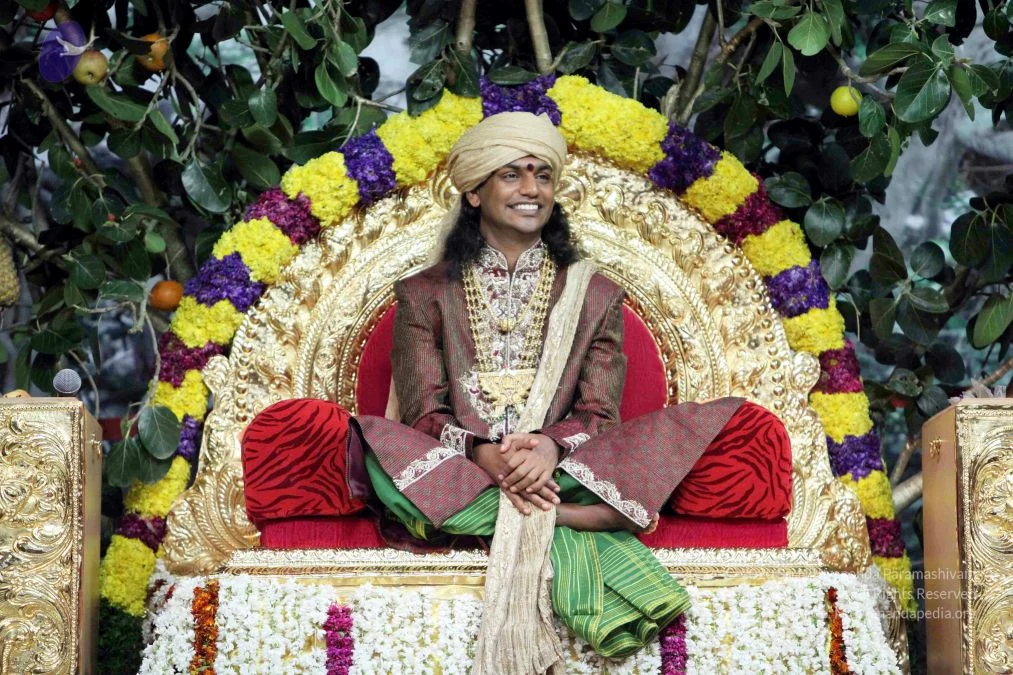
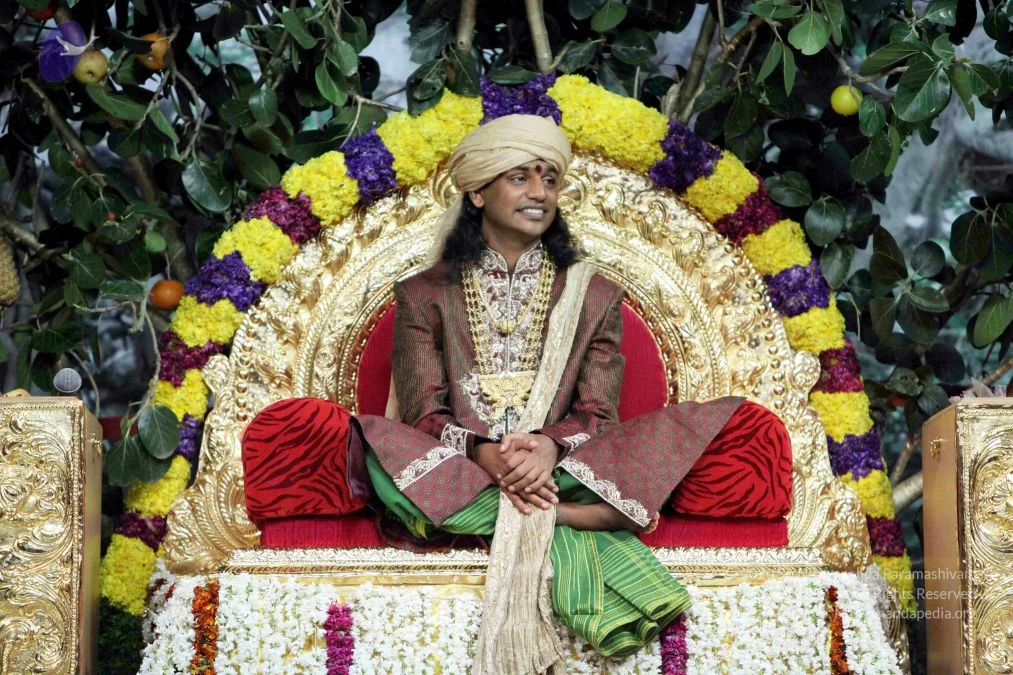
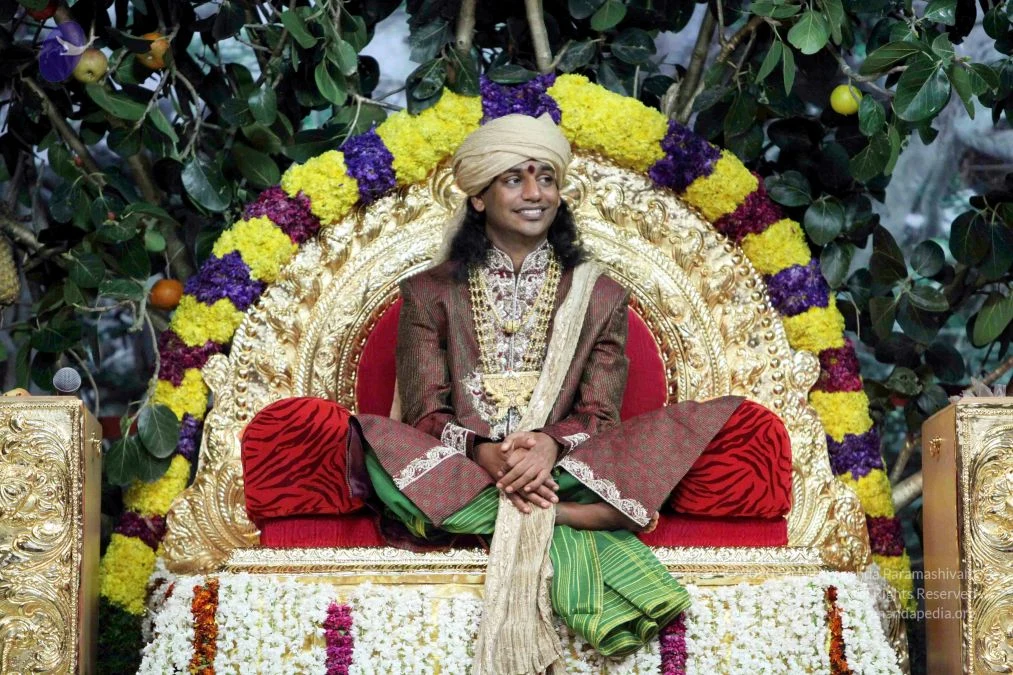
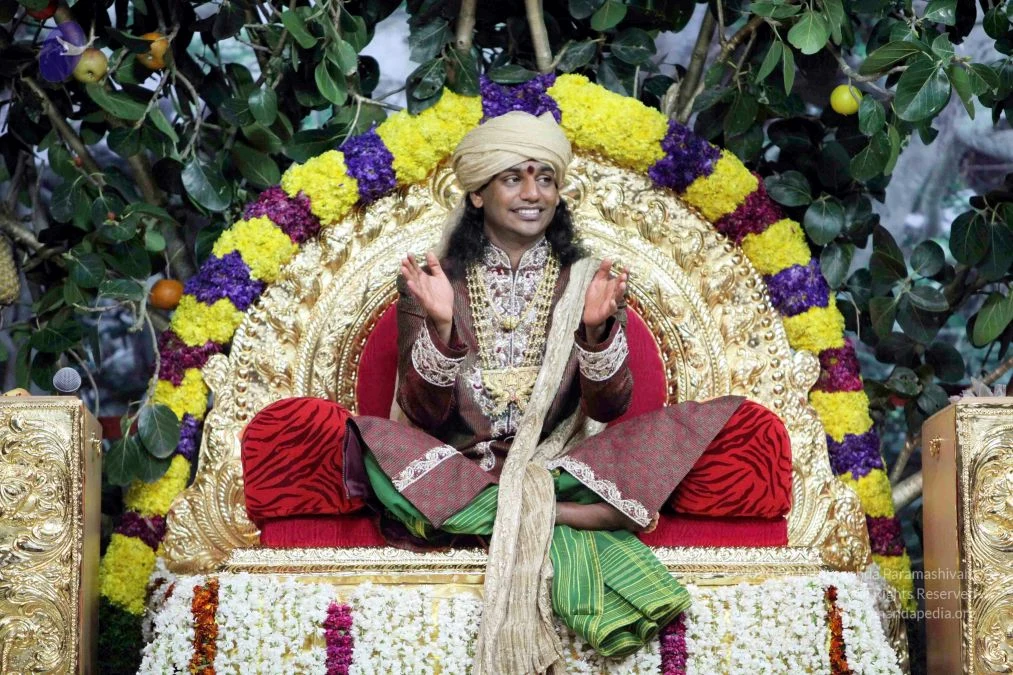
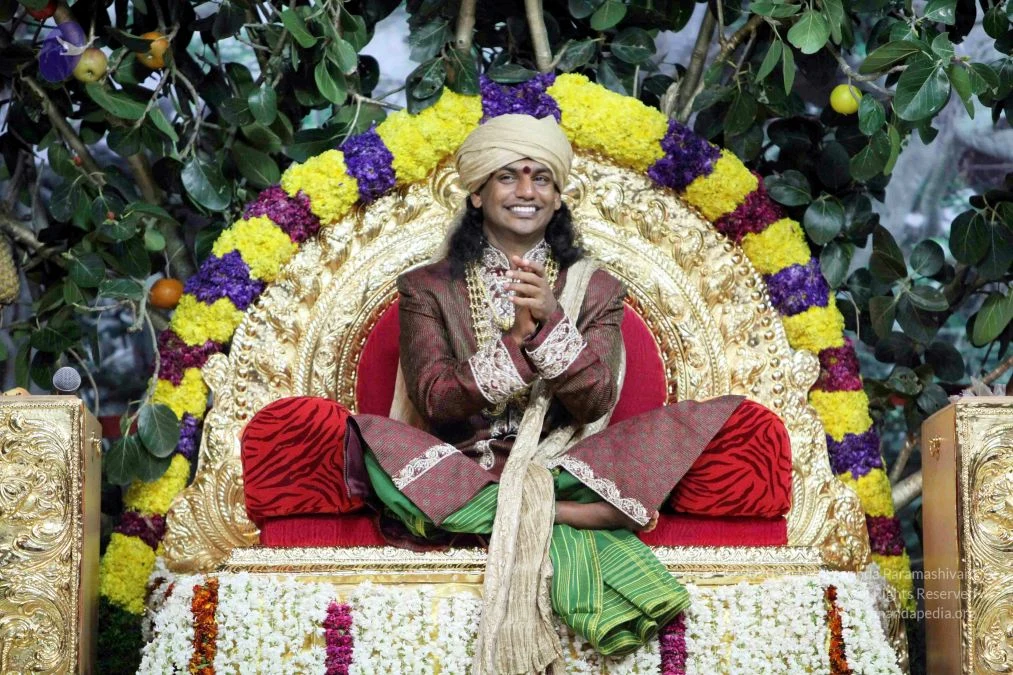
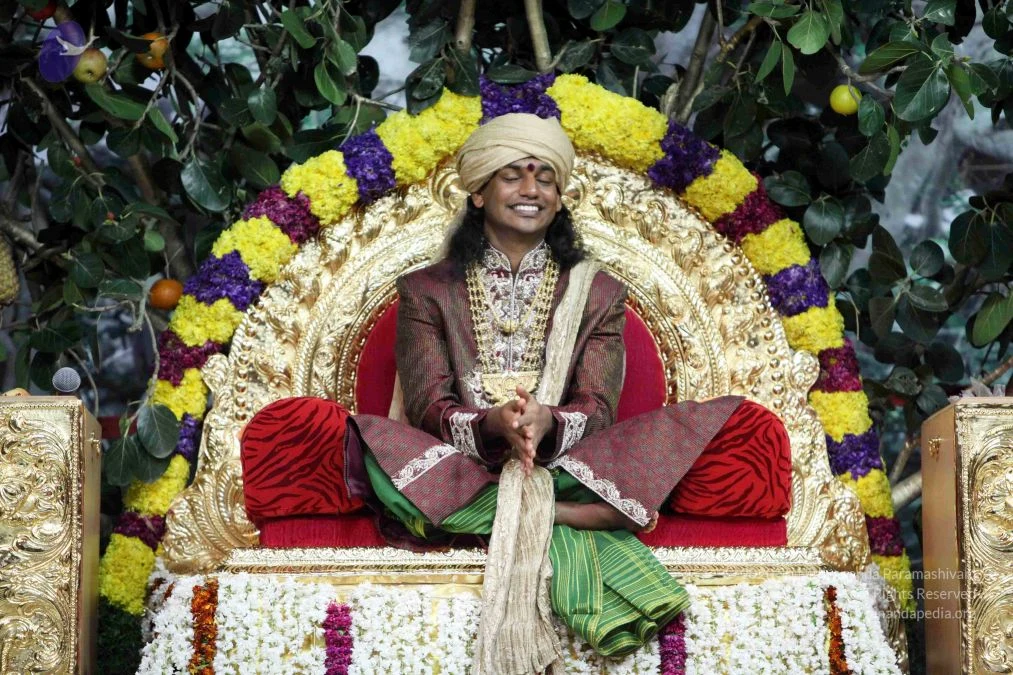
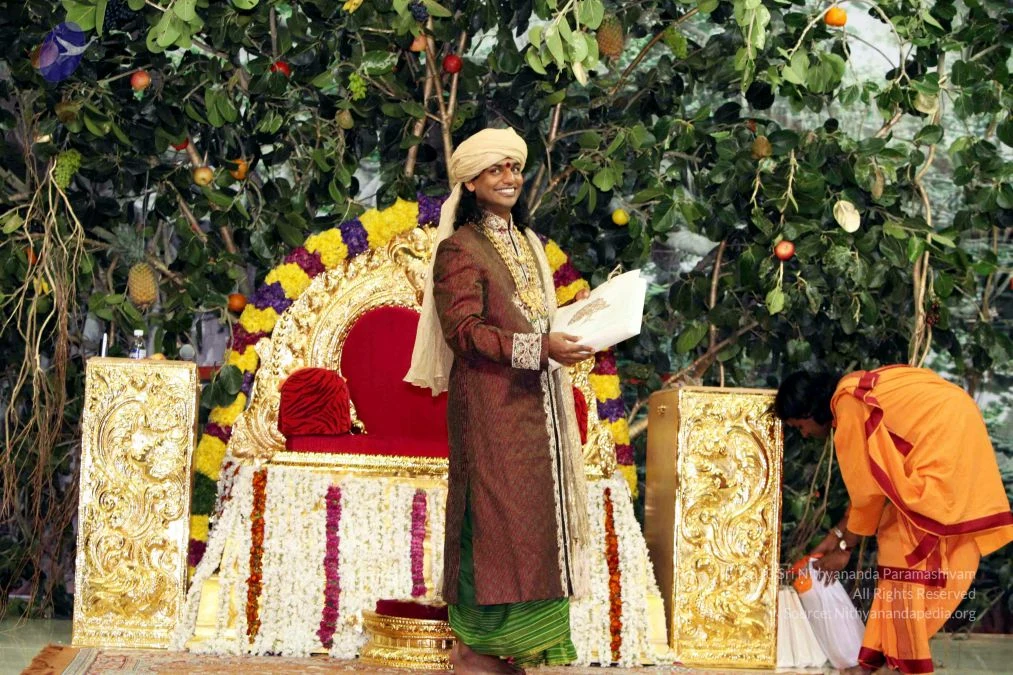
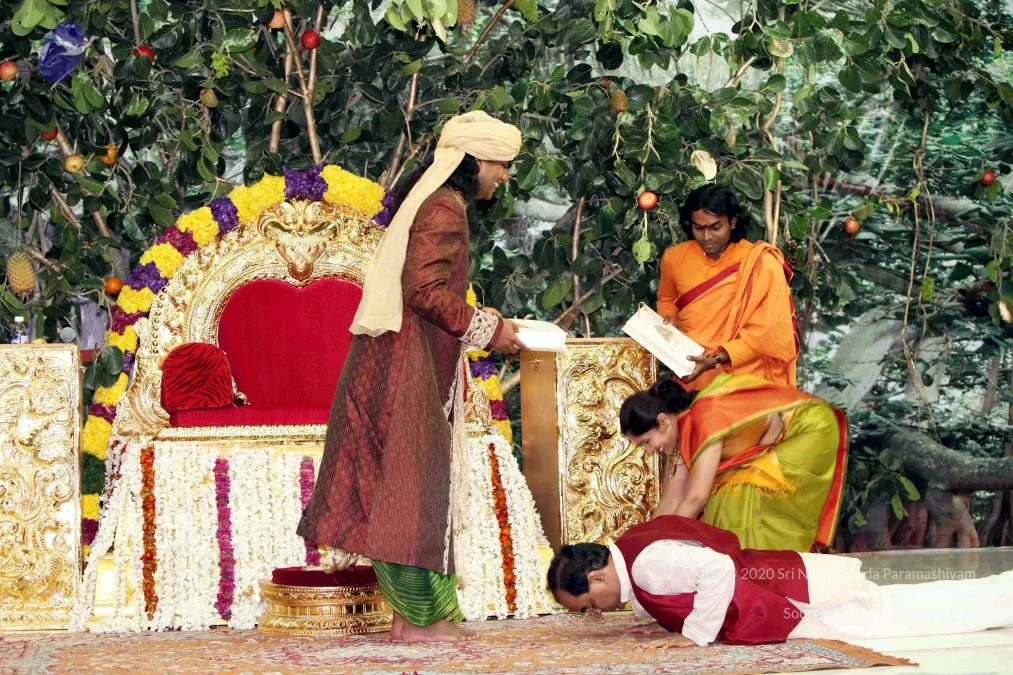
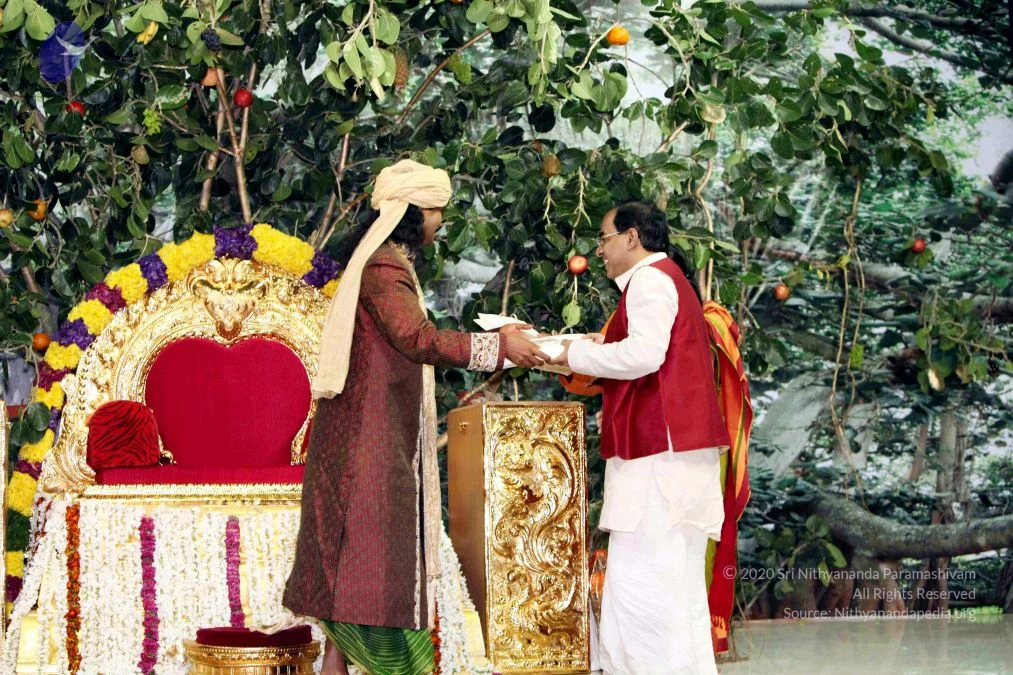
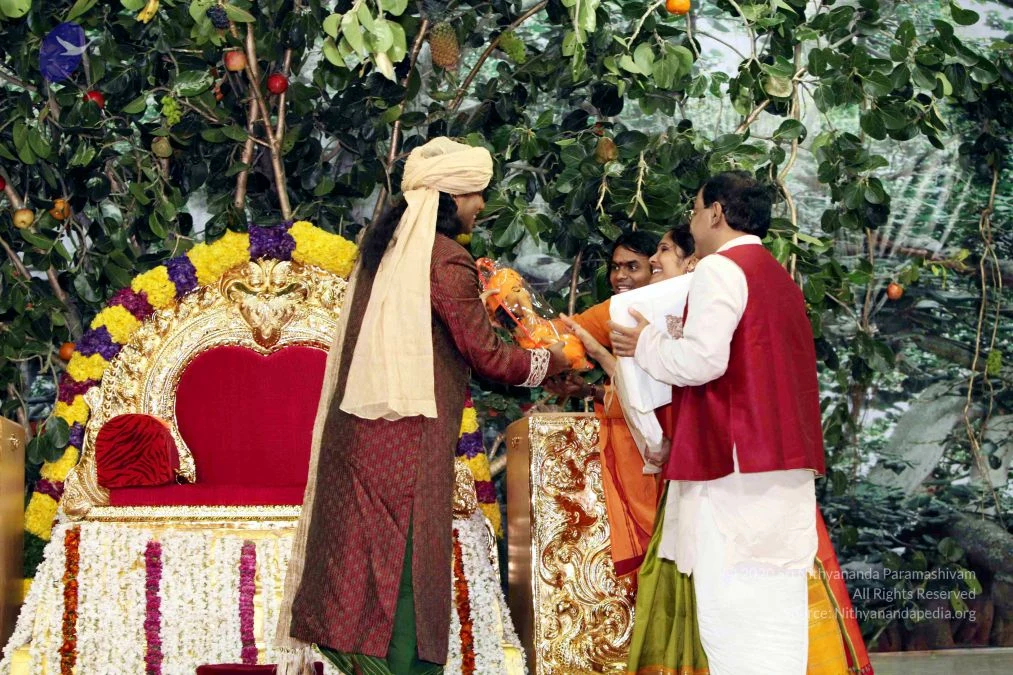
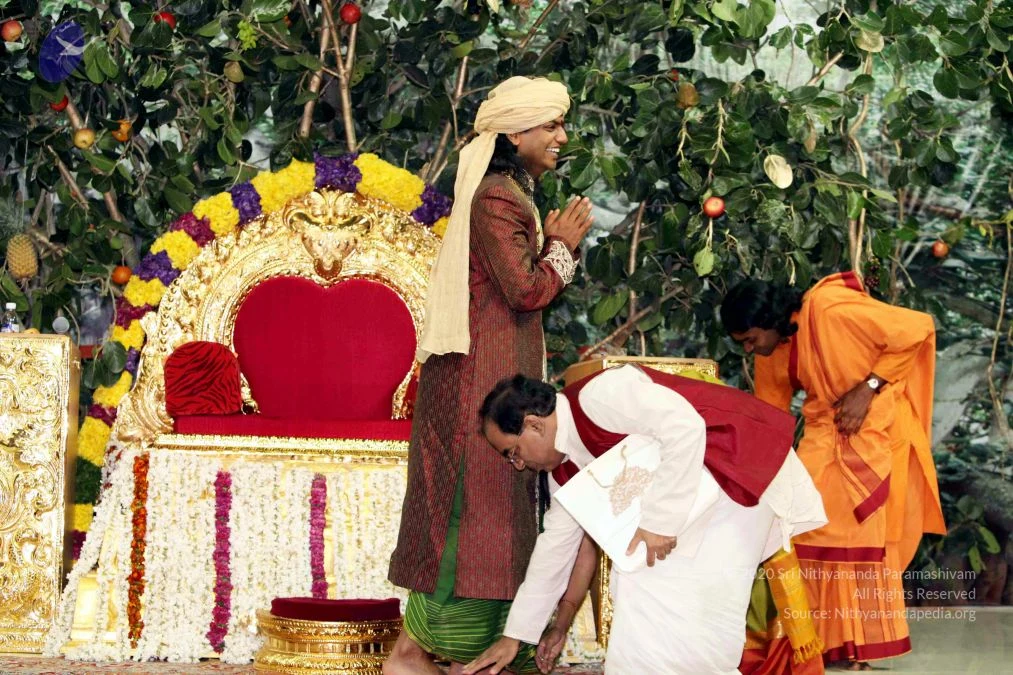
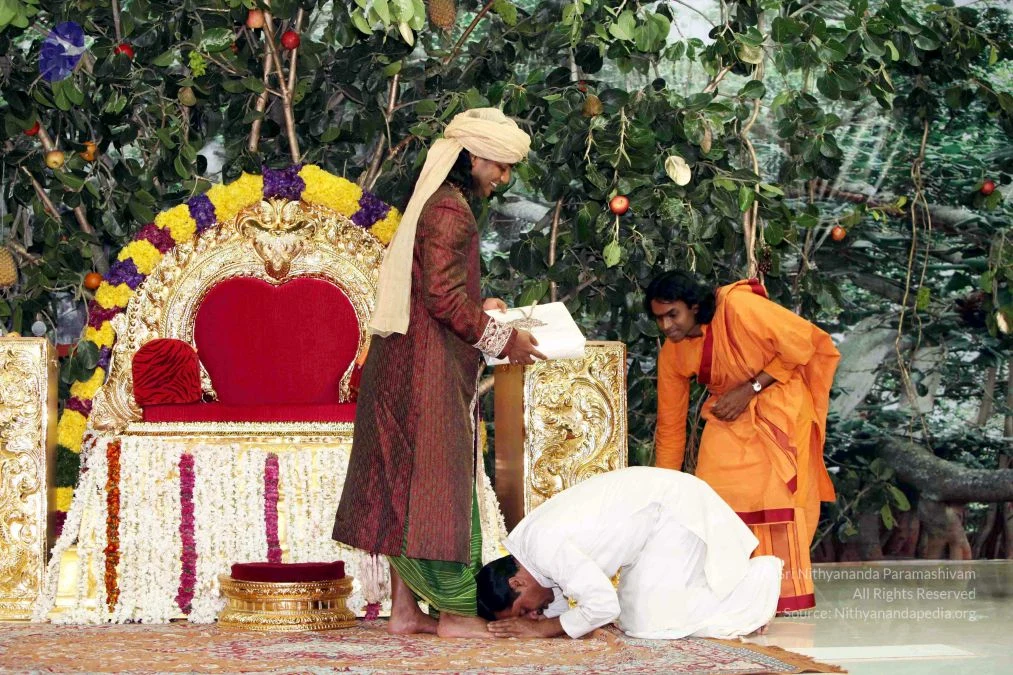
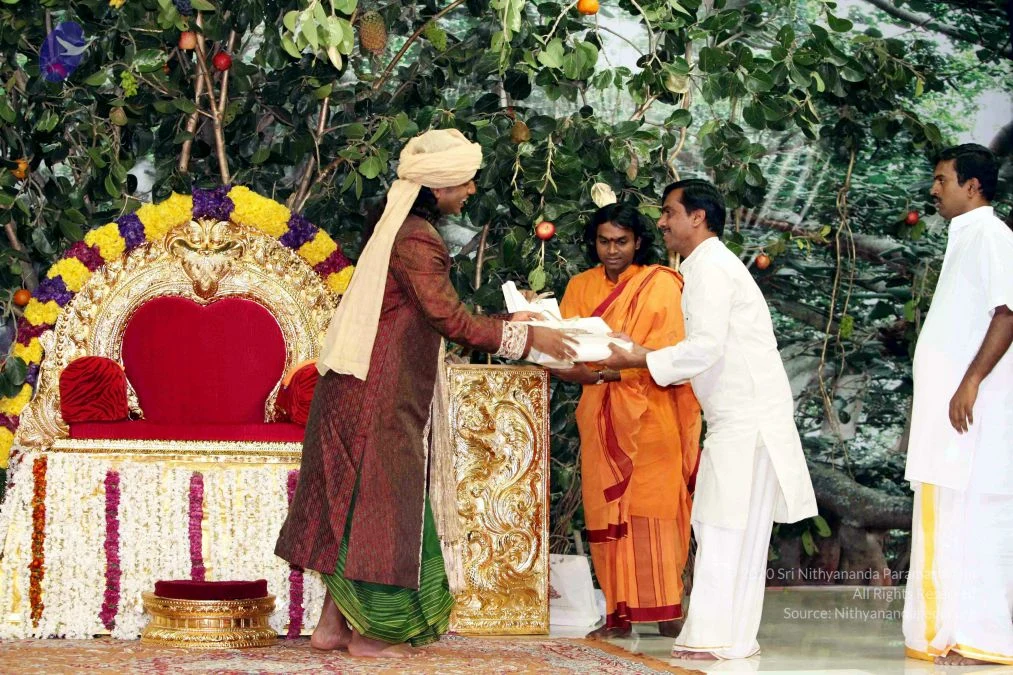
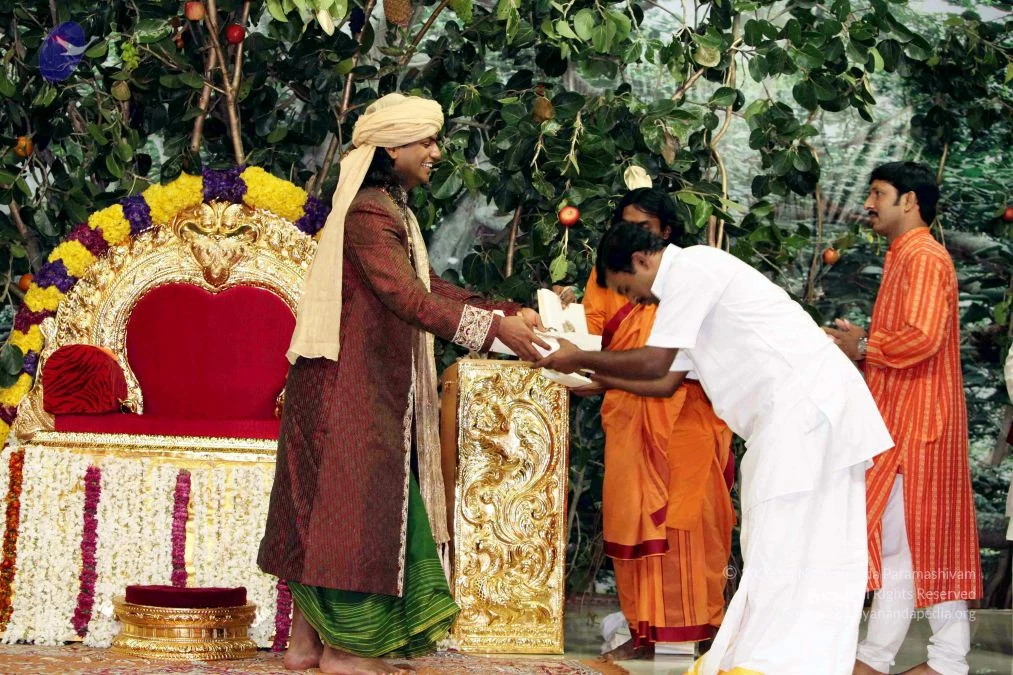
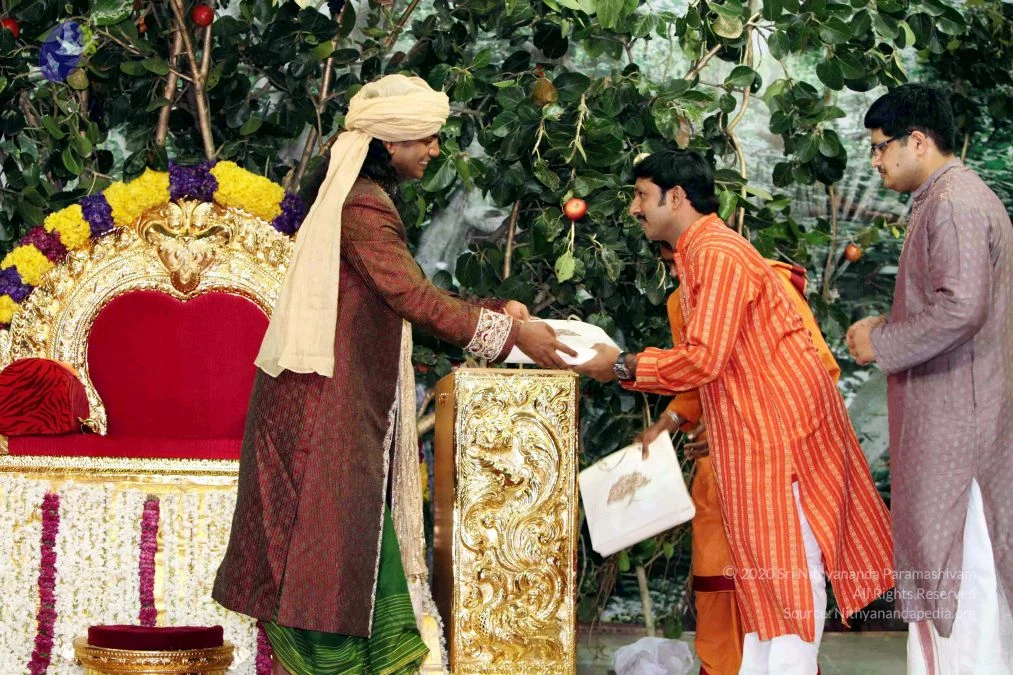
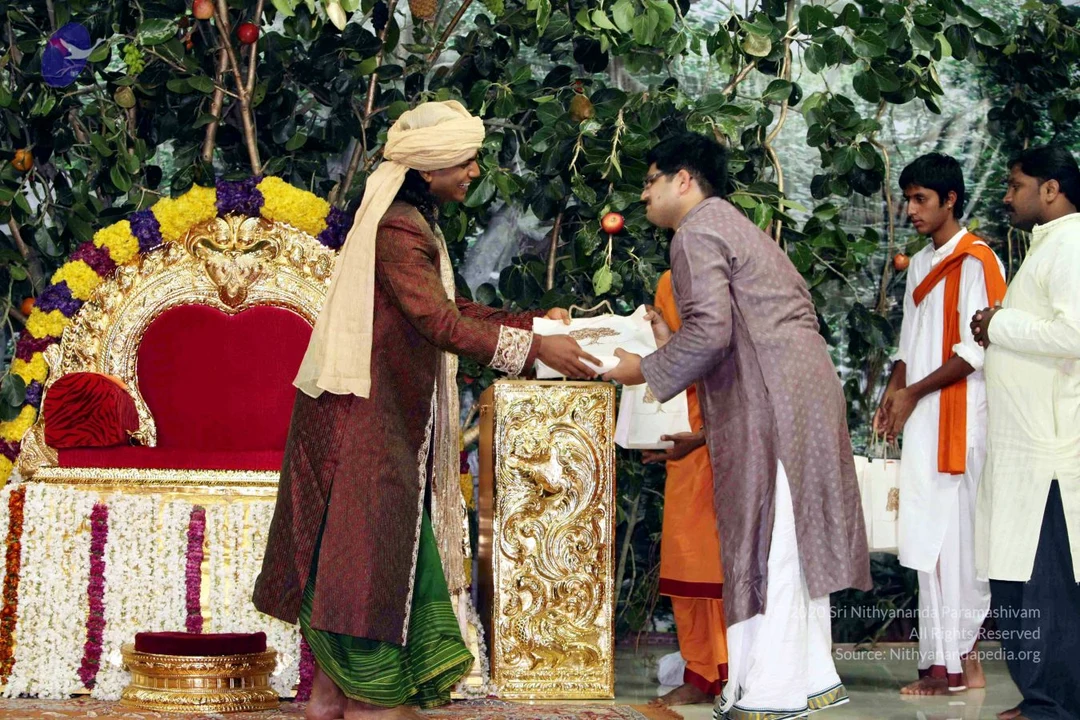
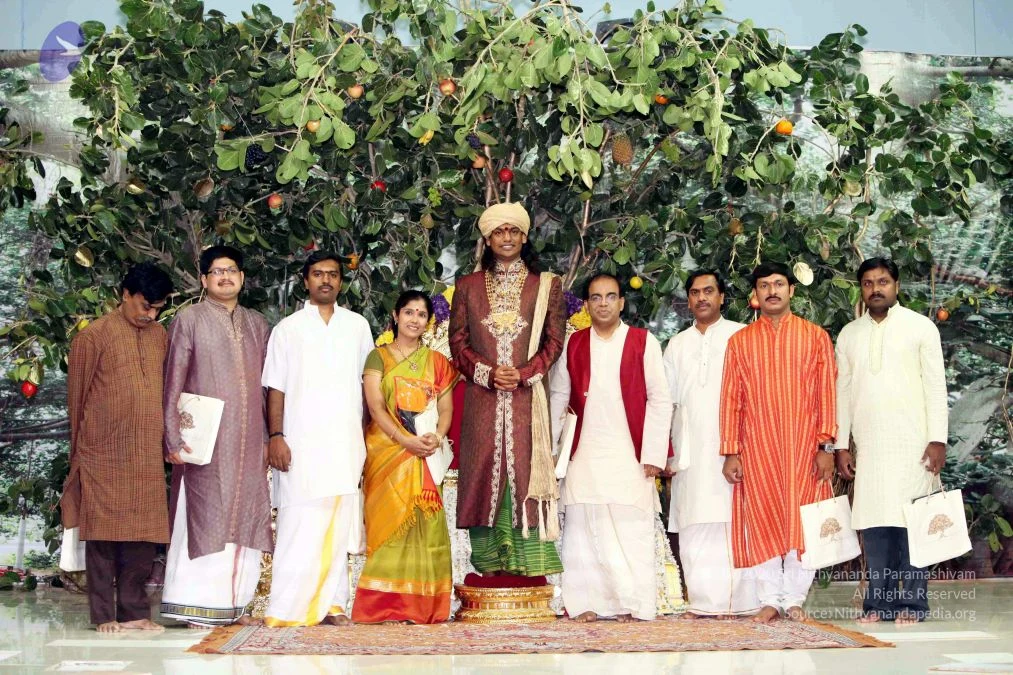
A man seated cross-legged on an ornate gold throne with red cushions, hands pressed together in namaste, wearing a cream turban, a maroon brocade jacket with white lace trim, a green and gold striped dhoti, and layered gold necklaces. The throne's arched back is framed by a garland of yellow, orange and purple flowers, and white flower garlands drape its base. Two gold-carved side pedestals flank it, and fruit-laden greenery with pineapples and apples forms a backdrop. A decorated stage setting with a red-and-cream carpet. The man is the only person visible.A smiling man seated cross-legged on an ornate gold throne with red zebra-striped cushions, framed by a garland of yellow marigolds and purple flowers. He wears a beige turban, a red and gold brocade kurta with embroidered panels, layered gold necklaces, and a cream shawl over his shoulder with green silk drapery below. Leafy branches and small orange fruits form the backdrop.A man sits cross-legged on an ornate gold throne with a red zebra-striped cushion, framed by a garland of yellow marigolds and purple flowers and by leafy branches with fruit overhead. He wears a beige turban with a red bindi, a maroon embroidered sherwani-style tunic with a gold necklace, and a beige shawl draped over green trousers, with hands clasped in his lap. The a person is seated on the throne, but his appearance here is the only basis for this label. The scene is a stage or seated ceremonial setting with flowers and foliage.A photograph of an indoor event on a green carpeted stage. In the centre, a woman in a white sari with a yellow shawl and a red bindi holds a microphone and a sheet of paper while speaking. Beside her, a woman in a white sari with a striped border and a dark beaded necklace holds an open notebook and looks down. On the left, a young man with light brown hair in white clothes and a yellow shawl sits on a dark chair, and two more men in white clothes sit behind him. A pink bag lies on the green stage at right, and a white wall with a wall socket is in the background.A seated man sits on an ornate gold throne with red velvet cushions, framed by a floral arch of yellow, orange, purple and white flowers. He wears a cream turban, a maroon embroidered tunic with gold trim, a gold necklace, a green striped dhoti and a cream shawl, hands clasped in his lap. Behind the throne, a dense tree with red and green fruit fills the background, and white jasmine garlands drape the platform. A bottle of water sits on a gold side stand. a person is seated on the throne, identified by the throne, turban, ceremonial gold necklace and ornate ceremonial dress.

nithyananda-ashram

8 photosSource gallery
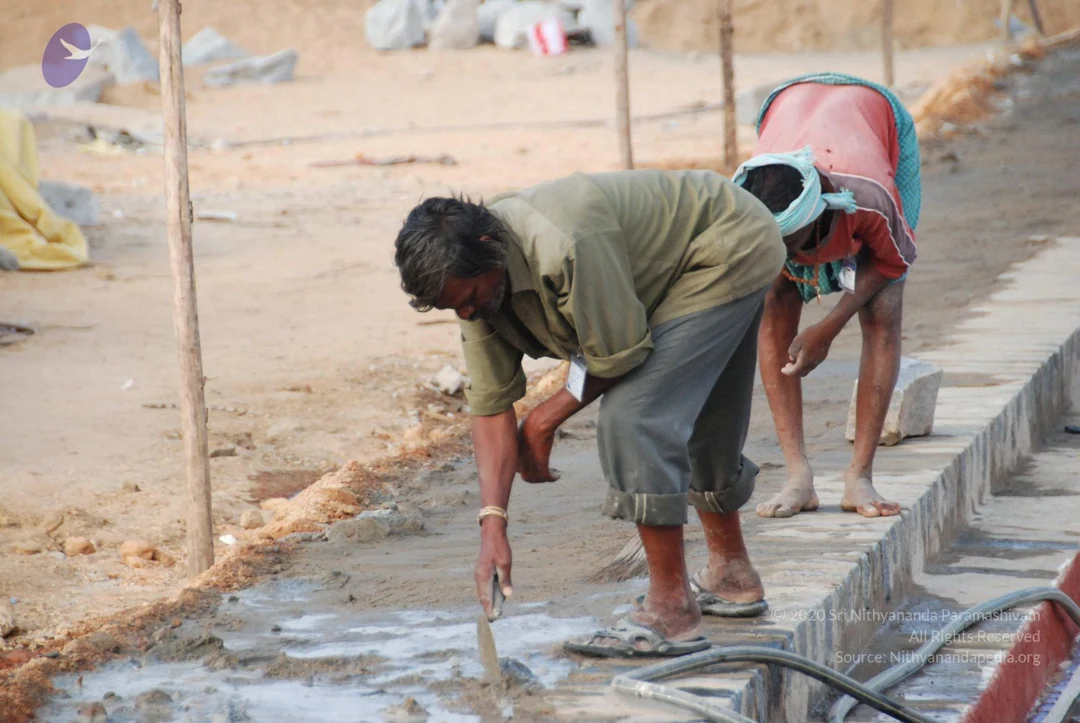
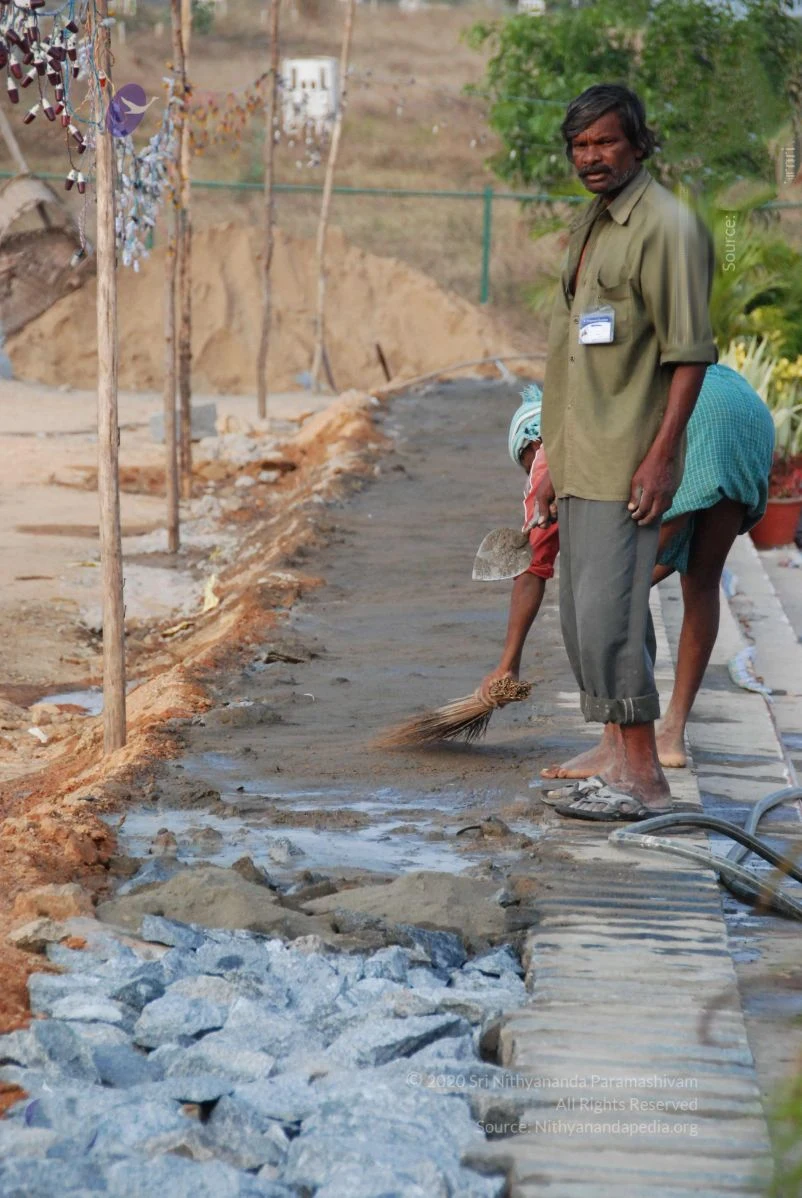
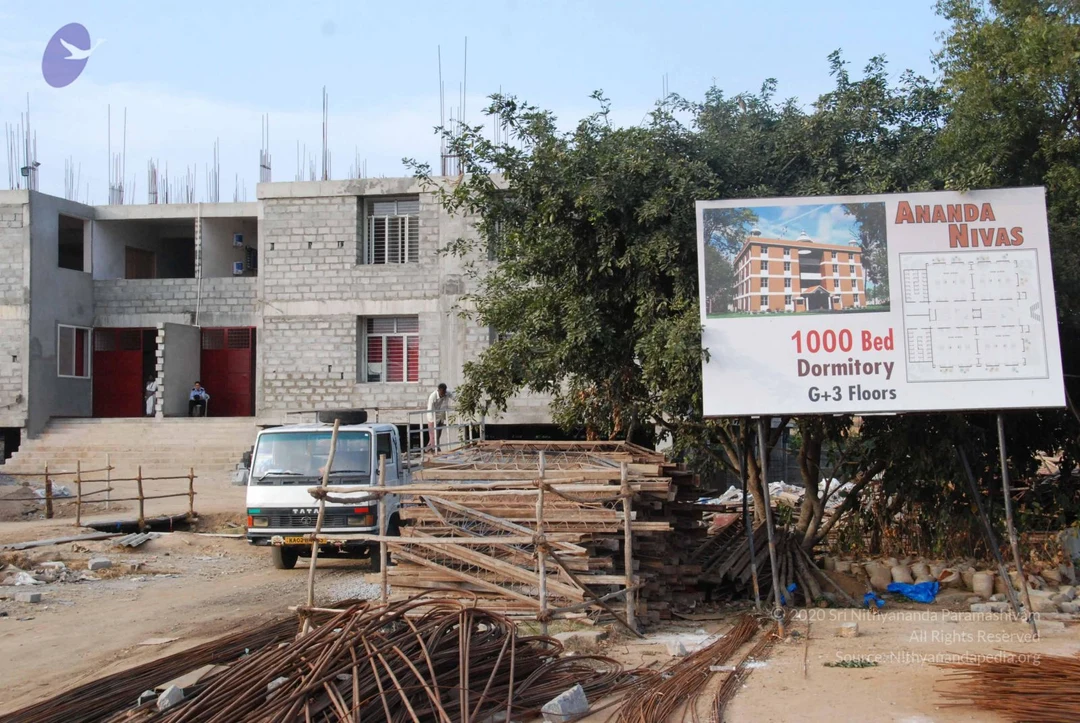
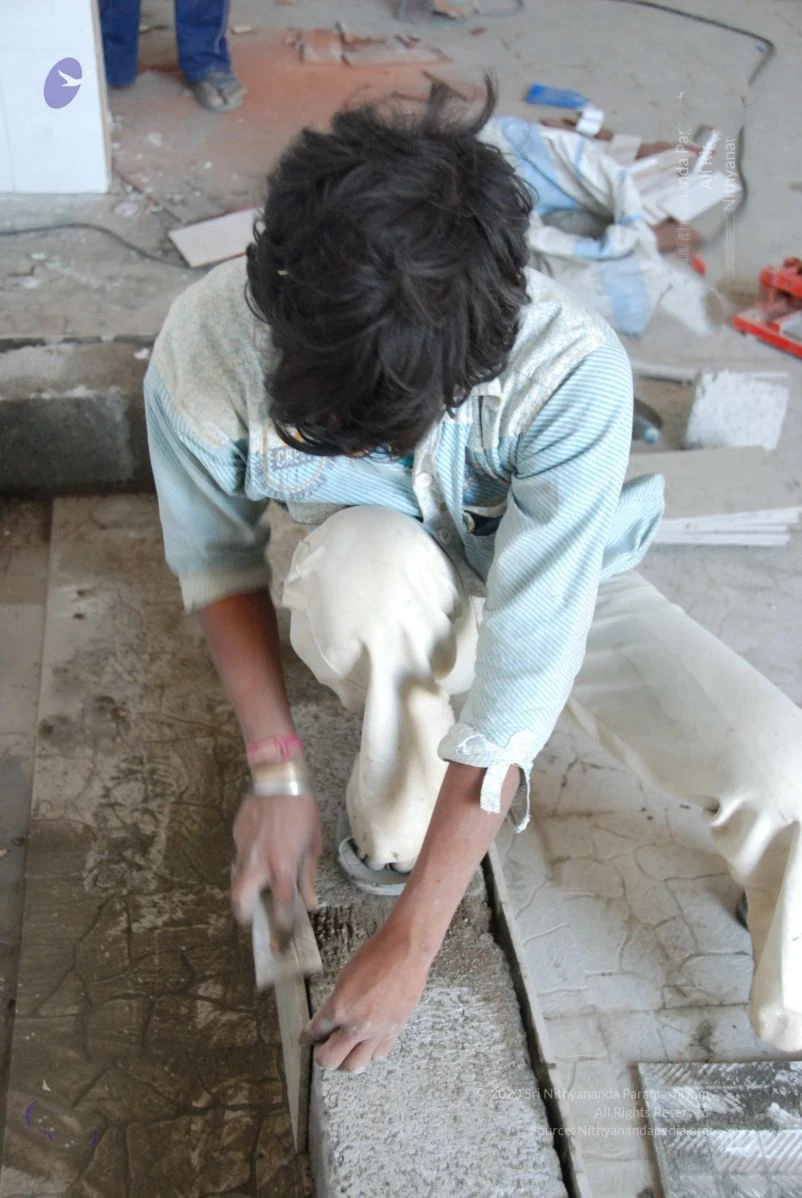
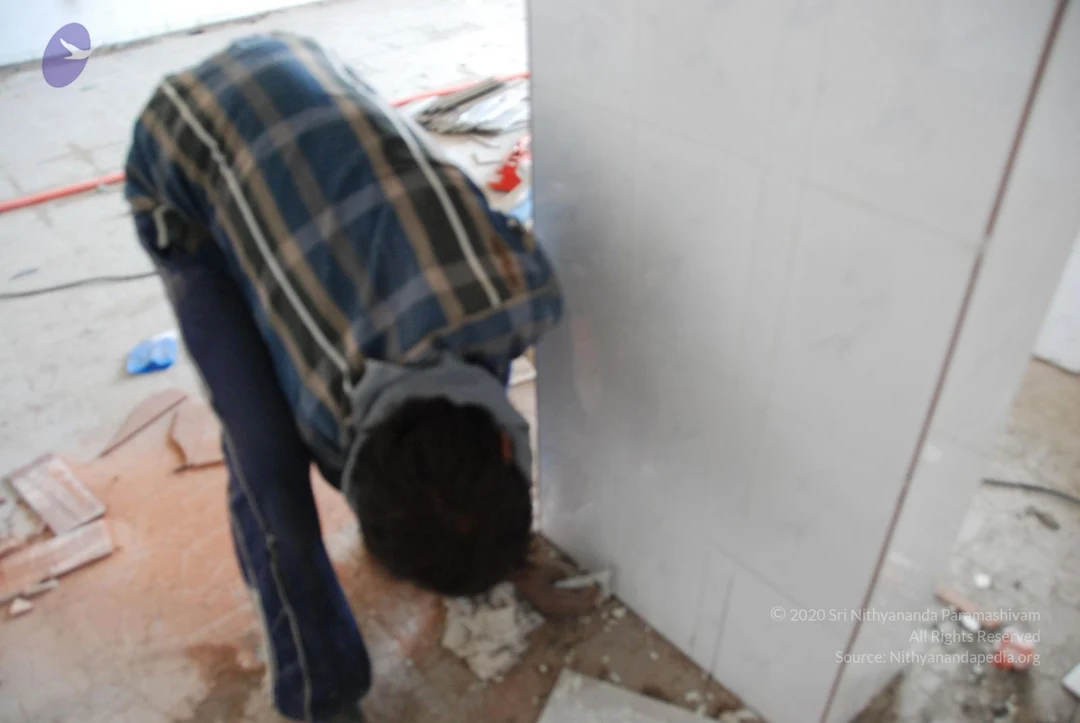
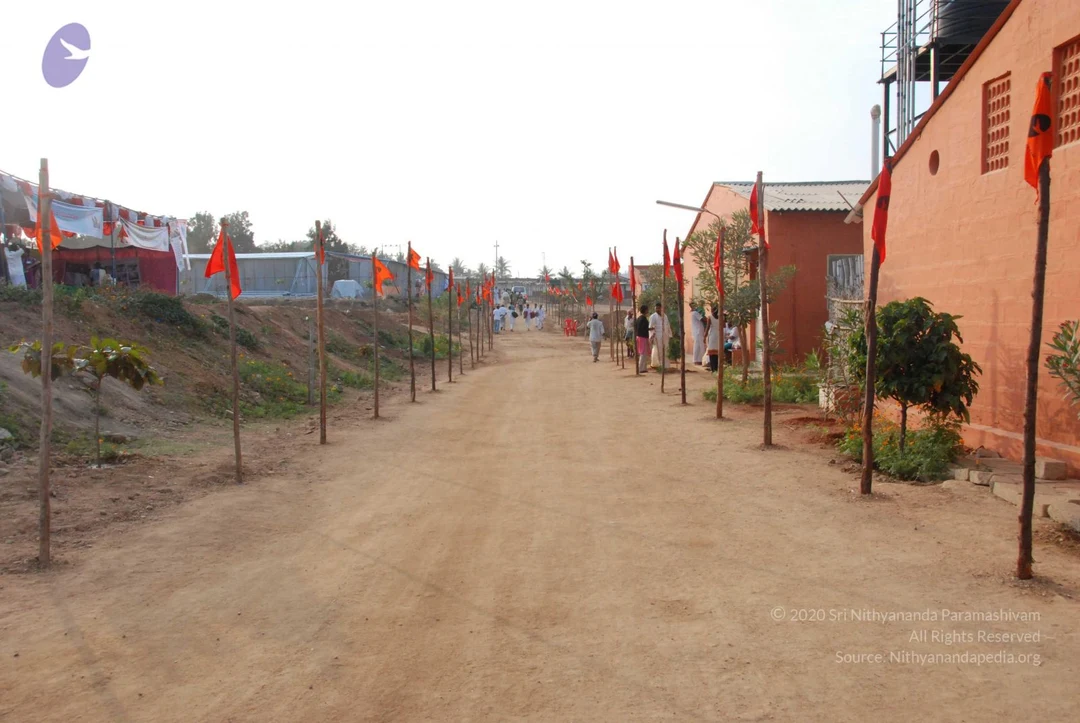
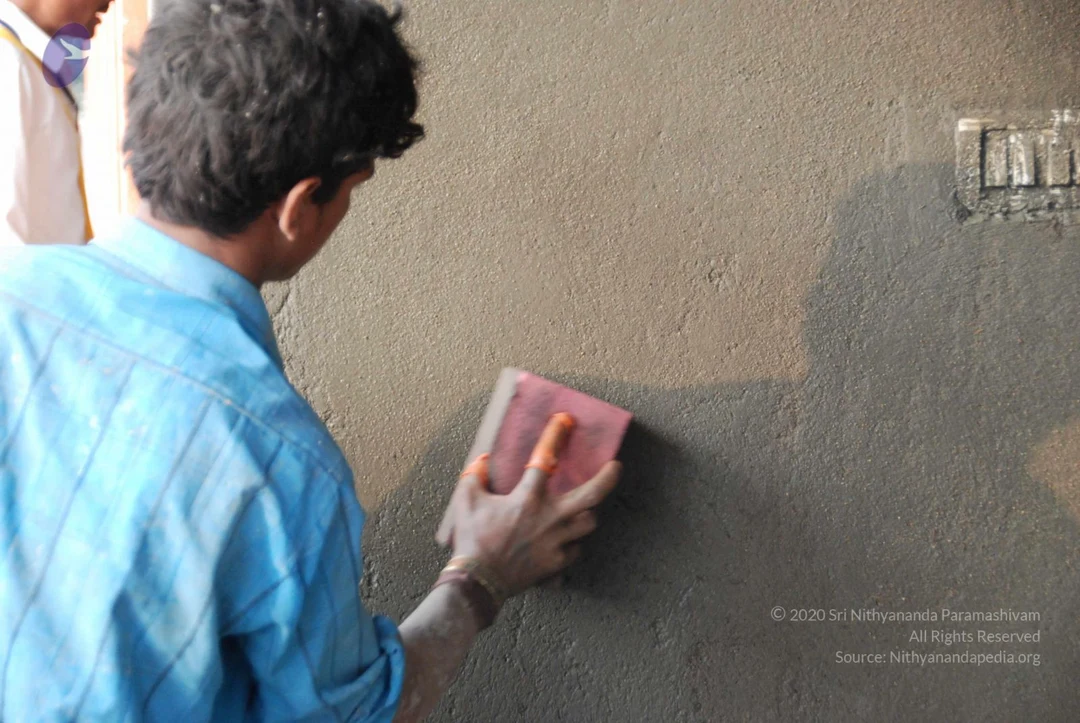
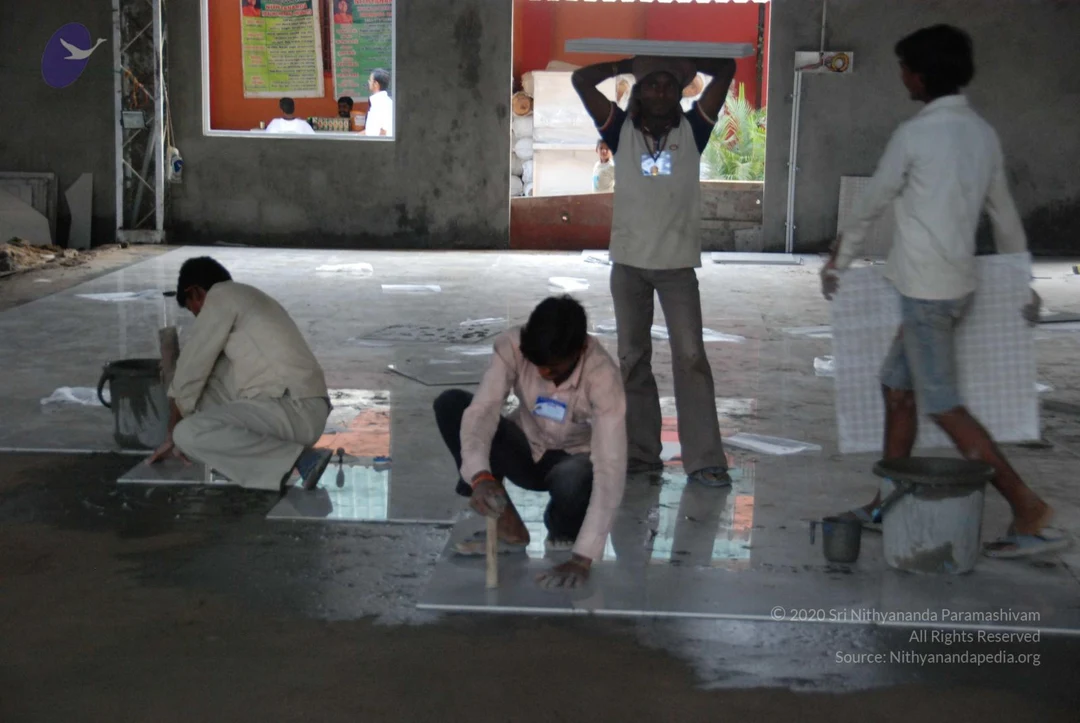
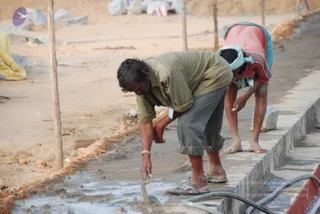
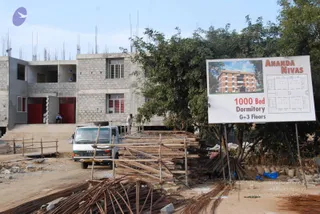
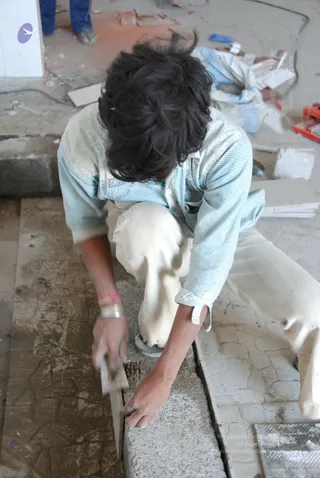
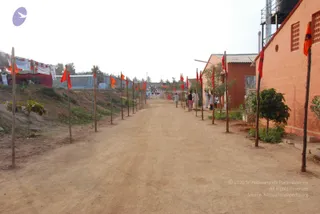
A photograph of two workers on a construction site laying concrete along a raised curb. The man in the foreground wears an olive-green shirt, grey trousers and sandals, and bends low to smooth wet cement with a trowel. Behind him, a barefoot worker in a red shirt and a blue-and-white checked cloth on his head uses a broom along the edge of the curb. A grey hose runs beside them, and bare wooden stakes and sandy earth fill the background. Nothing in the frame shows a ritual, satsang or any a person presence.A construction site at an ashram with an unfinished concrete block building of several storeys, red doors on the ground floor and rebar stacked in the foreground. A white Tata truck is parked on a dirt track beside timber scaffolding and bundles of steel reinforcing rods. A large billboard on the right reads Ananda Nivas, showing an artist's rendering of a brick building and a floor plan, with the caption 1000 Bed Dormitory G+3 Floors. Two workers stand near the building and a seated figure sits on the steps. Tall mango-like trees and a pale sky frame the scene.A young worker with dark, tousled hair and a pale blue-and-white striped shirt crouches on a concrete floor, pressing a flat trowel into wet grey mortar along a tile edge. Beside him lies a white plaster or resin statue of a seated figure, its pale limbs visible. Scattered tiles, debris and a red tool sit on the unfinished floor. No ceremony or a person appearance is visible.A wide dirt road runs through an ashram compound lined on both sides with thin wooden poles carrying saffron-orange flags. On the left, a white and red canopy tent and pale temporary structures stand behind low scrubby vegetation. On the right, terracotta-coloured buildings with small vent windows and a green-leaved tree line the path. Several people in white and light clothing walk along the road in the distance, and a water tower rises at the upper right. The sky is pale and overcast.A worker in a light blue striped shirt smooths a wall with a red-handed trowel, applying a fine grey-brown plaster. Only his back, shoulder and hands are visible, with a bangle on one wrist. A partially visible person in white stands at the upper left edge. On the right, a recessed carved stone or plaque sits in the wall. The scene shows construction work in progress rather than a ritual event, and no a person candidate is visibly present.A photograph of construction workers laying large tiles on a concrete floor inside an unfinished building with bare grey walls. A man in a pink shirt and dark trousers kneels in the foreground, pressing a tile with a wooden tool, while a man in a dark shirt and light trousers kneels to the left beside a grey bucket. A man in a white shirt and grey trousers stands in the centre holding a slab overhead, and a barefoot man in shorts carries a large white tiled slab on the right. Wet mortar and loose tiles lie across the floor. Through an open doorway behind them, an orange-walled room with posters and stacked white boxes is visible. The scene appears to show ashram building work.