Skip to content
Tuesday

21 July 2009

Dated photos
142
Source pages
1
Media
8
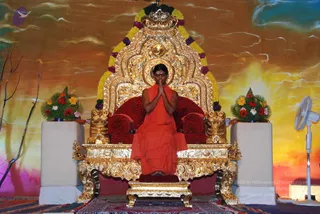
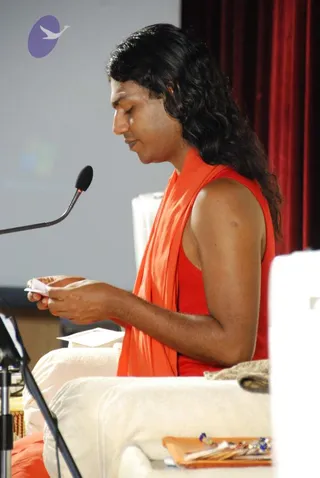
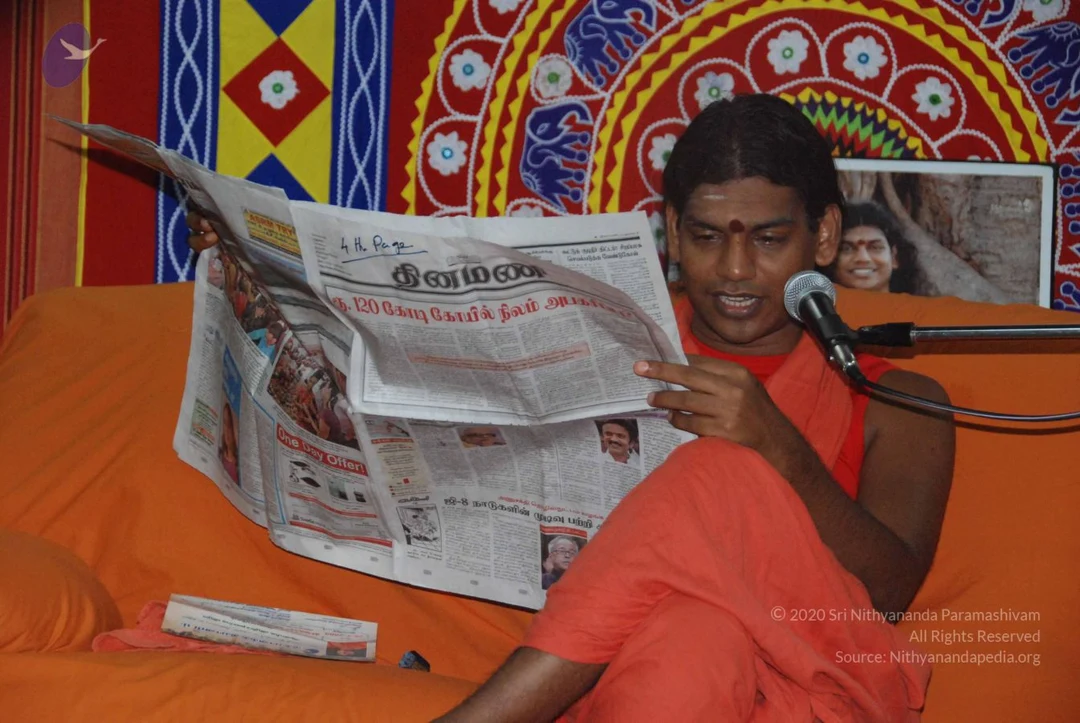
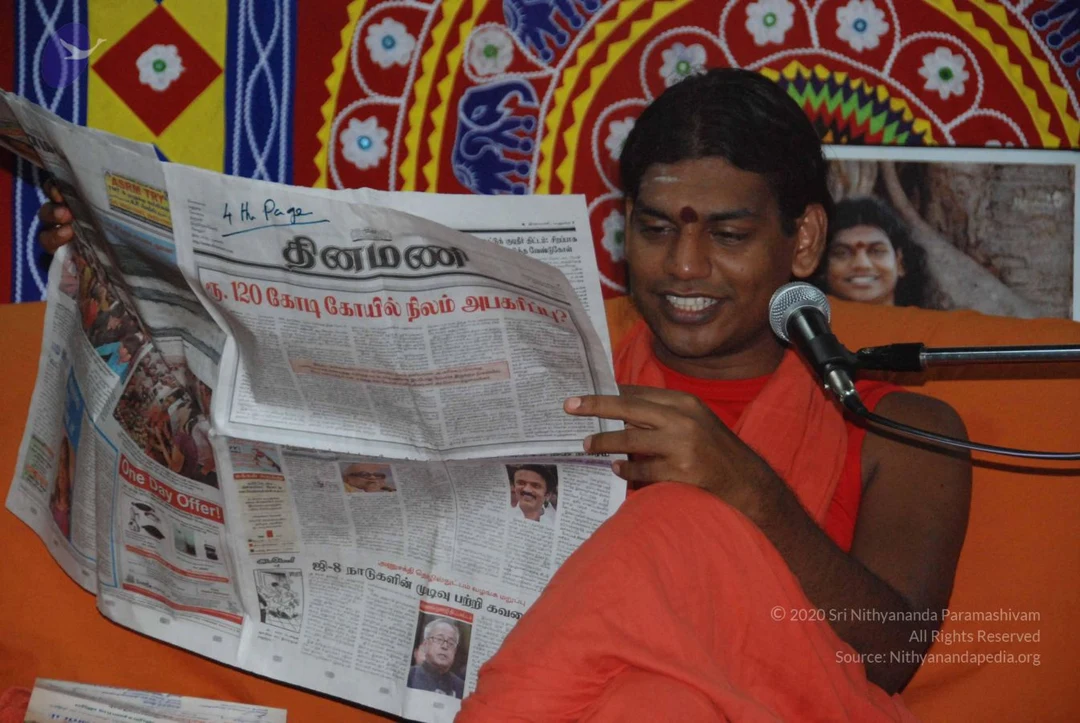
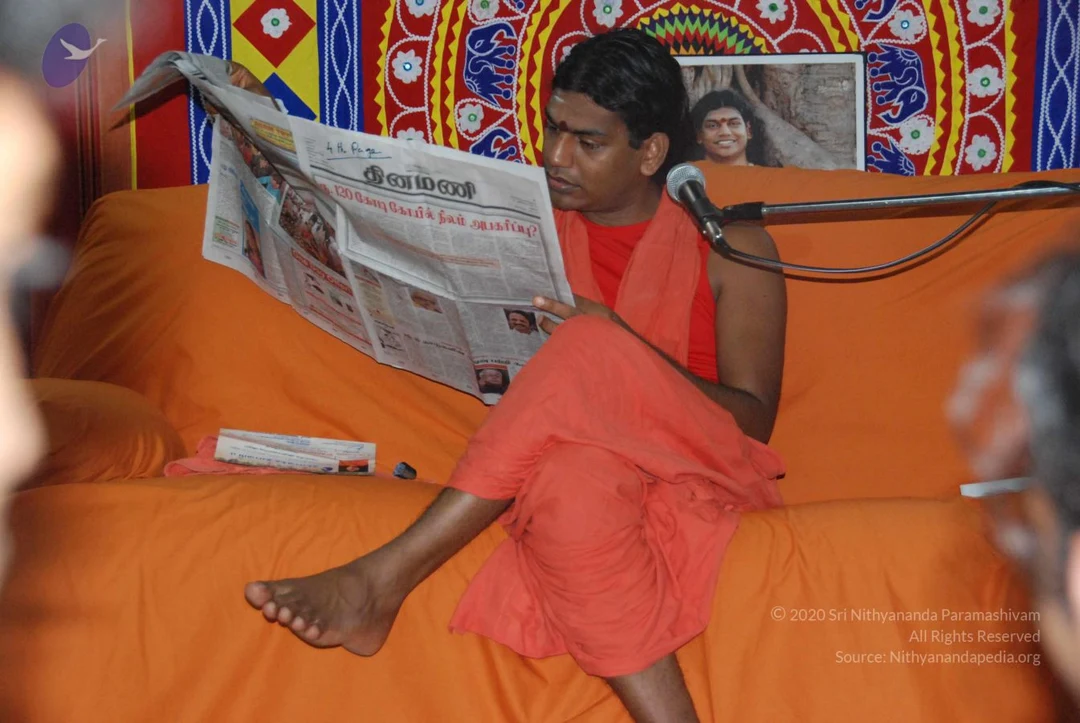
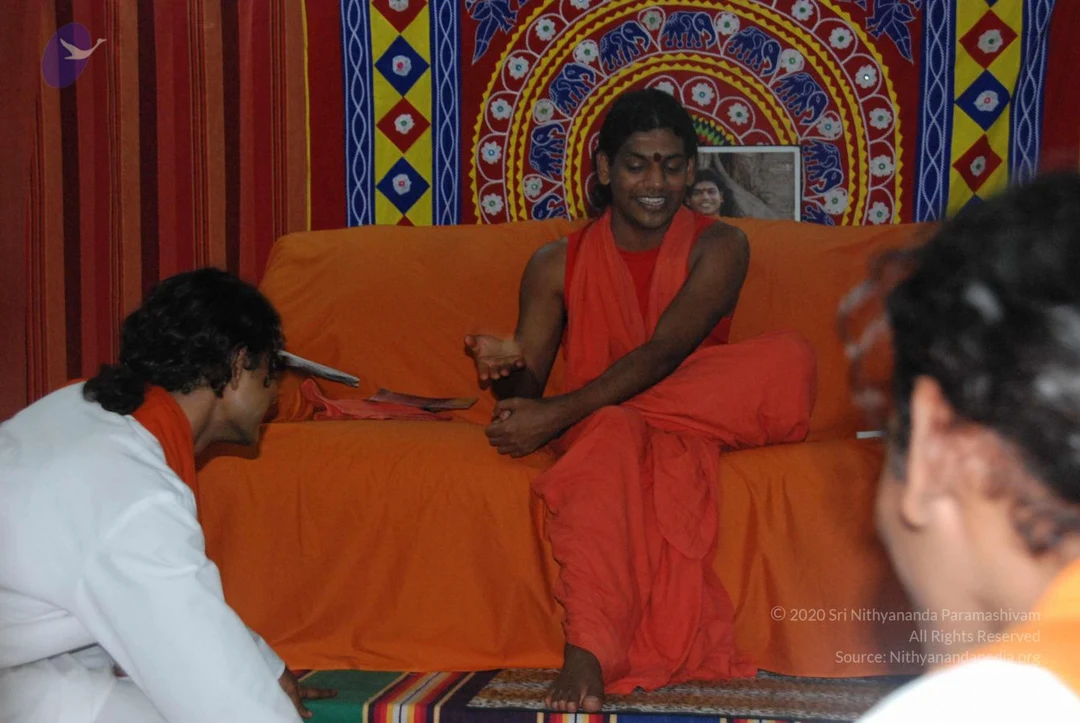
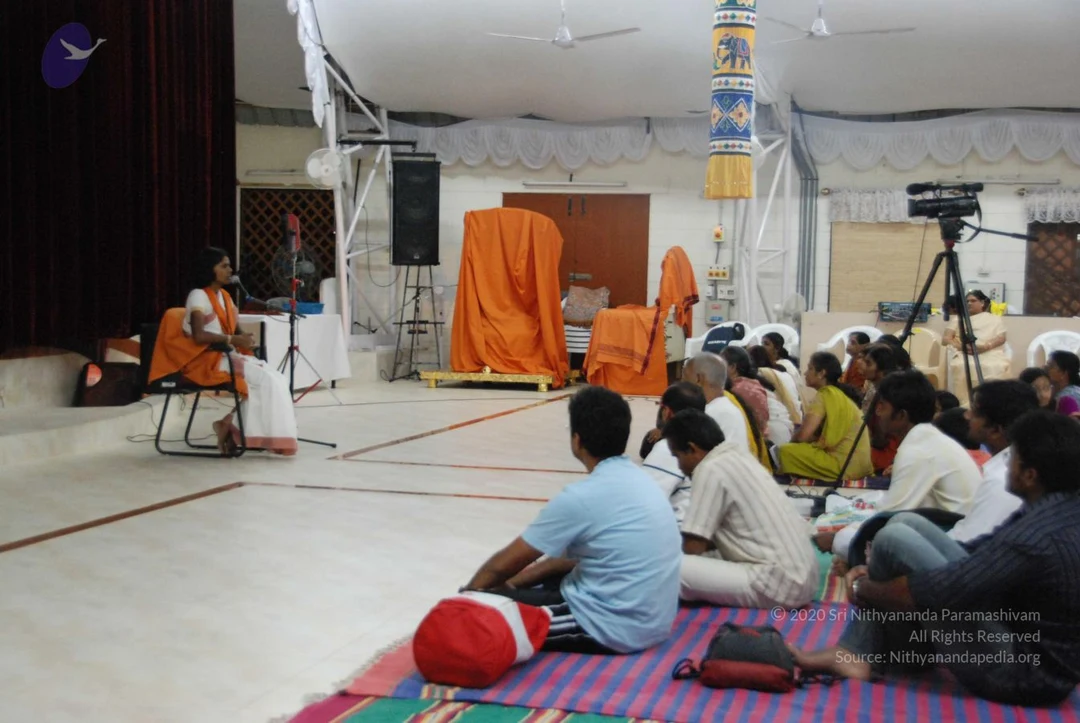
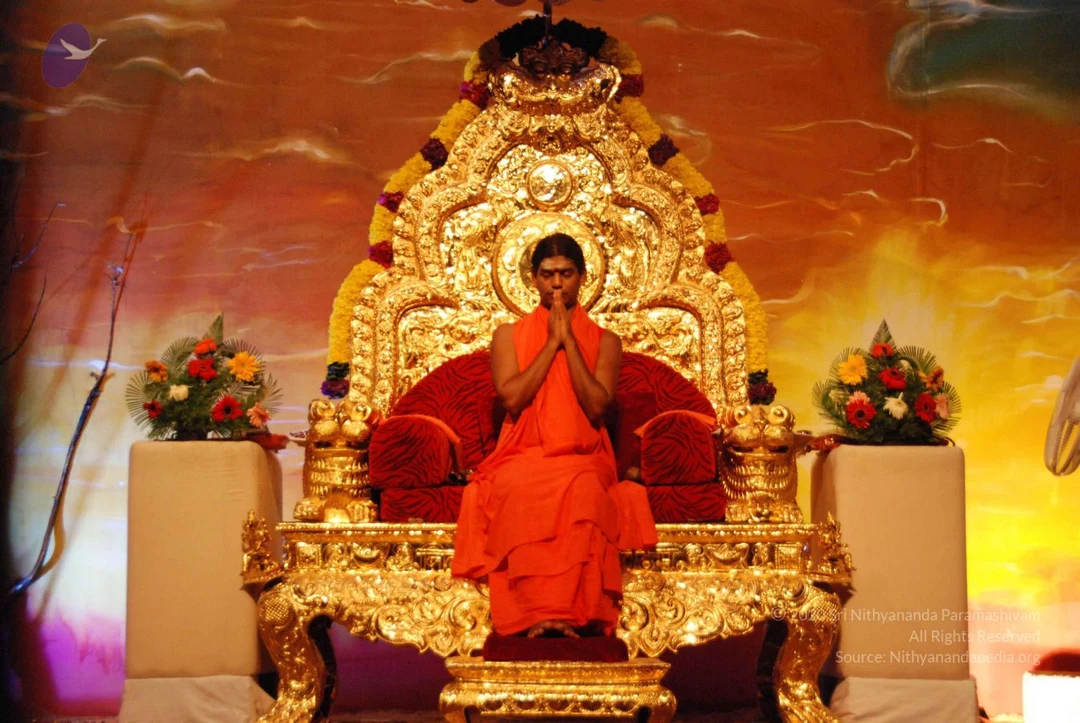
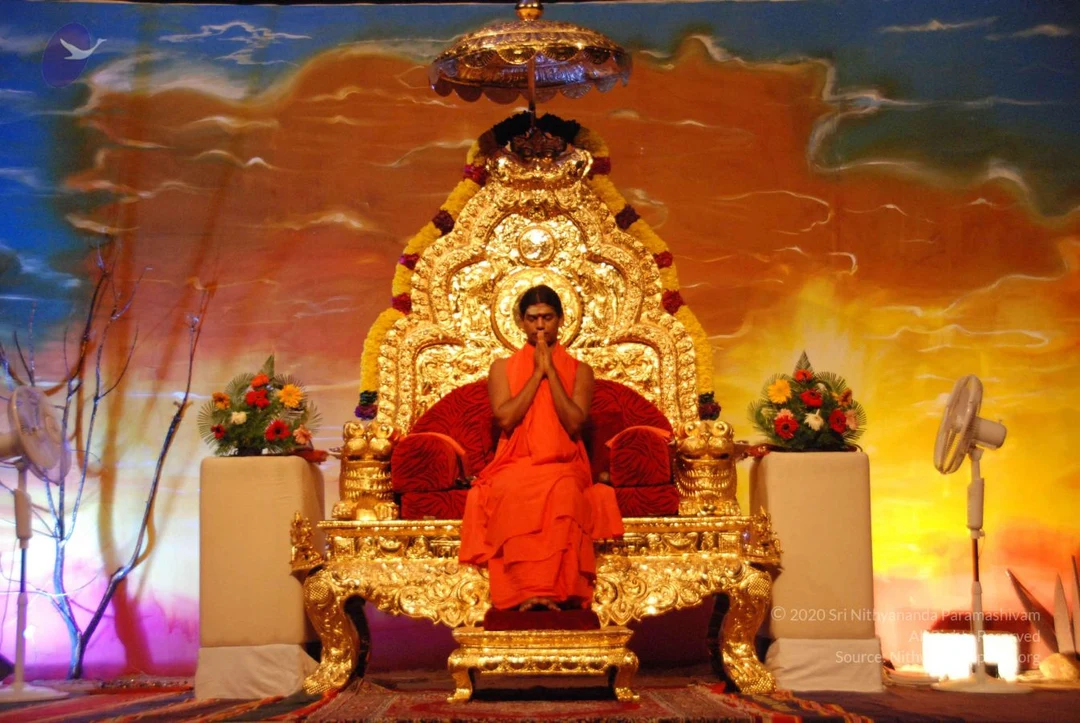
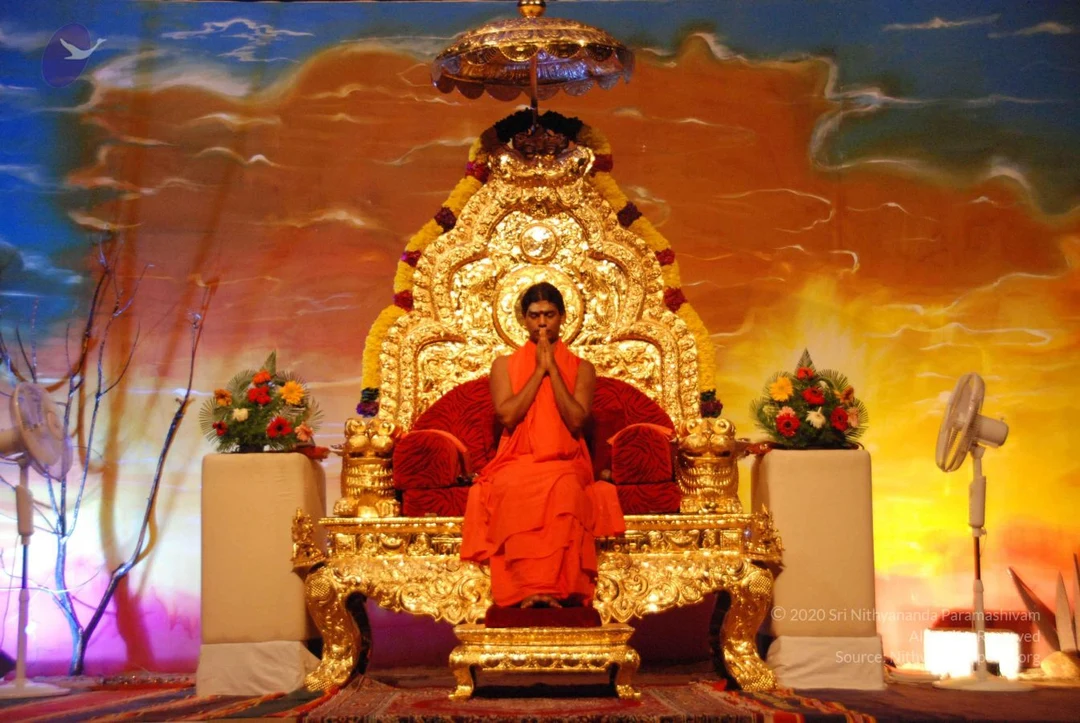
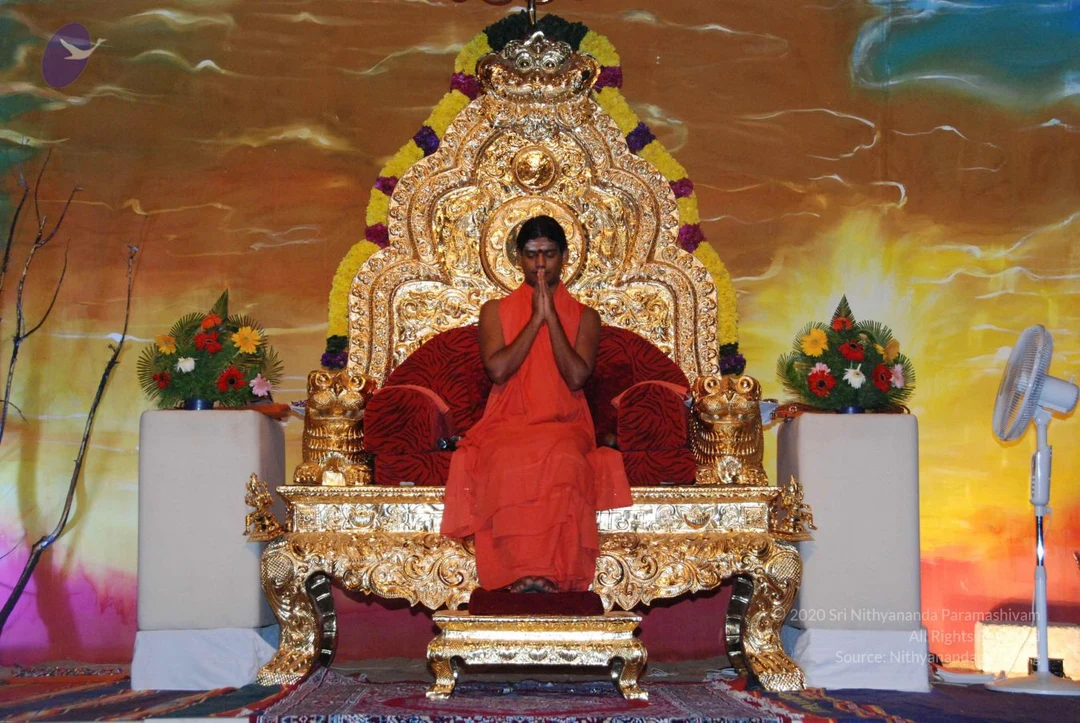
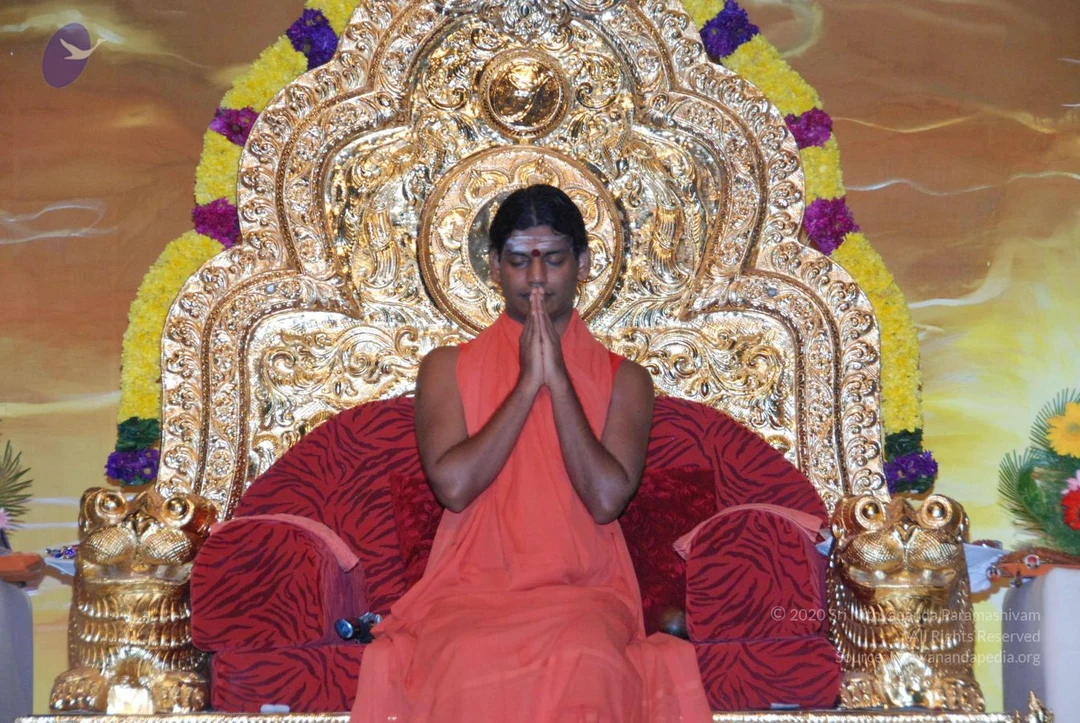
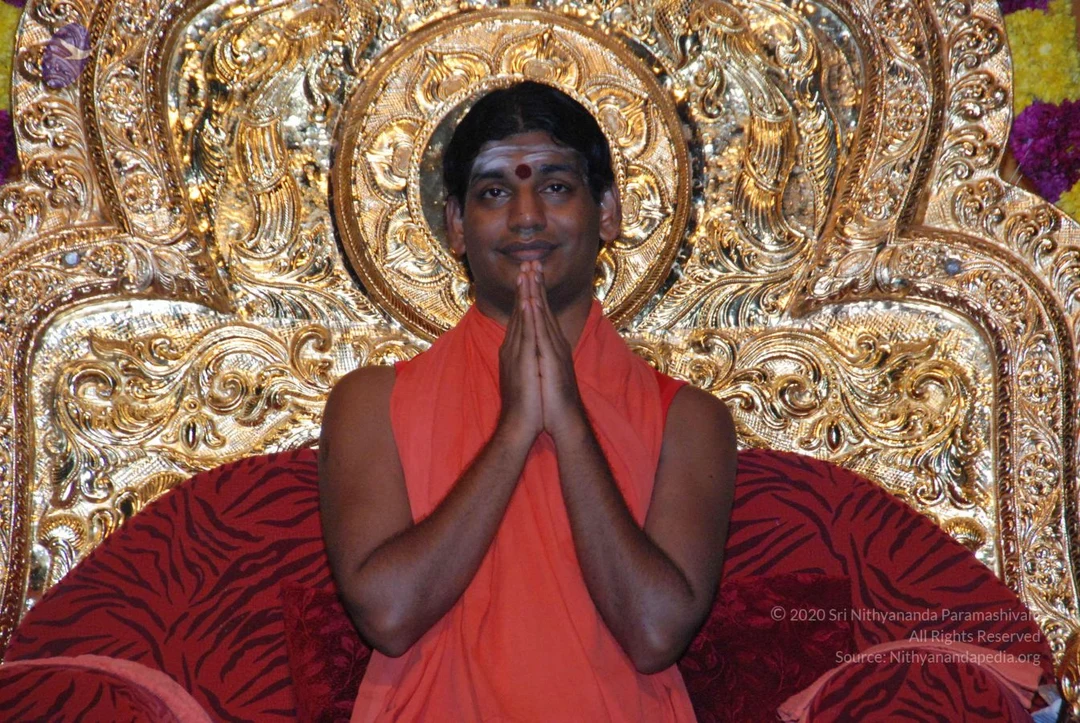
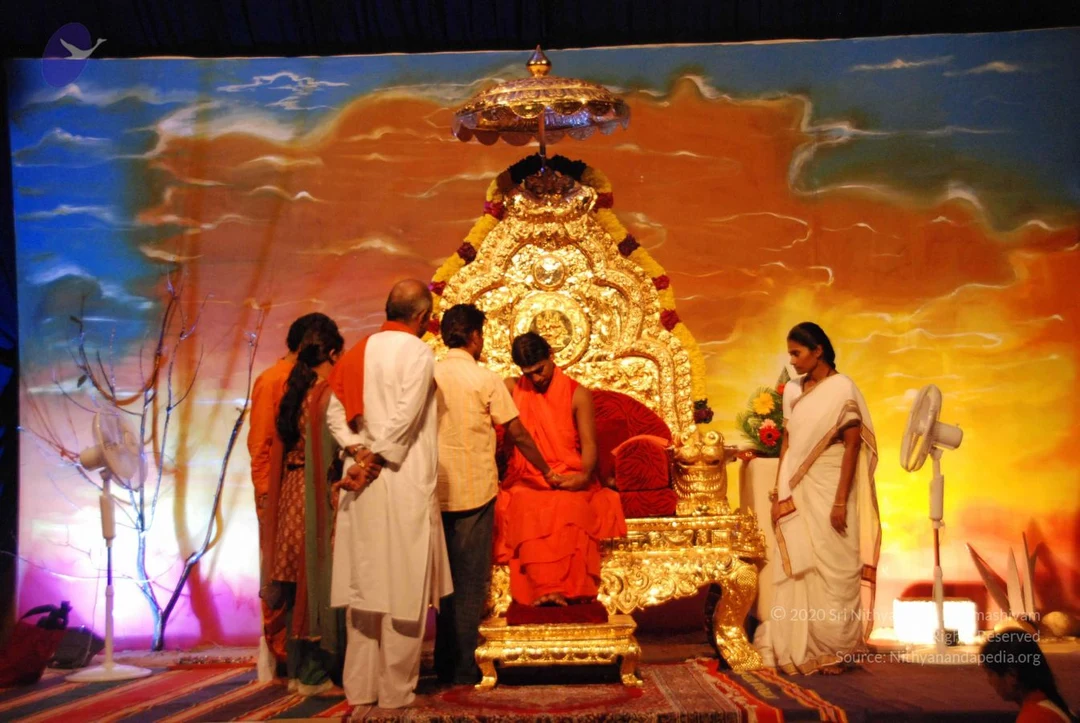
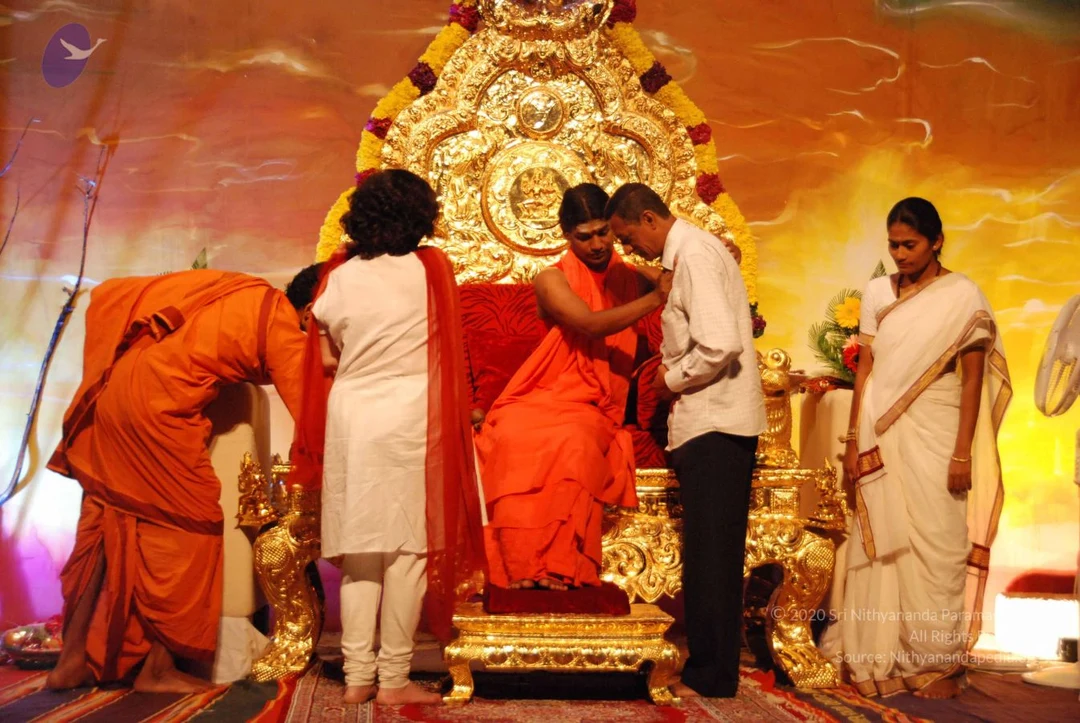
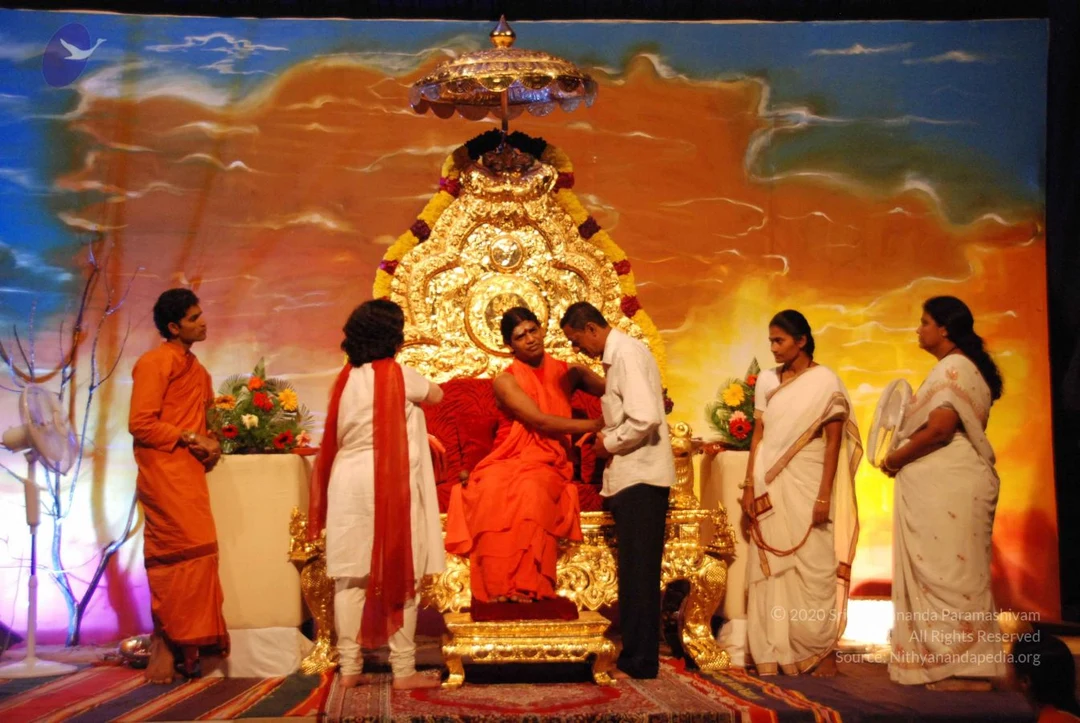
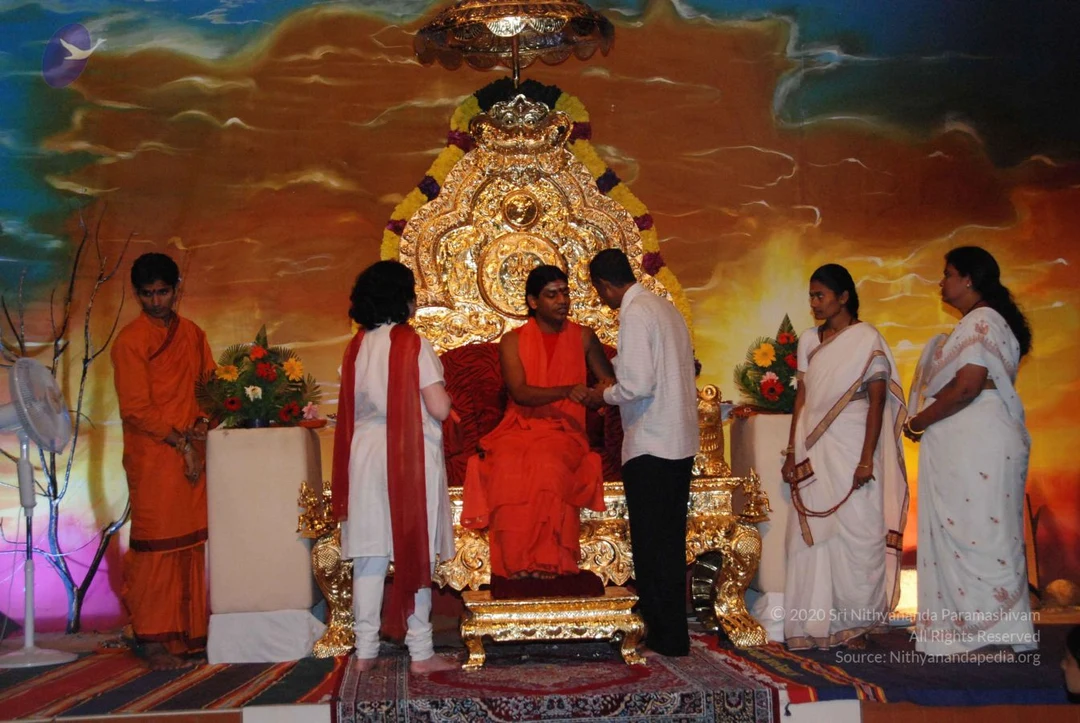
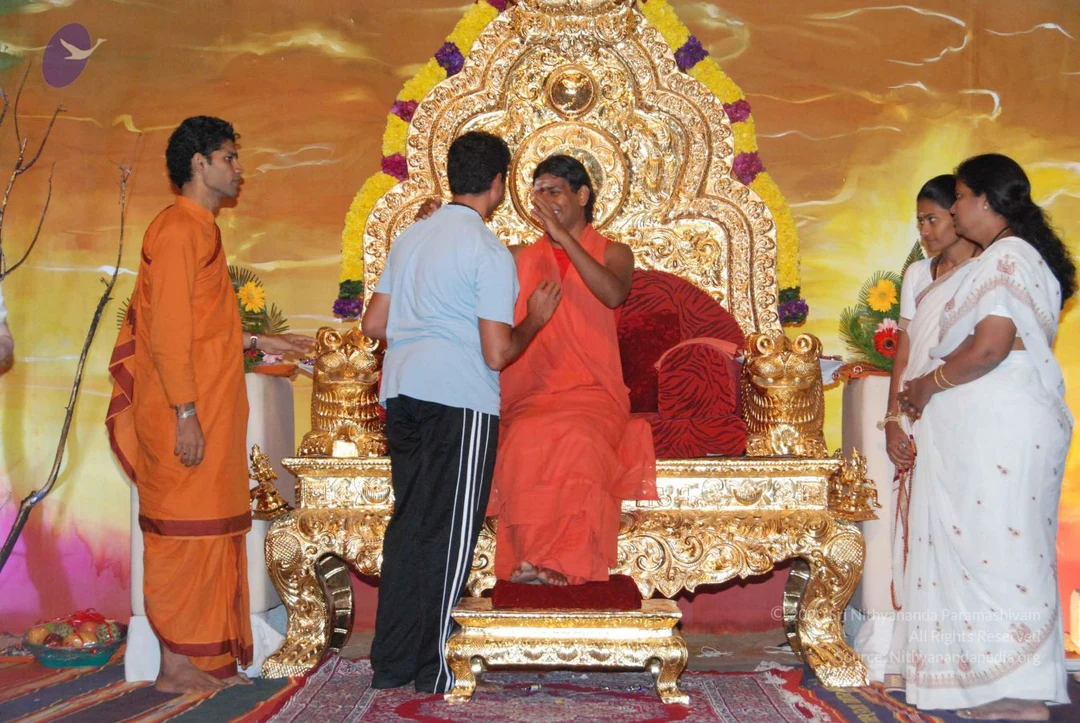
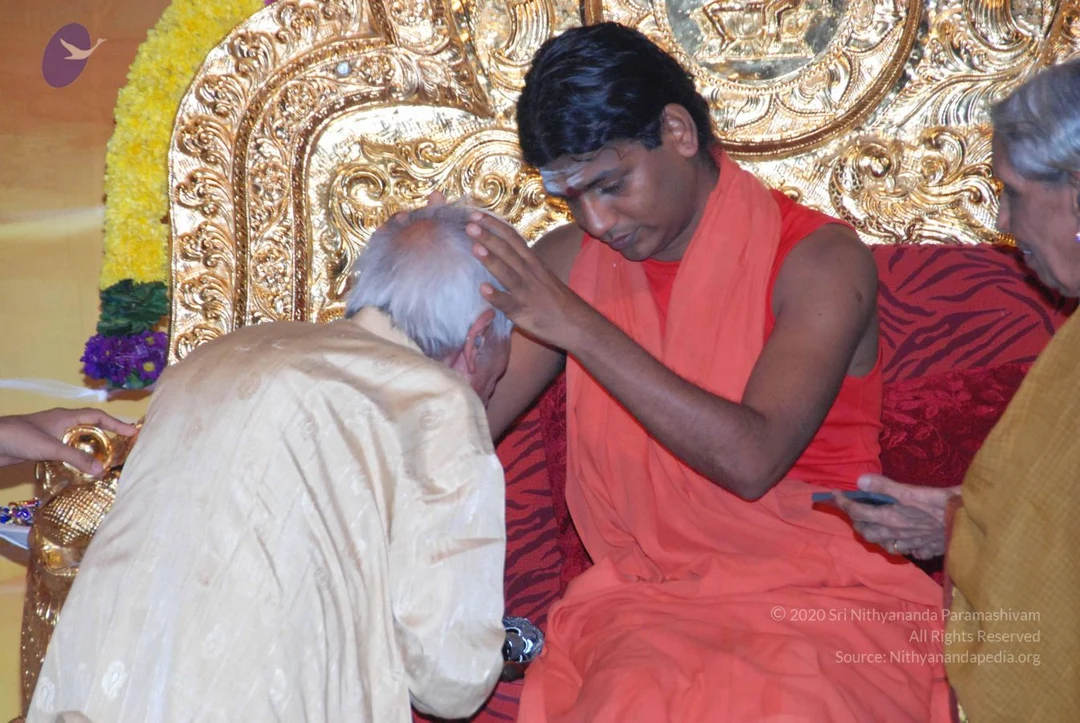
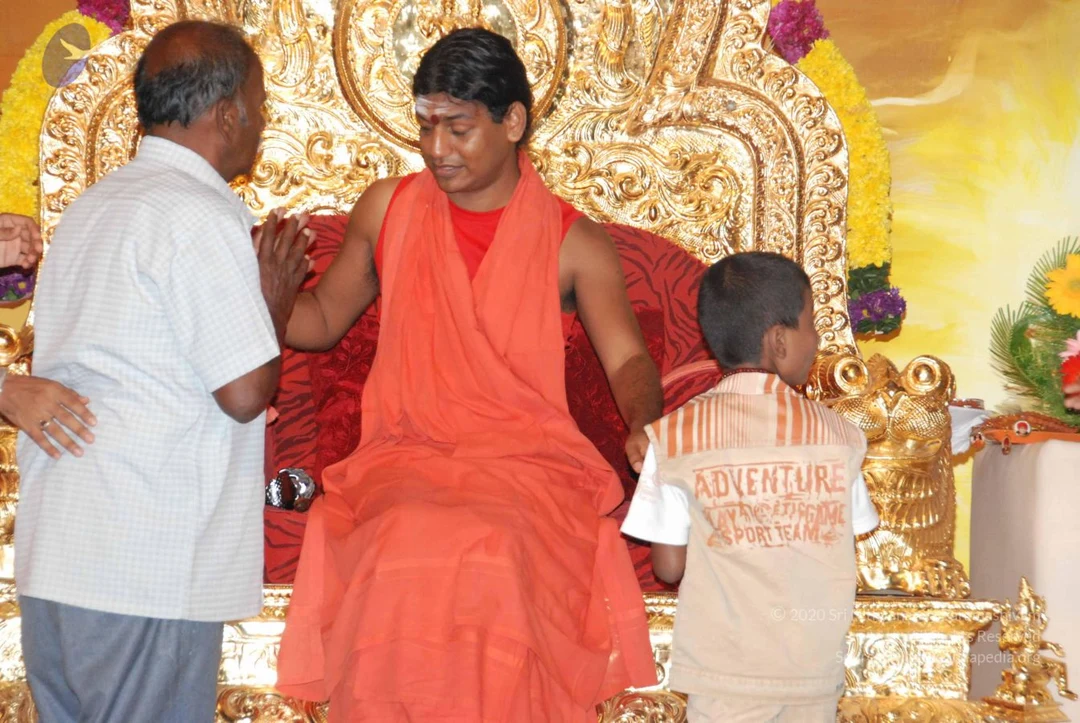
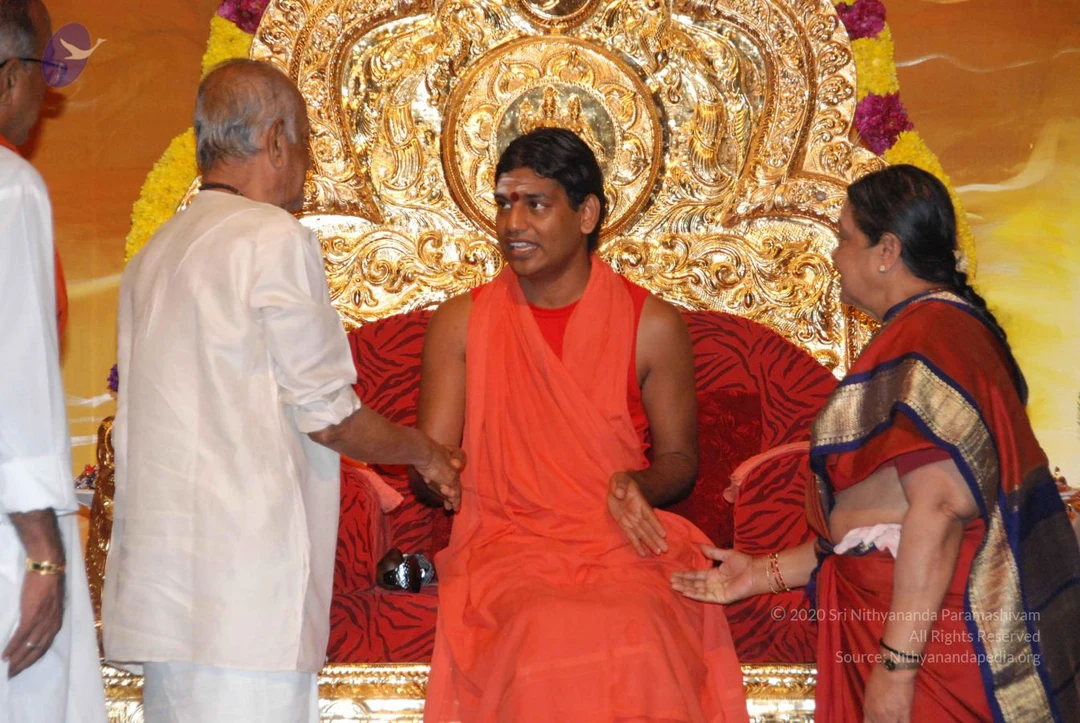
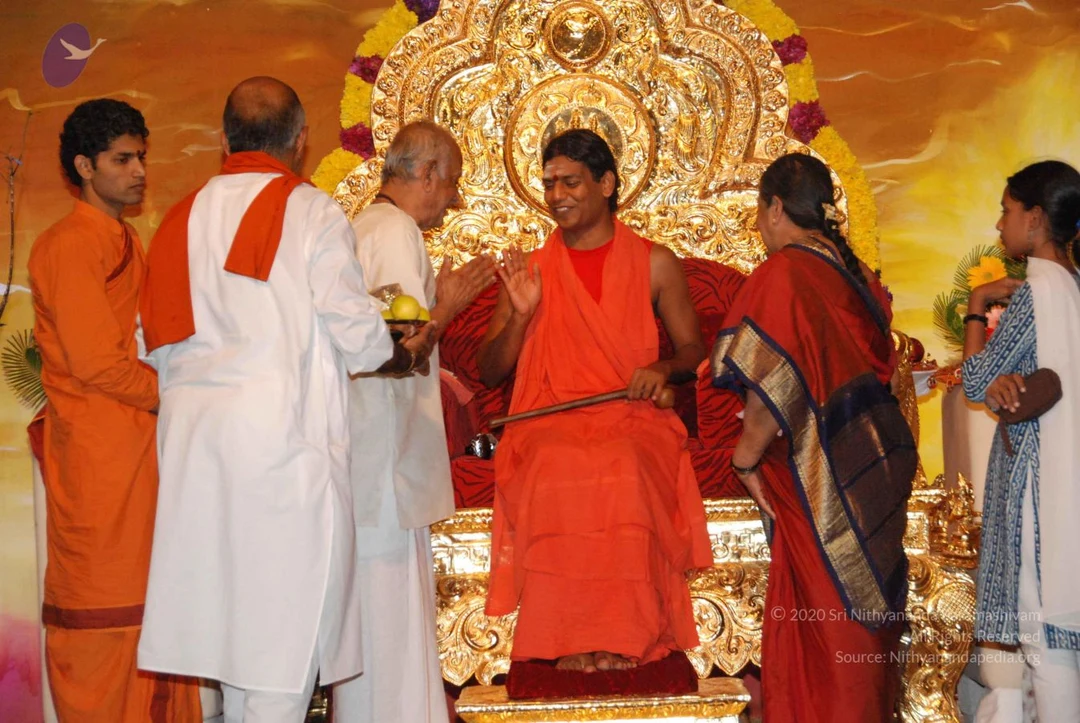
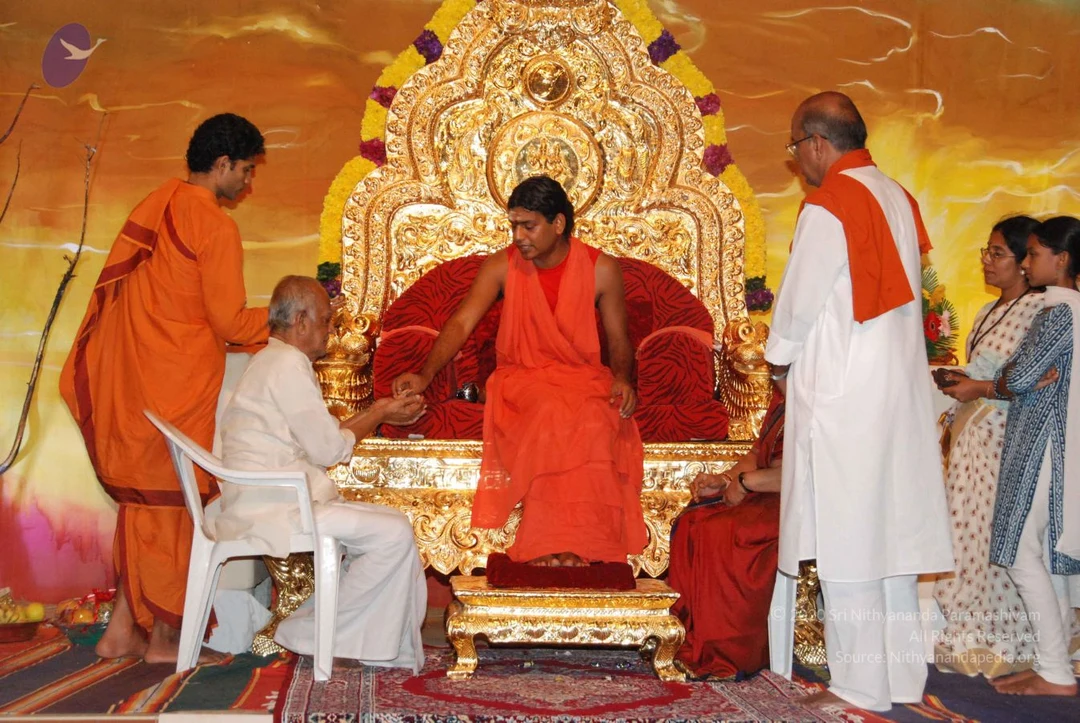
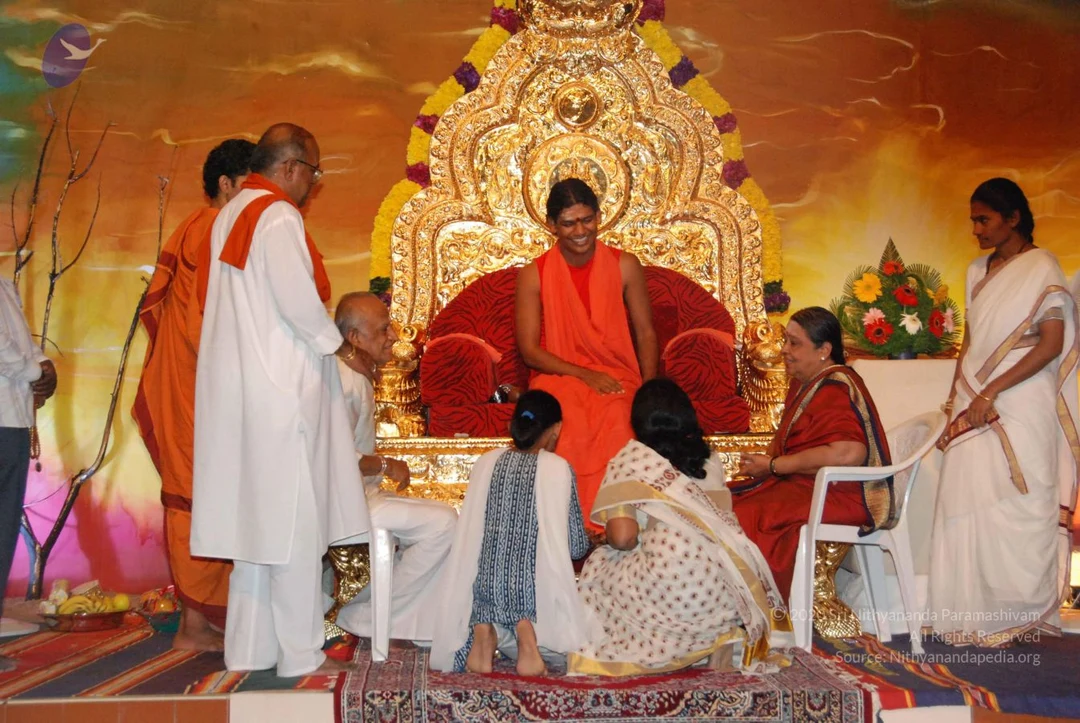
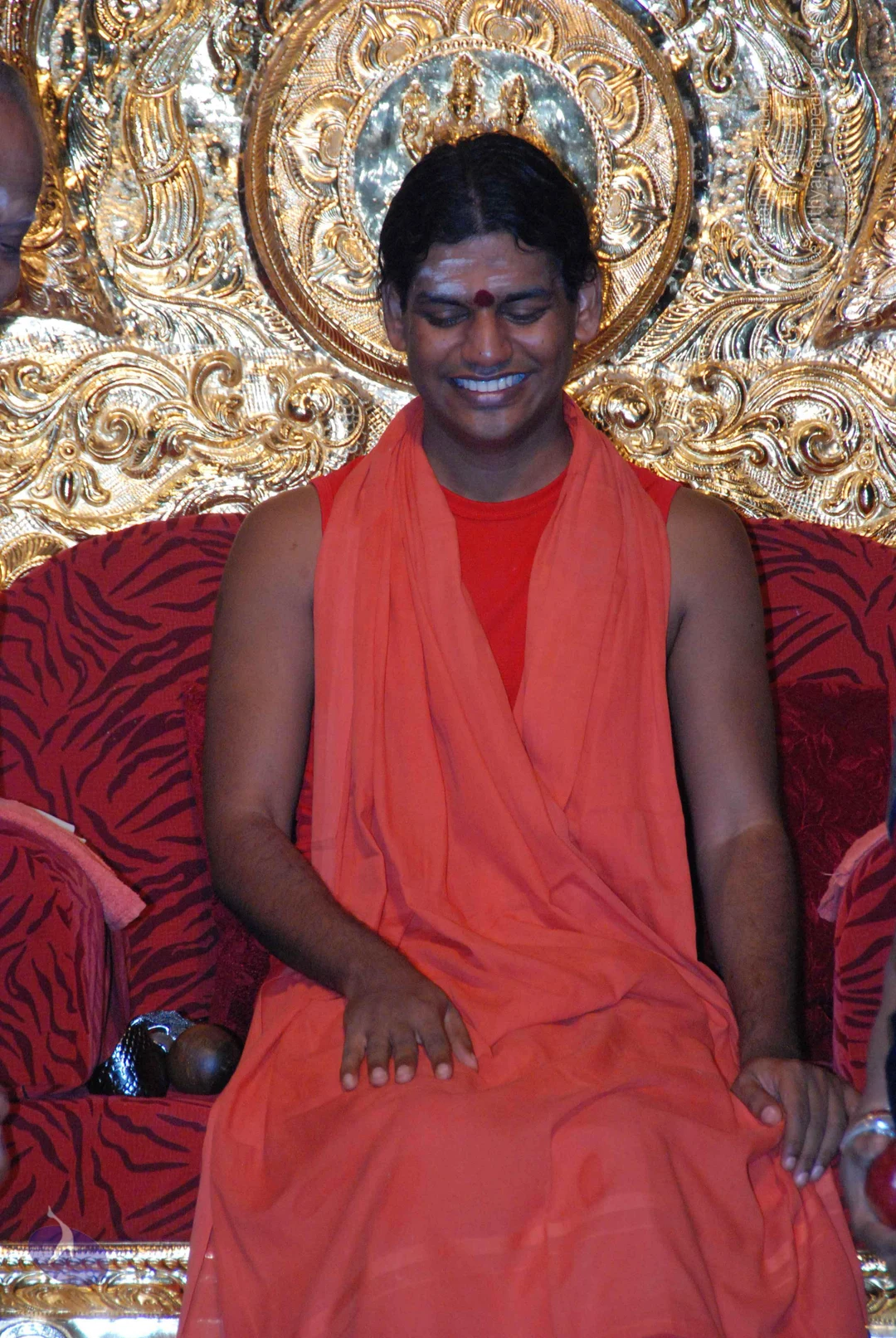
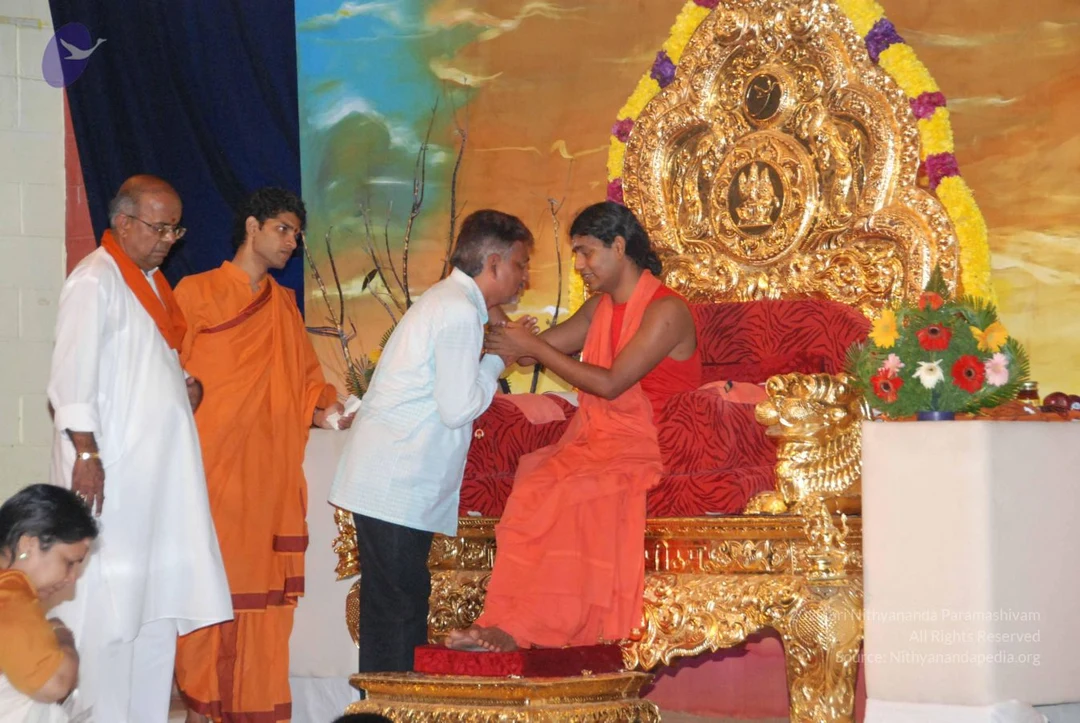
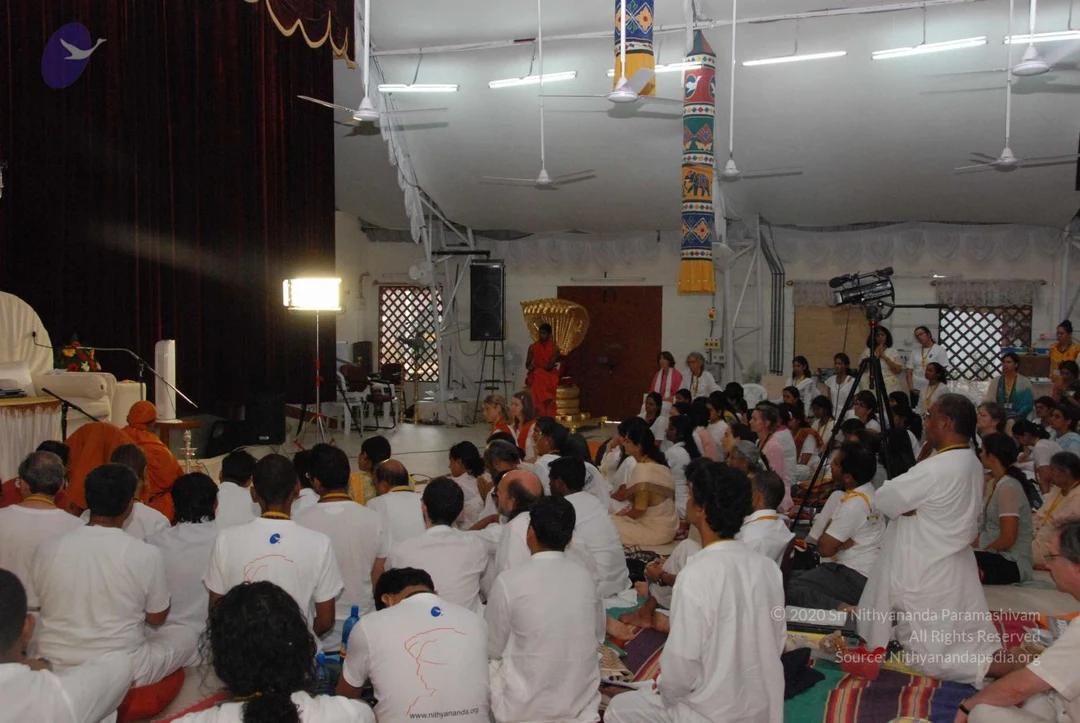
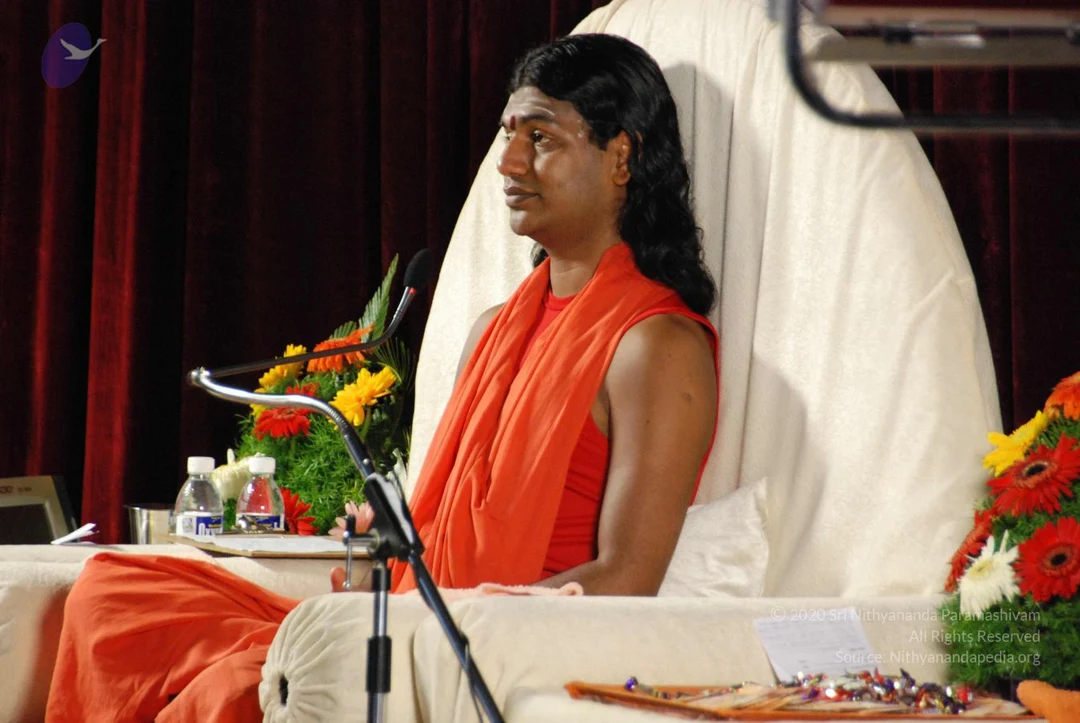
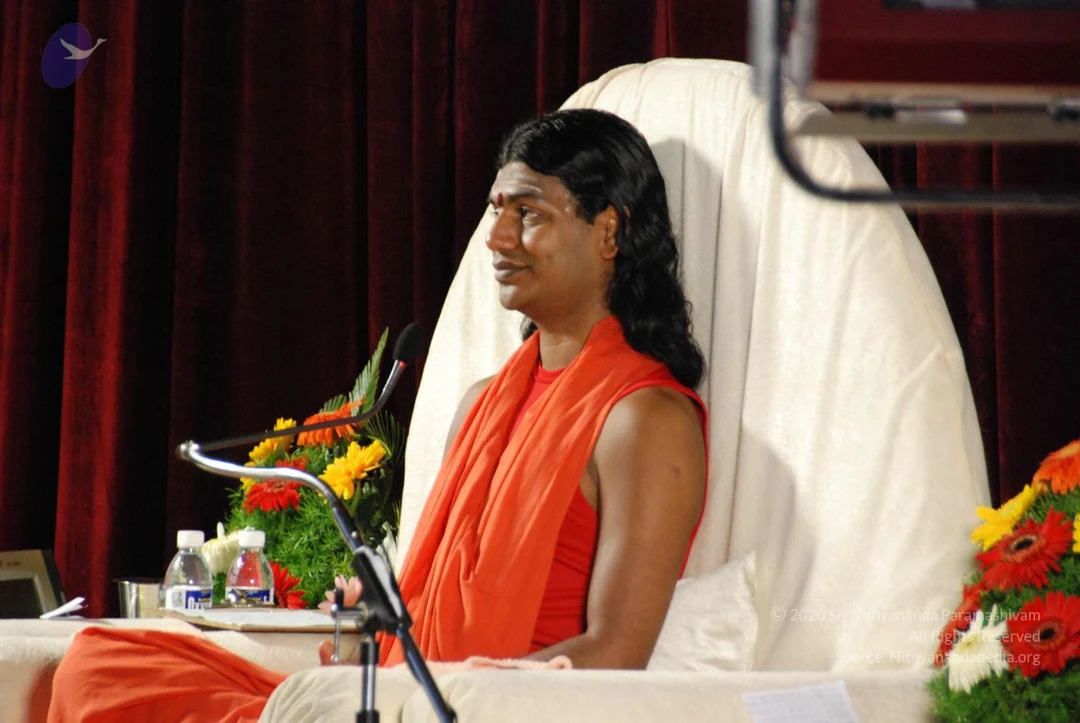
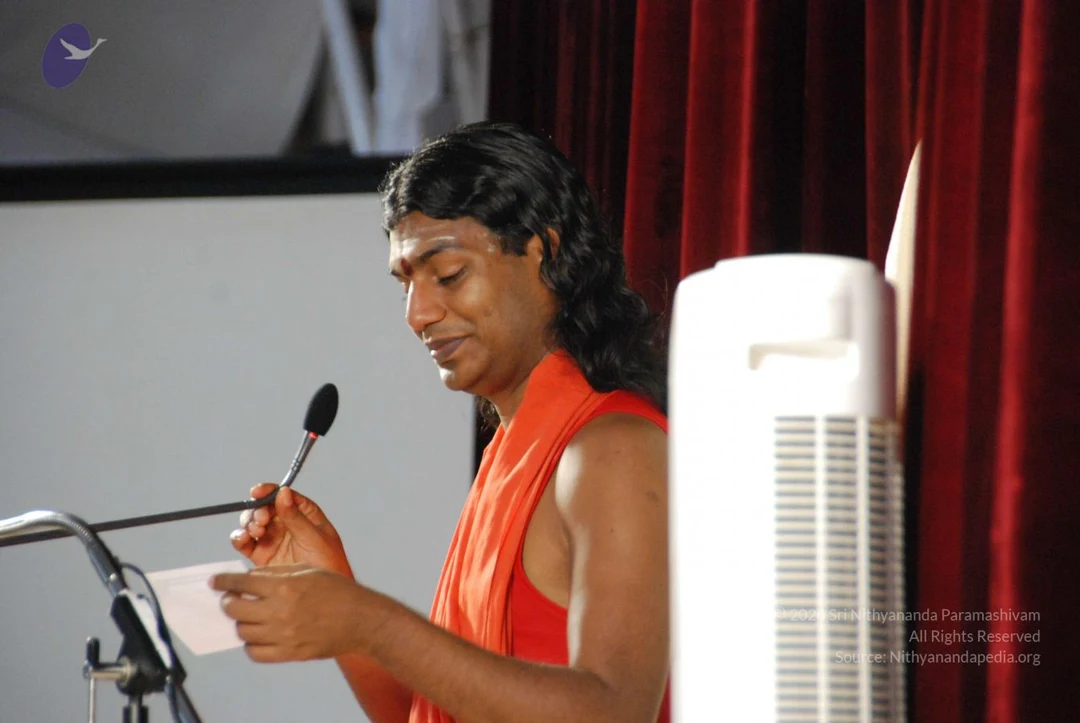
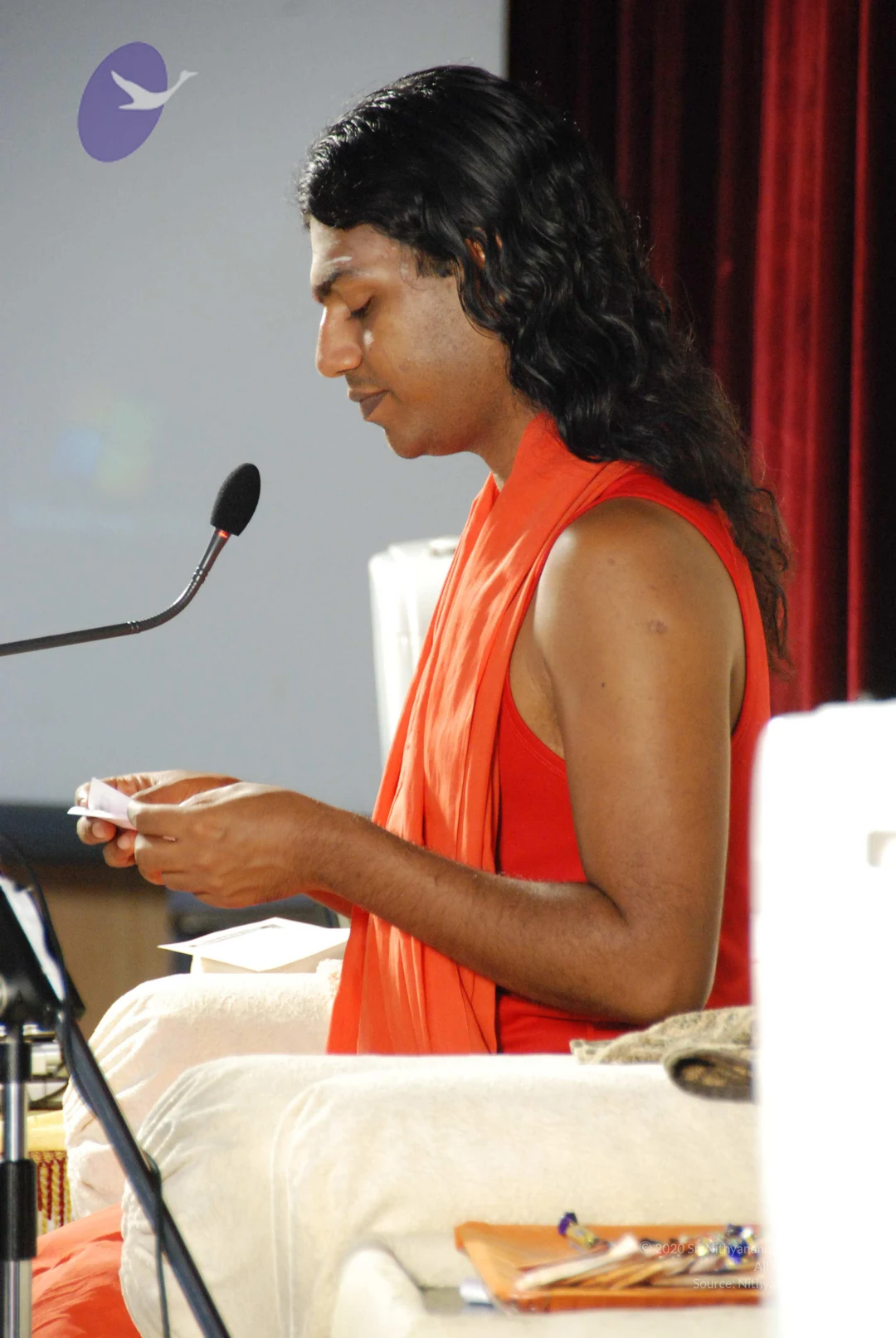
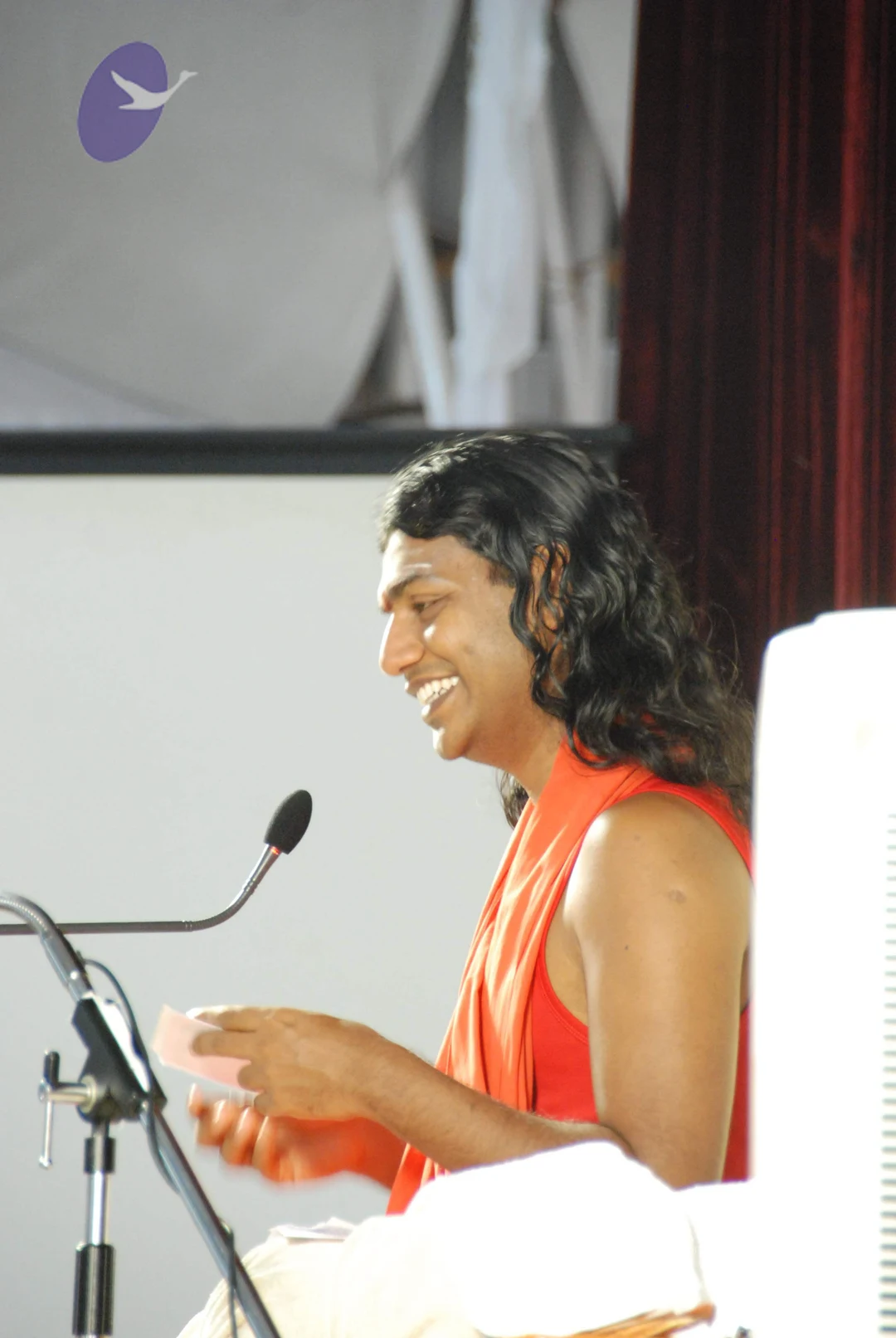
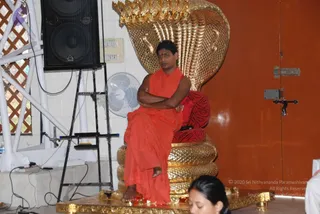
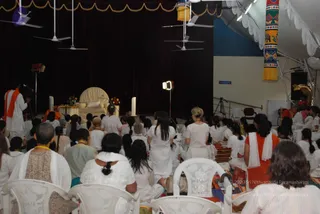
A figure in an orange-red robe sits cross-legged on an ornate gilded throne with red cushions, palms pressed together in namaste. The throne has carved lion-head armrests and a golden arched back crowned by a golden makara-style top and a garland of yellow, orange and purple flowers. Potted arrangements of red, yellow and white flowers stand on white pedestals at each side. Behind the throne is a painted backdrop of a fiery orange and yellow sunset sky with swirling clouds, and a white pedestal fan stands at the right edge. The figure appears to be a seated Swamiji (probable), identified by the orange robe and the honoured throne seat, with long hair and ceremonial adornment only partially visible.A seated man in profile, viewed from the side, reads a small white card held in both hands. He wears a sleeveless orange-red sleeveless top with a matching orange-red shawl draped over his shoulders, and long dark wavy hair falls past his shoulders. A thin white tilak mark is visible on his forehead. In front of him stands a black gooseneck microphone on a stand, and a white cushioned seat sits beneath him. A red curtain hangs behind, and a pale projection screen is at the left. A small orange tray with items lies at the lower right. The scene resembles a discourse session, with the speaker preparing his notes. a person: the person wears orange-red monastic attire, long hair and a forehead mark, and is seated at a speaker's position with microphone and cushioned seat.A photograph of an indoor satsang hall with white walls, ceiling fans and a draped white valance. A woman in an orange shawl and white garment sits on a chair at the left, speaking into a microphone at a small table, with a black speaker stand beside her. Several orange cloths cover seated objects on a raised platform in the centre, and a tall blue-and-yellow patterned pillar stands at the top right. Around fifteen seated devotees sit on striped mats in the foreground, some in white and light clothes, and a video camera on a tripod records the session. A woman in cream clothing sits at the far right.

July 21 2009

Original wiki page
Contents

Title:

Divine Feminine Consciousness (A Discourse delivered at Inner Awakening & LBE)

Description

This discourse was delivered at the recently concluded Inner Awakening Program by Living Enlightened Master Paramahamsa Nithyananda in Bengaluru, India. Inner Awakening is a 21 day enlightenement intensive program to experience Jivan Mukthi. The next Inner Awakening program will be held in Beganulu Ashram from December 2-22, 2009. More details may be found at www.dhyanapeetam.org

Link to Video-Audio:

VideoAudio

Title:

Title

Body is male But; conciousness is beyond gender?

Link to Video-Audio:

VideoAudio

Title:

Power of Feminine Consciousness, LBE, 21July 2009

Description:

In the session during Life Bliss Engineering program,Bhagavan Sri Nithyananda Paramshivam speaks the power of feminine consciousness.

Swamiji describes feminine consciousness as passive consciousness which is deep restful, beloved in nature and far superior to the masculine consciousness which imbibes the qualities of active, aggressive and restlessness.

Link to Video-Audio:

VideoAudio

Title

Feminine Consciousness Questions & Answers

Link to Video-Audio:

VideoAudio

Photos Of The Day:

Acharya-Sessions

Ananadeshwara
Ashramite-Meeting
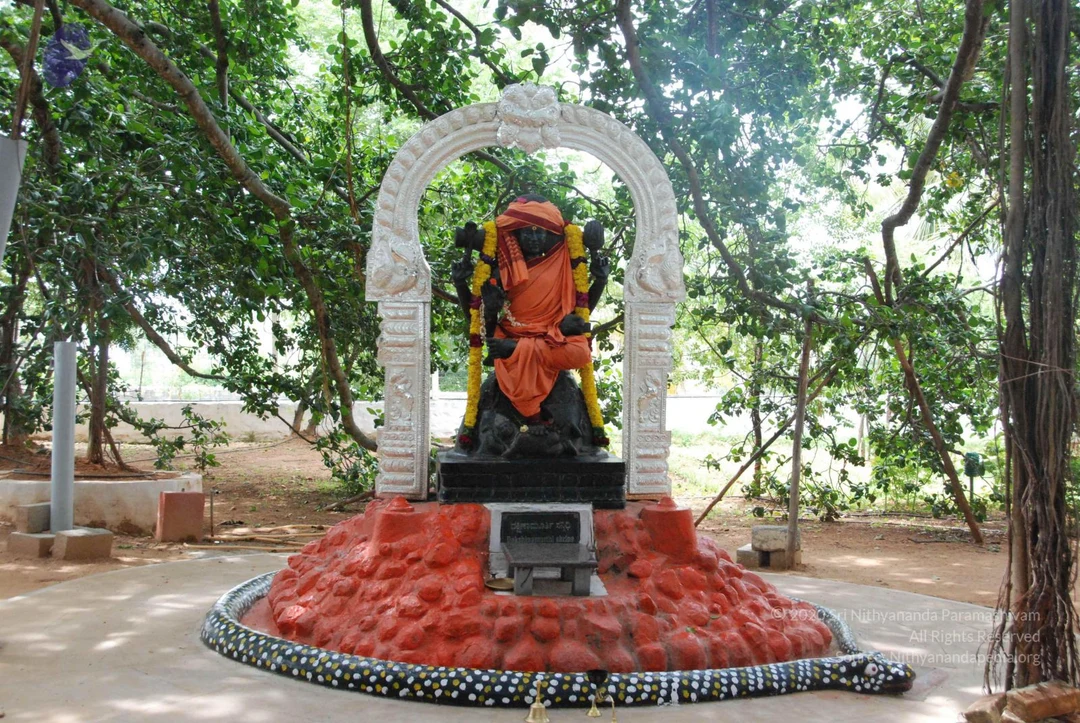
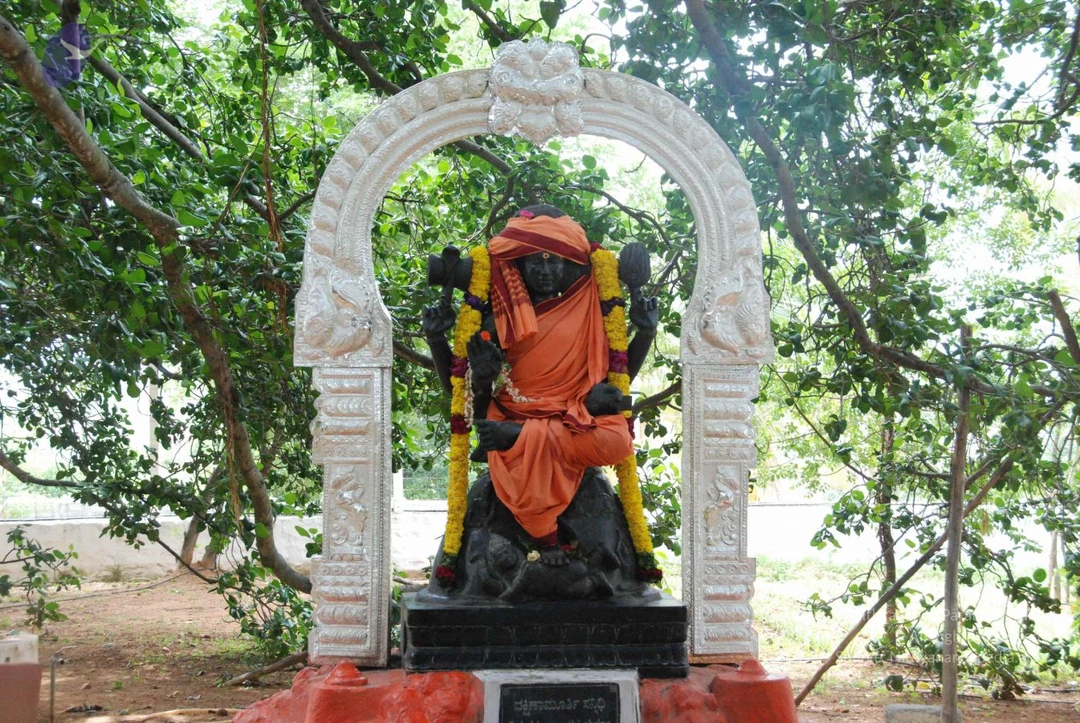
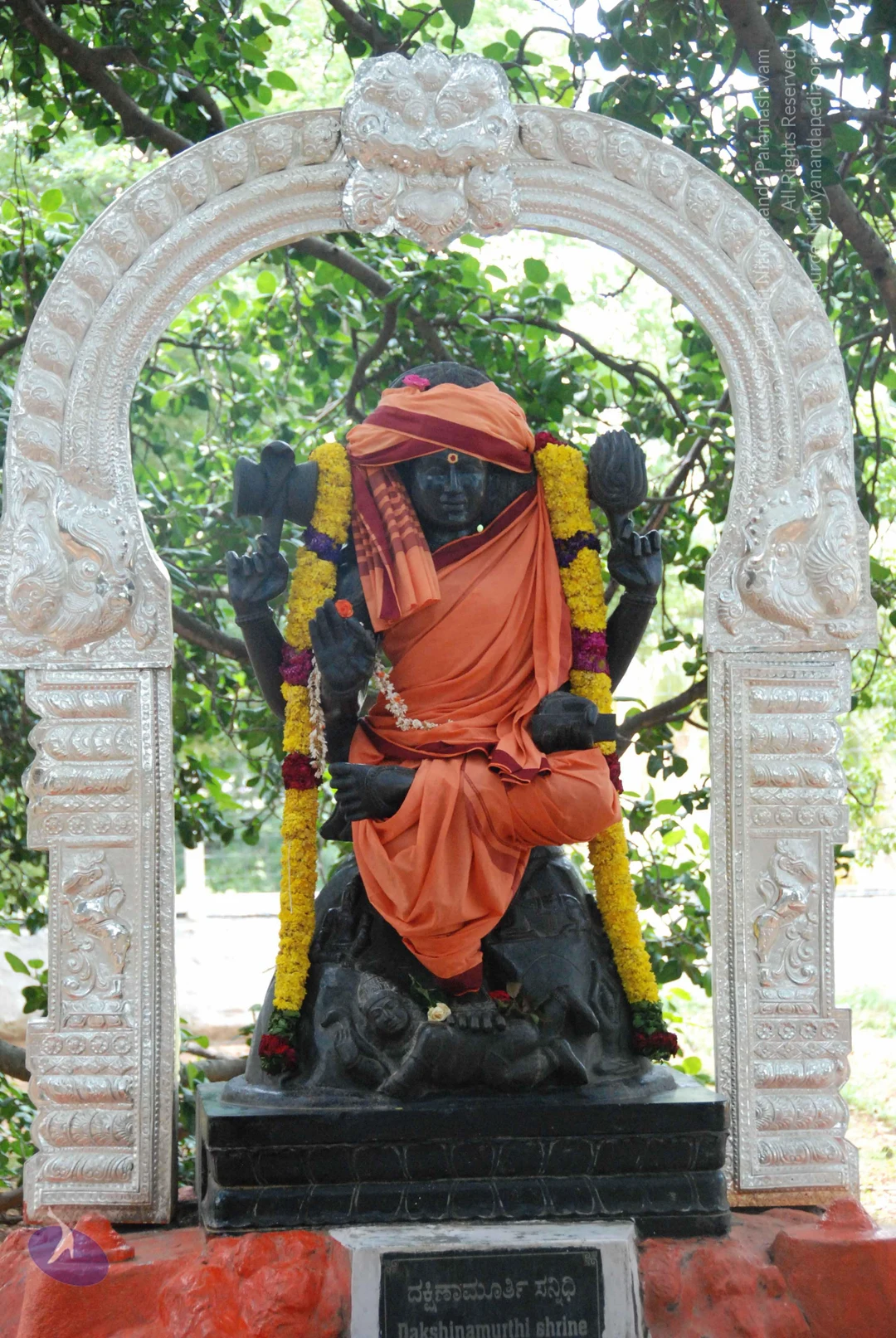
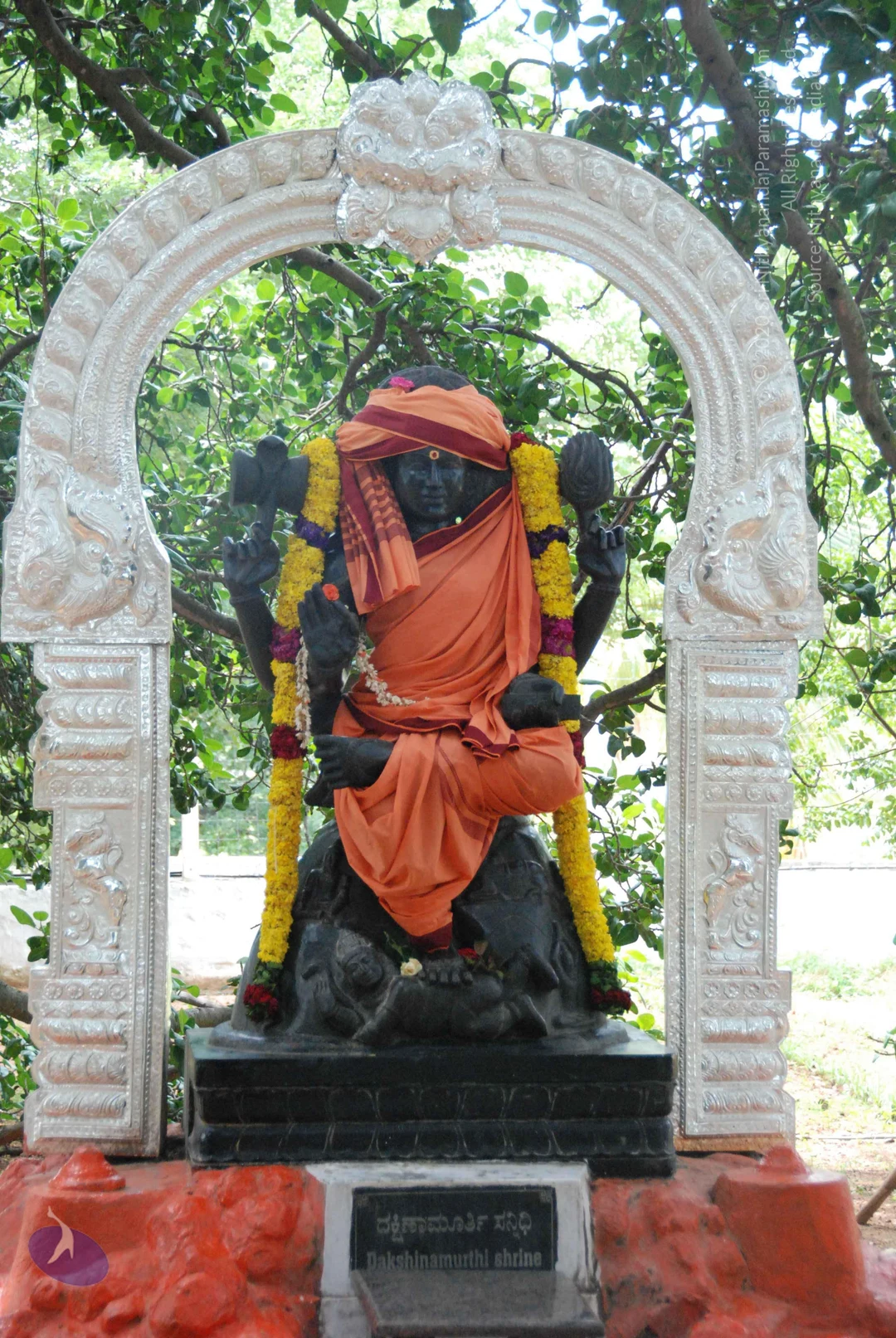
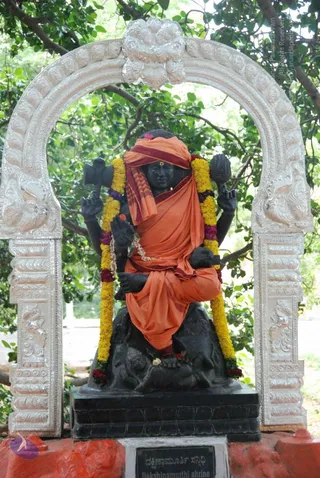
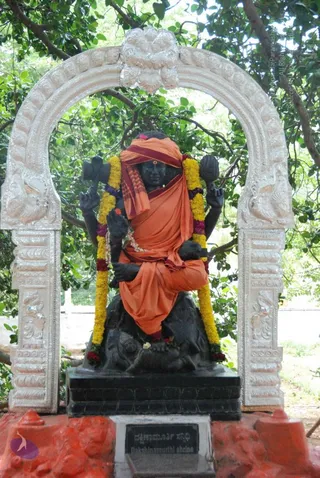
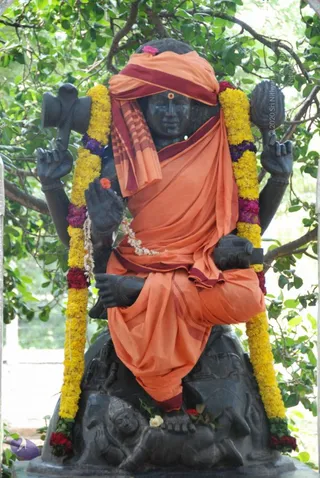
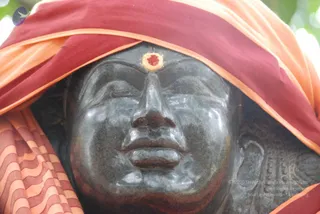
Dakshinamurti

Kalpataru

Participants helping

Sri-Vidya-Puja

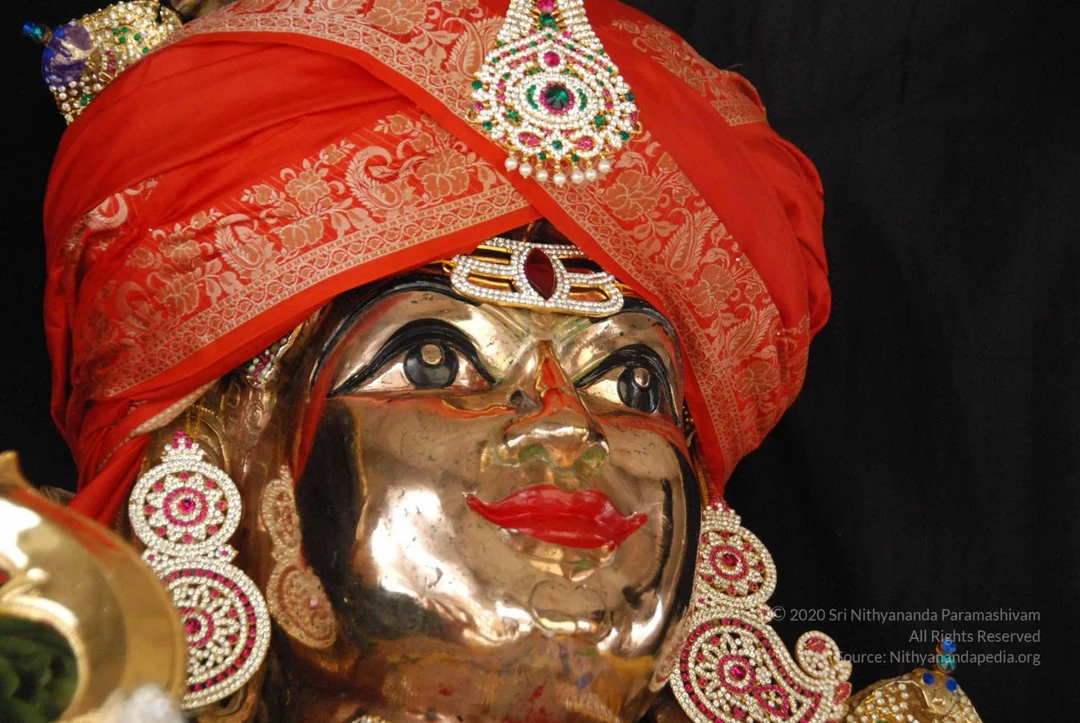
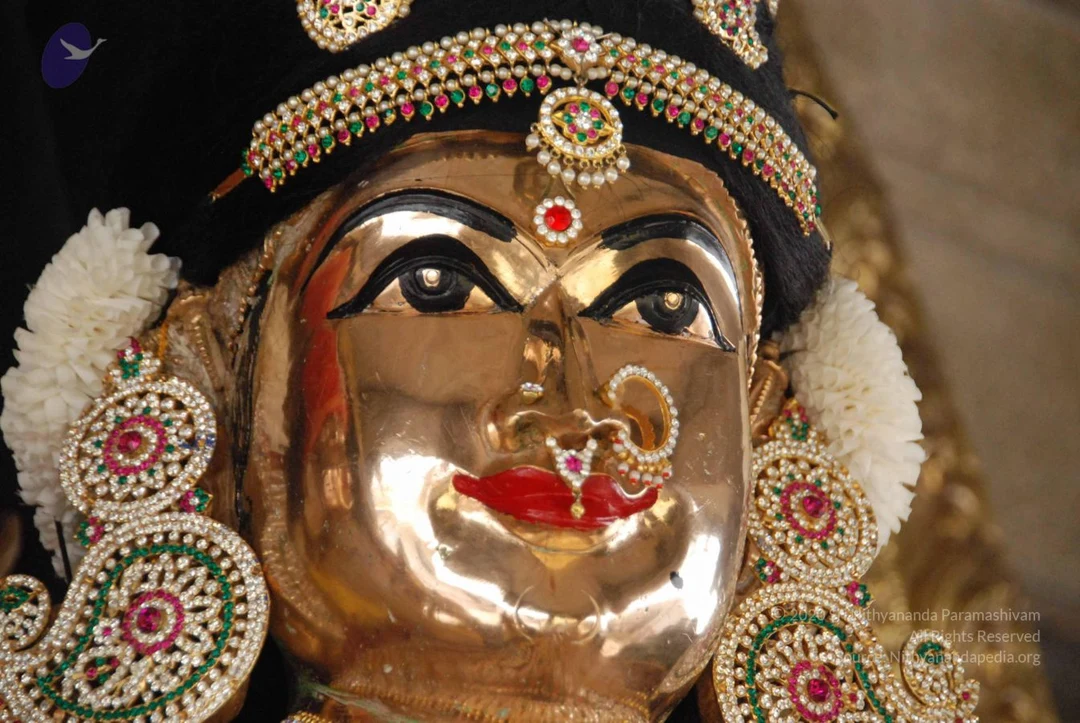
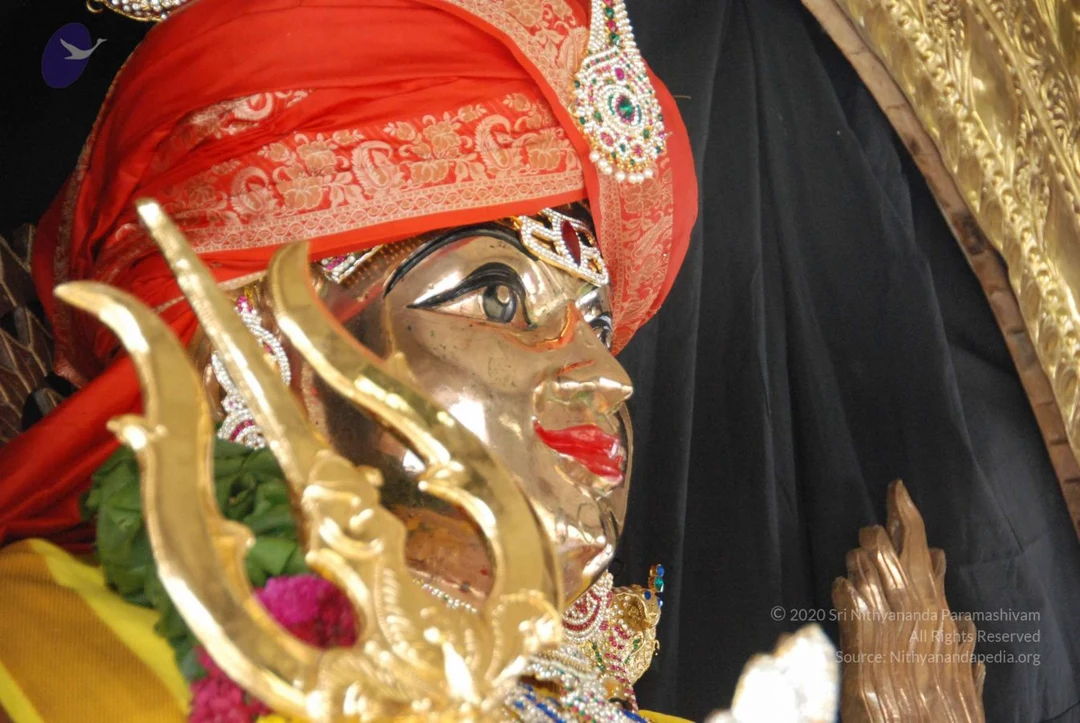
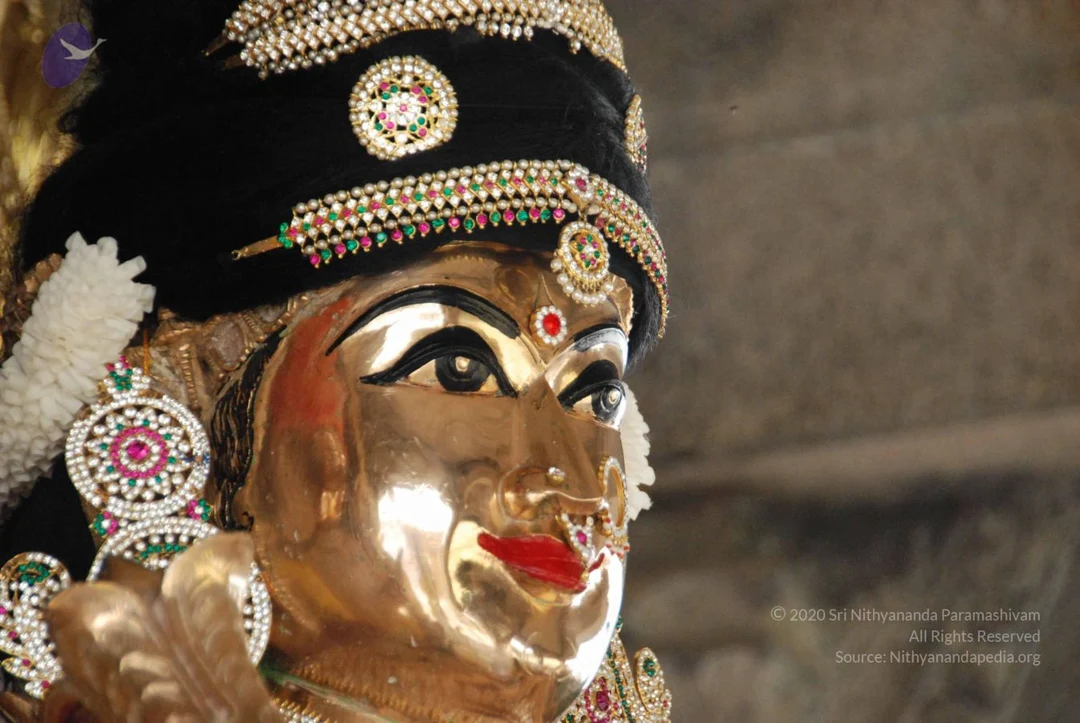
Swami-2

Swami-Morning

Swami-Night-Session

Breaktime

Photos from this day

View all 142 photos

Acharya-Sessions

2 photosSource gallery
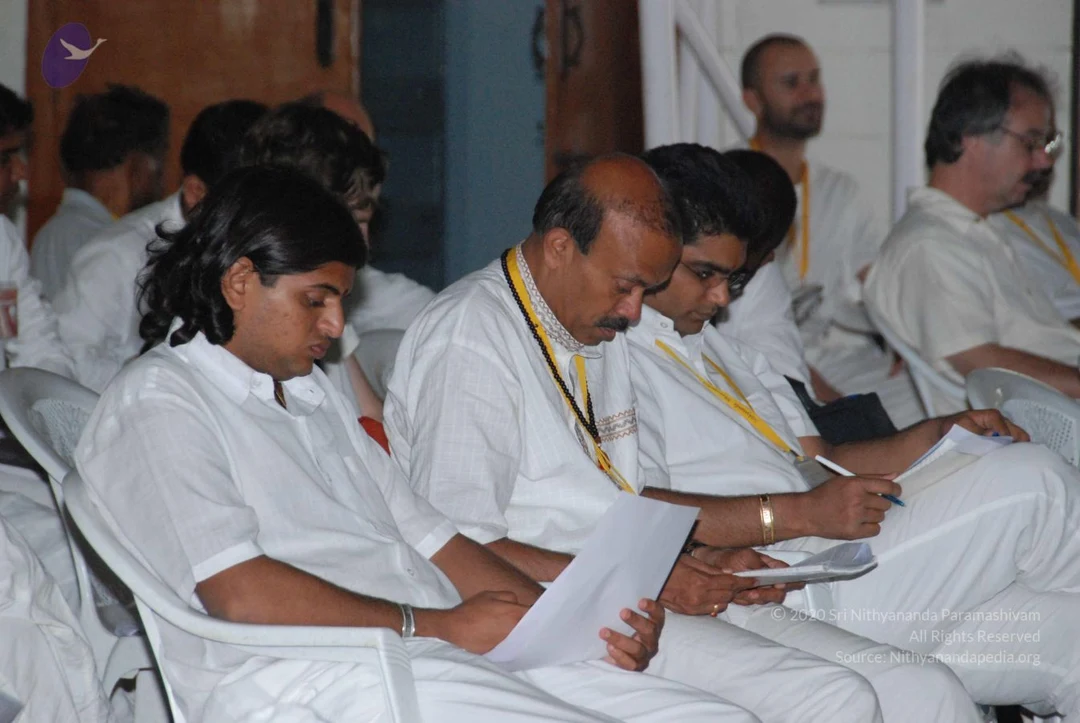
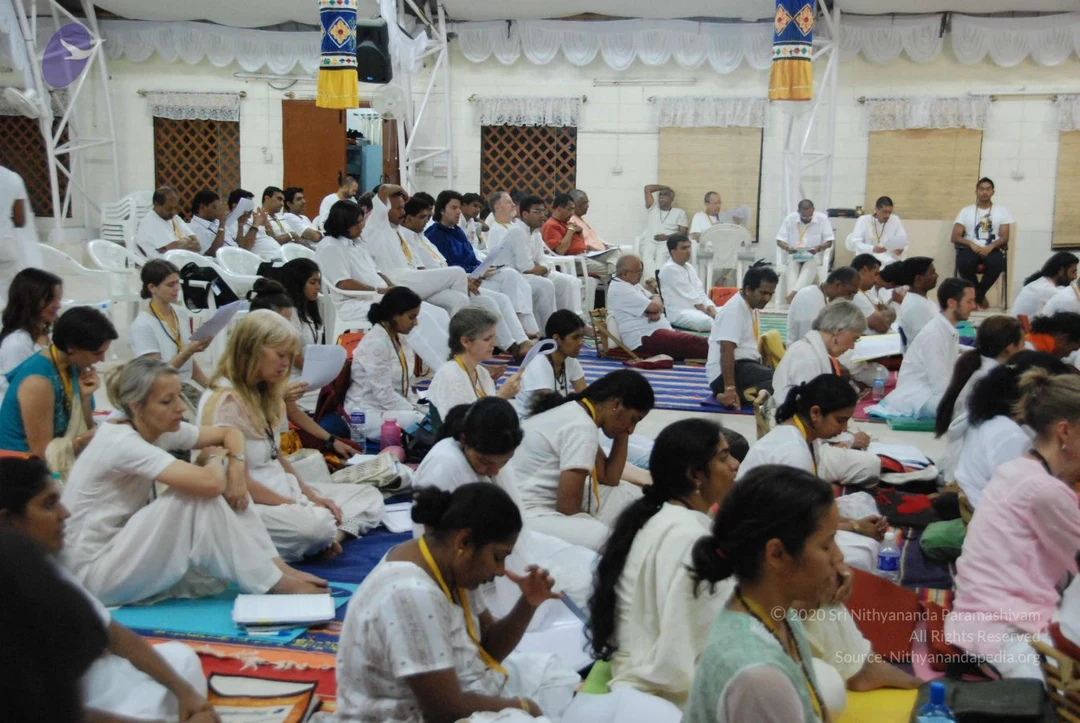
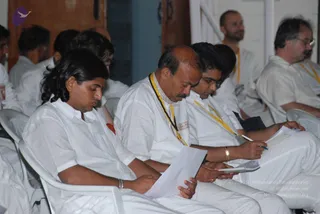
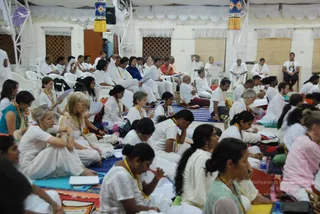
A photograph of seated participants at a session, wearing white clothing. In the foreground, a man with long dark hair in a white short-sleeved shirt looks down at papers. Beside him, a bald man with a moustache wears a white kurta with embroidered neckline, a yellow lanyard and a dark rudraksha-style bead necklace, and writes in a notebook. Others in white shirts with yellow lanyards sit behind, some writing, one man on the right in glasses and white clothing. Plastic chairs and a wooden door frame form the setting.A large indoor hall during a seated session with many participants on mats and white plastic chairs. Most attendees wear white clothing with yellow lanyards, and several hold papers or notebooks. Women in the foreground sit cross-legged, one with long blonde hair in a light pink top and another in white. A man in a dark blue shirt and a few older men sit toward the back, with a man in an orange shirt near the center. Colourful striped cloth hangs from the upper walls beside white drapery and wooden lattice windows, and water bottles sit on the mats. No single speaker is clearly identifiable in the frame.

Ananadeshwara

13 photosSource gallery
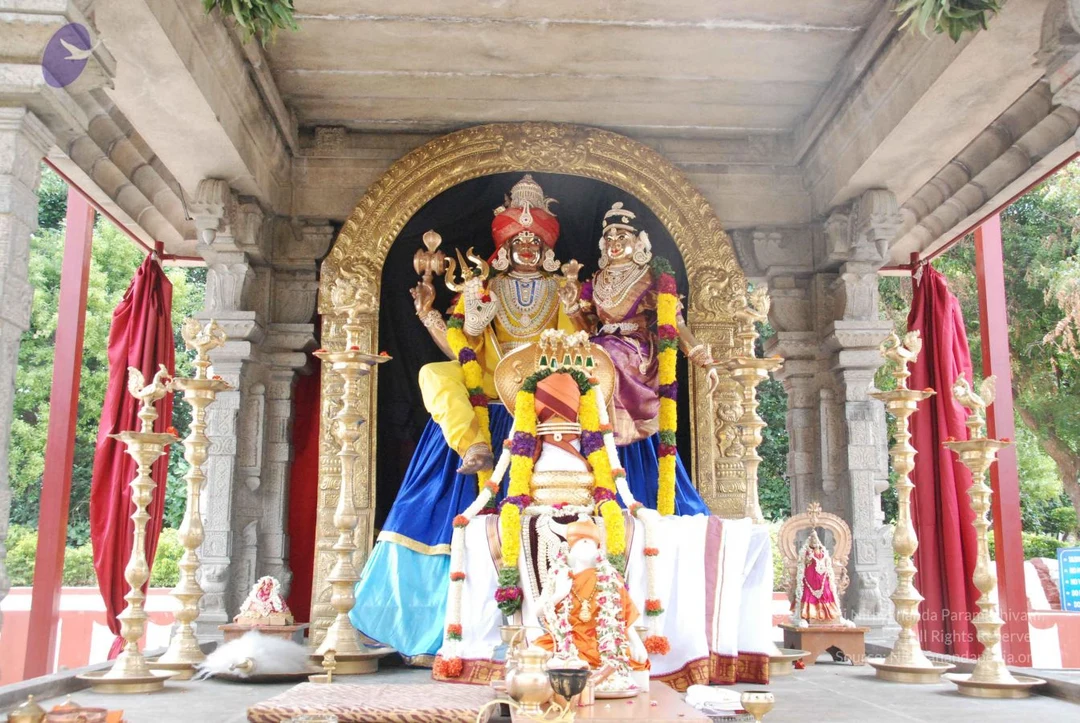
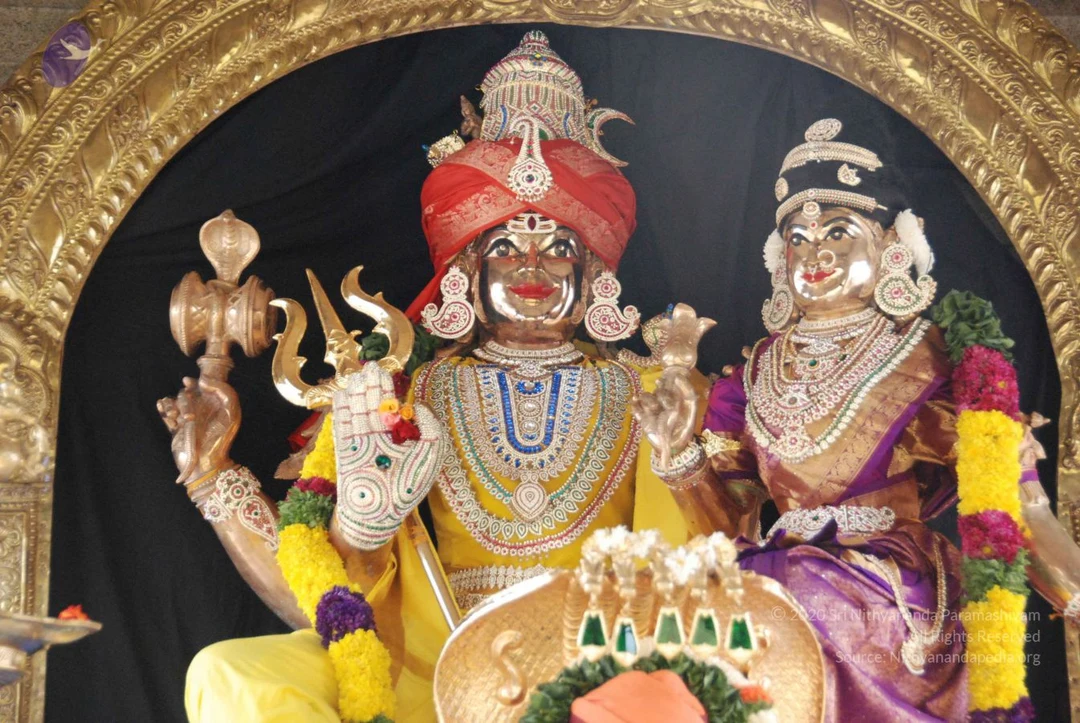
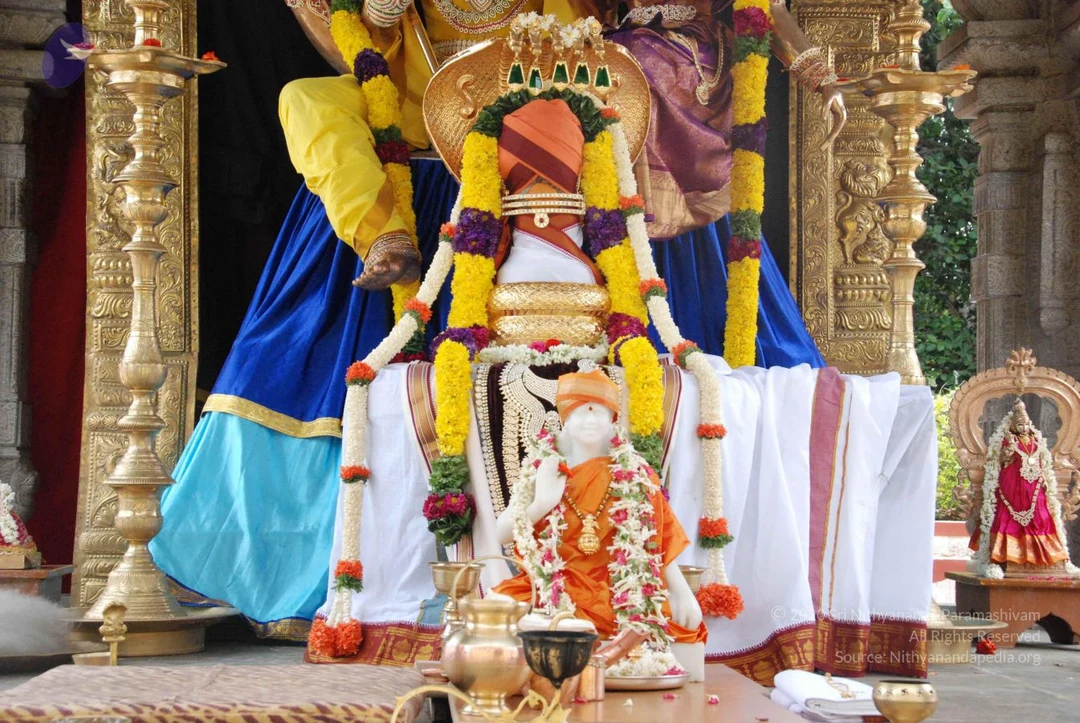
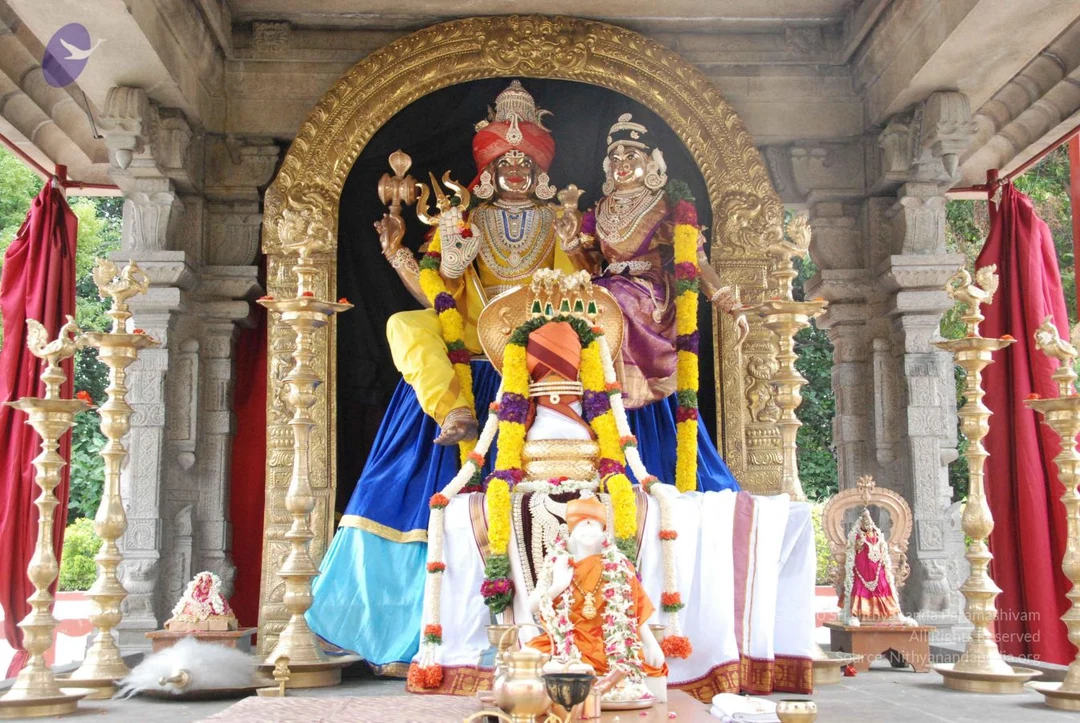
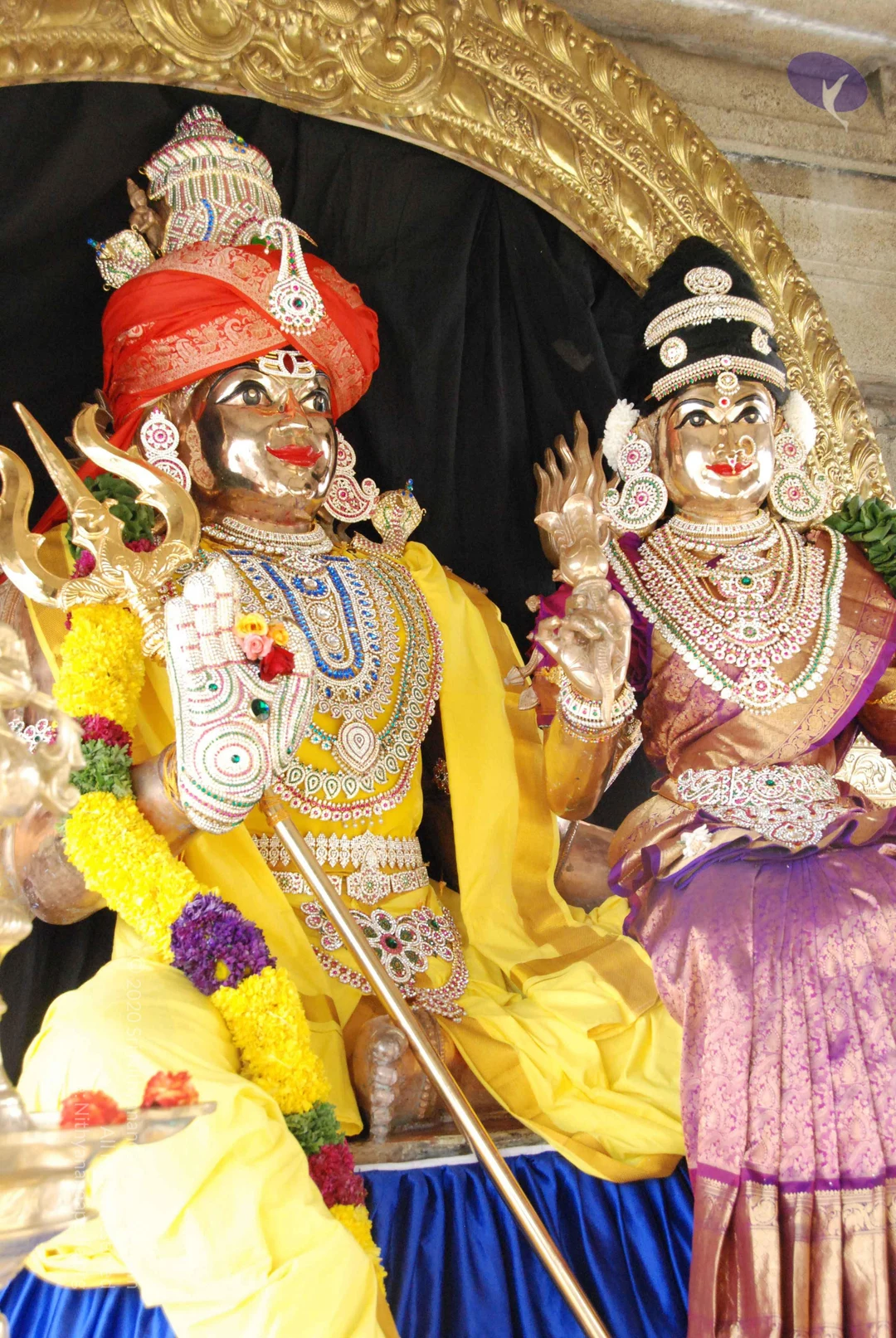
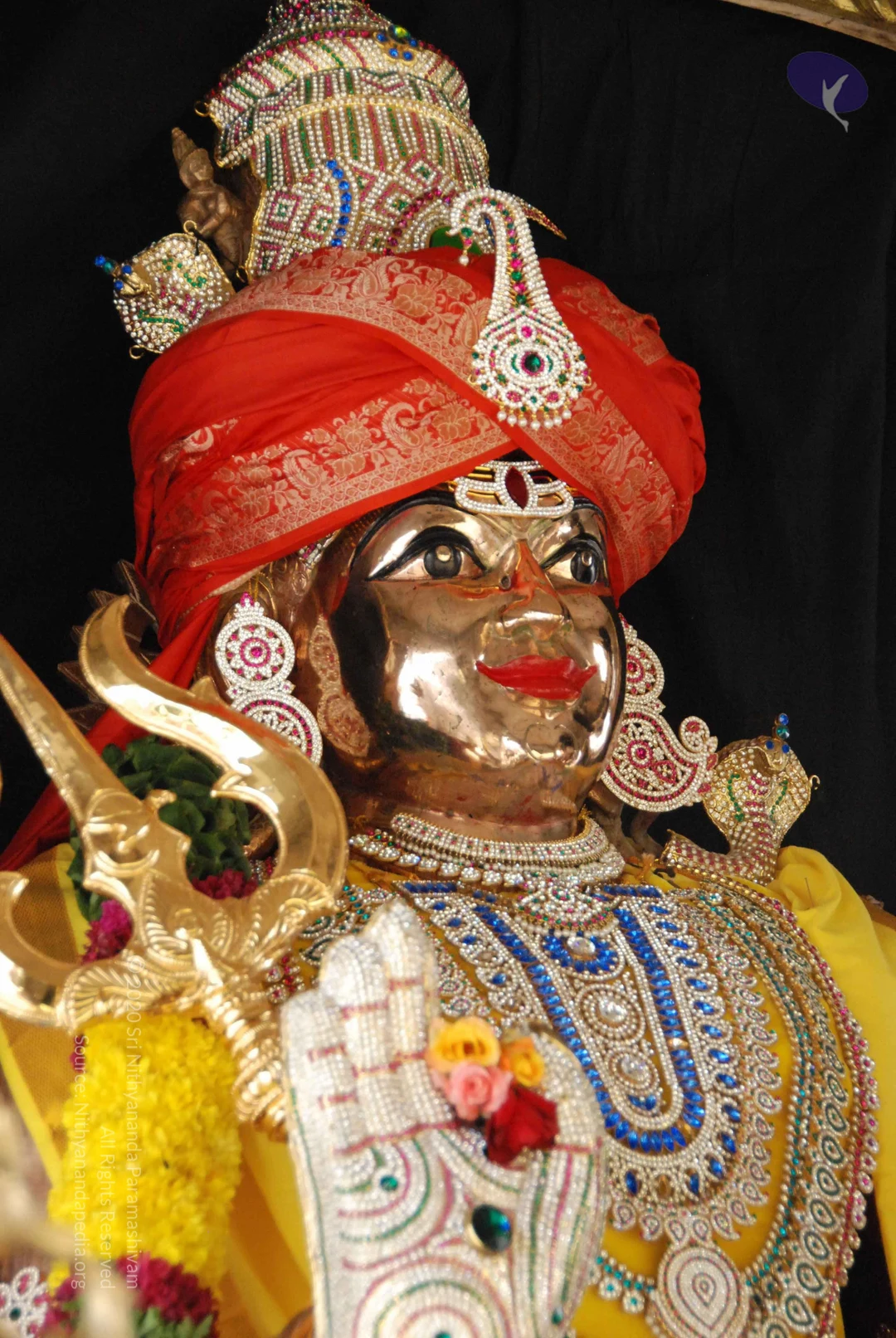
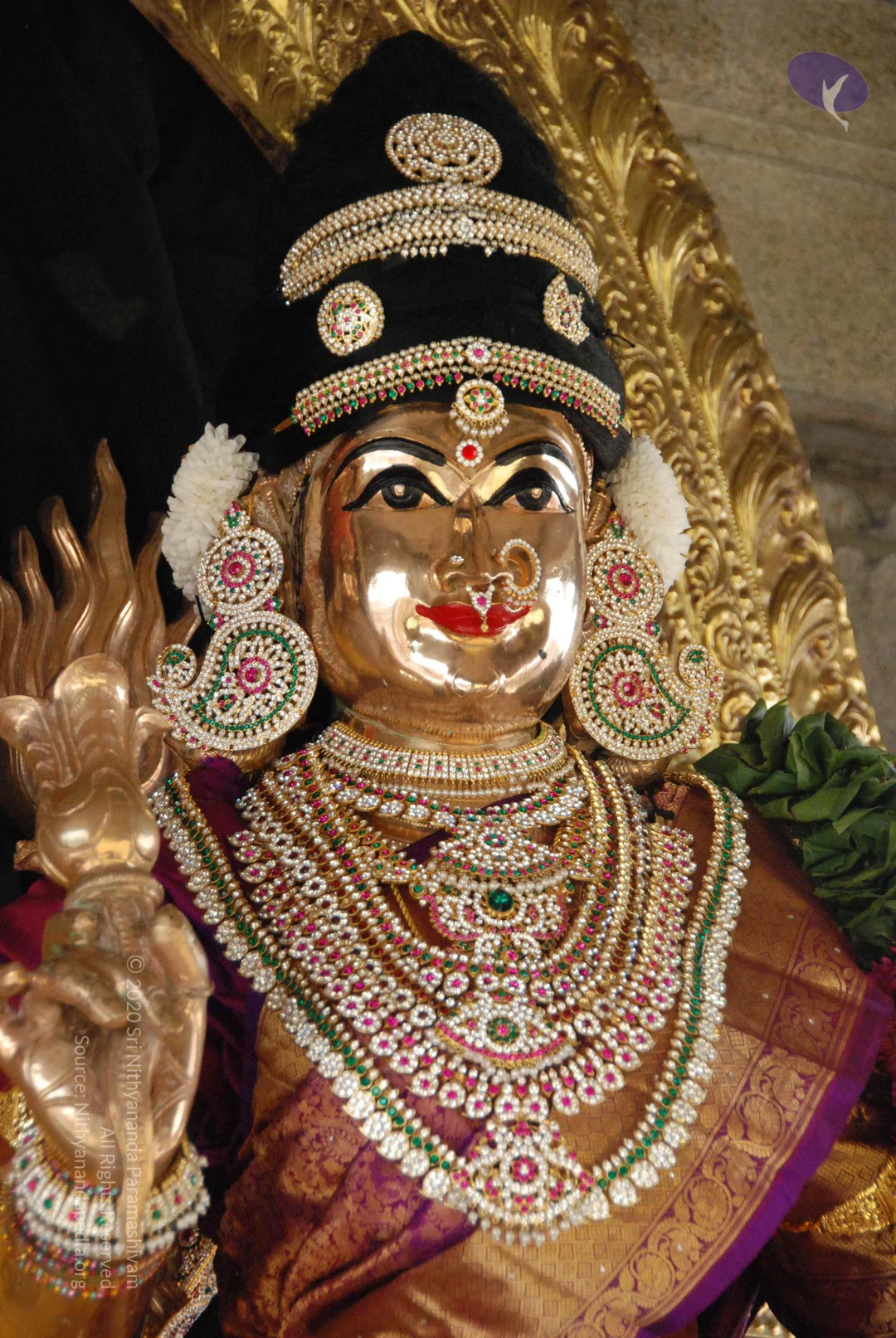
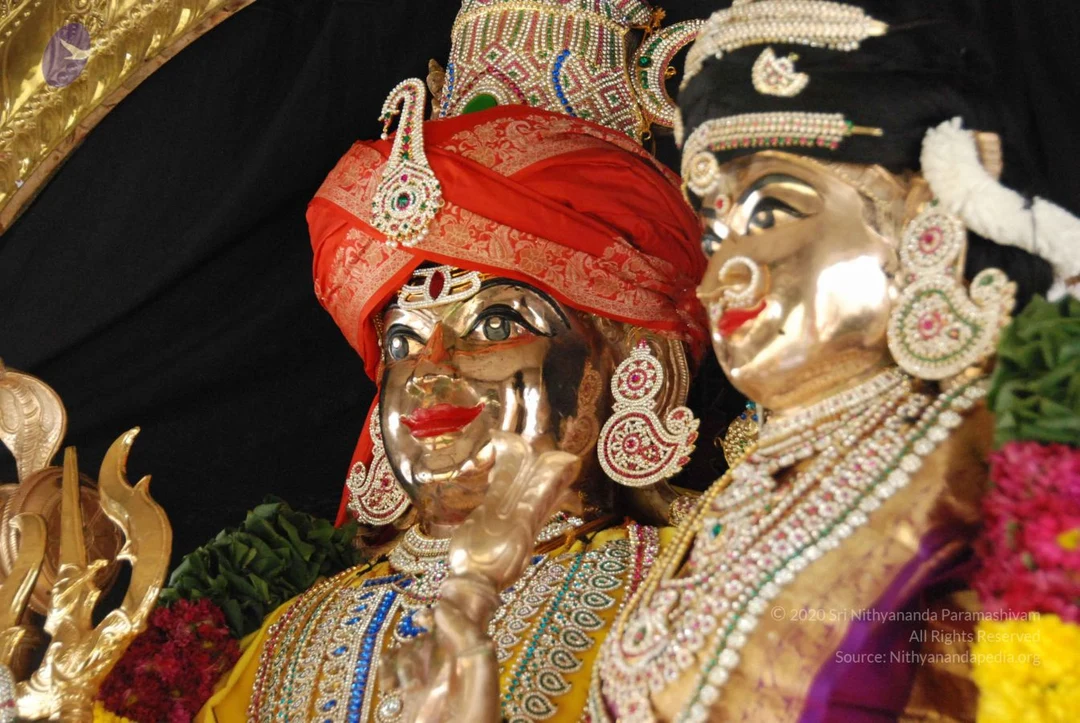
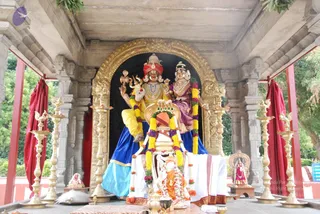
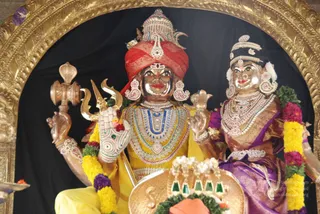
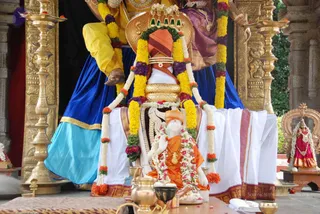
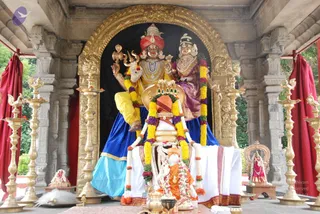
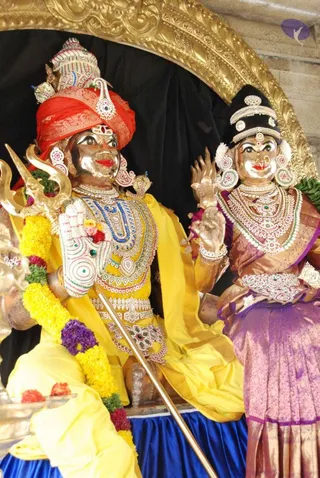
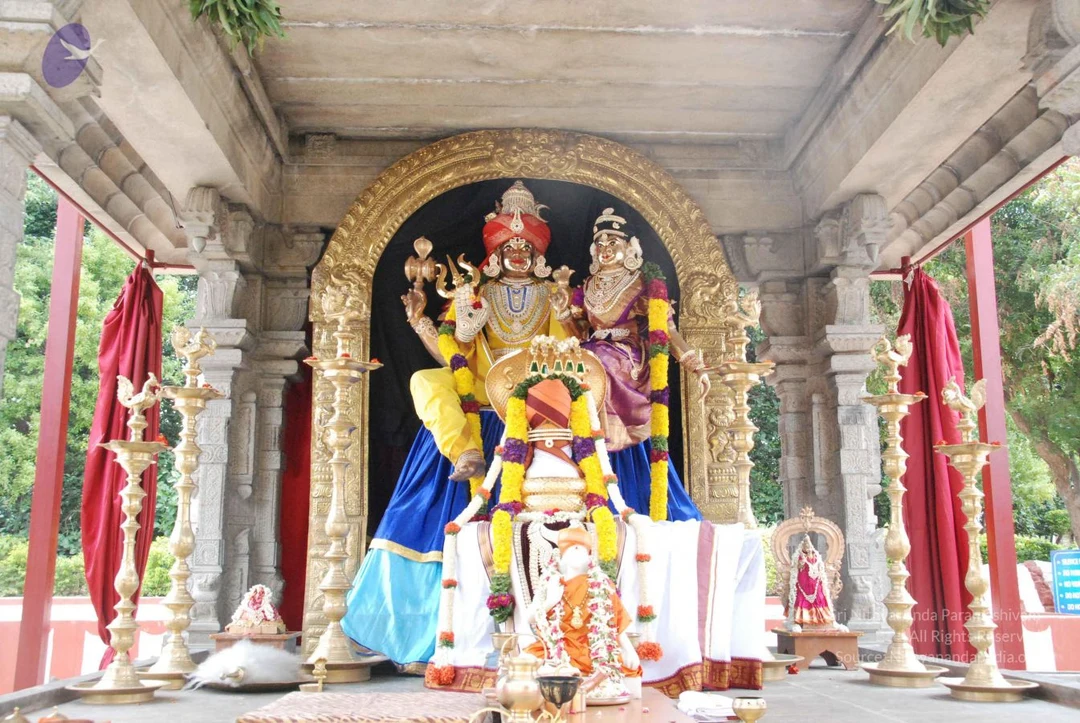
Outdoor temple shrine with a stone arch edged in gold, framing a large painted image of Shiva with a red crown, trident and rudraksha necklace seated beside a consort in purple and gold. Blue skirts drape the figures and marigold garlands hang across them. In front stands a stone seat or peetha with a small white-clad figure in orange garland, and brass lamps line the platform beside red curtains, with leafy trees behind. Visible readable text is absent.A photograph of a temple shrine with a large gold arch framing a pair of painted deity murtis, one male figure with a red crown and trident and a female figure in a purple sari with gold jewellery. Both wear garlands of yellow and purple flowers. In front, a seated figure in saffron and orange robes with a red and white turban is garlanded and seated on a white-draped platform. Brass oil lamps stand on both sides, red cloth hangs at the pillars, and carved stone pillars frame the open pavilion.A photograph of a pair of gilded metal murti of a deity couple seated within a gold-framed arch against a black backdrop. The figure on the left wears a red turban, a blue and multicolour jewelled necklace, a yellow garment, and holds a trident and a mace-like staff; the figure on the right wears a purple silk sari, layered pearl and bead necklaces, and a crown-like headpiece. Garlands of yellow, purple and red flowers hang from both figures, and an offering tray with green stones sits in front. No physical people are visible.A photograph of a decorated shrine scene with a large deity murti in the background wearing a blue and yellow skirt and draped in purple cloth, its arms raised. In front, a white seated statue wearing an orange turban and an orange robe is adorned with a heavy gold necklace, a white and pink garland, and a gold crown-like band. Flower garlands of yellow marigolds, white jasmine and purple blossoms wrap the scene. Brass oil lamps stand on either side, with brass vessels and a kalasha-like pot on a white-draped platform, and a small pink-clad figure appears at the right edge. No living people are visible. The statue is a depiction, not a person present.A photograph of a temple-style shrine set beneath a gold-framed arch with a dark backdrop. Two large painted deity figures stand behind a central seated figure: the left figure has a blue body, a red turban, a trident-like staff and a raised hand, while the right figure wears a purple sari and a crown with heavy jewellery. Garlands of yellow, orange and purple flowers hang across the scene. In front, a seated figure in white and saffron-orange robes sits on a white-draped throne with a gold mandap-style canopy, with a red-and-gold cloth on the seat. Brass oil lamps with bird-shaped tops line the sides, red curtains frame the shrine, and a small decorated deity murti sits to the right.Two metal murti figures of a deity couple, seated side by side under a gold-embossed arch against a black backdrop. The male figure wears a red turban, yellow dhoti and cloth, a heavy jewelled necklace and a trident in his left hand, garlanded with yellow and purple flowers. The female figure wears a black crown with jewelled ornaments, layered gem necklaces and a purple and gold brocade sari, holding a flame-like object in her raised hand. Blue cloth covers the platform below. Statues only, no physical people visible.

Ashramite-Meeting
17 photosSource gallery
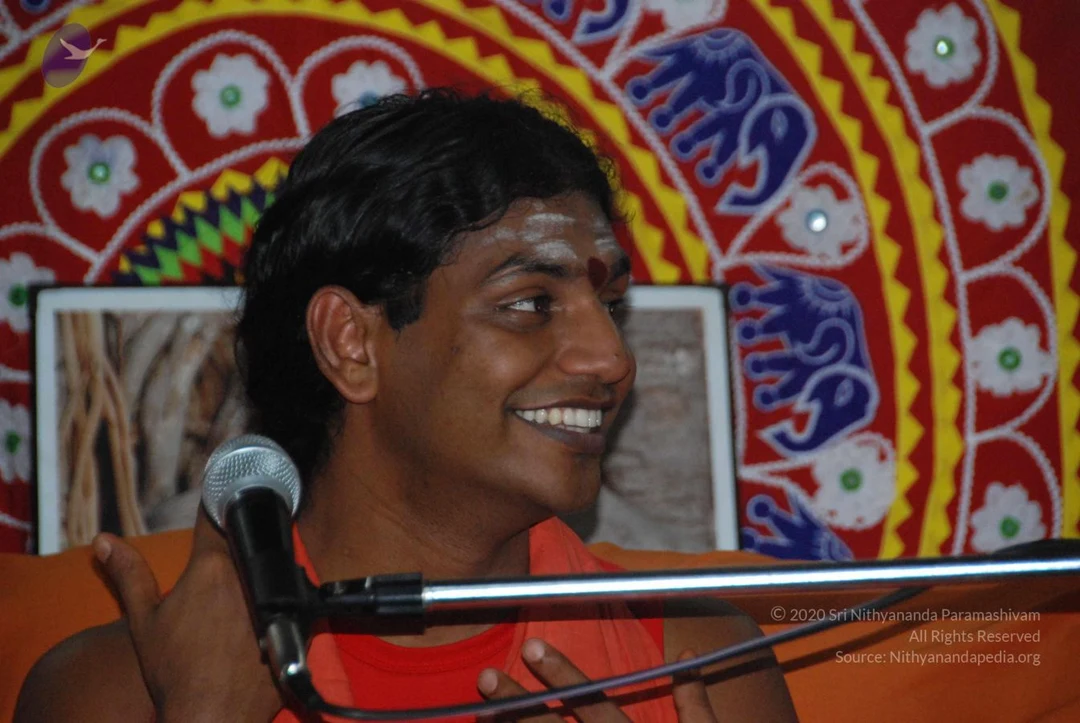
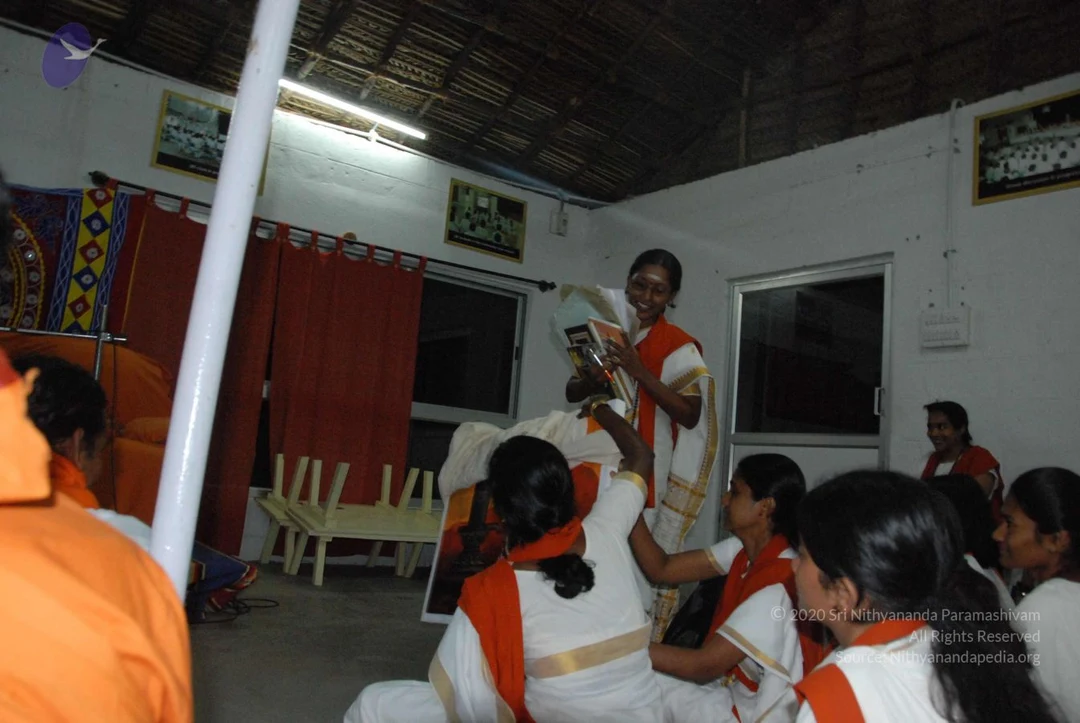
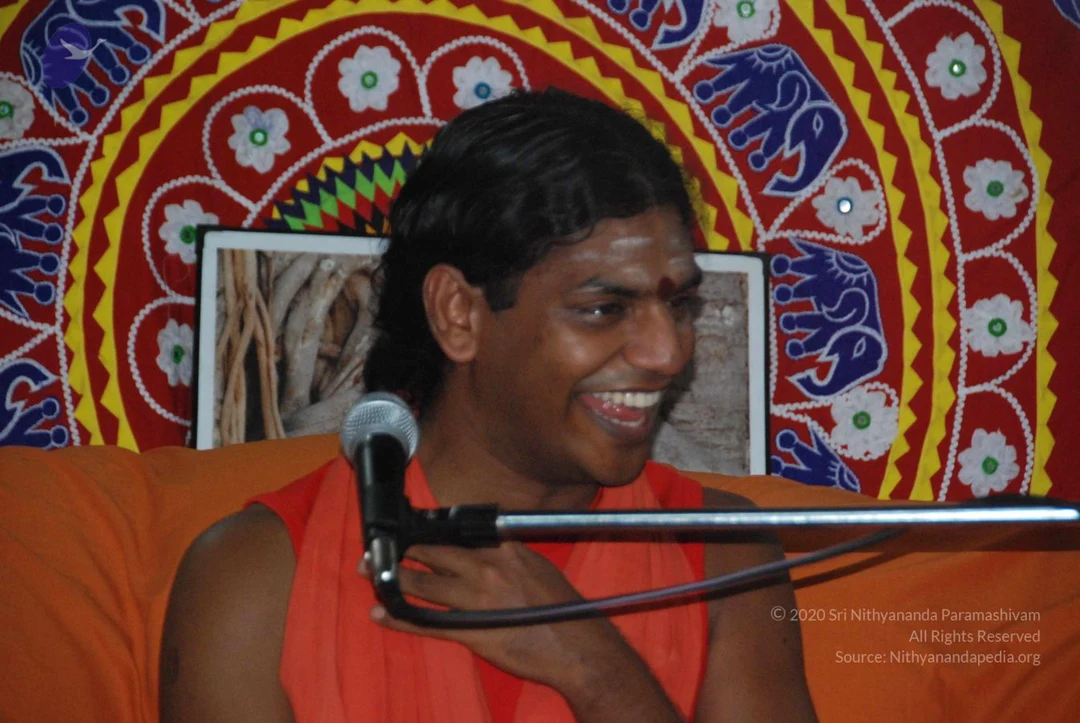
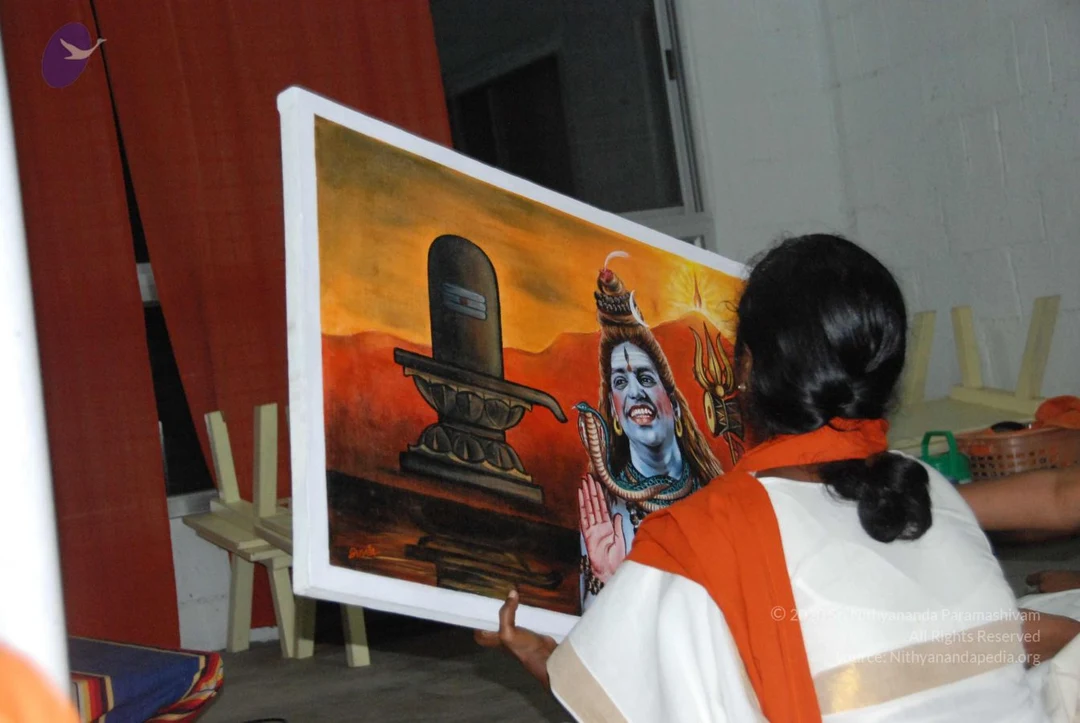
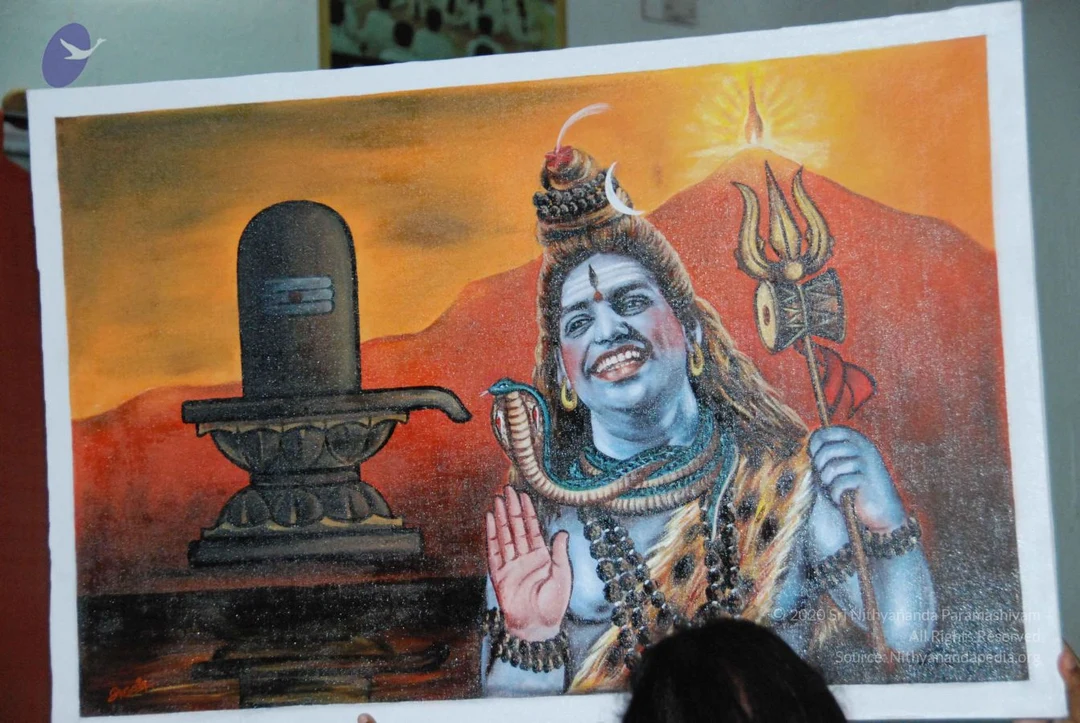
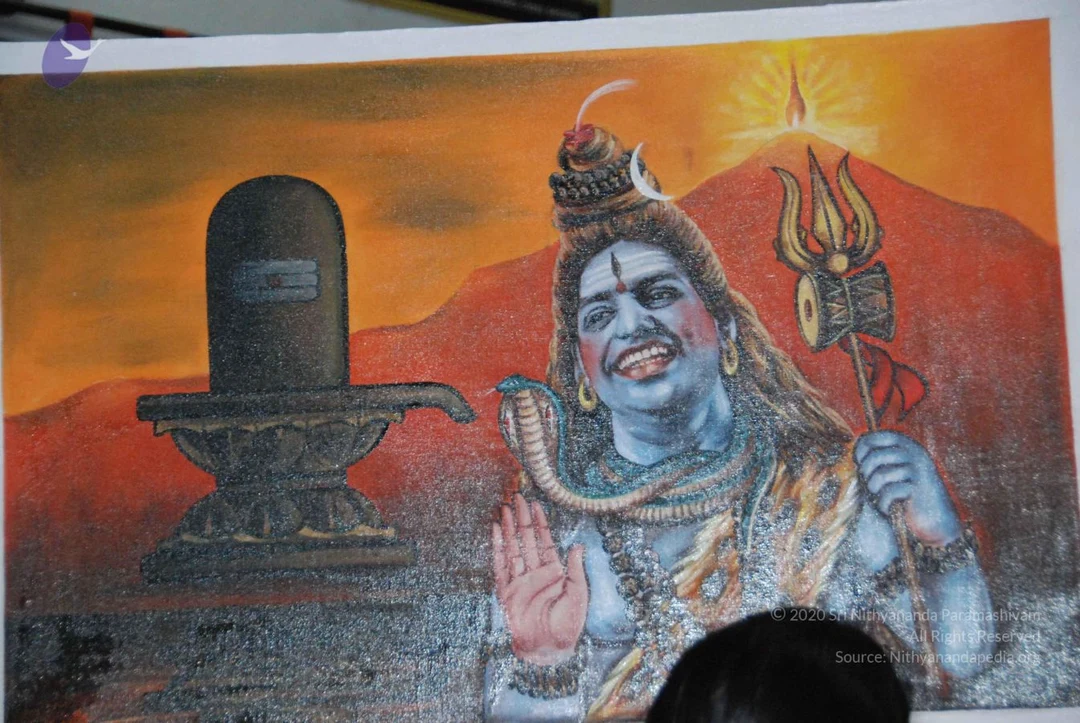
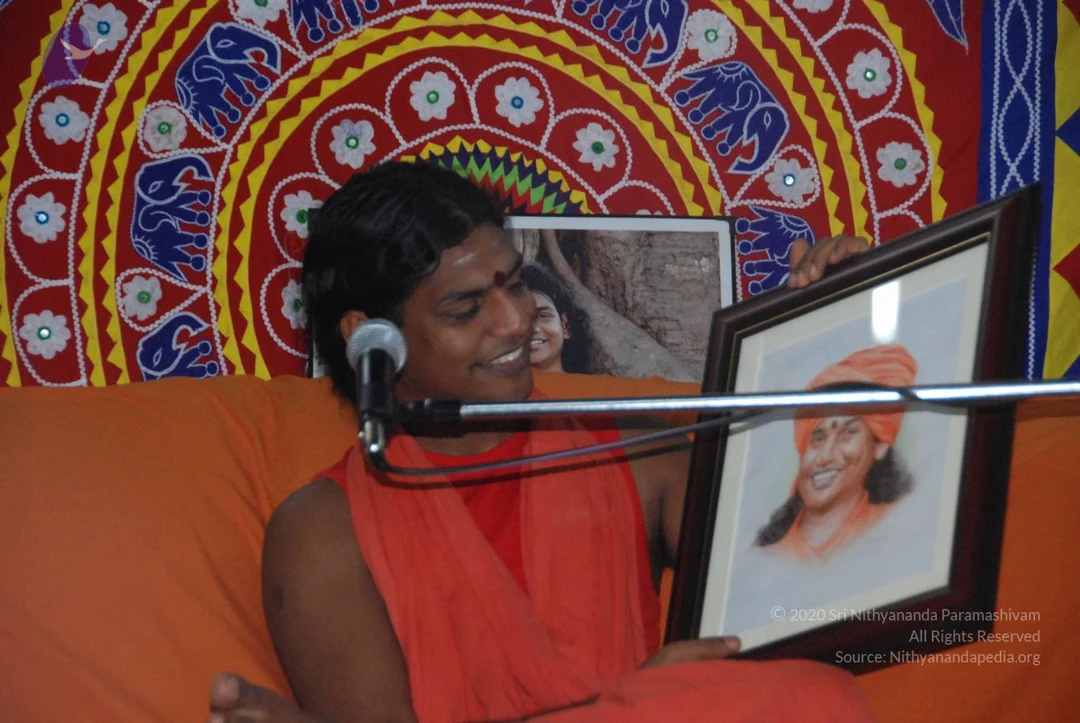
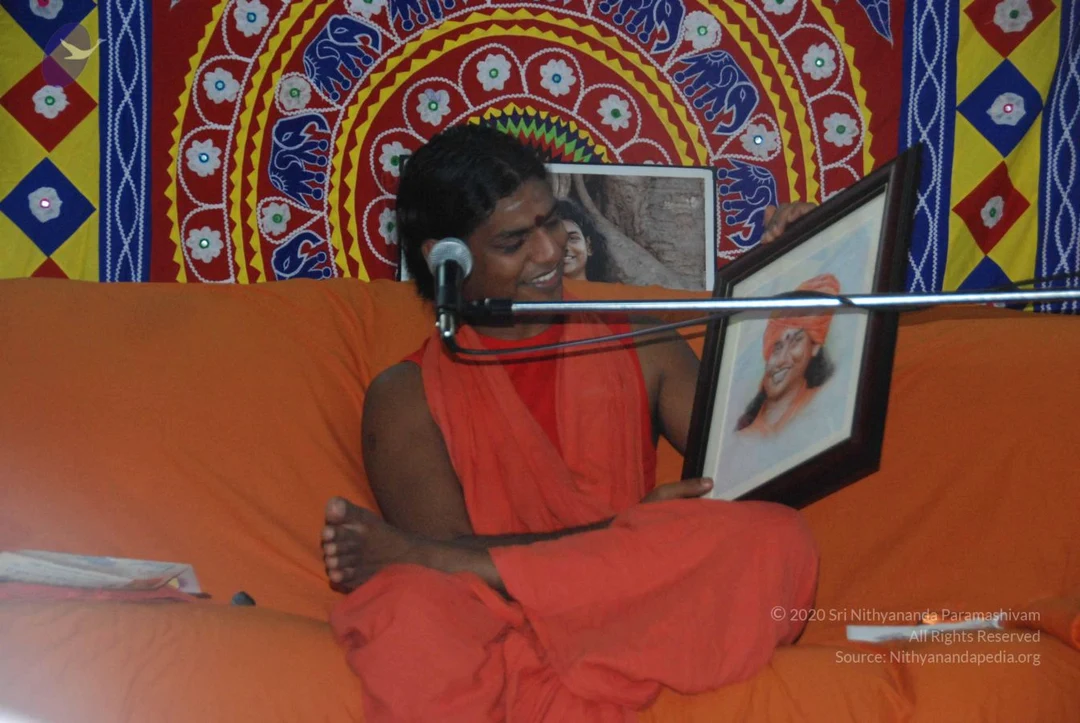
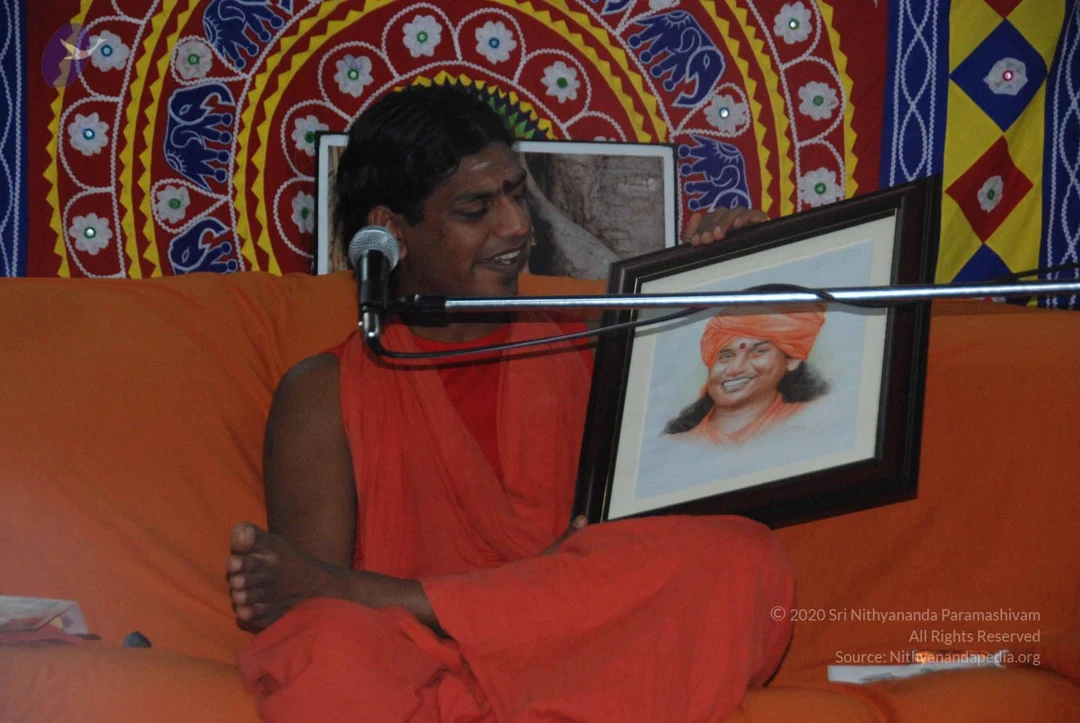
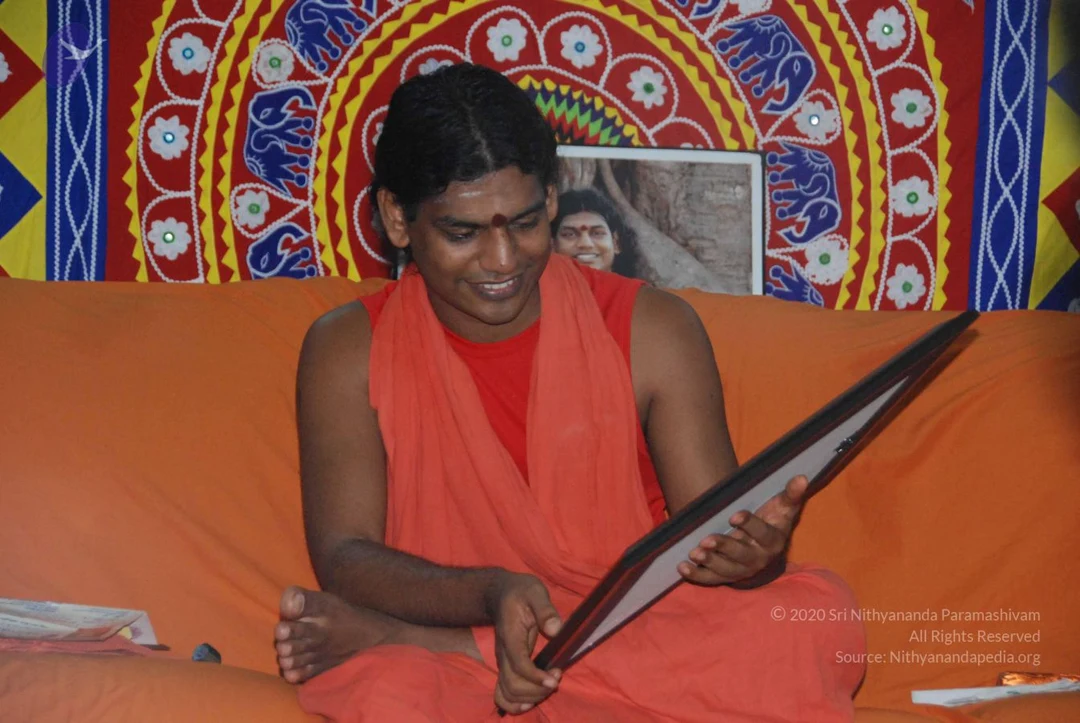
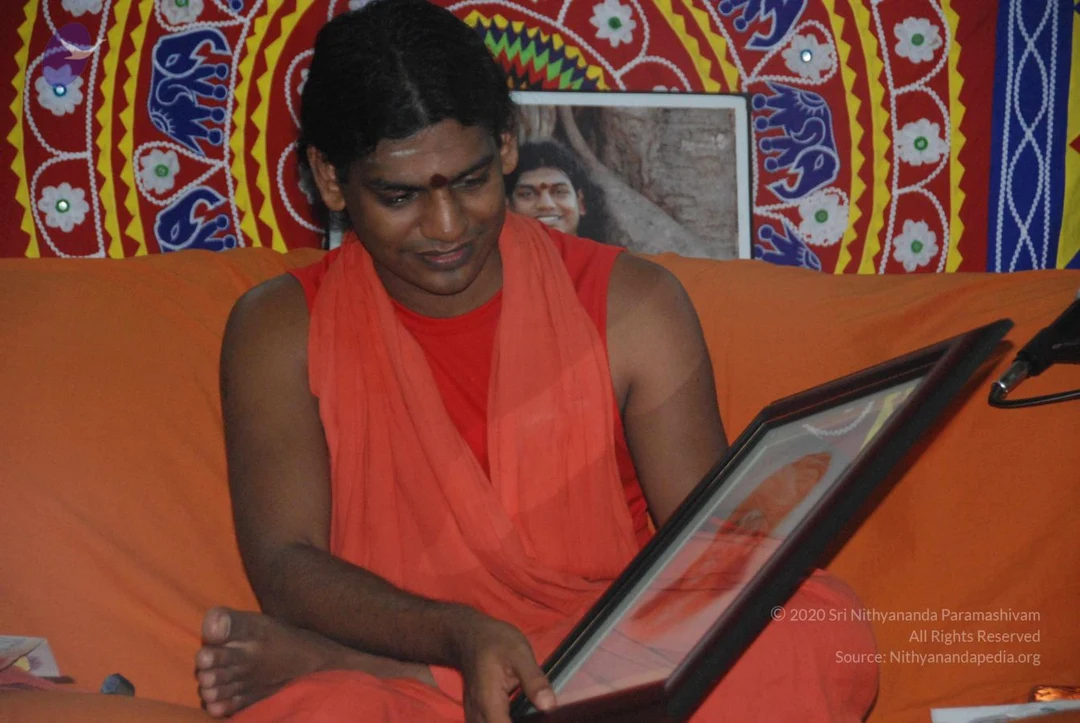
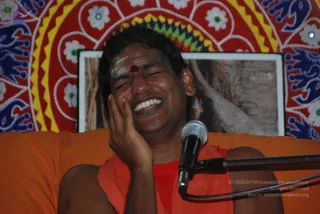
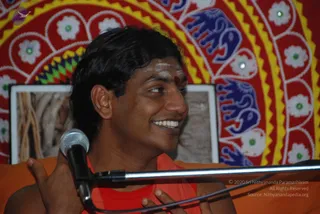
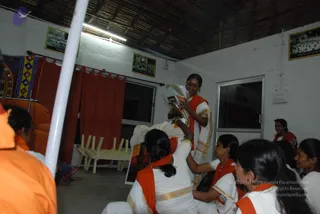
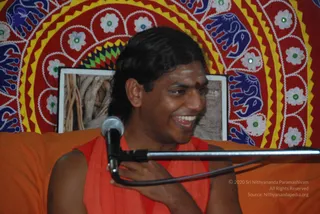
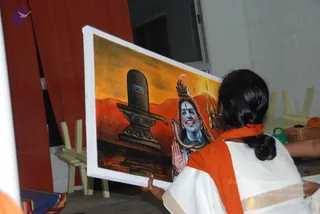
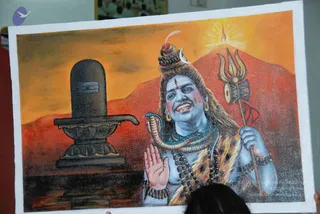
A photograph of a smiling man seated on an orange cushion behind a microphone on a boom stand. He wears an orange shawl over a red top, has a white vertical forehead mark with a red dot, and rests his right hand against his cheek with eyes closed while laughing. Behind him hangs a framed black-and-white photograph of a tree trunk, below a red, yellow and blue patterned cloth decorated with white flowers and elephant motifs.A man seated before a microphone on a stand smiles toward his right while gesturing with raised hands. He wears a loose red-orange garment over bare shoulders, has short dark hair and white and red forehead markings. Behind him hangs a red and yellow patterned cloth with blue elephant motifs and white floral circles, and a framed black-and-white photograph sits to the left. The setting suggests a seated talk or satsang session.Indoor ashram hall with a corrugated roof and white walls. A woman in white sari with gold border and orange-red shawl stands centre, smiling and holding a book and papers while other women in white with orange shawls sit on the floor, one reaching toward her. Framed photographs hang on the walls, a red curtain hangs at the back, and a wooden bench sits to the side. A person in orange clothing is seen at the lower left edge.A smiling man with dark, swept-back hair and a small red mark on his forehead sits in front of a microphone on a stand, wearing an orange-red sleeveless garment and a saffron wrap draped over his shoulder. Behind him is a red and yellow textile backdrop patterned with blue elephants and white flowers, and a framed photograph of a tree's roots and trunk. Orange cushions are visible at the edge of the frame. The setting resembles a seated discourse session. Swamiji (probable): the seated speaker has long swept-back hair and saffron clothing, a distinctive presentation cue, but the face is partly turned and the image does not confirm identity beyond appearance.A woman with dark hair in a low bun, wearing a white sari with an orange shawl draped over her shoulders, holds up a framed painting of a Shiva lingam beside a painted deity murti with blue skin, a cobra coiled around the neck, a trident, and a flame behind the head, set against an orange sunset sky. She stands in a plain room with red curtains and a white wall, and wooden stools are visible behind her.A painted artwork of a blue-skinned Shiva murti is held up by a person whose dark hair is visible at the bottom edge. The painting shows Shiva with a crescent moon and a topknot, a tripuntara-style trident with a red cloth, a cobra wrapped around his neck, rudraksha malas, and a raised right hand in blessing. Beside him stands a black Shivalinga on a lotus-shaped peetha against an orange sky and red mountains. Behind the painting a small framed photograph of a crowd is visible on the wall.

Dakshinamurti
9 photosSource gallery
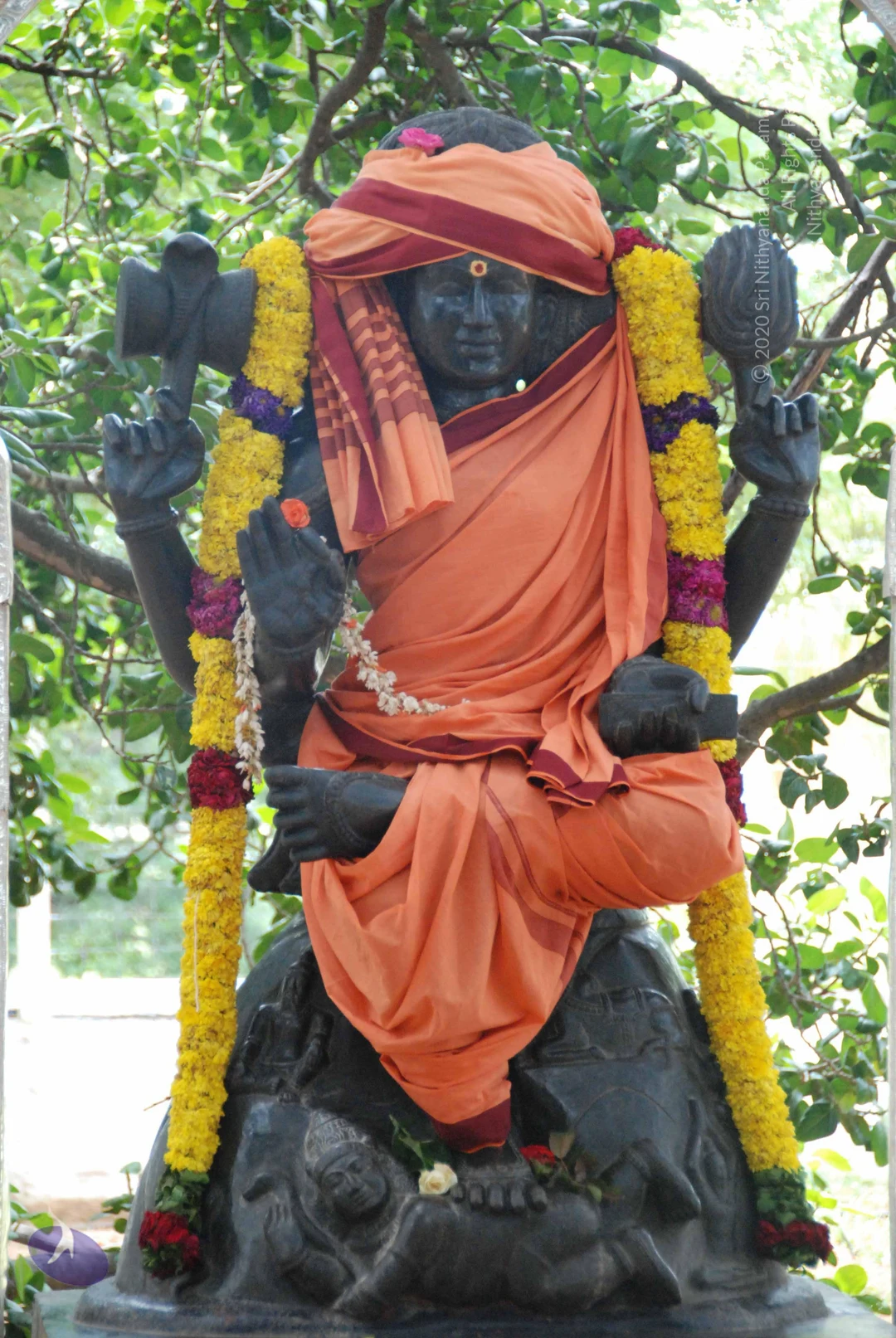
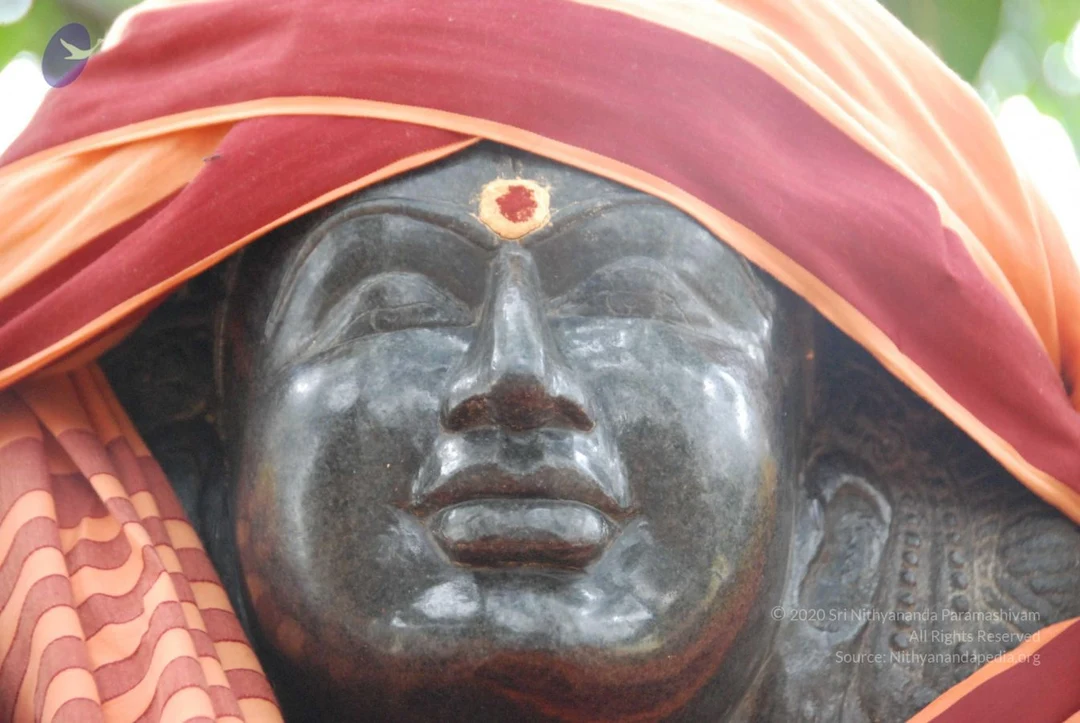
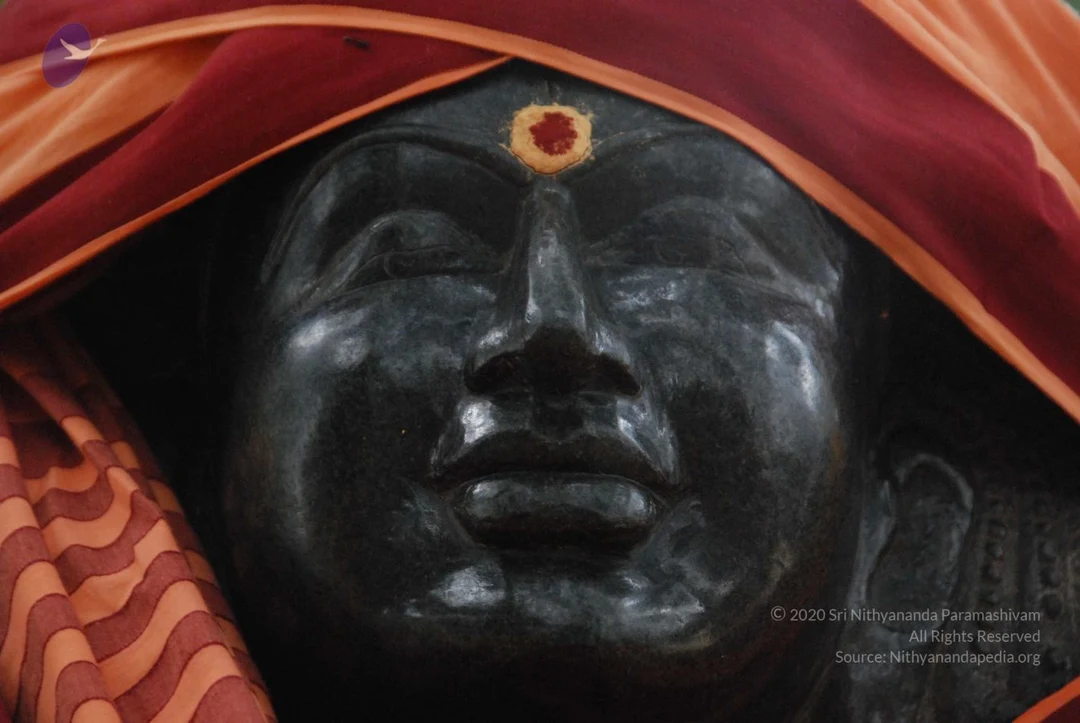
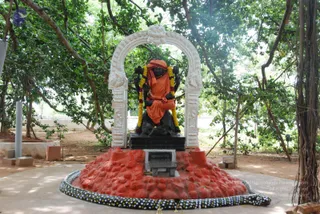
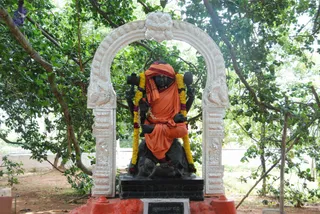
An outdoor shrine under a leafy tree shows a dark stone statue seated on a black pedestal beneath a white carved arch. The statue wears an orange-saffron cloth draped over its body and an orange head wrap, with yellow-orange marigold garlands hanging on both sides. Its hands rest on a stone seat, and a rounded red-painted mound of rock surrounds the base, encircled by a black-and-white patterned serpent-like border. A small brass bell and a plaque sit at the front, with no living people visible. This is a statue, so no in-person candidate is present; the statue is a depiction without identifiable a person cues being claimed here.A black stone statue of a seated figure in an outdoor garden setting, framed by a white ornate arched niche under leafy trees. The statue wears an orange-saffron cloth draped over the body and an orange-red headwrap, with yellow and orange marigold garlands hanging from both shoulders, and holds objects in its raised hands. It sits on a dark pedestal set on a red base, with a small dark plaque at the front bearing Kannada script. Green foliage and a low white wall form the background.A black stone statue of Dakshinamurthy, a form of Shiva as teacher, sits in a silver-framed arched shrine surrounded by green foliage. The statue wears an orange cloth wrap and maroon head cloth, with yellow, orange and purple marigold garlands draped over its shoulders. It holds a trident in one upper hand and a rudraksha-style mala and other implements in the others, with a small red kumkum mark on its forehead. Below, a black plaque reads Dakshinamurthi shrine, and there are no physical people in the scene.A black stone statue of Dakshinamurthy, a form of Shiva as teacher, sits under a silver arch framed by green tree foliage. The murti wears an orange-saffron cloth draped over its body and an orange head wrap with maroon border, decorated with yellow, purple and red flower garlands and a small red bindi. It holds a trident-like implement and a drum in raised hands, with a small figure at its base. A black plinth below carries a Kannada inscription reading Dakshinamurthi shrine. No living people are visible.A dark stone statue of a four-armed sannyasi-style figure seated on a carved rock base, wrapped in orange and maroon saffron cloth with a matching orange-and-maroon turban. Yellow, purple, pink and red flower garlands hang from the shoulders and a white jasmine garland drapes the chest. The statue holds a trident-like staff in one raised hand, a small drum-like object in another, and a red-marked palm in front. A red bindi marks the forehead. Green leafy branches frame the statue outdoors, with a rose and flower offerings at its feet. This is a statue, not a living person.Close-up photograph of a dark polished stone statue of a face, wrapped in a maroon and orange striped cloth draped over the head like a turban. A red and cream tilak mark sits on the forehead between the brows. The eyes are closed and the lips are slightly parted in a calm expression. The cloth frames the face against a blurred green background. The statue is a carved sculpture, not a living person.

Kalpataru
34 photosSource gallery
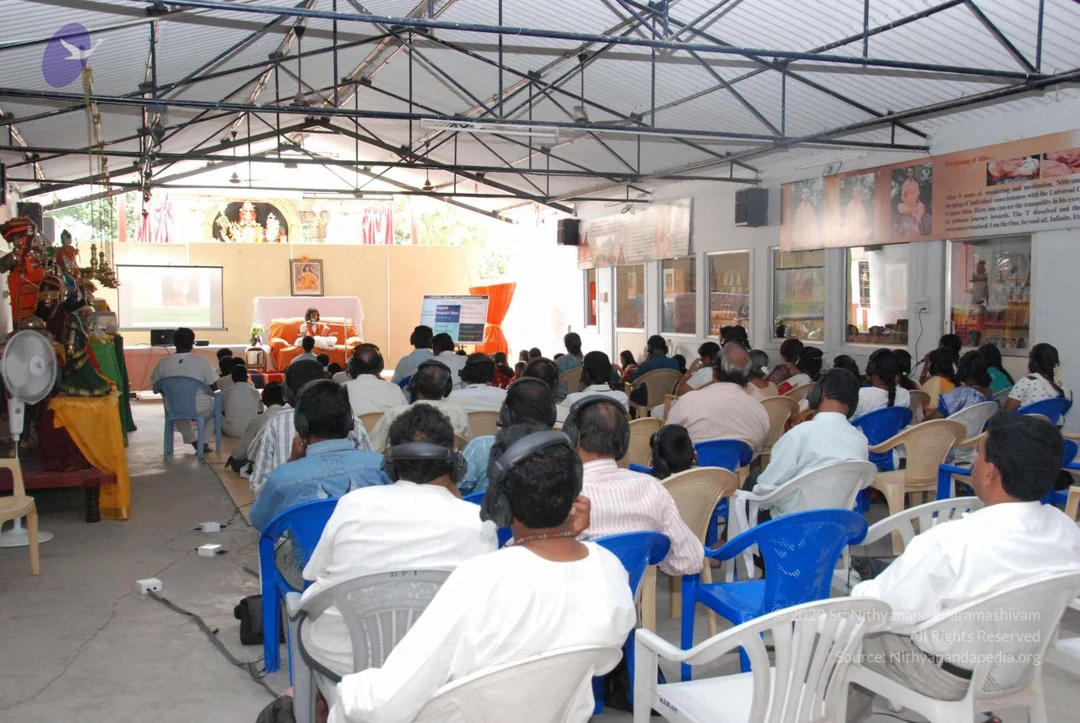
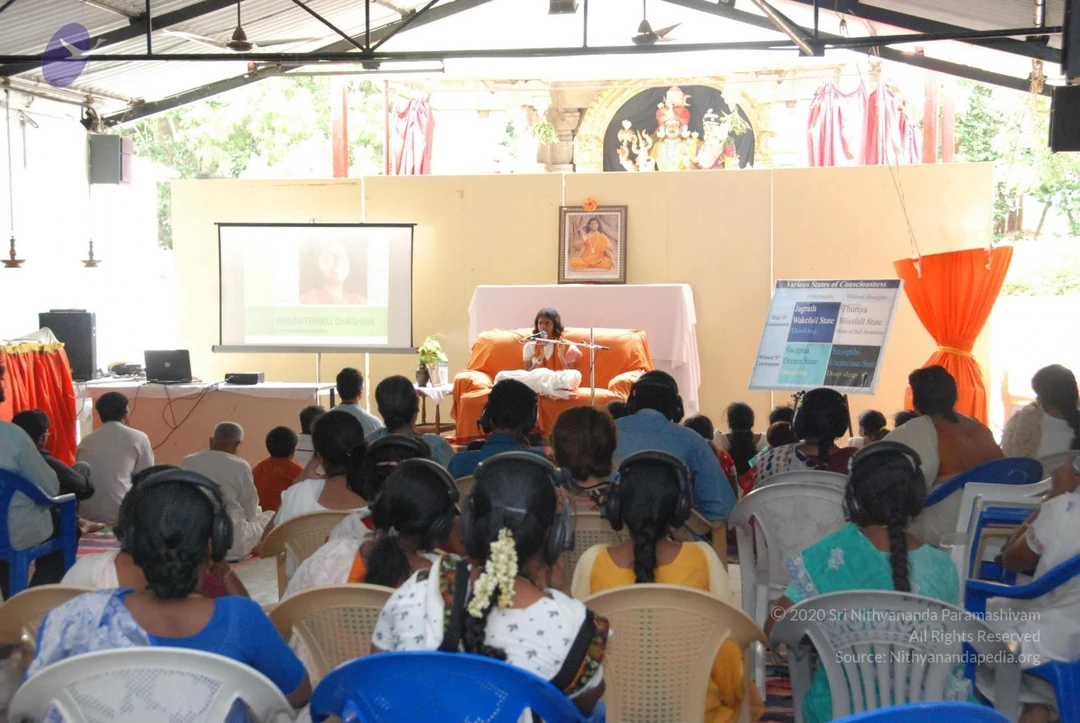
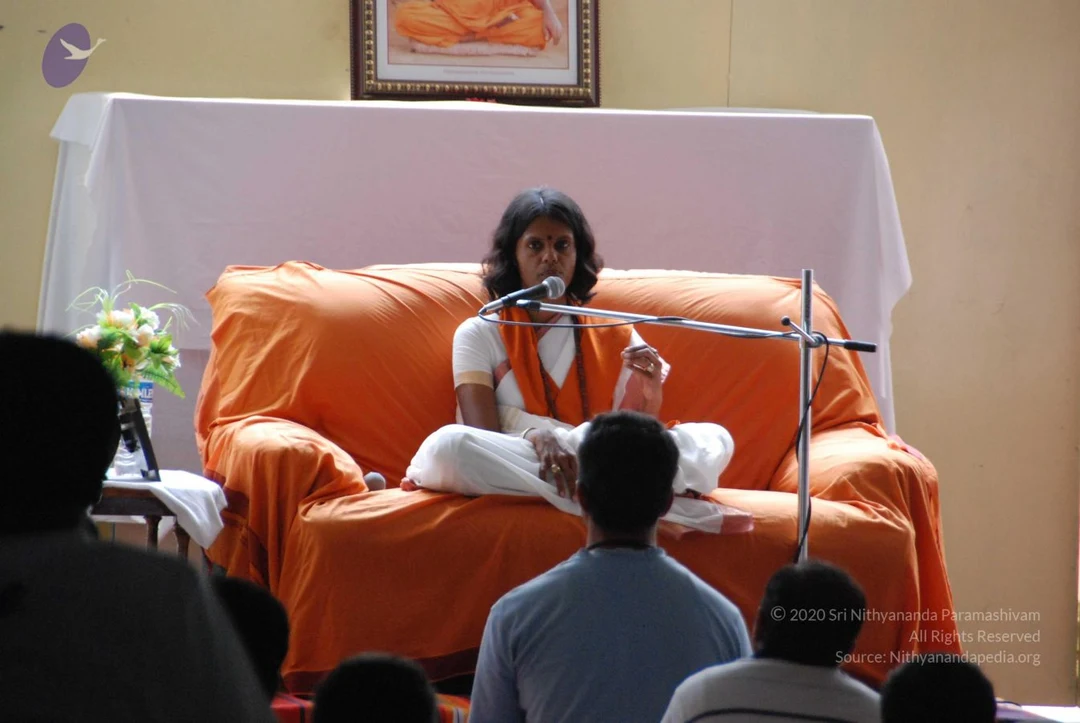
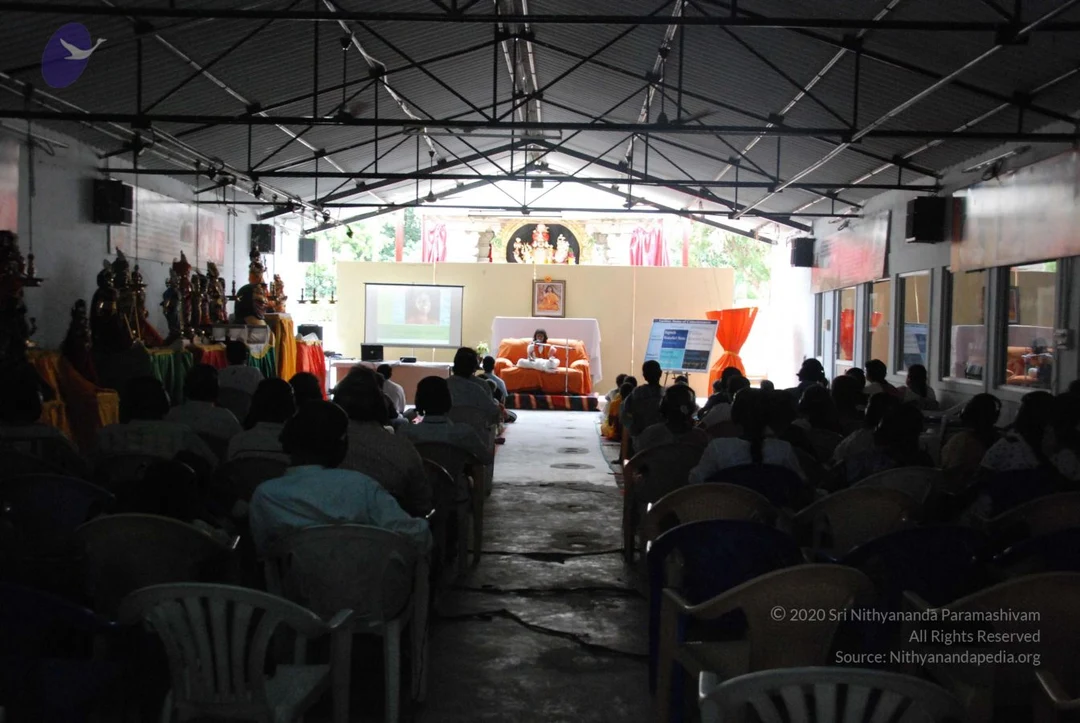
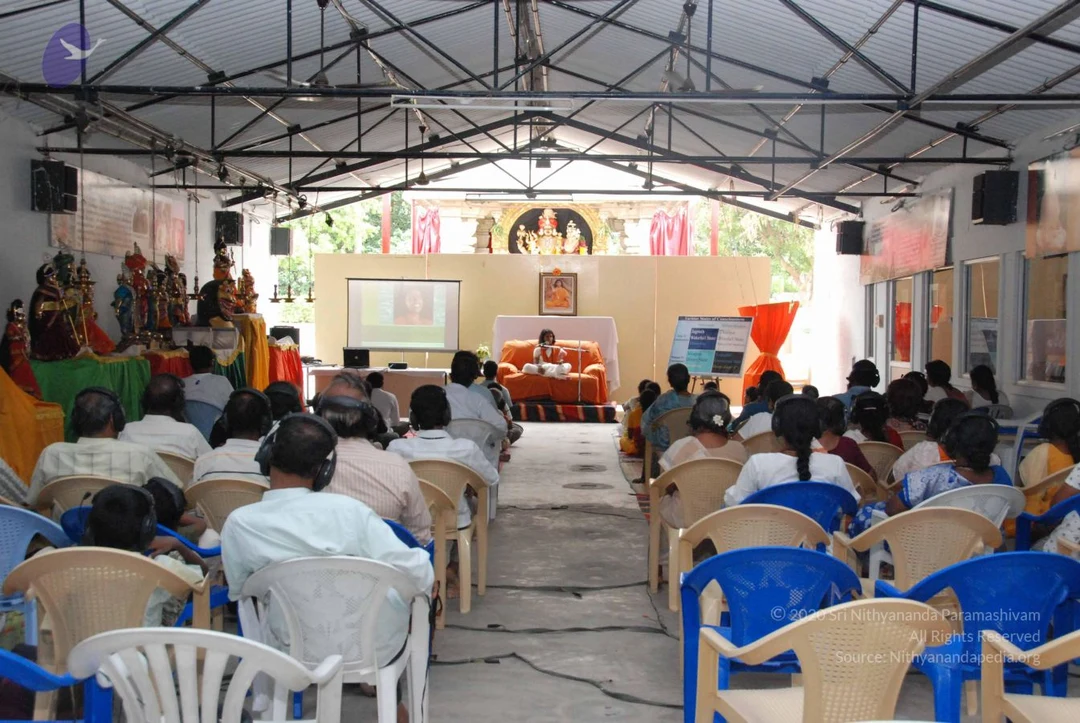
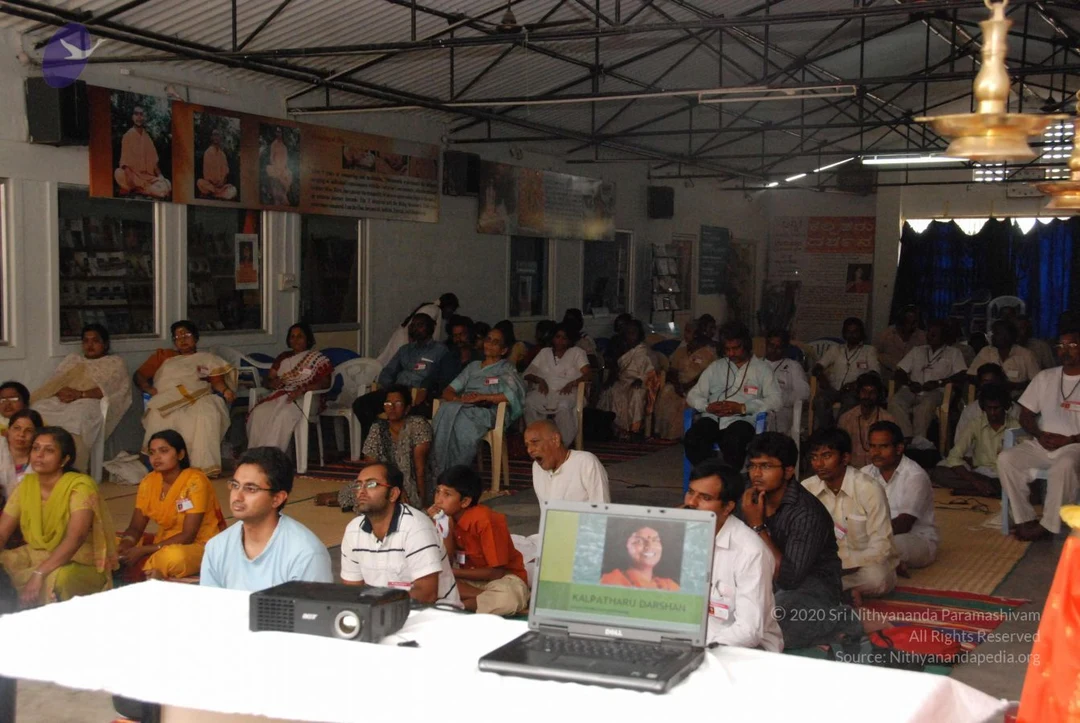
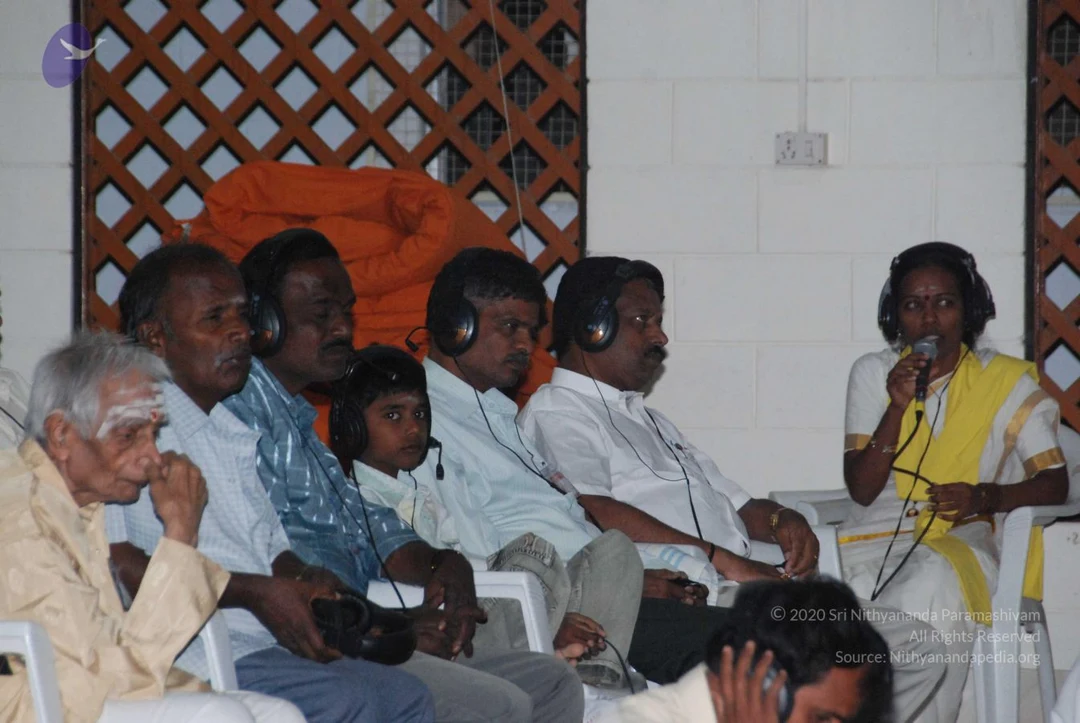
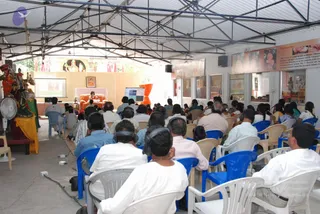
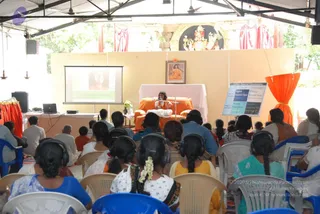
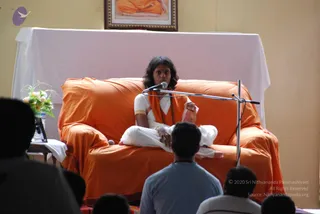
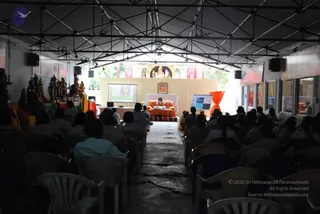
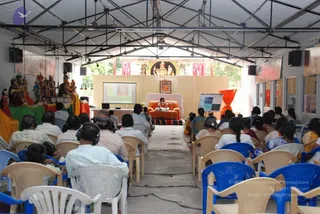
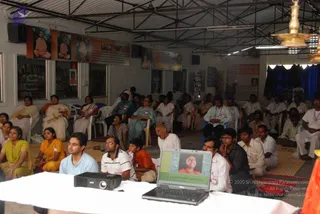
A photograph of a seated audience inside a covered open-sided hall with a corrugated roof and exposed metal trusses. Rows of mostly male attendees in white shirts and dhotis sit on blue and white plastic chairs, many wearing black over-ear headphones for translation. At the front, a person in orange clothing sits on an orange-draped chair beside a white-covered table, facing the audience. A projection screen displays a slide, and a lit screen with text stands nearby. To the left, a deity murti with a red and green decorated figure and oil lamps sits beside a yellow cloth. A wall on the right displays framed photographs and a banner of text panels. Approximately 60 people are visible.A photograph of a open-sided hall where a seated speaker in orange and white sits on an orange-cushioned chair behind a white-draped table with a microphone, beneath a framed portrait of a saffron-robed figure. Behind her, a painted deity murti with multiple arms hangs on the wall with orange and pink drapes. Around 40 seated audience members in white, blue, yellow and green clothing, several wearing headphones, face the stage. A projector screen shows a face, a laptop sits to the side, and a chart titled Various States of Consciousness stands at right.A woman with shoulder-length dark hair and a red bindi sits cross-legged on an orange-draped sofa, speaking into a microphone on a stand. She wears a white blouse and white skirt with an orange shawl and a beaded necklace, and holds a small object in one hand. Behind her, a framed portrait shows a figure in orange seated in meditation above a white-draped table with a flower arrangement. Several people in the foreground sit facing her, including a man in a grey shirt, seen from behind. The setting is a plain hall with yellow walls.A photograph taken from the back of a covered hall showing a seated audience of many people on white plastic chairs facing a stage. On the stage a person in white clothing sits on an orange cushioned armchair before a tiered backdrop, with a projection screen showing a portrait beside them and a small framed picture nearby. Ornate deity murti figures in colourful decorated arrangements line the left side, and a lit flower-decorated shrine area appears at the rear. Orange and red drapes frame the stage.A seated speaker in white clothes sits on an orange cushioned seat at the front of an open-sided pavilion with a tin roof, facing a seated audience. Many attendees wear headphones and sit on white and blue plastic chairs. To the left, a row of deity murtis and decorated statues stands on a draped table. Behind the speaker hang pink and orange cloths, a framed portrait, and a projector screen shows a slide. A banner on a stand reads a session title. The image is a photograph of an event session.A photograph of a seated audience in a covered hall with a corrugated metal roof and hanging brass lamps. In the foreground a white table holds a projector and a Dell laptop whose screen shows a small image of a smiling person in orange and the words KALPATHARU DARSHAN. Behind them rows of people sit on mats and white plastic chairs, many in white or pastel clothes. A large orange banner on the back wall shows several framed photographs of an orange-robed figure. The room is crowded with roughly thirty to forty people visible.

Participants helping
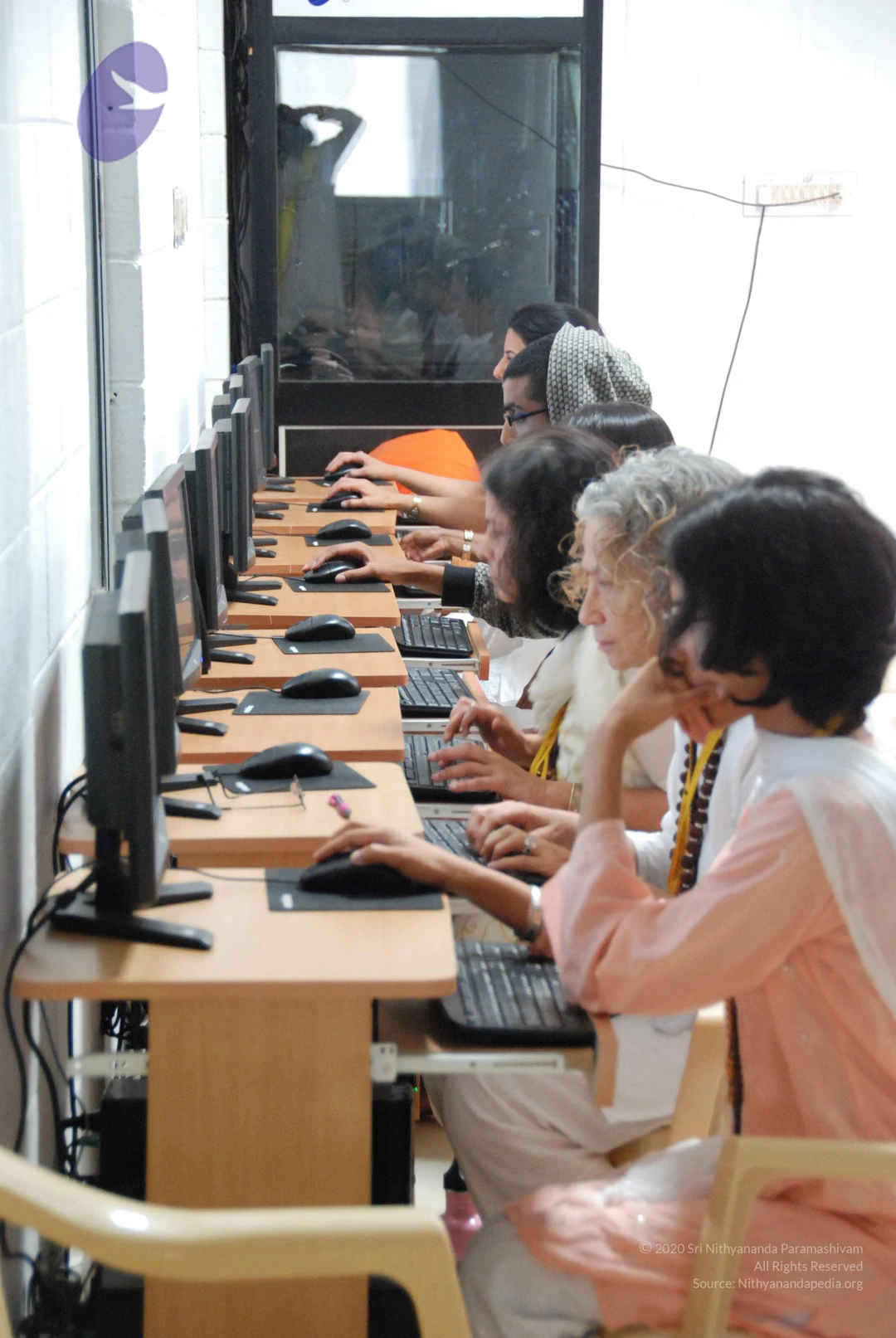
13 photosSource gallery
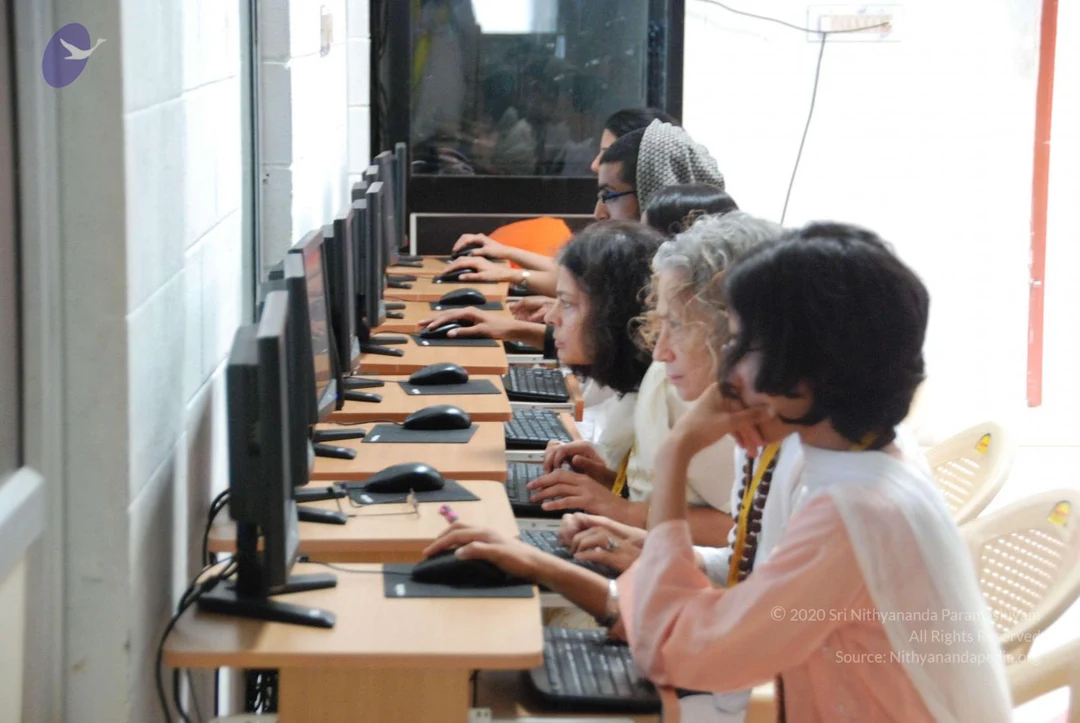
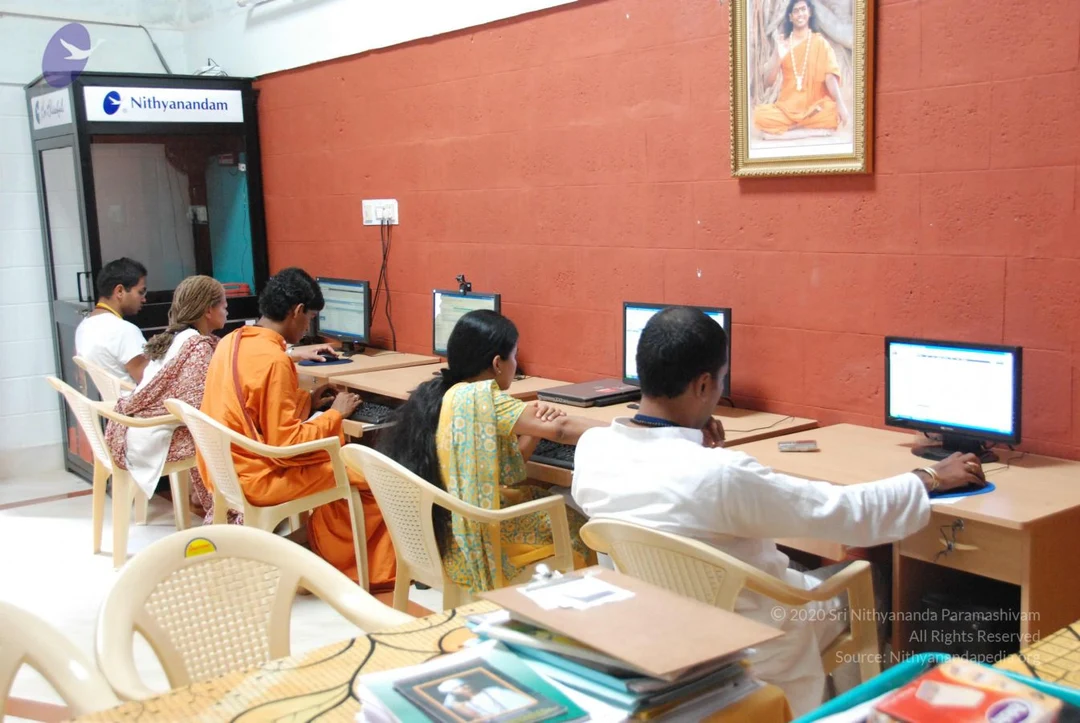
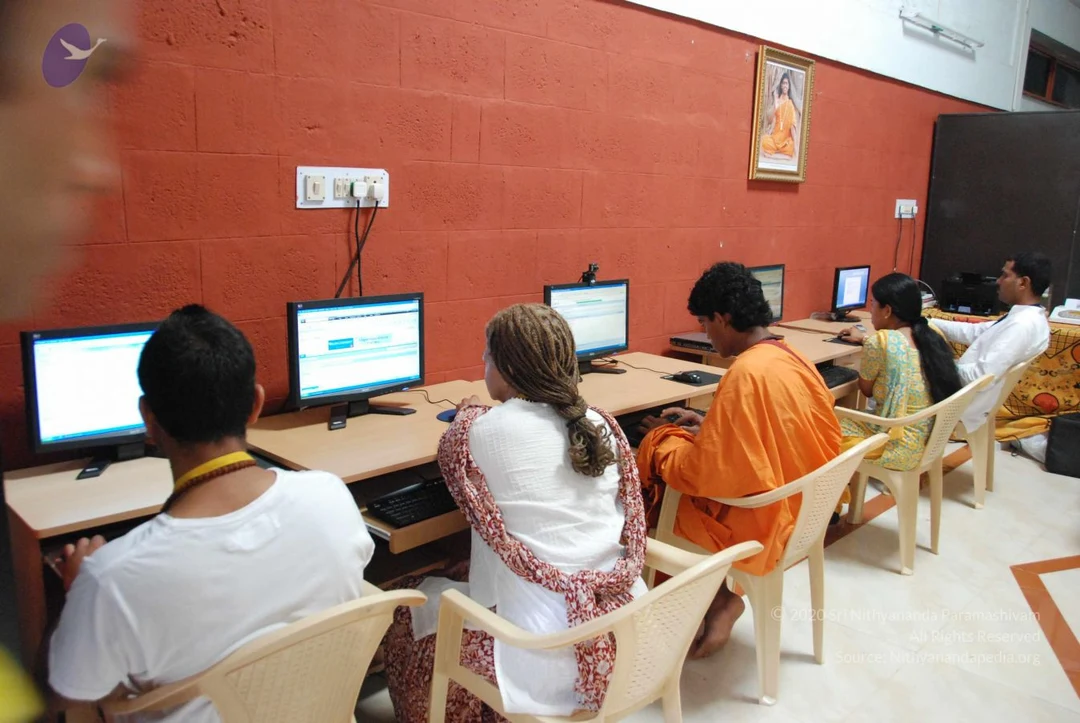
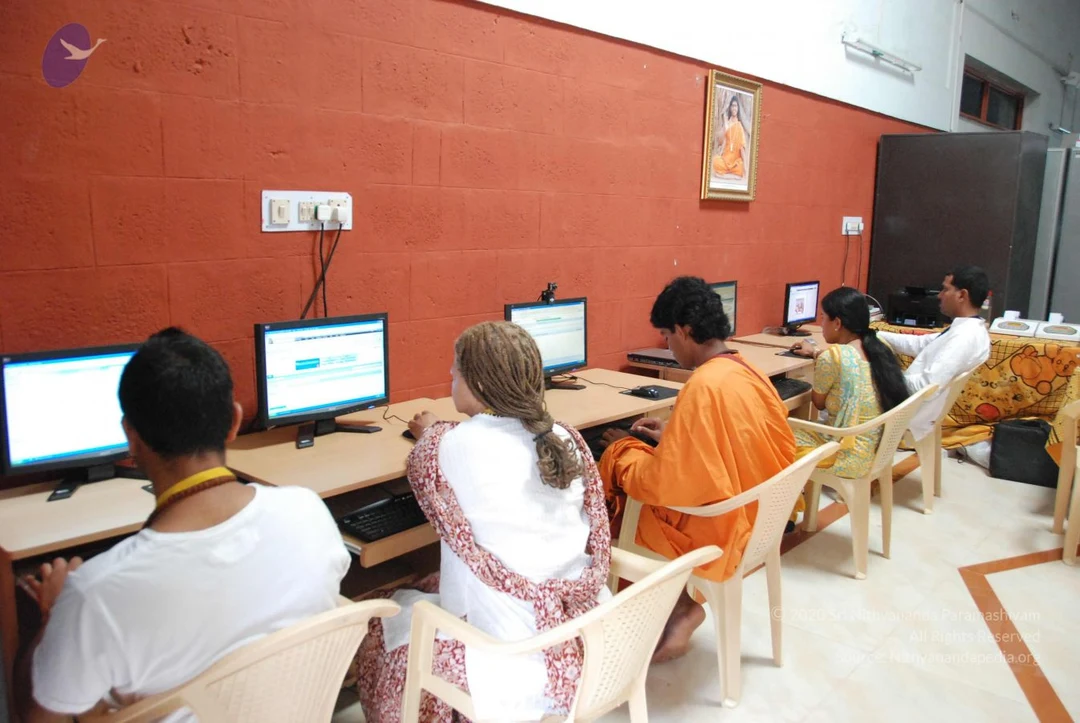
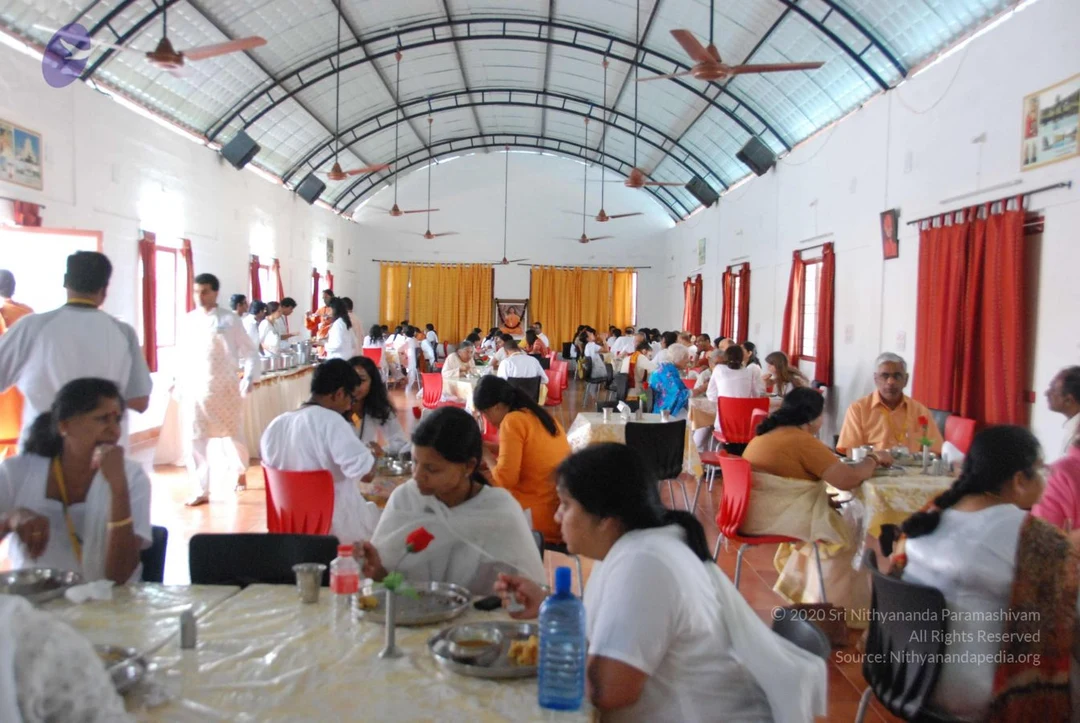
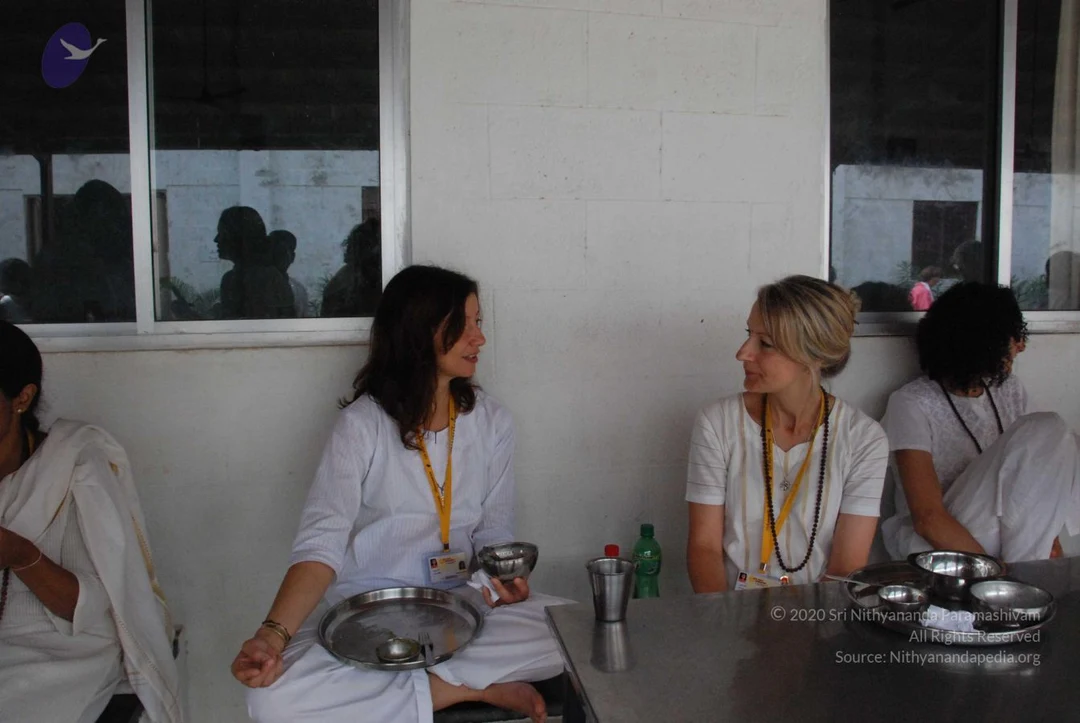
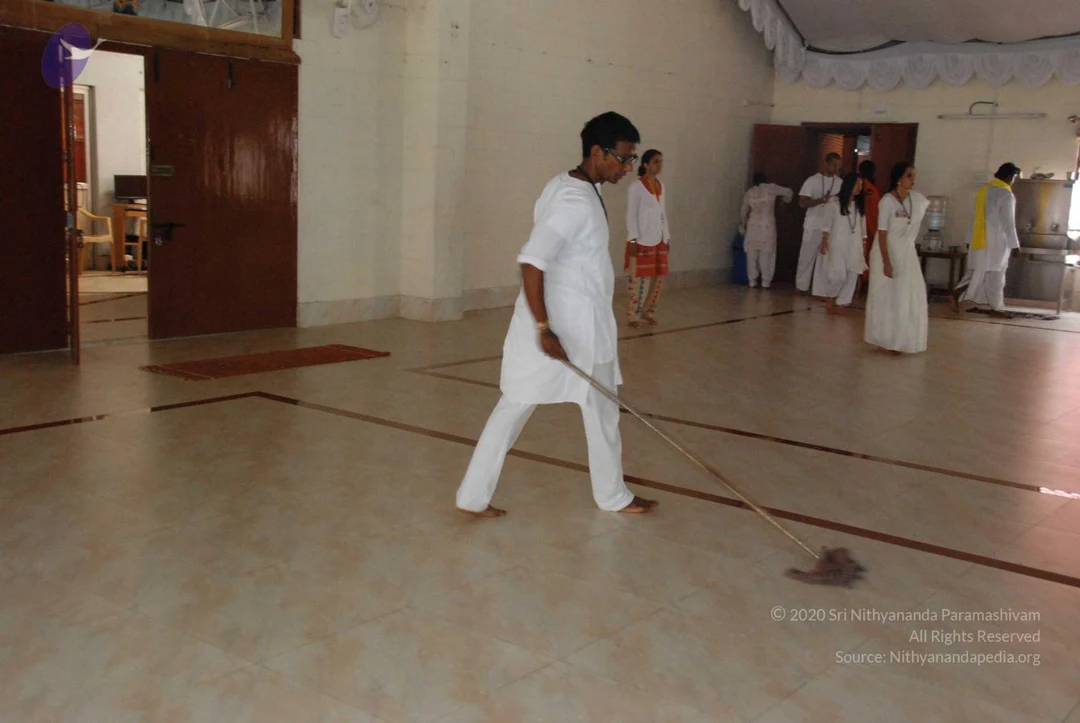
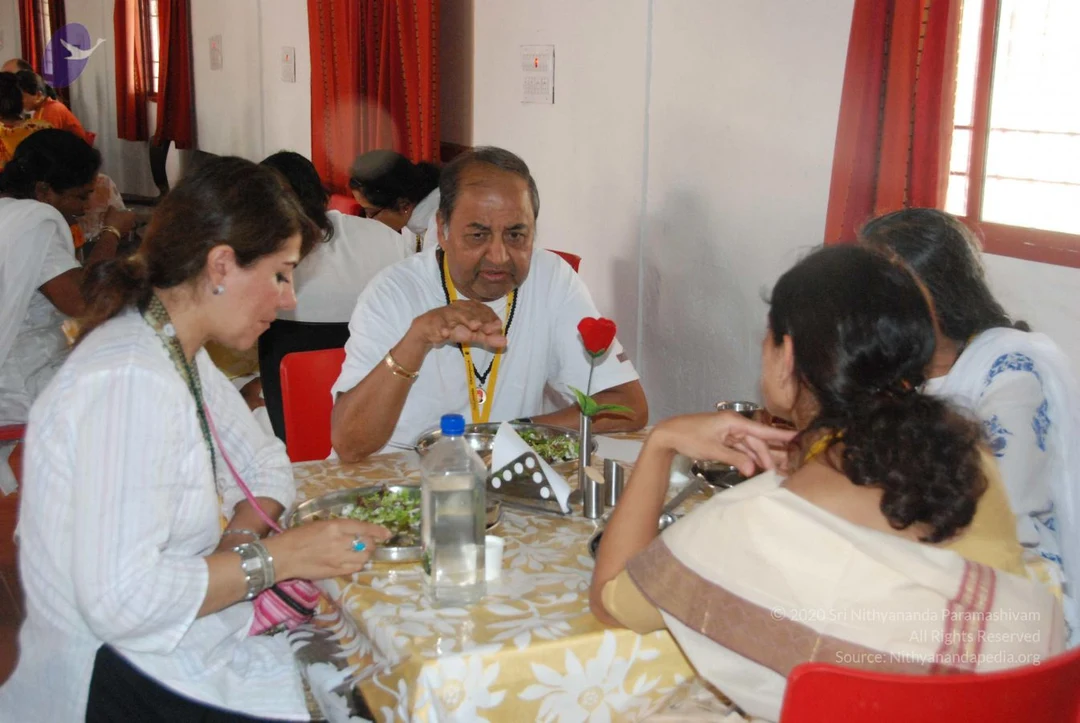
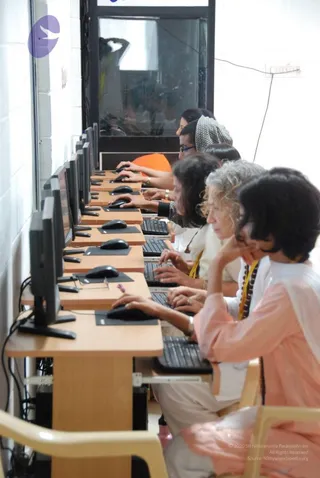
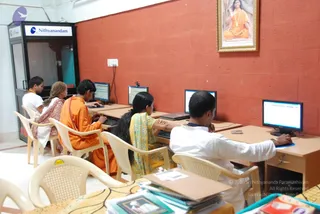
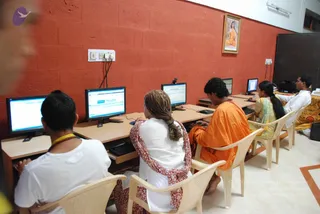
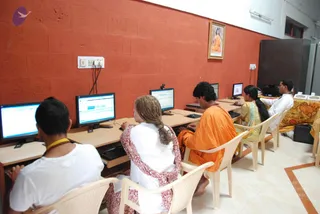
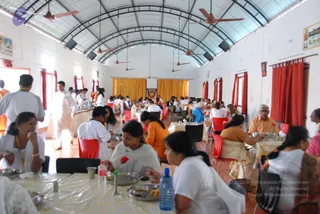
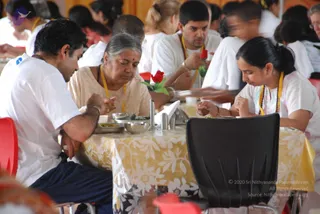
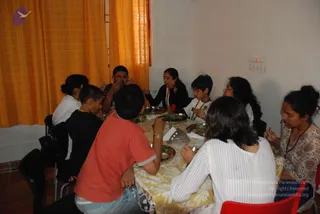
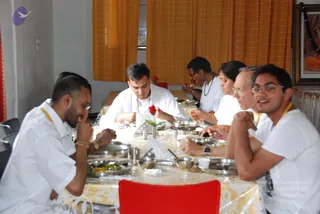
A photograph of a row of people seated at desktop computers in a computer lab, all with hands on keyboards and mice. Monitors line the left side against a white wall, and a glass-panelled door is visible behind them. The nearest woman wears a peach-coloured salwar with a white dupatta and has dark hair; others wear white, orange and dark clothing, and one wears a patterned headwrap. No figure is clearly identifiable as a candidate for a person, so the presence of a candidate is unclear from appearance.A row of people seated at desktop computers in a computer lab, each with a black mouse and keyboard on wooden desks with black mouse pads. Several participants lean toward the screens; the foreground woman wears a pink top with a white wrap and a beaded necklace, and another seated woman has curly grey hair and a white outfit with a yellow cord. Behind them a man in a knitted cap and an orange-clad figure are partly visible. White plastic chairs line the right side and a white block wall stands on the left.Photo of a computer room with a terracotta-red wall. Several people sit at desks working on monitors: a young man in white on the left, a woman in a floral kurta, a young man in saffron-orange robes with a sash, a woman in a yellow-green patterned salwar, and a man in white with a blue lanyard in the foreground. A framed portrait on the wall shows a figure in saffron robes and a rudraksha mala seated in meditation; it is a printed picture, not a physical person, and the image does not establish who it depicts. A glass booth labelled Nithyanandam stands at left. White plastic chairs and desks fill the room.A photograph of an ashram computer room with a red-painted wall and several monitors on wooden desks. Five people sit at the computers on cream plastic chairs: a young man in a white t-shirt with a yellow lanyard at left, a woman with long dreadlocked hair in a white top and red patterned shawl, a young man in a saffron-orange robe, a woman in a yellow-green patterned salwar kameez with a long plait, and a man in white at far right. A framed portrait on the wall shows a figure in orange robes. A purple logo appears at top left.A photograph of a computer room with a terracotta-red wall and cream plastic chairs. Five people sit at desktop monitors: a young man in white with a yellow lanyard at left, a woman in white with a patterned red-and-white shawl and dreadlocked hair, a young man in a saffron-orange robe working at a keyboard, a woman in a yellow and green salwar kameez, and a man in white at the far right. A framed portrait on the wall above the desks shows a figure in saffron-orange robes with long hair. A cream-coloured sofa with orange cushions sits at right.A large white dining hall with a barrel-vaulted roof, ceiling fans and red and orange curtains along the walls. Many people sit at long tables covered with plastic cloths, eating from steel plates and thali trays with steel tumblers and water bottles. Several people in white clothes serve food from a counter at the back, while a woman in white in the foreground holds a red rose. A man in an orange top sits at right. A framed picture hangs on the back wall behind the serving area, but no figure in it can be clearly identified. Most people visible wear white or orange clothing.

Sri-Vidya-Puja
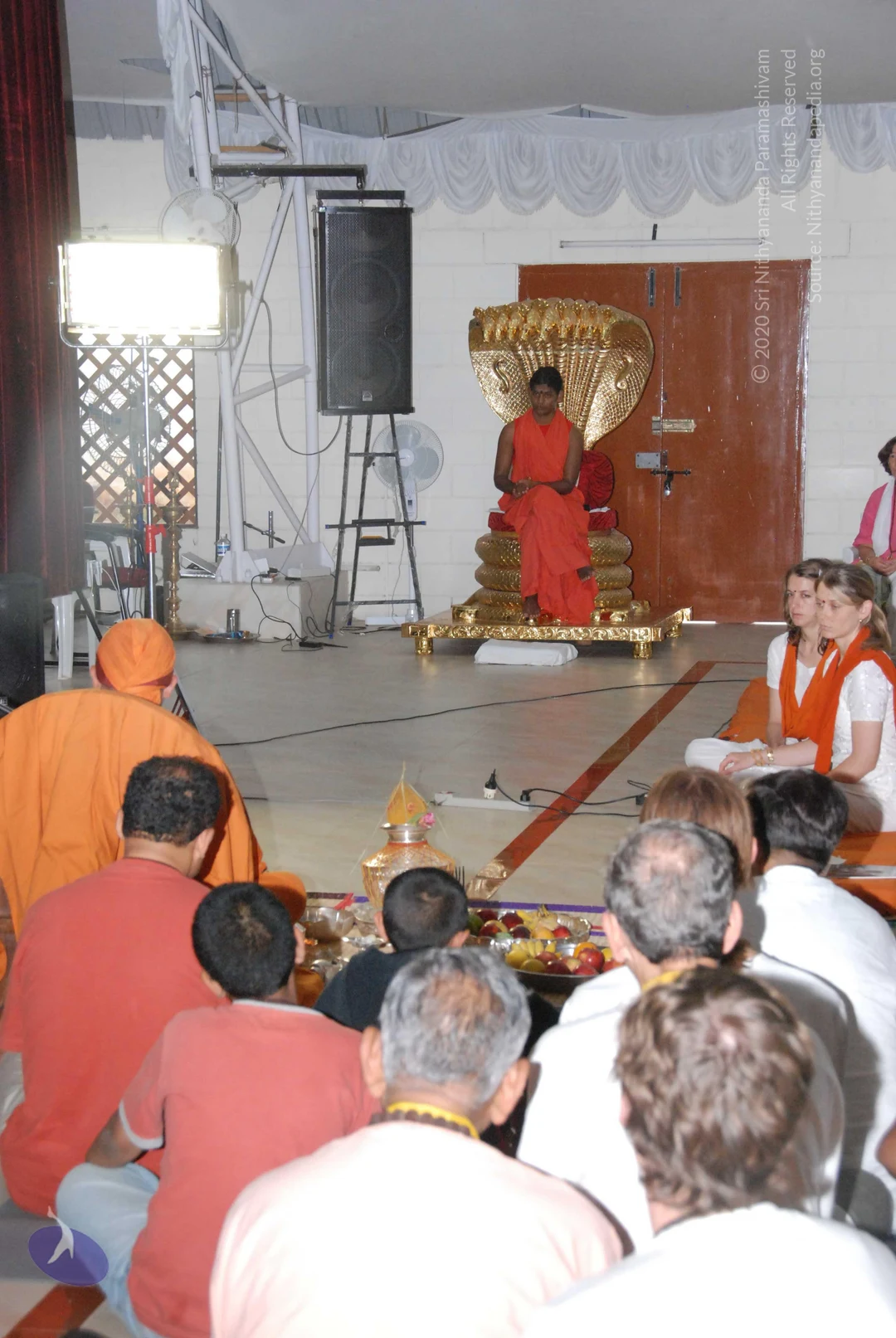
19 photosSource gallery
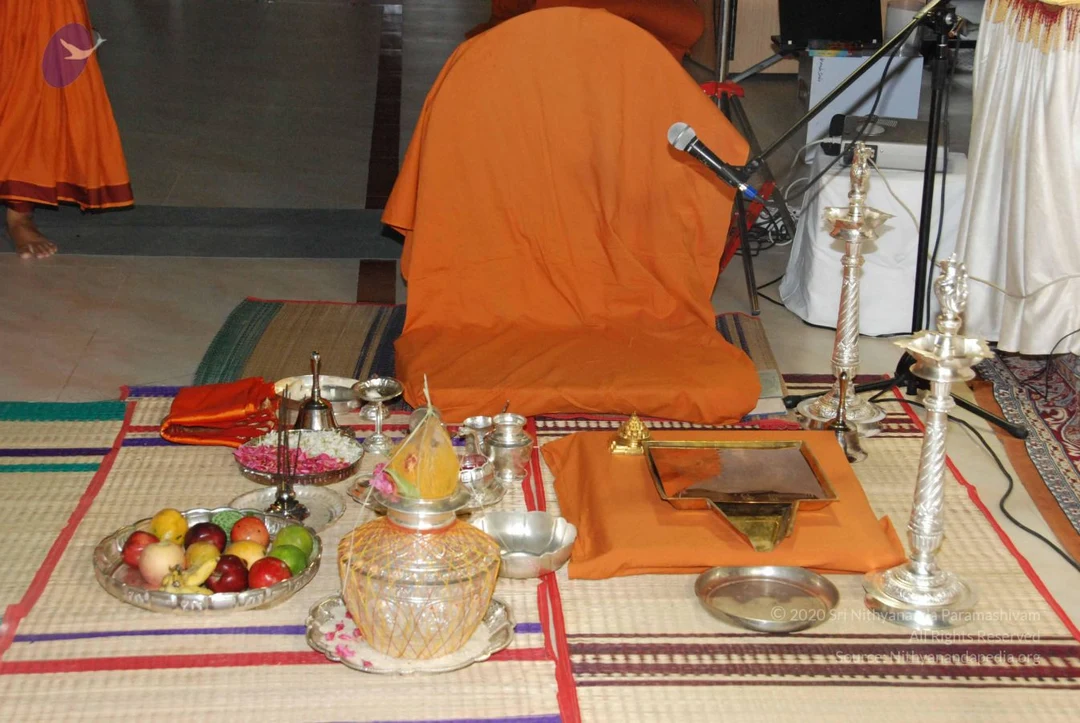
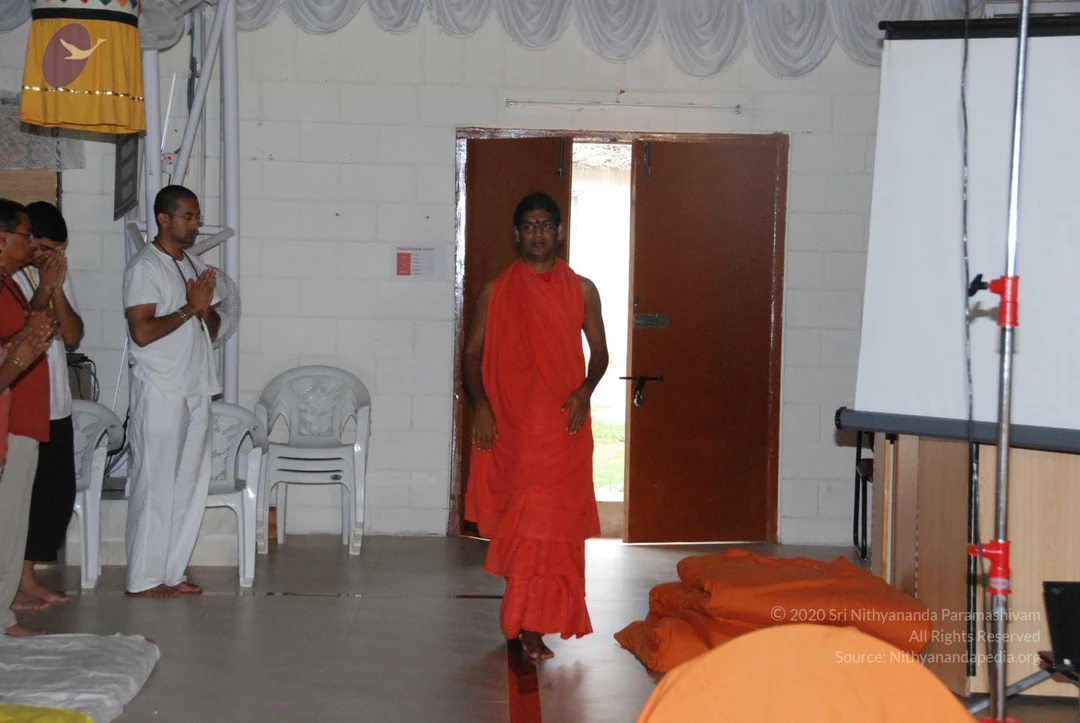
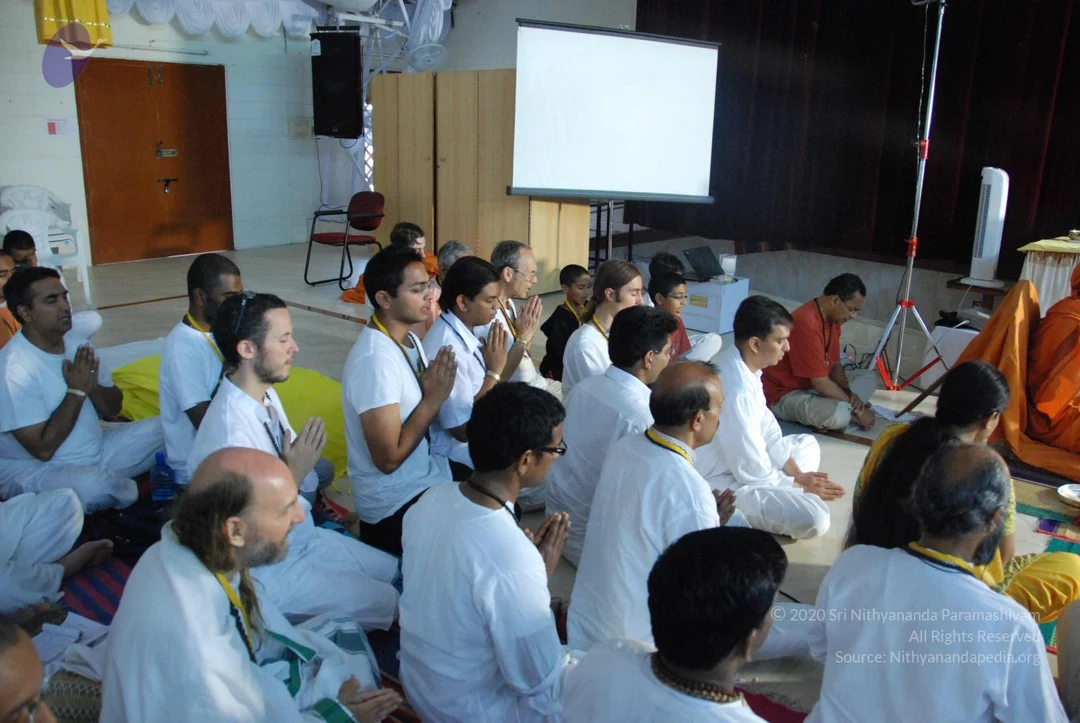
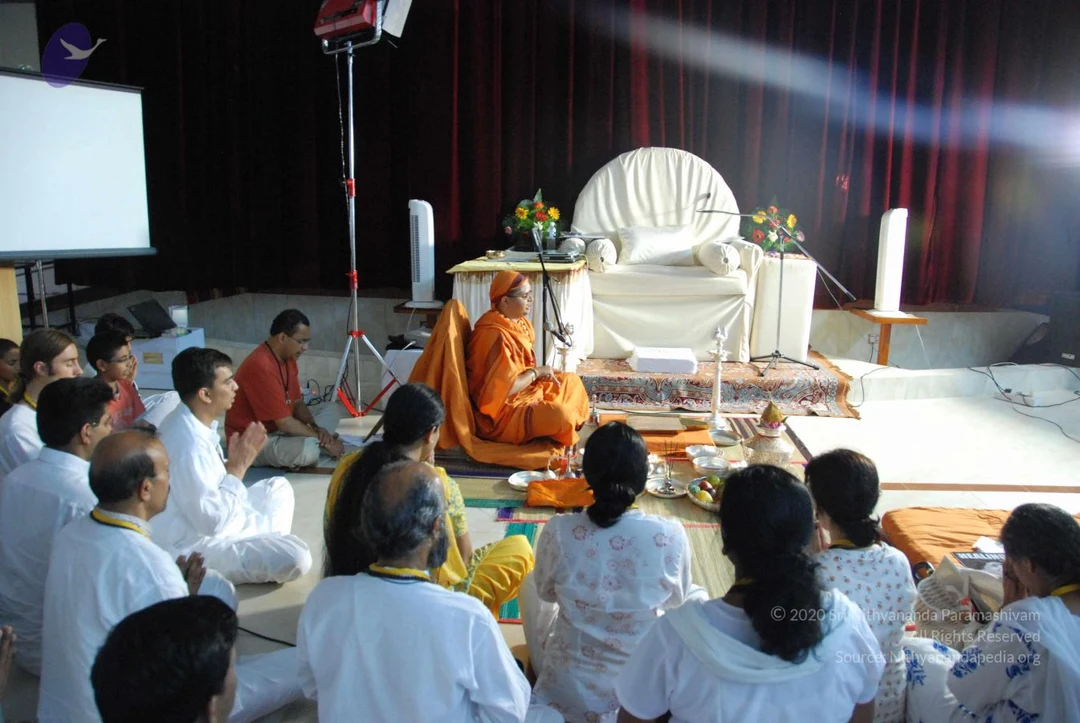
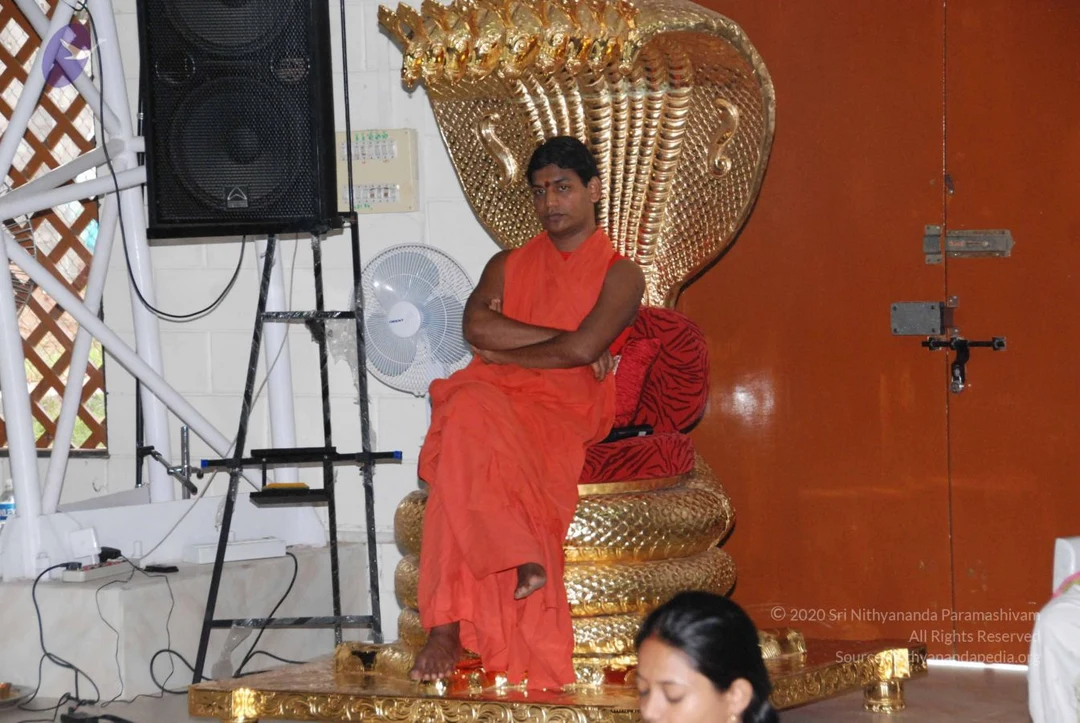
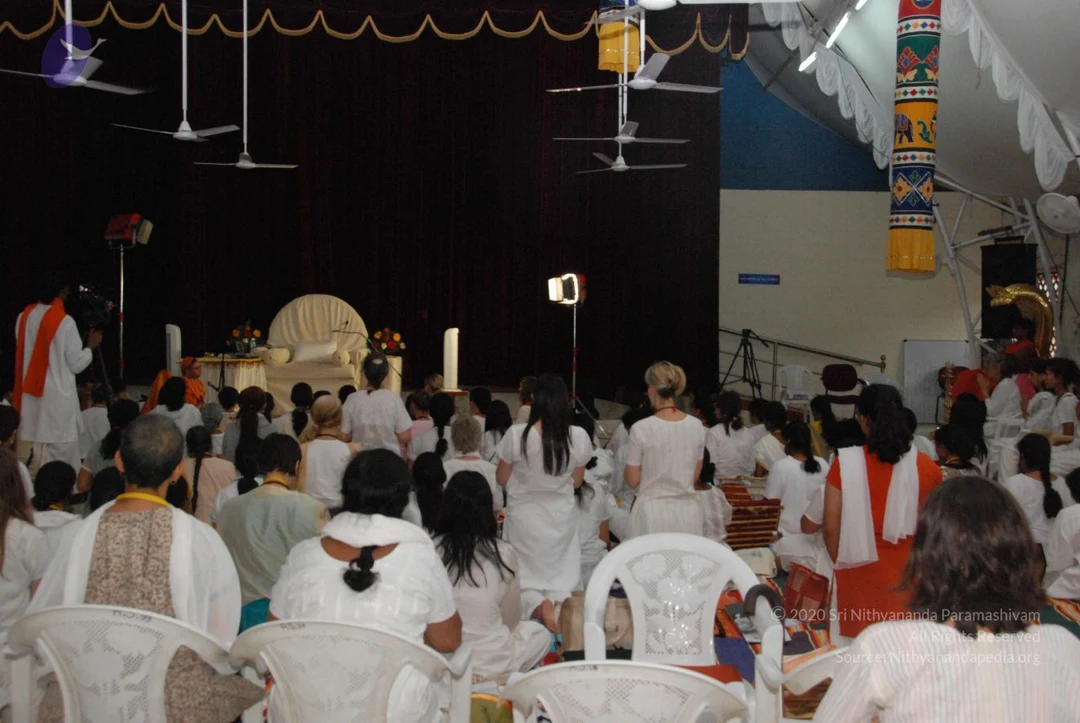
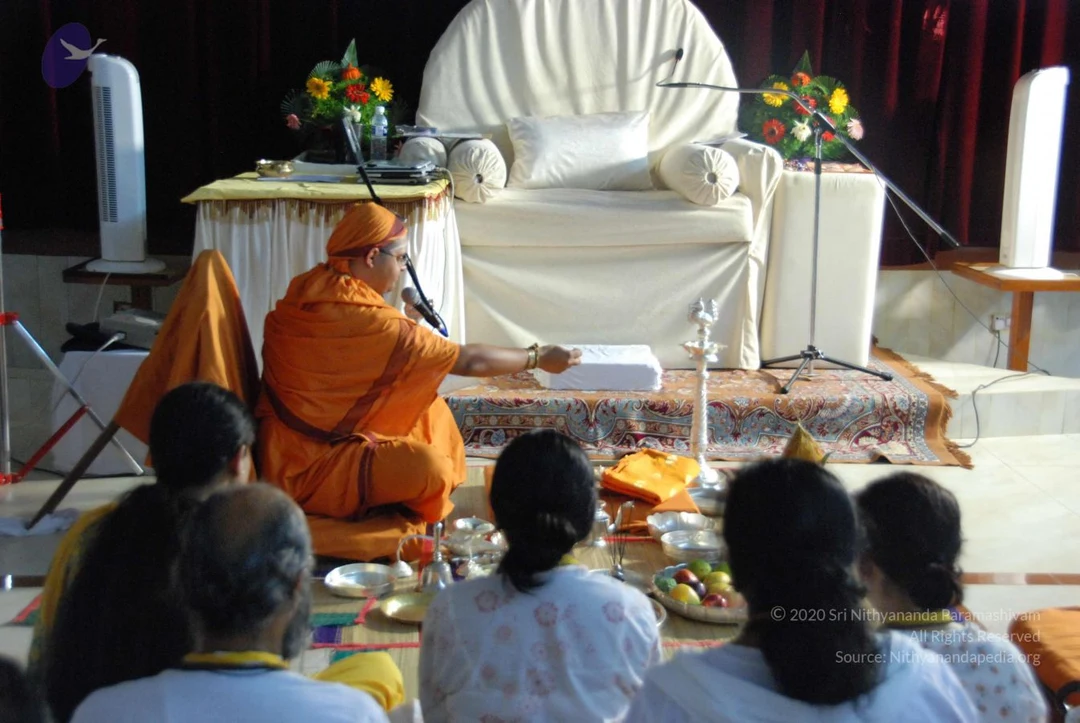
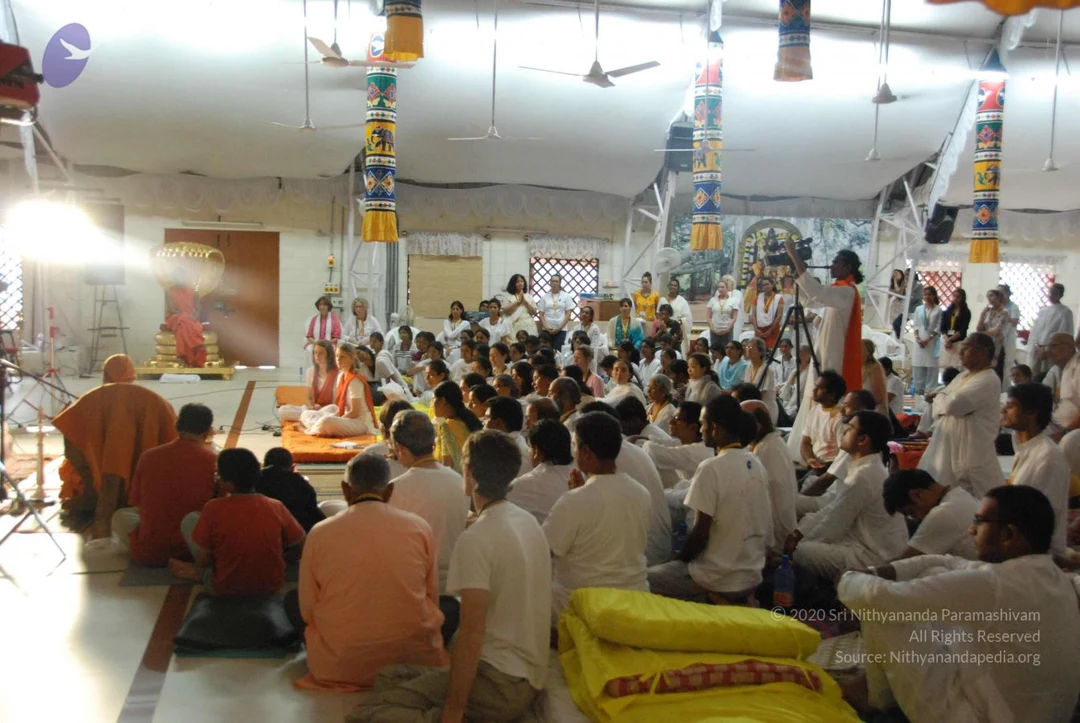
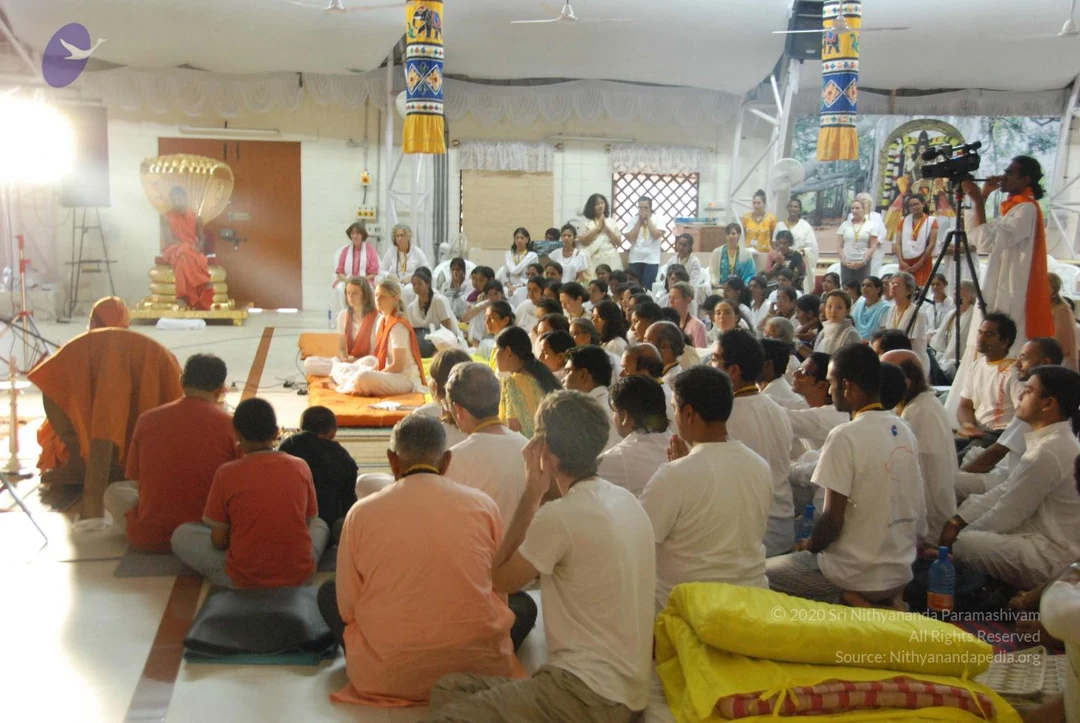
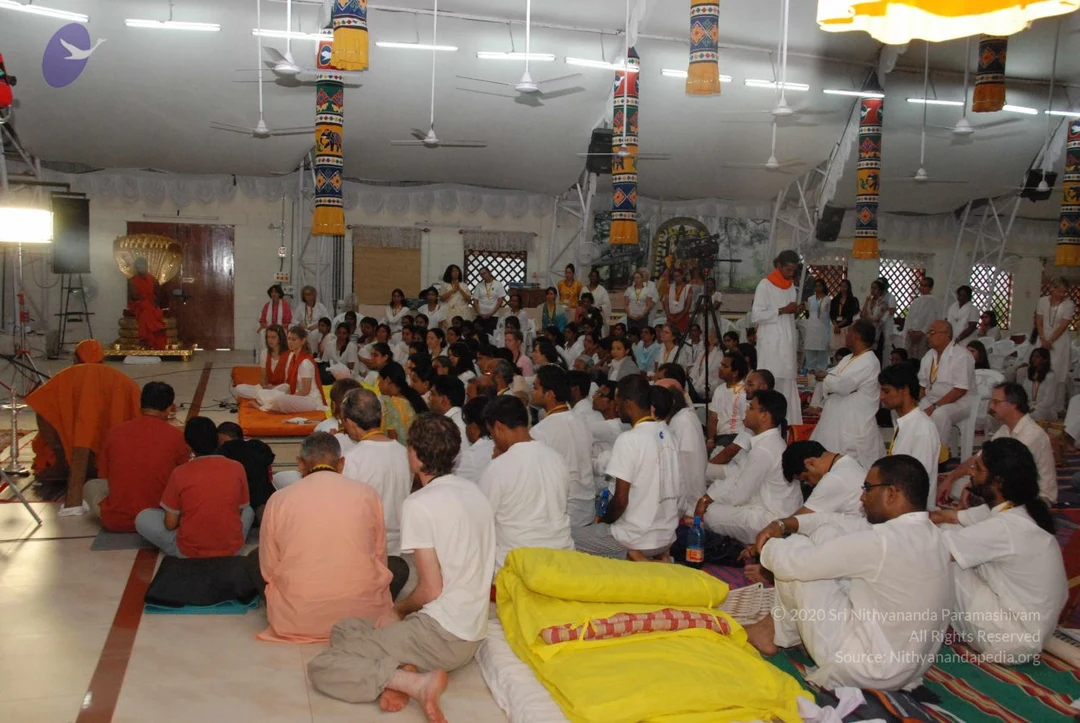
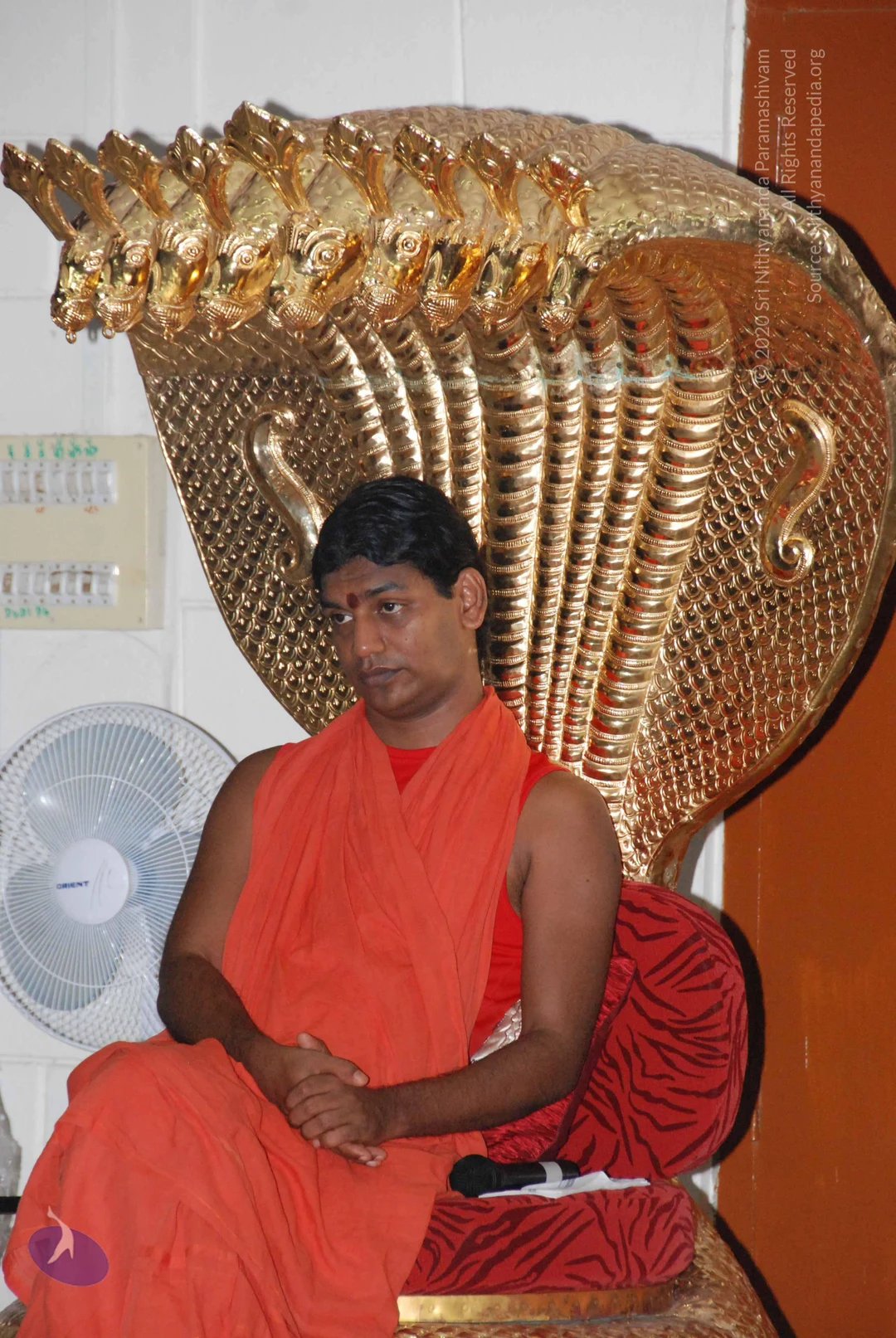
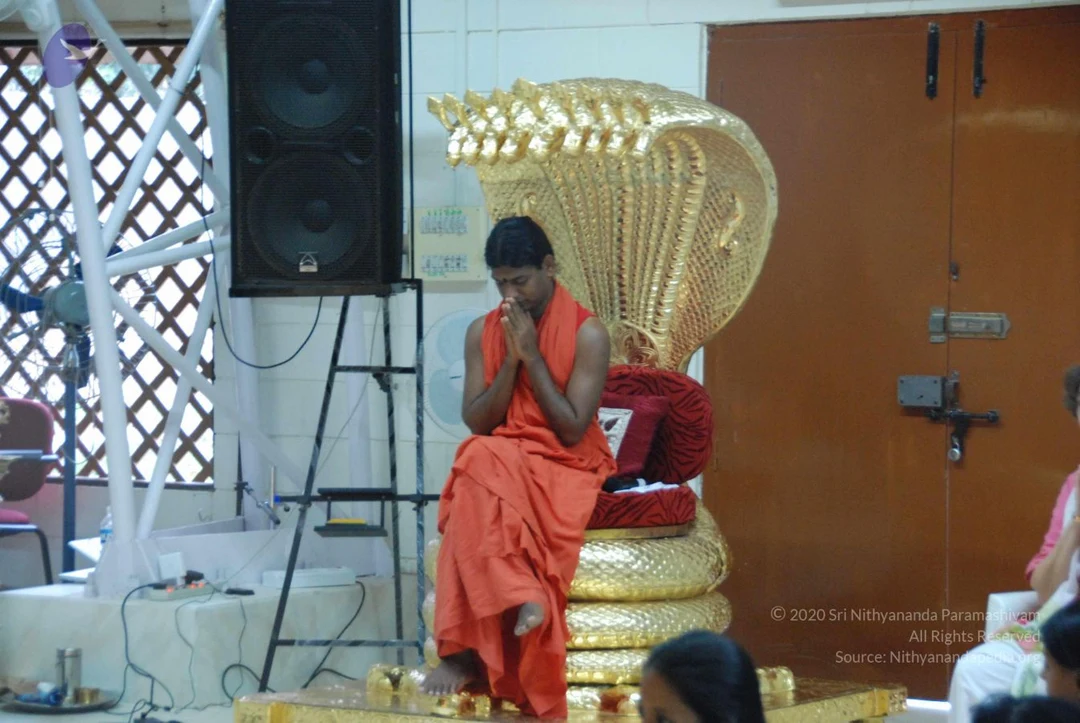
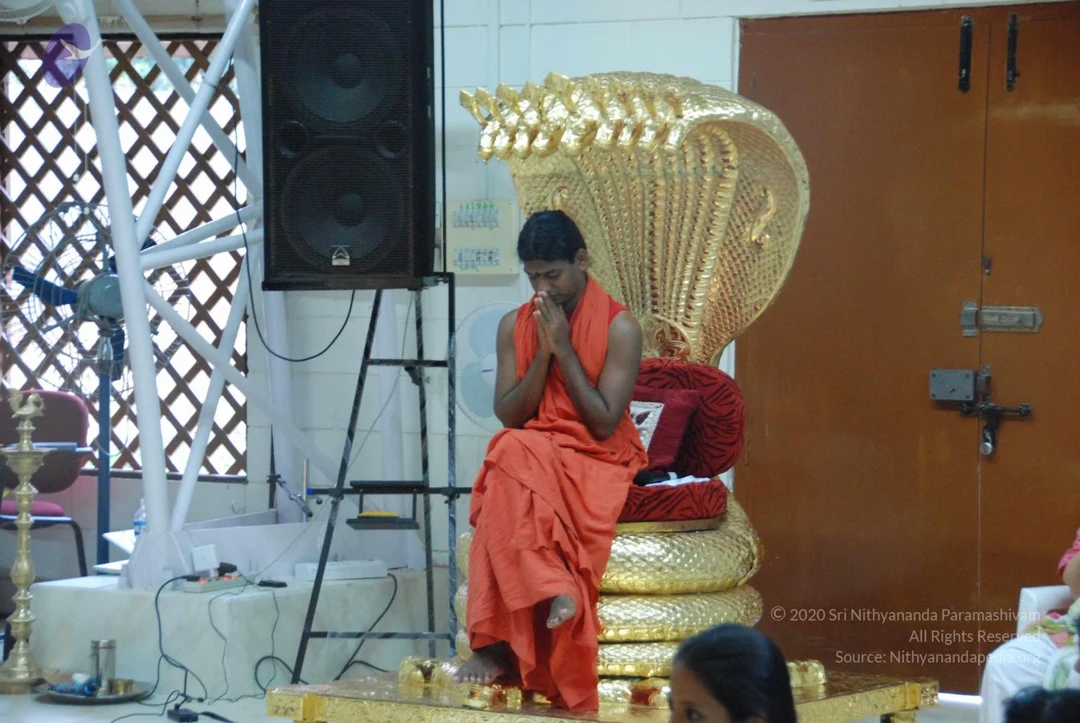
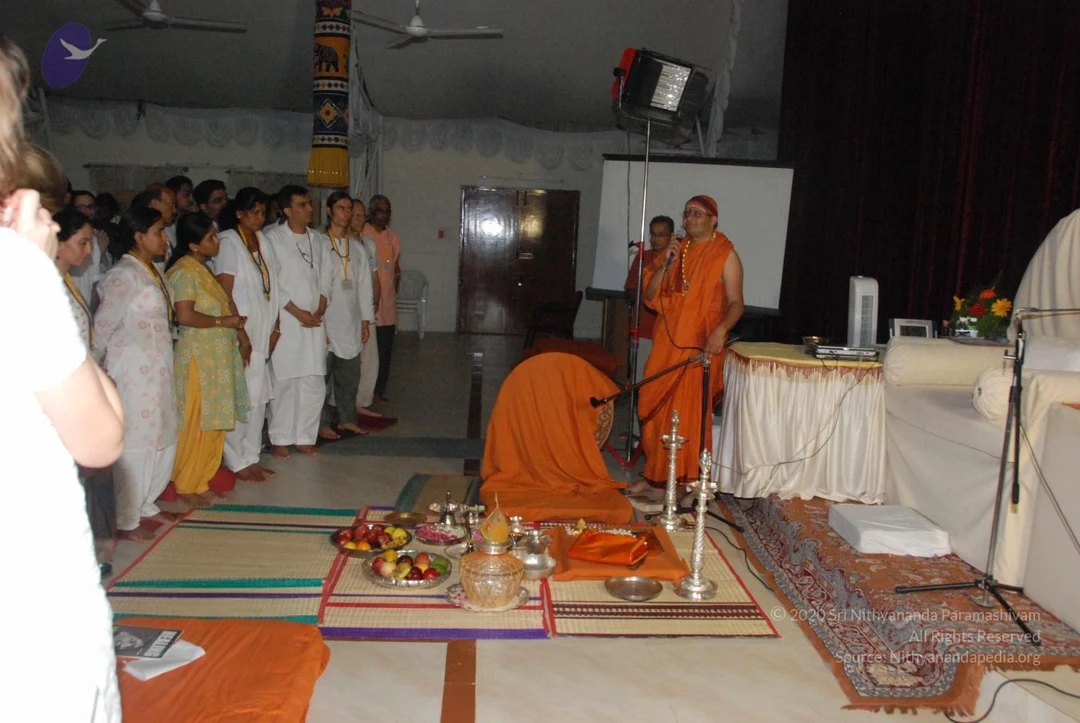
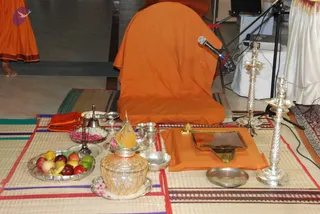
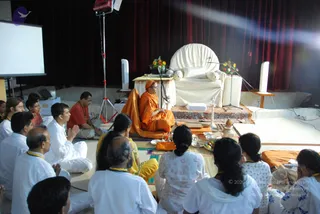
Photograph of a seated-cushion setup on woven straw mats for a ritual session. An orange cloth covers a seat where a figure in orange robes sits, with a microphone on a stand before it. In front lie a silver tray of fresh fruit with apples, lemons and bananas, a brass kalasha-style pot wrapped in mesh with a pointed leaf-topped lid, a silver bowl of petals, a brass yantra-like plate on an orange cloth, a small gold deity murti, and tall silver oil lamps on either side. Part of a figure in orange clothing stands at the left edge and a person in white stands at the right edge, with their feet and lower bodies cropped.A figure in a saffron-orange robe with a red-orange shawl draped over the shoulder walks through a brown doorway into a plain room with white-block walls and a yellow and purple banner with a bird emblem hanging at upper left. A dark-haired man in white ritual clothes stands at left with palms pressed together in namaskar beside a row of white plastic chairs, and another person in red with hands folded stands at far left edge. Orange cushions or mats lie on the floor at lower right, and a projection screen and stand are at right.A photograph of a seated group of participants in white clothing with yellow lanyards at an indoor session hall, many with palms pressed together in namaste. Foreground figures include a man with long hair and a beard, and a bald man in white. On the right, a person in saffron/orange robes sits near the front, with a seated man in a red shirt beside a laptop and a blank projection screen behind the group. Wall panels and a yellow curtain frame the room. Eight to ten people are visible. The setting suggests a meditation or discourse session.A seated teacher in a saffron-orange robe and matching head covering sits cross-legged on a raised platform in front of a white cushioned throne with floral arrangements on a side table. A flat-screen projection screen stands to the left and a stage light on a tripod is nearby. Around the platform, roughly a dozen seated devotees in white clothing, some with yellow lanyards, listen attentively, several with hands folded in anjali. Offerings of fruit and flowers and an oil lamp are placed on the floor before the stage, with a red curtain behind. The figure is an appearance-based a person by saffron robe, head covering and seated position, but this is uncertain, so it is recorded as unsure.A man in orange sannyasi-style robes sits cross-legged with arms folded on a gold throne carved as a multi-hooded cobra, its seat cushioned in red and black tiger-striped fabric. He is barefoot on a gold-trimmed platform. A black speaker on a stand, white metal scaffolding and an orange wooden door are behind him; a fan stands to the left. A woman in the lower right corner, partly cut off, looks down. The photo is watermarked as a Nithyanandapedia archive image, which is omitted here.Photograph from behind a seated audience inside a large tent-like hall at an ashram session. Many participants wear white clothing, and some women wear white or orange shawls; a few sit on white plastic chairs in the foreground, while most sit on the floor facing a stage. On the stage a white cushioned seat stands beside a small table with flowers and an orange-robed figure, and a cameraman in white with an orange shawl stands at left. Ceiling fans hang above, with a colourful woven banner and a white canopy at right. Some people are visibly standing or seated in various positions, and a white candle stands near the stage. The count of visible people is large and approximate.

Swami-2

1 photoSource gallery
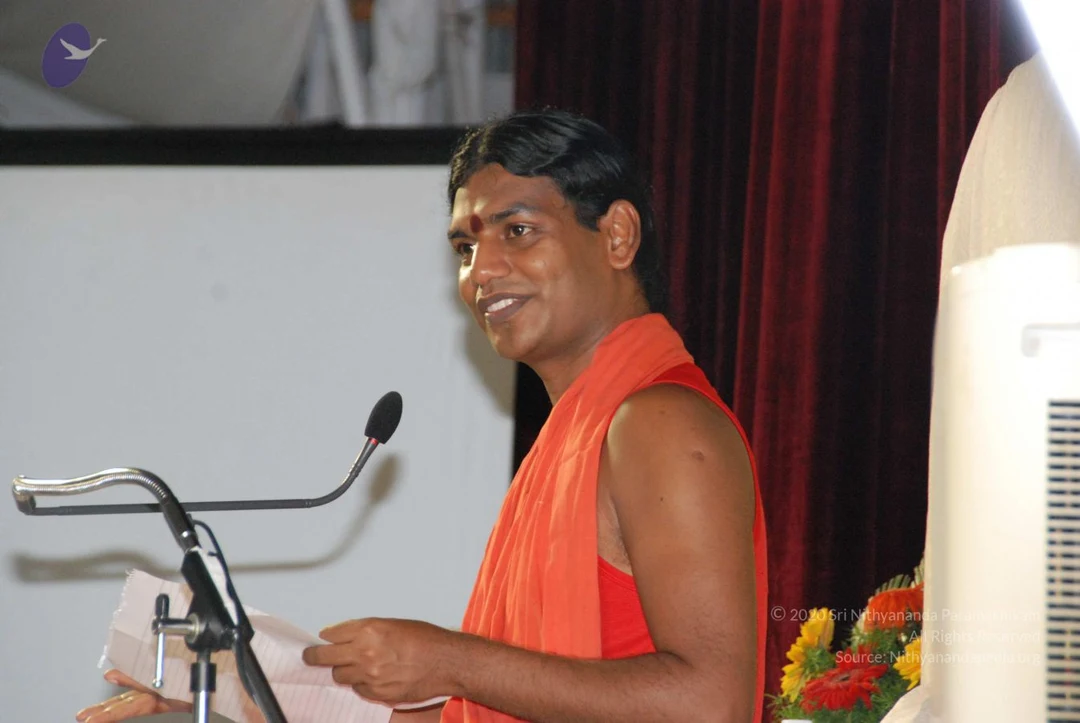
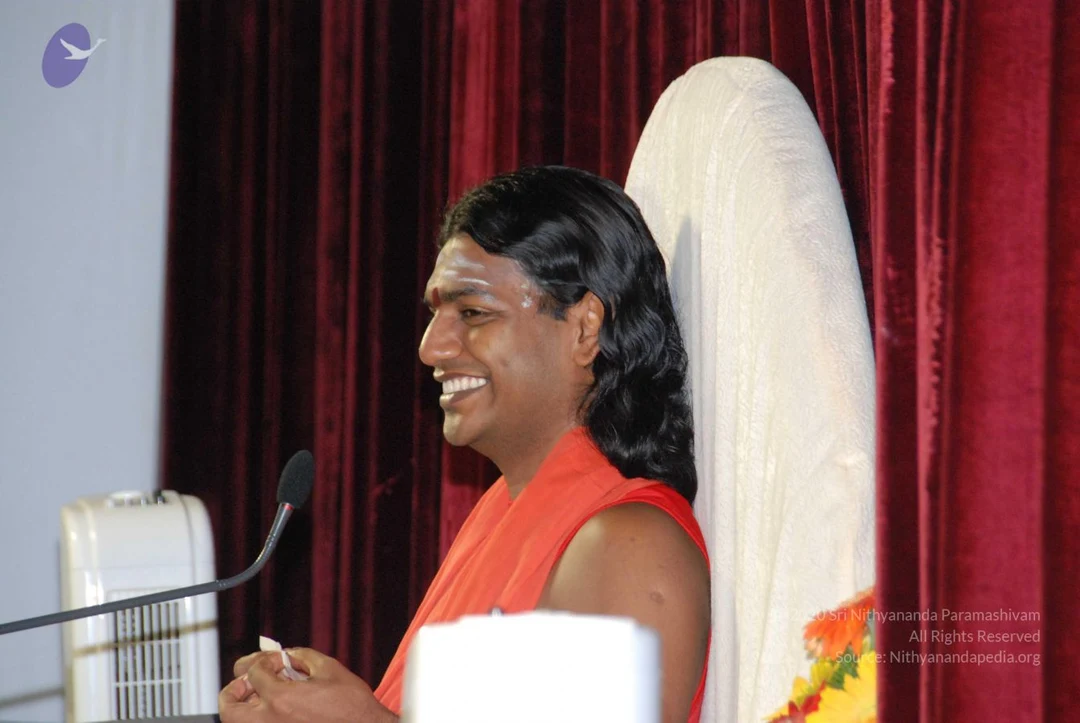
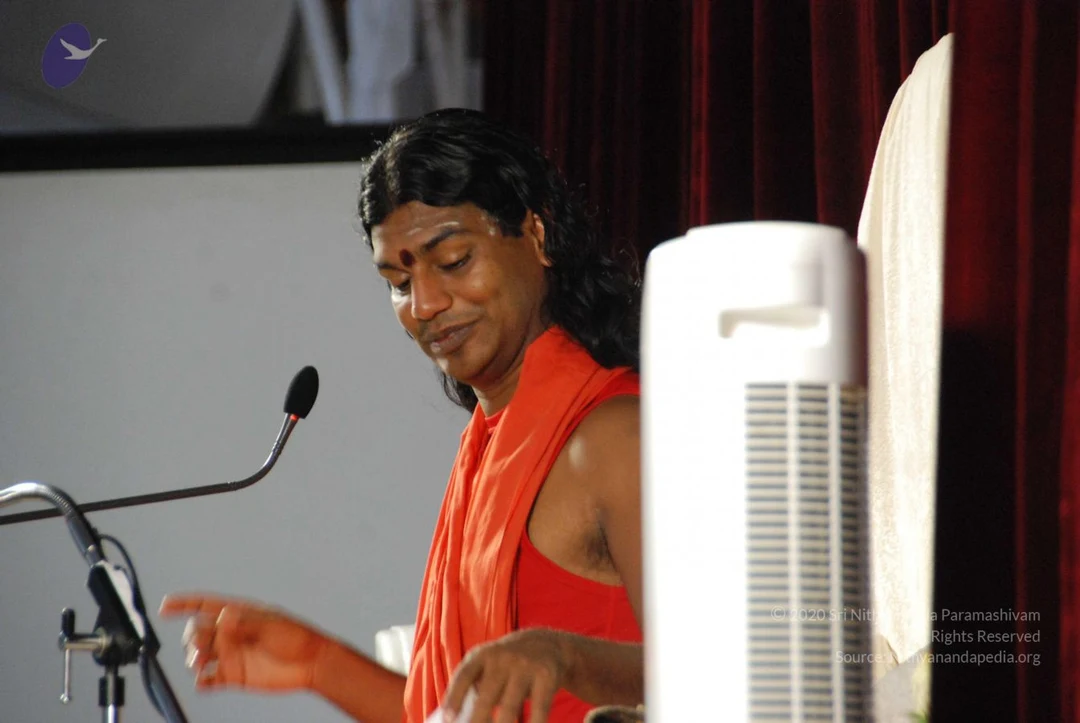
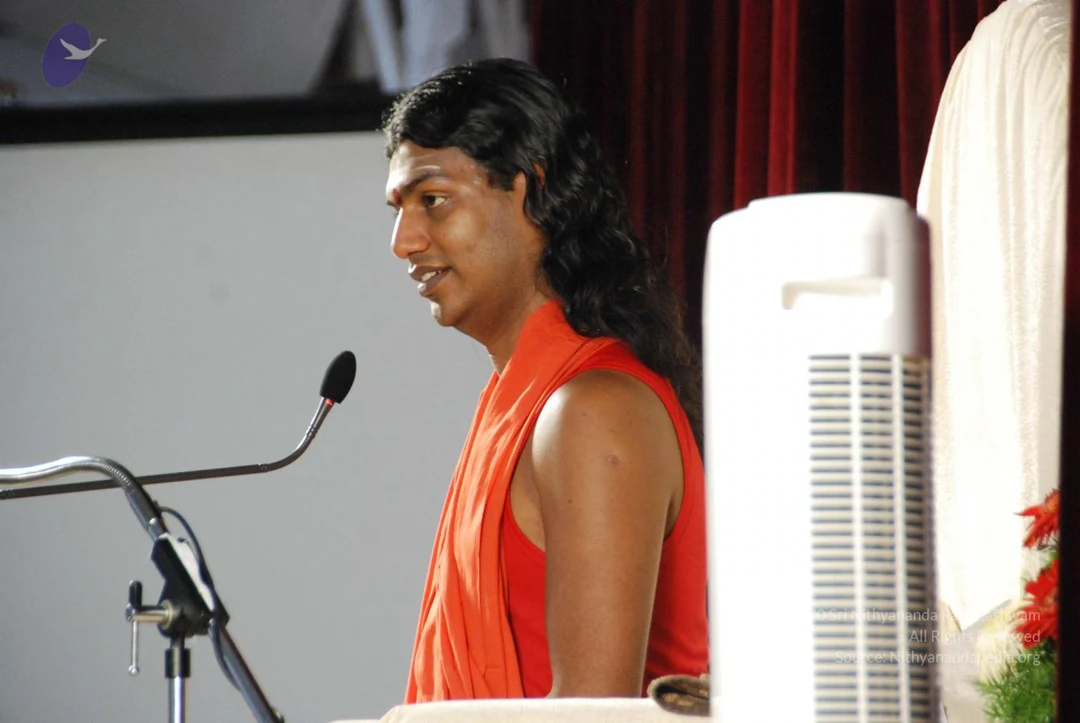
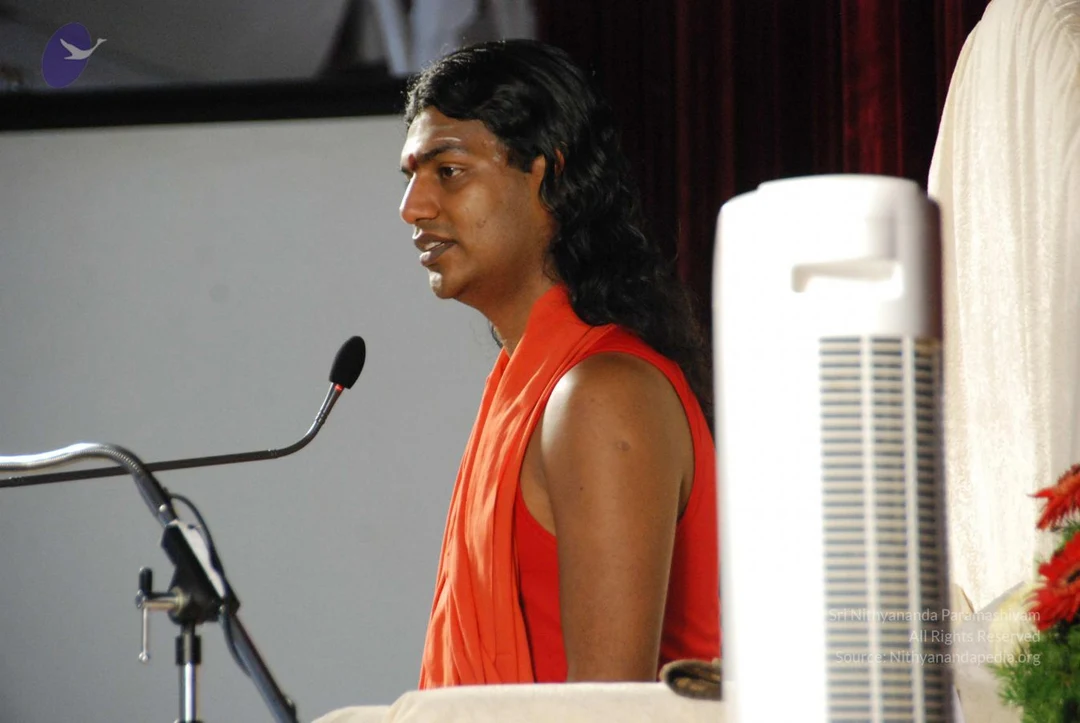
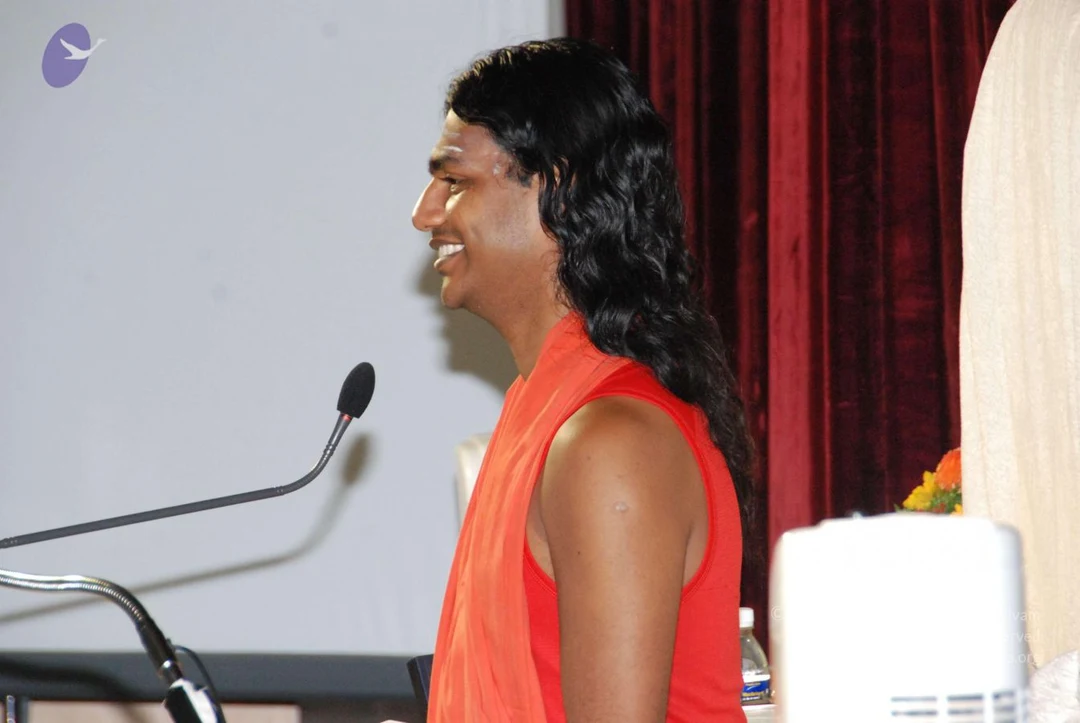
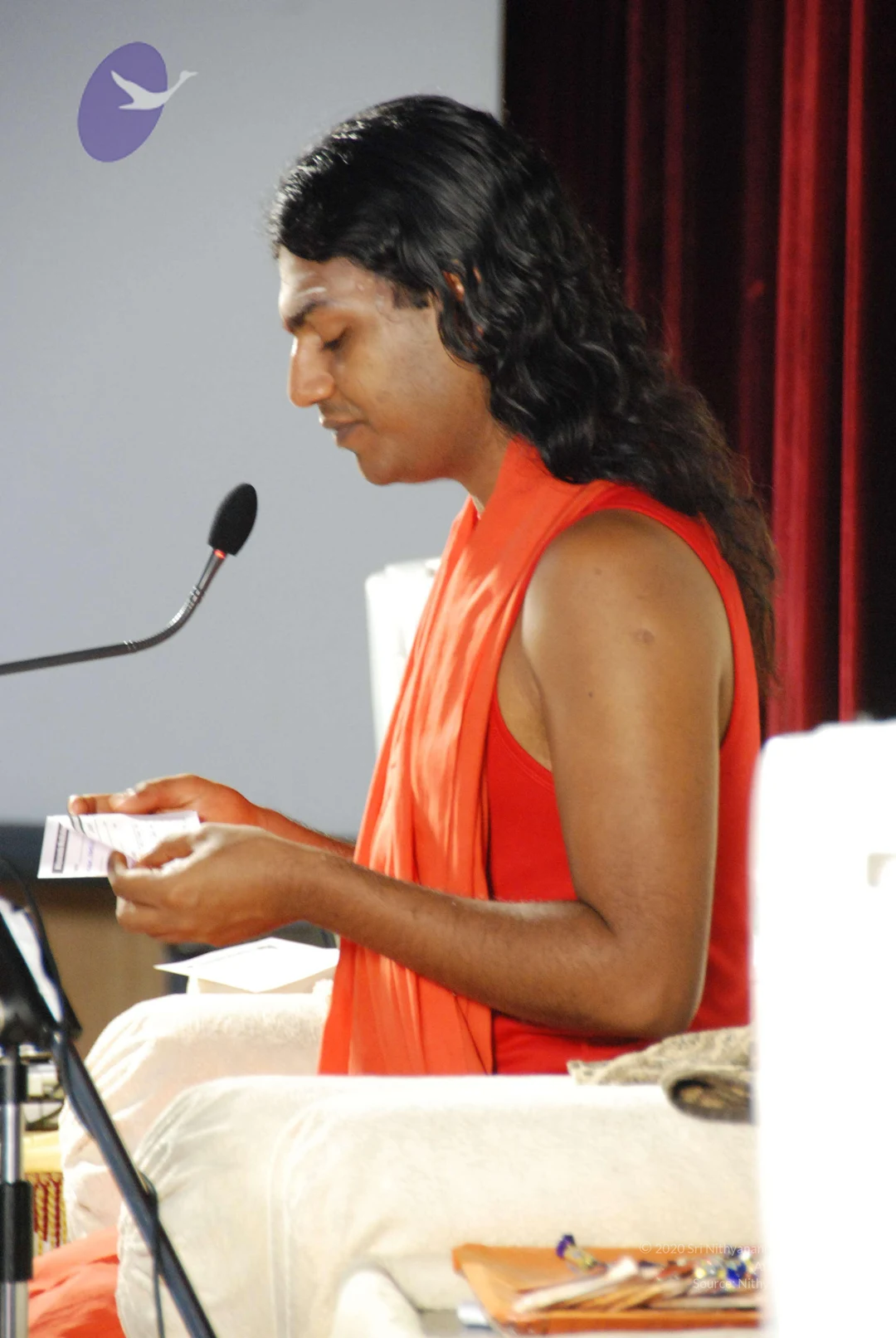
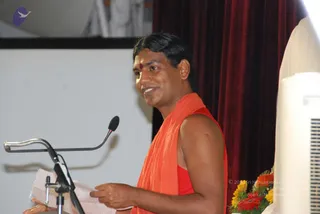
A man in an orange-red sleeveless garment with a matching orange-red shawl draped over his shoulders stands at a lectern with a gooseneck microphone, holding papers and smiling as he looks to his right. A small red bindi is on his forehead and his hair is combed back. Behind him hang deep red curtains, and yellow and red flowers are arranged at the right edge beside a white screen. The setting suggests a discourse stage. a person: the man has a sleeveless saffron-orange garment, a red bindi and short combed-back hair; he is speaking at a podium during a session.

Swami-Morning

19 photosSource gallery
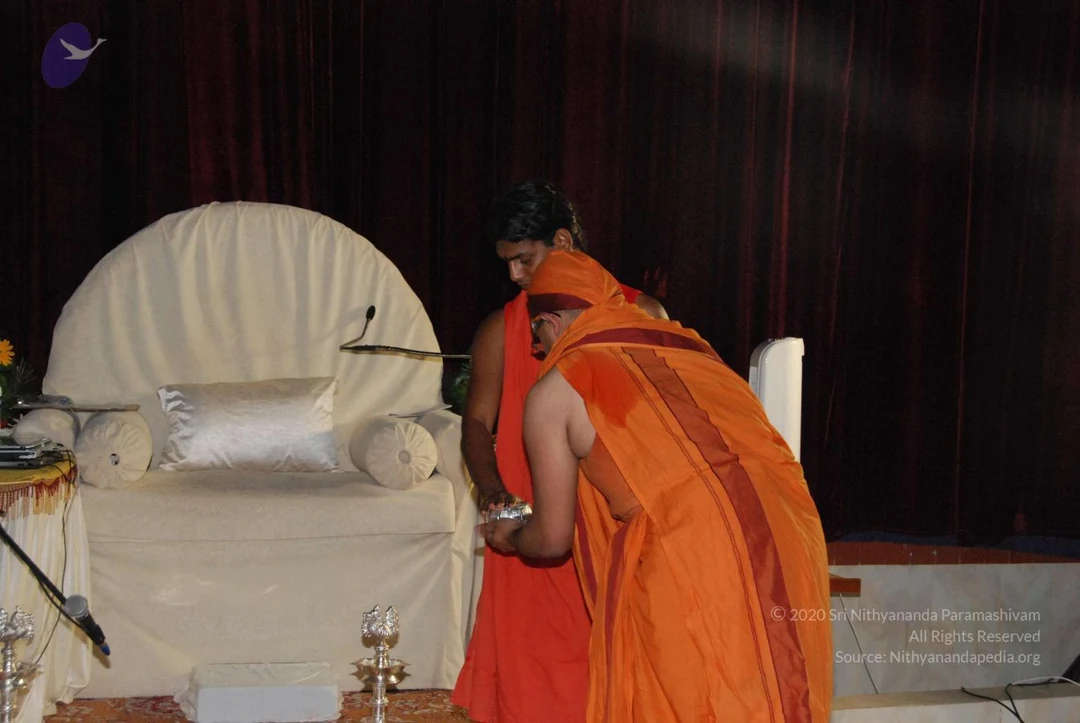
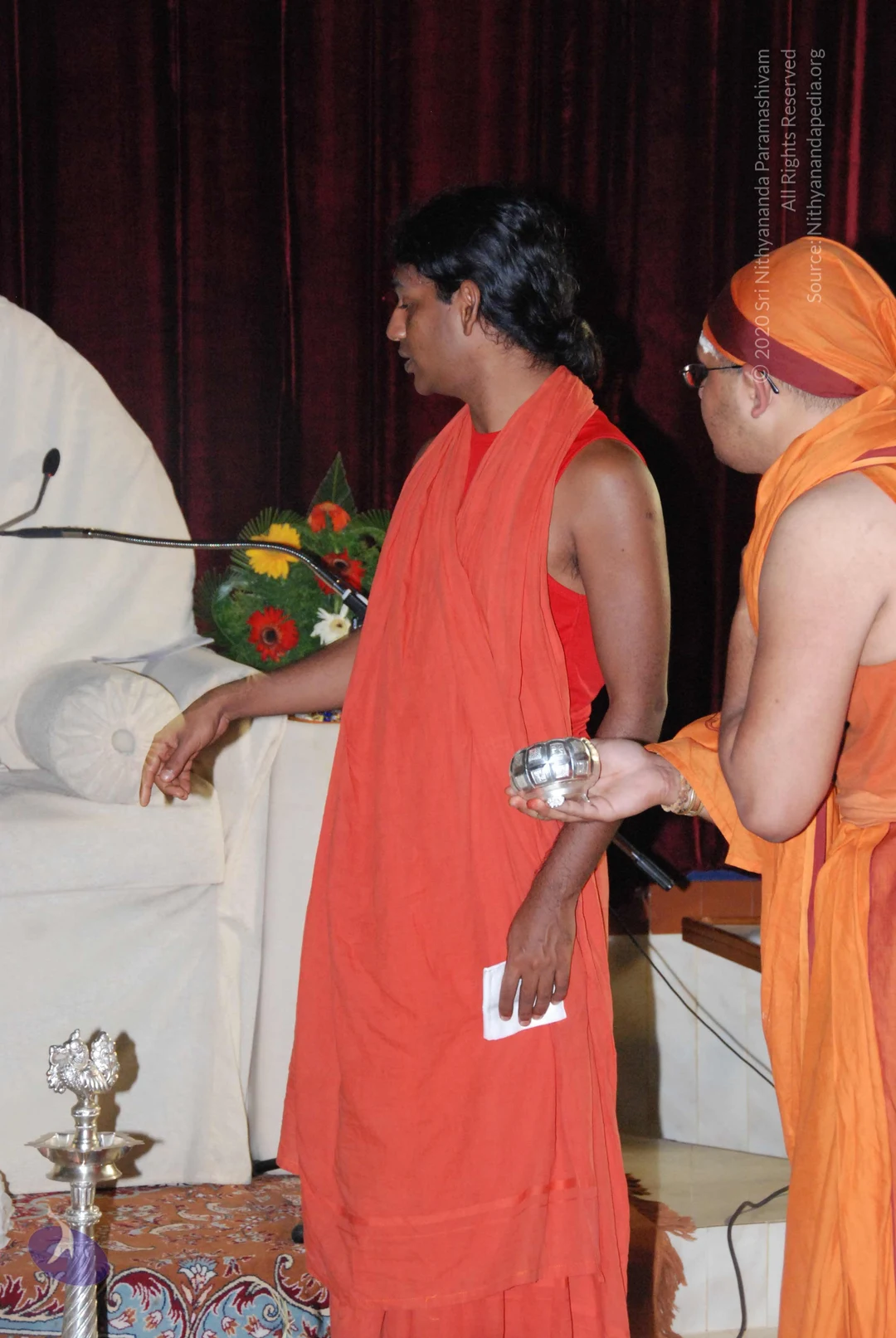
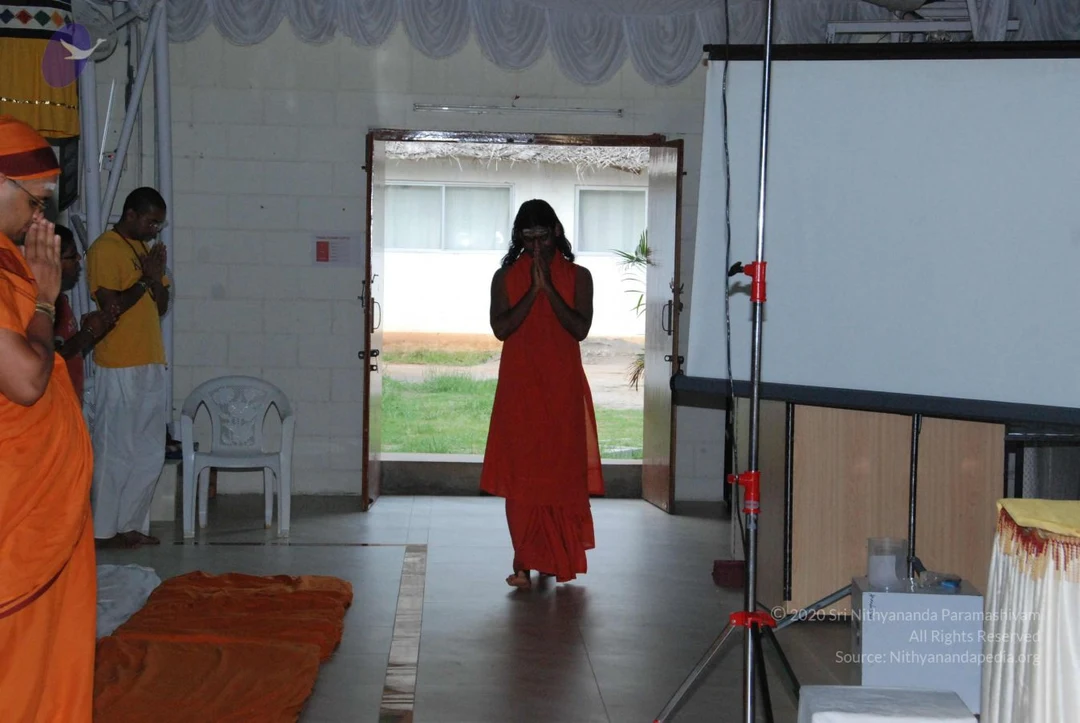
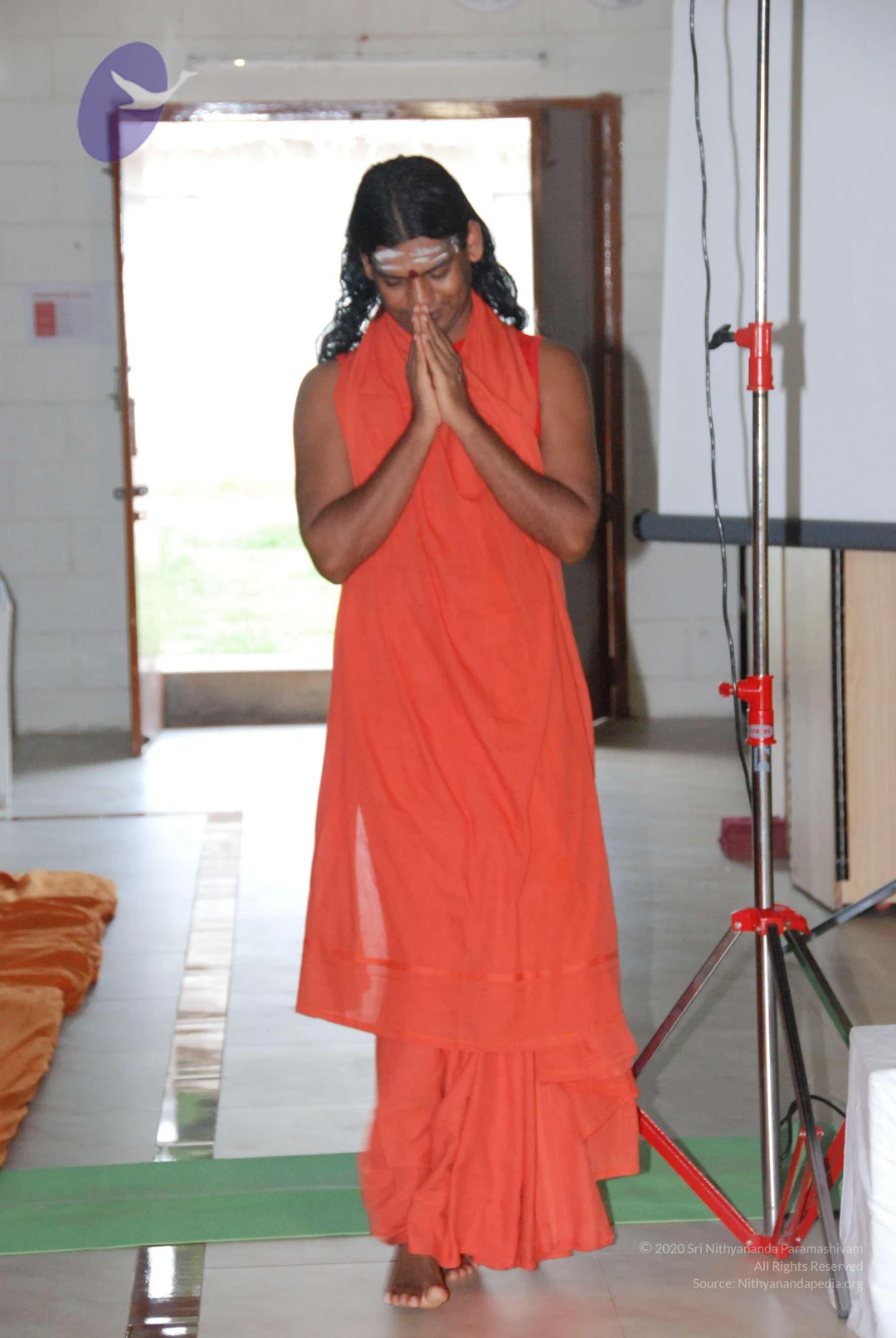
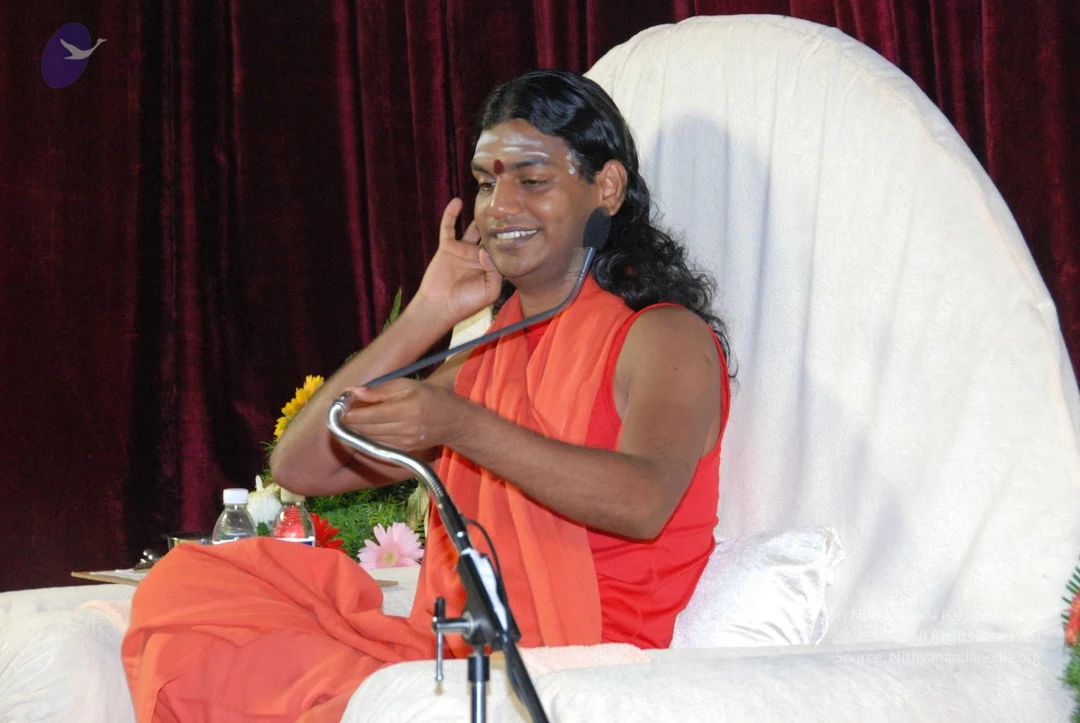
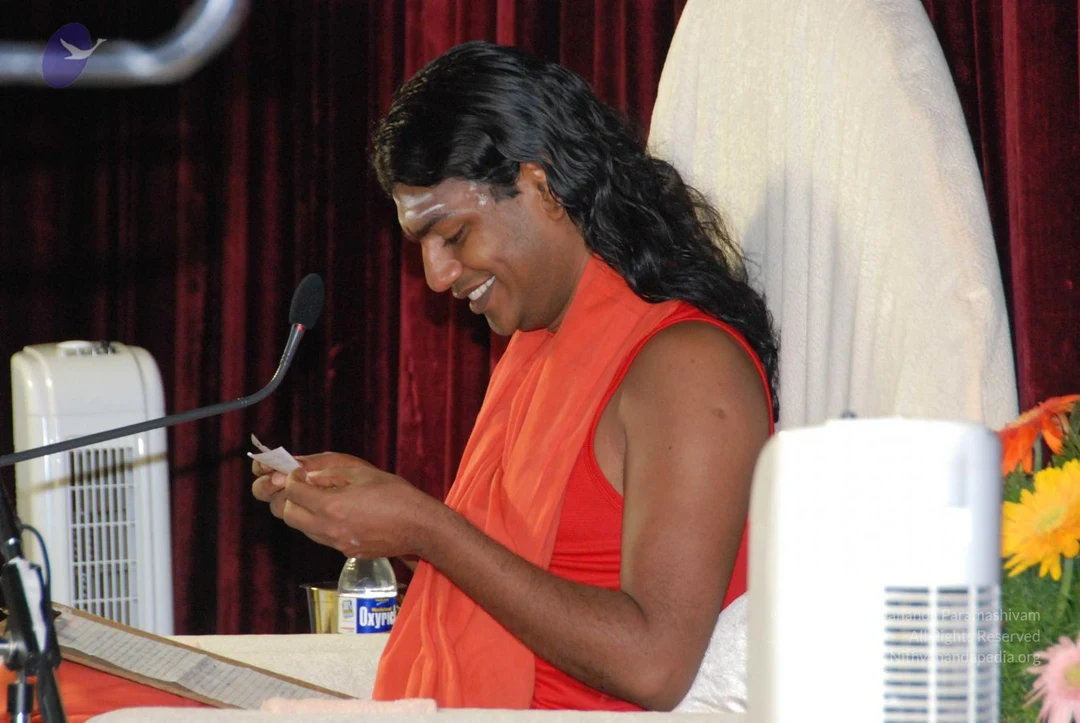
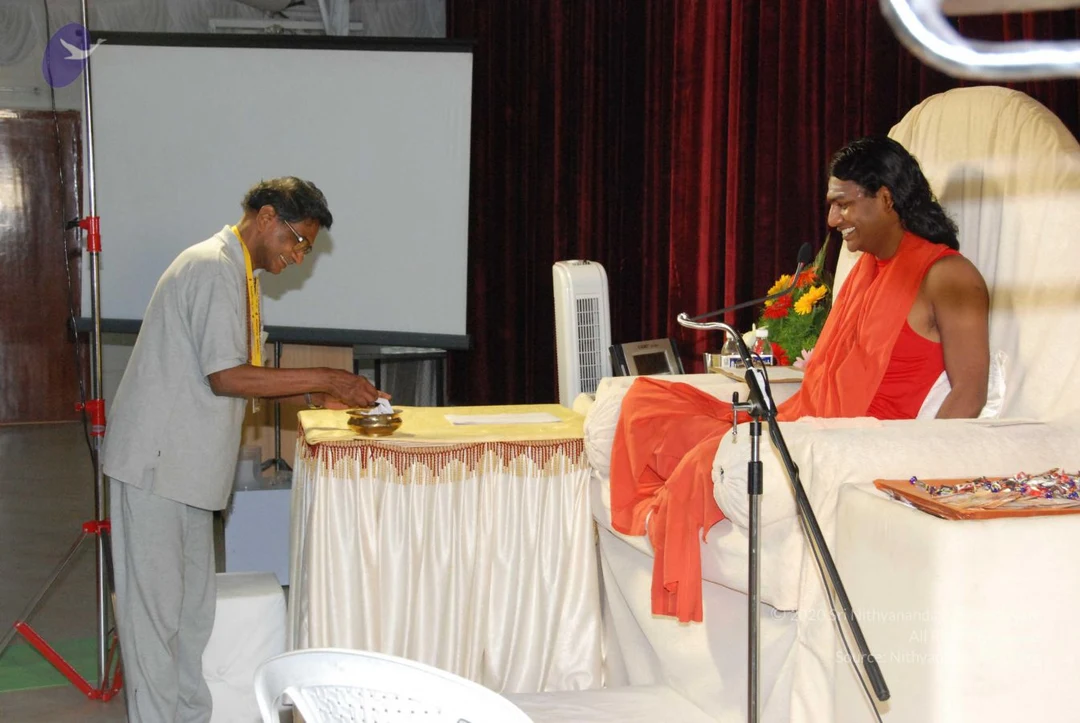
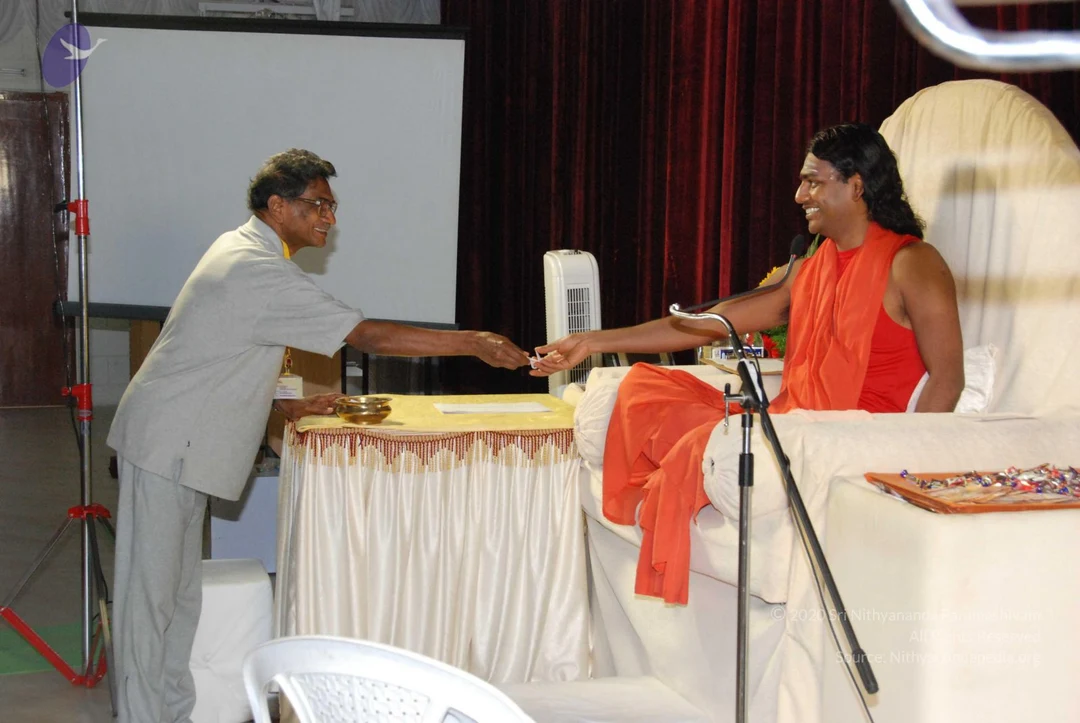
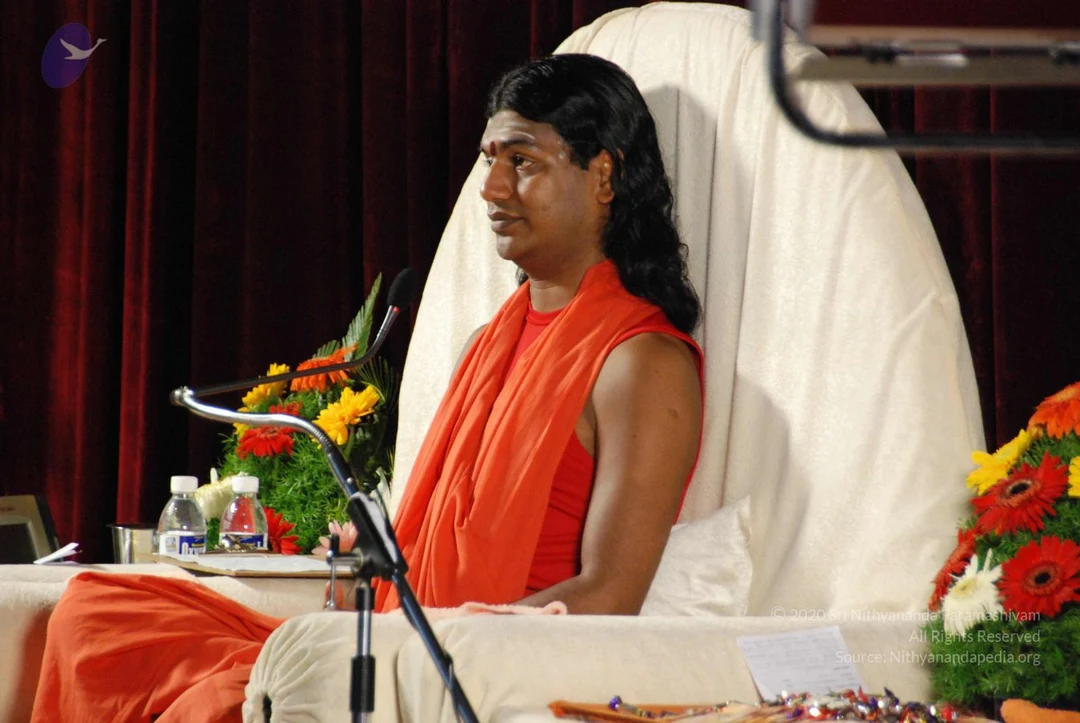
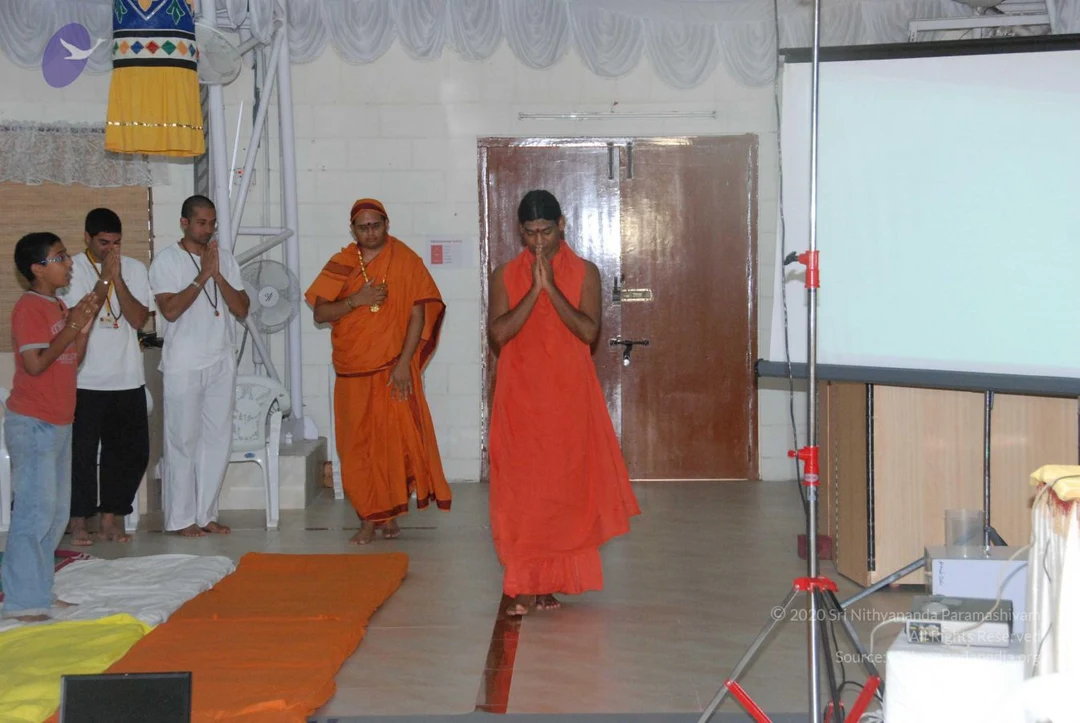
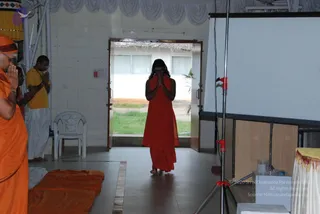
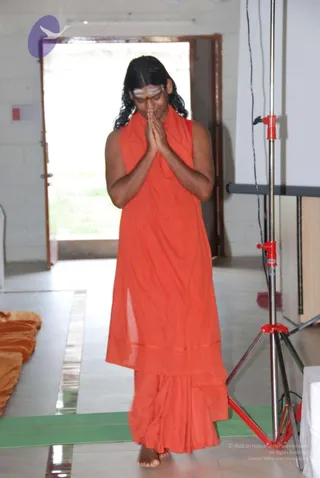
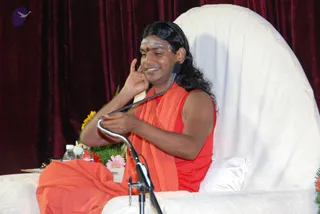
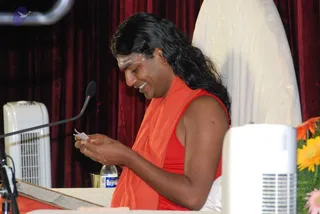
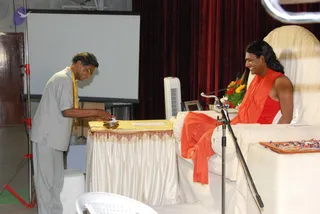
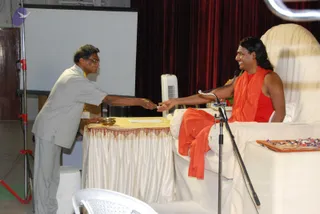
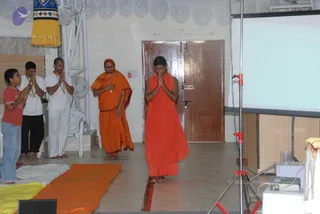
A photograph taken inside a plain hall with white-painted block walls and a tiled floor. A figure in a long flowing saffron-red robe walks barefoot toward the viewer with palms pressed together in anjali, head bowed. Long dark hair falls past the shoulders. On the left, a man in orange robes stands with hands folded in namaste, and beside him a man in a yellow shirt and white dhoti also presses his palms together. Orange cloth lies on the floor near the left edge, and a white plastic chair stands by the wall. At right, a blank projection screen hangs on a stand, with a white draped table and a yellow-fringed cloth in front. A doorway behind the central figure opens onto green grass. The scene suggests a satsang or session setting.A standing man in an orange-red sleeveless robe and matching wrap walks barefoot across a bright hall with his palms pressed together in anjali mudra and his eyes lowered. He has long, dark, wavy hair and a white tripundra with a red bindi on his forehead. Behind him stands a doorway with light outside, a metal light stand with red fittings, and a folded orange cloth lies on the floor at the left edge. A green mat runs across the floor. The swami's appearance matches the page's description: long swept-back hair, saffron clothing, and a visible tripundra, so the figure is a probable Swamiji in person, walking as a devotee-like greeting during a session.A long-haired man in saffron-orange clothing sits on a large white upholstered chair in front of a deep red velvet curtain. He wears a sleeveless orange top with an orange shawl draped over his shoulder and arm, has a red bindi and white vertical markings on his forehead, and rests one hand near his face while holding a gooseneck microphone. Small flowers in yellow, pink and red sit on a green floral arrangement beside him, with a water bottle and other items on a low table at the left. Swamiji (probable): the long swept-back hair, saffron clothing and ceremonial setting are consistent with the page's claim, so this is an appearance-based candidate seated in a discourse setting.A photograph of a long-haired man seated at a discourse stage, smiling as he looks down at a small white card held in both hands. He wears an orange-red sleeveless top and a matching orange-red shawl draped over his shoulders, with a white line of marking on his forehead. A microphone on a stand is at left, a clear water bottle and a small brass cup sit on the table, and a dark red velvet curtain forms the backdrop. A white cloth-covered seat stands behind him, with orange and yellow flowers at the right edge. Swamiji (probable) is shown in an appearance-based label: long swept-back hair, orange shawl and forehead marking, seated as the discourse speaker.A photograph taken at an indoor seminar hall with a projection screen and dark red curtains behind the stage. A man in an orange sleeveless top and orange wrap sits in a white upholstered chair beside a microphone stand, smiling broadly with long dark hair; a probable Swamiji by his orange saffron clothing, long swept-back hair and the honoured seat. Beside him stands a smiling older man in grey shirt and trousers with a yellow garland, bending over a white draped table with a brass bowl and placing an offering. A vase of orange and yellow flowers and a tray of colourful beads sit on the table at right, with a white plastic chair in the foreground.A seated man in a long-sleeved orange garment with a red-orange sleeveless top and long swept-back dark hair sits in a white upholstered throne-like chair, smiling and extending his arm to receive a small item from an older man in a light grey shirt and trousers who leans forward across a white-draped table. A brass bowl sits on the table alongside a paper sheet, a white fan and a backdrop of dark red curtains and a projection screen fill the hall, and a tray of small items rests on the chair's armrest.

Swami-Night-Session
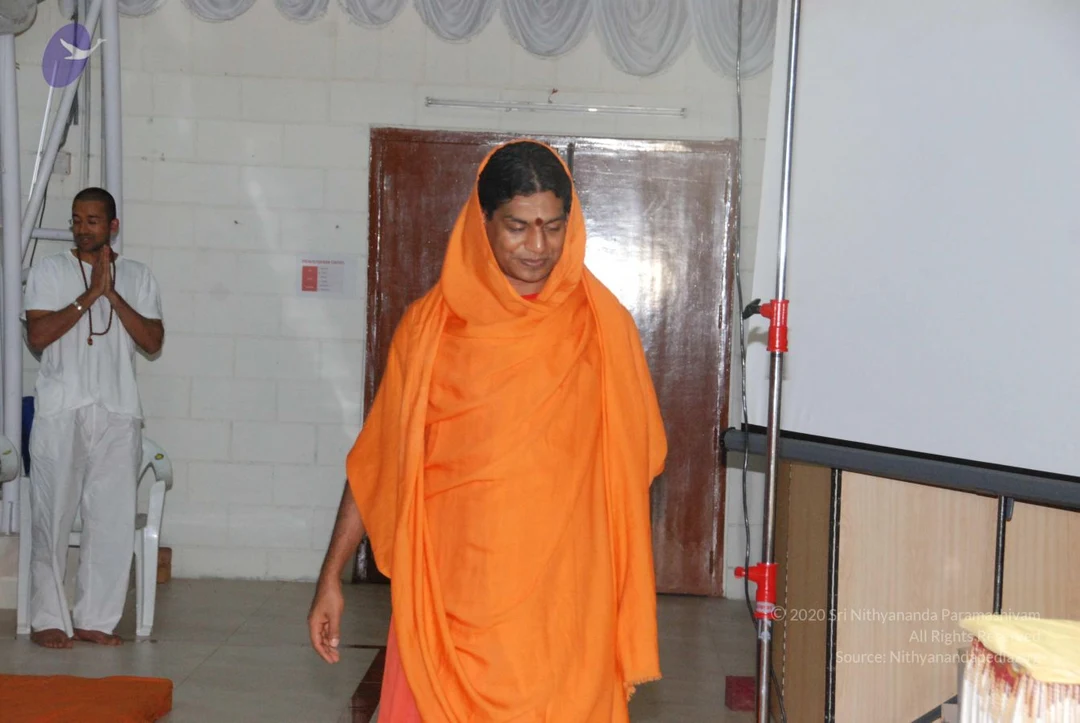
3 photosSource gallery
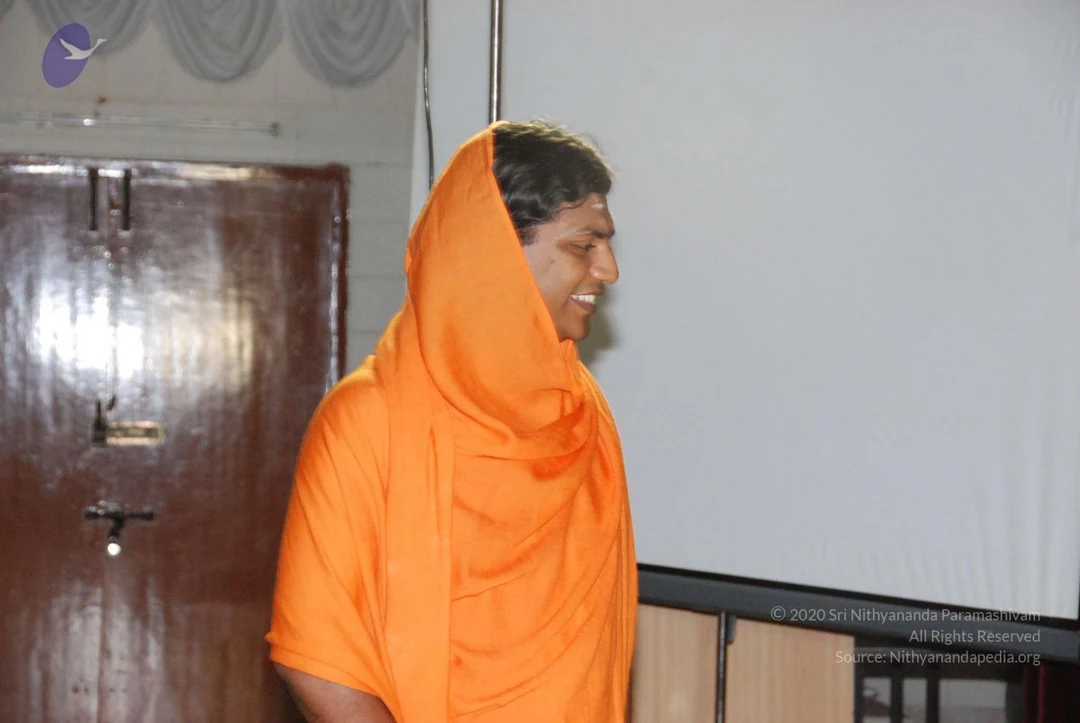
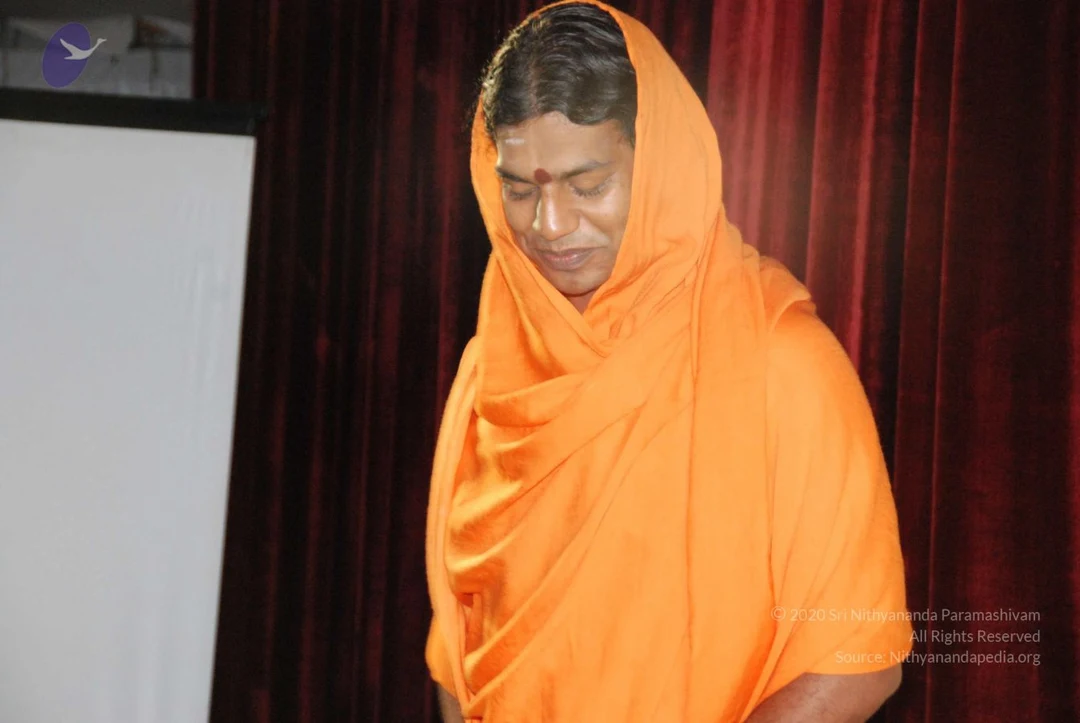
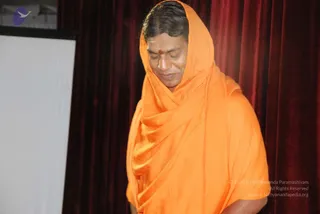
A figure draped in a saffron-orange shawl that covers the head walks across a plain room with white-painted walls and a brown wooden door behind. The figure has a small red bindi on the forehead and looks downward. A man in white clothes and a rudraksha-style mala stands at the left edge with palms pressed together in namaste. A white projection screen and stand are at the right, and a yellow cloth-covered table sits at lower right. A smaller figure in white stands at the left edge, hands folded in a greeting. The scene suggests a satsang-style hall.A man stands indoors smiling, his head and shoulders draped in a saffron-orange cloth that covers his hair, with a small vertical mark on his forehead. He wears a matching orange garment. Behind him is a blank white projection screen with a dark frame, and to the left a brown wooden door with a metal latch and a white curtain valance above it. A faint purple logo appears in the top left corner. The setting suggests a session hall during a discourse or course.A man stands indoors before a deep red velvet curtain and a white projection screen on the left. He wears a saffron-orange shawl draped over his head and shoulders, with a red bindi on his forehead, and looks downward with a gentle smile. His eyes are lowered as if in reverence. The setting suggests a seminar or discourse hall. a person: the man has a shaved-looking dark head covered by orange cloth, a bindi, and saffron clothing; the page indicates a person was at this event, but the visible cues are limited, so identity is uncertain.

Breaktime

12 photosSource gallery
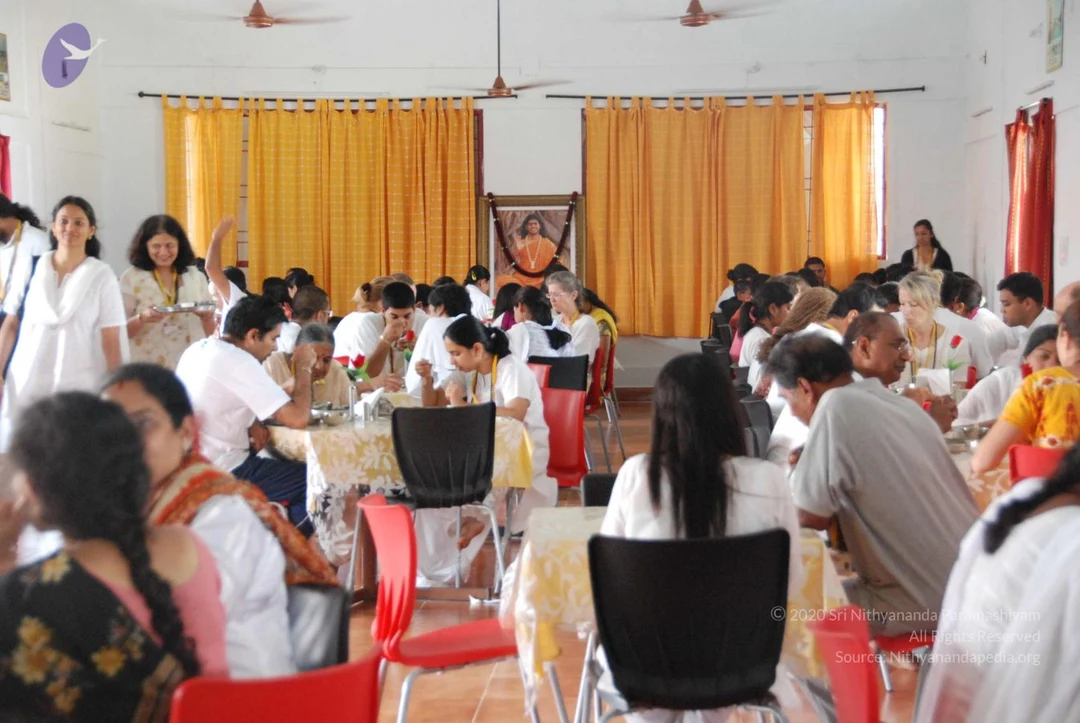
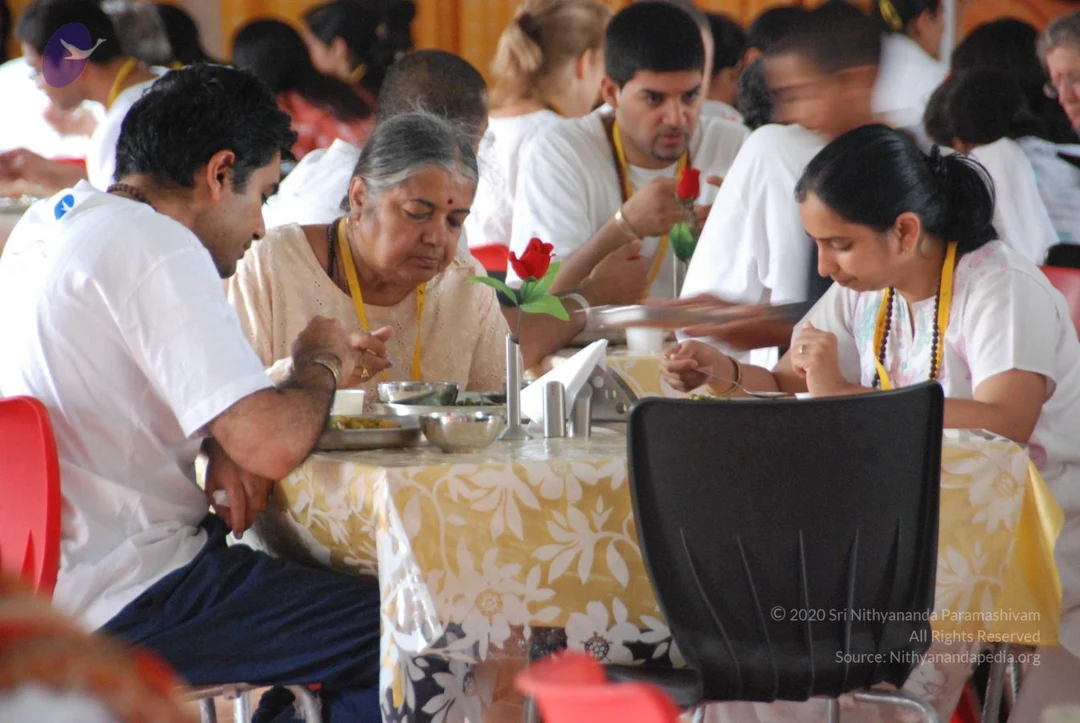
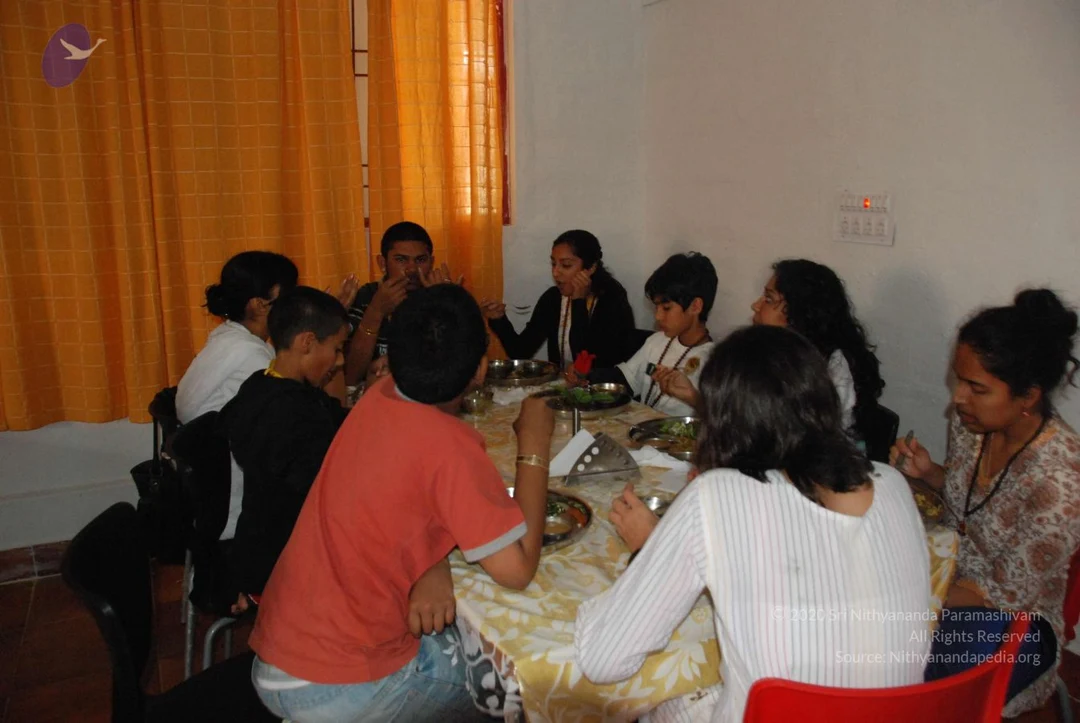
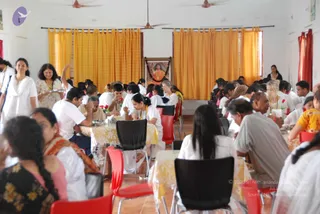
A photograph of a hall during a session, with a bare-shouldered man in a sleeveless orange robe standing barefoot on a wooden-floored stage with palms pressed together in namaskar. Beside him, a person in an orange sari-style garment with a yellow-gold necklace and an orange head covering also stands with hands folded. To the left, three people in white clothes and a child in a red top stand with hands joined in prayer on a floor with orange and yellow mats. Behind them are a brown wooden door, a white fan, a projector screen, and a white draped fabric valance. A fabric panel with a yellow and blue pattern hangs at top left, and a lectern with a microphone stand is at right.A dining hall with yellow curtains and white walls holds many seated people at tables covered in yellow floral cloths, eating from metal plates. Many attendees wear white clothing with yellow-orange cords or garlands, and a few wear saris or salwar kameez. A framed portrait of a figure in orange robes hangs on the back wall between the curtains, and red chairs and black chairs are arranged around the tables. Ceiling fans are visible overhead, and a server in a white outfit stands at left holding a plate. The gathering appears to be a communal meal, with roughly thirty to forty visible people.A photograph of people seated at a dining table in a large tent-like hall, eating a meal. A woman in the centre with grey hair wears a cream top and a yellow lanyard with a rudraksha-style bead mala, and is looking down at her plate. To her left, a young man in a white t-shirt and dark trousers sits with his hands together. To her right, a young woman with dark hair tied back wears a white and pastel top and a yellow lanyard and mala, eating with her hand. Another man in a white shirt with a yellow lanyard sits behind them. The table has a yellow and white floral cloth, steel bowls, a red rose in a glass vase, and red plastic chairs. Several other people in white clothes are seated in the background. No one in the frame is clearly identifiable as a person.A photograph of a group of about eight people seated around a dining table covered with a yellow floral cloth, eating a meal from steel thalis and bowls with green salad. Yellow curtains hang at the window behind them and the wall is plain white. Several people wear white or cream tops, one wears an orange-red shirt, and some have beaded or rudraksha-style necklaces. A young man at the back gestures with his hands while speaking, and a woman in a patterned blouse at right holds a spoon. No ceremonial figure or a person candidate is visible in the scene.A photograph of a dining hall where a group of people in white clothing sit at a long table eating a meal from steel plates and bowls, with rice and green vegetable dishes visible. Several men wear white kurtas and one wears a yellow lanyard, a woman in a white sari sits with her back to the camera, and a man with glasses eats at the left. Behind them, attendants serve food from a buffet table near red-curtained windows, and a child in red stands in the background.A photograph of a group of people seated at a long table with a yellow patterned tablecloth, eating meals from stainless steel plates and bowls. Several men and women wear white clothes, with gold-coloured lanyards and beaded necklaces visible on some. A red rose stands in a vase at the centre of the table, and a red chair sits in the foreground. Orange curtains hang behind them, and an ornate framed picture hangs on the right wall.