Skip to content
Sunday

19 July 2009

Dated photos
334
Source pages
1
Media
2
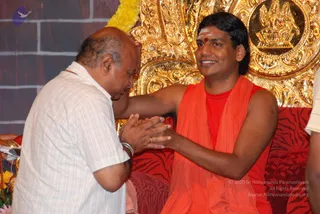
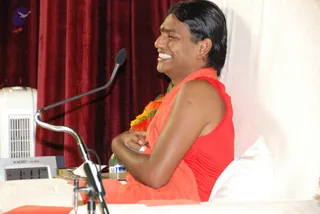
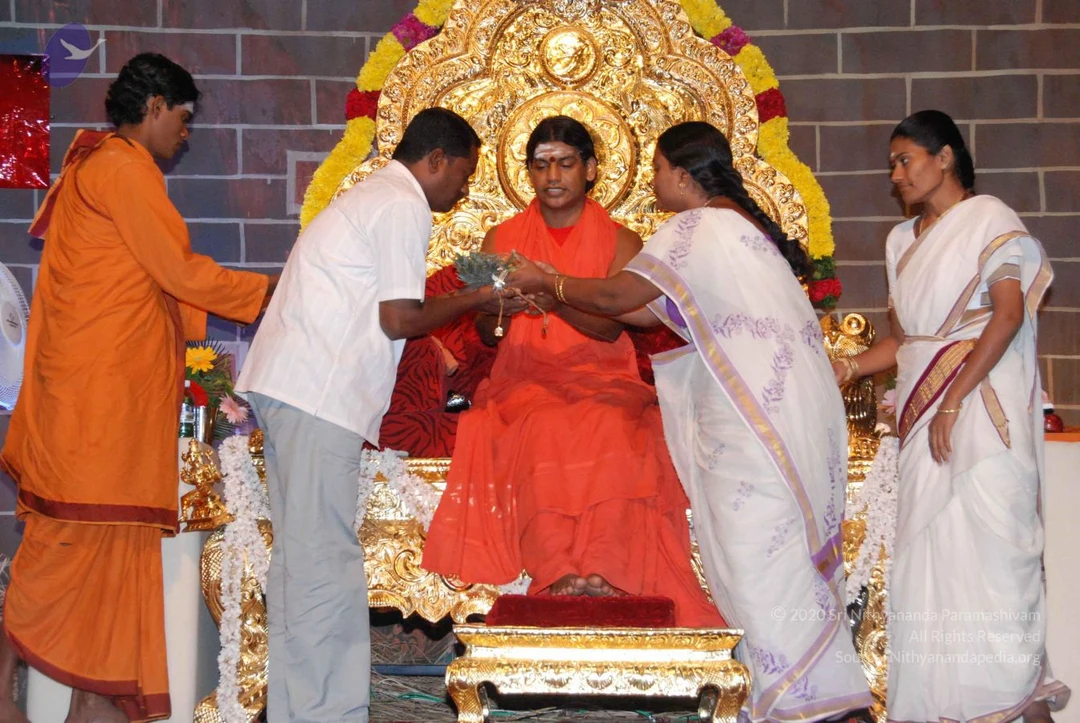
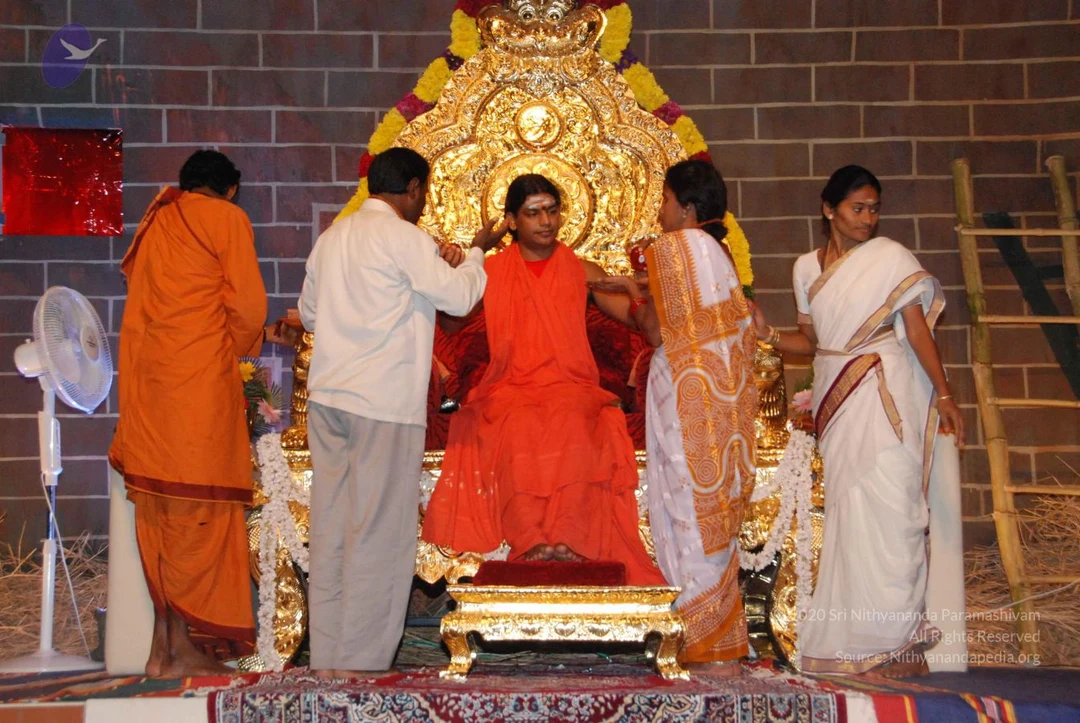
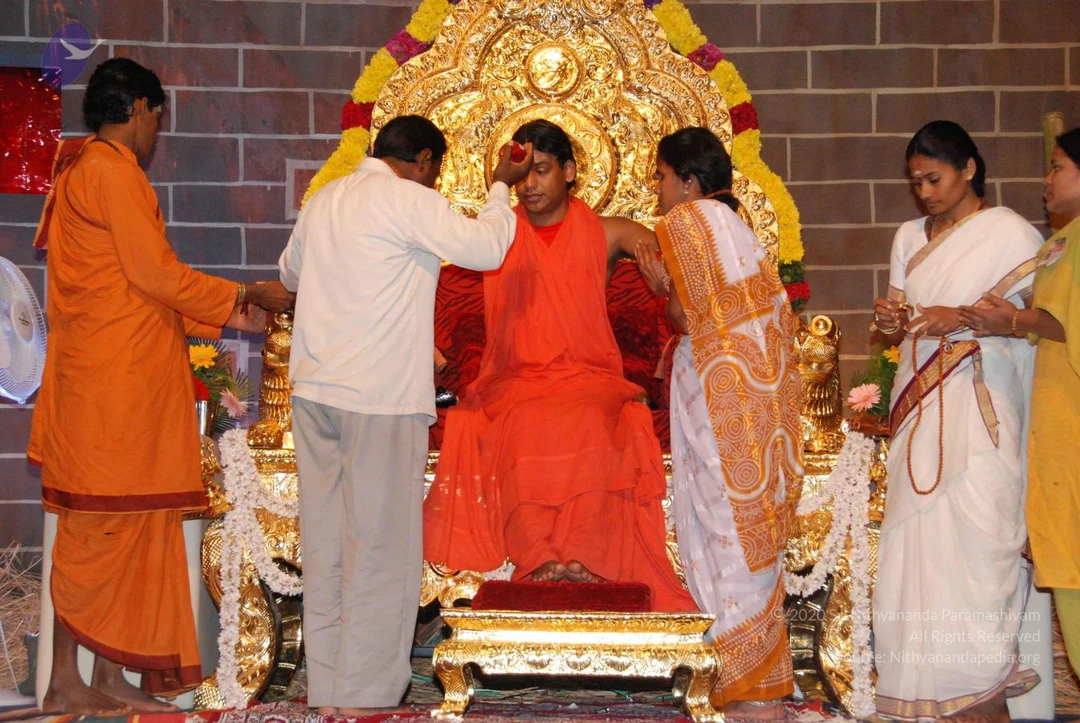
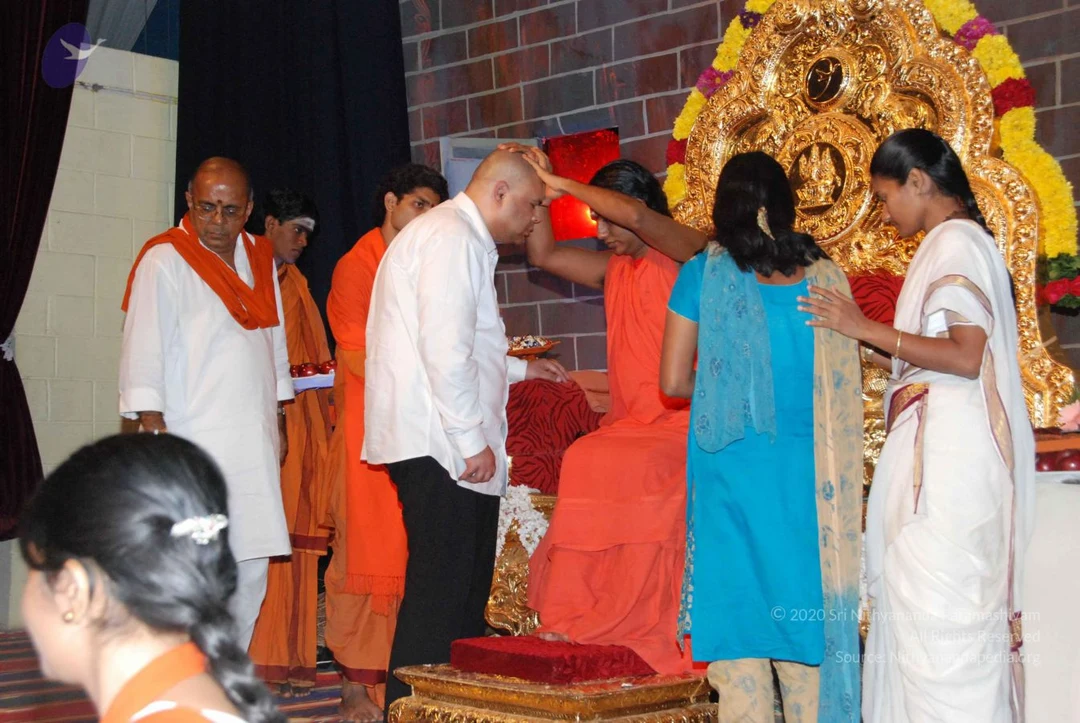
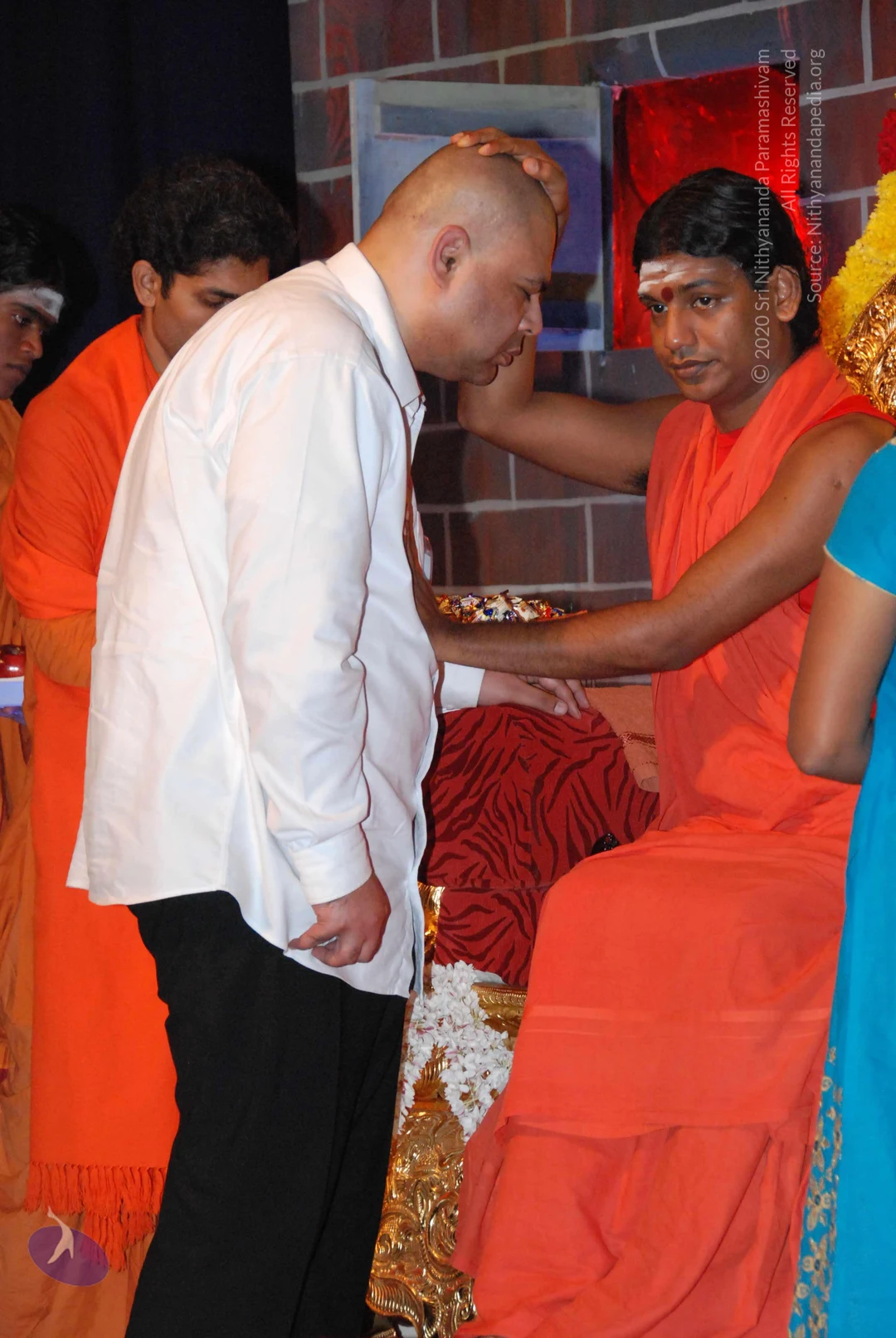
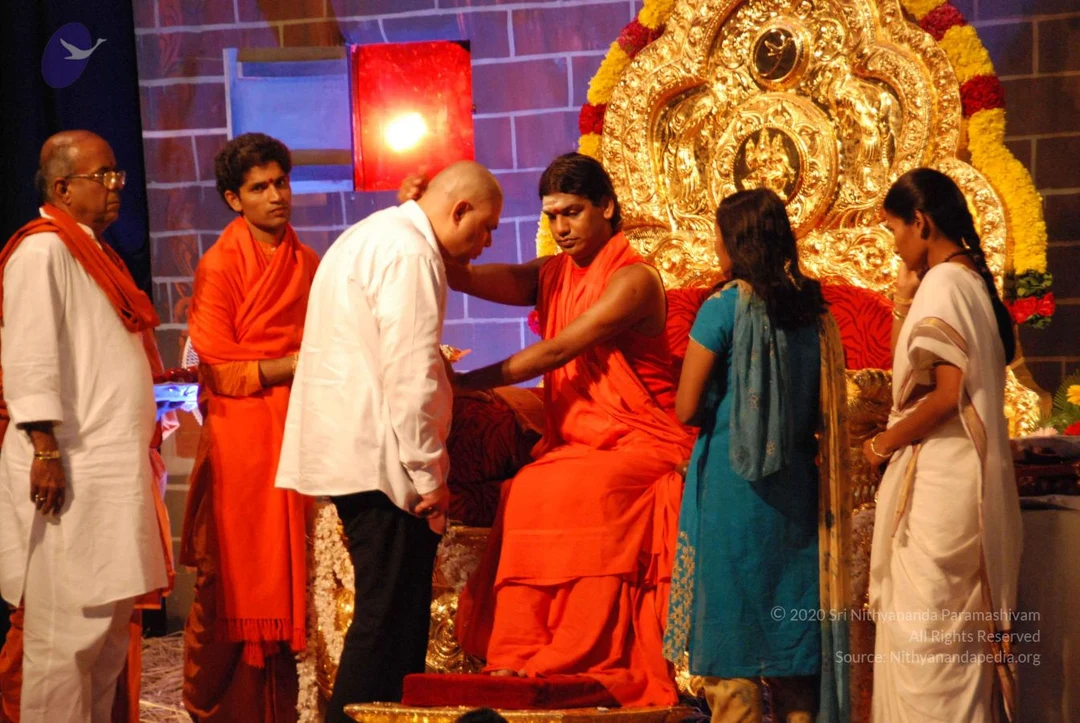
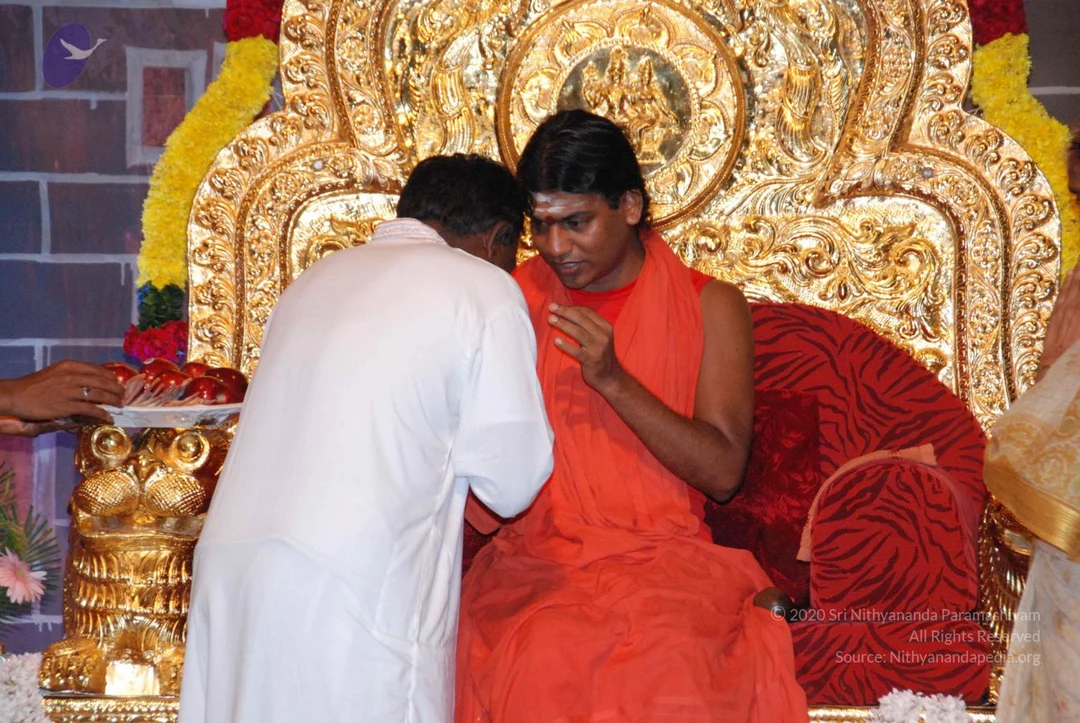
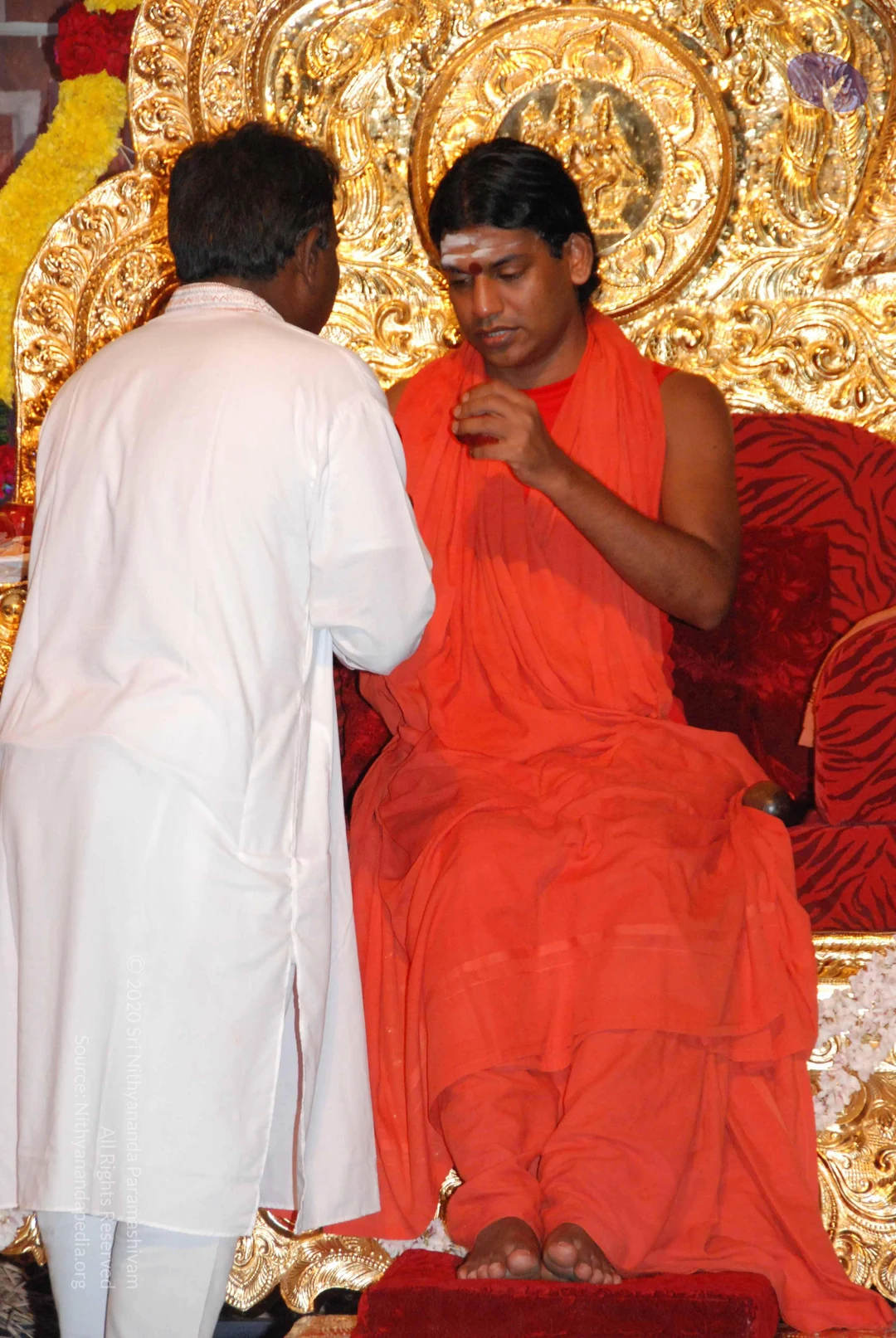
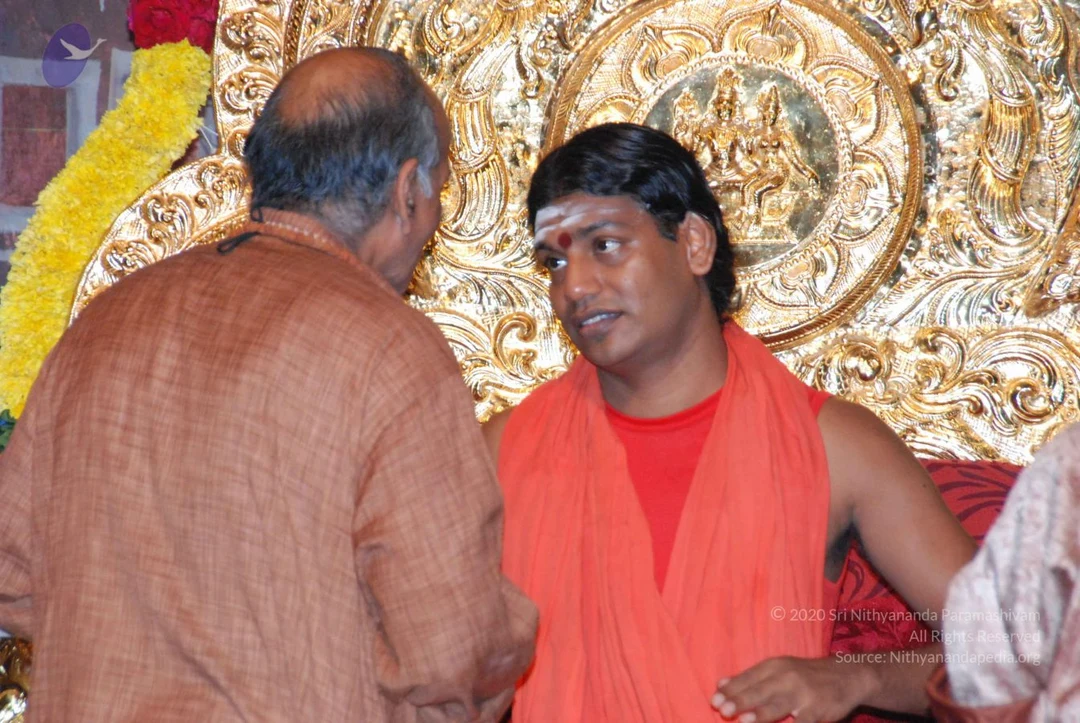
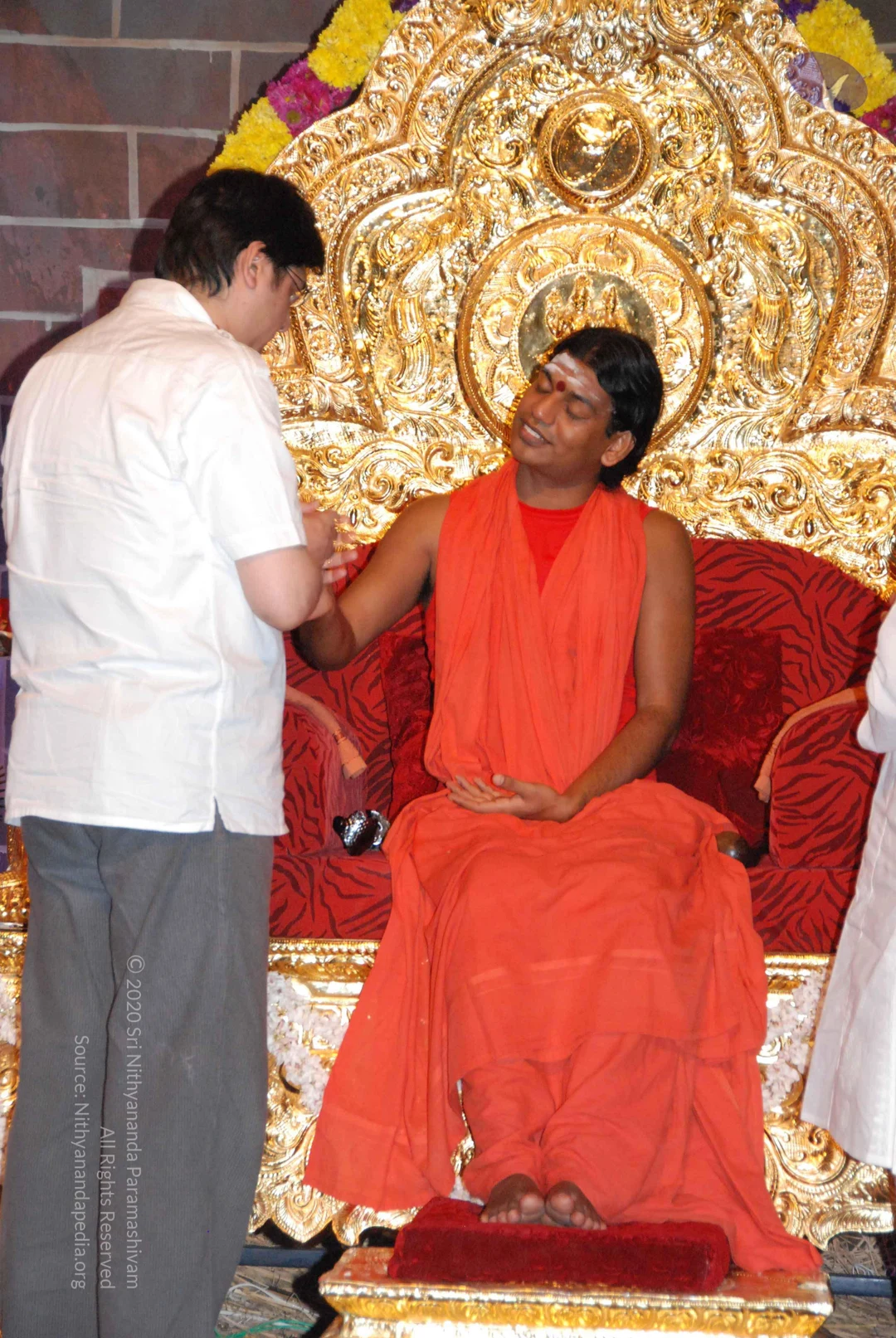
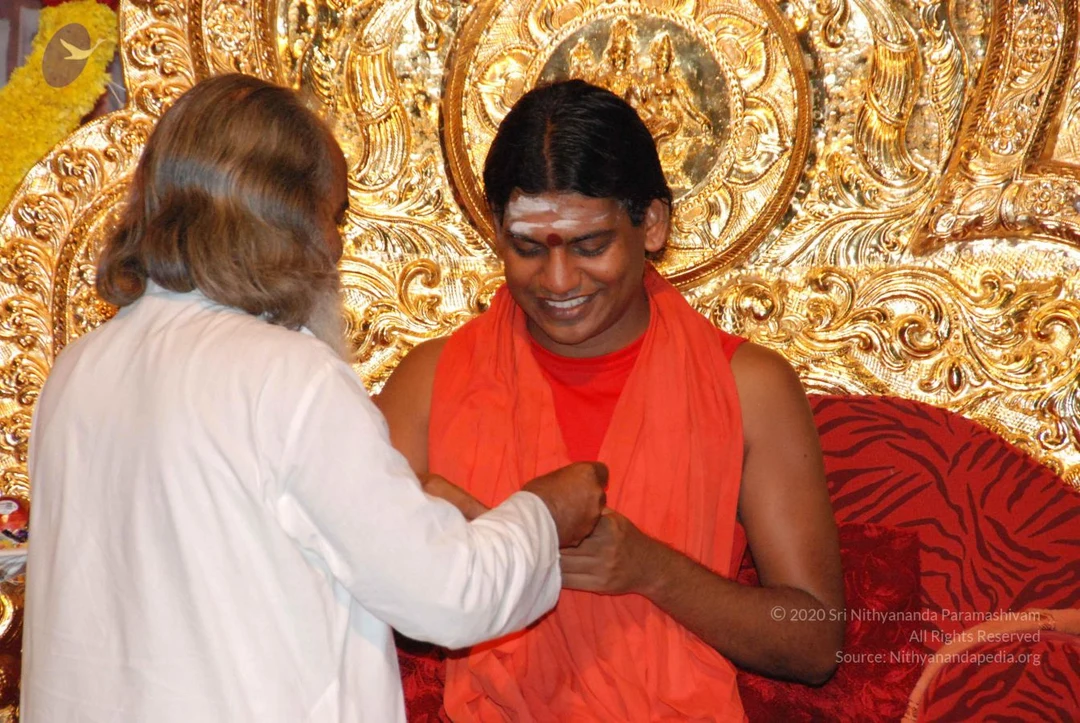
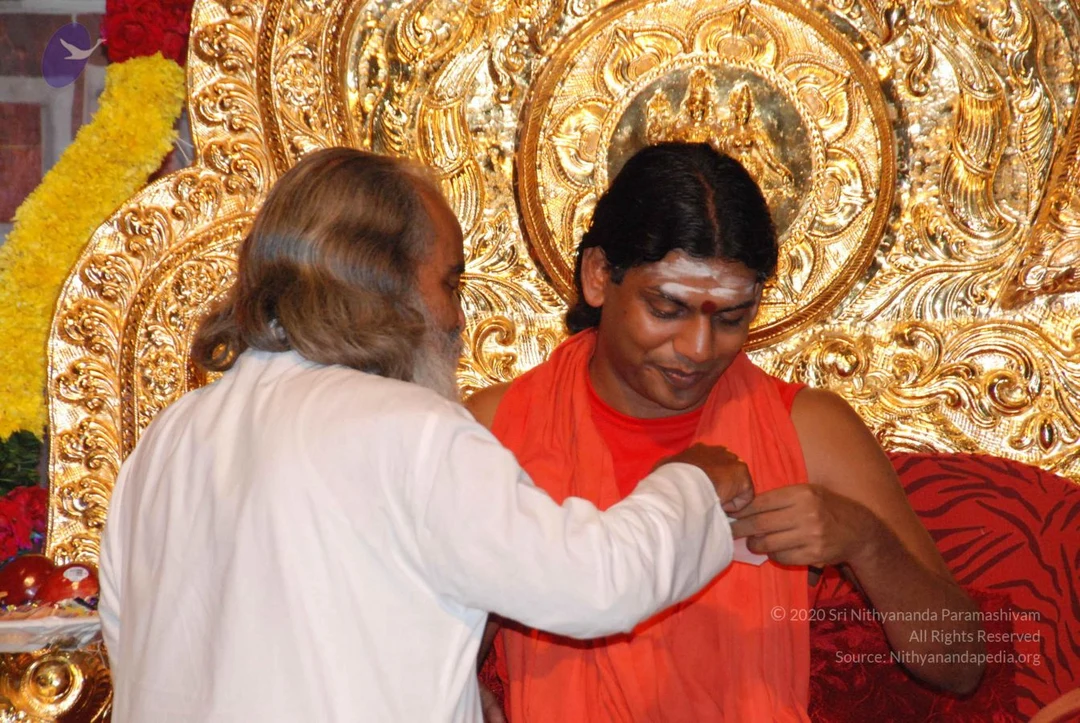
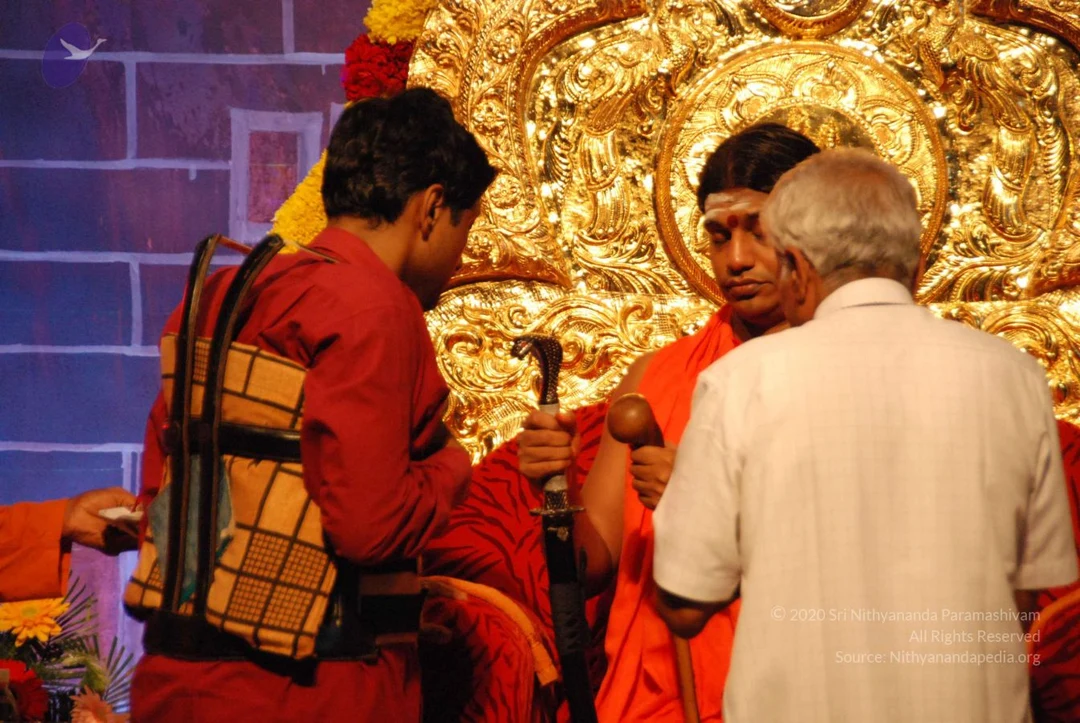
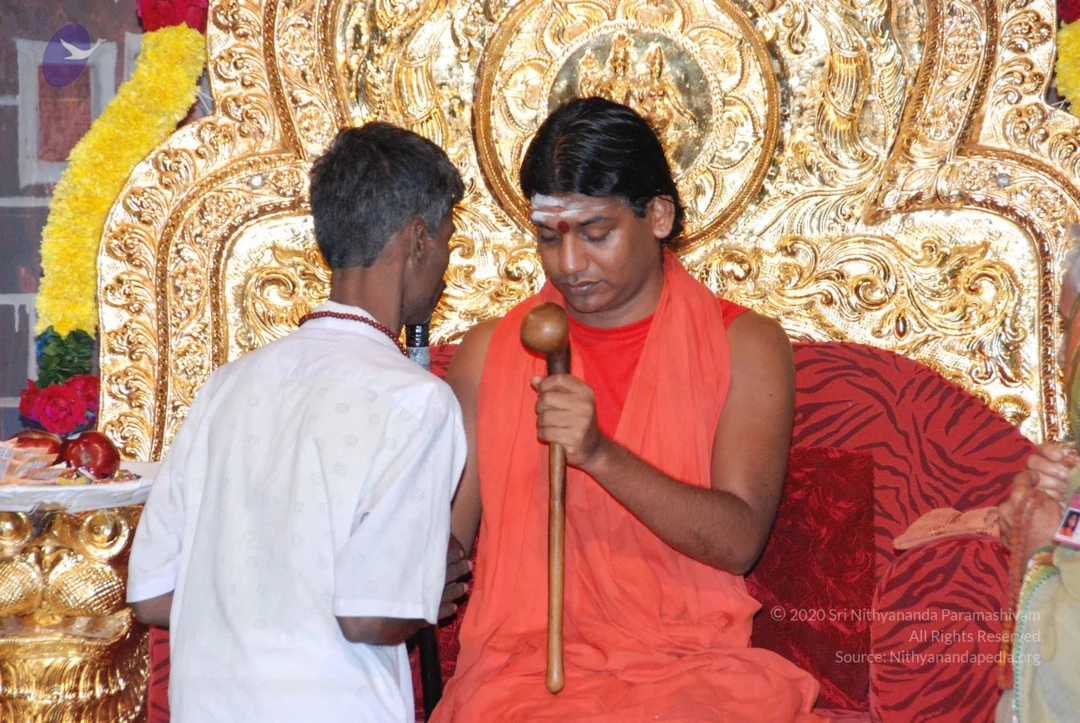
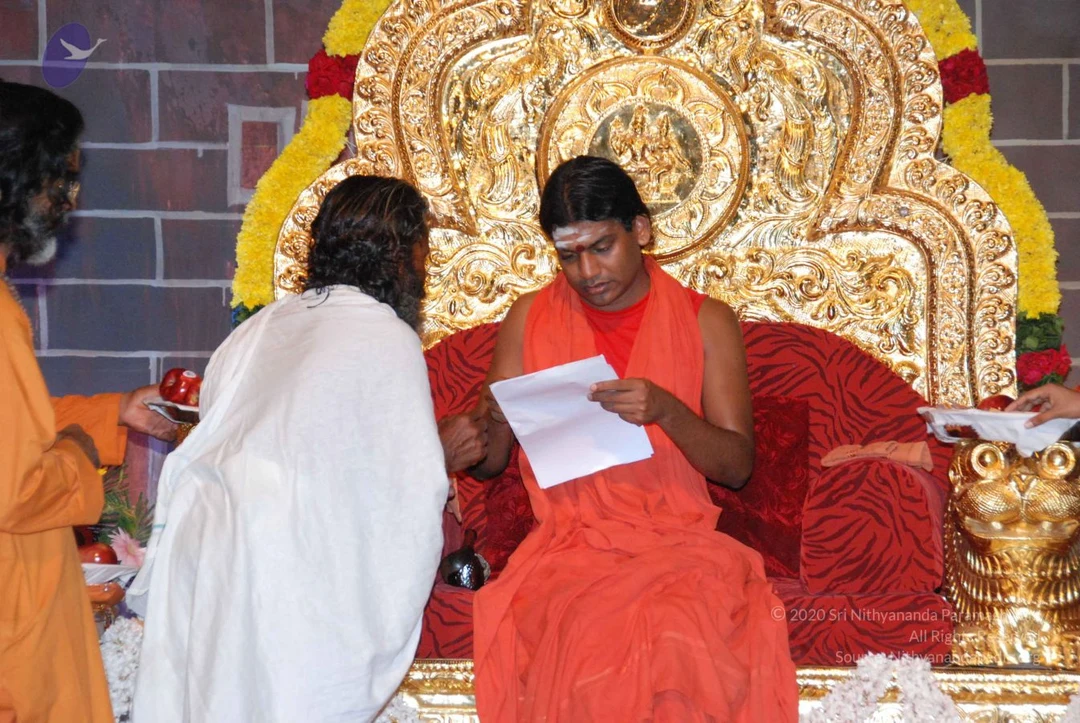
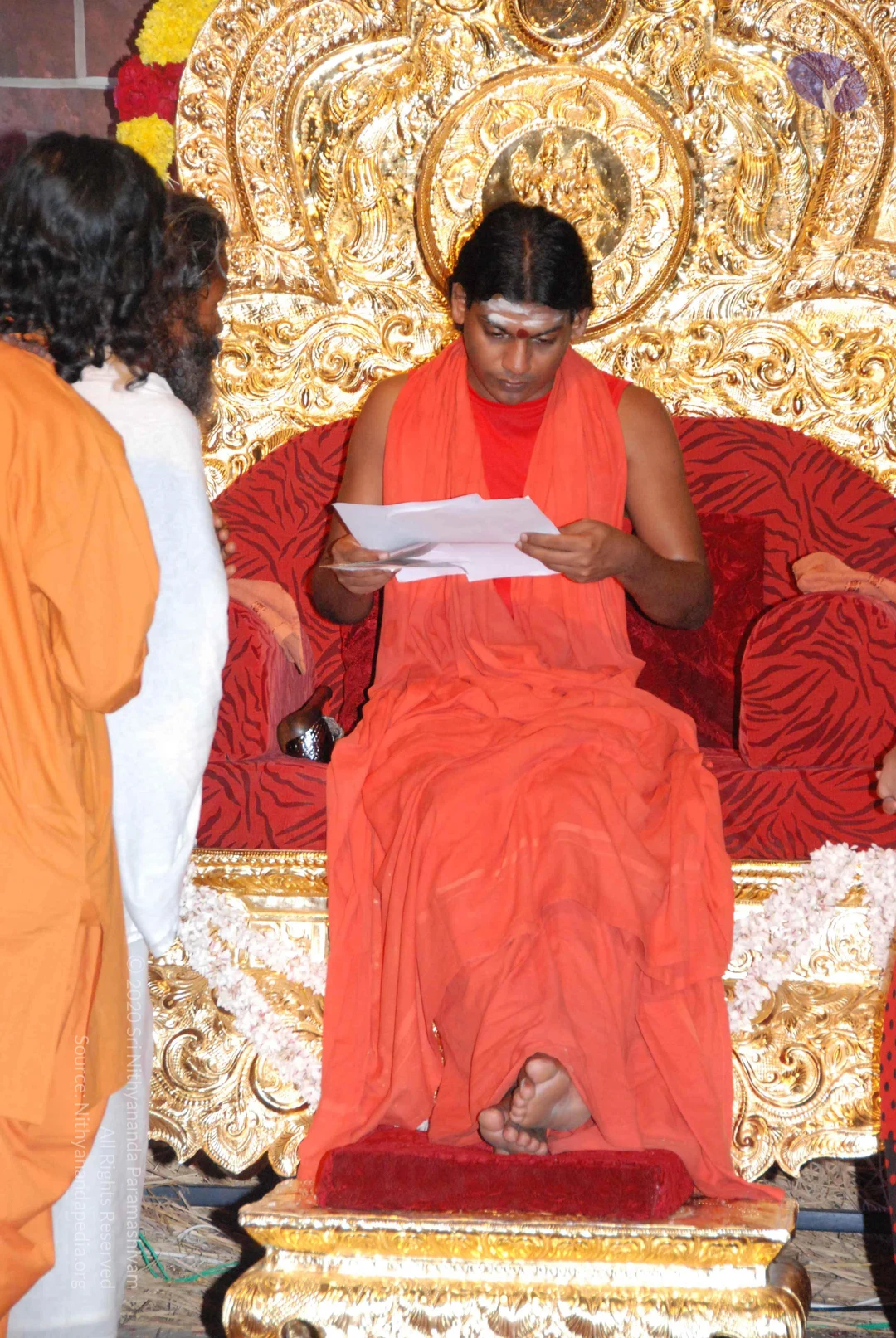
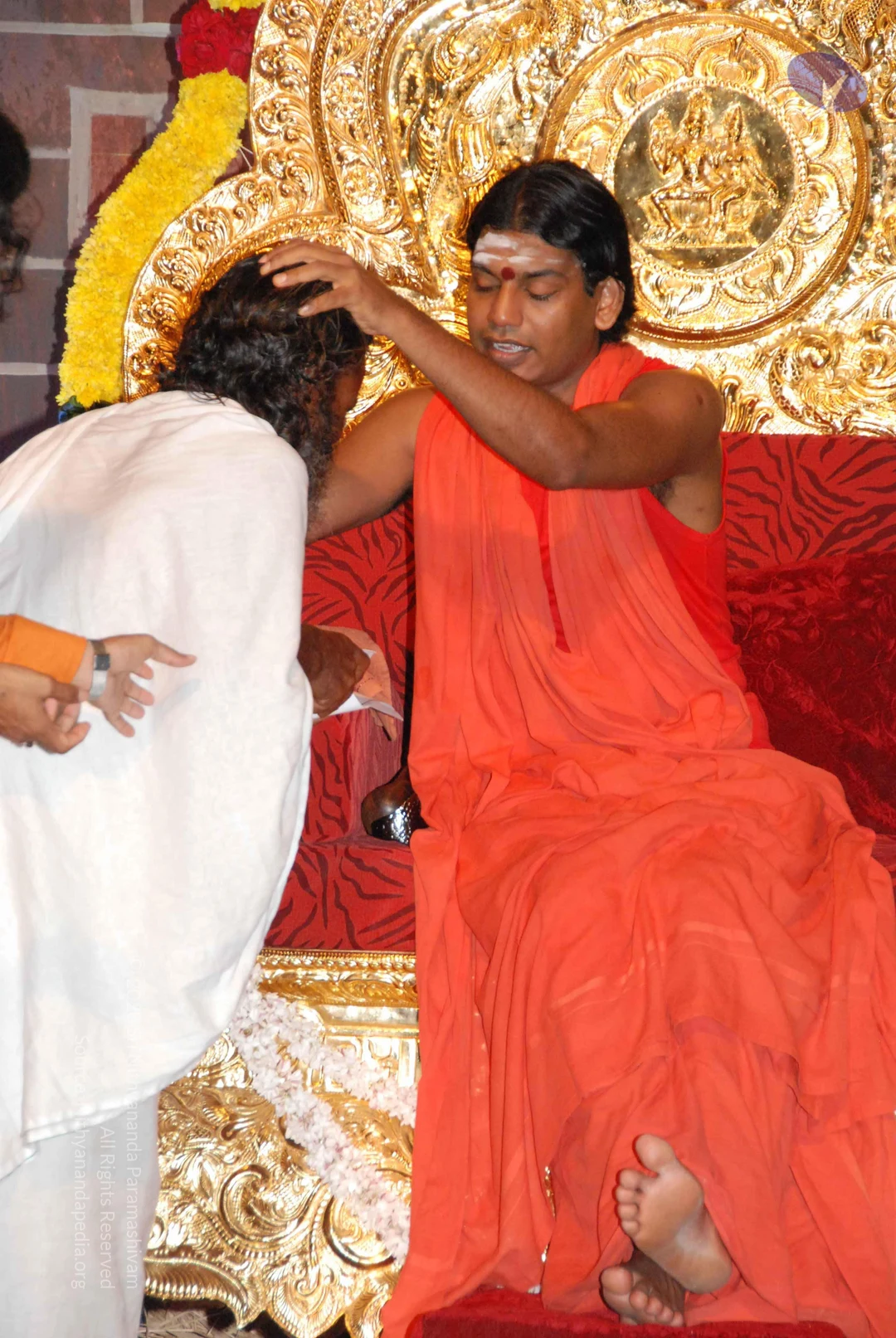
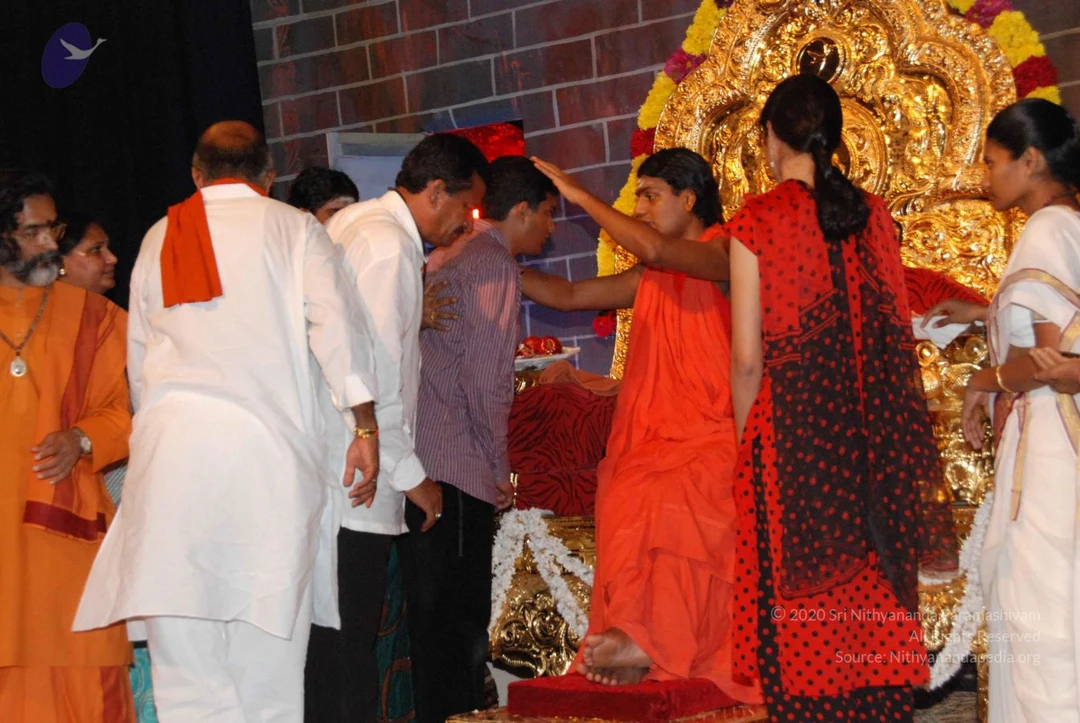
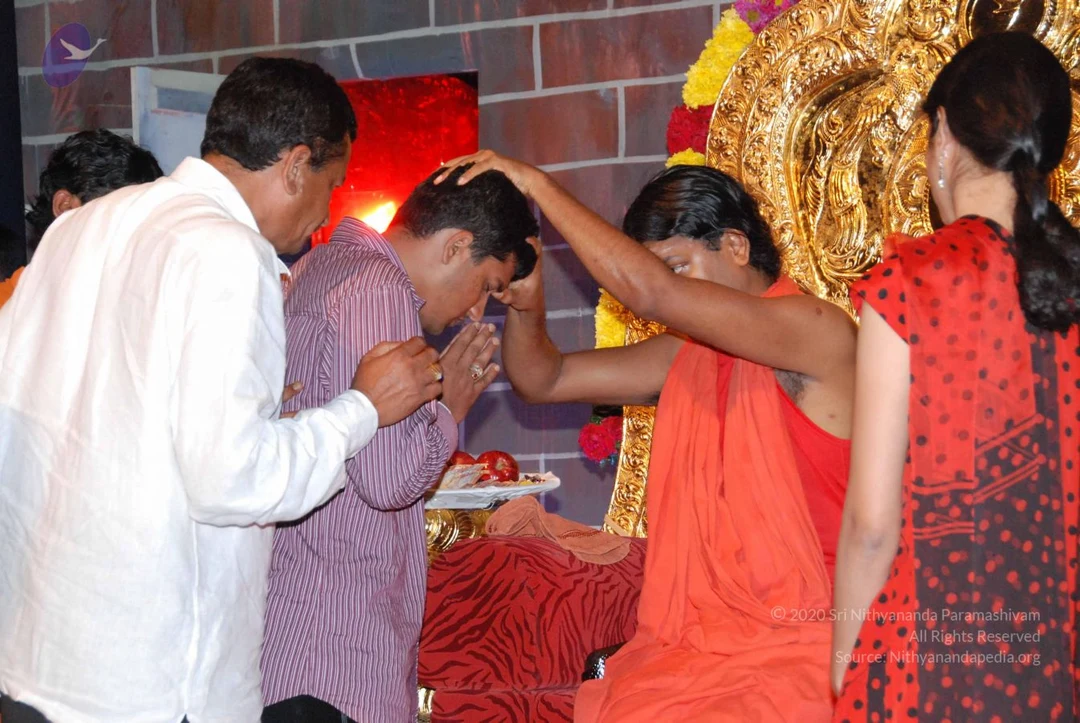
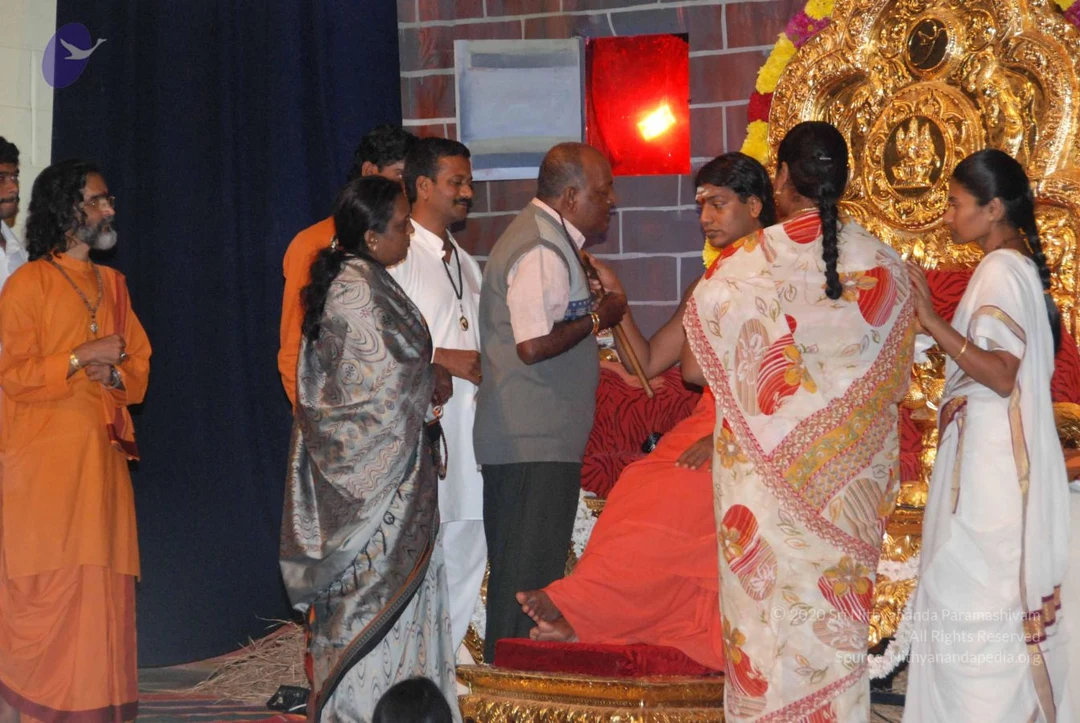
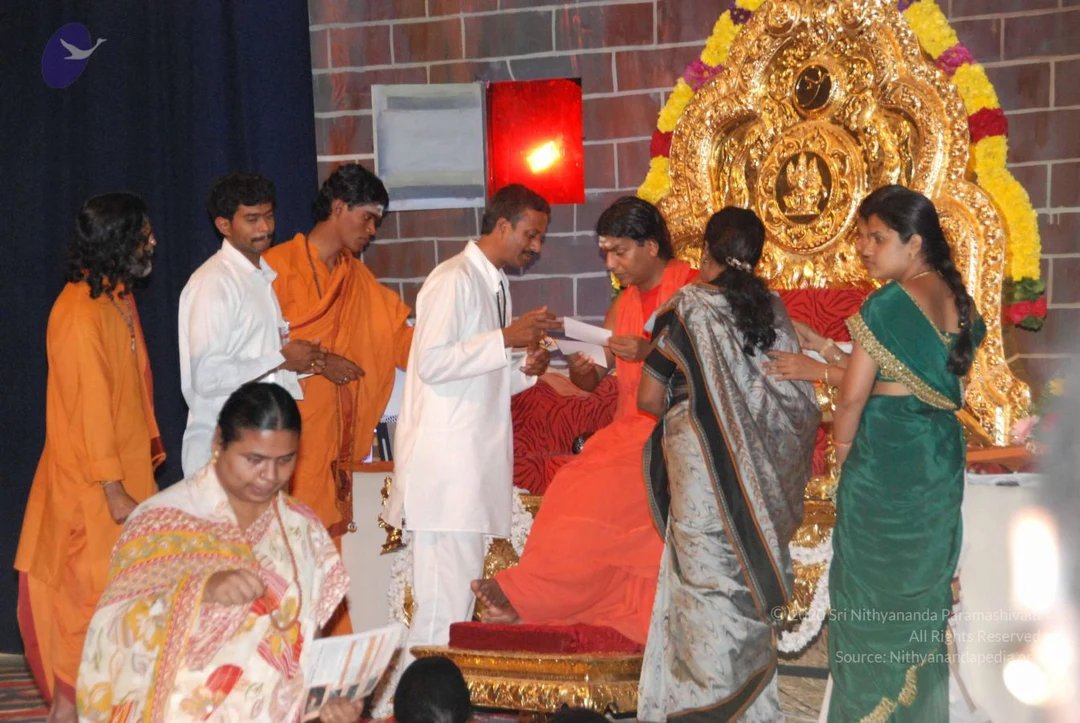
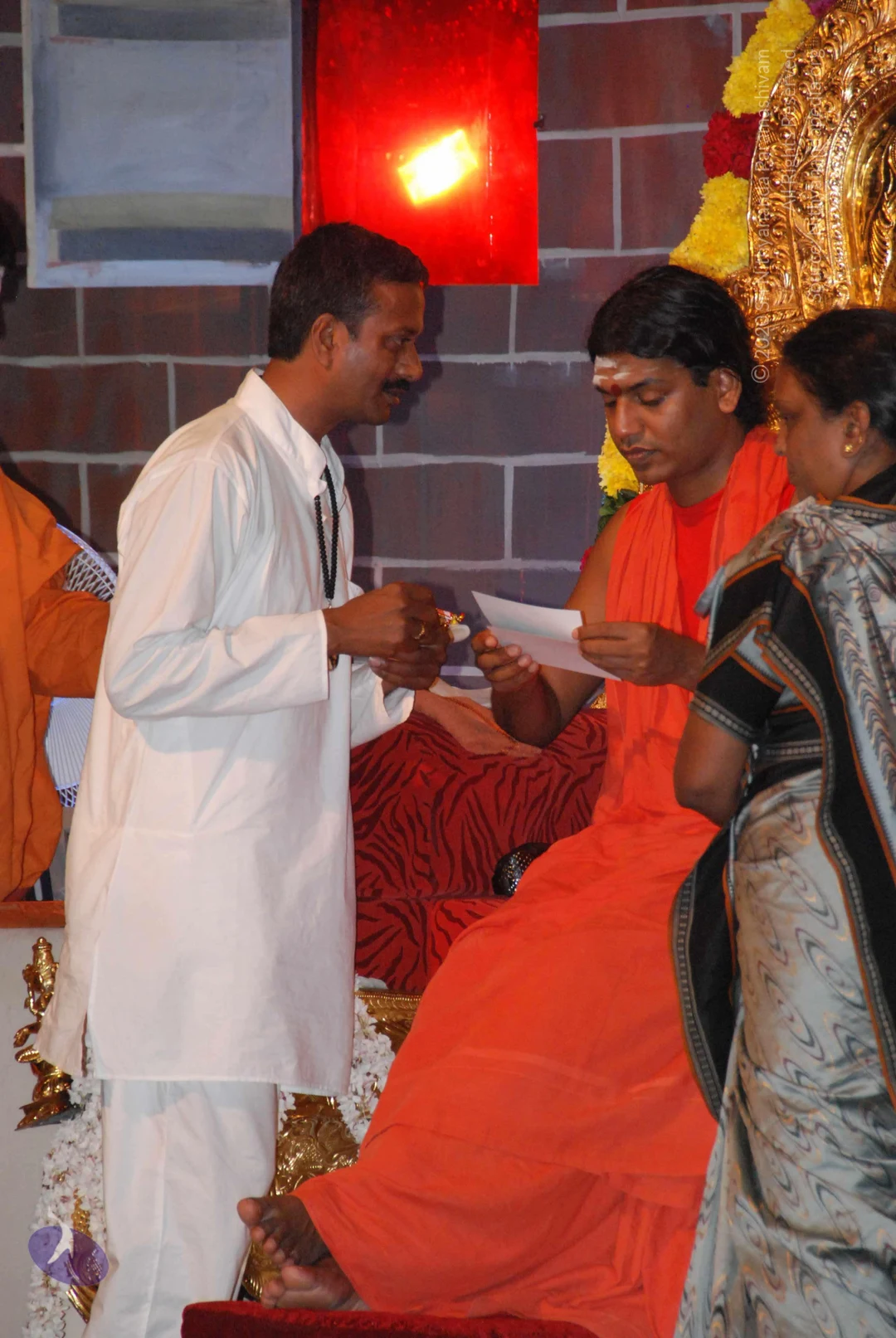
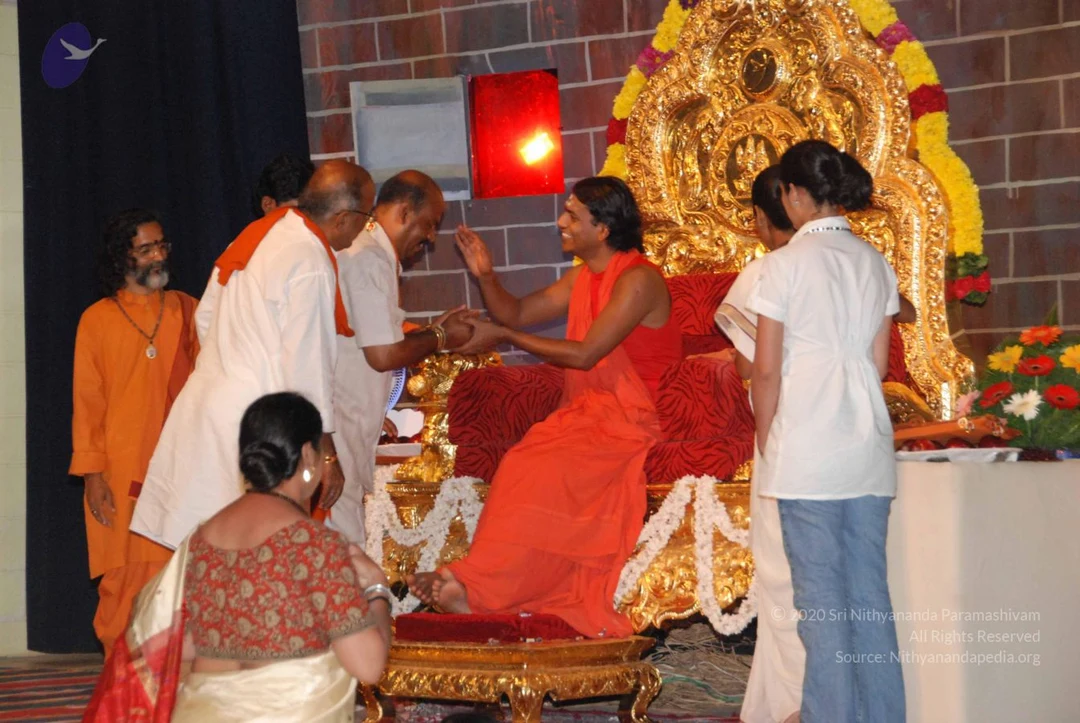
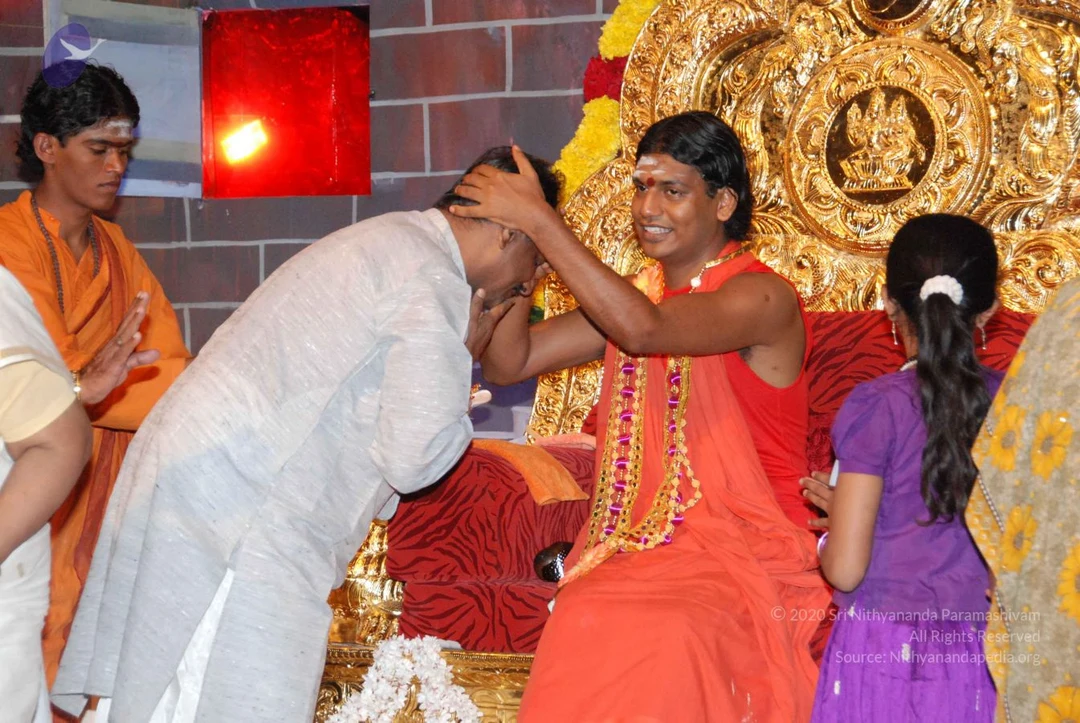
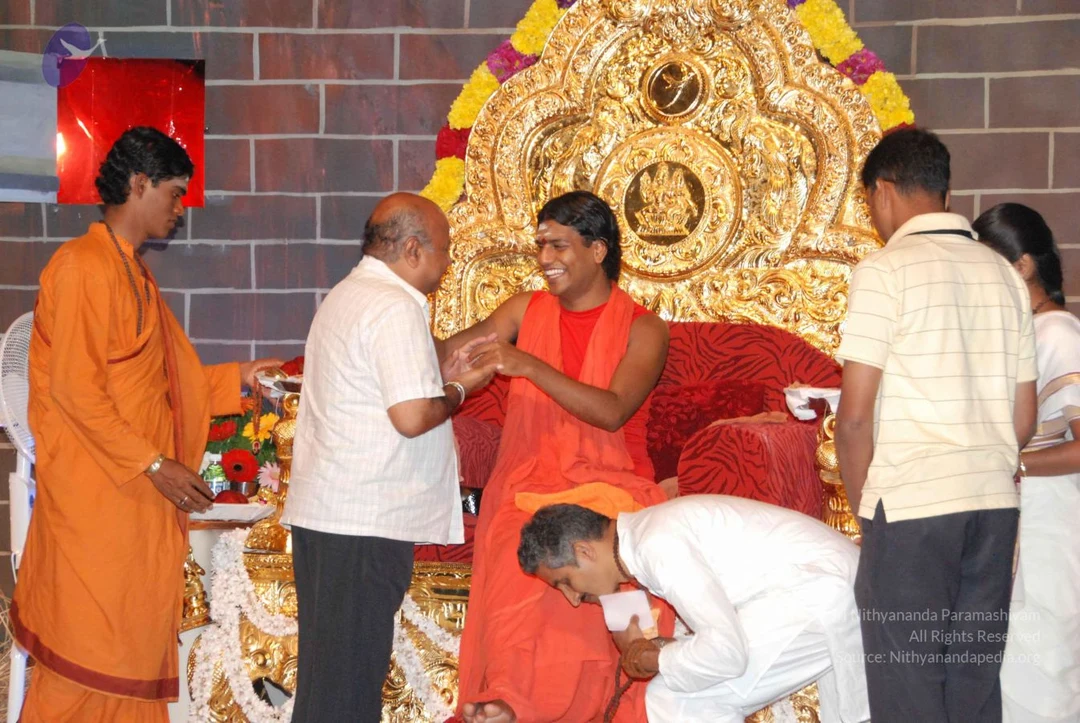
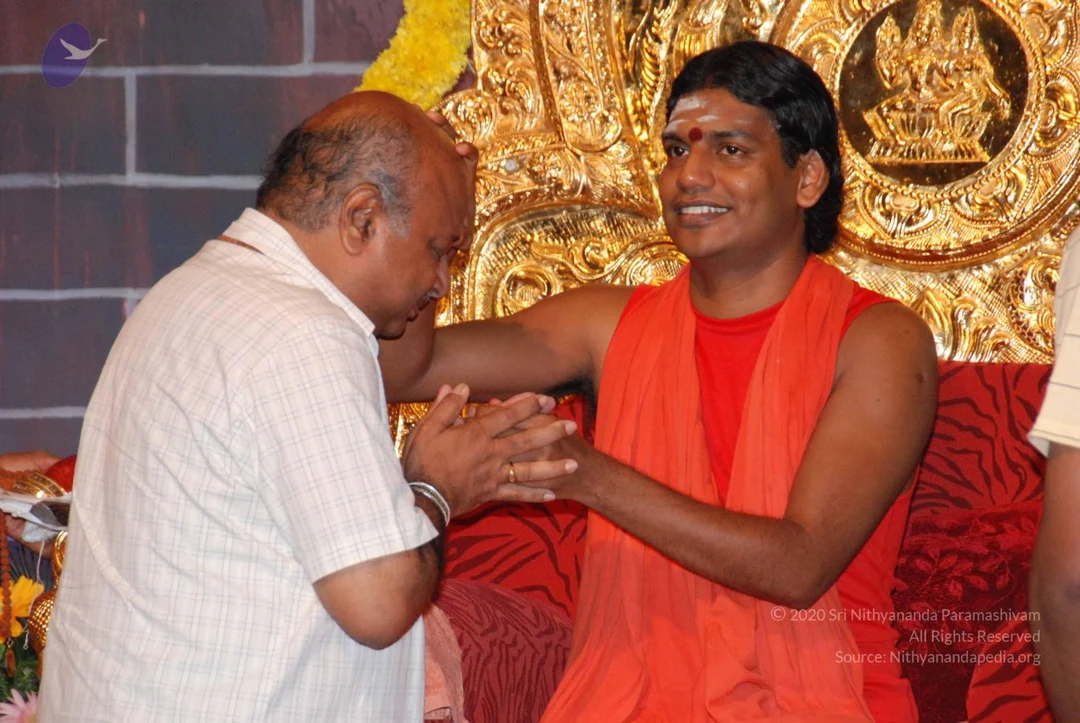
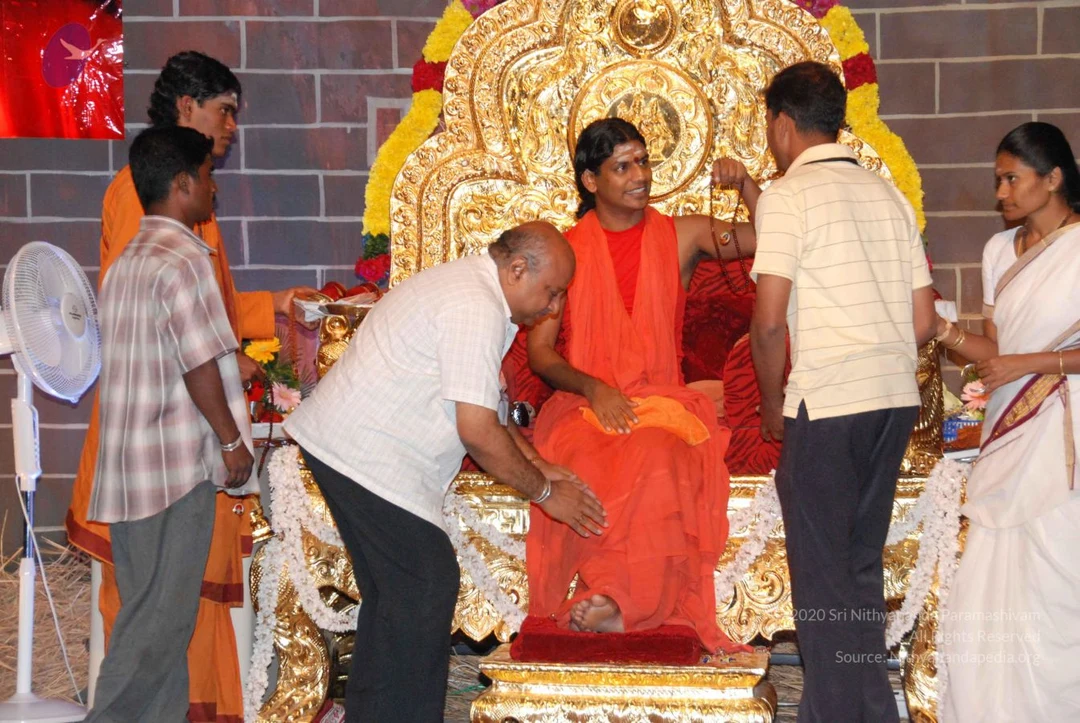
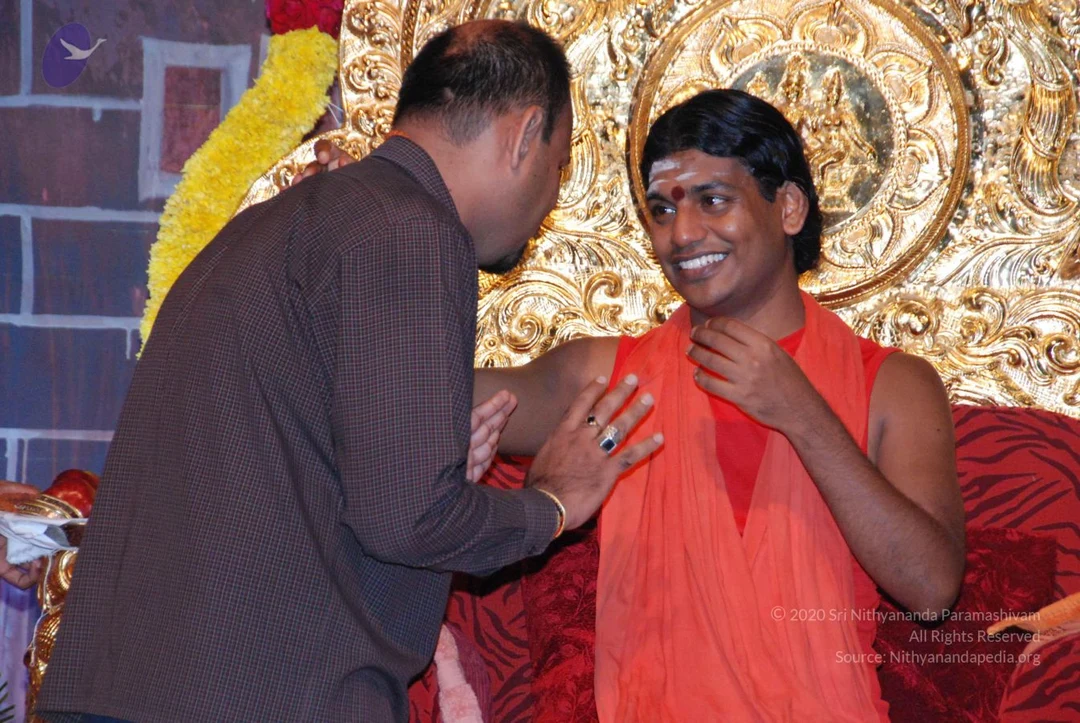
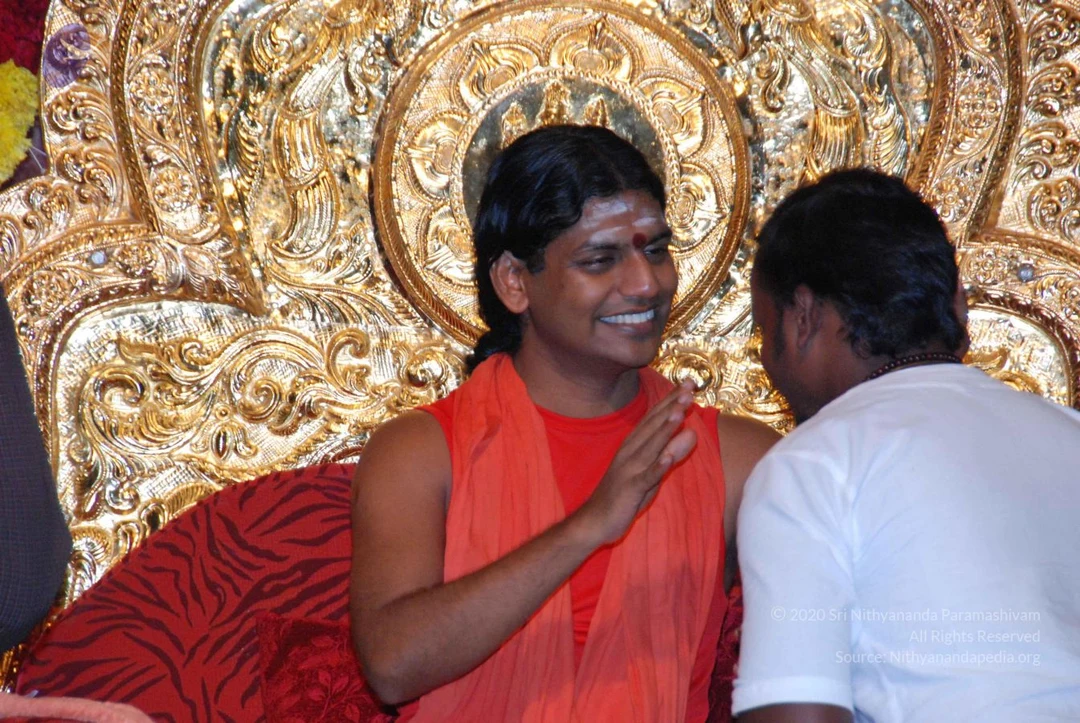
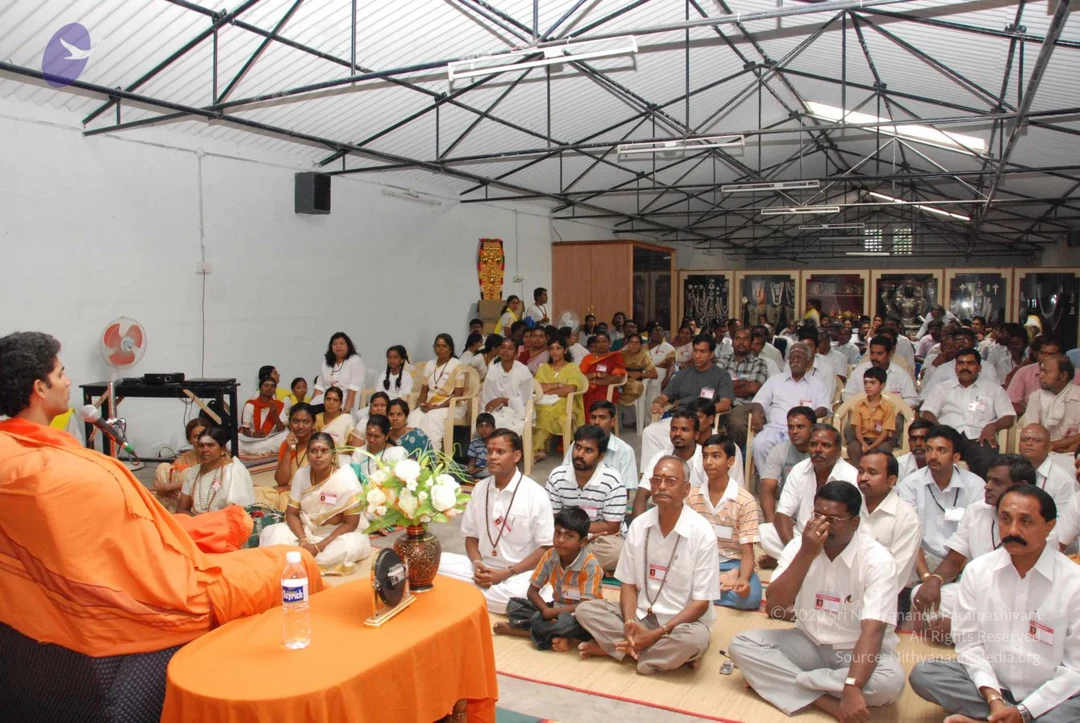
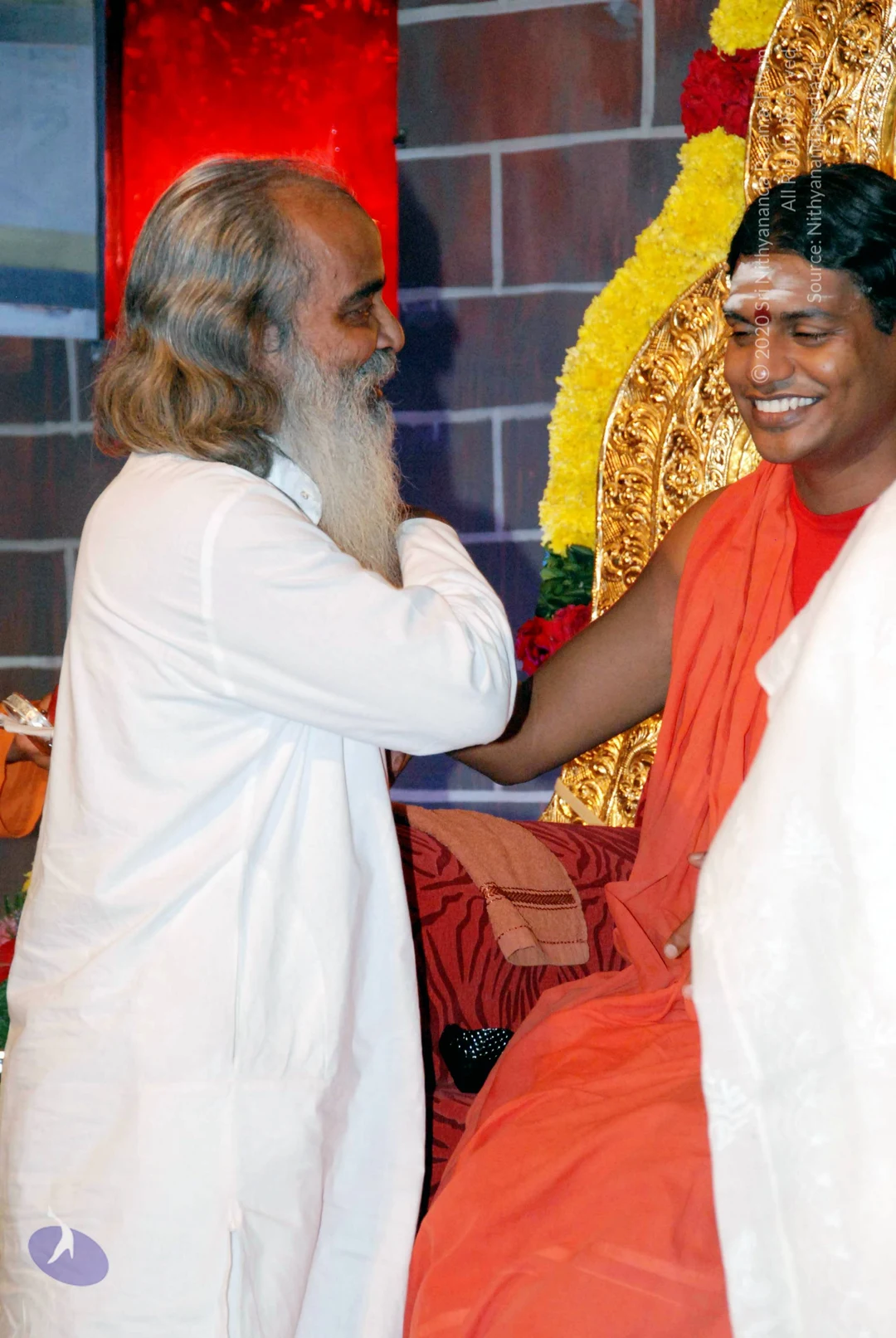
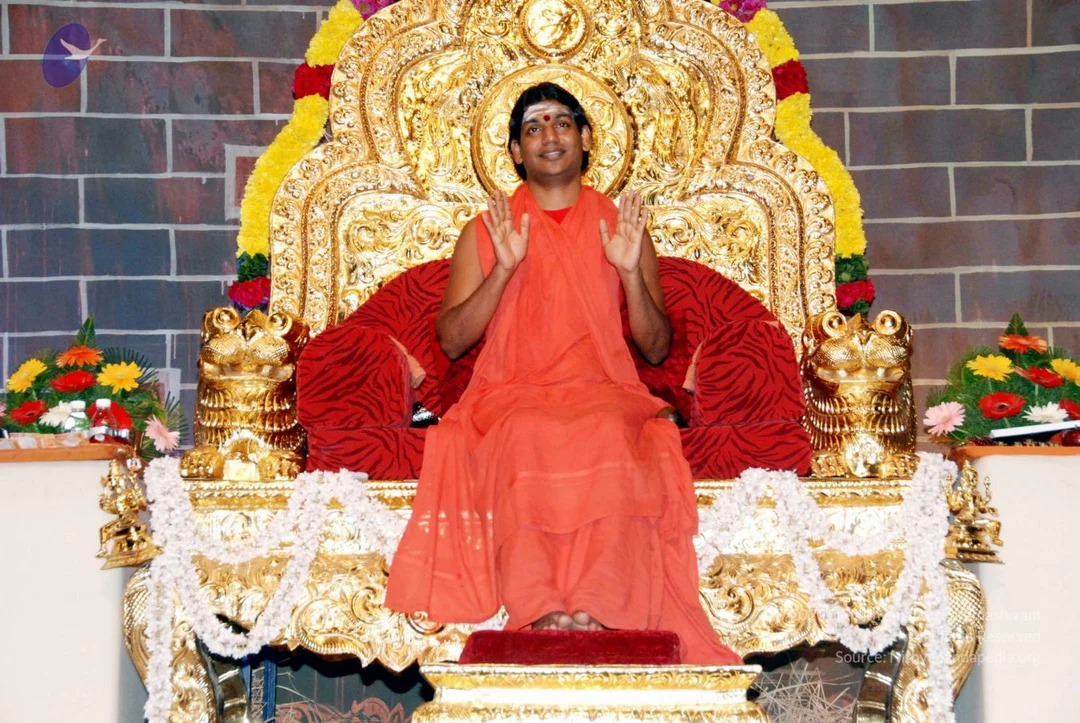
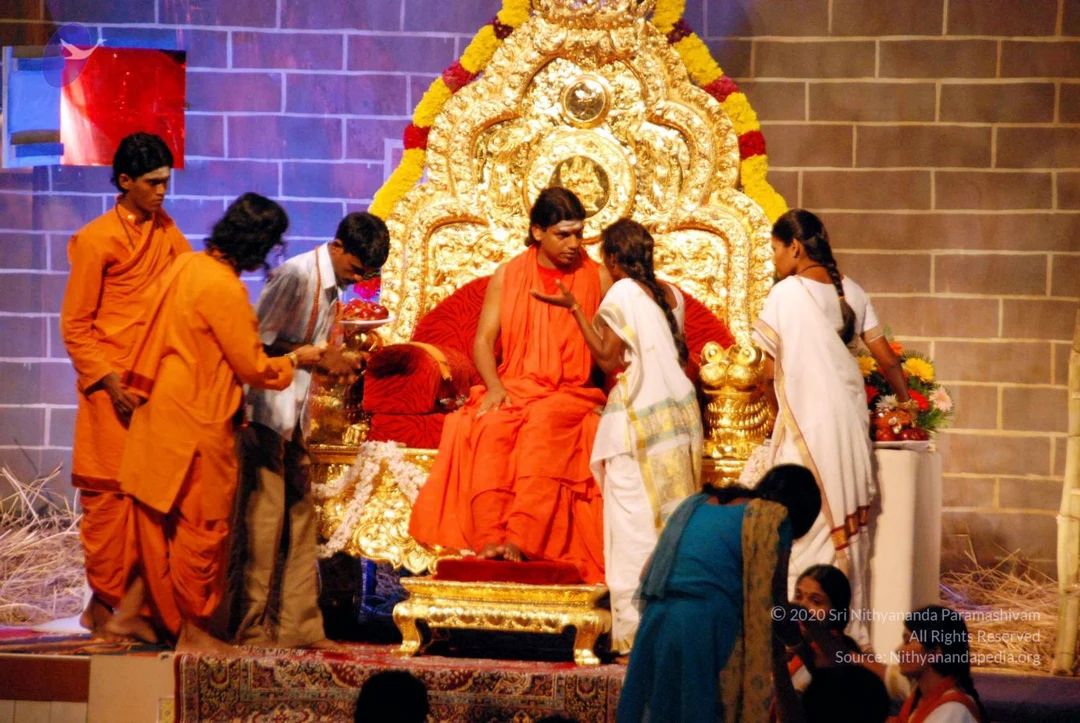
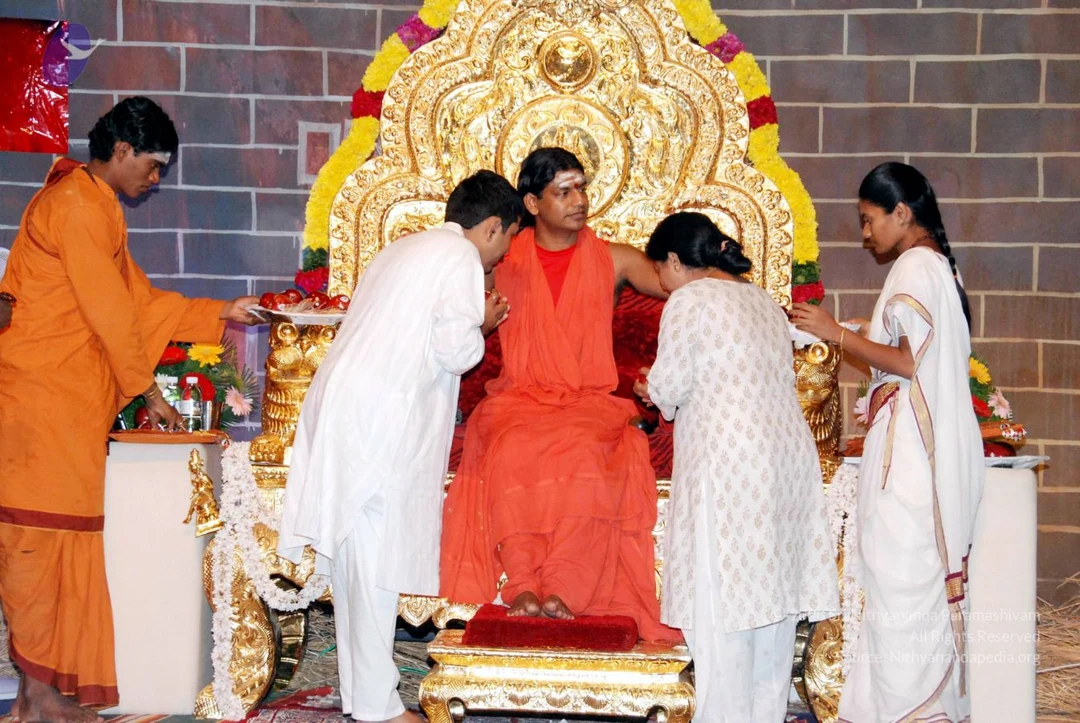
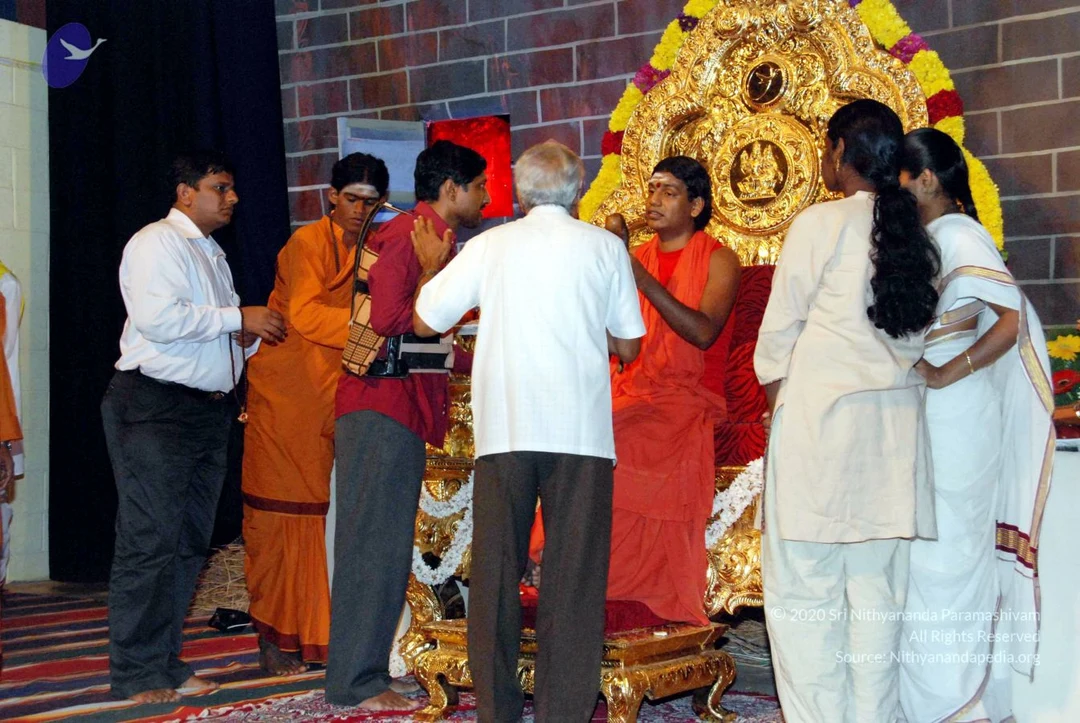
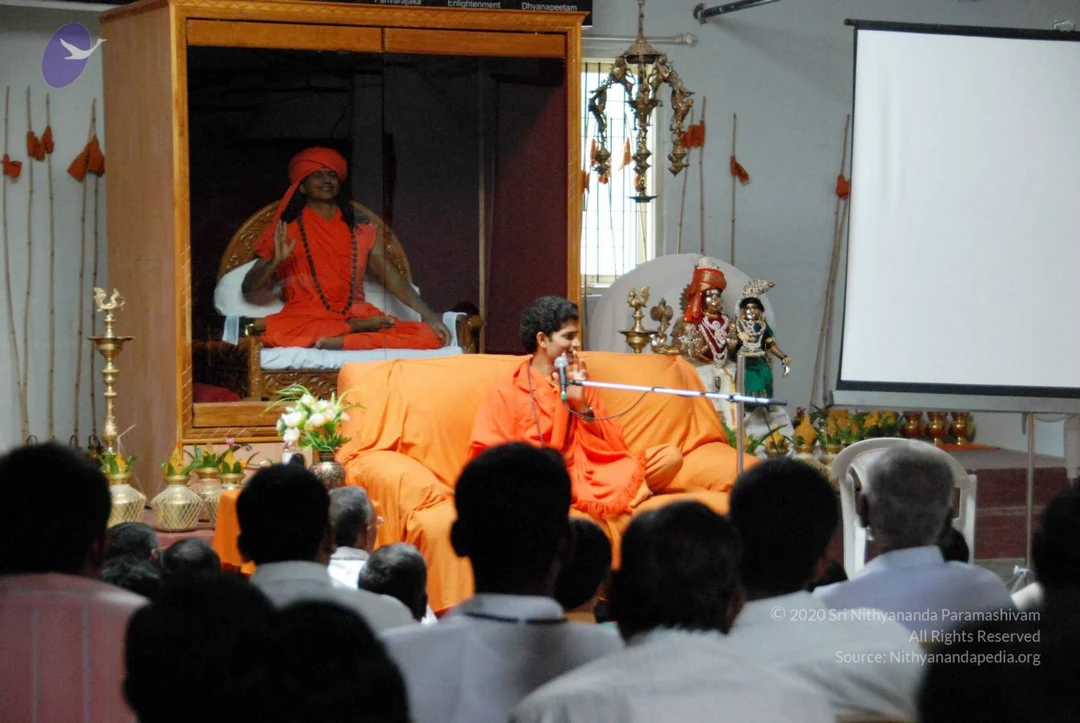
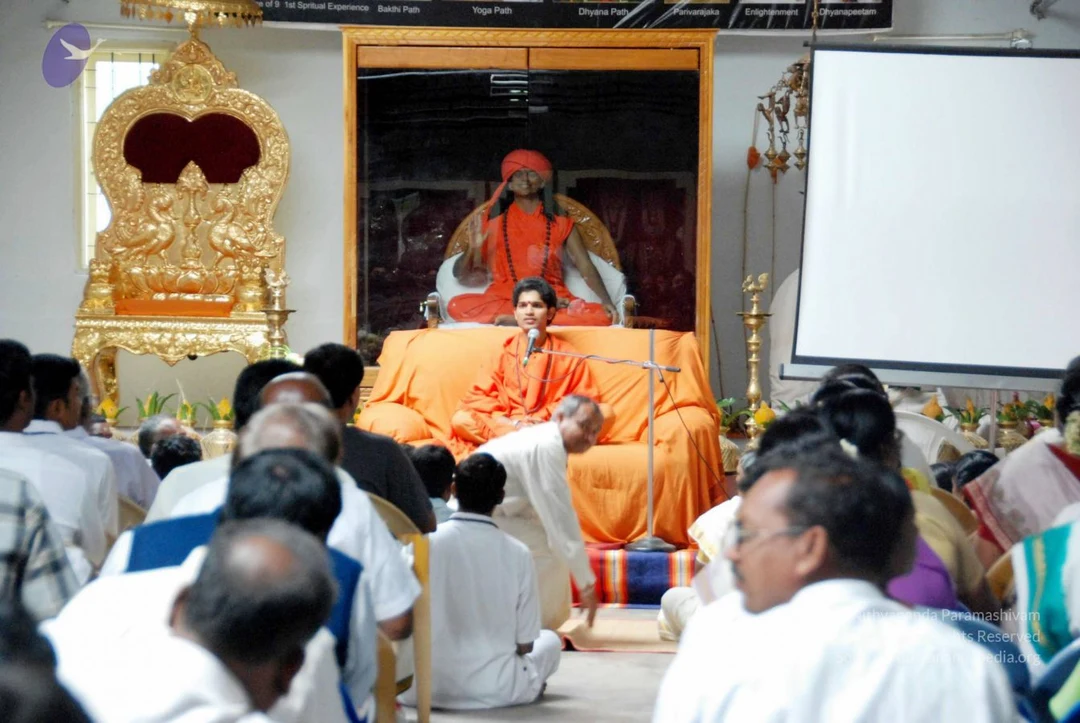
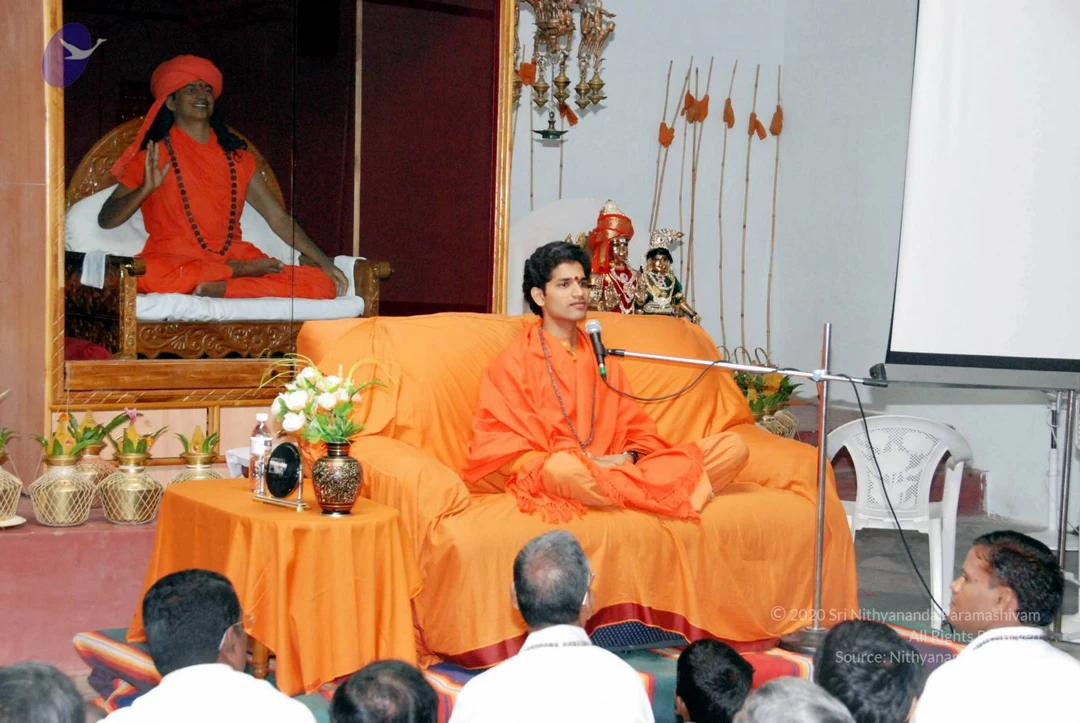
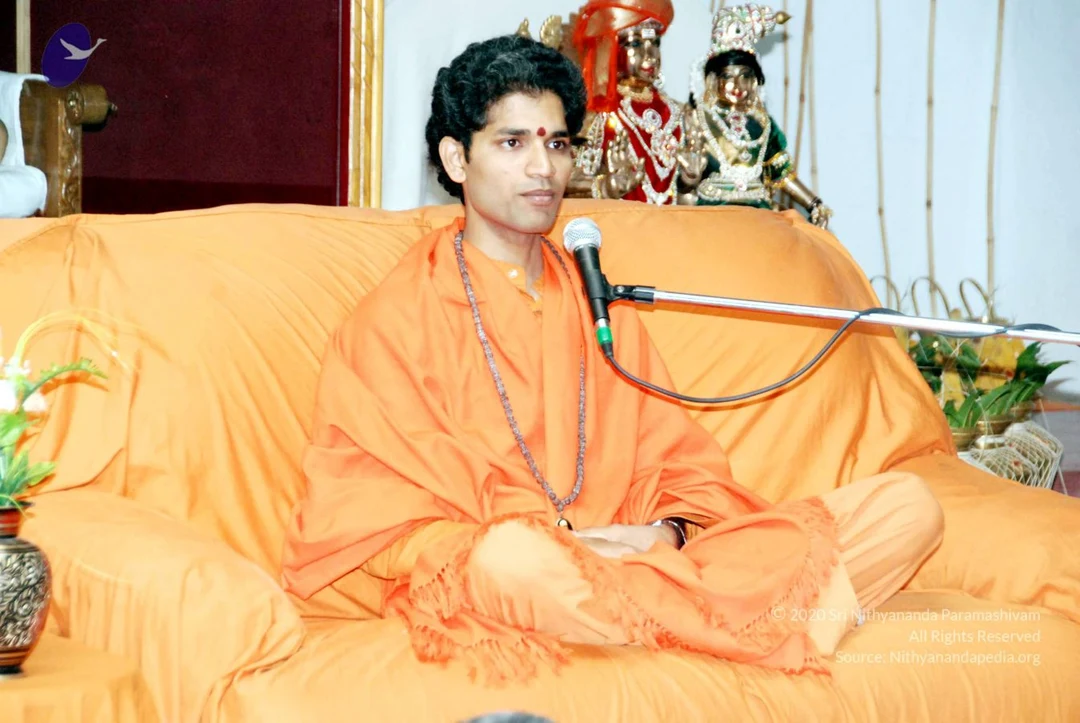
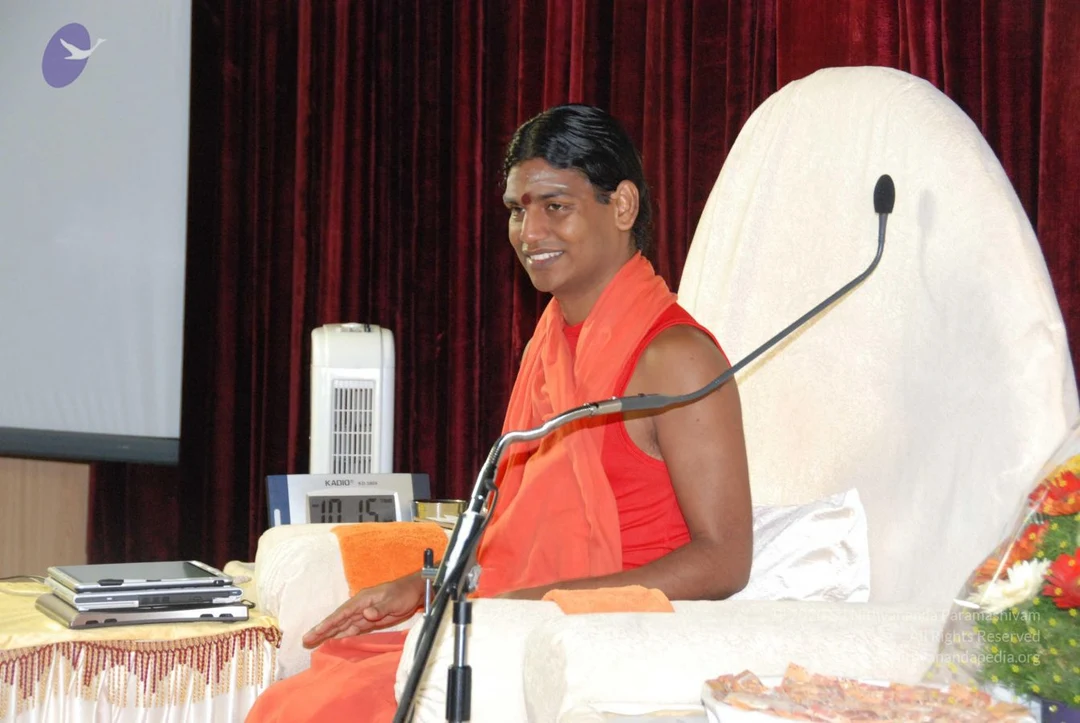
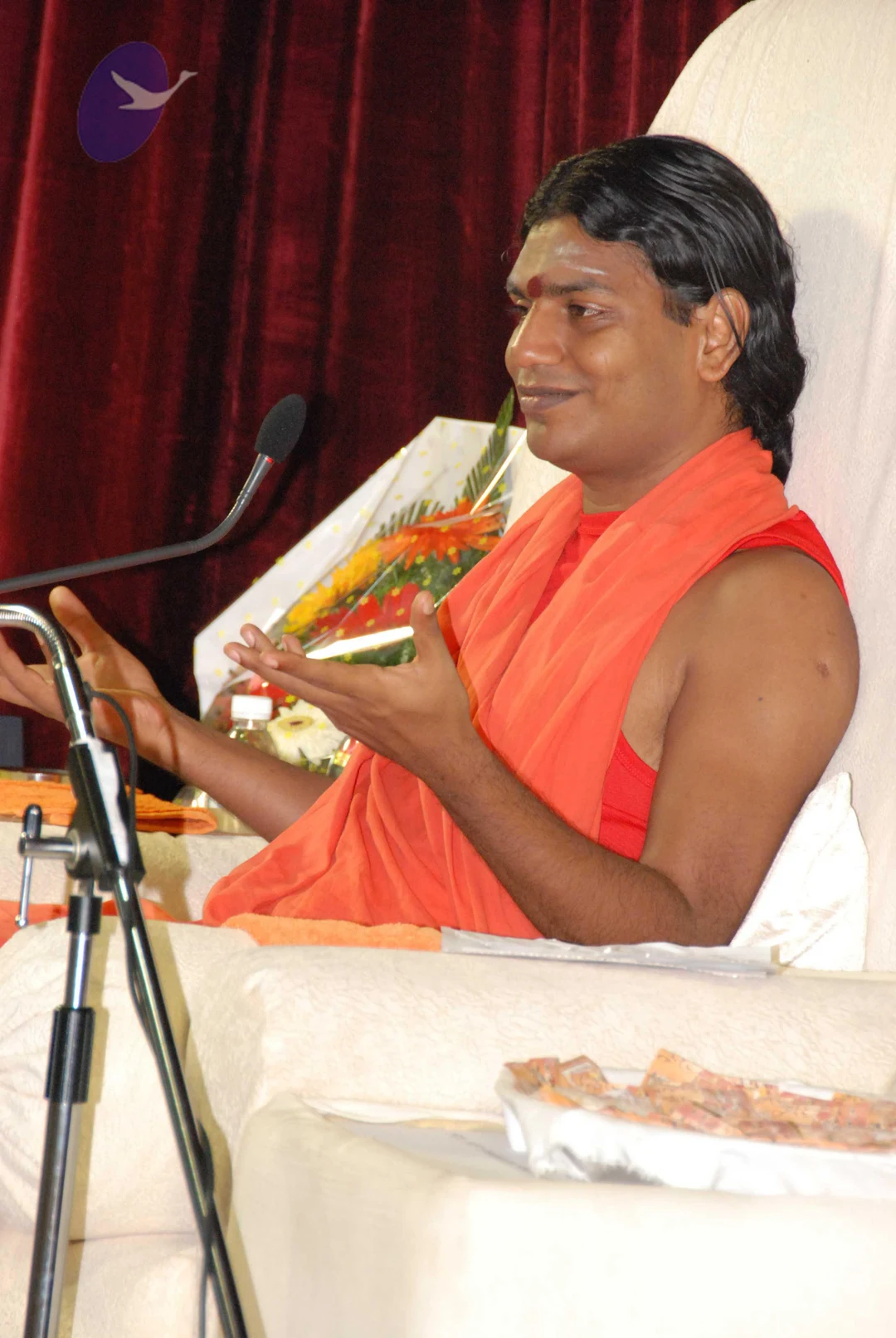
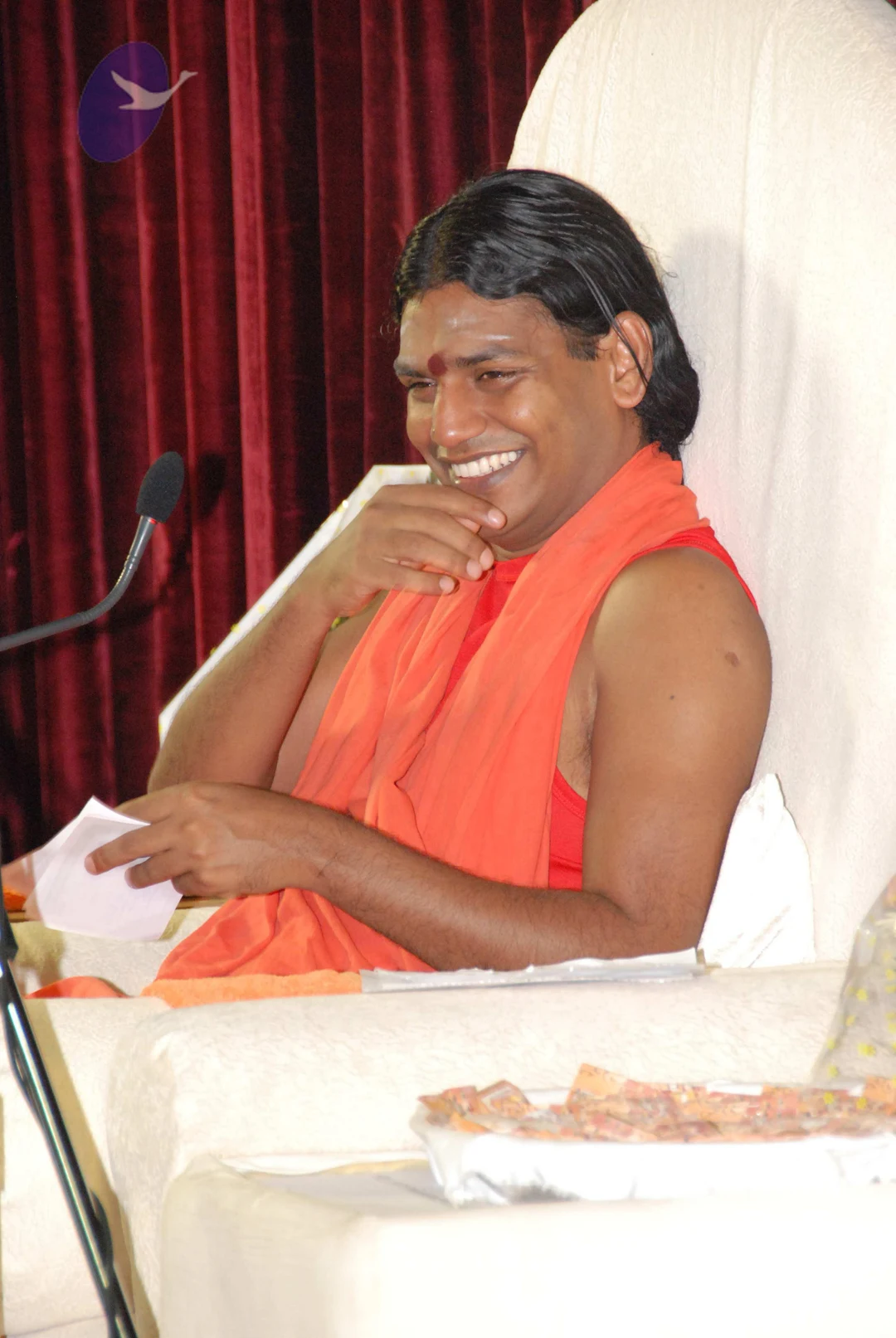
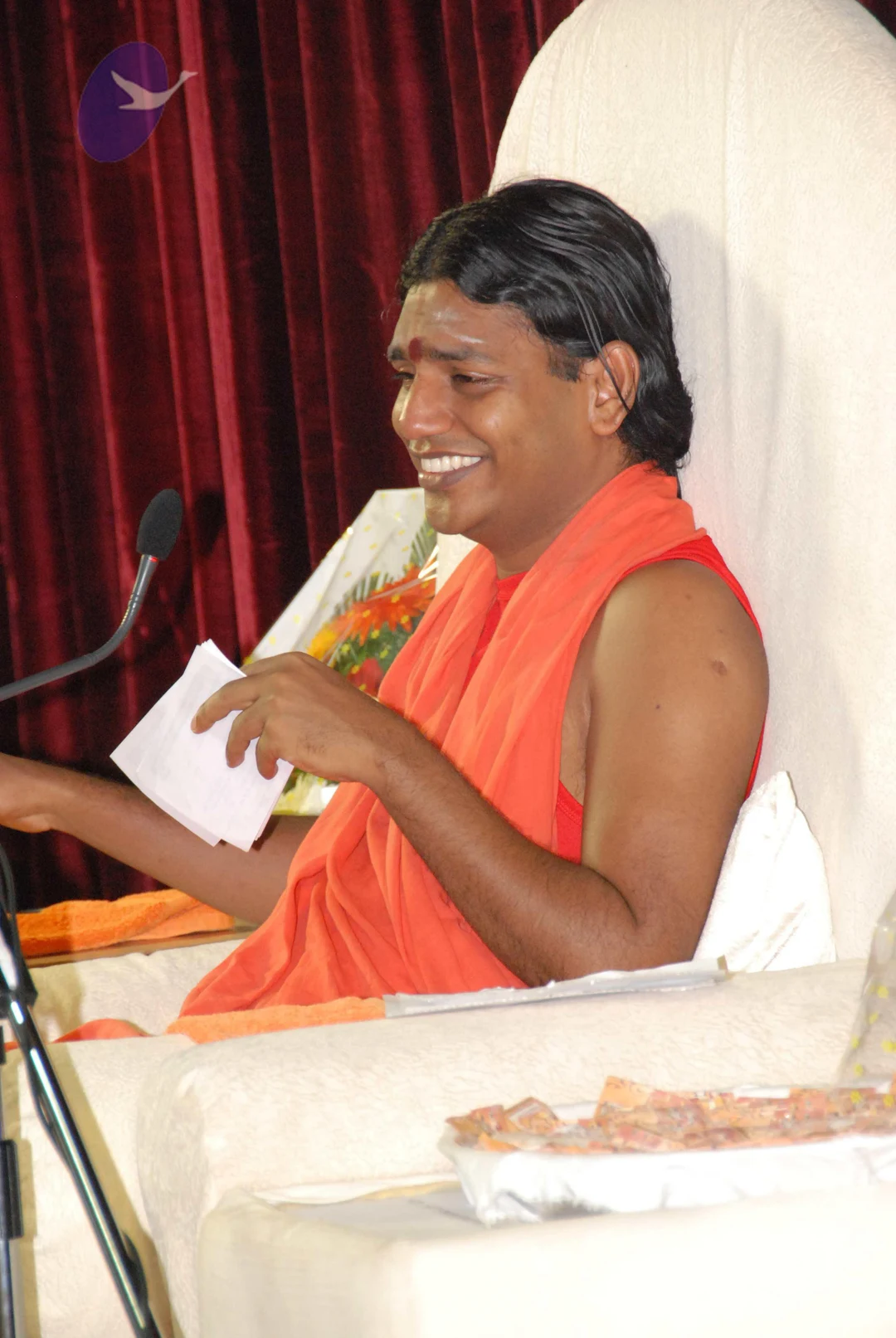
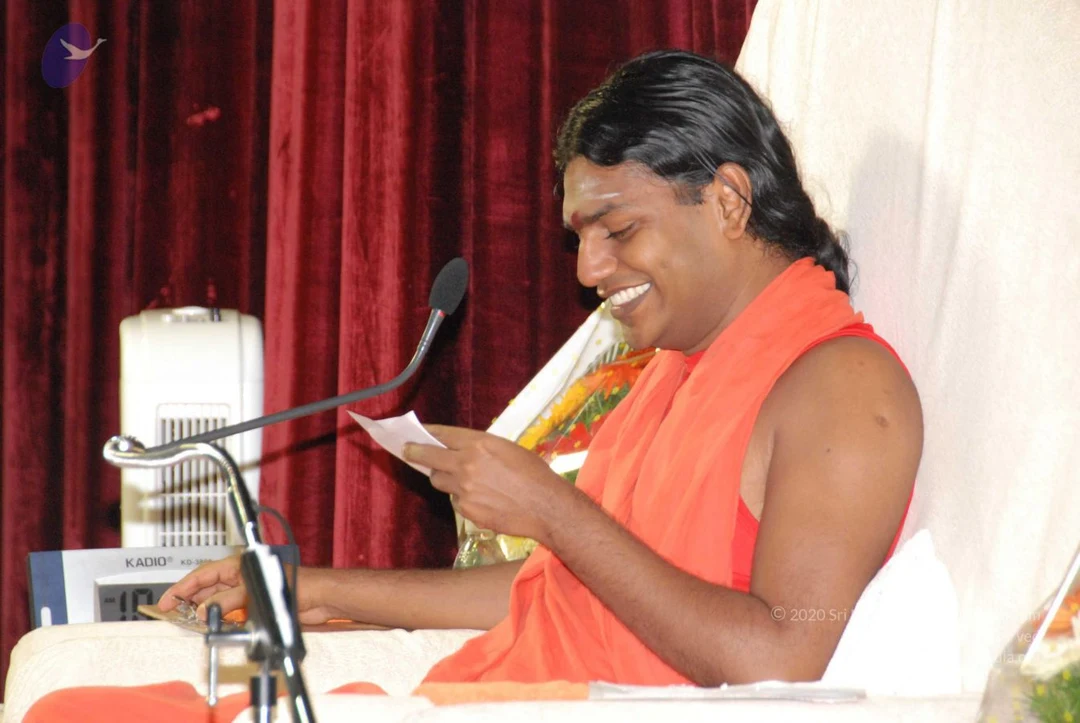
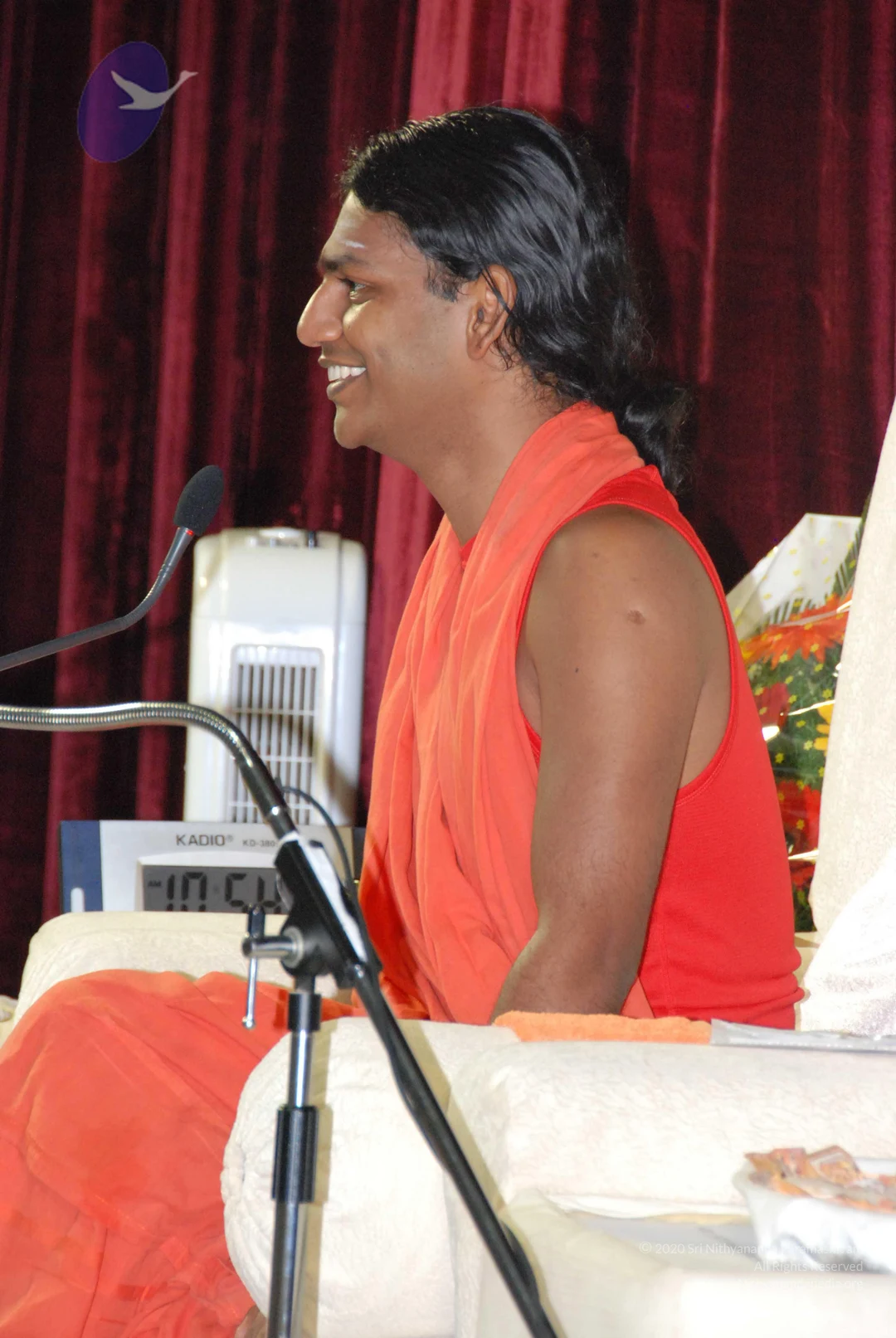
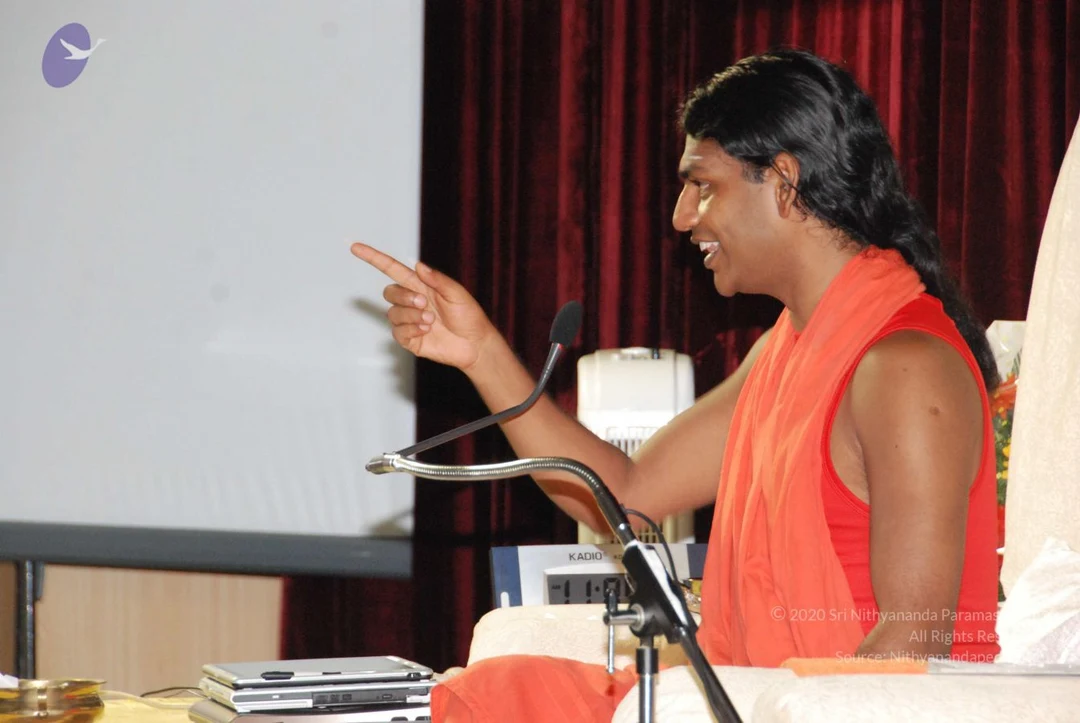
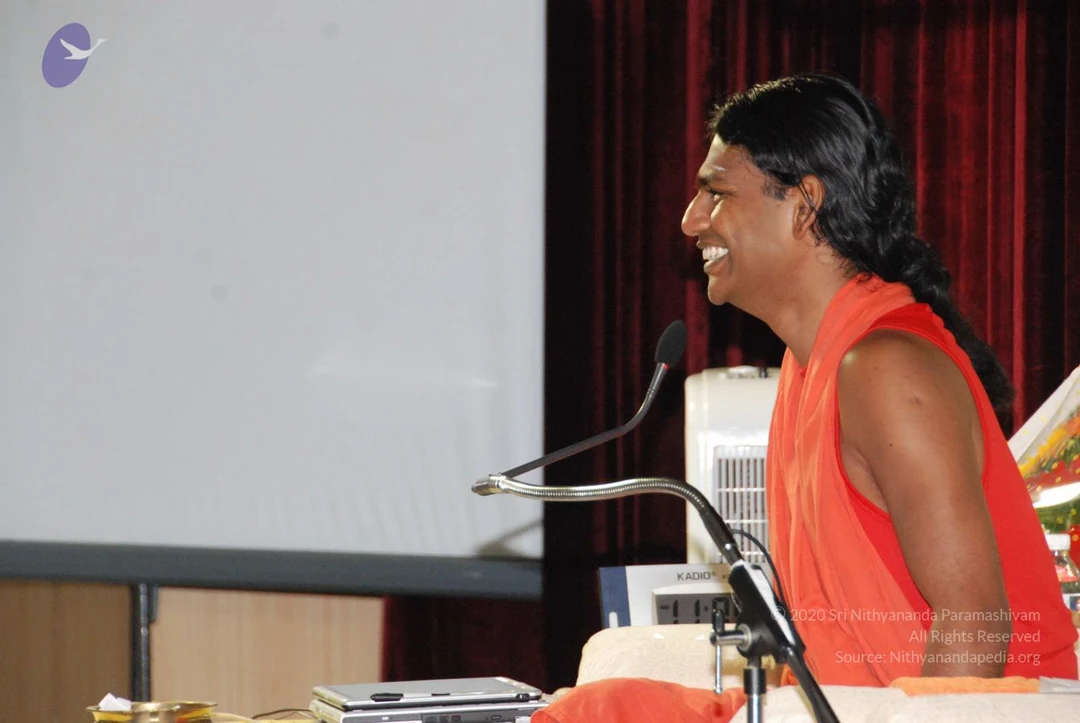
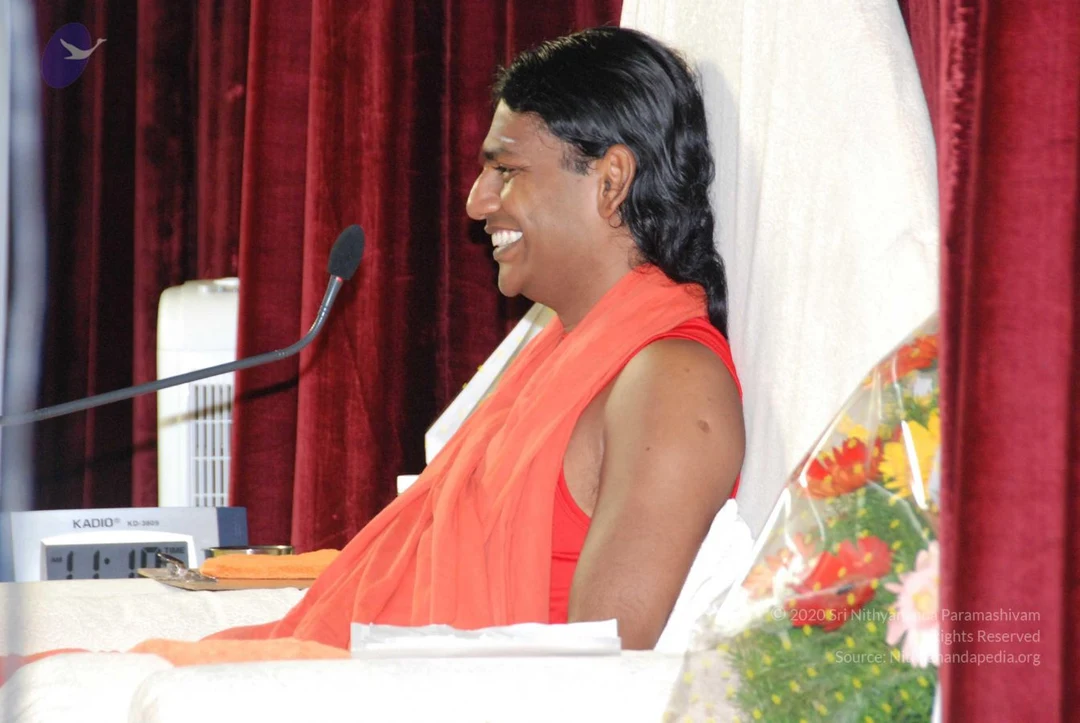
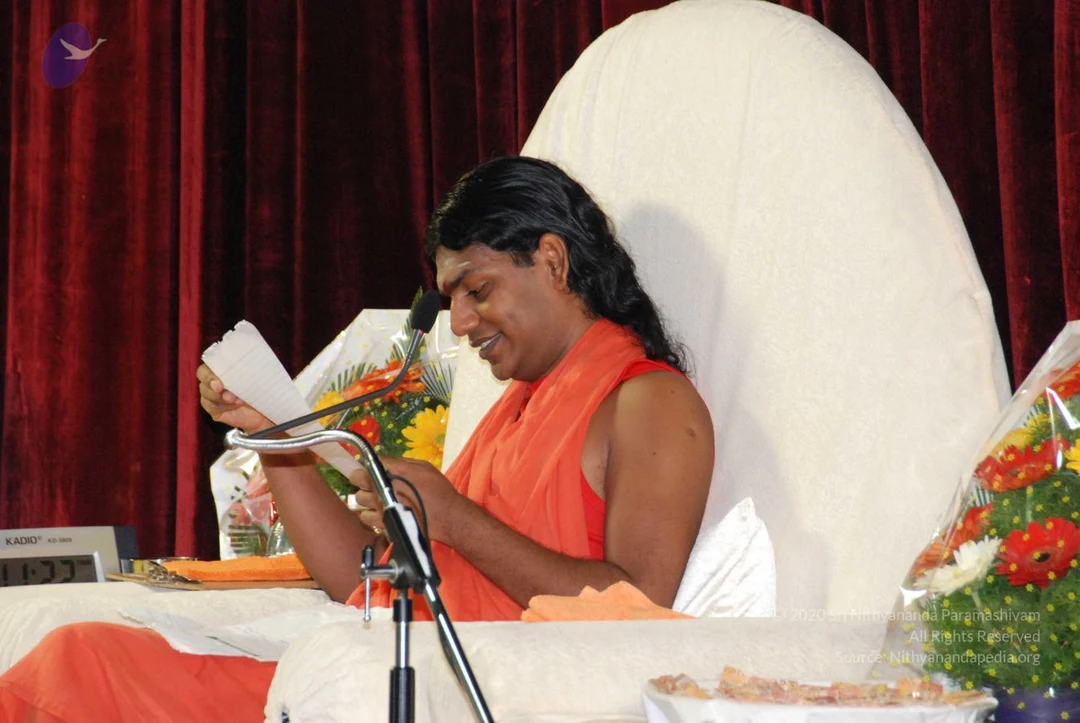
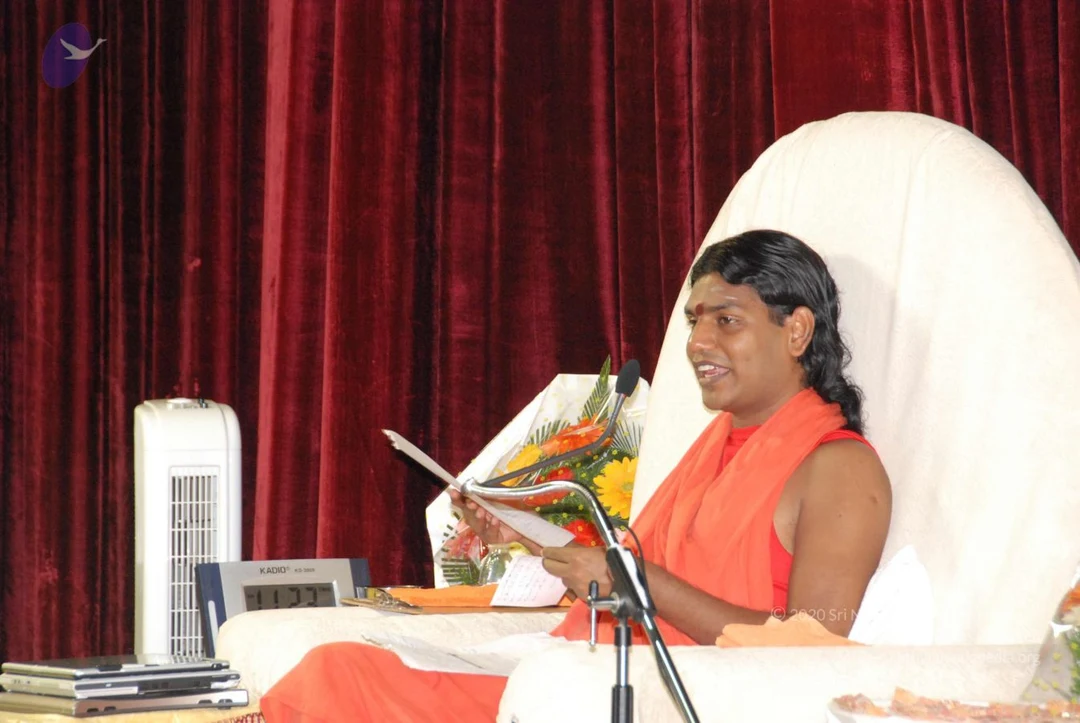
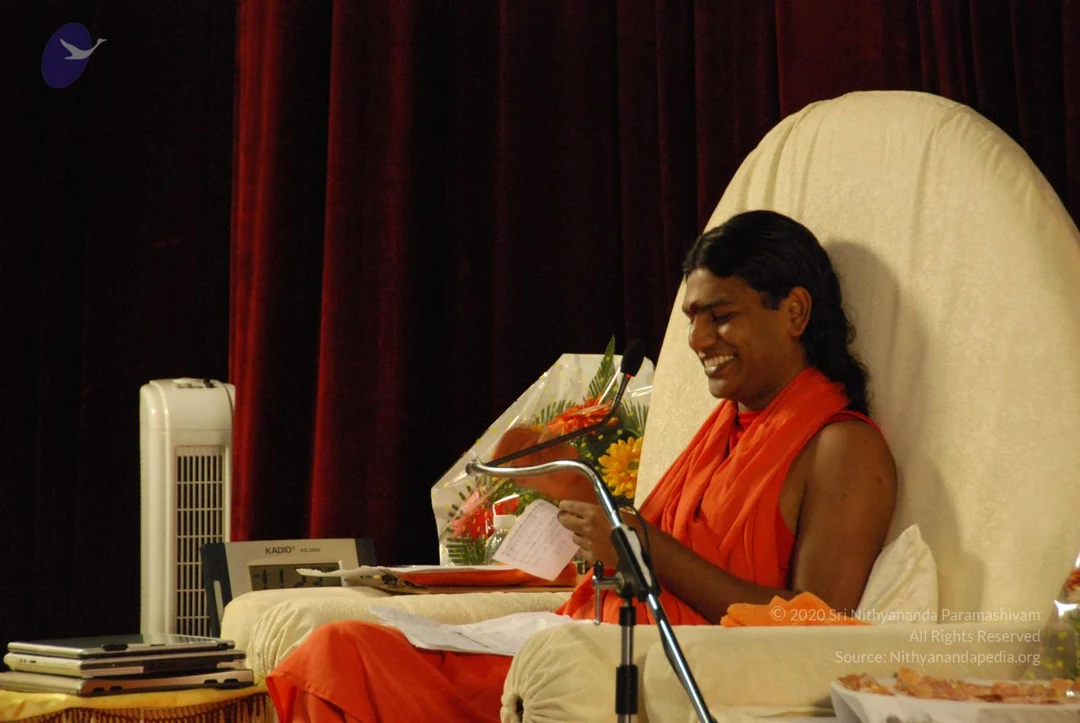
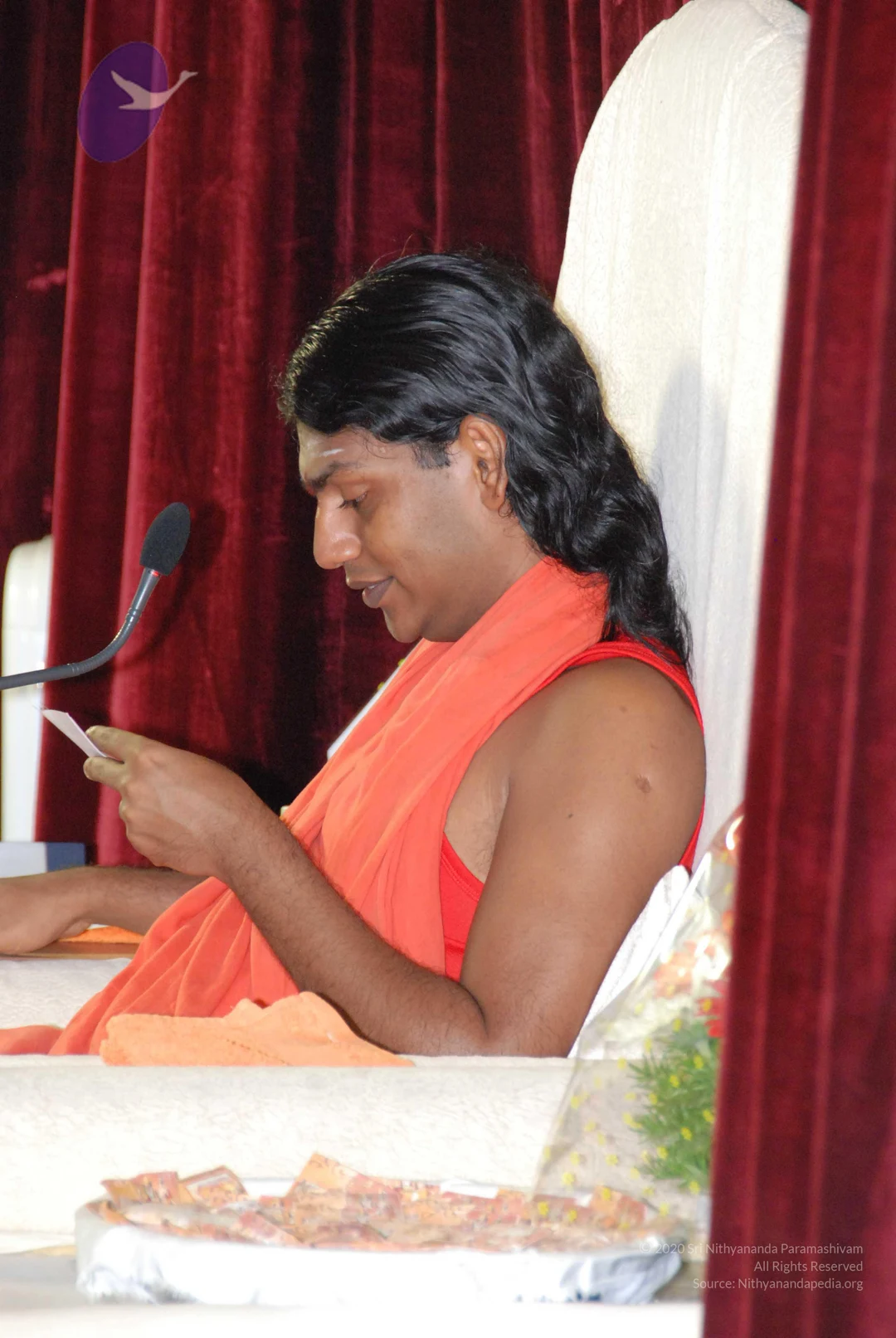
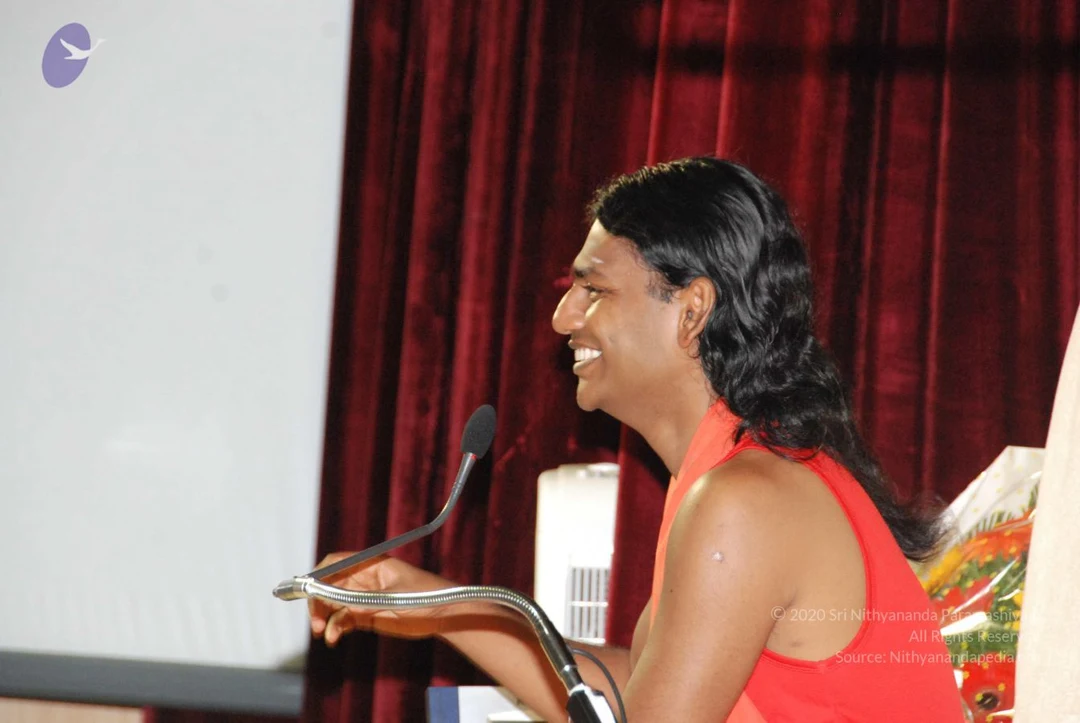
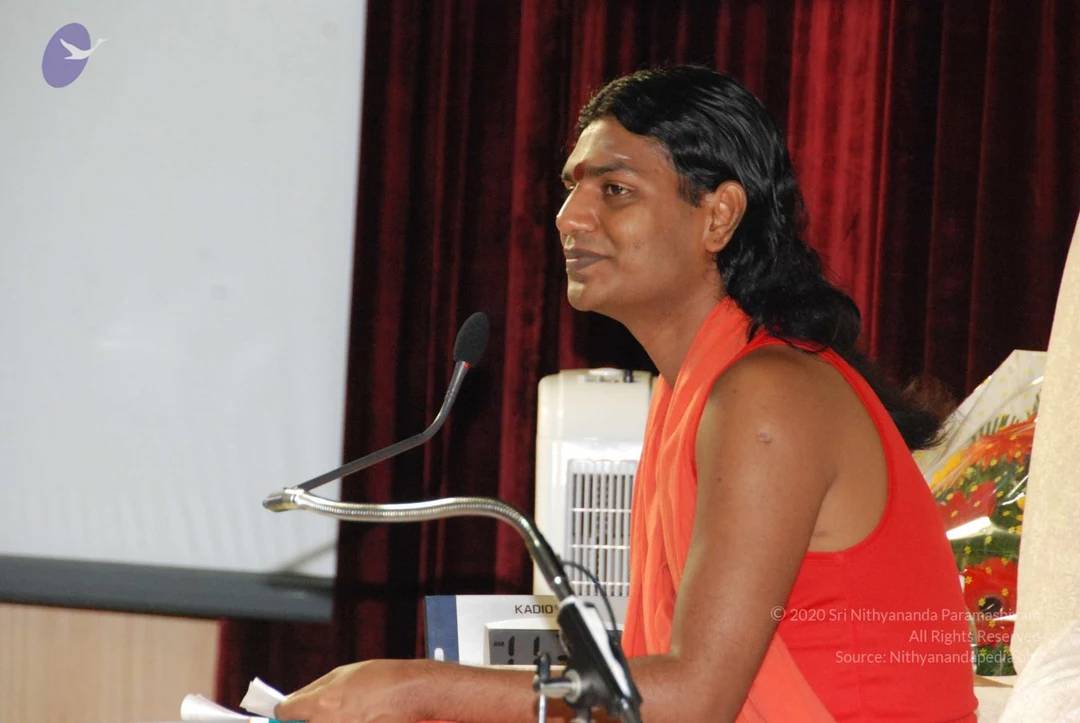
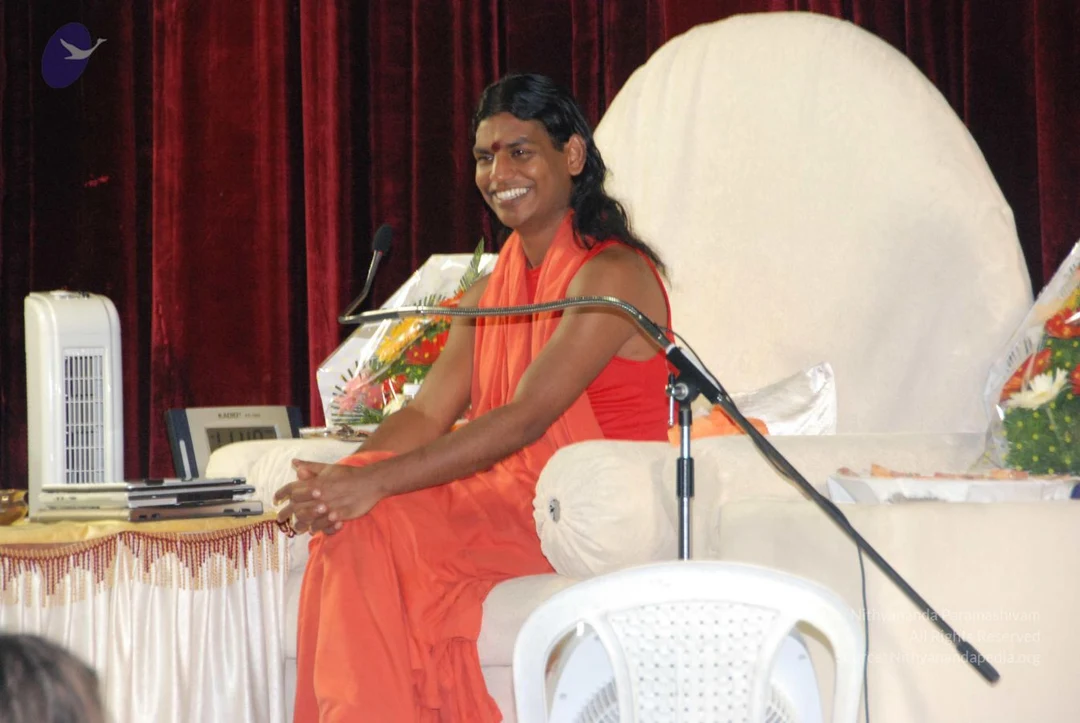
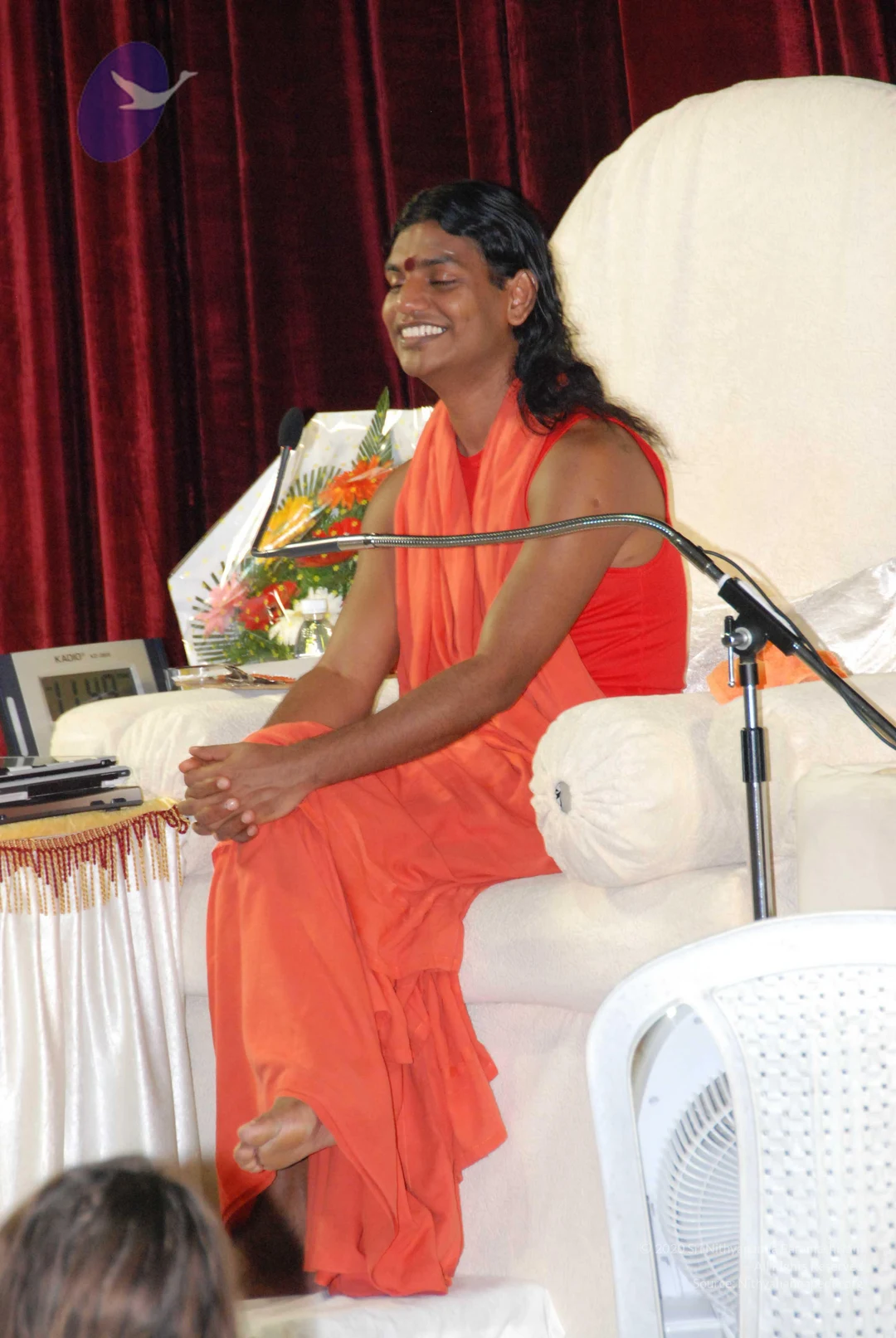
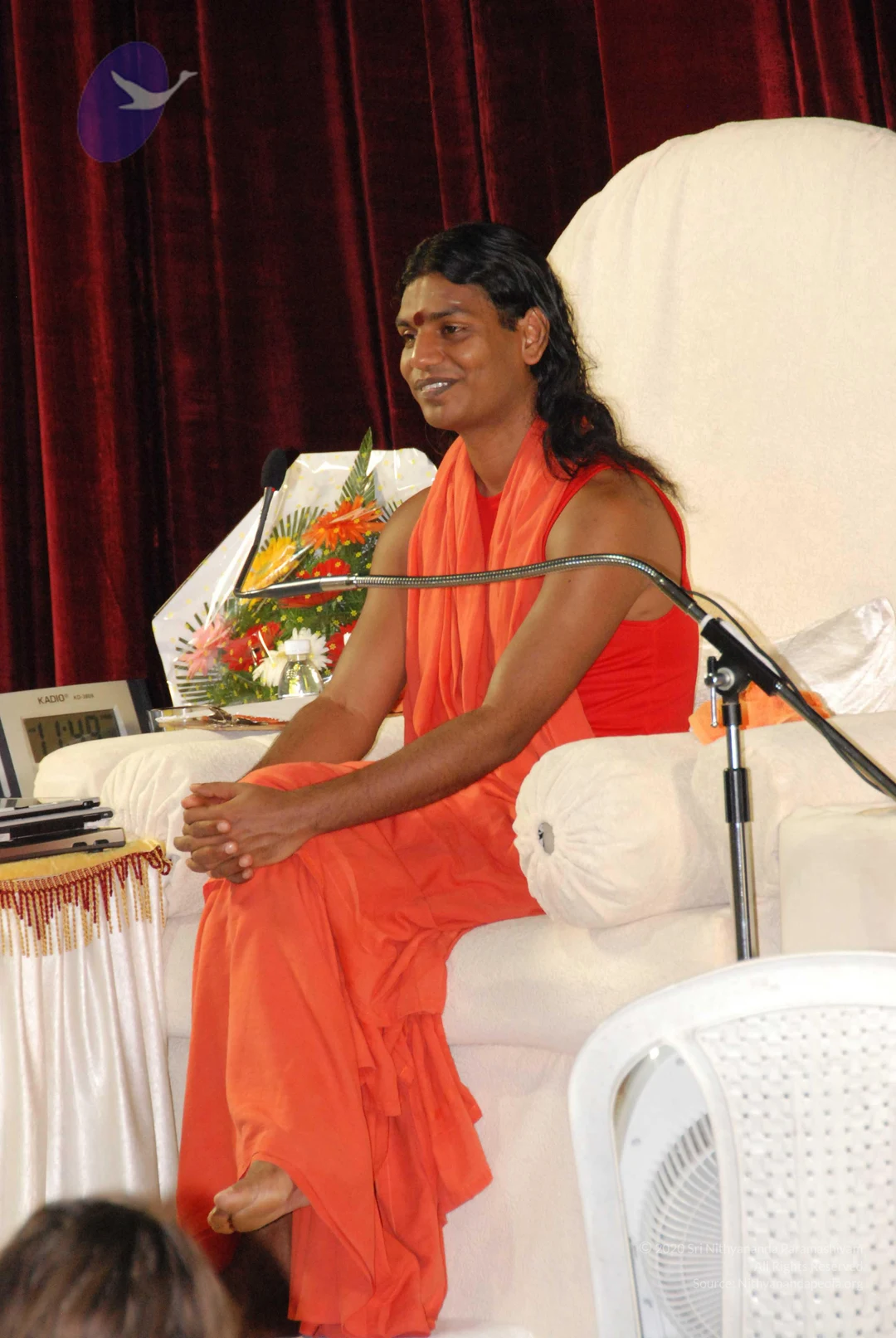
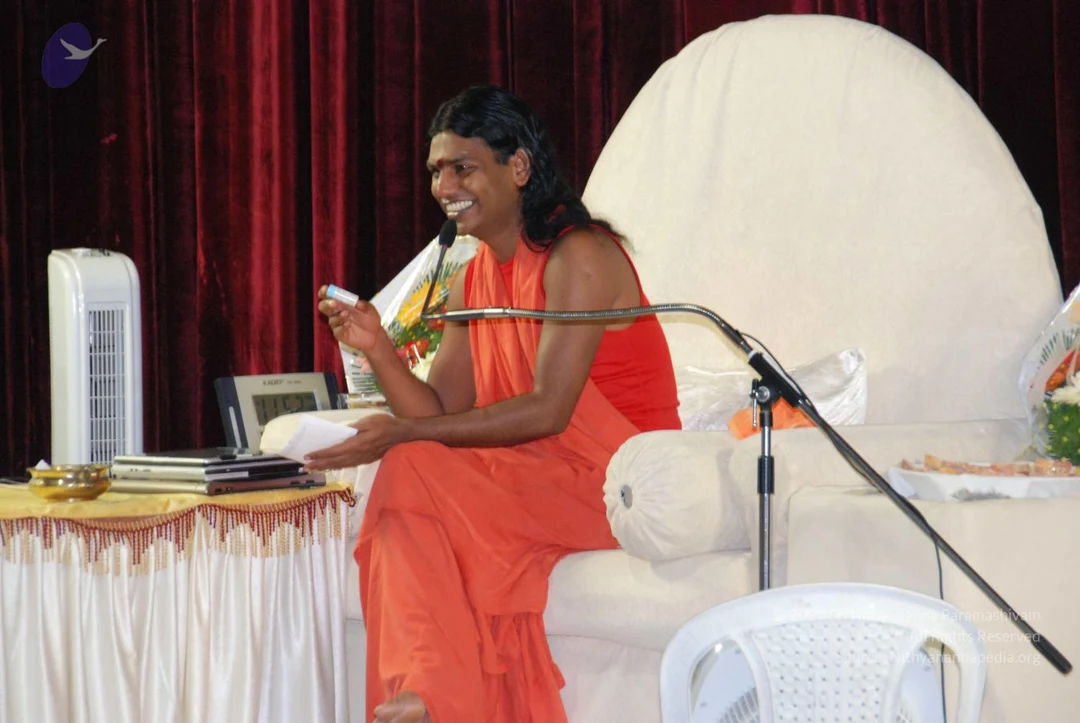
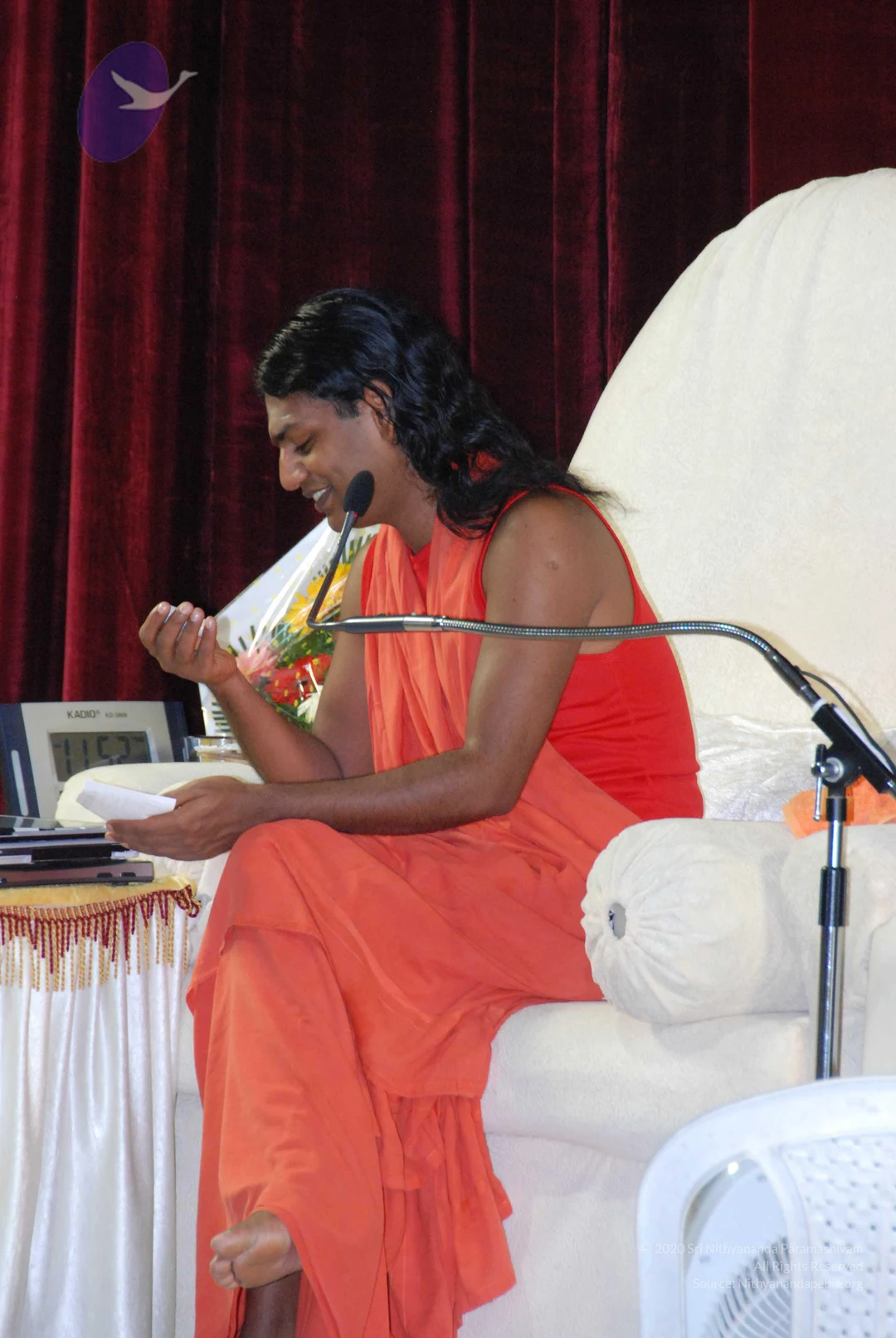
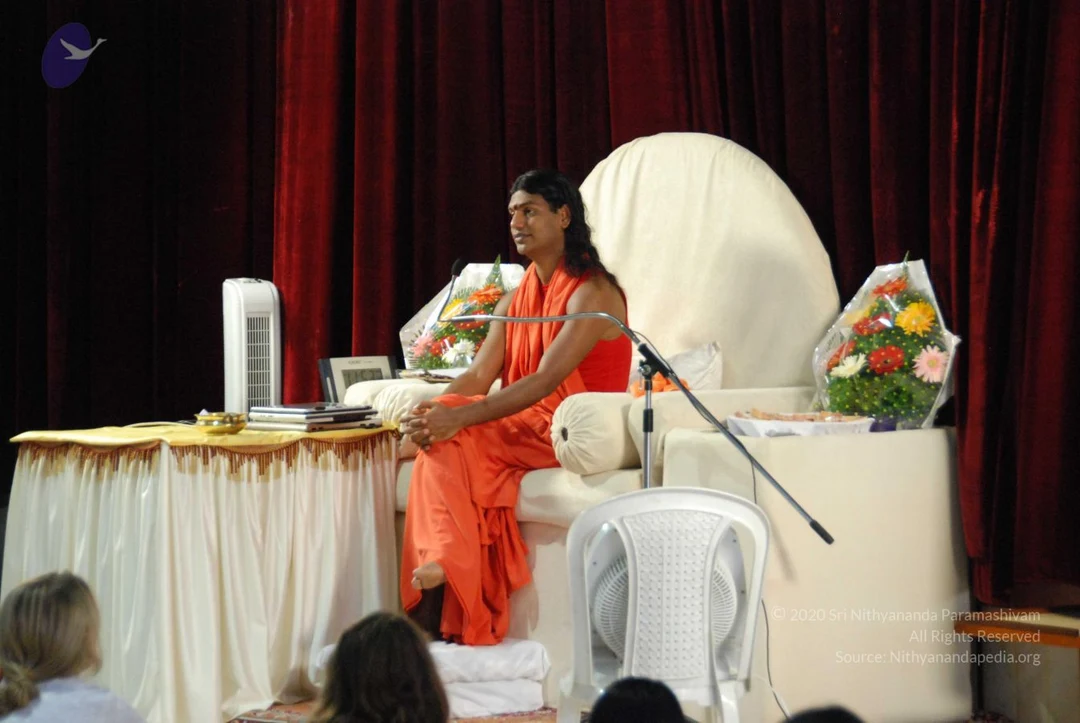
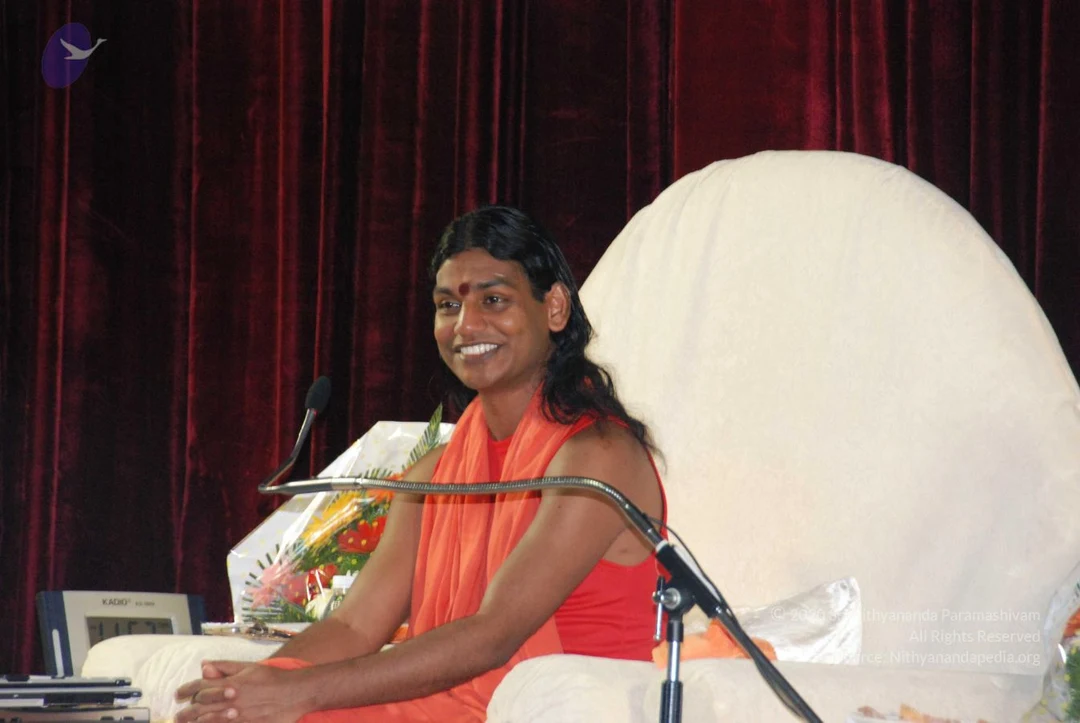
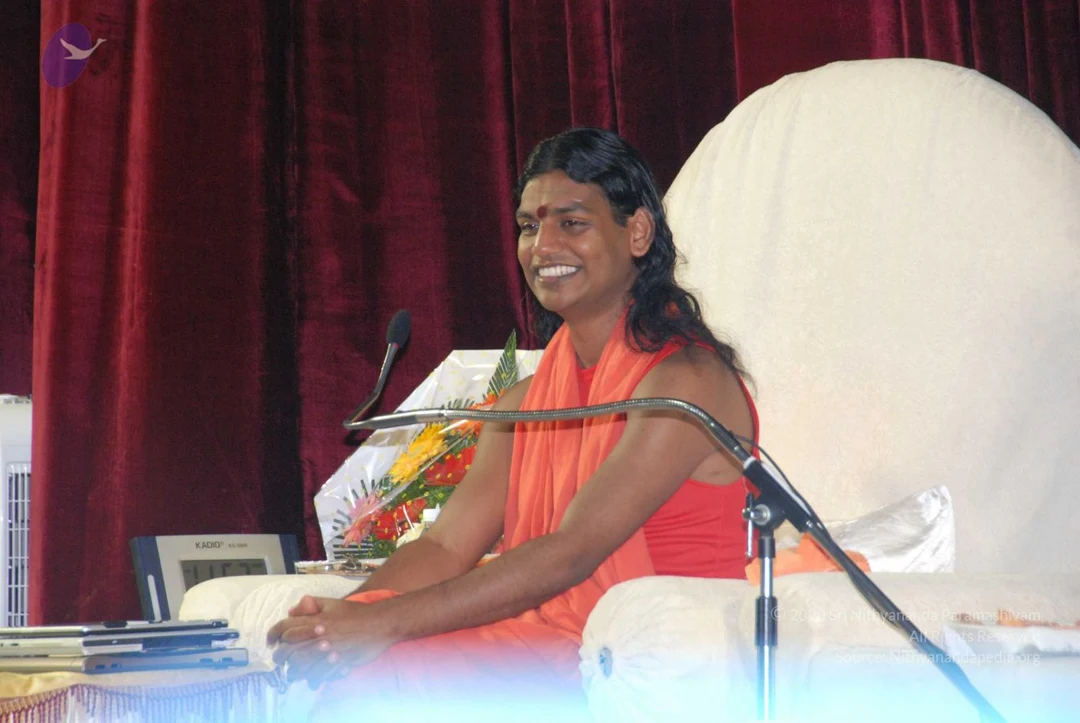
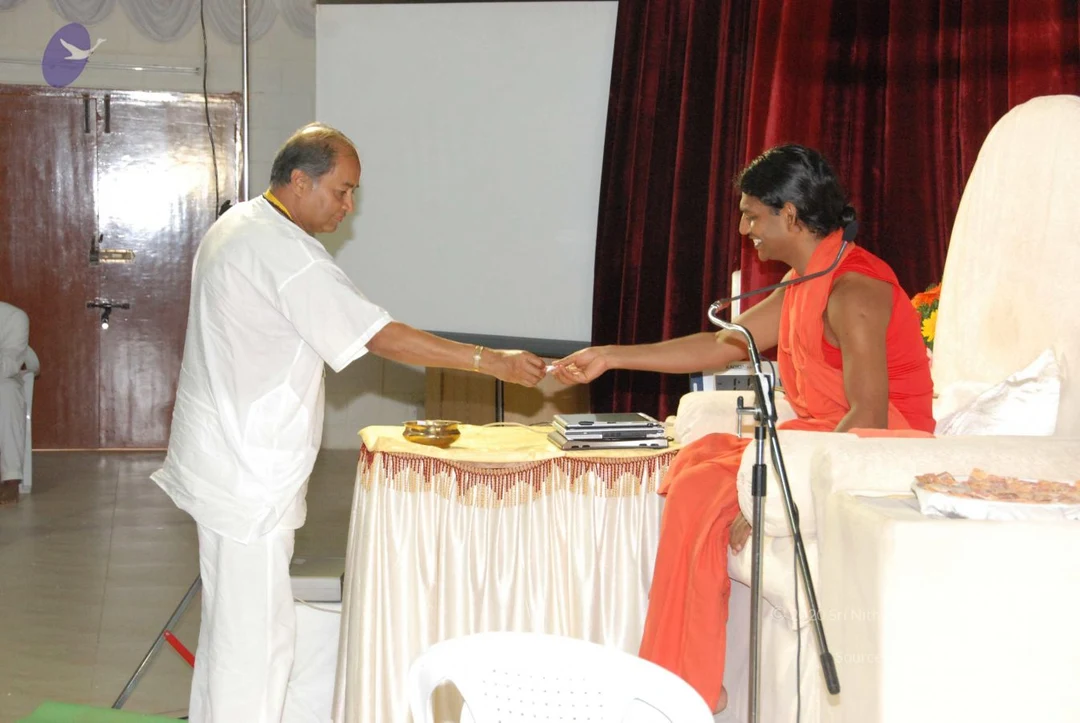
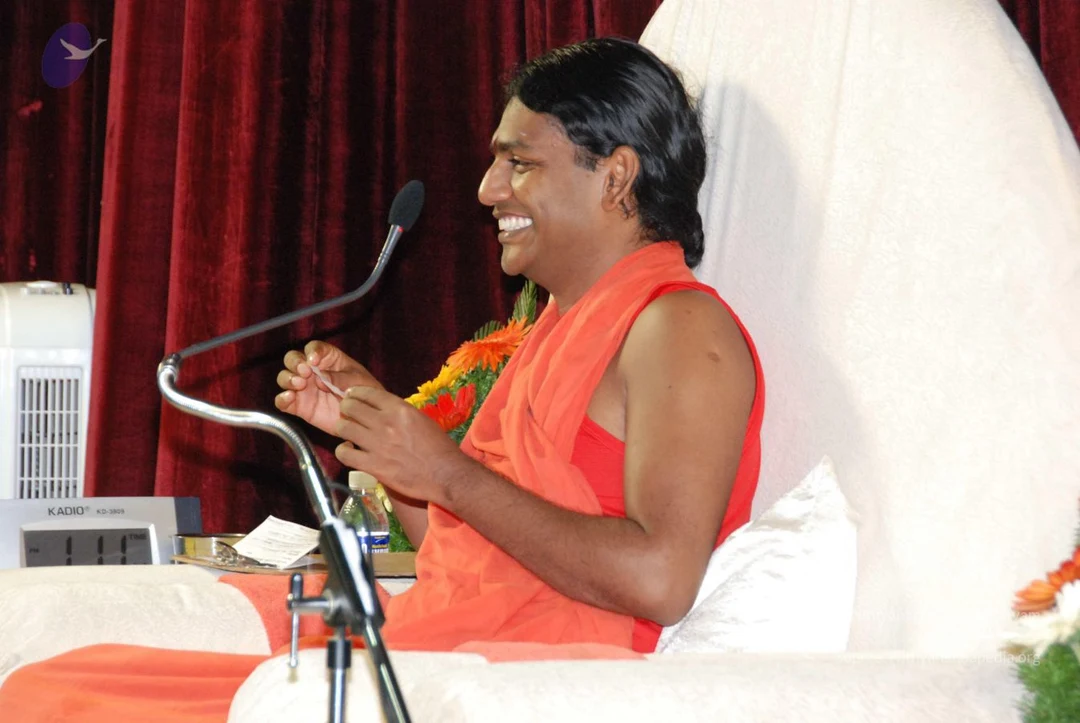
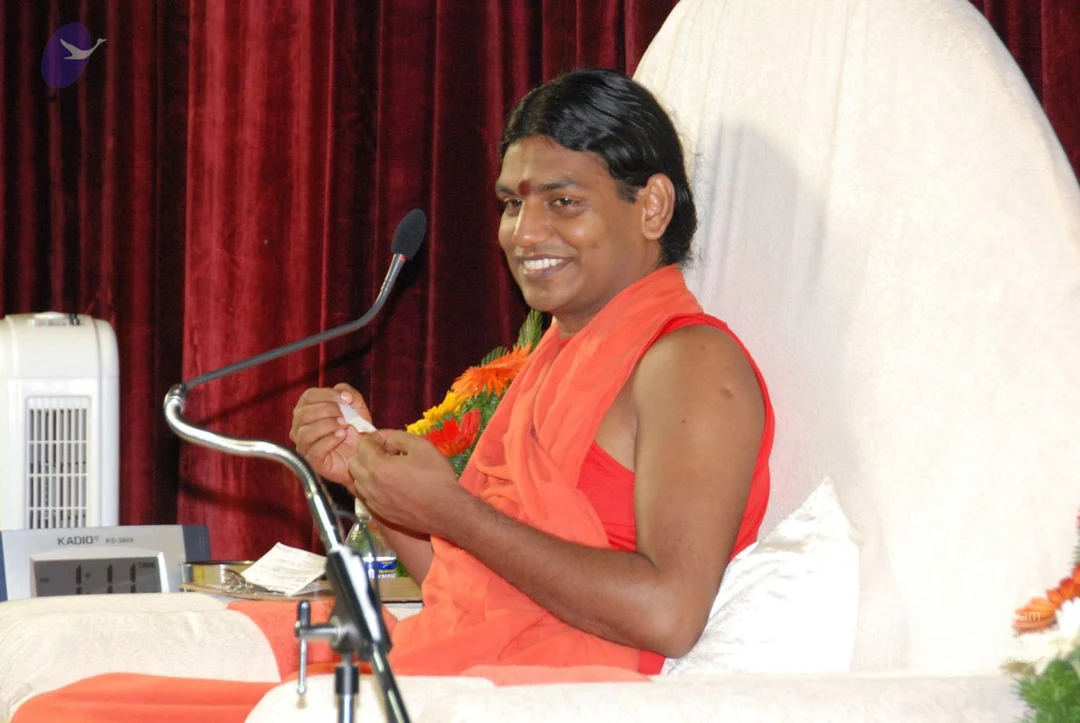
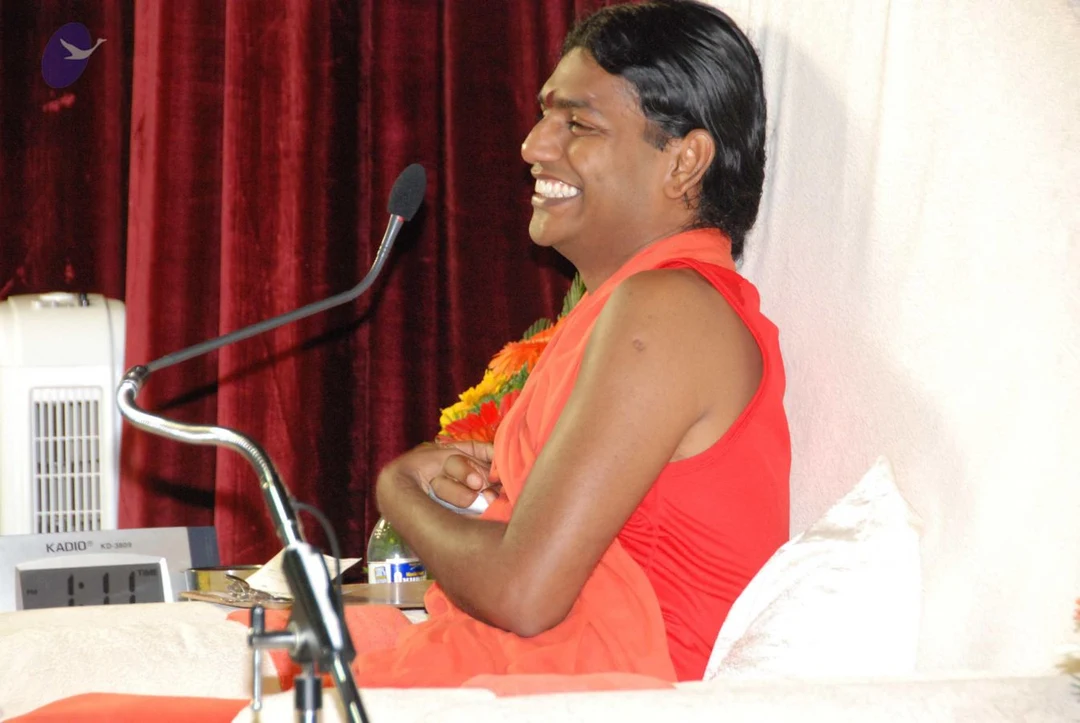
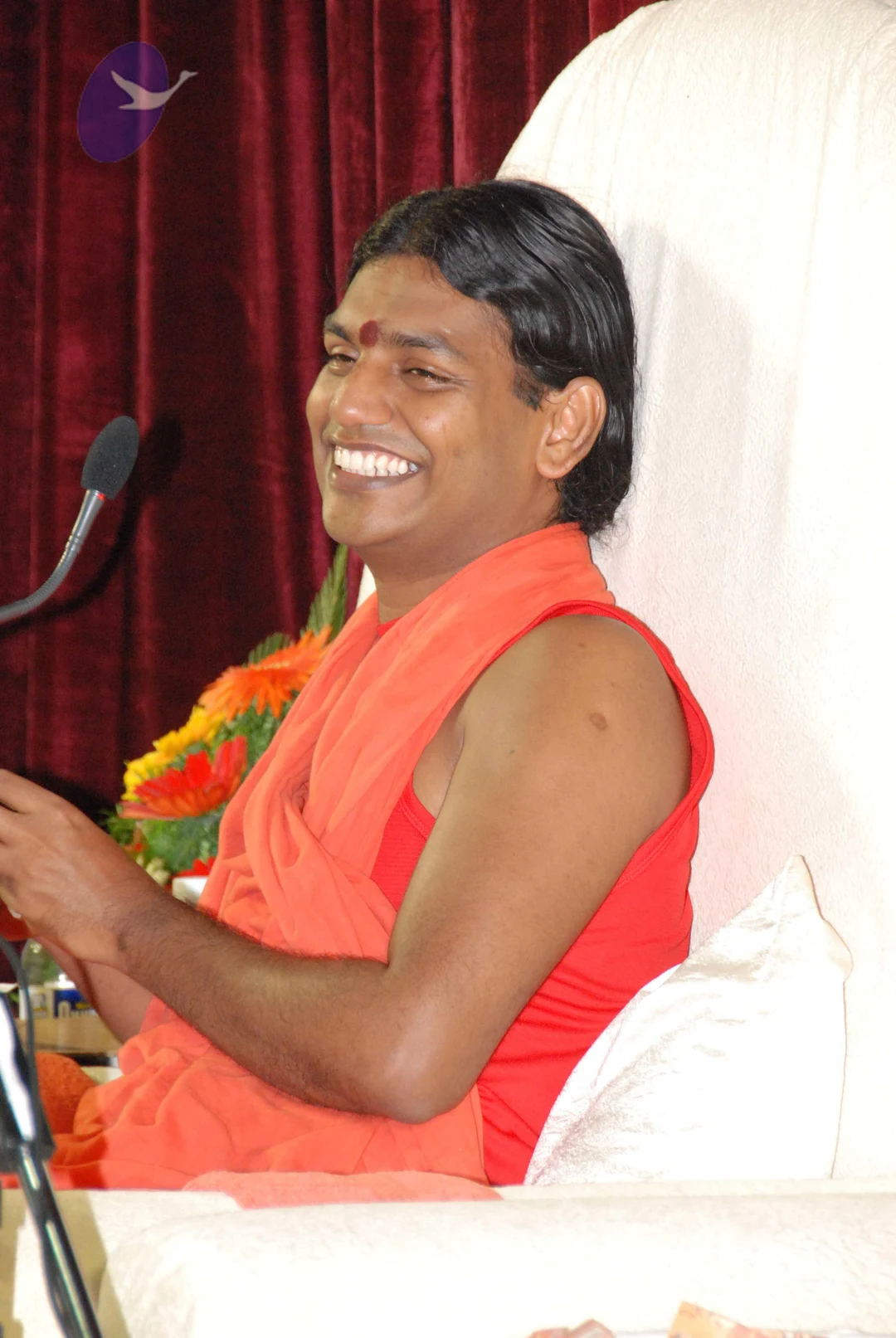
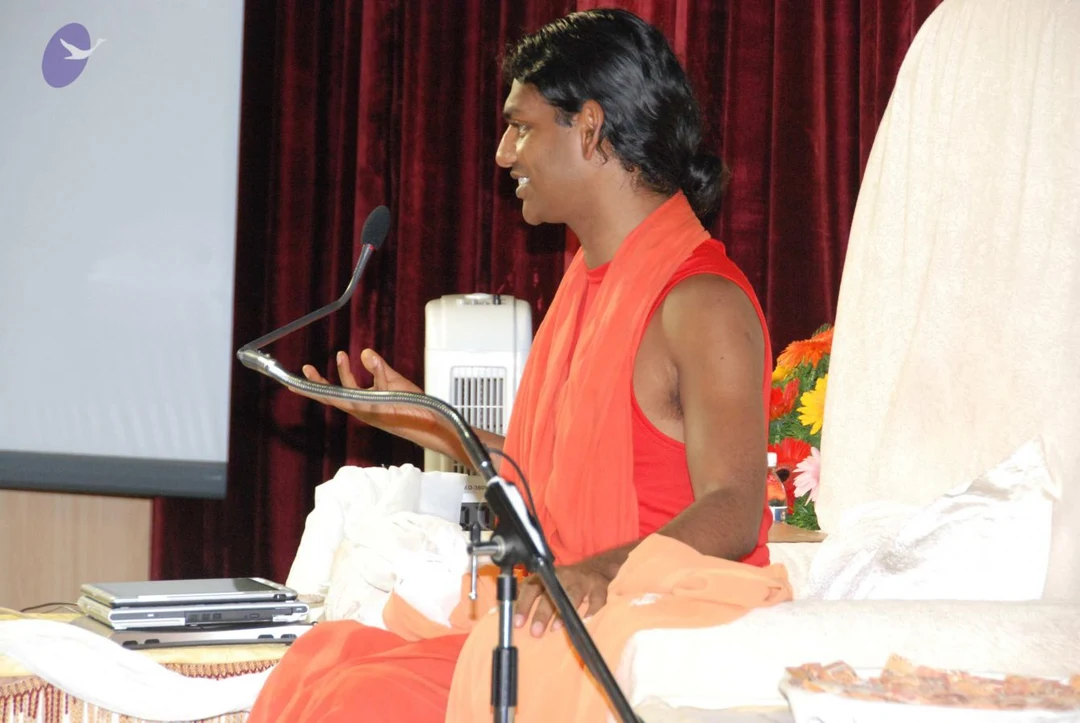
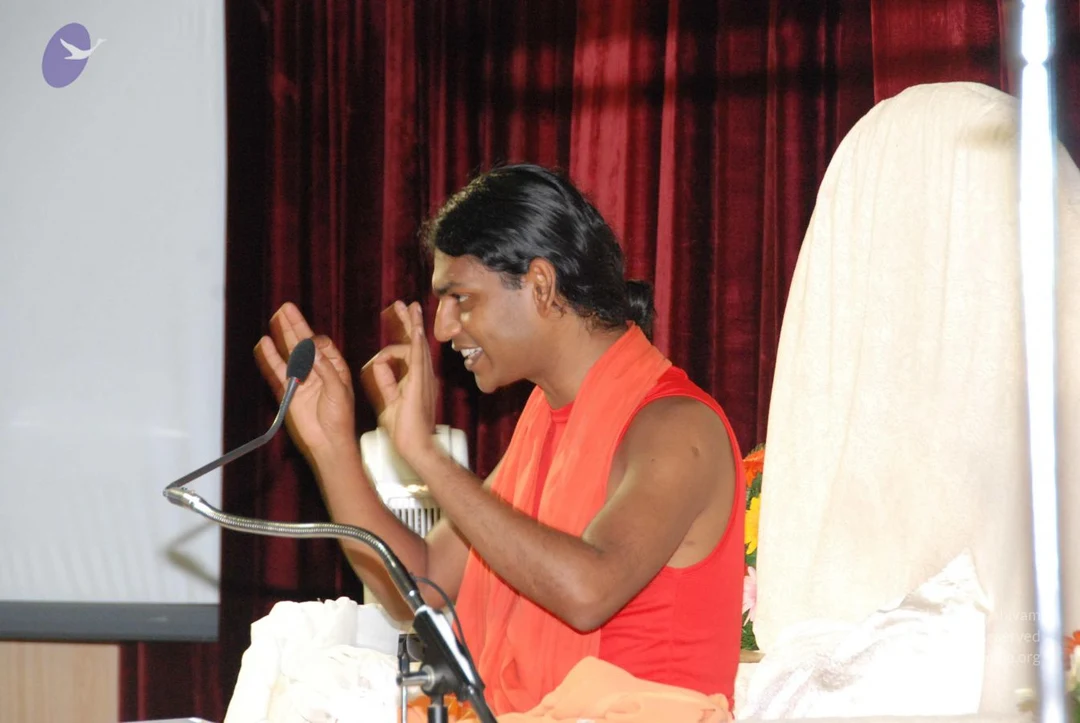
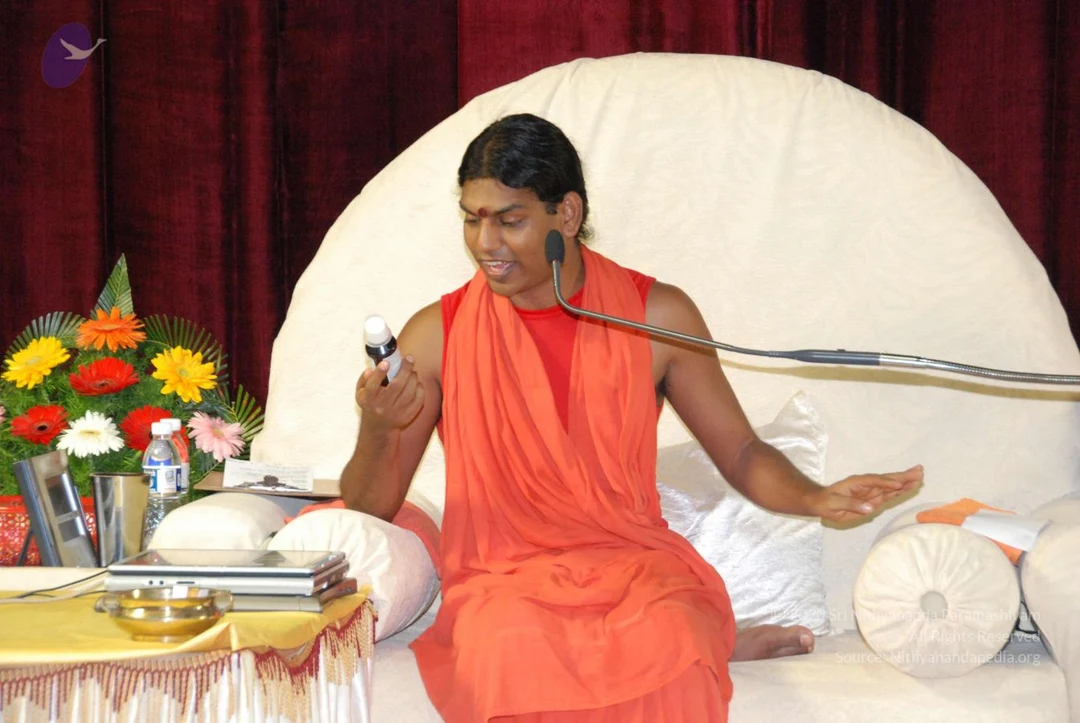
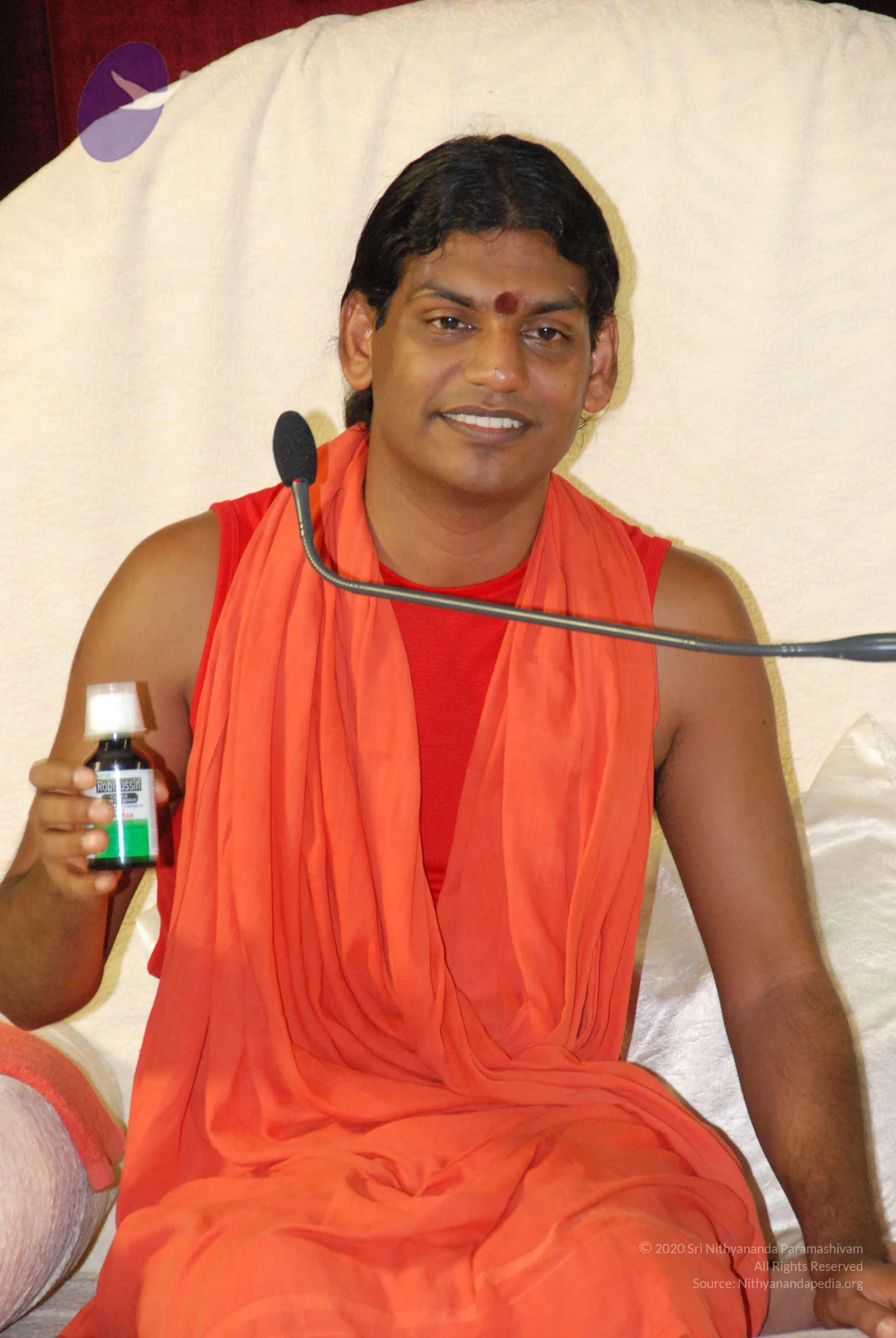
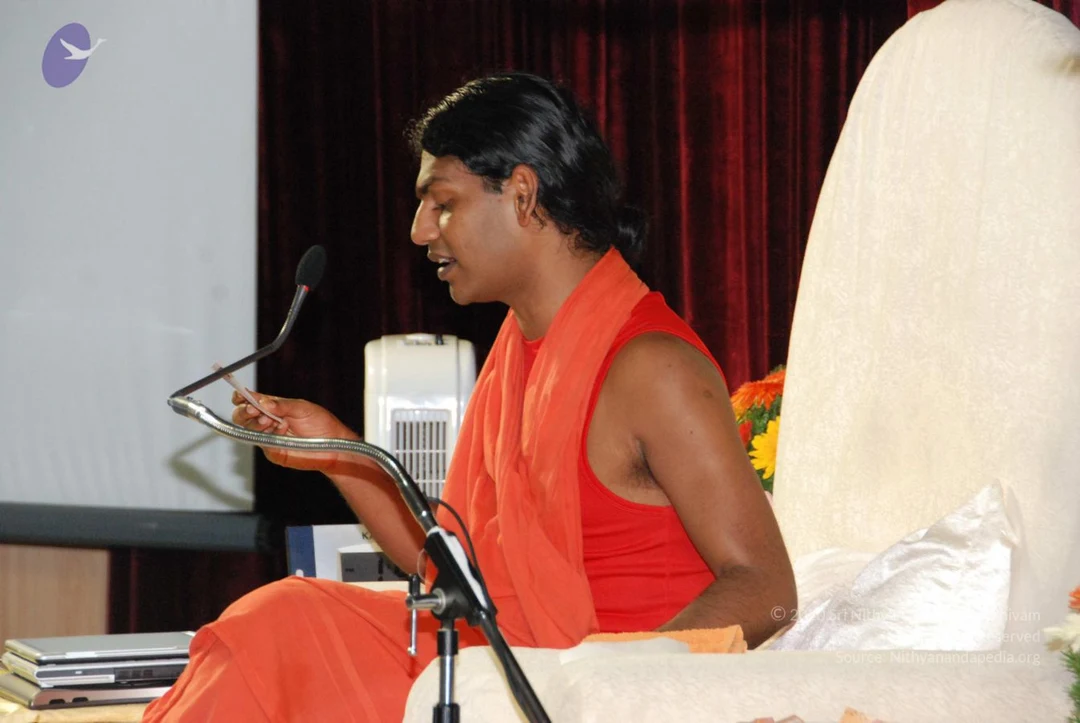
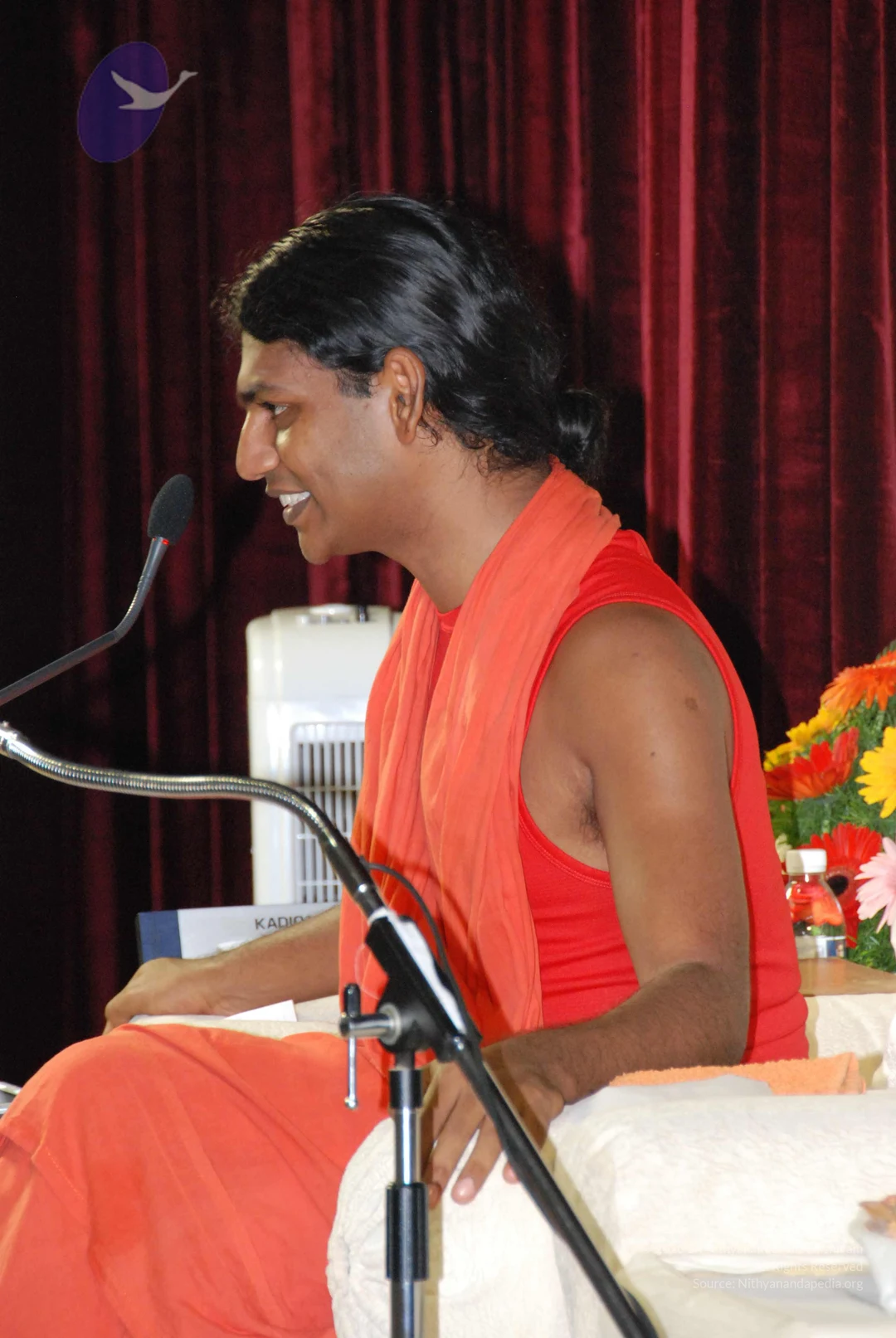
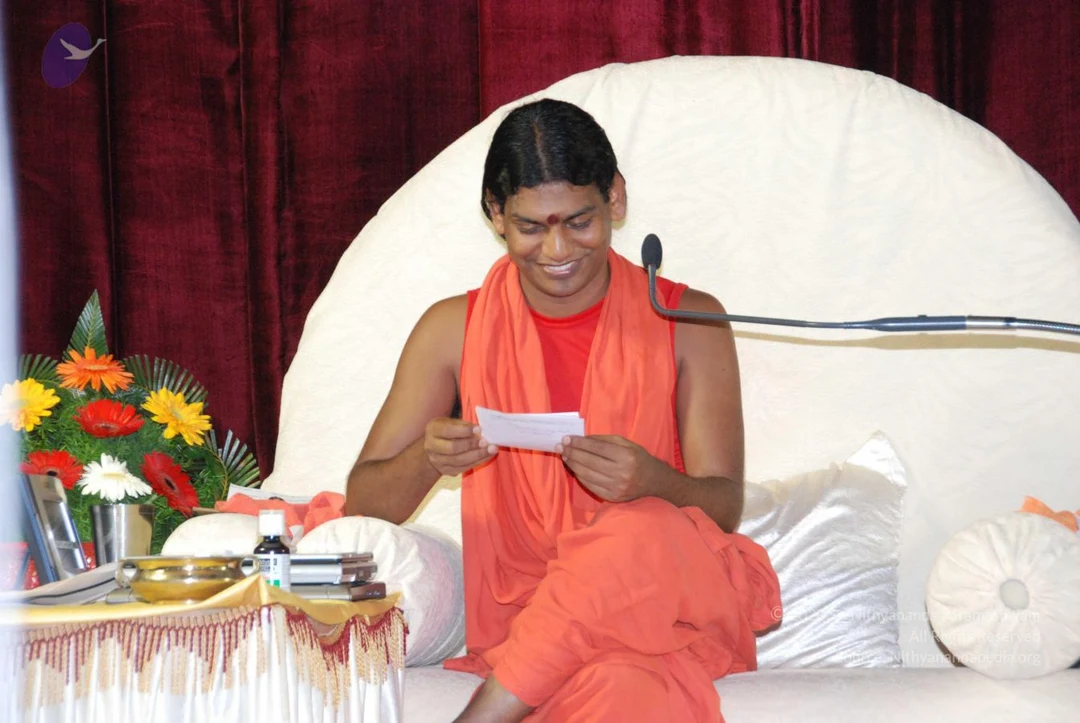
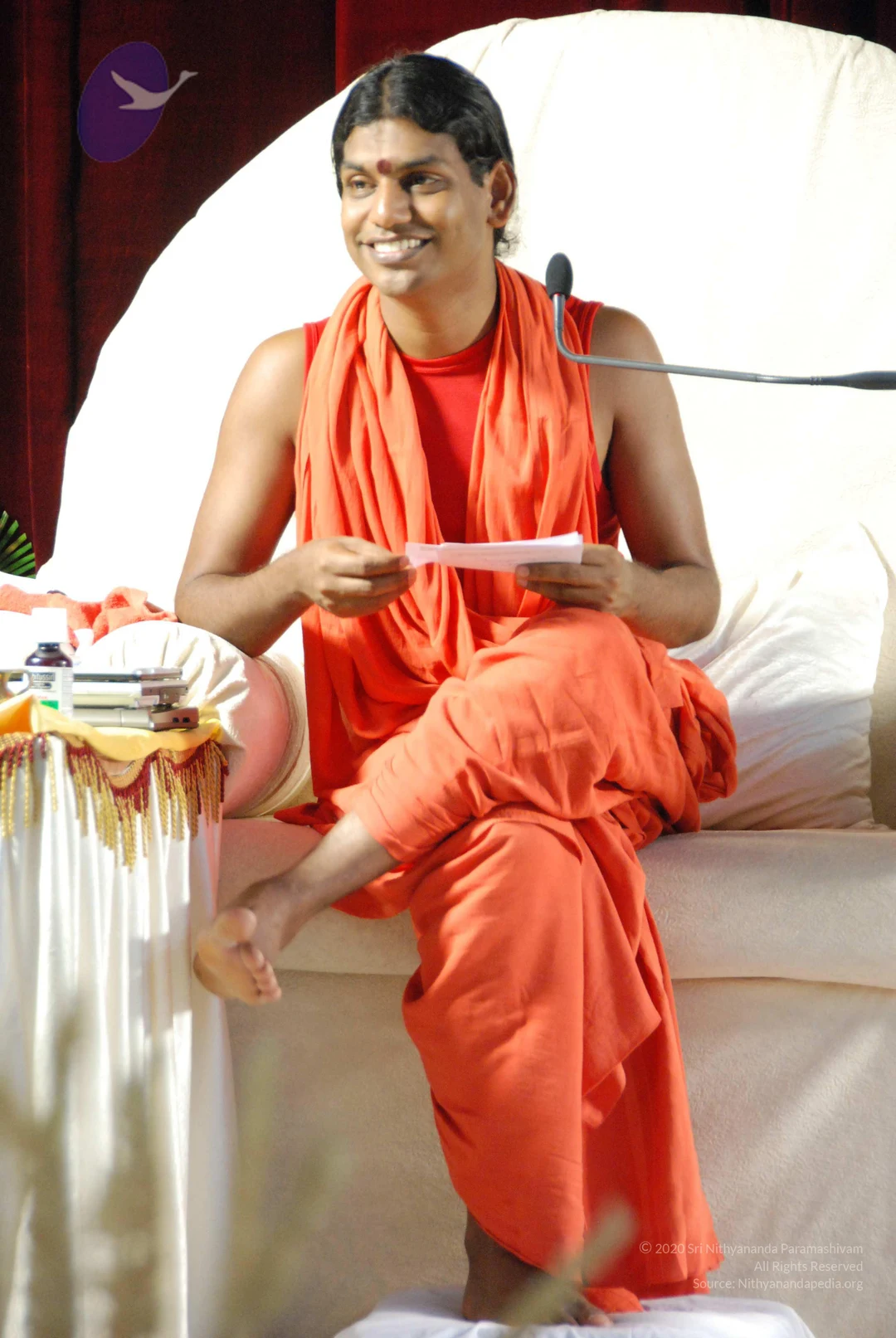
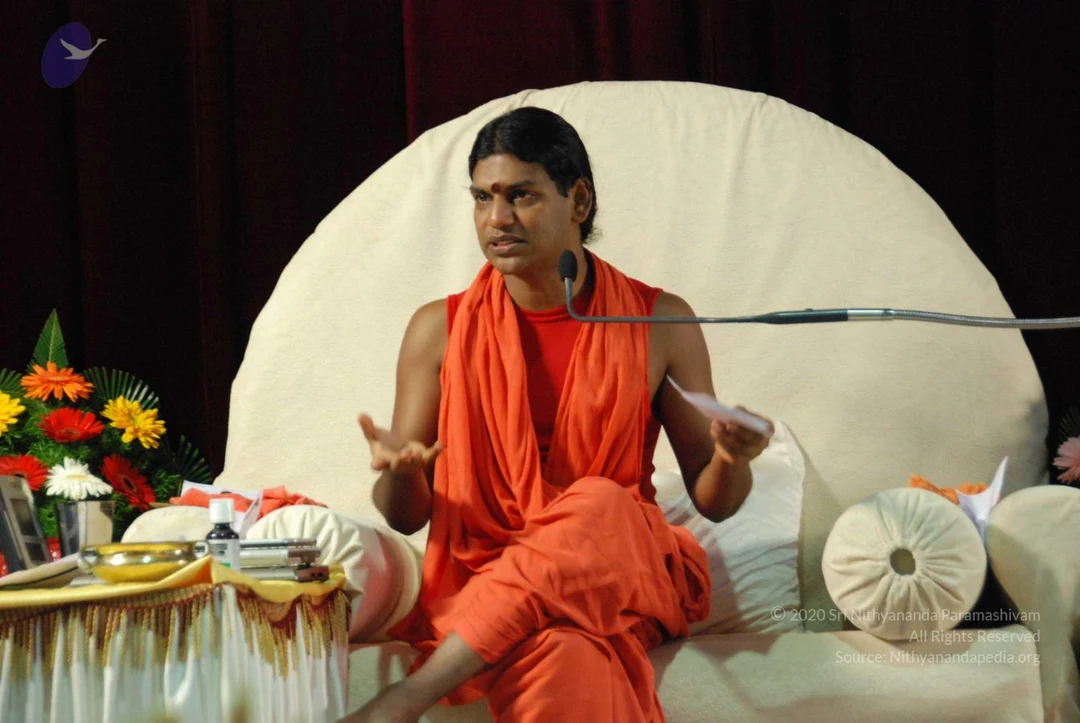
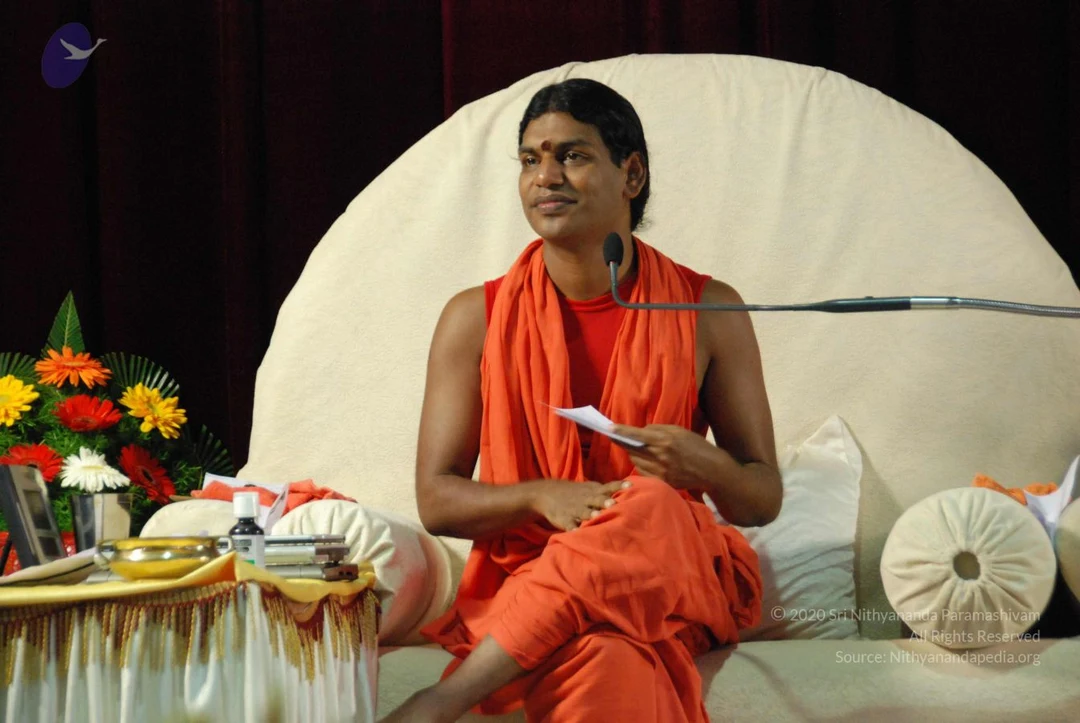
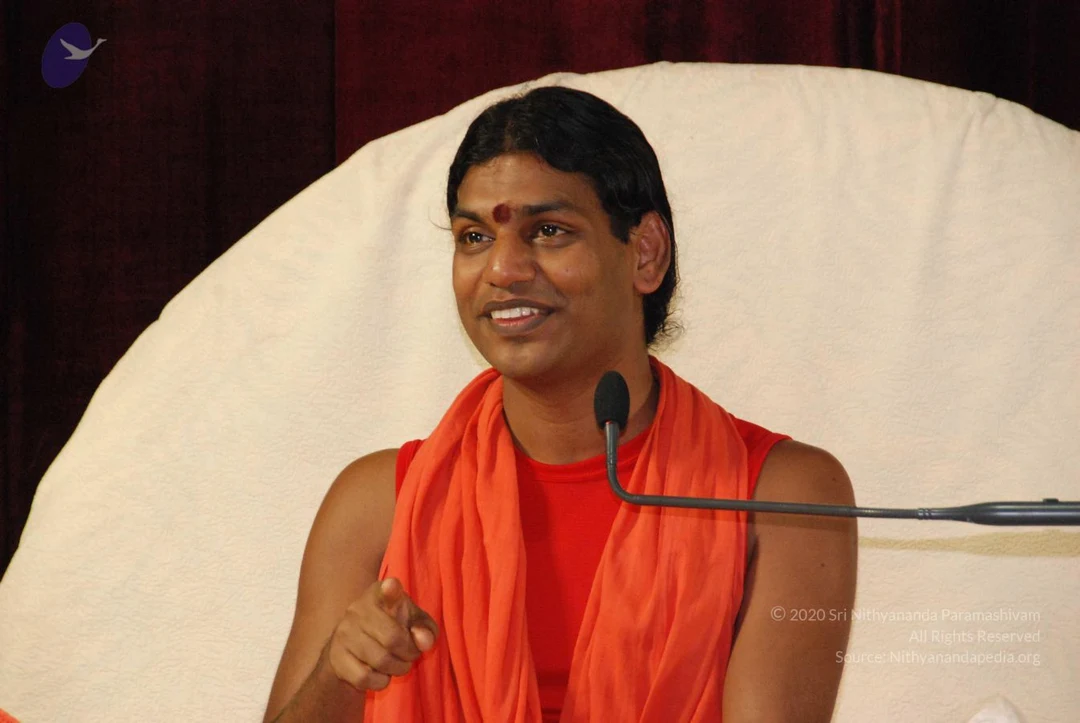
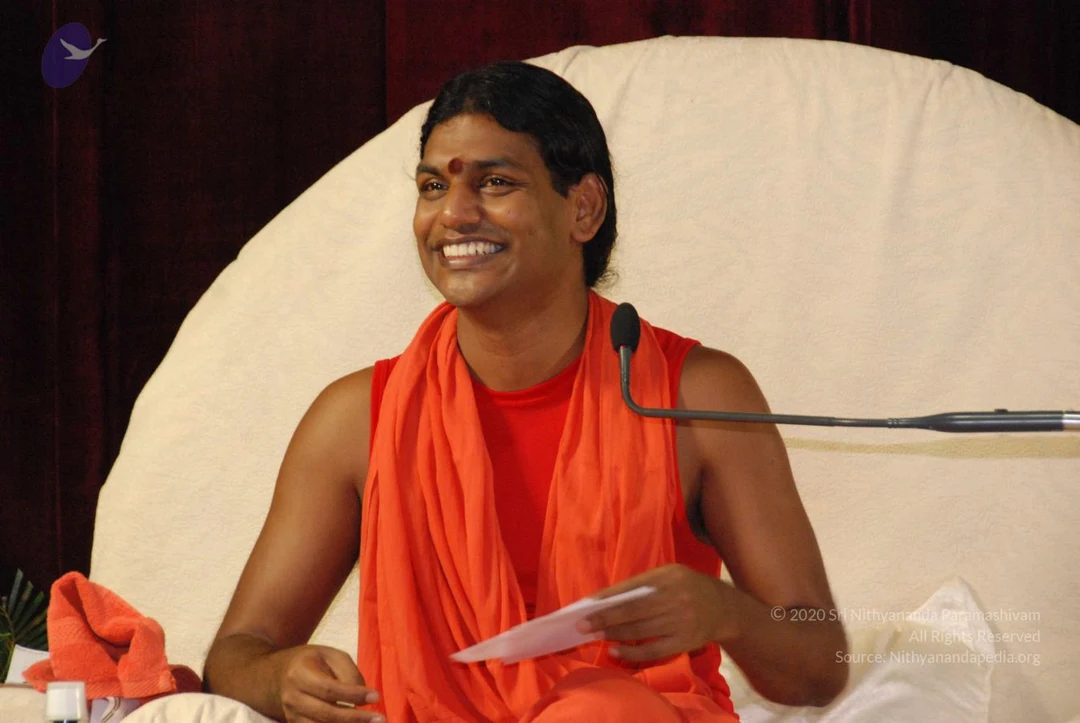
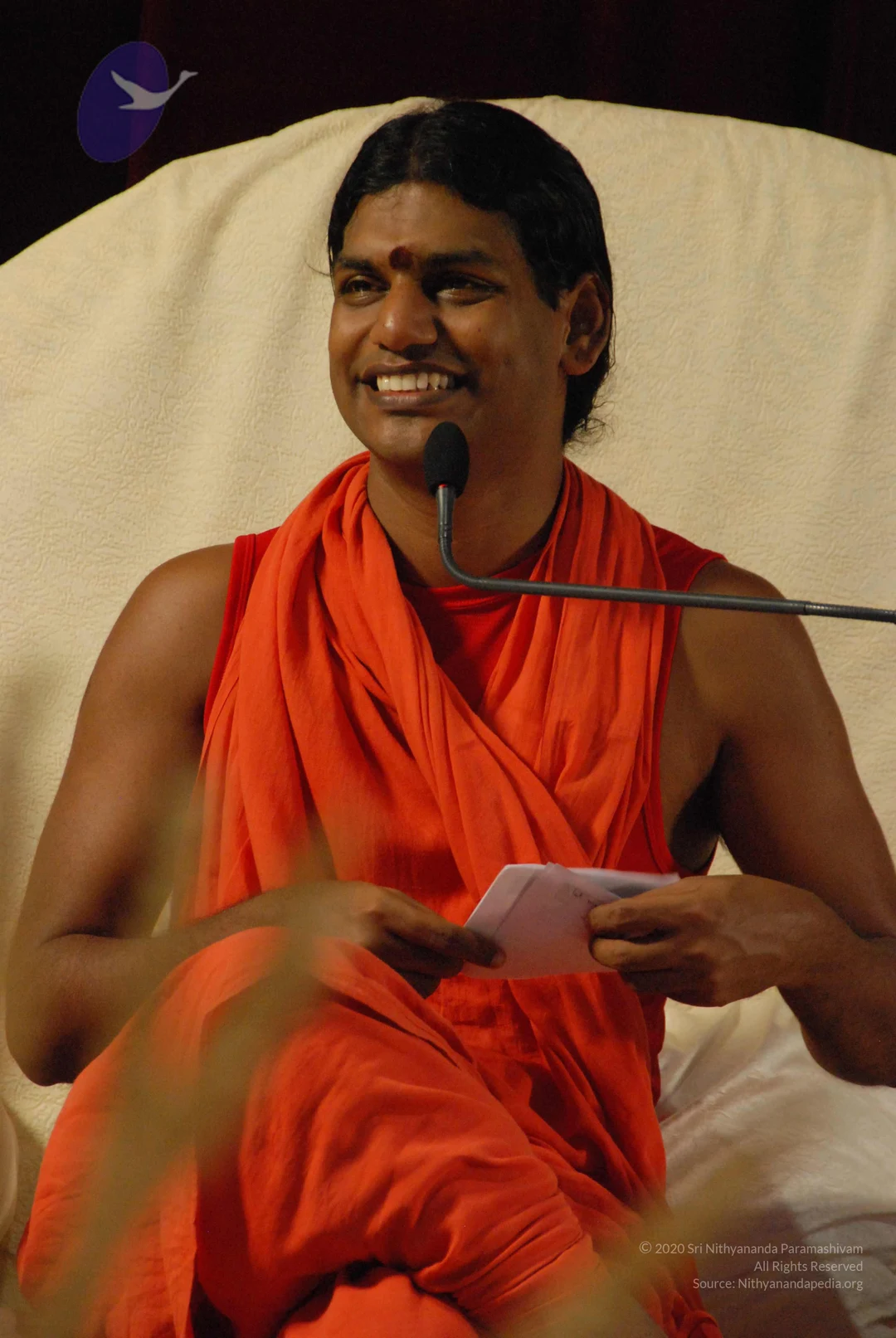
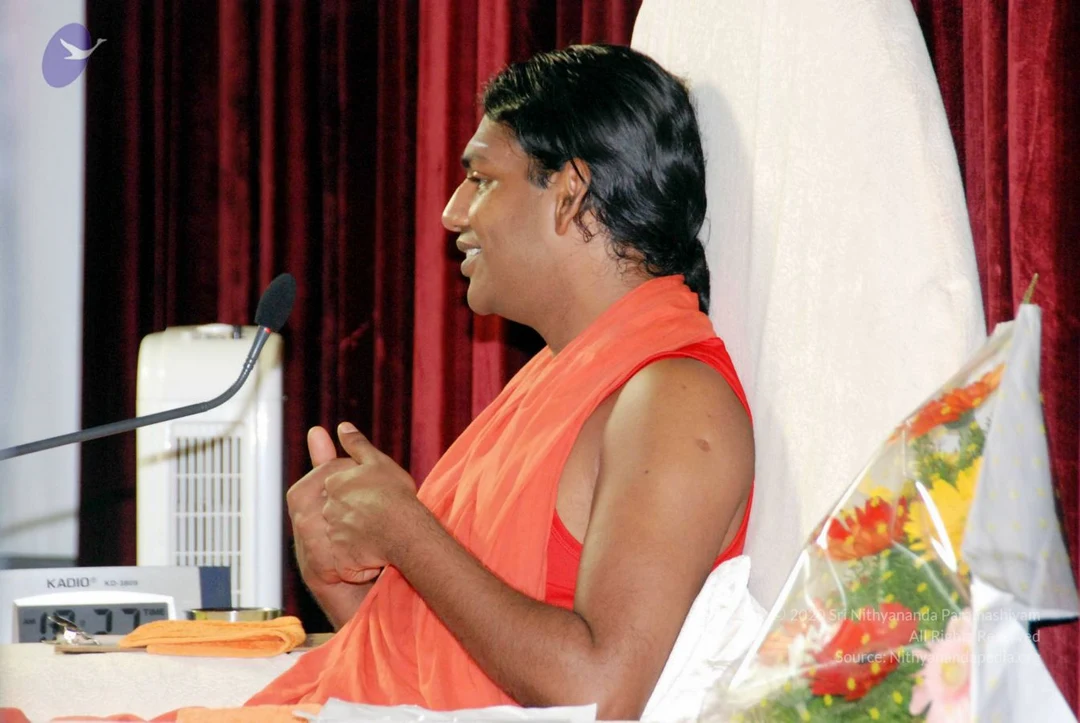
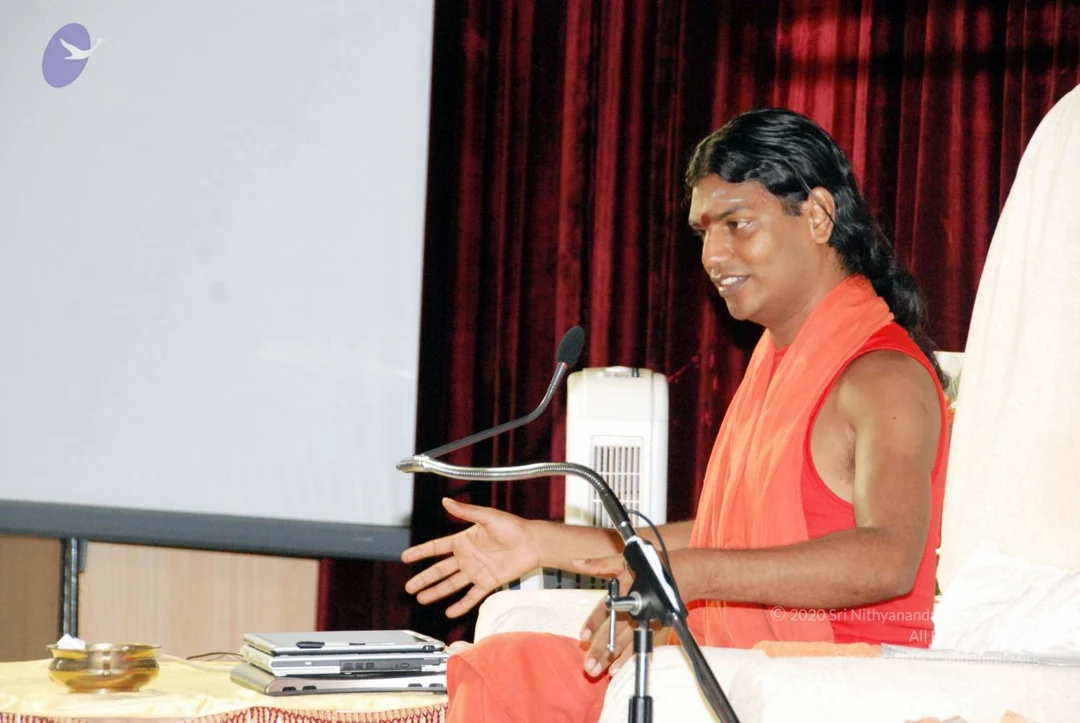
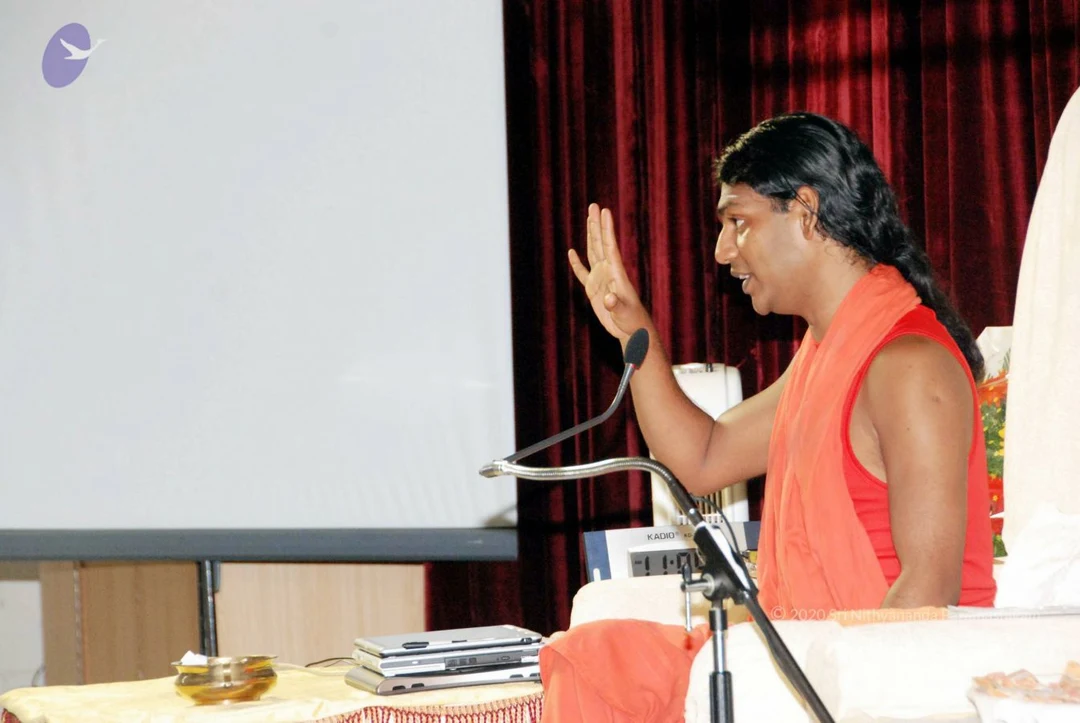
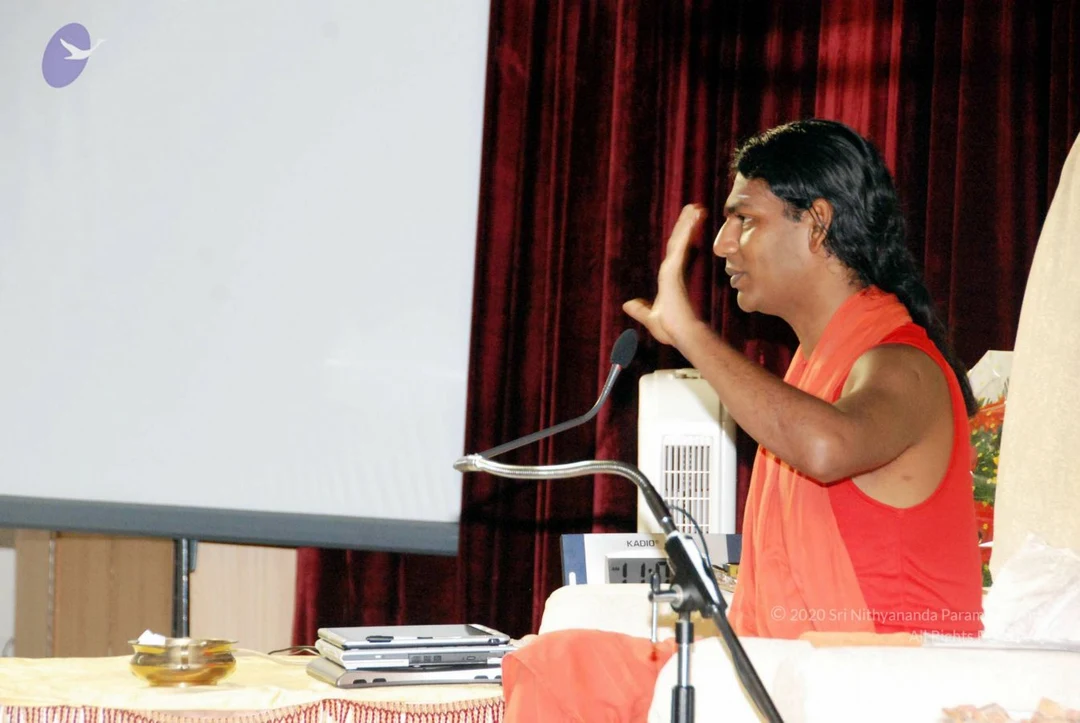
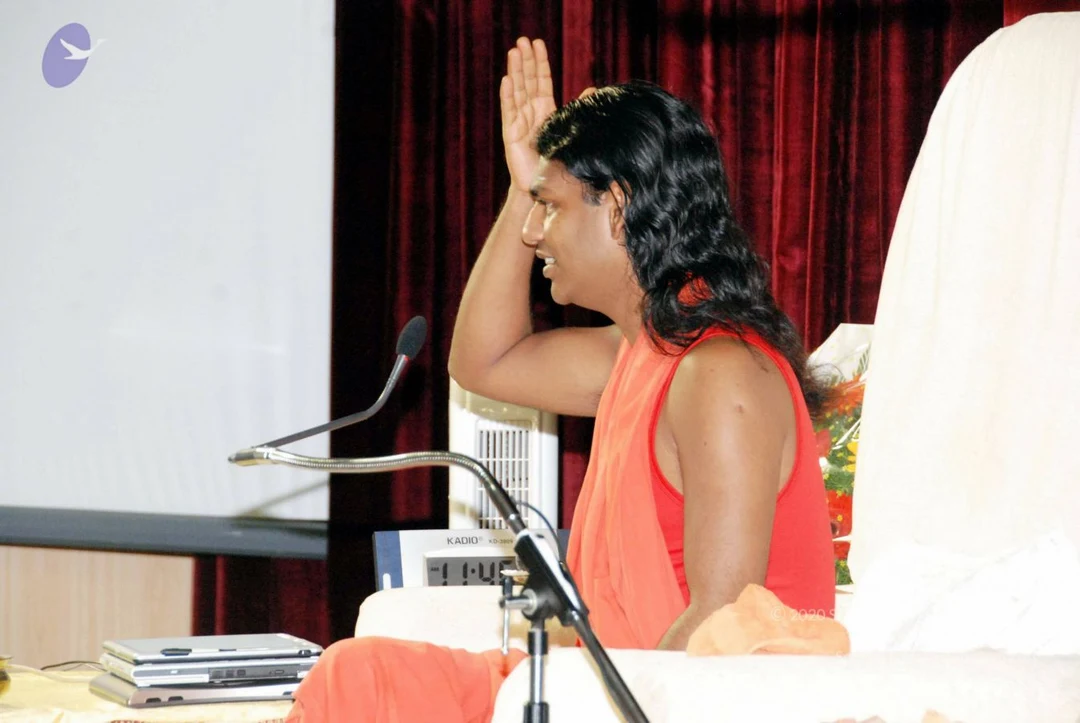
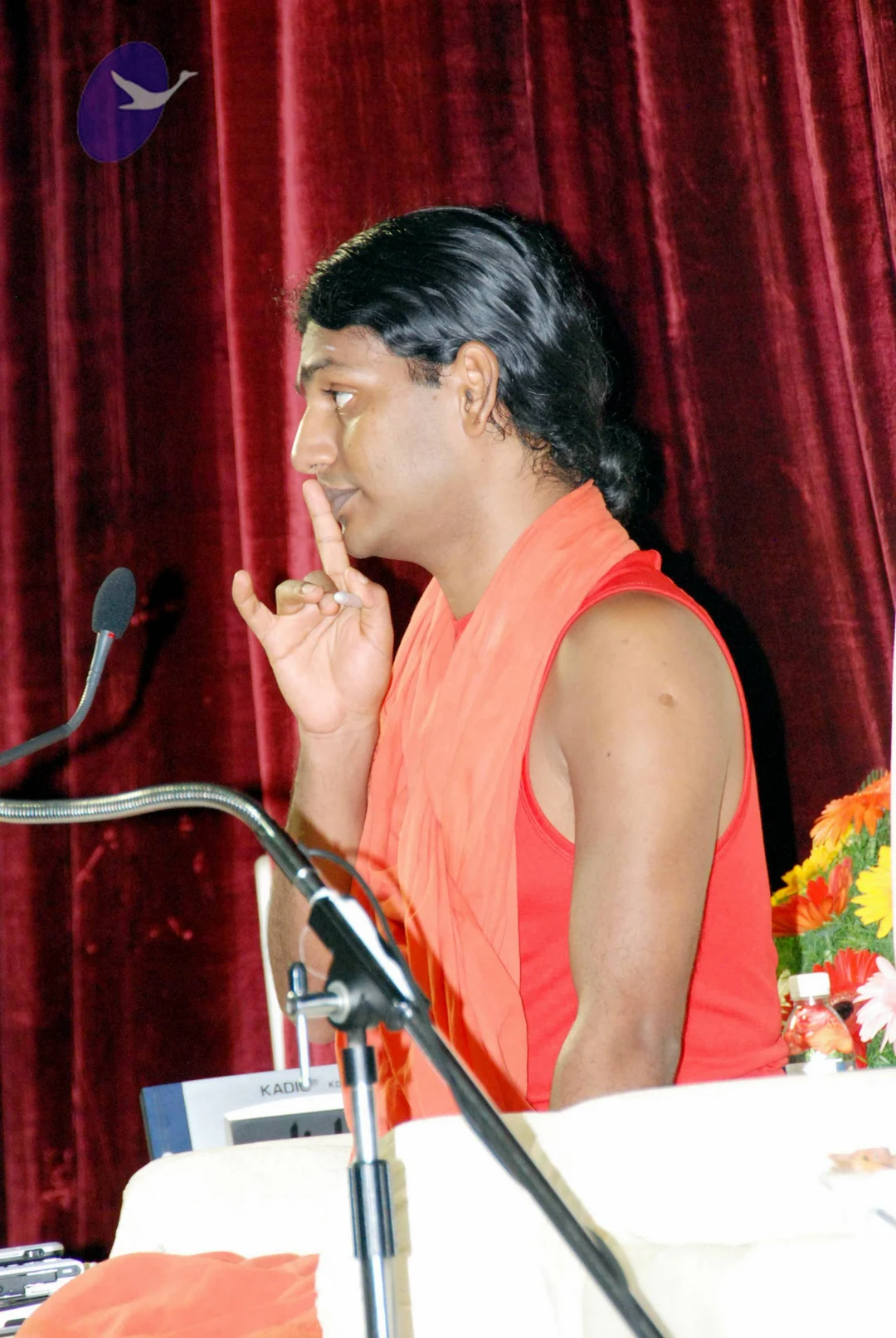
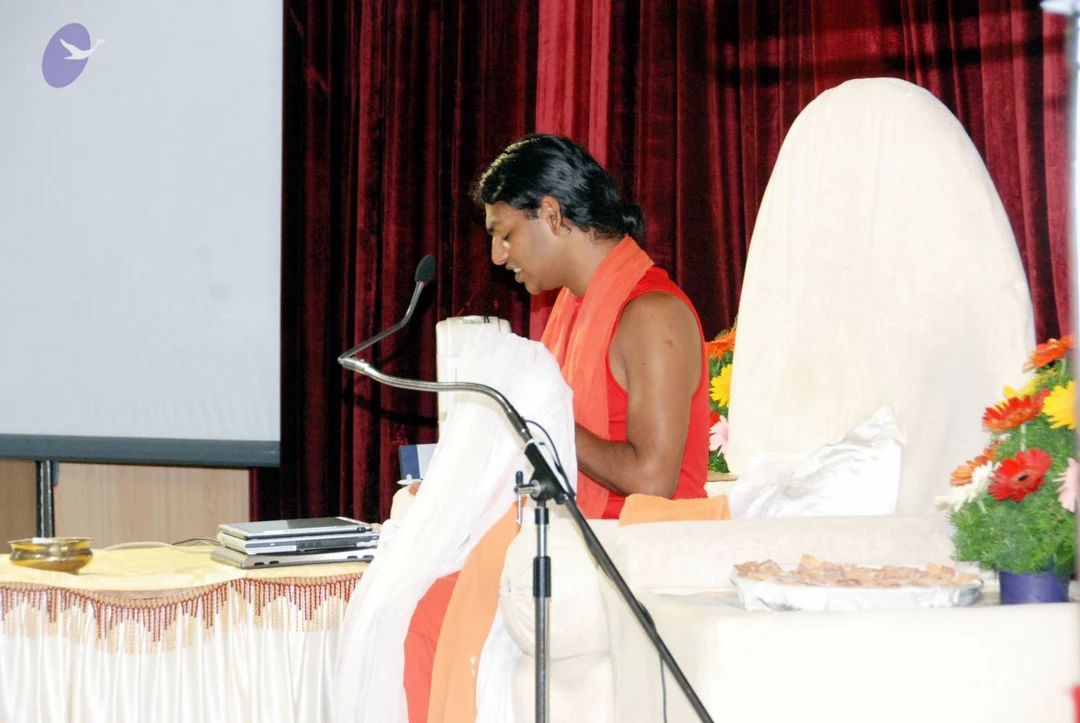
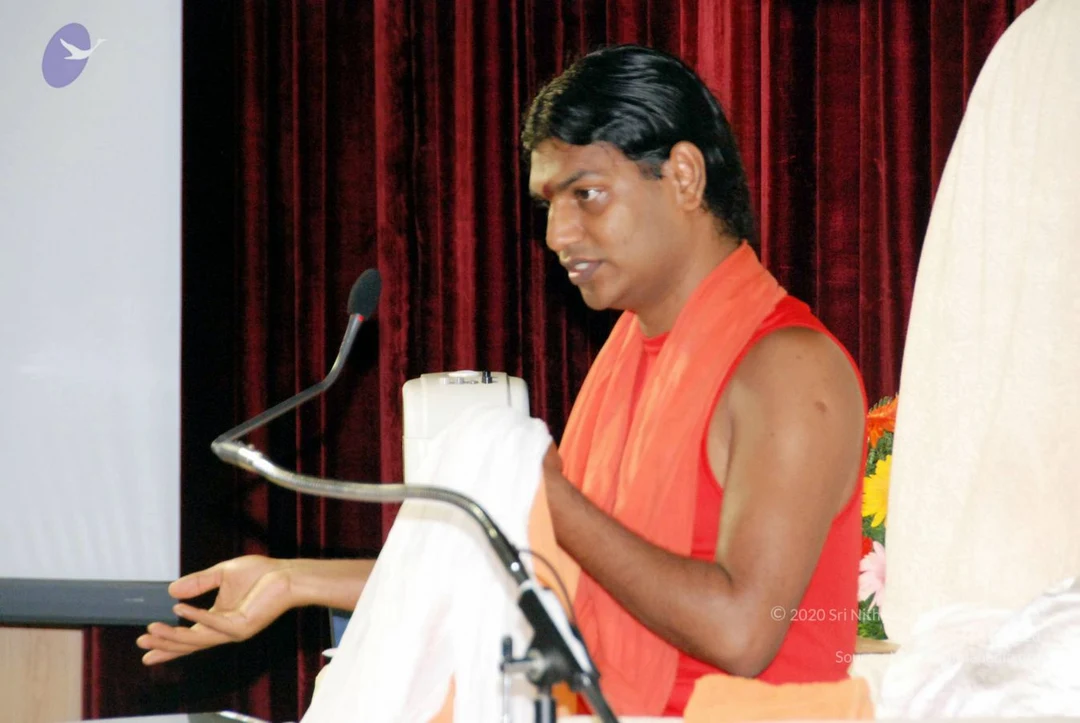
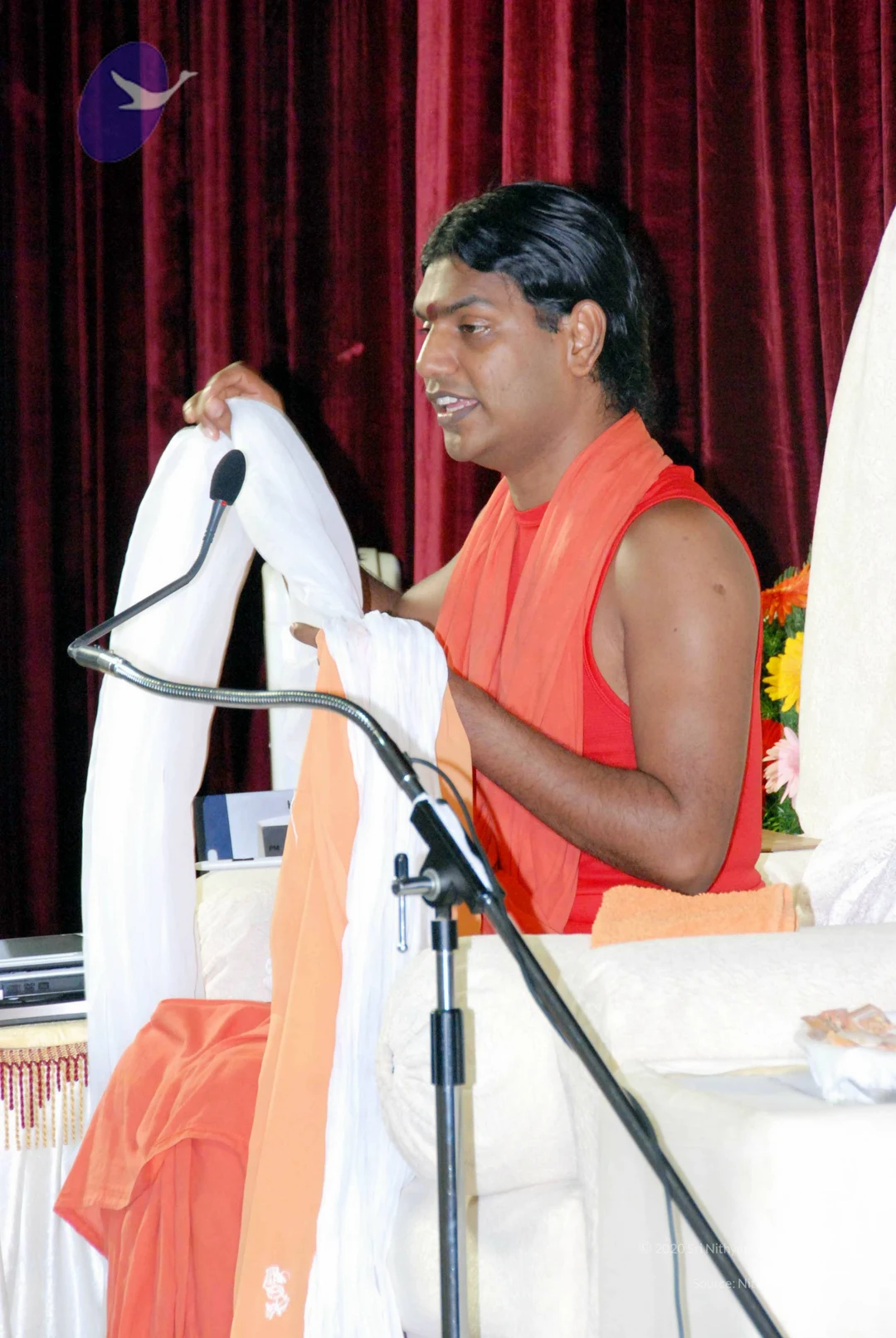
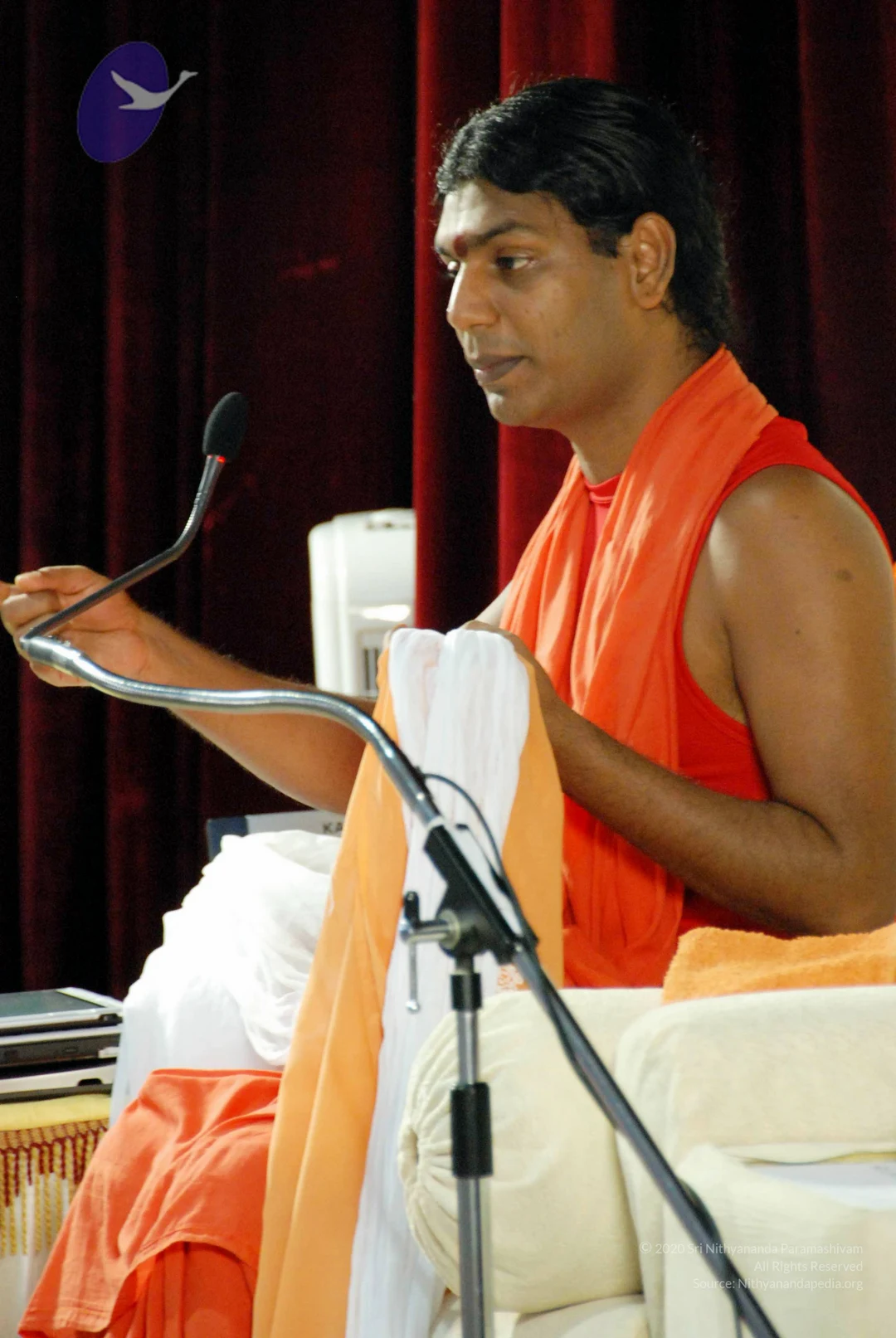
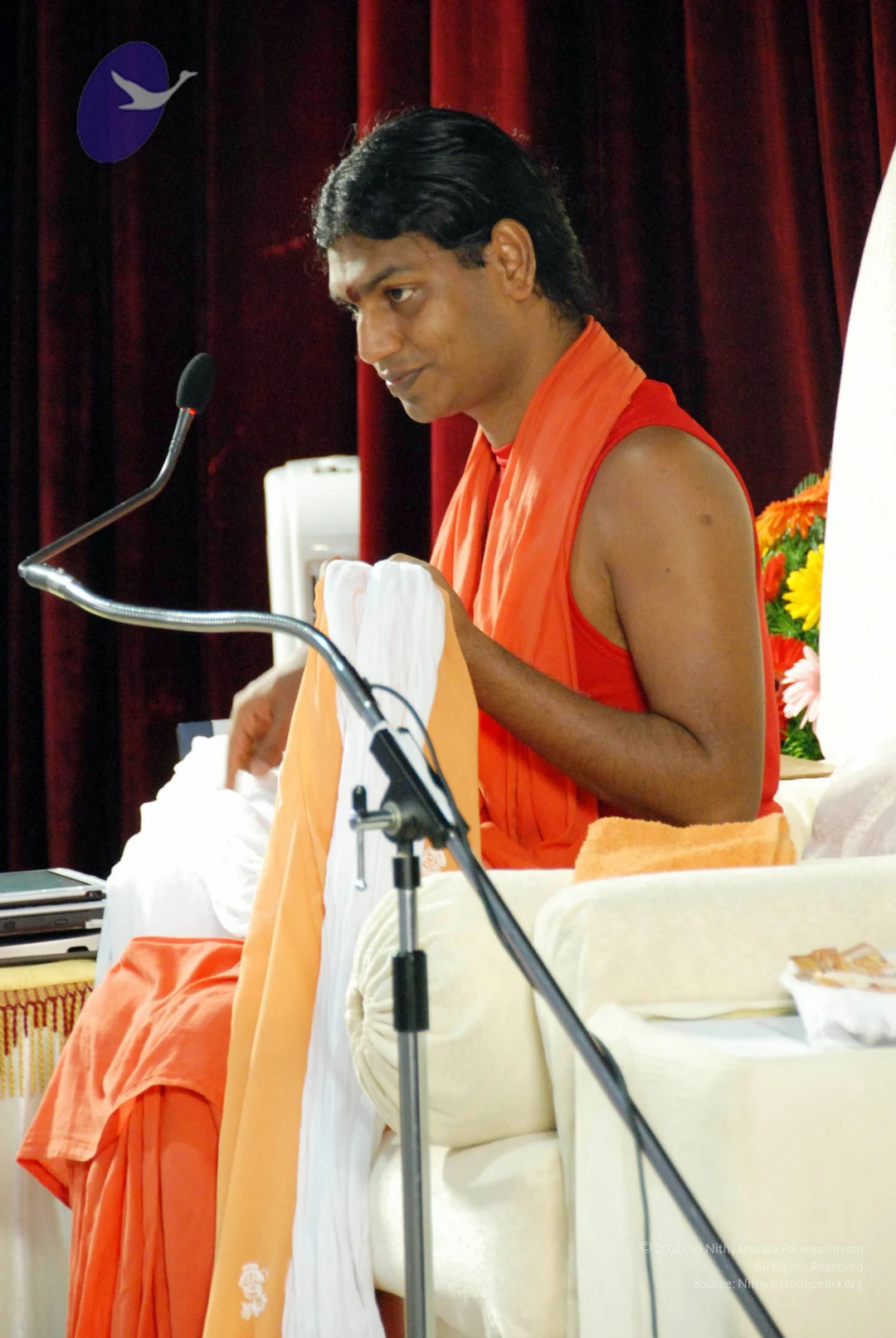
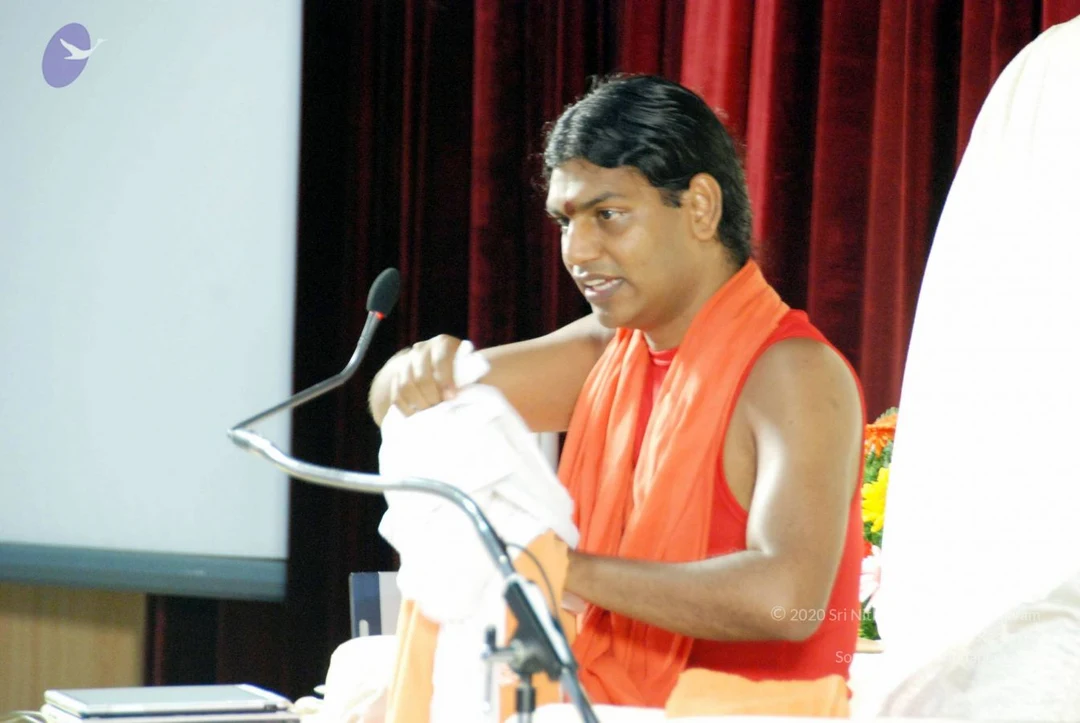
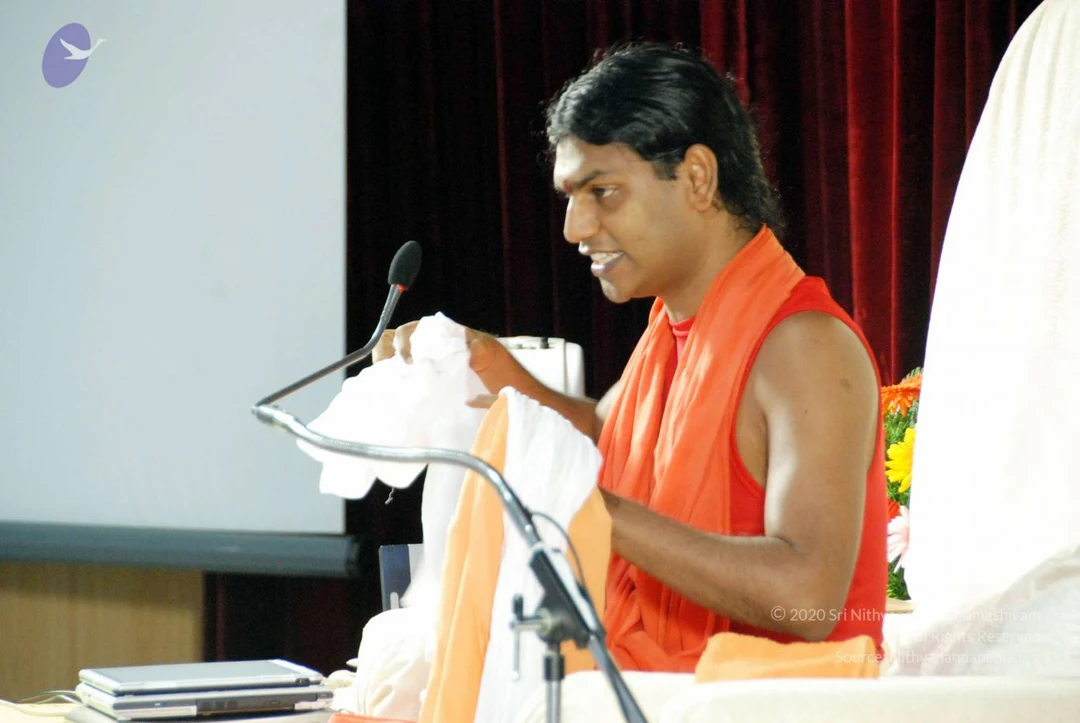
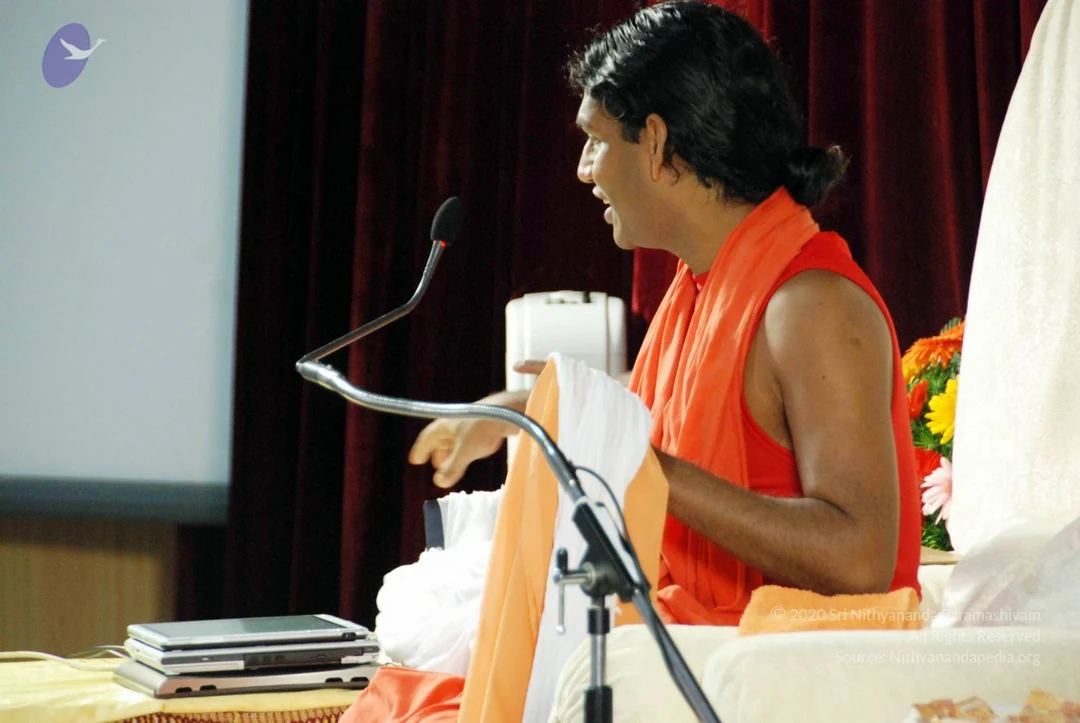
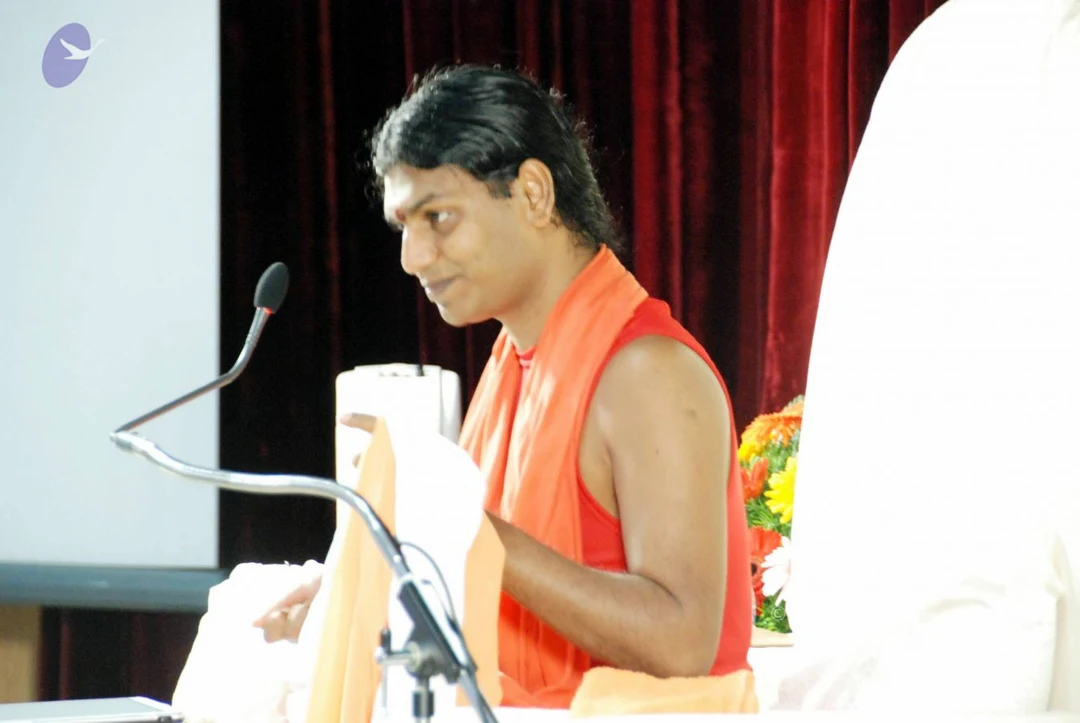
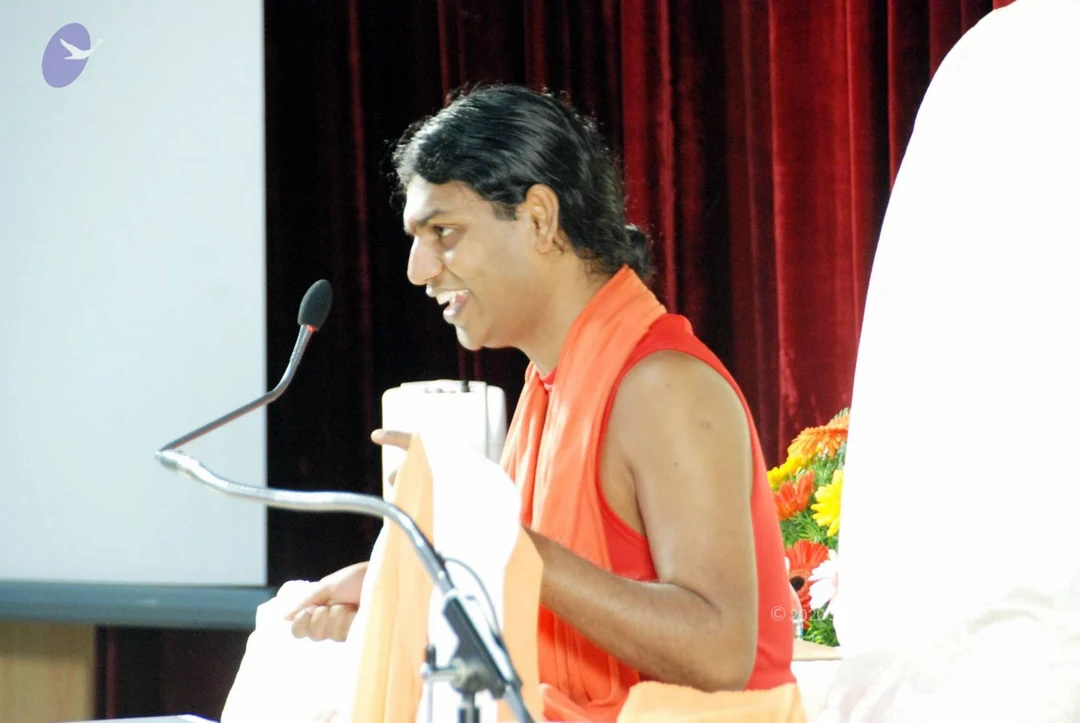
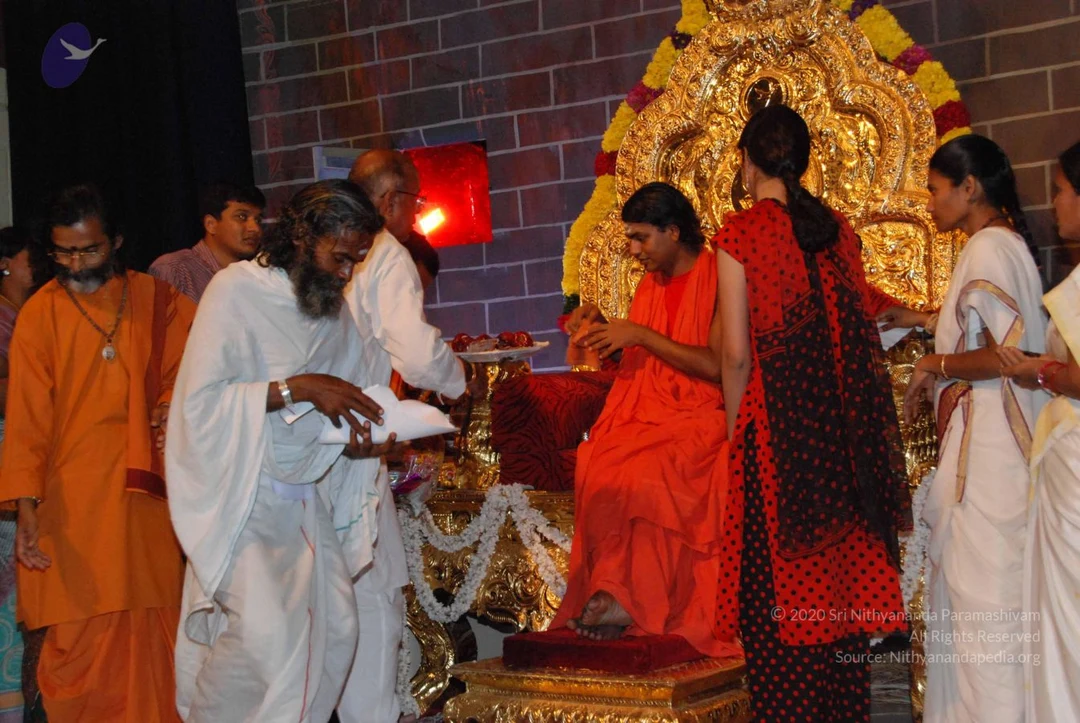
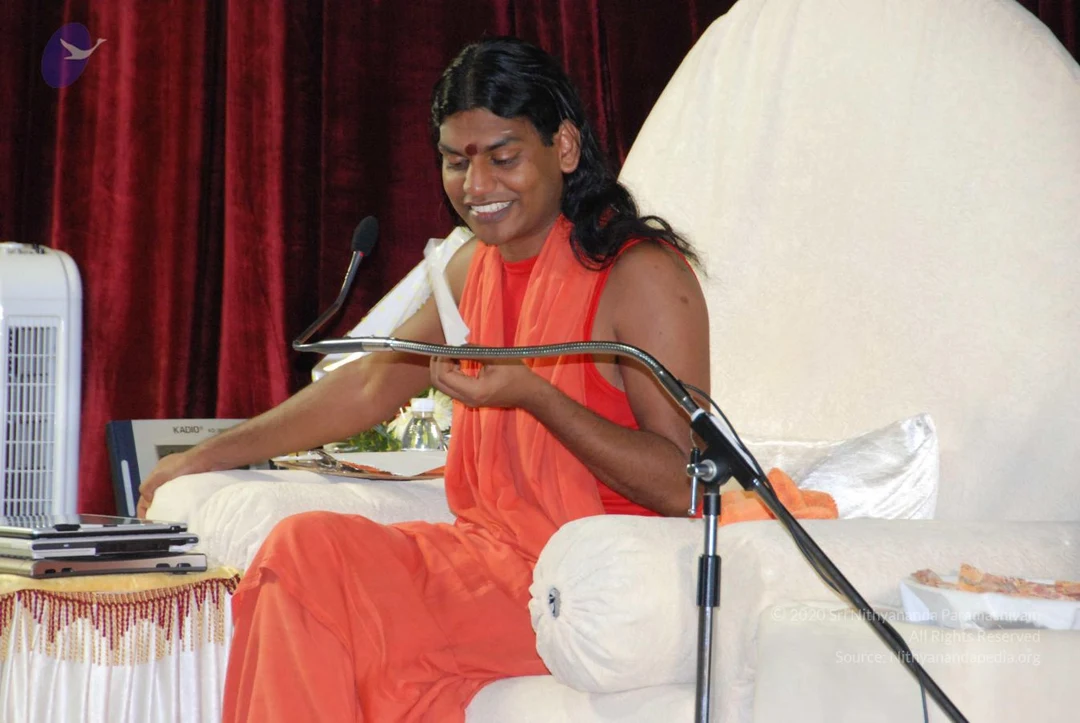
A photograph of a seated man in a sleeveless saffron-orange robe over a red top, with a red tilak on his forehead and dark swept-back hair, smiling as an older man in a white checked short-sleeved shirt bows forward and presses his palms together while placing his hand on the seated man's head. Behind them a large ornate gold panel with a carved deity relief and red cushioned seating fills the background, and yellow flower garlands hang at the top.A man with long swept-back dark hair and a vertical tilak on his forehead sits in profile at a discourse, smiling broadly. He wears a sleeveless orange-red garment and holds a floral garland of orange and yellow flowers. A microphone on a flexible stand stands in front of him, with a red velvet curtain and a white cushion behind. A digital clock display and a white cooling unit are visible at left. Swamiji (probable) is identified by long swept-back hair and an orange garment with a garland, seated as the speaker.

July 19 2009

Original wiki page
Contents

Title:

Avataar (A Discourse delivered at Inner Awakening & LBE)

Description:

From the works of Living Enlightened Master Paramahamsa Nithyananda. In this discourse delivered during the recently concluded Inner Awakening Program for Enlightenment, Swamiji tells us that all of us are Avataars. When we created this body we pick up prarabhda from sanjitha. From which body we pick up prarabdha decides whether we play the role of bound soul or that of an Avataar. If you are not conscious you will not have a choice to pick up the prarabdha. When you pick up the best samskaras from all your past births you are an avataar purush.

Link to Video-Audio:

VideoAudio

Photos Of The Day:

Kalpataru
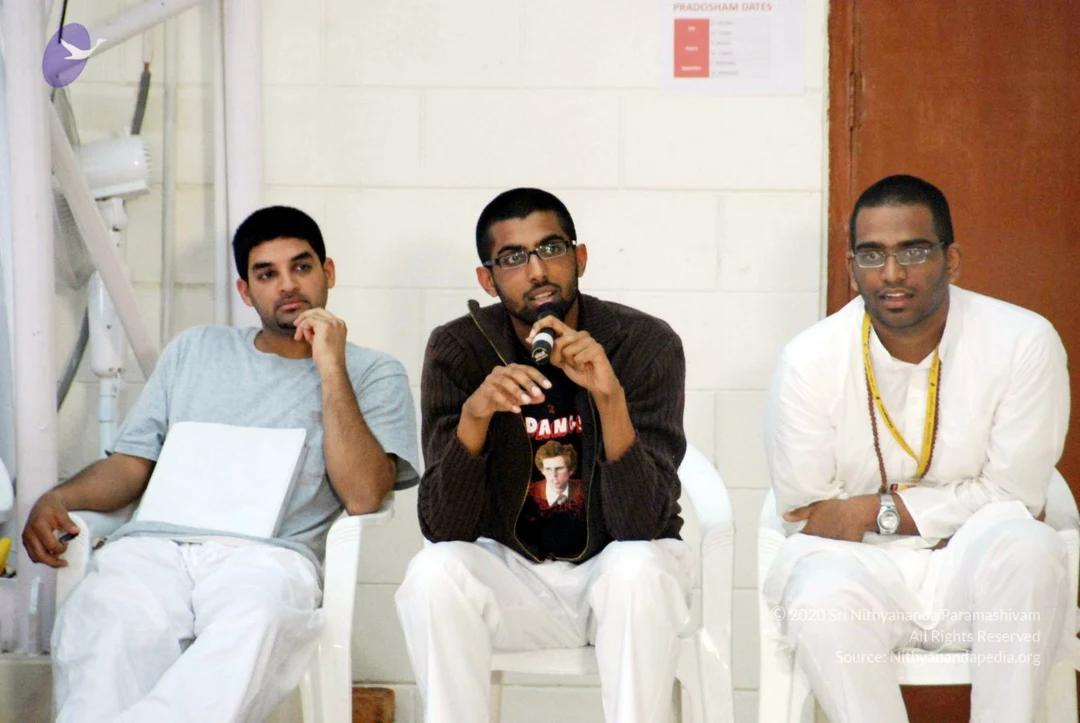
Ashramite-Meeting

Inner-Awakening-Sacred-Arts-Tour

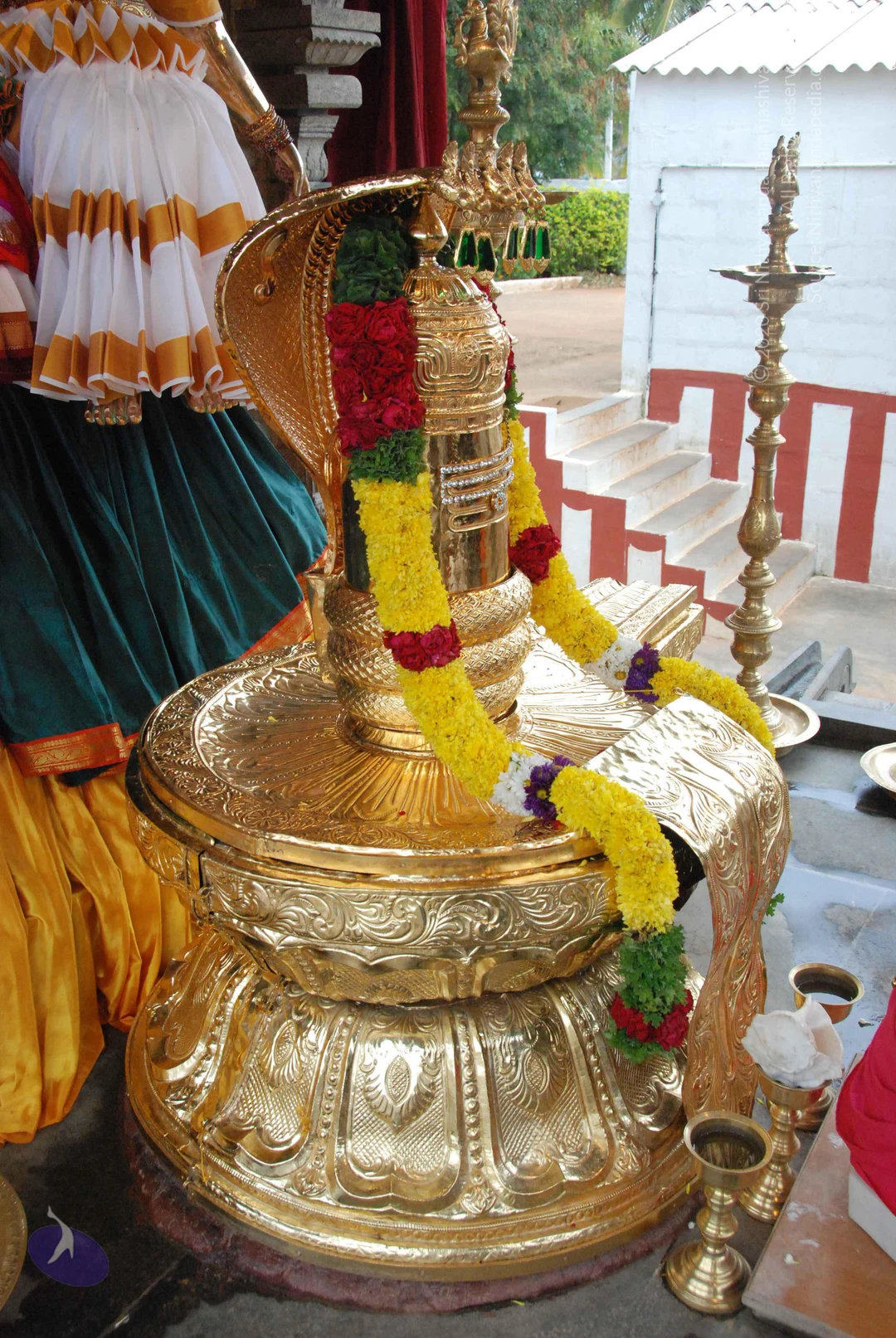
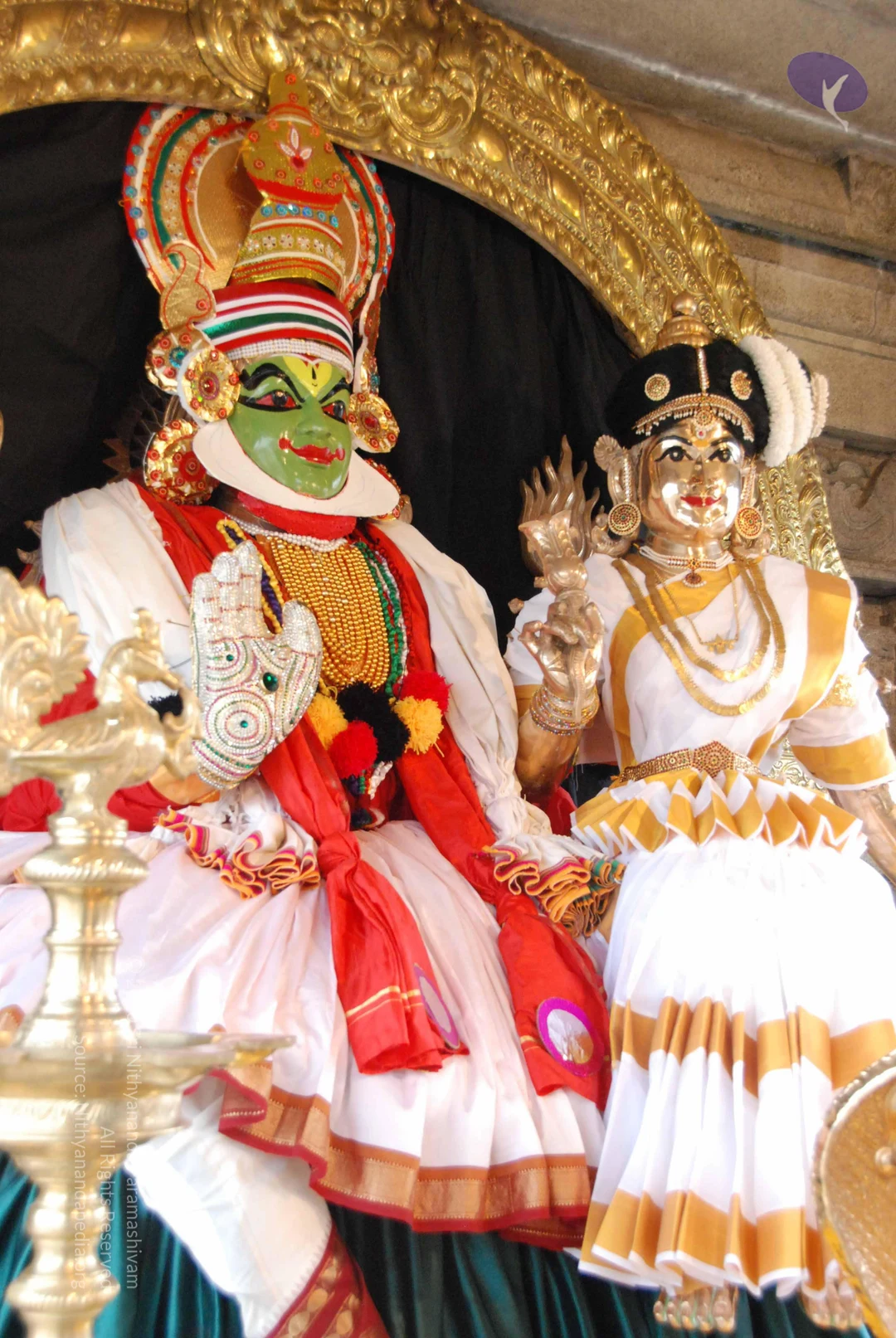
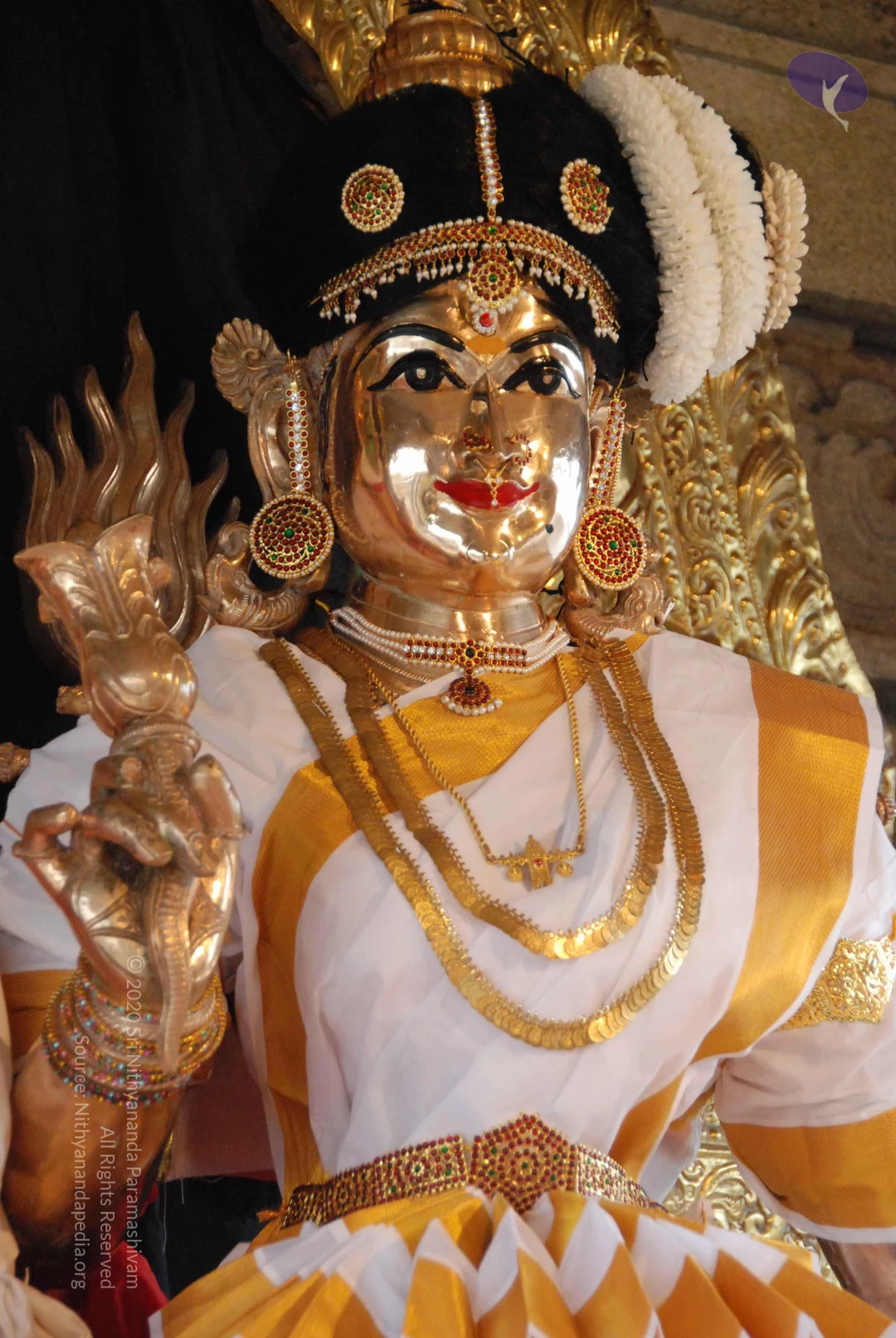
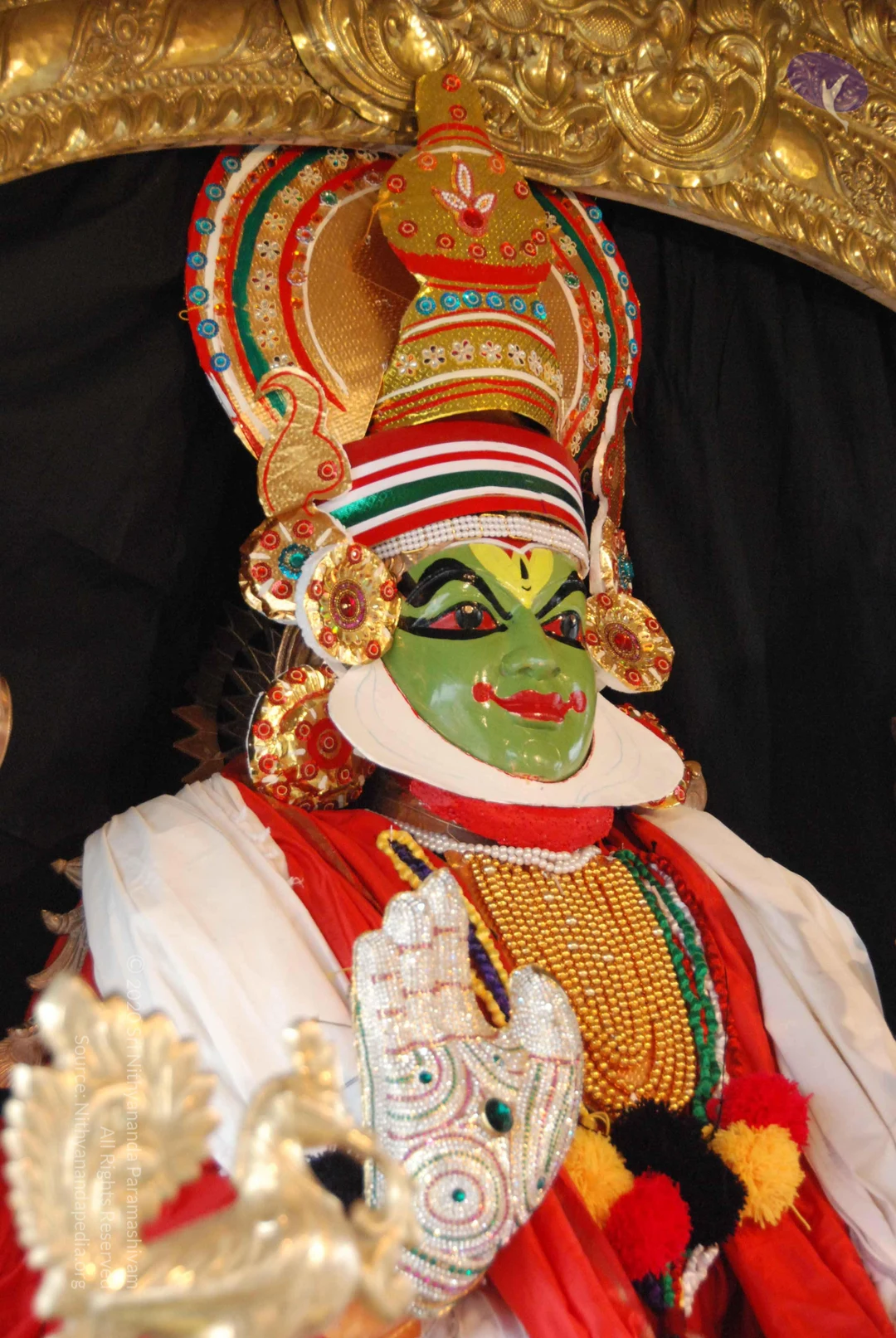
Nithyanandeshwara-Nithyanandeshwari-Kerala-Alangkar

Dakshinamurti-Under-Banyan-Tree

Inner-Awakening-Acharya-Session

HDH-Morning-Session

Adi-Kailaasa

Inner-Awakening-Kerala-Day

HDH-Night-Session

Photos from this day

View all 334 photos

Kalpataru
88 photosSource gallery
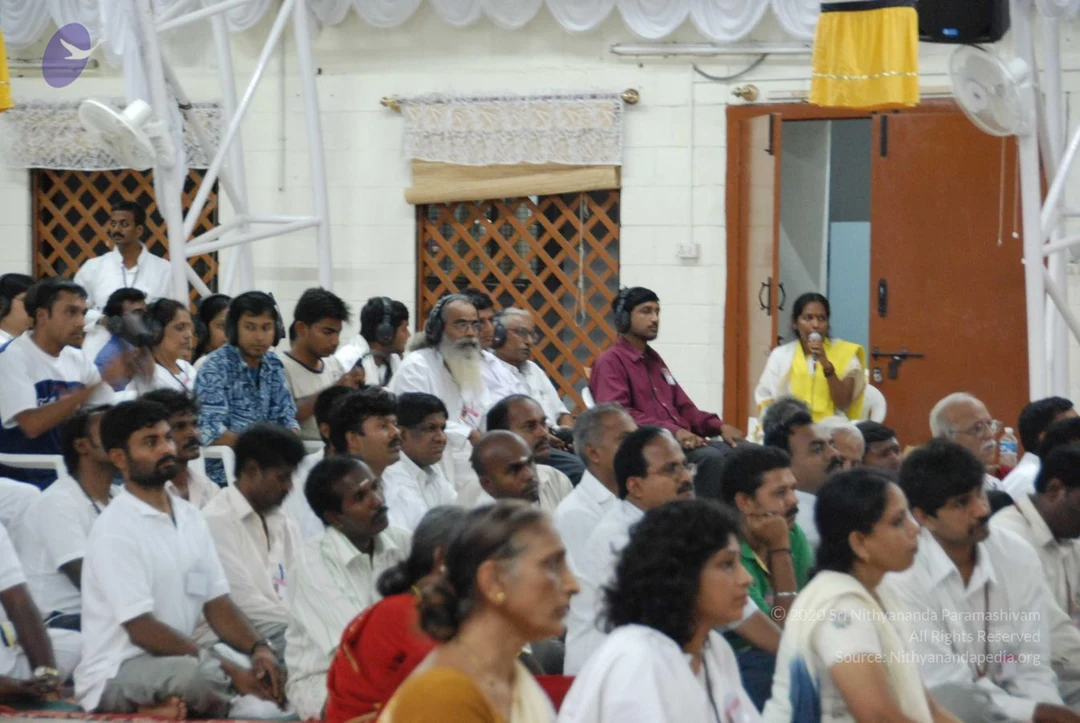
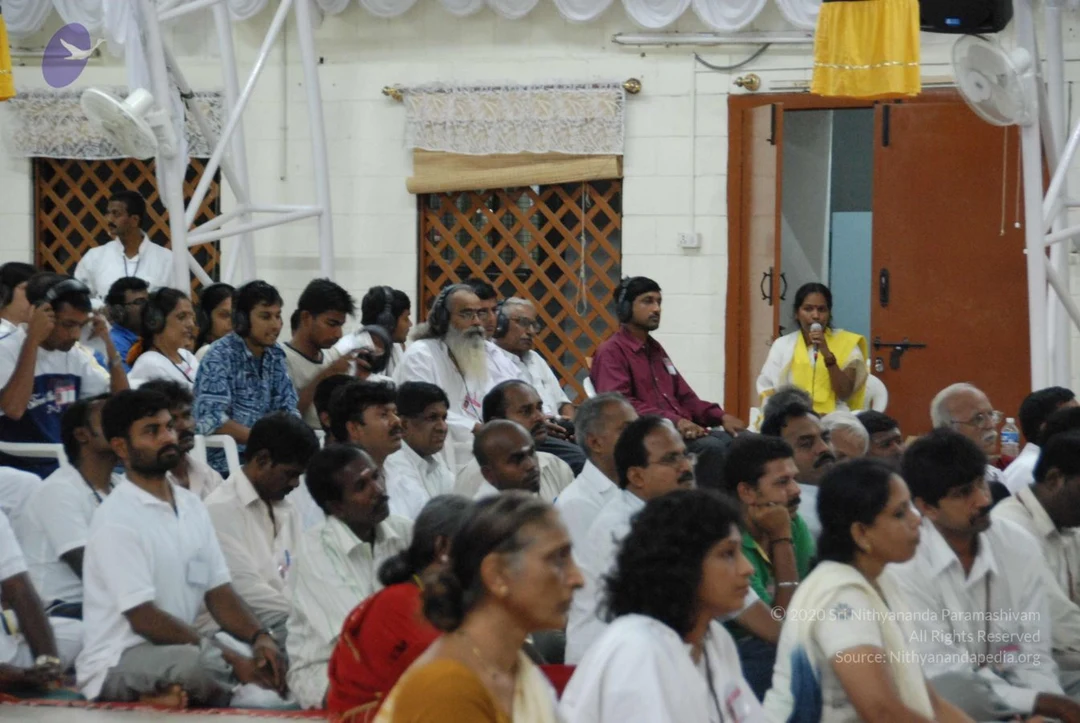
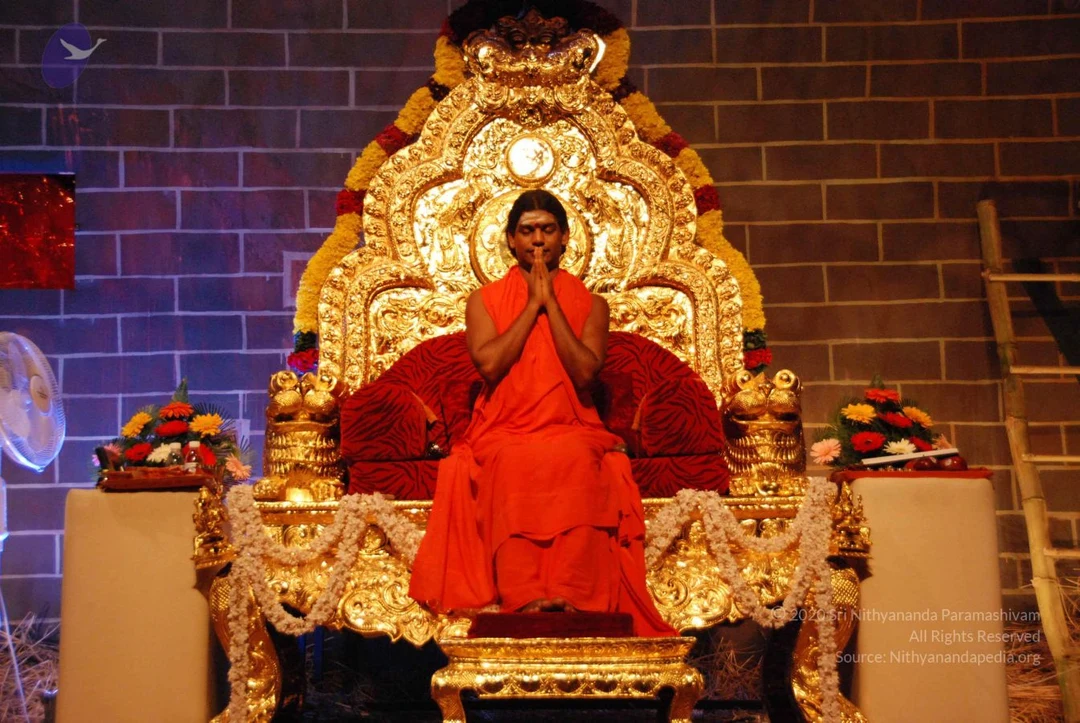
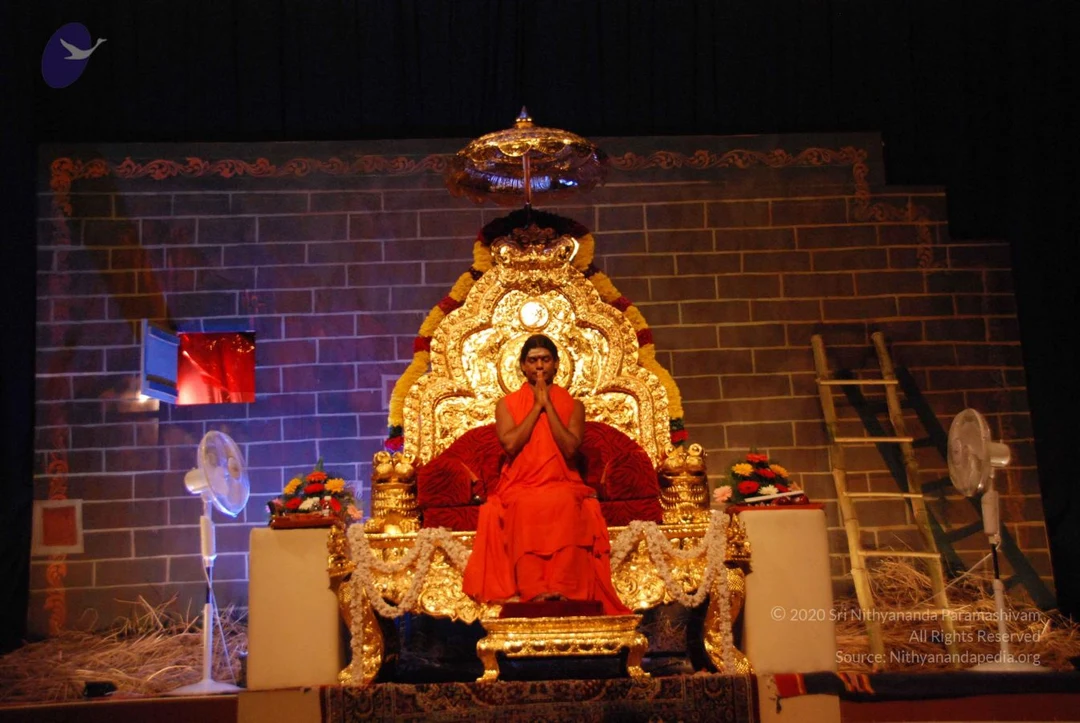
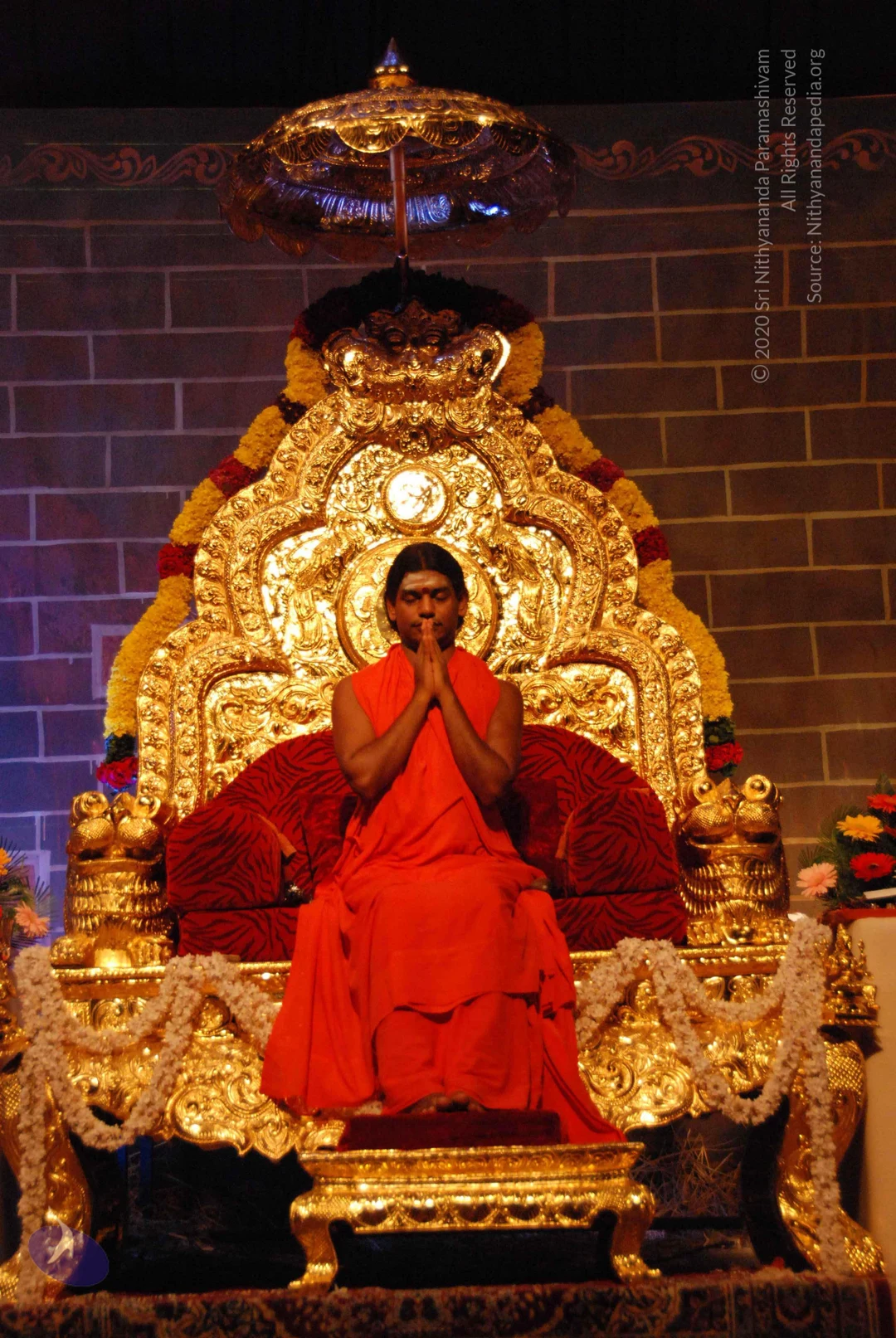
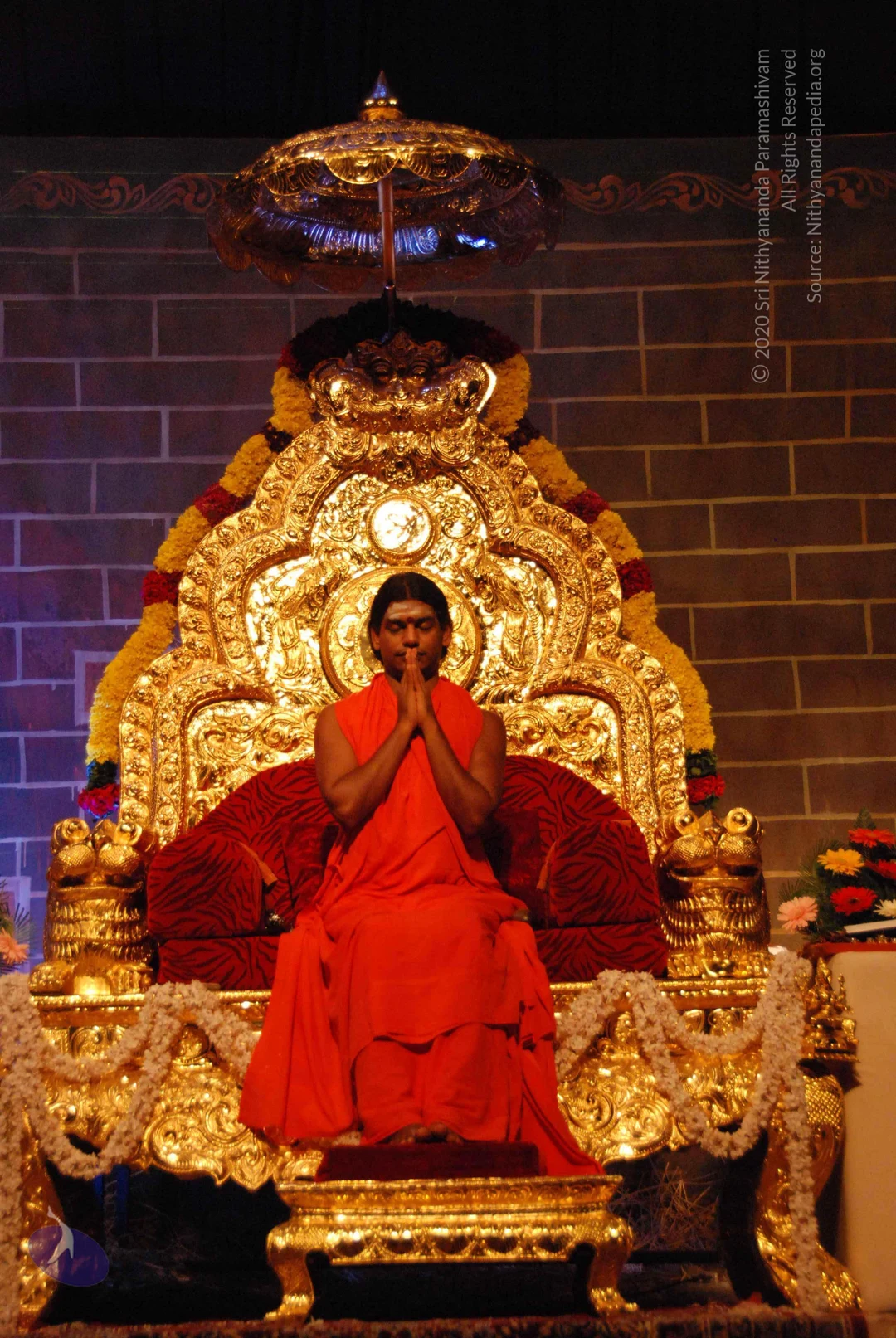
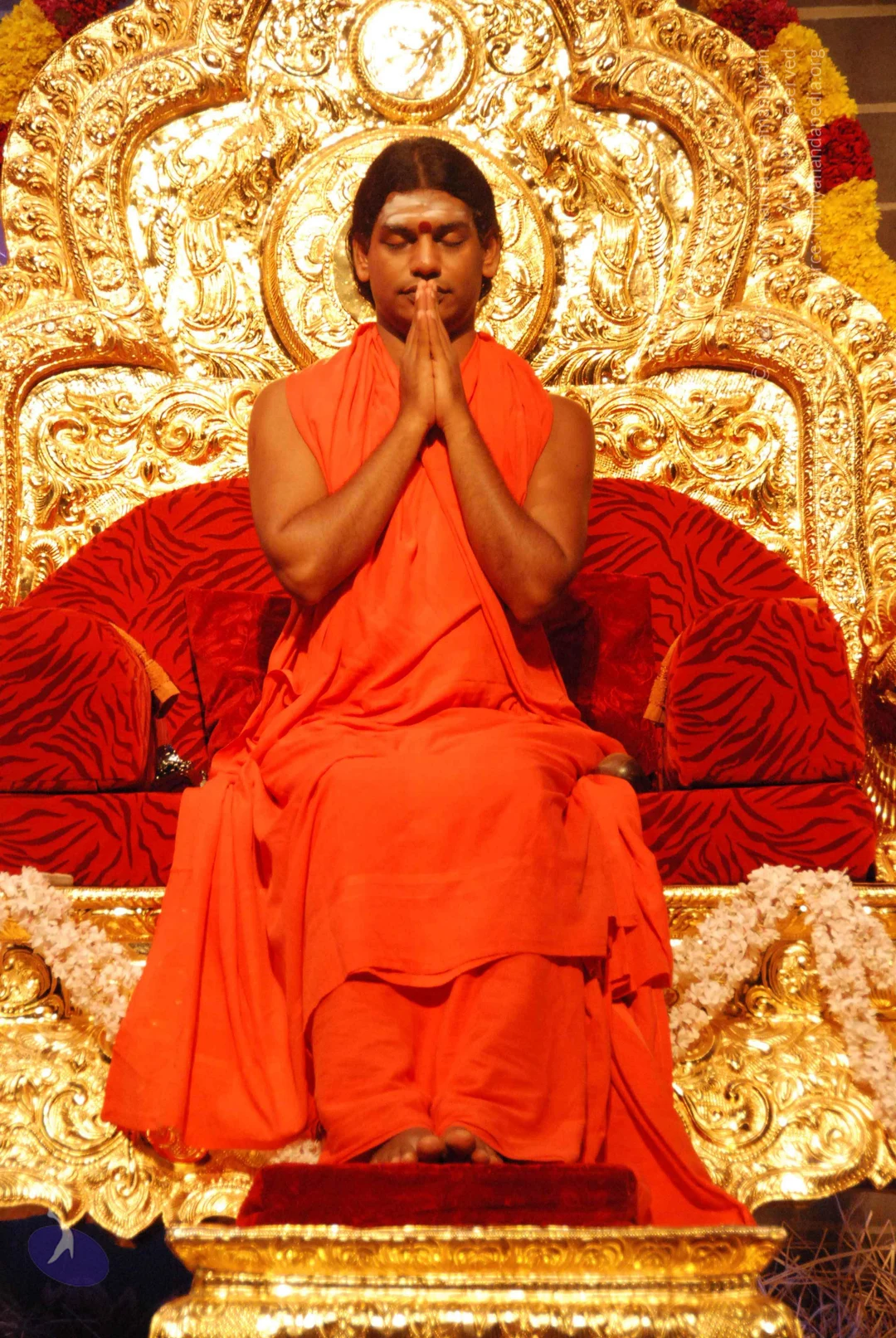
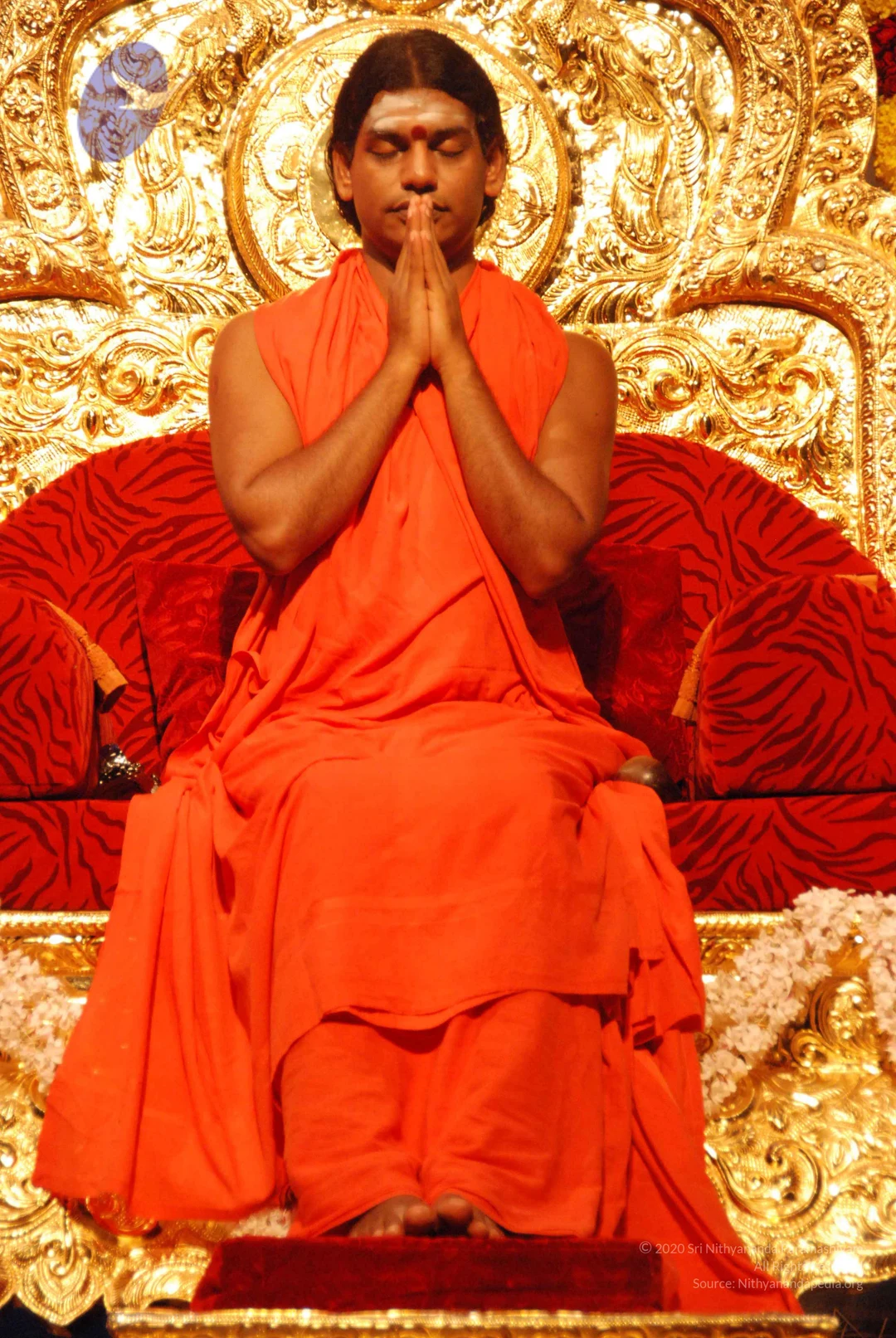
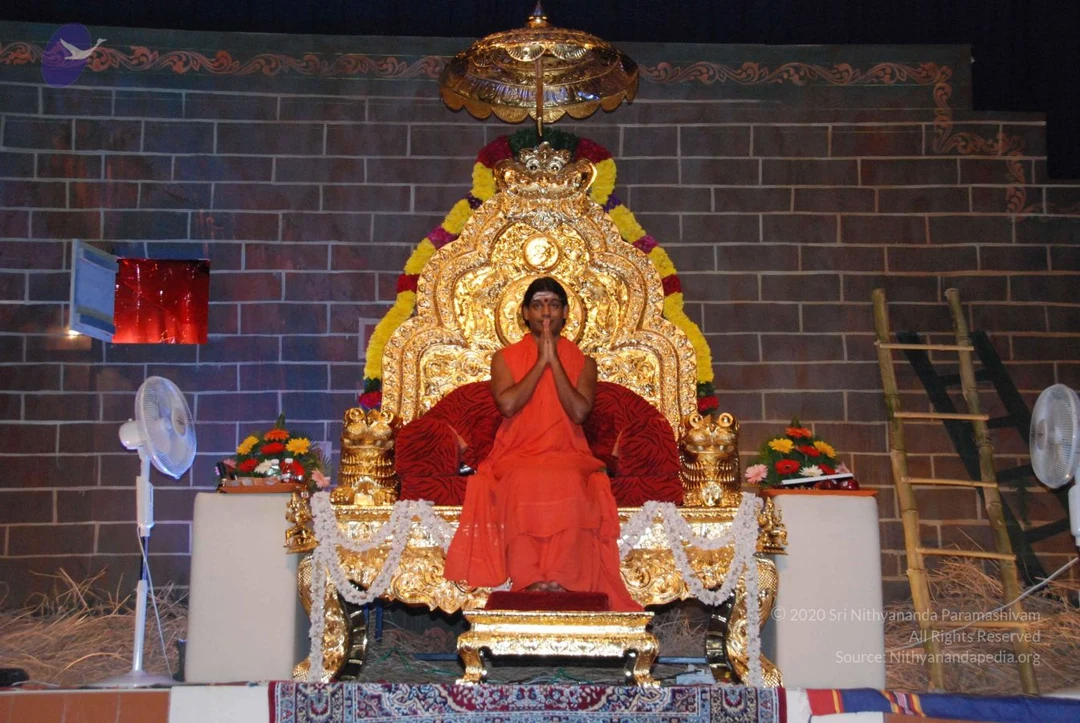
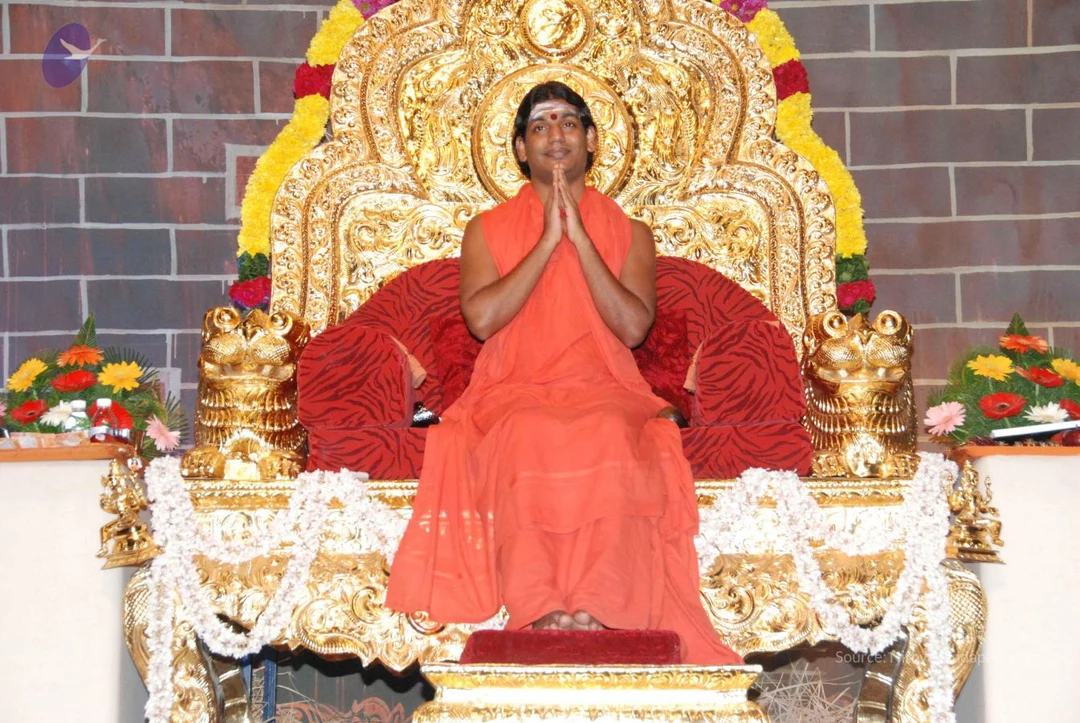
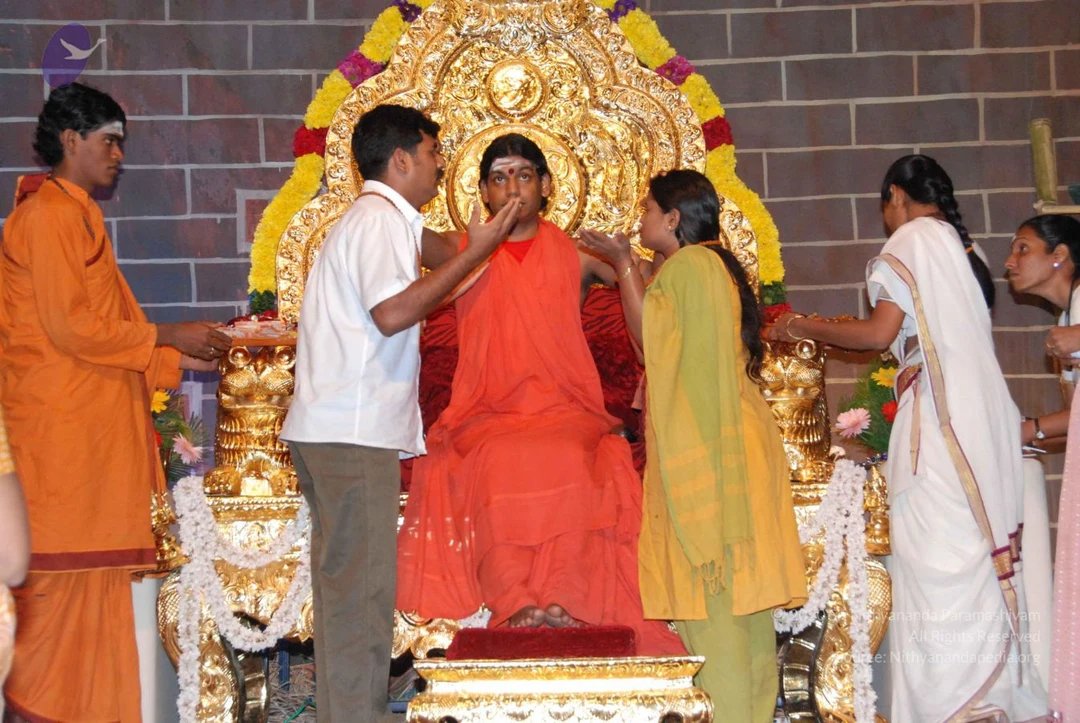
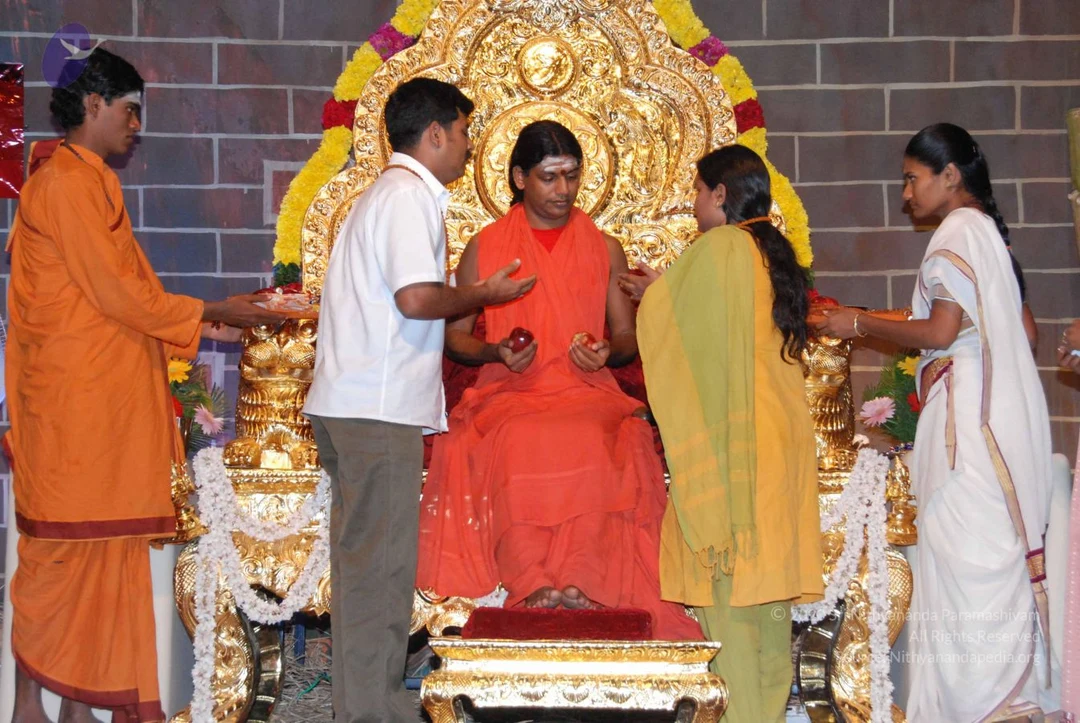
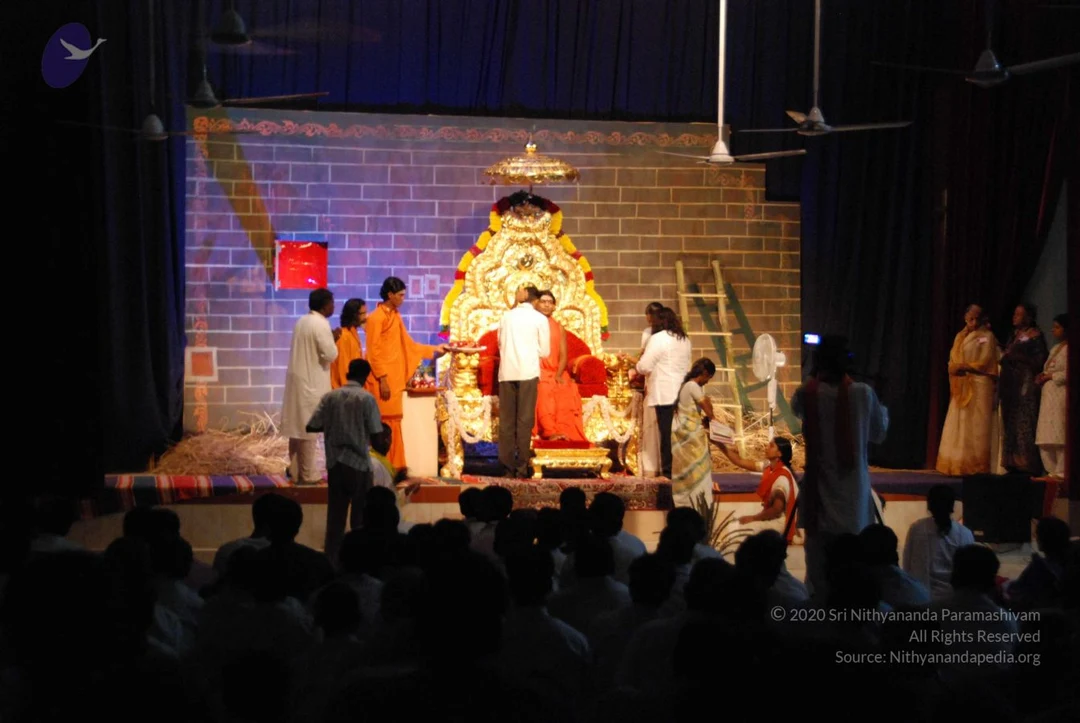
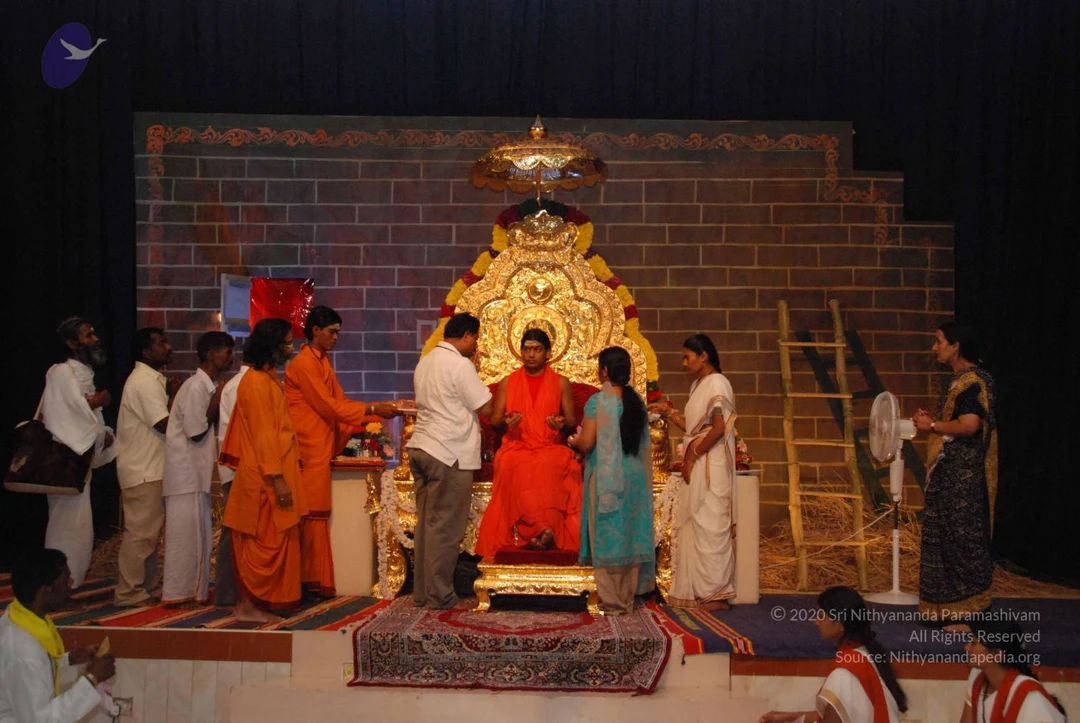
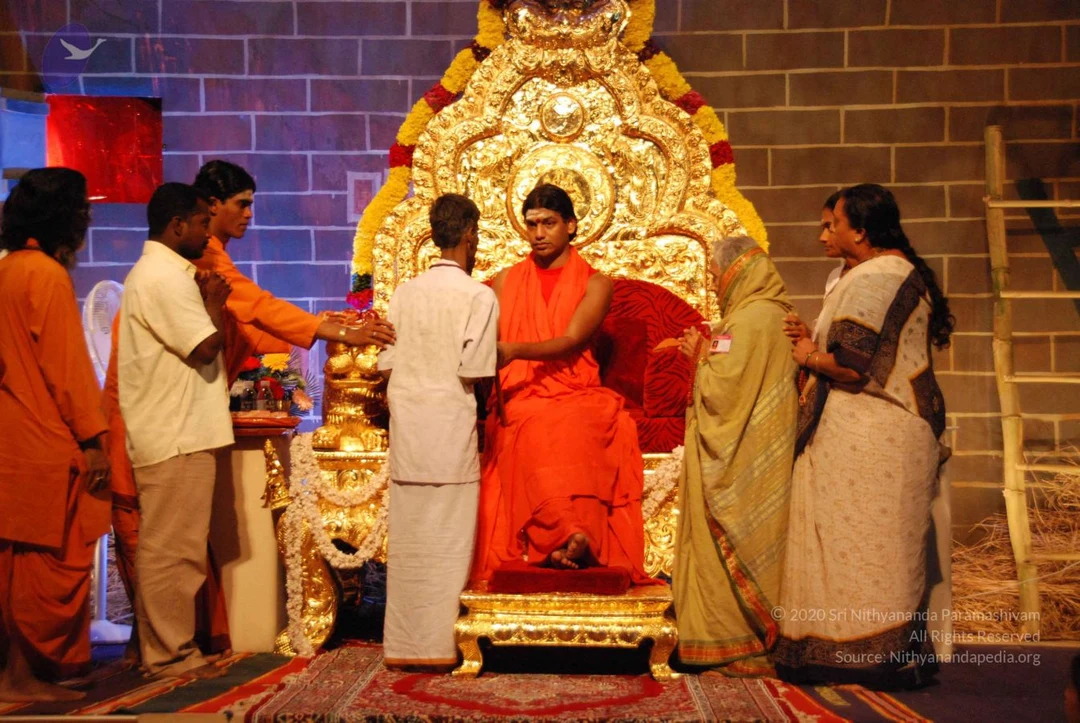
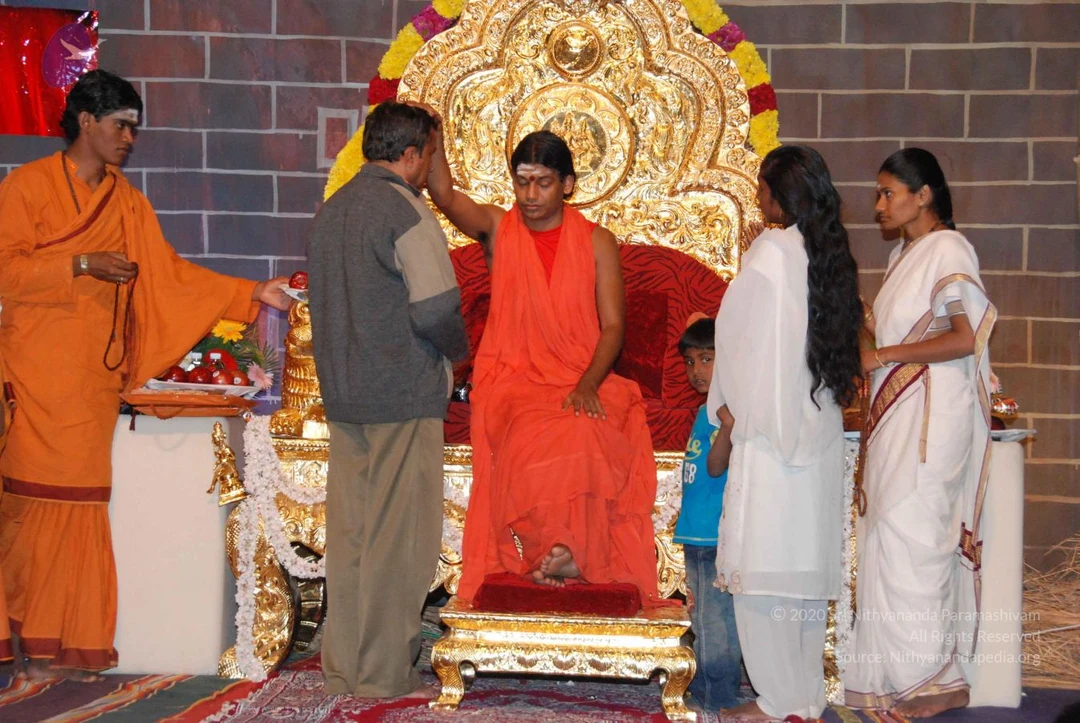
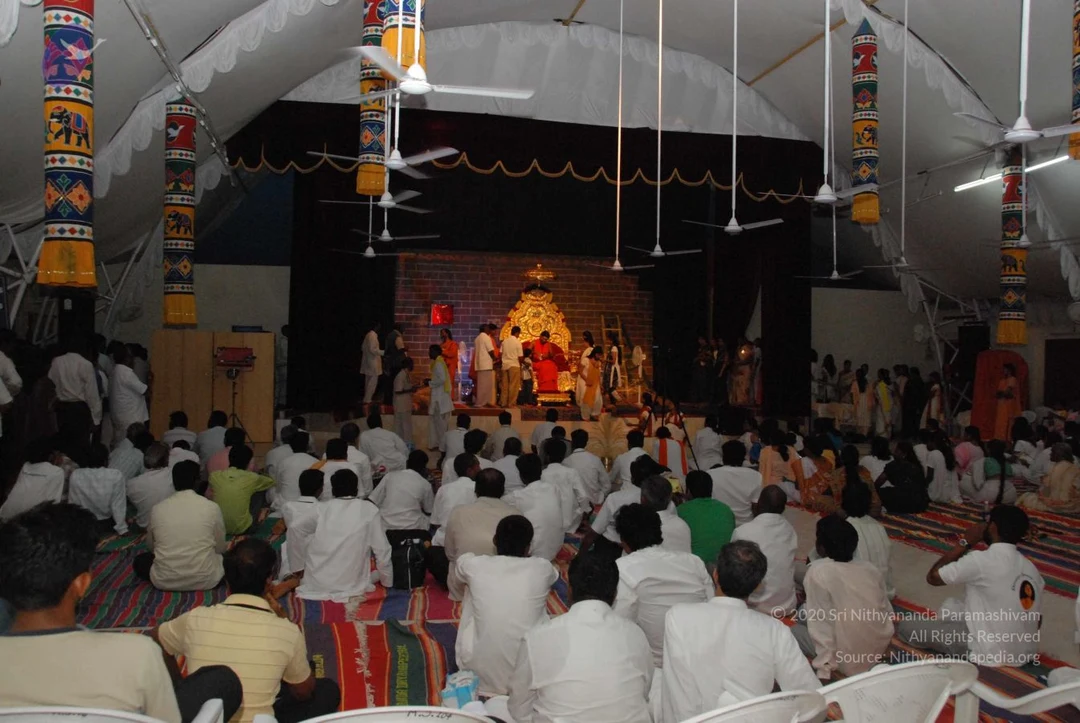
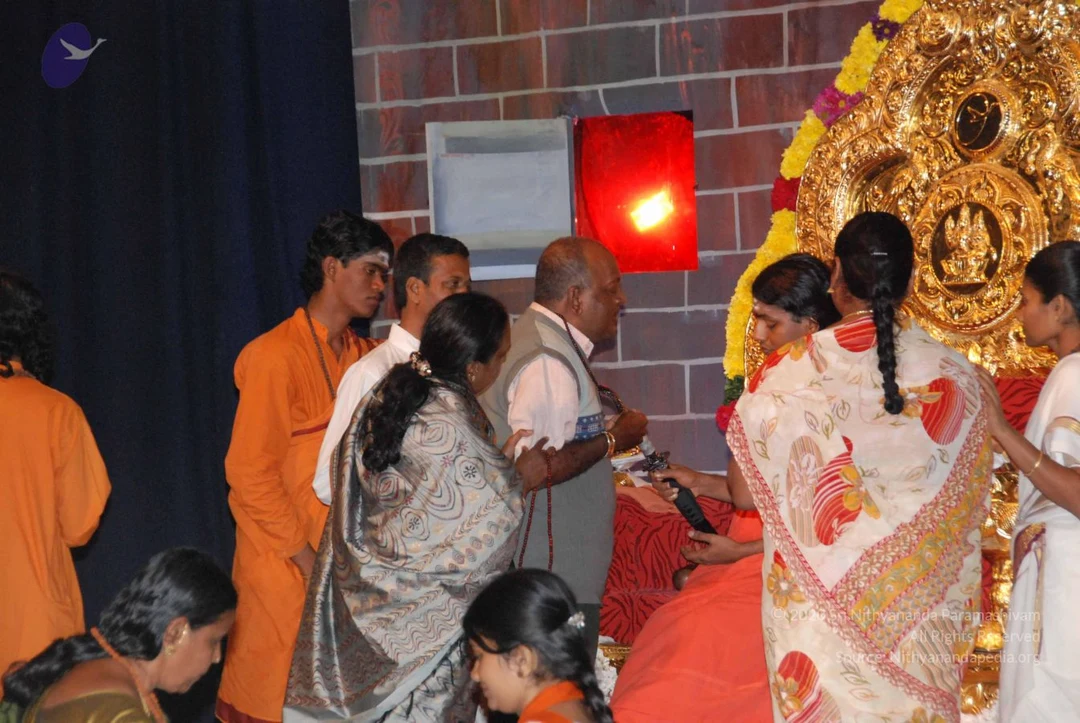
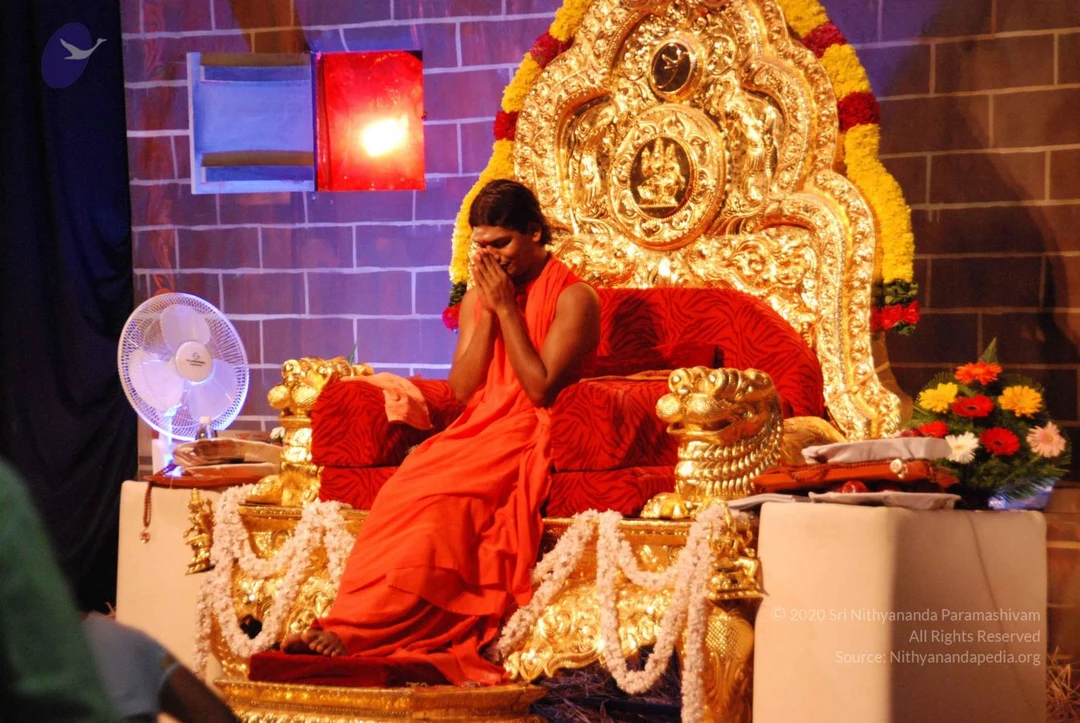
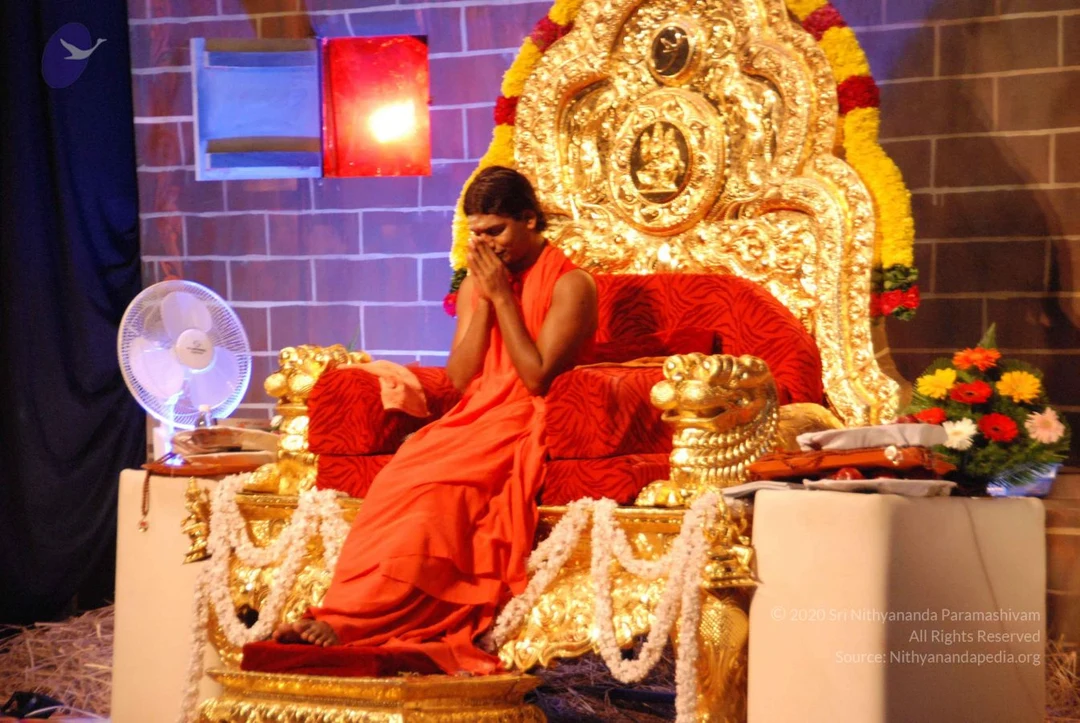
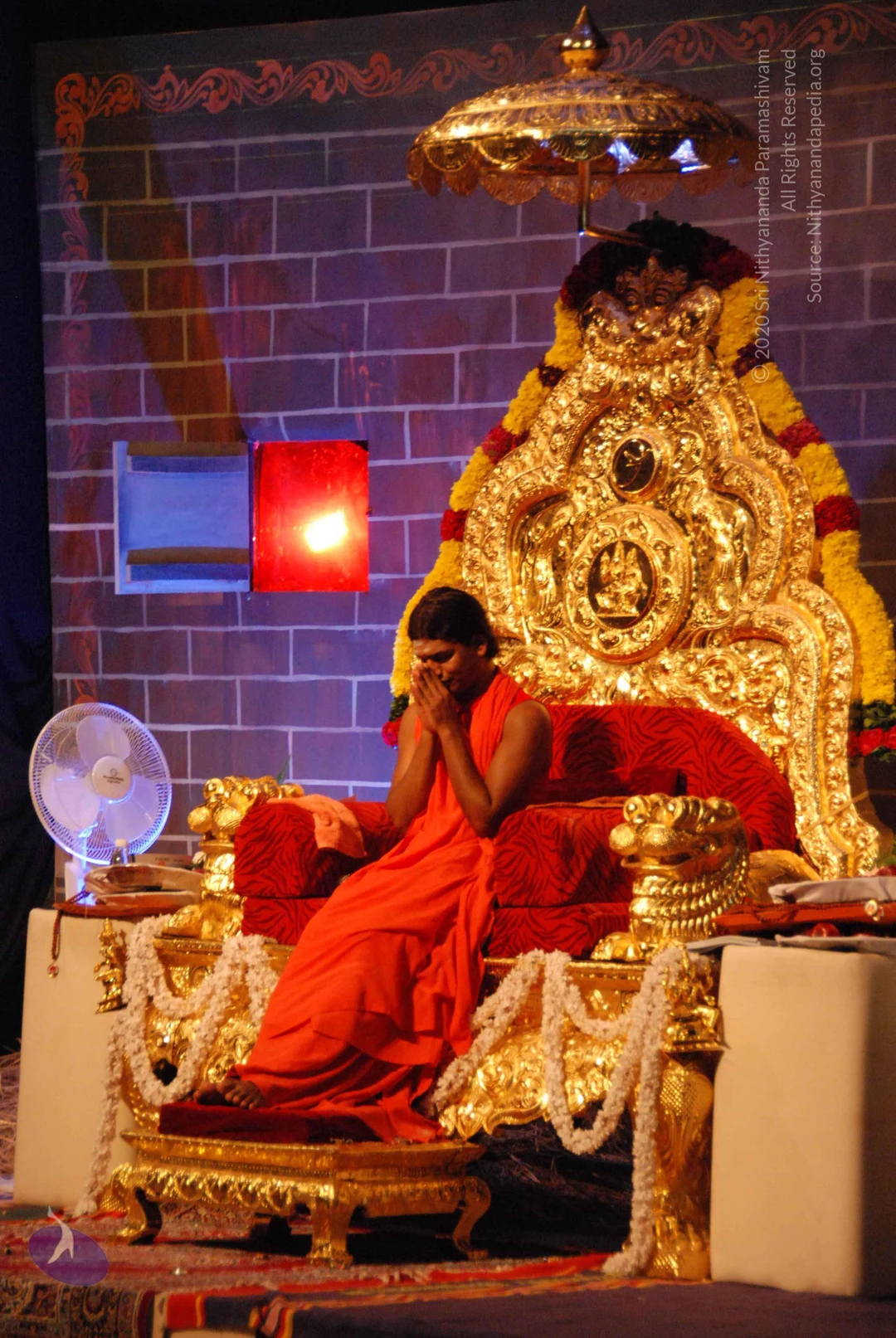
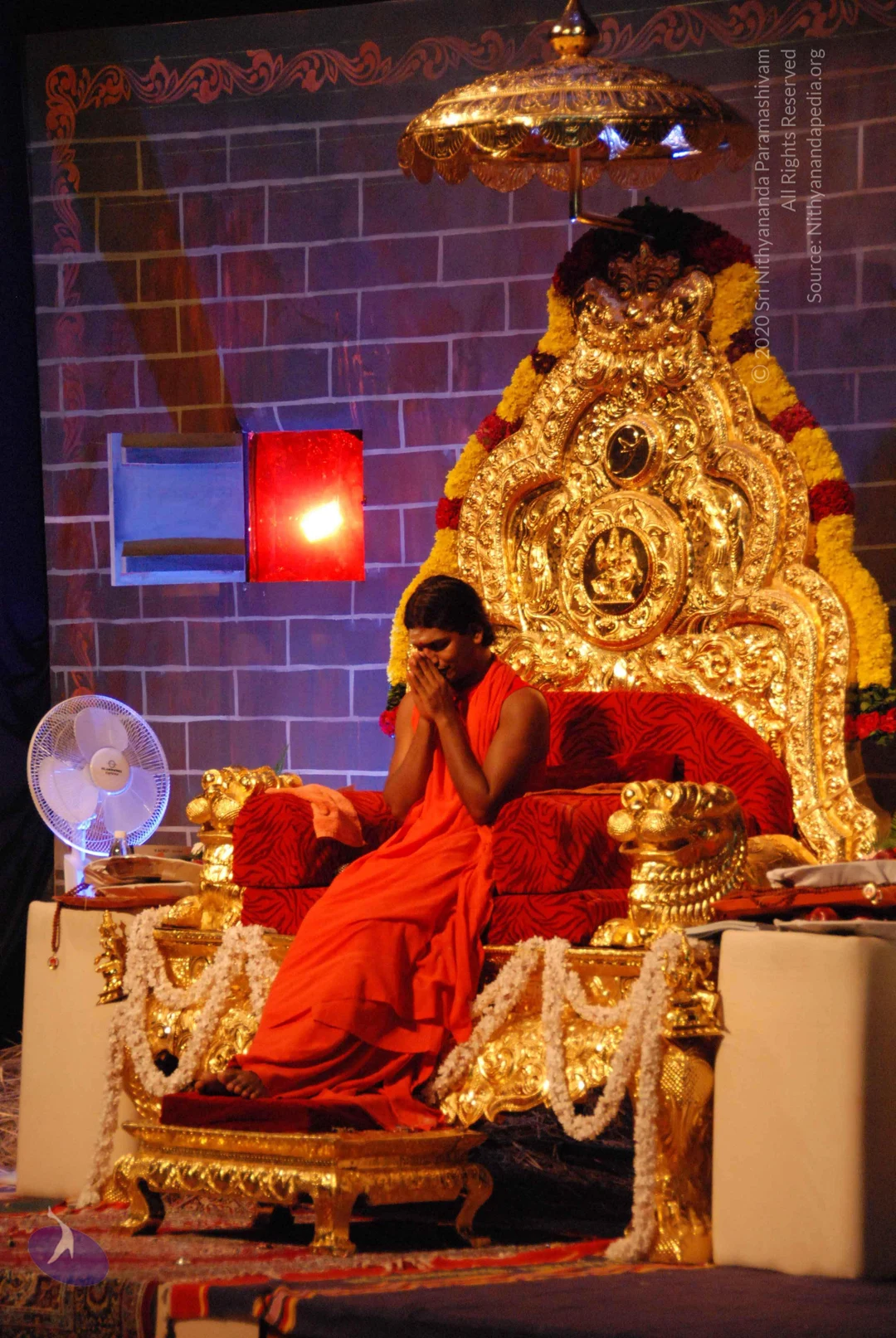
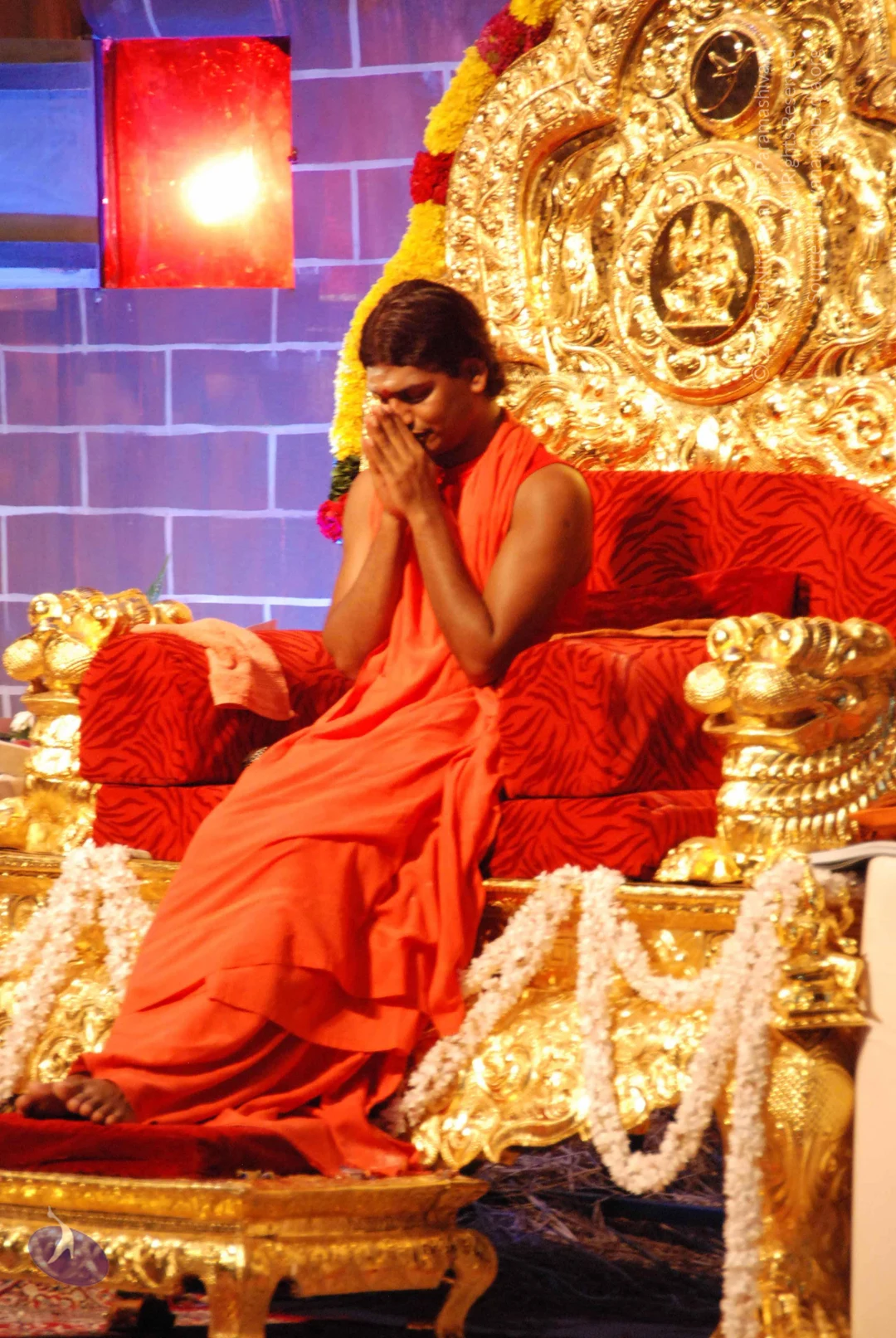
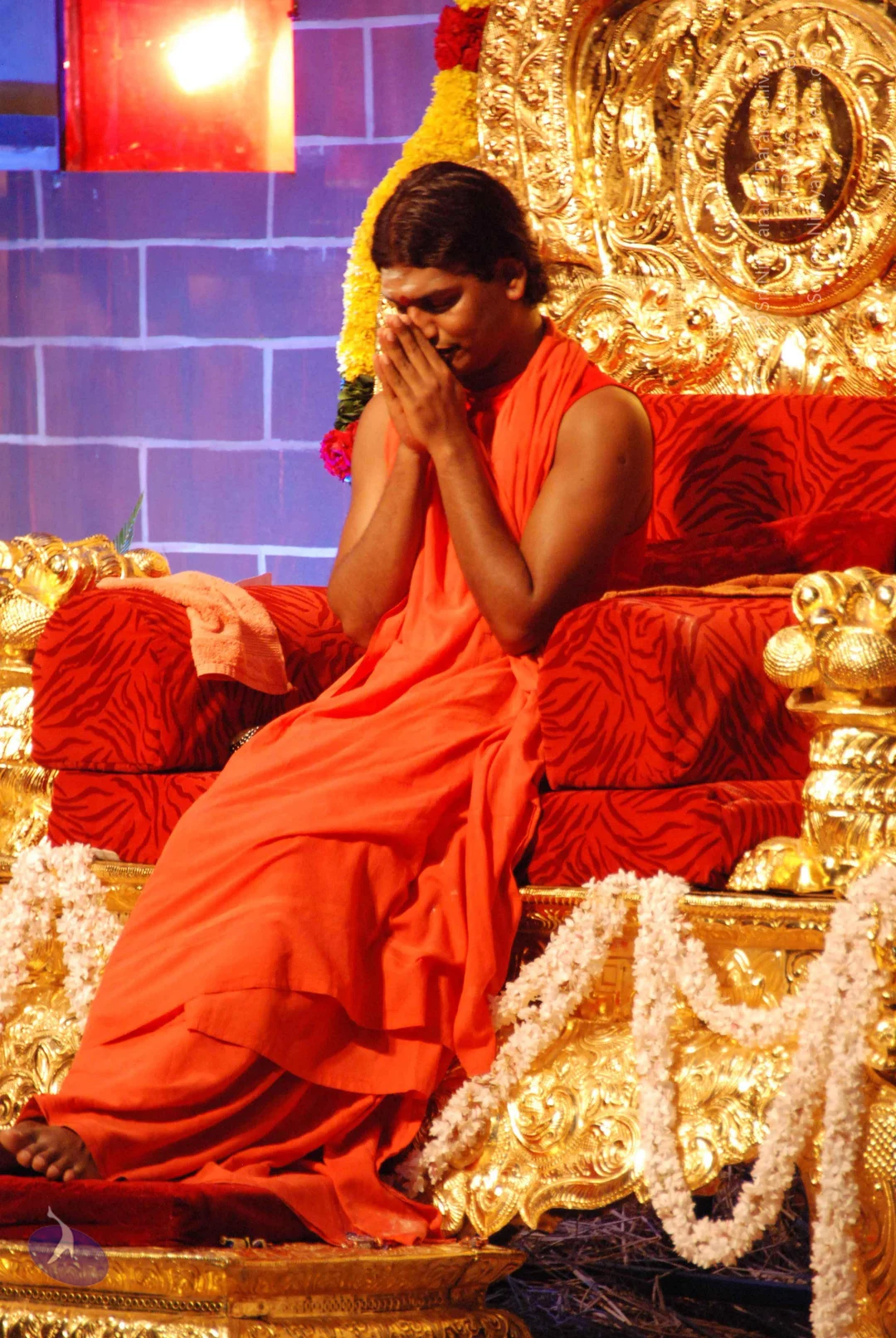
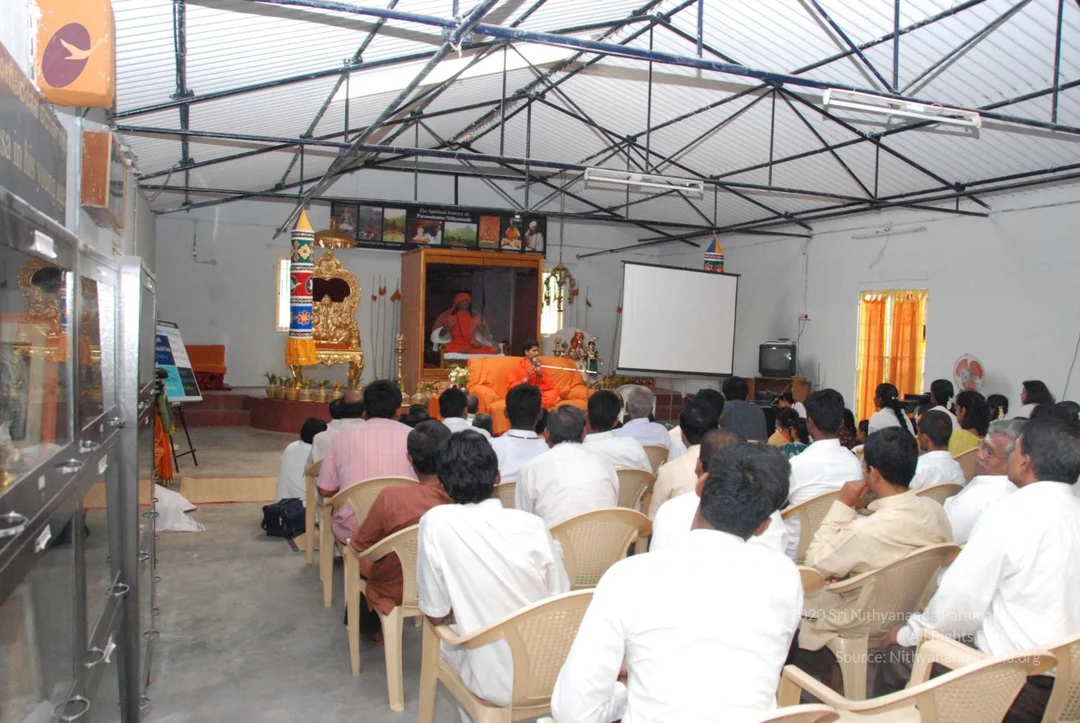
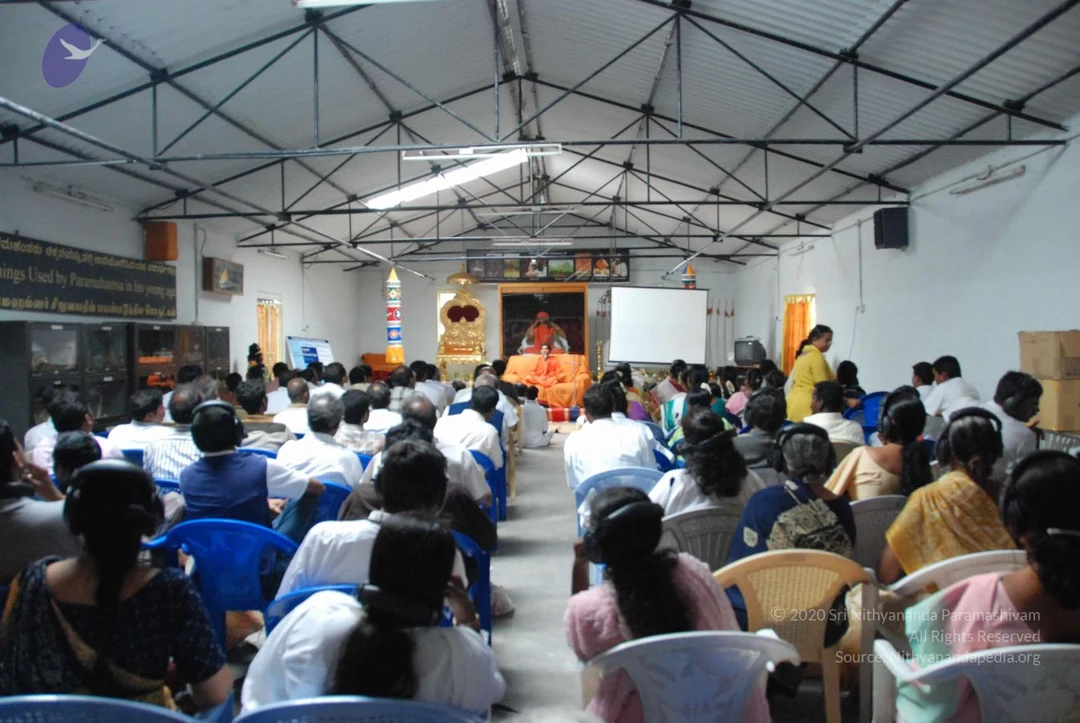
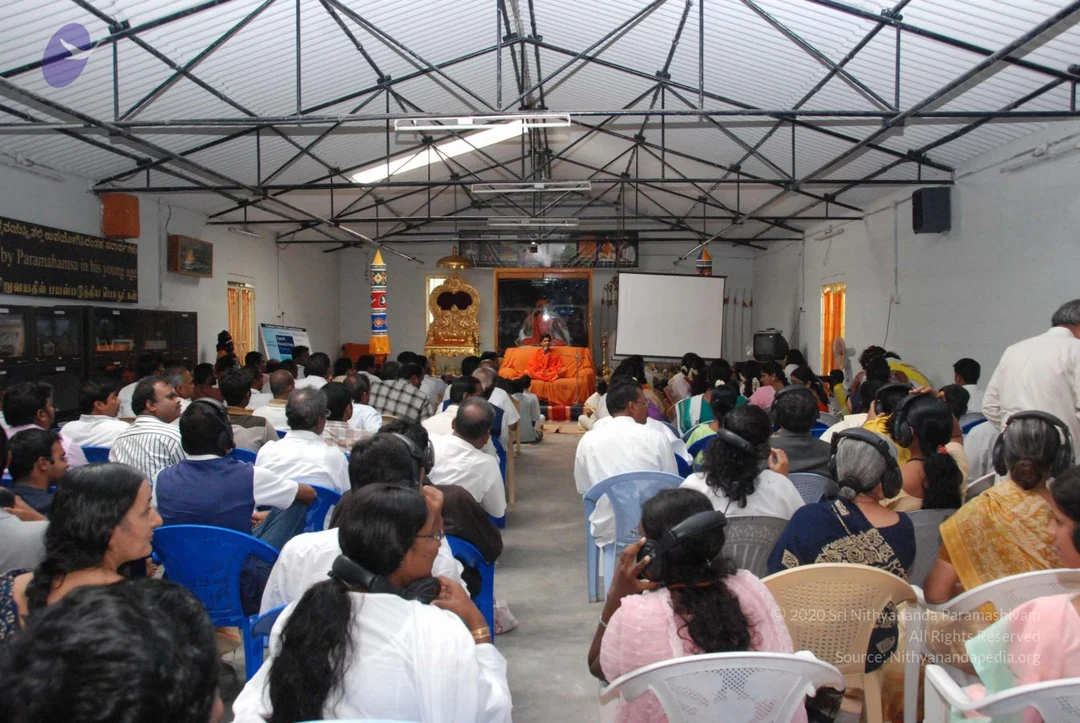
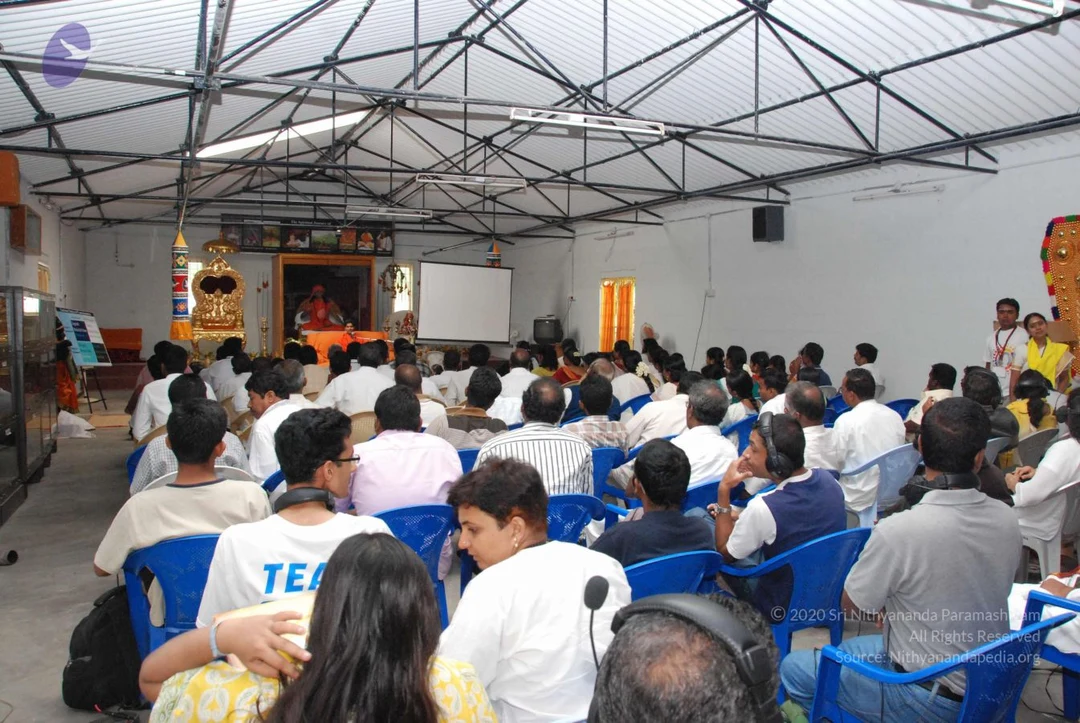
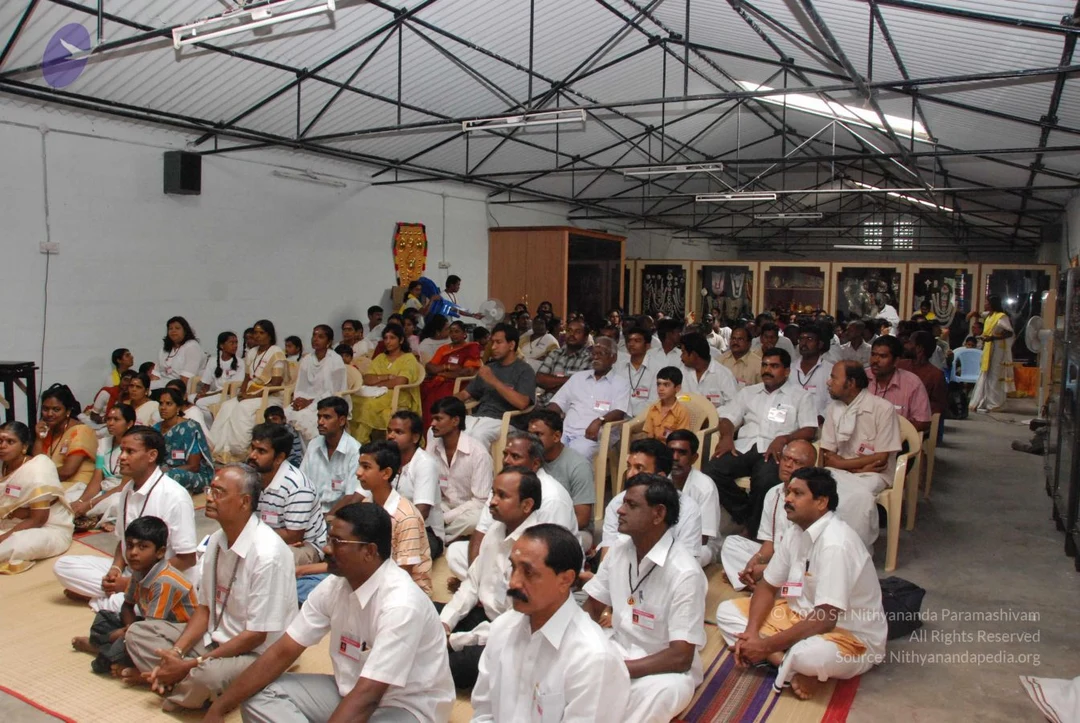
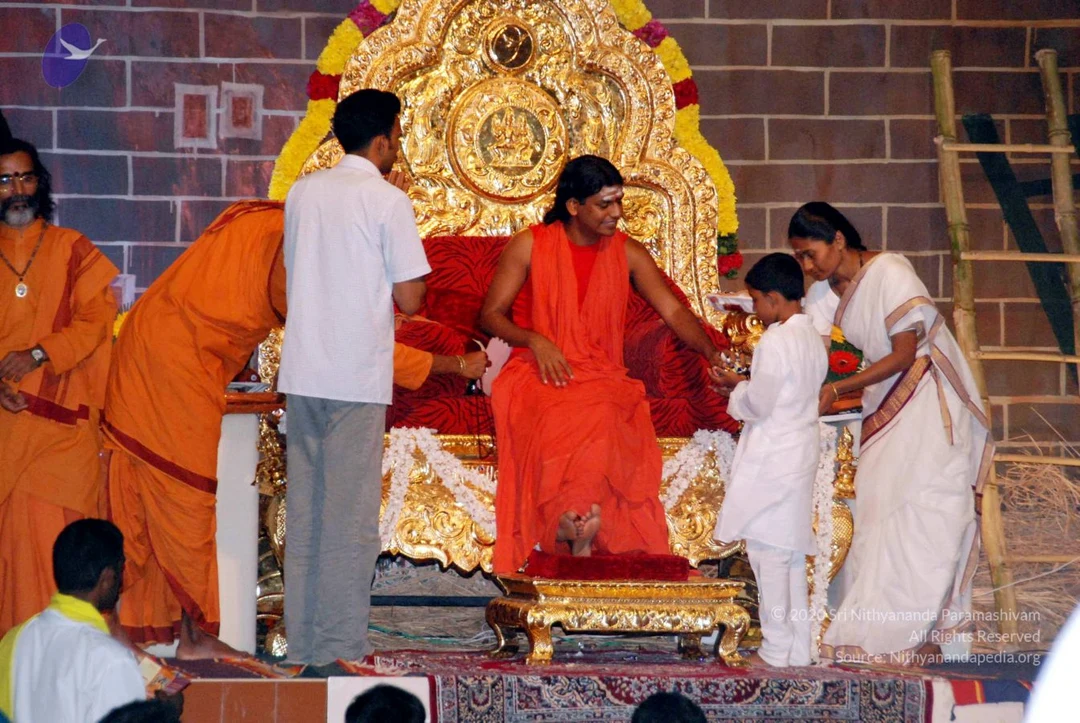
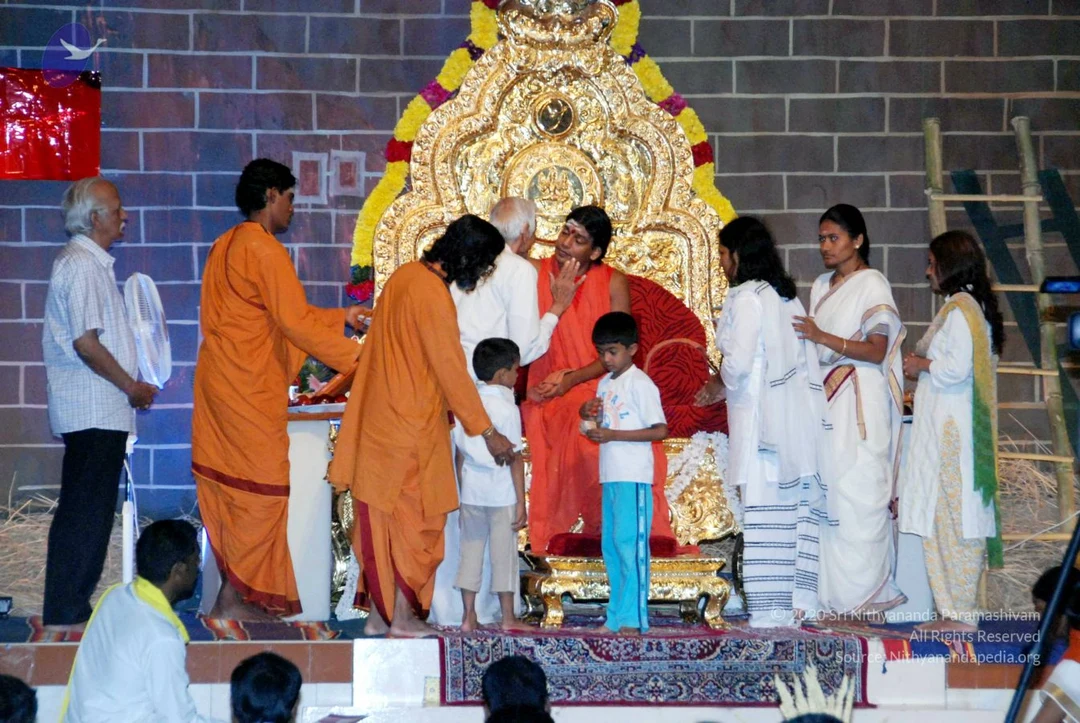
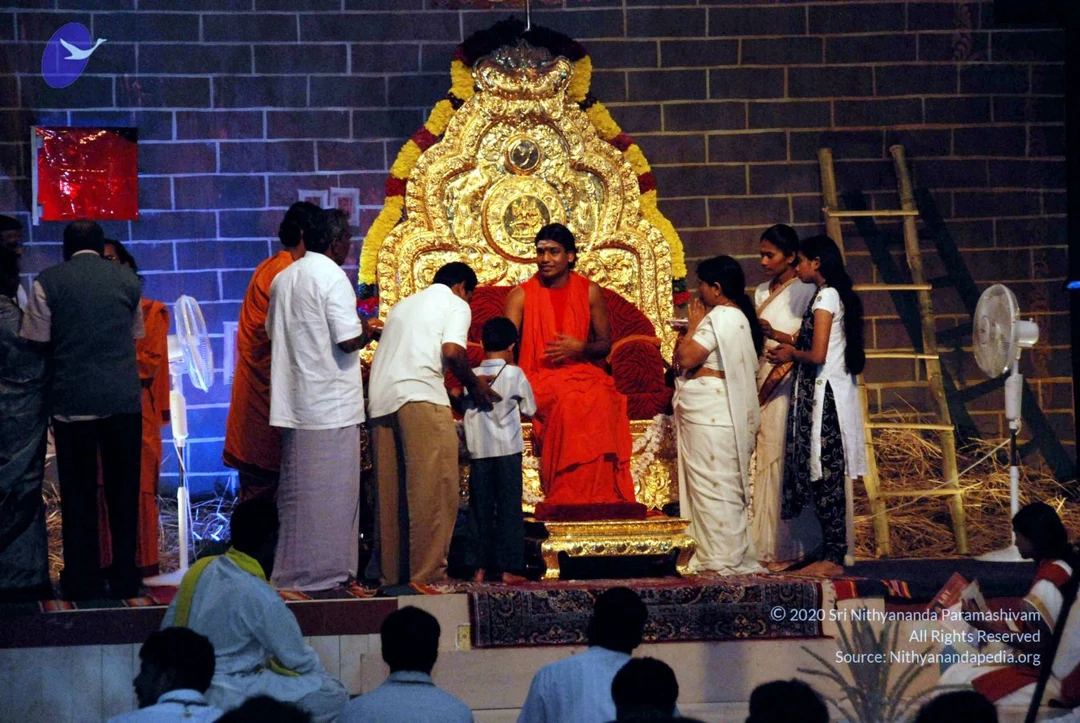
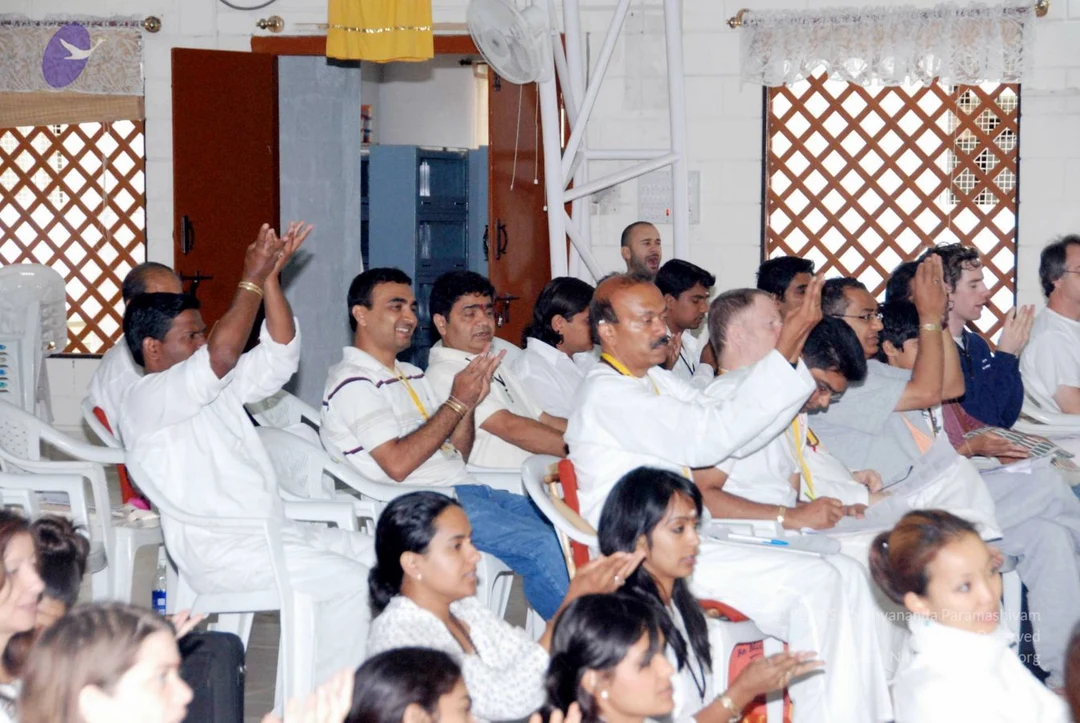
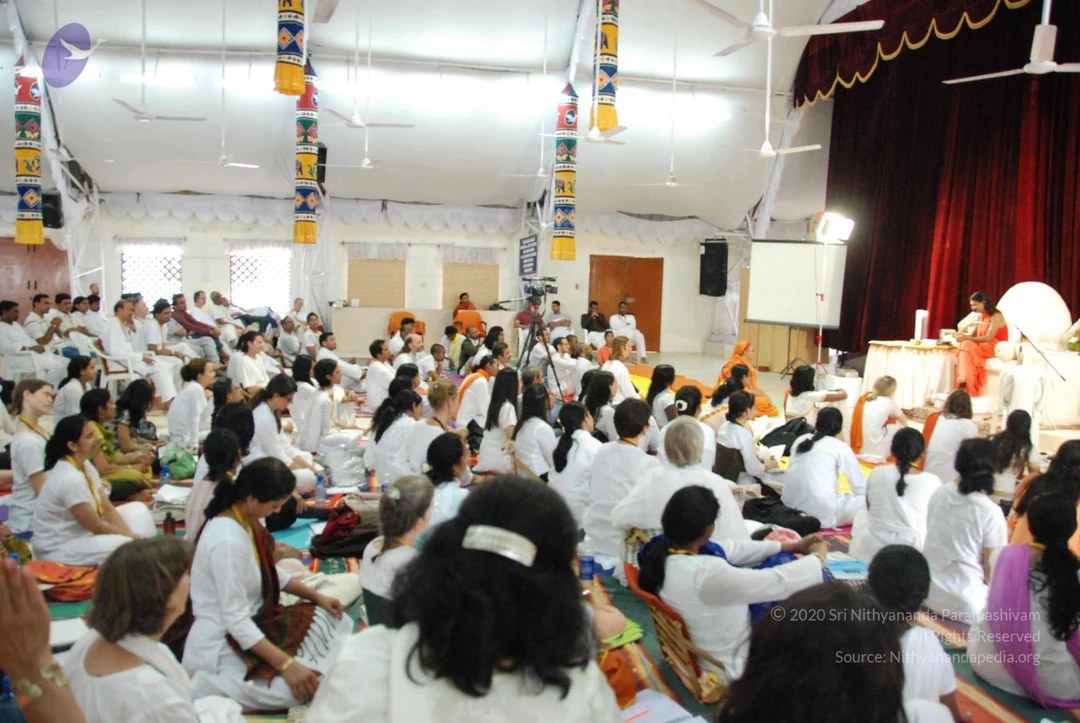
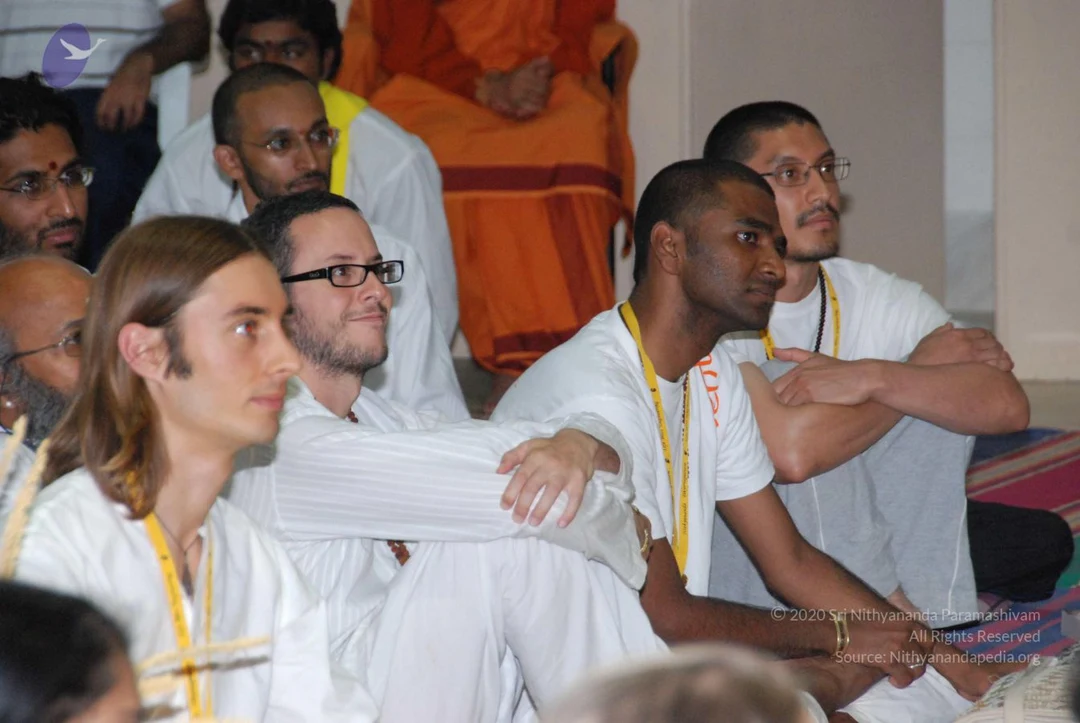
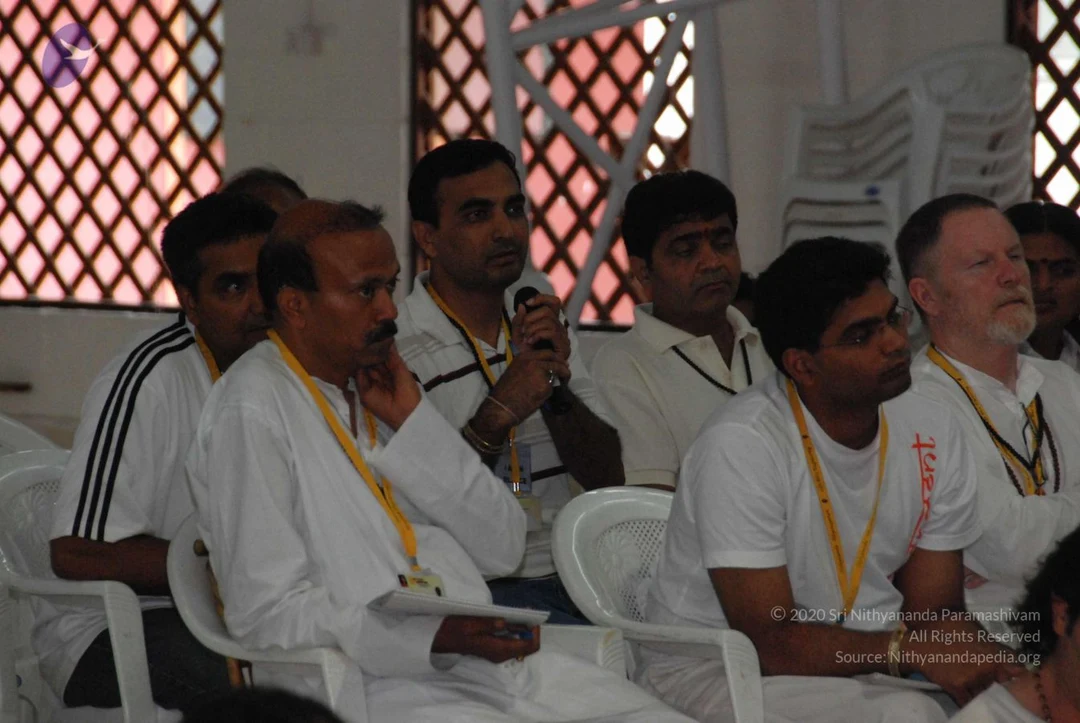
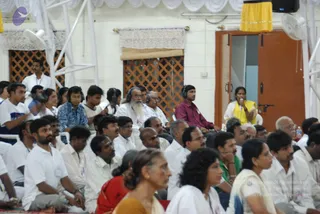
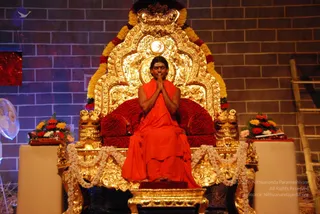
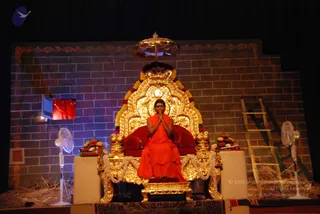
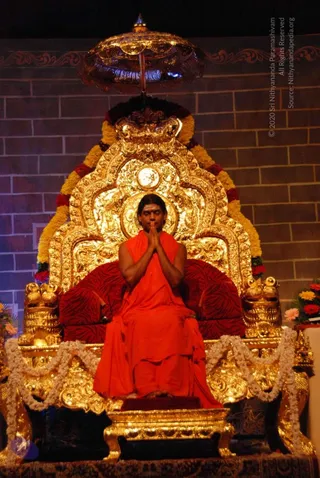
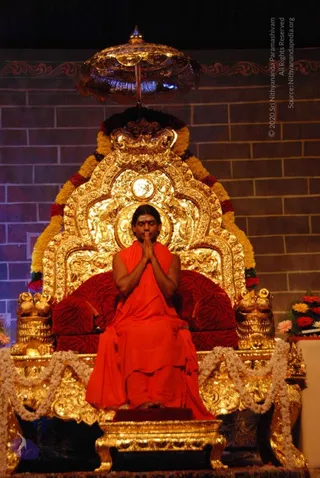
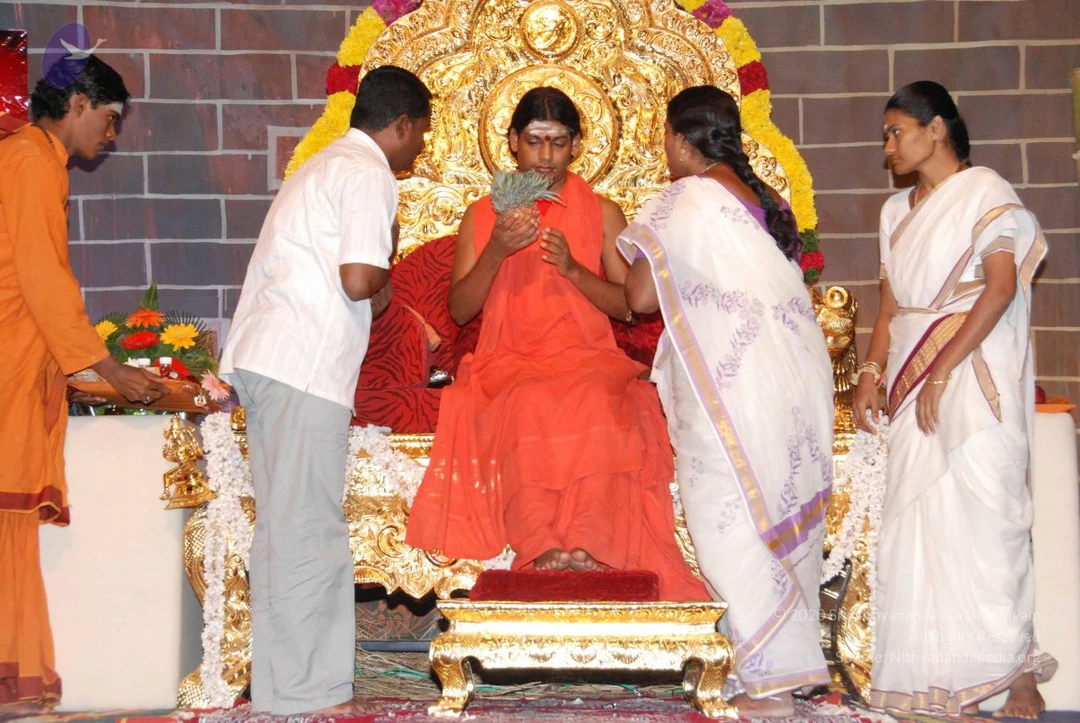
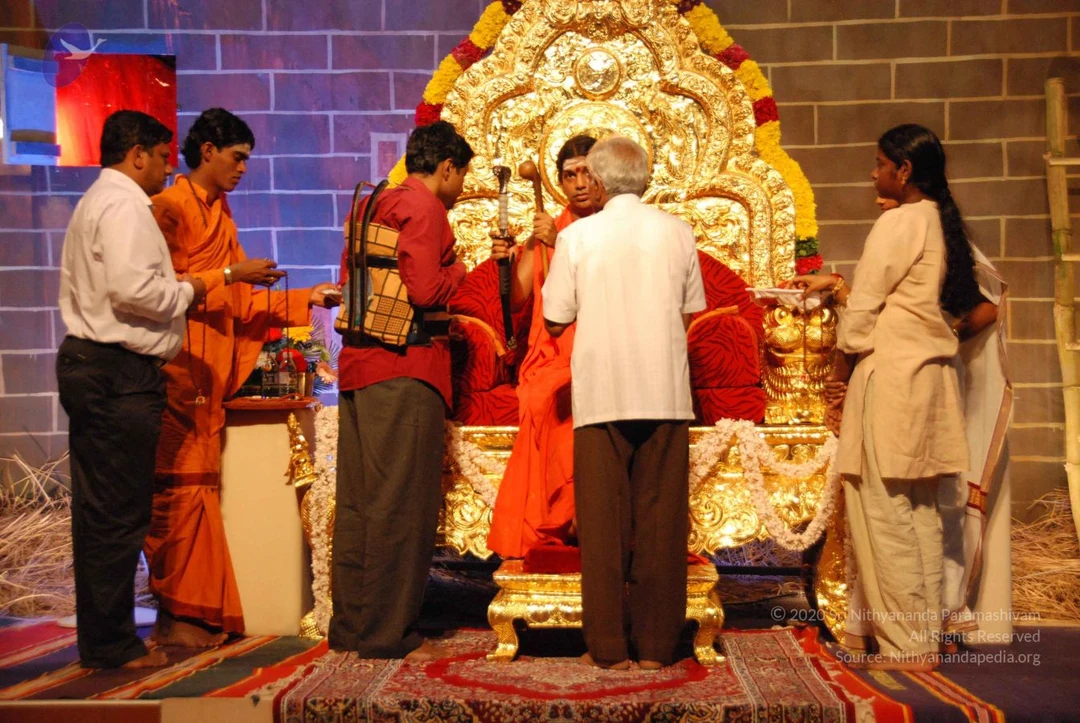
A seated audience fills an indoor hall with white walls, wooden lattice screens and white ceiling drapes, during a discourse session. Many attendees wear white shirts and white garments, some with large headphones for translation. A bearded man in white near the centre wears headphones, and a woman in a yellow shawl stands at the right speaking into a handheld microphone beside an open orange-brown door. A few men wear coloured shirts, and one woman in a red sari sits in the foreground. A standing fan and speakers are visible. No identifiable person is shown on a stage in this frame.Seated audience at an indoor session with white walls, lattice windows and white-framed fans. Many attendees wear headphones for translation. Foreground: a bearded man in white, a woman in a red sari, a woman in an orange-yellow sari, and men in white shirts. Center: a bearded elder in white with headphones. At right, a woman in a white top and yellow shawl speaks into a microphone near an open wooden door, and a man in a maroon shirt listens. Visible people number around 30.A seated man in an orange-red sannyasi robe sits on an ornate gold throne with red velvet cushions, hands pressed together in namaste at his chest. The throne is backed by a gold carved arch decorated with yellow and red flower garlands, and white flower garlands drape its front. Flower arrangements sit on side pedestals, and a brick wall forms the backdrop with a fan and bamboo scaffolding at the edges. The person is in a sitting pose of greeting and devotion on a stage setting, with the throne and garlands prominent. a person: long hair and an orange robe fit the presentation, though the face and frame are not clearly distinctive, so this is a tentative appearance-based label.A photograph of a seated person in saffron-orange robes on an ornate gold throne with red cushions, hands pressed together in namaste. A golden parasol hangs above the throne, and garlands of marigolds and white flowers drape its base. A painted brick-wall stage set with a ladder and two white pedestal fans surrounds the throne, with flower offerings on side tables and straw on the floor.A seated man with dark hair swept back and eyes closed sits in prayer pose with palms pressed together at the chest, on an ornate gold throne with a red tiger-striped cushion. He wears a sleeveless saffron-orange robe. Above him a gilded umbrella hangs over the throne, and the throne back is draped with yellow and red marigold garlands. White flower garlands hang along the base, and a brick-patterned backdrop with a faint decorative border stands behind. The scene is a stage-like ceremonial setting. Swamiji (probable): the figure has long swept-back hair, saffron clothing and a ceremonial gold throne setting, and is presented as the honoured figure of the event.A man seated in prayer pose (hands pressed together at chest) on an ornate gold throne with a red and black tiger-striped cushion, beneath a gold ceremonial umbrella and a backdrop of garlands of yellow, red and white flowers. He wears a flowing red-orange robe draped over the body and is barefoot on a red footstool. The gilded throne has lion-head armrests and carved panels.

Ashramite-Meeting

15 photosSource gallery
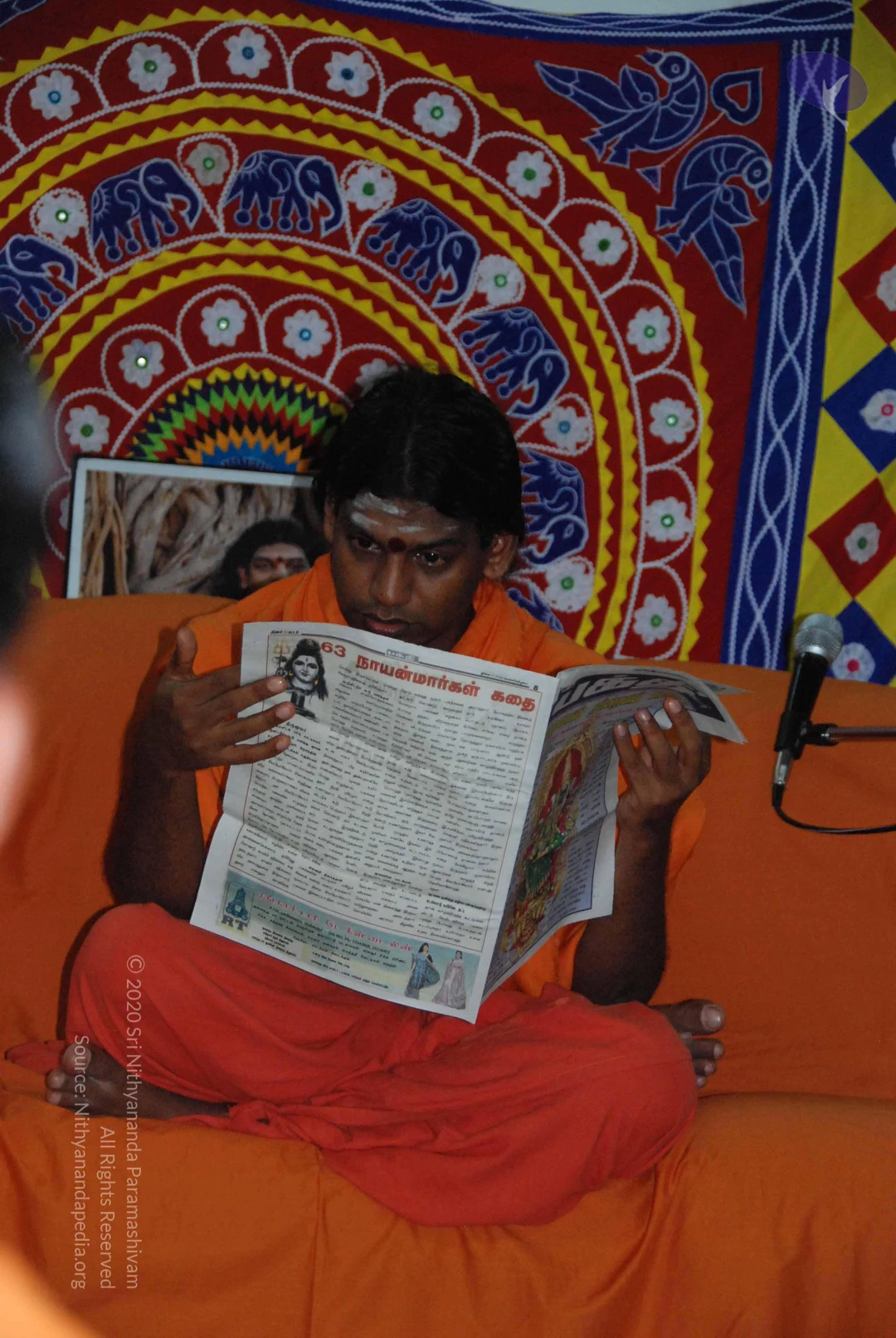
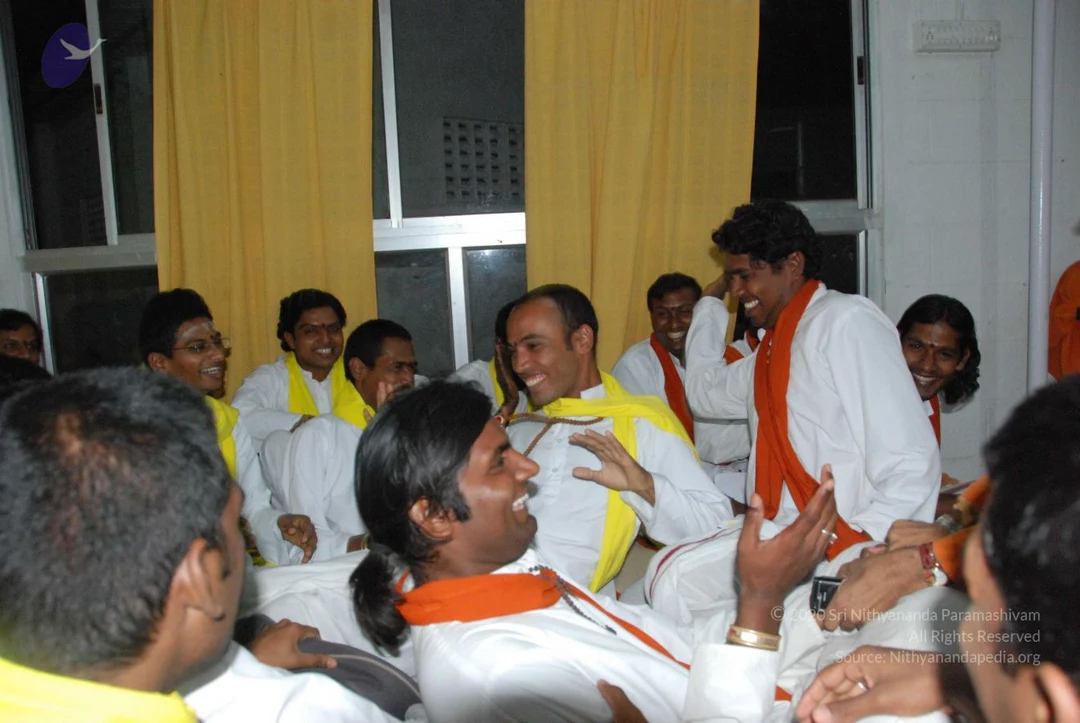
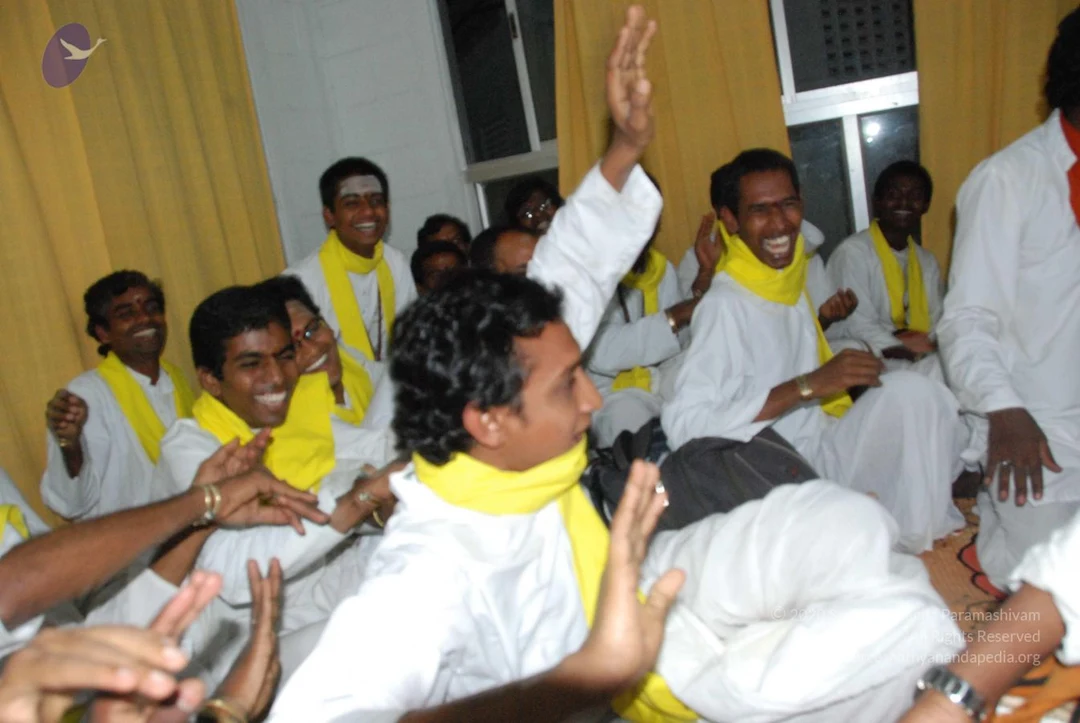
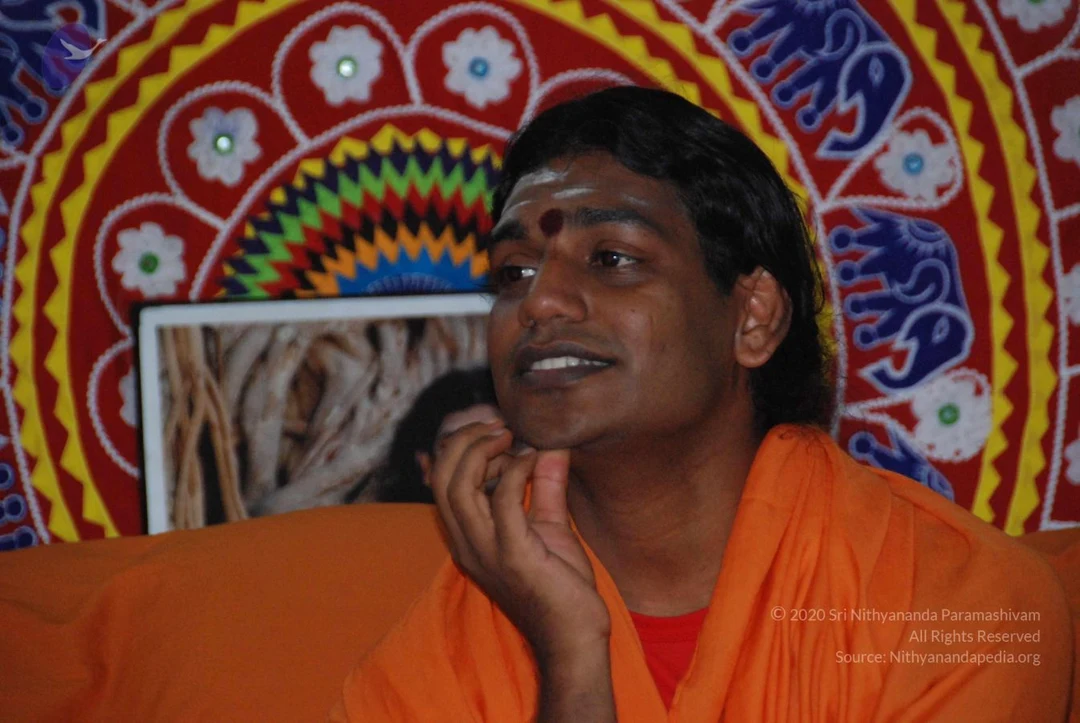
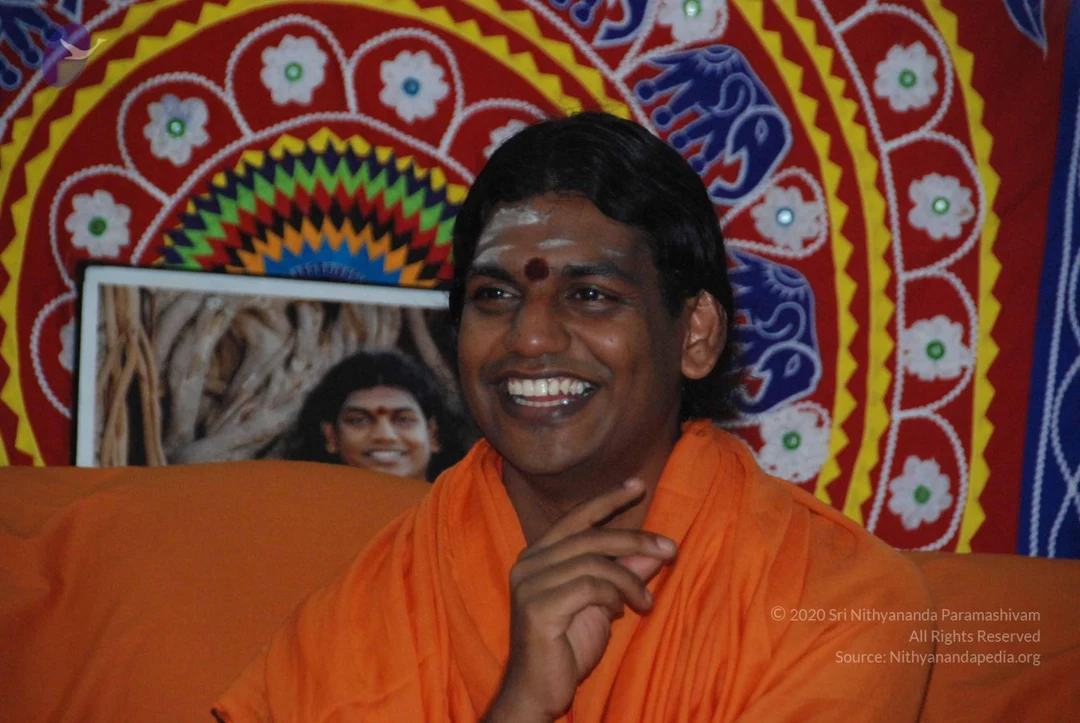
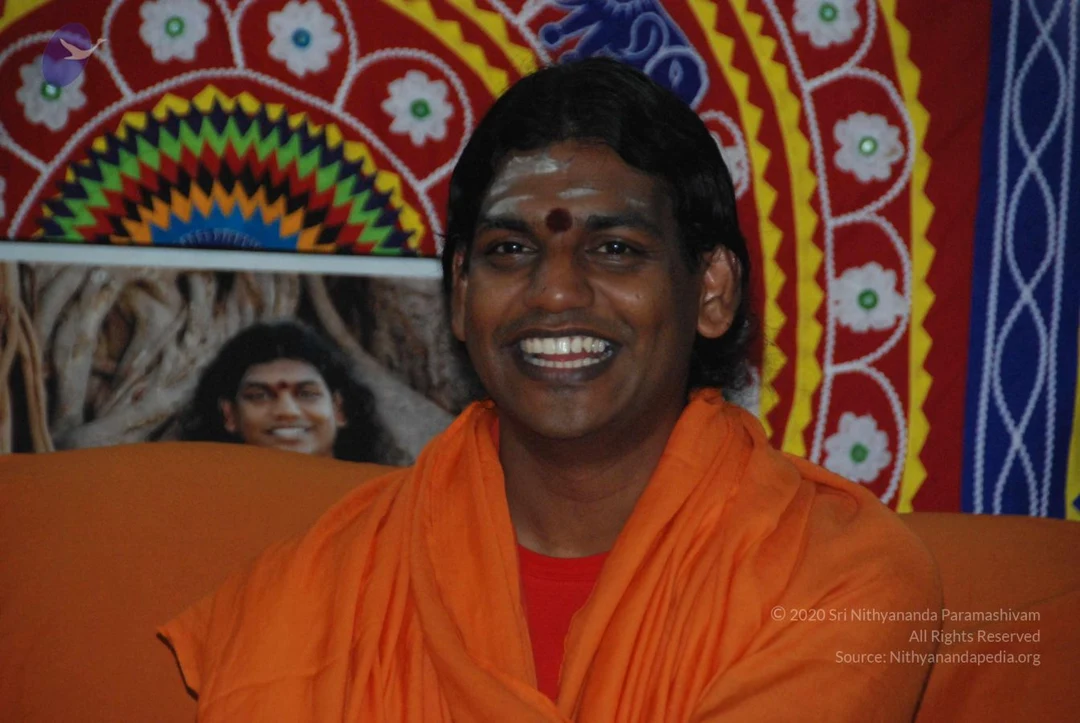
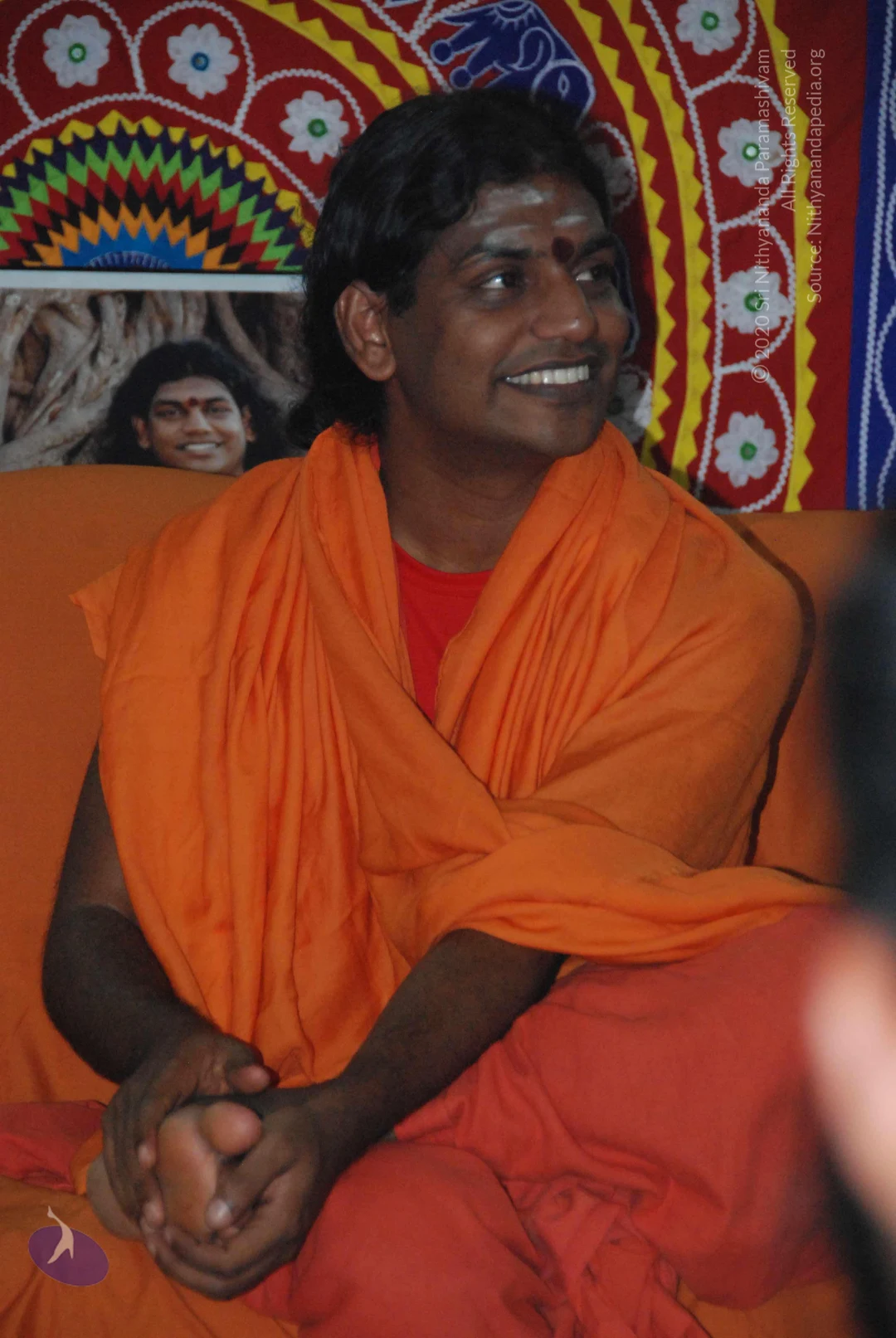
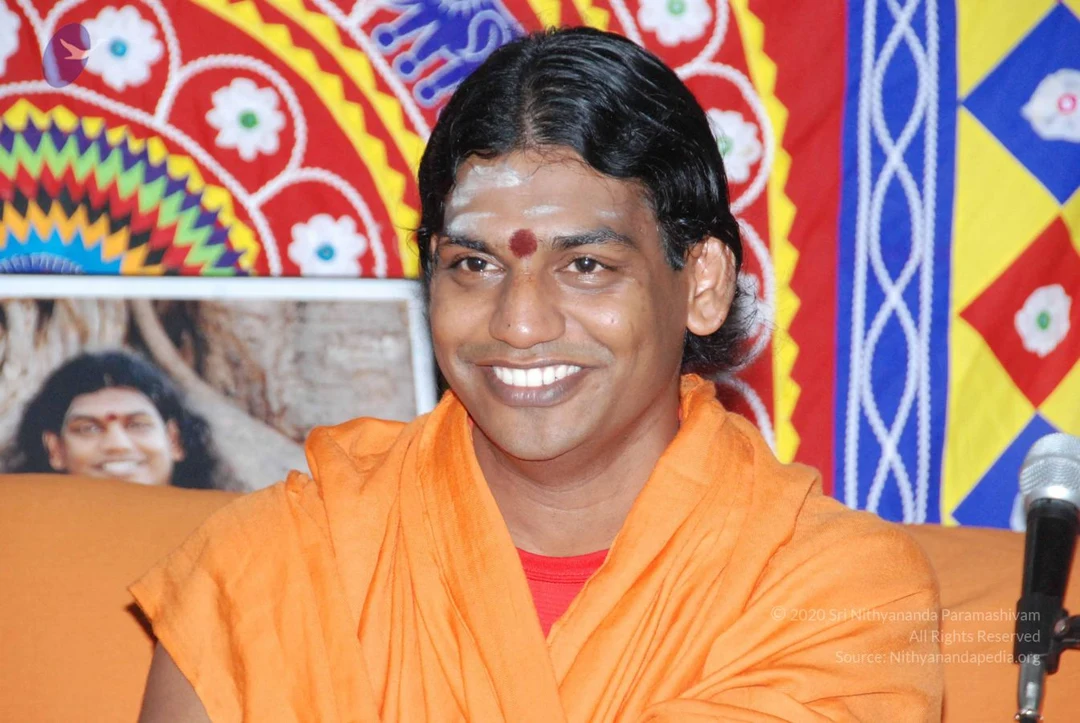
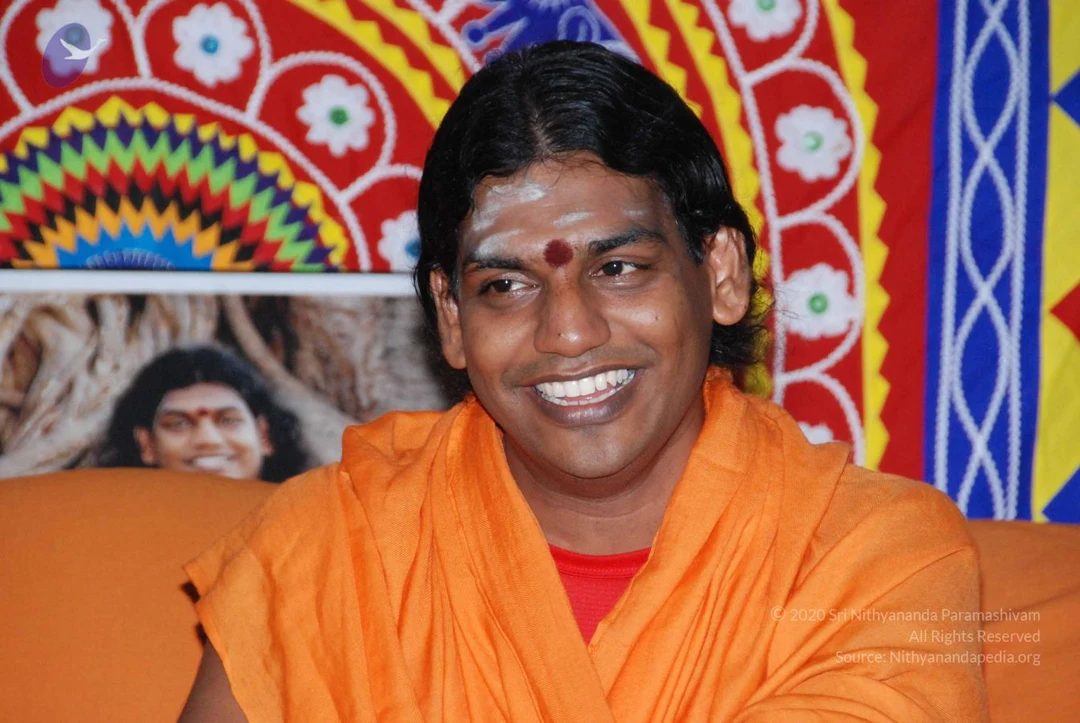
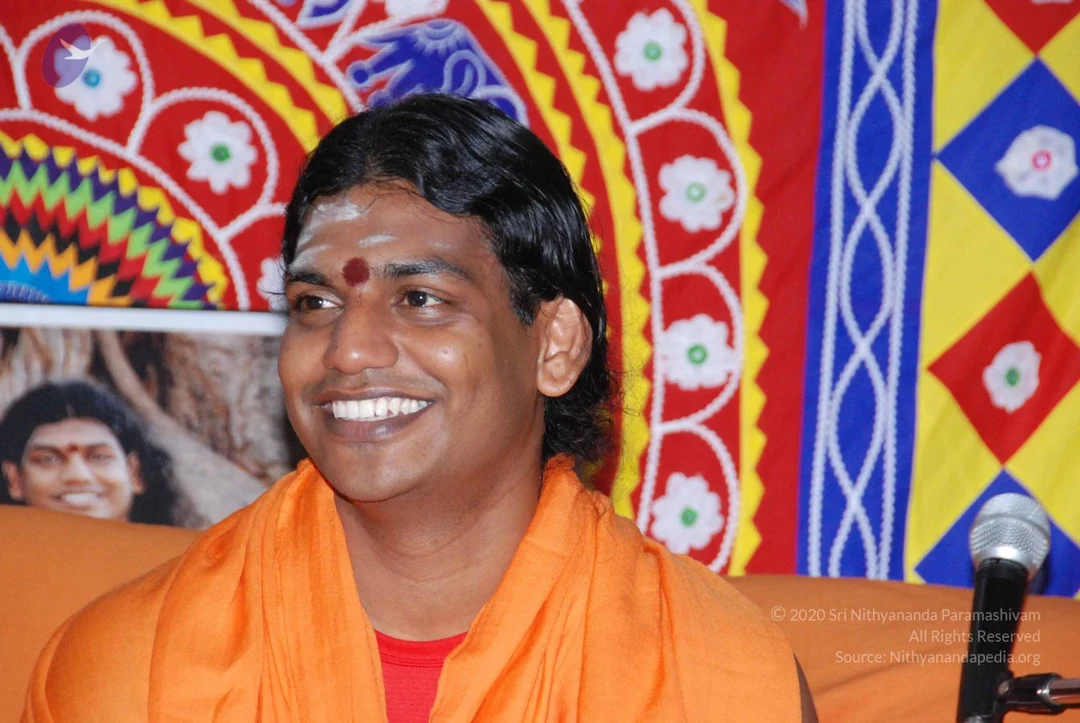
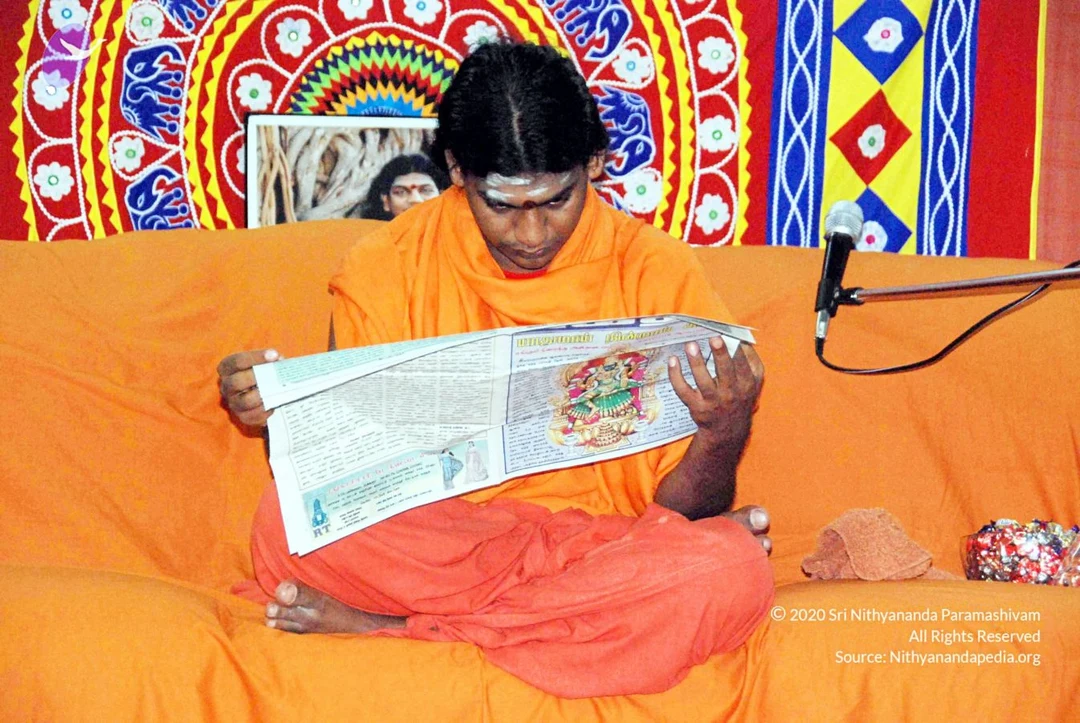
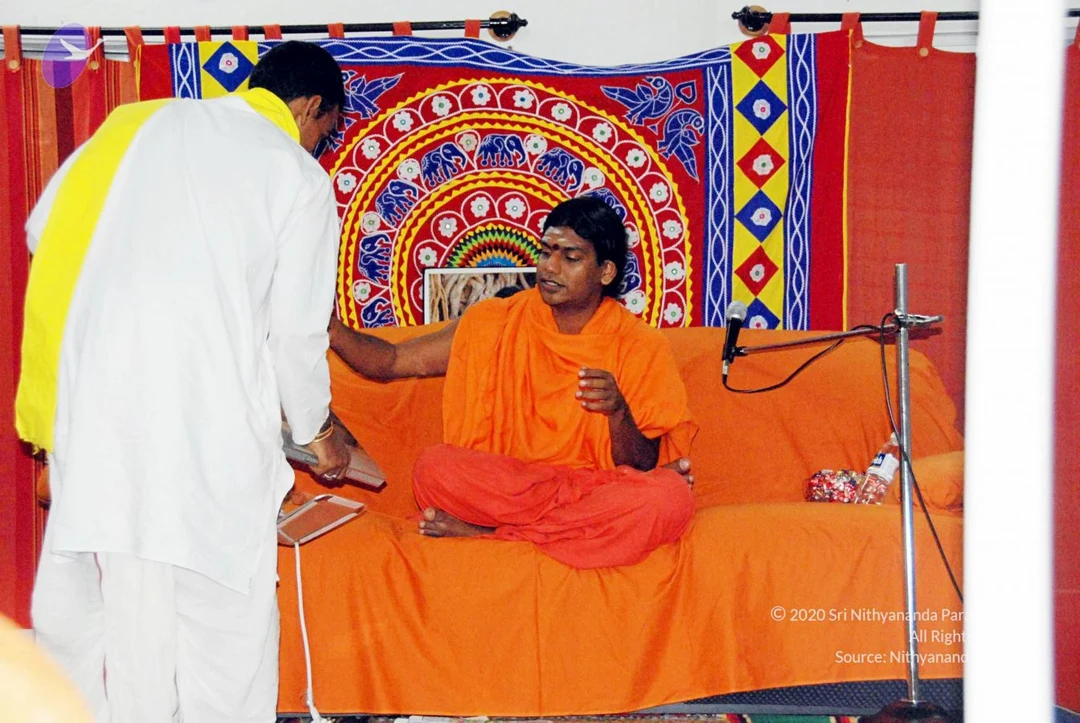
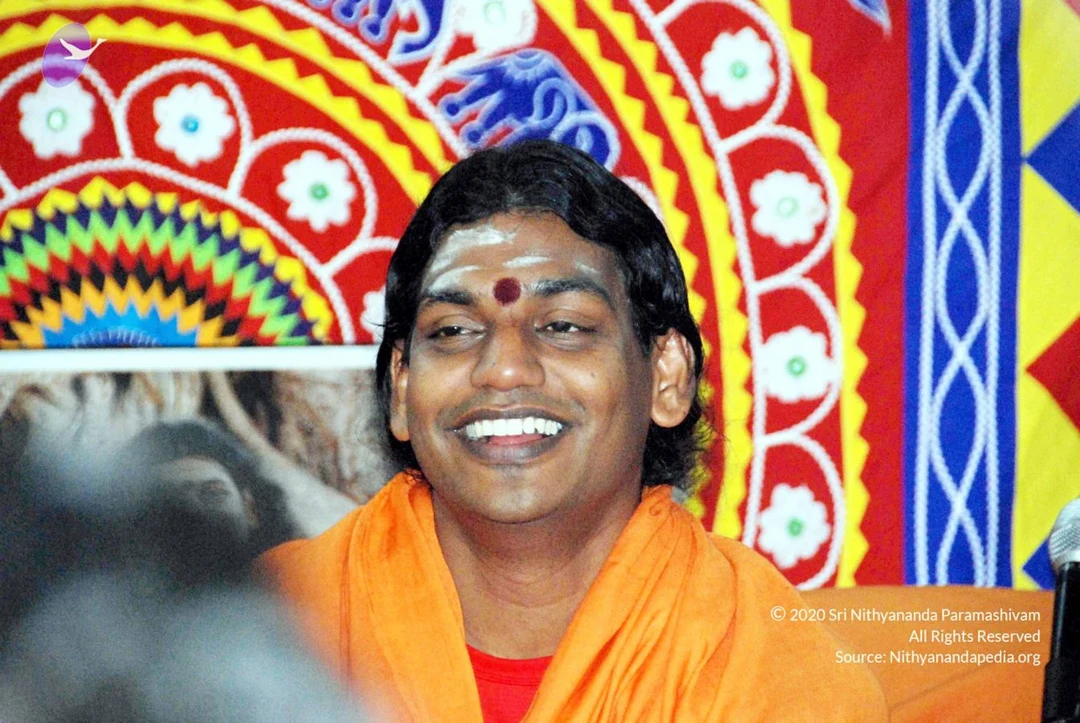
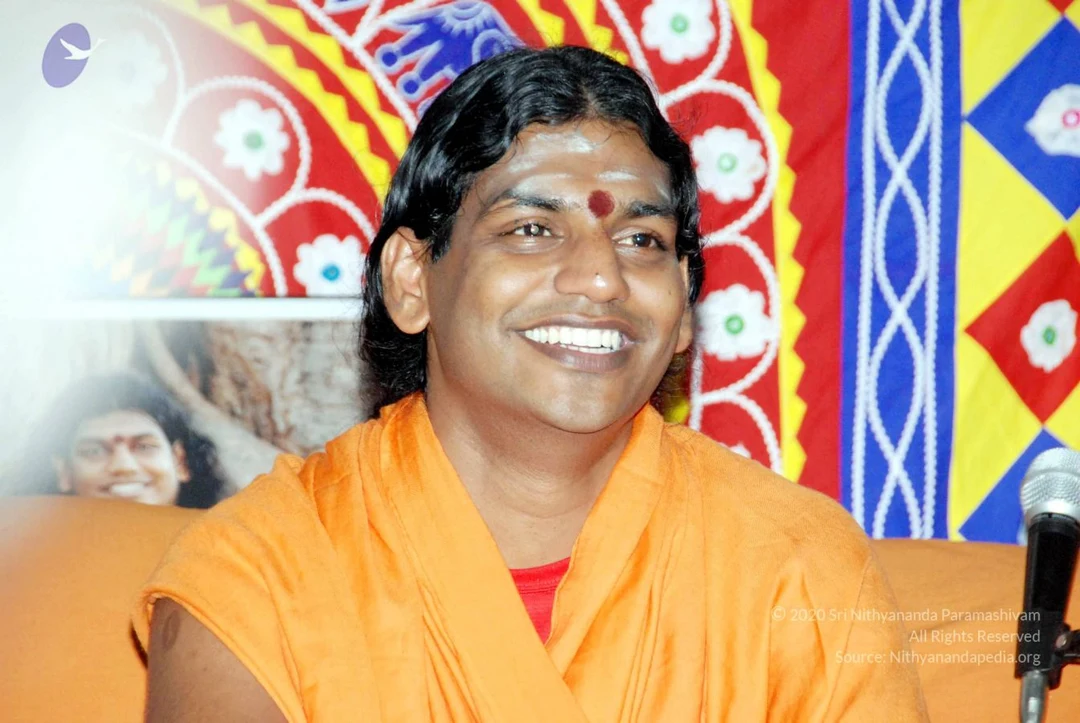
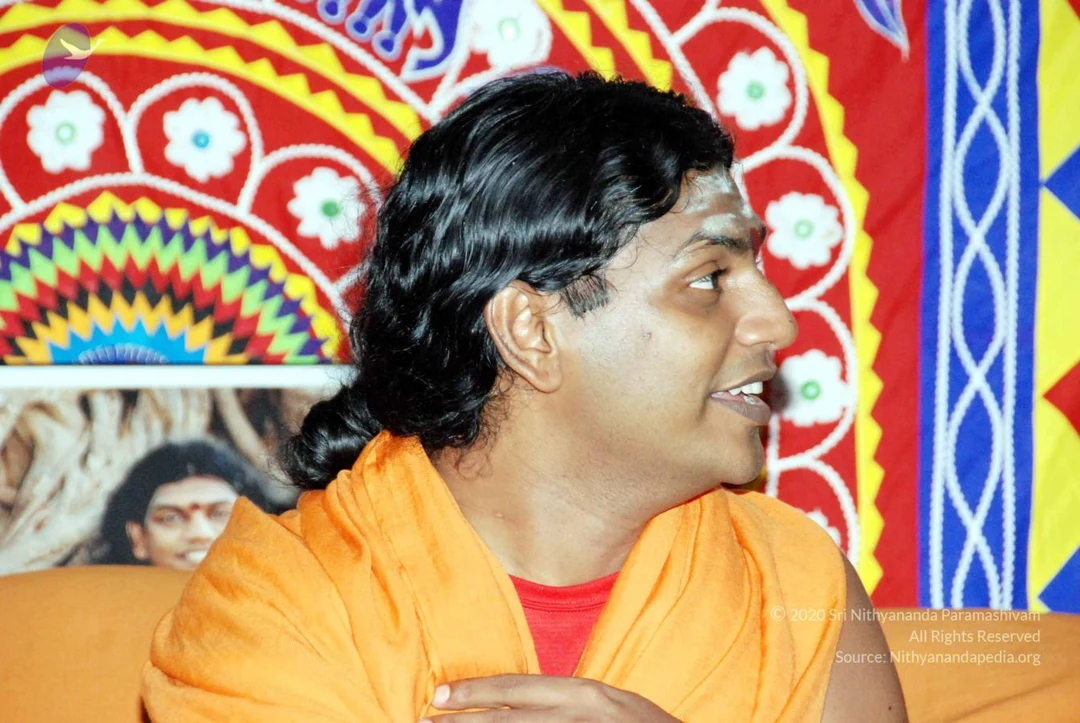
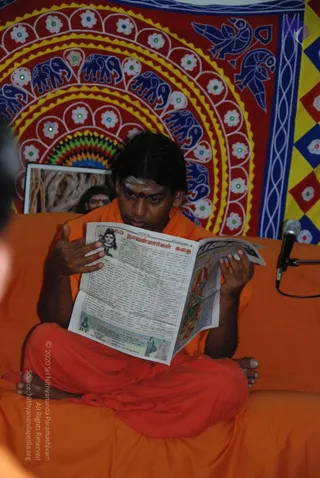
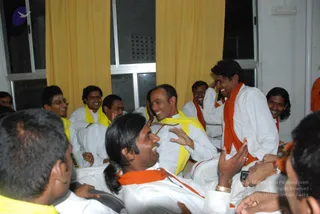
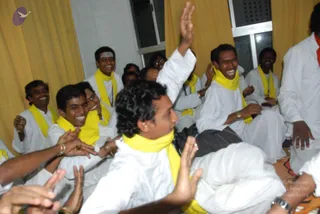
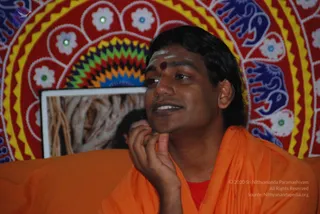
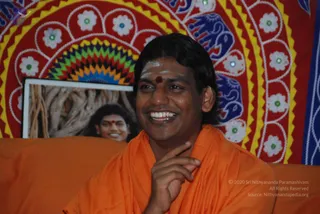
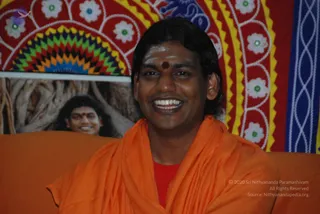
A seated man in saffron-orange robes sits cross-legged on an orange cushioned seat, holding open a Tamil newspaper page headed with the number 63 and the title நாயன்மார்கள் கதை, showing a printed illustration of Shiva. He has white ash and a red bindu on his forehead and long dark hair swept back, and gestures with his right hand while reading. Behind him hangs a colourful patterned cloth with blue elephants, birds and white flowers on red and yellow, and a framed photograph sits on the left. A microphone on a stand is at the right edge. The setting suggests a discourse or talk, with one person visible.A candid photograph of a group of men in white shirts and white dhotis seated closely together indoors, laughing and smiling. Several wear orange or saffron shawls and yellow shawls draped over their shoulders, and one man in the centre wears a rudraksha-style beaded mala. Yellow curtains and white walls with windows form the backdrop, and a man in the lower foreground gestures with raised hands. Several devotees surround the group in a joyful, relaxed atmosphere.A joyful group of men in white kurtas and yellow scarves sit closely together indoors in front of yellow curtains, many laughing and raising their hands in celebration. One man in the foreground leans forward with arms outstretched, another on the right has a wristwatch and gold bracelet, and a man at upper left has white sacred ash markings on his forehead. The scene feels like an energetic ashram gathering or satsang, with a window and yellow drapes behind them.A photograph of a man seated in front of a colourful red, yellow and blue patterned textile backdrop with elephant and floral motifs. He wears an orange saffron wrap over a red undershirt, has a red bindi and white tripundra marks on his forehead, and rests his hand against his chin while speaking. Behind him, a framed photograph shows a tree trunk with a dark-haired figure partly visible. The appearance-based label a person is uncertain here, as the cues are limited to saffron clothing and forehead marks, which are shared by many devotees.A smiling man with swept-back dark hair and a red bindi sits on an orange sofa, wearing a saffron-orange shawl. He raises one hand near his chin in a relaxed gesture. Behind him is a framed photograph of a smiling young man in front of a banyan tree trunk, and a red, yellow and blue patterned cloth with white flower motifs hangs on the wall.A smiling man with long dark hair, a red bindi and white vertical markings on his forehead sits on an orange couch, wearing an orange shawl over a red top. Behind him, a red and yellow patterned textile hangs on the wall, and a framed photo shows a smiling man with dark hair and a red bindi in front of a banyan tree's roots.
Inner-Awakening-Sacred-Arts-Tour
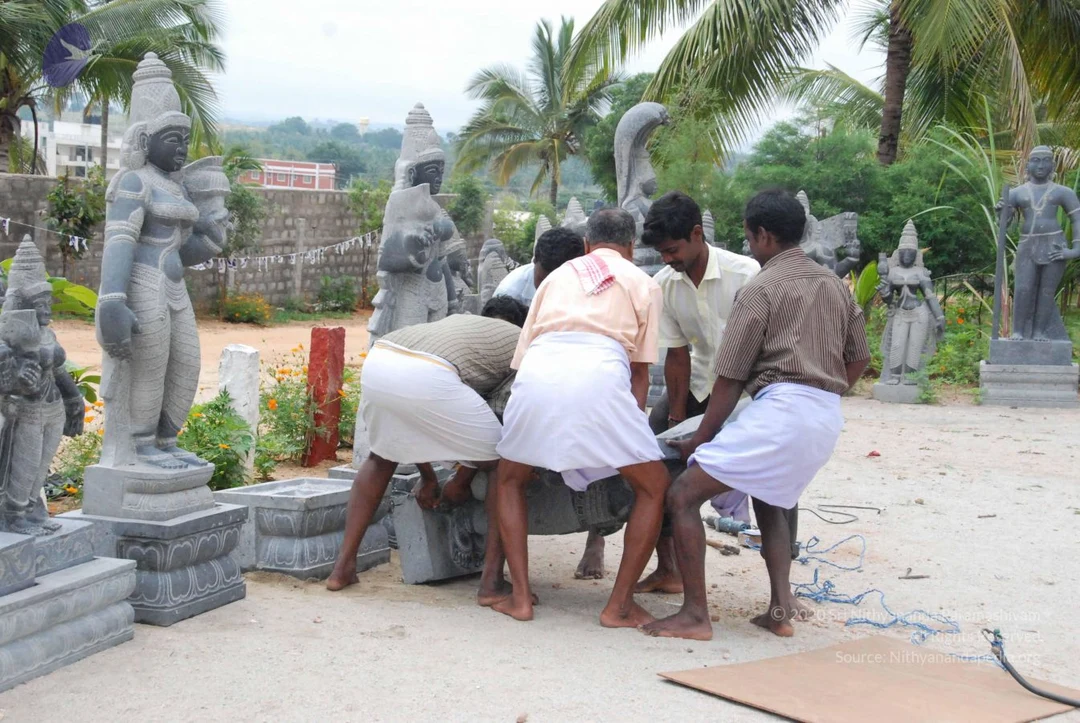
26 photosSource gallery
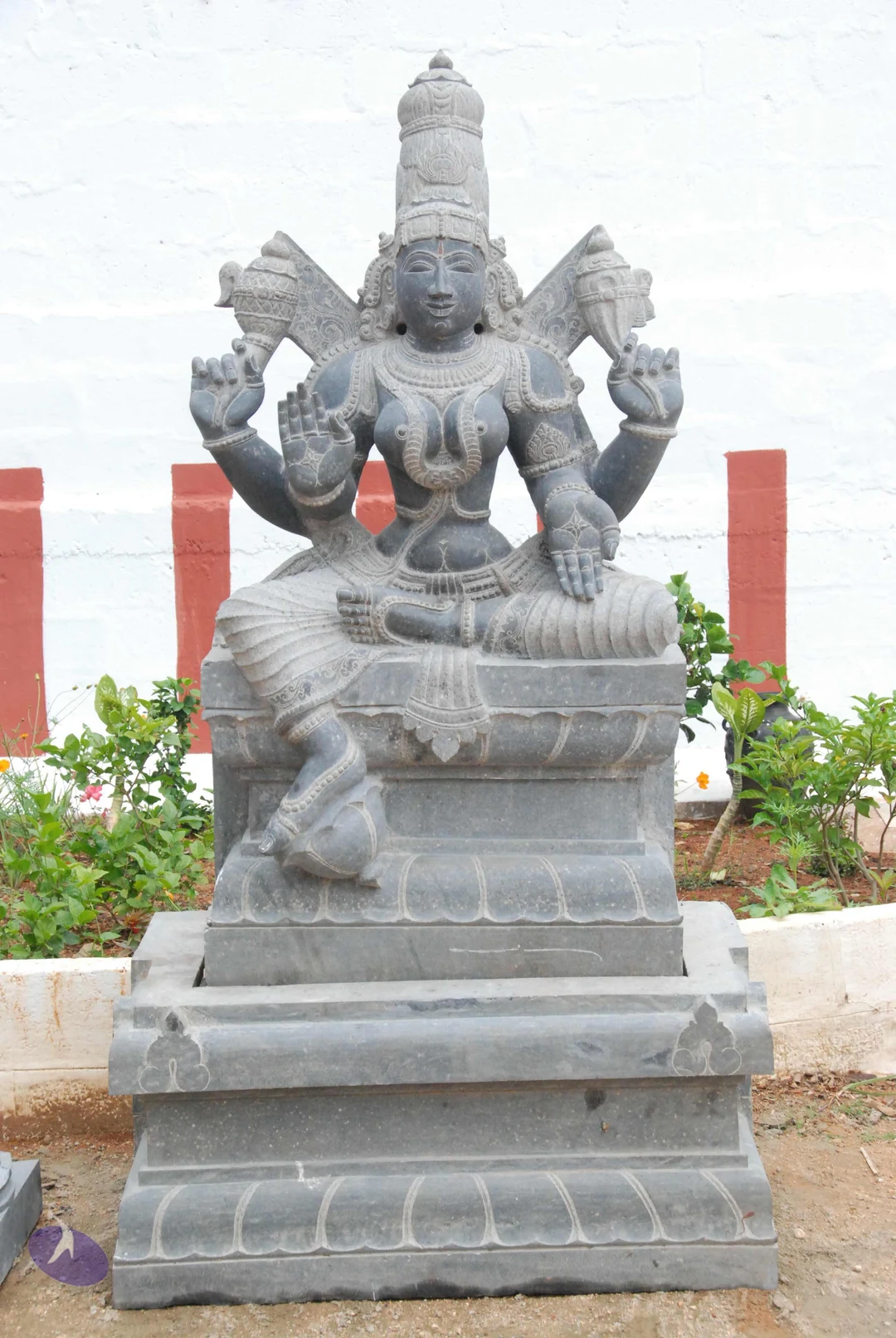
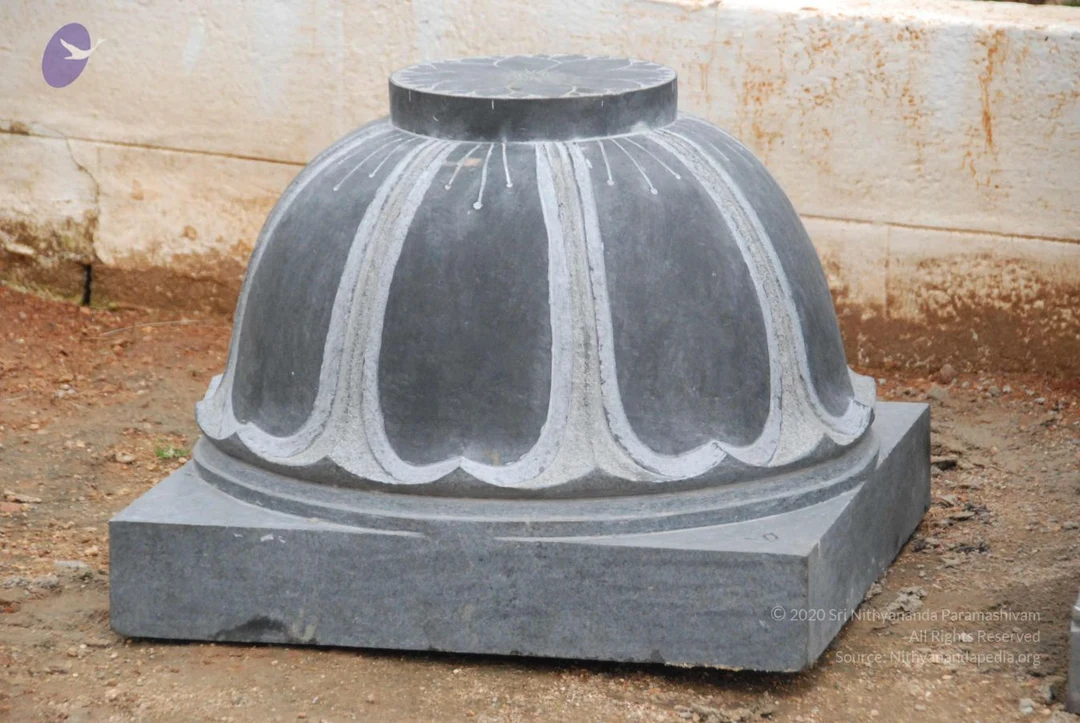
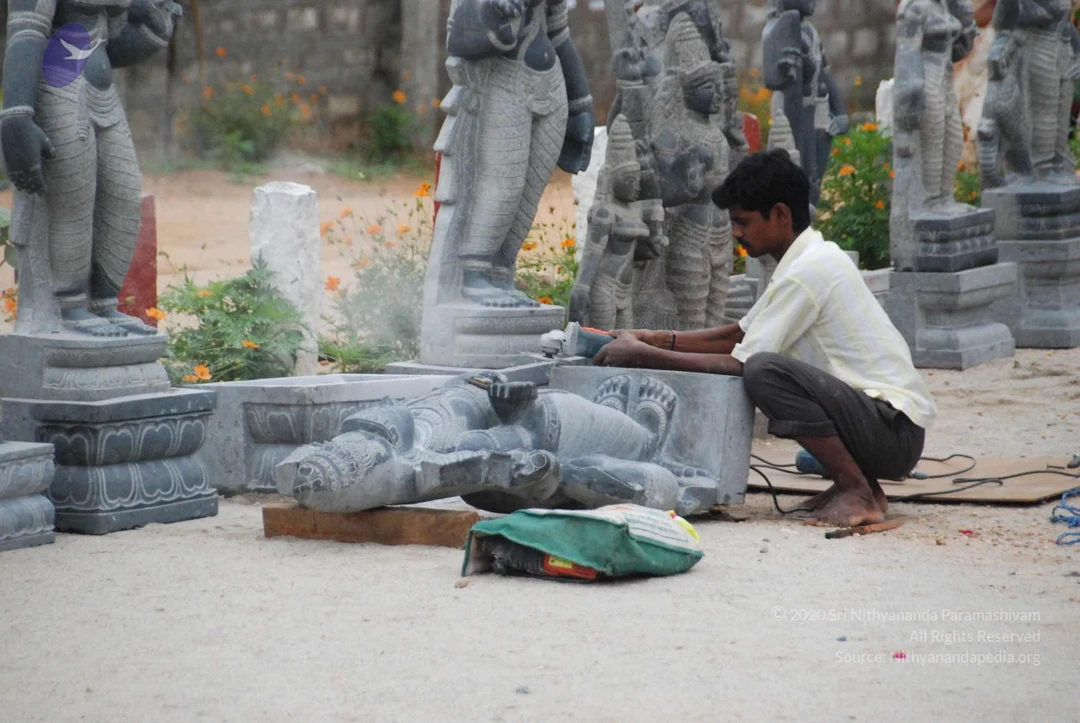
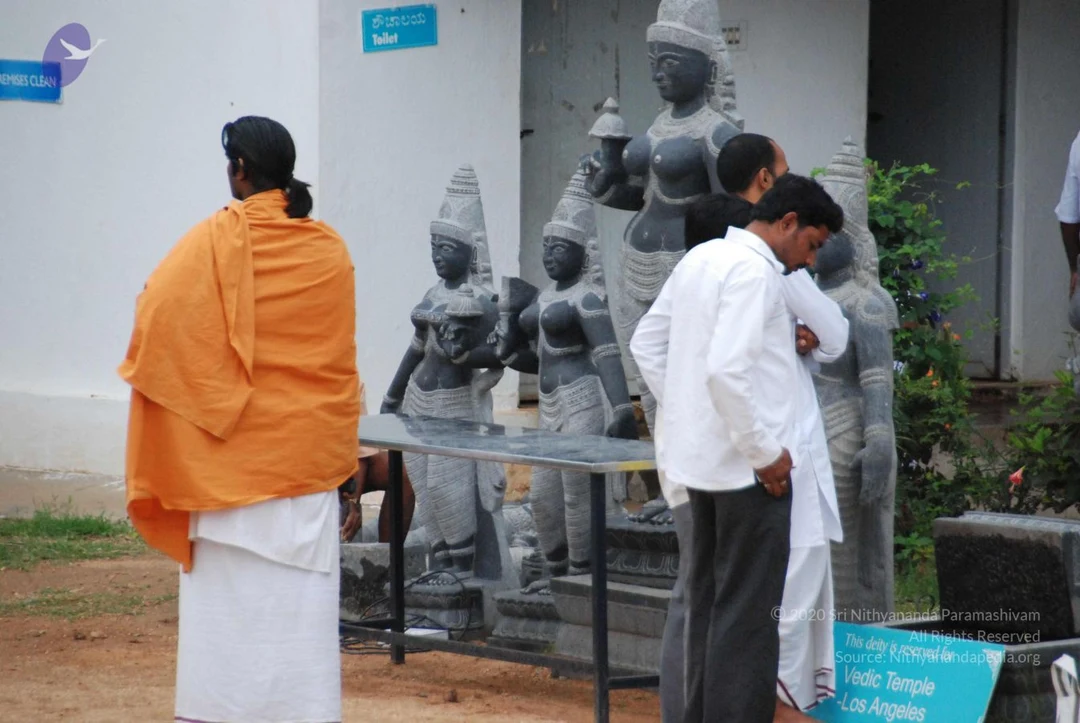
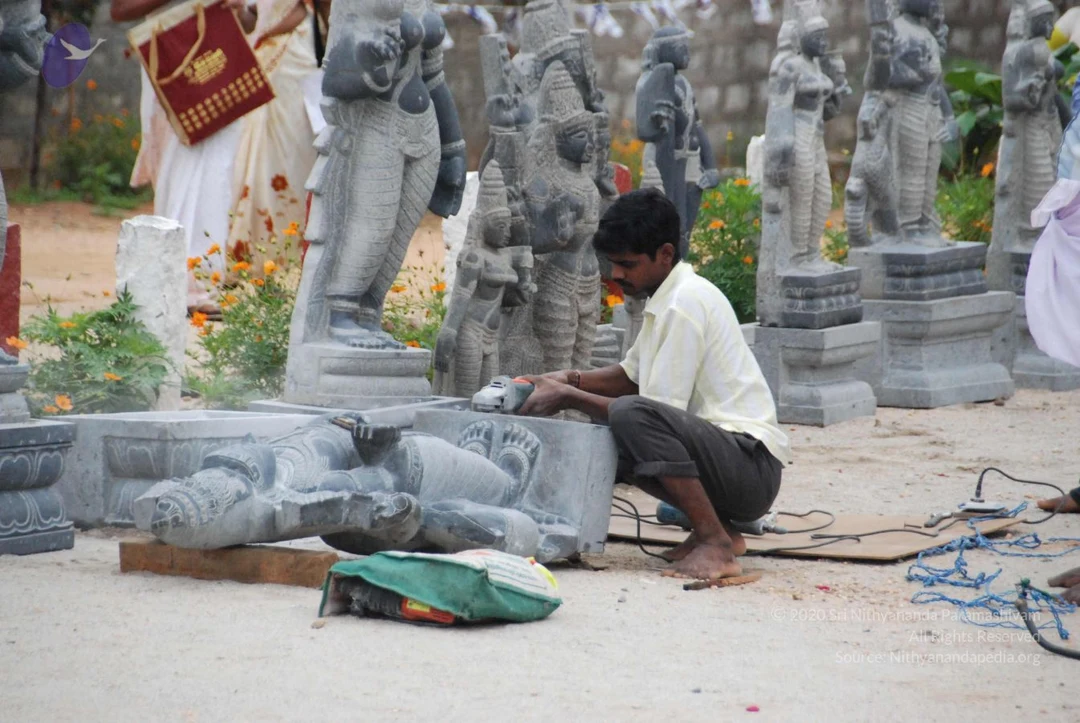
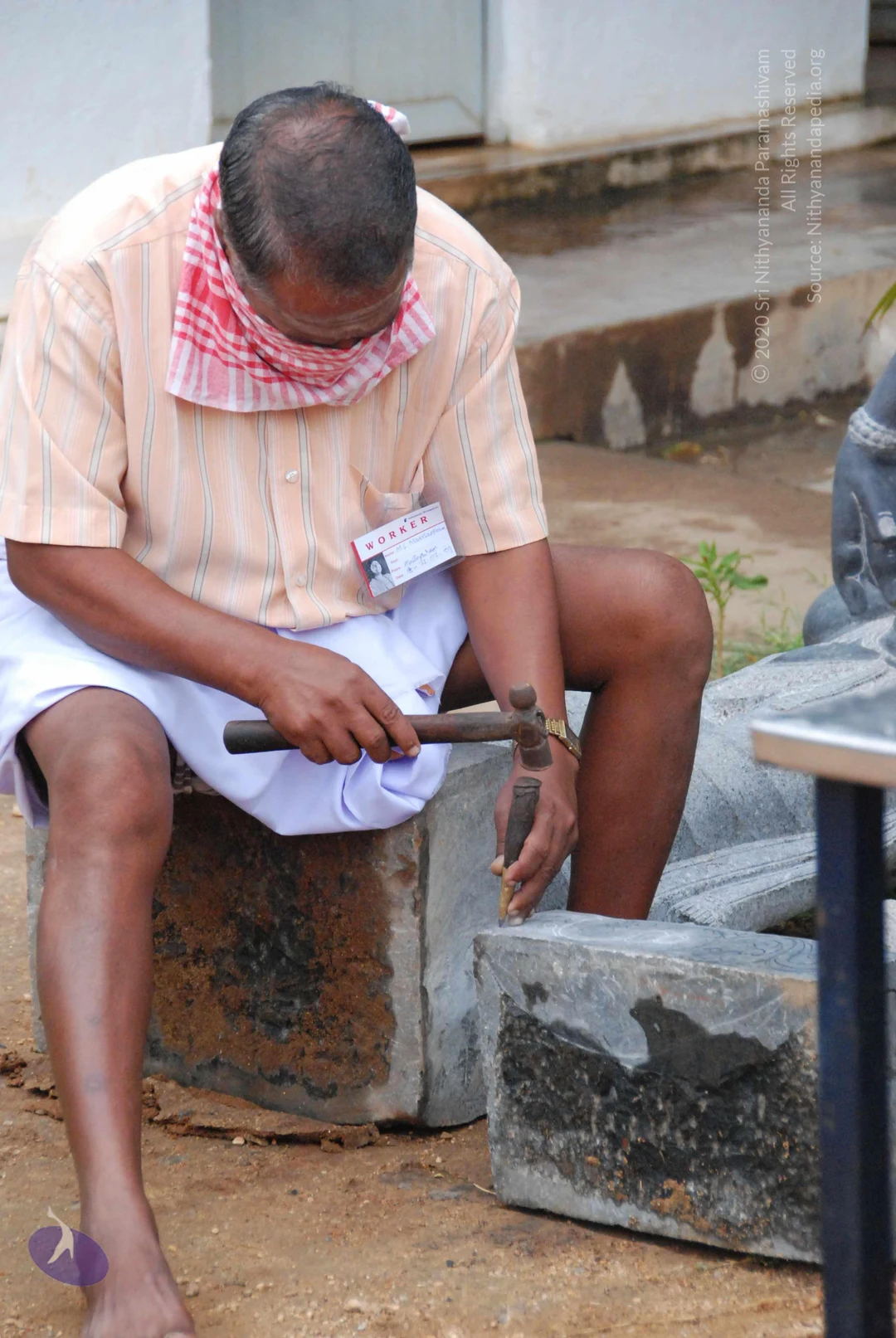
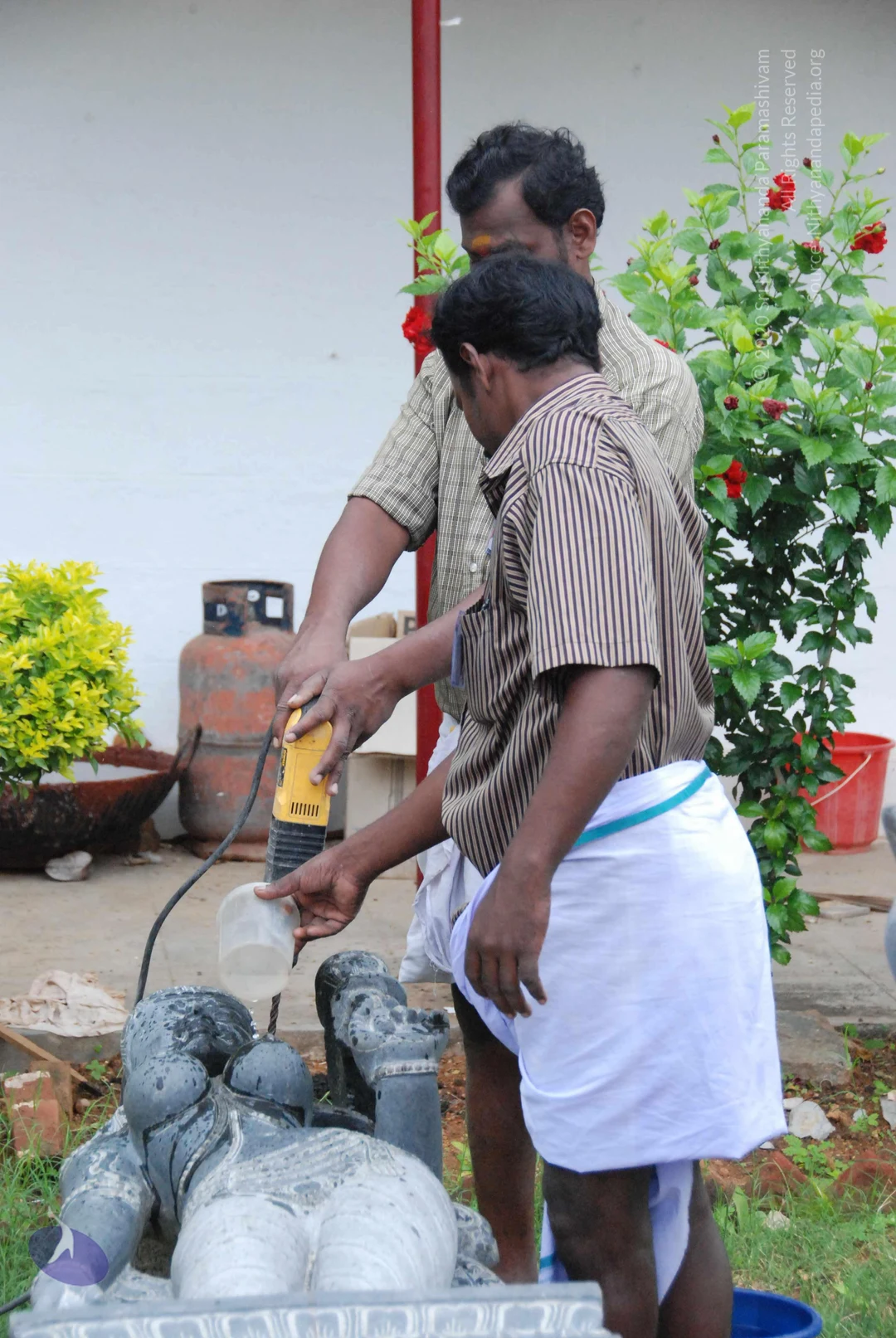
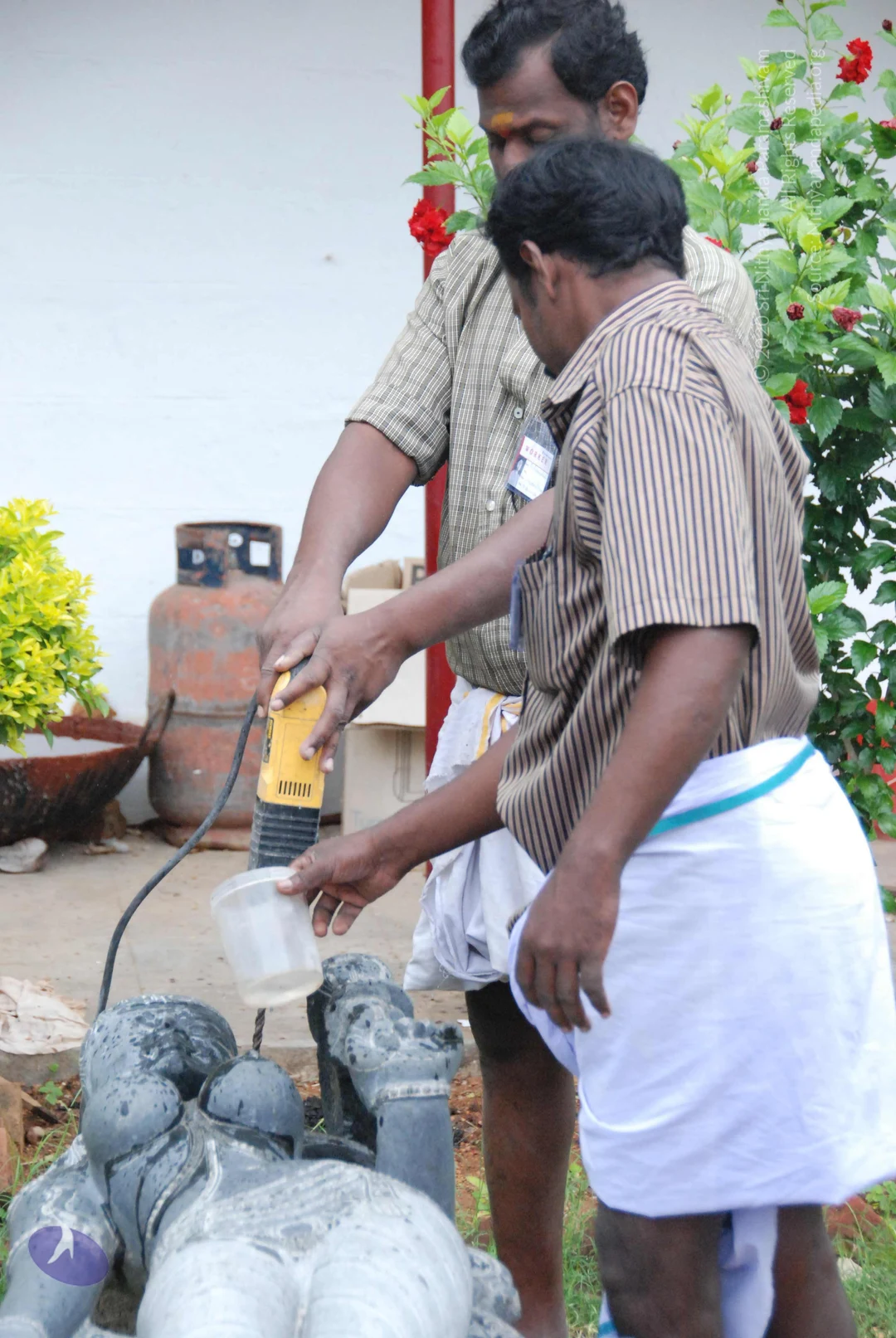
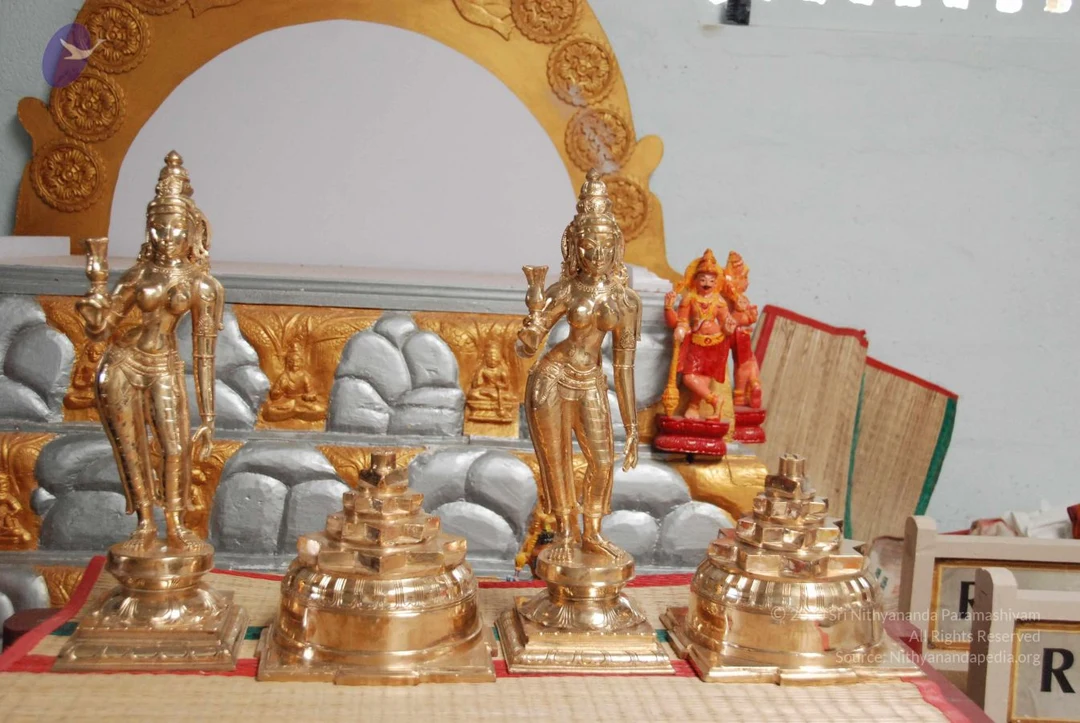
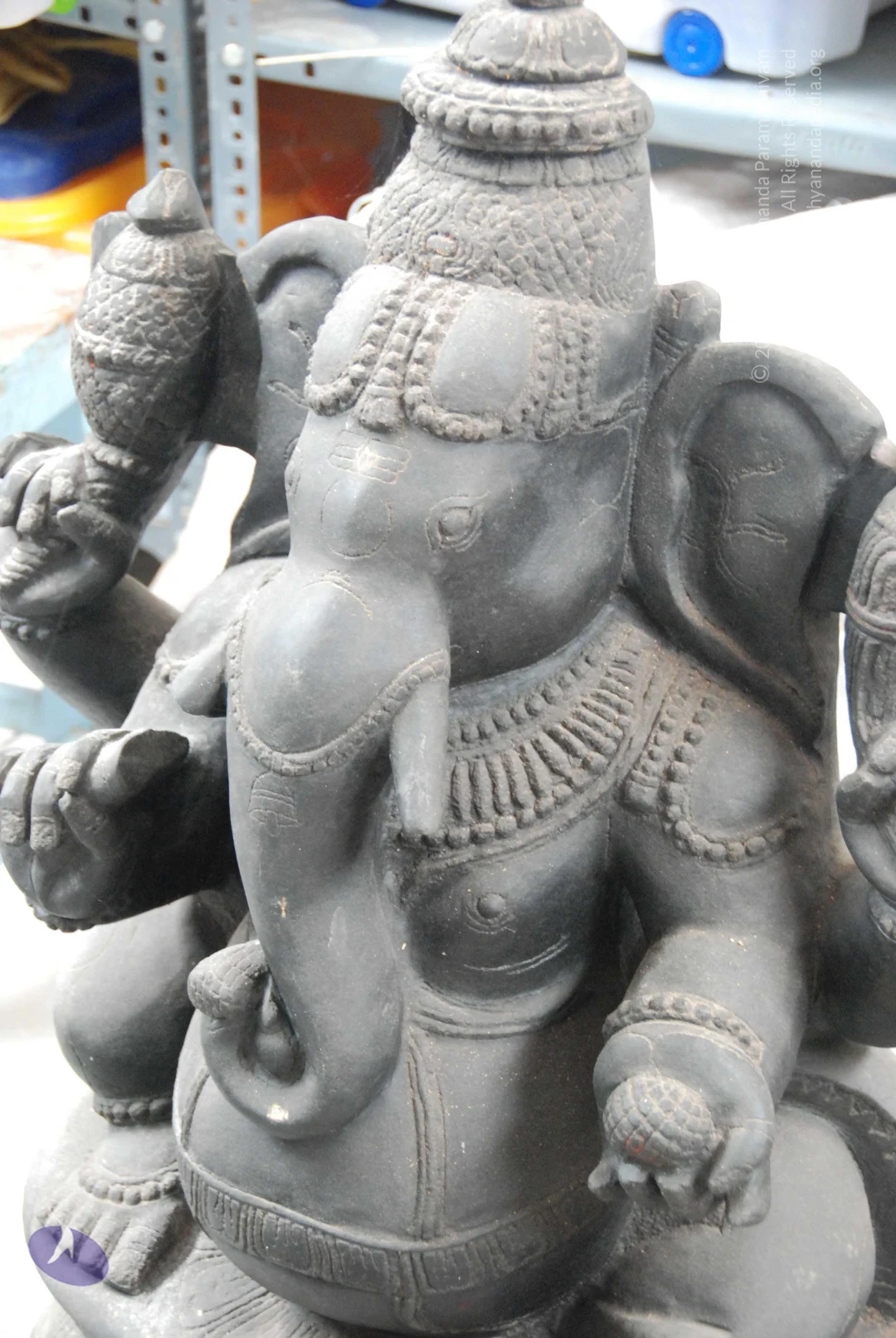
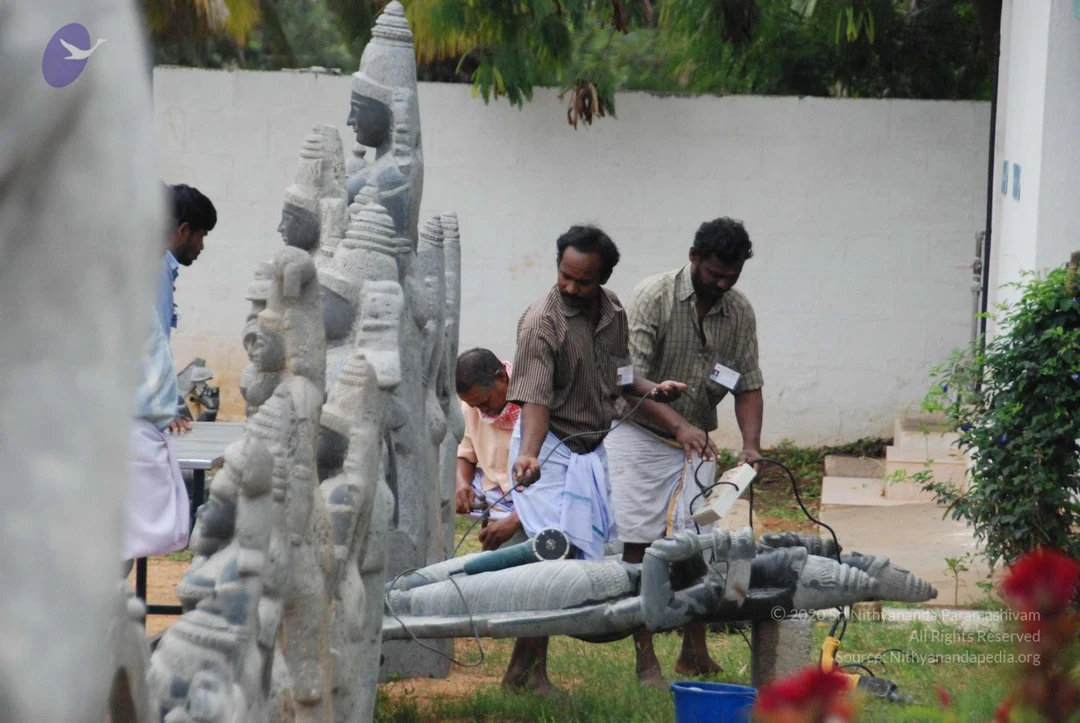
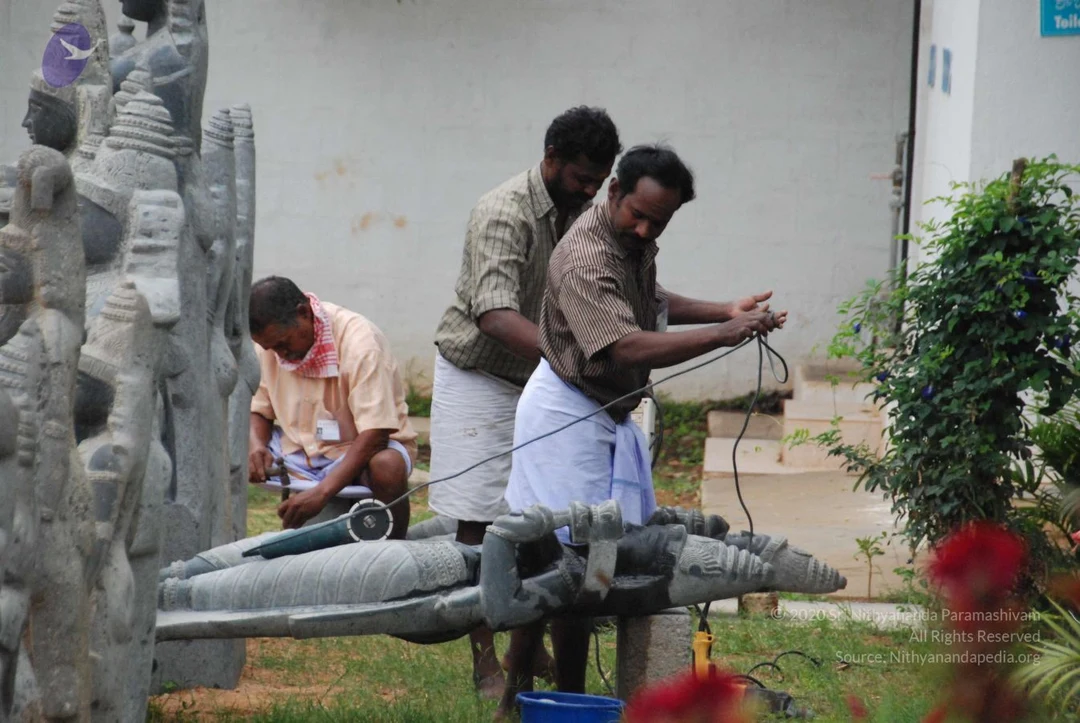
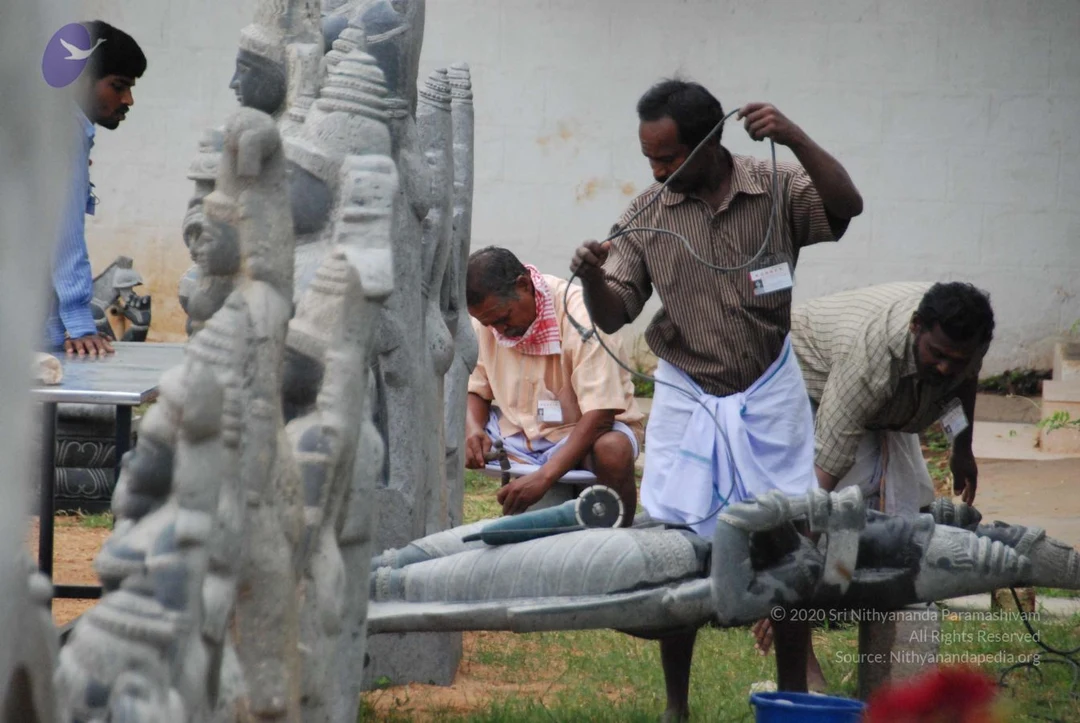
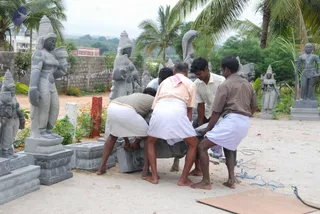
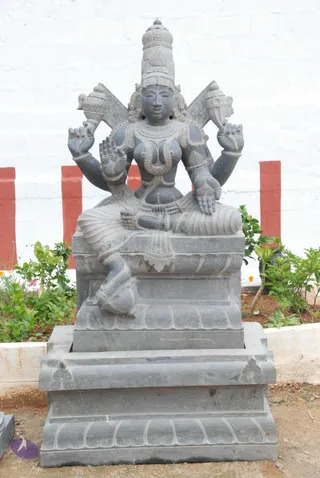
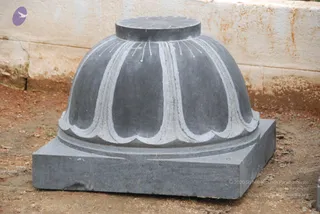
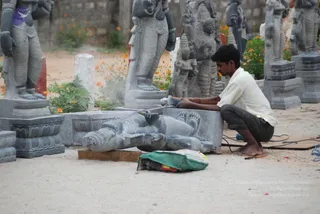
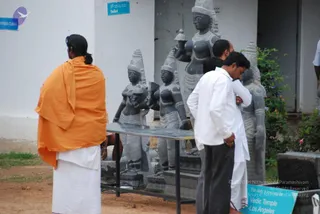
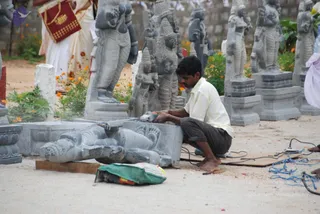
Outdoor photo at a stone-carving yard with many grey granite deity statues standing on plinths among palm trees and marigold plants. Four men in white dhotis and shirts crouch and lift a large grey stone block or pedestal on sandy ground, with blue rope and a cardboard sheet on the ground. Tall statues of standing figures with crowns and attendants are visible, along with a stone cobra-hooded figure and a sign-like statue on the right.A dark grey stone sculpture of a seated four-armed goddess on a tiered carved pedestal, set against a white wall with red pilasters and green shrubs. She wears a tall ornate crown, a stone necklace and armlets, and holds a conch and other attributes in her hands, with a lotus-like seat beneath her. No people are visible; the image shows a deity murti, not a person.A photograph of a dark grey stone base carved as a lotus-petal pedestal, possibly a temple or pillar base, set on a dusty ground in front of a pale weathered stone wall. The lower square plinth is plain and the bulbous top is carved with lobed petal panels outlined in light grey, with radiating lines on the upper rim. No people are visible.A young man in a white shirt and dark trousers squats barefoot on sandy ground, grinding or polishing a reclining grey stone figure of a deity, its carved headdress visible. Behind him stand many finished grey granite statues of standing deities and multi-armed figures on plinths, with orange marigolds growing among them and a low stone wall in the background. A green cloth bag lies on the ground in front. No a person candidate is visible; the scene shows stone carving work at a statue yard.Outdoor photo of a temple grounds area beside a white building with a blue sign reading Toilet. A person in an orange saffron shawl over white dhoti stands at left, facing the stone sculptures. Several black granite deity murti statues with tall crowns and jewelled ornaments stand behind a grey display table, and a blue plaque on the lower right reads 'This deity is reserved for Vedic Temple - Los Angeles'. Two men in white shirts stand in the centre-right, one looking down at the display.A man in a plain white shirt and dark trousers squats barefoot on a sandy ground, using a handheld grinder or power tool on a grey stone sculpture of a reclining figure. Around him stand several finished grey granite deity statues on pedestals, including standing figures and a multi-headed form, with orange marigolds and greenery in the background. Coiled cables and a green cloth bag lie on the ground. In the top left, a person in white clothing with a red cloth bag is partly visible. The scene shows stone carving work at an outdoor stone-sculpture site.

Nithyanandeshwara-Nithyanandeshwari-Kerala-Alangkar
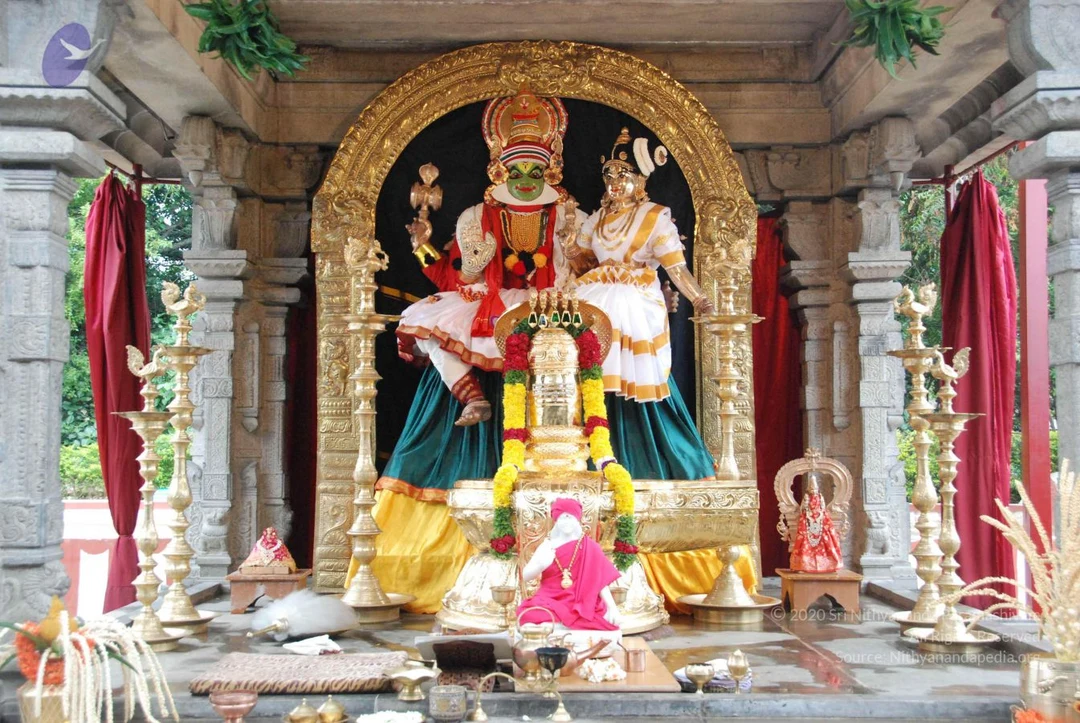
23 photosSource gallery
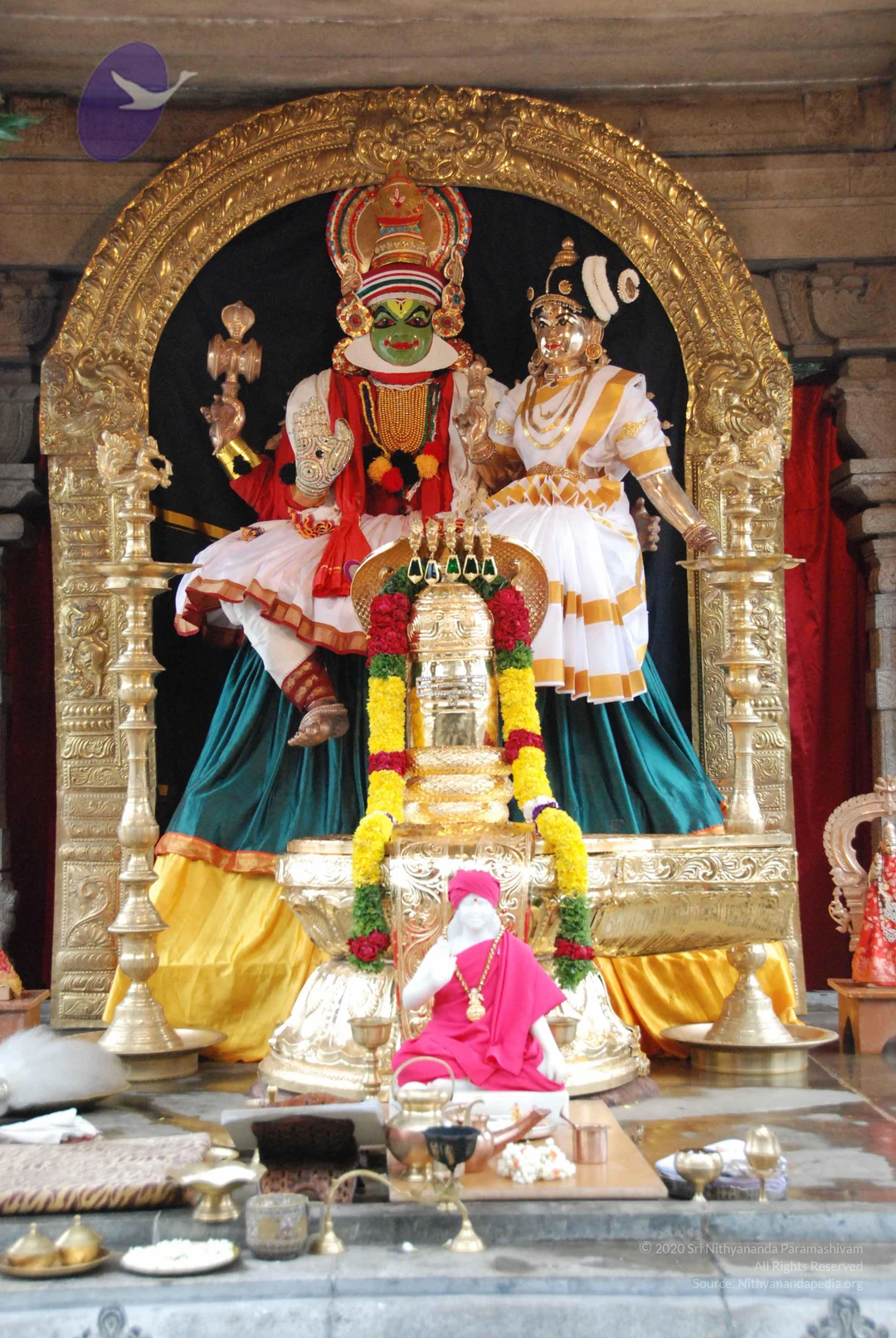
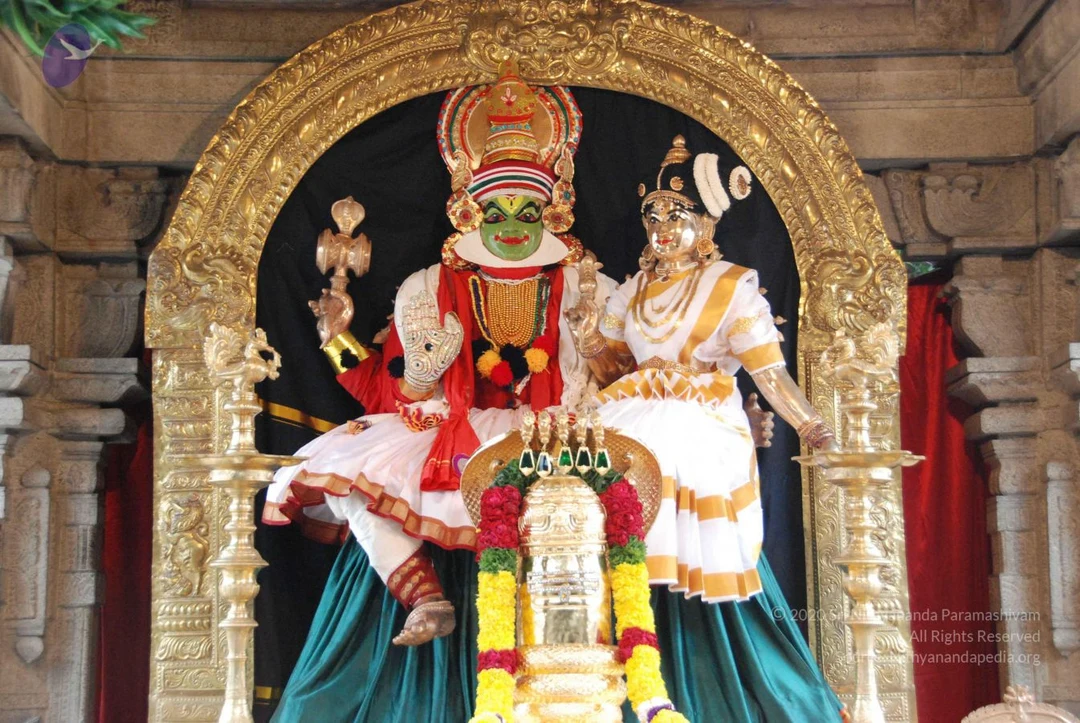
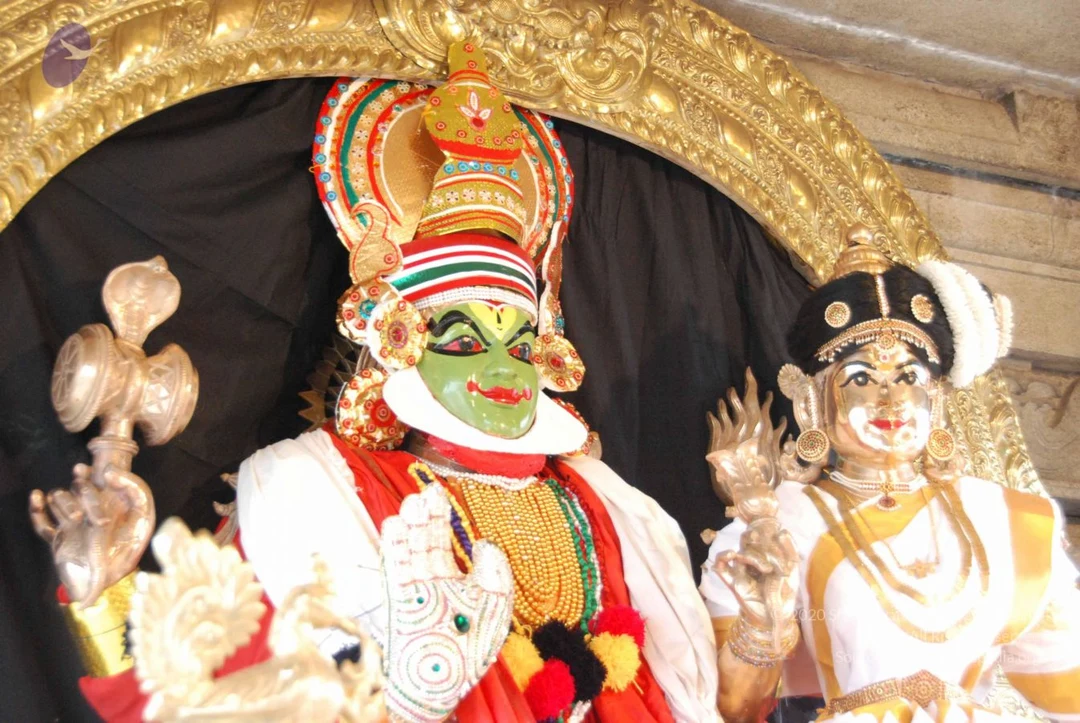
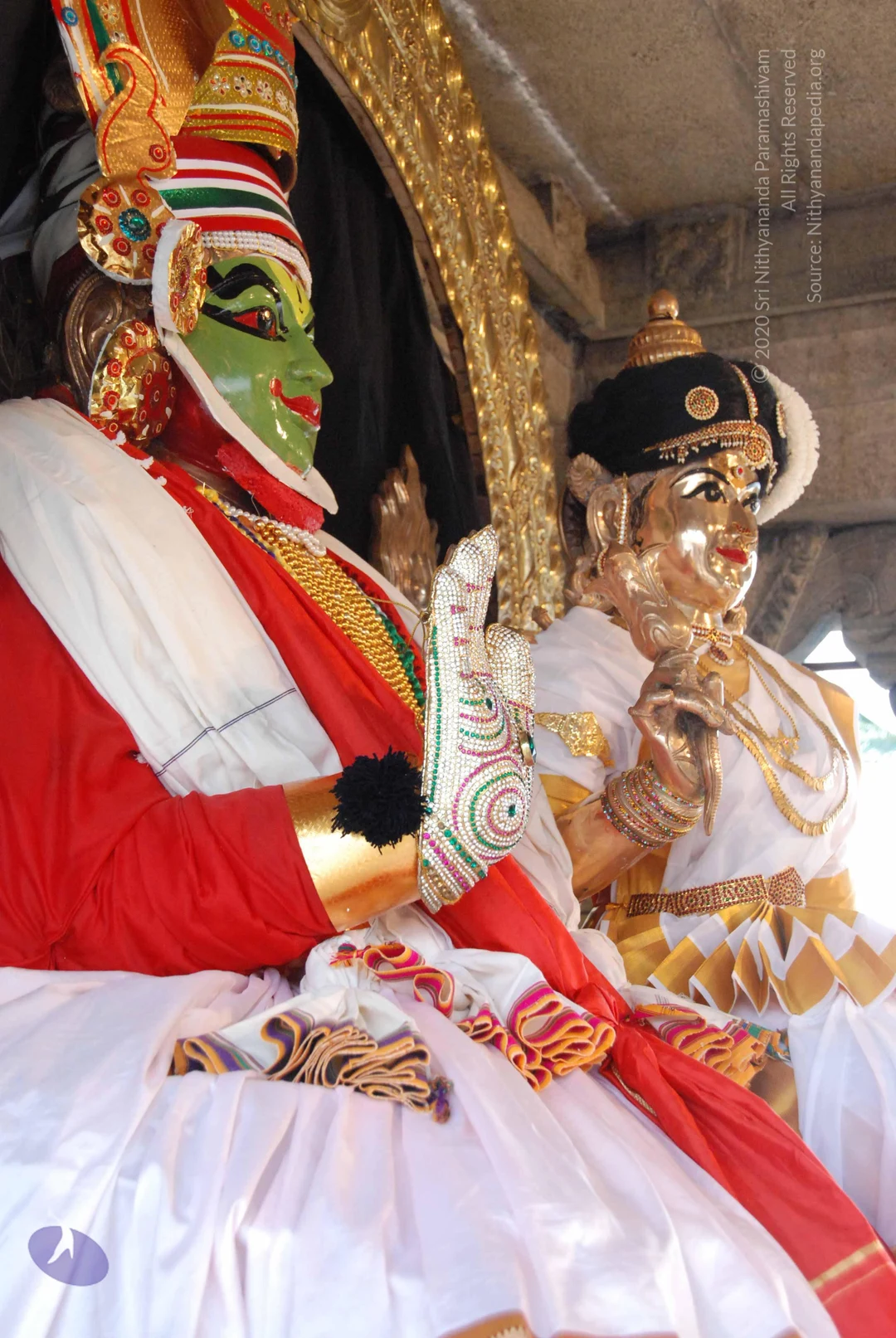
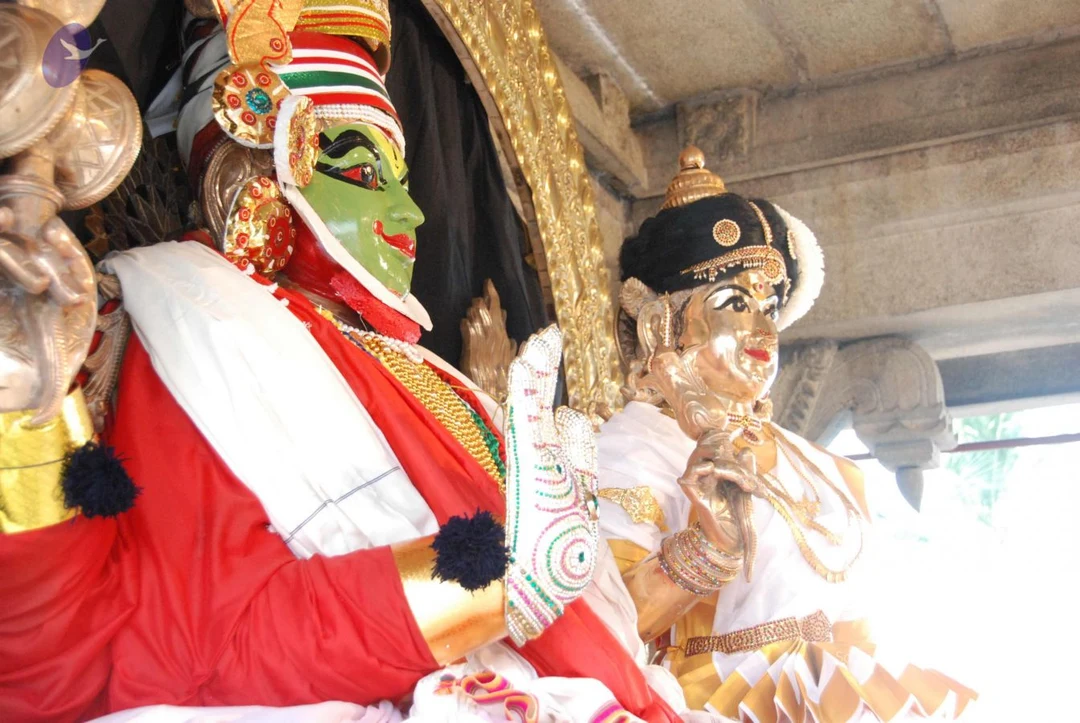
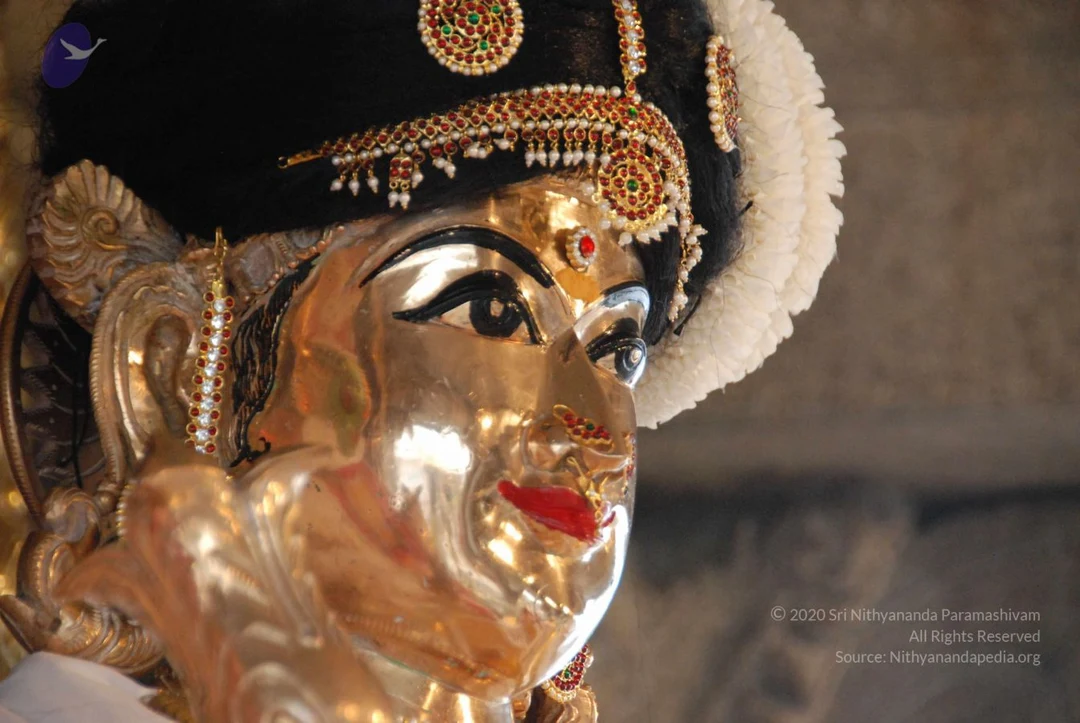
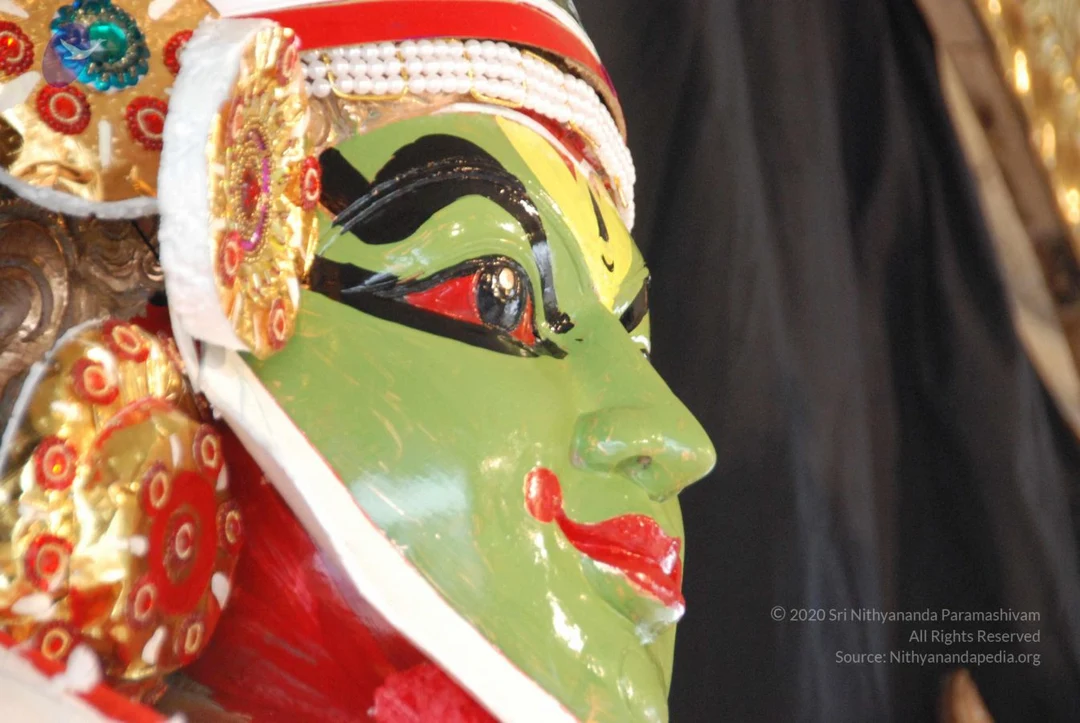
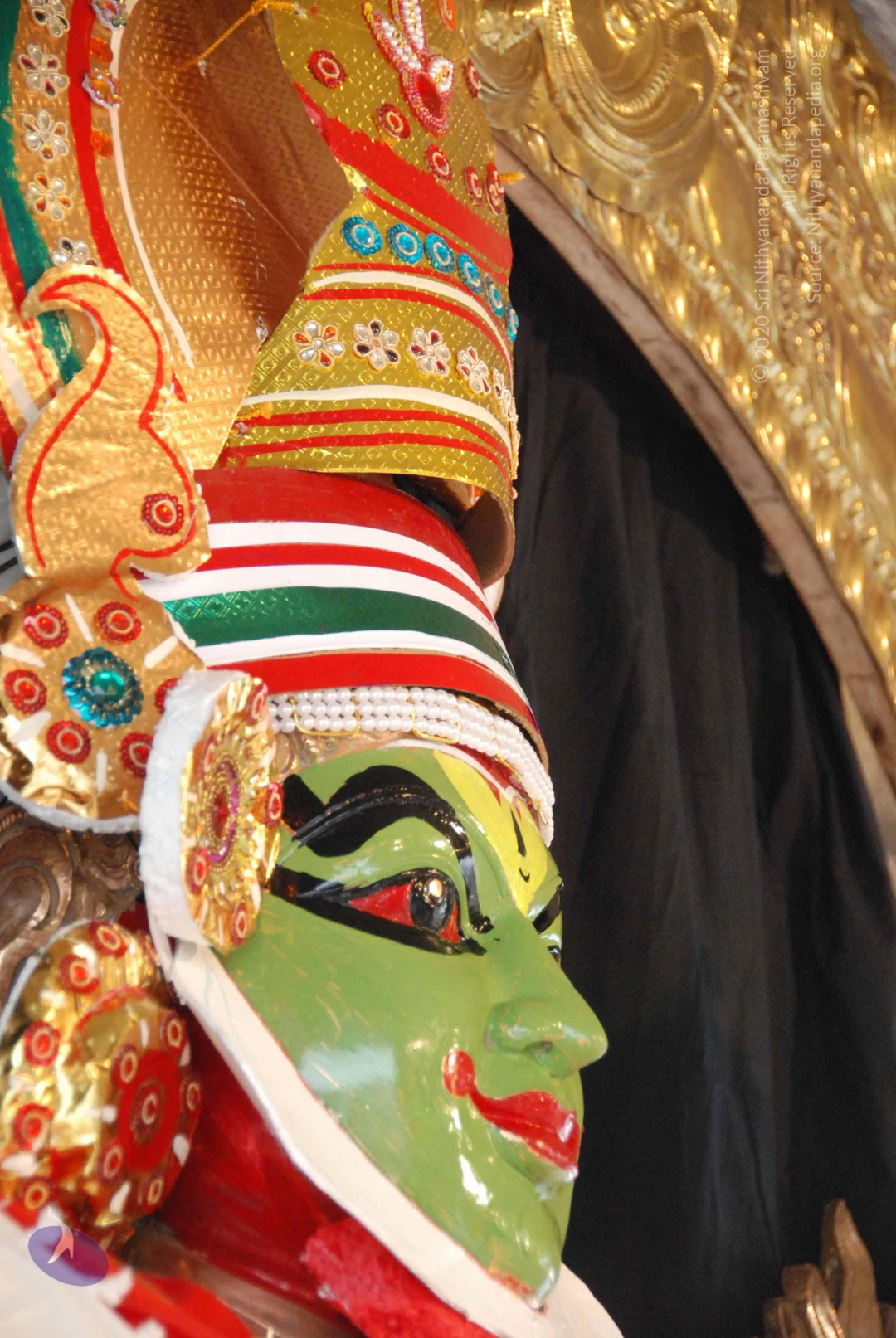
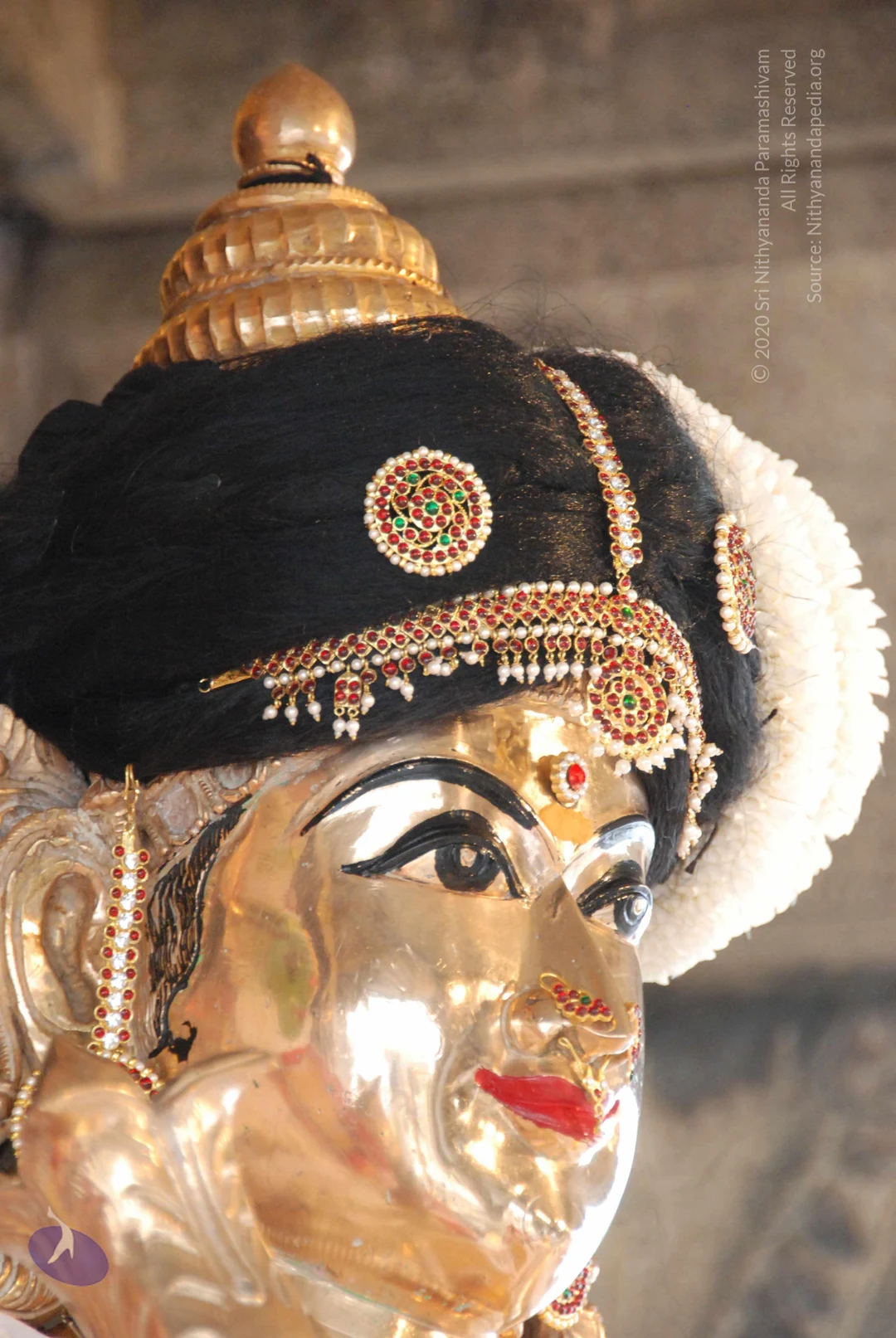
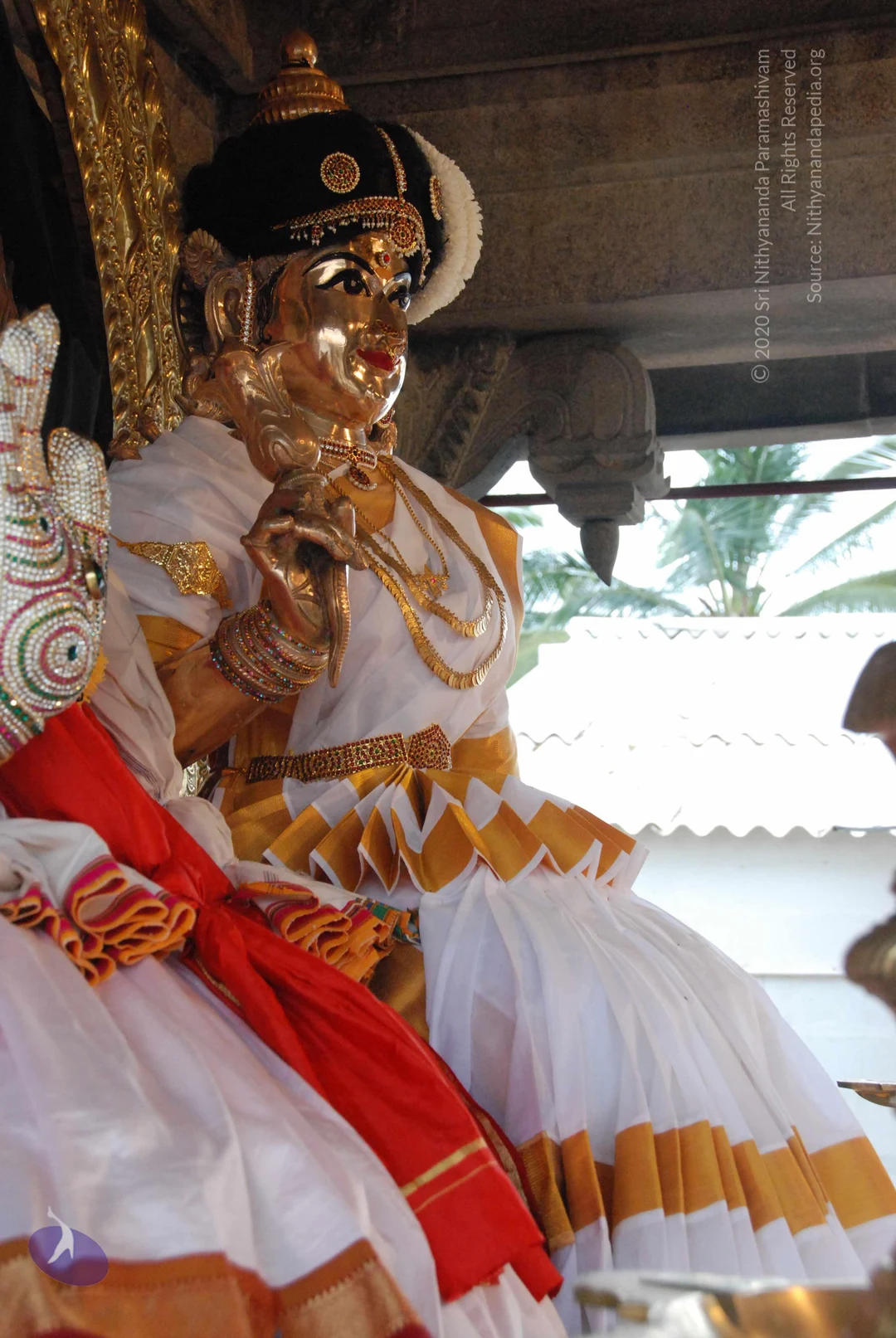
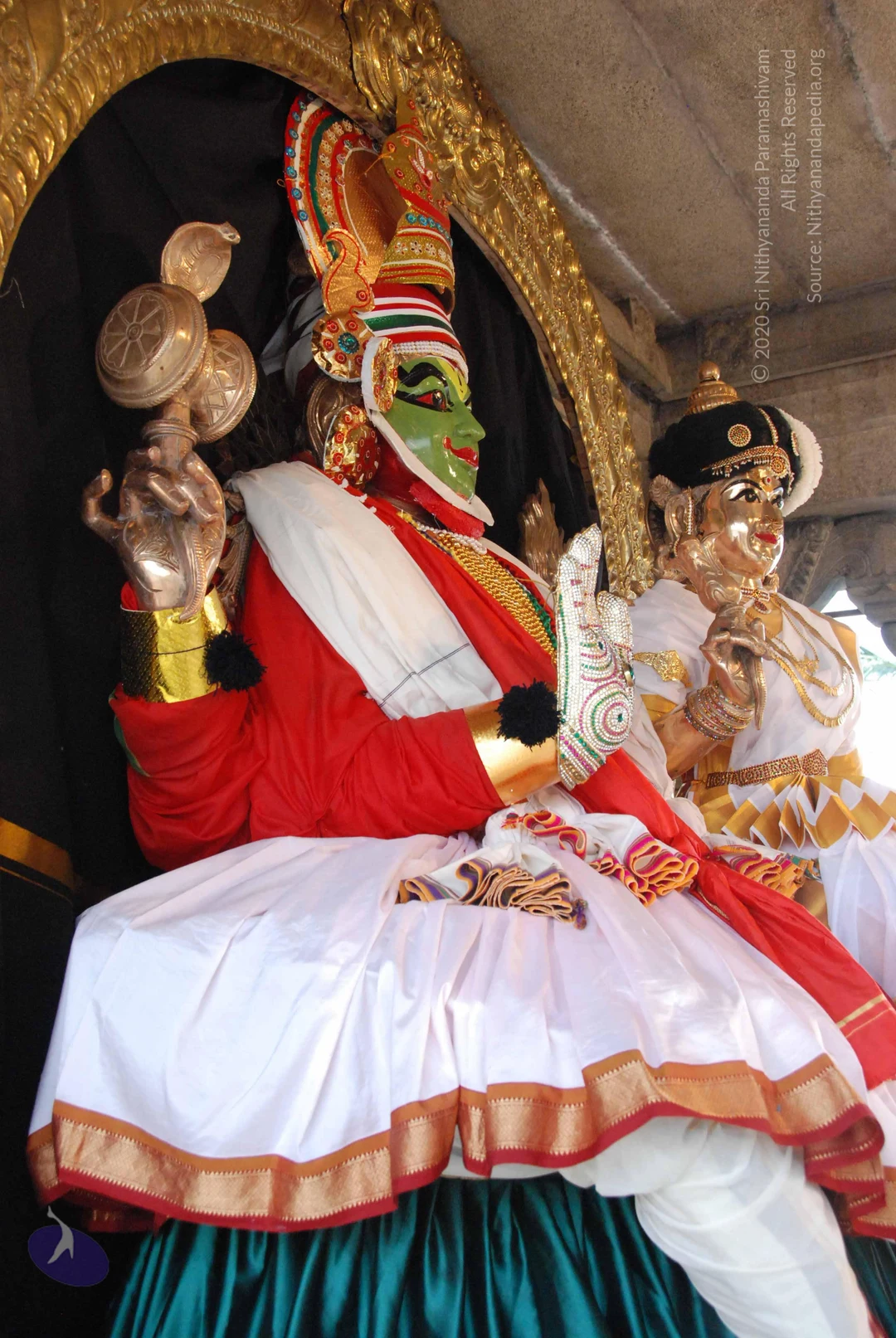
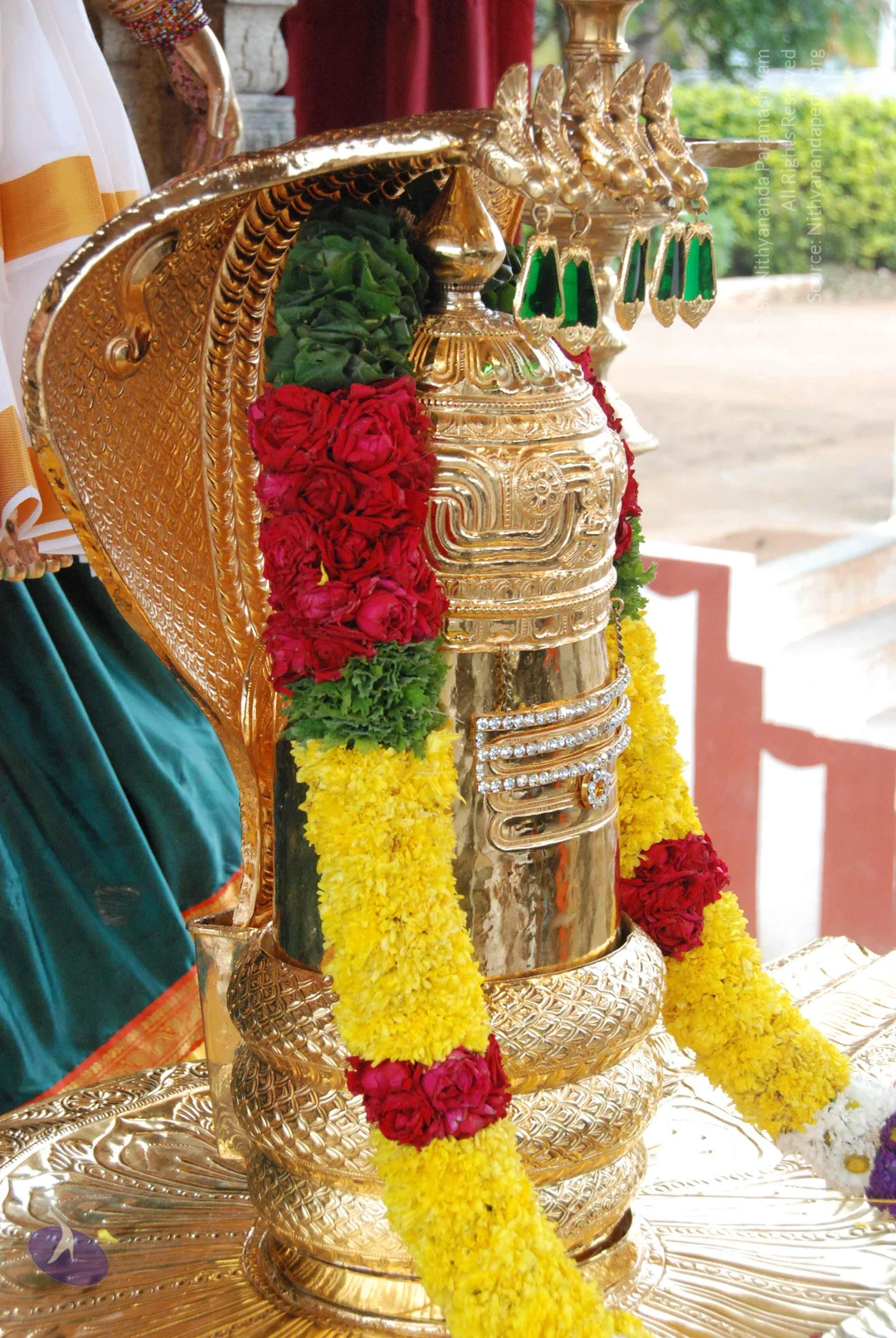
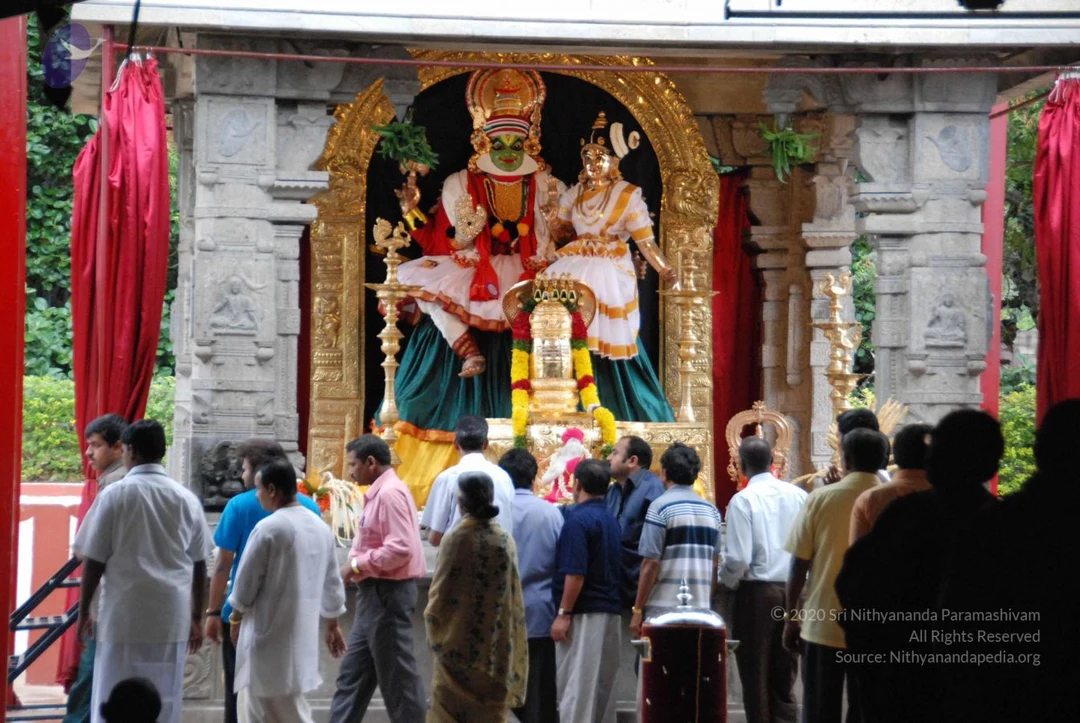
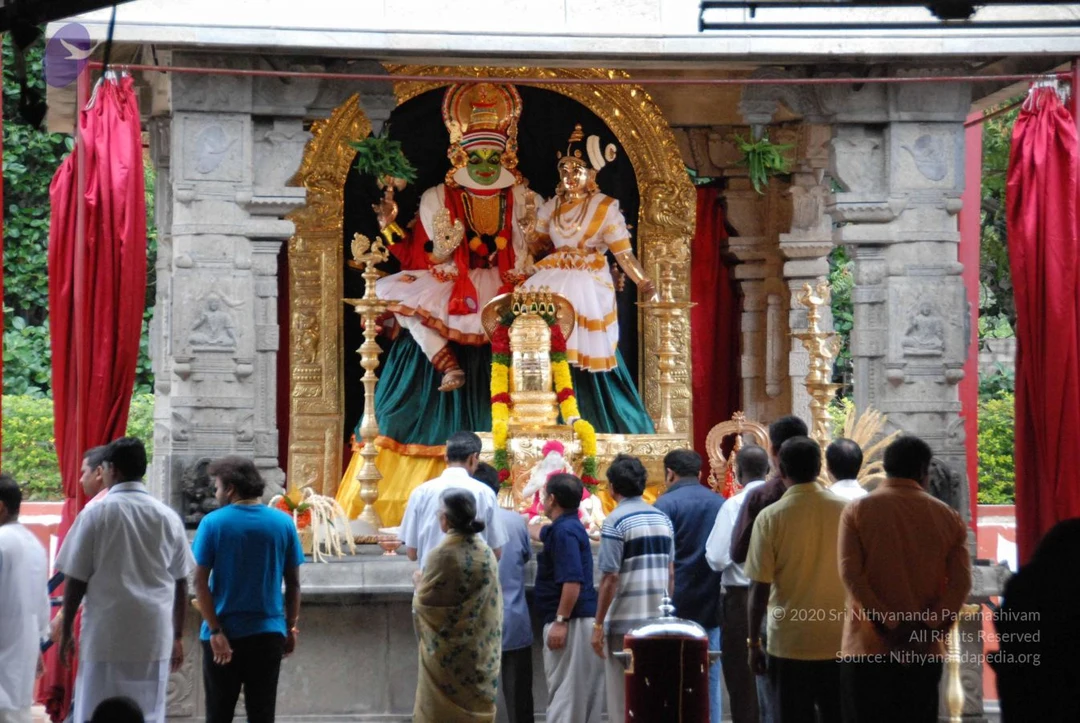
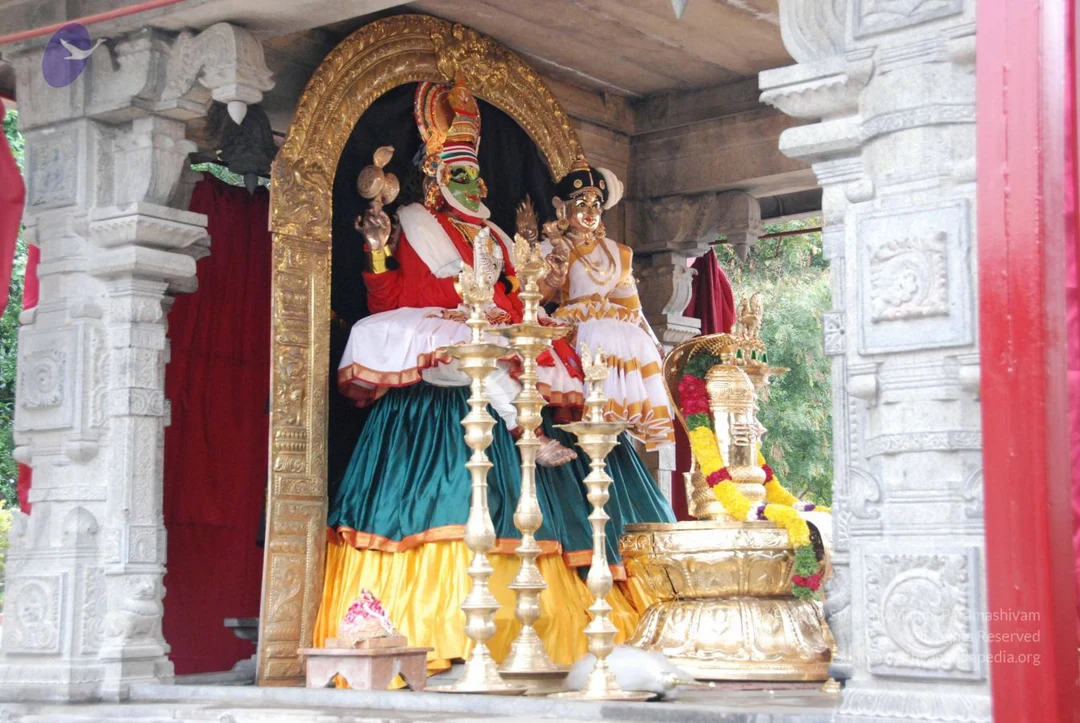
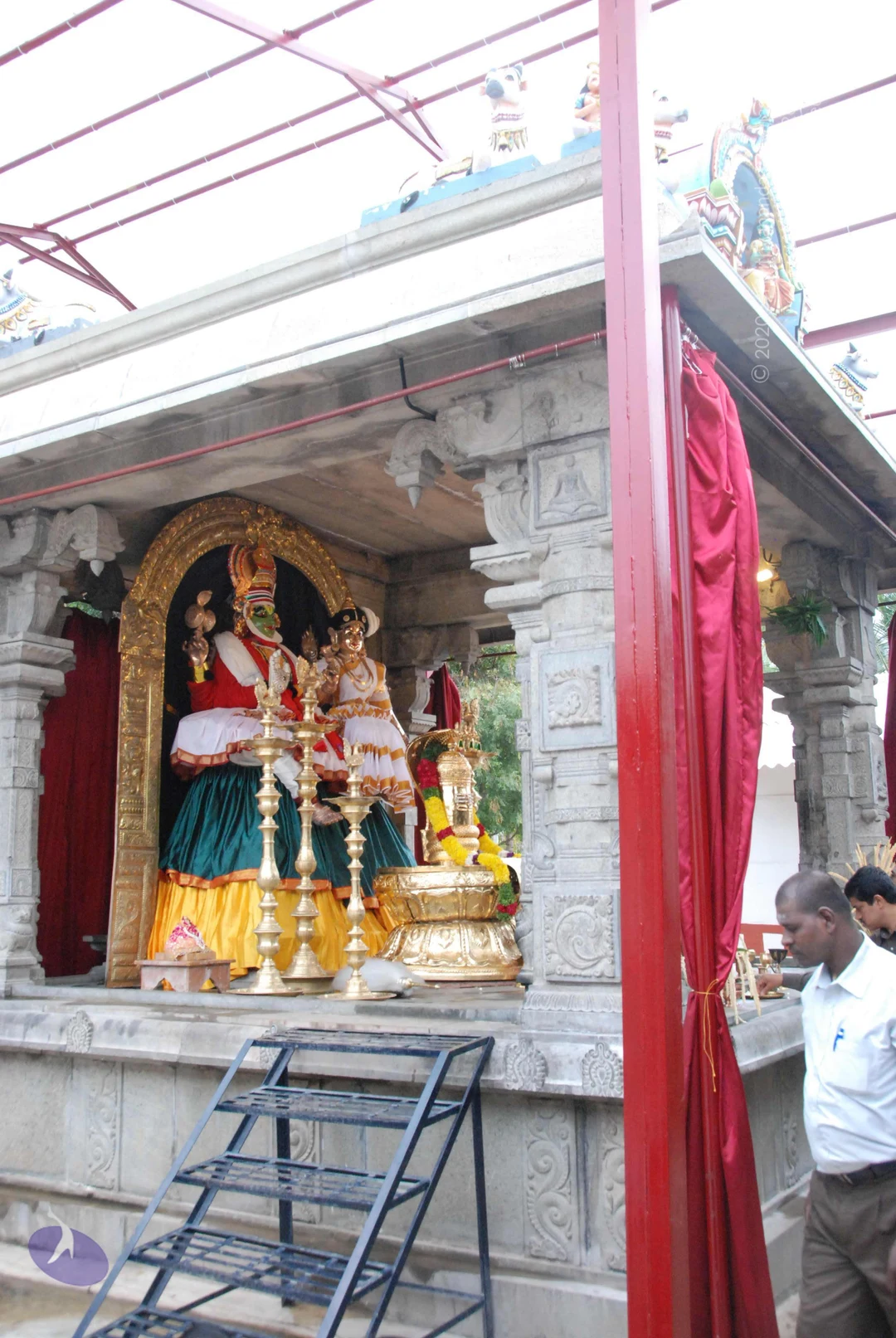
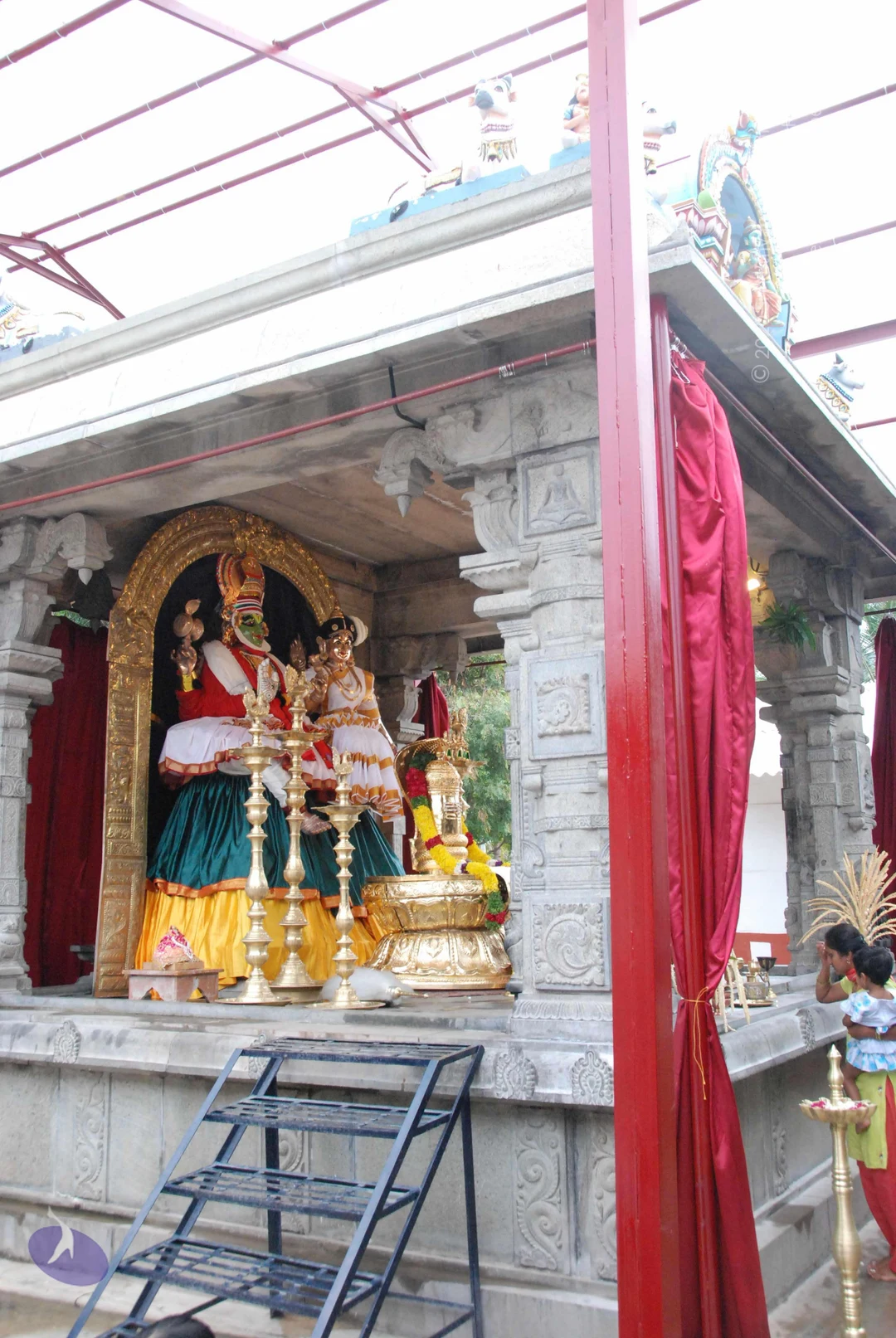
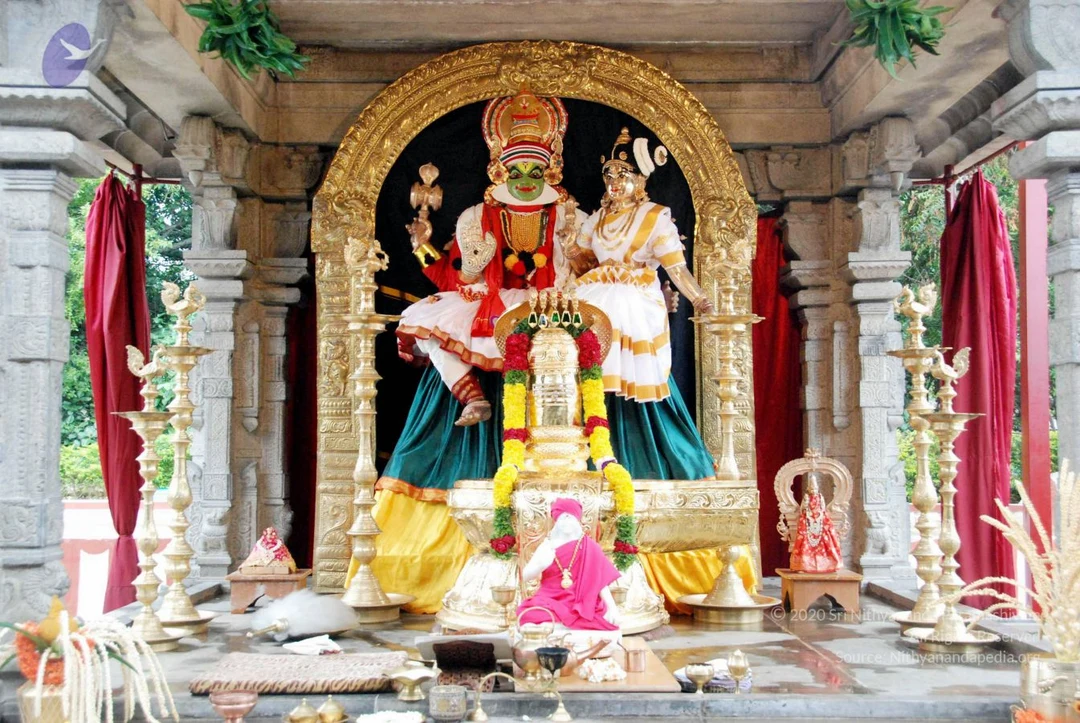
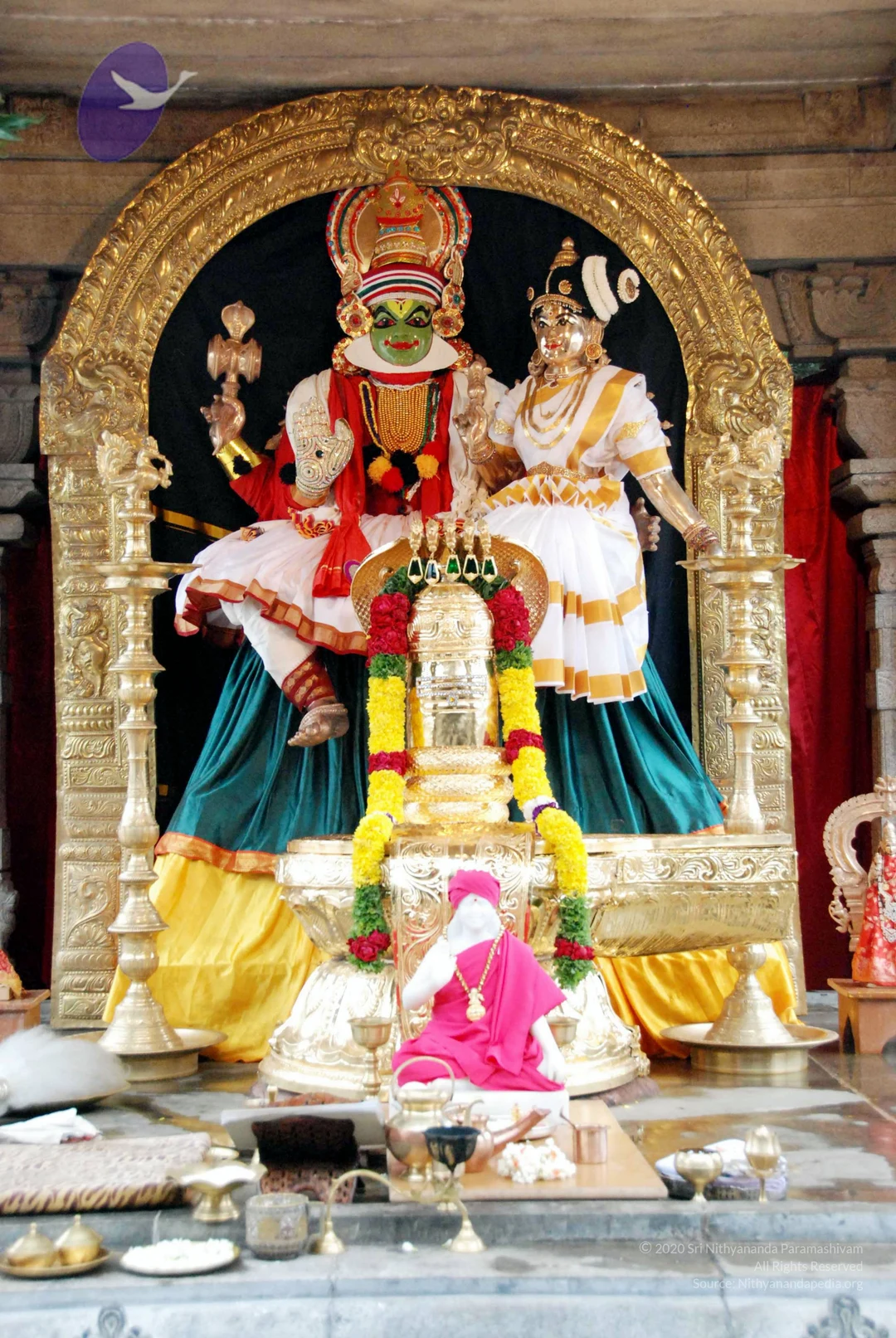
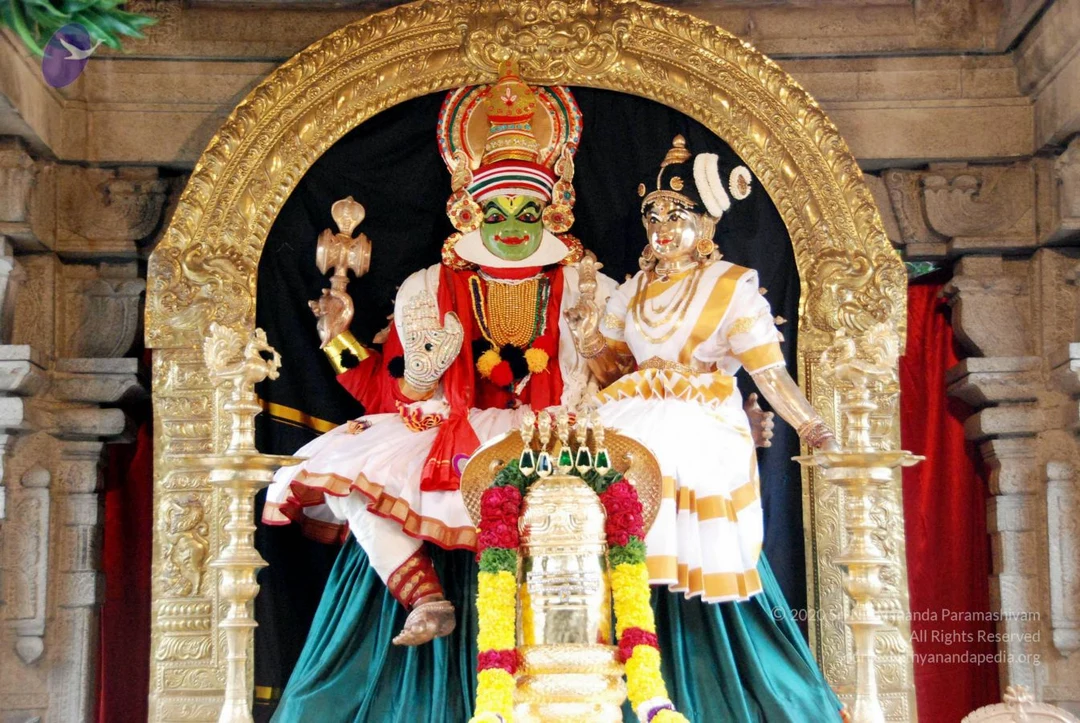
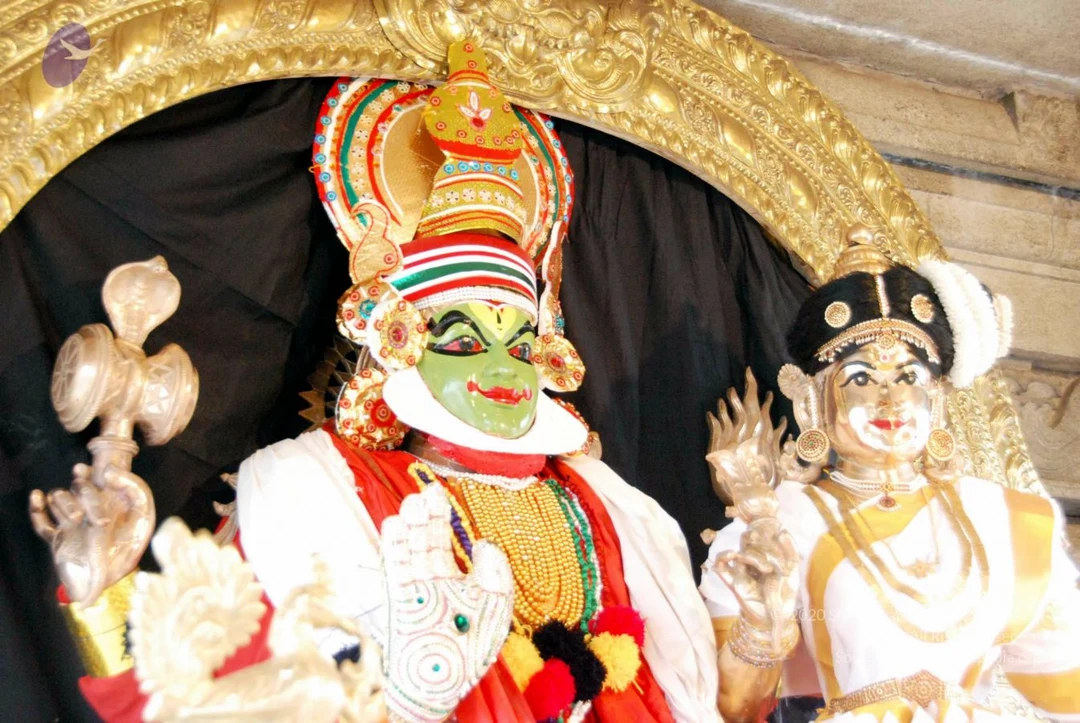
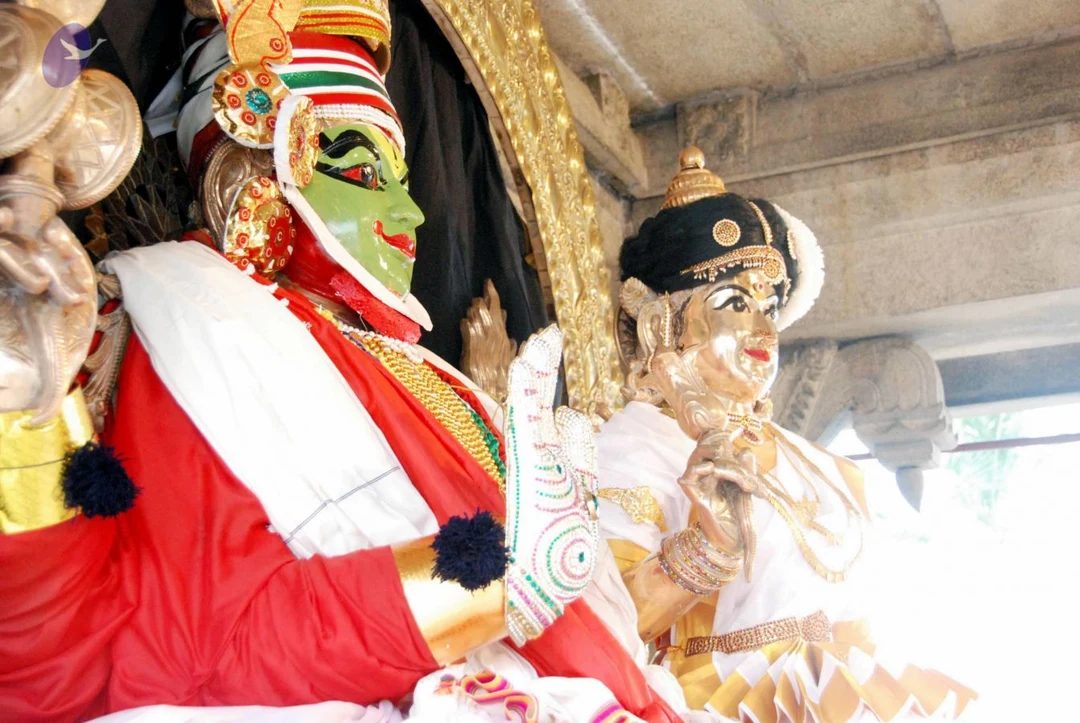
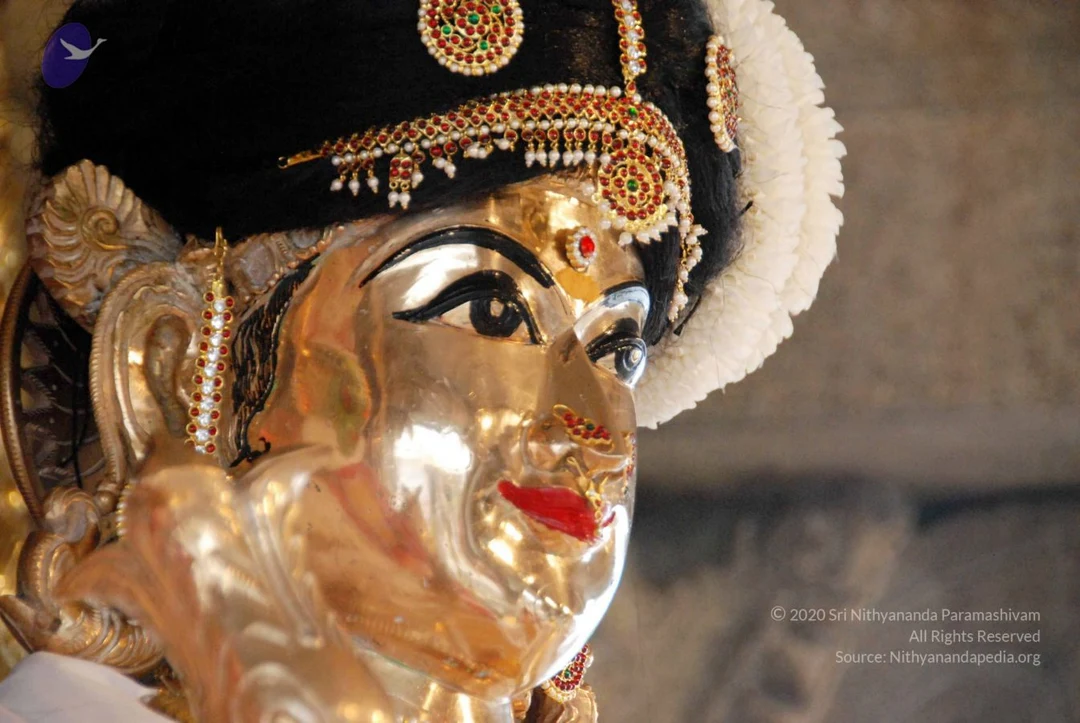
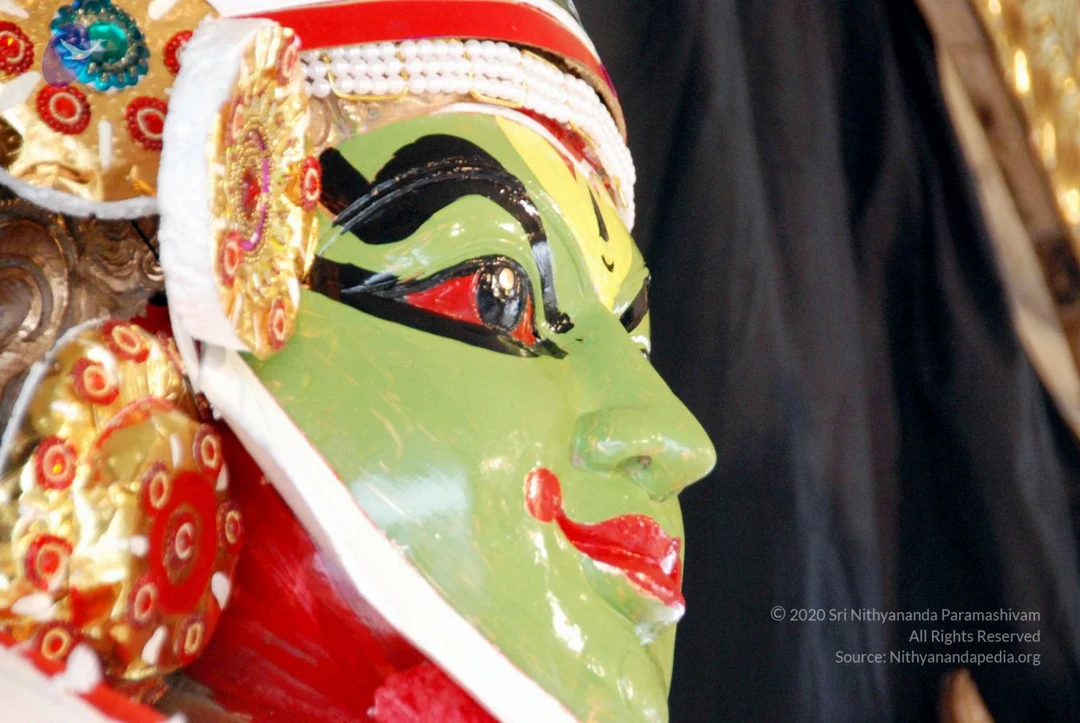
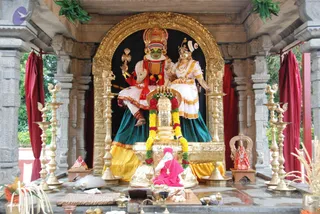
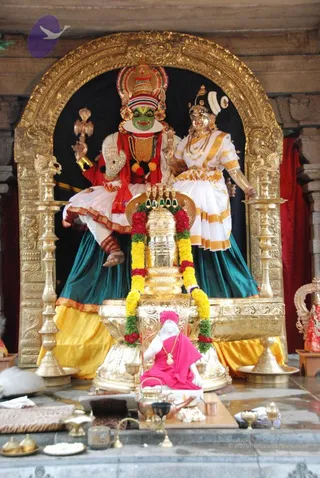
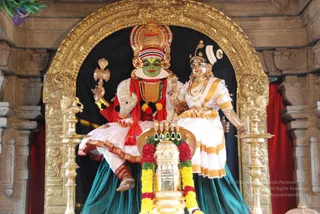
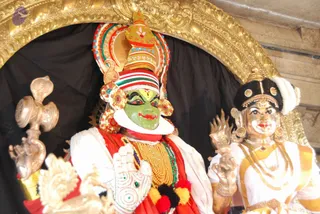
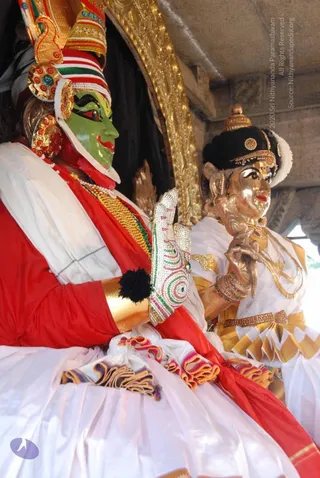
A temple shrine with a gilded arch framing two large painted or sculpted figures in Kathakali-style costume: one with a green face, red crown and red-and-gold chest garment, the other in a white and gold skirt with an ornate headdress. Between them stands a golden kalasha-like vessel draped with orange and yellow marigold garlands. Brass oil lamps (nilavilakku) line both sides, red cloth hangings frame the pillars, and a small pink-clad figure with a white shawl sits at the base beside offerings of fruit, grain sheaves and brass vessels. No living people are visible.A photograph of a shrine in a temple setting showing a gilded arched frame enclosing two large statues. The left statue has a green-faced kathakali-style appearance with a tall ornate red and gold crown, holding a ceremonial staff, wearing a red shawl and white and red garments. The right statue is a figure in white and gold-bordered costume with a decorated headdress and feather plume. In front, a golden shivalinga-like form is garlanded with red and yellow flowers and sits on a gold pedestal, flanked by brass oil lamps. A seated white statue in pink cloth with a gold necklace sits at the base, surrounded by brass vessels, a kalasha pot, small cups and flower offerings on a stone platform. No living people are visible.A photograph of a Kathakali-style painted sculpture pair seated on a golden-framed shrine arch in front of a black backdrop. The left figure has a green face, red-and-white headdress, red sash, a large ornate golden-brown necklace and a white costume; the right figure has a golden face, tall ornate headdress with white plumes, layered gold necklaces and a white-and-gold dress. A golden kalasha-like vessel draped with garlands of yellow, orange and red flowers sits in front of them, flanked by brass lamps. Teal drapery covers the base. No physical people are visible; these are statues or images.Two painted statues or costumed figures stand before a black drape framed by a gilded arch. On the left a figure wears a tall Kathakali-style headdress with red, green and white bands, a green face with red lips, a white collar, a red skirt and layered beaded necklaces, holding a golden ritual object. On the right a figure with a gold-trimmed white and yellow dress, a bejewelled crown and white flowers holds a golden hand gesture object. A gold trident or staff stands at the left edge. The scene is ornate and decorative rather than a live gathering.Close angled photo of two large painted statues in a temple-like setting. The left figure is a Kathakali-style character with green face paint, red lips, a tall red-and-white headdress with gold and jewelled ornaments, and a red and white garment. Its raised hand has white jewelled sequin-like decoration. Beside it stands a gilded statue with black hair, a jewelled crown, gold necklaces, bangles and a white dhoti with gold border, holding a small object. Gold ornate arch in background. No living people are visible.Close-up photograph of two ornately costumed figures seated side by side, appearing to be painted statues or performers in full makeup. The figure on the left has a green face with red lips and a tall red, white and green patterned headdress, wearing a red and white garment with gold trim, black pompoms, and jewelled bangles on a raised hand. The figure on the right has a gold-toned face, a black hair bun with gold ornaments, a white and gold costume, layered bangles and a gold necklace, with one hand raised near the chin. Gold-coloured architectural arch and stone pillars frame the scene behind them.

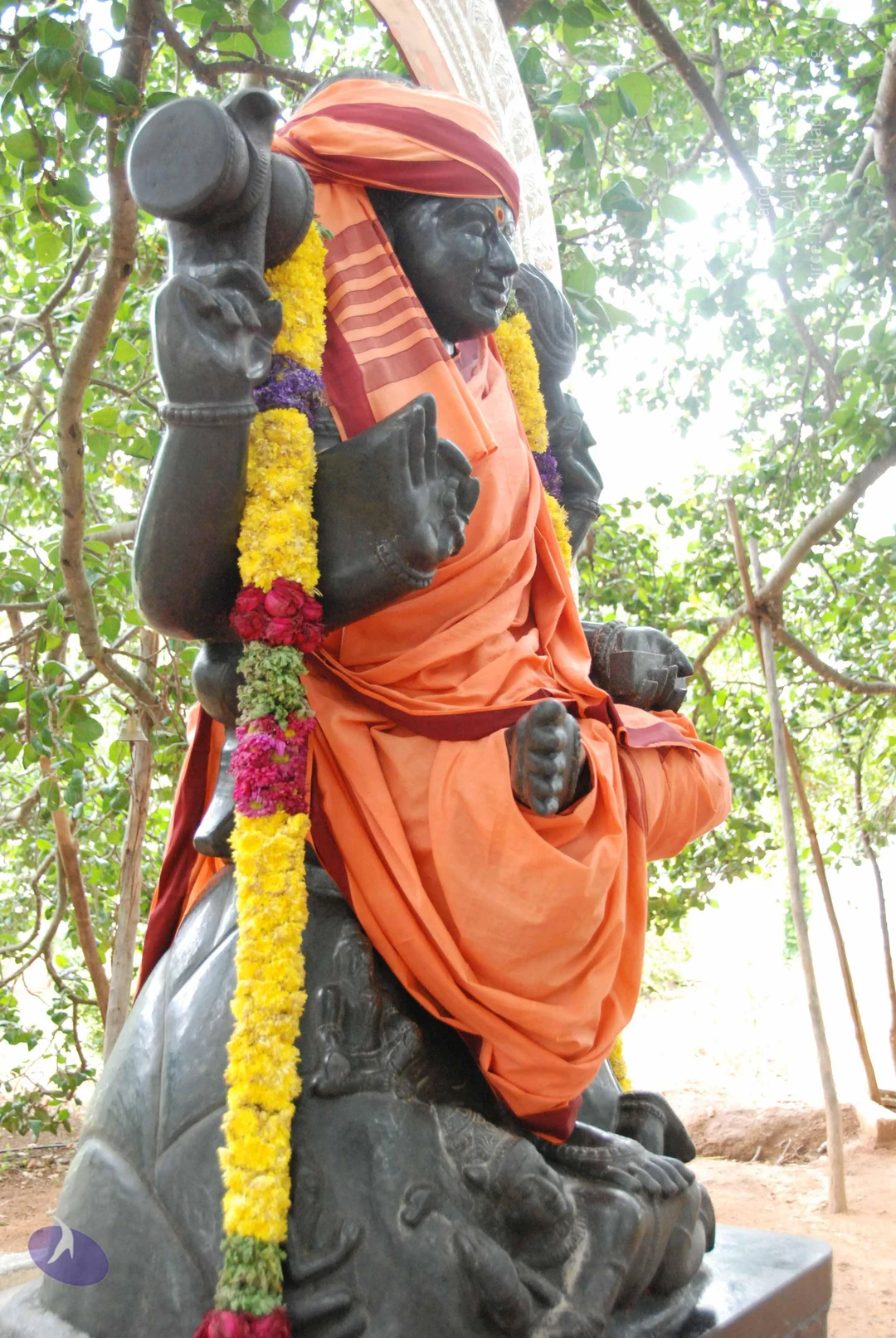
Dakshinamurti-Under-Banyan-Tree
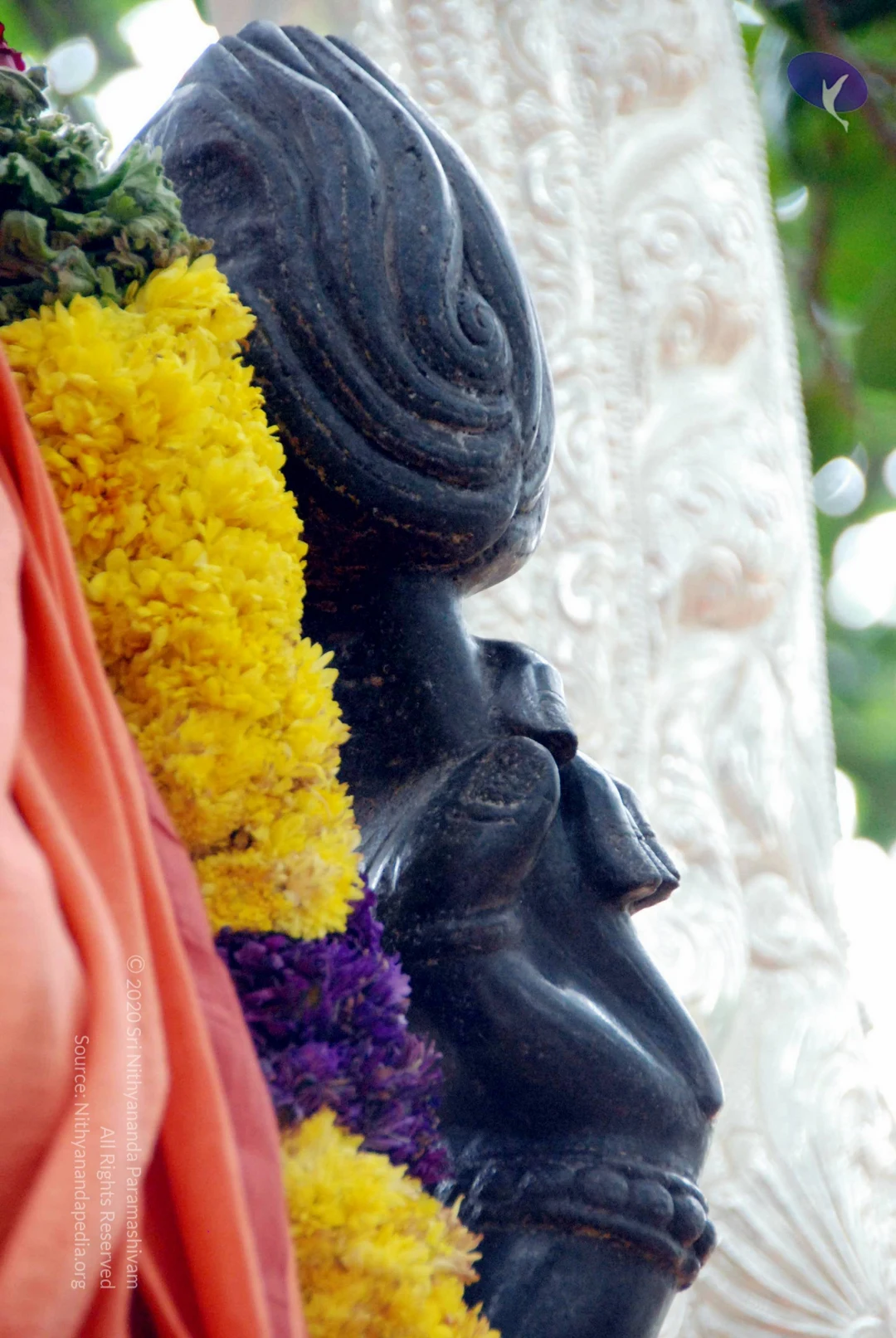
19 photosSource gallery
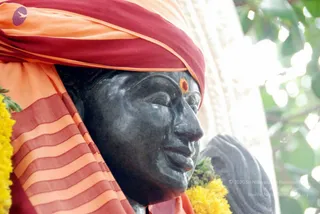
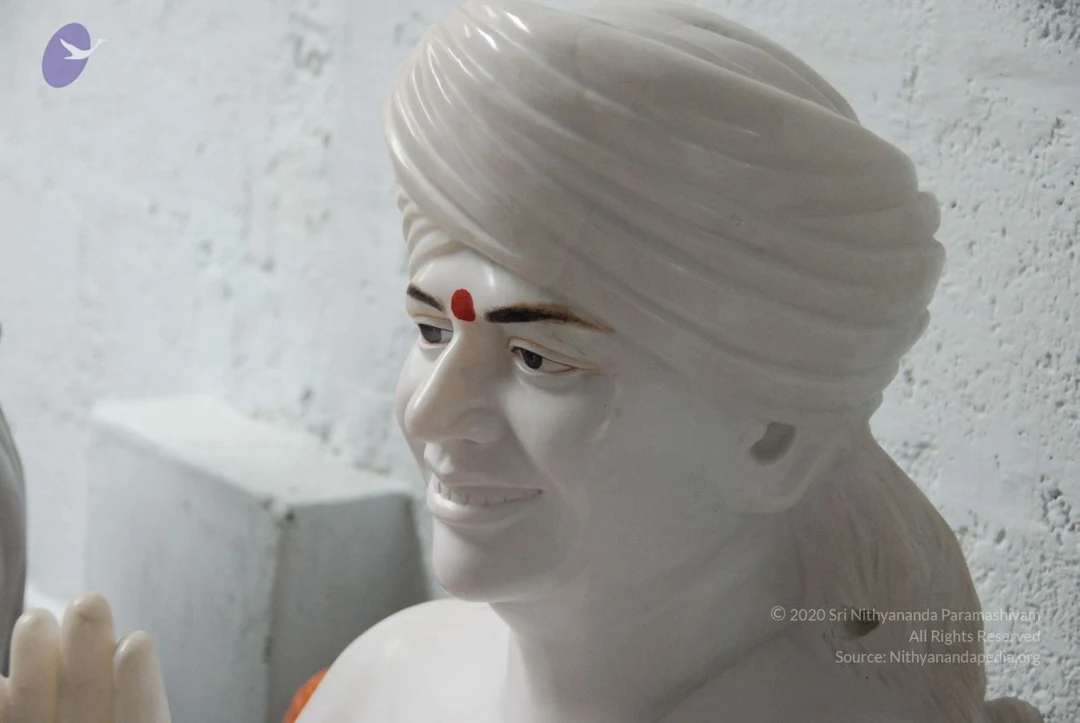
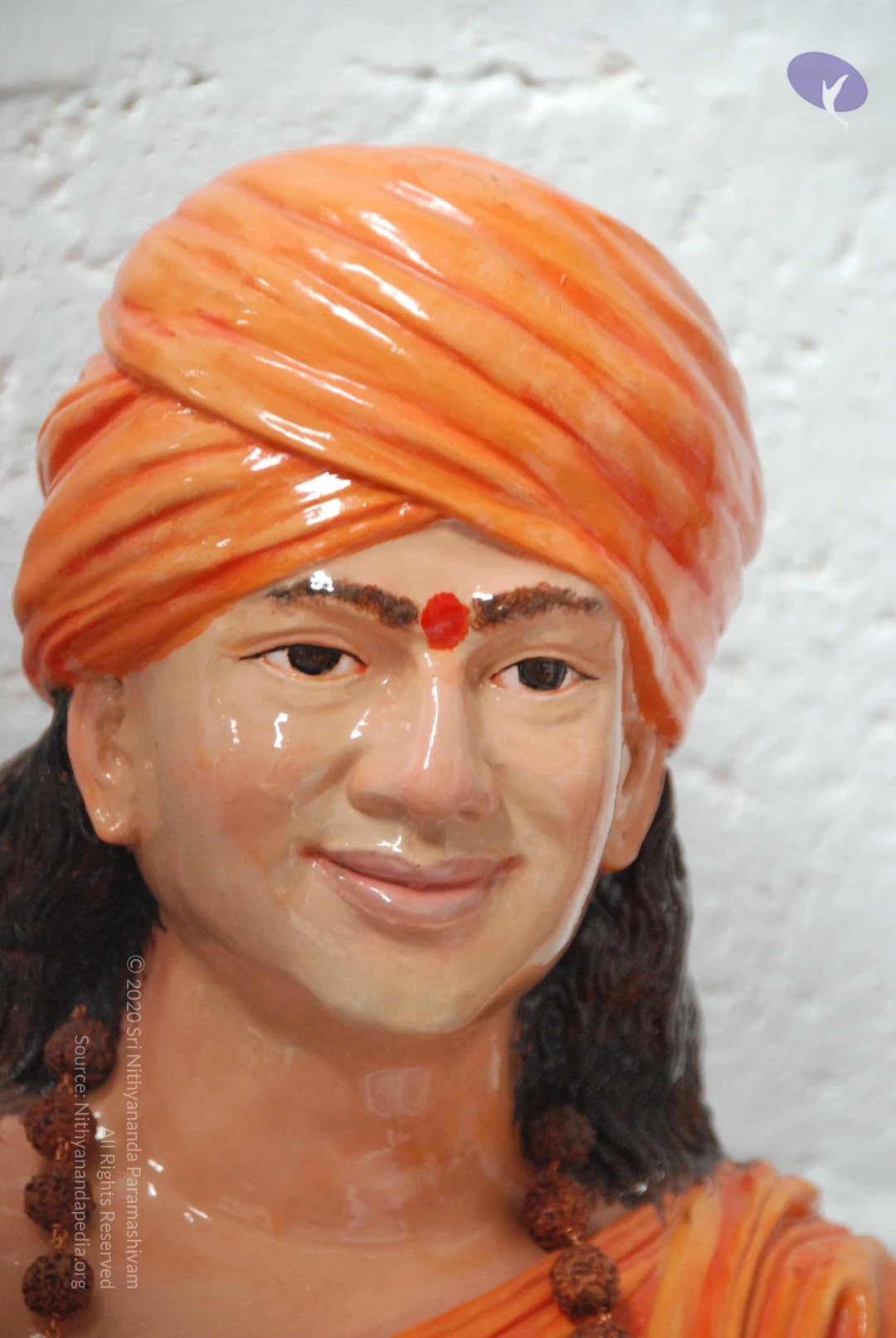
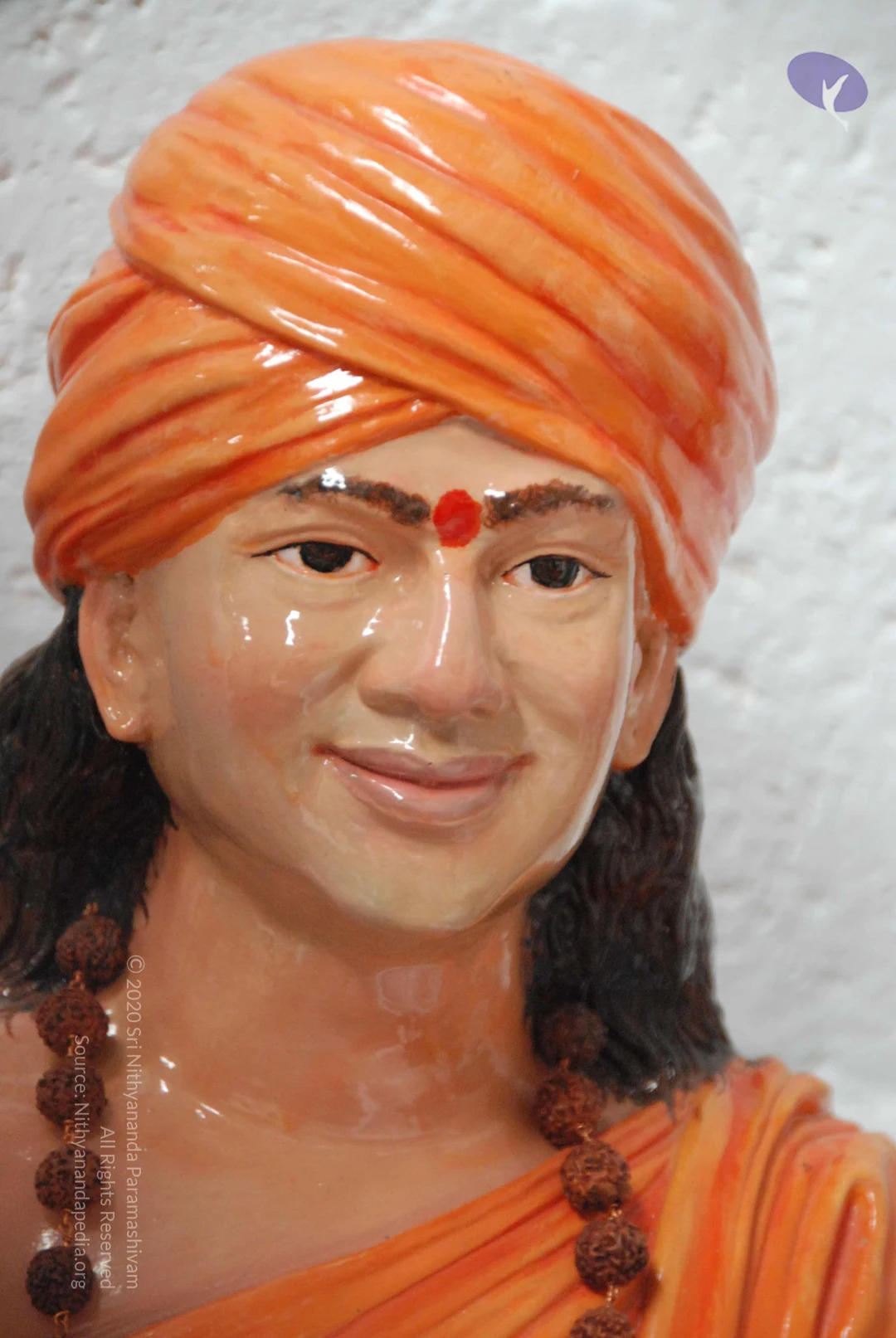
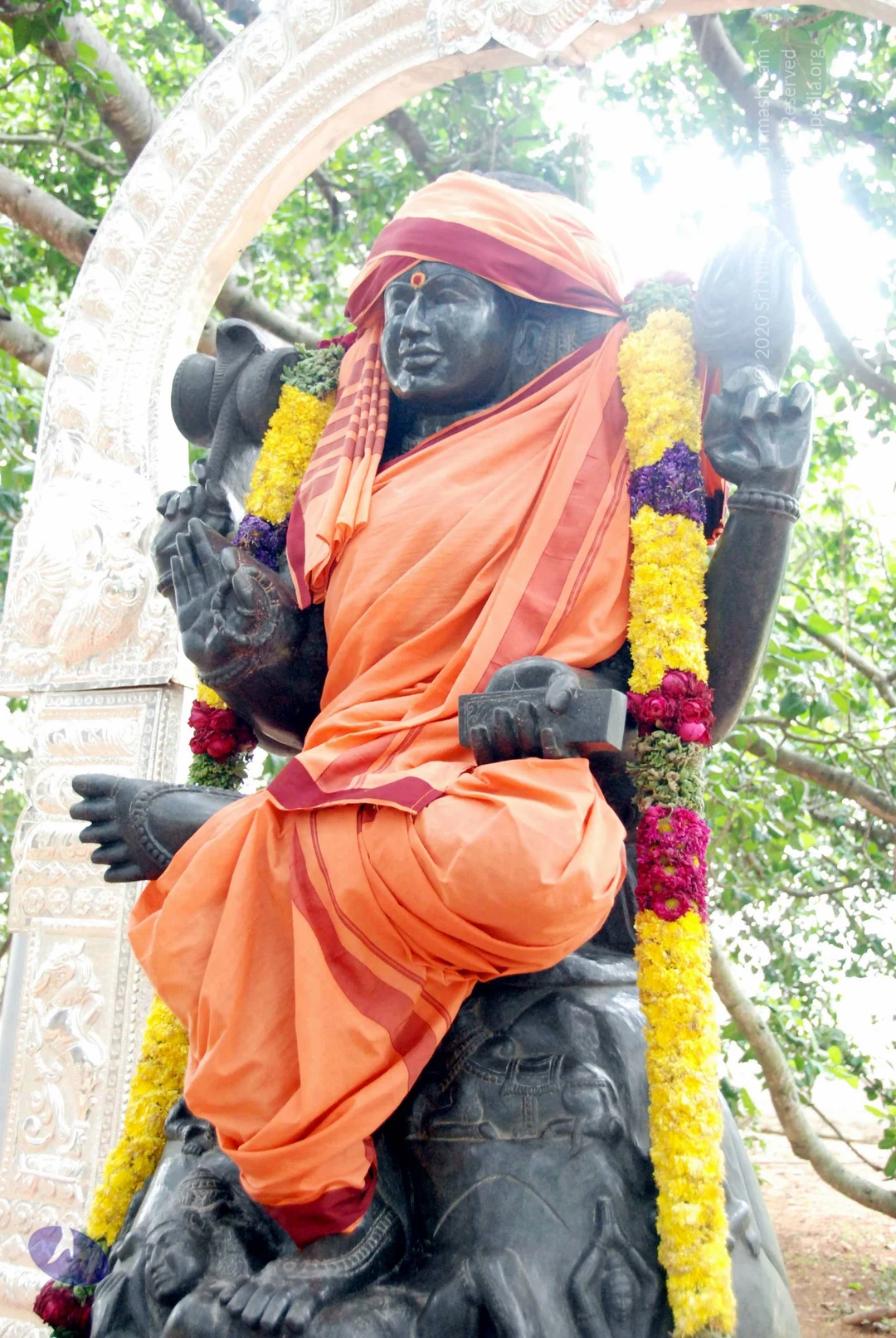
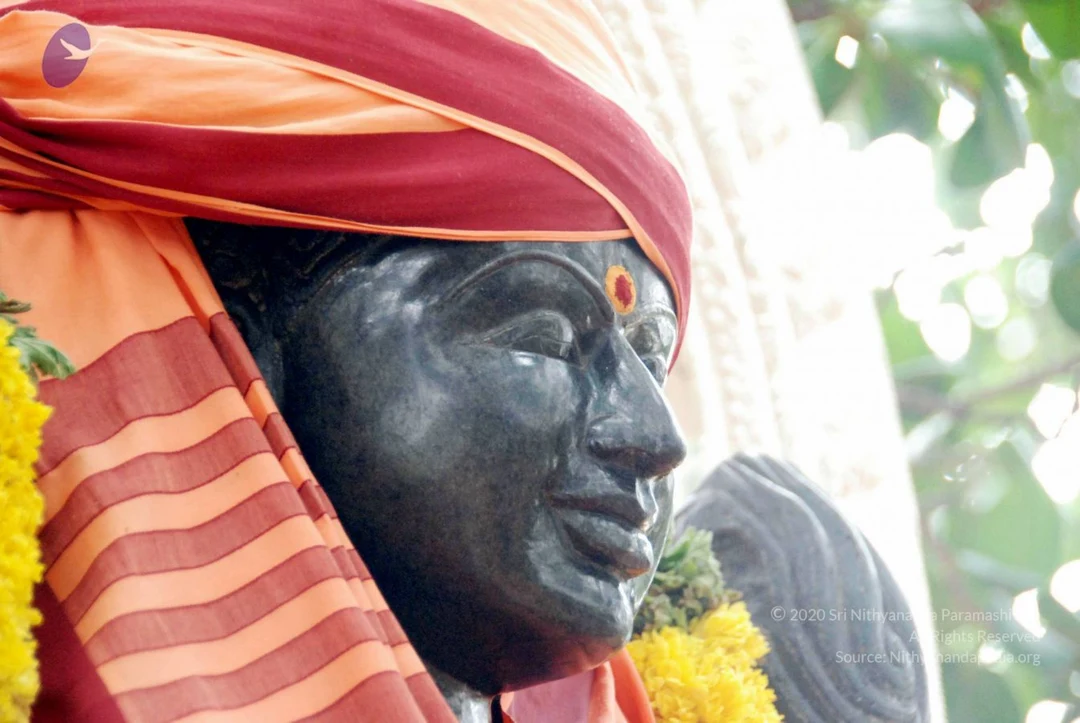
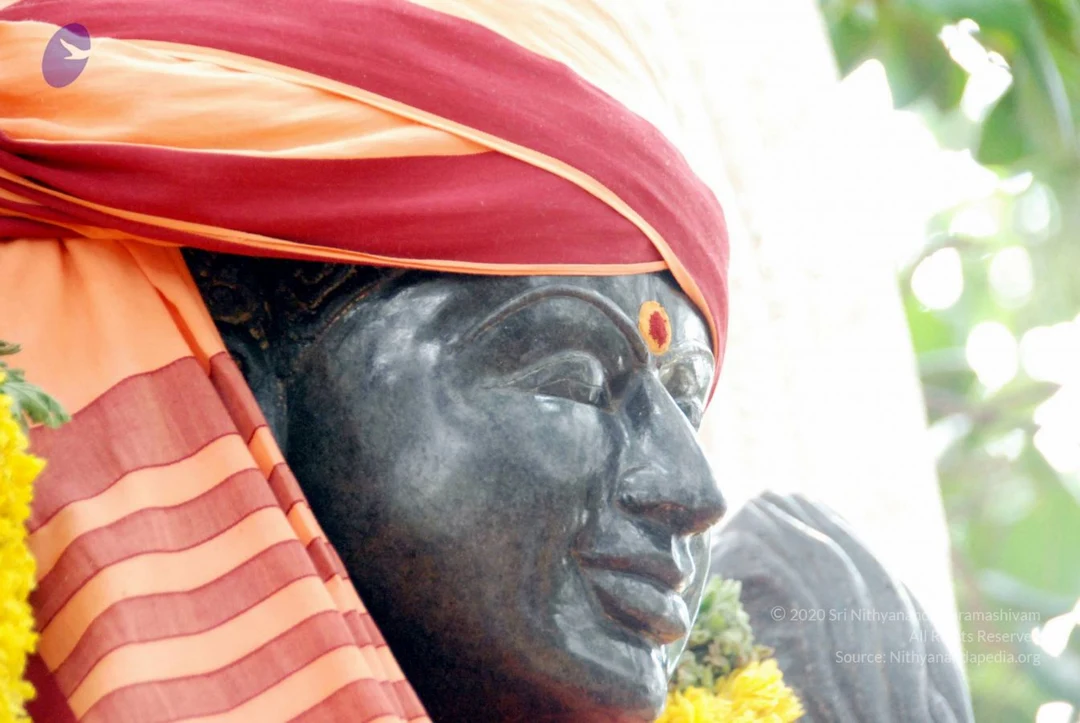
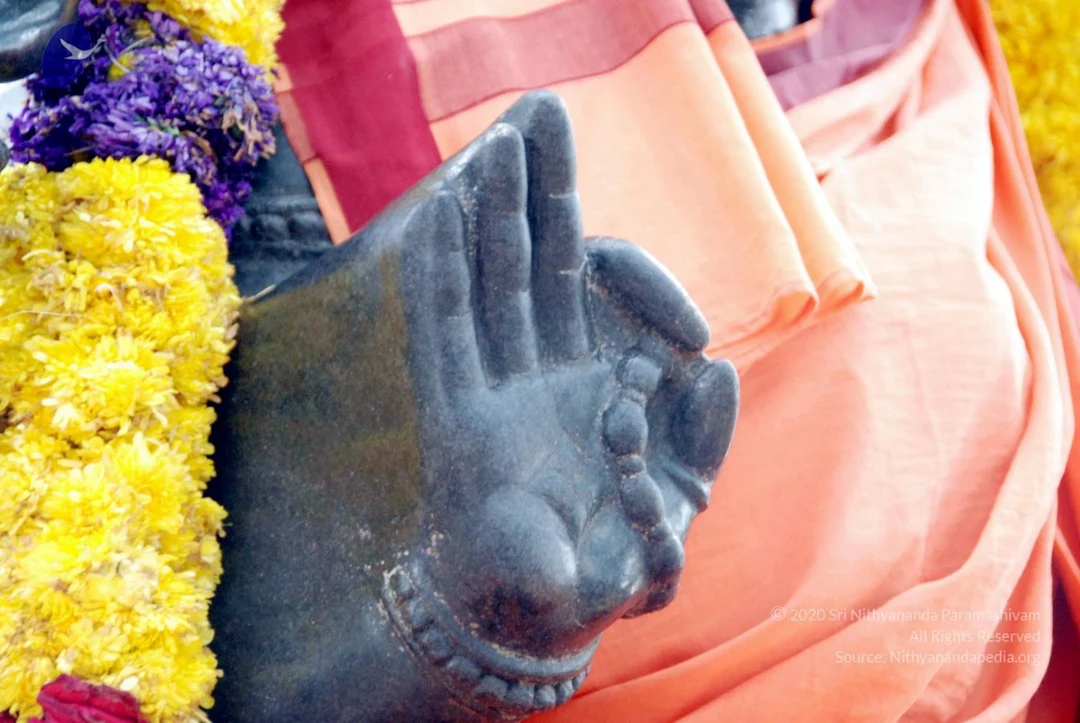
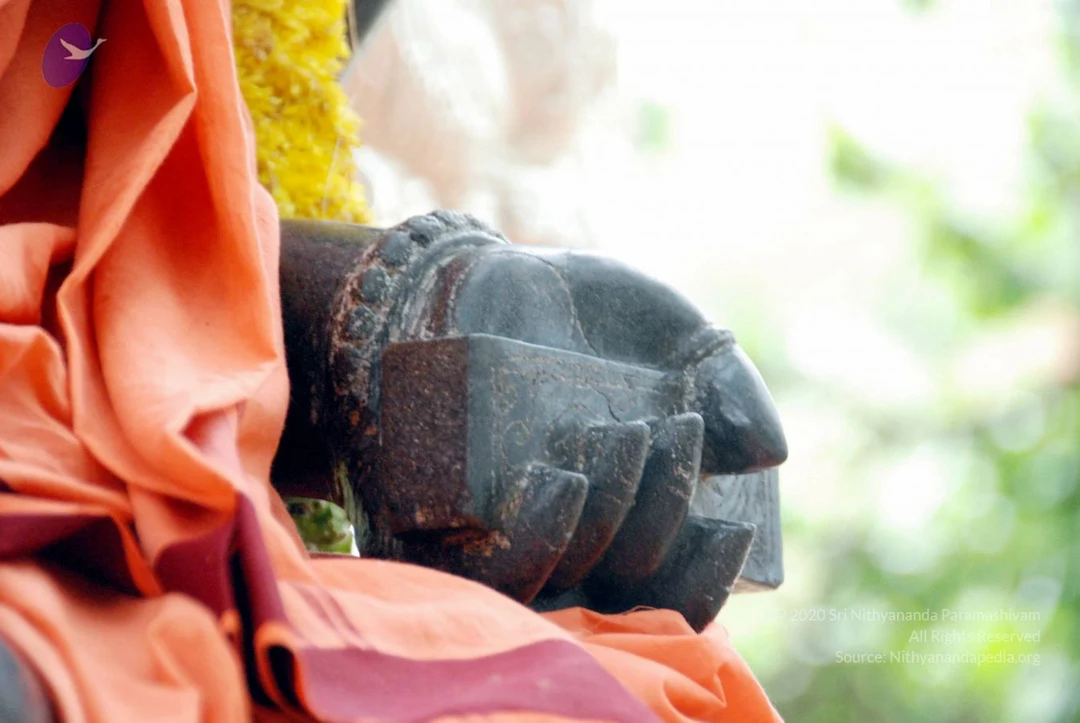
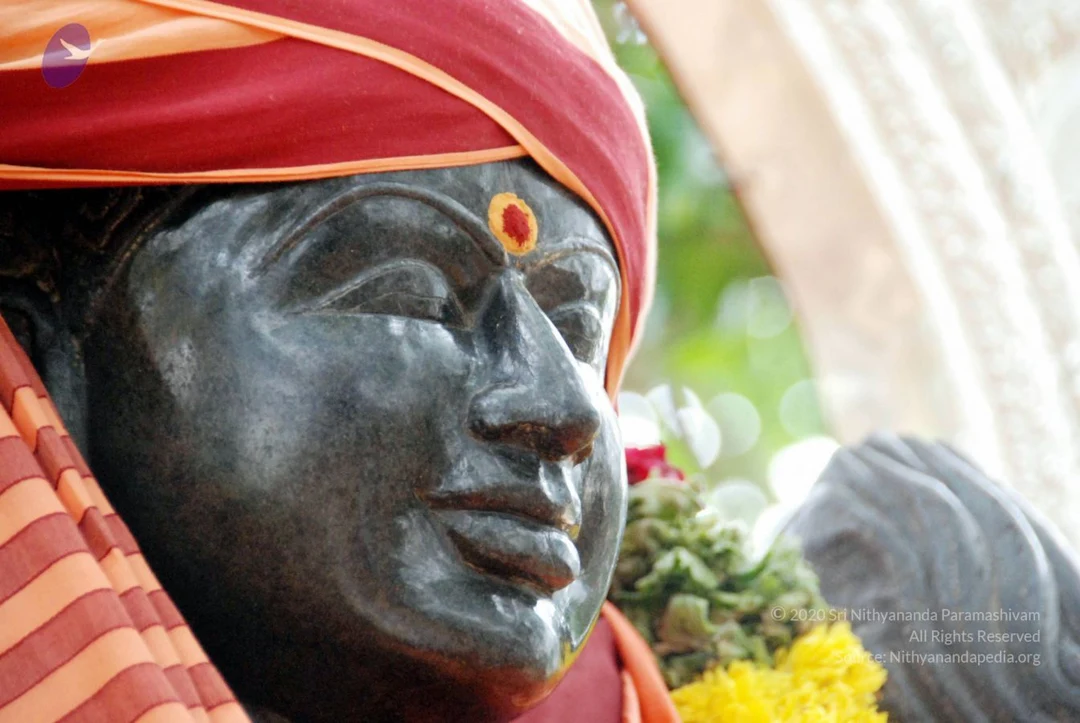
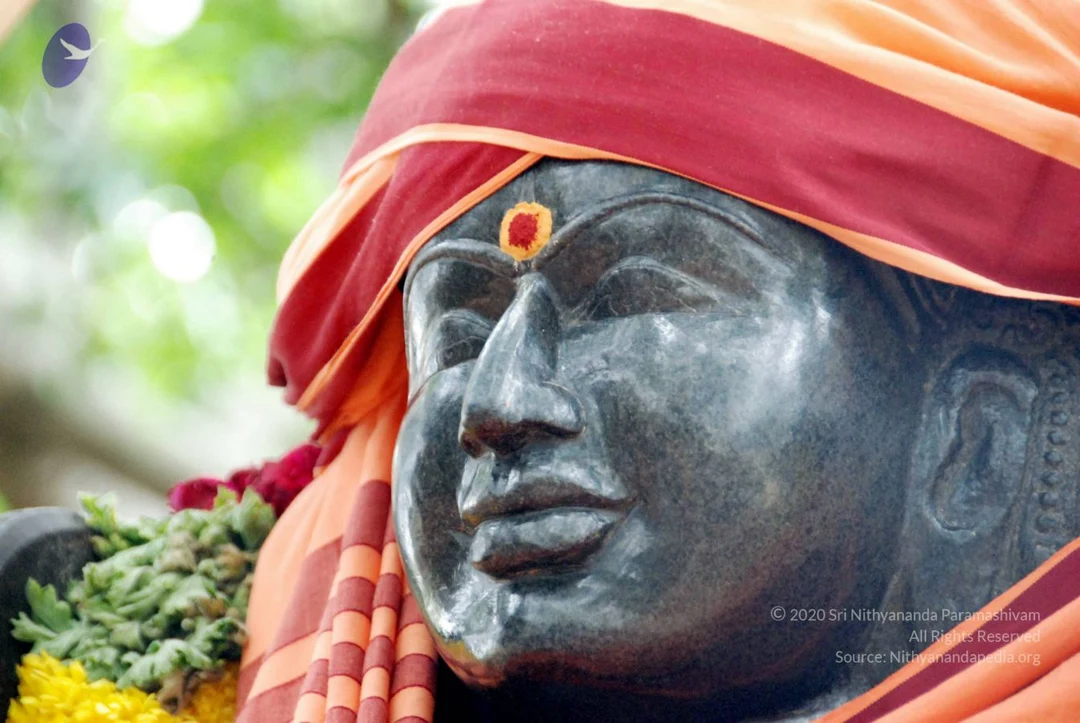
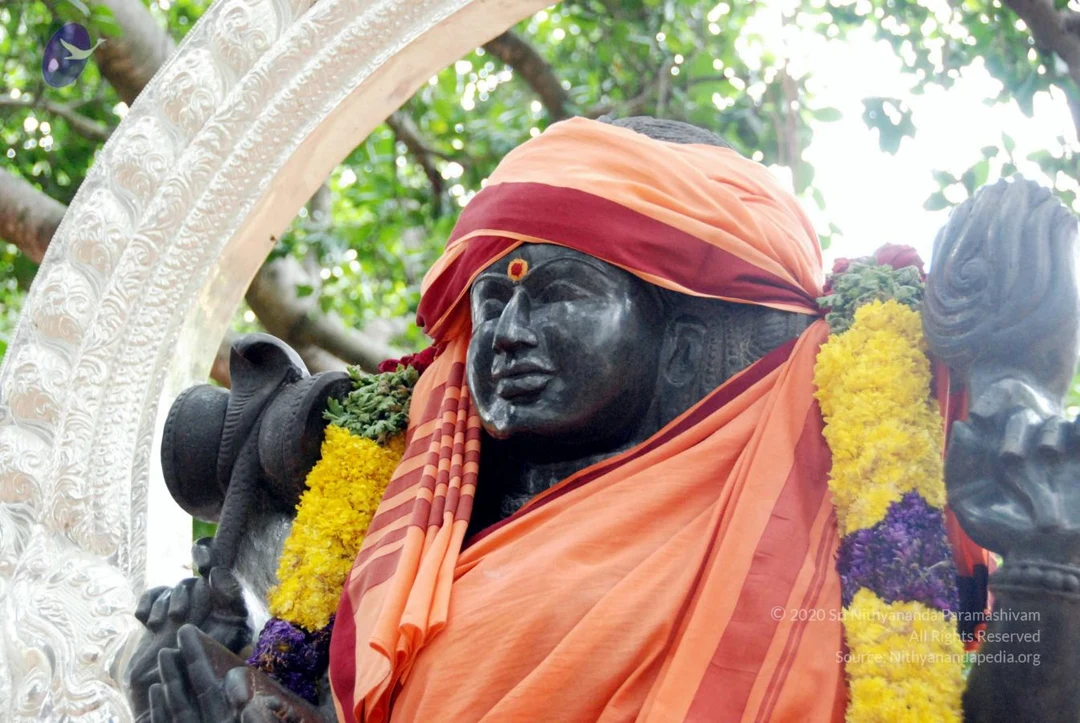
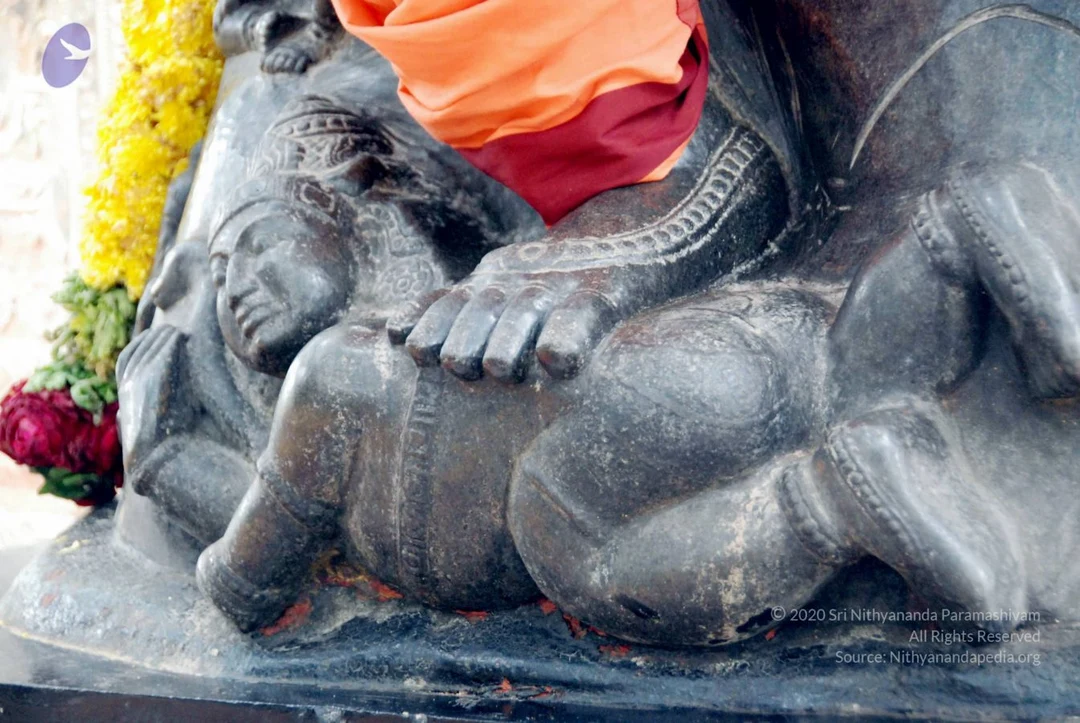
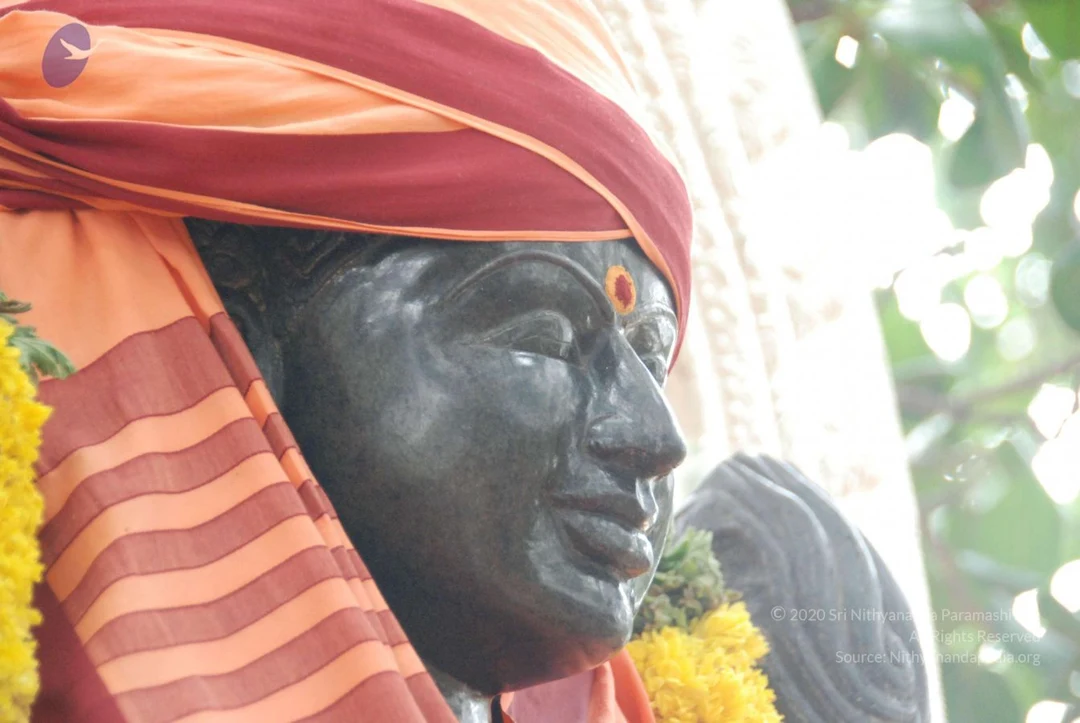
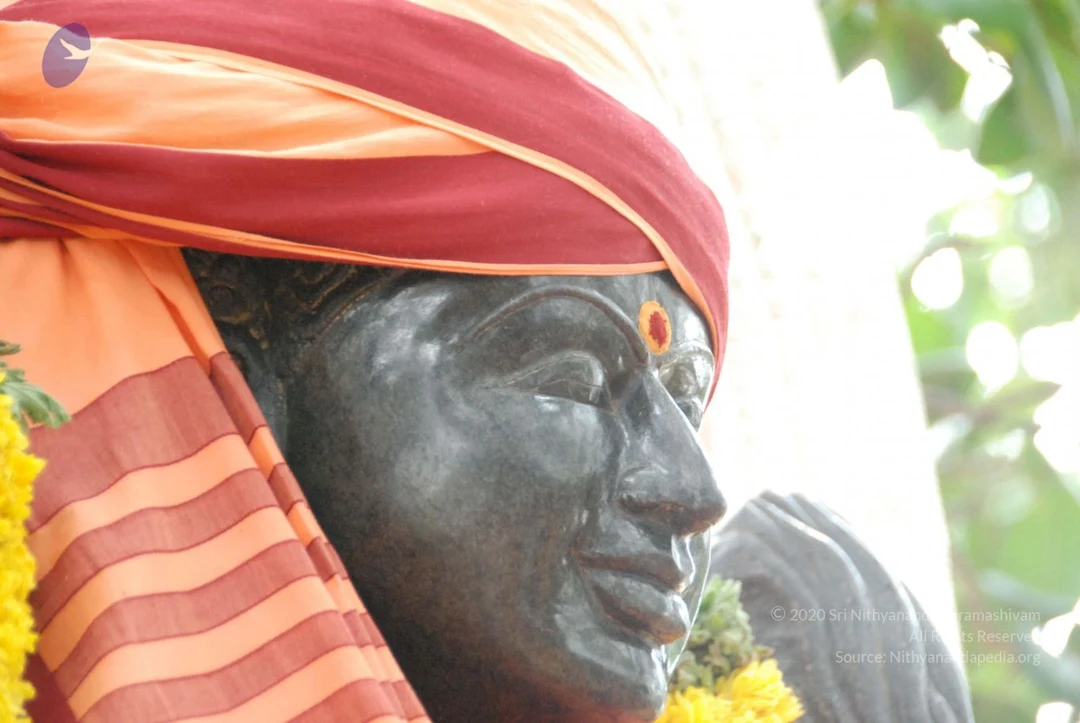
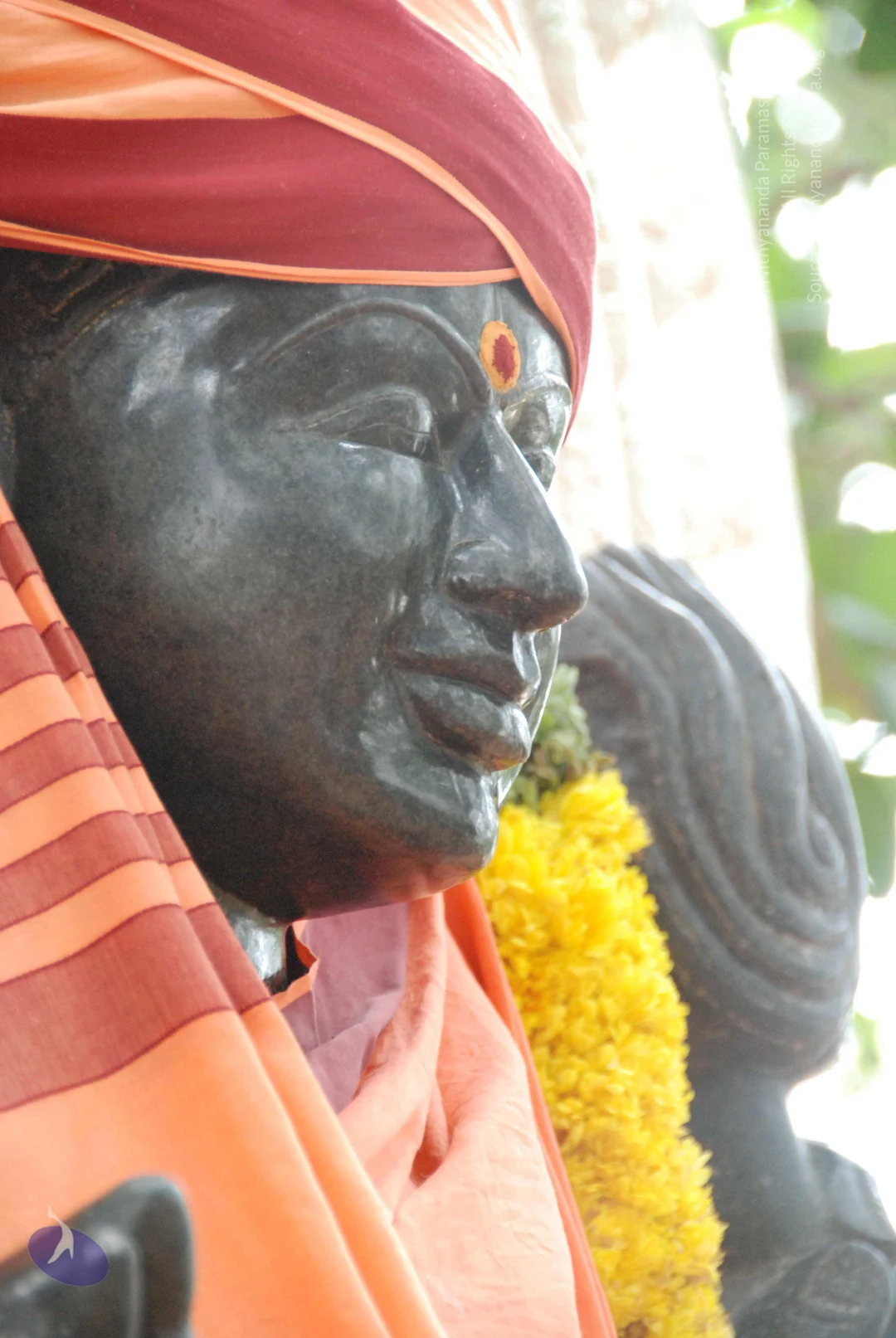
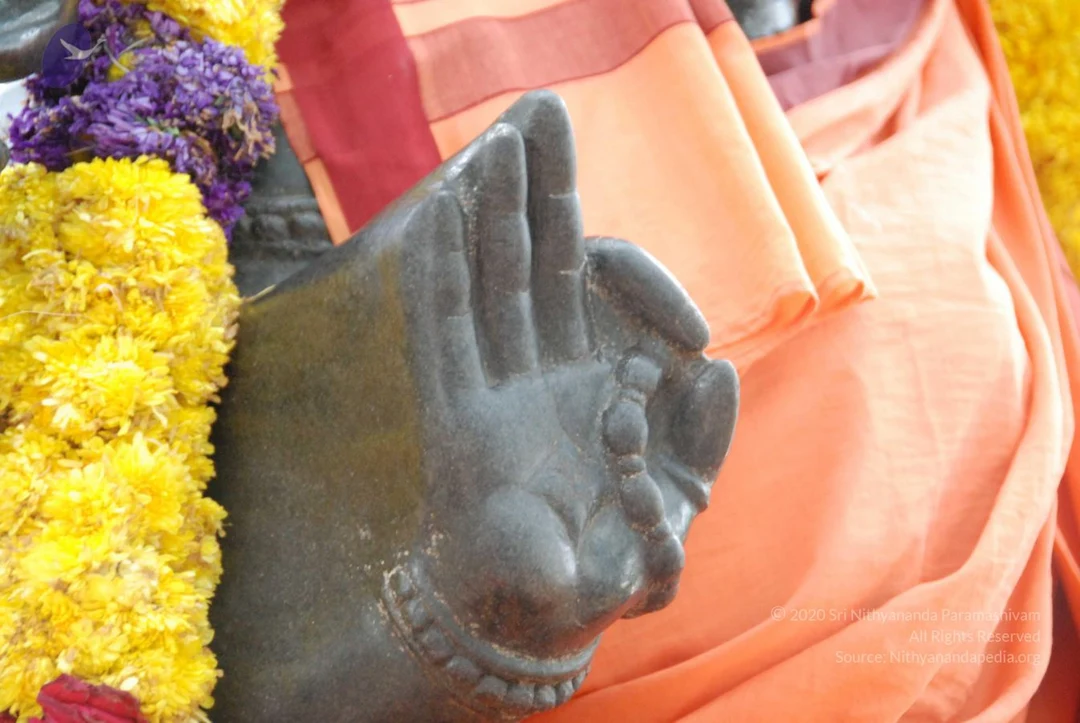
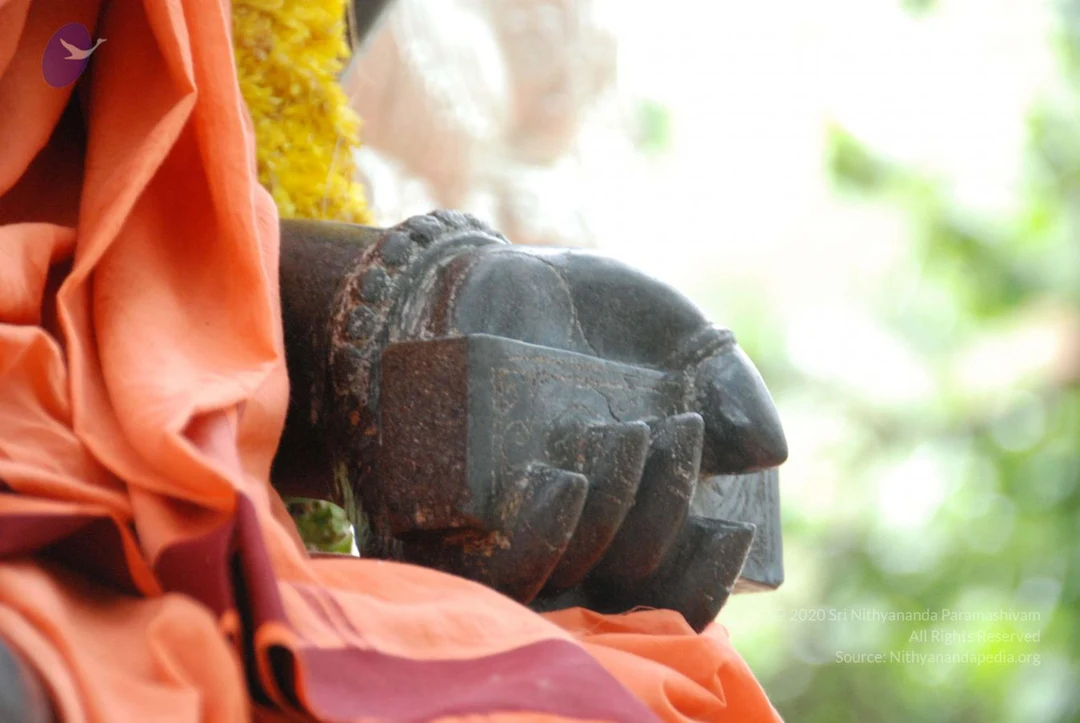
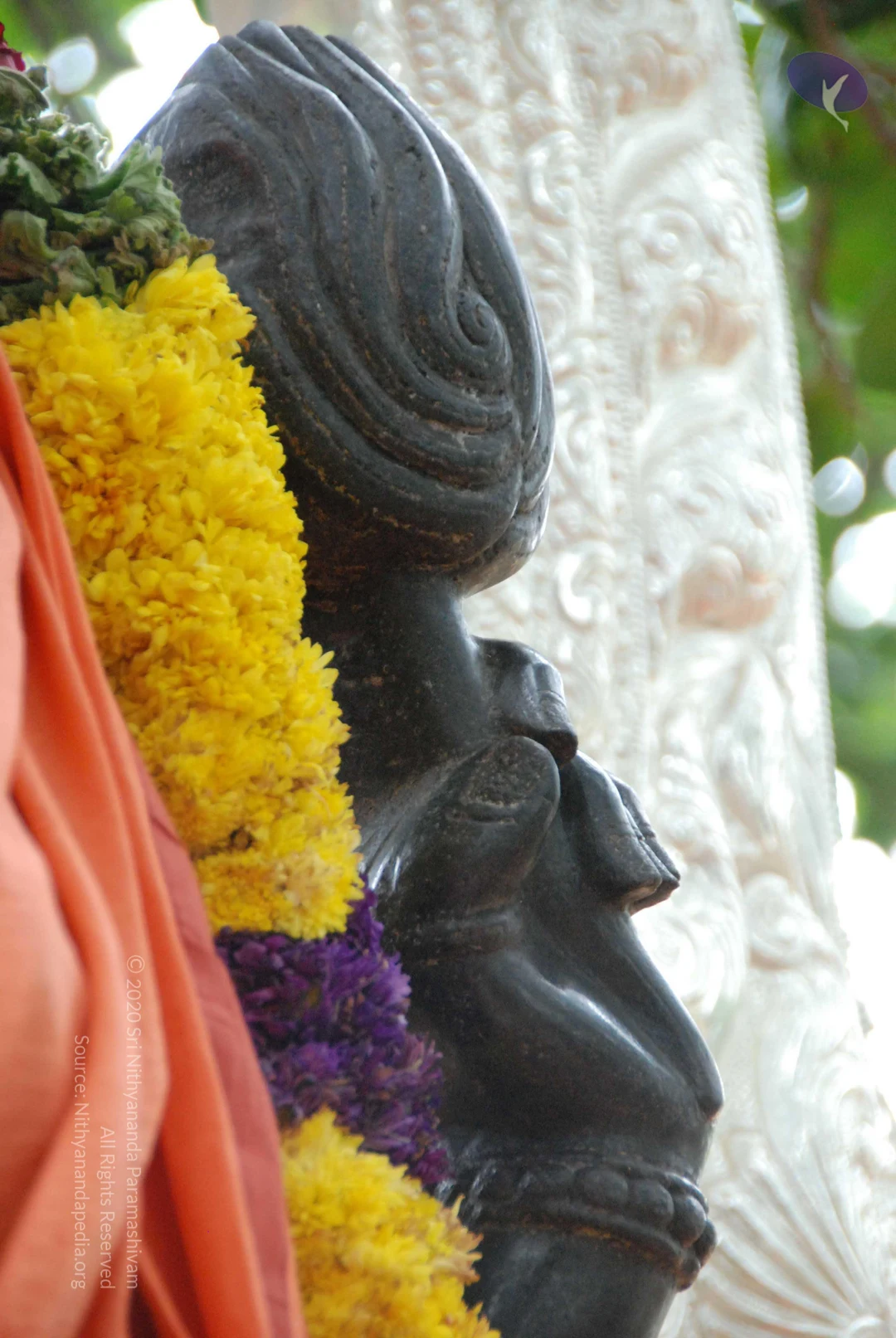
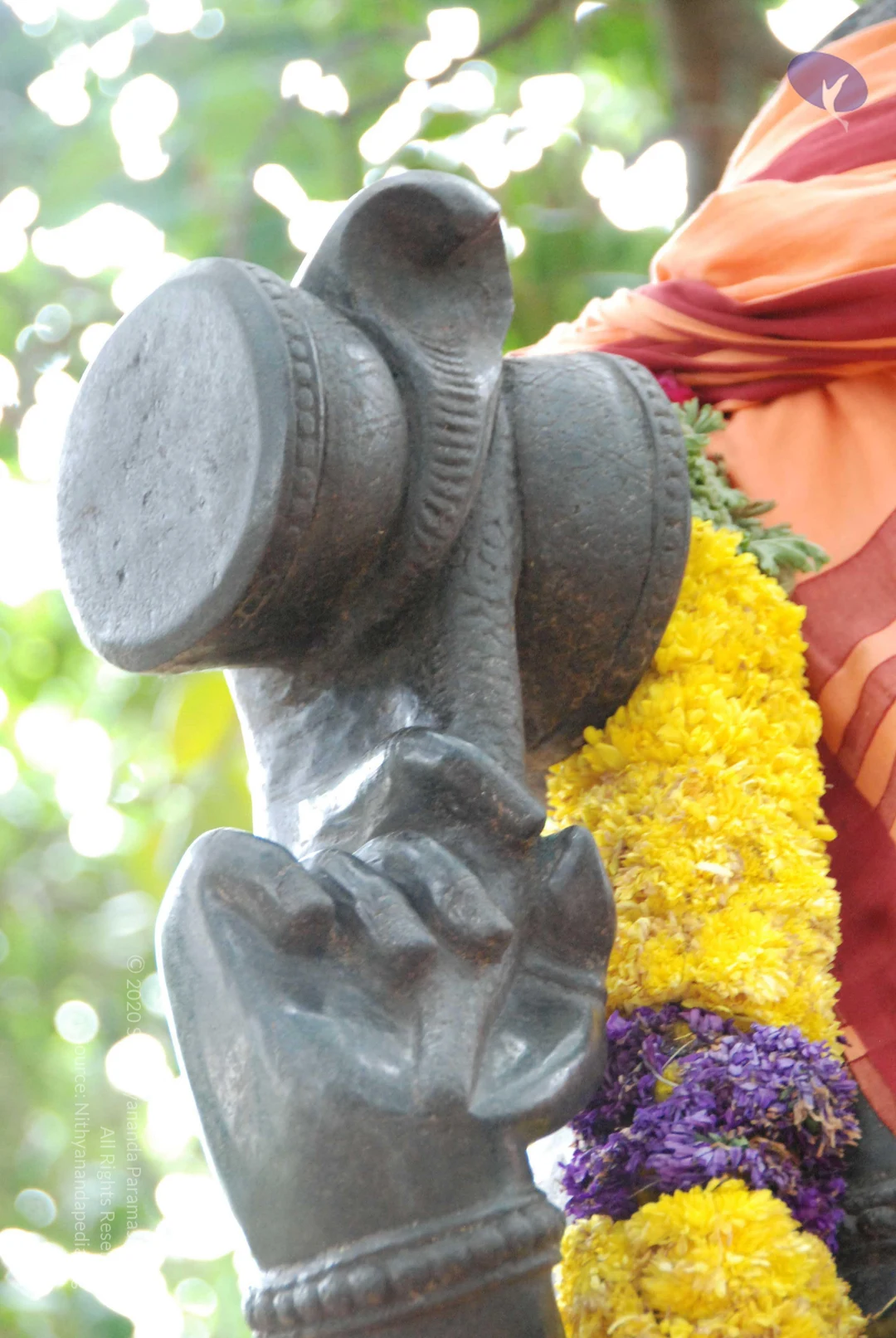
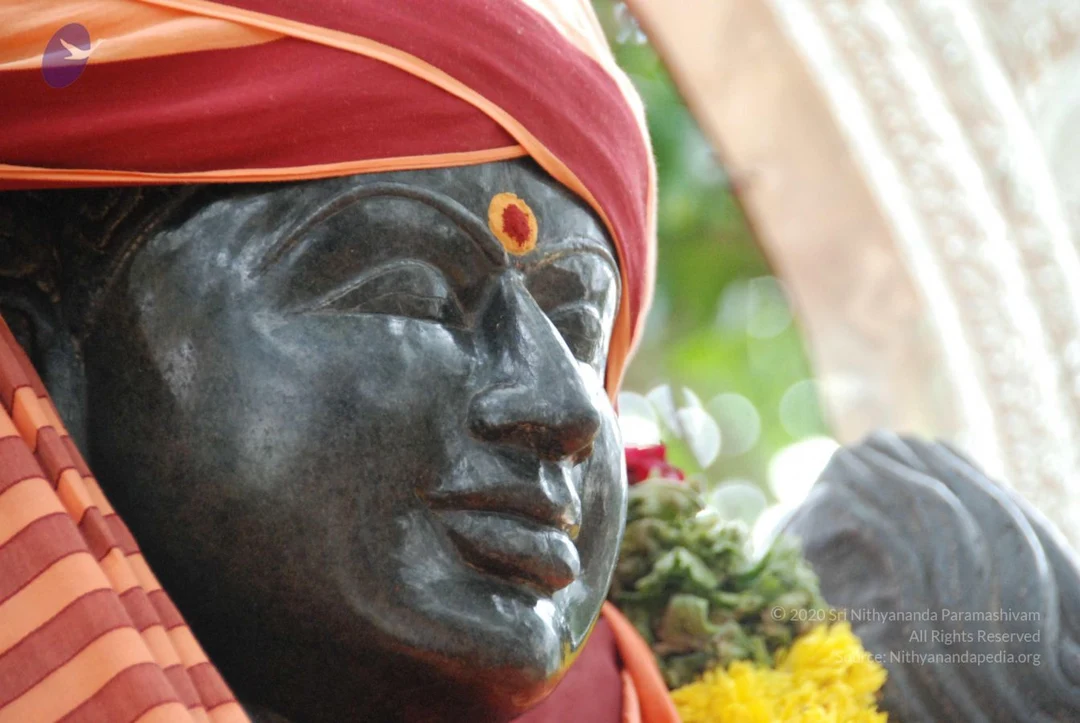
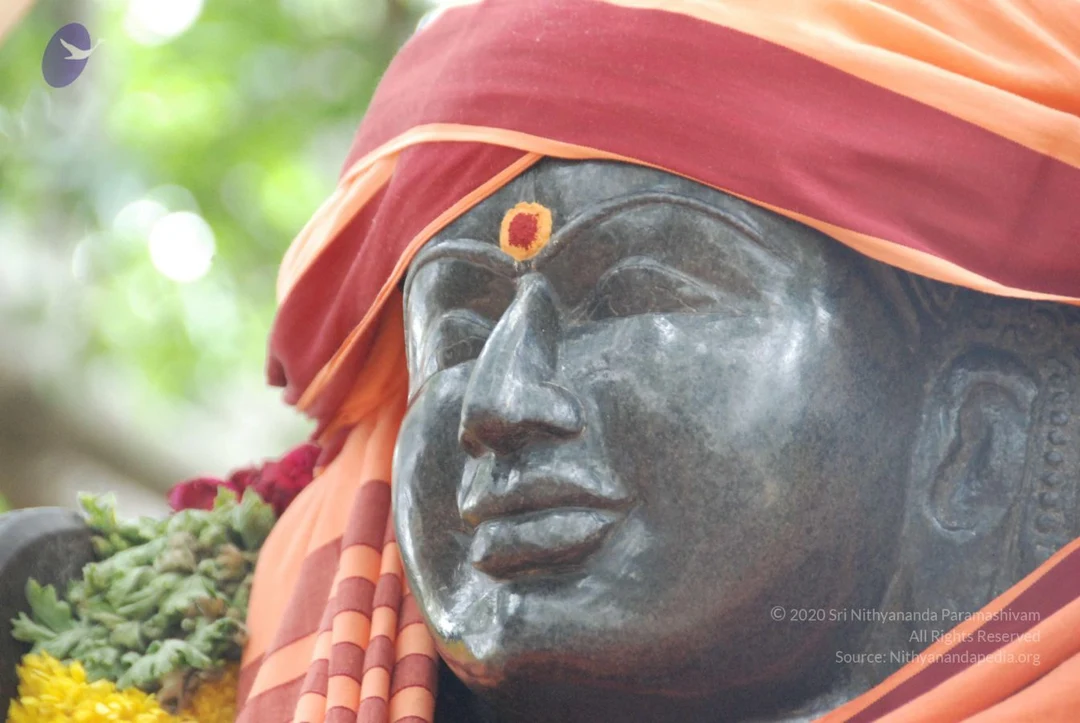
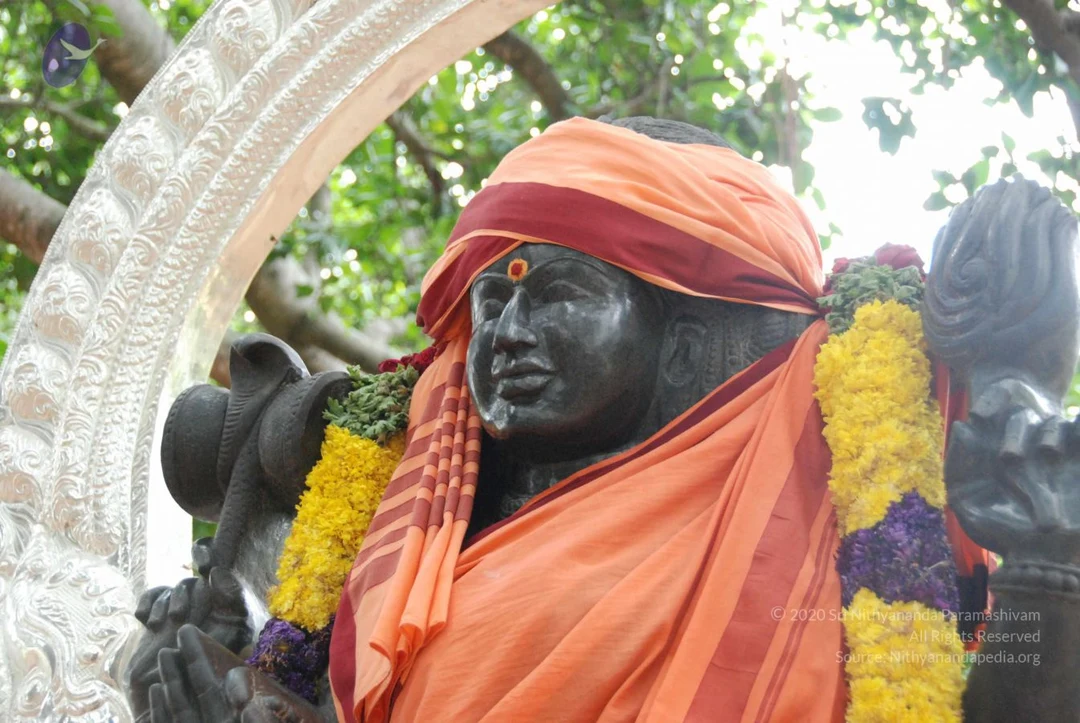
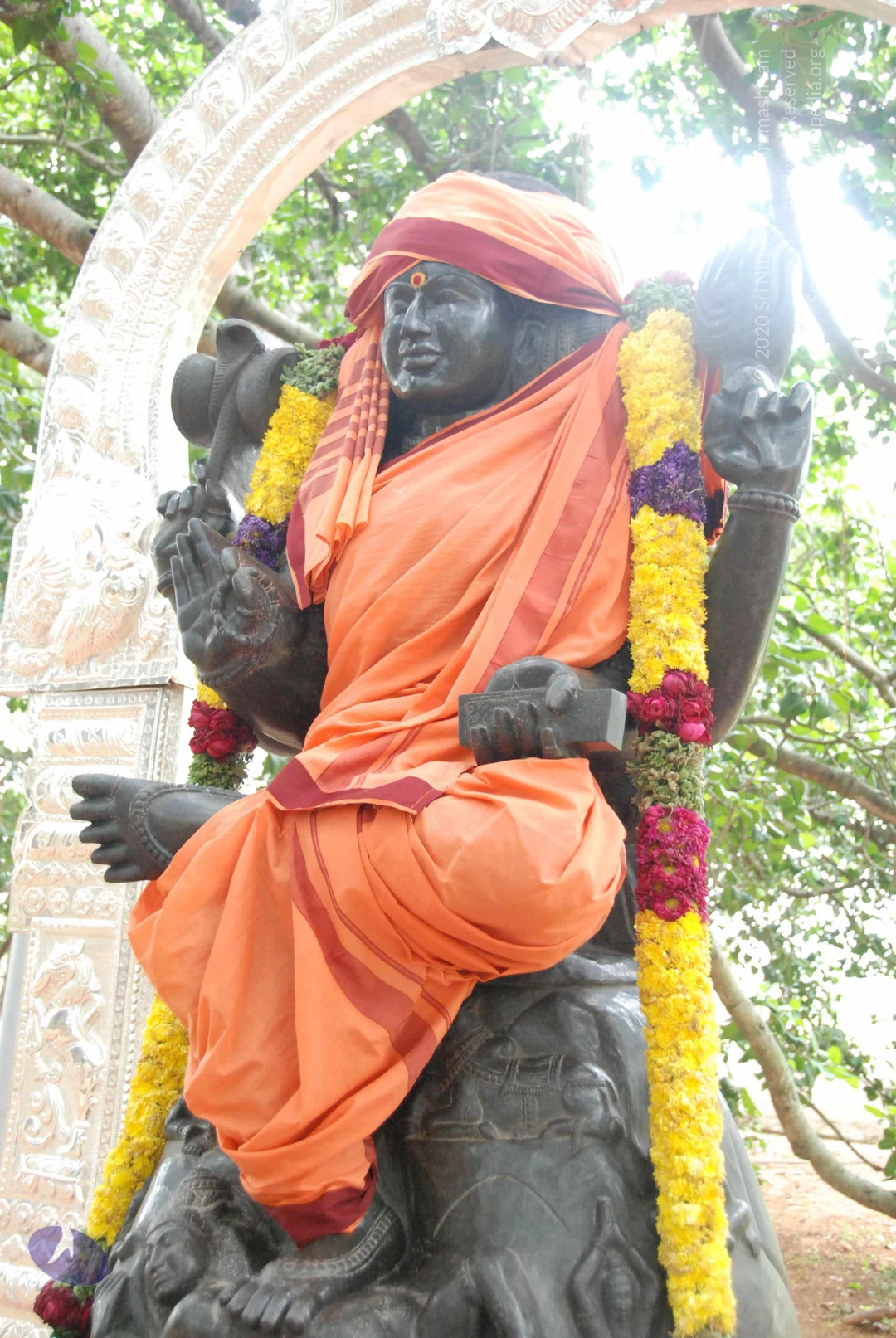
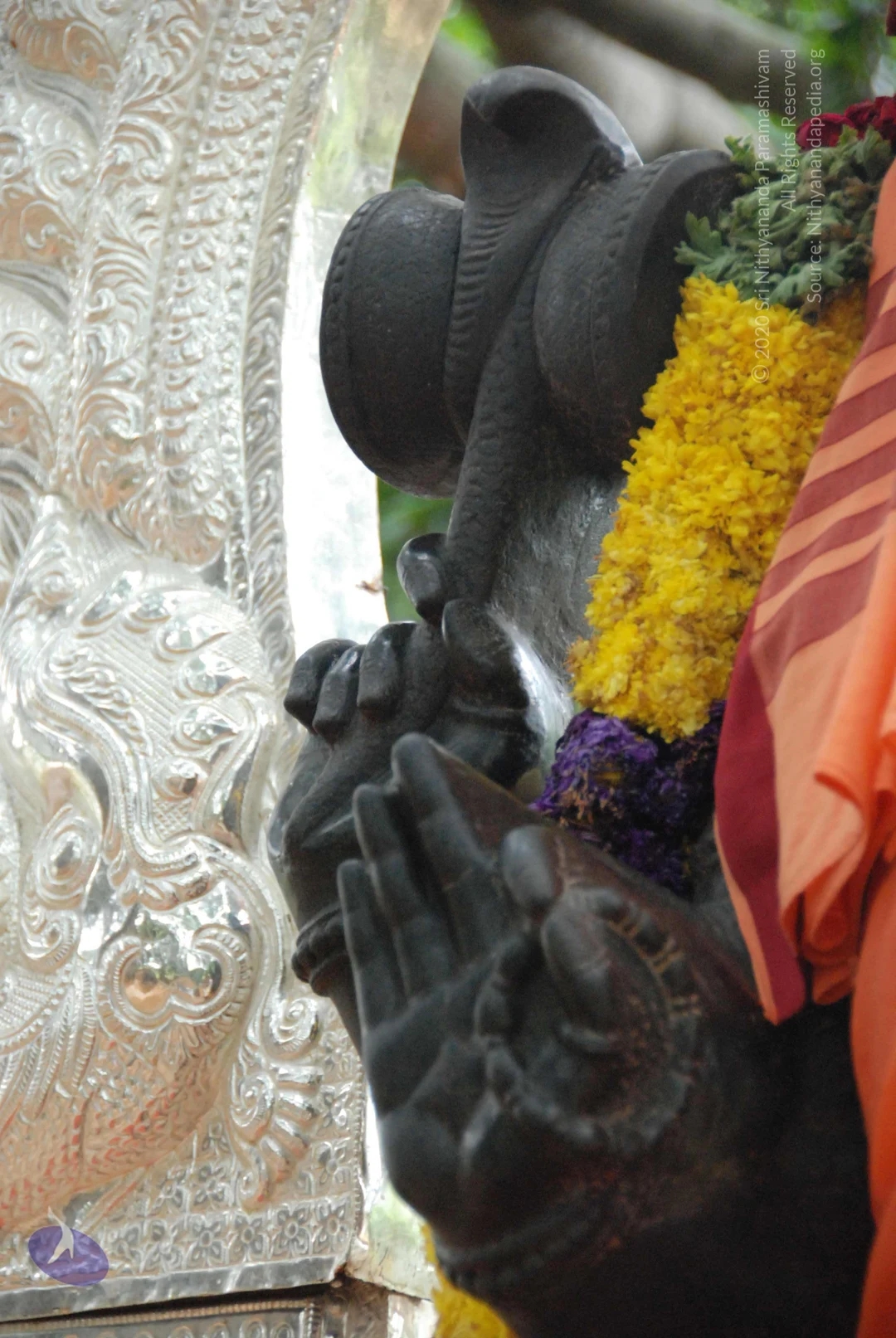
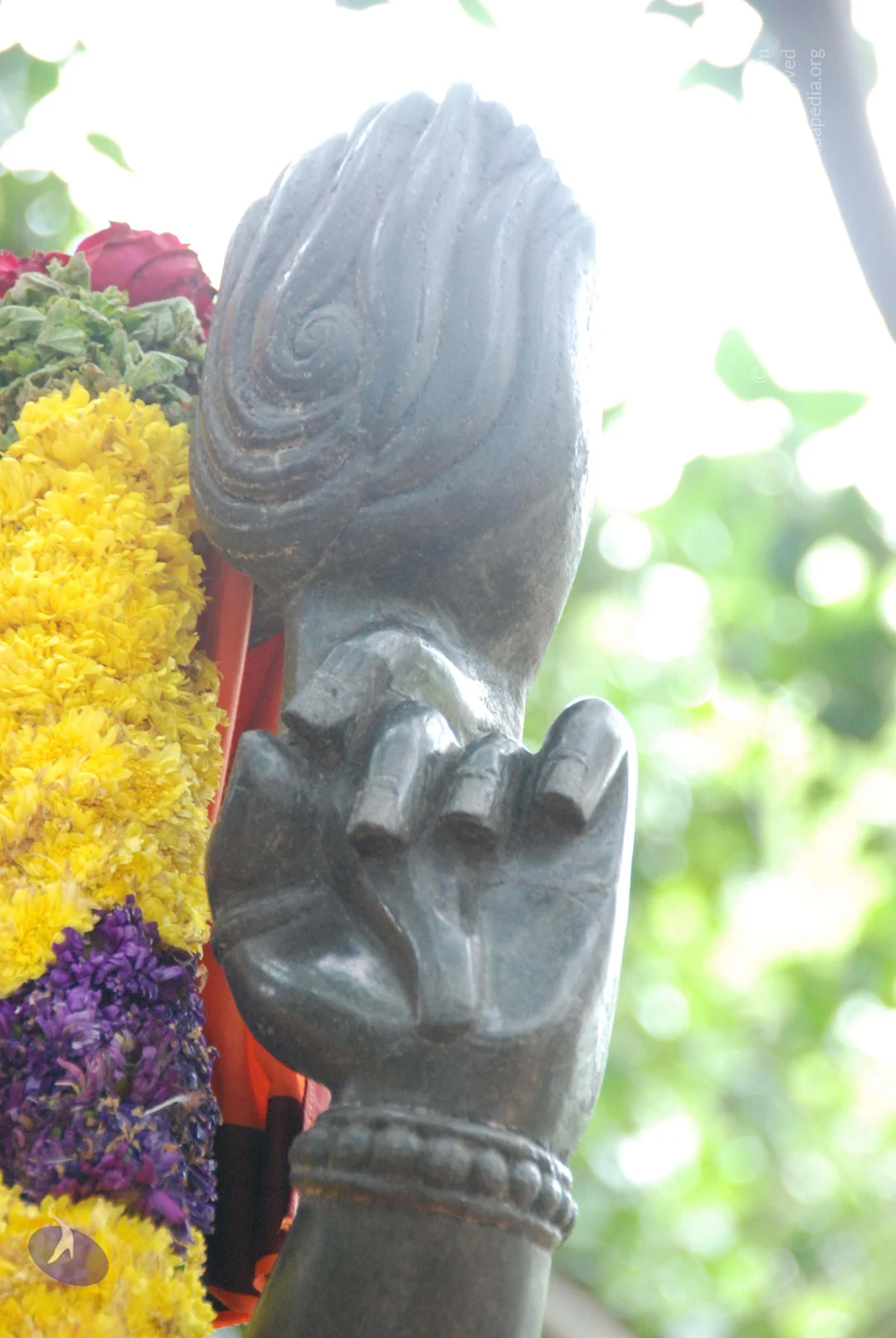
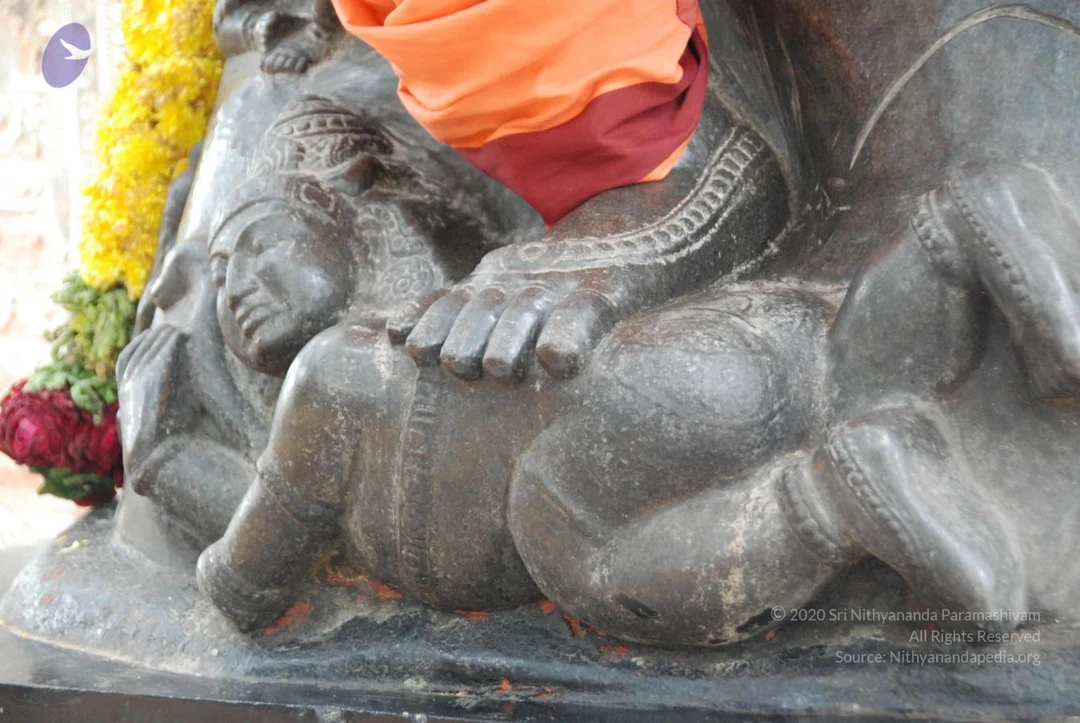
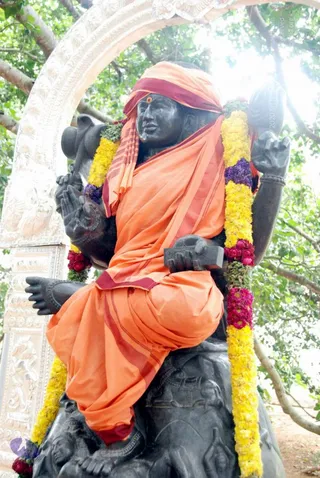
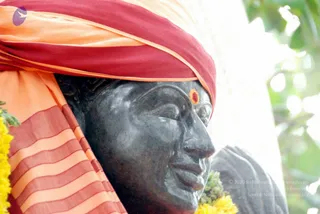
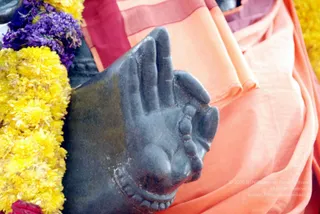
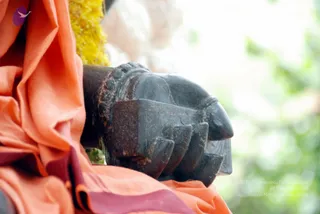
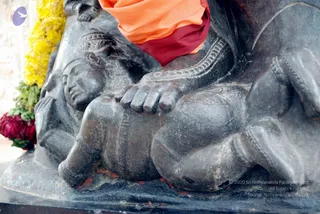
Close profile photograph of a dark stone statue of a sage wearing a red and orange striped turban-wrap, with a red bindi-like mark on the forehead. Yellow marigold garland lies at the left edge, and a blurred green tree background surrounds the head. The statue is a sculpted figure, not a living person, and shows no visible living human.Close-up photograph of a dark stone sculpture of a hand in abhaya or blessing-type mudra, with fingers extended upward and a rudraksha-like bead line across the wrist. Behind it, yellow marigold garlands and purple flower strands rest over a draped orange-and-maroon cloth. No people are visible; the subject is a carved murti or statue fragment decorated with flowers and fabric.Close-up photograph of a dark stone sculpture of a hand with curled fingers, its wrist draped in orange cloth with a maroon border and a yellow flower garland above. The background is blurred green foliage and bright sky. A statue of a hand, no people visible.Close photograph of a dark stone sculpture of a reclining figure, with a carved deity or attendant lying on its side and one hand resting on a raised carved foot or base. Above, the saffron and maroon fabric of a draped figure is visible at the top edge, and yellow marigold garlands and red flowers hang at the left. Red kumkum or vermilion marks dust the base. No physical people are visible; the figures are stone statues.

Inner-Awakening-Acharya-Session
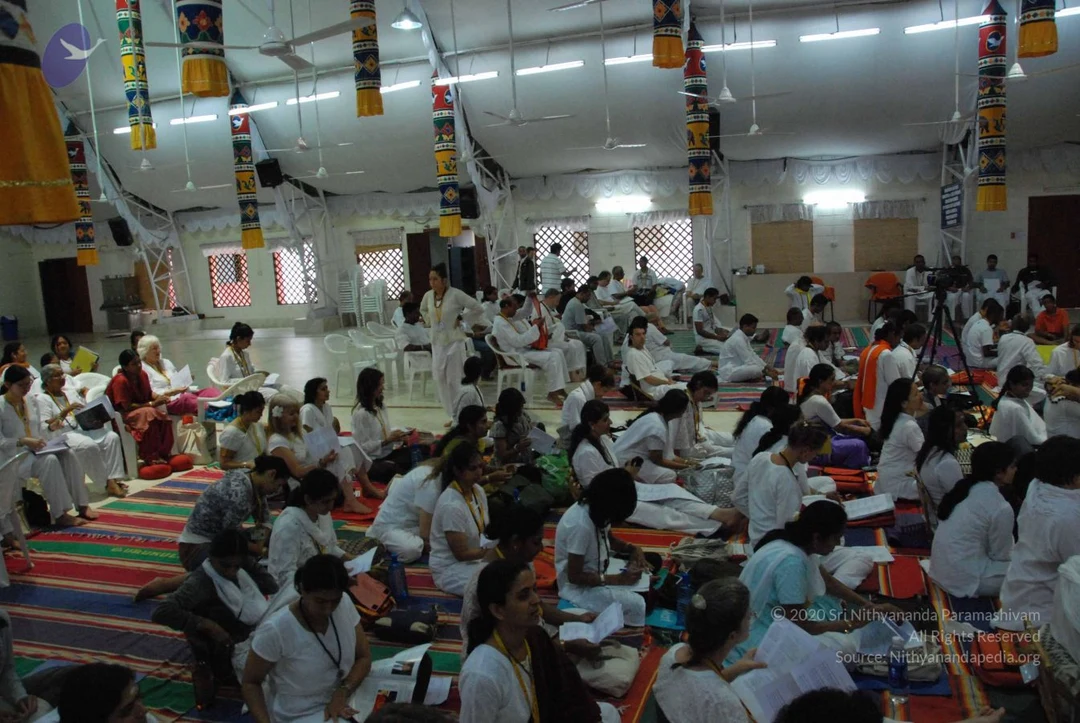
14 photosSource gallery
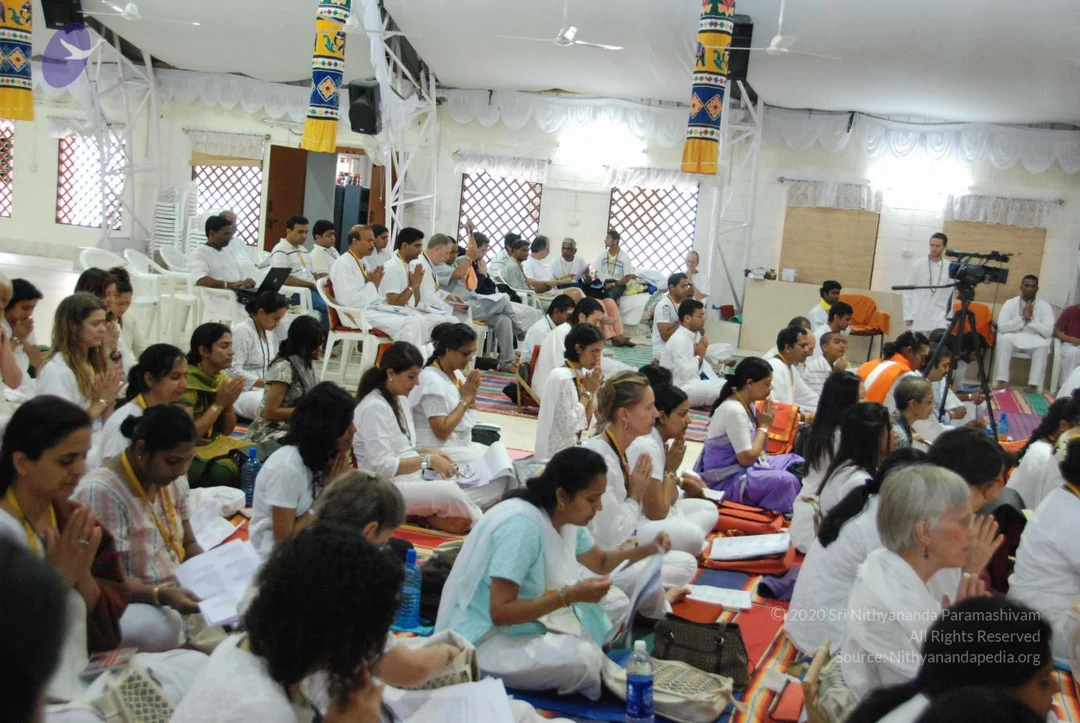
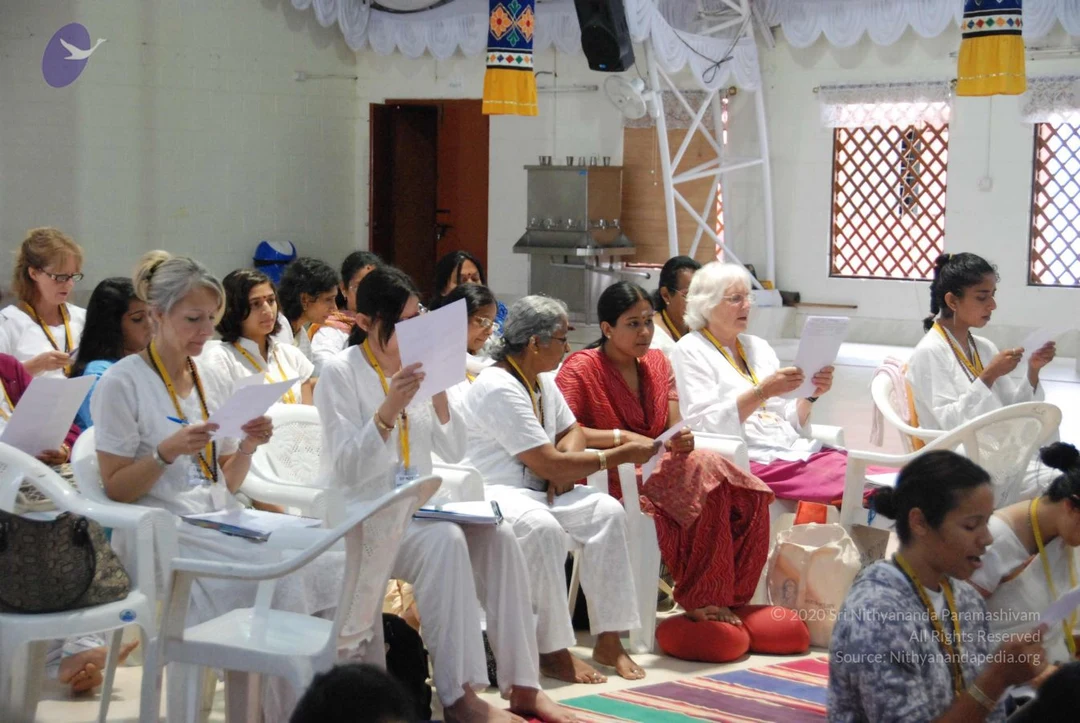
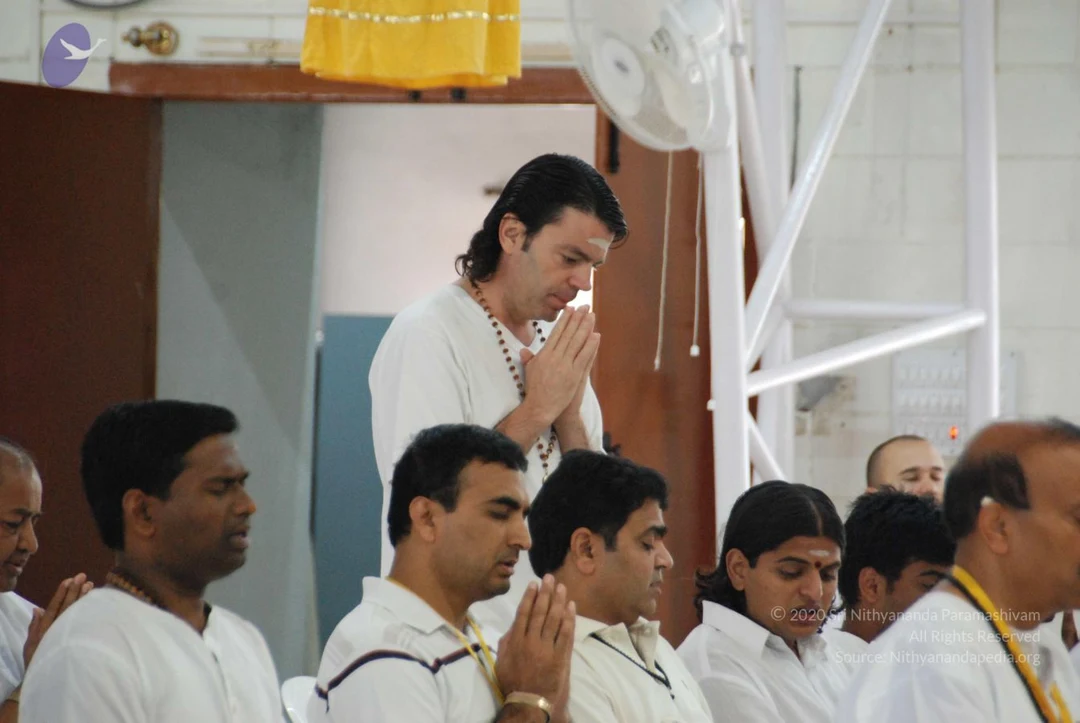
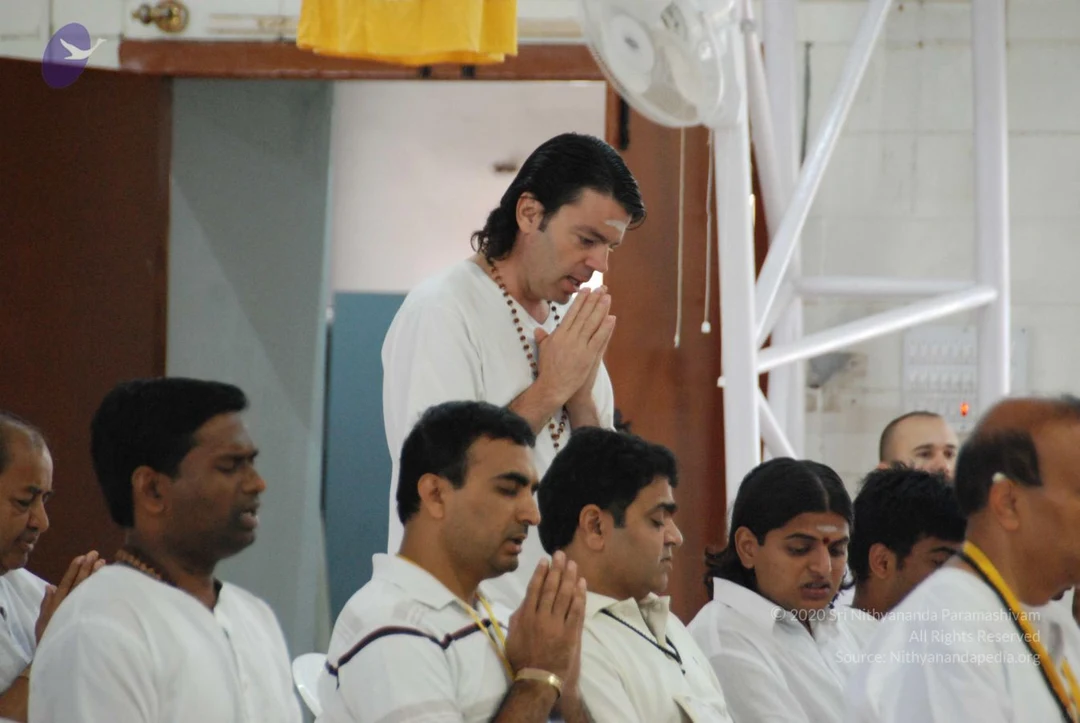
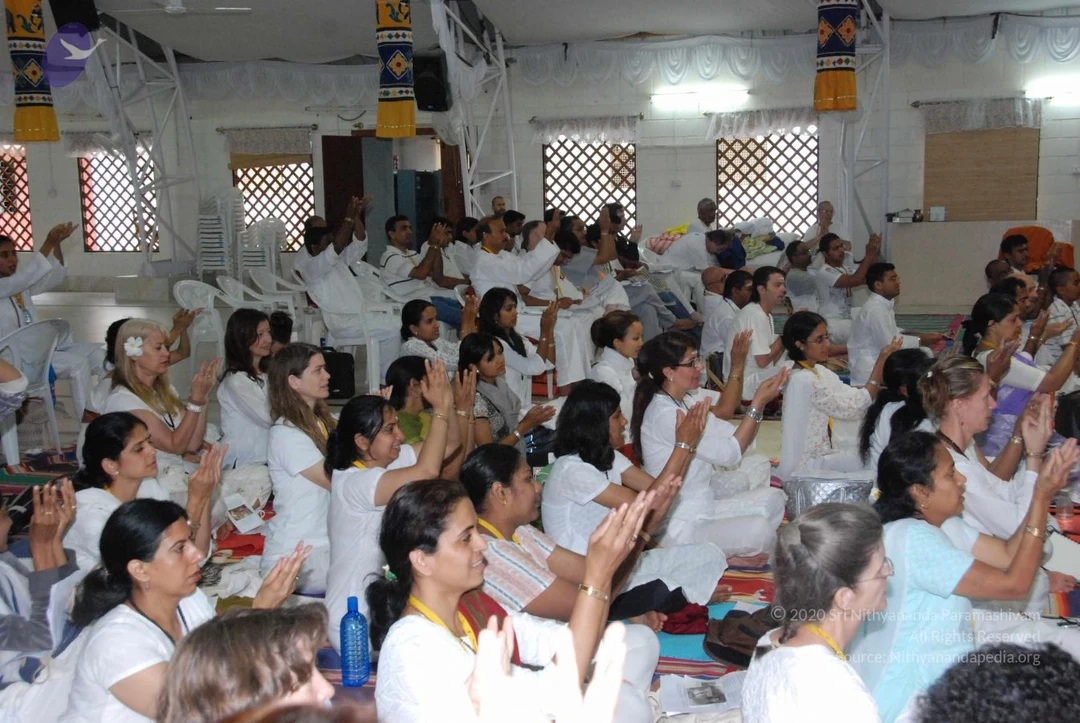
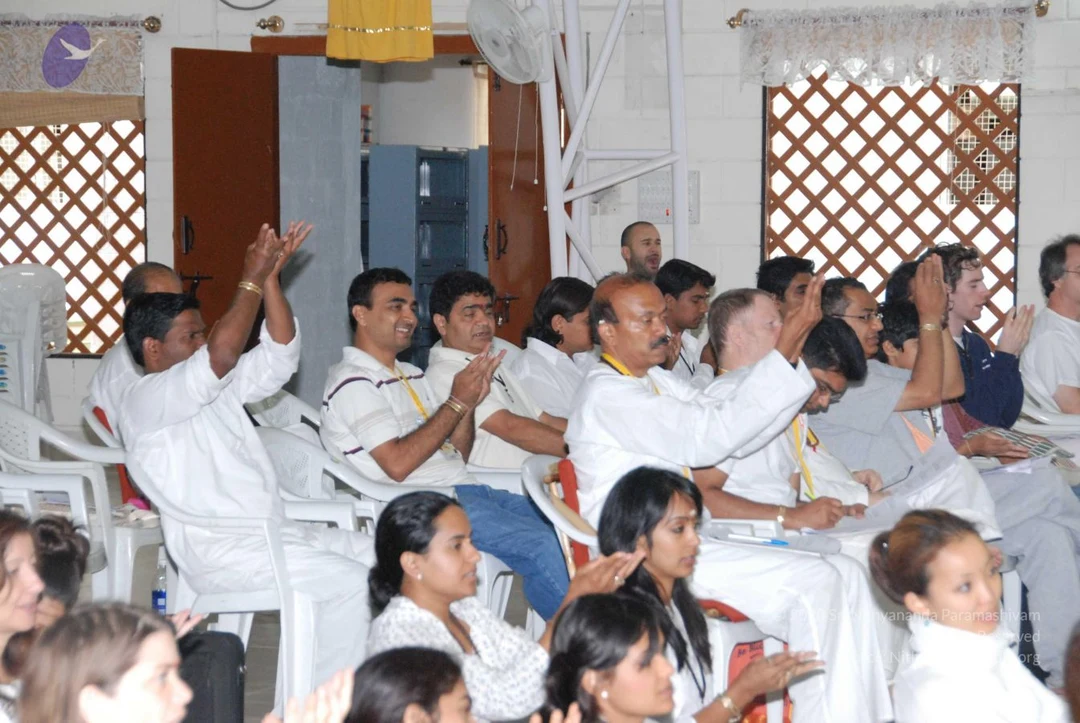
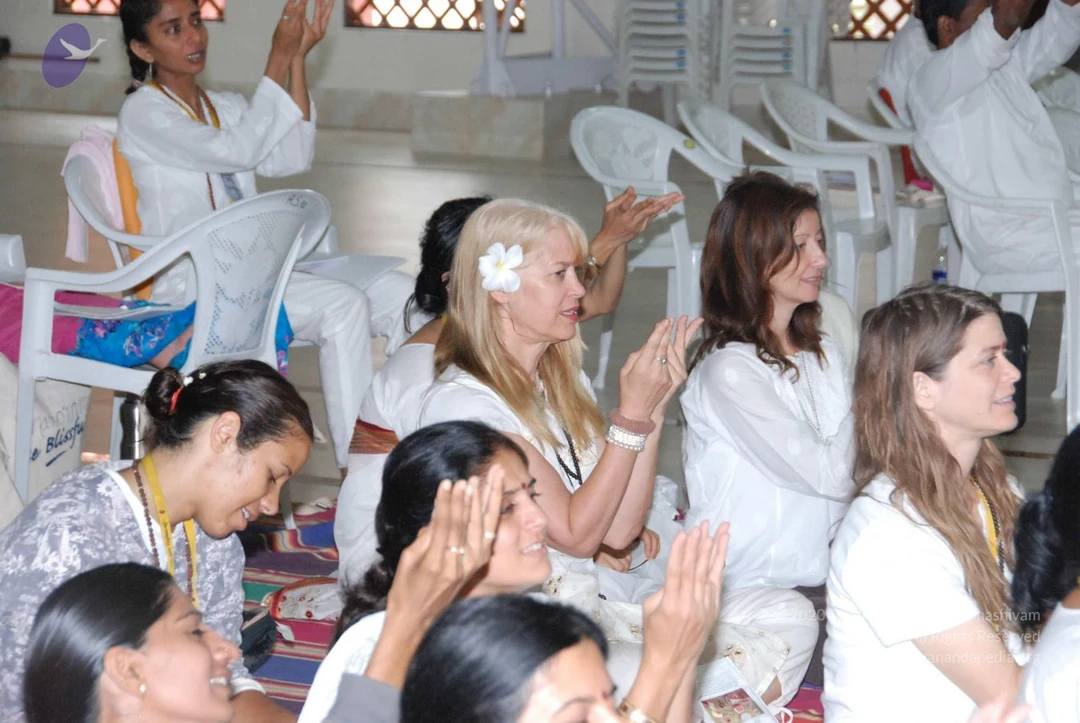
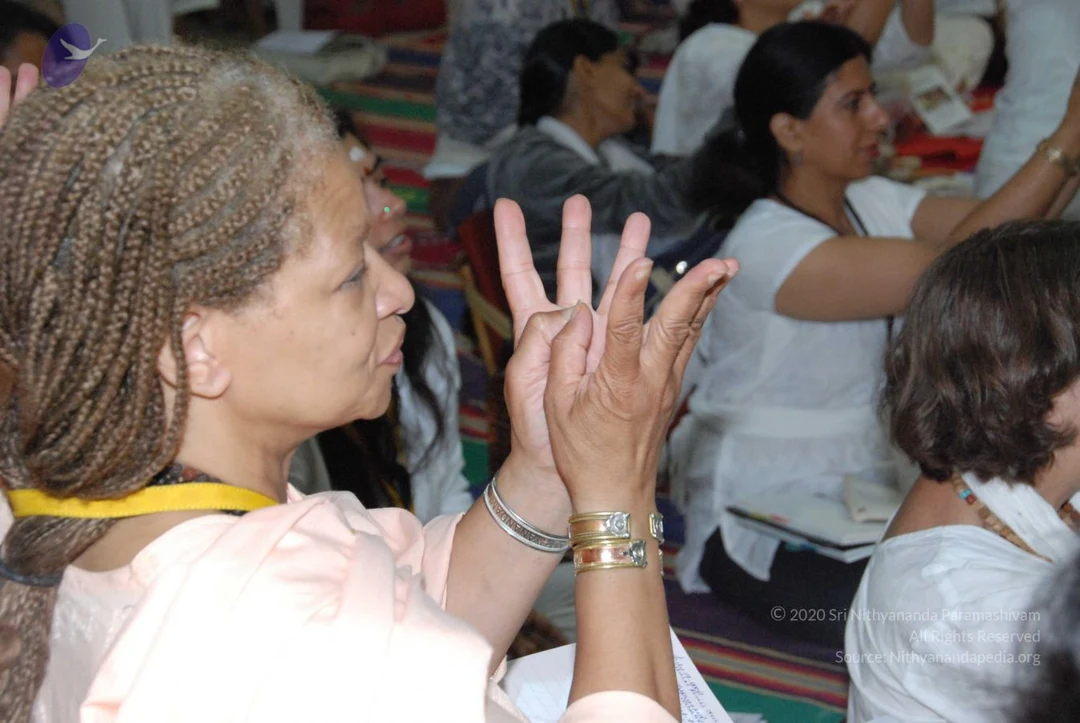
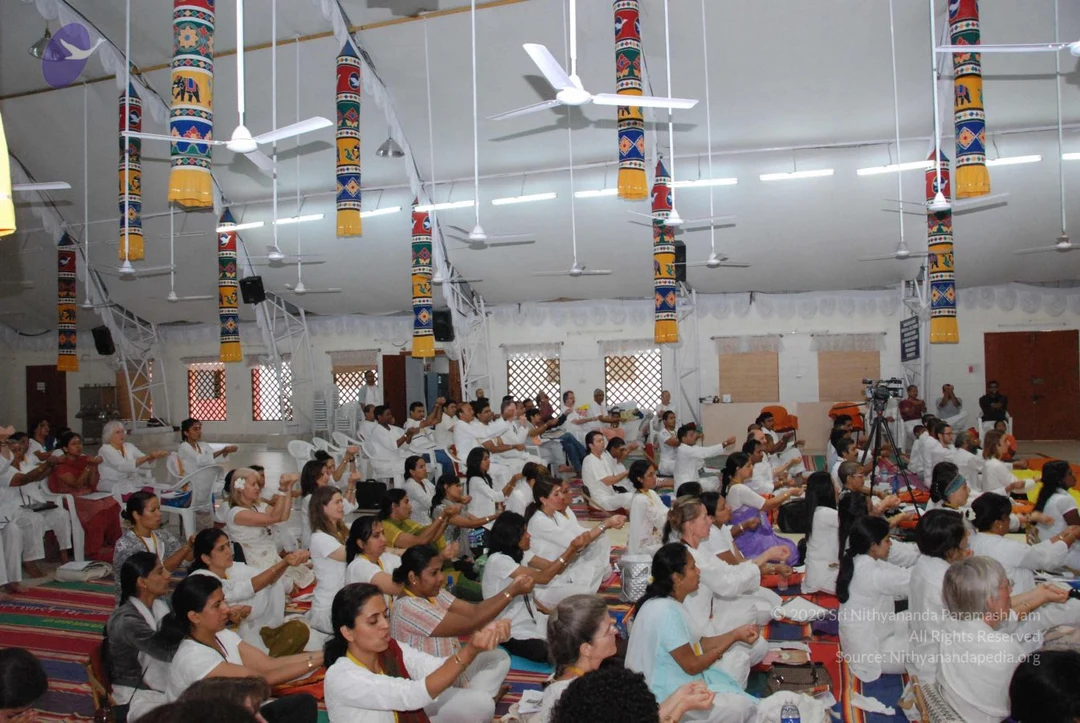
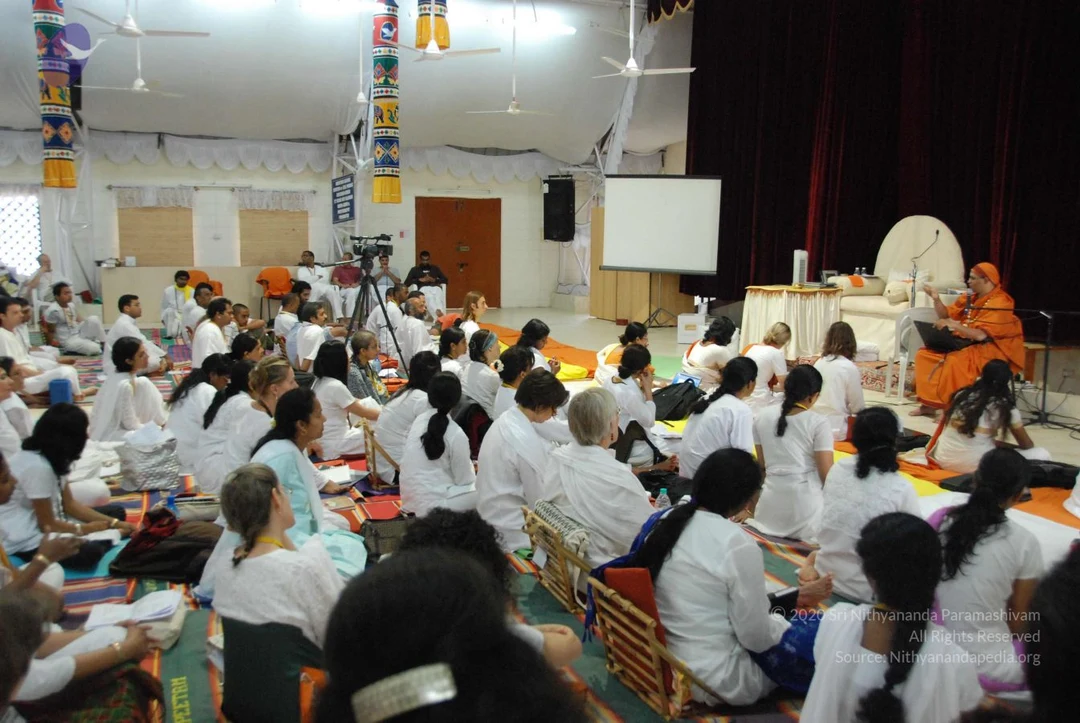
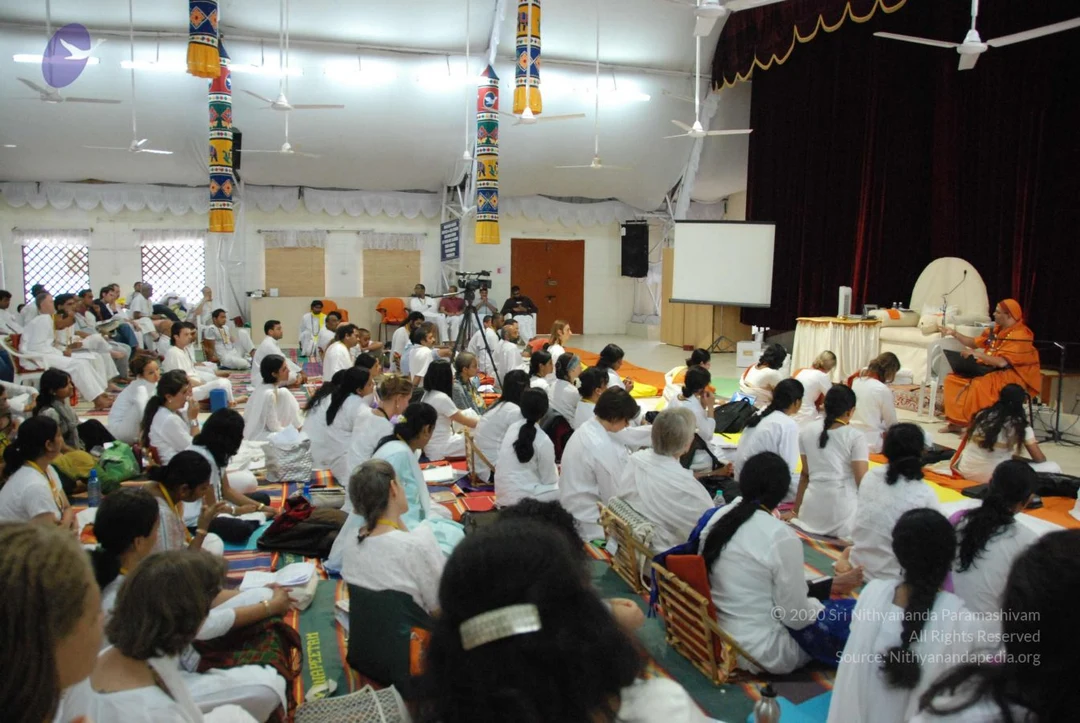
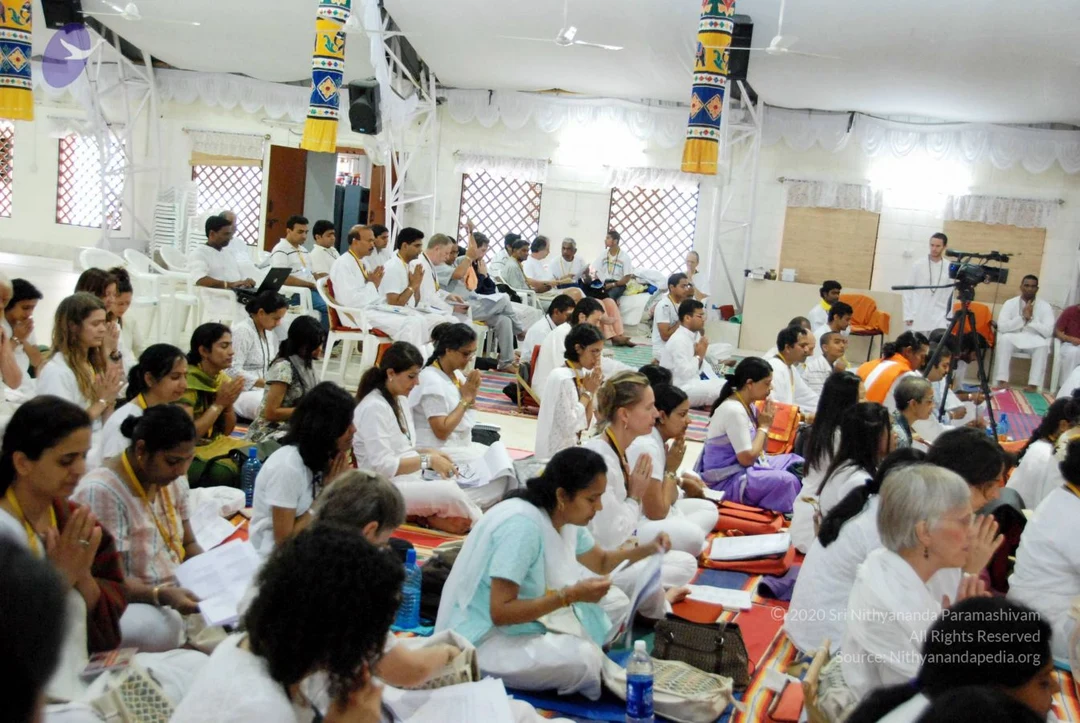
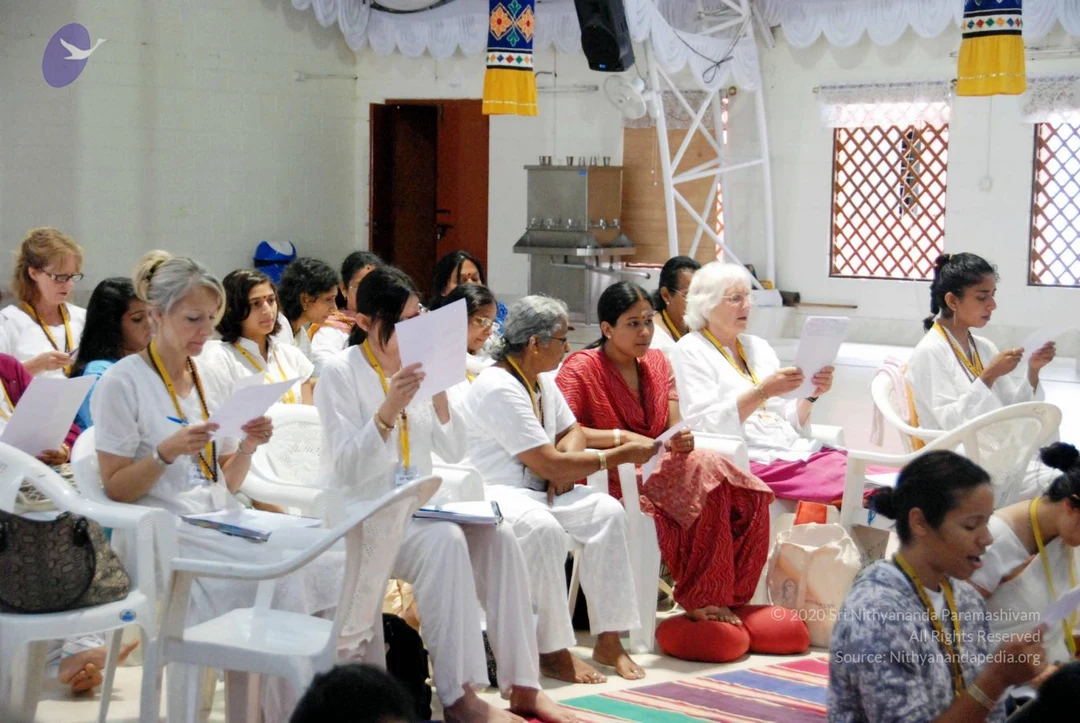
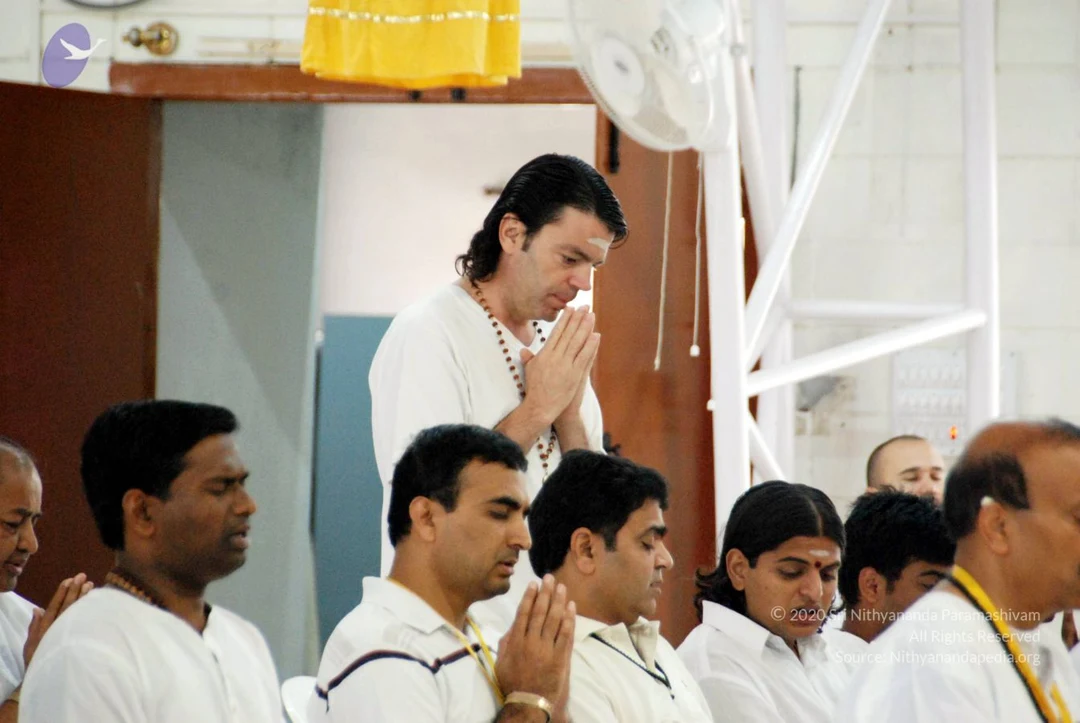
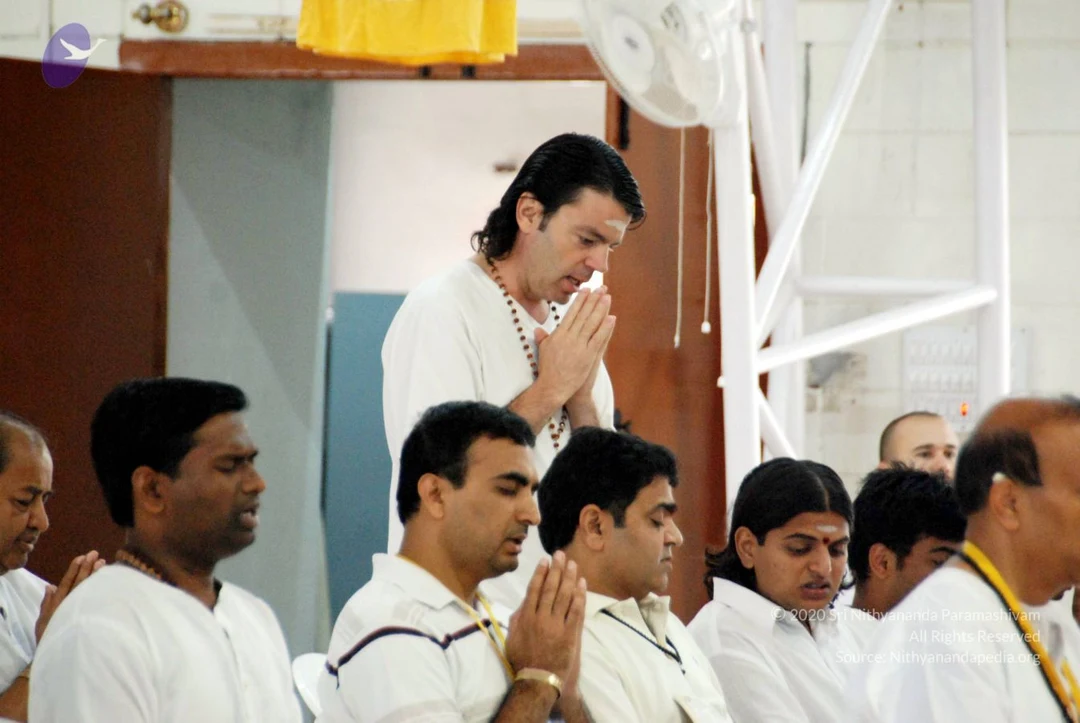
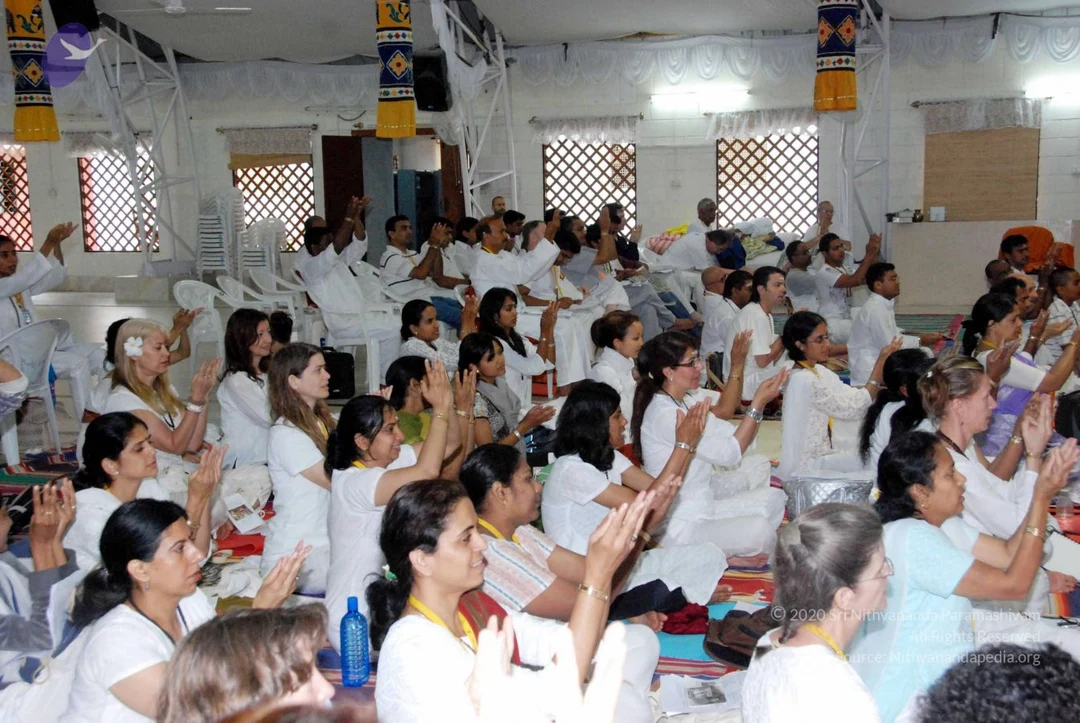
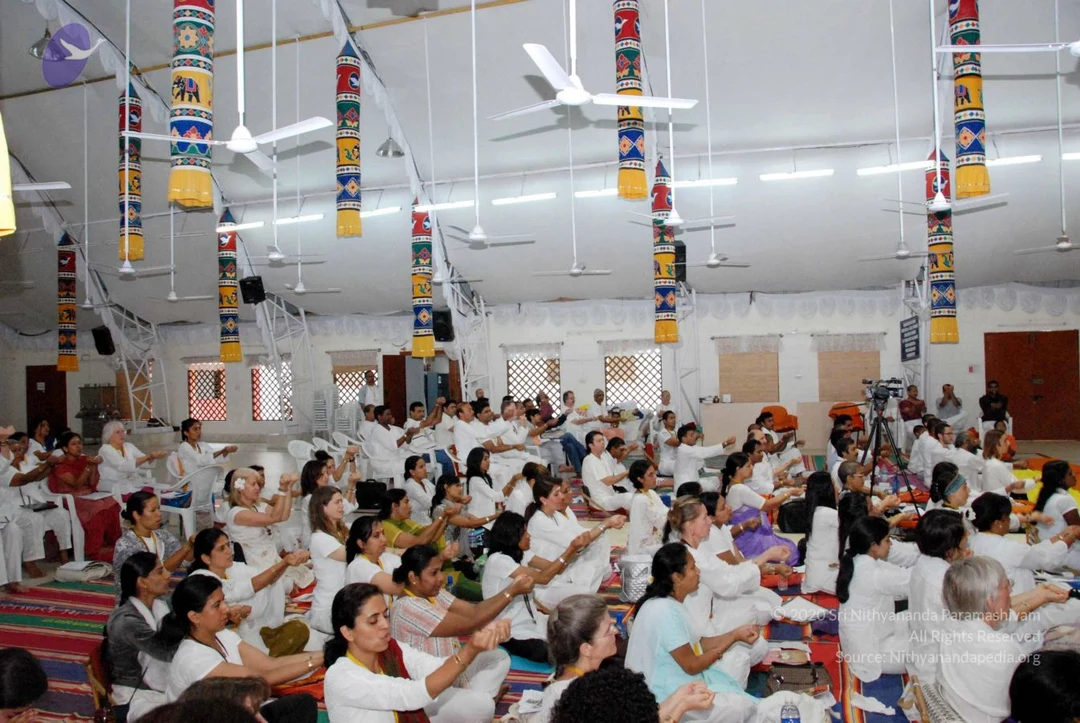
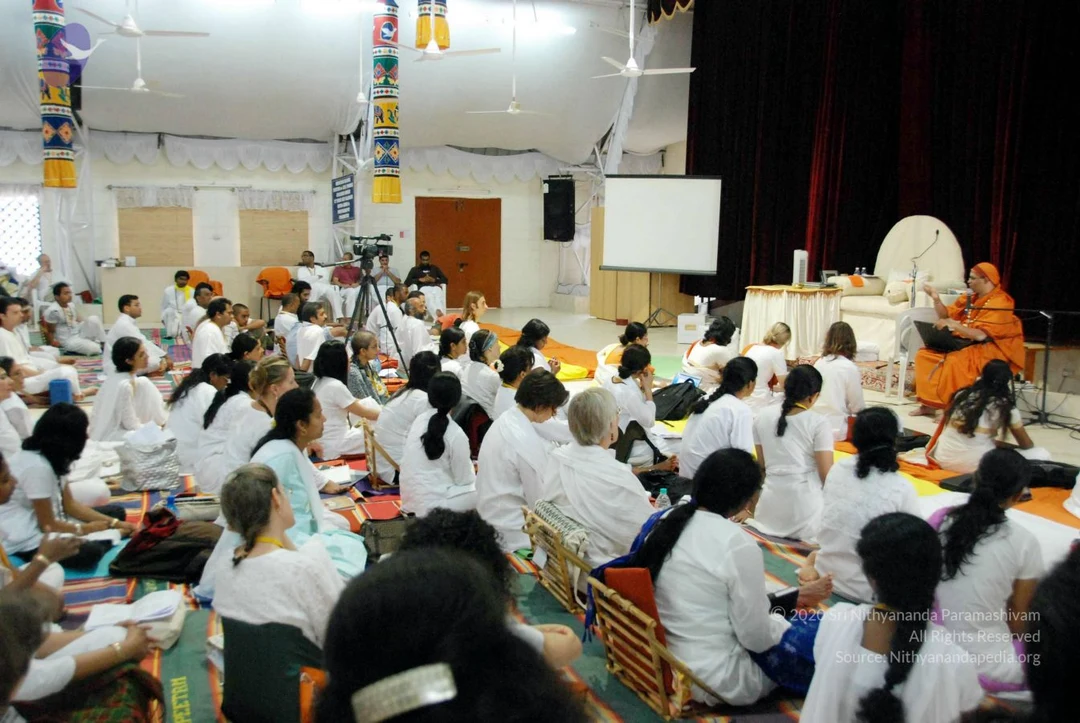
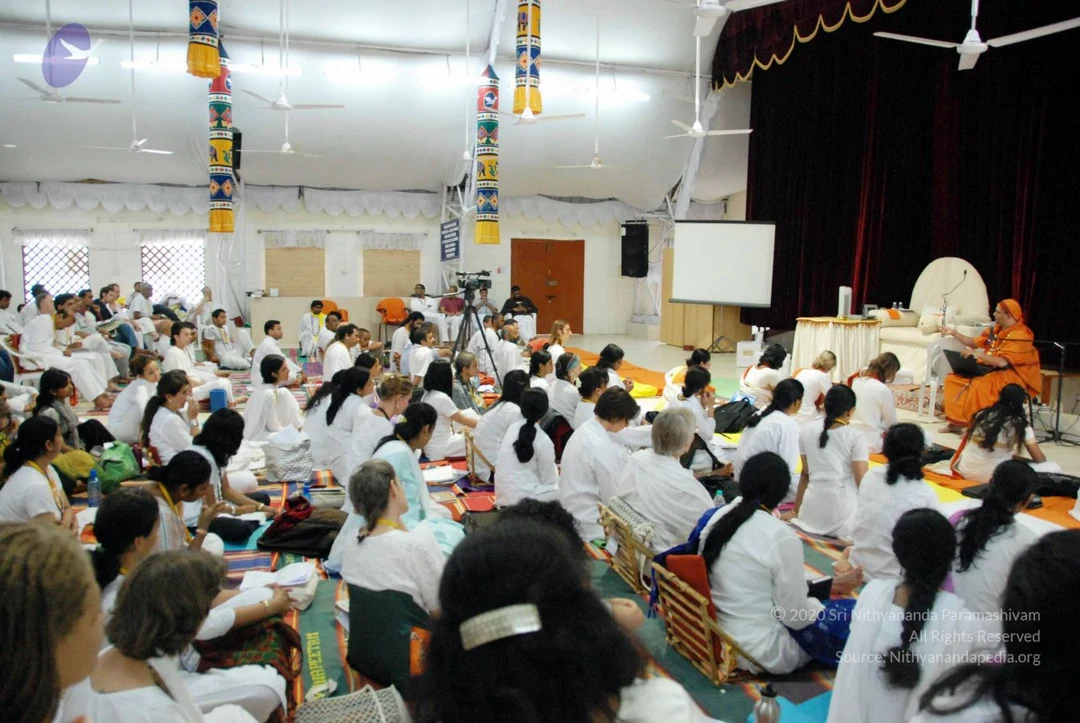
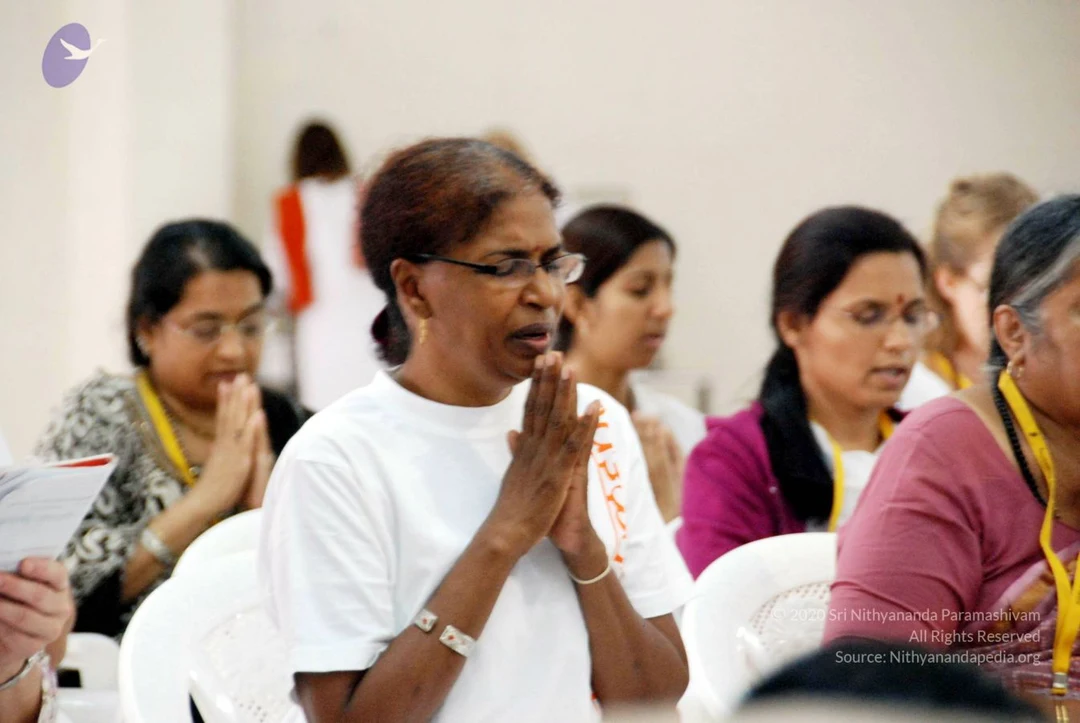
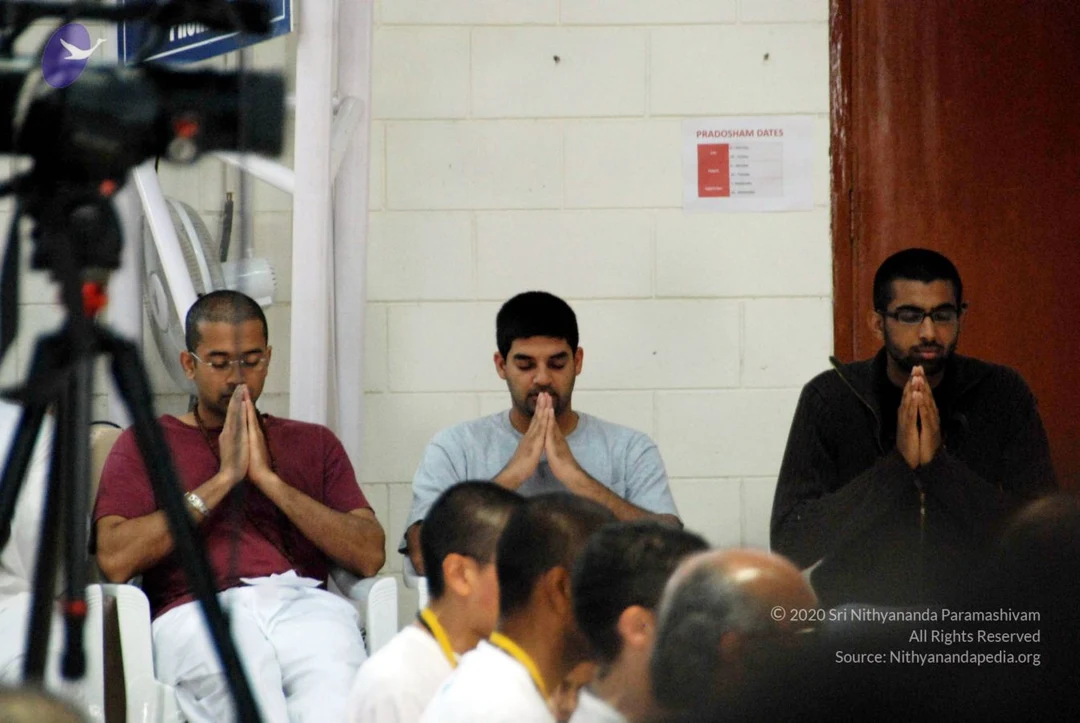
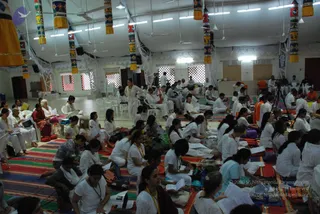
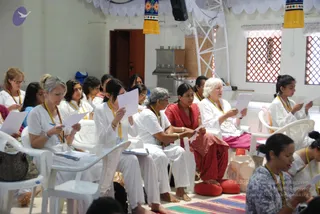
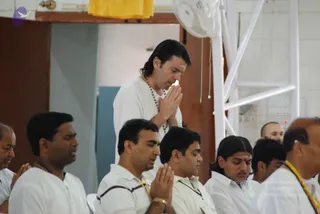
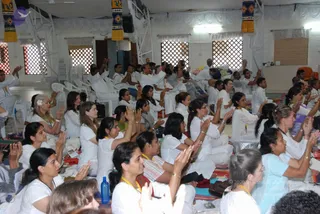
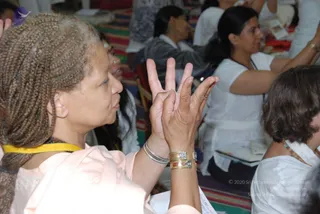
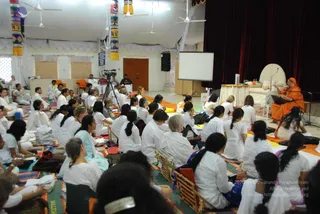
A large indoor hall filled with seated participants in white clothing, many with white shawls and lanyards, sitting on colourful striped woven mats and white chairs while listening attentively. Some people write or read notes and papers. Strings of colourful decorative hangings with yellow, red and blue patterns hang from the white ceiling, and fluorescent lights and ceiling fans are visible. A camera on a tripod stands near the front, and at the far right a figure in orange robes sits near the stage area. The setting suggests a discourse or satsang session.A photograph of a seated group of women in a white-walled hall with white plastic chairs and colourful striped floor mats. Most wear white kurtas or tops with yellow-gold lanyards around their necks, and they hold white printed sheets, reading or chanting from them. A woman in the centre foreground wears a red and maroon salwar kameez and sits on a red cushion. Woven yellow, blue and red textile banners hang from white draping above, and a steel water dispenser stands near a brown wooden door. No a person candidate is visible in the scene.A standing man in white clothes with a rudraksha mala around his neck and dark swept-back hair presses his palms together in anjali near his face, while several seated devotees in white shirts and kurtas, some with yellow lanyards, sit with hands folded or eyes closed in a hall with white metal scaffolding and a ceiling fan. Appearance-based cues are limited to the rudraksha mala and hair, so identity is uncertain. Approximately six to twenty people are visible, including partially visible figures at the edges.A photograph of a large hall filled with seated devotees in white clothing, many with palms pressed together in anjali or raised hands, apparently in satsang or meditation. Most attendees wear white tops and some wear yellow lanyards; a woman at the front right wears a light blue top and glasses. White lattice windows, white draped fabric, hanging woven panels in yellow and blue, and stacked white plastic chairs line the room.A photograph of a seated audience at a discourse session. In the foreground a woman with long braided hair in a pale peach top and a yellow lanyard raises her hands with fingers spread in a gesture of receiving teaching. Behind her, women in white clothing sit on colourful striped mats, some with notebooks and booklets.A photograph of a large indoor discourse hall with a sizeable seated audience on mats and floor cushions, many dressed in white clothing, with some seated on low wooden chairs in the foreground. A projection screen, colourful decorative pillars and white fabric drapes line the hall. Cameras and a few seated staff are visible at the back. Count of physical people is in the large audience range.

HDH-Morning-Session
86 photosSource gallery
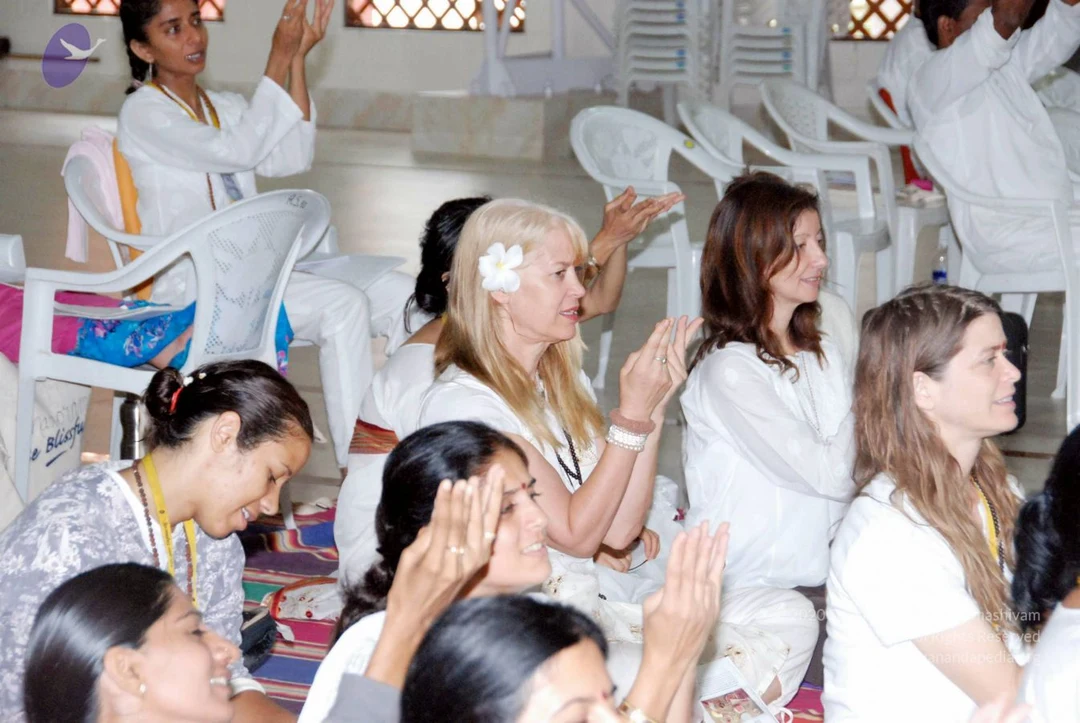
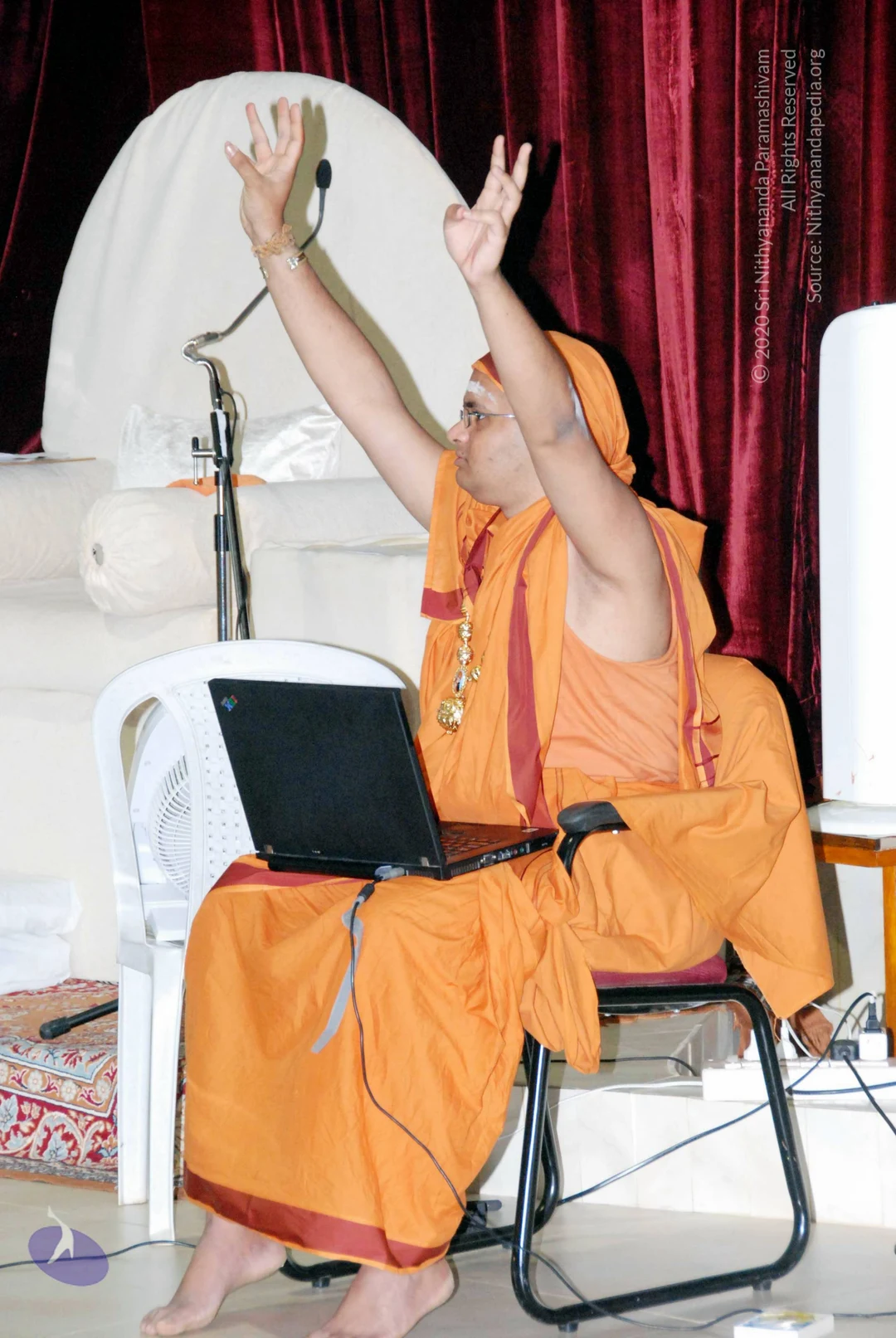
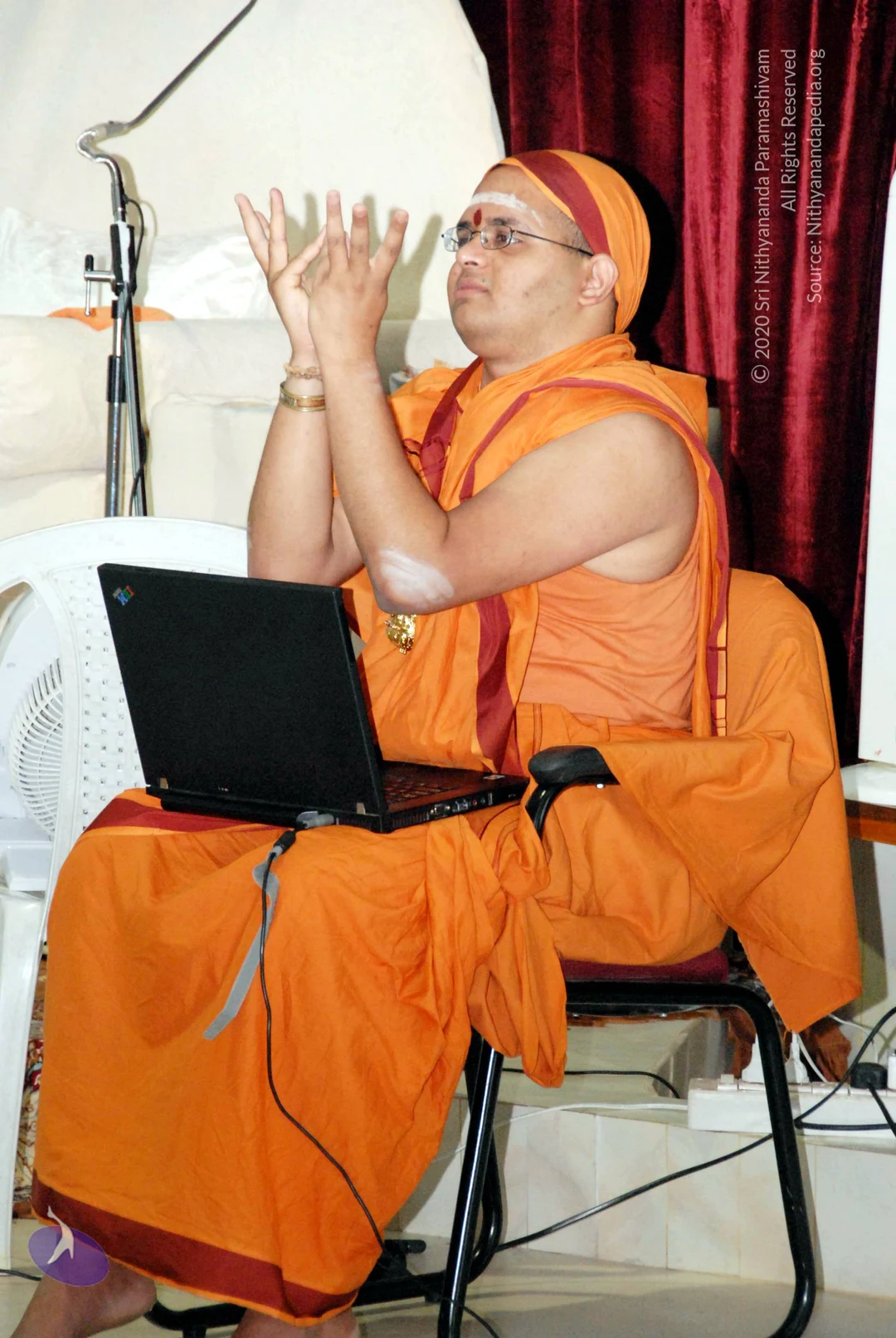
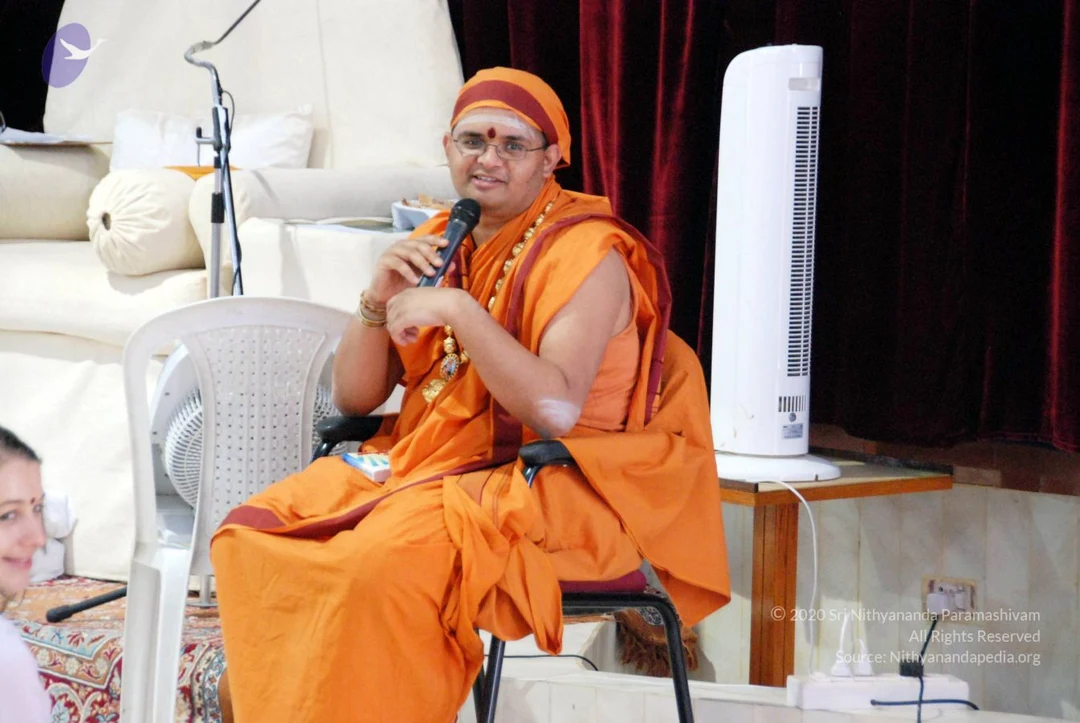
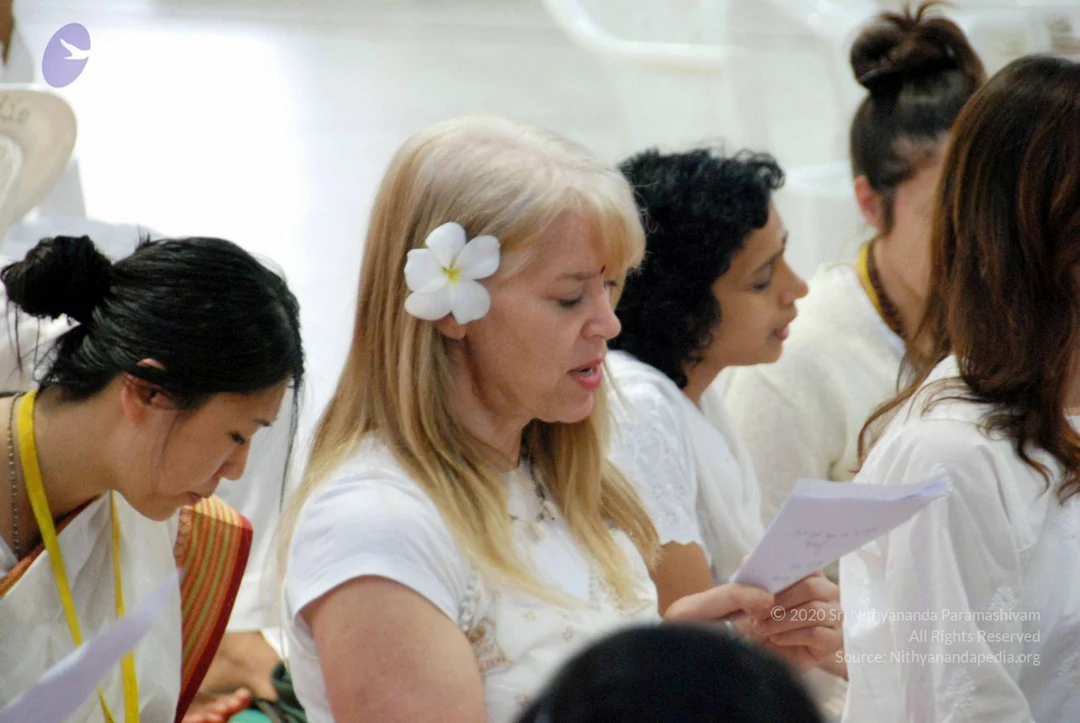
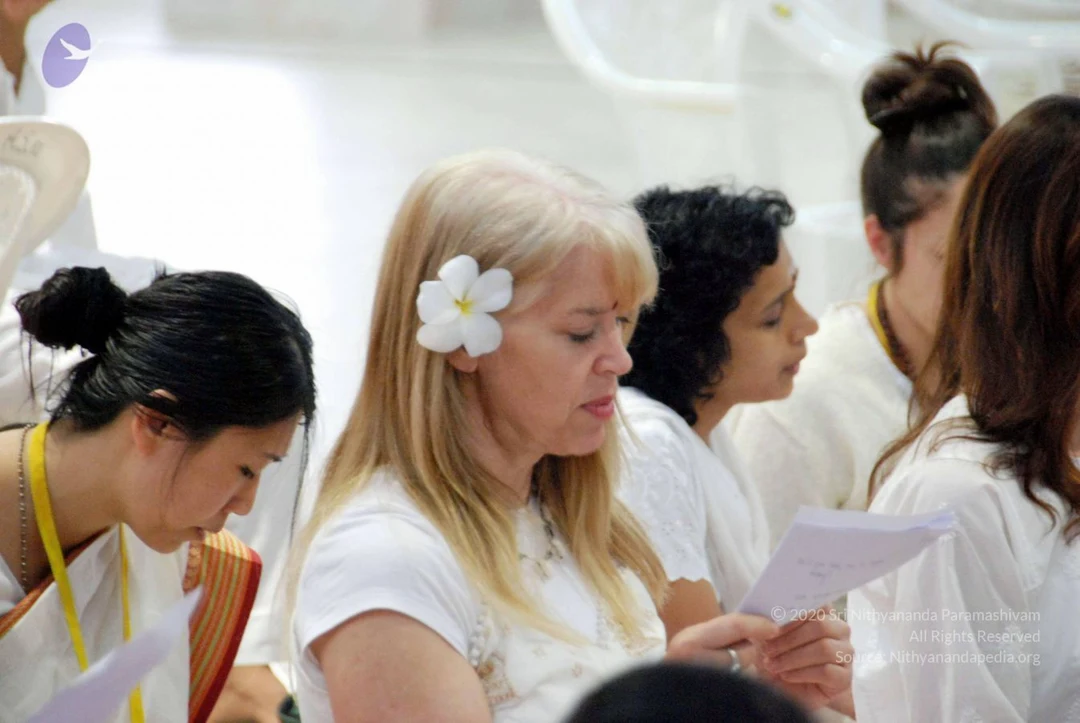
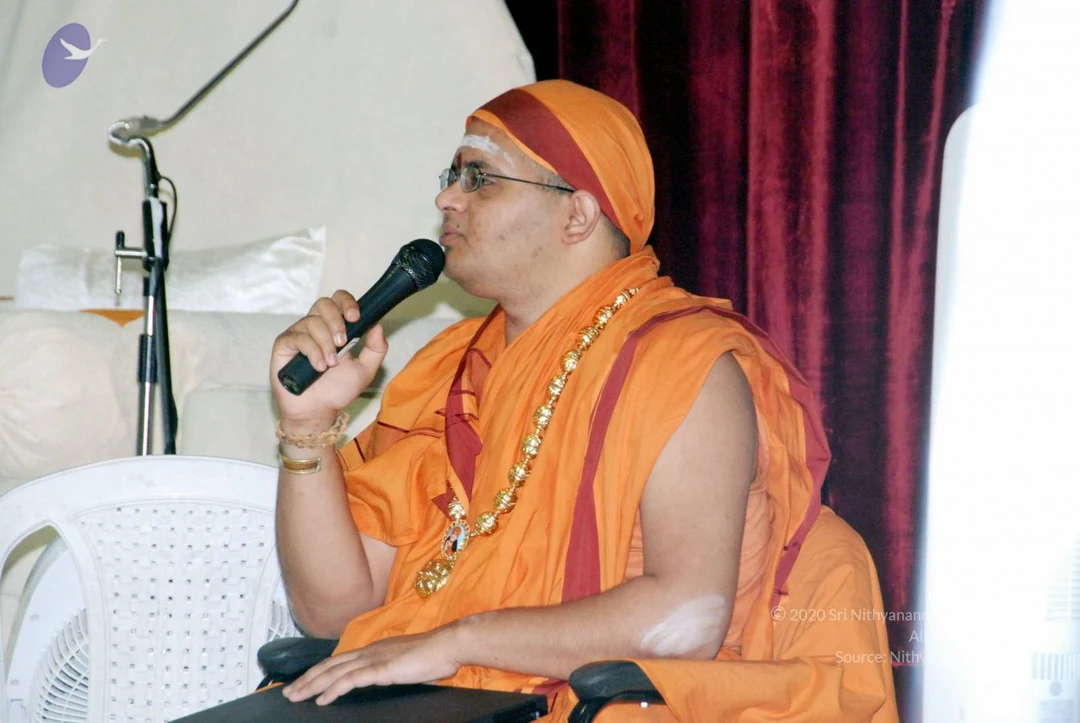
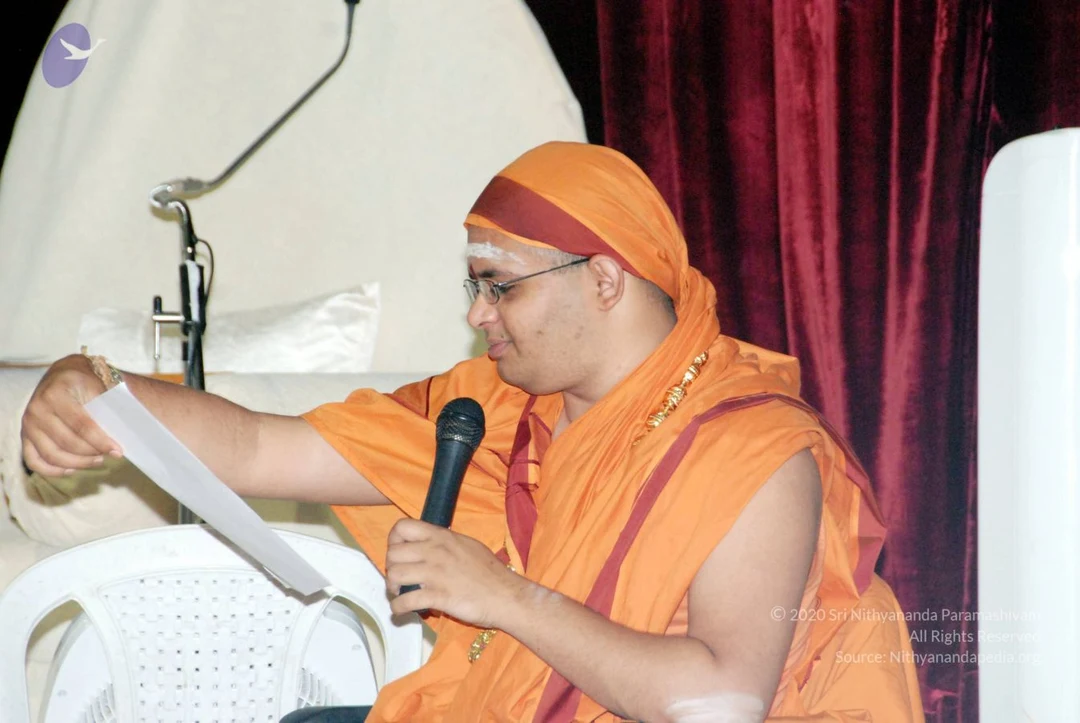
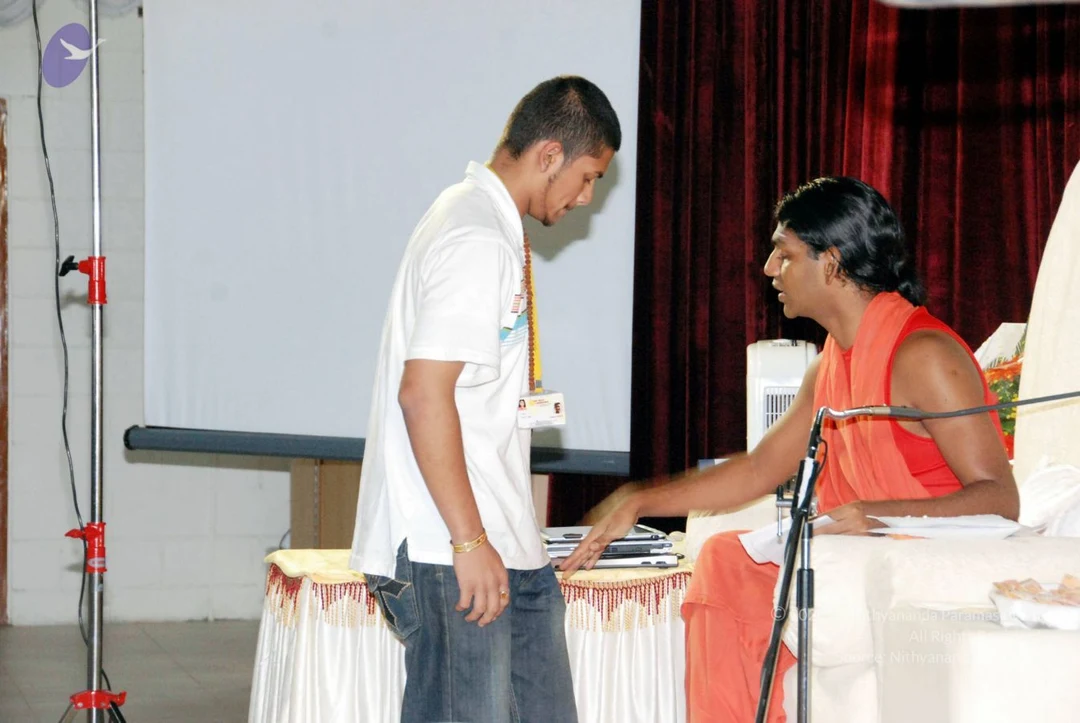
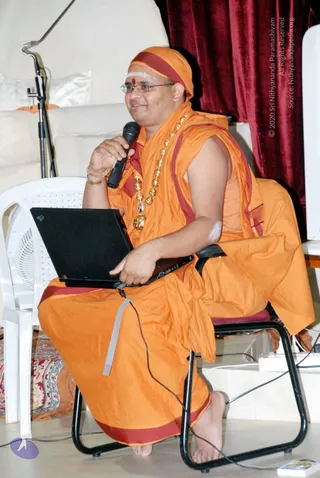
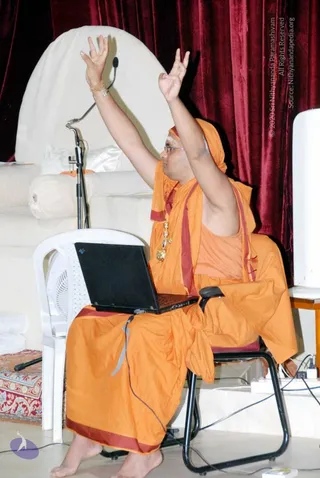
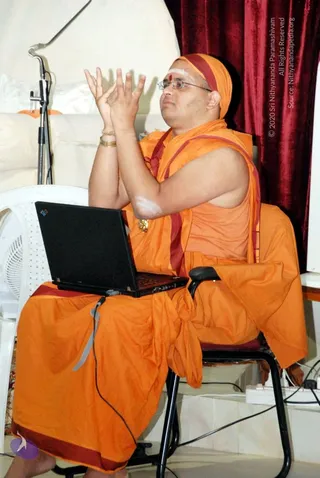
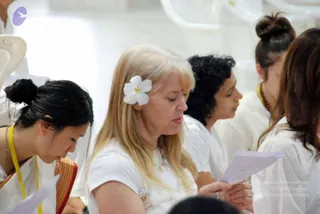
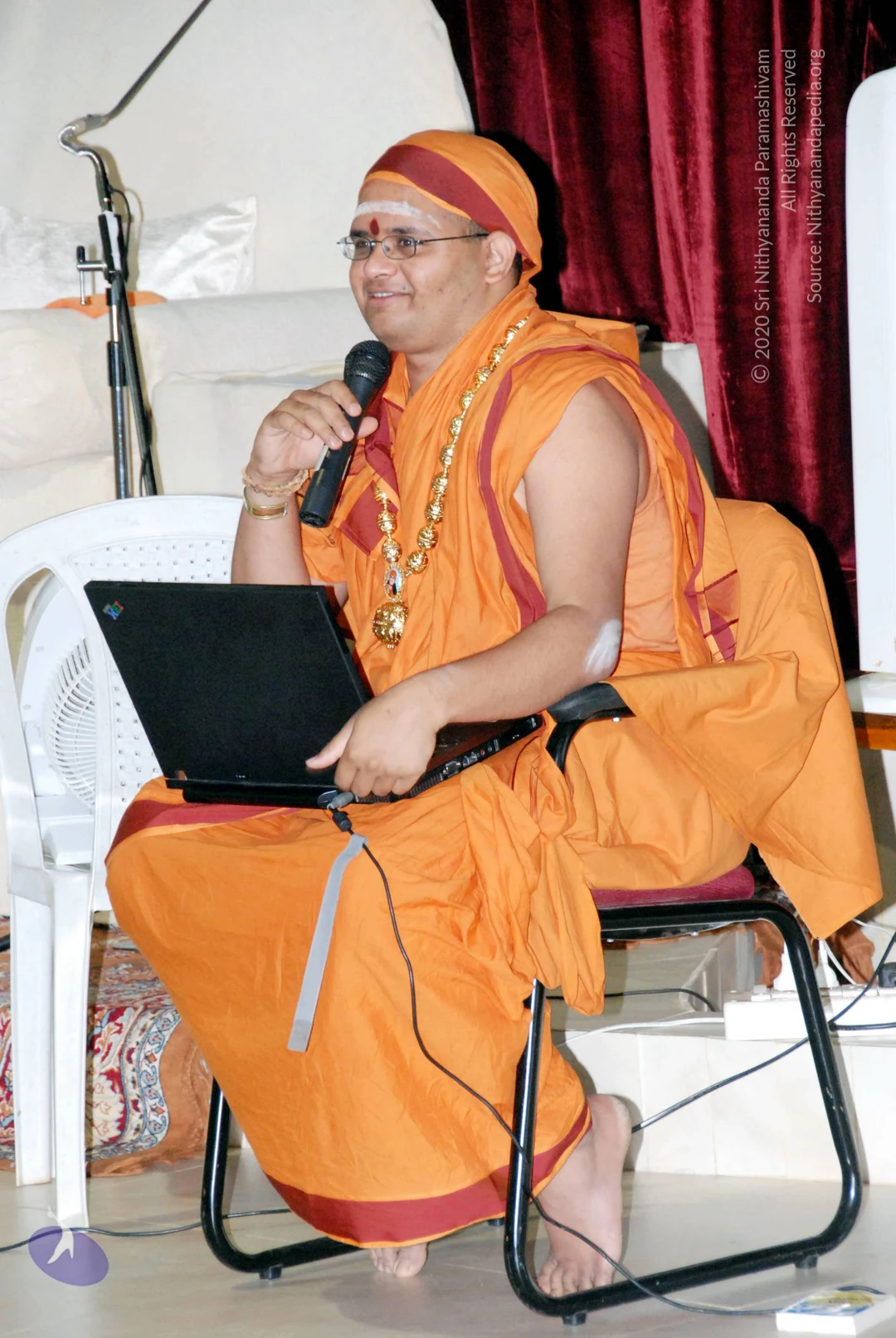
A man sits on a black metal-framed chair holding a handheld microphone in his right hand while resting a black laptop on his lap. He wears saffron-orange robes with maroon borders, an orange head wrap, a gold-coloured ceremonial necklace with a large pendant, and a red bindi with white vertical markings on his forehead, along with glasses and a beaded wrist mala. He appears to be speaking to an audience. Behind him hangs a deep red velvet curtain, and a white plastic chair and microphone stand are visible at the left. The appearance of a sannyasi with saffron robes, gold ornaments and a forehead mark makes him a person candidate, speaking during a discourse session.A seated man in saffron-orange robes with a maroon border raises both hands overhead while sitting on a black-framed chair in front of a white bolster-backed seat and deep red velvet drapes. He wears a gold-and-bead ornamental necklace, a beaded wristband, and a tilak mark on his forehead. A black laptop sits on his lap with a wire running down to the floor, and a microphone stand stands beside him. A white plastic chair and a patterned rug are visible at the left. a person is probable per the page cues: saffron clothing, a gold ornamental necklace and a sannyasi's ceremonial presentation, but the face and frame are only partly clear in this angle.A seated man in saffron-orange robes with a maroon border and a matching saffron headwrap sits on a black chair, hands raised palm to palm in front of his chest, eyes lifted upward. He wears thin-rimmed glasses, a red bindi and white horizontal tilaka lines, and a gold pendant around his neck, with gold bangles on his wrist. A black laptop rests on his lap, with a microphone stand and a maroon velvet curtain behind him. A white plastic chair sits at left. The orange garments and maroon curtain give the scene a discourse-setting feel. Visible appearance cues include a saffron headwrap, orange robes and a gold pendant, which the page identifies as a person, the speaker at a discourse session. One physical person is present.A man seated on a white plastic chair holds a black microphone while speaking to an audience at a discourse hall. He wears a saffron-orange robe draped over one shoulder, a saffron head wrap with a maroon border, a red tilak on his forehead, and rudraksha-style beads with a gold-toned necklace. A white tower fan stands beside him, with white cushions and a maroon velvet curtain behind. A partly visible woman in a pink top sits at the left edge. Appearance-based label: a person, a seated speaker in saffron robes with a ceremonial necklace and head wrap, shown in a discourse setting.A candid photo of a group of women in white clothing seated and standing indoors at a ceremony or session. The central woman has long blonde hair with a white frangipani (plumeria) flower tucked behind her left ear and wears a white short-sleeved top with embroidered detail. She looks down at a sheet of white paper she holds, while beside her a woman with dark curly hair wears a white outfit. On the left, a woman with dark hair in a bun wears a white garment with a yellow lanyard and an orange-striped cloth. On the right, a woman with brown hair in white clothing holds another sheet of paper. The background is a bright white interior.Photograph of several women seated indoors in white clothing at a bright white event hall, reading printed sheets of paper. The central woman has long blonde hair with a white plumeria flower tucked behind her ear, a red bindi, a white t-shirt and a pendant necklace, looking down at a page she holds. To her left a woman with a dark hair bun wears a yellow lanyard and a red-and-gold bordered sari, also looking down at paper. Behind them a woman with curly dark hair and a woman with a high bun wear white garments and beaded necklaces. Photo credit overlay in the lower right corner.

Adi-Kailaasa

13 photosSource gallery
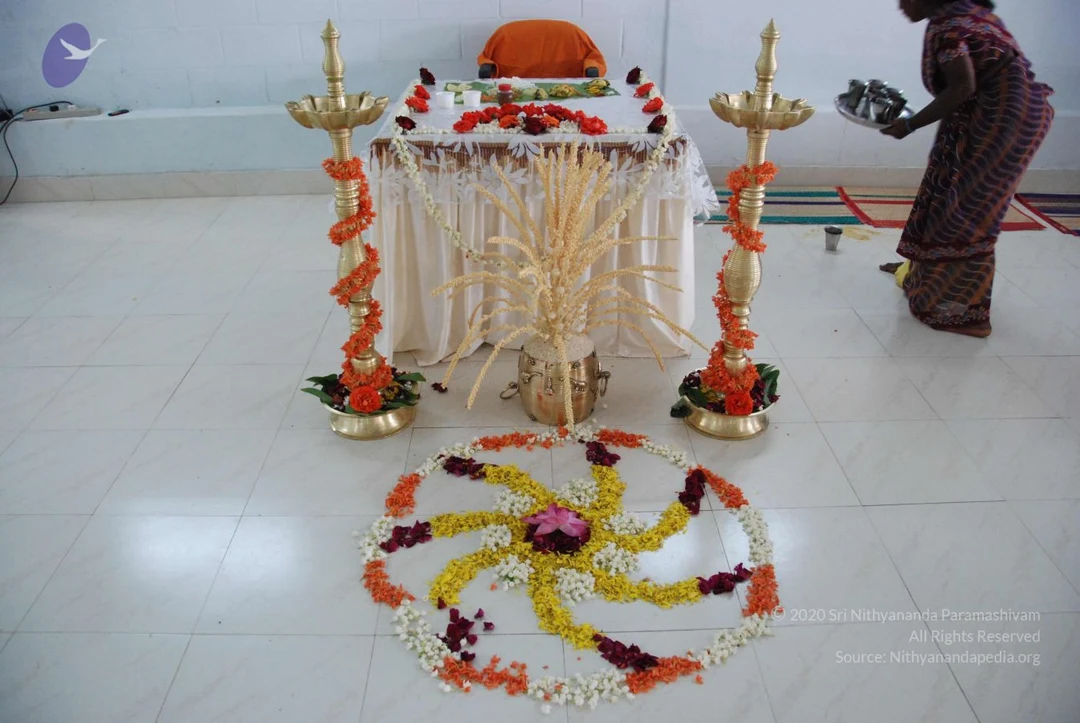
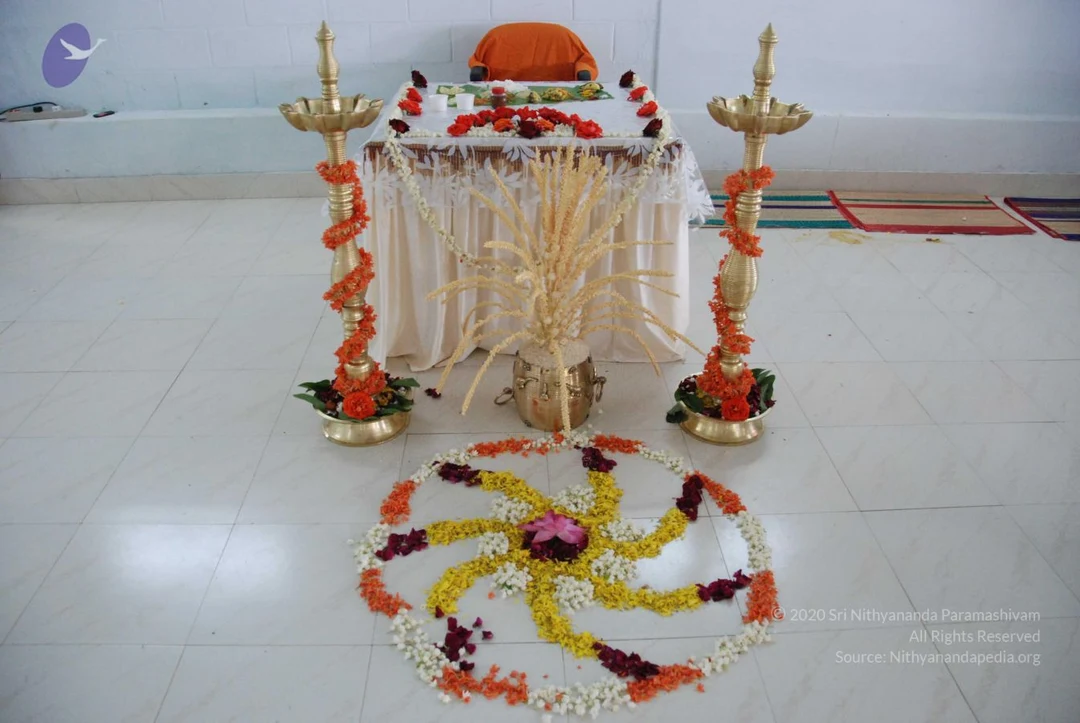
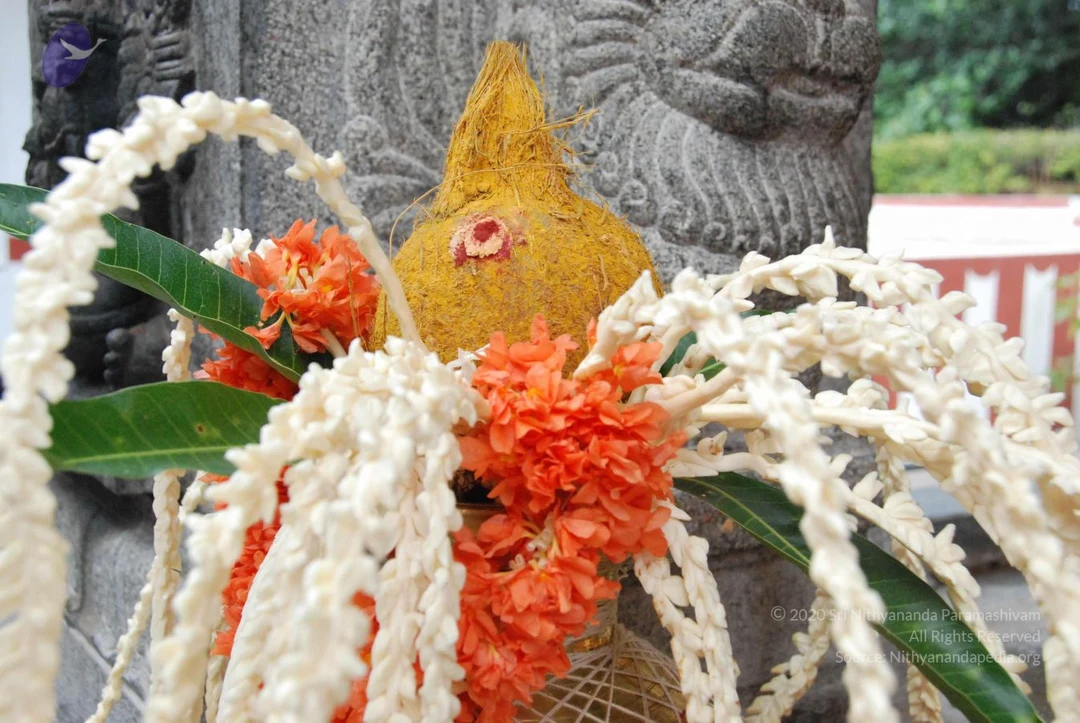
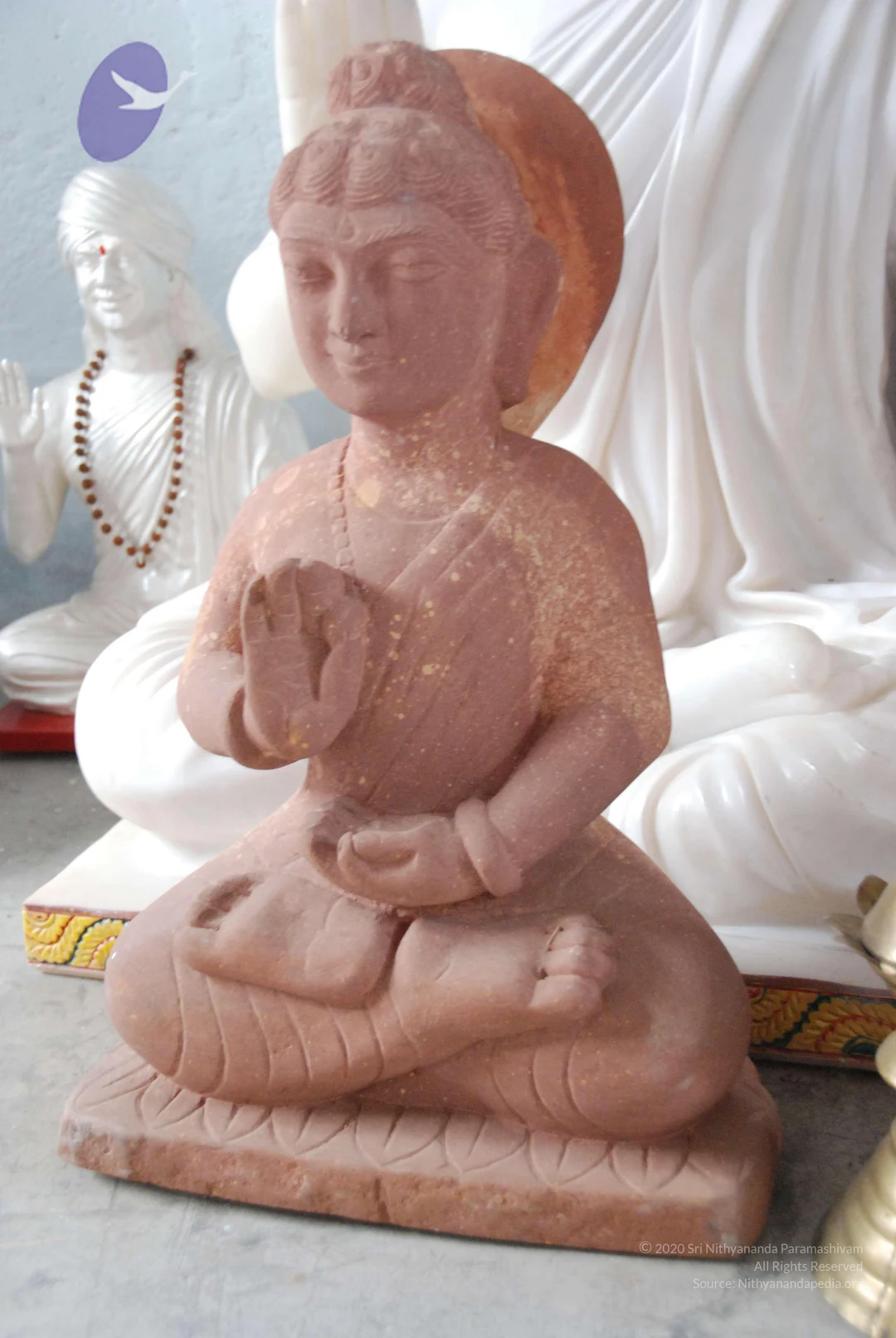
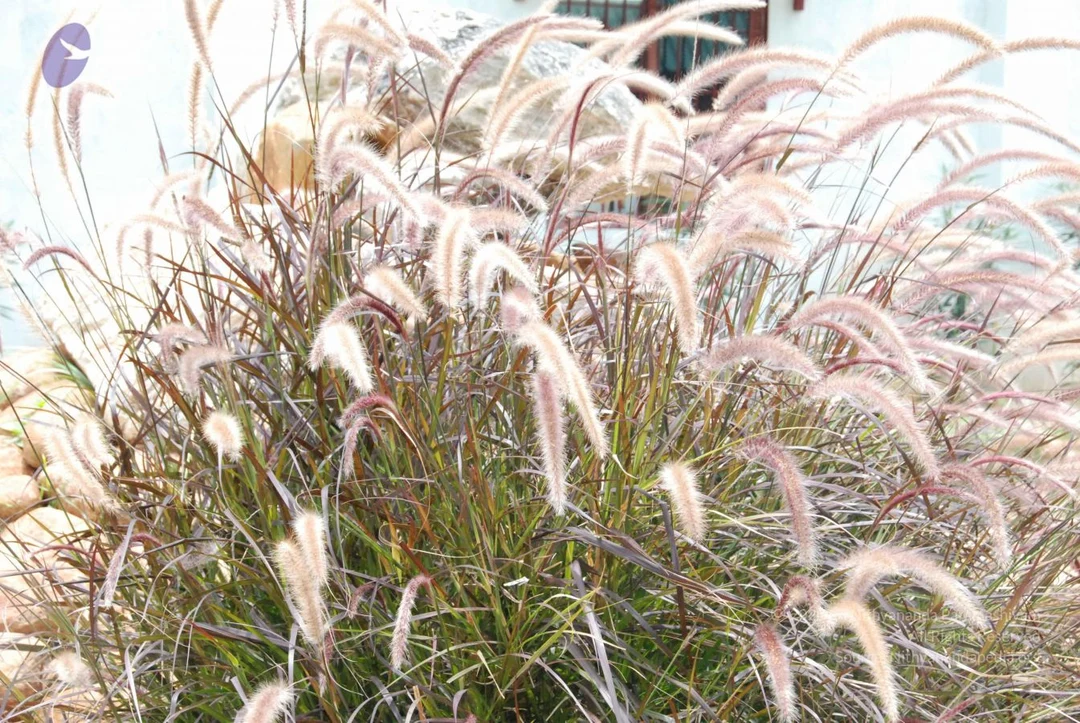
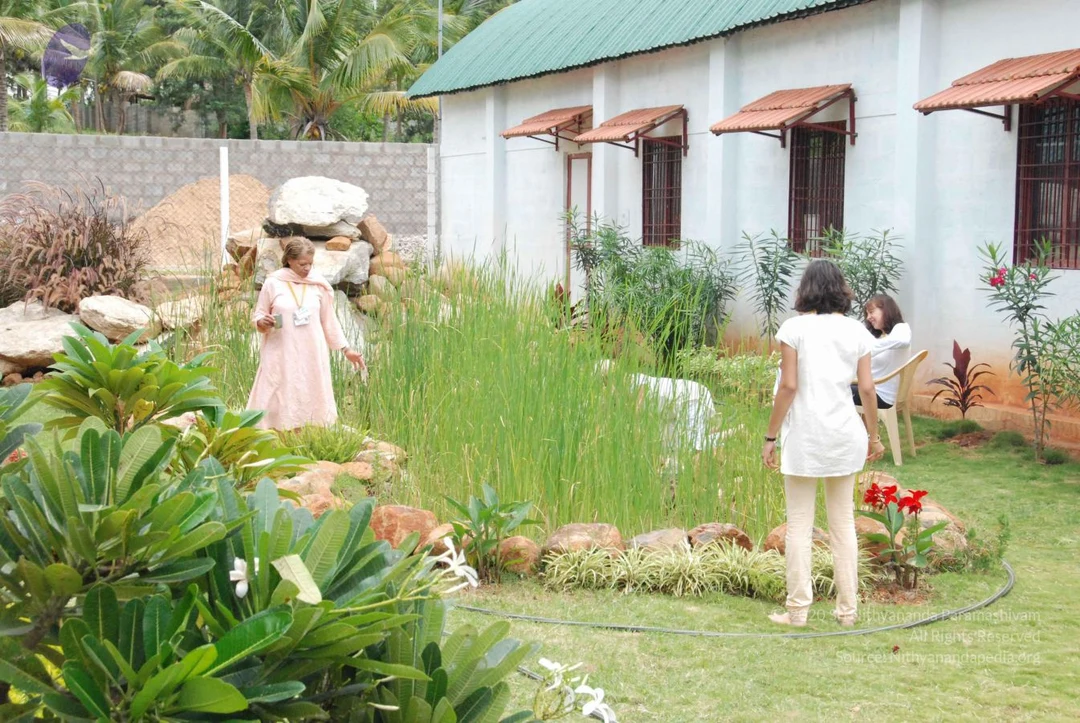
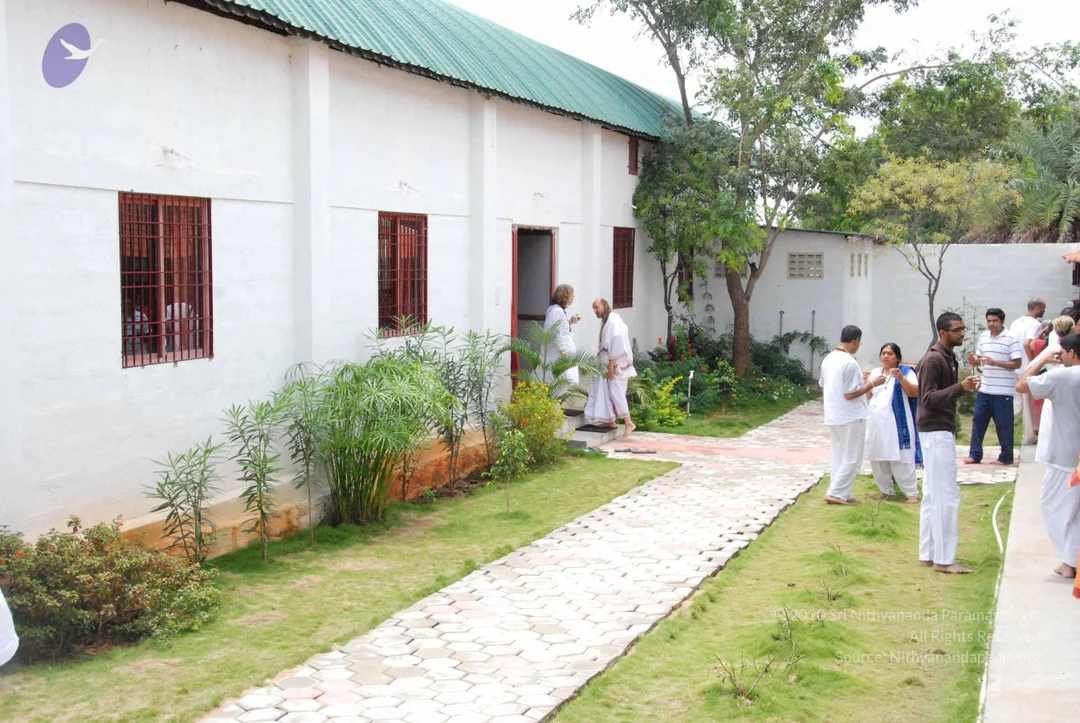
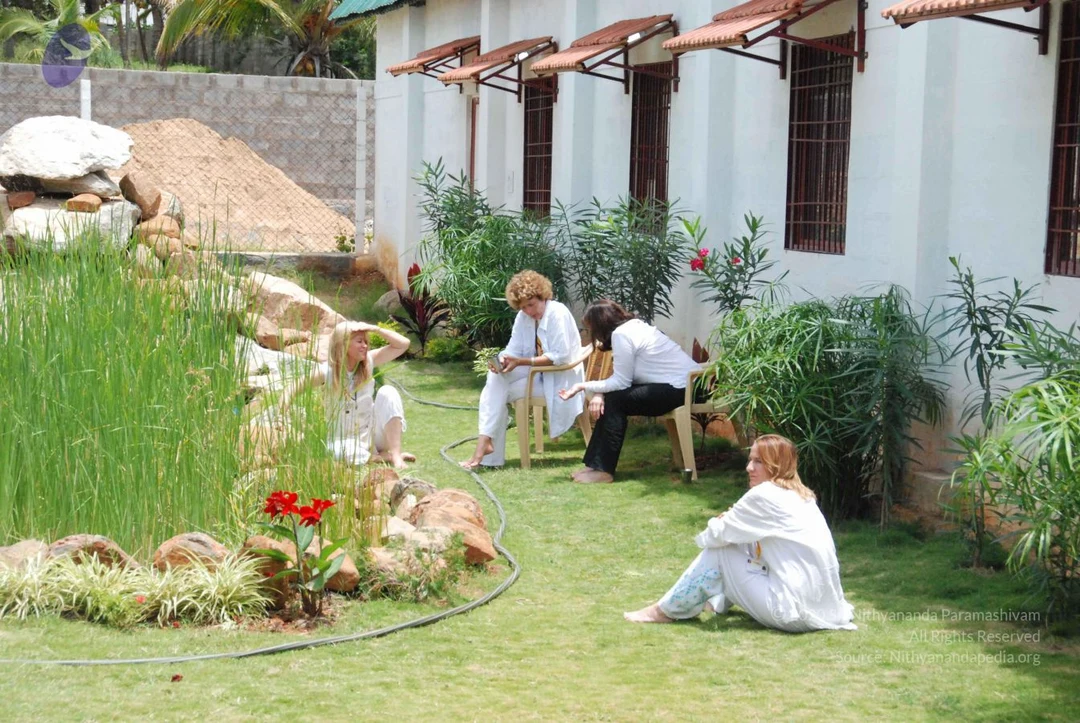
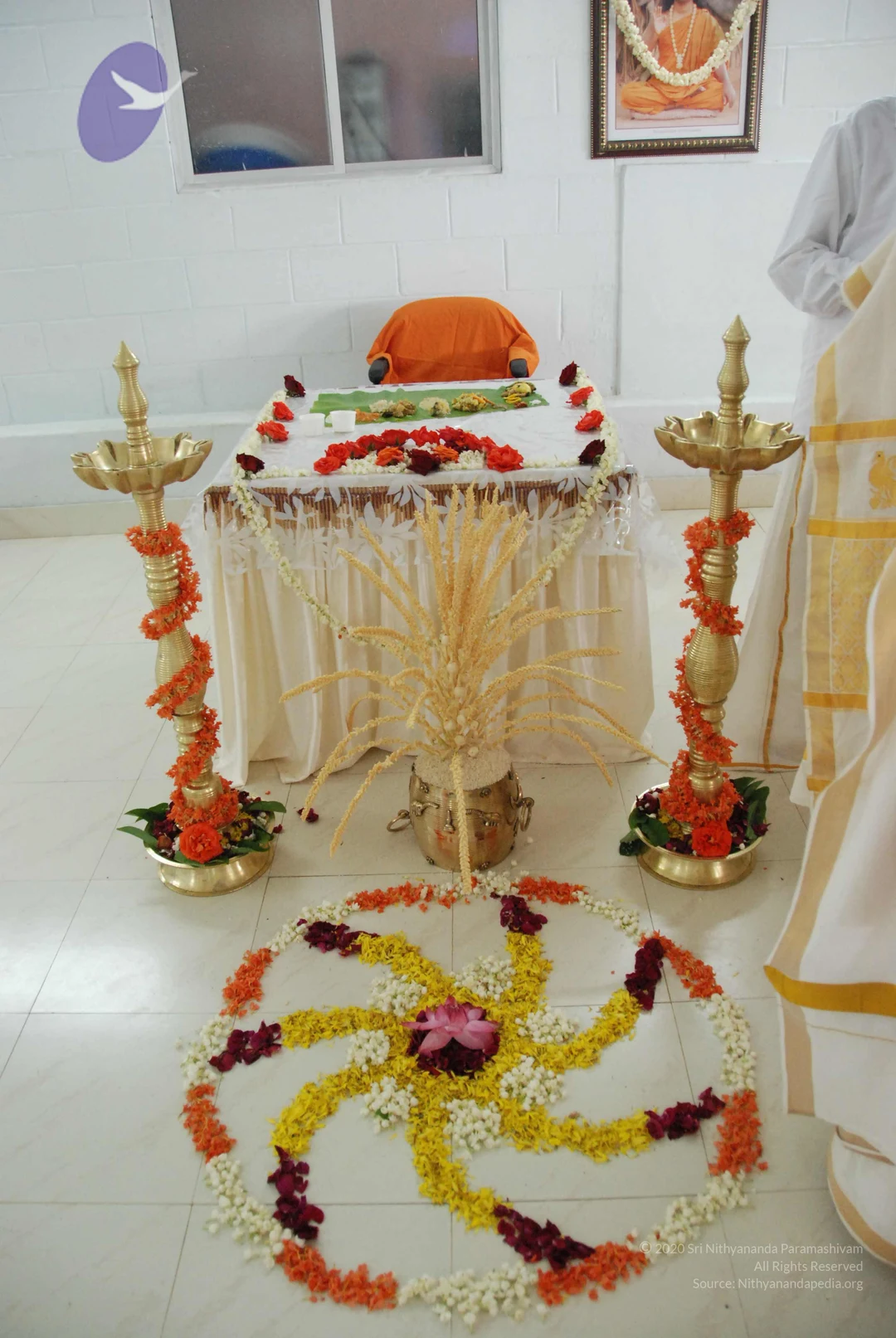
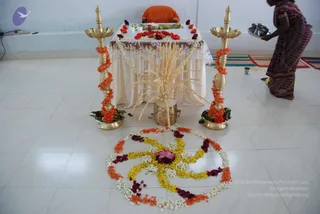
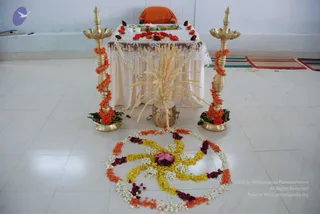
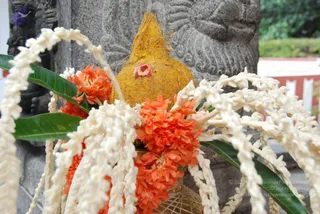
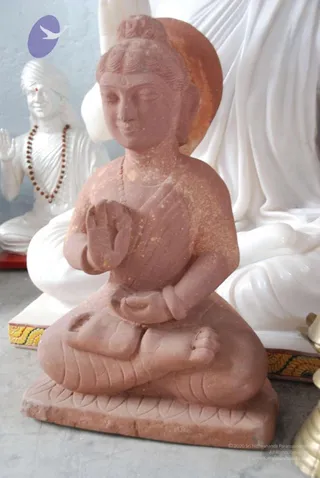
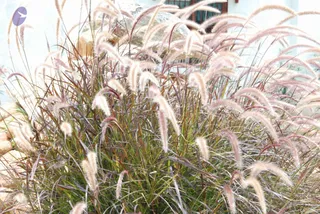
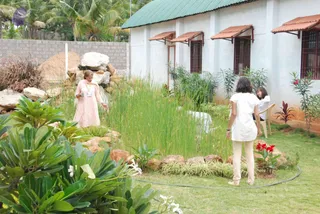
A photo of a prepared ritual setup on a white tiled floor. A flower rangoli of yellow marigolds, white jasmine and red-pink petals with a central pink flower forms a circle in front of a white-draped table. Two tall brass oil lamps stand on either side, wrapped with orange marigold garlands. A brass pot holds a tall bundle of golden grain stalks, and a brass plate with offerings sits on the table, with a saffron cloth draped over a chair behind it. A woman in a striped red and purple sari stands at the right, holding a steel tray. No one is seated at the shrine. The setting suggests a puja preparation, with no visible murti or specific deity.A photograph of an empty ritual arrangement in a plain tiled hall. A white draped table holds an orange cloth seat, flower garlands and small offerings. Two tall brass lamp stands, decorated with orange and marigold garlands, flank the table. In front, a brass kalasha holds tall golden grass stalks, and a circular floral rangoli of white jasmine, yellow and orange marigolds, and magenta petals surrounds a pink lotus at the centre. Striped mats lie on the floor at right. No people are visible.Close-up photograph of a yellow turmeric-coated coconut placed before a carved dark stone pillar showing relief figures. The coconut has a red-and-white marking at its face and is wrapped in white jasmine-style flower garlands and bright orange marigold blossoms, with green mango leaves arranged around it. A tiered brass or bronze base is visible beneath the flowers. Blurred greenery and a red-and-white railing appear in the background. No people are visible.A photograph of a reddish-brown sandstone seated statue of a meditating figure with a halo-like backdrop, hands in a gesture before the chest, on a carved lotus-leaf base. Behind it stand white marble statues: a seated figure with a rudraksha mala and a standing or seated figure in a white turban and white garment with raised hand. The setting appears to be a workshop or storage area with a concrete floor. No living people are visible.A photograph of a clump of ornamental grass with slender reddish-brown stems and fluffy, pale pinkish-cream plume-like seed heads bending outward. Behind it, a pale whitewashed wall with a window grille and a large smooth grey rock. No people, deities or ritual objects are visible.A garden courtyard beside a white-walled building with a green corrugated roof and small red-brown awnings over barred windows. A woman in a pale pink long dress with a lanyard stands on the left among tall green reeds and rock borders, with dense plumeria shrubs in the foreground. Two women in white outfits stand and sit on the right near red-flowered plants, a hose running across the lawn. No clearly identifiable a person is visible, so the candidate status is uncertain.

Inner-Awakening-Kerala-Day

46 photosSource gallery
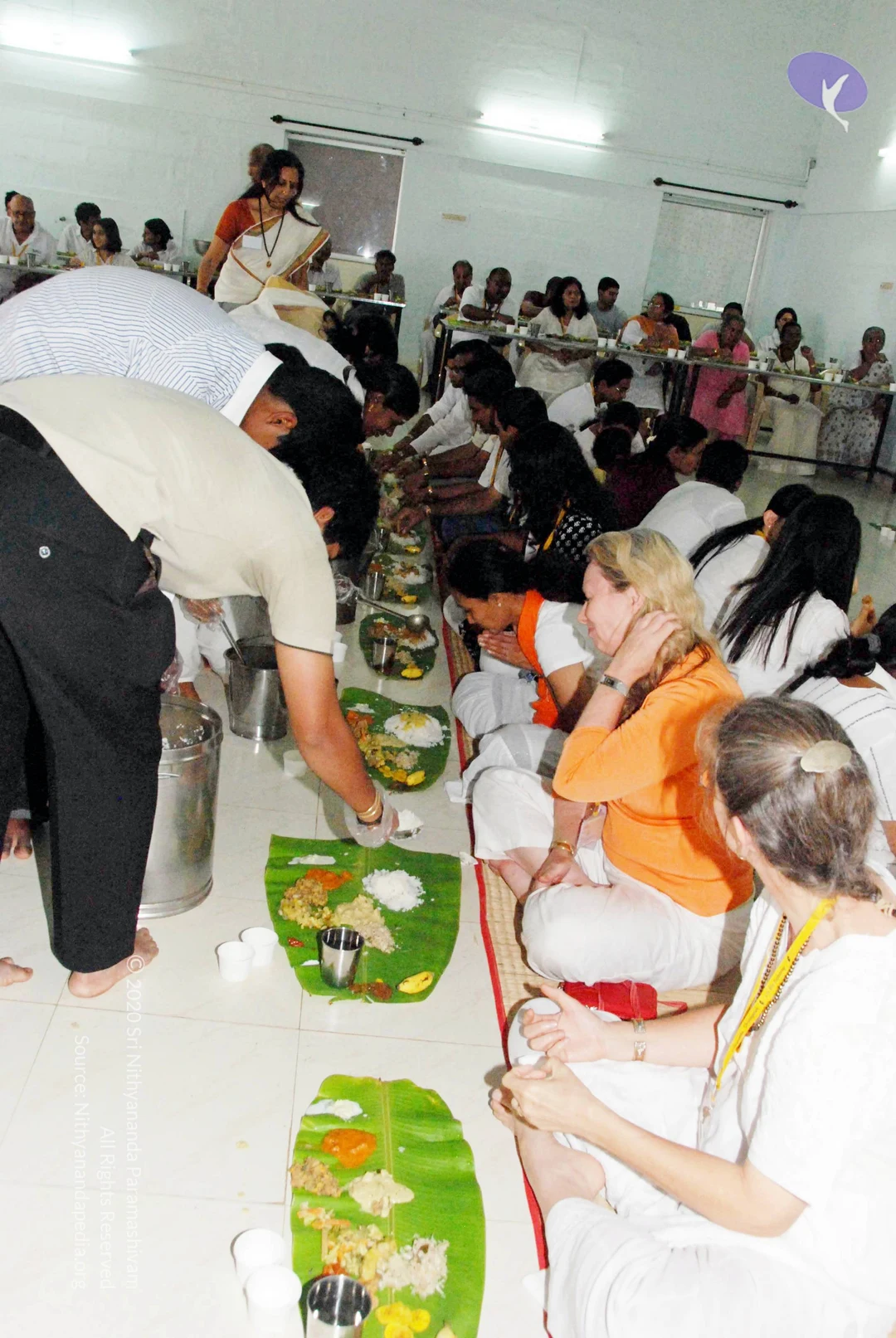
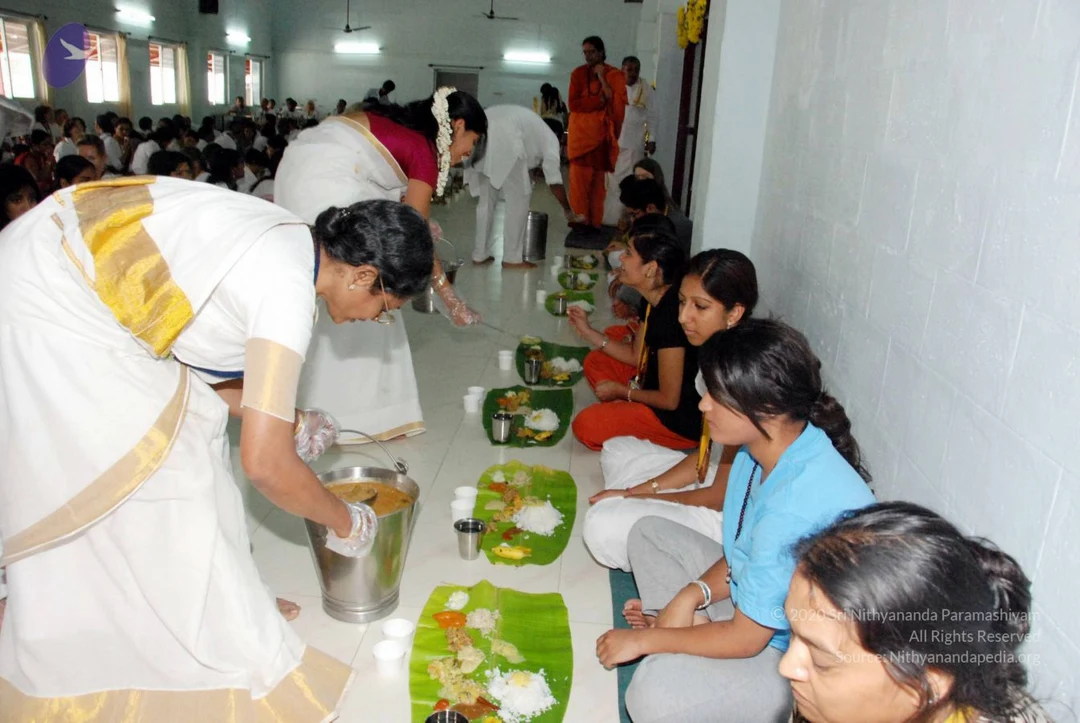
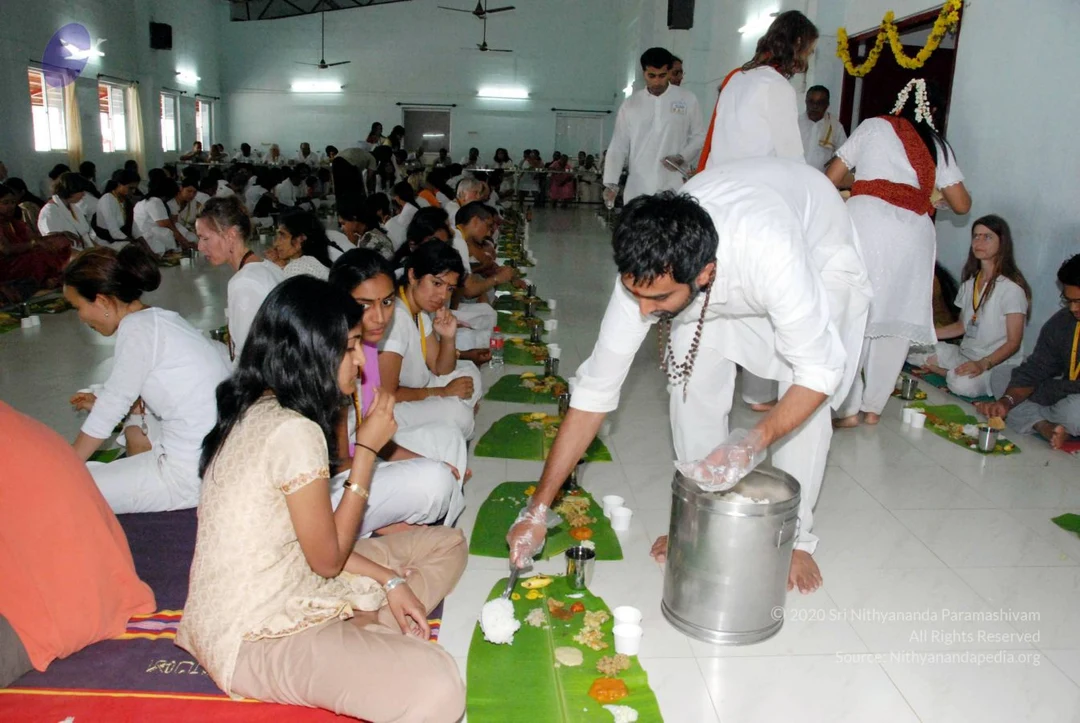
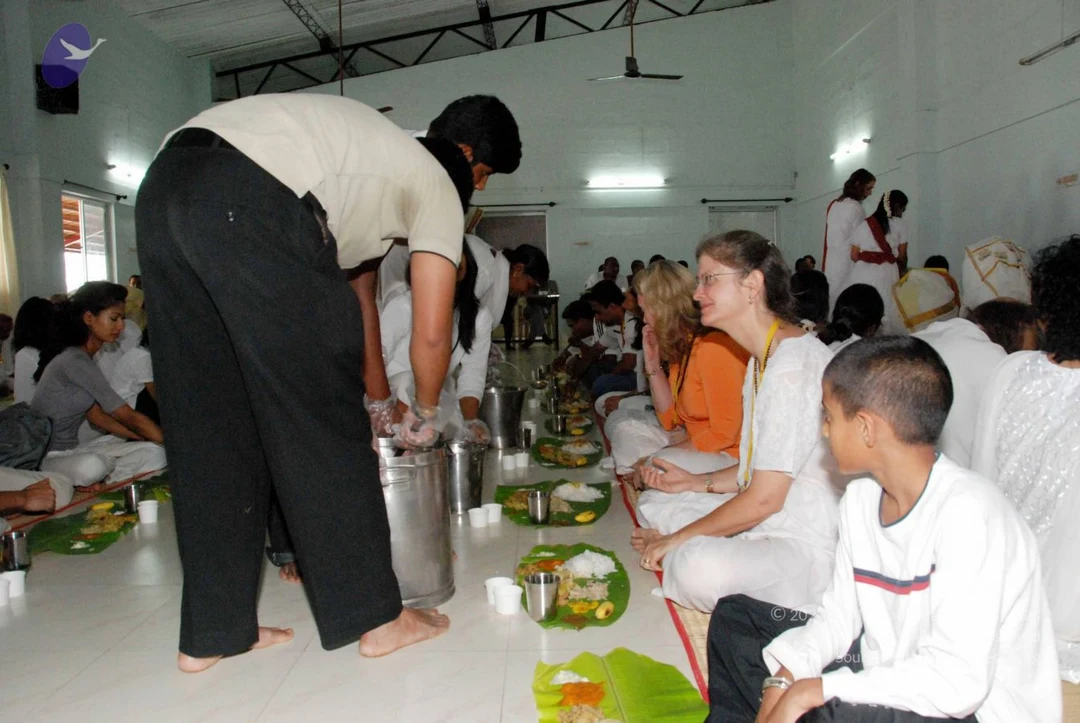
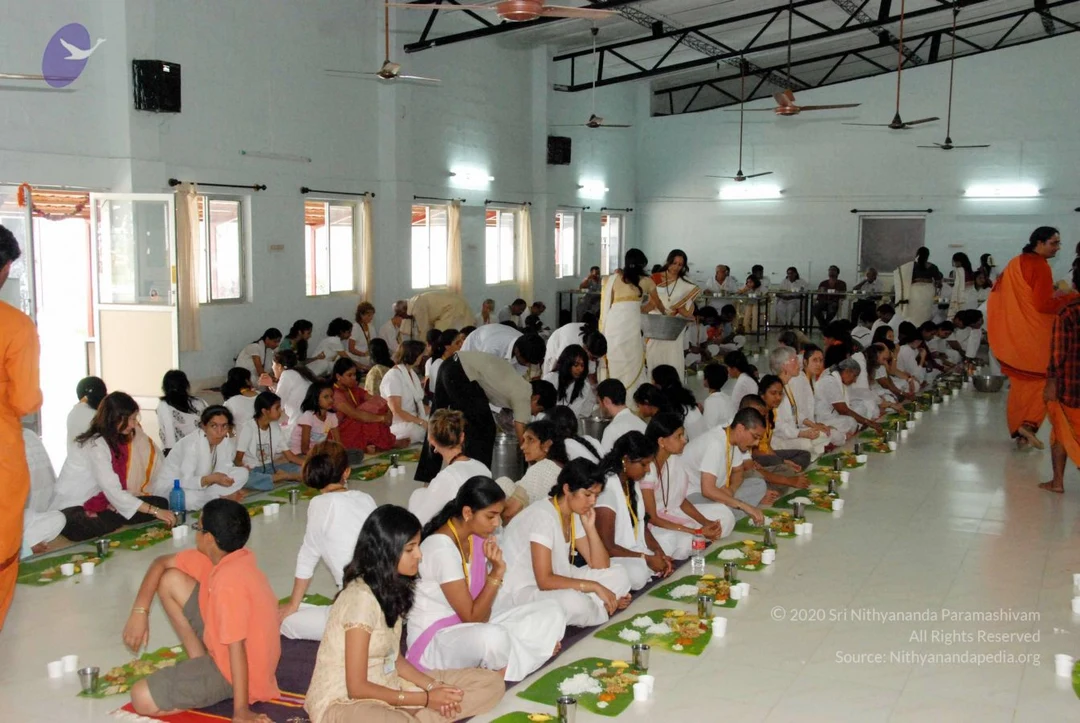
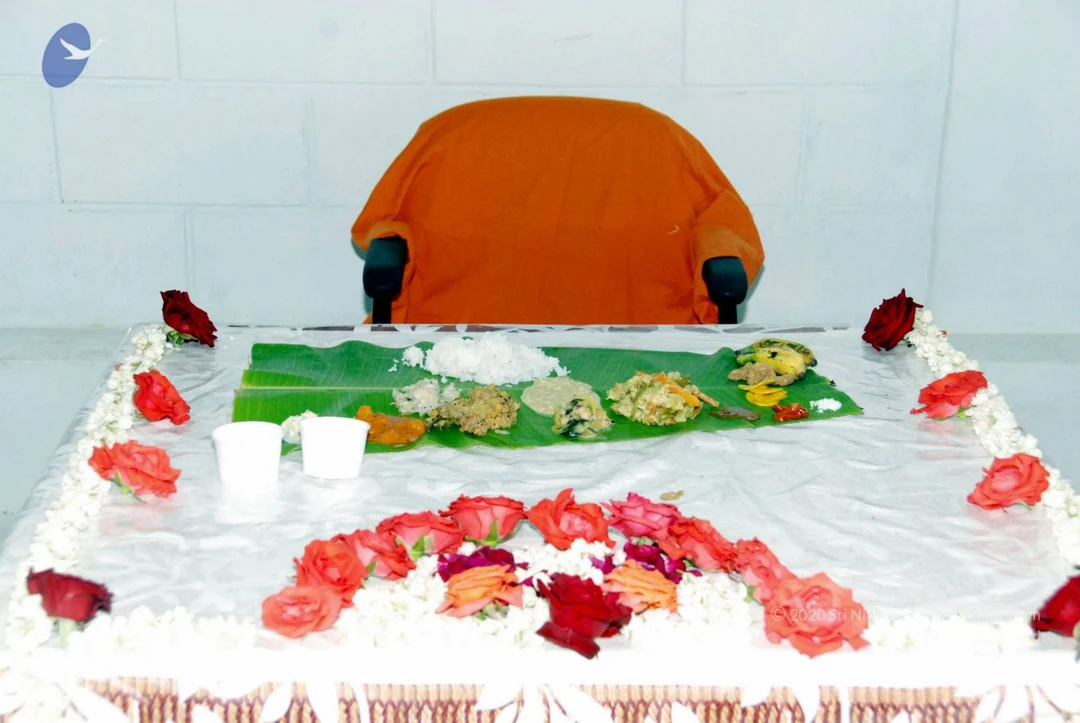
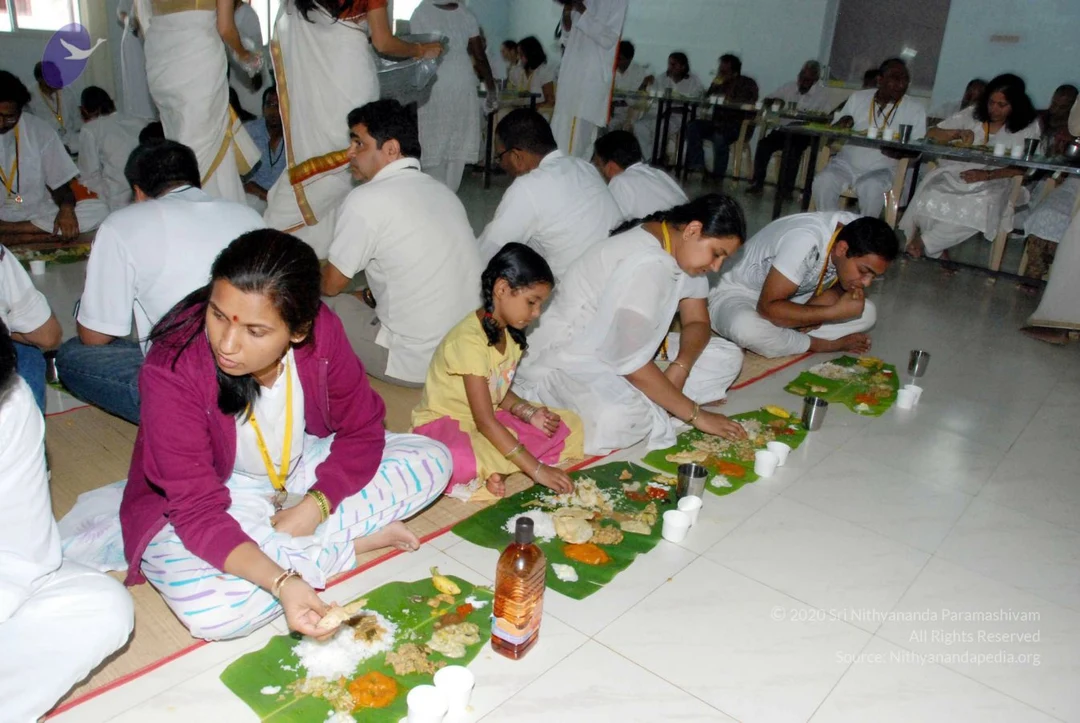
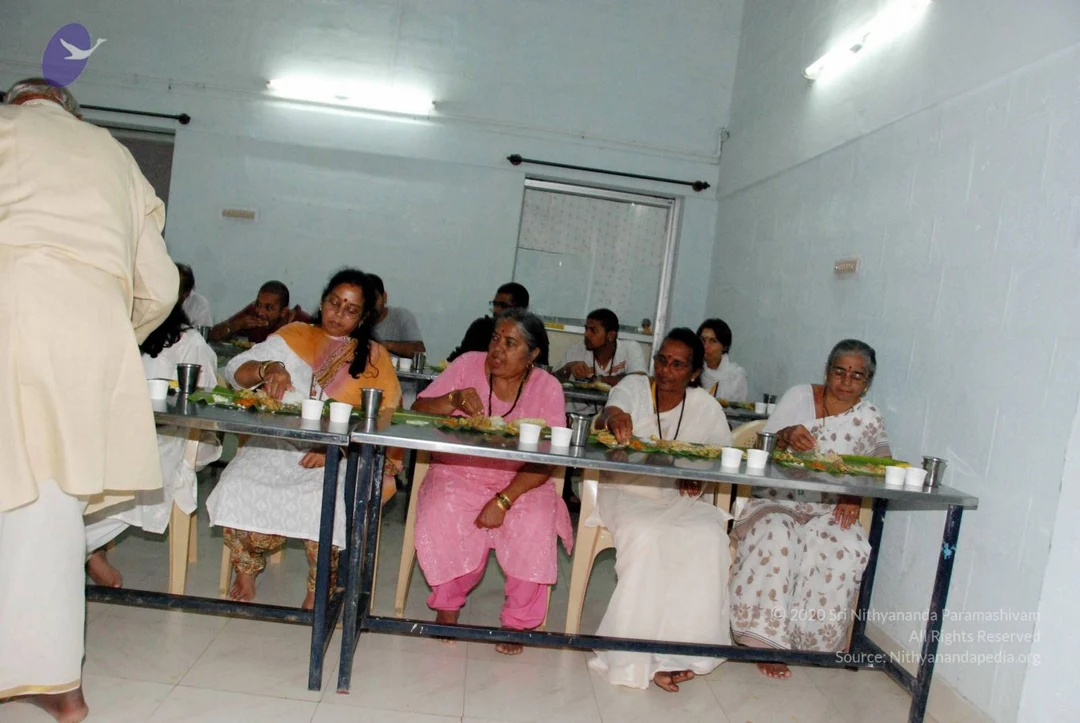
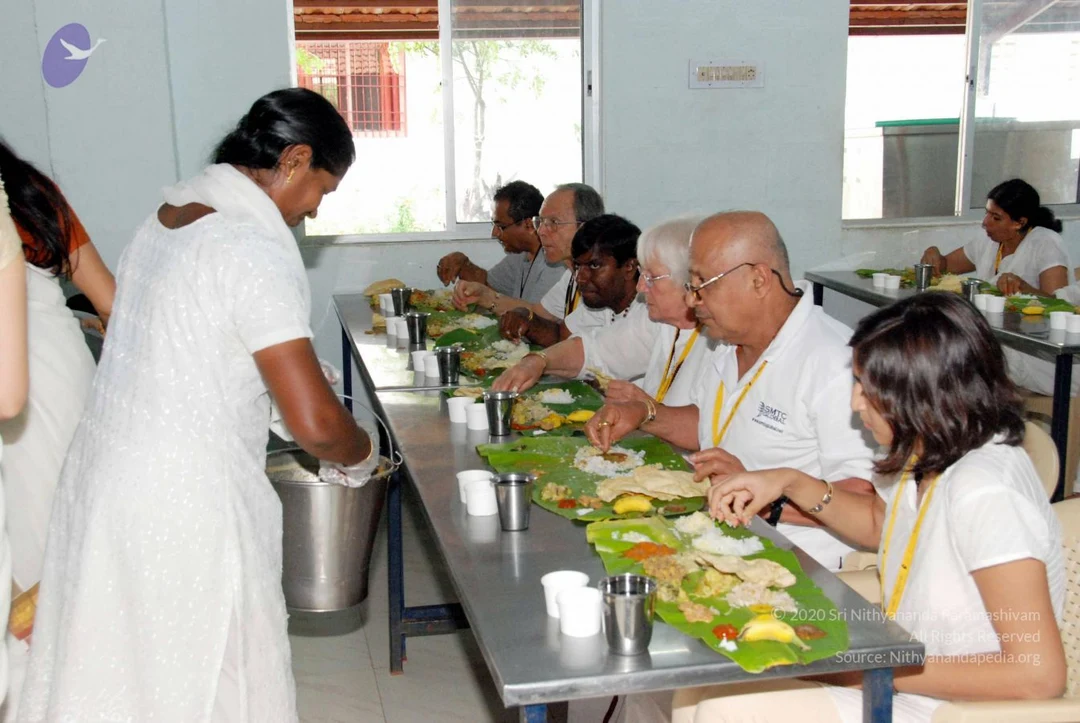
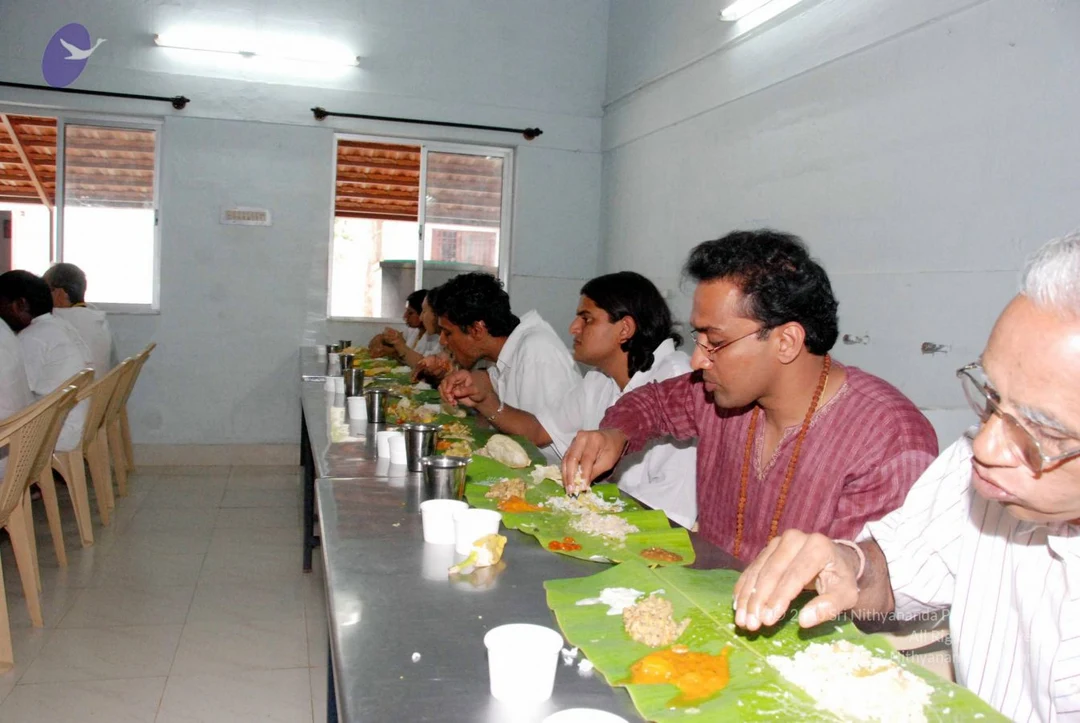
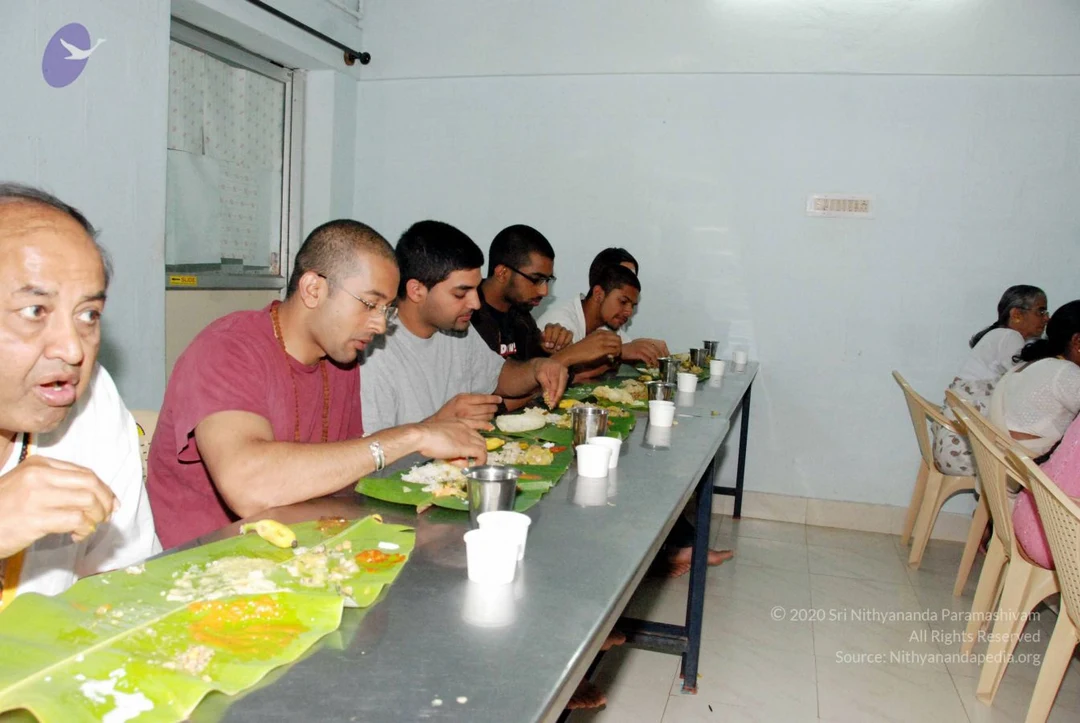
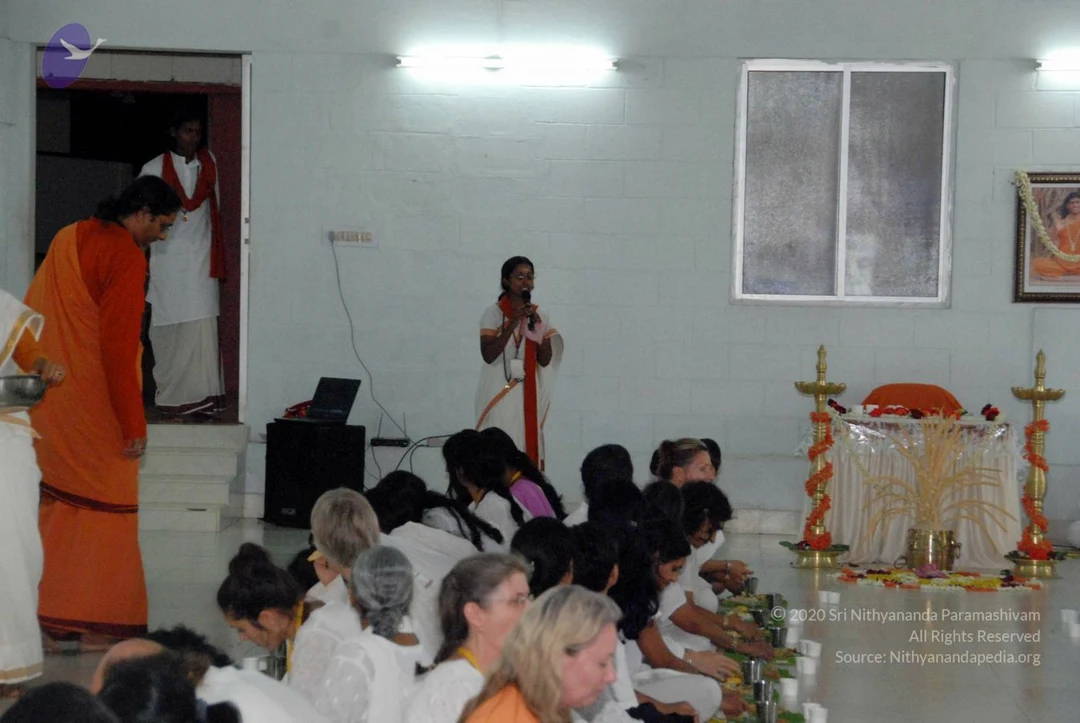
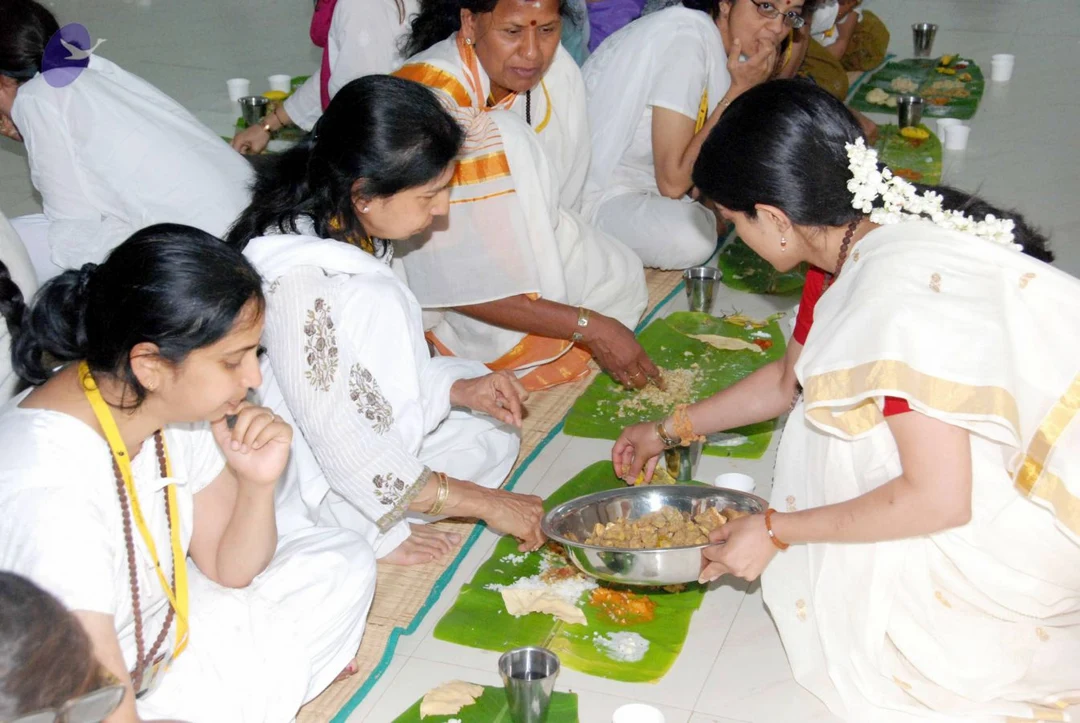
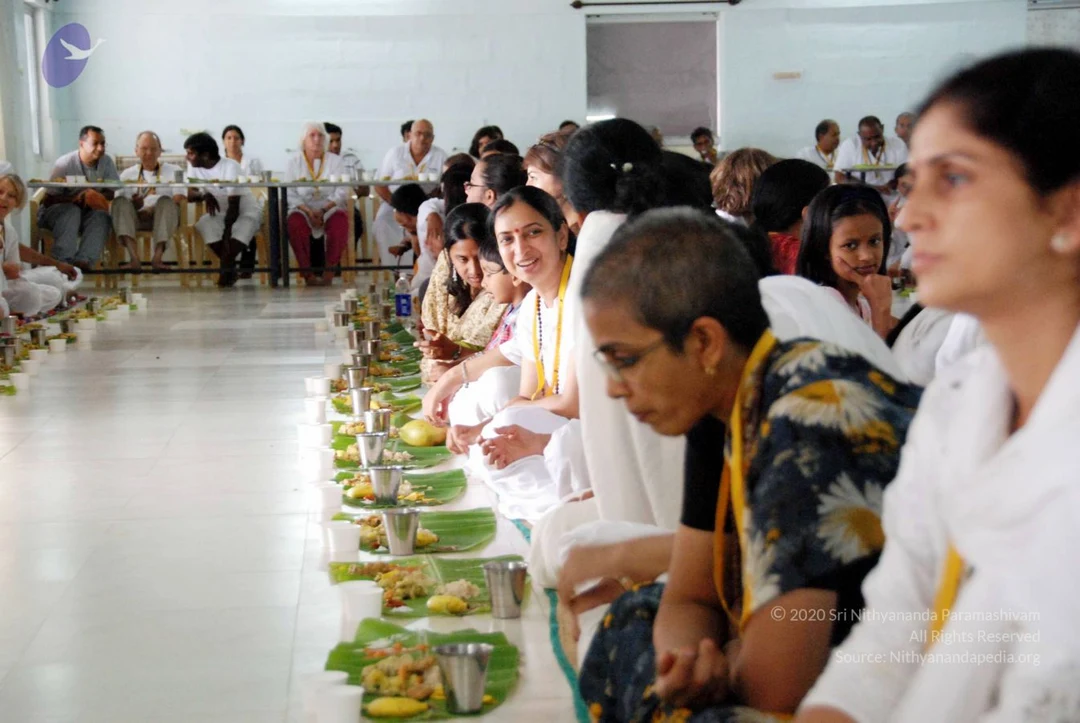
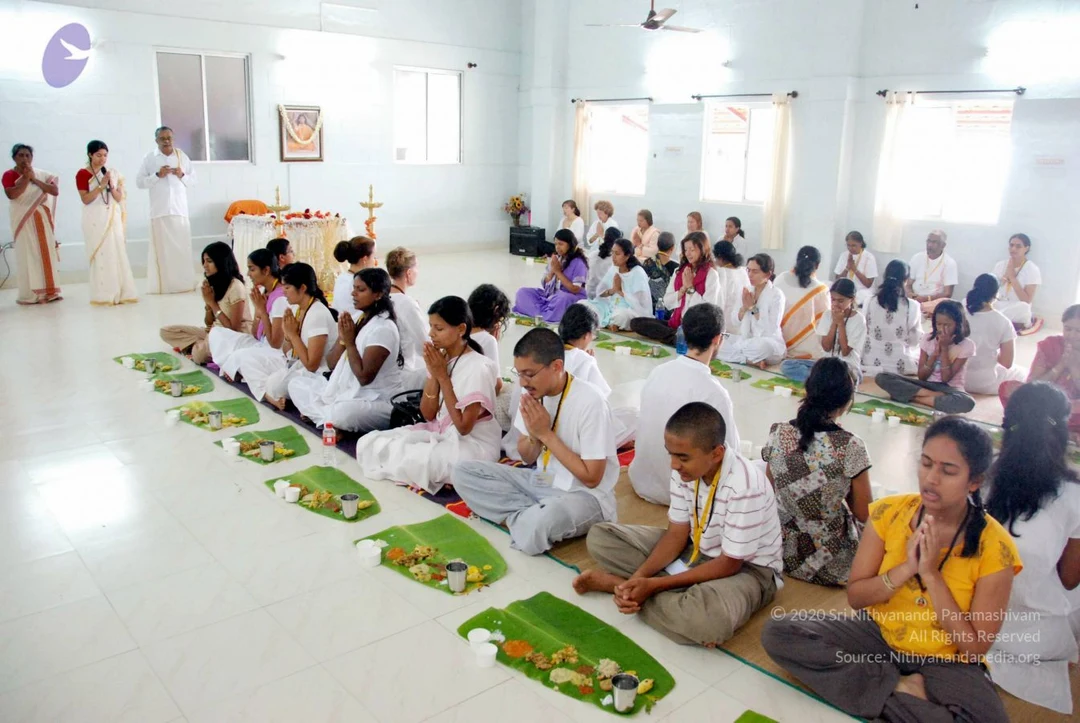
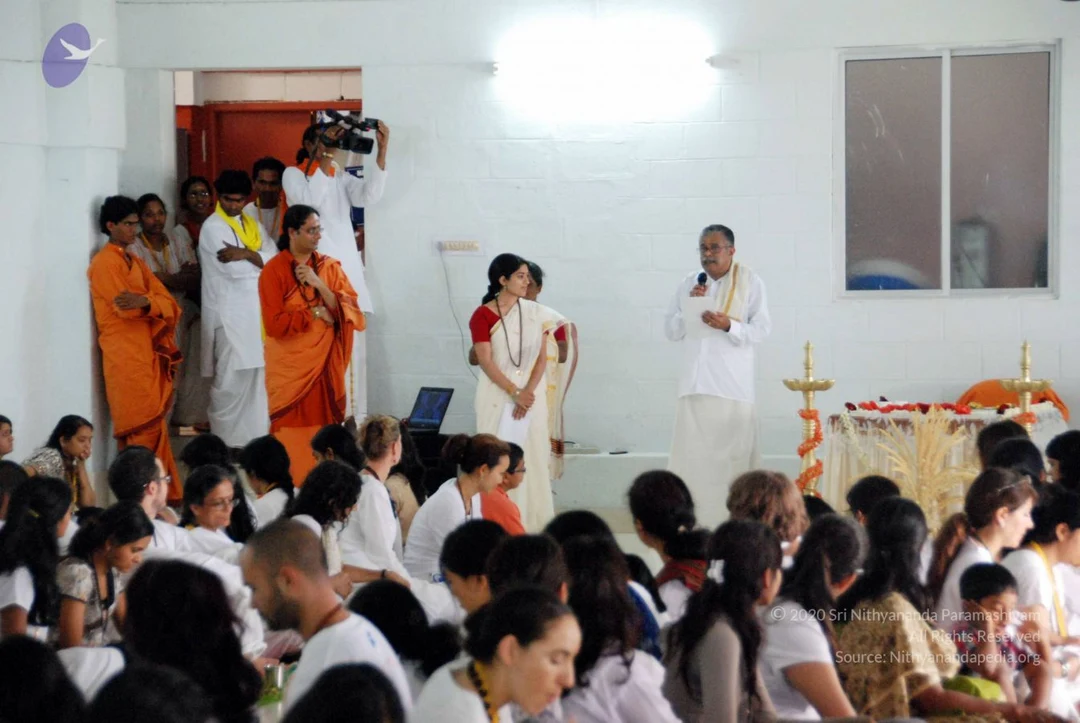
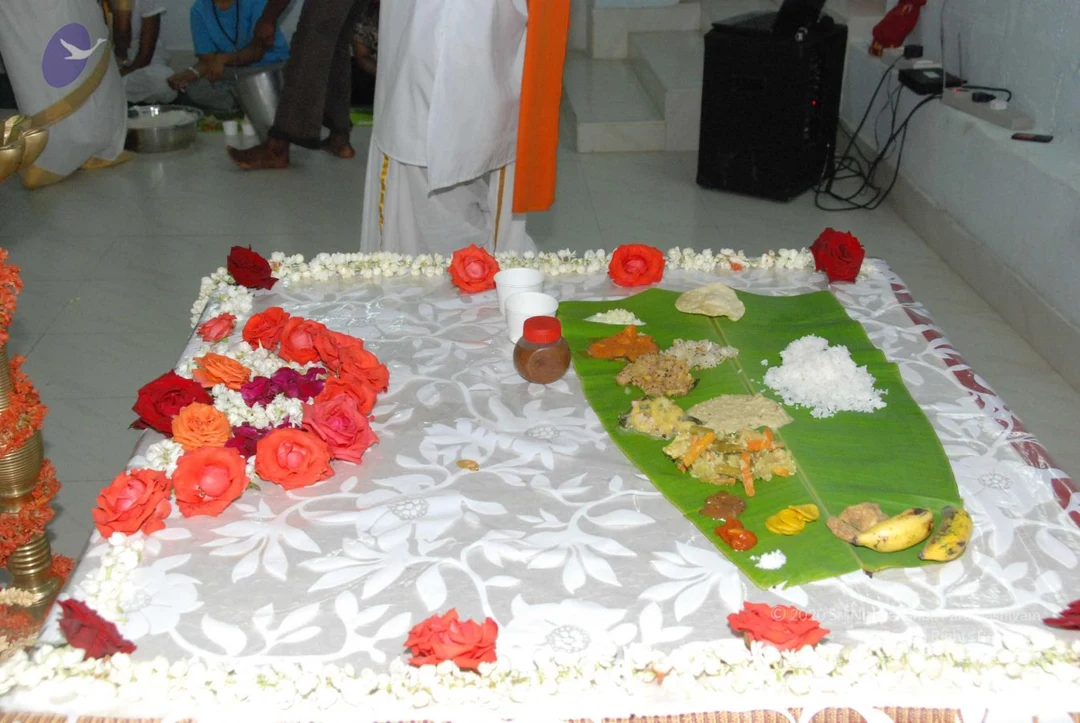
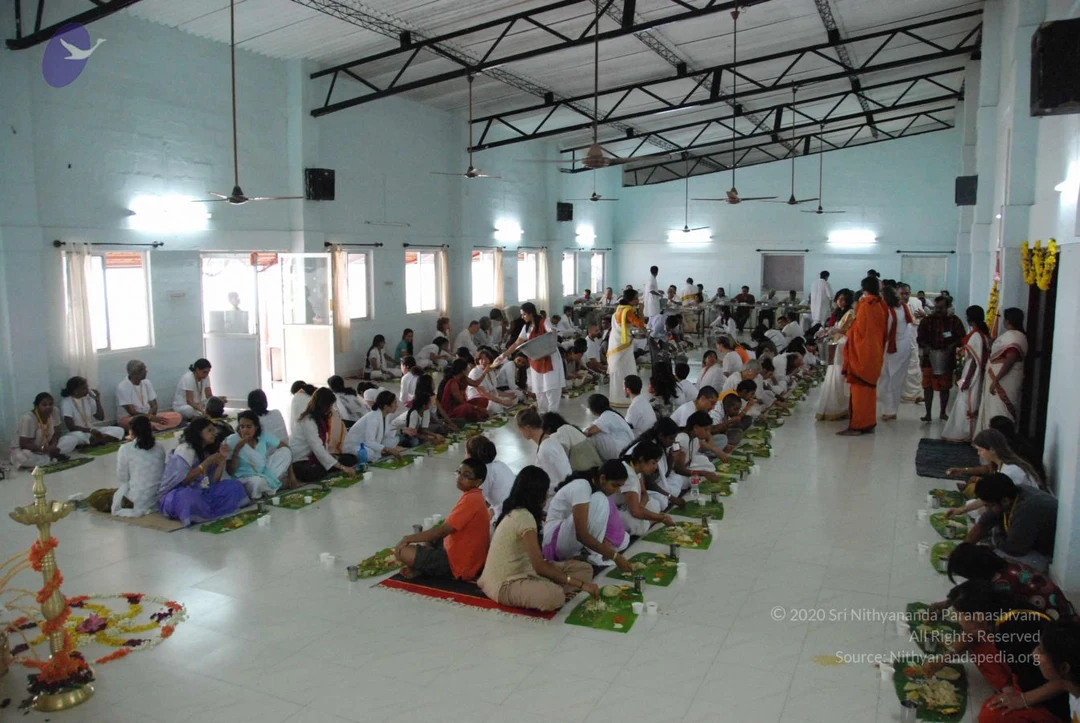
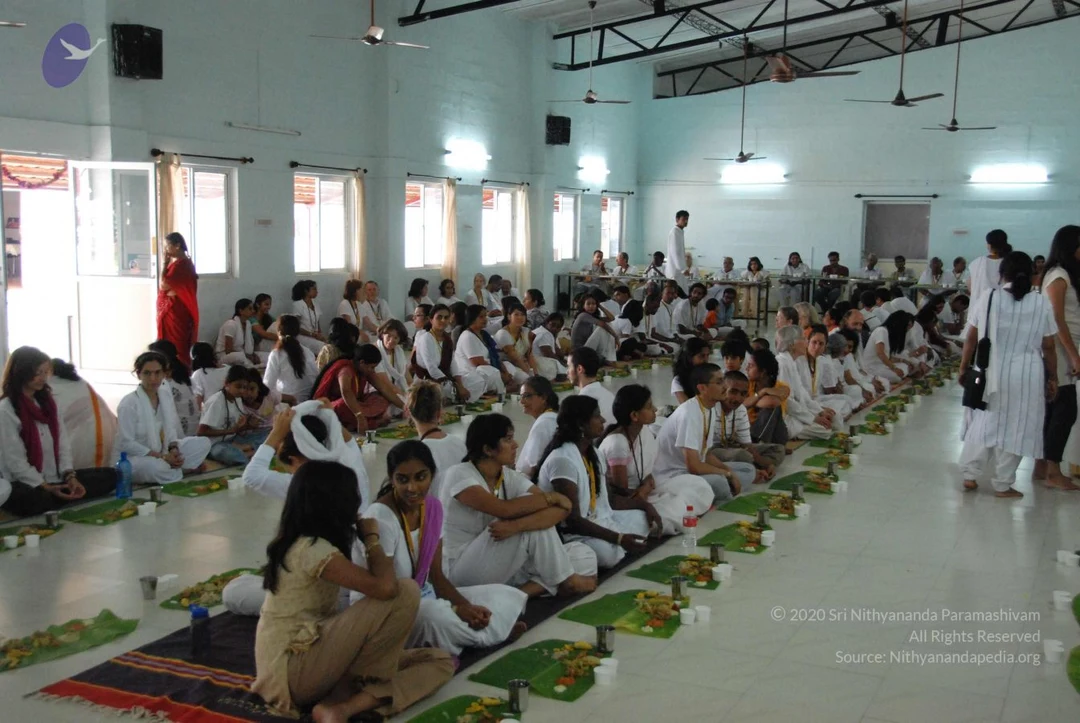
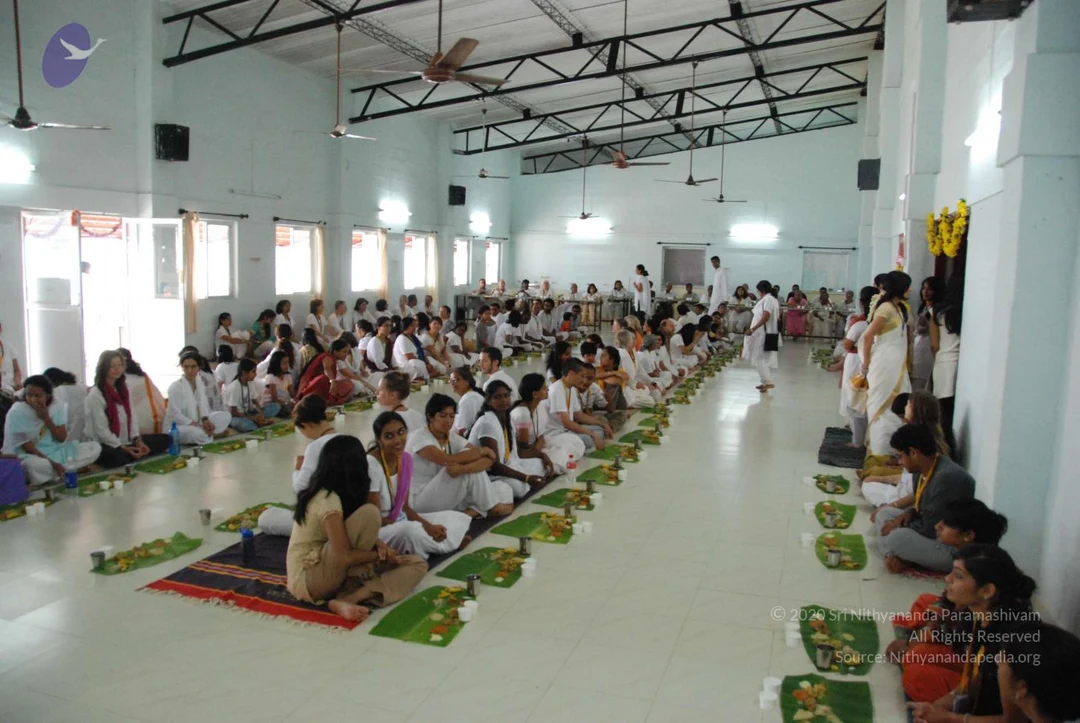
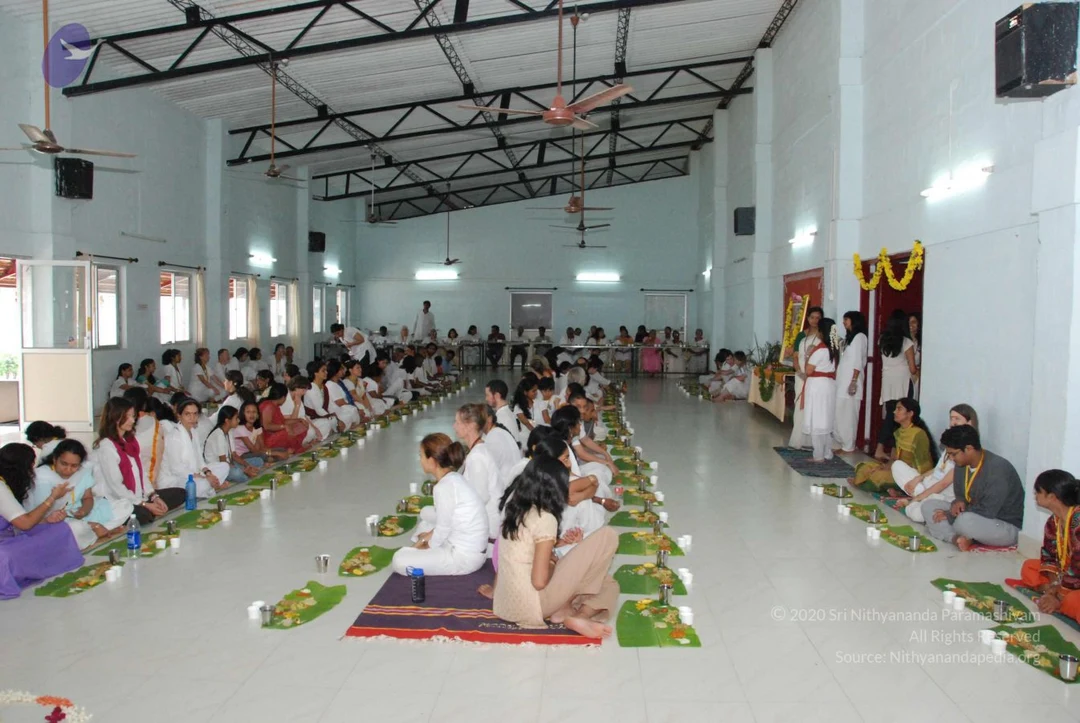
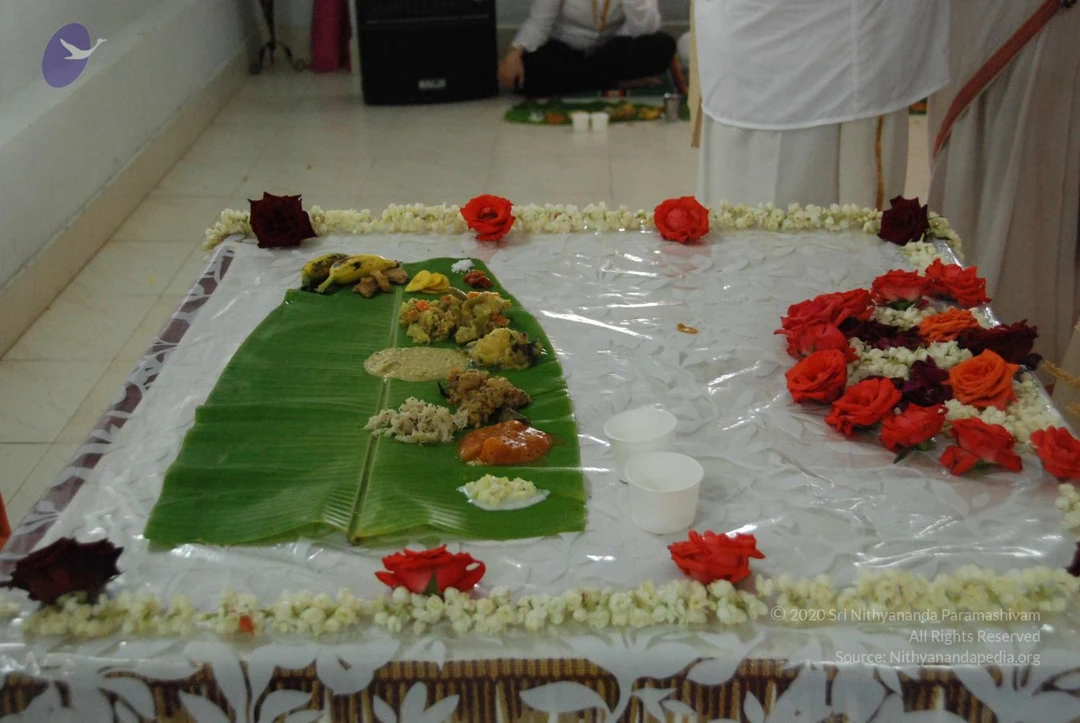
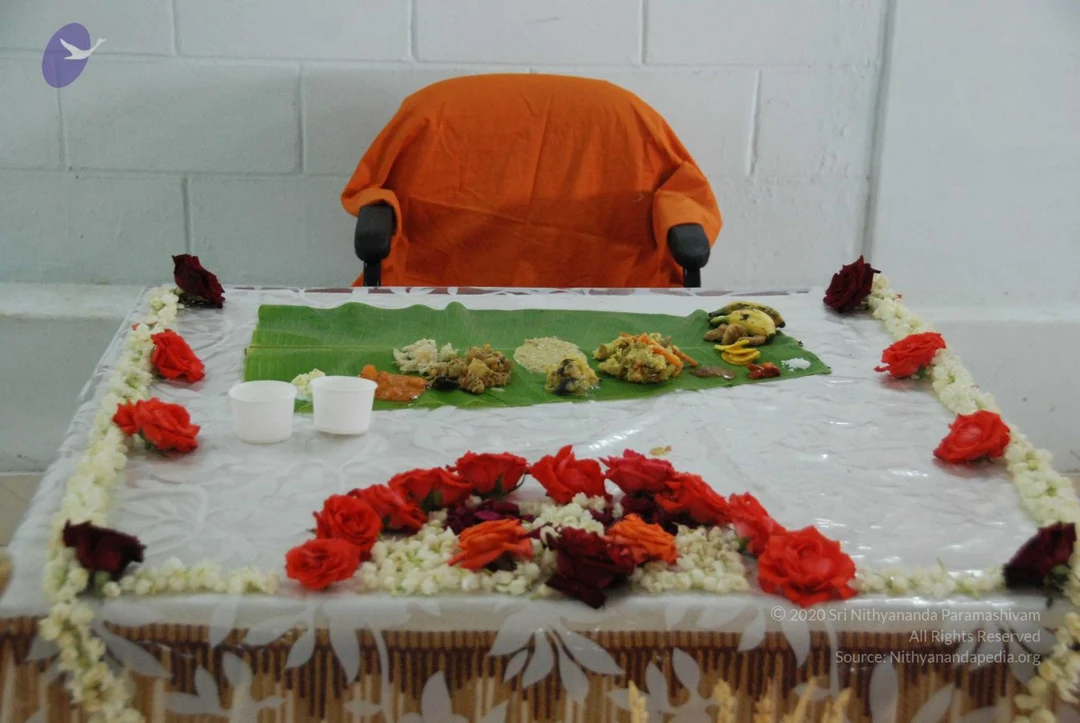
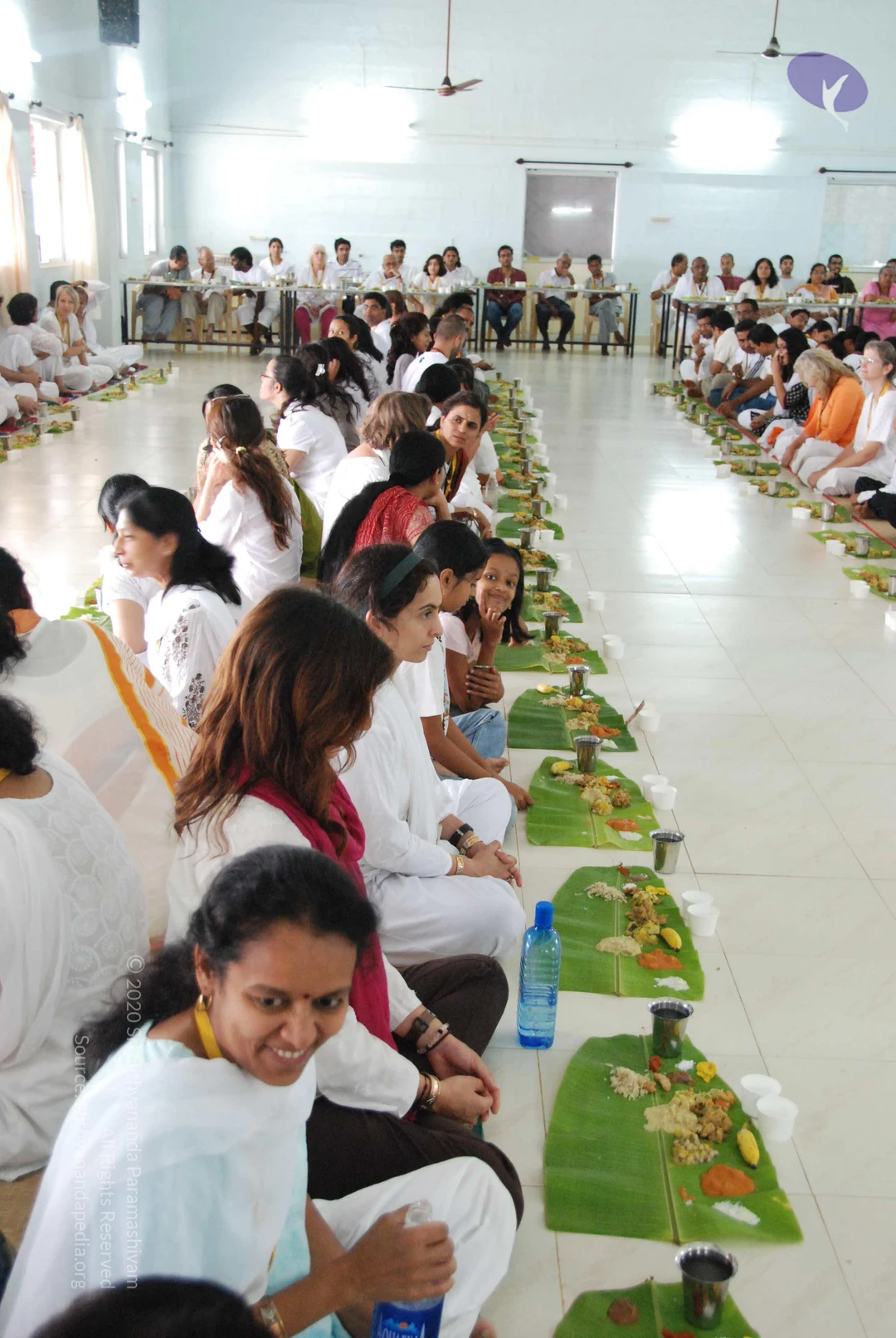
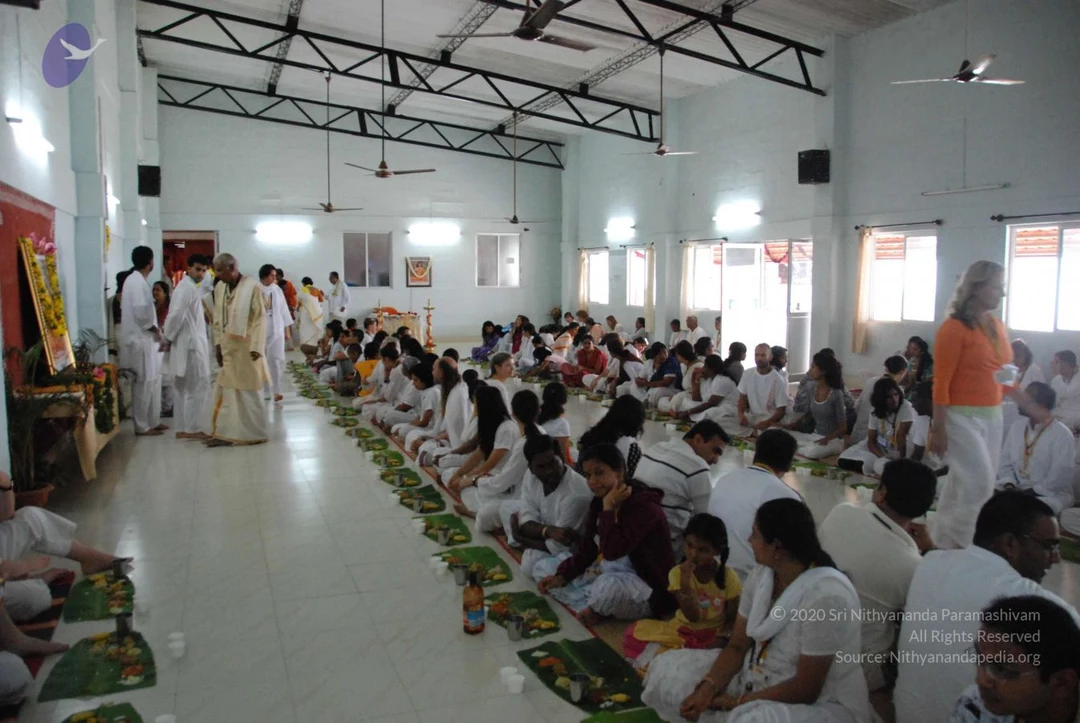
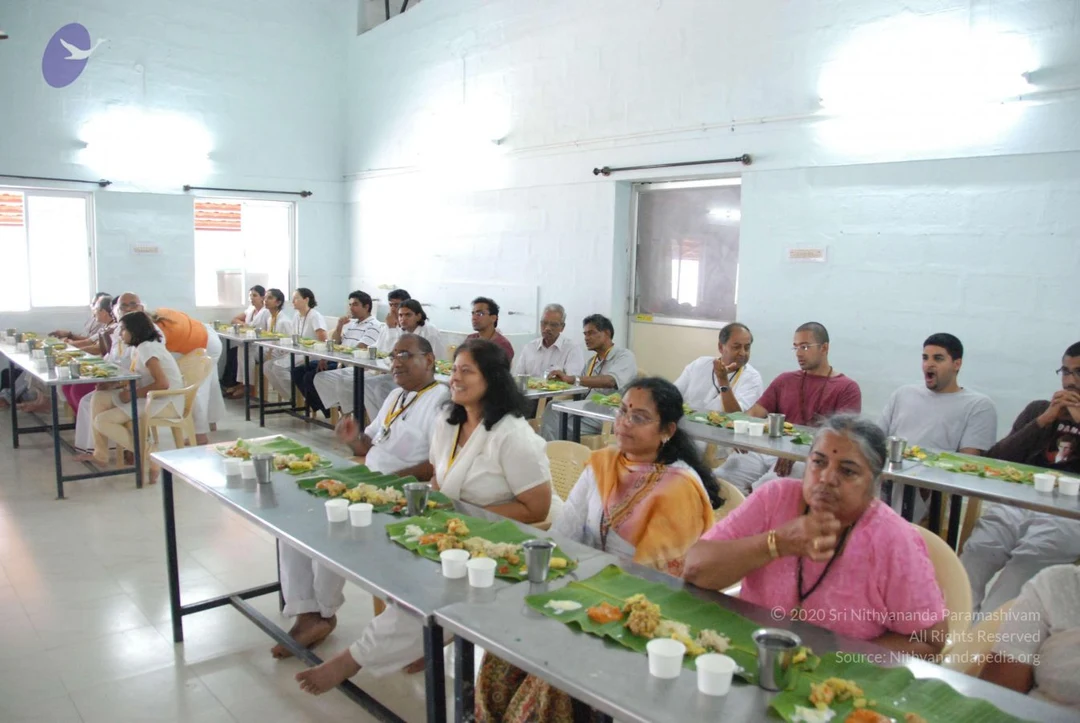
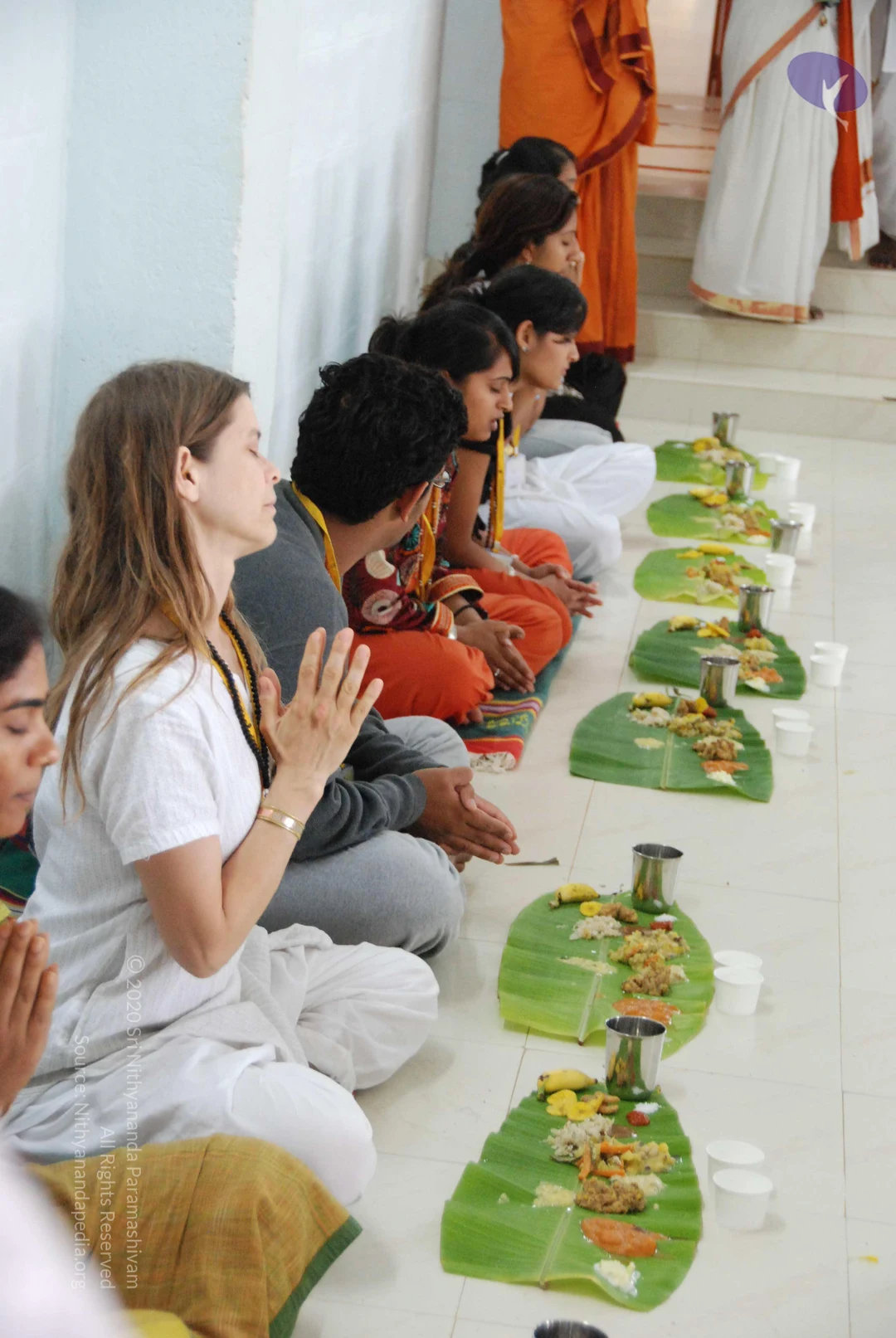
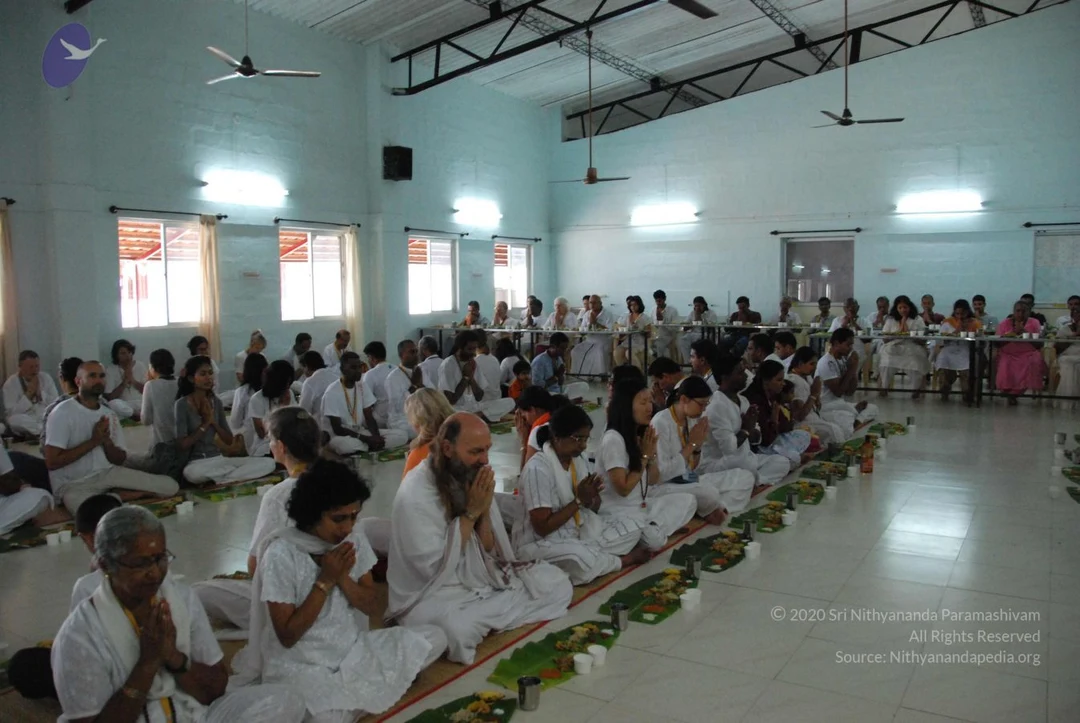
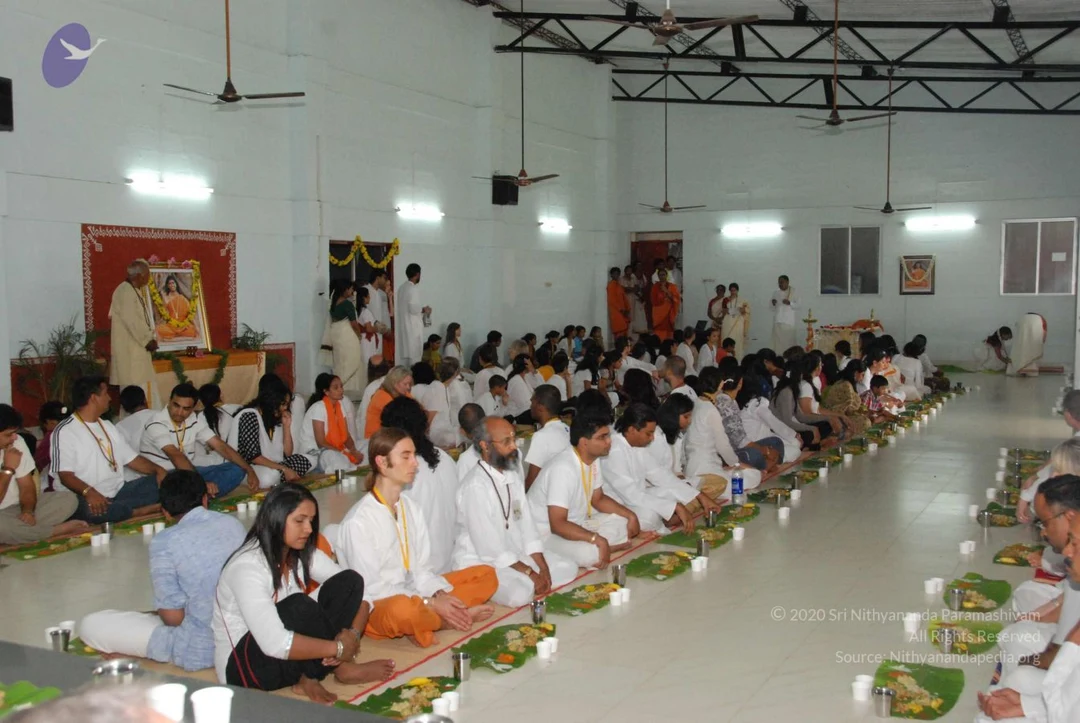
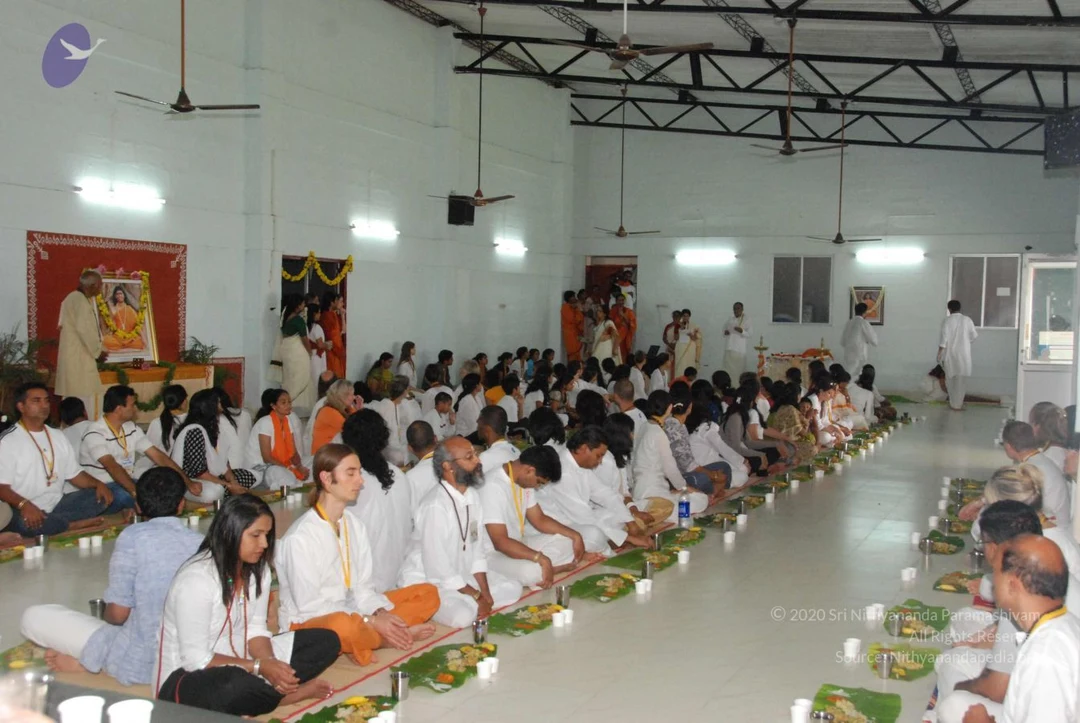
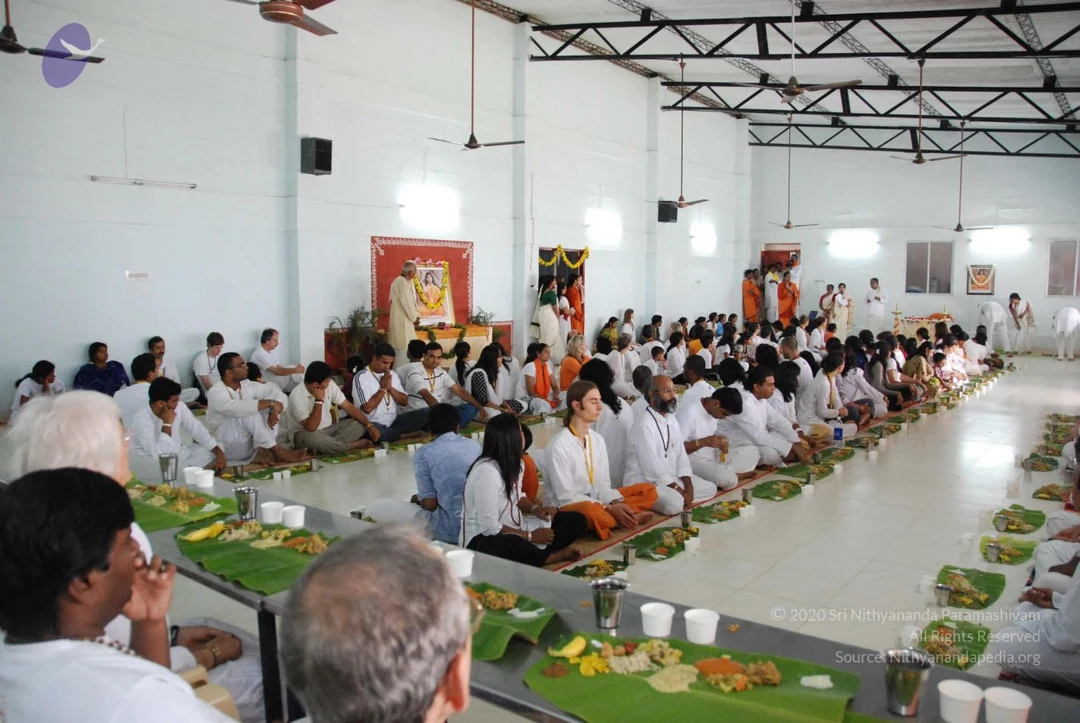
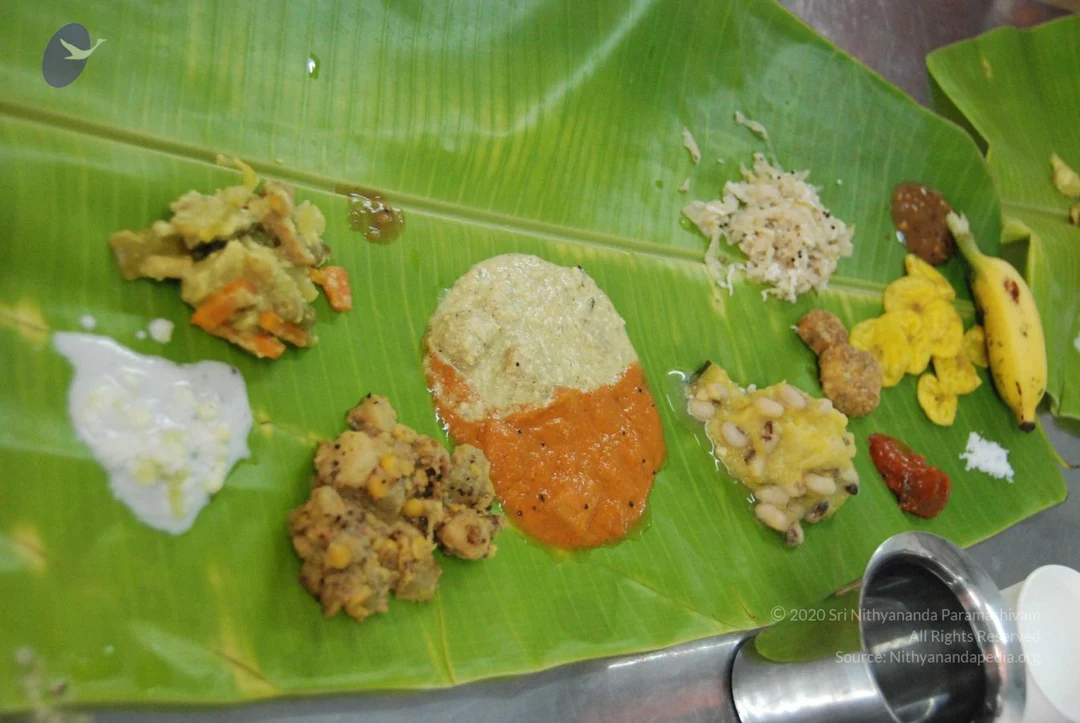
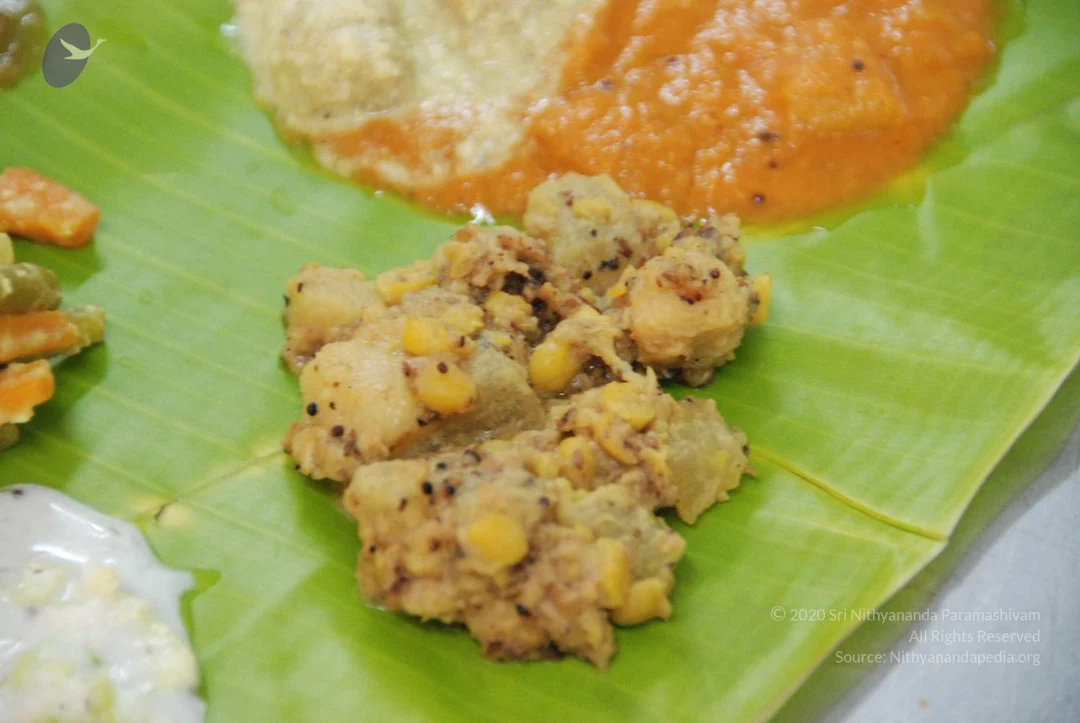
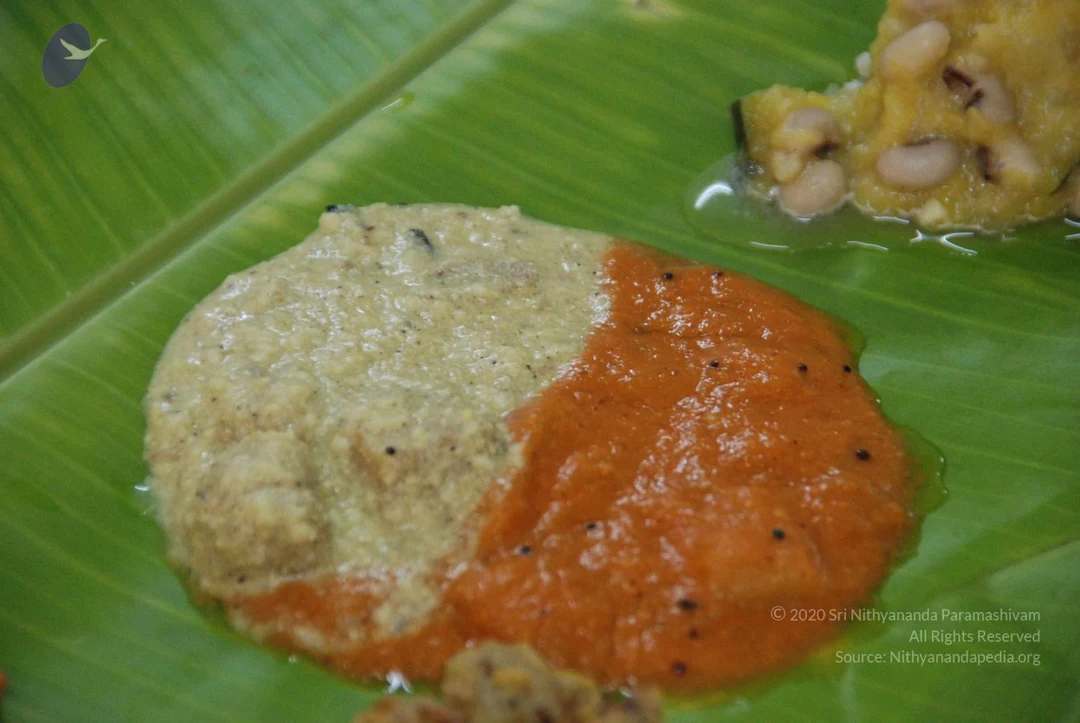
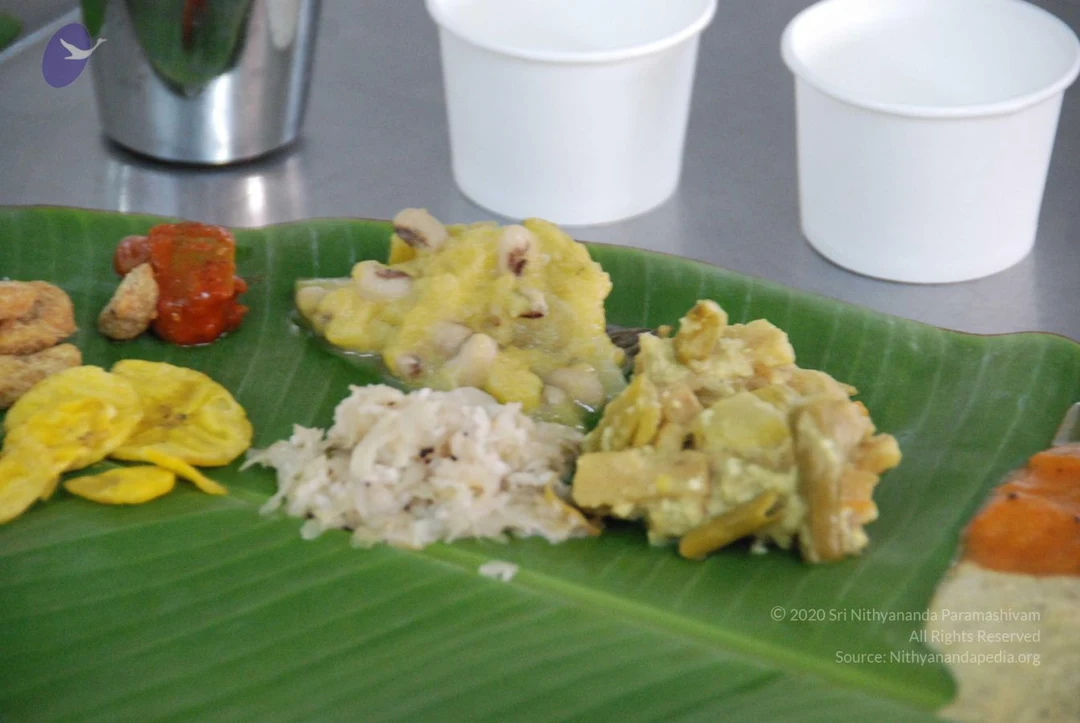
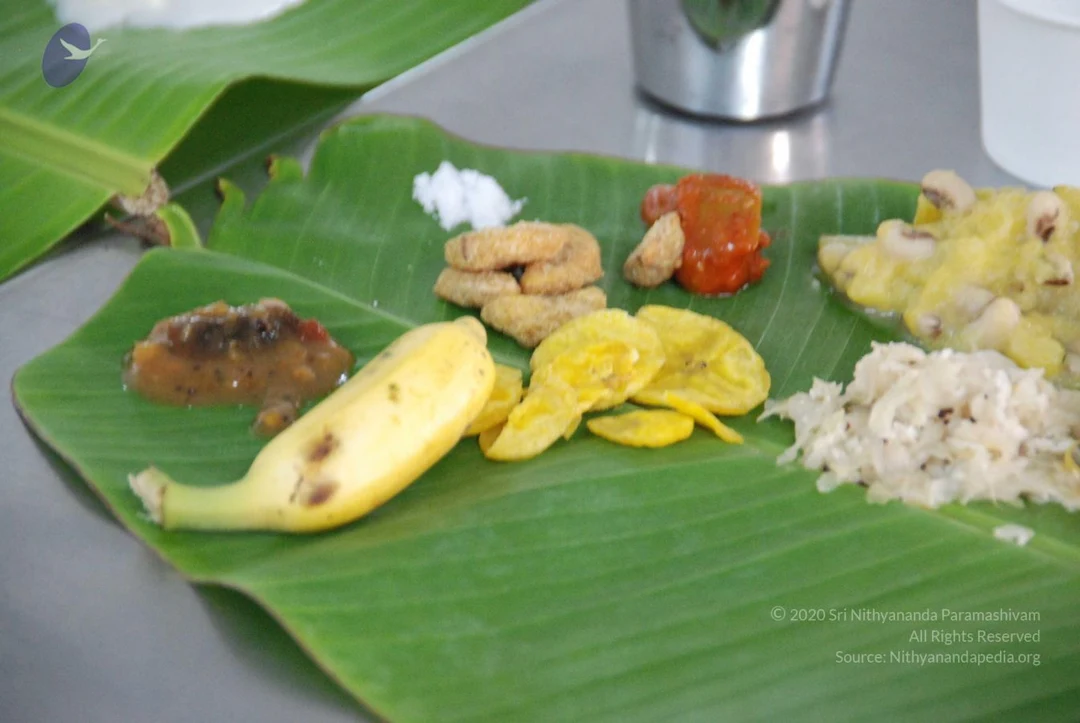
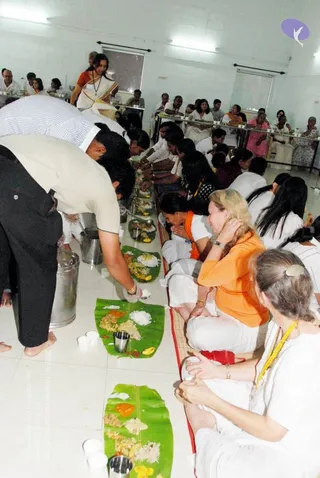
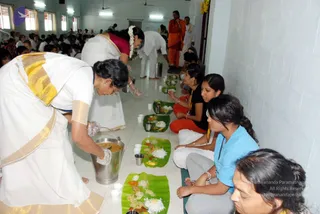
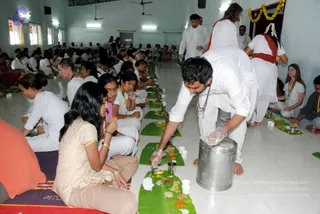
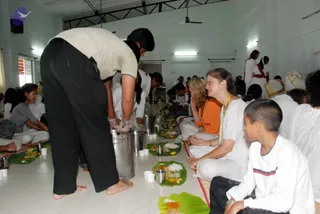
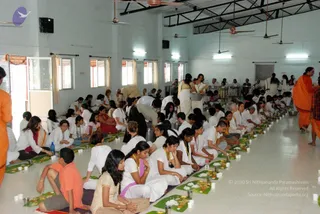
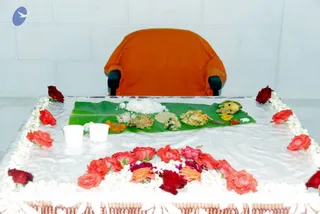
A photo of a communal meal in a bright, white-walled hall. Rows of people sit on mats along the floor, each in front of a large banana leaf heaped with rice and curries, with small steel cups and paper cups beside them. In the foreground a man in a cream shirt and black trousers bends forward to serve rice onto a leaf from a steel vessel. Behind him a woman in a red-bordered white sari stands by the tables, and more seated diners in white clothing, including one in orange, fill the room. This appears to be annadan style prasadam serving.Indoor photo of a communal meal service in a white-tiled hall. Women in white and gold-bordered saris and a woman in a pink top serve food from steel buckets onto green banana leaves laid on the floor. Seated devotees, including a woman in a blue top and others in grey and black, wait to eat. In the background, a man in orange robes and another in white stand near the wall, and a larger group sits in rows. Plates hold rice, sambar-style gravy, and fried items with steel tumblers beside them.A large white-walled hall with ceiling fans and tall windows holds many seated people on the floor, mostly in white clothing. In the foreground, a young man in white with rudraksha mala beads and gloves serves food from a steel bucket onto green banana leaves laid in rows. Seated women in cream and white clothes, some with yellow lanyards, wait to be served. A man in a white kurta and a woman in white stand near a doorway garlanded with yellow marigolds, an annadan style communal meal. A second standing figure at the top with long hair wears saffron cloth and a red wrap, but the appearance is uncertain.A communal meal is served on a white-tiled hall floor, with devotees seated in rows on green banana leaves. A man in a cream shirt and black trousers bends forward, serving food from a large steel vessel while others in white garments and gloves assist with pots and dishes. Seated women include one in an orange top and another in white with a beaded necklace, and a boy in white sits in the foreground beside rows of rice, vegetables and cups. Light fixtures and a ceiling fan are visible, and several people stand in white at the back.A large hall with white walls, ceiling fans and a wide white tiled floor holds a long seated meal. Rows of people sit on mats in white clothes, many with yellow or saffron scarves, eating from green banana leaves set with rice and side dishes, with steel cups and bowls beside them. Several women in white and cream saris and white-clad helpers serve from large steel pots, while a standing figure in saffron robes stands at the right edge and another in orange at the left. Tall windows line the back wall. The scene looks like a communal annadan meal in an ashram hall.A photograph of a set-up table in a plain room with white cinder-block walls. A chair is draped with an orange cloth and has dark armrests, but no person is visible. In front of it, a long banana leaf holds a spread of small servings of rice, curries, vegetables, pickle and a small heap of white rice, with two white paper cups beside it.

HDH-Night-Session
4 photosSource gallery
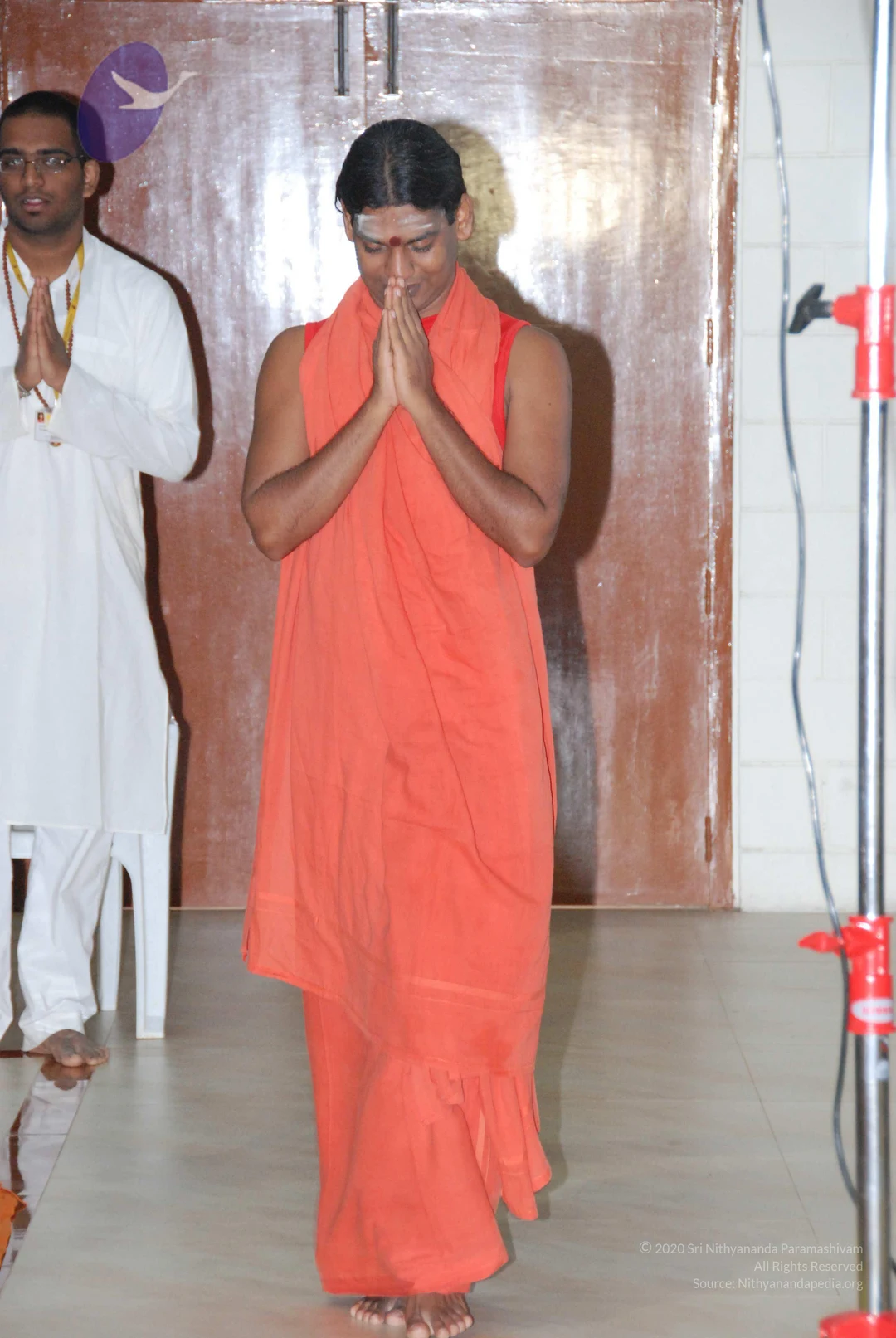
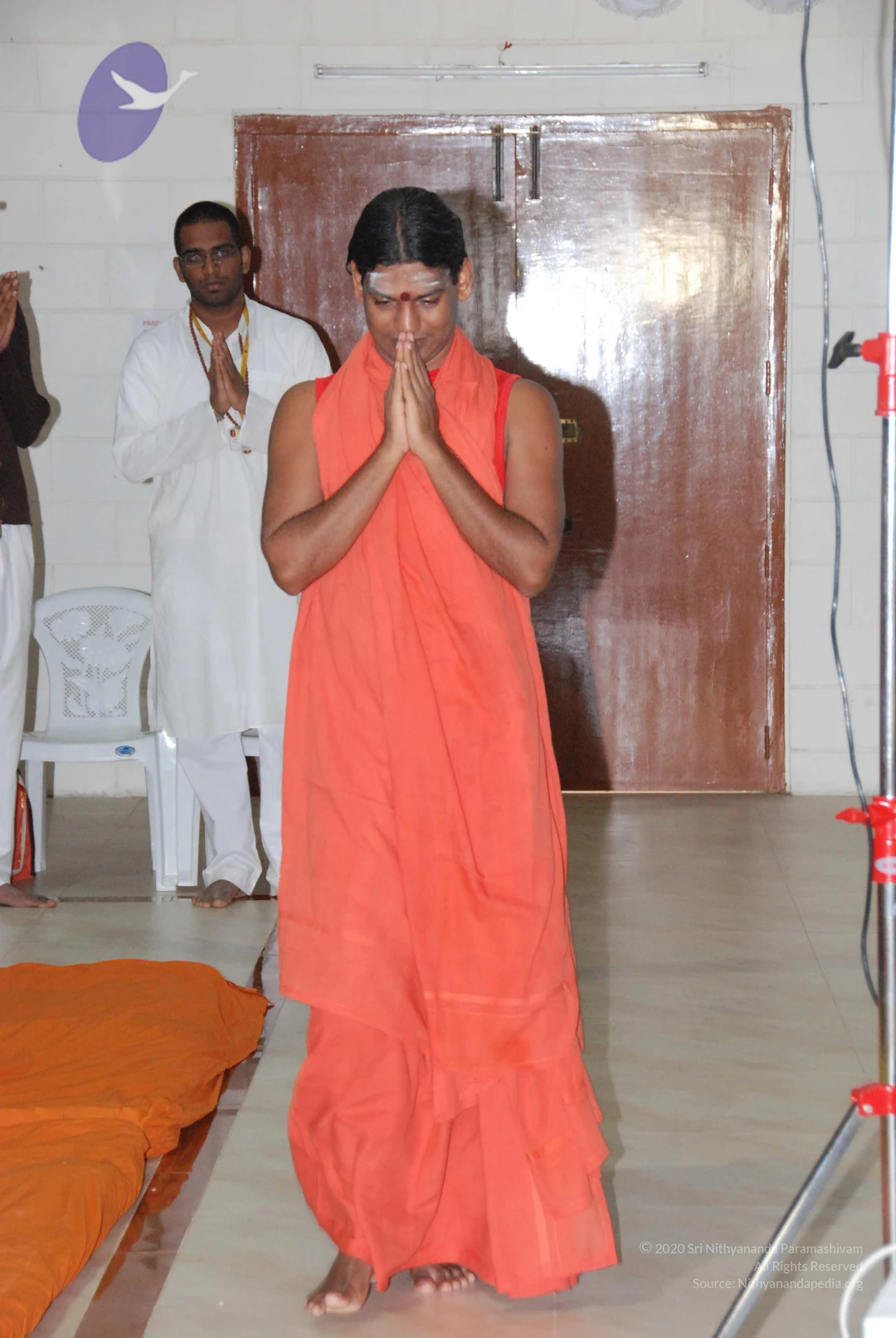
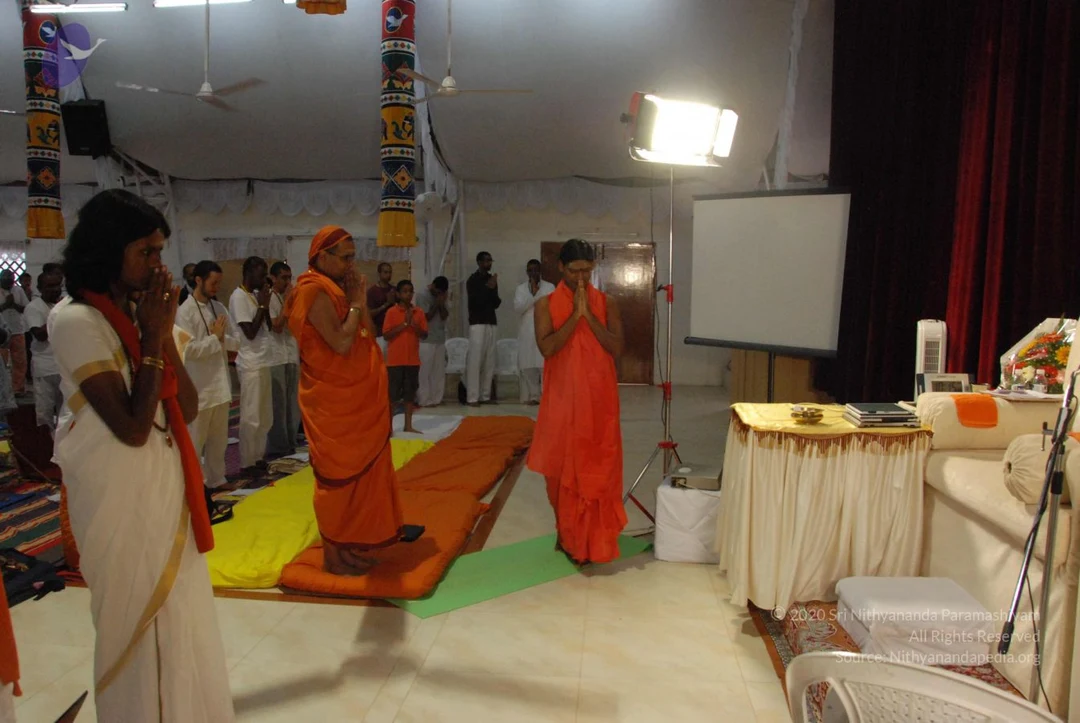
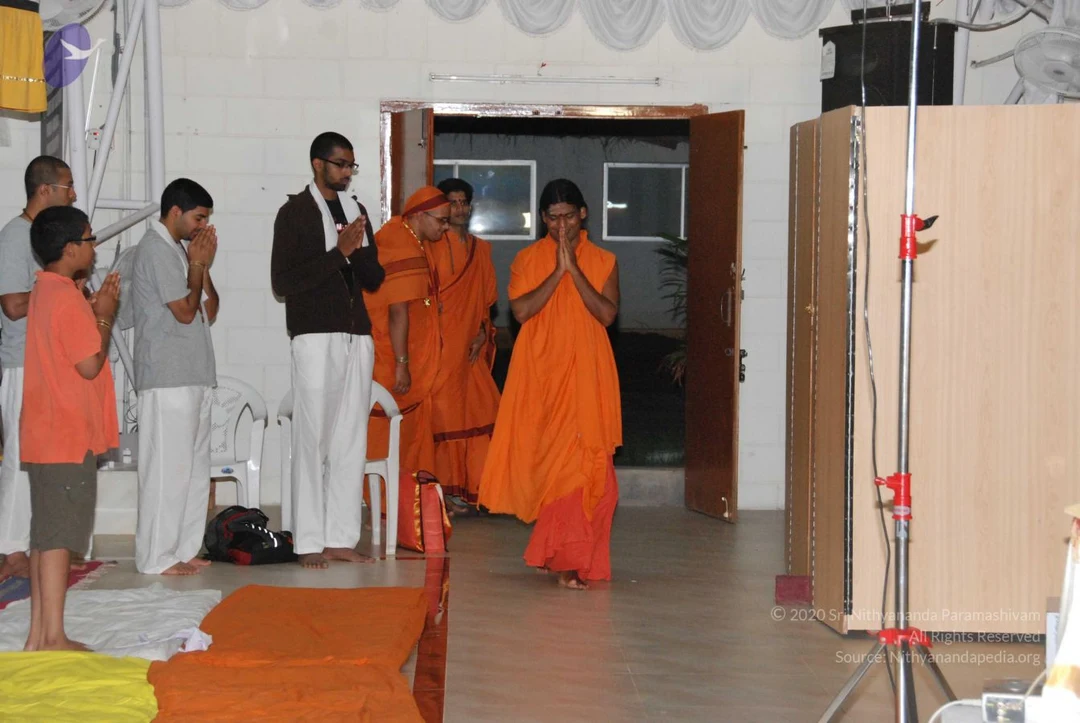
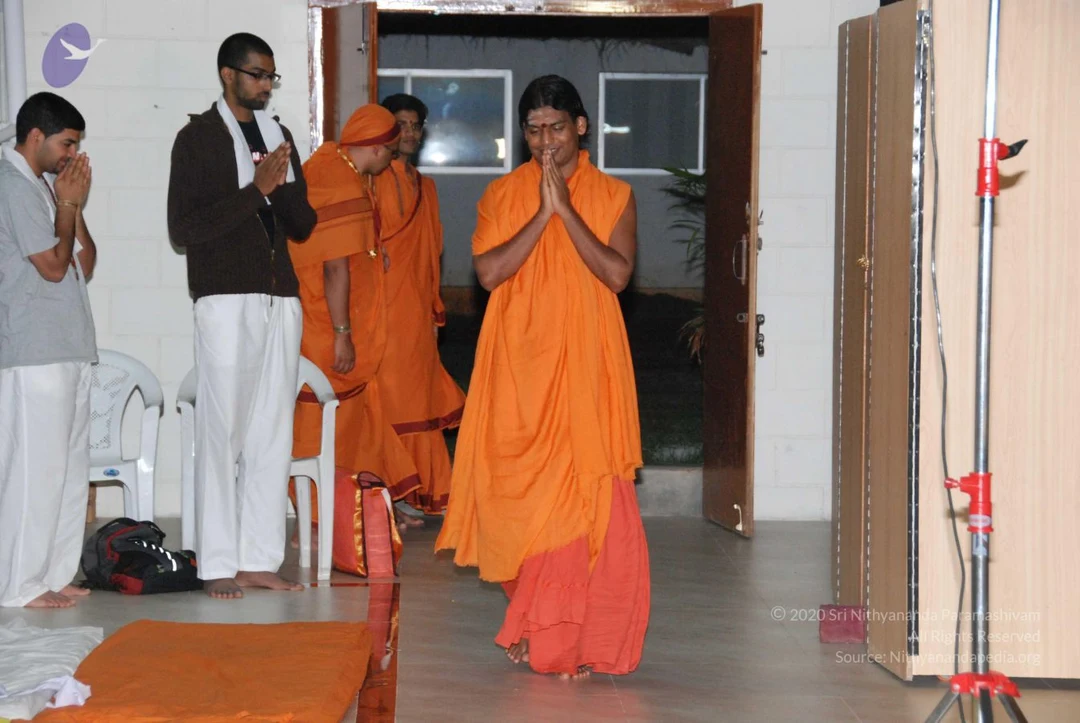
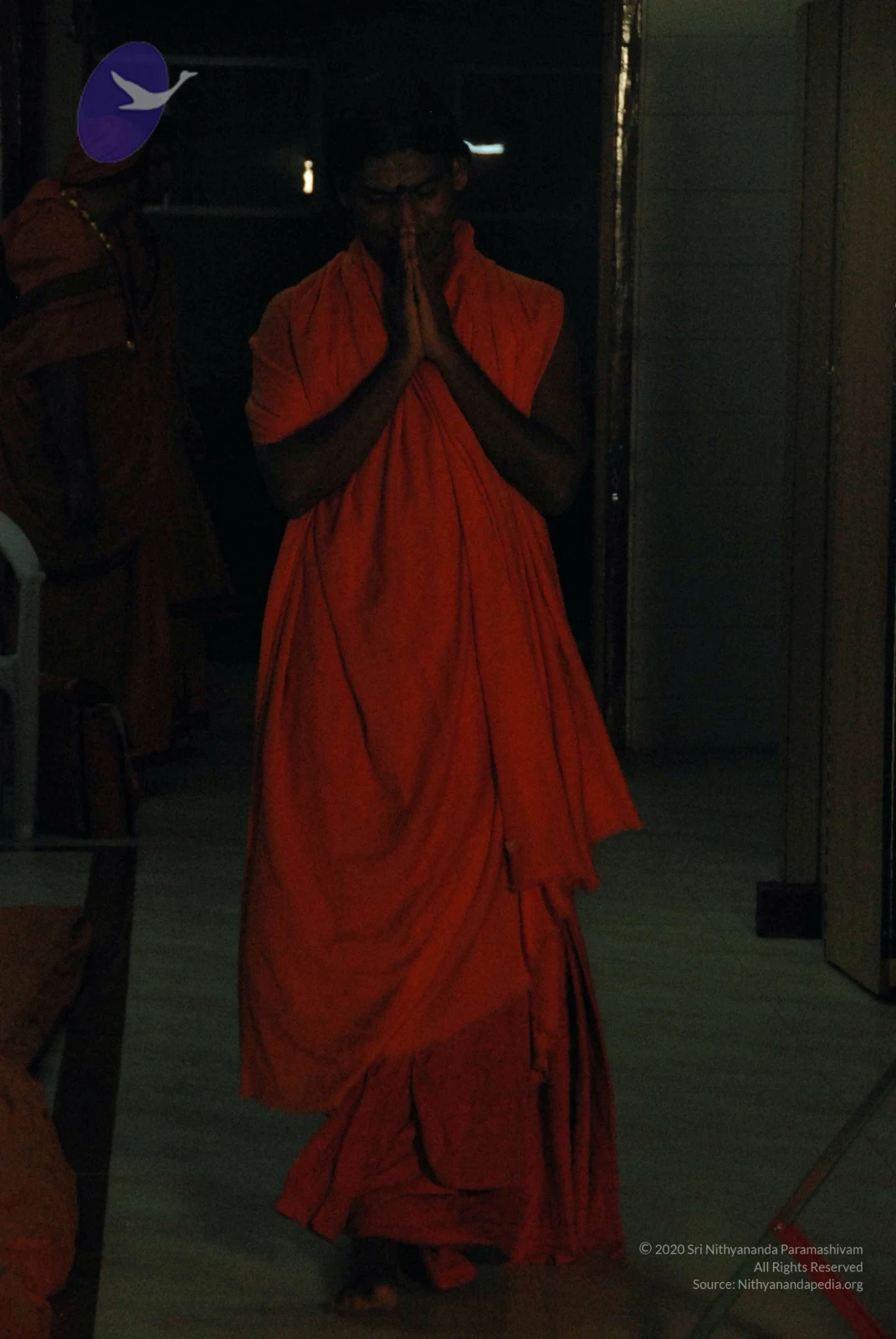
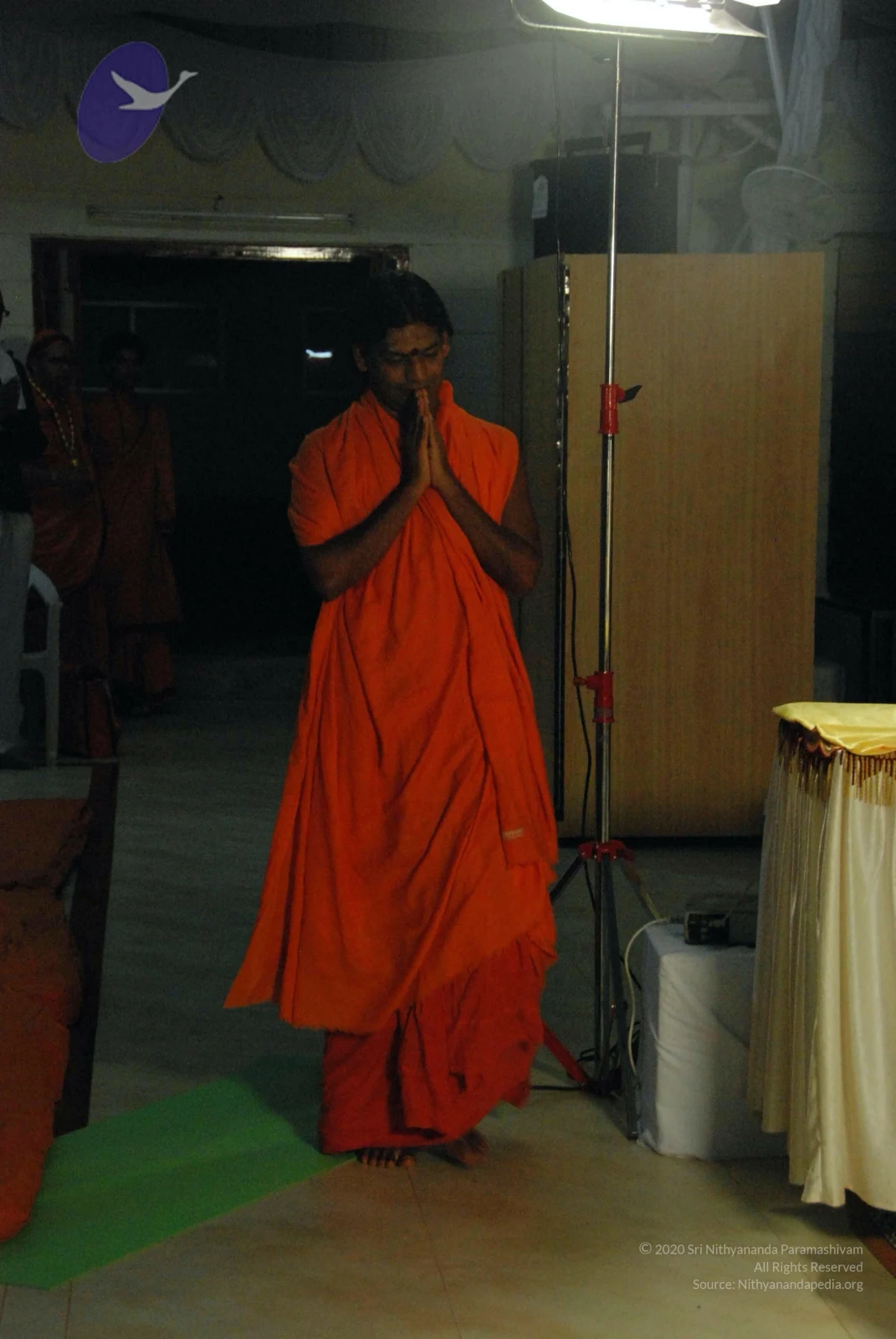
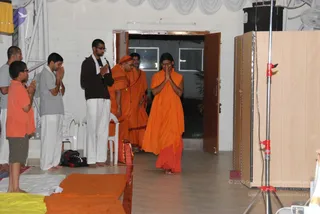
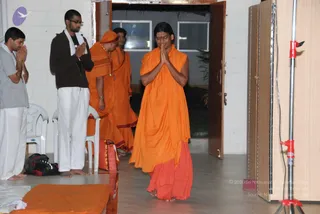
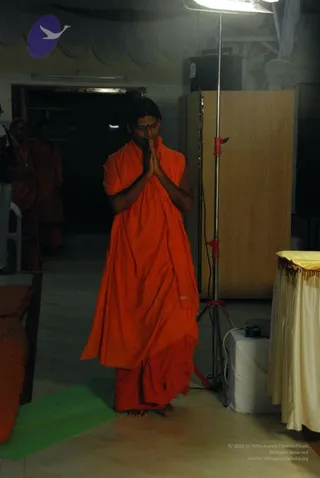
Indoor photo of a group of devotees in a hall with a white wall and a doorway, a rolled orange mat and orange cloths on the floor. A woman in a plain saffron-orange sari with a red underskirt walks barefoot toward the right, palms pressed together in anjali. Behind her, a man in orange robes with a tilak and a second robed man stand near the door. On the left, several people in white dhotis or trousers, a dark jacket and grey shirts stand or kneel with hands folded in namaskar. A tall stand and a wooden cabinet are at right. The page indicates a person was present; no one here is clearly identifiable by appearance, so the robed figure in orange at the door is described by role only.A photo of an indoor hall with tiled floor and wooden cabinets on the right, where a man in a long orange robe and orange-red lower garment stands with palms pressed together in namaste, eyes lowered, barefoot, as he walks toward a doorway. Behind him, two men in orange robes follow, one wearing an orange head wrap. On the left, three men in white dhotis and simple shirts stand with palms joined in greeting, one with a white towel over his shoulder. An orange cloth lies on the floor at lower left, and a red tripod stand with a cable appears at right. Swamiji (probable) is the central figure in the flowing orange robe with long swept-back dark hair, and the page places him at this event.A dimly lit indoor photo of a man in a red-orange monastic robe walking forward with his palms pressed together at his chest in a namaste gesture, head slightly bowed and eyes closed. He wears a draped orange-red garment over one shoulder. Behind him at left, another person in similar red-orange robes stands partly visible near a white plastic chair. The floor is pale and a doorway opens on the right.A standing man in orange-saffron robes stands barefoot on a green mat in a dimly lit hall, palms pressed together in anjali mudra with eyes lowered. He wears a draped orange shawl over the body and a red-orange dhoti, with a small vertical mark on his forehead. Behind him in the dark doorway two other people in orange robes stand, one with a red-orange garment and a beaded mala. A tall stand light and a cream-draped table with gold fringe sit at right.