Skip to content
Tuesday

1 April 2008

THE SUPREME PONTIFF OF HINDUISM JGM HDH BHAGAVAN NITHYANANDA PARAMASHIVAM

Dated photos
268
Source pages
1
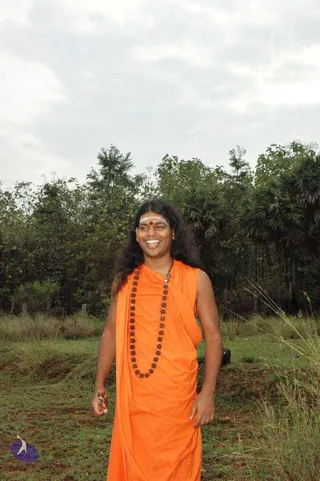
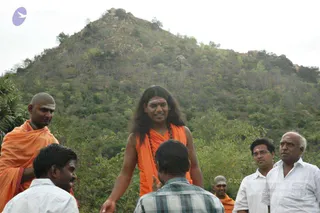
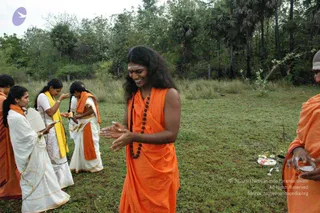
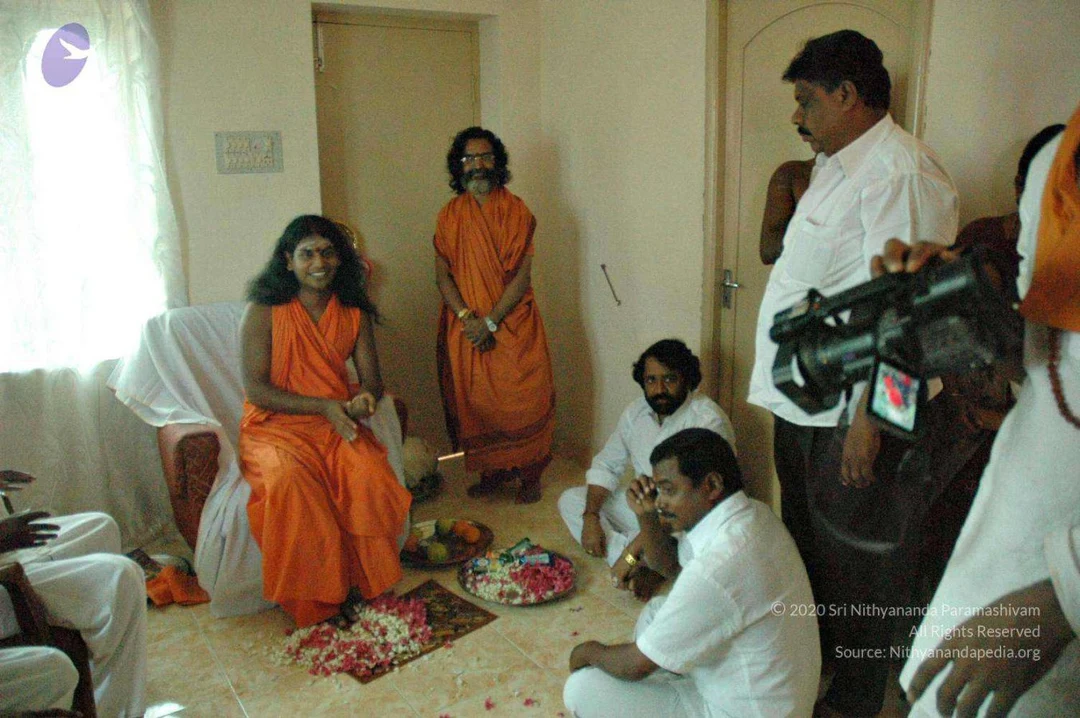
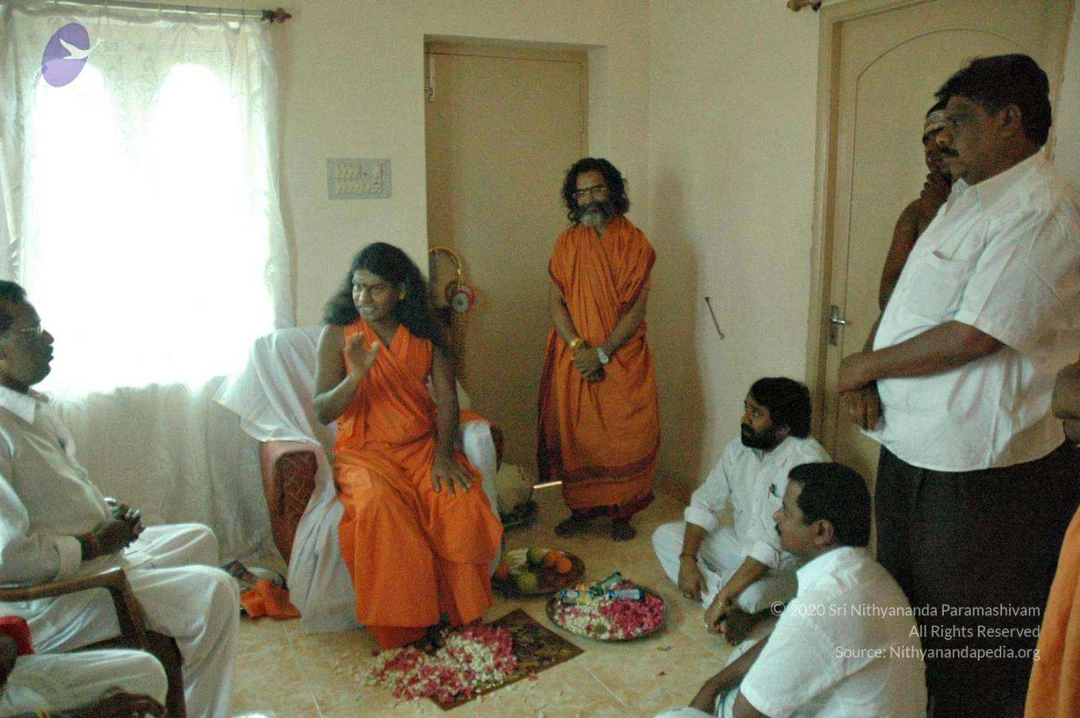
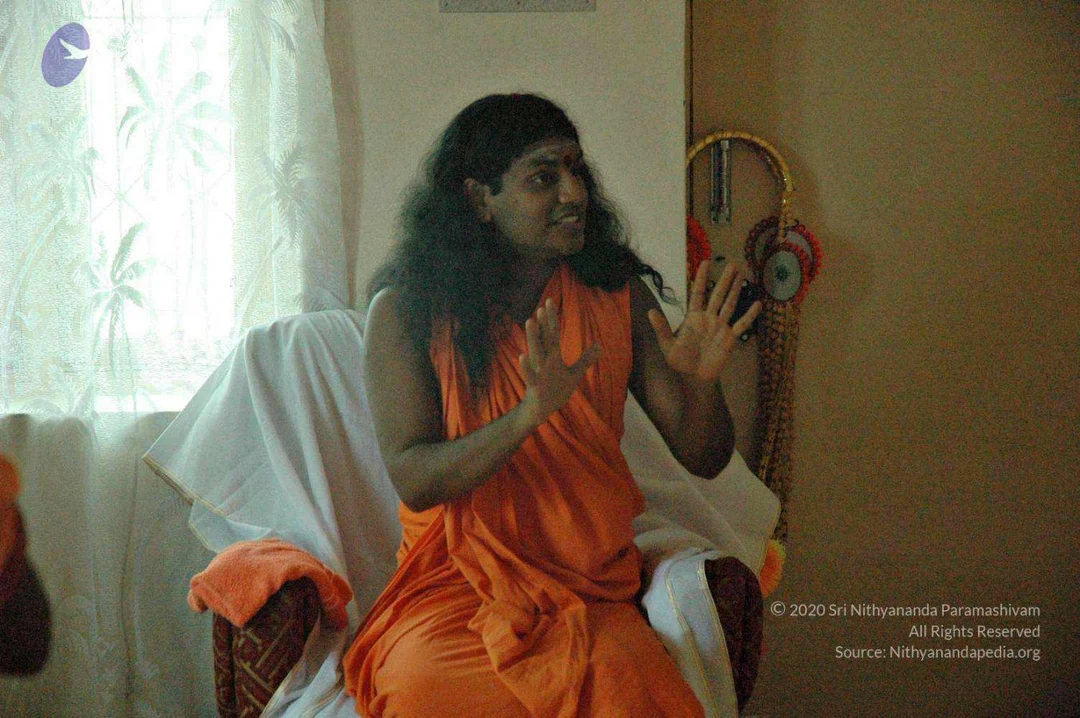
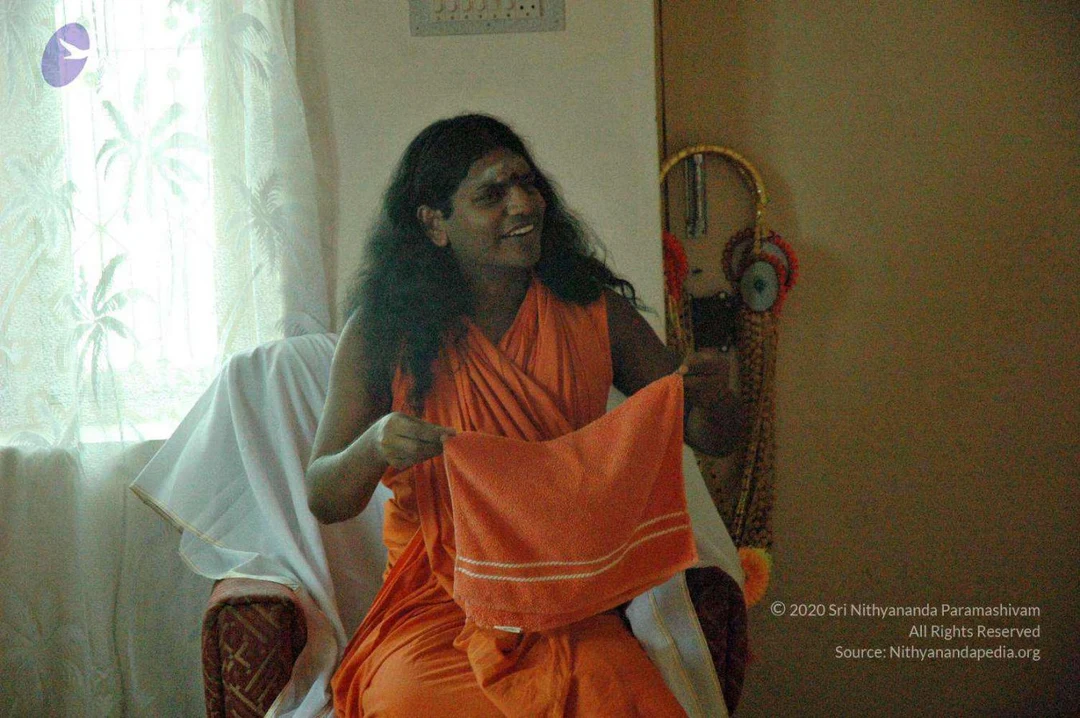
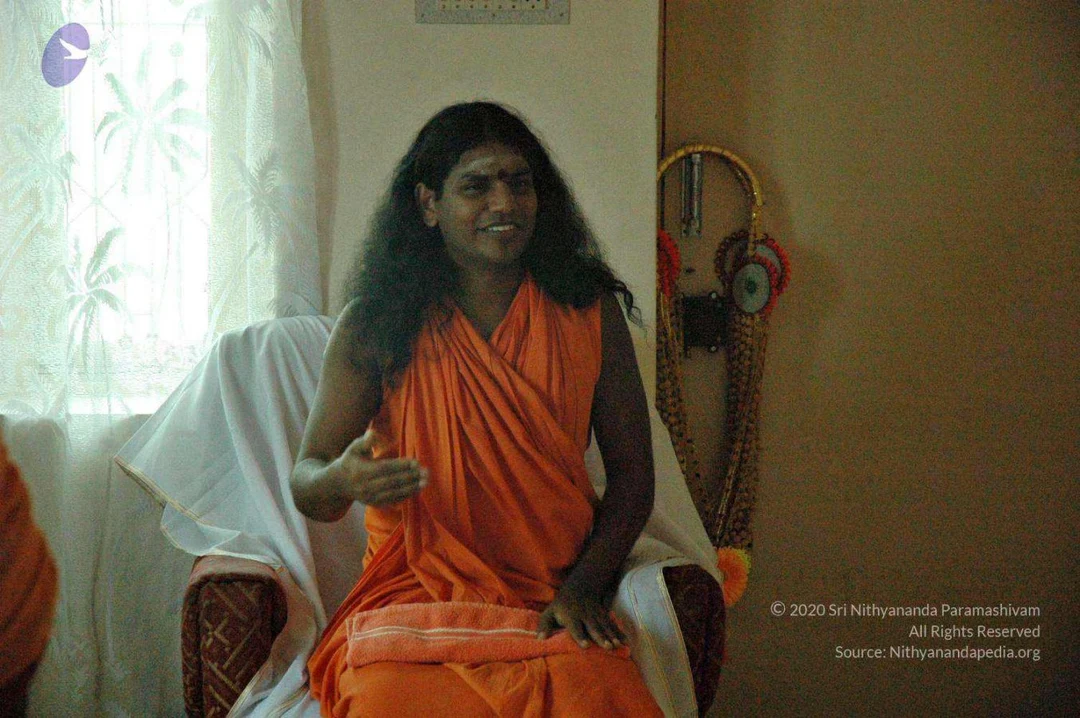
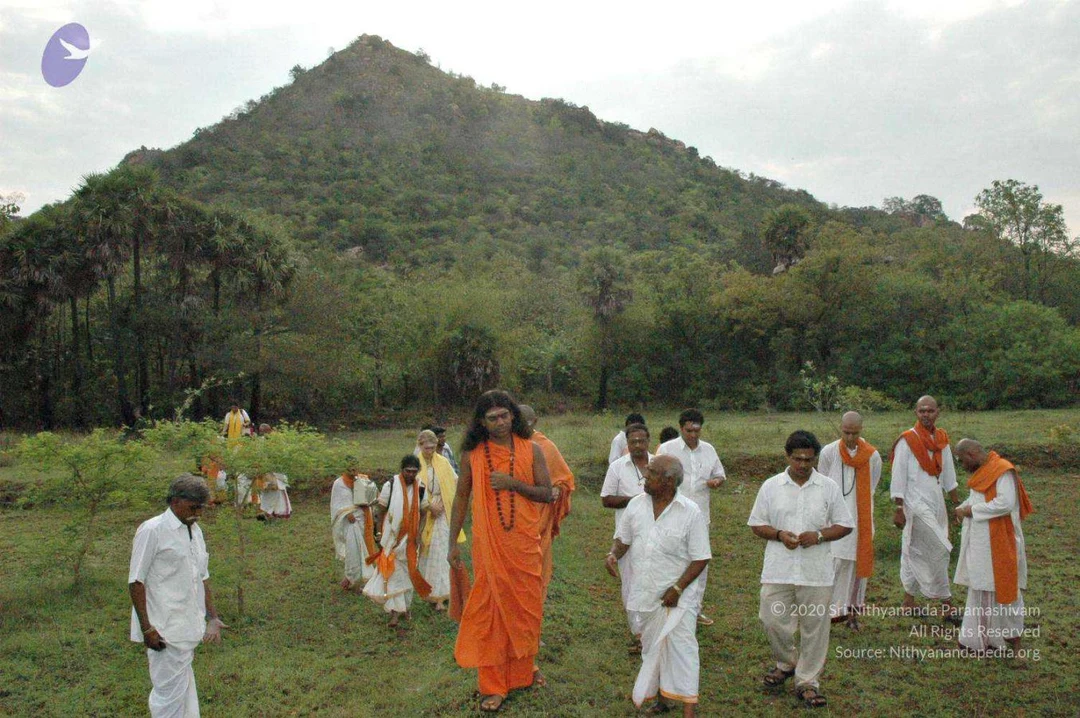
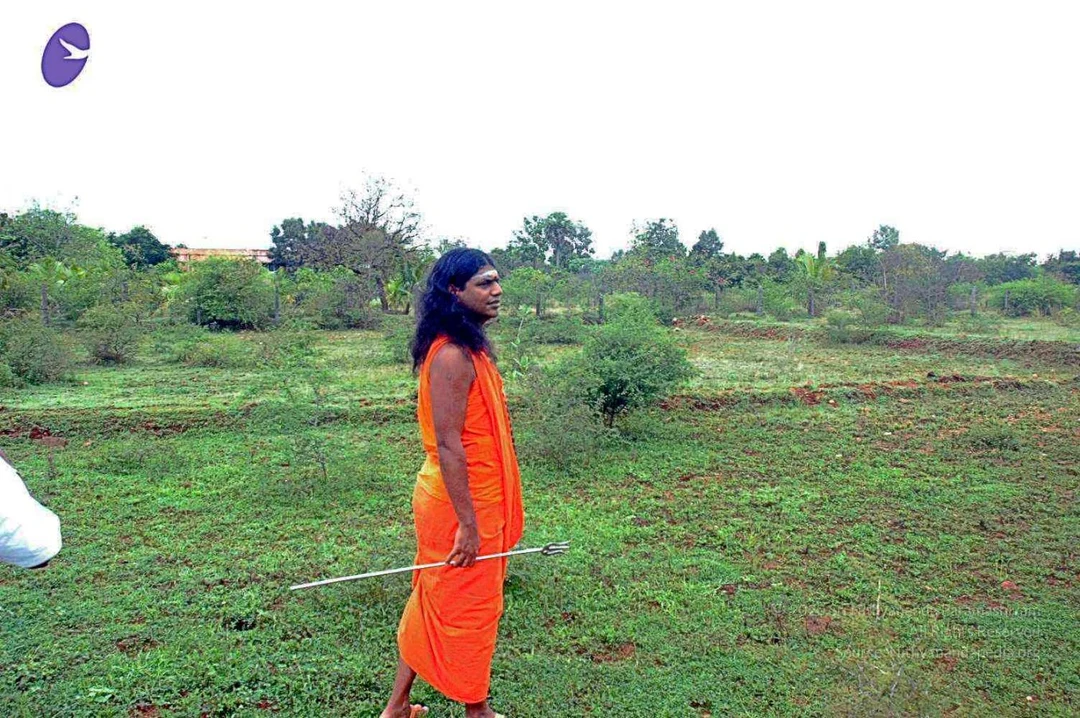
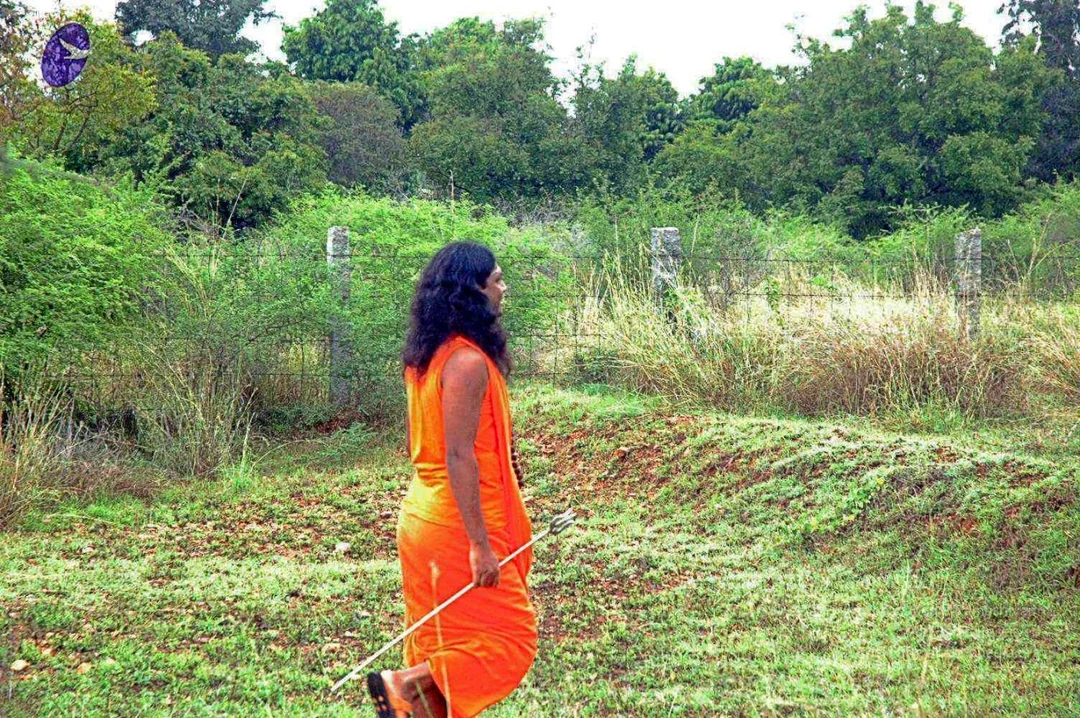
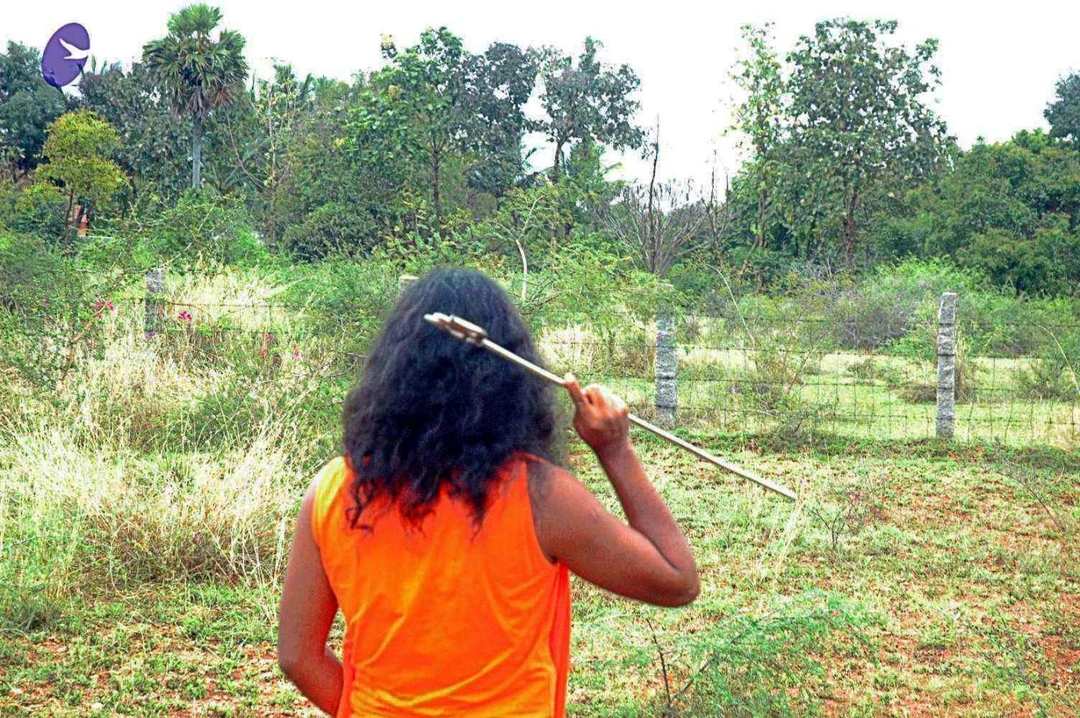
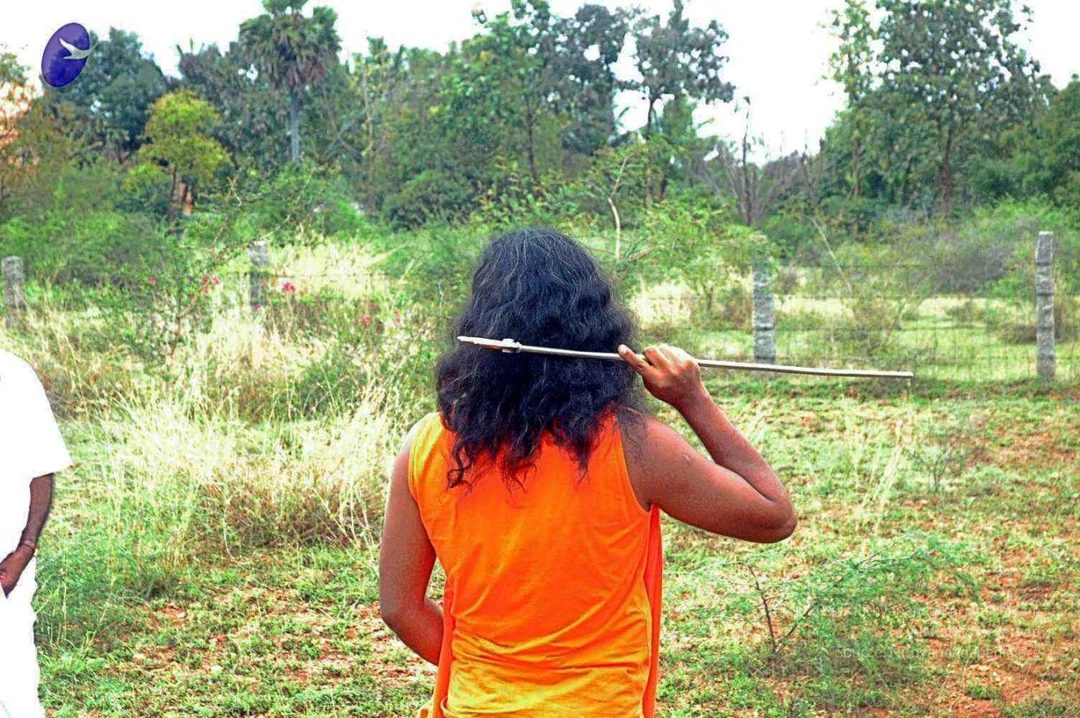
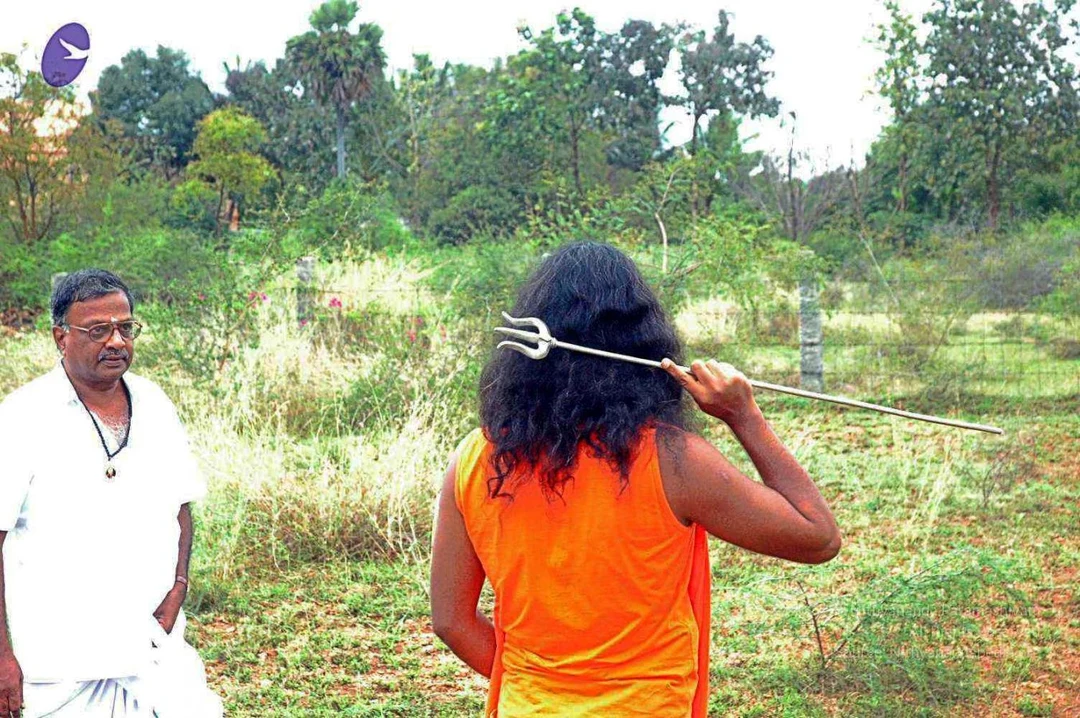
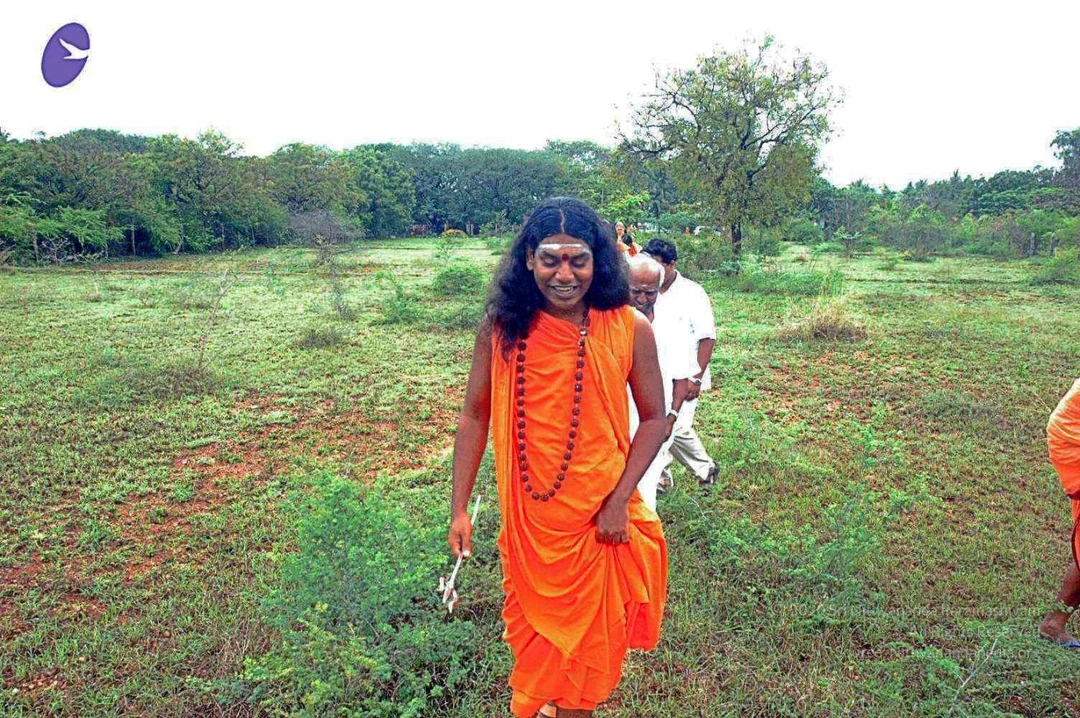
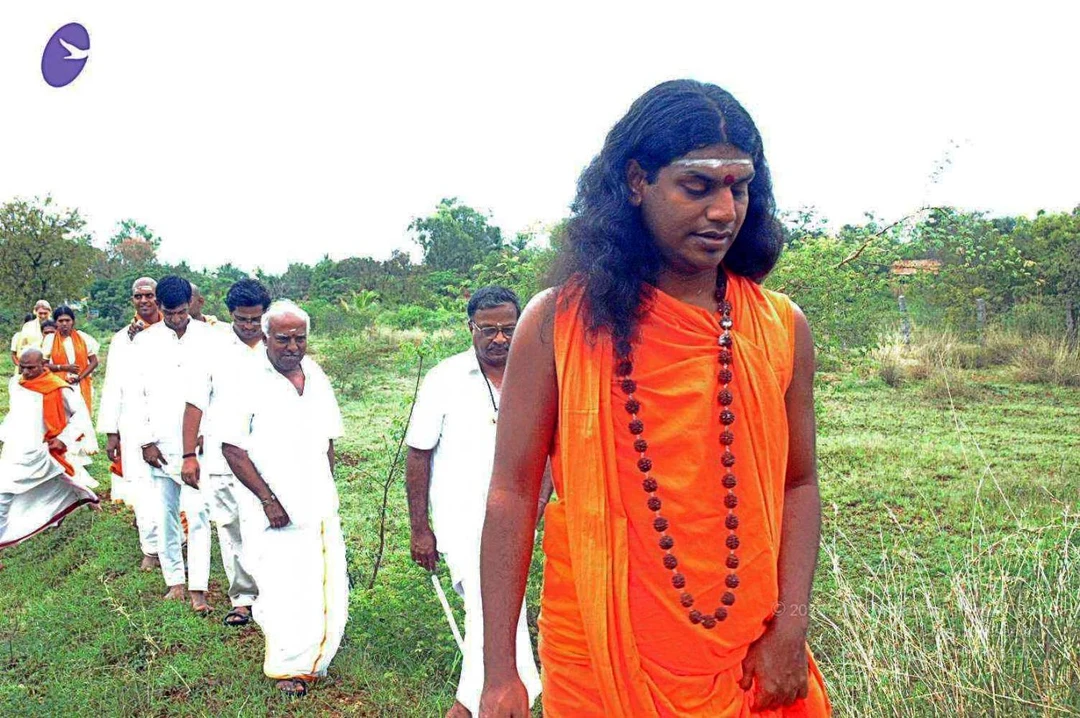
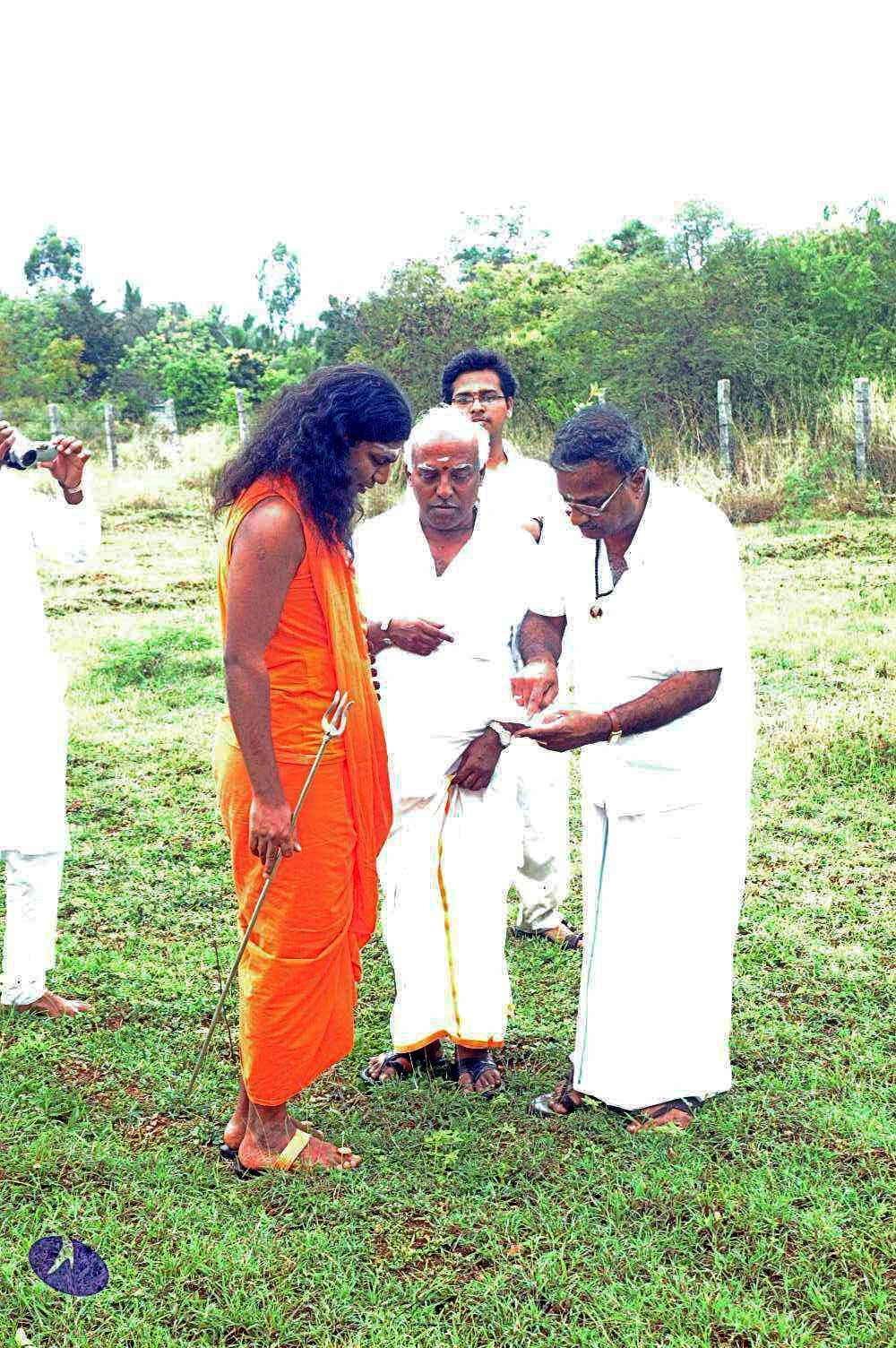
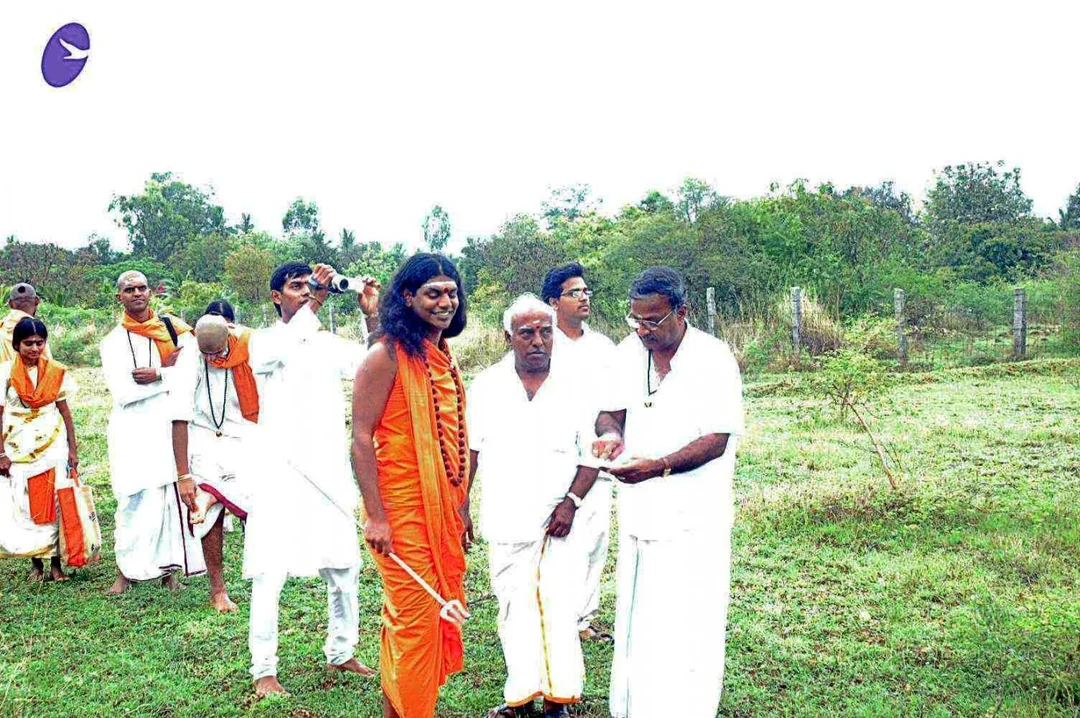
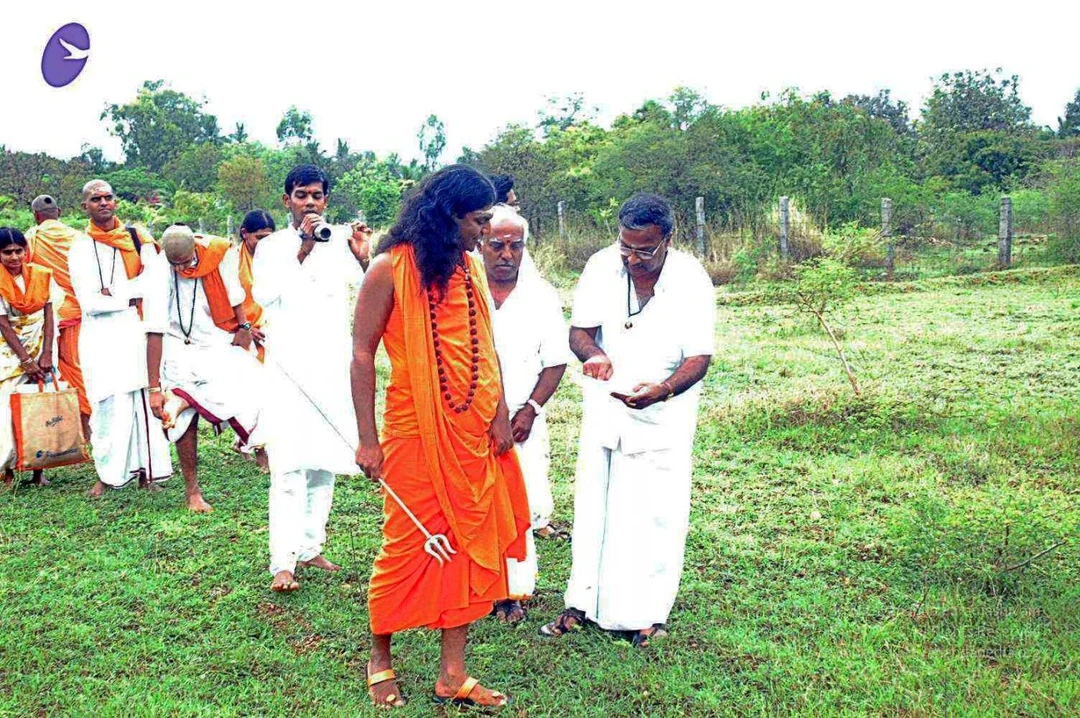
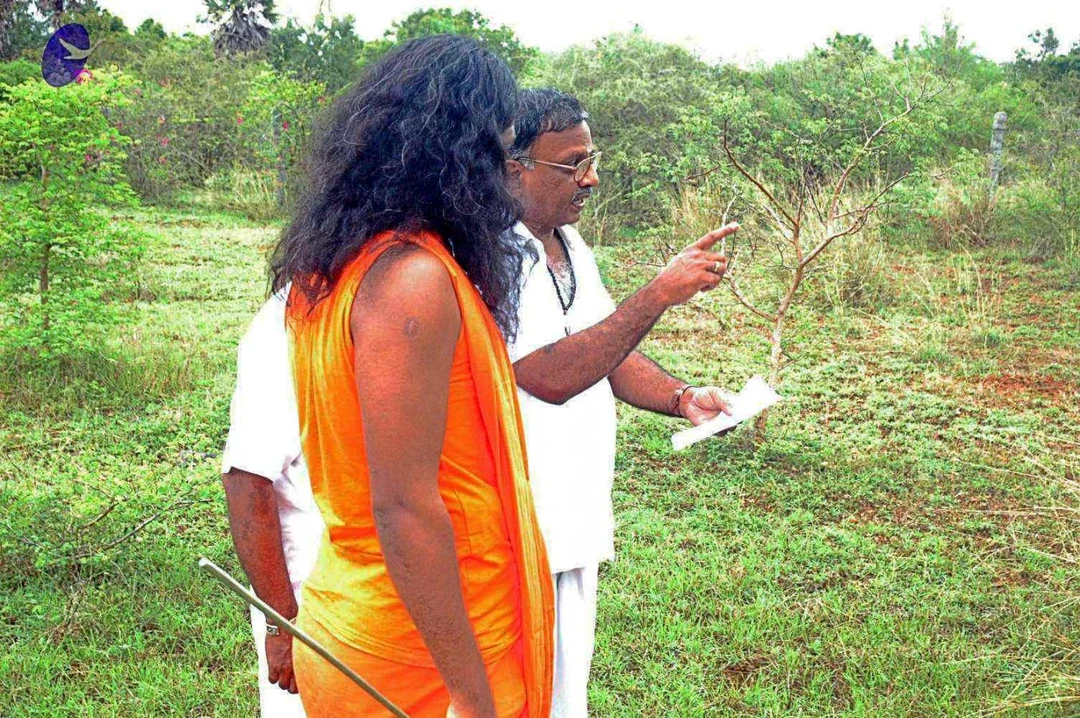
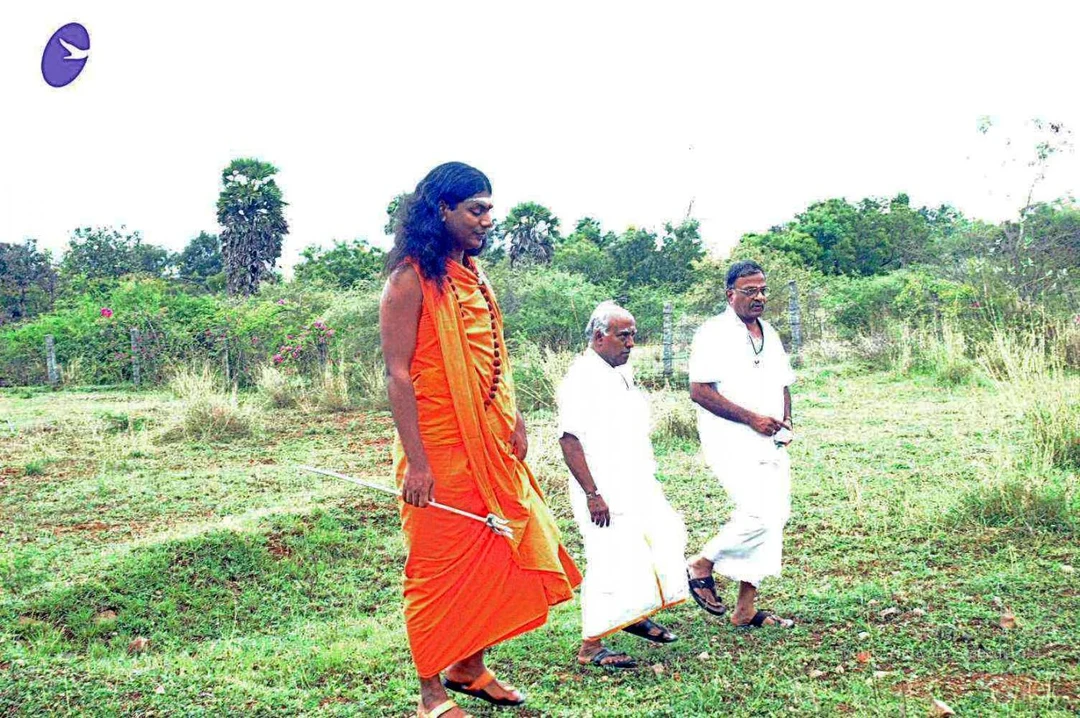
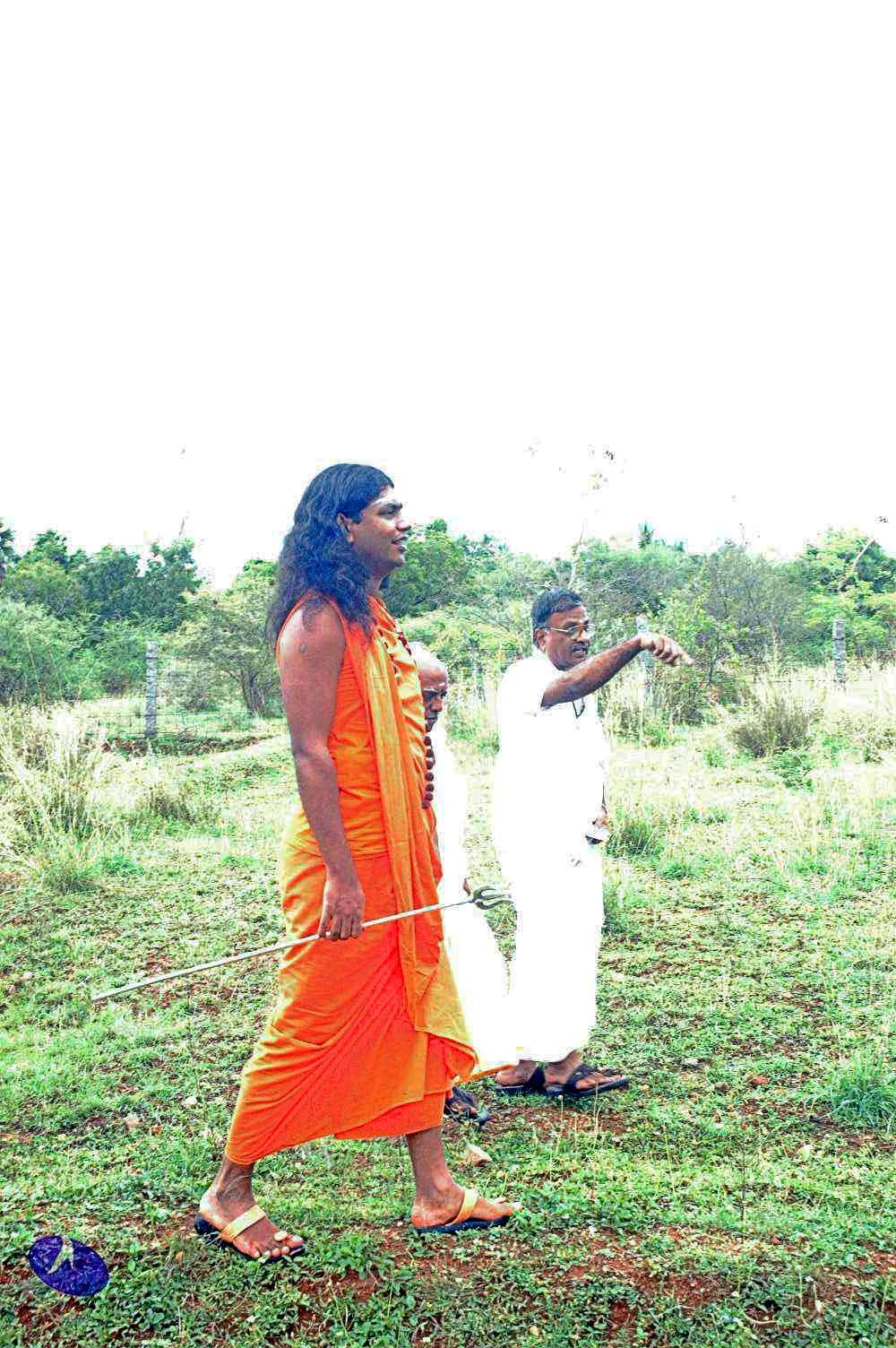
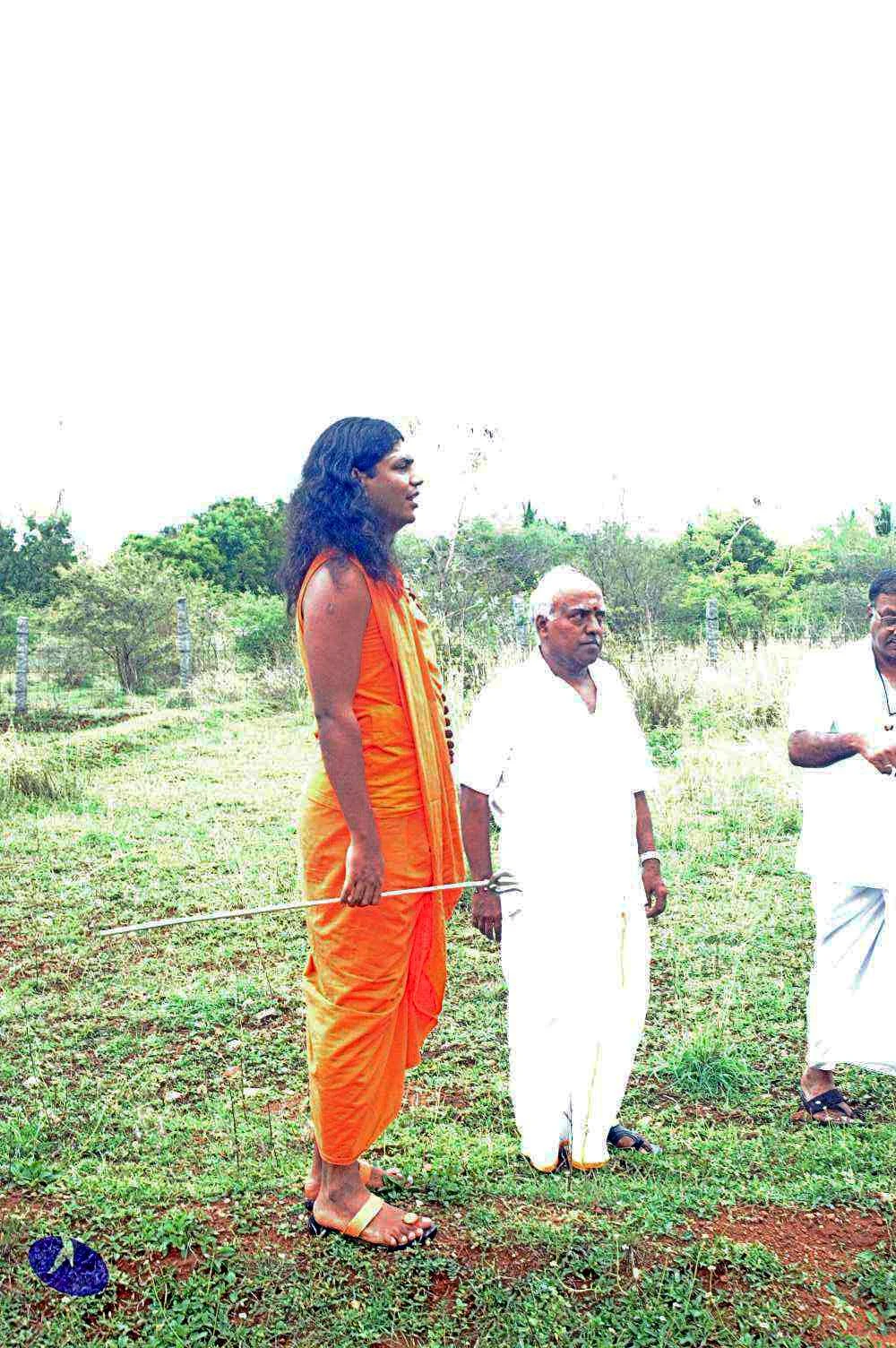
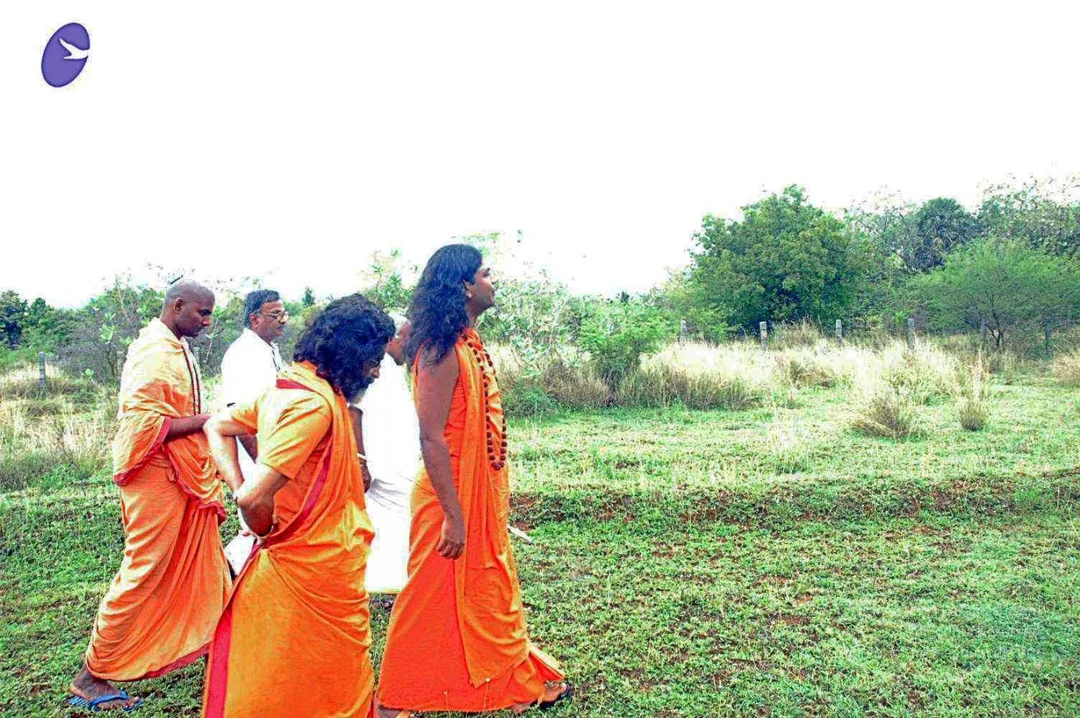
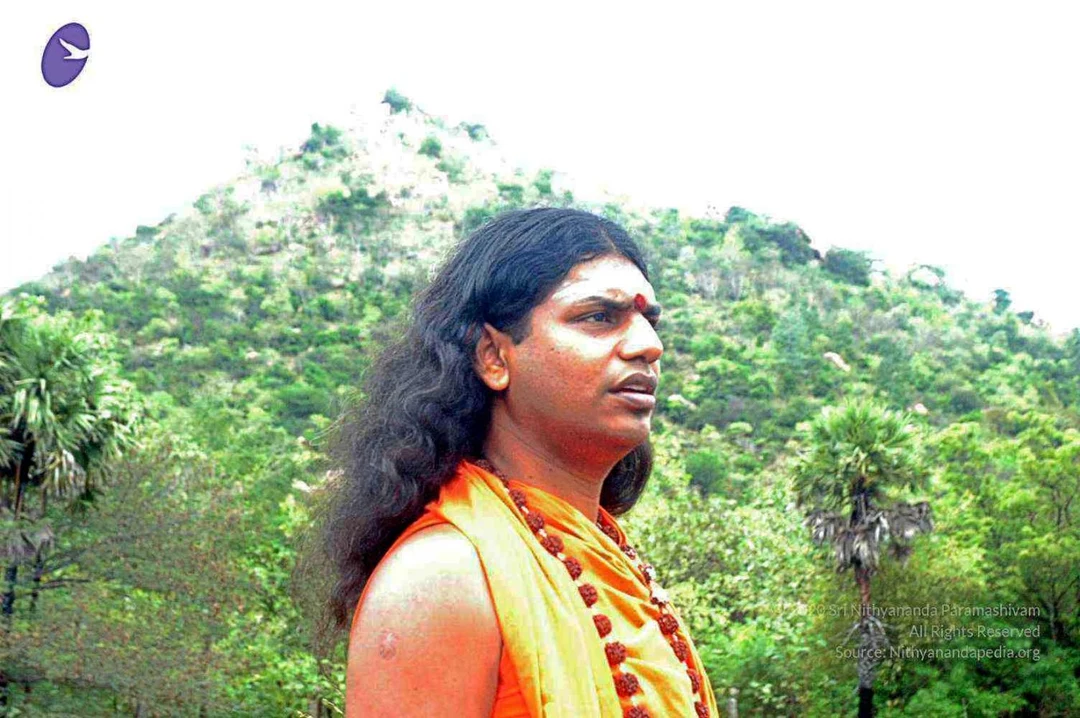
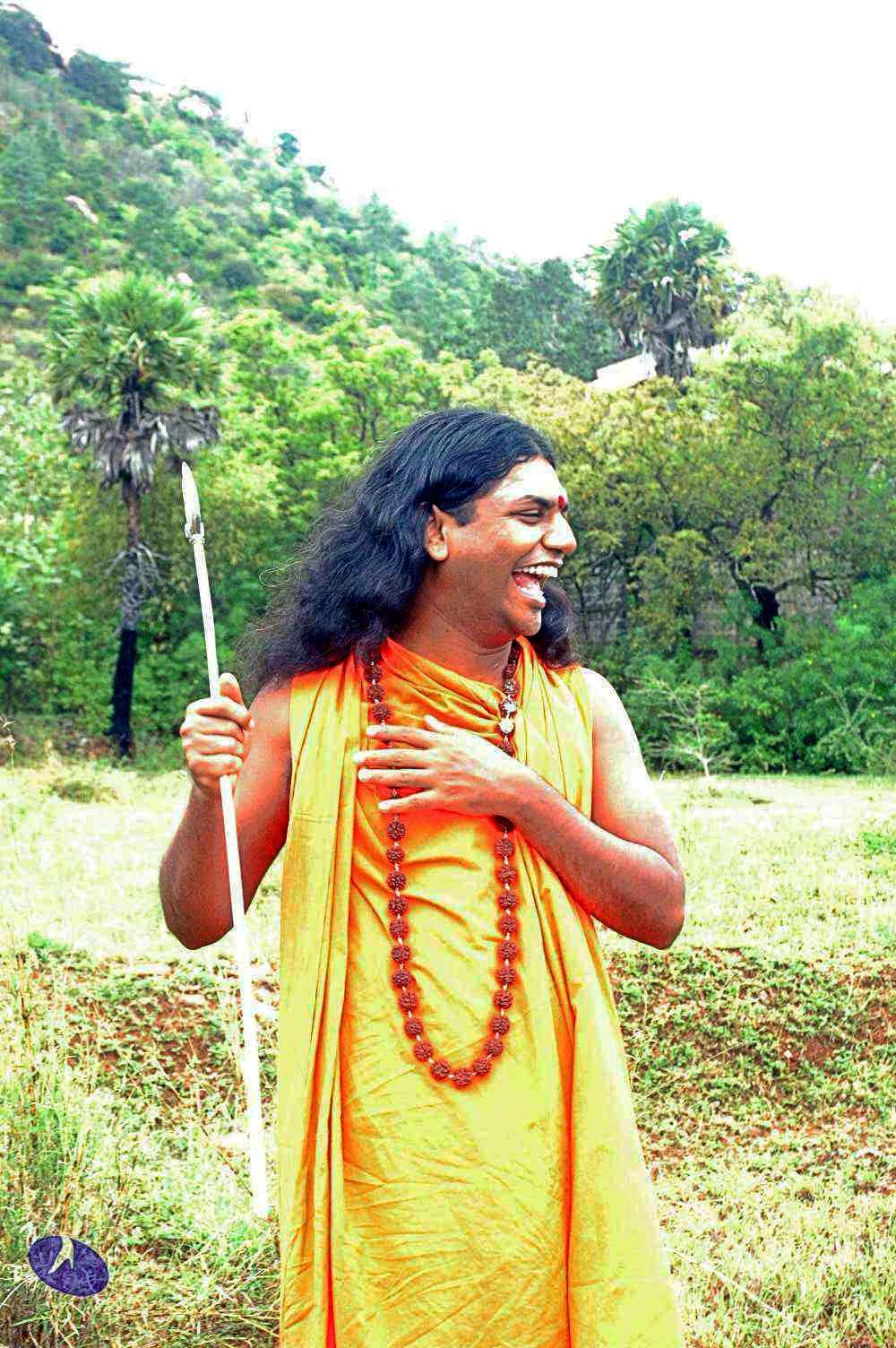
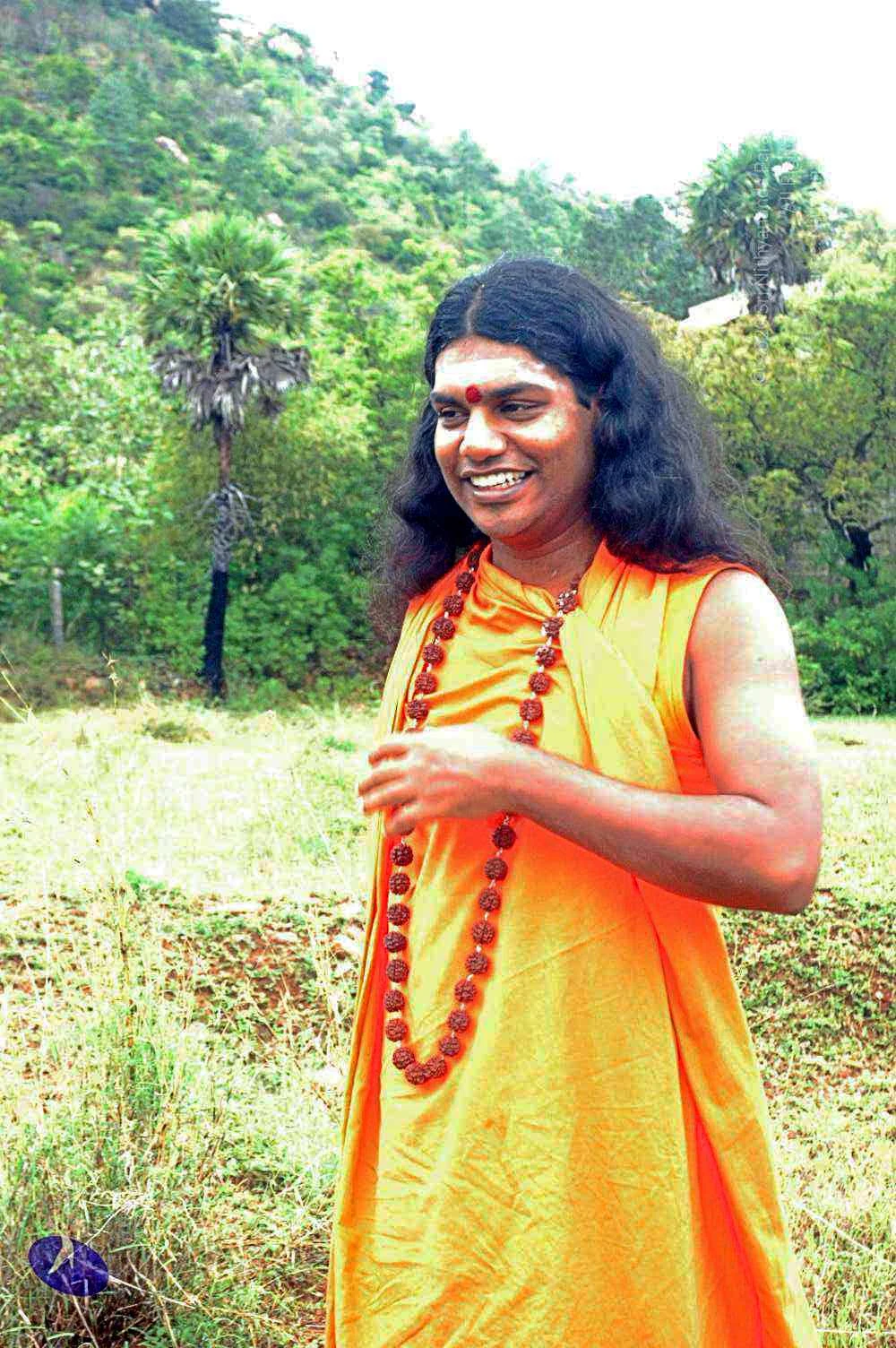
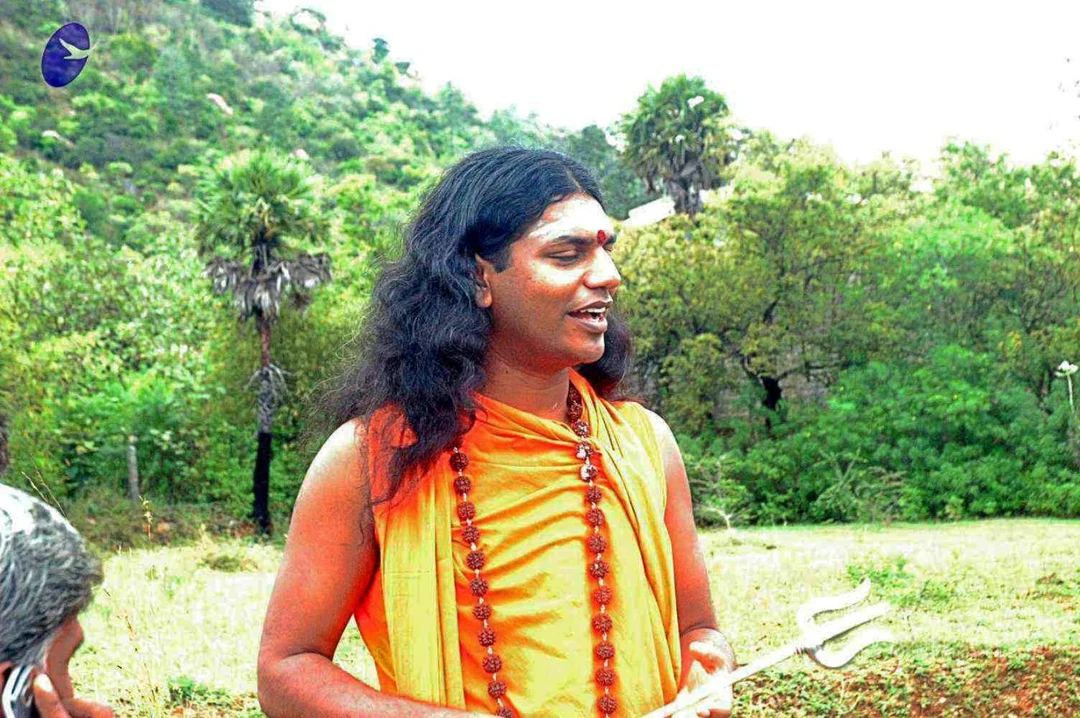
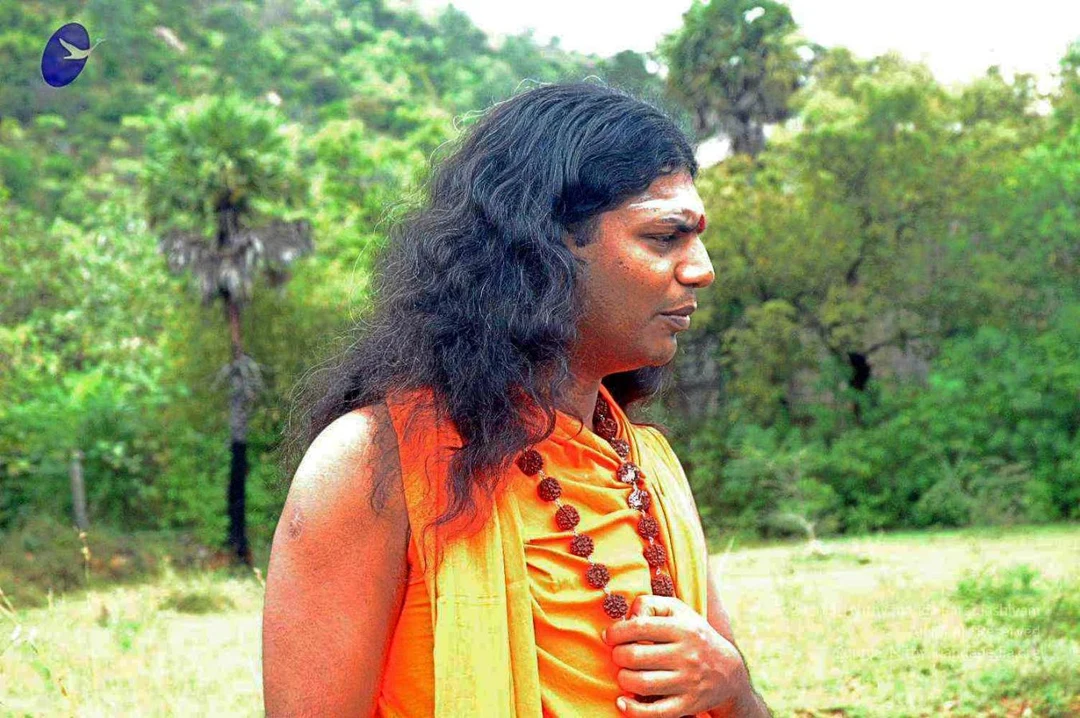
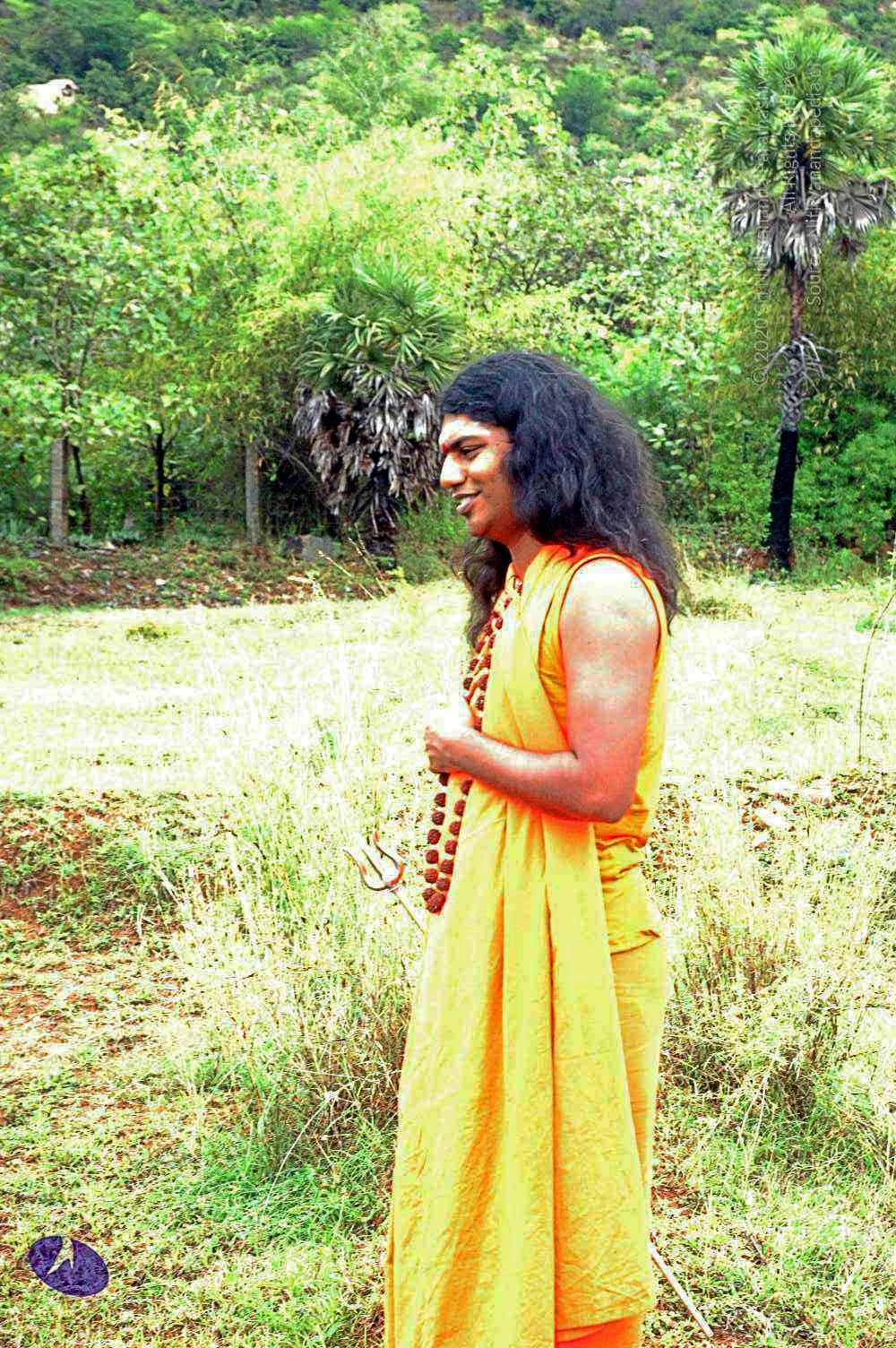
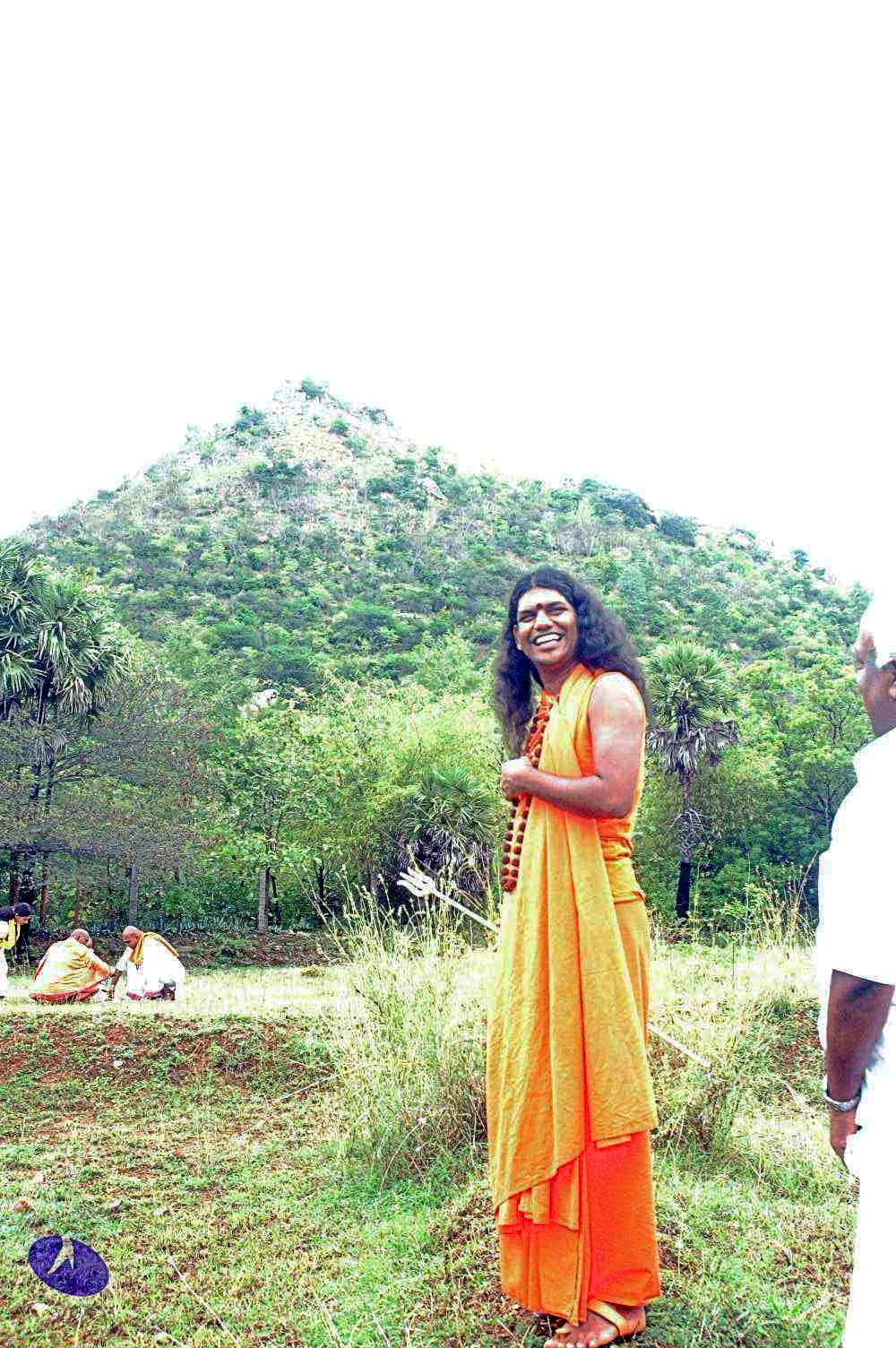
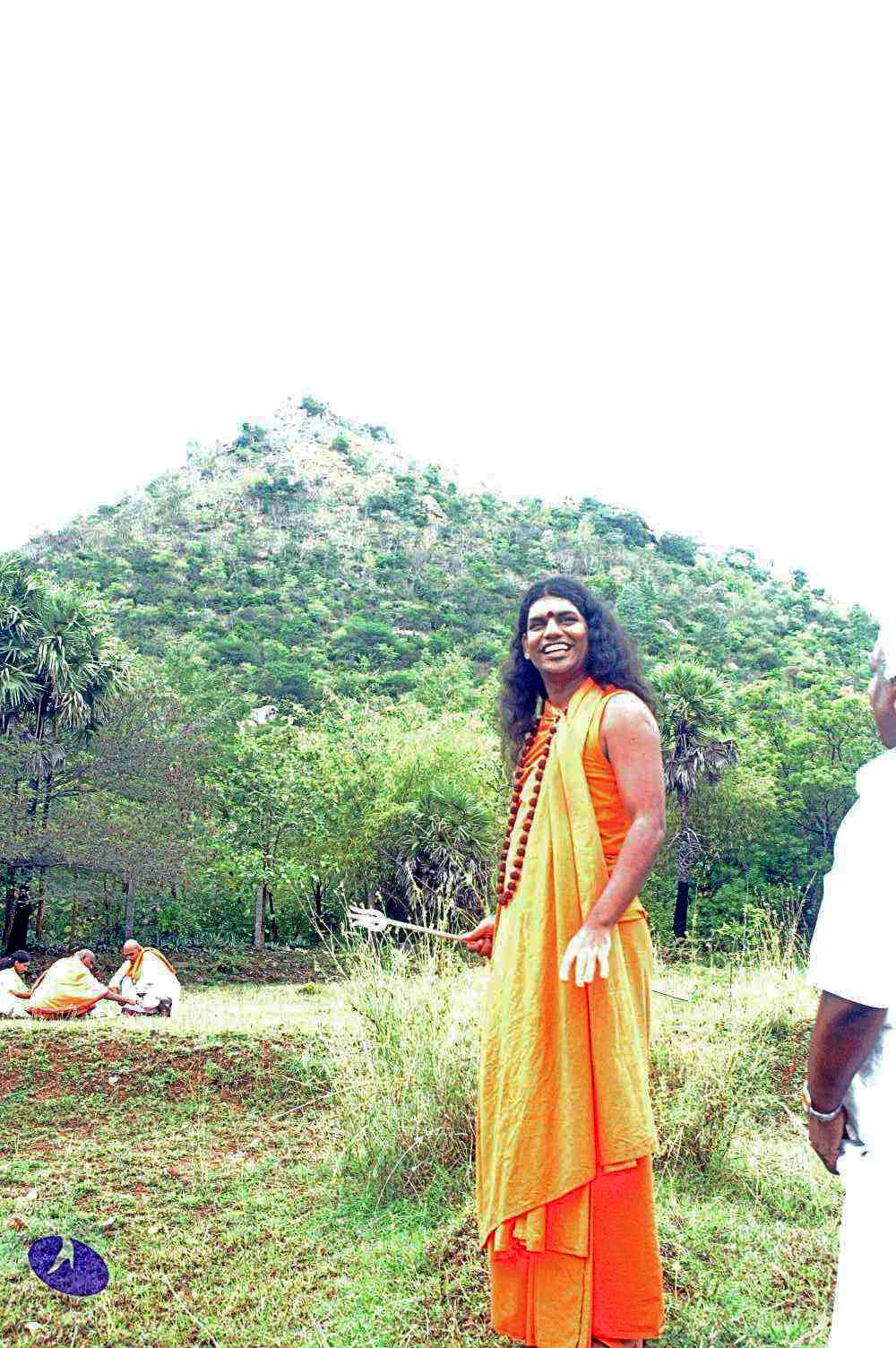
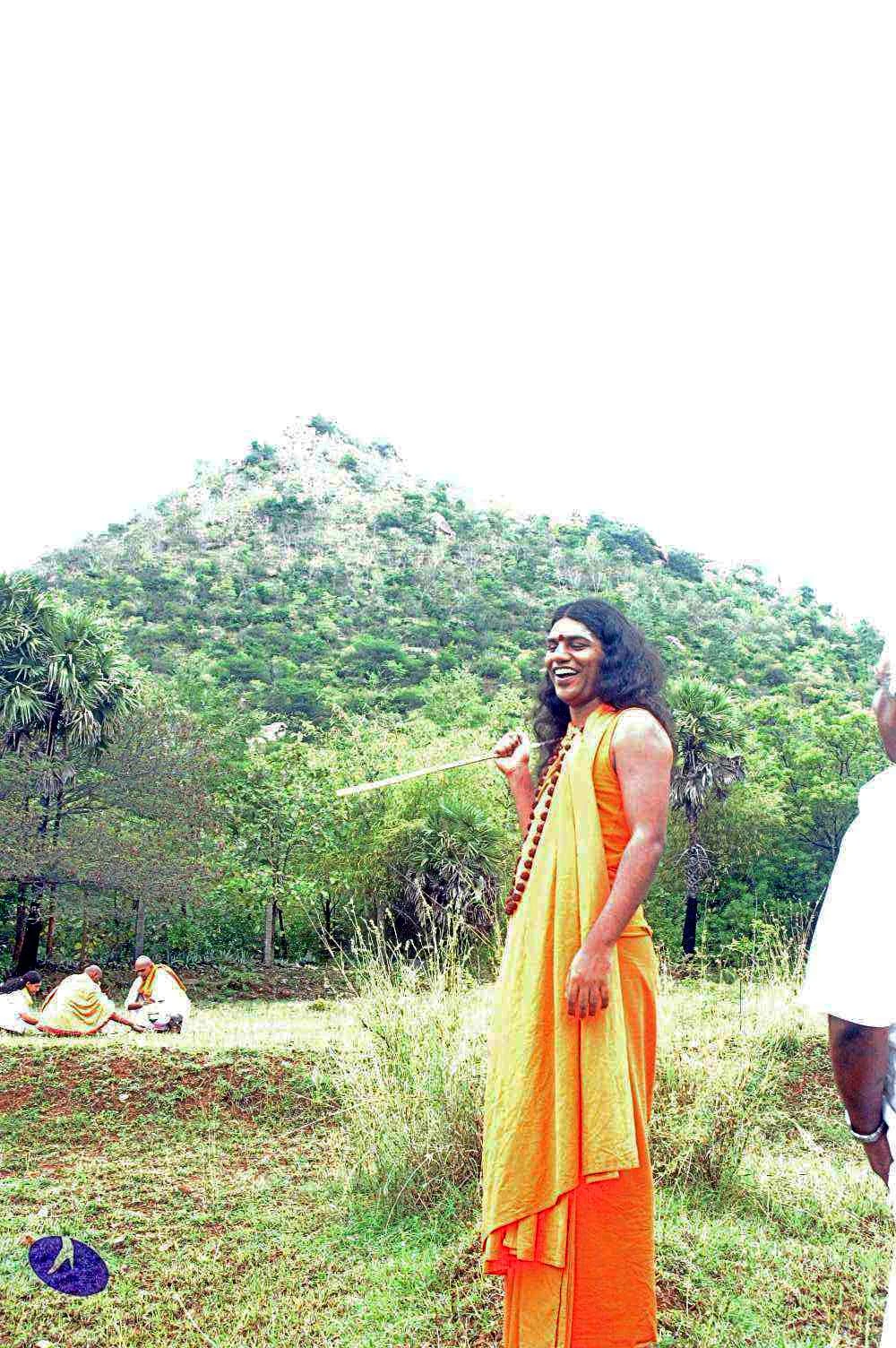
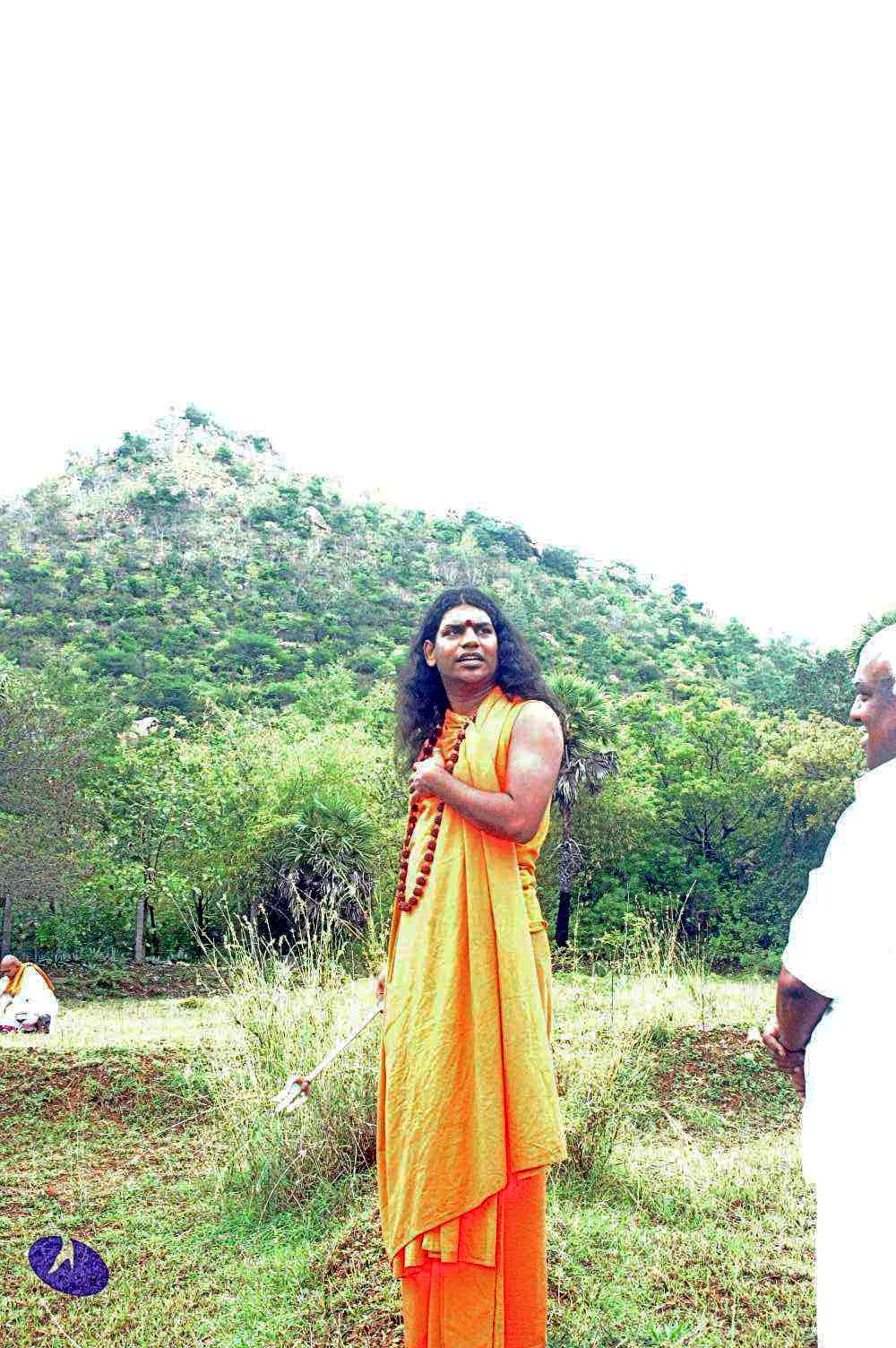
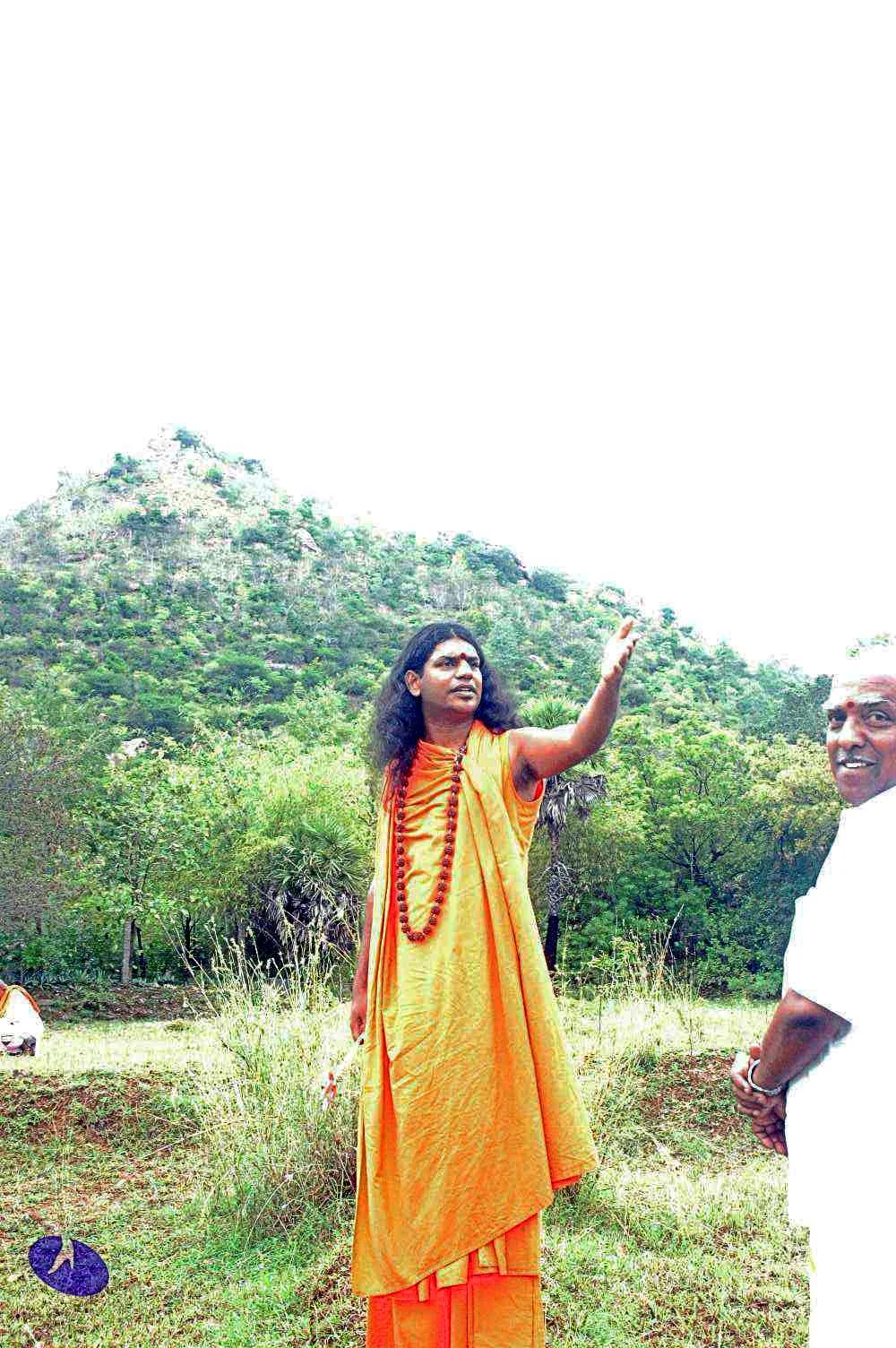
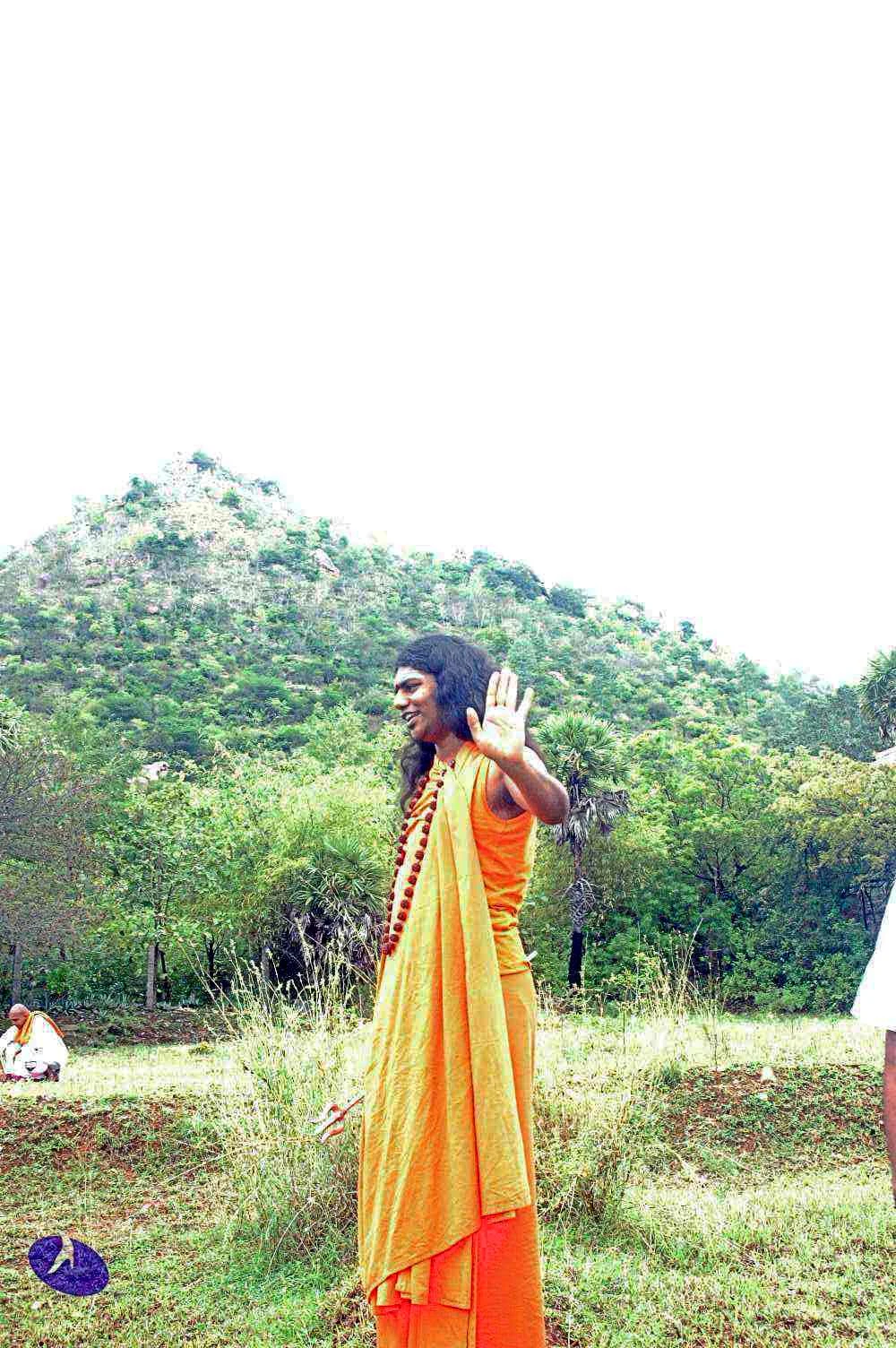
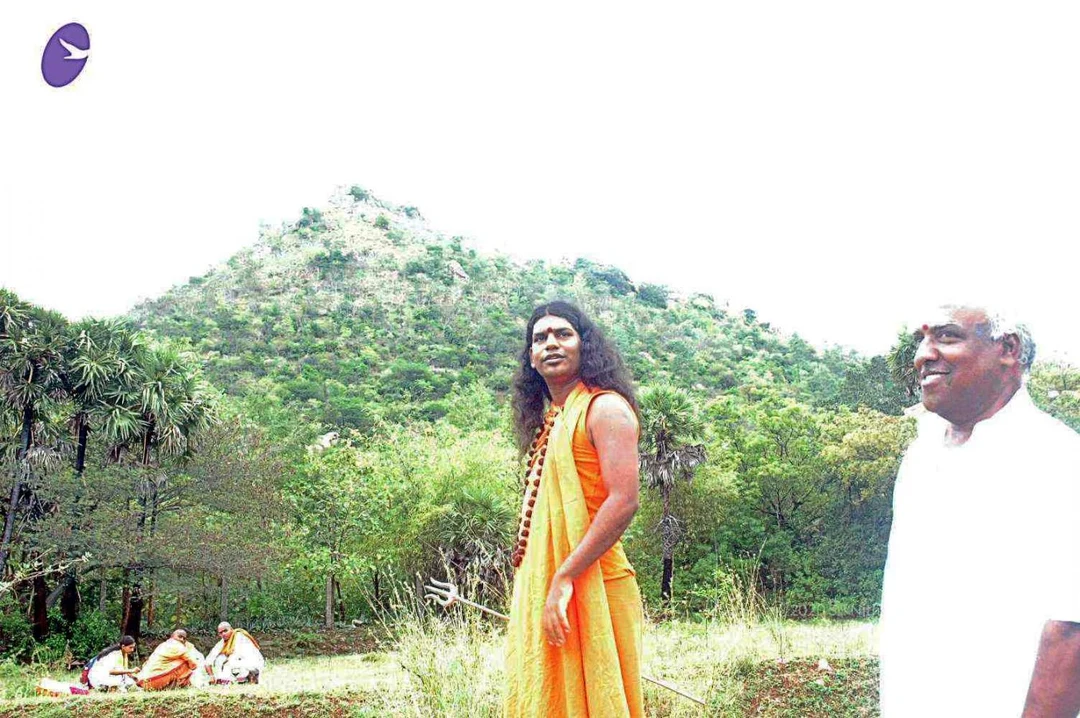
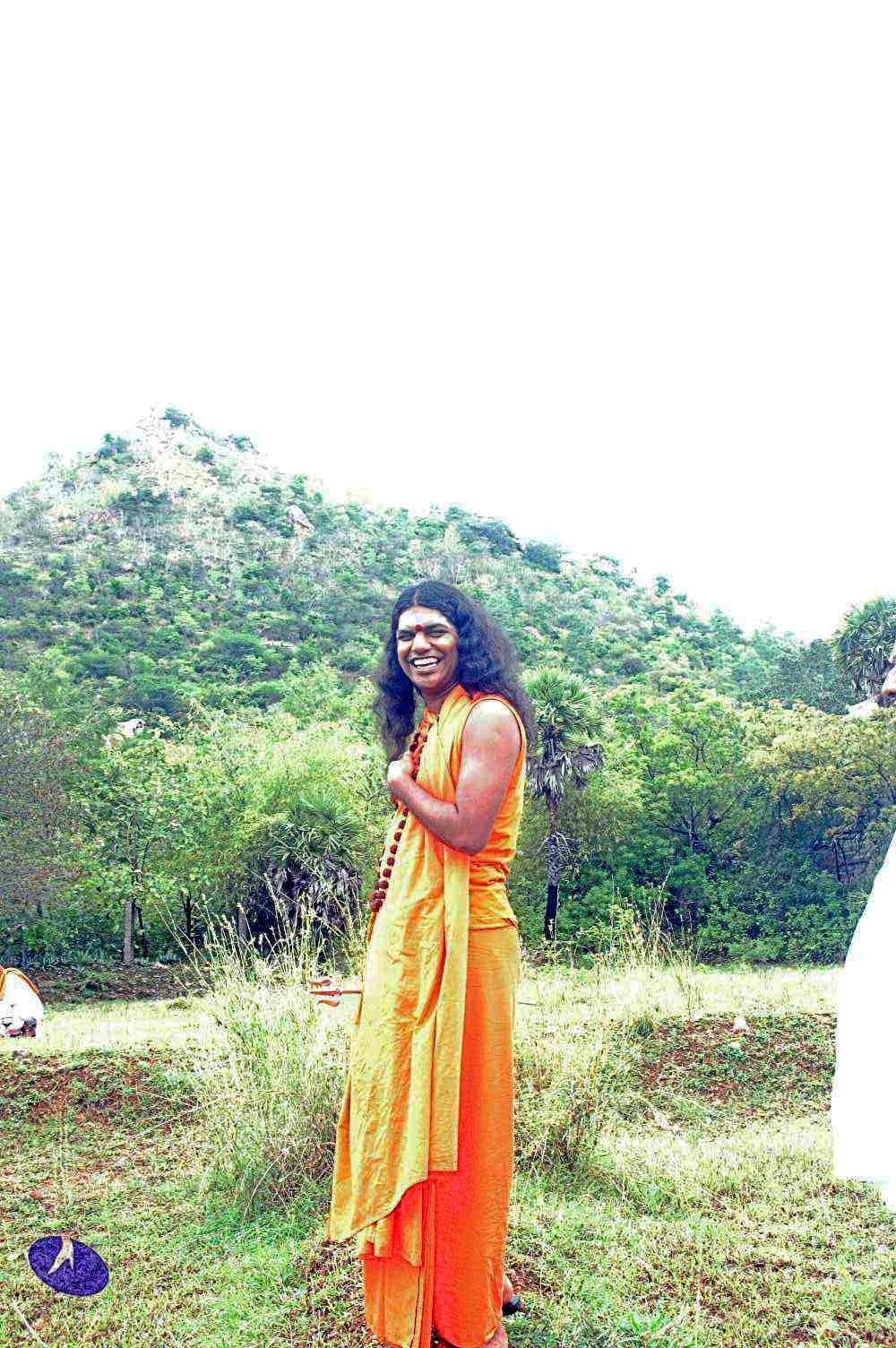
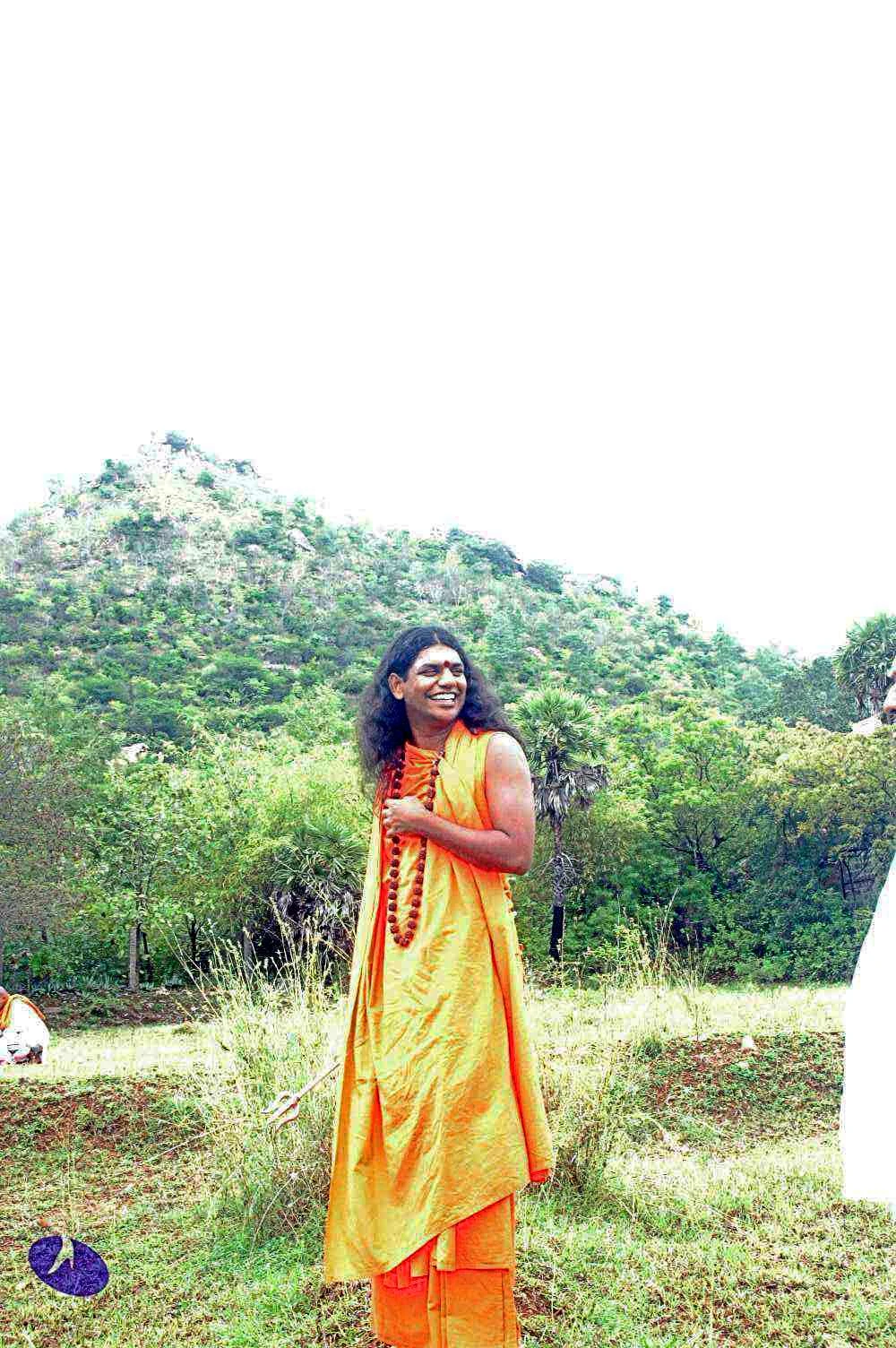
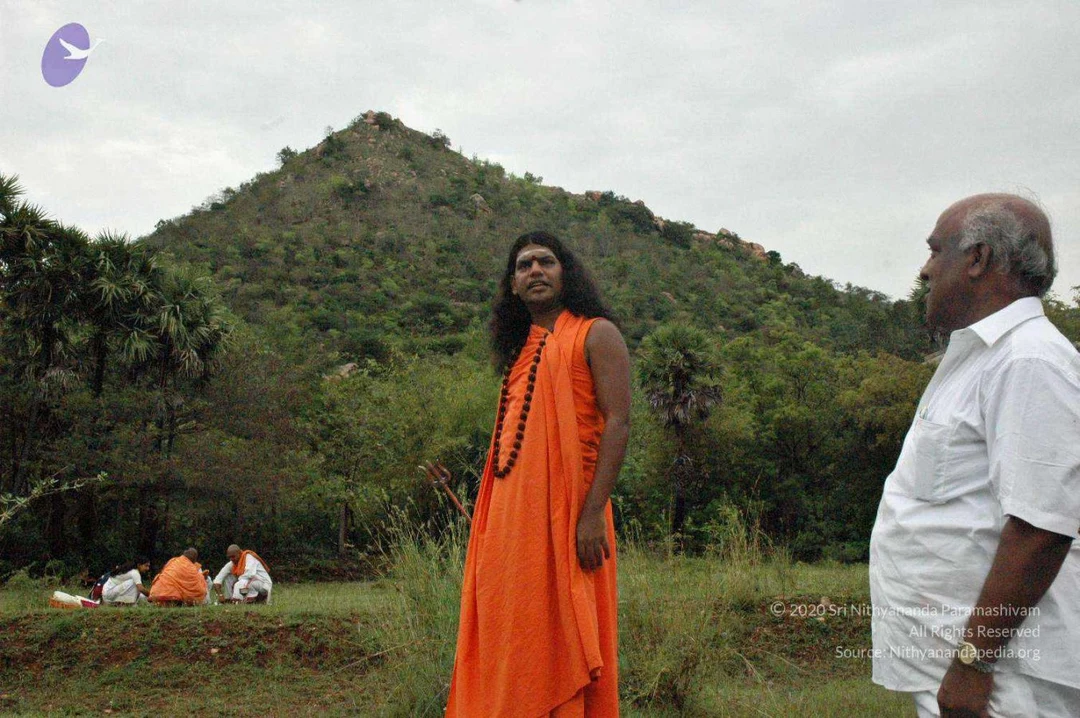
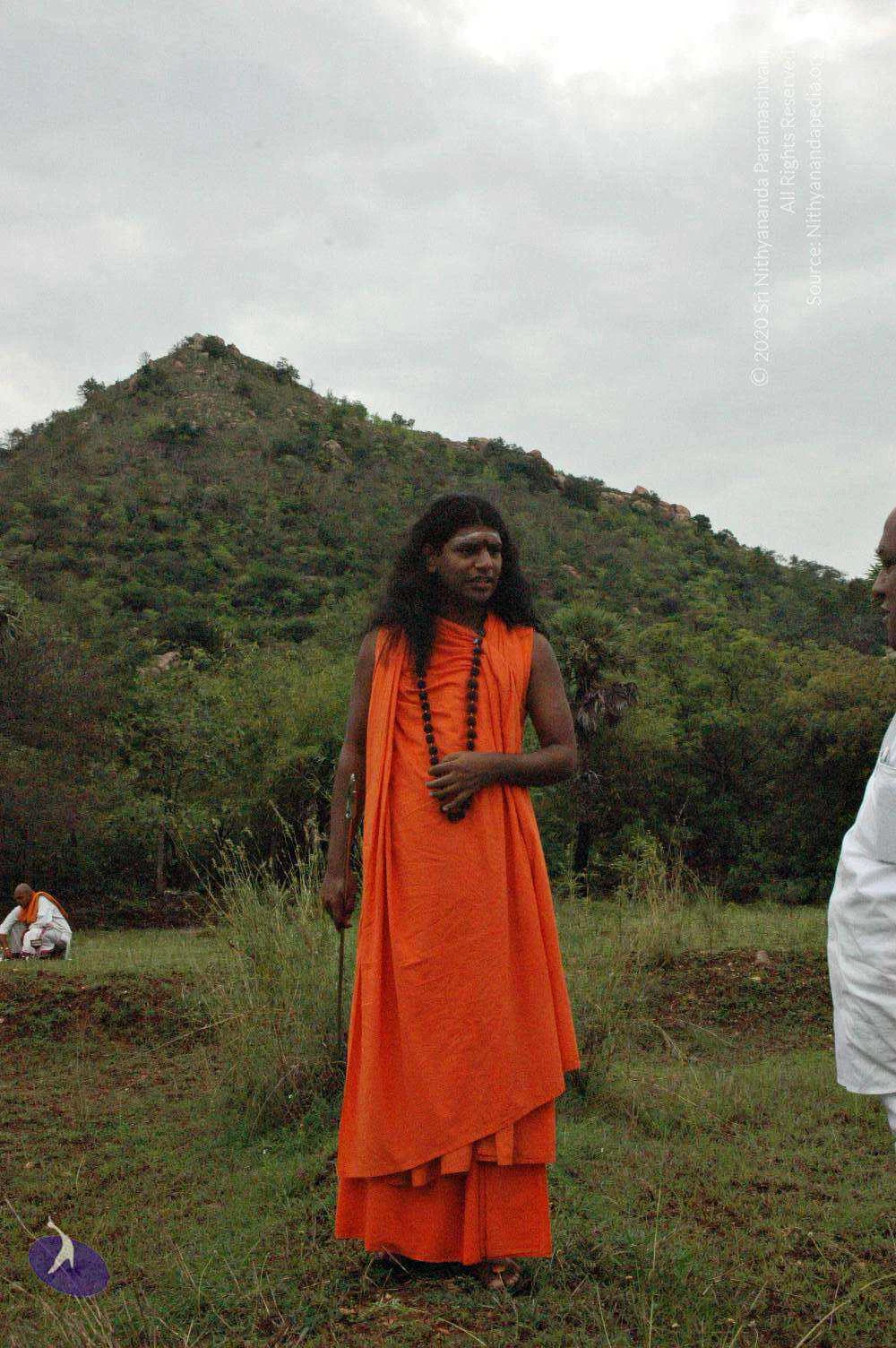
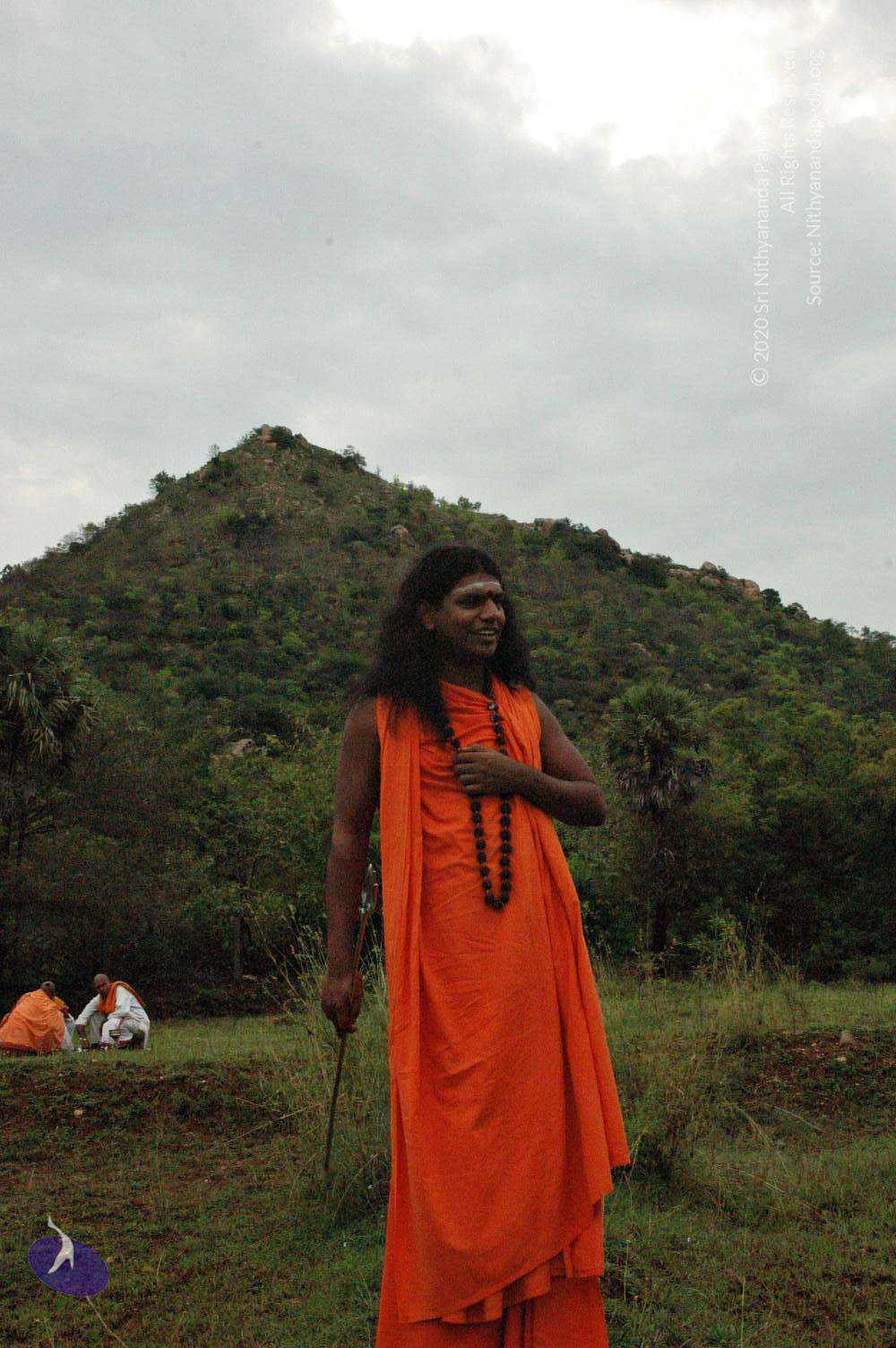
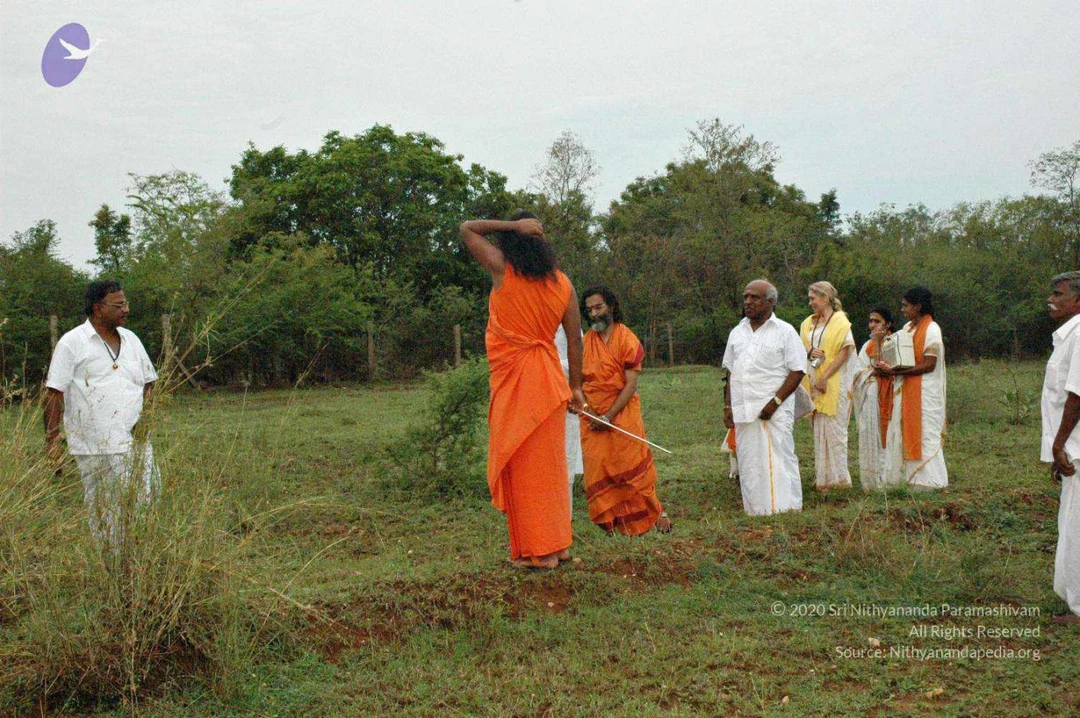
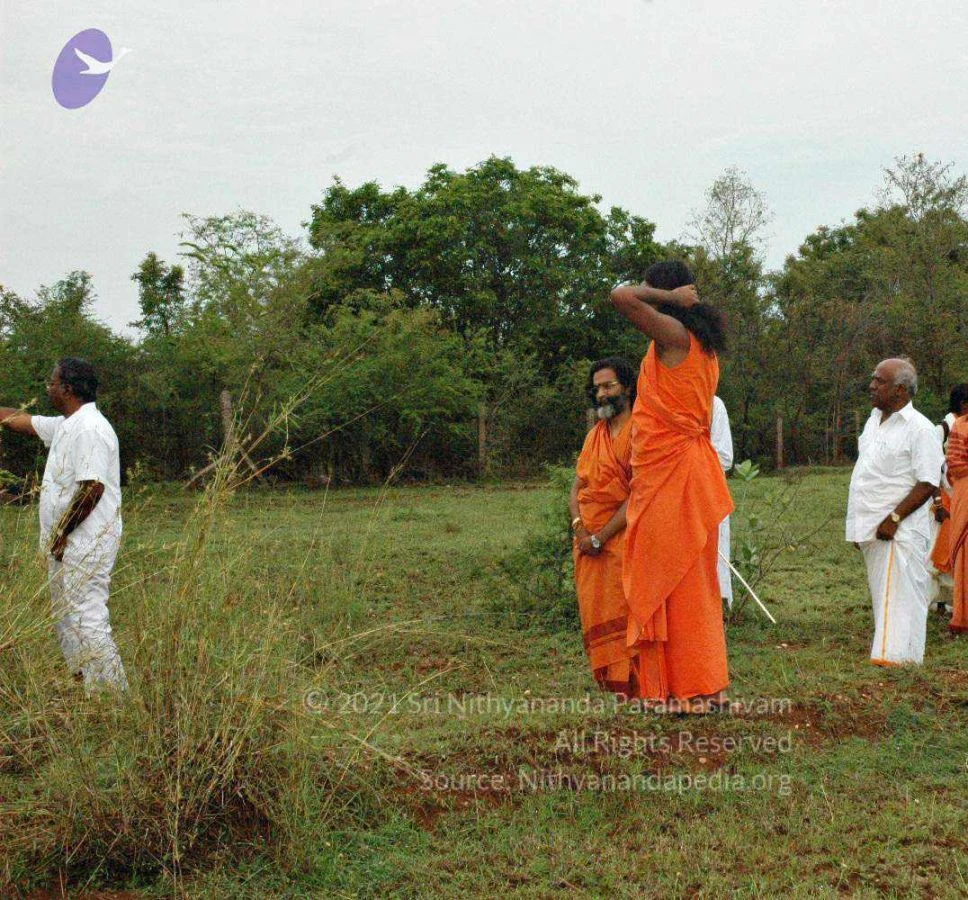
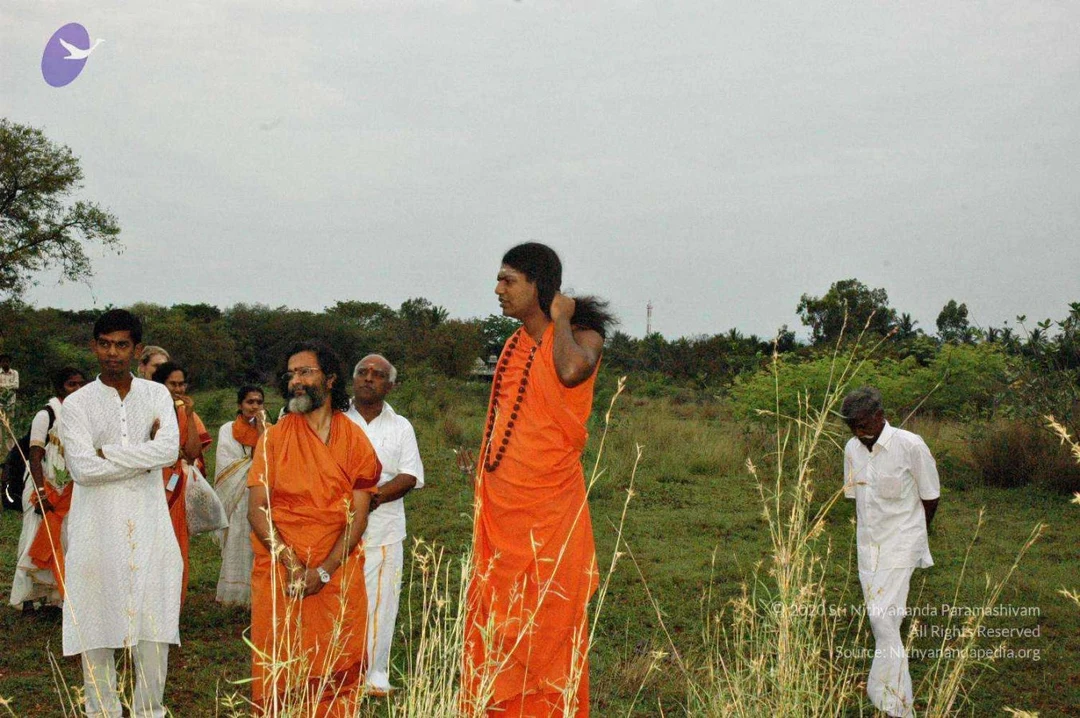
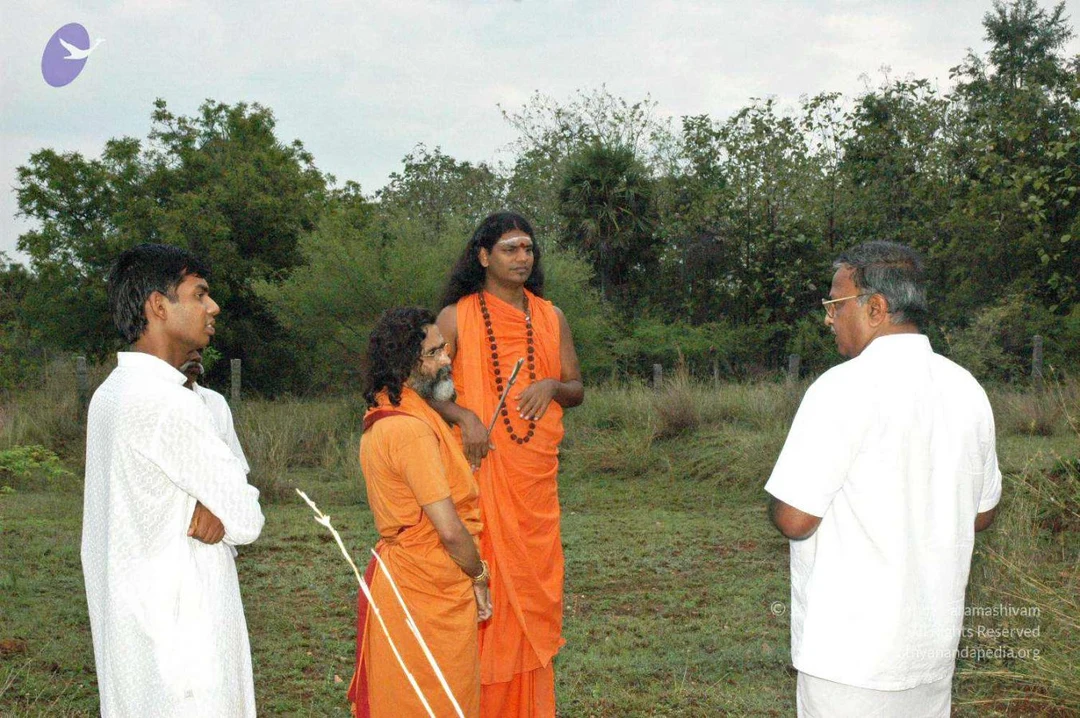
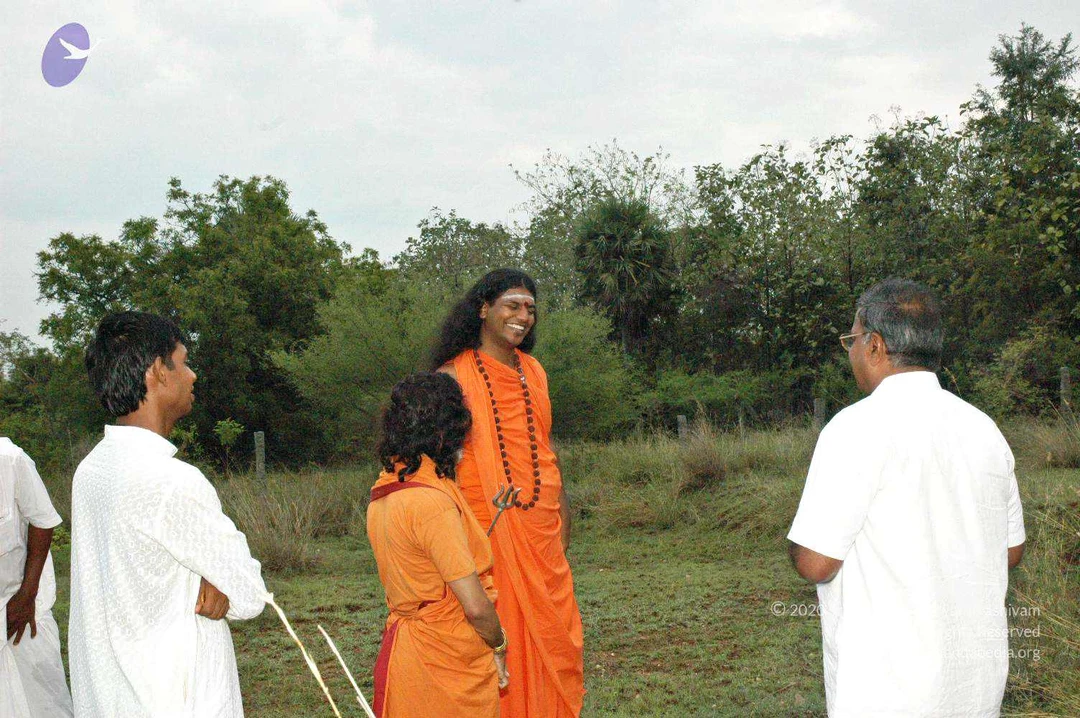
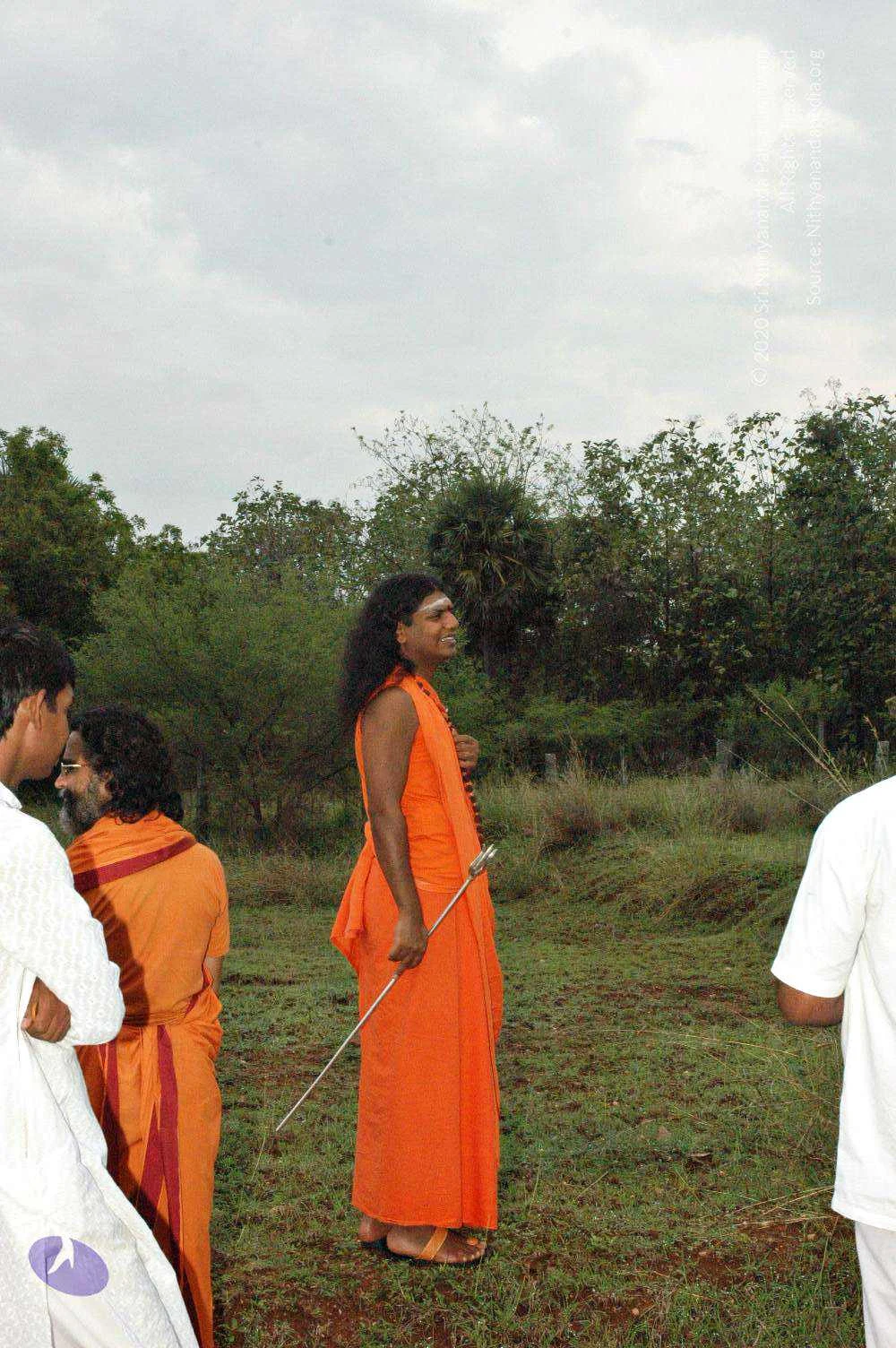
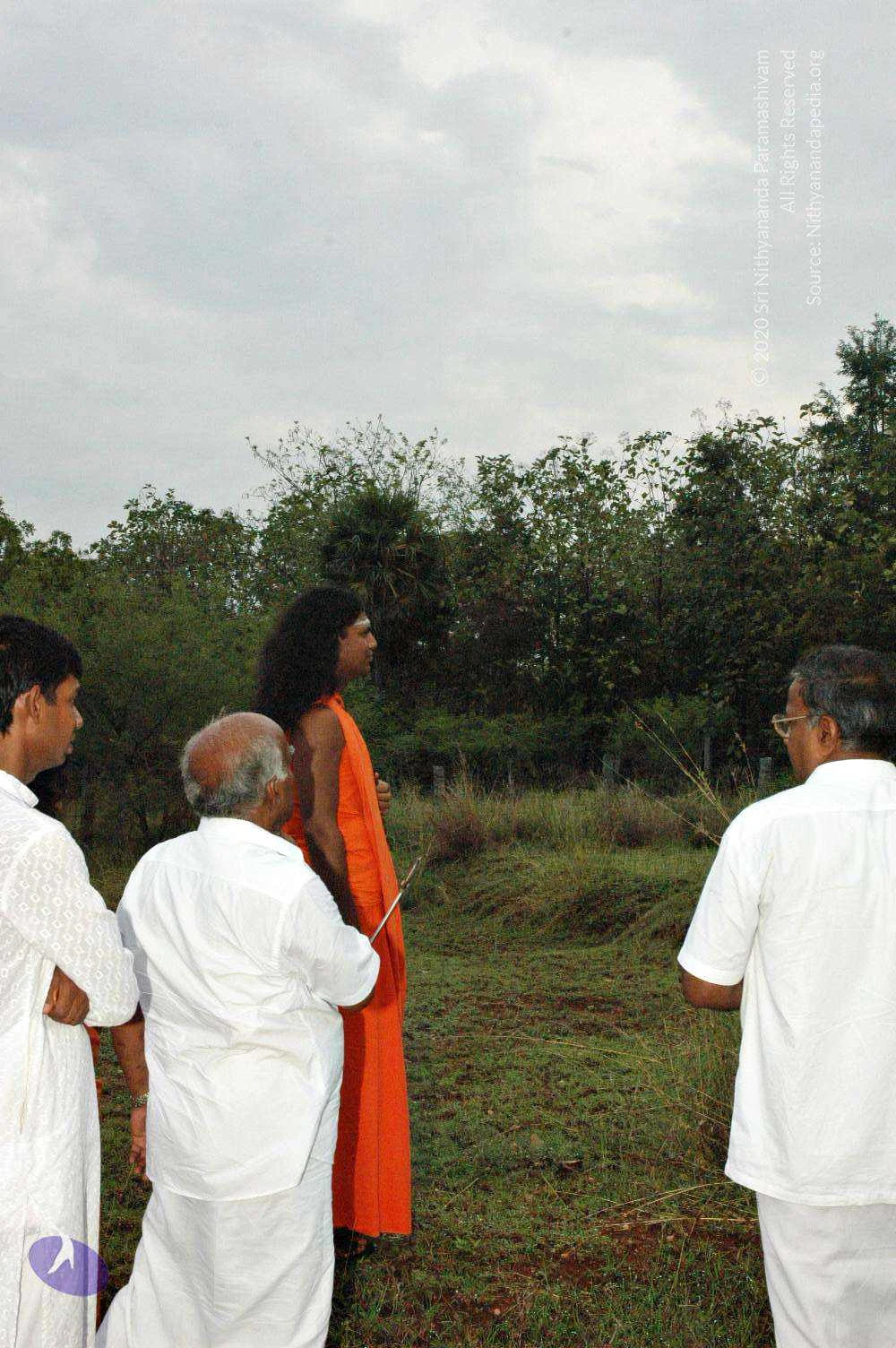
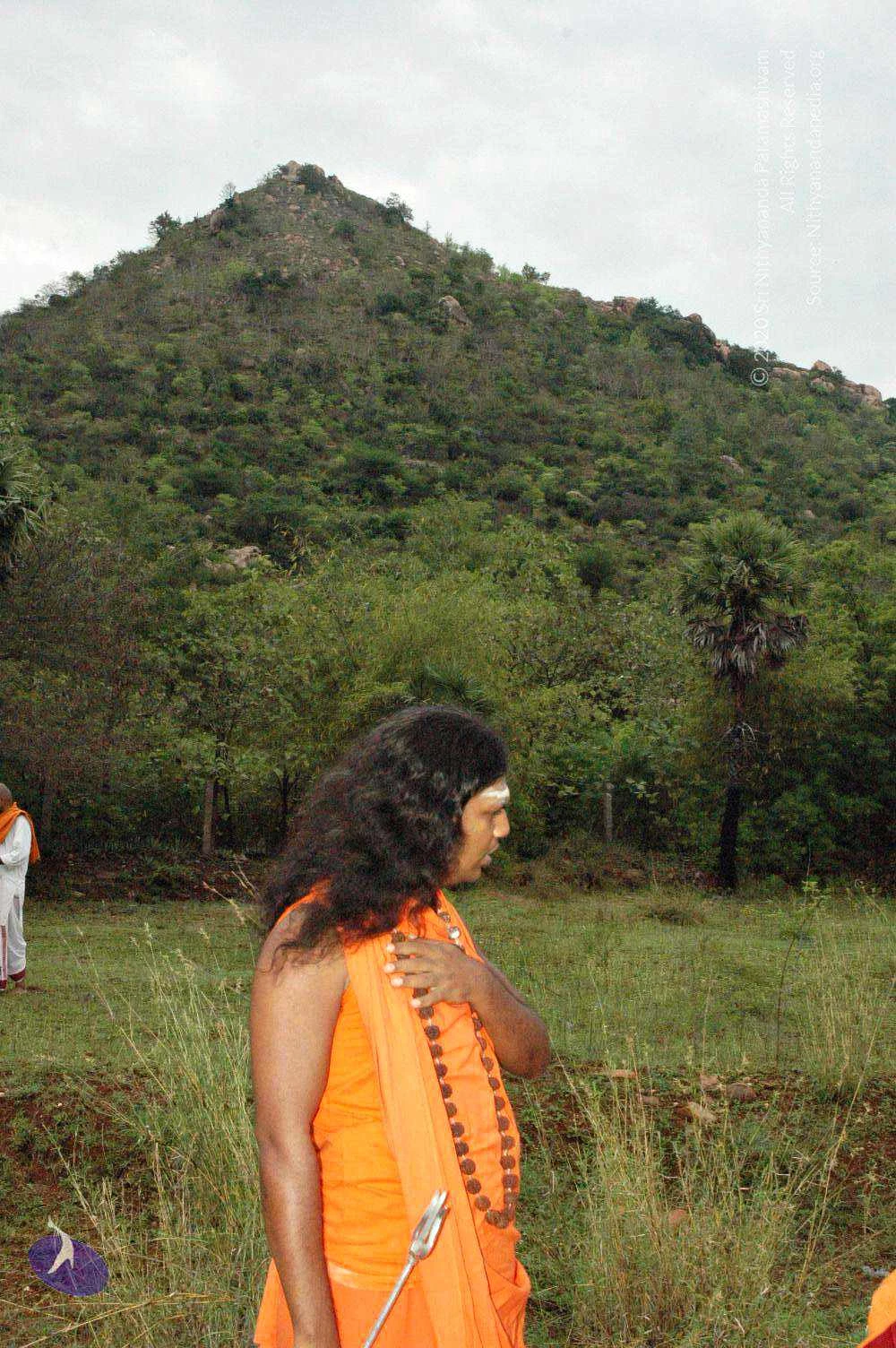
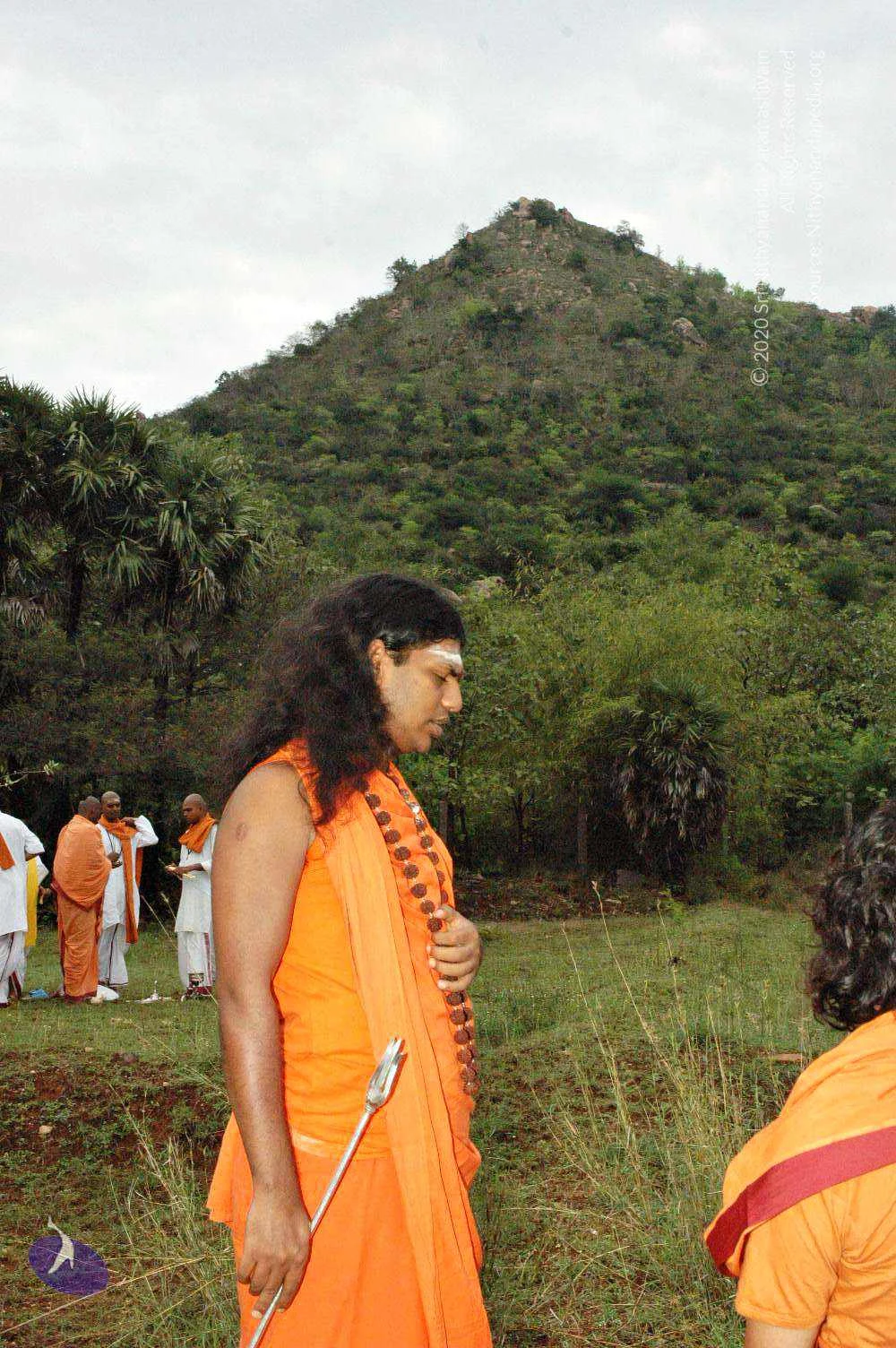
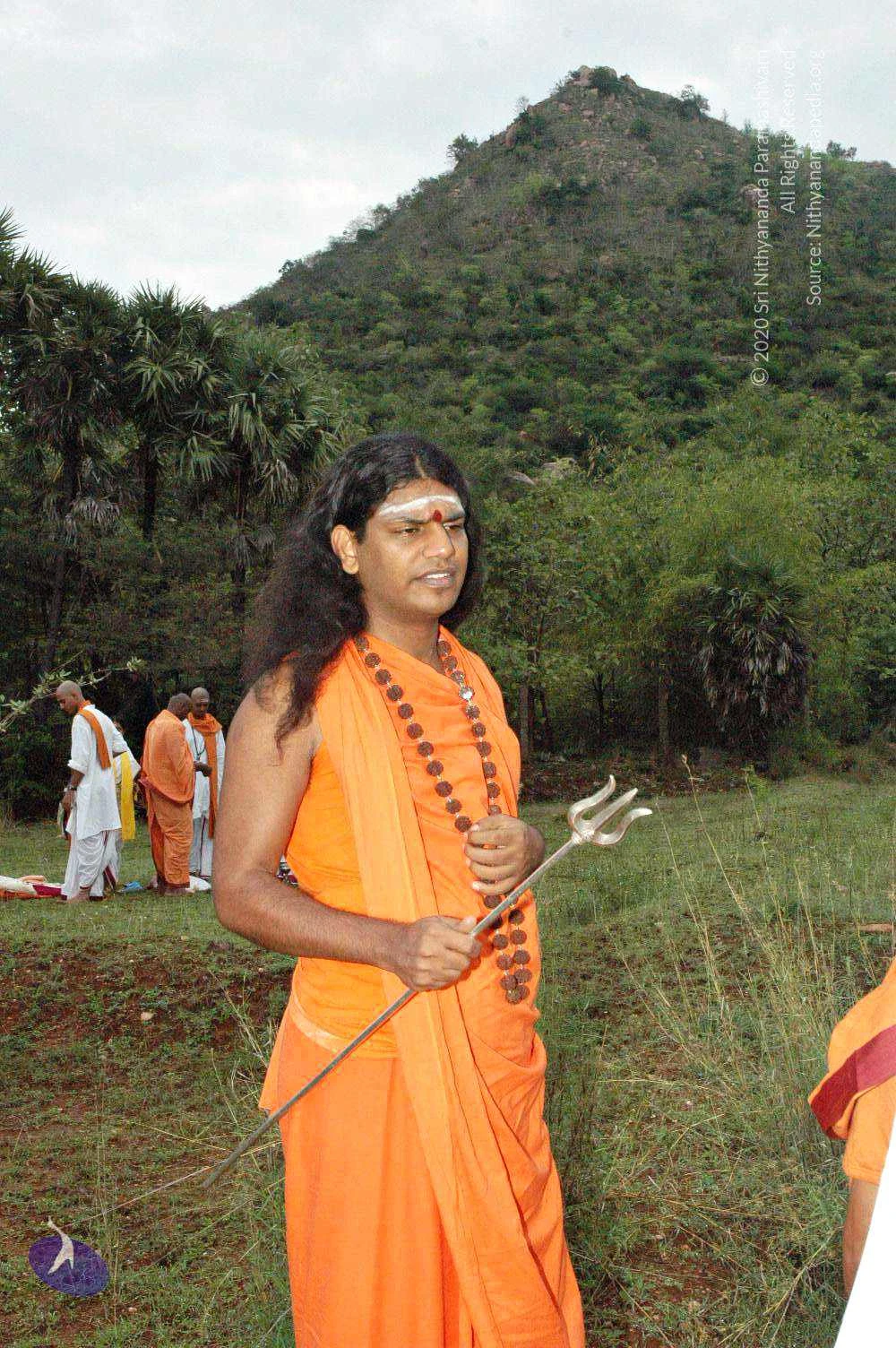
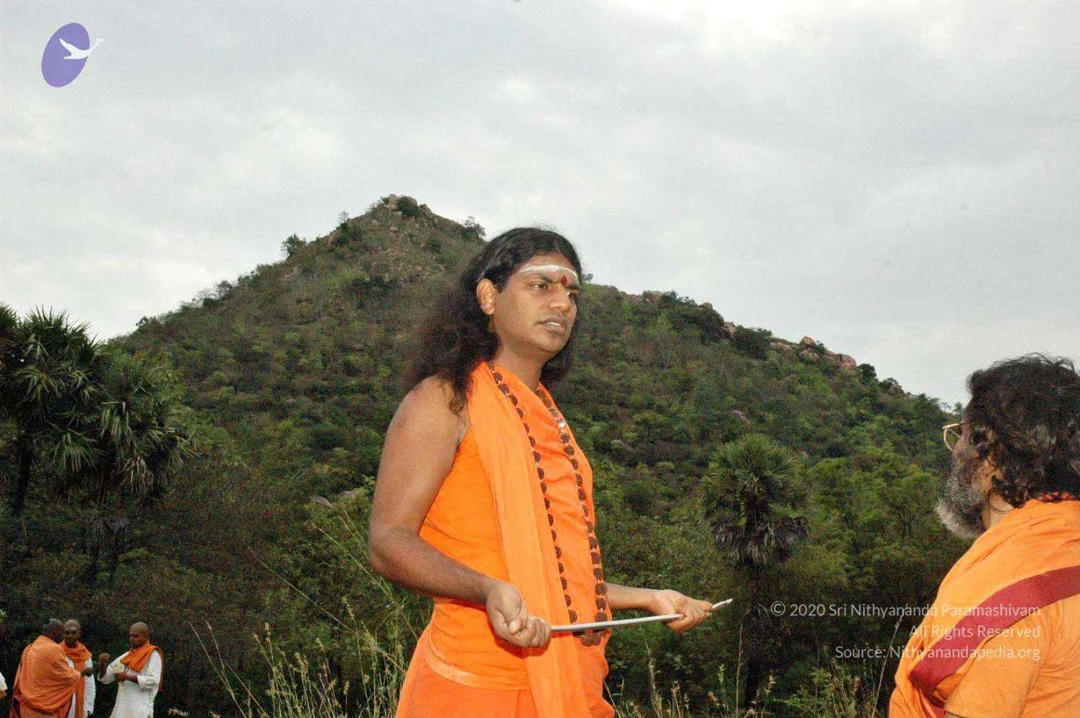
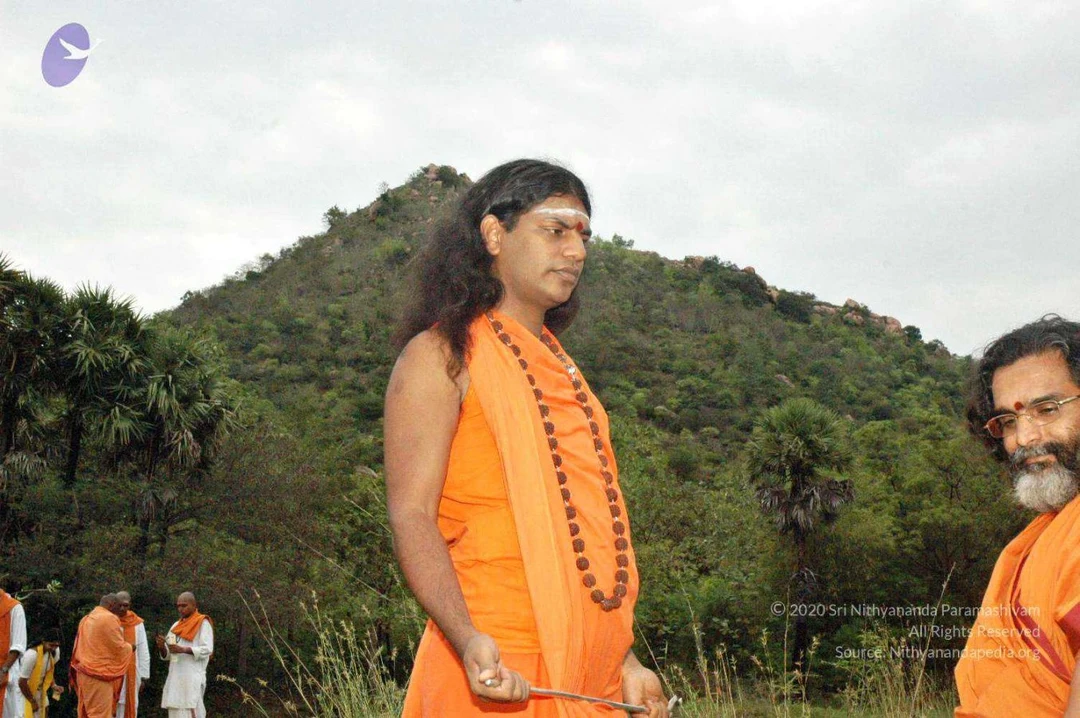
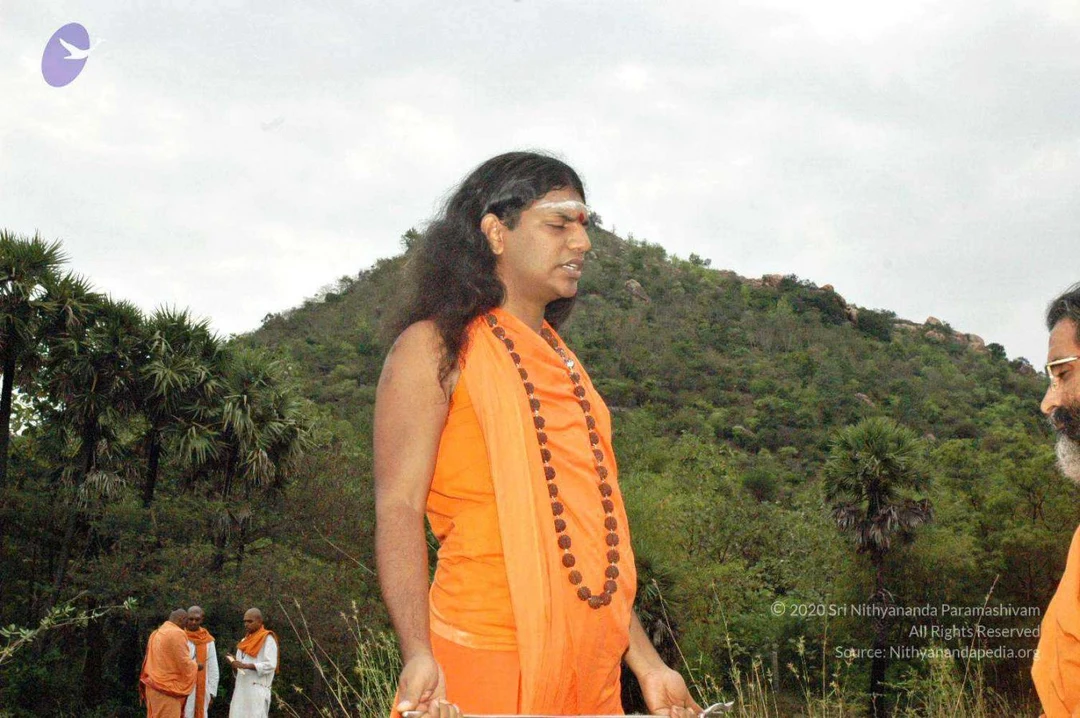
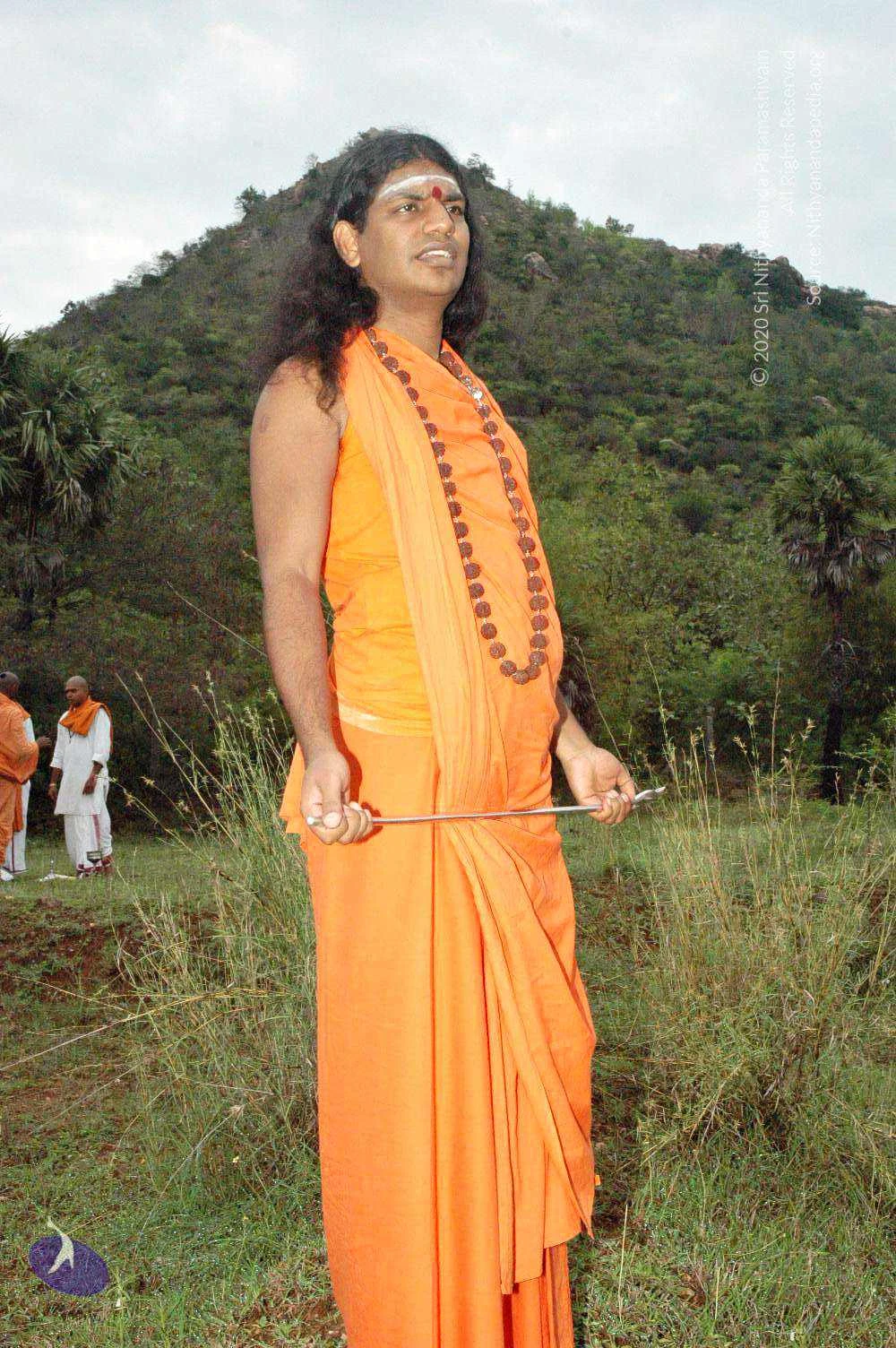
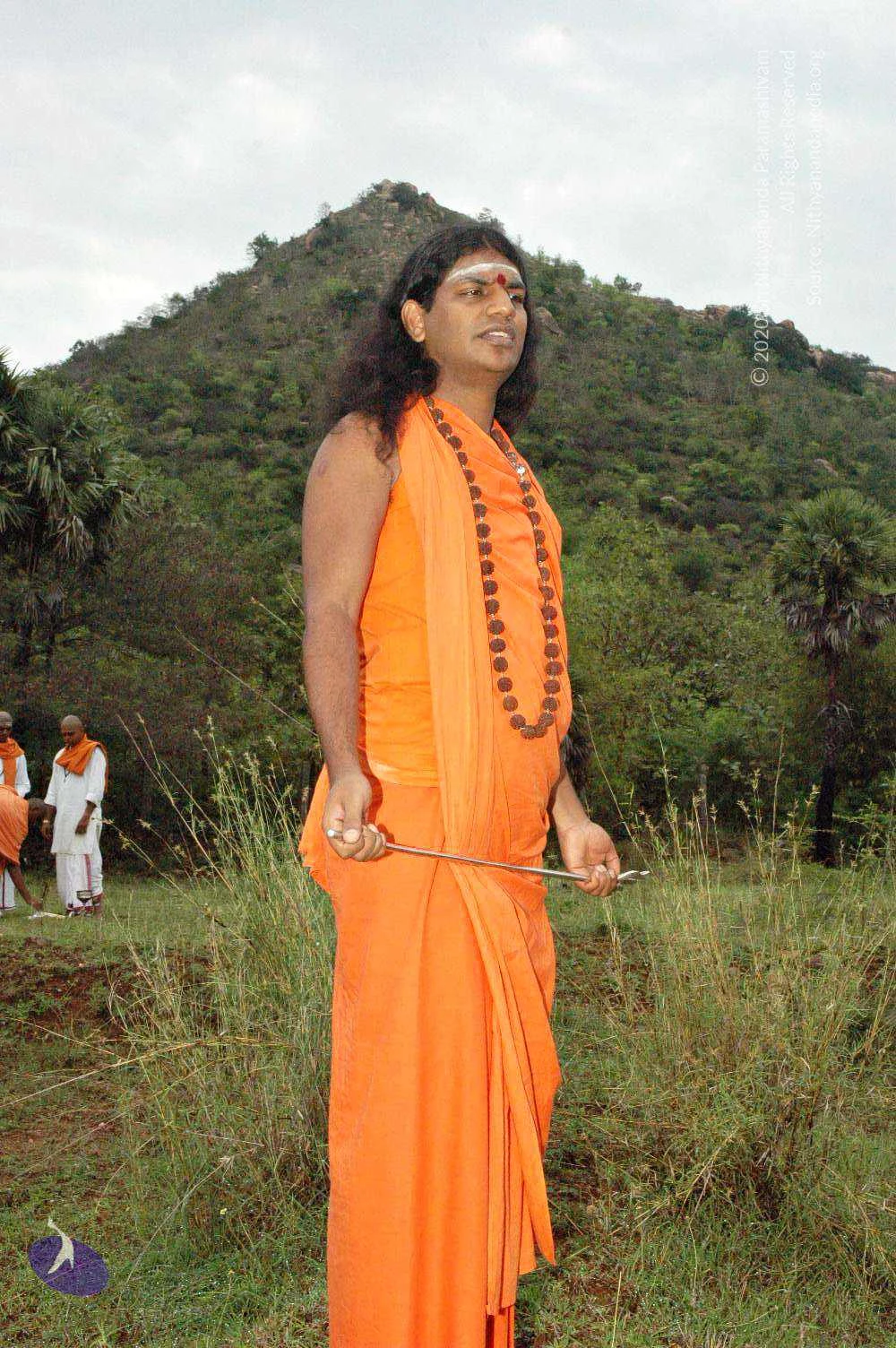
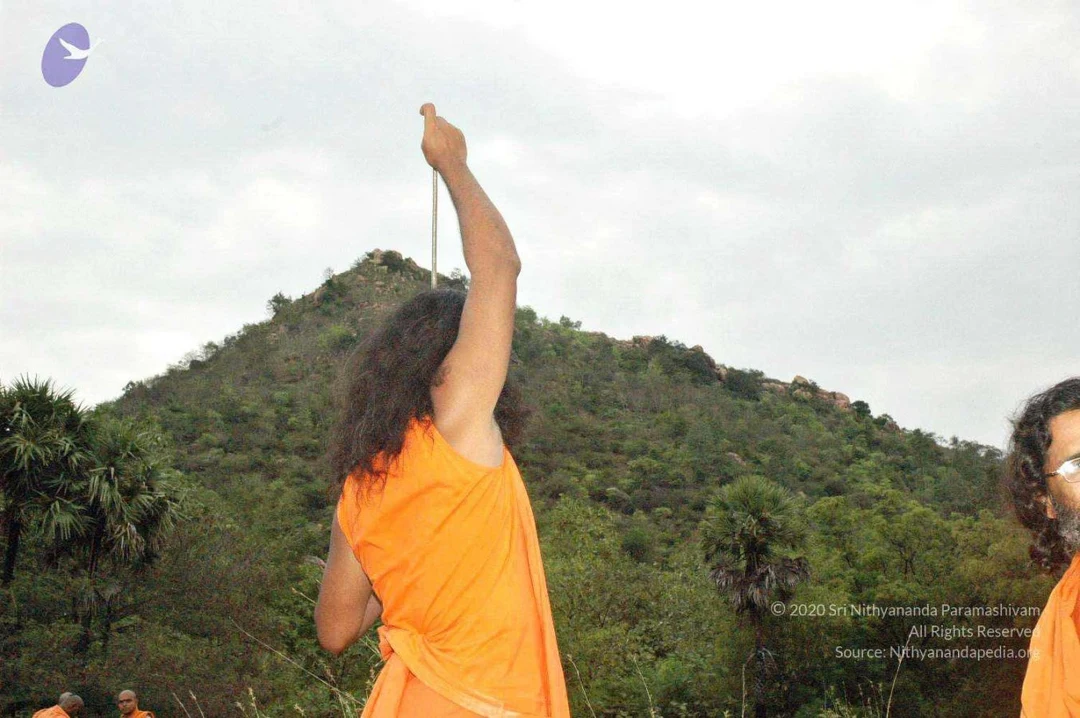
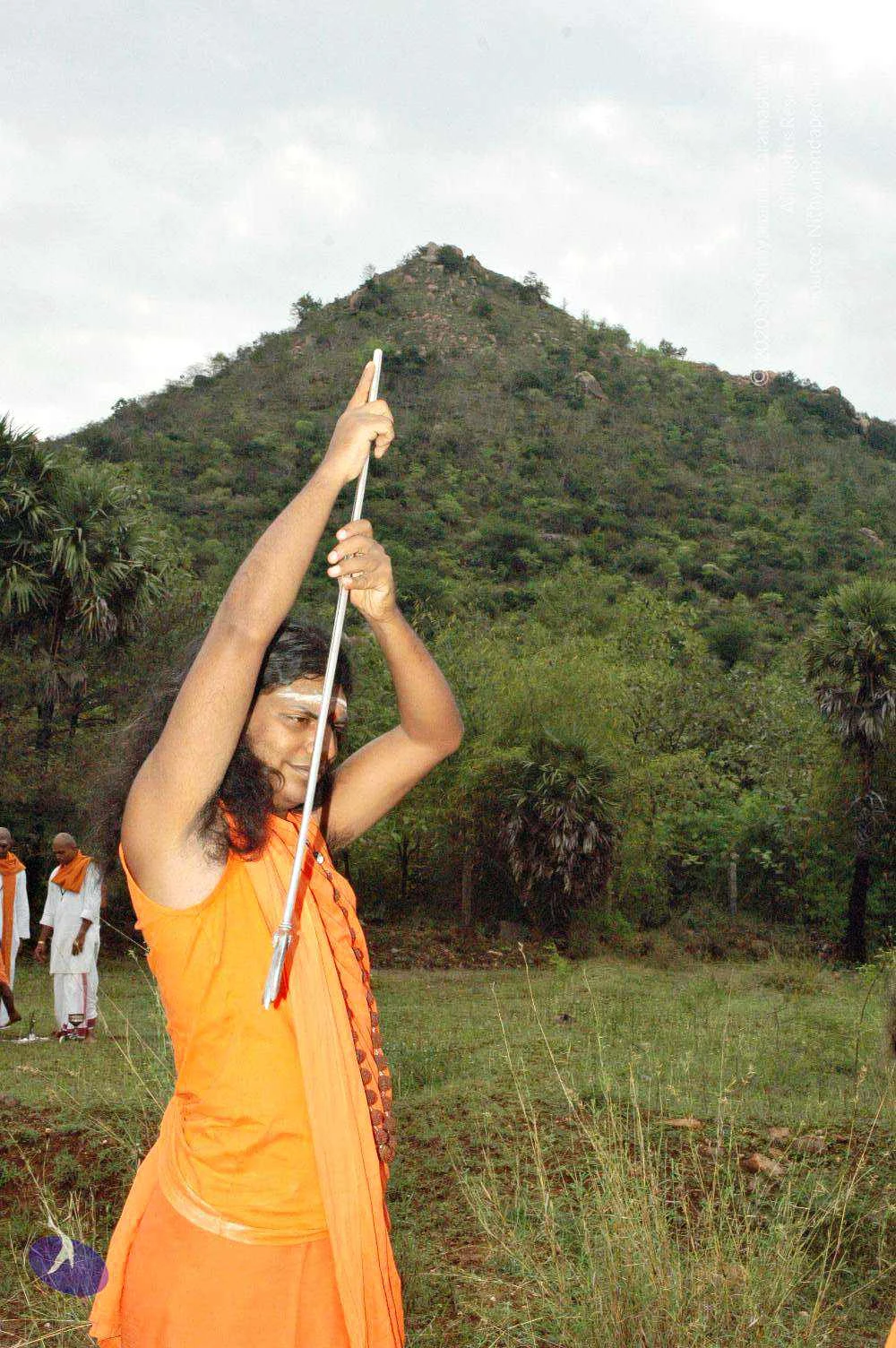
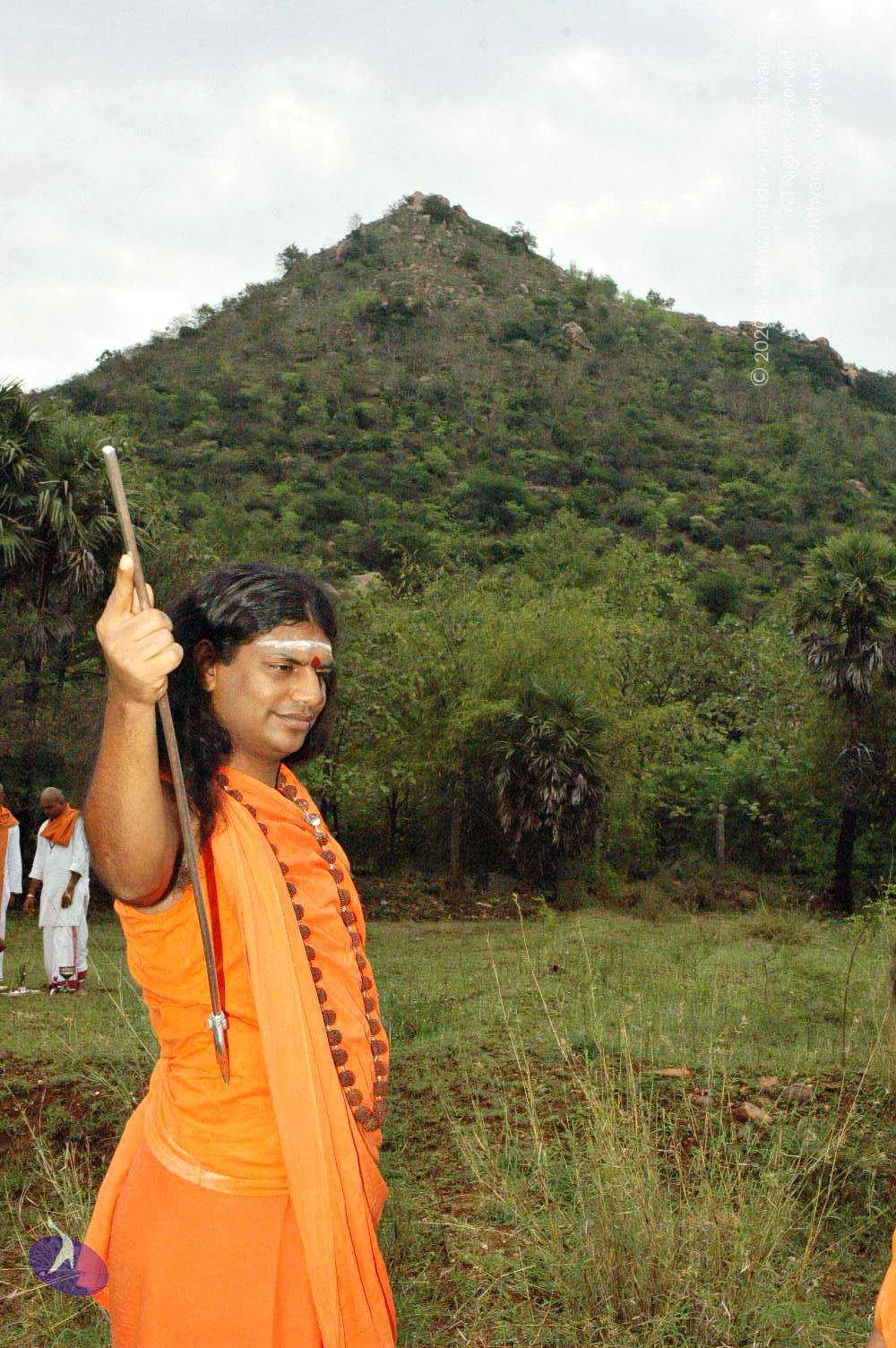
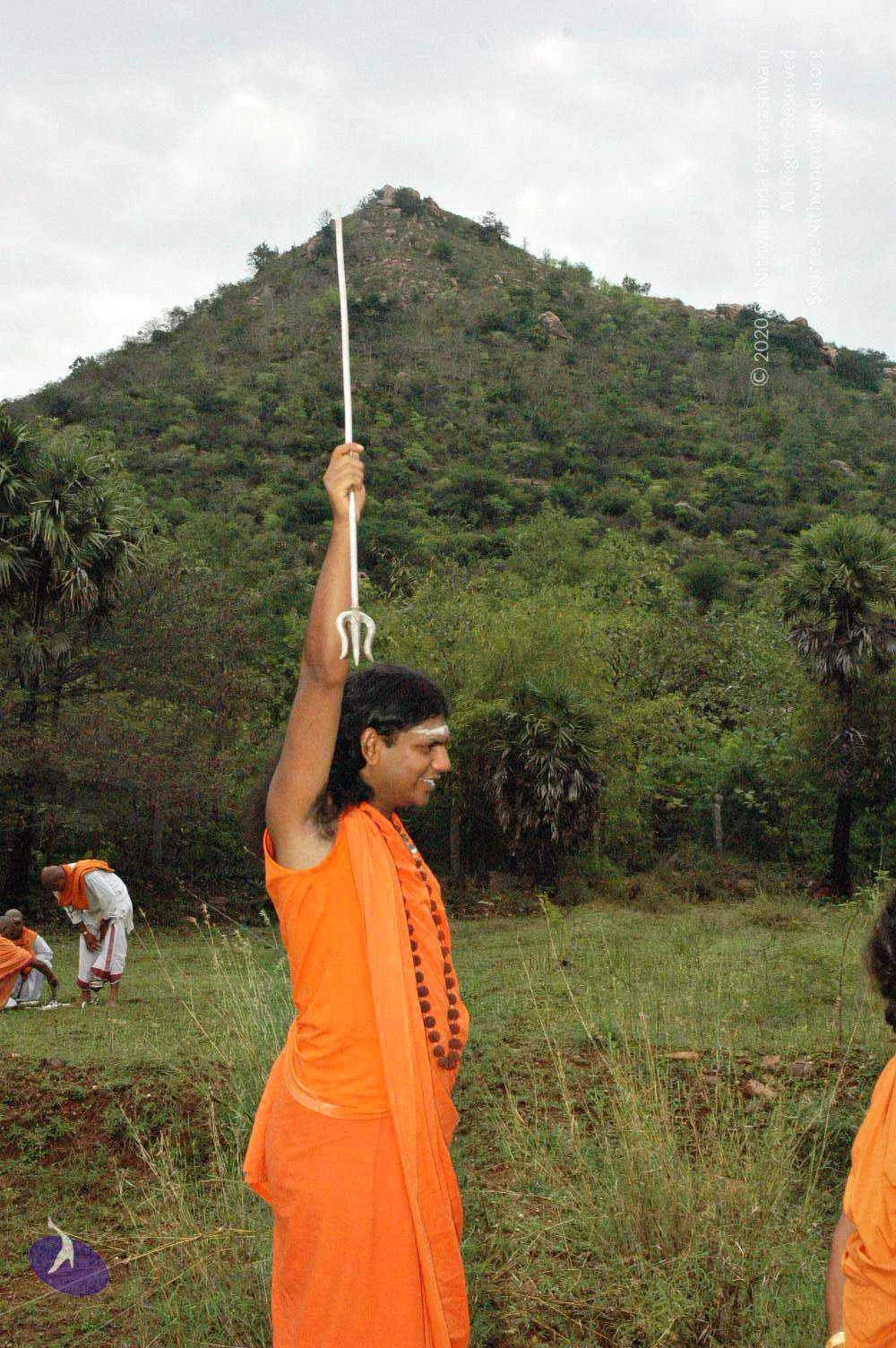
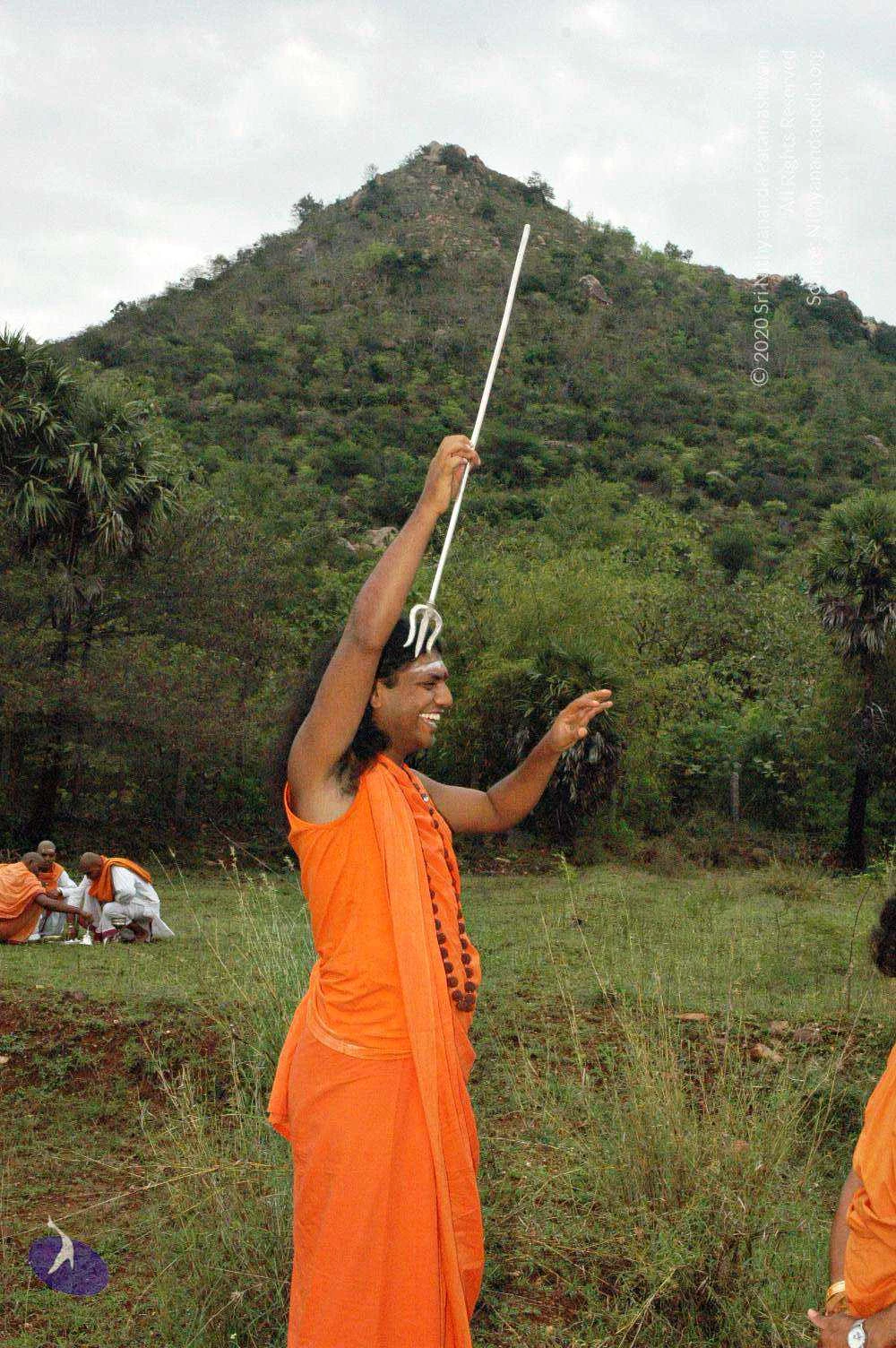
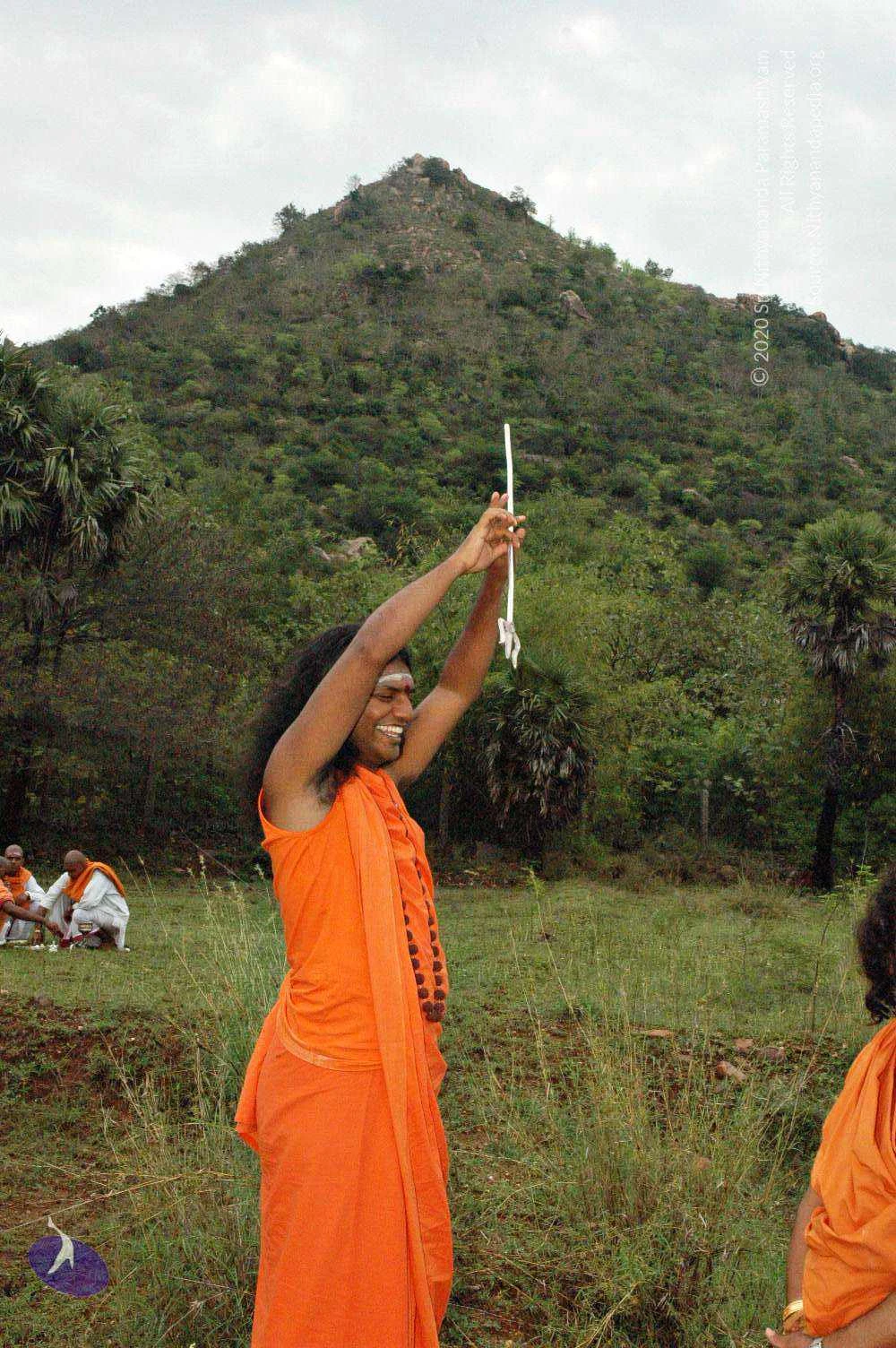
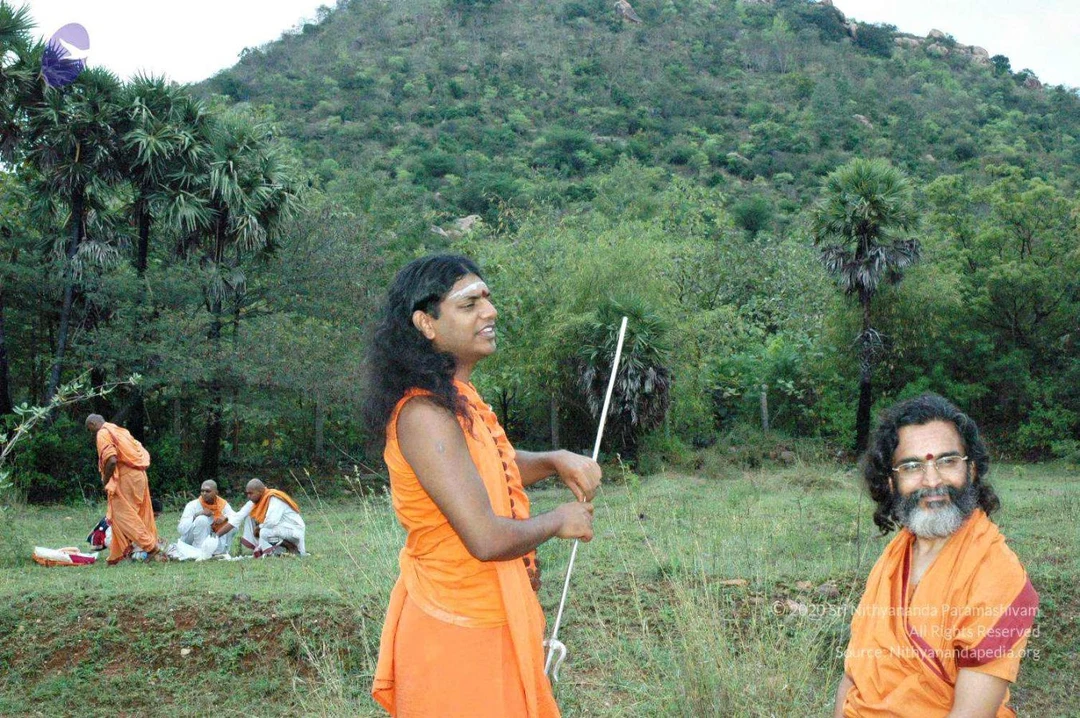
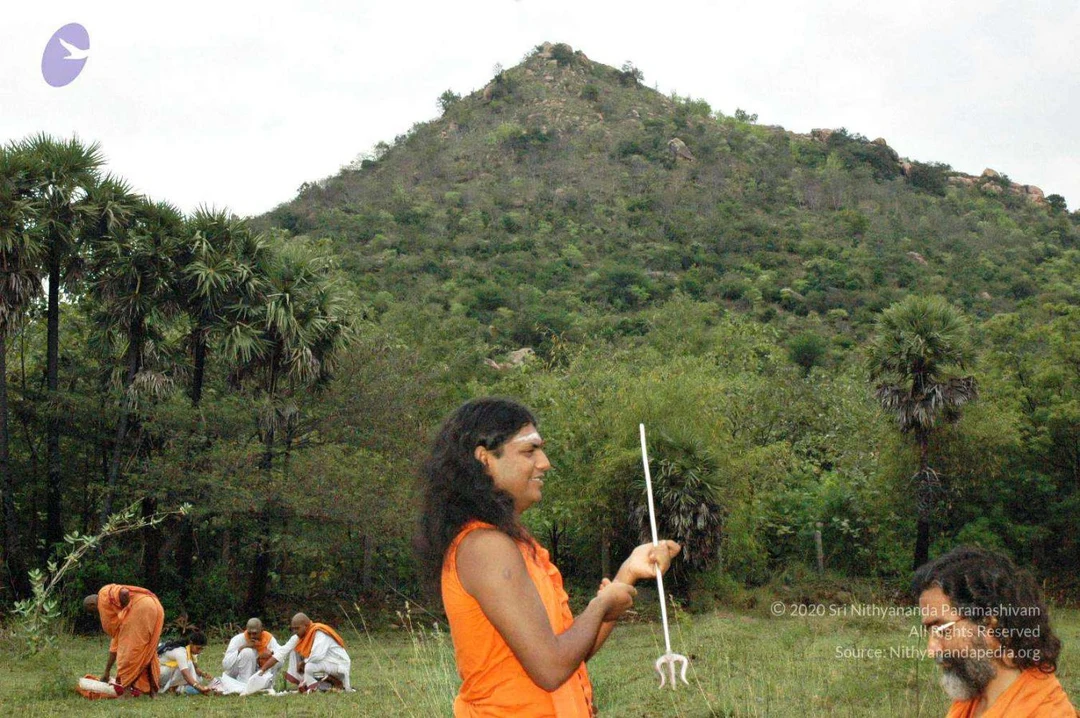
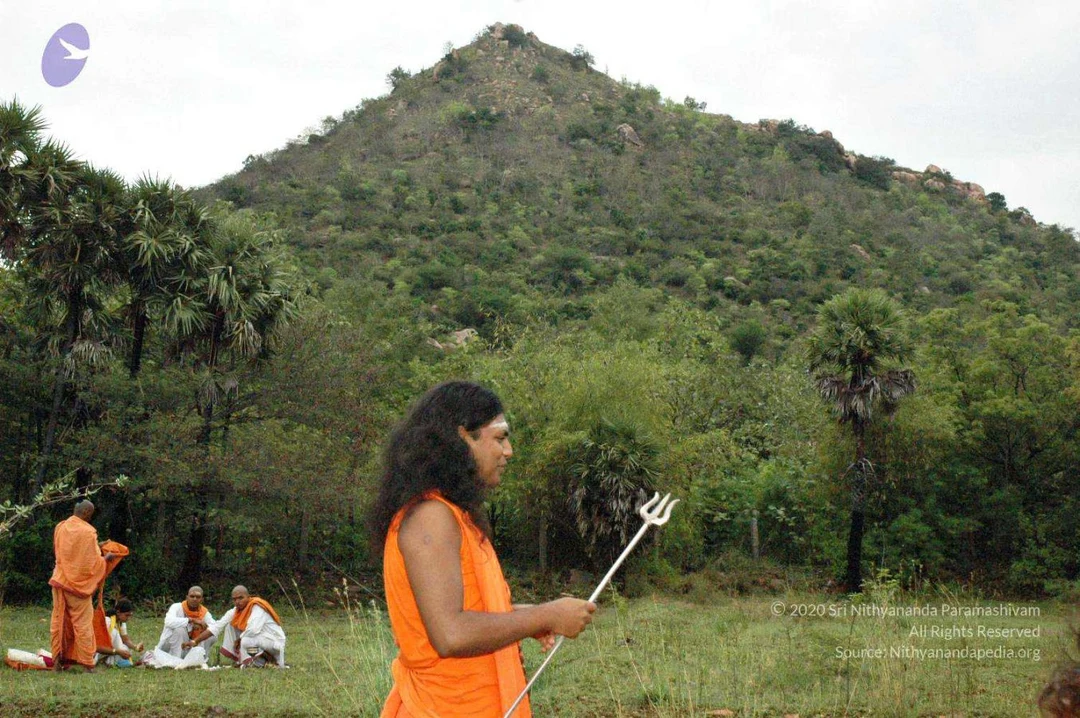
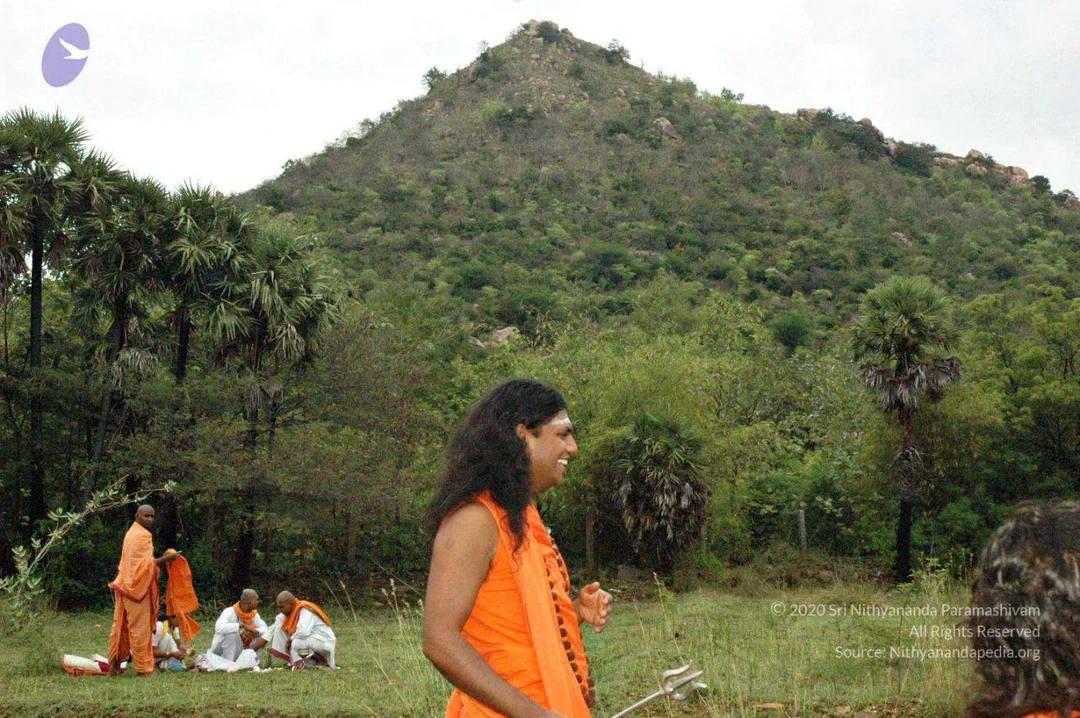
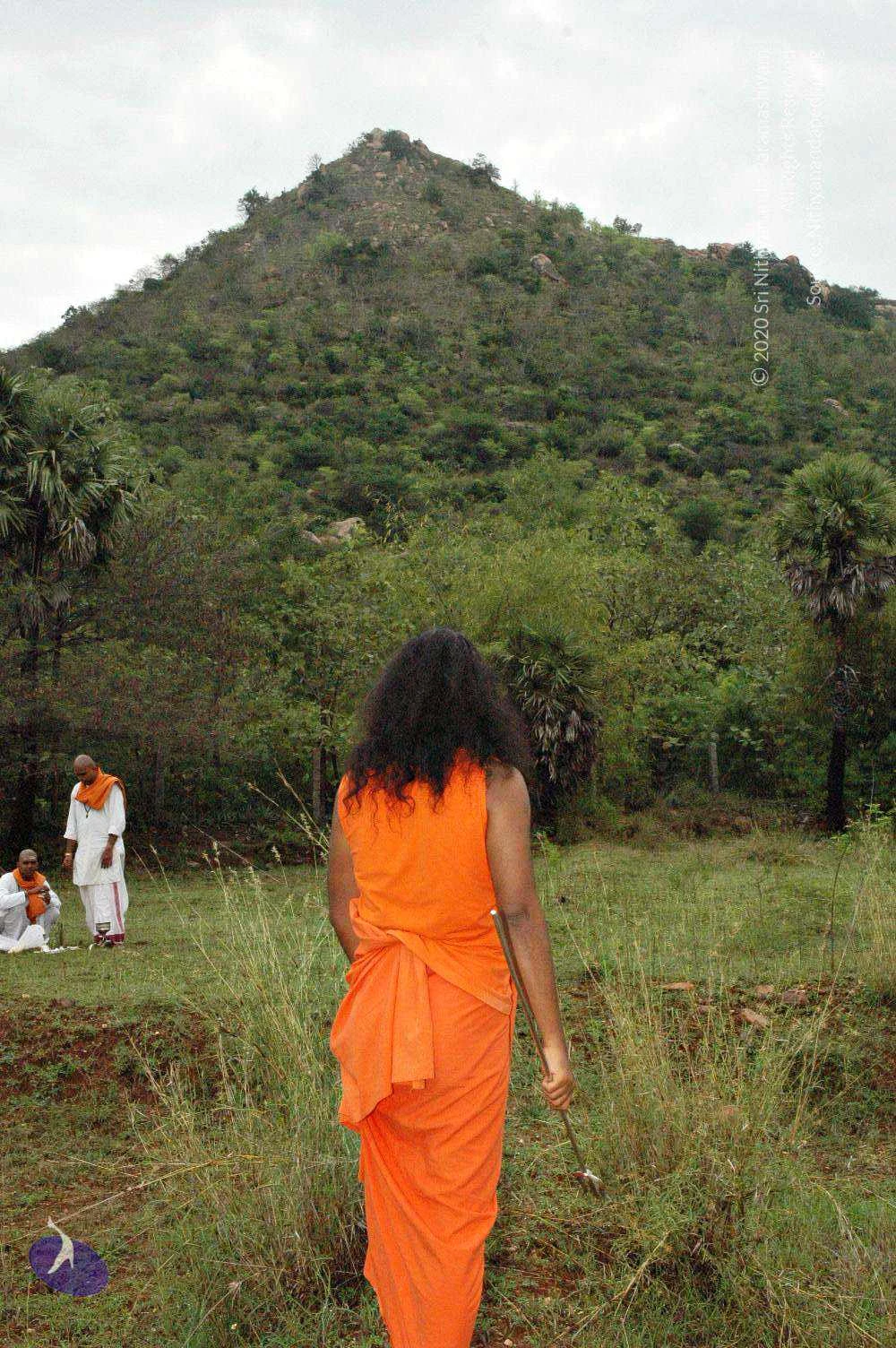
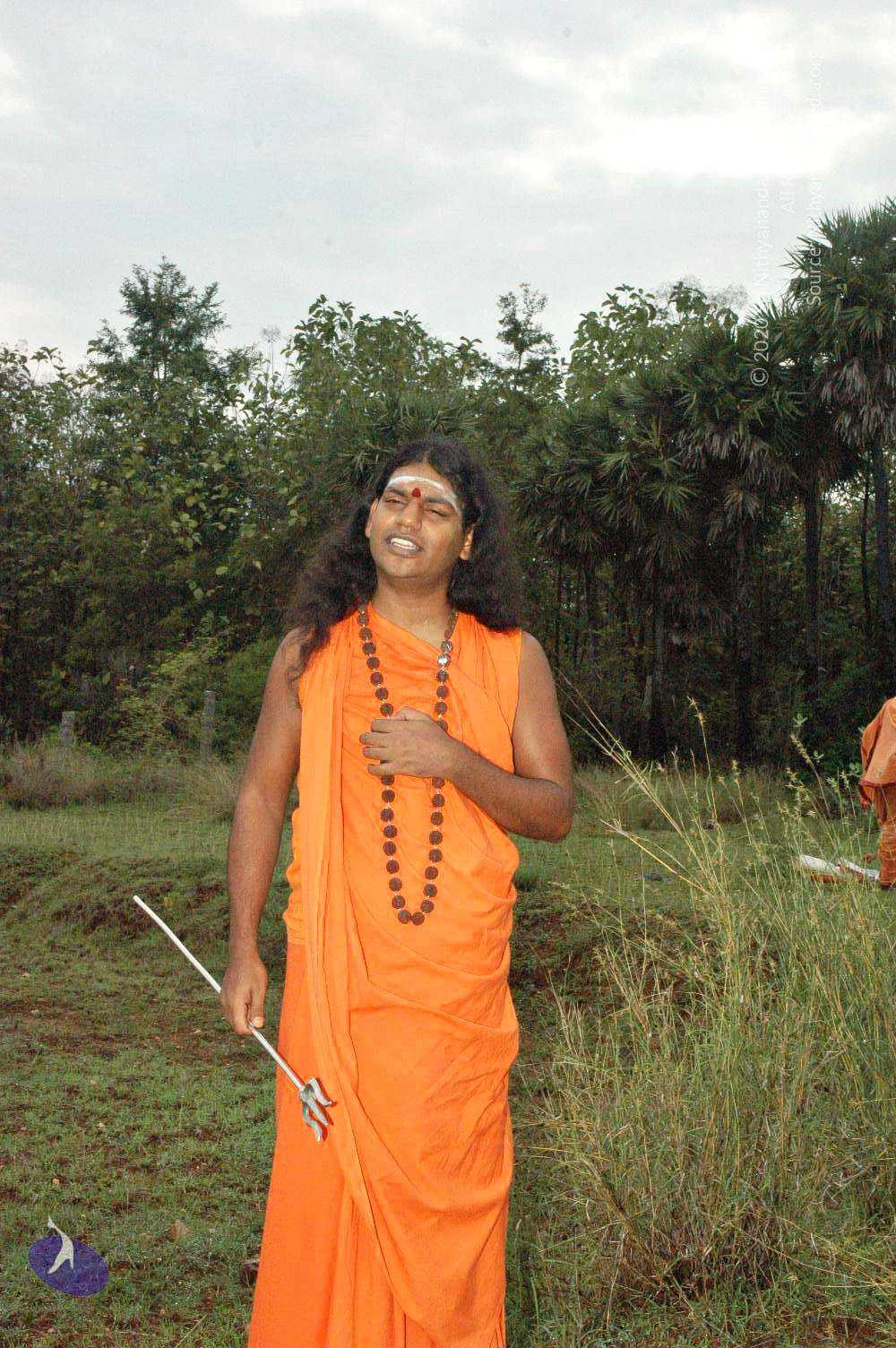
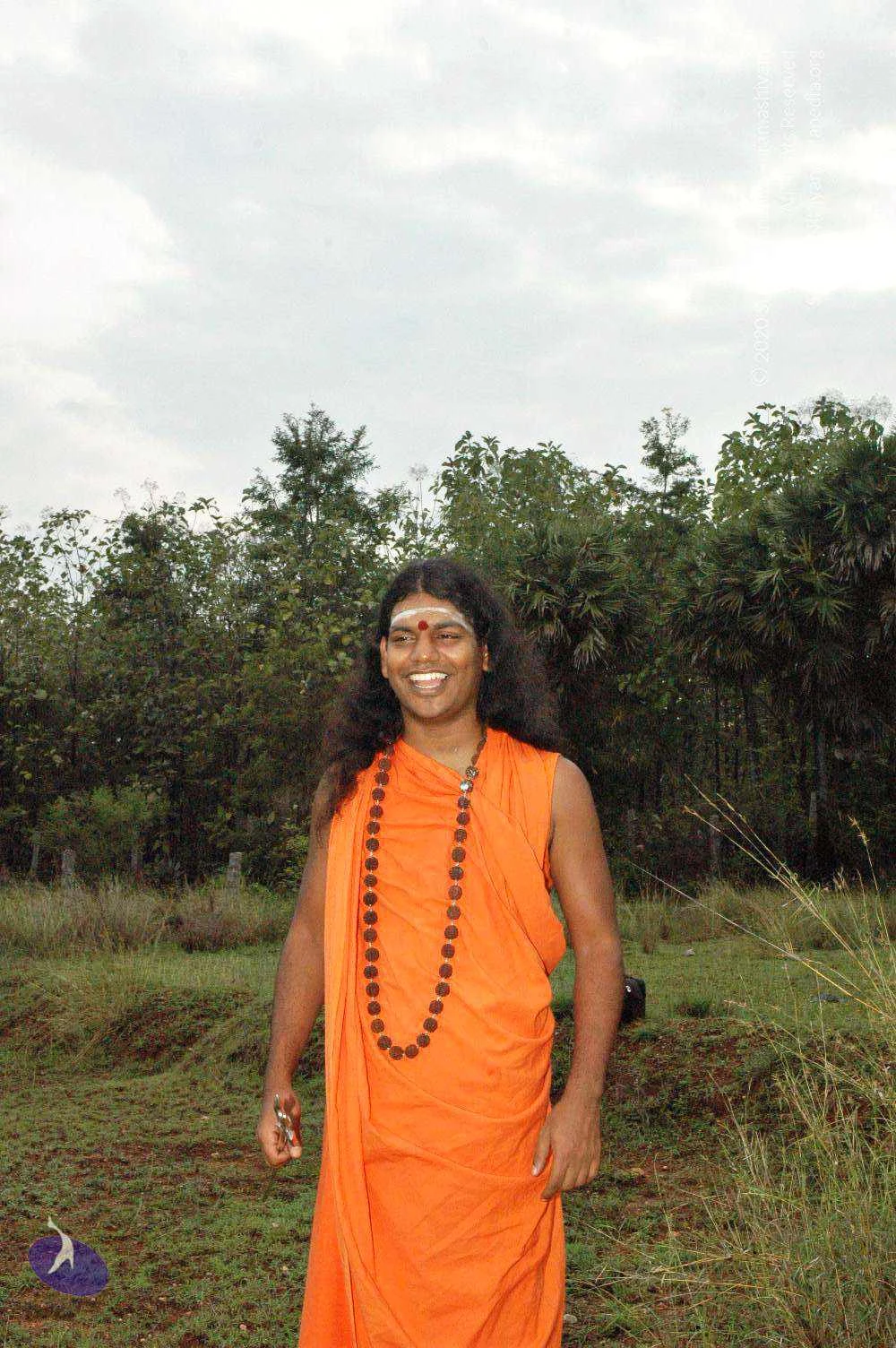
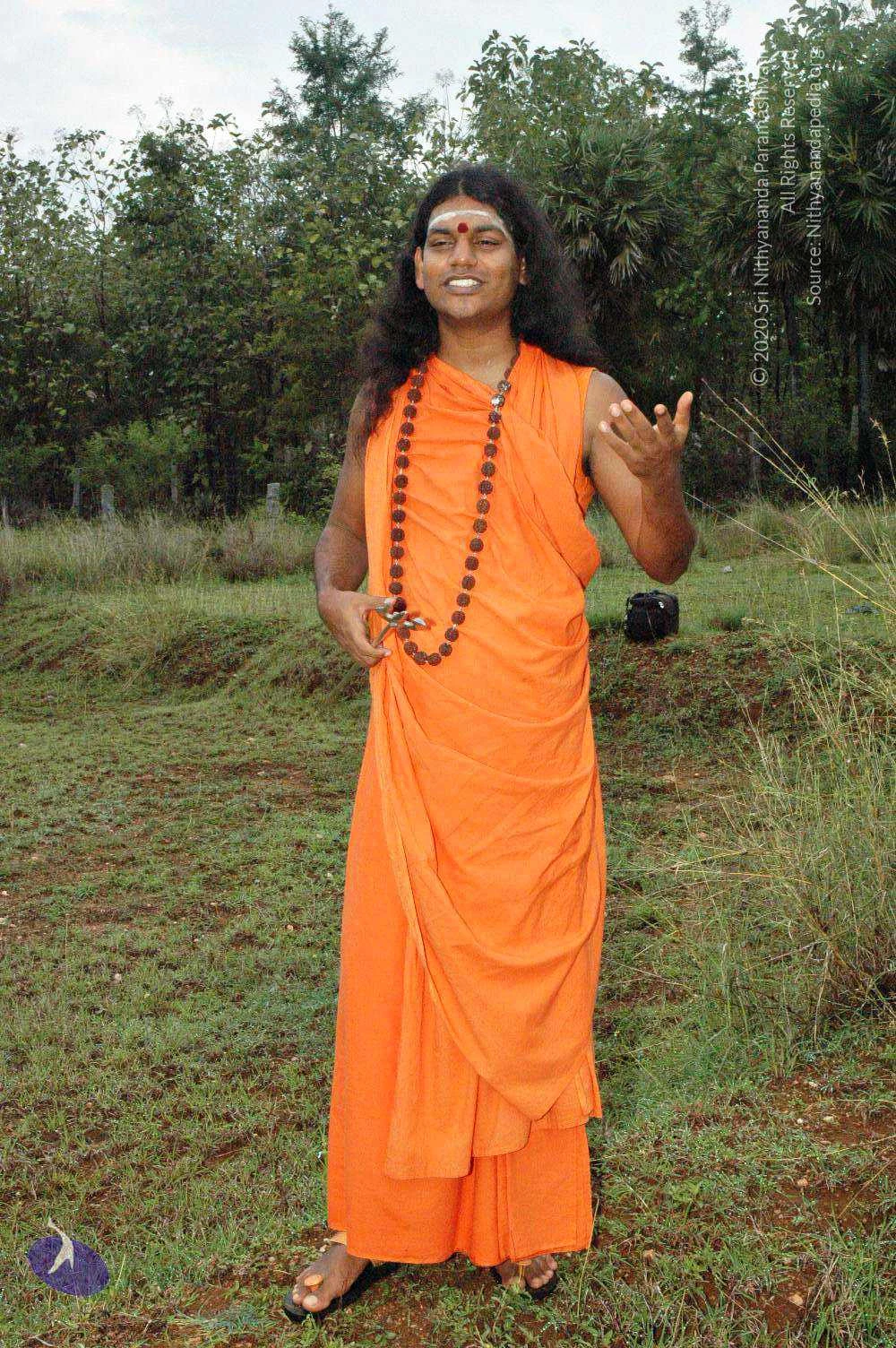
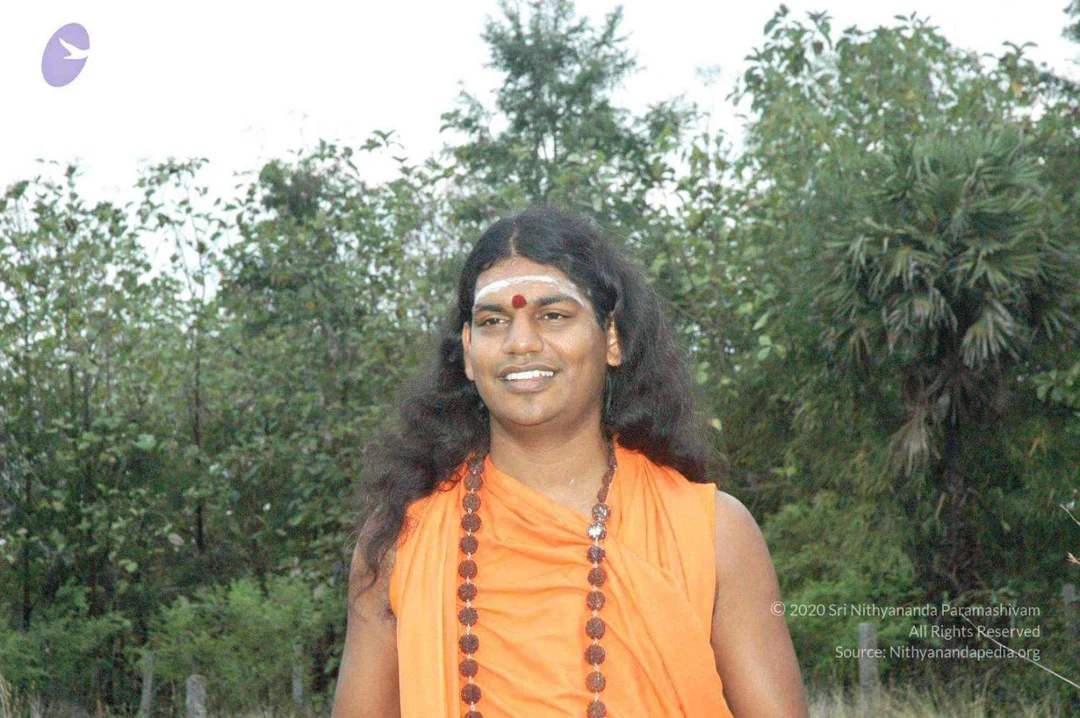
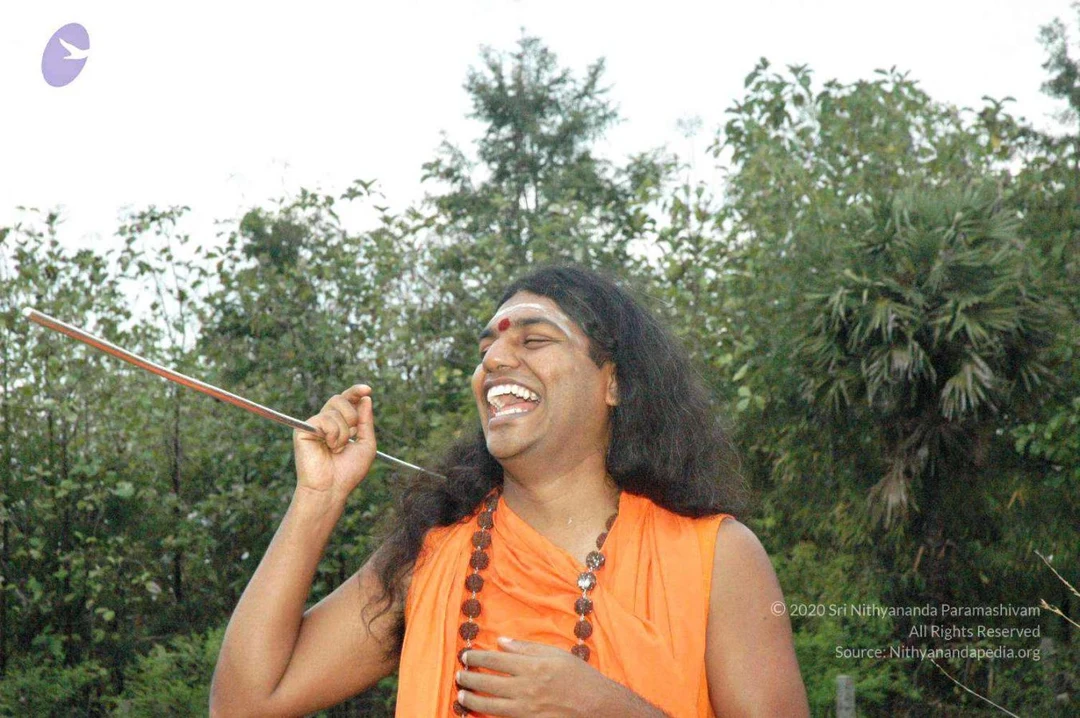
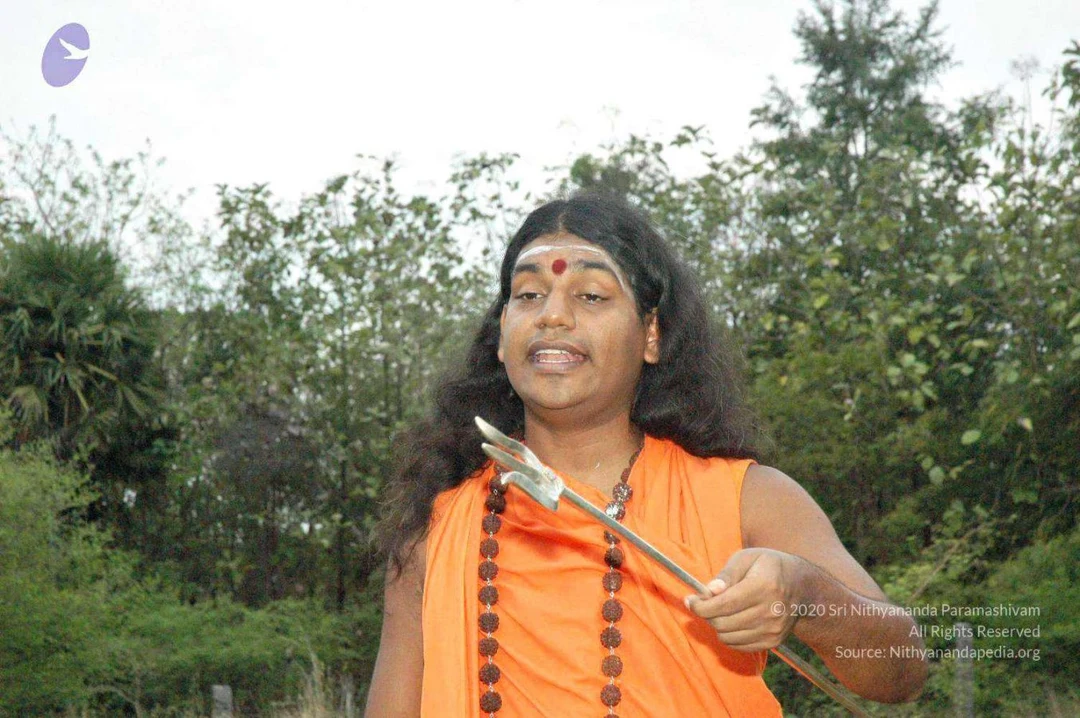
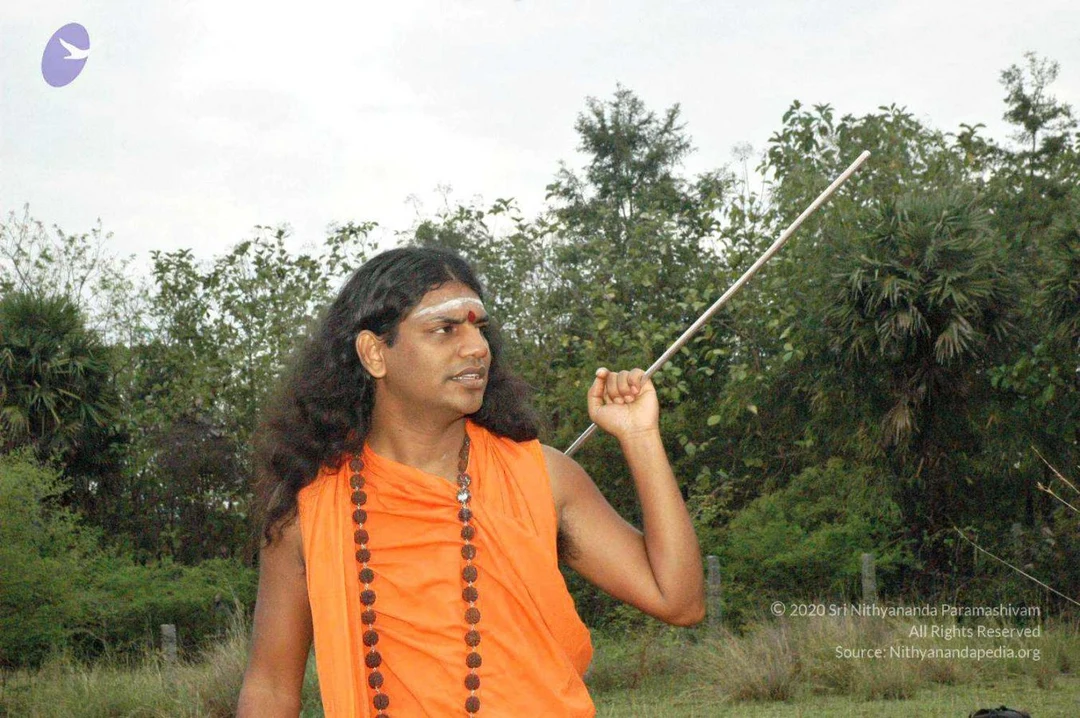
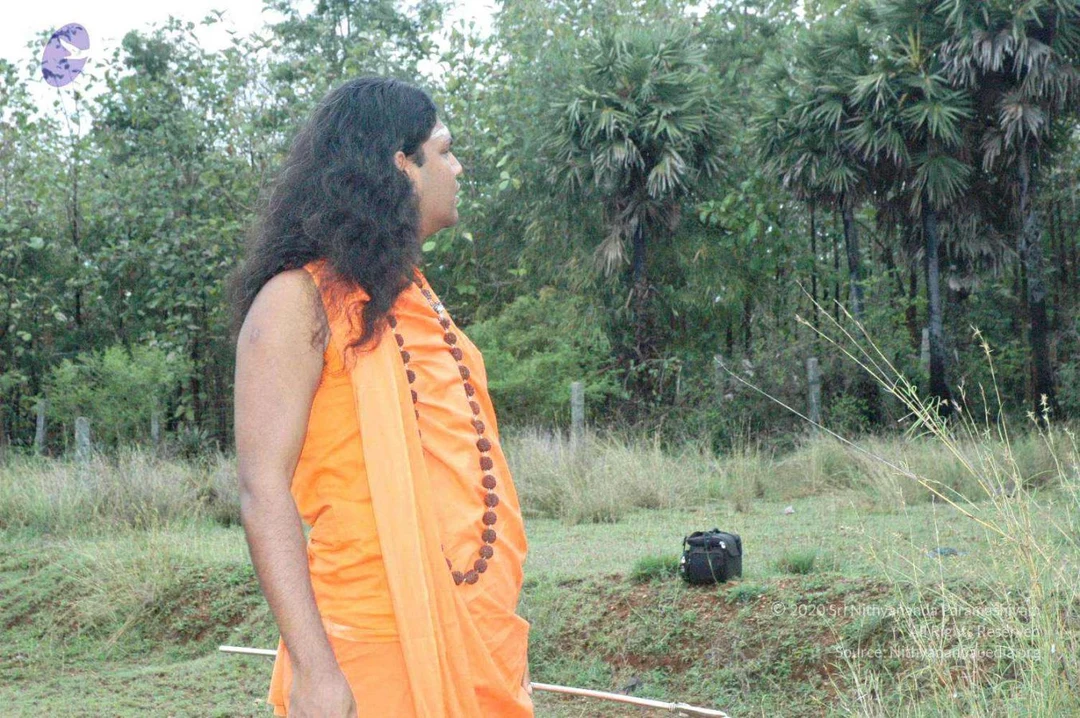
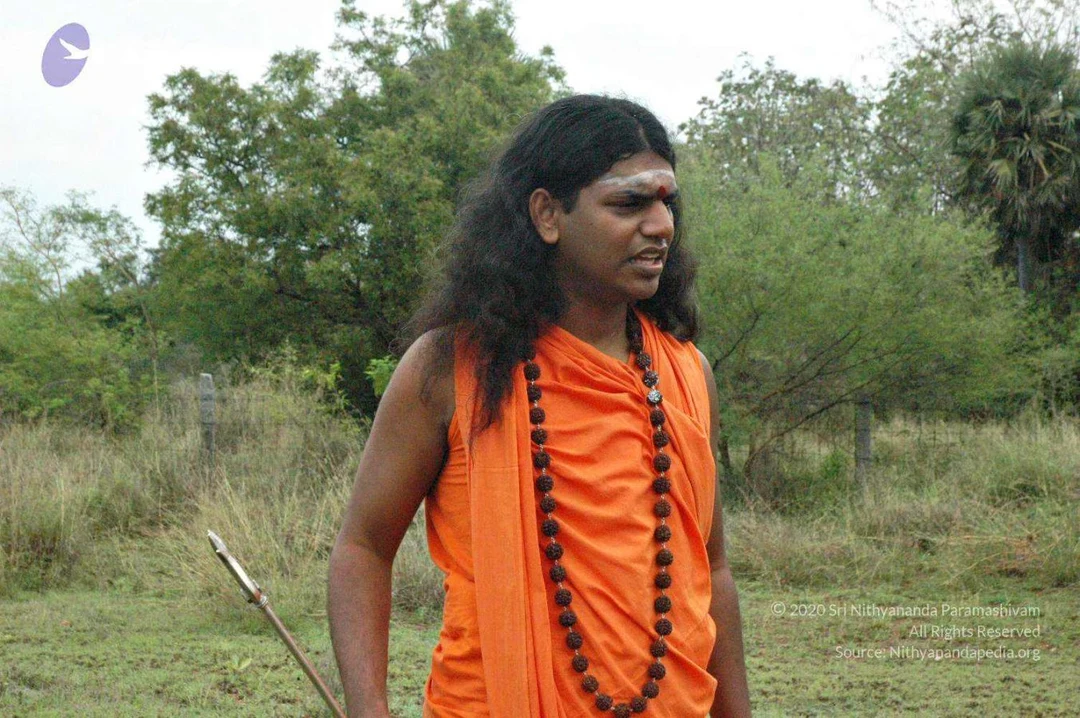
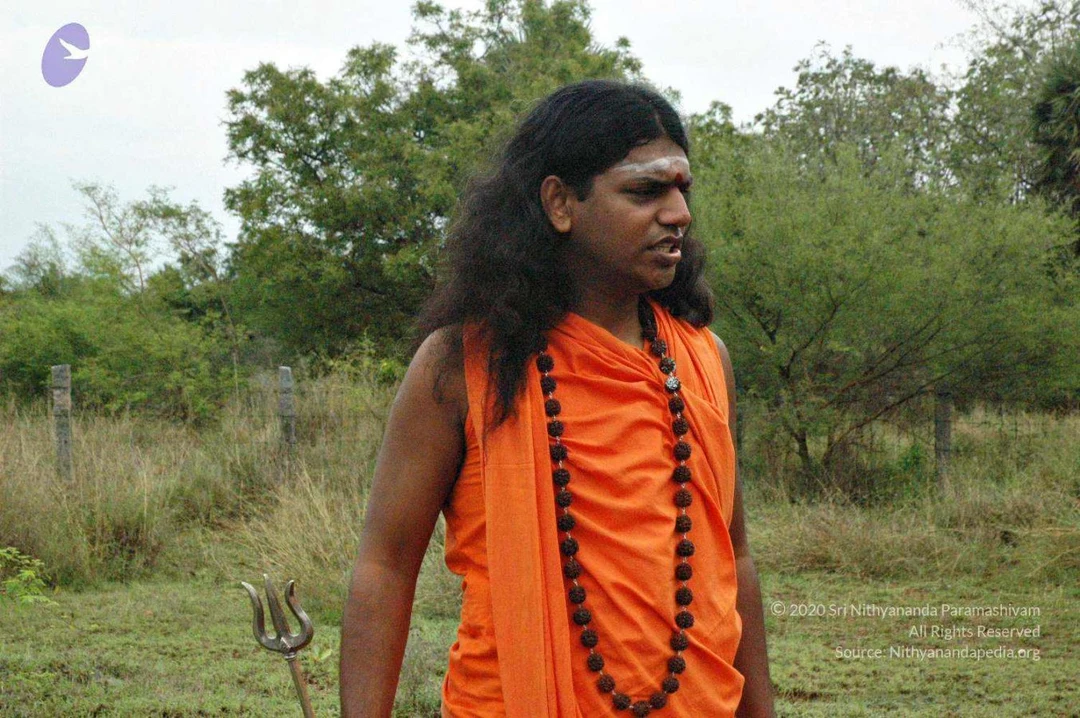
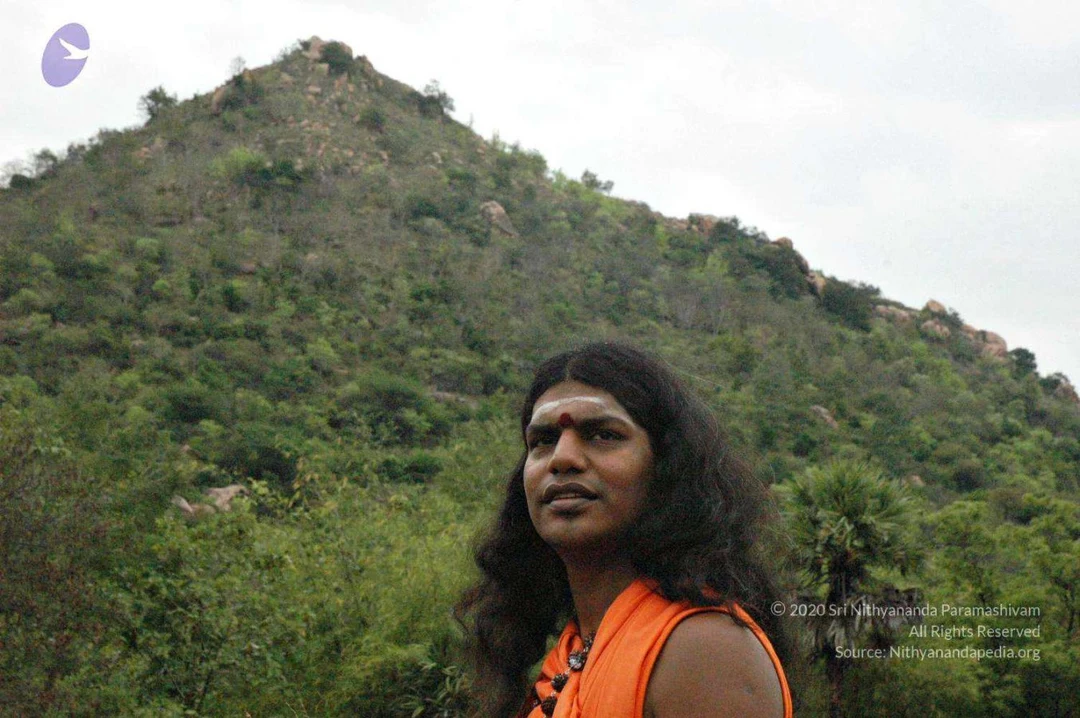
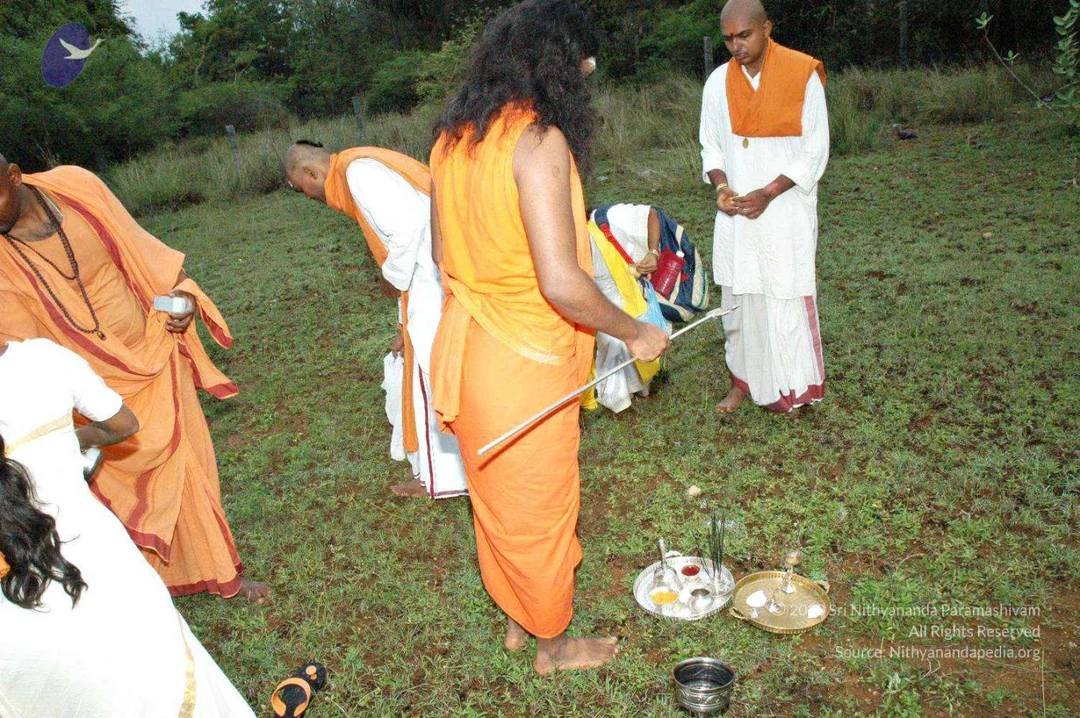
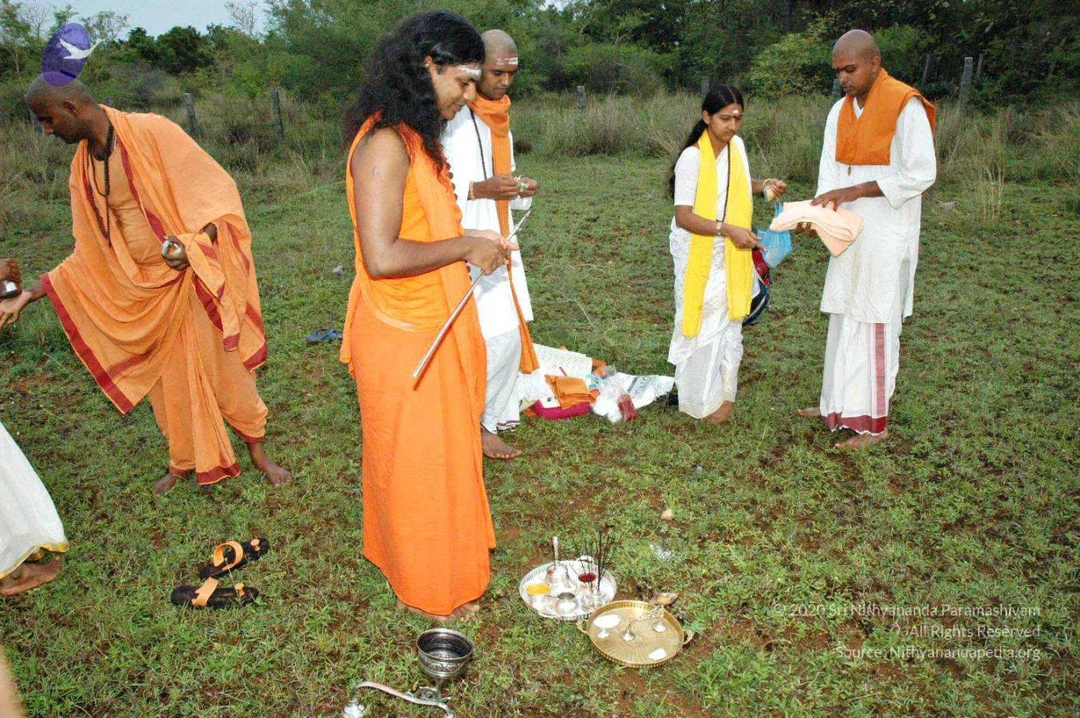
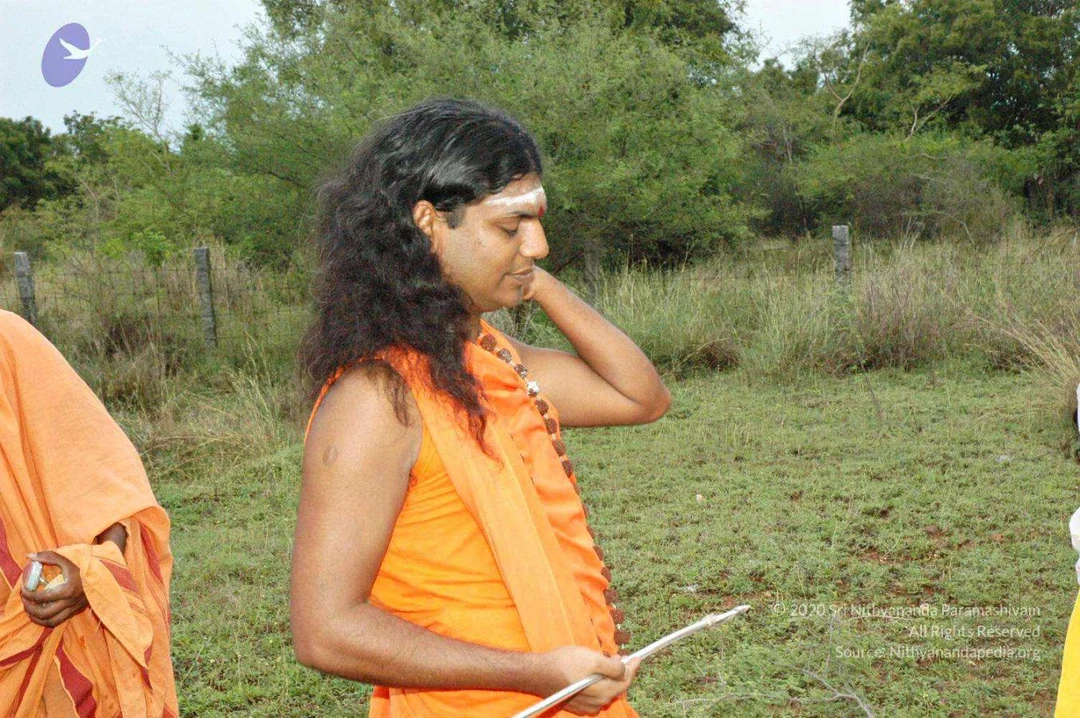
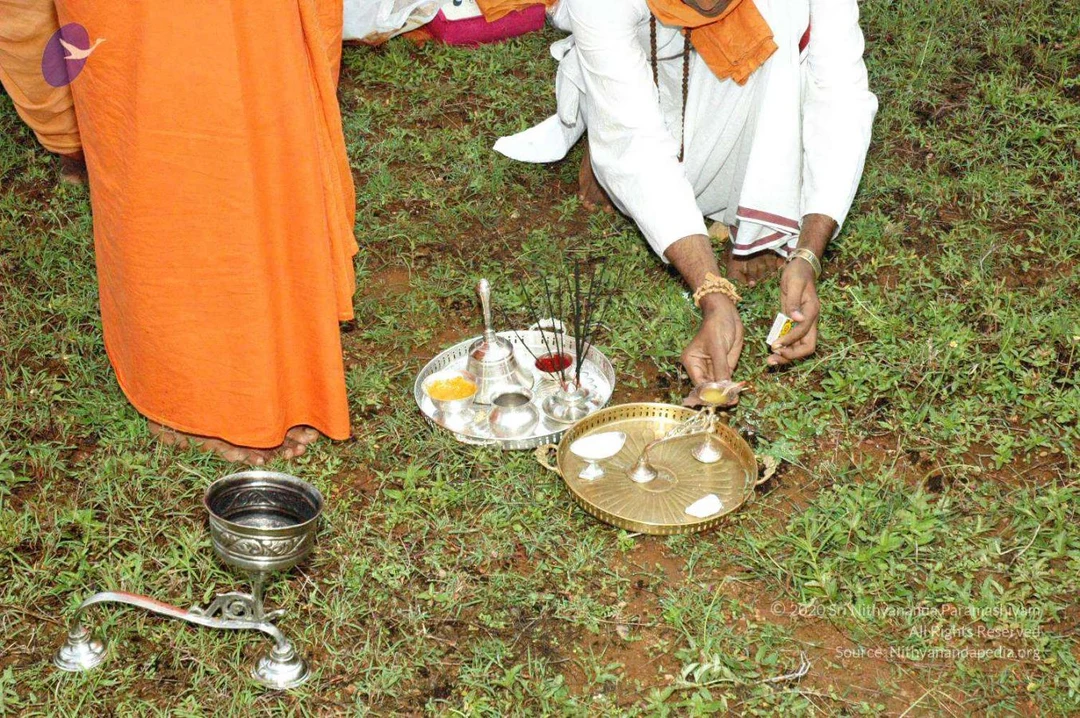
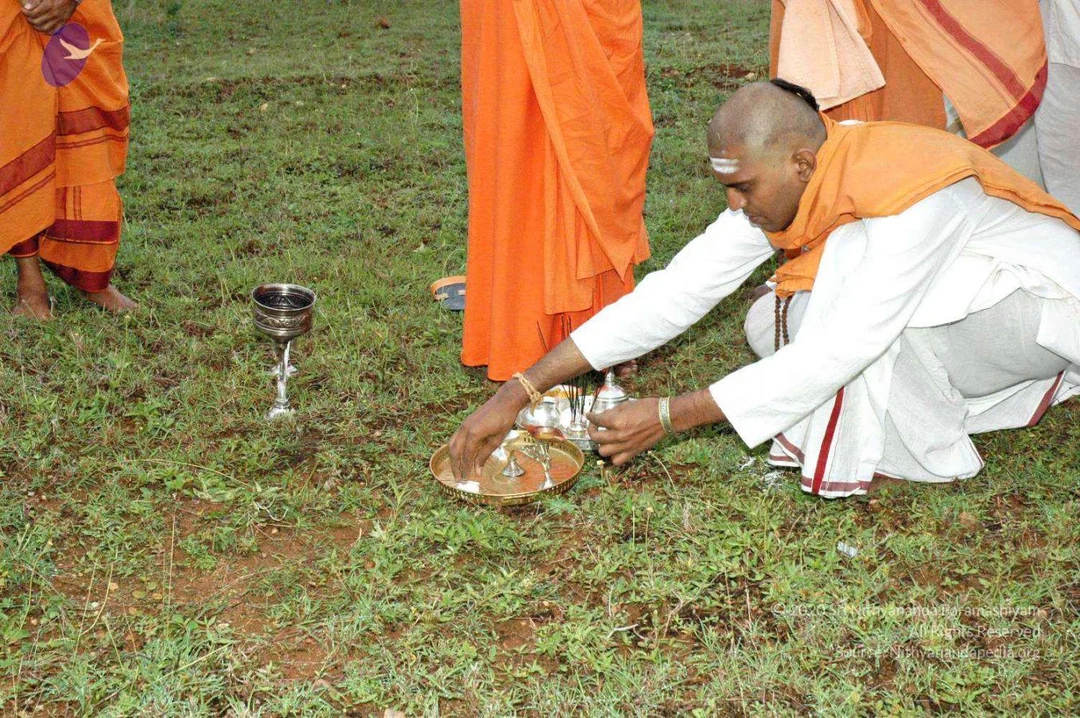
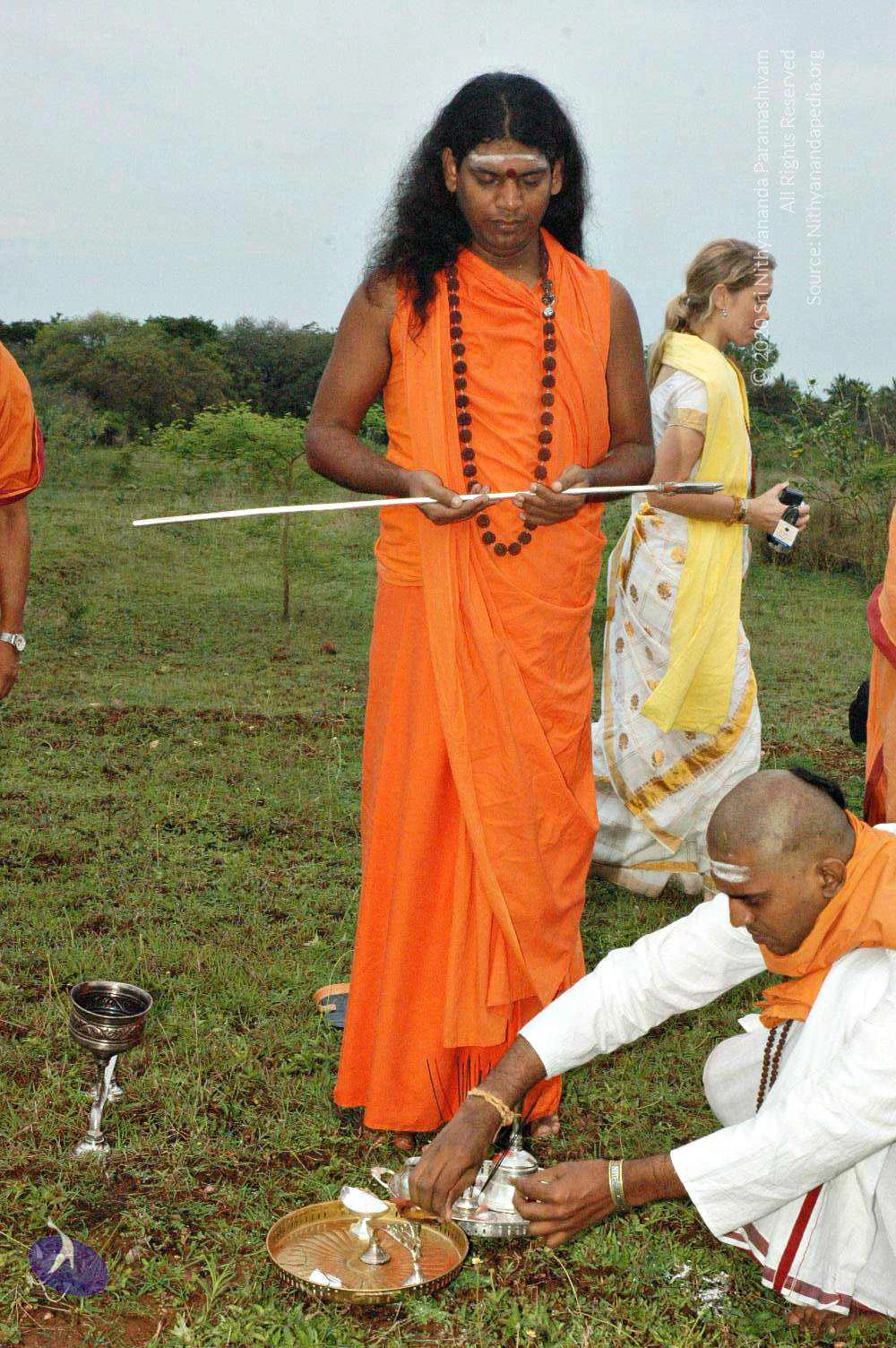
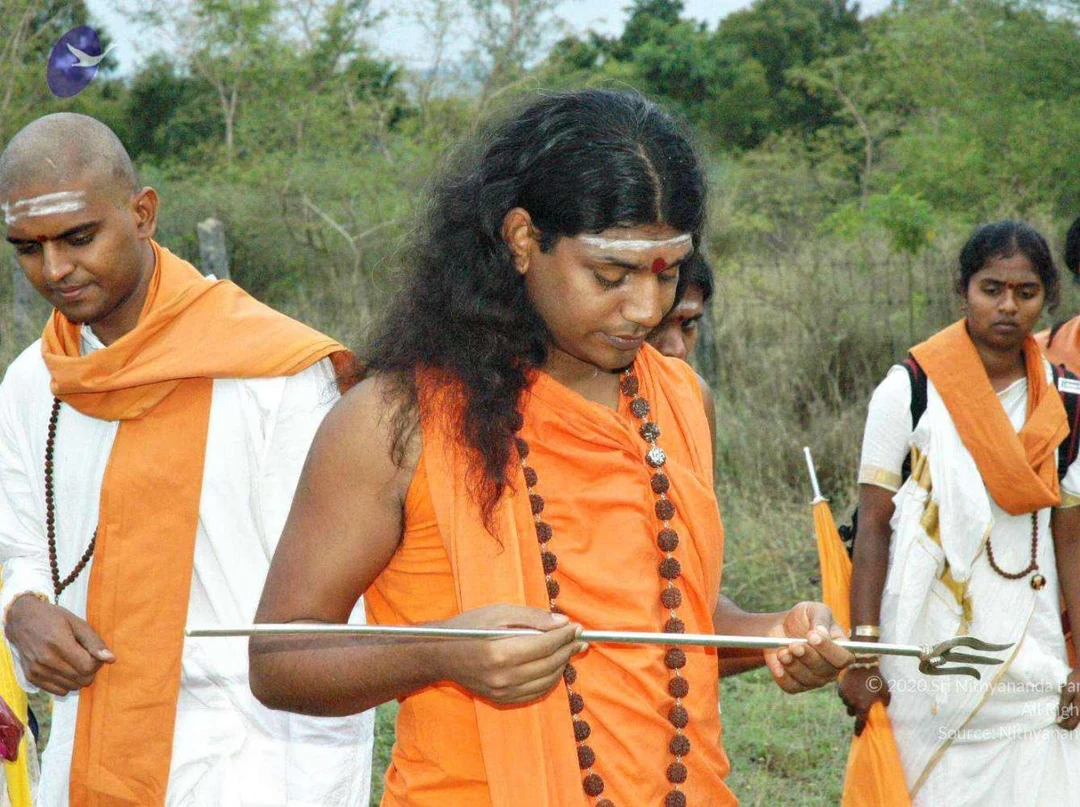
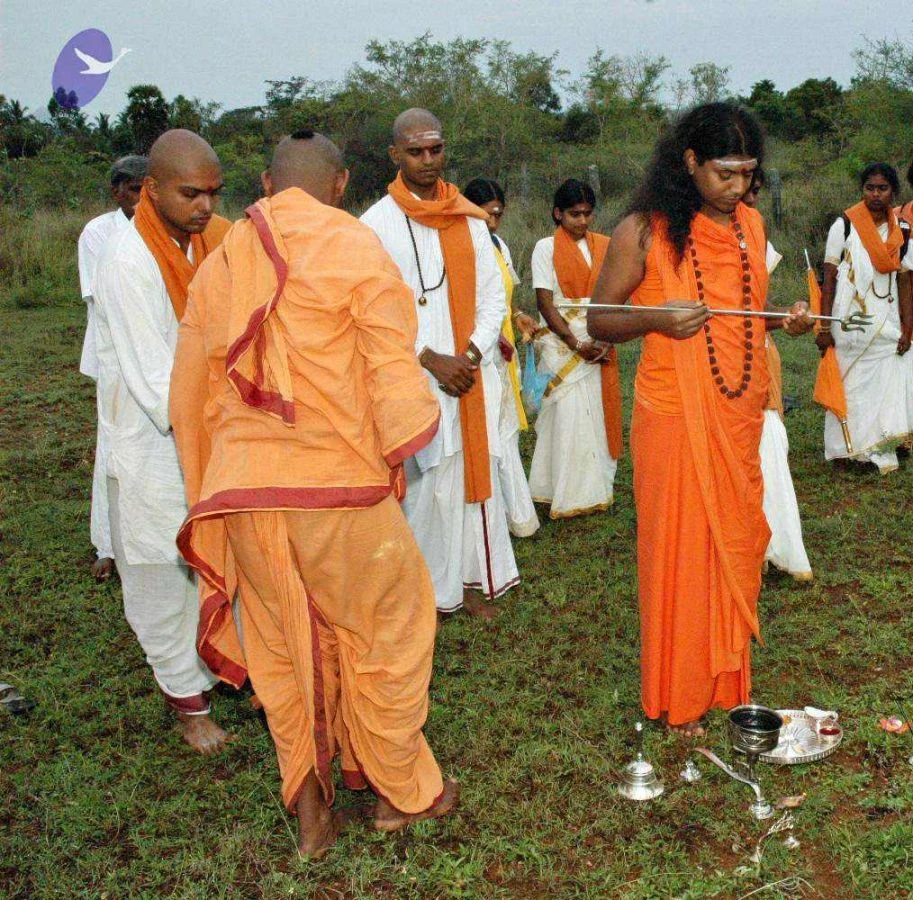
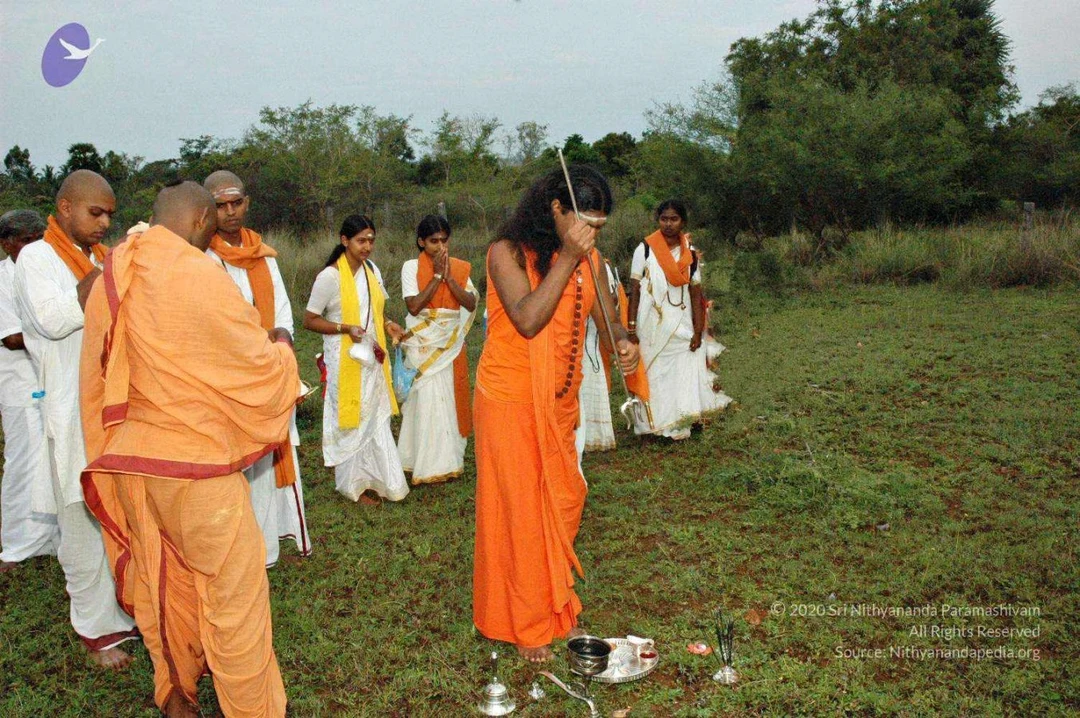
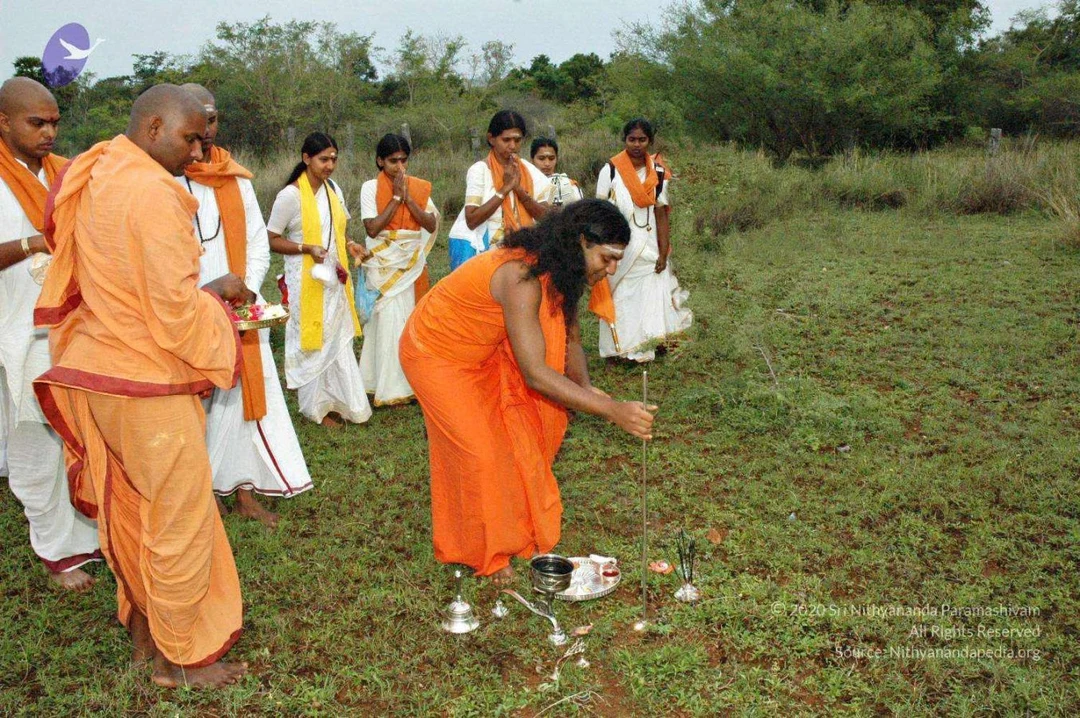
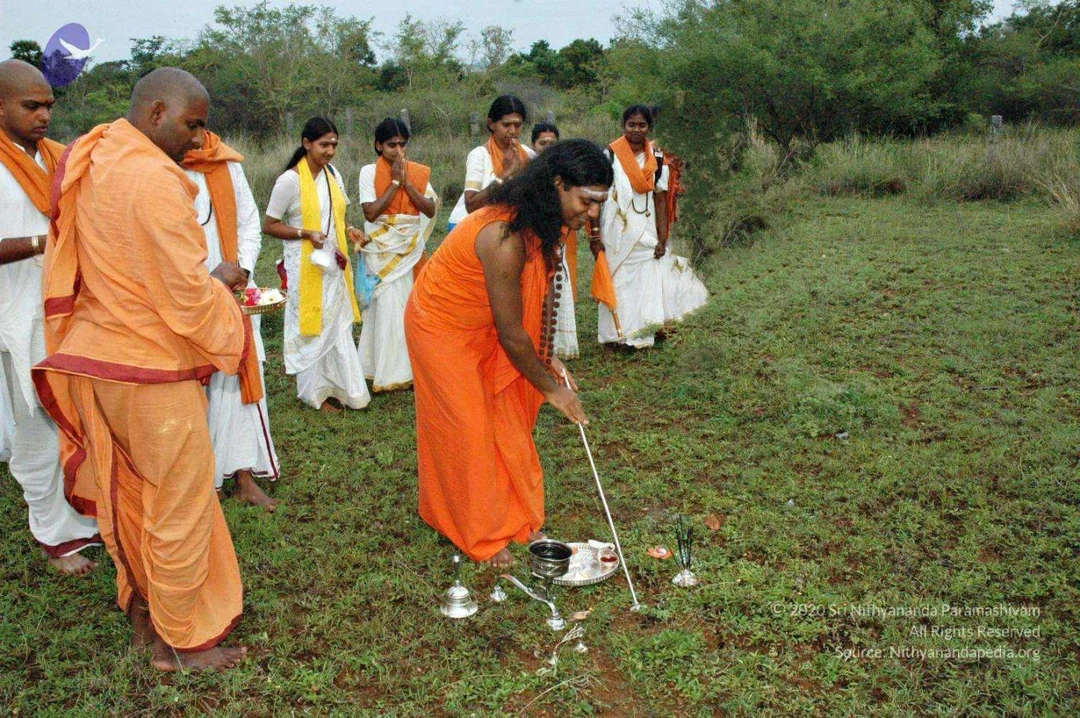
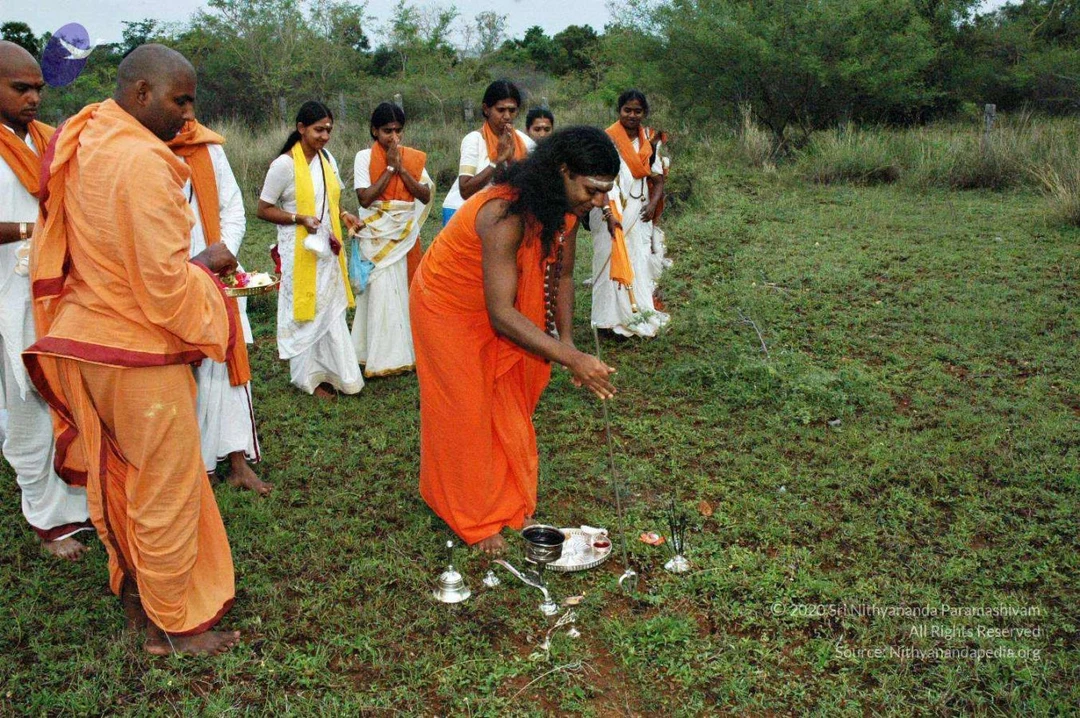
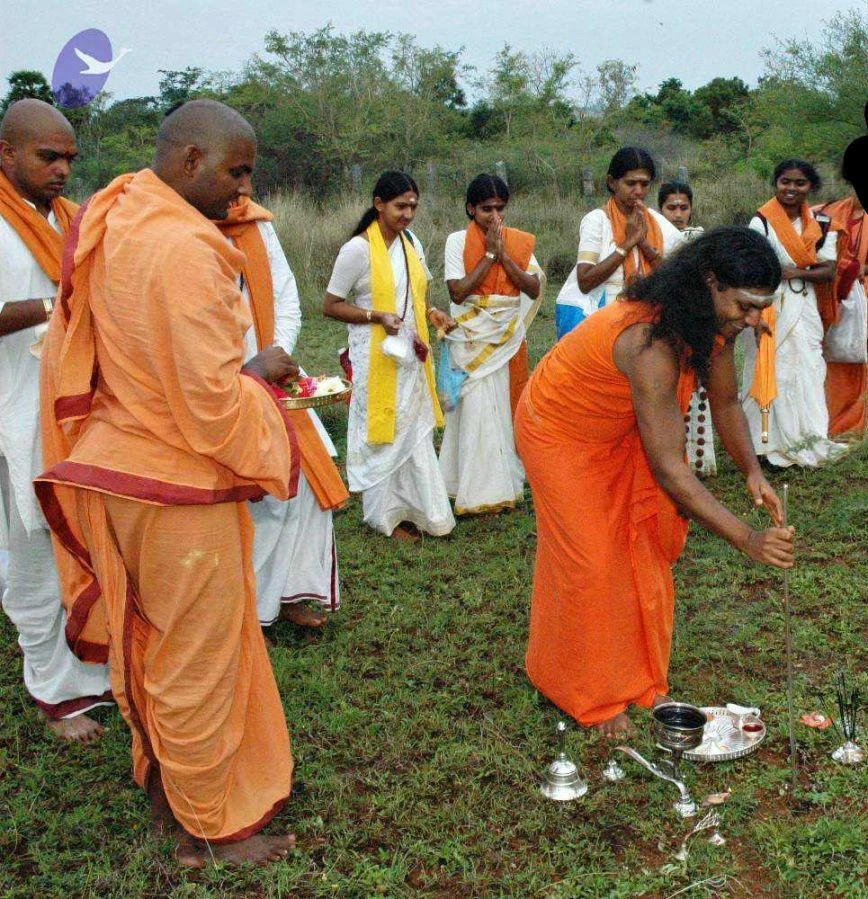
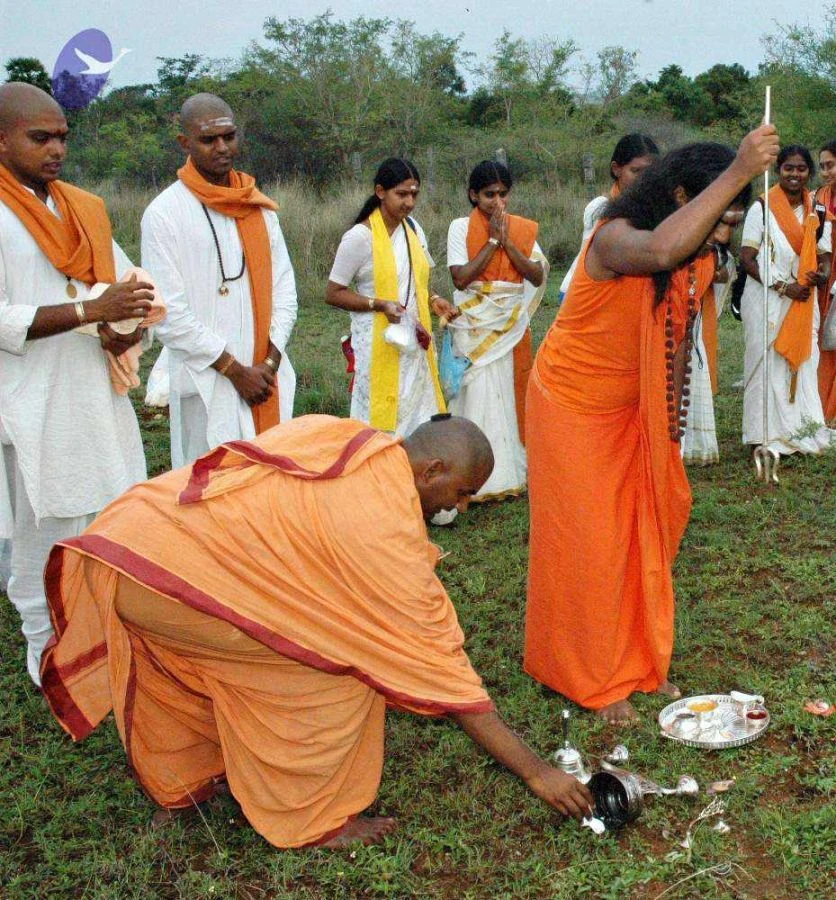
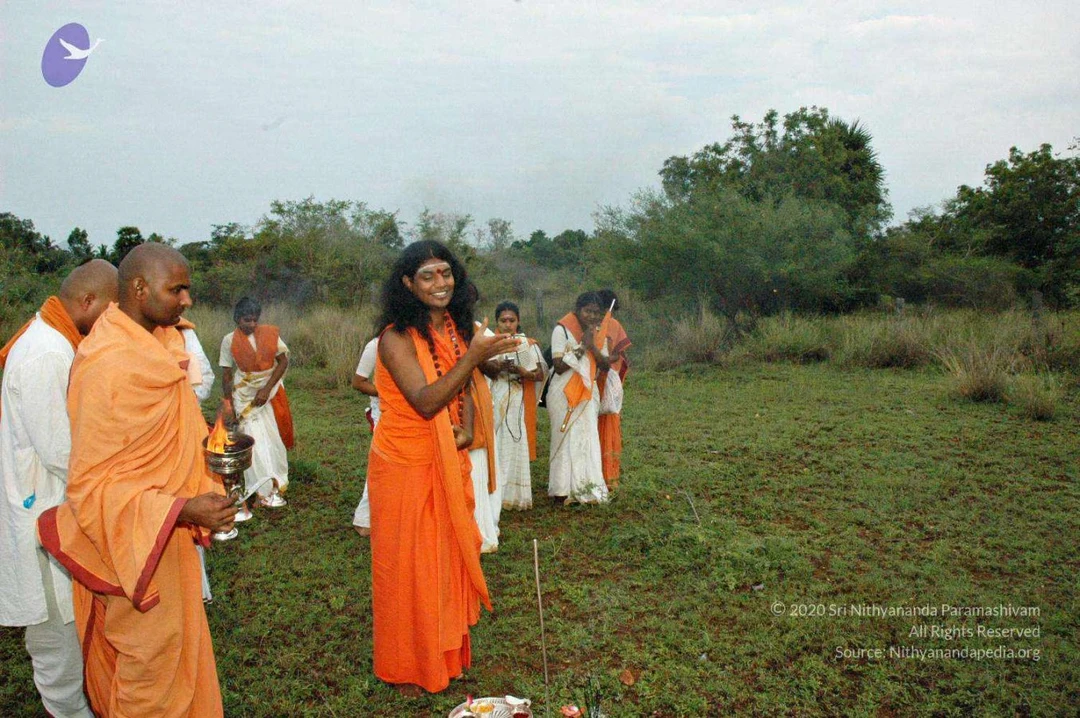
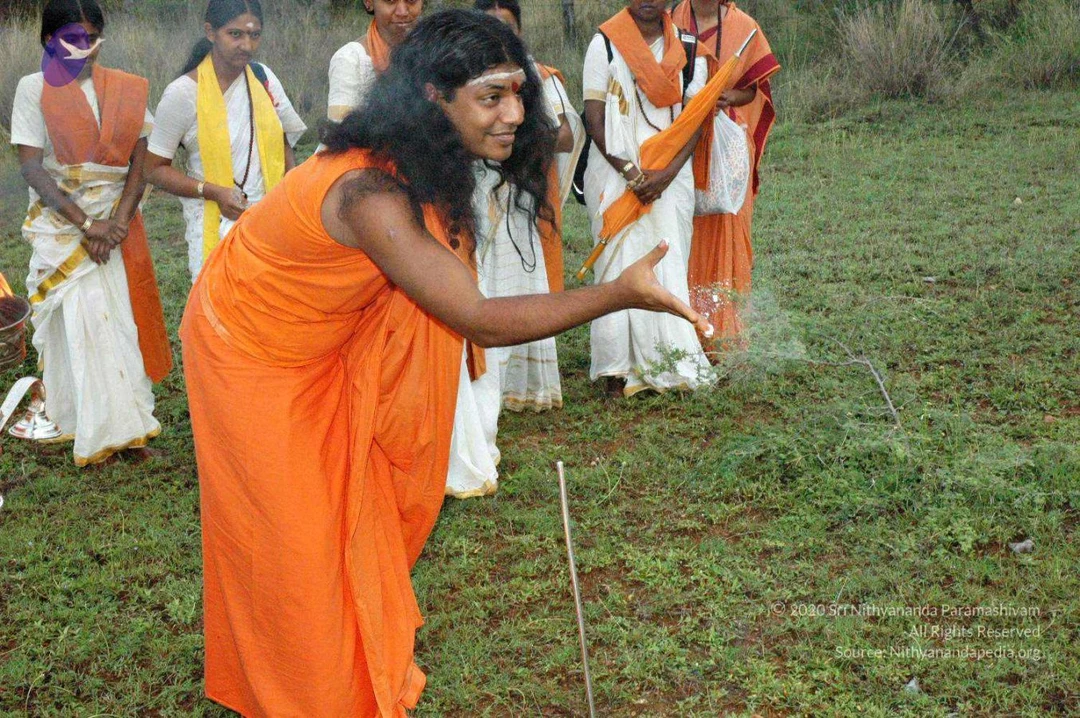
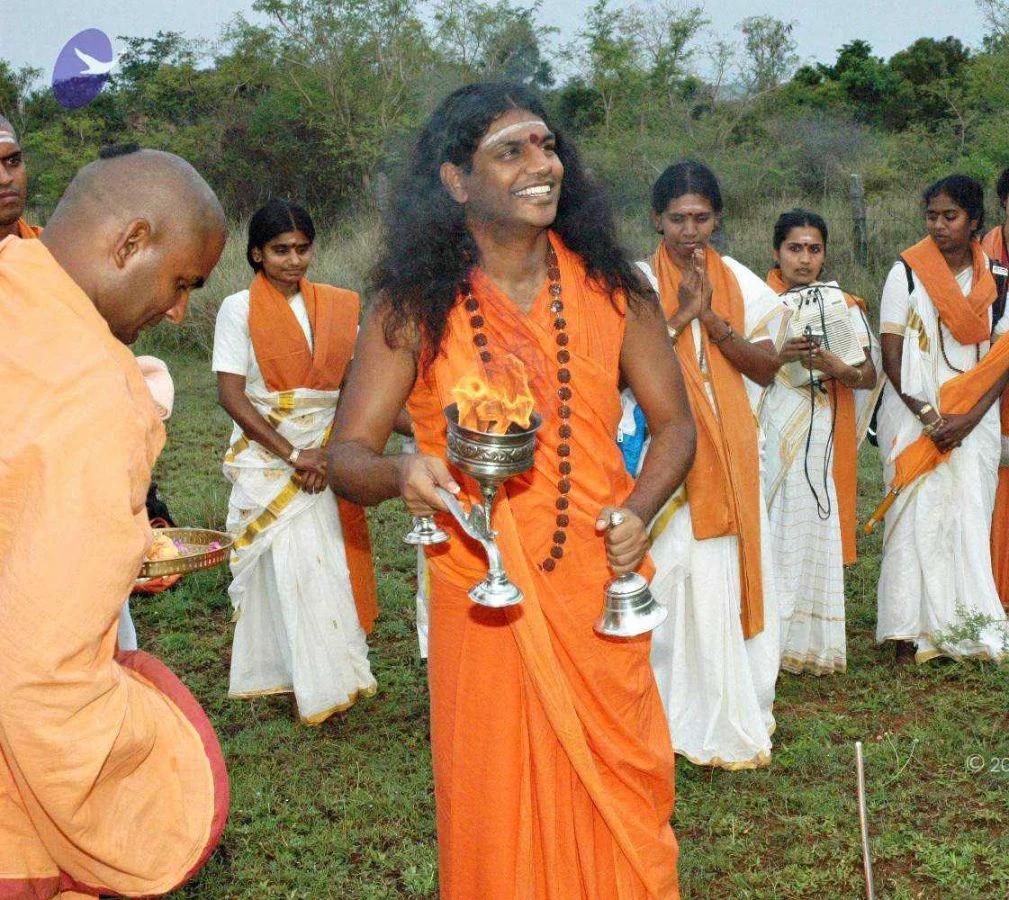
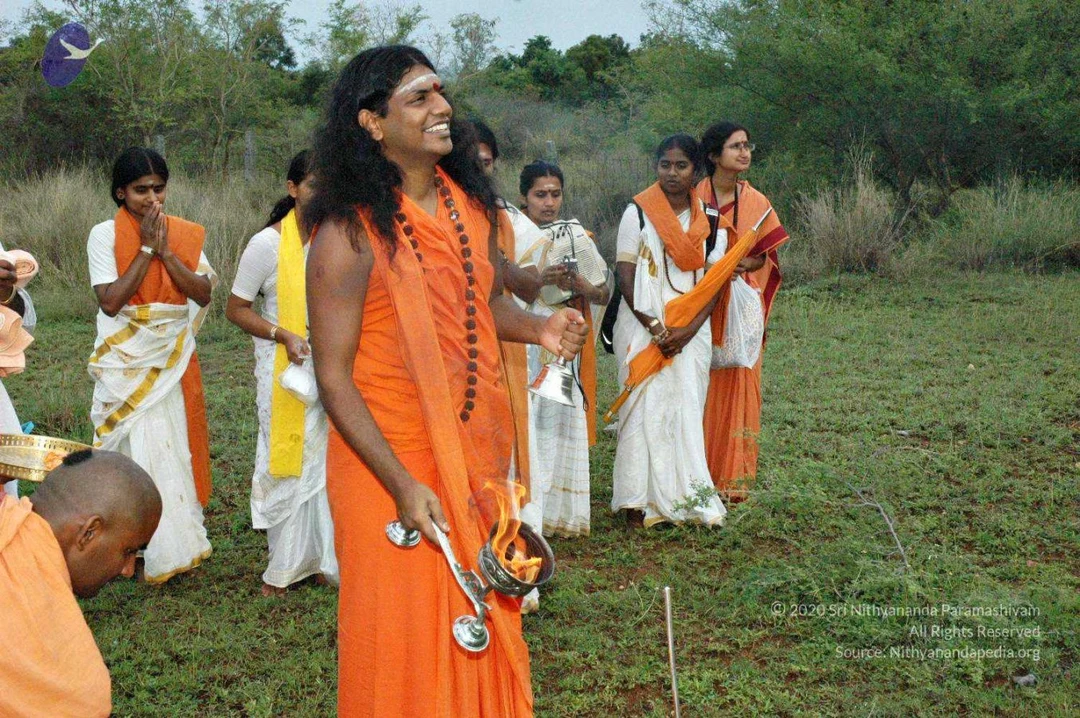
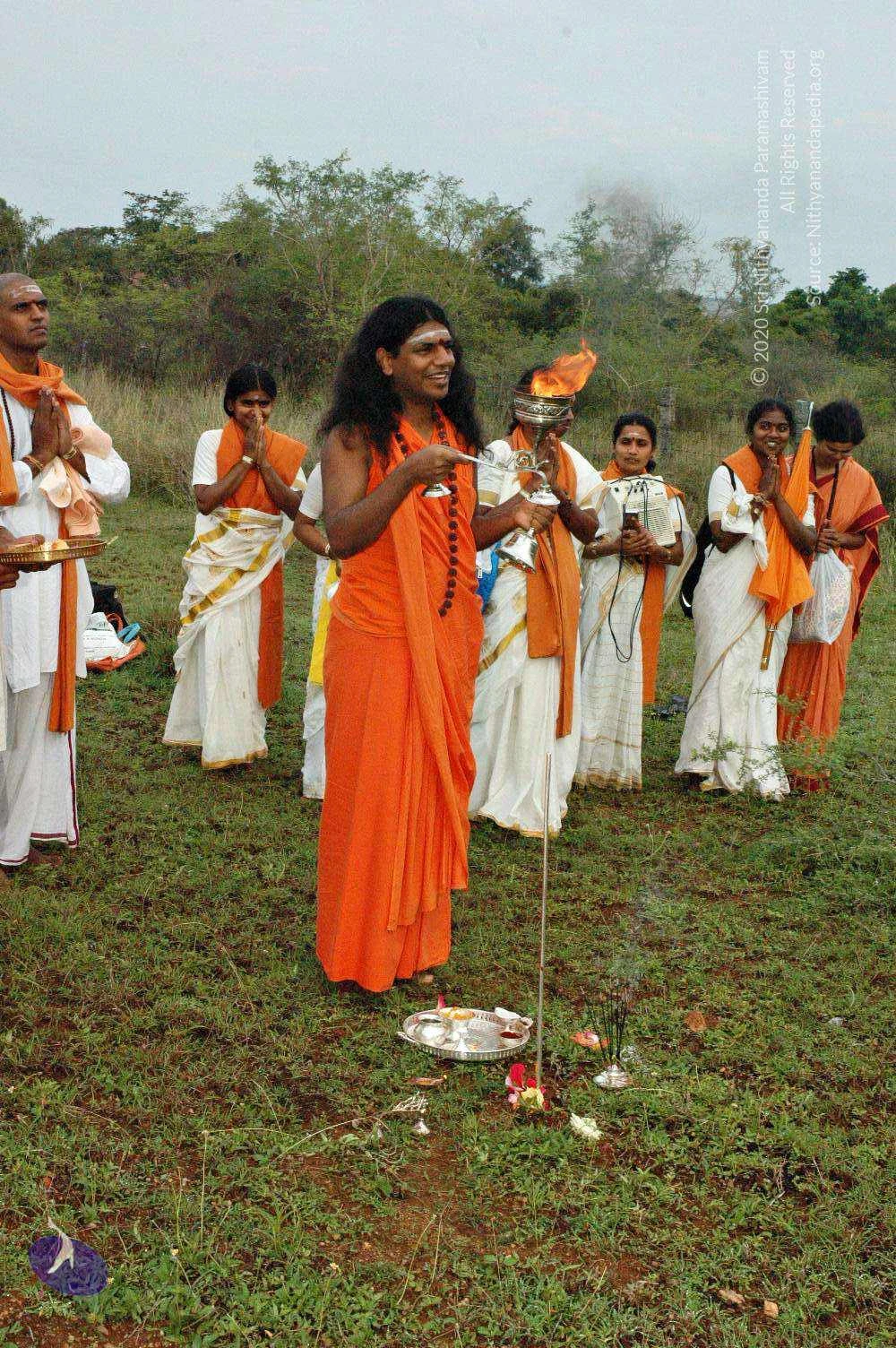
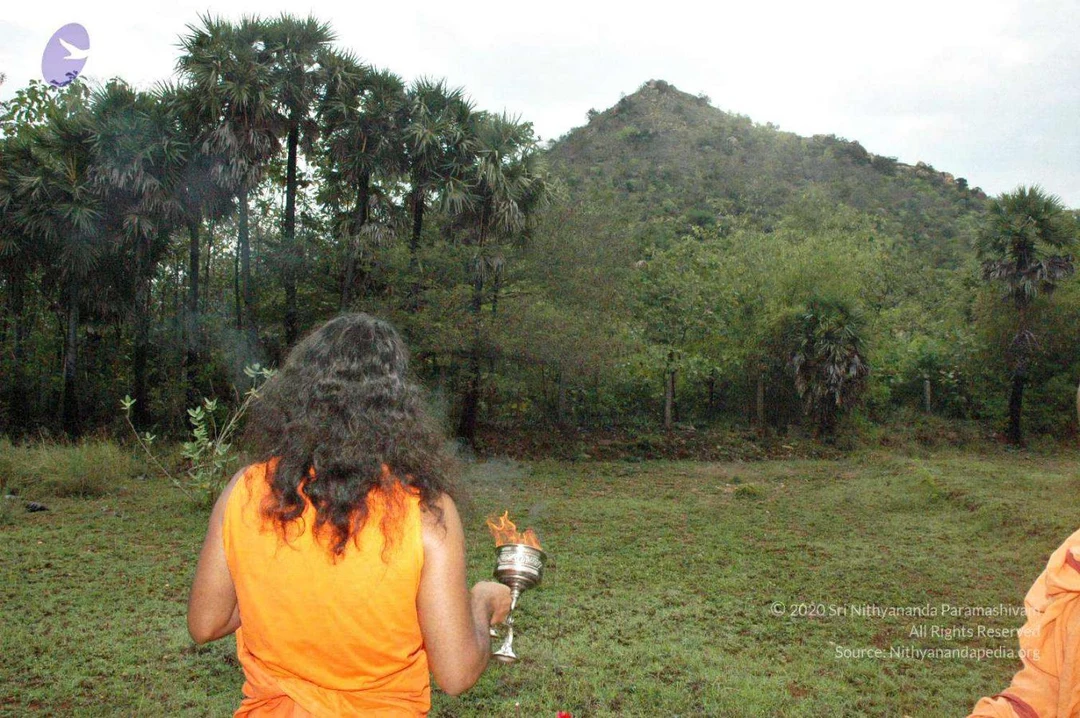
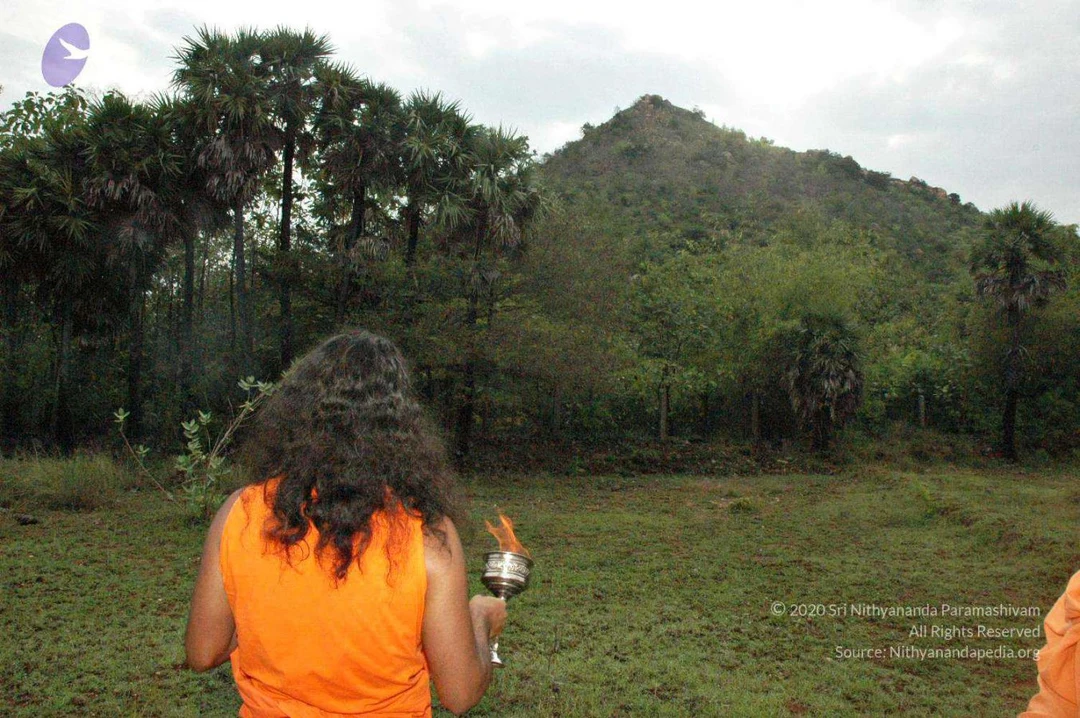
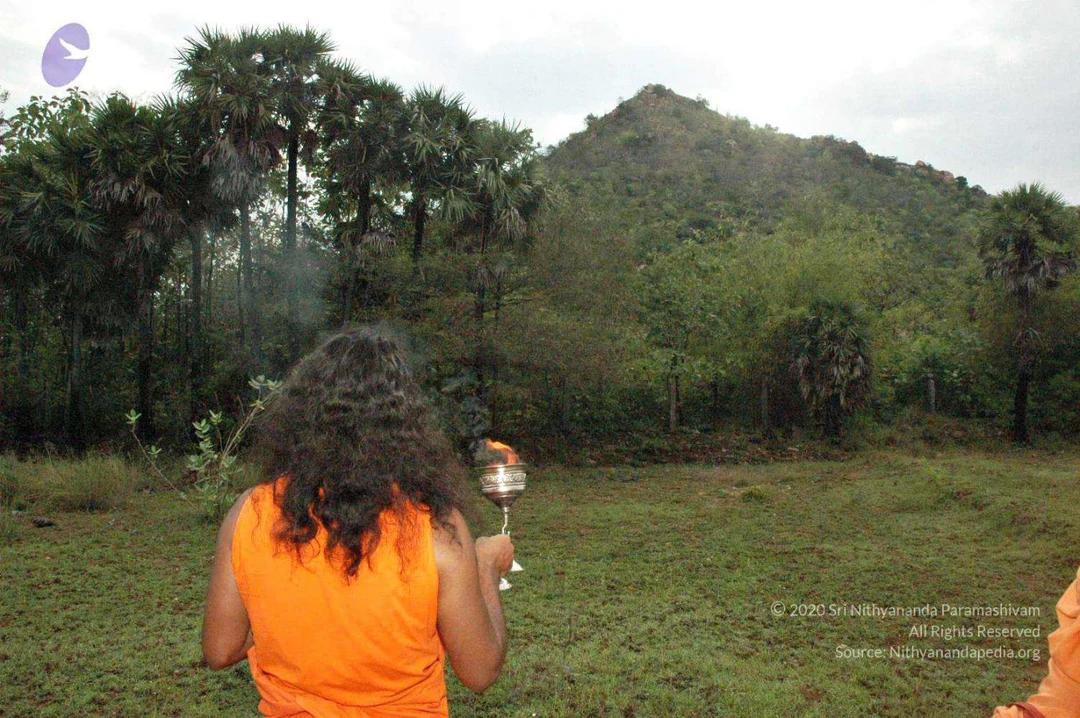
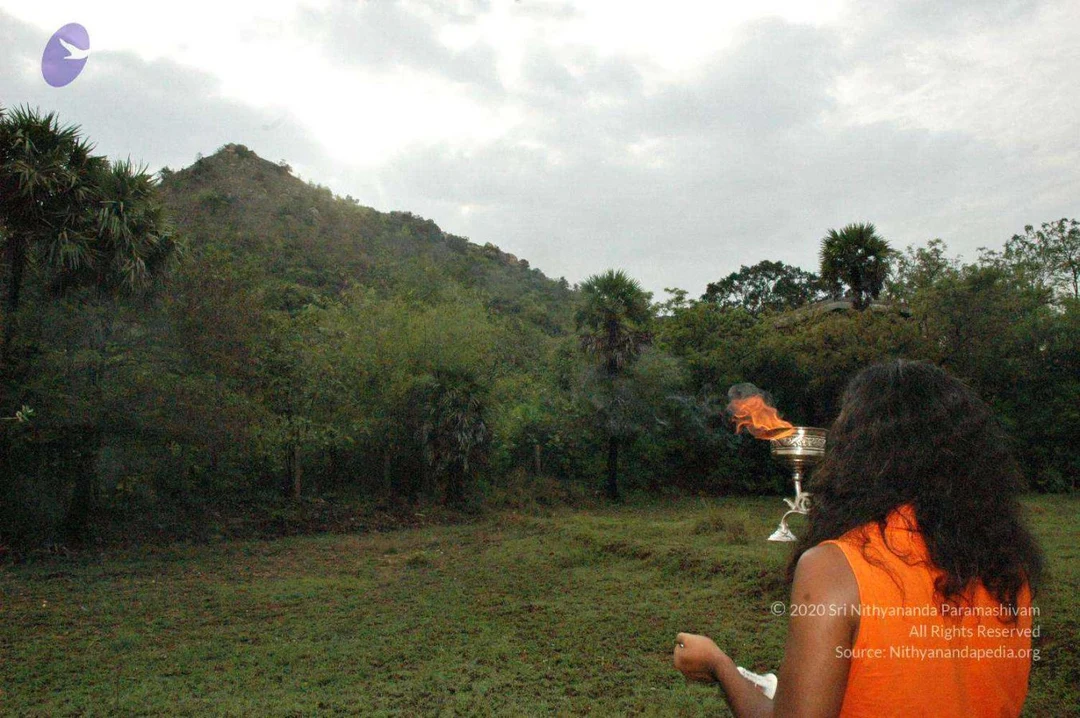
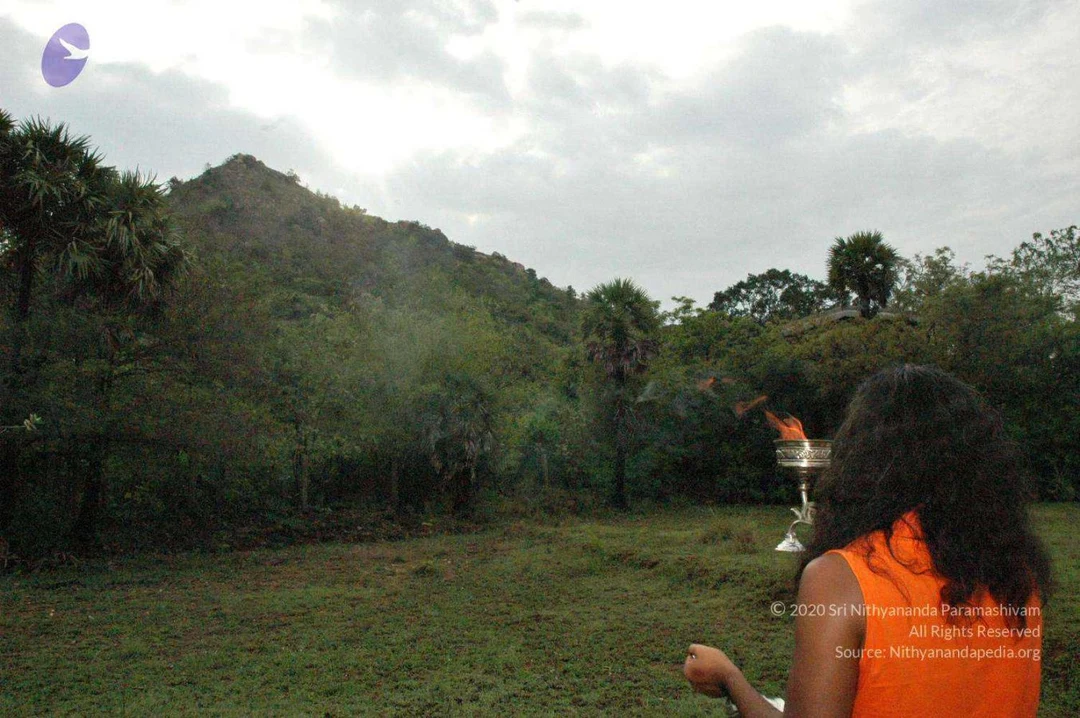
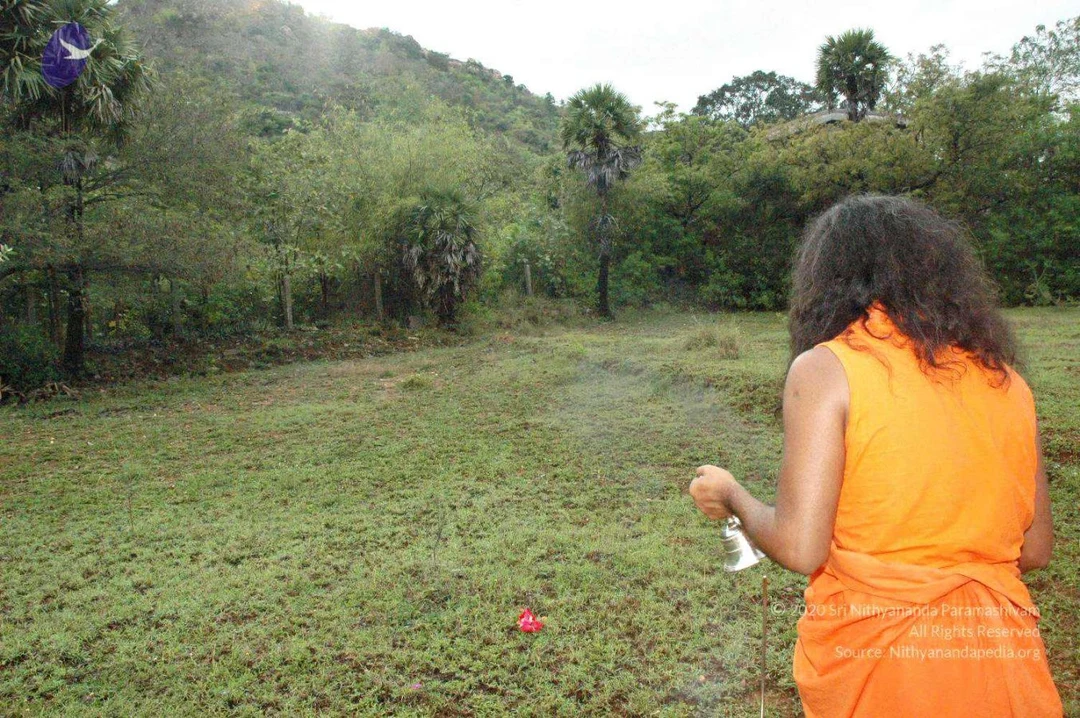
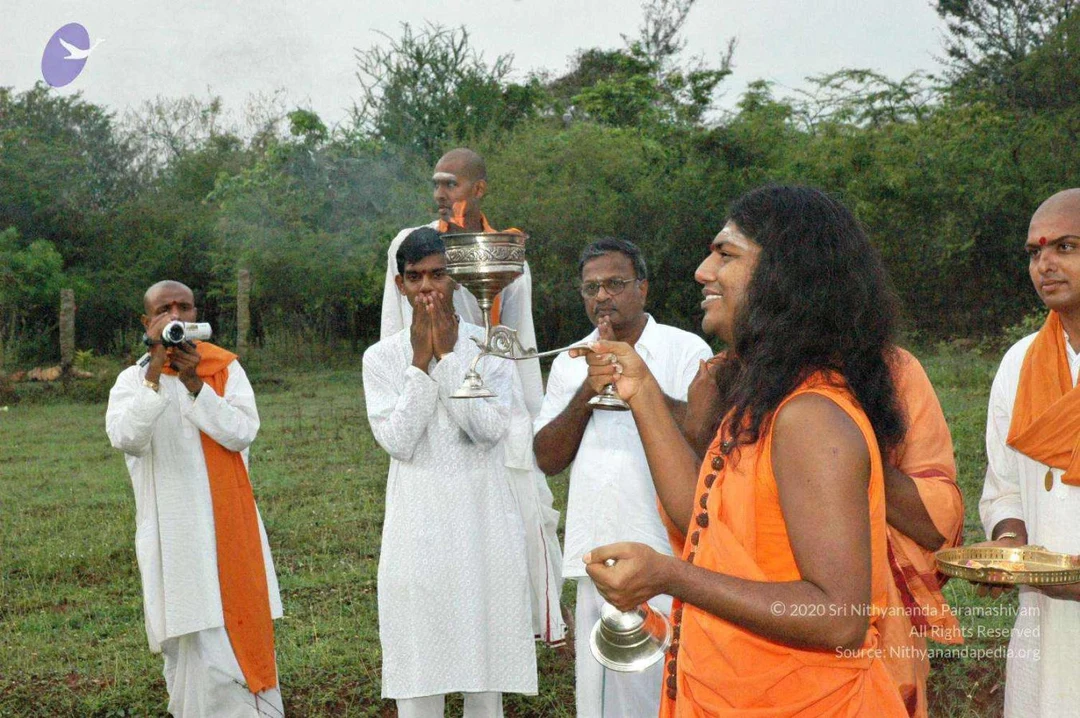
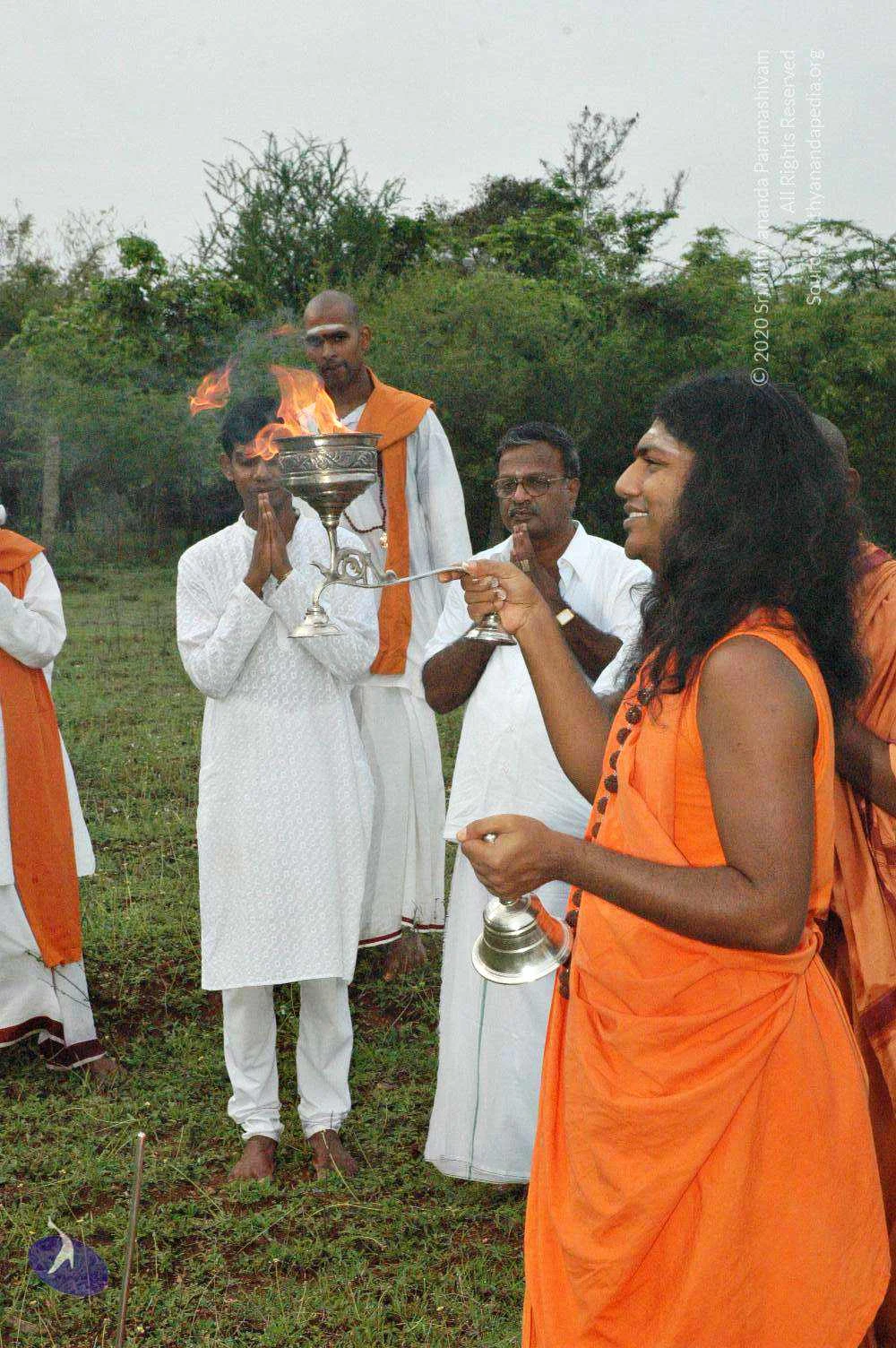
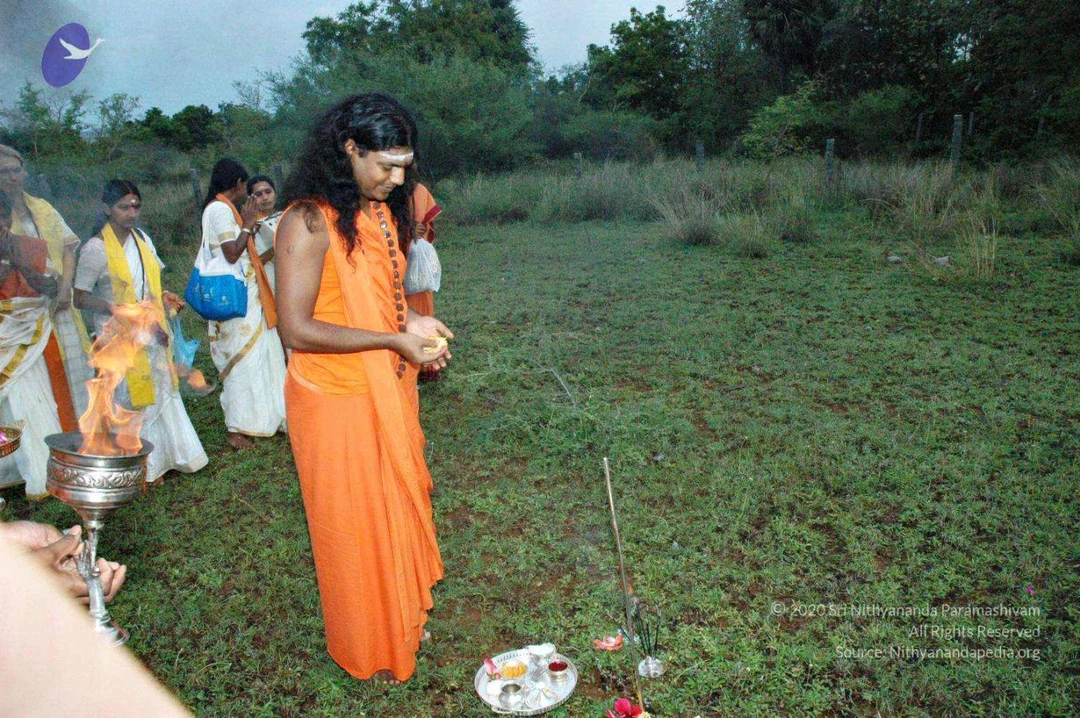
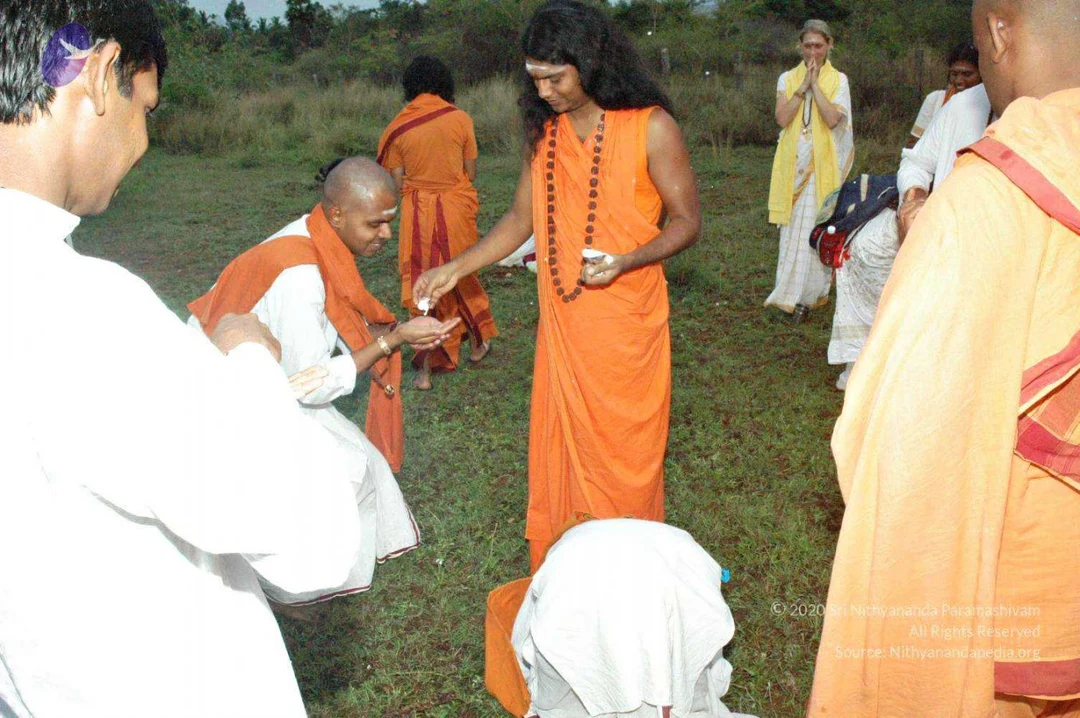
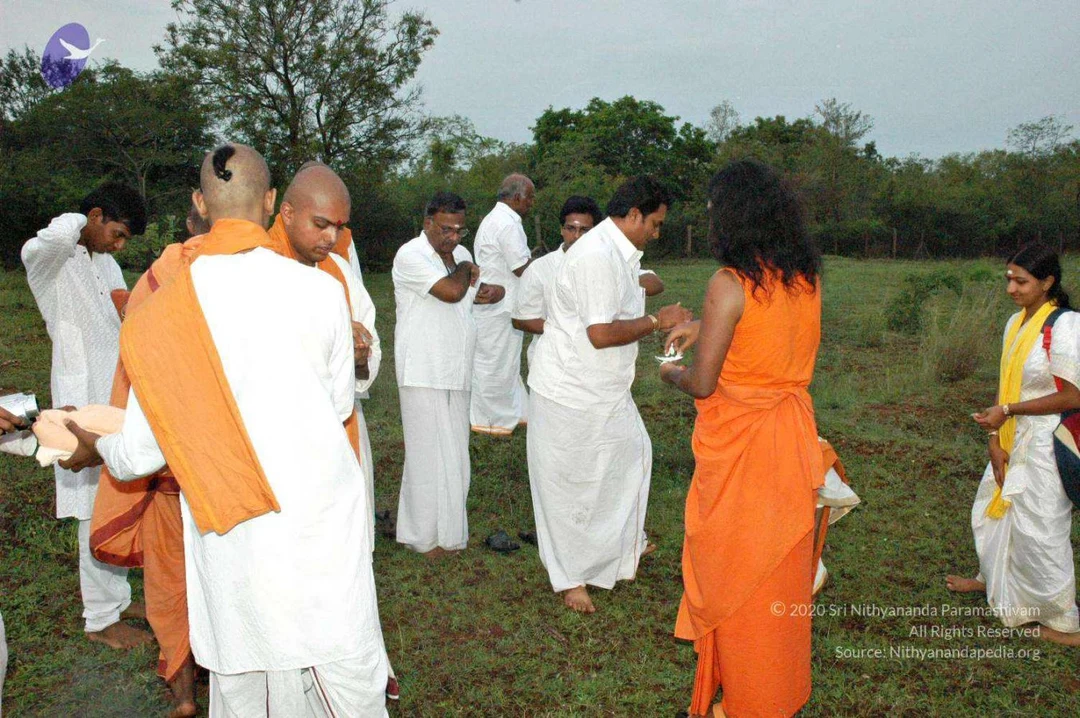
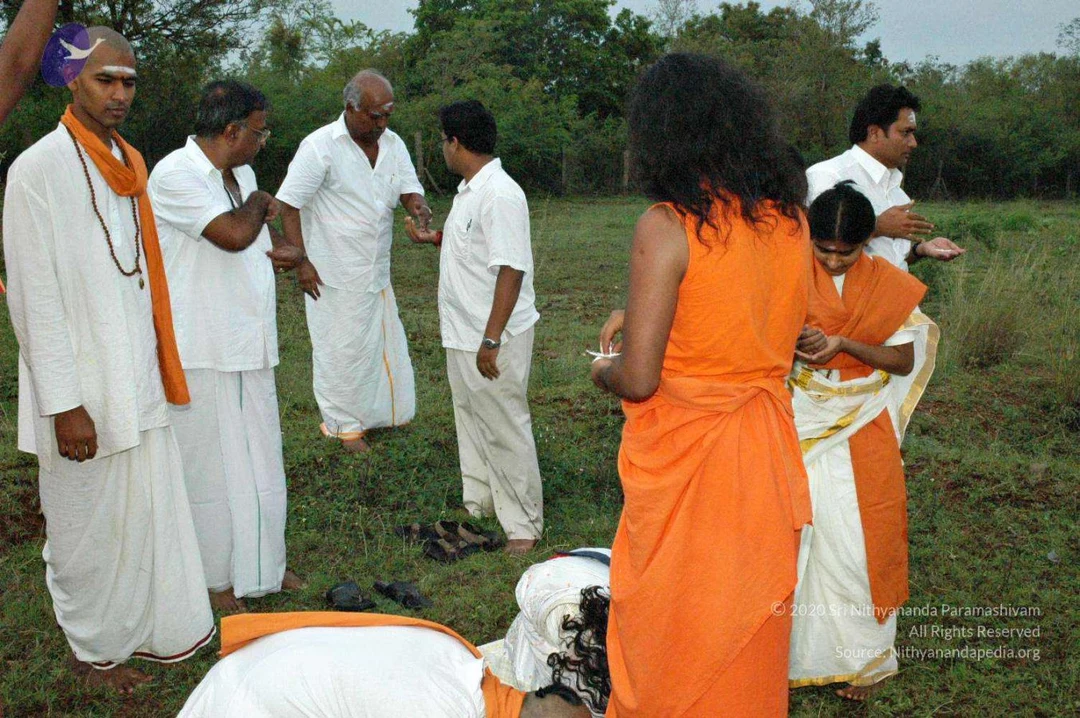
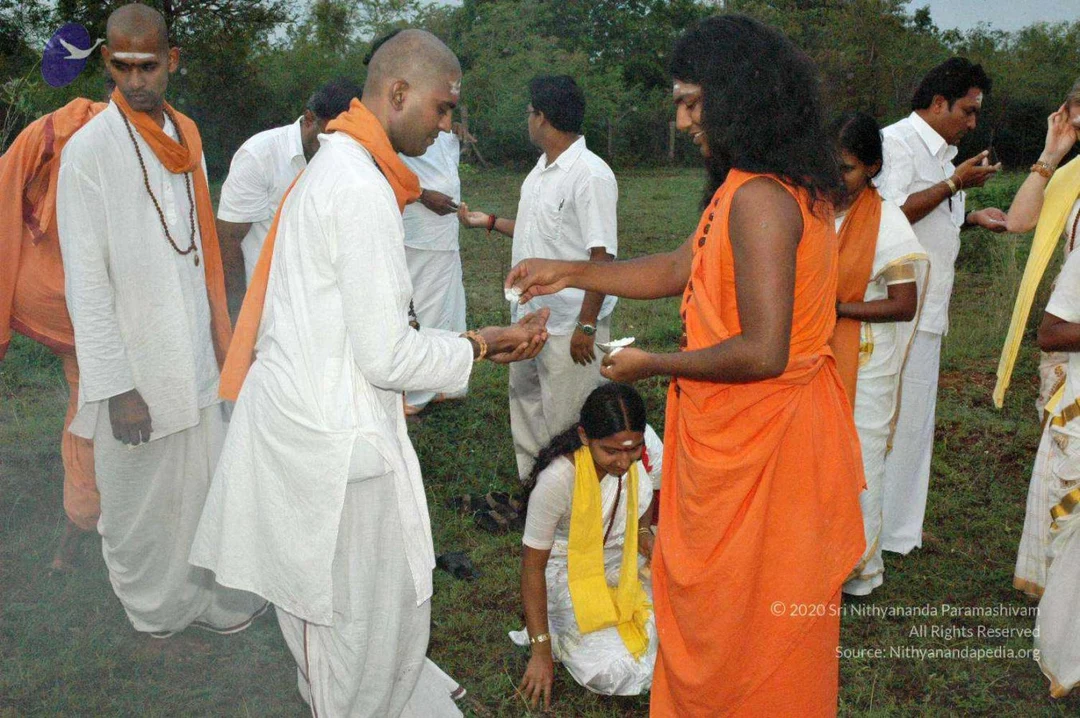
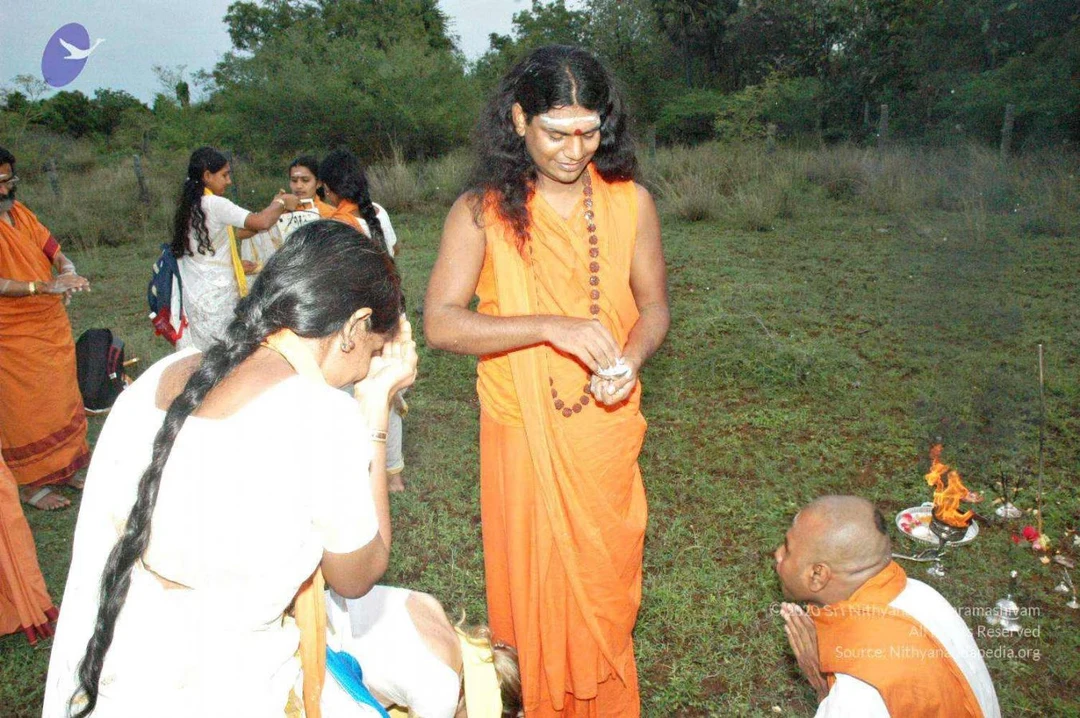
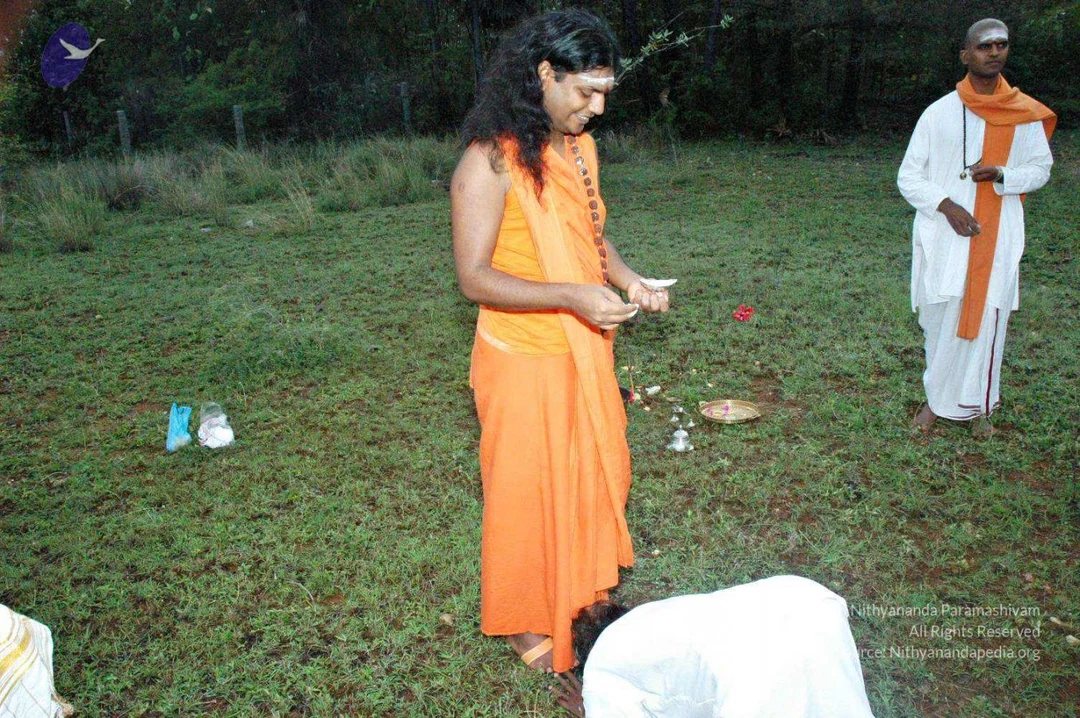
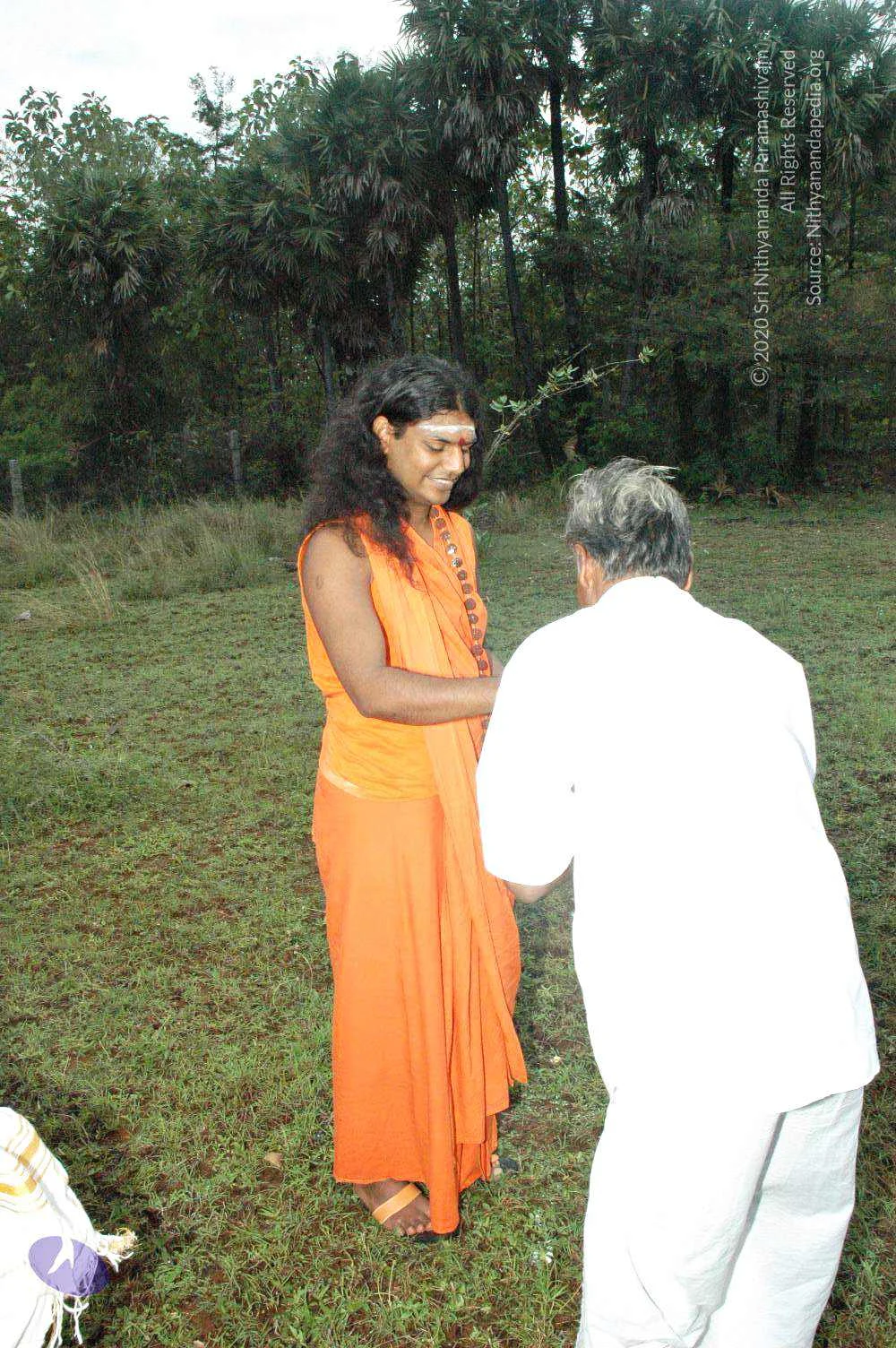
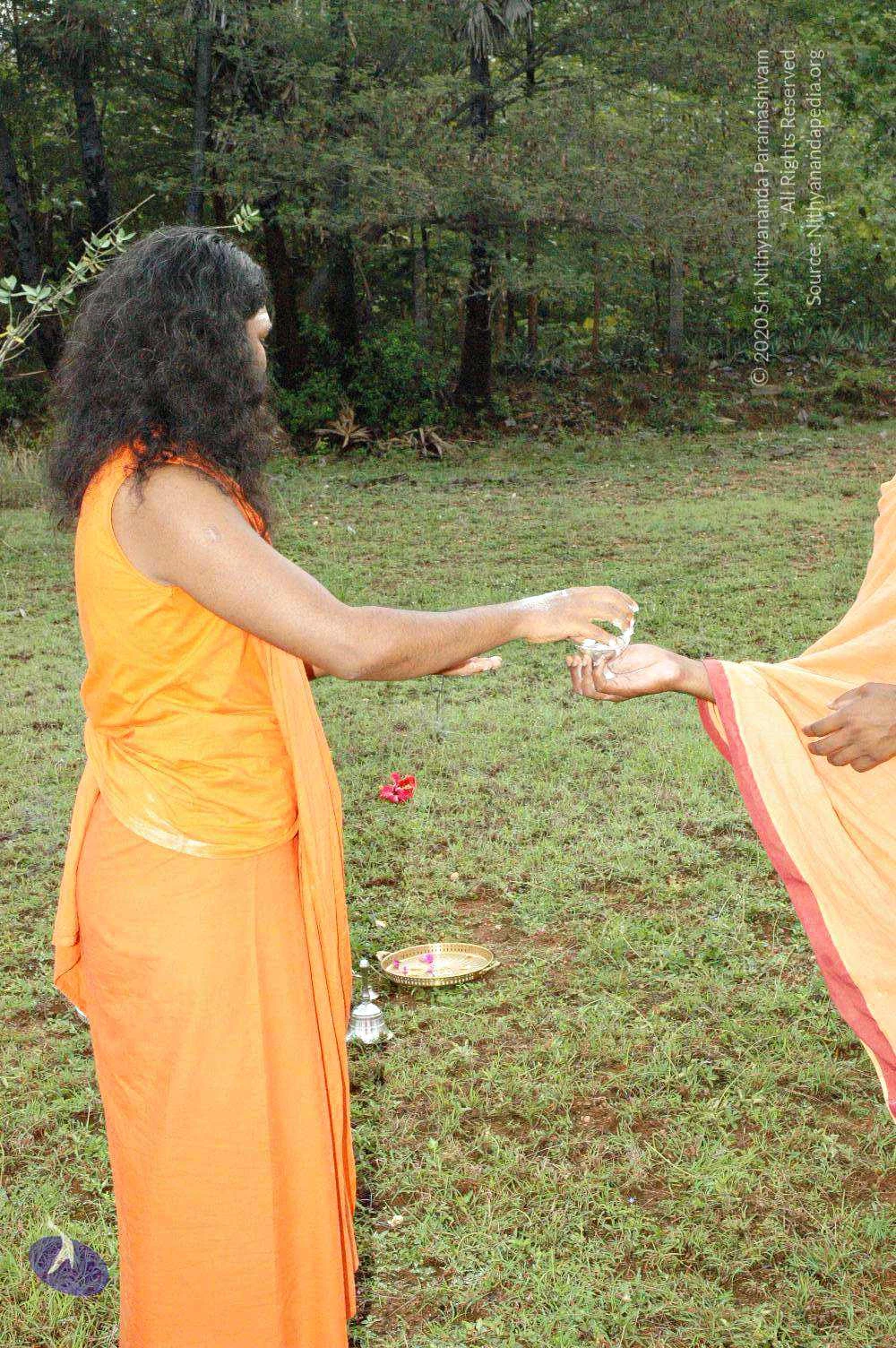
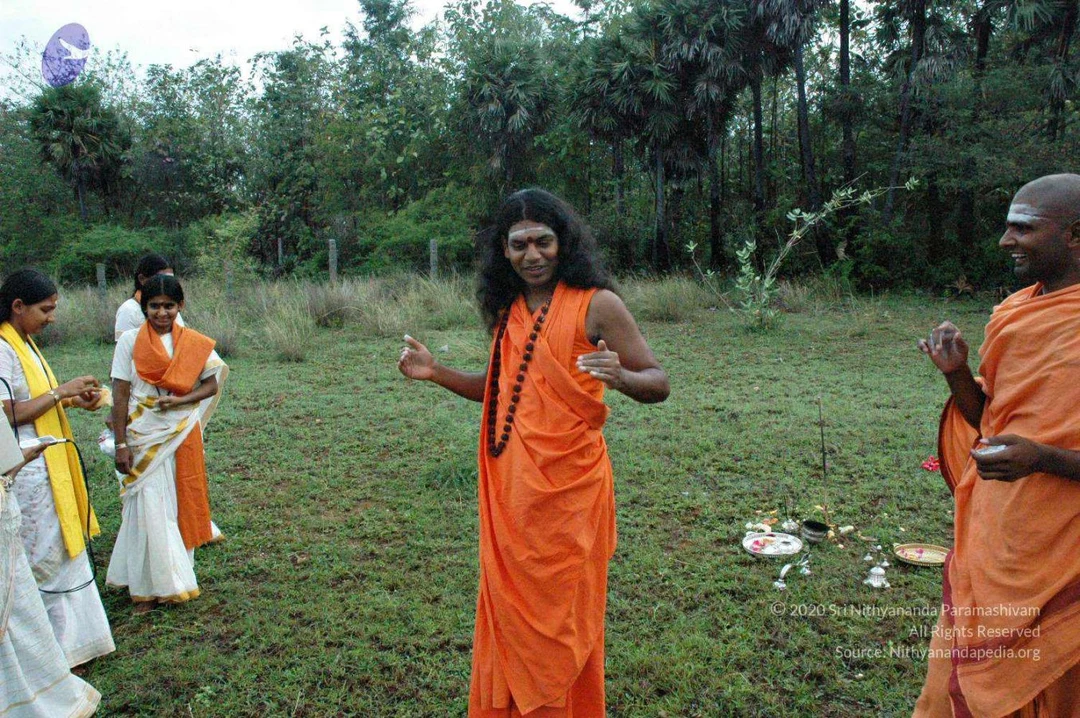
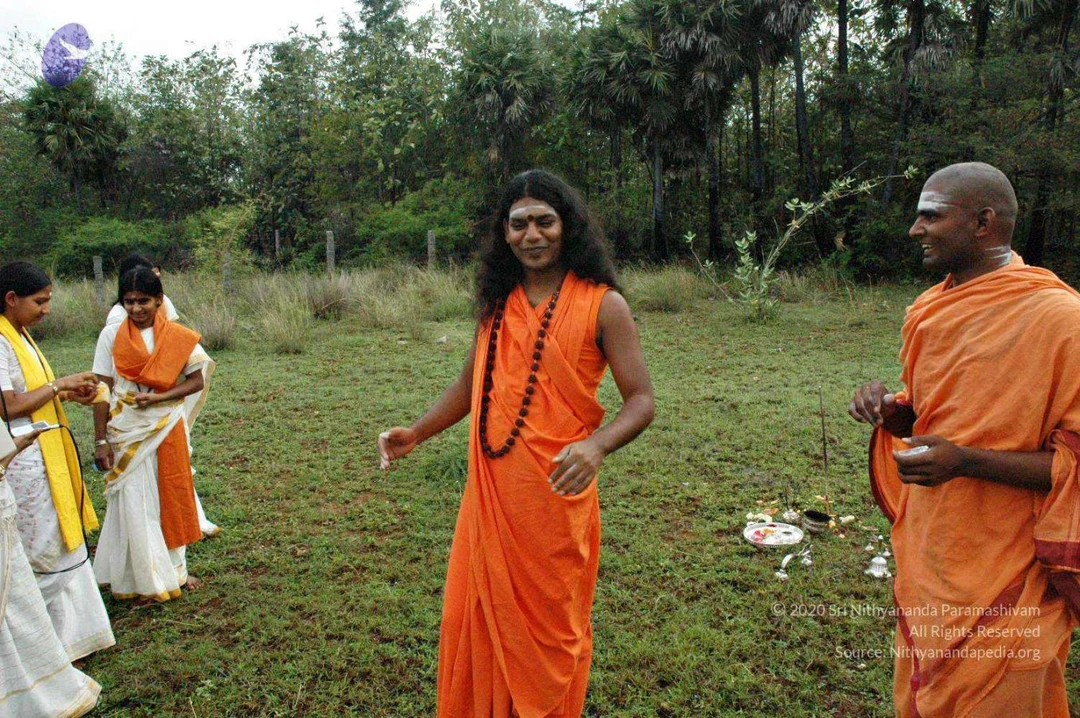
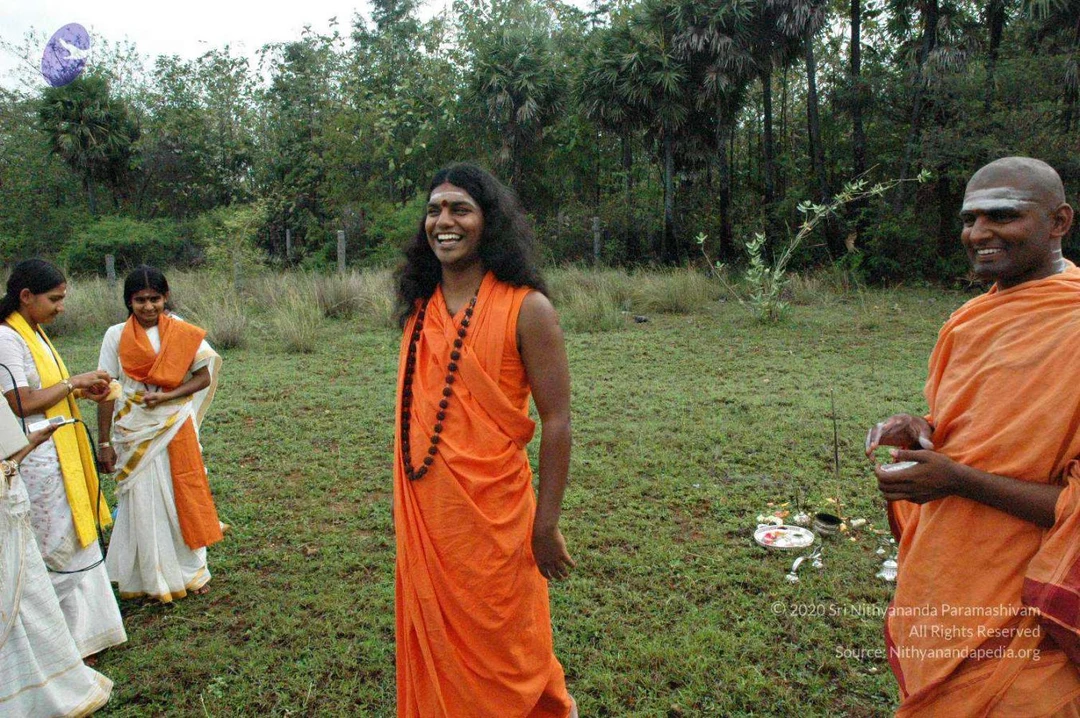
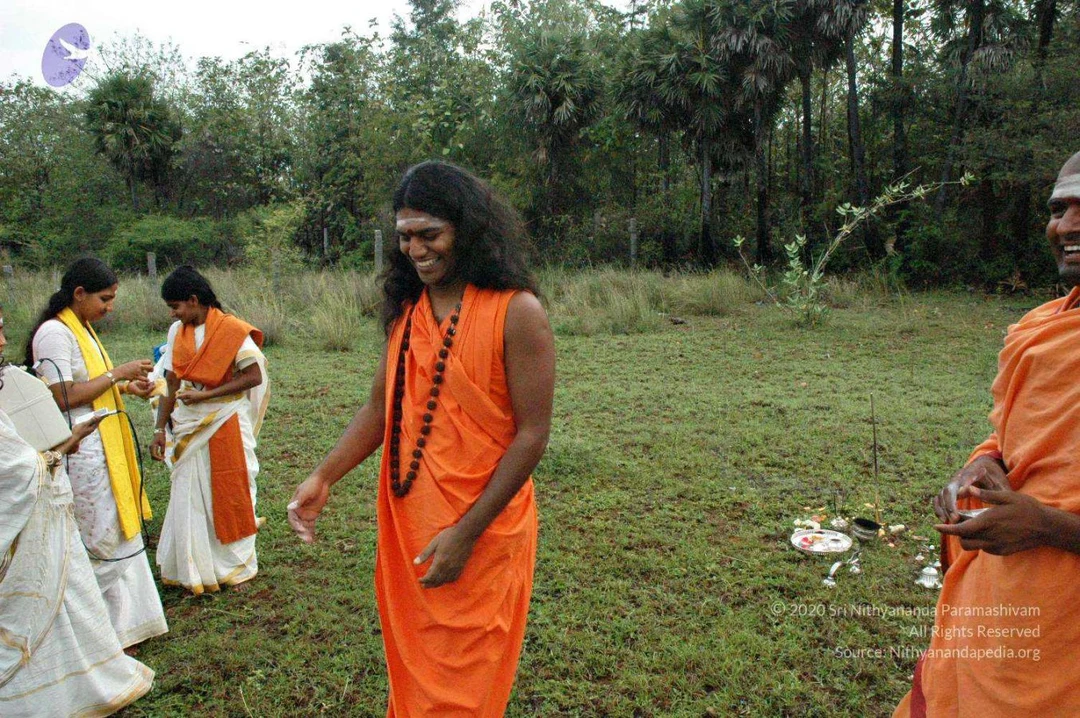
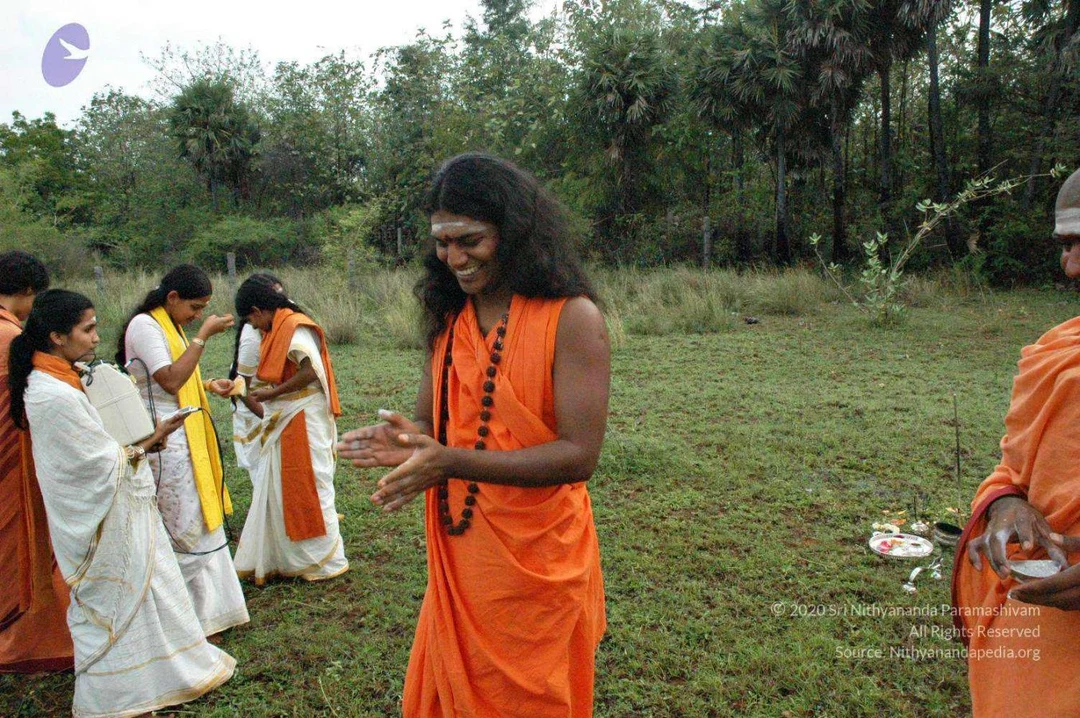
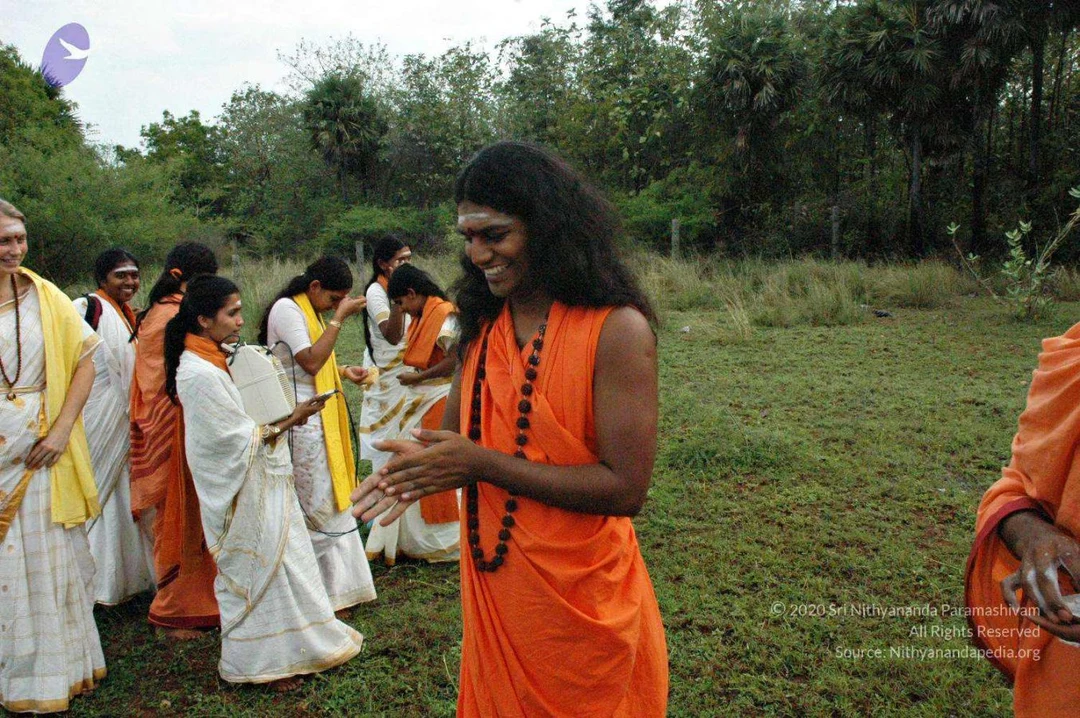
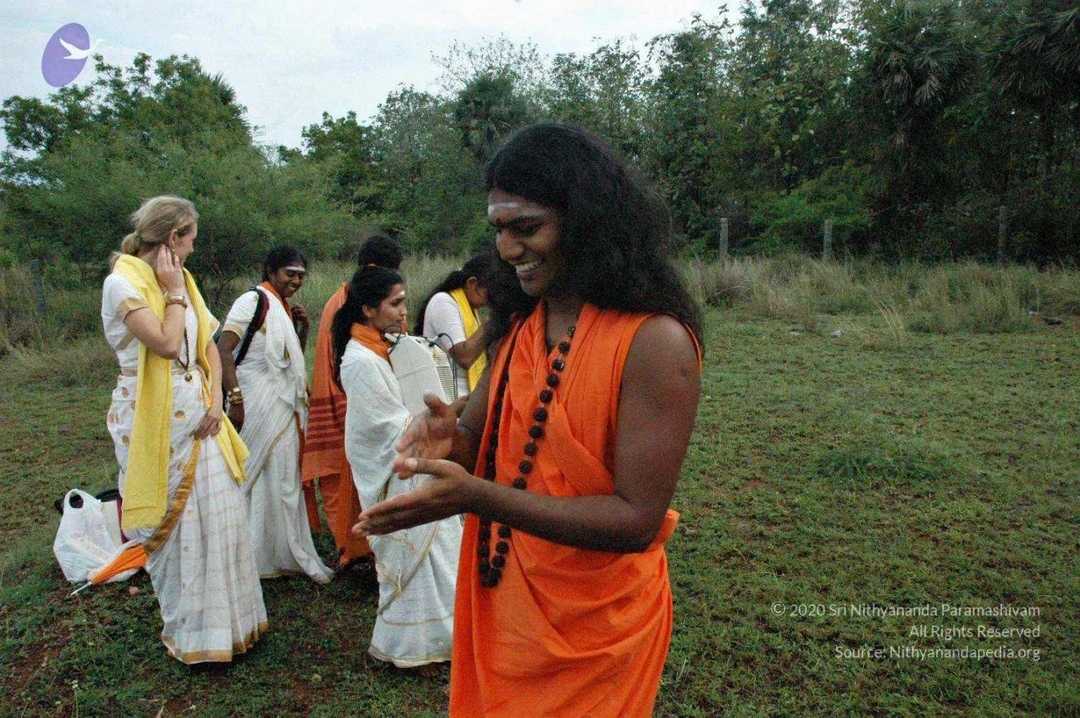
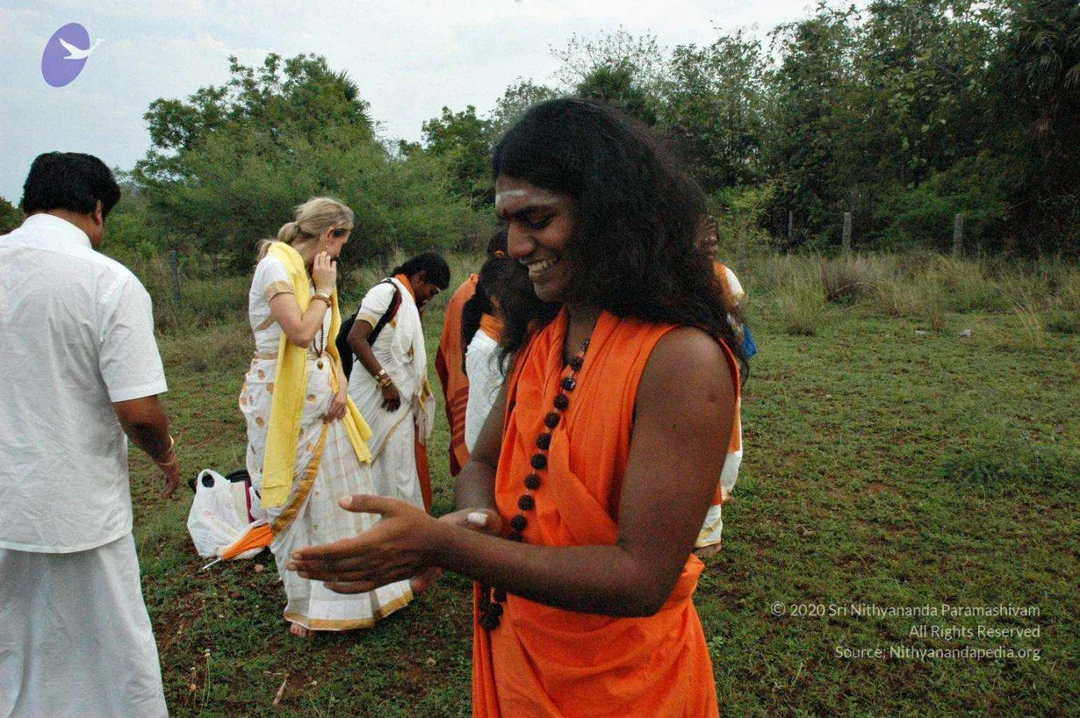
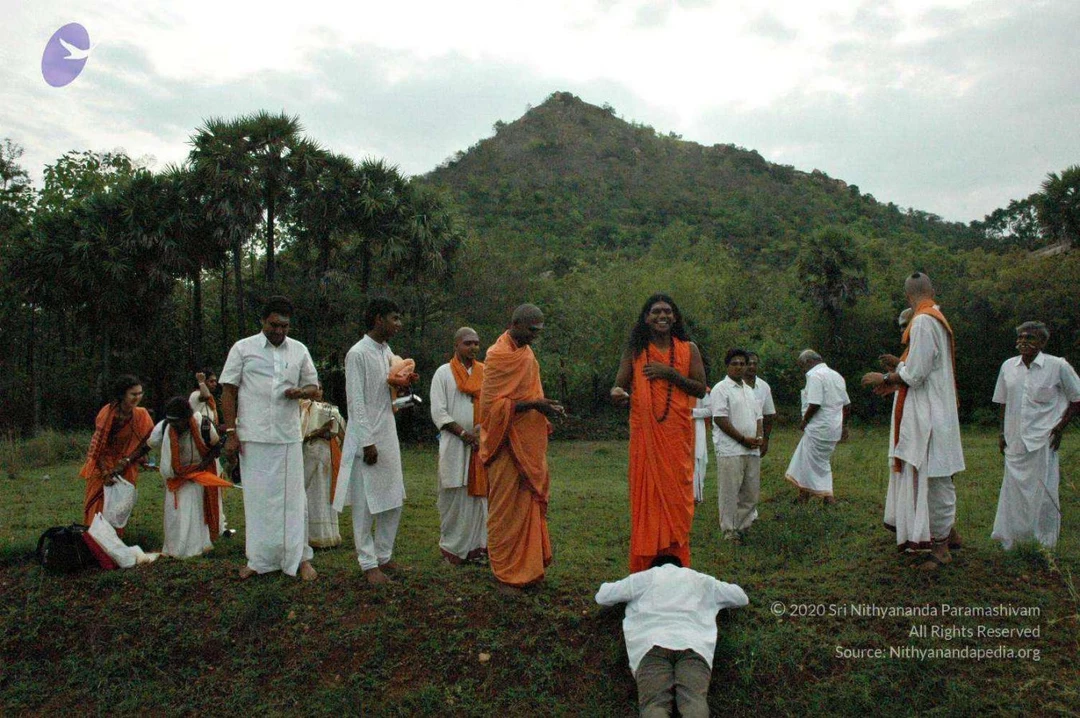
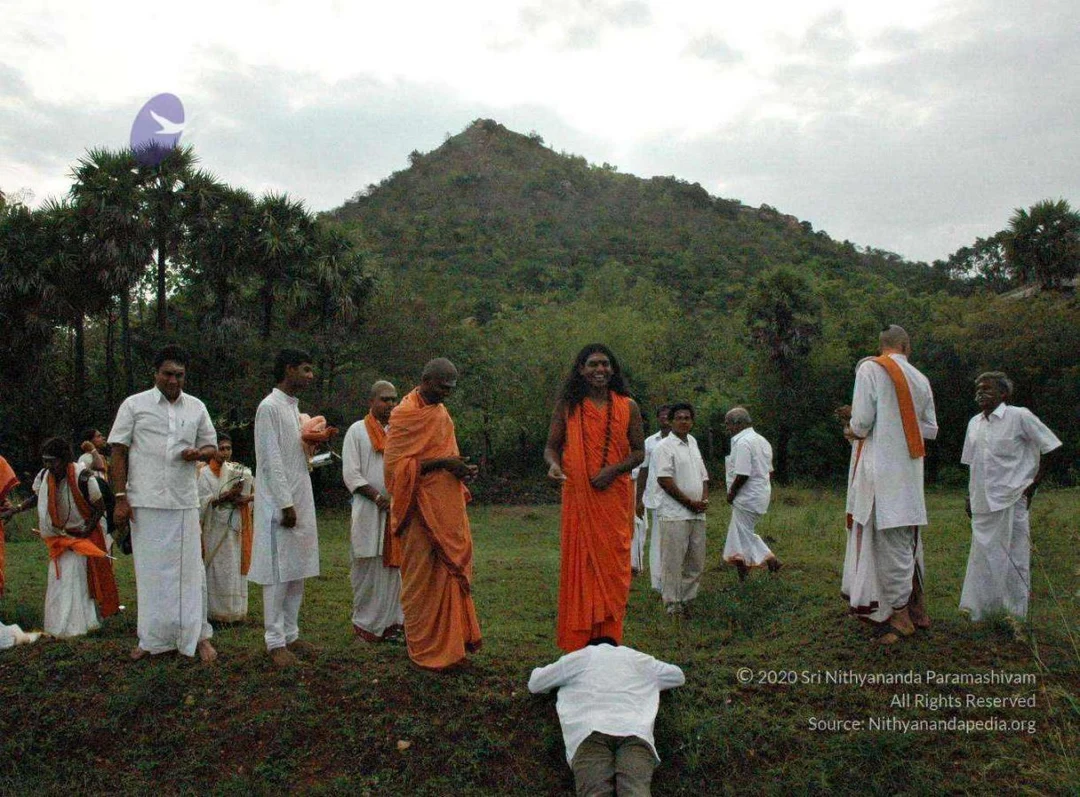
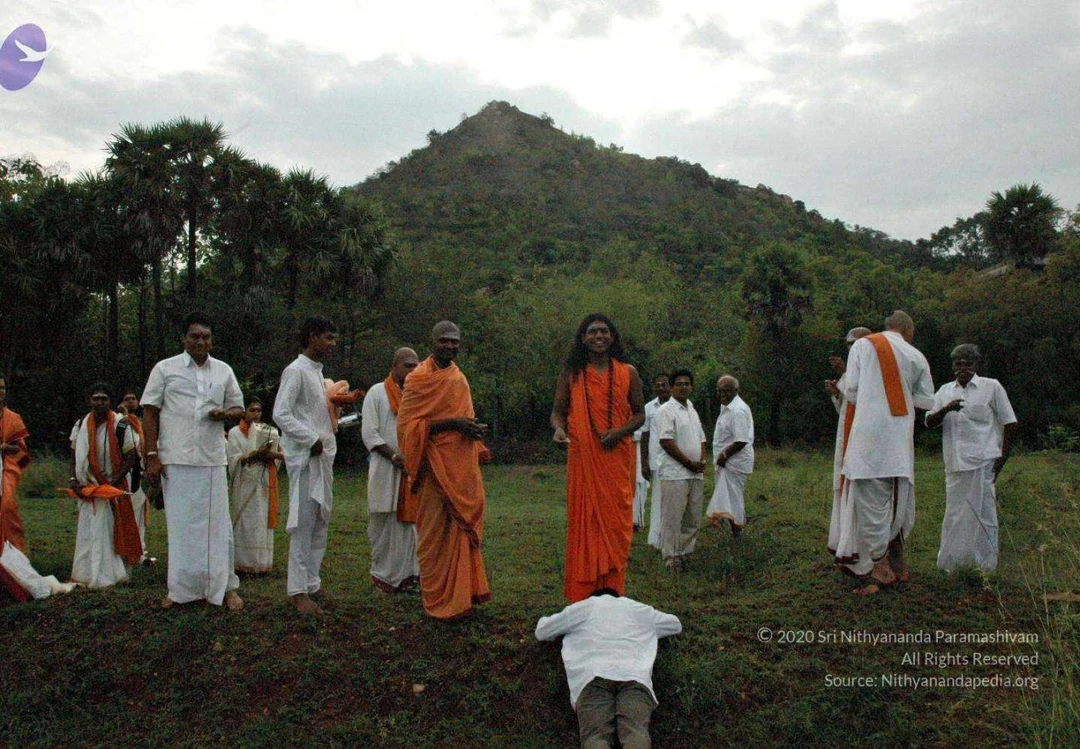
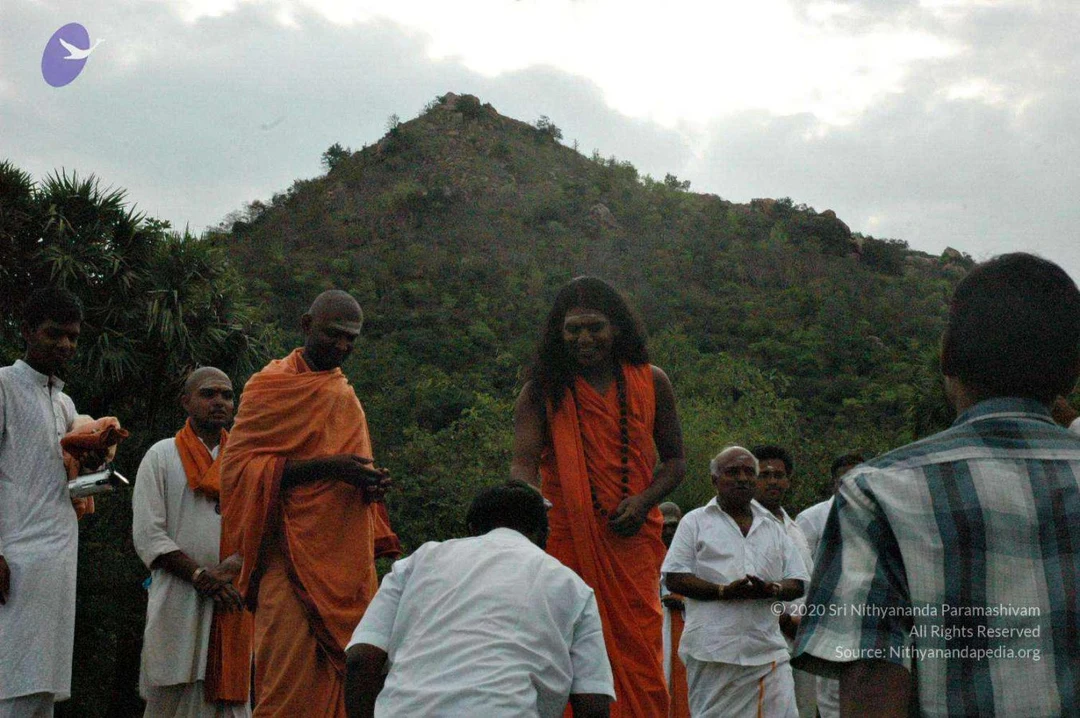
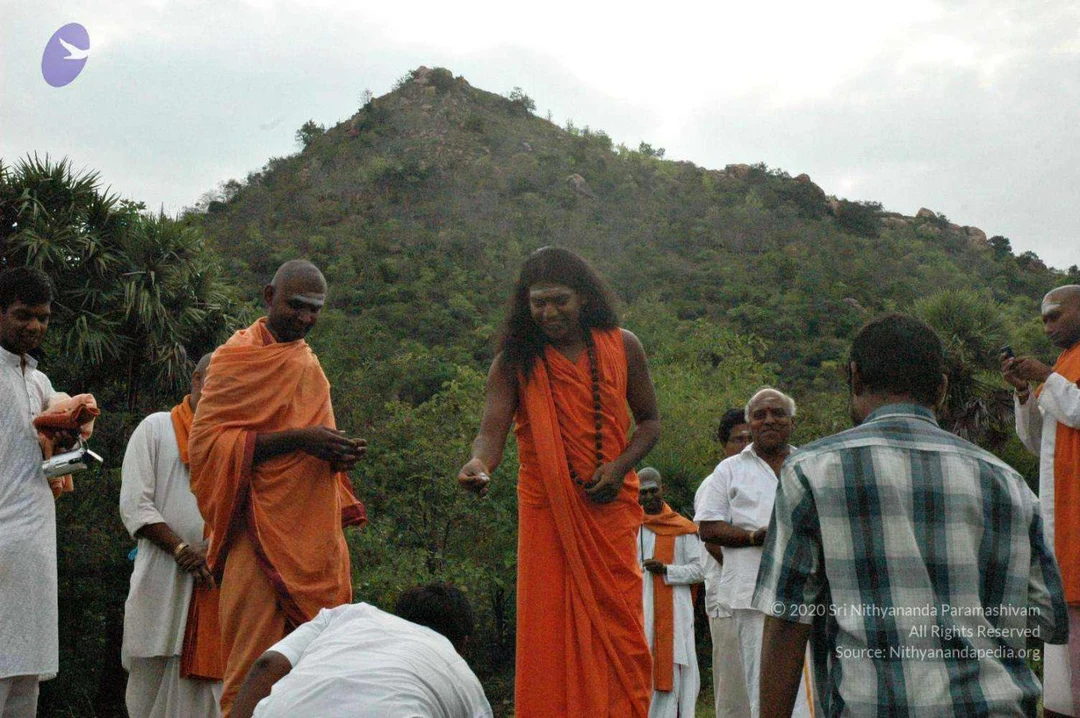
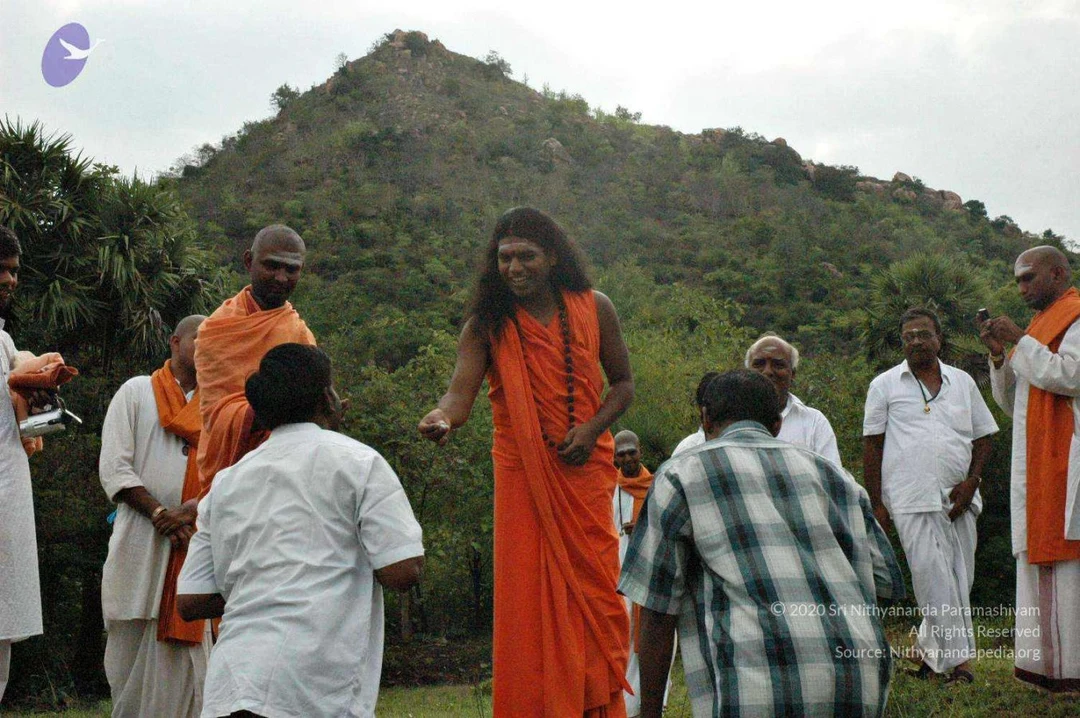
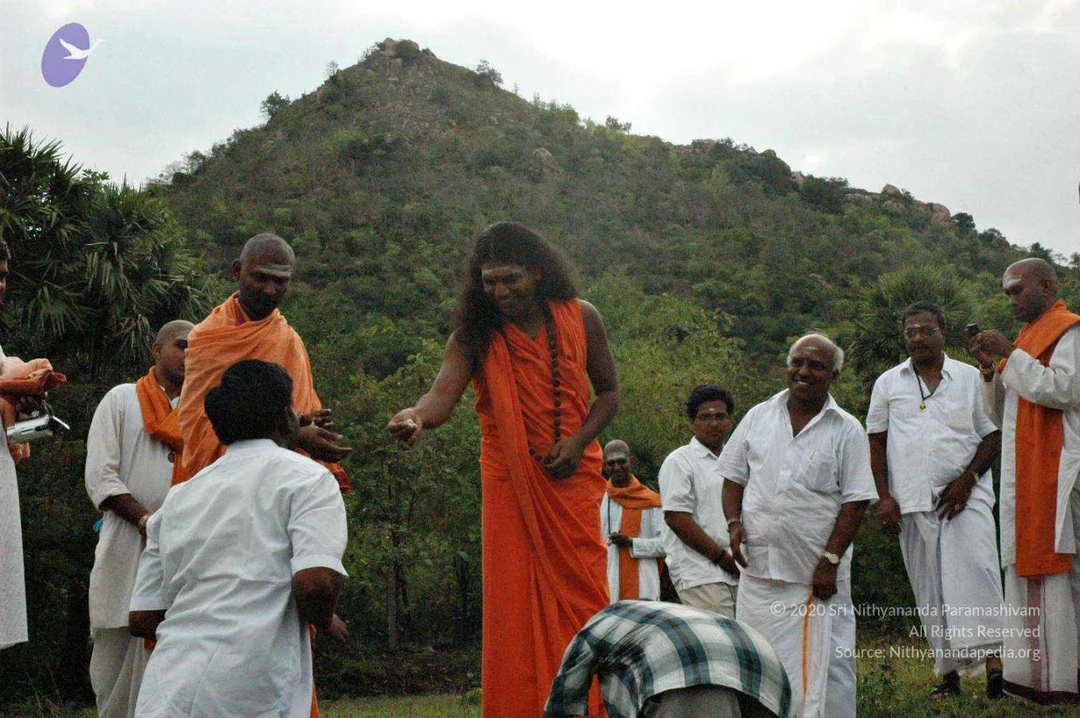
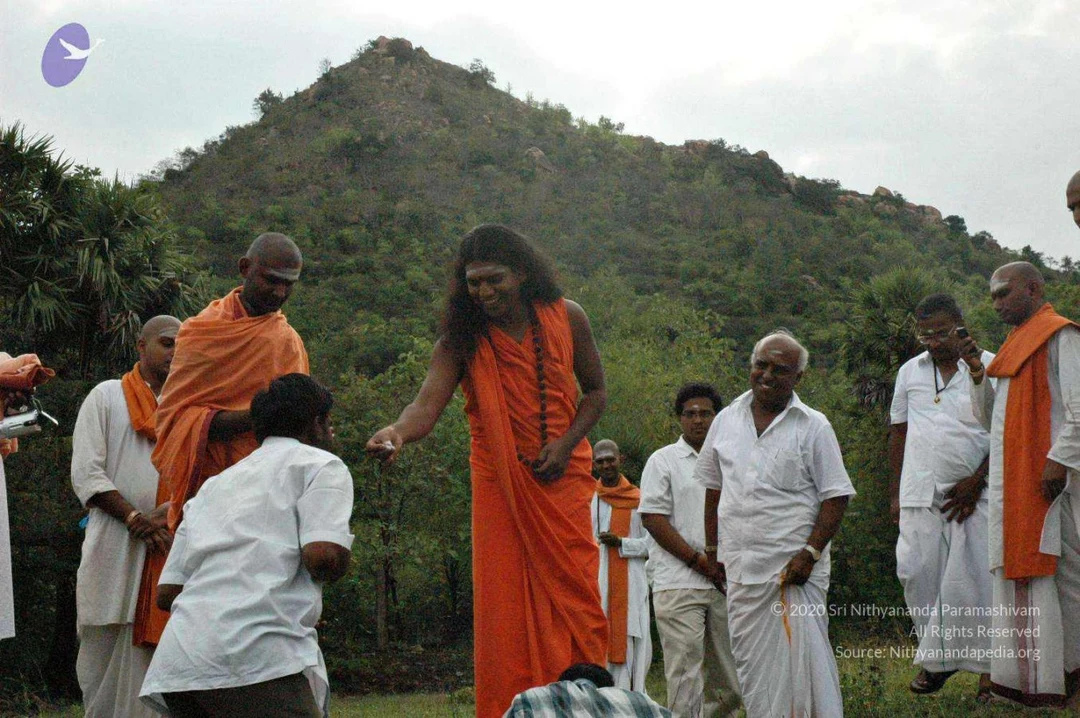
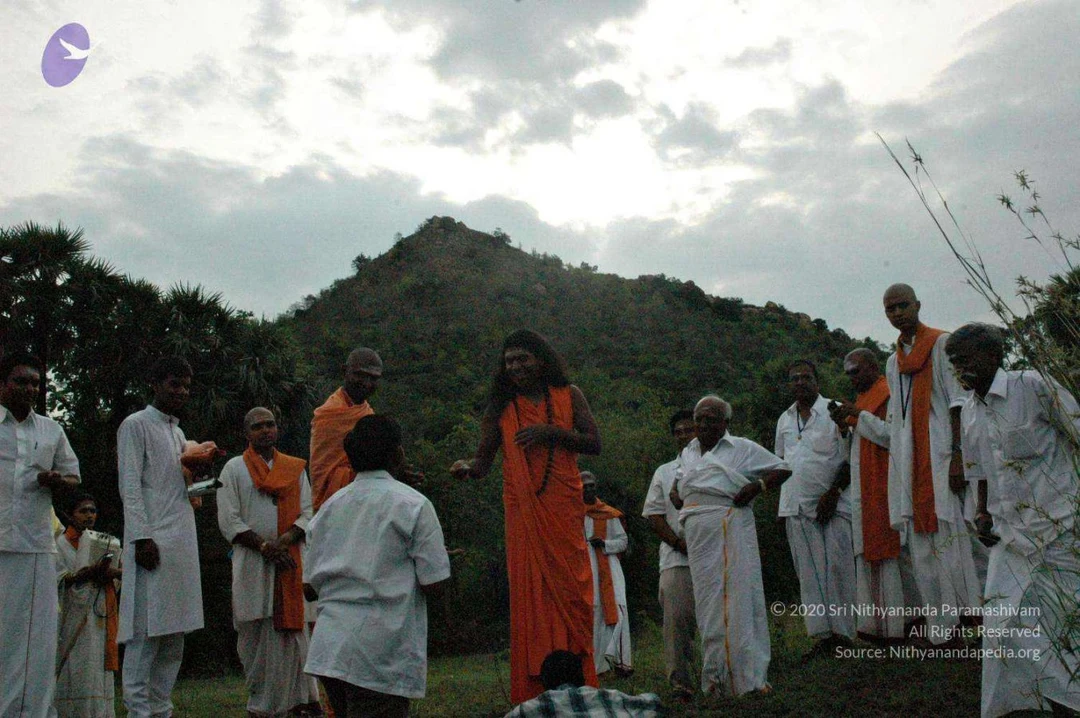
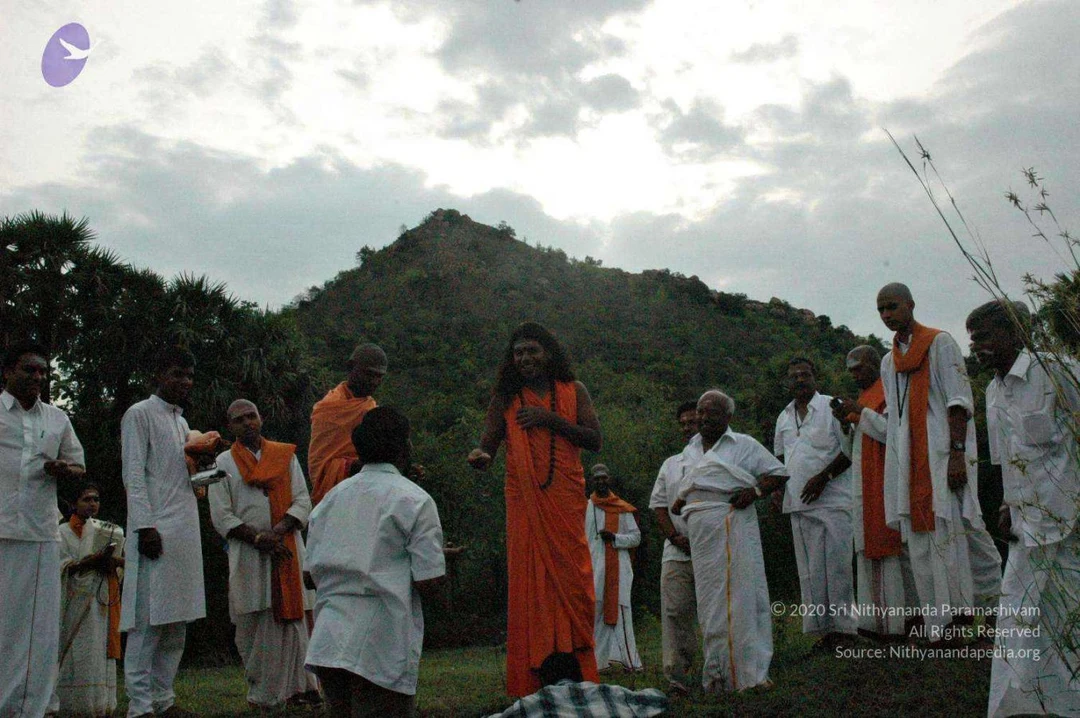
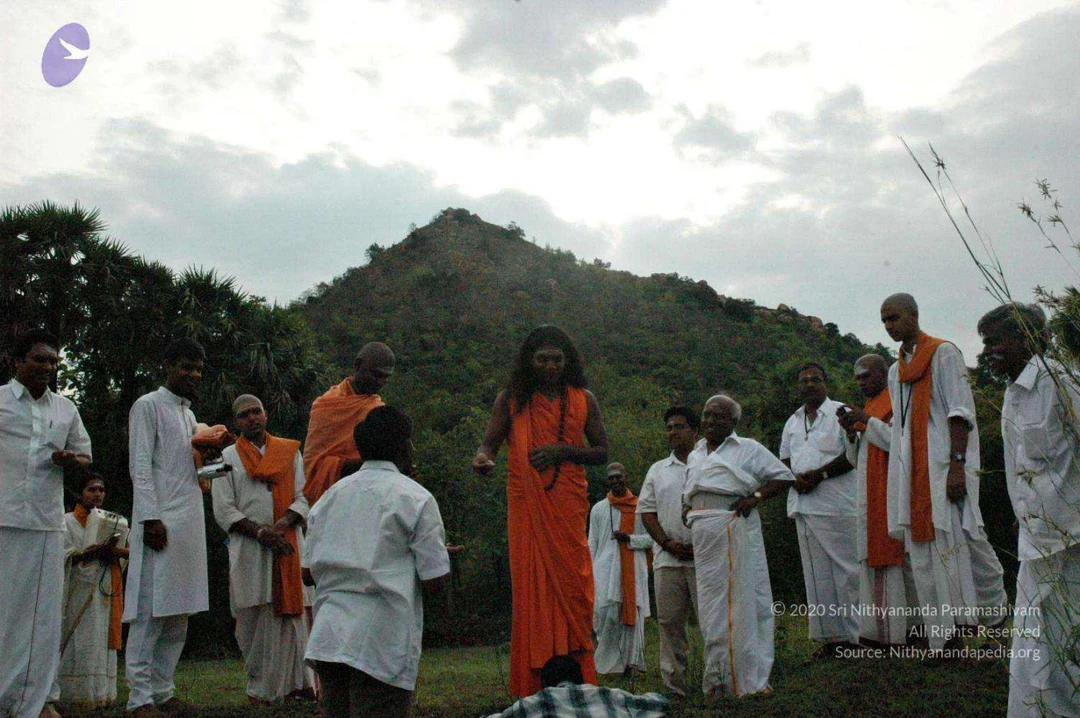
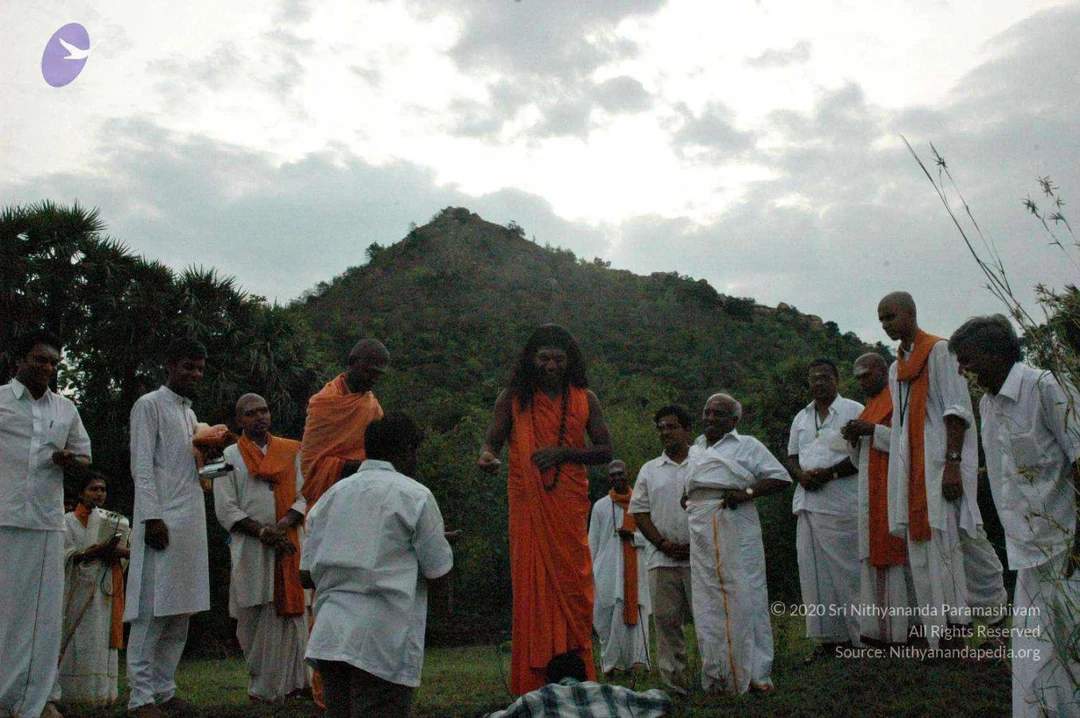
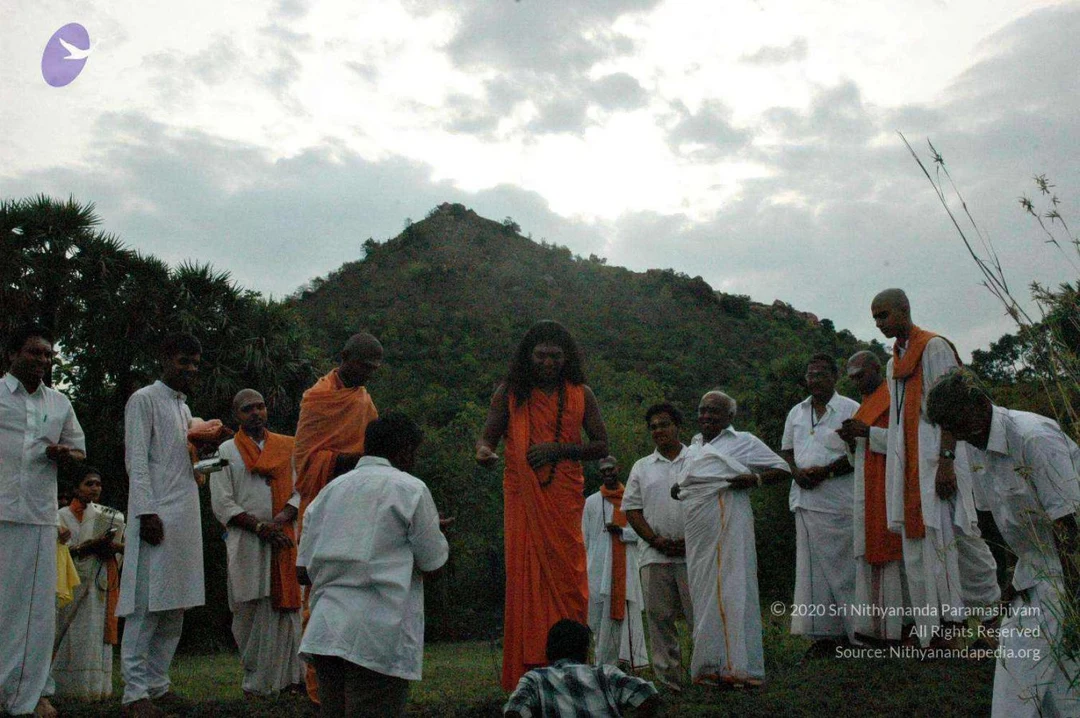
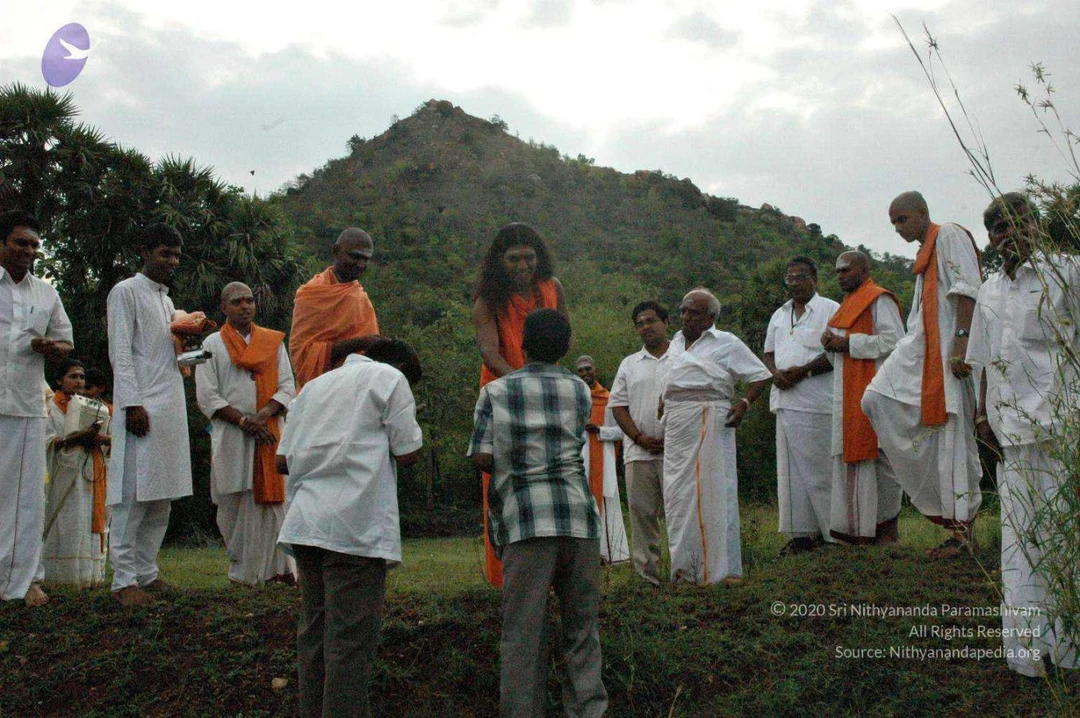
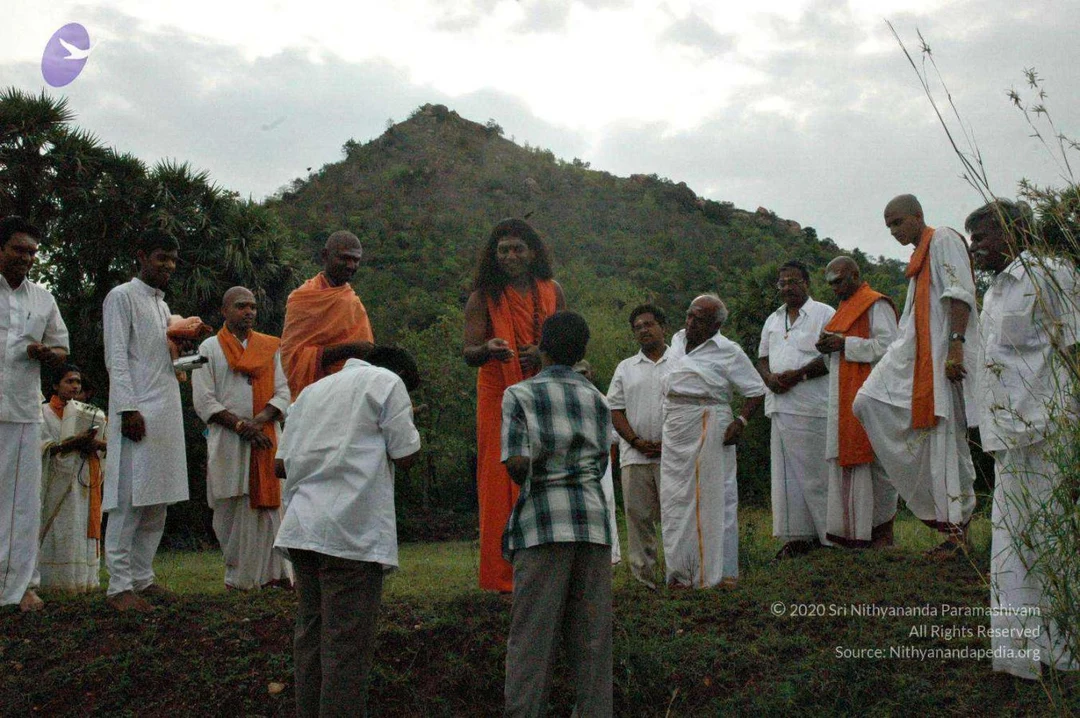
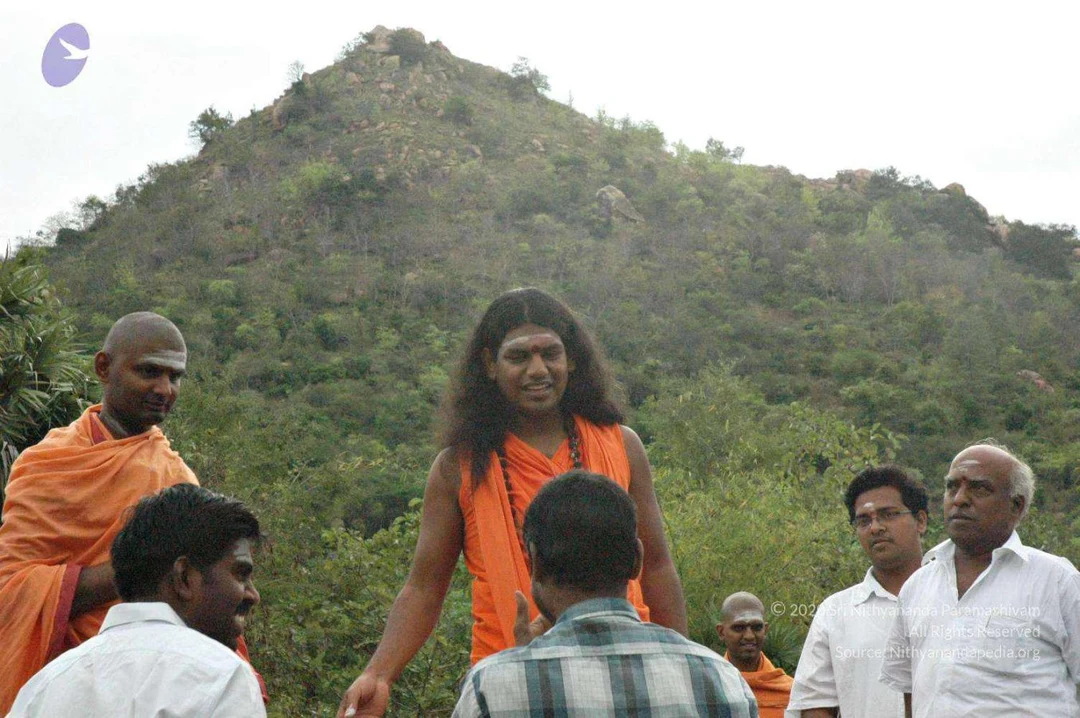
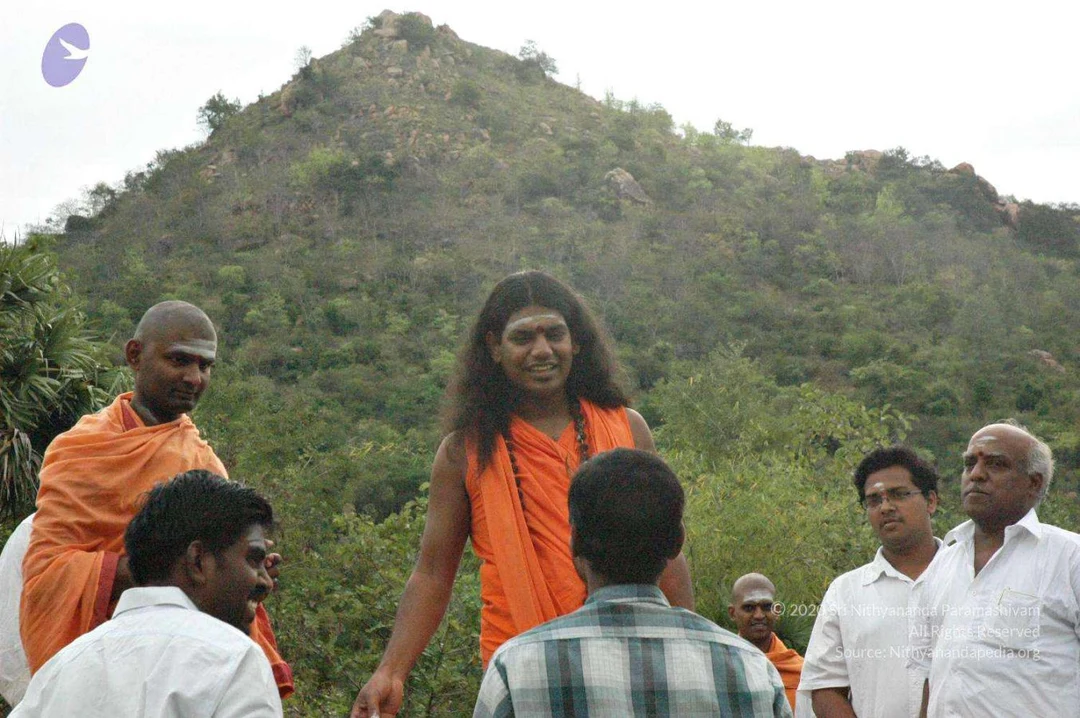
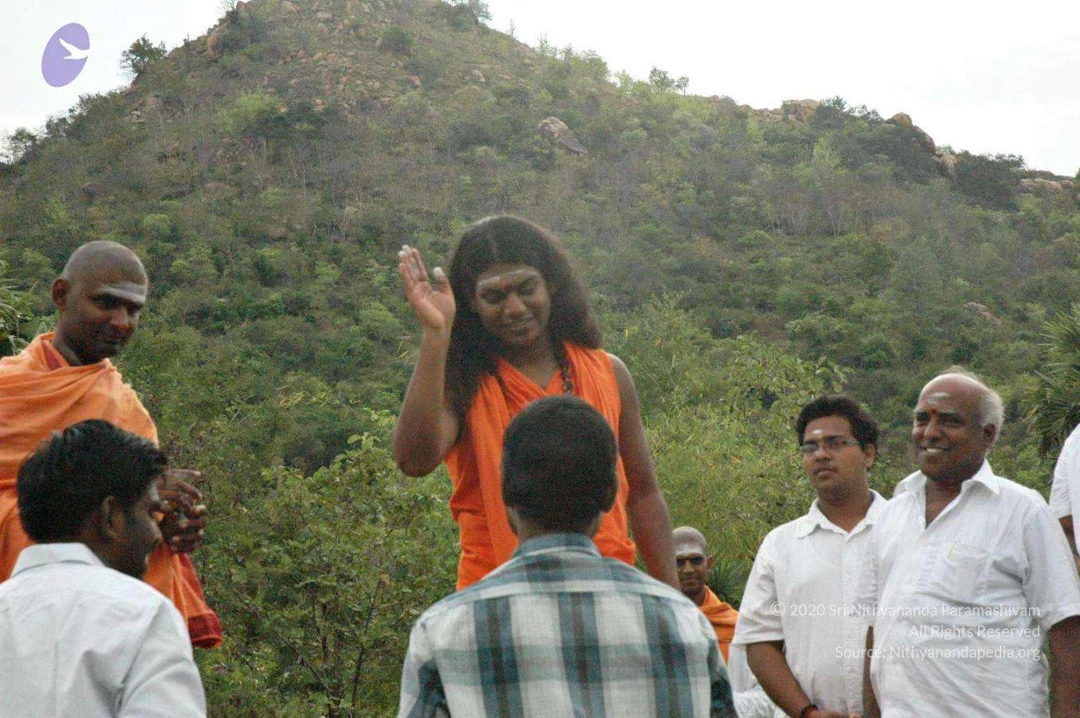
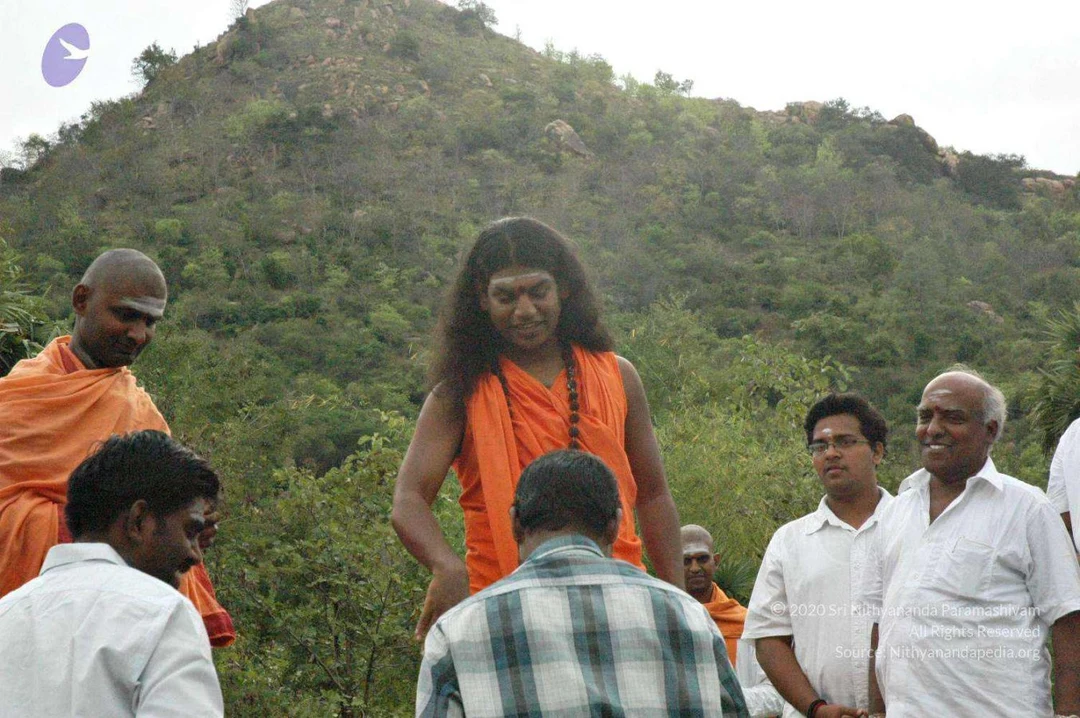
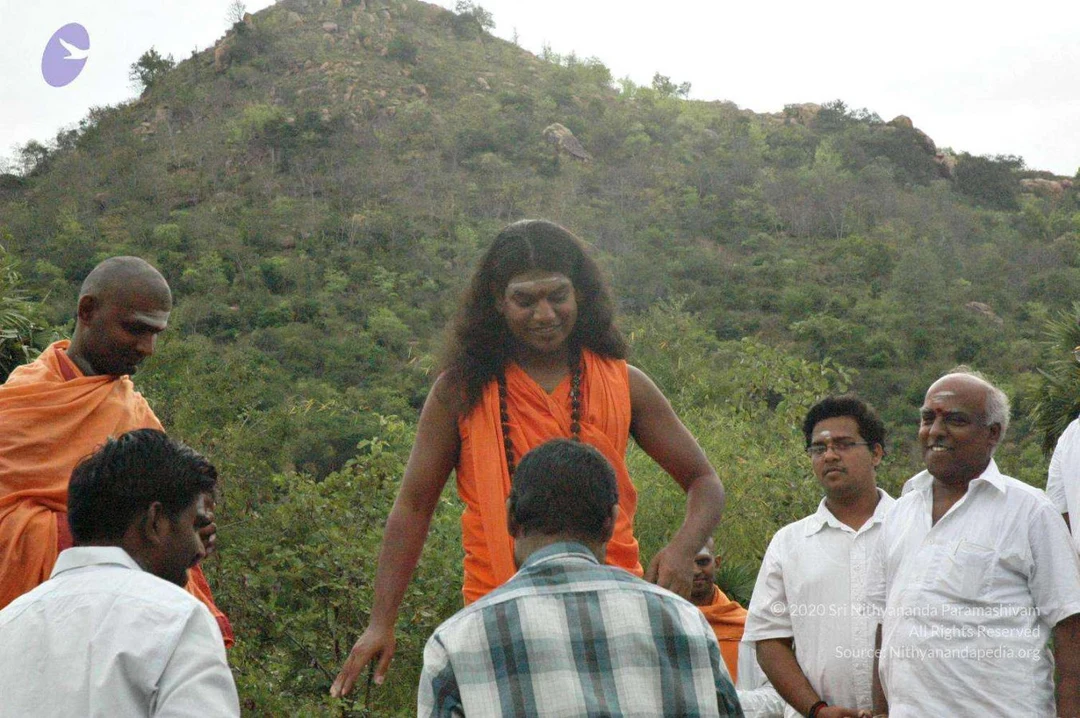
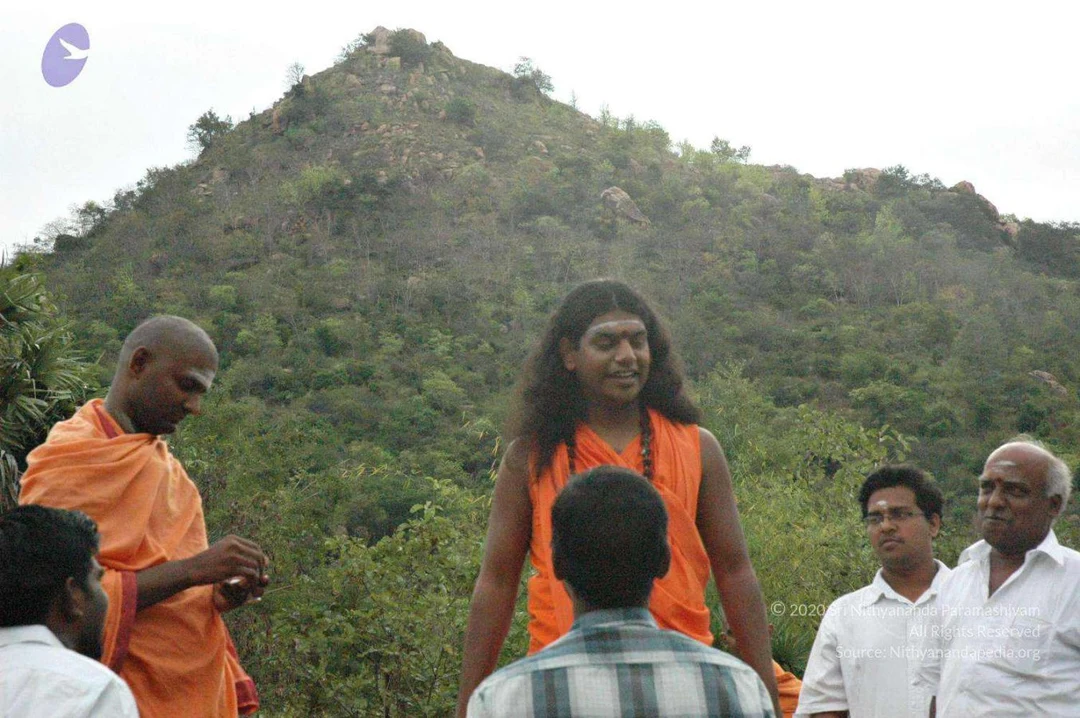
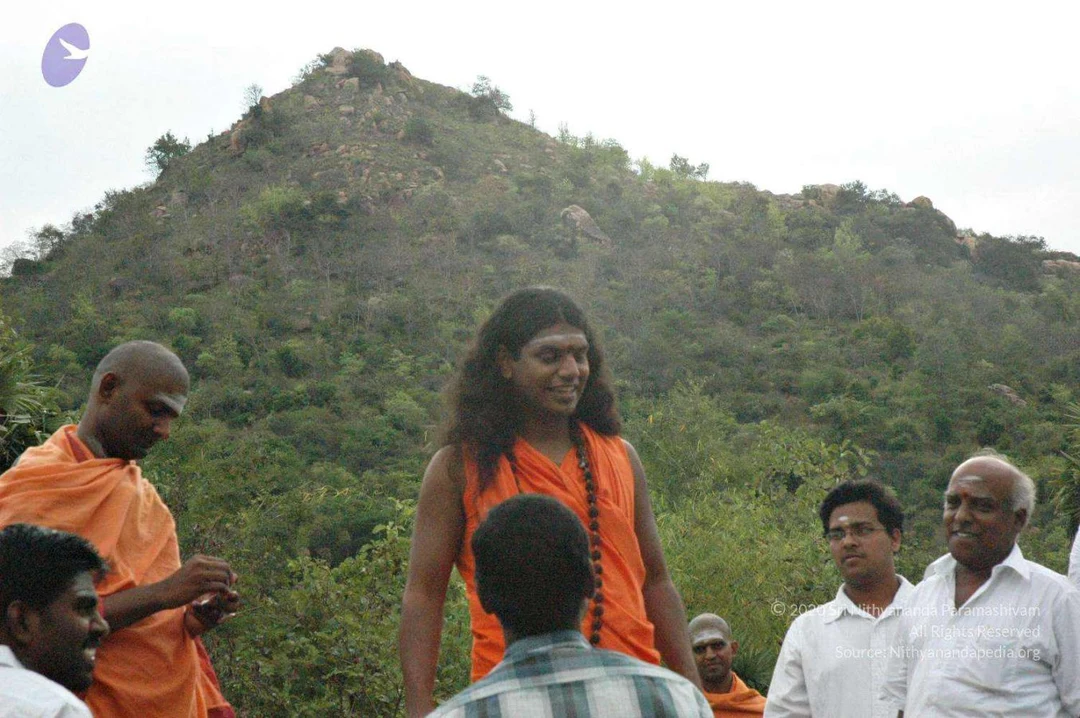
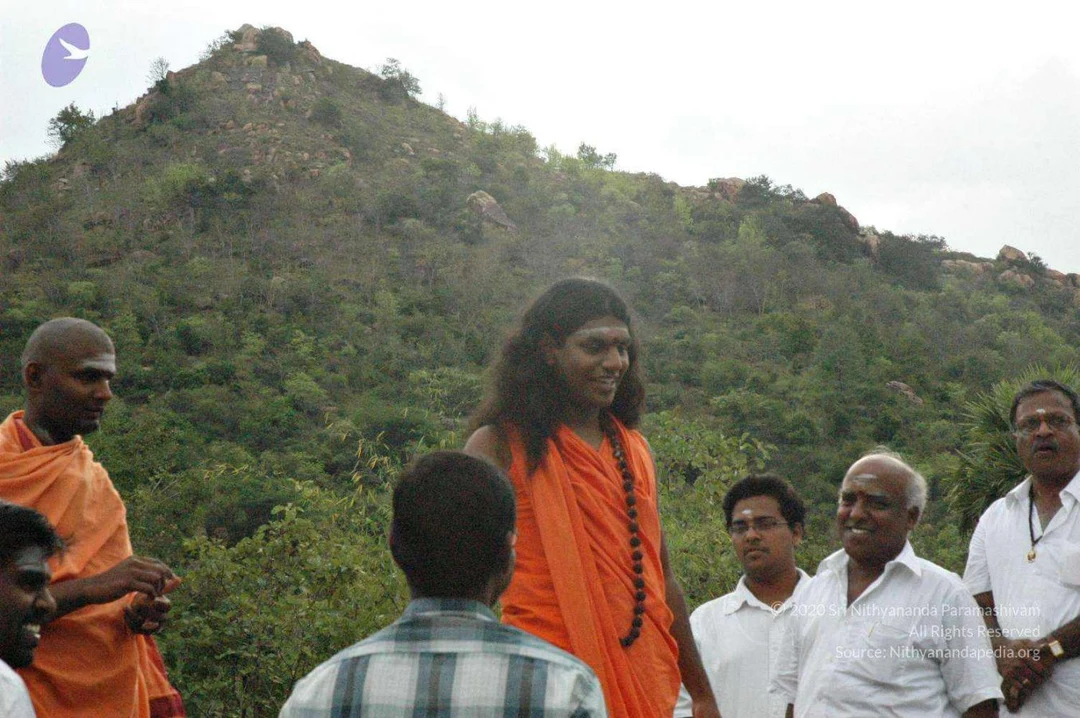
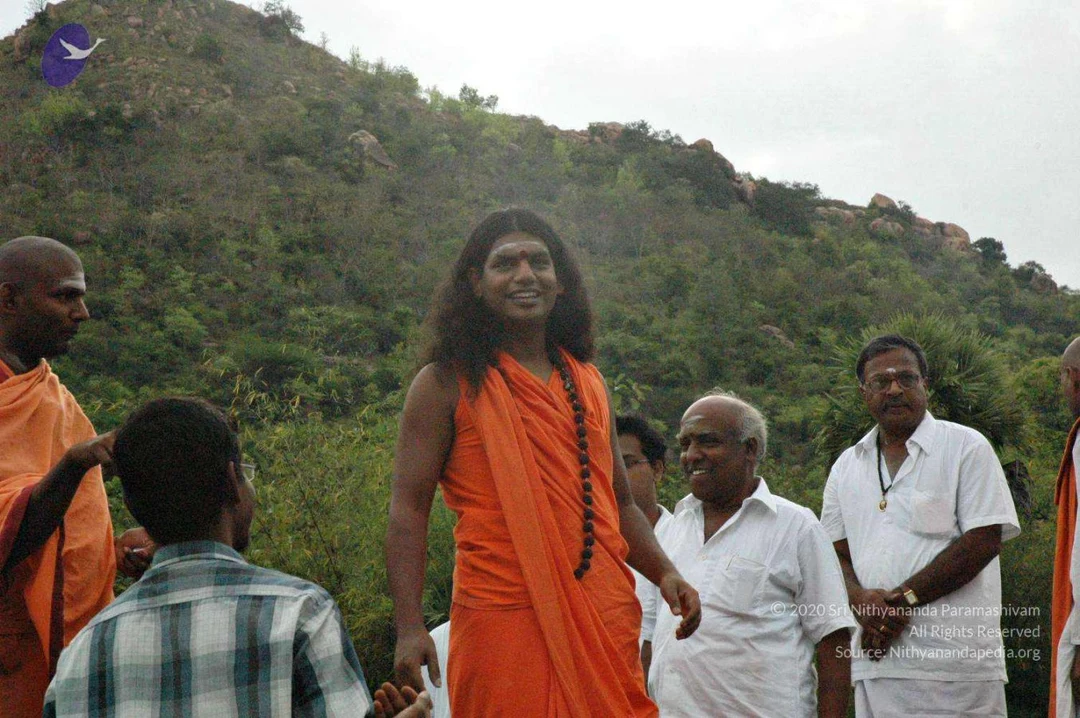
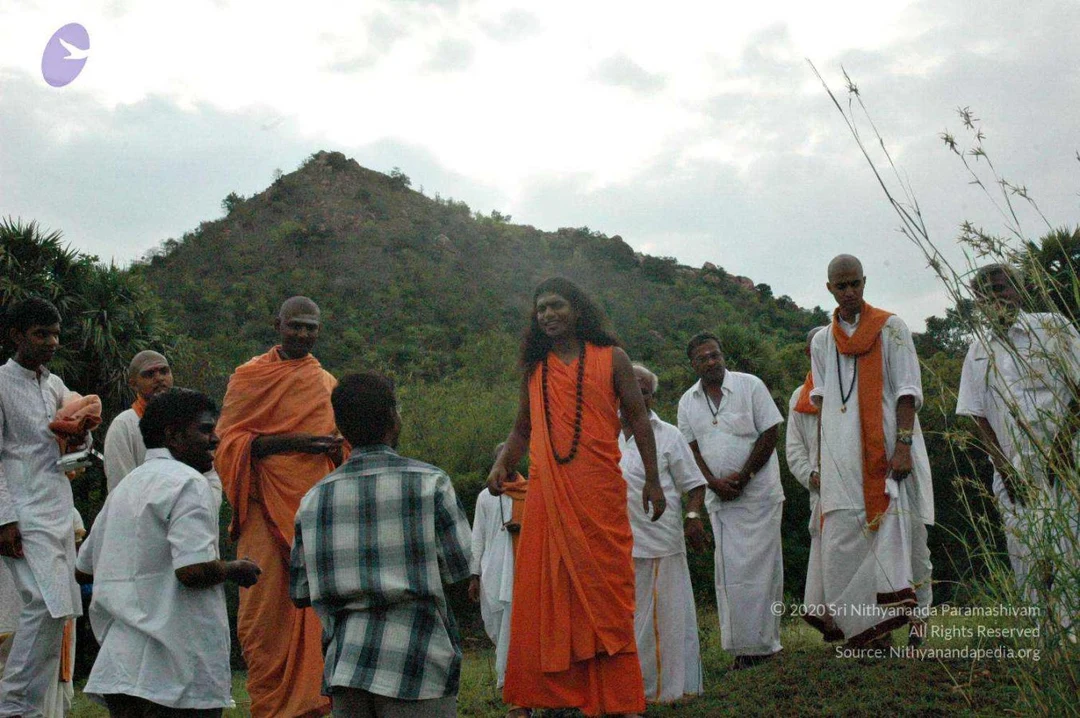
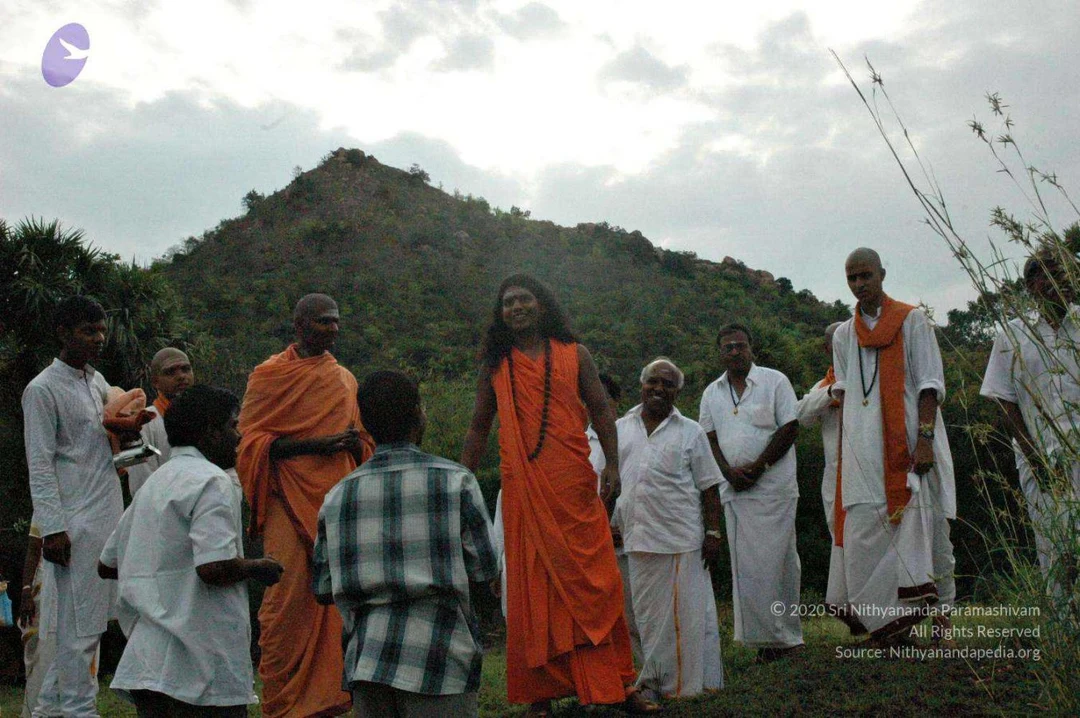
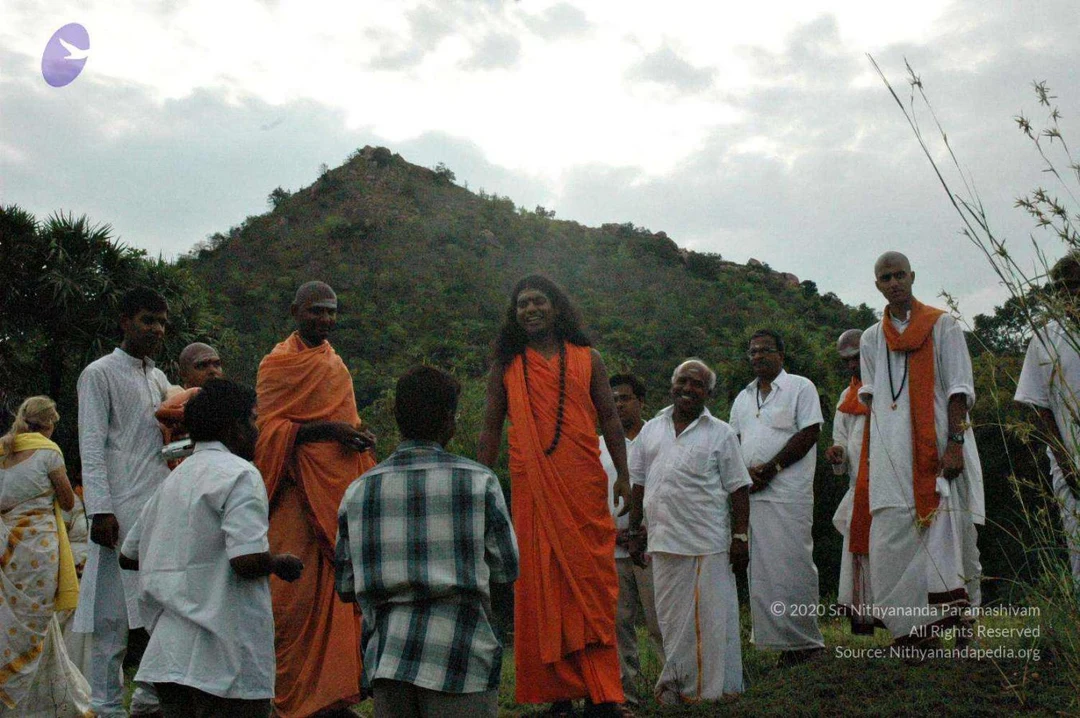
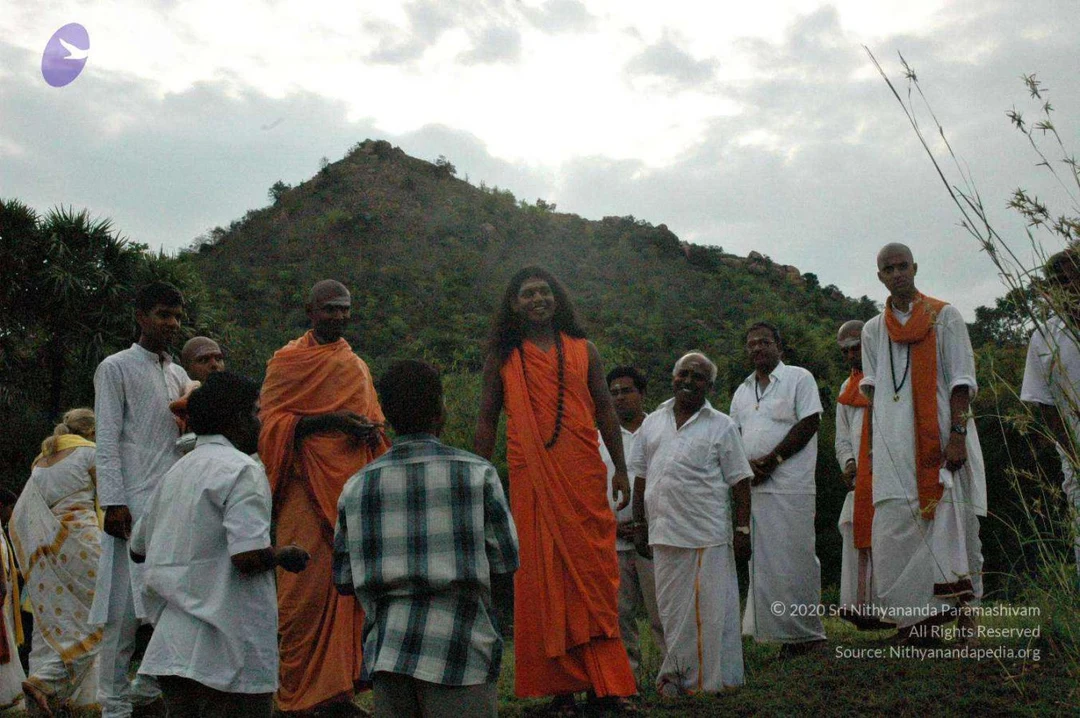
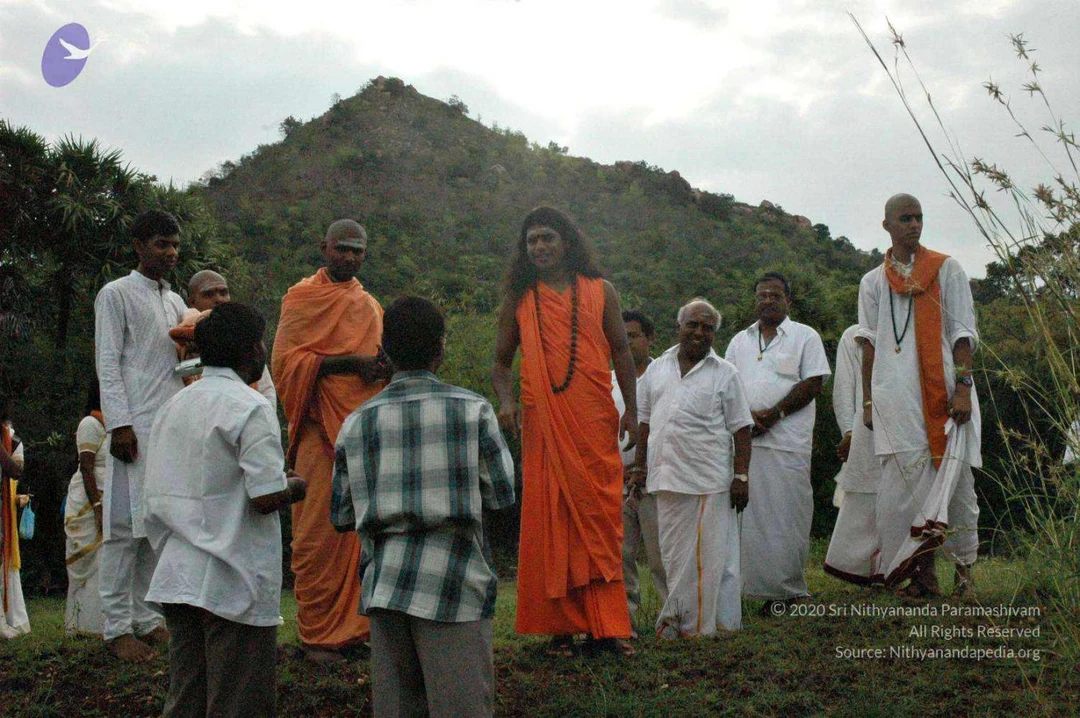
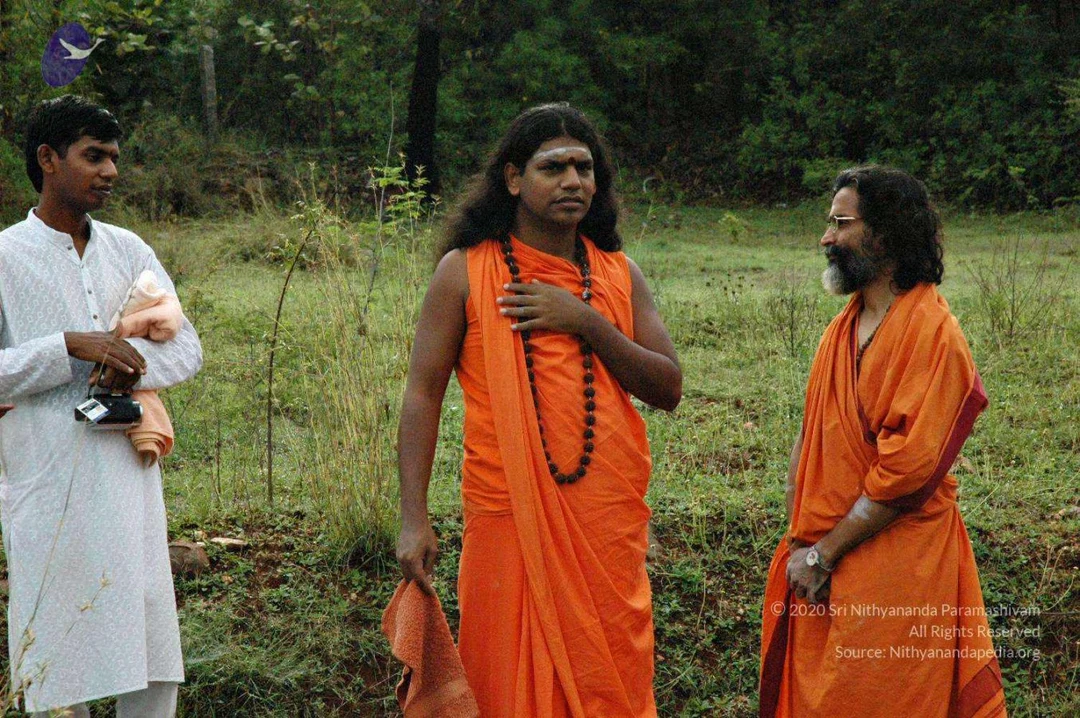
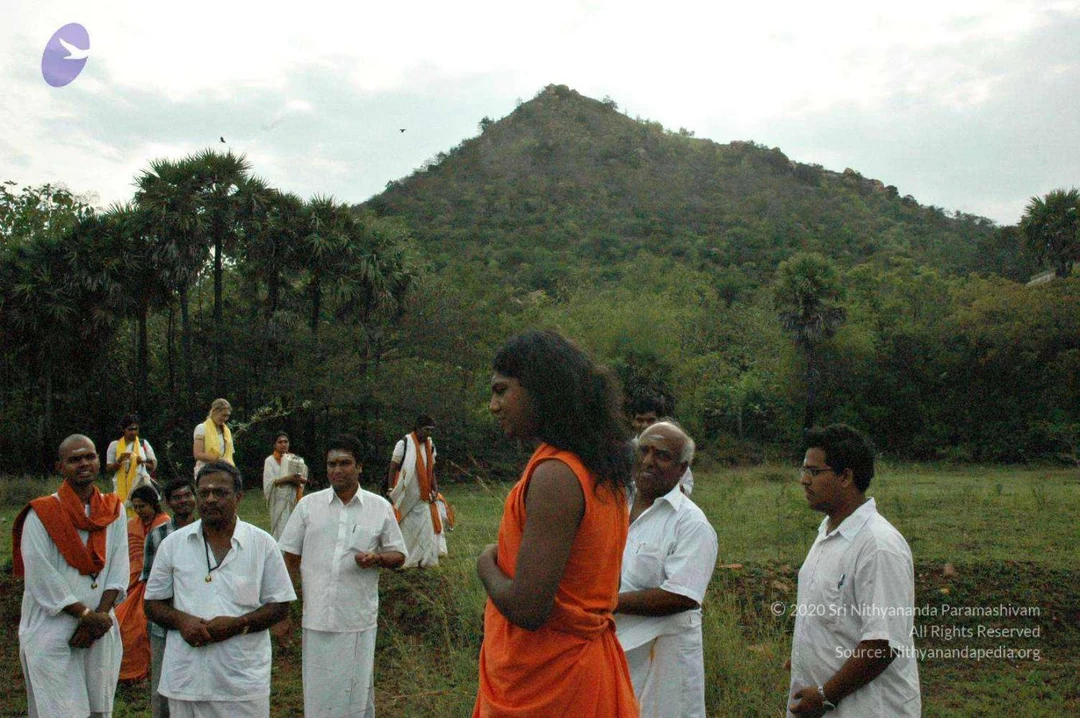
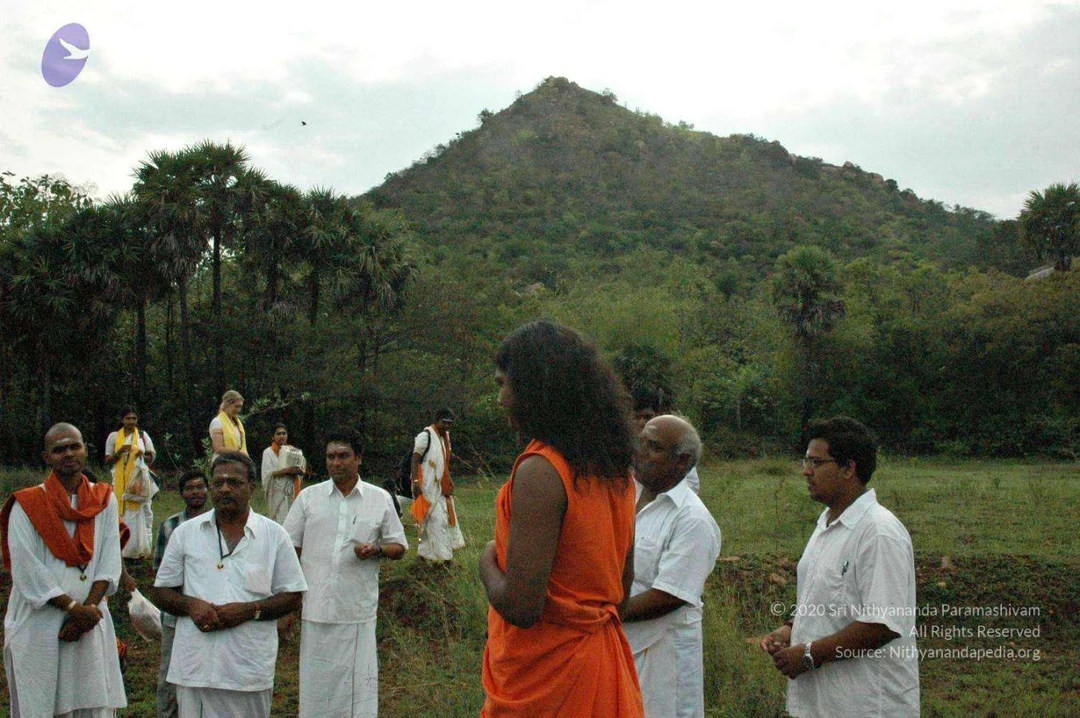
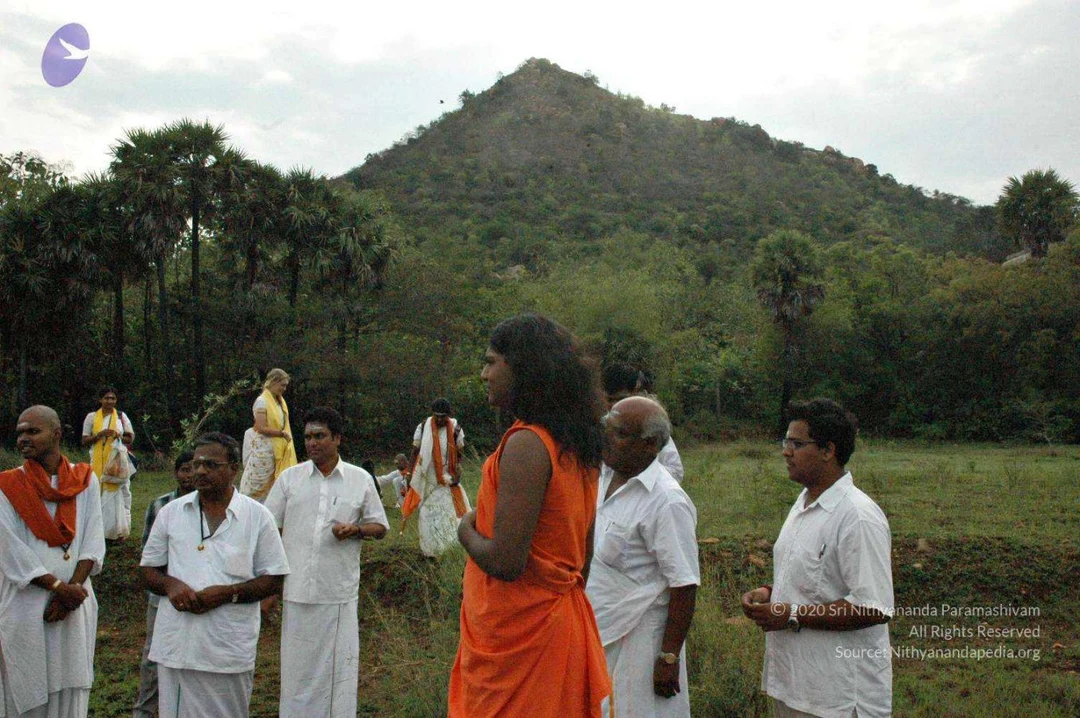
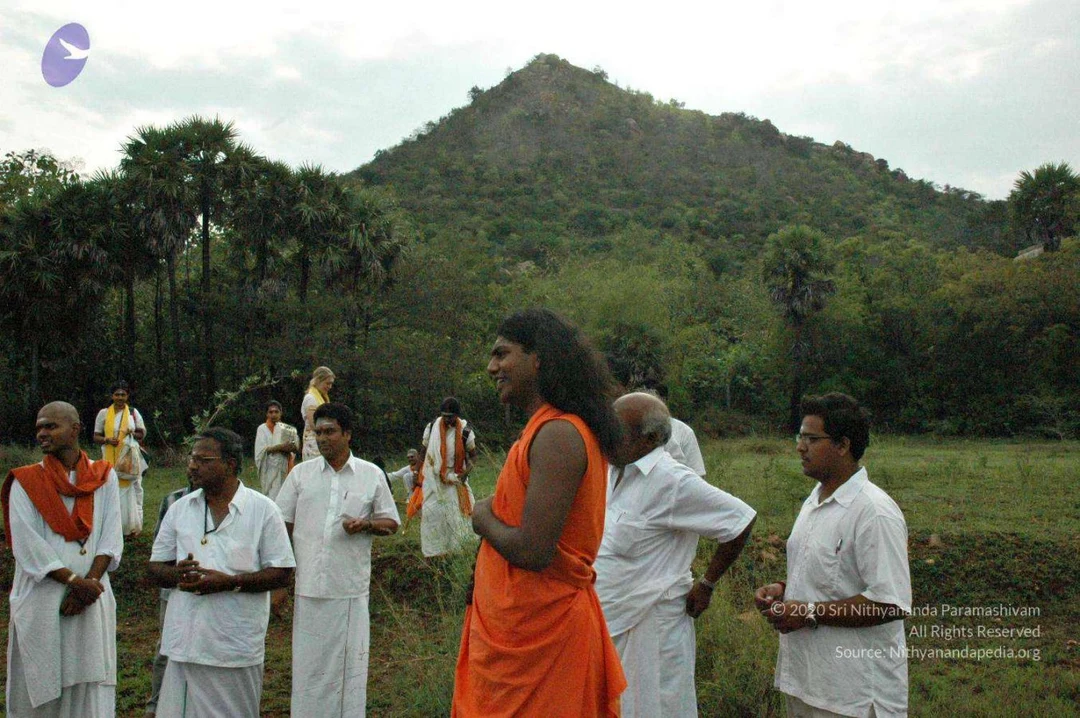
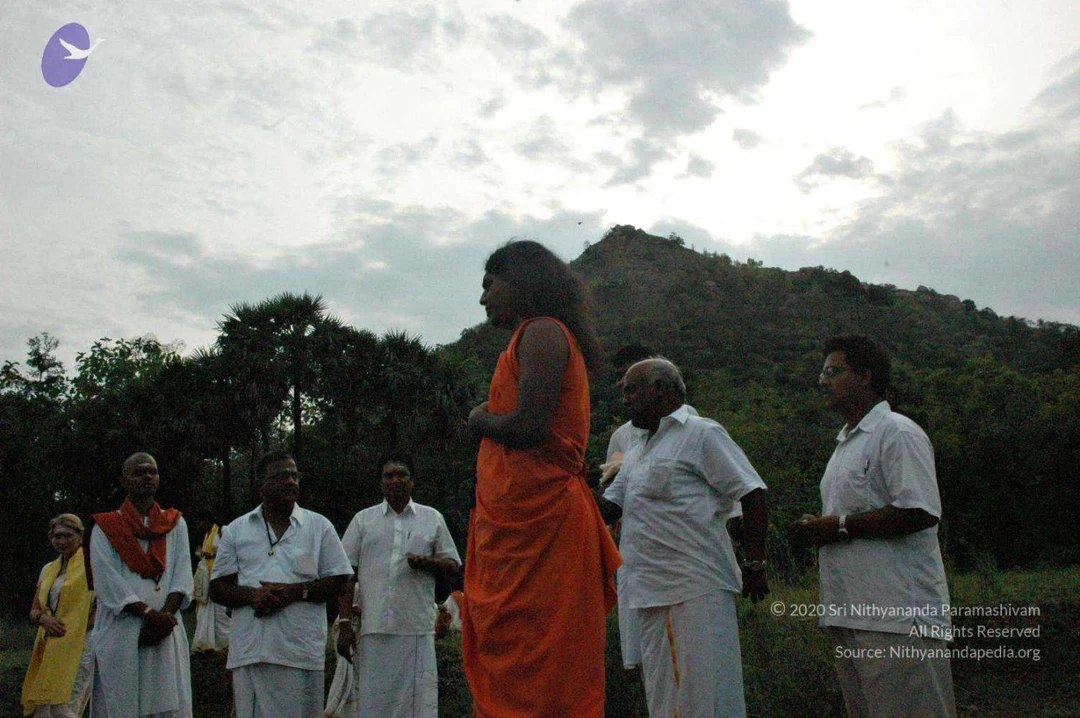
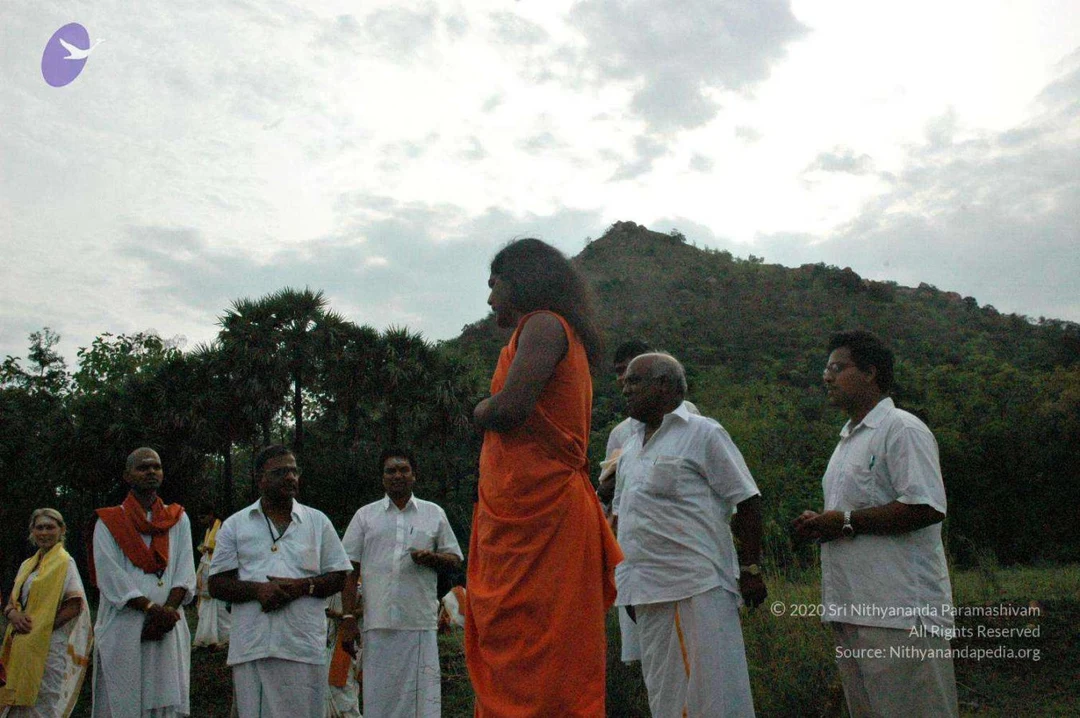
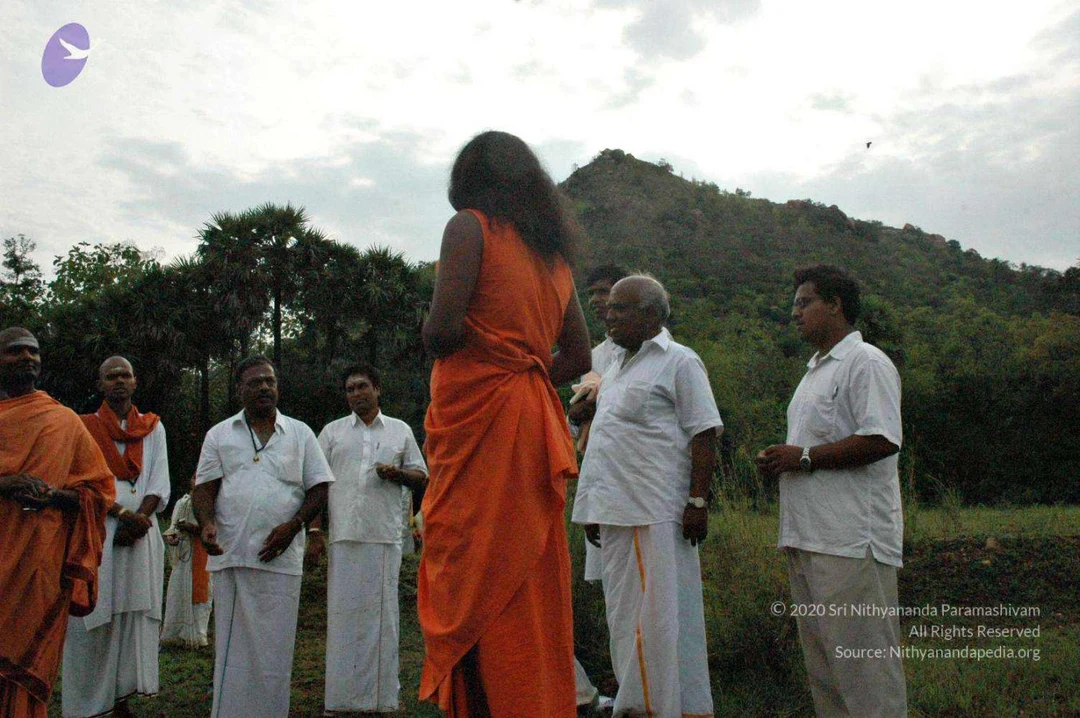
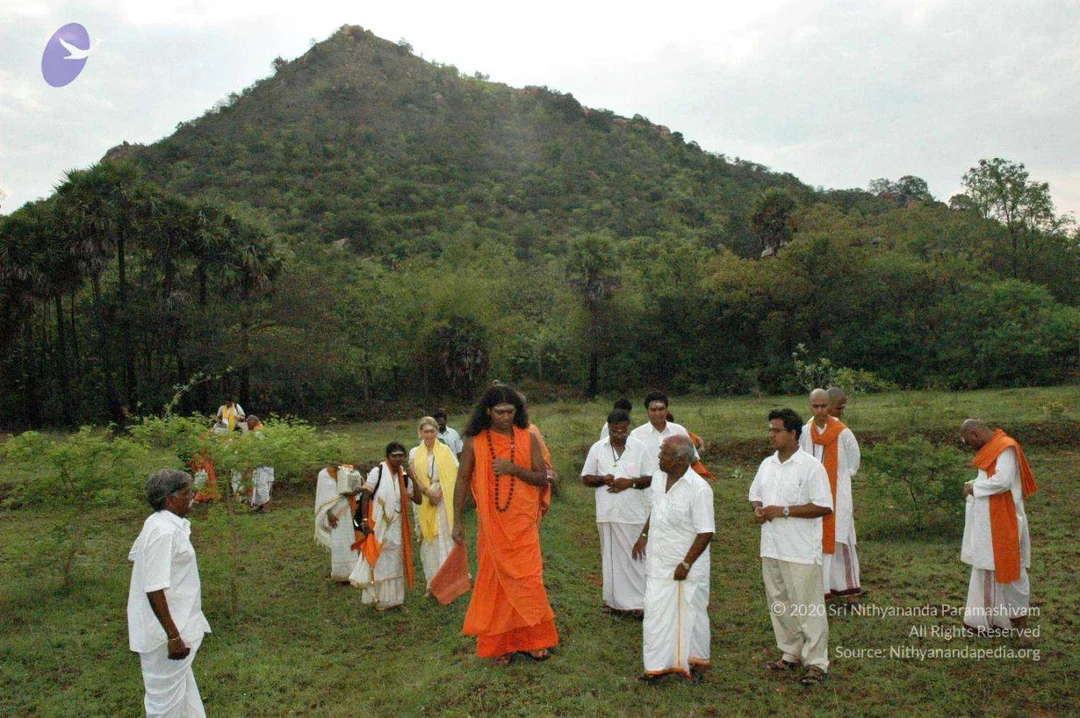
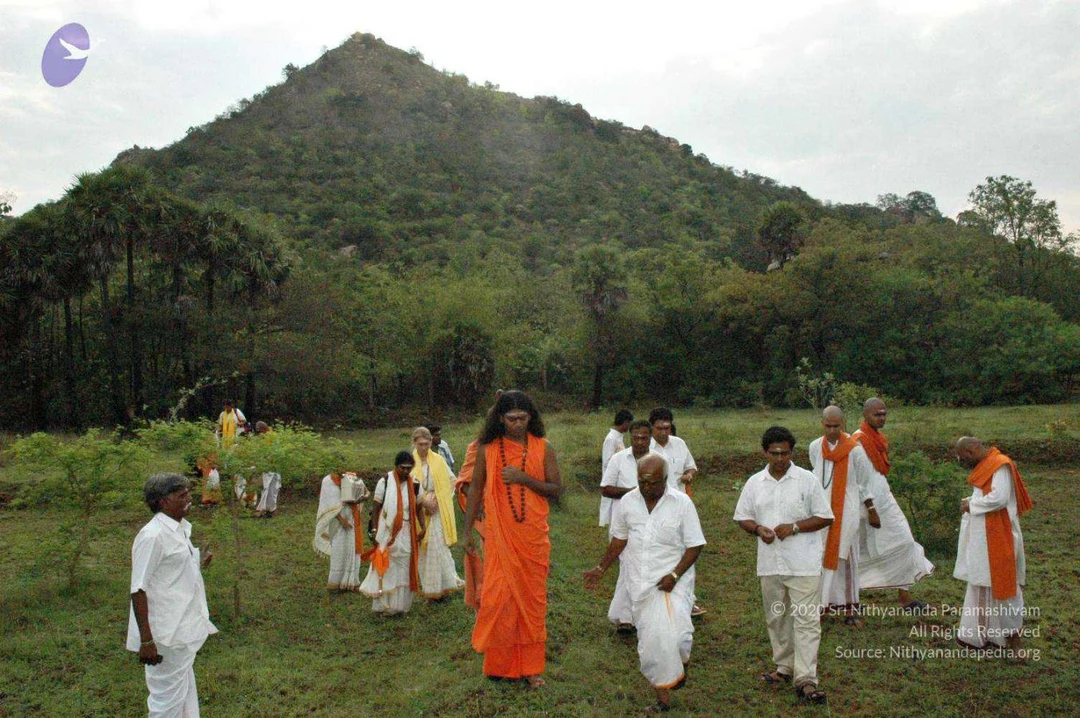
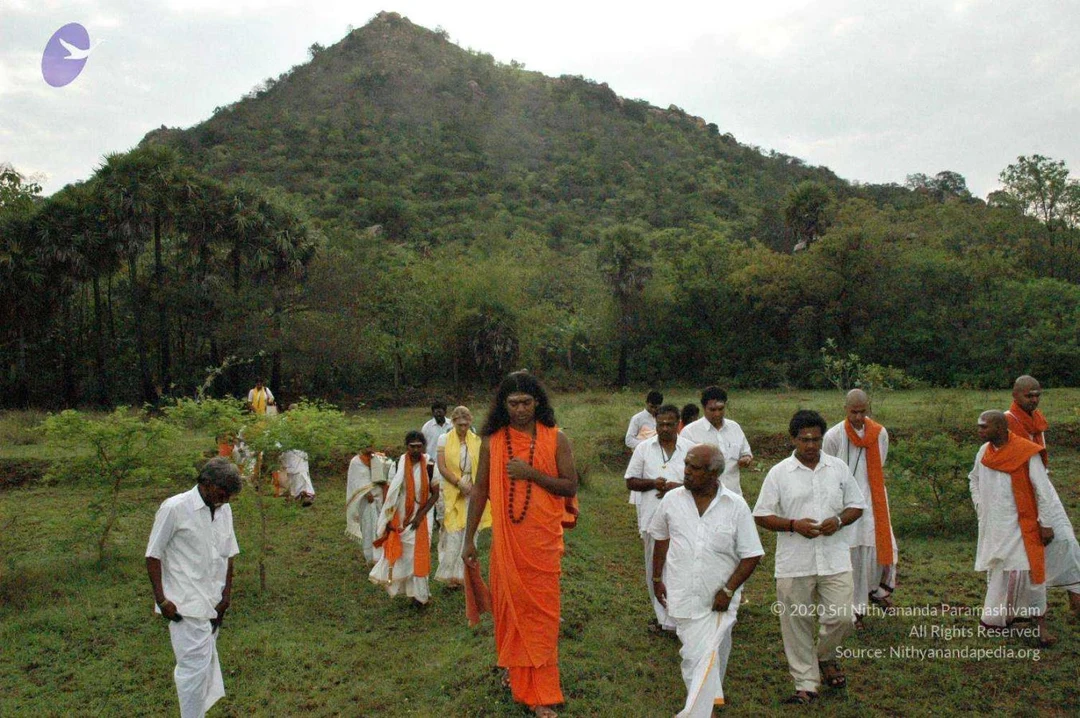
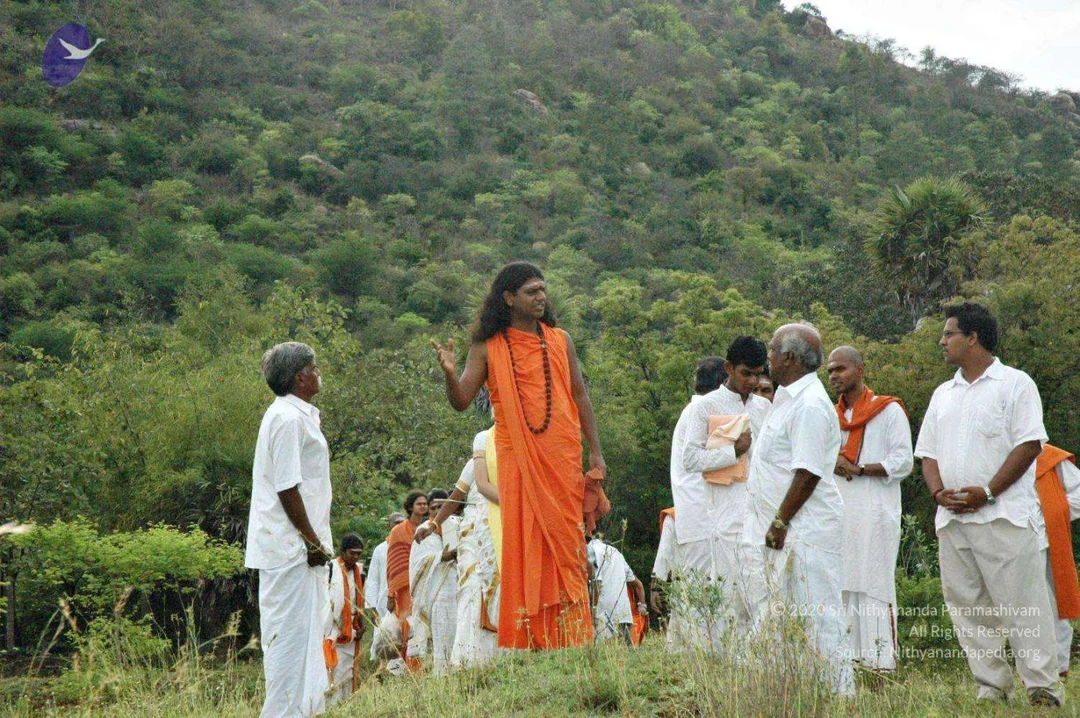
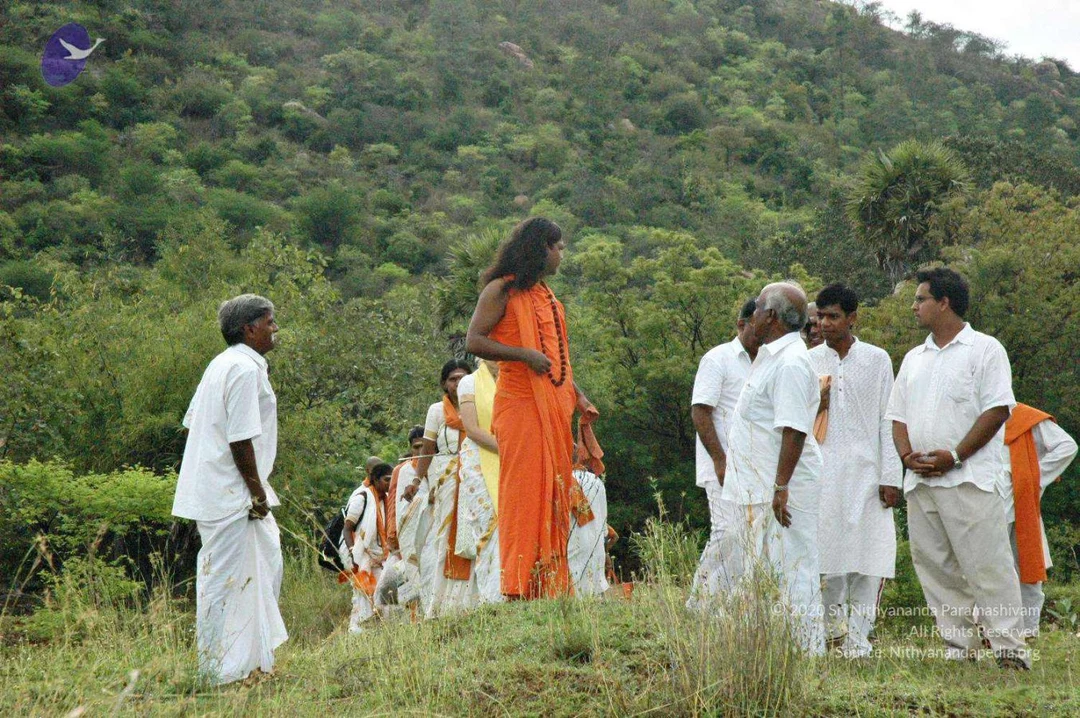
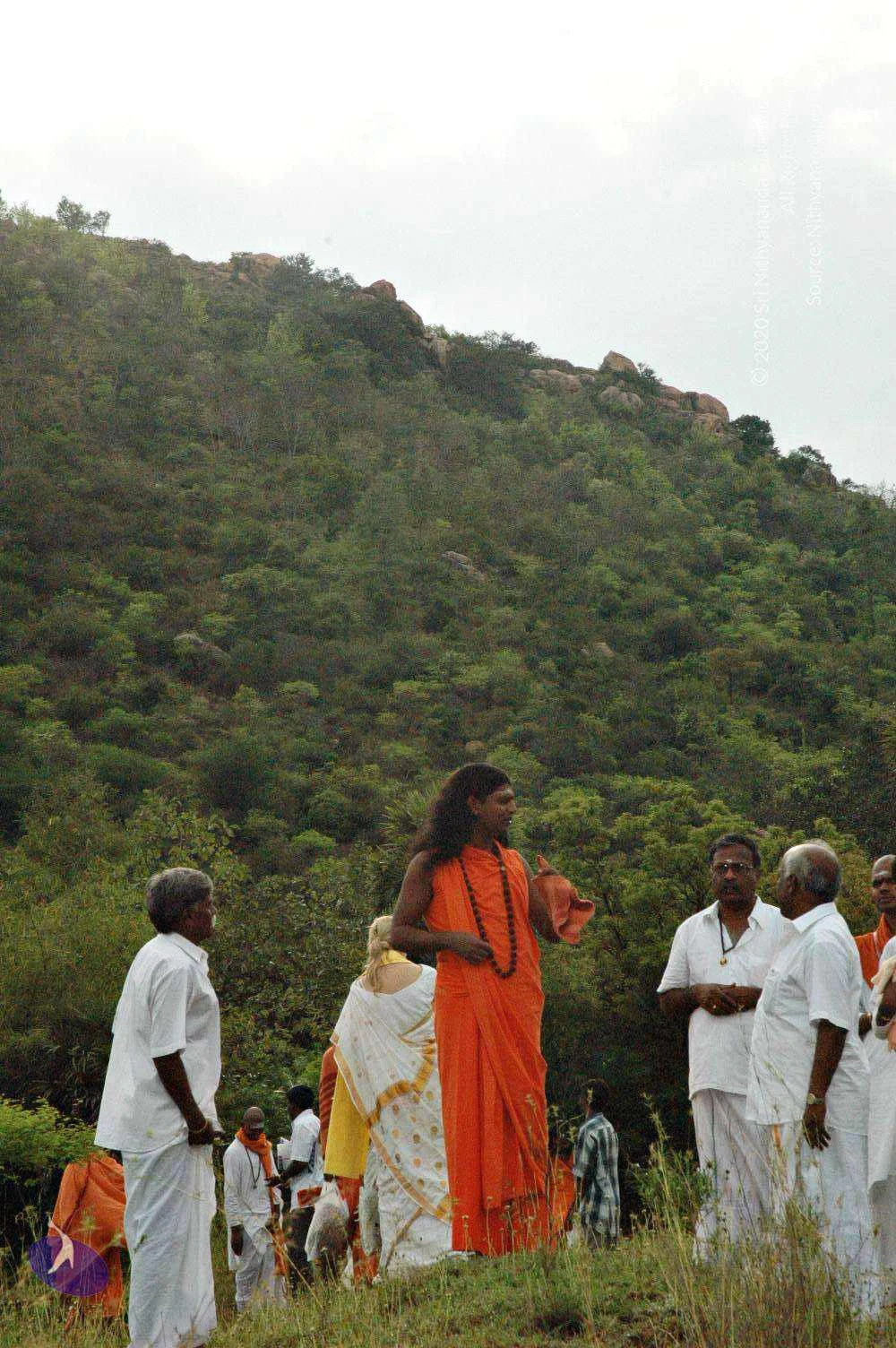
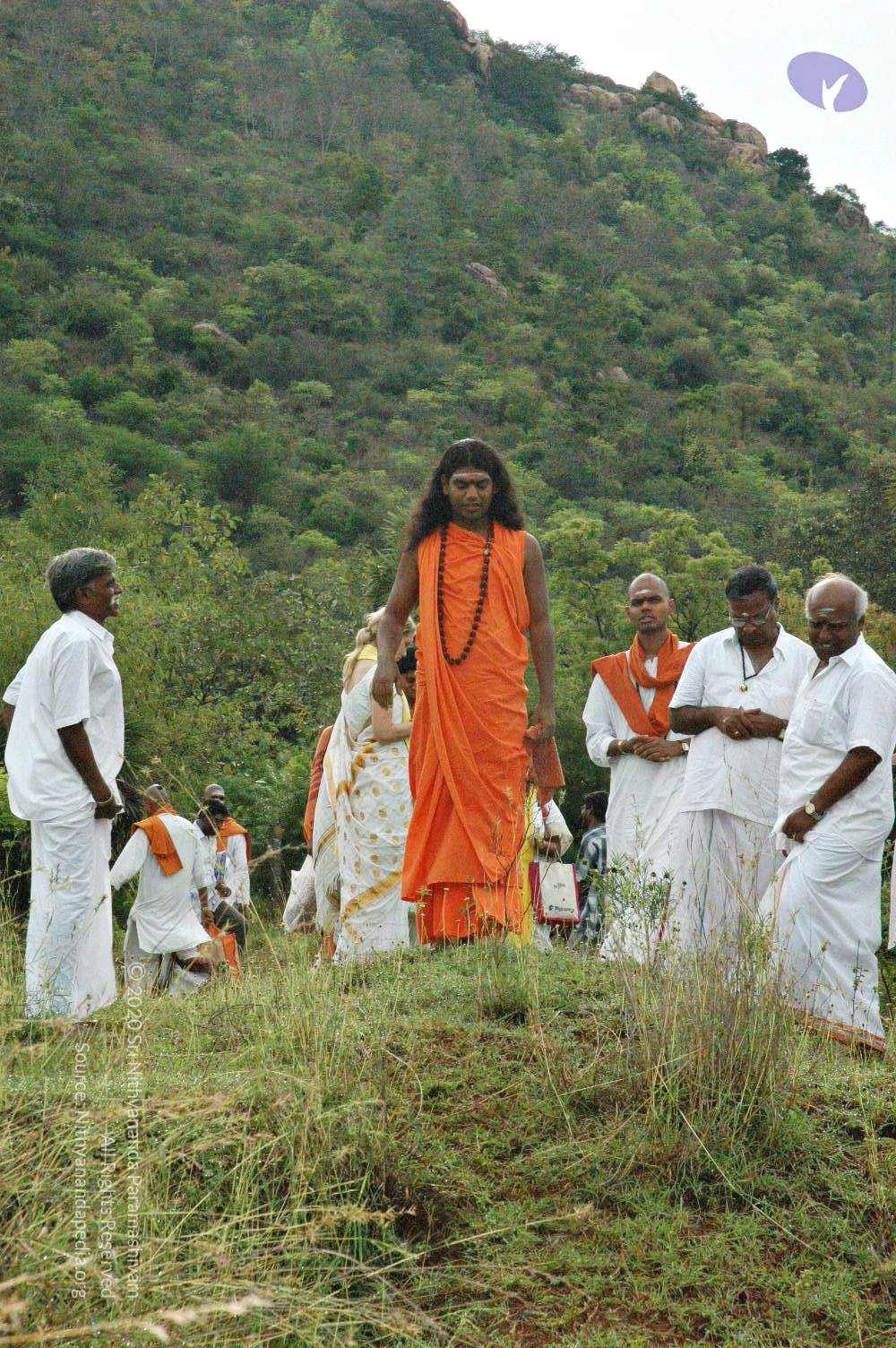
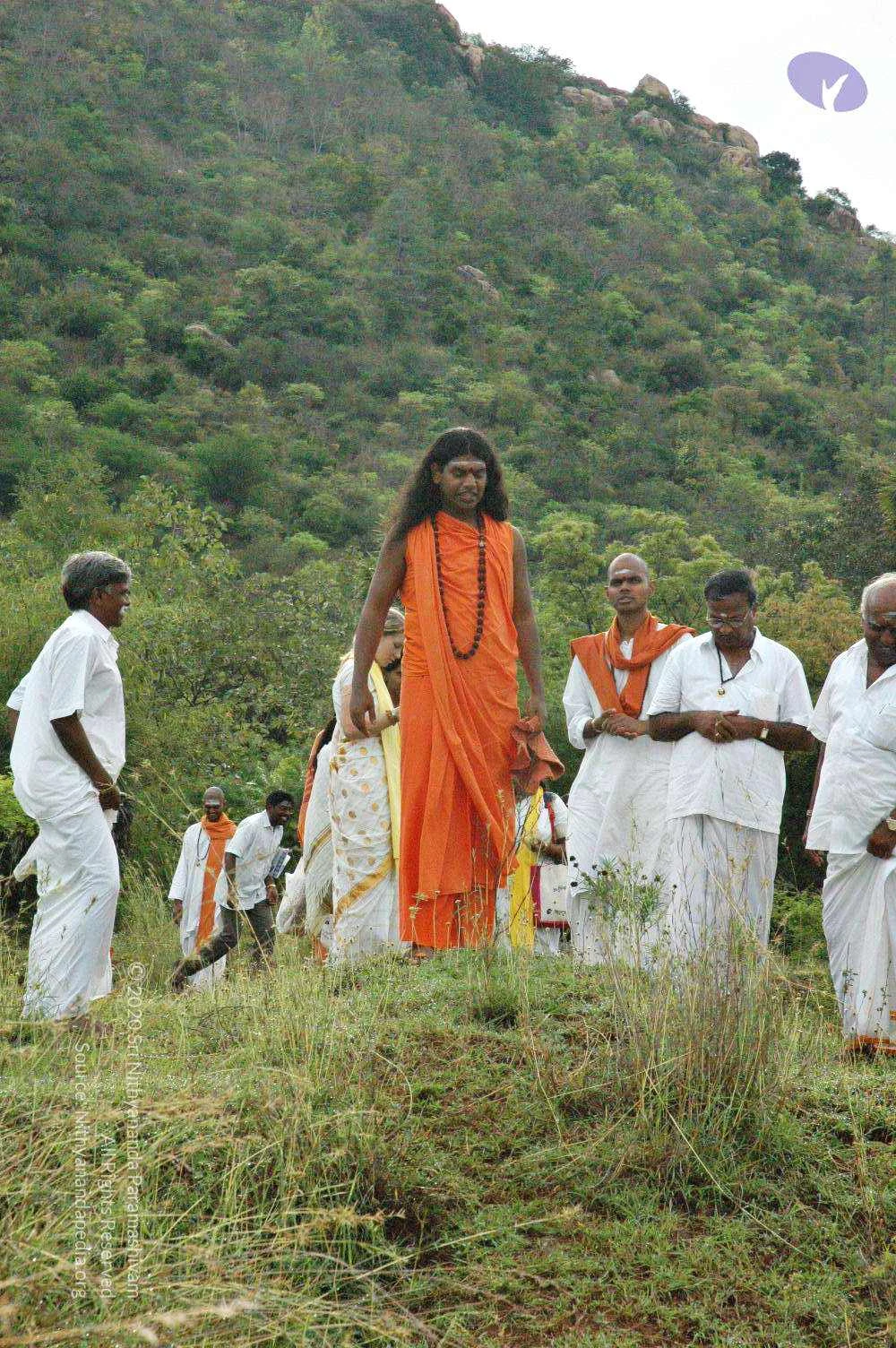
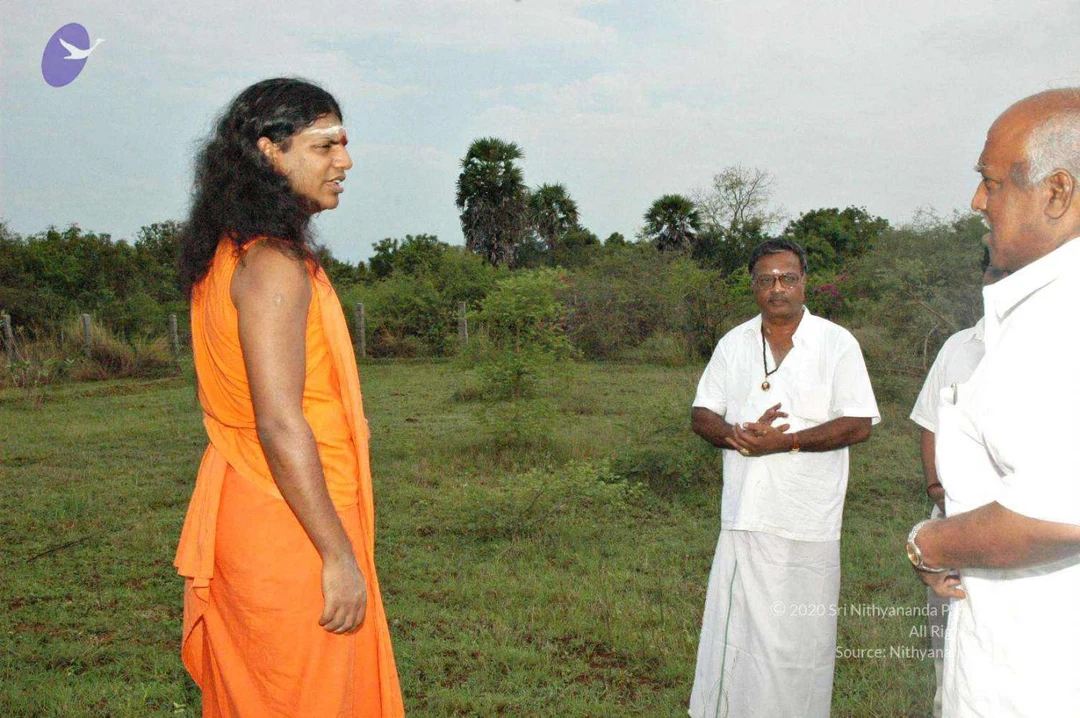
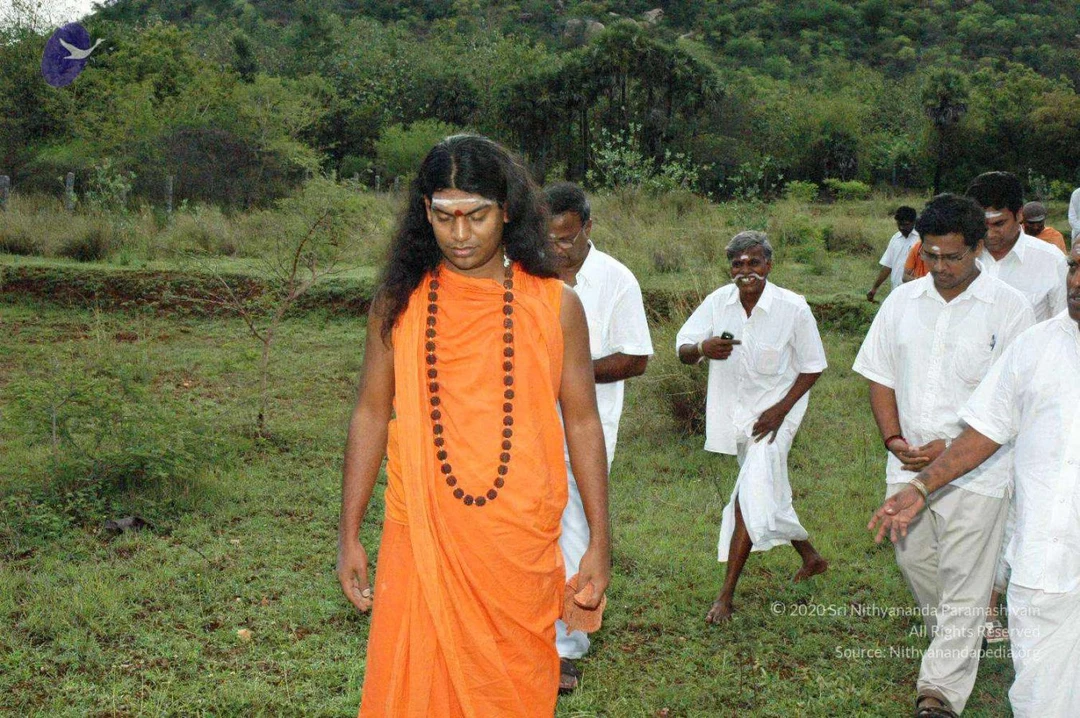
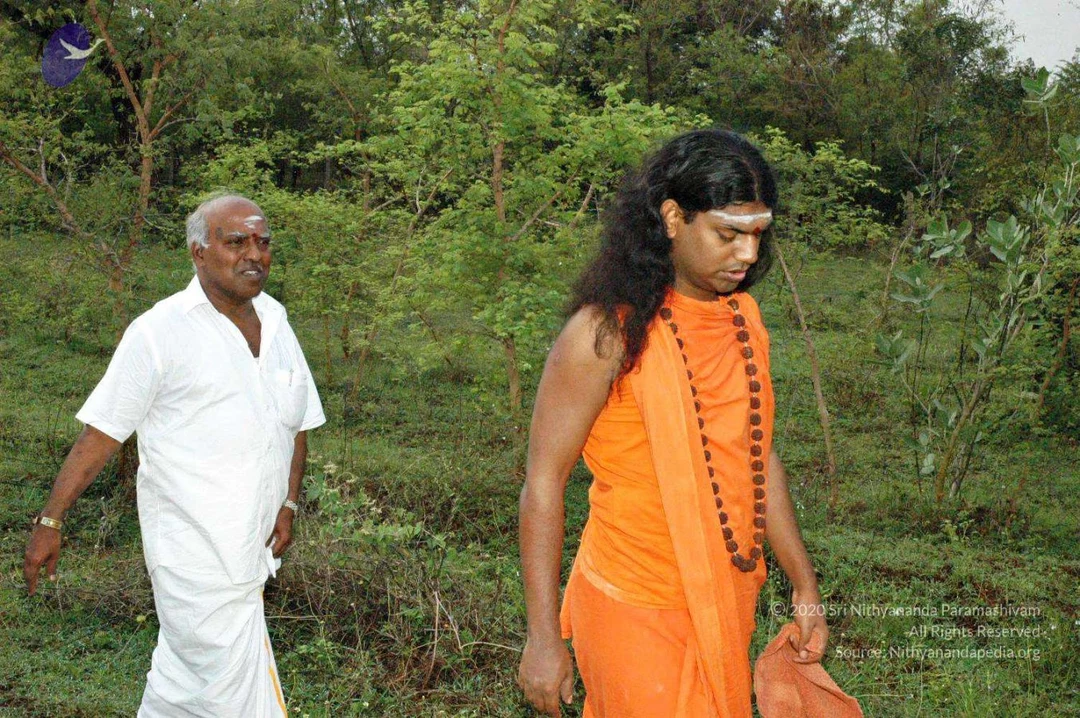
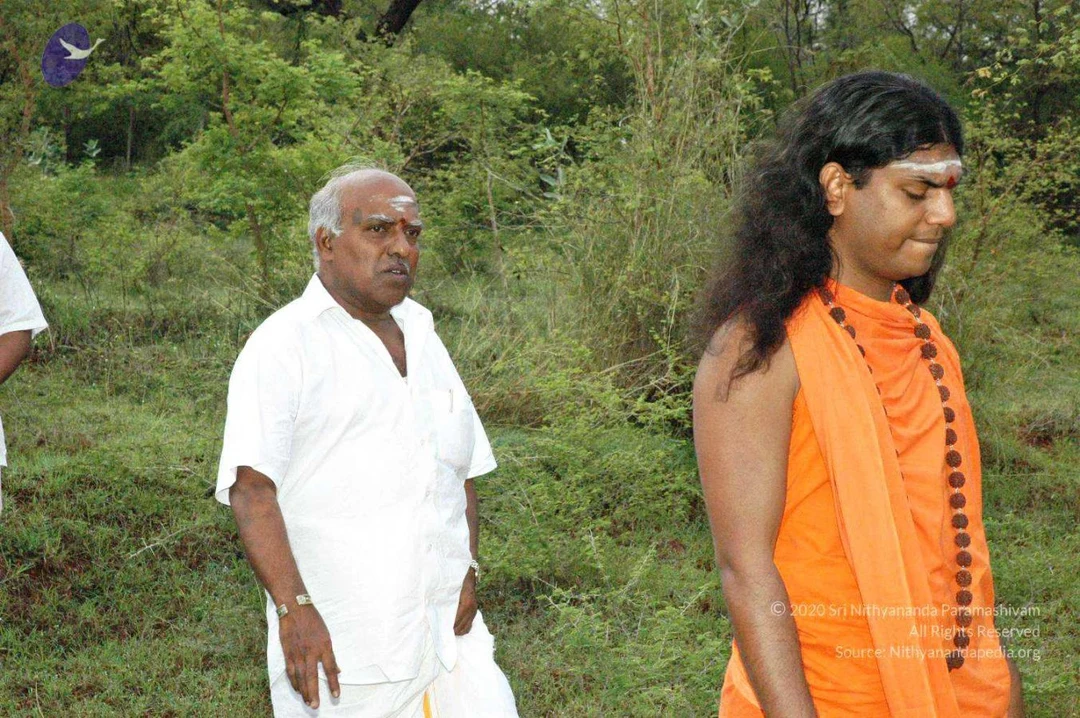
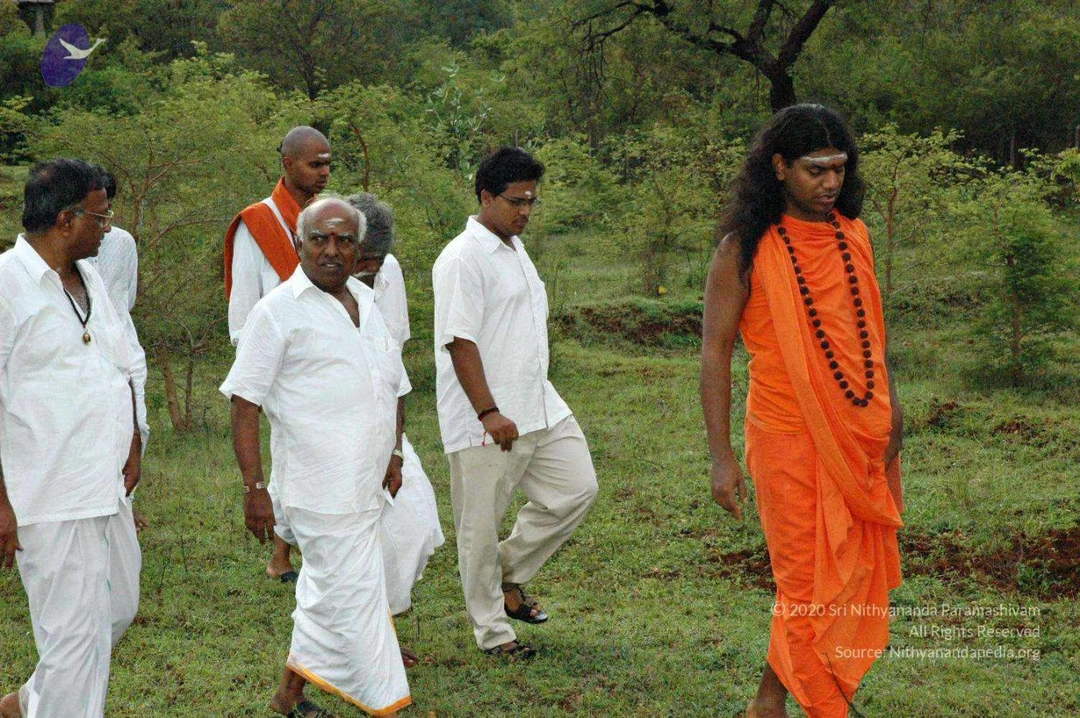
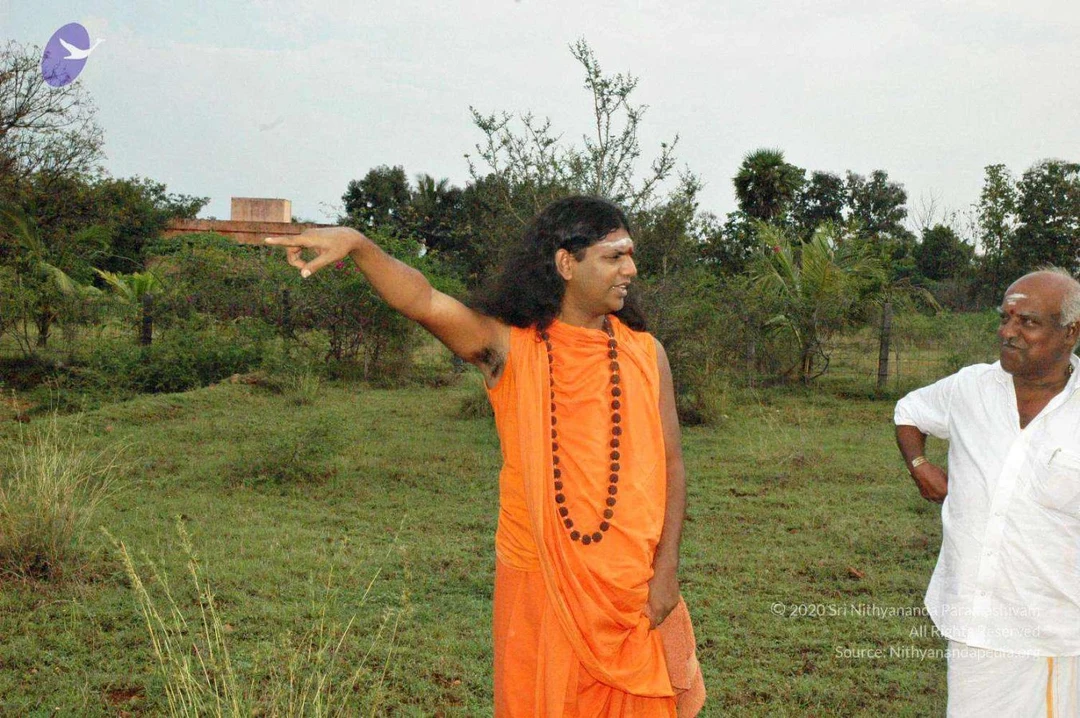
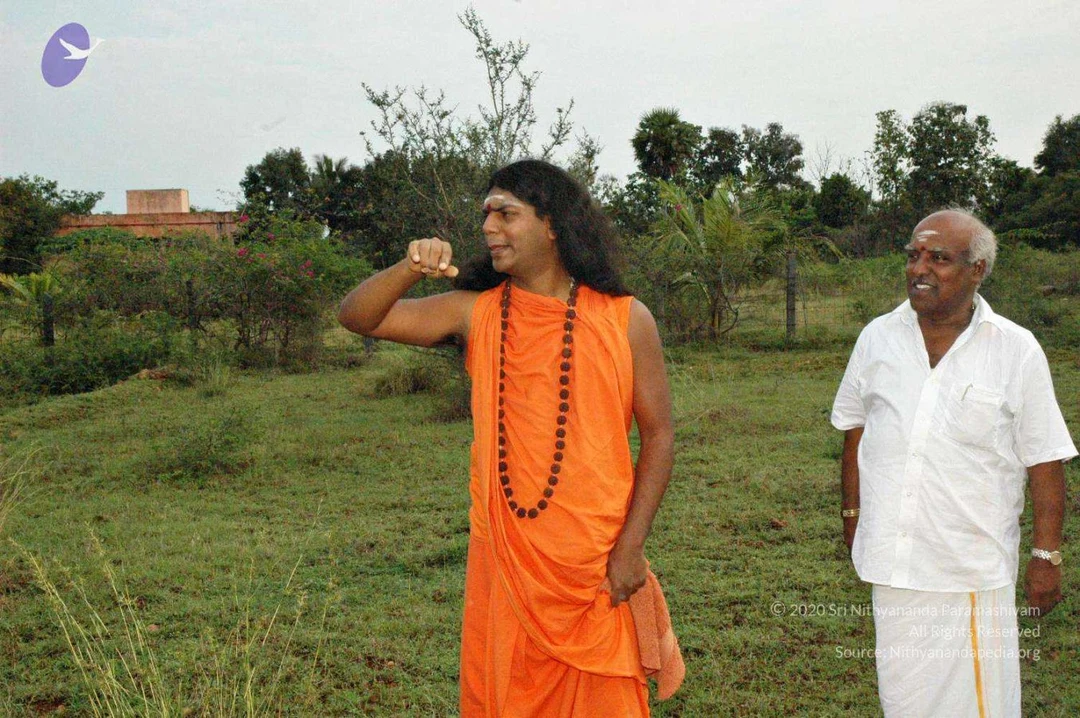
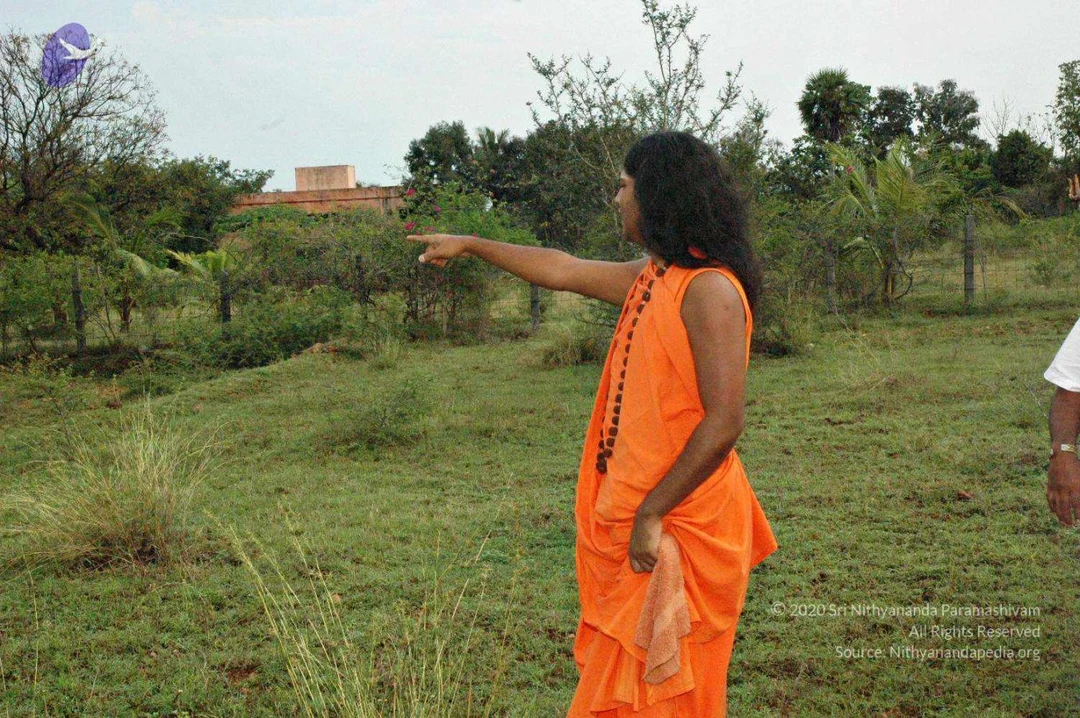
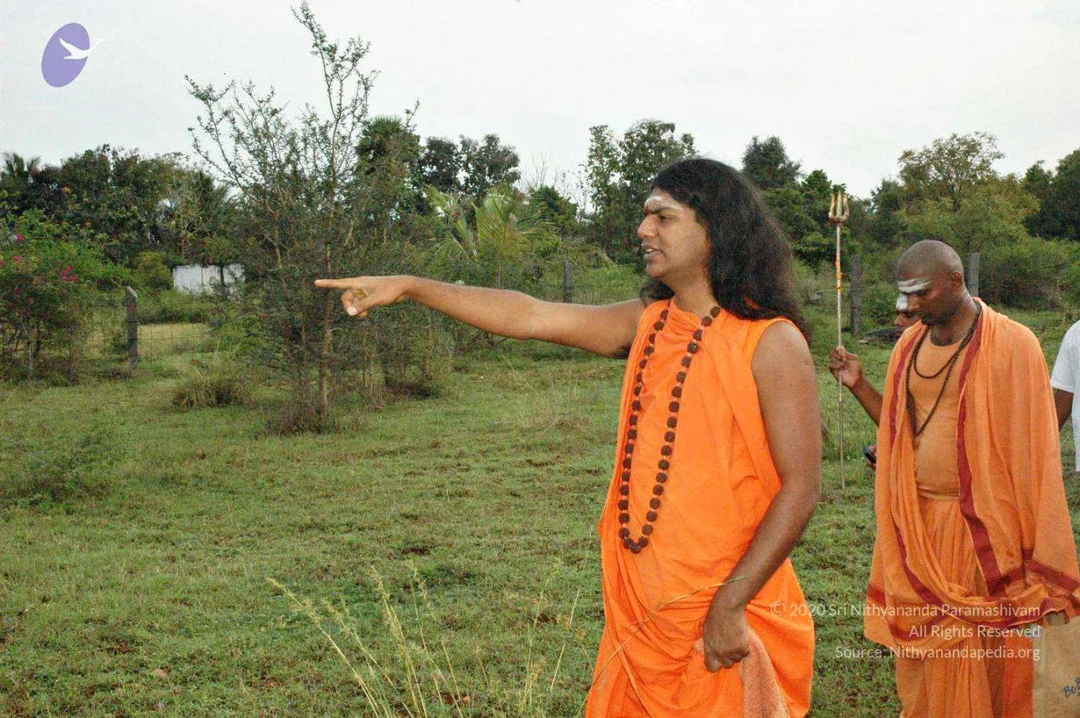
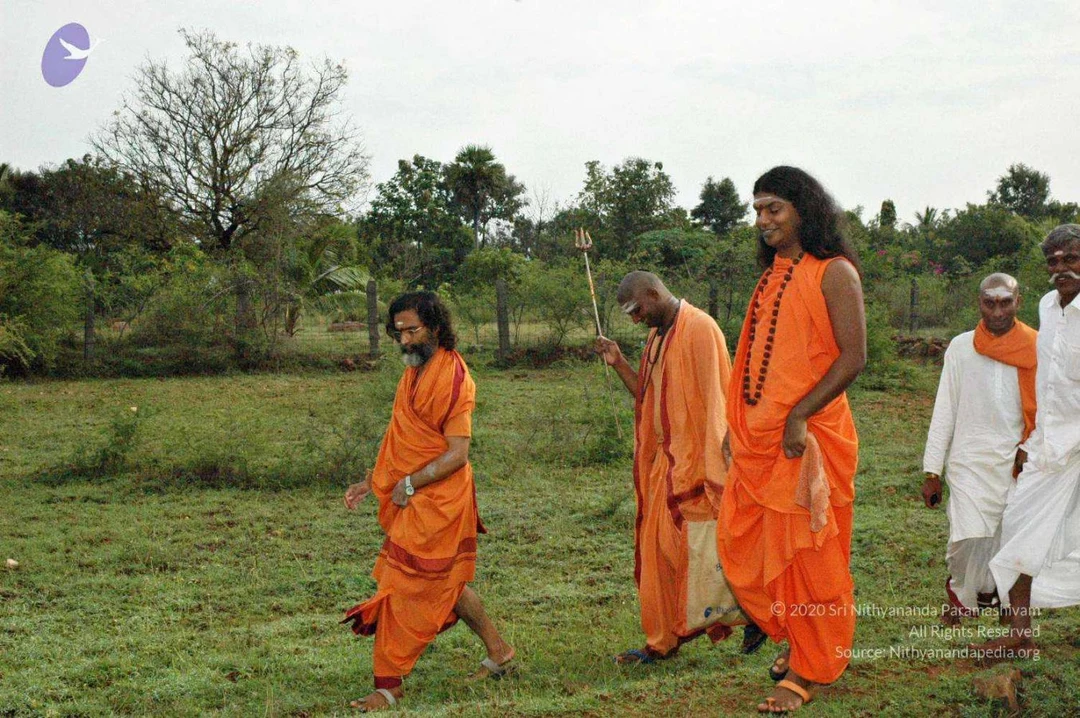
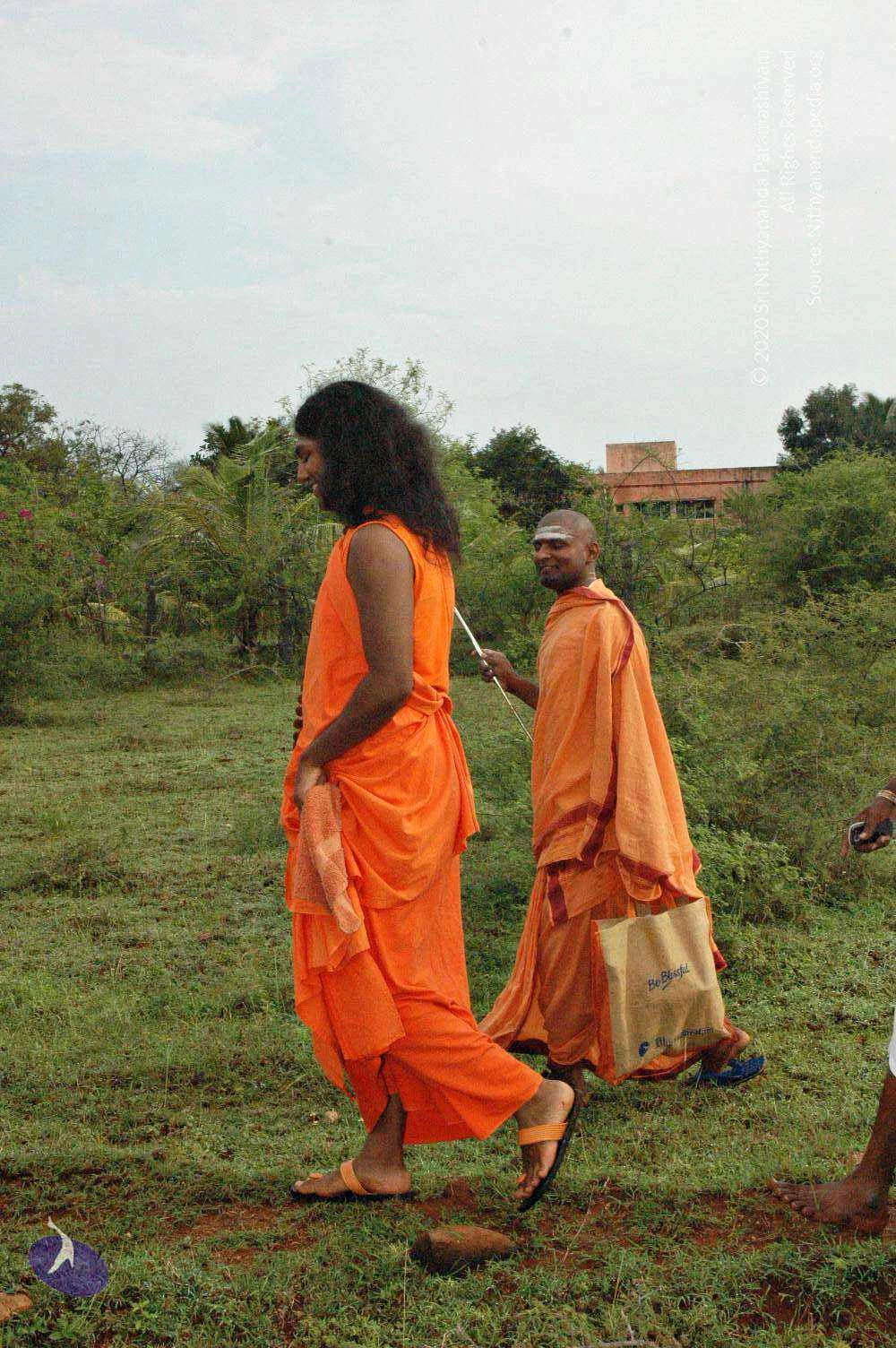
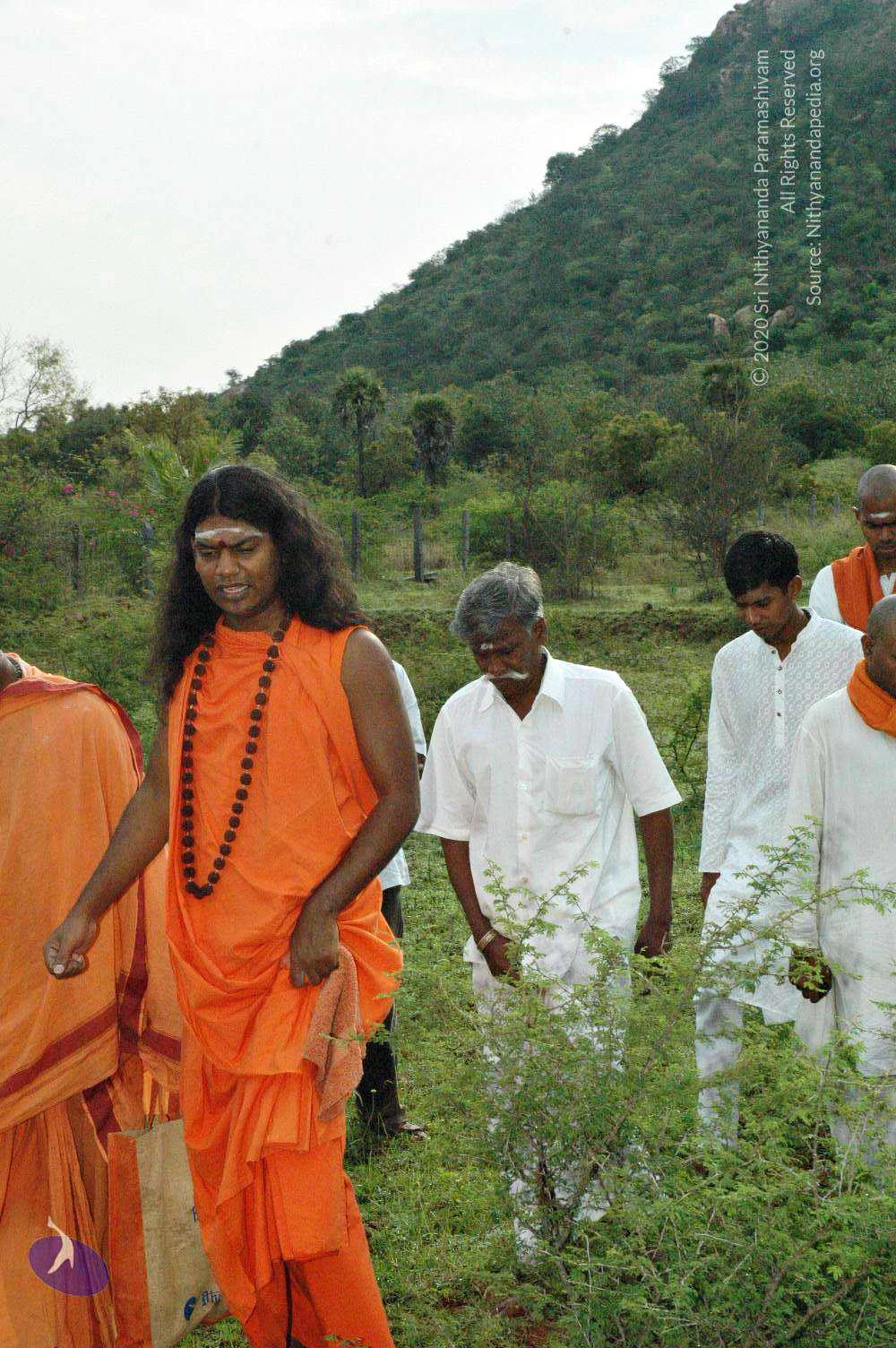
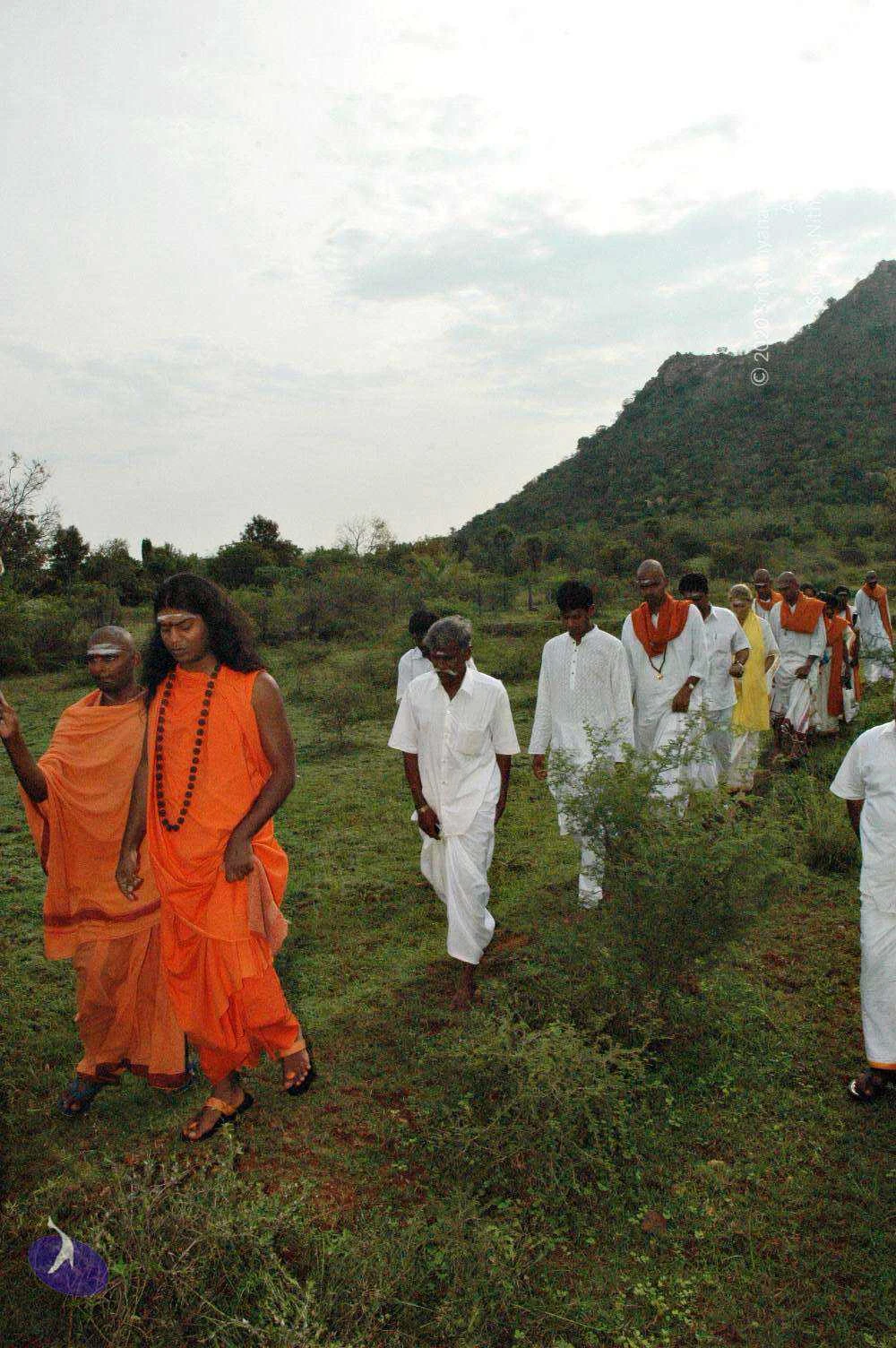
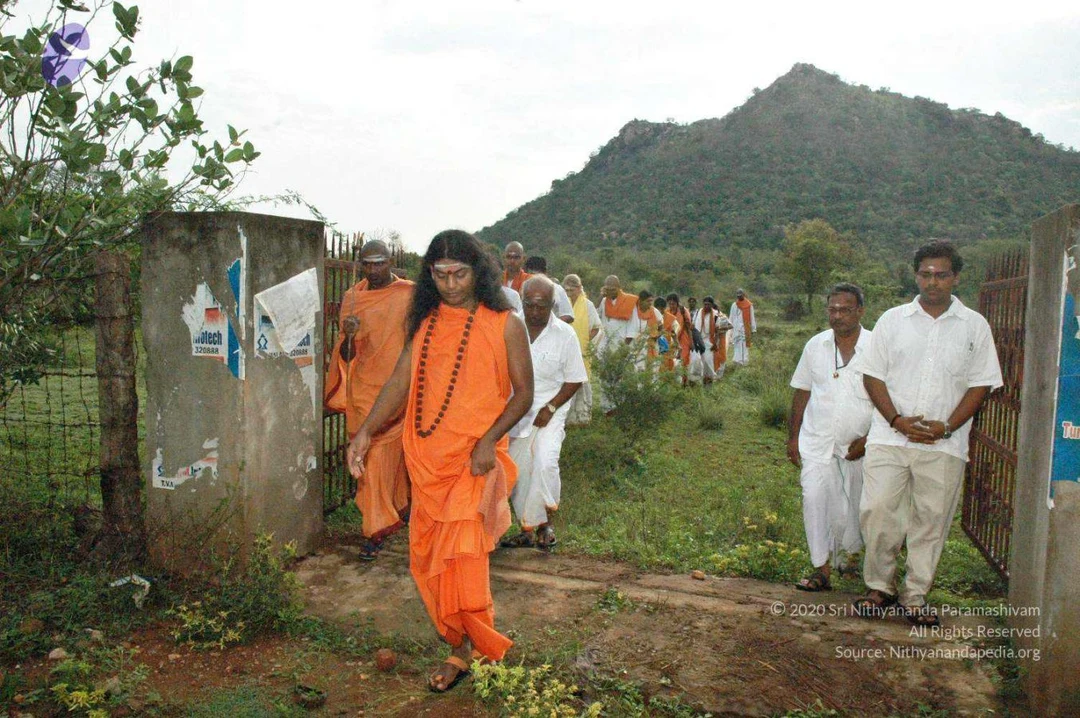
Photograph of a smiling man standing outdoors on grass with trees and palms behind him under an overcast sky. He wears a sleeveless saffron-orange cloth draped over his body, a long rudraksha mala of dark beads around his neck, and a white horizontal tilak with a red dot on his forehead. His long dark hair falls past his shoulders, and he holds a small object in his right hand. a person appearance: long swept hair, saffron clothing and a rudraksha mala, with the page indicating his presence at this Tiruvannamalai land event.An outdoor photograph on a hillside site with rocky, scrub-covered slopes behind. A tall man with long, dark, swept-back hair and a dark rudraksha-style braid stands in saffron-orange robes, with a light vertical tilak on his forehead, speaking to a seated man in a checked shirt. To his left a shaved-headed monk in orange cloth stands. On the right, two men in white shirts stand watching, one wearing glasses. Another shaved-headed saffron-clad monk appears behind. The setting appears to be a land survey for a construction project.A photograph of an outdoor ceremony on a grassy clearing bordered by palm and tree cover. In the centre, a smiling man with long dark hair and white forehead markings wears a saffron-orange wrap and a rudraksha mala, with his hands pressed together in front of him. To the left, several women in white and yellow-and-white saris, one with a saffron shawl, stand near a bag and a phone. On the right edge, a figure in orange clothing and a head covering reaches toward a plate with flowers and offerings and a small brass vessel on the ground, consistent with a bhoomi puja at a land site.

April 01 2008

Original wiki page
Contents

Title:

THE SUPREME PONTIFF OF HINDUISM JGM HDH BHAGAVAN NITHYANANDA PARAMASHIVAM

Narration

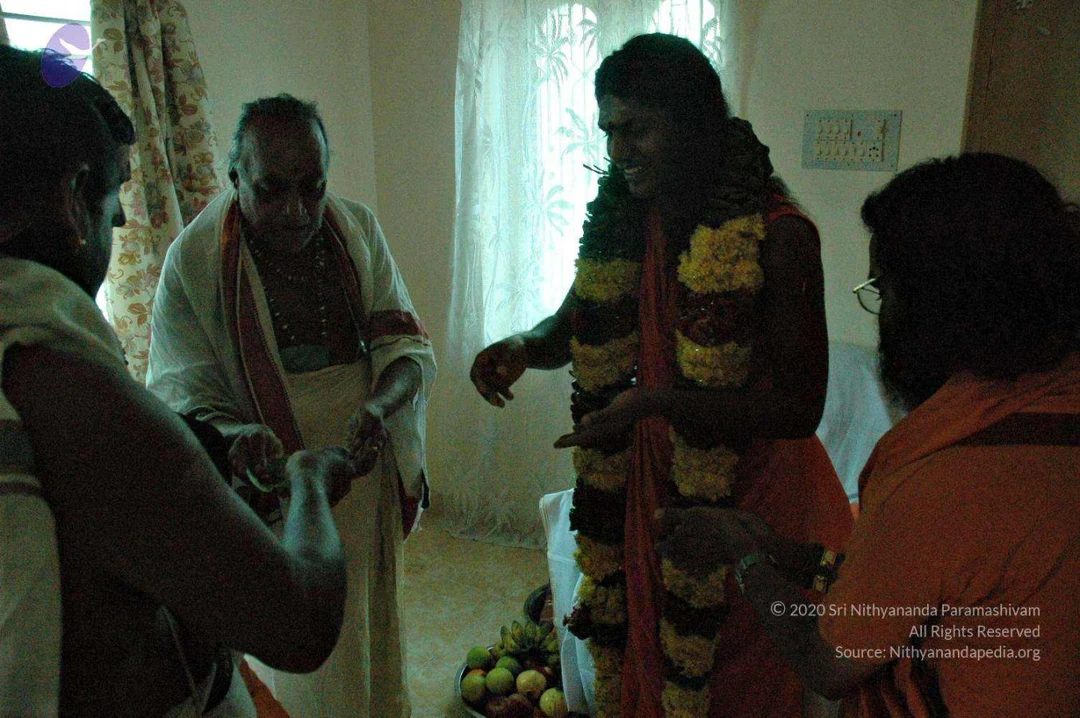
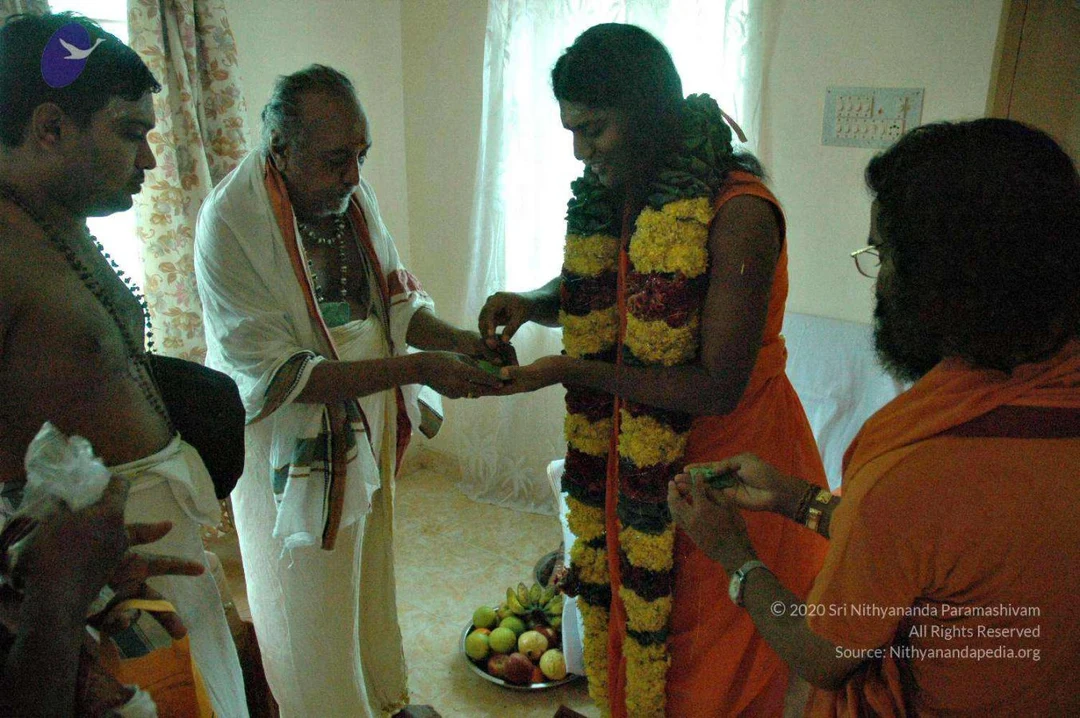
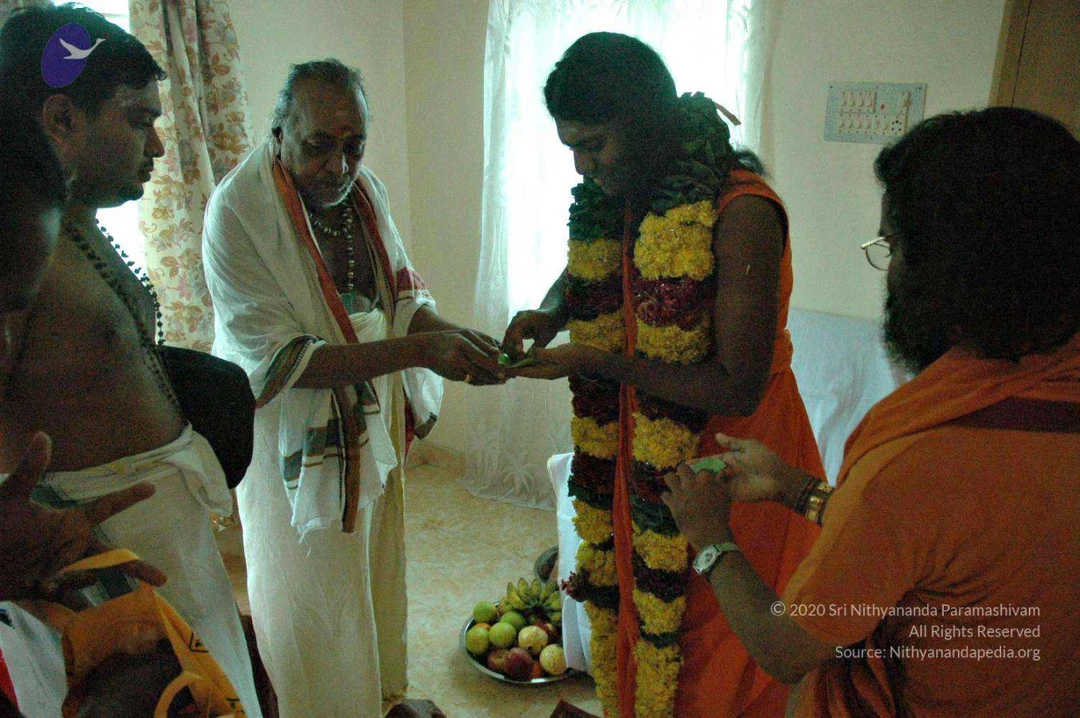
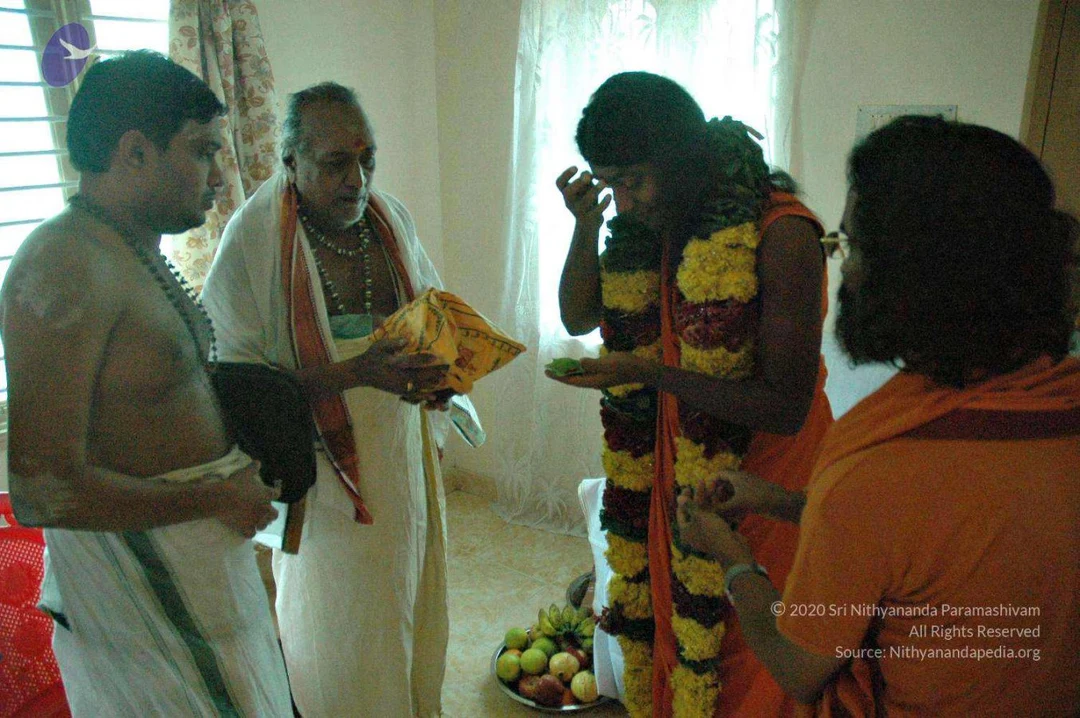
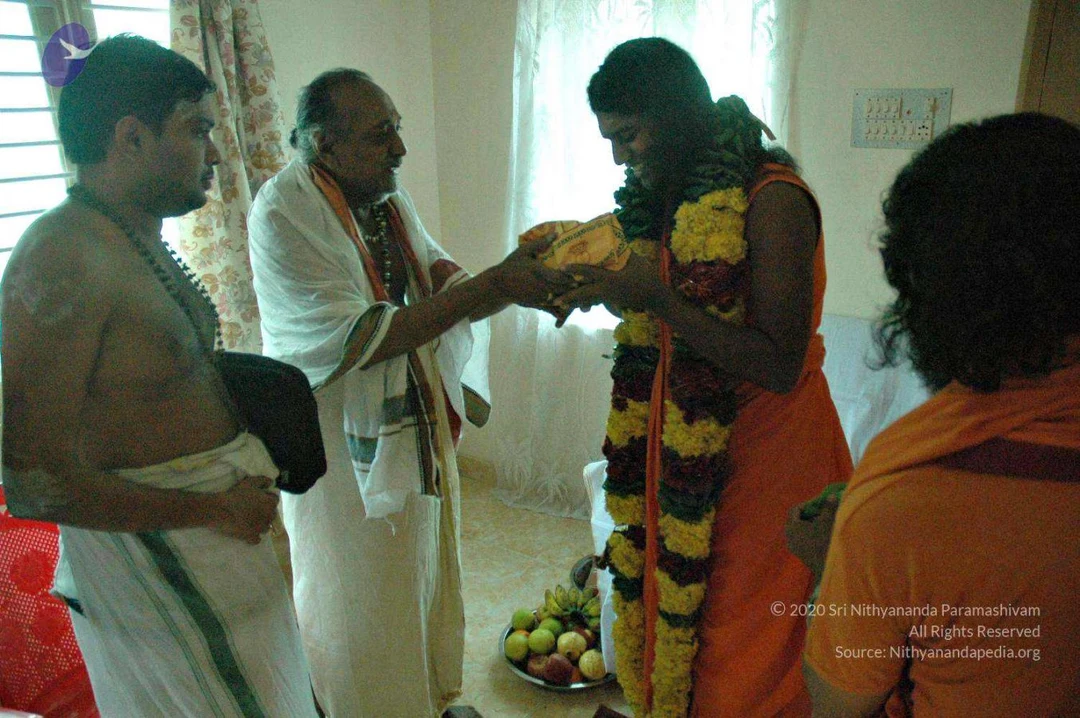
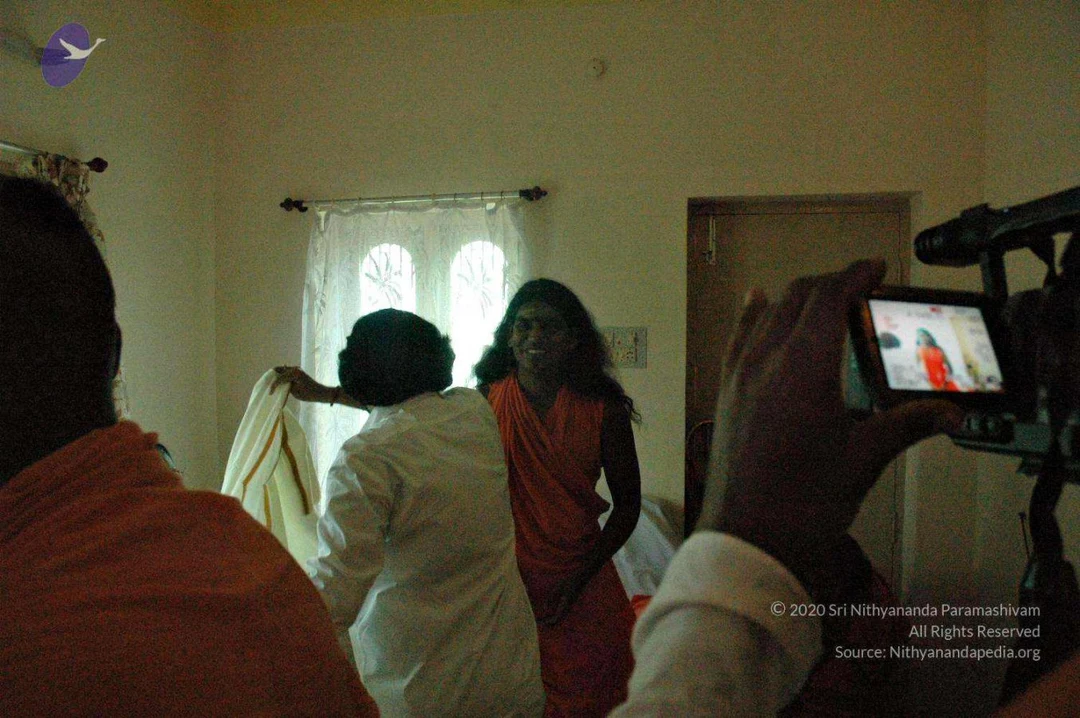
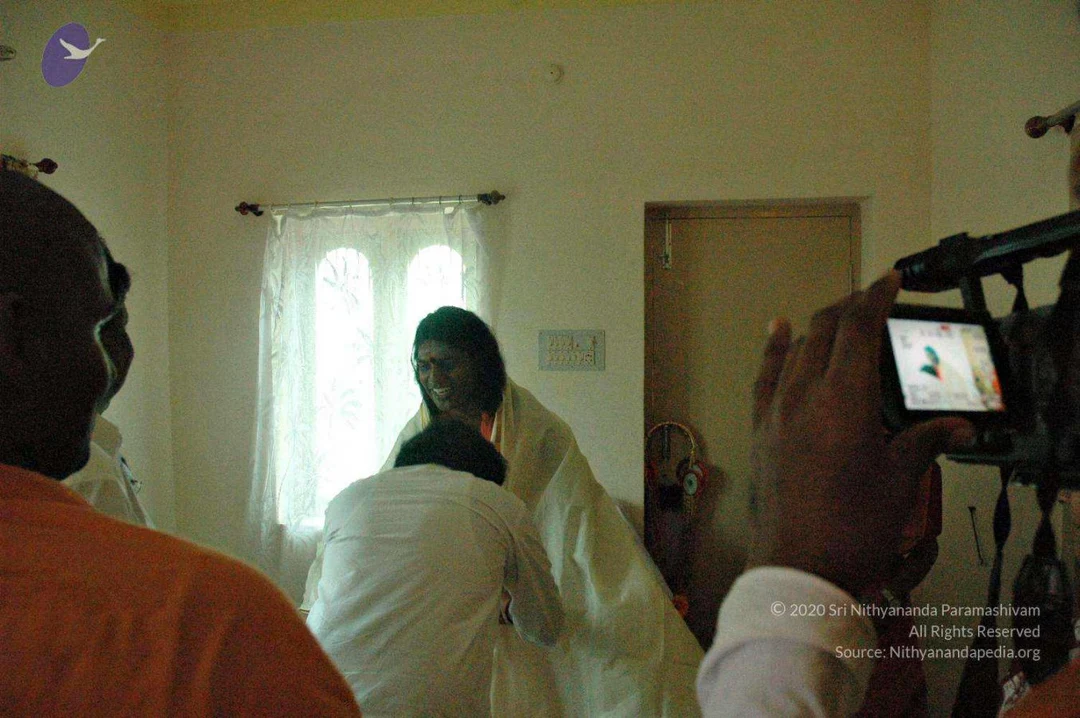
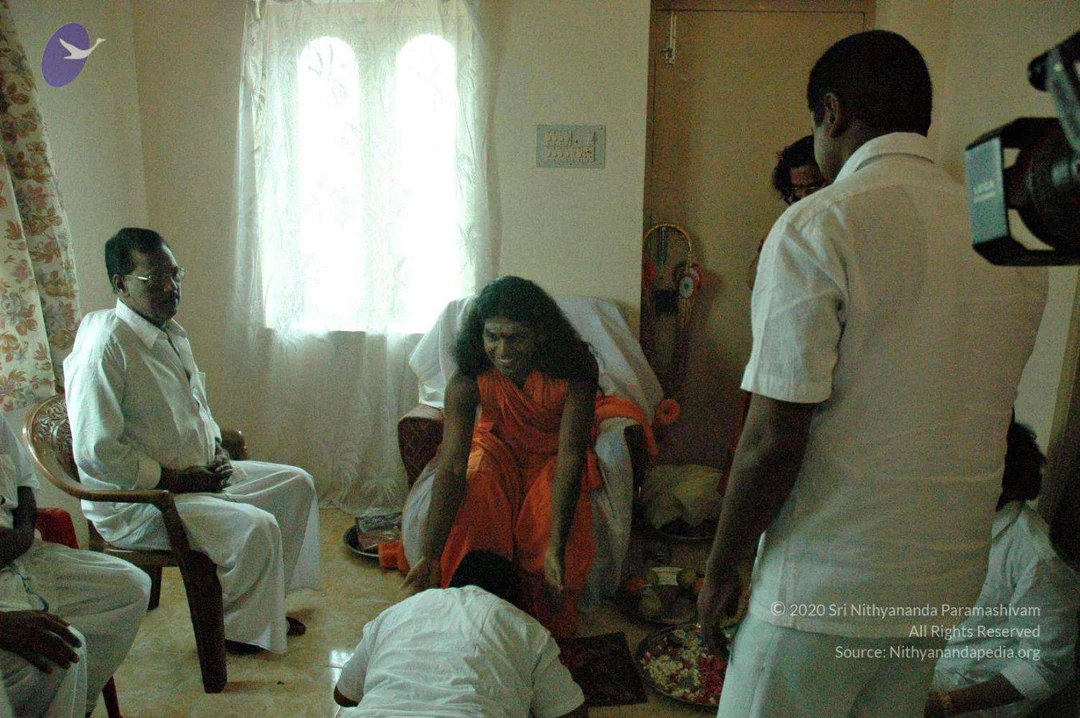
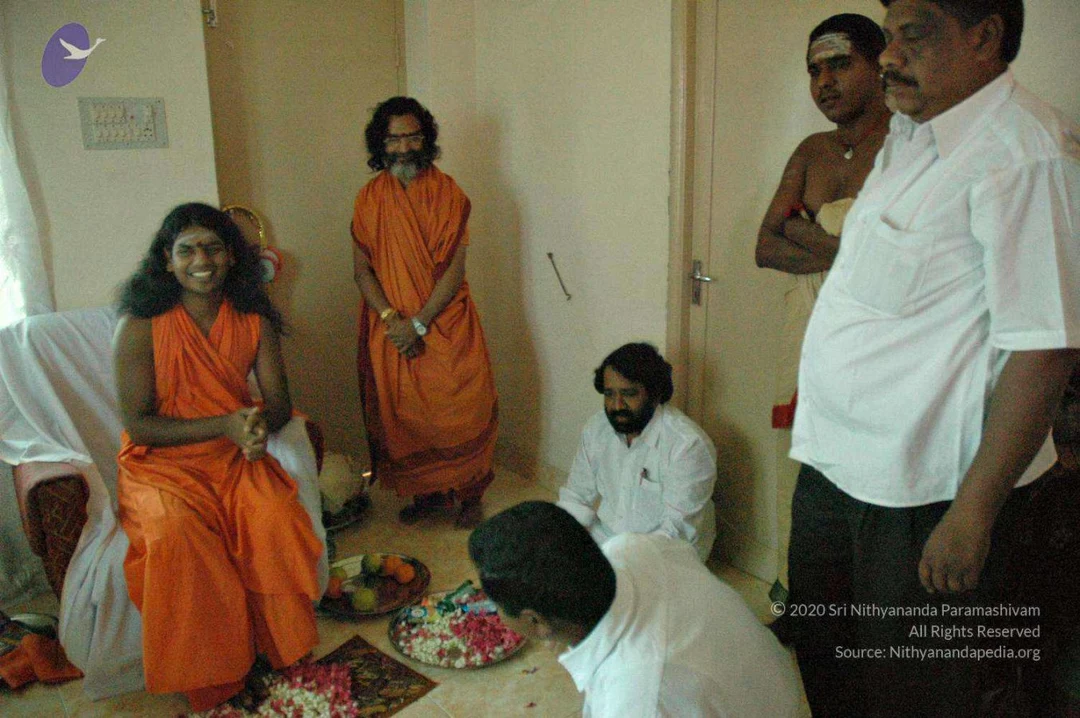
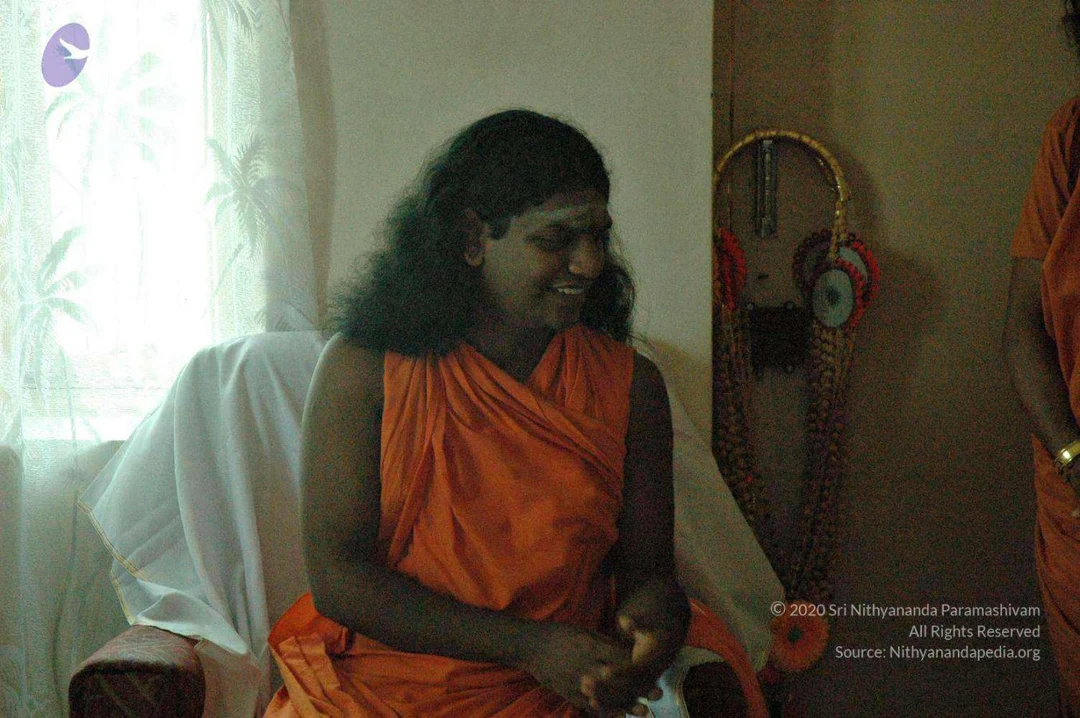
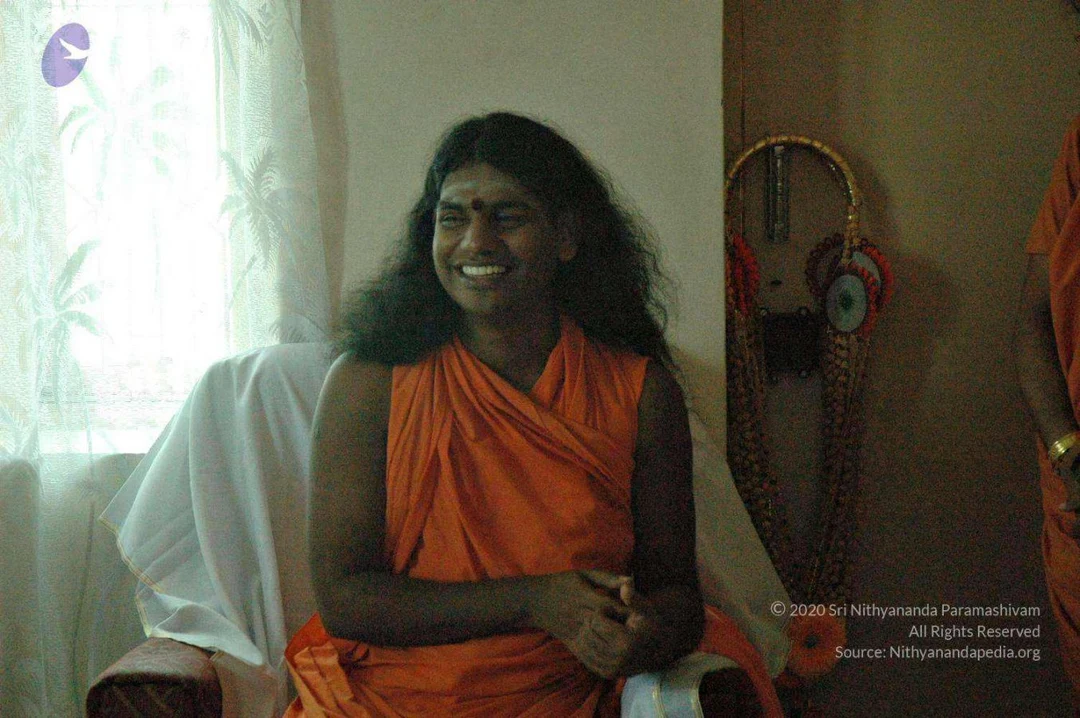
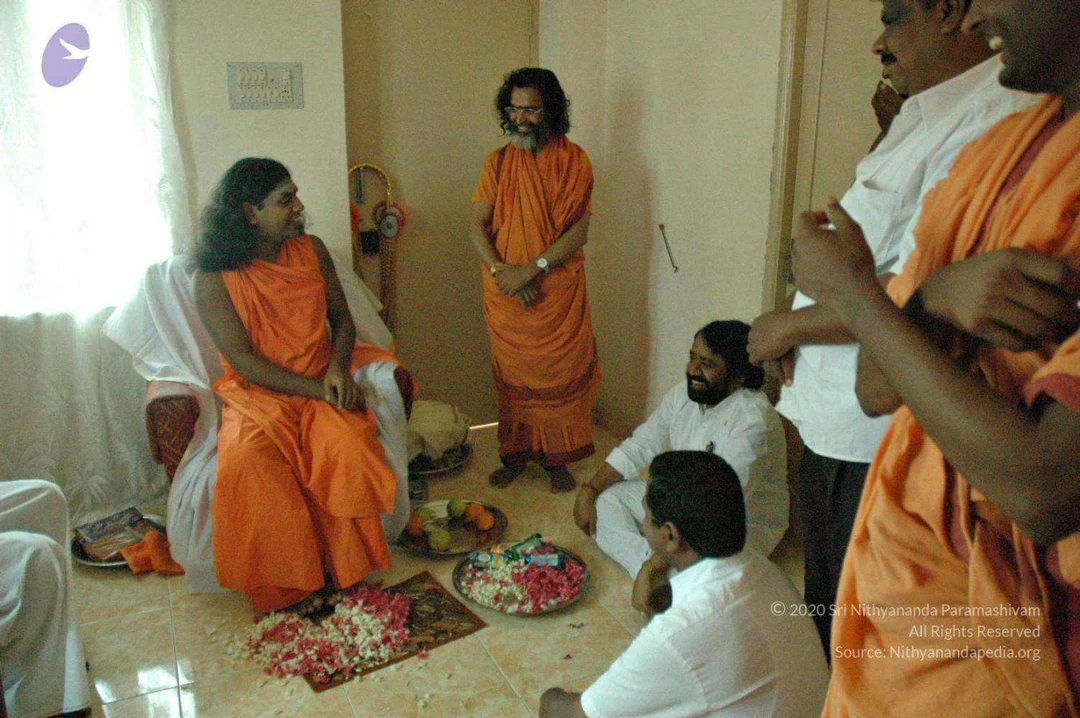
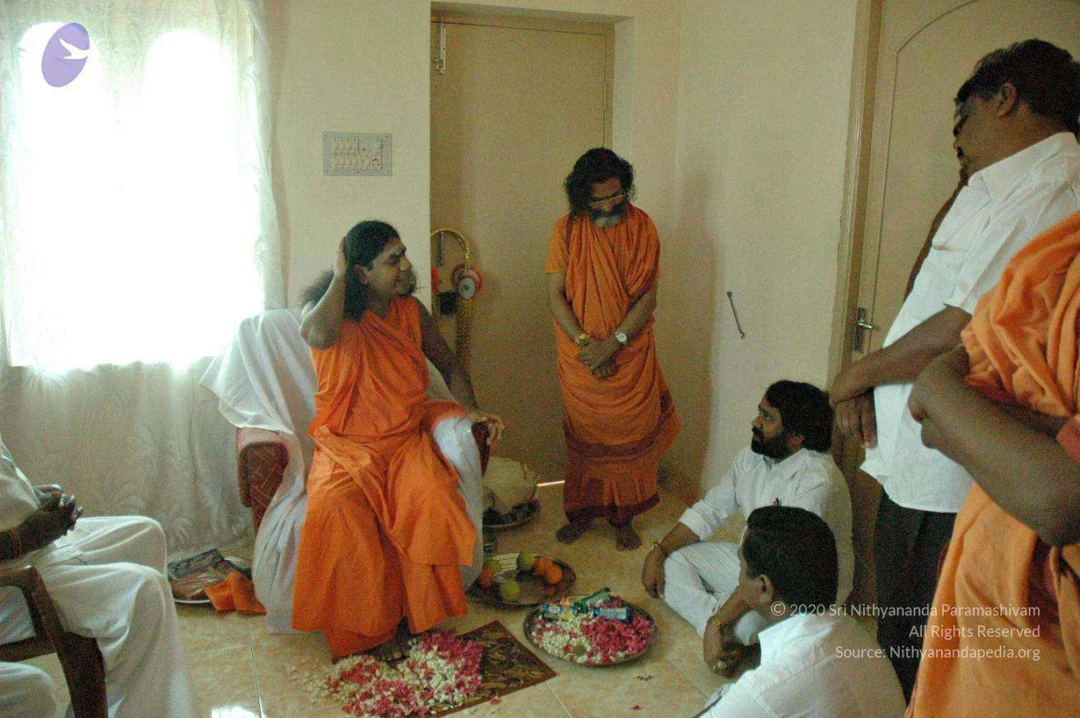
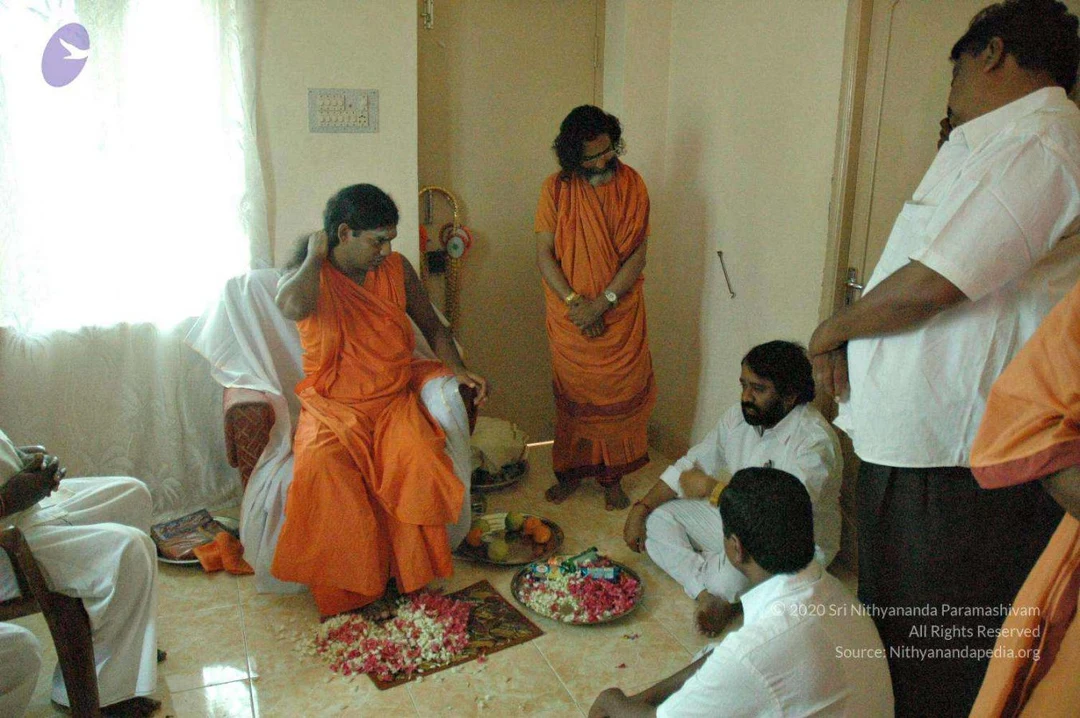
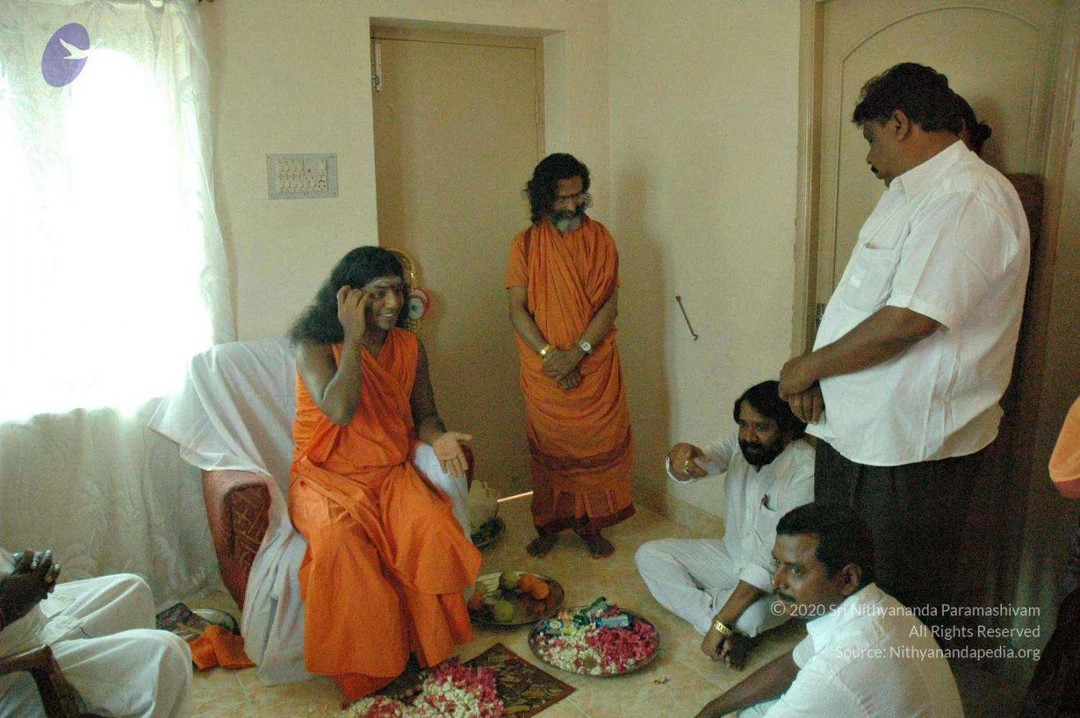
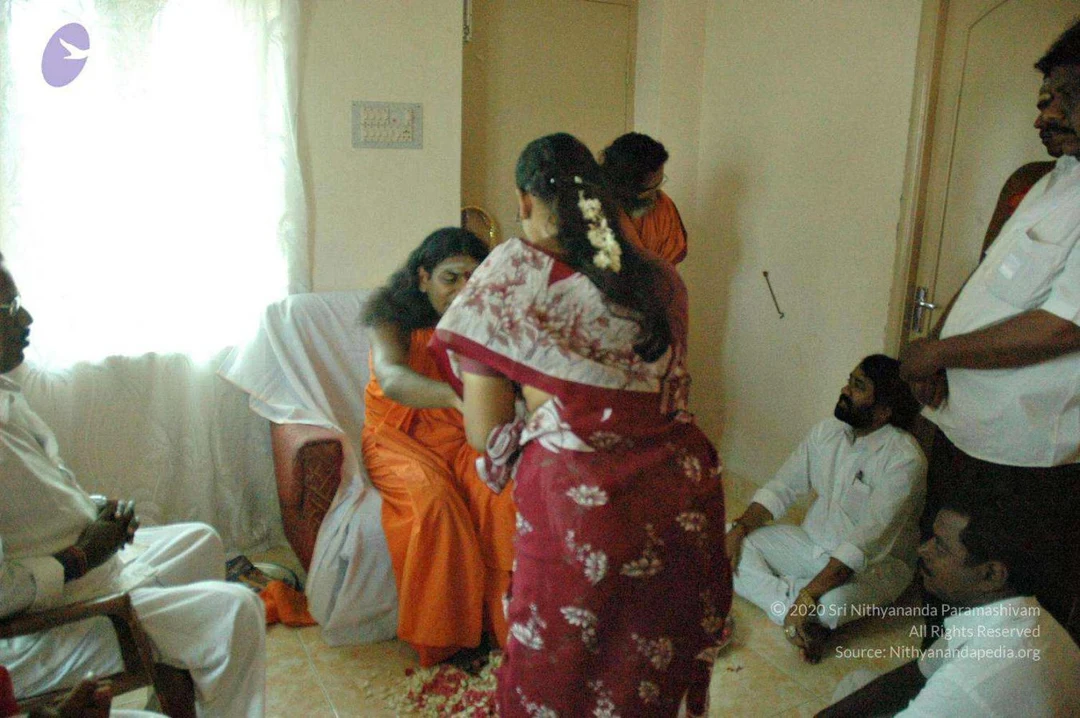
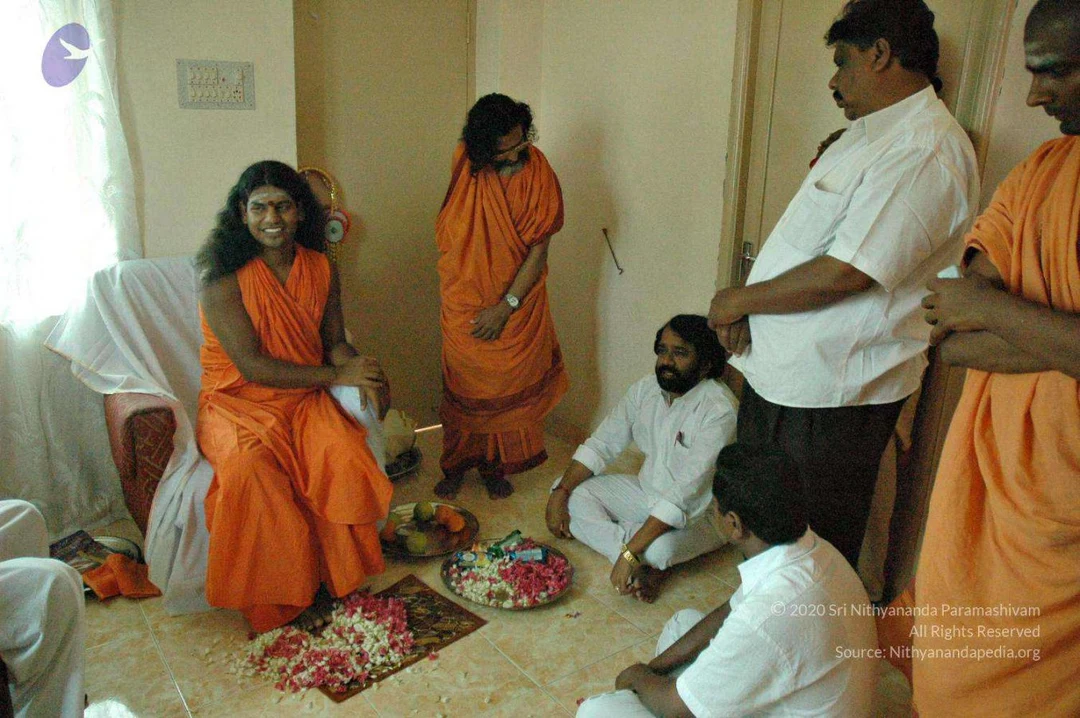
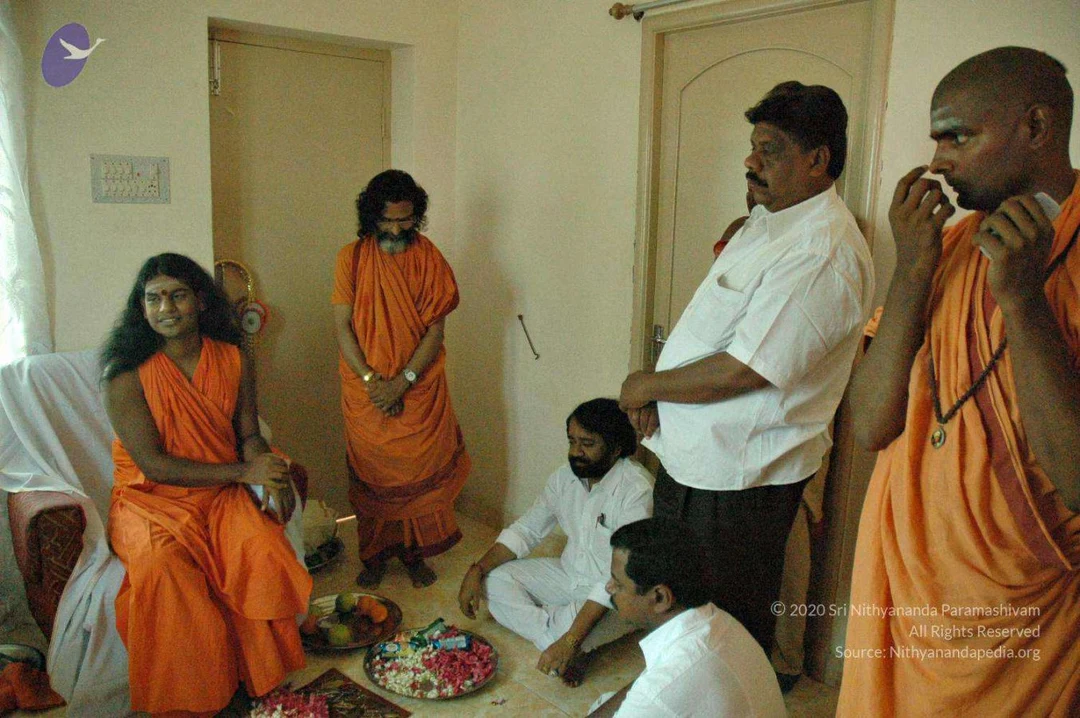
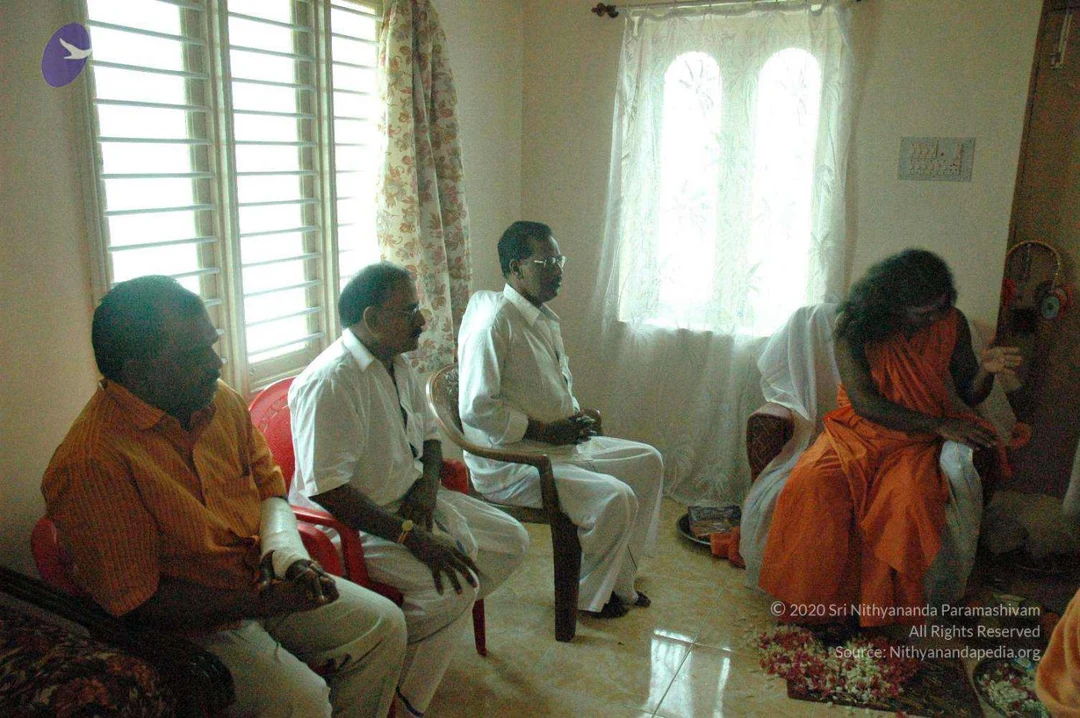
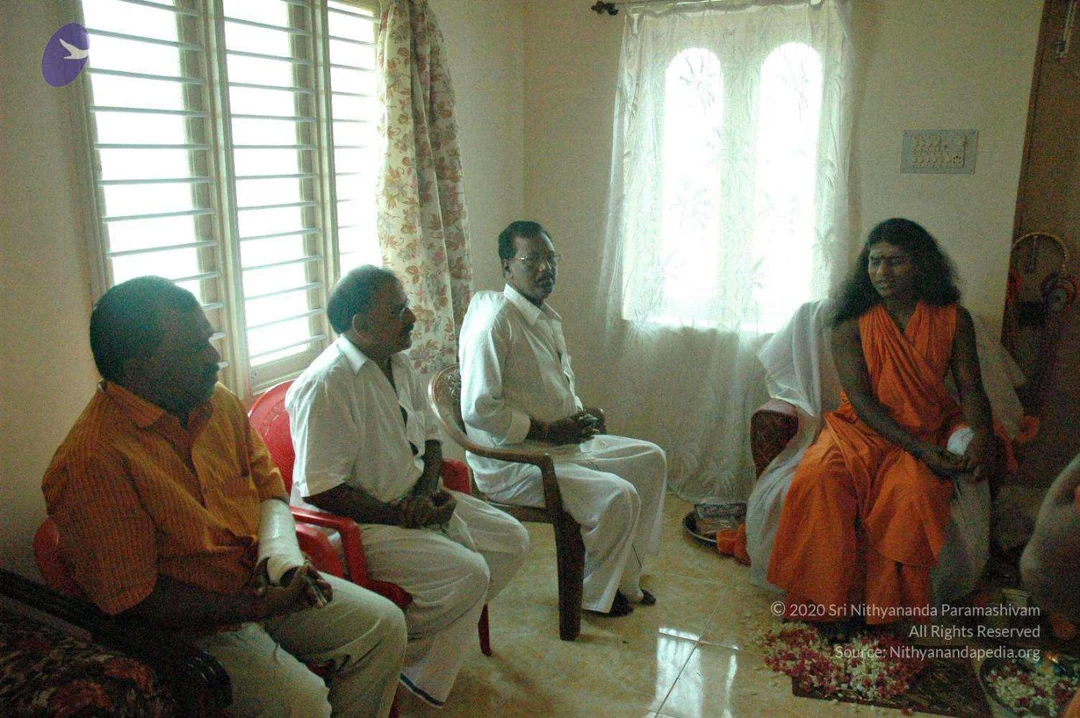
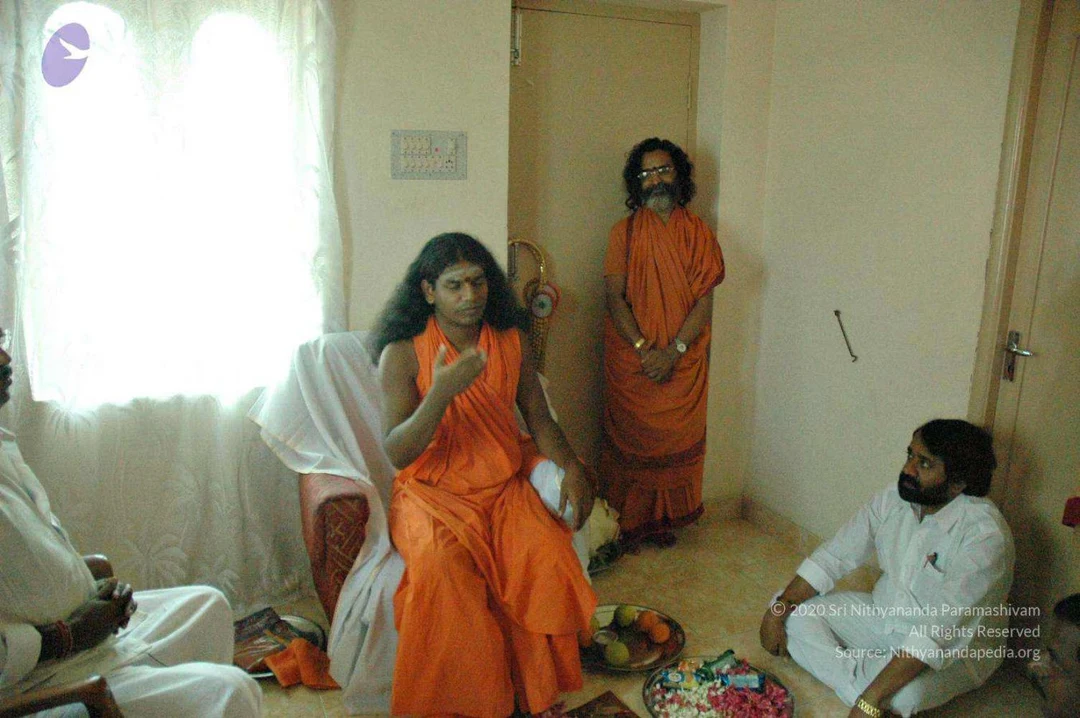
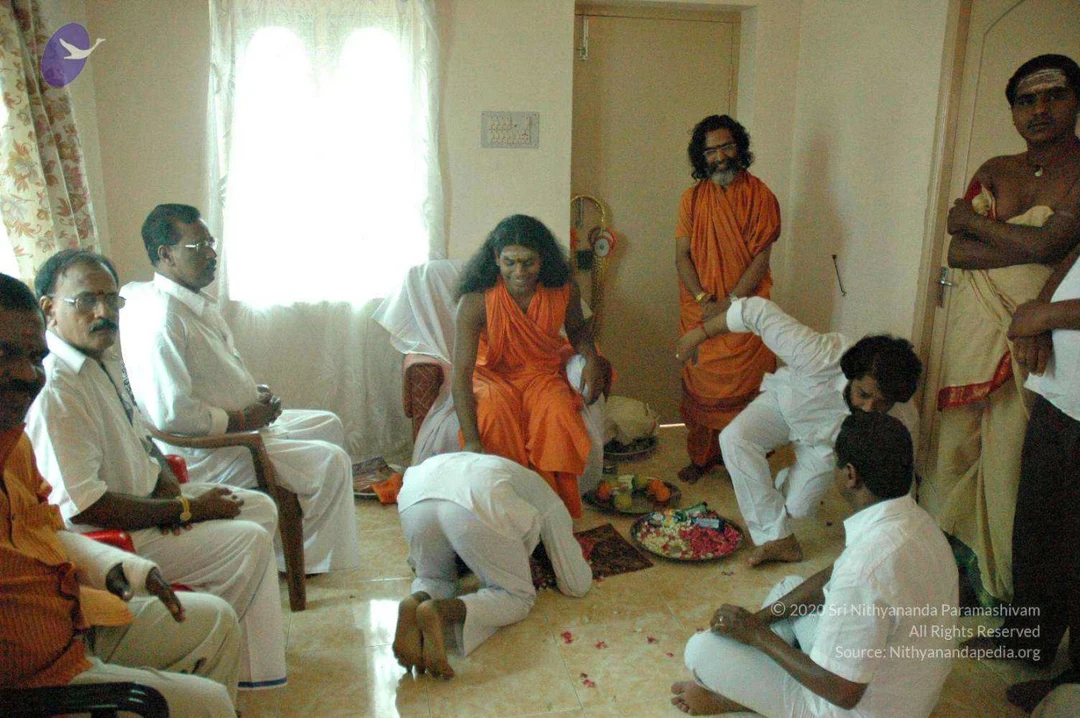
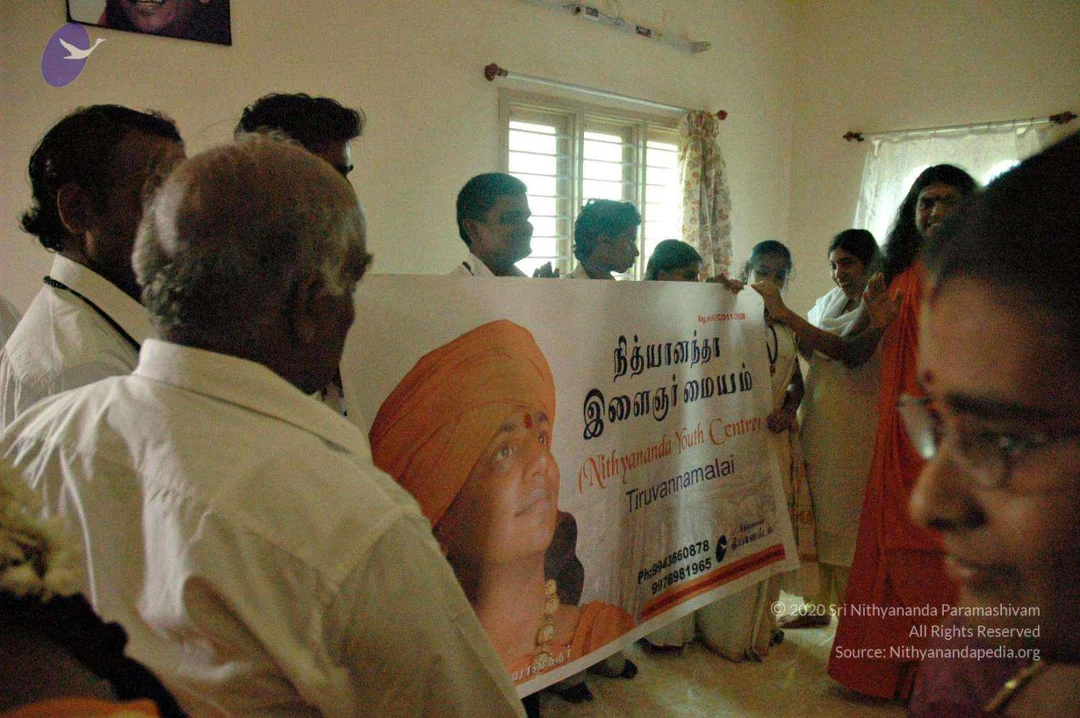
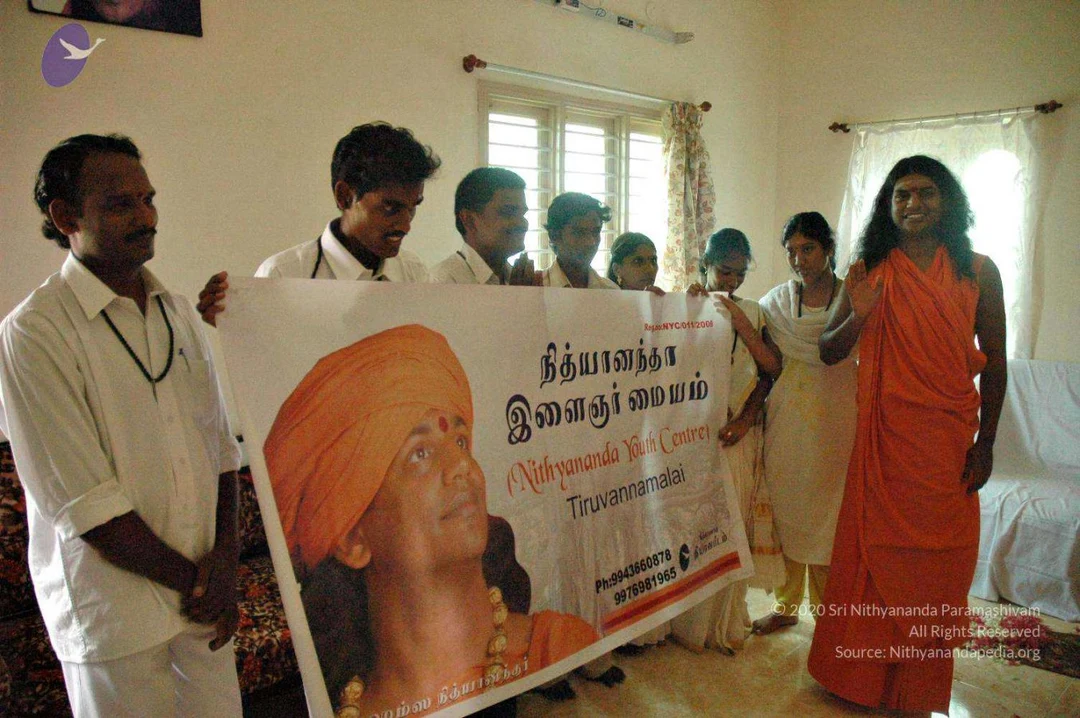
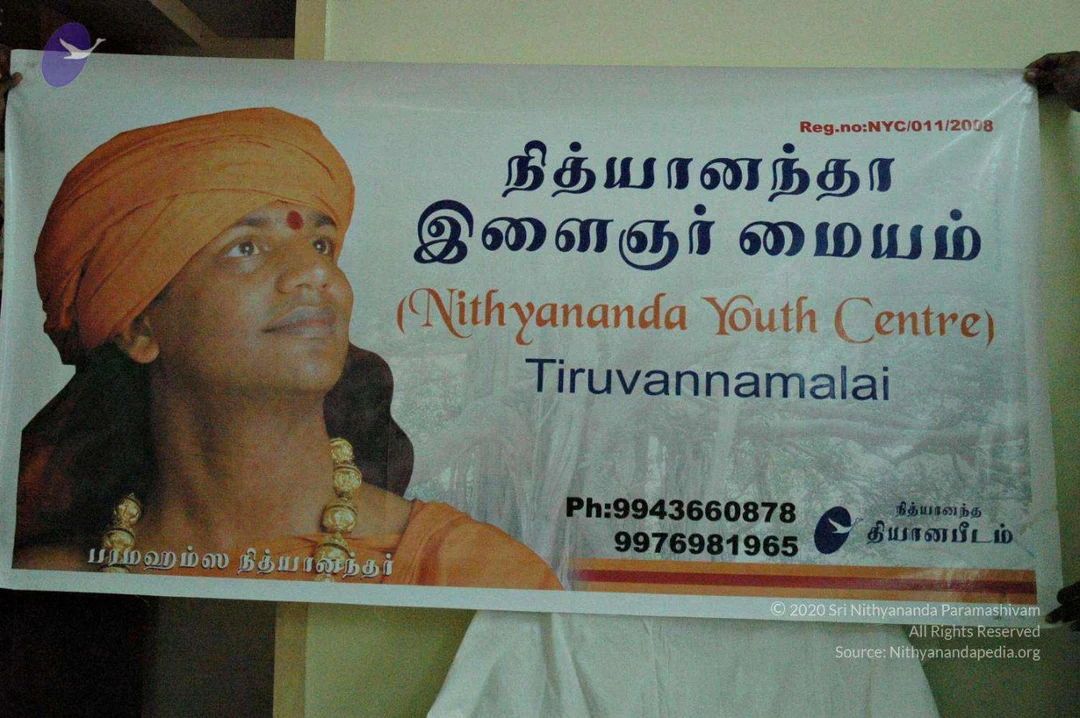
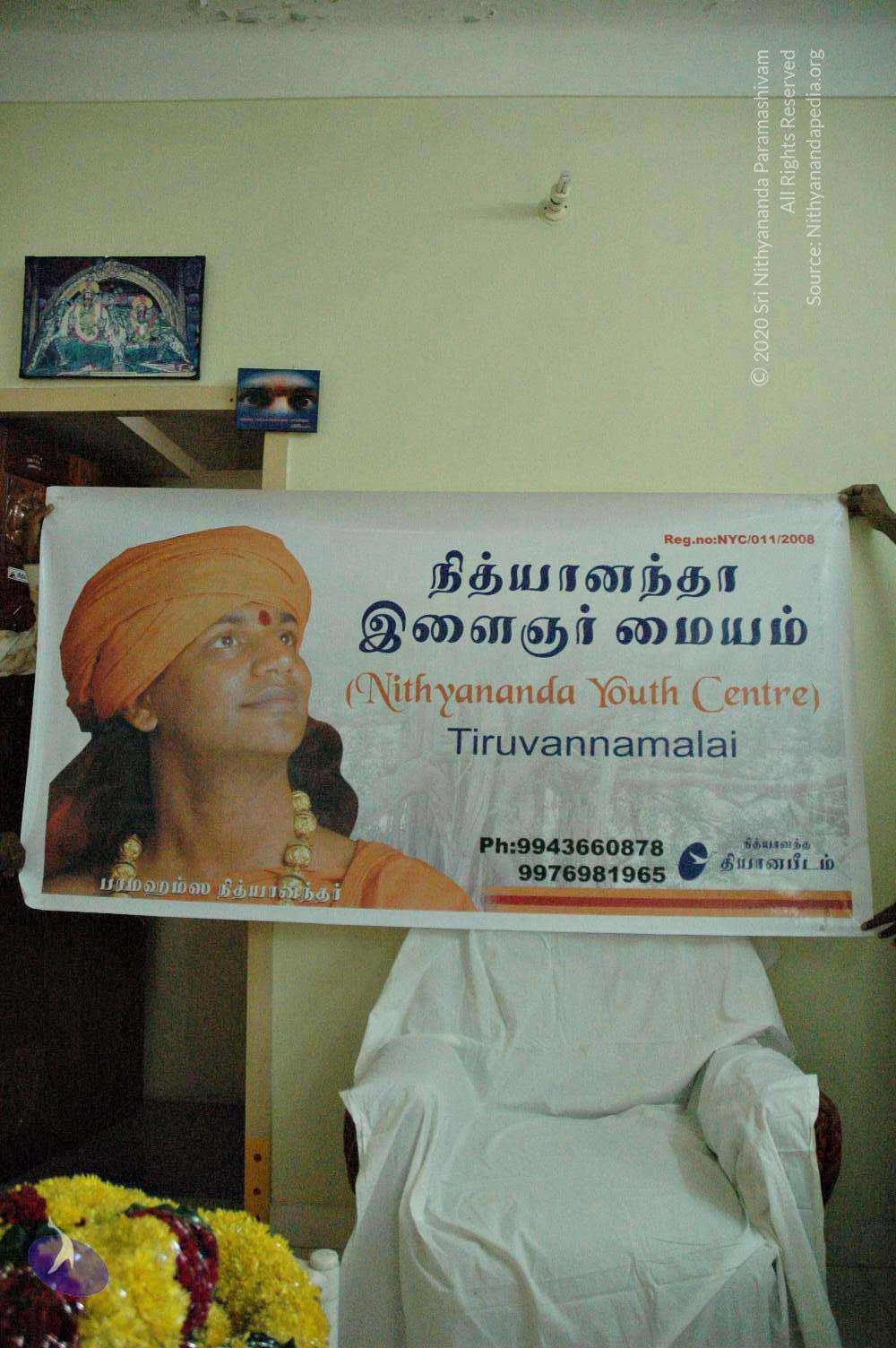
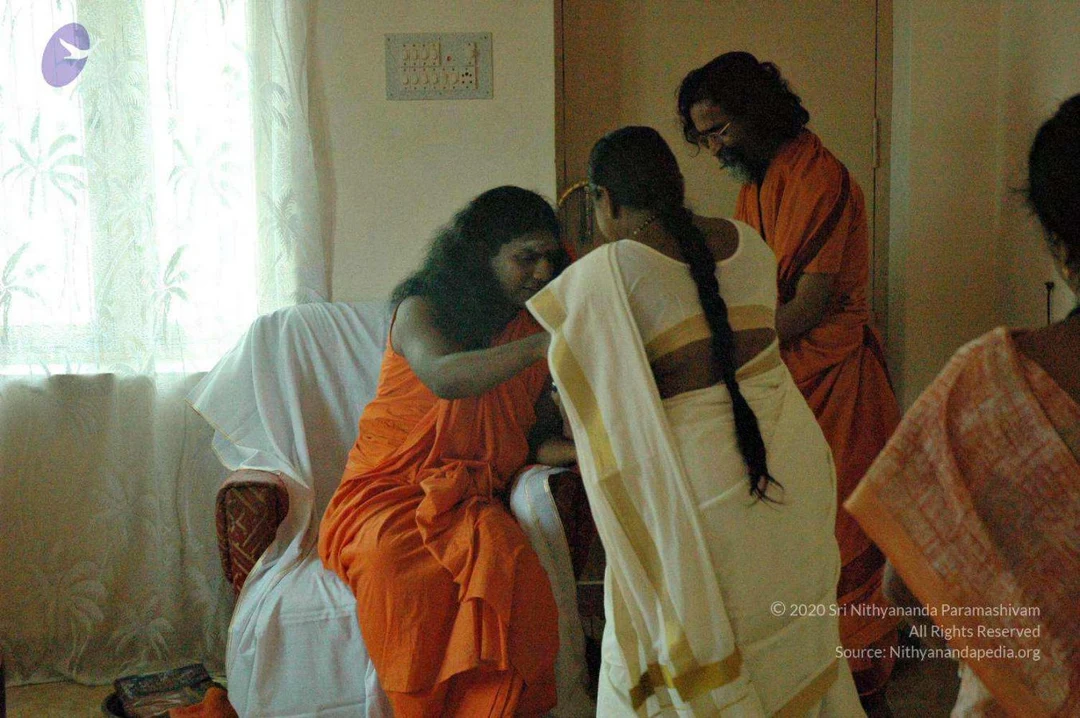
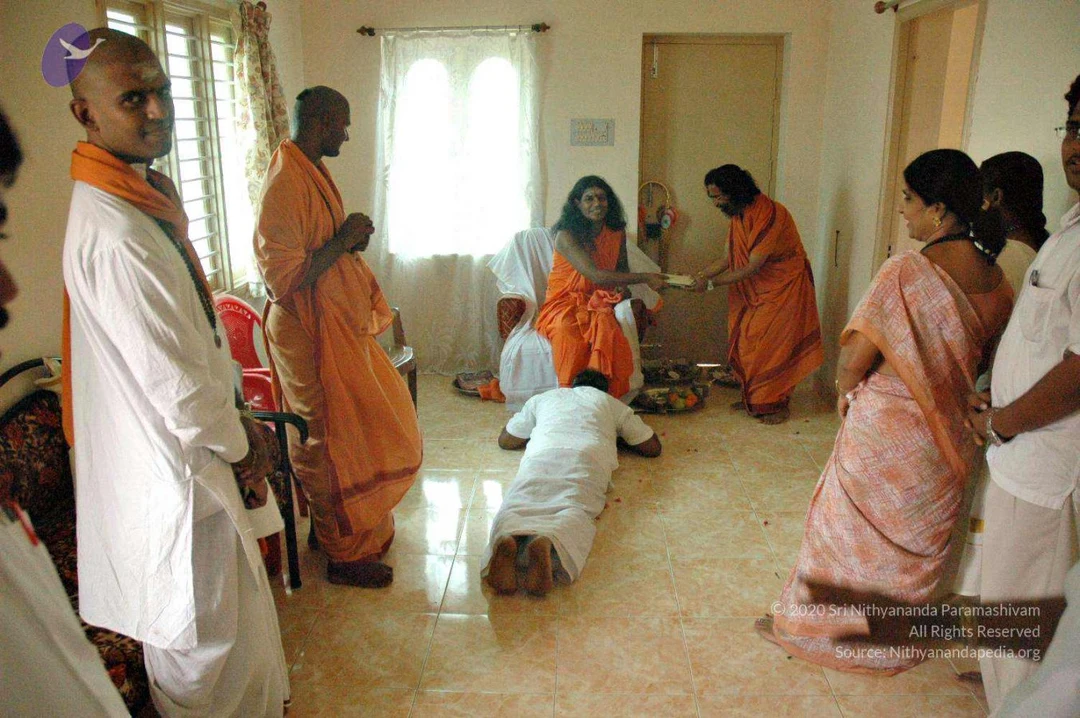
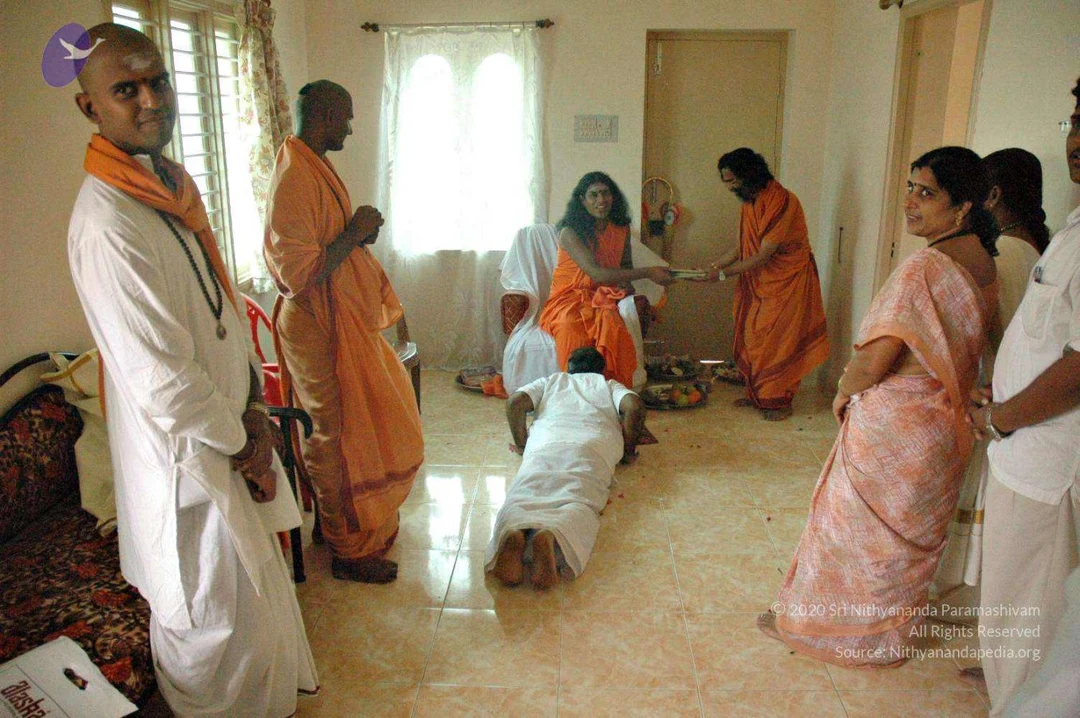
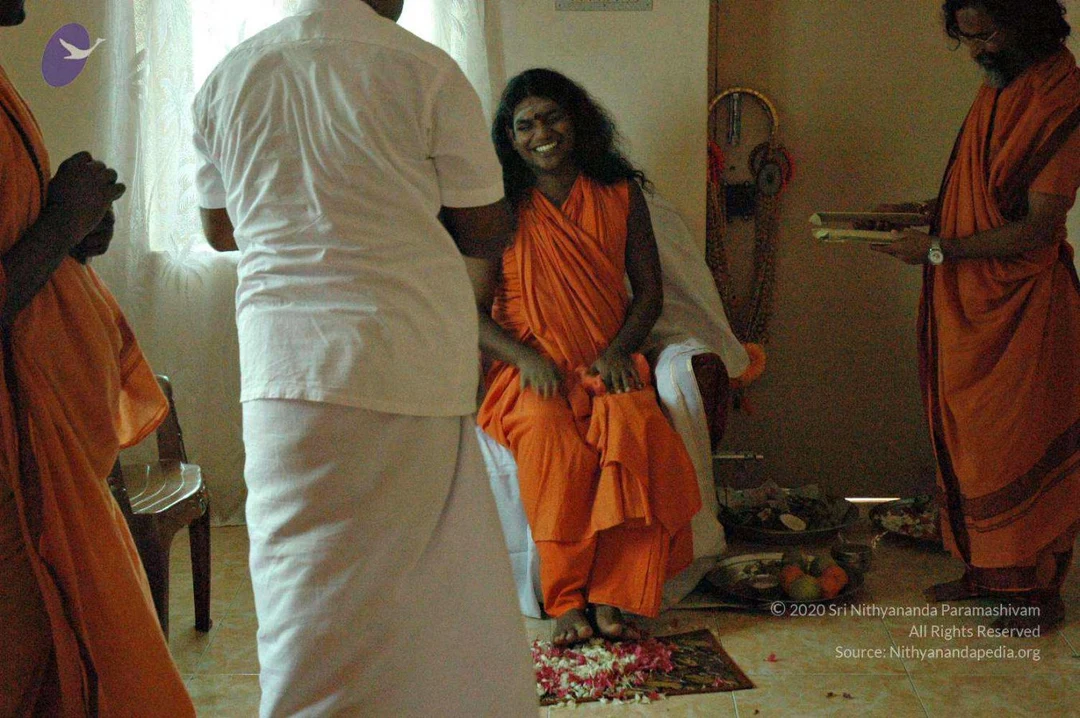
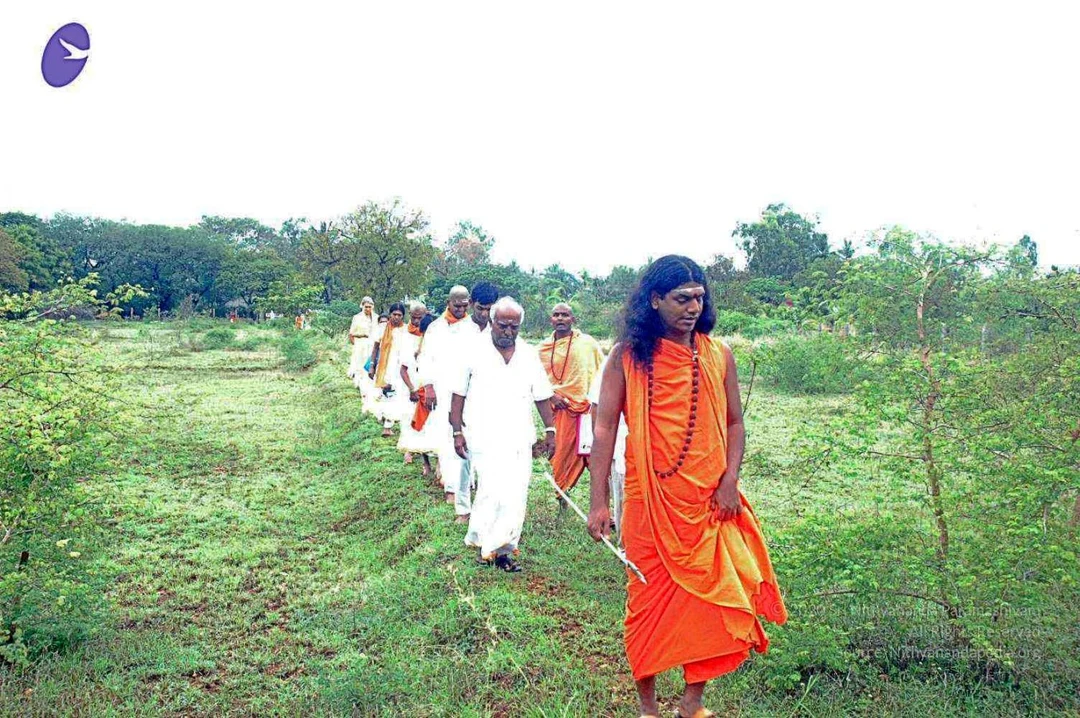
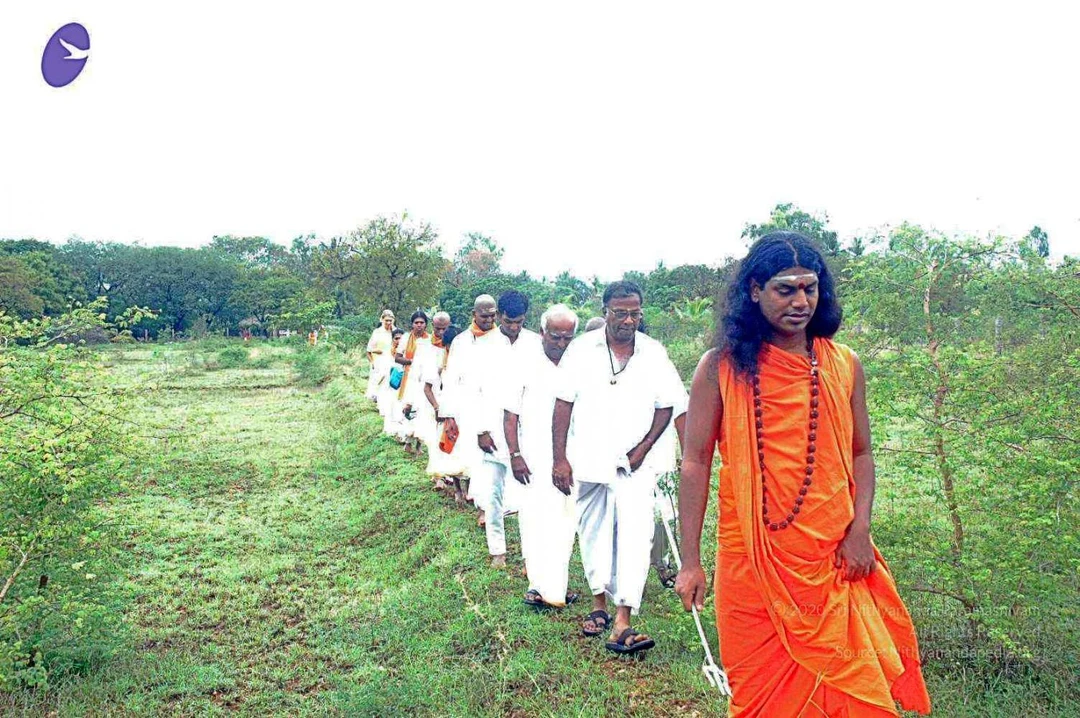
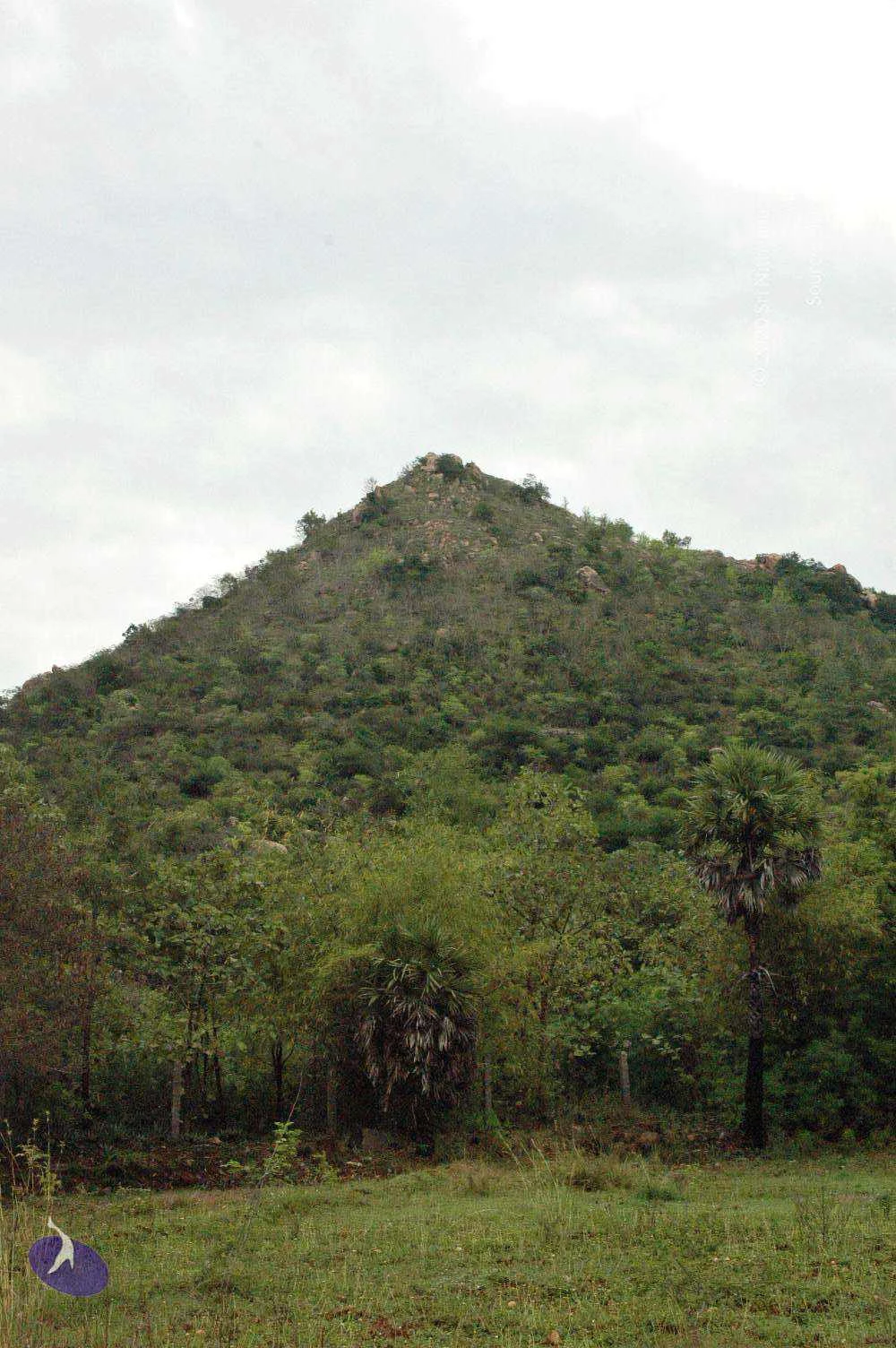
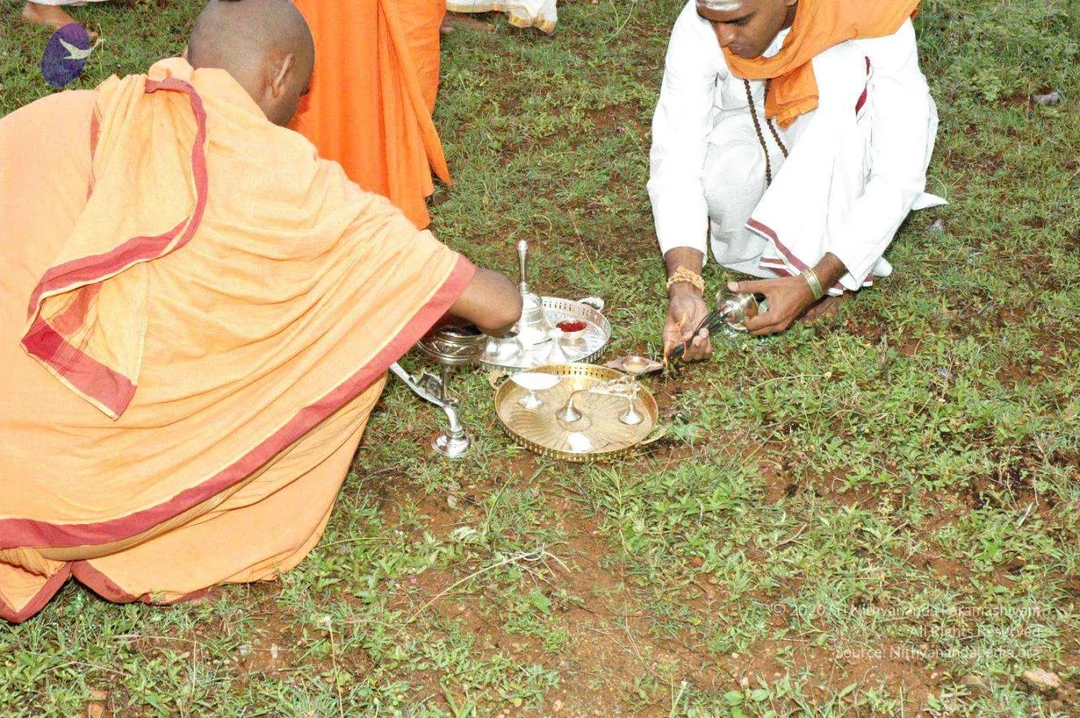
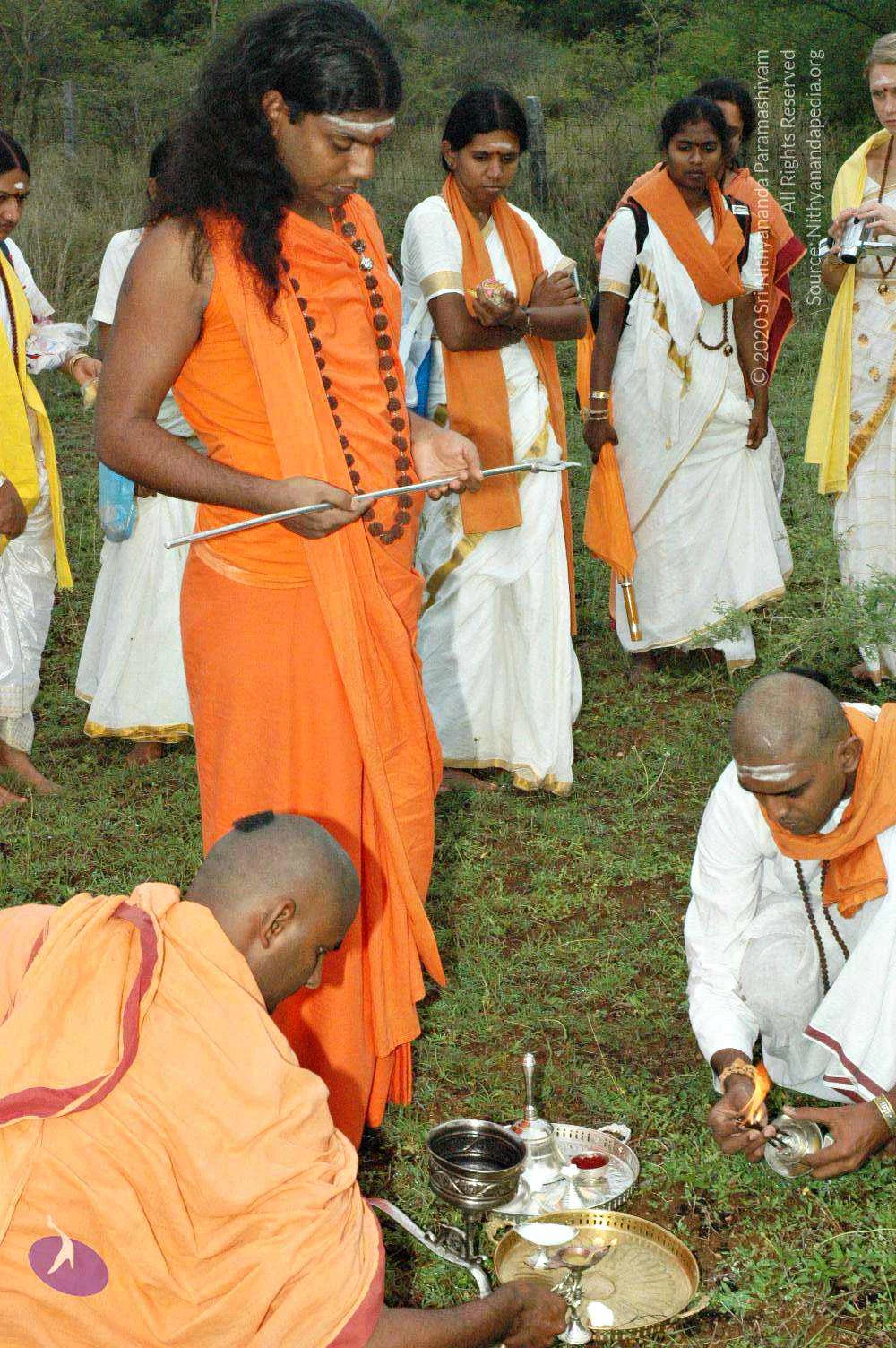
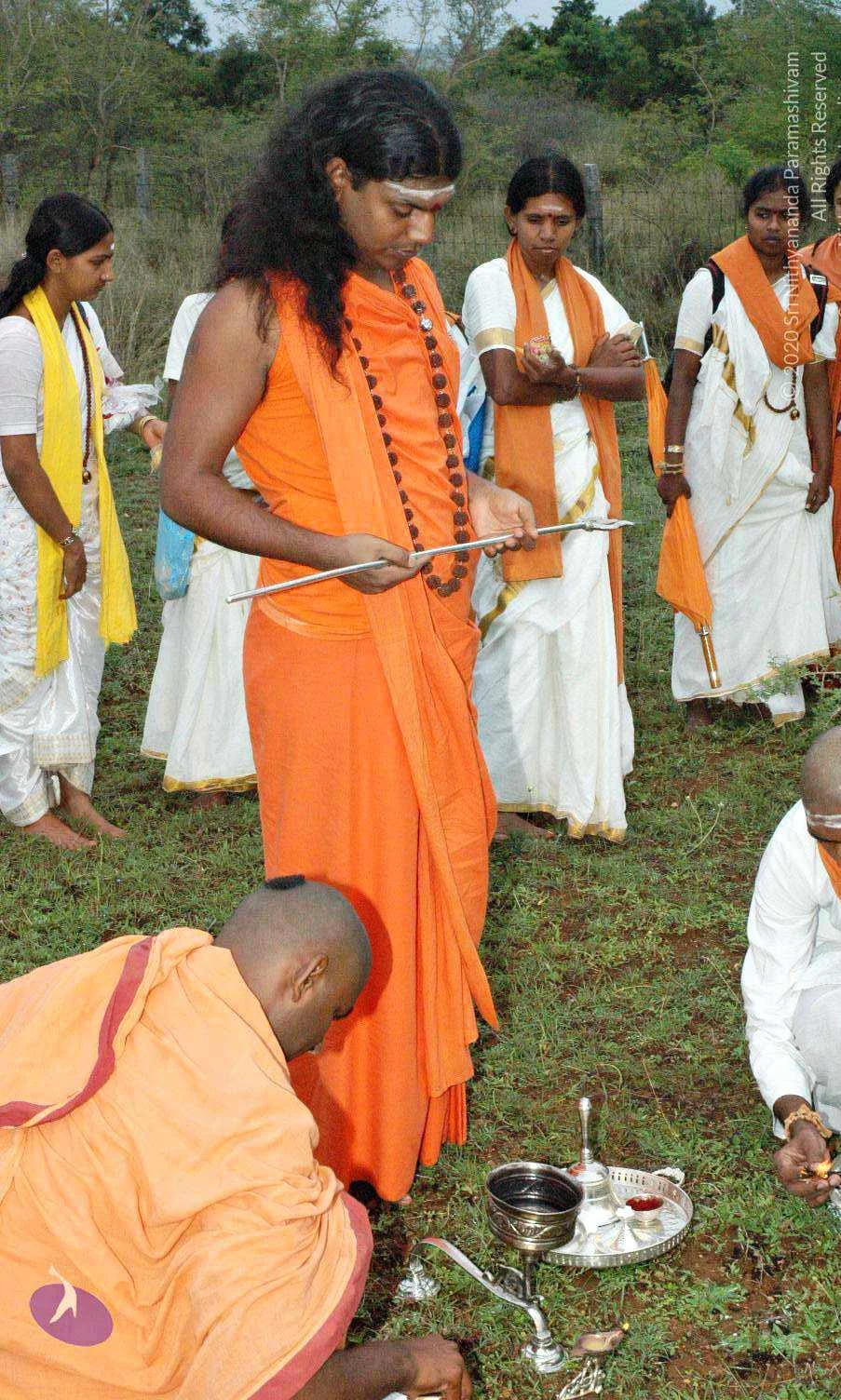
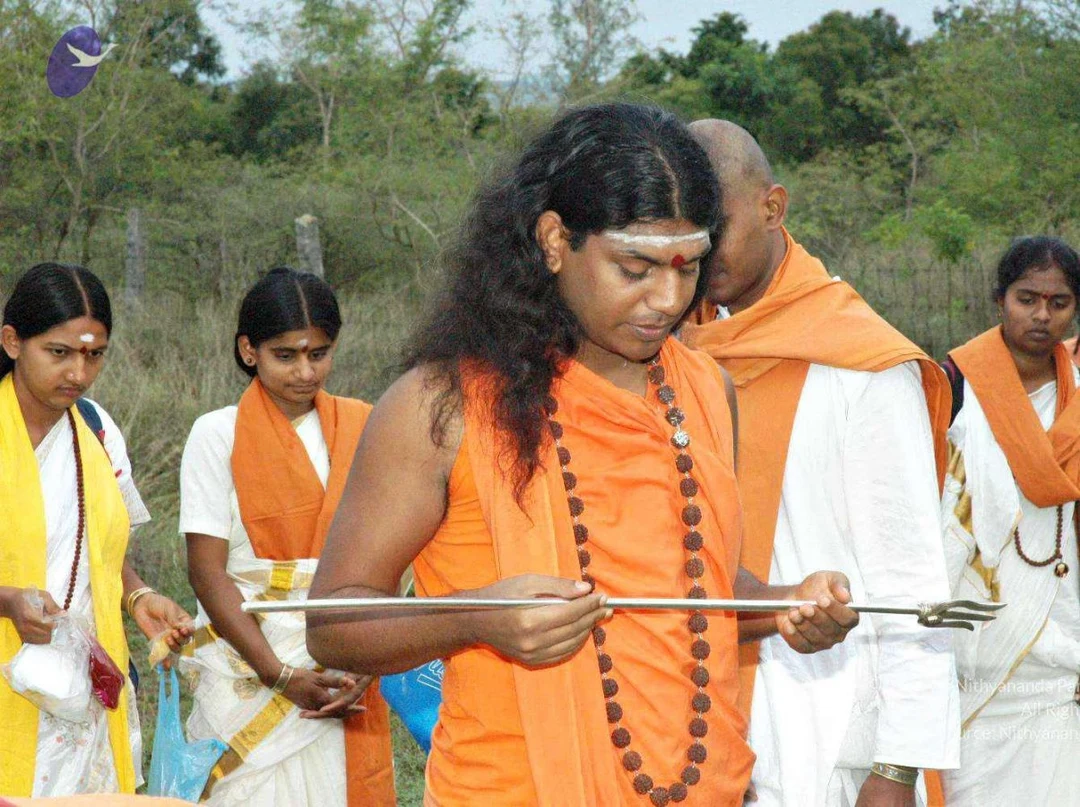
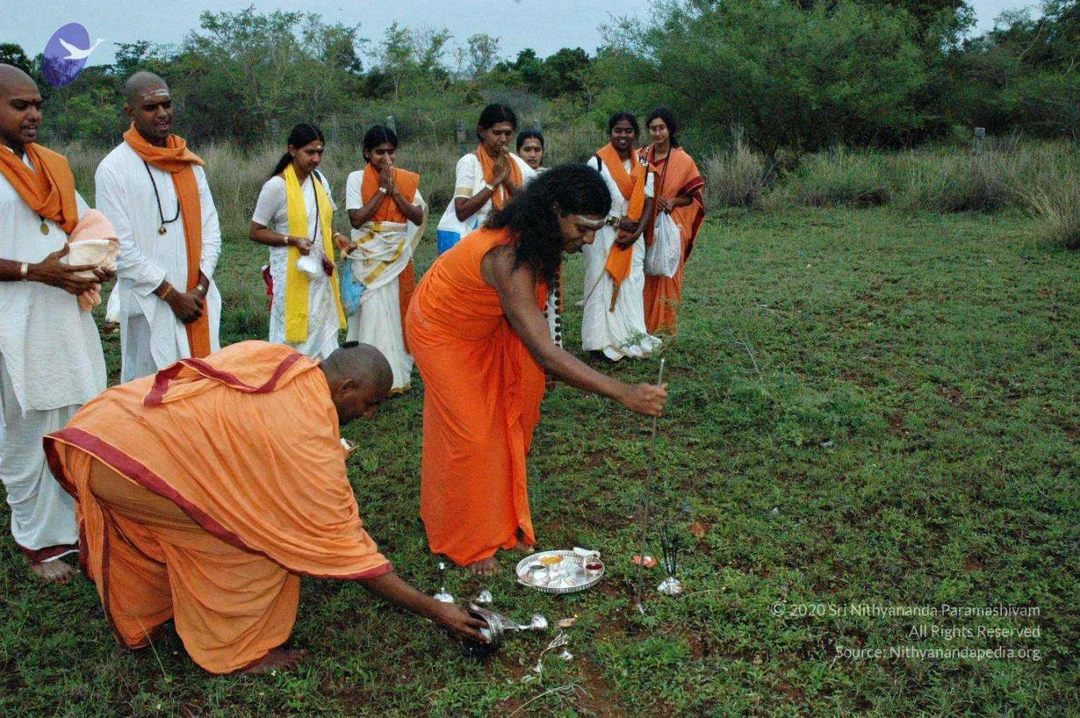
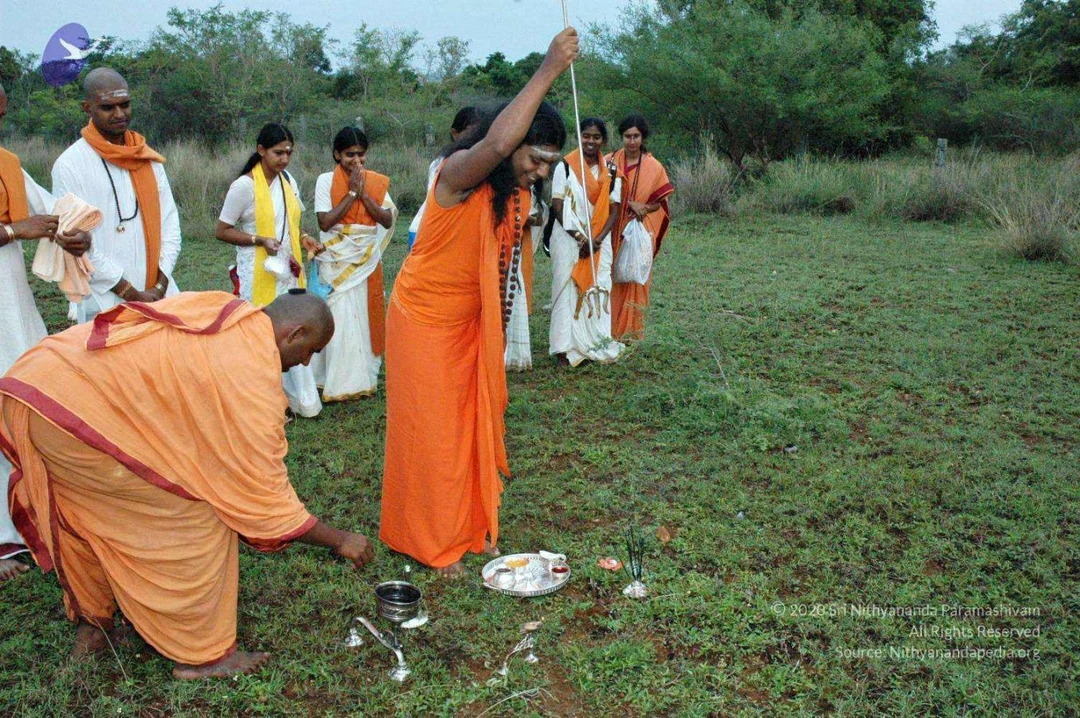
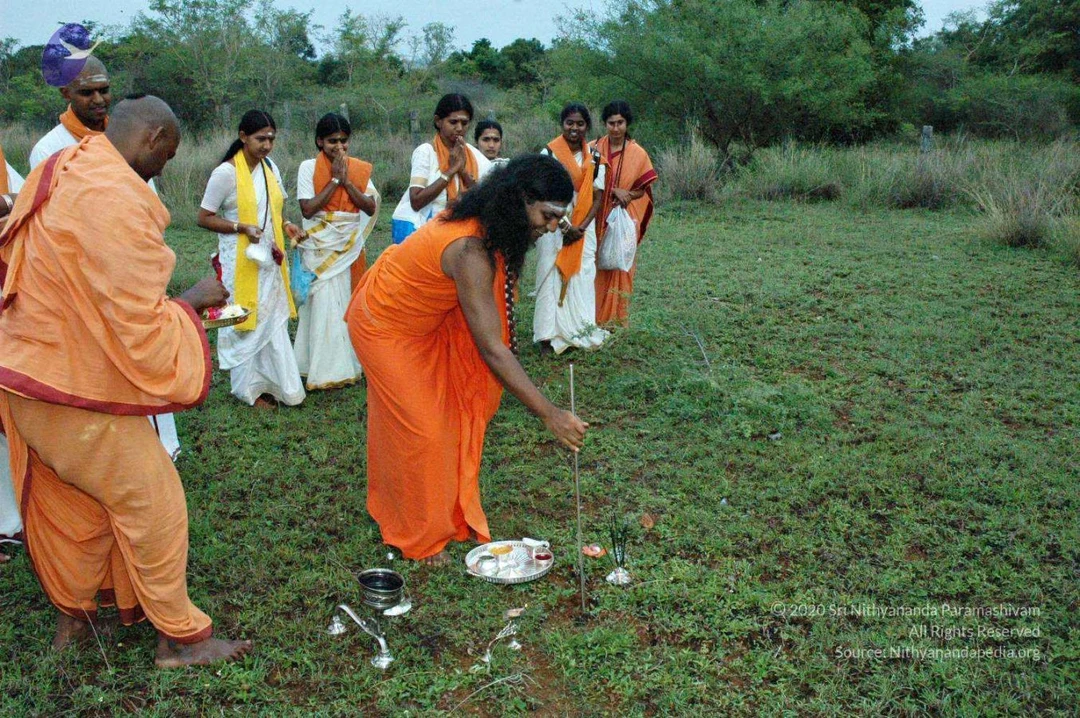
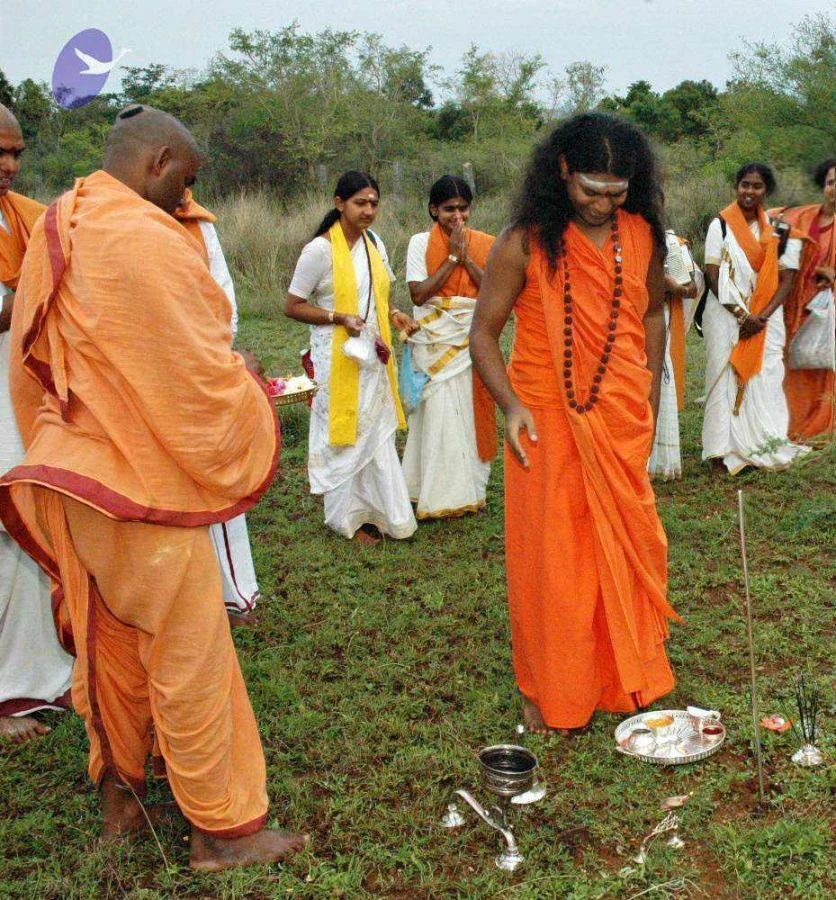
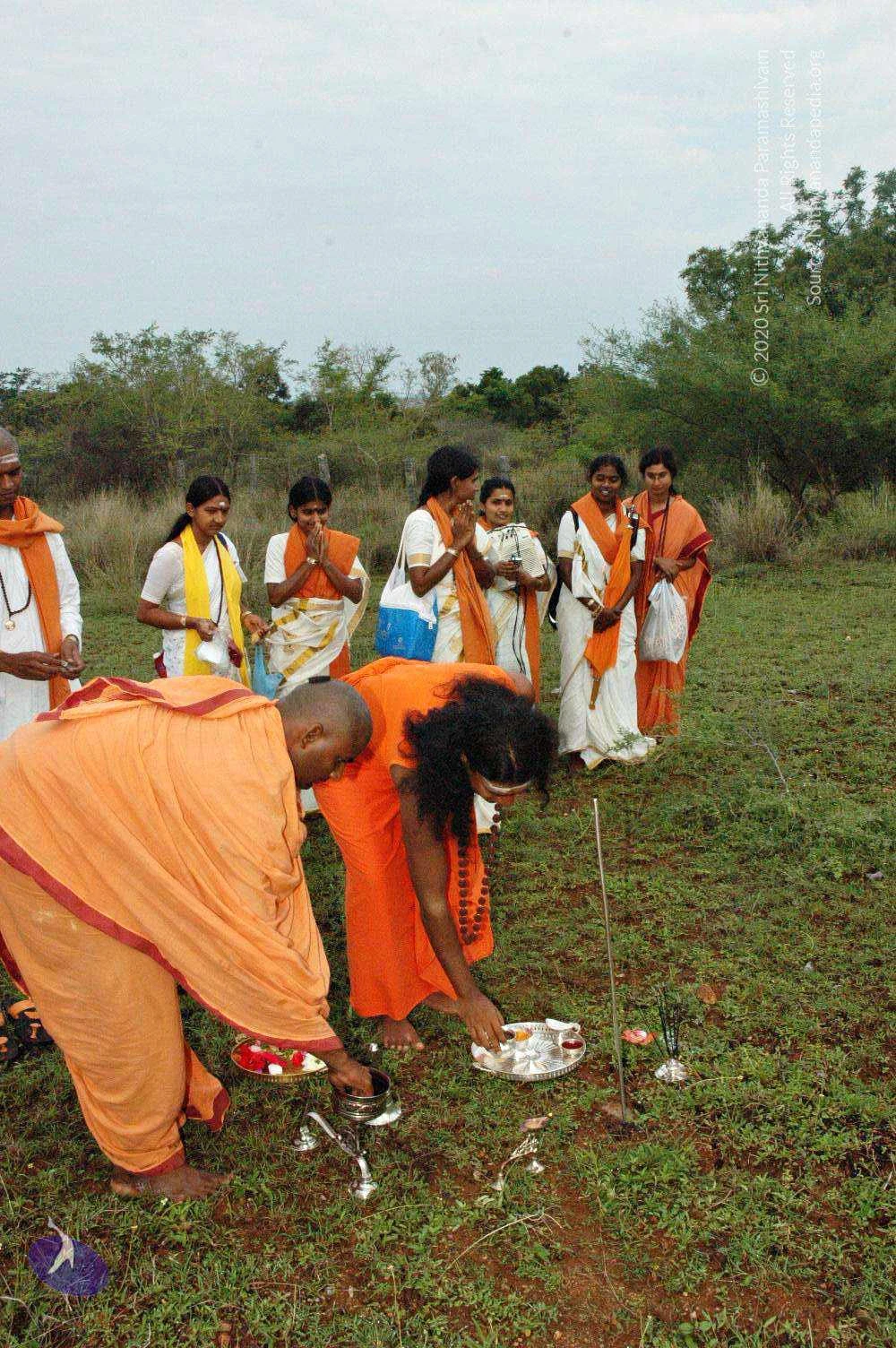
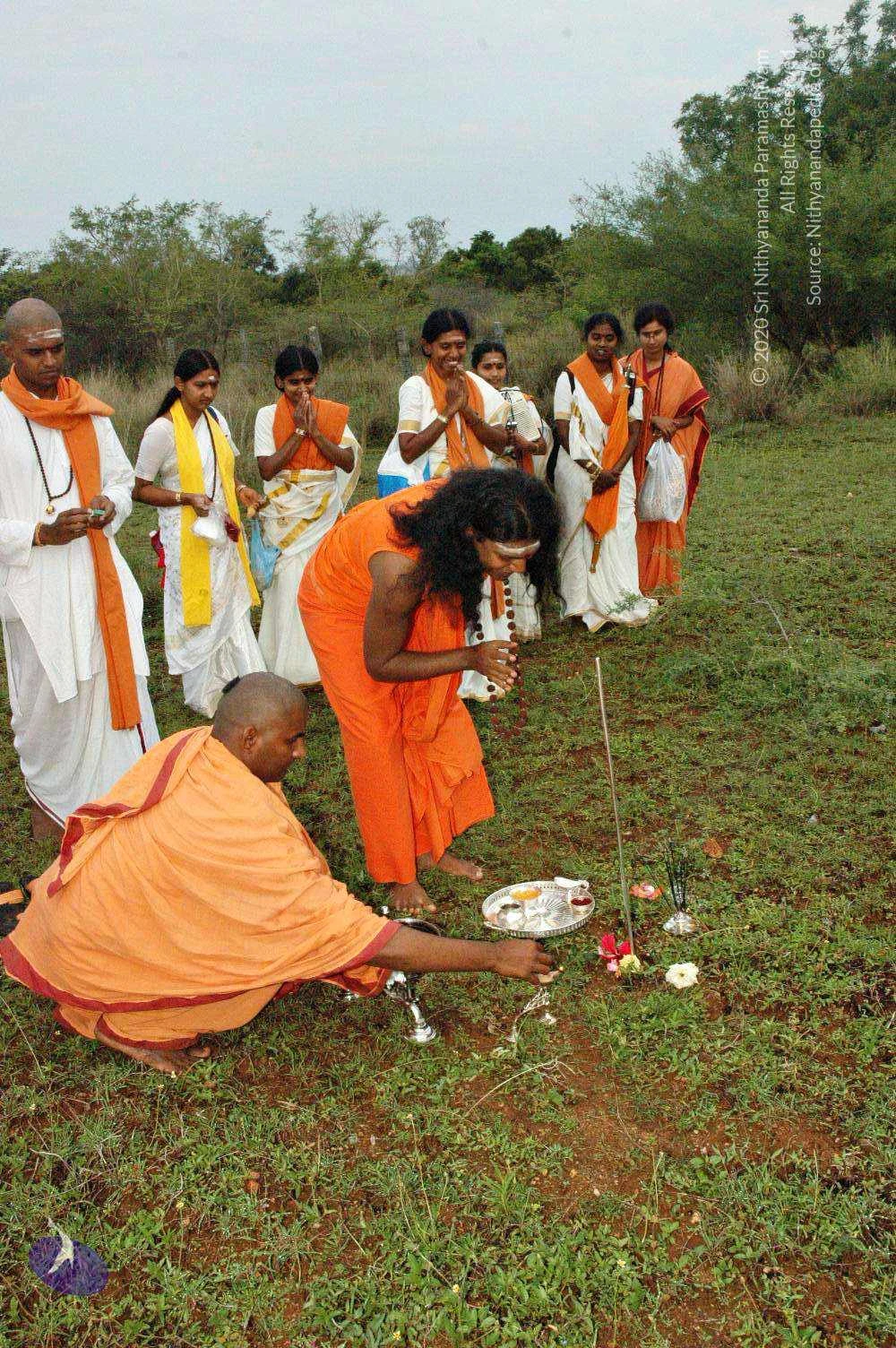
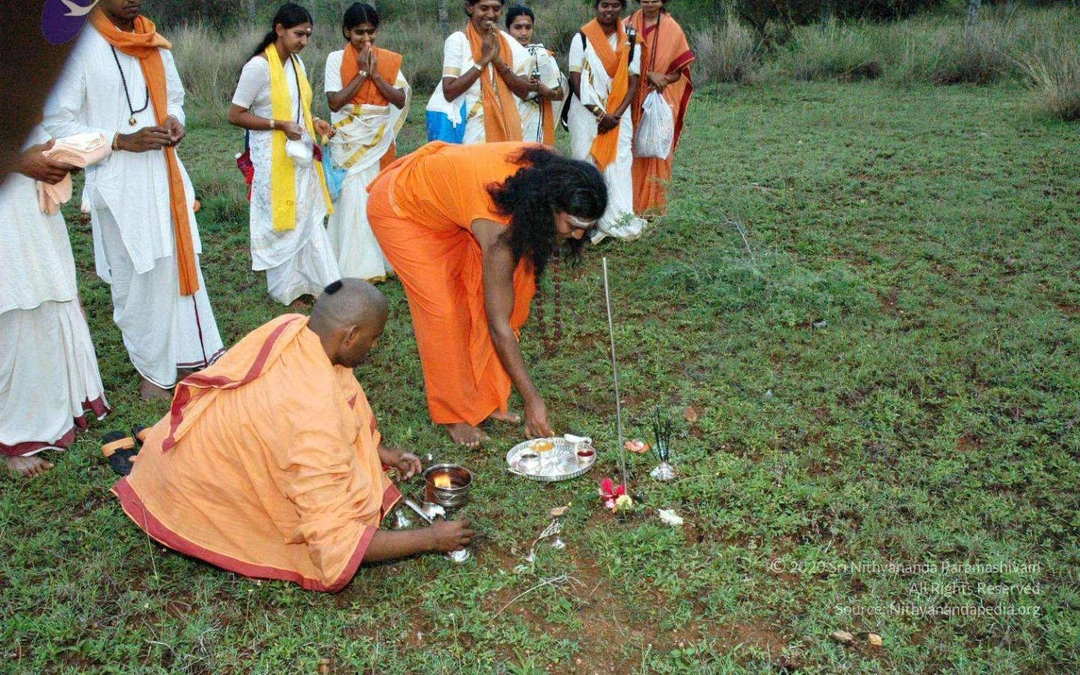
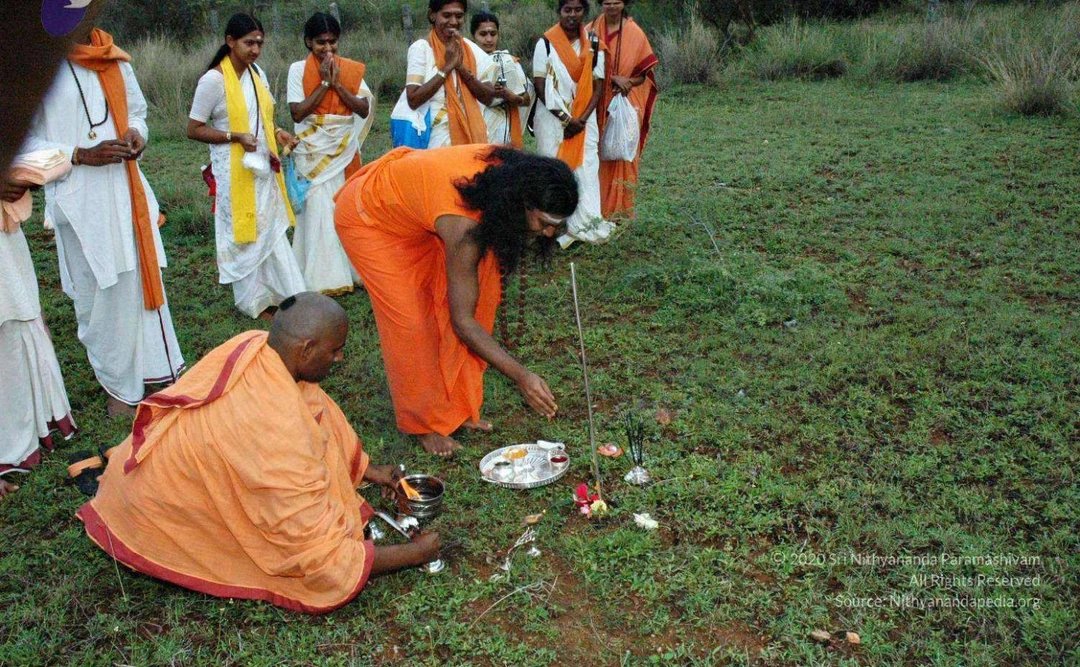
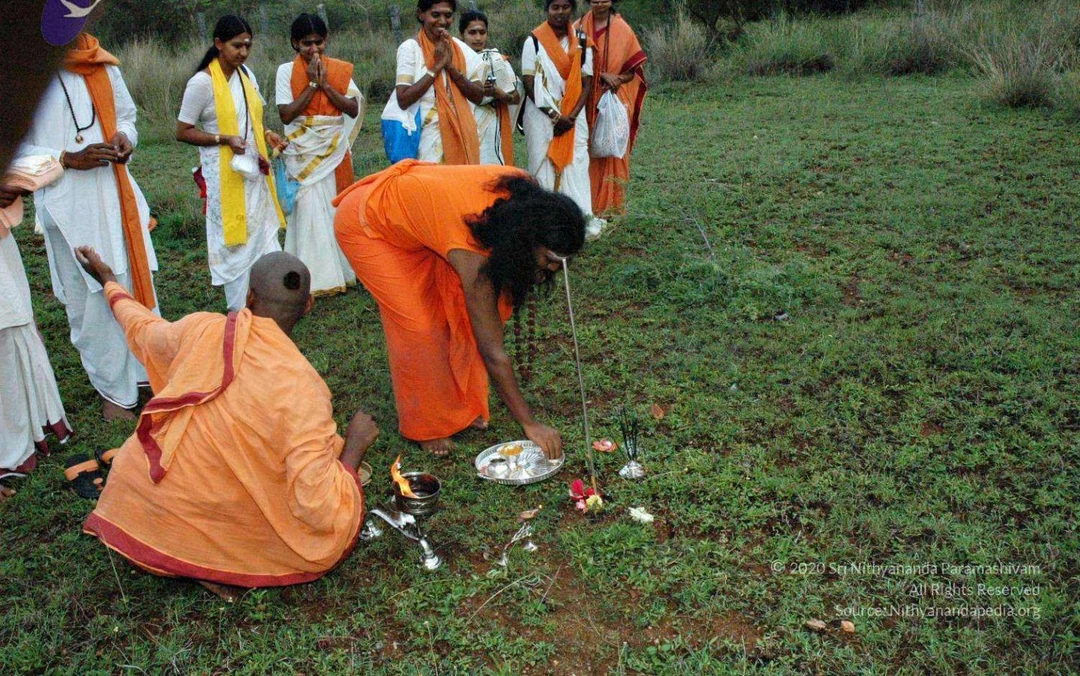
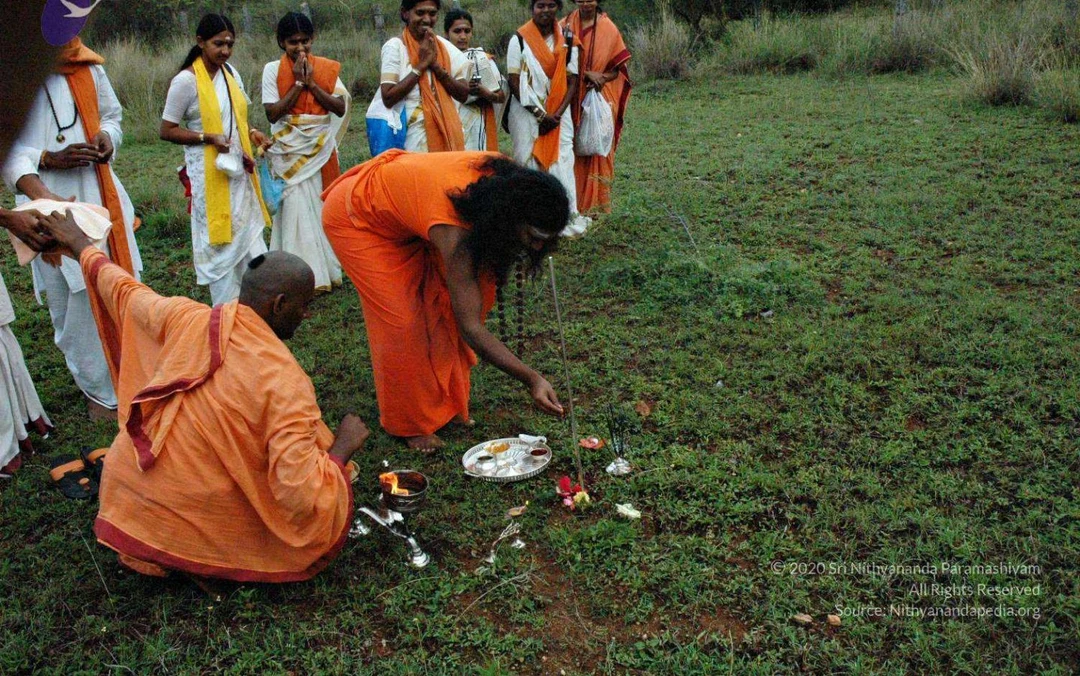
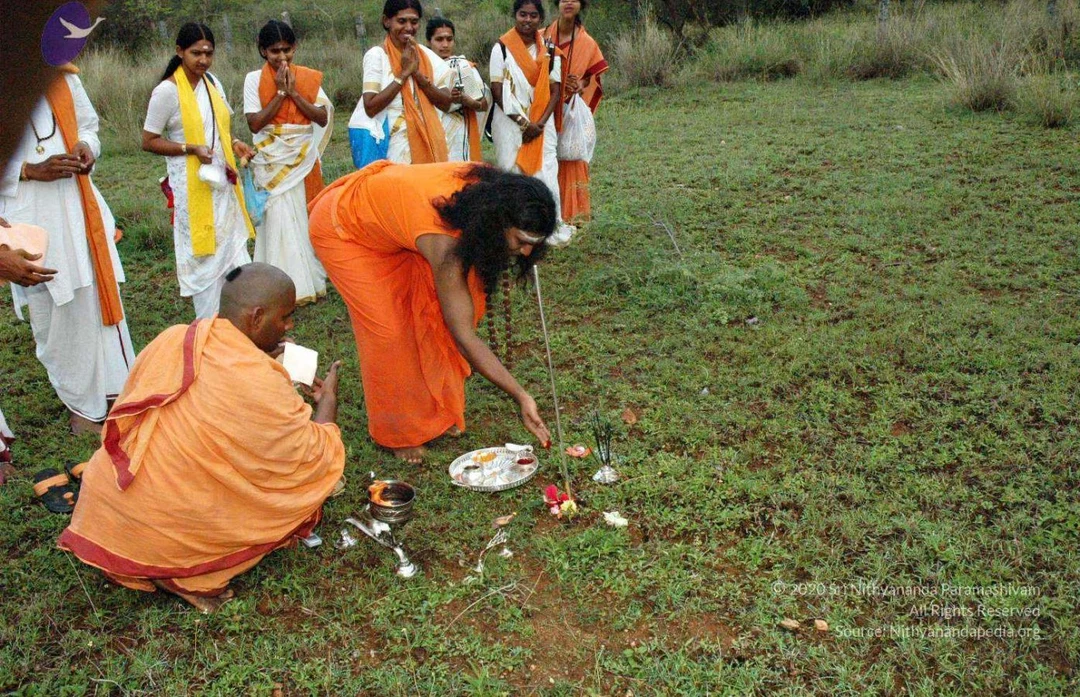
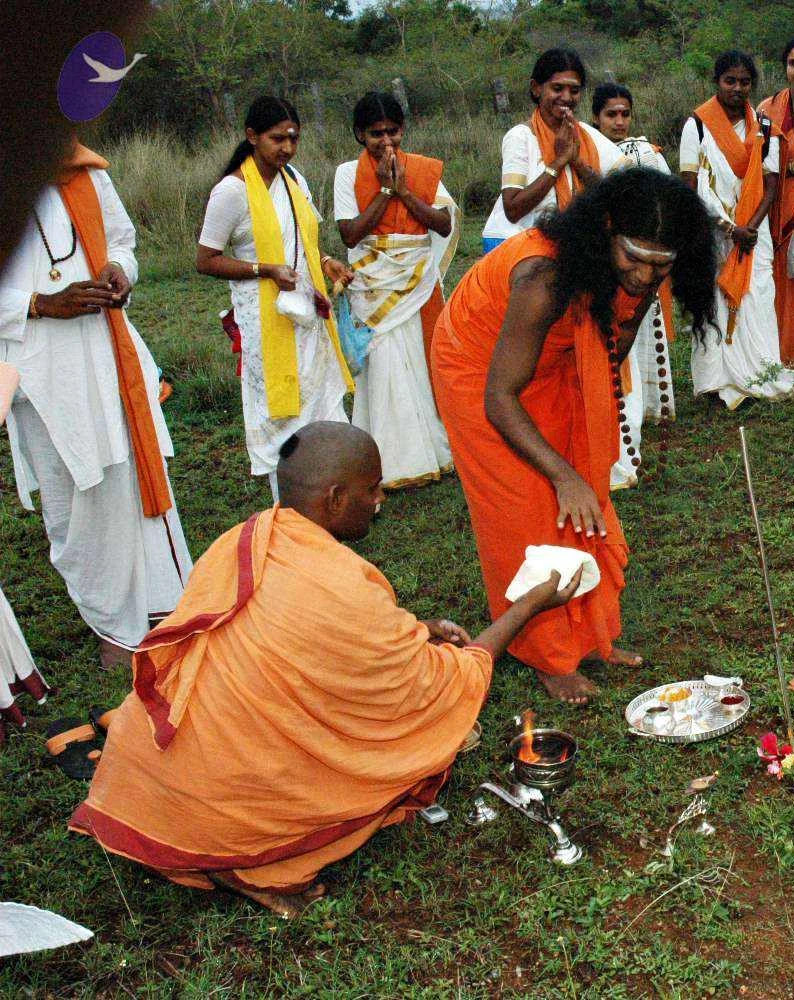
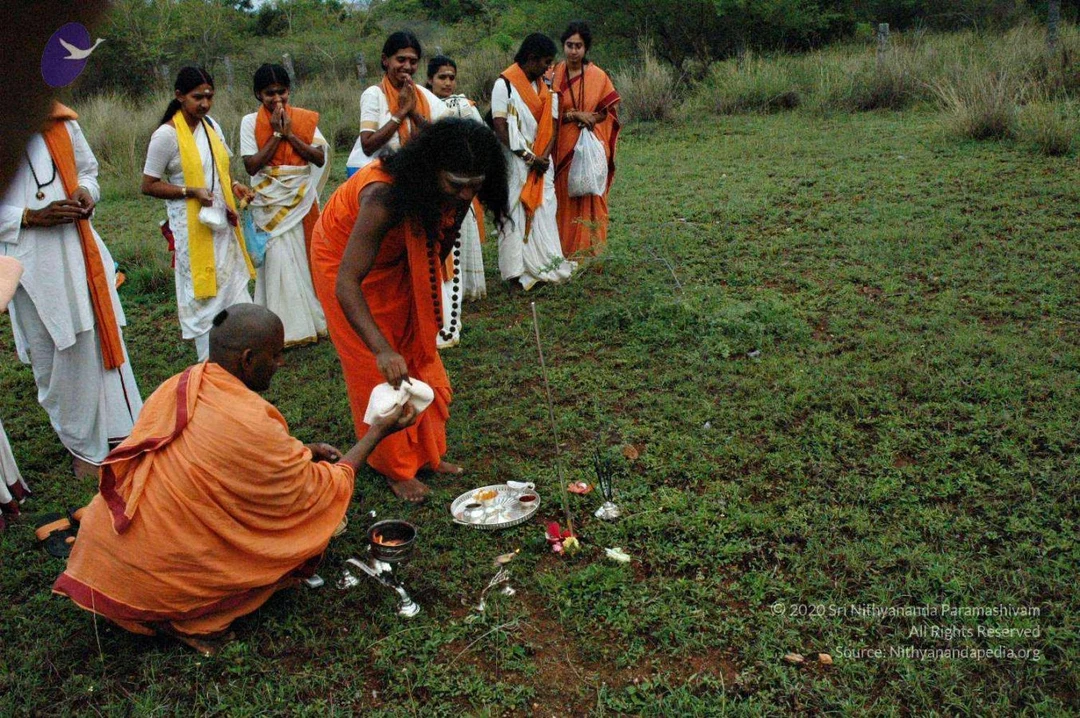
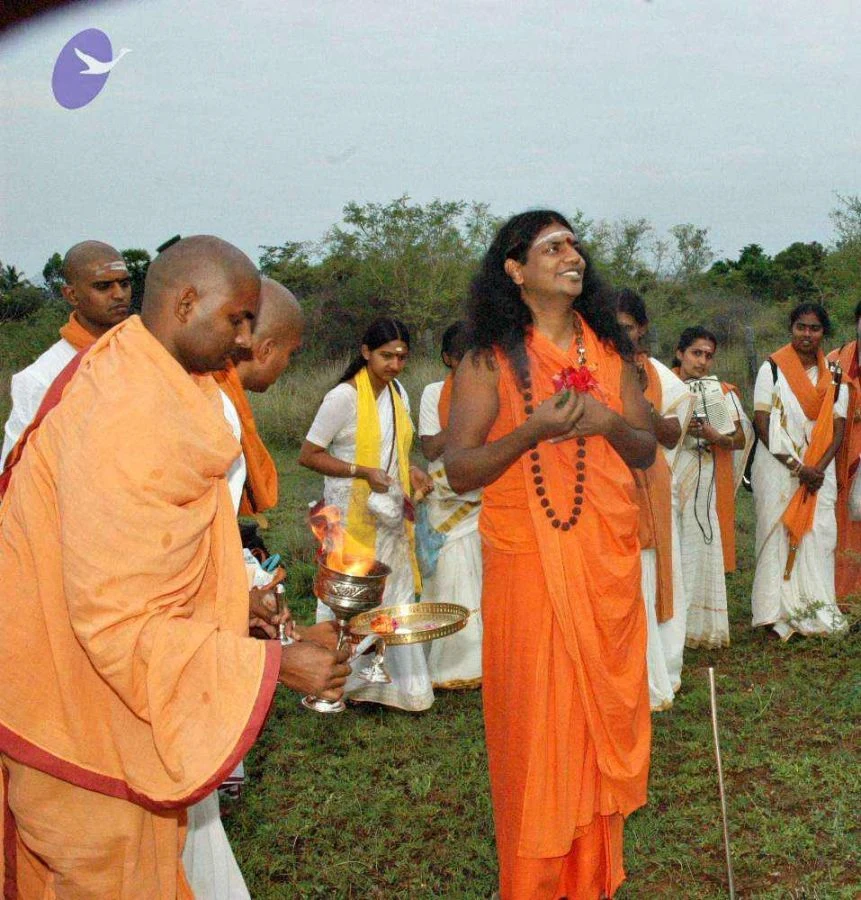
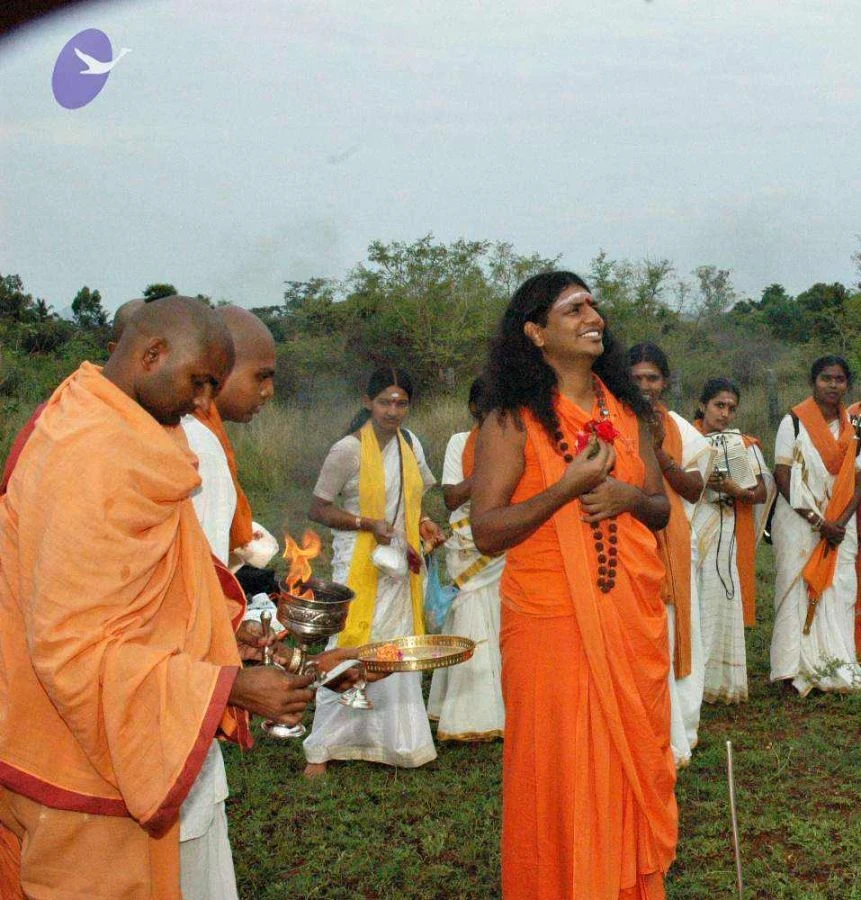
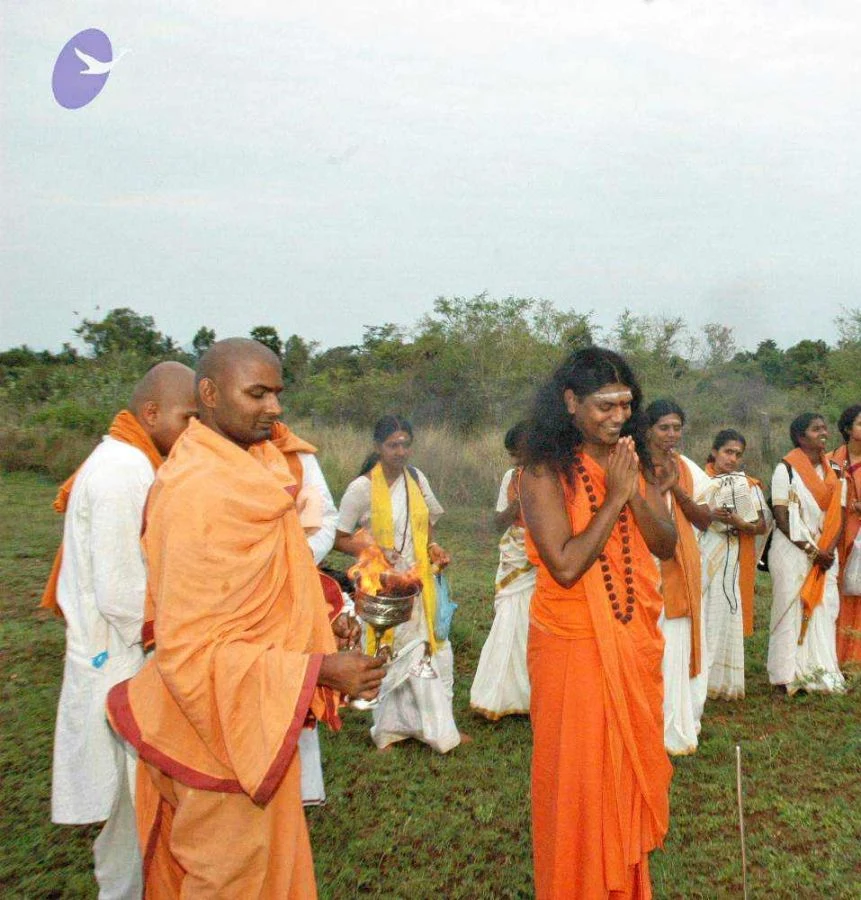
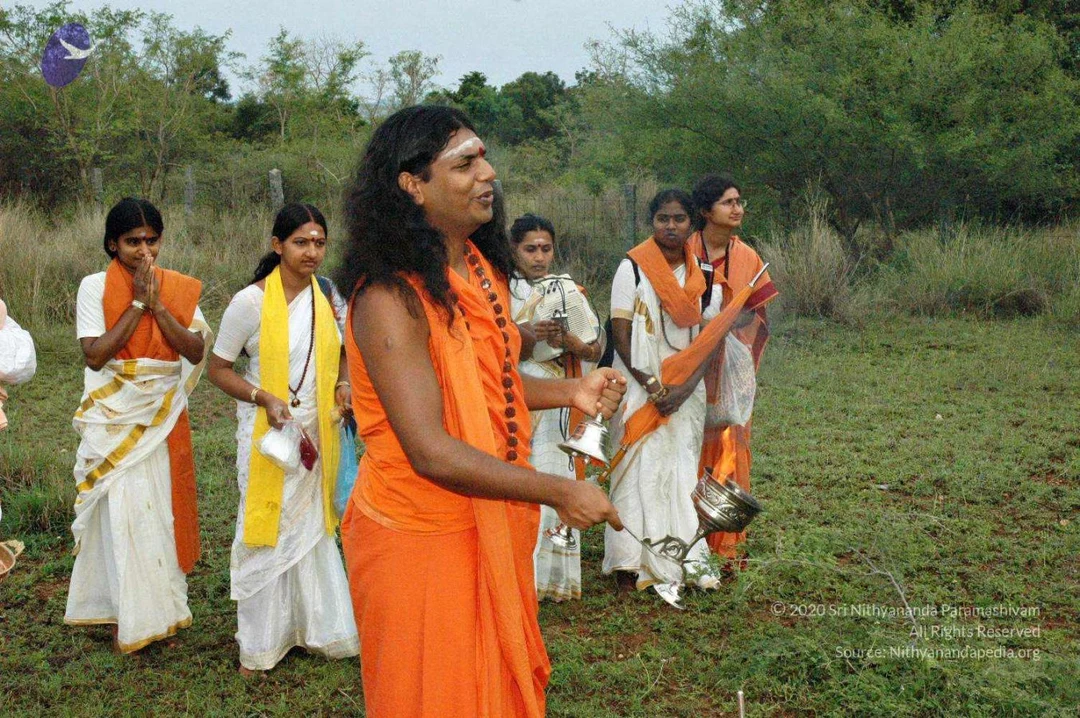
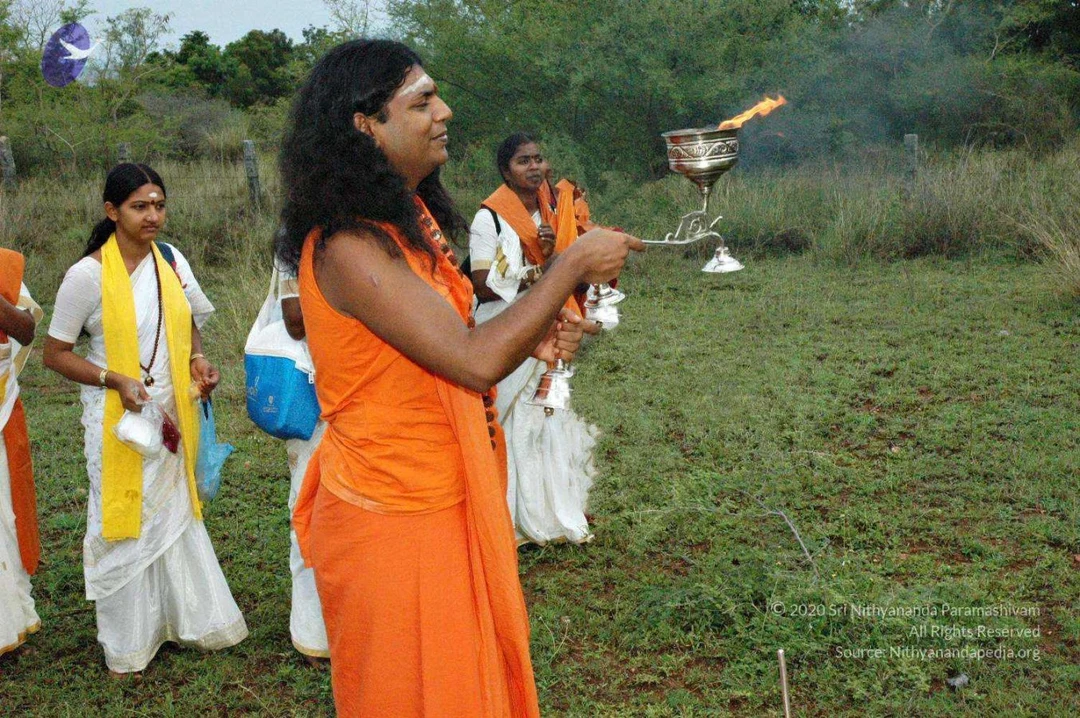
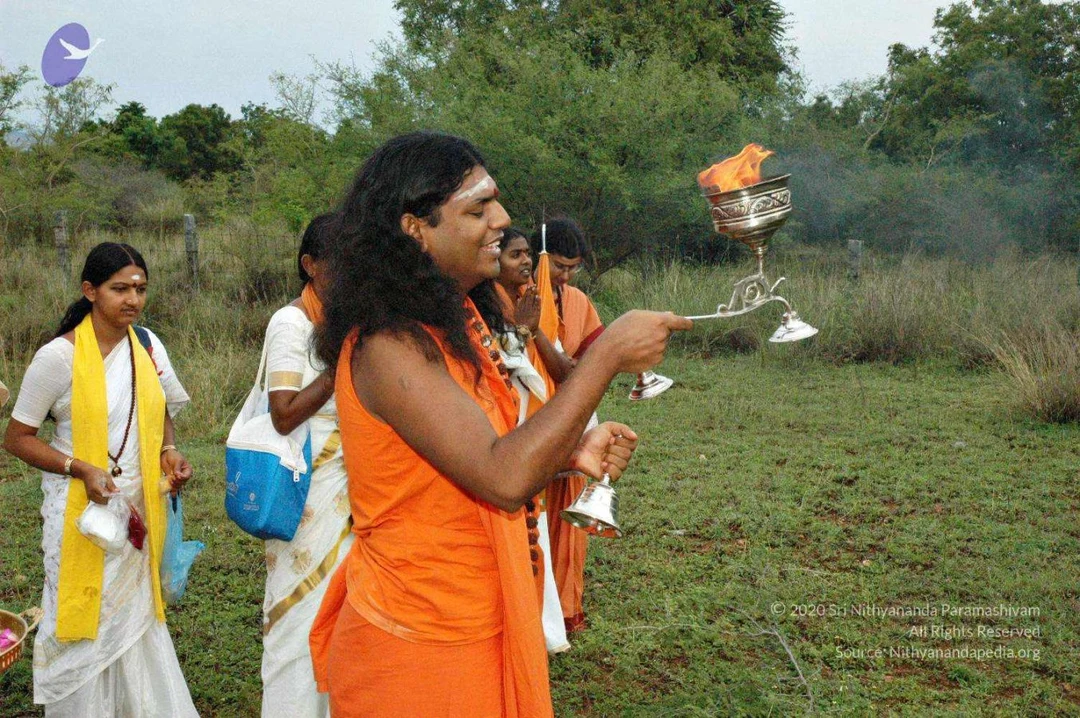
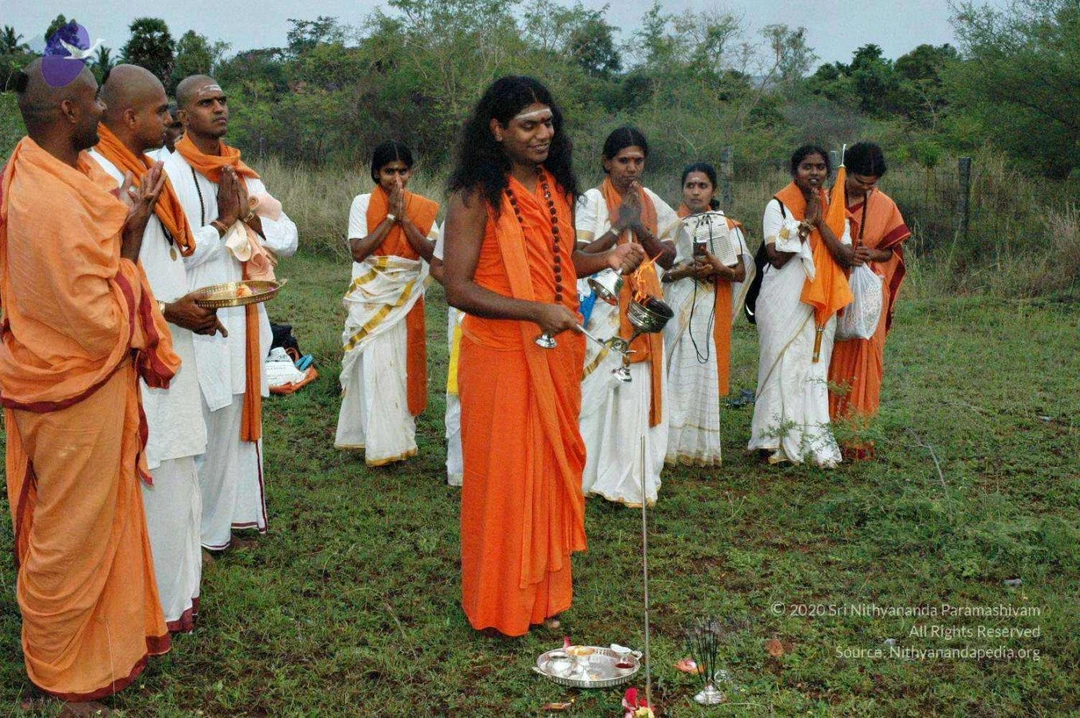
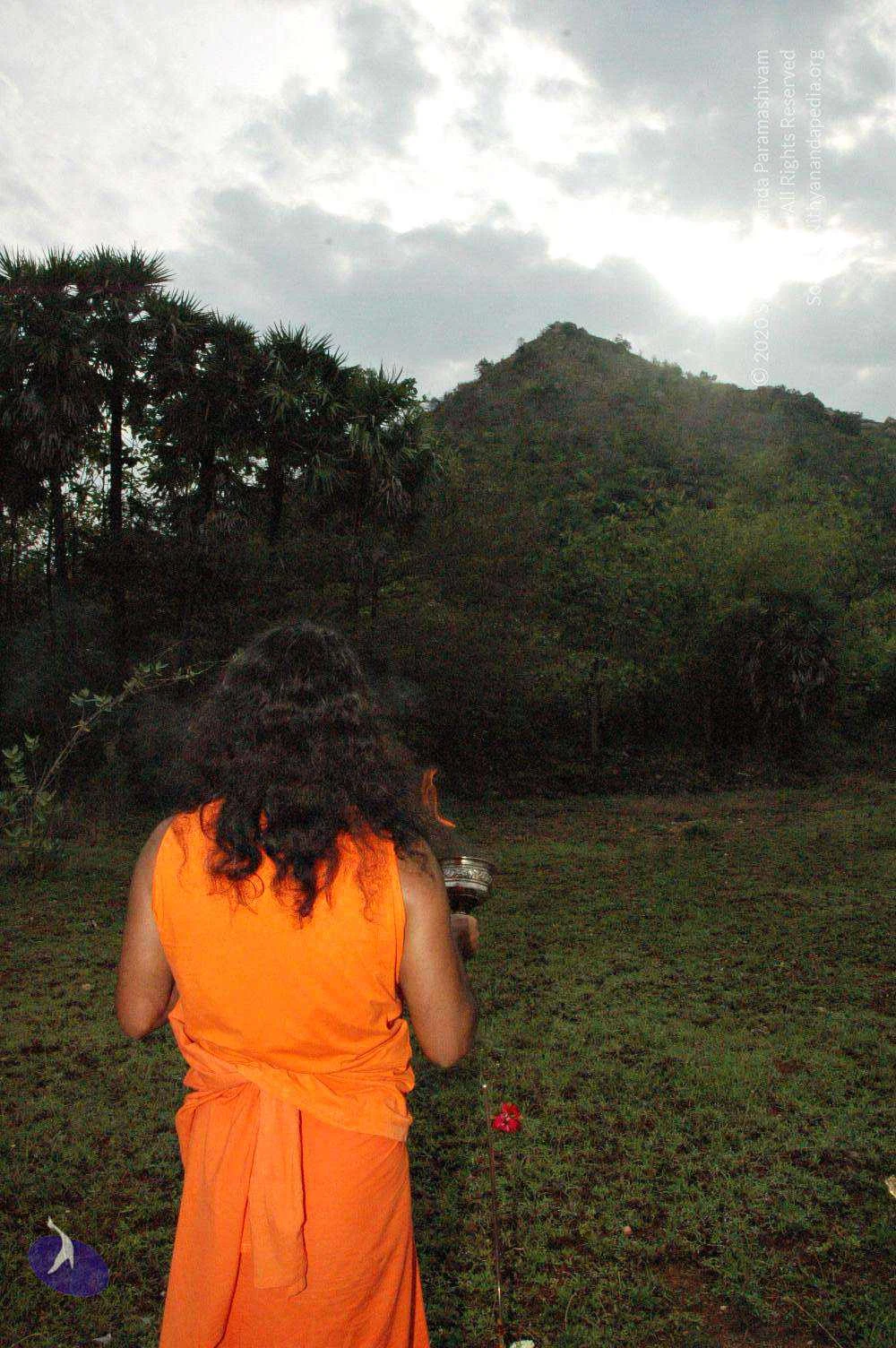
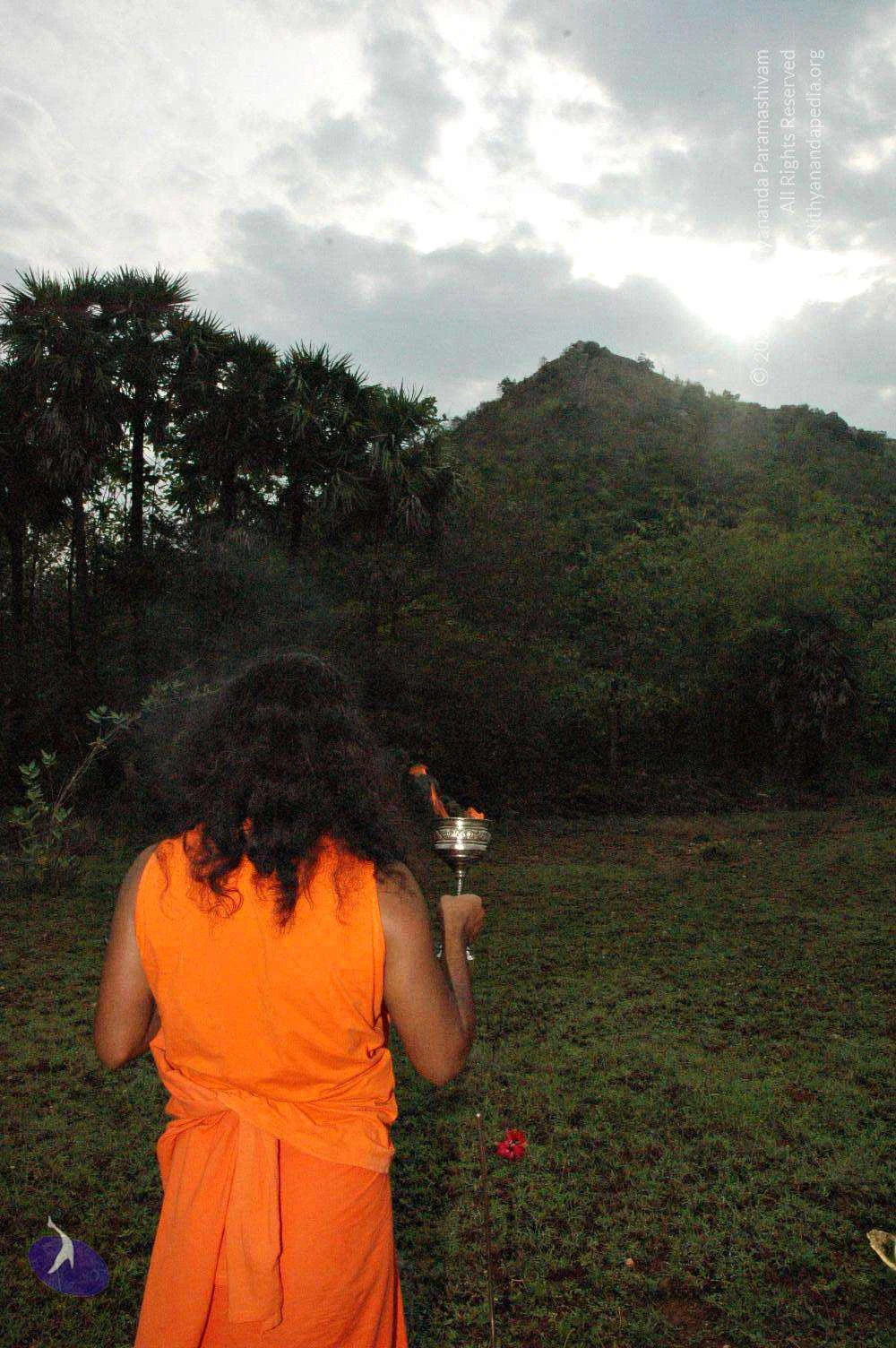
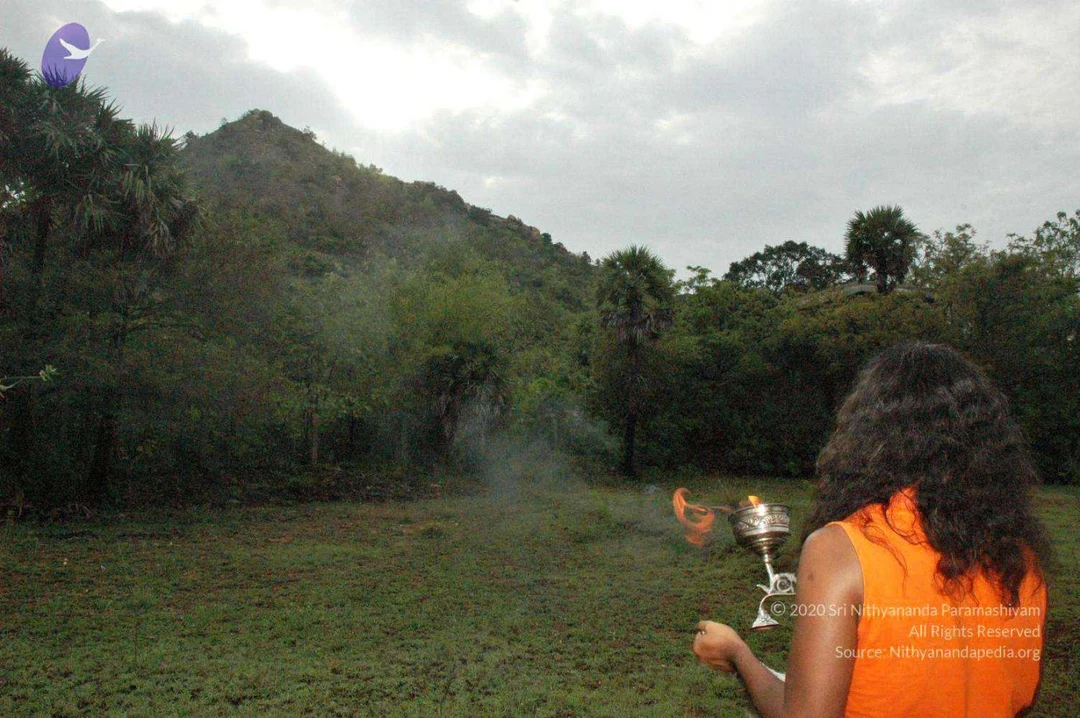
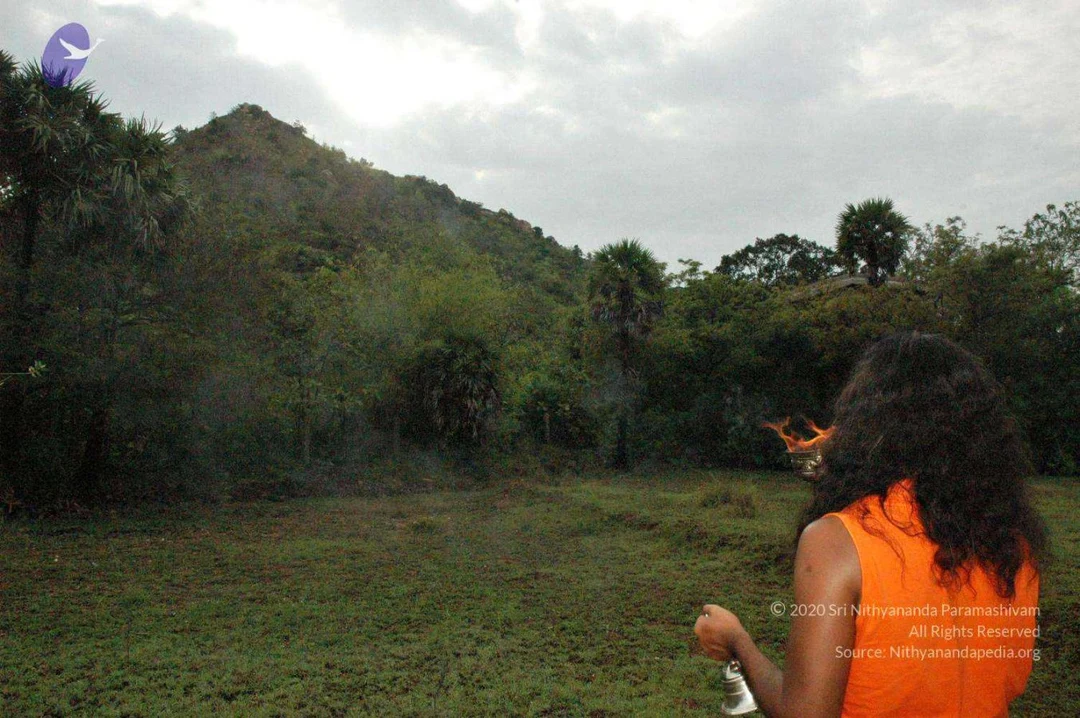
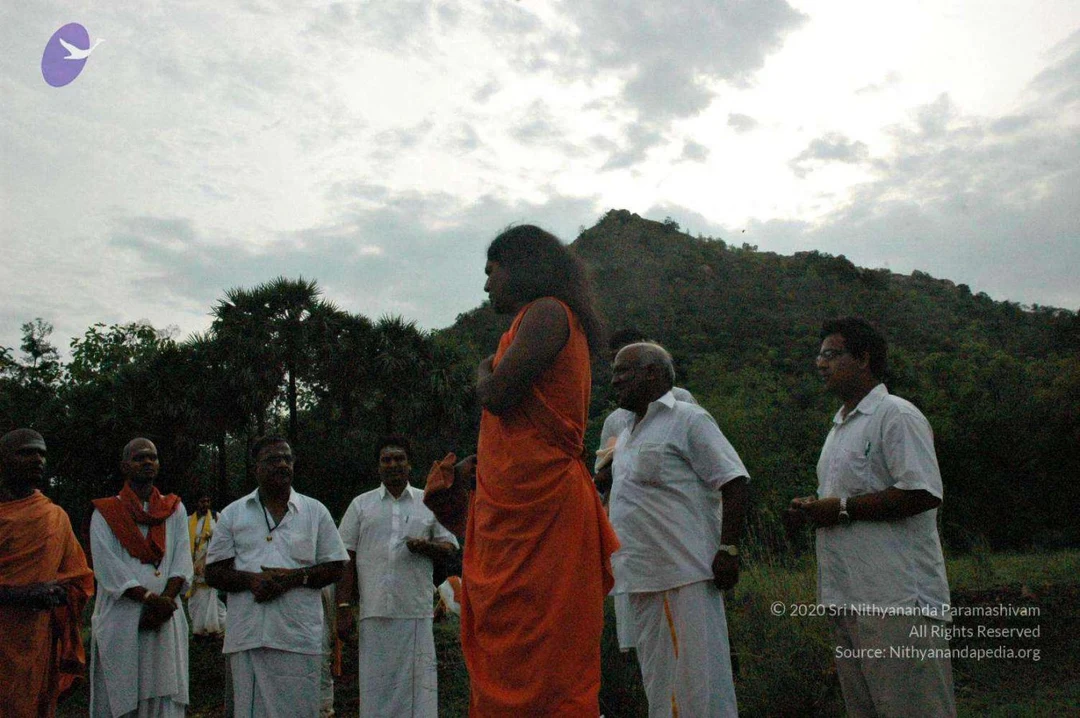
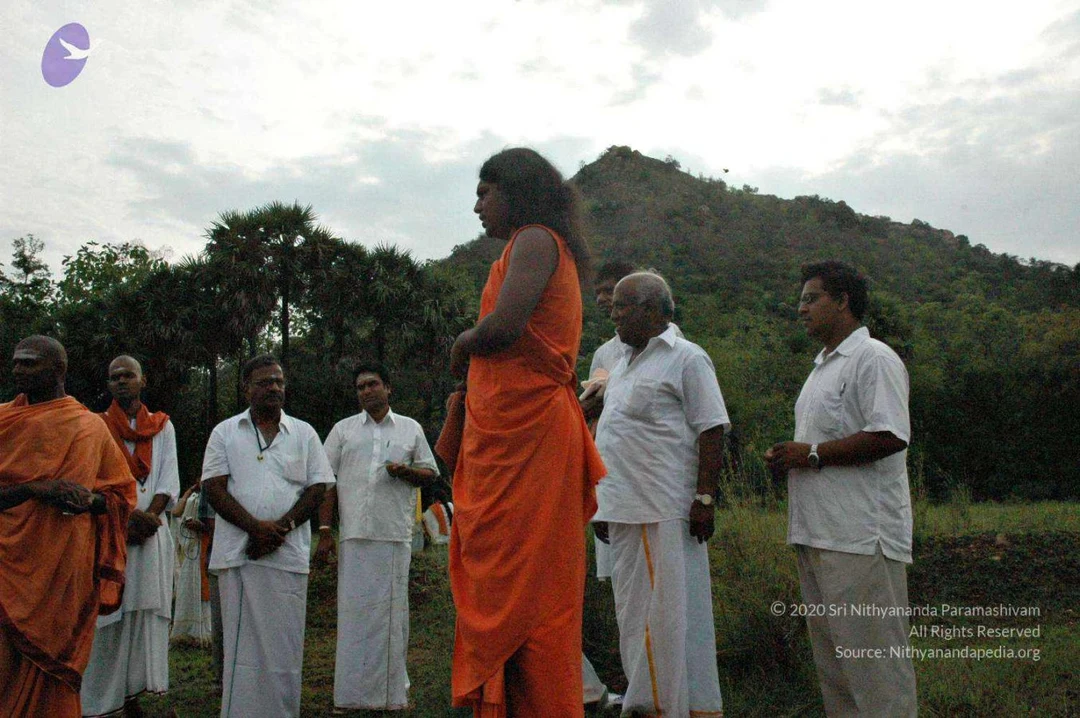
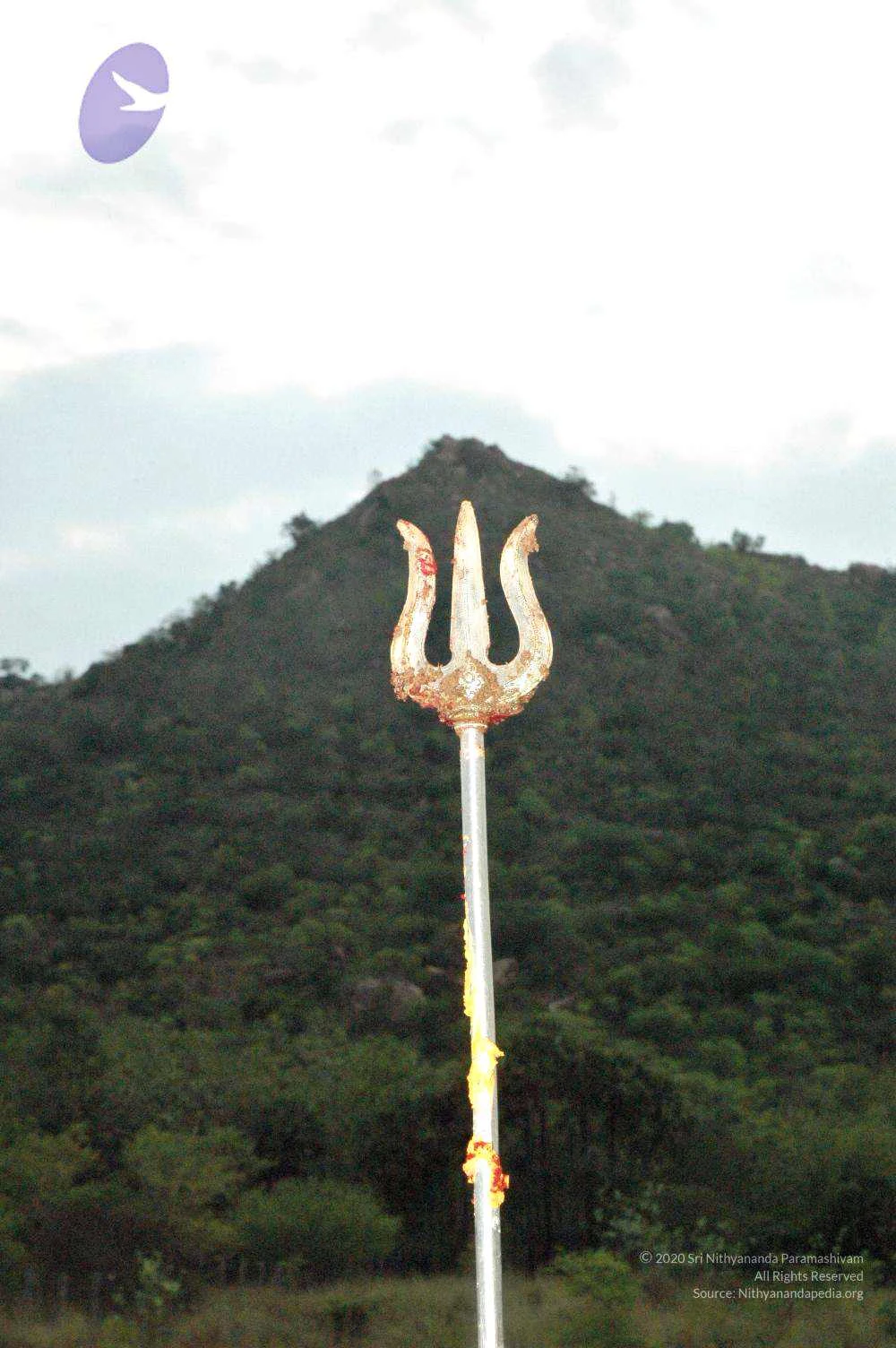
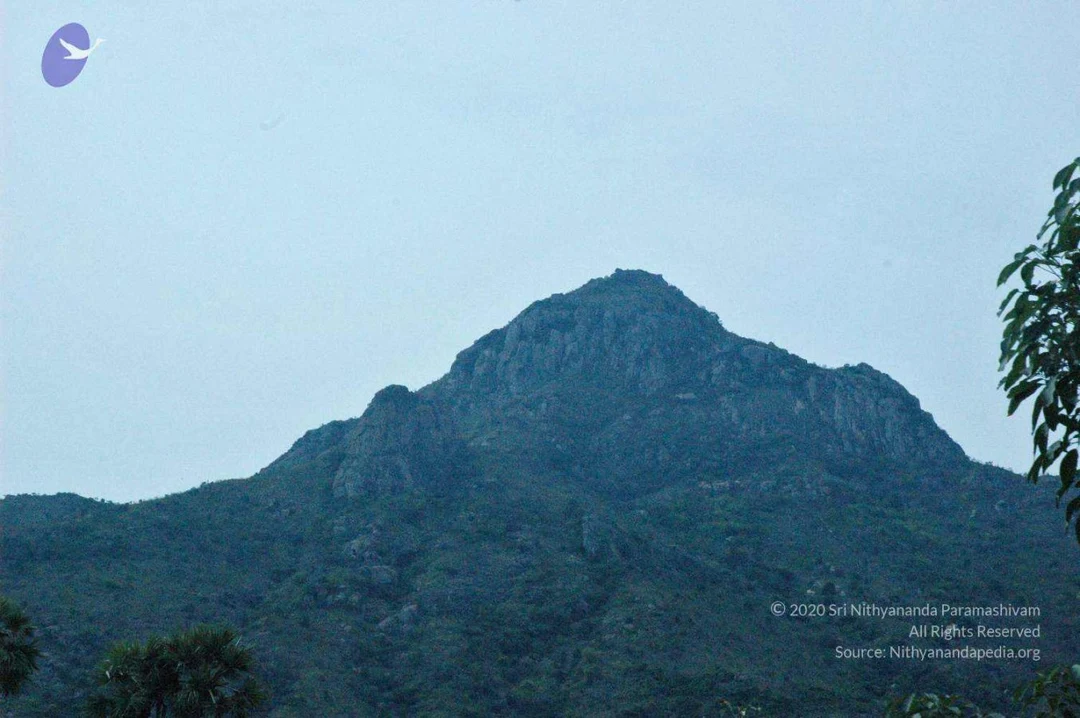
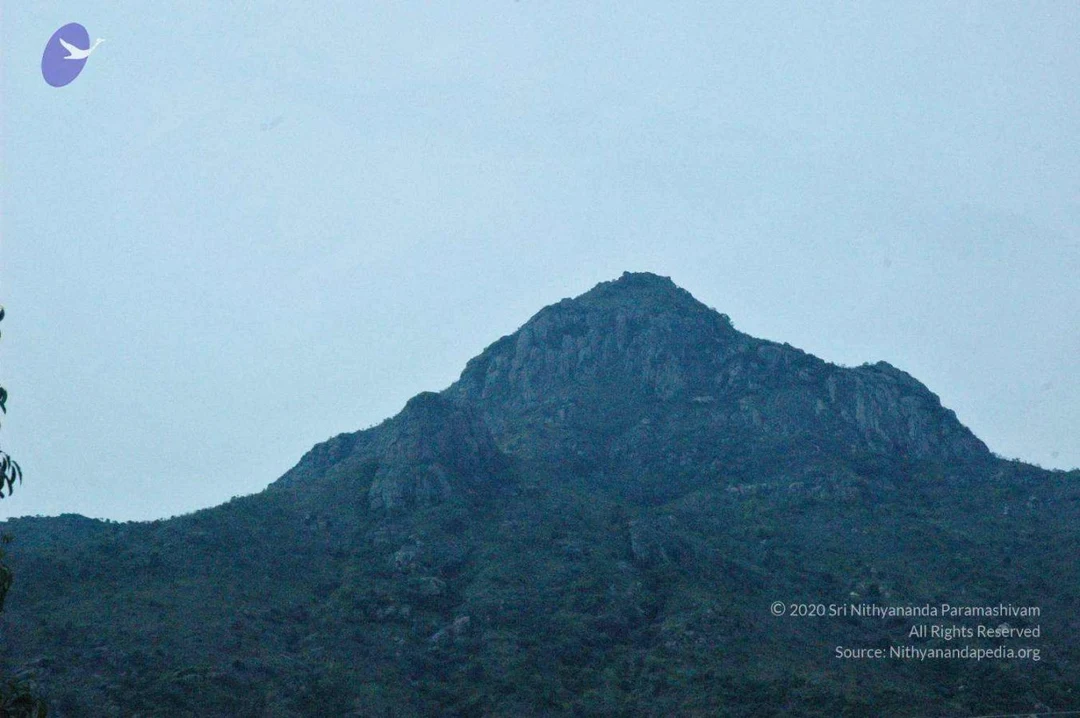
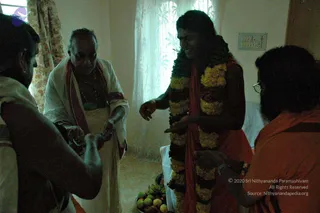
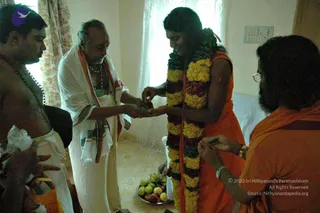
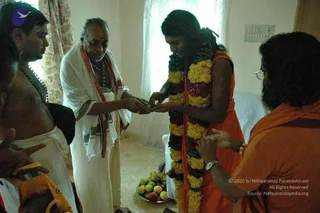
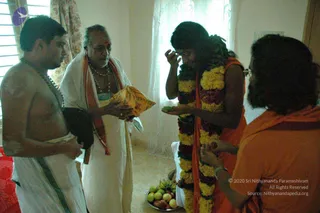
On that day, the Supreme Pontiff of Hinduism Bhagavan Nithyananda Paramashivam began the day by inaugurating the Nithyananda Youth center in the Tiruvannamalai. Later that day SPH performed the Bhoomi Puja in the land of Kailasa in Tiruvannamalai Arunachala Sarvajnapeetham, and began the ceremony that would be marking the start of the construction work. When we perform the Bhoomi Puja we offer our oblations to Bhooma Devi before starting construction activities. During the Bhumi Puja, the foundation stone is also laid. Thus, the approval of Bhooma Devi and the Gods are sought before drilling, digging the land, and with the symbolic placement of the foundation stone, the project begins.

That day’s inauguration of the Nithyananda Youth center and the Bhoomi Puja were conducted by the Supreme Pontiff of Hinduism Bhagavan Nithyananda Paramashivam on 01 April 2008, in Tiruvannamalai, Tamil Nadu, India.

Photos

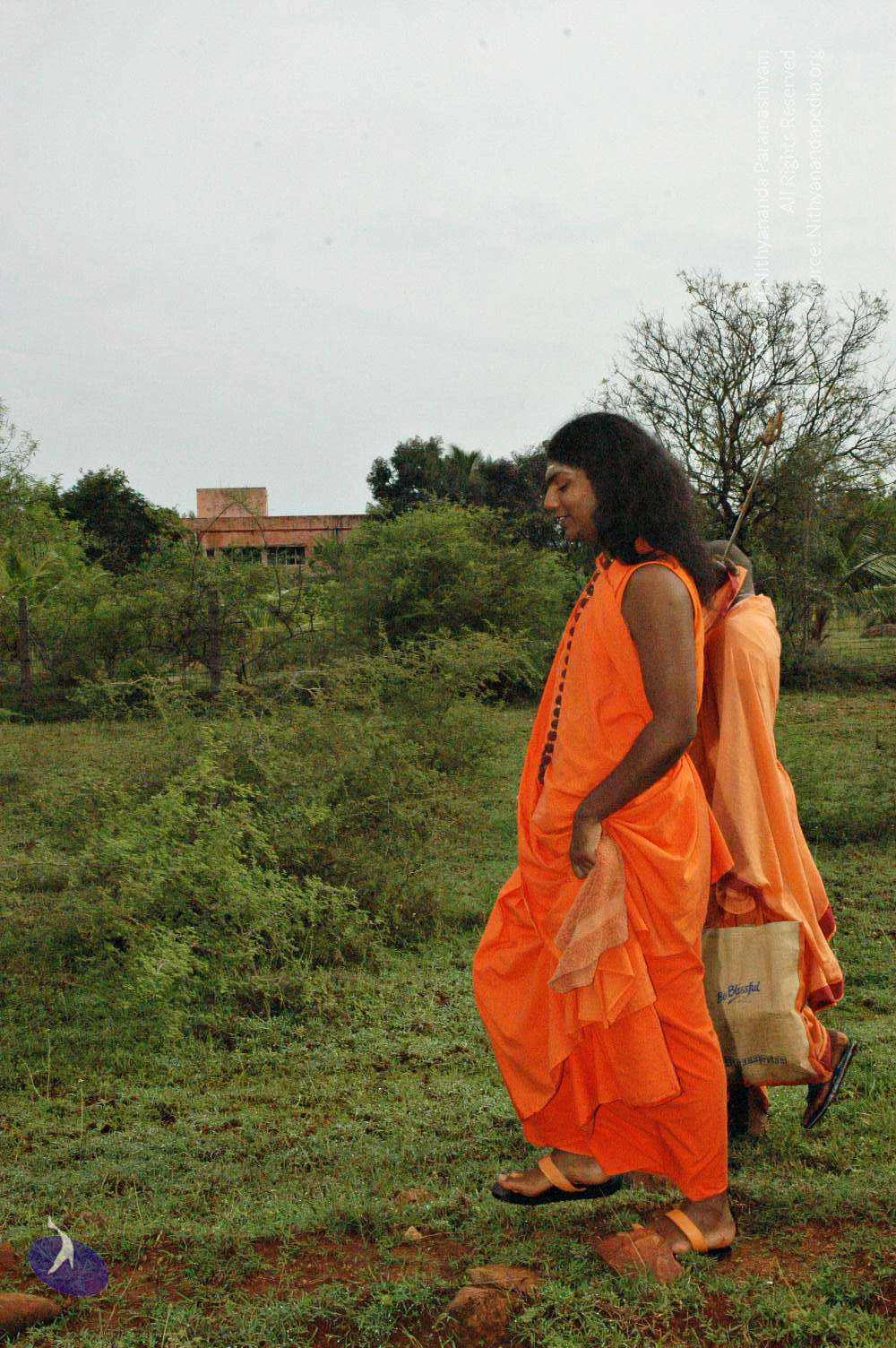
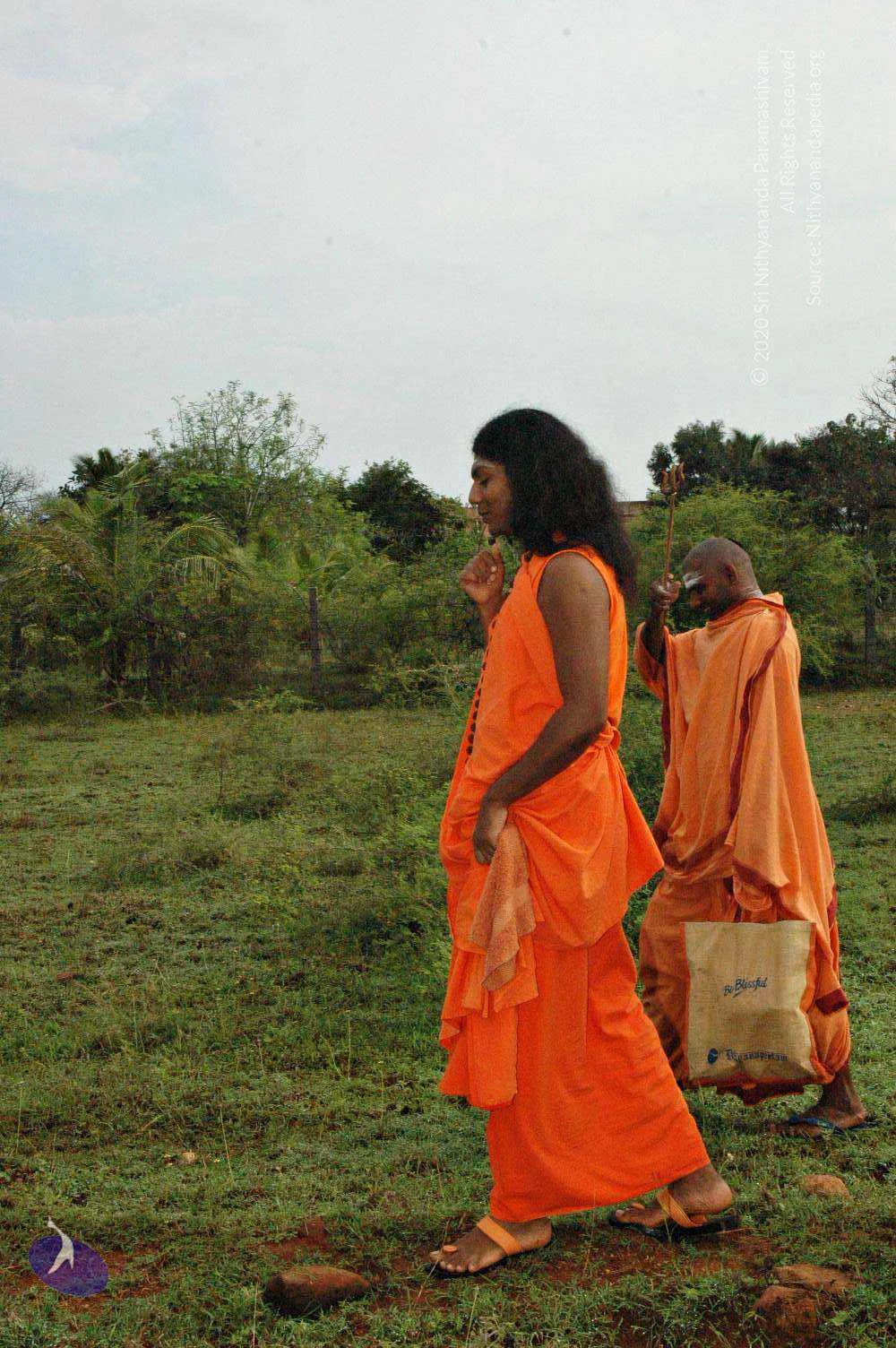
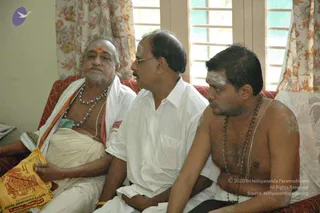
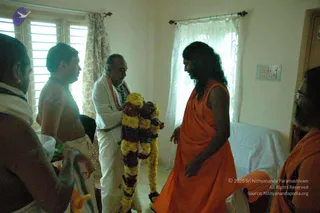
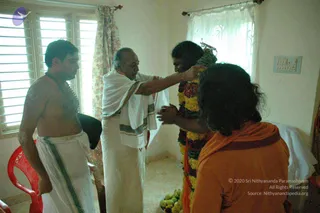
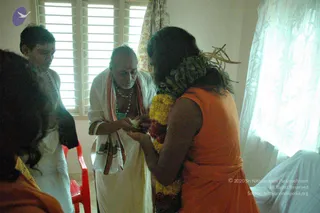
SPH Inspects and performs Bhoomi Puja of Kailaasa in Tiruvannamalai Land
Photos from this day

View all 268 photos
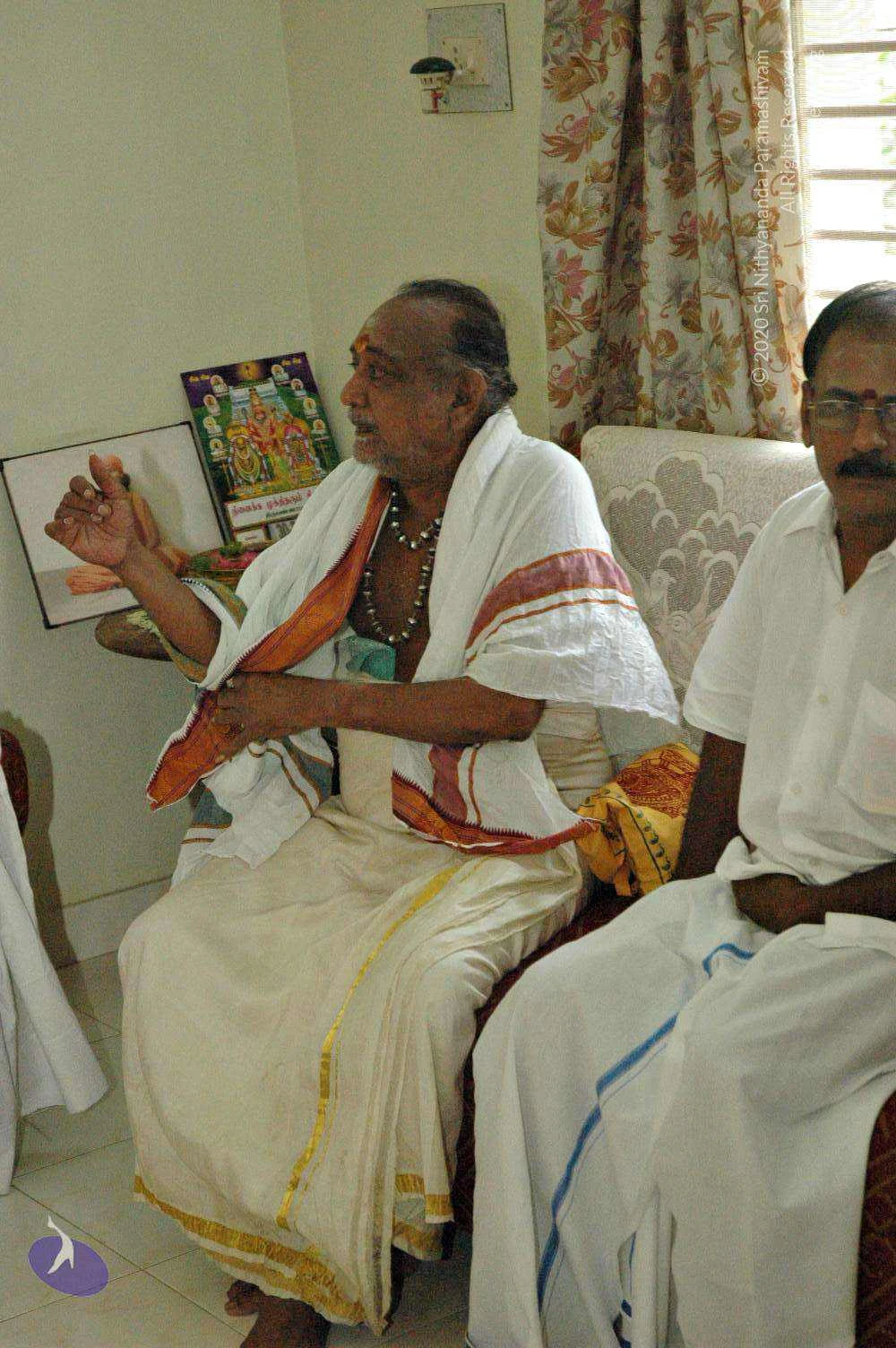
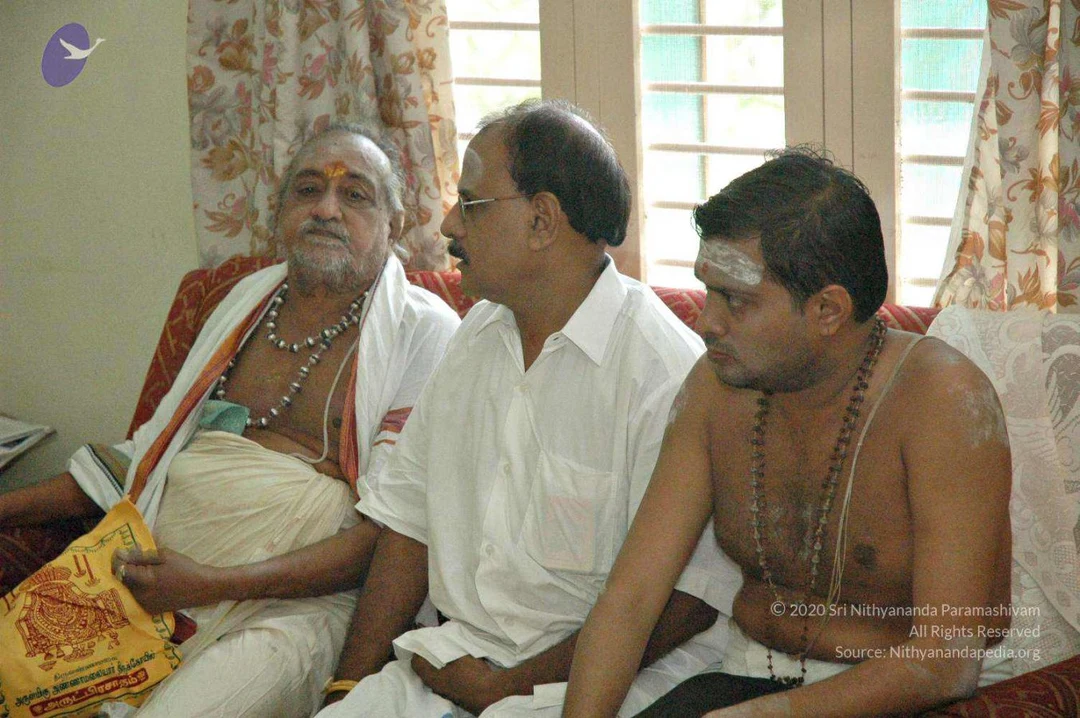
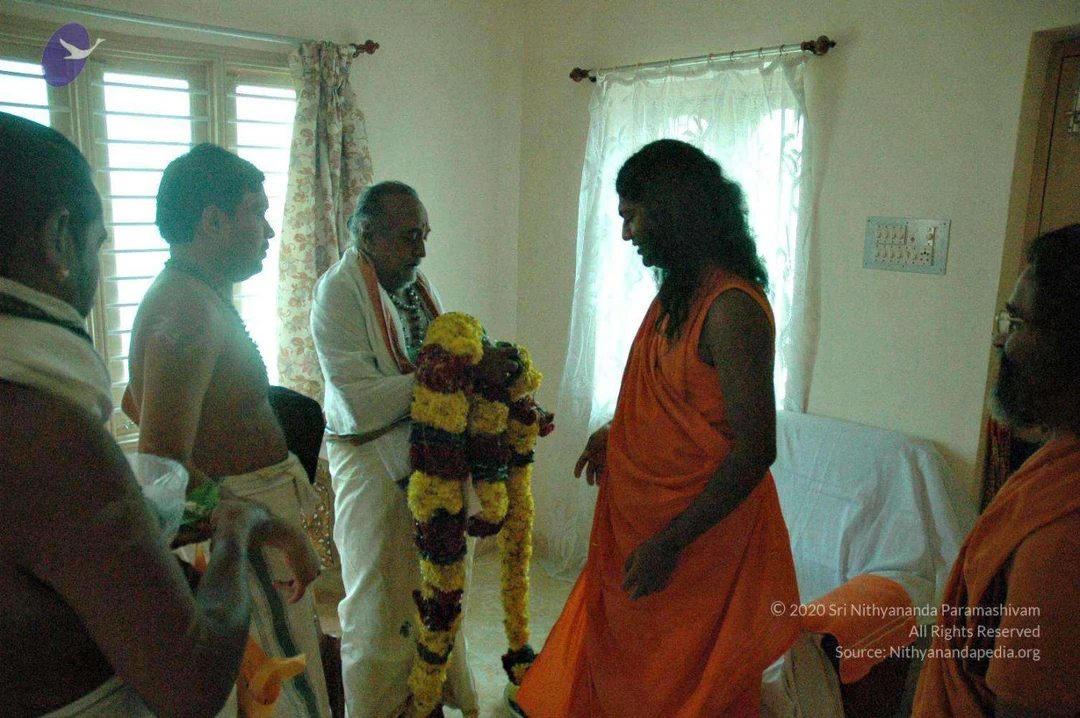
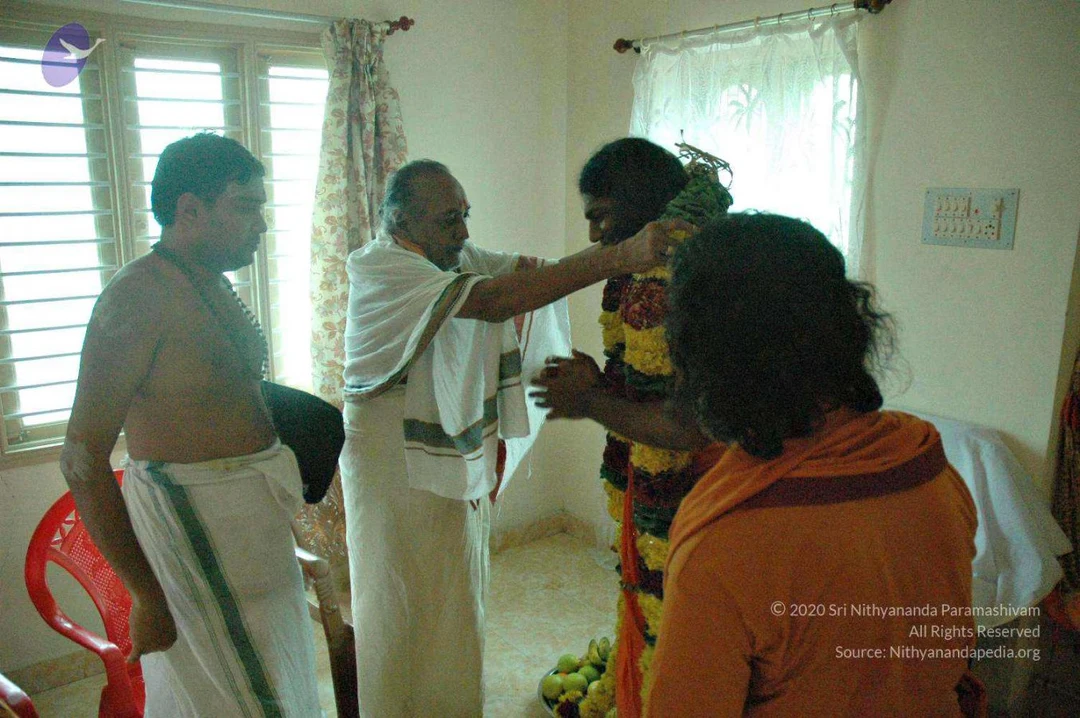
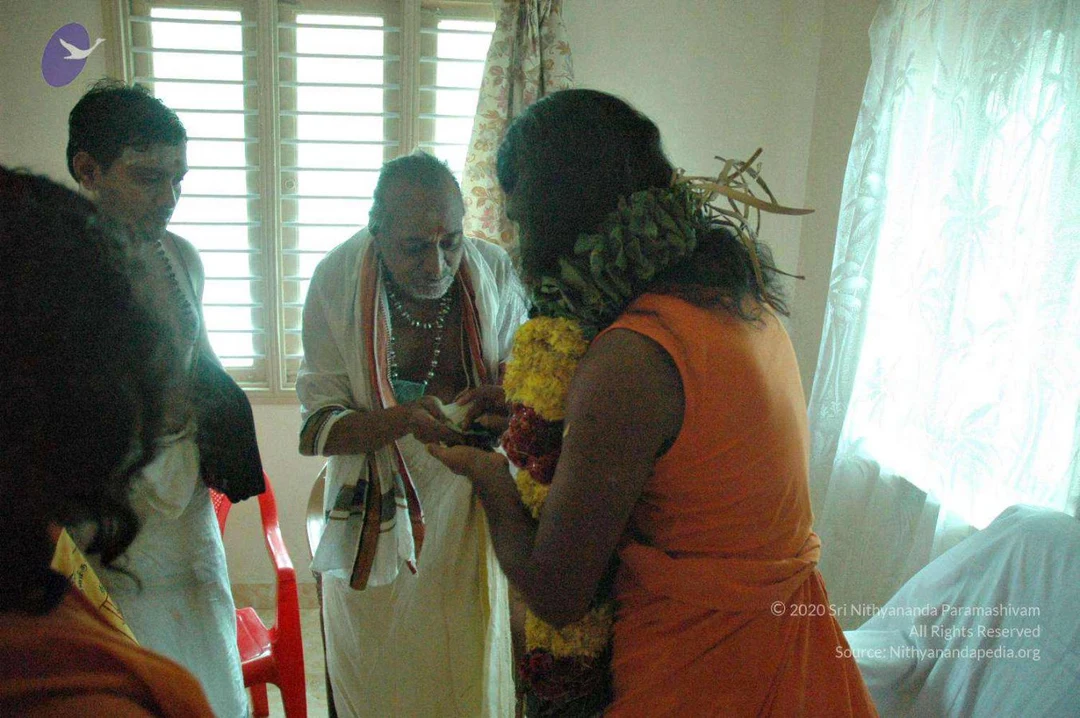
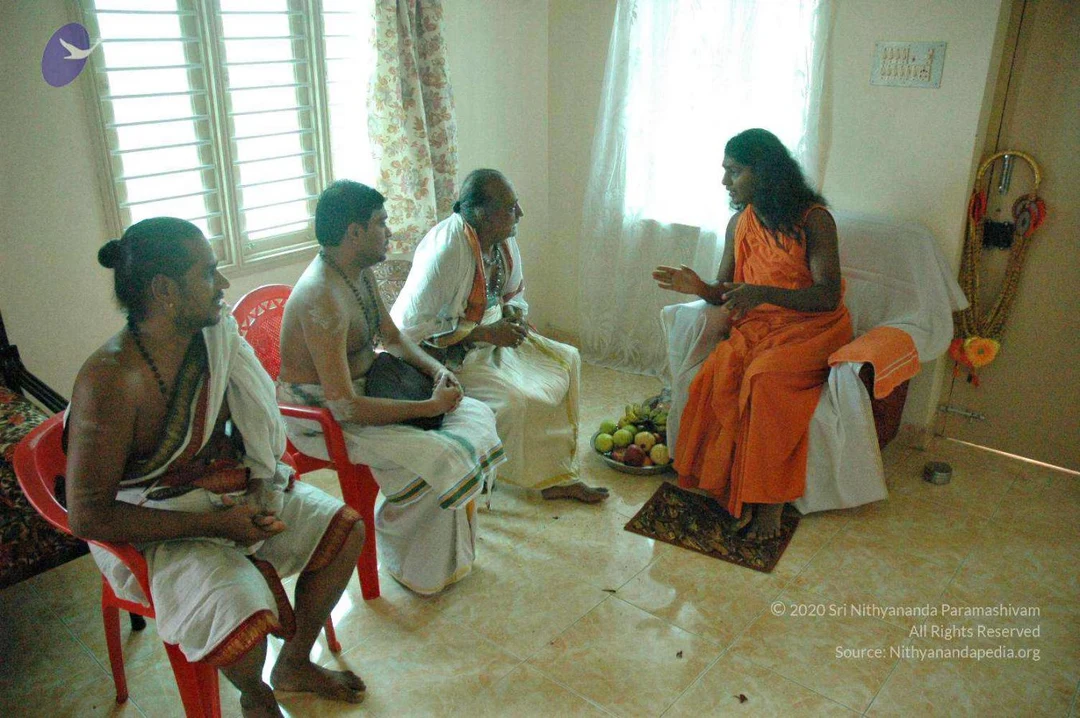
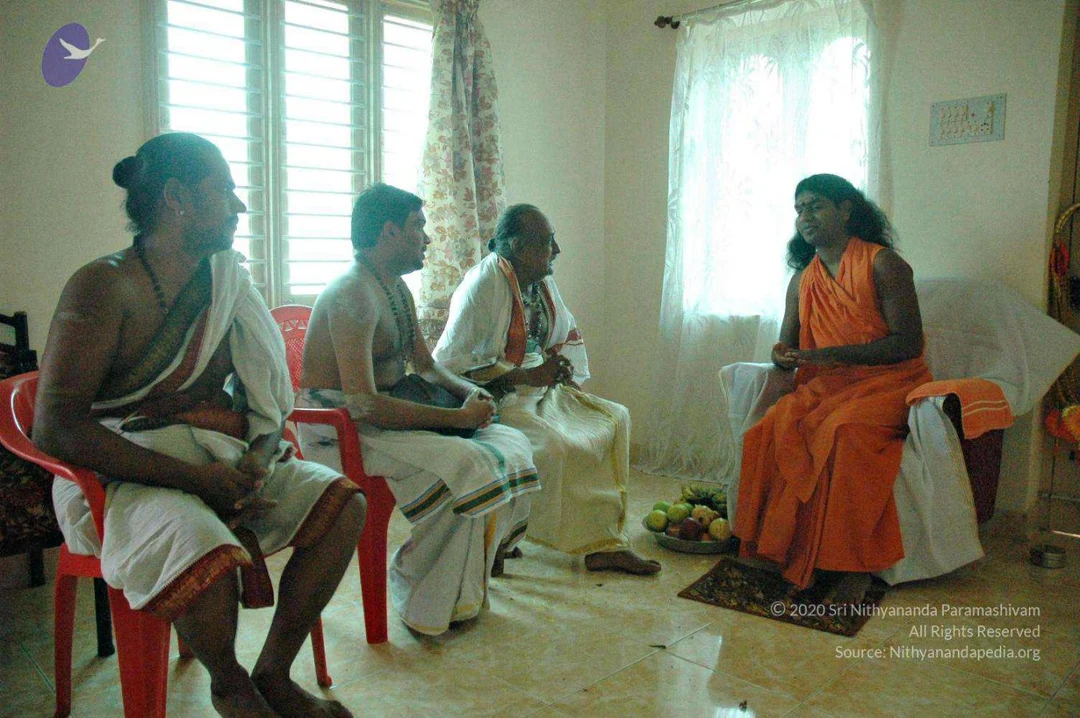
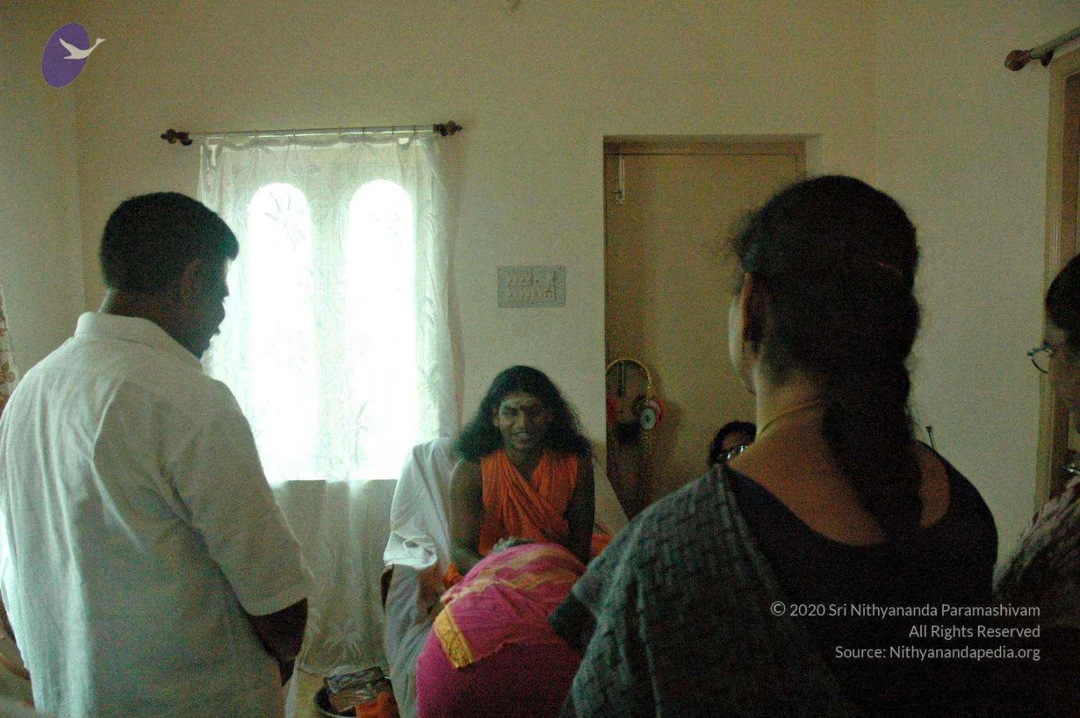
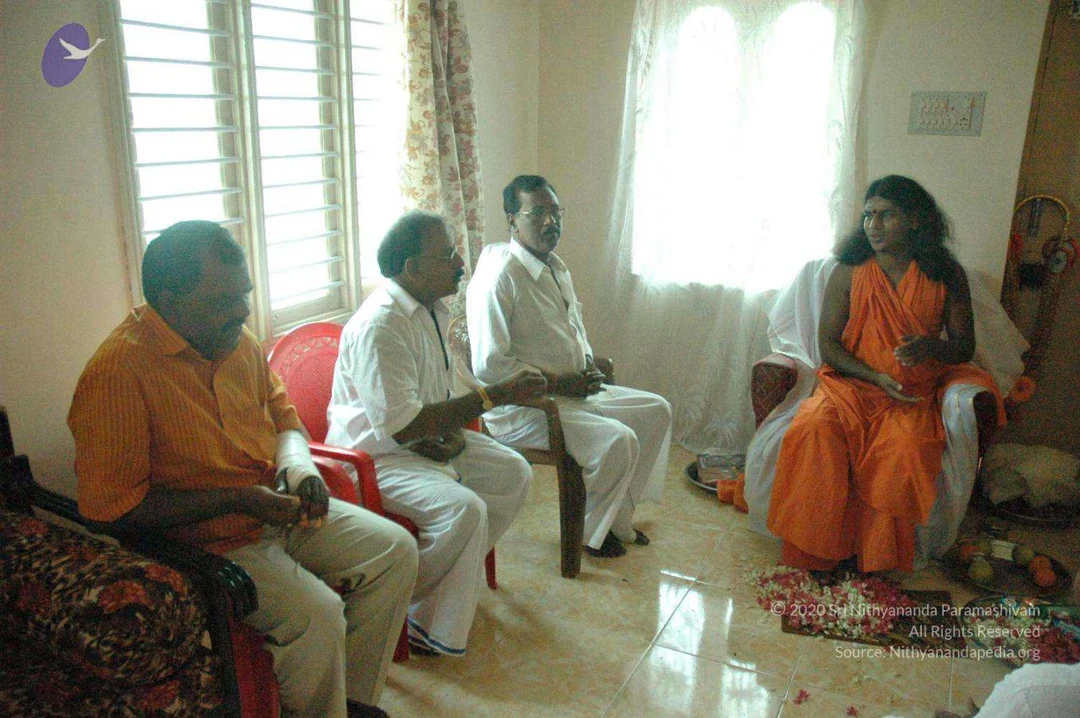
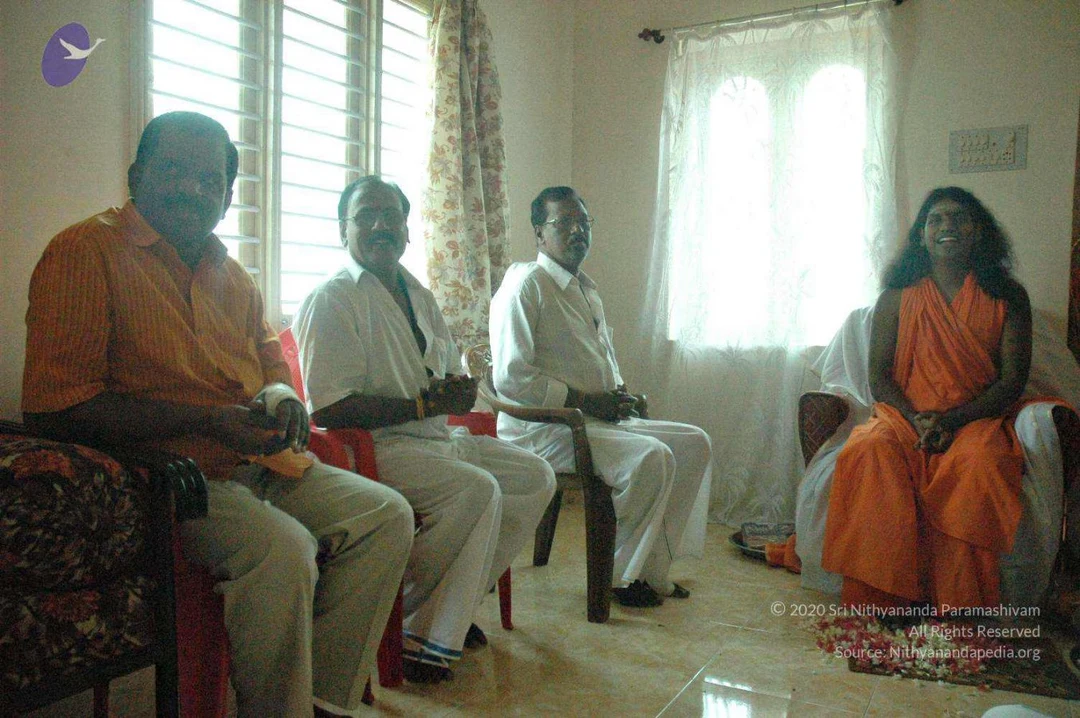
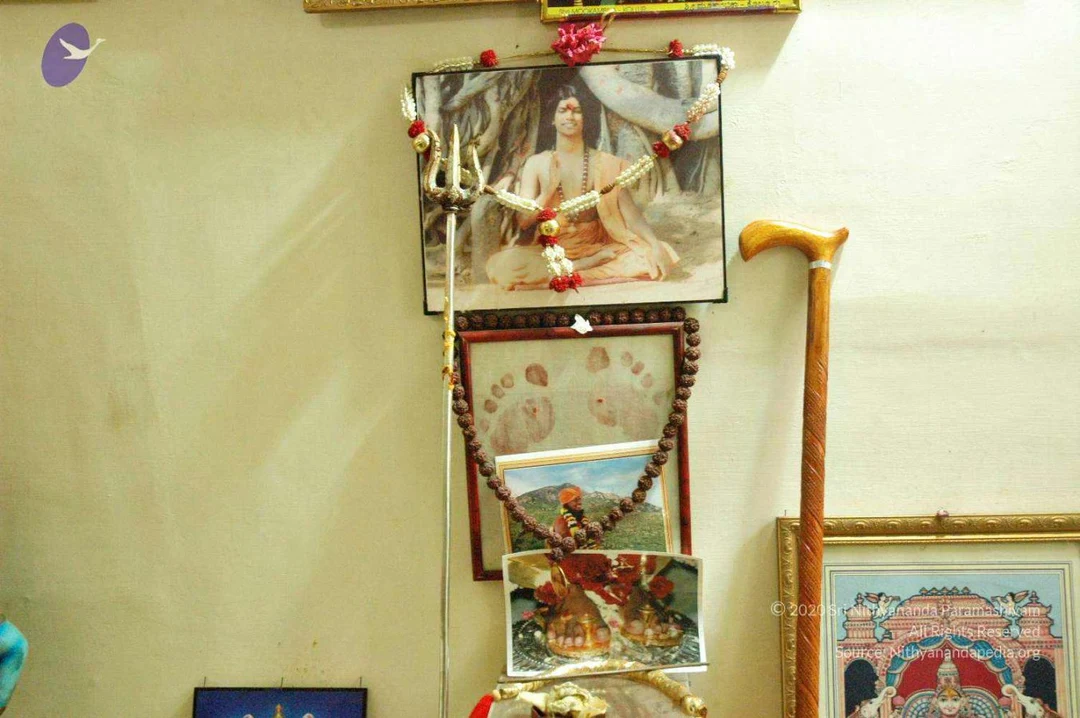
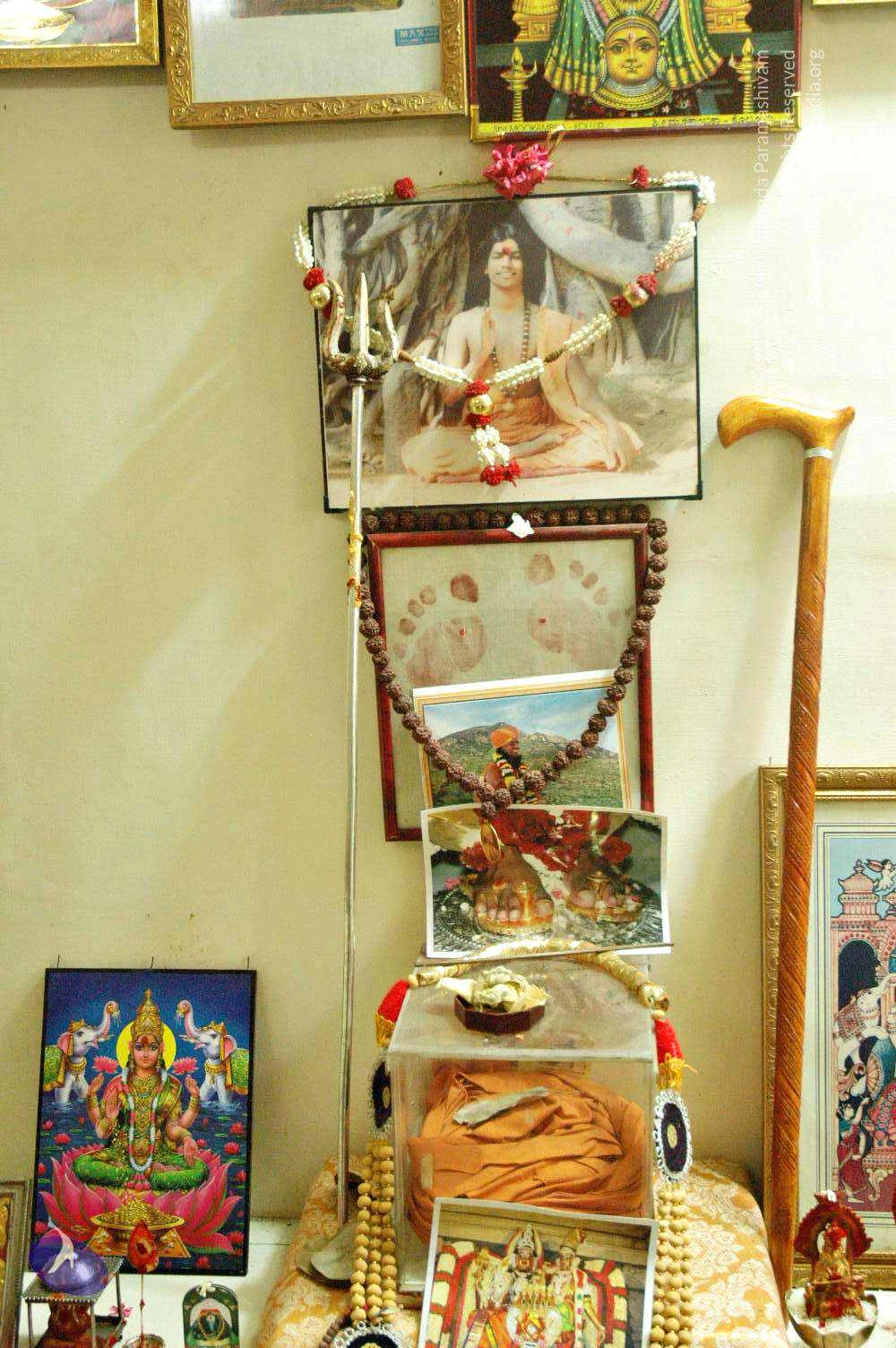
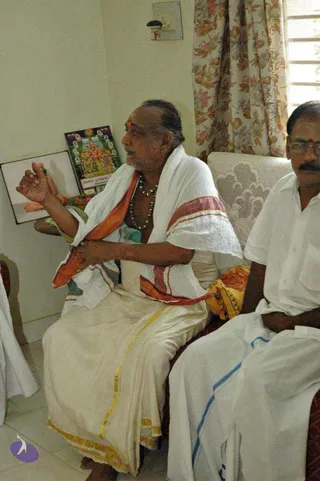
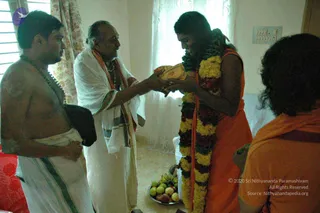
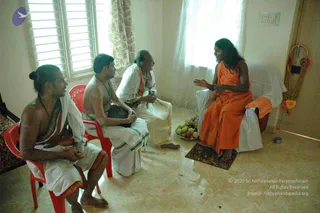
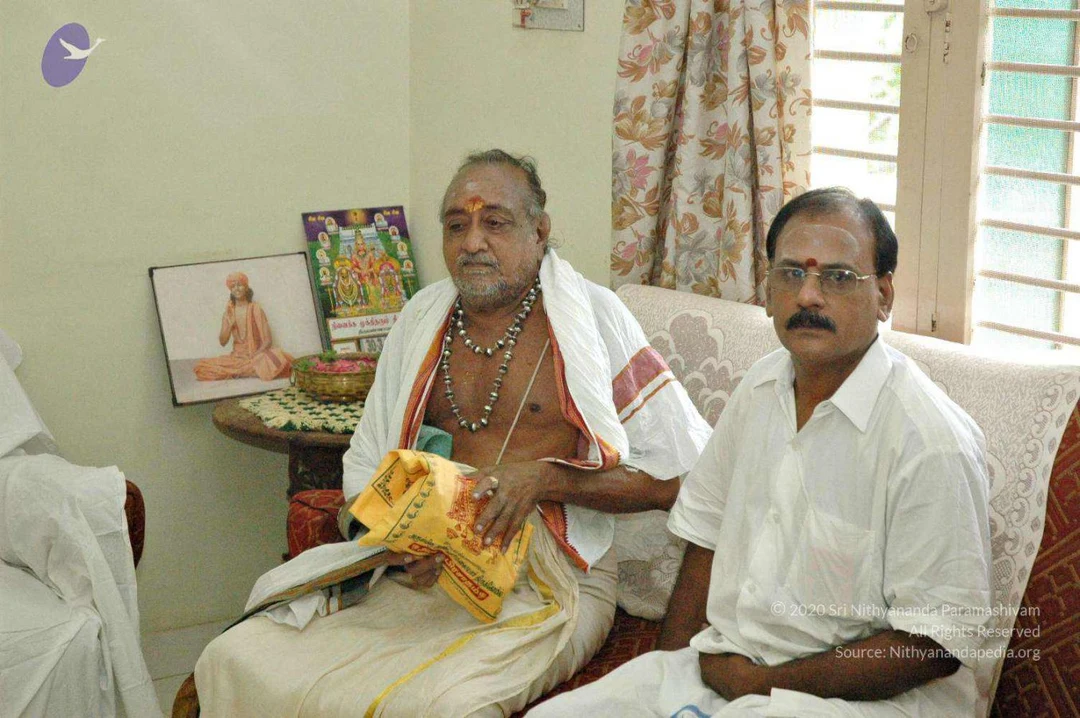
A photograph of two men seated on a cushioned sofa in a plain room with cream walls and a floral curtain. The older man on the left has a shaved head with a red tilak, a white cloth draped over his bare chest, a beaded grey rudraksha-style mala, and a white dhoti with a red border; he holds a folded yellow cloth in his lap. The younger man on the right wears gold-rimmed glasses, a red tilak, a white shirt and white trousers, and sits with his hands folded. On a small side table sits a woven basket of flowers, and a framed picture shows a saffron-robed figure seated in meditation, beside a religious calendar print.Indoor photograph of an elderly man seated on a cushioned chair in a plain room with cream walls and a floral curtain. He wears white dhoti and shawl with orange and maroon borders, and a beaded rudraksha-style necklace, with a tilak on his forehead. He gestures with raised hands toward a framed picture and a colourful devotional calendar poster showing deities. A second man in white shirt and dhoti sits beside him on the right, wearing glasses.Three men sit side by side on a red-and-gold patterned sofa in a room with floral curtains and a window behind them. The man on the left, with grey hair and beard and a red-orange tilak on his forehead, wears a white dhoti and shawl with a beaded mala necklace and holds a yellow cloth bag printed with red motifs. The middle man wears a white shirt and dhoti and glasses and looks toward the man on the right. The man on the right is bare-chested with white ash markings on his forehead and body, wearing a rudraksha-style mala and a white cloth draped over his lap. No identifiable a person appearance cues are clear, so the candidate is unsure.Indoor photo in a plain room with white walls, a window with white lace curtains and a floral curtain, and a light switch panel on the wall. A man with long dark hair and a beard, wearing an orange saffron wrap over his body, stands centre-right facing an older man in white dhoti and white shirt with a light shawl, who holds out a long garland of yellow and red-maroon flowers. To the left a shirtless man in a white dhoti with a sacred thread stands beside a bare-chested man in a white cloth, and a partially visible person with glasses stands at the right edge in orange. Probable Swamiji (probable): the orange-clad man with long swept-back hair and a beard, receiving a flower garland, is the Swamiji candidate, shown with saffron clothing and distinctive long hair.A photograph of an indoor room with white walls, a lace curtain and a window with slatted blinds. A man in white dhoti and white shawl with grey-green border stands centre, garlanding a standing man whose head and upper body are covered with a thick garland of yellow and red flowers. On the left a bare-chested man in a white dhoti with green border and a rudraksha-style cord stands beside a red plastic chair. At right, a long-haired person in an orange robe with a dark border watches from behind. A plate of fruit sits at the lower left of the garlanded man. No one is identified by face; roles only: garland-giver, garlanded man, attendant and observers.A photograph taken indoors in a plain room with white-painted walls, louvred windows and a sheer white curtain. A man in white dhoti and white shirt with a red-and-white striped shawl and rudraksha mala stands at centre, hands cupped together and receiving something. Facing him from the right, a woman in an orange sleeveless top and sari wears a garland of yellow marigolds, red flowers and green leaves, and holds offerings in her hands. A man in white shirt stands at left, and a person in orange clothing sits at the lower left edge. A red plastic chair and a bed are visible at the edges.Indoor photograph in a small room with a sheer white curtain and floral curtain at left. A man with long dark hair and a shaved-appearing face wears a thick garland of yellow and orange flowers over a red shawl and bare chest, adorned with dark beads; he stands with one hand extended over a tray of bananas and fruit on the floor. Beside him an older priest in white dhoti and shawl with a red border holds a small object while touching a tray, and two men stand at the edges, one in orange clothing at right. A ritual puja setting with fruit offerings, consistent with a Bhoomi Puja ceremony as described on the page.A photograph of a ritual setting in a plain room with a white-curtained window and a tiled floor. A bare-chested man with a rudraksha mala stands at left. An elderly priest in white dhoti and shawl with orange-and-green borders, wearing a green bead necklace, holds out offerings. A young person in an orange robe and a long garland of yellow and red flowers stands centre, hands together and receiving a small green item. A bearded man in orange at right holds a green offering. A steel plate of fruit, including bananas and apples, sits on the floor in front. The scene looks like a puja or blessing ceremony.A photograph of a small indoor room with floral curtains and a white wall. A man in orange robes wears a long garland of yellow marigolds and red flowers with green leaves, and holds small green leaves toward an older man in white dhoti and shawl with orange border, who offers them with his hands. A shirtless man in white dhoti with a mala stands at left, and a man in orange robes and glasses at right holds a small green item. A steel plate of fruit, including bananas and apples, sits on the floor.Indoor photo in a plain room with a window and sheer white curtains. A long-haired man in a saffron-orange robe with a thick garland of yellow marigolds and dark red flowers stands centre-right, touching his forehead with one hand while holding a small green leaf offering in the other. To the left, a bare-chested priest in white dhoti and a dark shawl over his shoulder holds a folded yellow cloth, beside an older man in a white dhoti with an orange-and-white shawl and beaded necklaces. Another man in an orange robe and glasses stands at right, hands together. A tray of fruit, including bananas and apples, sits on the floor below. Four people visible.Indoor photograph in a small room with cream walls, a white curtained window and a tiled floor. A figure in an orange saffron cloth and a thick garland of yellow marigolds and dark red flowers stands at centre, receiving an offering from an older man in a white dhoti and shawl with an orange-bordered wrap and a beaded necklace. At left a bare-chested man in a white dhoti and a rudraksha-style necklace stands holding a dark bag. At right a person in an orange garment is partly visible. On the floor at lower centre is a steel tray of fruit including bananas, apples and mangoes. The setting suggests a puja or blessing ceremony.A photo of an indoor room with cream tiled floor, a window with sheer curtains, and a fruit plate on the floor. A long-haired man in an orange saffron robe sits on a white-draped chair gesturing as he speaks, with a rudraksha mala and a garland hanging on the wall beside him. Three men in white dhotis sit on red plastic chairs facing him: one bare-chested with a rudraksha mala and tripundra marks, one bare-chested wearing a sacred thread, and one in a white shirt and dhoti with a mala, listening.