Skip to content
Friday

21 March 2008

Supreme Pontiff of Hinduism Jagatguru Mahasannidhanam Bhagavan Nithyananda Paramashivam

Dated photos
31
Source pages
1
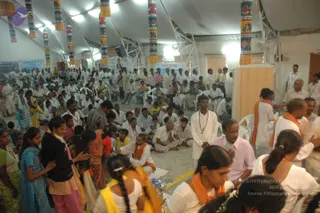
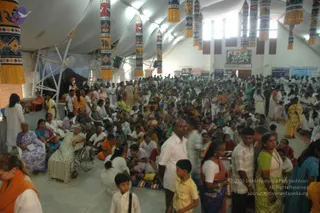
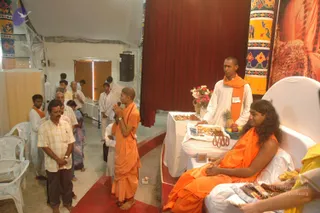
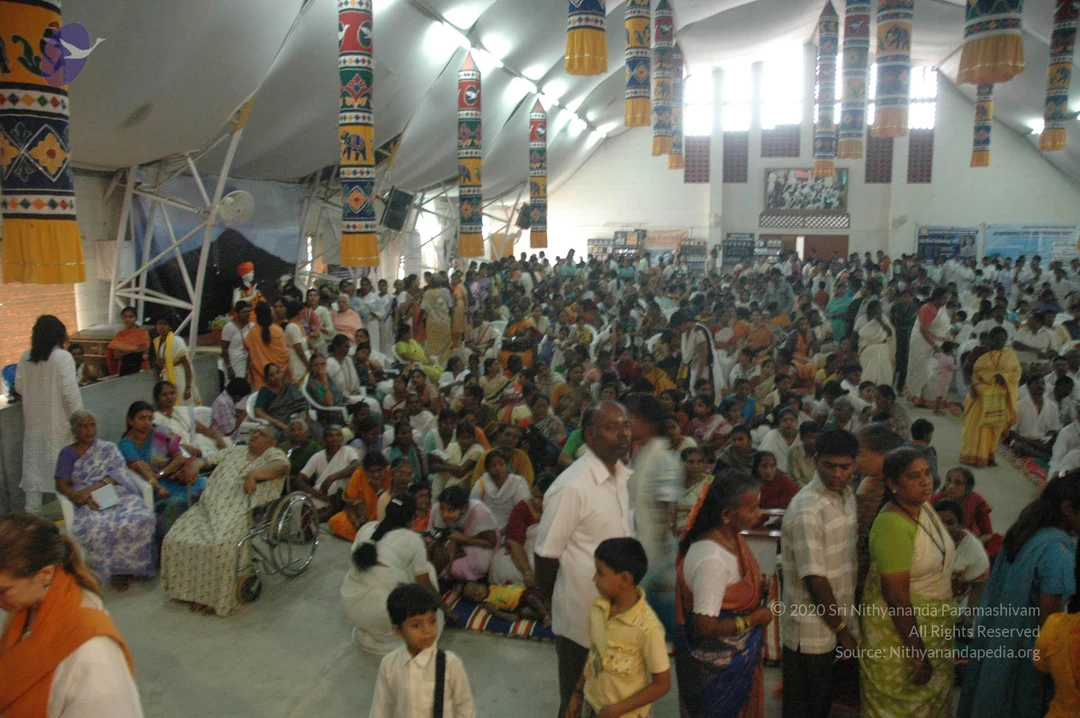
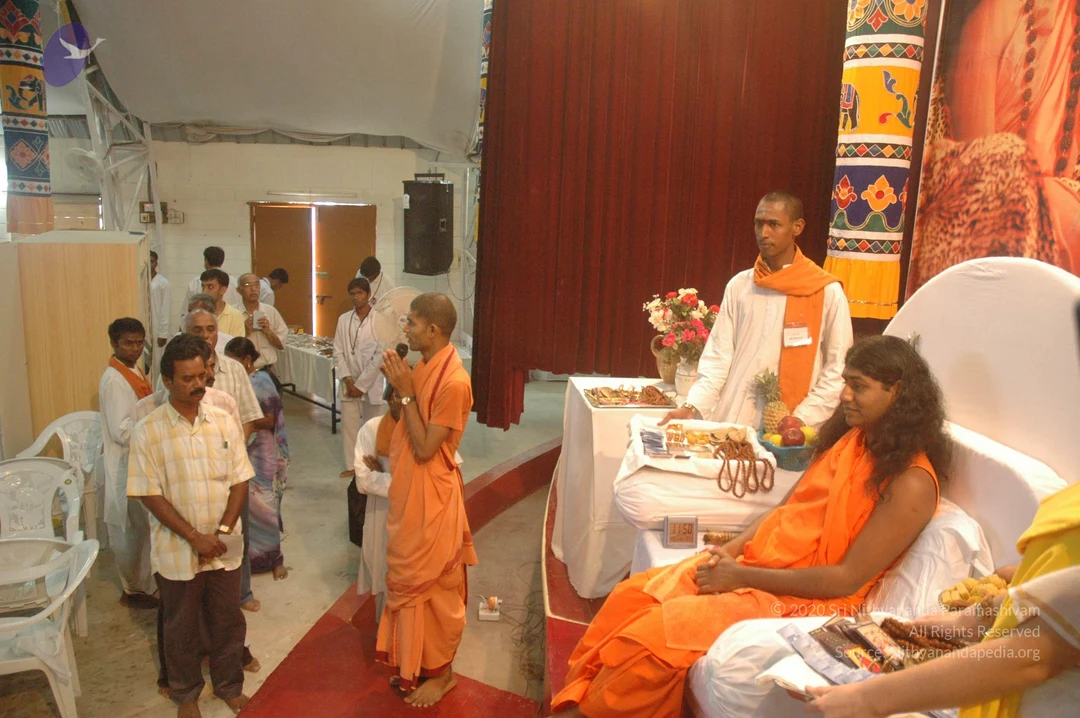
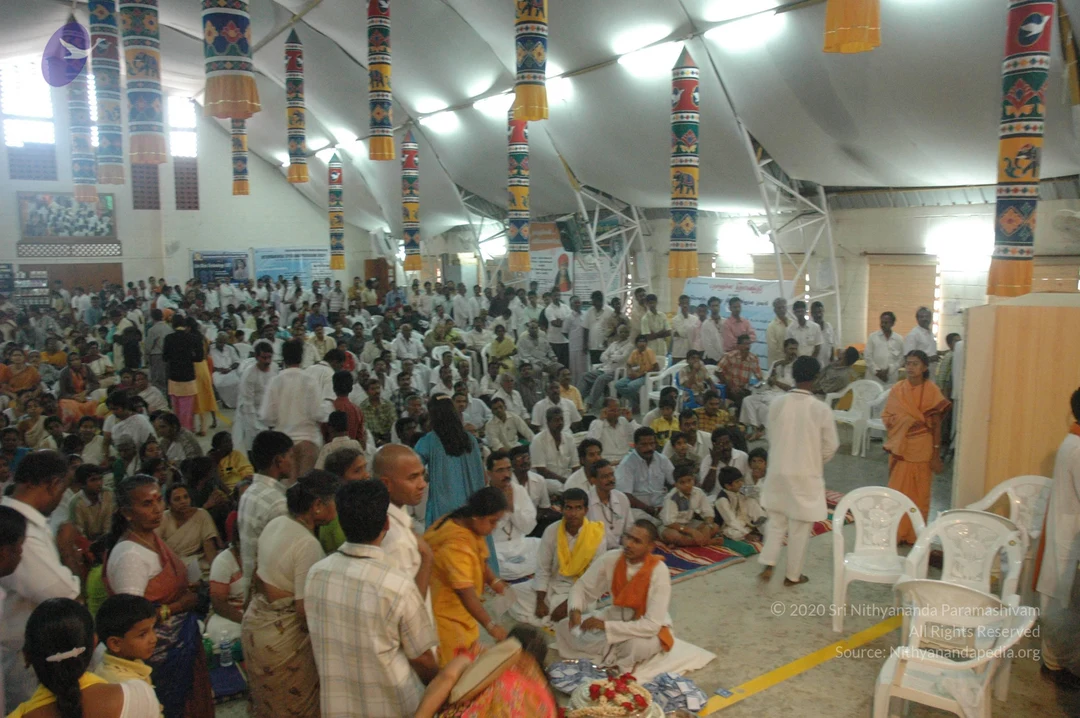
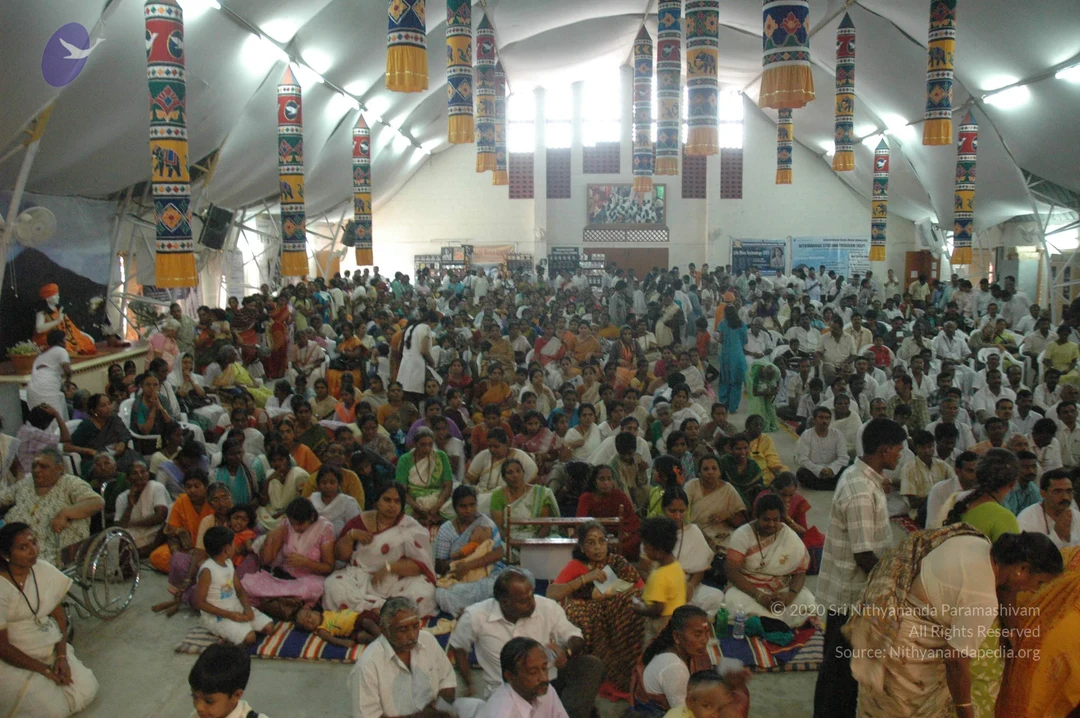
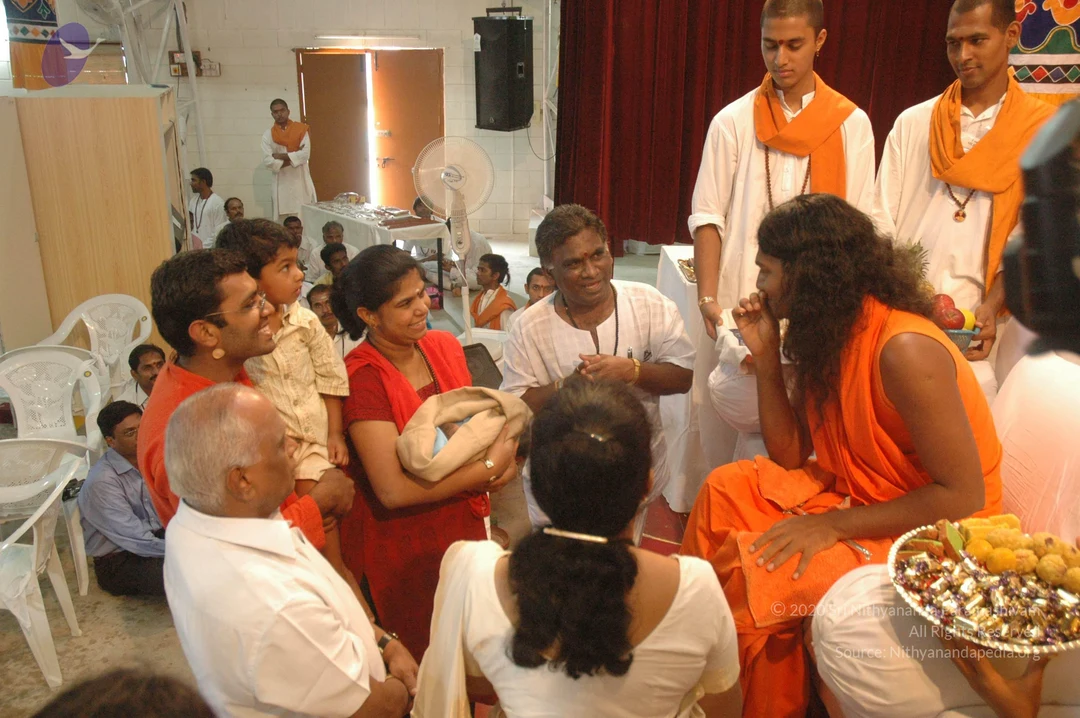
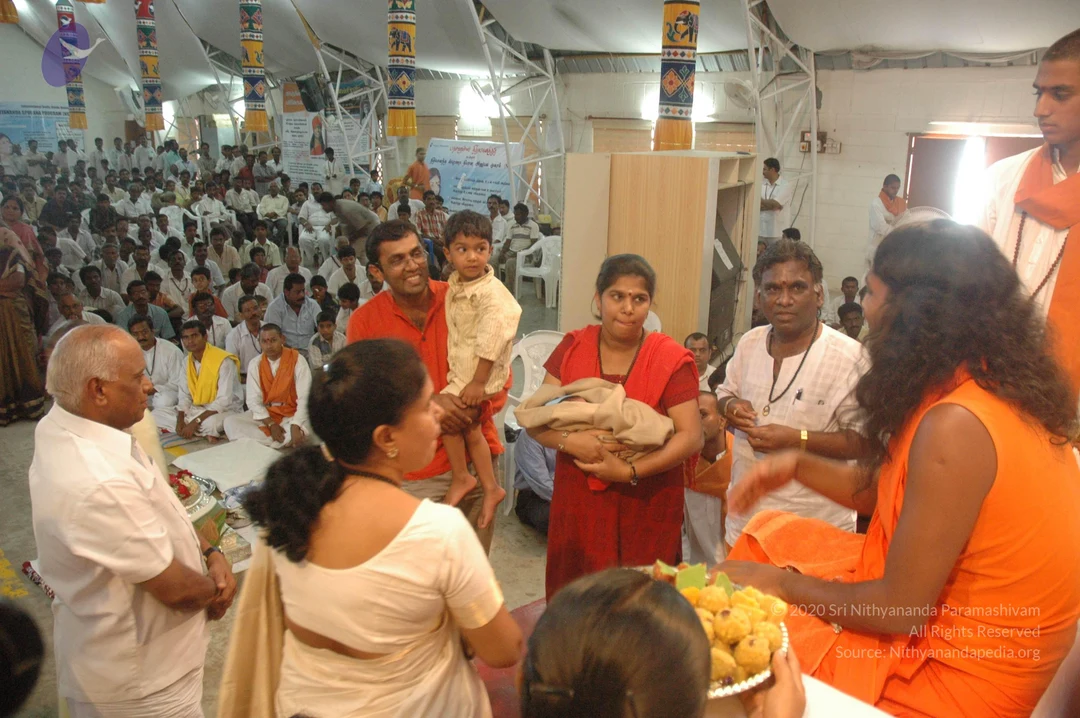
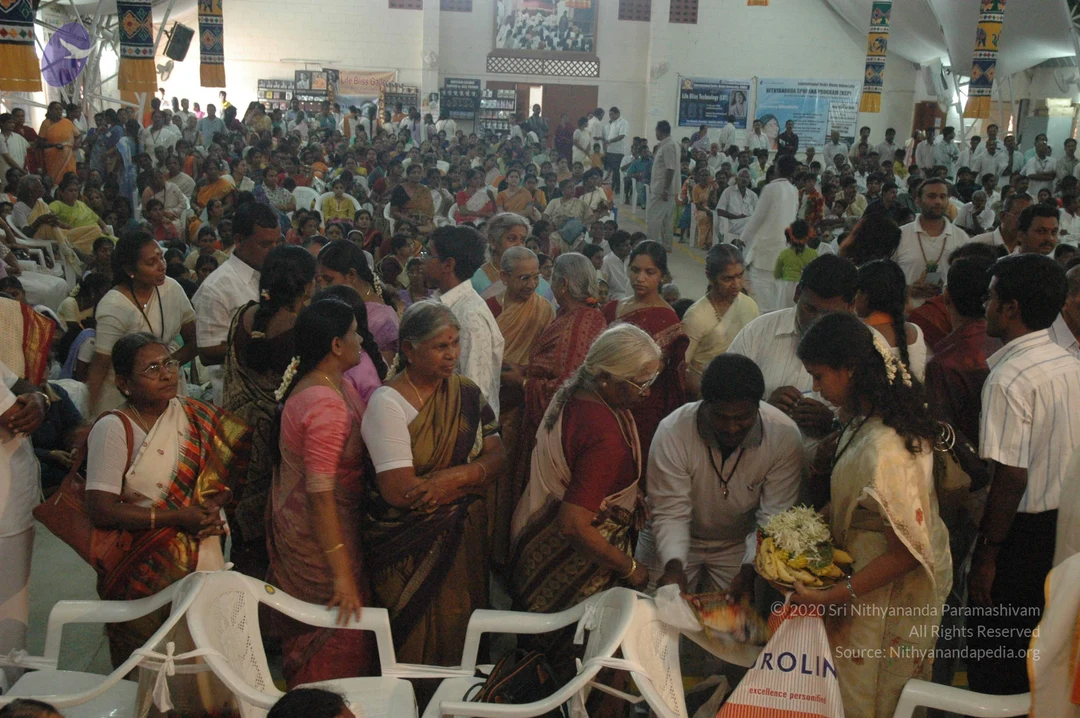
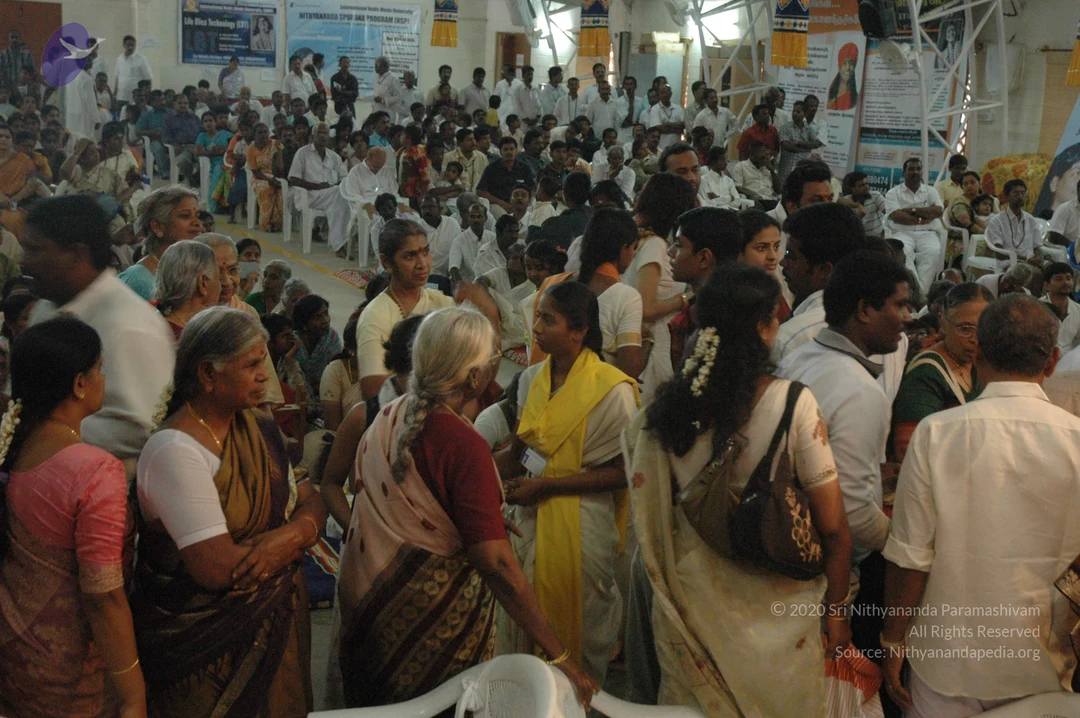
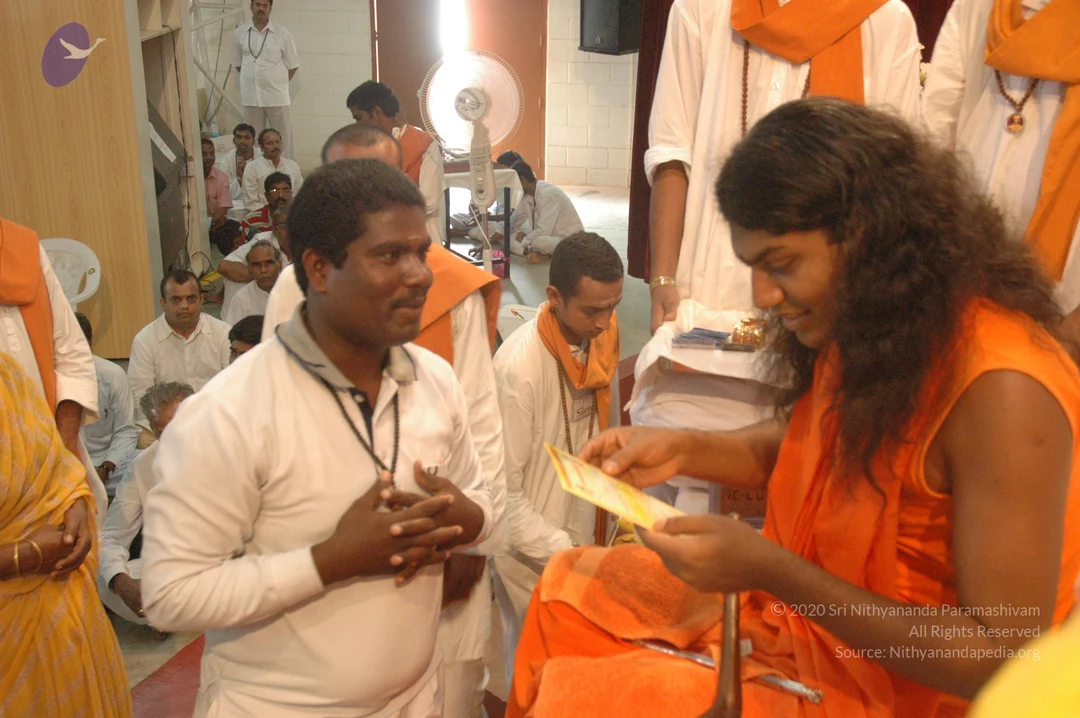
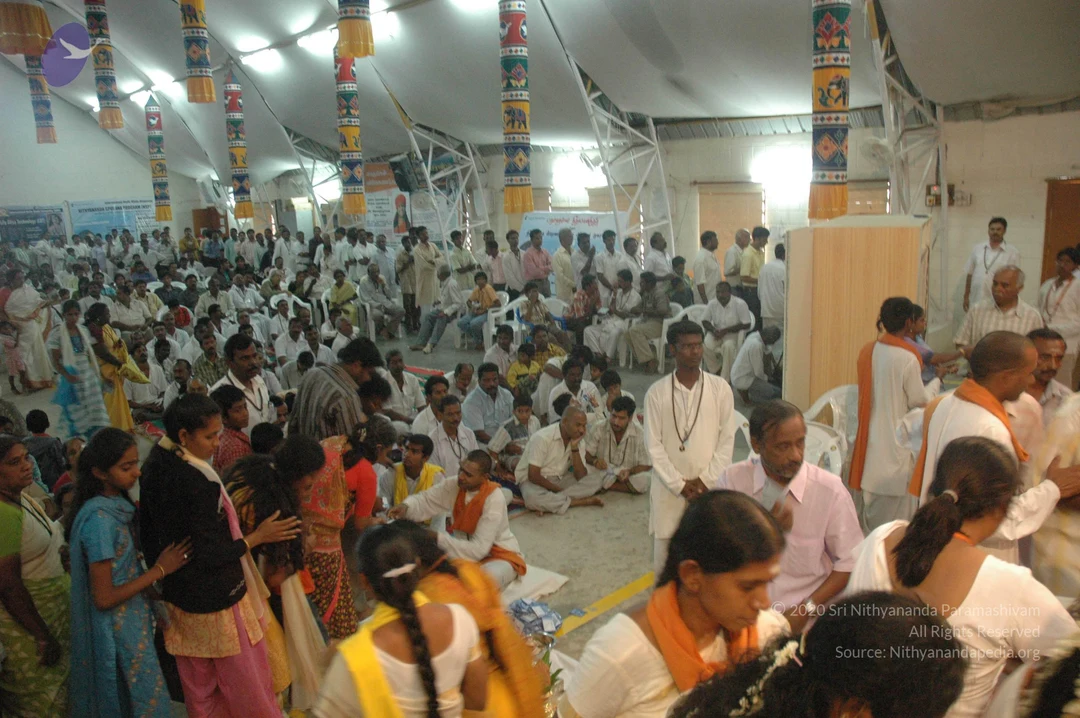
A large indoor tent hall crowded with devotees, mostly in white clothing, many with orange shawls or sashes. Colourful striped cloth pillars hang from the white ceiling. In the foreground a woman in a black top and pink skirt stands beside a young girl in blue, and a woman in a yellow-and-white sari sits with a braid. Several men sit on the floor or on white plastic chairs. A man in an orange sash and shaved head stands at right near a wooden partition, and a standing man in white with a rudraksha-style mala stands centre. Banners and printed panels line the back walls. No clearly visible figure matches the a person description, so the central figures are described by role and dress only.A large crowd fills a white tent-roofed hall decorated with tall painted cylindrical pillars in red, yellow, green and blue patterns hanging from the ceiling. Many people sit on white chairs and mats, including an elderly woman seated in a wheelchair in the left foreground and women in saris of blue, green, pink and orange. Men in white shirts and dhotis stand among them, and a small boy in a yellow shirt stands near the centre. On the far right stage area, a figure in an orange robe with a white cloth appears near a wall with framed photographs. Banners and displays line the rear walls.A seated figure in saffron-orange robes with long, swept-back dark hair sits on a white-cushioned throne-like chair at the right of a stage, with a bowl of fruit, a pineapple, flowers and a tray of sweets and rudraksha malas on a white-draped table beside them. A bald man in orange robes stands in front with palms joined in namaskar, facing a small crowd of devotees in white and pastel clothes who stand and wait along the left. A young attendant in white with an orange shawl stands by the table. A large backdrop of an ornate patterned fabric and a red curtain frame the stage. The seated figure is an appearance-based probable Swamiji, identified by long swept-back hair, saffron-orange clothing, and rudraksha malas on the table, while the standing monk is a sannyasi. Flowers, sweets and fruit are arranged as offerings.

March 21 2008

Original wiki page
Contents

Title

Supreme Pontiff of Hinduism Jagatguru Mahasannidhanam Bhagavan Nithyananda Paramashivam

Narration

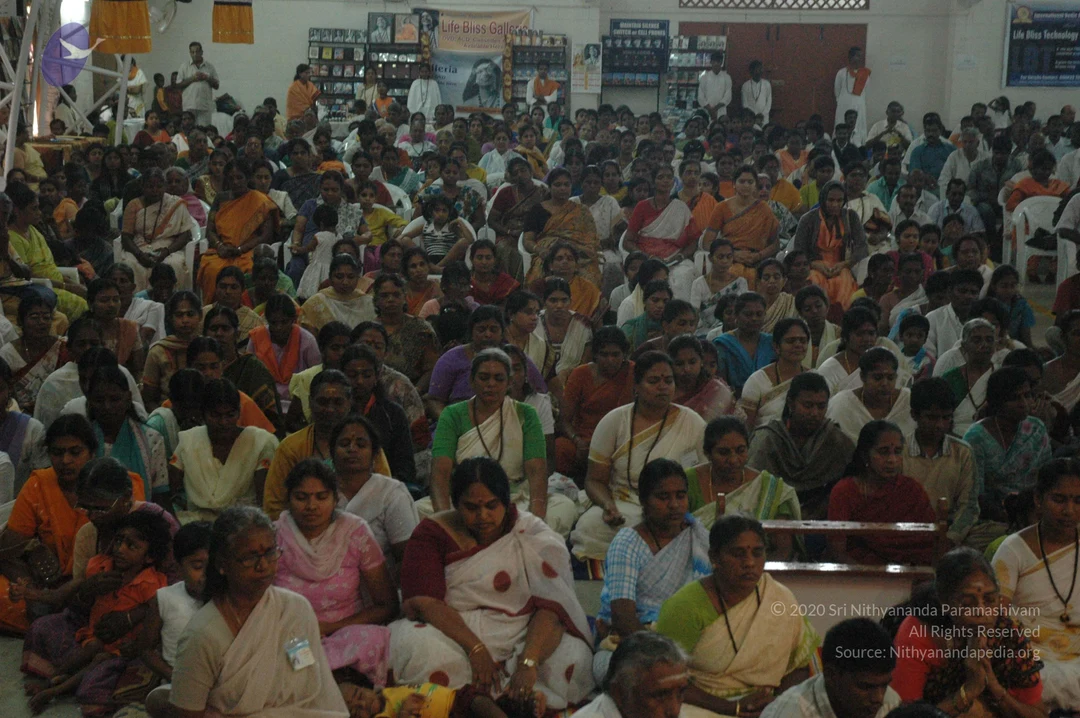
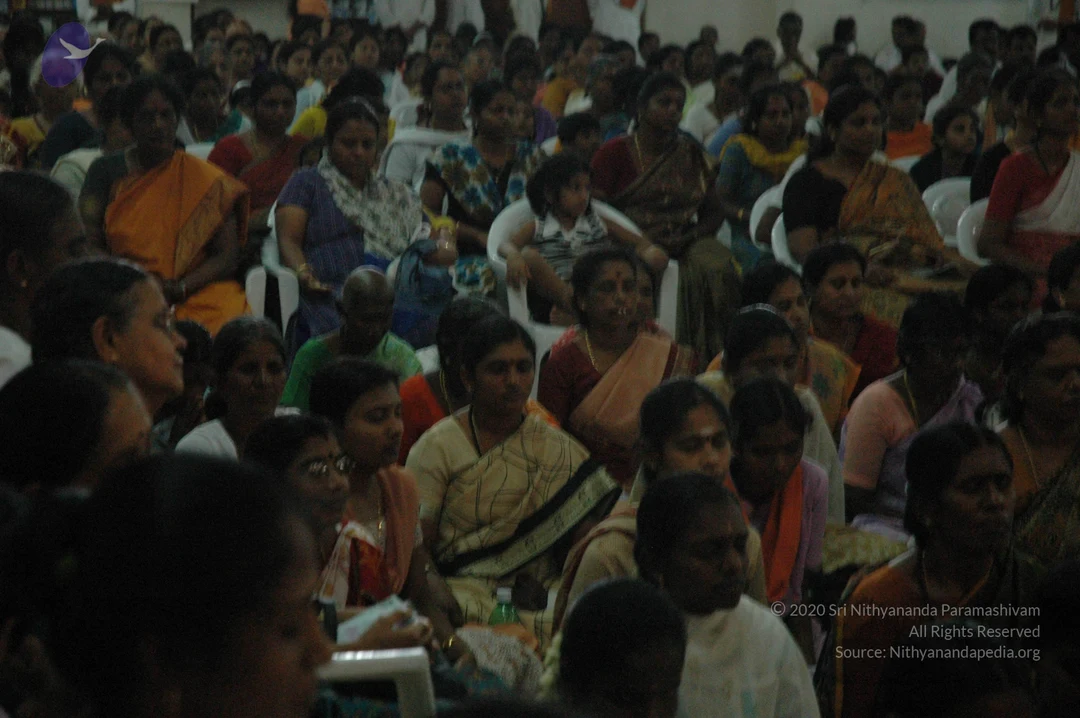
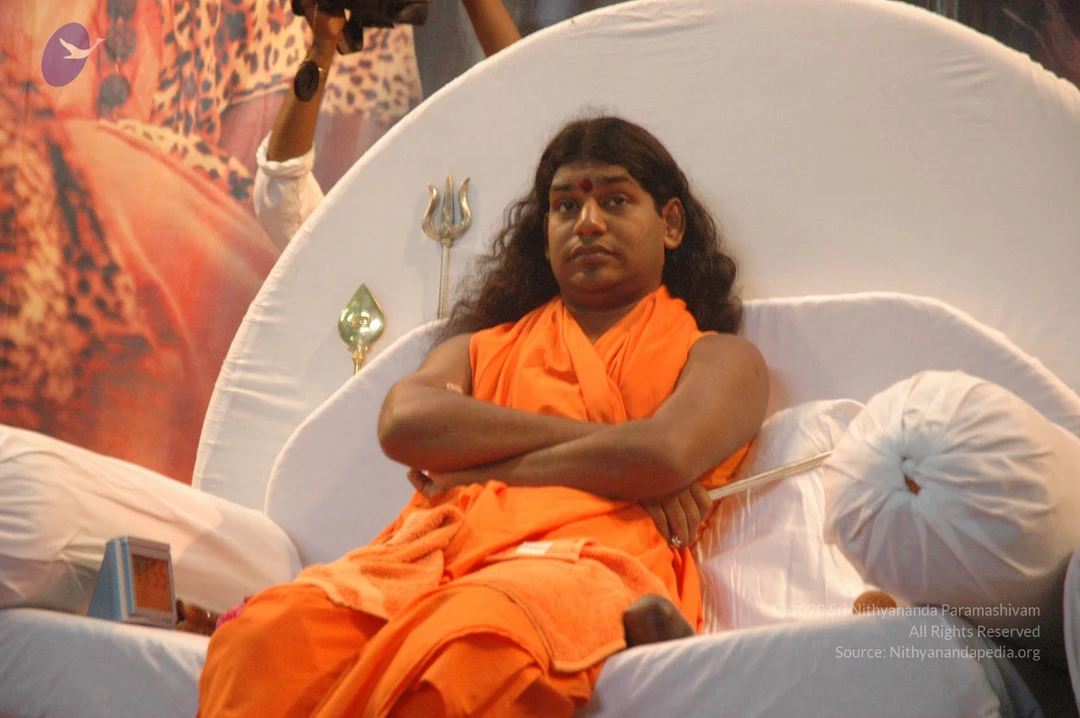
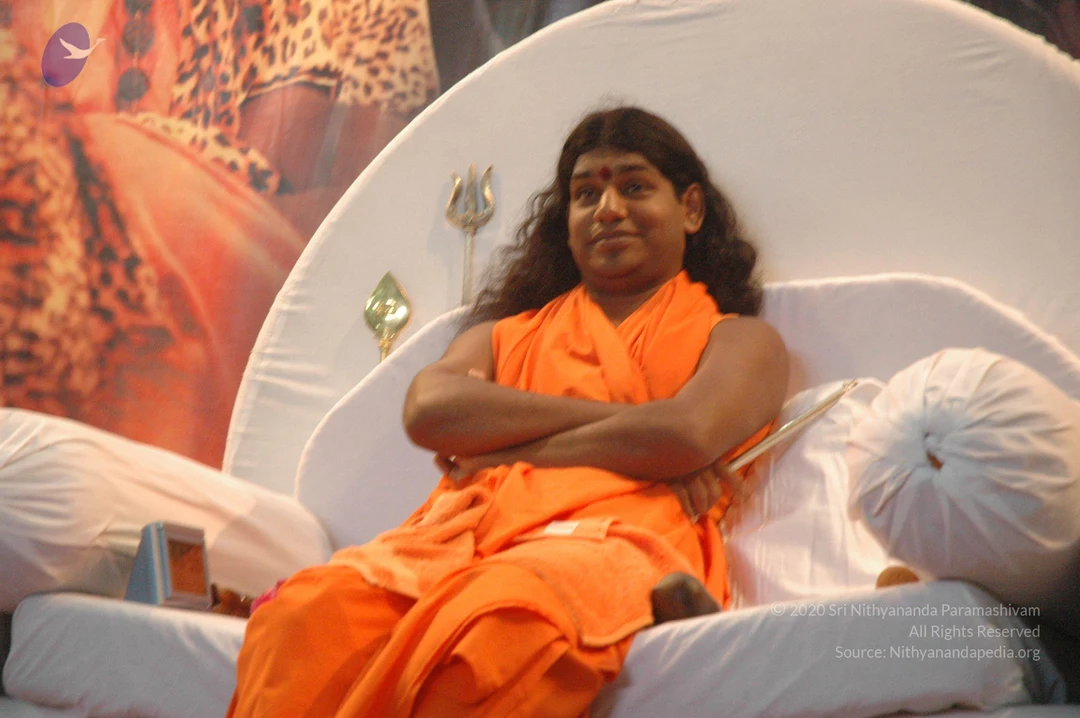
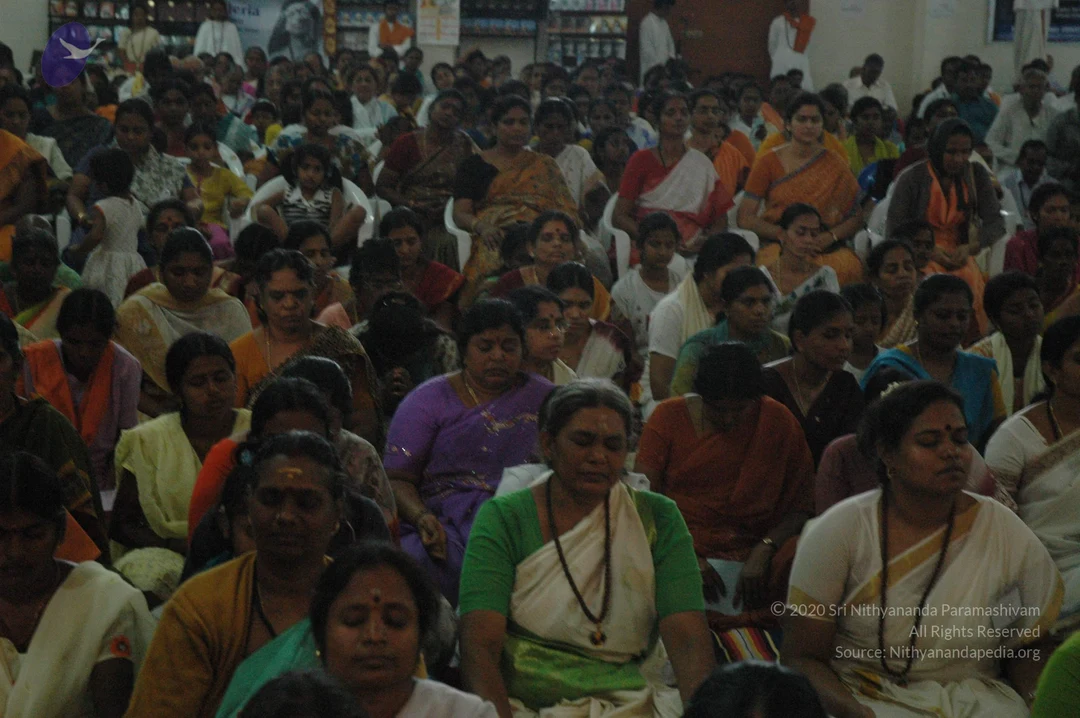
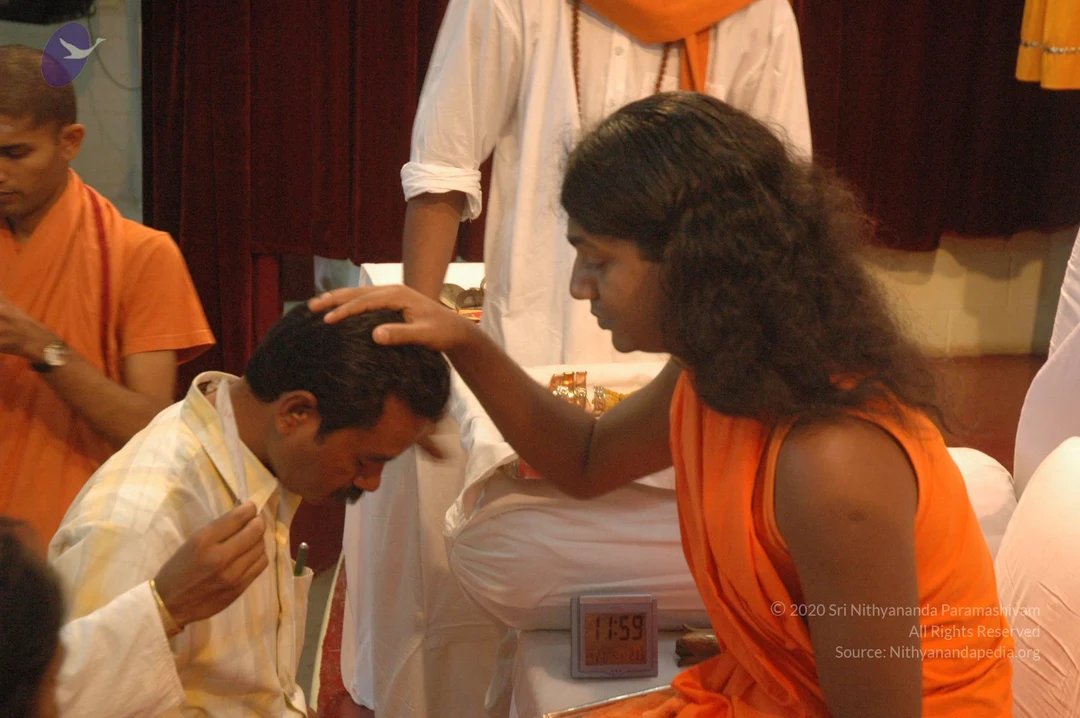
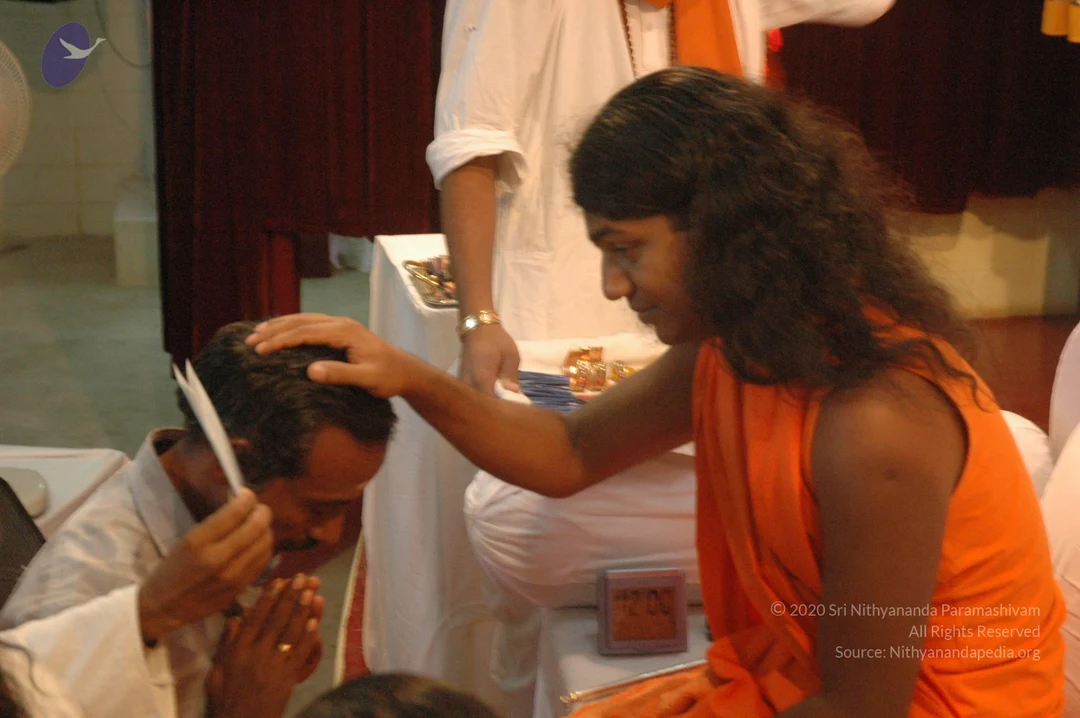
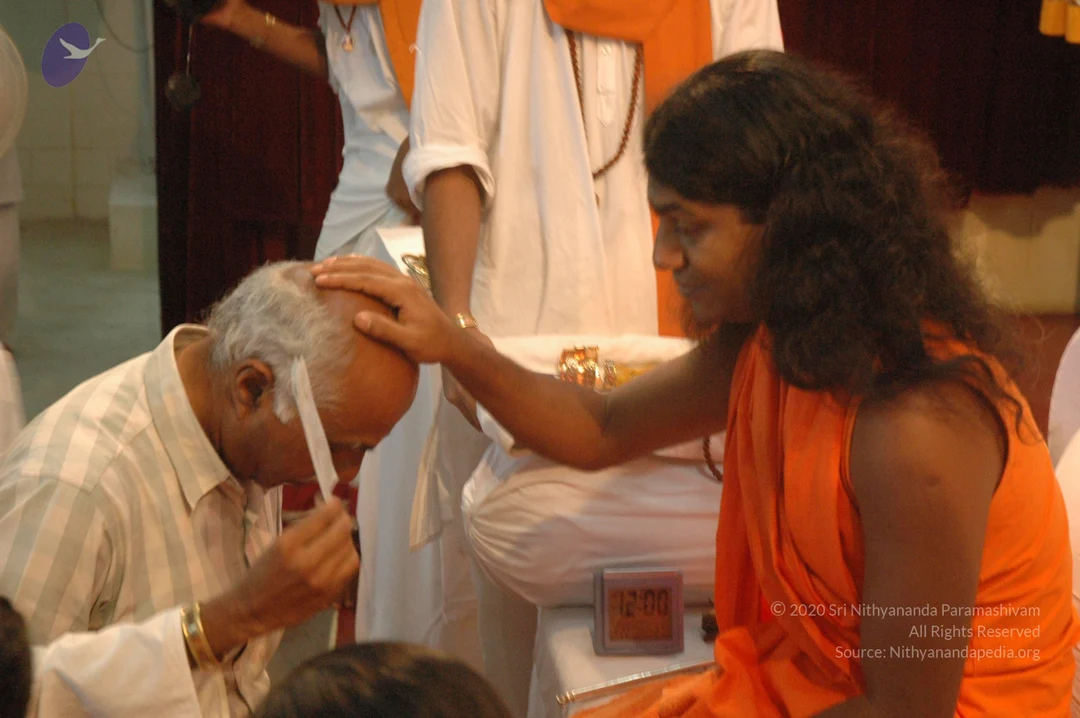
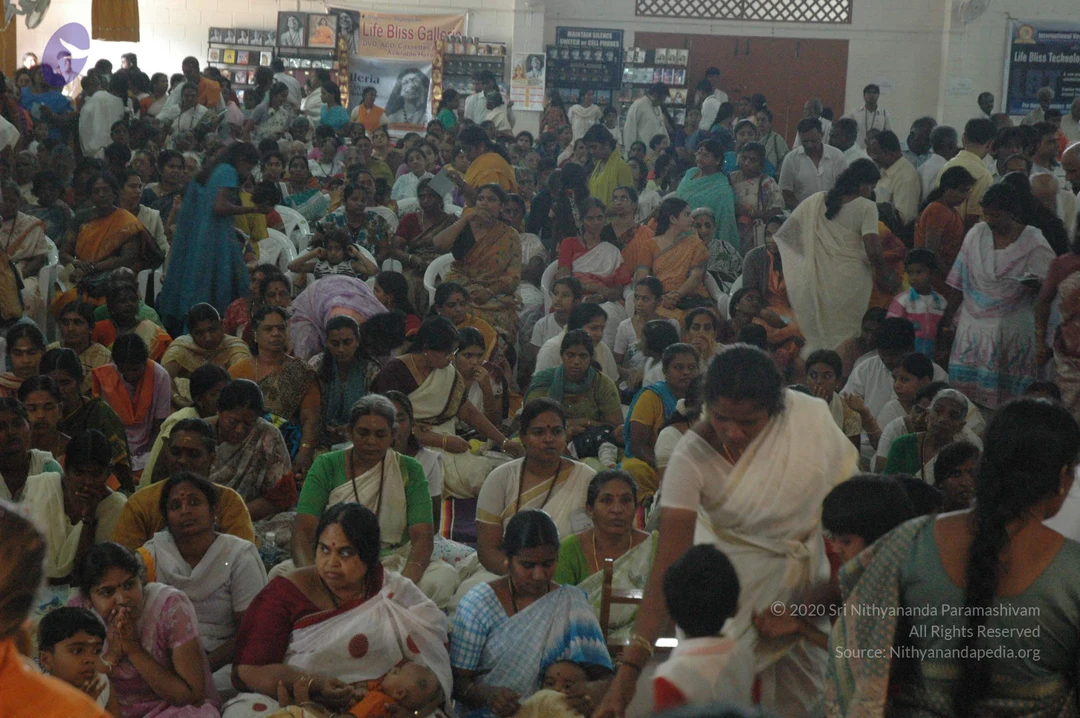
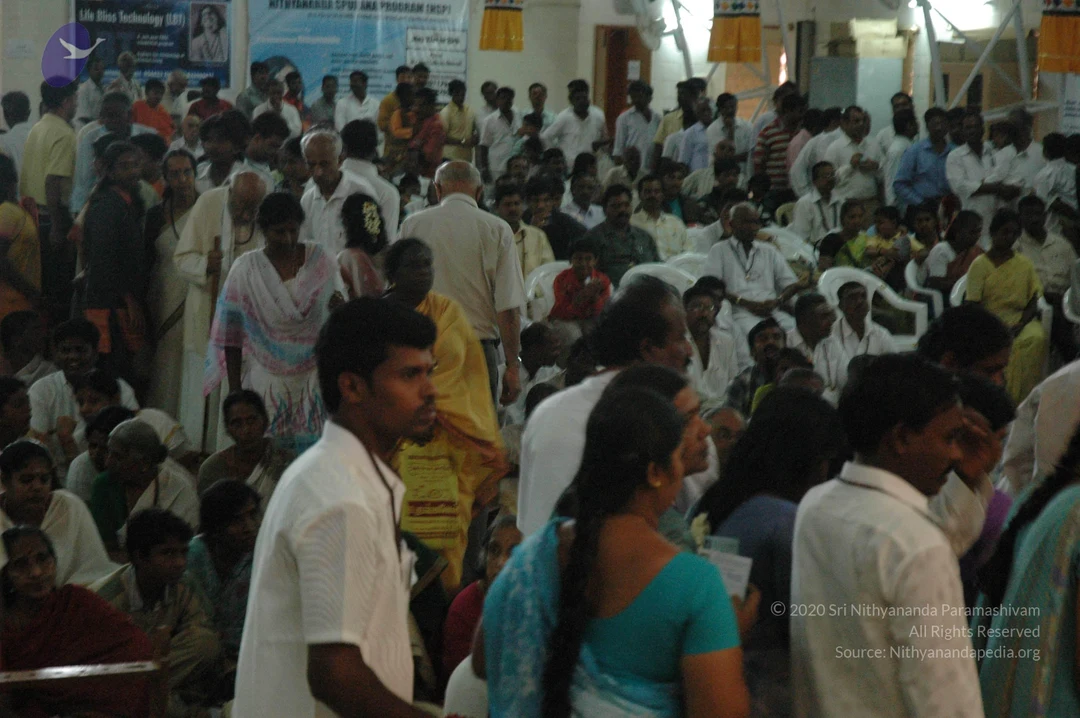
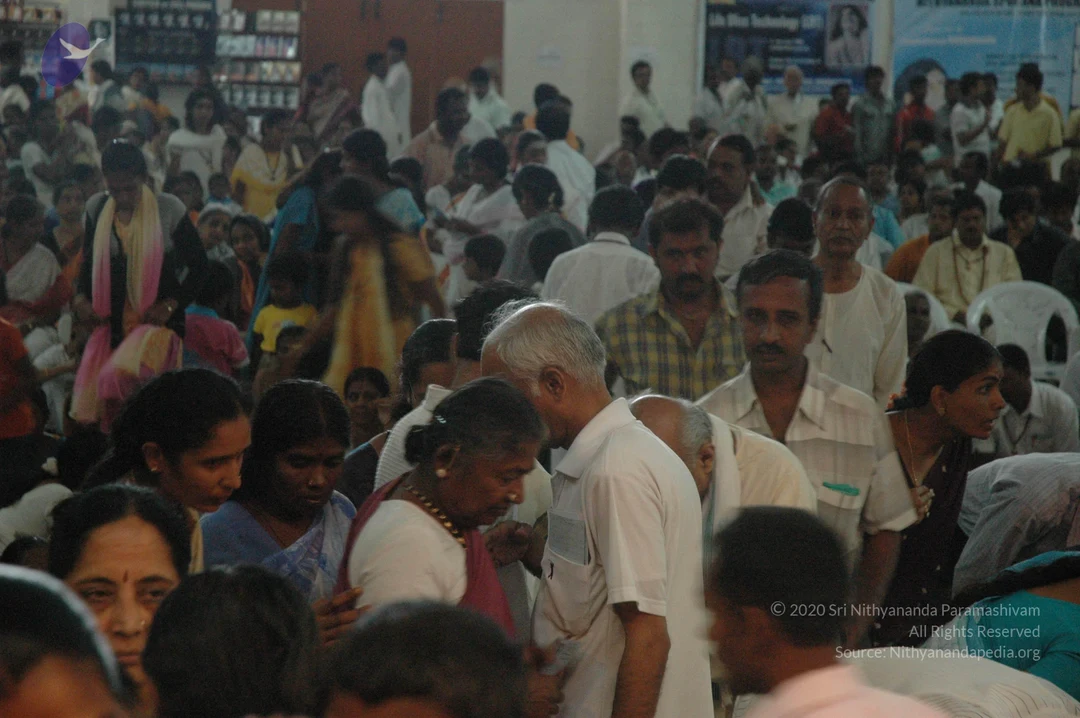
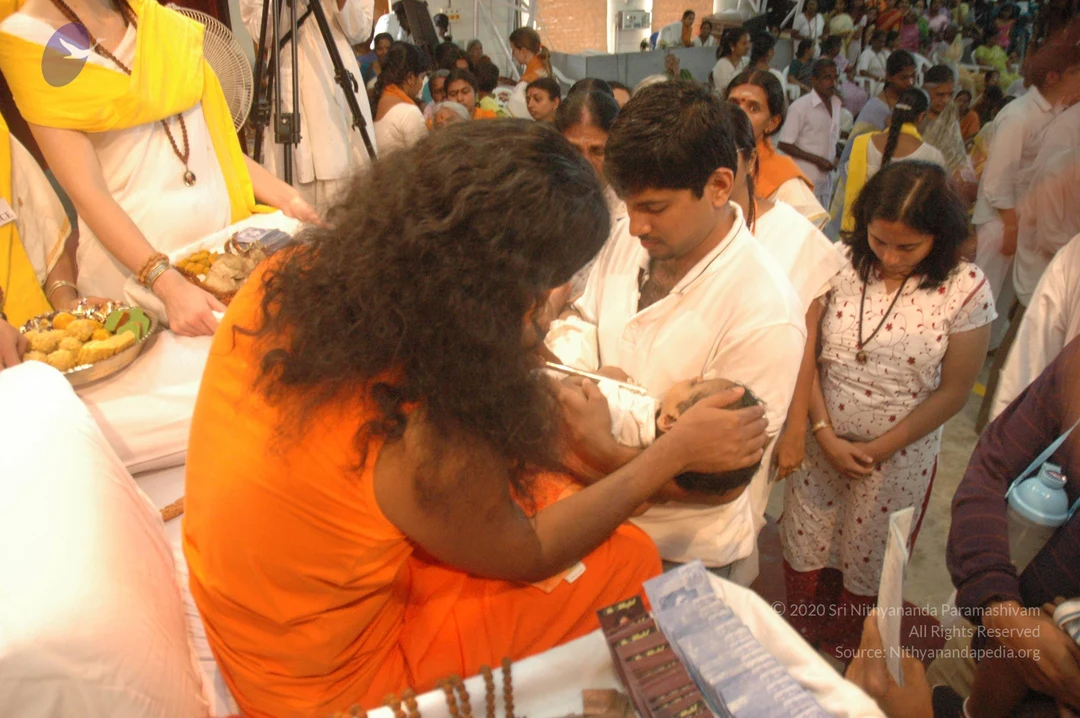
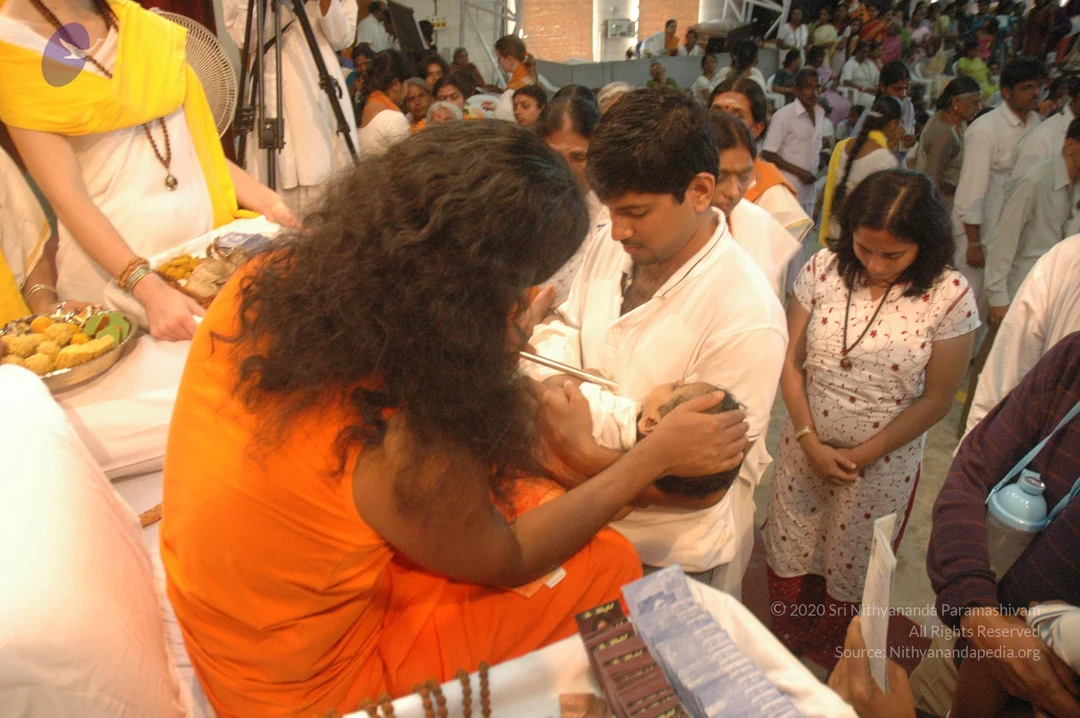
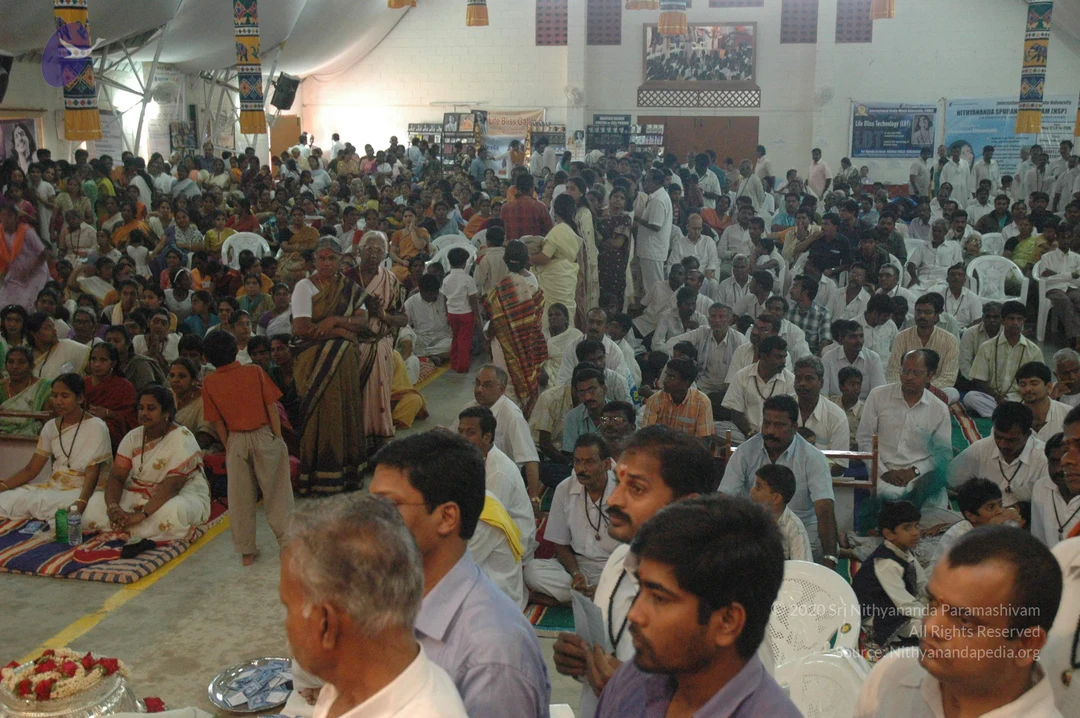
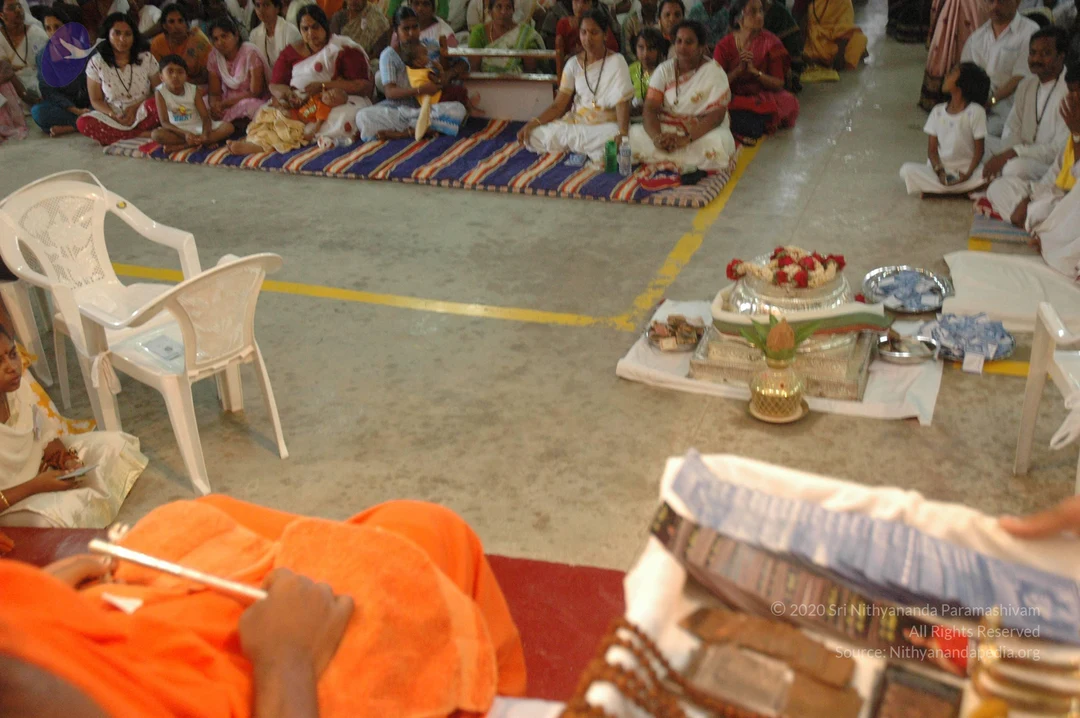
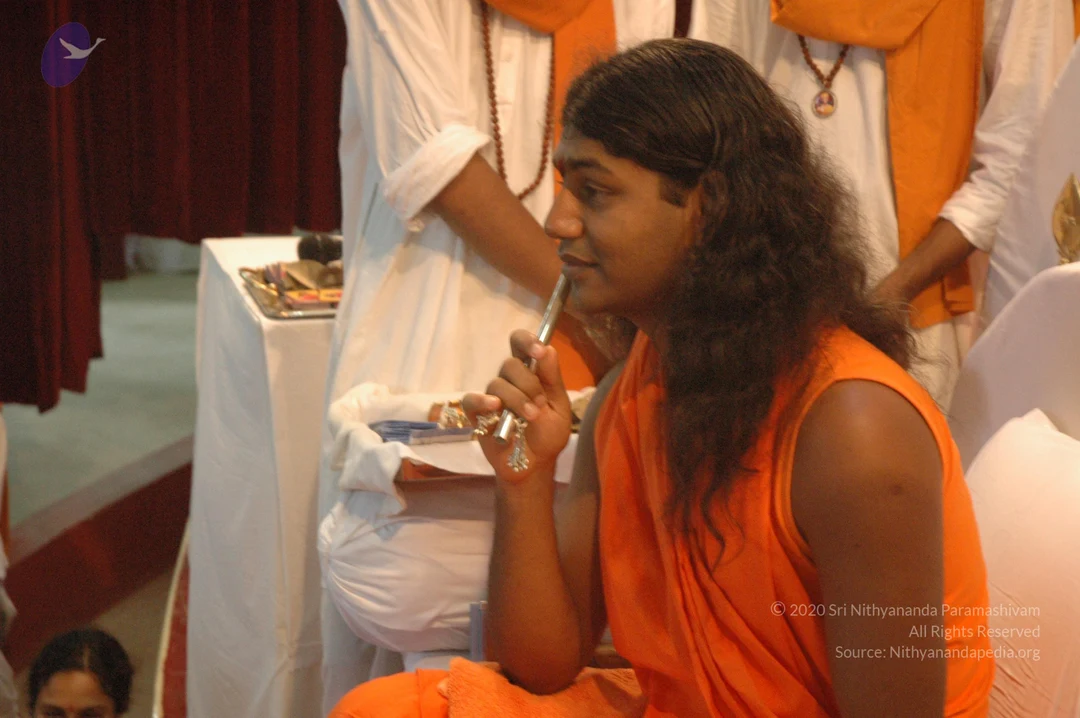
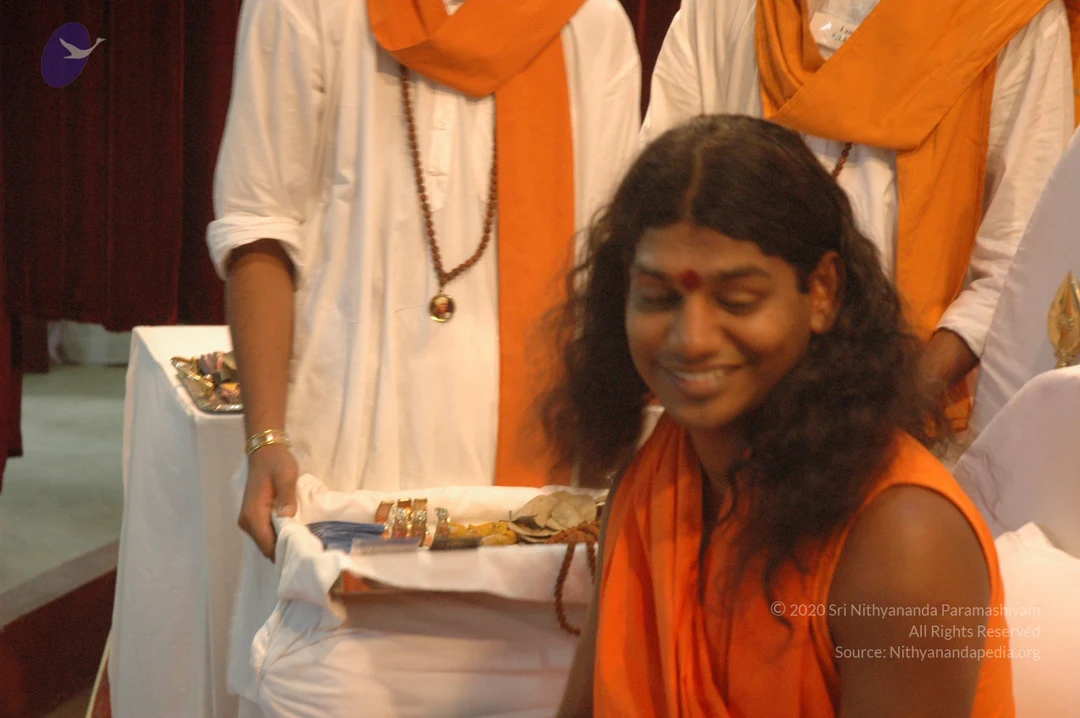
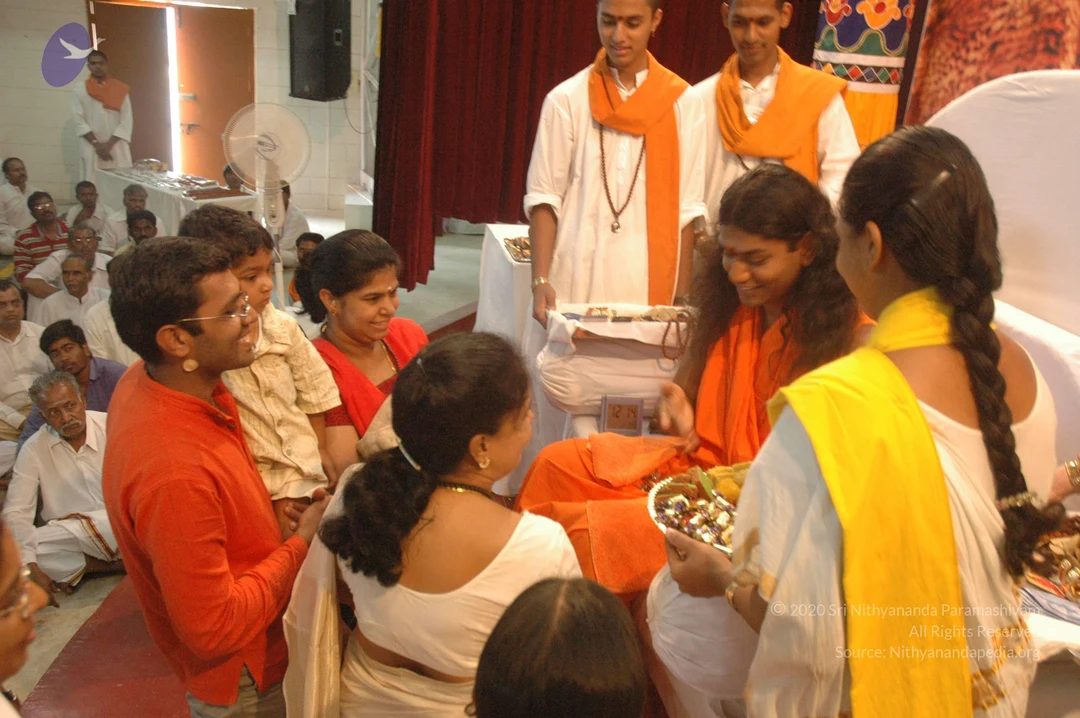
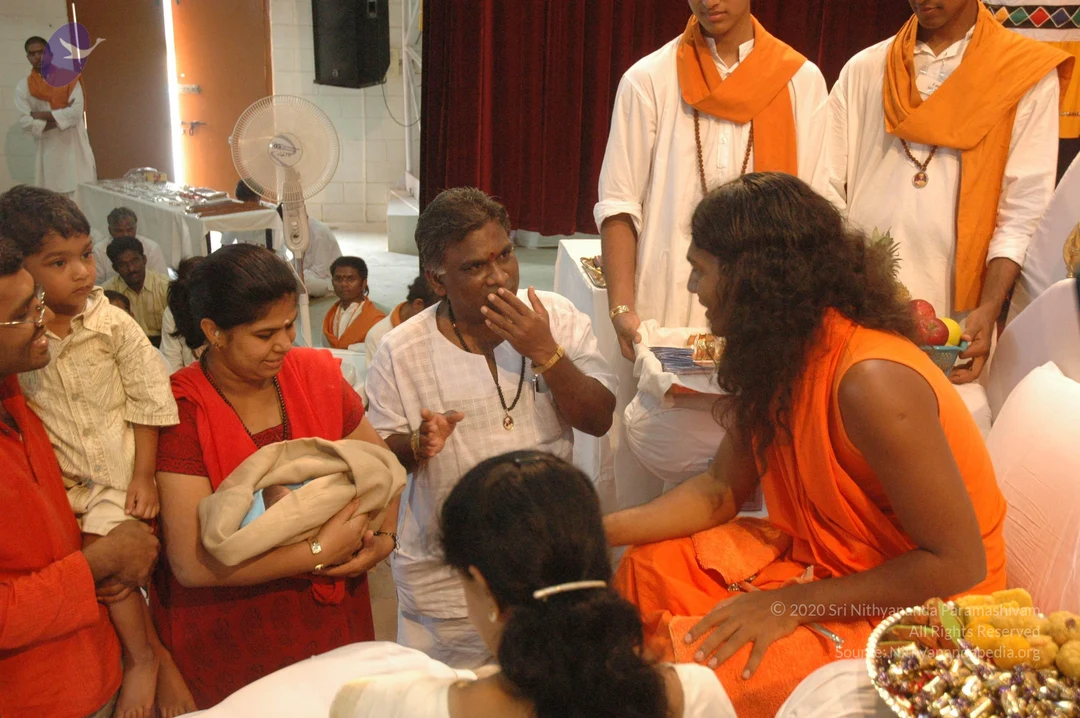
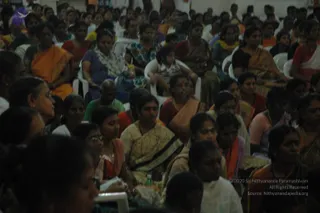
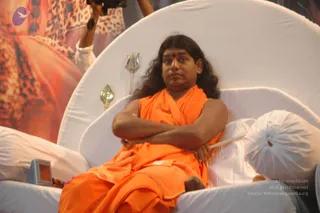
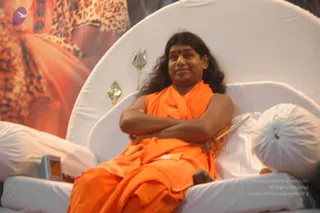
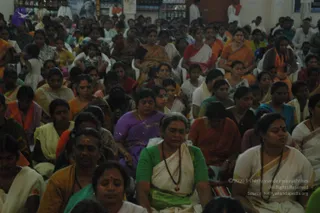
On that day thousands of people gathered in order to receive the Healing Darshan of the nijavatara of Paramashiva, the Supreme Pontiff of Hinduism Bhagavan Nithyananda Paramashivam, with each of them bringing books to be autographed, Mala’s to be blessed, requesting healing for themselves and also carrying lists of their relative's names that needed SPH's healing etc. SPH attended tirelessly to each and every one. He enriched and blessed couples and elders with love, compassion and deep listening and each person felt that SPH was there only for them. He gave each person the exact experience they needed at that time in order to move forward in their spiritual path.

Photos Of The Day:

healing-session
Photos from this day

View all 31 photos
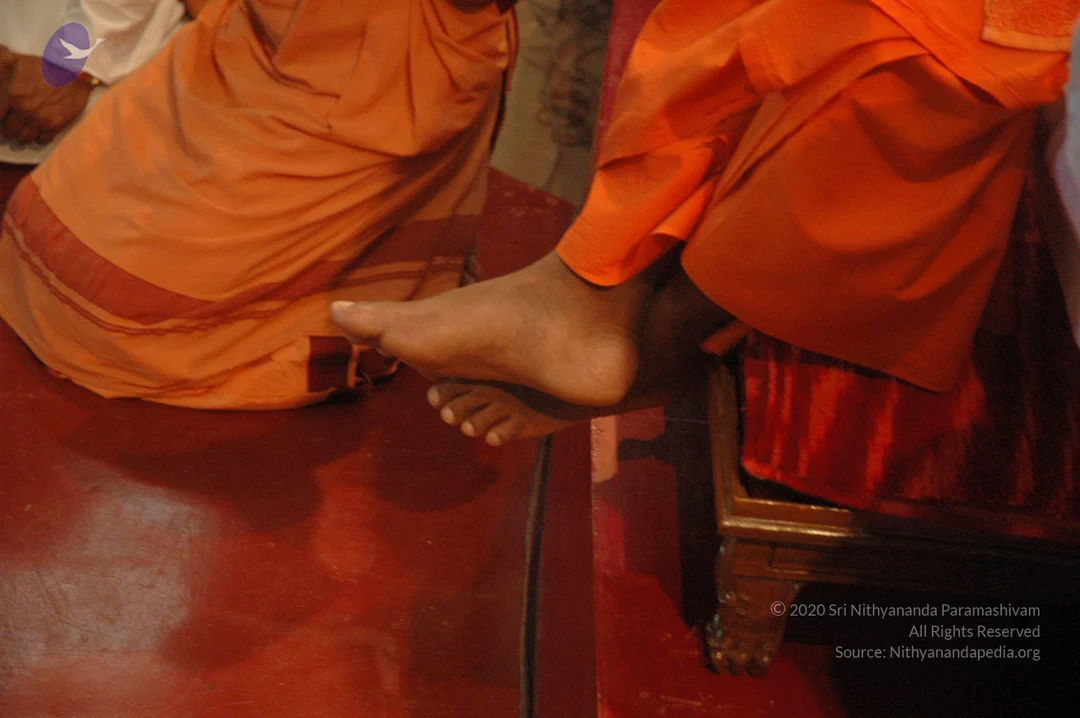
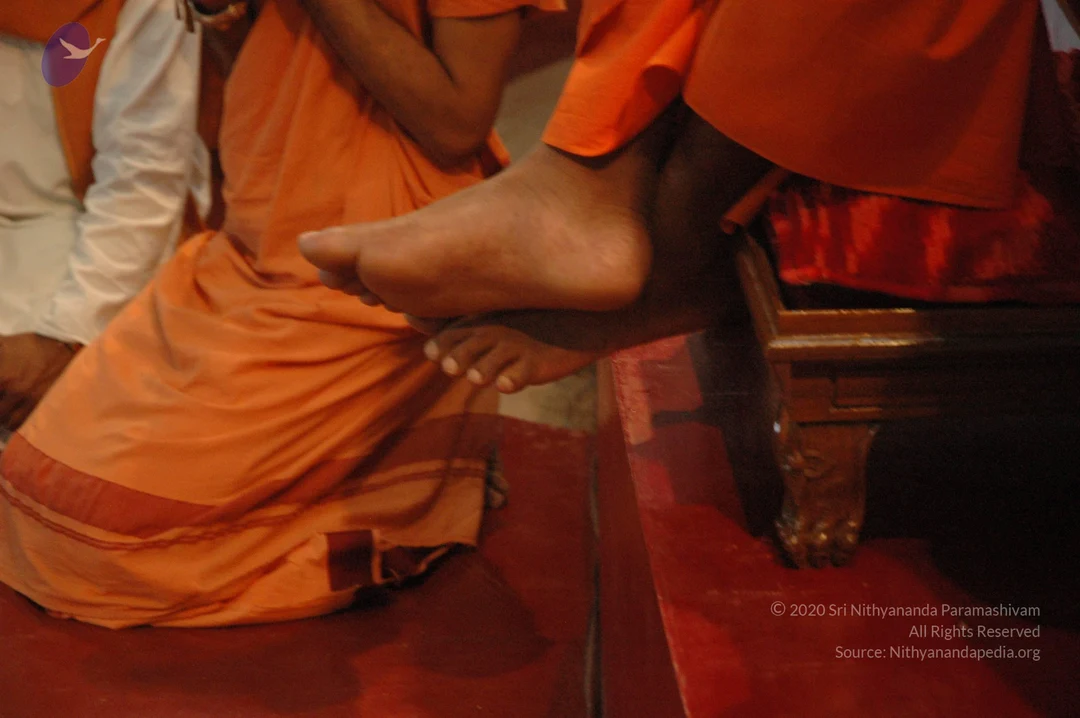
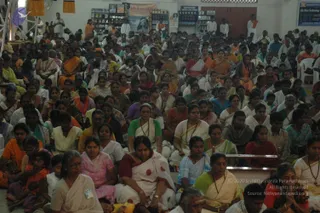
A large indoor tent hall crowded with devotees, mostly in white clothing, many with orange shawls or sashes. Colourful striped cloth pillars hang from the white ceiling. In the foreground a woman in a black top and pink skirt stands beside a young girl in blue, and a woman in a yellow-and-white sari sits with a braid. Several men sit on the floor or on white plastic chairs. A man in an orange sash and shaved head stands at right near a wooden partition, and a standing man in white with a rudraksha-style mala stands centre. Banners and printed panels line the back walls. No clearly visible figure matches the a person description, so the central figures are described by role and dress only.A large crowd fills a white tent-roofed hall decorated with tall painted cylindrical pillars in red, yellow, green and blue patterns hanging from the ceiling. Many people sit on white chairs and mats, including an elderly woman seated in a wheelchair in the left foreground and women in saris of blue, green, pink and orange. Men in white shirts and dhotis stand among them, and a small boy in a yellow shirt stands near the centre. On the far right stage area, a figure in an orange robe with a white cloth appears near a wall with framed photographs. Banners and displays line the rear walls.A seated figure in saffron-orange robes with long, swept-back dark hair sits on a white-cushioned throne-like chair at the right of a stage, with a bowl of fruit, a pineapple, flowers and a tray of sweets and rudraksha malas on a white-draped table beside them. A bald man in orange robes stands in front with palms joined in namaskar, facing a small crowd of devotees in white and pastel clothes who stand and wait along the left. A young attendant in white with an orange shawl stands by the table. A large backdrop of an ornate patterned fabric and a red curtain frame the stage. The seated figure is an appearance-based probable Swamiji, identified by long swept-back hair, saffron-orange clothing, and rudraksha malas on the table, while the standing monk is a sannyasi. Flowers, sweets and fruit are arranged as offerings.A large indoor hall under a white tensile canopy hung with tall painted cylindrical banners in red, yellow and green patterns. A dense crowd fills the floor, mostly people in white clothes, with many seated on mats and white plastic chairs, while others stand and move through the aisles. In the lower centre a man in white with an orange shawl sits cross-legged on a white cloth beside a tray of flowers and offerings, and a woman in yellow stands nearby. A woman in orange robes stands at the right edge. Blue banners with white printed text hang along the back wall, and a framed group photo is visible at upper left.A large crowd of several hundred devotees fills a white tent-roofed hall during a healing darshan. Many sit on mats and cloth on the floor, while others sit on chairs; a wheelchair is visible at left. Women wear saris in pink, red, orange and white, and men wear white shirts and dhotis. Hanging decorative pillars with colourful patterned panels hang from the tent ceiling. At the far left front, a figure in saffron-orange robes with a red head covering sits on a raised platform beside potted plants, consistent with a speaker seated on a dais, though this figure's identity is uncertain. Small children sit among the adults at the front.Close-up photograph of bare feet on a red-lacquered floor during a seated gathering. A person in orange robes sits on a carved wooden seat with red velvet cushioning, one bare foot lifted and resting on the seat edge. Beside them, another person in orange cloth with a darker red border sits kneeling on the red floor. Only feet and orange garments are visible; no faces are shown. Ornate carved wood details appear at the base of the seat.A photograph in close crop of a devotee in saffron-orange robes kneeling on a red-covered platform, bending forward with hands pressed together, while another person's bare foot rests on the devotee's shoulder area; the seated figure above wears orange clothing and sits on a carved wooden throne-like seat with red upholstery. The scene suggests a padapuja-style foot offering in a seated darshan setting, with the throne's ornate carved wooden feet visible at right. Only limbs and feet are visible, with the upper bodies cropped out of frame.A large crowd of mostly women and some children sits seated on the floor of a hall during a healing session. Many wear white or cream saris with coloured borders, along with orange, green, pink, red and blue saris; several wear rudraksha or beaded malas around their necks. Some sit with eyes closed or hands folded in meditation. At the back, men in white and orange clothing stand near a shop-like display of books and products. Wall signage and a banner reading Life Bliss Gallery hang behind them, with a framed portrait of a woman on the banner. Visible people number well over twenty, so the crowd is counted in the larger range. No figure in the scene clearly matches the appearance cues needed for a person identification.A crowded indoor hall seen from the front rows, with many seated devotees filling white plastic chairs. Most are women in saris and salwar kameez in orange, maroon, purple, cream and blue, some with gold necklaces and bangles. A small child in a striped top sits on a woman's lap near the centre. Several men in white and green shirts appear among the audience at lower right and left. The lighting is dim and the faces in the foreground are partly cut off by the frame. No speaker or a person candidate is clearly visible in this image.A photograph of a man with long, swept-back dark hair and a red bindi, wearing an orange saffron robe over his shoulders, seated on a large white rounded throne with his arms folded across his chest. Behind him is a brilliant trident (trishul) and a gold-tipped staff leaning against the throne, and a white cushion rests at his side. A cameraperson in a leopard-print top raises a camera above him, and a red-orange draped backdrop fills the background. Swamiji (probable) is seated on the throne in orange robes with rudraksha-style adornments and long hair, receiving devotees at a healing session.A photograph of a seated man in saffron-orange robes on a large white throne-like chair with a rounded back. He has long, swept-back dark hair, a red bindi on his forehead, and folds his arms across his chest while smiling slightly. A gold trident and a gold leaf-shaped ornament are mounted on the white backrest behind him, and a leopard-print orange fabric hangs in the background. A white bolster sits beside him and a small wooden stand is at the lower left.A large seated congregation fills an indoor hall, dense rows of women and some men in traditional dress sitting with eyes closed in meditation or devotion. Many women wear white or cream sarees with coloured borders, and others wear saffron, orange, purple, red, green and blue saris; several have vermilion or tilak marks on their foreheads and rudraksha or beaded malas around their necks. Plastic white chairs are visible at the front of the crowd. Behind them shelves of bottles and products line the back wall, and a large portrait with a printed caption sits at the top left. The lighting is dim and the scene appears to be a healing darshan session.