Skip to content
Wednesday

17 October 2007

THE SUPREME PONTIFF OF HINDUISM JGM HDH BHAGAVAN NITHYANANDA PARAMASHIVAM

Dated photos
147
Source pages
1
Media
2
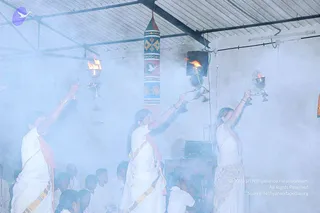
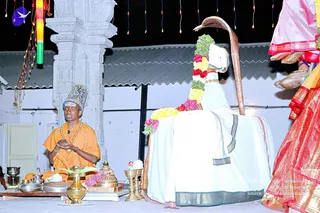
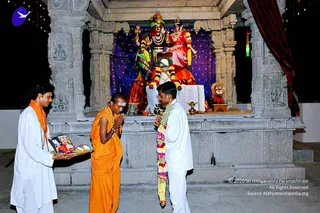
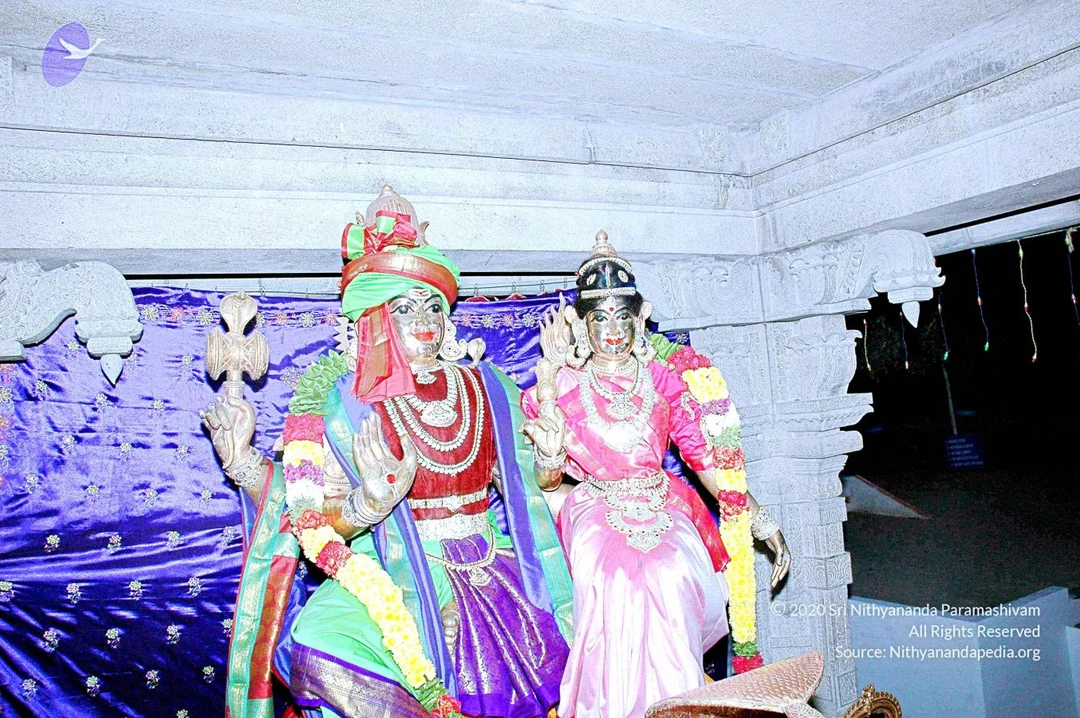
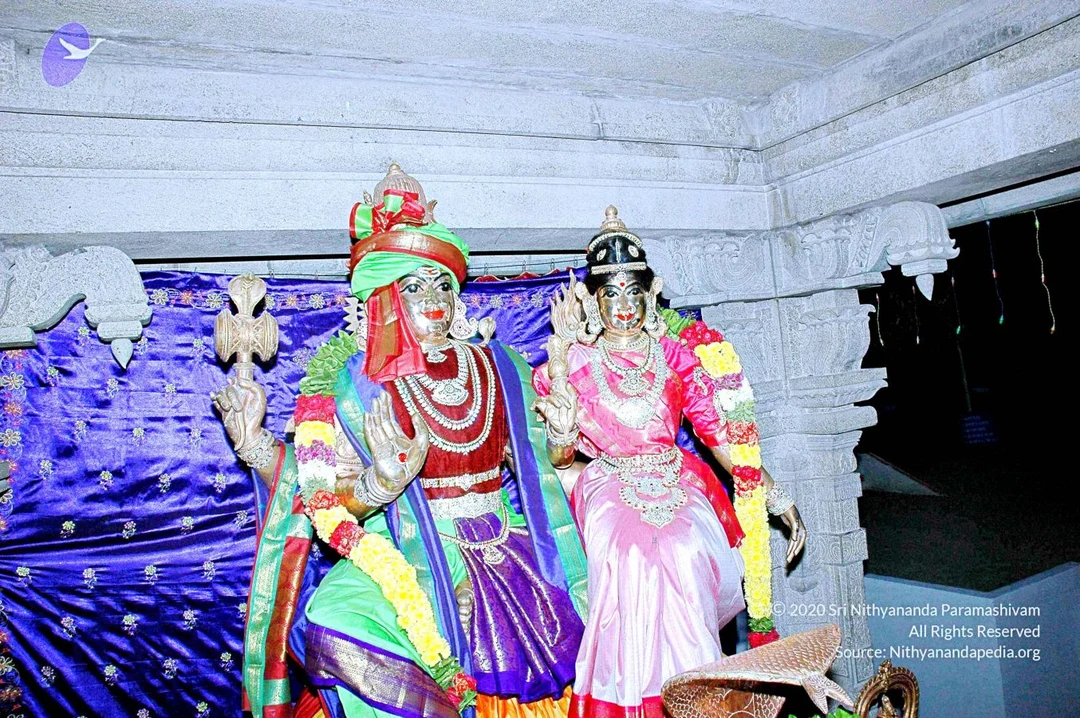
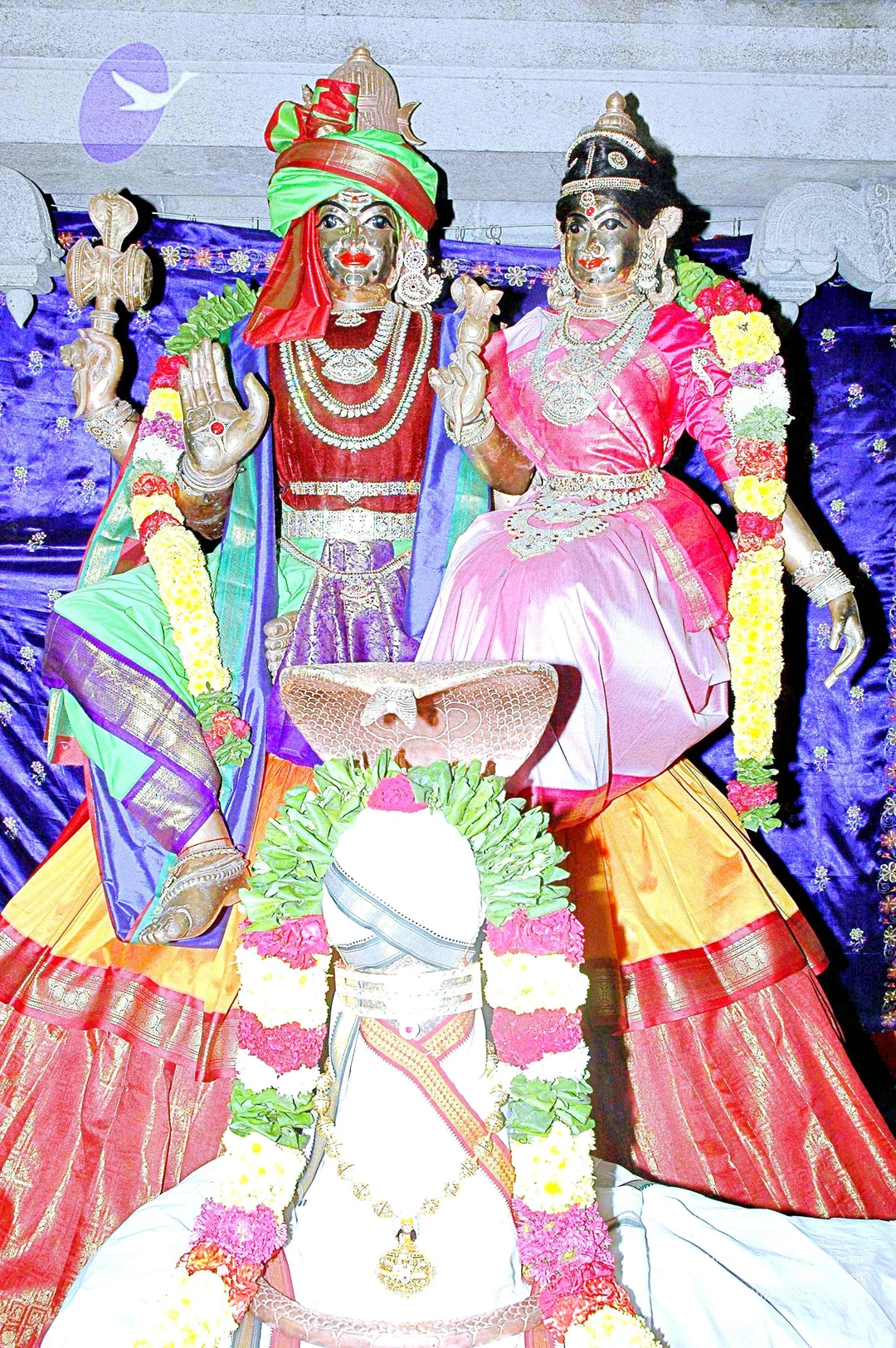
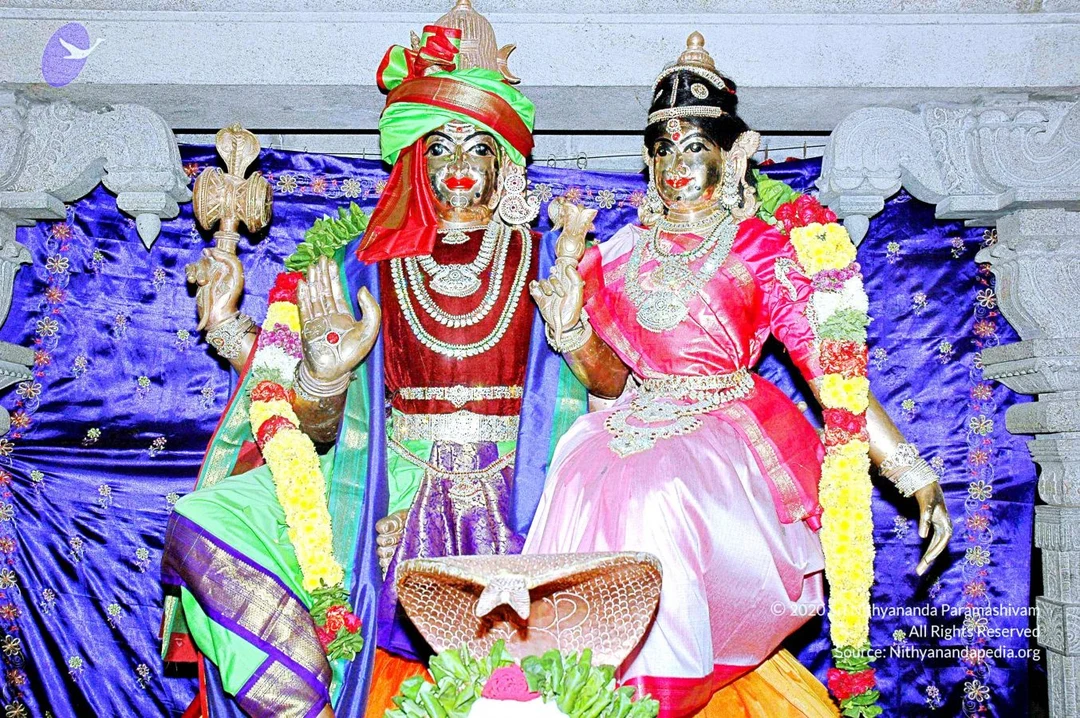
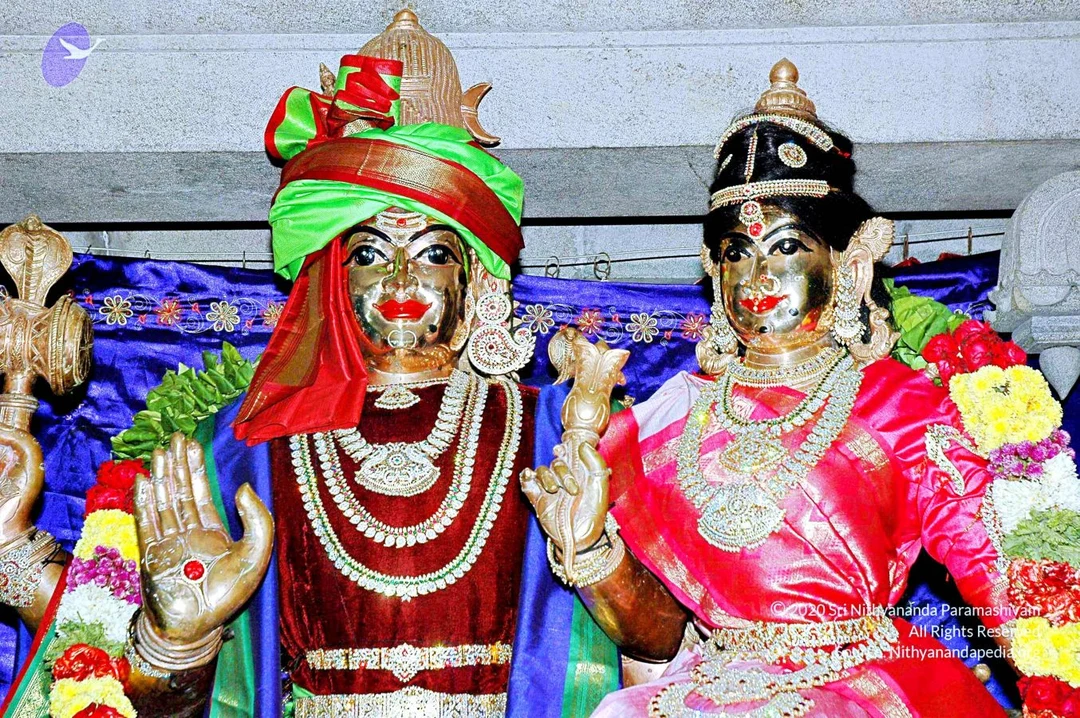
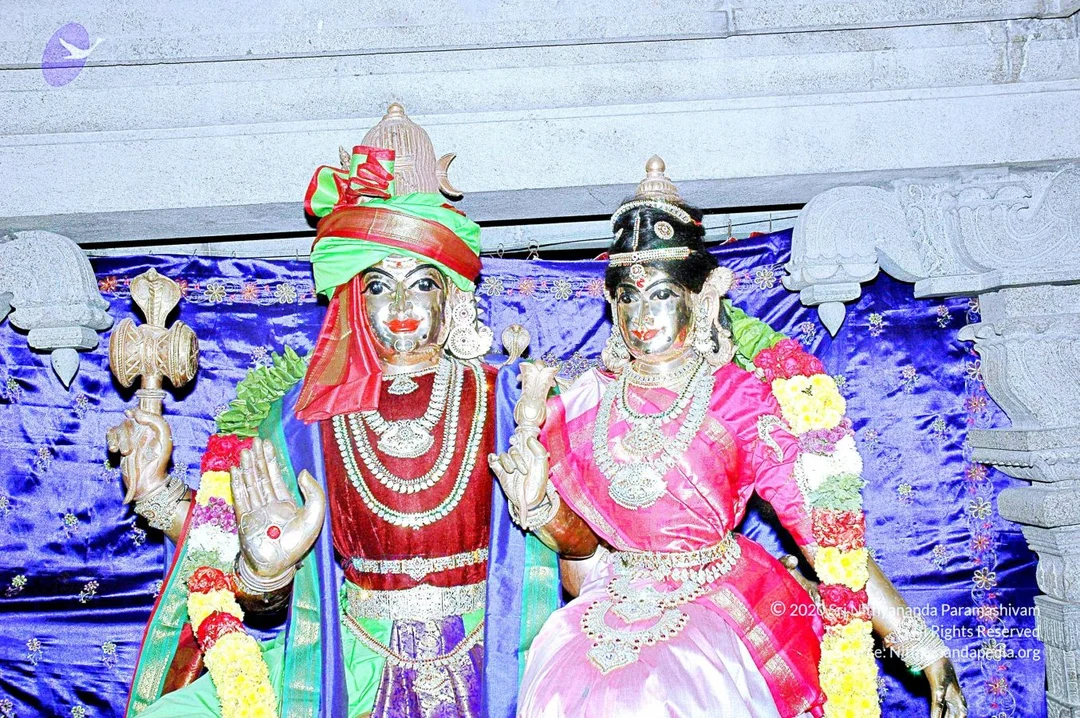
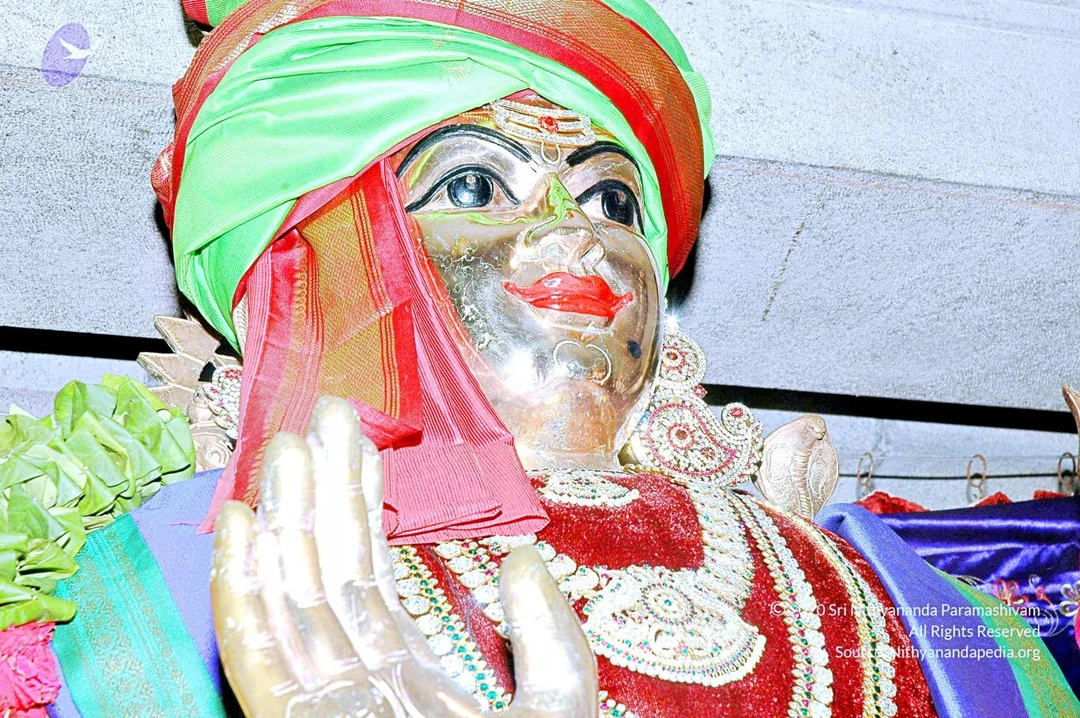
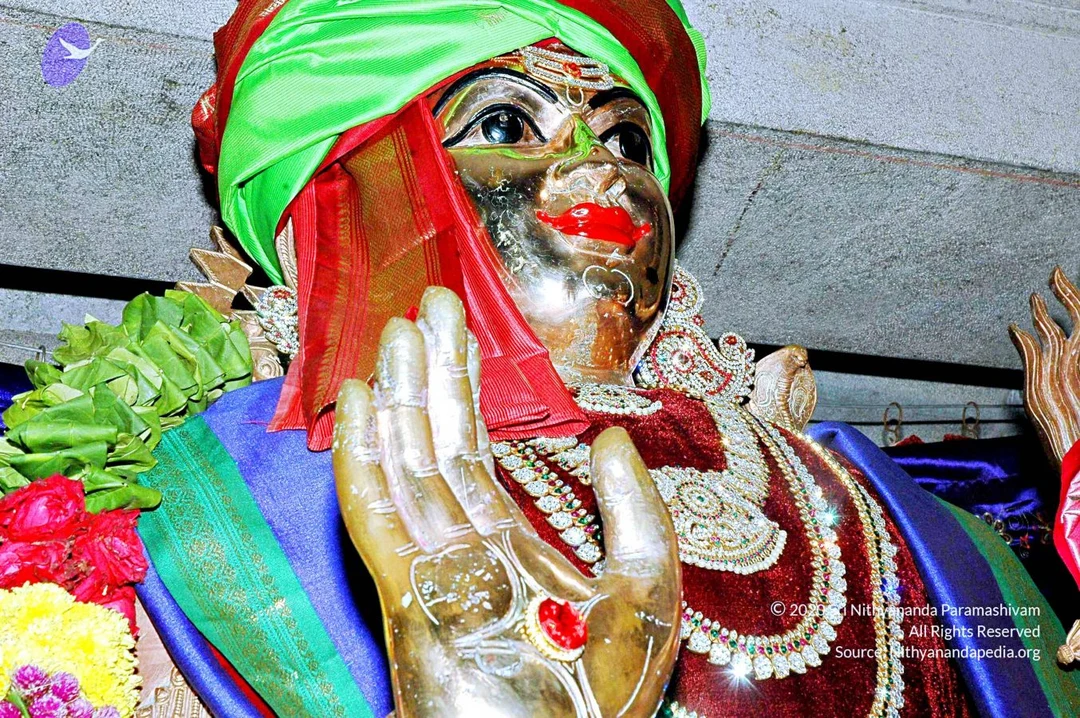
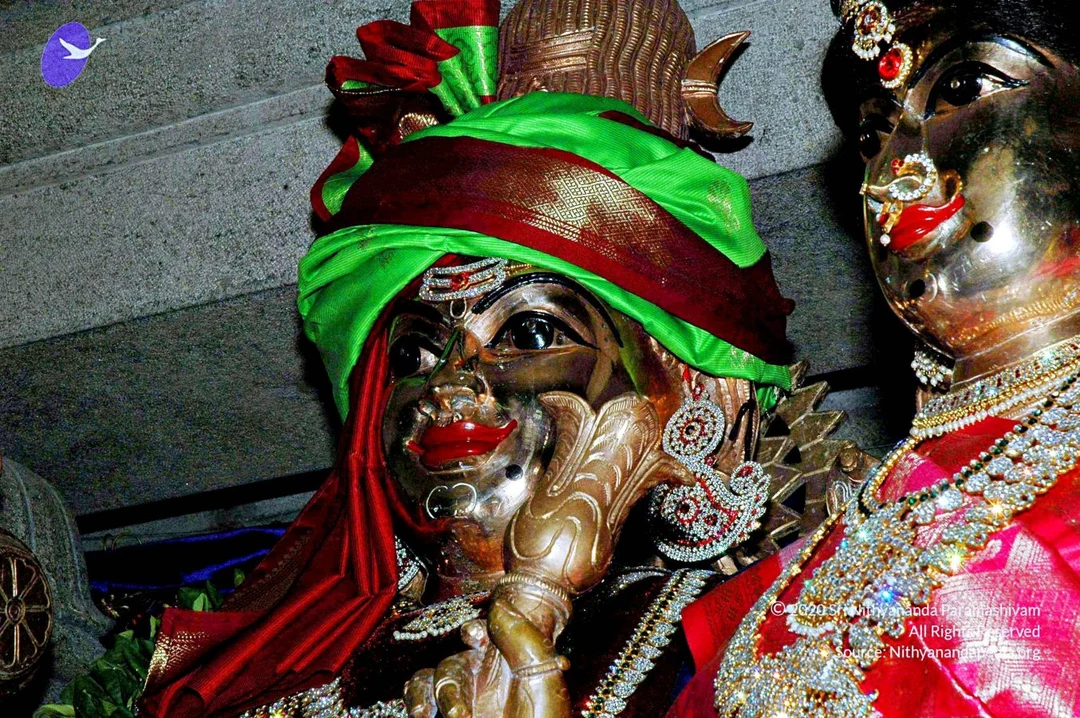
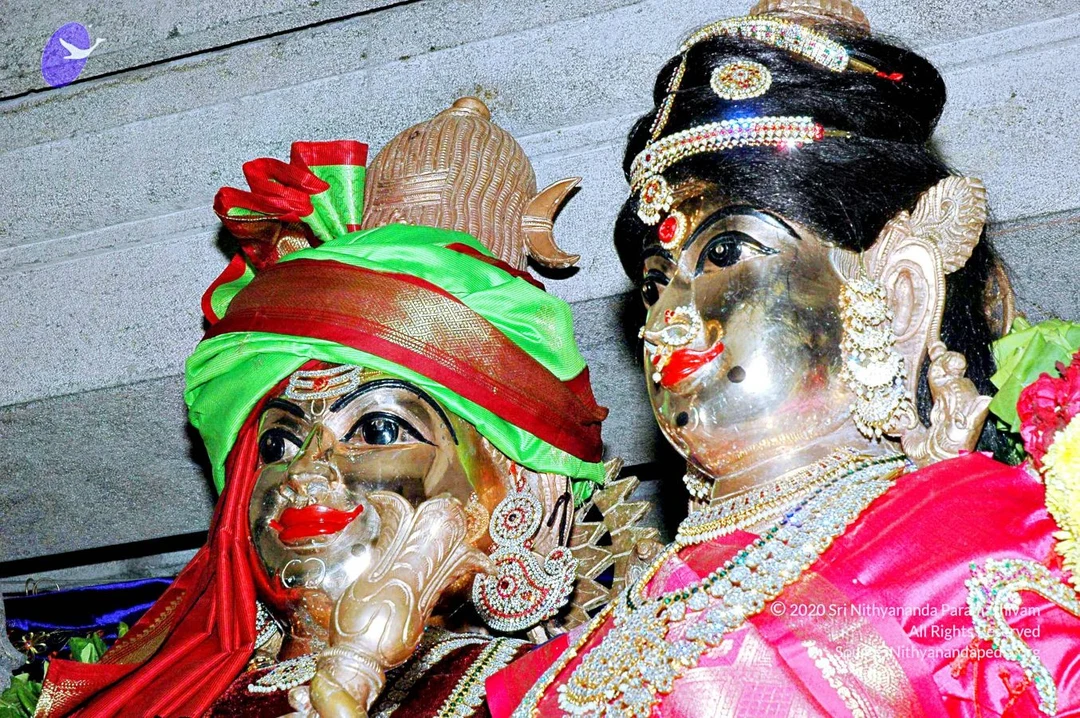
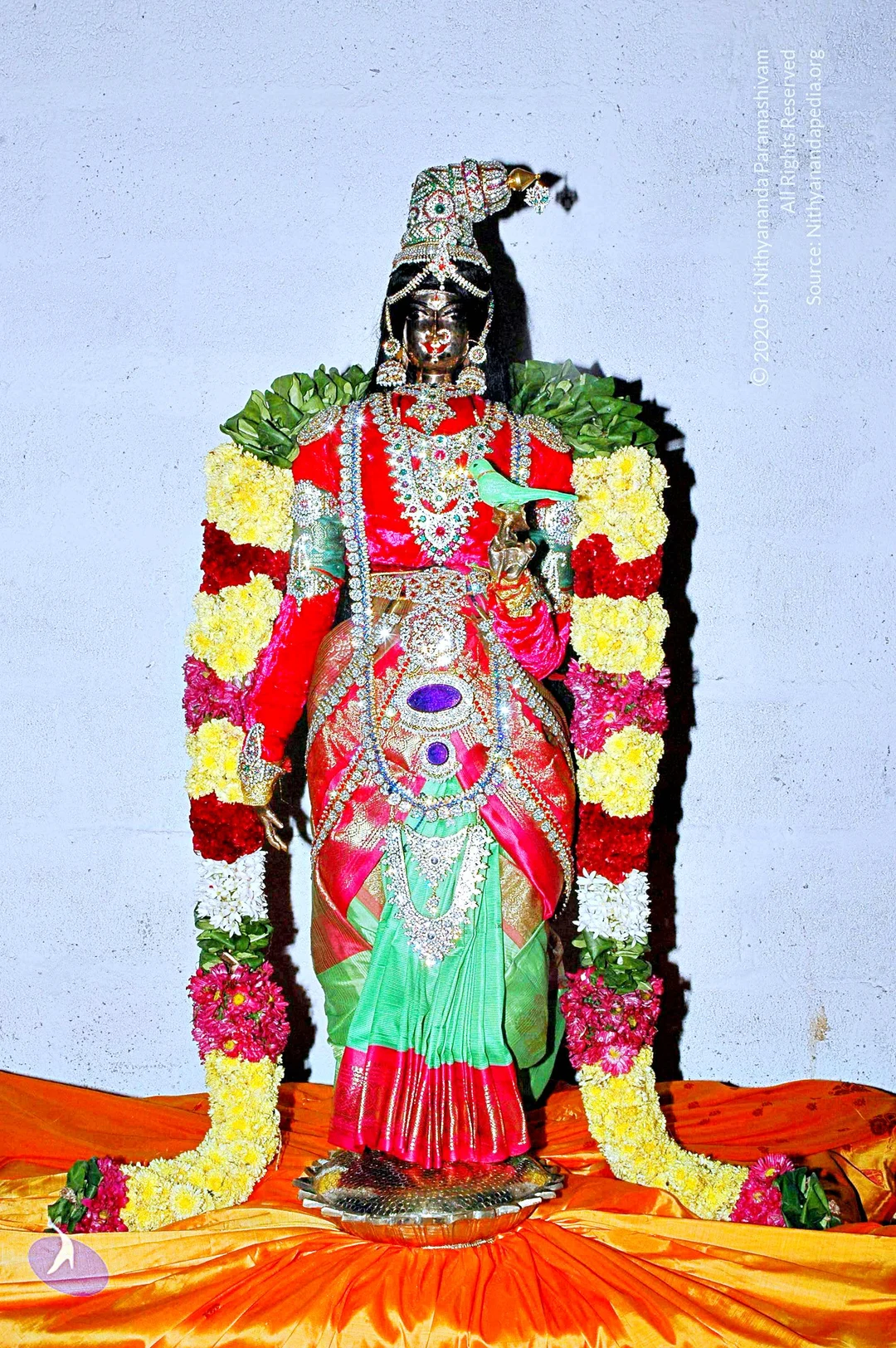
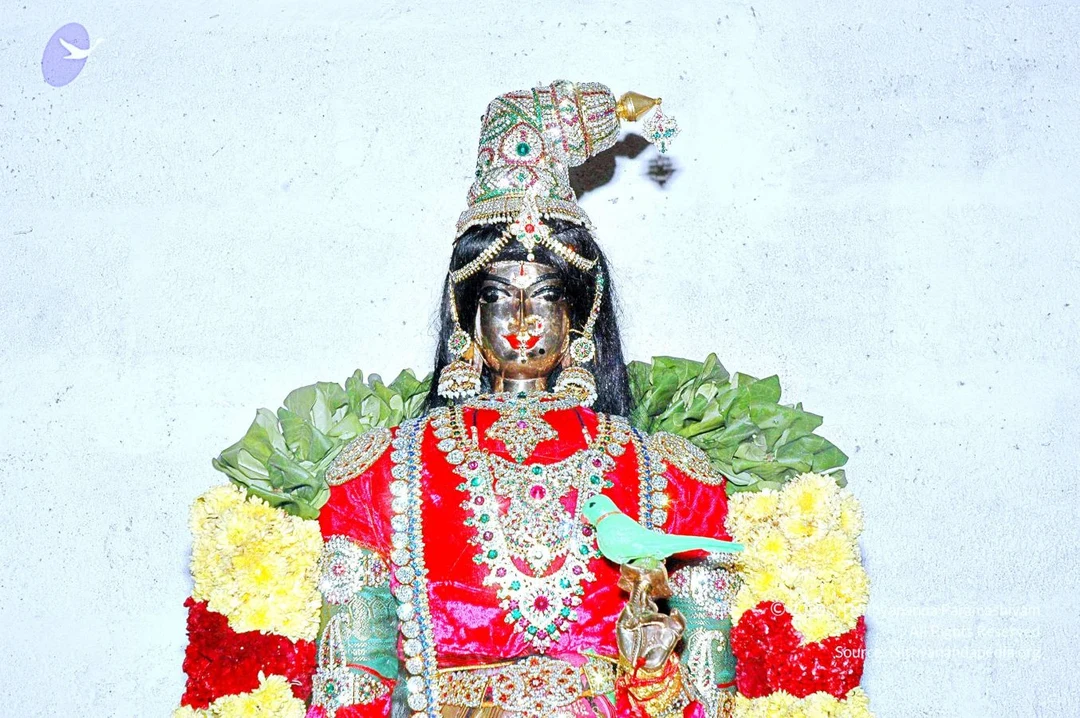
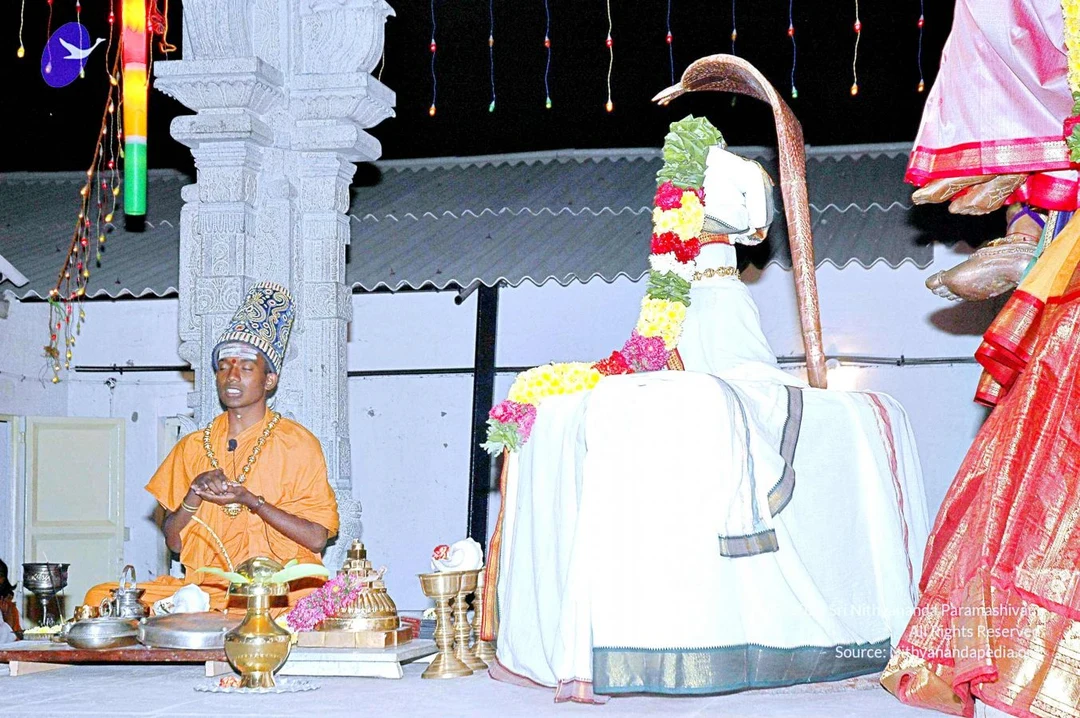
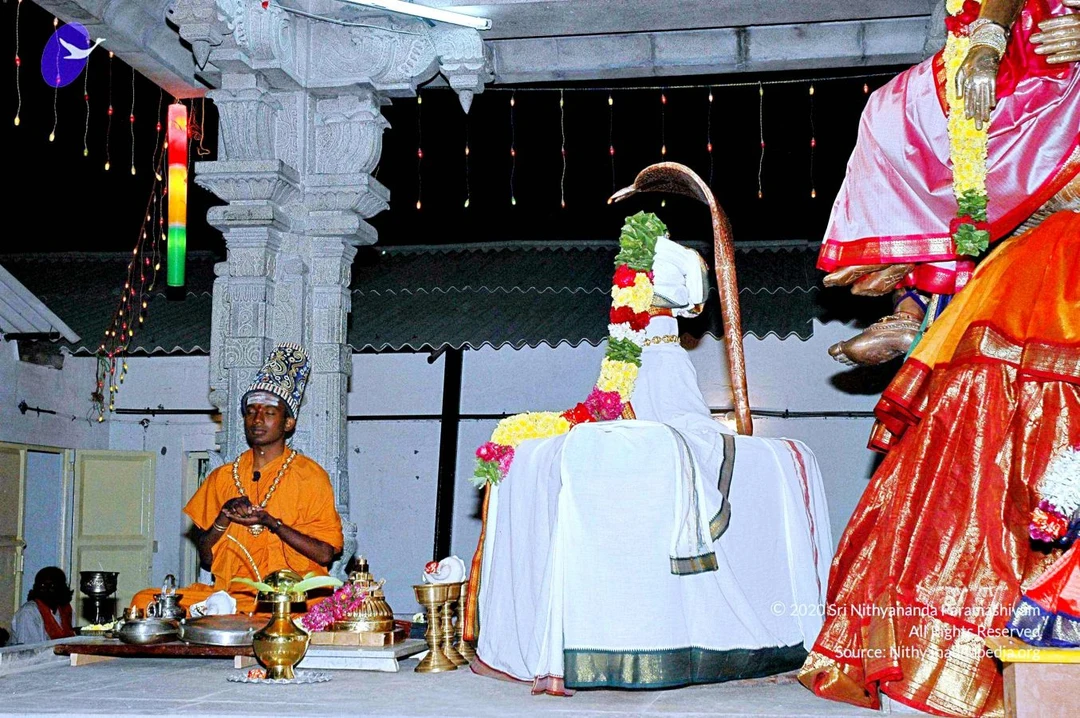
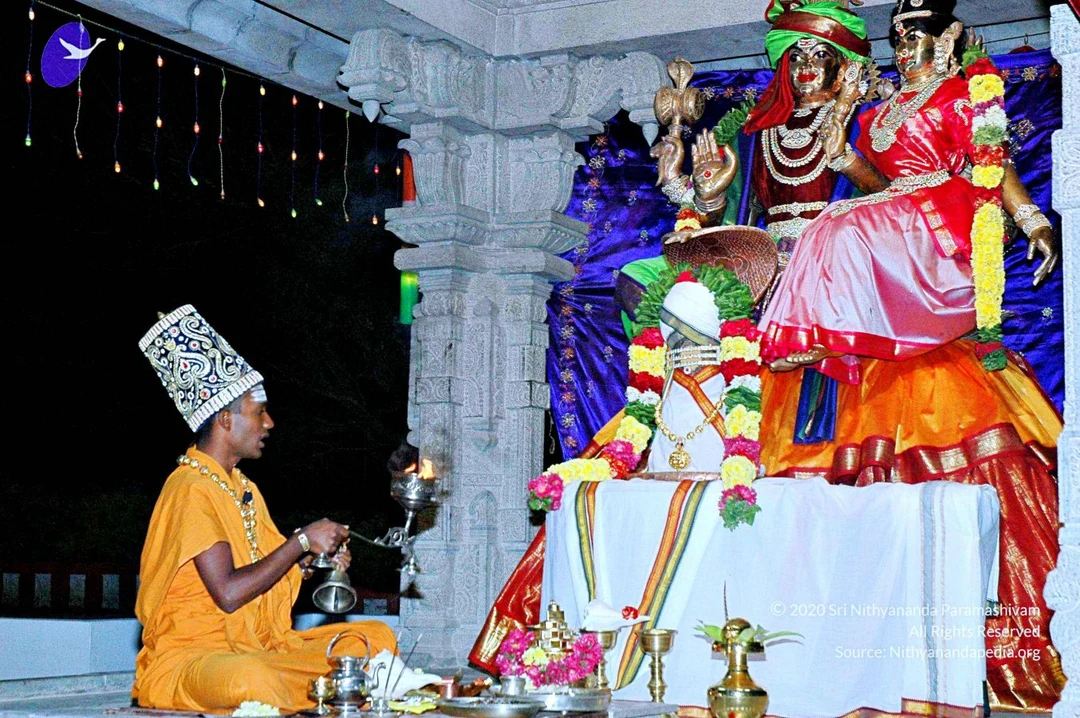
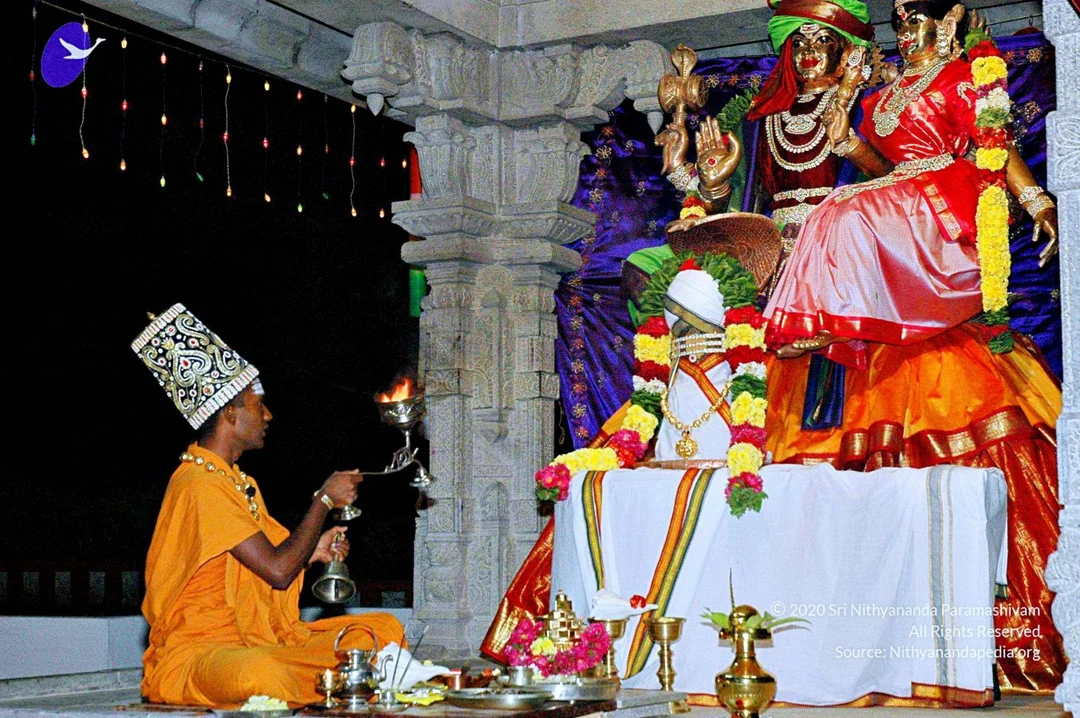
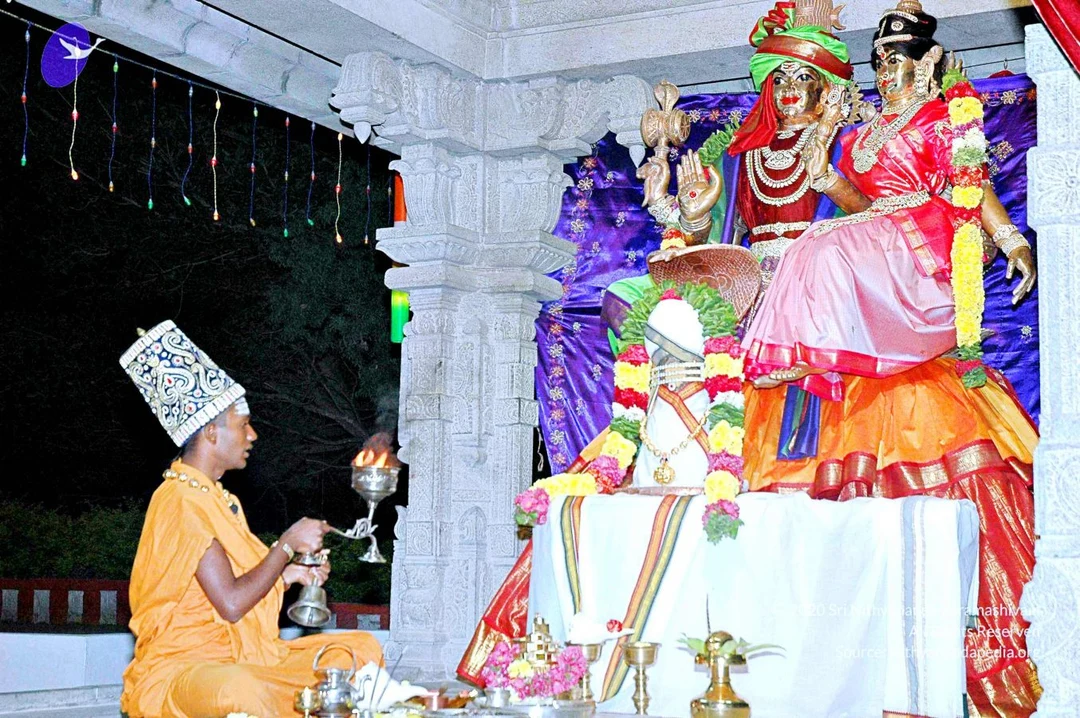
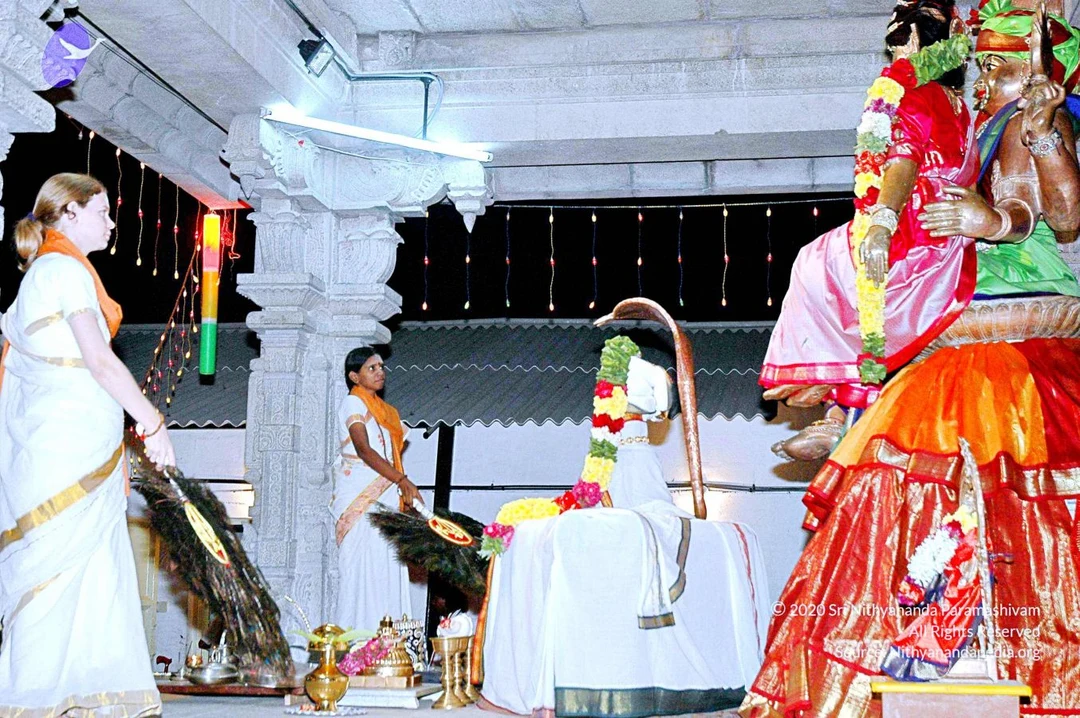
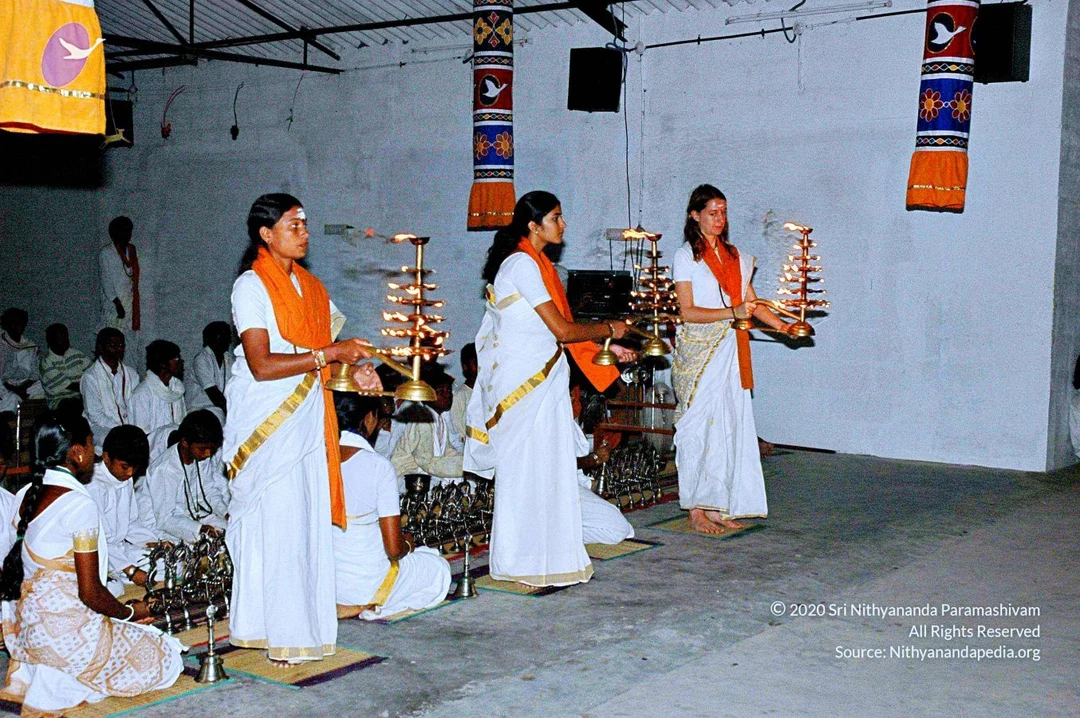
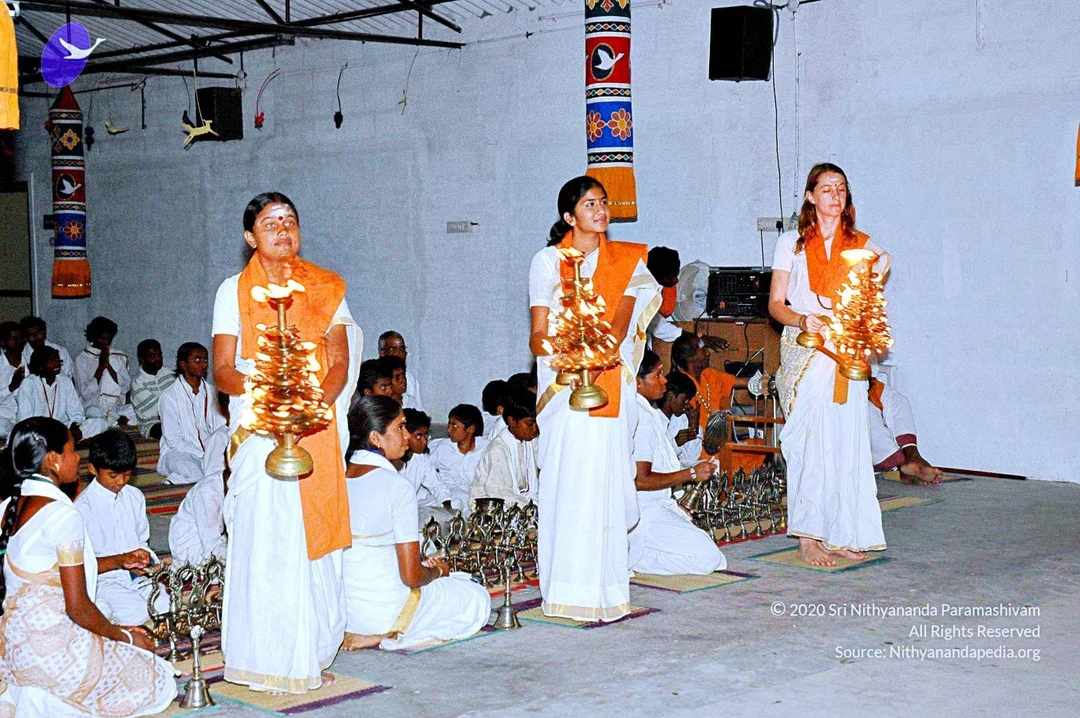
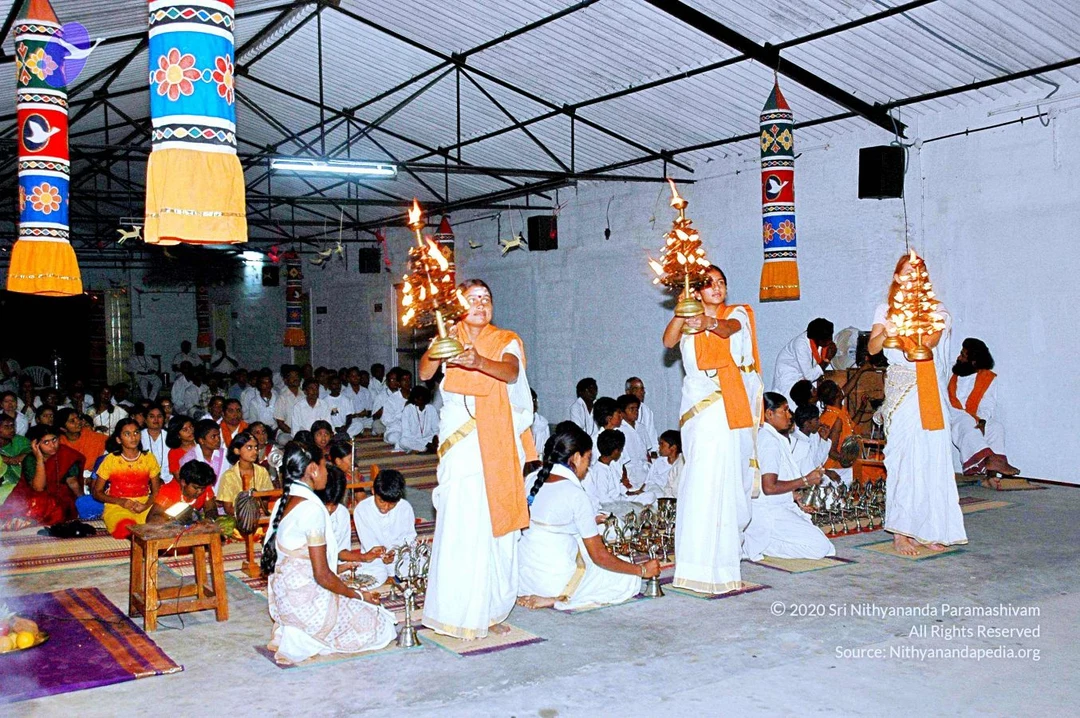
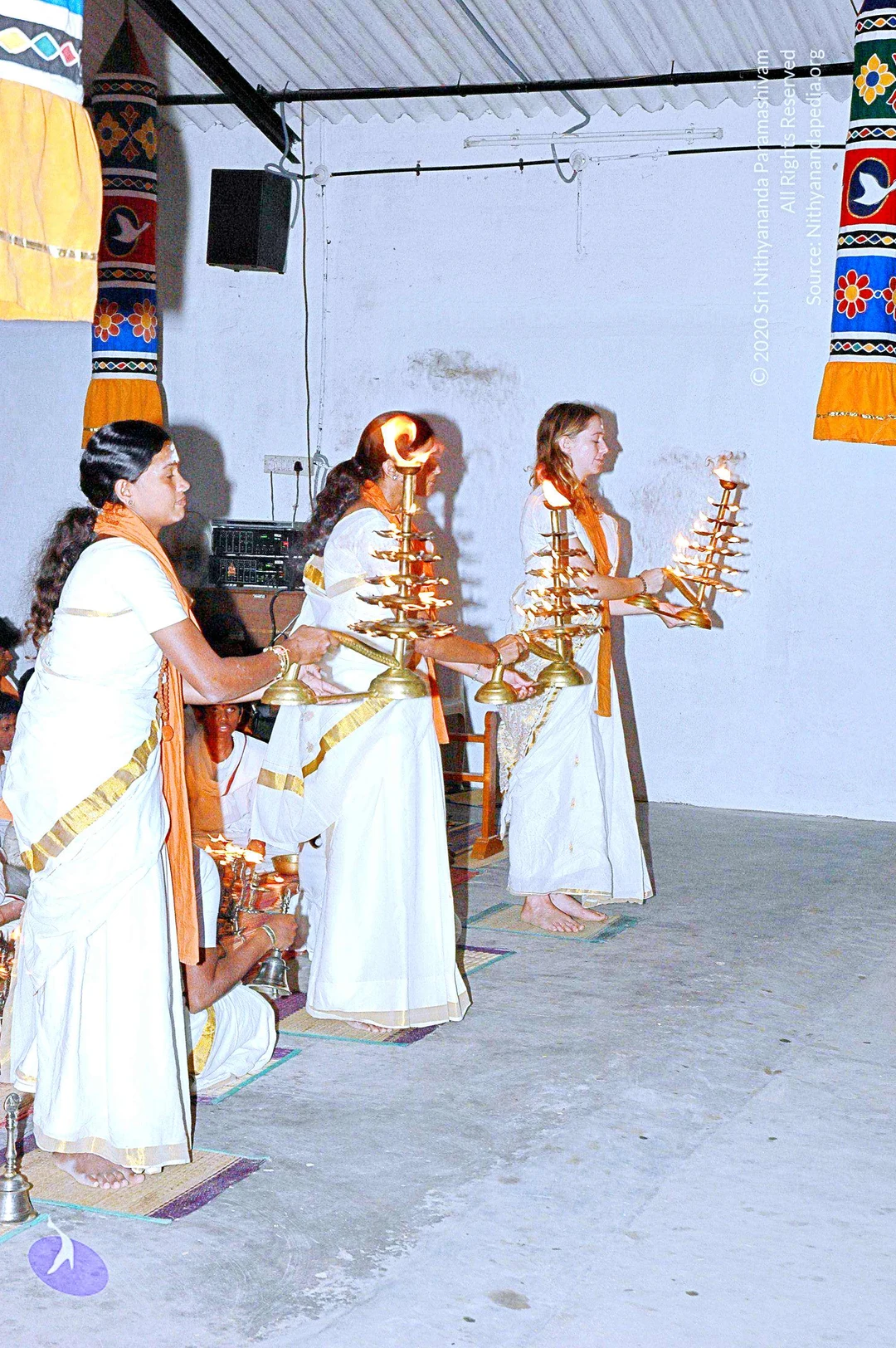
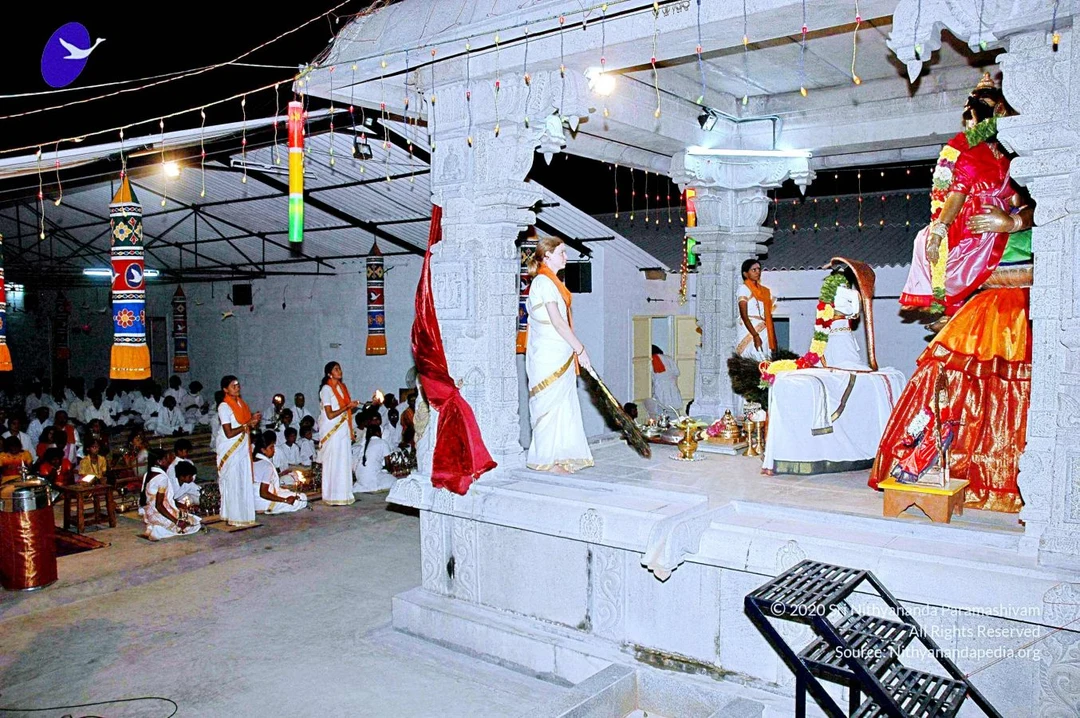
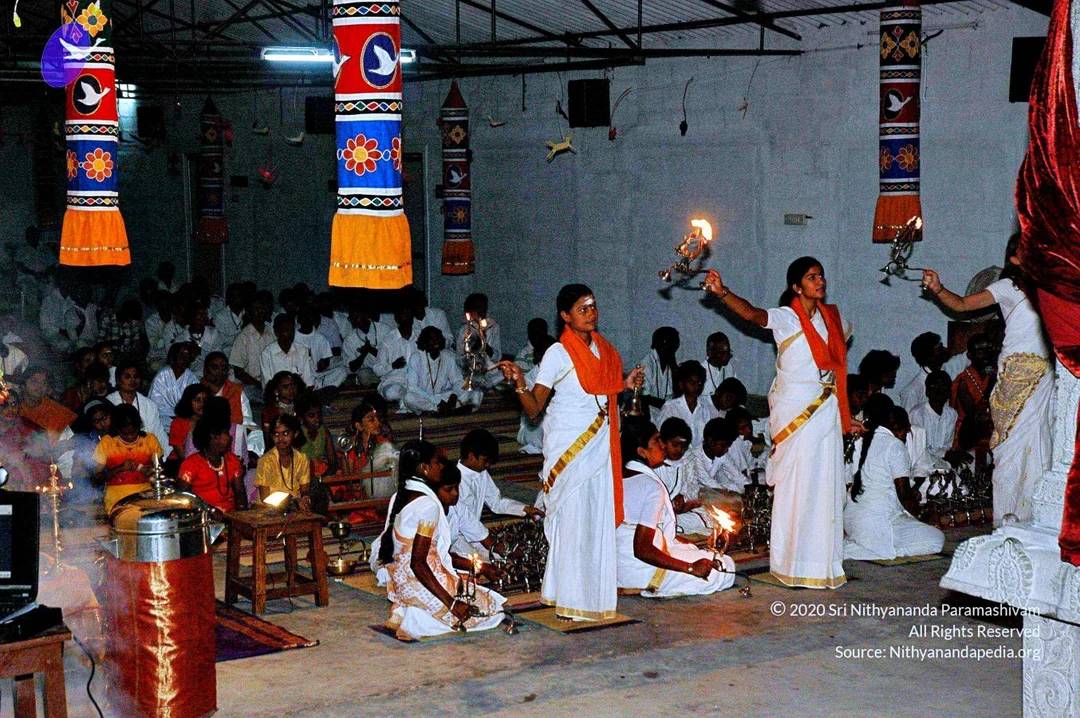
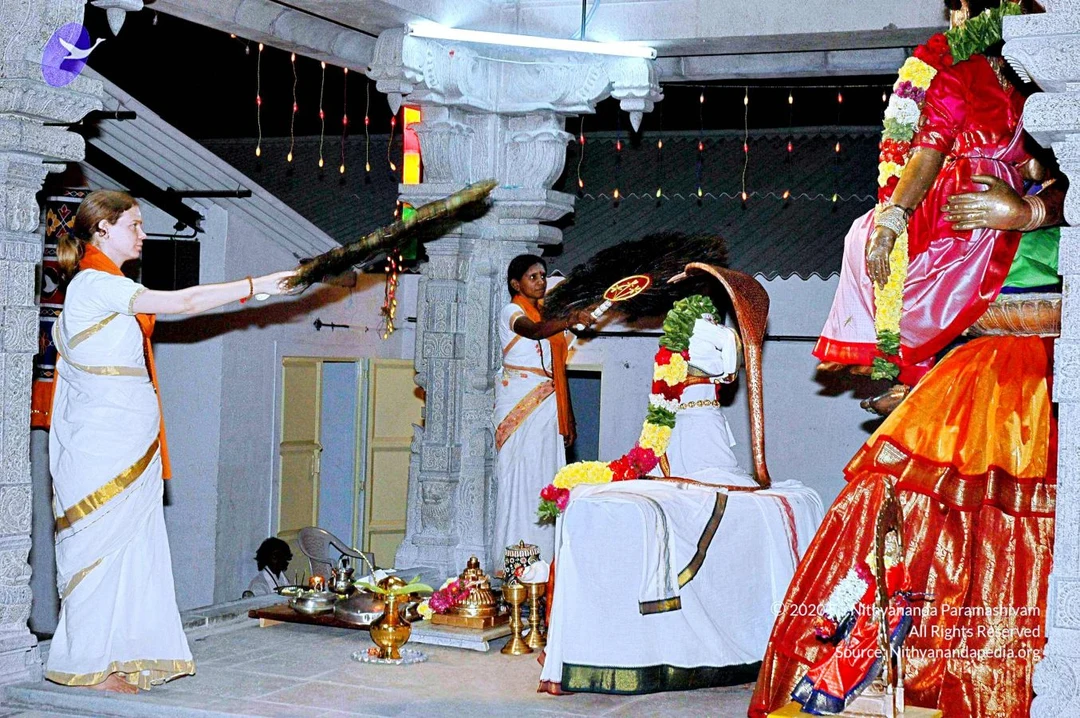
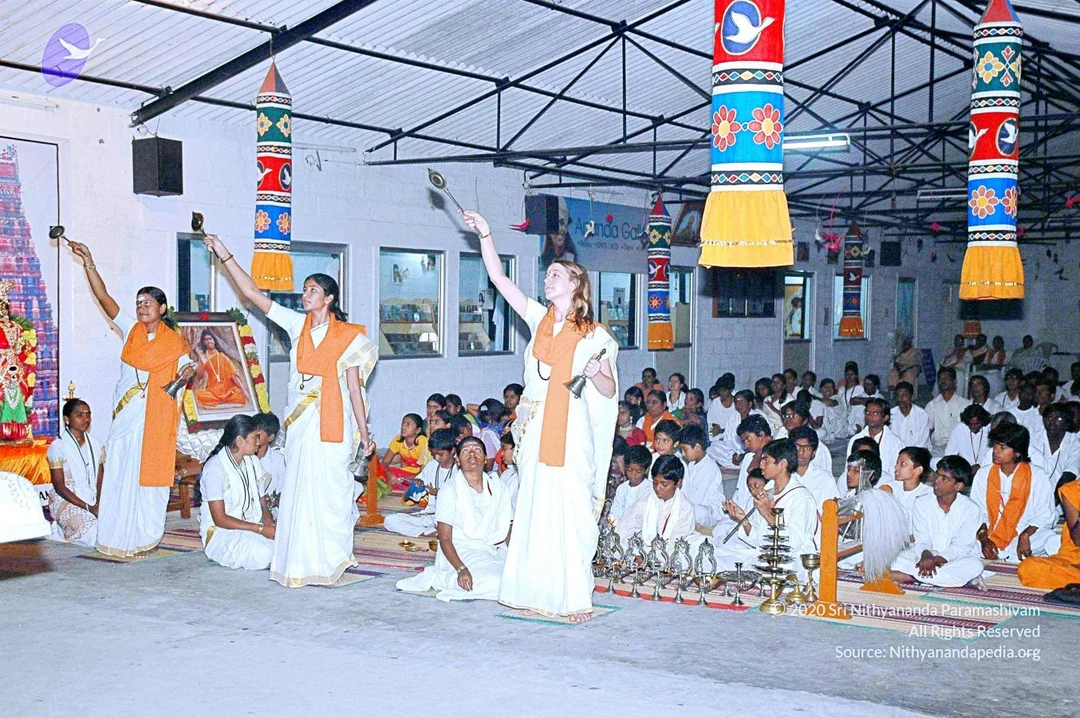
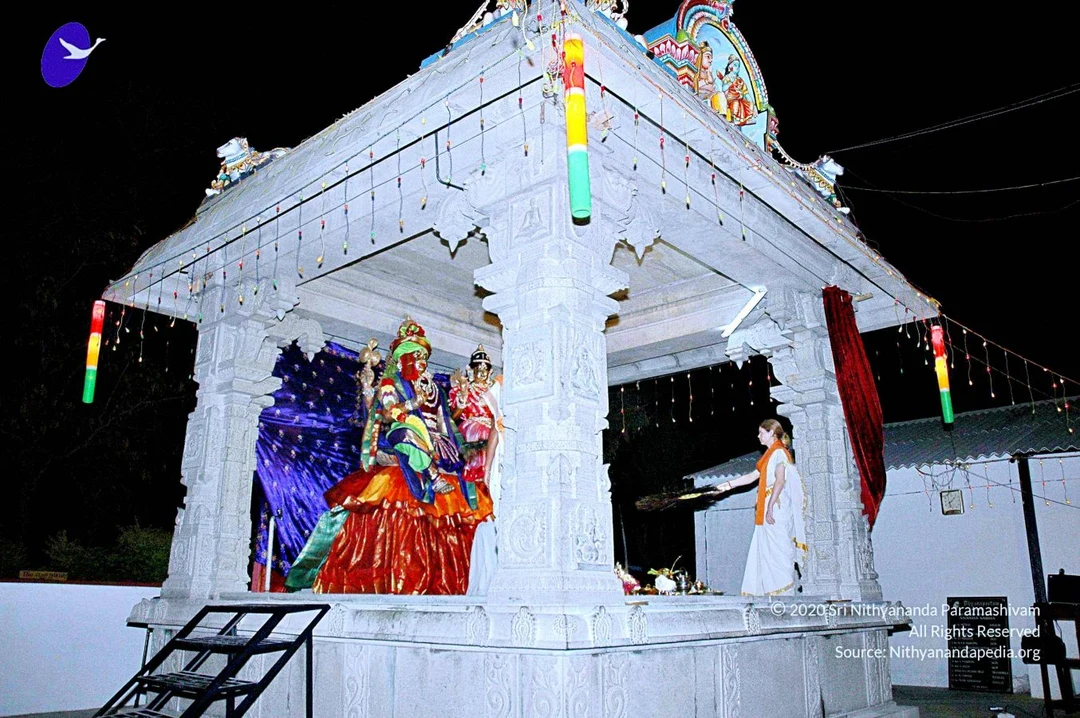
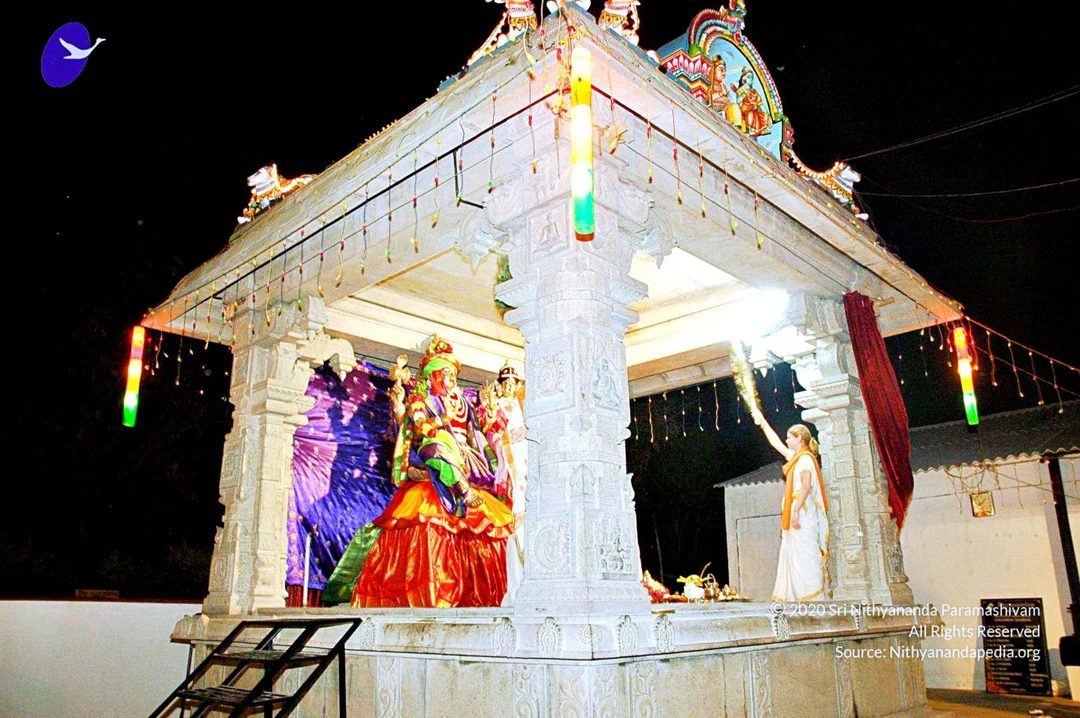
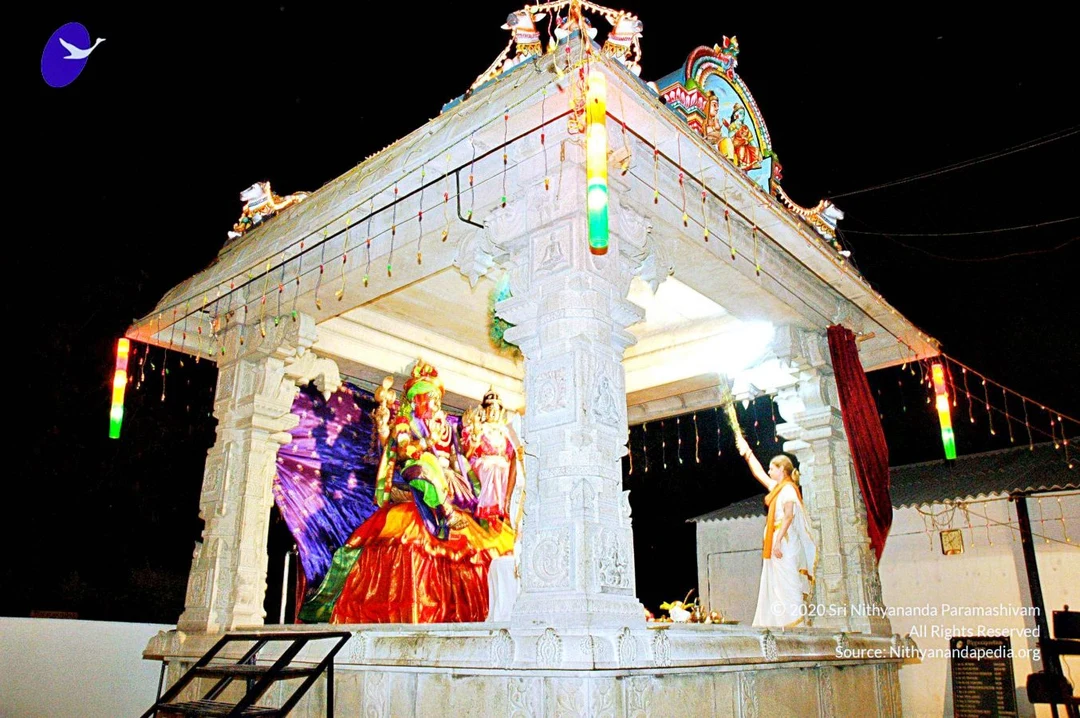
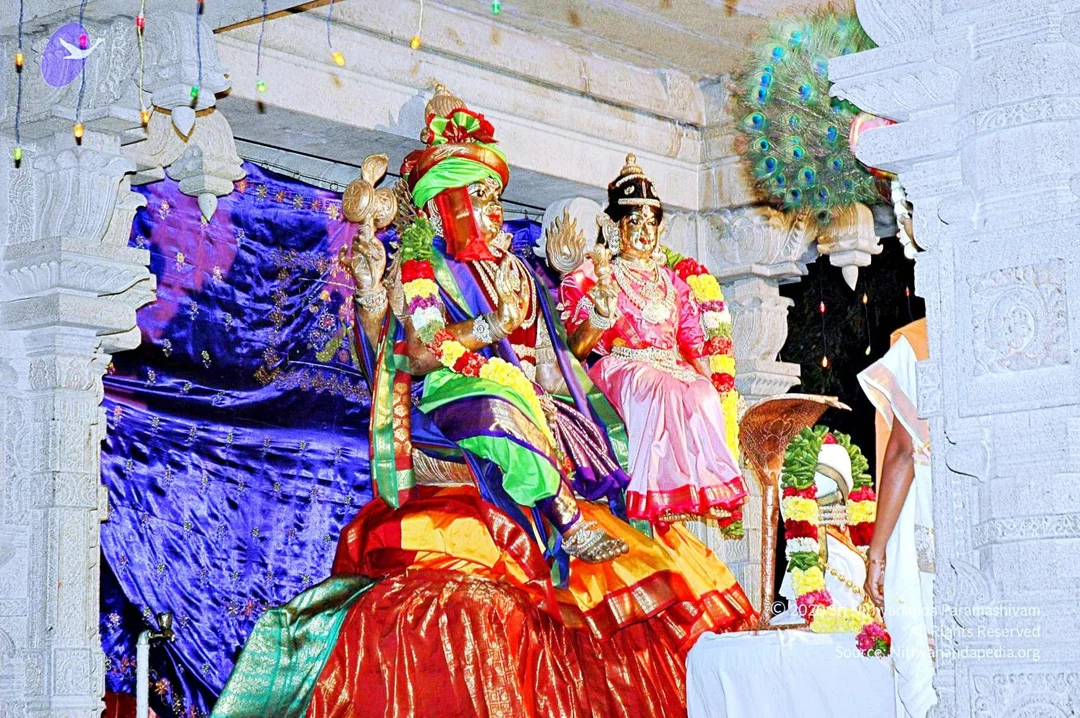
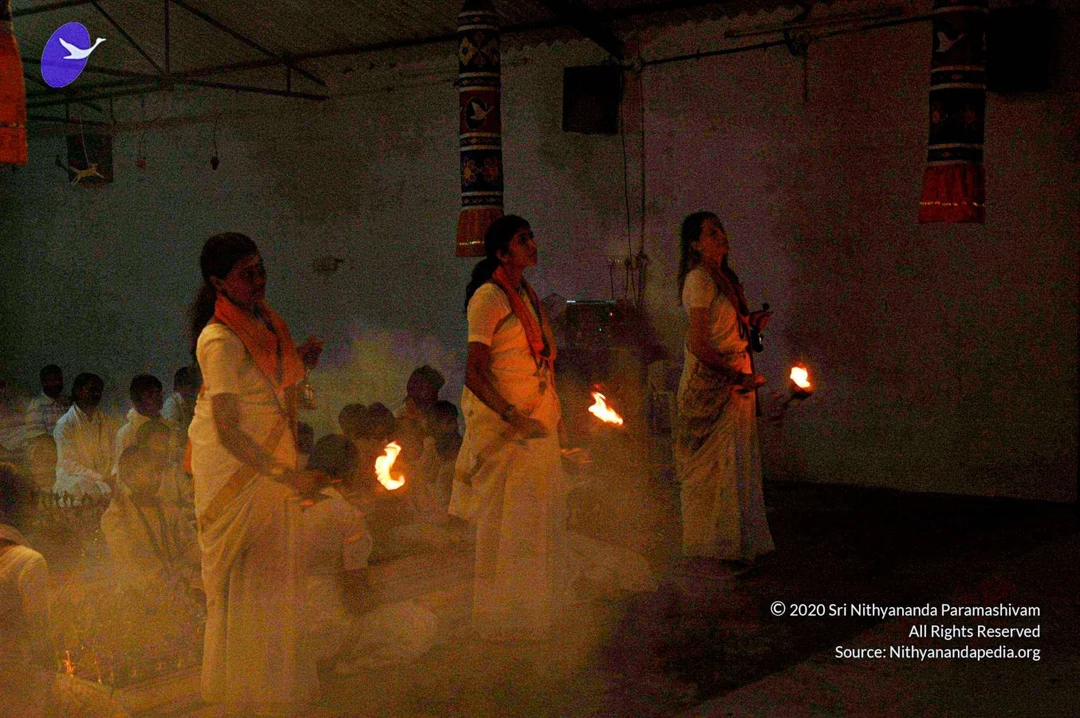
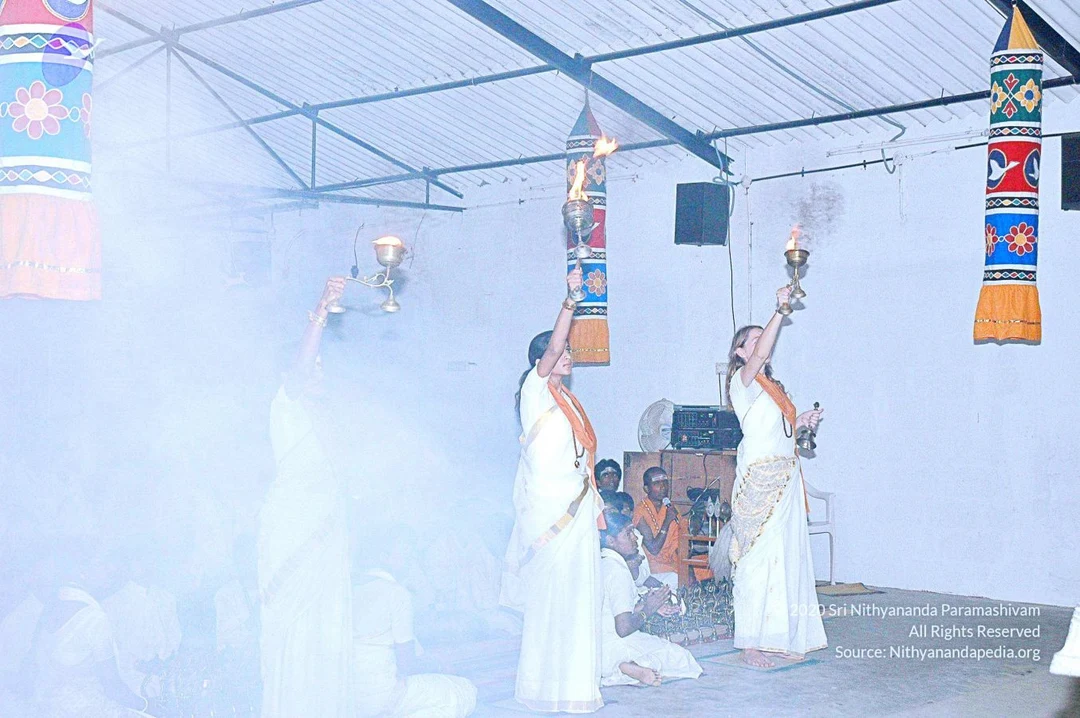
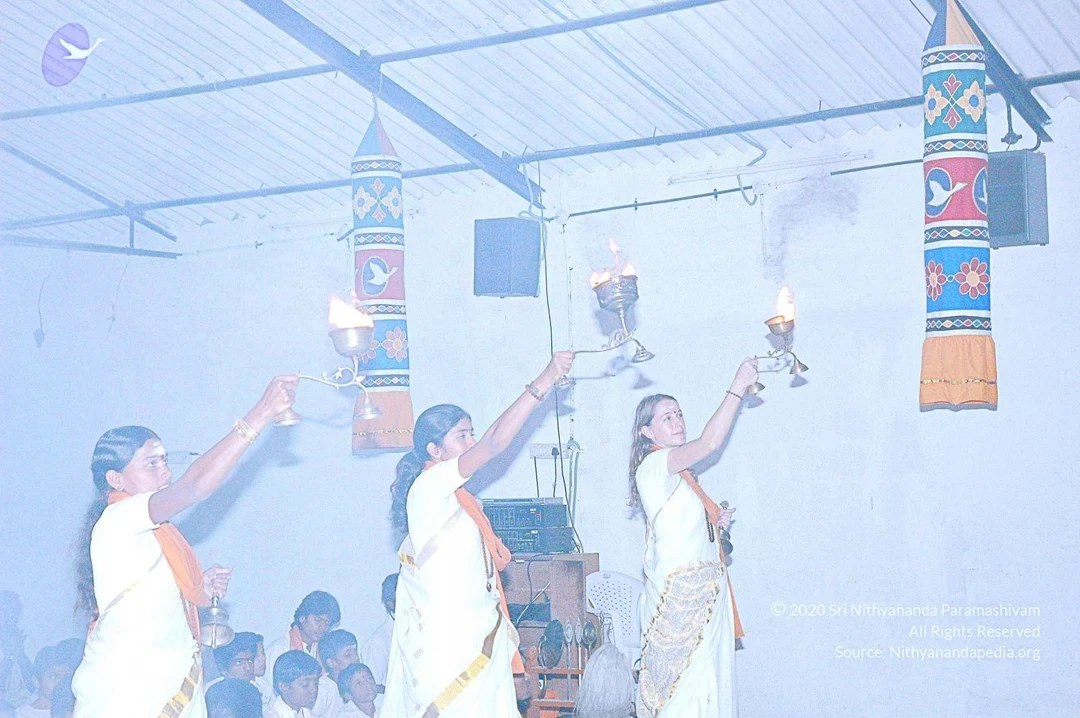
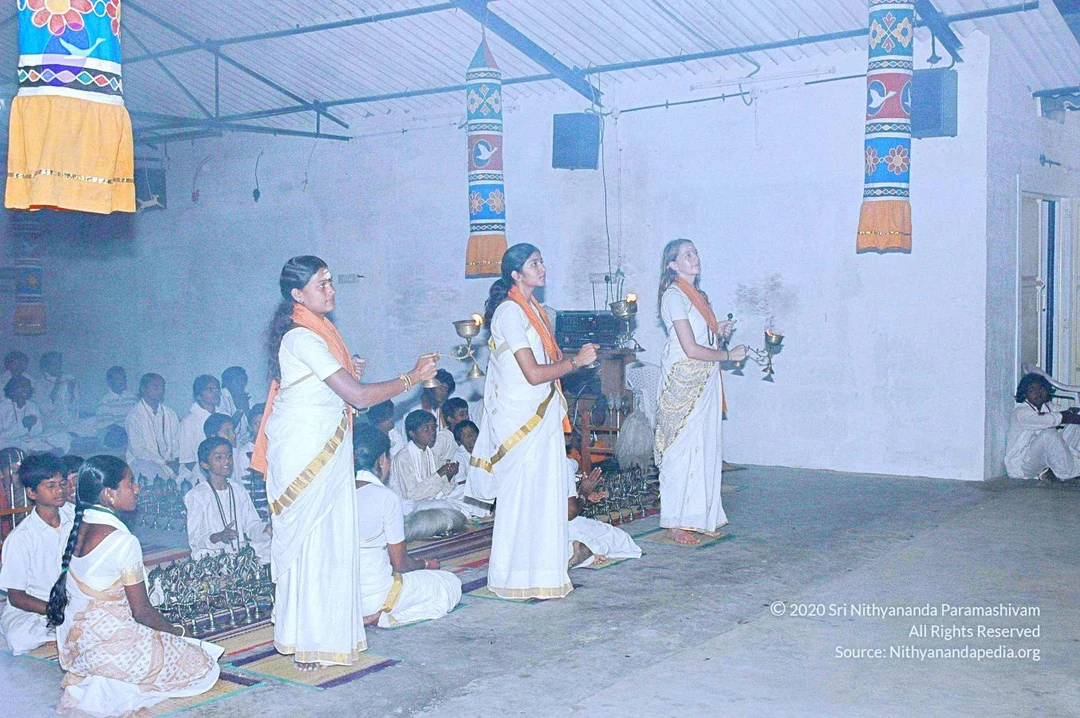
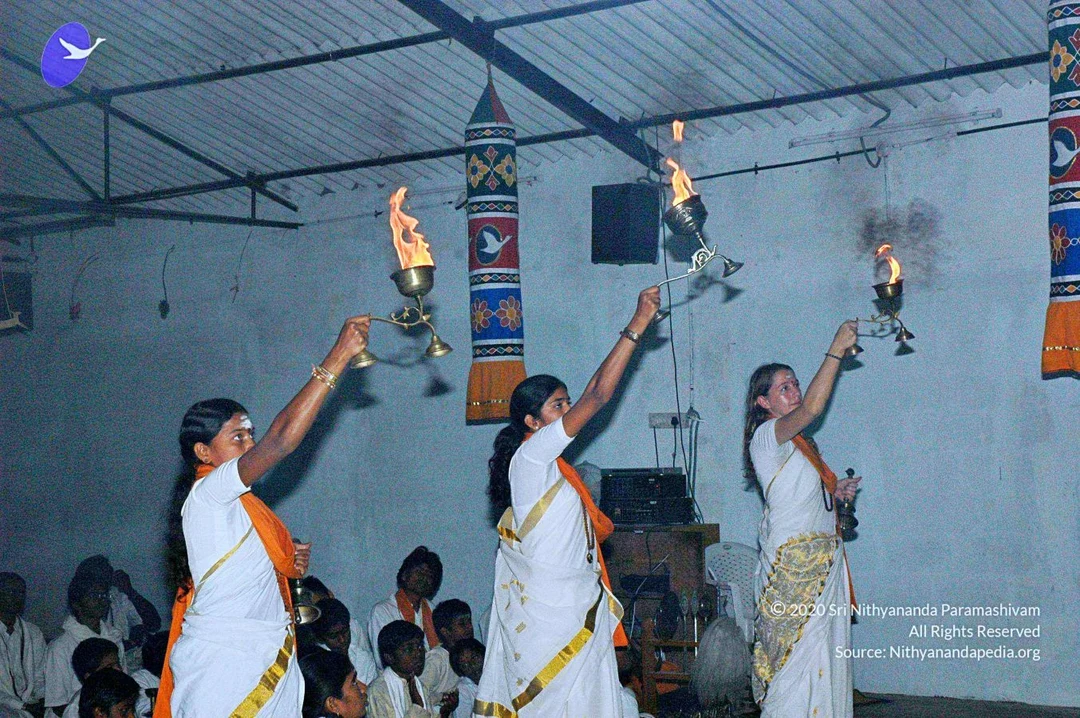
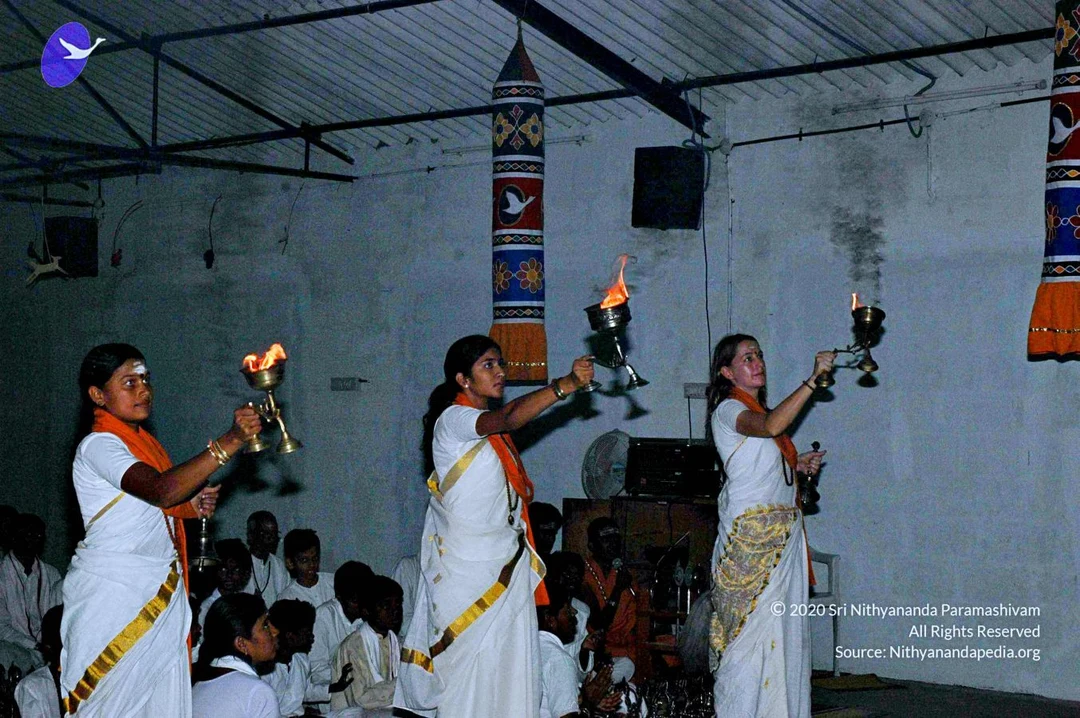
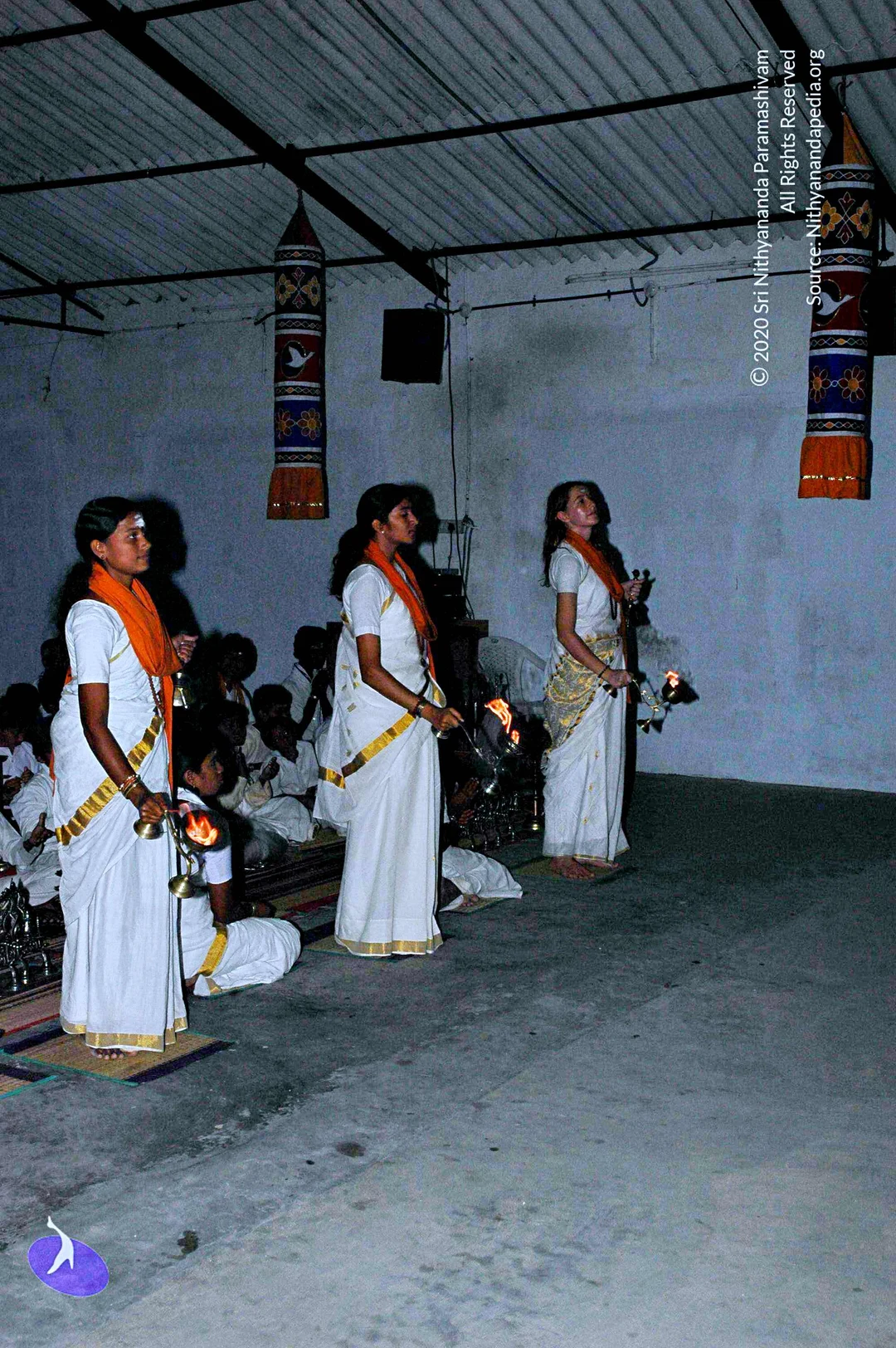
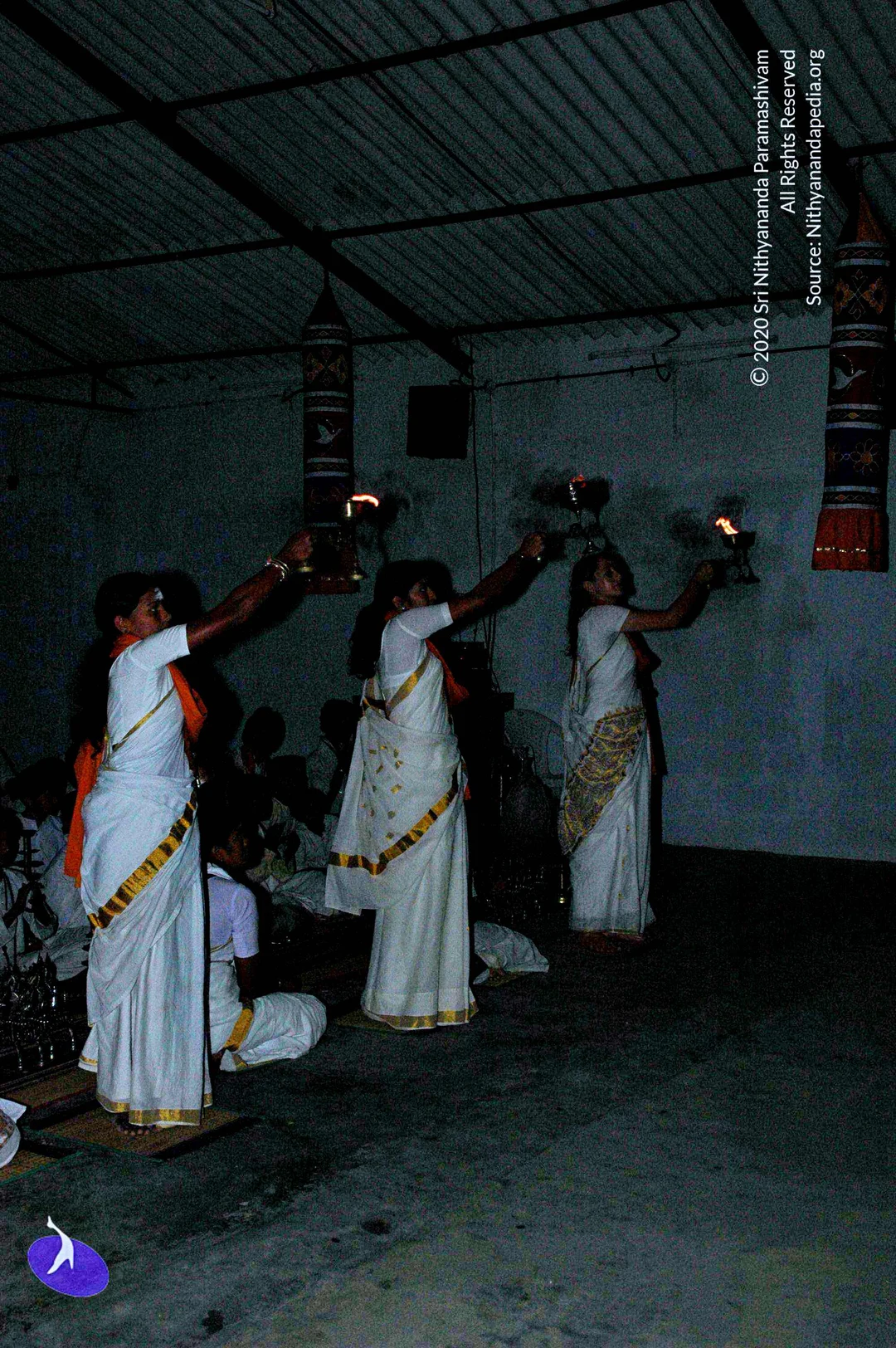
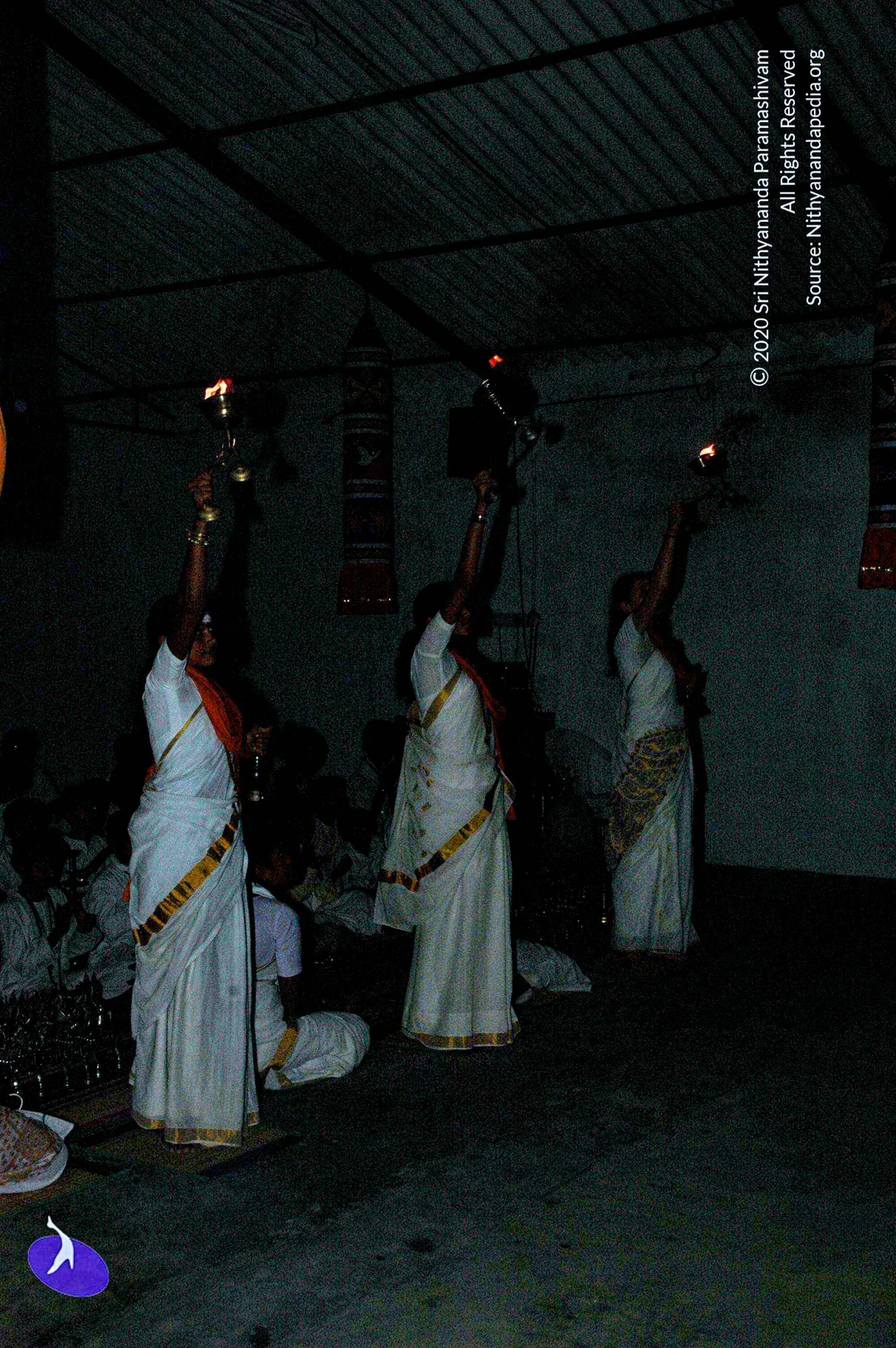
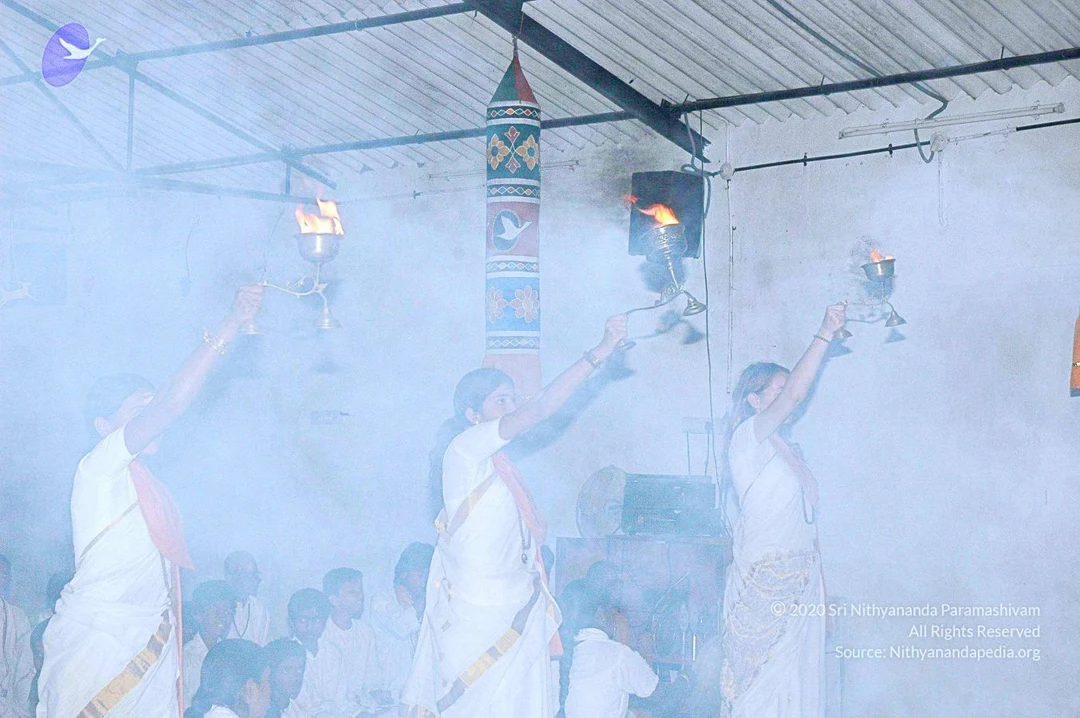
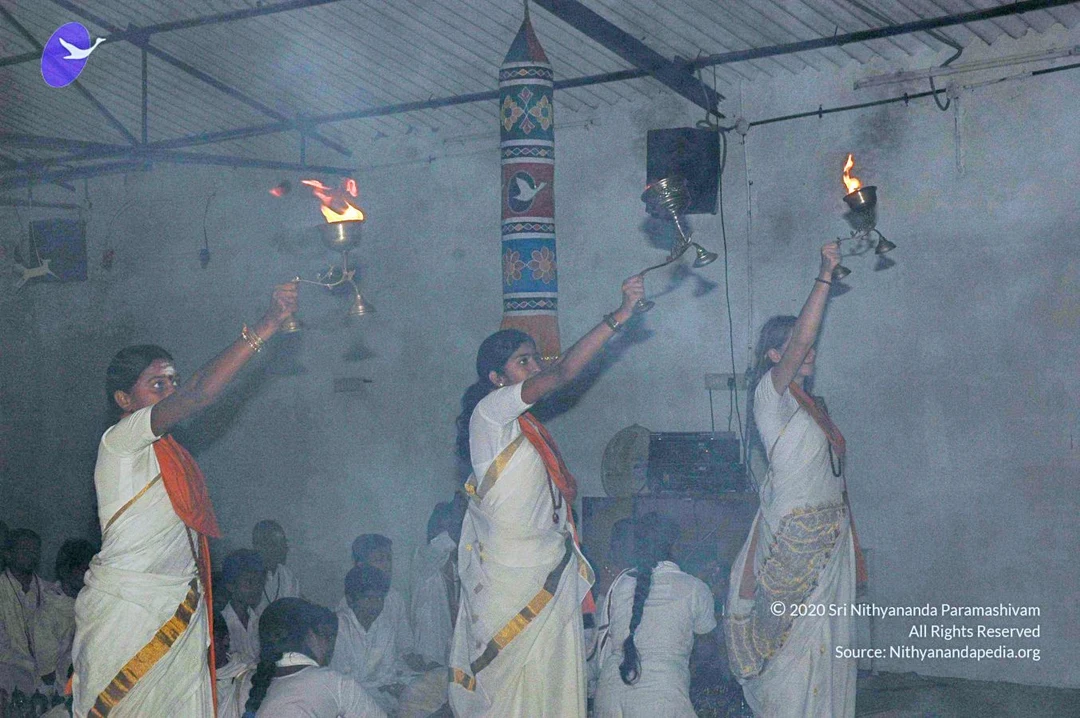
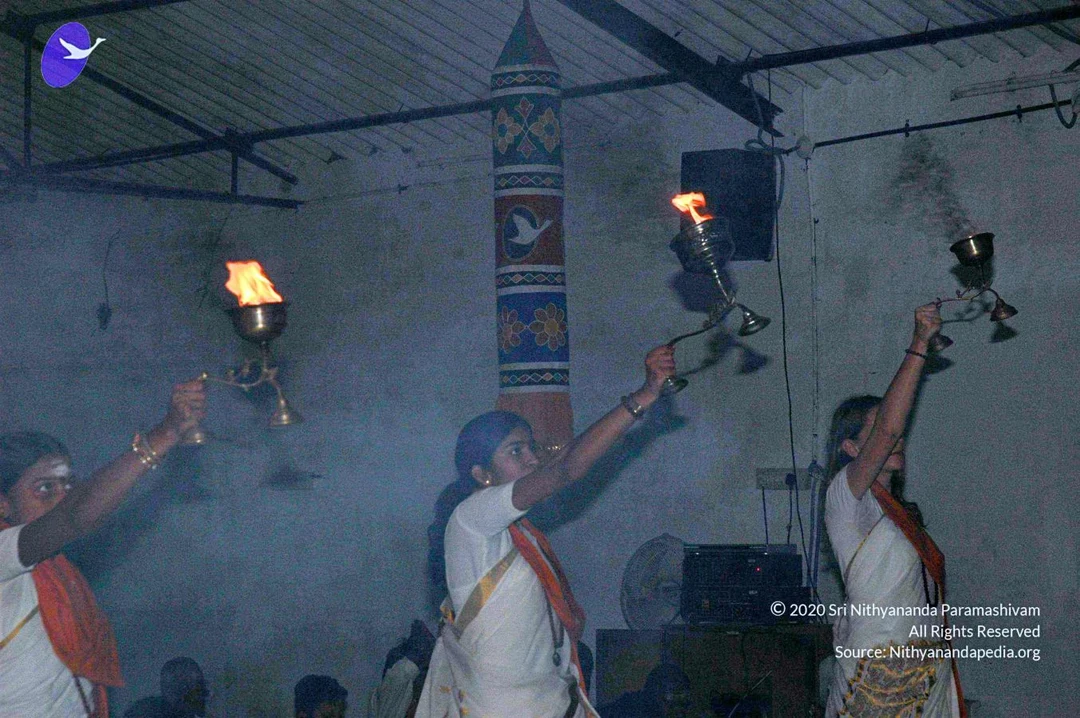
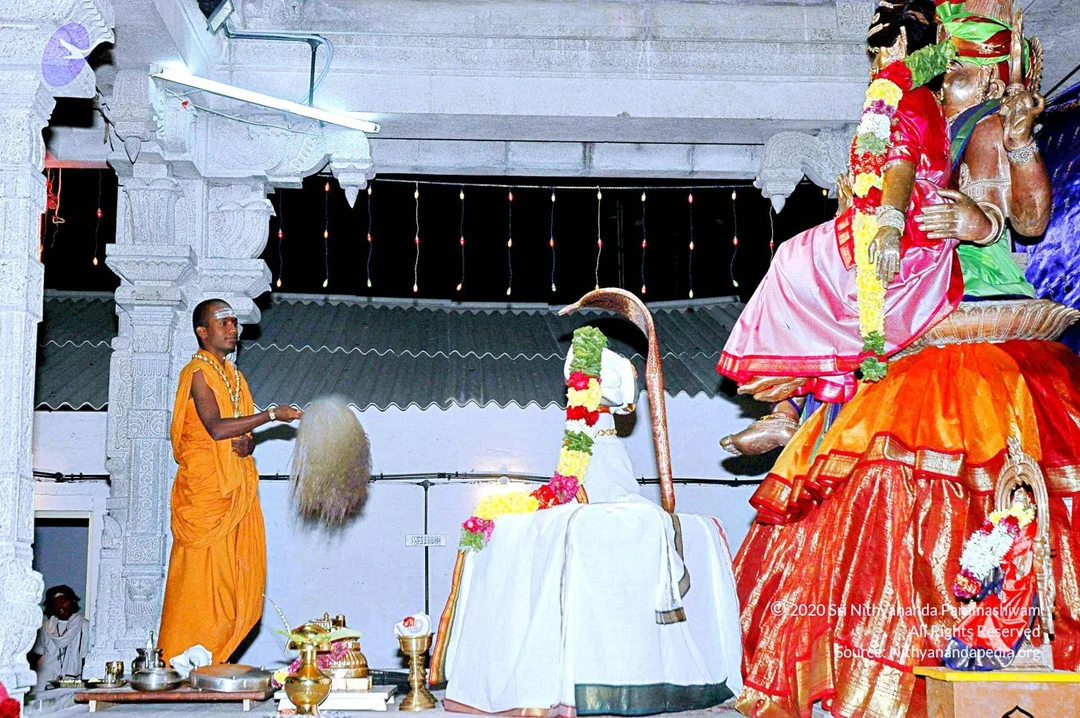
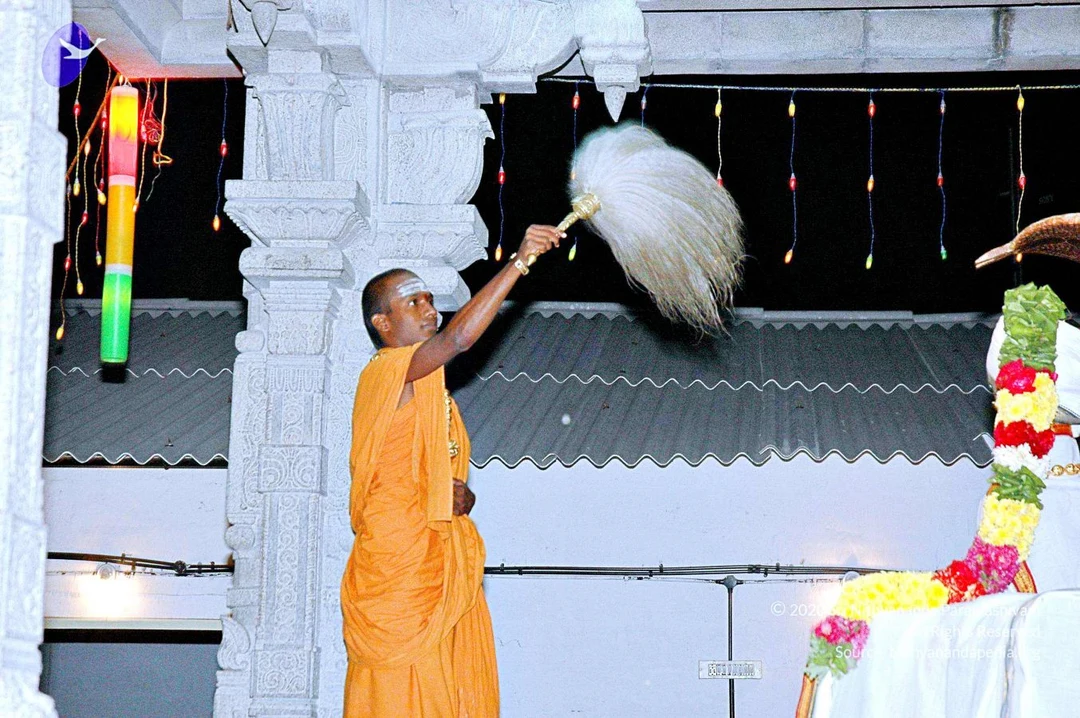
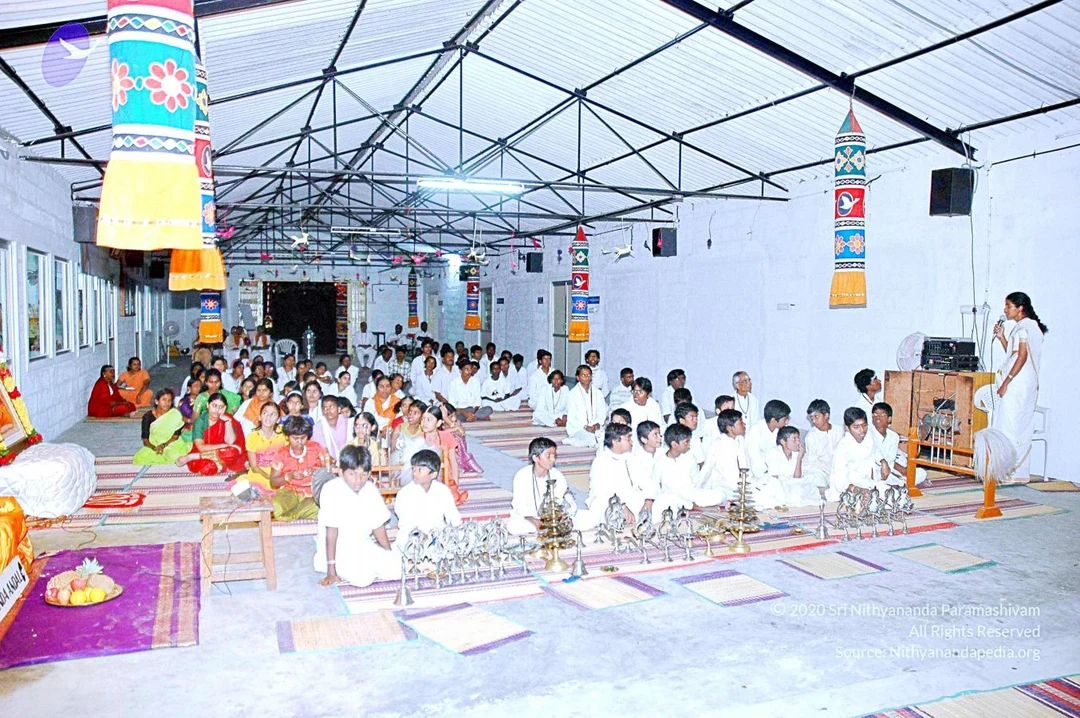
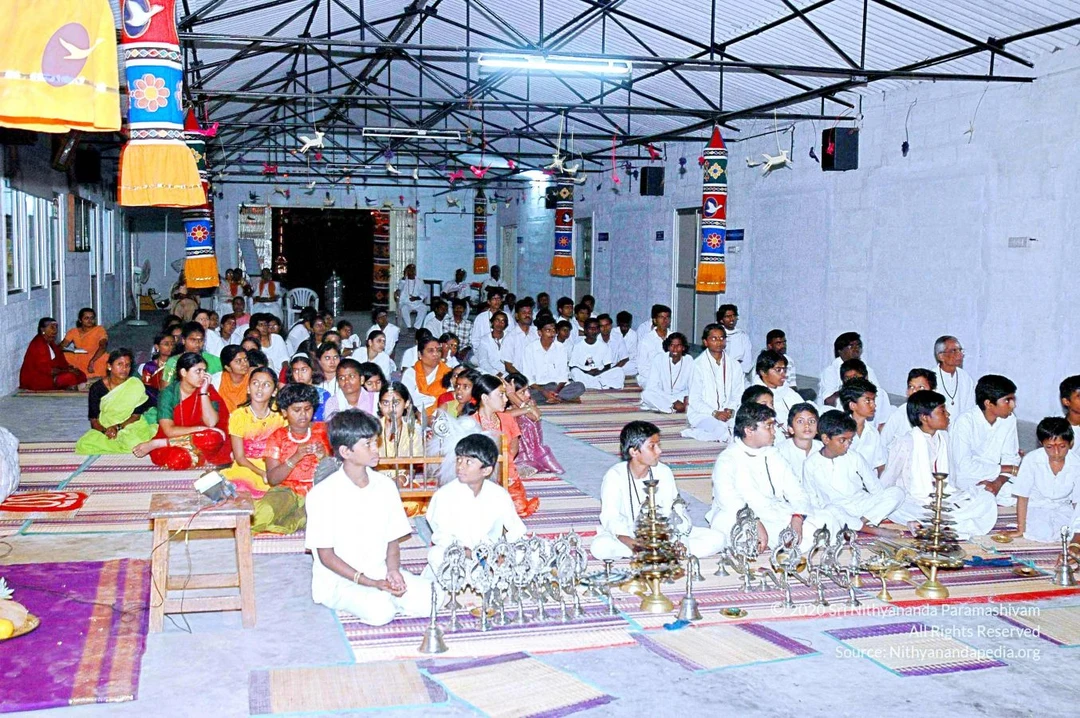
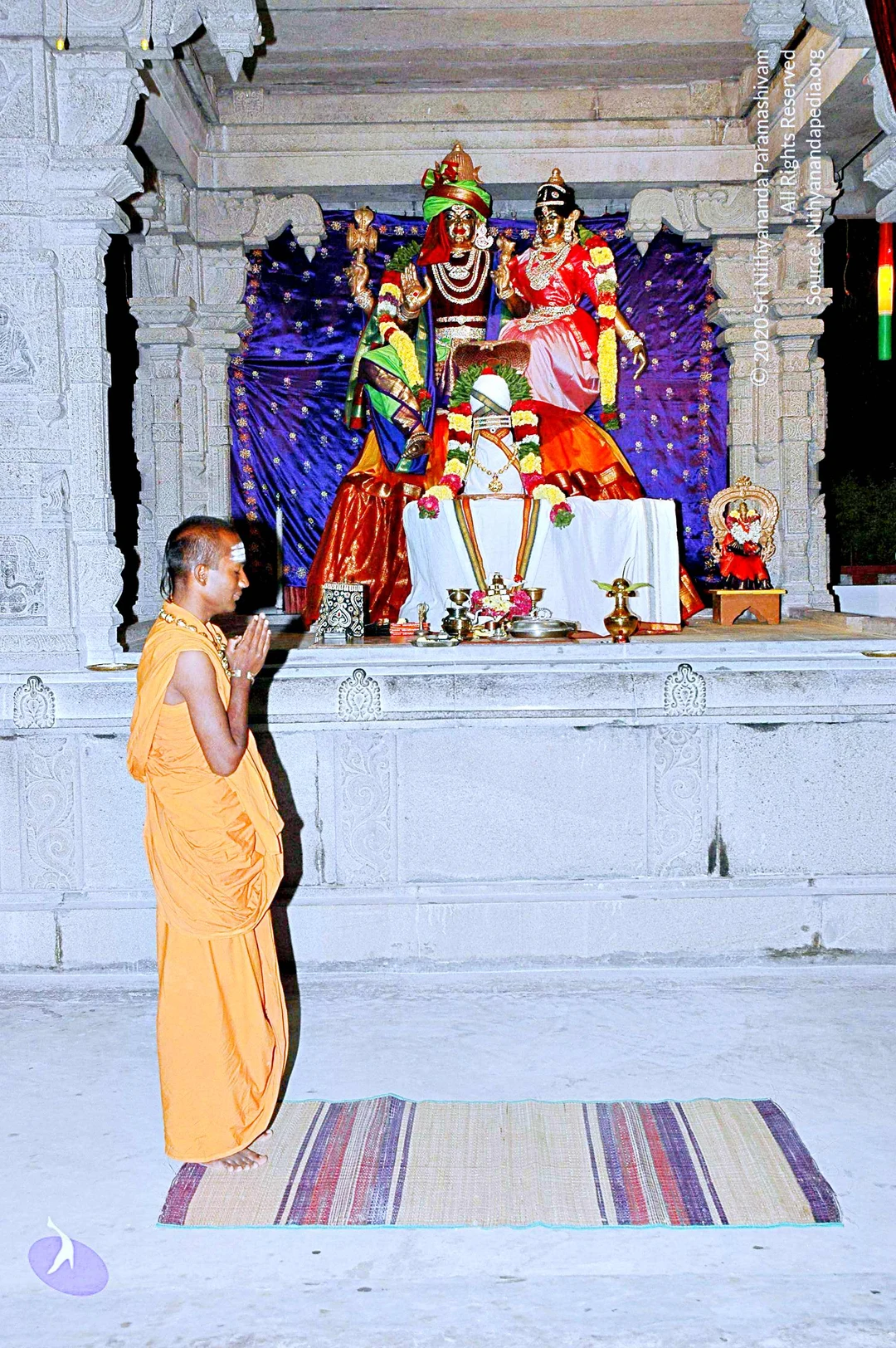
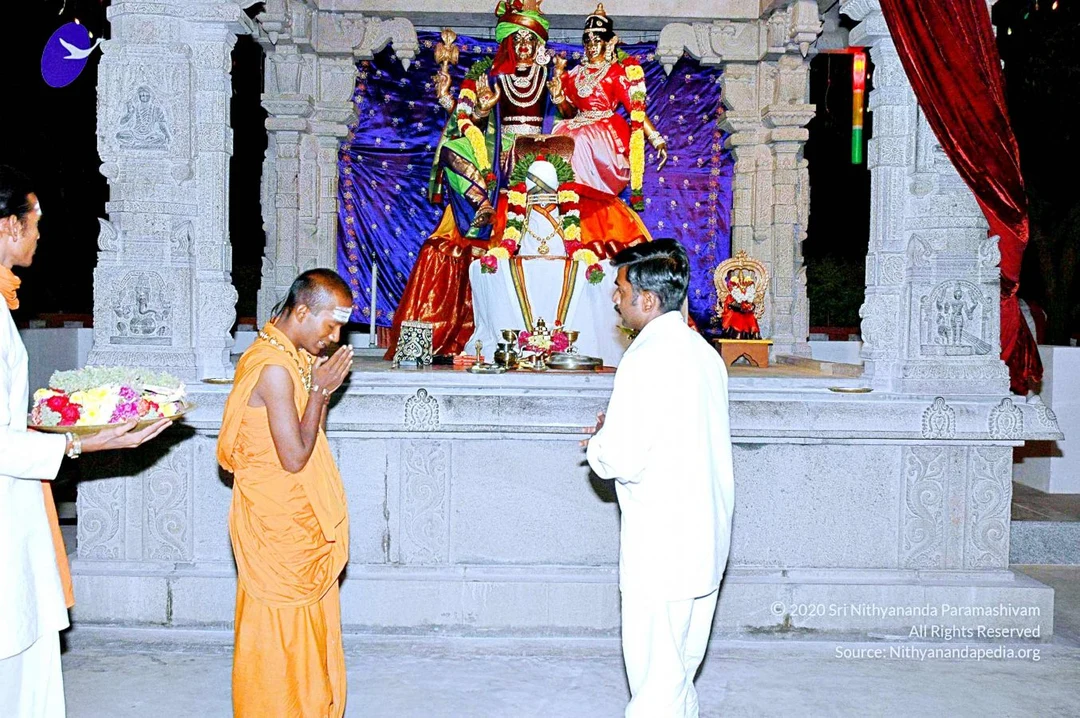
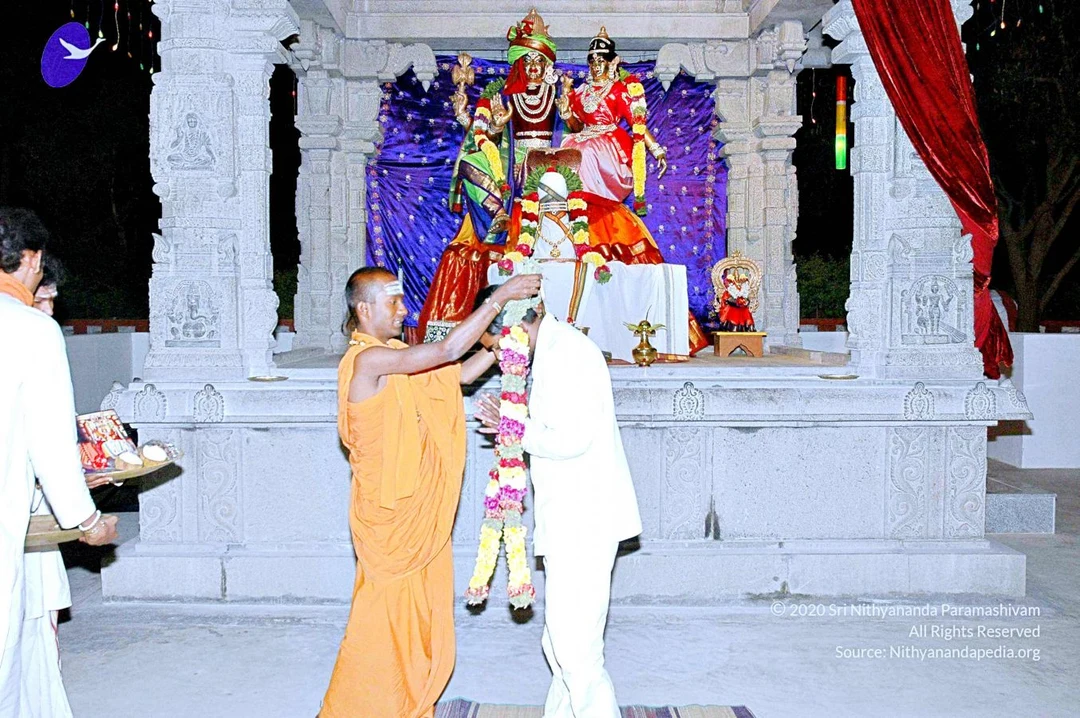
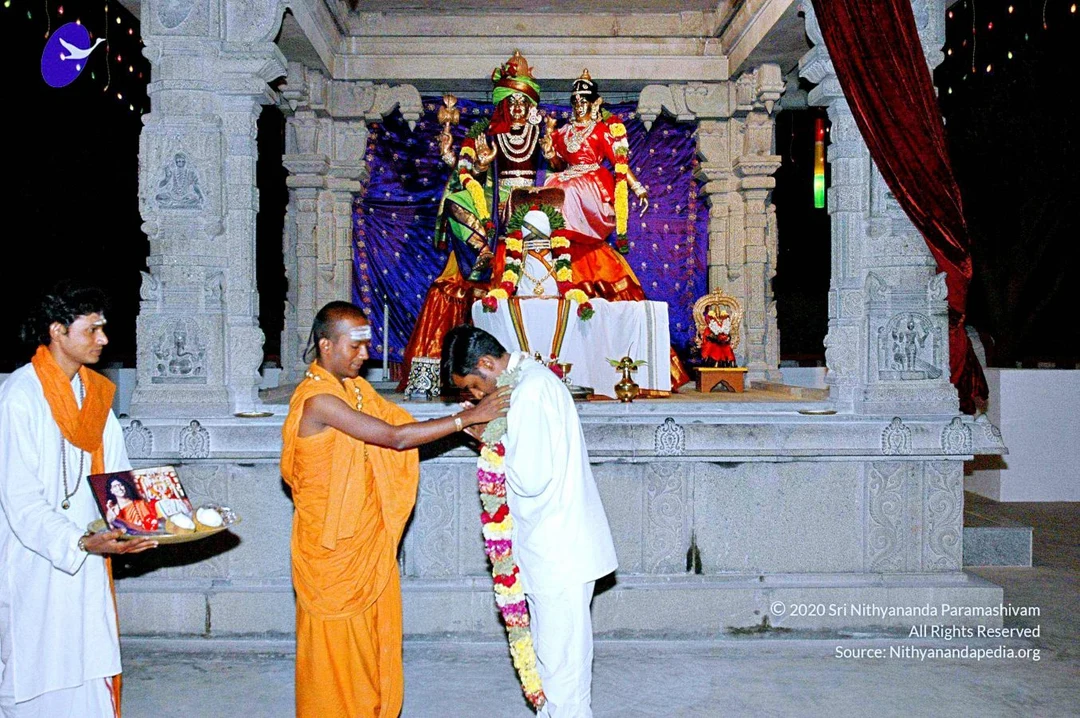
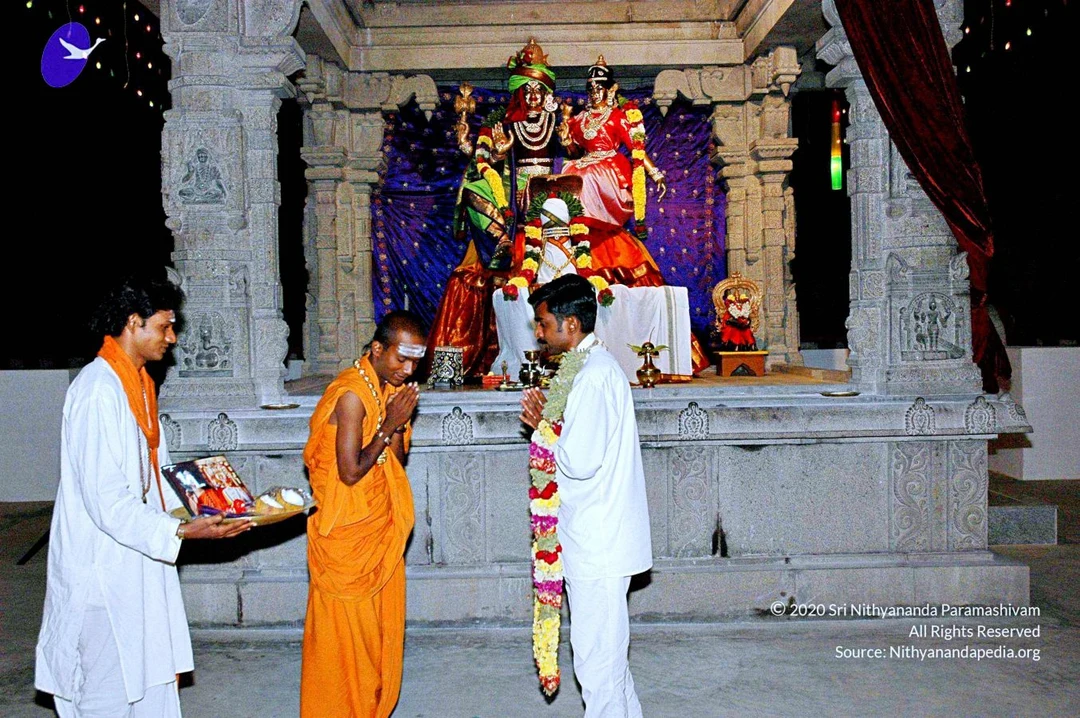
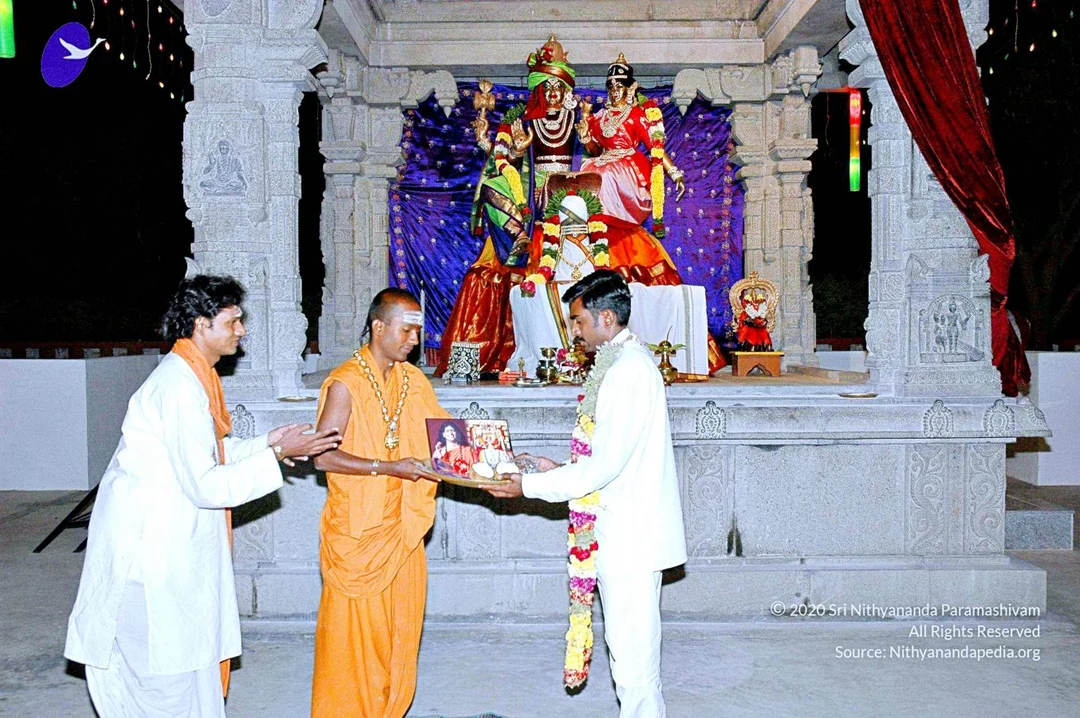
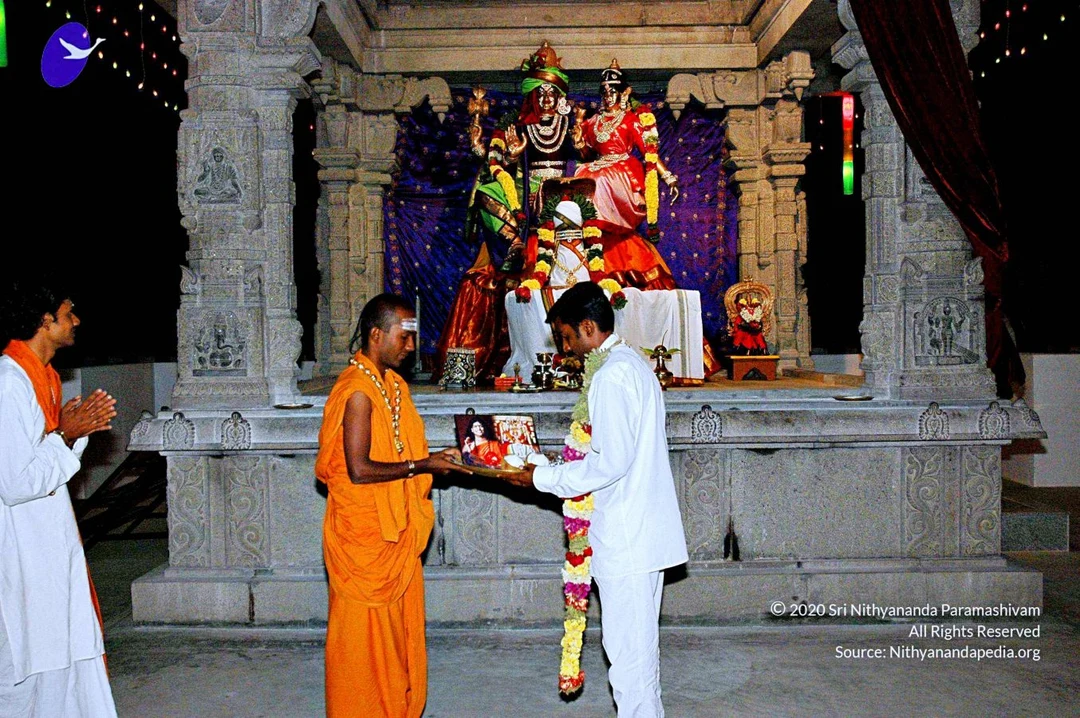
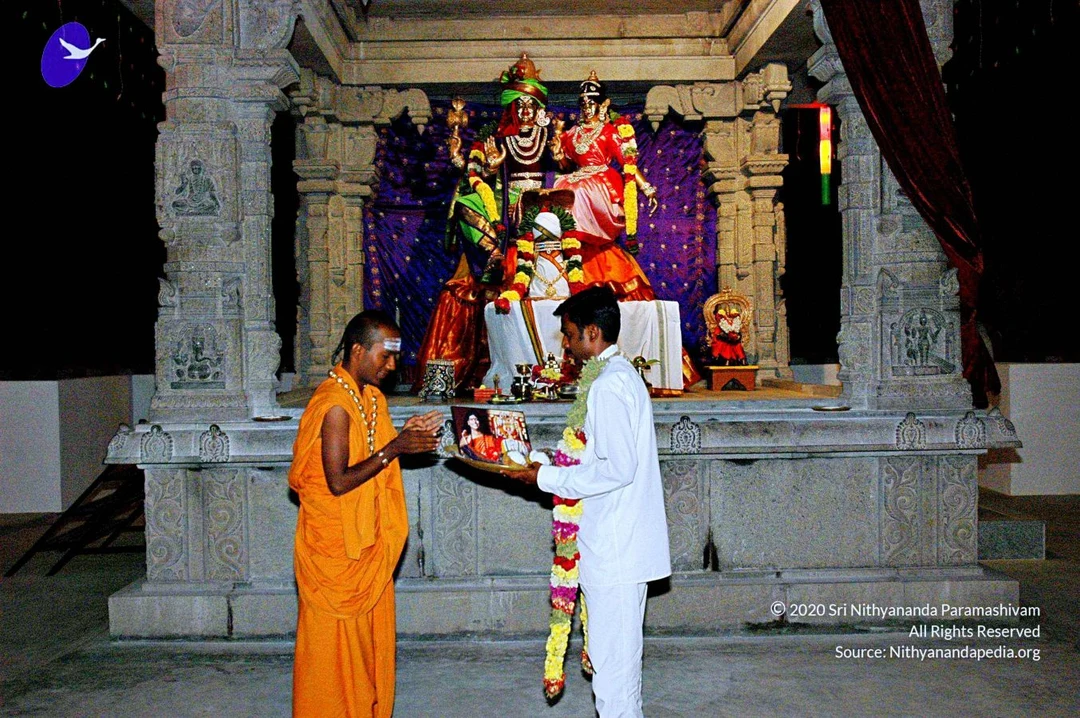
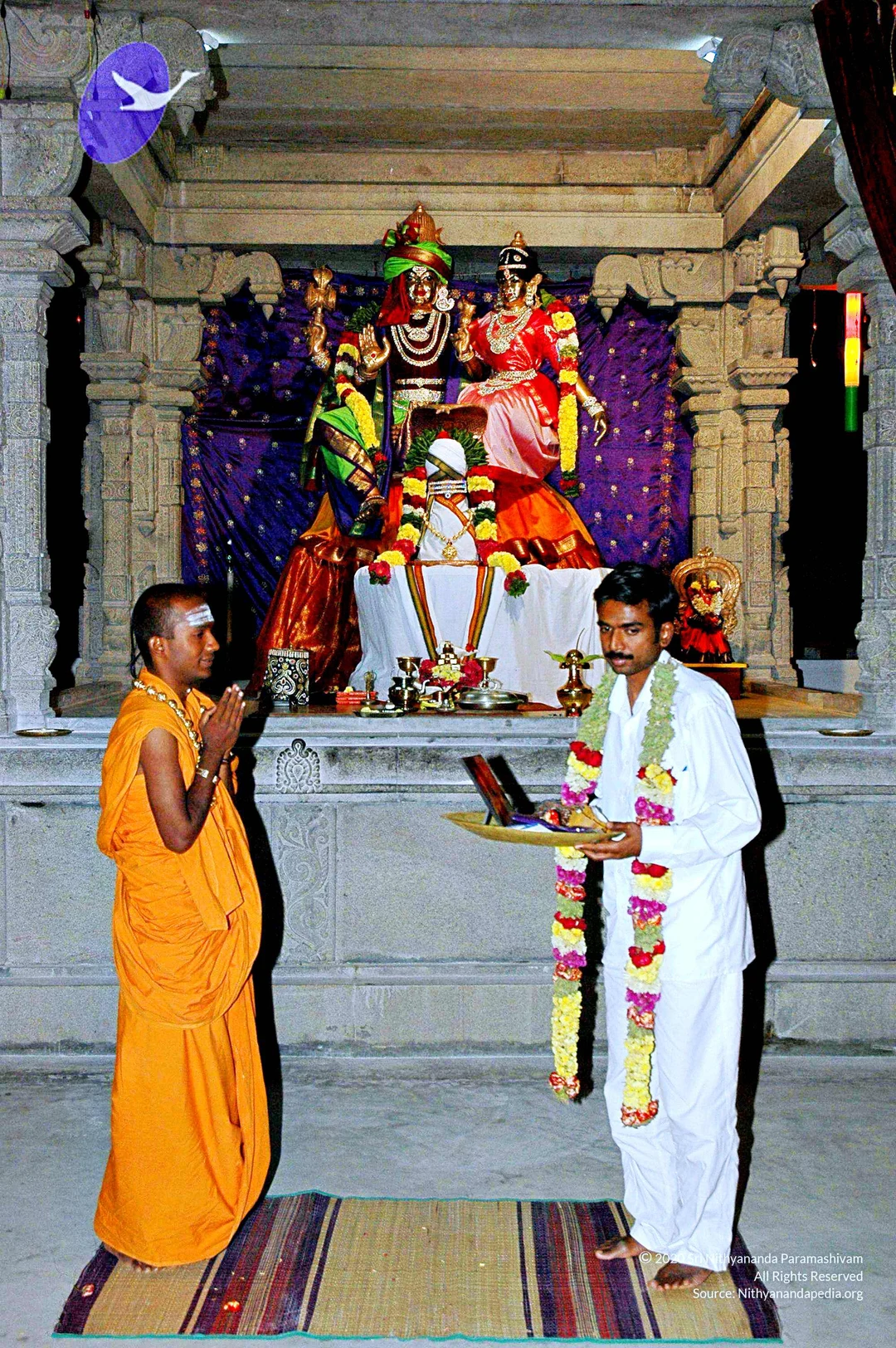
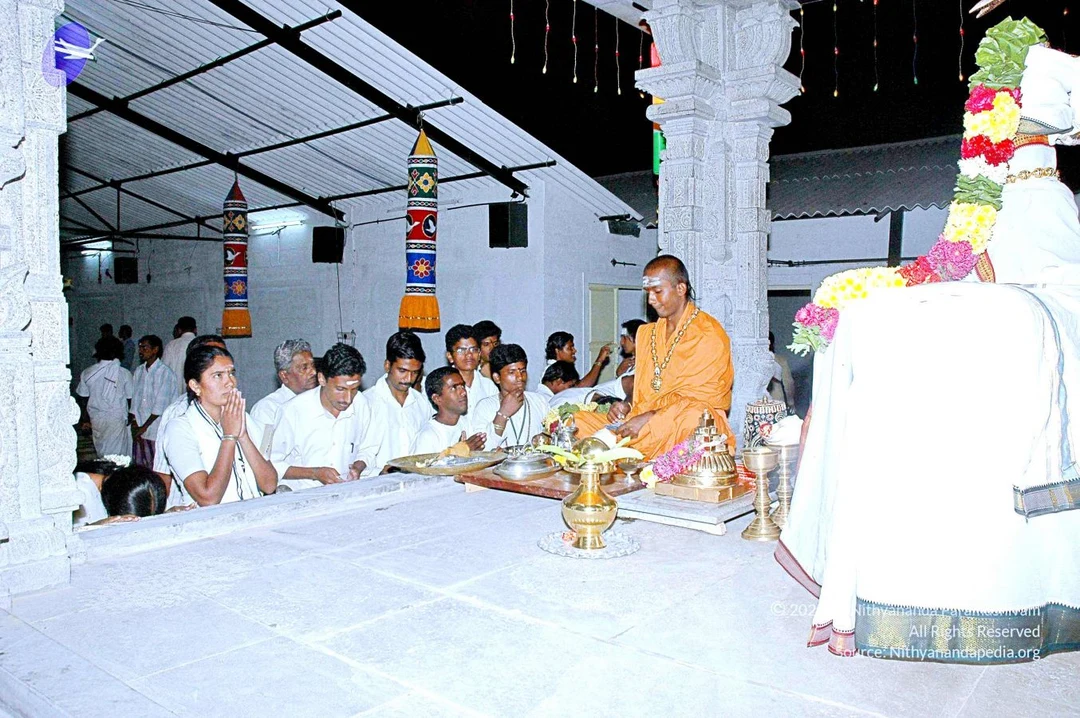
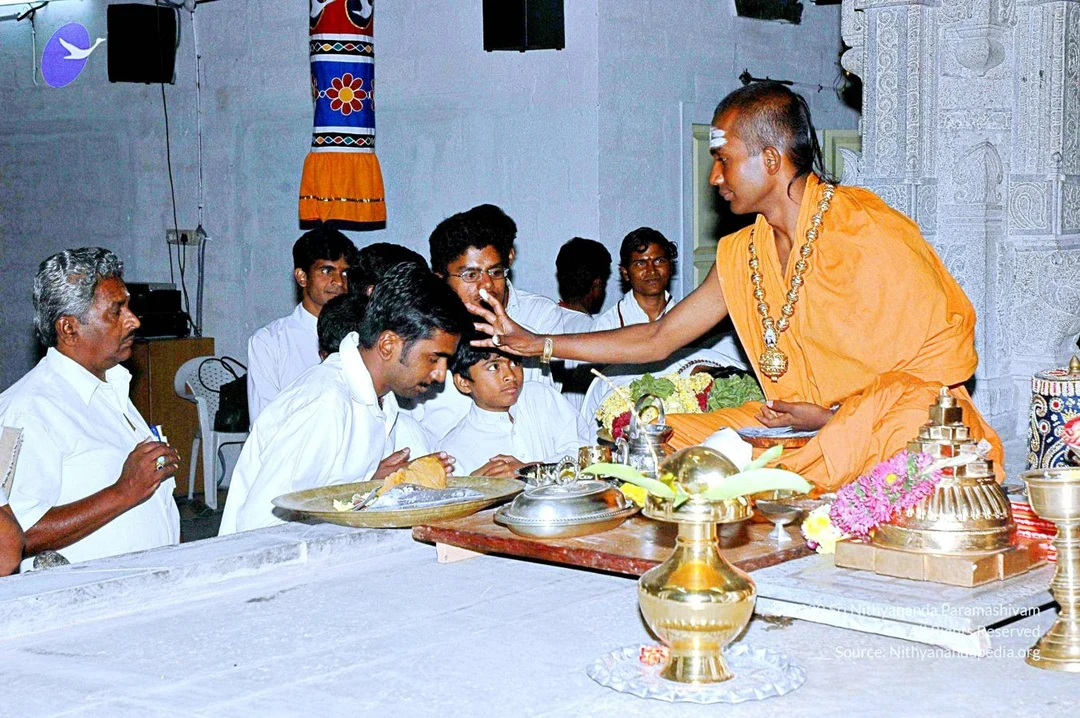
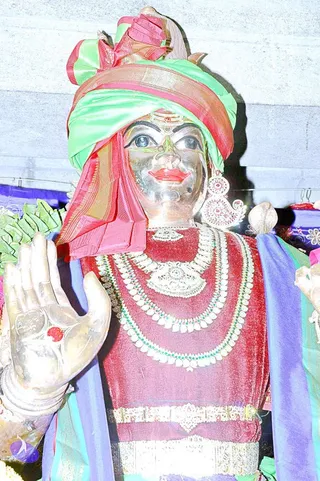
Three women in white saris with orange-red borders raise lit oil lamps on long brass stands high above their heads in a smoky hall. Smoke or incense haze fills the room. The woman on the right wears gold-embellished dress and bangles. Seated devotees in white fill the lower left and centre foreground. A tall painted pillar with geometric bands and a white bird motif stands behind the lamp bearers, and a small loudspeaker sits on a stand. This appears to be a lamp-waving aarti during a ritual.A night-time puja at an outdoor covered stage. A seated priest in orange robes and a tall patterned crown-like headpiece, with a garland and beaded necklaces, holds his palms together in prayer beside brass and steel ritual vessels, a small brass lamp and flowers. Behind him stands a white-draped form adorned with garlands of yellow and red flowers and a raised hooded cobra-shaped element. At the right edge, a woman in a red and gold sari and jewelled anklets stands partly in frame. Strings of colourful bunting and a grey stone pillar are visible above.A photograph of an evening puja at a stone shrine with carved granite pillars and a purple draped backdrop. Two large deity murtis stand on the altar, one with a green and red crown holding a trident-like staff, the other in red and gold with a crown. A man in a saffron-orange robe with a white tilak, bead necklace and wrist beads stands with hands folded in namaskar. To his left a man in white clothes holds a silver tray with flowers and offerings. On the right a man in white clothes holds a garland of white and red flowers and also stands with hands folded. A small brass oil lamp and ritual vessels sit on the altar. The scene is lit at night with a red curtain at the right edge.

October 17 2007

Original wiki page
Contents

Title:

THE SUPREME PONTIFF OF HINDUISM JGM HDH BHAGAVAN NITHYANANDA PARAMASHIVAM

Video Title

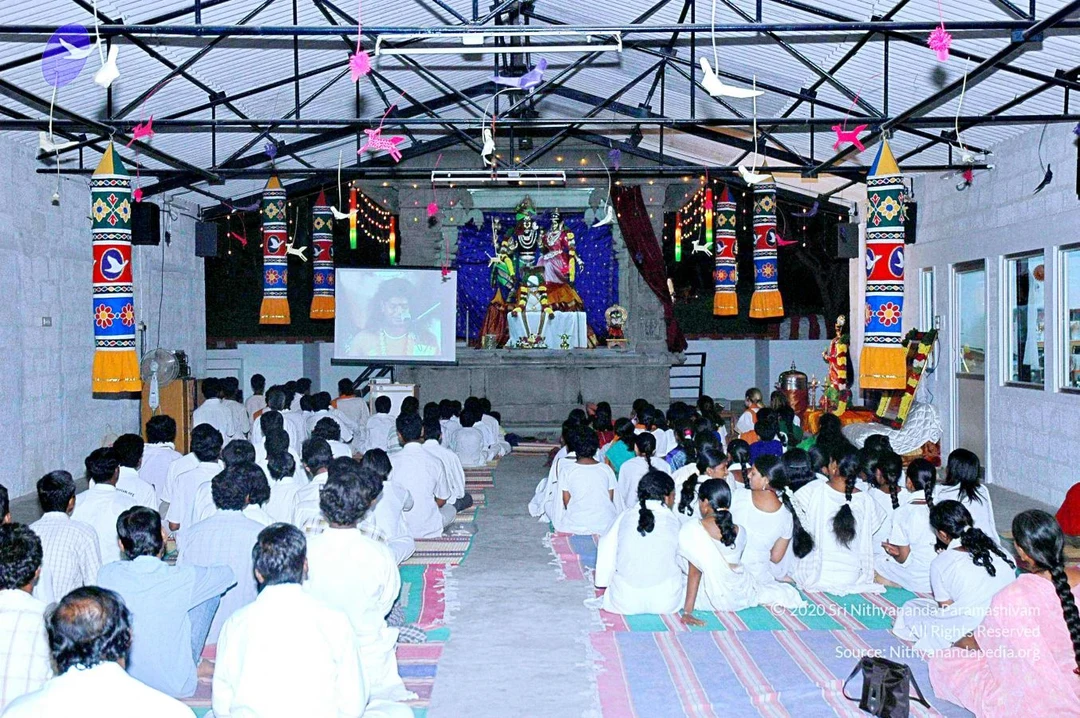
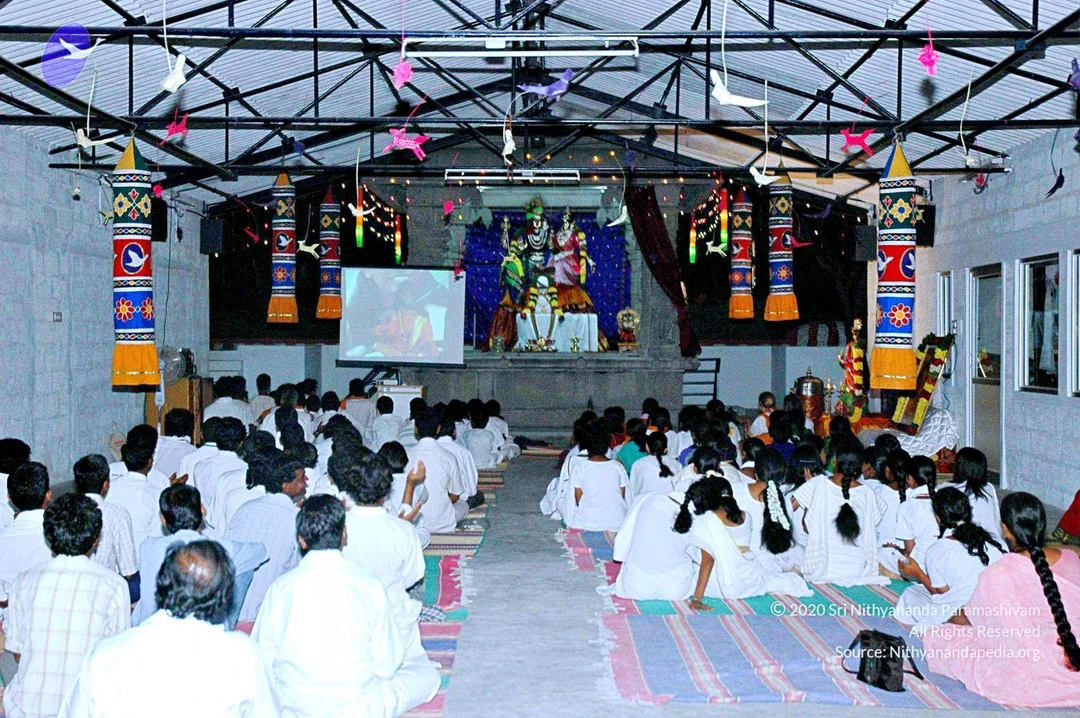
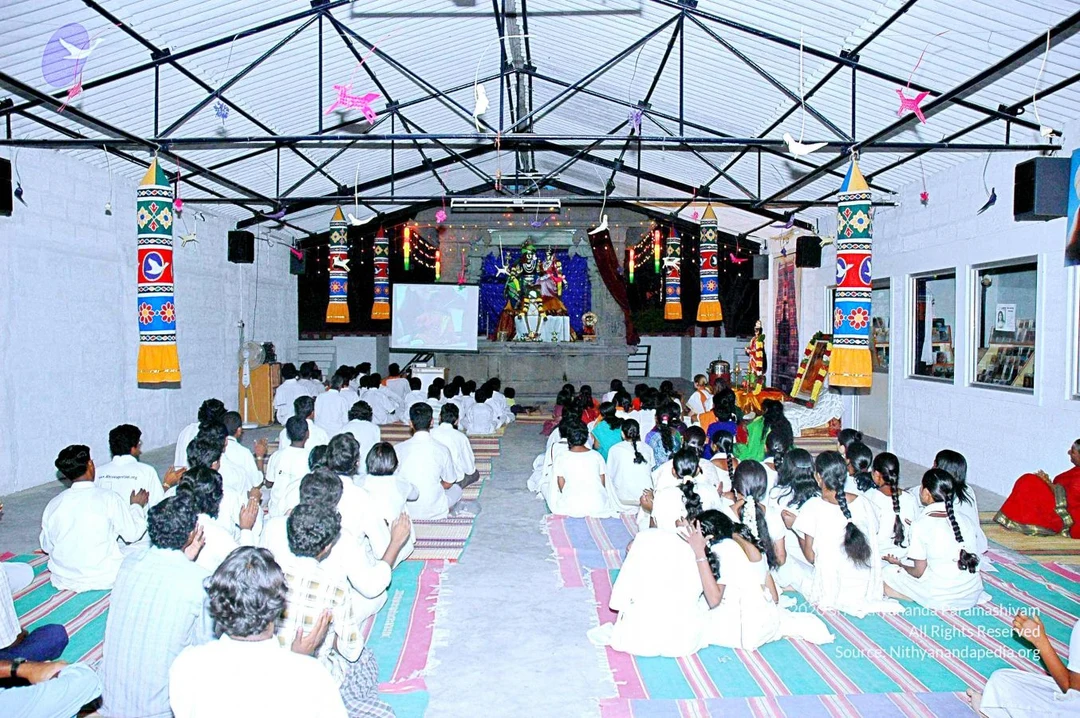
St. Louis, USA Nithyananda Dhyanapeetam inauguration done by HDH Bhagavan Nithyananda Paramashivam on October 17 2007.

Description

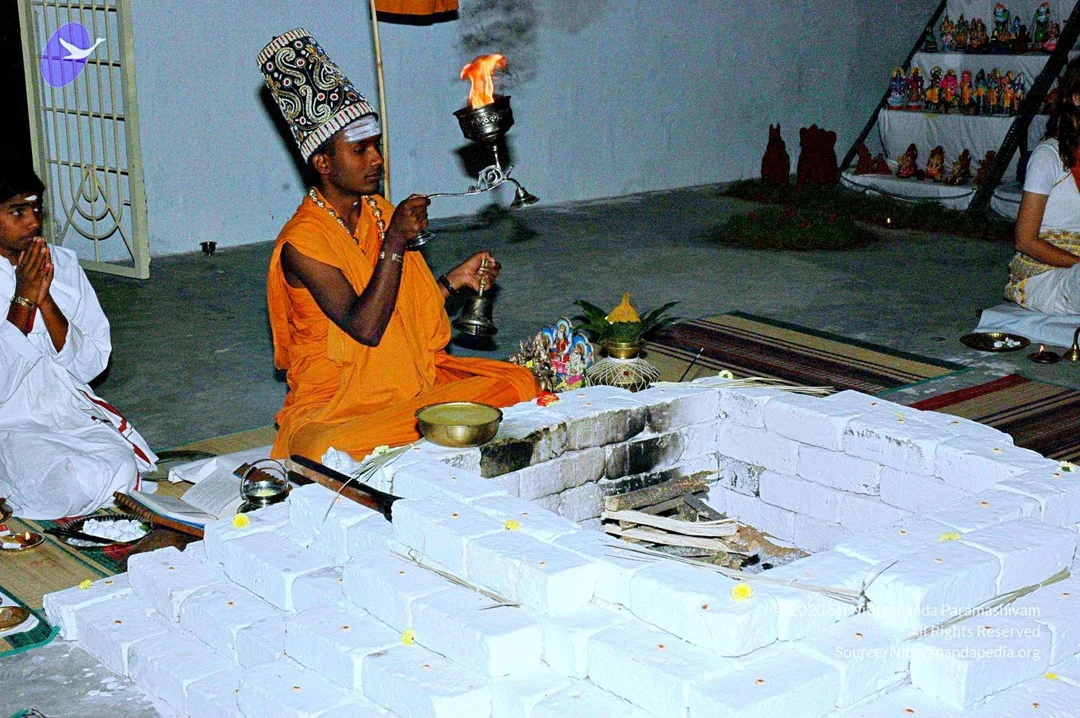
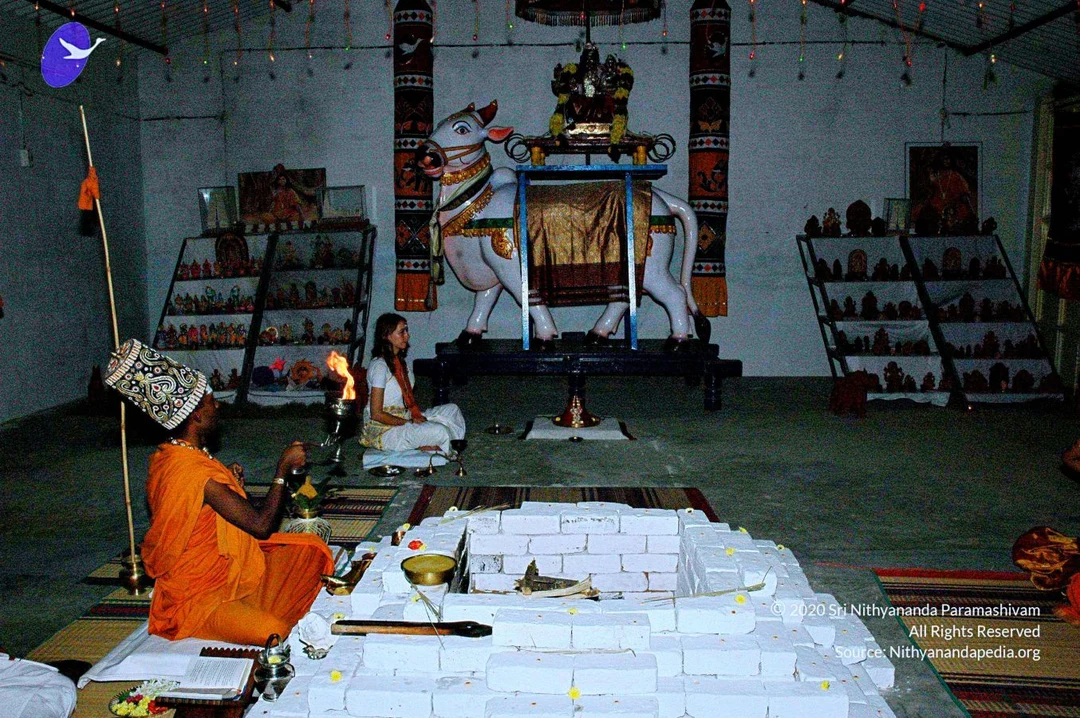
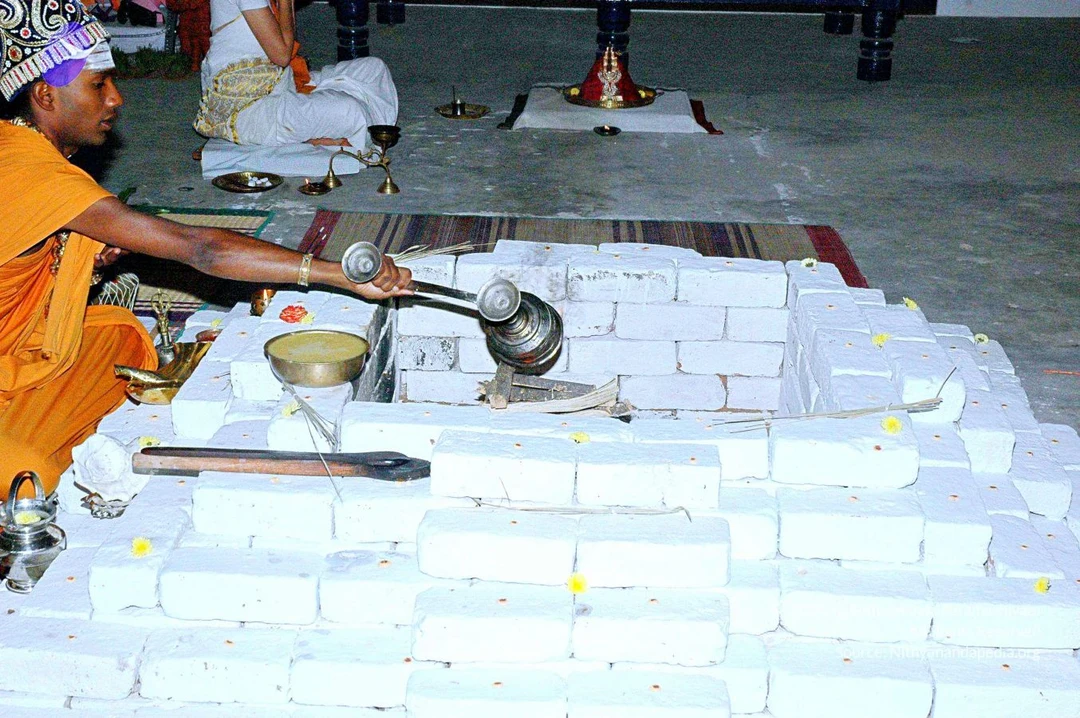
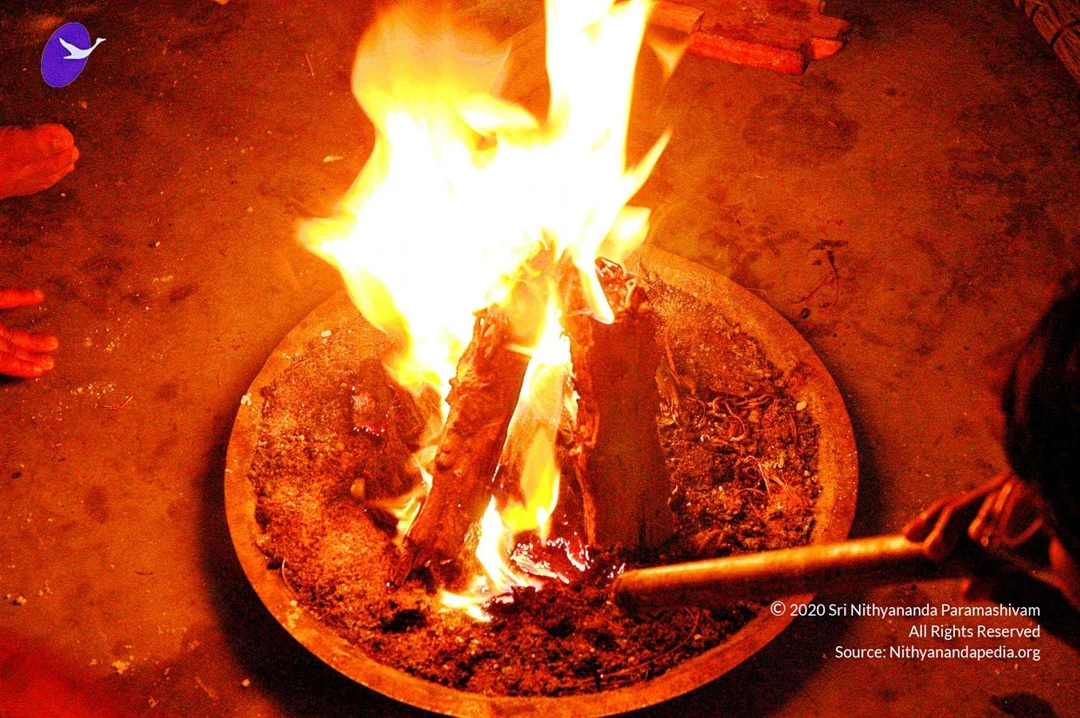
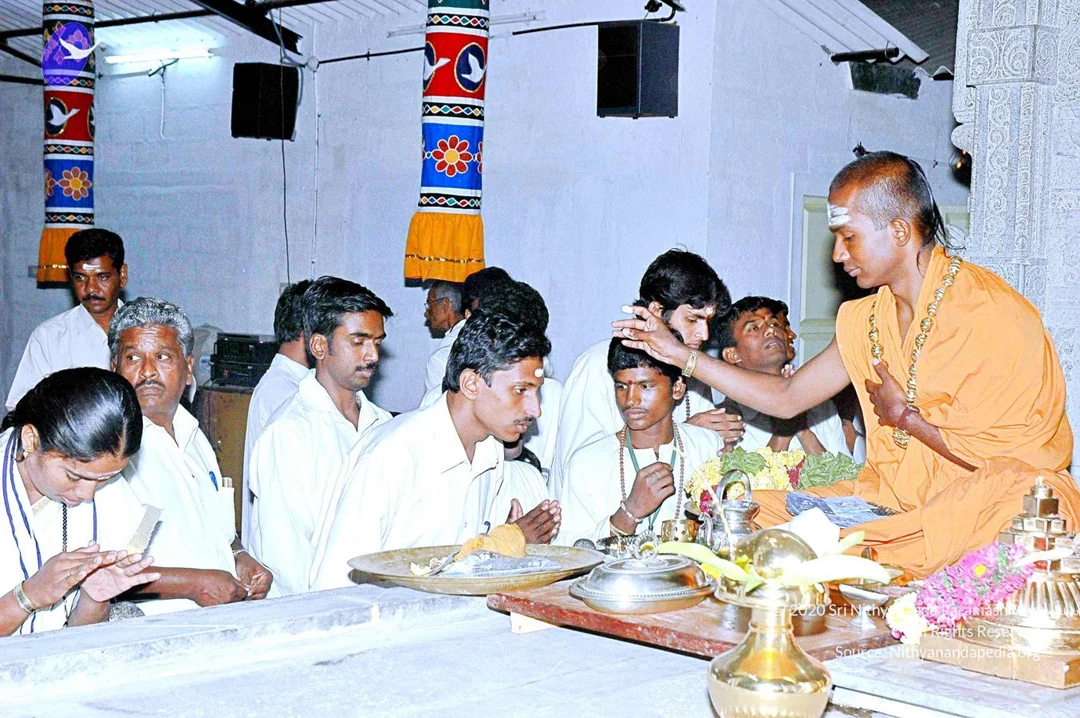
HDH Bhagavan Nithyananda Paramashivam performed PranaPrathista of Deities and inaugurated the Nithyananda Dhyanapeetam of St .Louis, Missouri, USA. Later during the day, He also conducted the Sri Vidya Puja ceremony as per Vedagamic injunctions.

Link To Video

Video

Video Title

Description

Name of Convention: St Louis, USA Nithyananda Dhyanapeetam Inauguration by HDH Bhagavan Nithyananda Paramashivam Session: Sri Vidya Puja Date: Oct. 17th 2007 Venue: St. Louis, USA

In this video Supreme Pontiff of Hinduism HDH #Nithyananda Paramashivam gives a detailed note on the unique energy experienced from performing a Sri Vidya Puja. “Vidya” in Sanskrit means knowledge. “Sri” in Sanskrit means enlightenment. Sri Vidya in Sanskrit together refers to the stream of Vedic Worship based on mother energy which showers true knowledge which in turn helps you achieve the ultimate state or enlightenment. This is one of the most powerful spiritual practices from Vedic tradition.Vedic Rishis mention several times that, only those blessed souls will have the opportunity to perform or even be in the space where Sri Vidya ritual happens!! Mother energy is the overflowing compassion and love. Relating to the existential energy as Mother is the most loving and easiest ways which when done with deep devotions brings tremendous benefits! The Sri Vidya puja is performed to completely cleanse the space of the house, land or any area, to bless both the space and those present at the physical and spiritual planes.

Link to video

Video

Photos
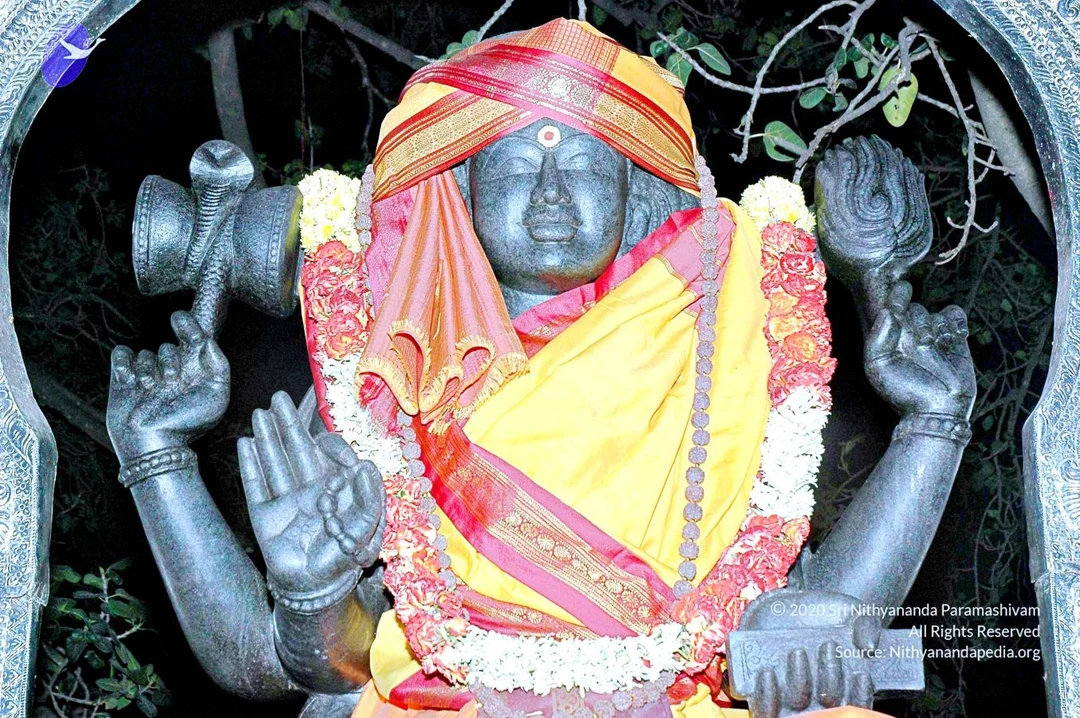
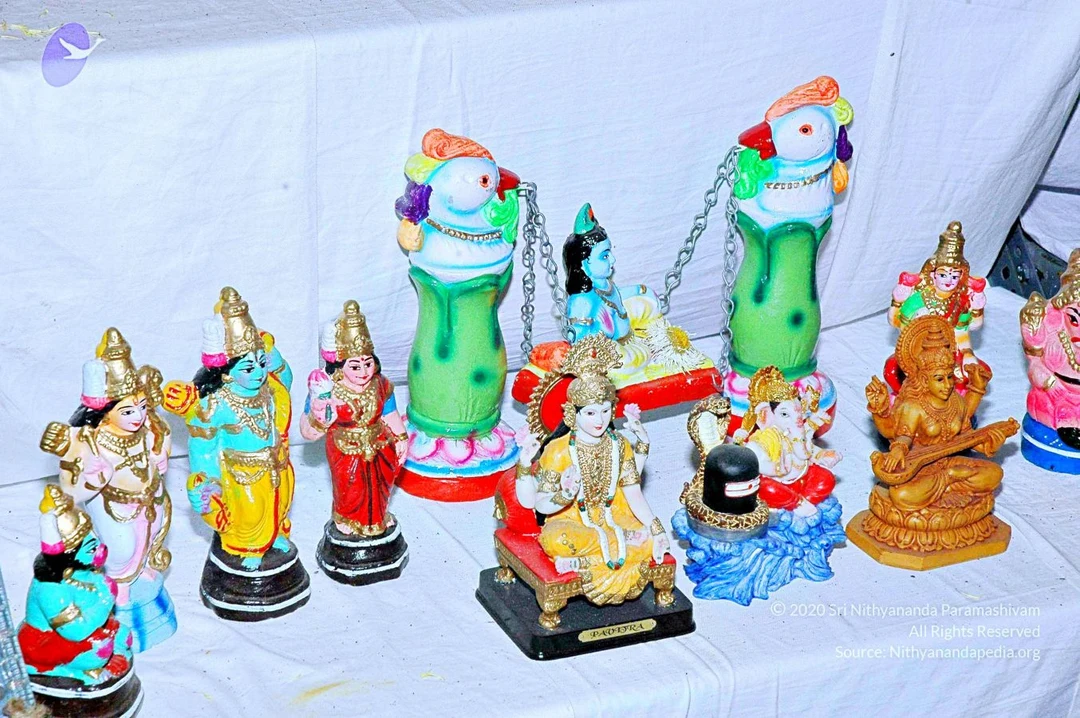
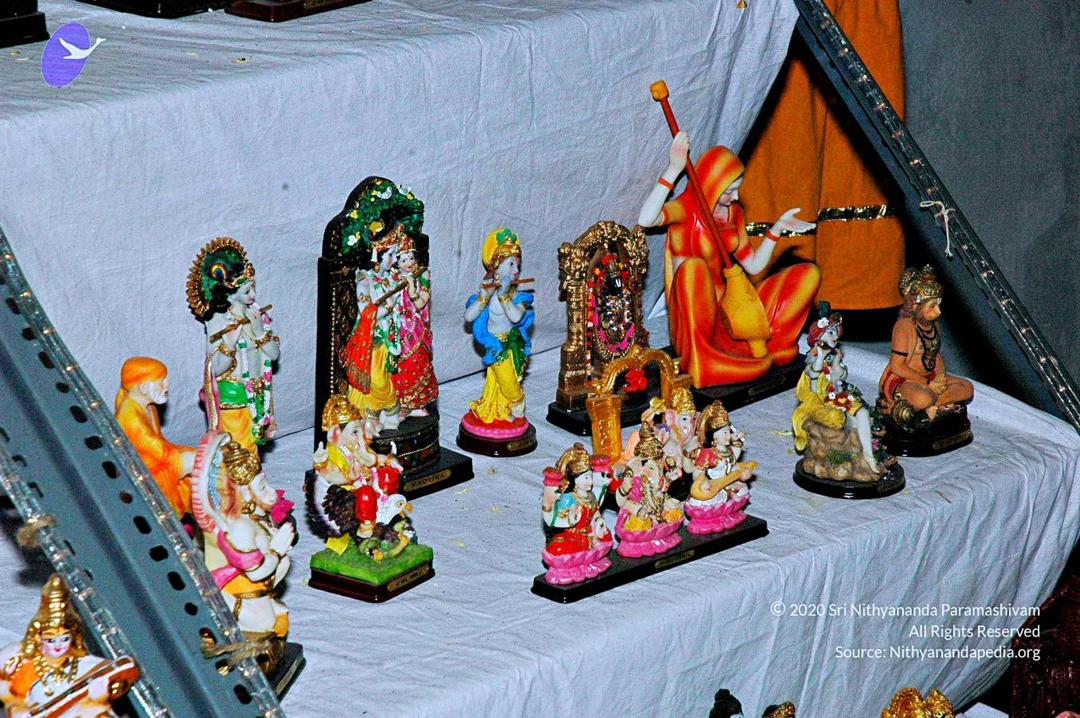
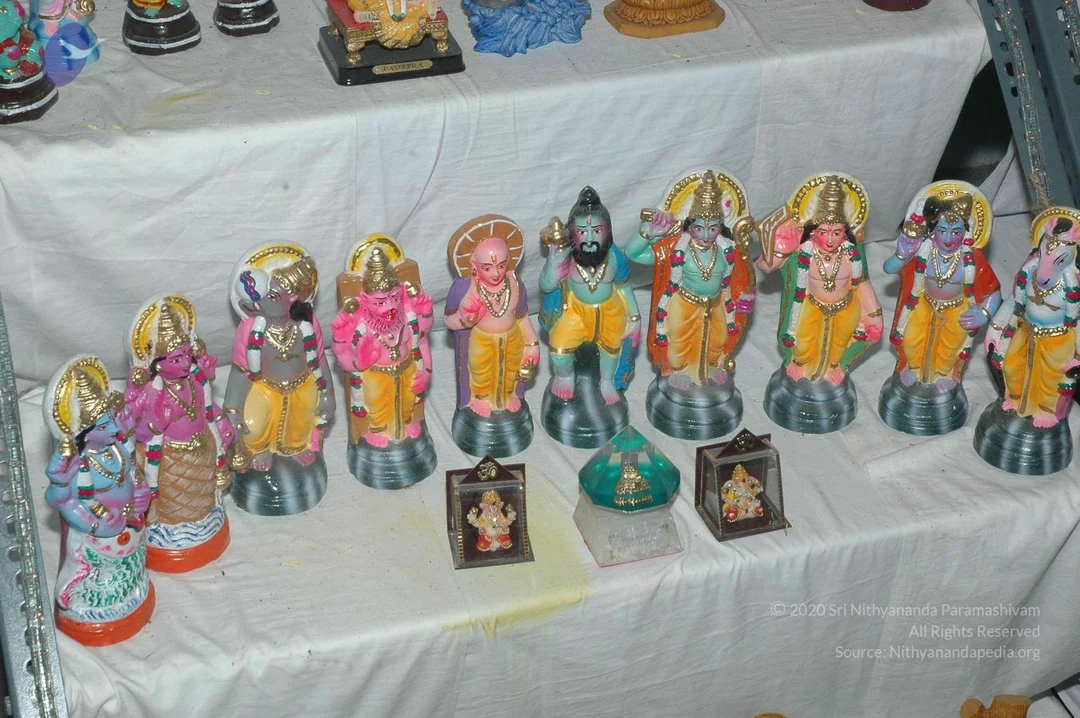
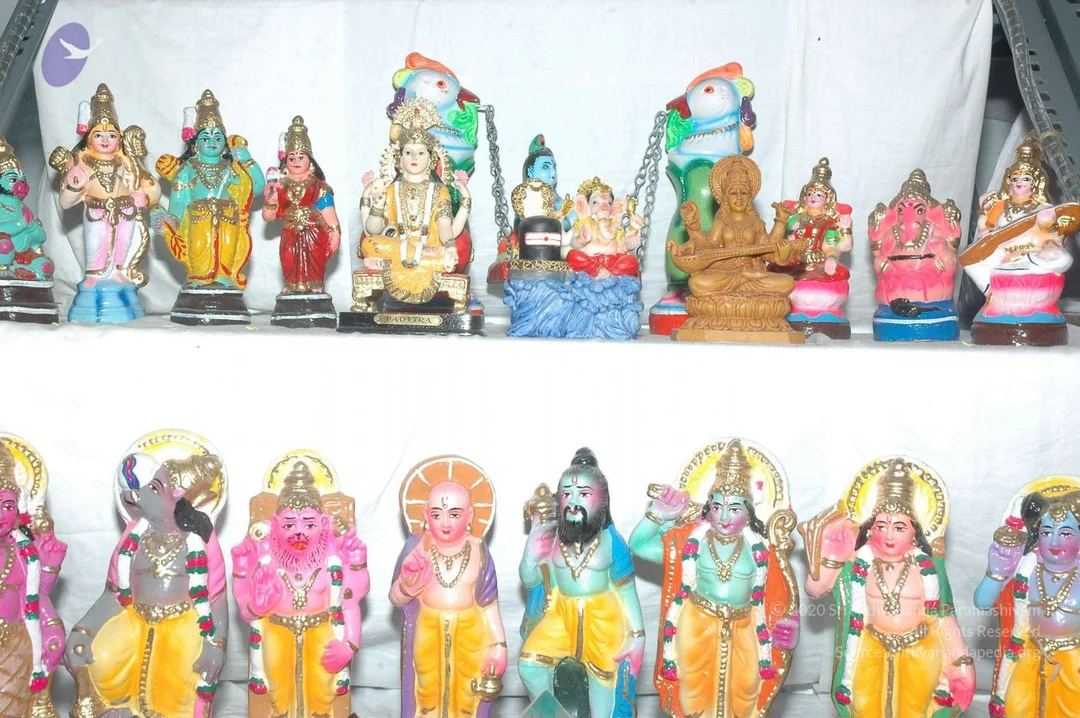
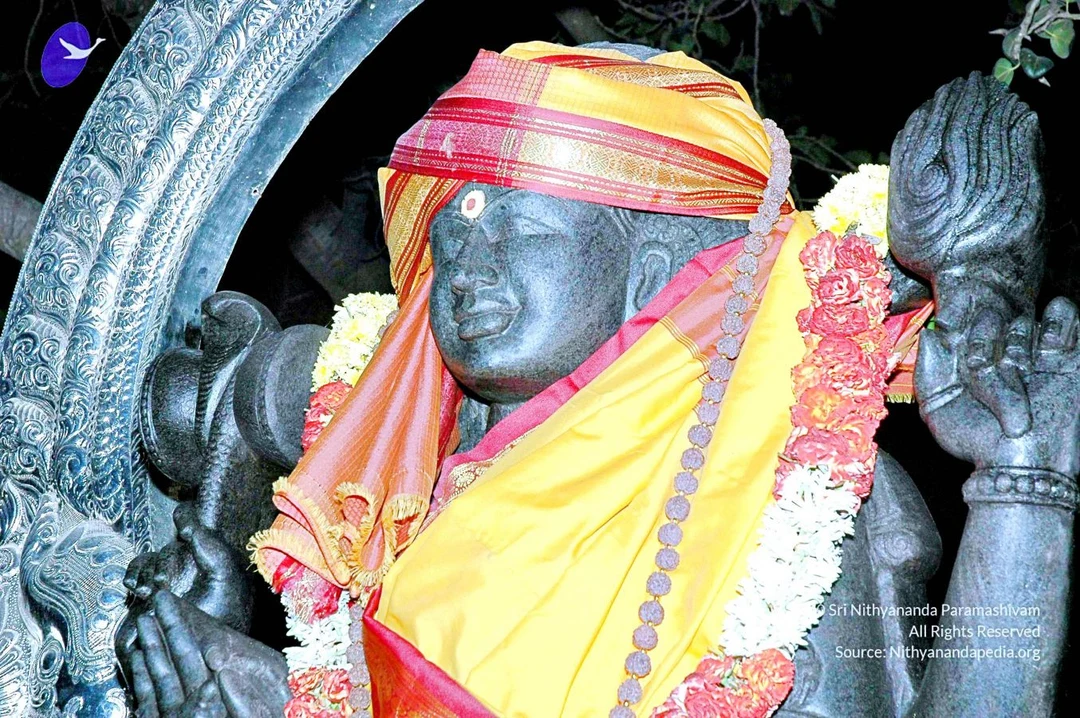
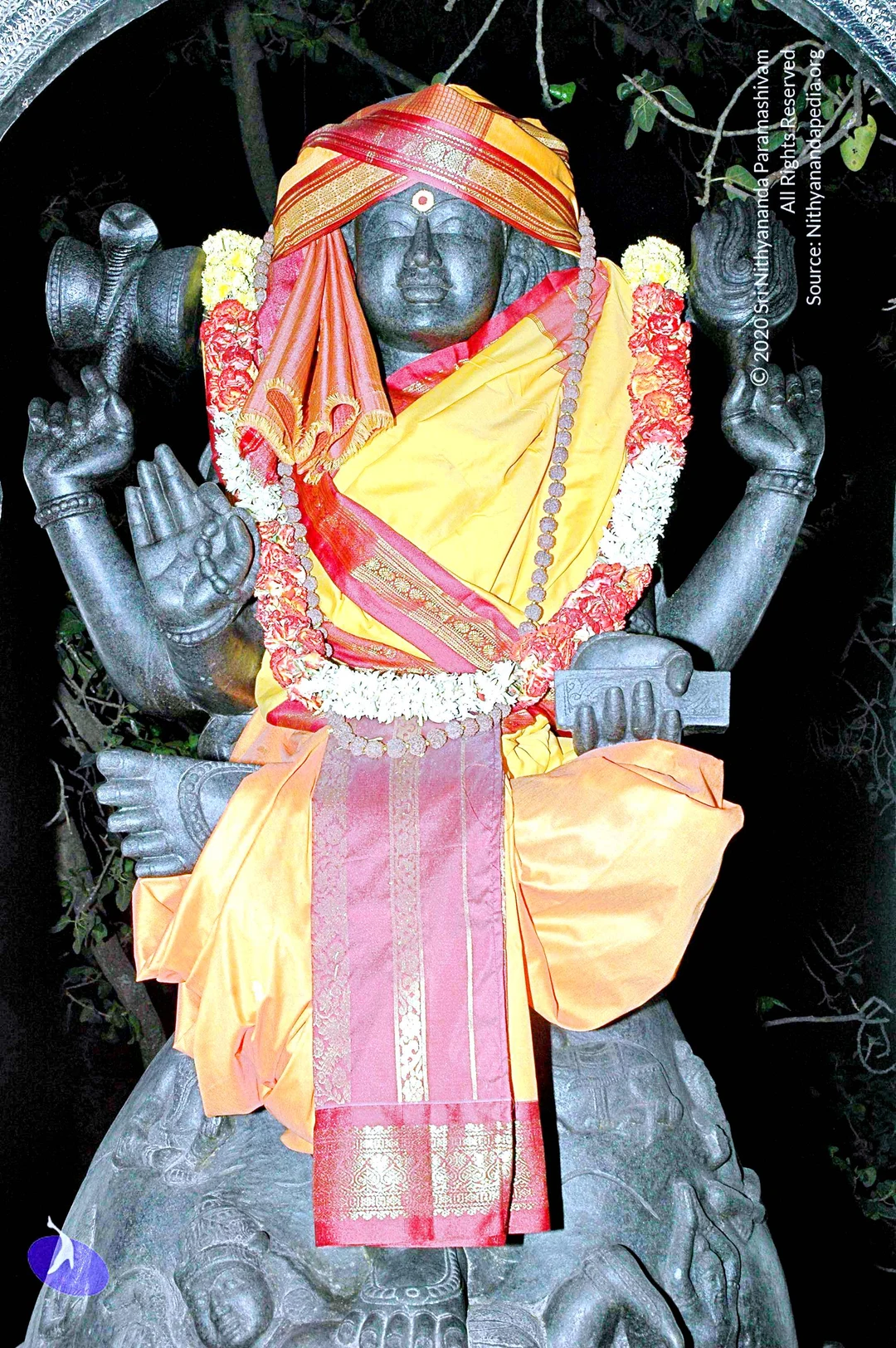
Navaratri Celebrations Day 6 at AadiKailaasa, Bengaluru, India

Photos from this day
View all 147 photos
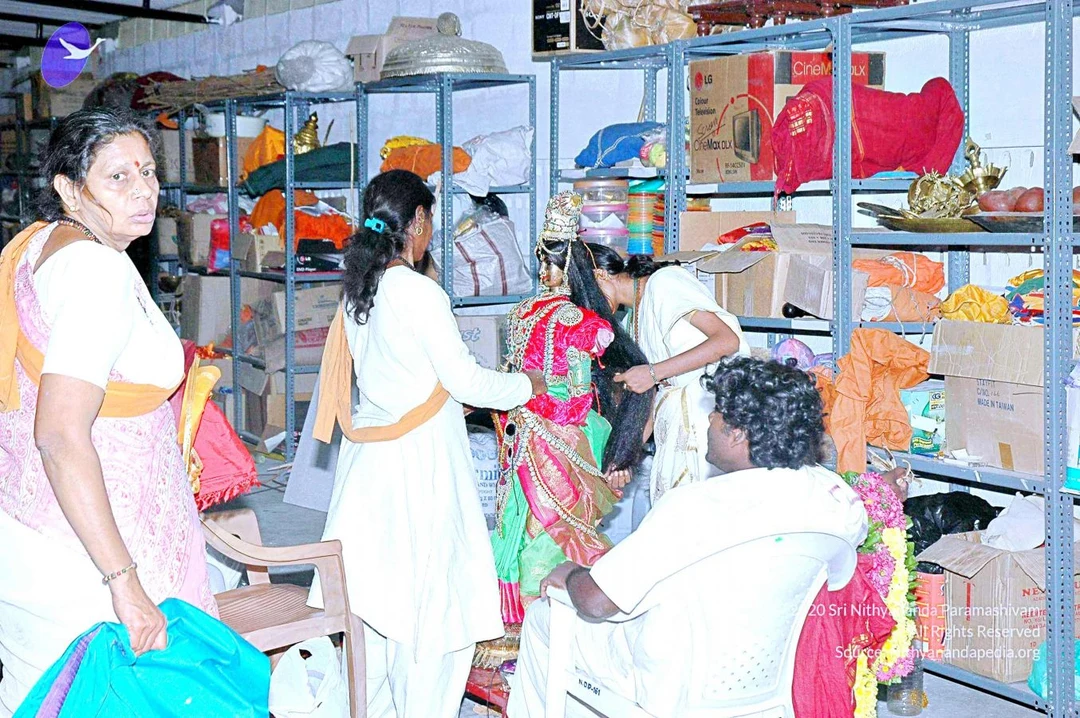
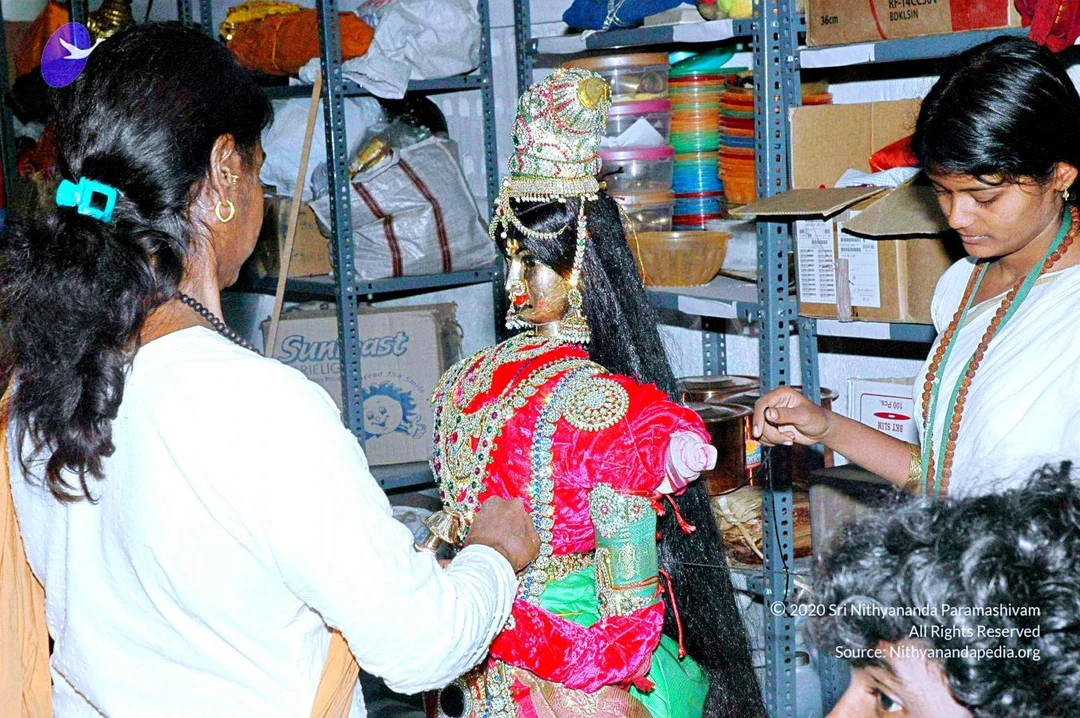
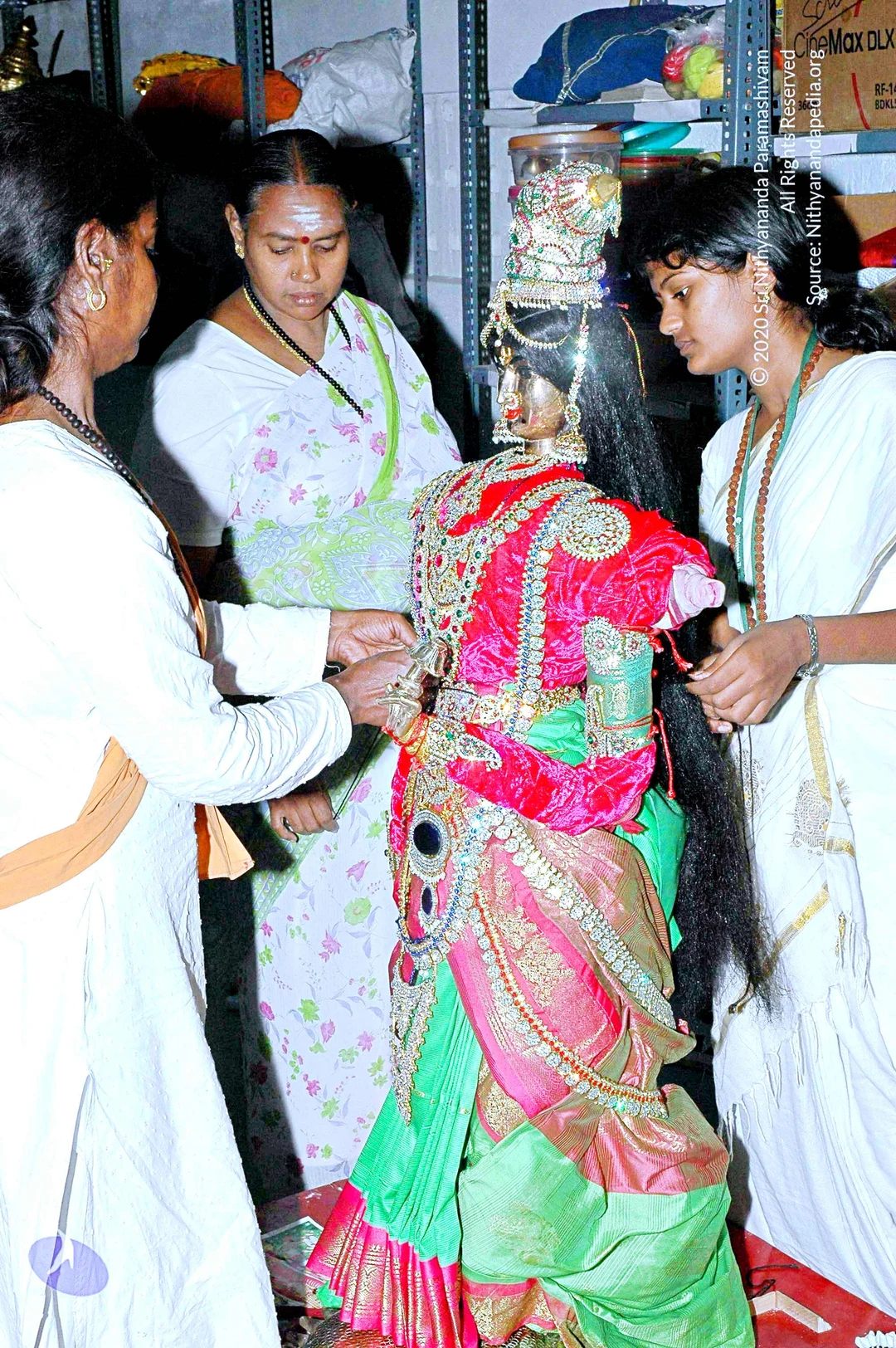
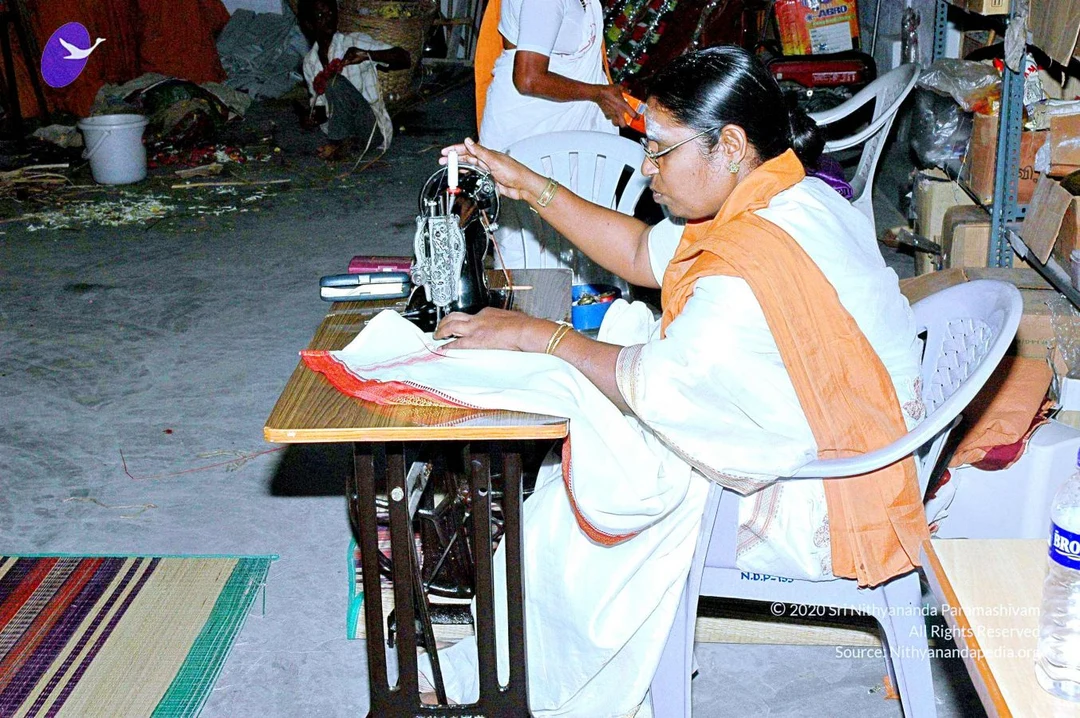
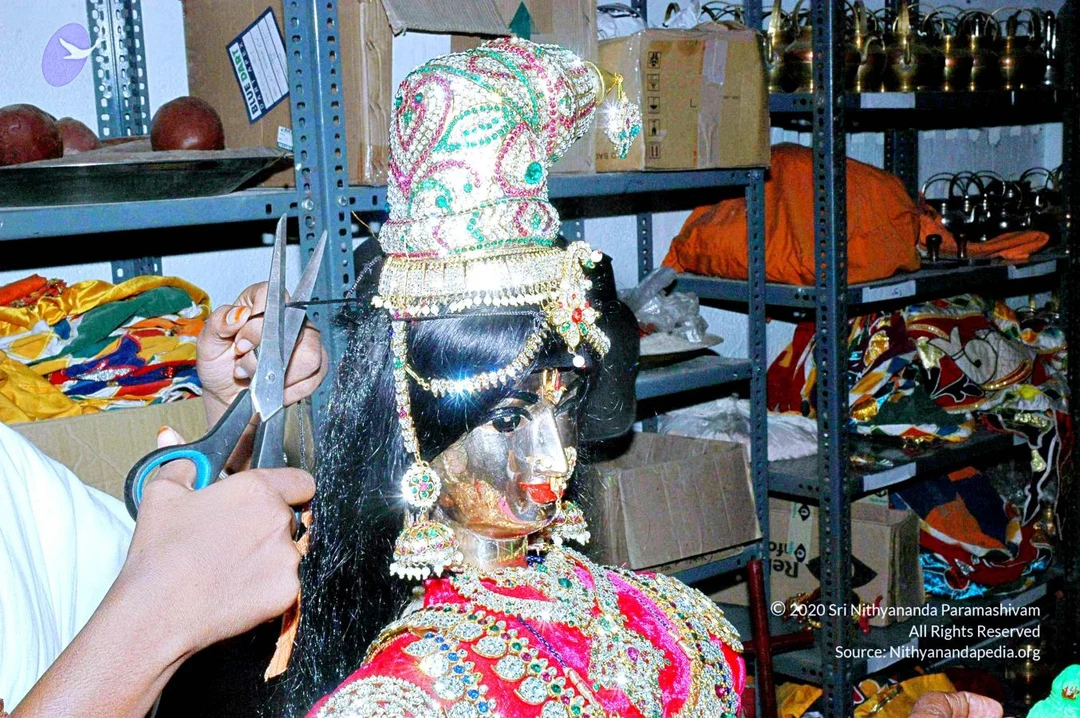
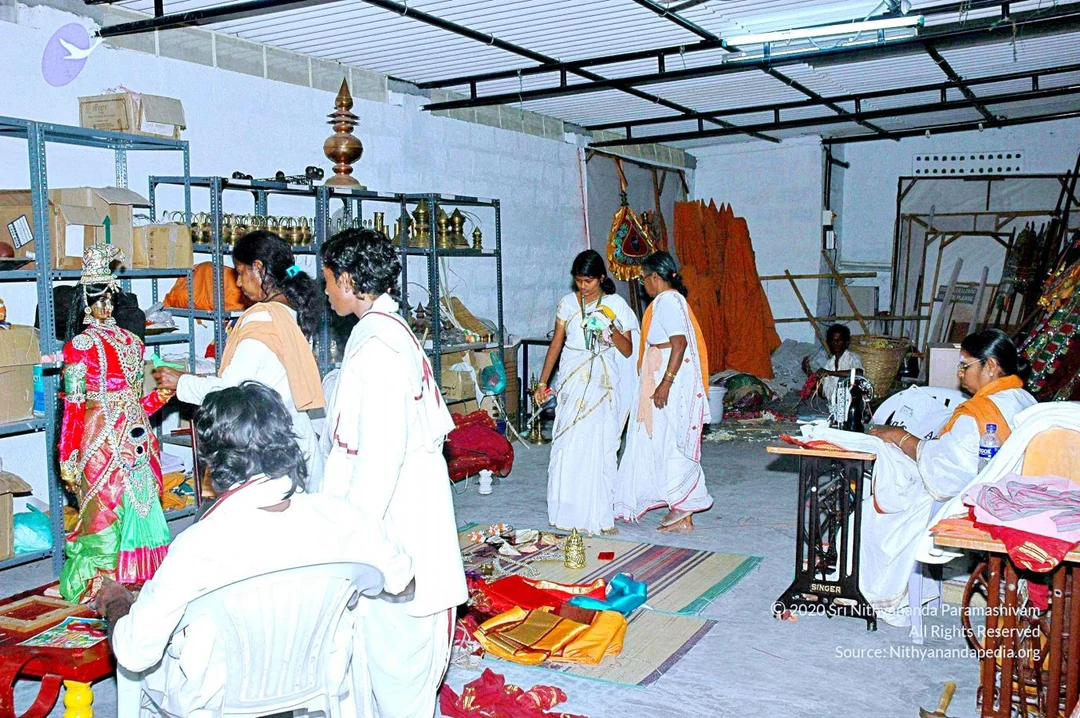
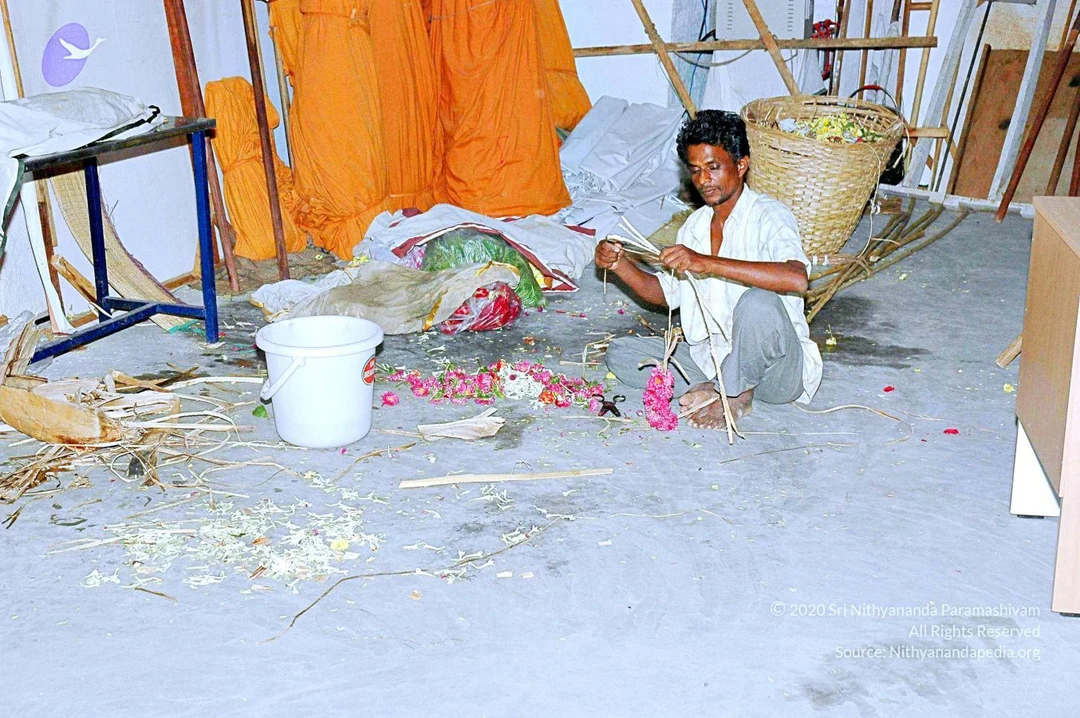
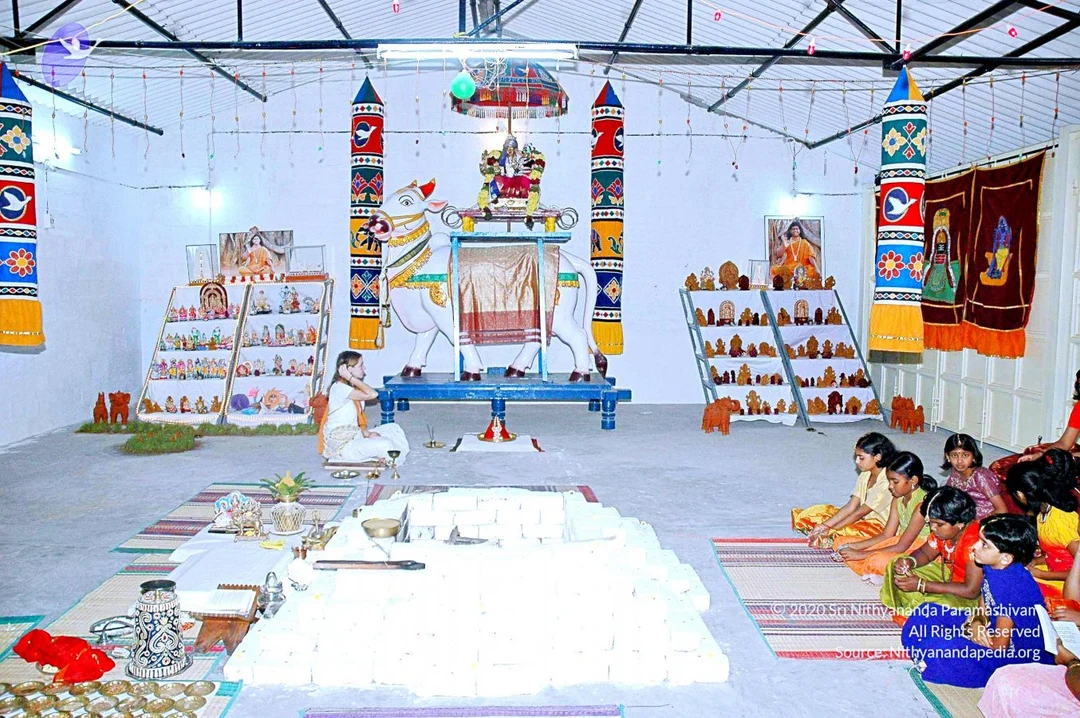
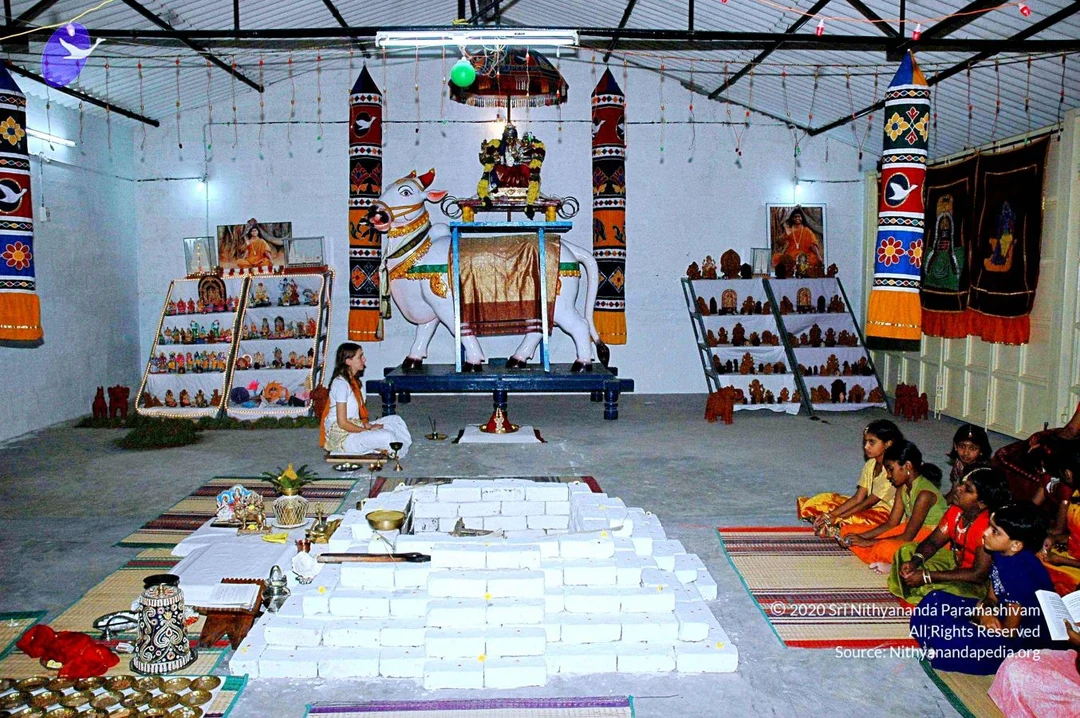
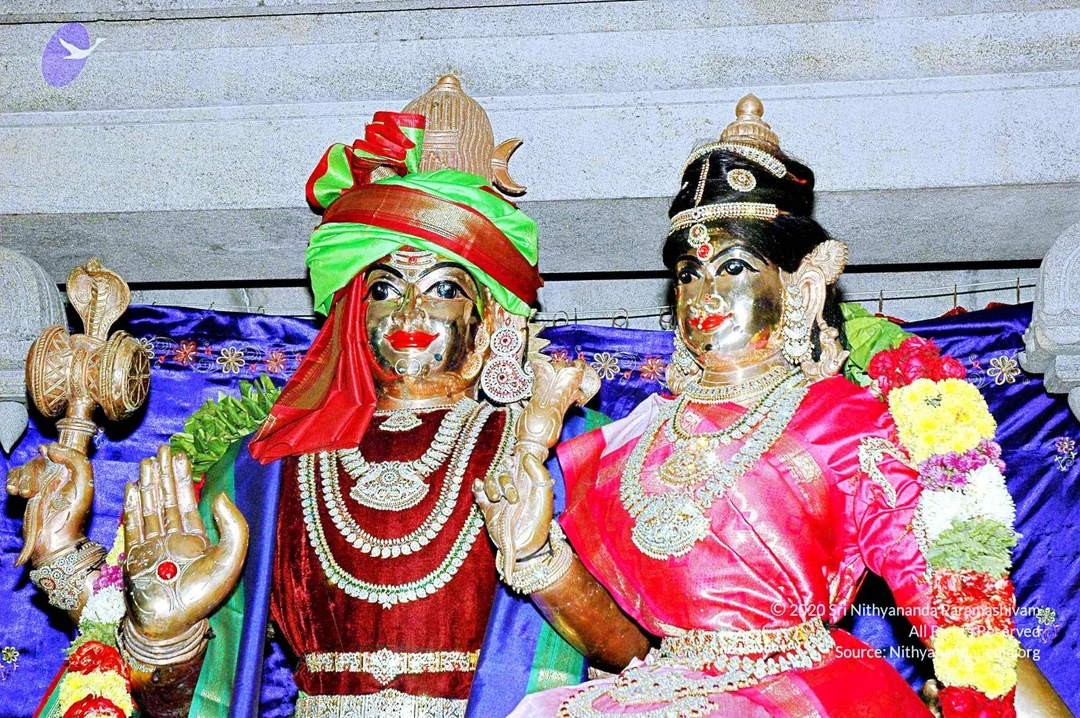
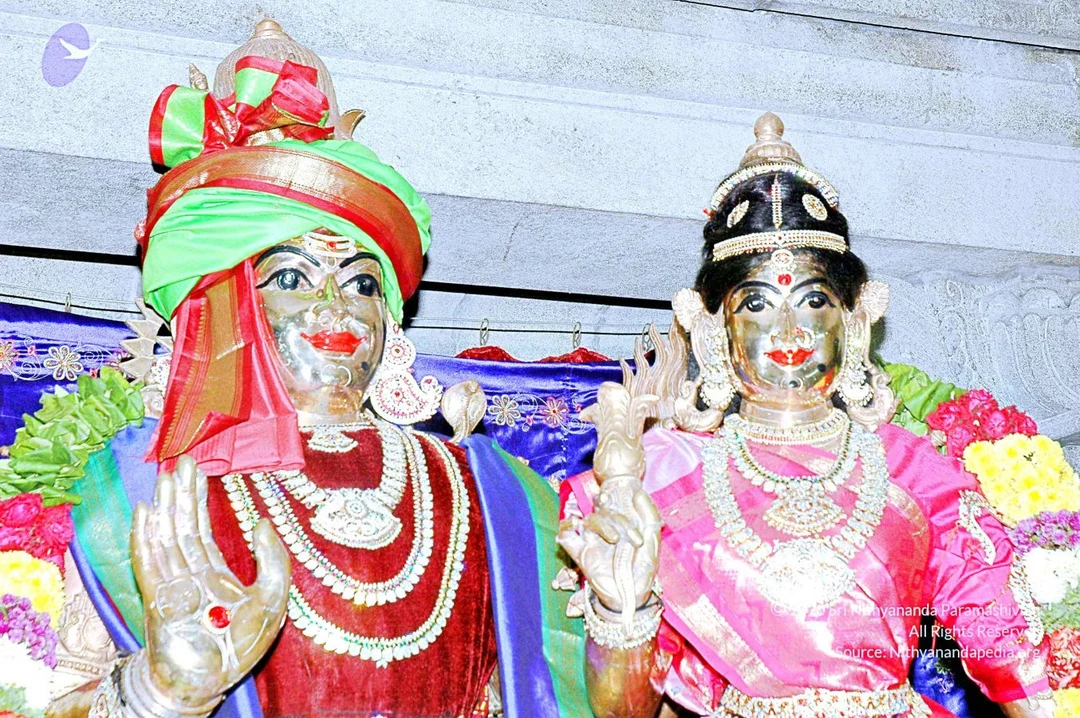
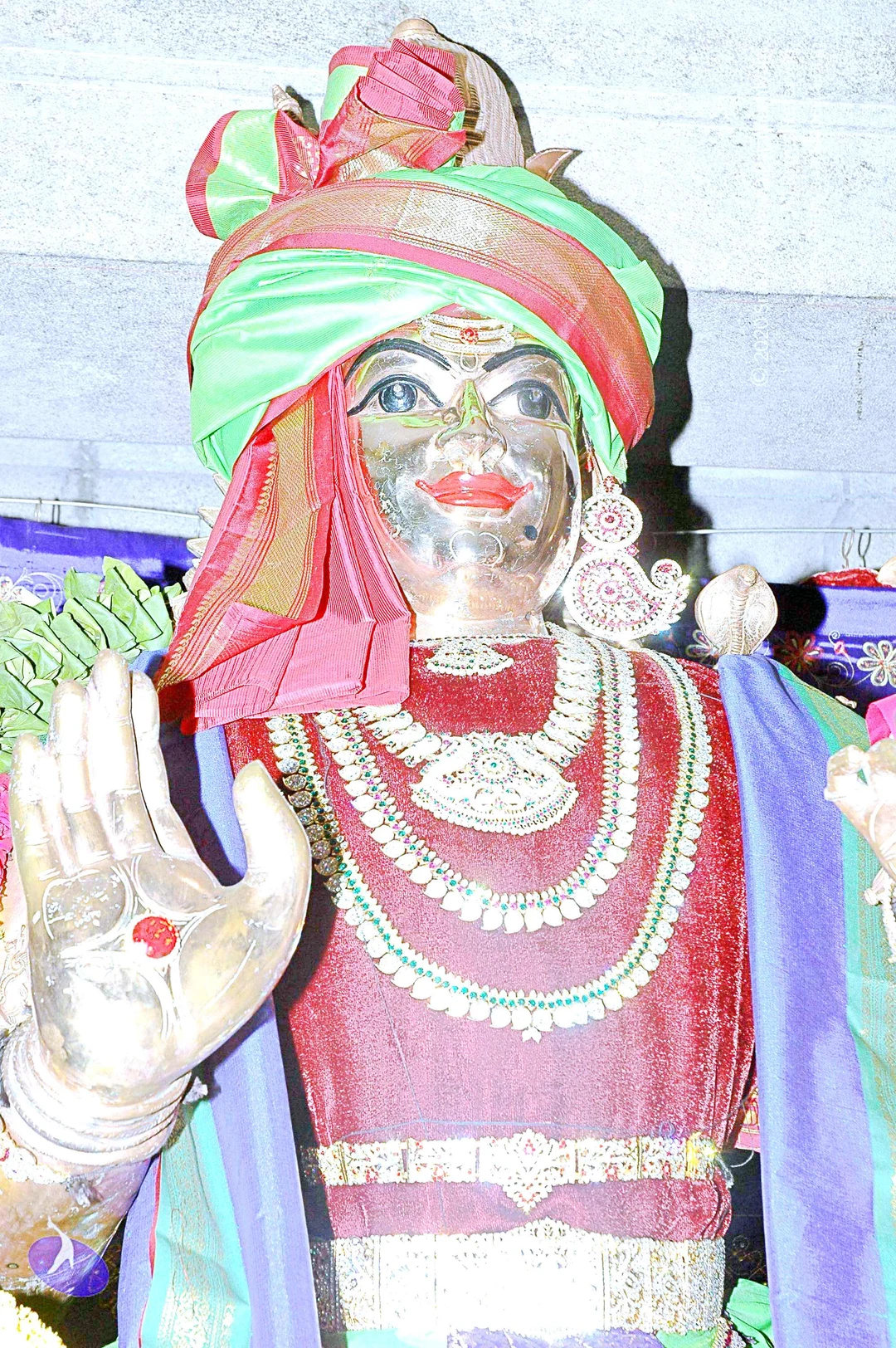
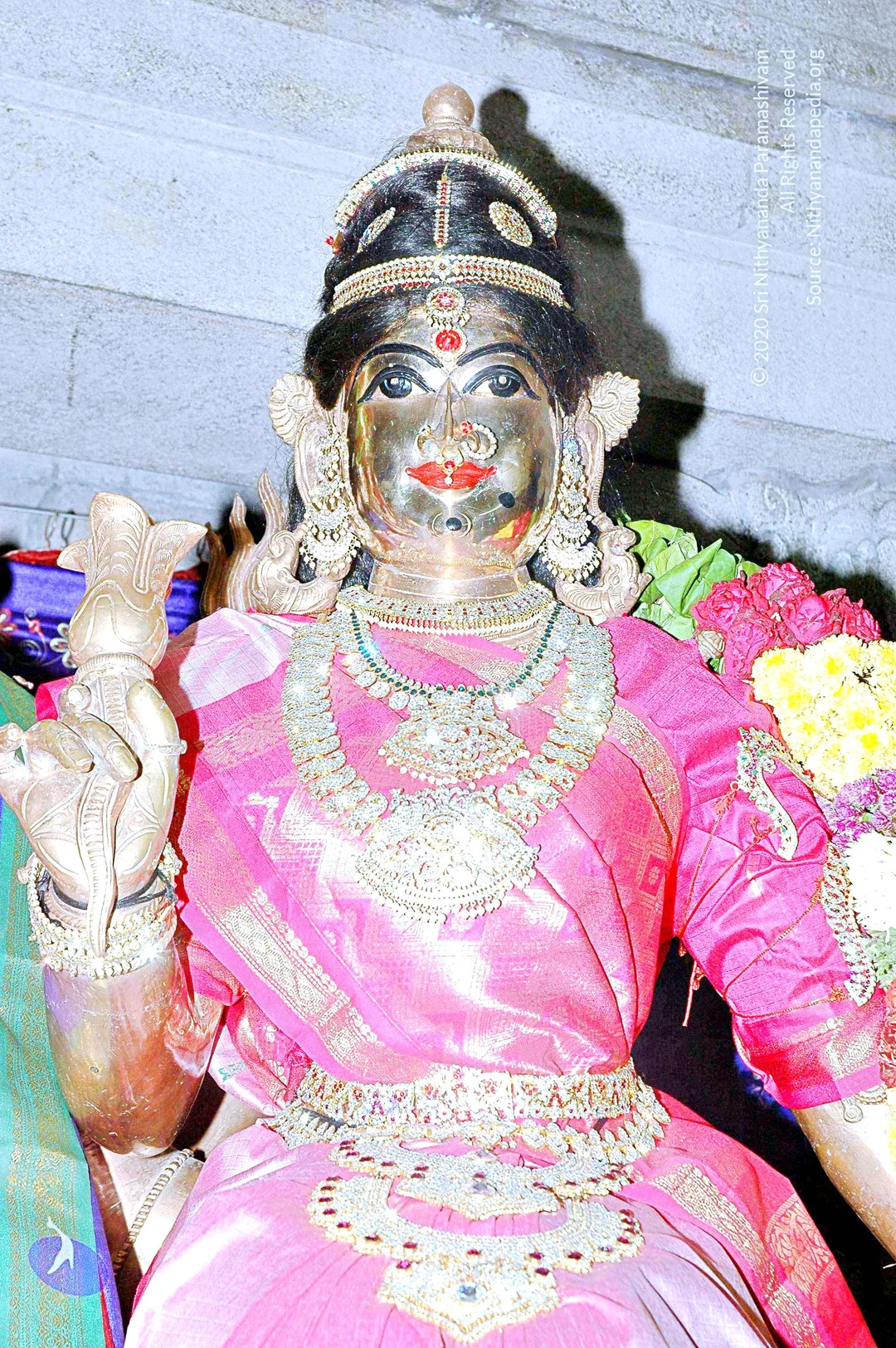
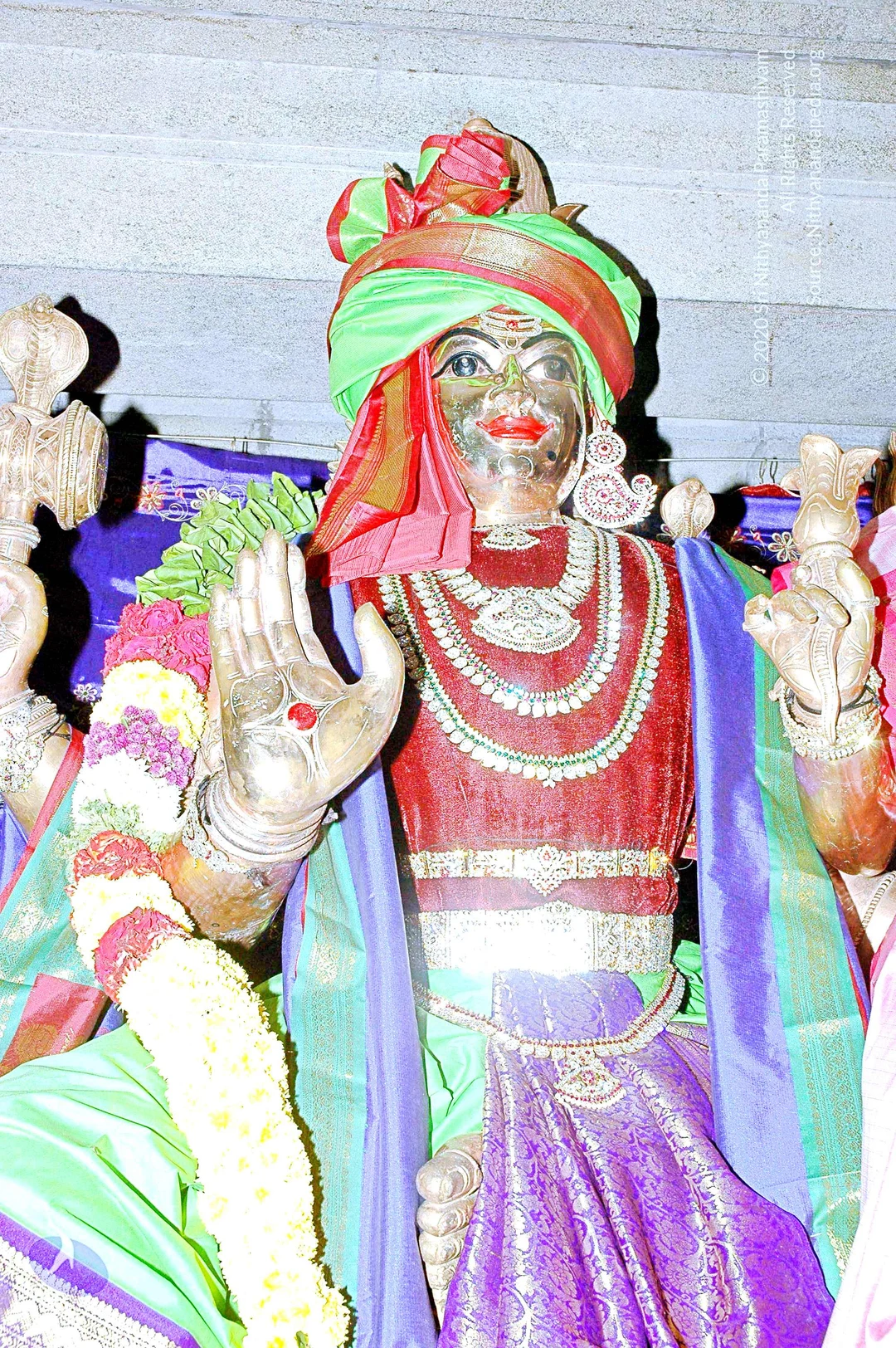
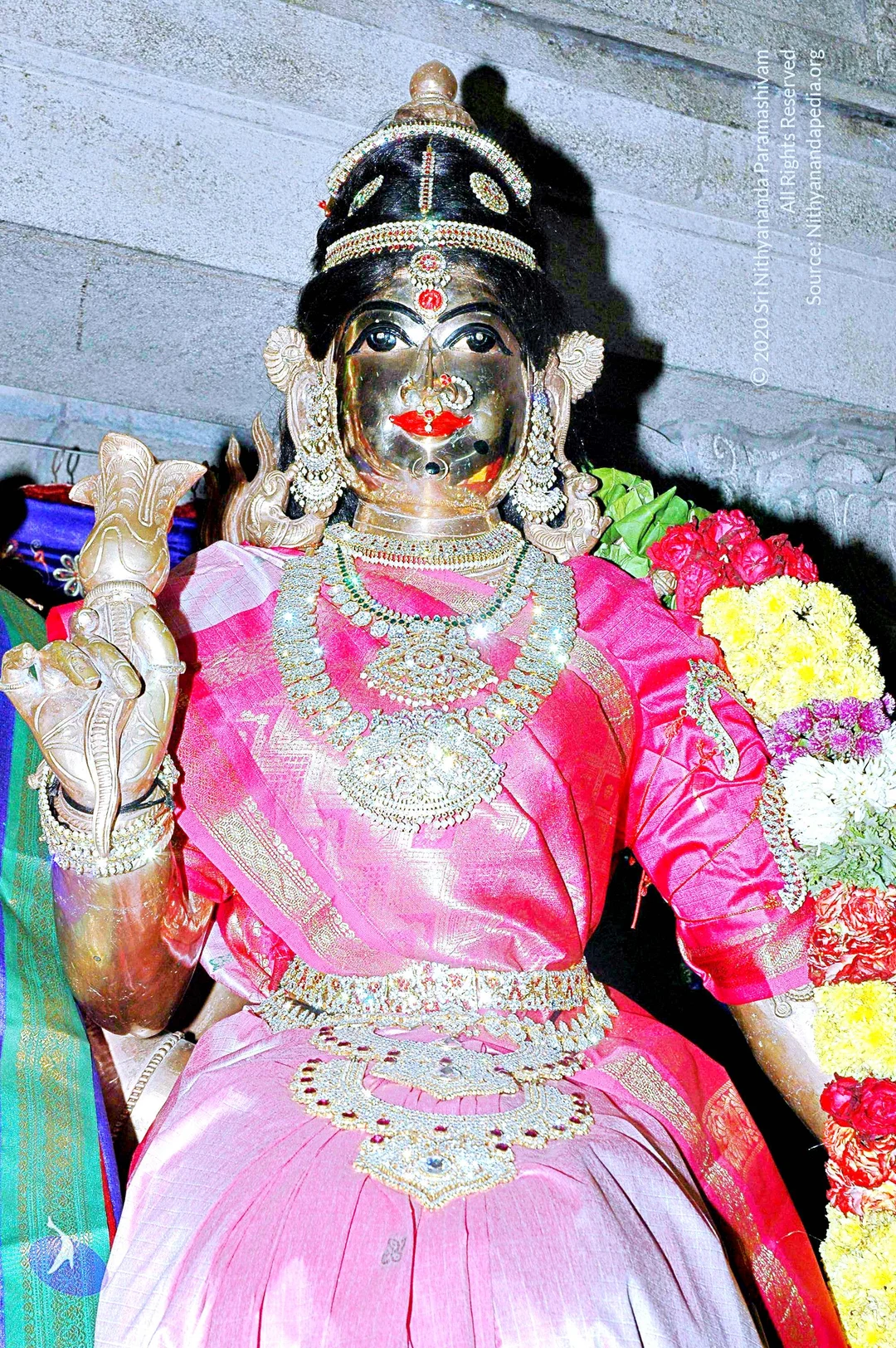
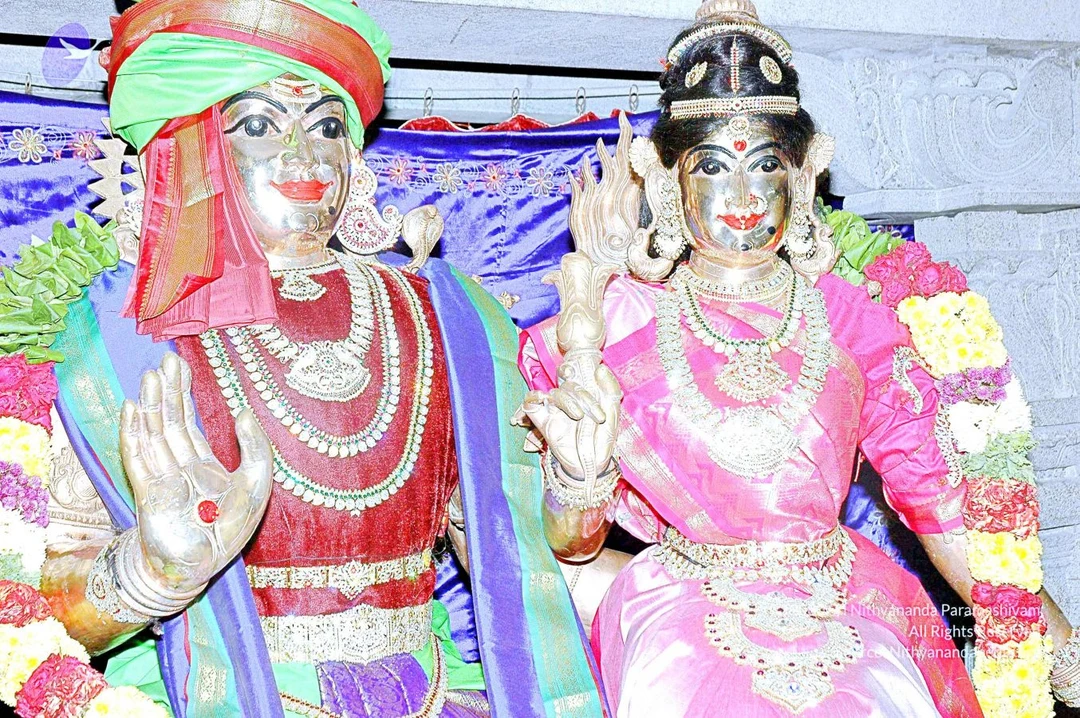
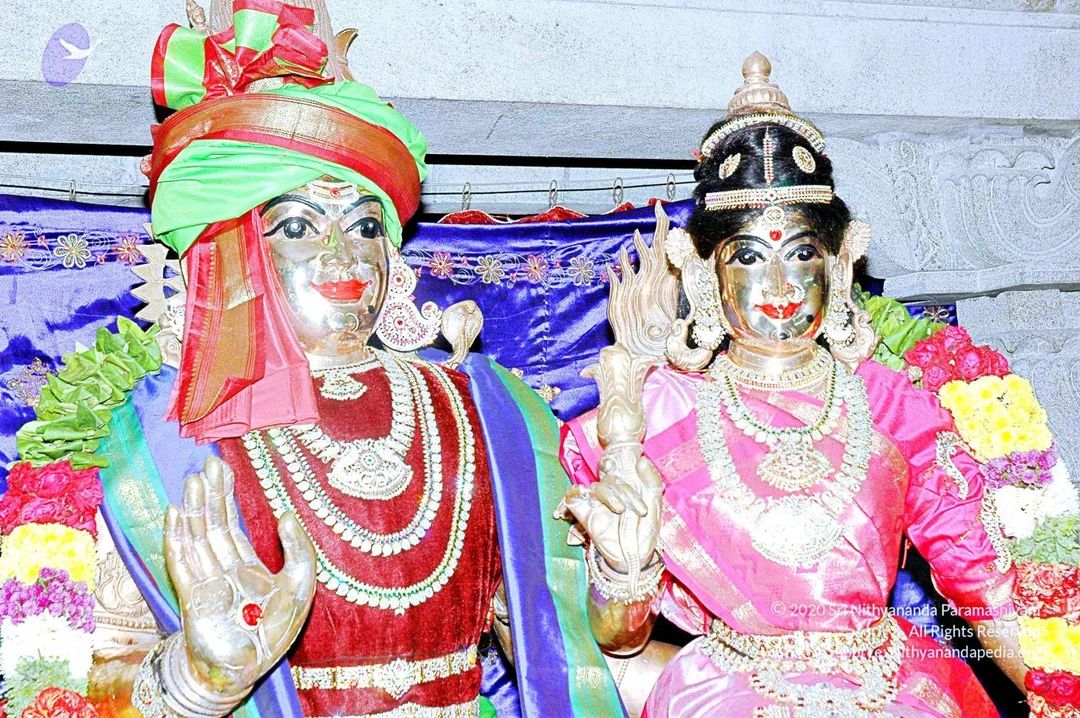
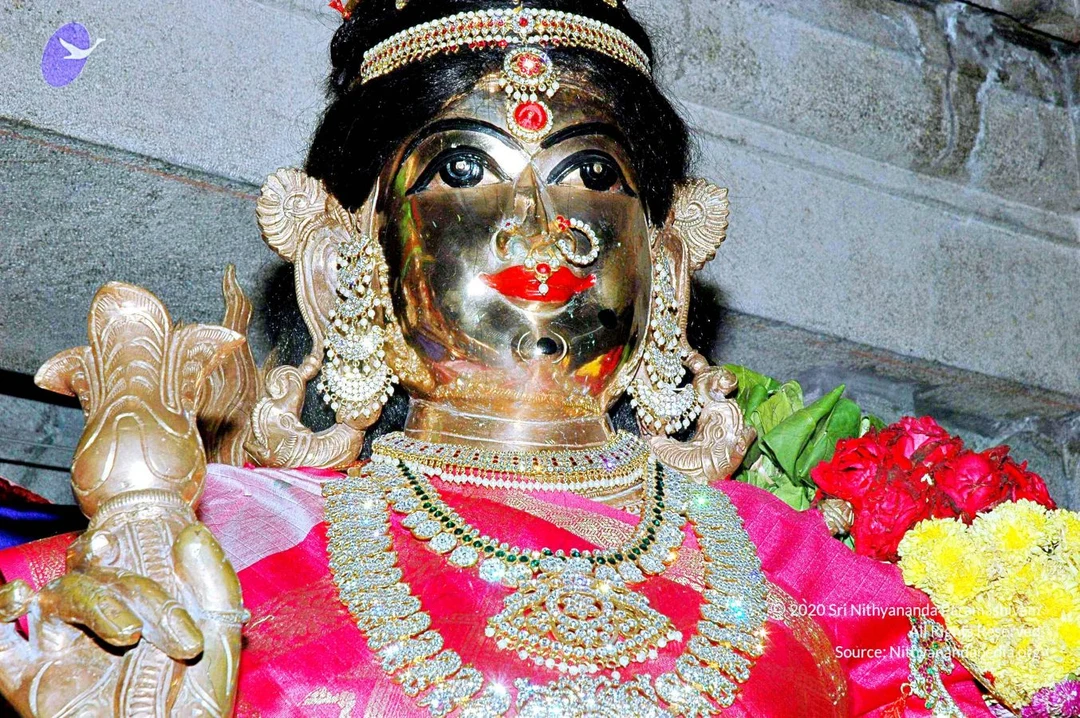
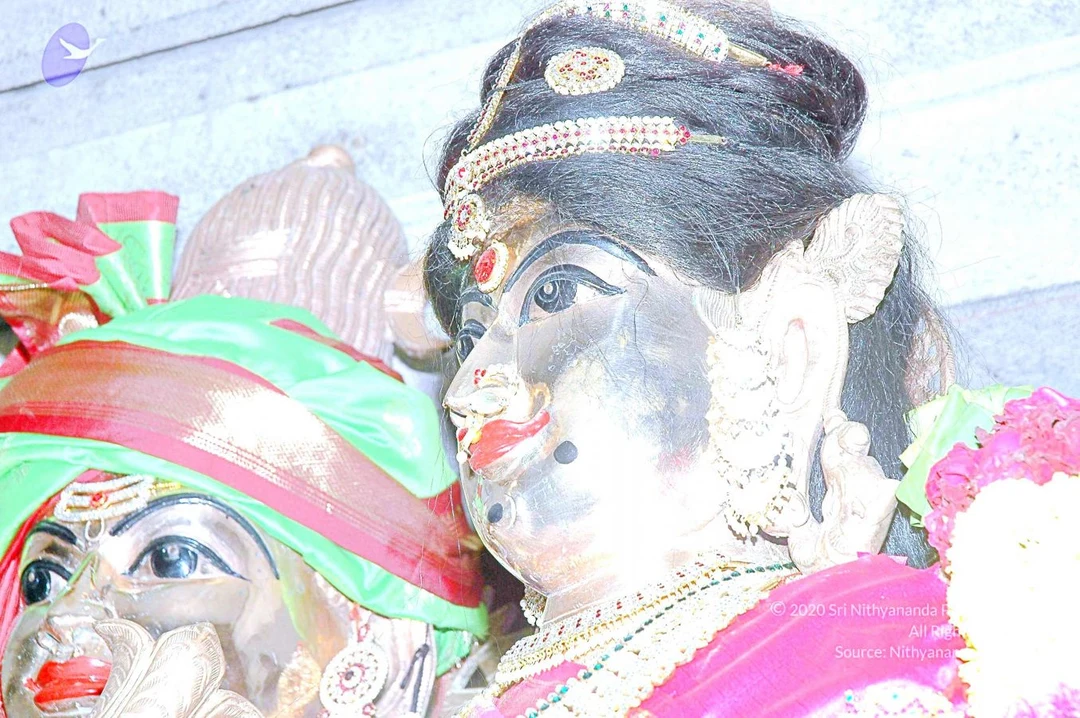
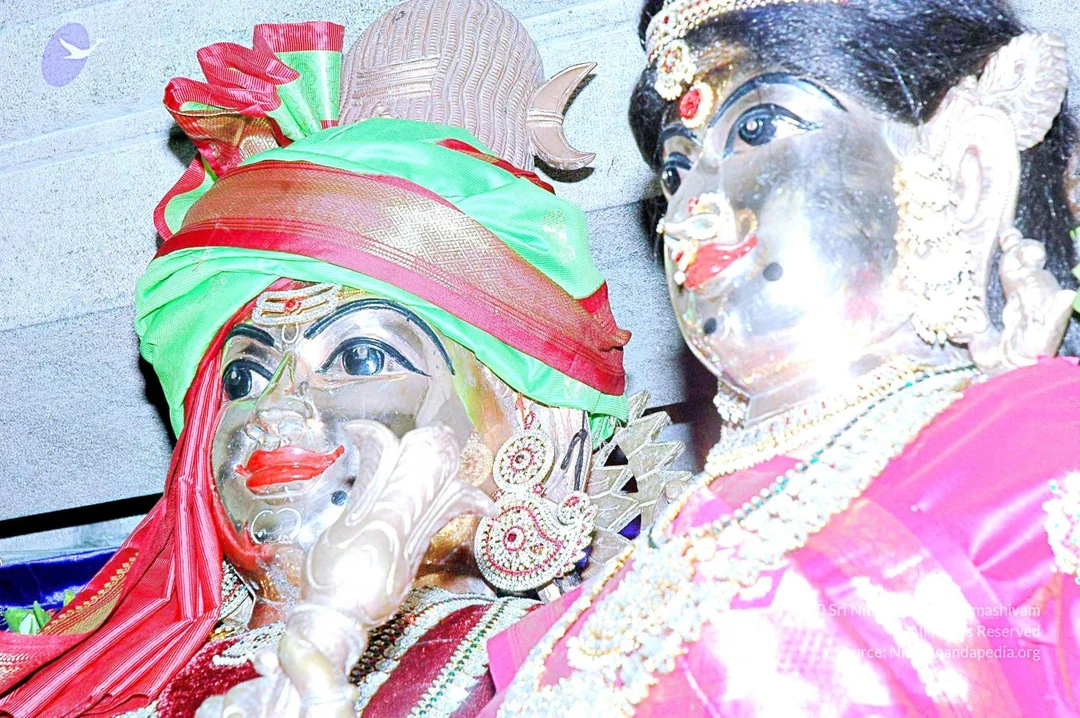
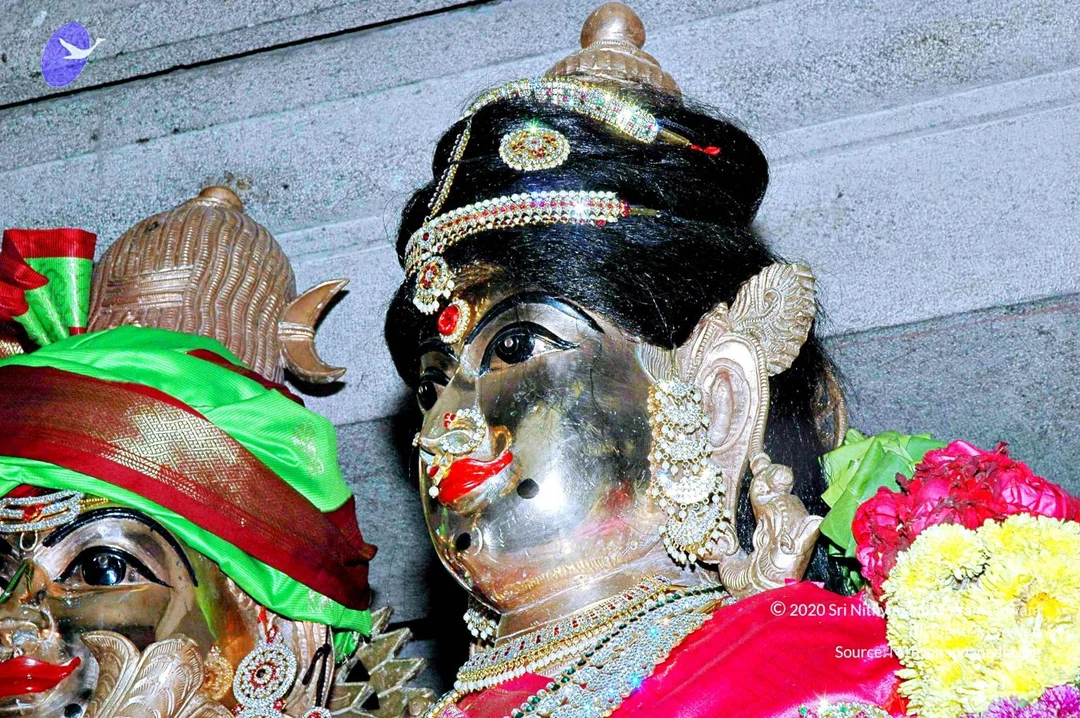
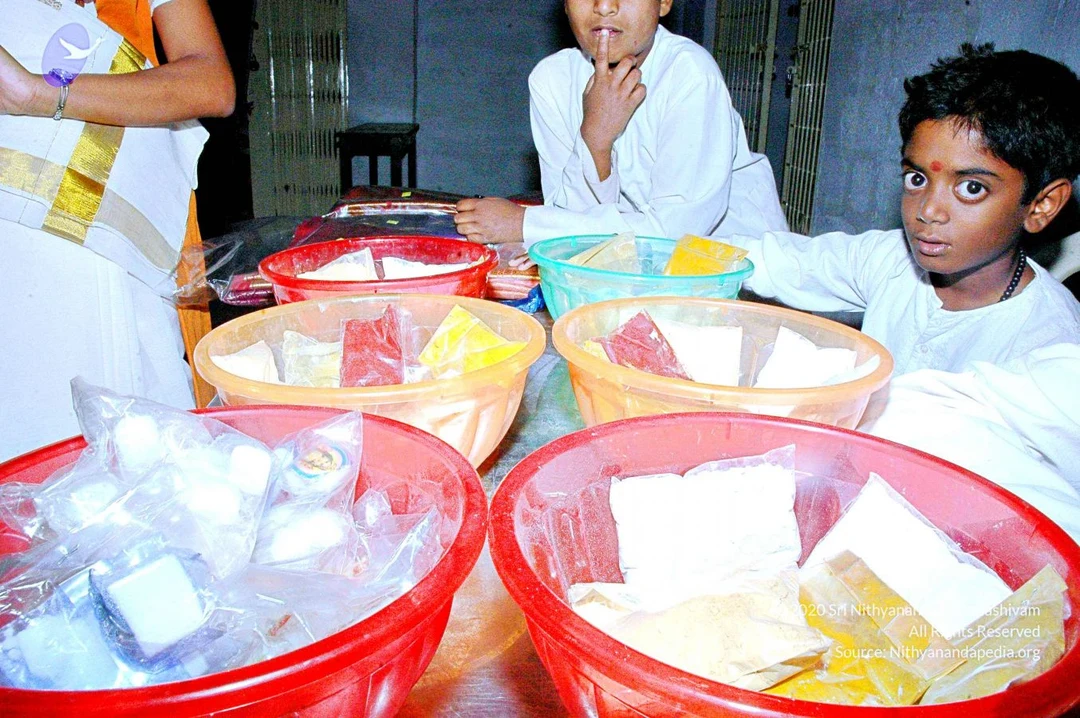
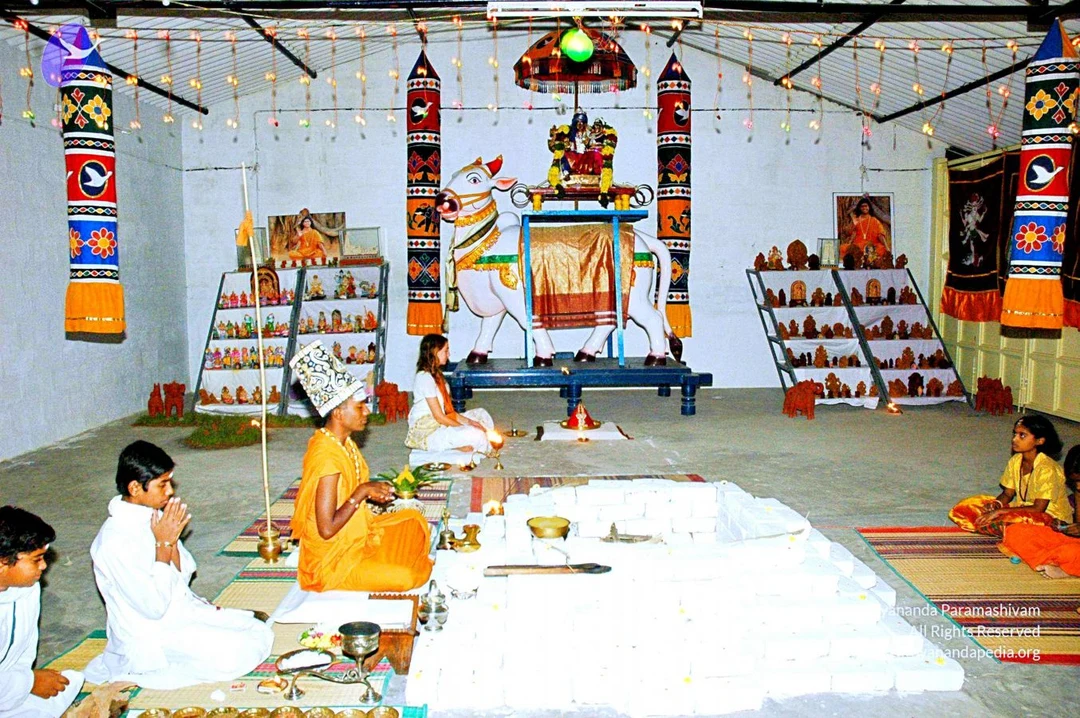
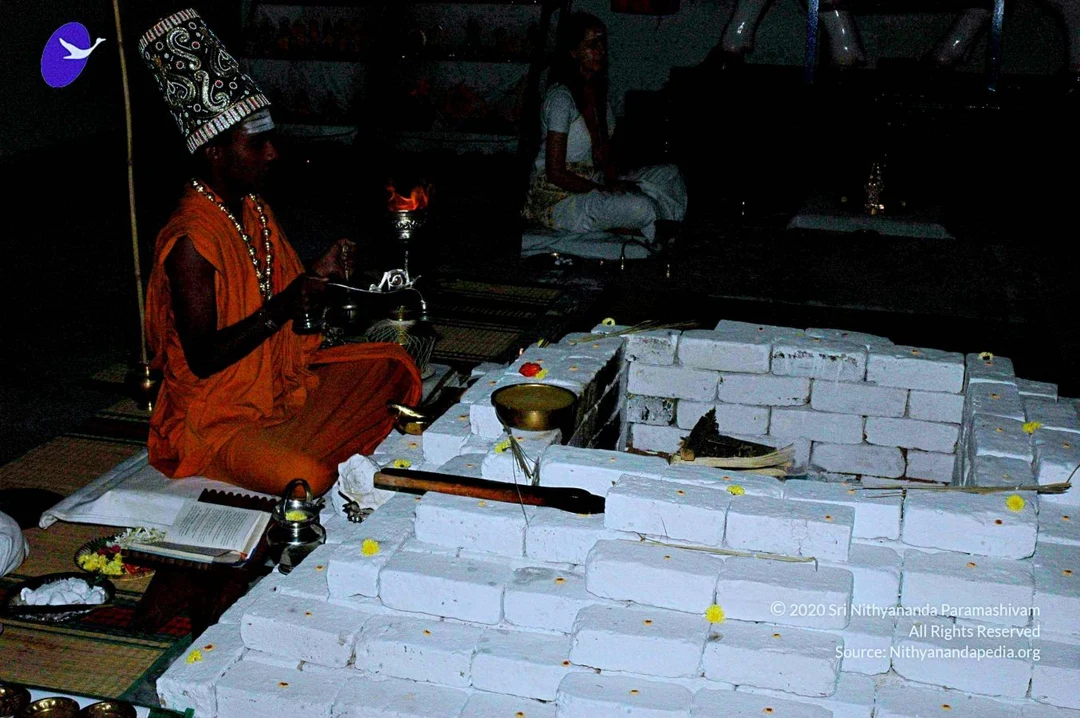
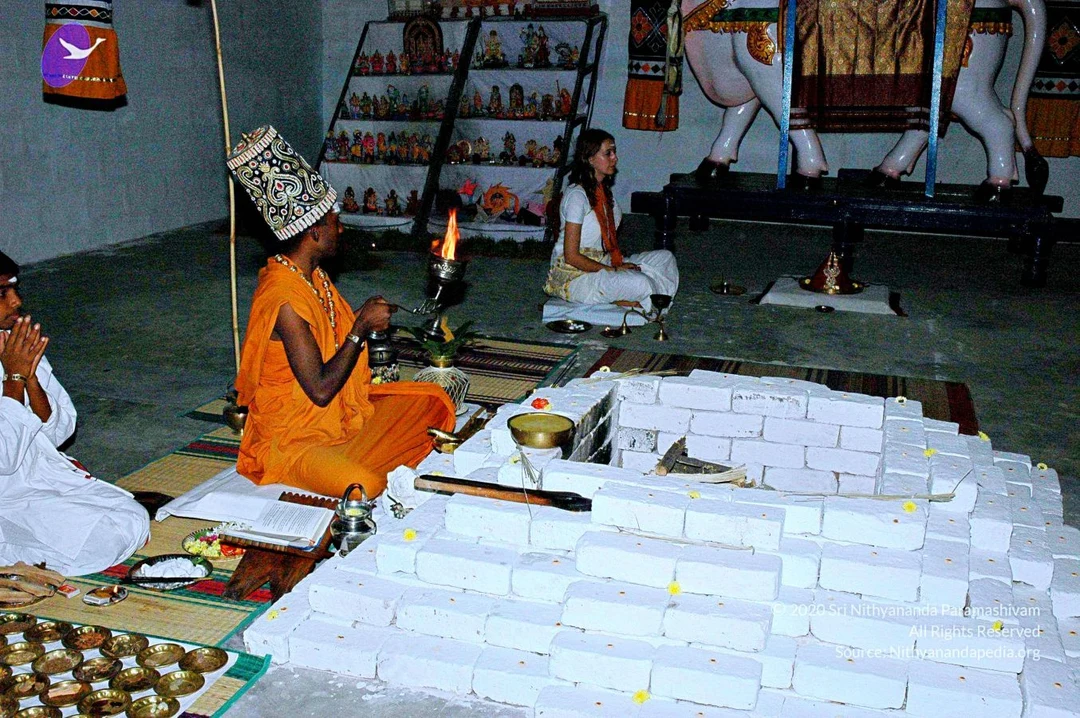
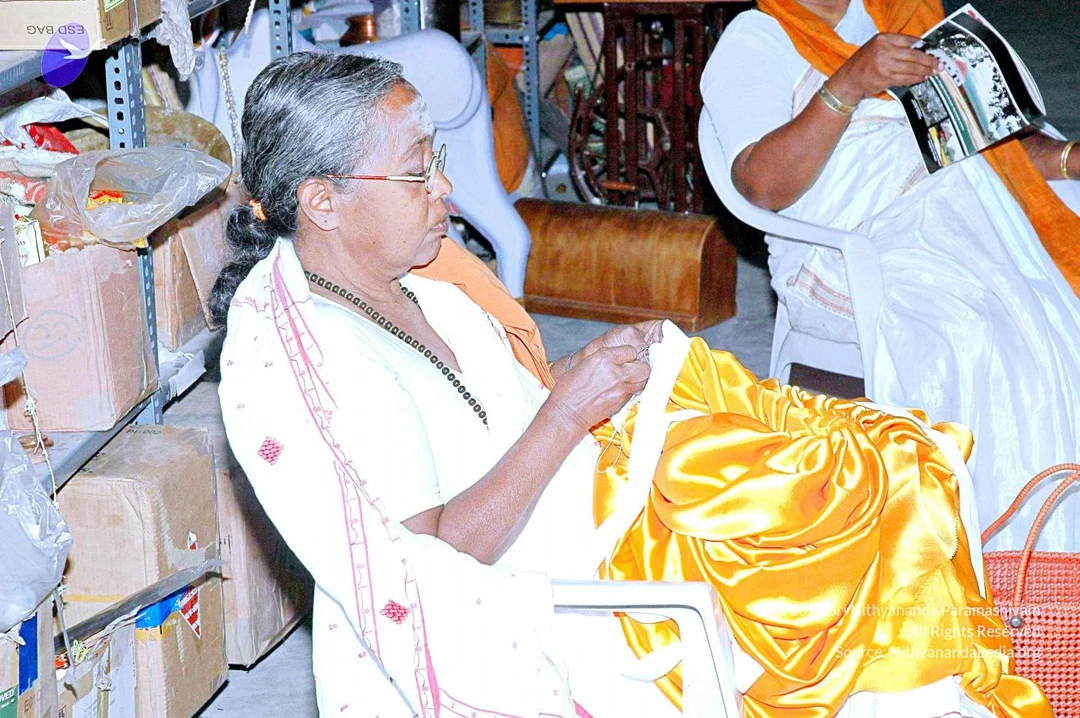
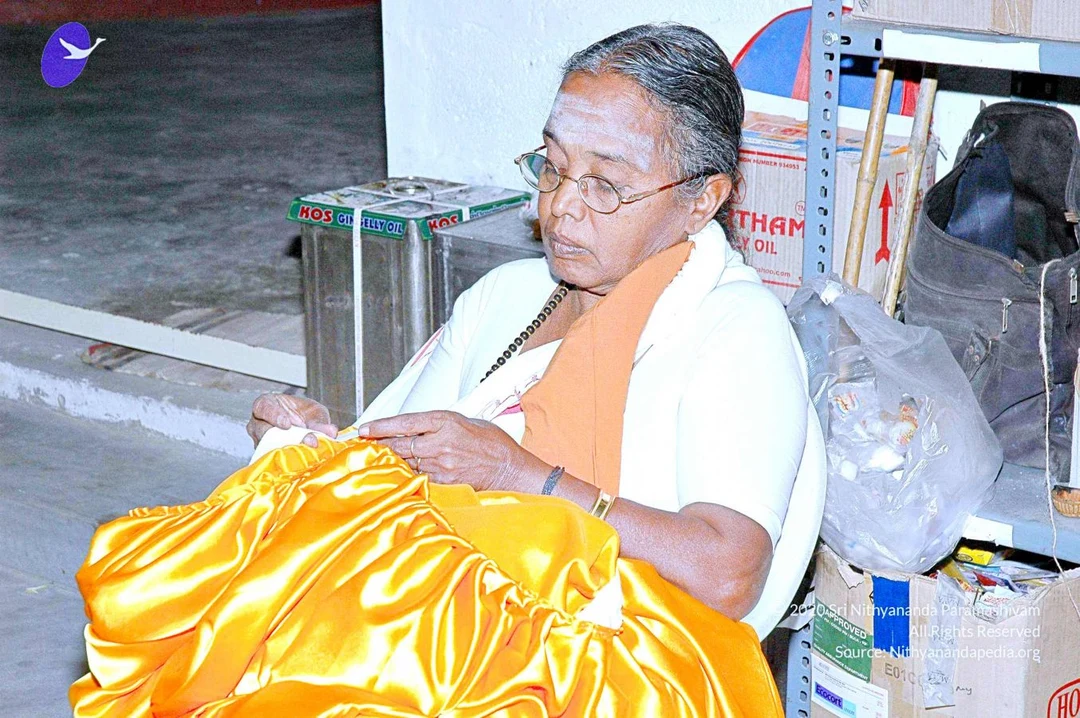
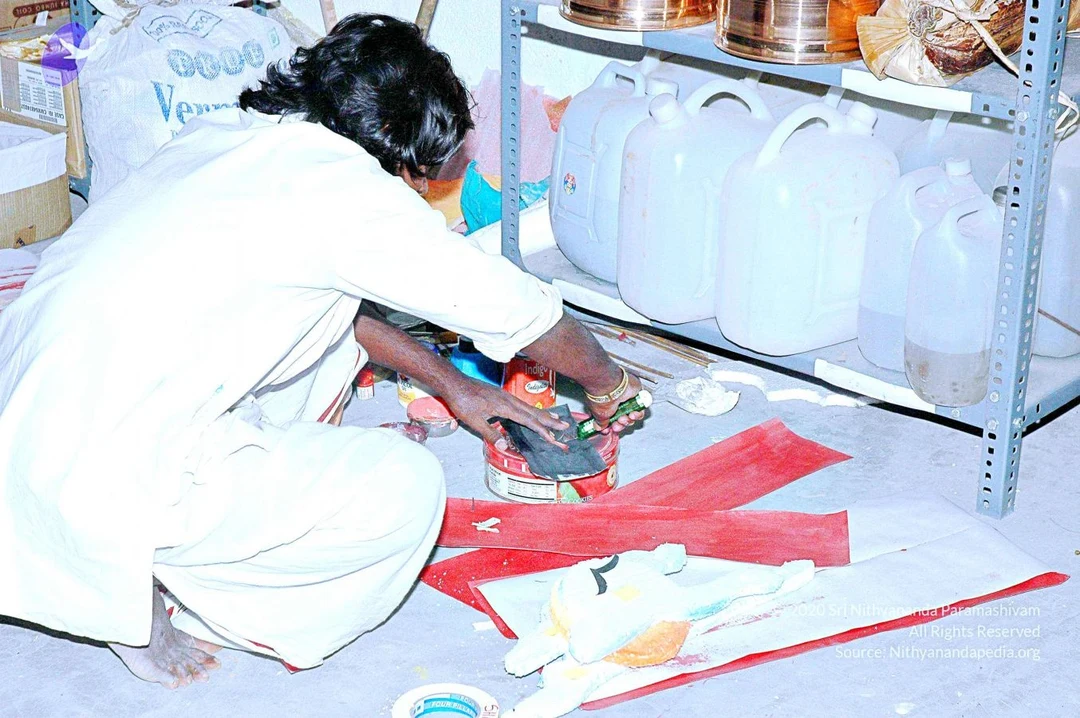
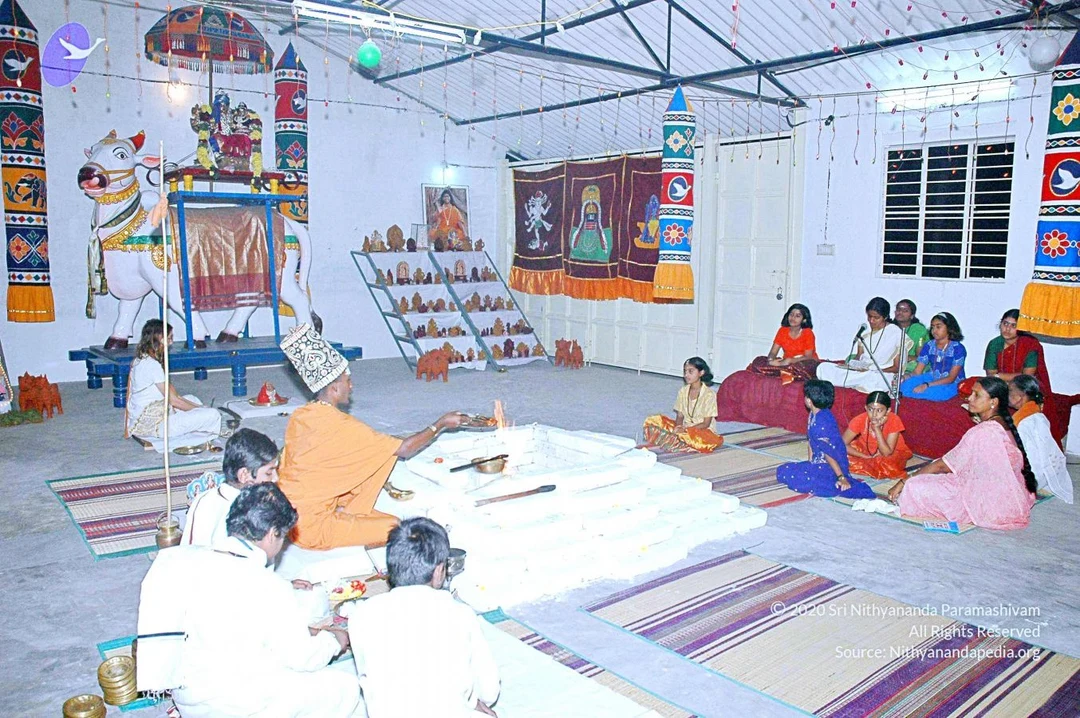
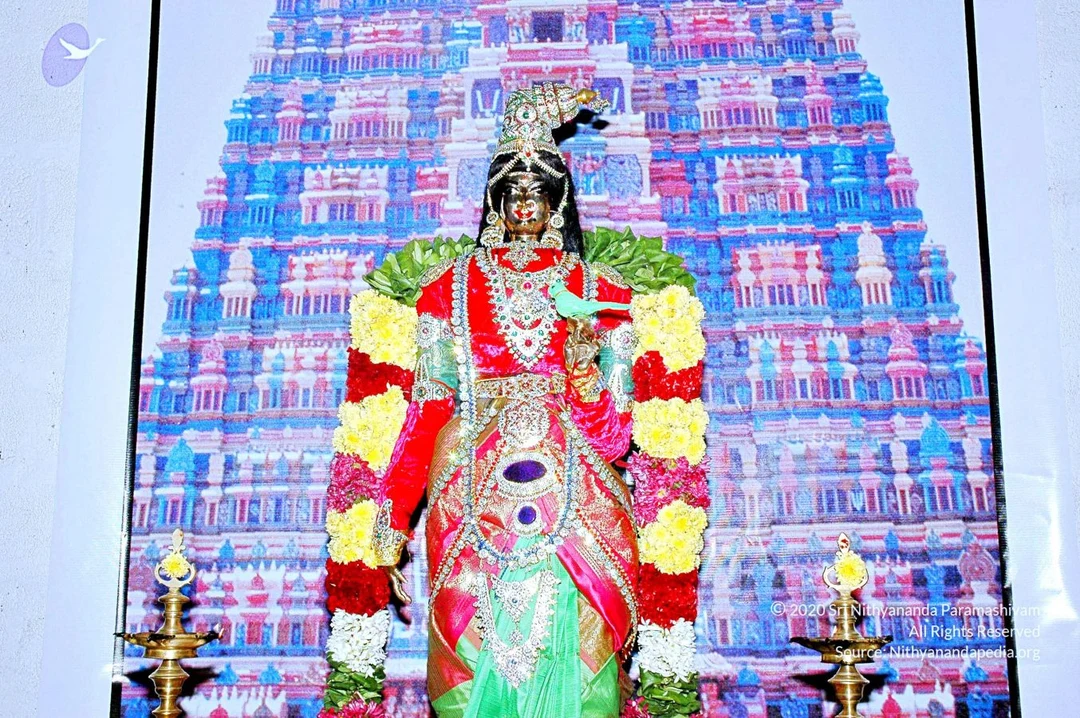
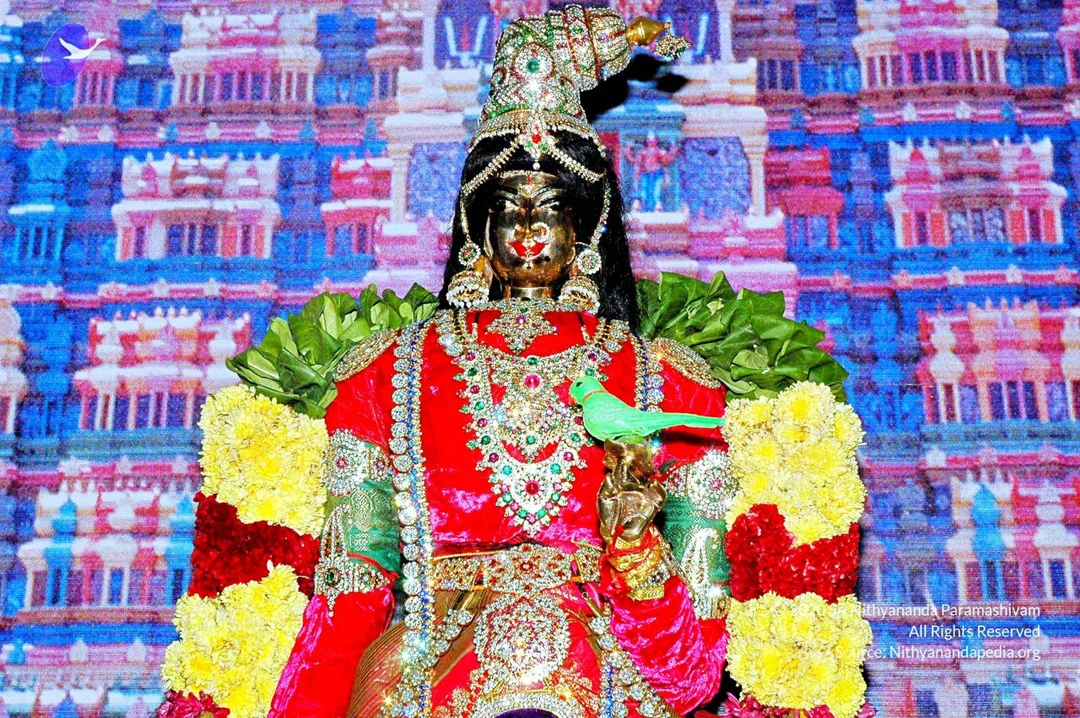
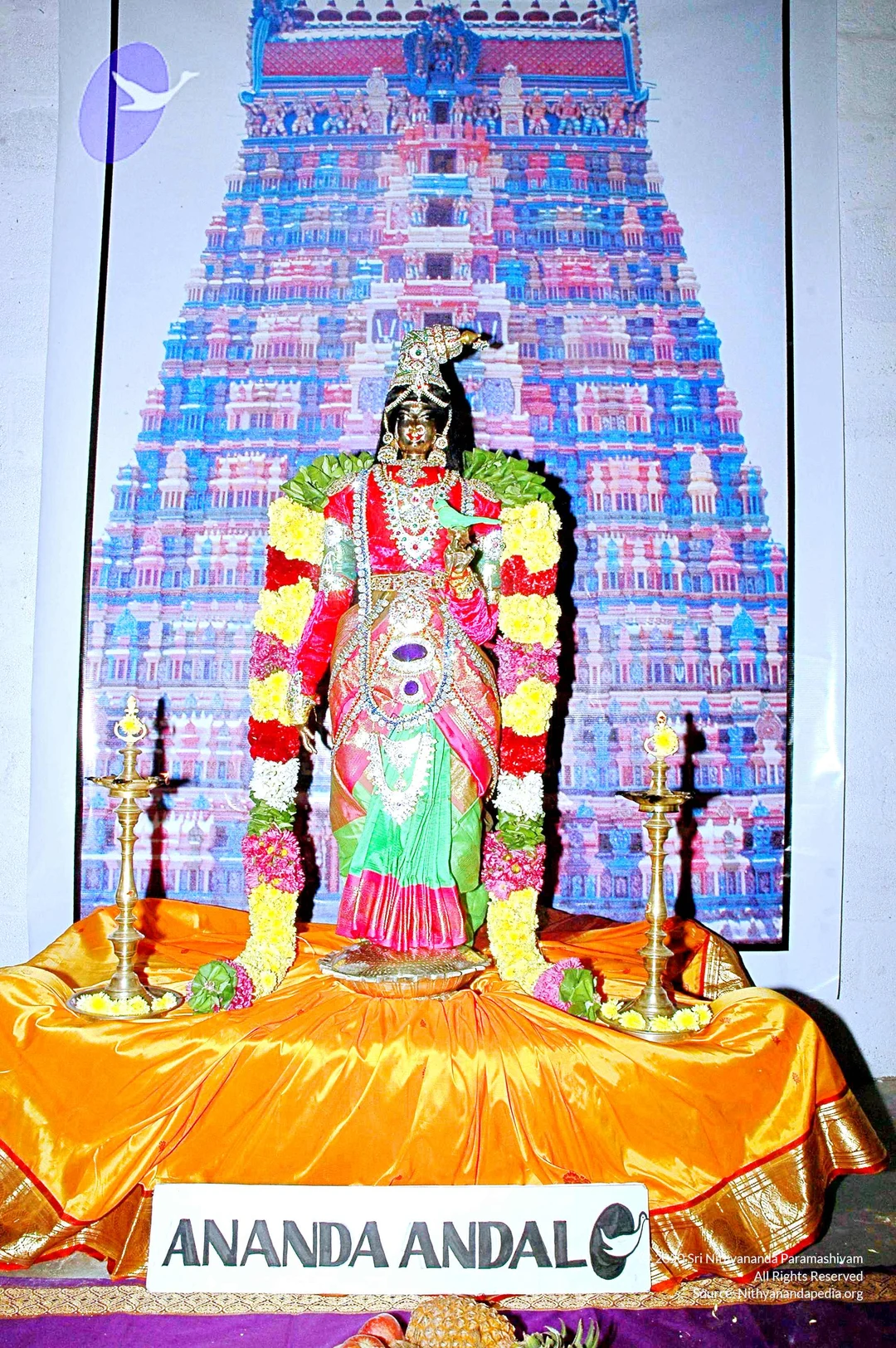
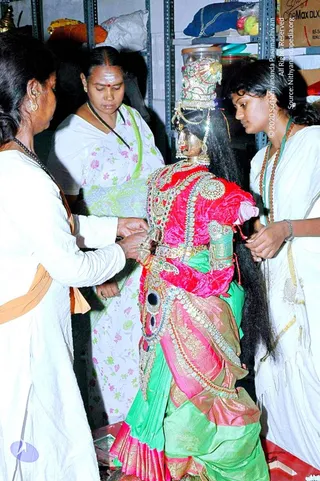
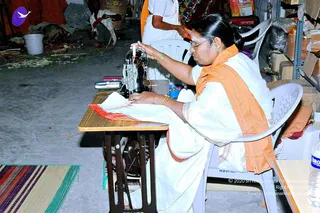
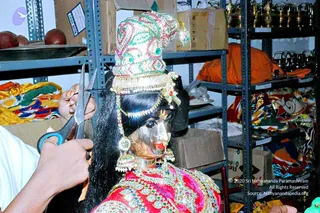
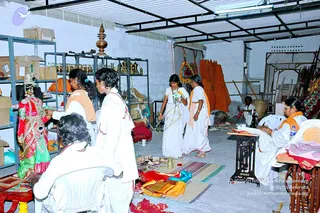
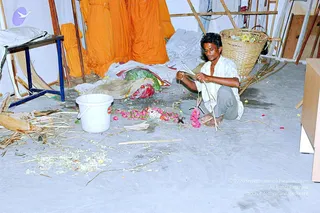
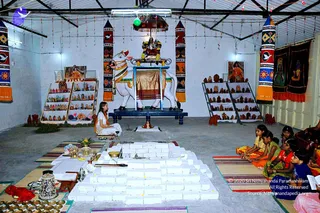
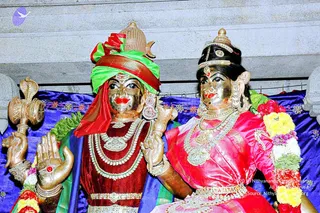
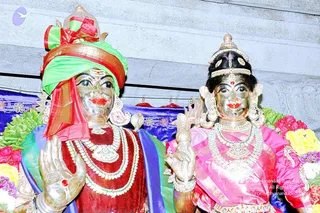
A storeroom with blue metal shelving stacked with cardboard boxes, bundles of fabric, plastic containers and brass items. In the centre, women in white clothes with orange sashes dress a tall decorated deity murti with a crown, red and green silk garments and gold ornaments. One woman combs or braids its long dark hair. On the left, an older woman in a pink sari with an orange sash watches. A seated man in white at lower right holds a garland of pink flowers. Several people are visible, all tending the murti.A photograph in a cluttered storage room with metal shelving stacked with cardboard boxes, plastic containers and wrapped bundles. In the centre stands a golden-faced deity murti with long black hair, a tall ornate jeweled crown, and a red velvet blouse heavily embellished with gold and jeweled trim, paired with green and gold garments. On the left, a woman in a white top with a dark beaded necklace adjusts the murti's clothing with one hand. On the right, a young girl in white with a green and red beaded necklace reaches toward the figure's arm. Only the two women are physically present, plus a partial head at the lower right edge.Three women dress a large deity murti in a storeroom with metal shelving behind them. The murti wears an ornate jeweled crown, a red velvet blouse with silver-and-stone embellishment, and a green and pink silk sari with gold zari border and heavy jewelry. Two women in white, one wearing a rudraksha mala, adjust its garments and long black hair. A third woman in a white floral sari with a black beaded mala and forehead markings watches and holds ritual items. Boxes, bags and containers fill the background shelves.A woman with her hair pulled back and wearing glasses sits at a treadle sewing machine, stitching a white cloth with a red-and-white border. She wears a white blouse and white sari-style garment with an orange shawl draped over her shoulders, and gold bangles on her wrists. Behind her, another person in white is working at a table, and cardboard boxes, a plastic bucket, a striped mat and a water bottle are visible in a workshop-like room.A photograph in a storeroom of an ornately dressed deity murti (figure) with long black hair, a tall pink, green and gold jeweled crown, and a red and gold embellished garment. A person's hands, one holding a pair of scissors, are trimming or adjusting the figure's hair. Metal shelves behind hold cardboard boxes, brass bells, folded orange and multicoloured silk cloths, and a few red-brown objects. No living person's face is visible; the figure is a statue, not a person.A workshop storeroom where several people in white and orange-yellow clothing prepare ritual items. On the left, a standing deity murti in red and green embellished dress with an ornate crown is being dressed by a woman in white with an orange shawl, while another person in white works nearby. Shelves hold brass vessels and cardboard boxes; orange saffron cloth hangs on the right. In the foreground a person in white sits with their back to the camera, and a woman at a Singer sewing machine in white with an orange shawl stitches fabric on the right. Woven mats and scattered coloured cloth cover the floor.A photograph of a man in a white shirt and grey trousers sitting cross-legged on a bare concrete floor, stringing pink and white flowers into garlands with thin strips of cane. Scattered petals and plant fibres lie around him, with a white plastic bucket to his left and a woven basket of flowers behind him. Behind him hang folded saffron-orange cloths on poles, and a blue-legged stool stands at the left edge of the room.Photograph of a temple-like hall with white walls and a metal roof, decorated with hanging strings and tall striped pillars in red, blue, yellow and white. At the centre, a white bull (Nandi) stands on a blue wooden platform draped with a golden-brown cloth, and a deity murti sits on top of it beneath a small canopy. Shelves on both sides display rows of small clay and brass figurines and deity statues. In the foreground, a young girl in orange clothes sits cross-legged before a large white sand or ash mandala-like structure, with brass vessels, a conch-like bowl and oil lamps arranged on mats. About eight girls in yellow, orange, pink and blue dresses sit on the right on striped mats, watching the ritual. Several portrait pictures hang on the walls.A photograph of a covered hall with a white nandi bull statue on a blue pedestal, draped with a gold-bordered cloth, and a small deity murti above. A young woman in white with an orange shawl sits cross-legged on a mat near a white brick fire-pit altar with brass vessels and oil lamps. Several girls in yellow, orange, red and blue dresses sit on mats to the right, holding books. Tiered shelves hold small clay figurines, and decorative woven banners hang on the walls. A seated person at the far right edge is partly visible.Two gilded metal deity murtis stand side by side against a royal blue cloth backdrop with embroidered floral motifs. The figure on the left wears a green and red turban with a crescent ornament, a red velvet bodice with layered white and gold necklaces, and holds a staff-like ritual object topped with a small finial in one raised hand. The figure on the right wears a pink silk sari, a gold crown, layered gold necklaces and jewelled earrings, with one hand raised. Both are garlanded with marigolds, roses and green leaves. The scene reads as a temple or ashram worship setting; the murtis are statues, not people.Two life-size metallic deity murtis stand side by side, adorned for worship. The figure on the left wears a green and red turban with a red-and-gold sash, a red velvet-looking garment with layered pearl necklaces, and a red tilak on the forehead. The figure on the right wears a pink silk sari with gold border, a jeweled crown, multiple gold and pearl necklaces and large earrings. Both have polished golden faces with red lips. Their hands are raised in blessing and holding objects. Behind them are garlands of marigolds and roses, and a blue draped cloth. The setting appears to be a temple sanctum during a puja.A silver-toned deity murti, a large statue with a stylised face, dressed in a green and red turban with gold border, a red velvet blouse and a lavender-and-green shawl. It wears layered white and green-jewelled necklaces, a paisley-shaped pink and white earring and a red bindi-like mark on its raised palm. Green leaves and garlands frame it at the left, with a purple cloth behind. No living people are visible.