Skip to content
Sunday

11 February 2007

THE SUPREME PONTIFF OF HINDUISM HDH BHAGAVAN SRI NITHYANANDA PARAMASHIVAM

Dated photos
347
Source pages
1
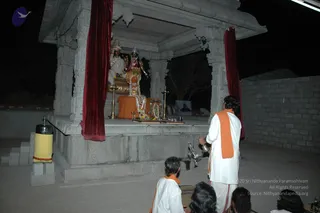
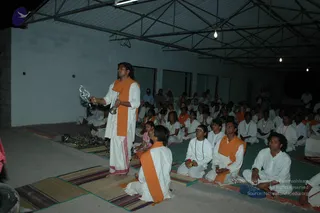
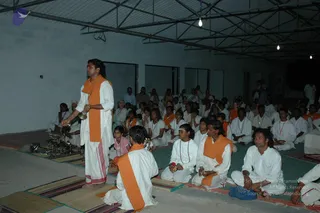
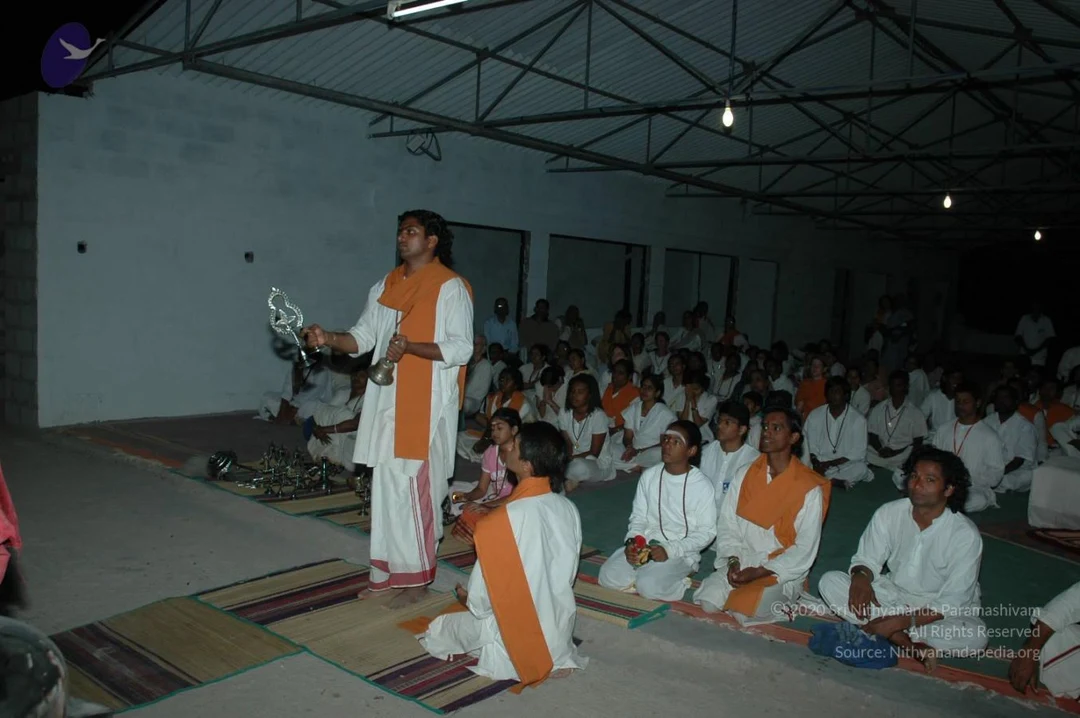
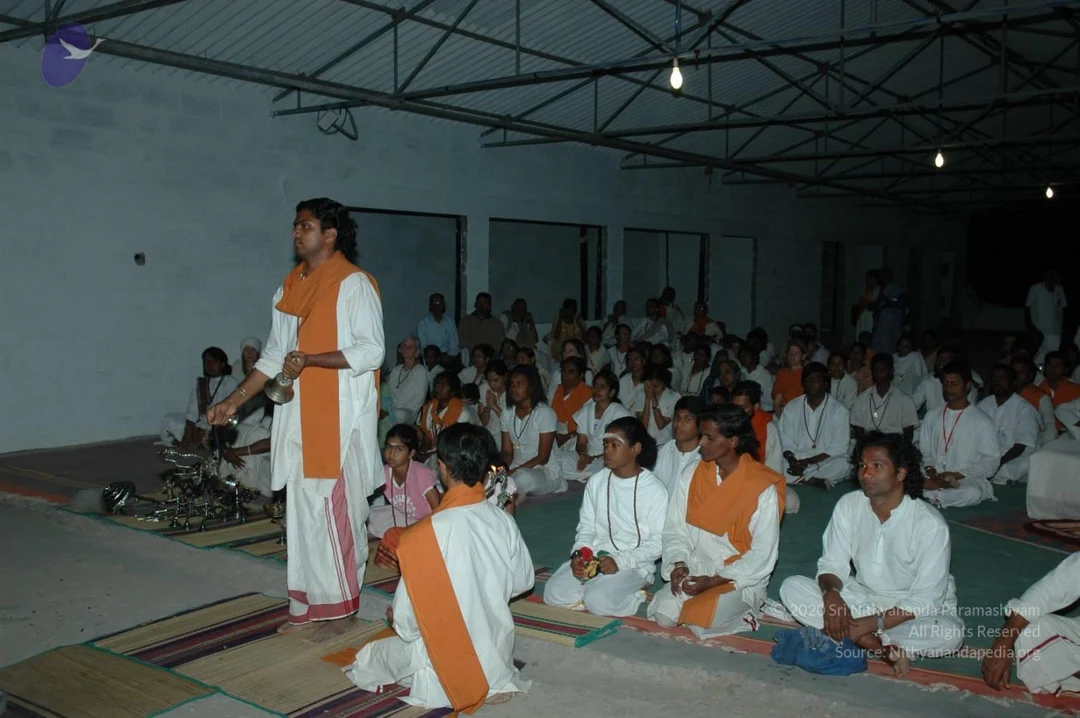
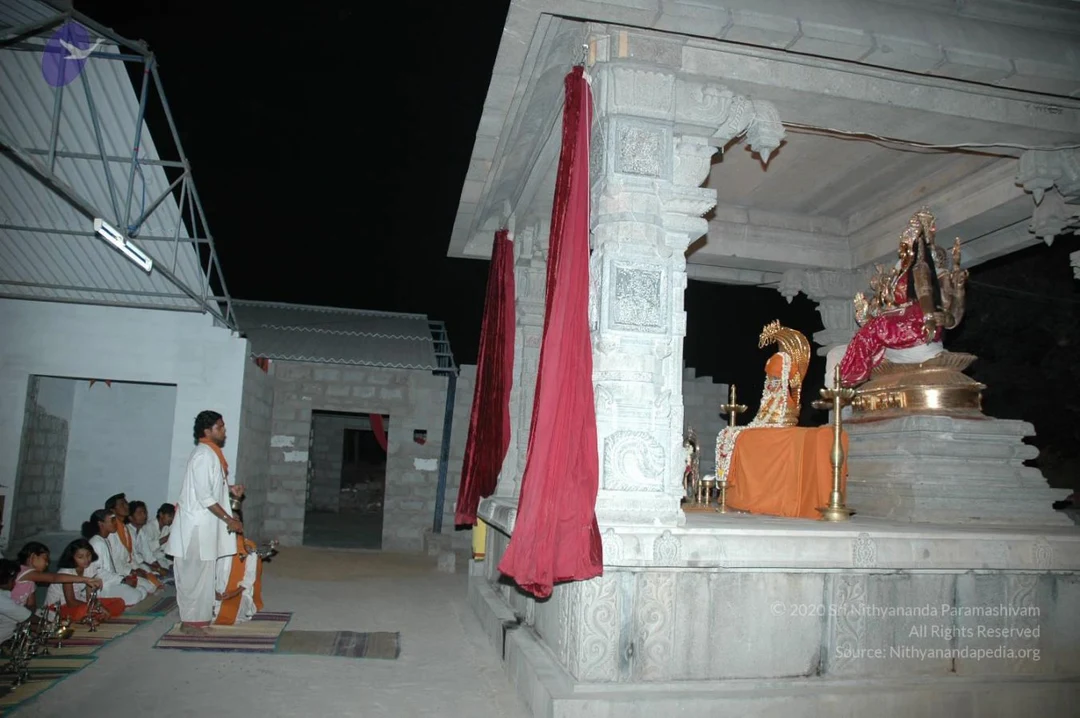
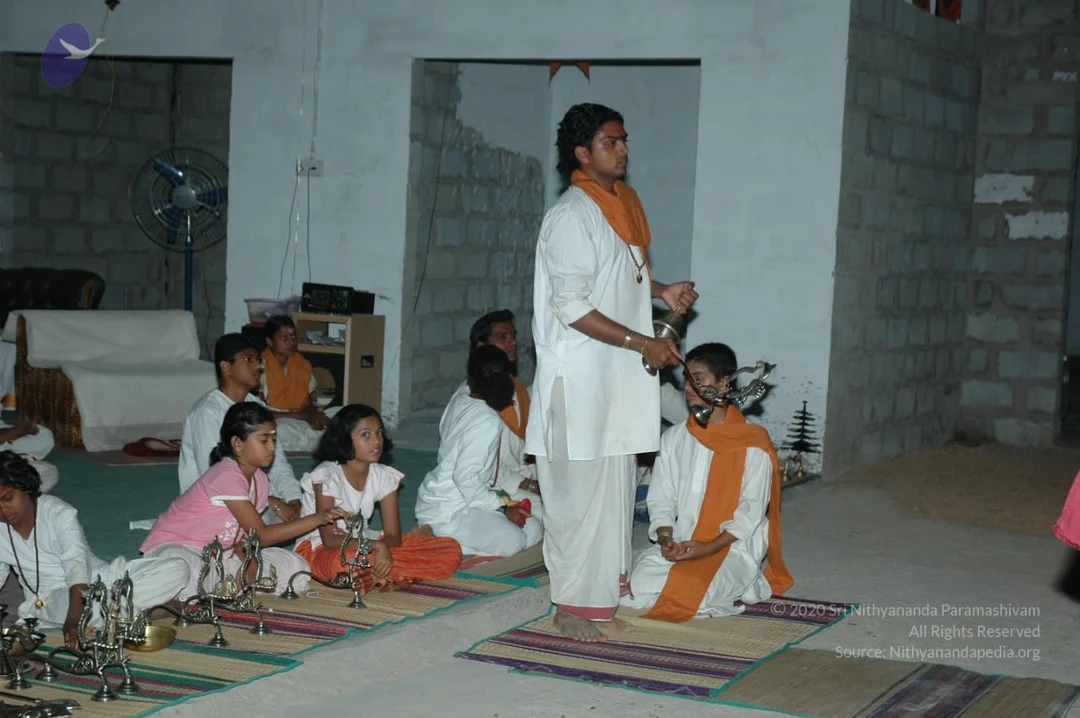
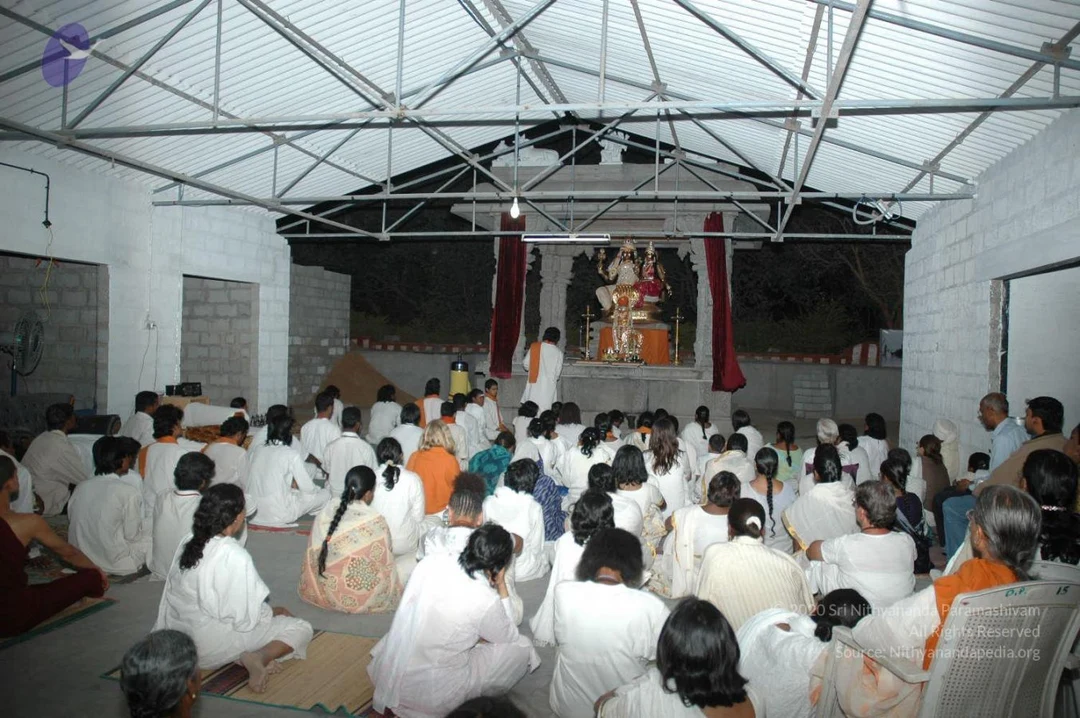
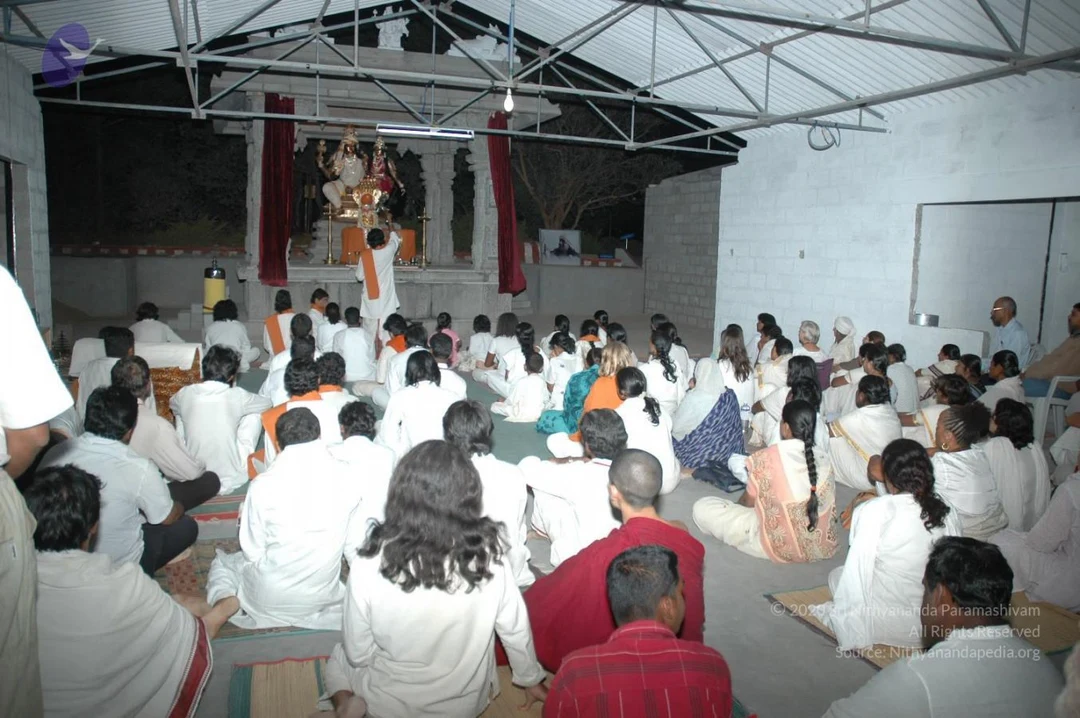
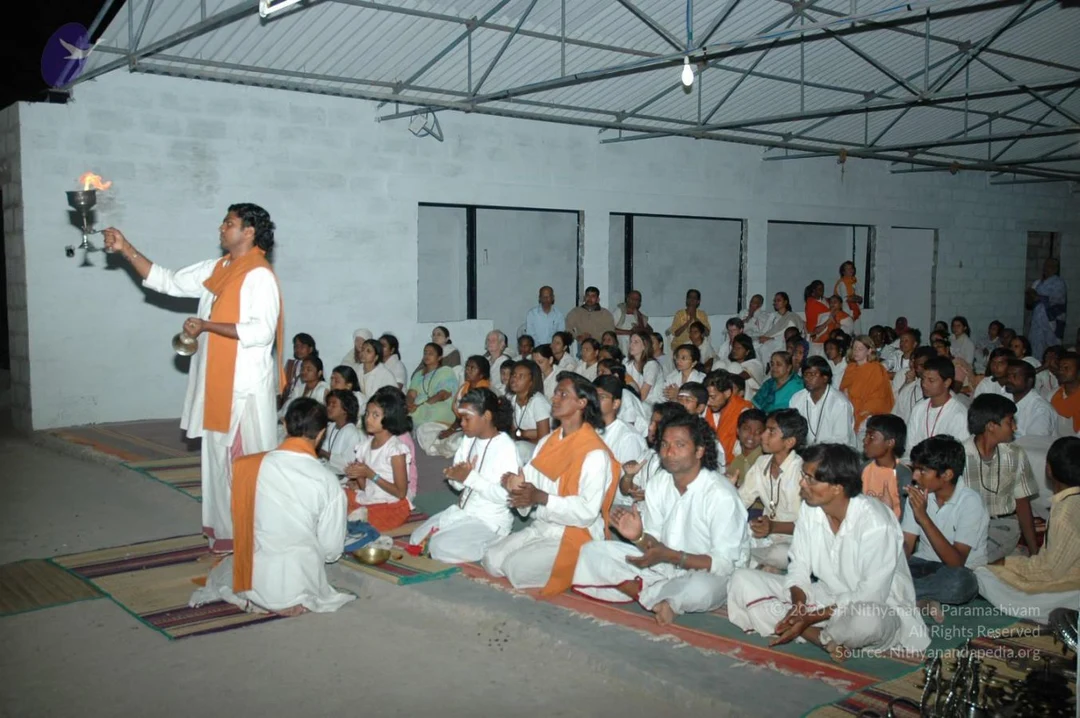
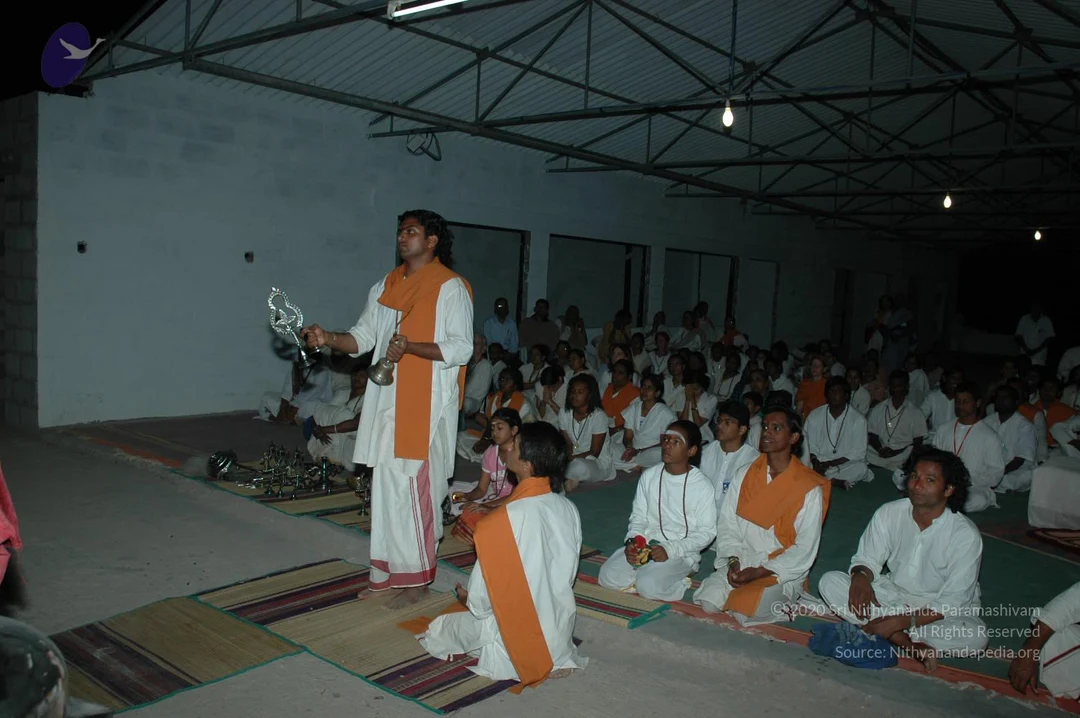
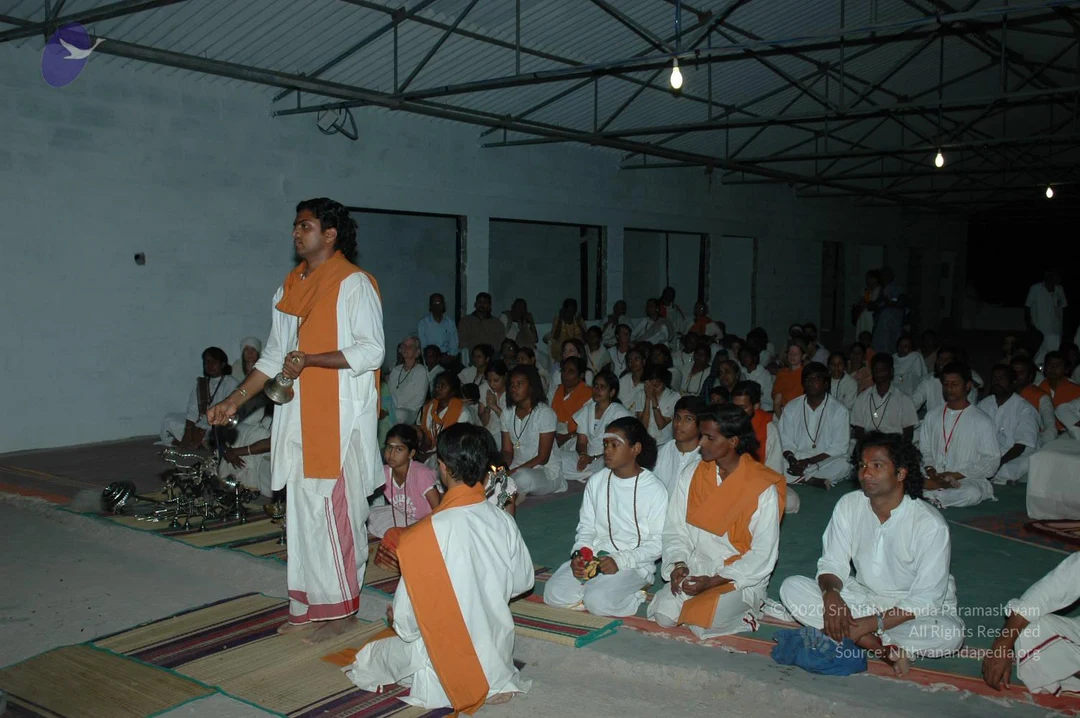
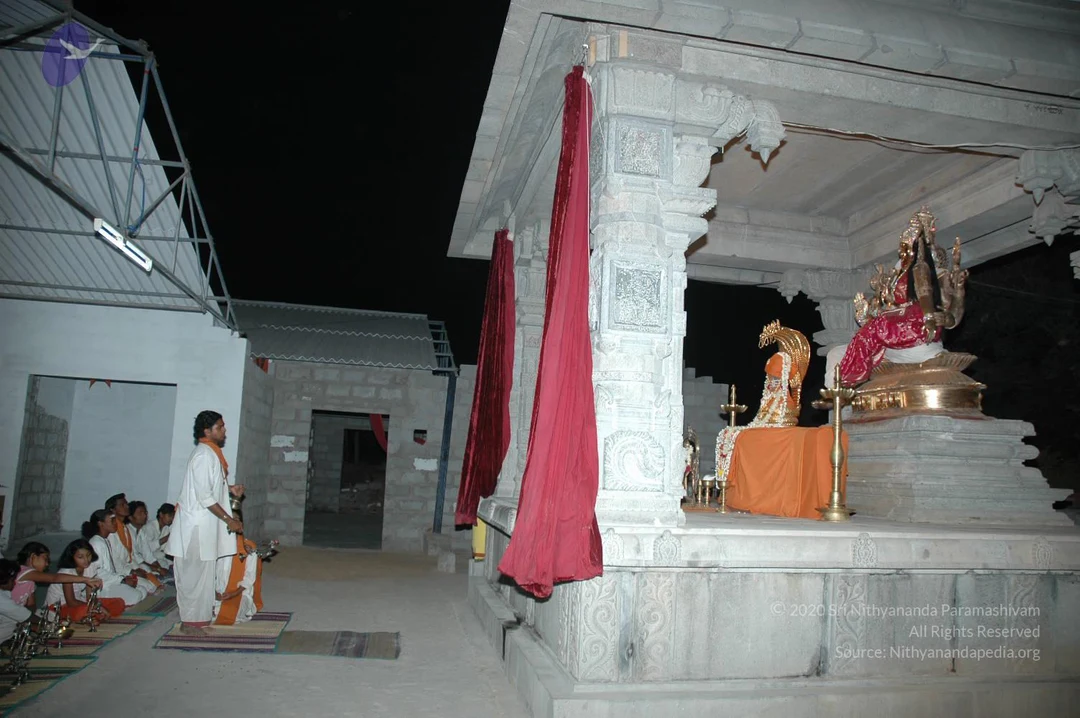
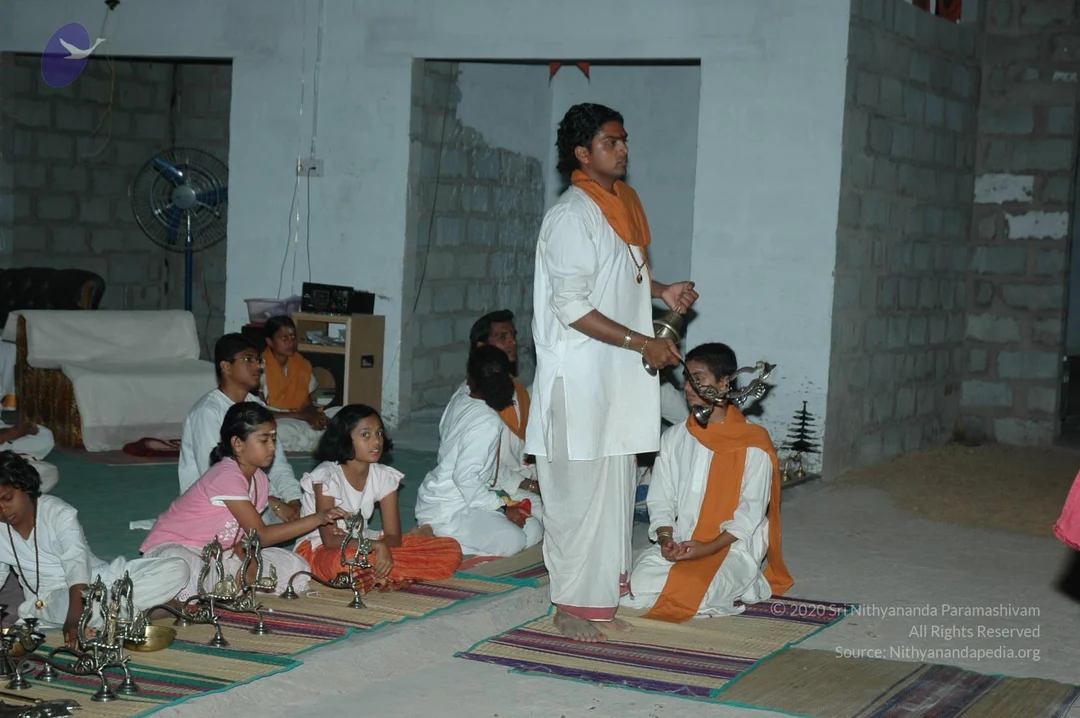
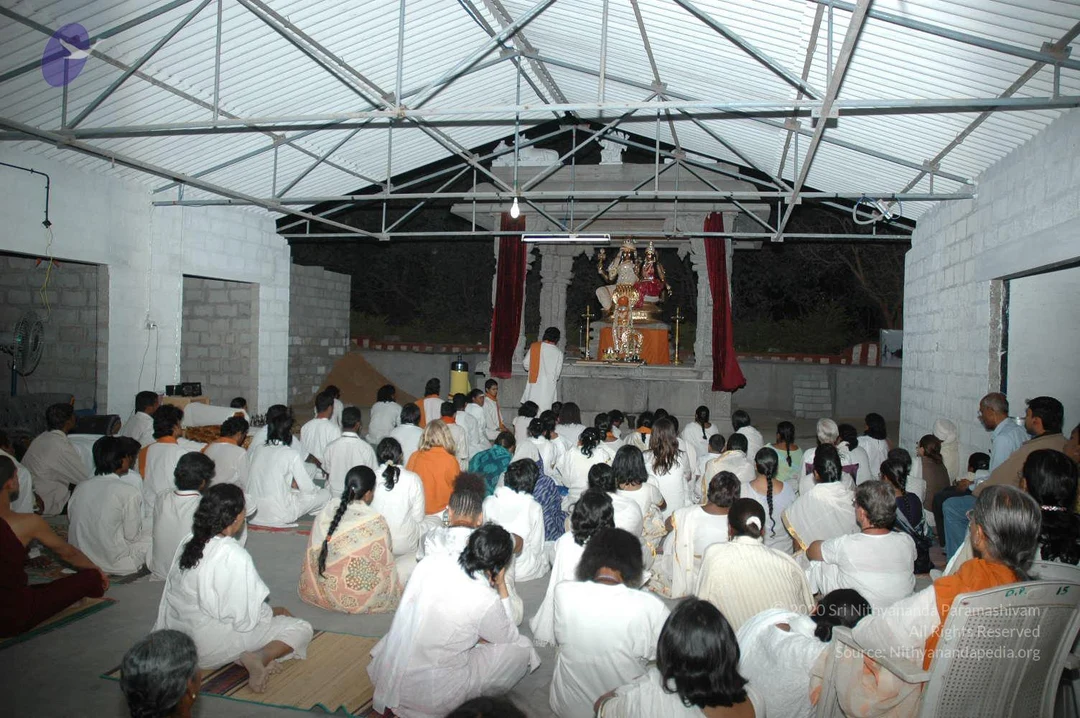
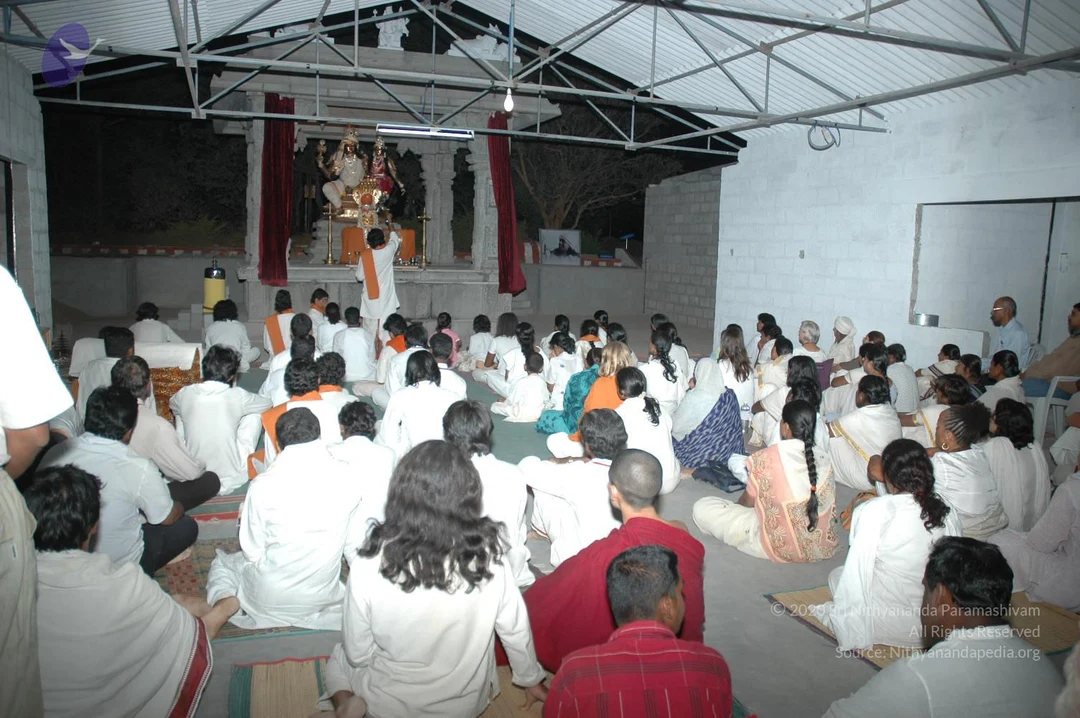
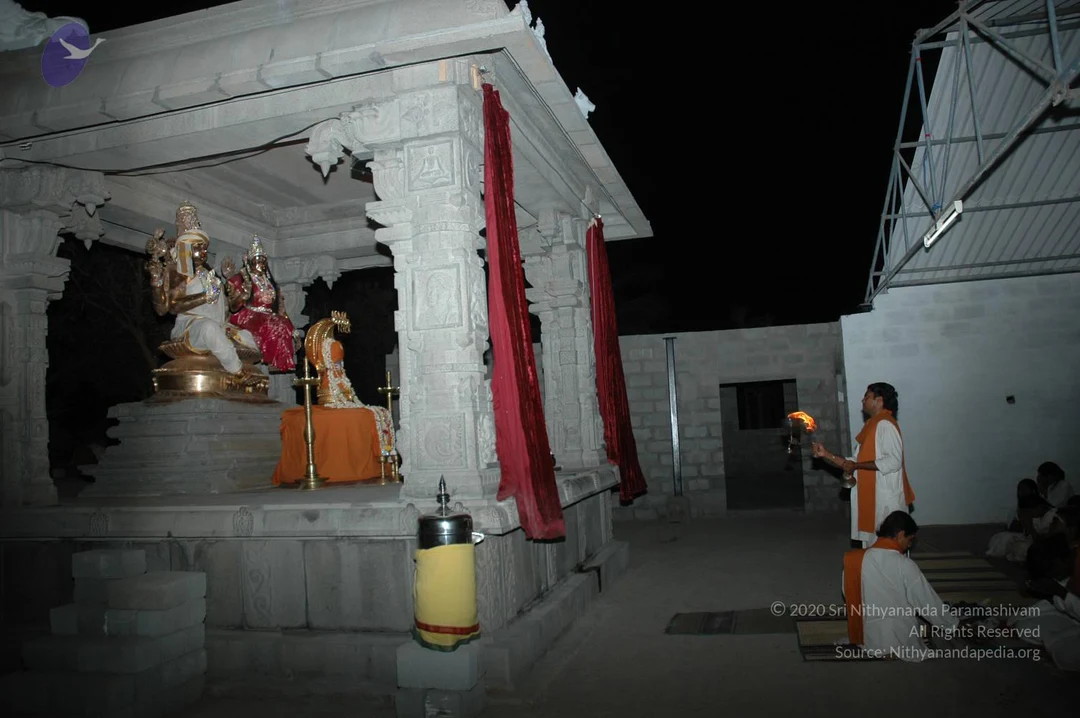
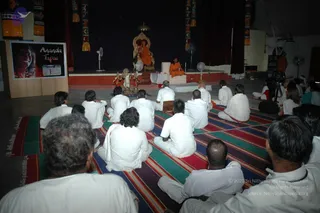
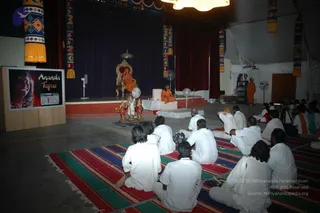
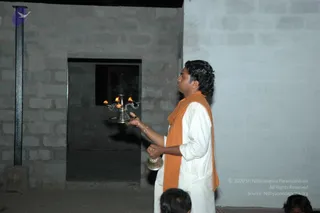
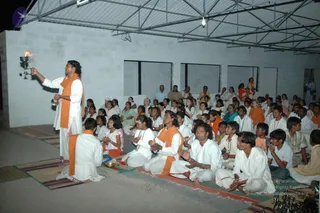
Night-time photograph of an outdoor temple arati at a small grey stone shrine with red velvet curtains draped on its sides. Inside the shrine sit two deity murtis, one with a crown and garlands, behind an orange cloth on the altar. Brass lamps and offering plates stand before them. A standing man in white dhoti and white shirt with an orange shawl holds a bell and lamp-like ritual object toward the deities. Three or four seated devotees in white with orange shawls kneel in the foreground. A large yellow-wrapped shivalinga-style object sits to the left. Lights and a hanging photo are visible in the background.Night-time temple arati in an open-sided hall with a corrugated metal roof and bare bulbs. A standing man in a white dhoti and orange shawl holds a silver arati lamp in one hand and a small bell in the other, facing right. Seated devotees in white clothes, several with orange shawls and rudraksha malas, fill the floor on woven mats and green cloth, watching him. Brass ritual items sit on a mat in front of the standing priest. Many people are visible in the seated audience.A photograph of a temple arati in a large whitewashed hall with a corrugated roof and hanging bulbs. A standing man in white dhoti and shirt with an orange shawl holds a brass bell and leads the ritual. Seated devotees in white, many with orange shawls and rudraksha-style beads, fill the floor on mats and green cloth, with a large seated audience behind them. Brass ritual vessels and a lamp sit on the mat at left.

February 11 2007

Original wiki page
Contents

Title:

THE SUPREME PONTIFF OF HINDUISM HDH BHAGAVAN SRI NITHYANANDA PARAMASHIVAM

Description:

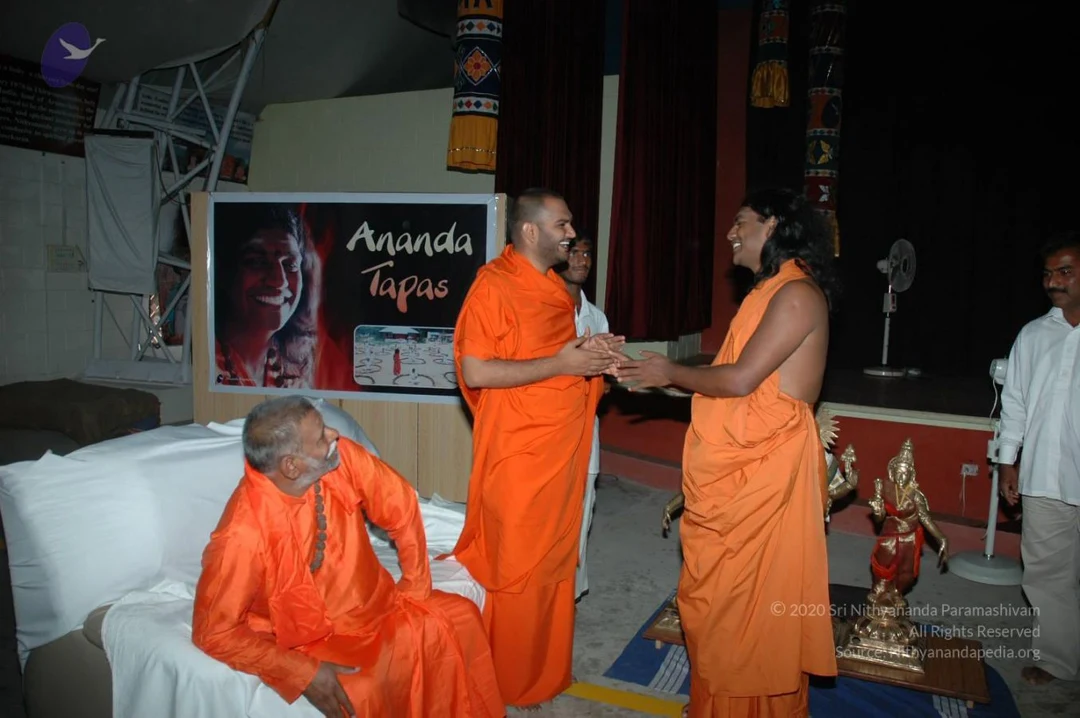
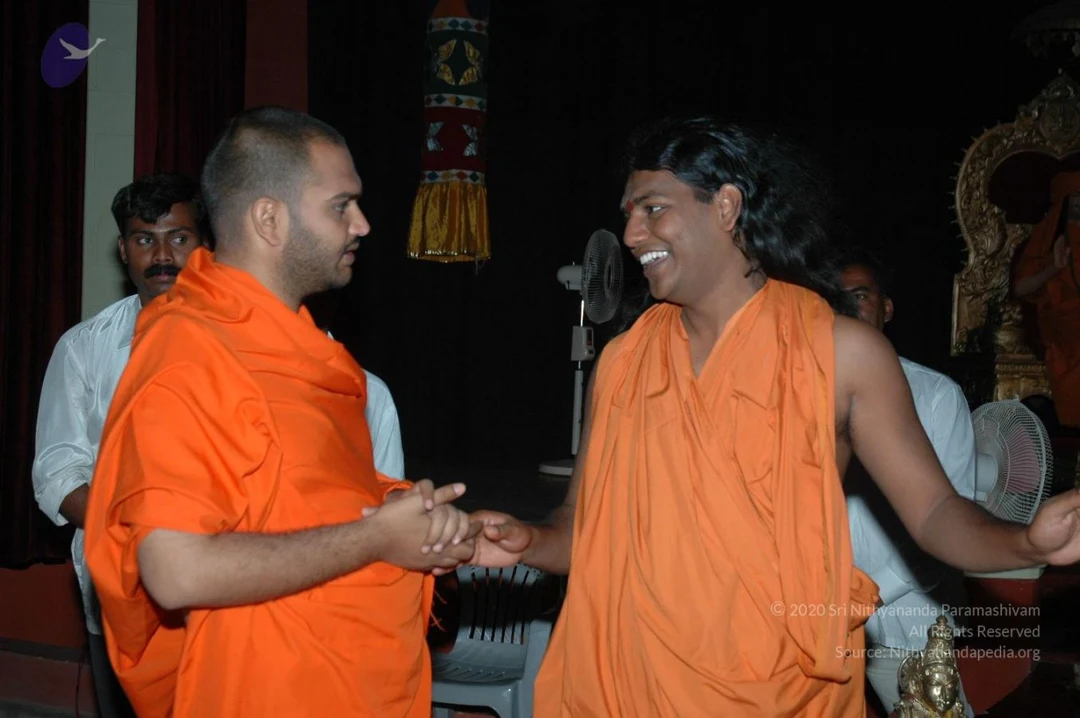
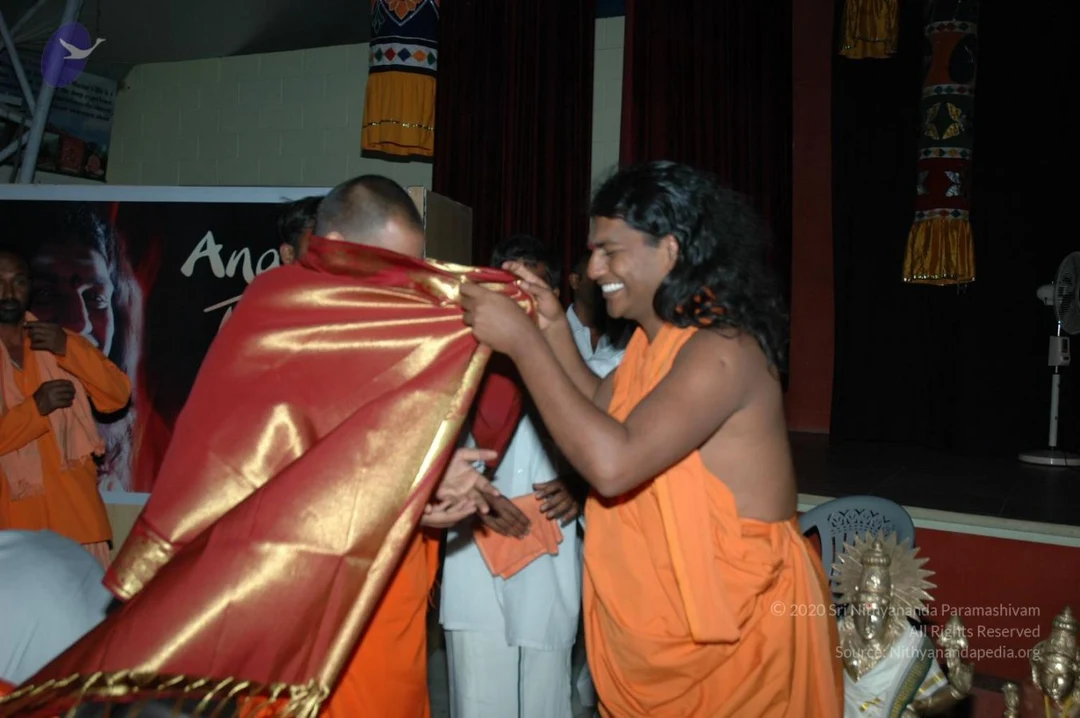
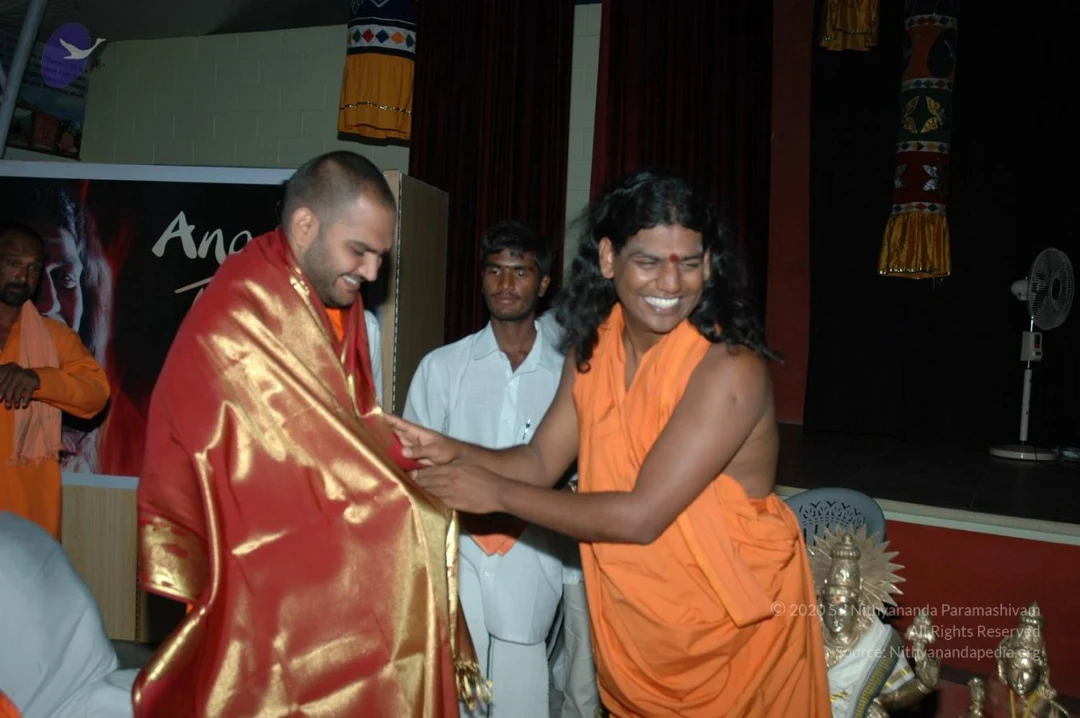
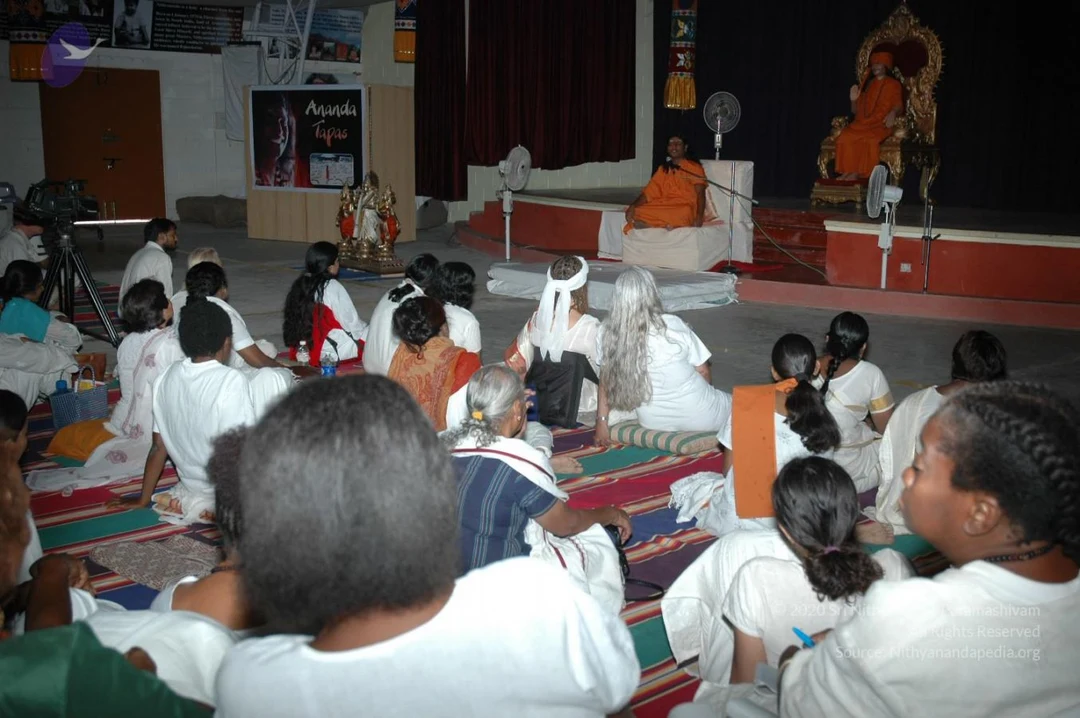
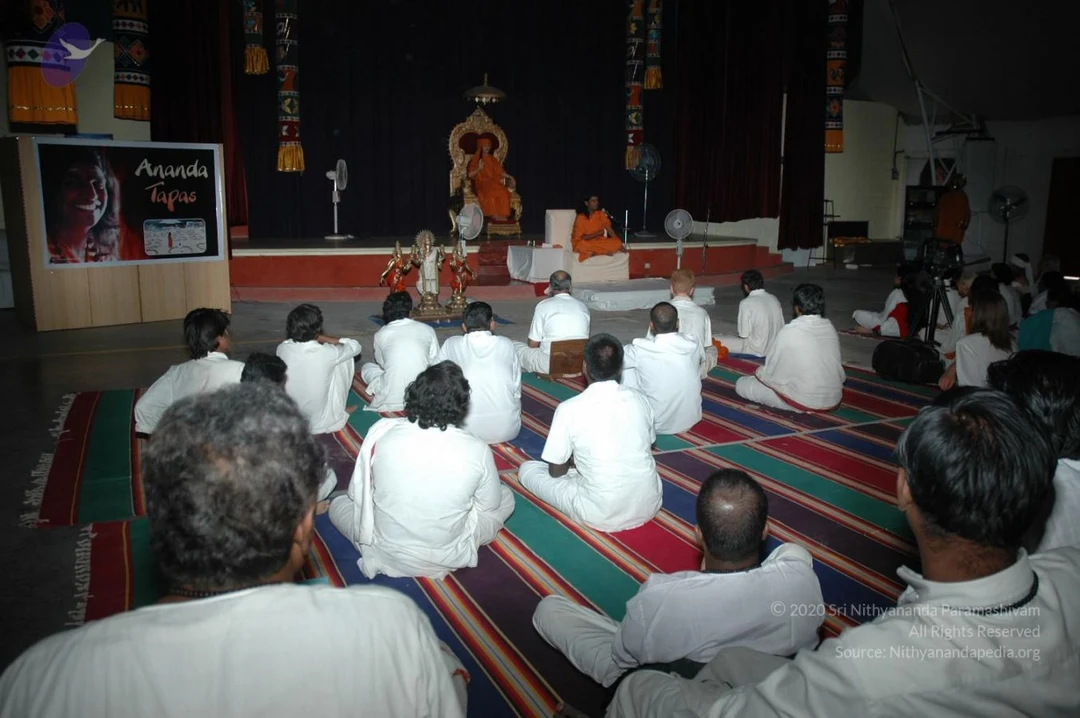
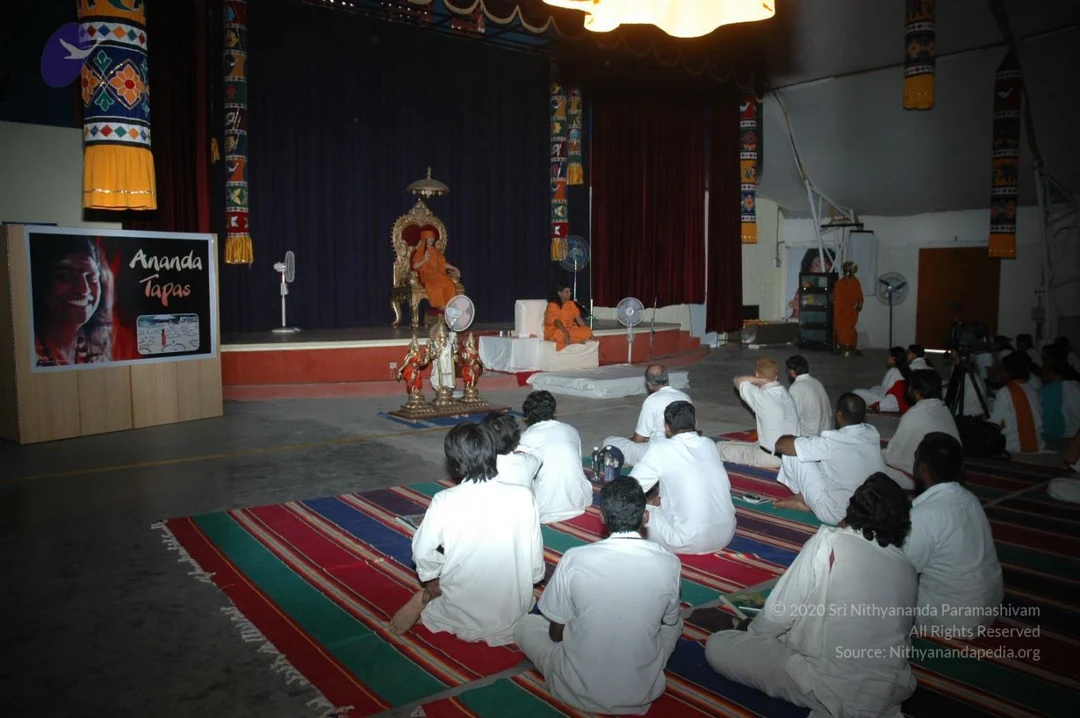
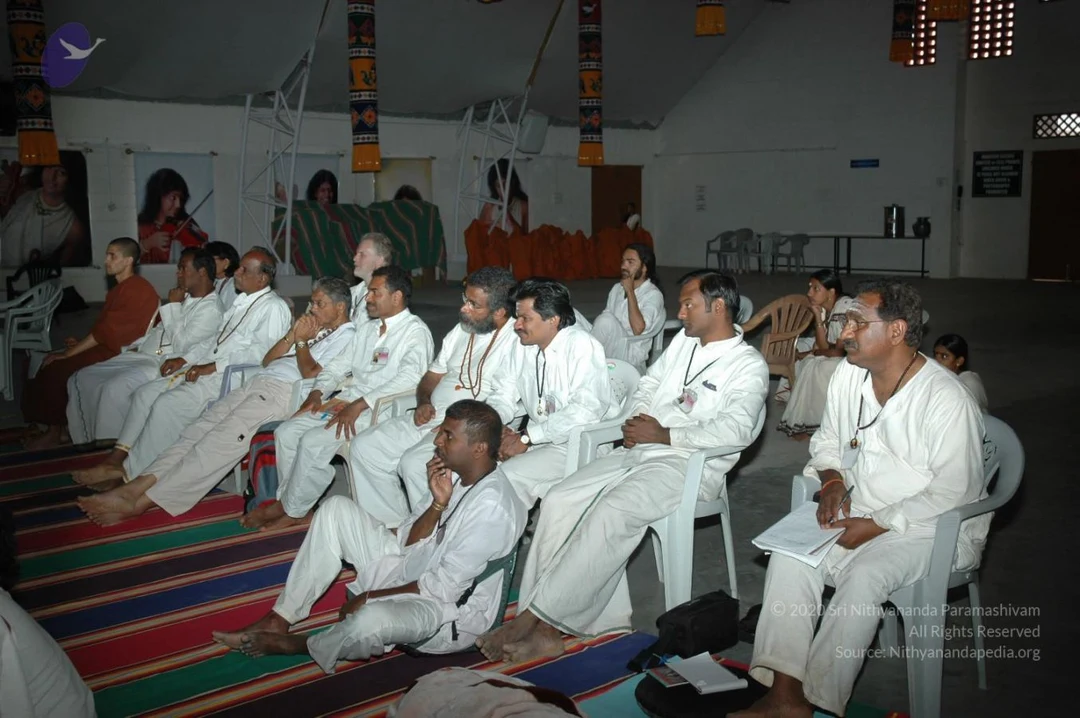
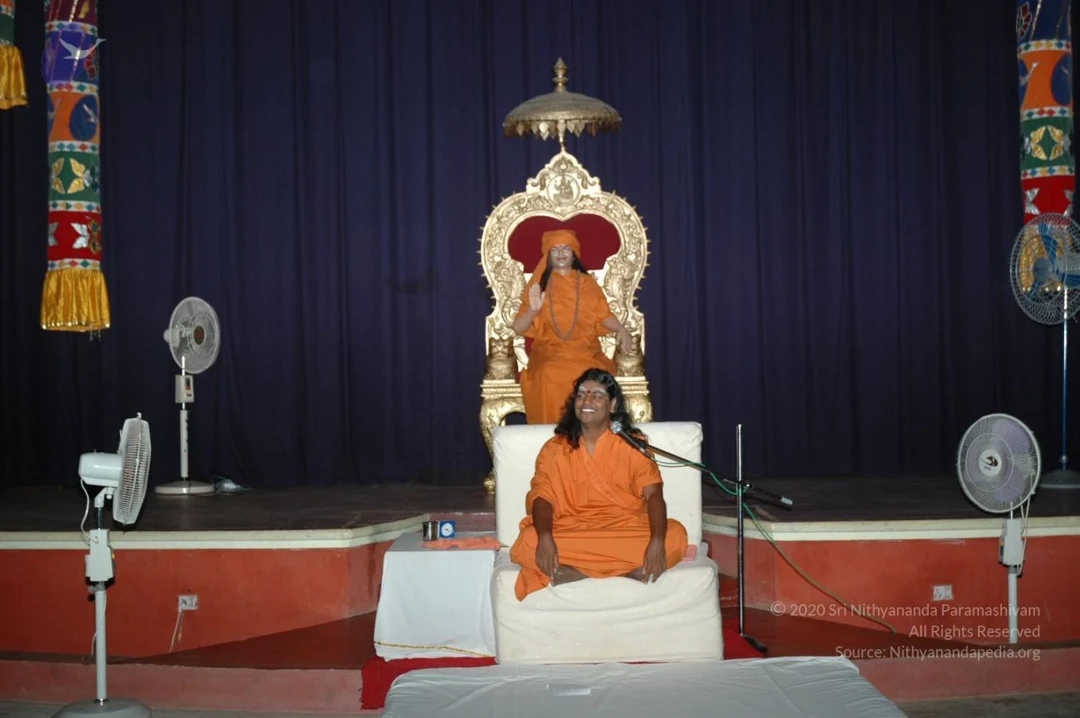
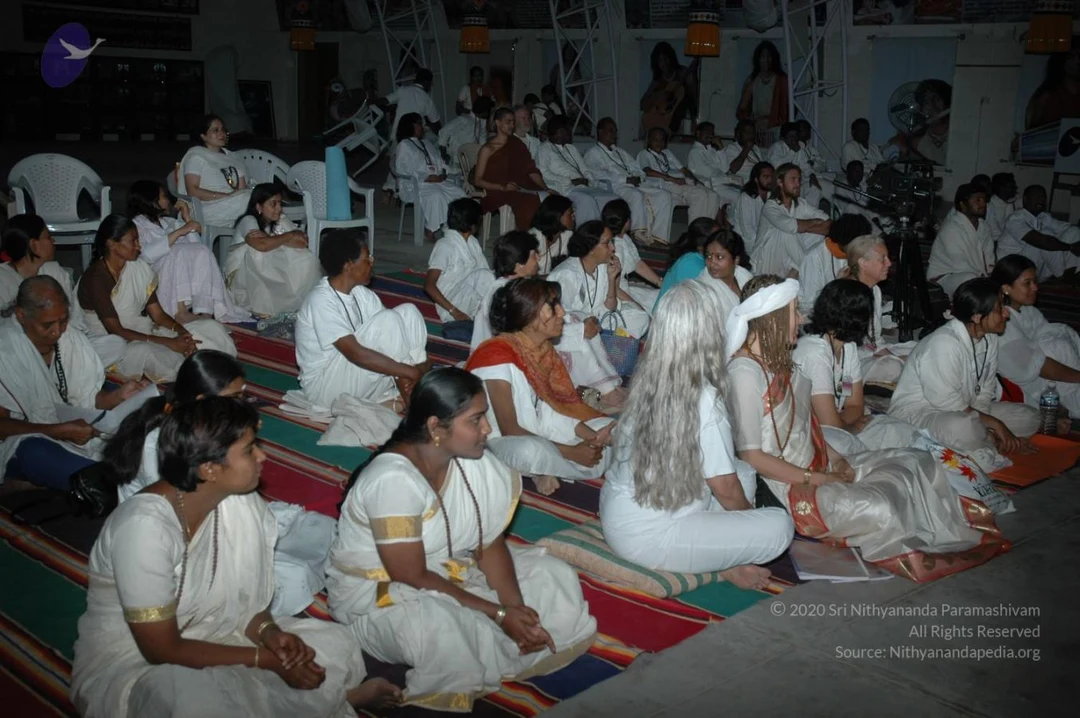
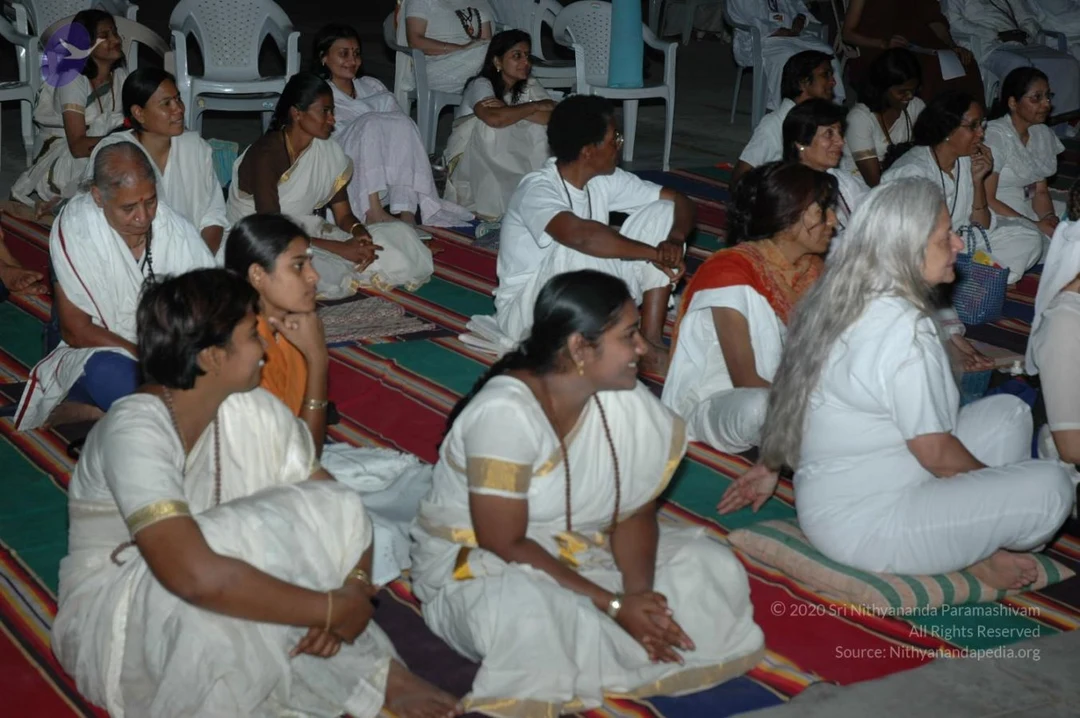
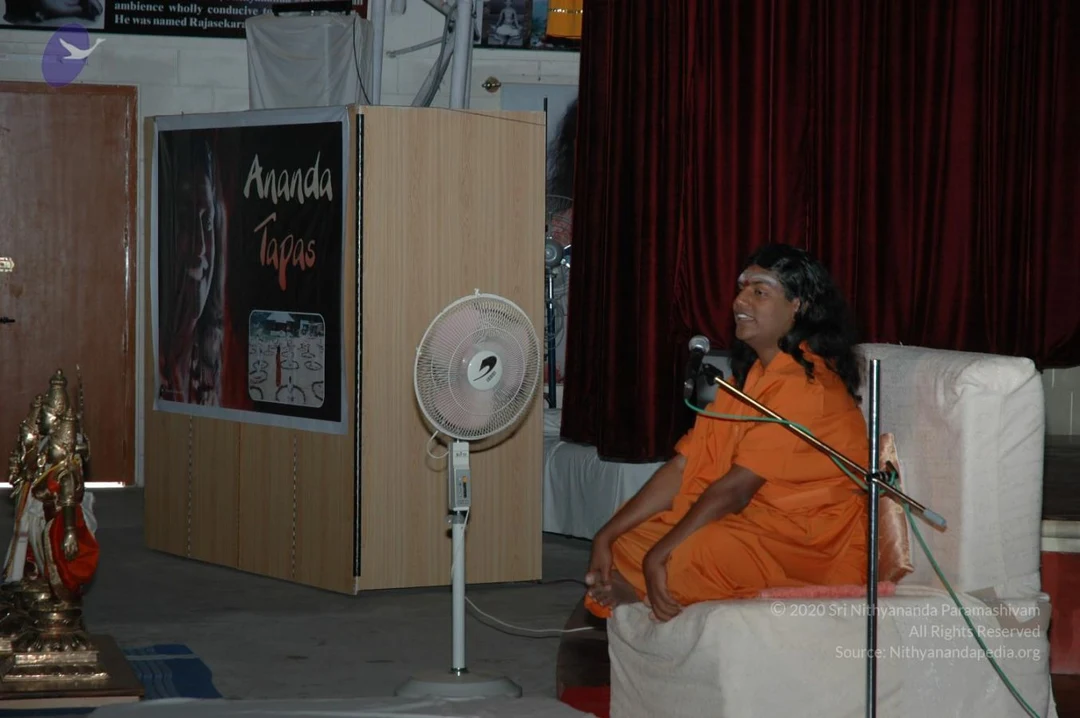
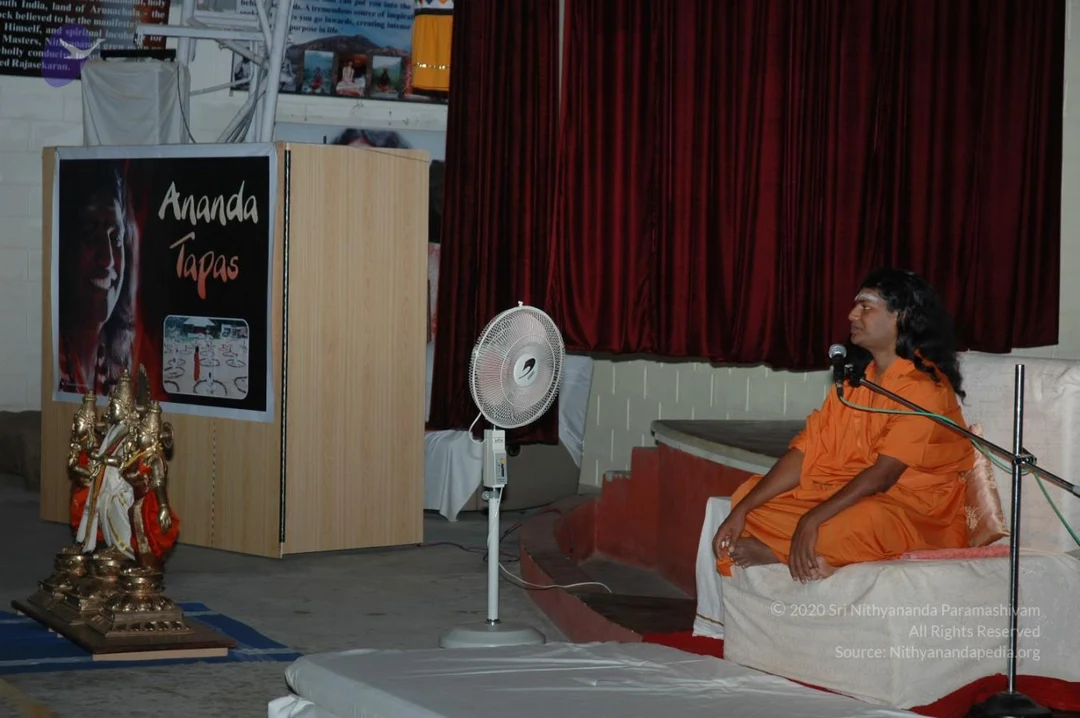
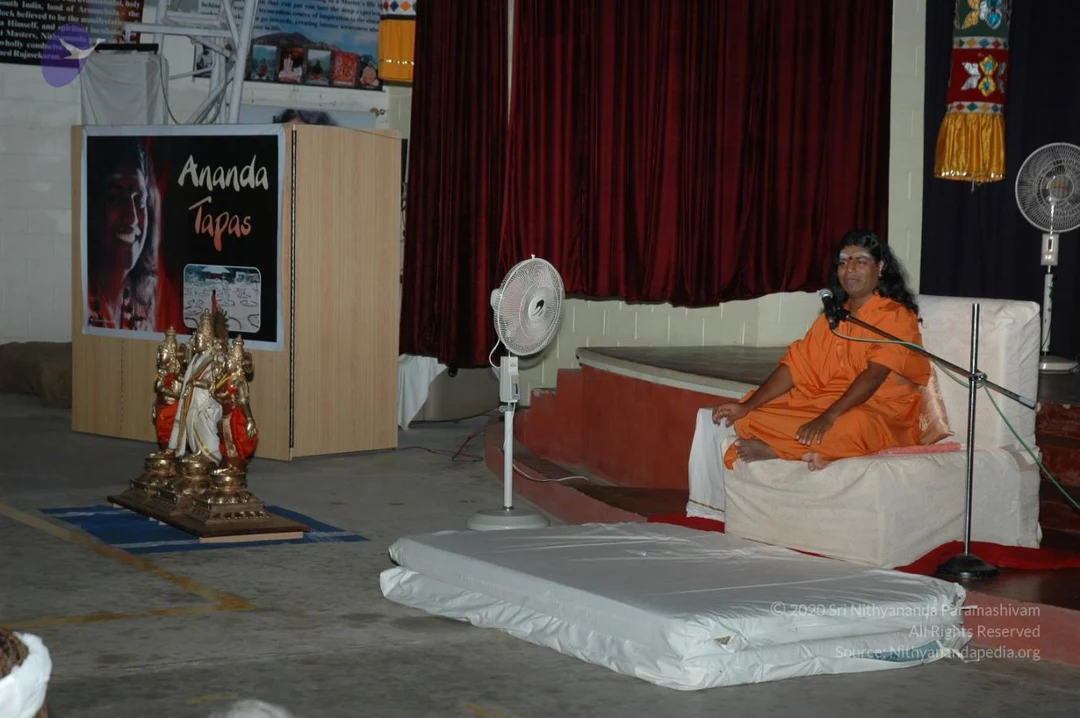
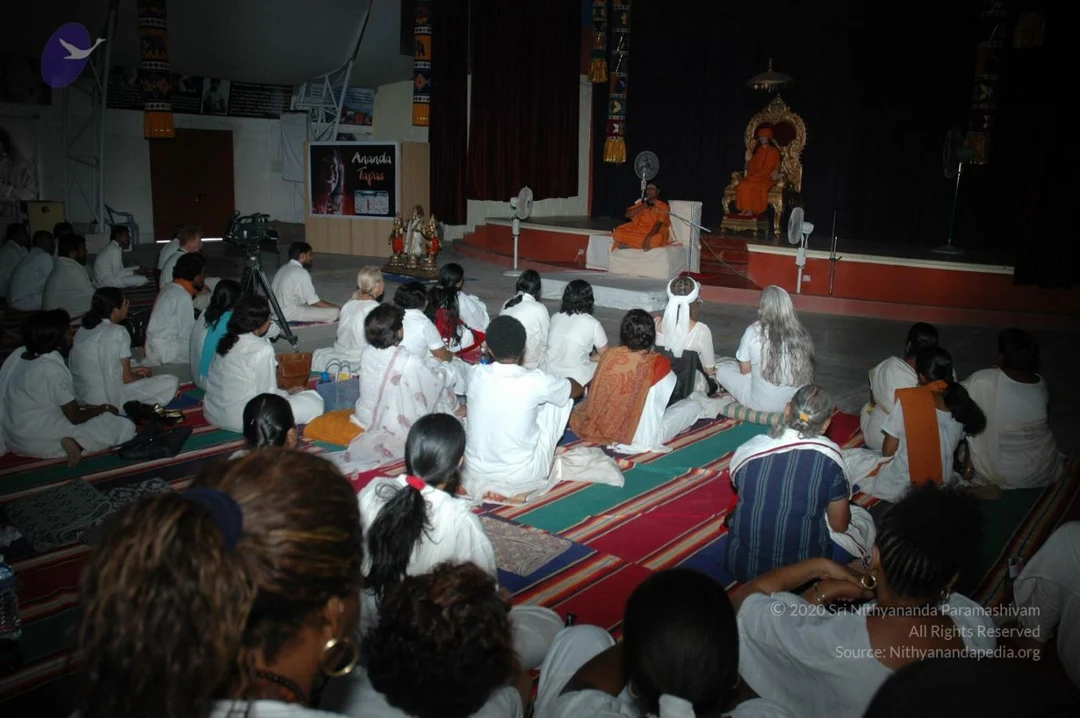
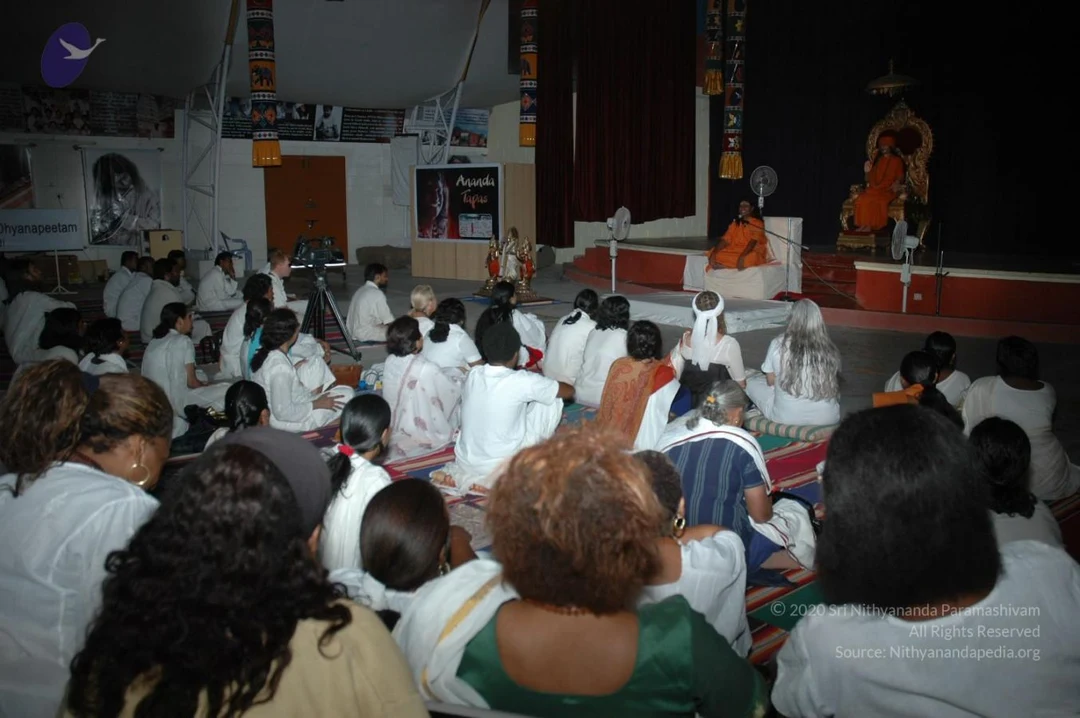
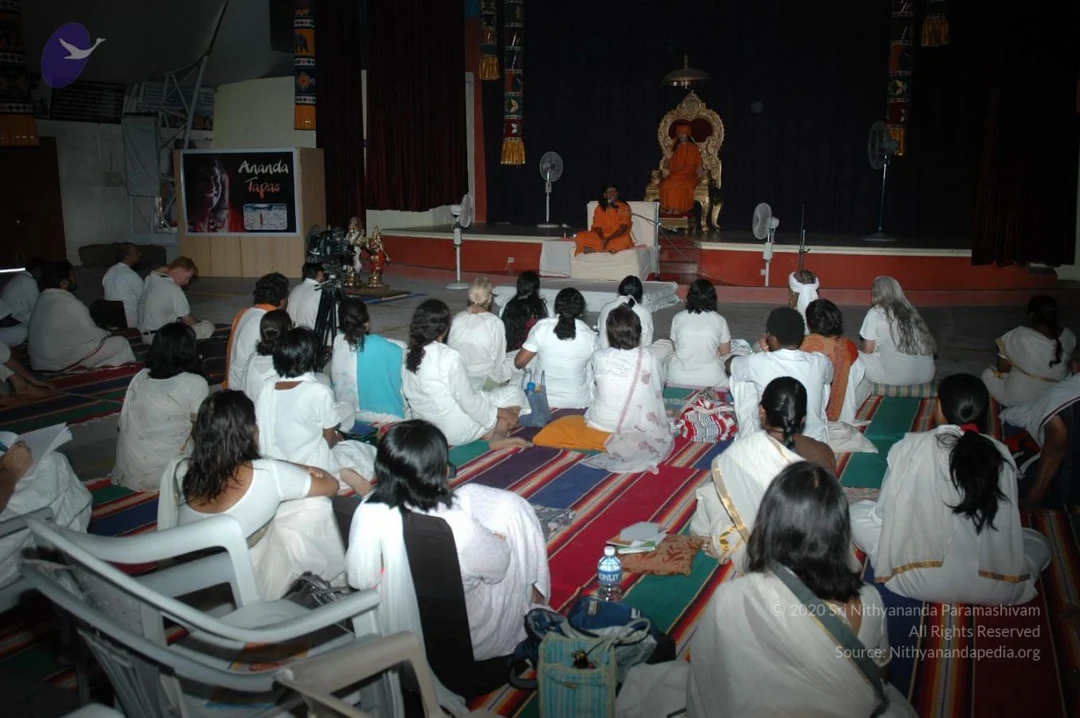
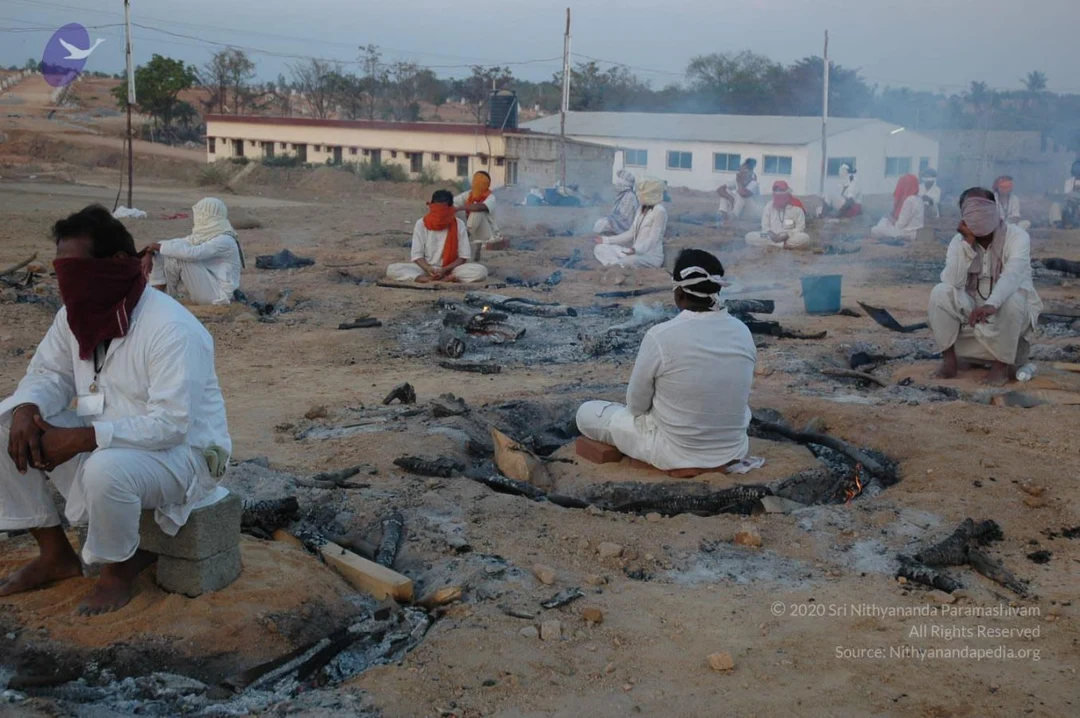
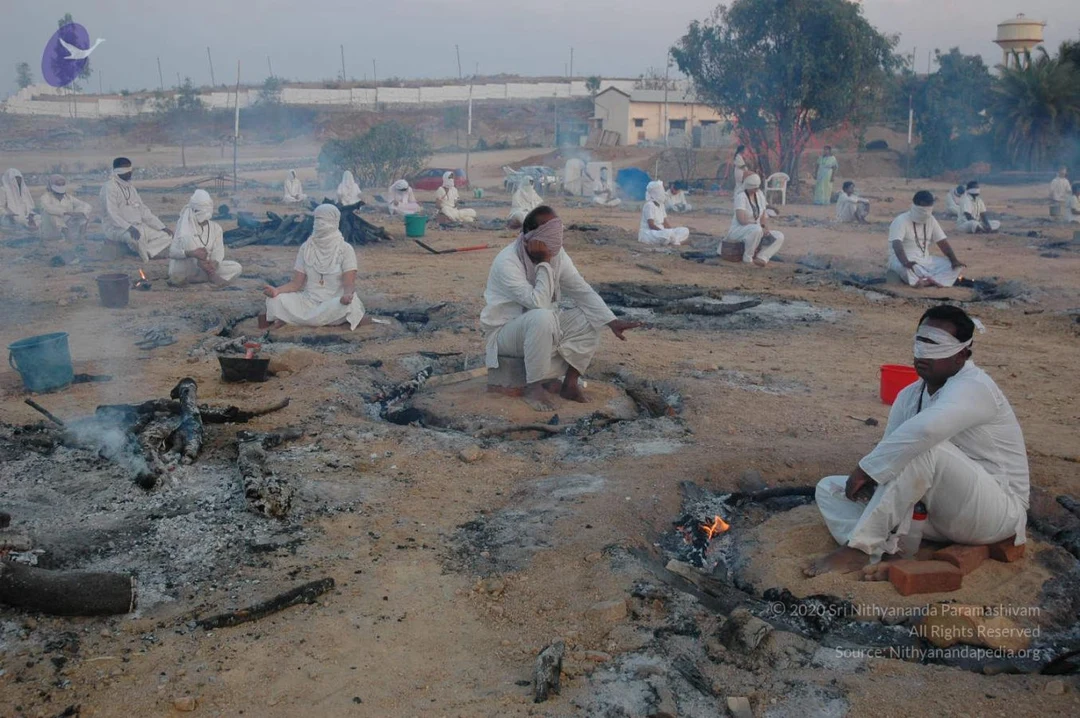
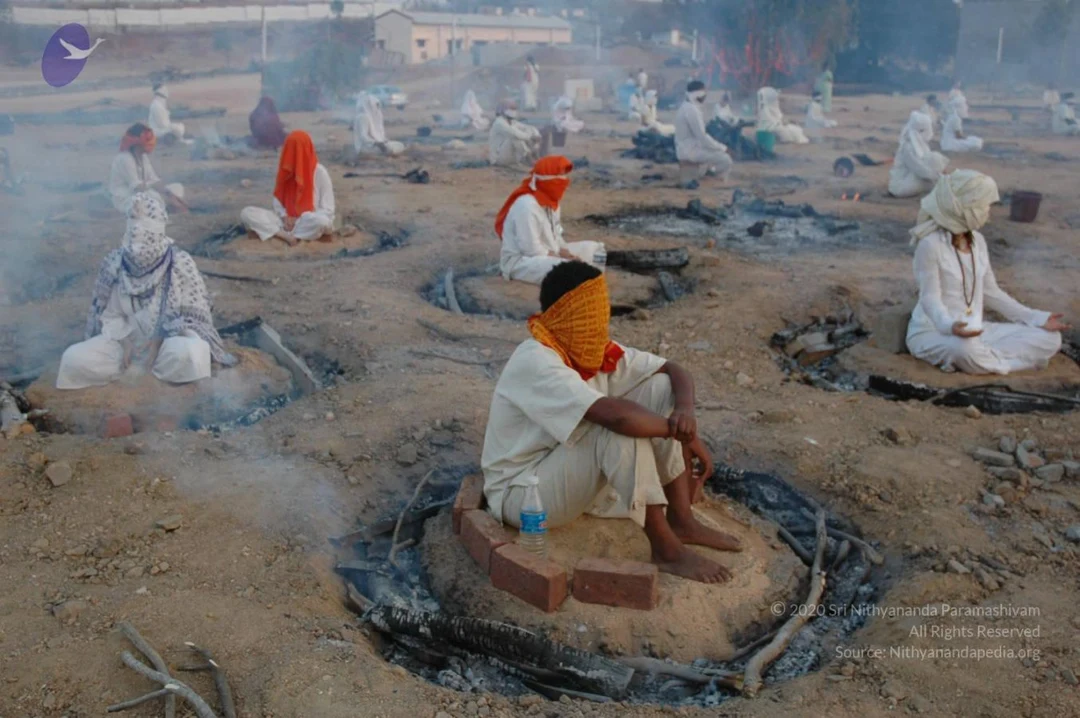
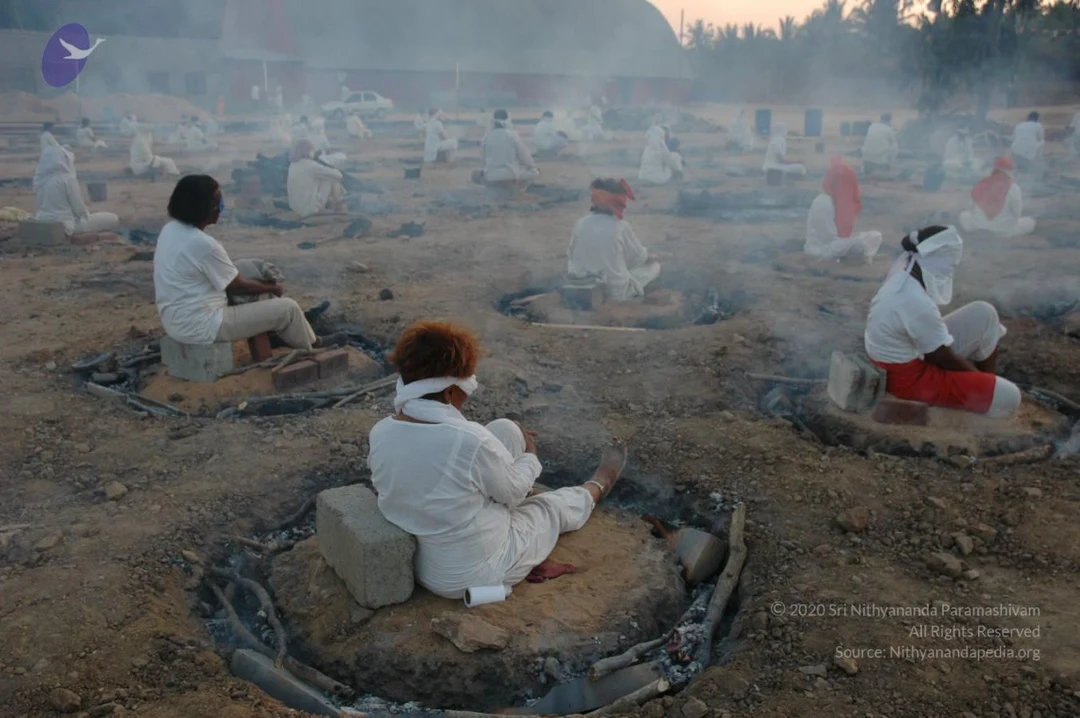
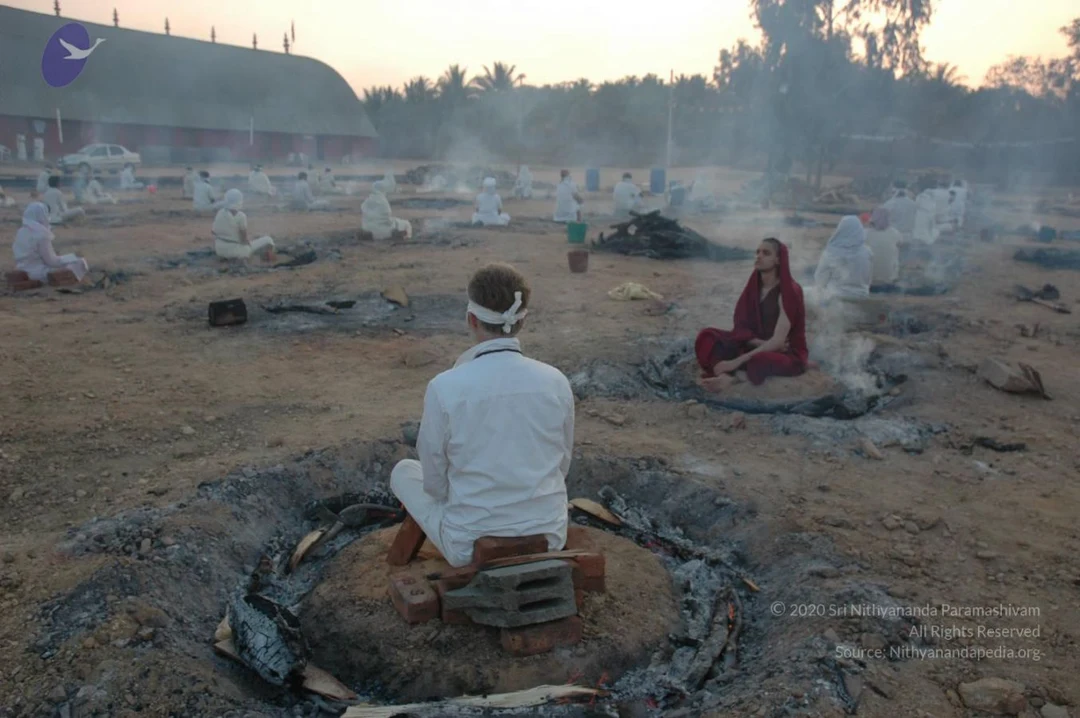
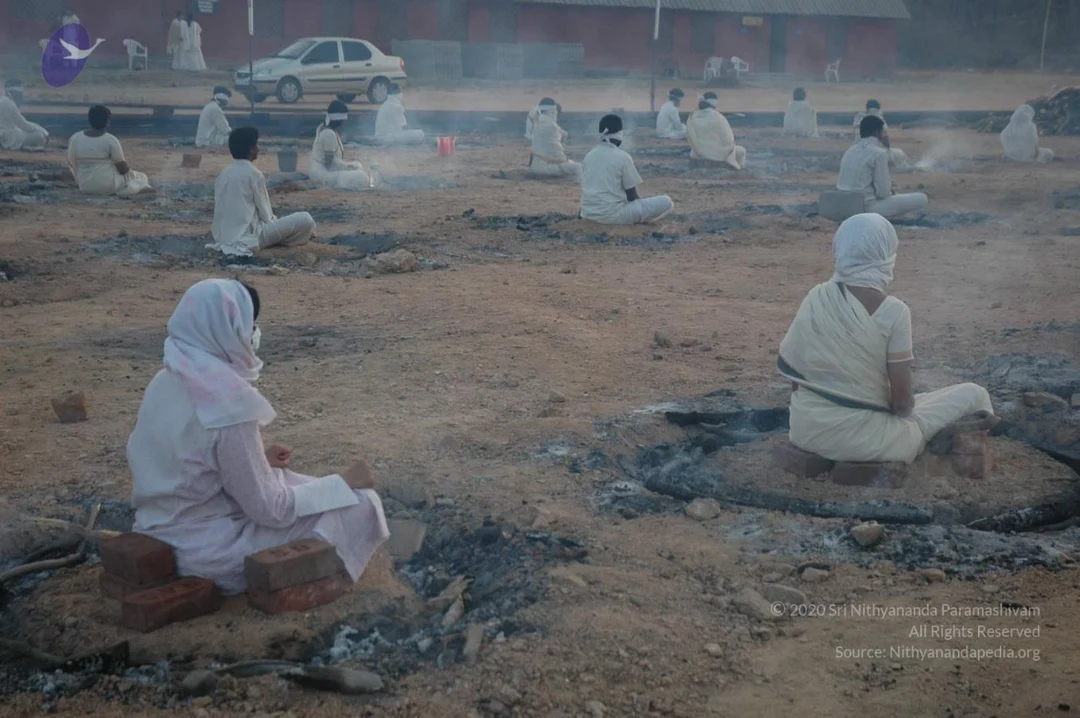
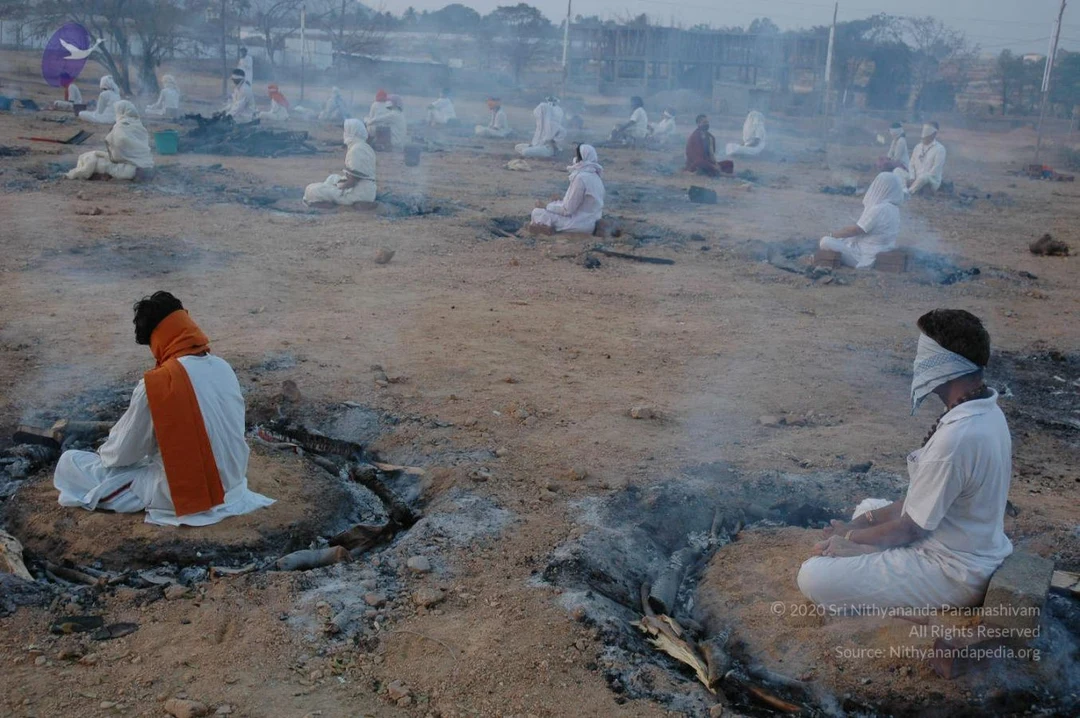
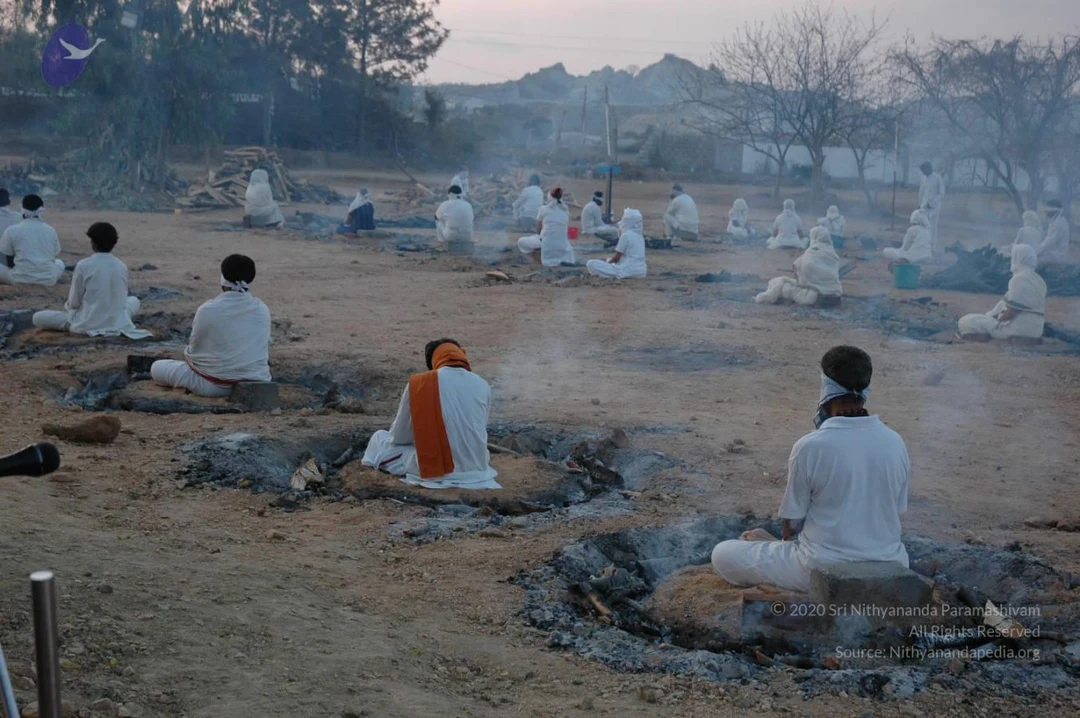
Ananda Tapas is an intense transformational program which deals with how to handle the 64 different fevers that happen in us. These 64 different fevers are caused by various emotions affecting us. The program was all about becoming centered without being affected by the fevers, about how not to be pushed from one fever to the next which is what happens with most of us normally.

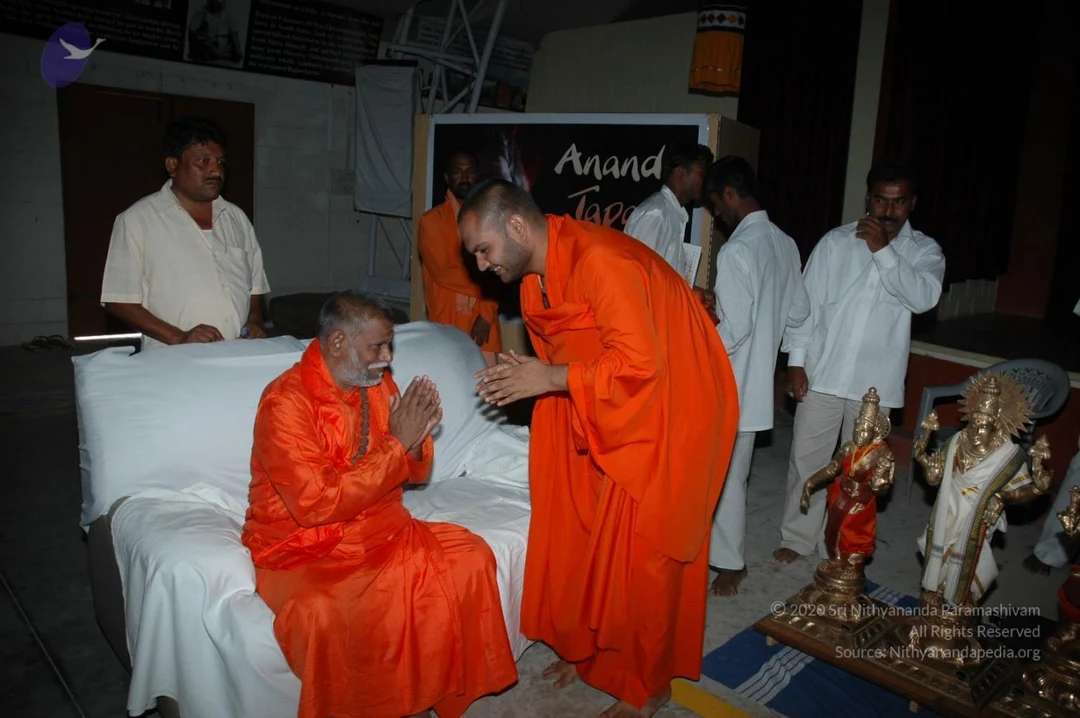
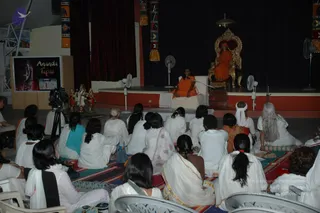
The meditation techniques and the presence of the Master over this one-week intensive program conducted between Feb 7th and Feb 14th saw the participants going through tremendous inner transformation. The concluding day coincided with Valentine's day. Swamiji gave a special Ananda Darshan on Valentine's day.

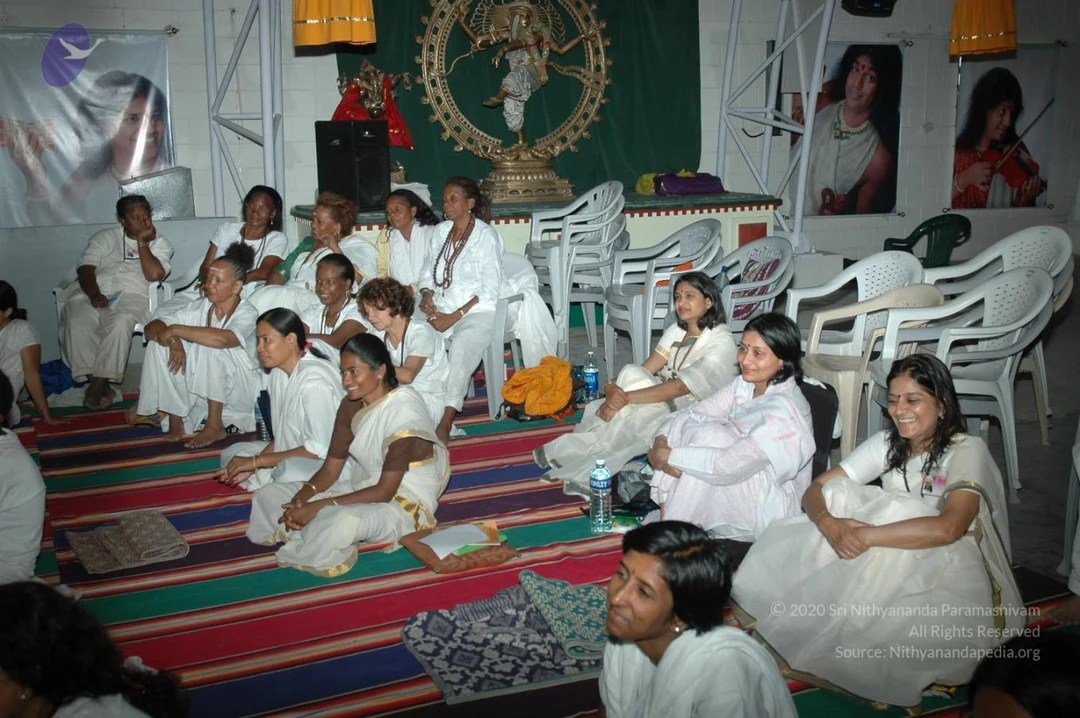
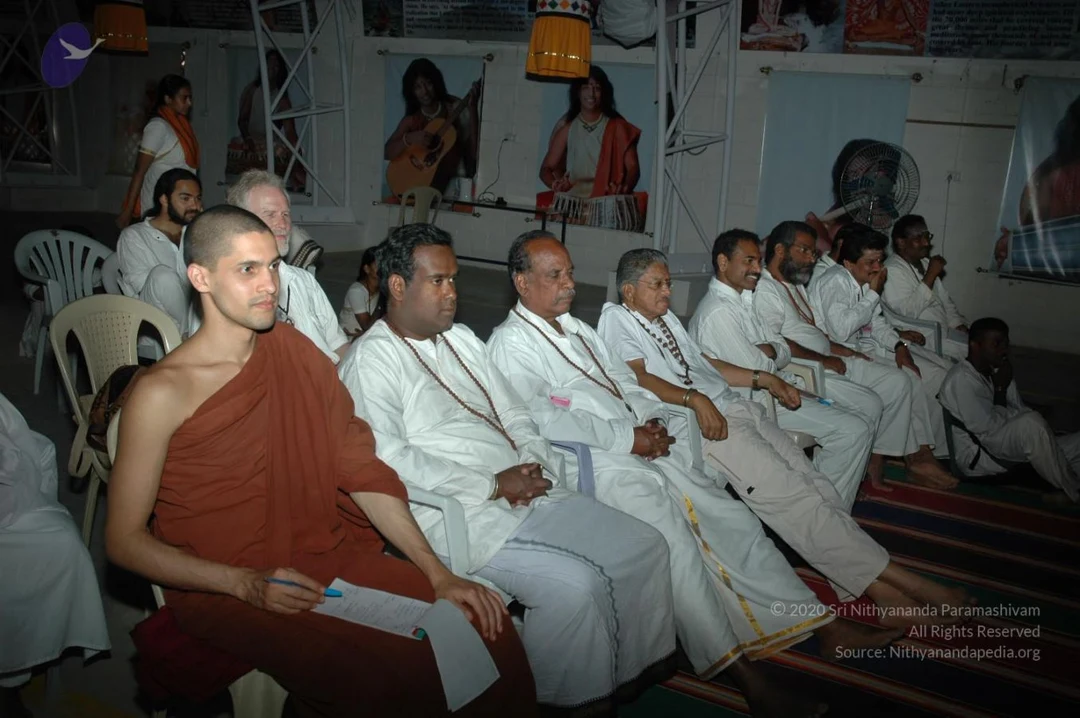
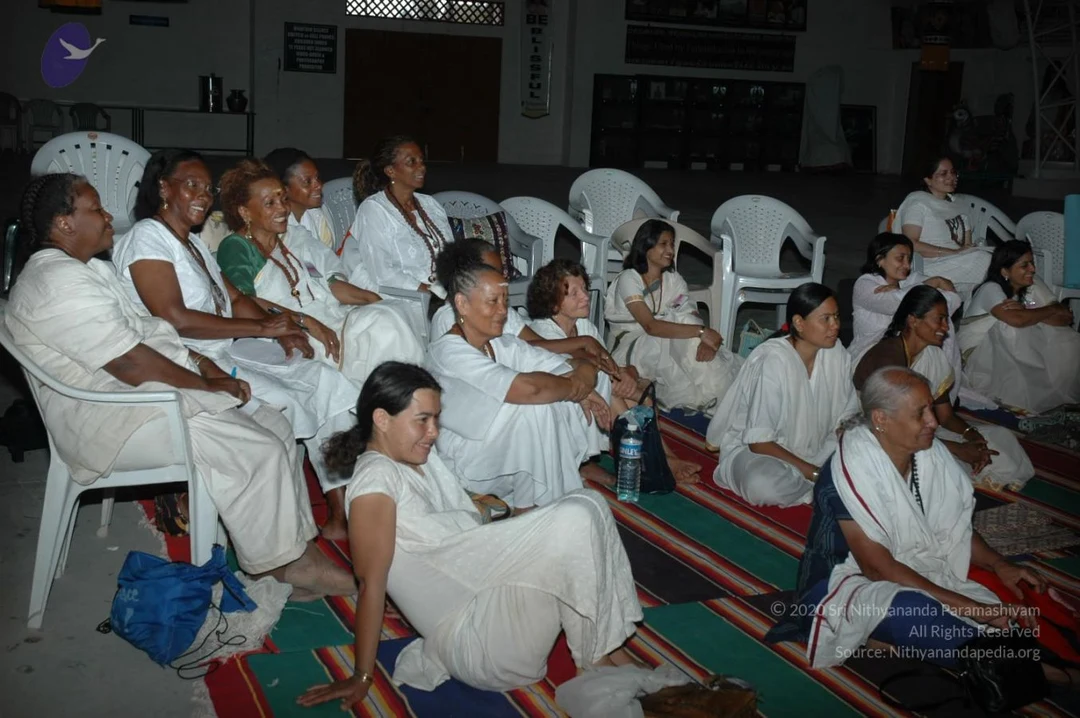
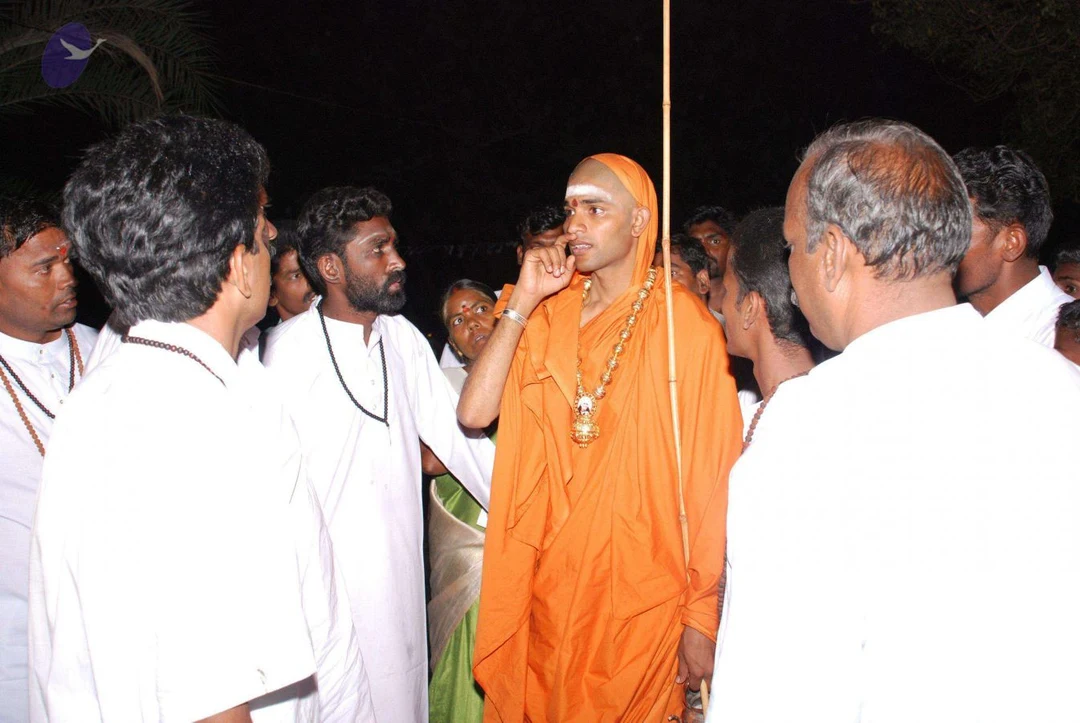
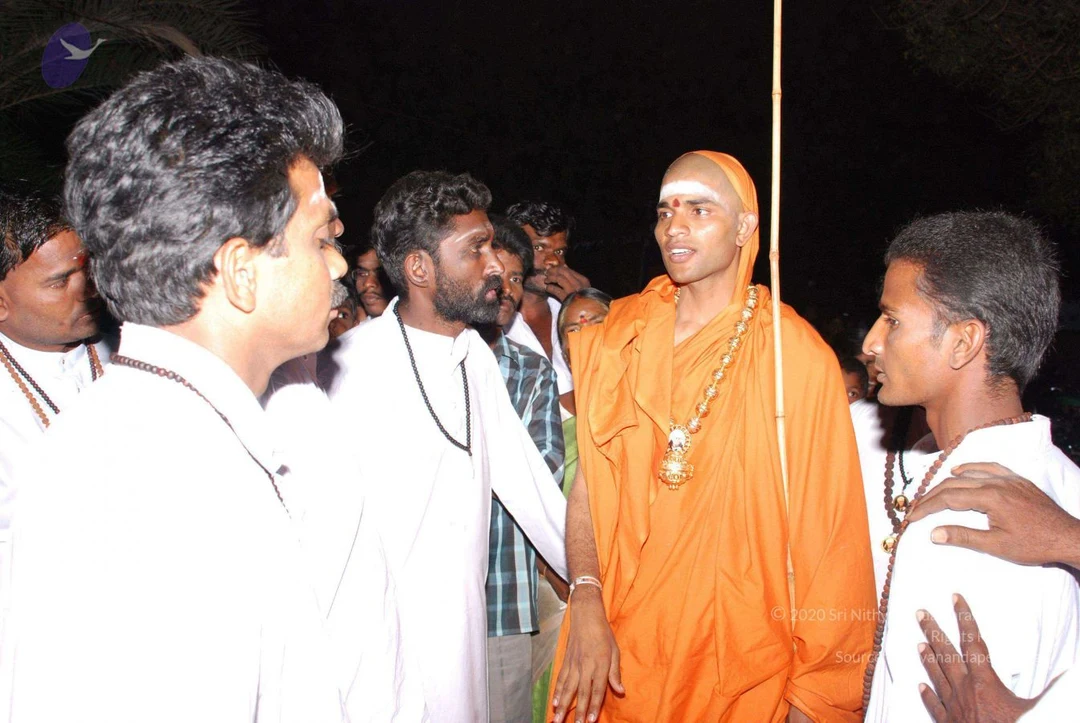
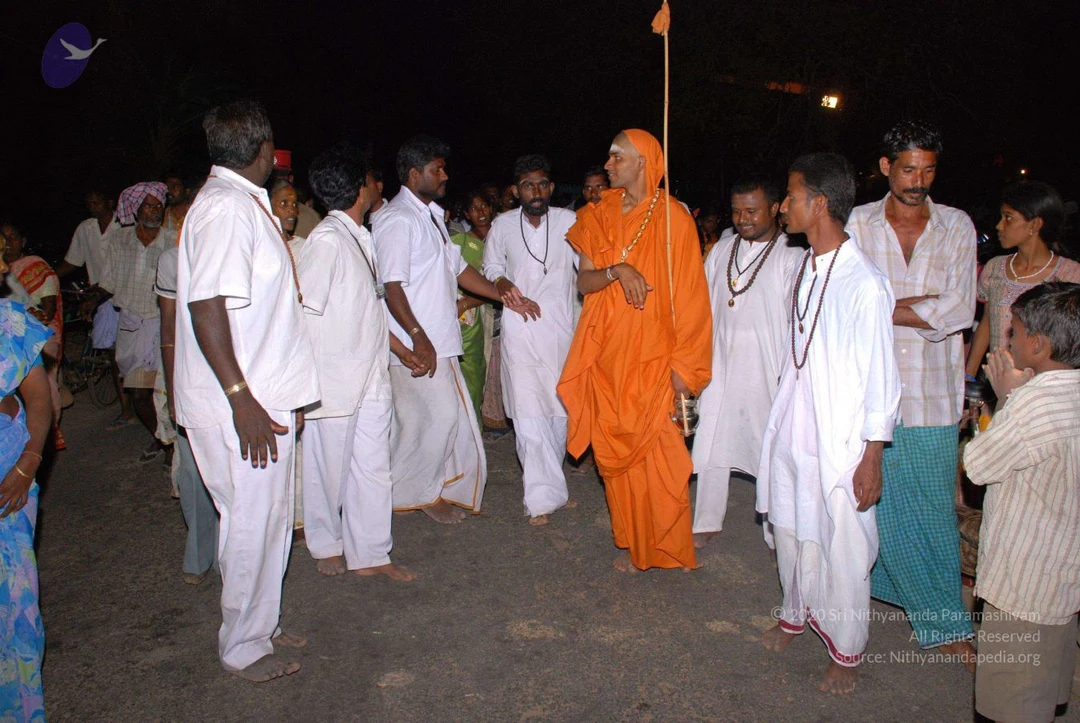
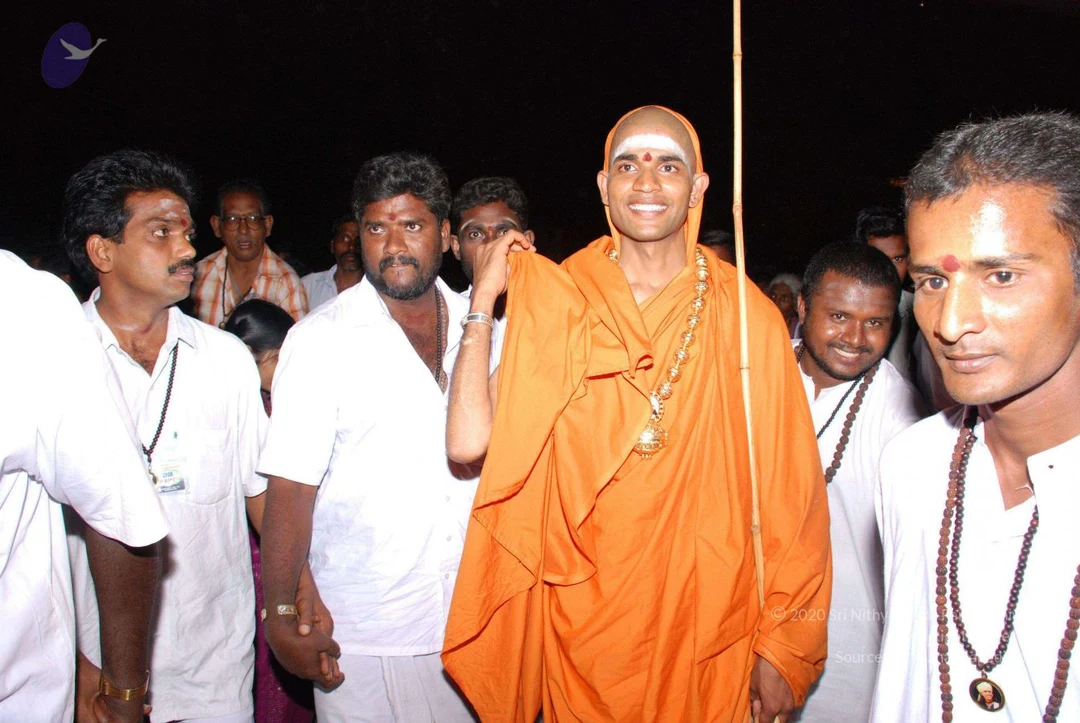
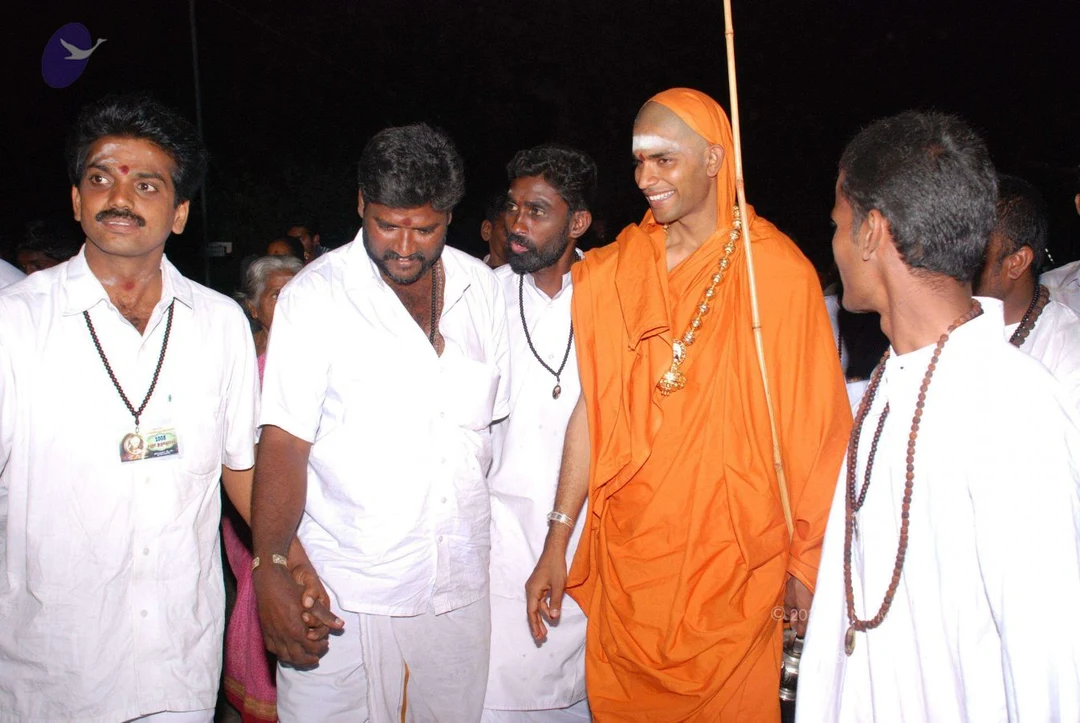
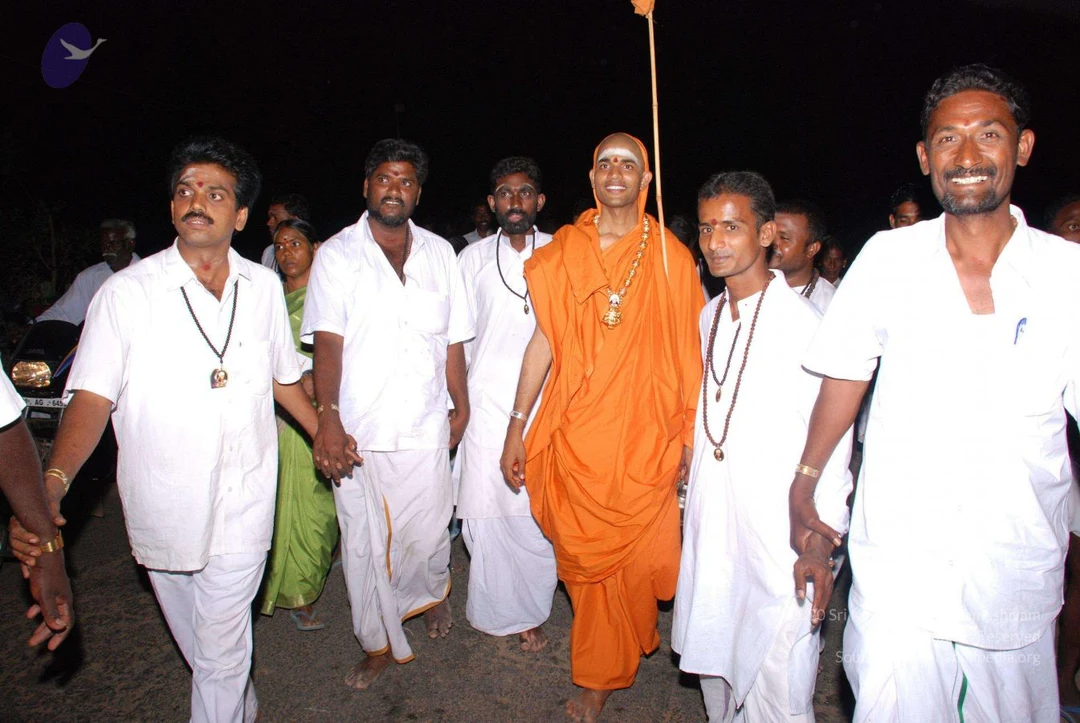
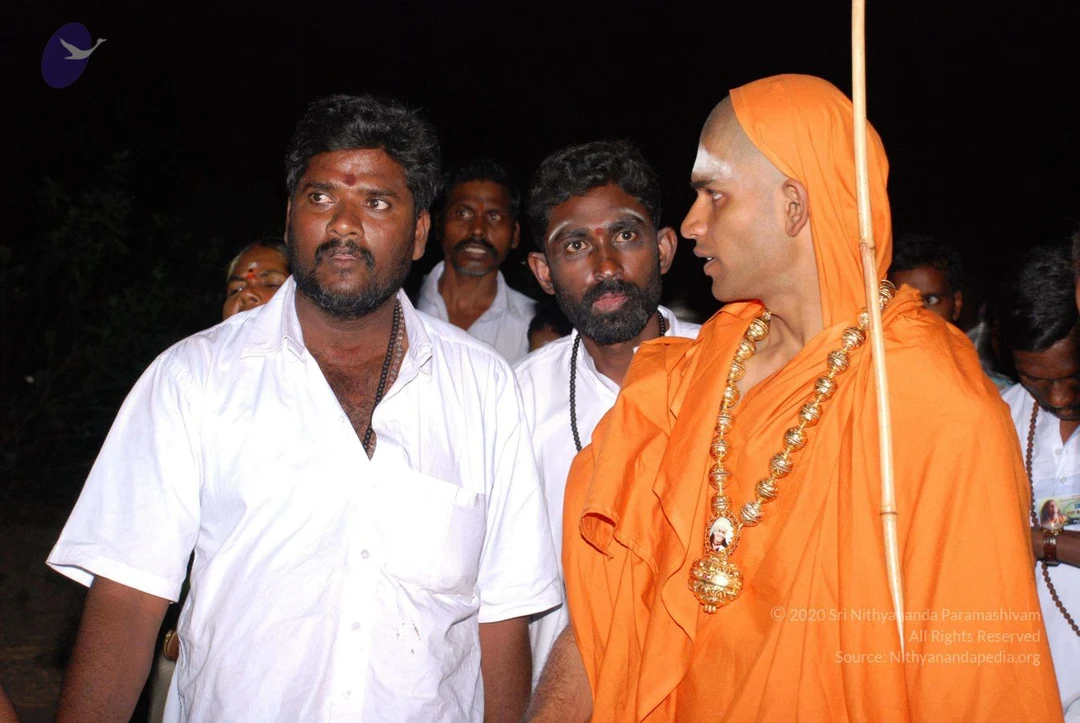
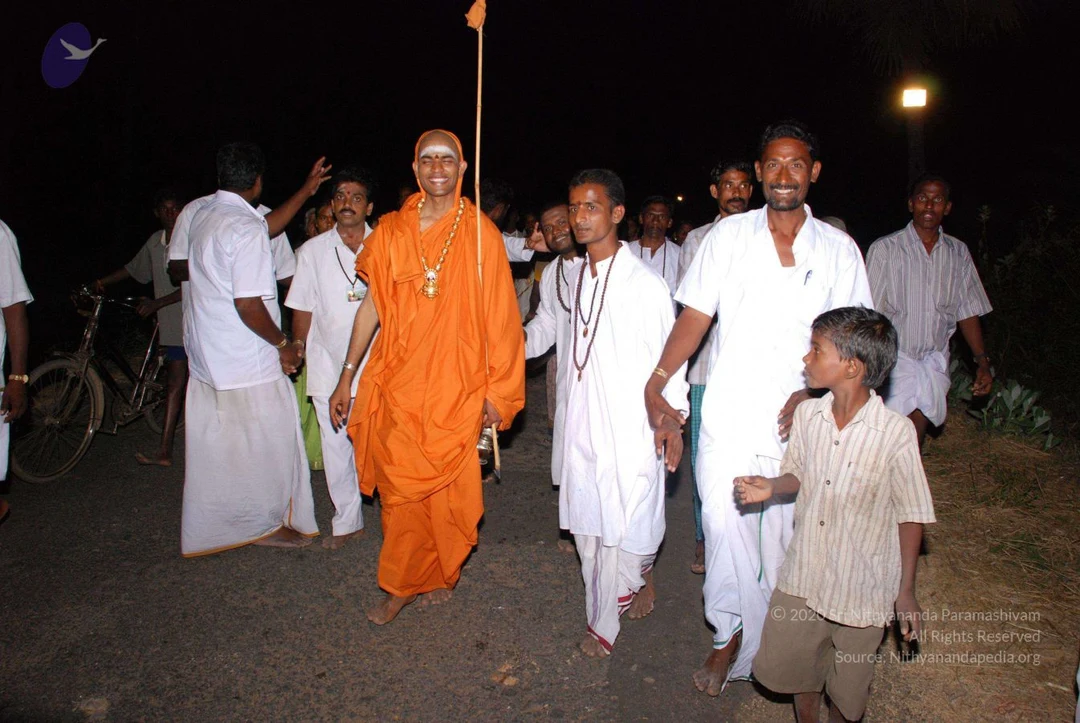
The following are some pictures taken on February 11th.

Photos Of The Day:

SARVA-DARSHAN
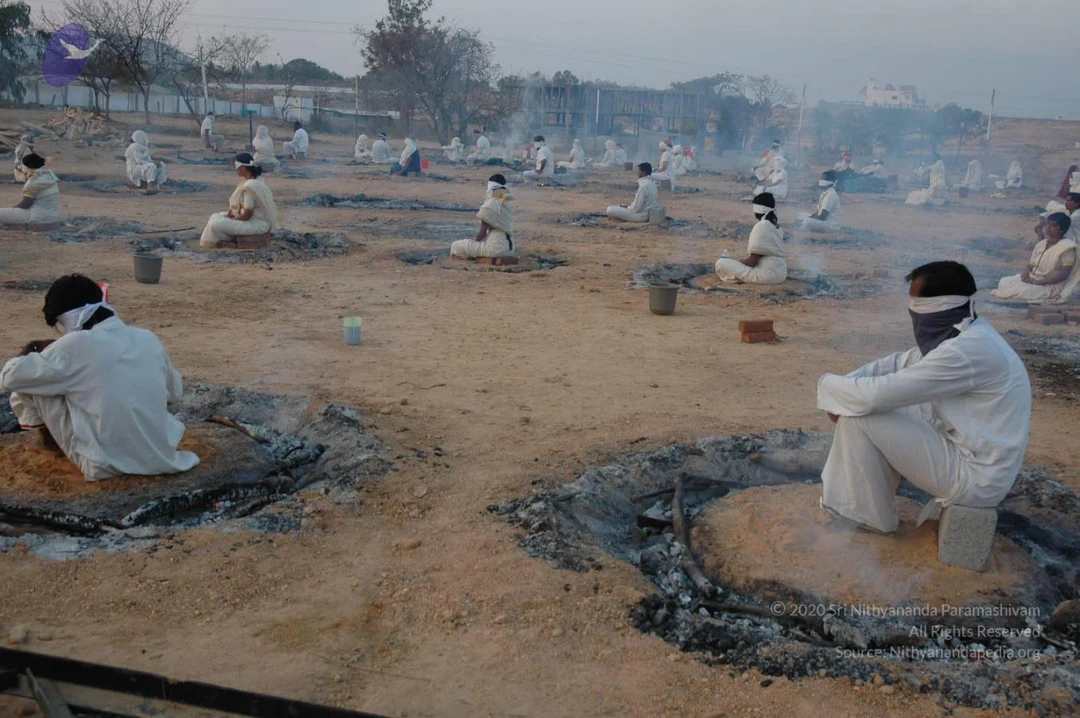
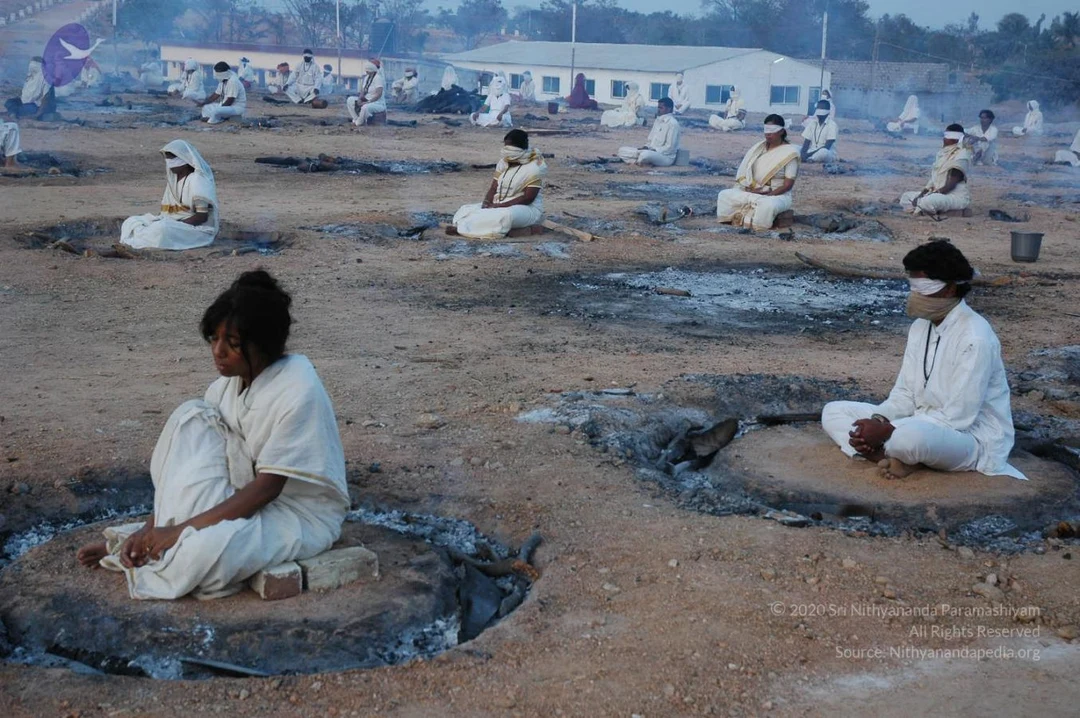
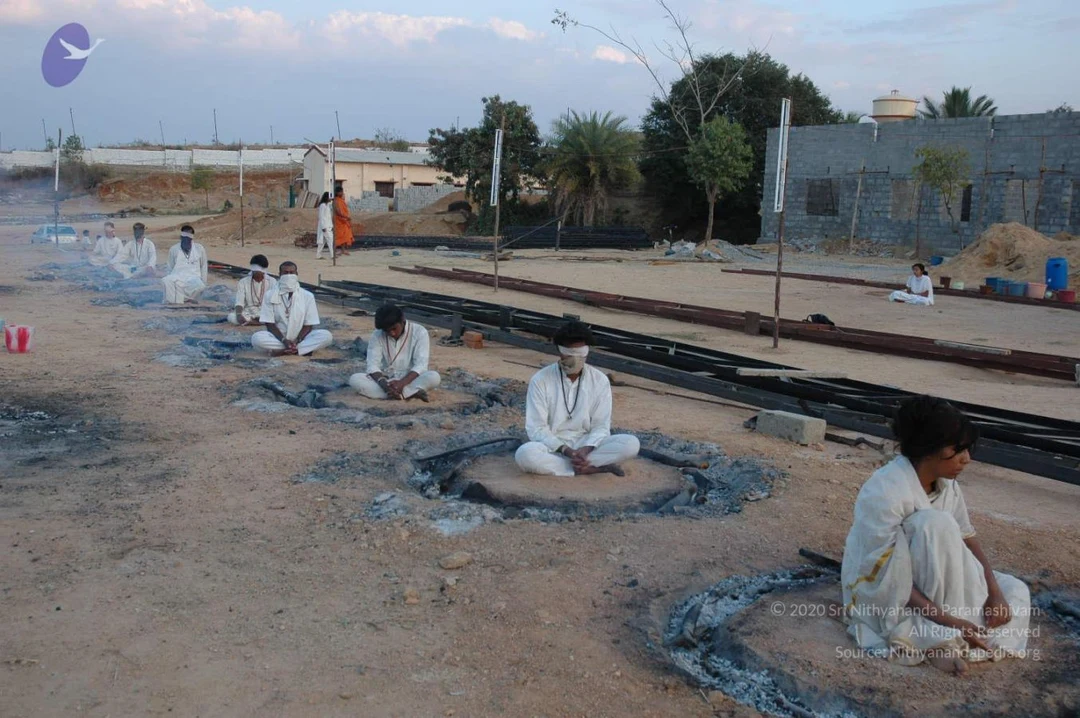
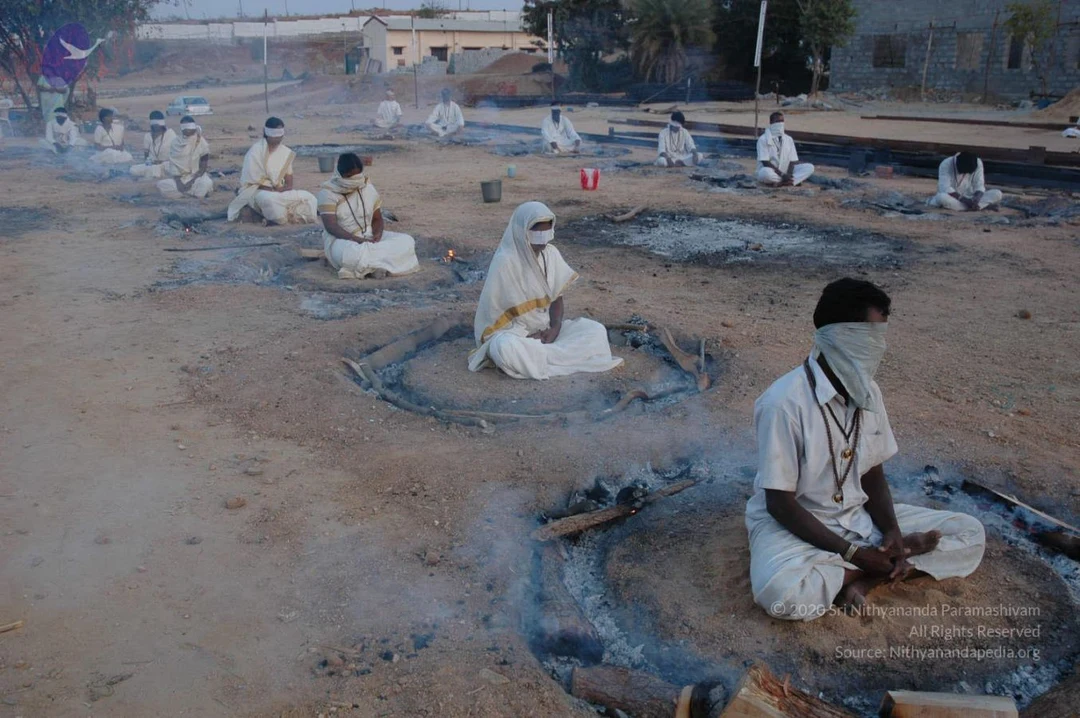
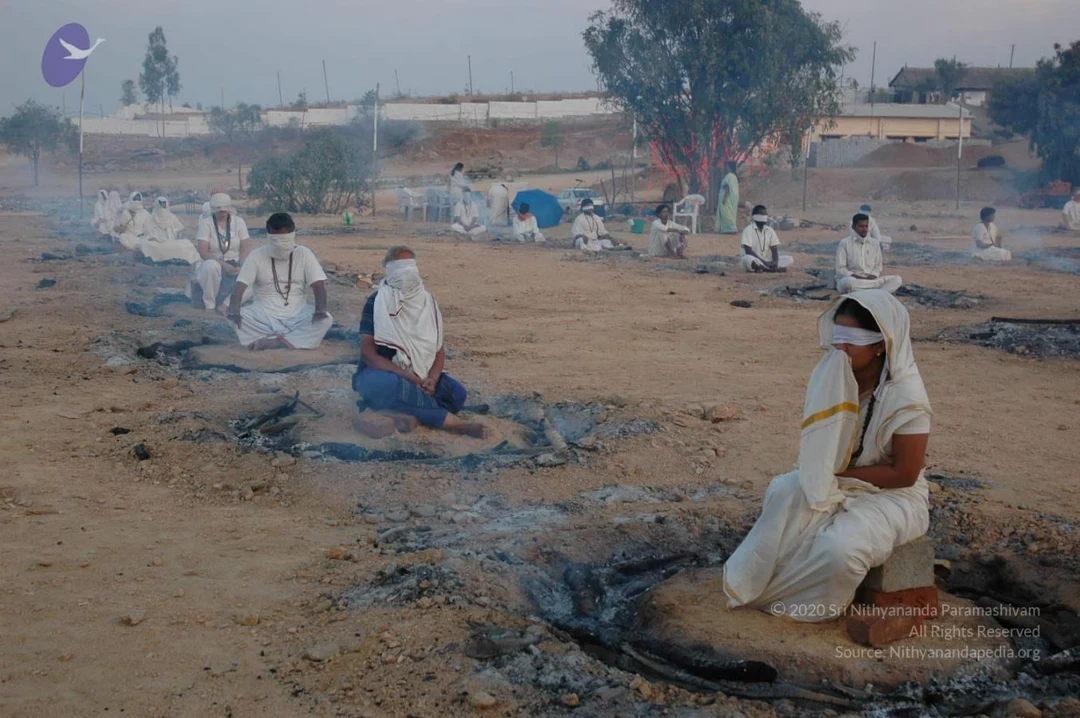
PANCHA-TAPAS

ARATI-IN-TEMPLE

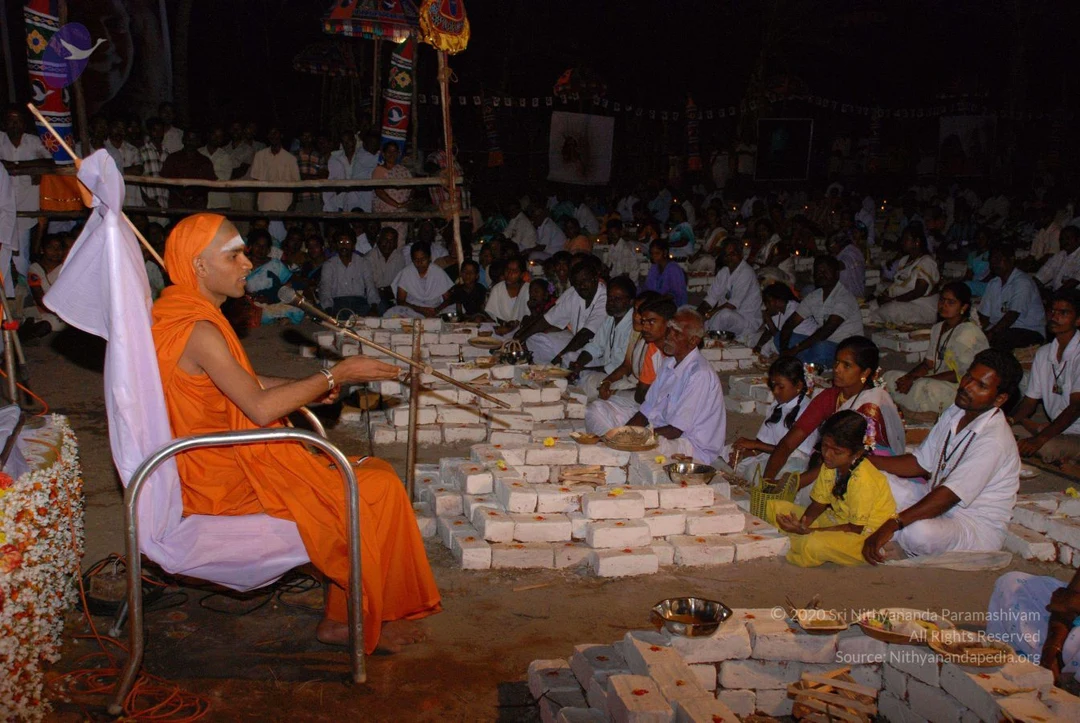
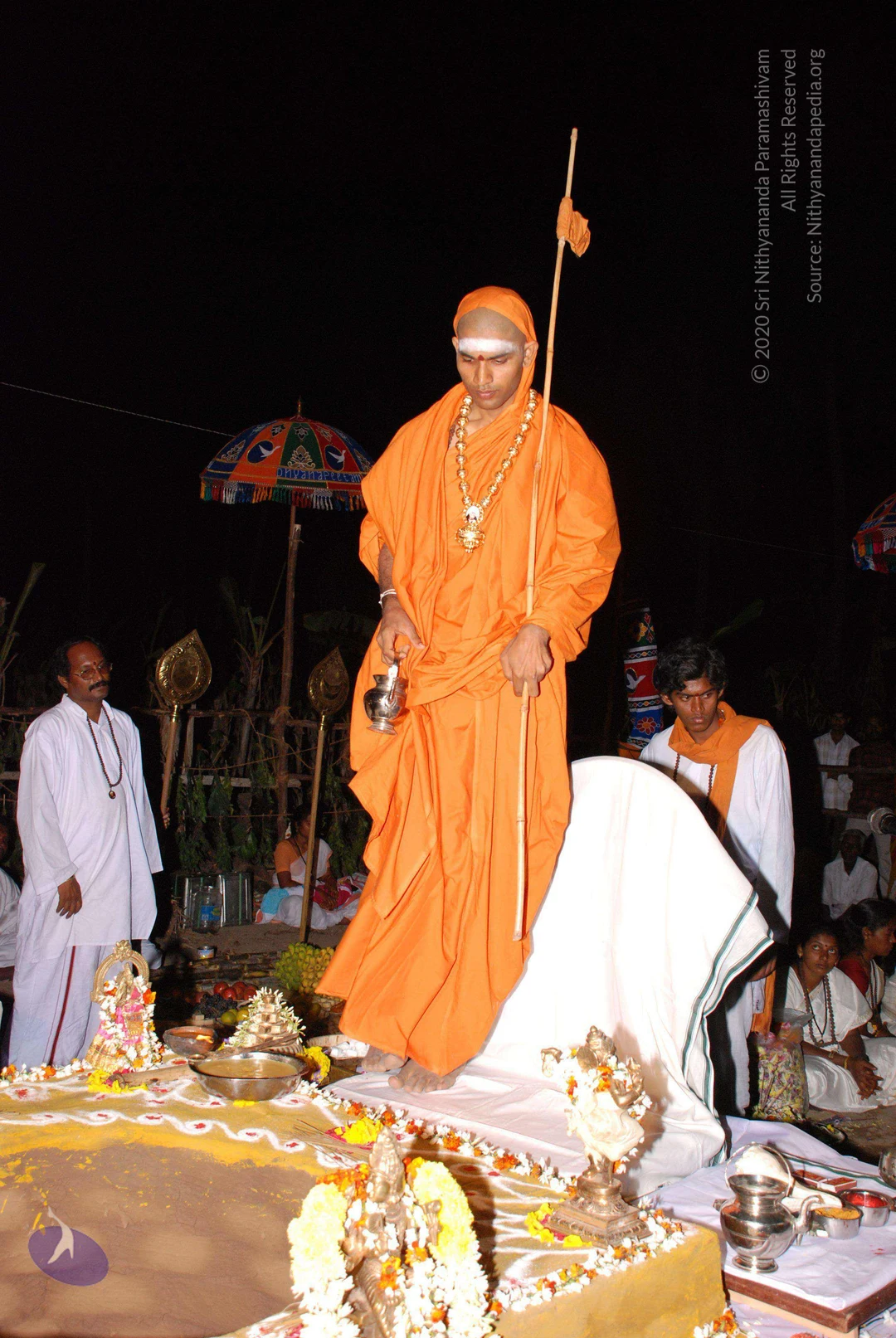
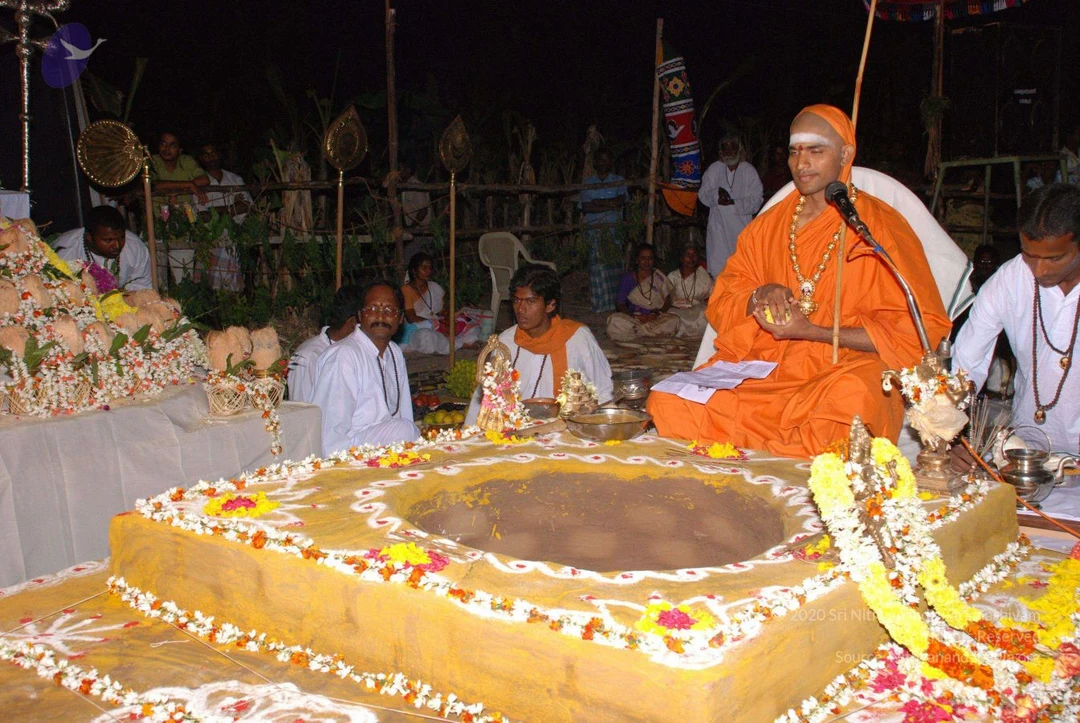
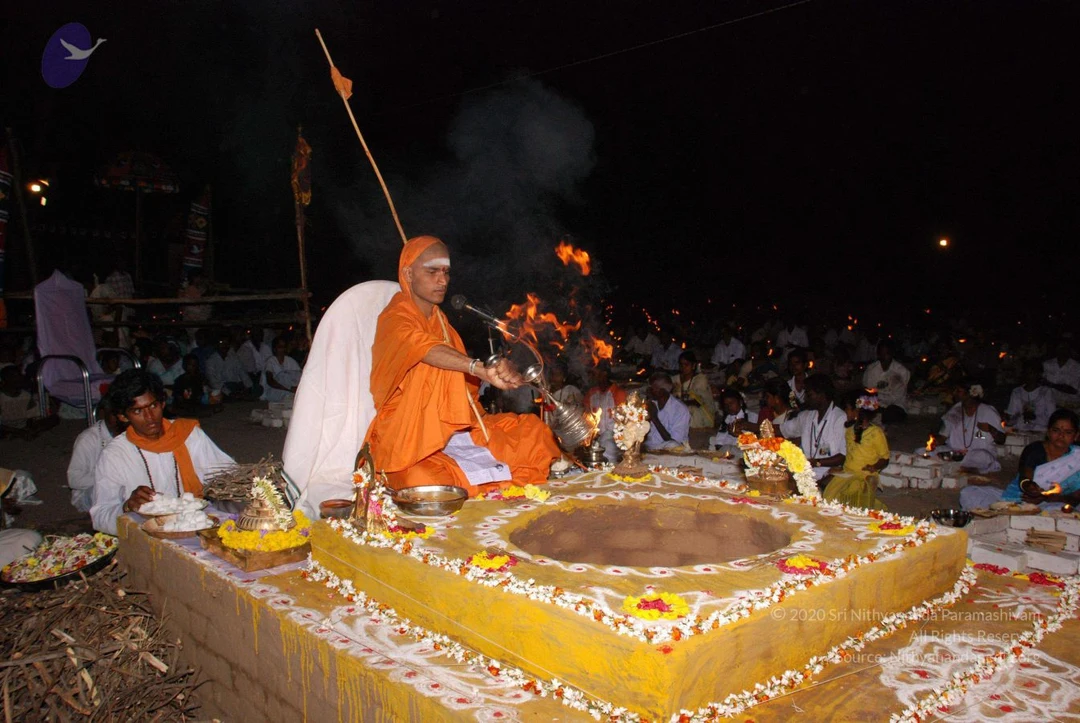
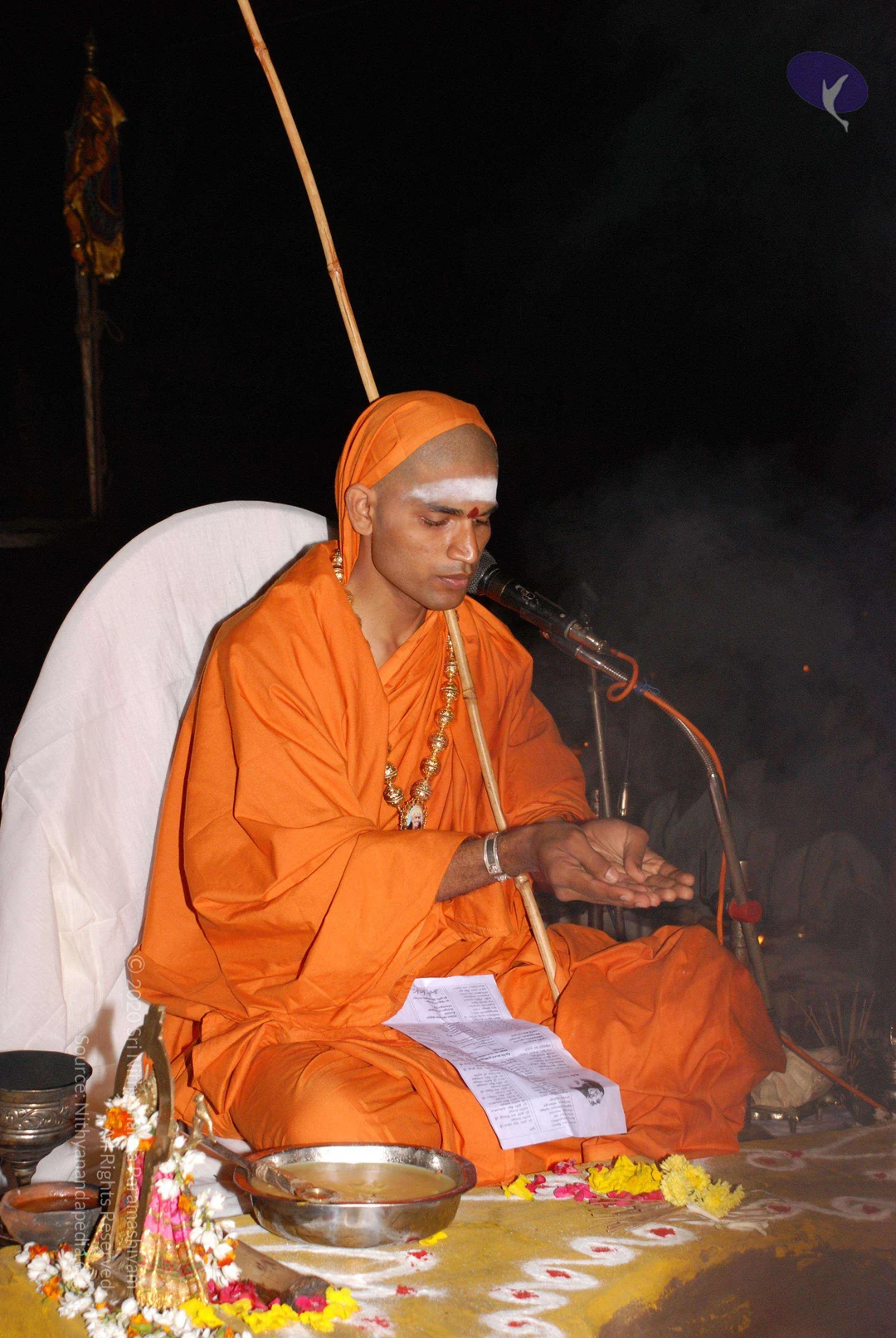
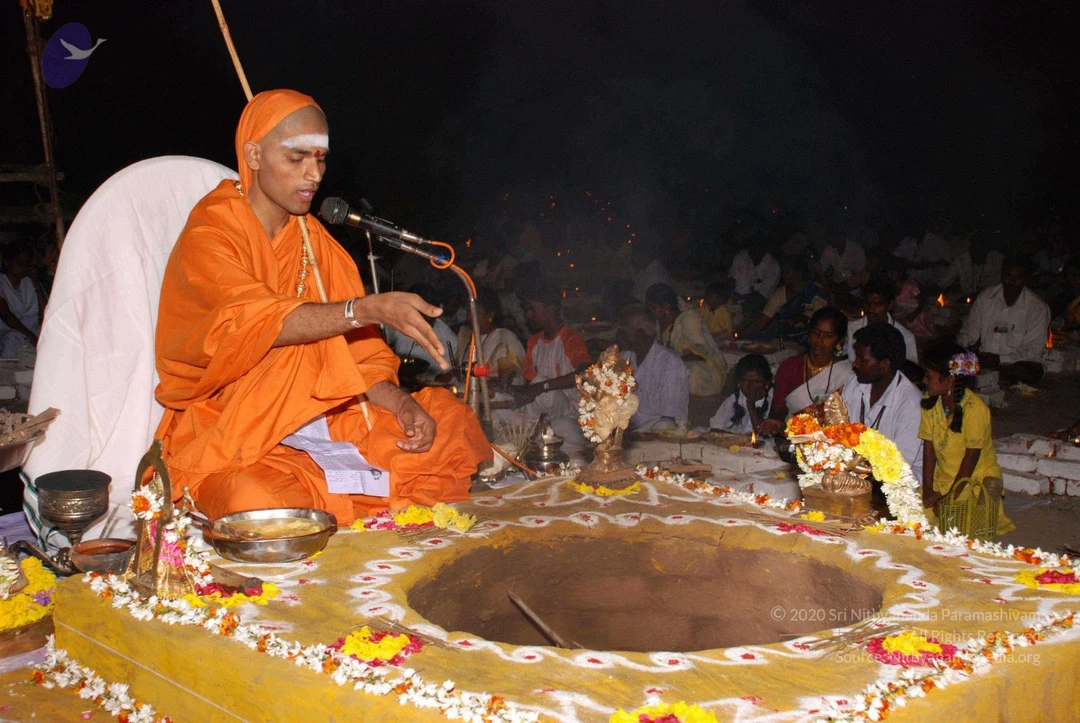
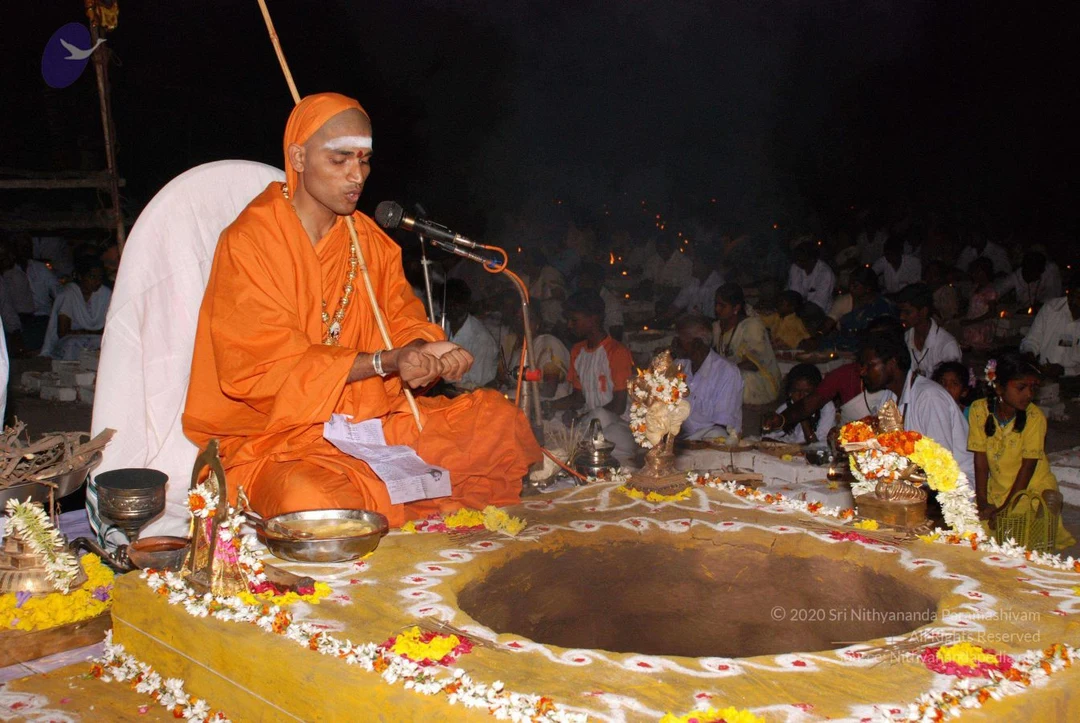
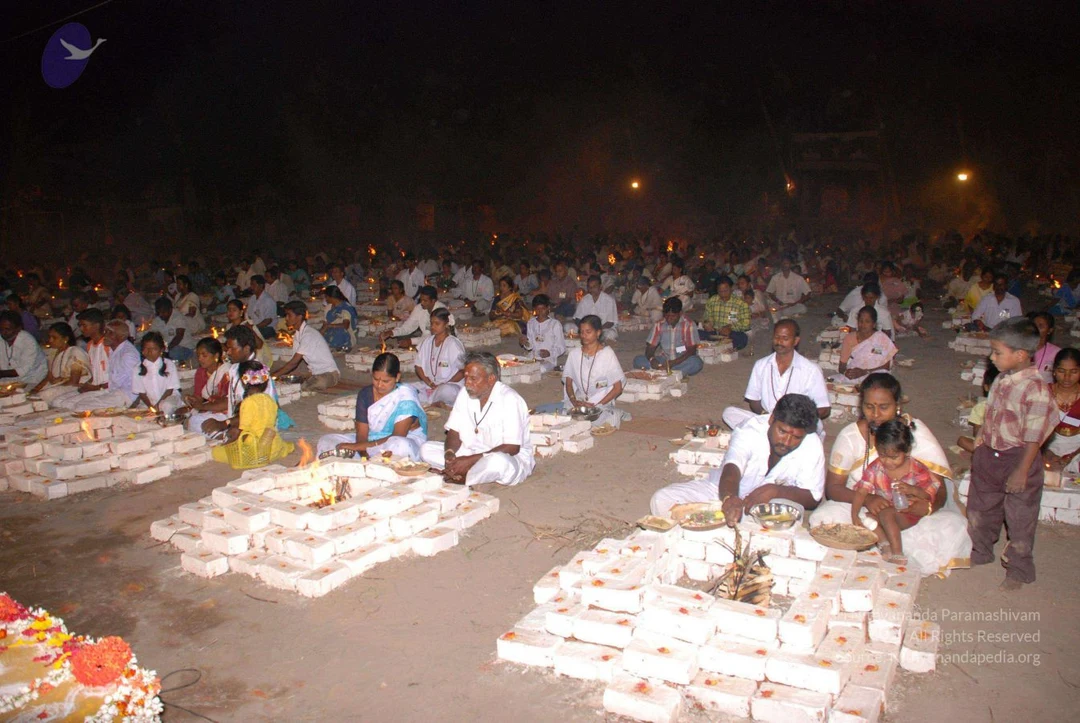
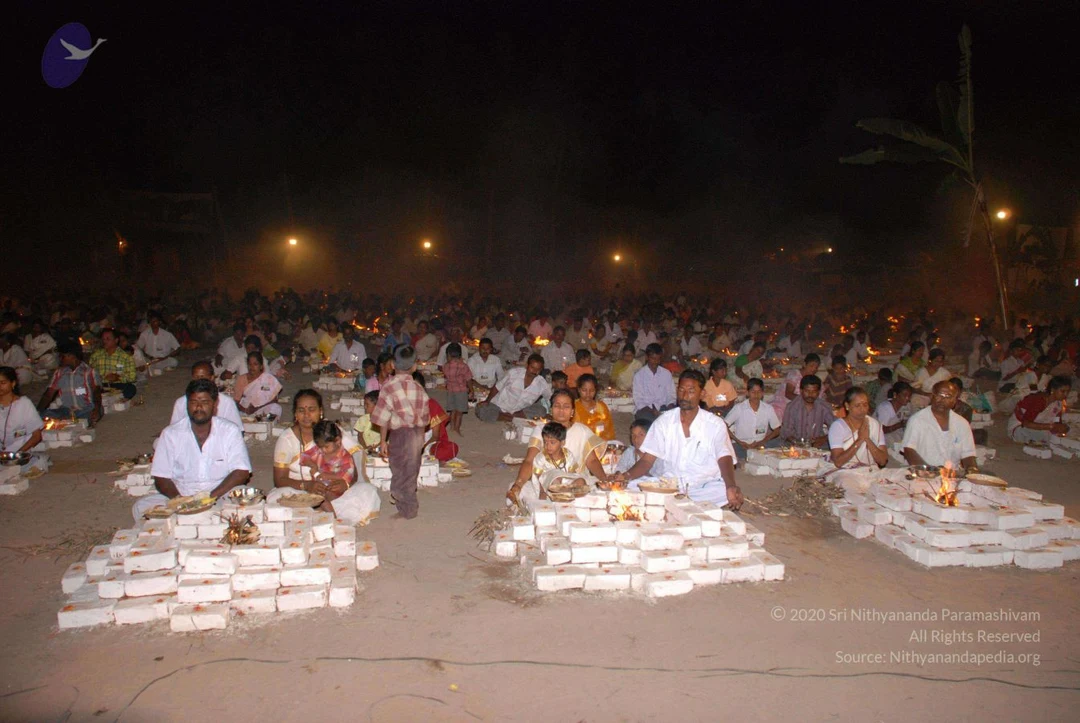
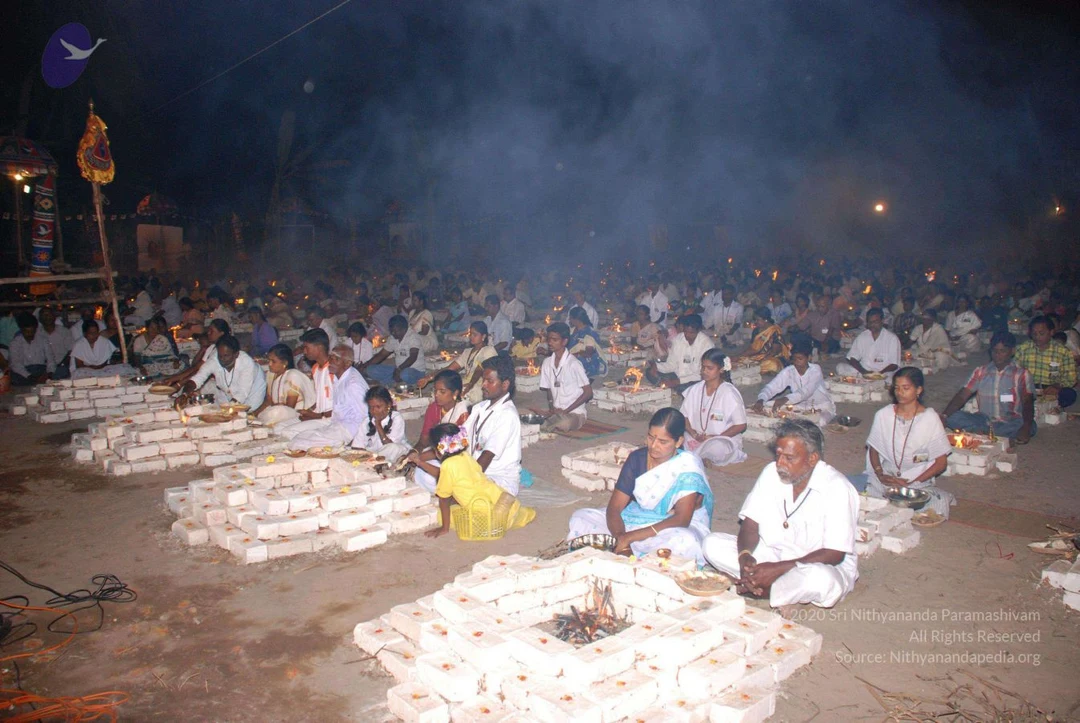
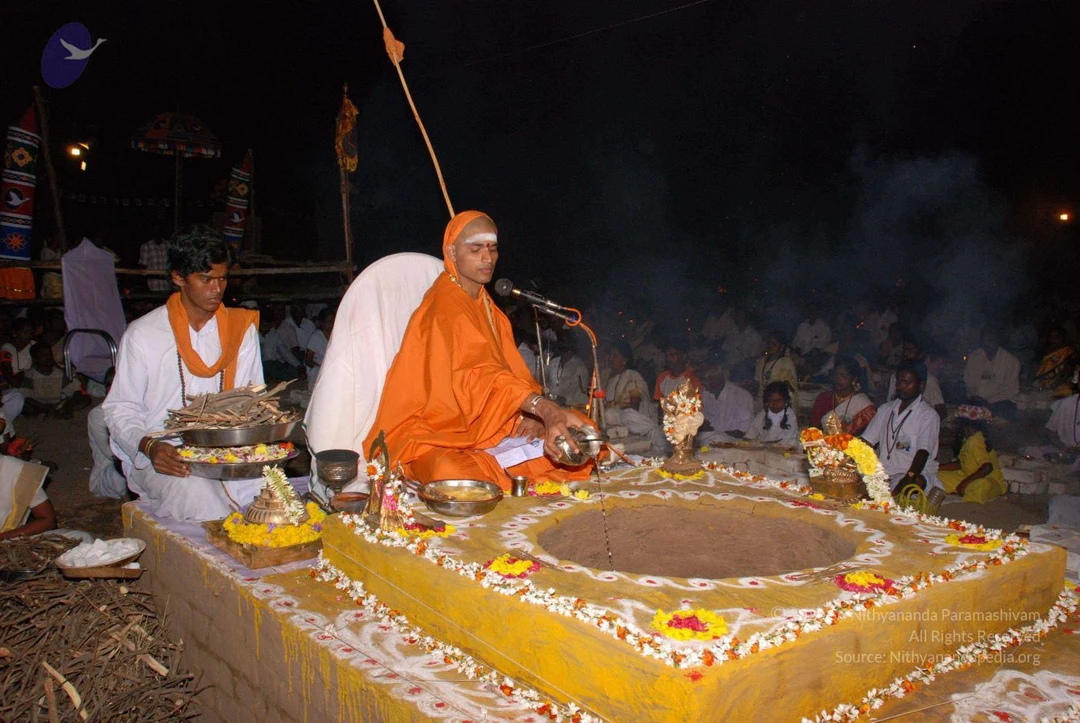
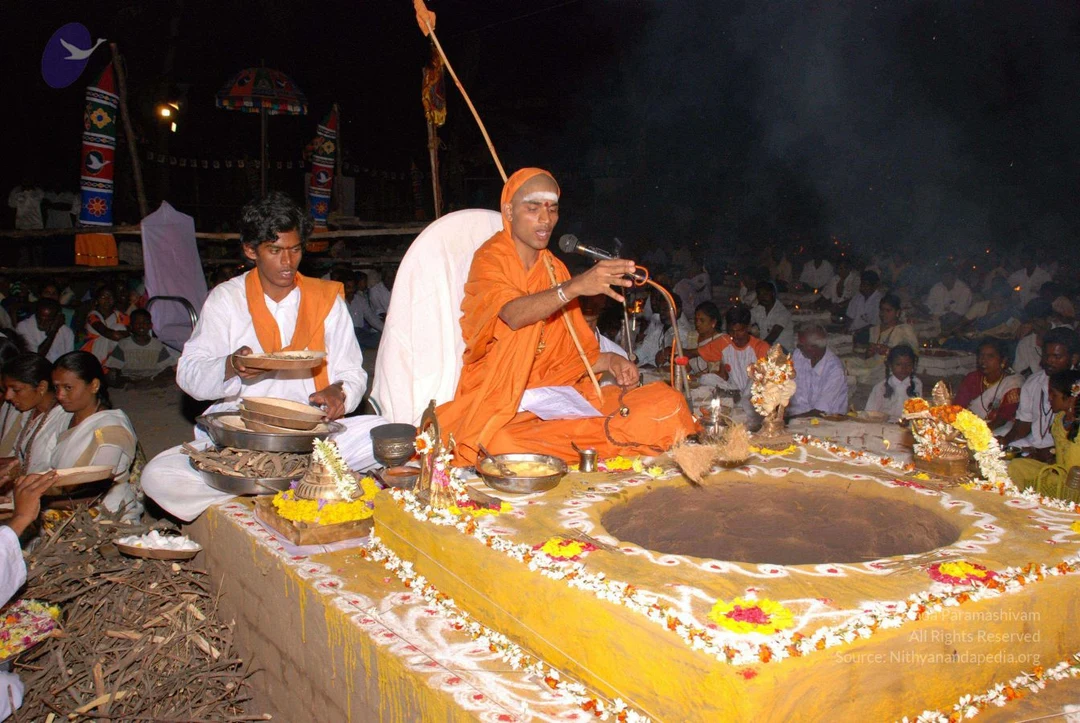
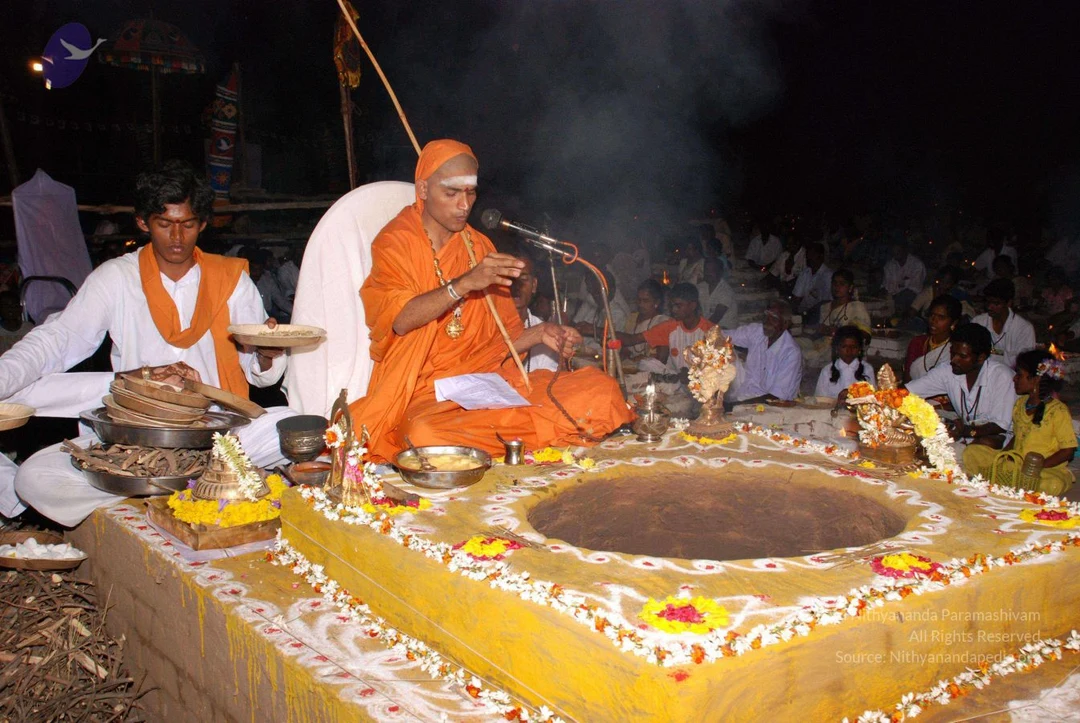
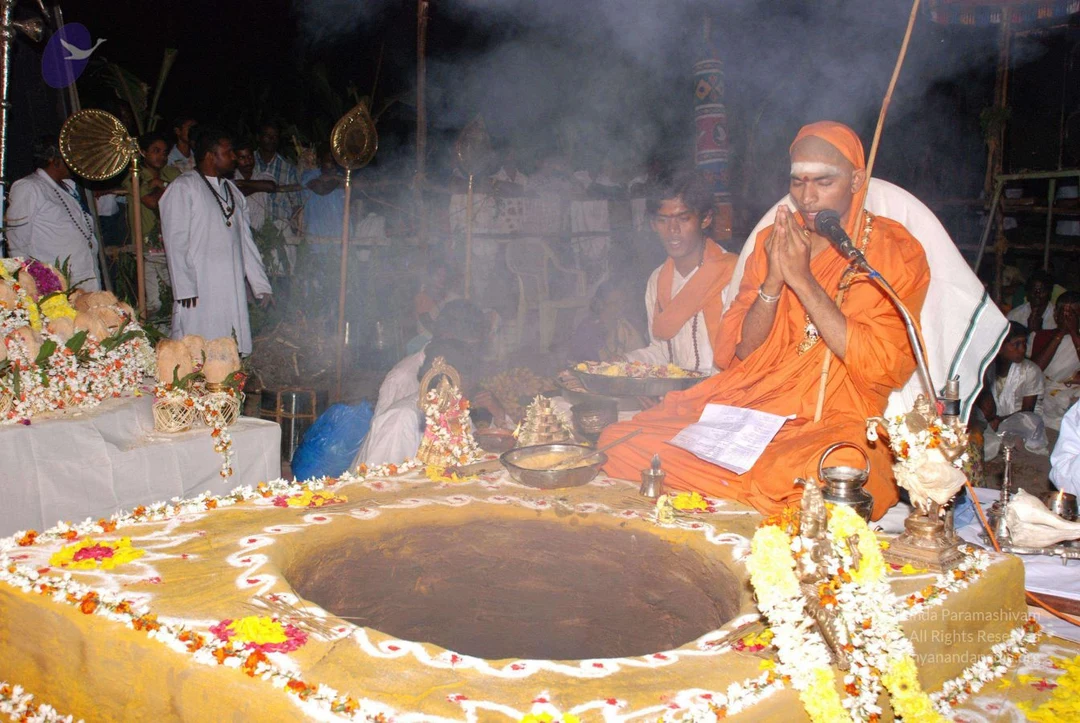
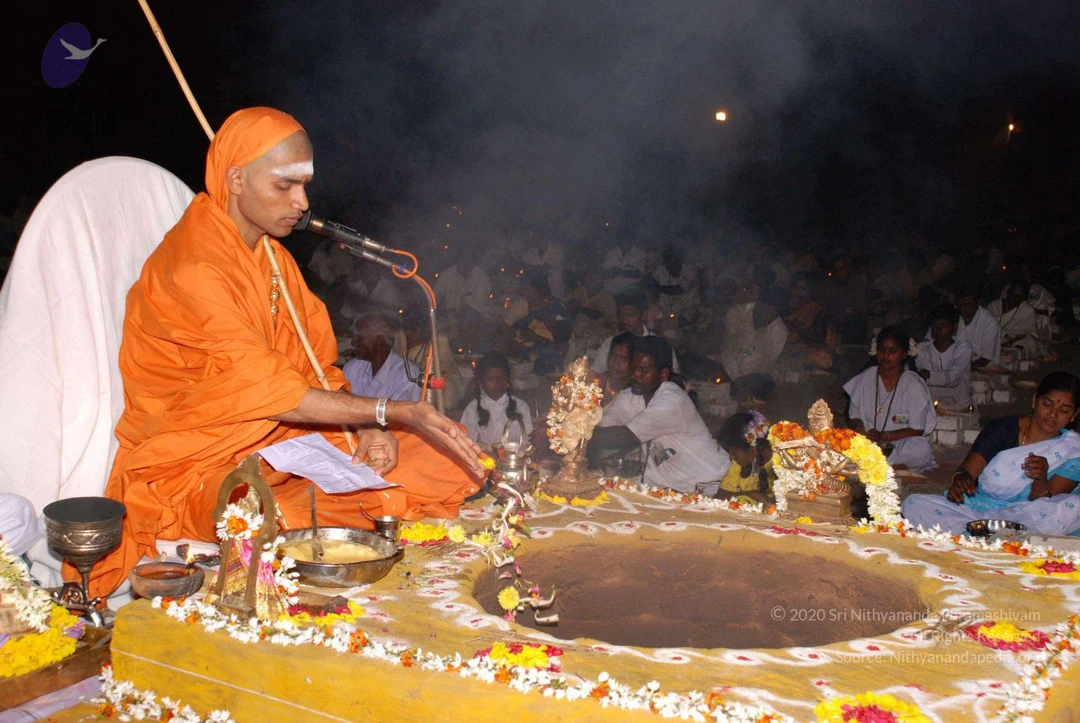
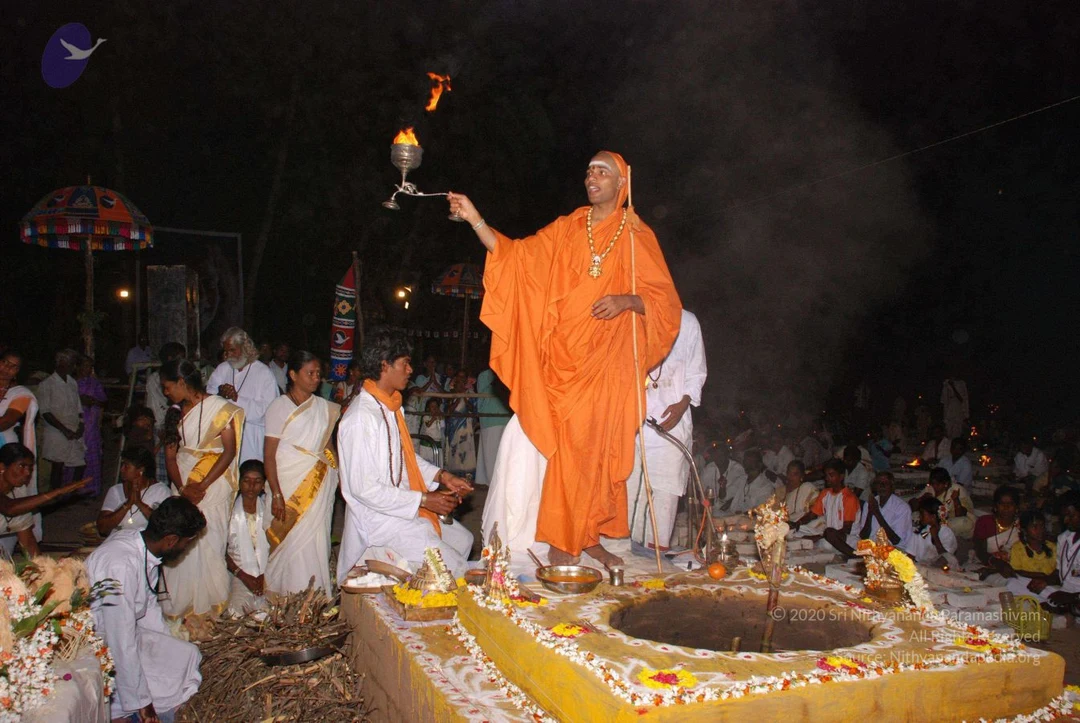
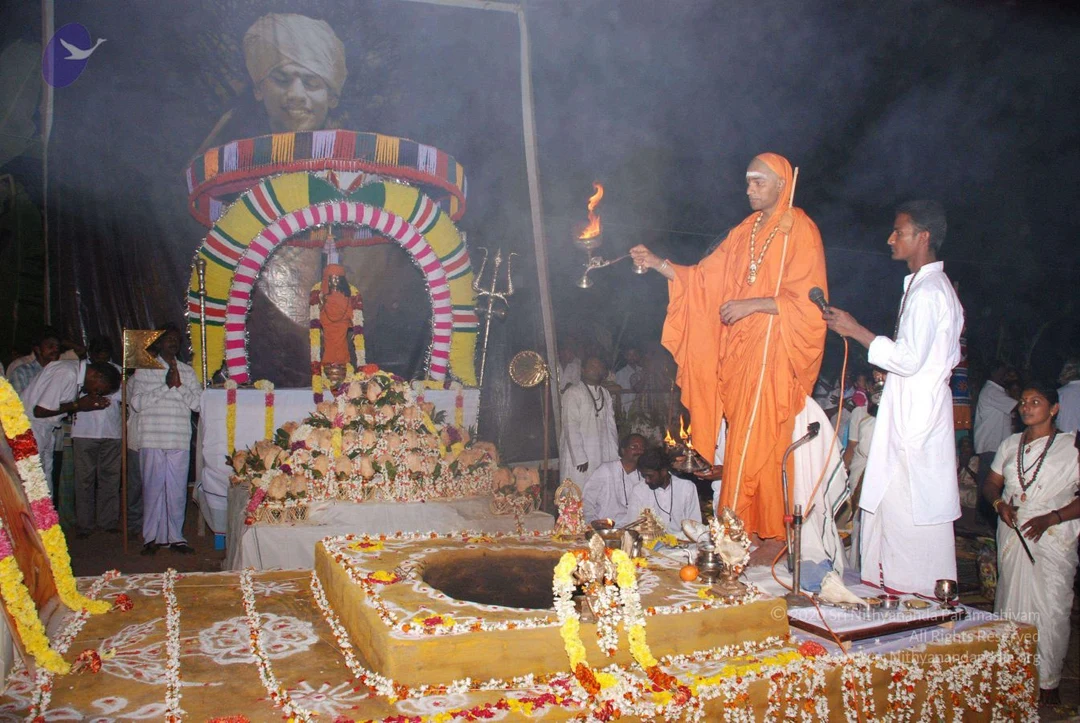
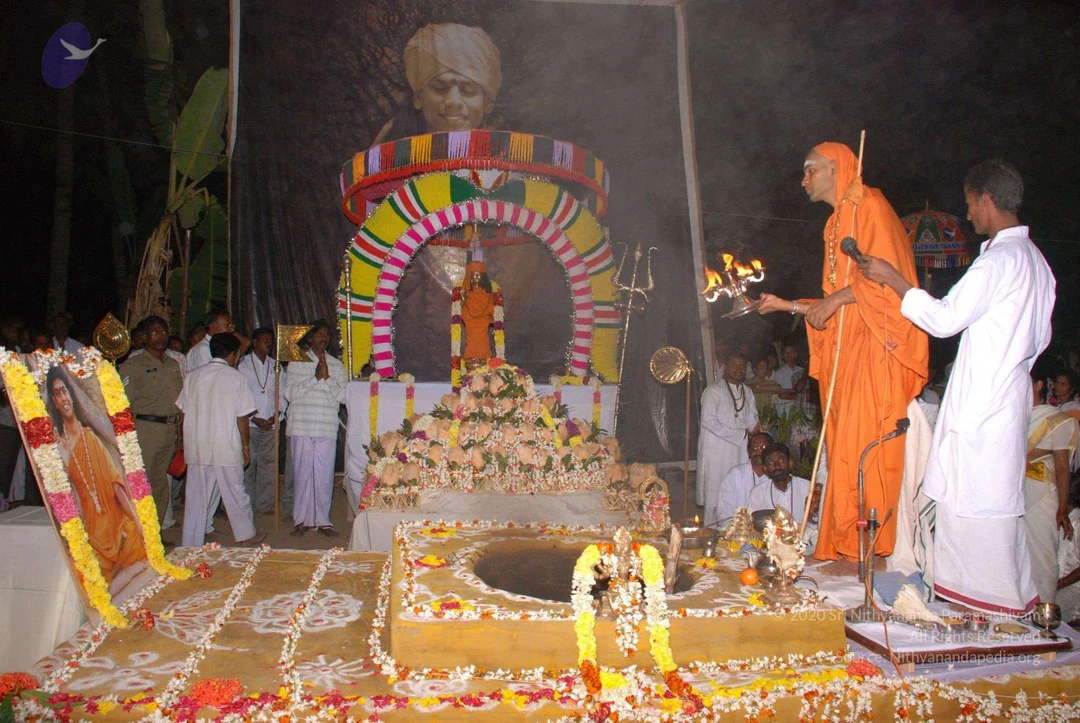
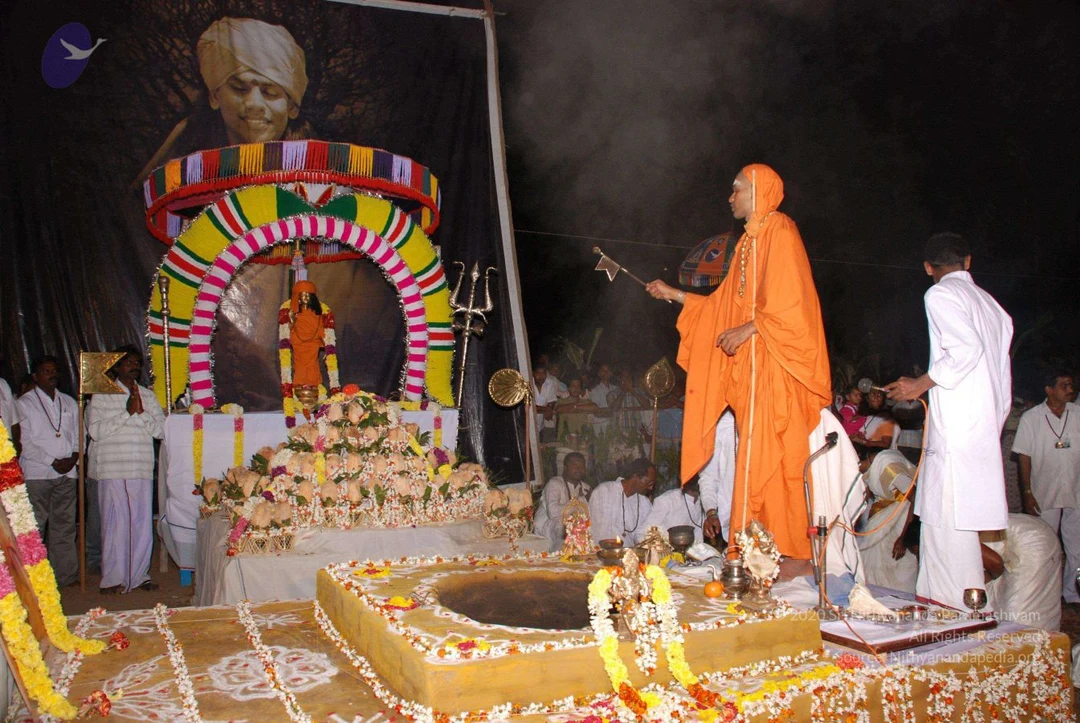
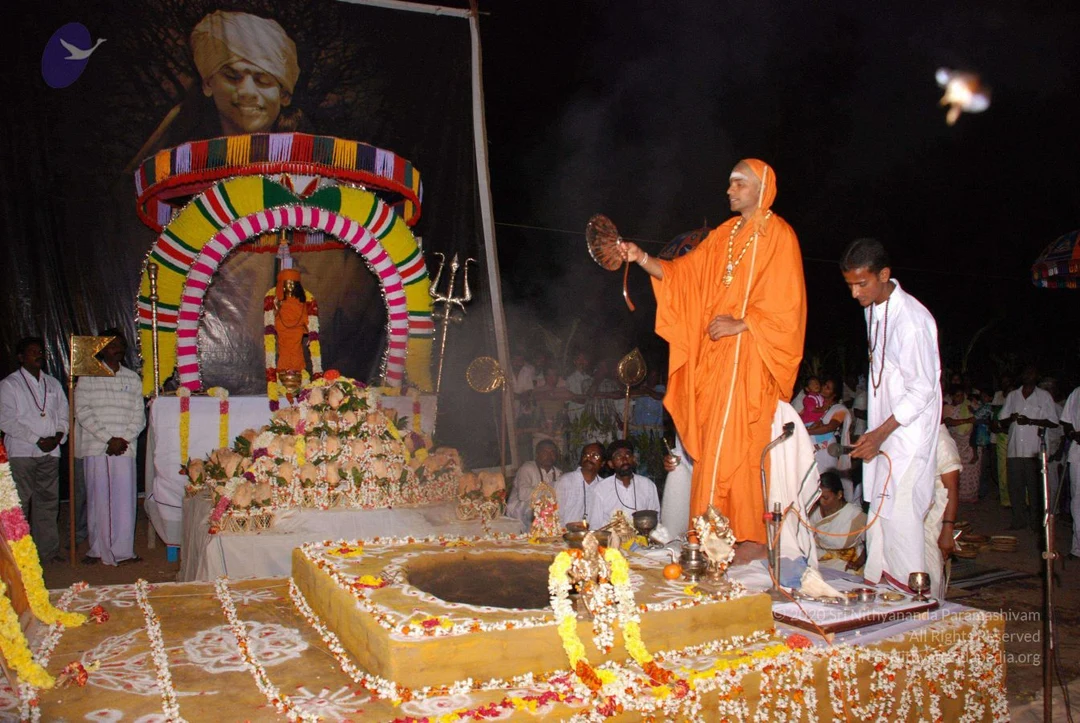
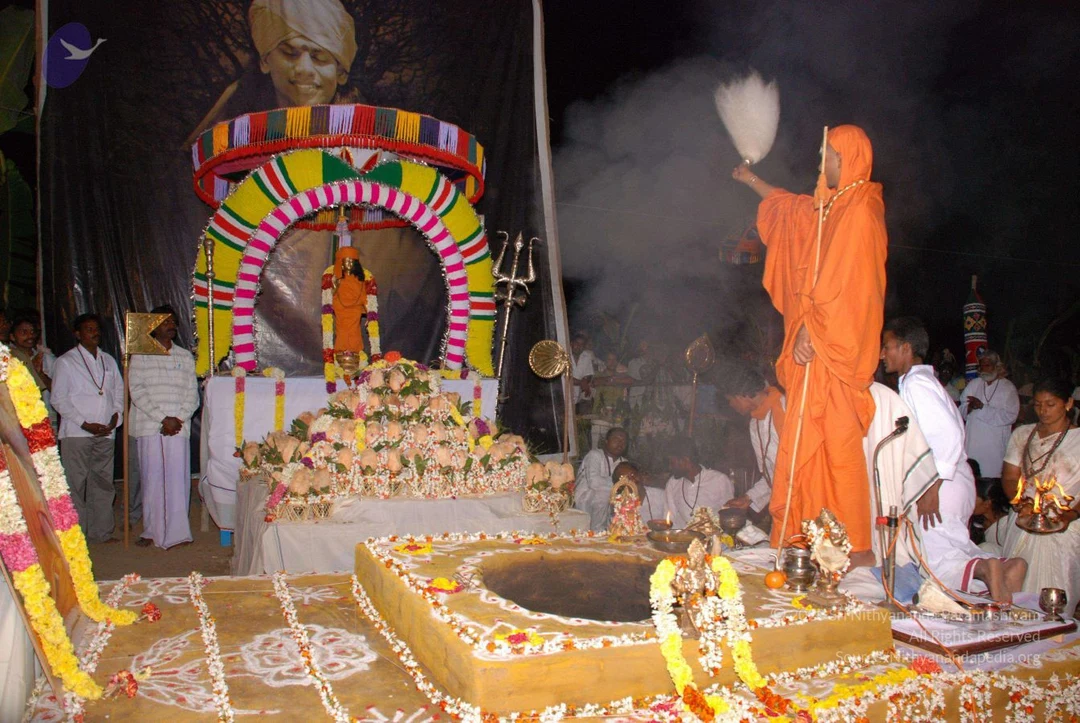
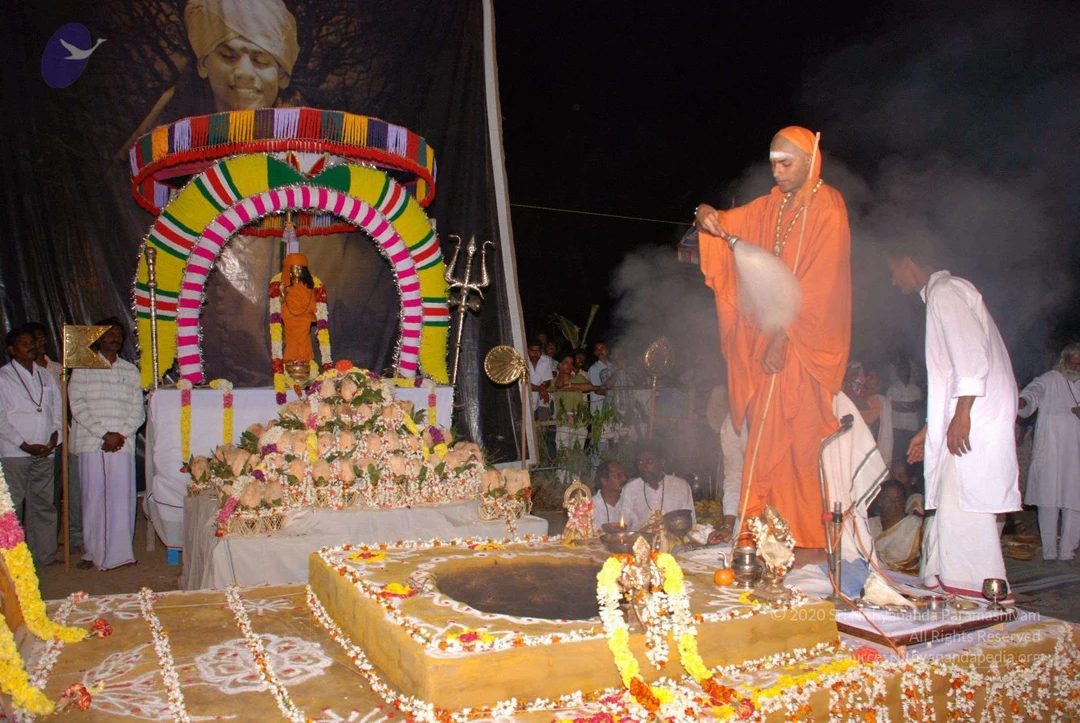
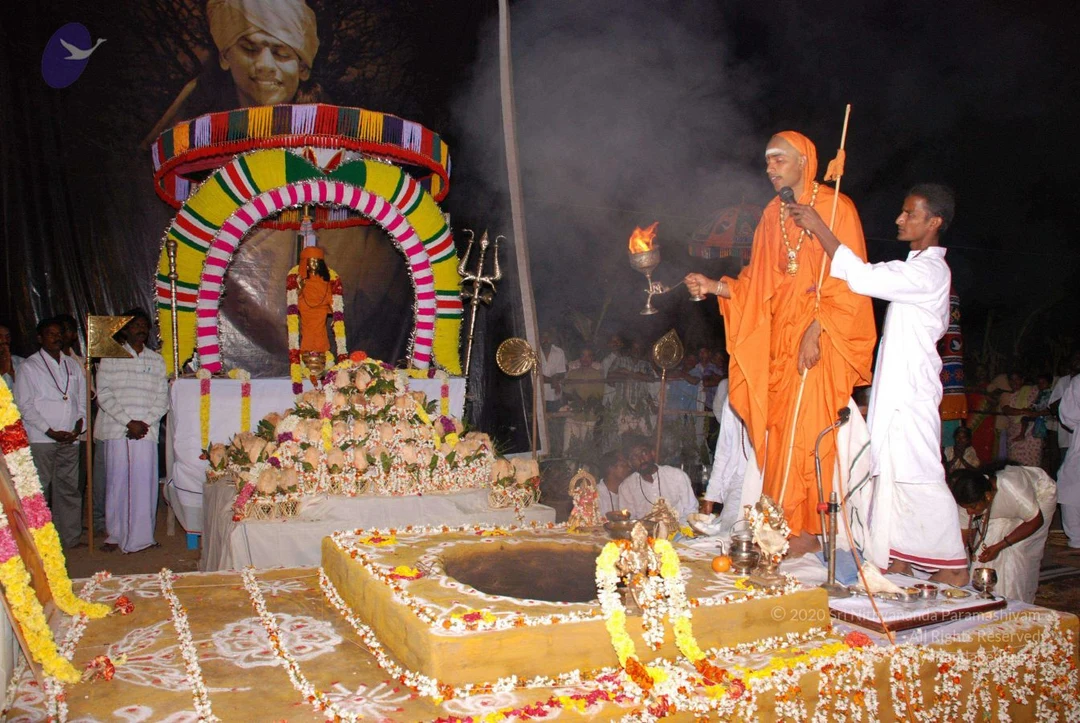
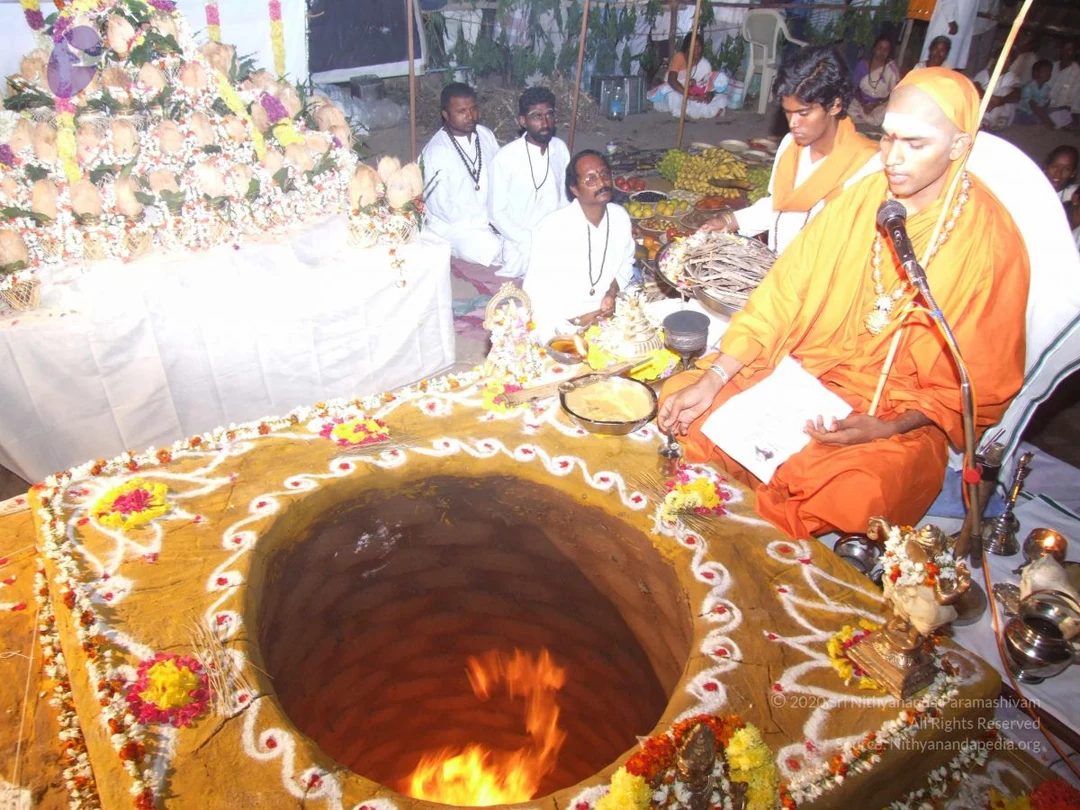
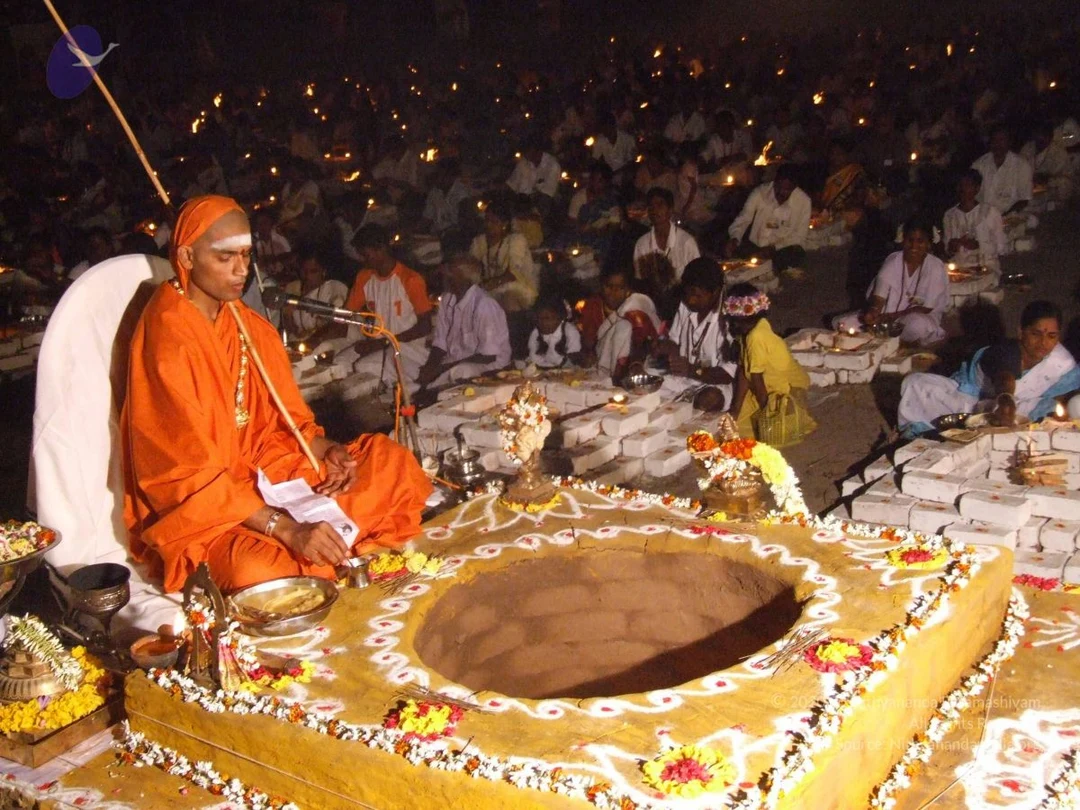
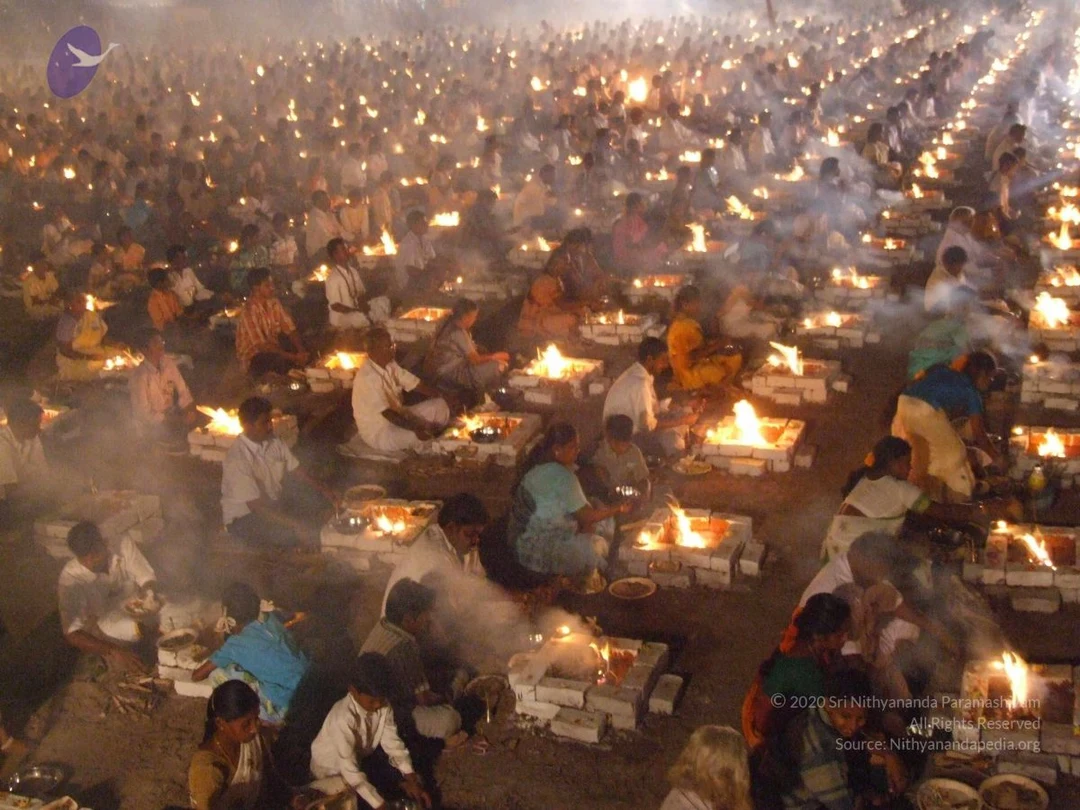
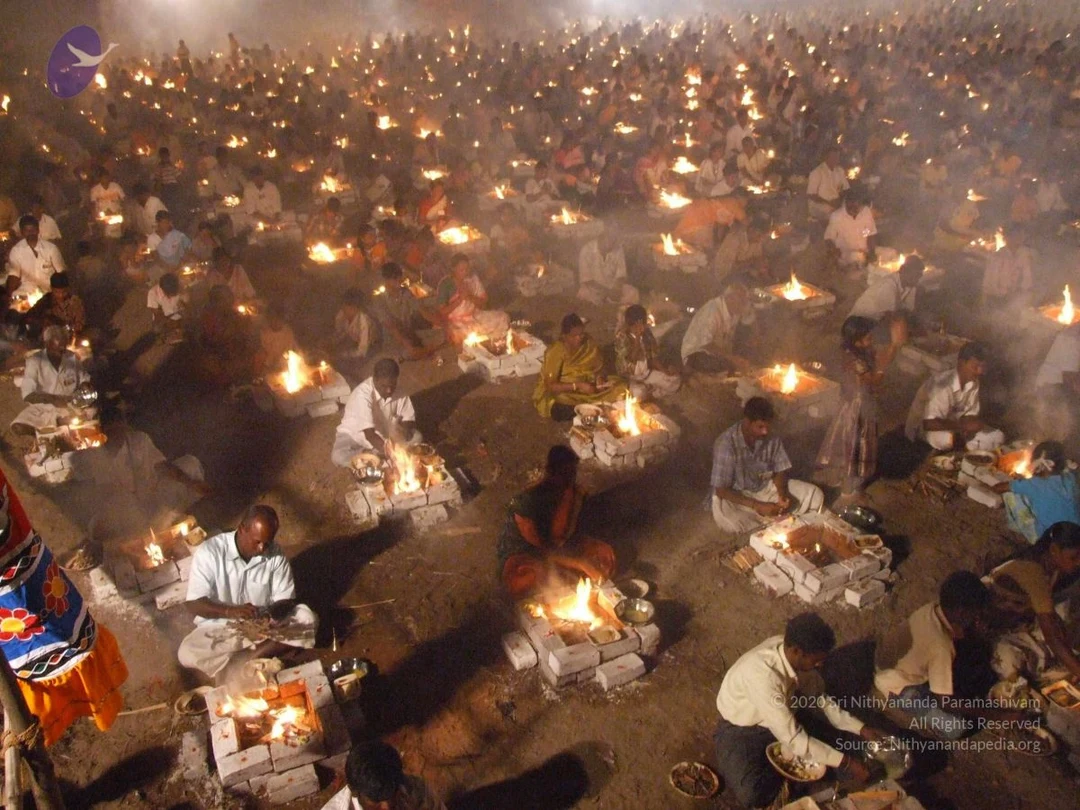
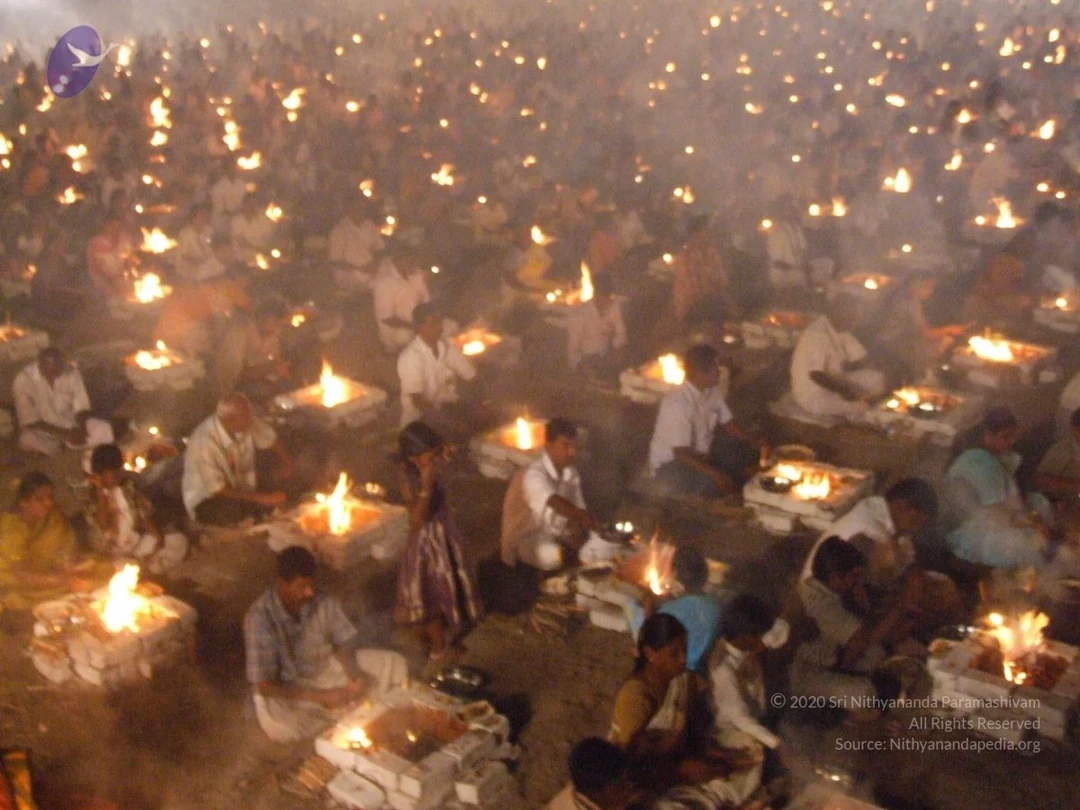
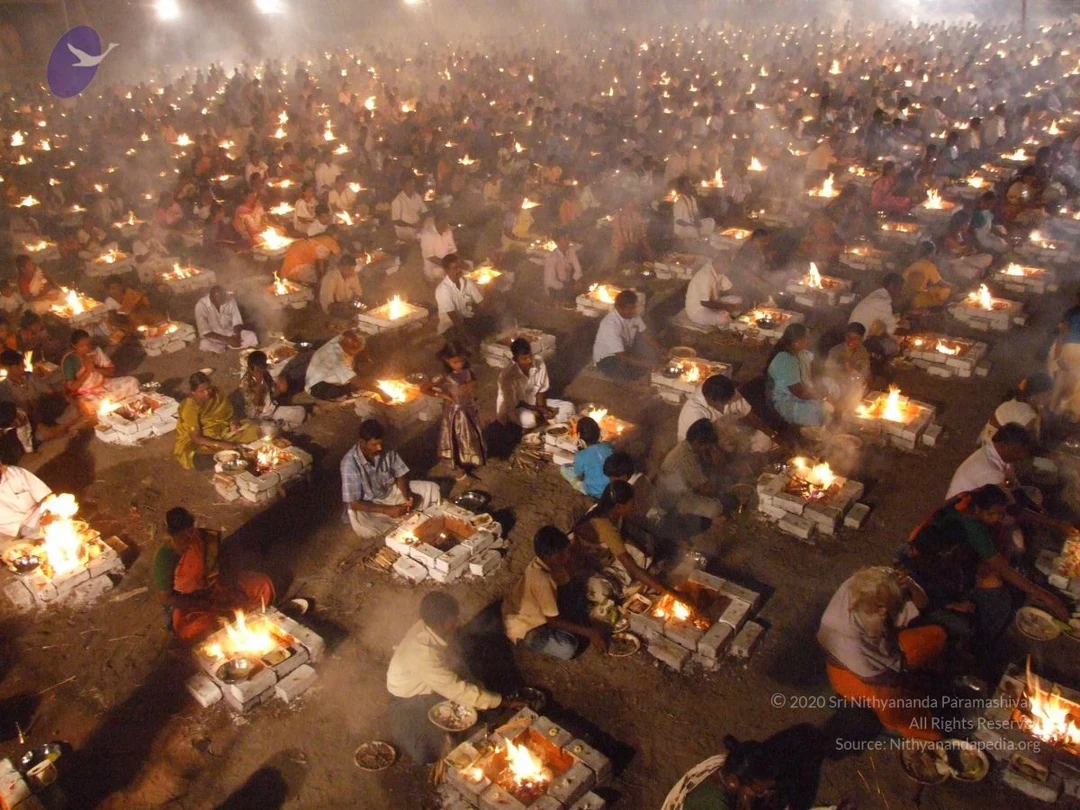
GURU-HOMA-IN-PONDICHERRY

01-TEMPLE-ARATHI

Photos from this day

View all 347 photos

SARVA-DARSHAN
70 photosSource gallery
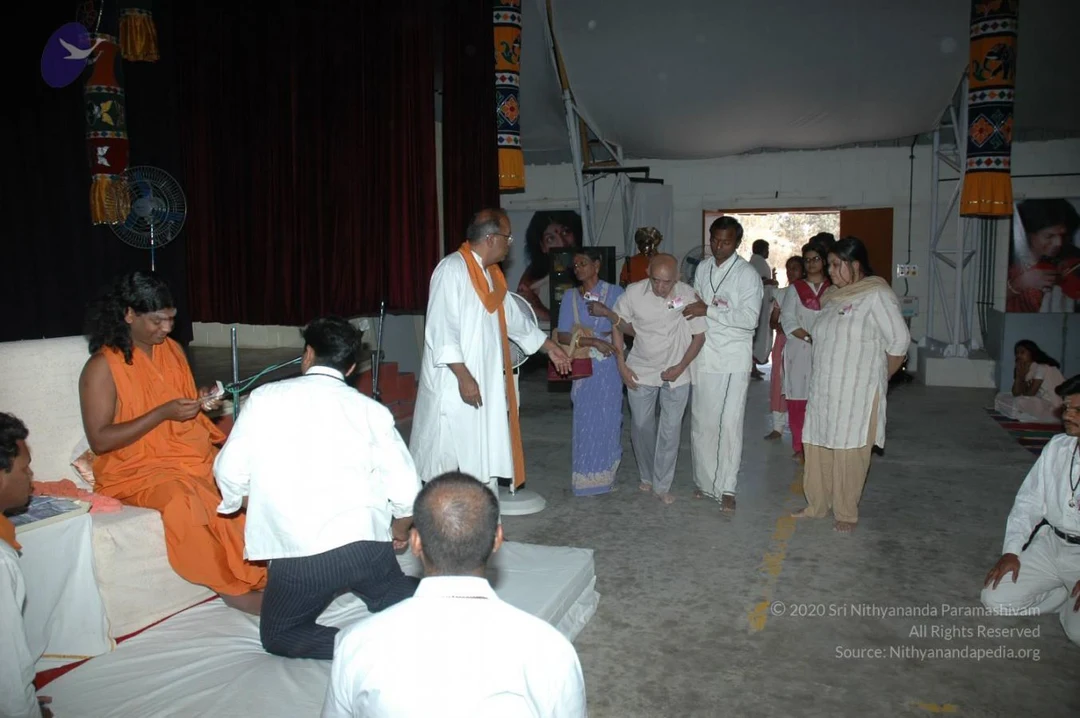
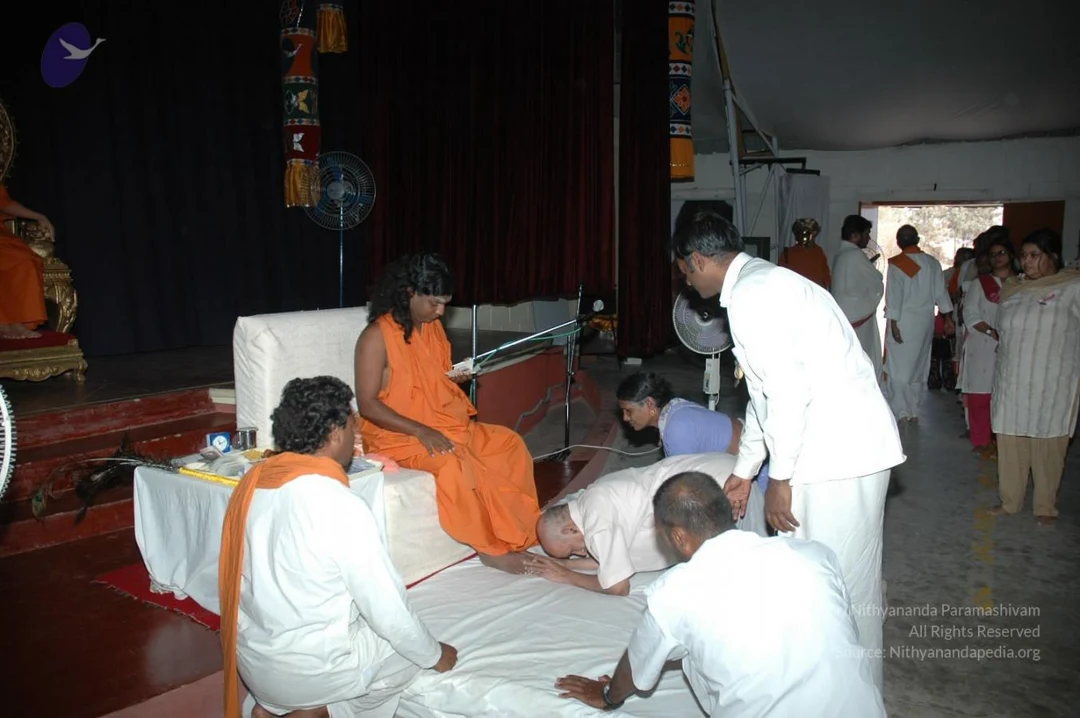
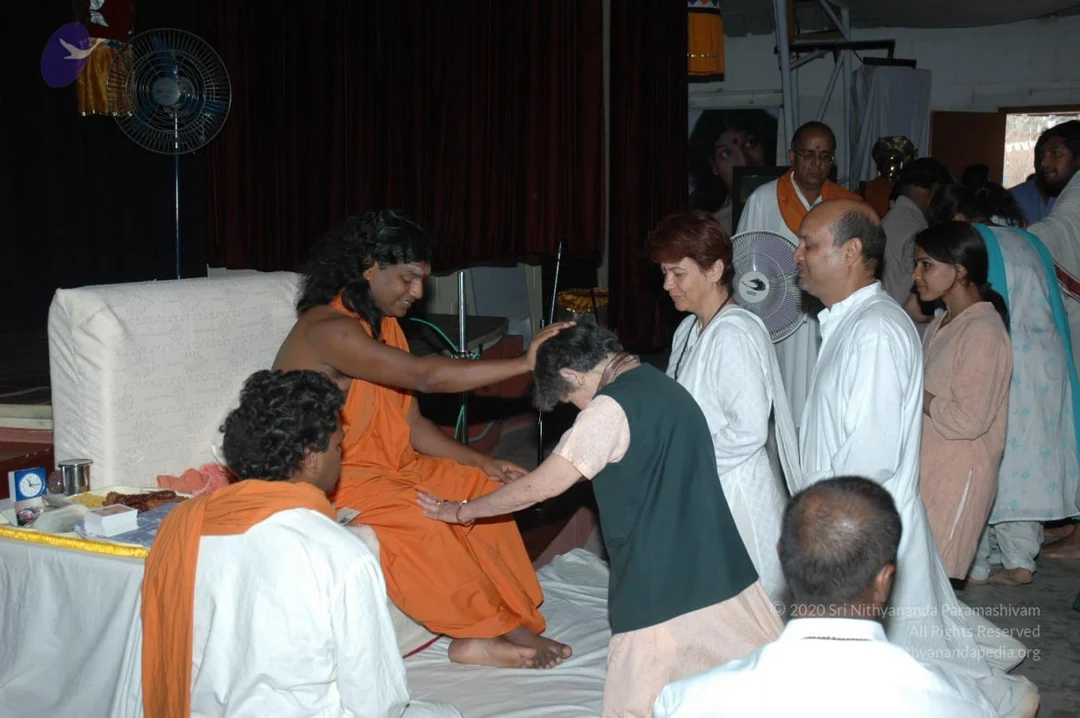
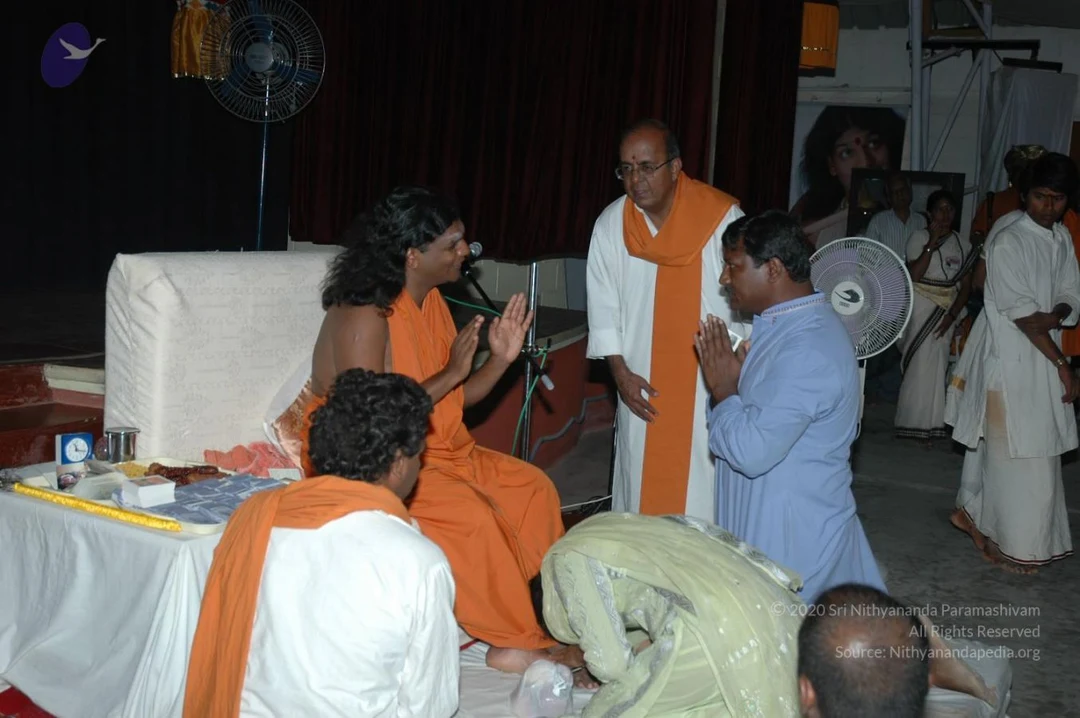
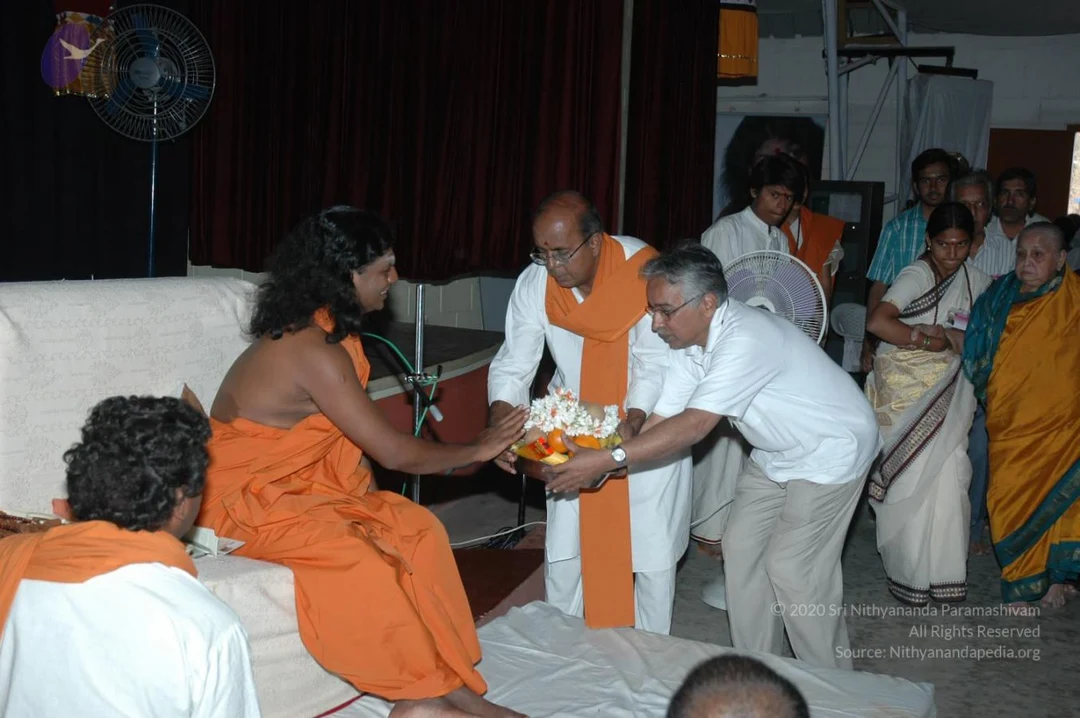
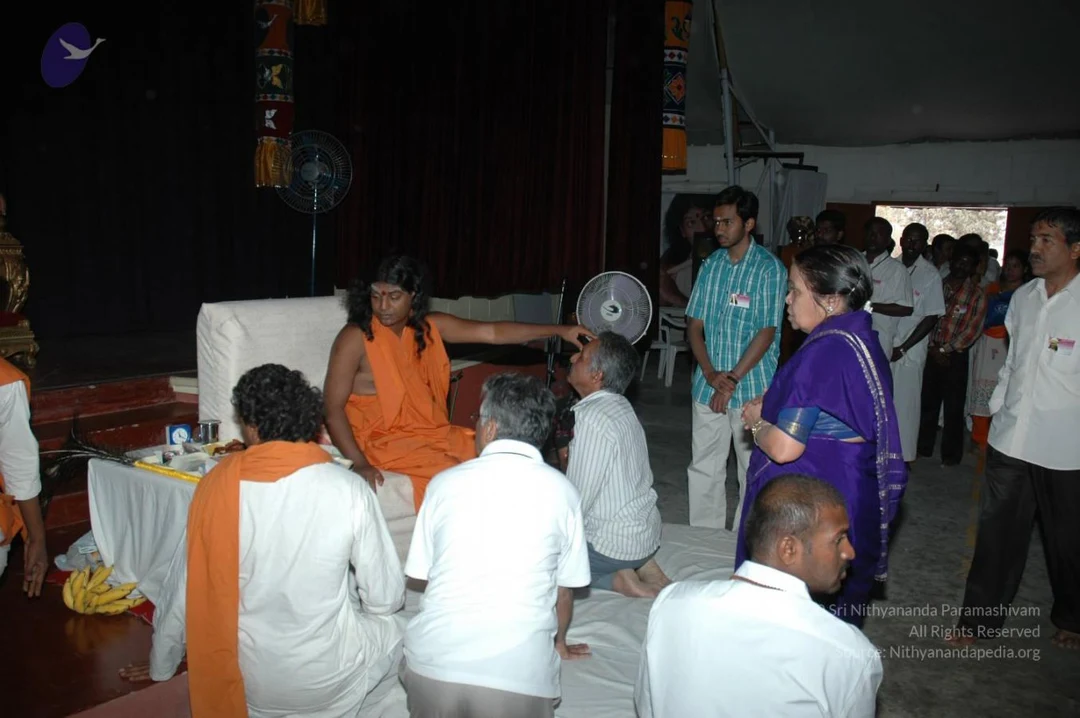
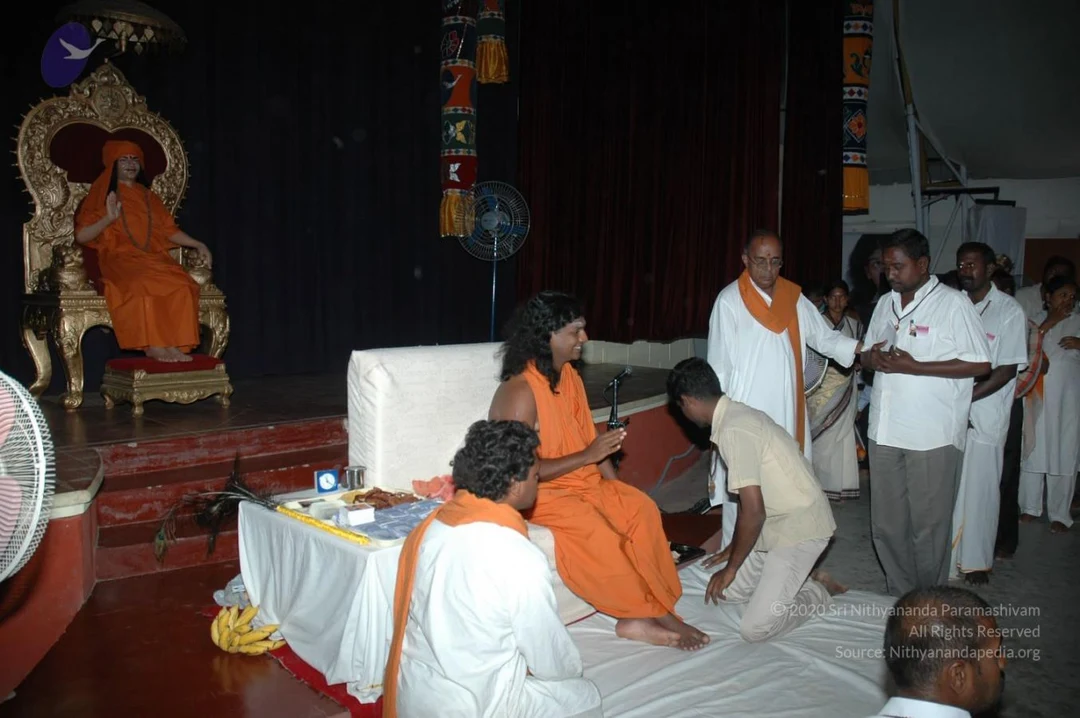
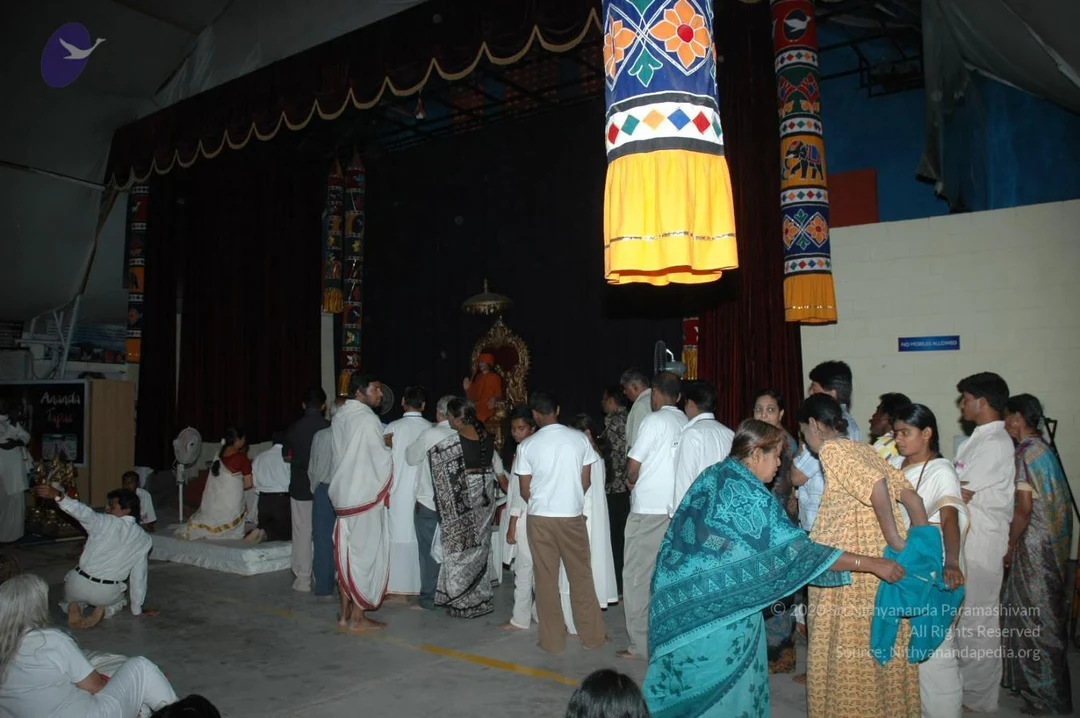
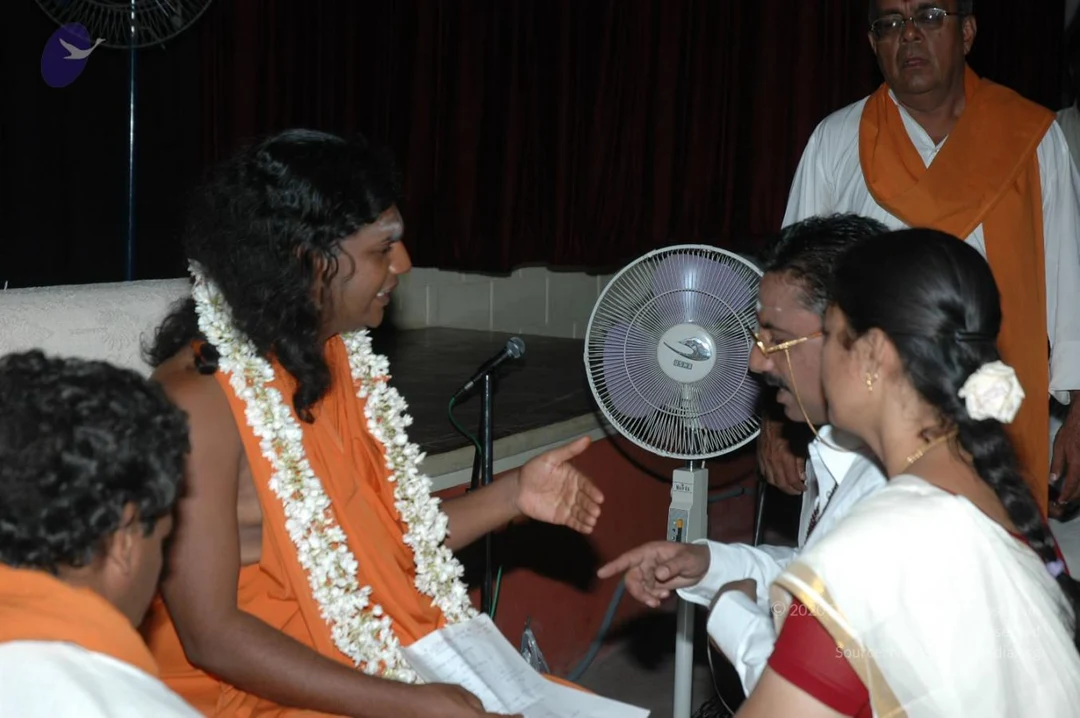
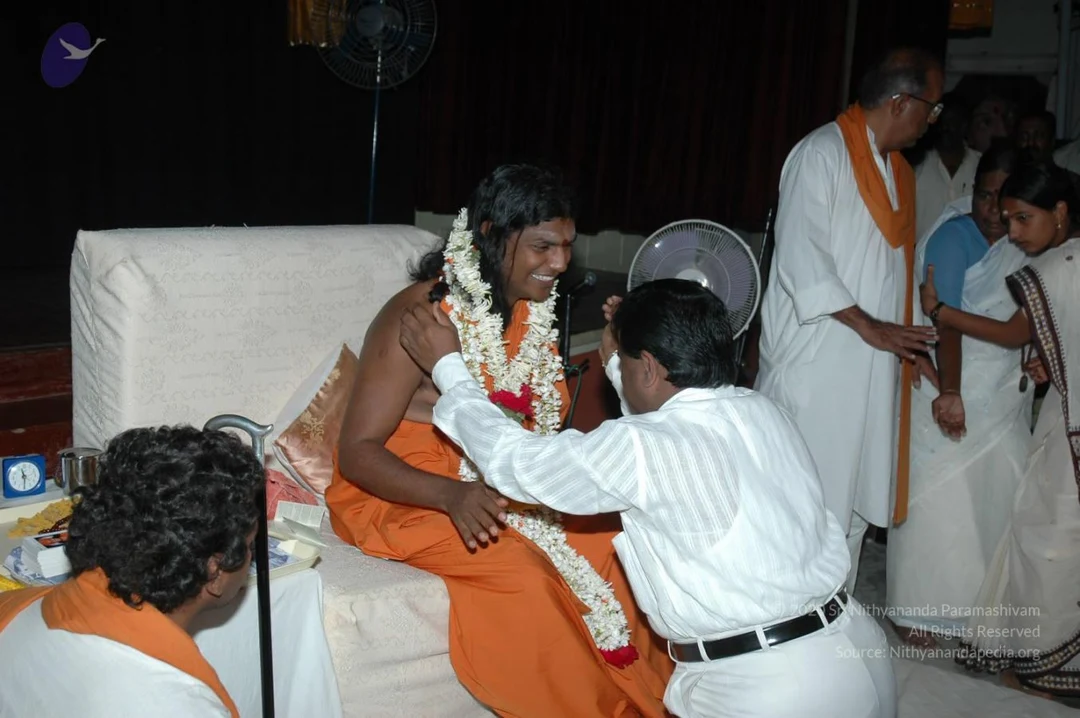
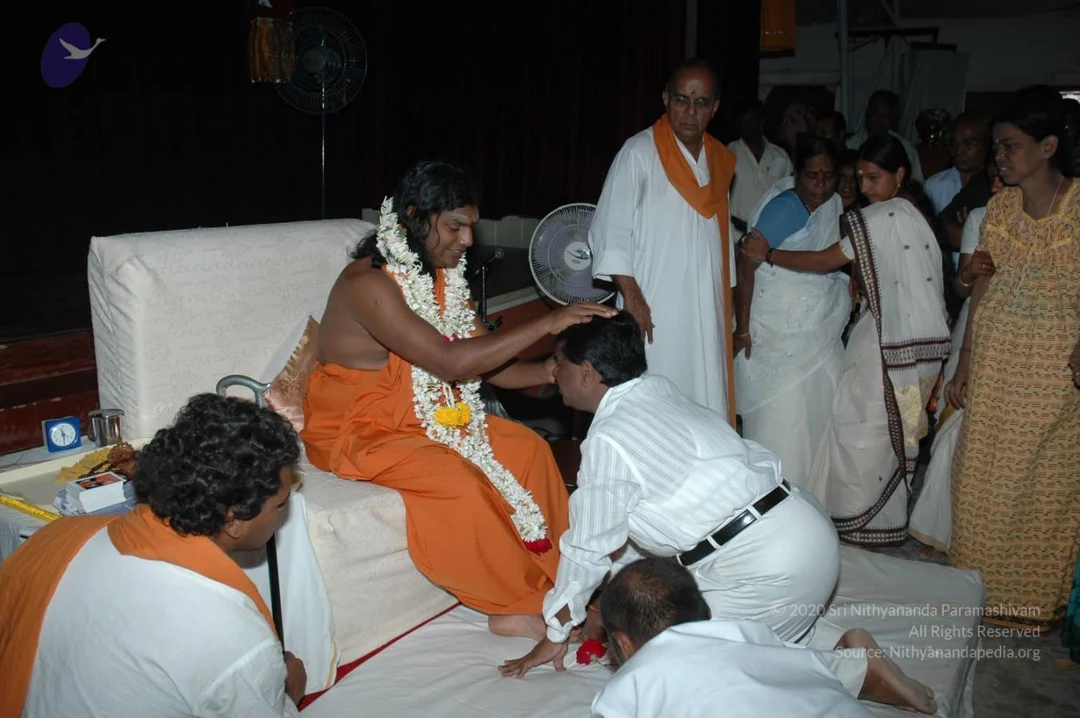
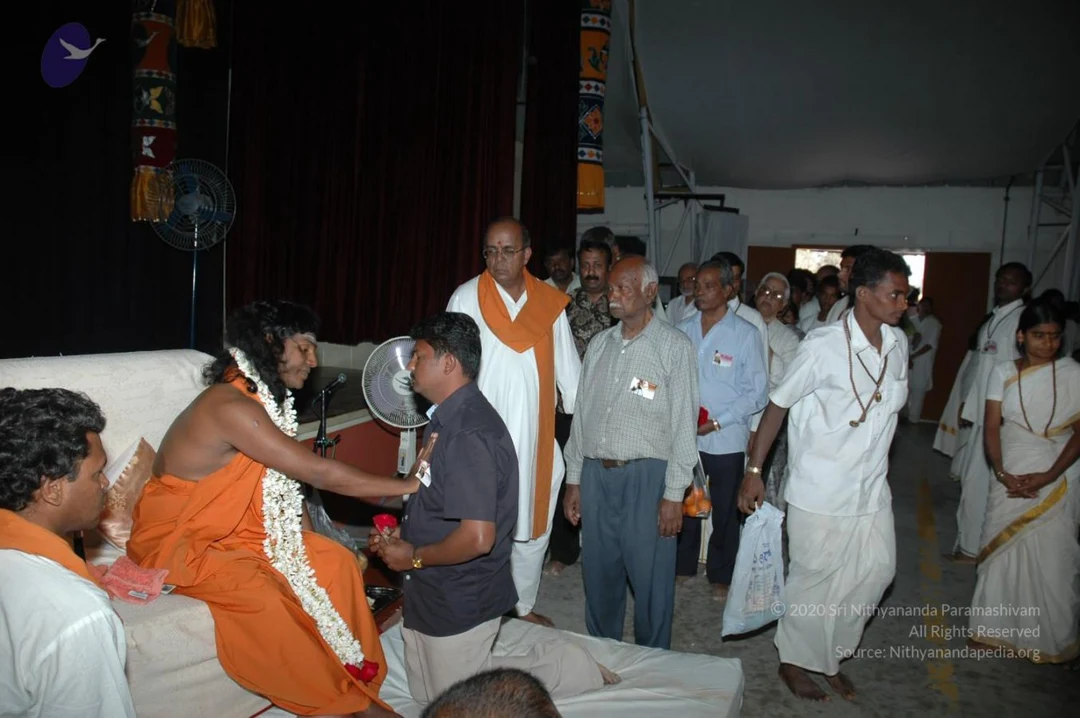
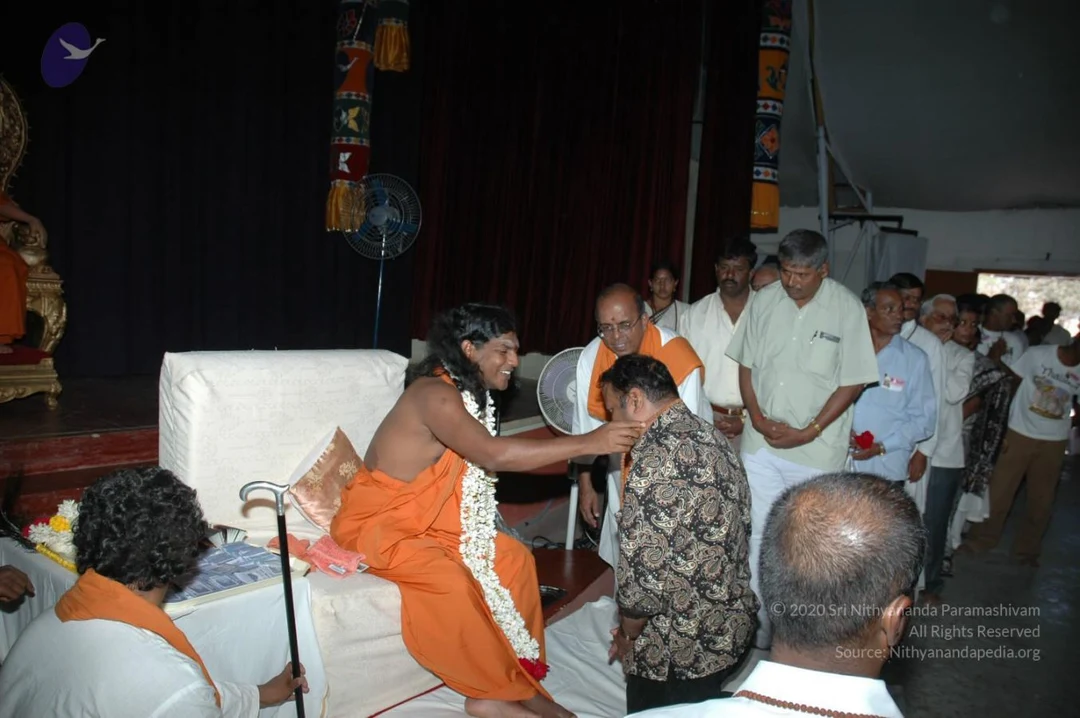
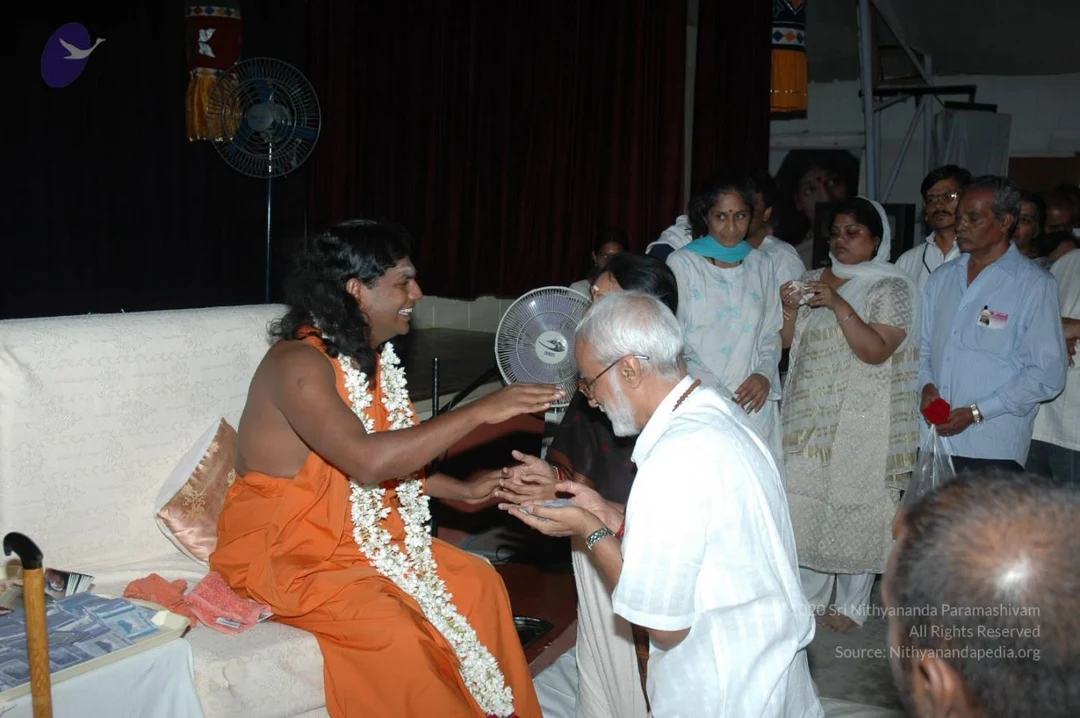
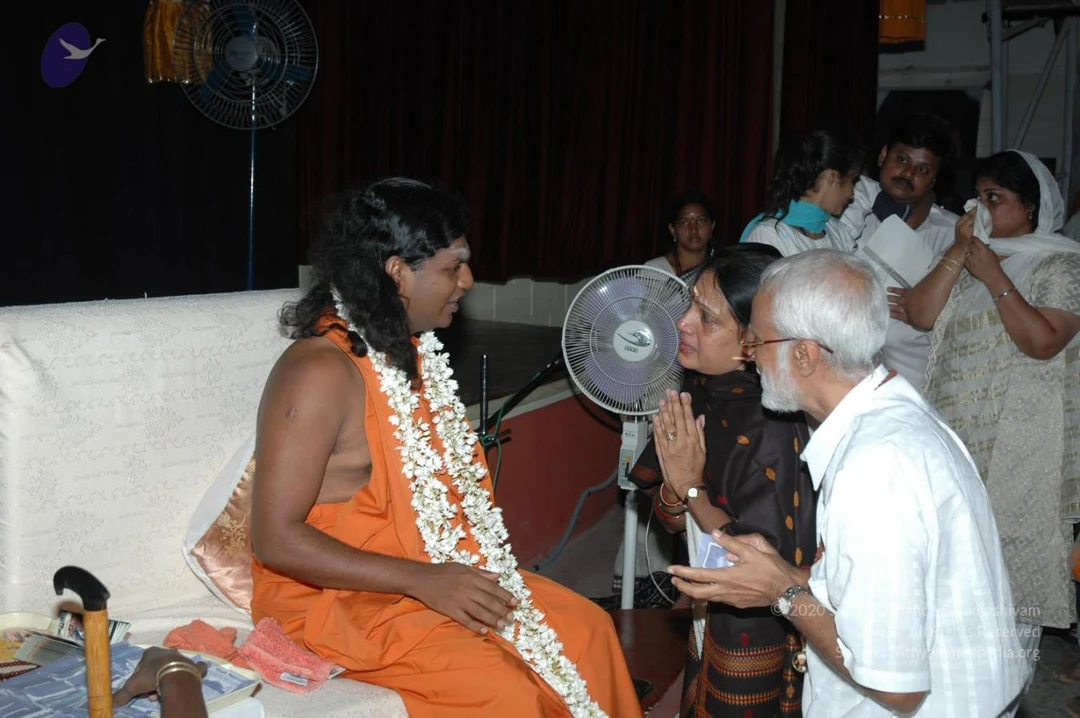
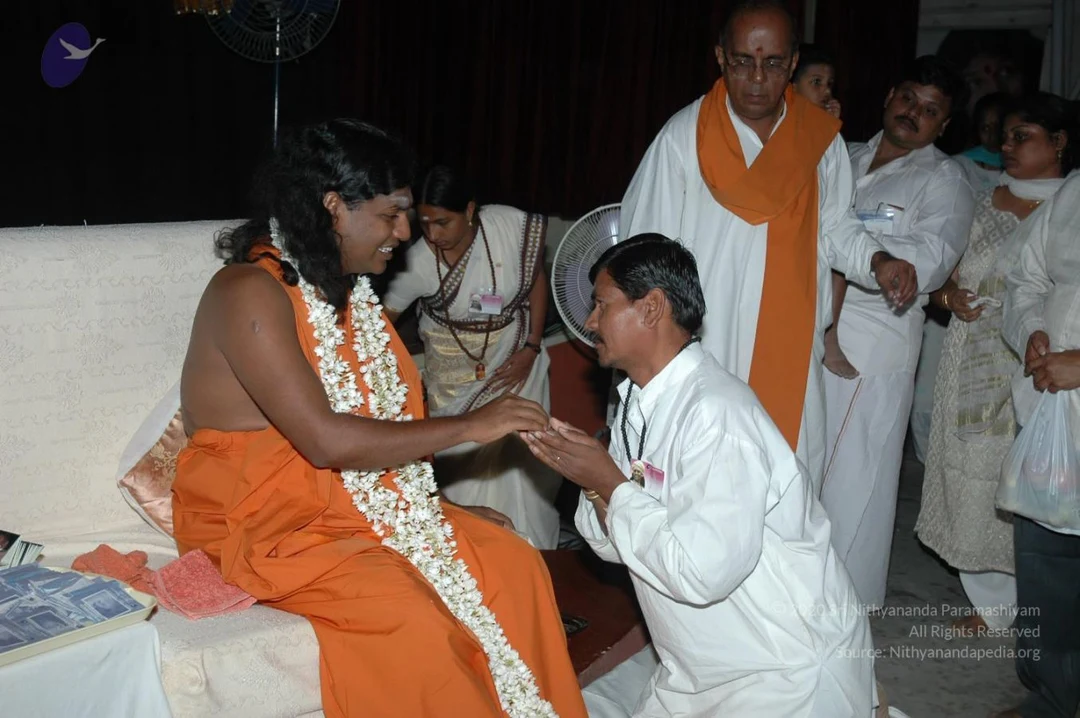
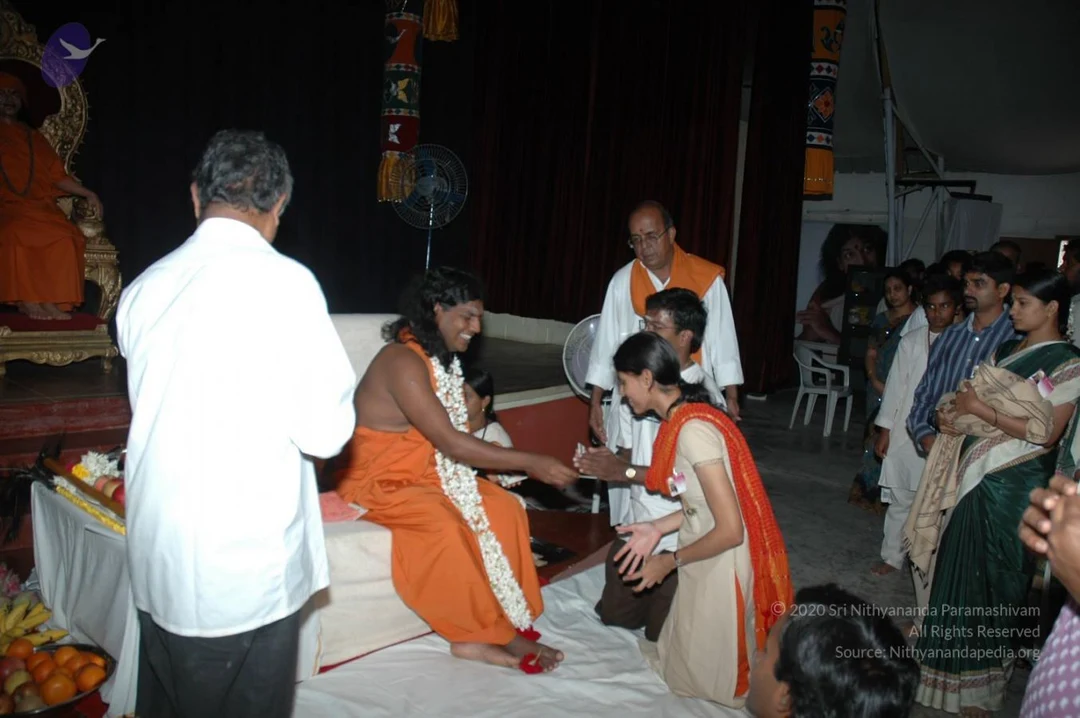
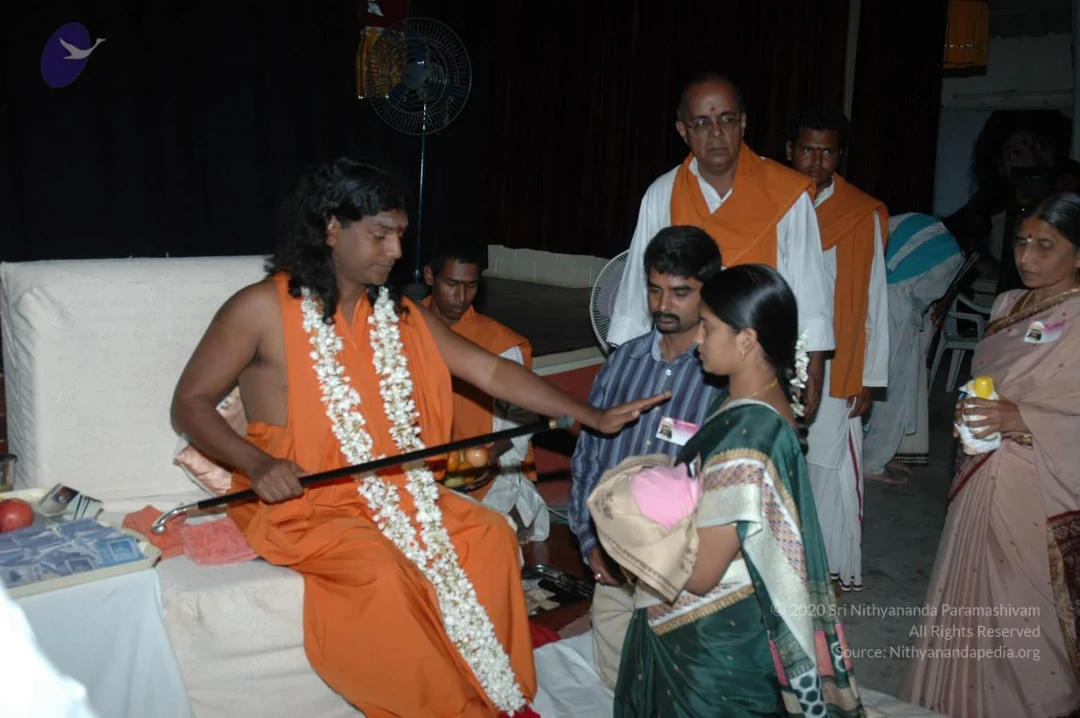
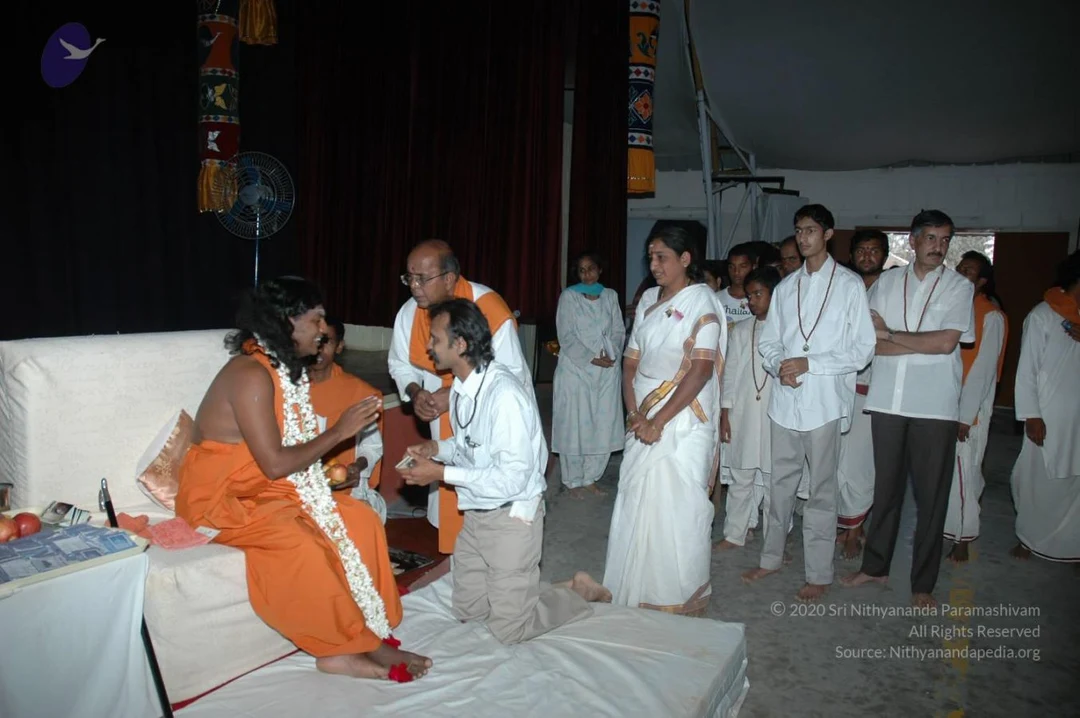
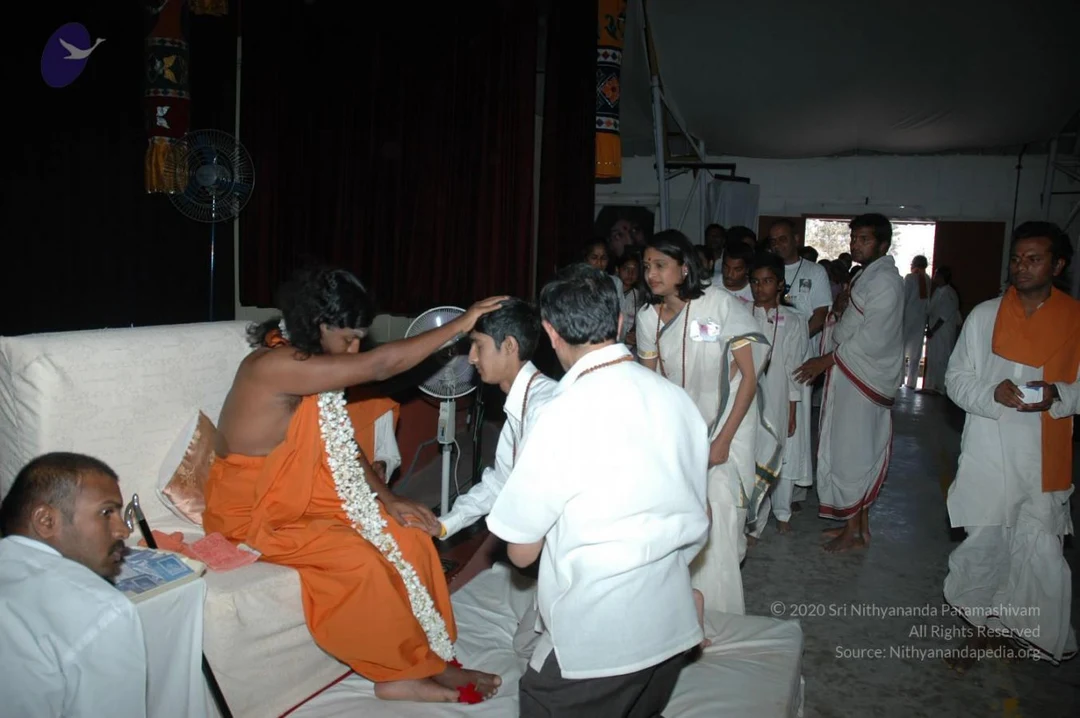
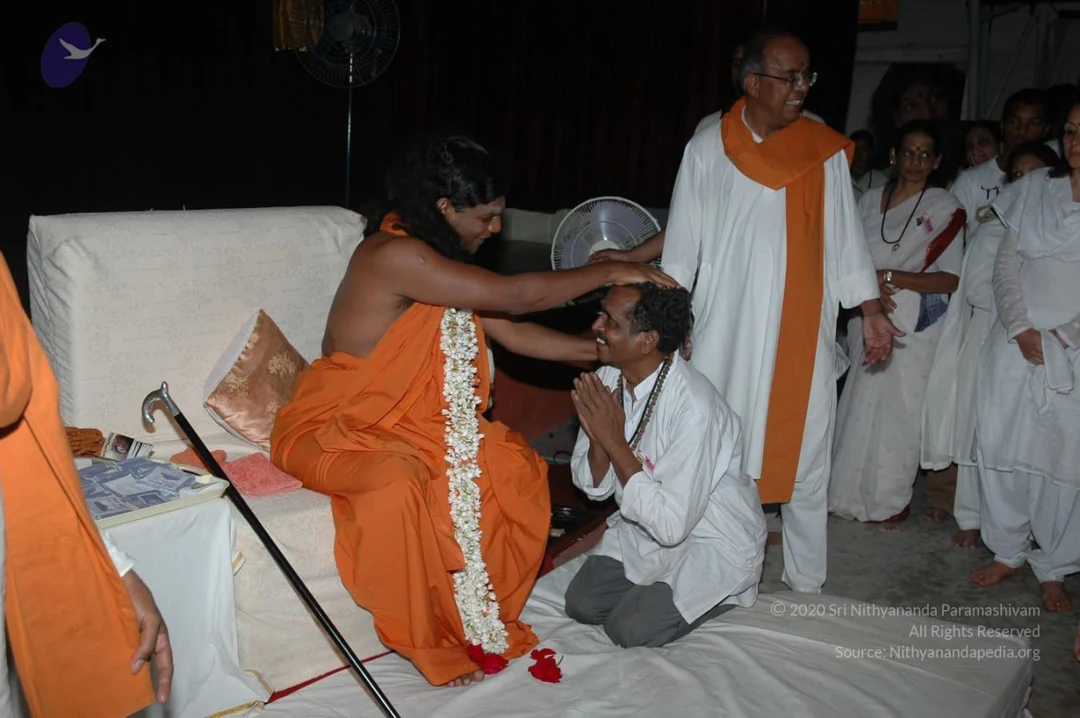
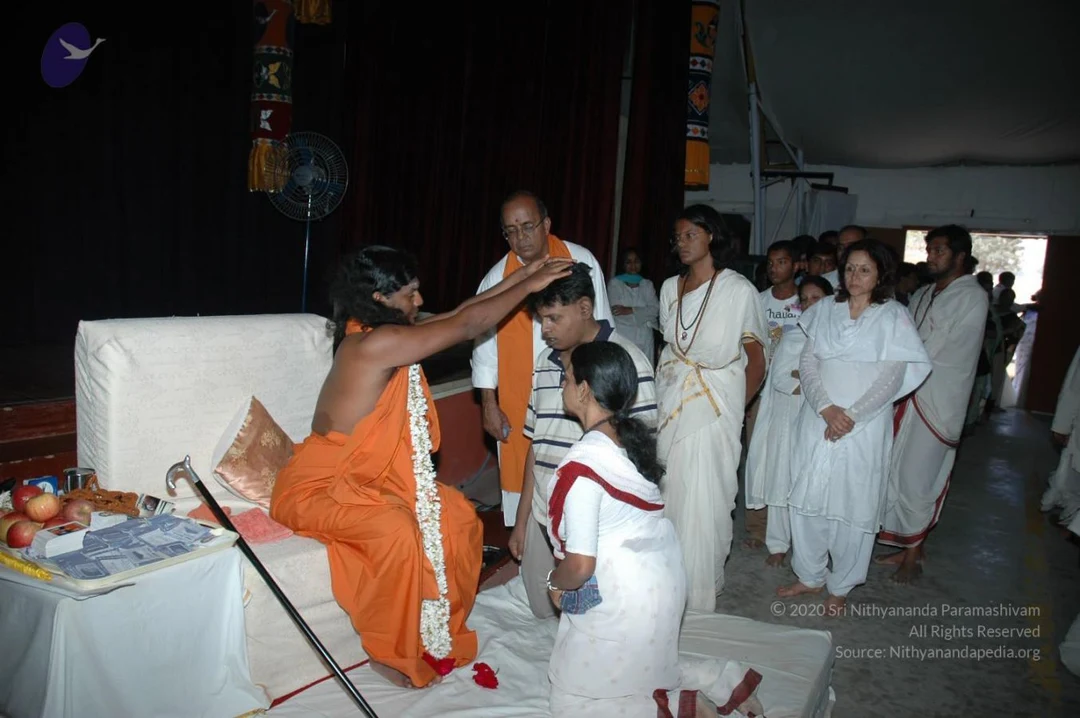
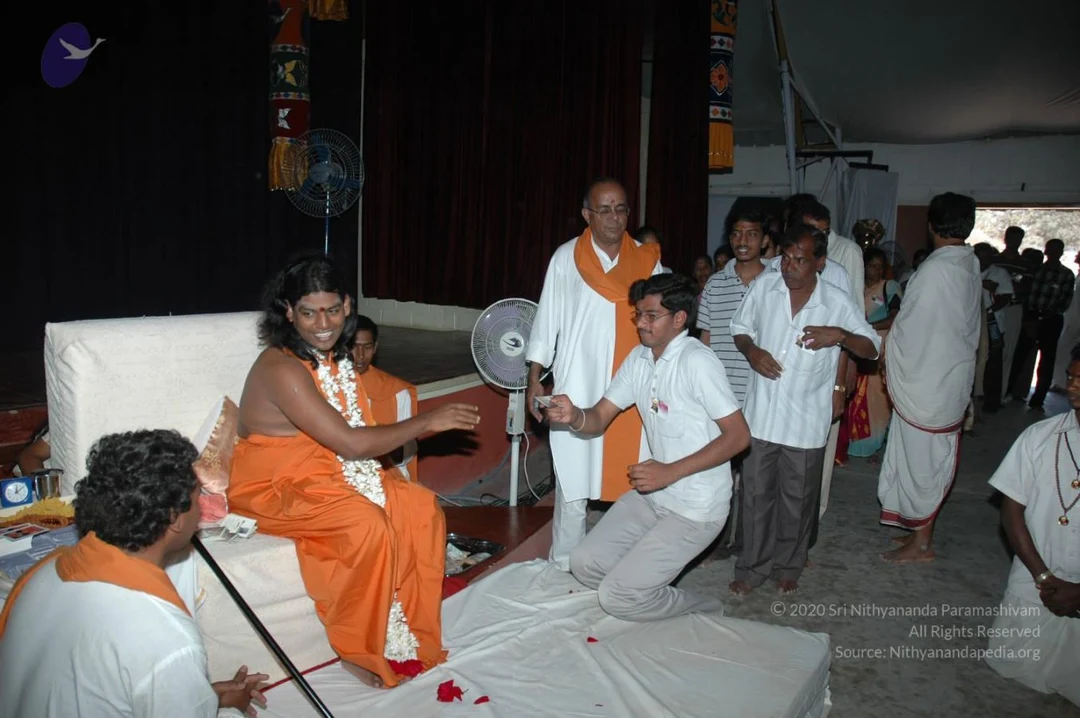
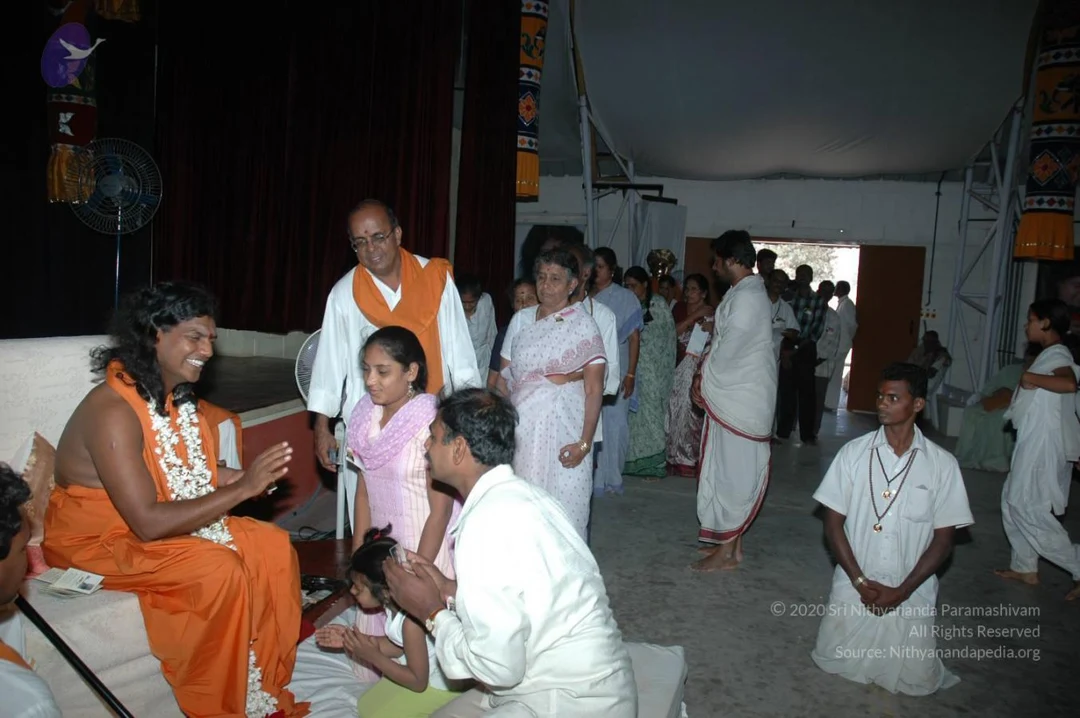
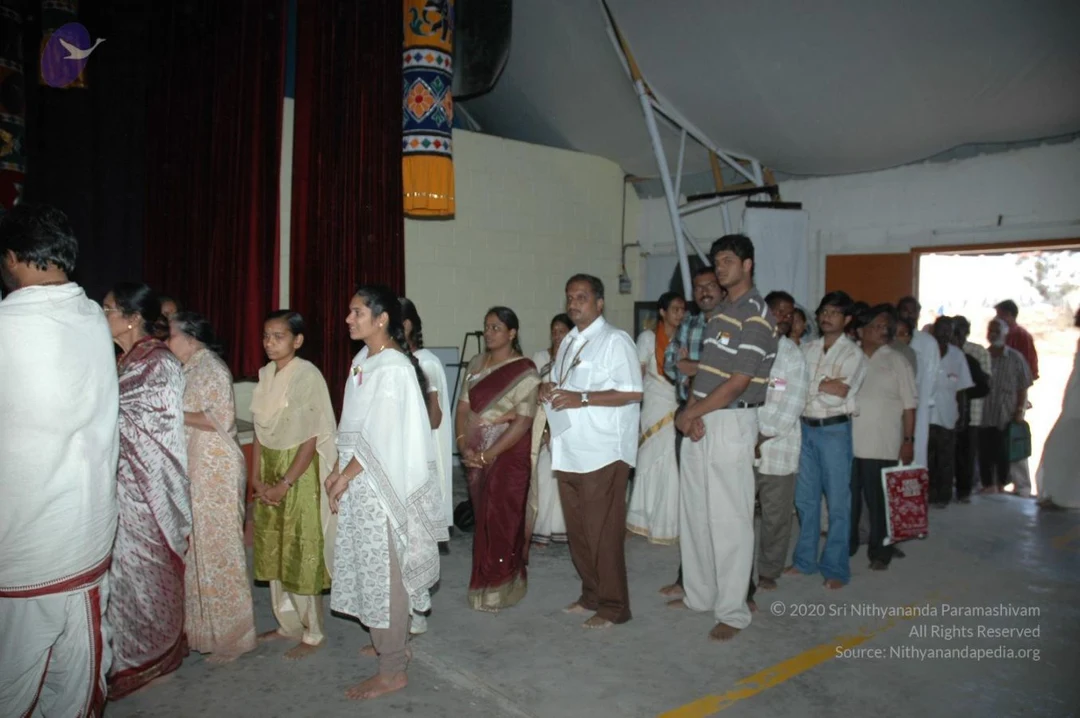
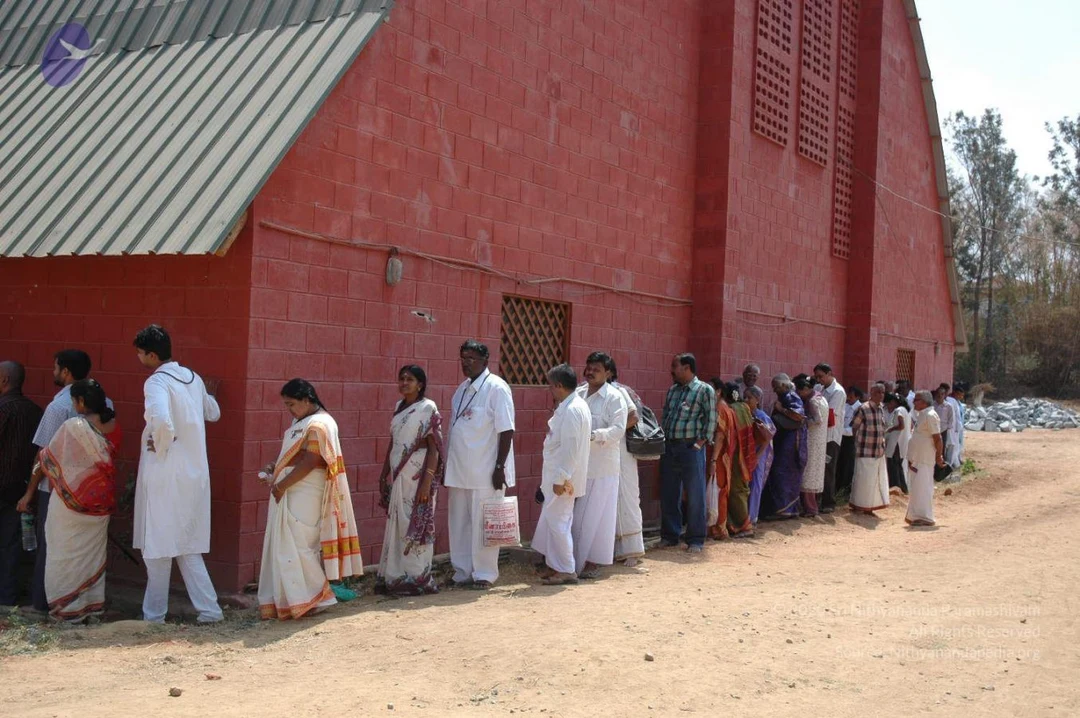
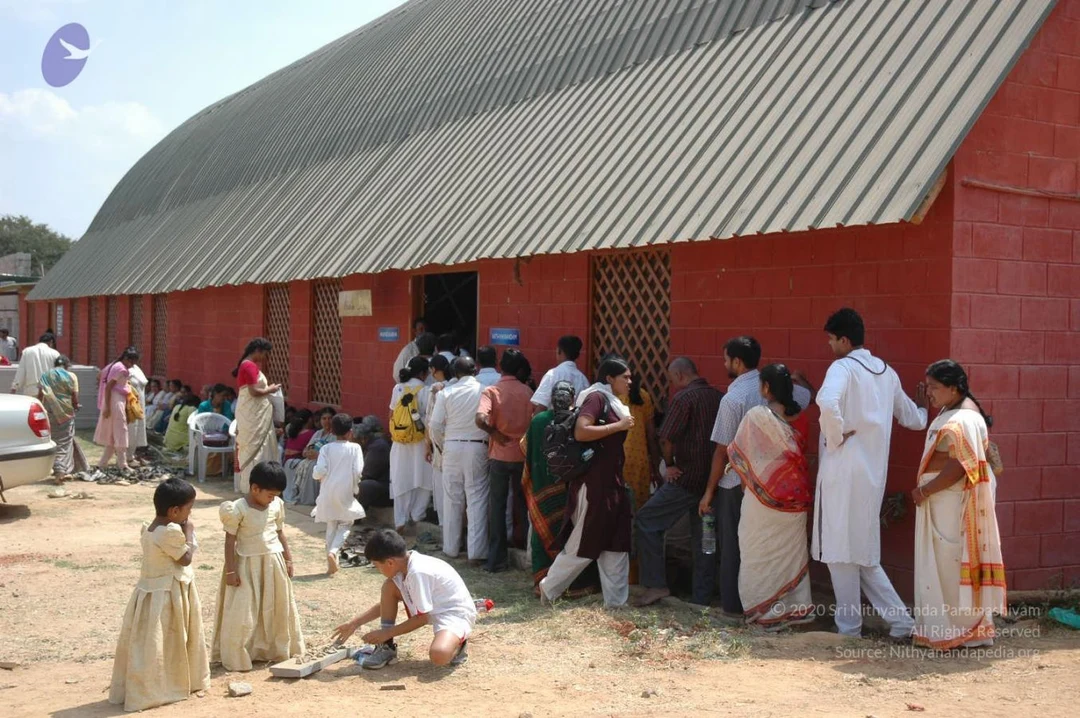
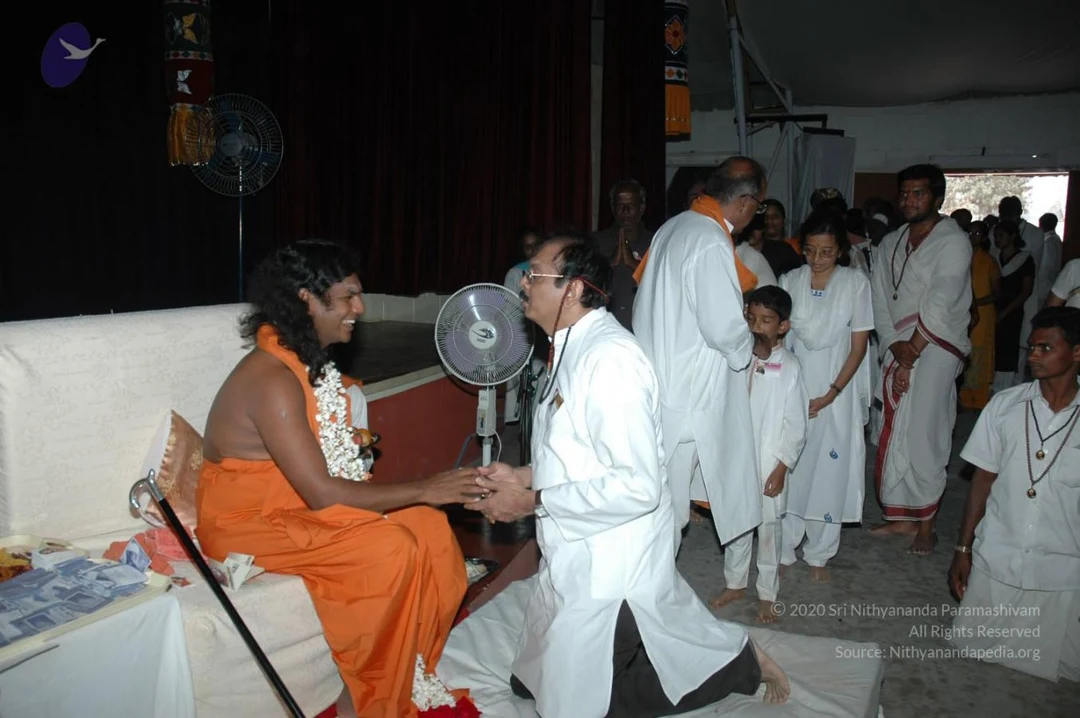
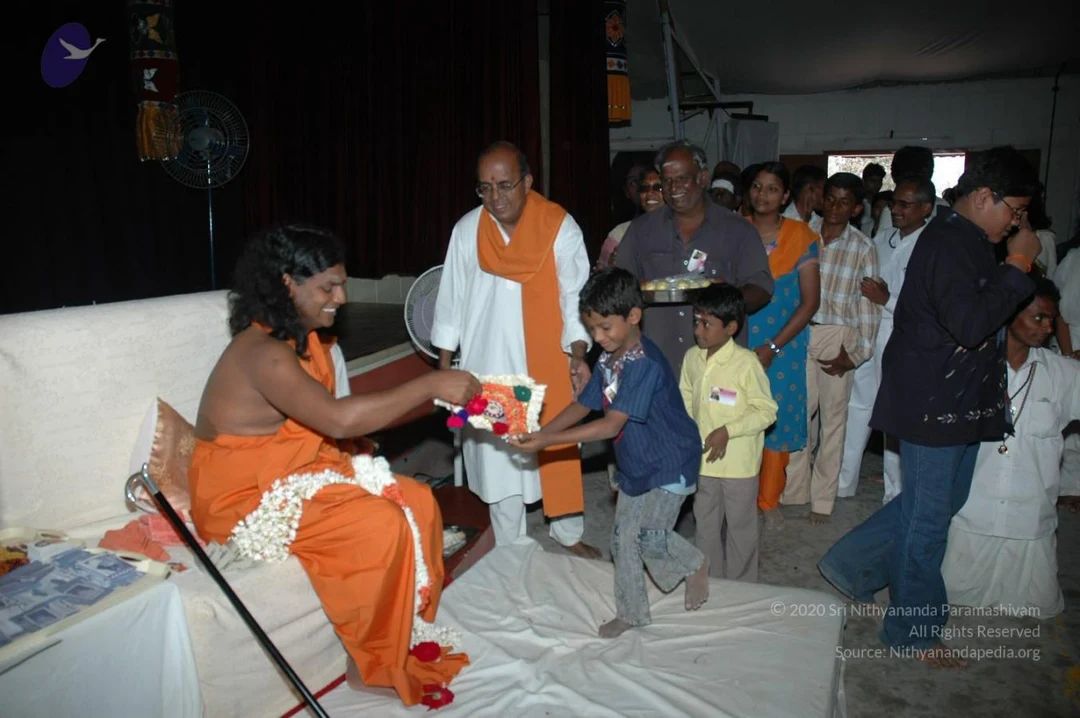
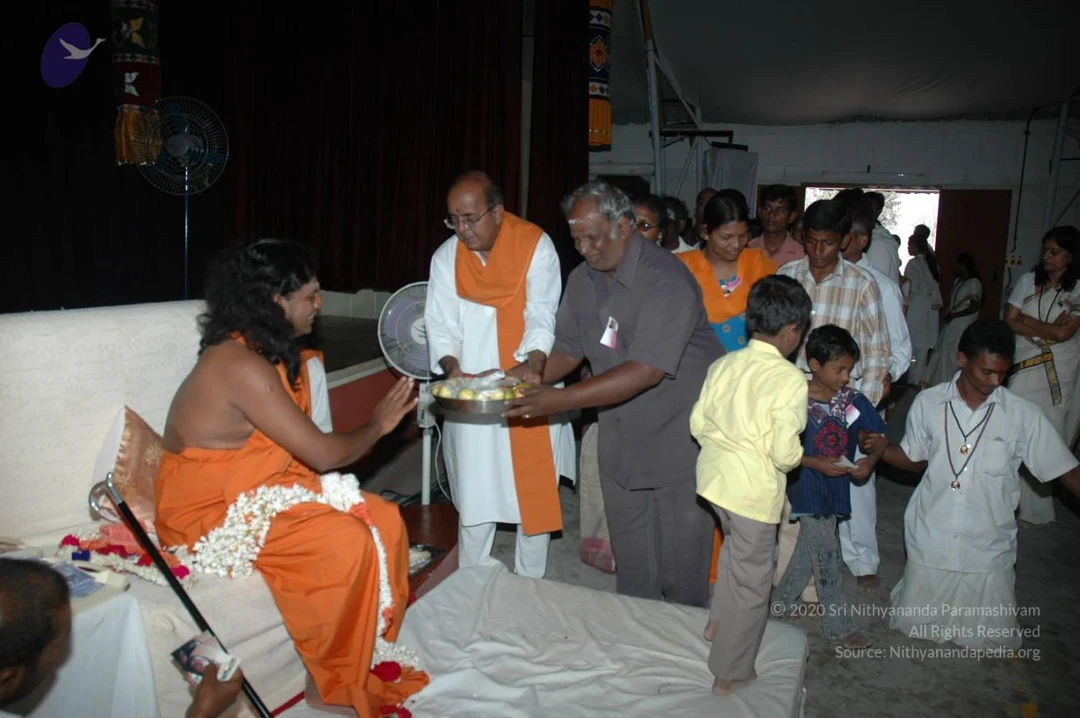
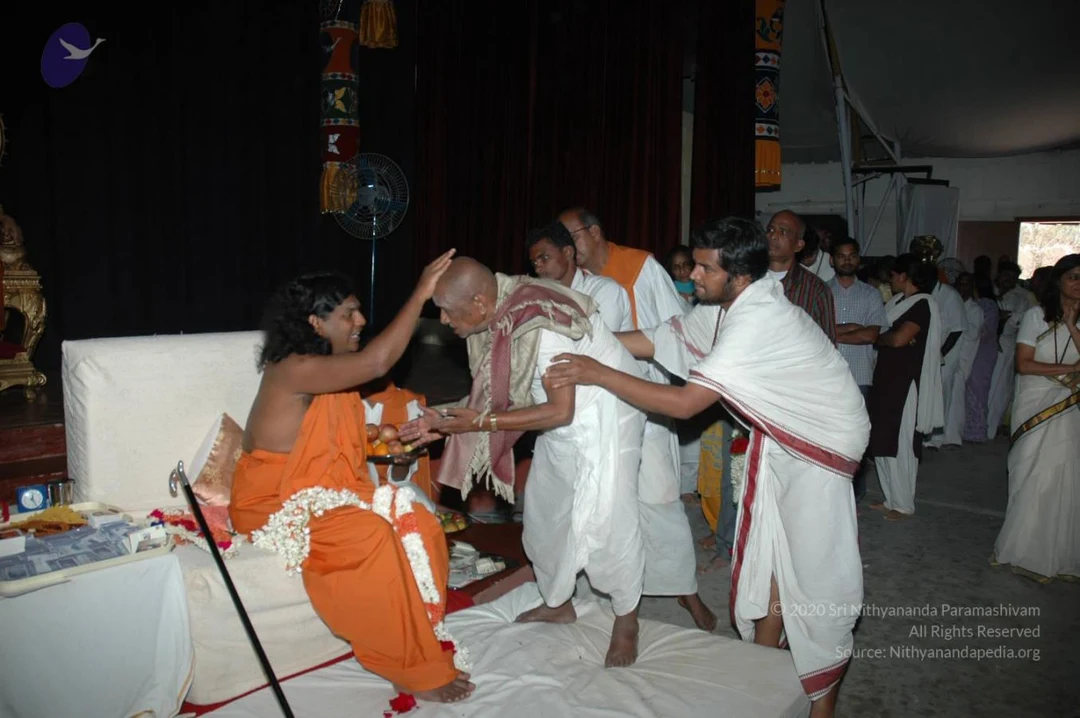
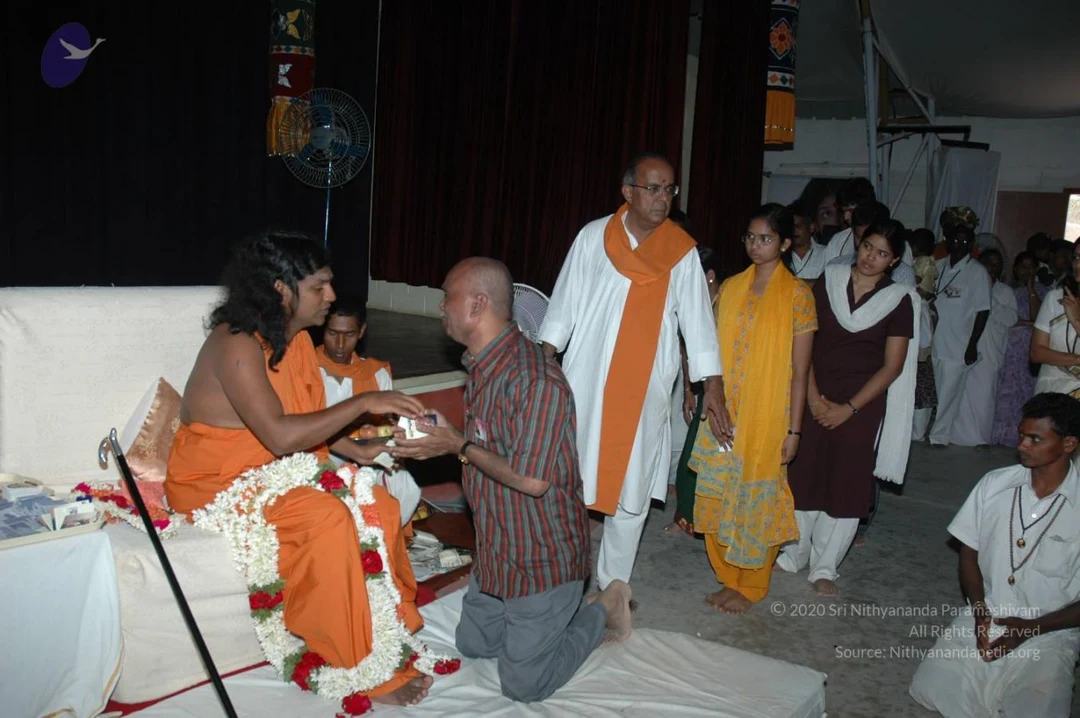
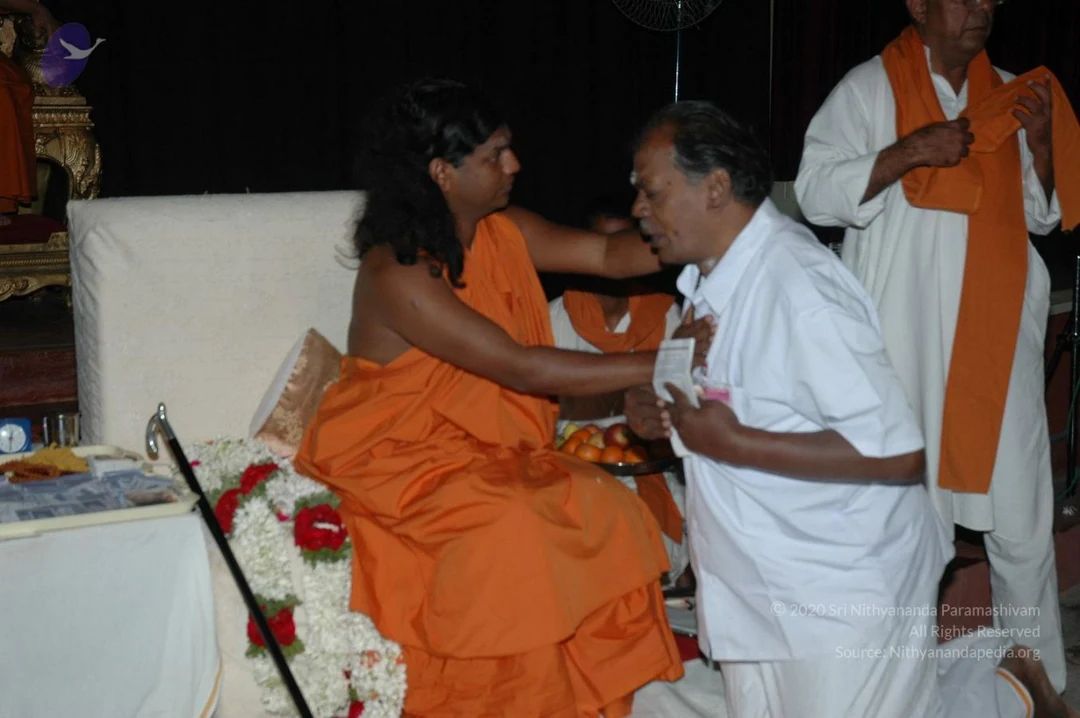
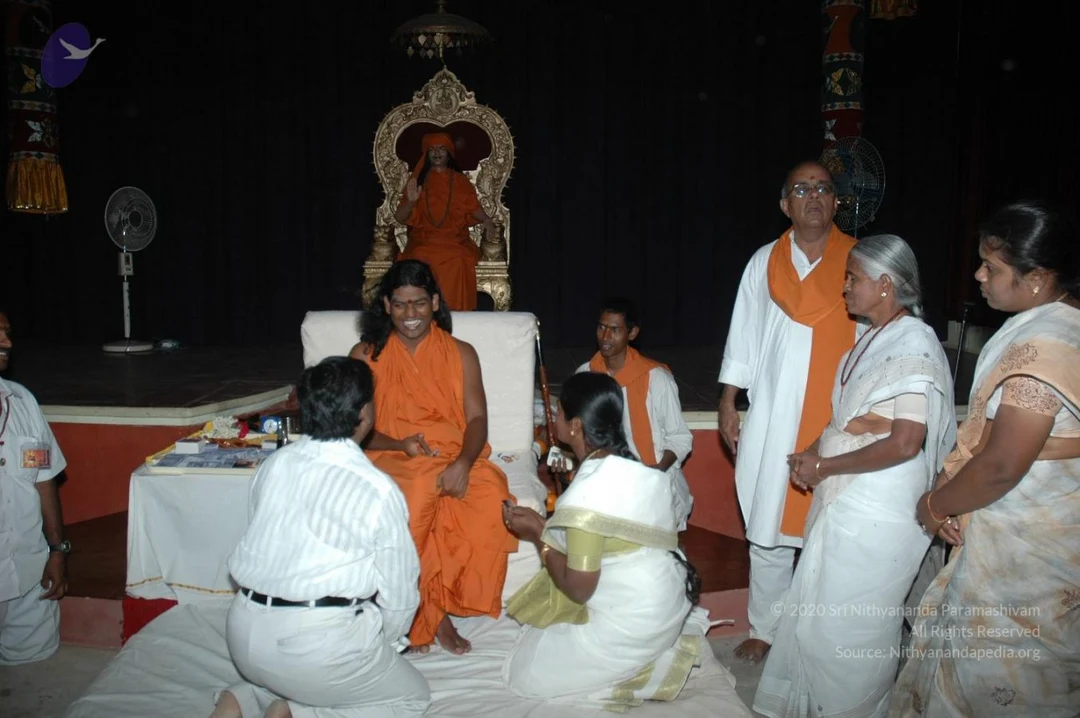
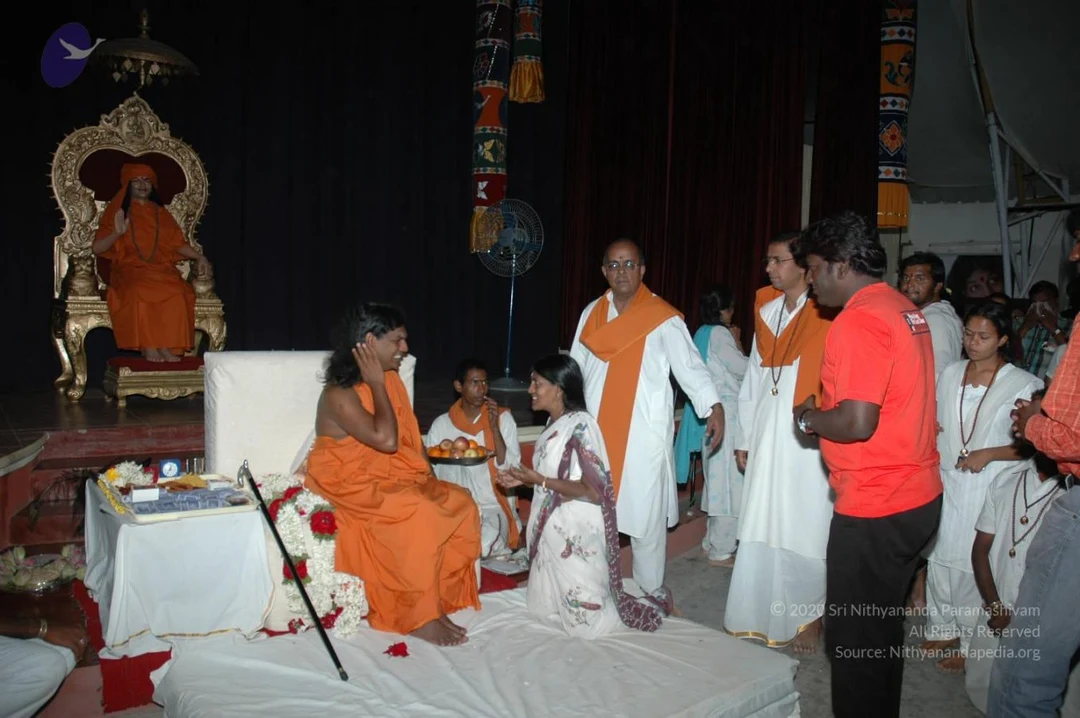
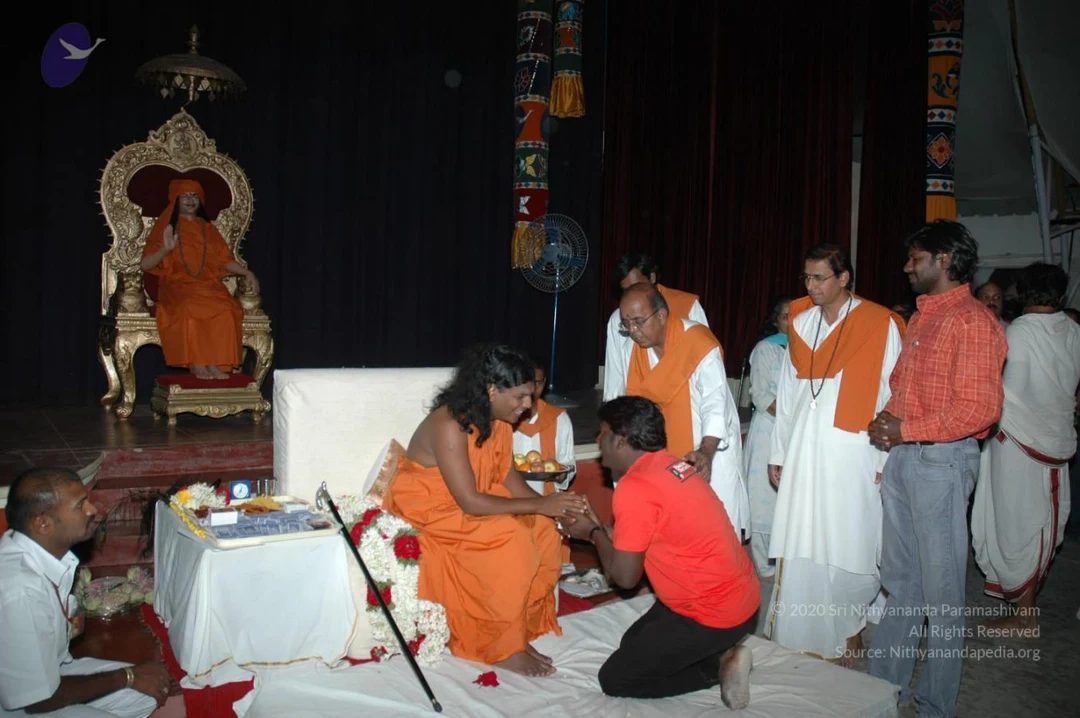
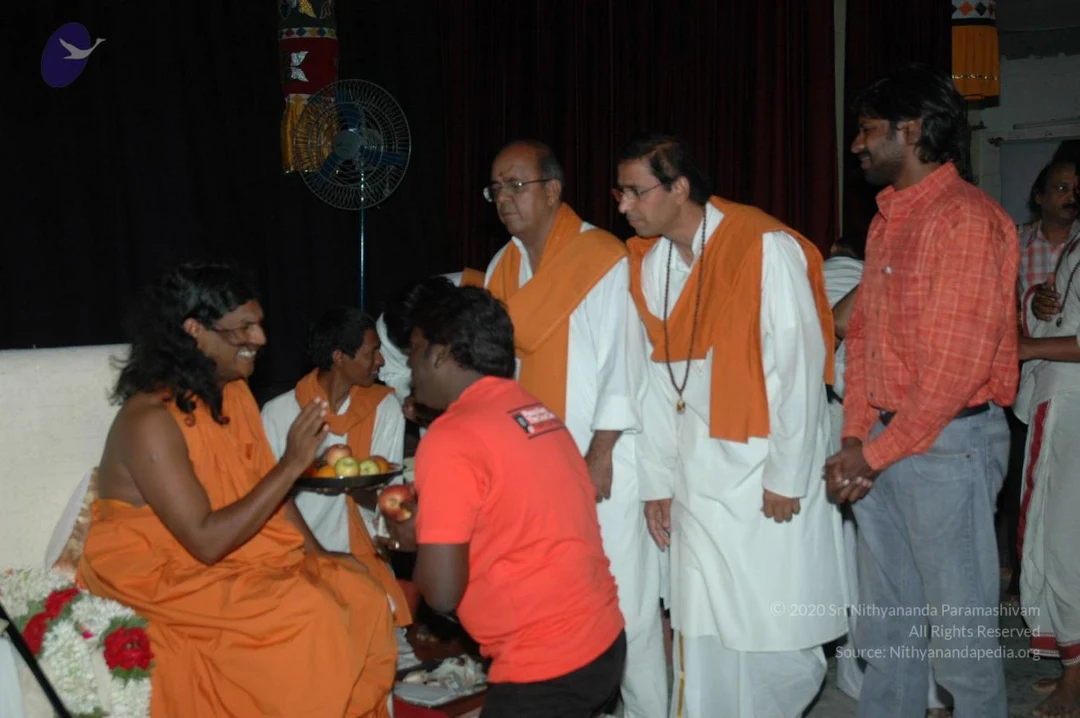
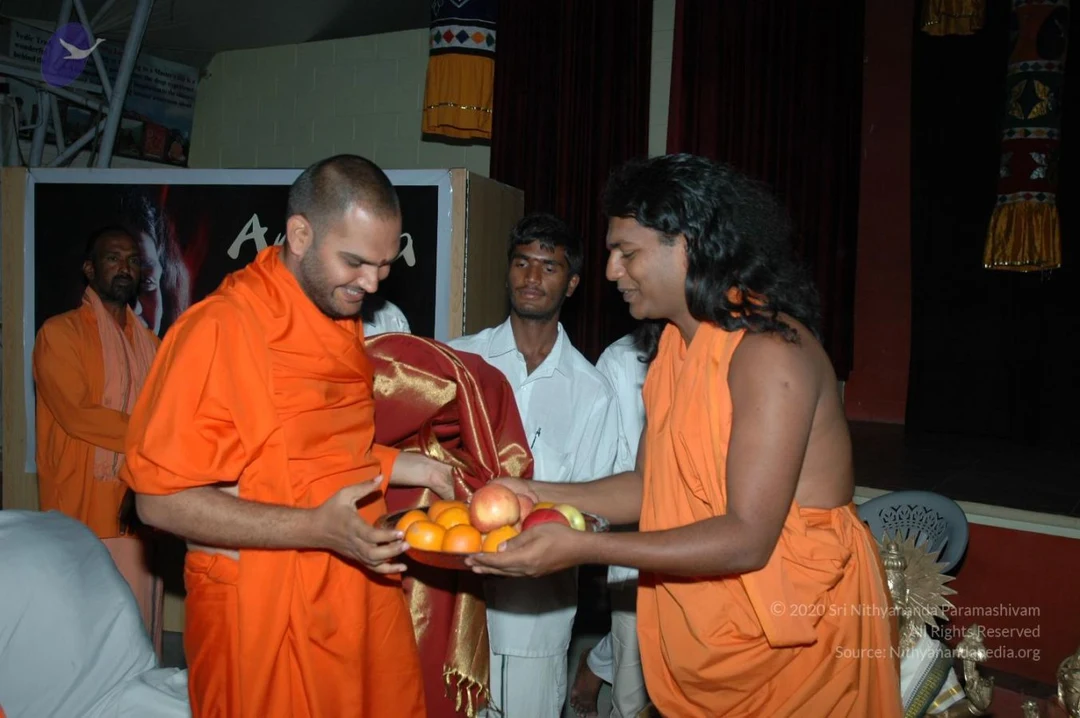
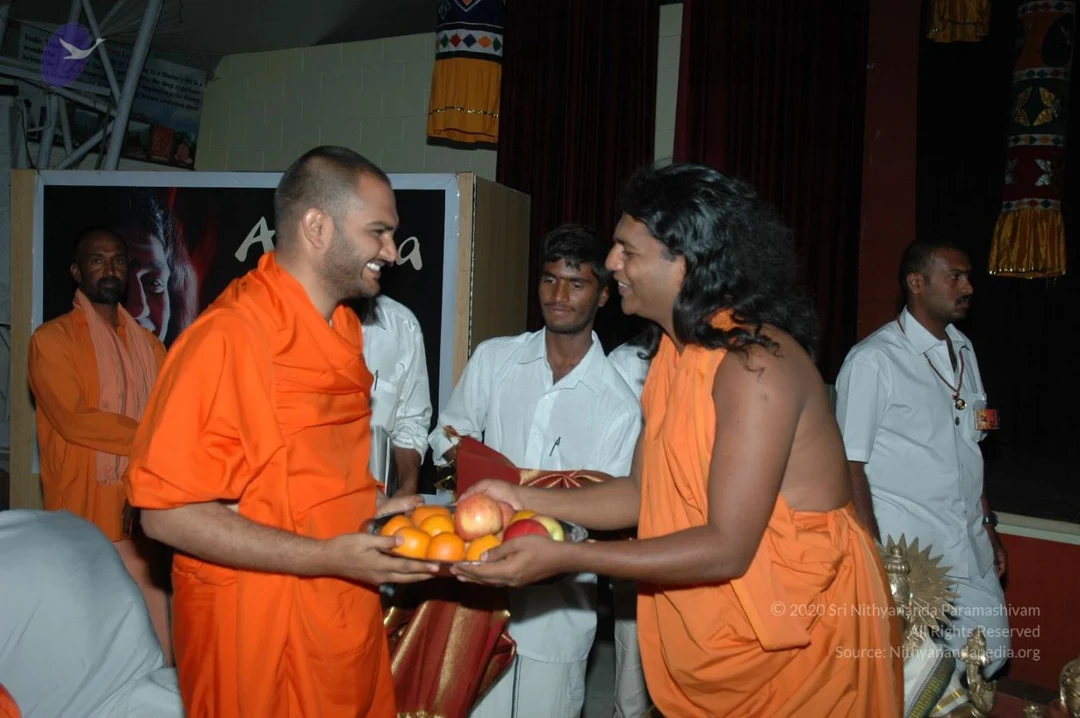
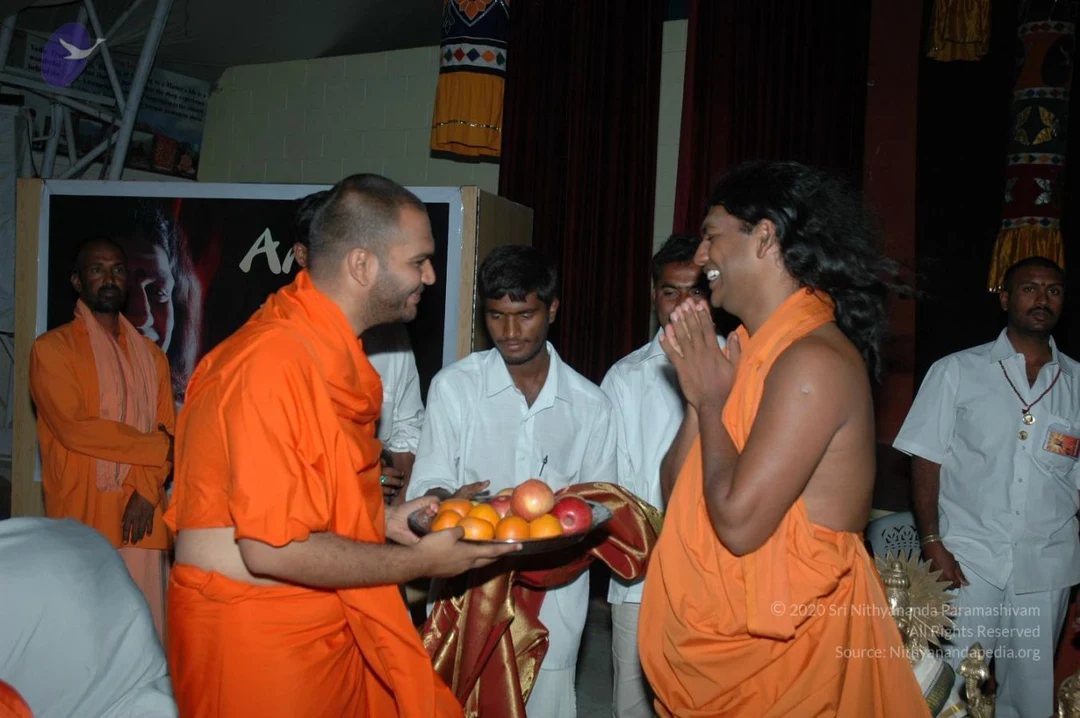
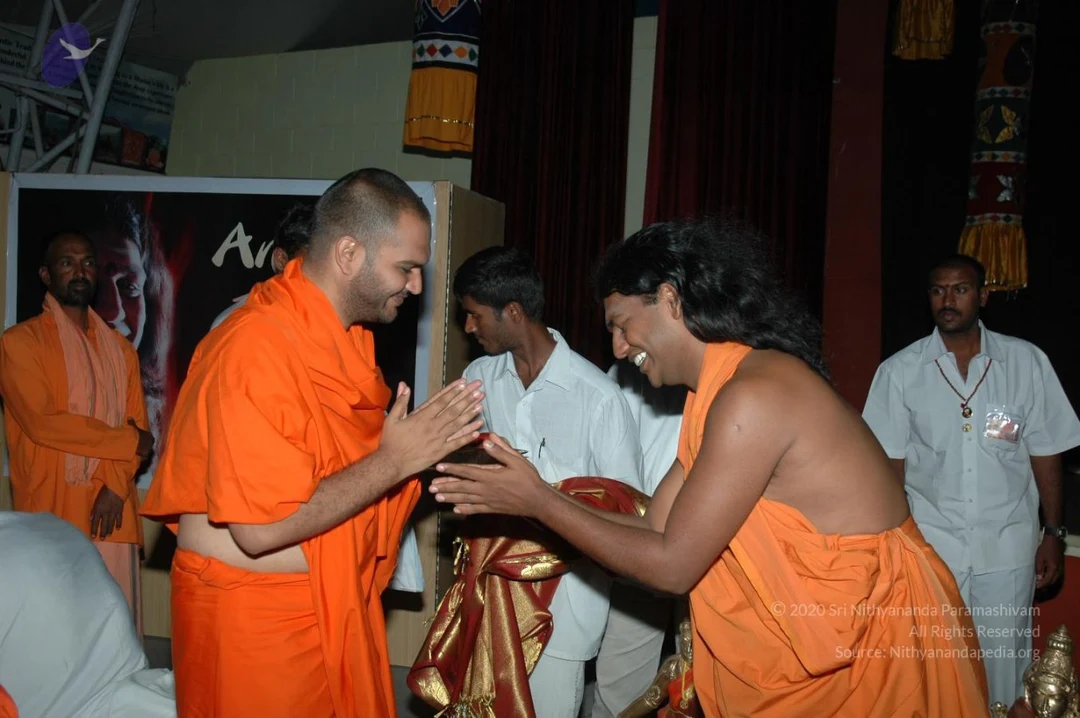
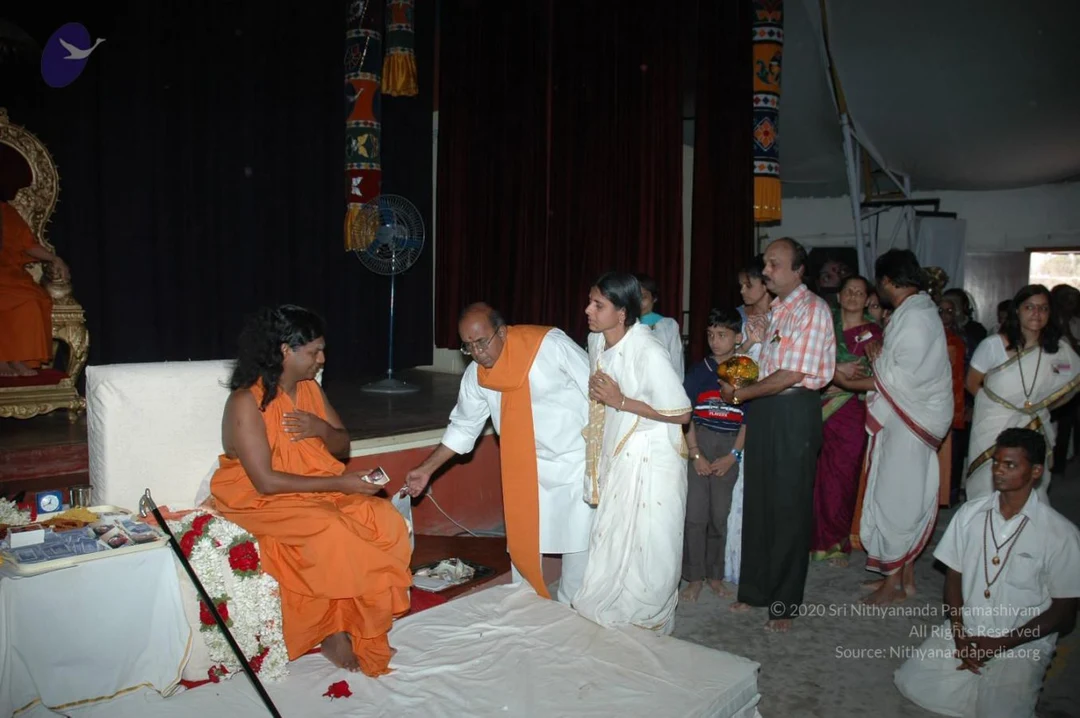
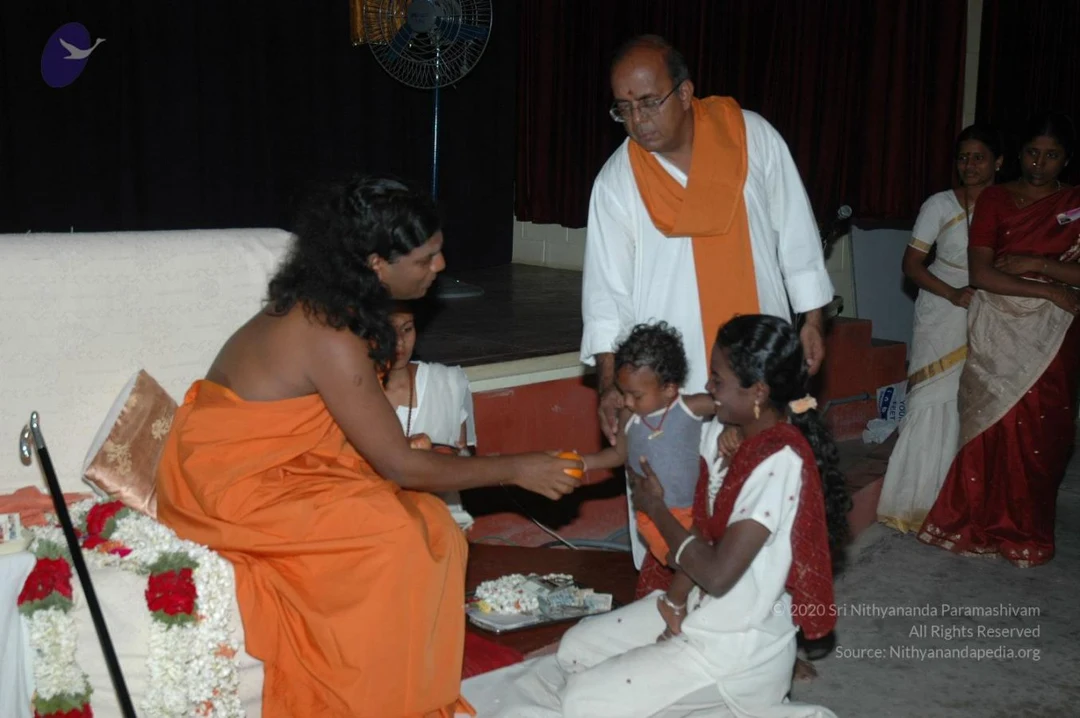
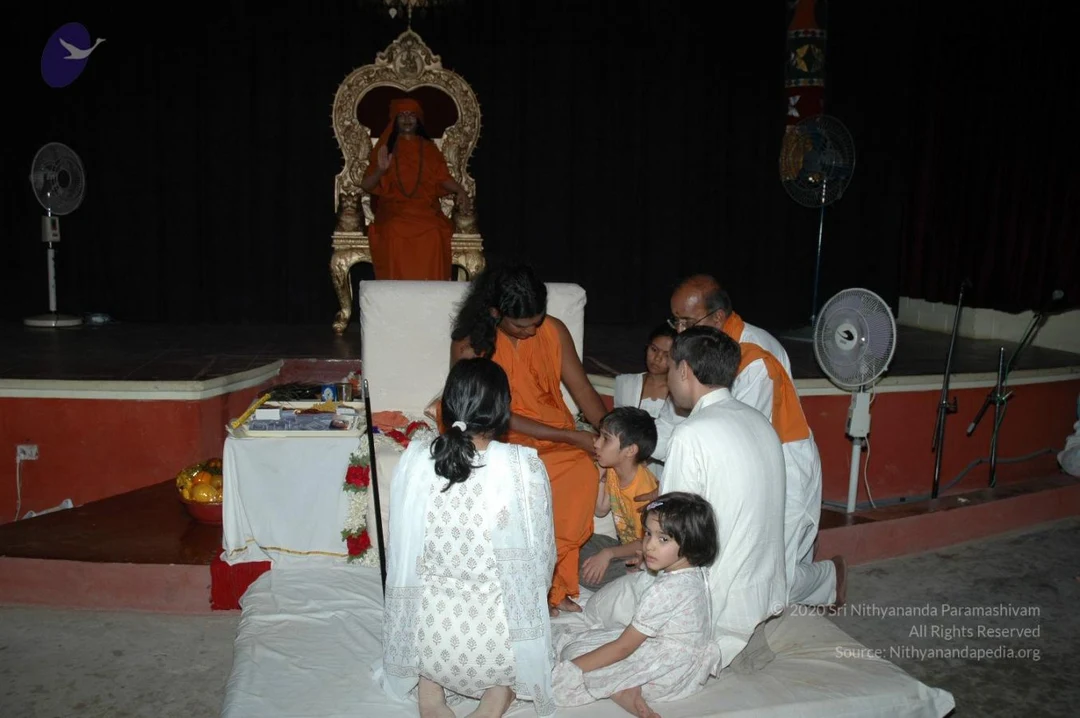
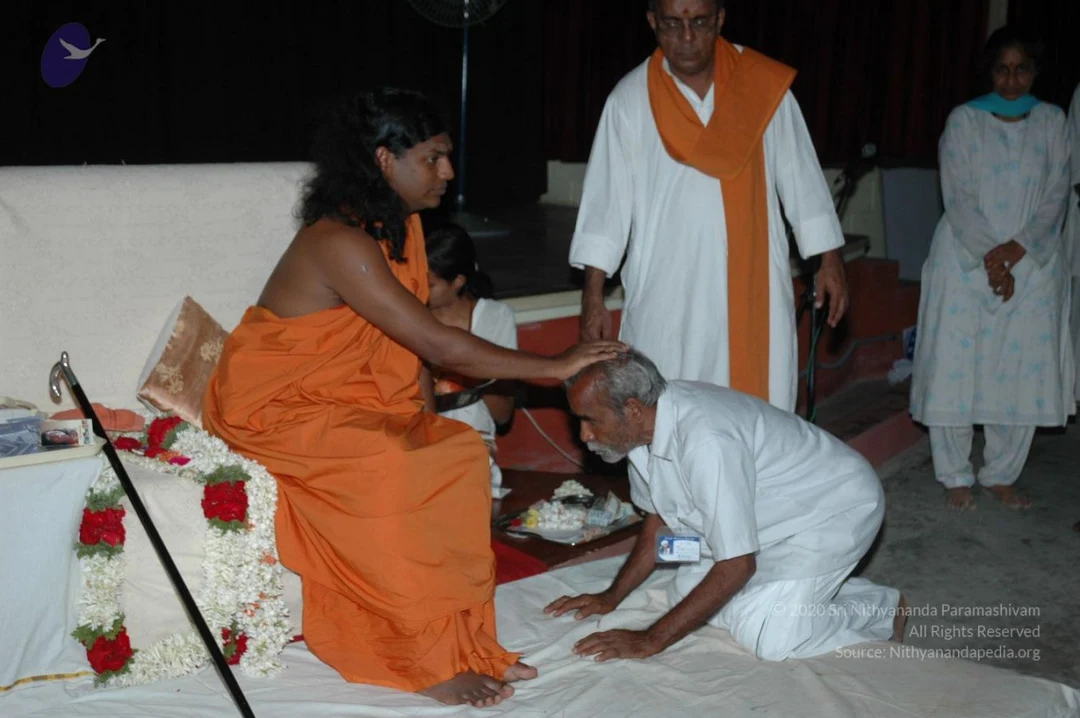
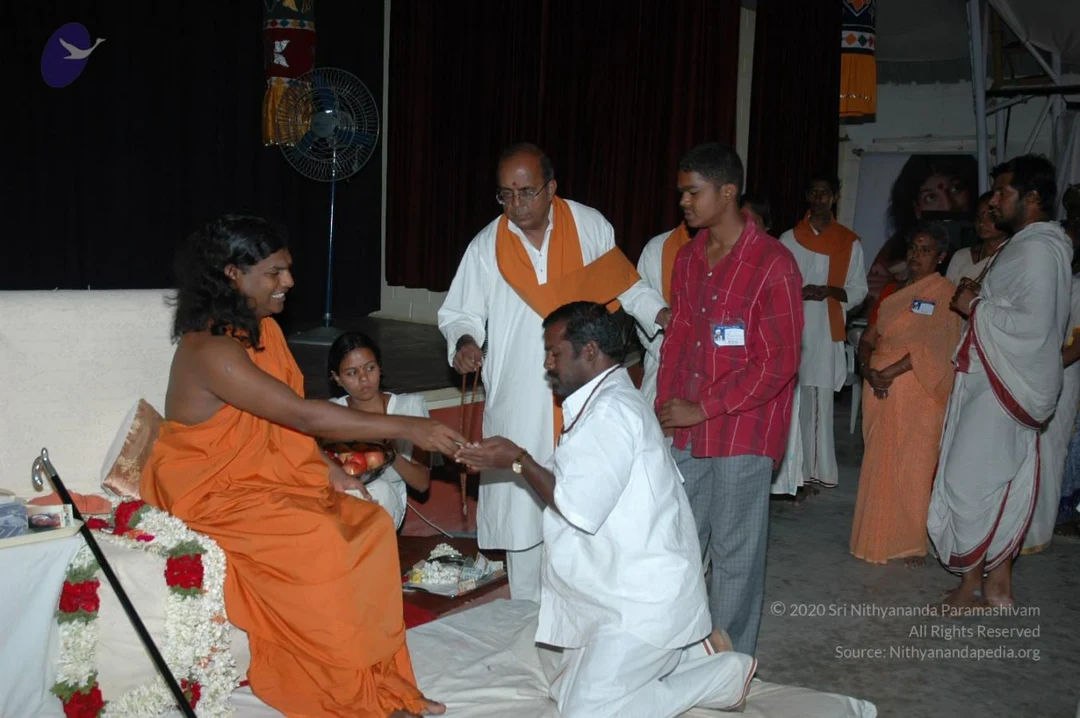
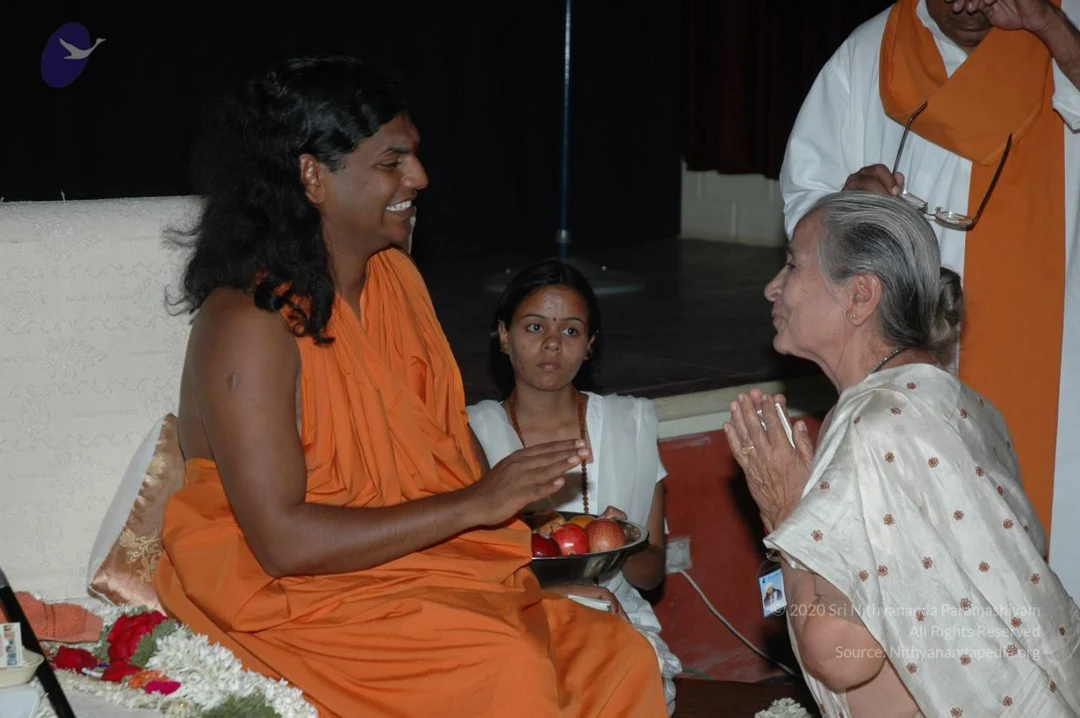
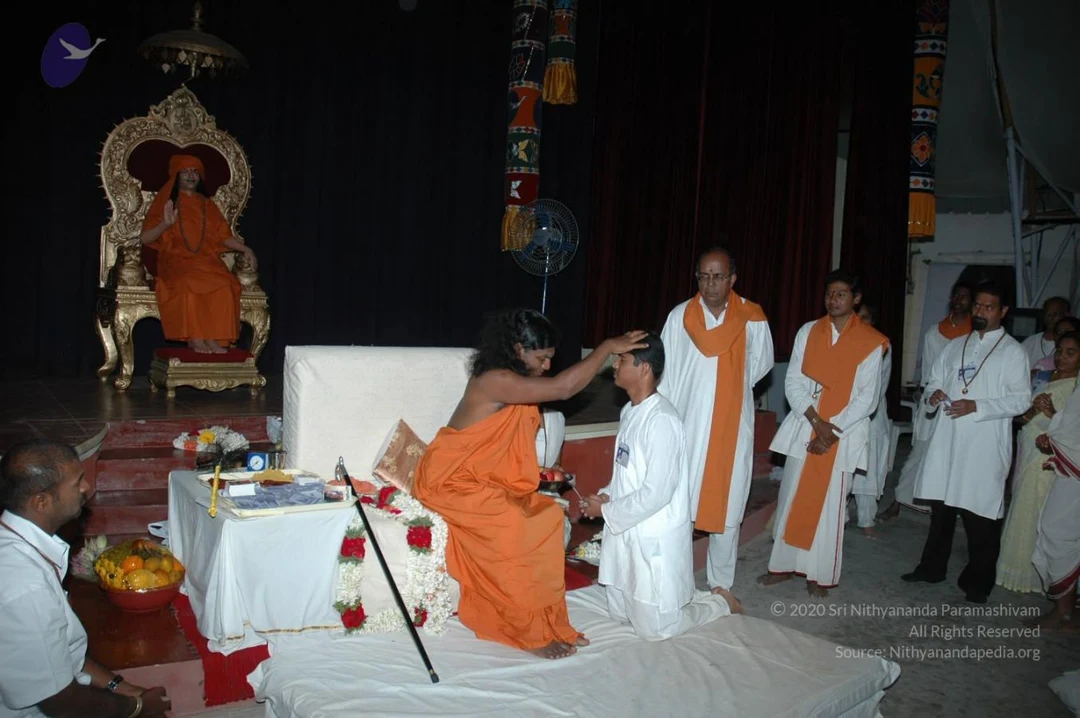
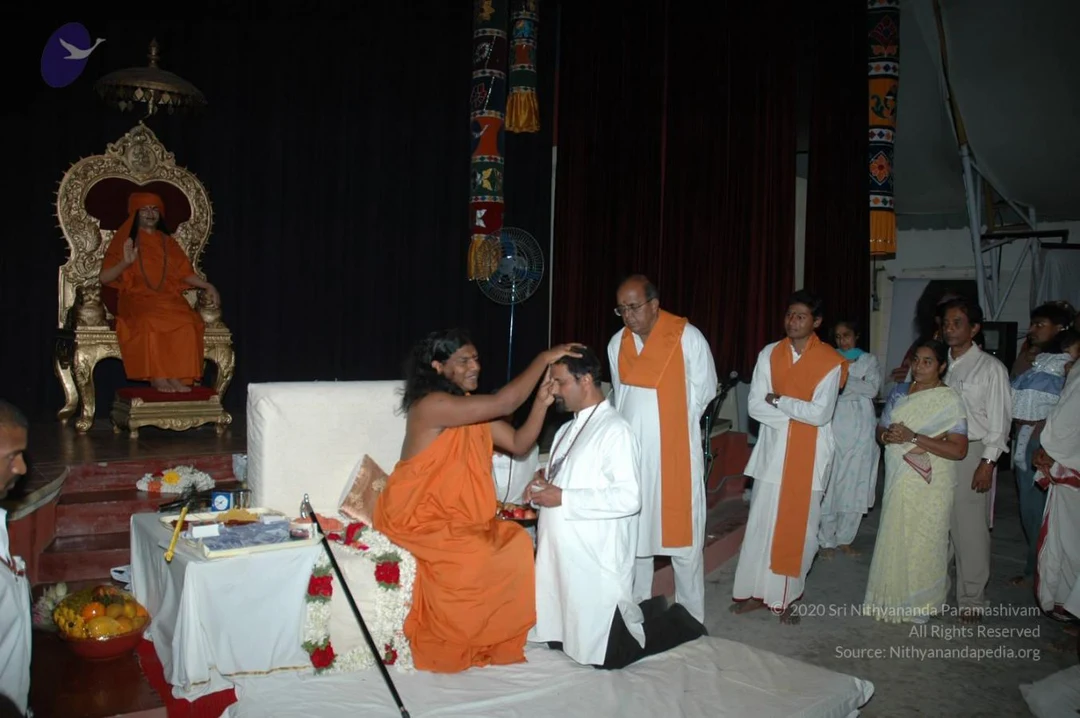
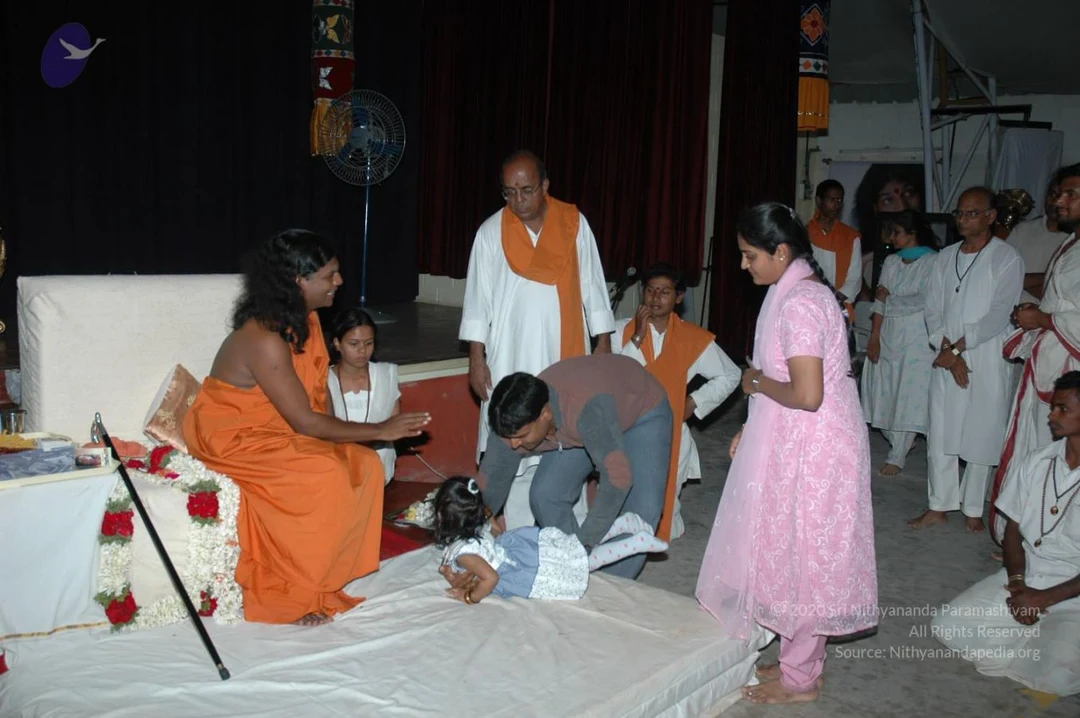
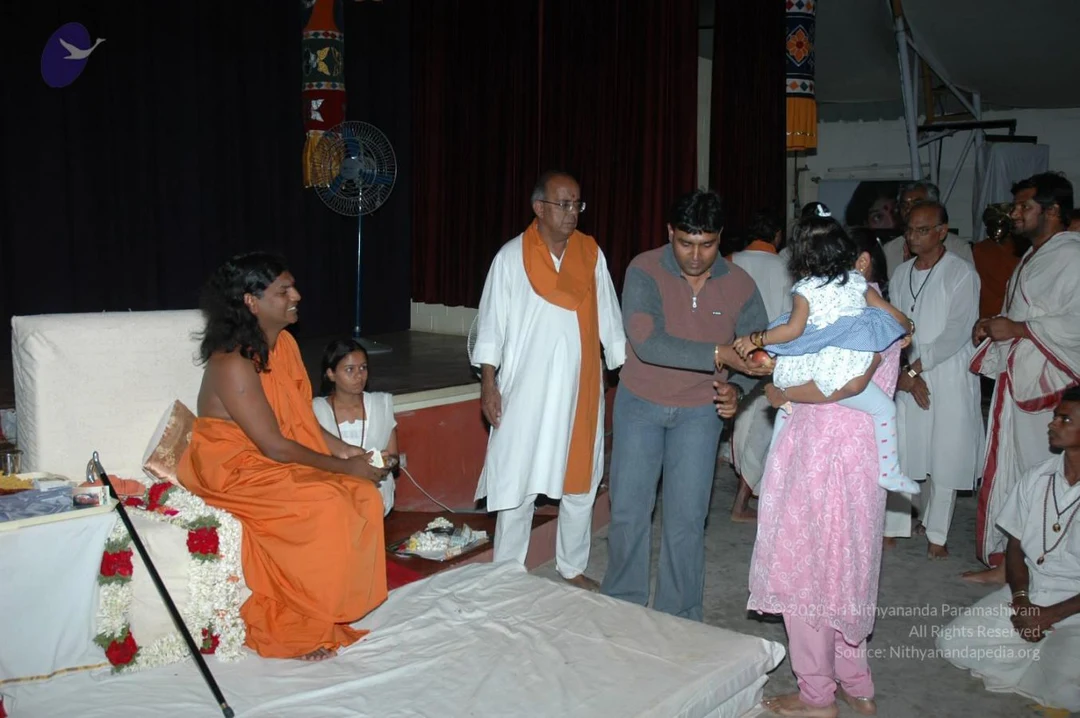
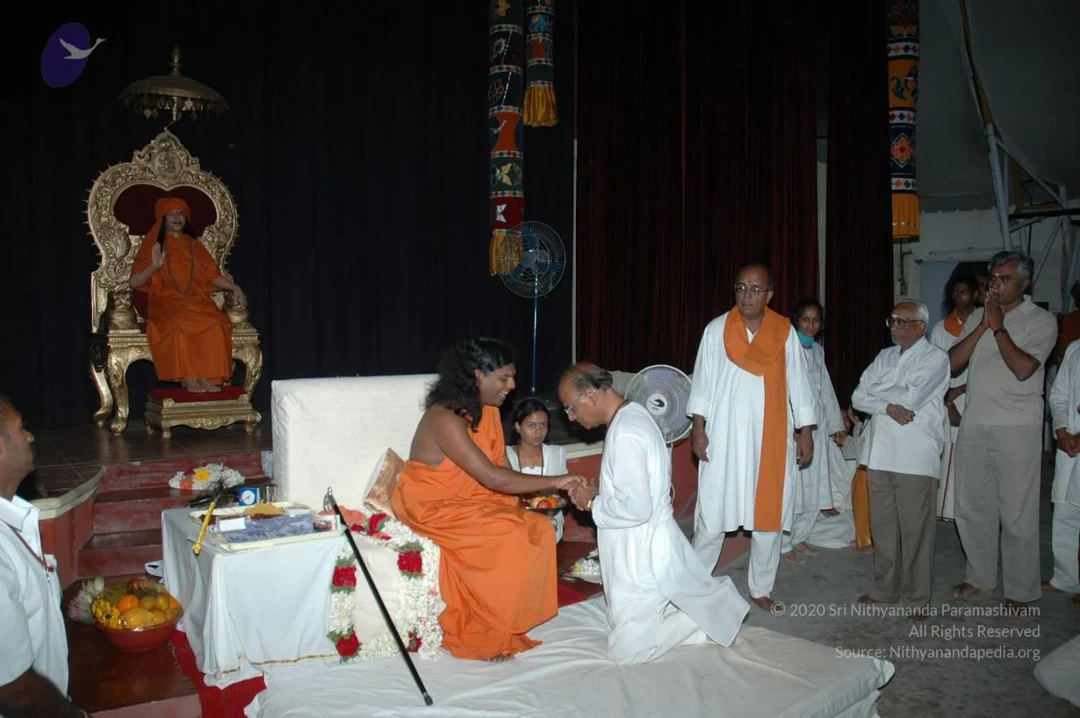
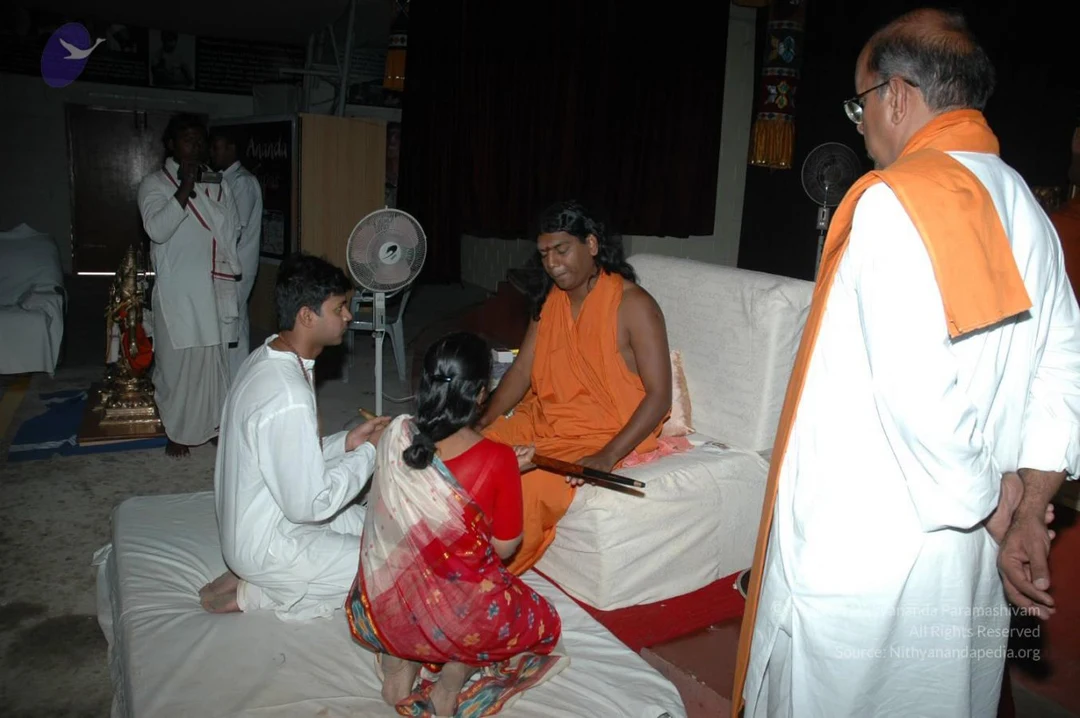
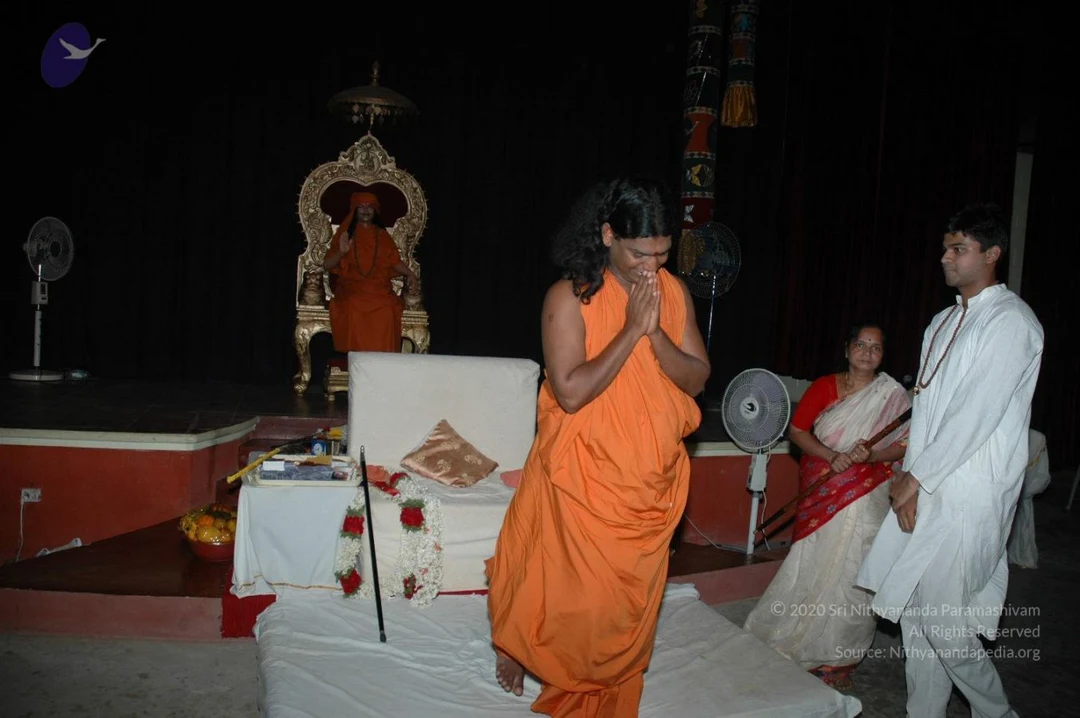
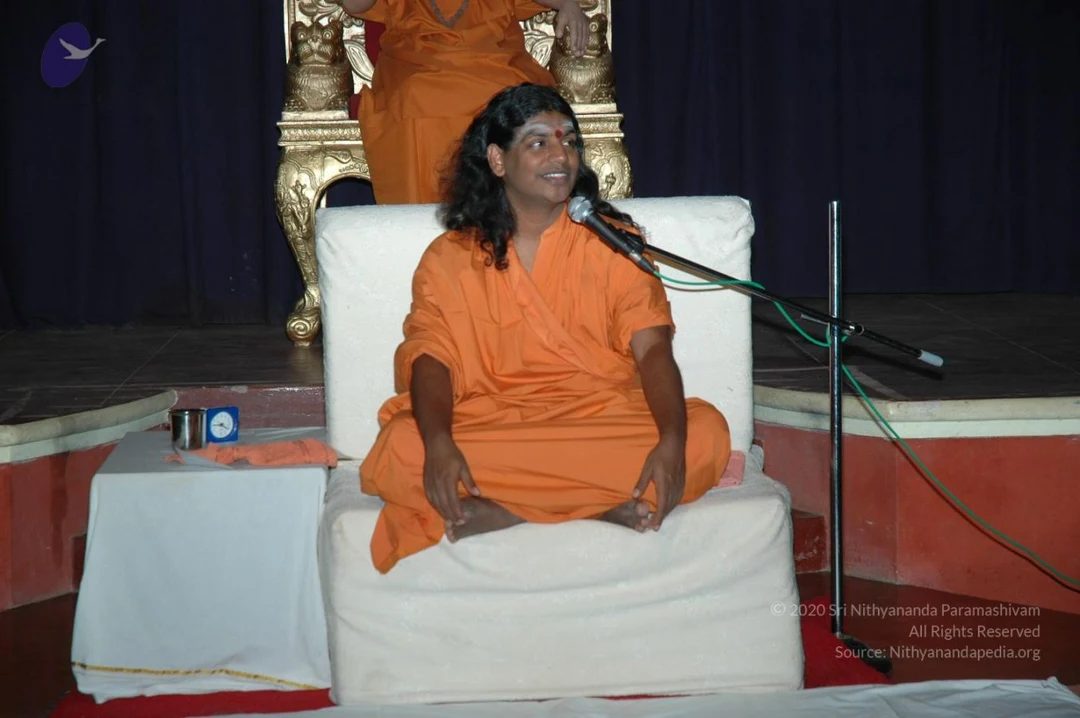
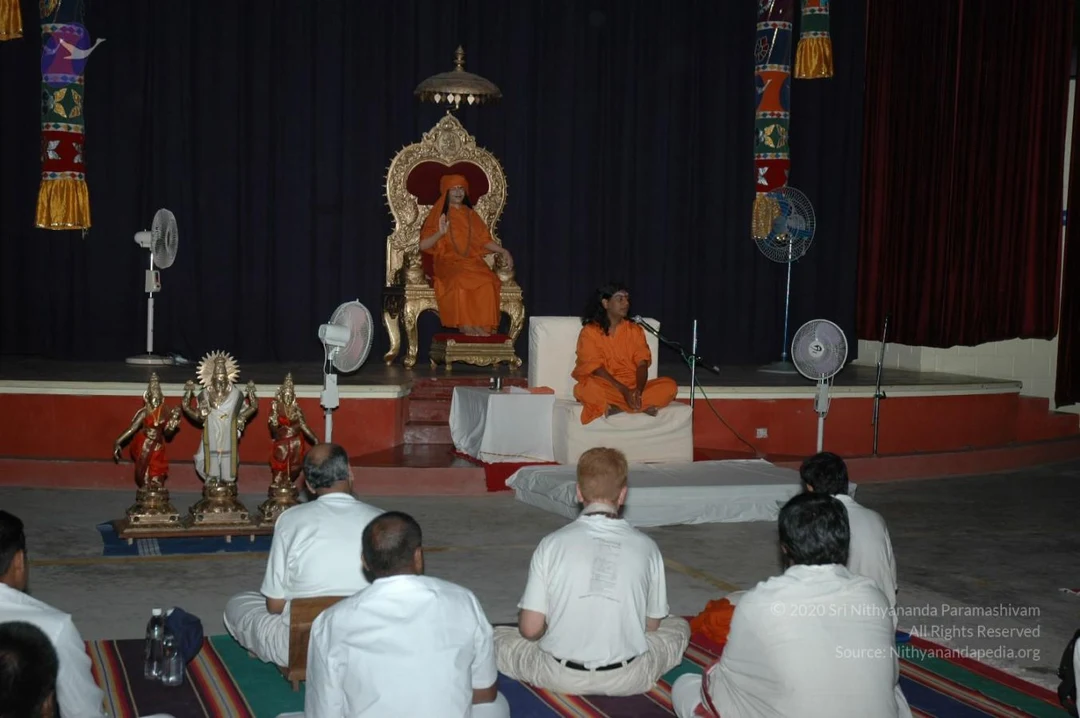
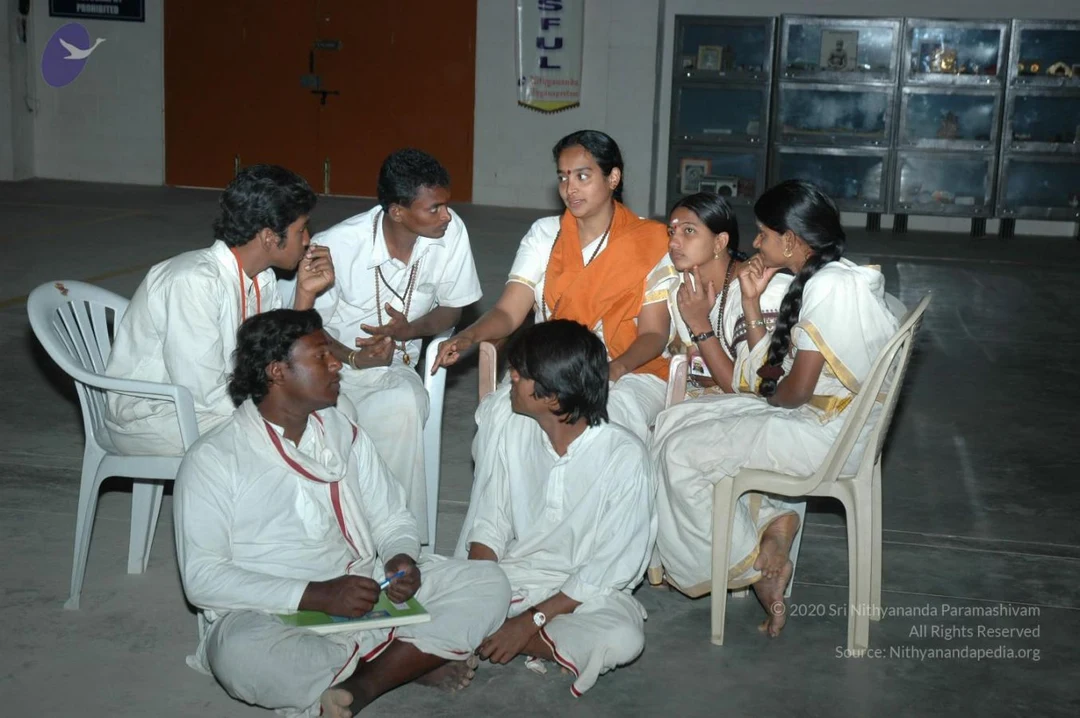
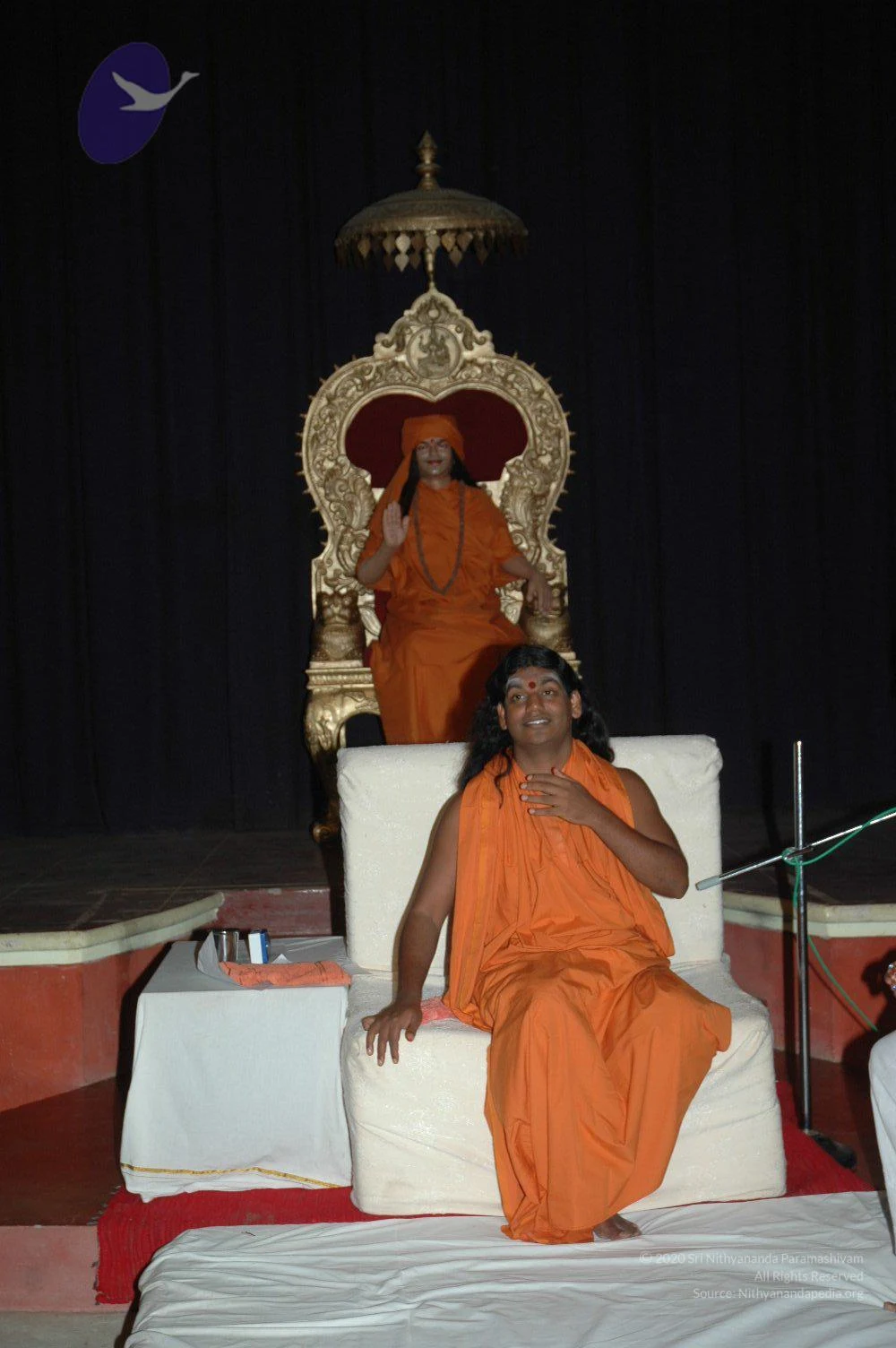
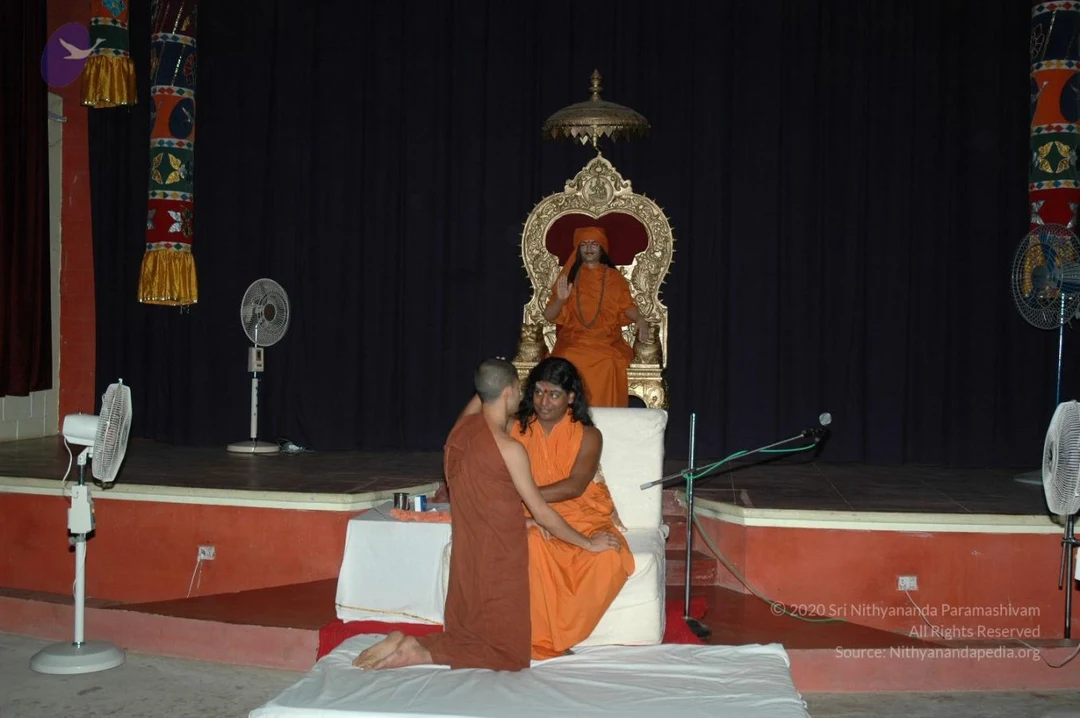
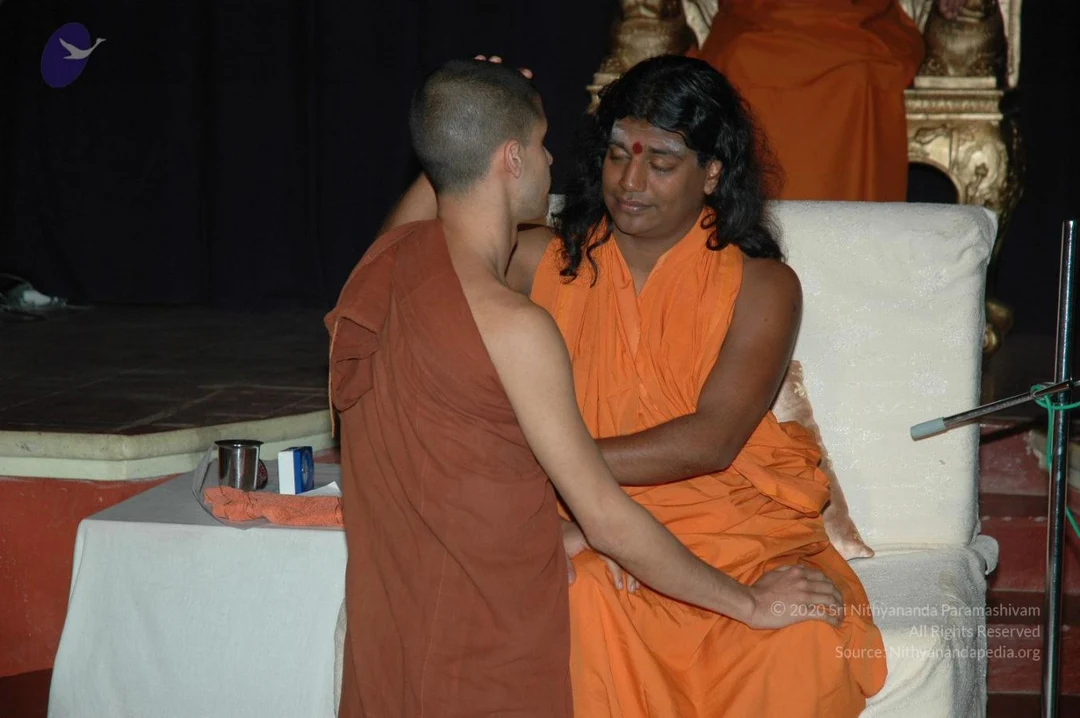
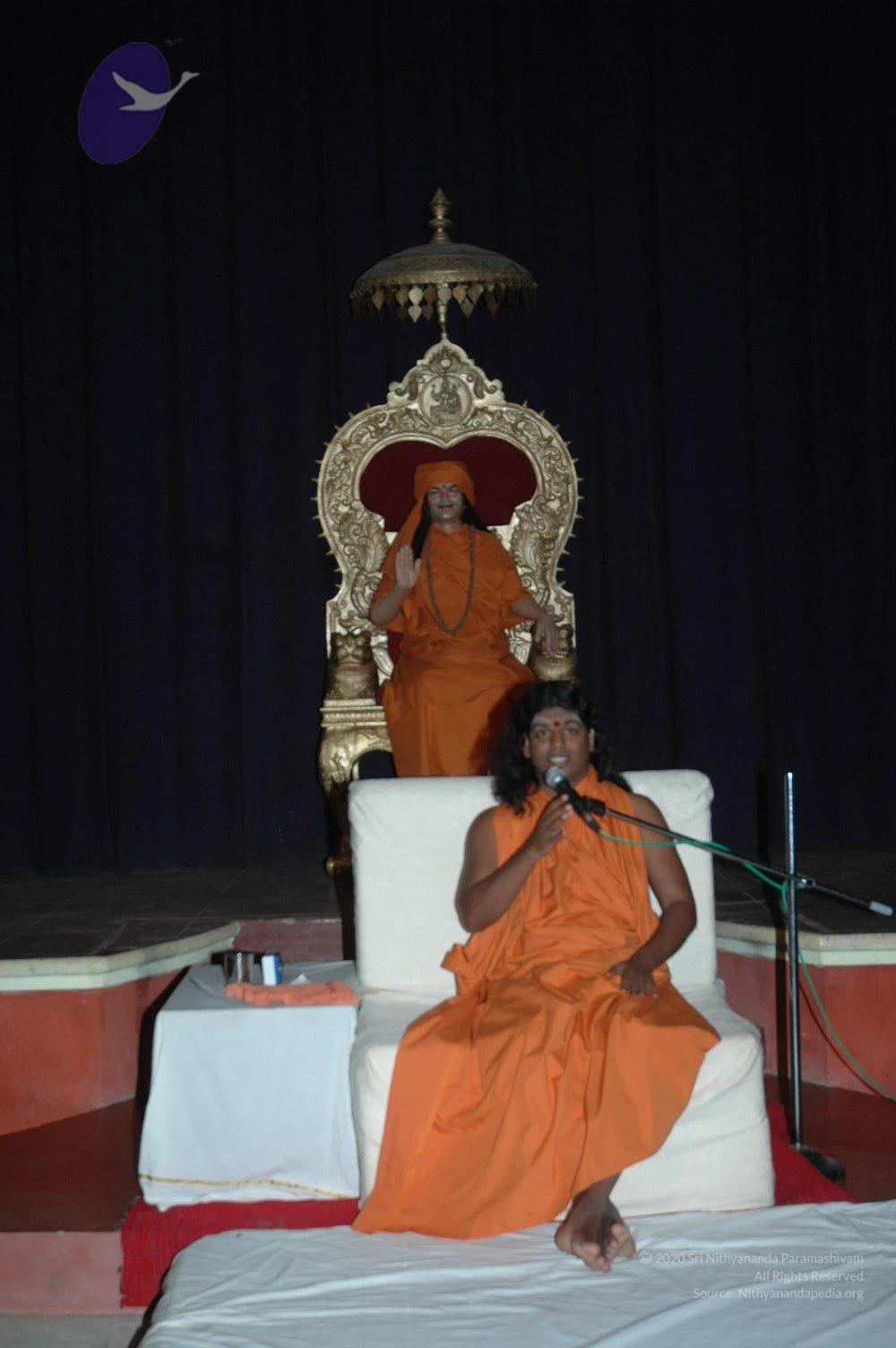
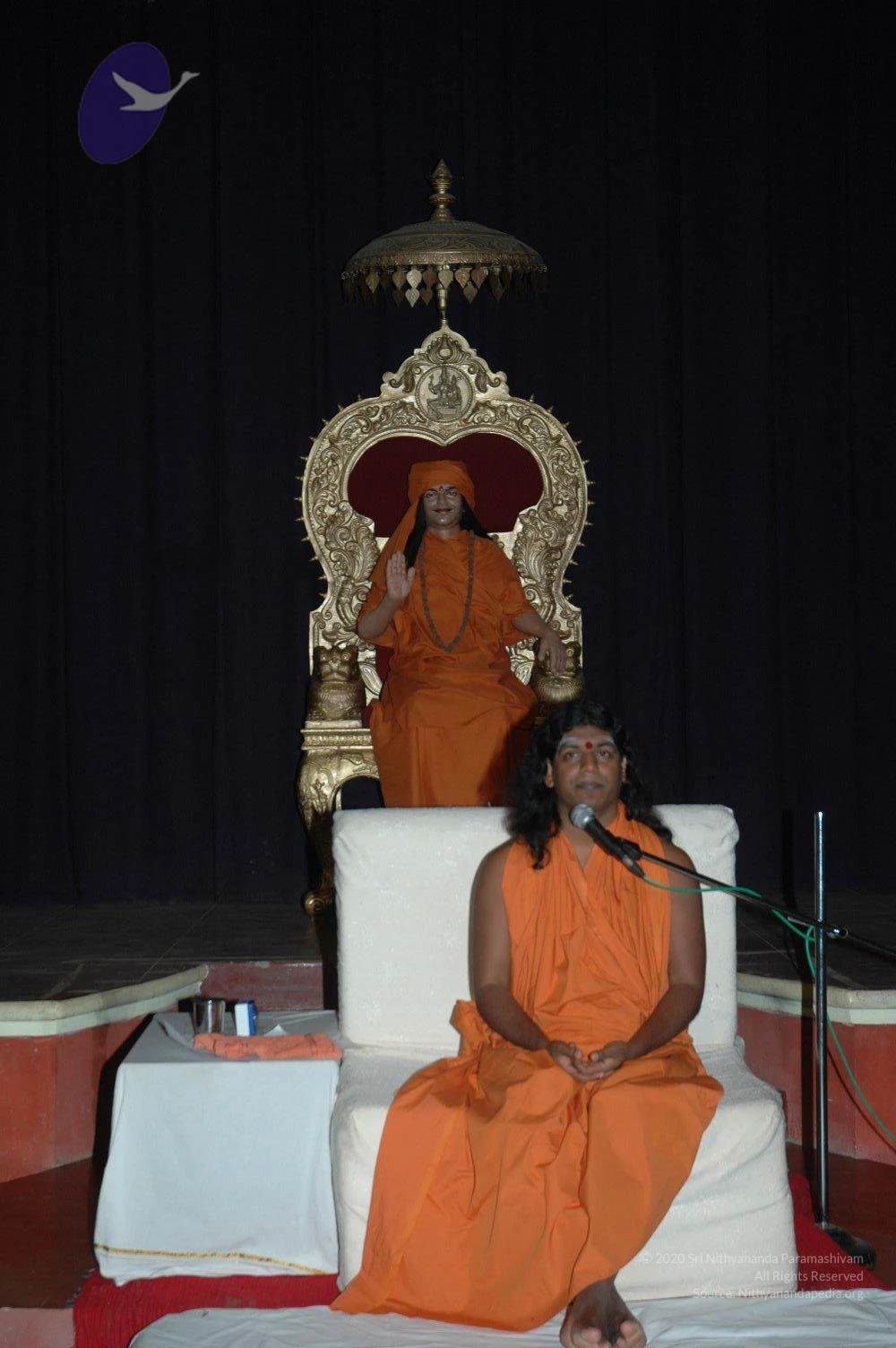
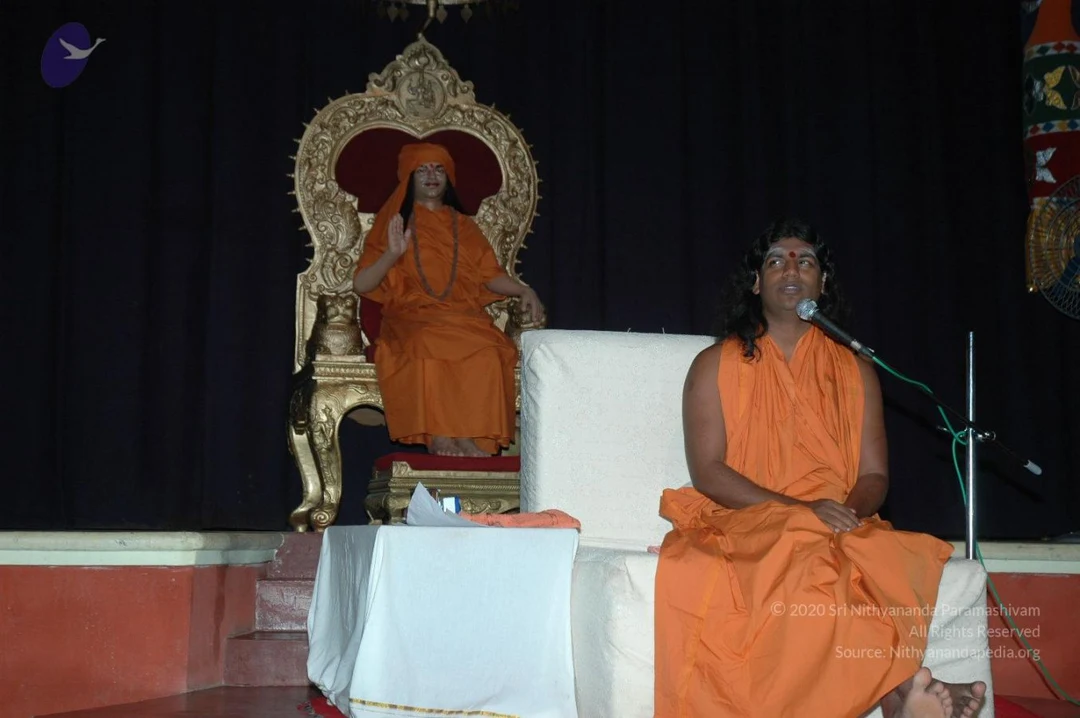
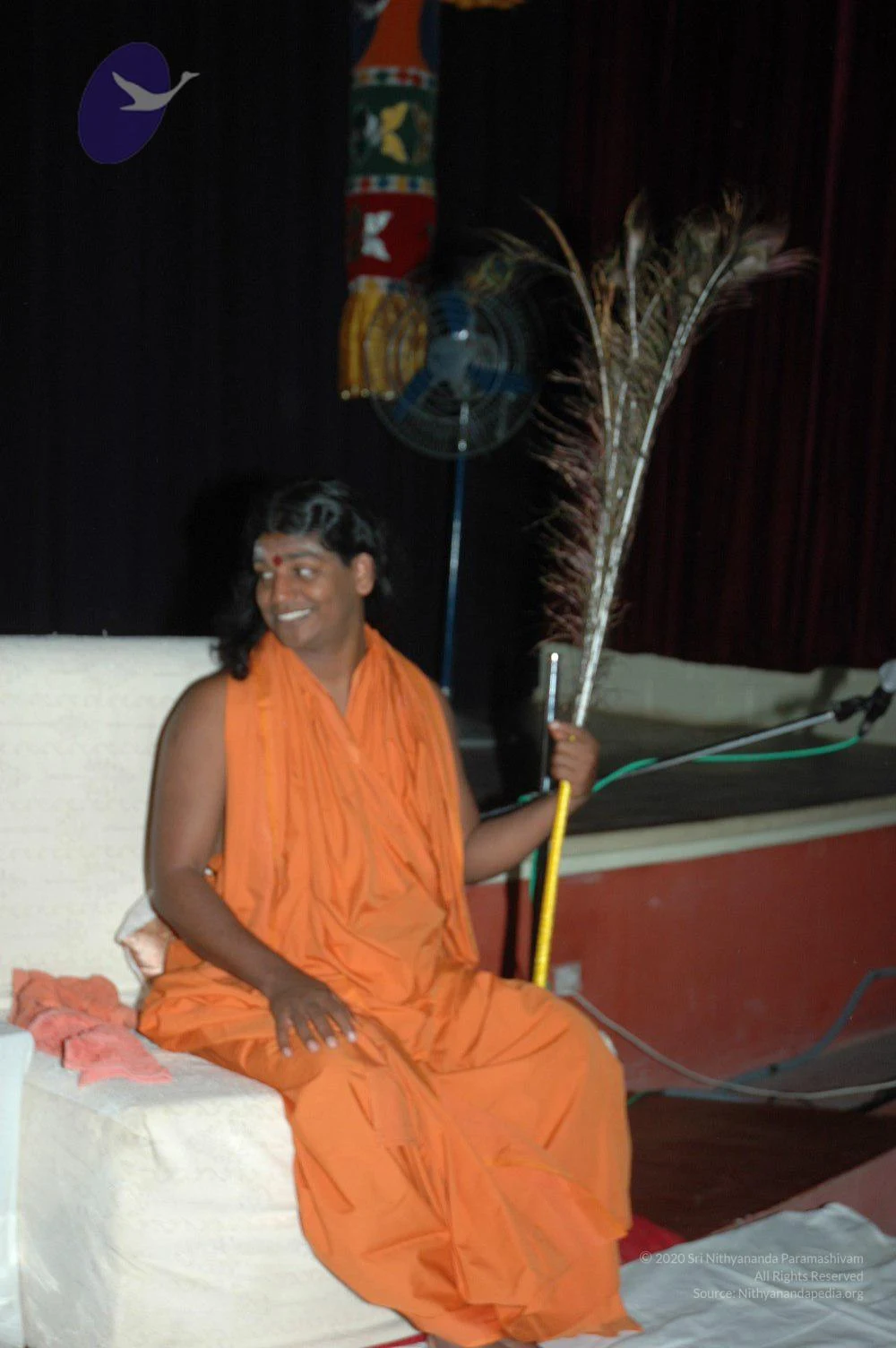
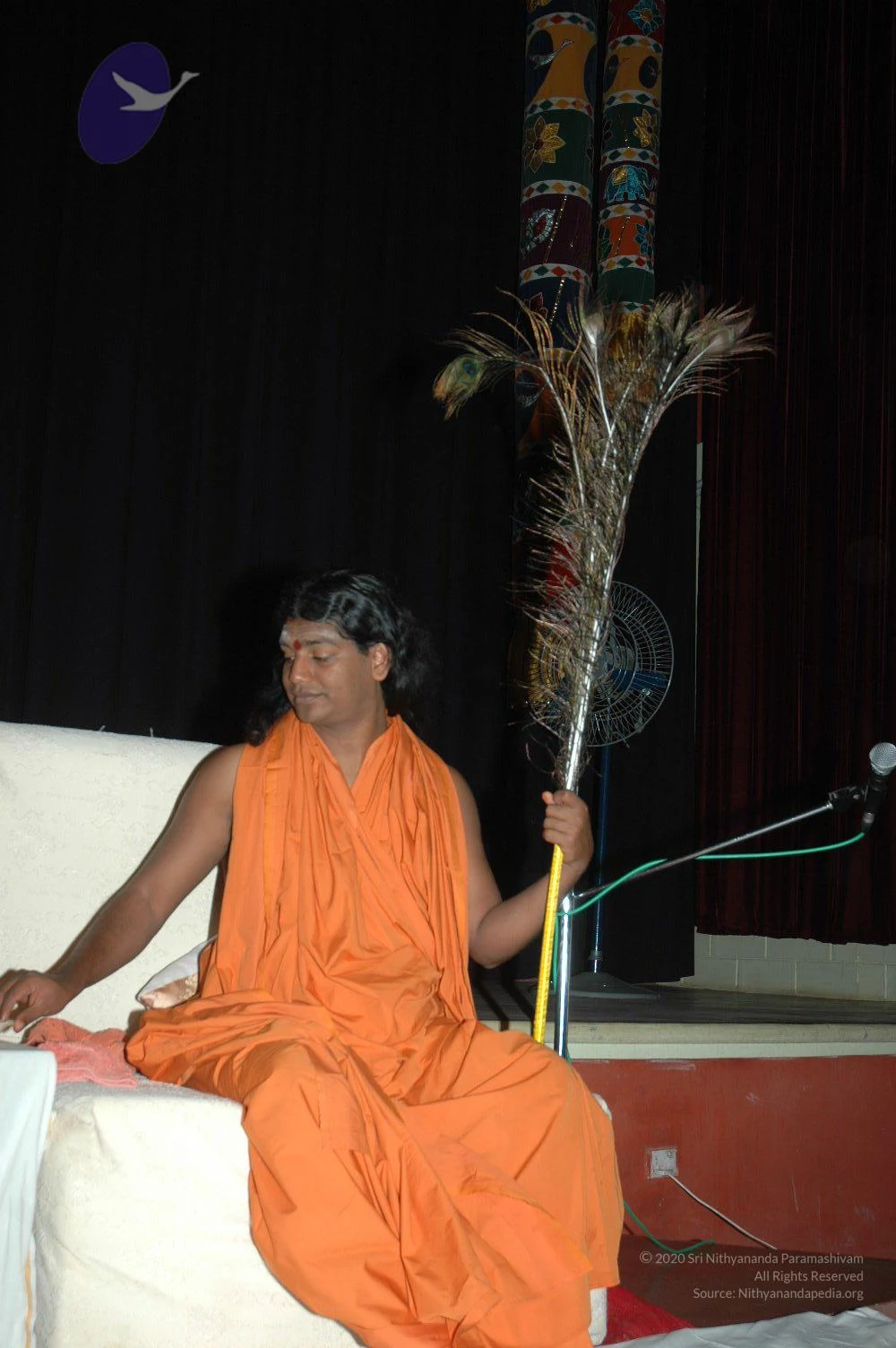
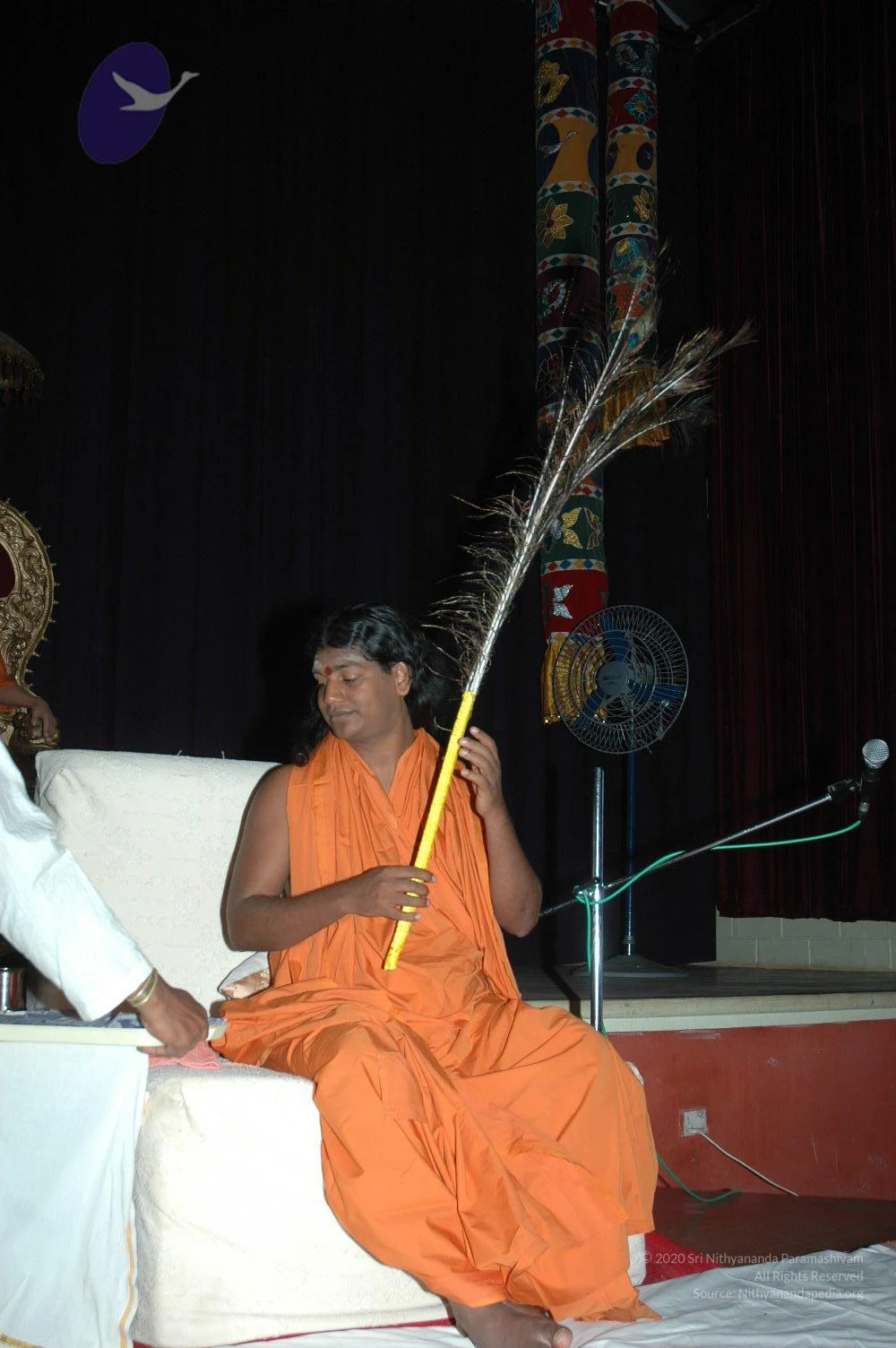
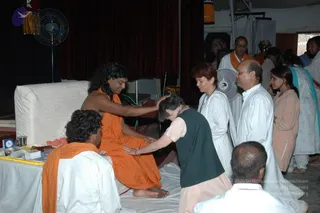
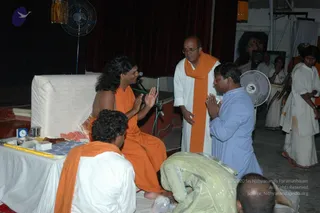
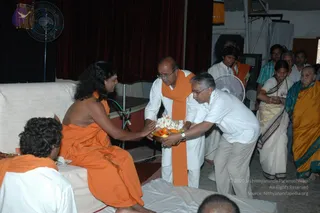
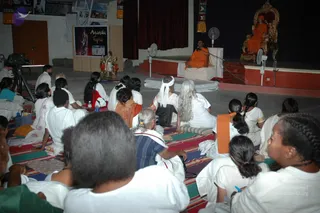
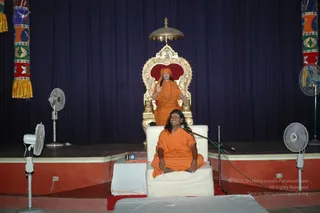
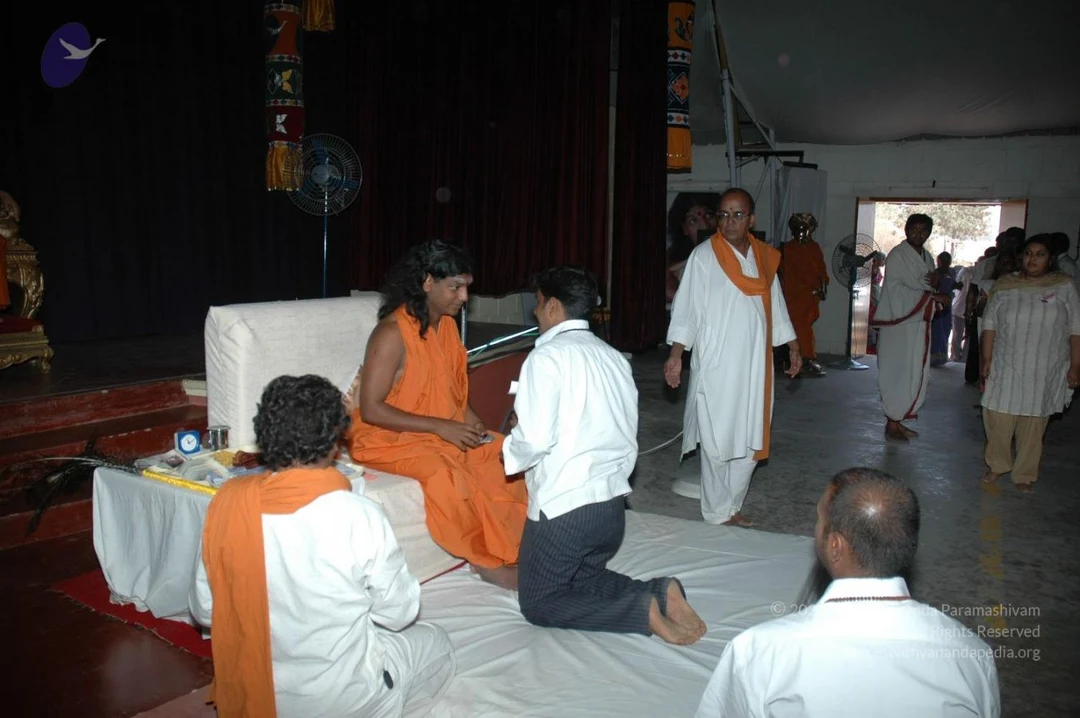
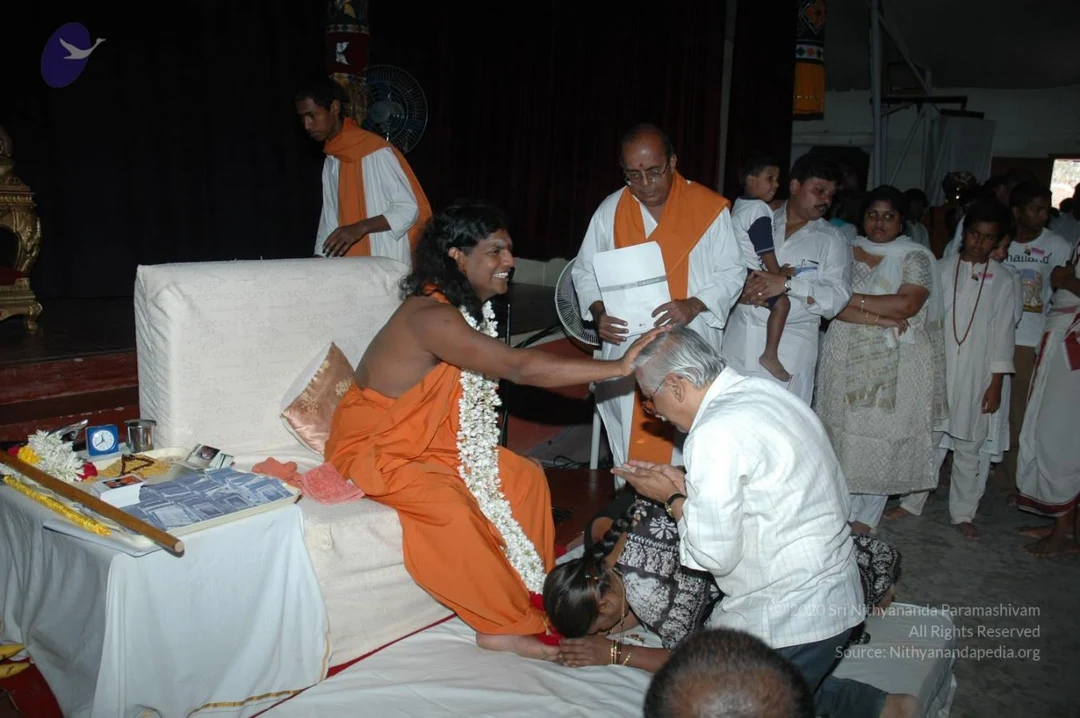
A seated figure in an orange saffron robe with long, swept-back dark hair sits on a white-draped raised seat in a hall with dark red curtains and a decorated tassel banner. A man in a white kurta kneels on a white mat before him, while another person in white sits in the foreground and a standing man in white with an orange shawl watches nearby. A small table holds a blue clock, a glass, and ritual items. Several people in white and orange move through the background near an open doorway.Indoor event hall with a dark red curtain and striped decorative banners at the sides. A woman in orange robes sits on a white-covered raised platform, holding an object in her hands. Facing her, a man in white kurta with an orange shawl stands with his hand extended toward an older woman in a blue sari who is walking with a bald elderly man in pale clothes, guided by a man in white. A woman in a cream salwar kameez follows, and several people in white sit or stand along the edges of the hall, including a seated man in a white shirt and dark trousers near the platform. Several white-clothed attendants are near the platform.A photograph of a devotional padapuja on a stage at an ashram hall. A person in an orange robe sits on a white-cushioned seat with bare feet, while a man in a white shirt and white dhoti bows forehead-down at their feet on a white sheet. A seated man in white and an orange shawl sits at the left, and a woman in a lavender top bends forward nearby. A standing man in white kneels to assist, and a line of devotees in white and orange clothing waits behind. A seated figure in orange with a crown is visible at the far left on a golden throne, and a dark curtain with patterned banners hangs behind the stage. Fans, a table with a small clock and a peacock-feather fan are on the stage. a person appears as the seated figure in orange on the golden throne at far left, identified by orange robe and large ornate golden throne and crown style; the person in orange on the white seat is a devotee receiving padapuja.Indoor darshan scene on a low white-draped platform. A long-haired man in an orange saffron wrap and bare chest sits cross-legged, extending his hand in blessing onto the head of a woman in a dark green top and pale pink skirt who bends forward. Beside them a seated man in an orange shawl and white robe, and a woman in a white outfit, stand or wait. Another devotee in a white kurta kneels at left near a tray of offerings, a small clock and a steel vessel. Several people in white and pastel salwar clothing stand along the back wall beside a dark curtain and a pedestal fan. a person seated with saffron wrap, long swept-back hair and bare-chested dress, giving darshan to devotees.A photograph of a seated figure with long dark hair, bare-chested under an orange shawl, receiving namaste gestures at a white-draped table with flowers, a clock, a steel vessel and a small plate of offerings. A bearded man in white with an orange shawl stands behind, and a man in a light blue shirt kneels with palms pressed together. Another man in white kneels in the foreground, and a figure in pale green wrapped clothing bows low on the floor. Behind them a stage with a white cushioned seat, red curtains, a standing fan and a backdrop portrait of a woman. People in white and orange clothing stand in the background. The appearance of the seated figure with long hair and orange shawl is consistent with Swamiji (probable), seated in a ritual setting receiving devotees.A photograph of a devotional offering in an indoor hall with a dark curtained stage behind. A figure with long dark curly hair, wearing a saffron-orange cloth draped over the body and seated on a white-covered couch or dais, reaches toward a tray of fruit and flowers held by two men in white. The man in the centre wears white kurta-pyjama and an orange shawl with glasses; the man on the right wears a white shirt and light trousers and leans forward. Behind them, a woman in a white sari with a patterned border and an older woman in a yellow-orange sari stand watching, and a fan is visible on the left. A man in the foreground with curly hair wears white and orange. The offering appears to be a puja or arati gesture. a person cues are the long swept hair and saffron clothing of the seated figure, with the offering presented to him.

PANCHA-TAPAS
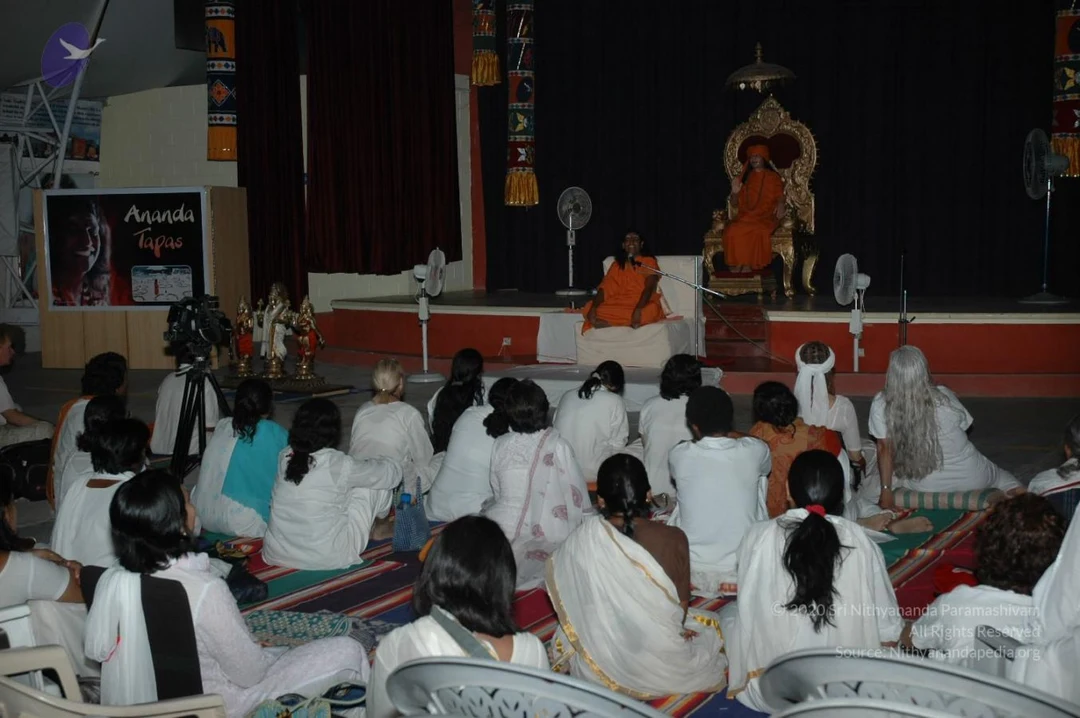
47 photosSource gallery

ARATI-IN-TEMPLE
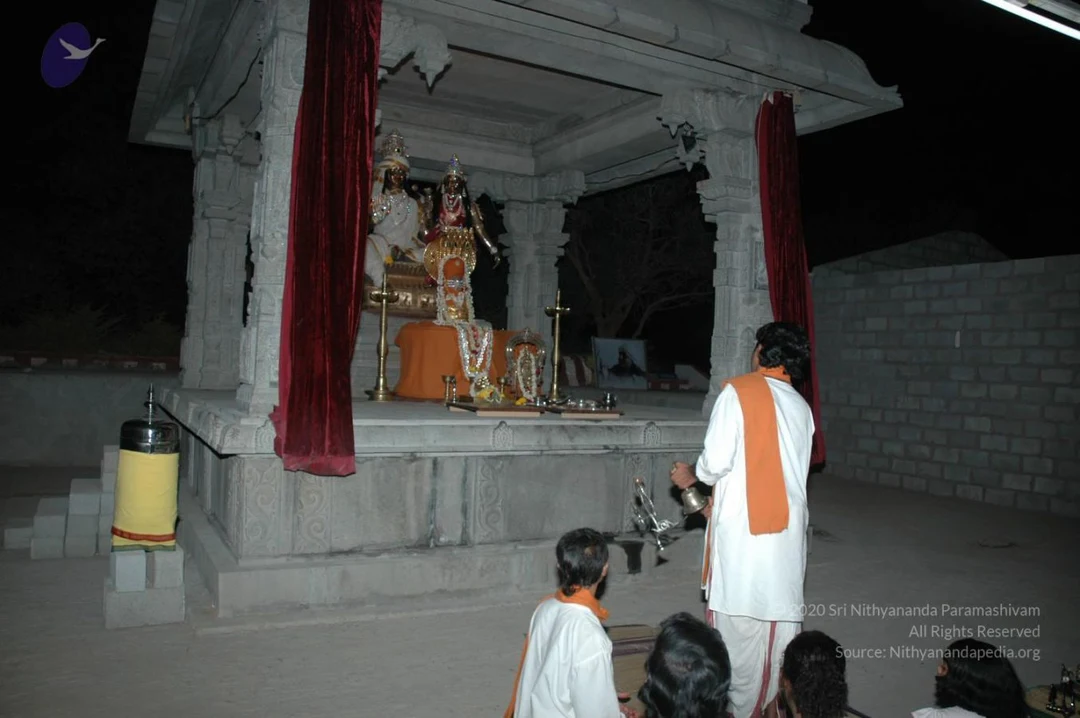
4 photosSource gallery
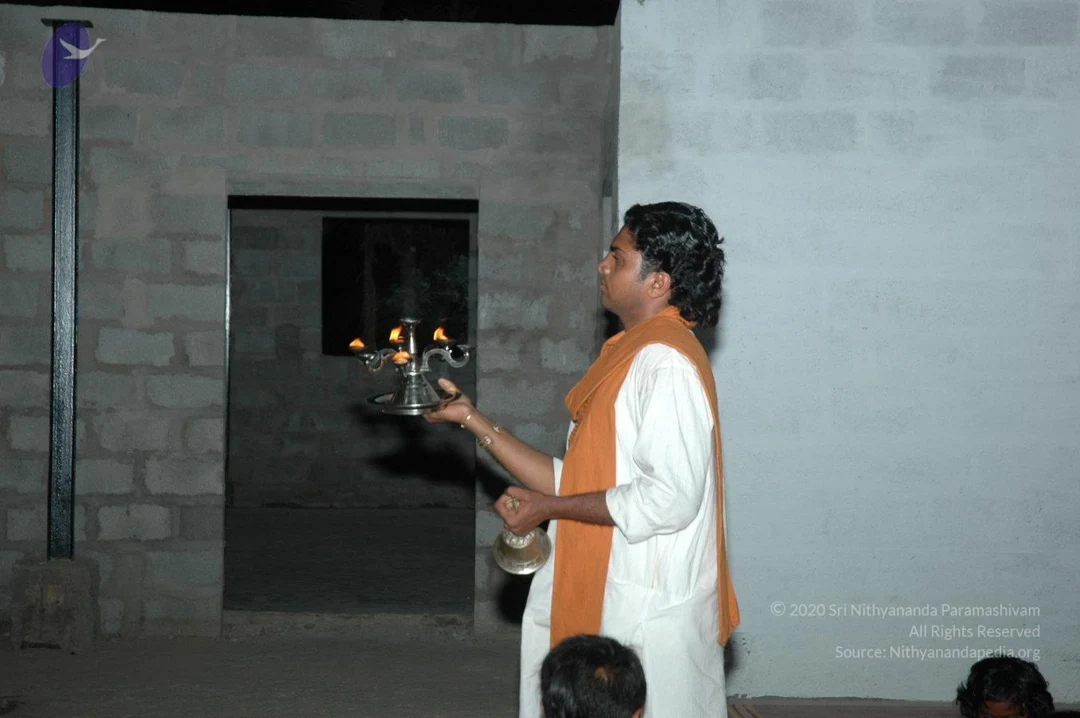
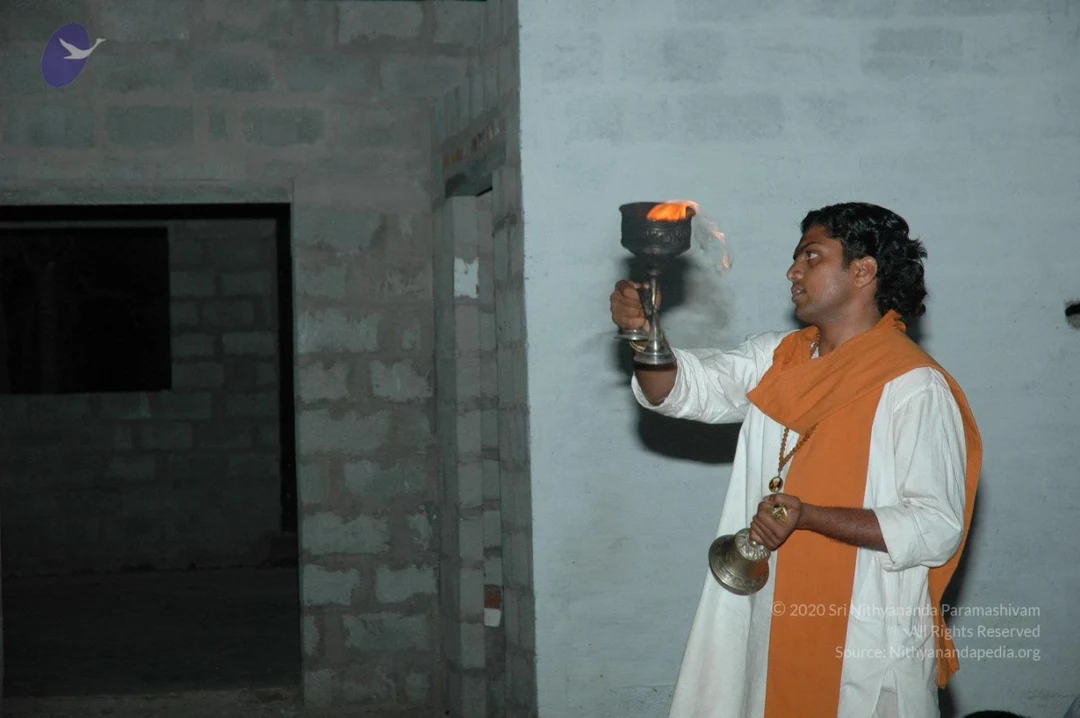
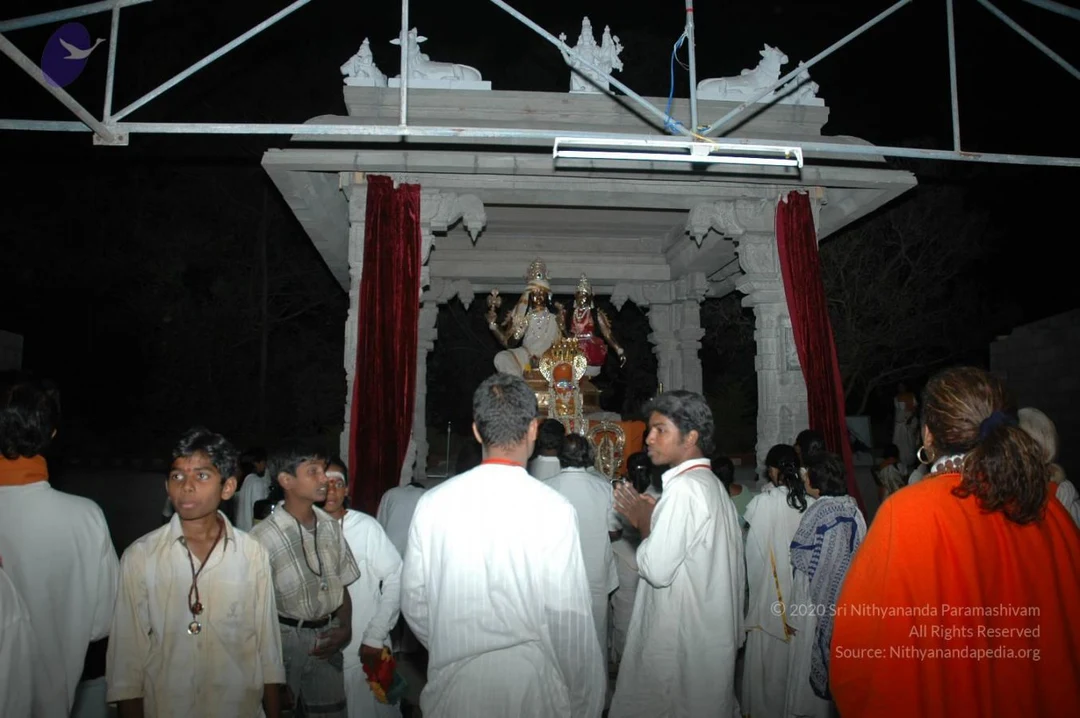
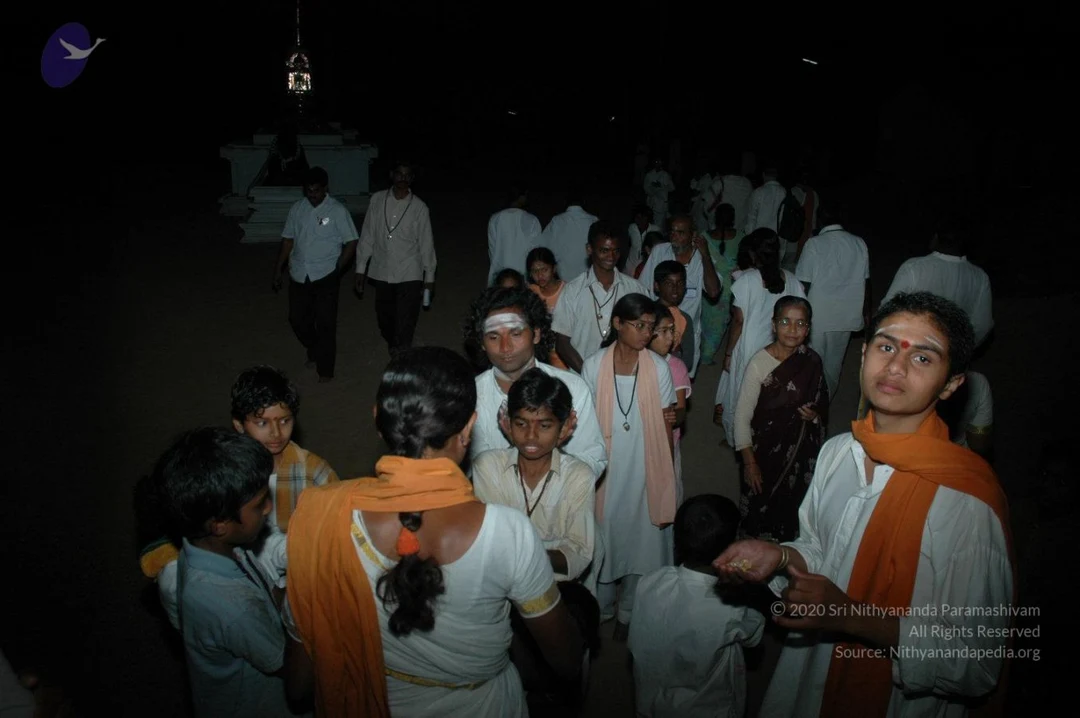
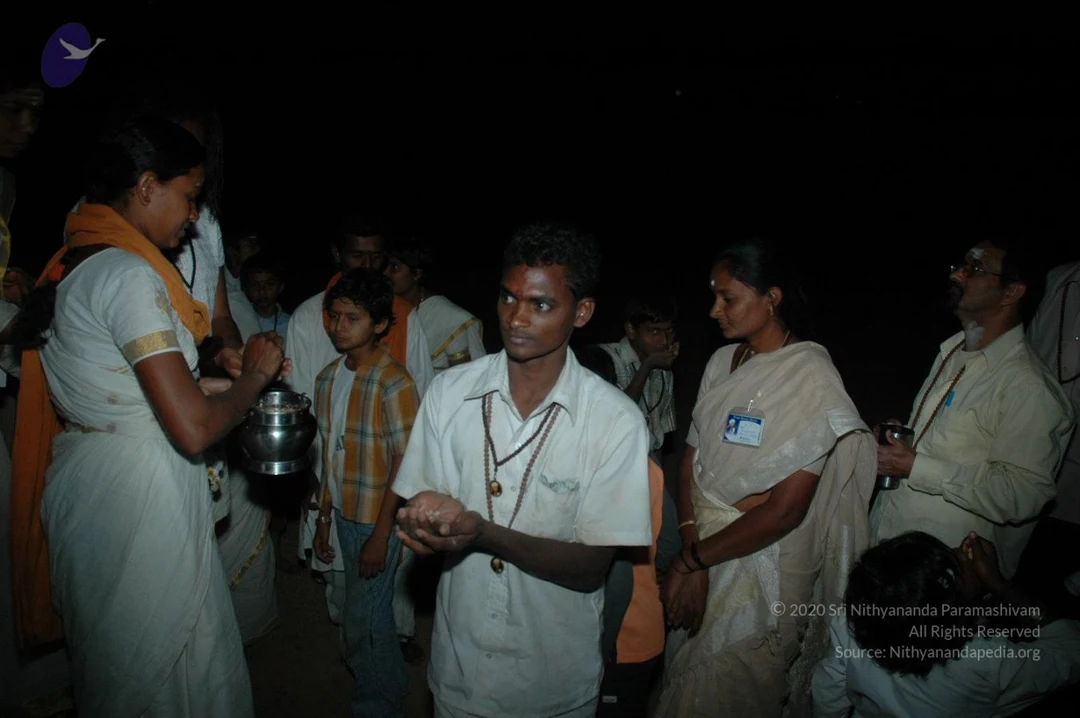
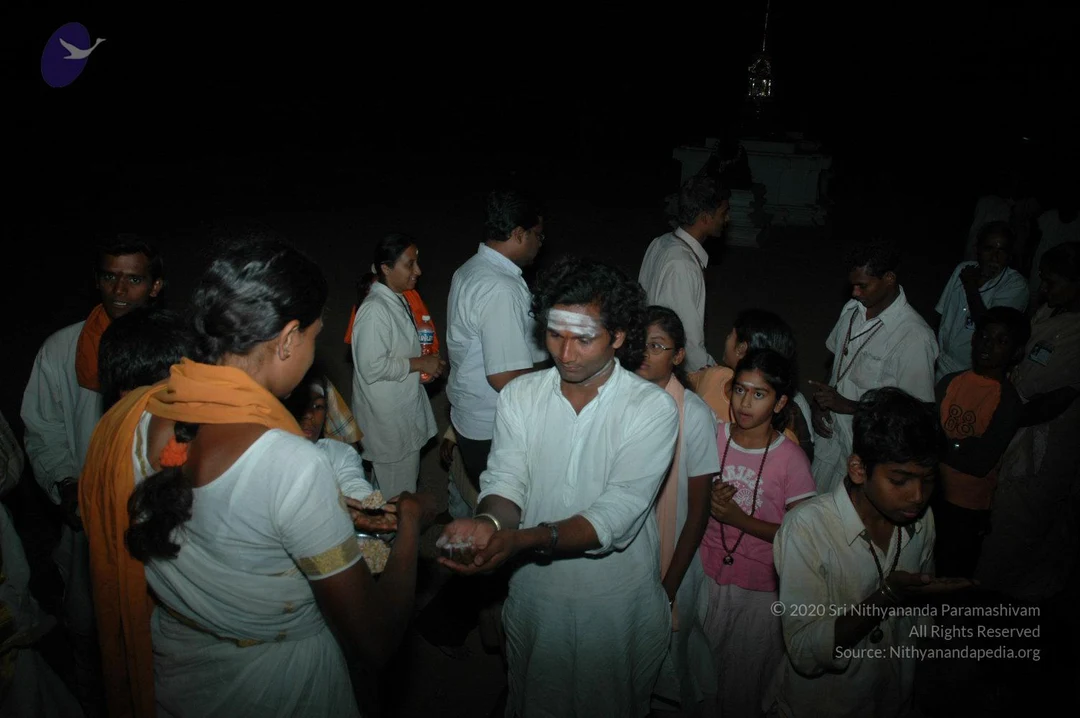
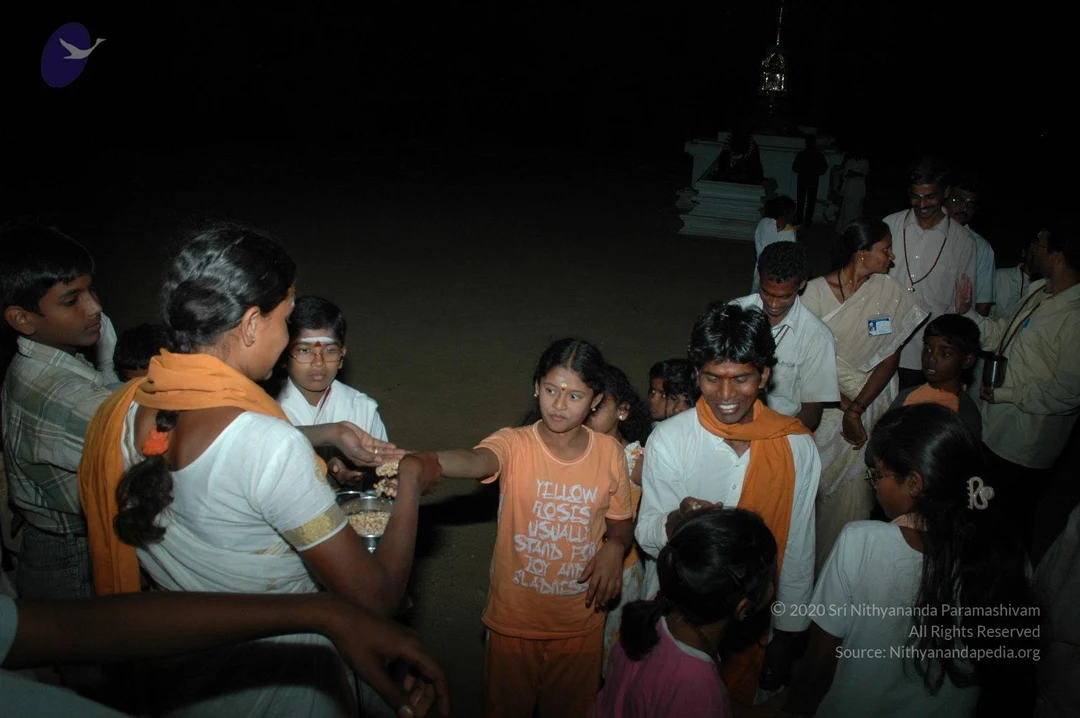
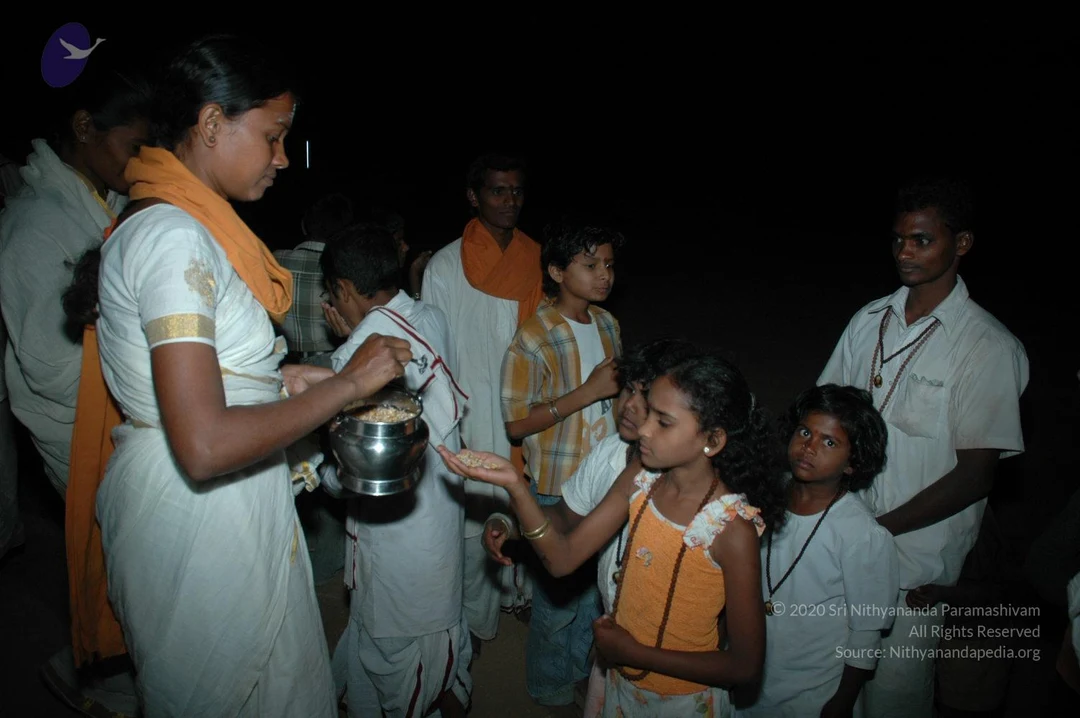
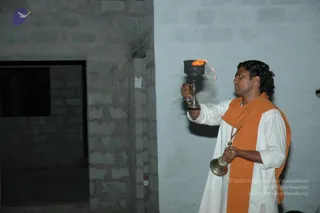
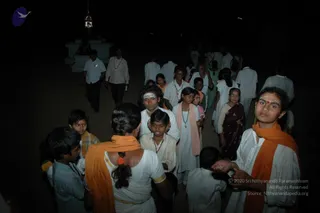
A man stands in profile during evening aarti, holding a silver multi-wick oil lamp with three lit flames in his right hand and a small bell in his left. He wears a white kurta with an orange saffron shawl draped over one shoulder, and has short wavy dark hair. Plain concrete block walls and a dark doorway form the background, with the tops of two seated devotees visible at the bottom edge of the frame.A photograph of an evening arati in a plain whitewashed hall with a corrugated metal roof and bare bulbs. A standing man in white dhoti and white shirt with an orange shawl holds a lit brass oil lamp aloft in one hand and a bell in the other. Seated on mats in rows, a large group of devotees, many in white with orange shawls, some children, sit with hands folded in prayer. A few people sit near the front with brass vessels beside them. Several figures stand at the back of the hall in white and orange clothing.A photograph of a man in white ritual clothes with an orange shawl draped over his shoulders, holding a metal lamp with a burning flame in his right hand and a brass handbell in his left. He stands in a dim, unfinished concrete-block room, facing left toward the flame during an evening temple aarti. A rudraksha-style mala hangs from his neck. Shawl and clothing are white and saffron. The flame and smoke rise from the lamp. The setting shows bare grey walls and a doorway opening to darkness behind him.Night photograph of a crowd of devotees in white clothing walking along a dark path toward a lit structure in the background. A young man in the foreground wears an orange shawl, a white shirt and a red bindi, and holds something in his hands. A woman with hair tied back wears an orange cloth and white top, and several boys and girls wear white kurtas, orange and pink shawls, and rudraksha-style beads. A woman in a maroon sari walks at right. A glowing oil lamp hangs at top left above a white platform. No identifiable ceremonial figure is clearly visible.

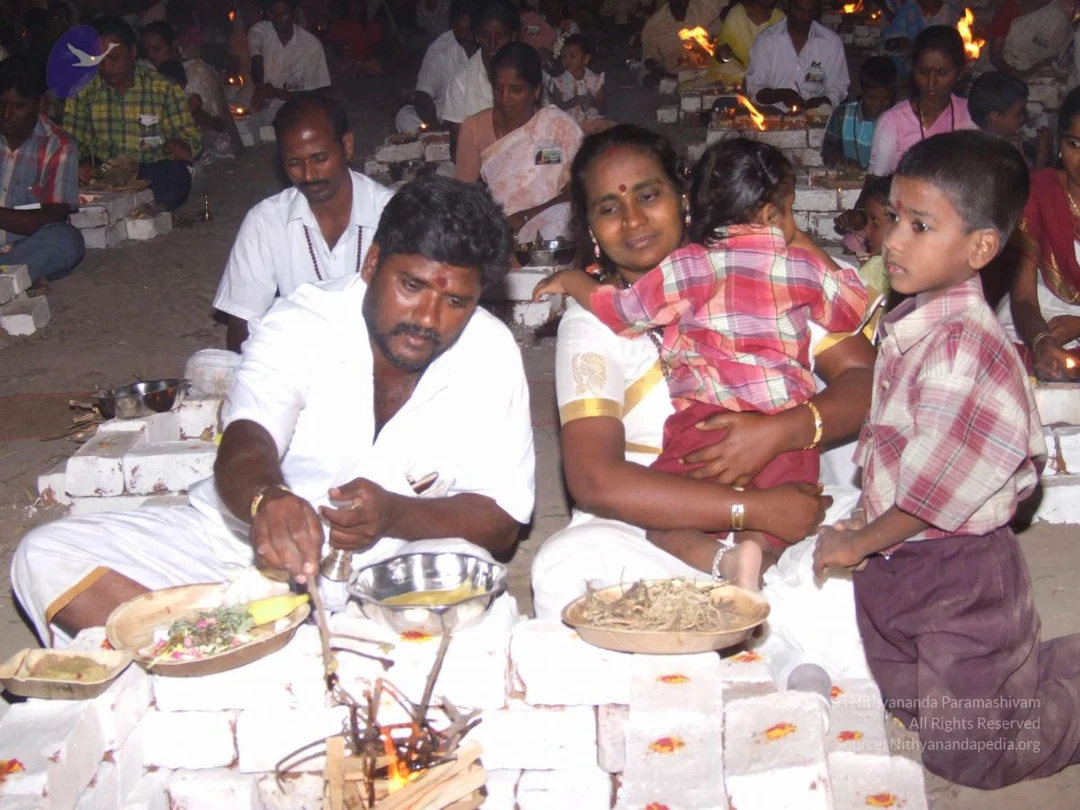
GURU-HOMA-IN-PONDICHERRY
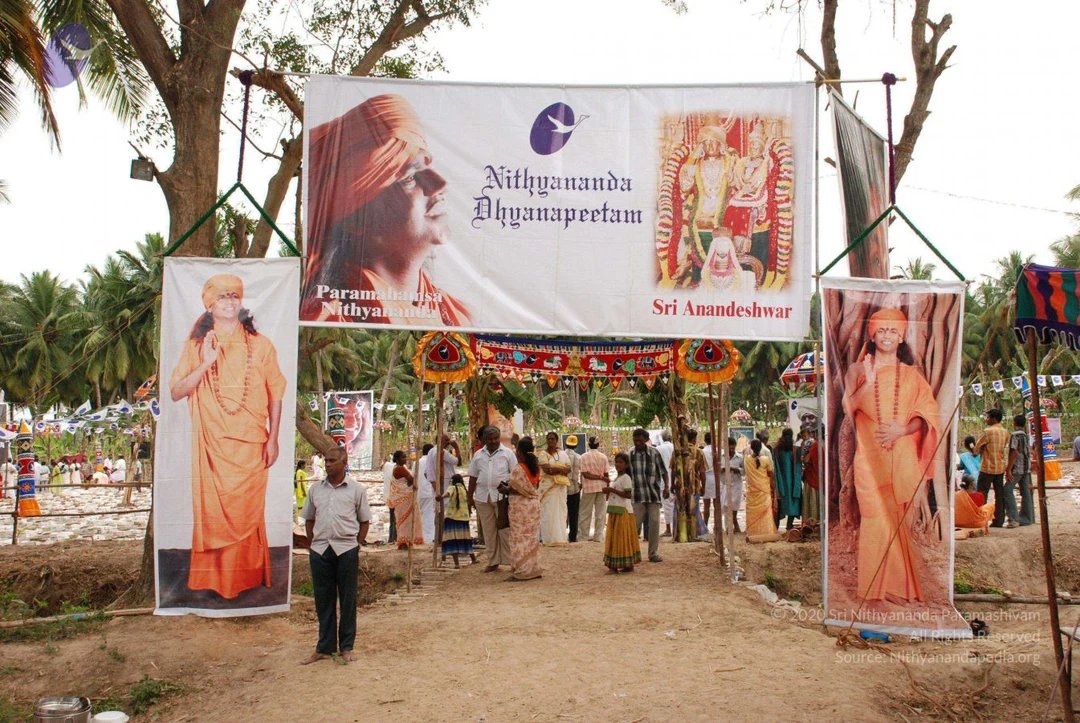
148 photosSource gallery
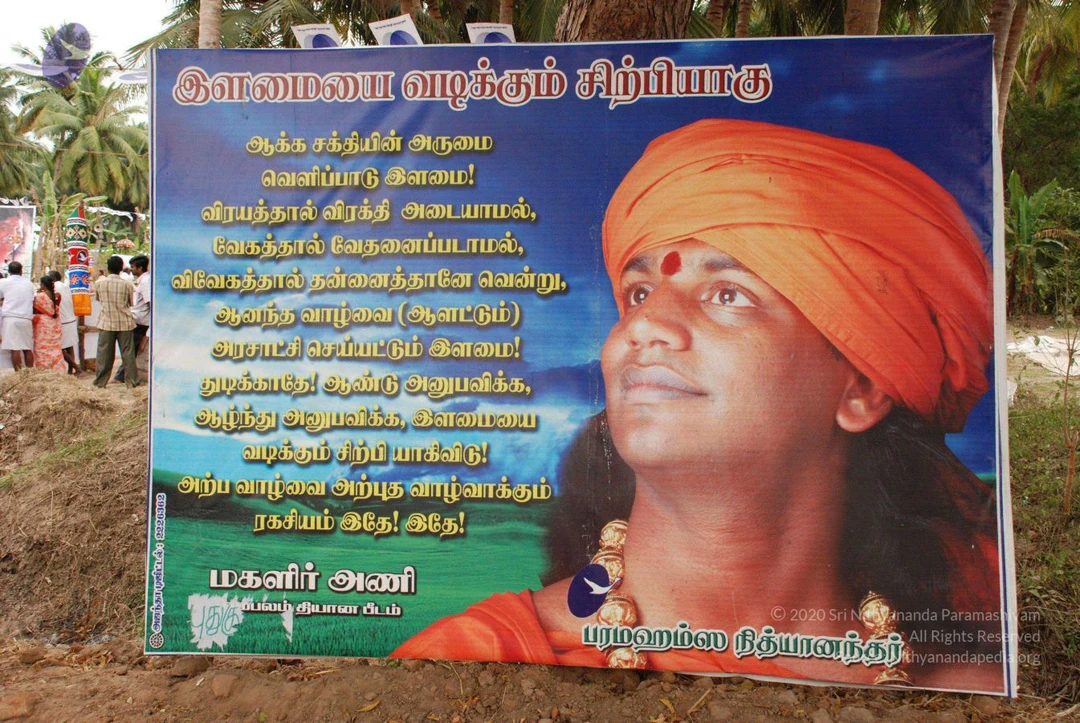
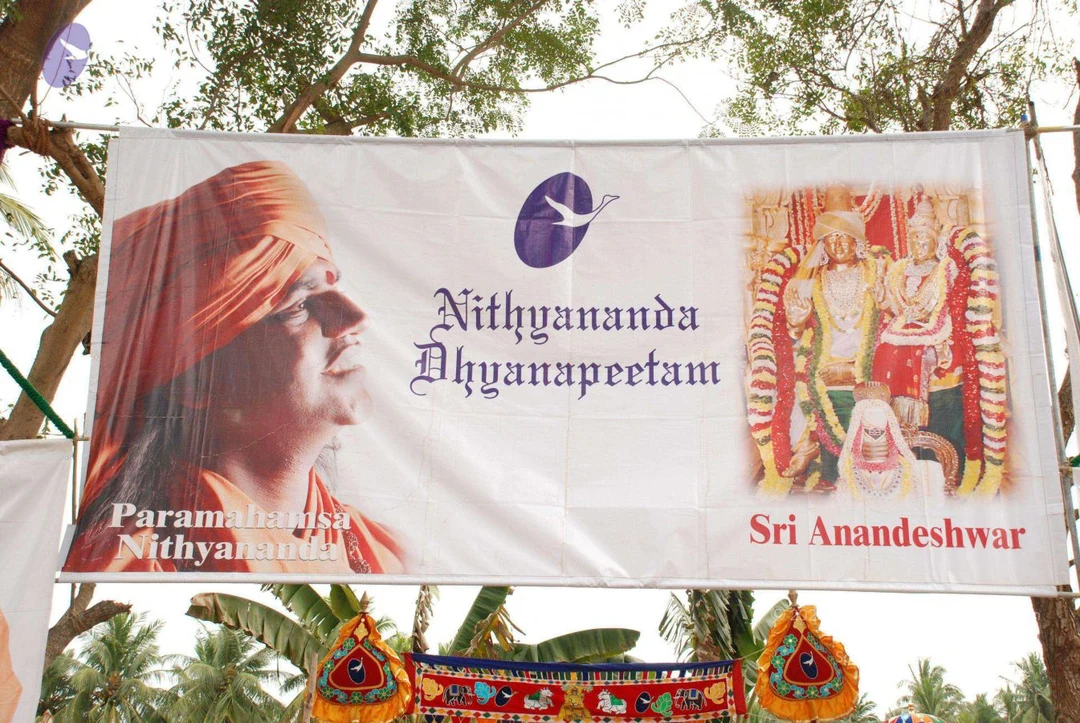
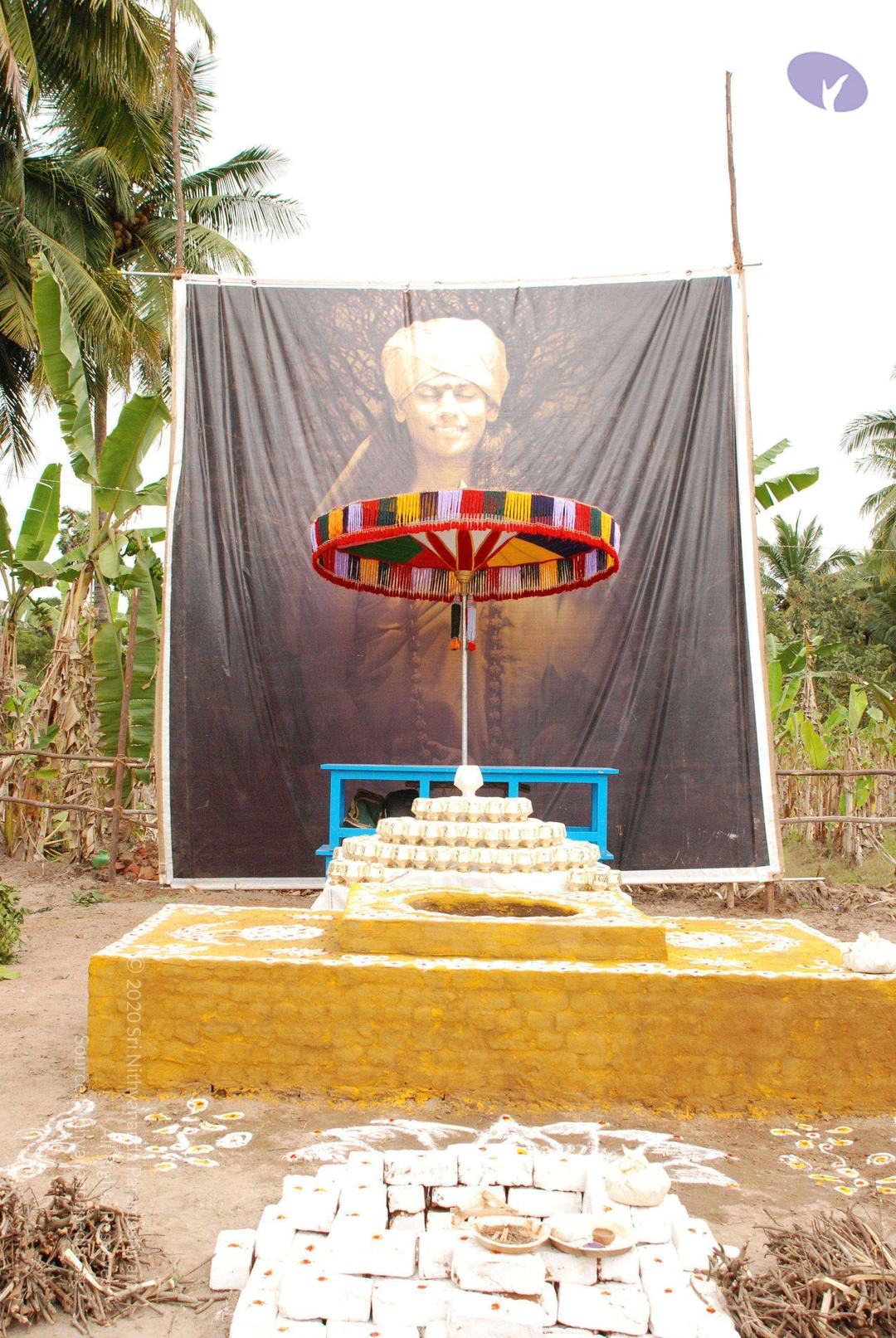
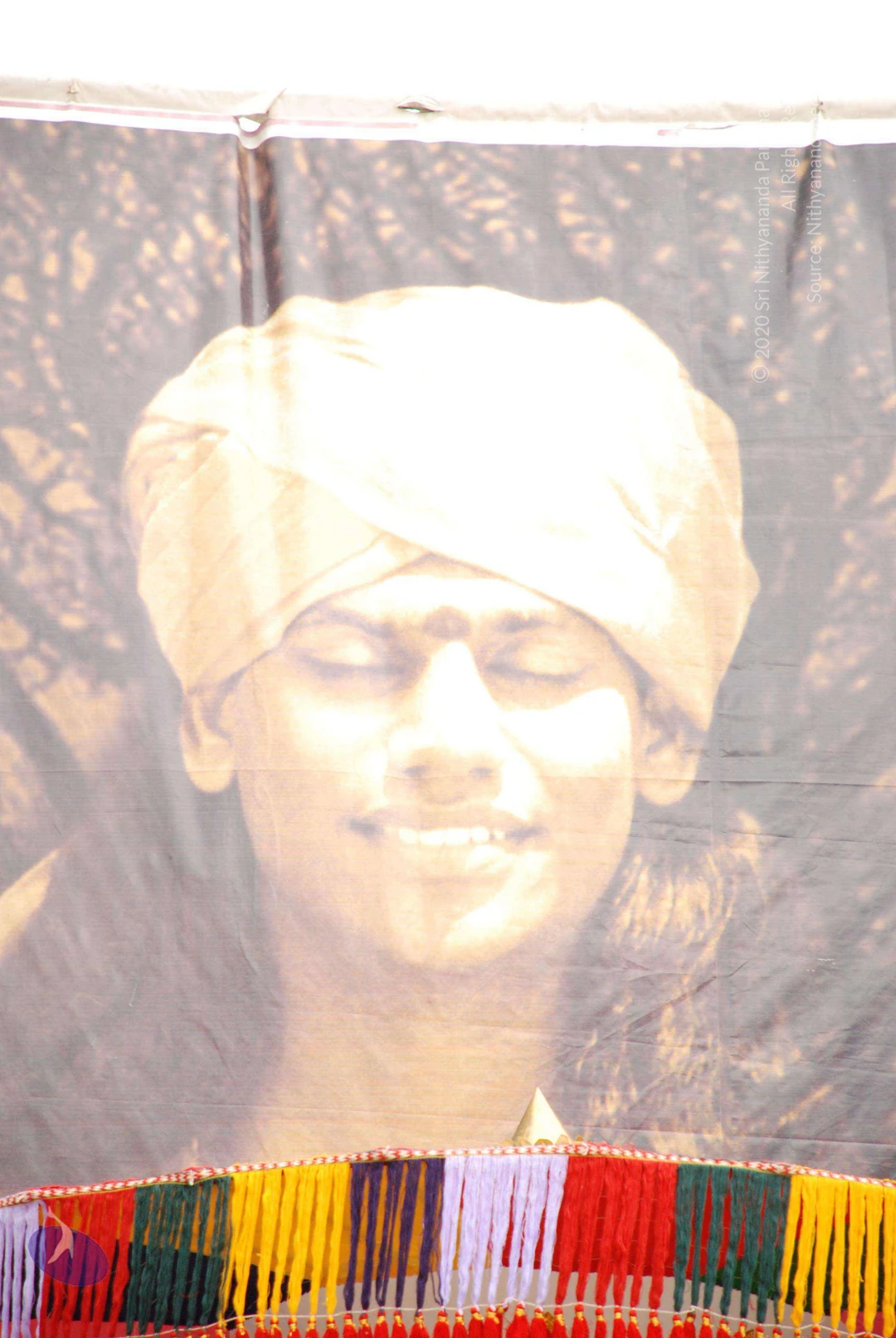
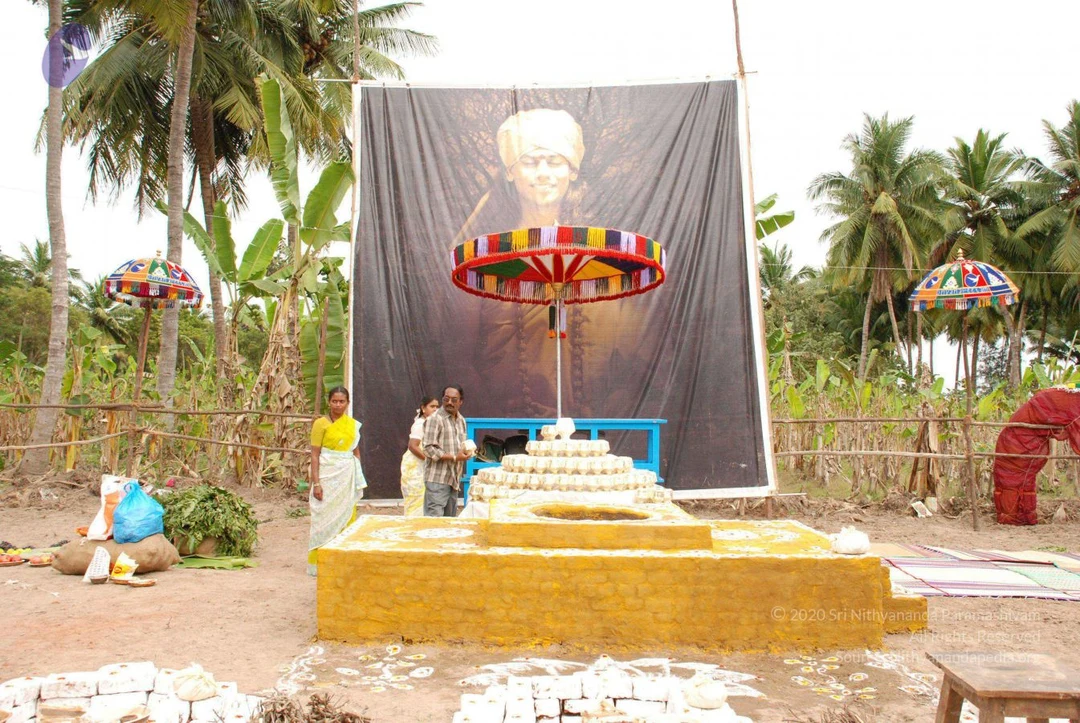
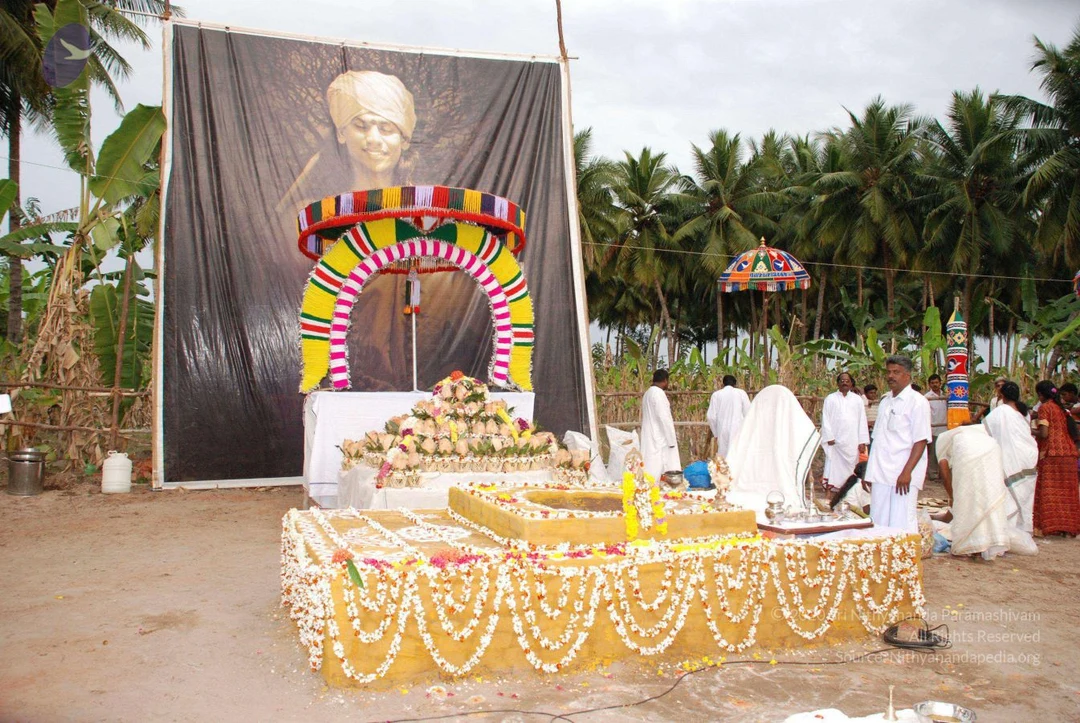
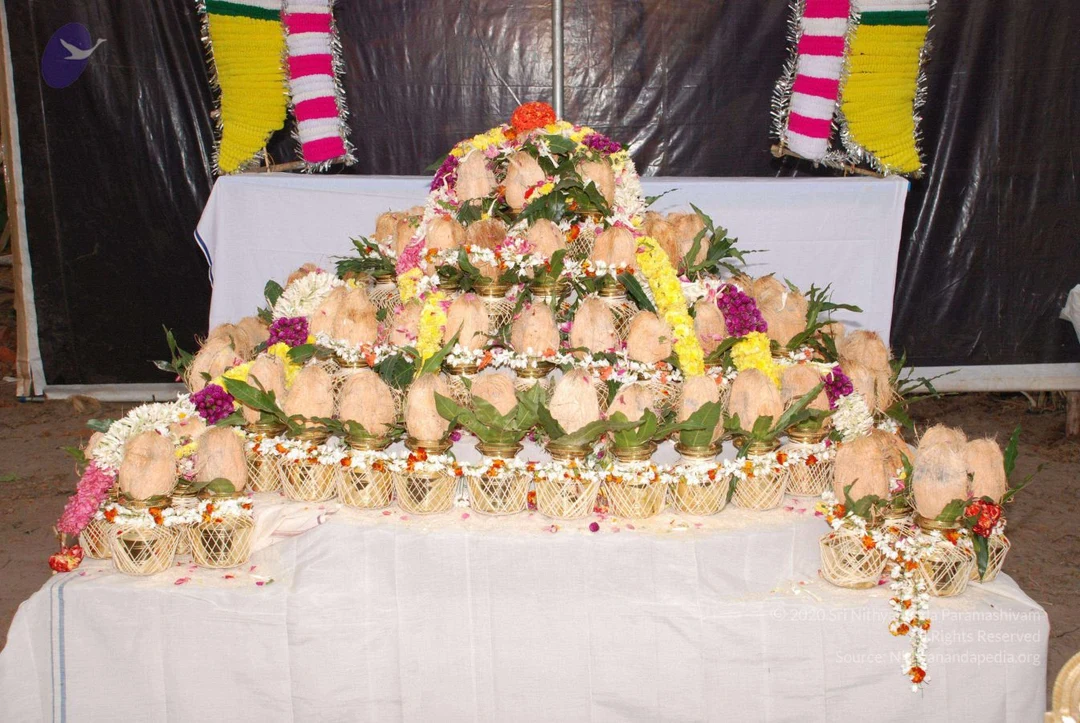
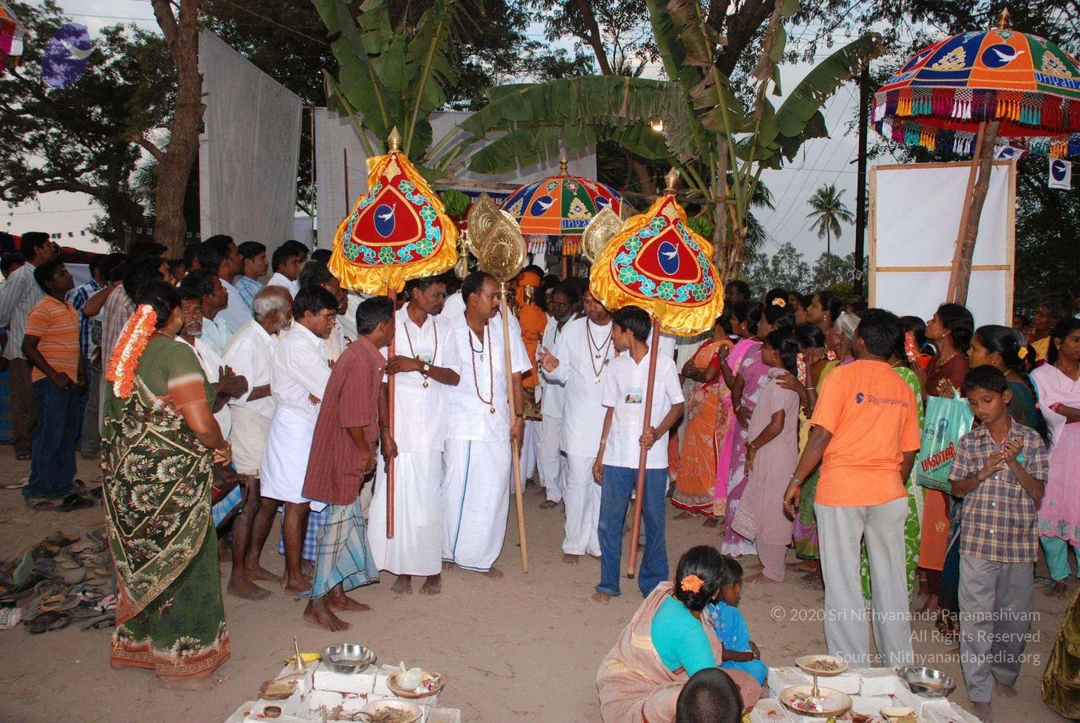
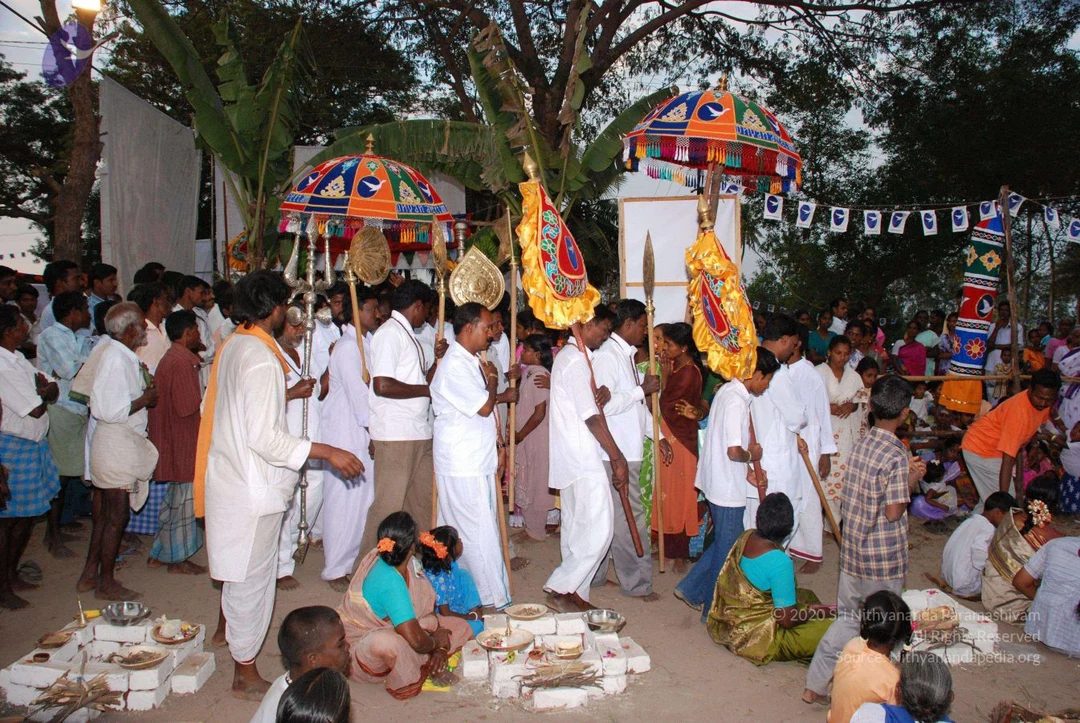
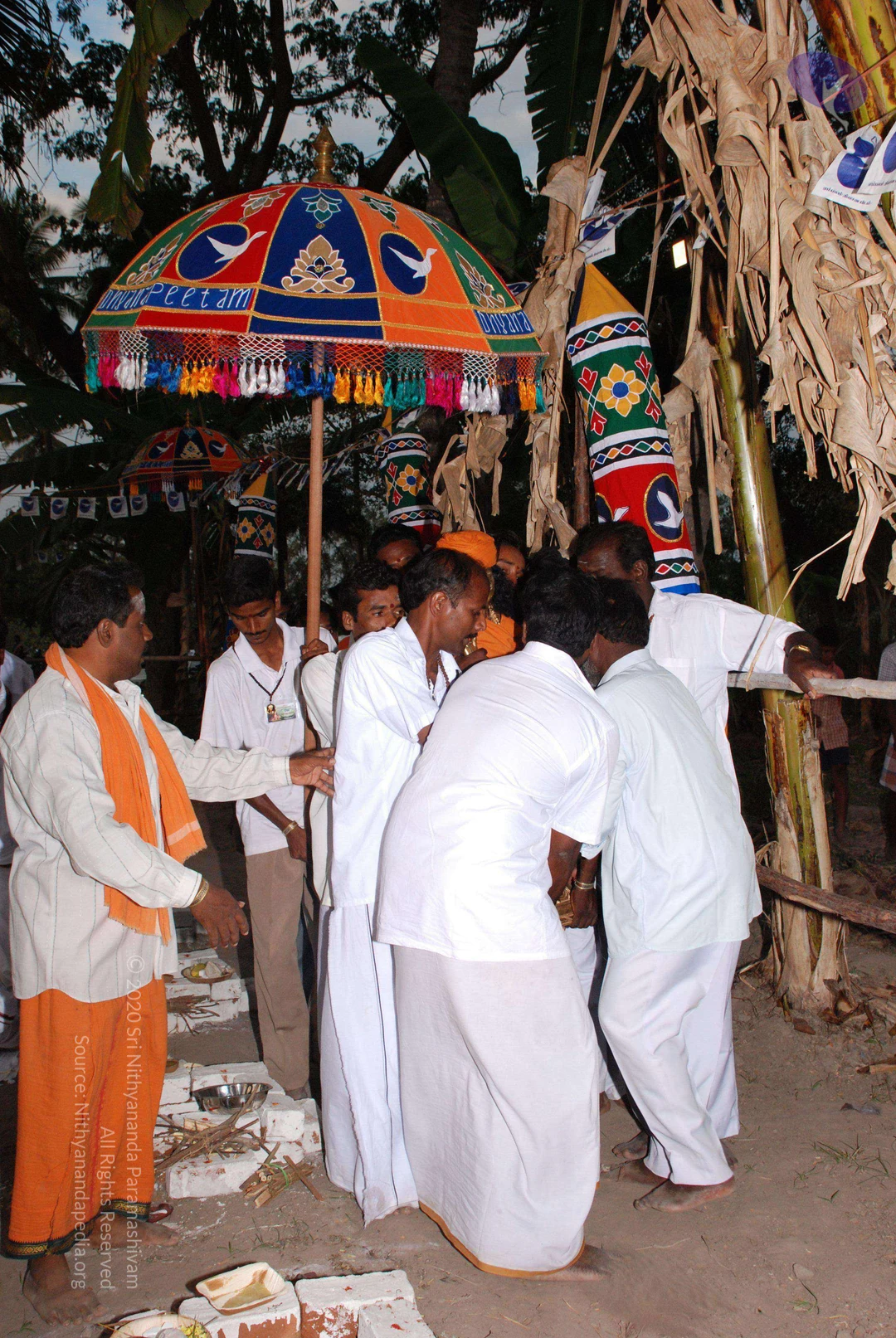
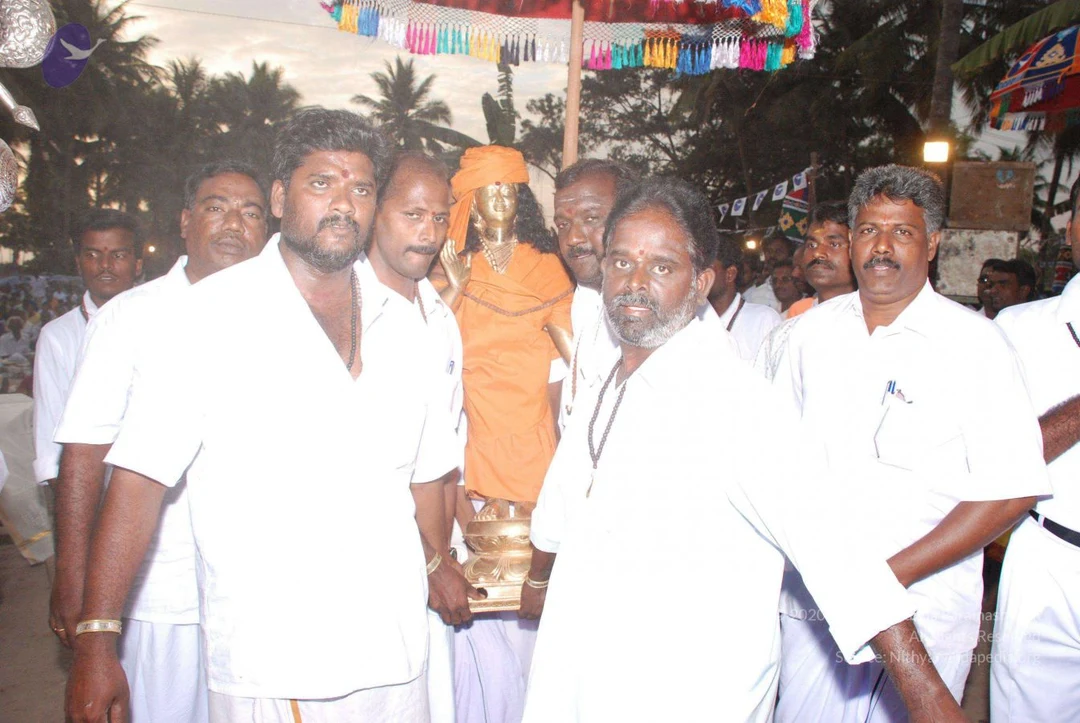
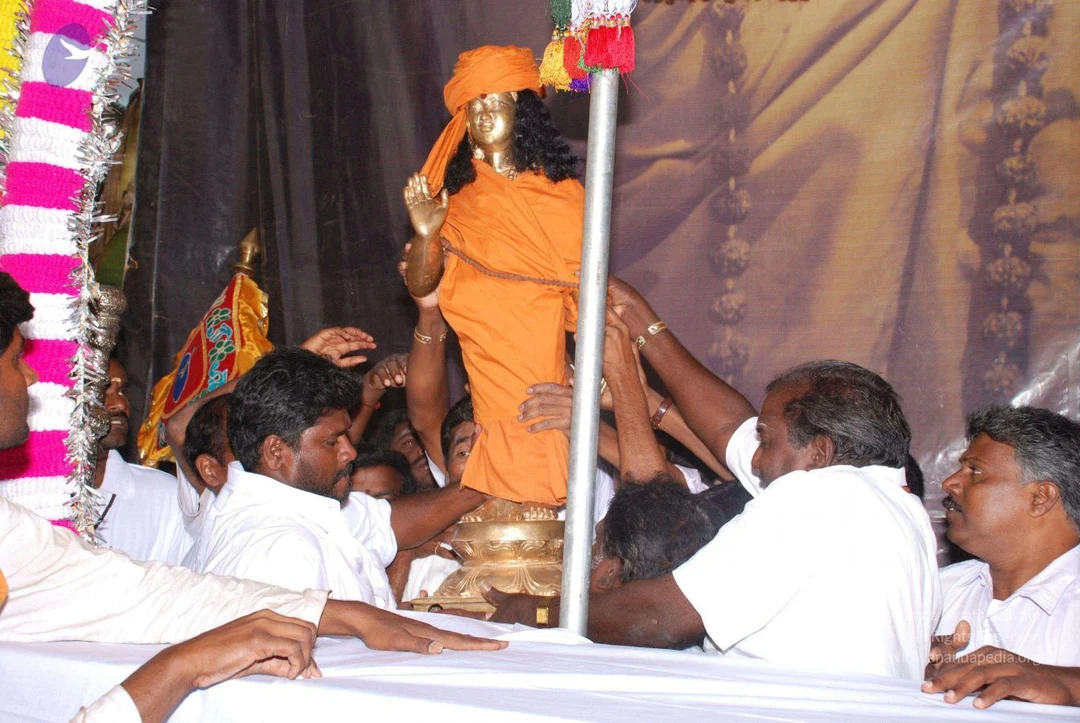
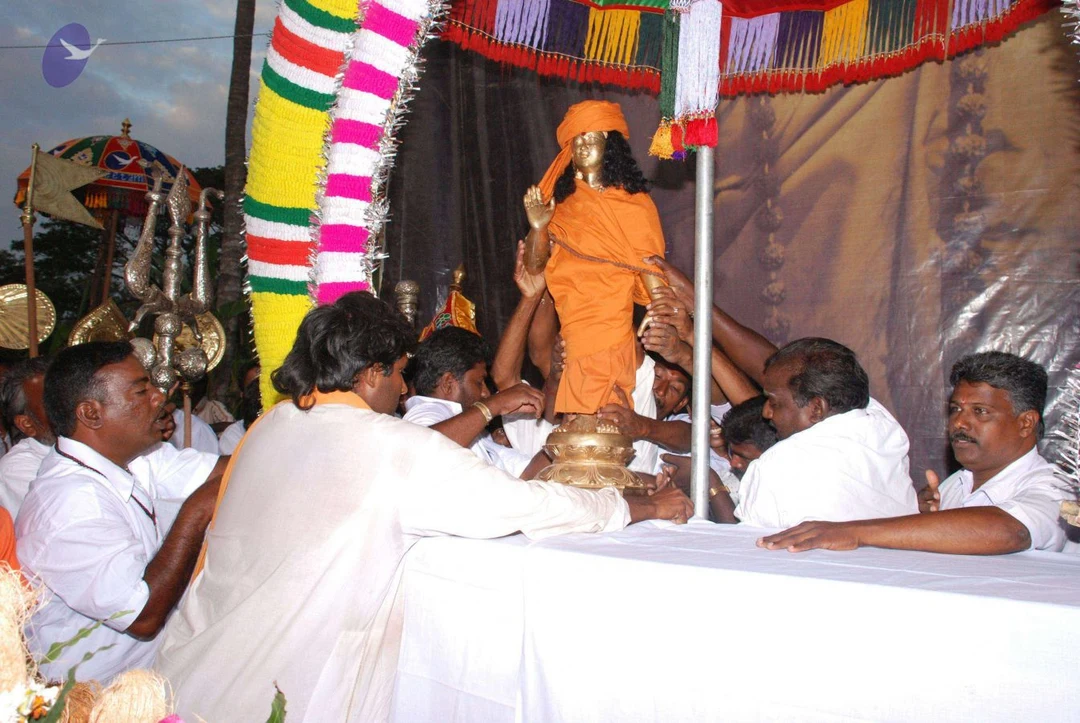
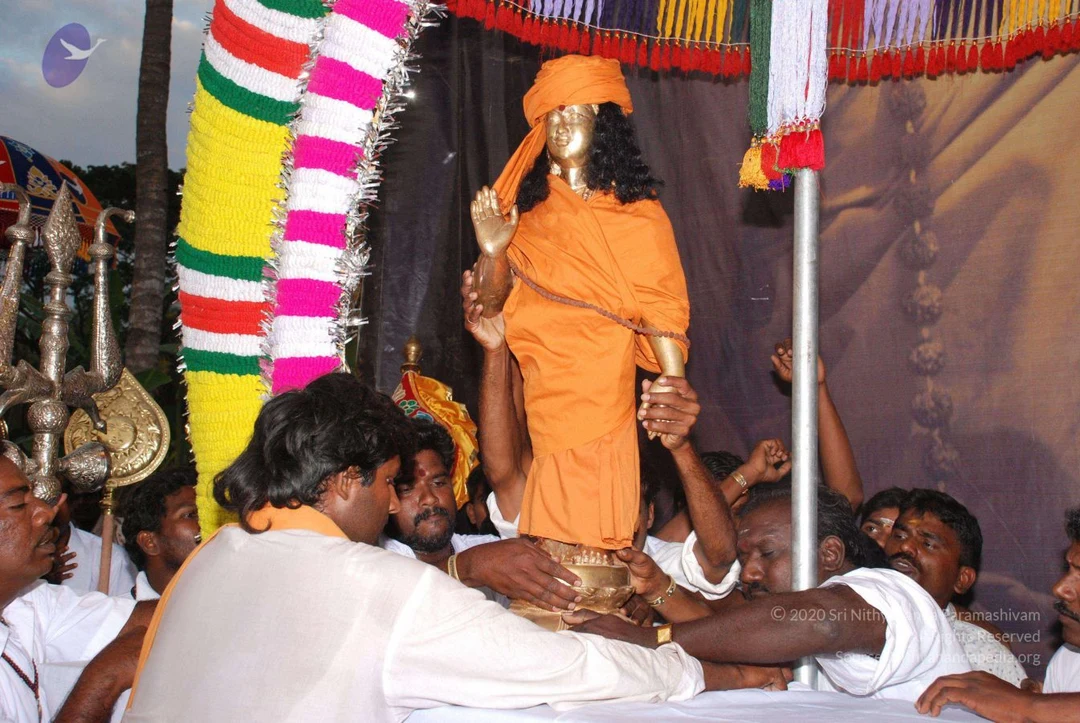
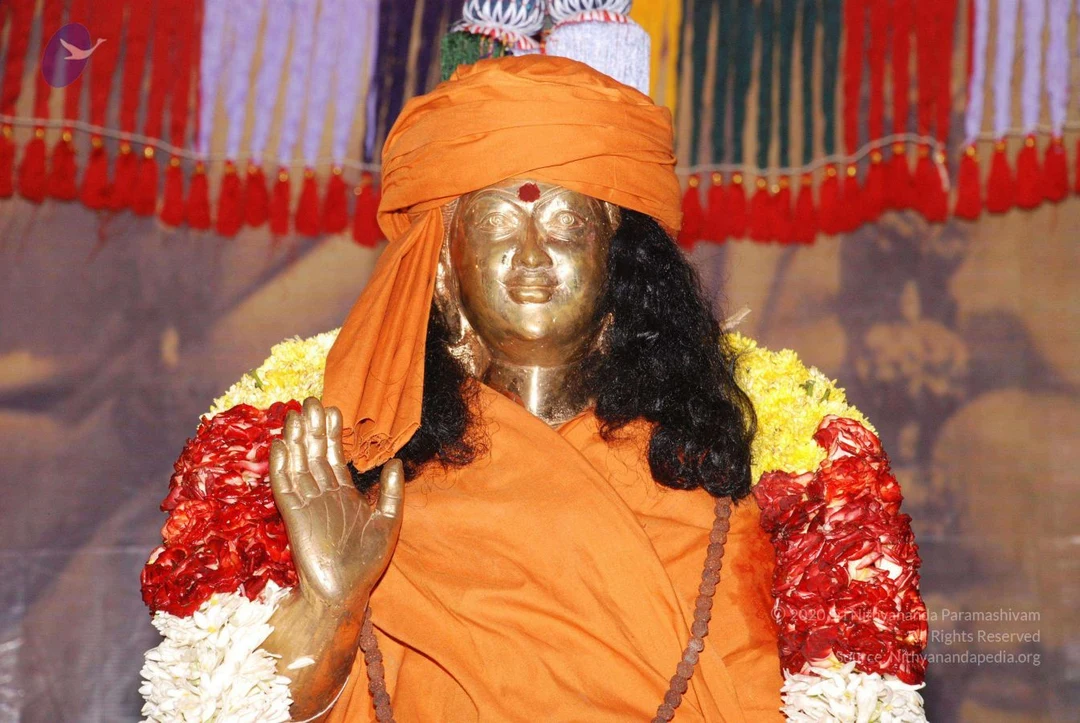
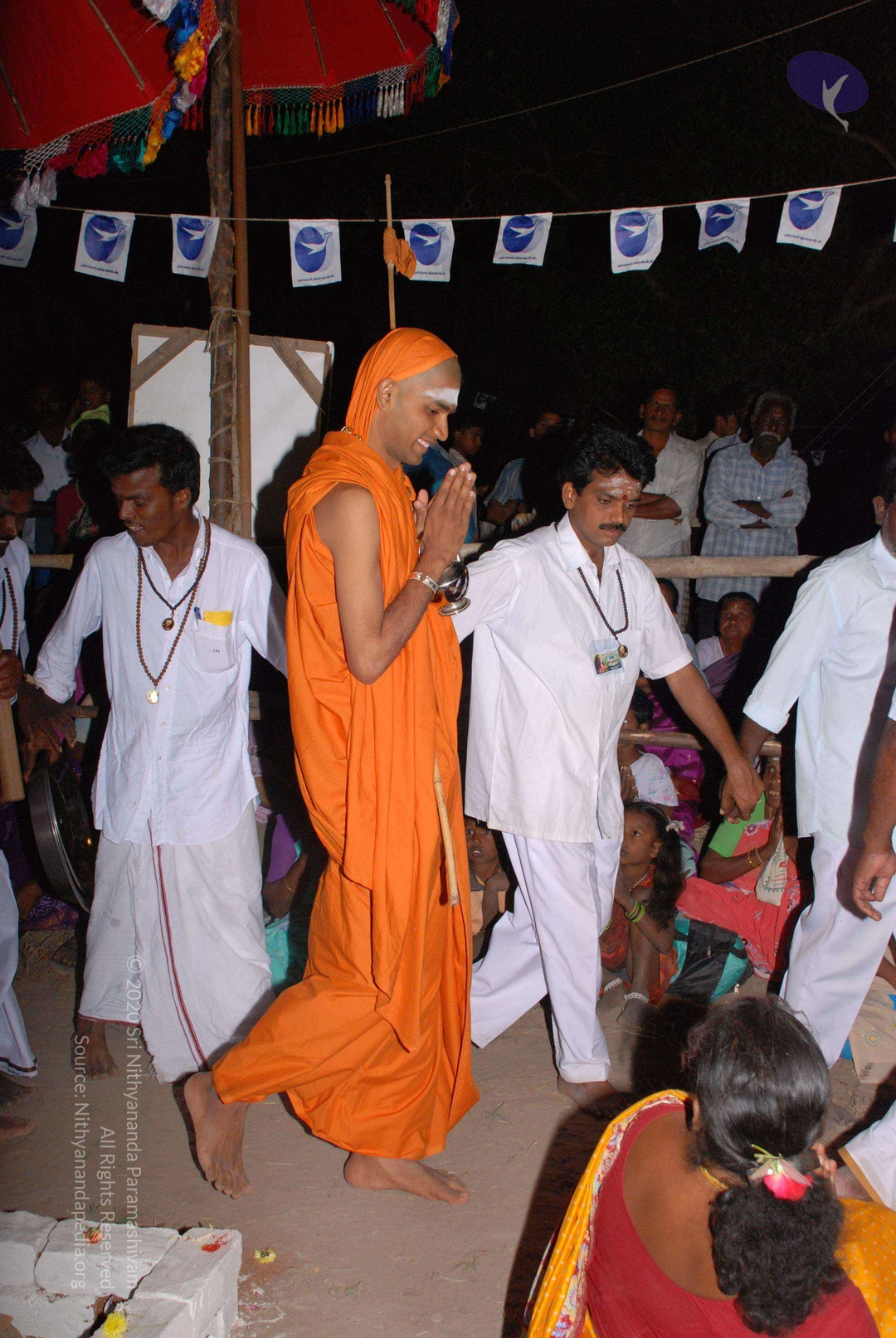
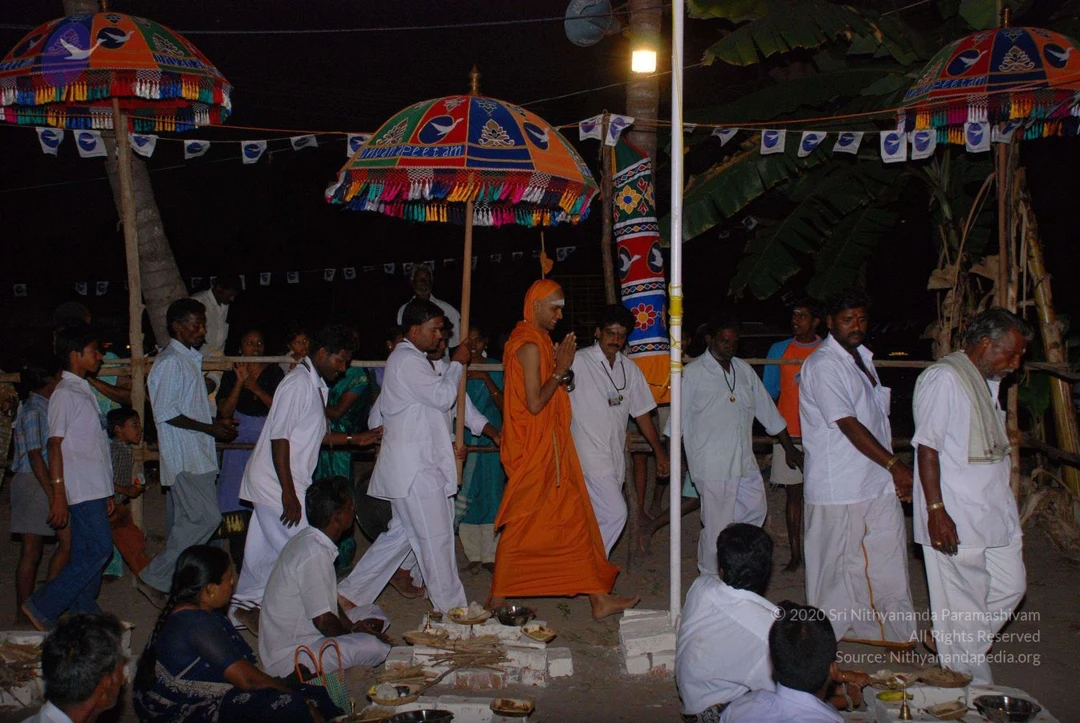
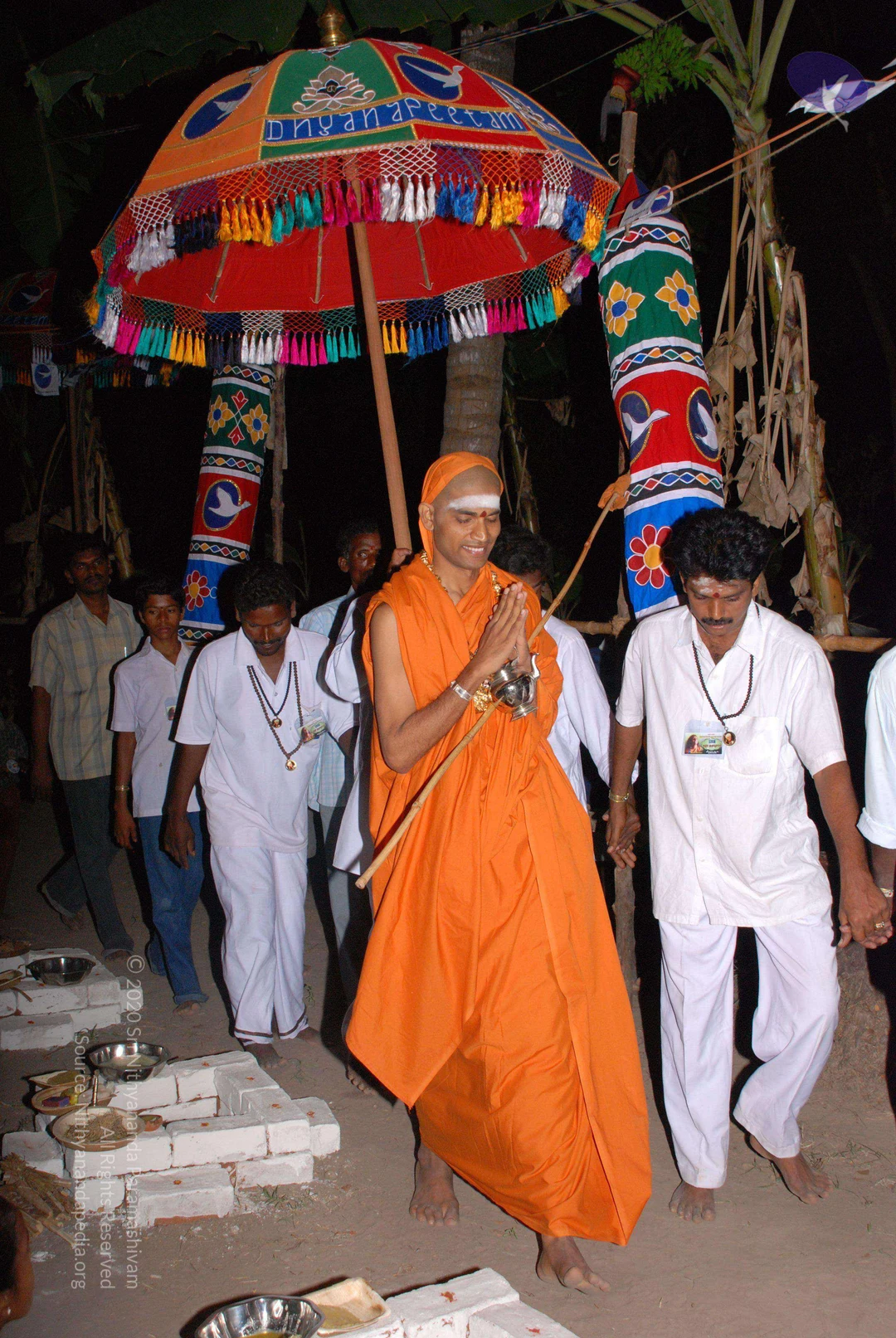
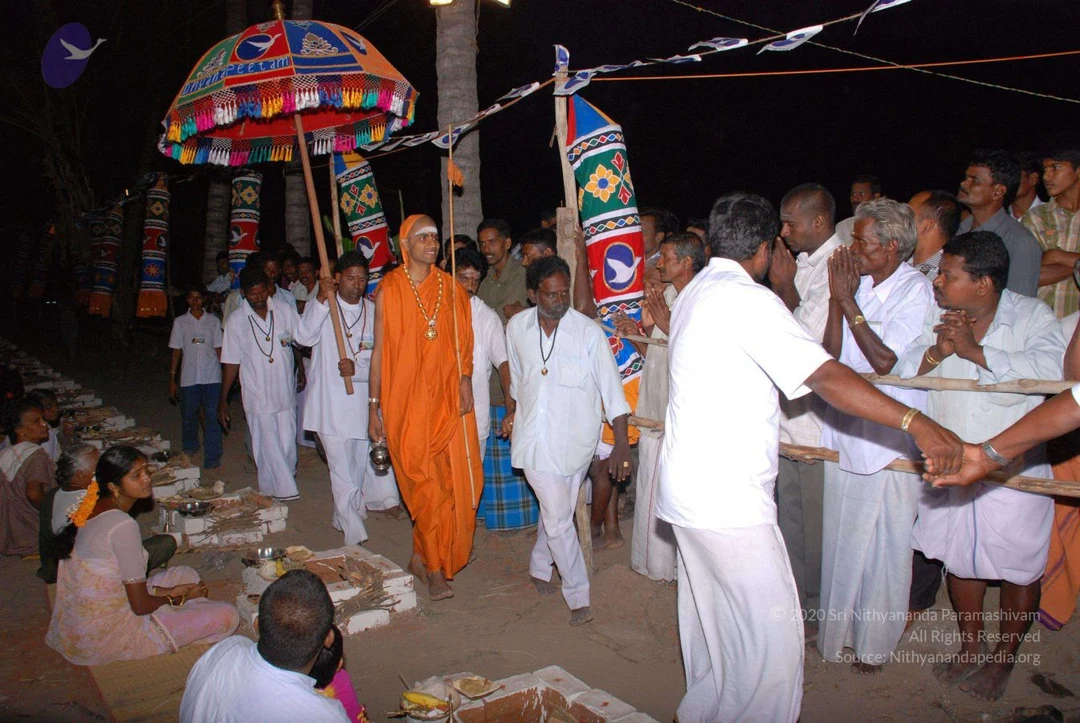
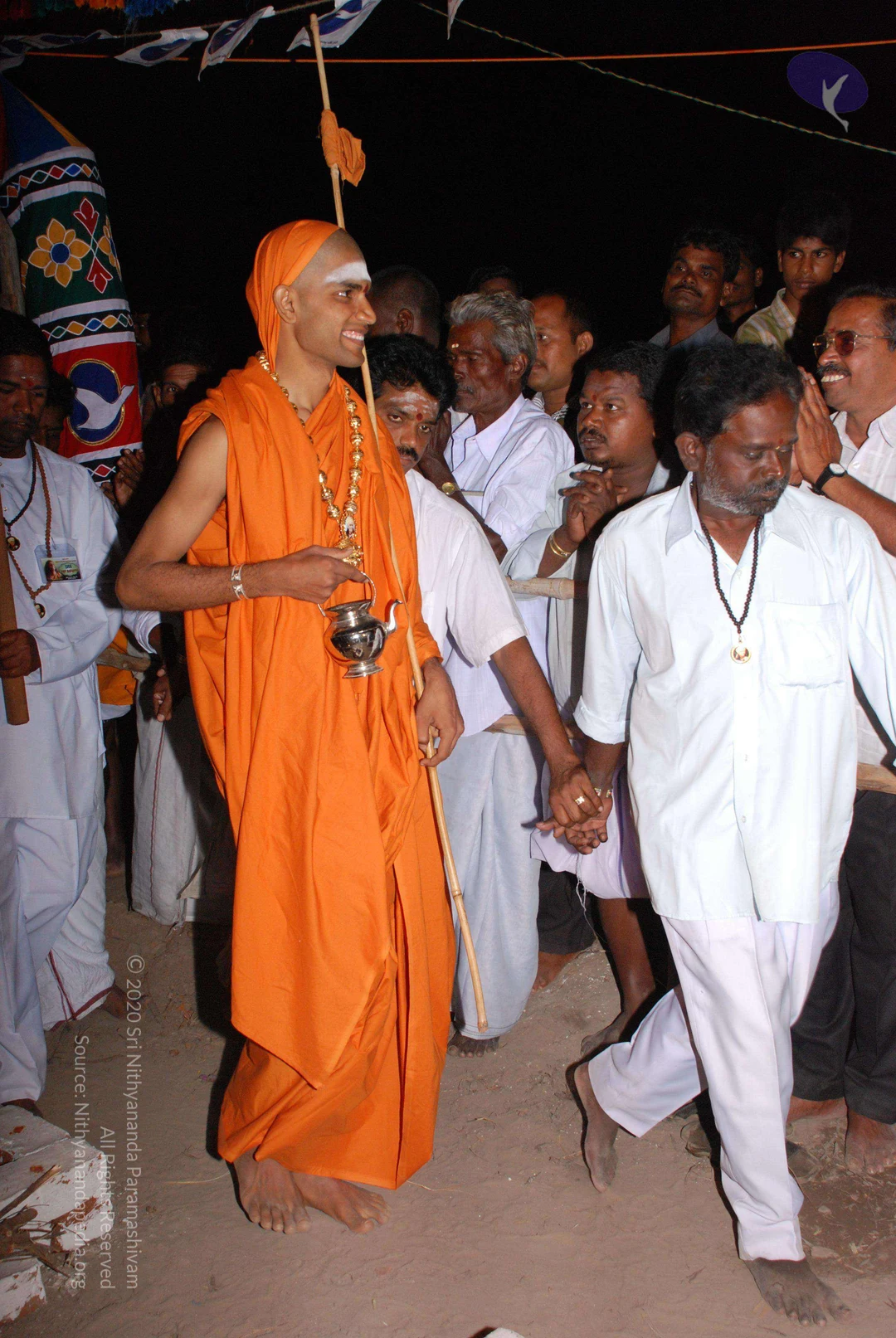
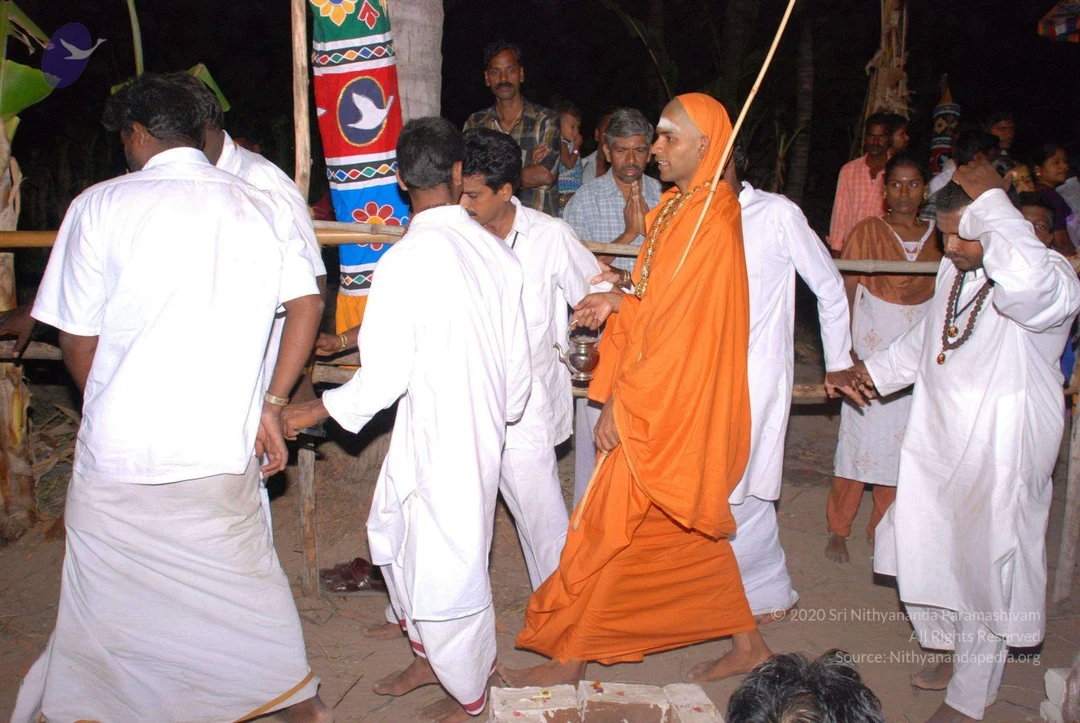
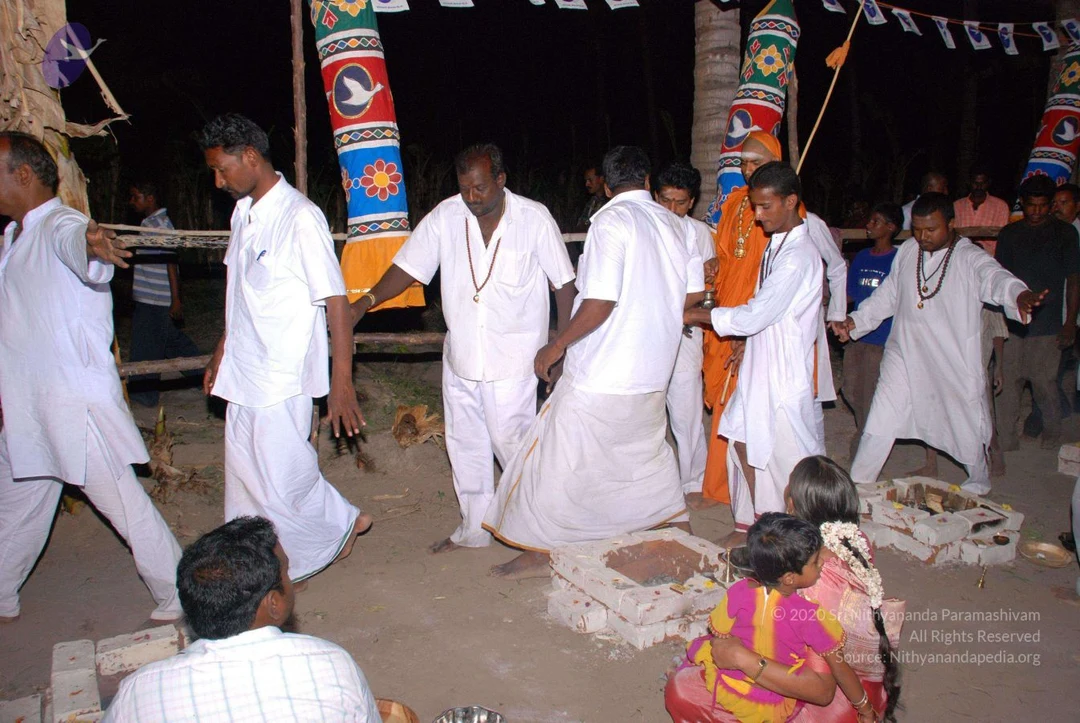
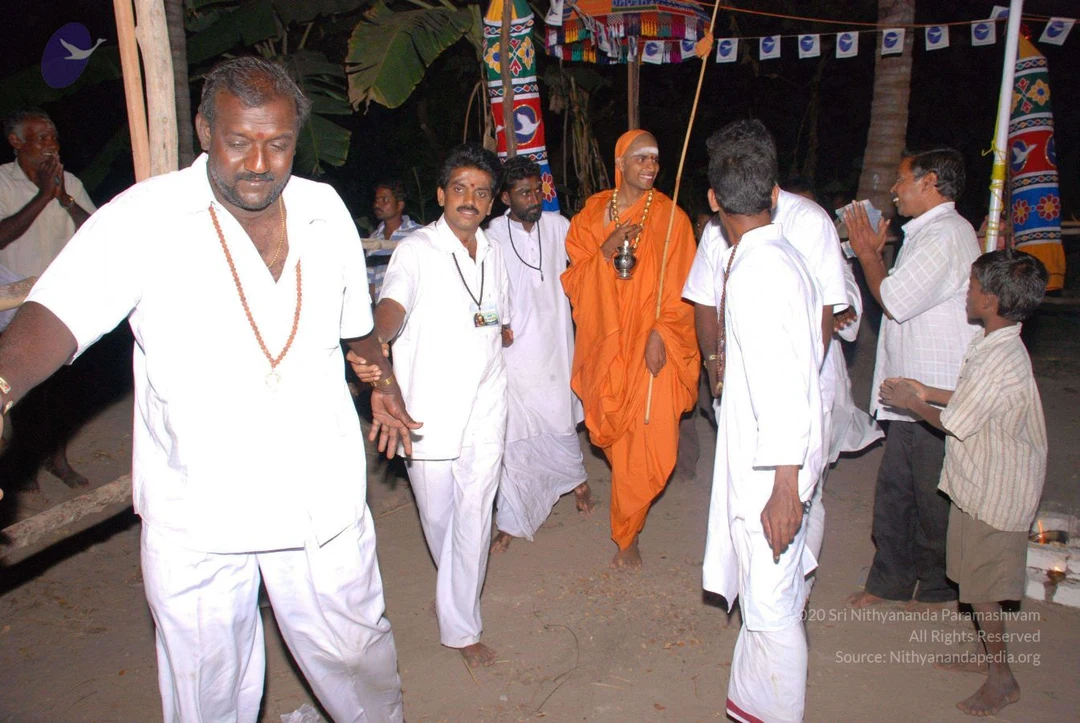
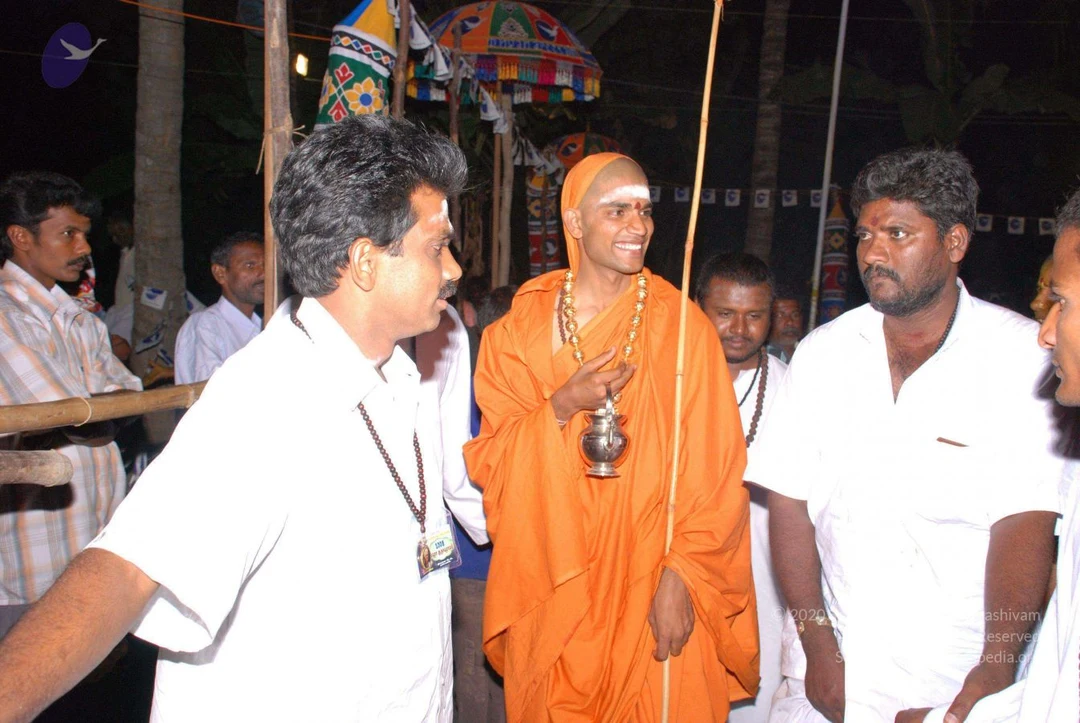
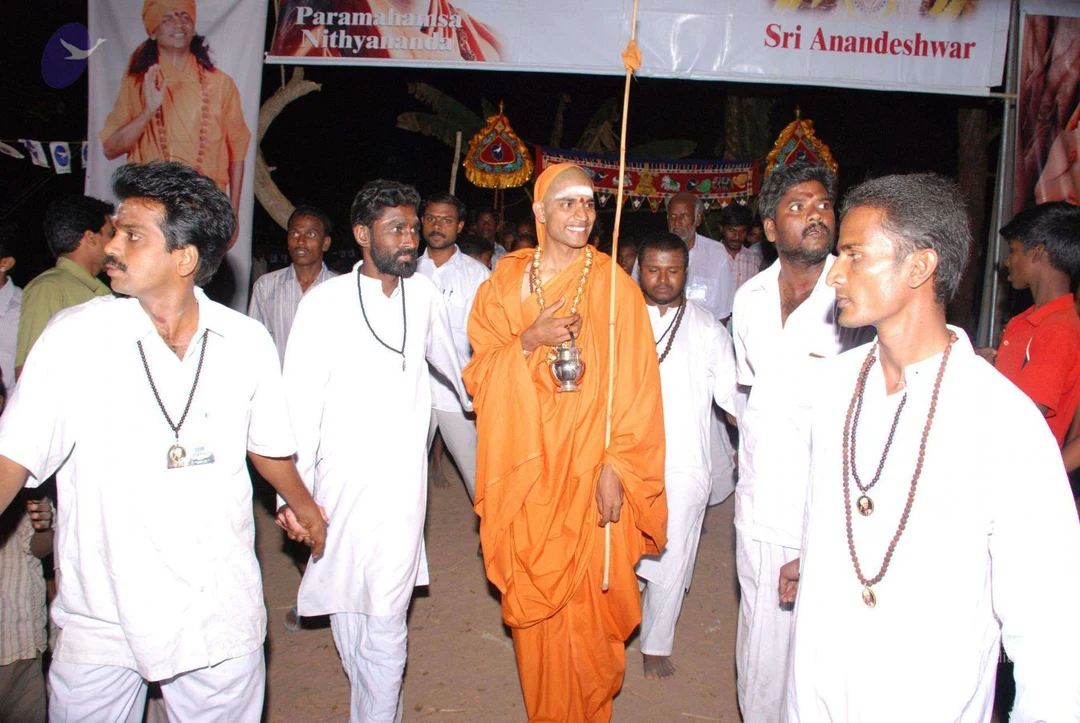
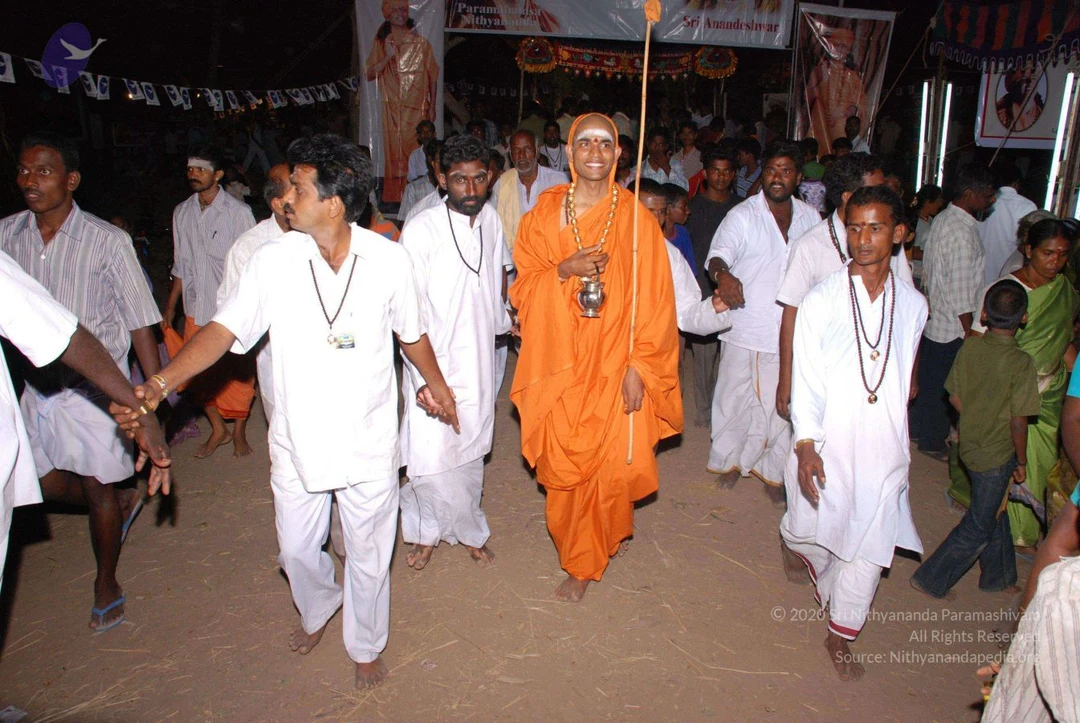
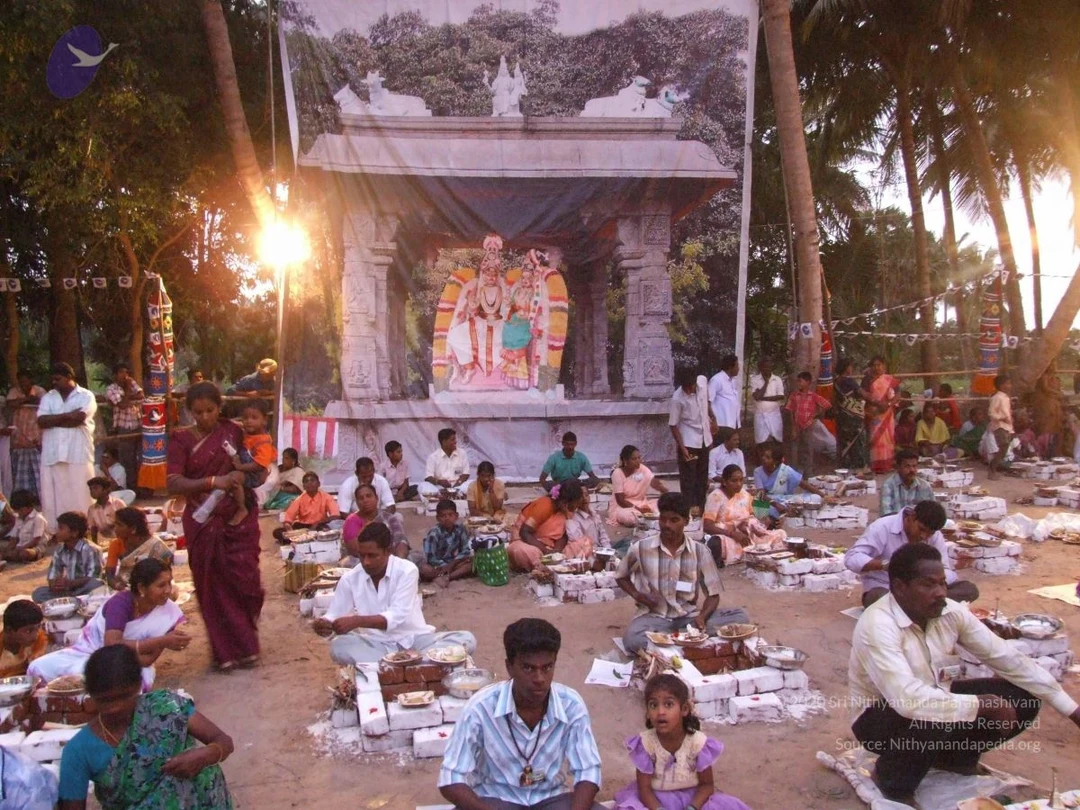
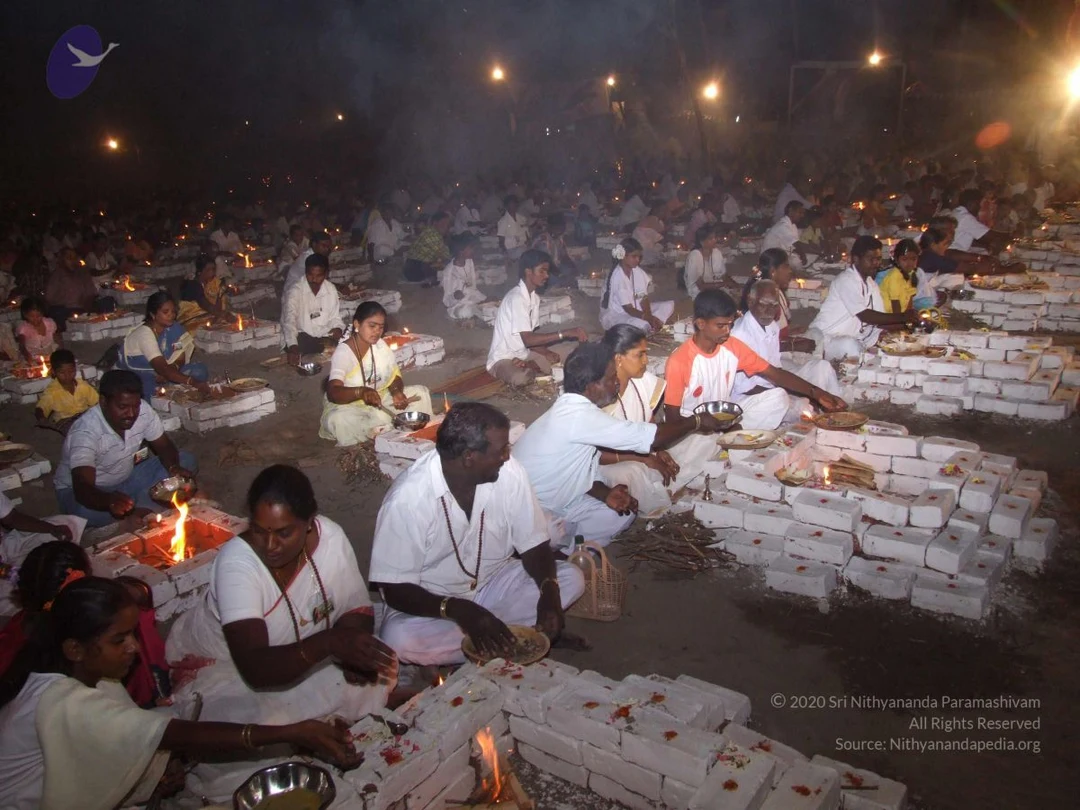
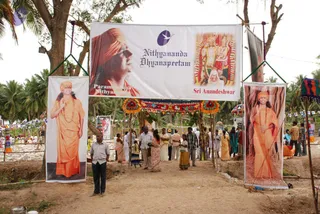
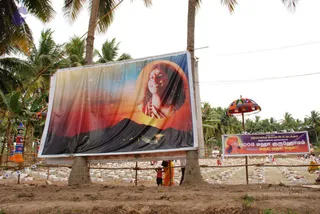
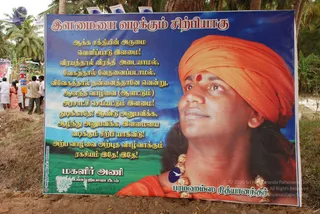
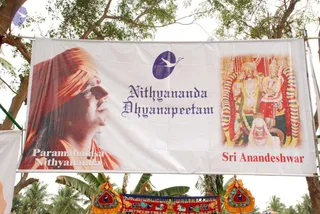
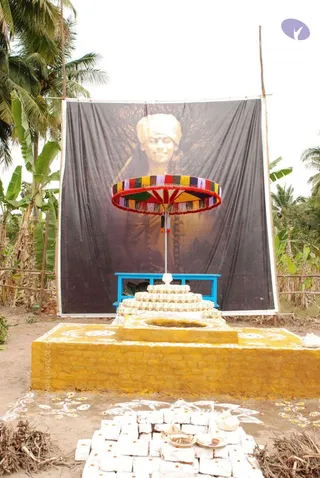
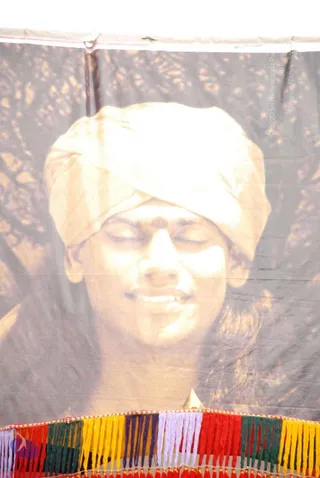
Outdoor festival entrance on dirt ground beneath palm trees and a large tree. A wide white banner reads "Nithyananda Dhyanapeetam" with a portrait labelled "Paramahamsa Nithyananda" and a deity image labelled "Sri Anandeshwar" showing a garlanded deity murti. Two tall vertical banners flank the arch, each showing a standing figure in saffron-orange robes with a rudraksha mala and an orange head covering, hands folded. Bunting, colourful festoons and flags decorate the gateway. Several people in white, saffron and everyday clothes walk or stand under the arch, including a young girl in a green skirt, a man in a grey shirt in the foreground and women in sarees. Metal vessels sit on the ground at lower left.Outdoor photograph of a large vinyl banner mounted on wooden posts among coconut palms, with a portrait of a smiling woman with long dark hair, wearing a beaded necklace, set against an orange and blue sunset backdrop with a dark mountain silhouette. A smaller purple banner to the right shows a figure in orange robes with a Tamil and Sanskrit-style caption. Beneath the banners, rows of small white stone-like markers and bamboo fencing line a sandy ground, with a colourful decorated umbrella and striped poles nearby. Several people in saffron and white clothing are visible in the distance and near the banner.A large outdoor banner photographed among palm trees and dirt ground. The banner shows a portrait of a figure wearing a bright orange turban with a red tilak on the forehead, long dark hair, and an orange garment with ornate gold necklaces, set against a blue sky and green field background. Tamil verse text fills the upper and left portion, and a logo with the name a person is printed beneath the portrait. In the background, several people stand near a decorated structure, and a small colourful shrine-like object is visible. The portrait is printed, not a live person, and the caption attributes the name a person to the banner.A large white outdoor banner hangs between palm and banana trees. On the left, a painted or printed portrait shows a man with an orange-saffron turban and a red tilak on his forehead, looking to the right; his name is printed as "a person" on the banner. The banner's centre shows the logo and the words "Nithyananda Dhyanapeetam" in purple. On the right, a photograph shows a deity murti pair draped in garlands of red and yellow flowers, labelled "Sri Anandeshwar" in red. Below the banner hang decorated orange and red fabric hangings with embroidered elephant motifs. No physical people are visible.Outdoor ritual setup beneath palm and banana trees. A large black cloth backdrop displays a printed portrait of a smiling figure in a white turban with a rudraksha-style mala, set against a tree-like background. In front stands a tiered, yellow-painted platform holding a stacked pyramid of small white lamps or kalasha-like forms, topped by a multicolour fringed parasol with red, yellow and green tassels. A blue wooden bench sits behind the pyramid. Below, white rangoli dots and a white brick fire pit with offerings, dried sticks and a small bowl suggest a homa/yagna preparation. No people are visible.A large printed banner or cloth backdrop shows a smiling man with eyes closed, wearing a light turban, rendered in a sepia-toned, washed-out print. Dappled light patterns fall across the fabric. Below, the lower edge of a canopy or umbrella is decorated with red, yellow, green, purple and white tassels. No people are physically visible; the face appears only on the printed fabric. The printed face shows an appearance-based candidate on a printed banner, with the turban and closed-eyed smile as cues, though the identity is uncertain.

GURU-HOMA-IN-PONDICHERRY
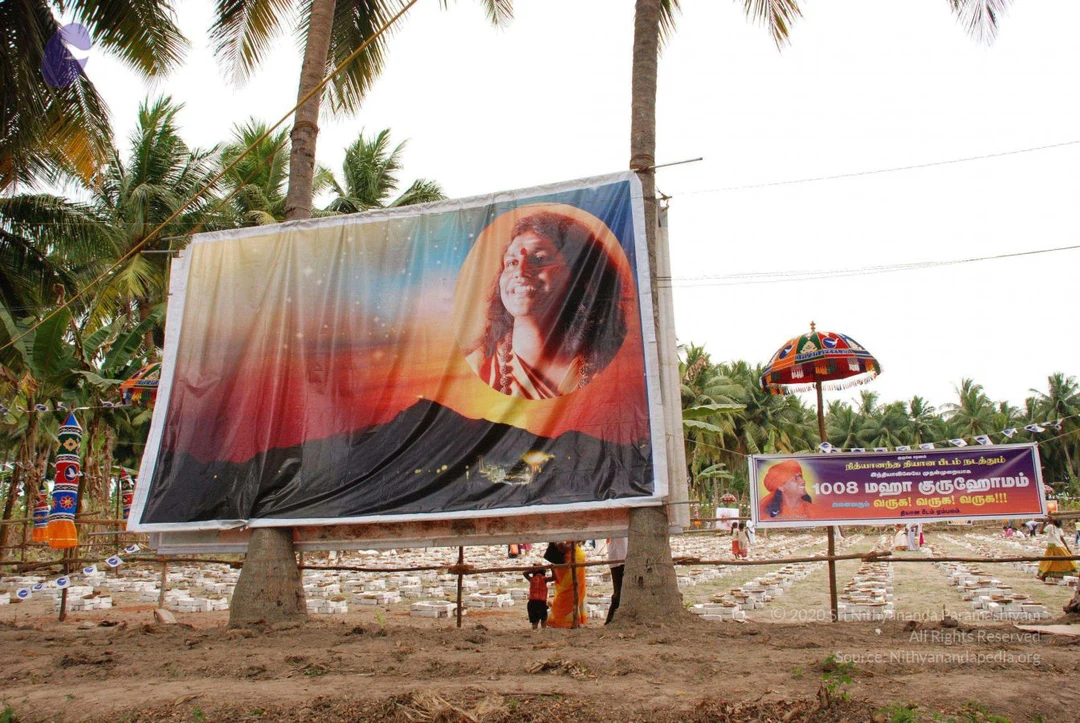
62 photosSource gallery
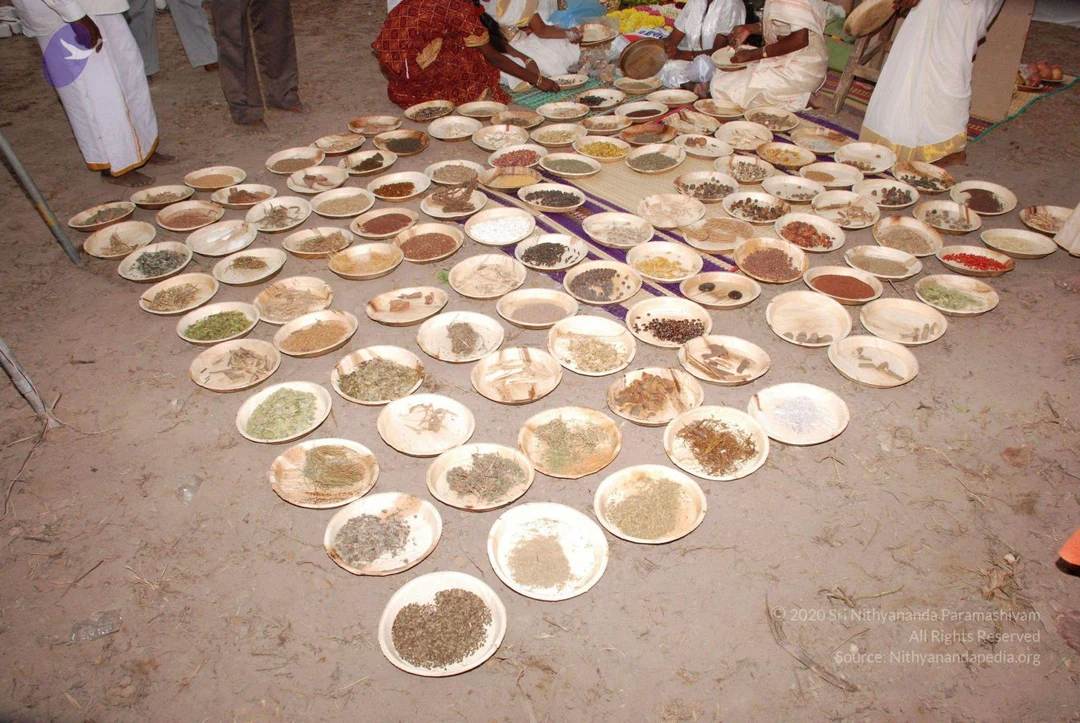
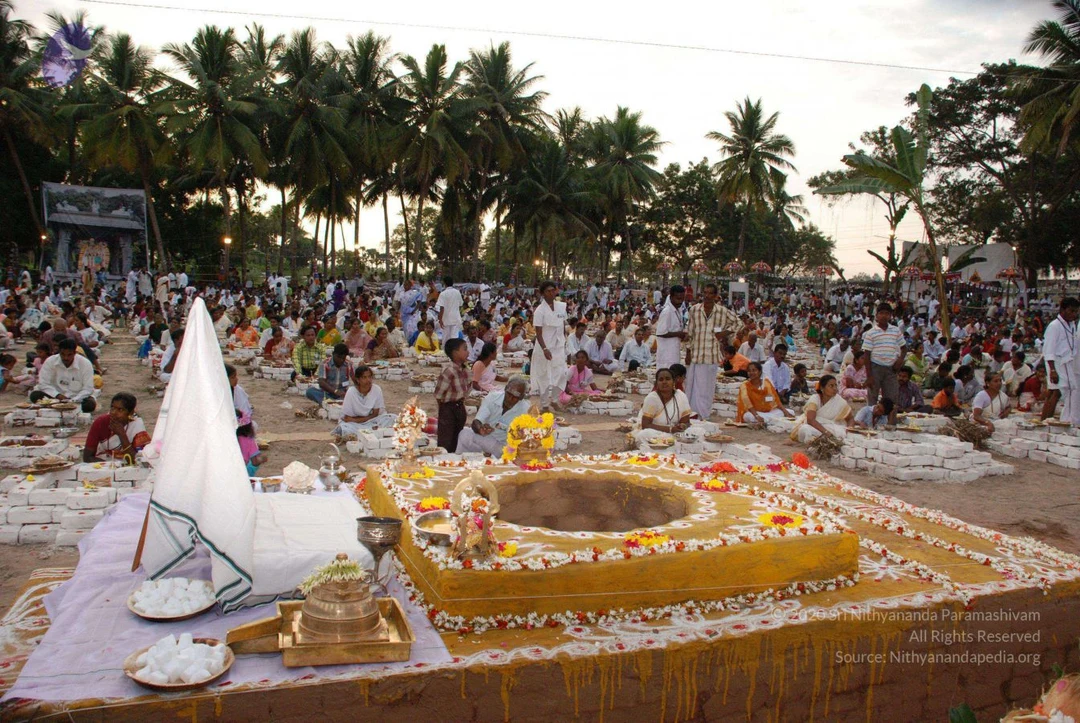
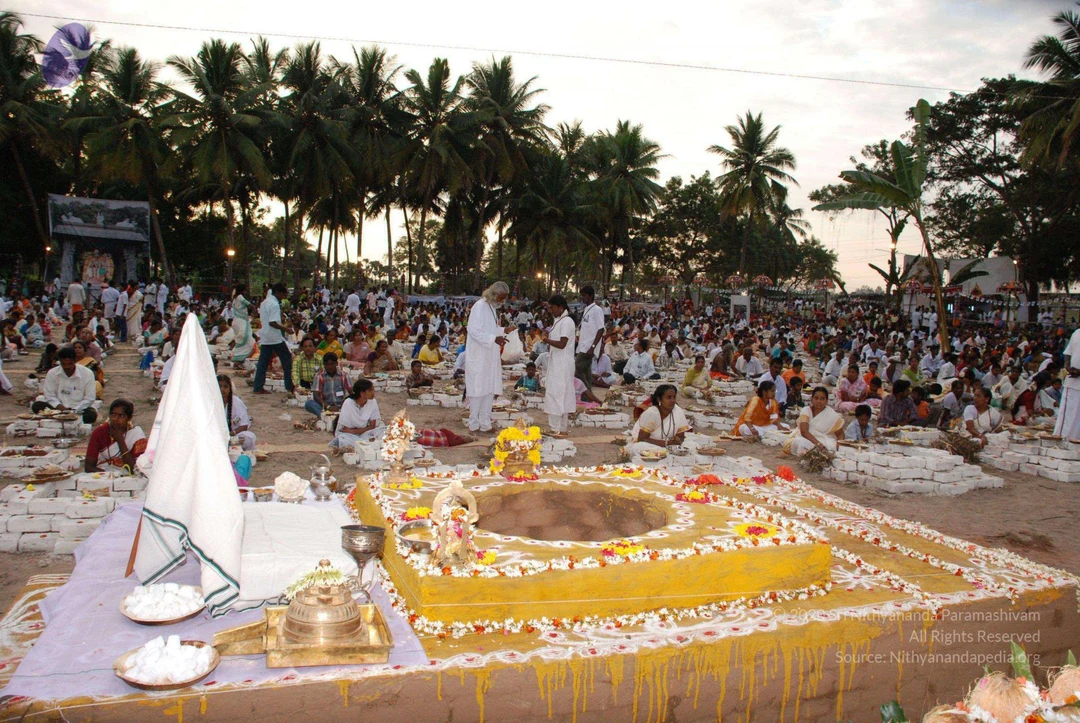
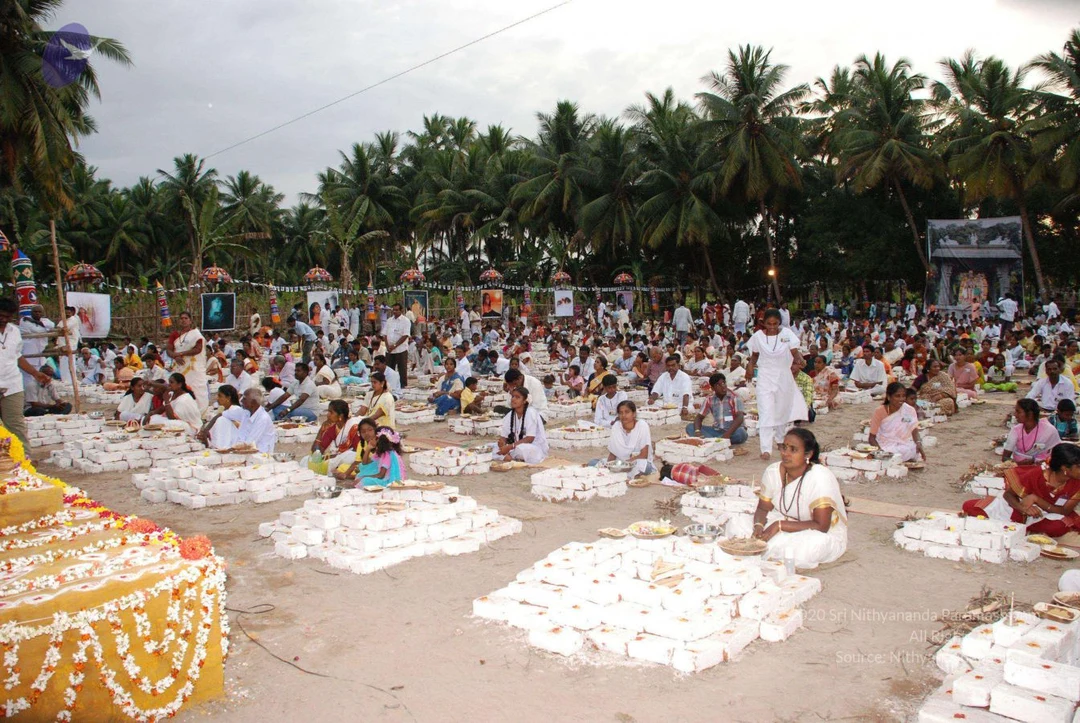
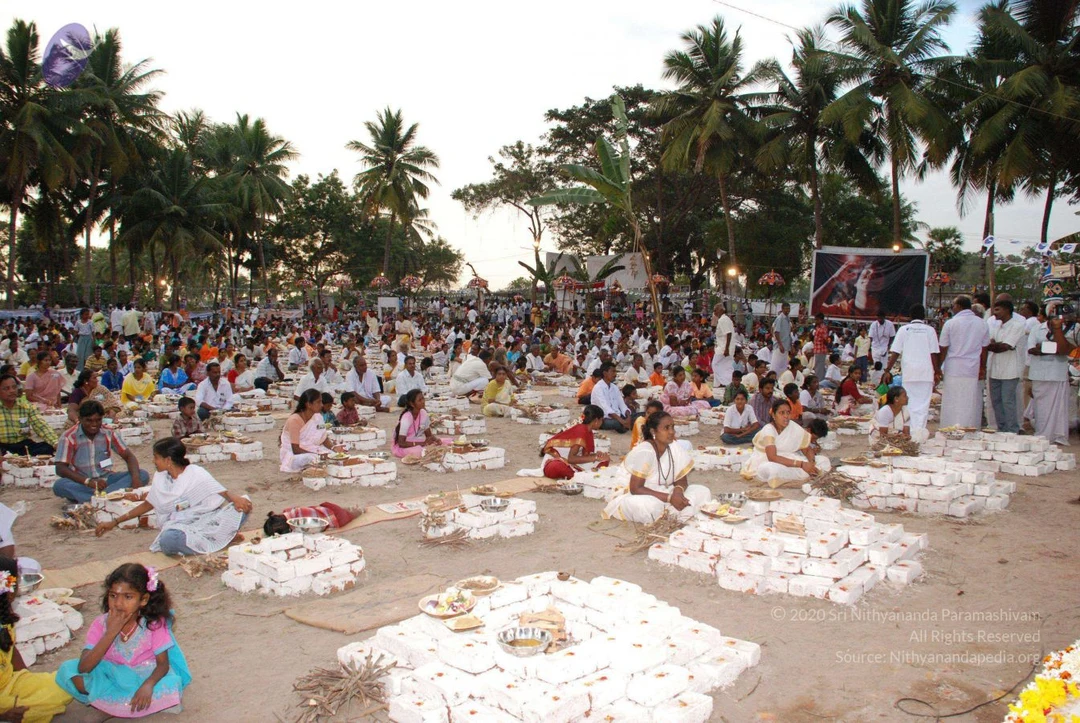
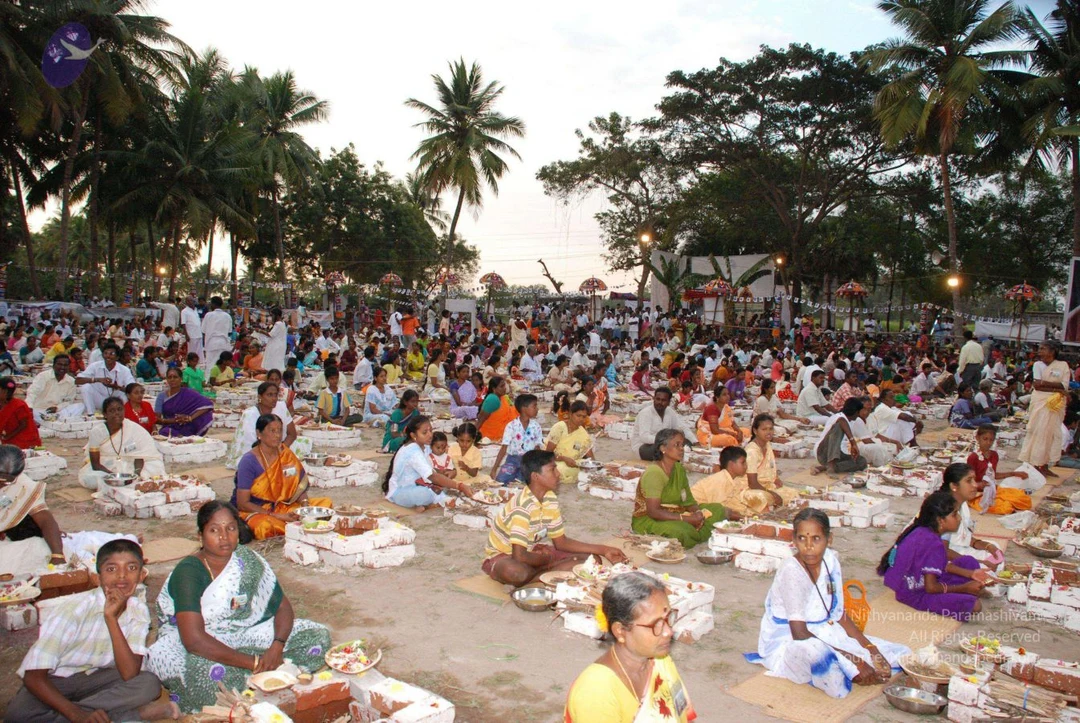
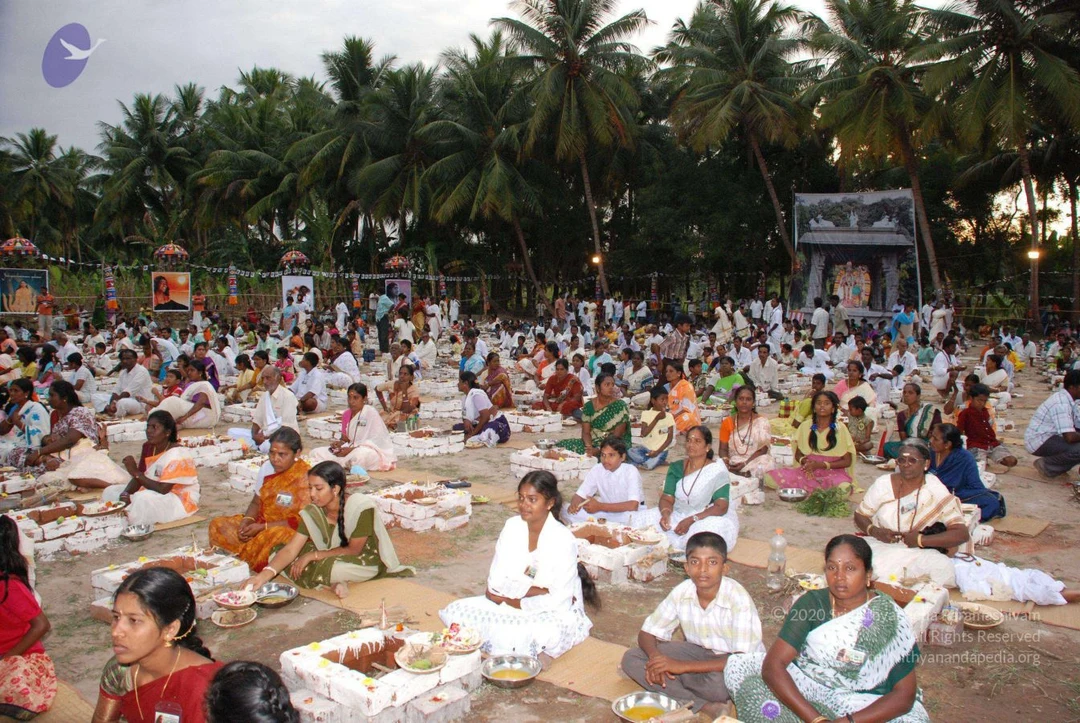
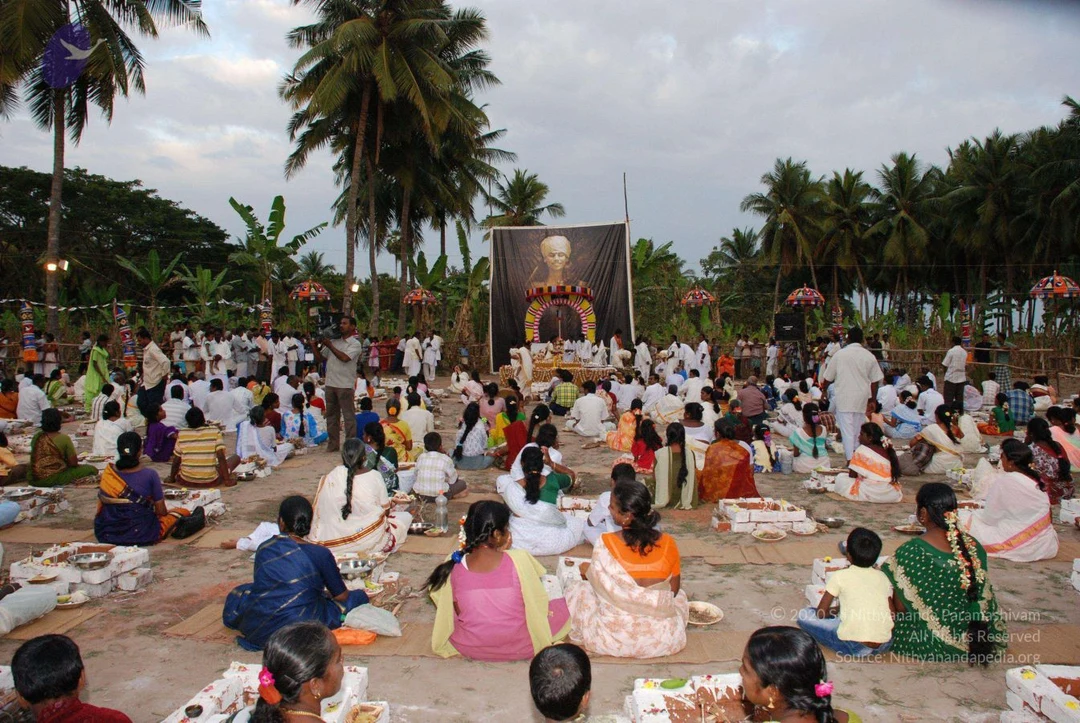
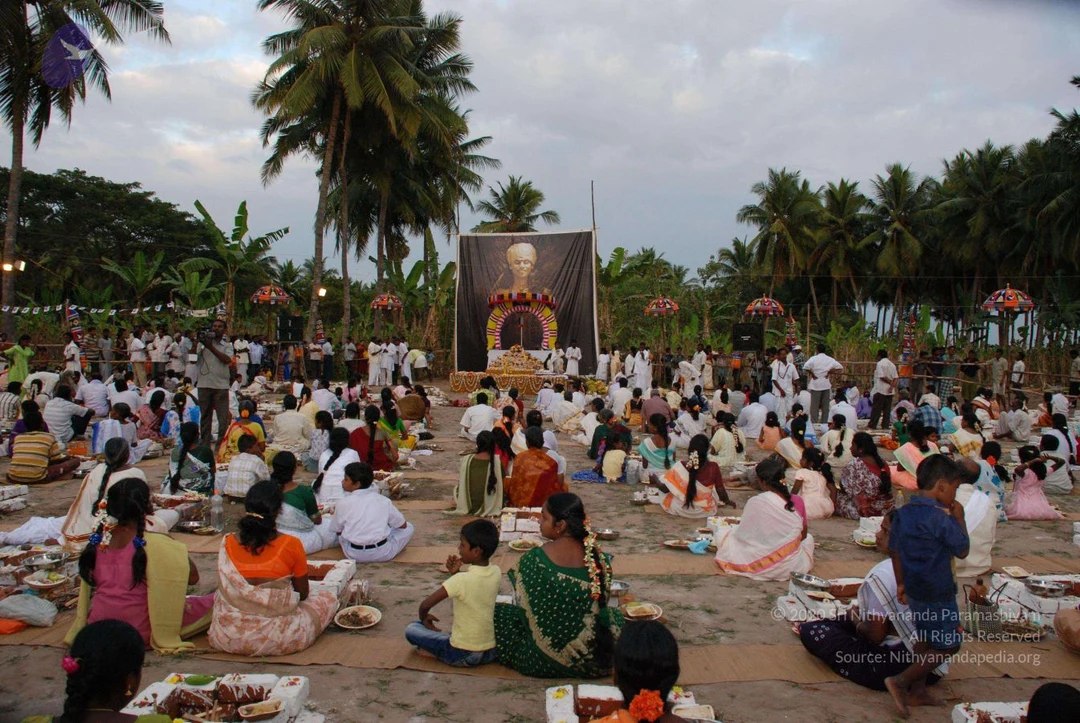
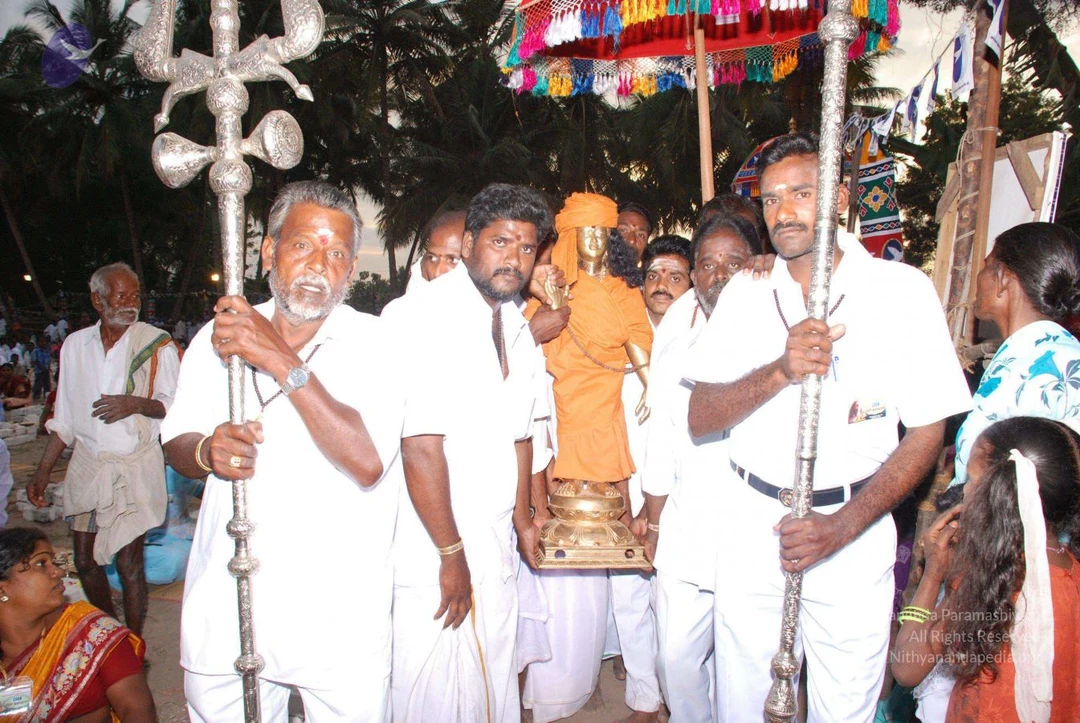
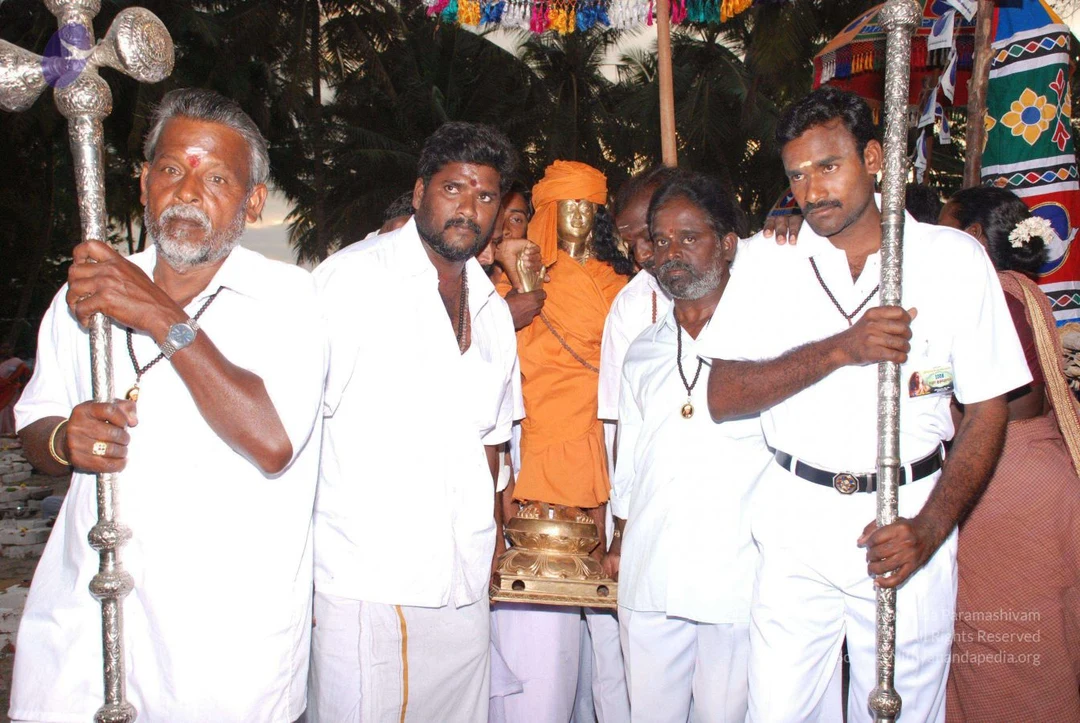
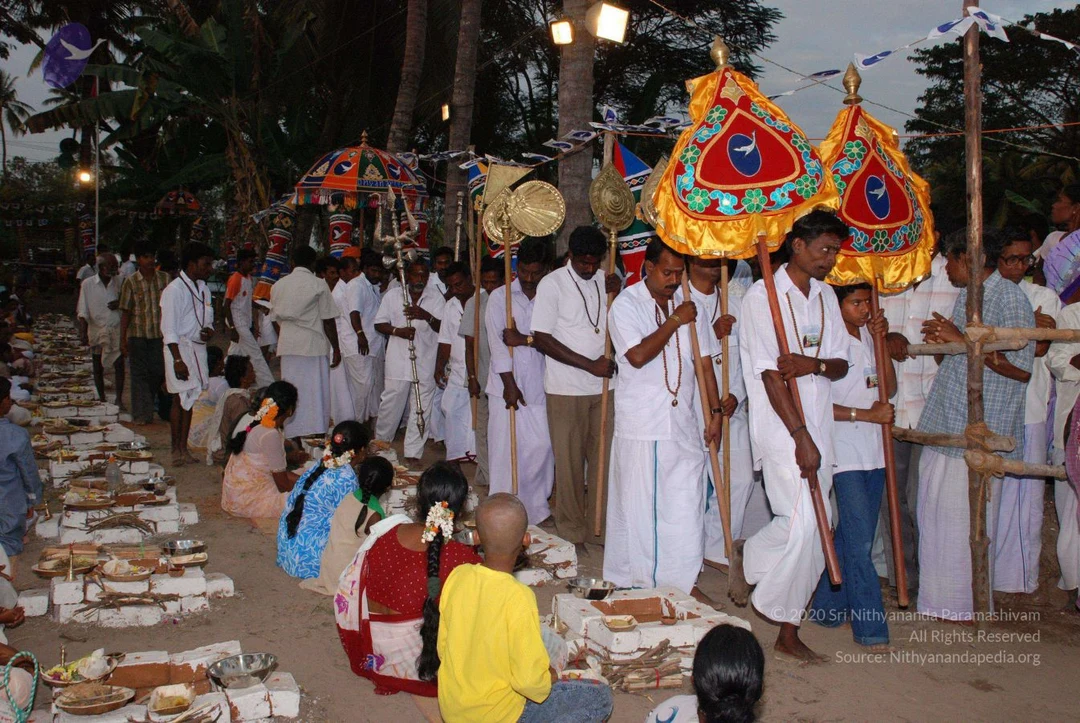
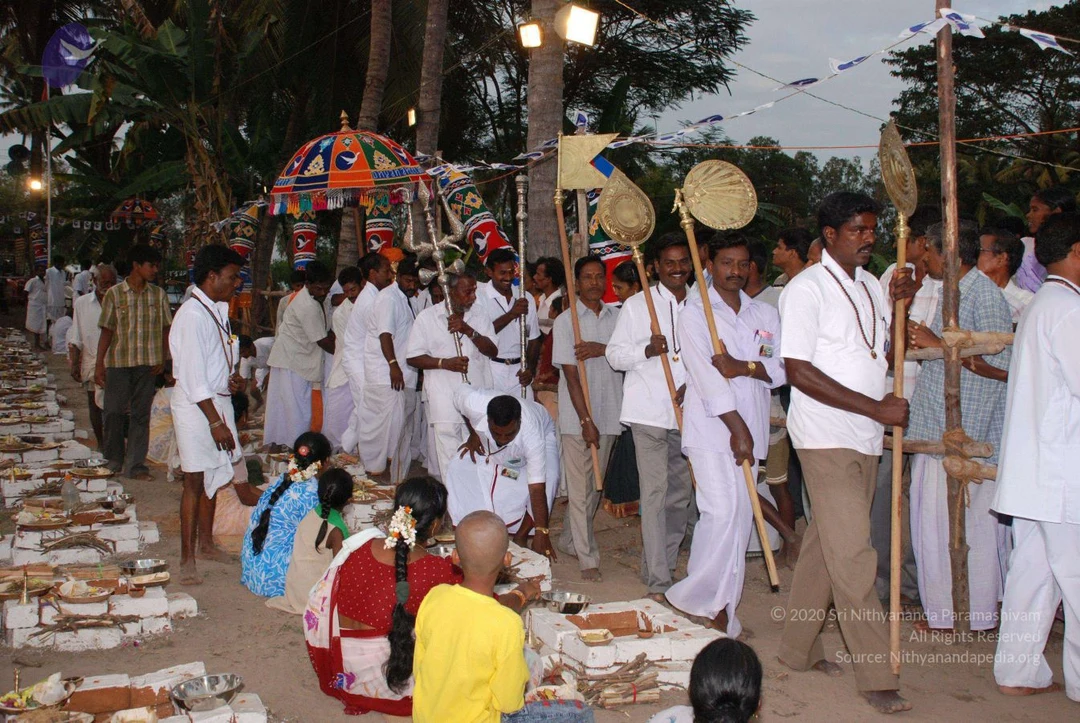
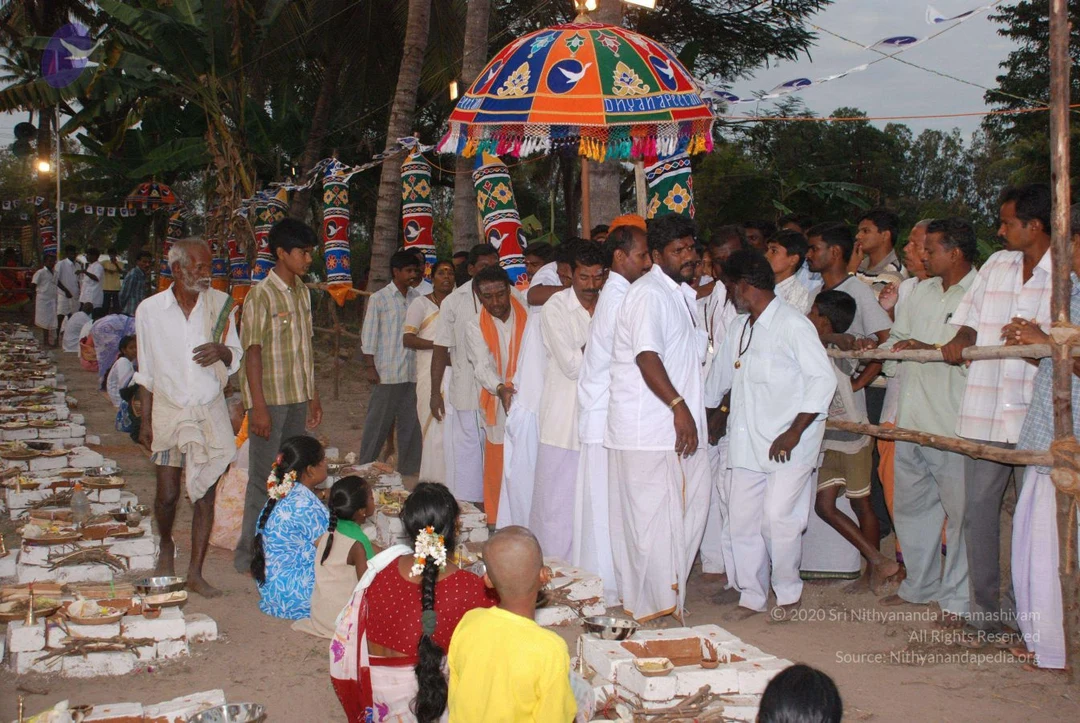
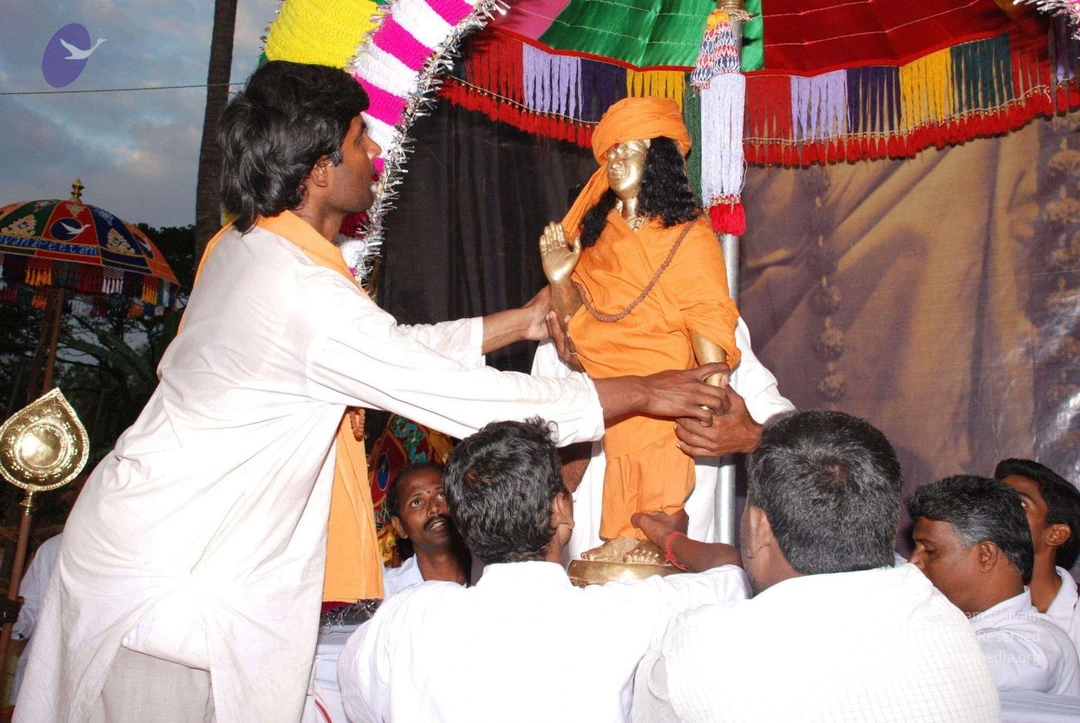
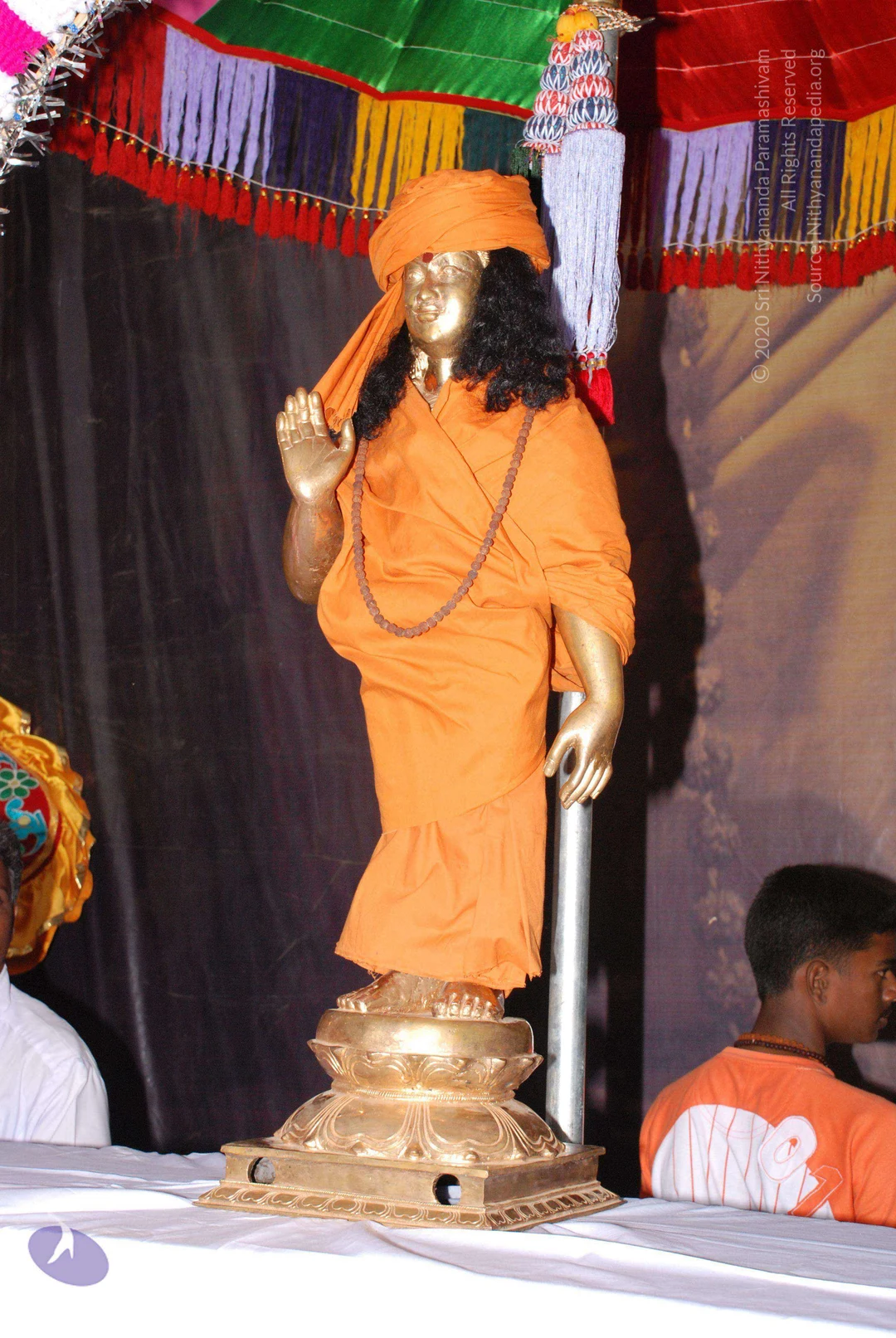
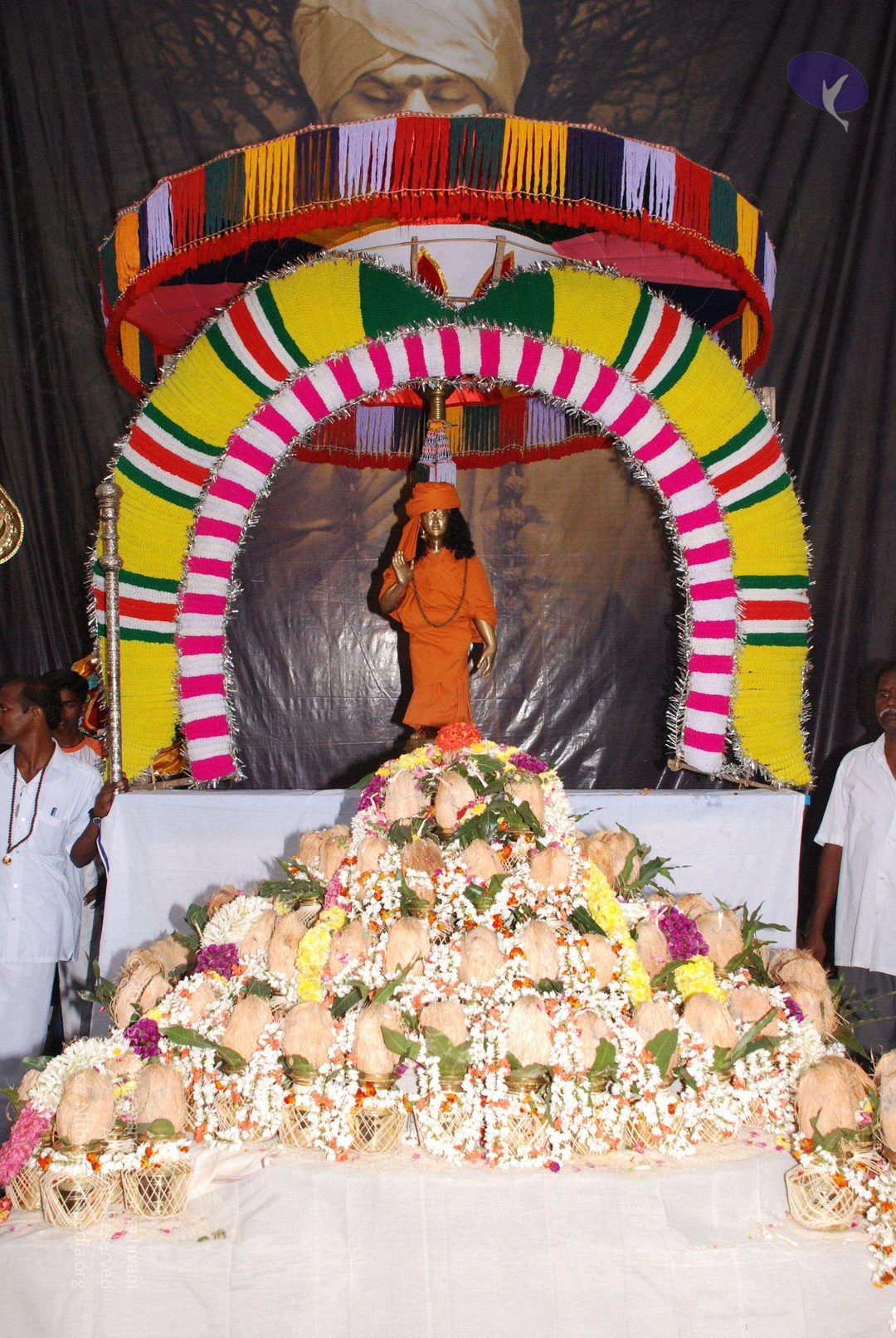
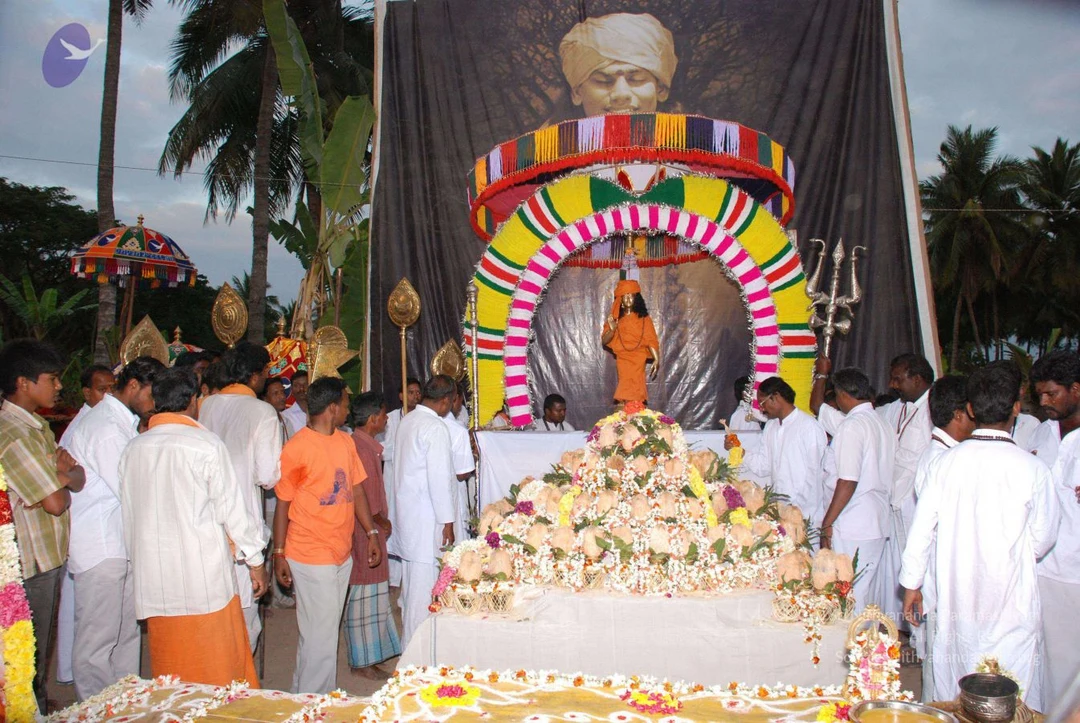
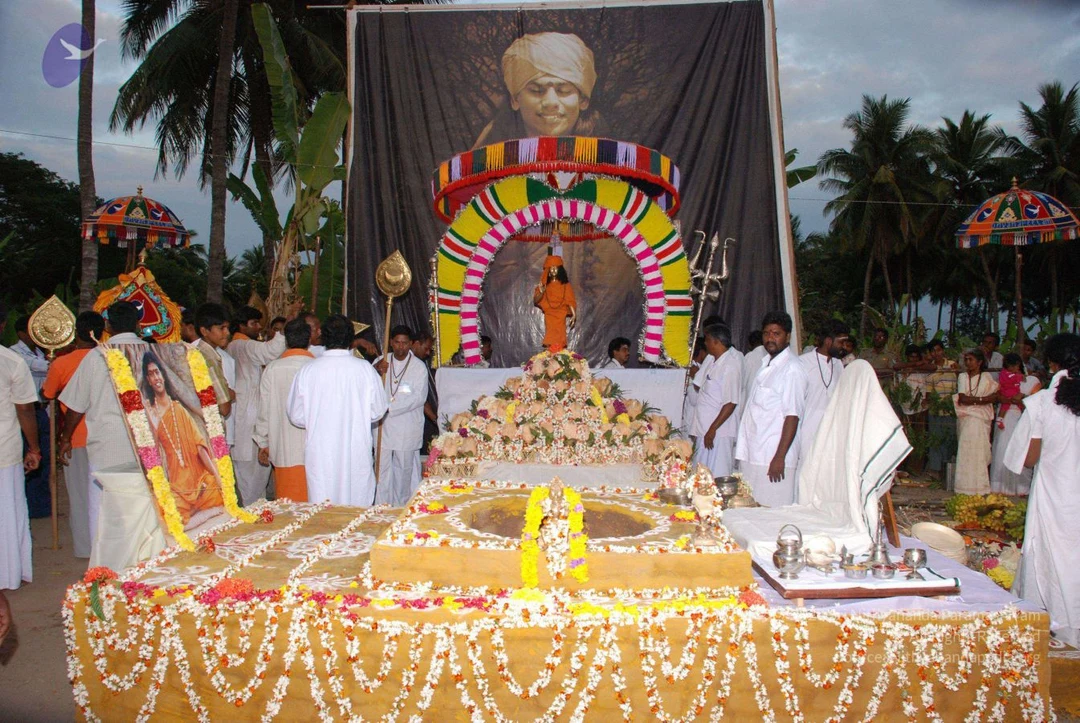
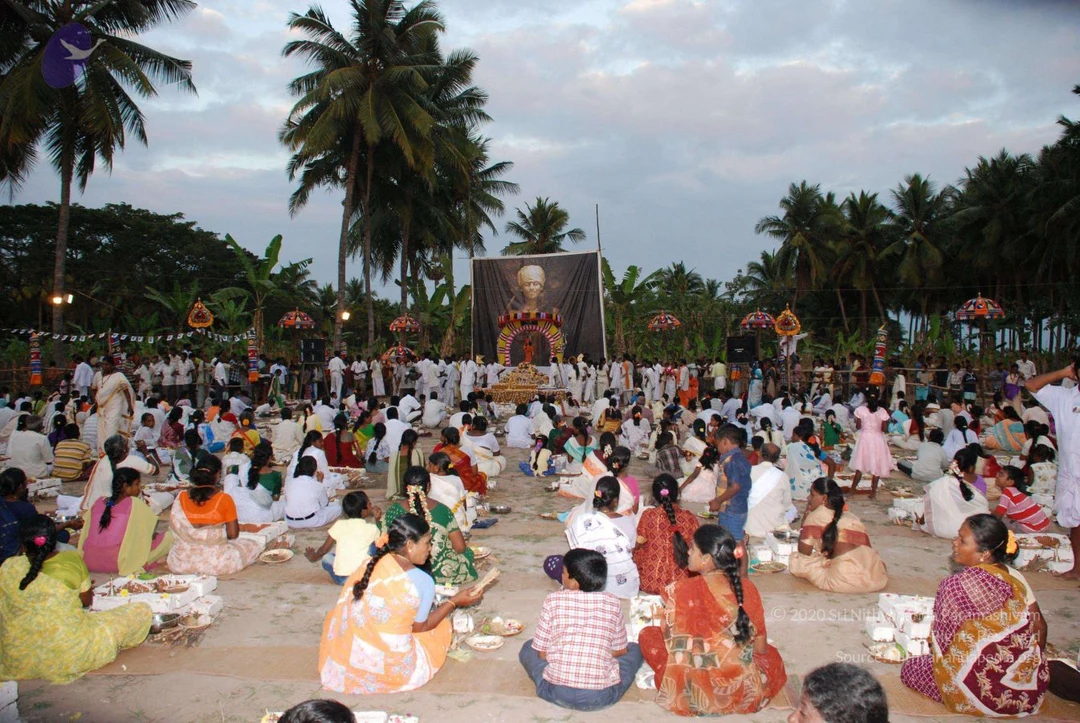
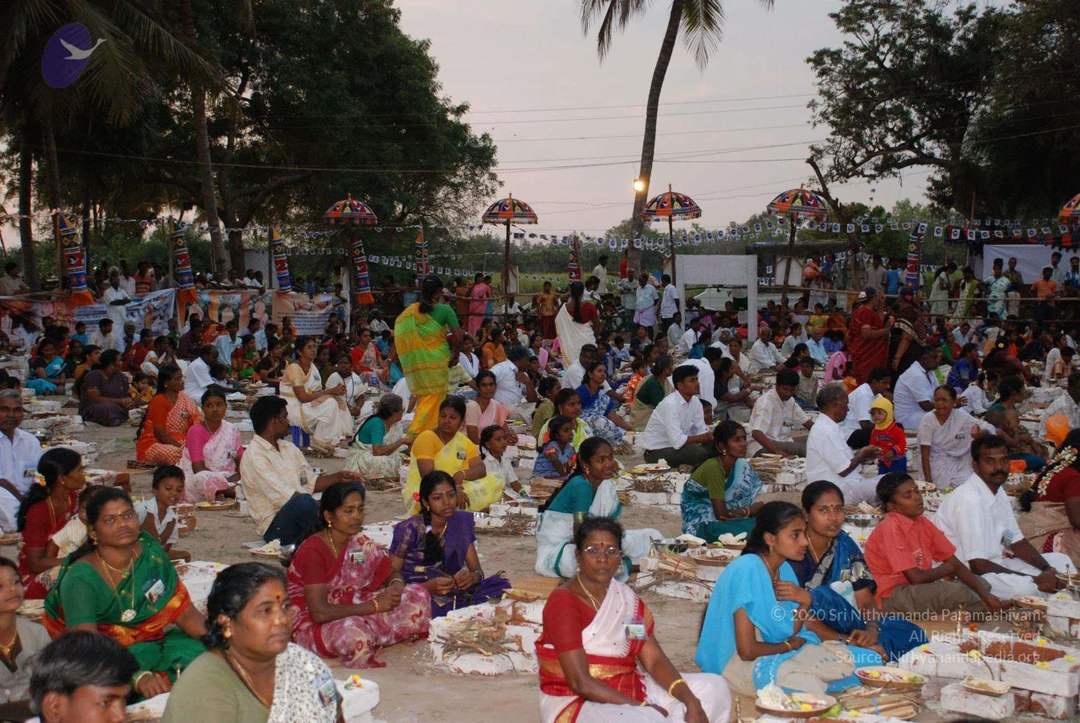
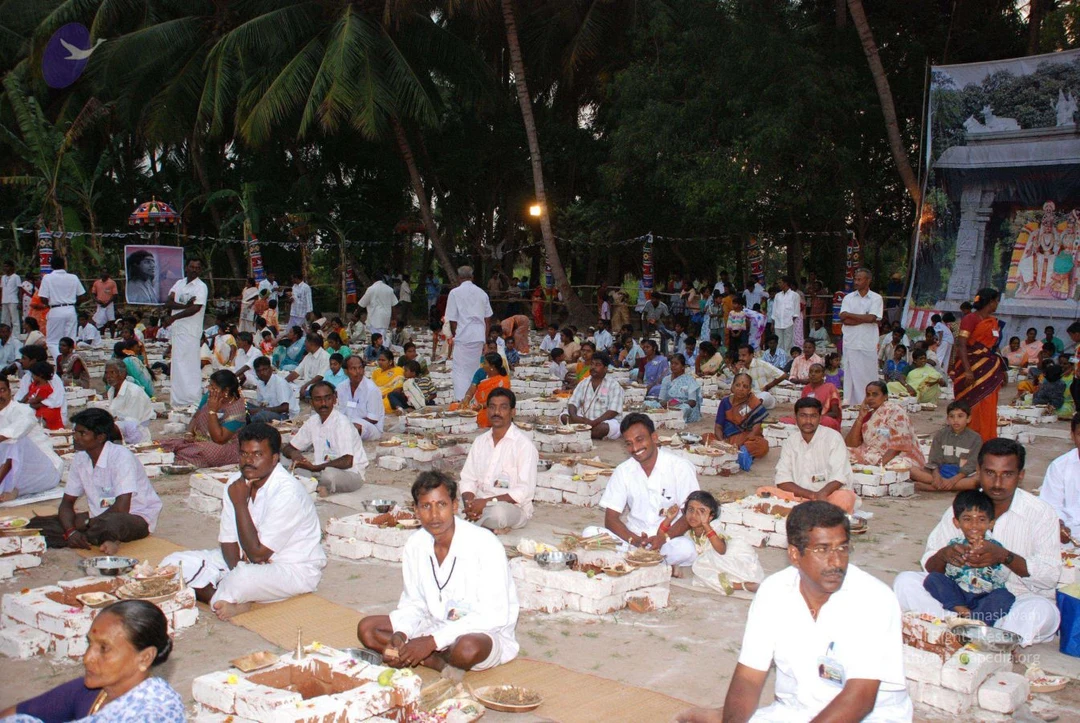
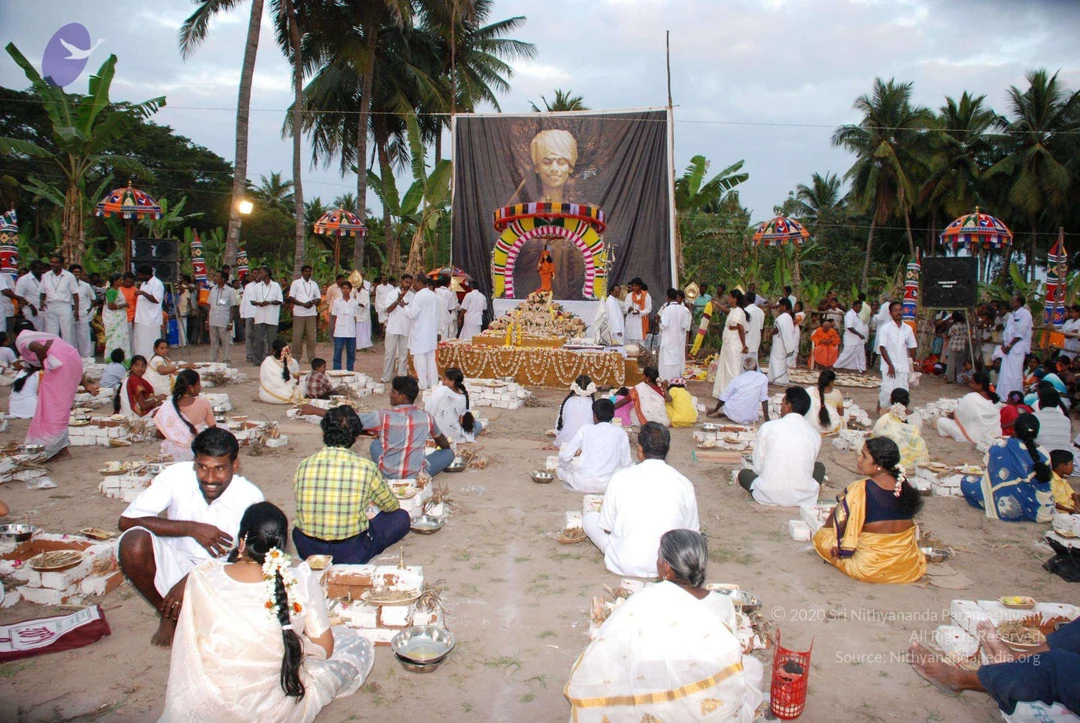
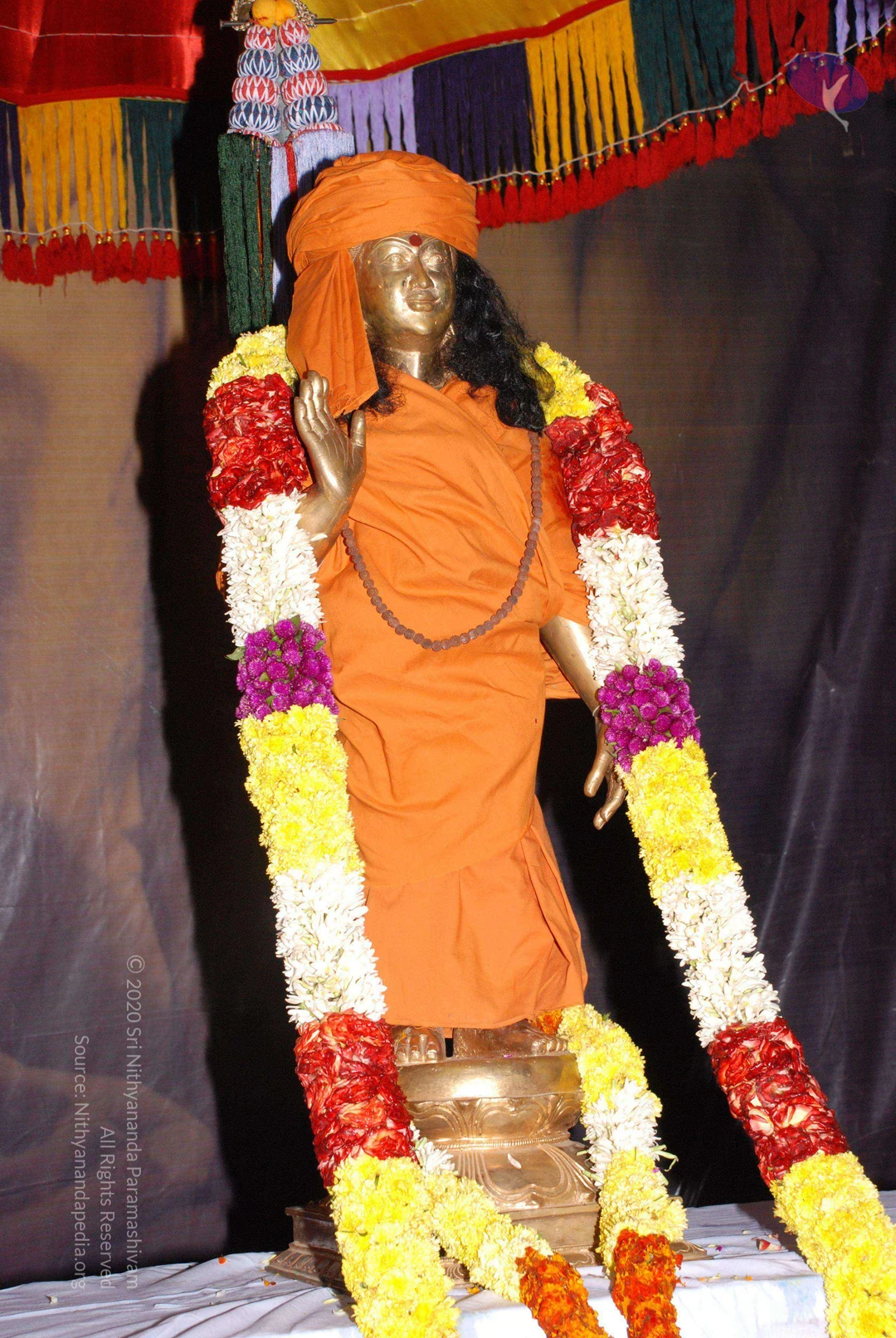
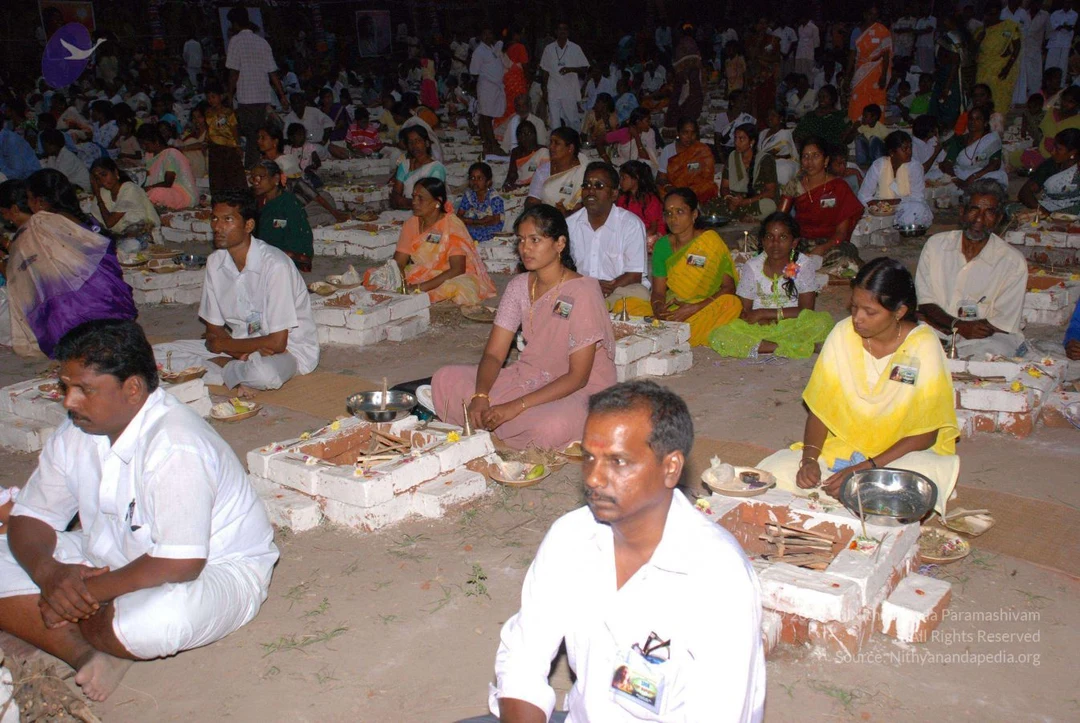
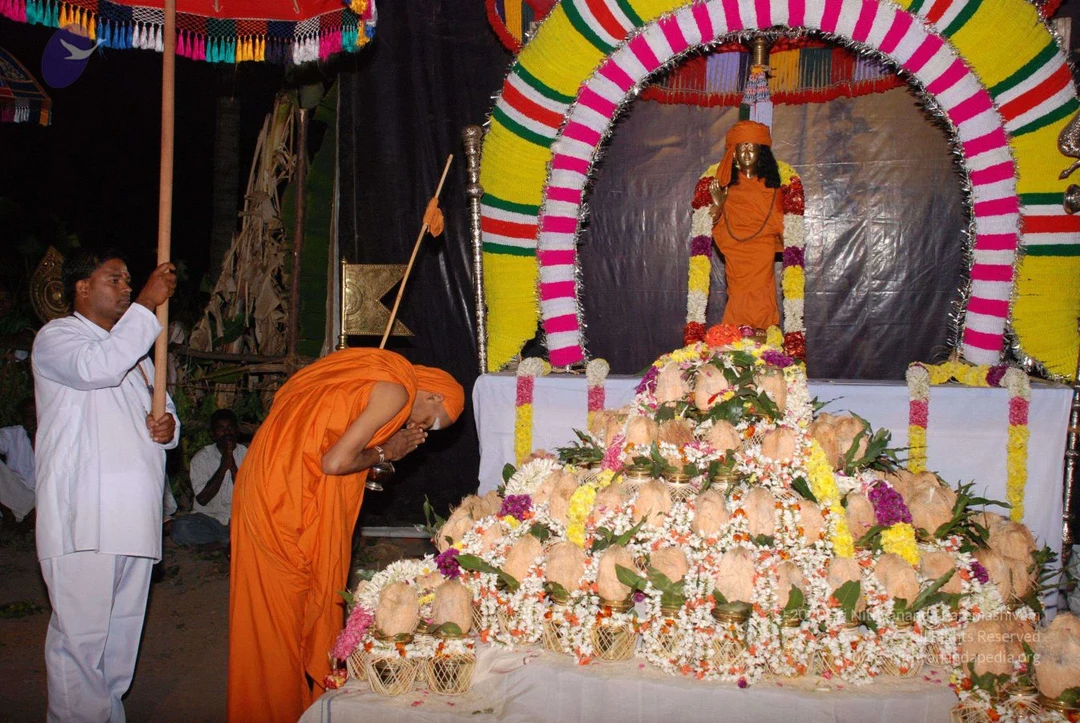
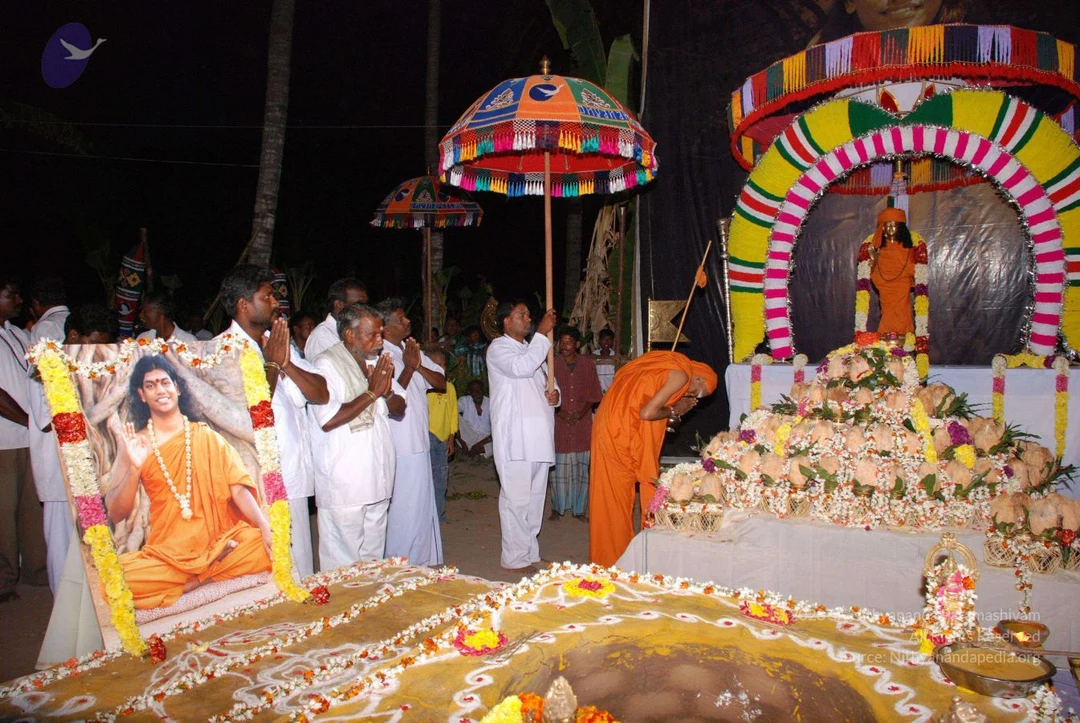
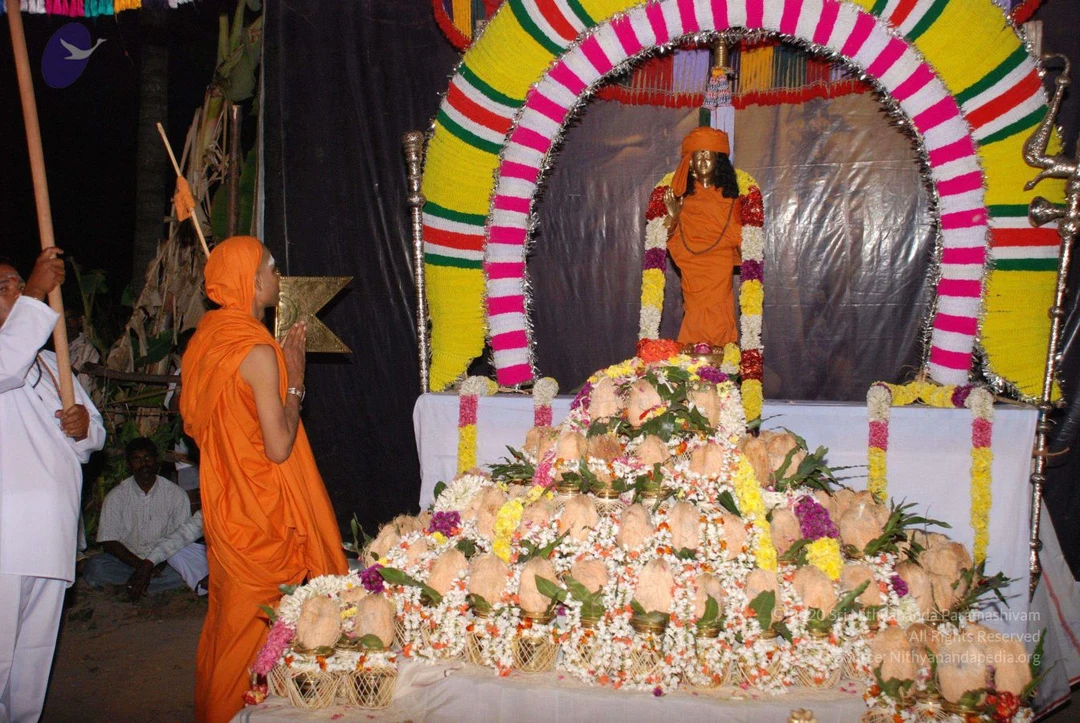
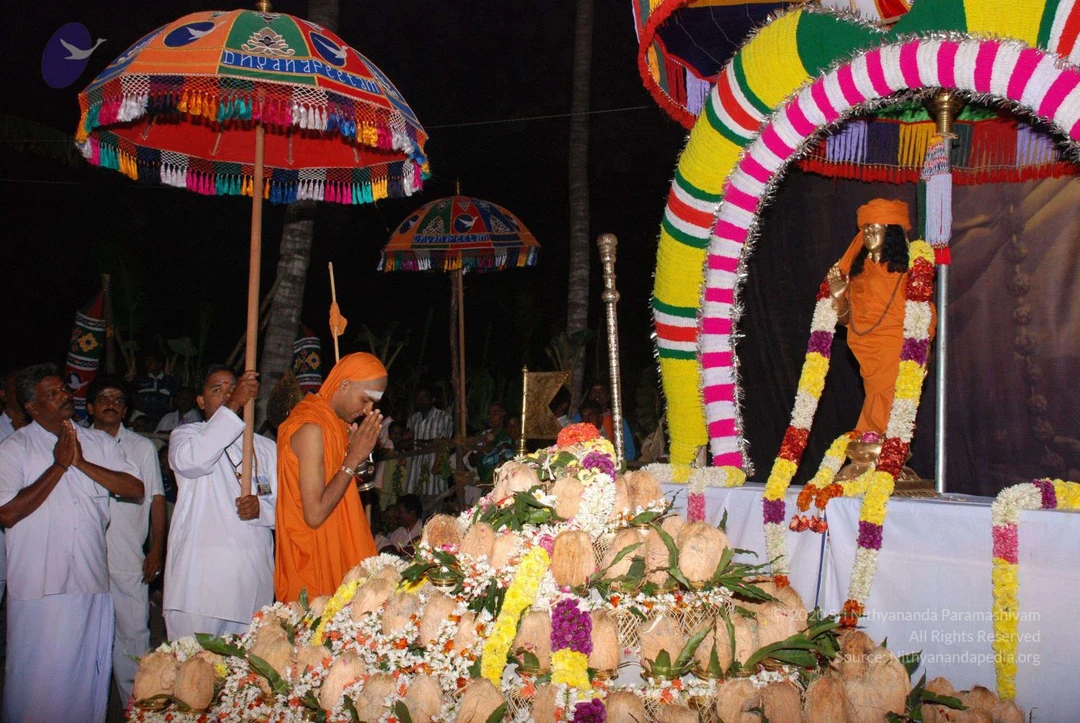
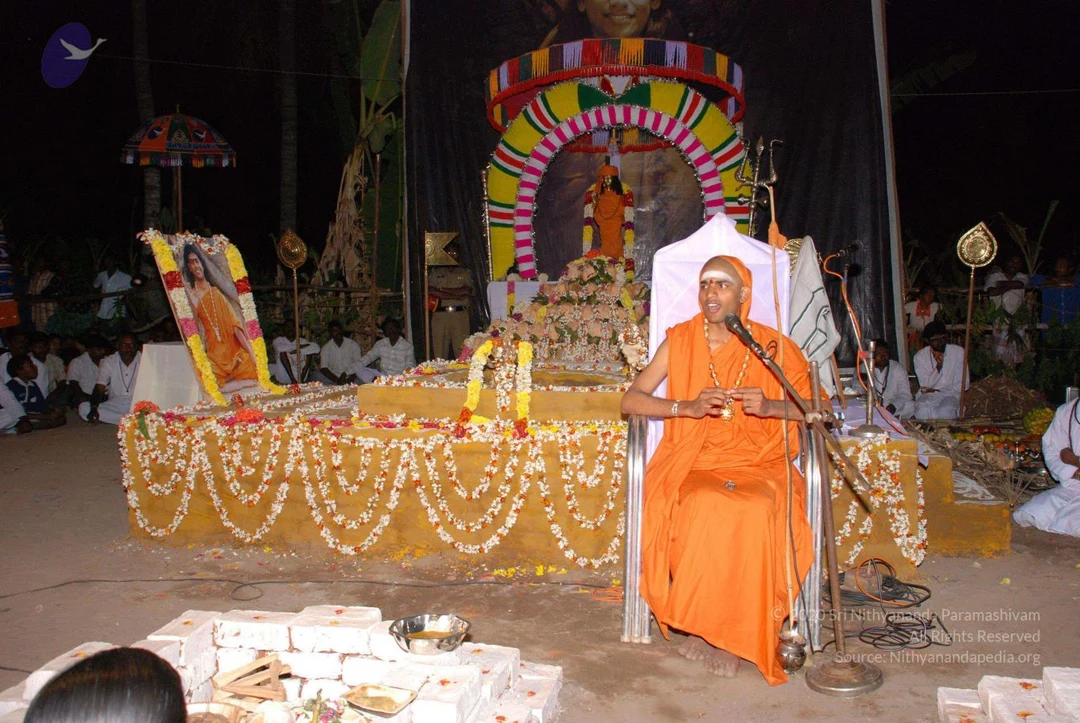
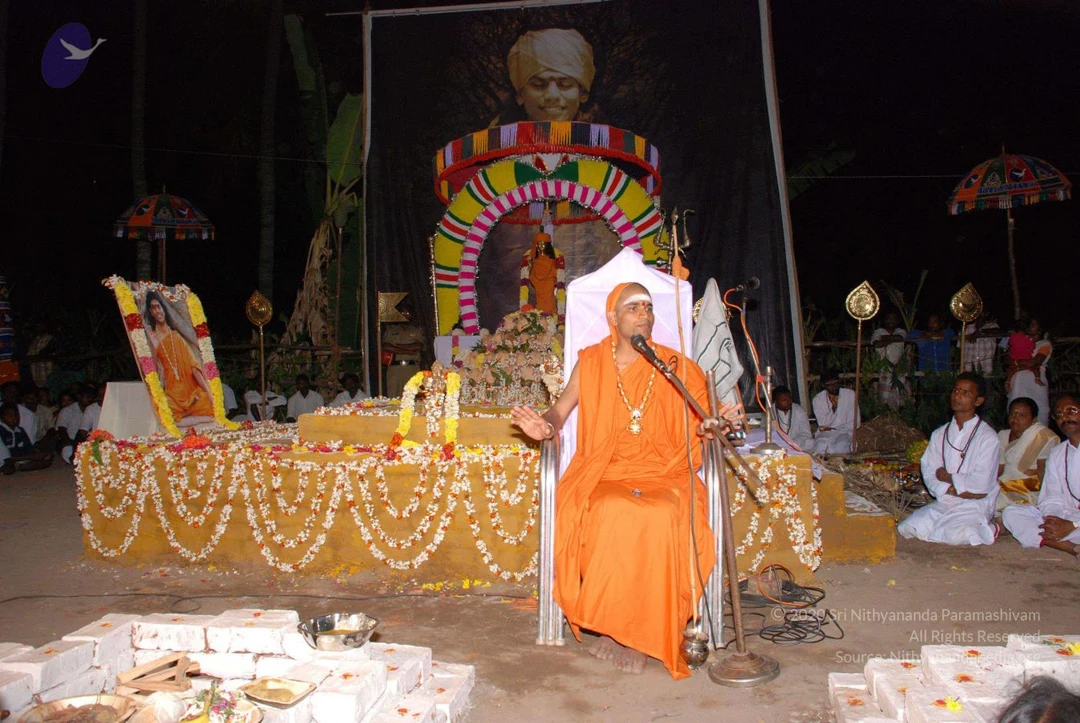
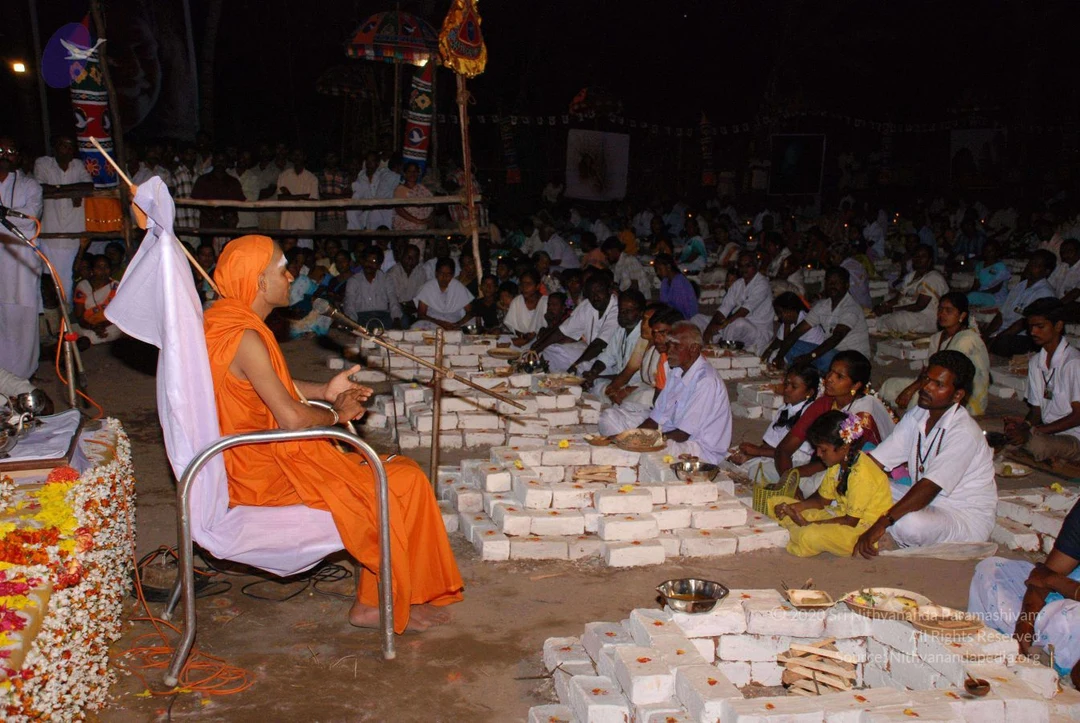
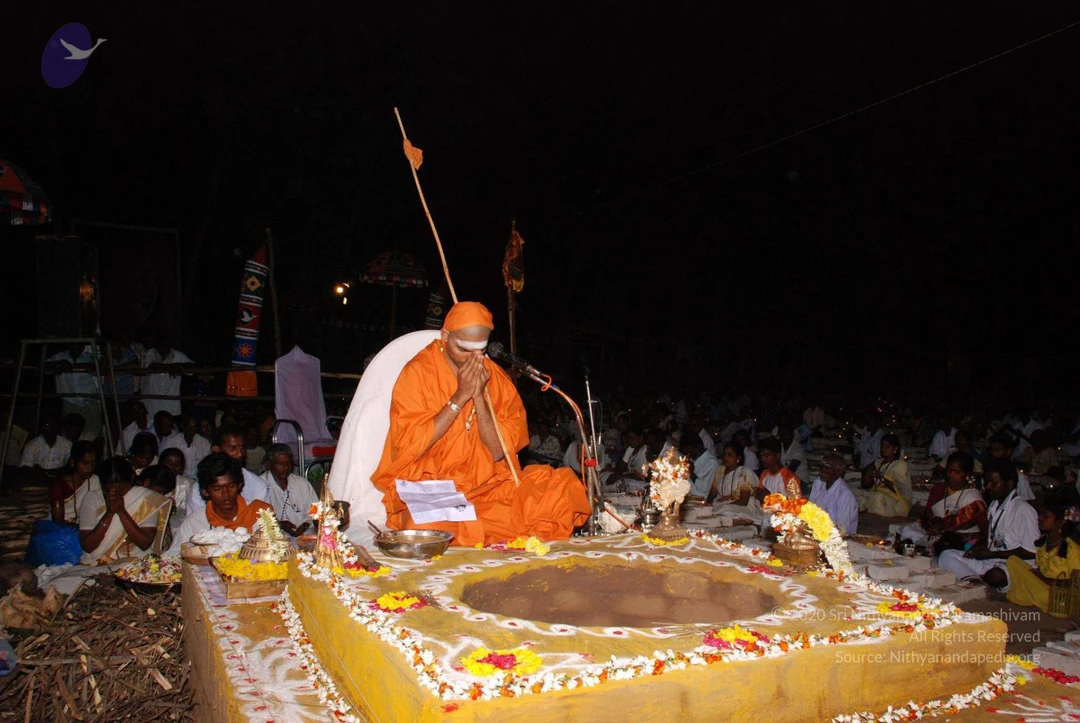
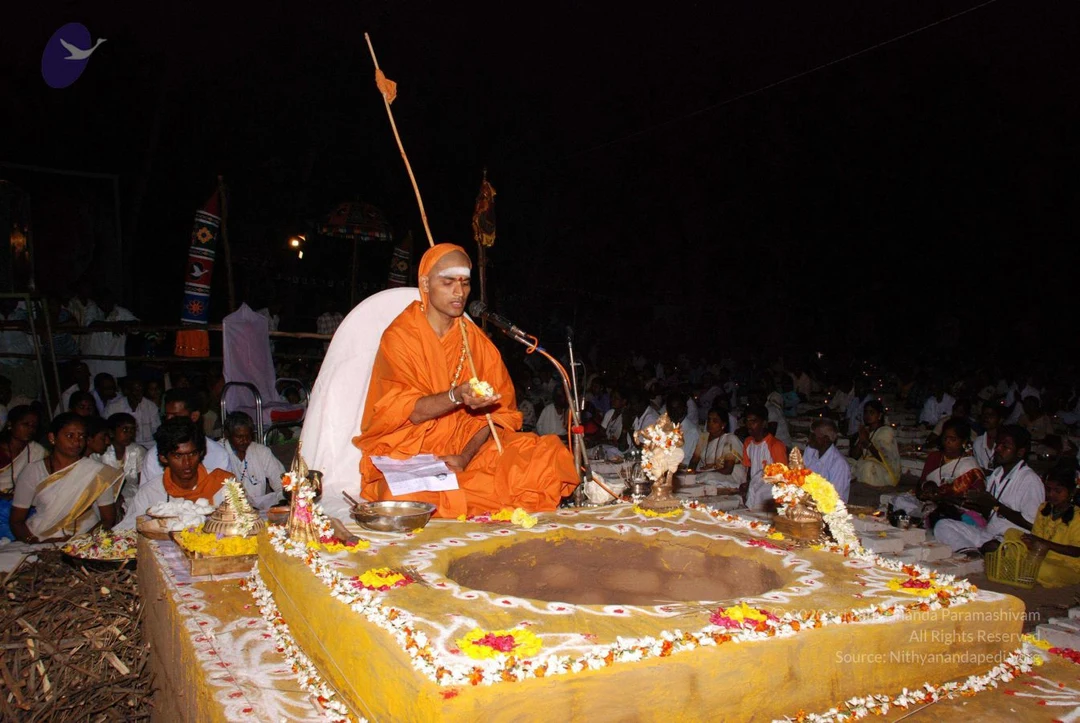
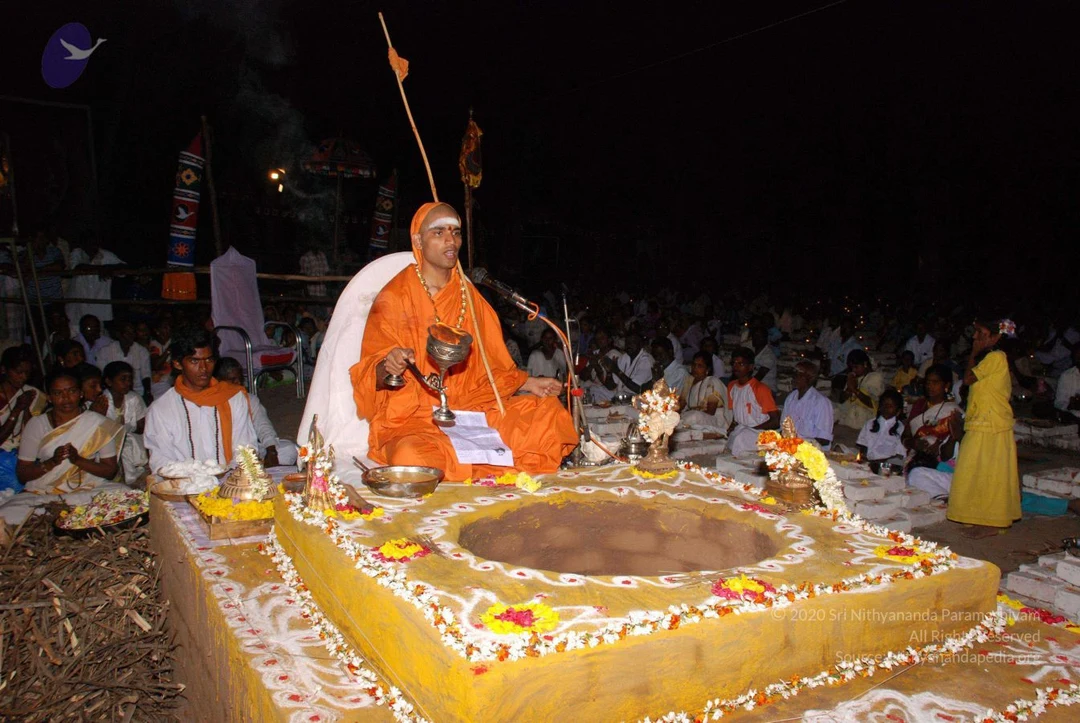
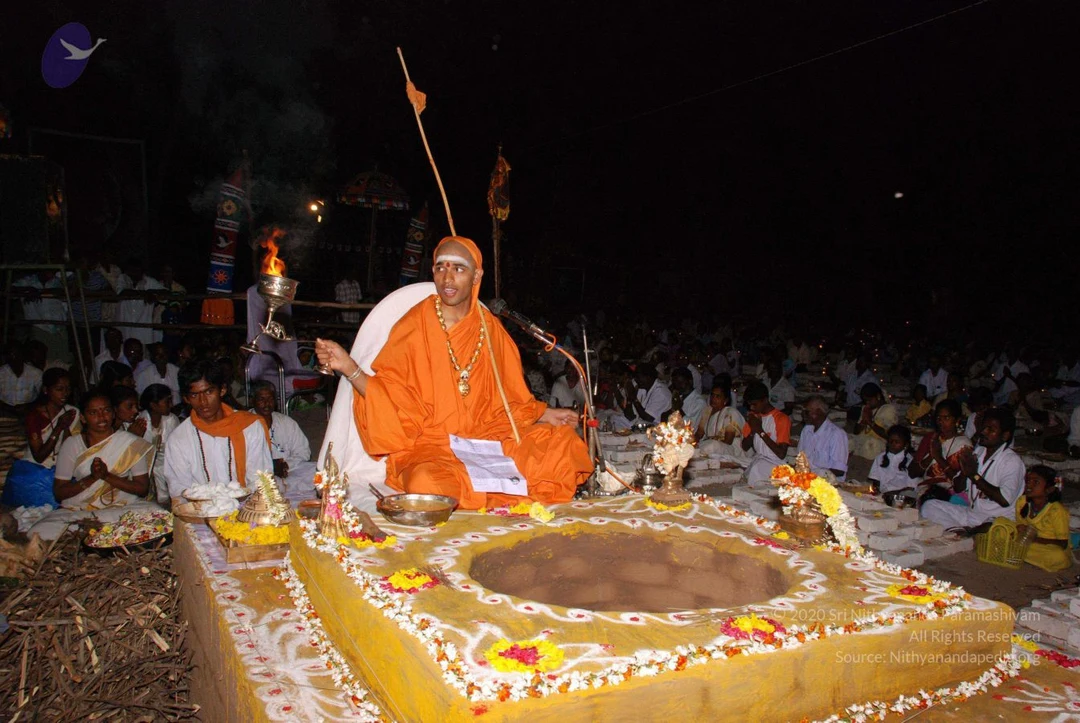
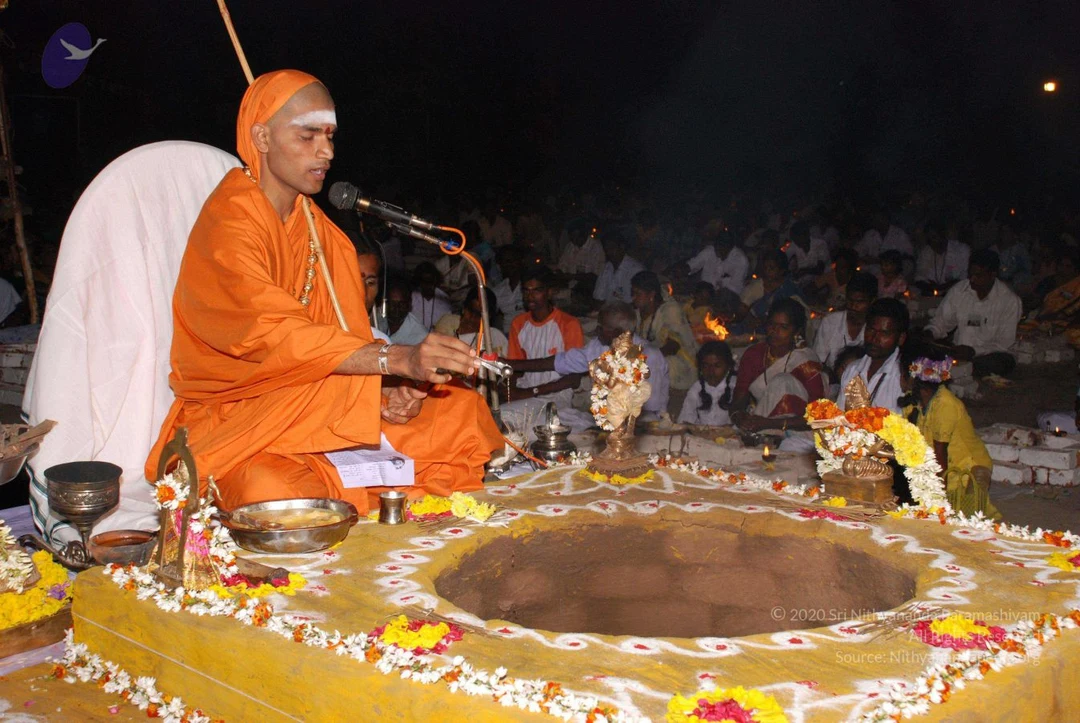
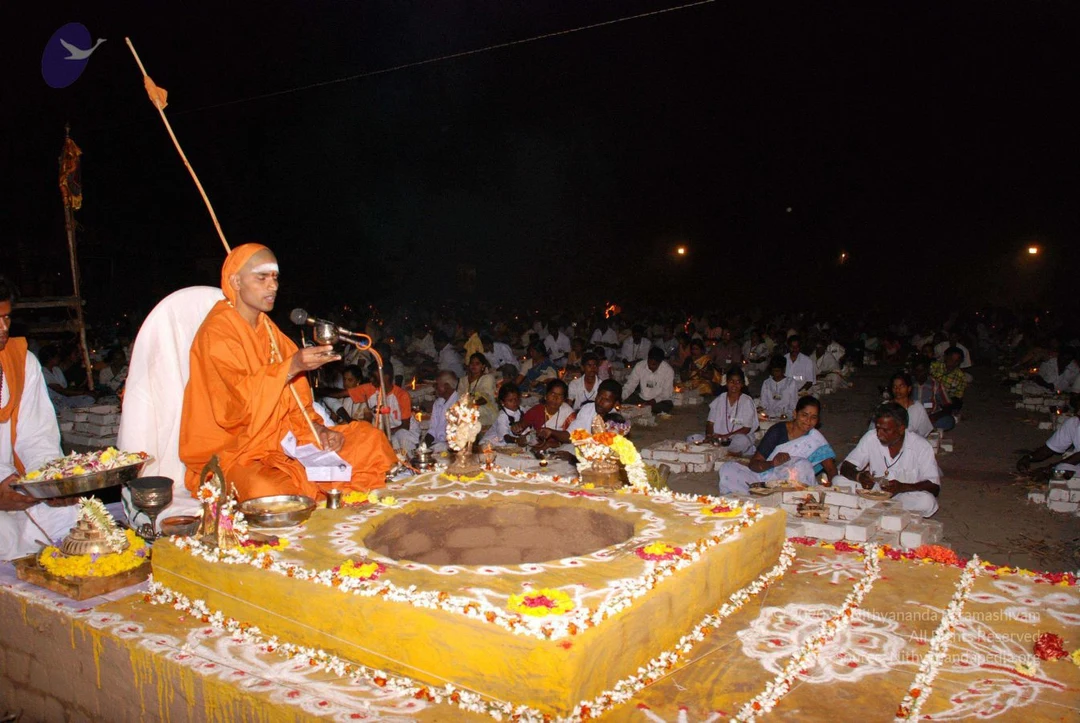
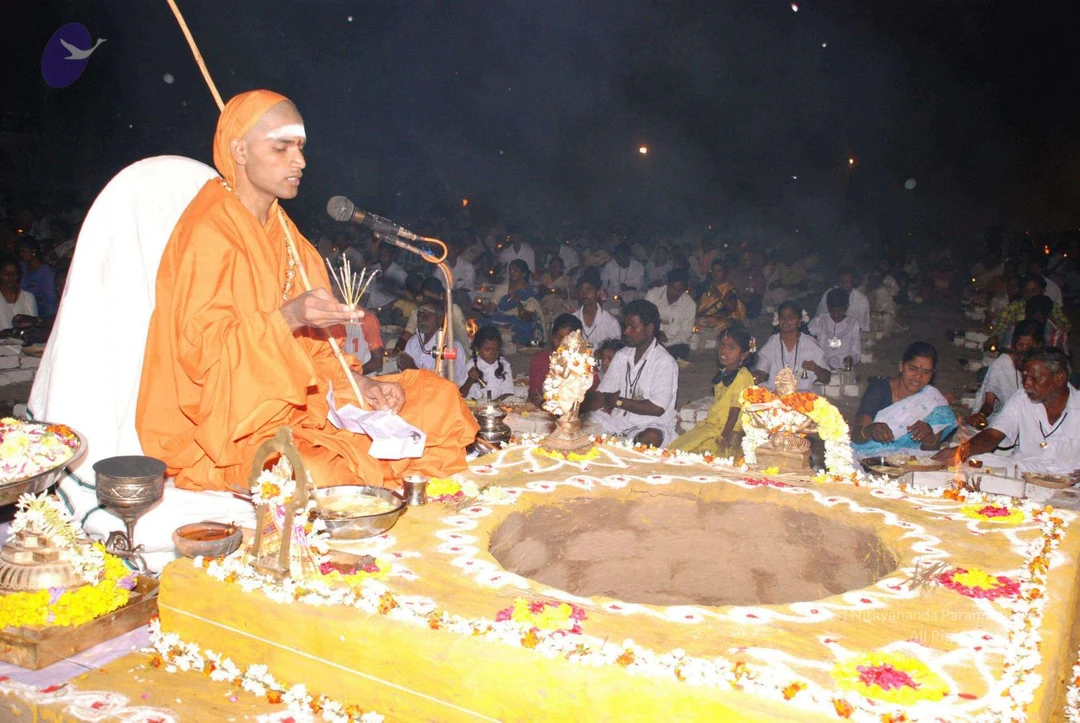
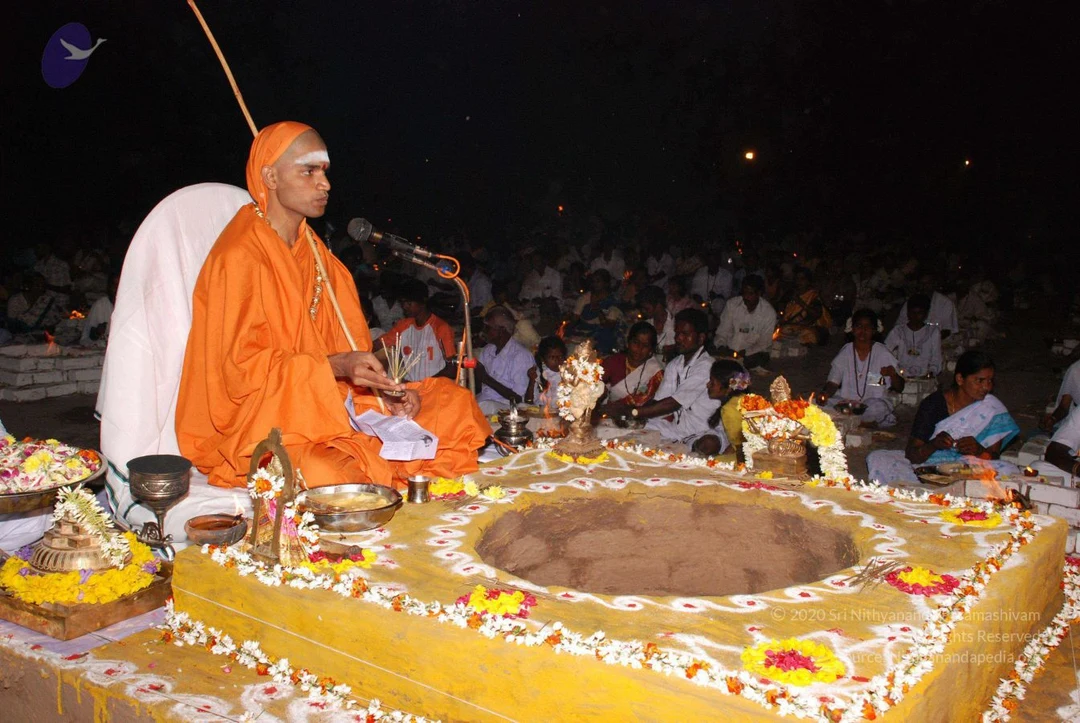
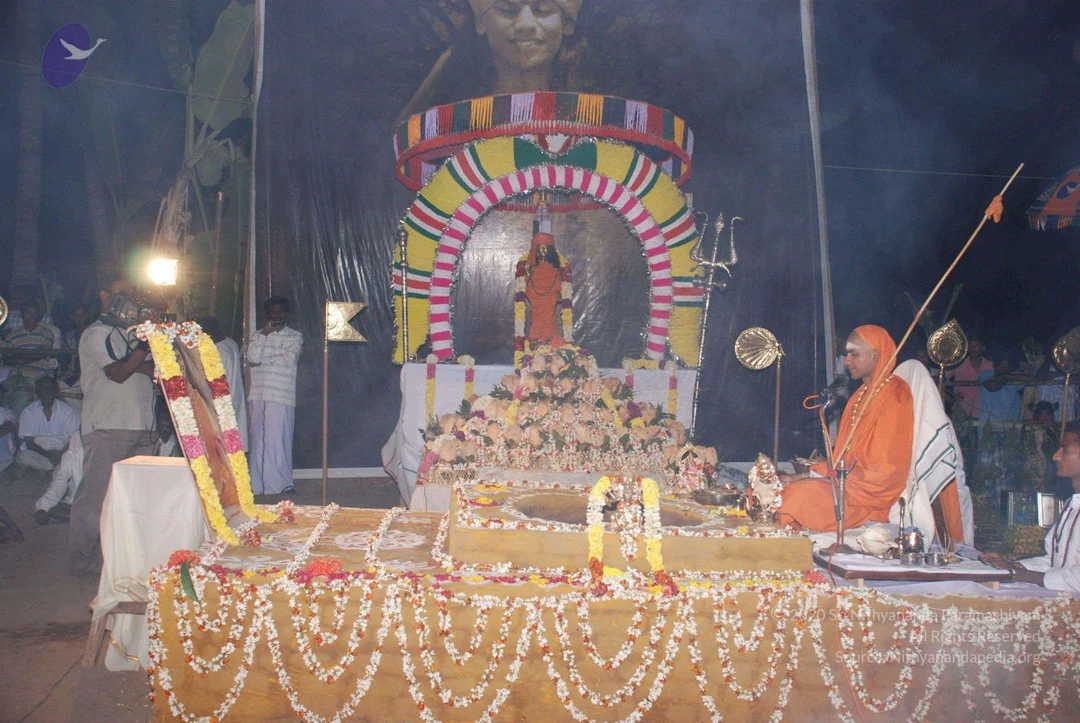
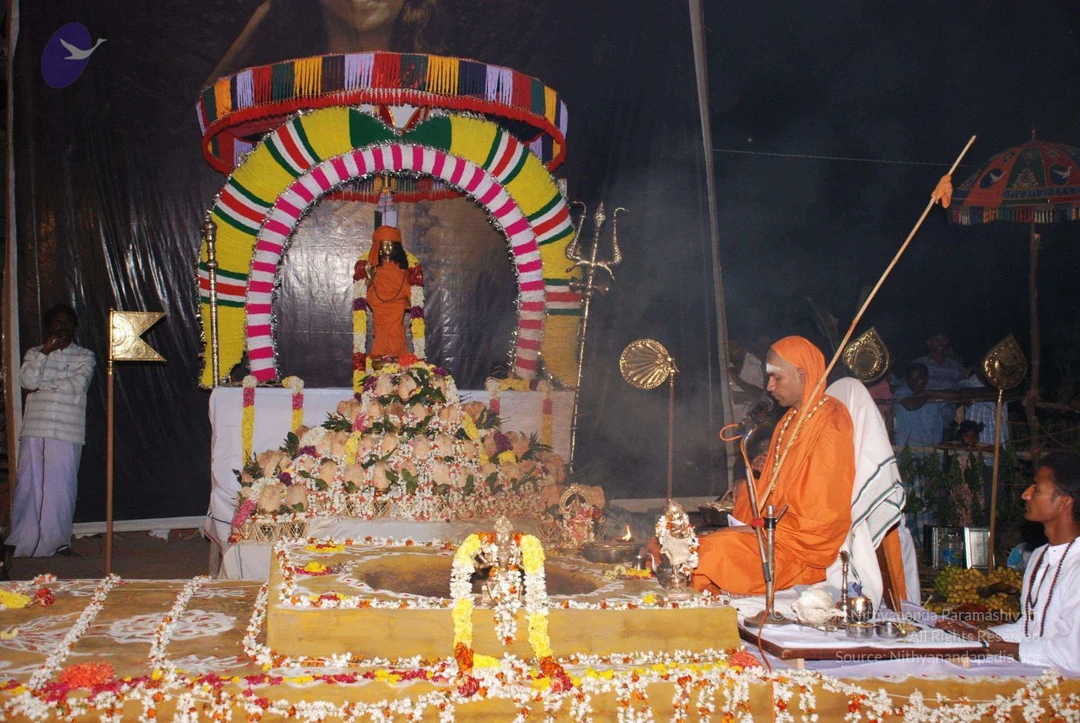
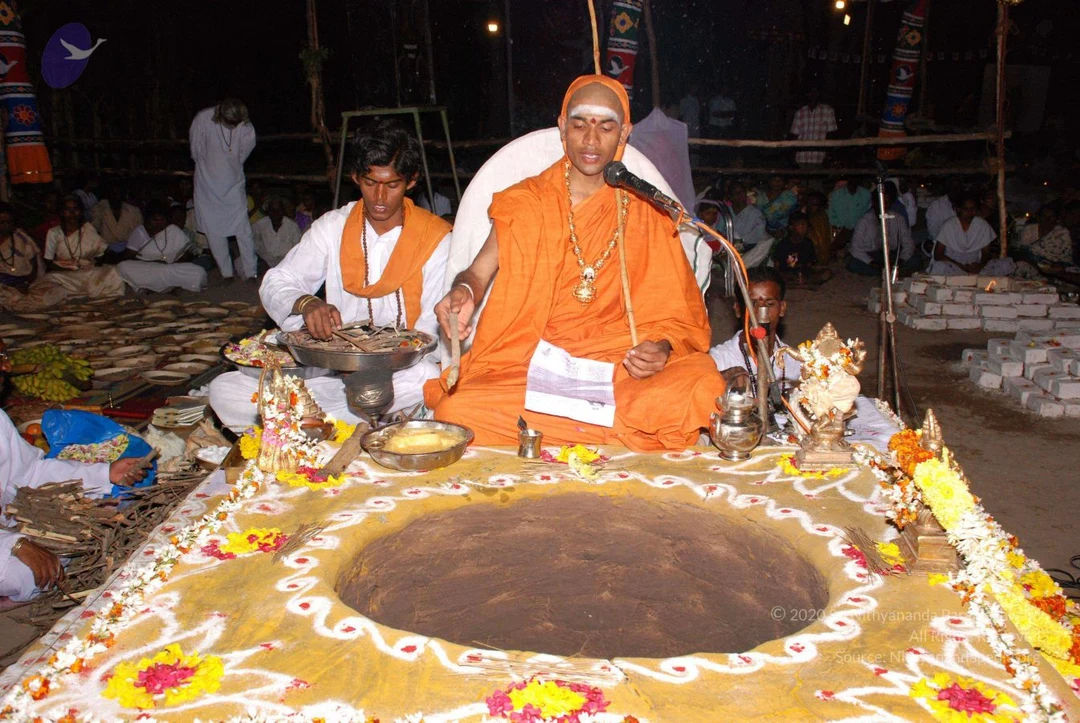
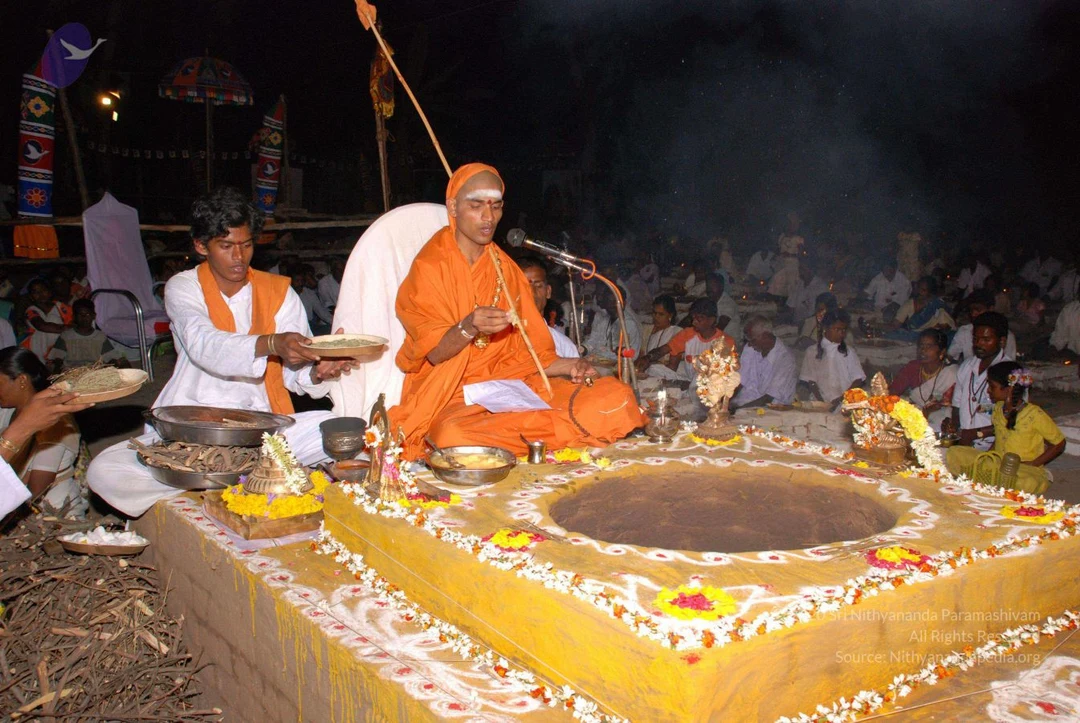
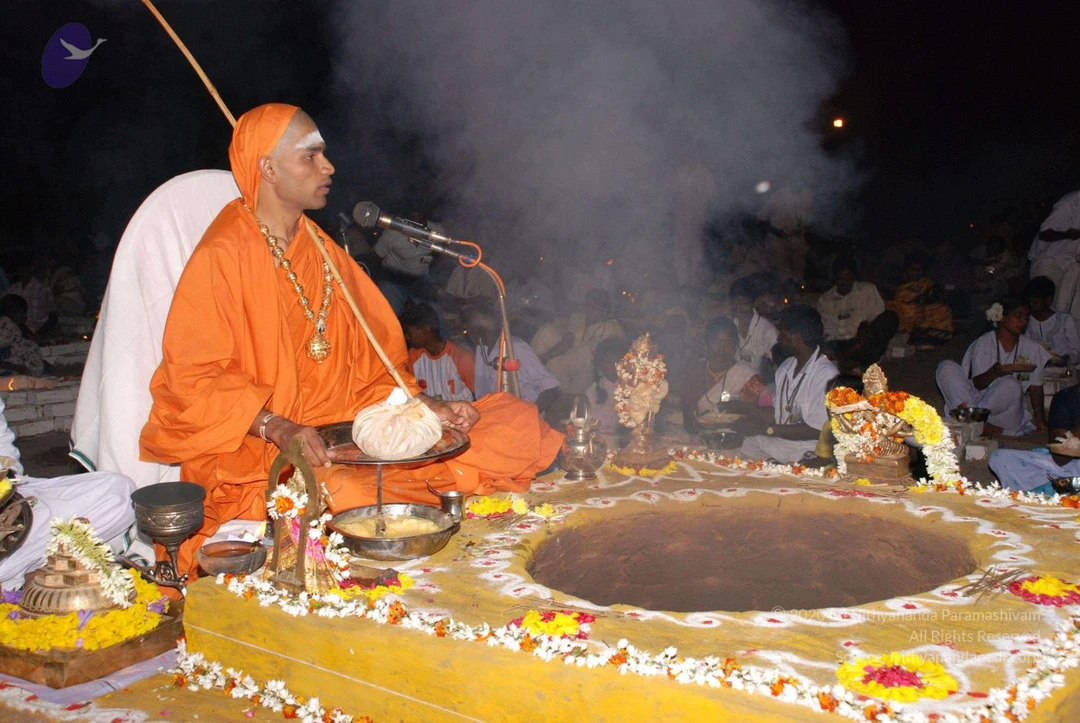
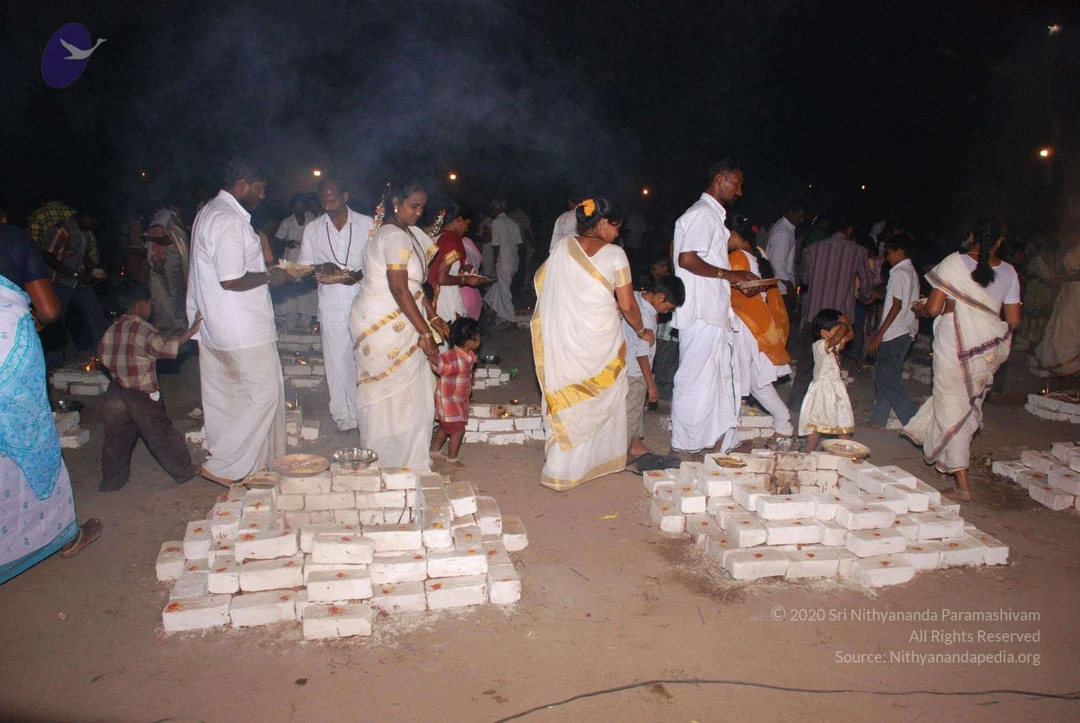
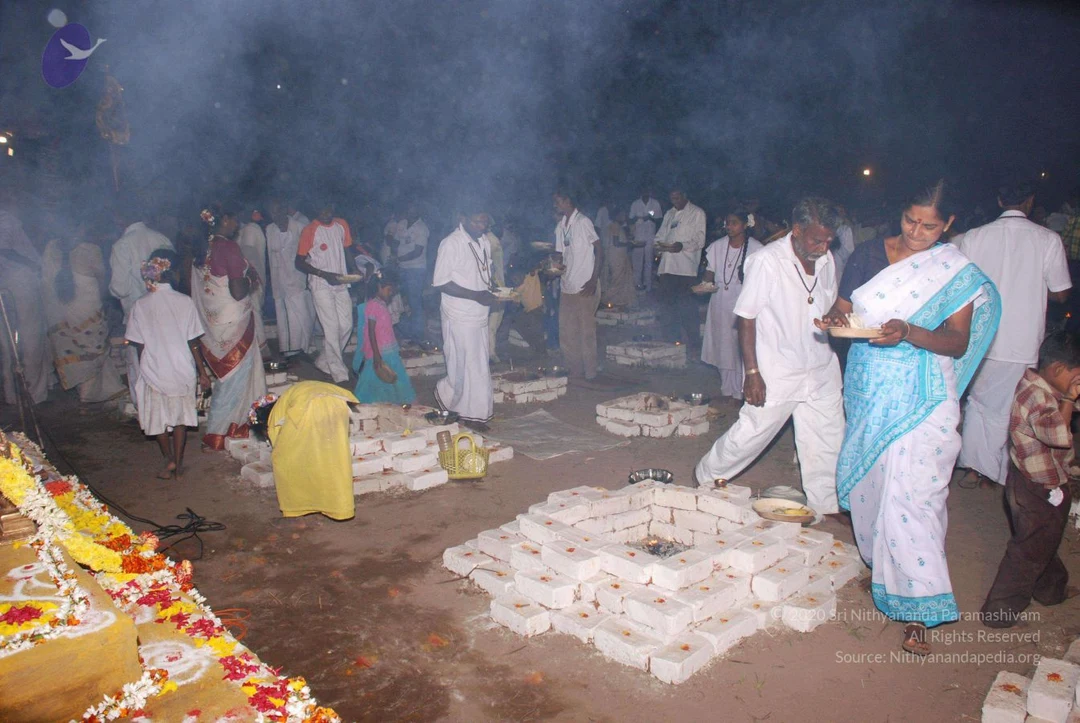
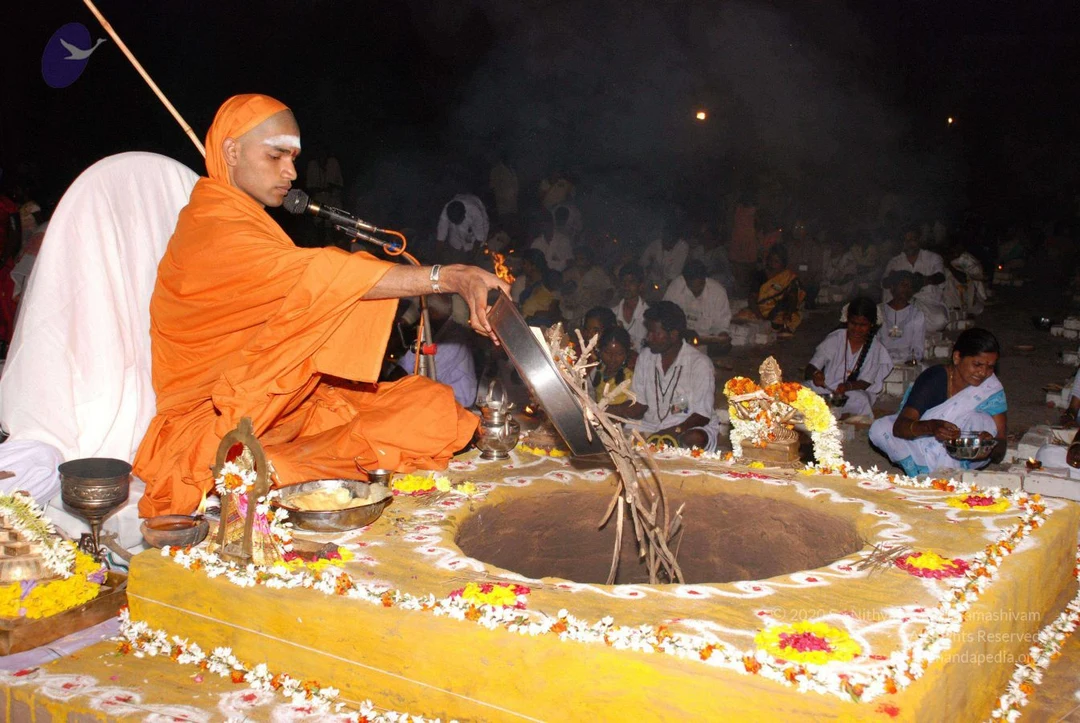
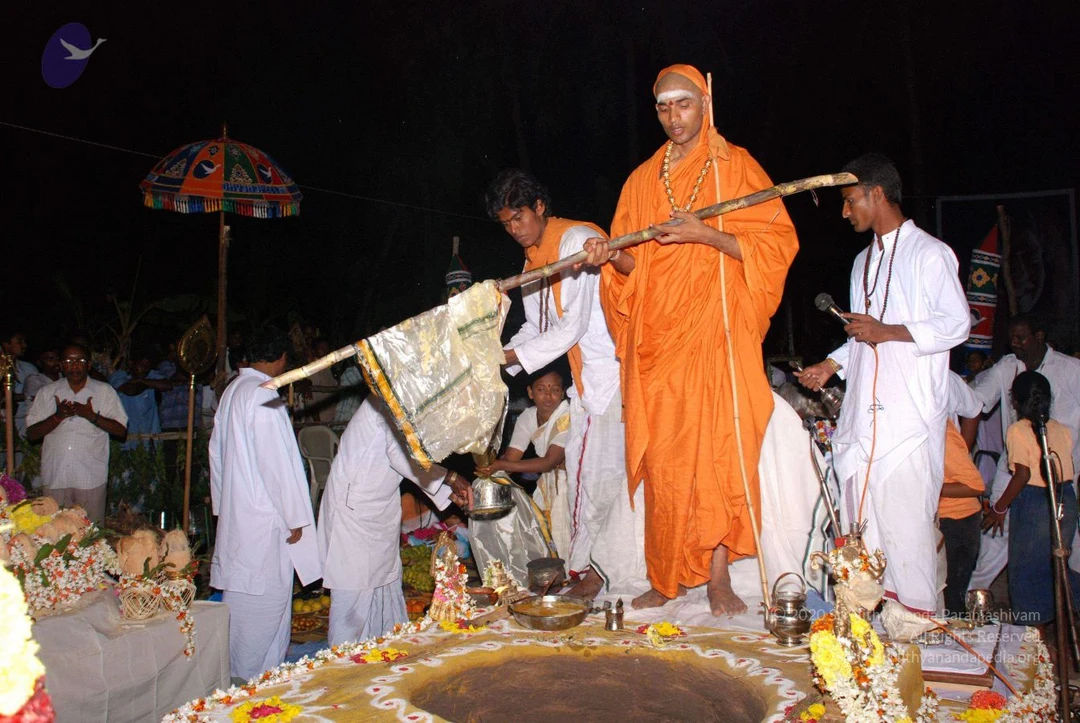
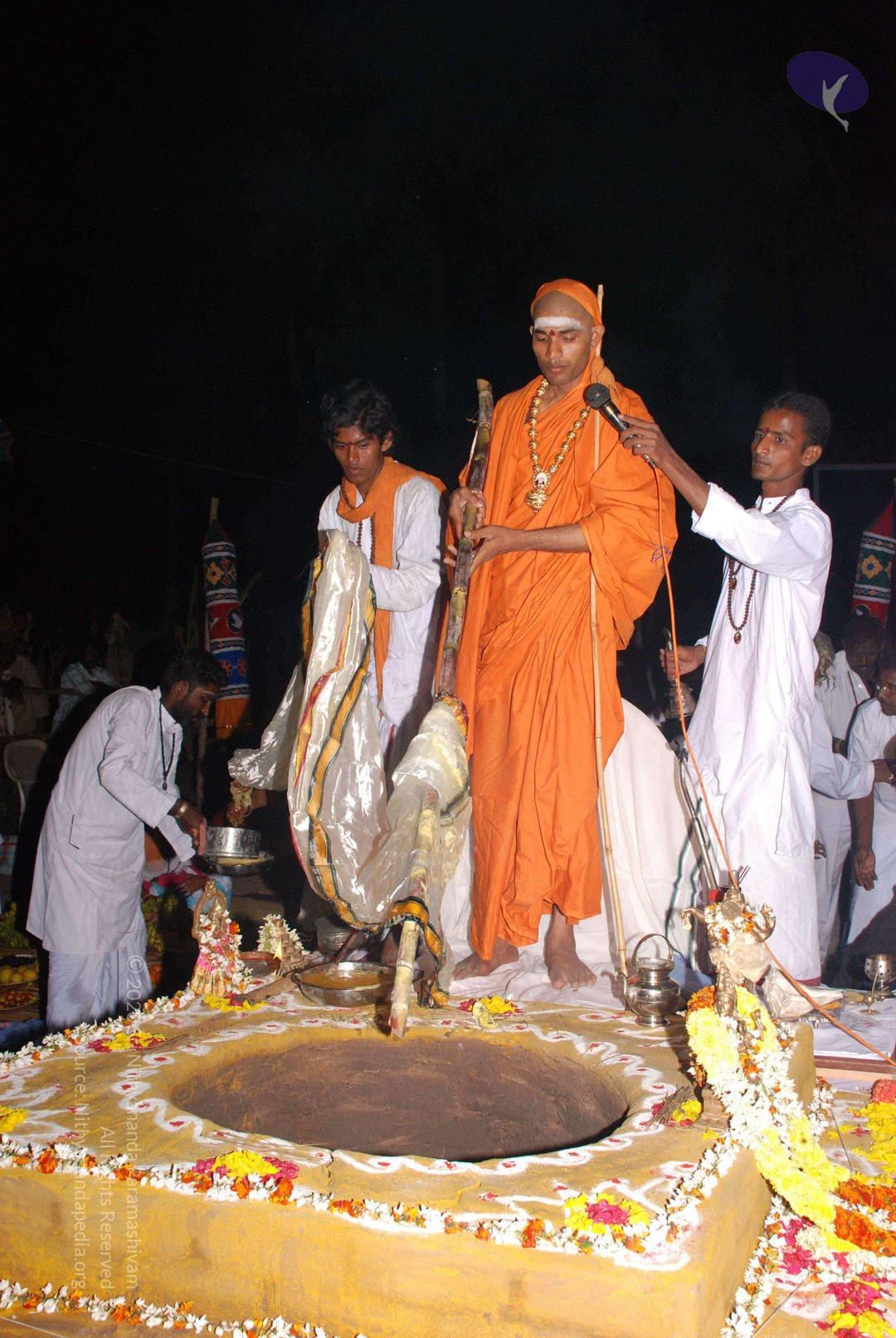
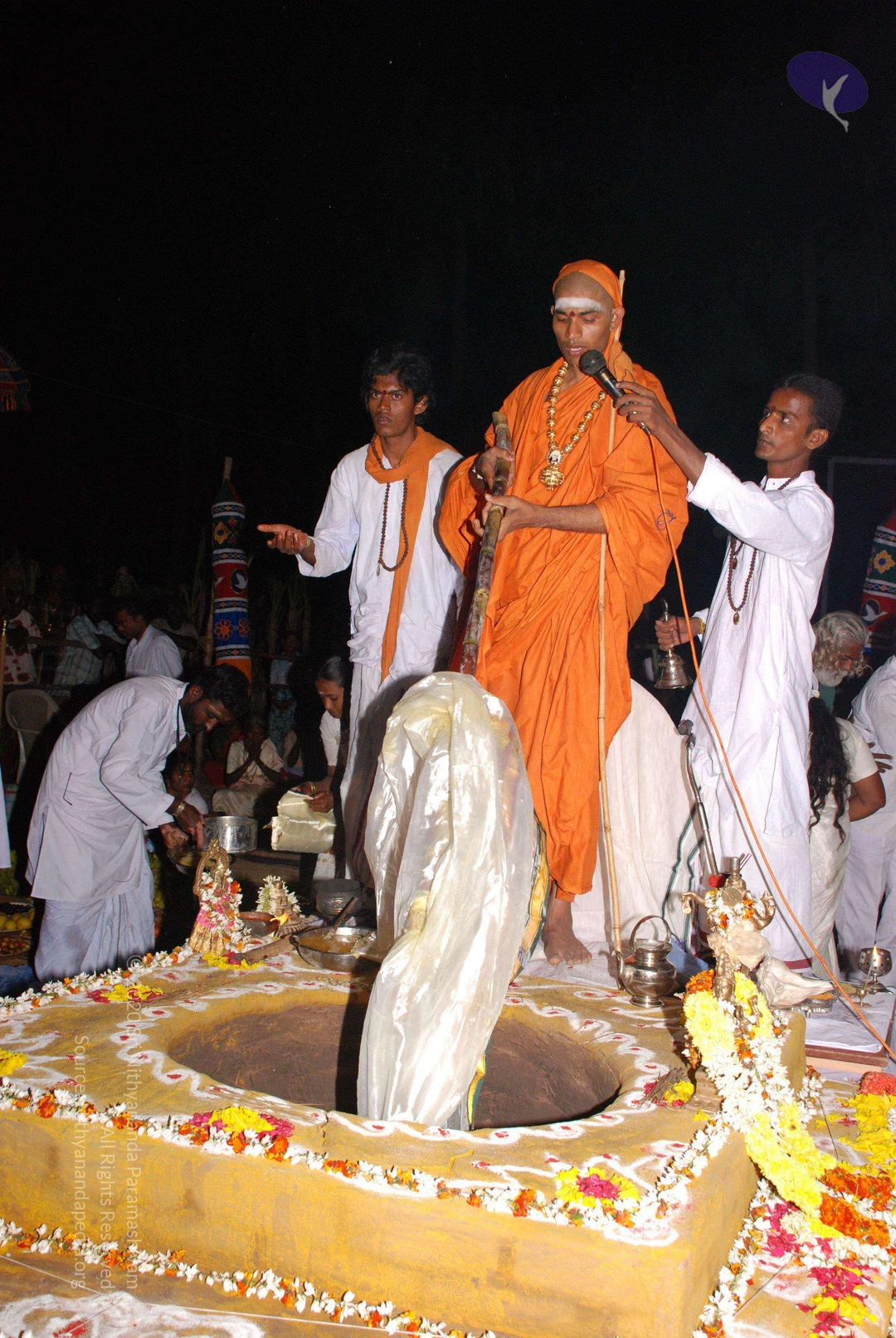
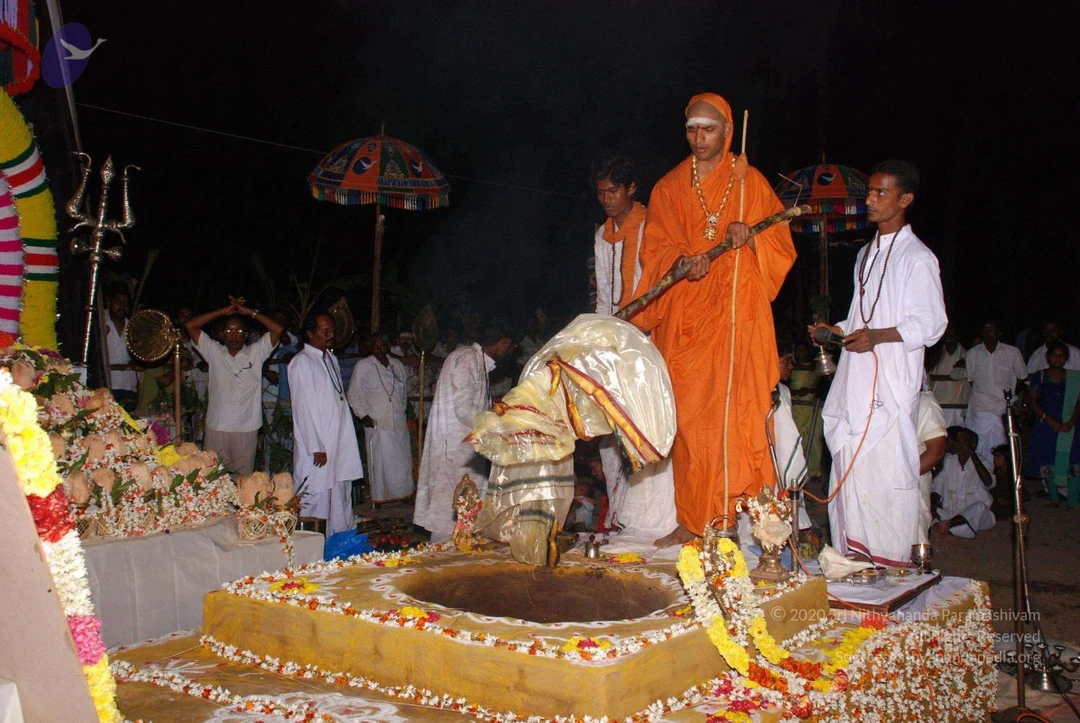
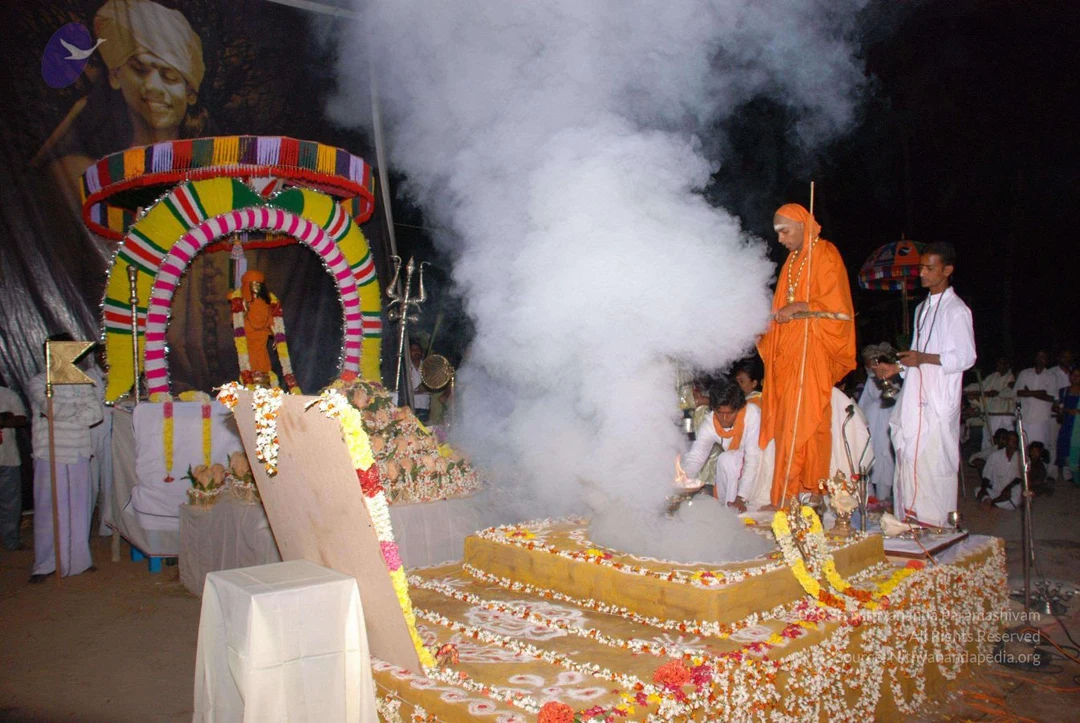
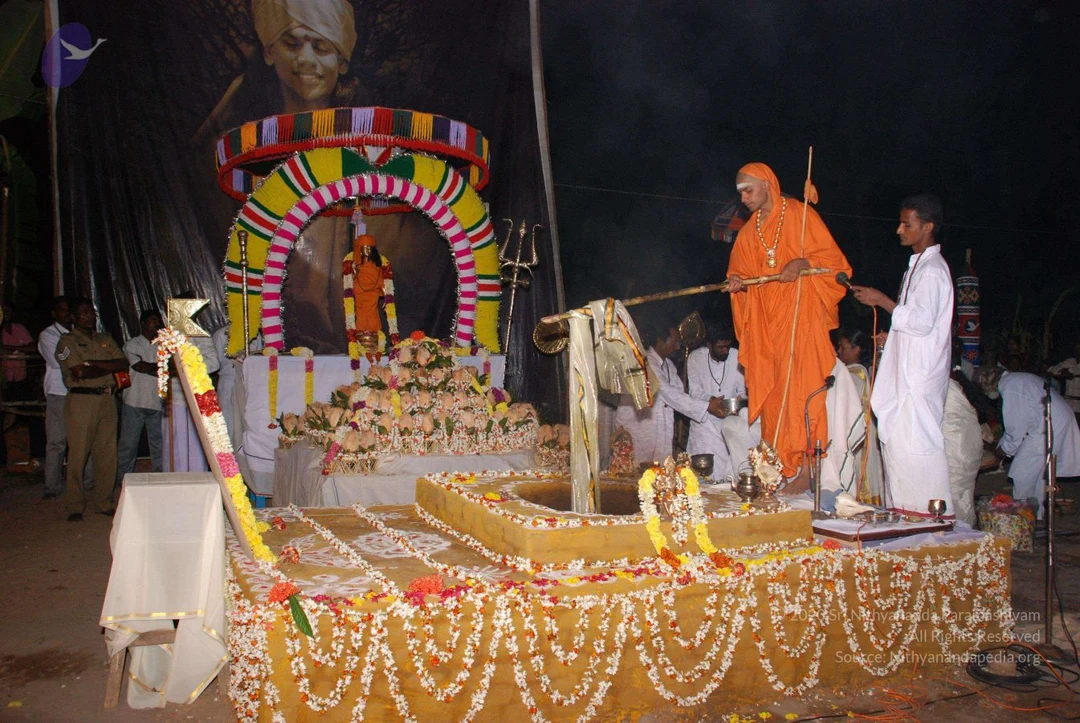
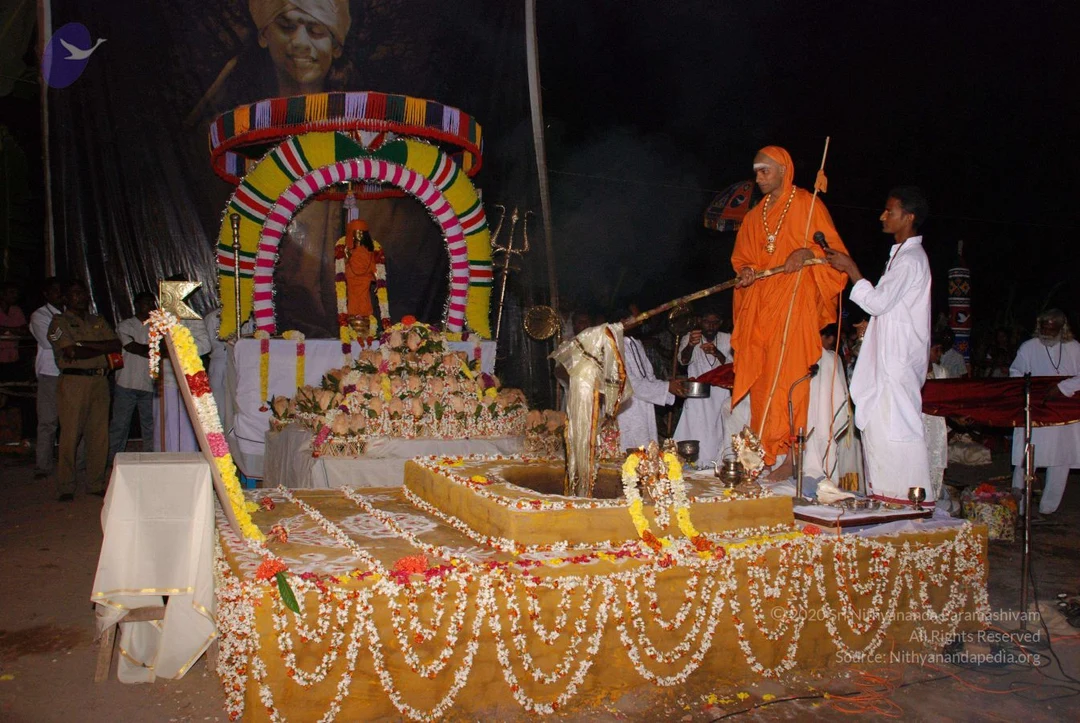
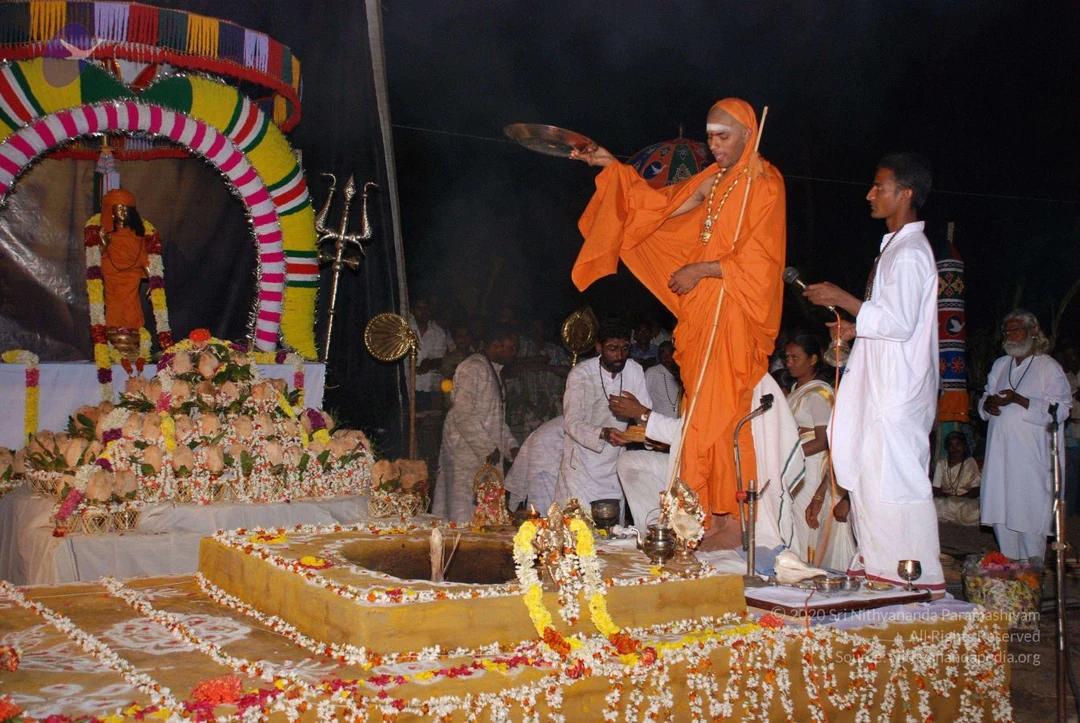
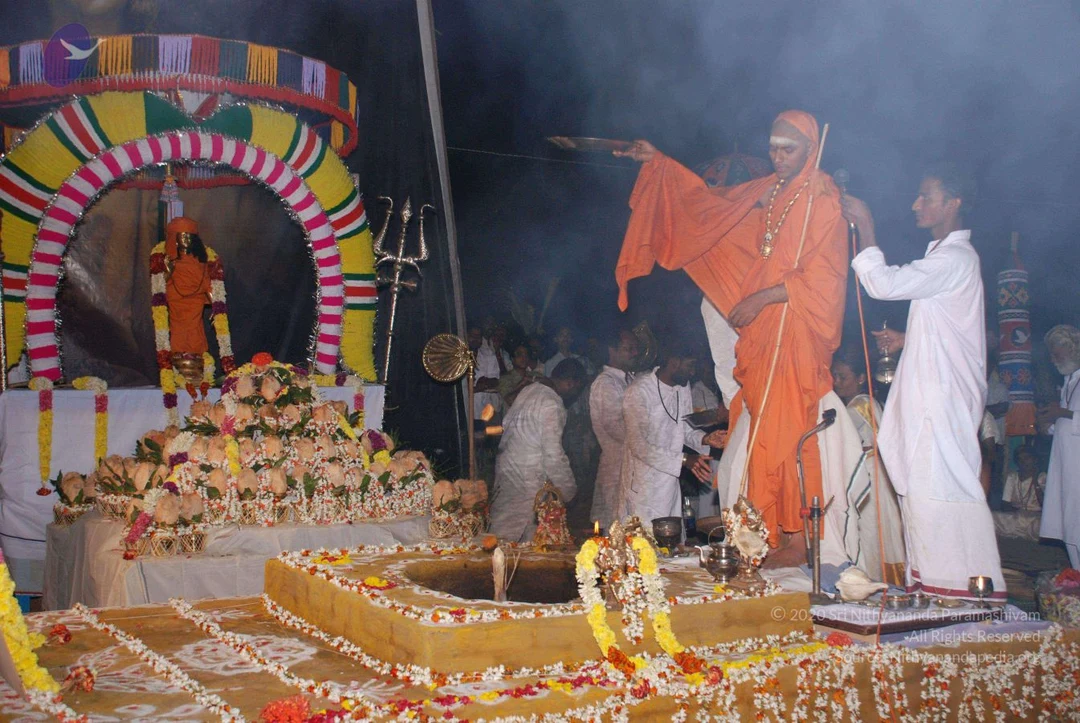
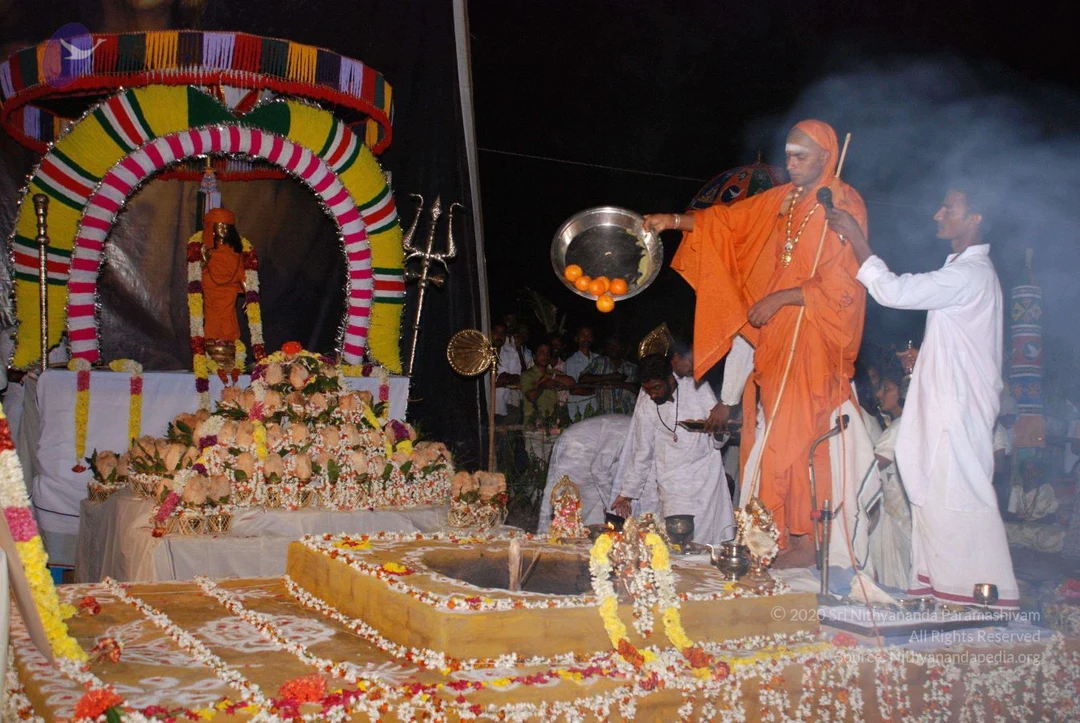
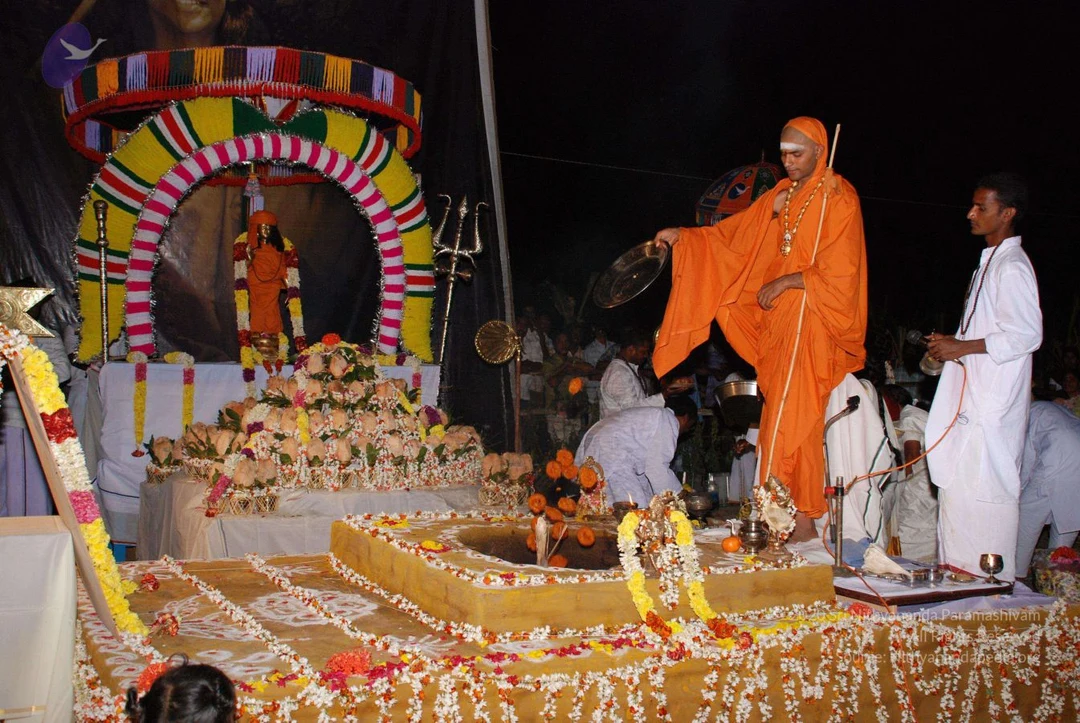
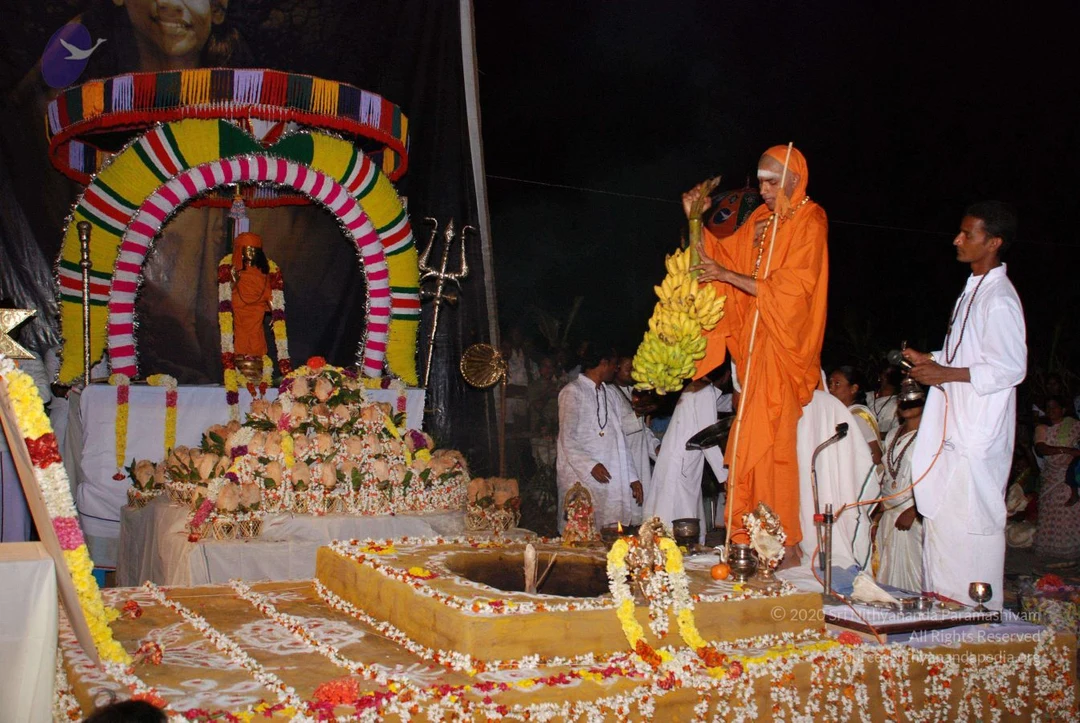
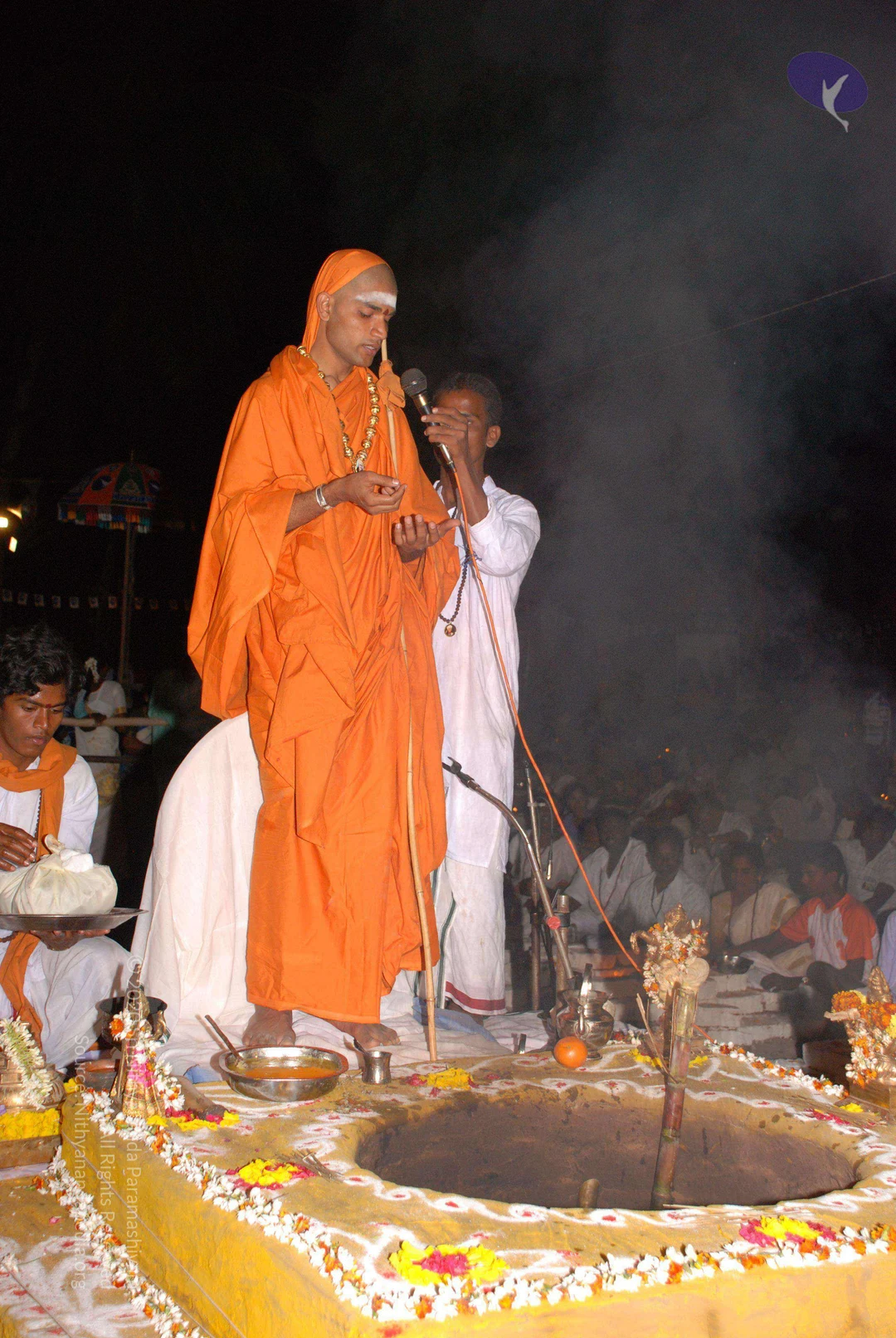
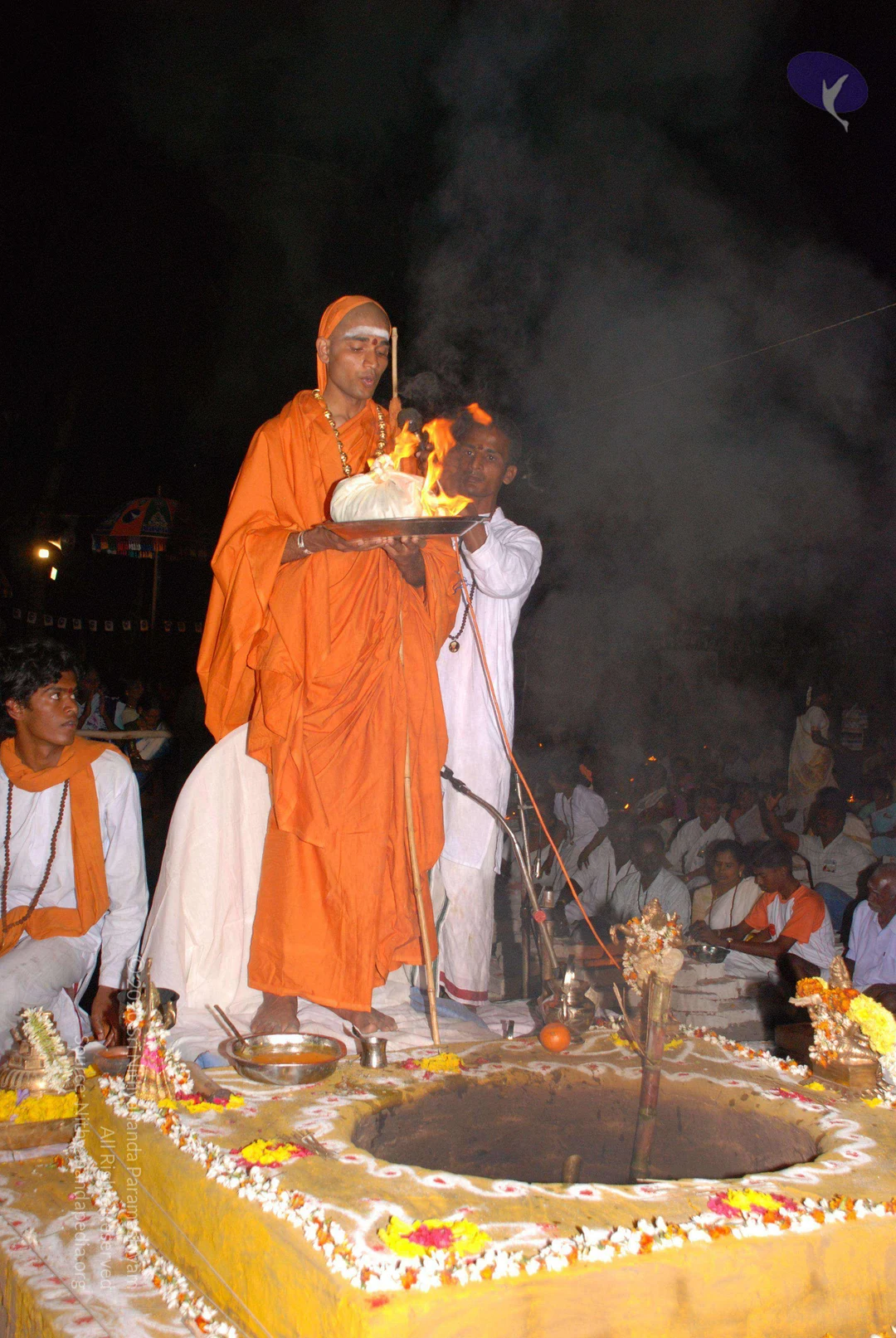
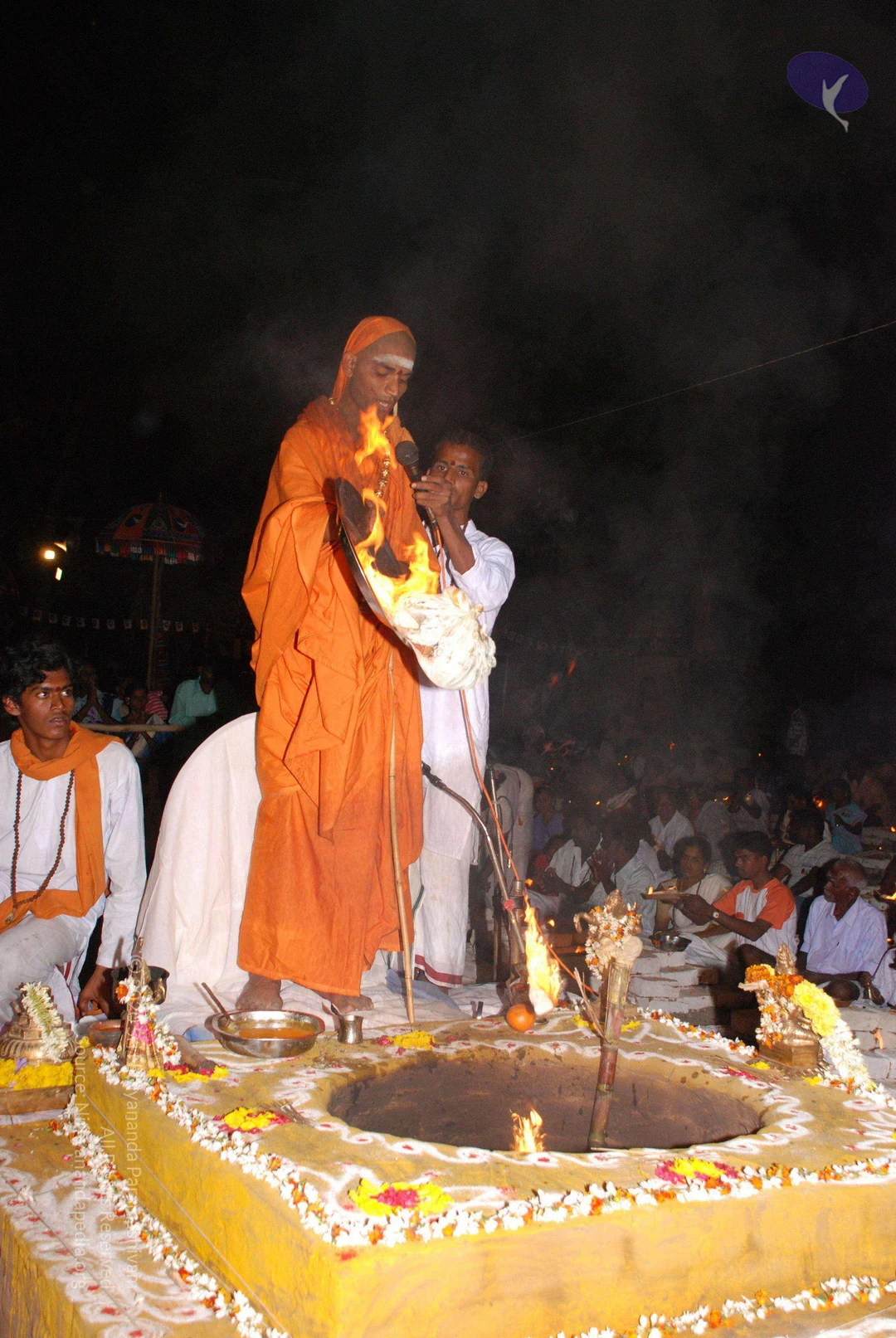
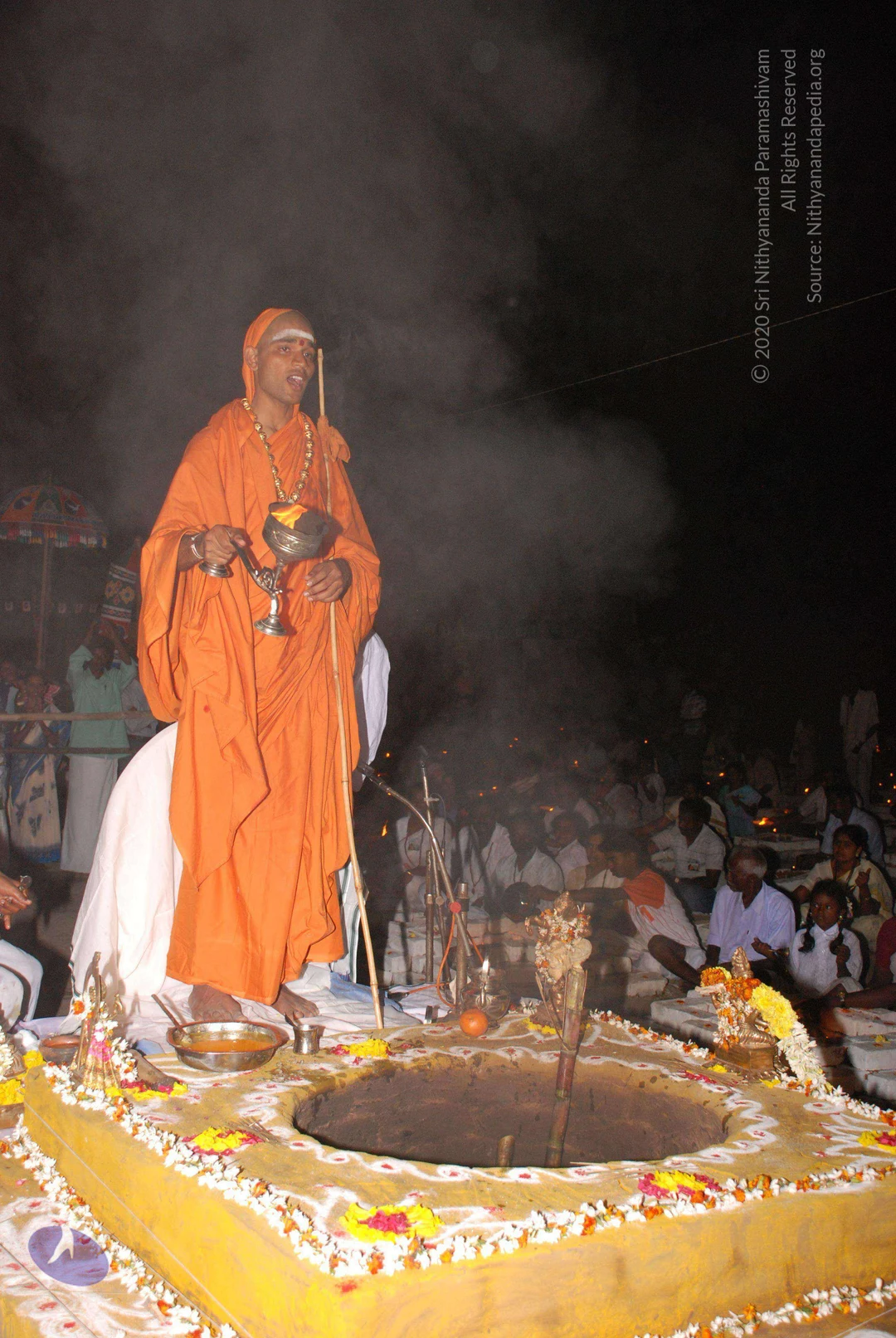
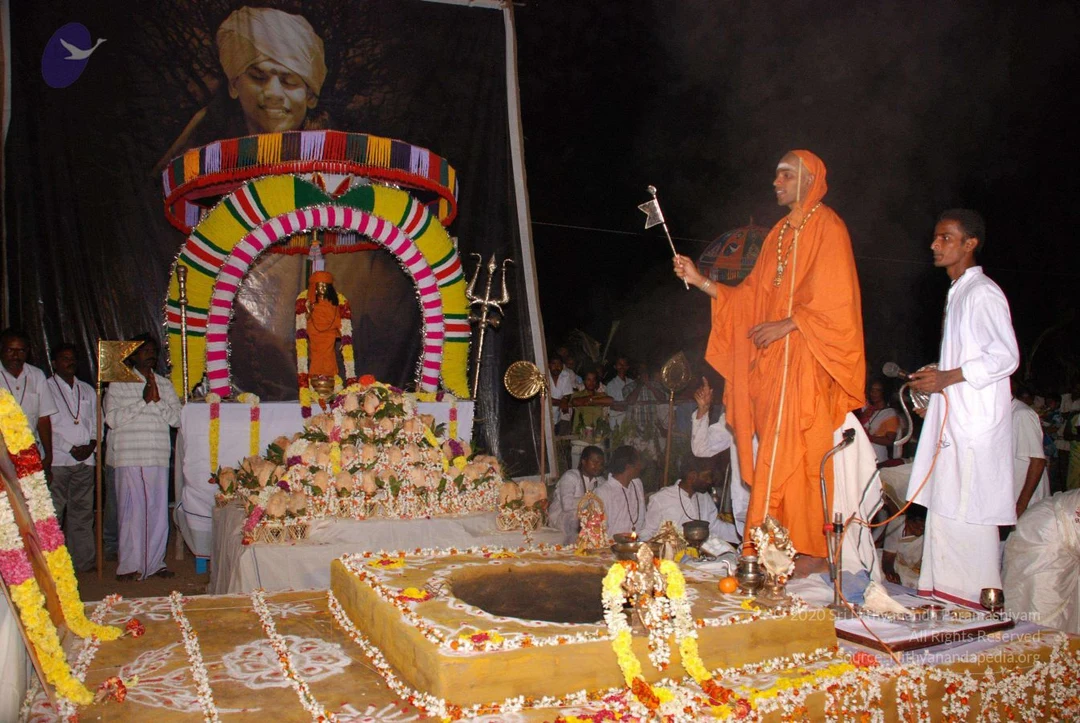
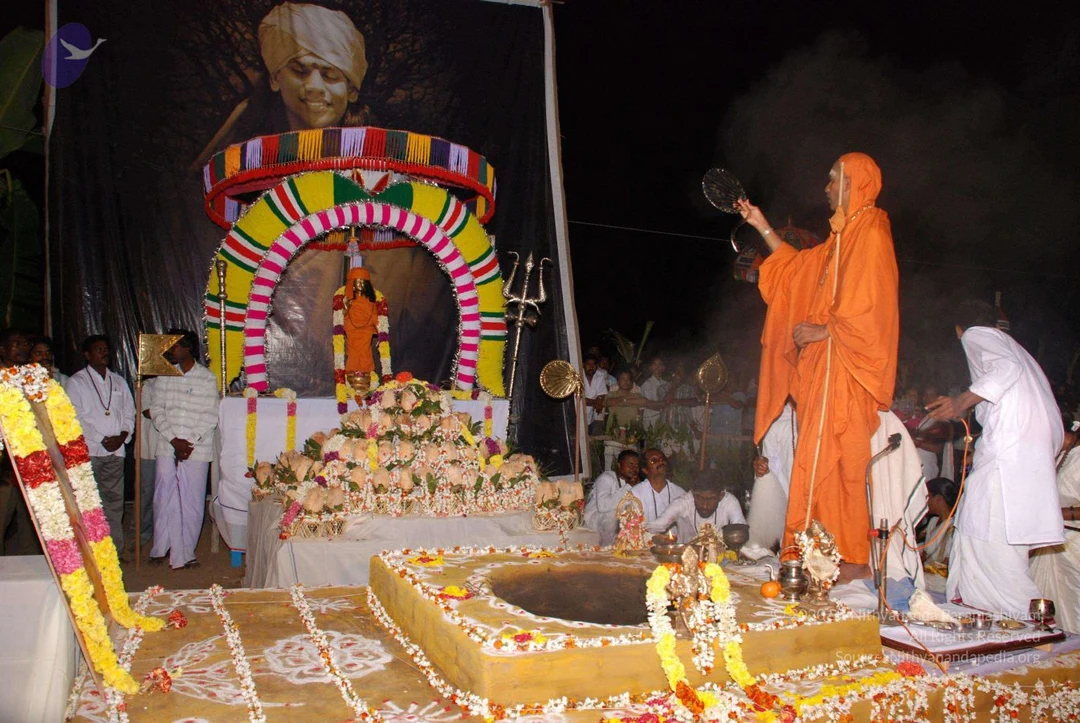
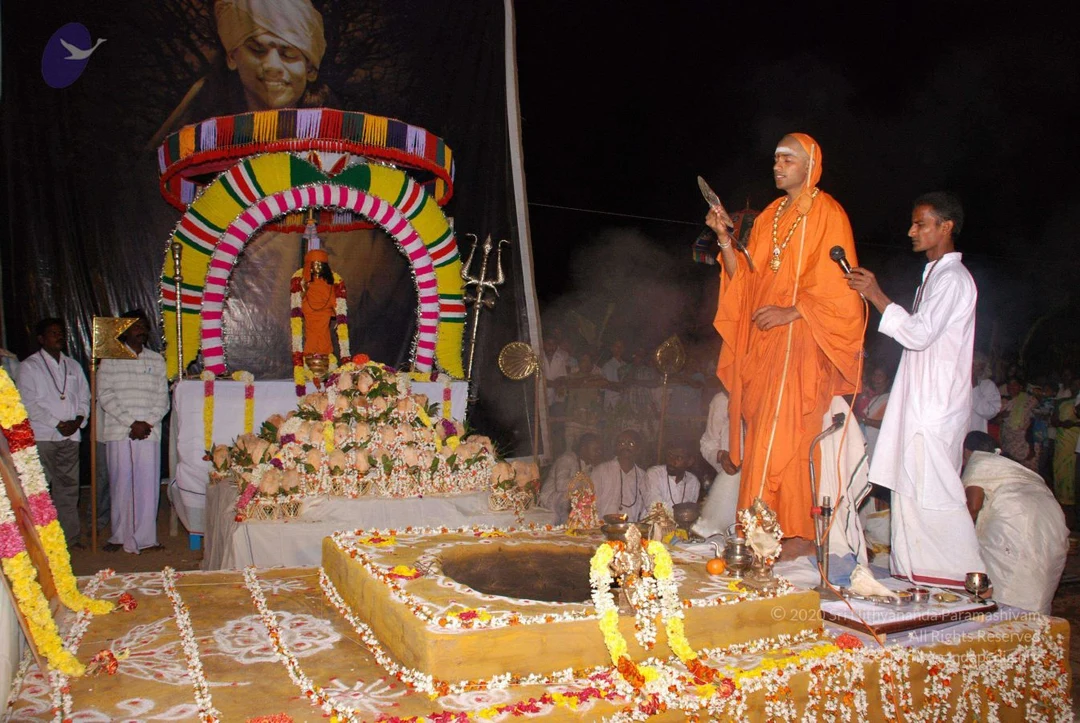
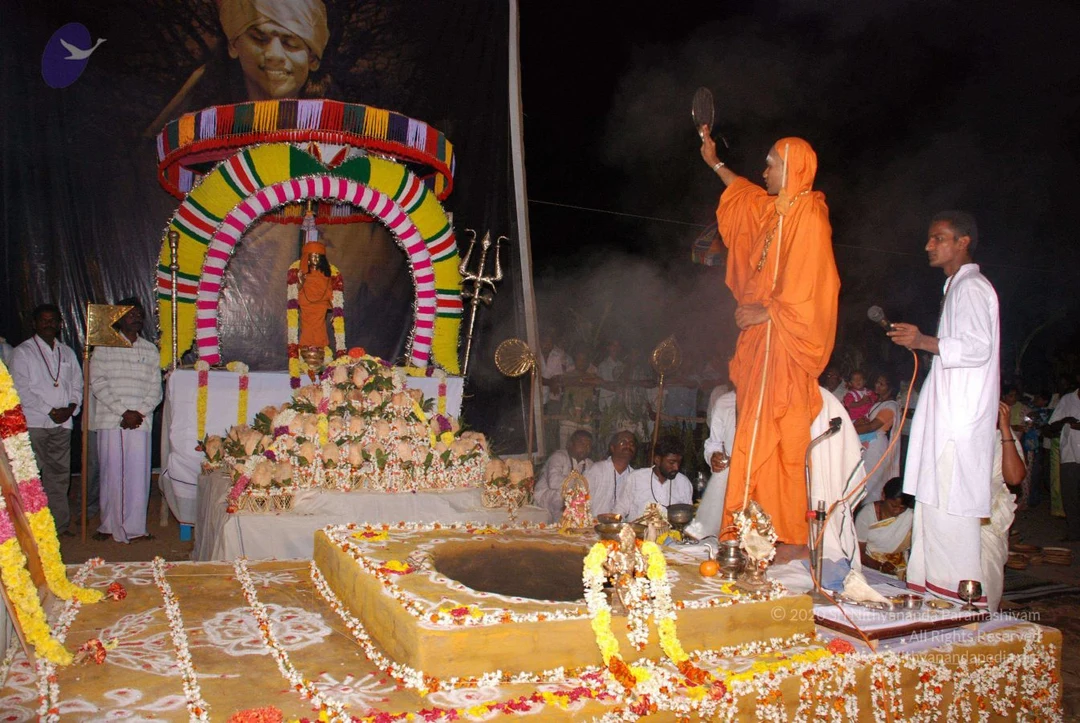
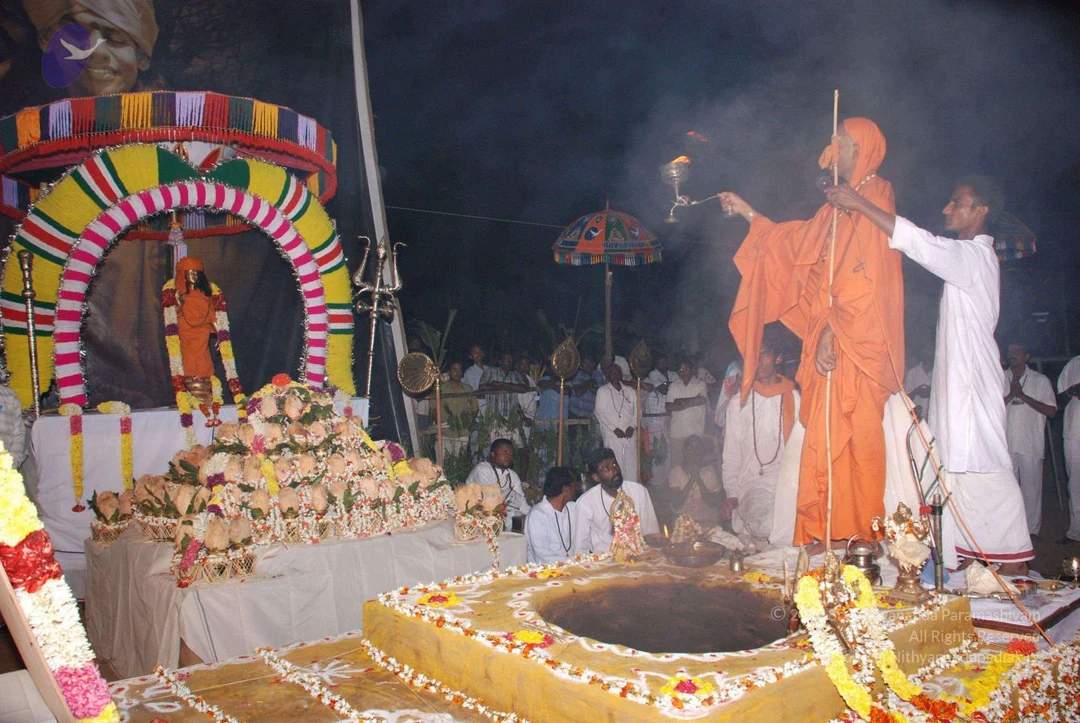
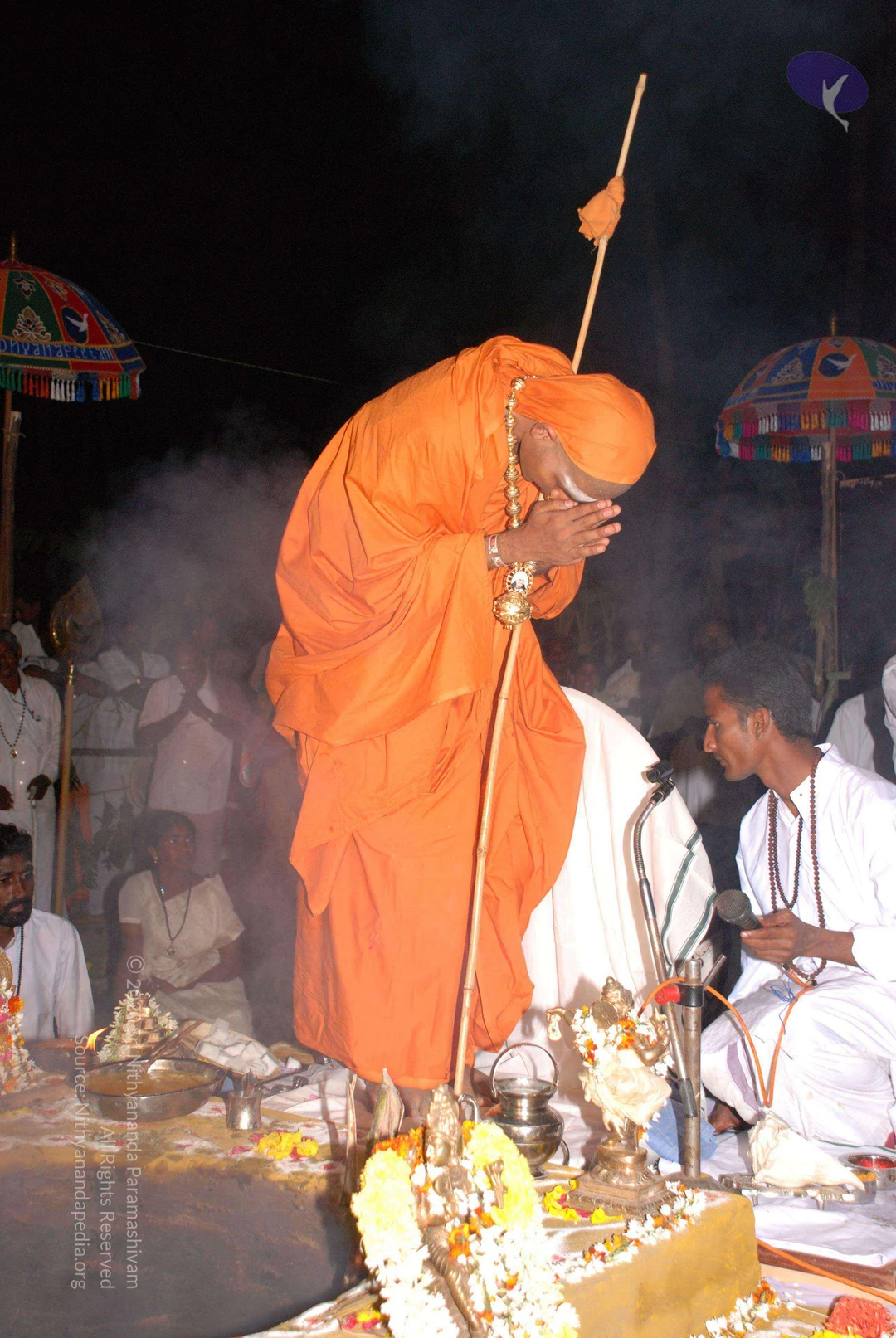
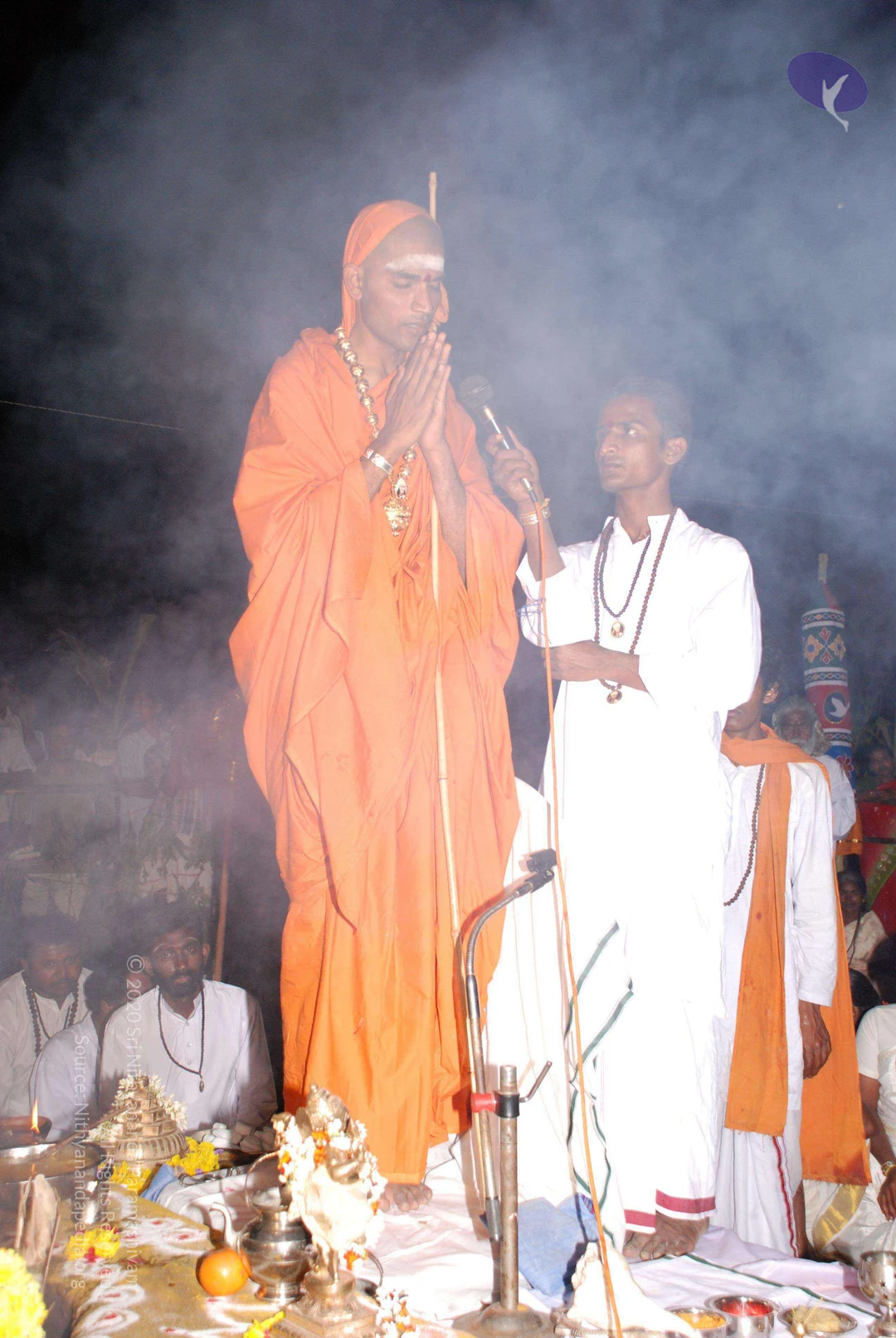
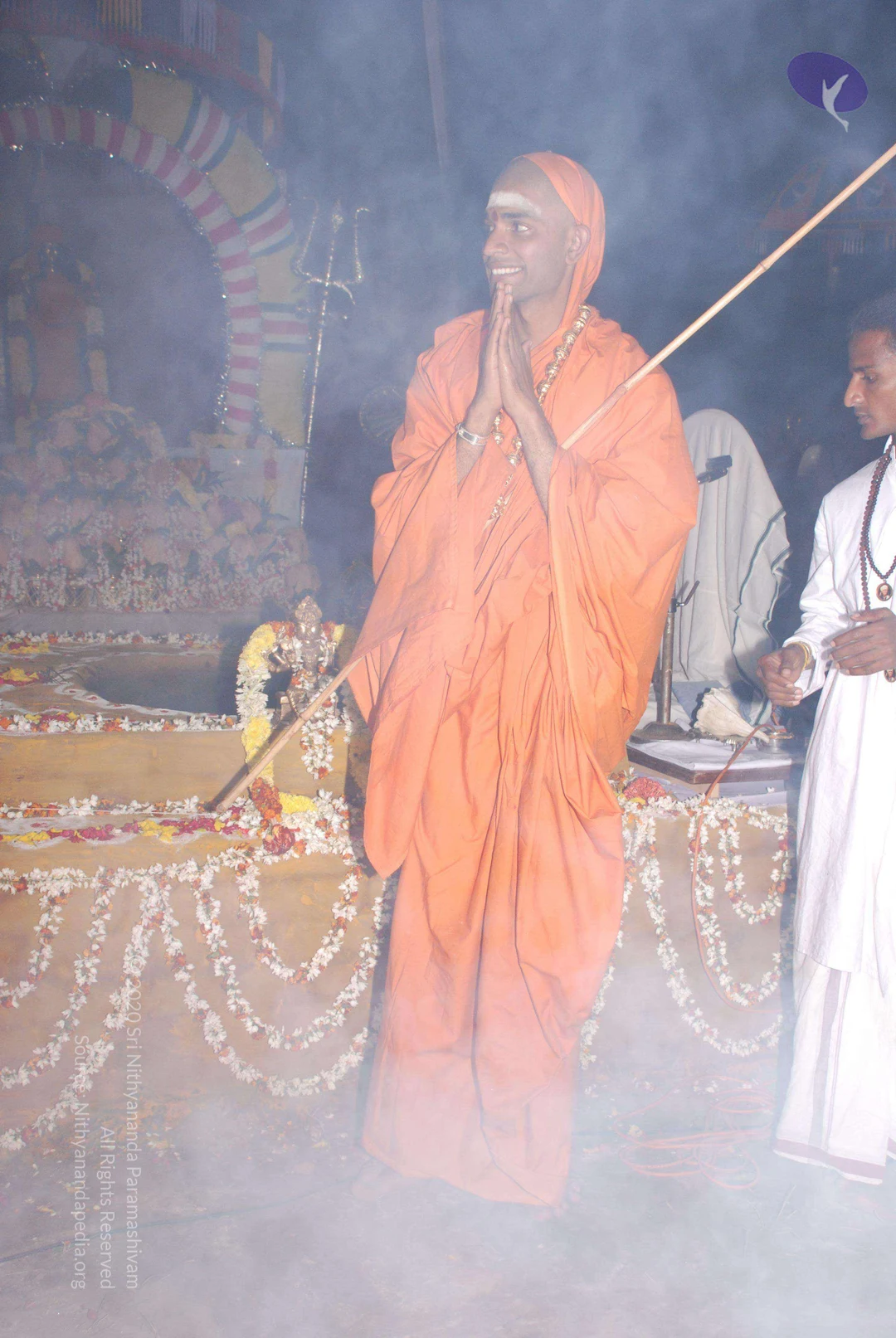
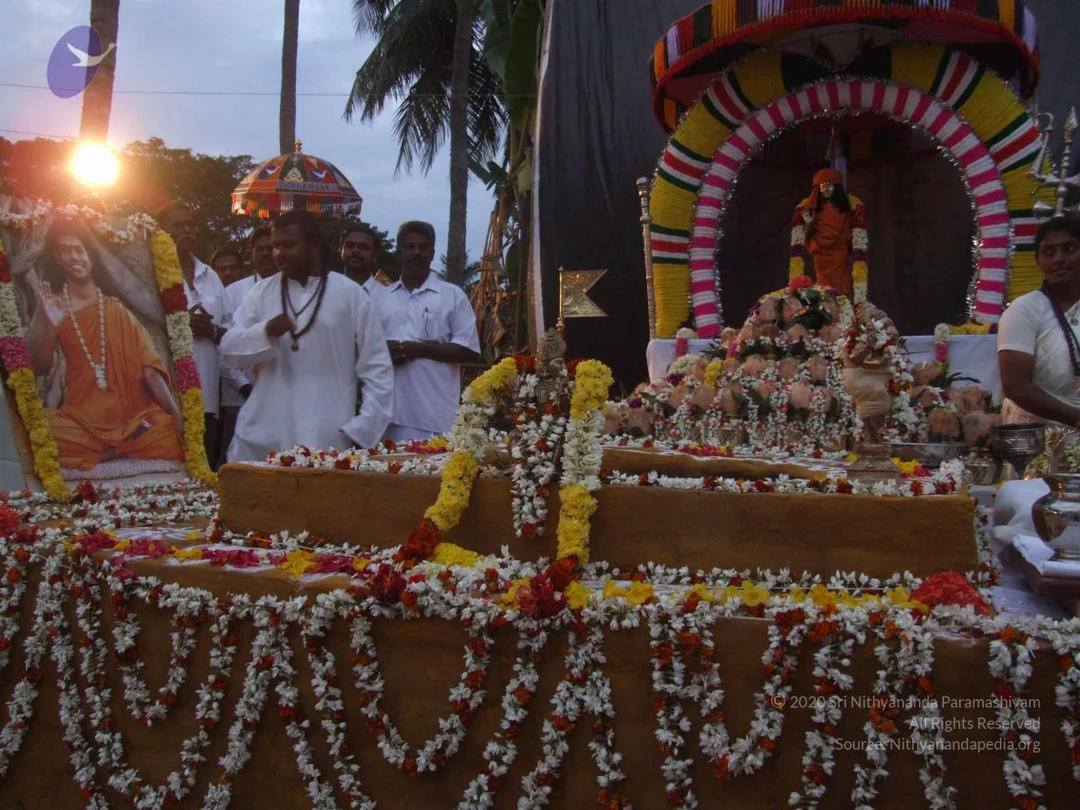
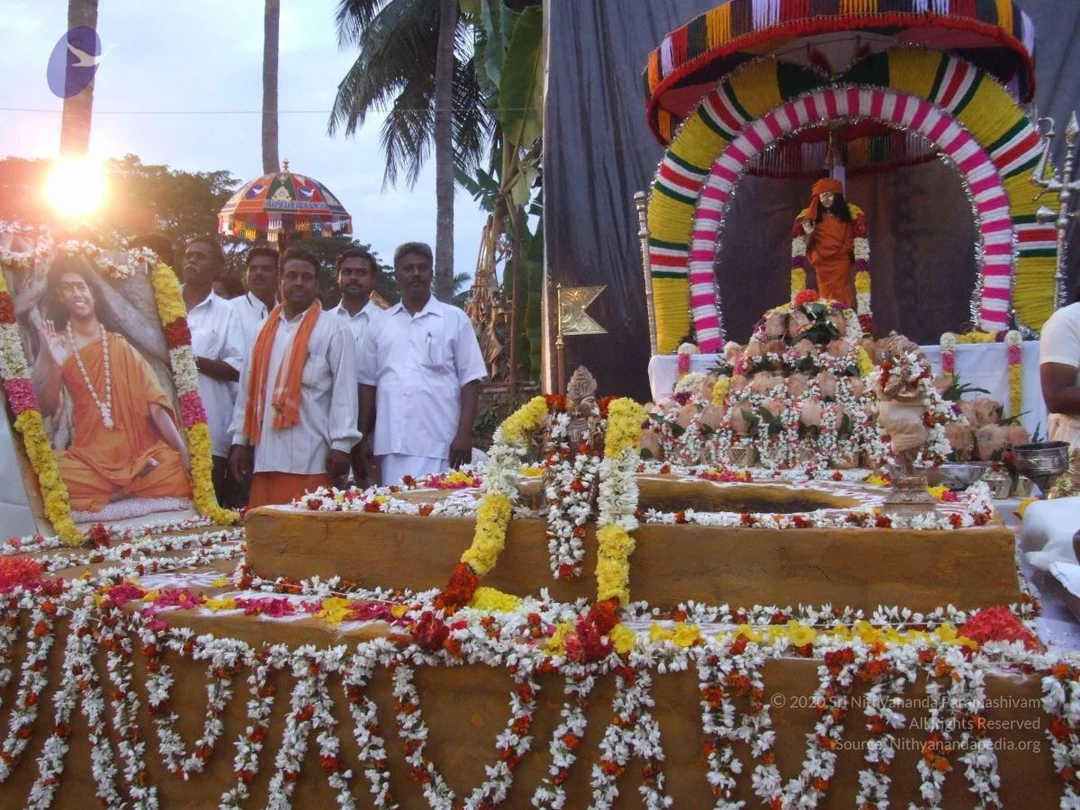
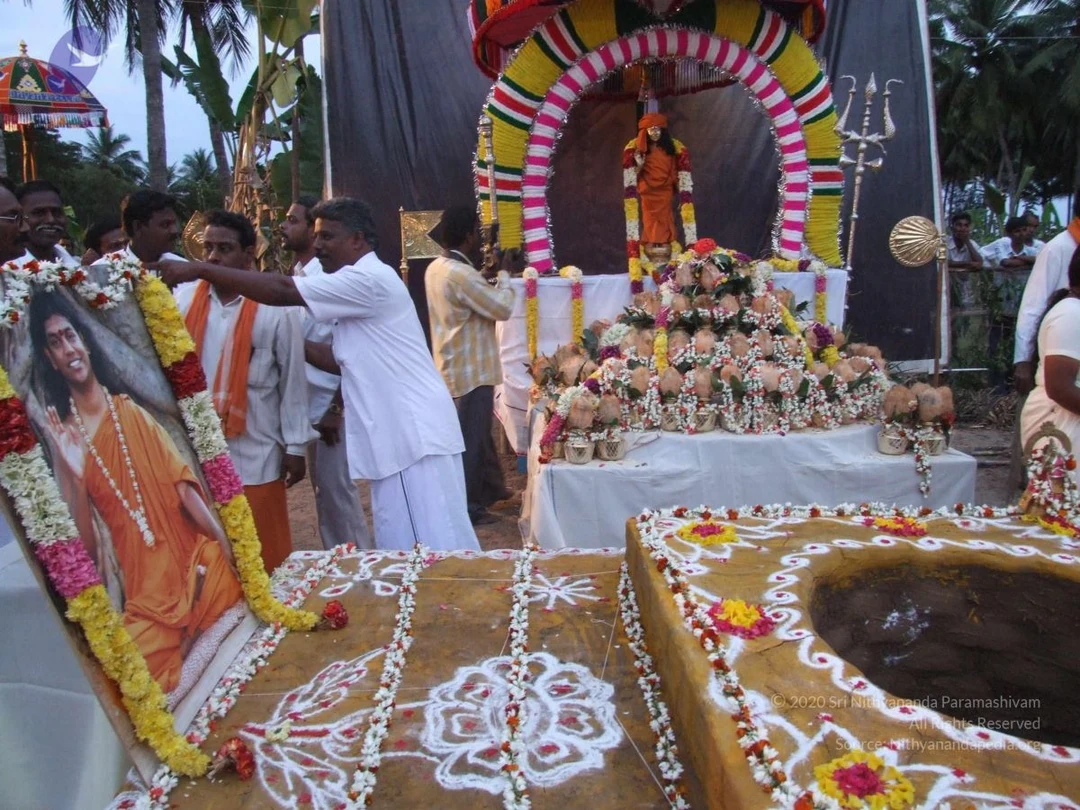
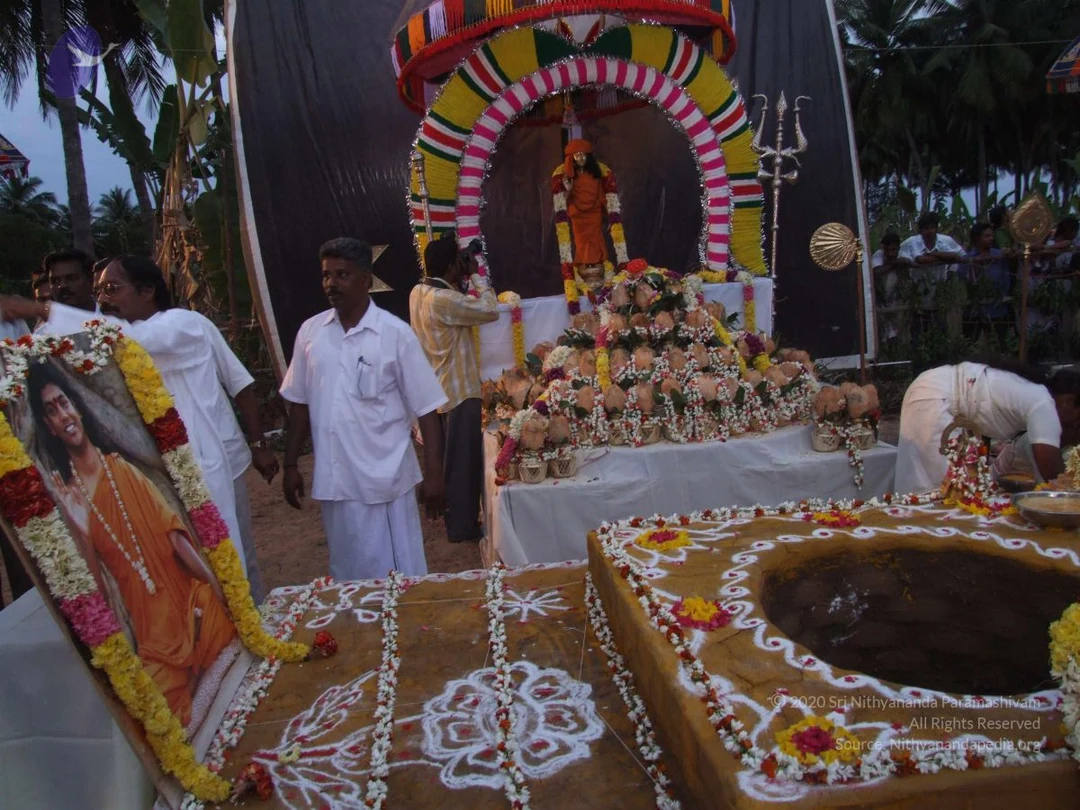
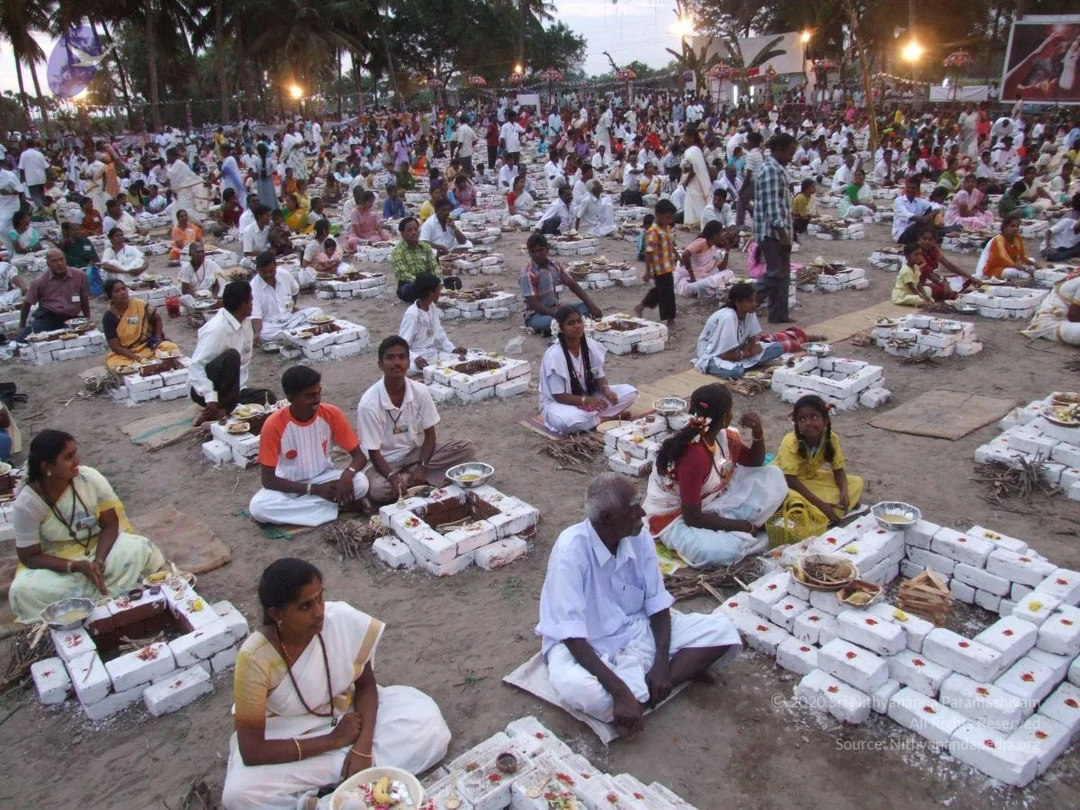
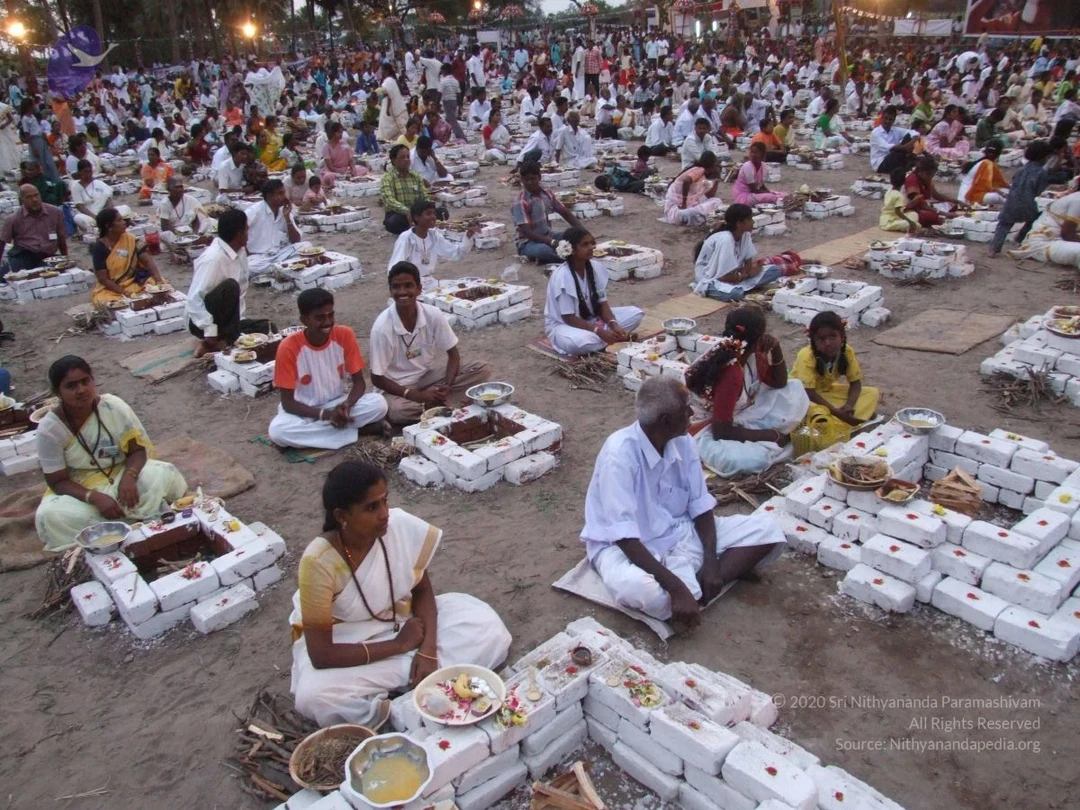
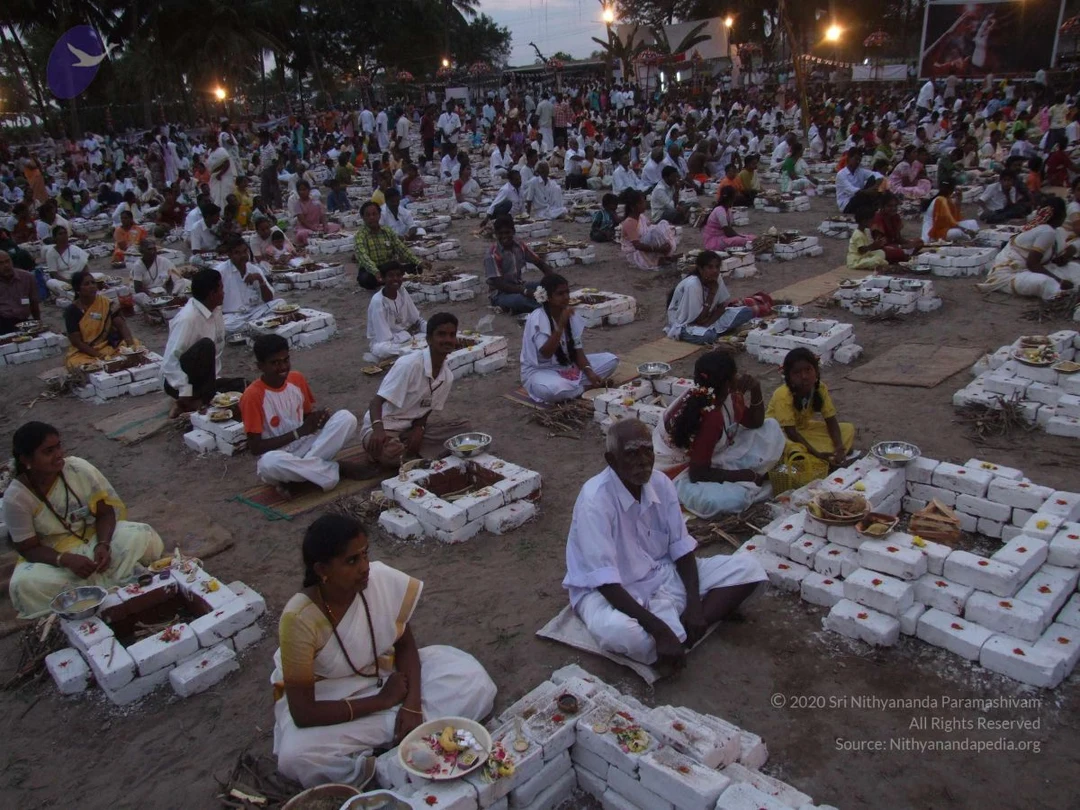
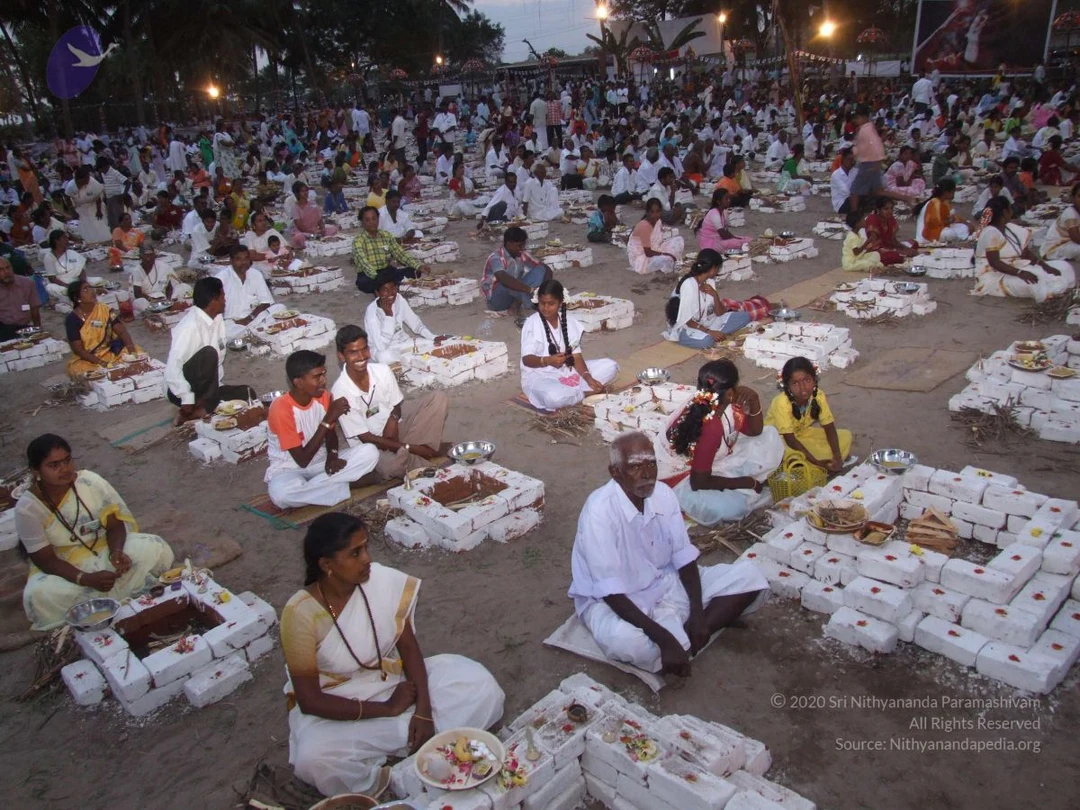
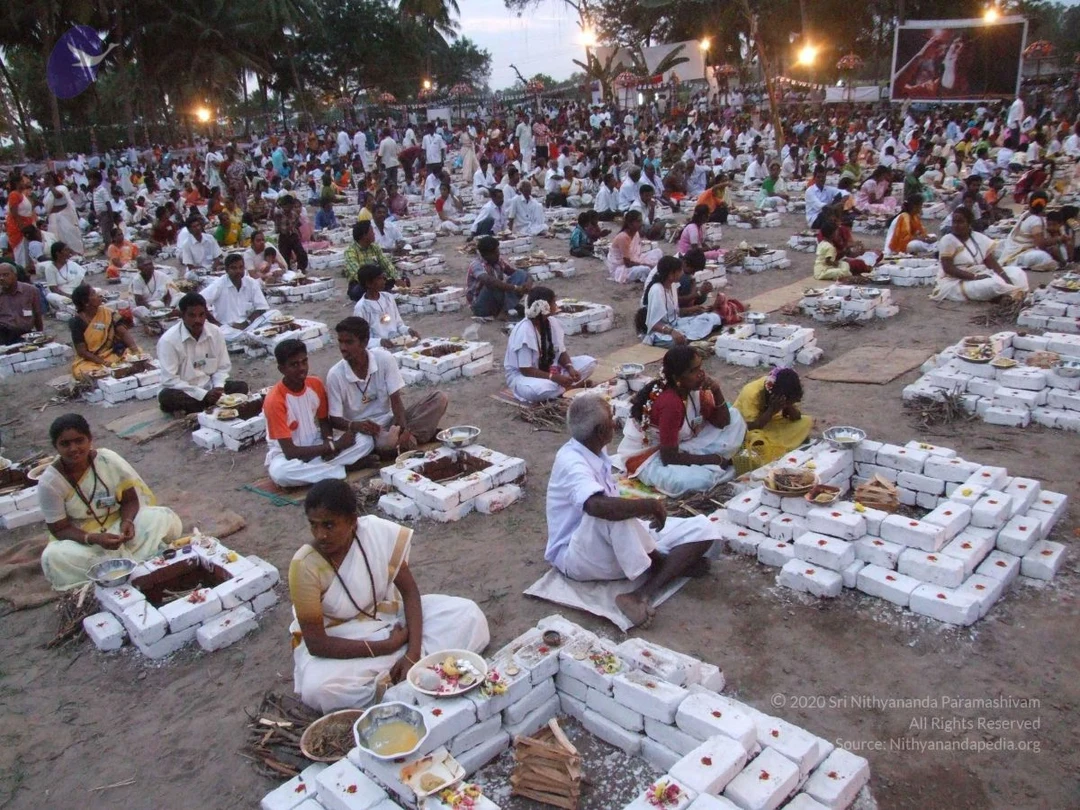
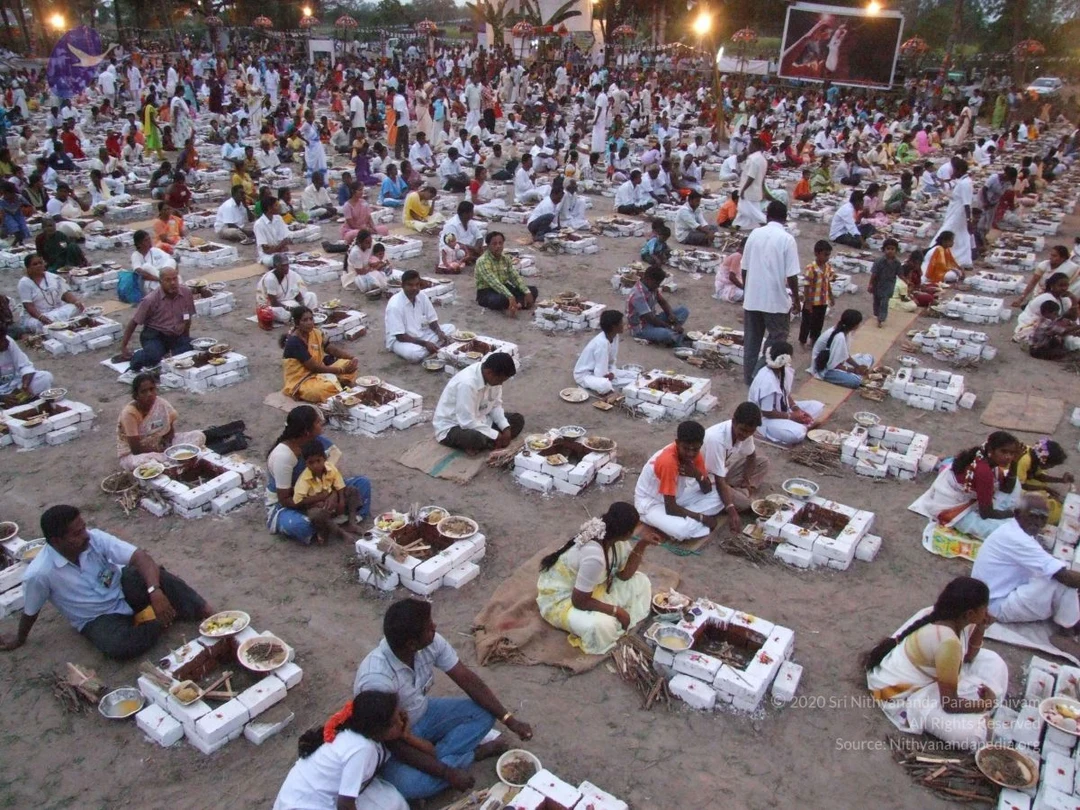
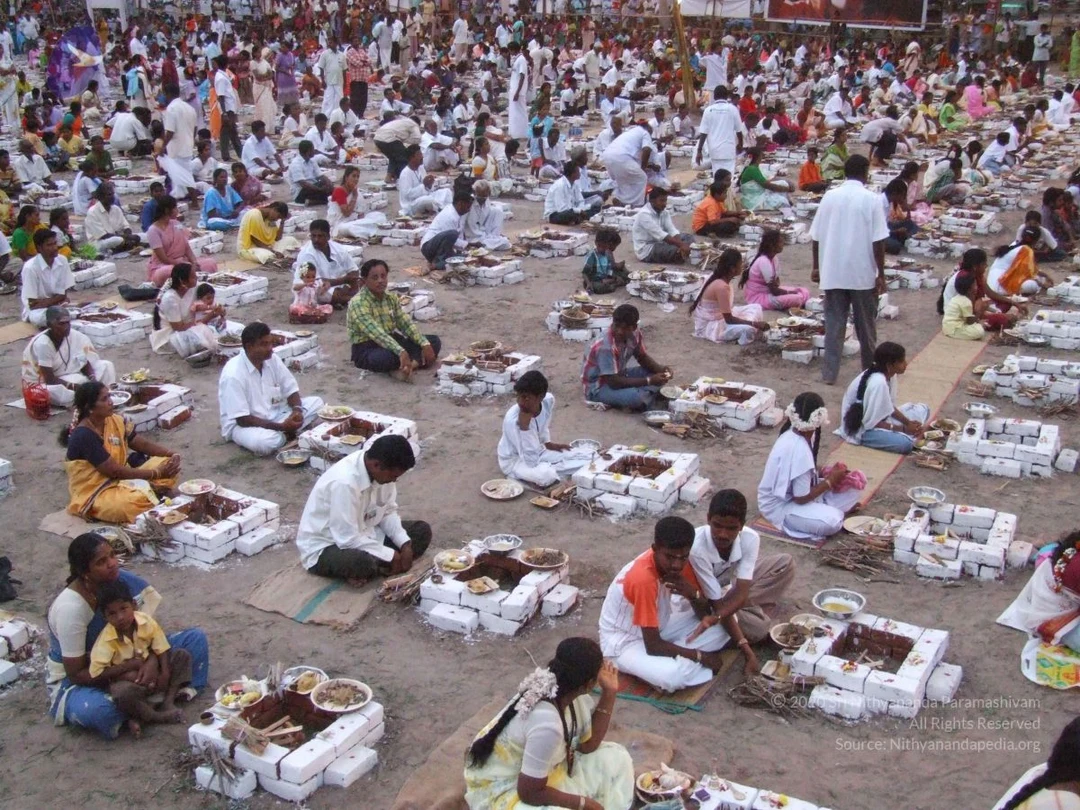
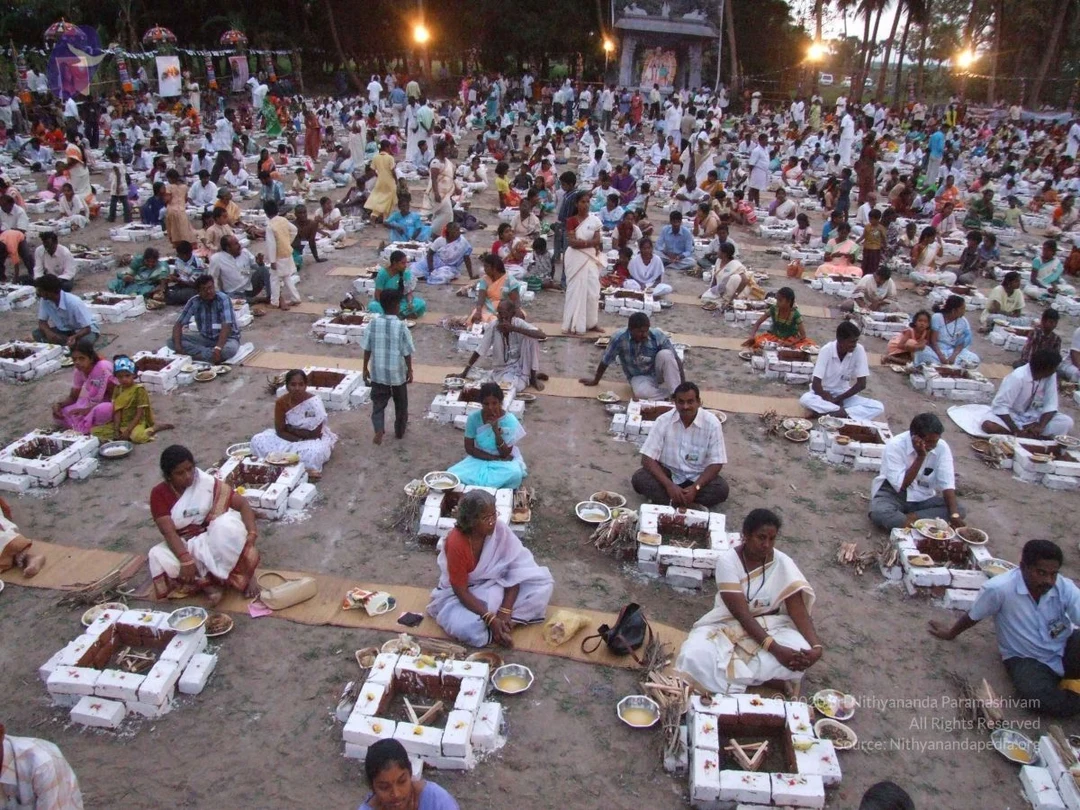
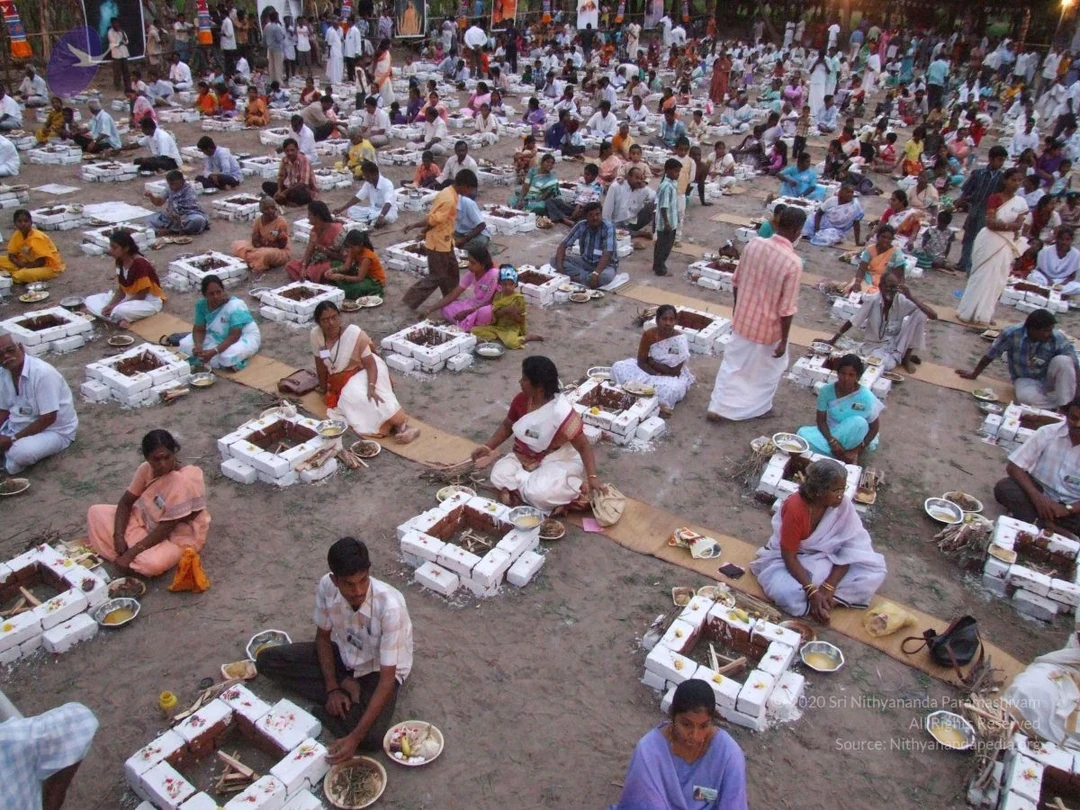
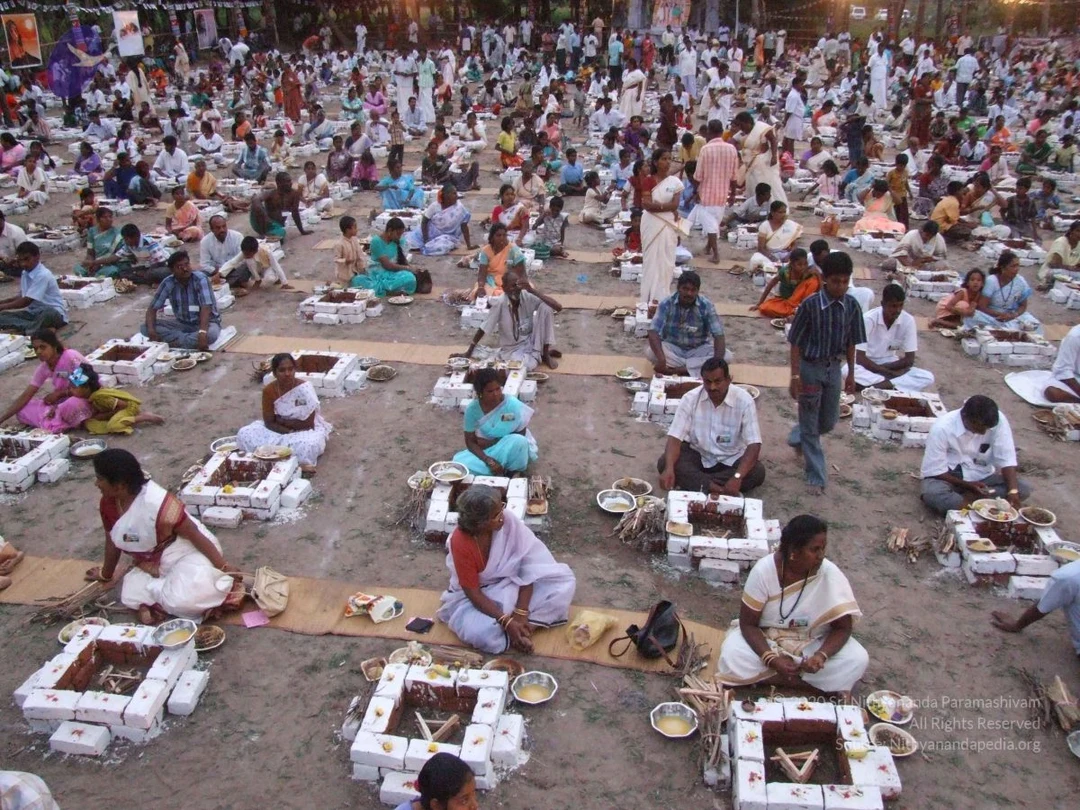
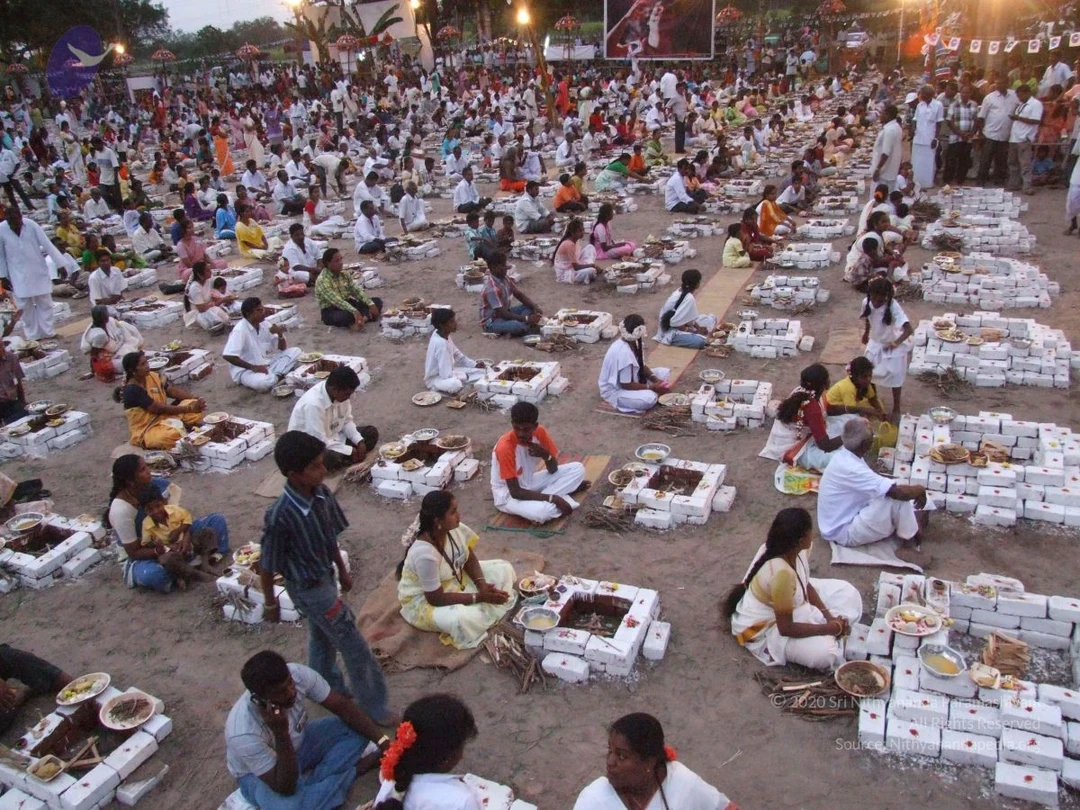
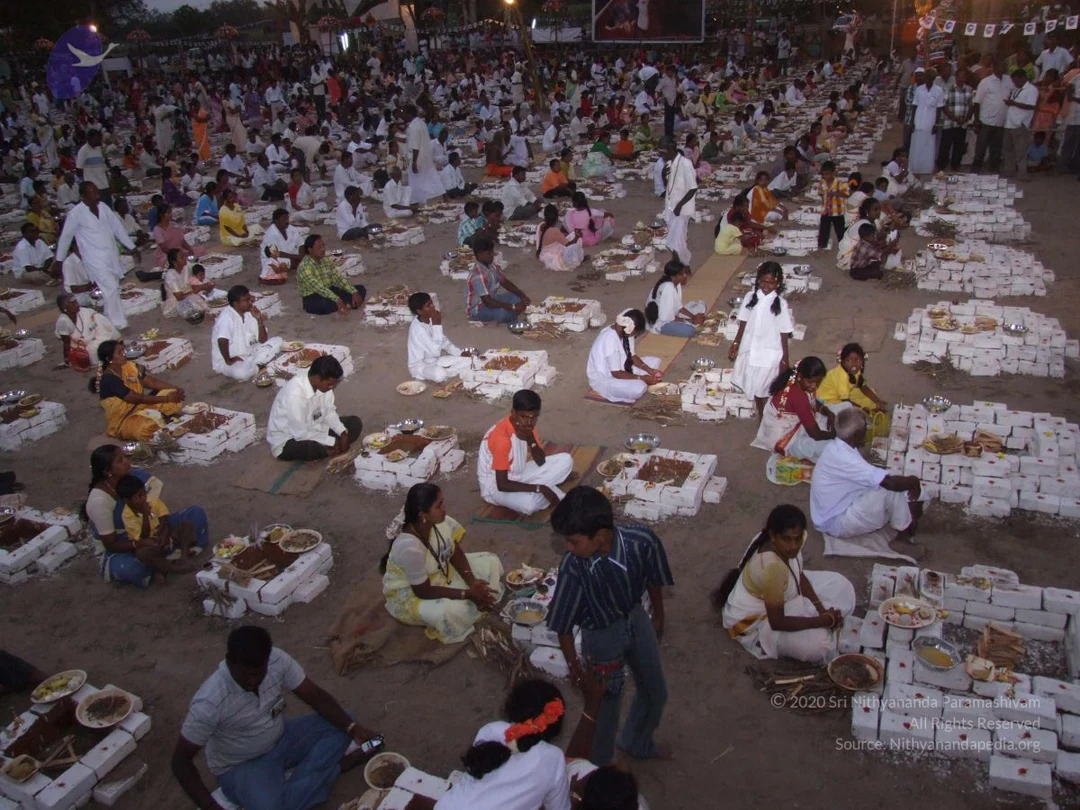
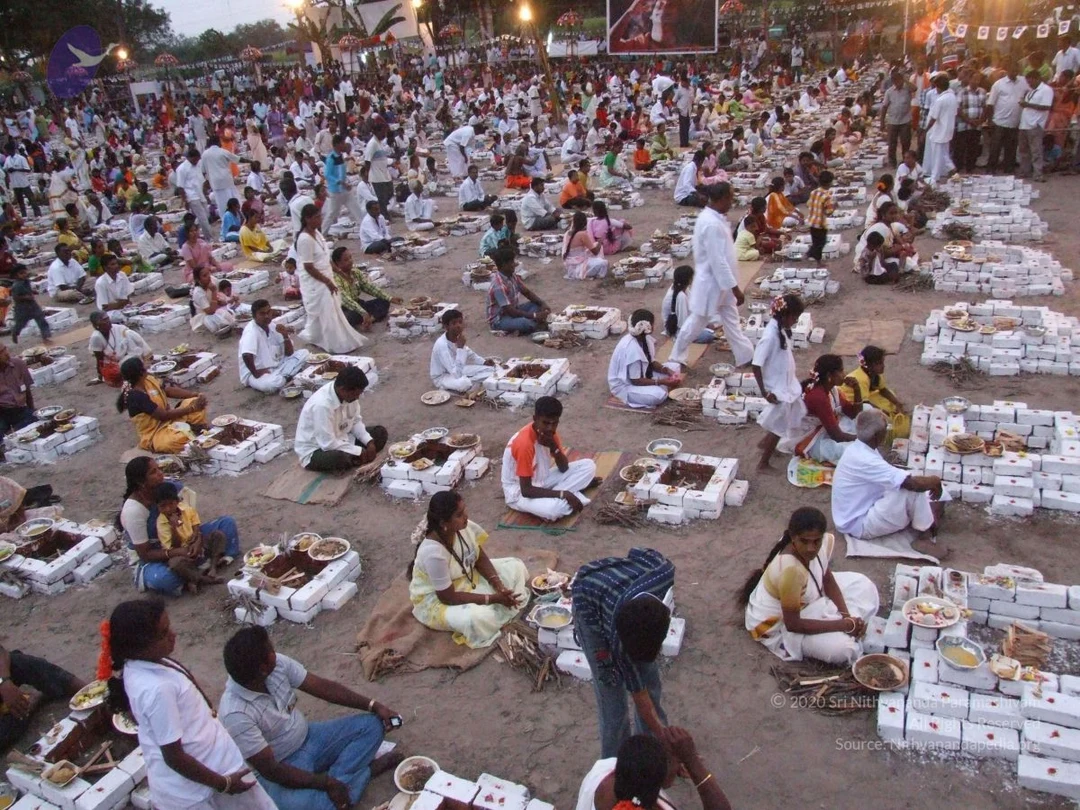
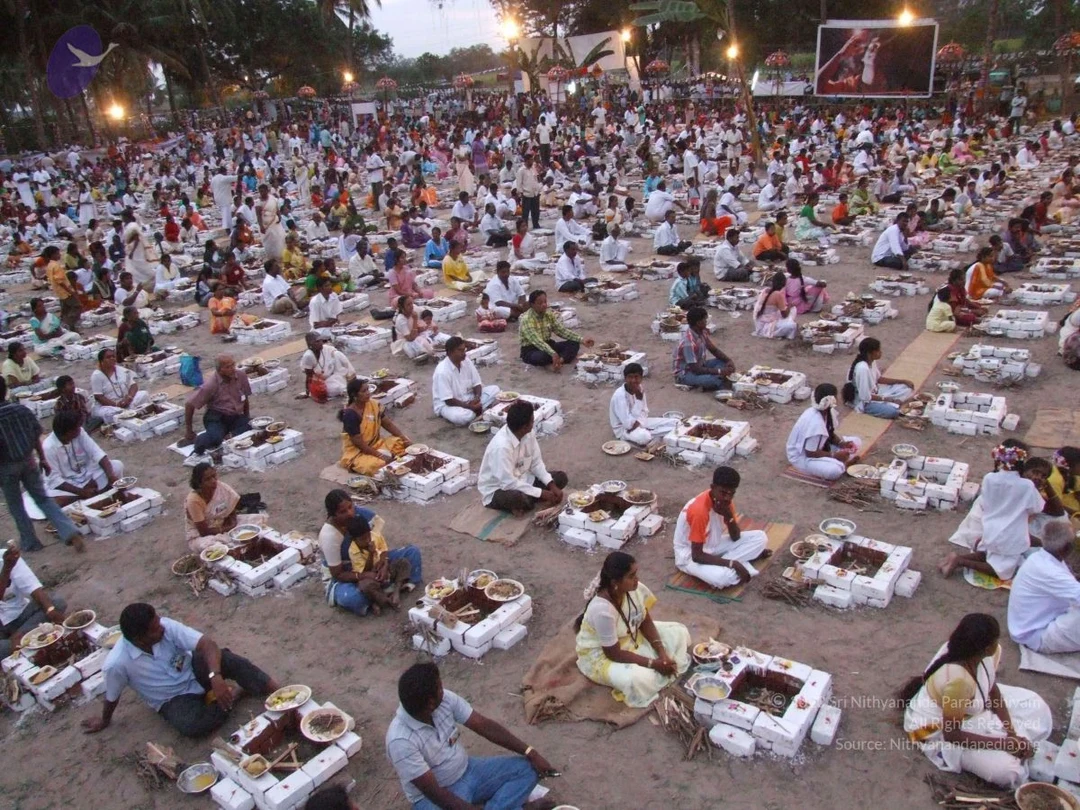
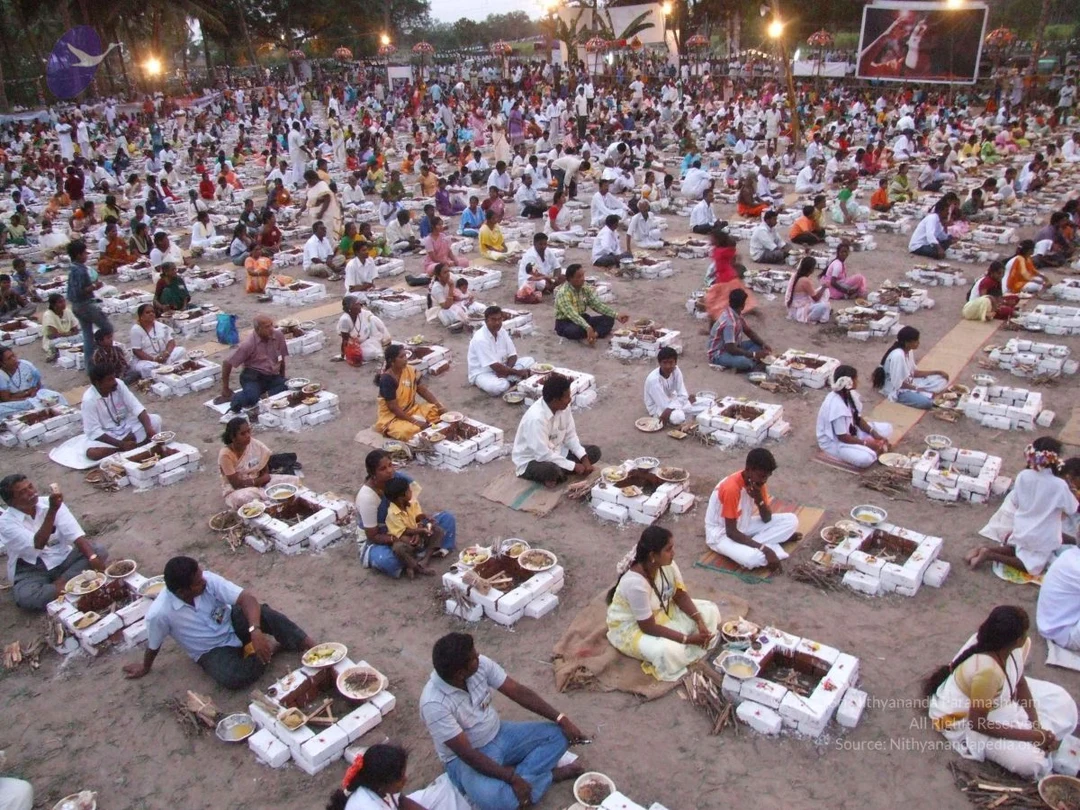
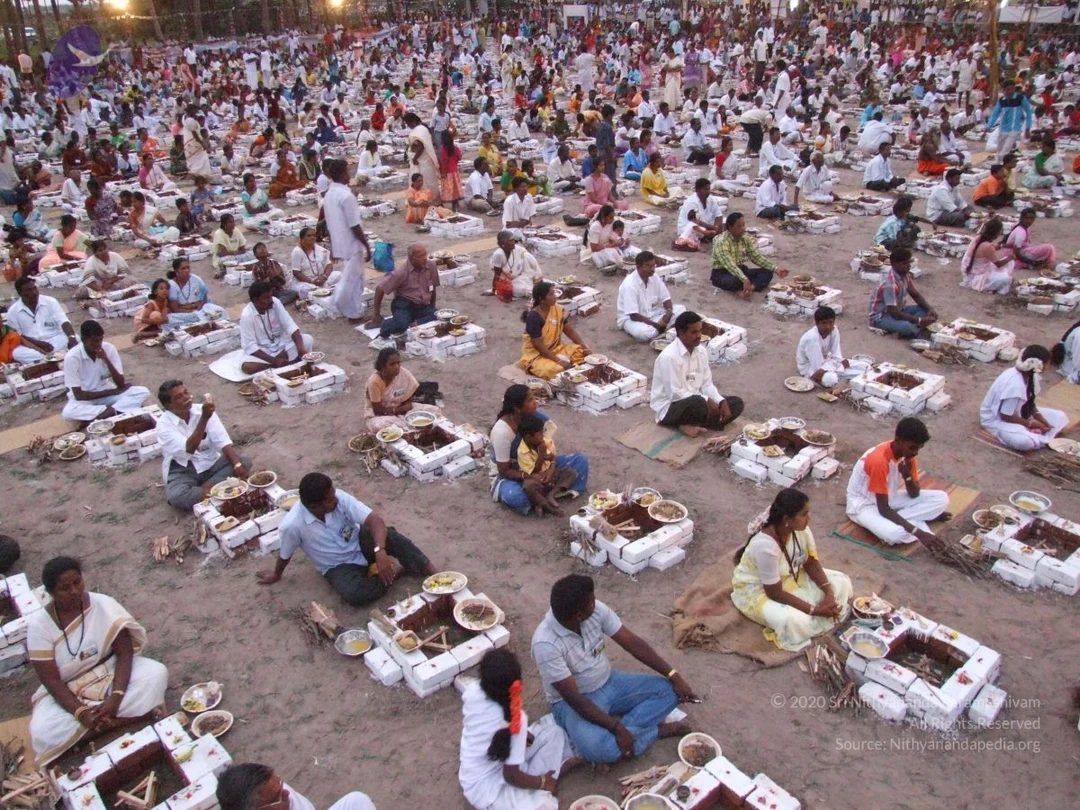
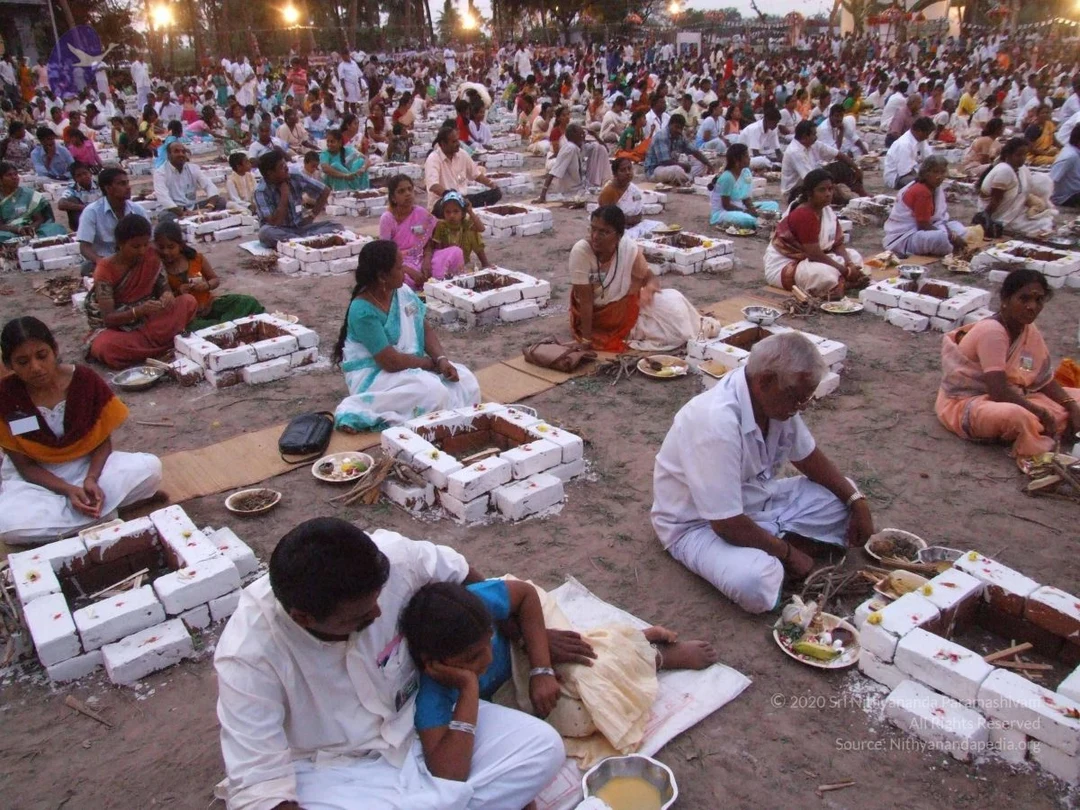
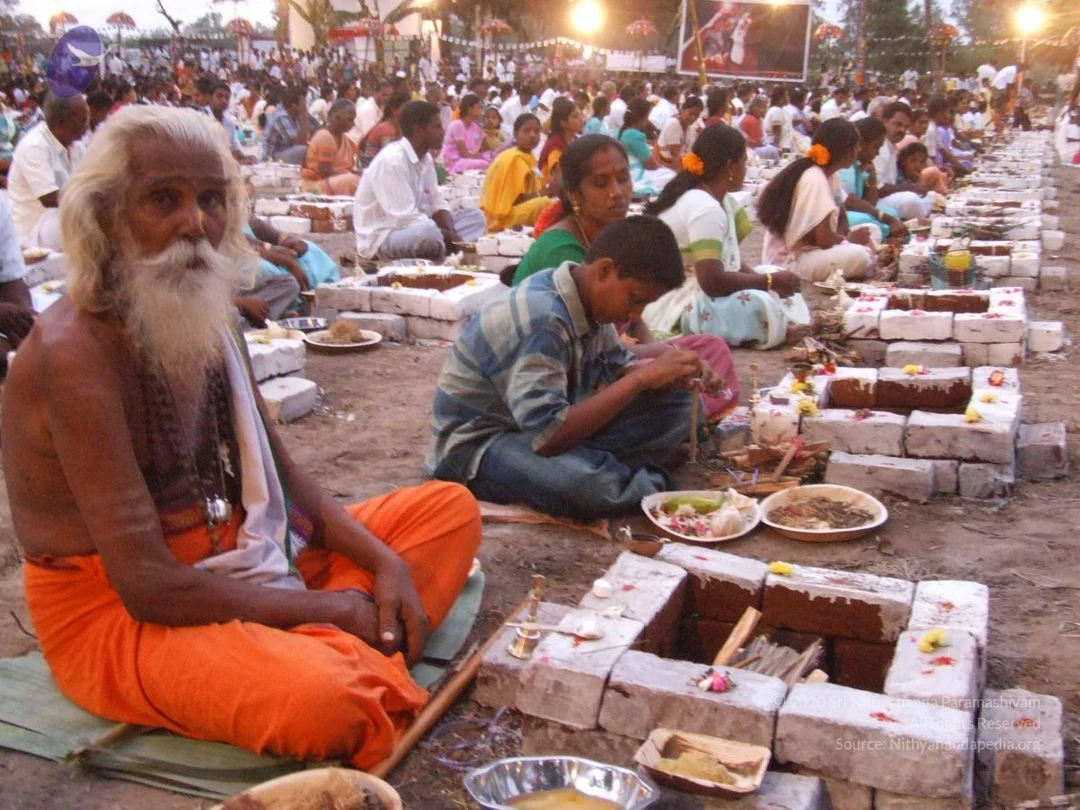
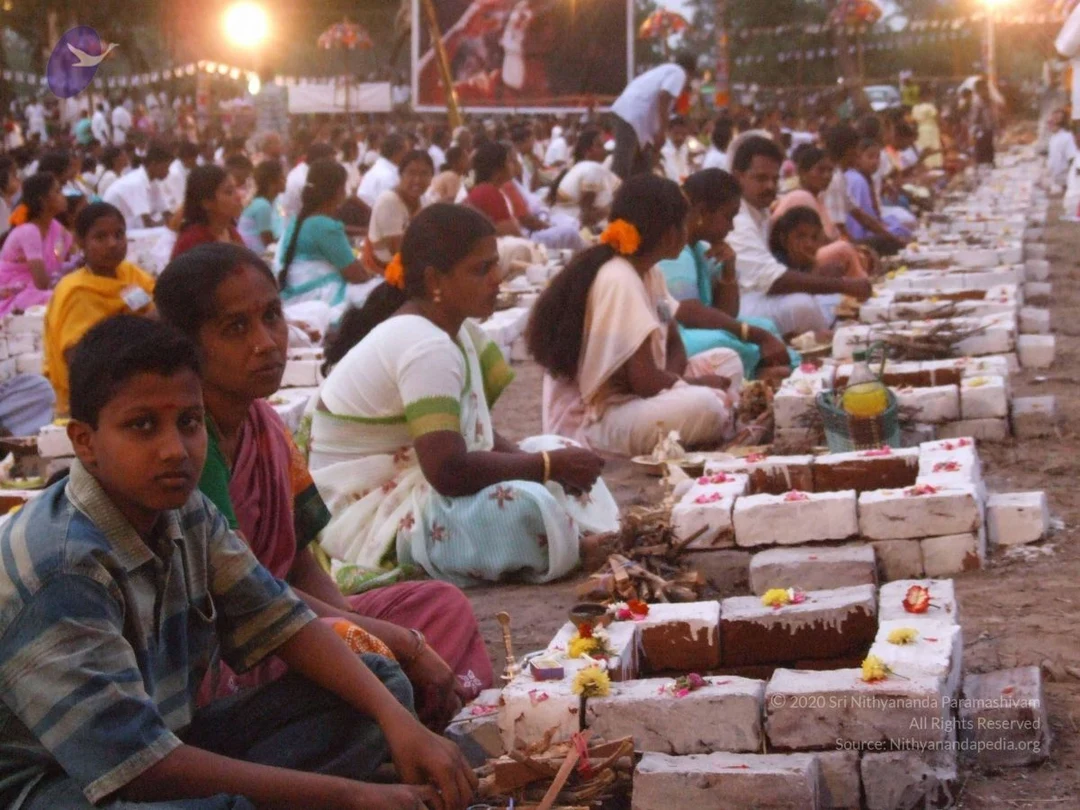
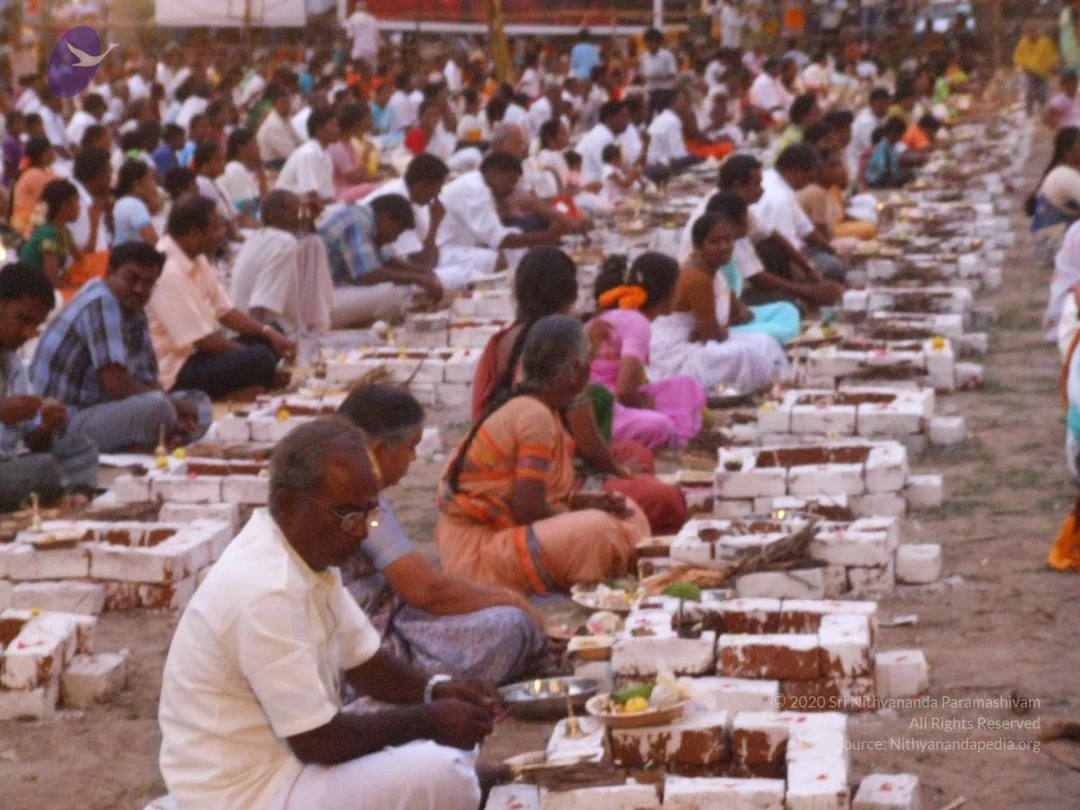
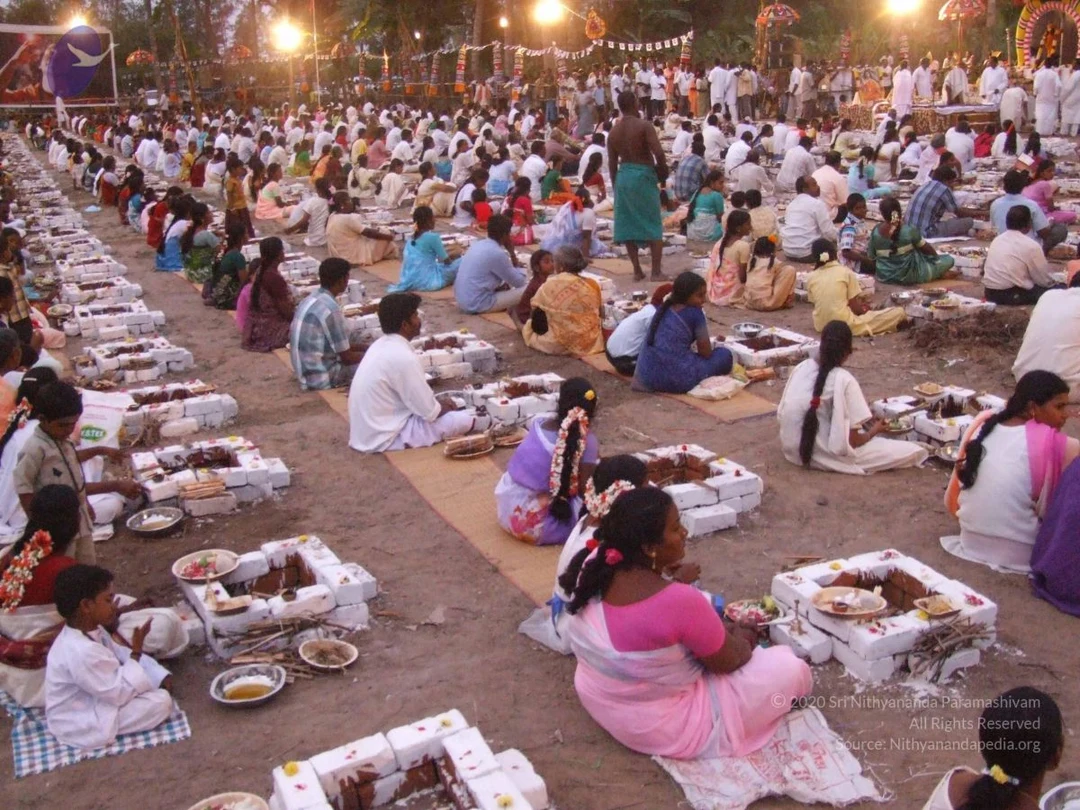
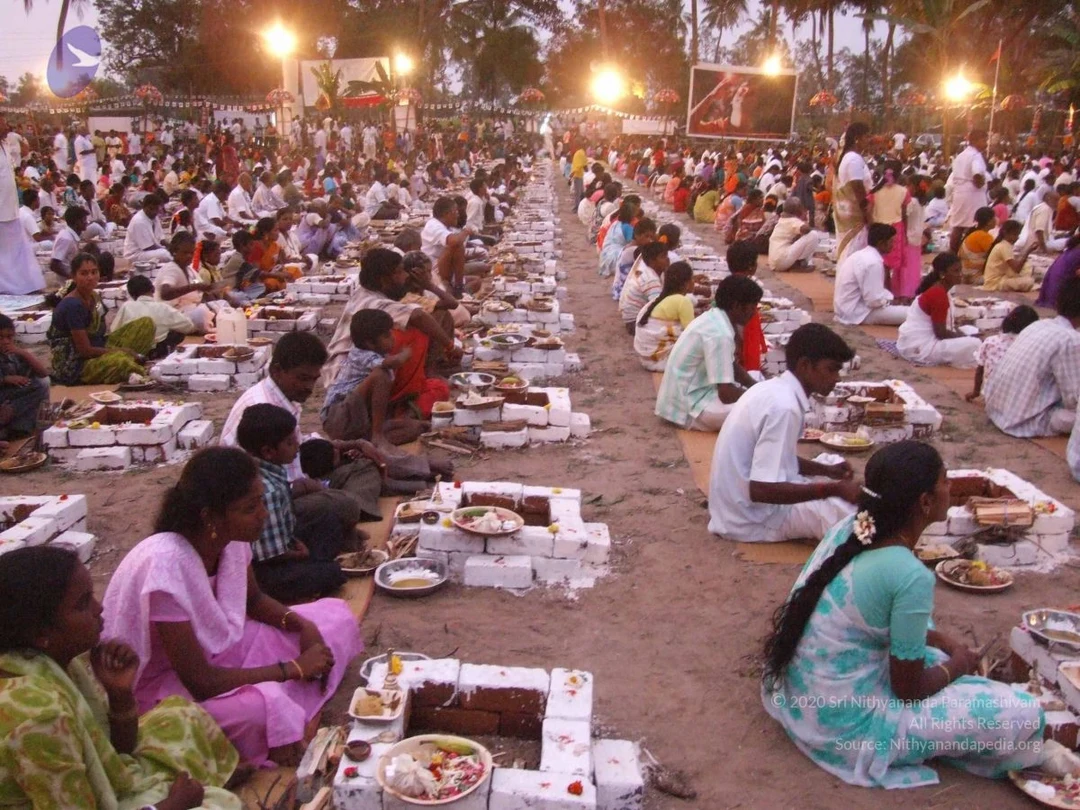
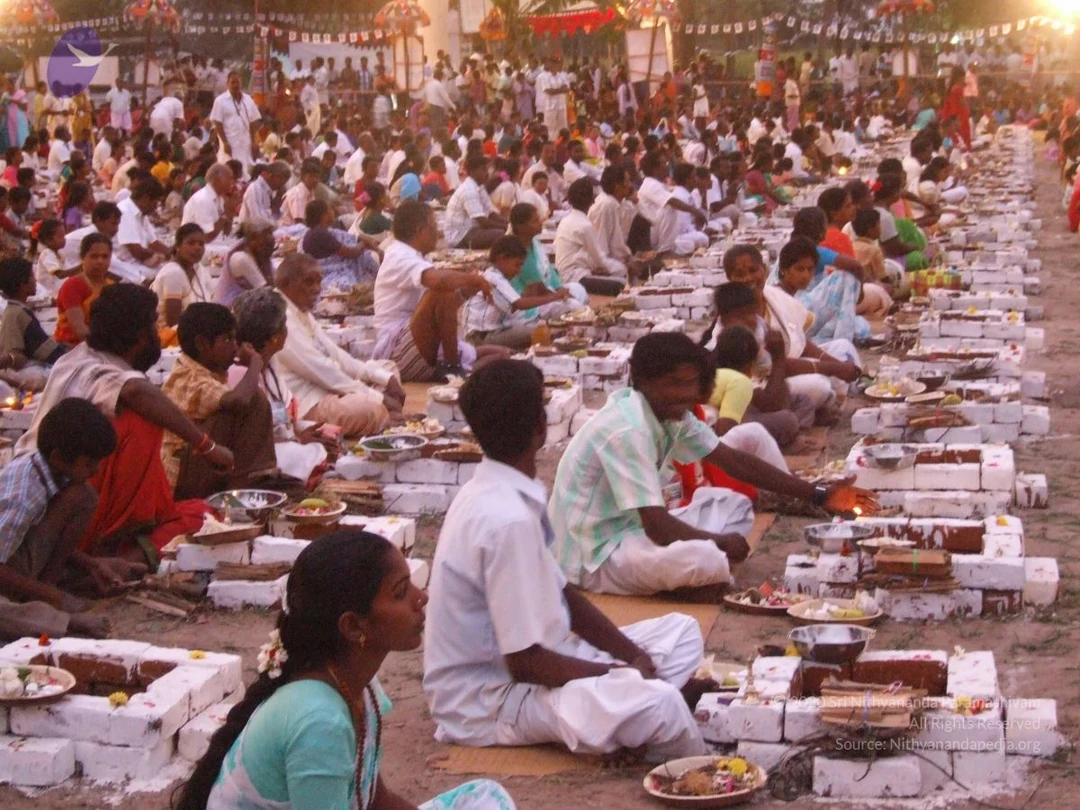
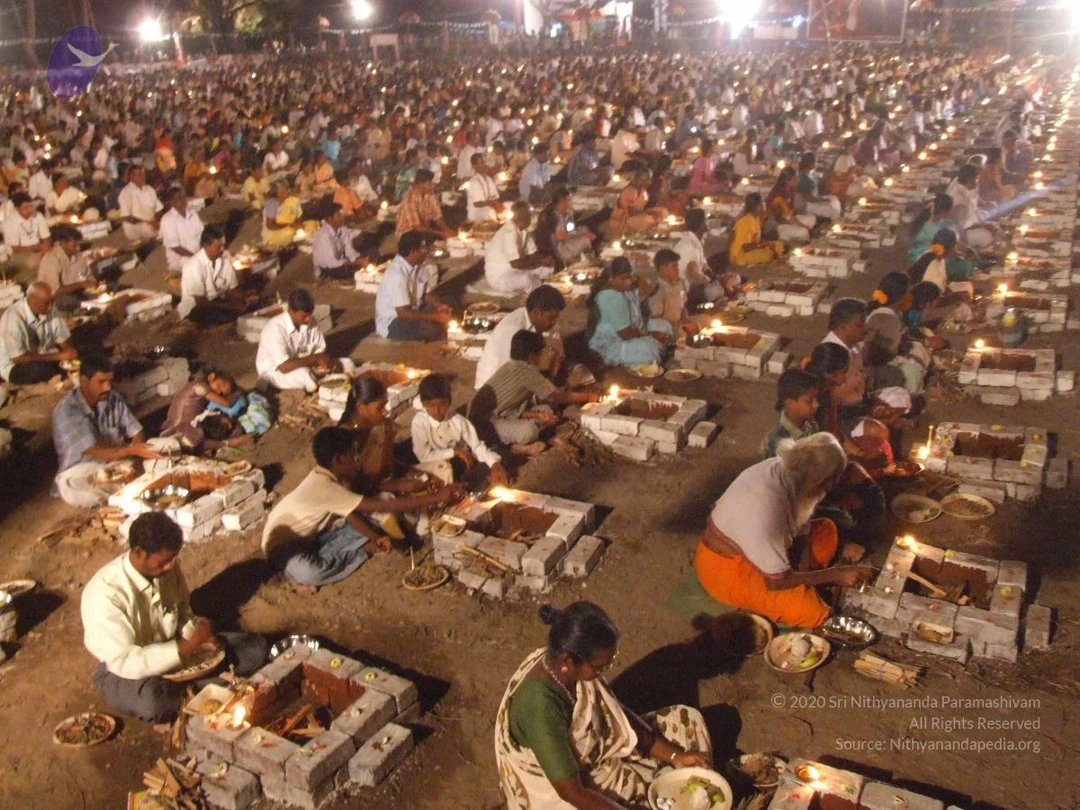
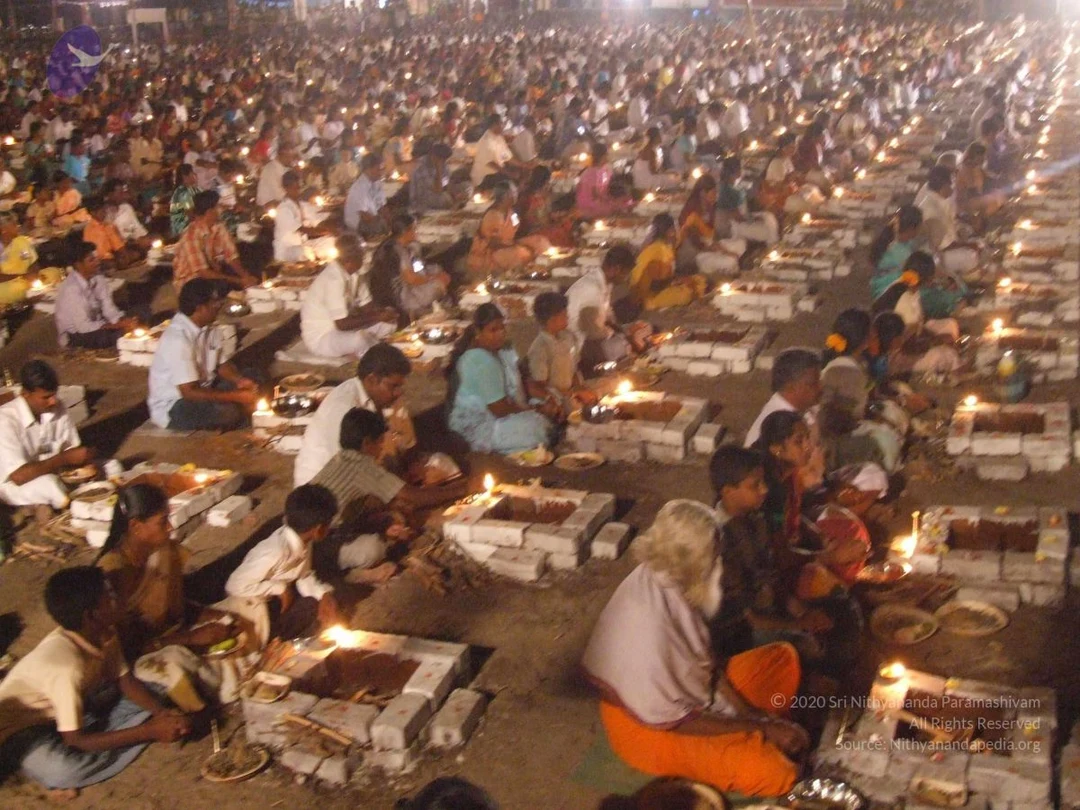
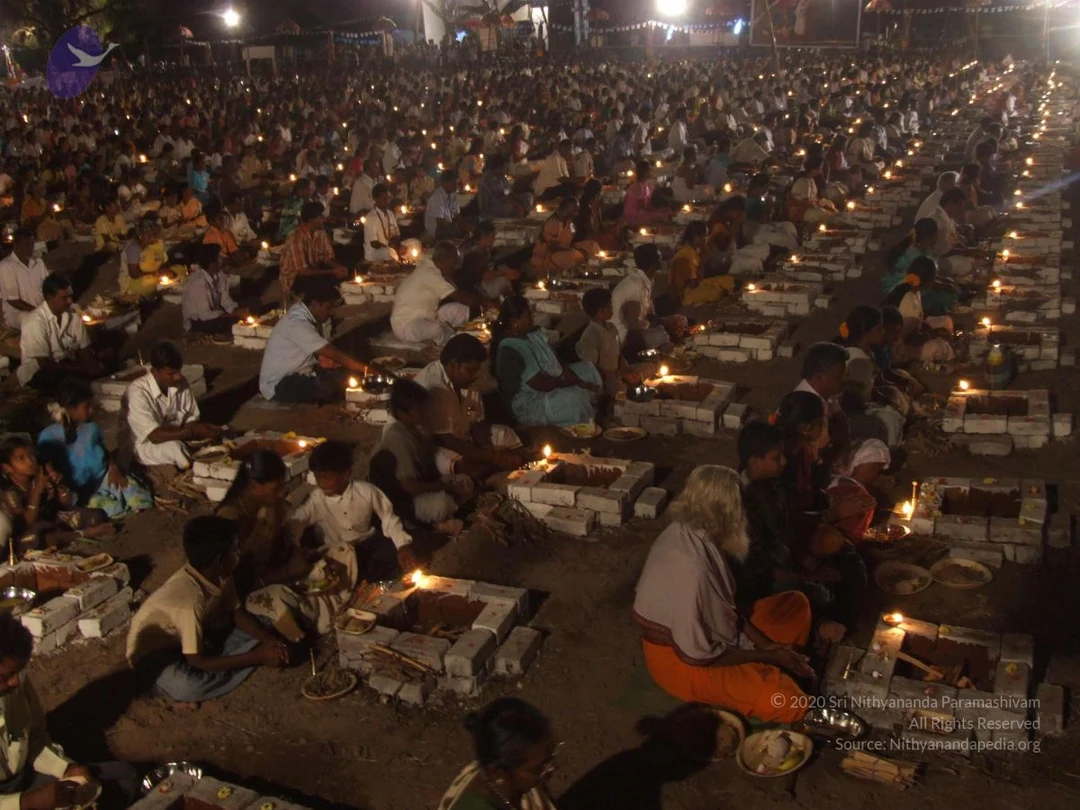
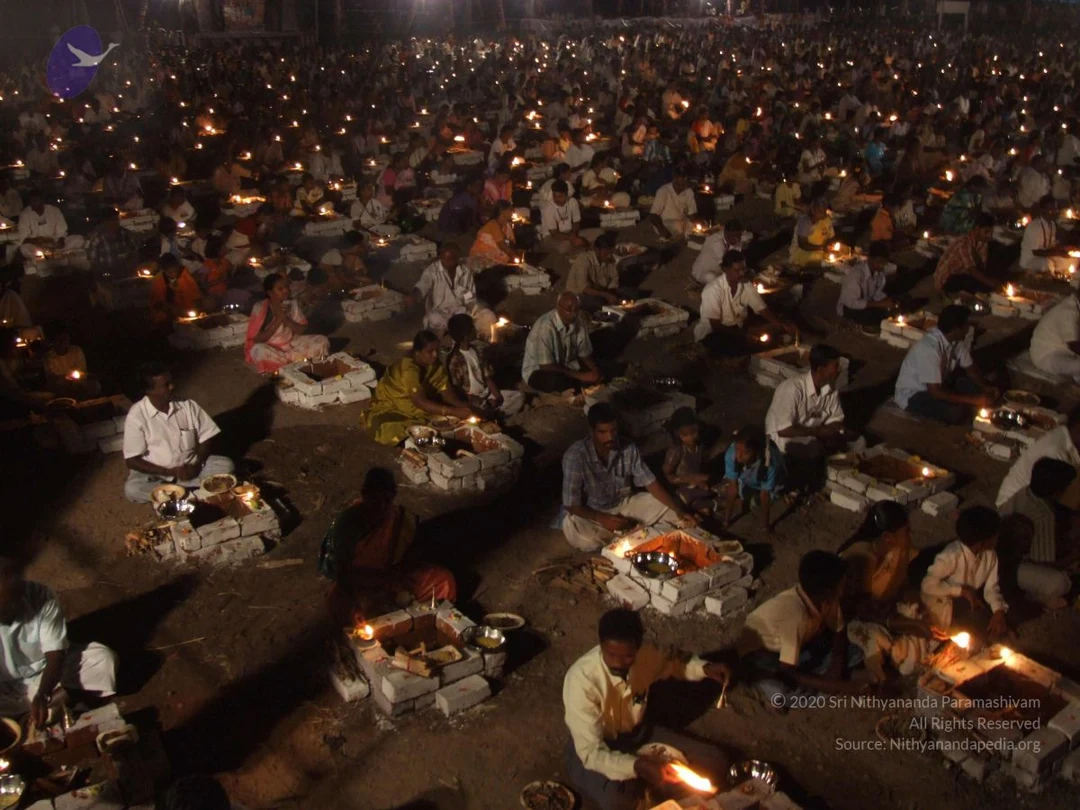
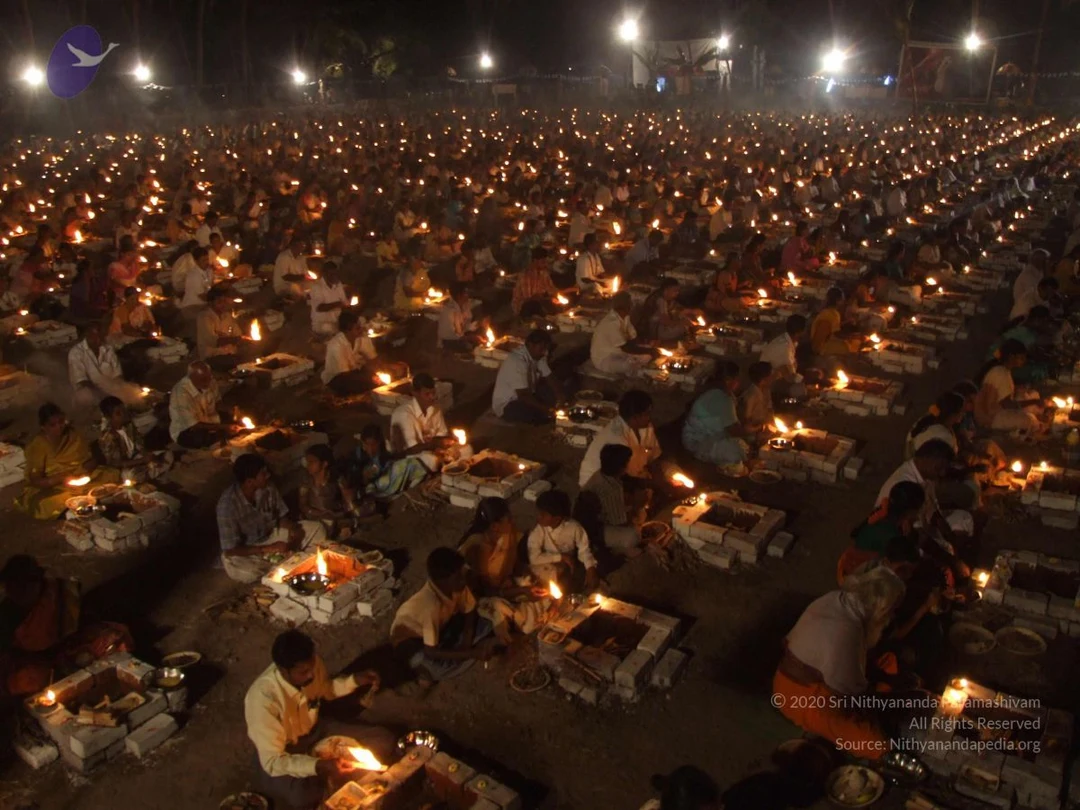
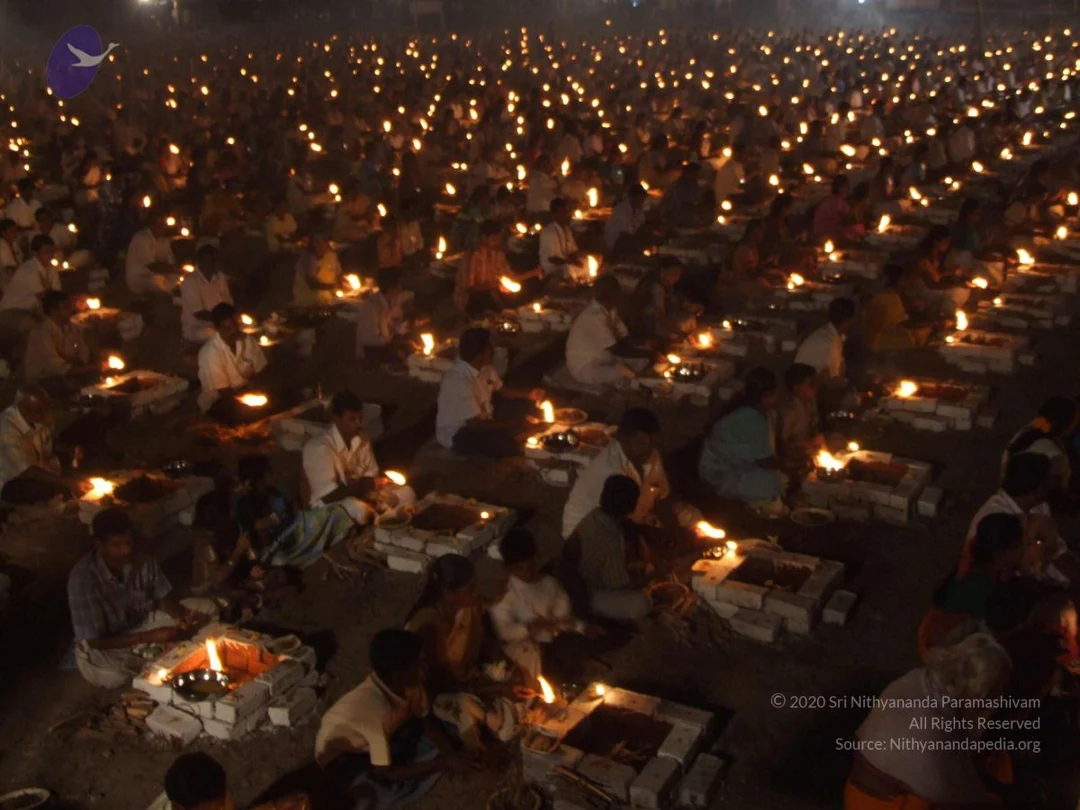
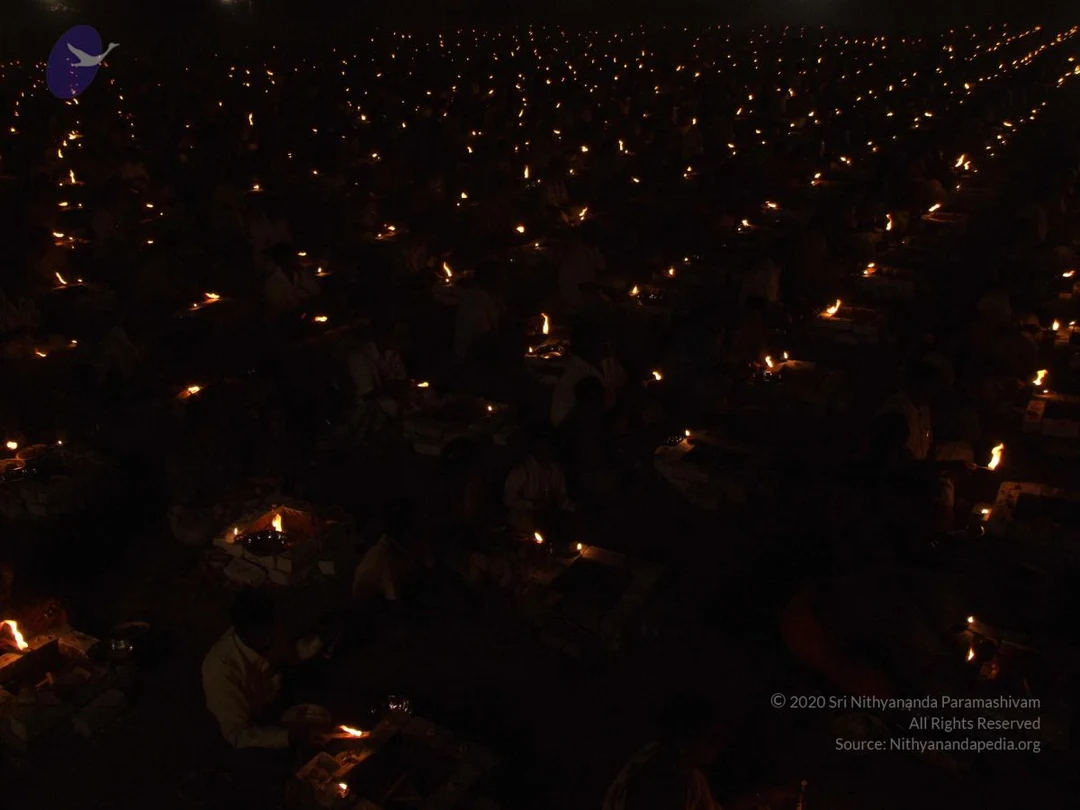
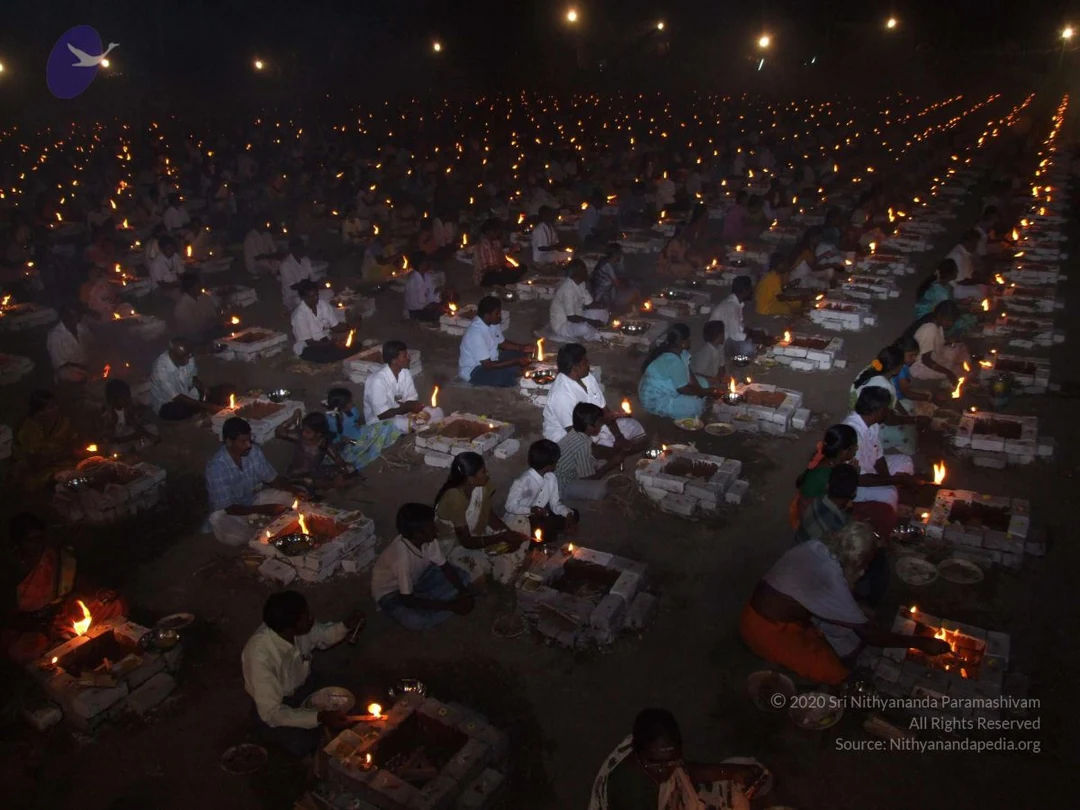
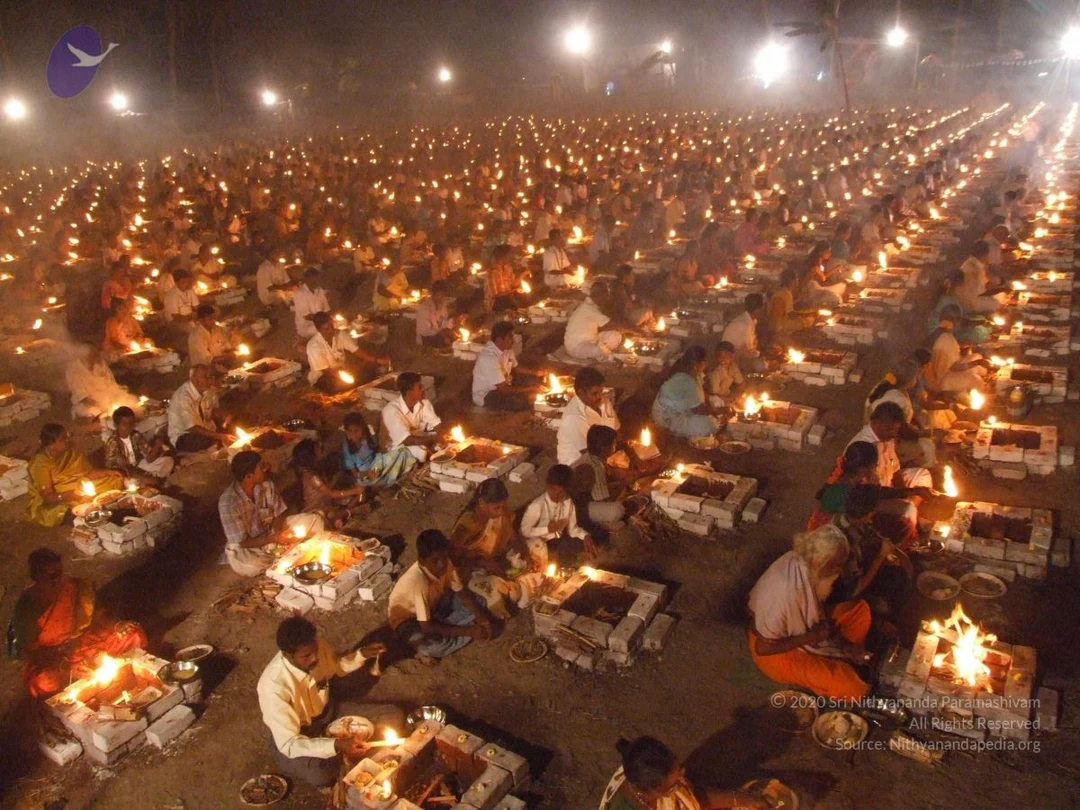
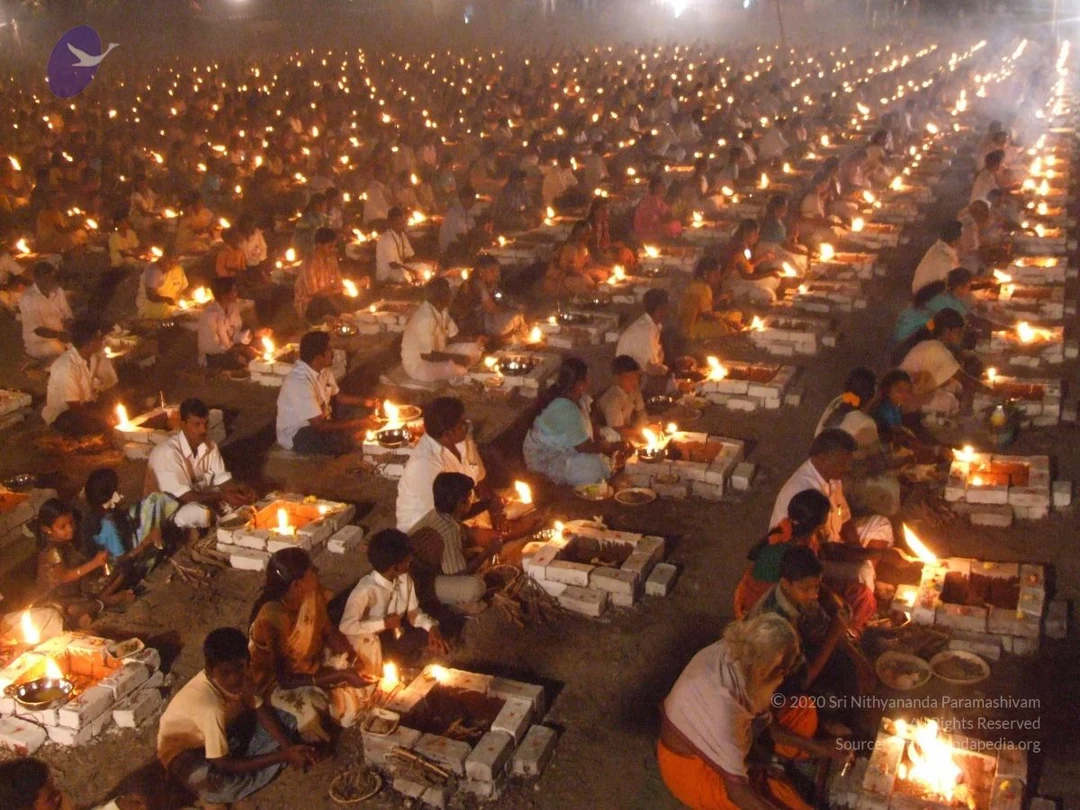
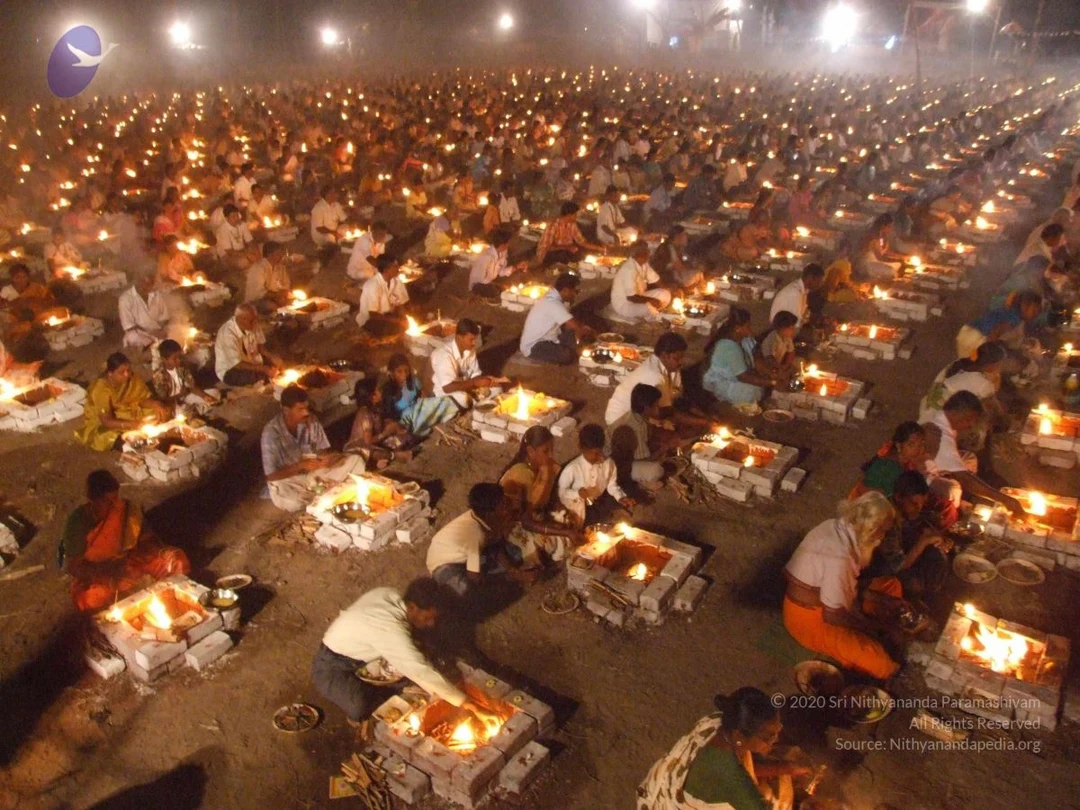
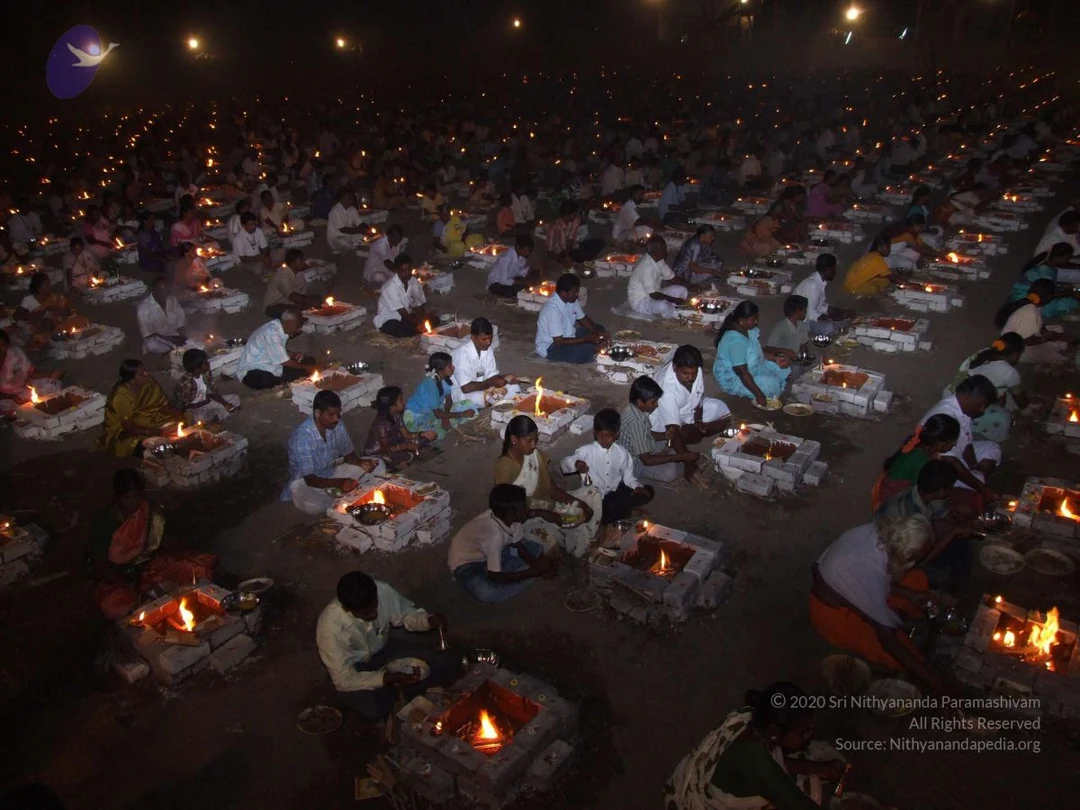
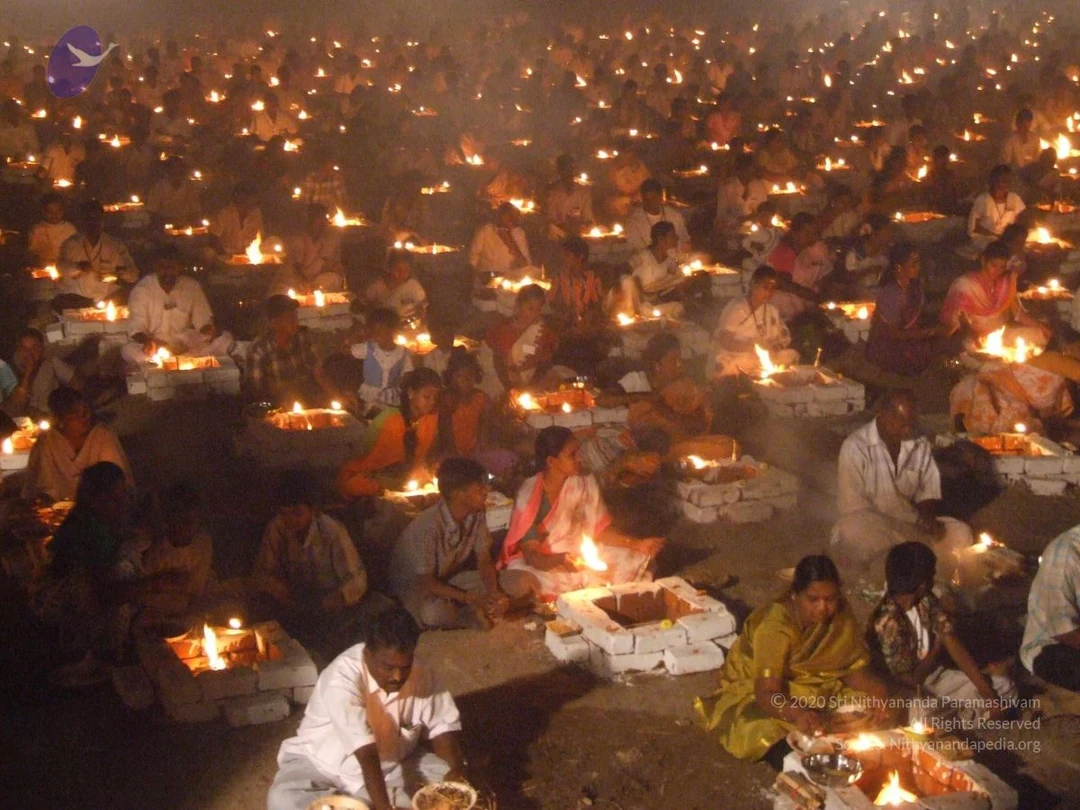
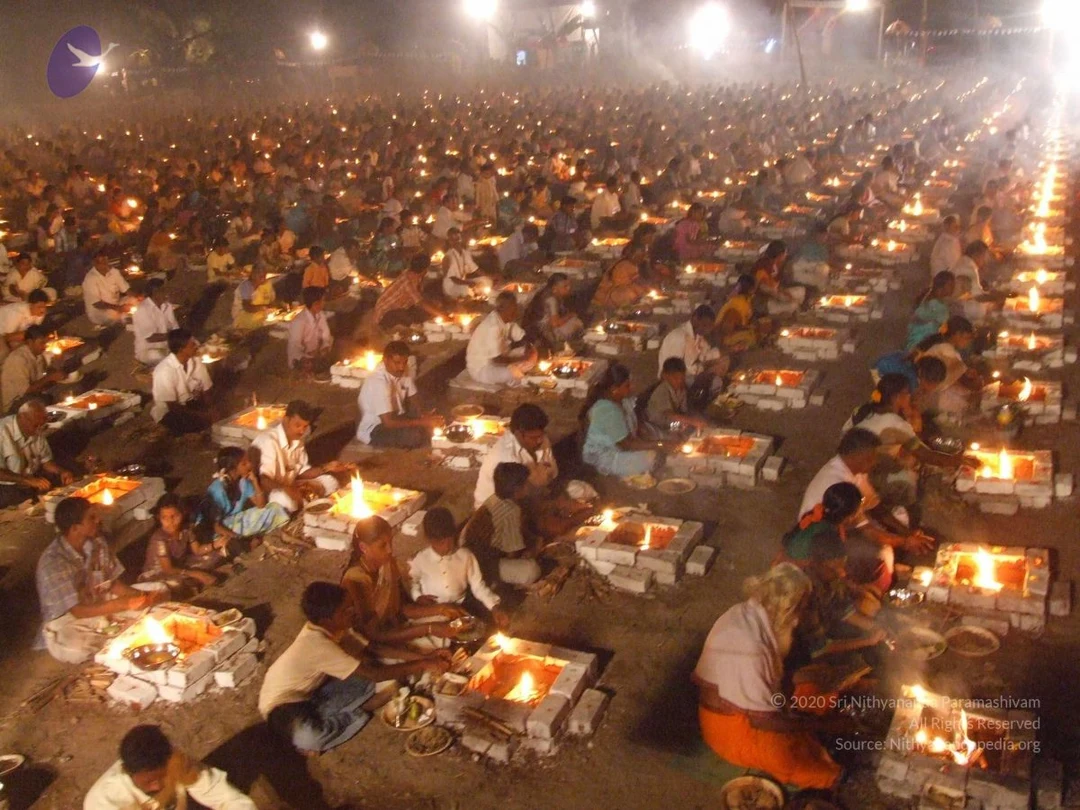
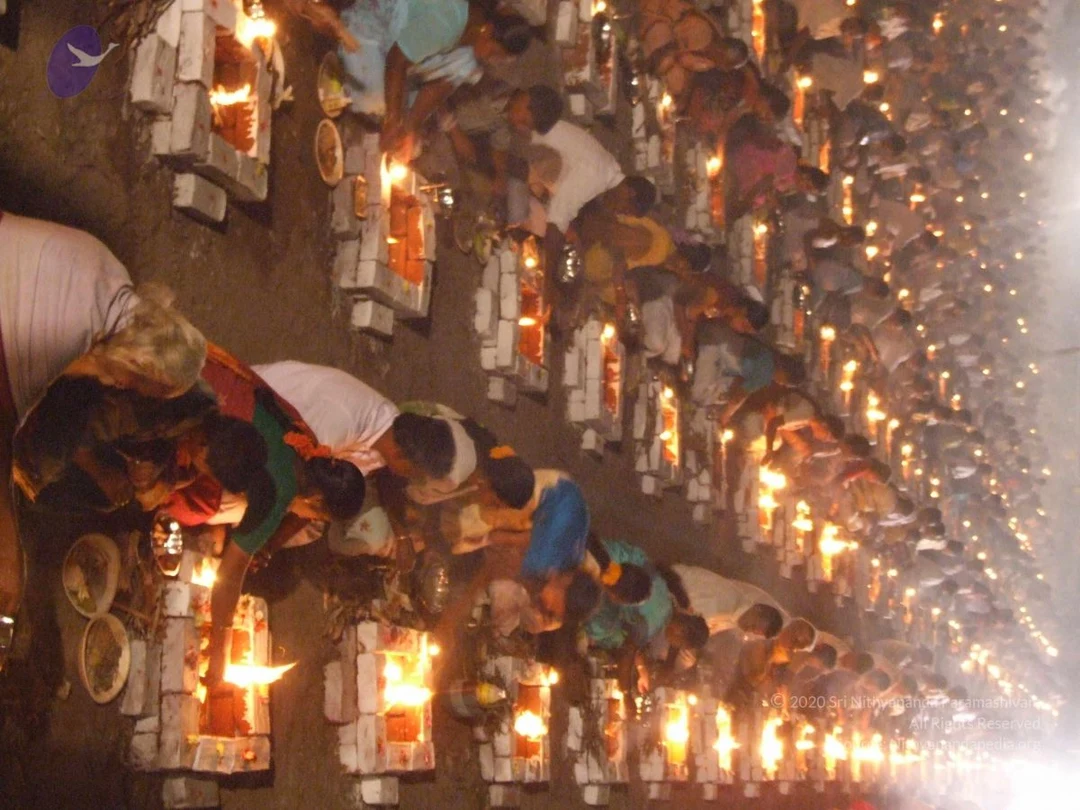
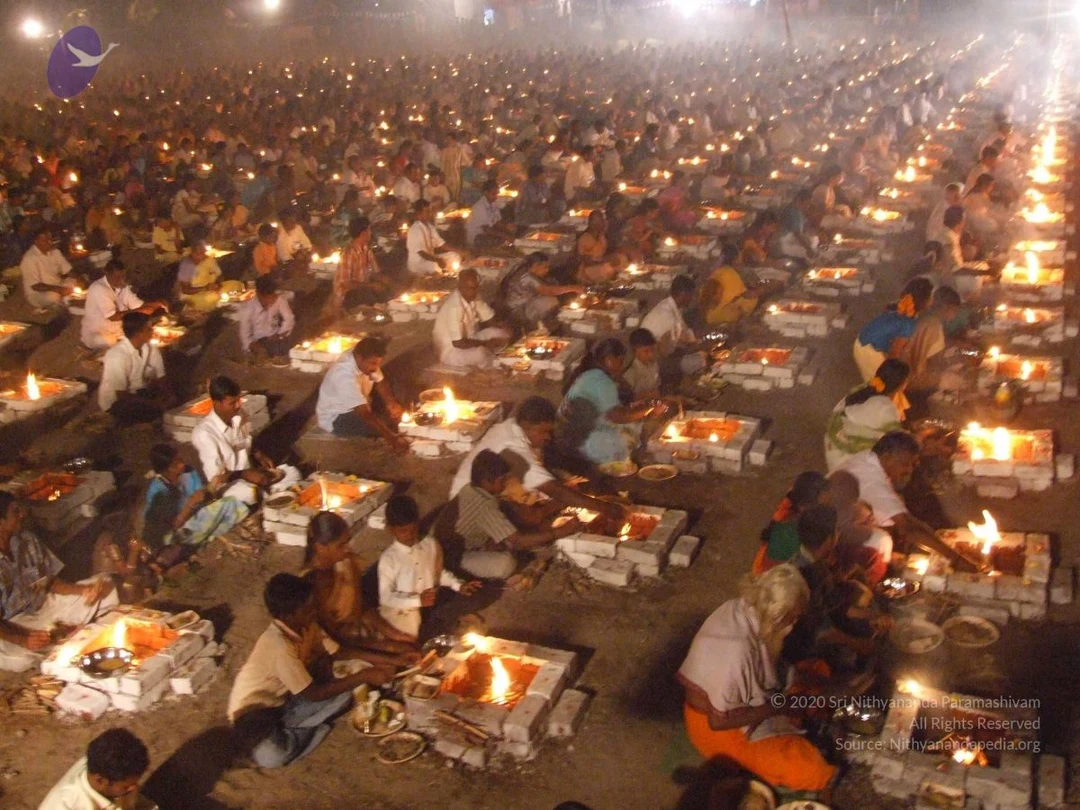
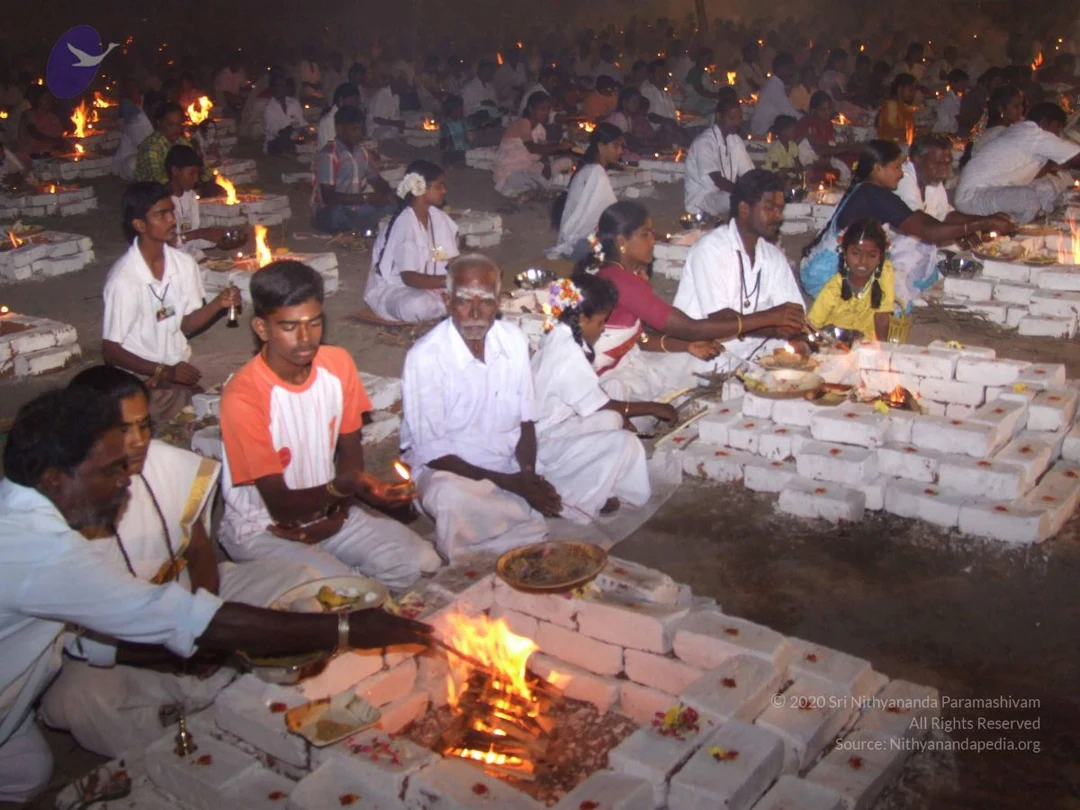
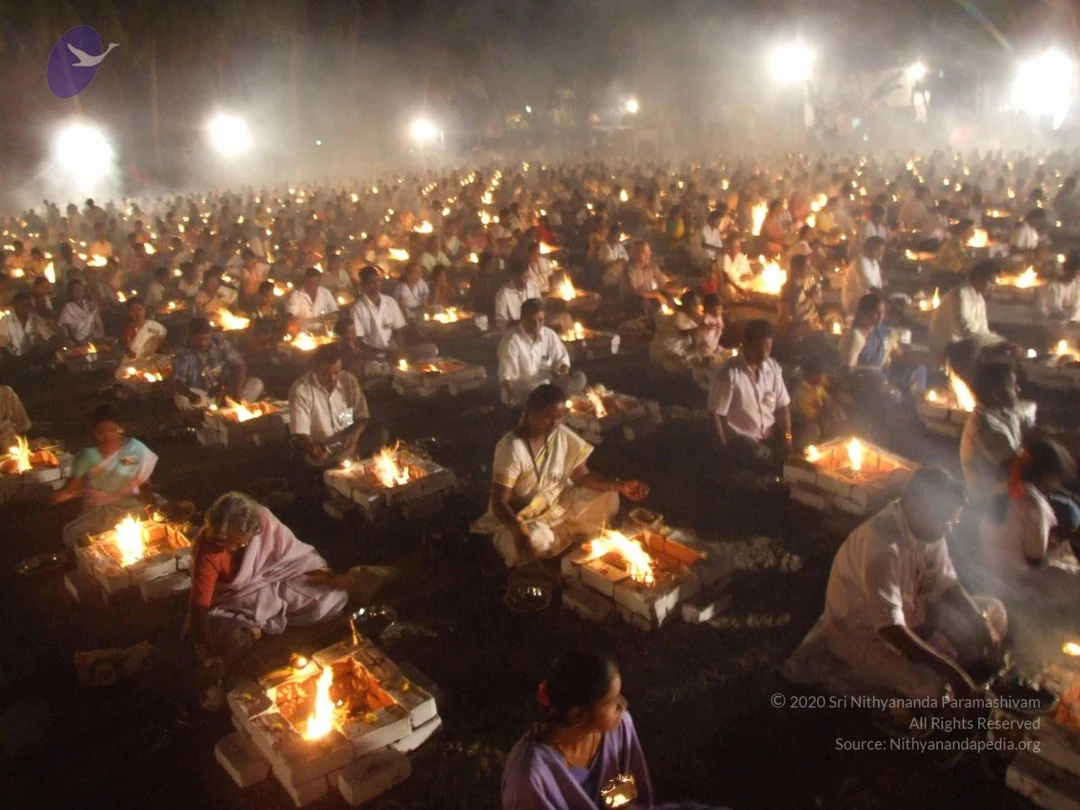
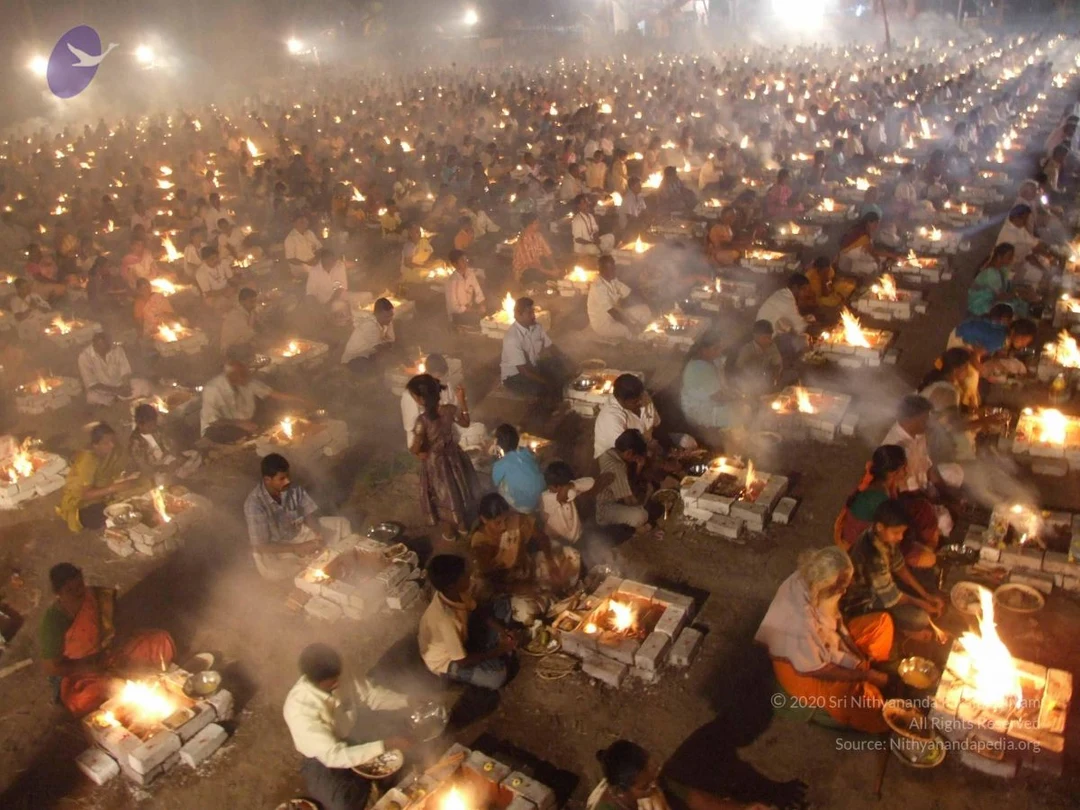
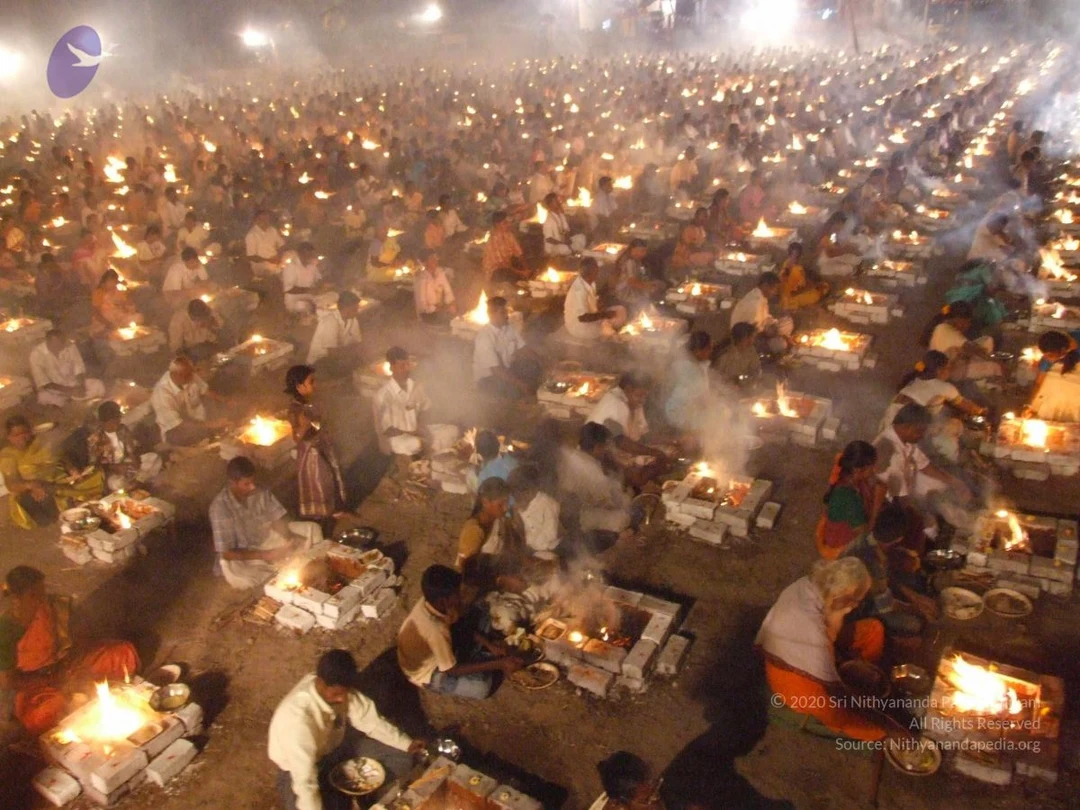
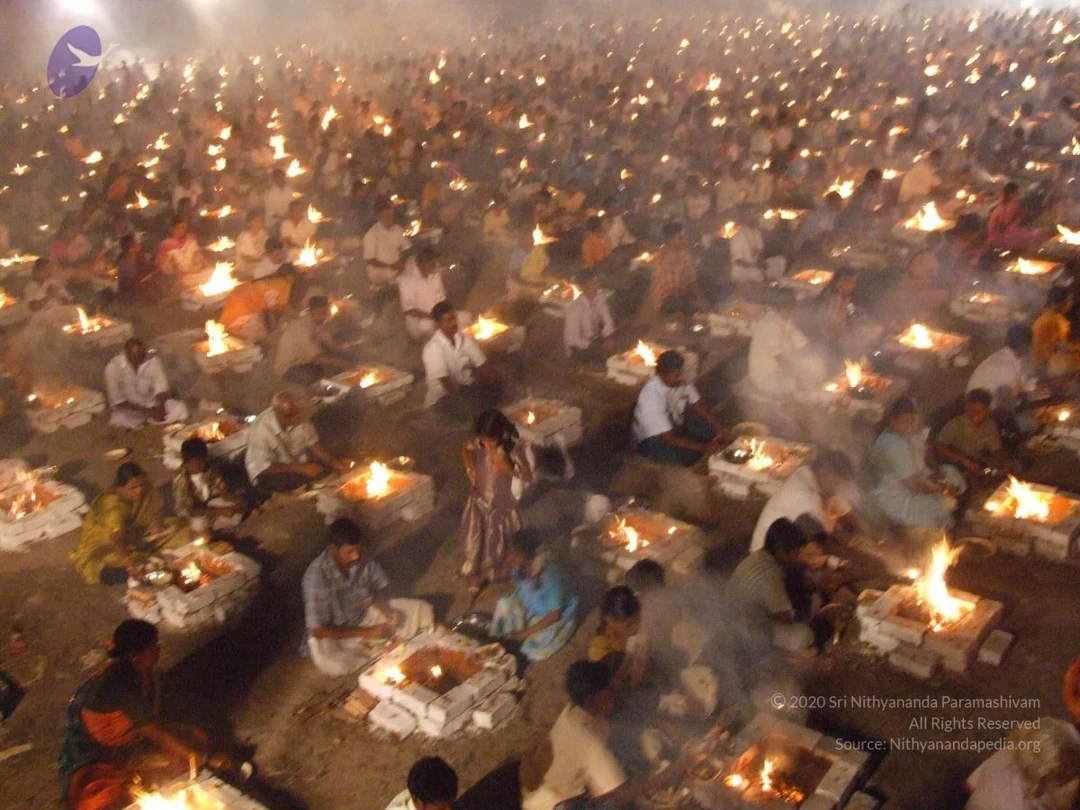
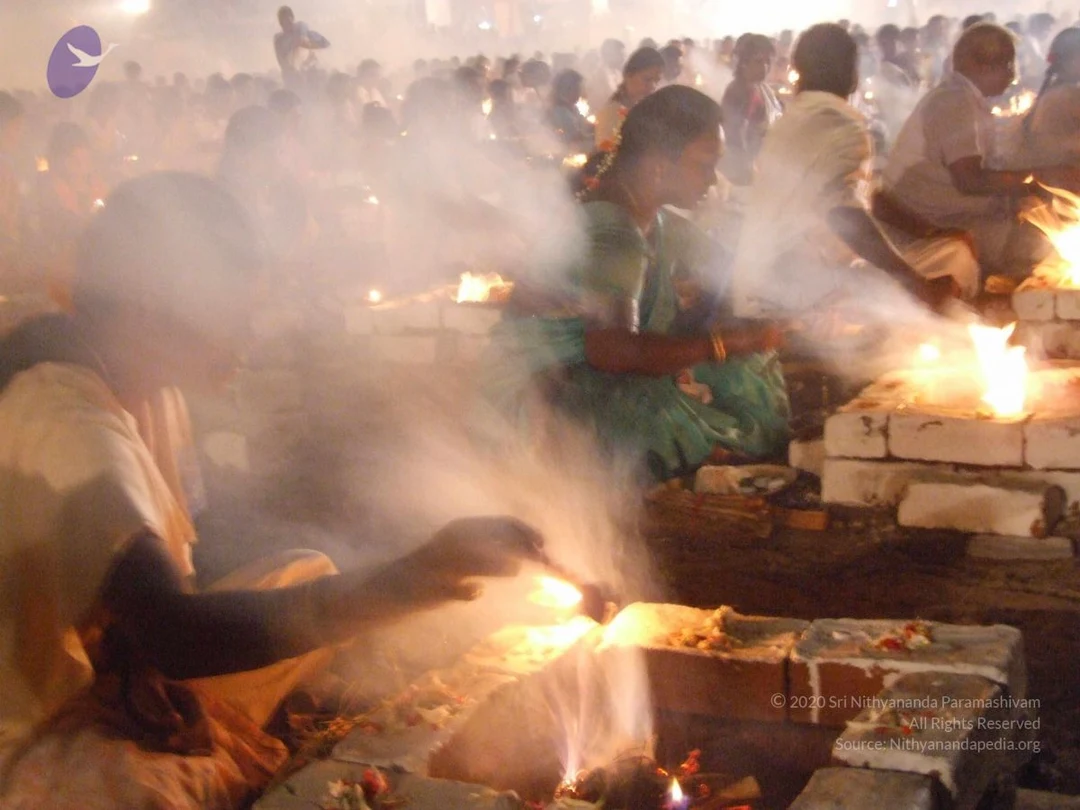
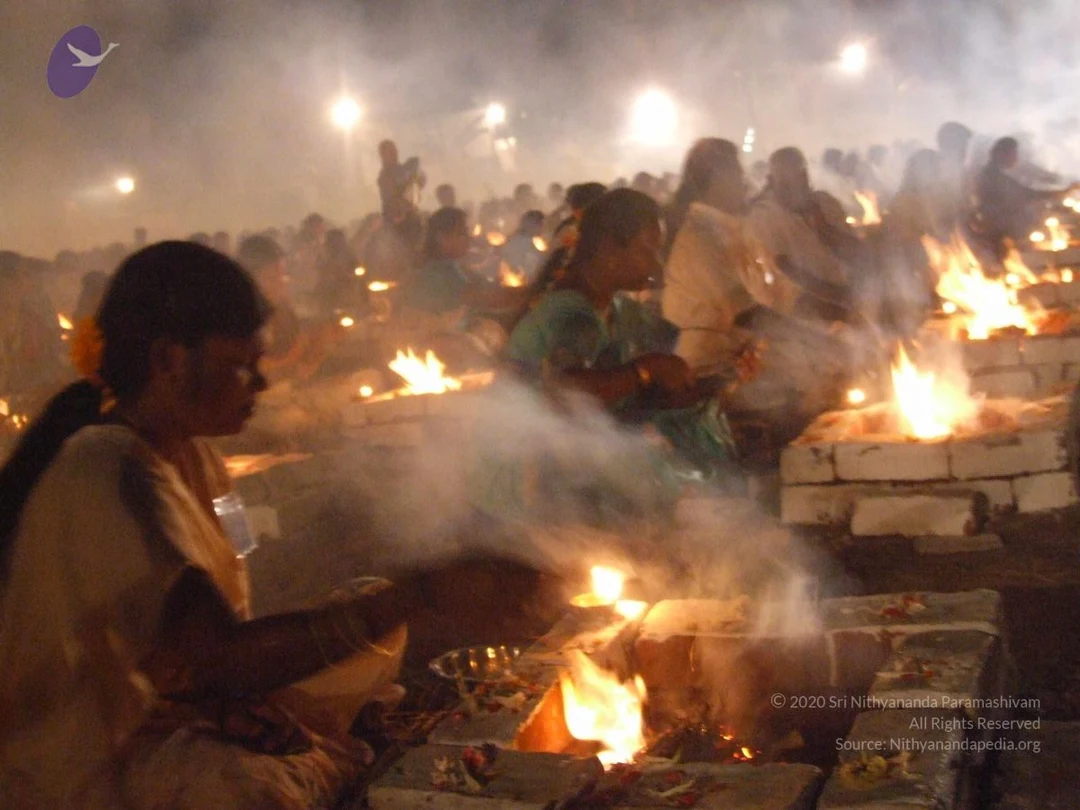
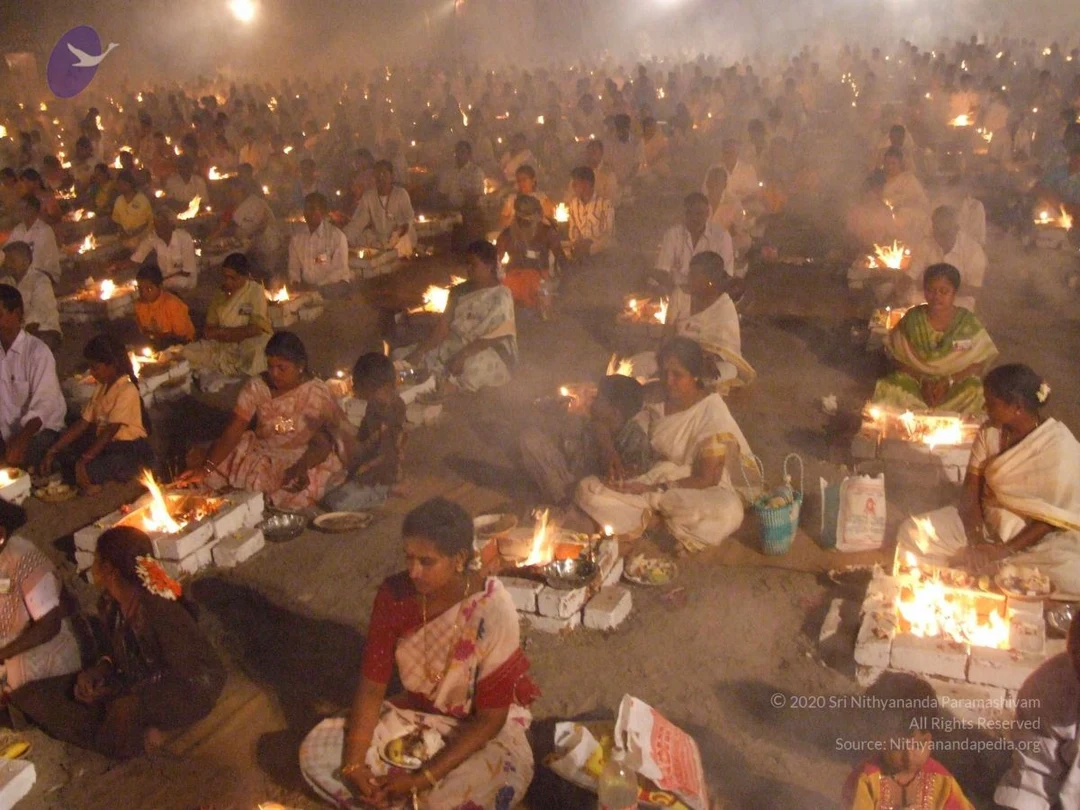
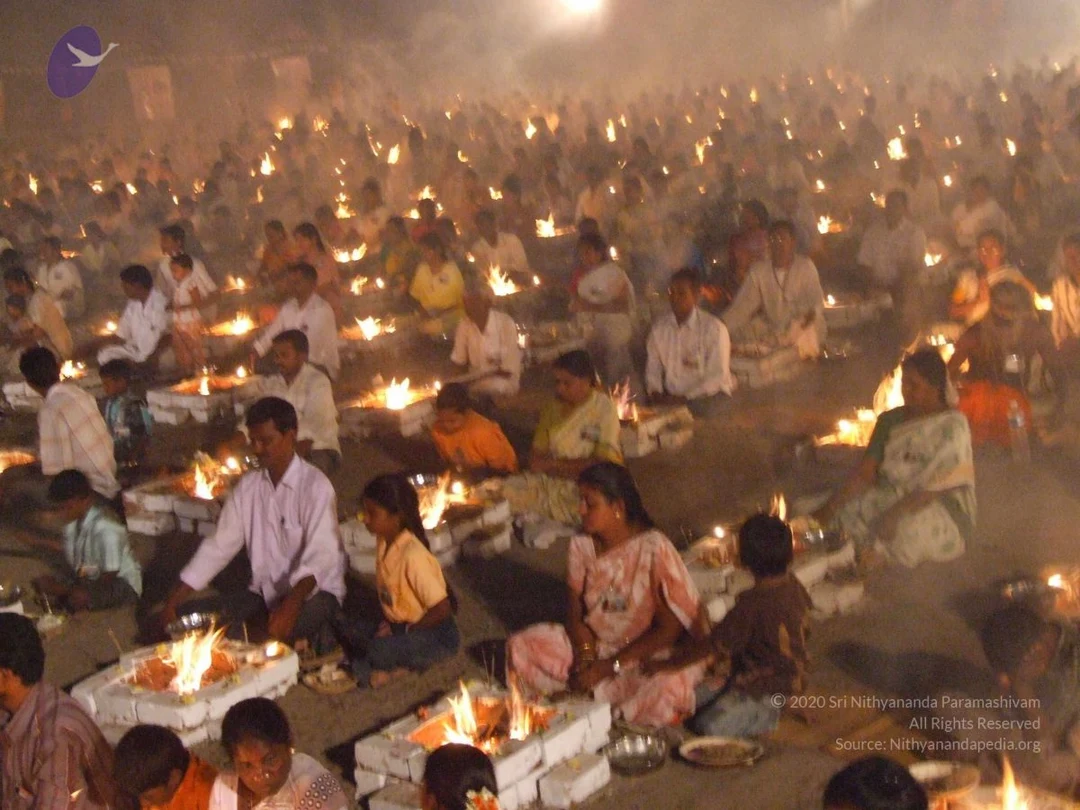
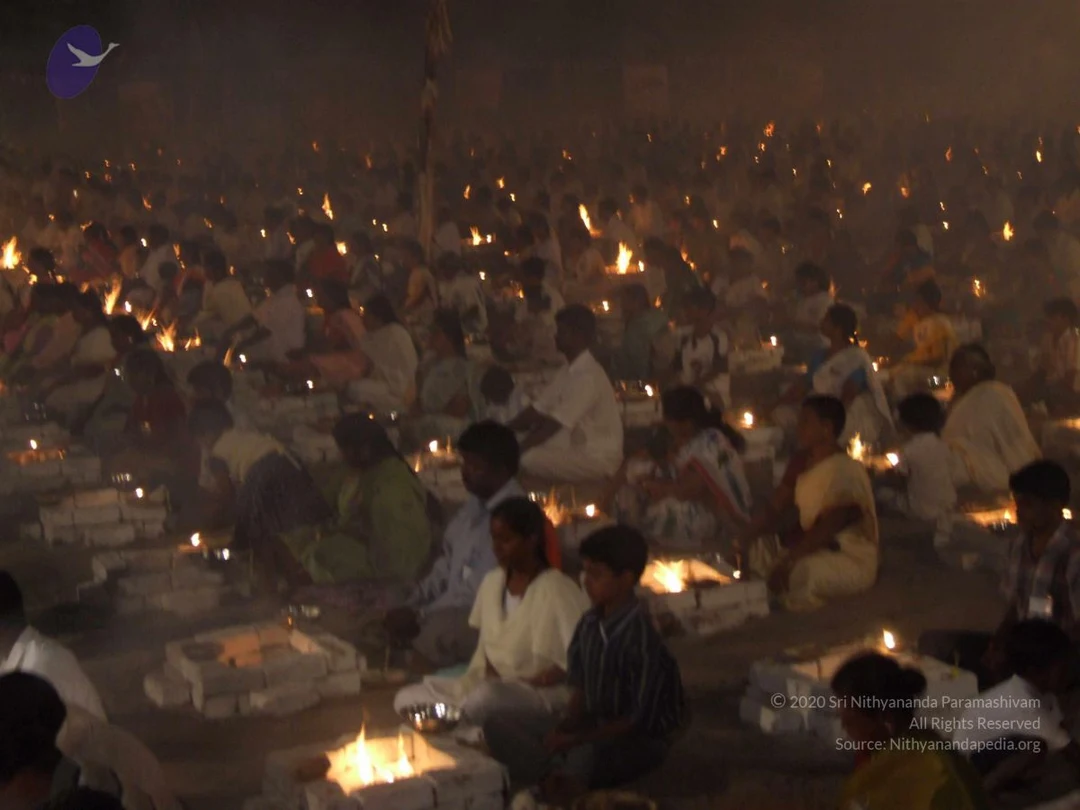
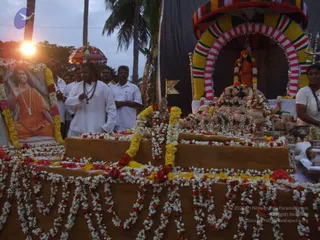
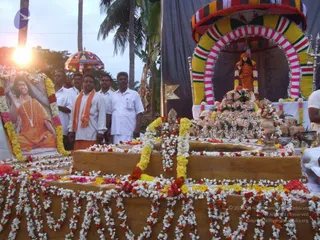
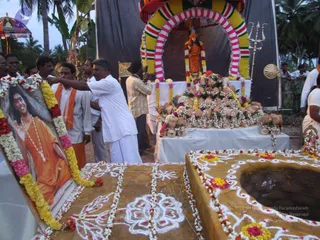
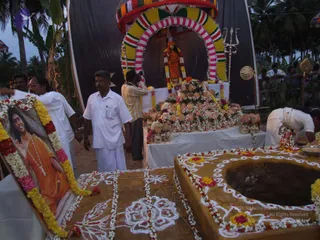
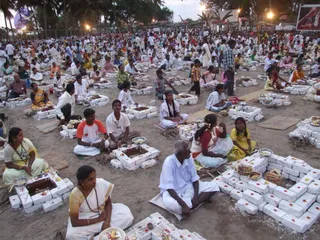
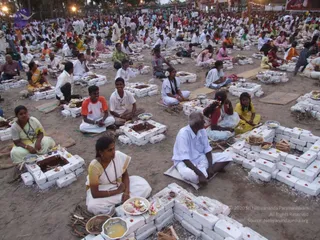
Outdoor evening ritual at dusk beneath palm trees. In the foreground a large mound-shaped altar is heaped with marigold and jasmine garlands and offerings, with a silver lamp stand and vessels. Behind it a decorated ratha-style canopy with red, yellow and white striped garland arches frames a small deity murti draped in orange cloth. On the left, a large printed portrait shows a smiling man in saffron robes with a white beaded mala, seated with raised hand, bordered by flower garlands; the portrait is a depiction, not a physical person. A man in white kurta with a dark rudraksha-style mala stands at the altar, with several men in white shirts and dhotis behind him. On the right a woman in white clothes stands near the offerings. A small umbrella with orange and red panels is visible in the background.Outdoor photo at dusk of a decorated ceremonial platform with a golden base heaped with flower garlands in yellow, orange, white and red. A tall framed portrait of a bearded man in saffron robes and a mala, seated and raising two fingers, stands at left, garlanded with marigolds and roses. Behind the platform a striped canopy arch in pink, green and yellow frames a saffron-clad seated figure. Four to five men in white dhotis and shirts stand in the background, one in an orange shawl, and a small striped umbrella and palm trees sit behind them. Brass lamps and offering vessels sit on the platform.Outdoor ceremony at dusk beside a palm-lined setting. A large framed portrait of a long-haired man in saffron-orange robes with a beaded necklace, decorated with marigold and red flower garlands, is held up at left. A man in white dhoti and shirt reaches toward it while other men in white and orange shawls stand nearby. A raised platform holds a deity murti in orange clothing under a striped marigold-and-flower arch, flanked by a trident and a golden fan, with rows of kalasha pots garlanded with flowers in front. A large pit with white and yellow flower-petal kolam designs lies in the foreground.Outdoor temple-style ritual scene at dusk beneath palm trees. A large framed portrait on the left, garlanded with orange, red and pink flowers, shows a long-haired man in saffron robes and a rudraksha mala. Behind it, a central figure in saffron stands under a striped pink, yellow and green arched canopy, flanked by a silver trident and a fan. Tiers of brass kalasha pots are heaped with marigolds and garlands in front of the canopy. In the foreground, a man in white dhoti and shirt stands near the offerings while a man in white bends over the decorated altar. A kolam of white rangoli lines the altar and fire pit, and a large square fire pit with flower garlands sits at right. Onlookers watch from the background.A large outdoor ritual gathering at dusk, with hundreds of participants seated on the sand in rows before small square brick fire-pit structures, each with burnt sticks, brass plates of offerings, and flower petals. Many people wear white and cream clothing, with women in yellow, orange and red saris, and some children present. Palm trees, strings of lights, a decorated stage area and a large framed portrait stand at the back of the grounds. A homa or yagna-style fire ritual is being performed, with participants seated before their individual fire pits.Outdoor homa ceremony on sandy ground at dusk, with a very large crowd of participants seated cross-legged in rows before small square brick fire pits lined with white bricks. Many are dressed in white dhotis and shirts or white saris with coloured borders, and some girls wear yellow and red dresses. Each pit holds dry firewood sticks and brass plates of offerings, including fruit, flowers, yellow liquid and ash. Lights glow in the background under palm trees and a purple banner hangs at upper left, with a large decorated structure at upper right. Some people stand near the edges.

01-TEMPLE-ARATHI
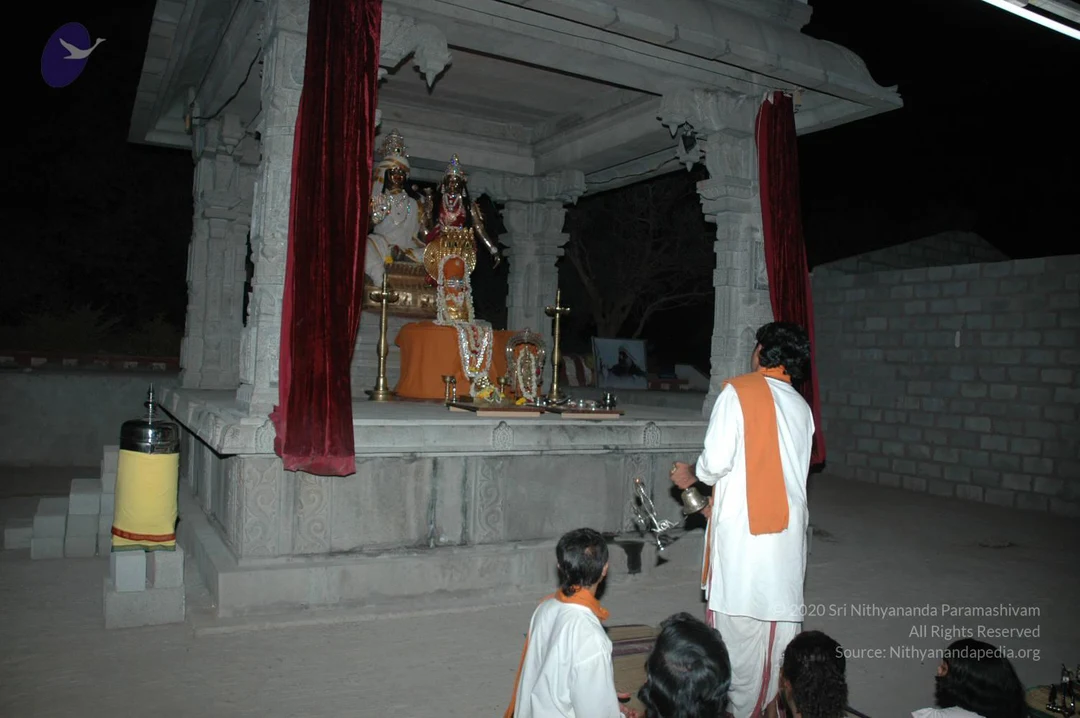
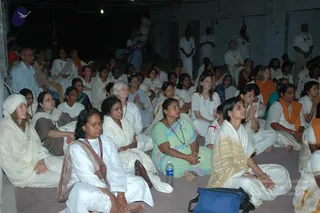
16 photosSource gallery
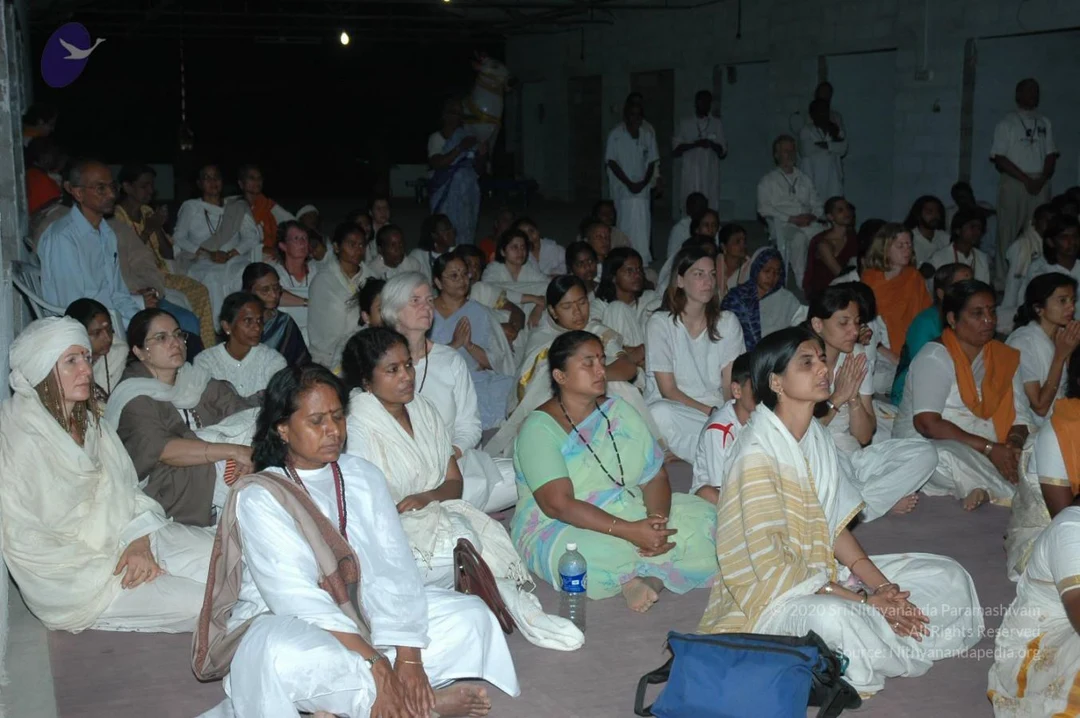
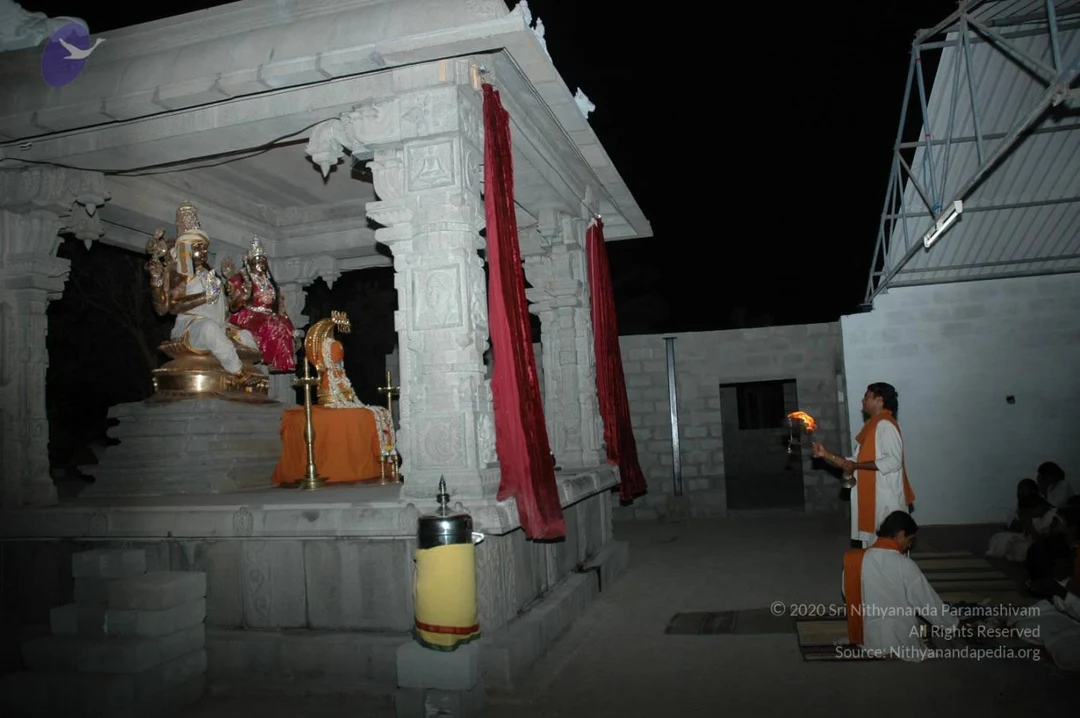
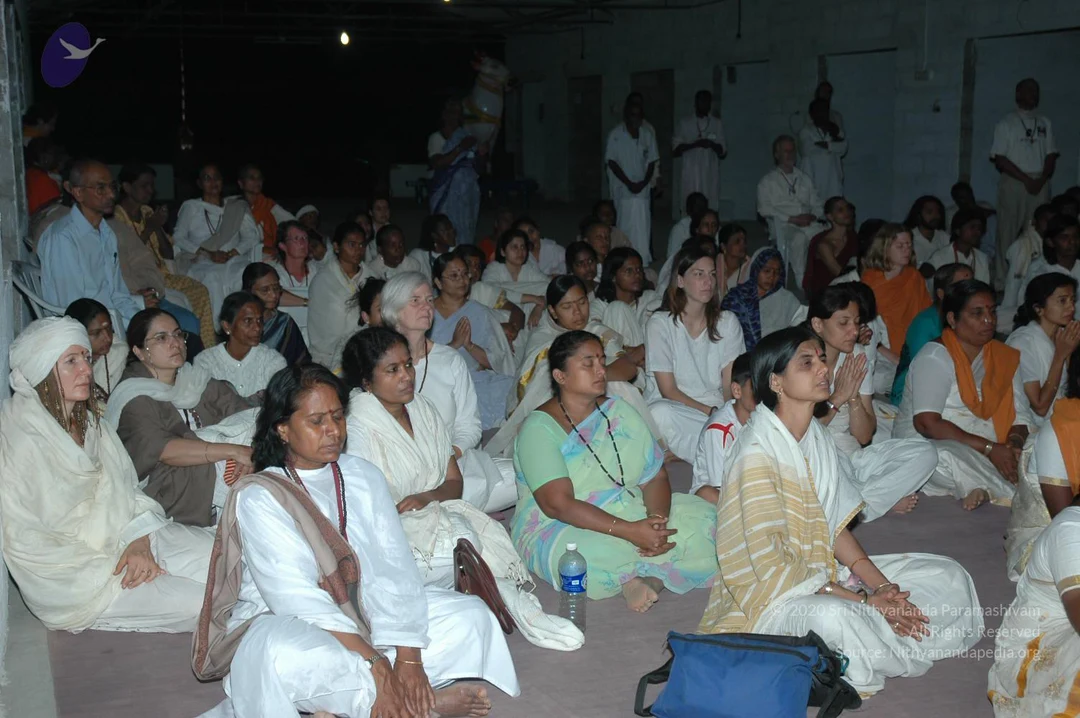
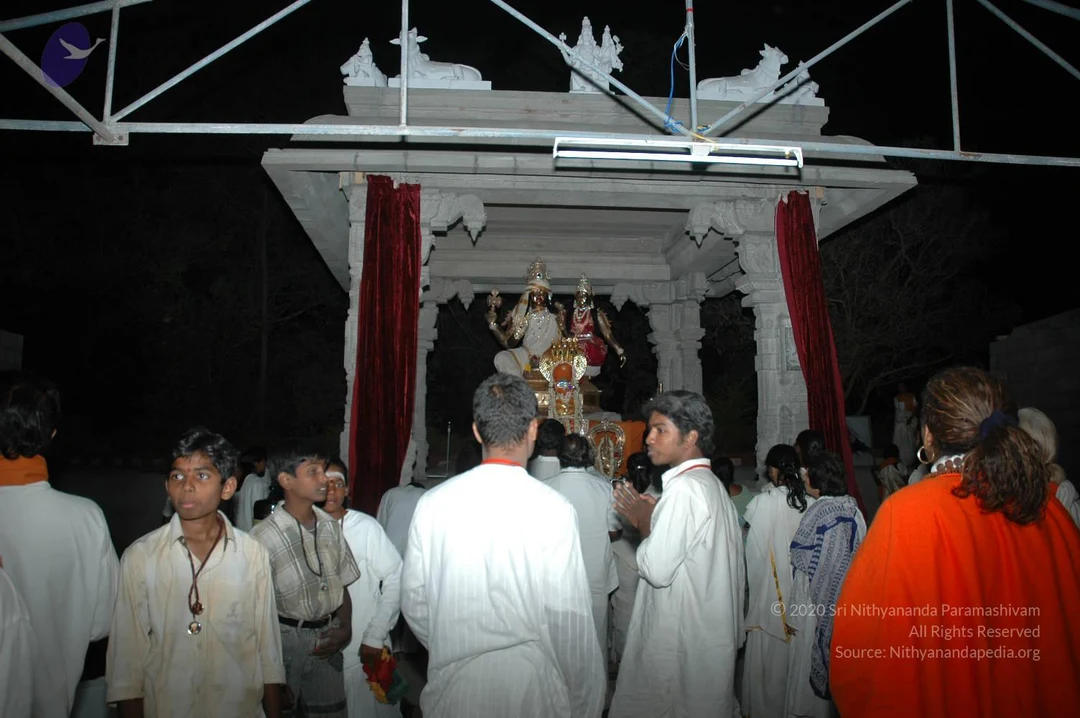
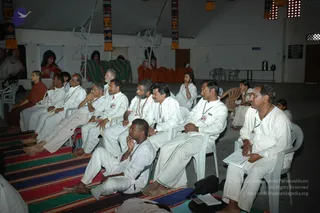
Night-time photograph of an outdoor temple arati at a small grey stone shrine with red velvet curtains draped on its sides. Inside the shrine sit two deity murtis, one with a crown and garlands, behind an orange cloth on the altar. Brass lamps and offering plates stand before them. A standing man in white dhoti and white shirt with an orange shawl holds a bell and lamp-like ritual object toward the deities. Three or four seated devotees in white with orange shawls kneel in the foreground. A large yellow-wrapped shivalinga-style object sits to the left. Lights and a hanging photo are visible in the background.Night-time temple arati in an open-sided hall with a corrugated metal roof and bare bulbs. A standing man in a white dhoti and orange shawl holds a silver arati lamp in one hand and a small bell in the other, facing right. Seated devotees in white clothes, several with orange shawls and rudraksha malas, fill the floor on woven mats and green cloth, watching him. Brass ritual items sit on a mat in front of the standing priest. Many people are visible in the seated audience.A photograph of a temple arati in a large whitewashed hall with a corrugated roof and hanging bulbs. A standing man in white dhoti and shirt with an orange shawl holds a brass bell and leads the ritual. Seated devotees in white, many with orange shawls and rudraksha-style beads, fill the floor on mats and green cloth, with a large seated audience behind them. Brass ritual vessels and a lamp sit on the mat at left.Night-time photograph of an open-air stone temple shrine with carved pillars and red cloth draped on the columns. On the right, a deity murti in a gilded crown sits on a stone pedestal beside an orange-draped seat. In the foreground a standing man in a white dhoti and orange shawl faces the shrine, while a row of seated people in white and orange clothing sit on striped mats at left, with brass oil lamps set in front of them. Overhead tube lights illuminate the scene against a dark sky.Indoor photograph of an evening temple arati in an unfinished concrete-block hall with plastered walls and a ceiling fan. A standing young man in a white kurta and white dhoti, with an orange shawl over his shoulders, holds a brass bell in one hand and a lit brass arati lamp in the other, facing forward. Seated on striped mats in front of him, a young man in white with an orange shawl sits beside a line of brass oil lamps and ritual vessels. Several seated devotees in white and orange clothing, including girls in pink and white, watch the ritual. Some are dressed in white kurtas, some in orange cloth. A white-covered sofa and a small shelf sit against the back wall.A photograph of a large seated congregation inside a dimly lit hall with bare concrete walls and a low ceiling. Many devotees sit cross-legged on a pale mat, most dressed in white or cream clothing with shawls. Some women wear orange or saffron shawls, and one woman in a green sari wears a beaded mala. Several women sit with palms pressed together in prayer, and a few people in white stand along the back wall. The atmosphere suggests a satsang or arati gathering, though no leader is clearly visible in this frame.