Skip to content
Wednesday

1 November 2006

THE SUPREME PONTIFF OF HINDUISM JGM HDH BHAGAVAN NITHYANANDA PARAMASHIVAM

Dated photos
253
Source pages
1
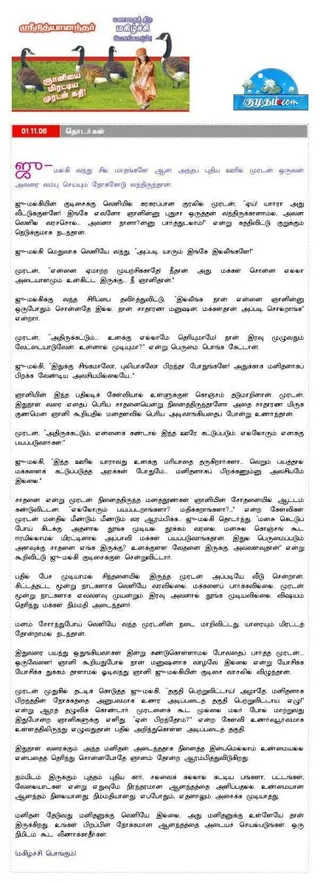
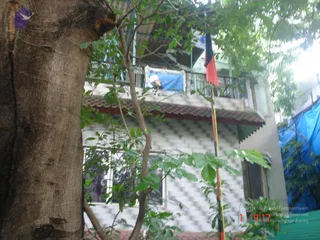
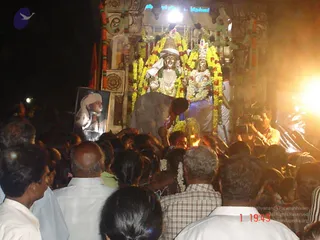
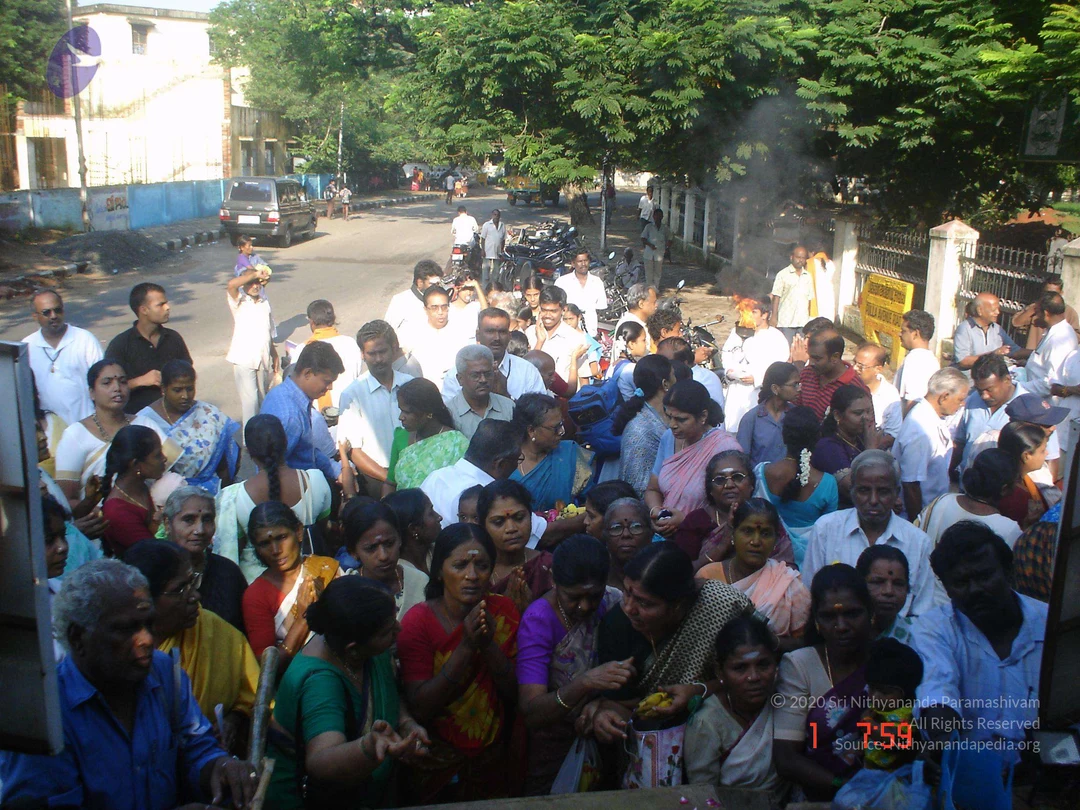
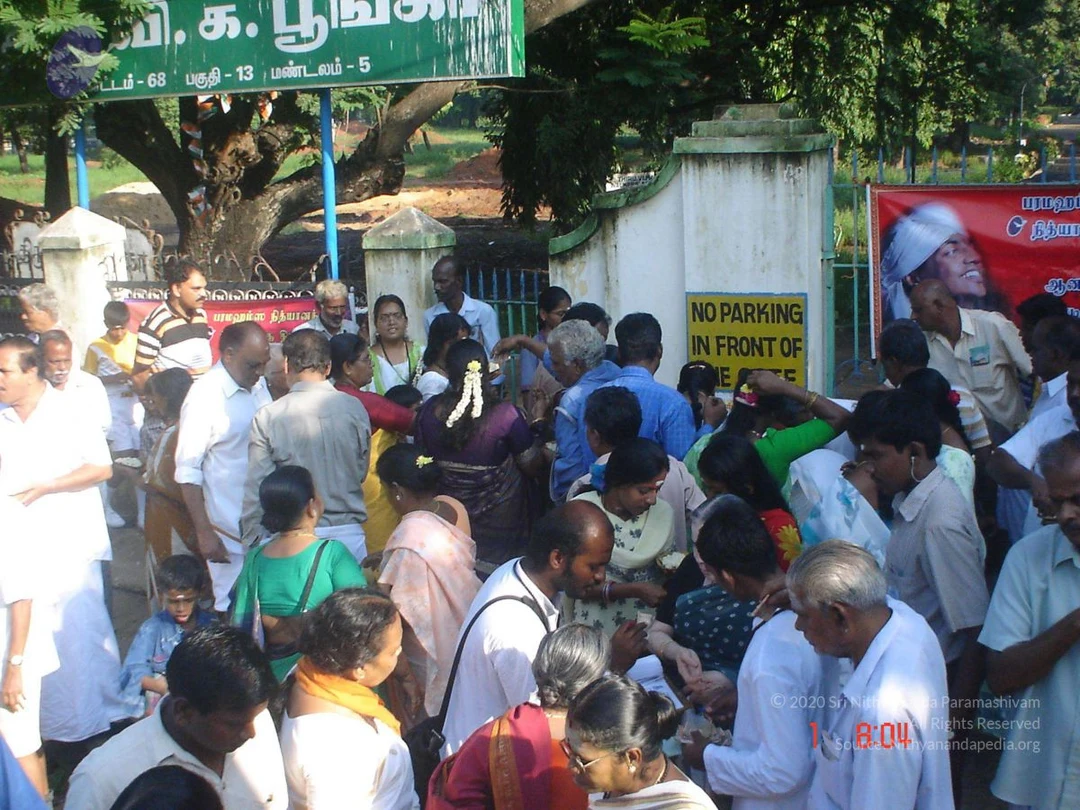
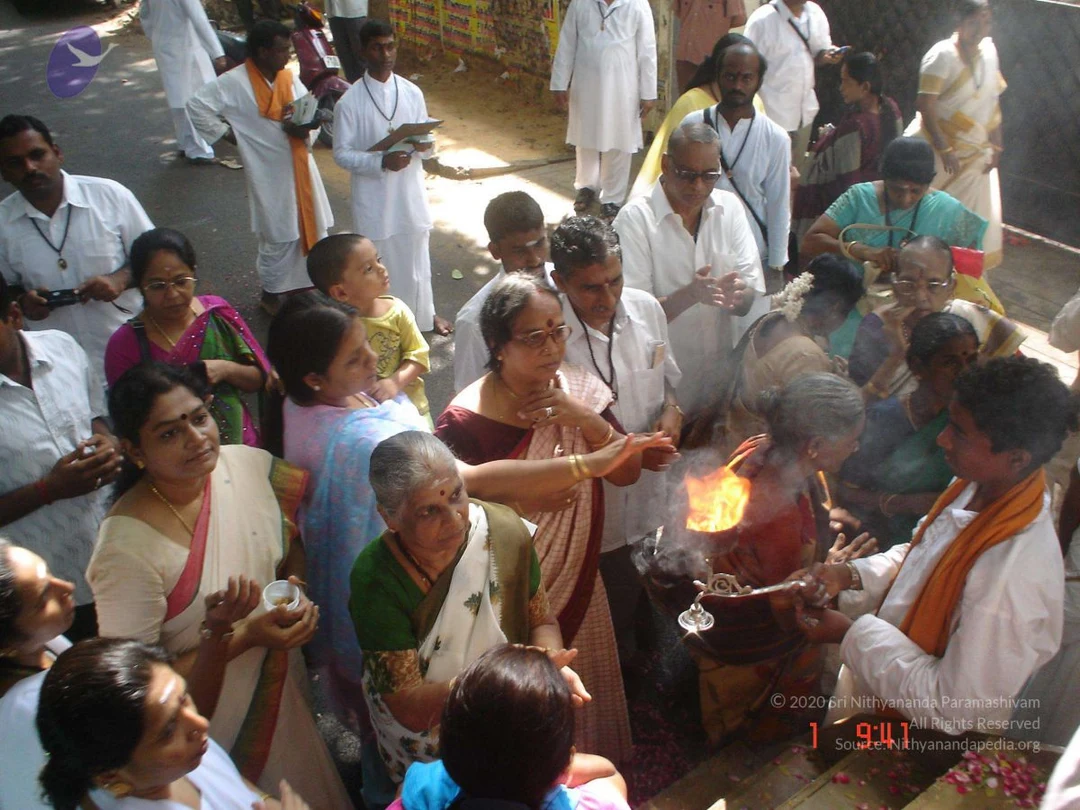
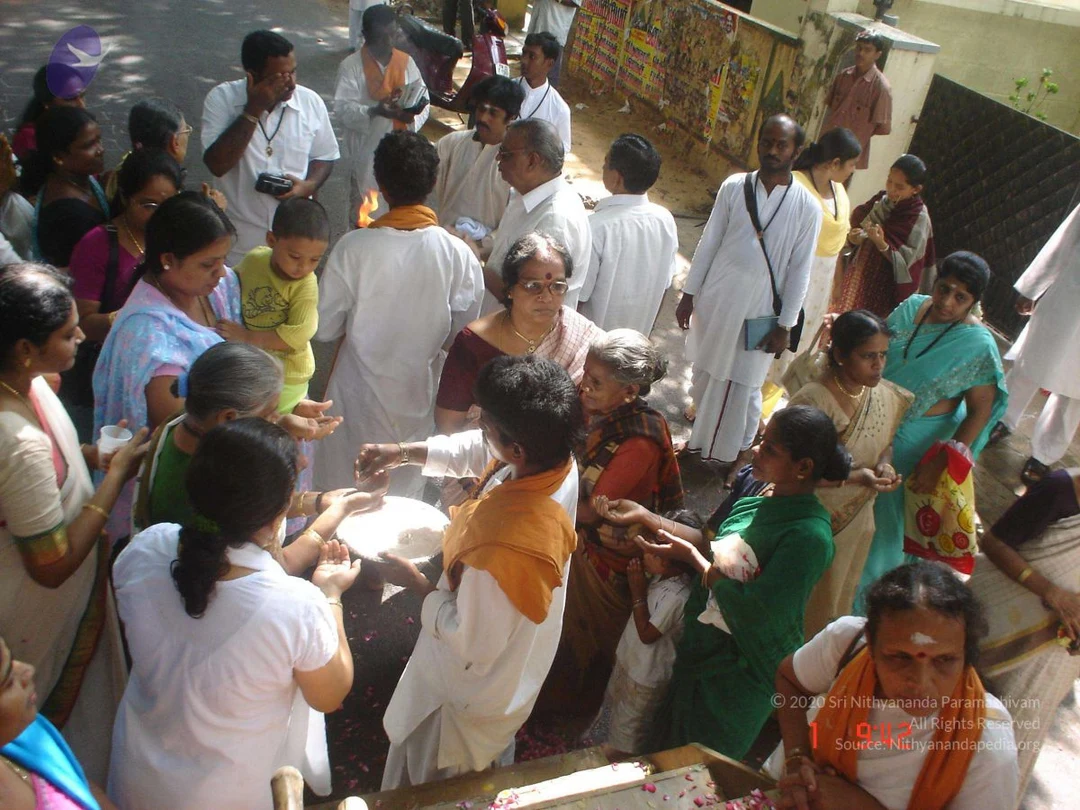
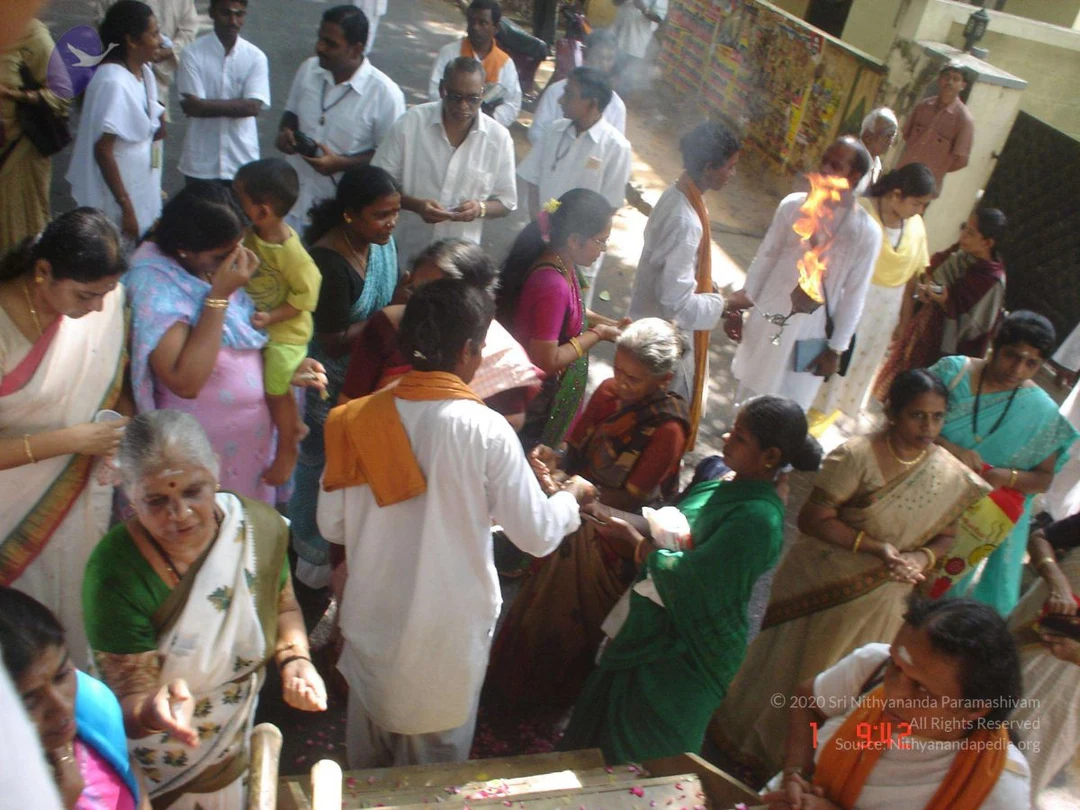
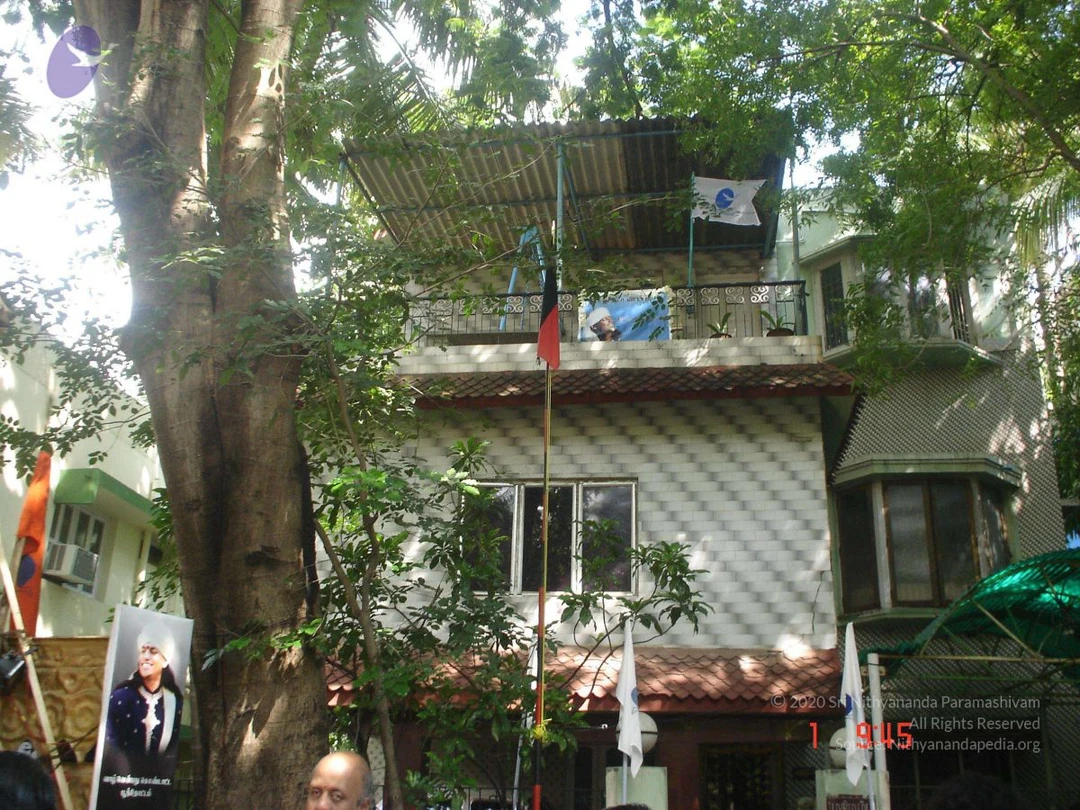
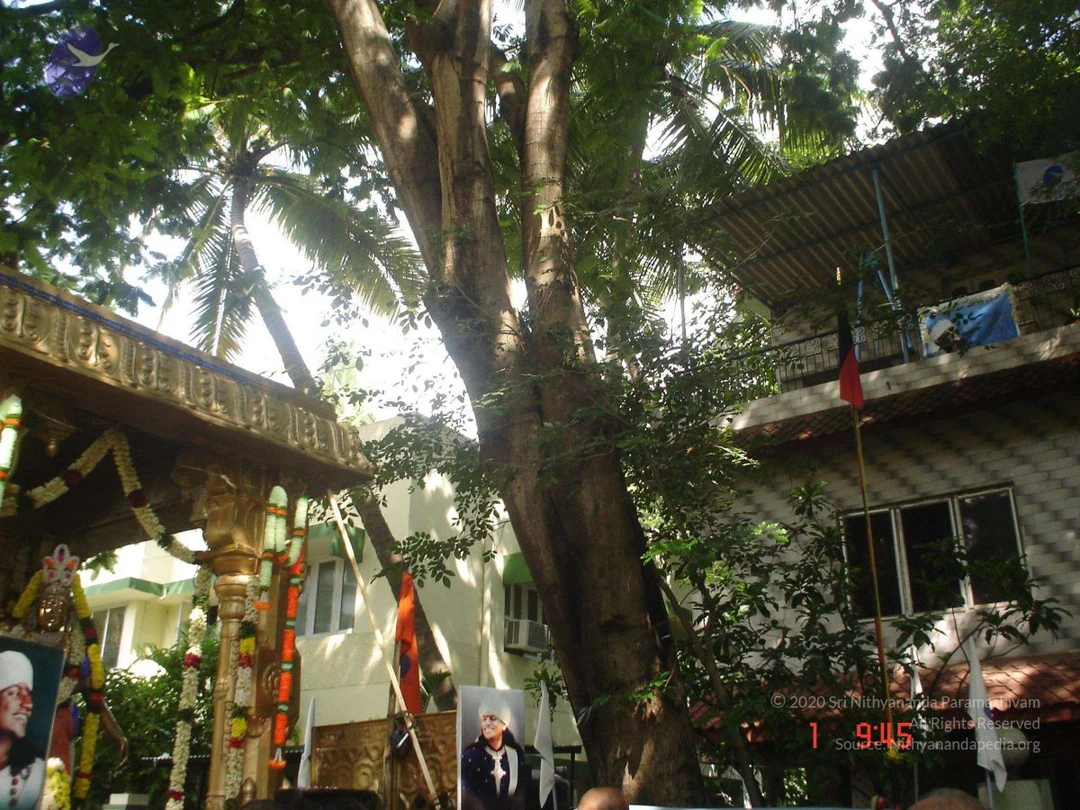
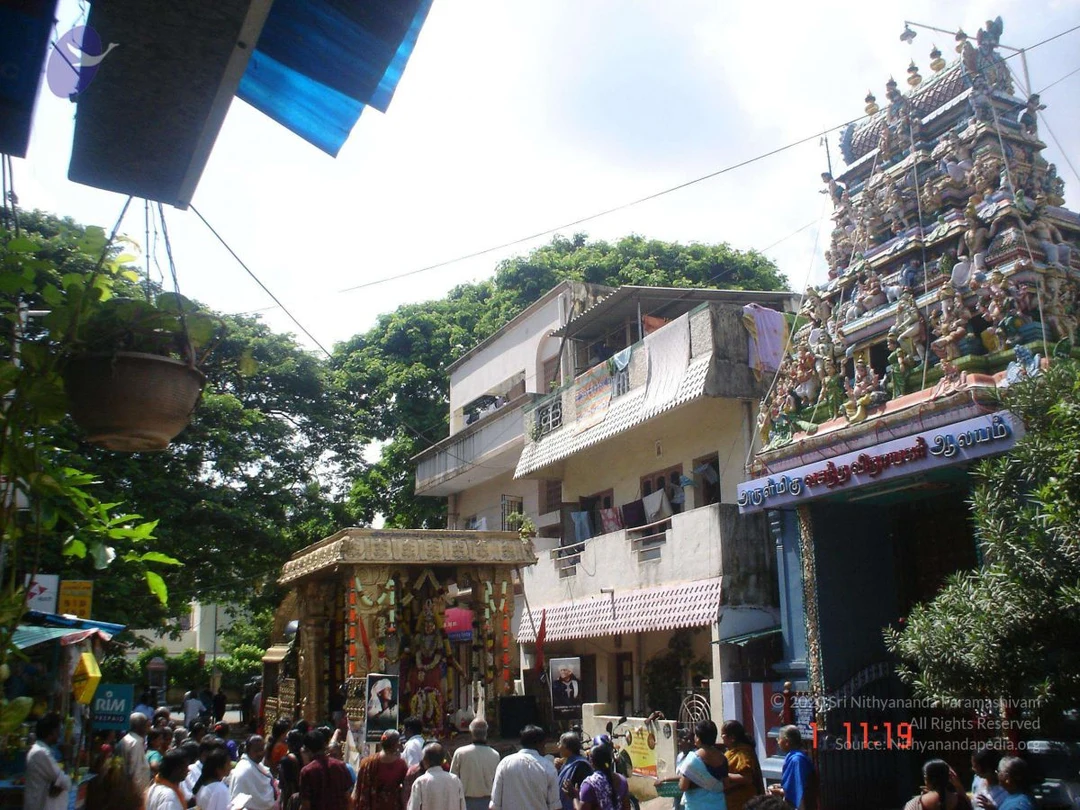
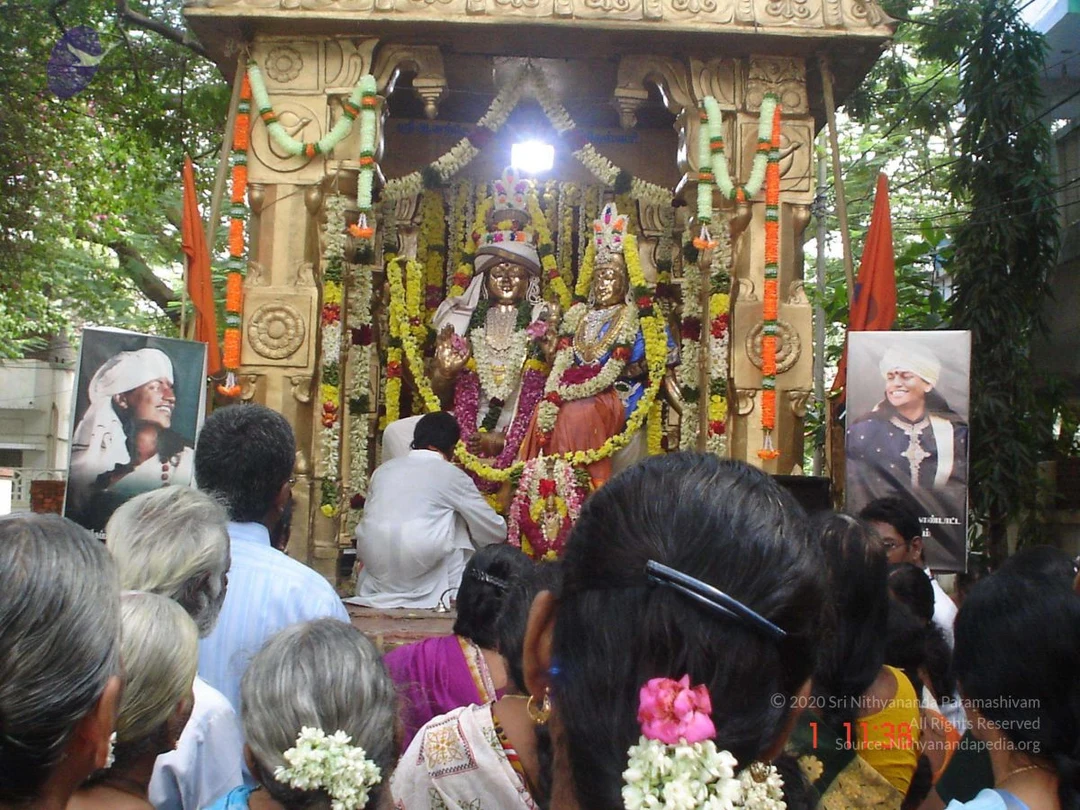
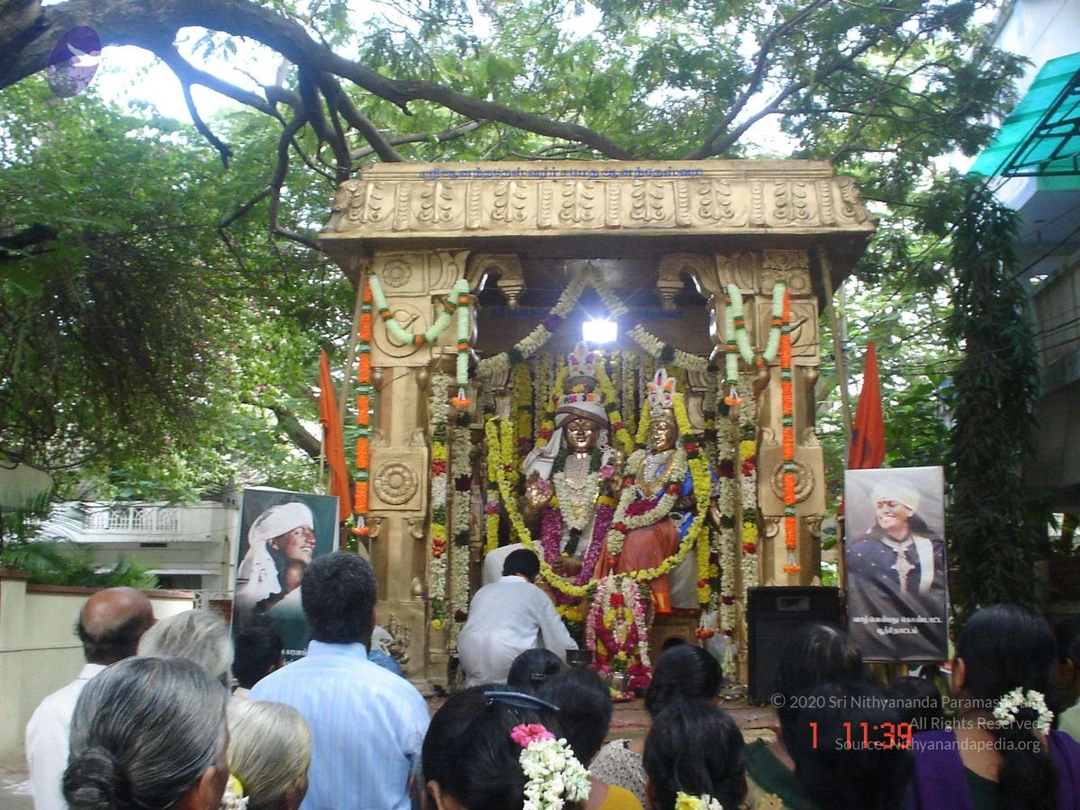
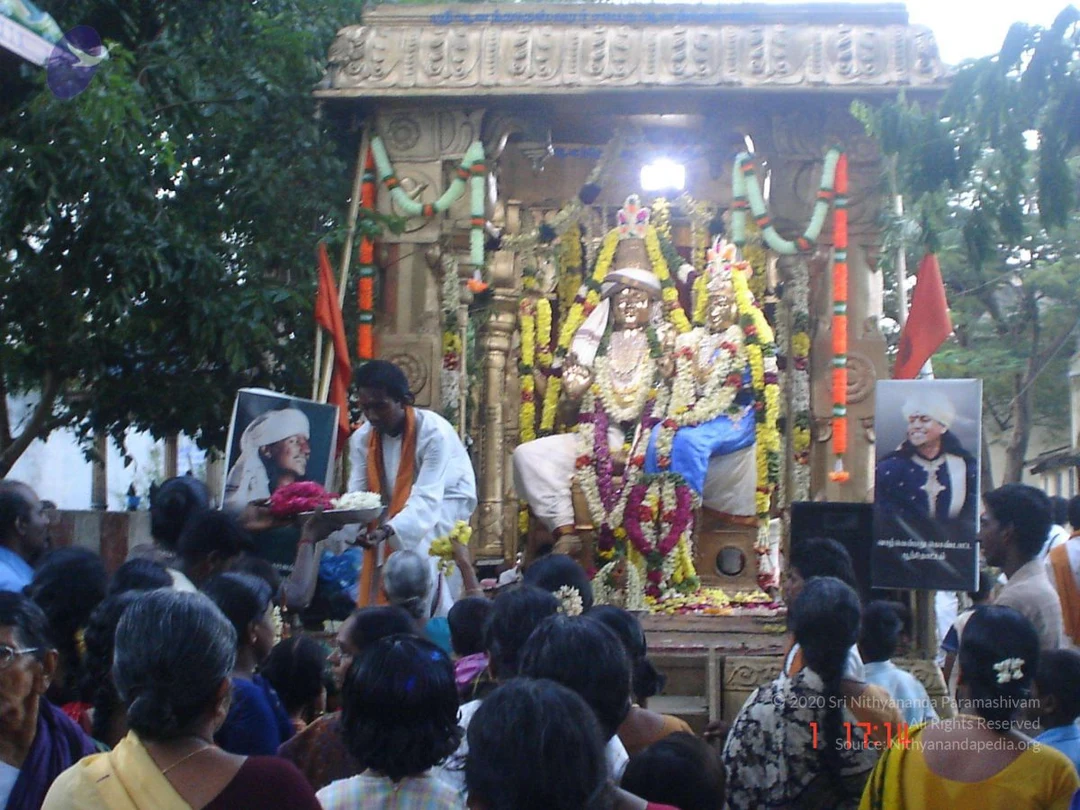
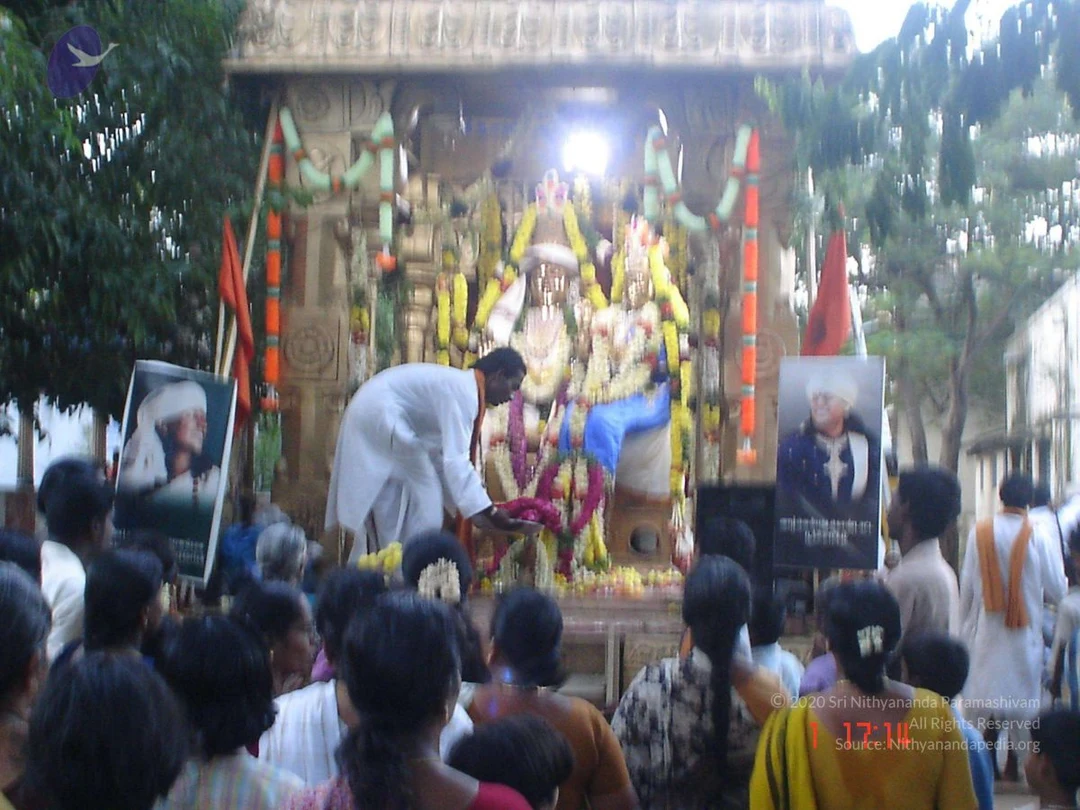
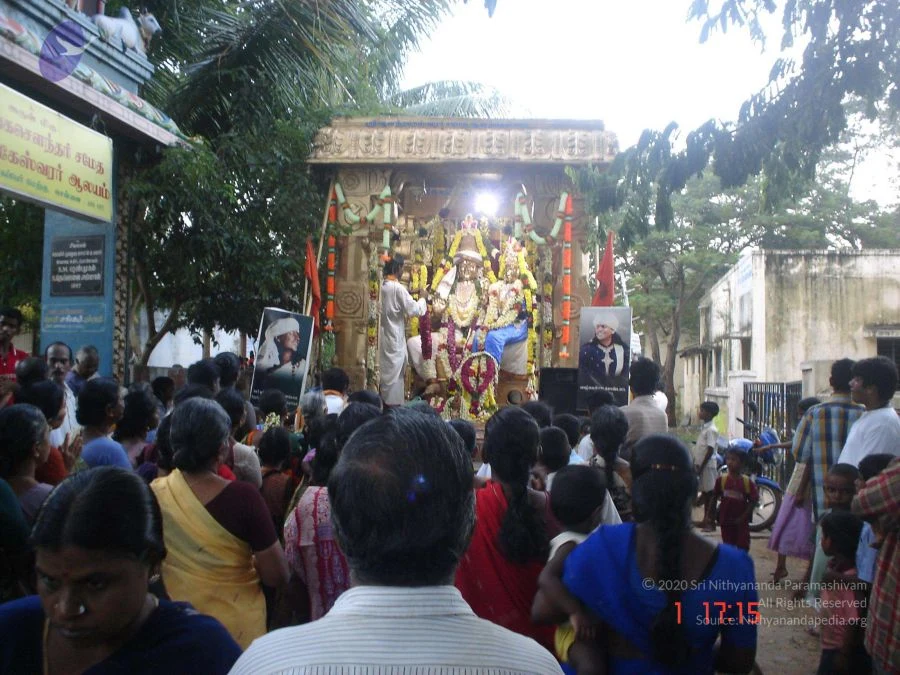
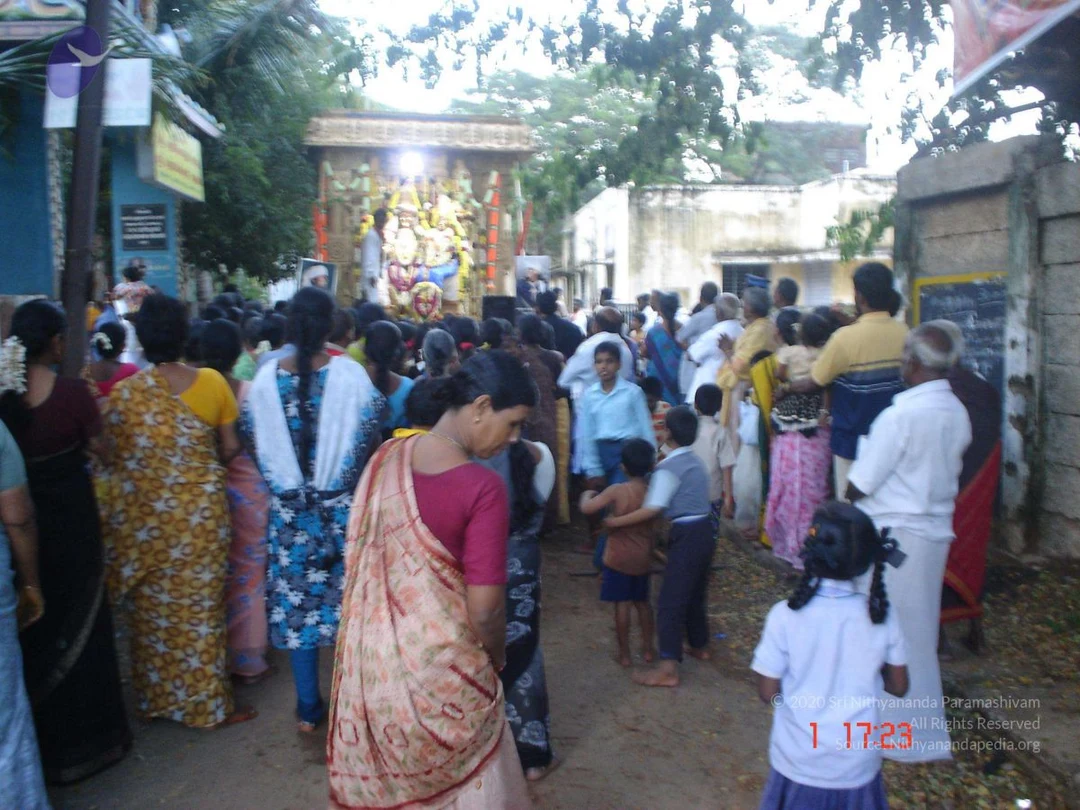
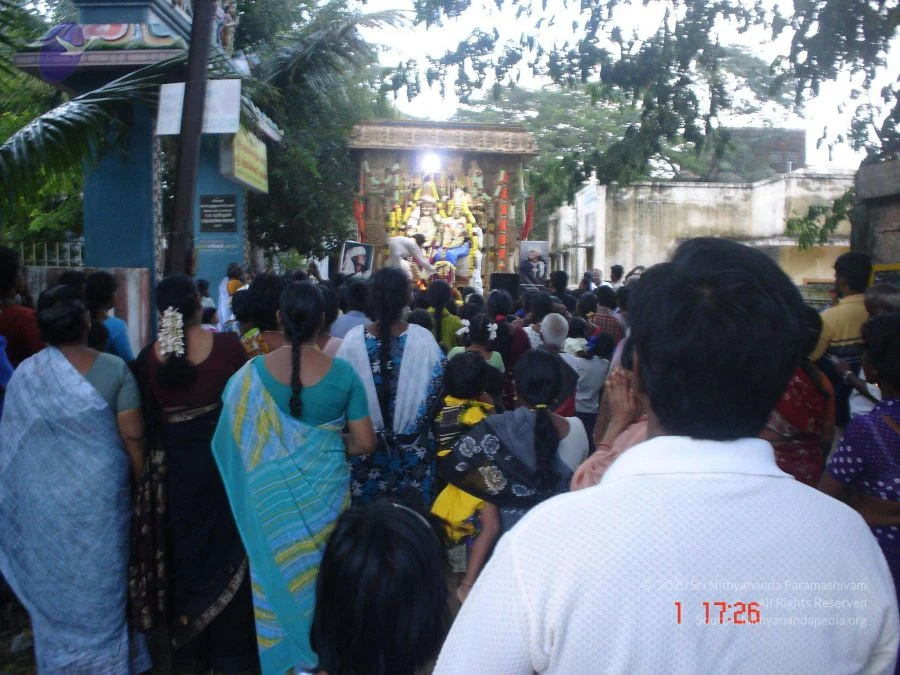
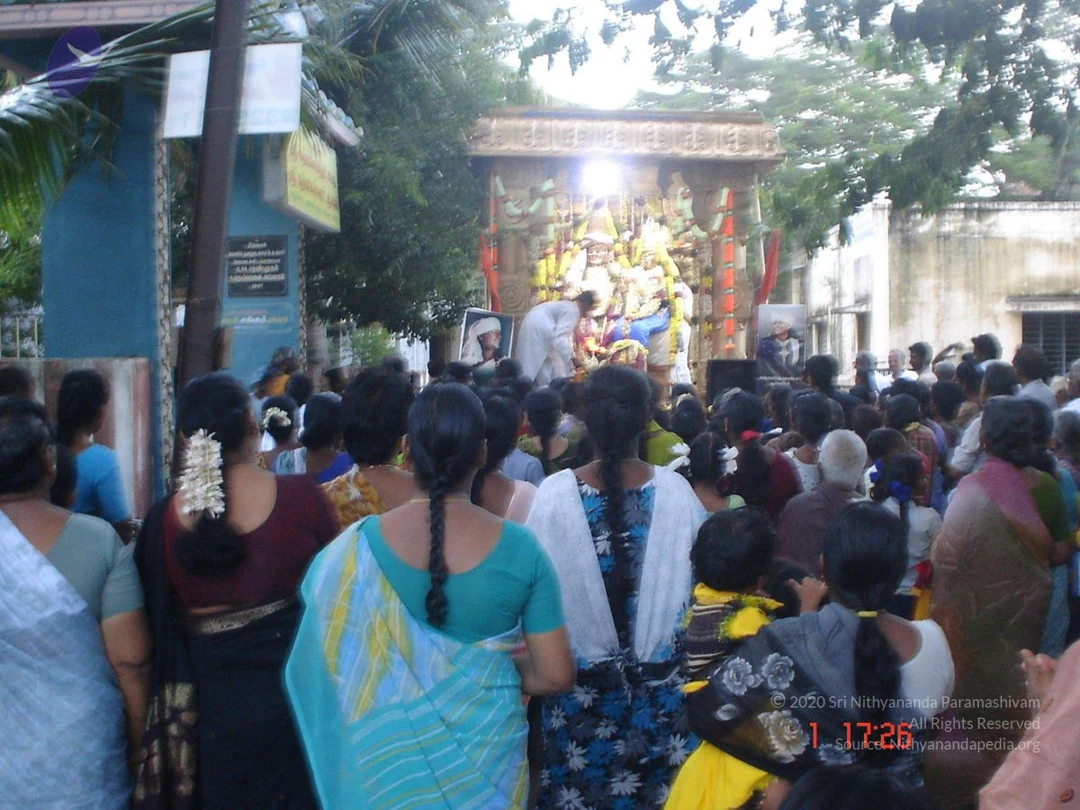
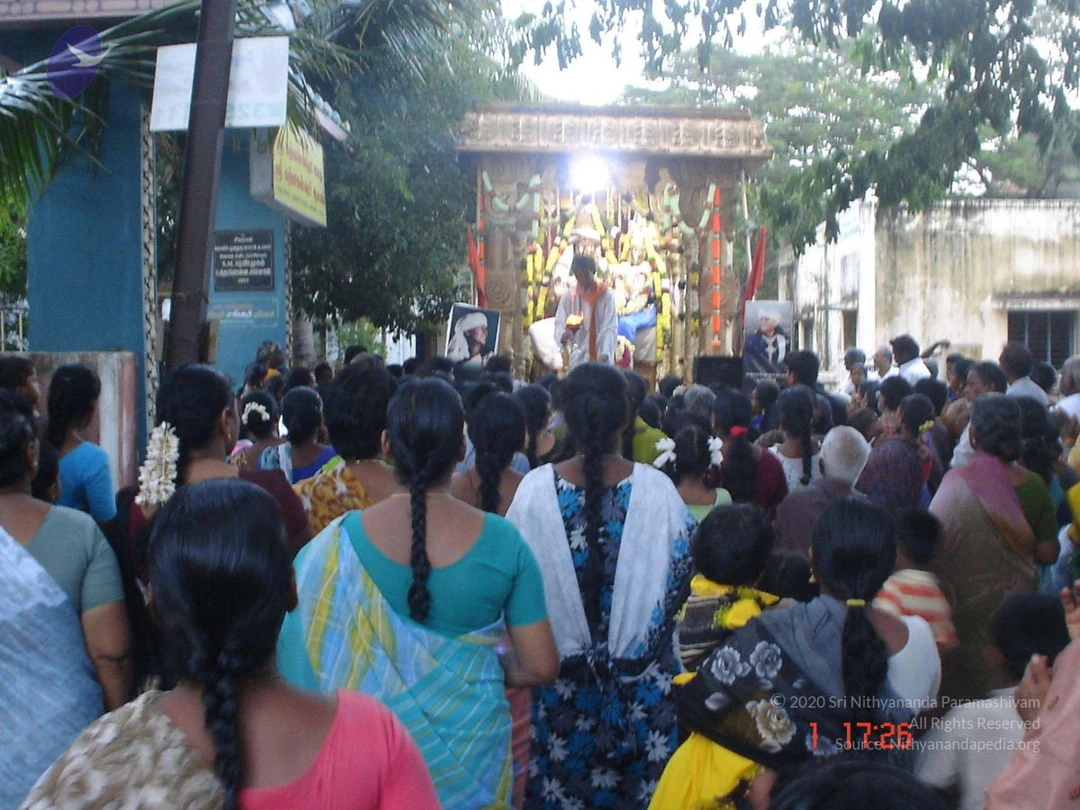
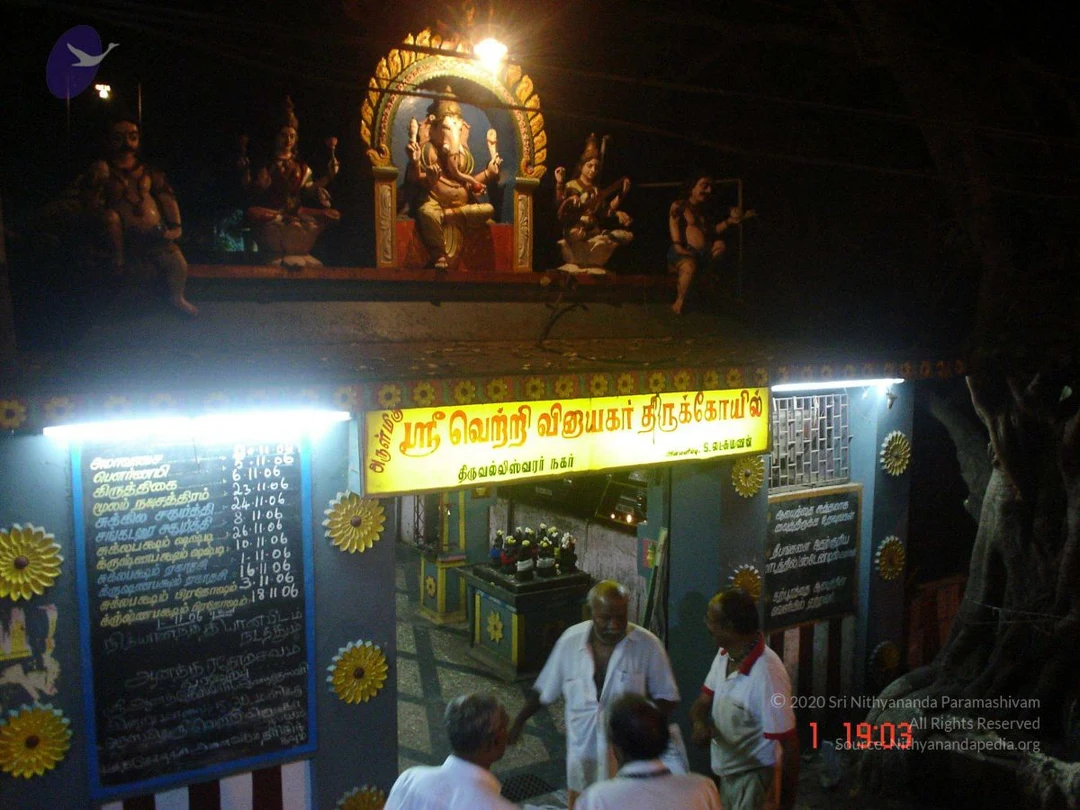
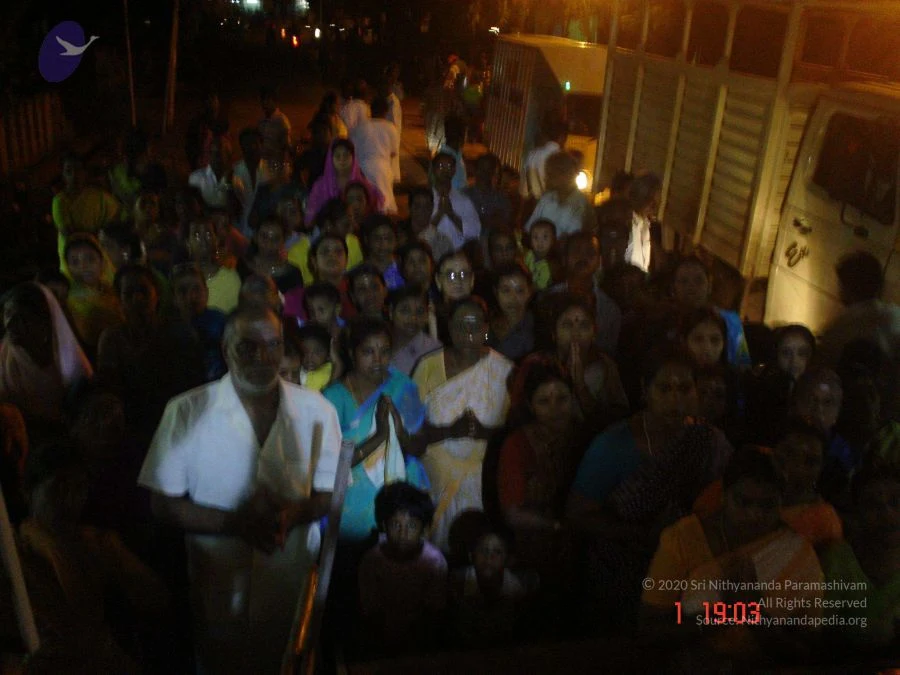
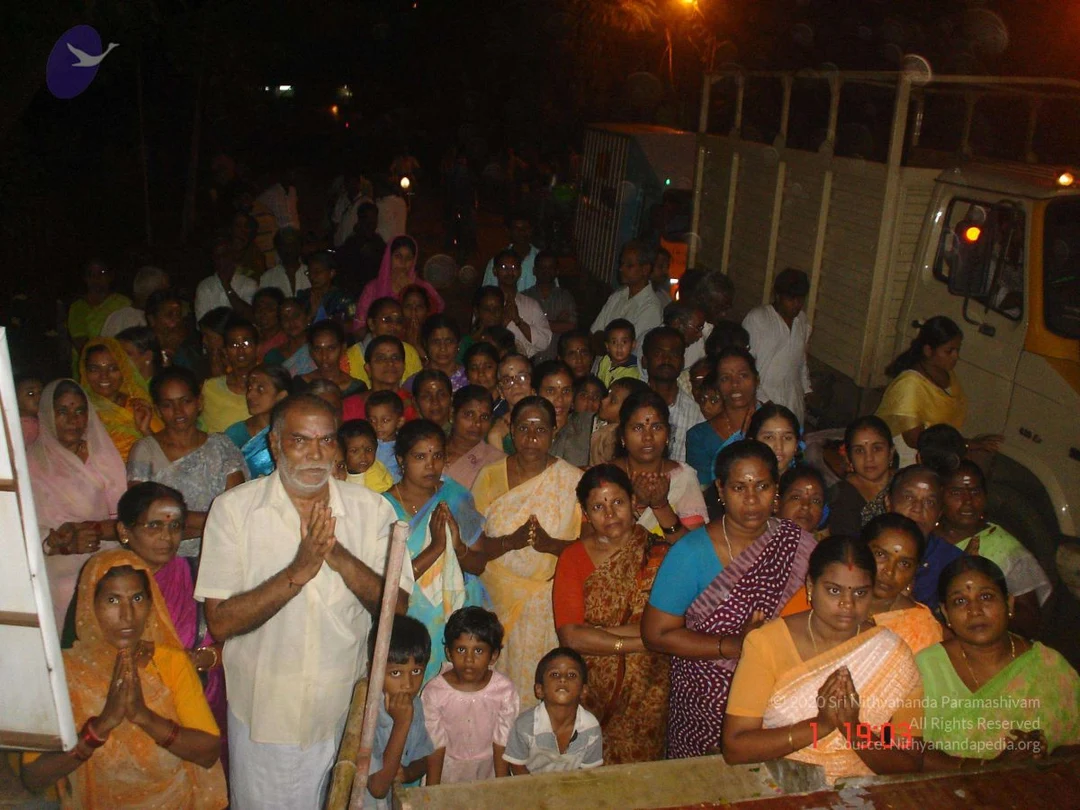
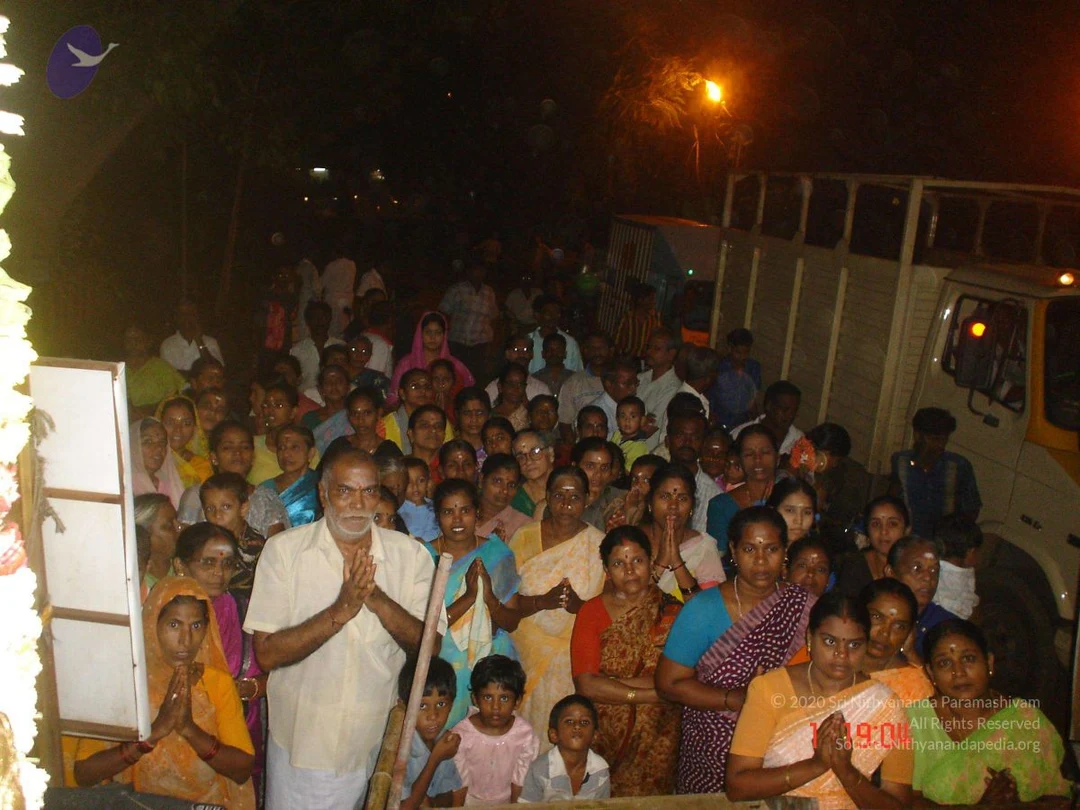
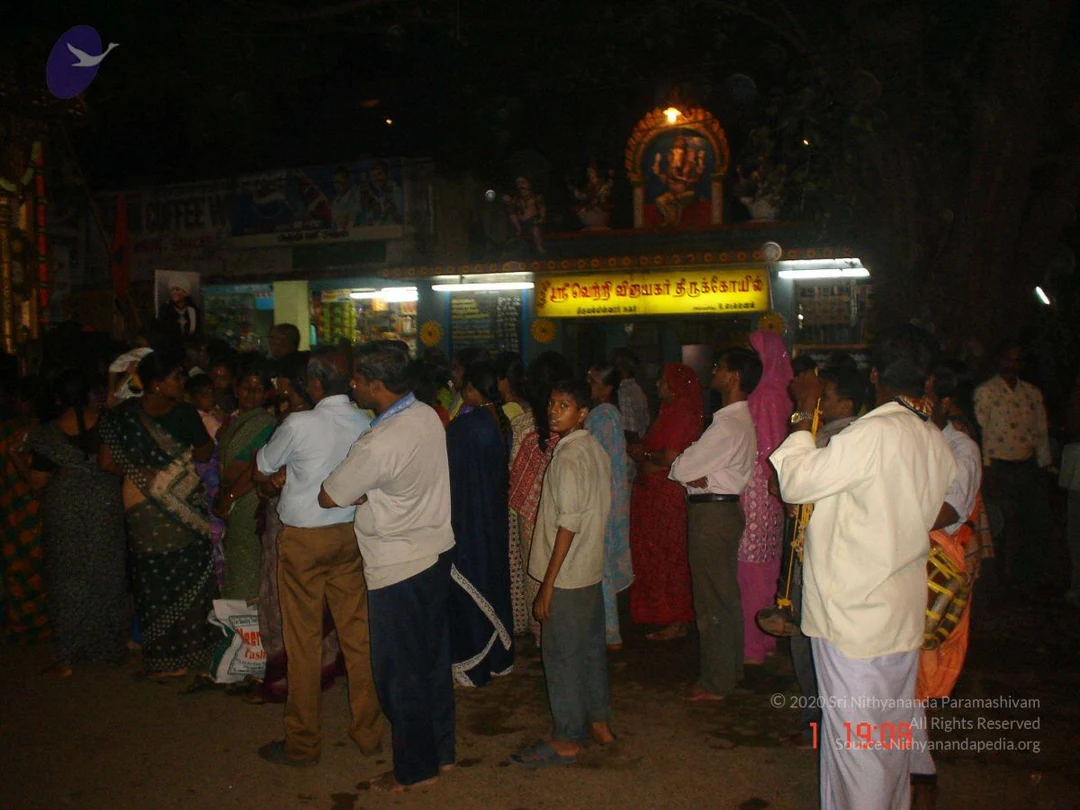
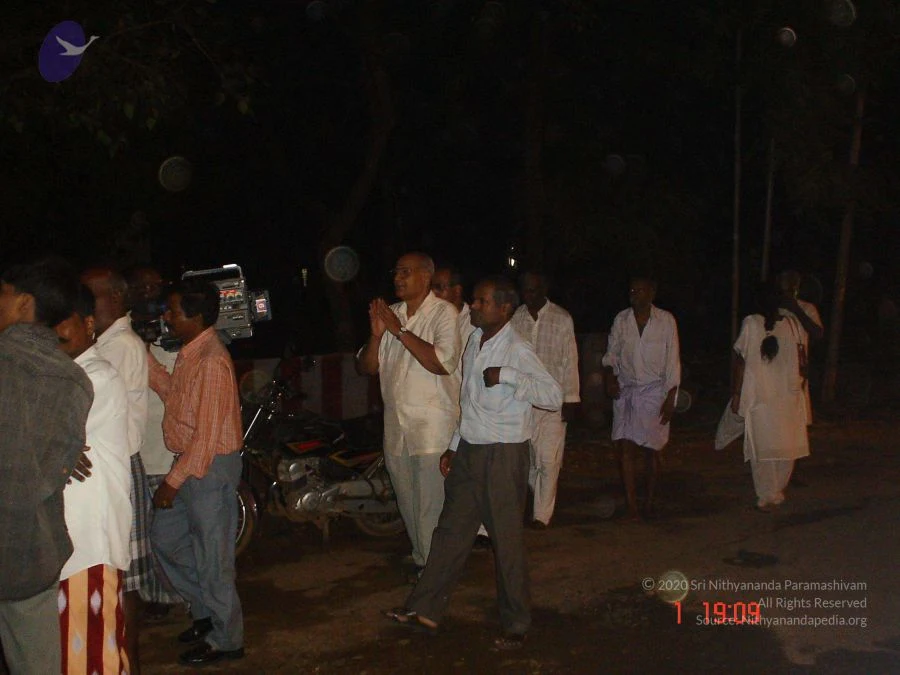
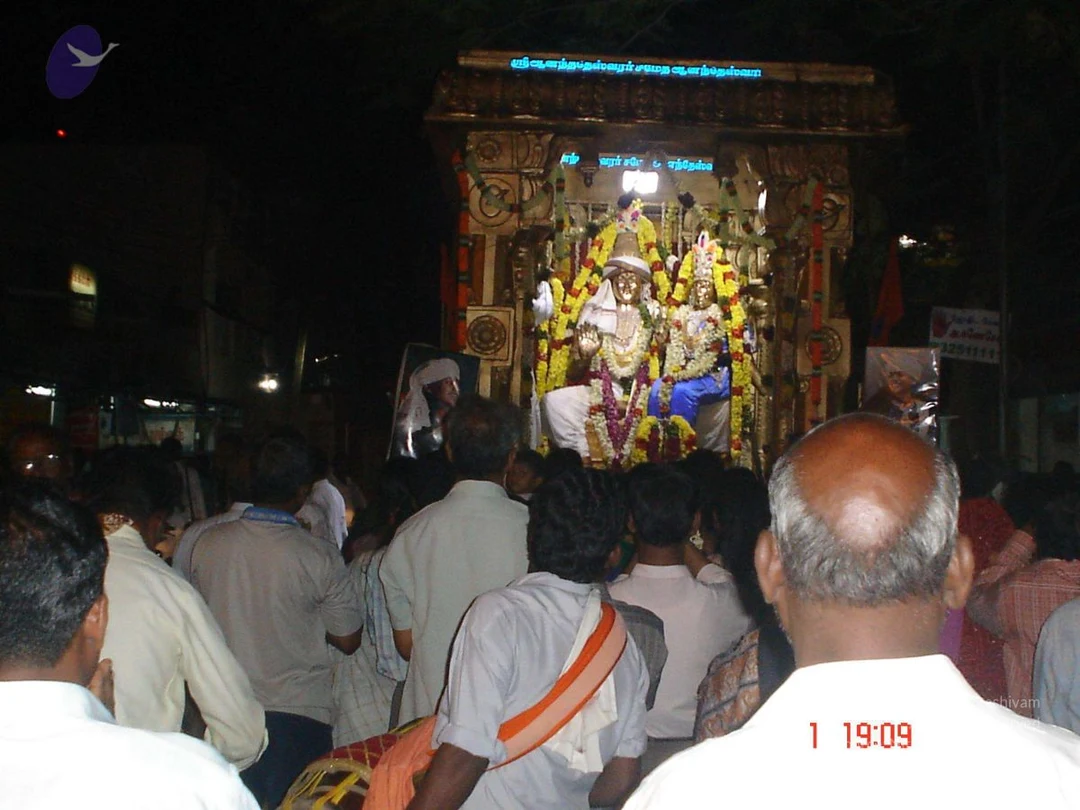
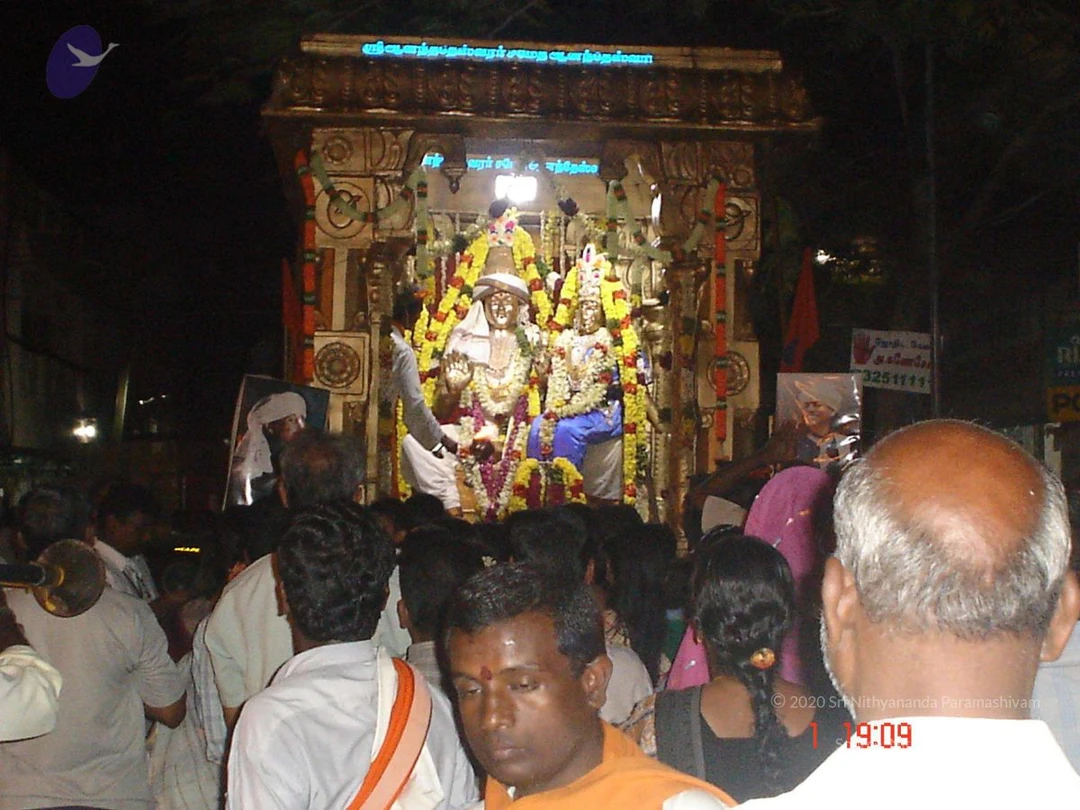
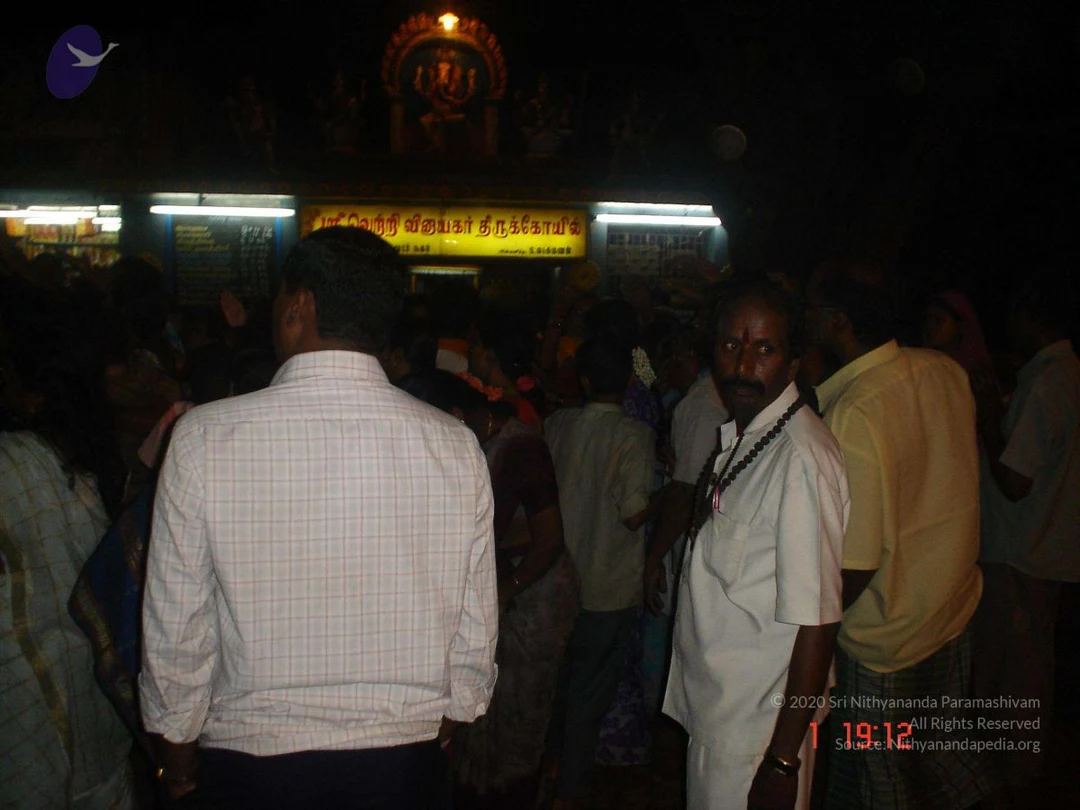
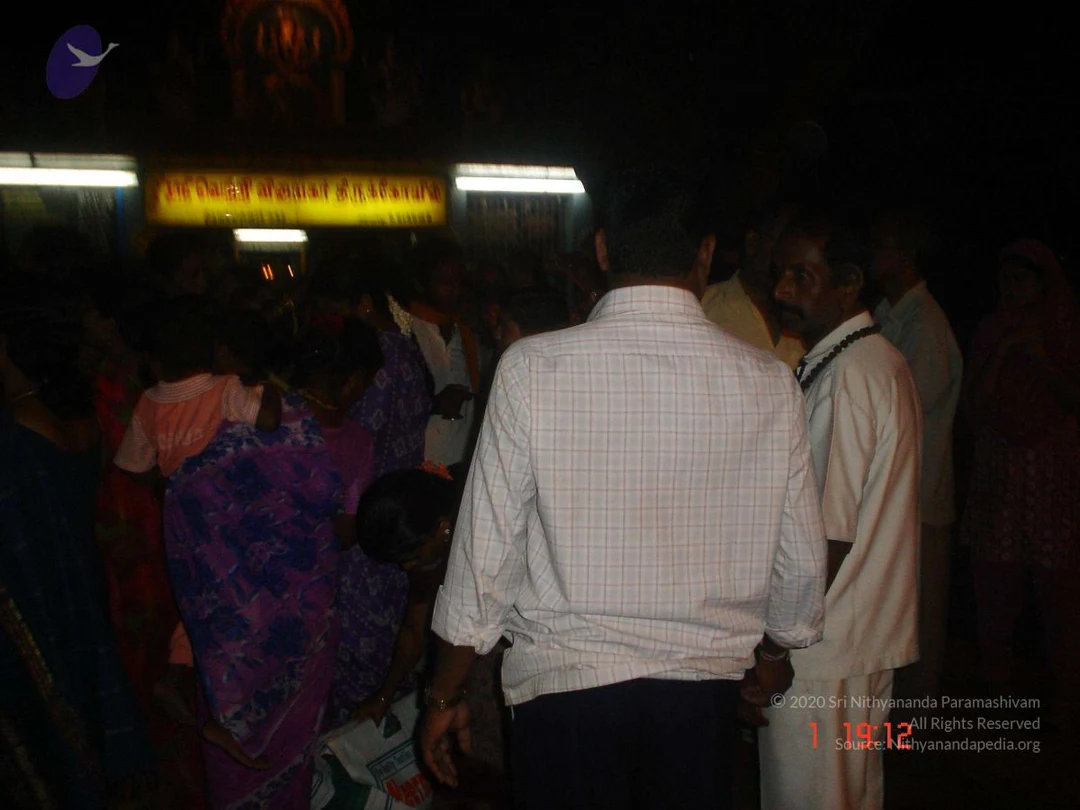
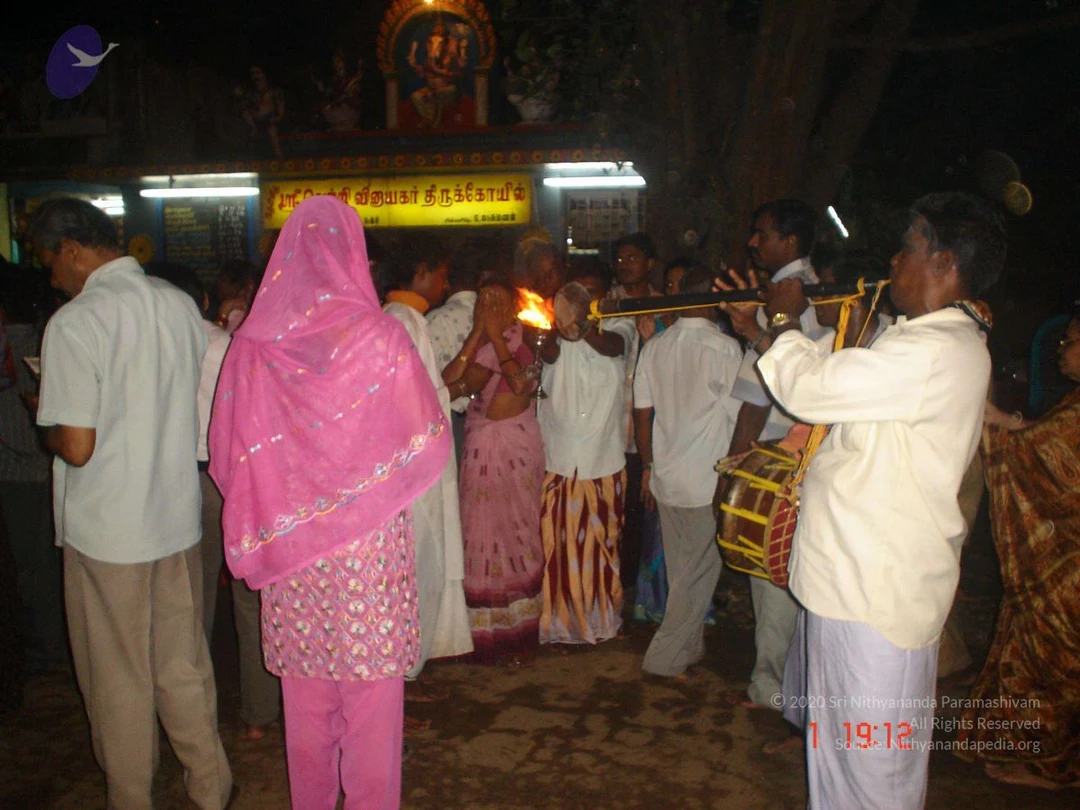
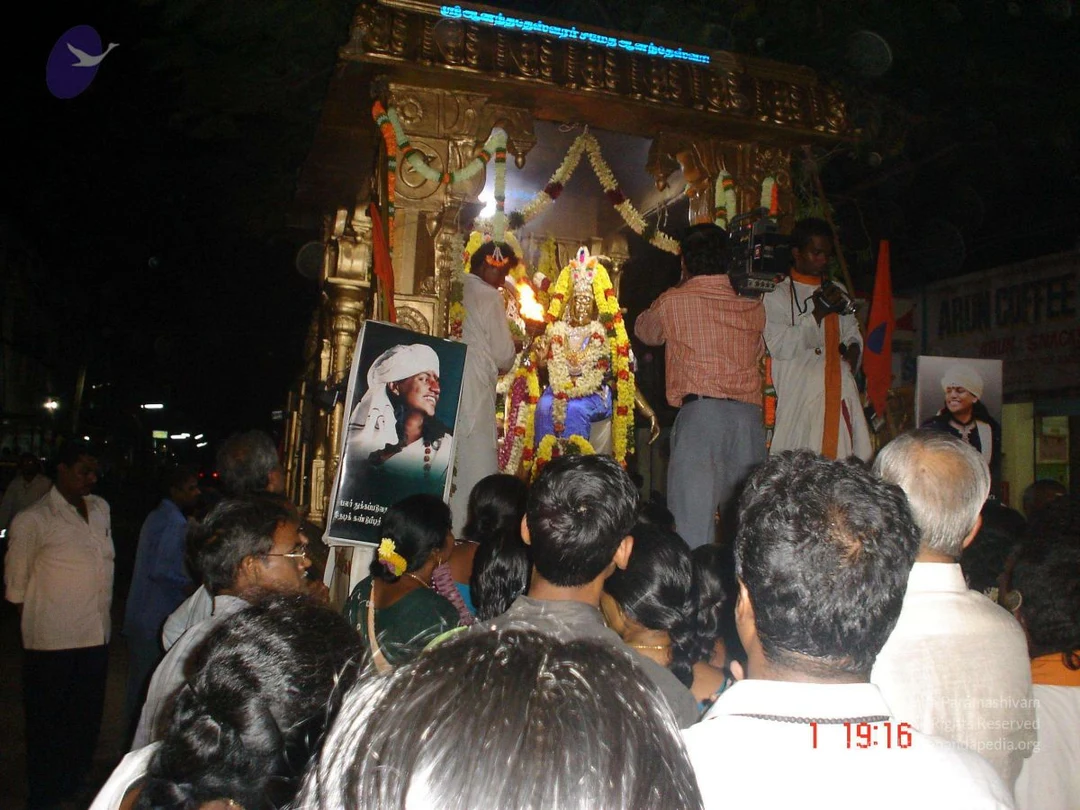
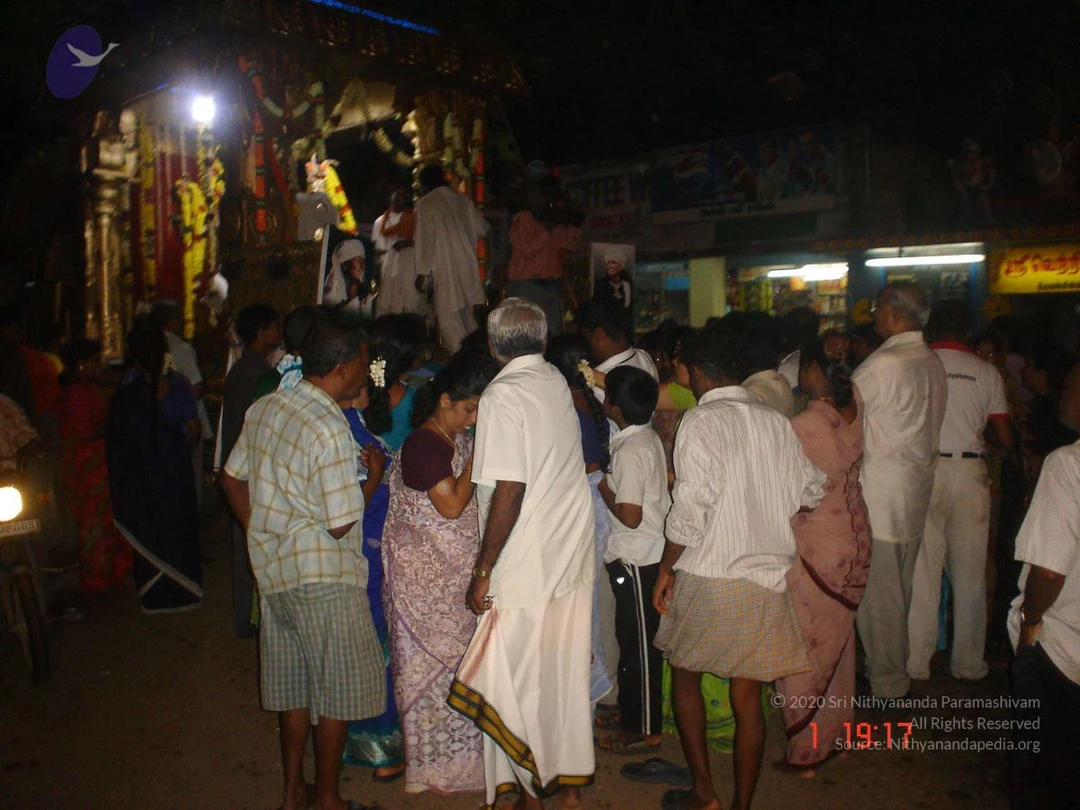
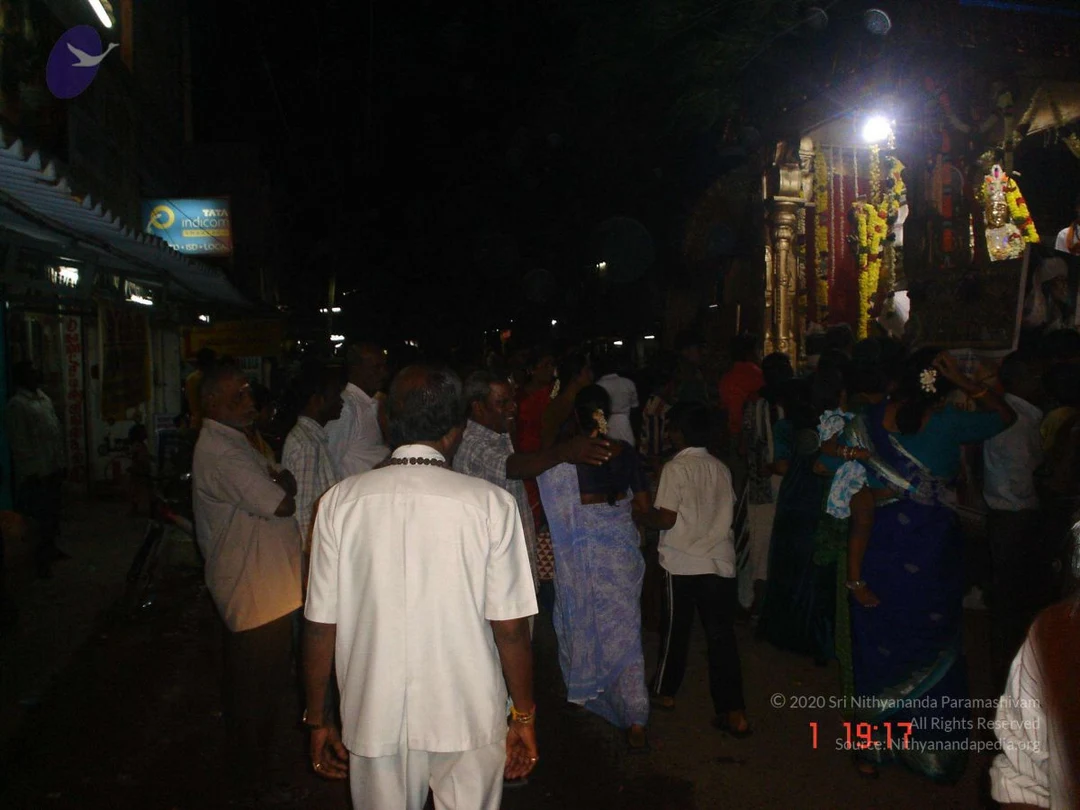
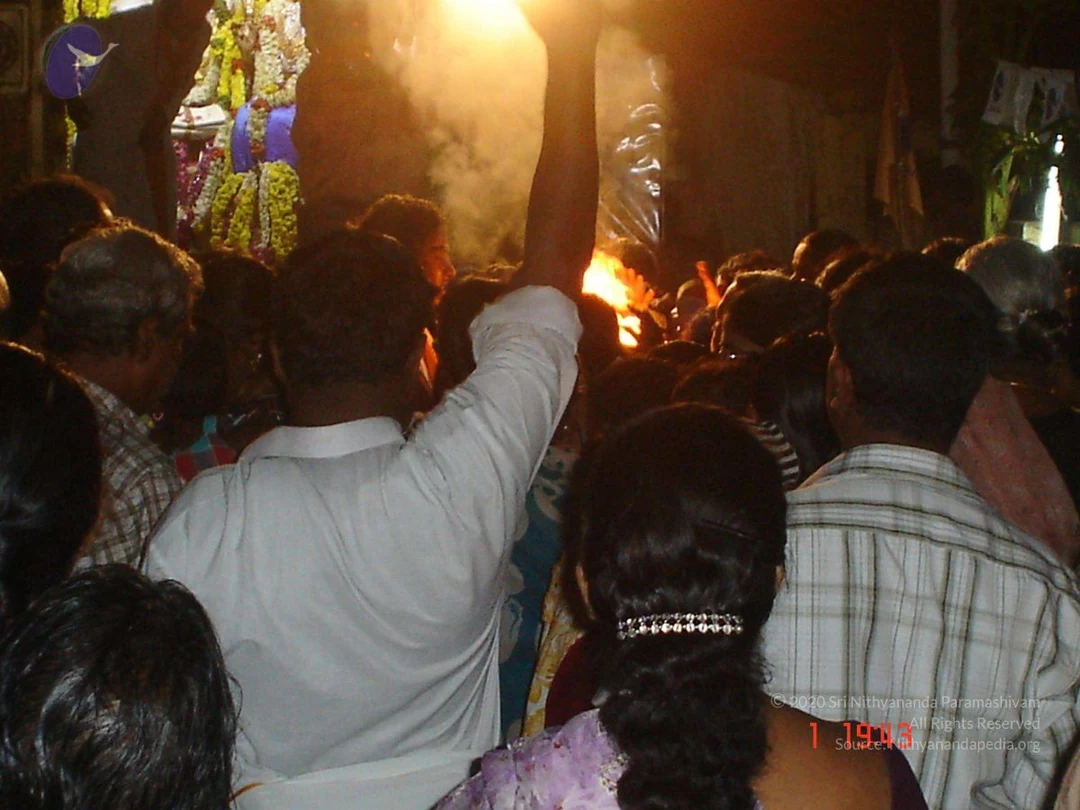
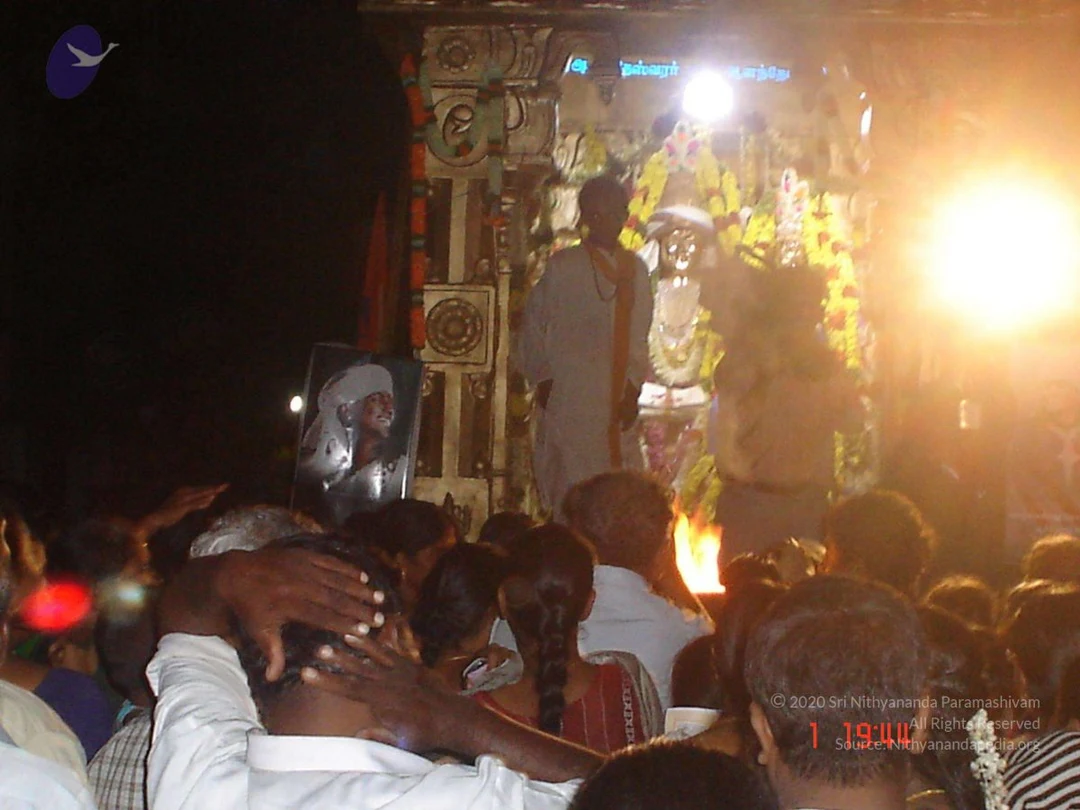
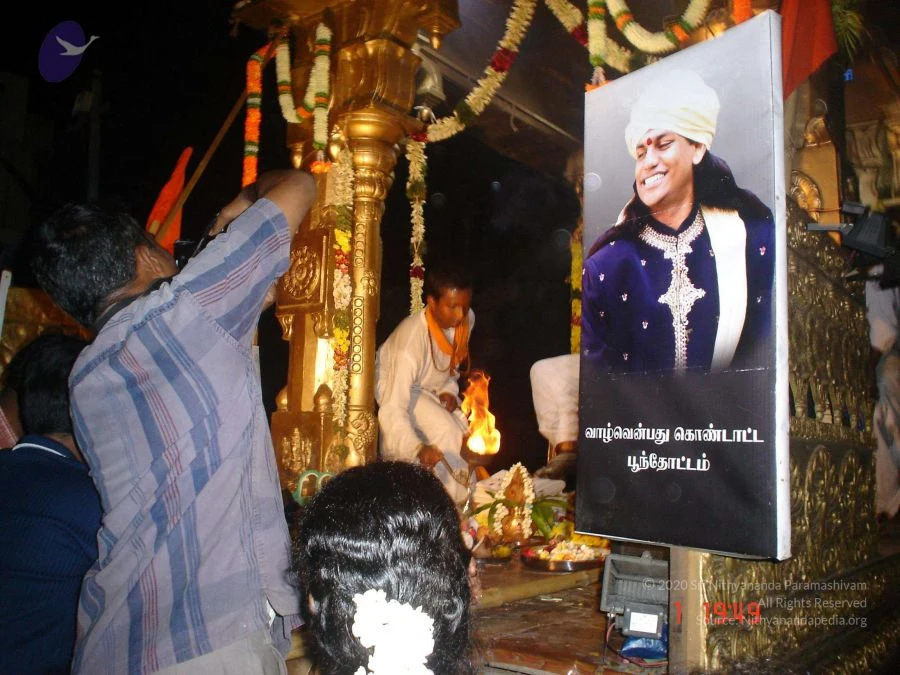
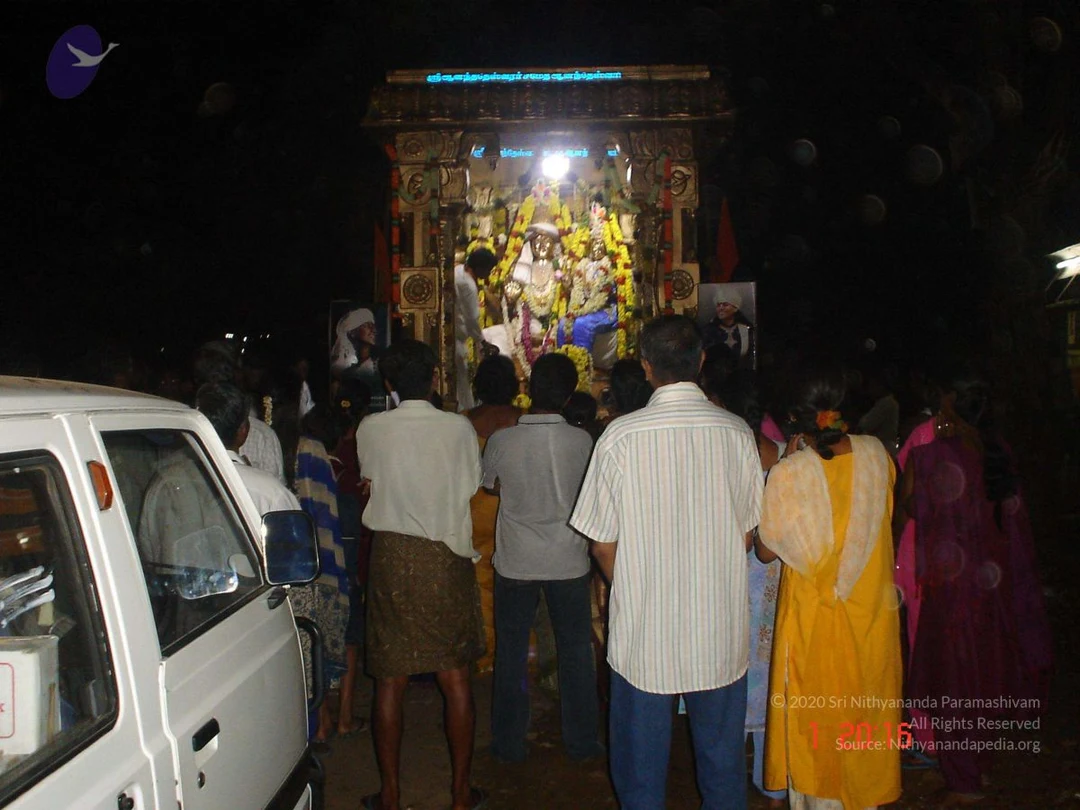
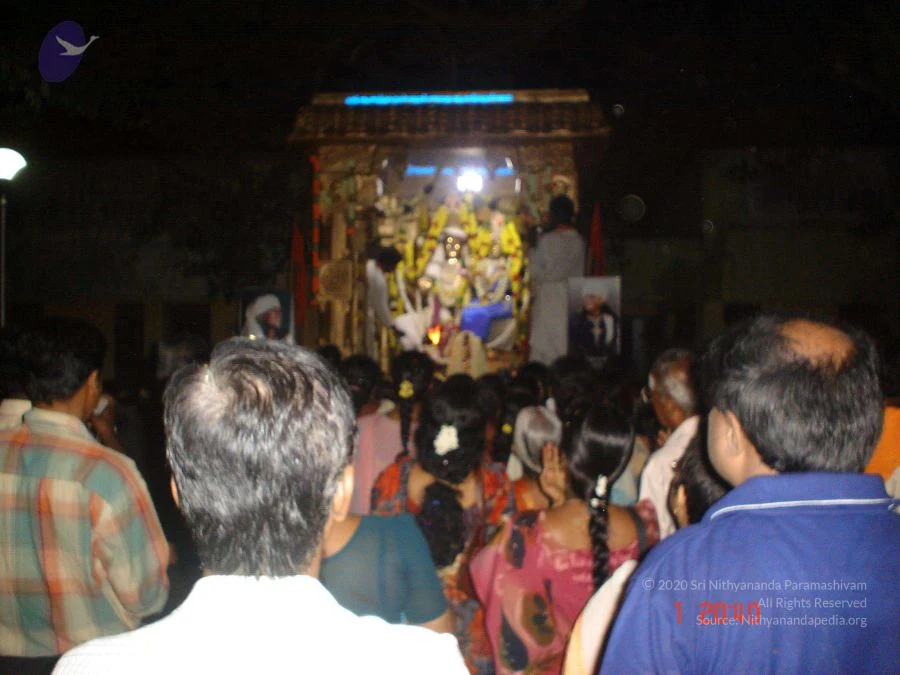
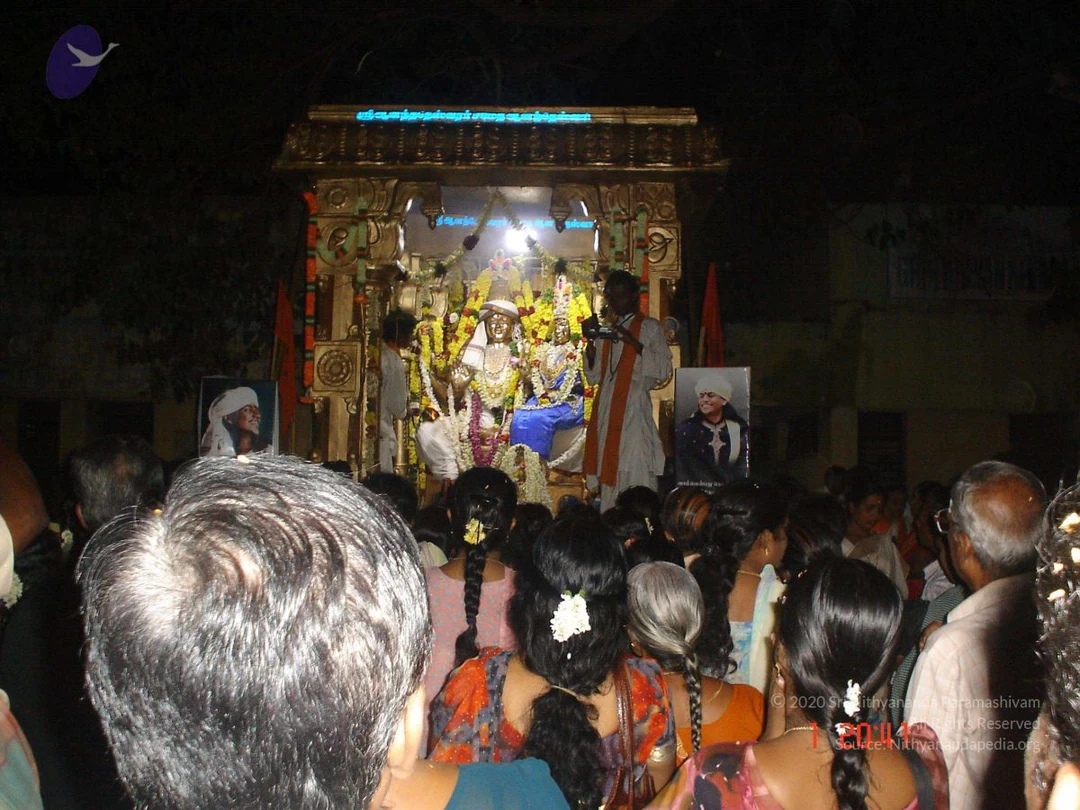
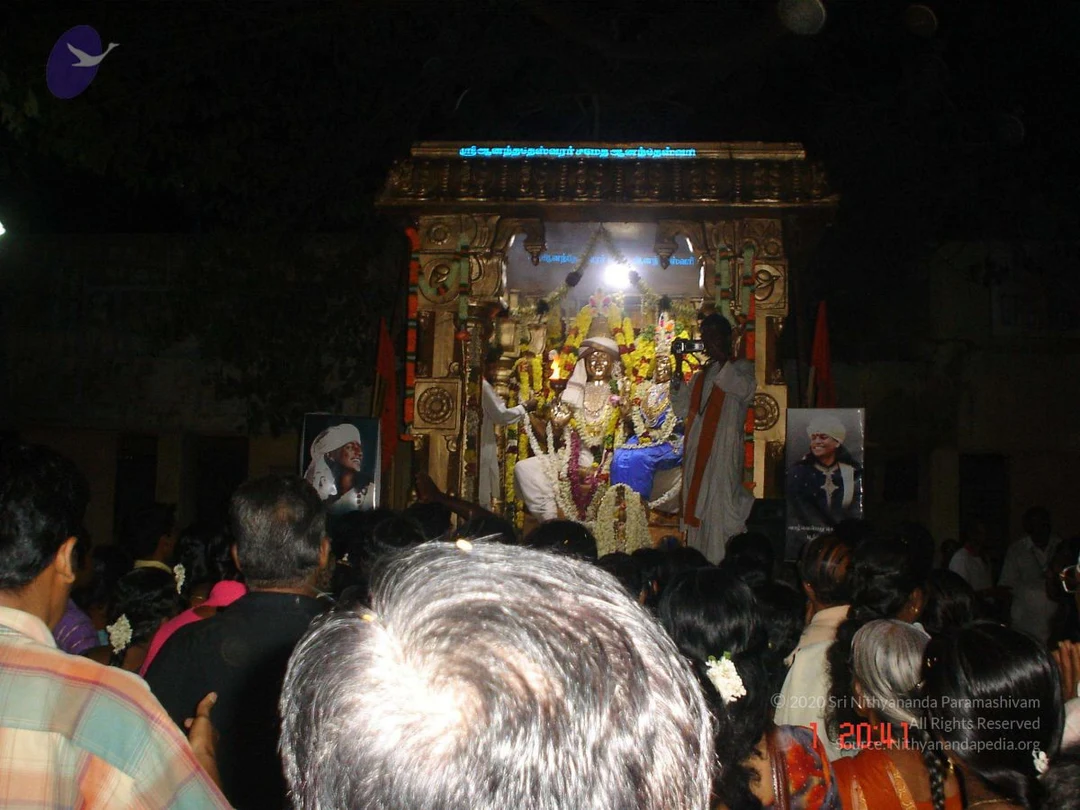
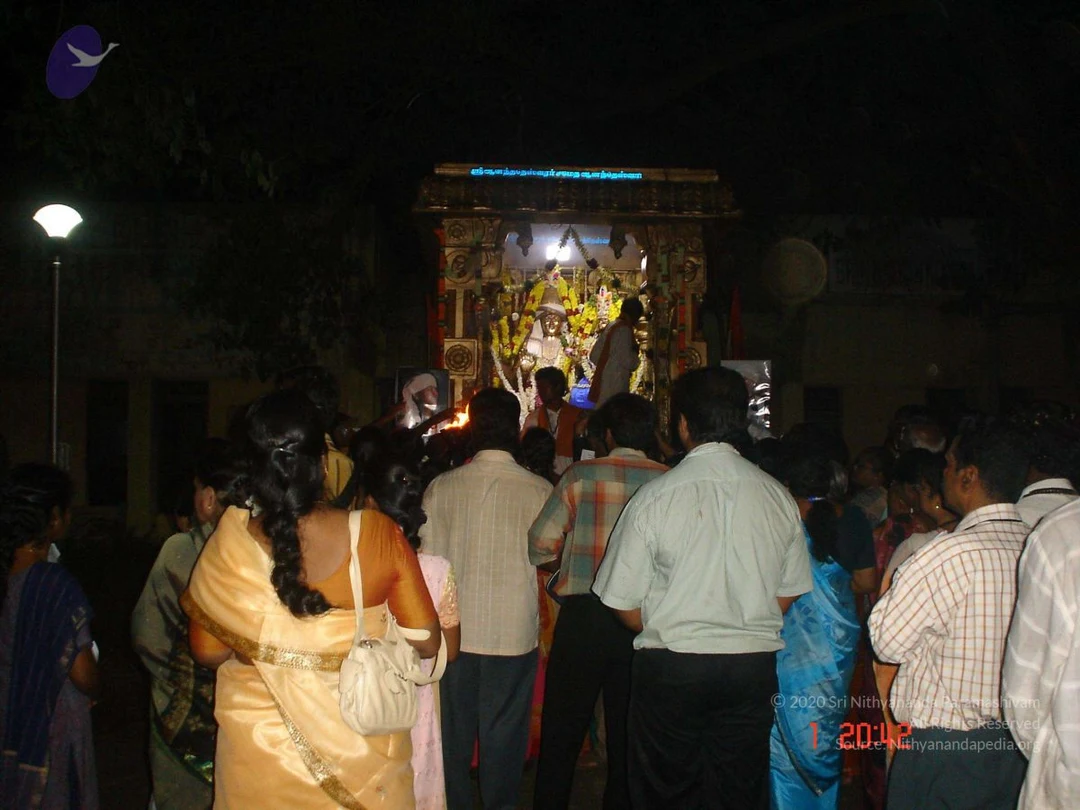
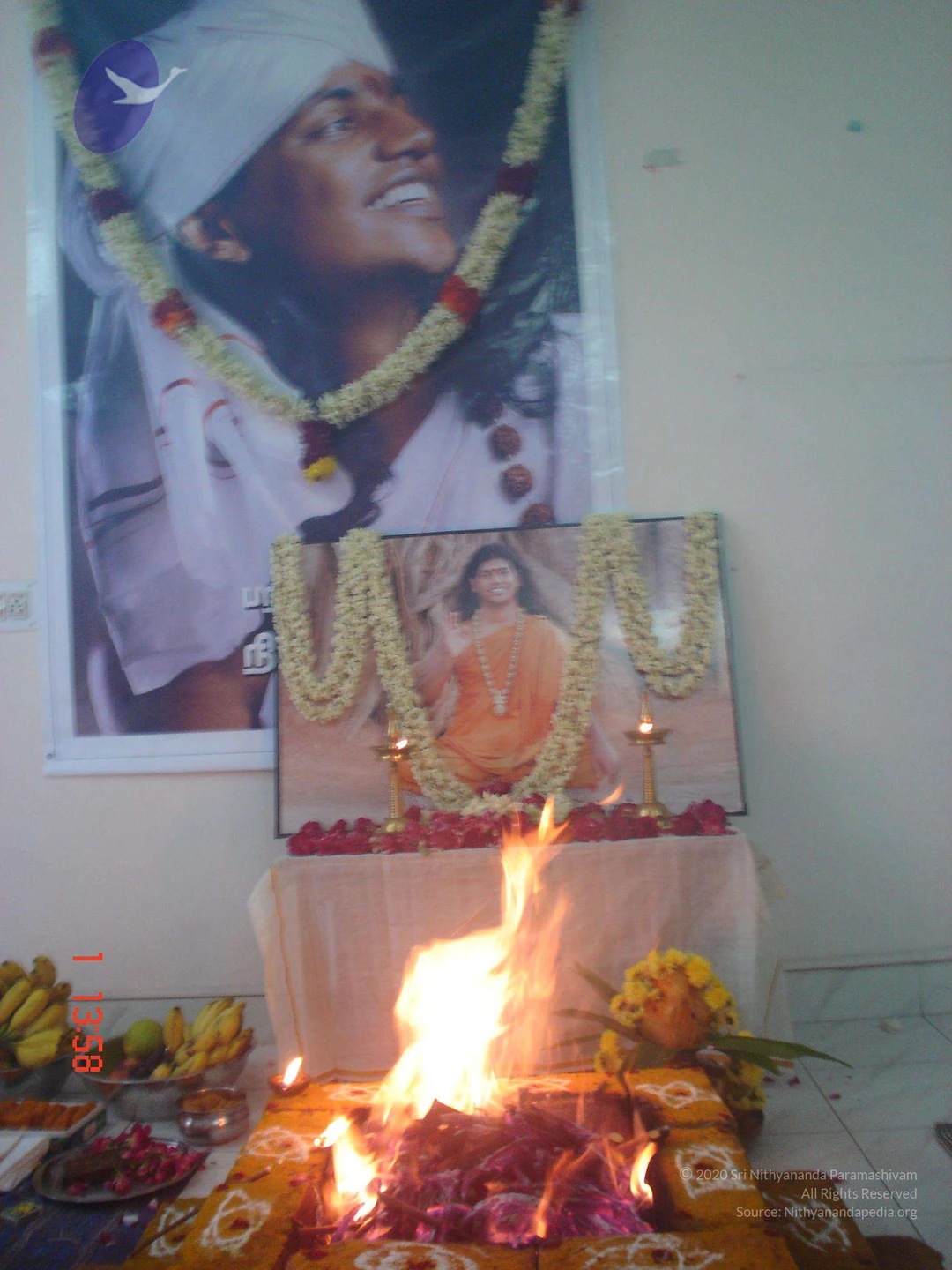
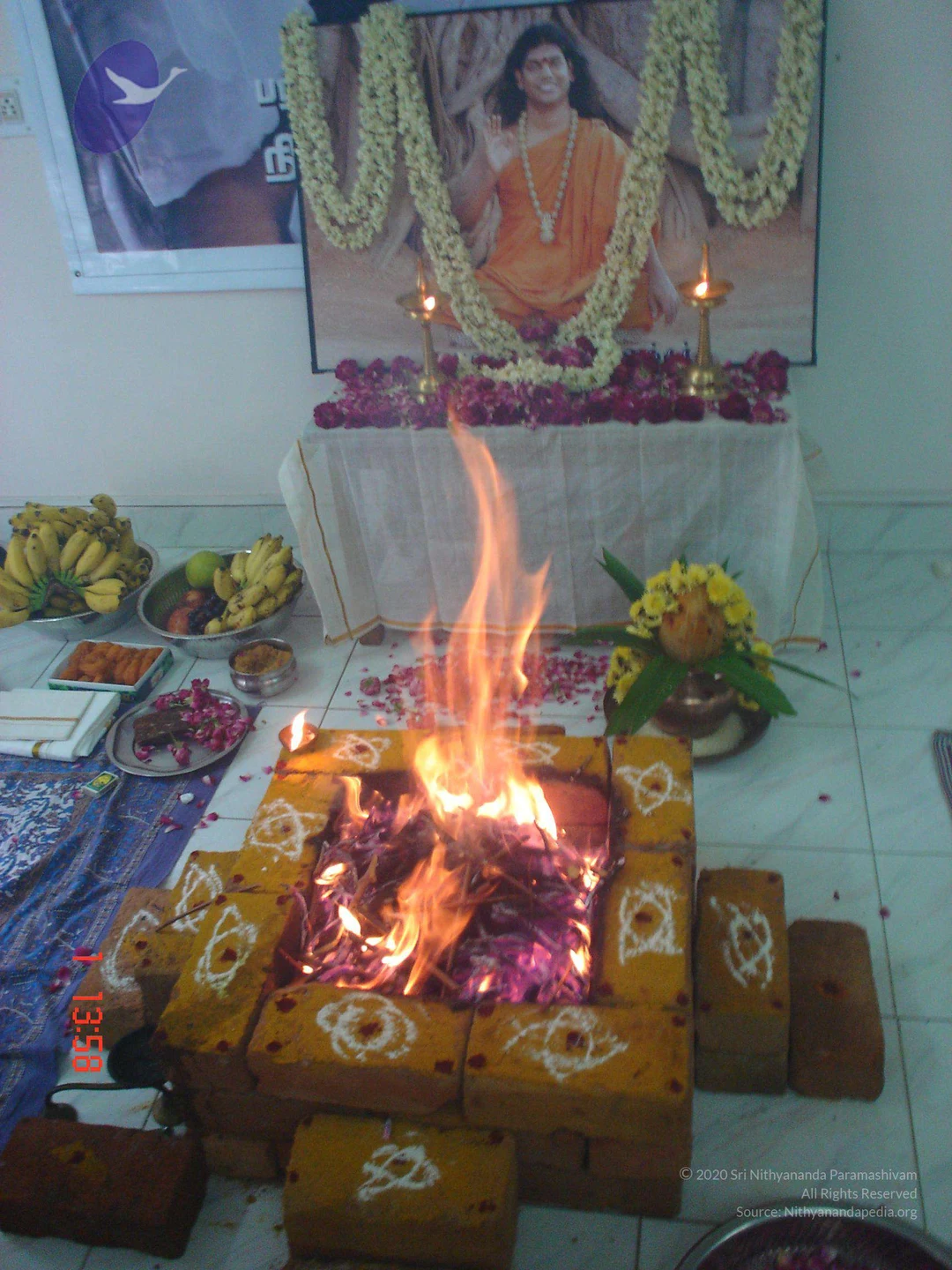
A scanned page from the Tamil weekly Kumudam, serialised spiritual article layout. Top left shows a banner with a stylised figure in saffron robes and geese, labelled with the series title, beside a Kumudam logo. Below is a dense block of Tamil body text in several paragraphs under a red date bar, with the article heading and a closing line at the bottom. No physical people are present; the banner shows a painted or printed figure.A white-tiled two-storey building seen through a large tree trunk and leafy branches. A blue banner with a printed portrait hangs on the upper balcony railing, showing a figure with white head covering and a blue background. A tall pole with a red and black flag stands in front of the building, and a blue tarpaulin covers an adjacent structure at right. The scene is overcast with a timestamp in the lower right corner.Night procession at a temple outdoors, with a dense crowd of devotees in the foreground, mostly men in white shirts and checked shirts and women with flowers in their hair. Behind them, two decorated deity murtis, one with a crown and one with a headdress, are draped in garlands of yellow and white flowers and sit on a ratha/chariot with orange and red garland accents. Warm lamplight and a bright spotlight illuminate the scene. A framed portrait at left shows a figure in white head cloth and white clothing, labelled with the photo caption, and a cameraman in a light shirt films the procession at right. Devotees reach toward the murtis. Fine temple carvings frame the entrance.

November 01 2006

Original wiki page
Contents

Title:

THE SUPREME PONTIFF OF HINDUISM JGM HDH BHAGAVAN NITHYANANDA PARAMASHIVAM

Photos

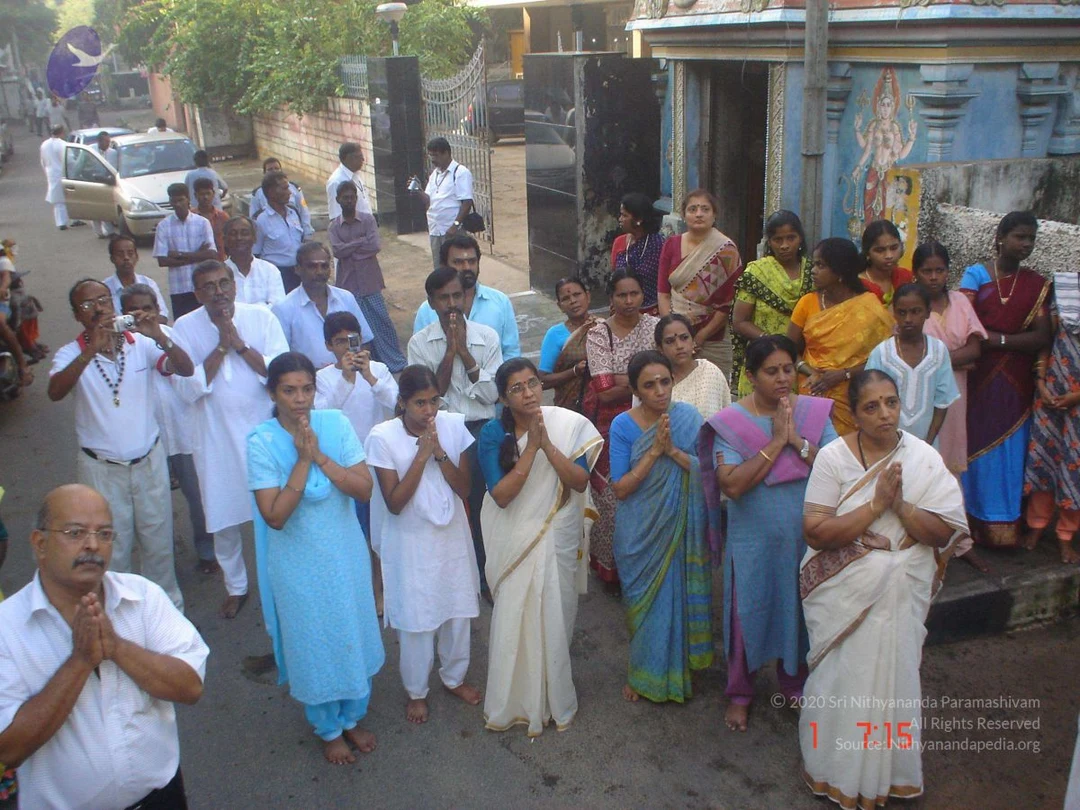
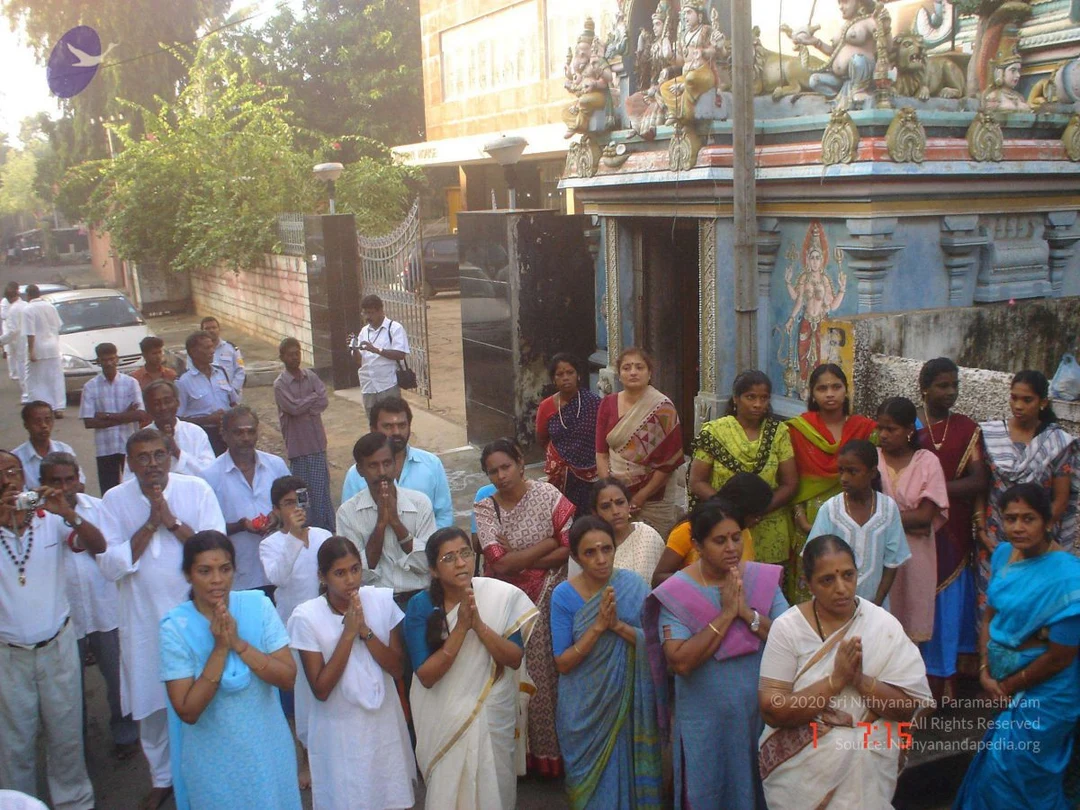
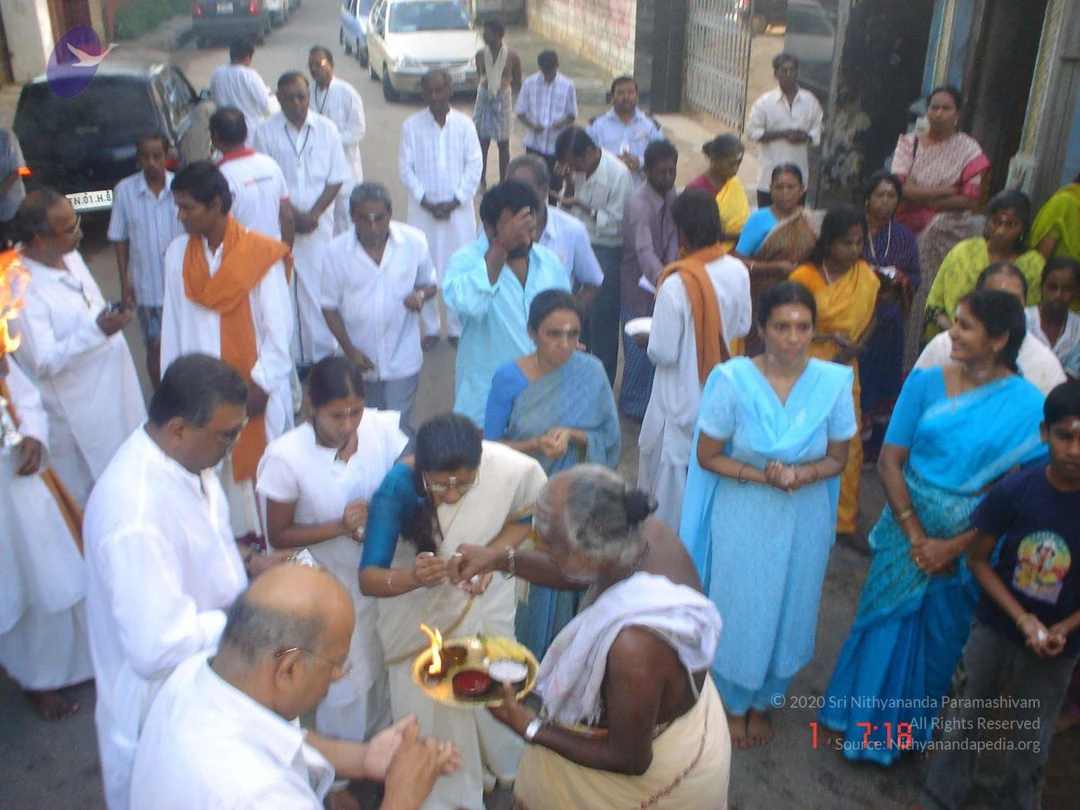
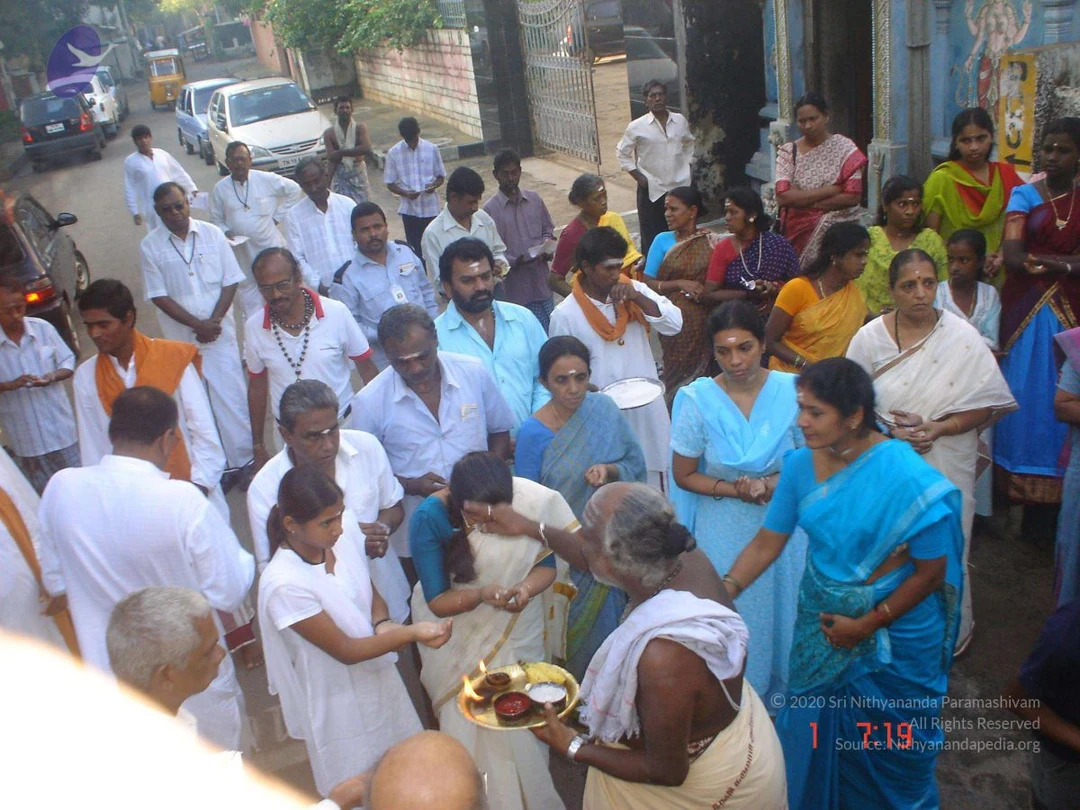
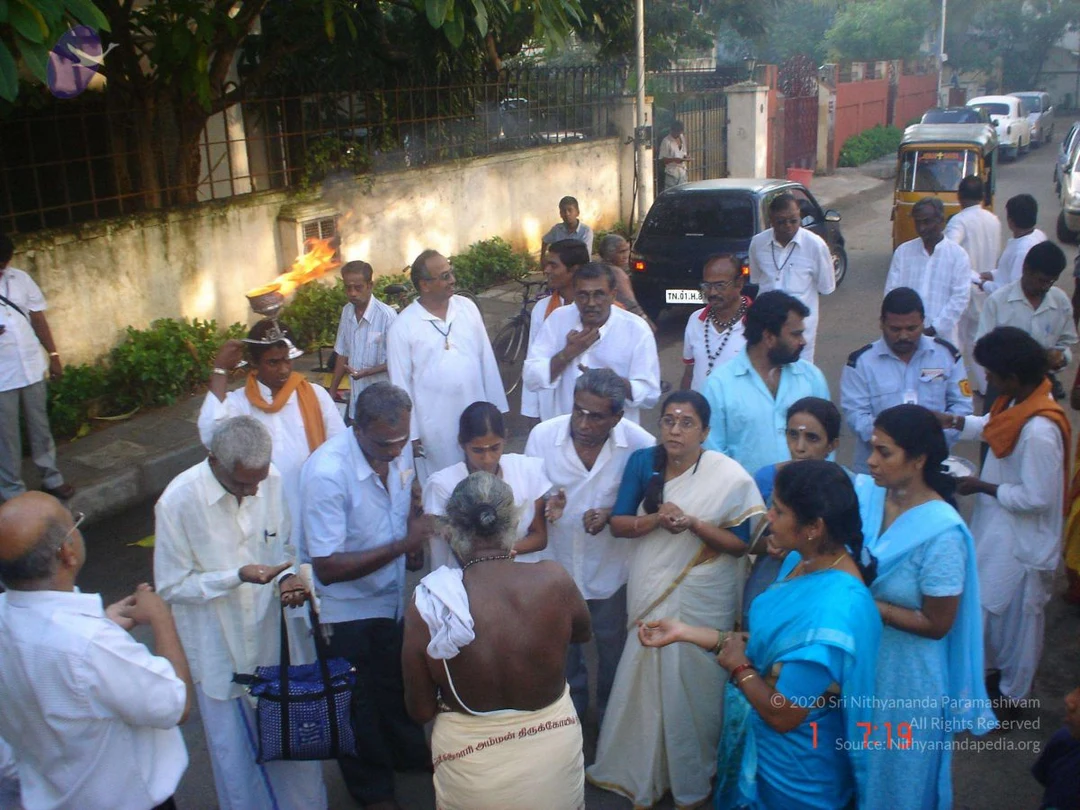
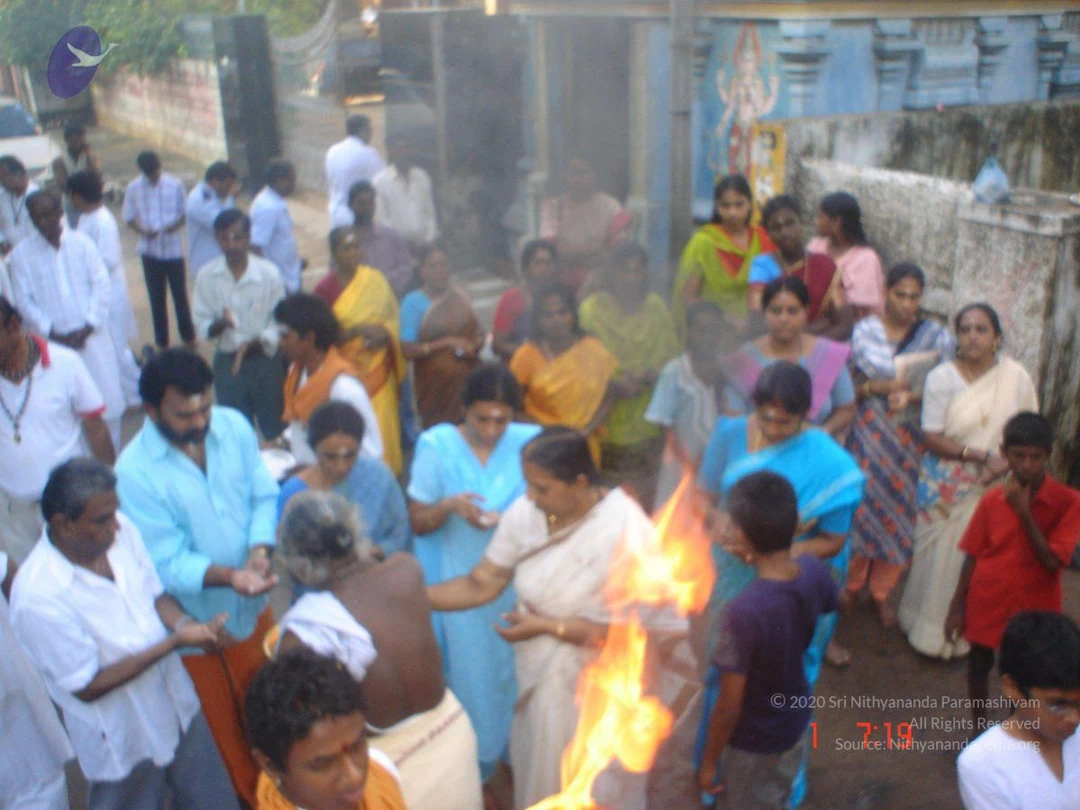
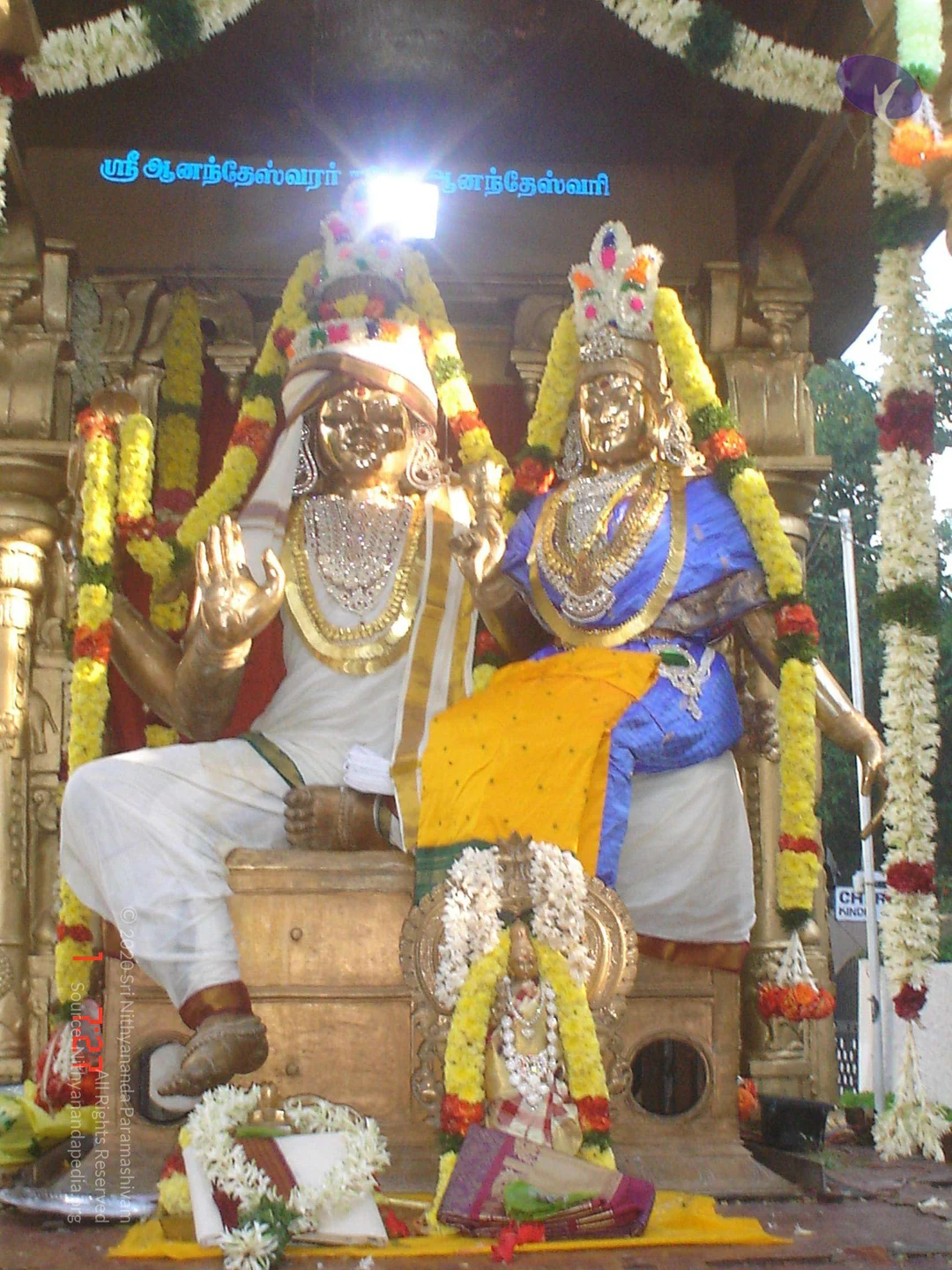
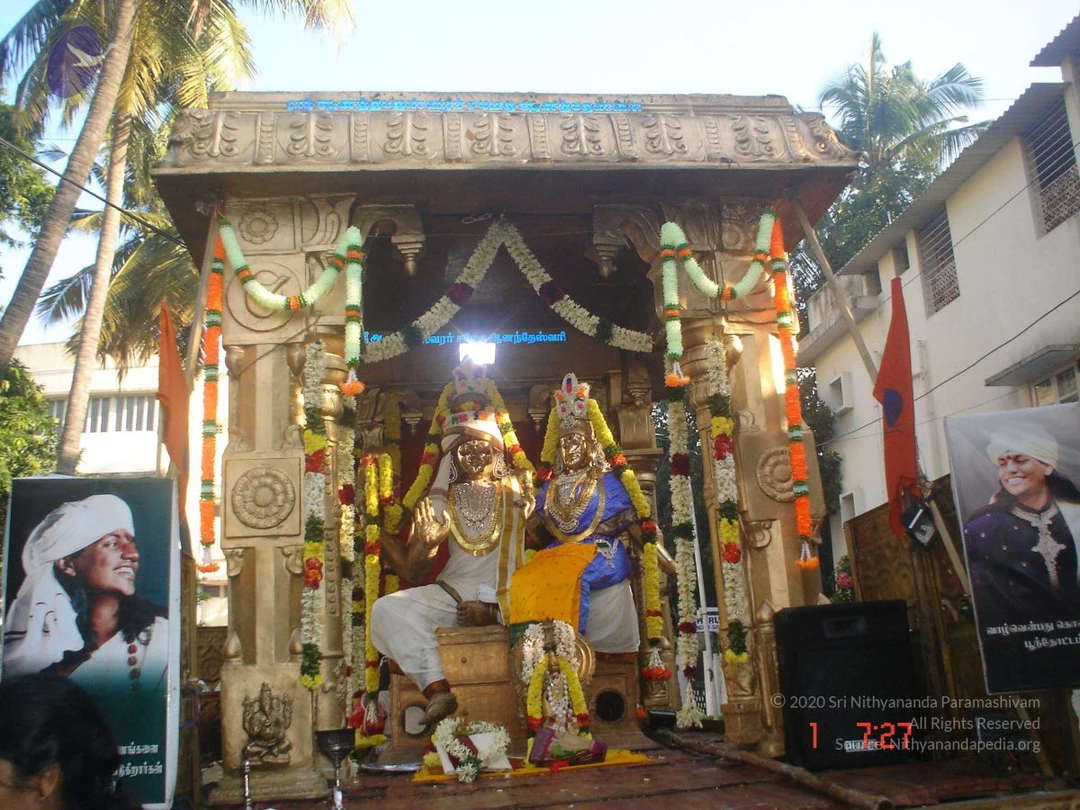
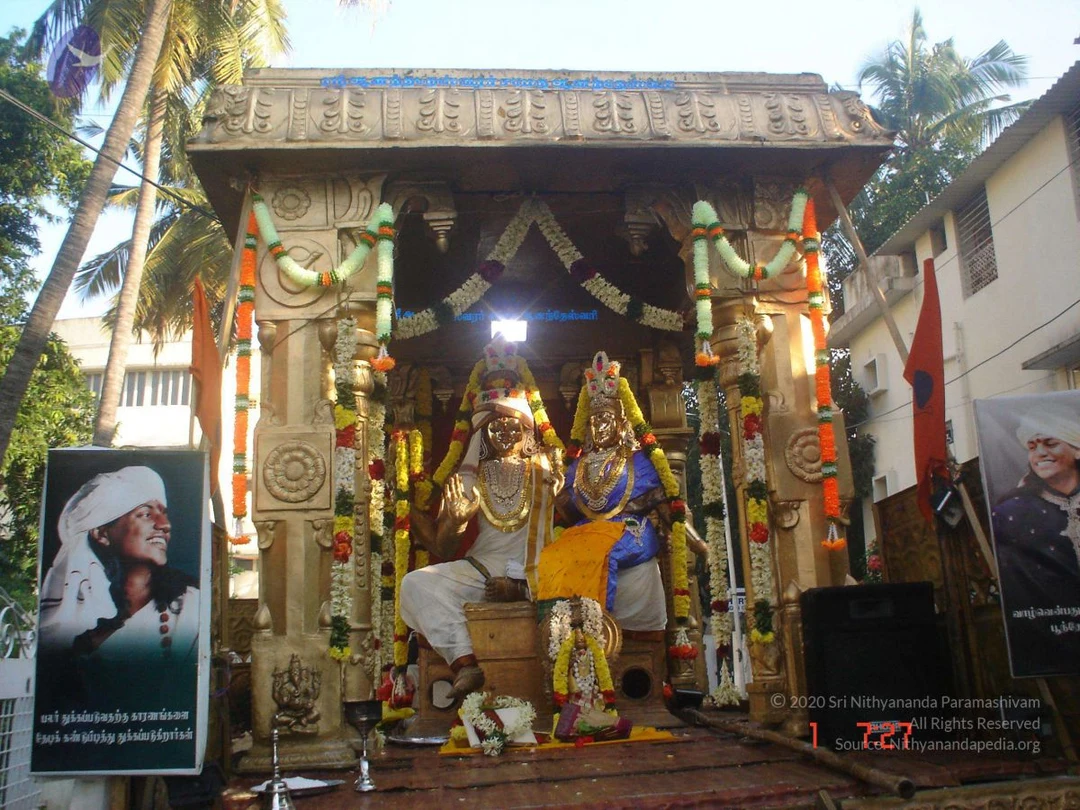
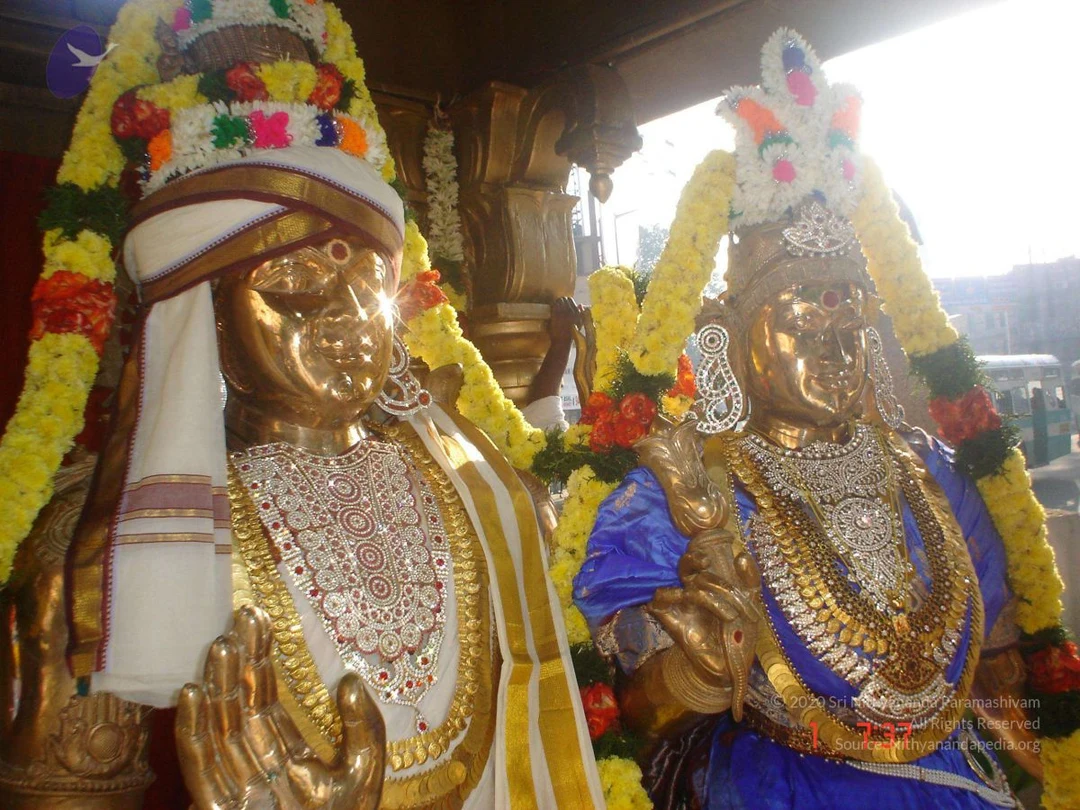
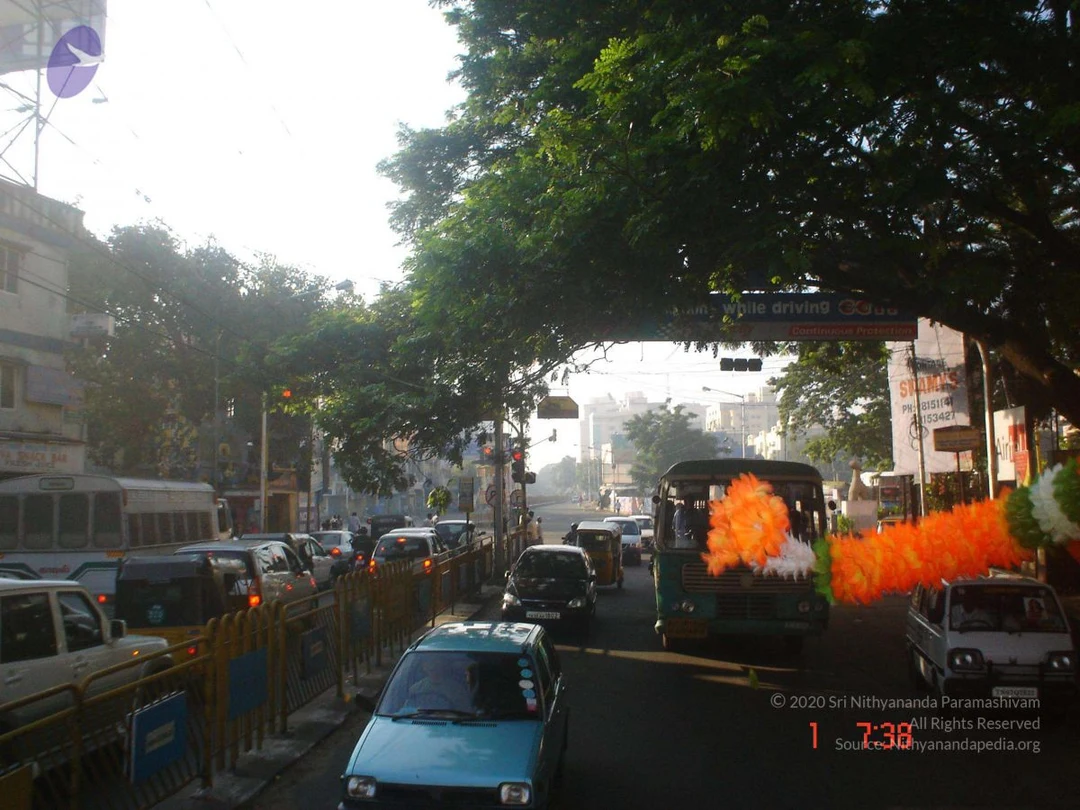
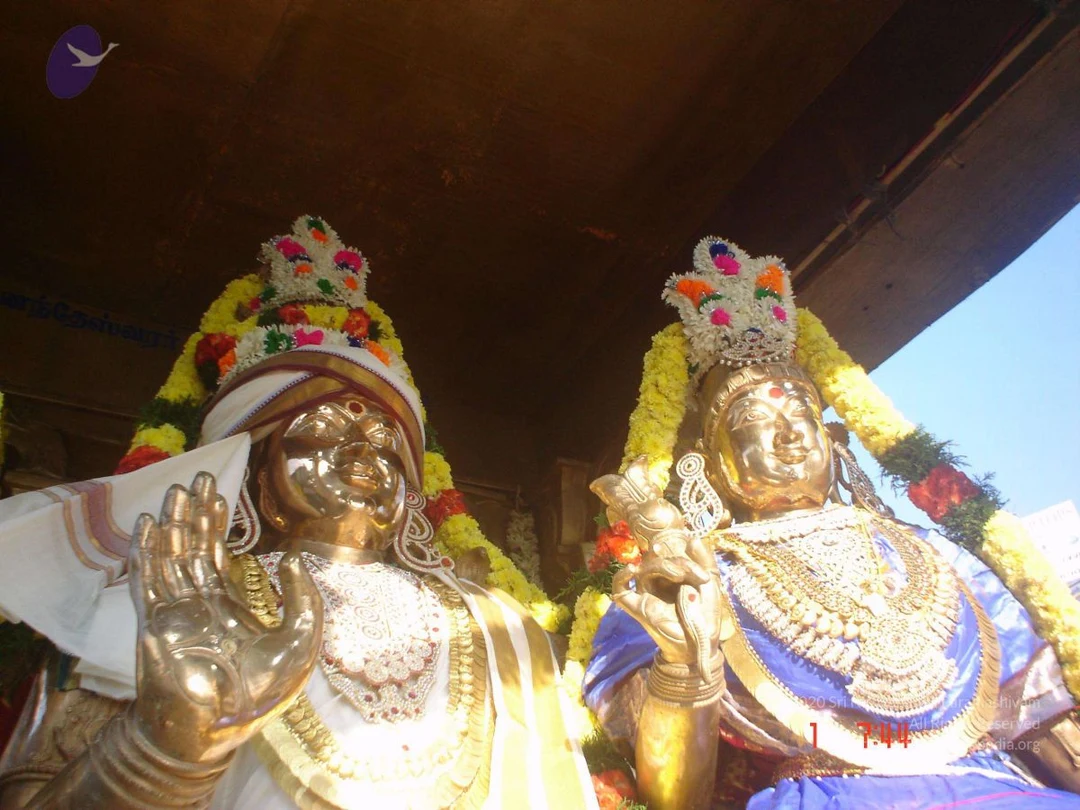
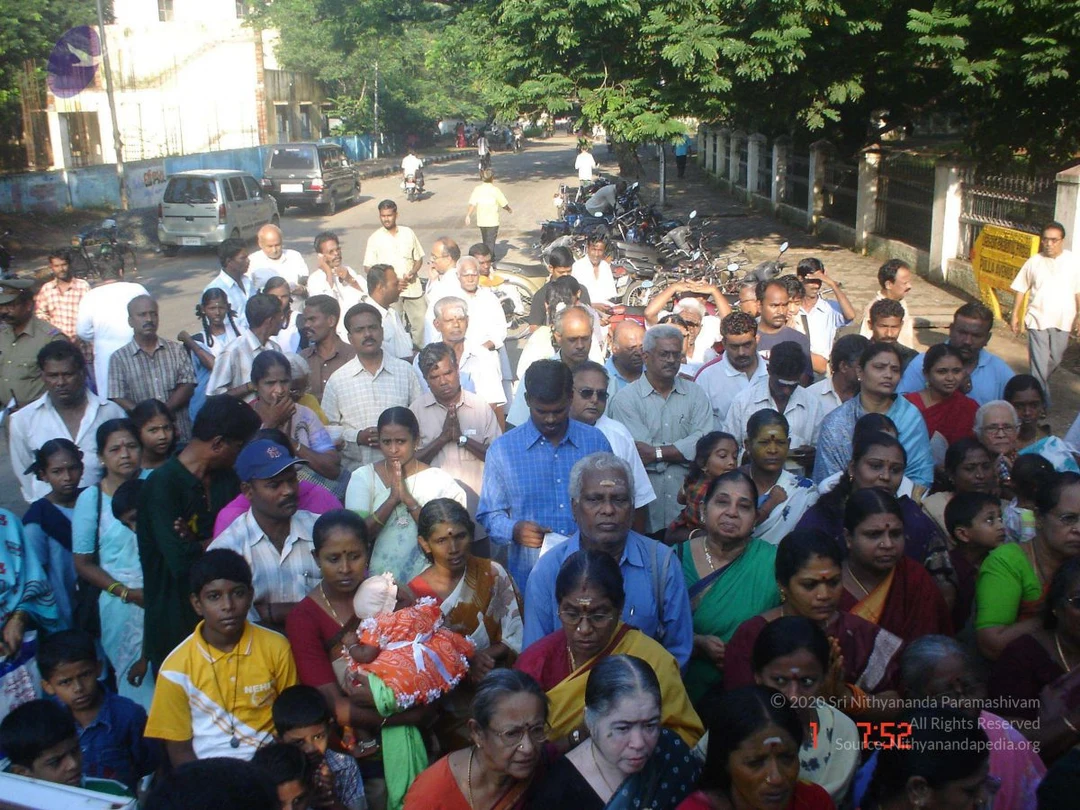
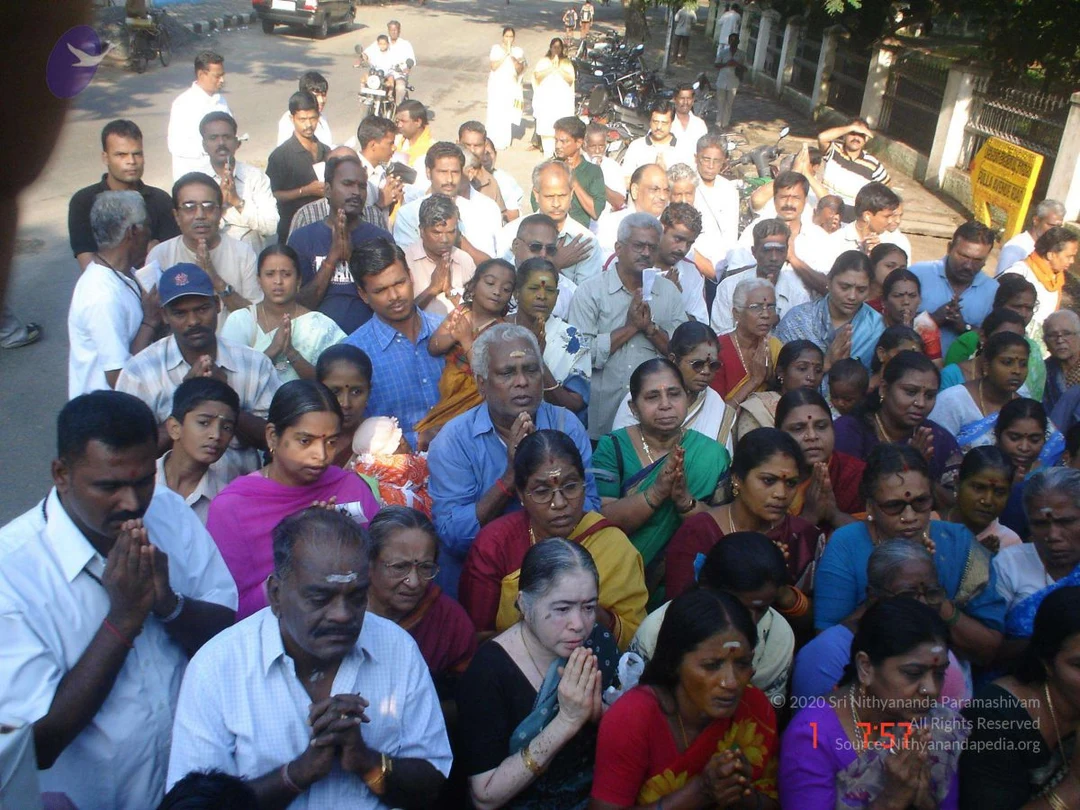
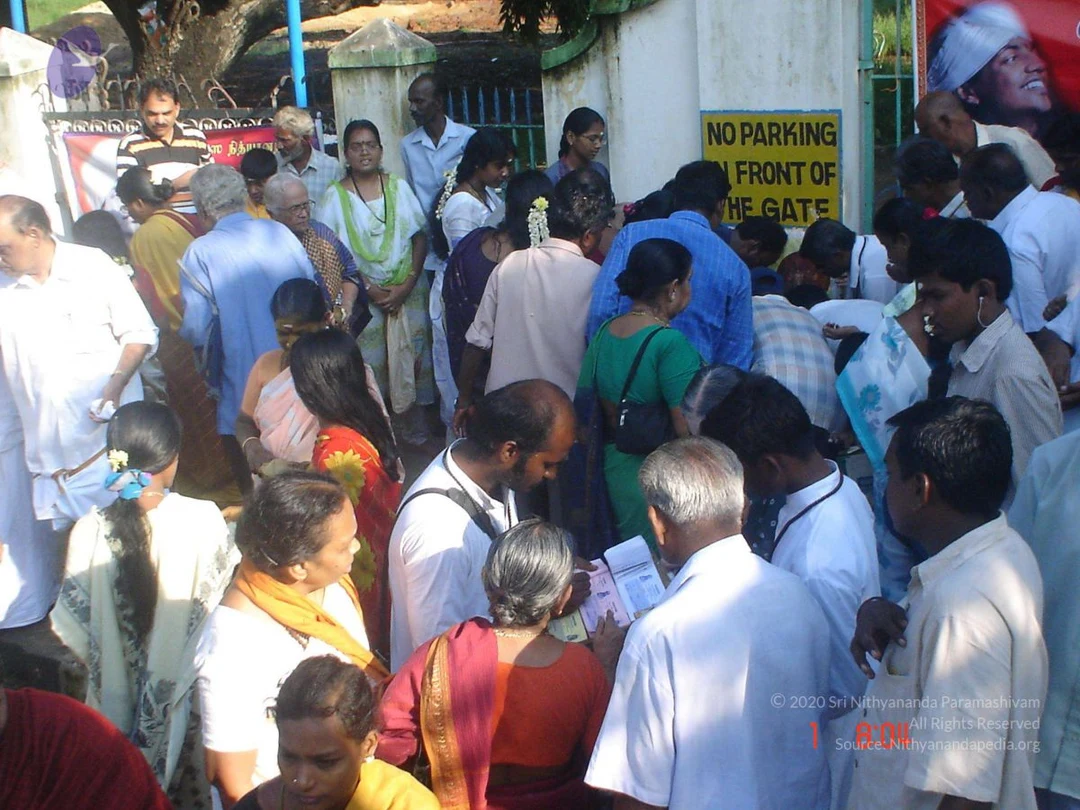
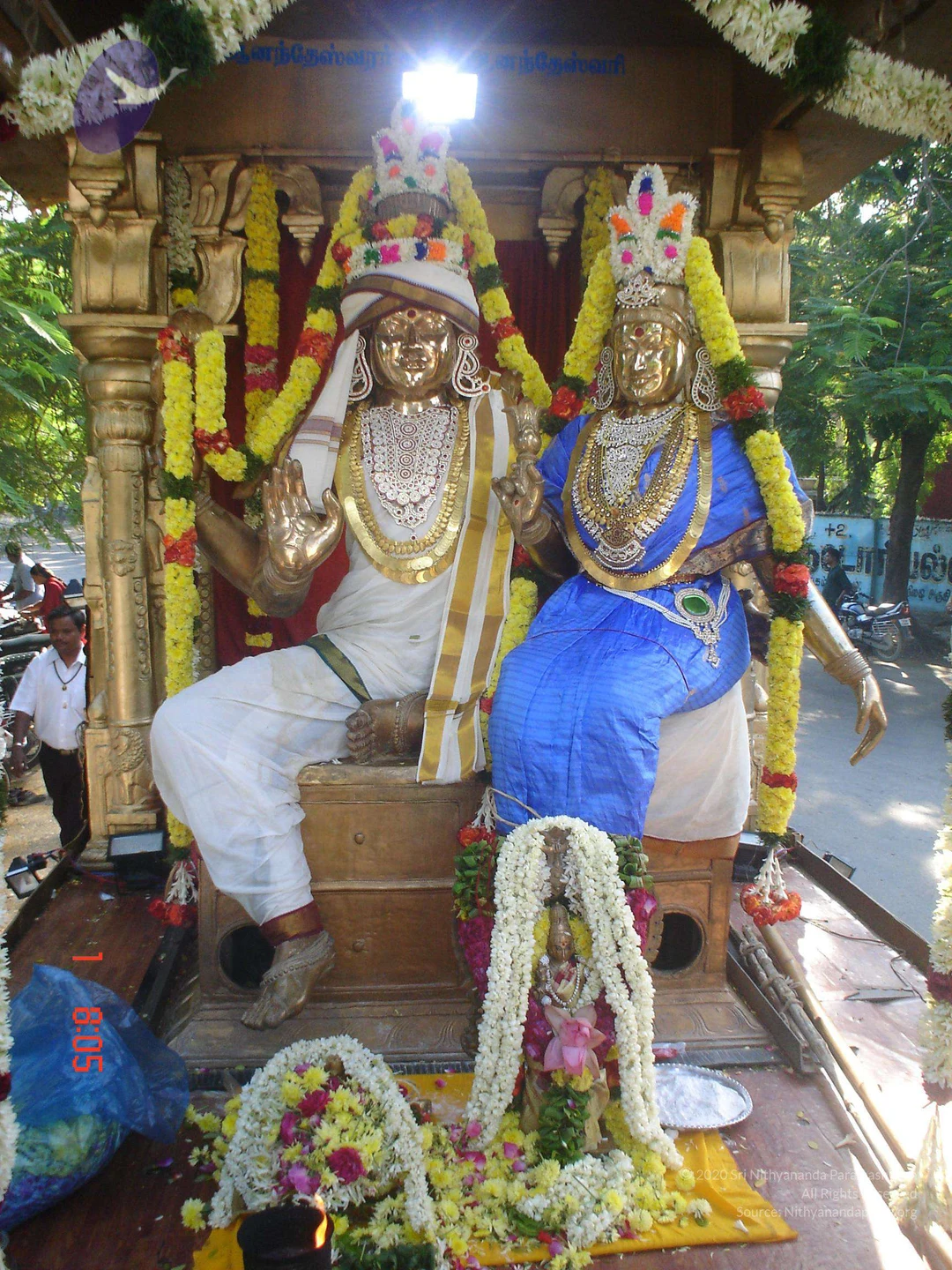
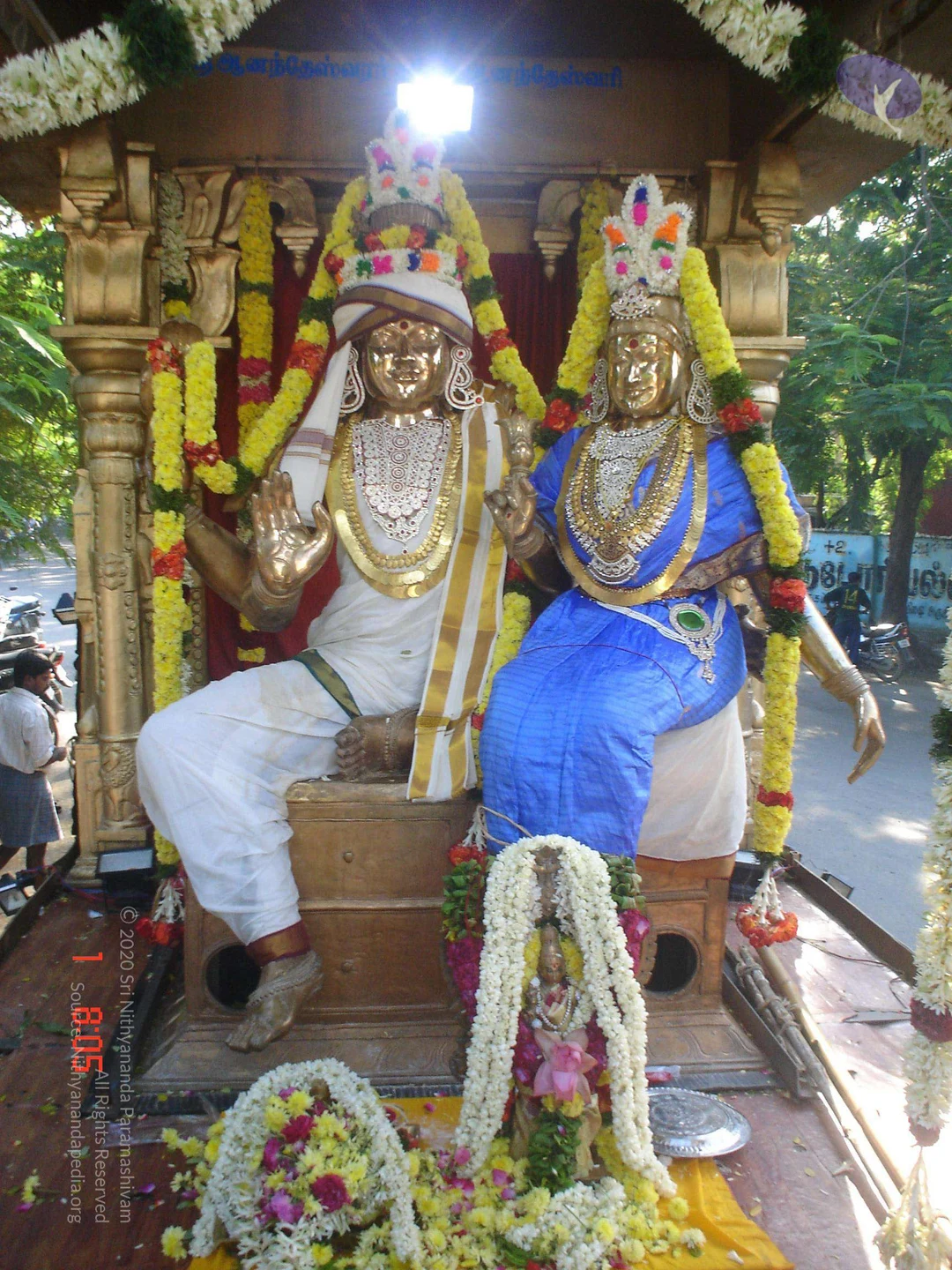
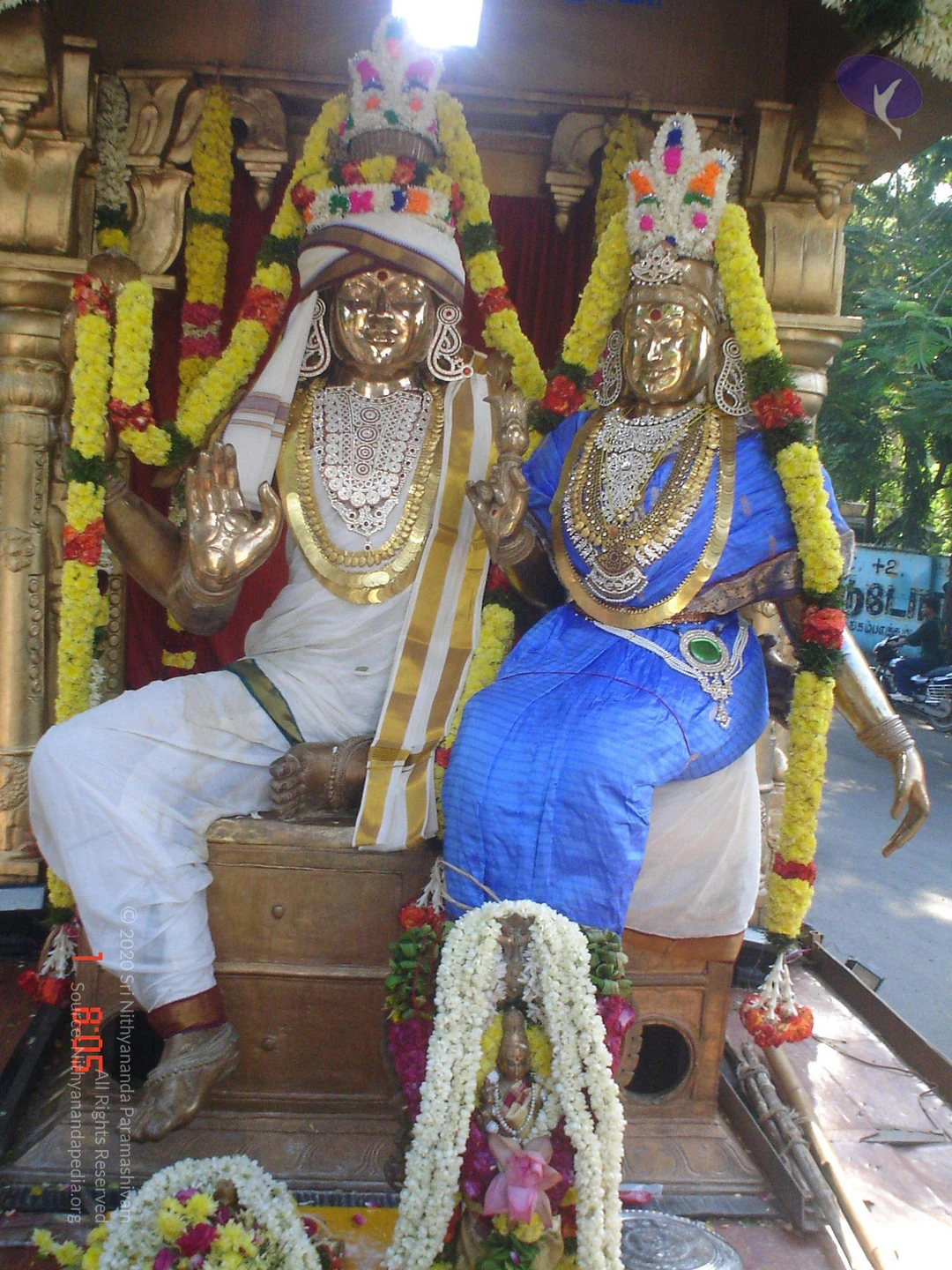
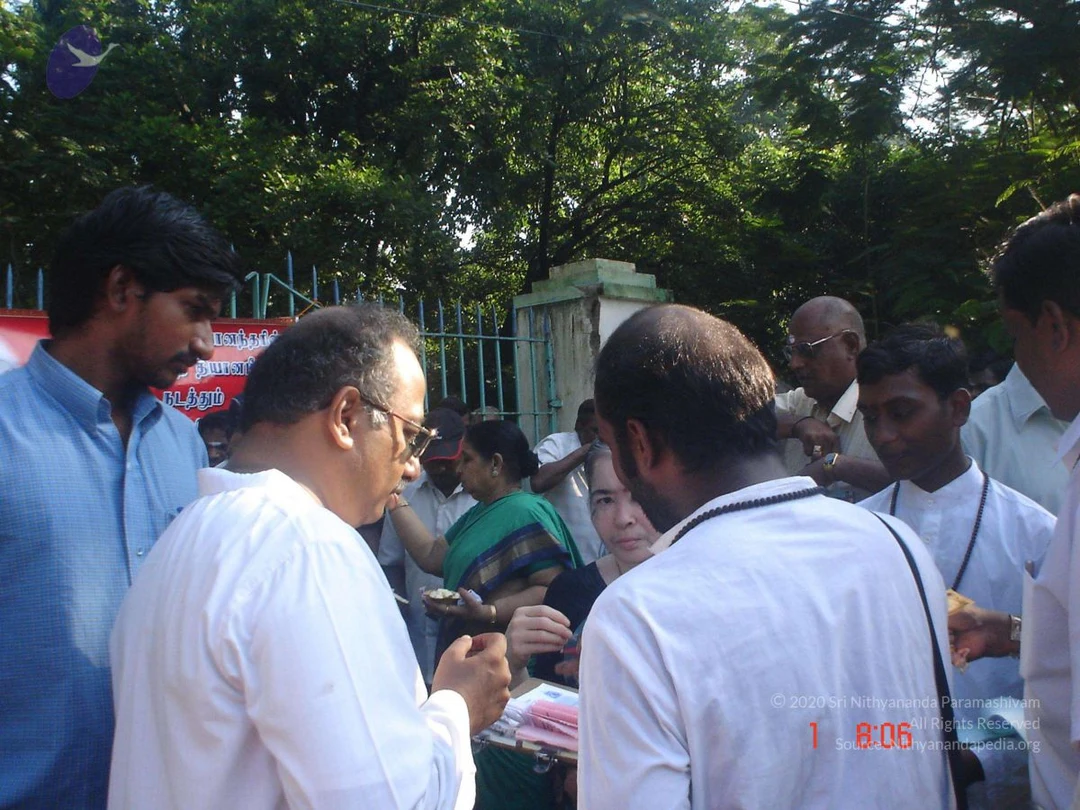
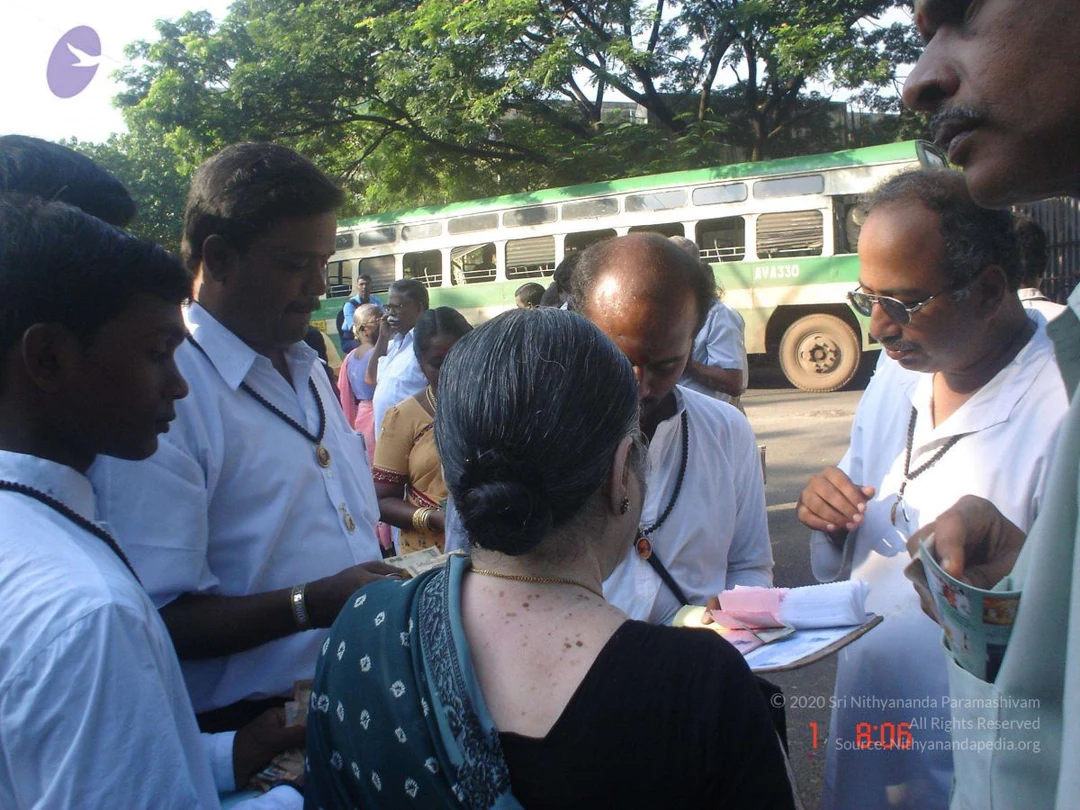
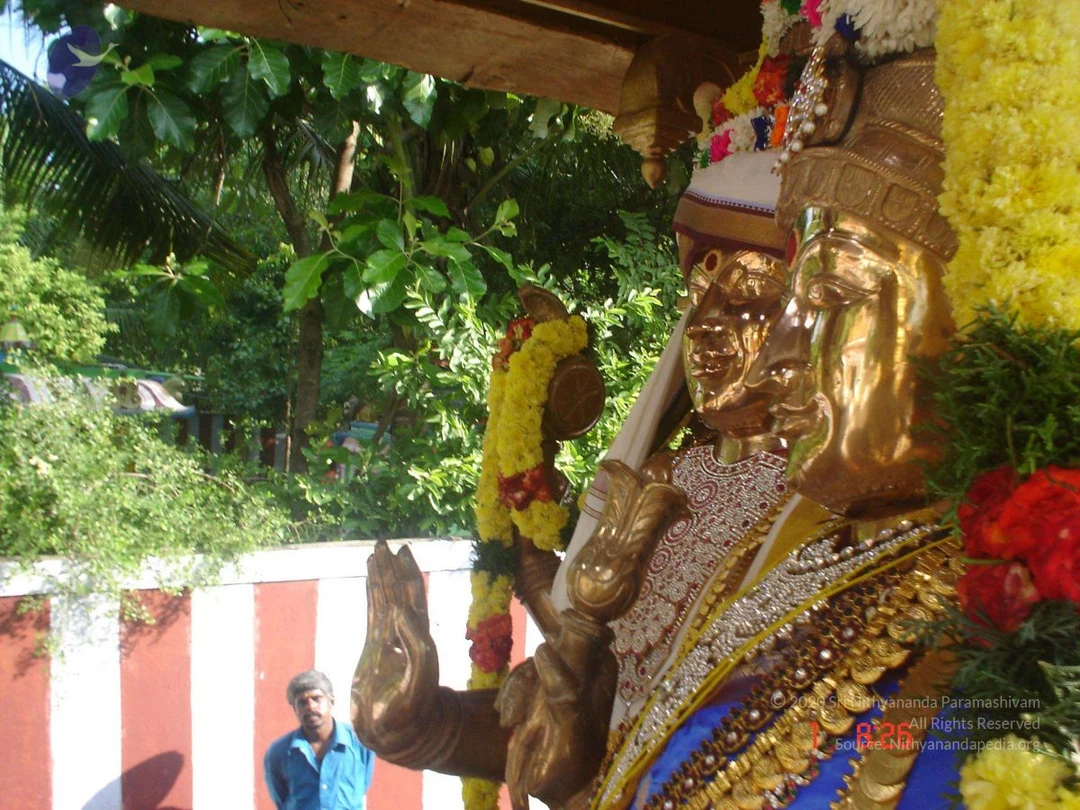
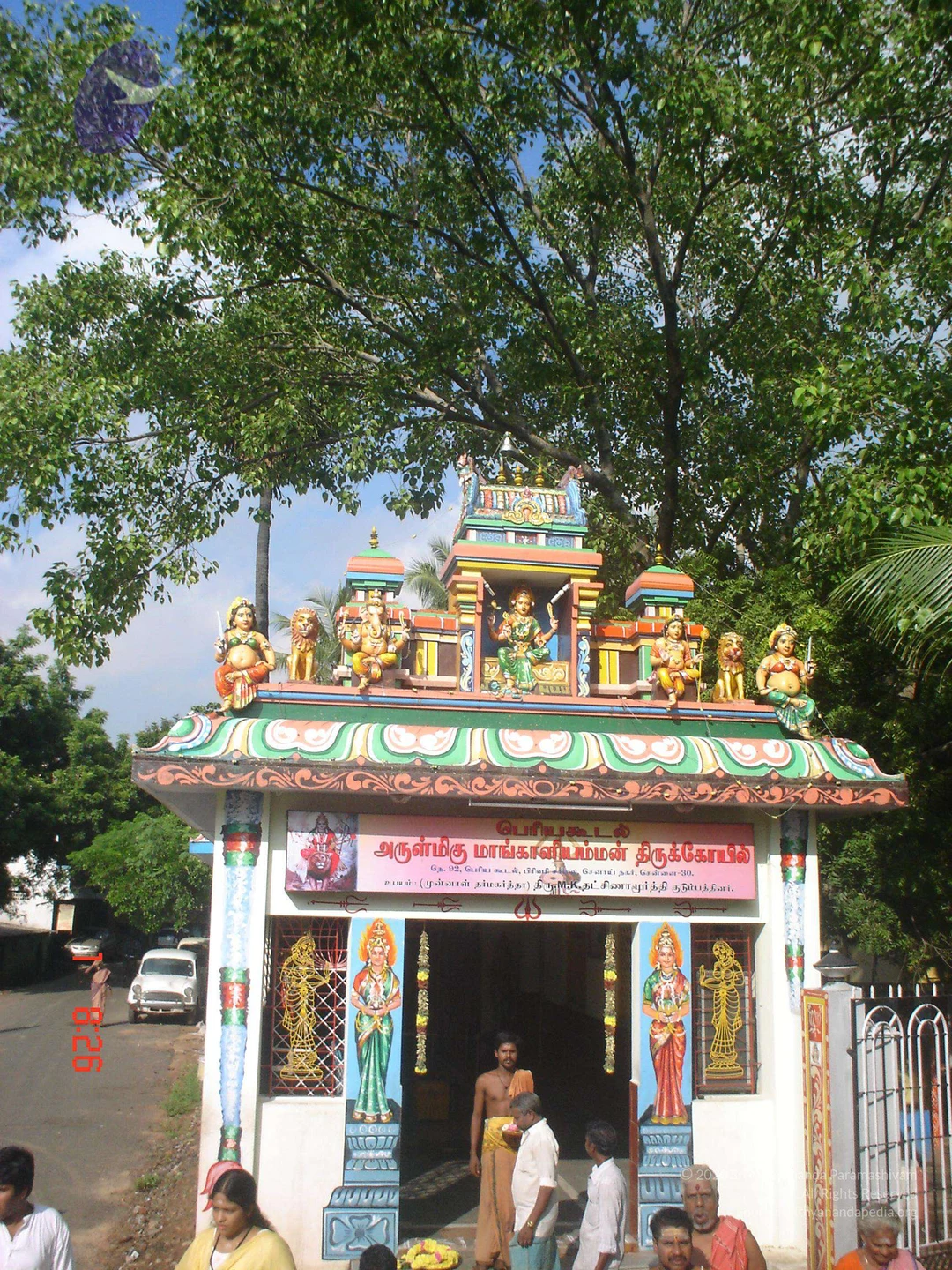
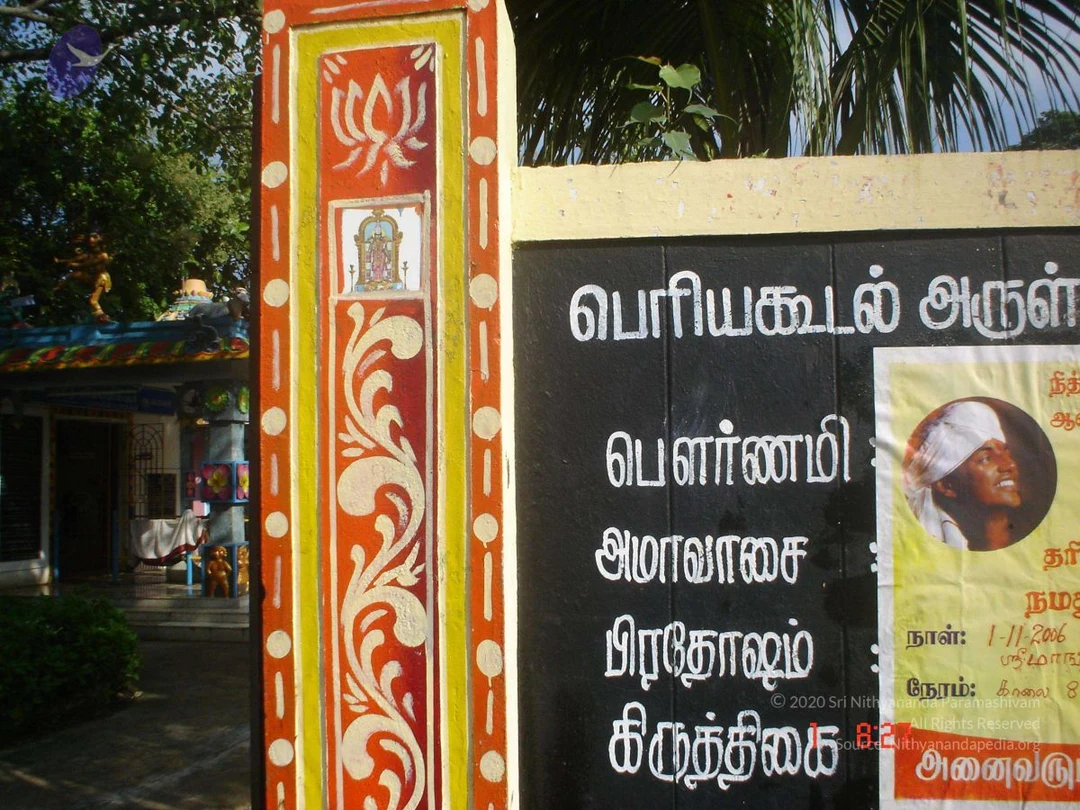
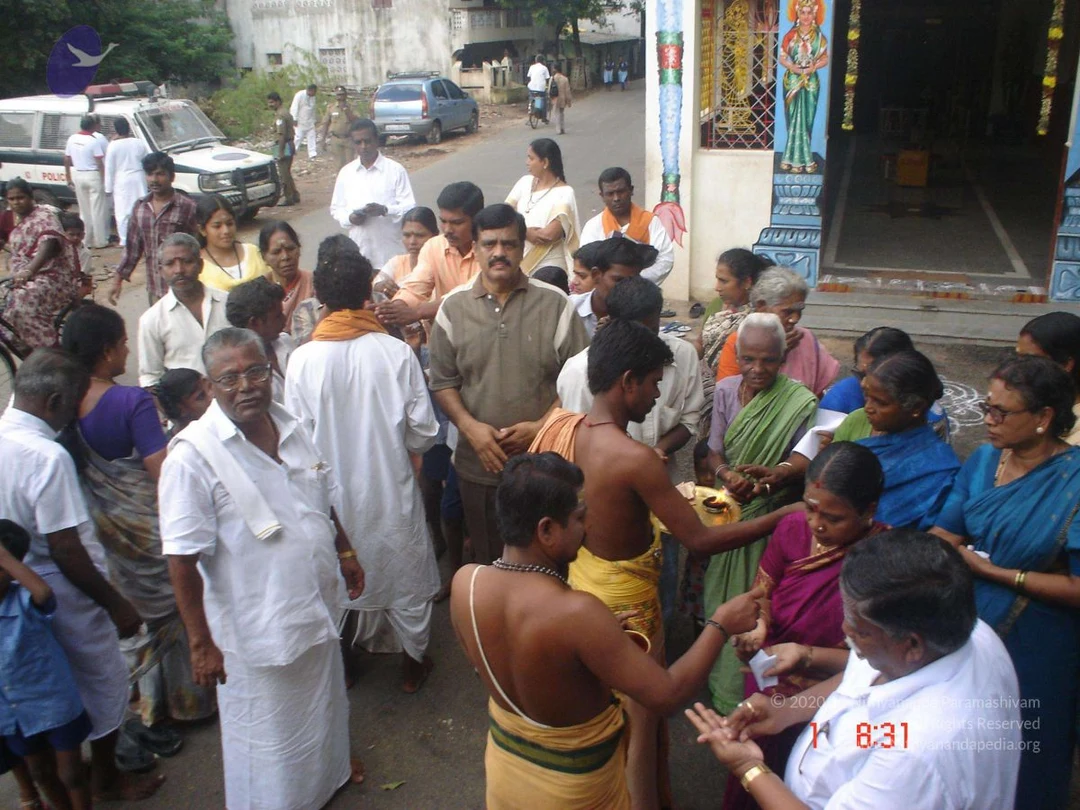
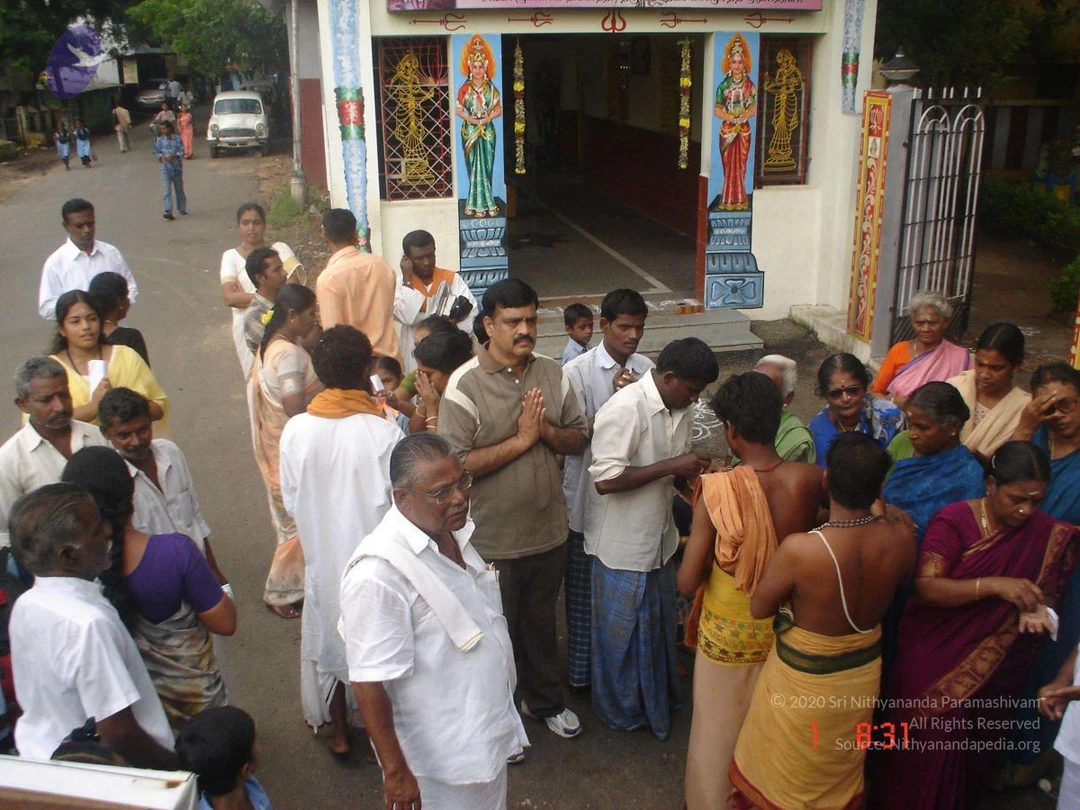
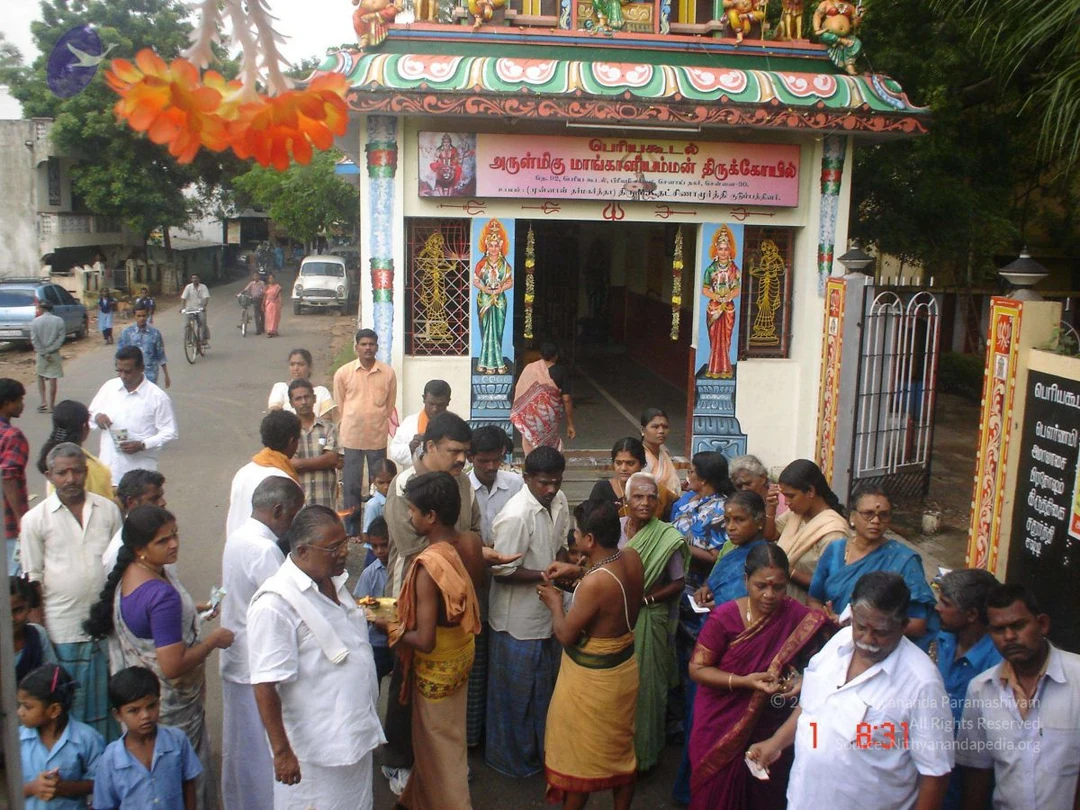
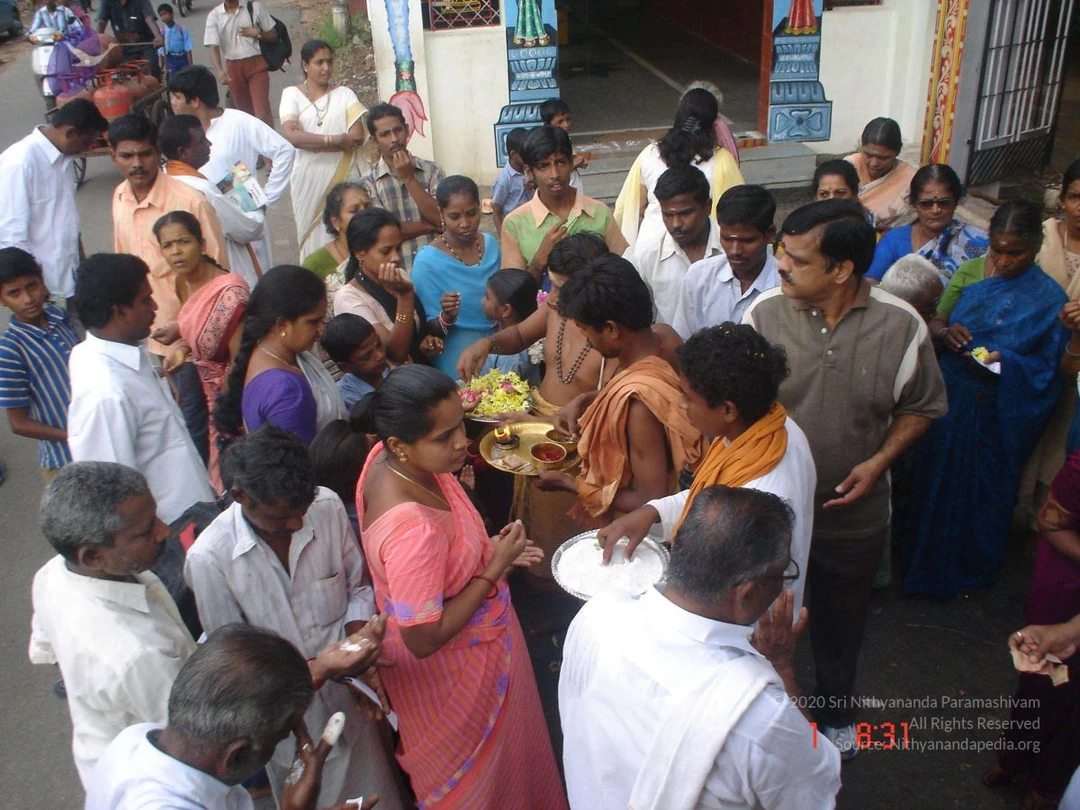
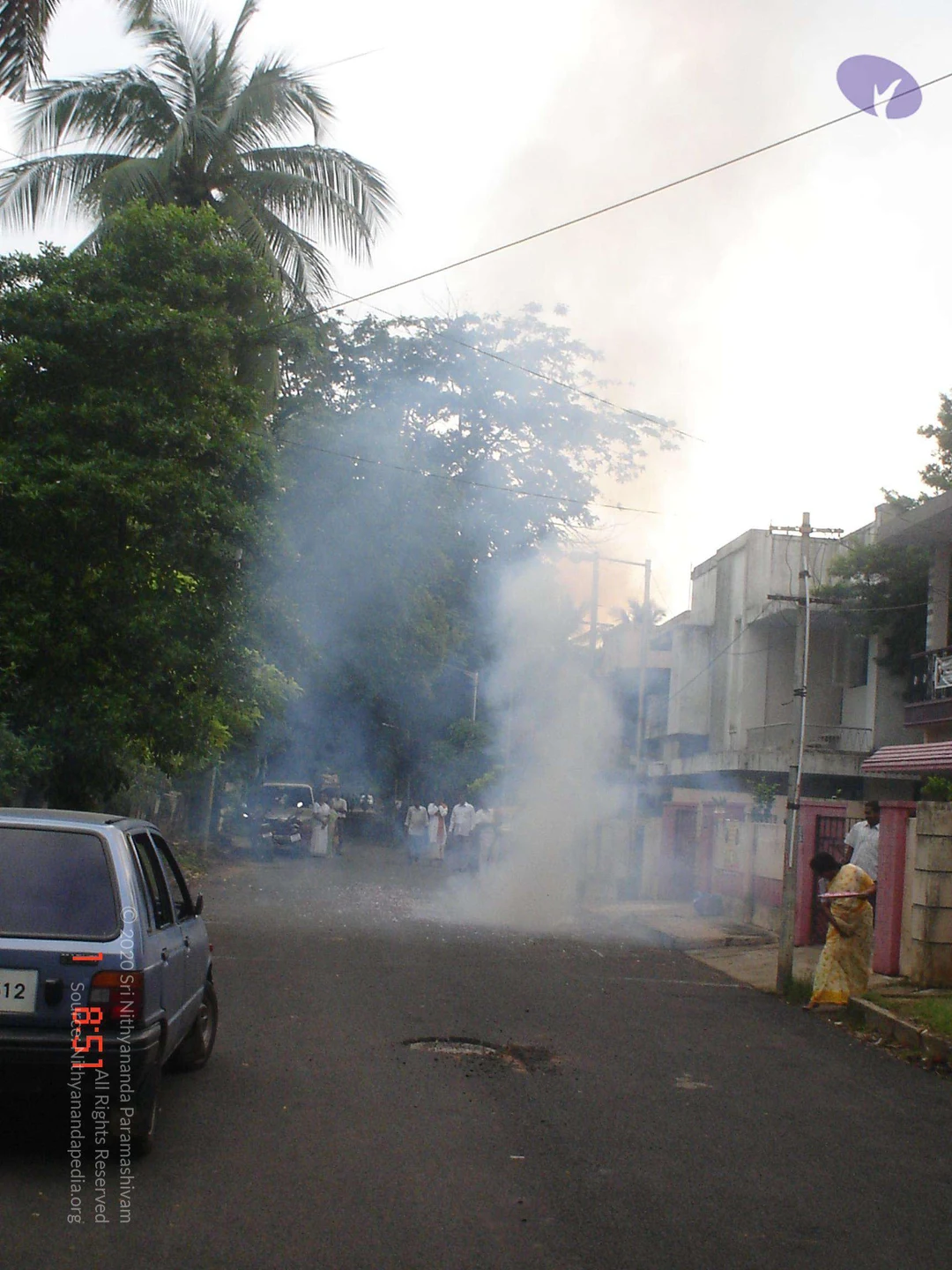
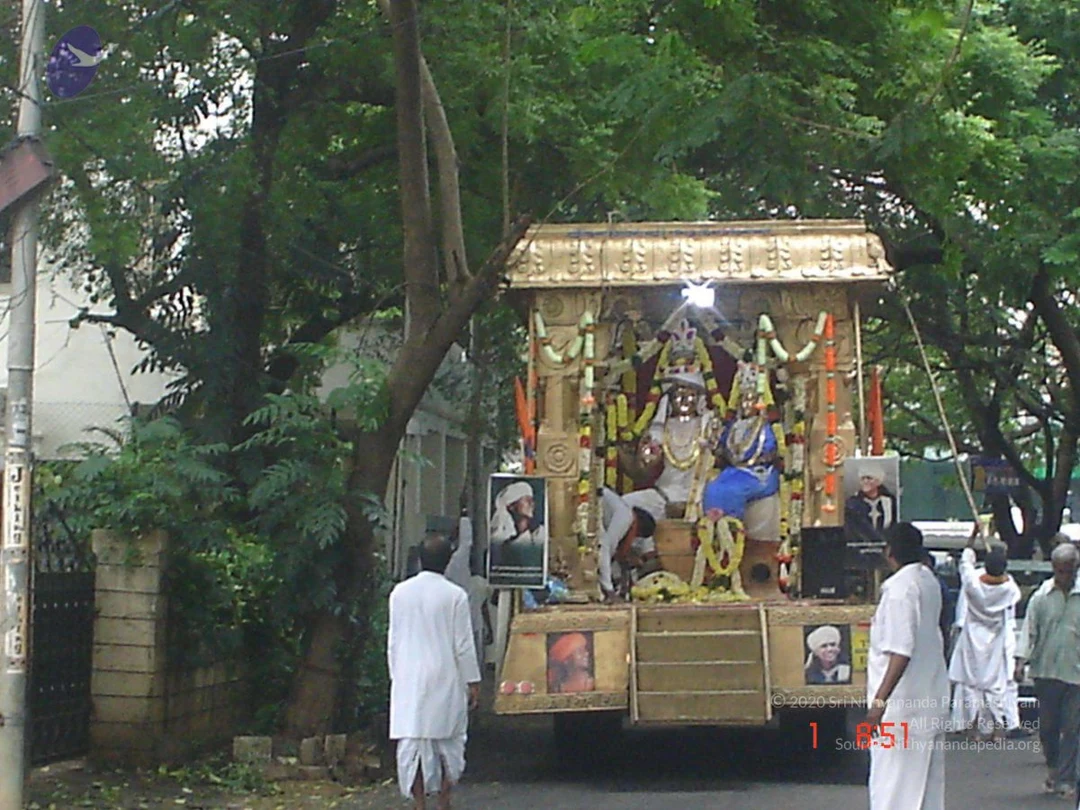
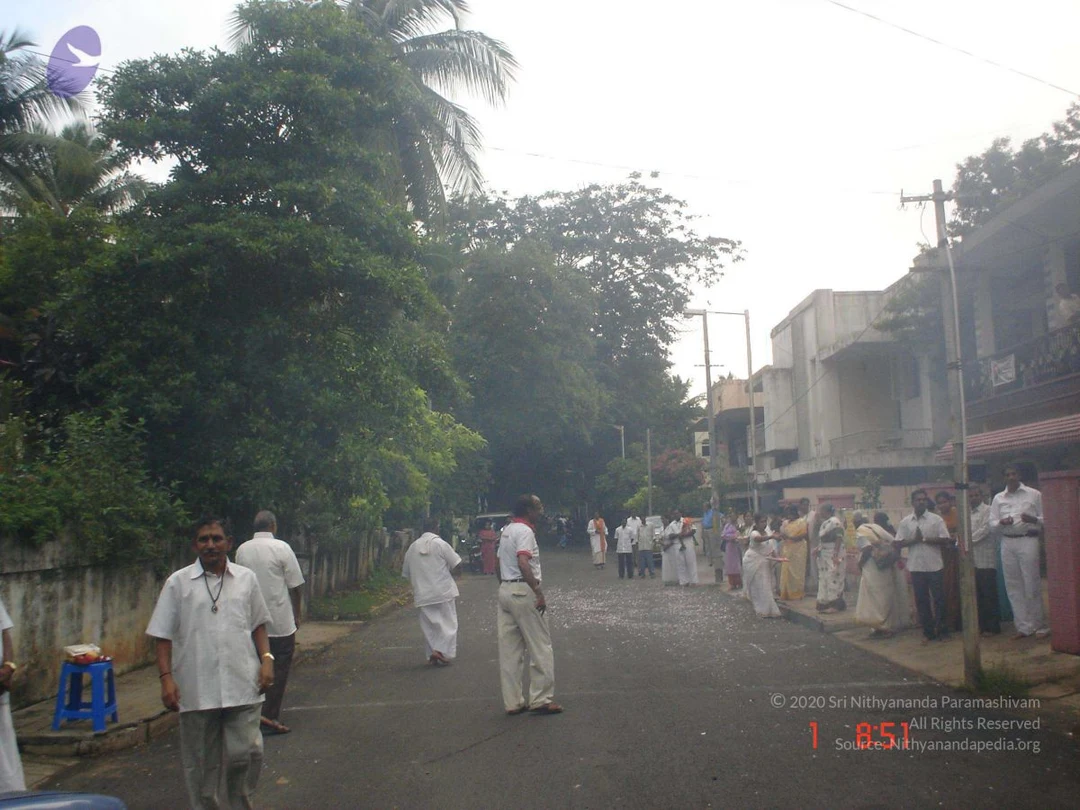
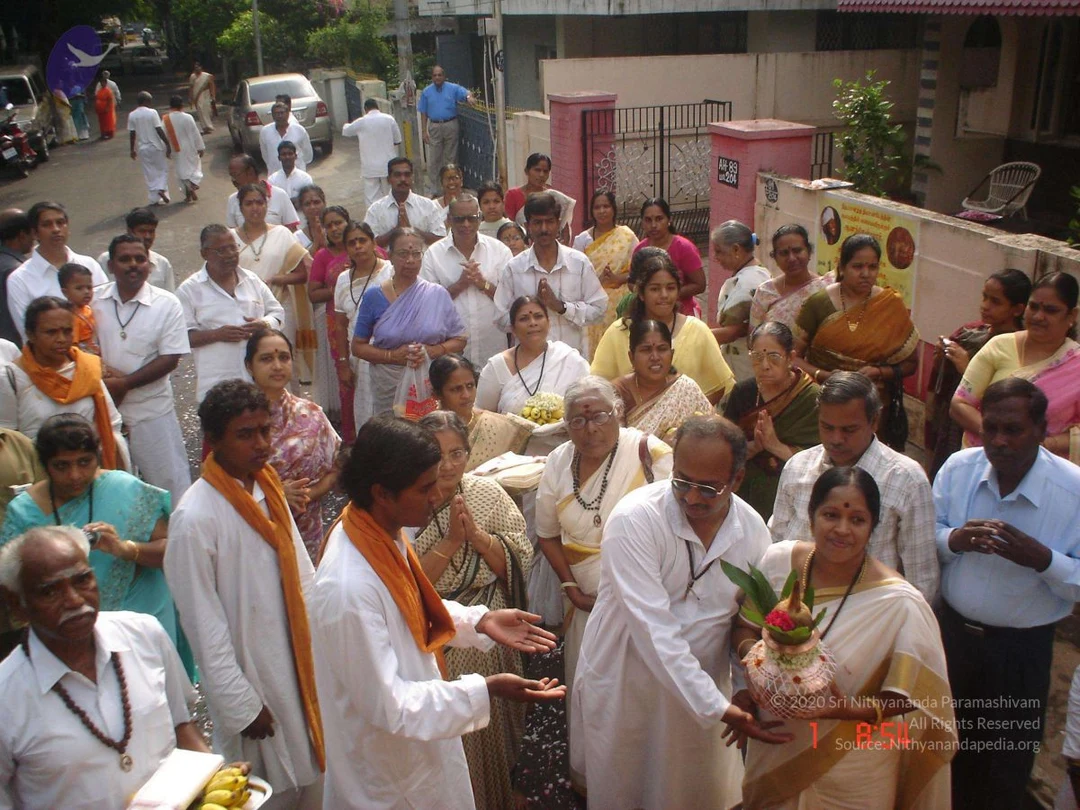
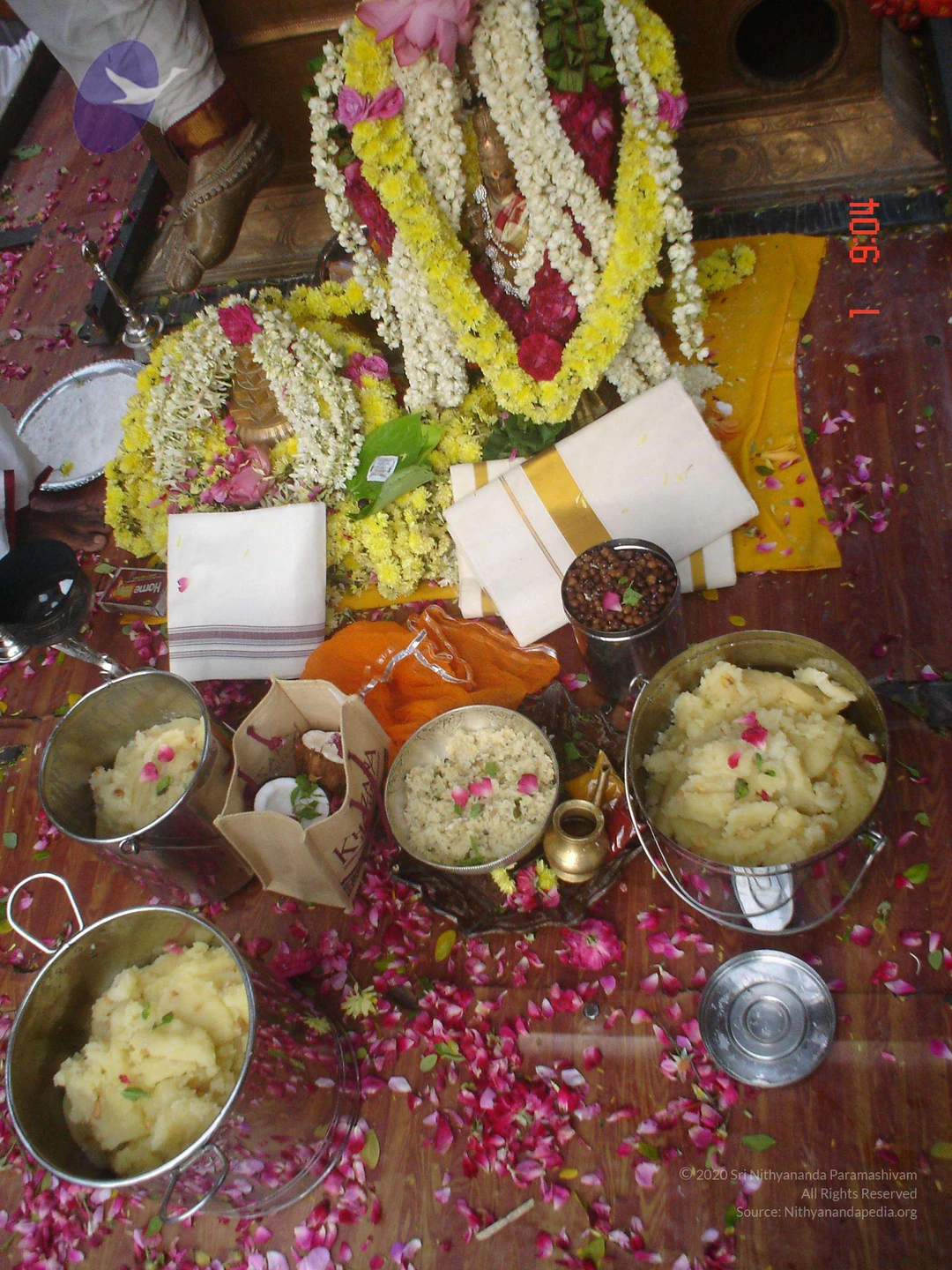
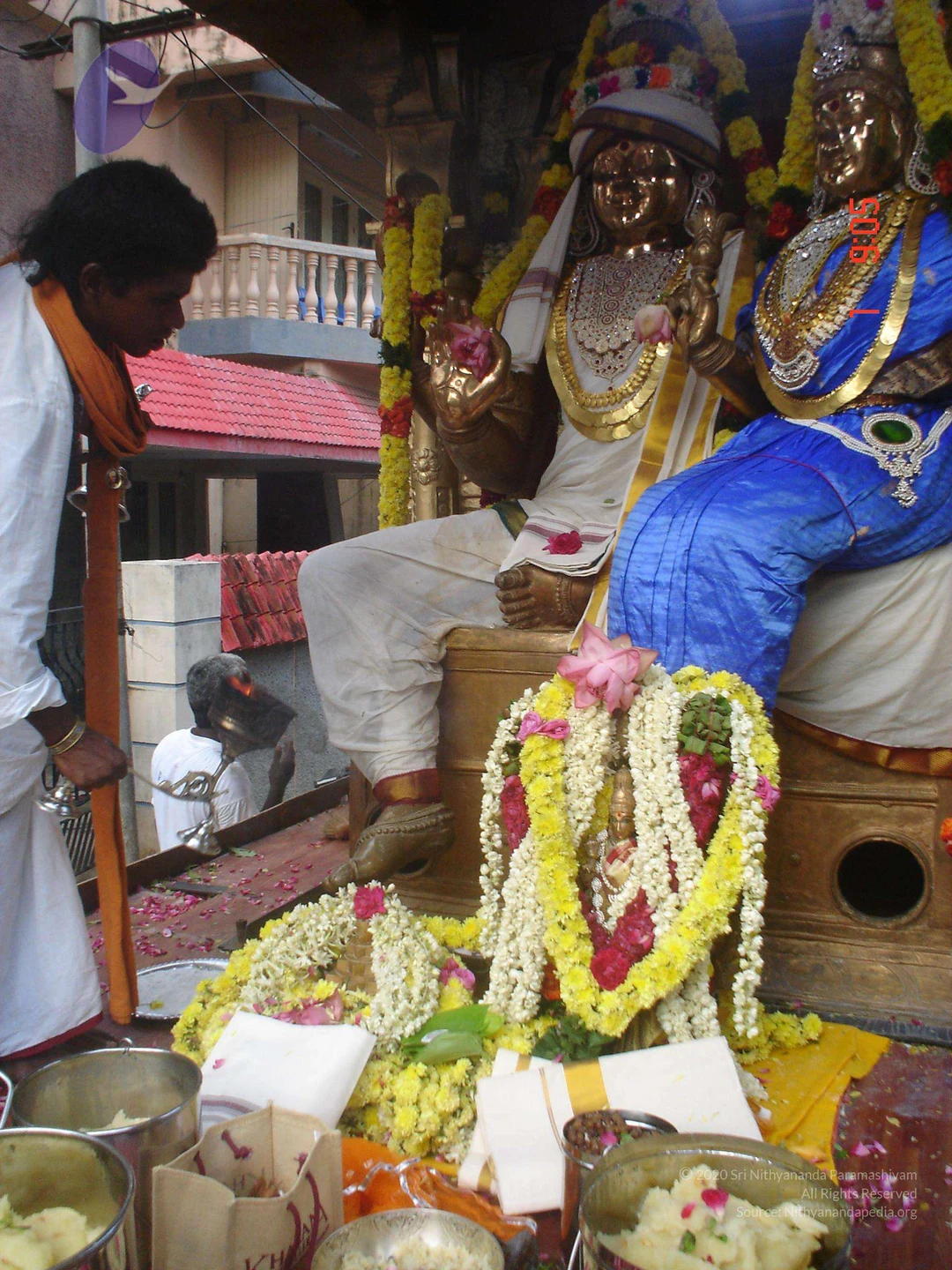
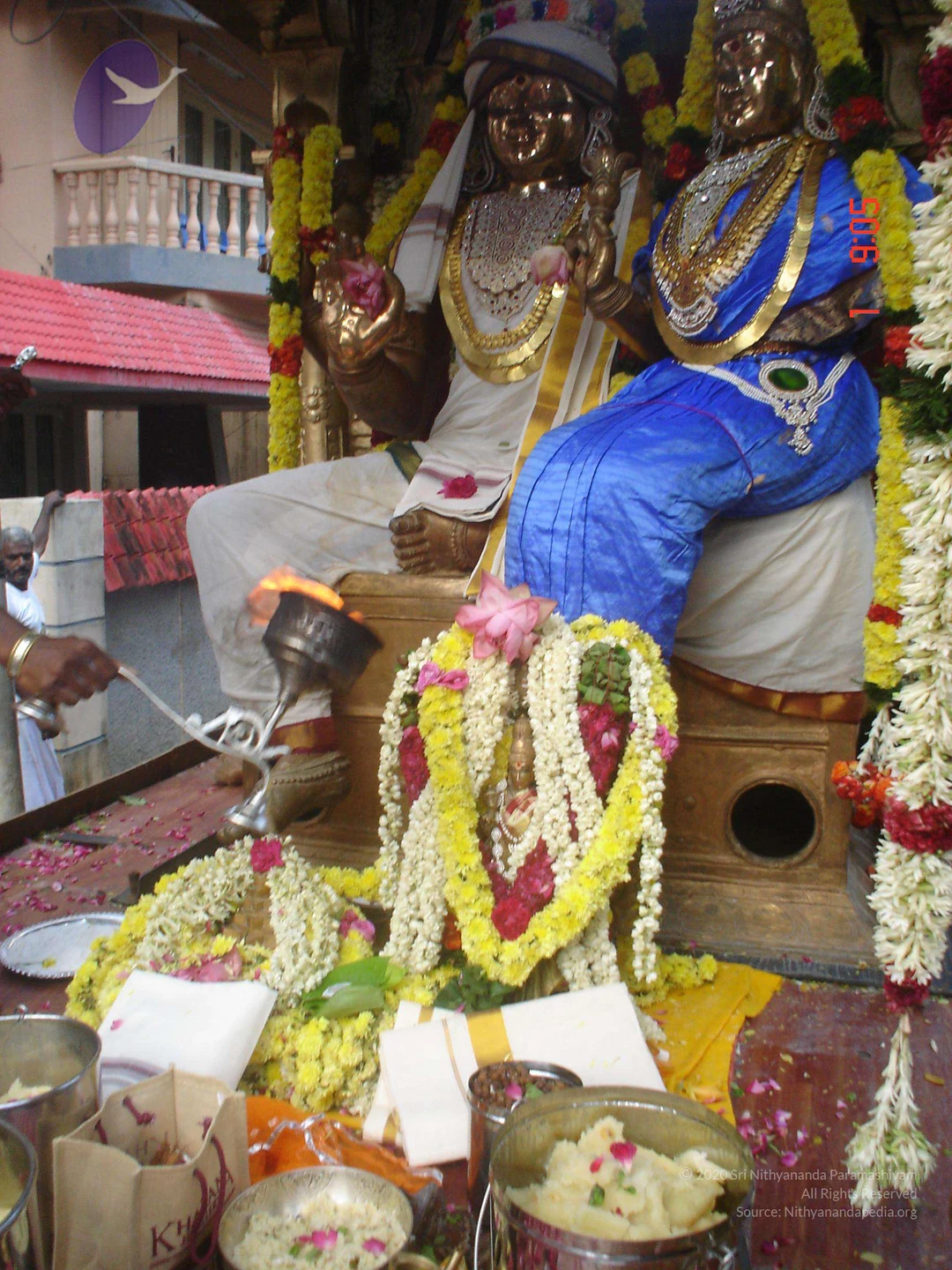
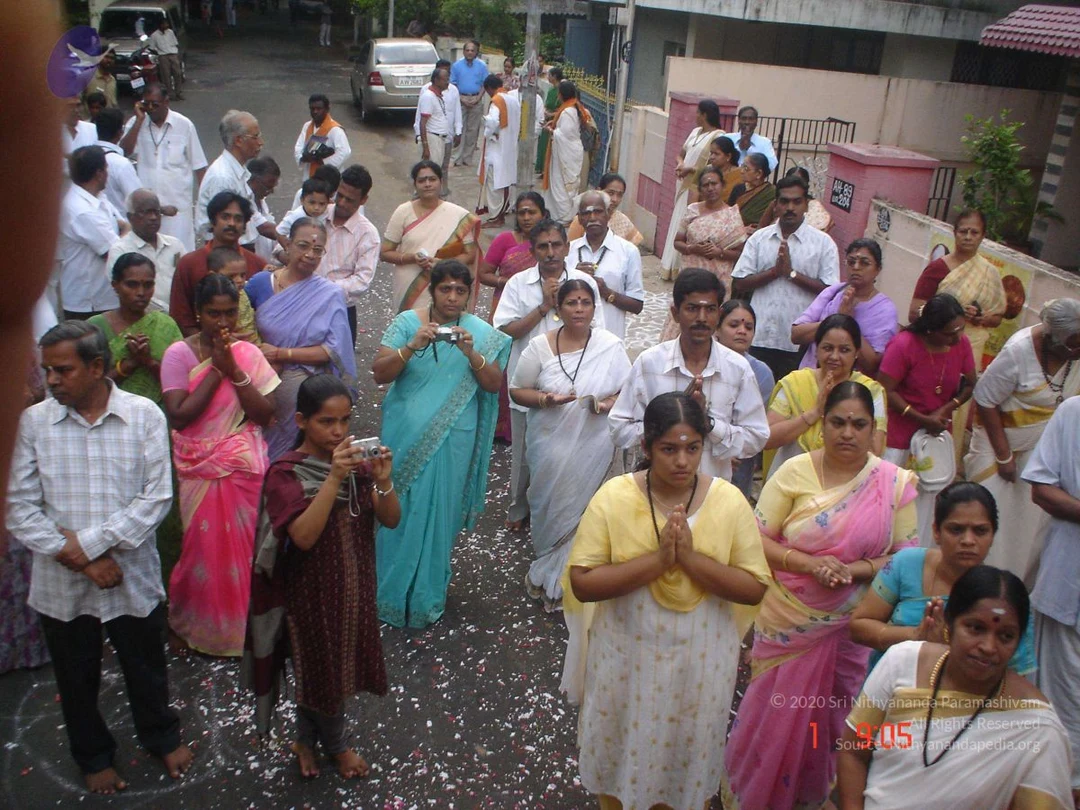
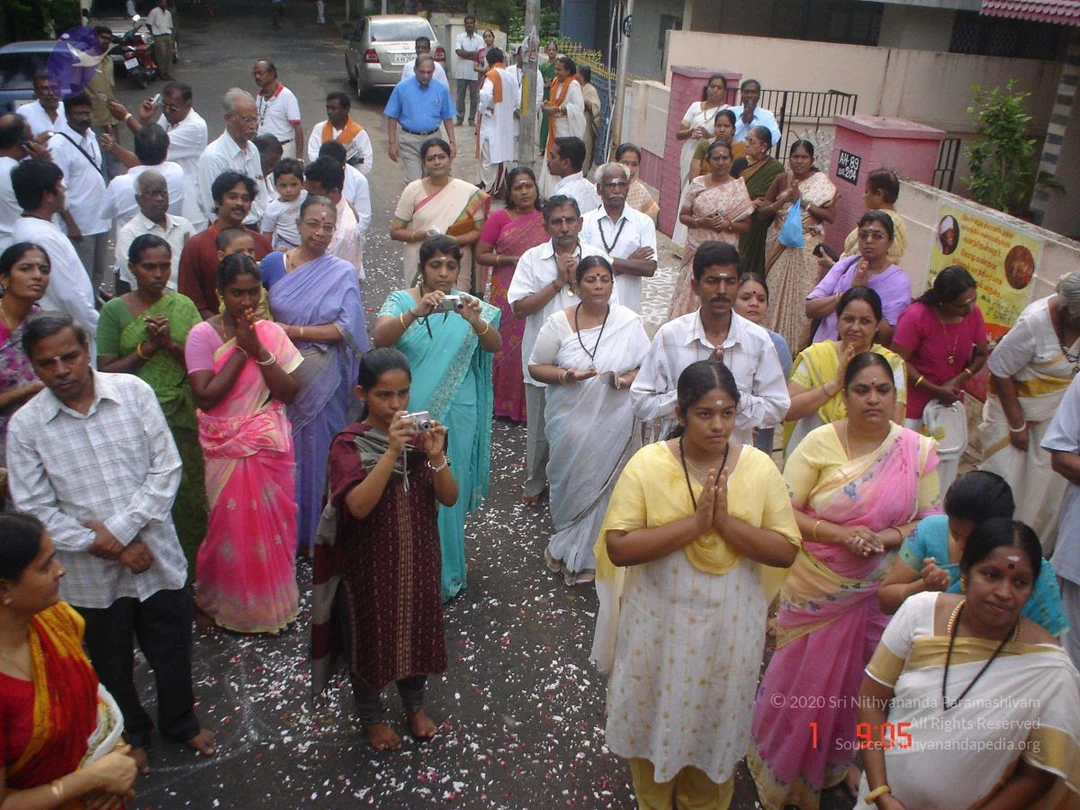
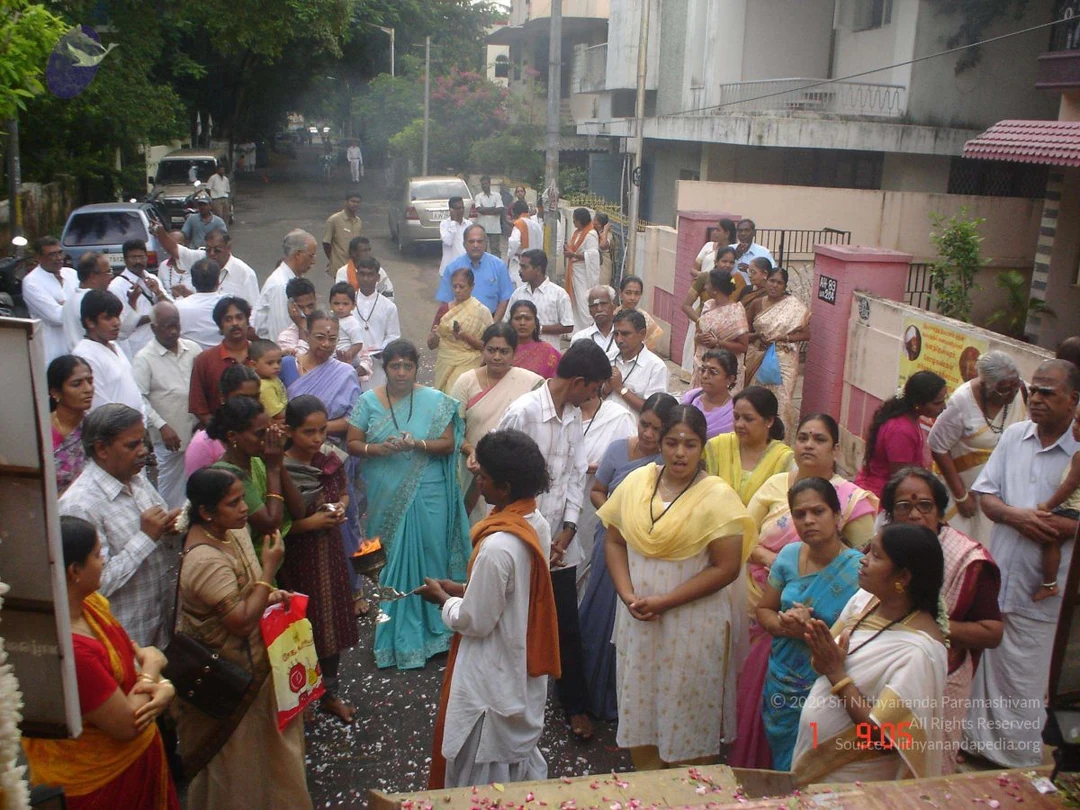
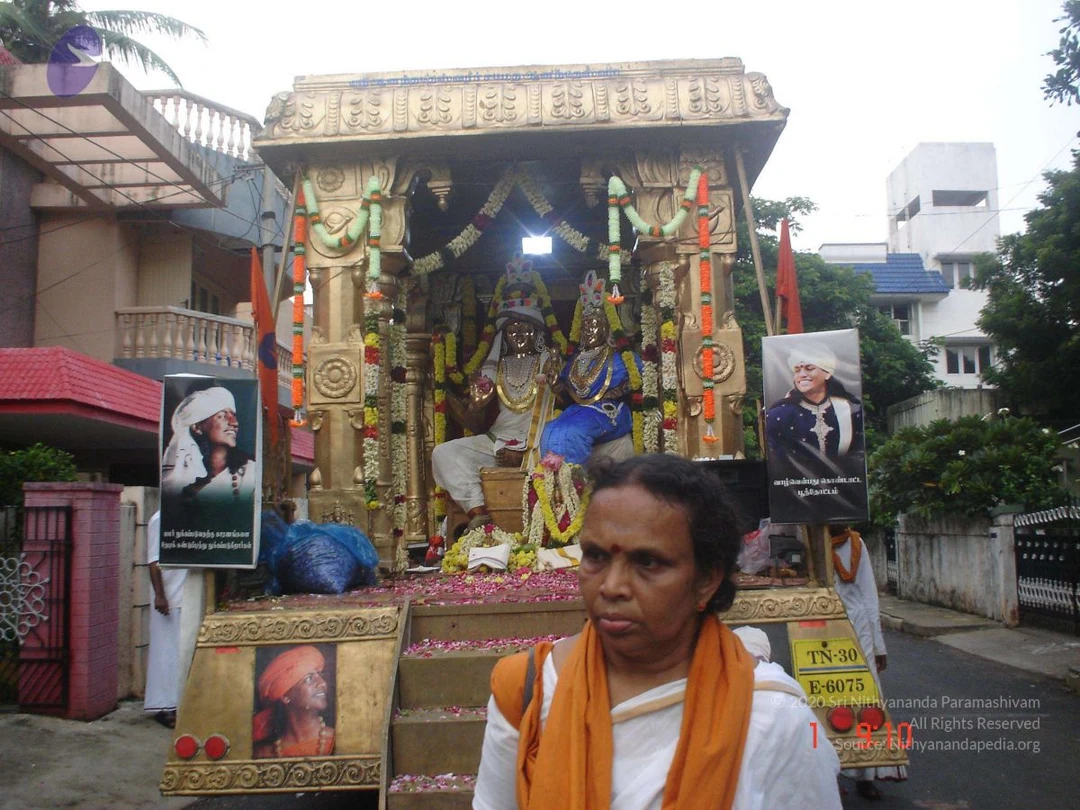
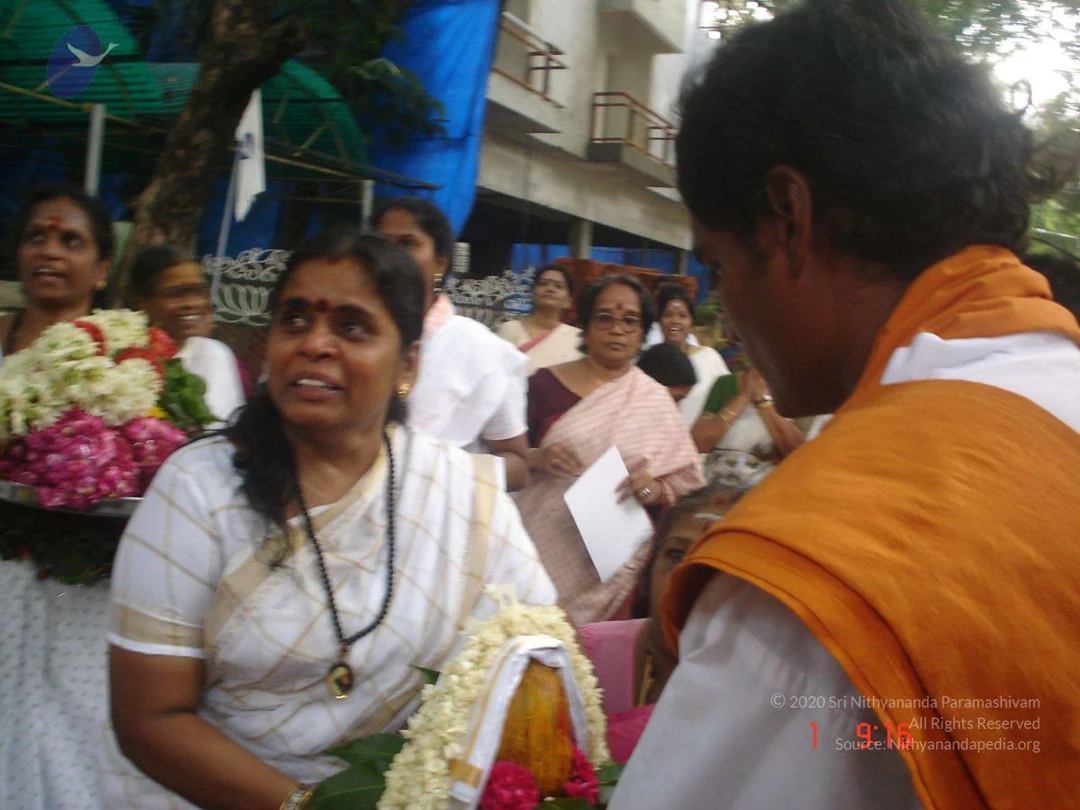
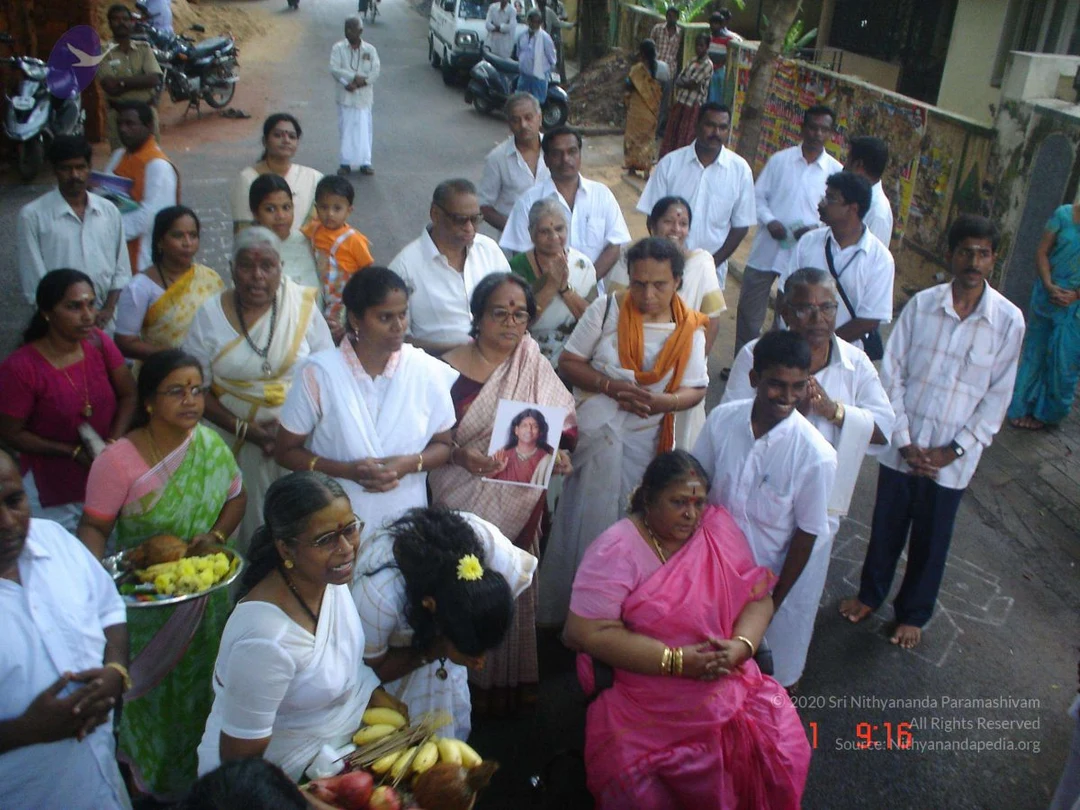
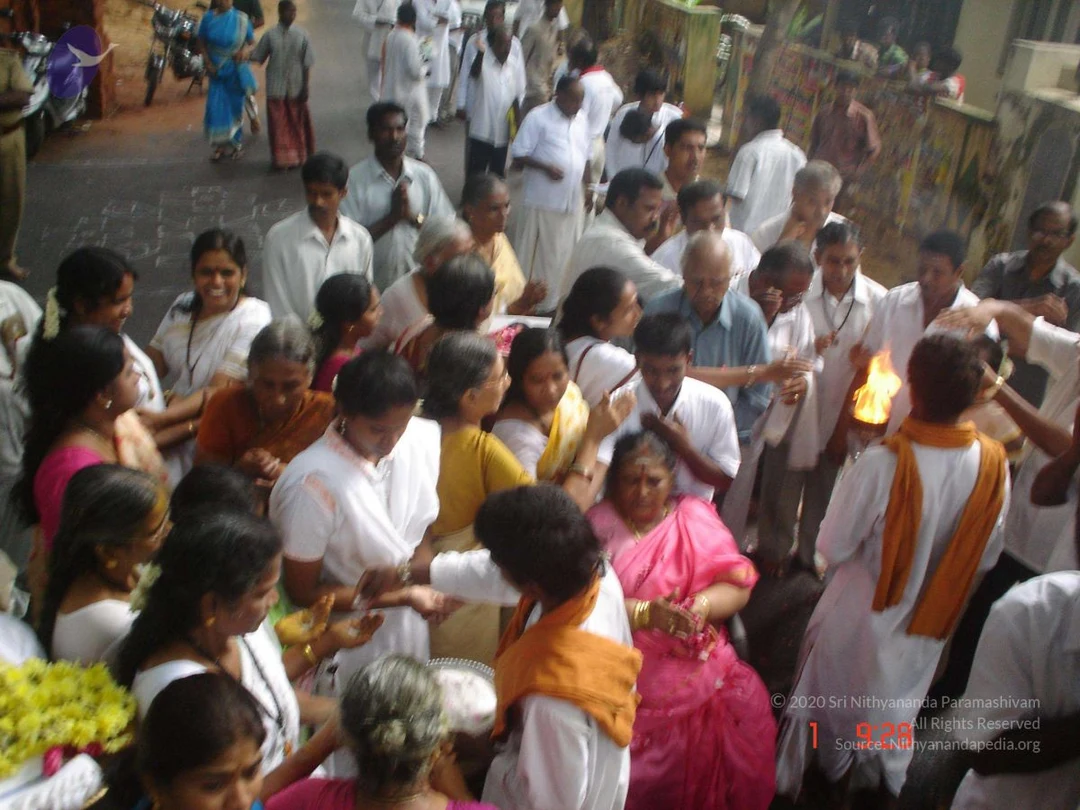
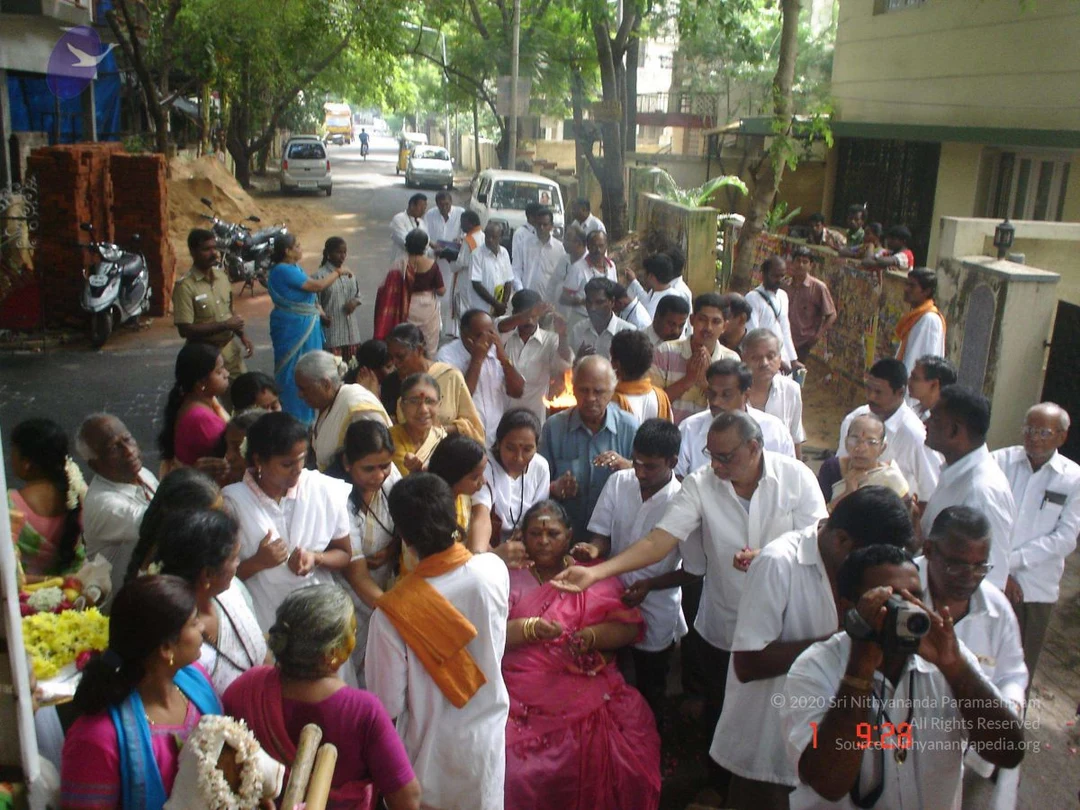
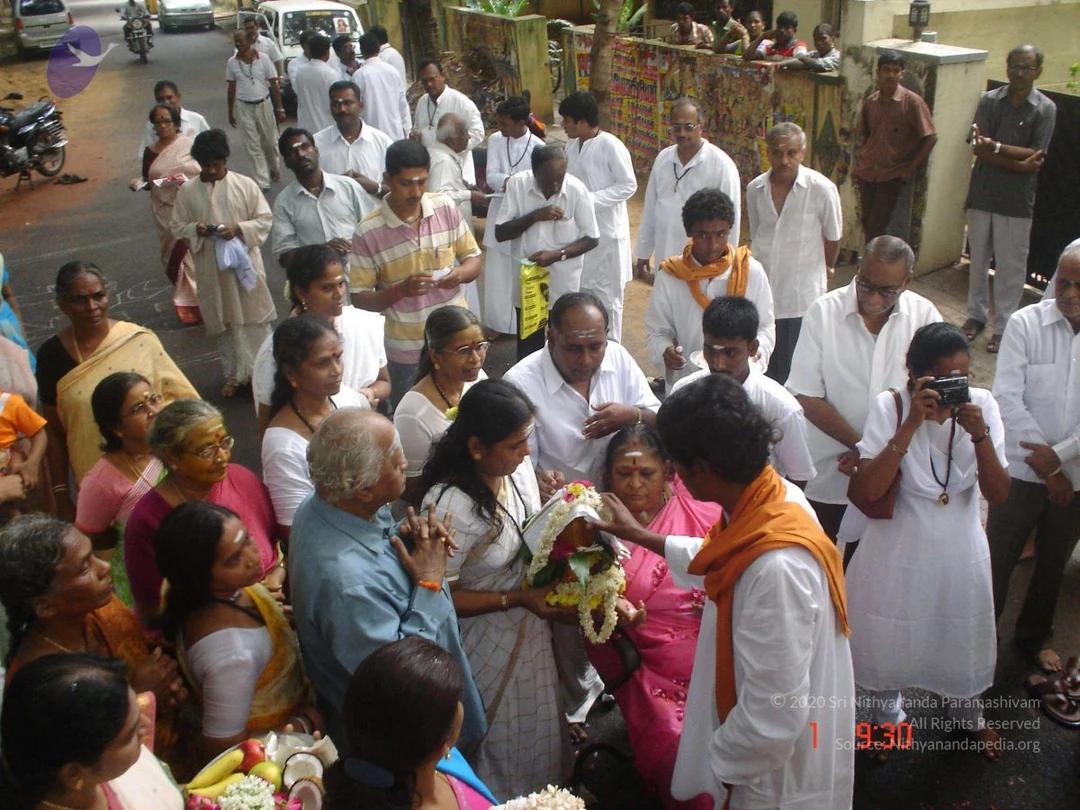
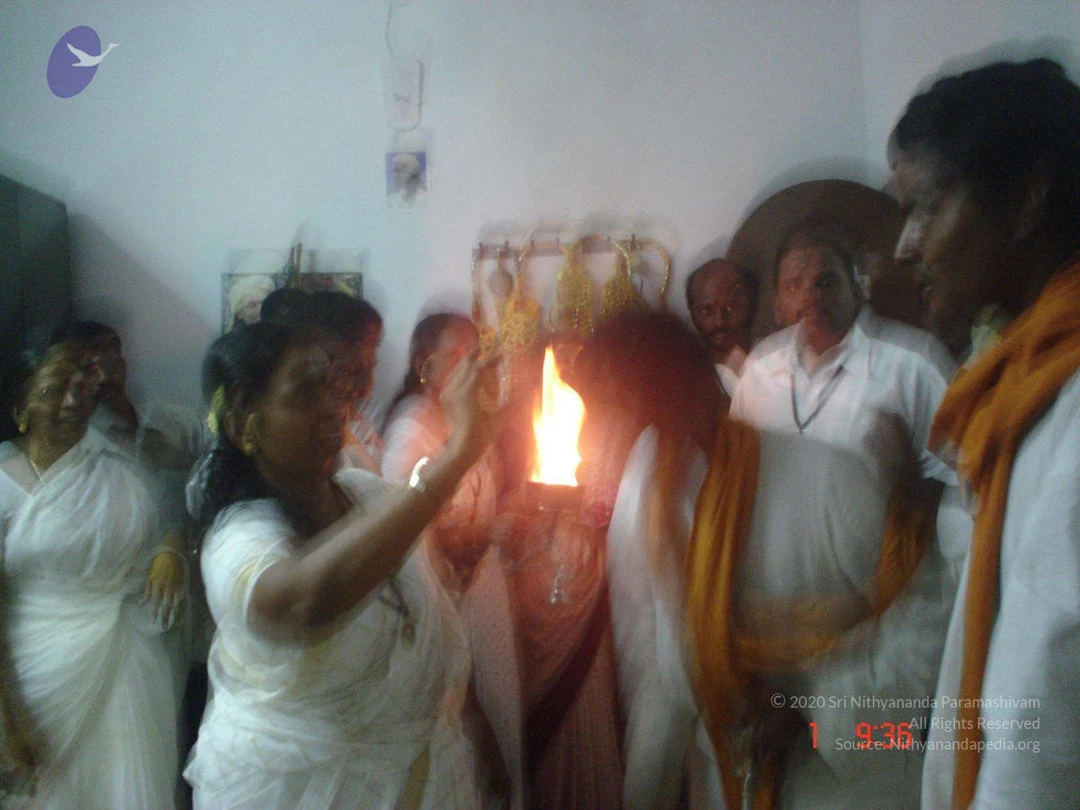
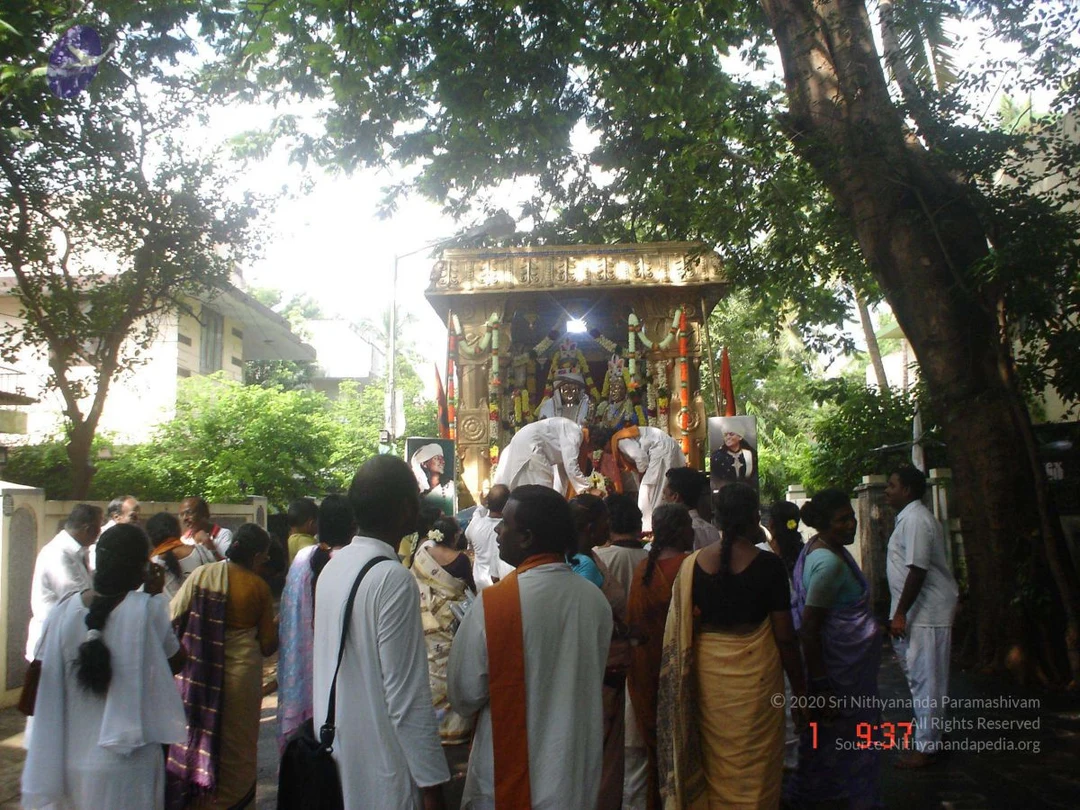
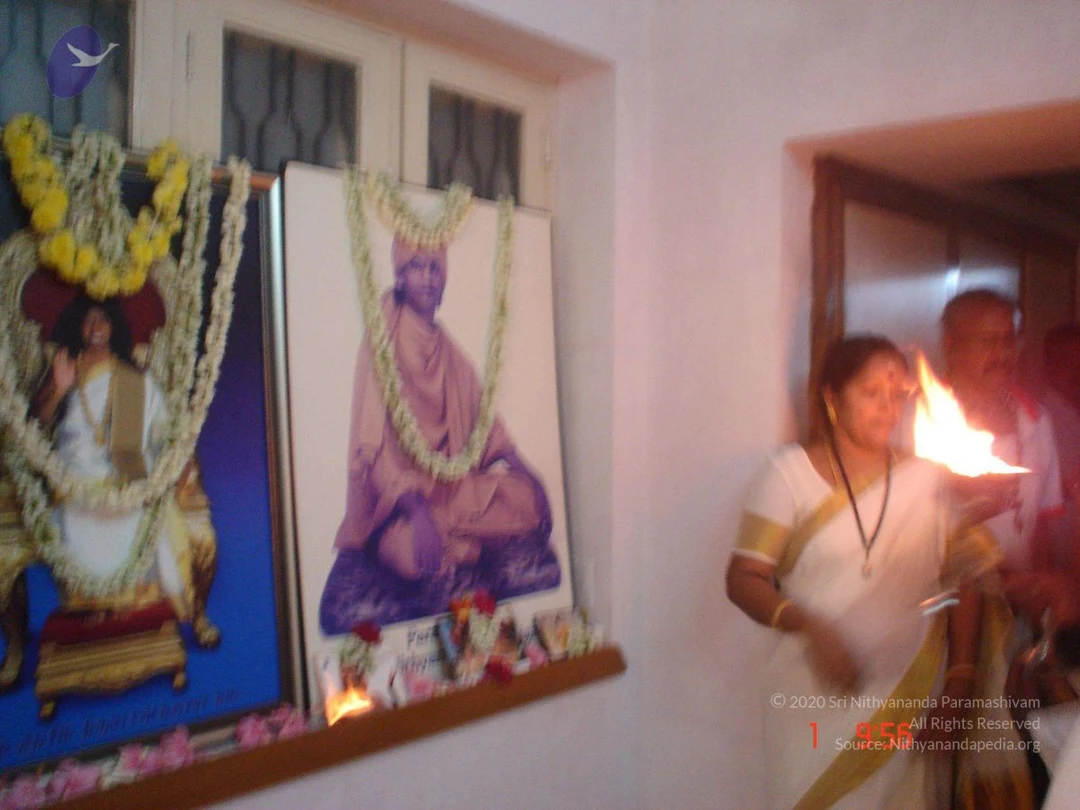
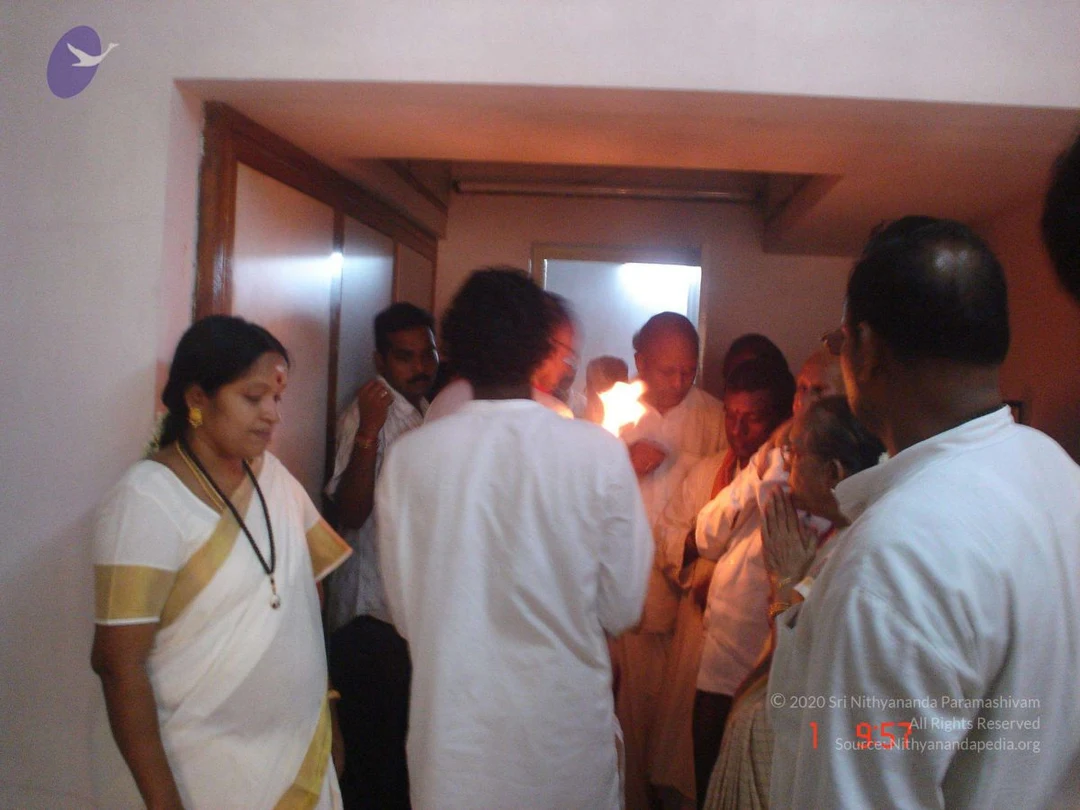
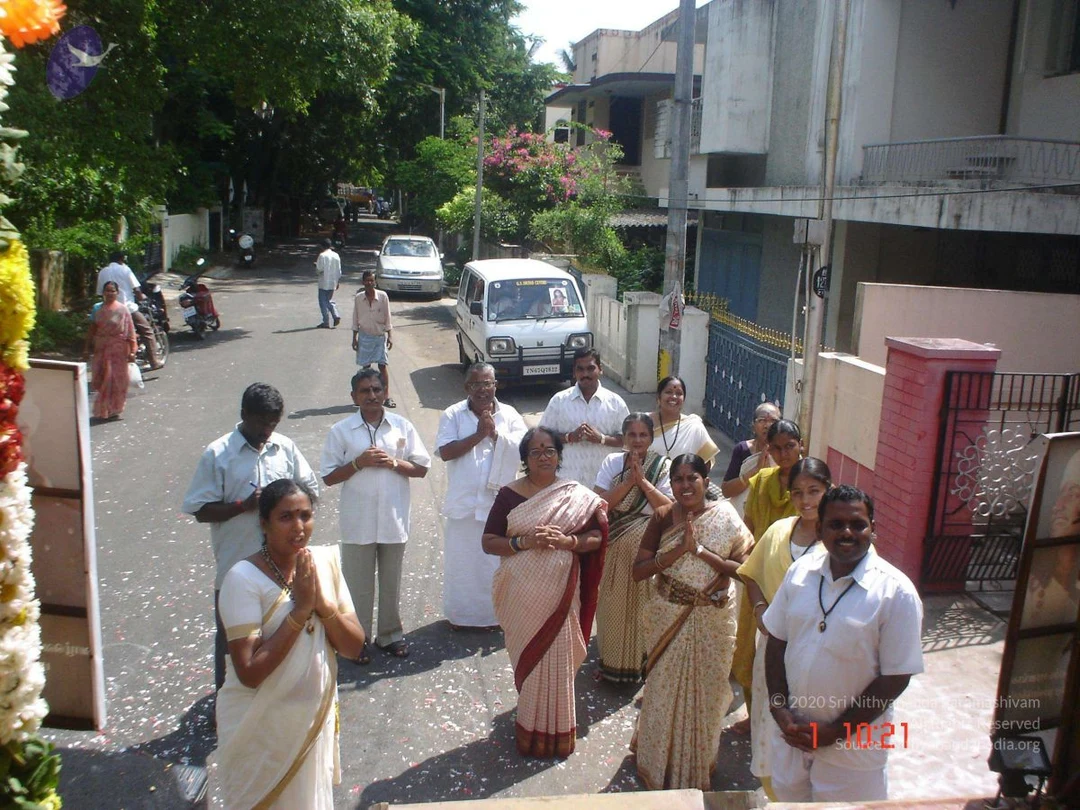
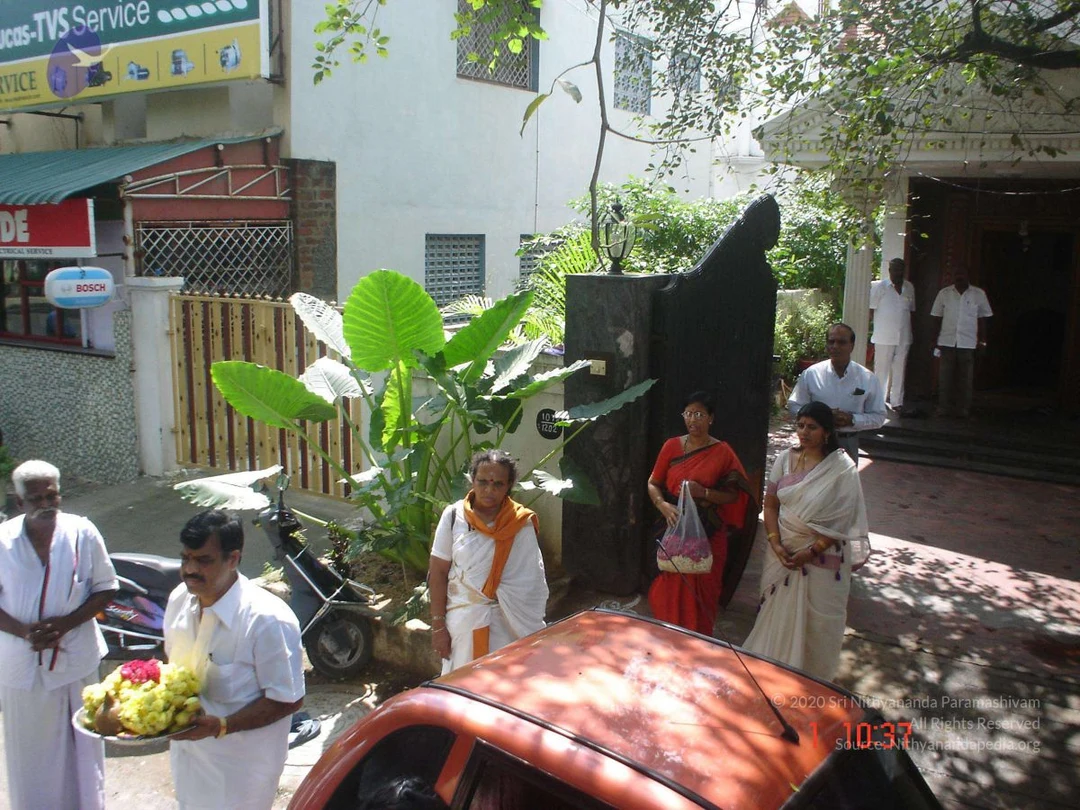
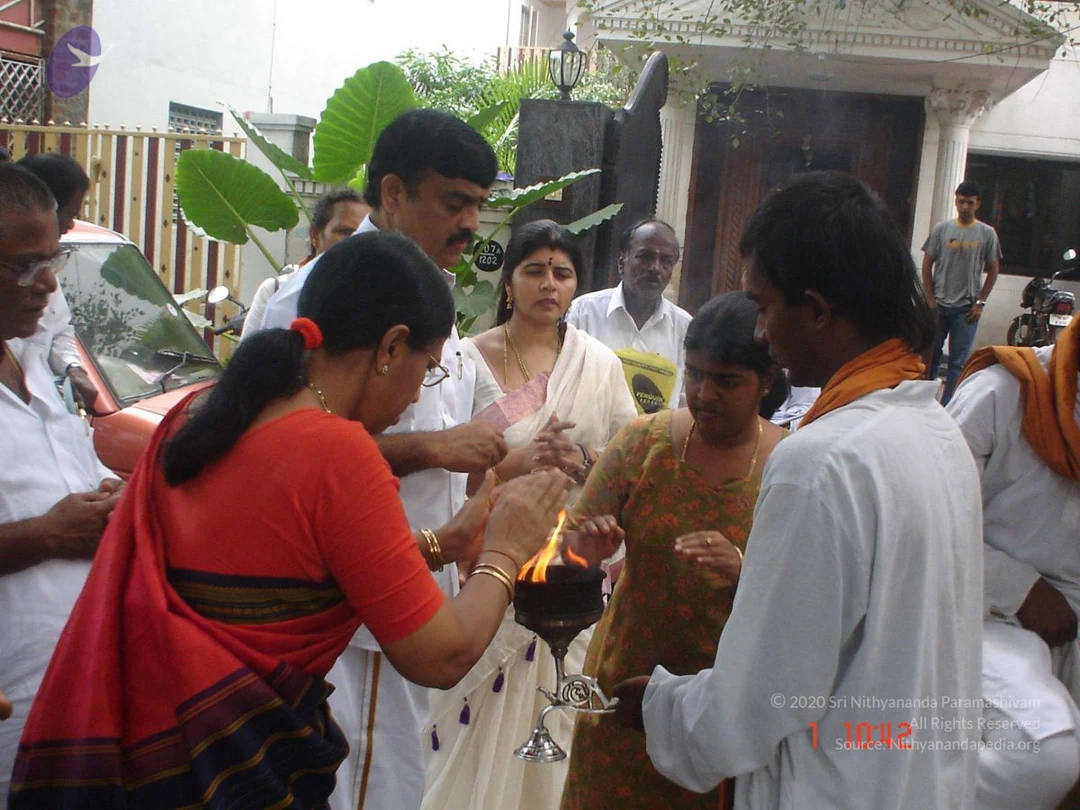
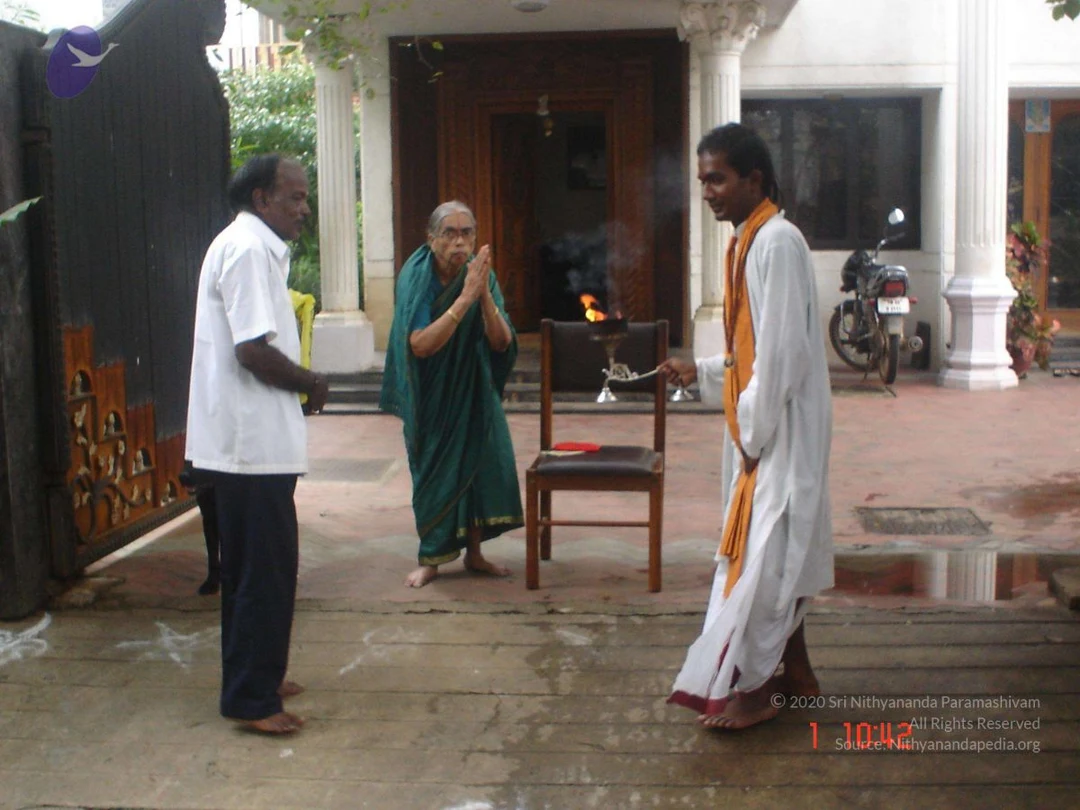
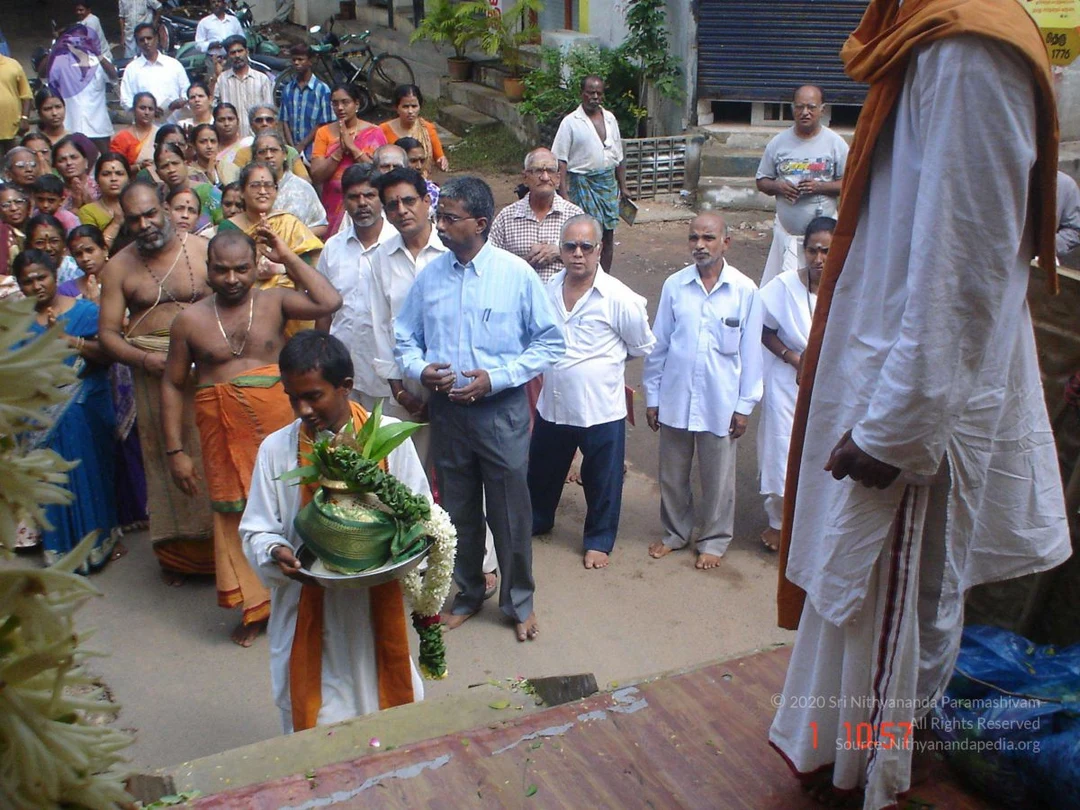
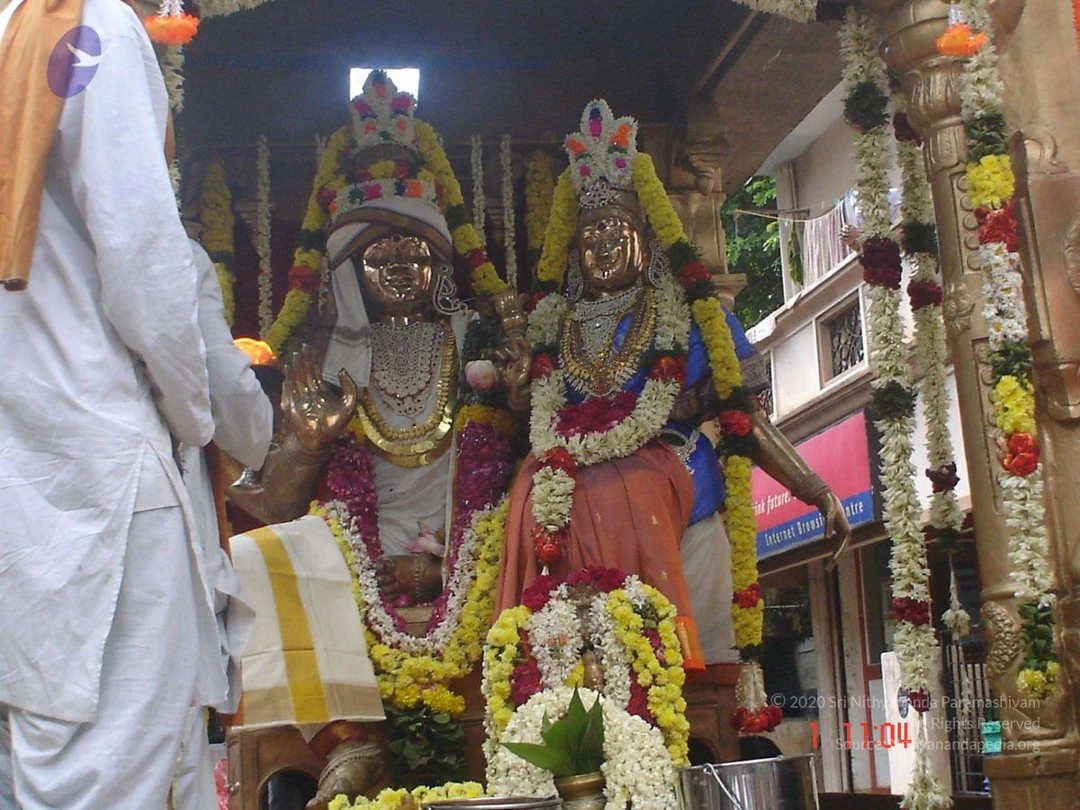
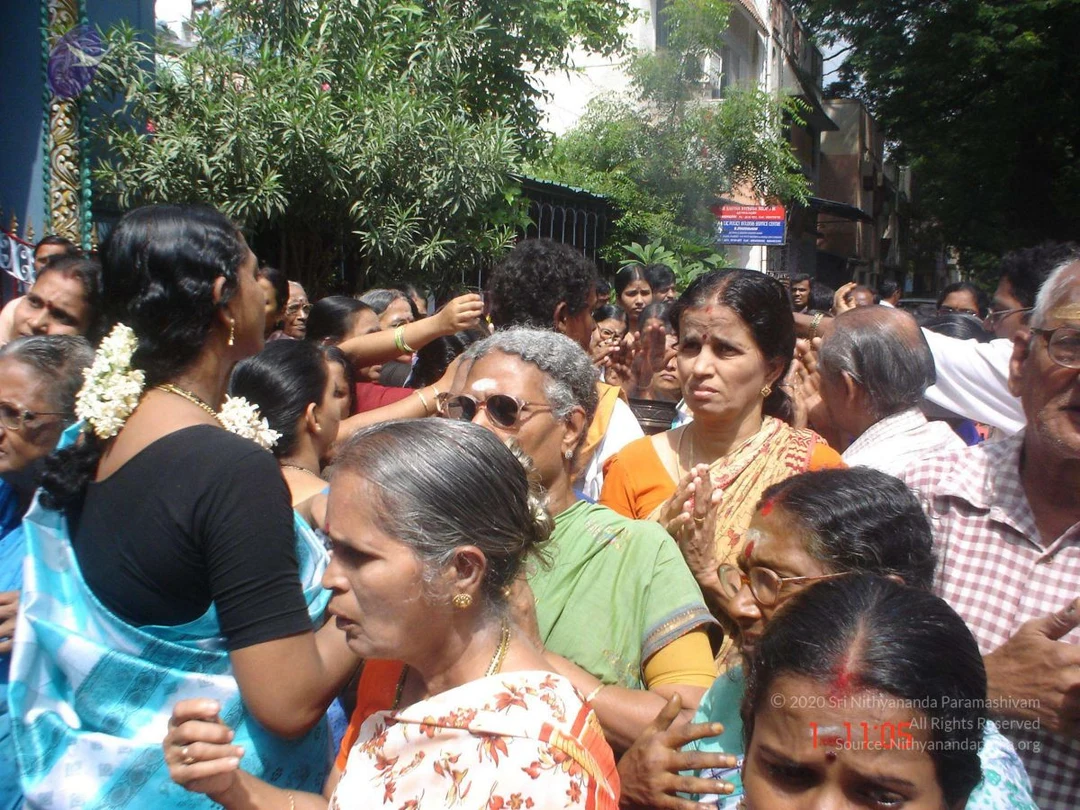
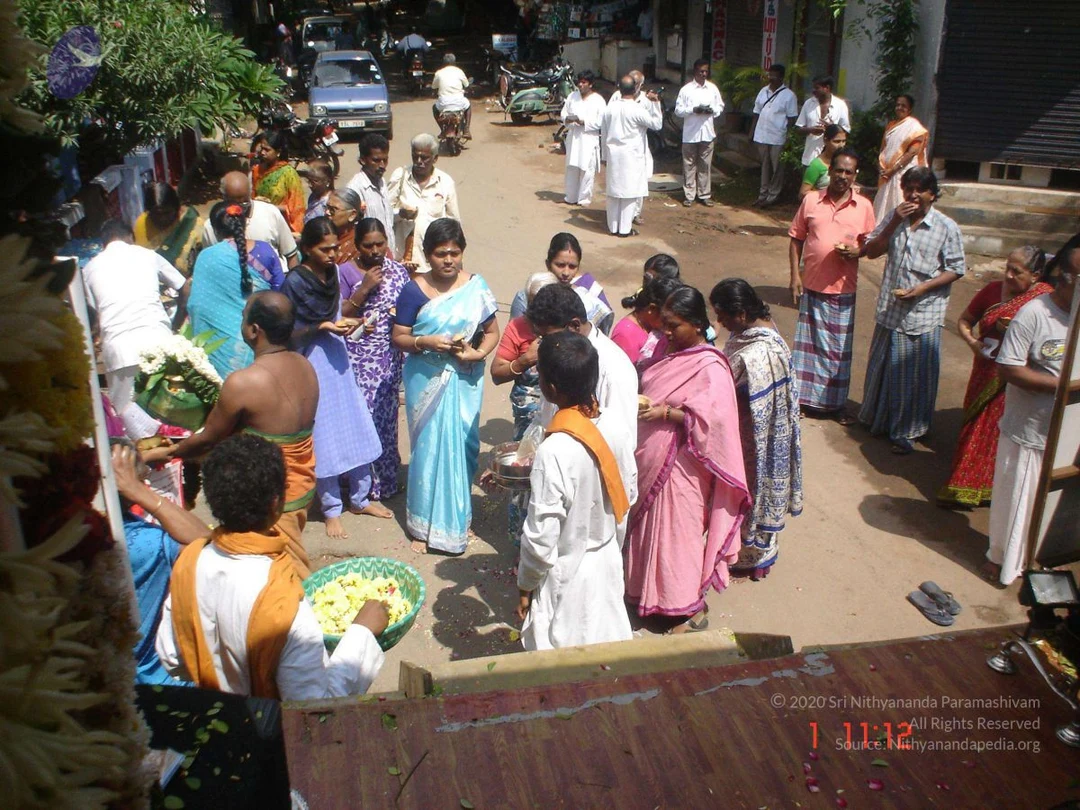
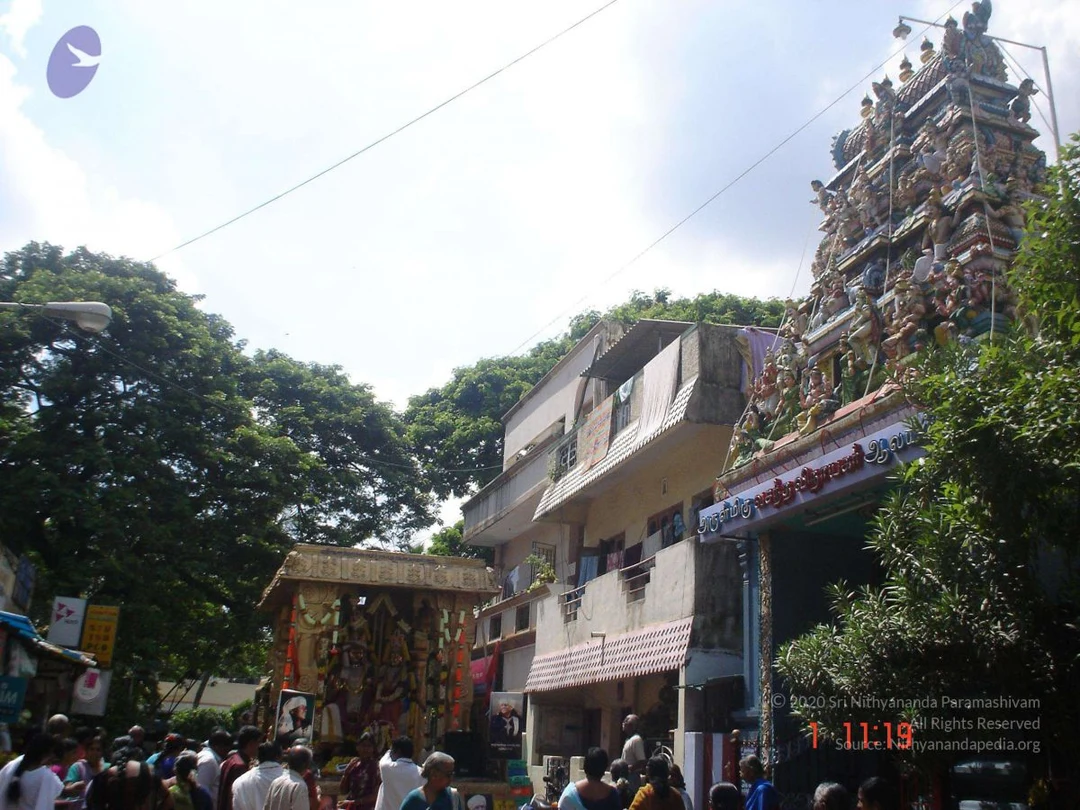
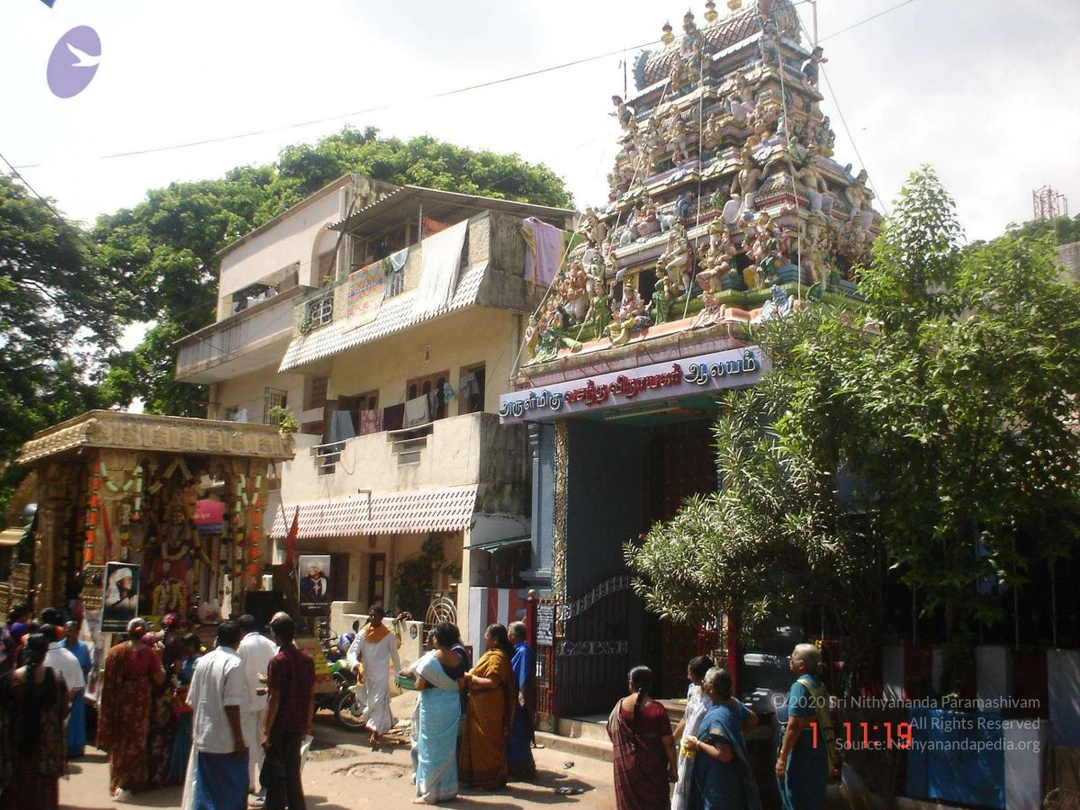
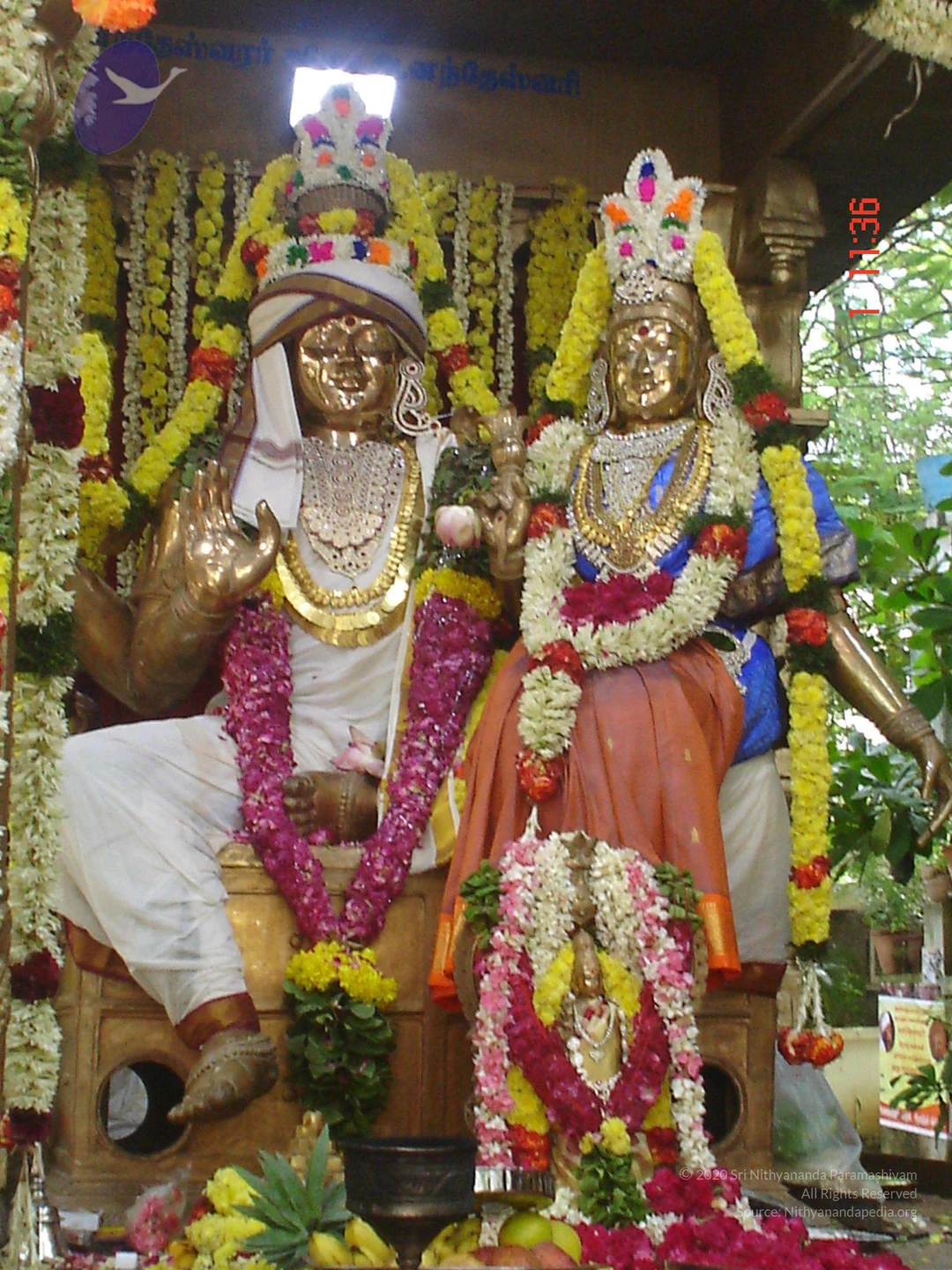
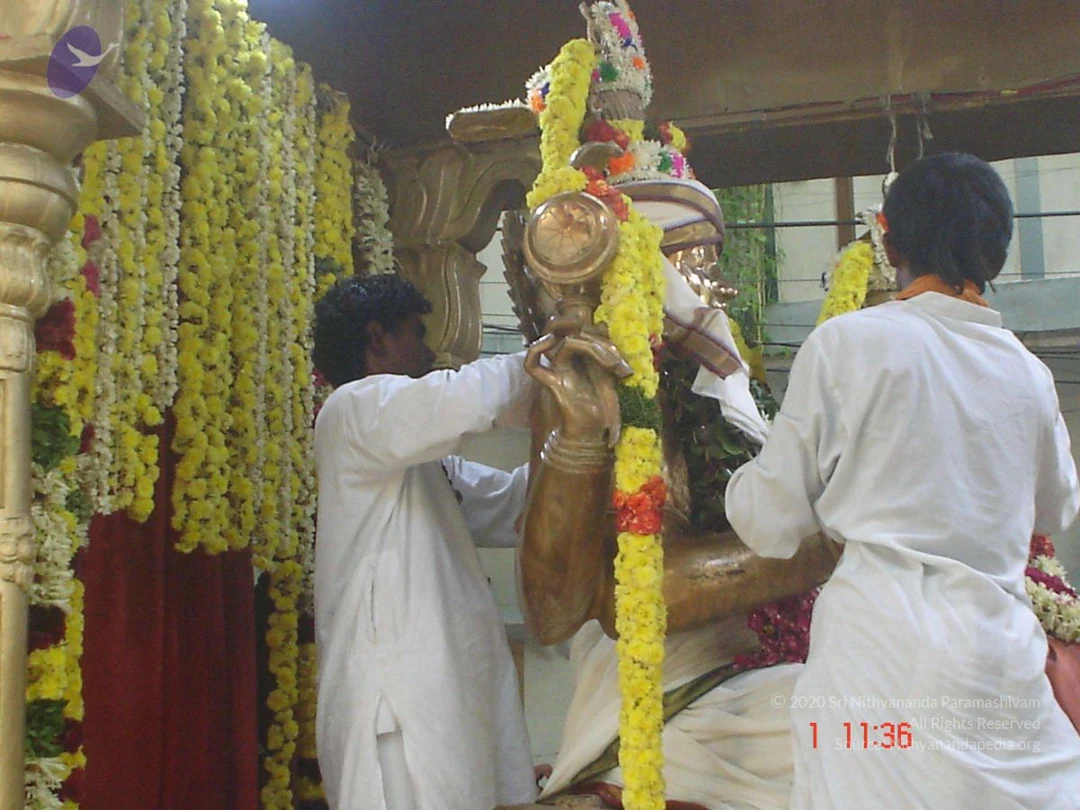
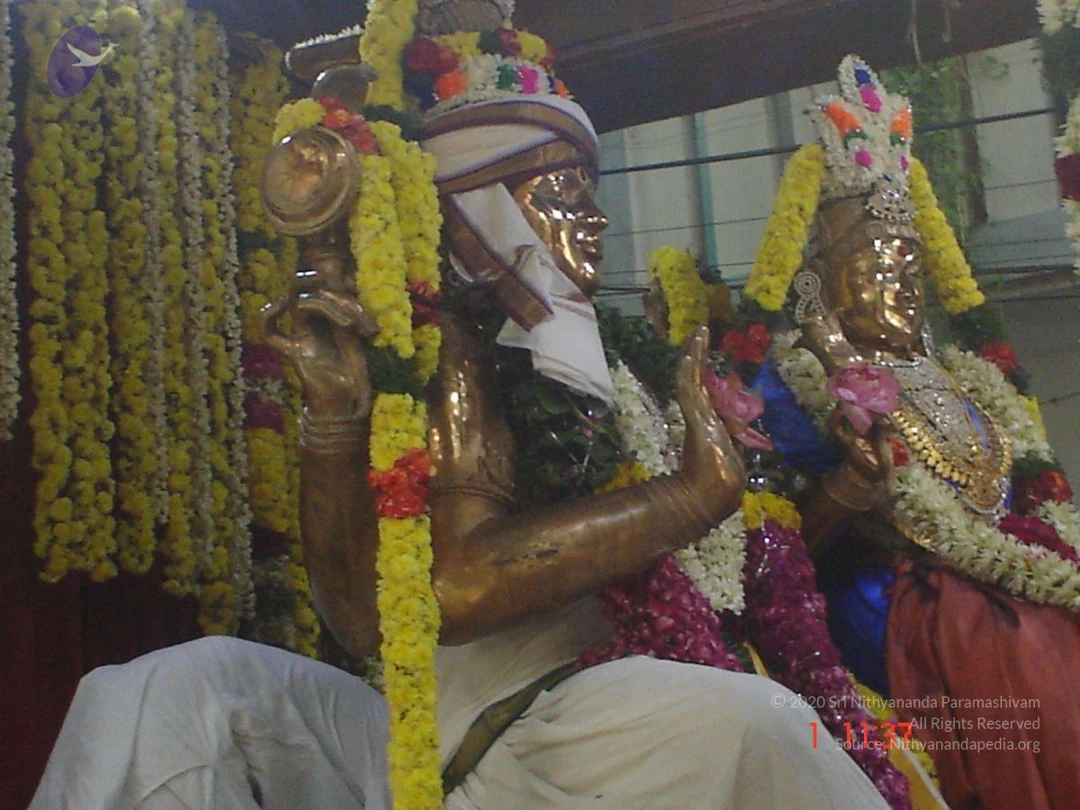
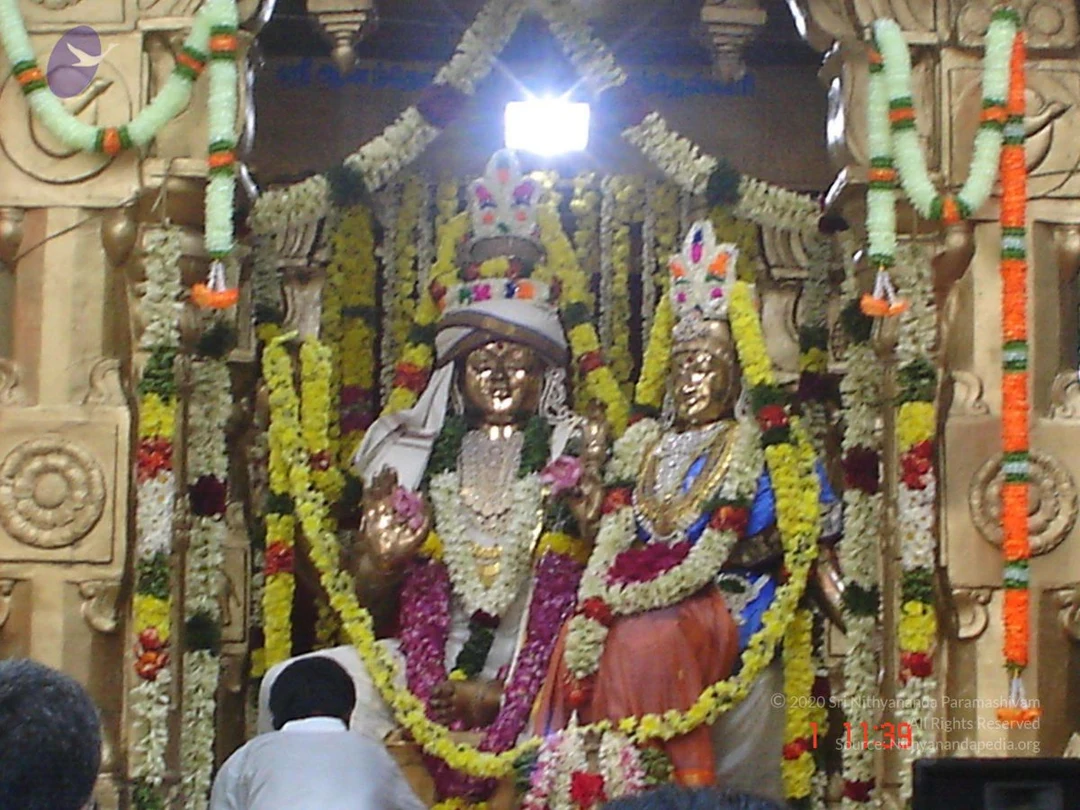
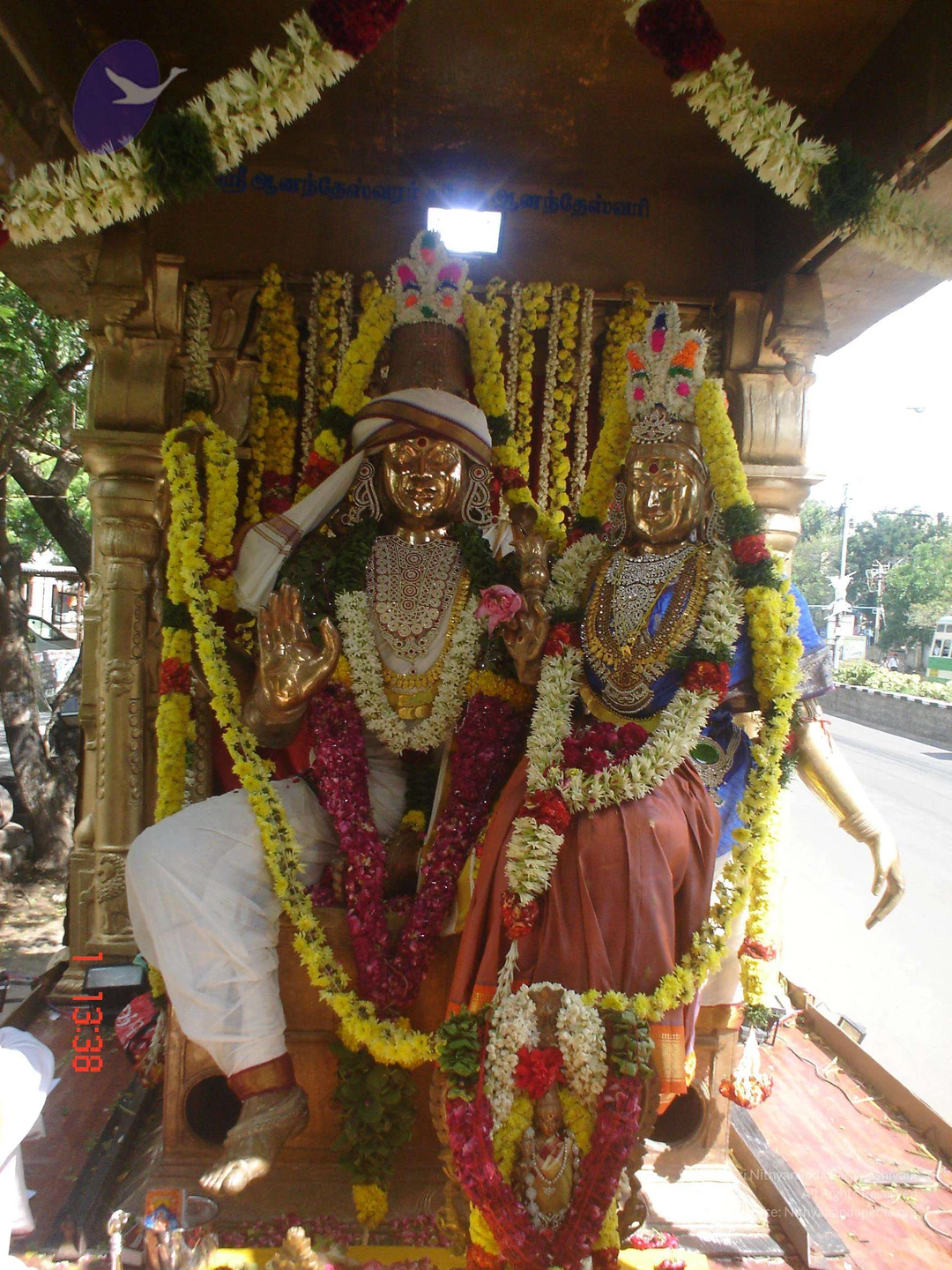
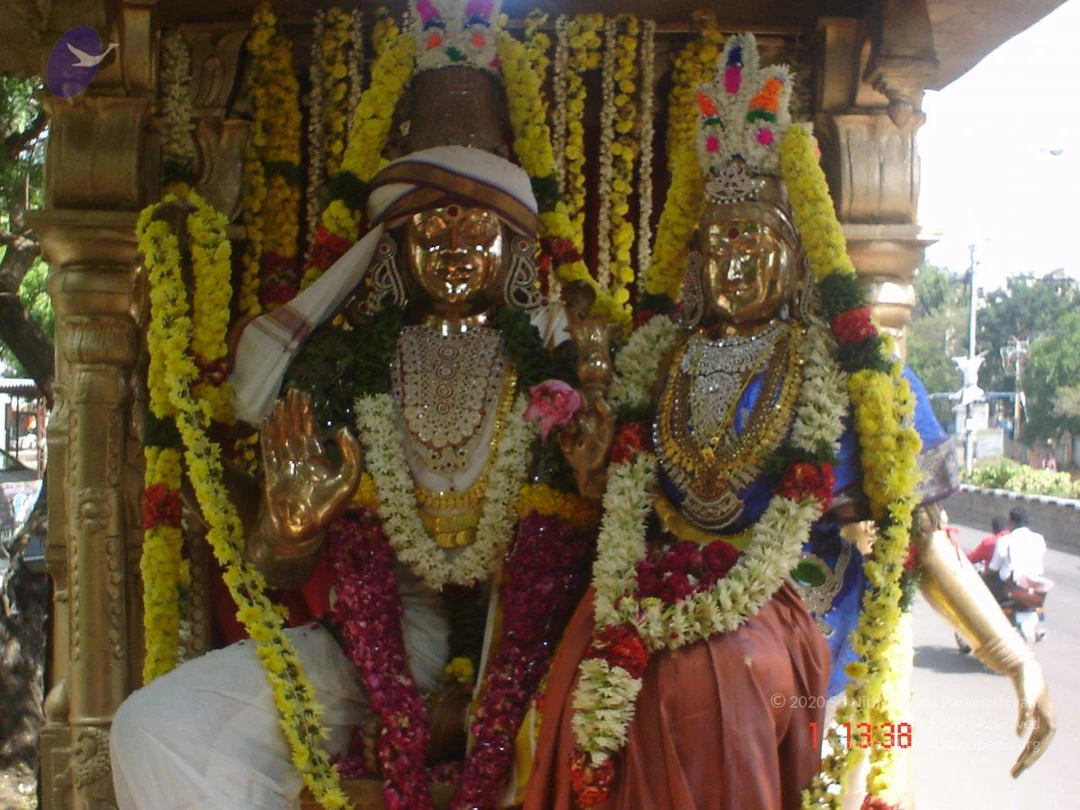
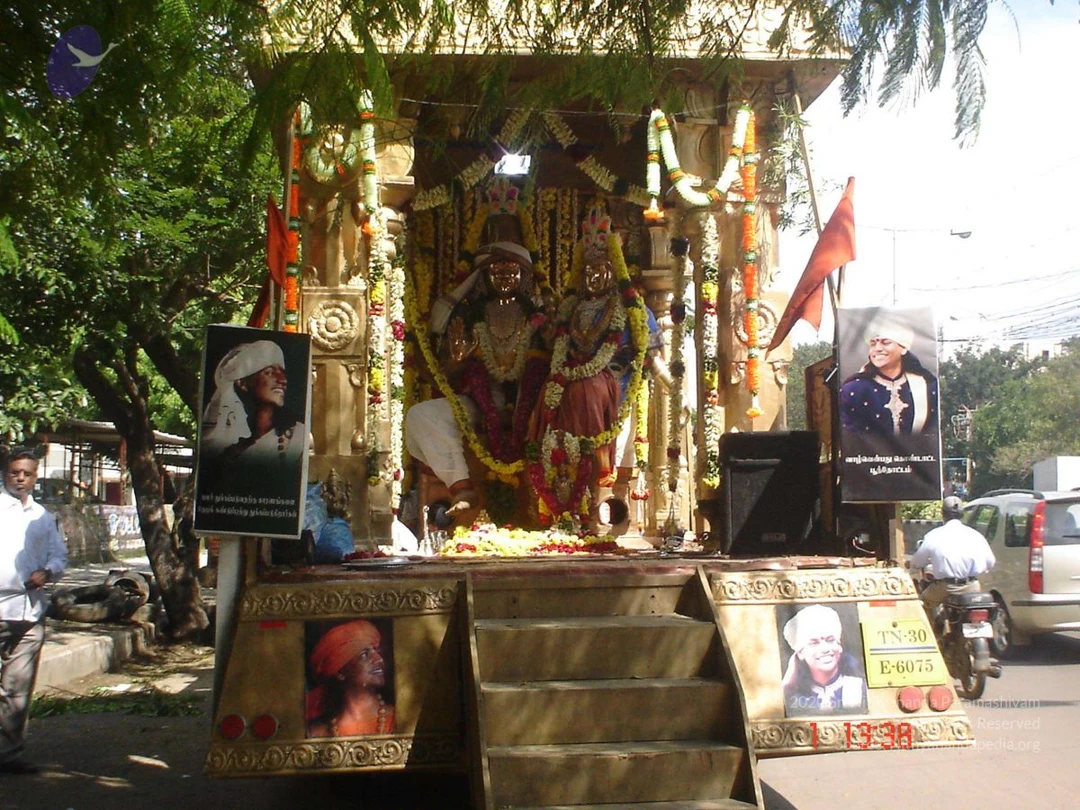
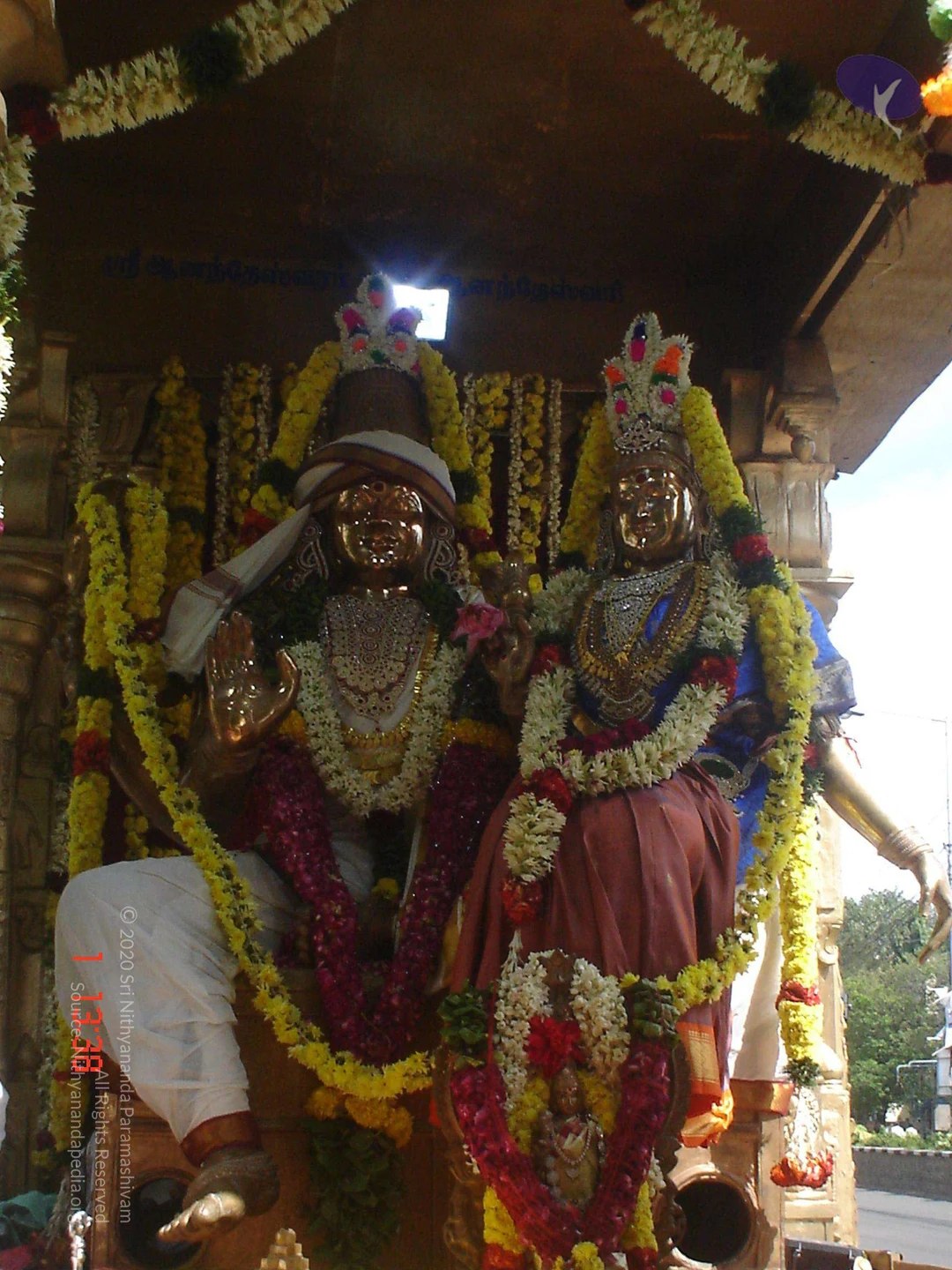
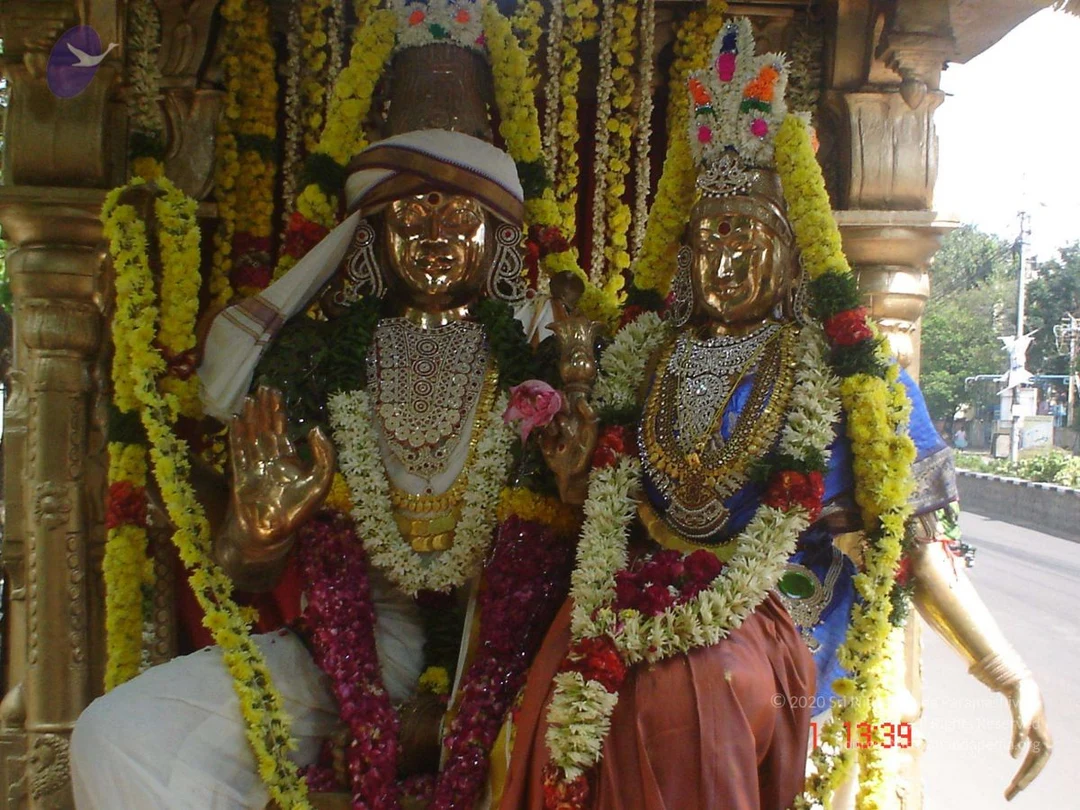
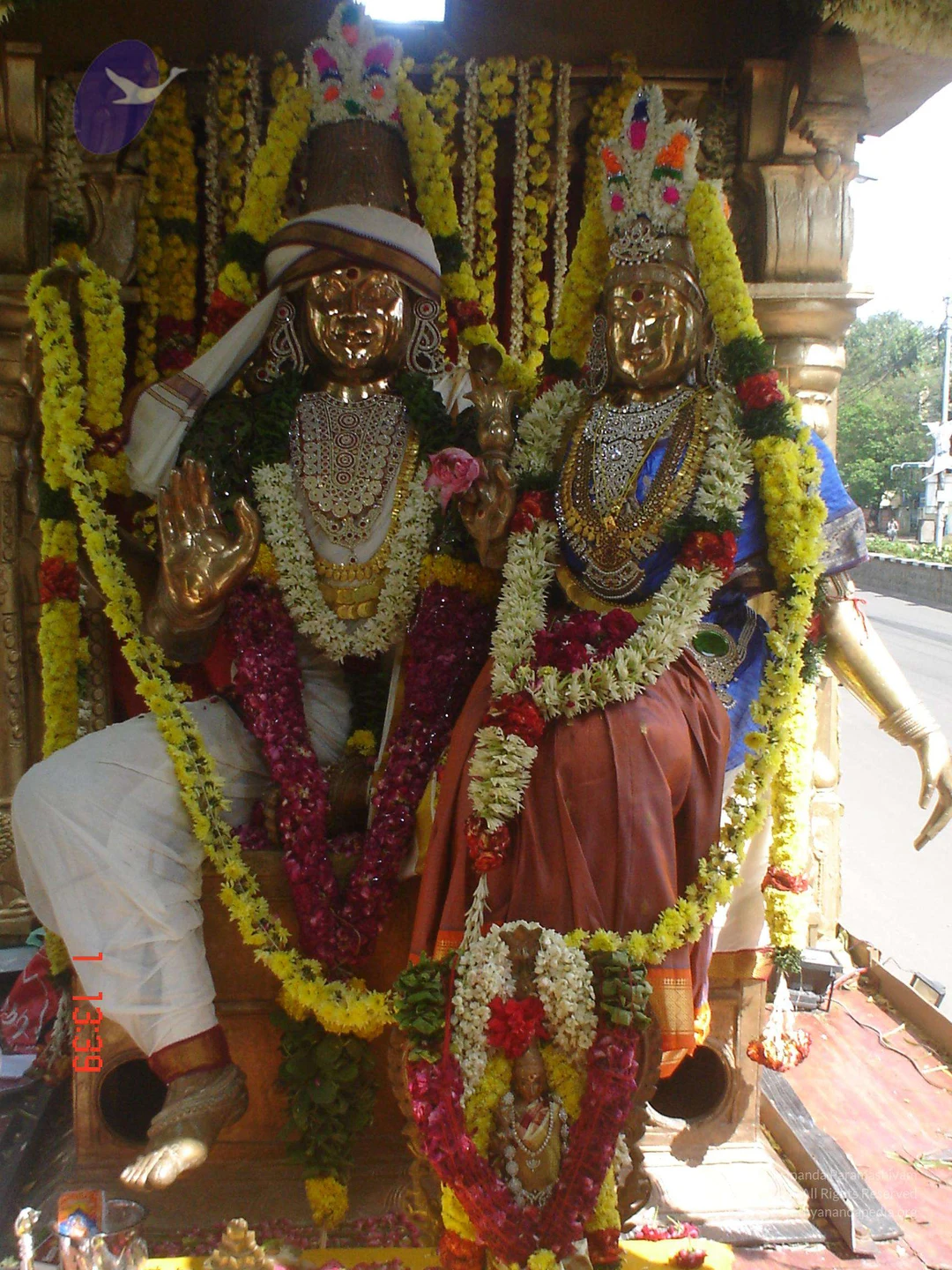
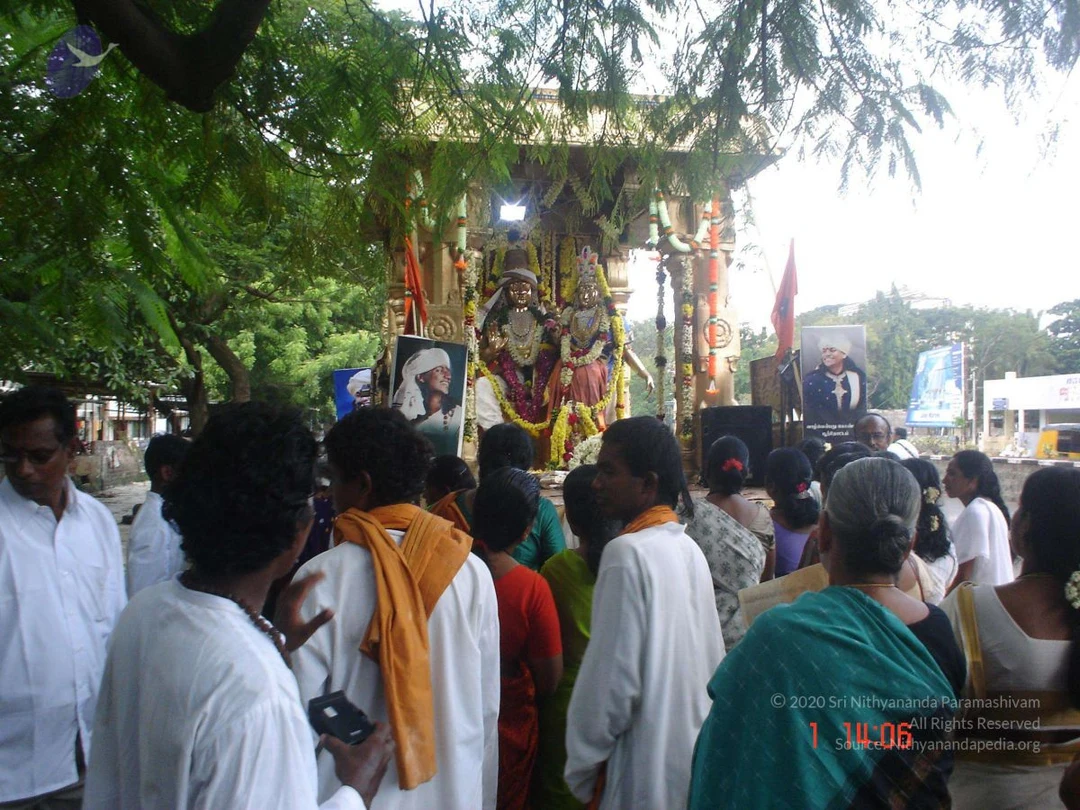
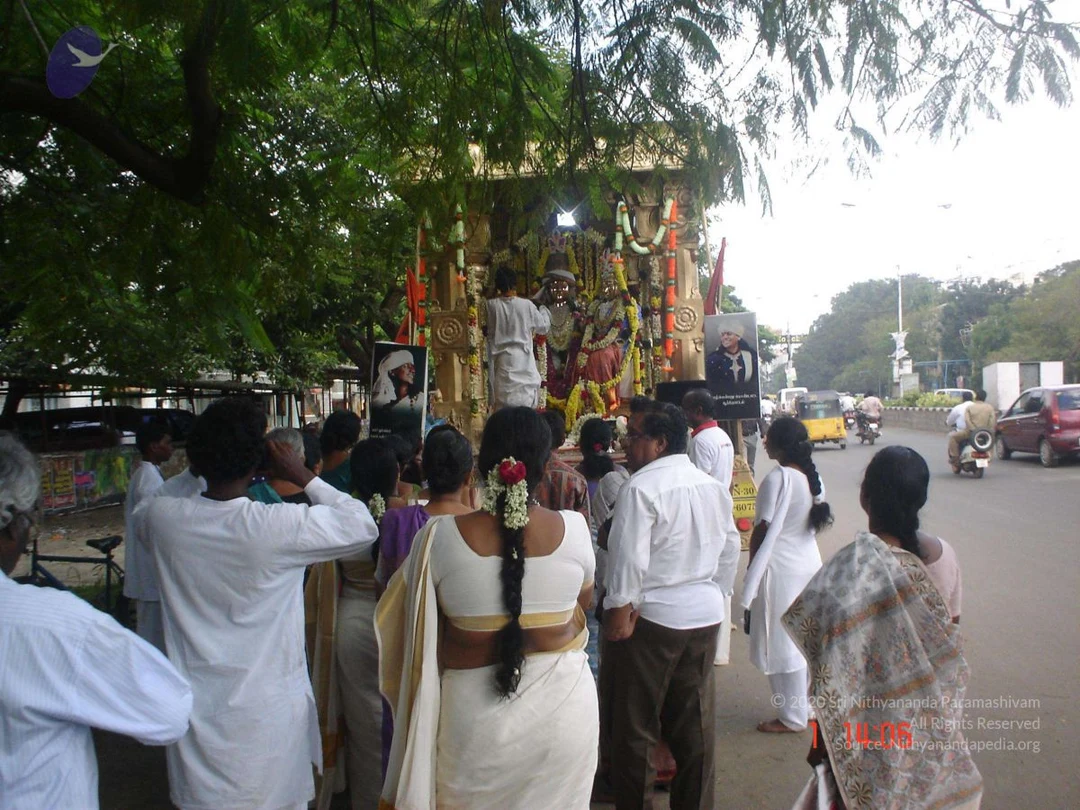
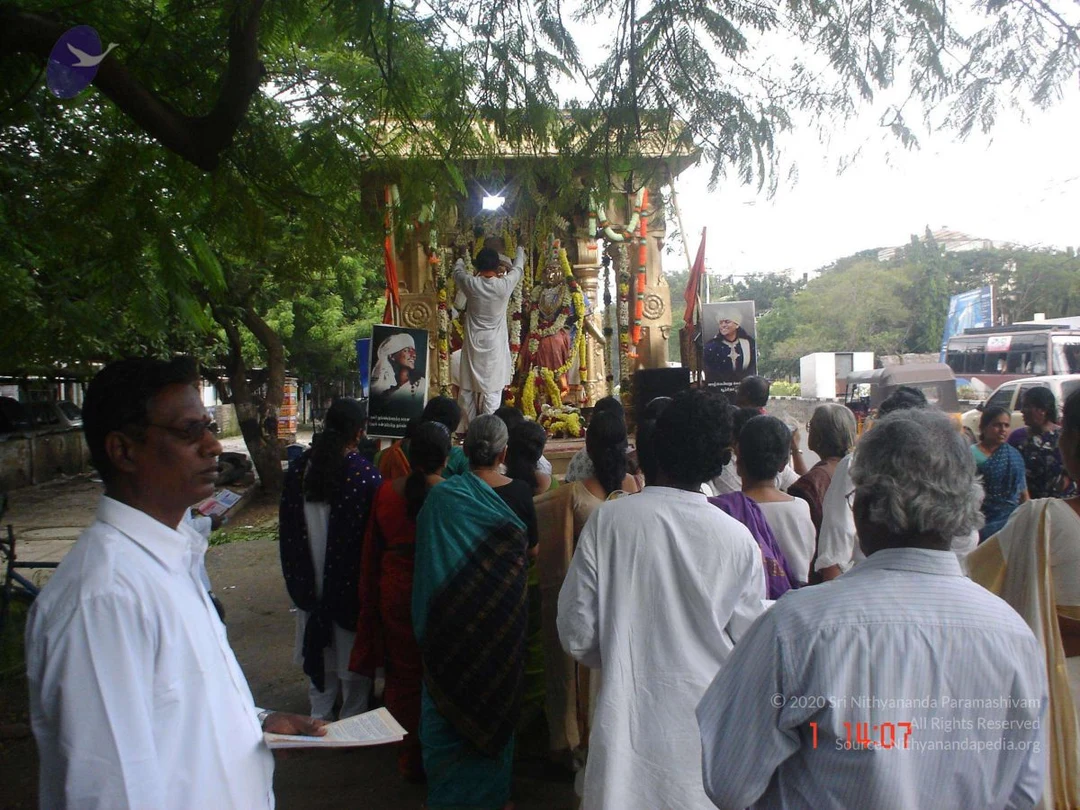
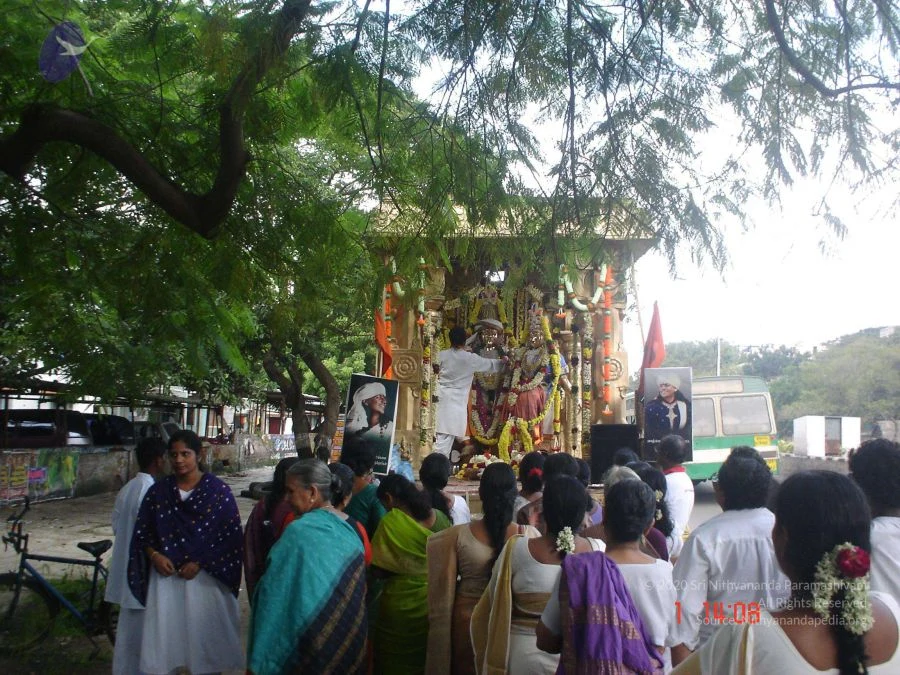
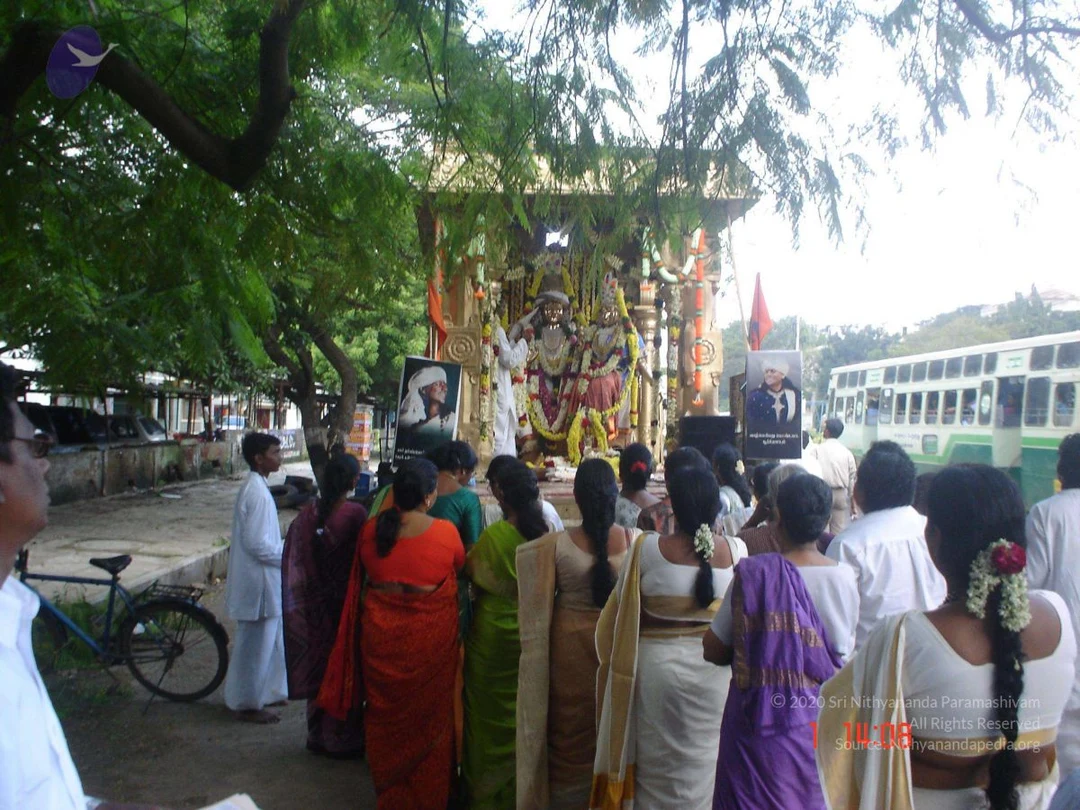
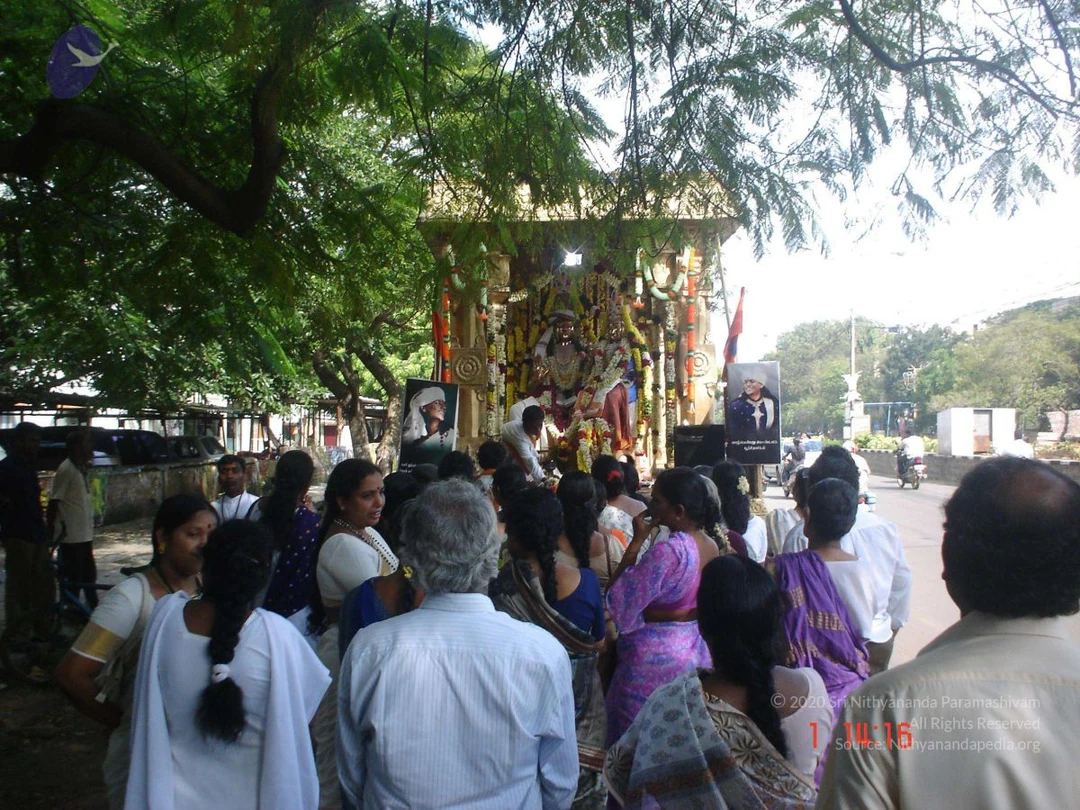
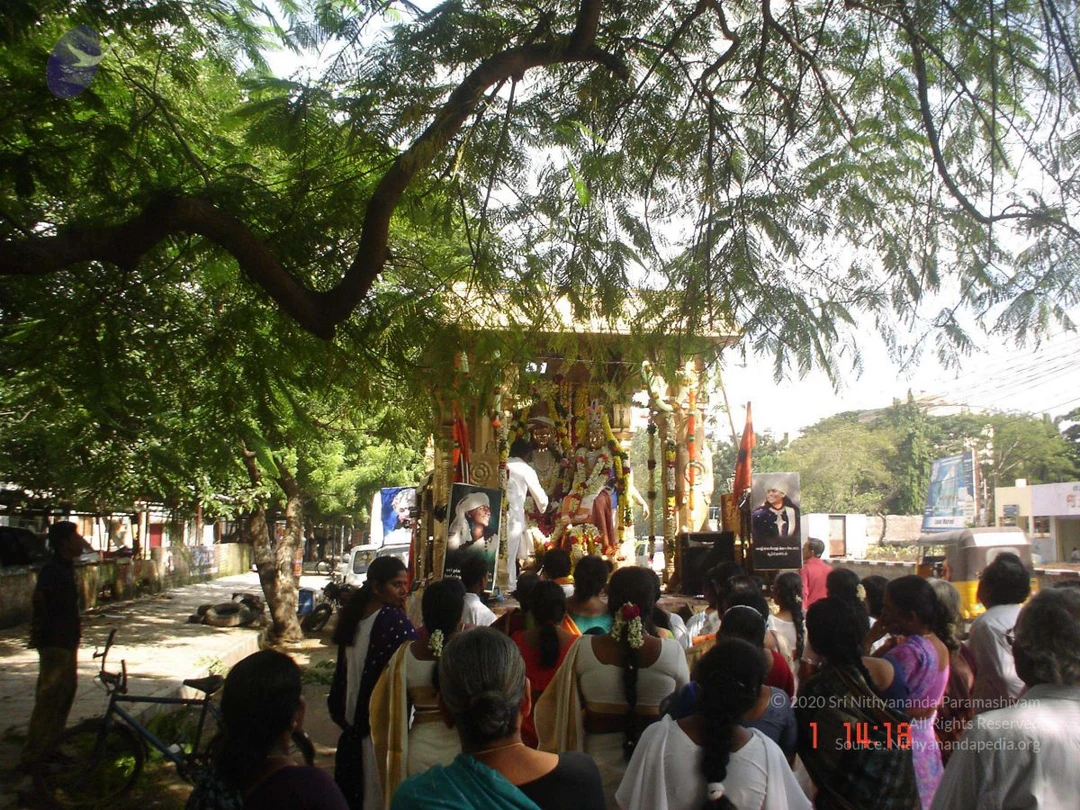
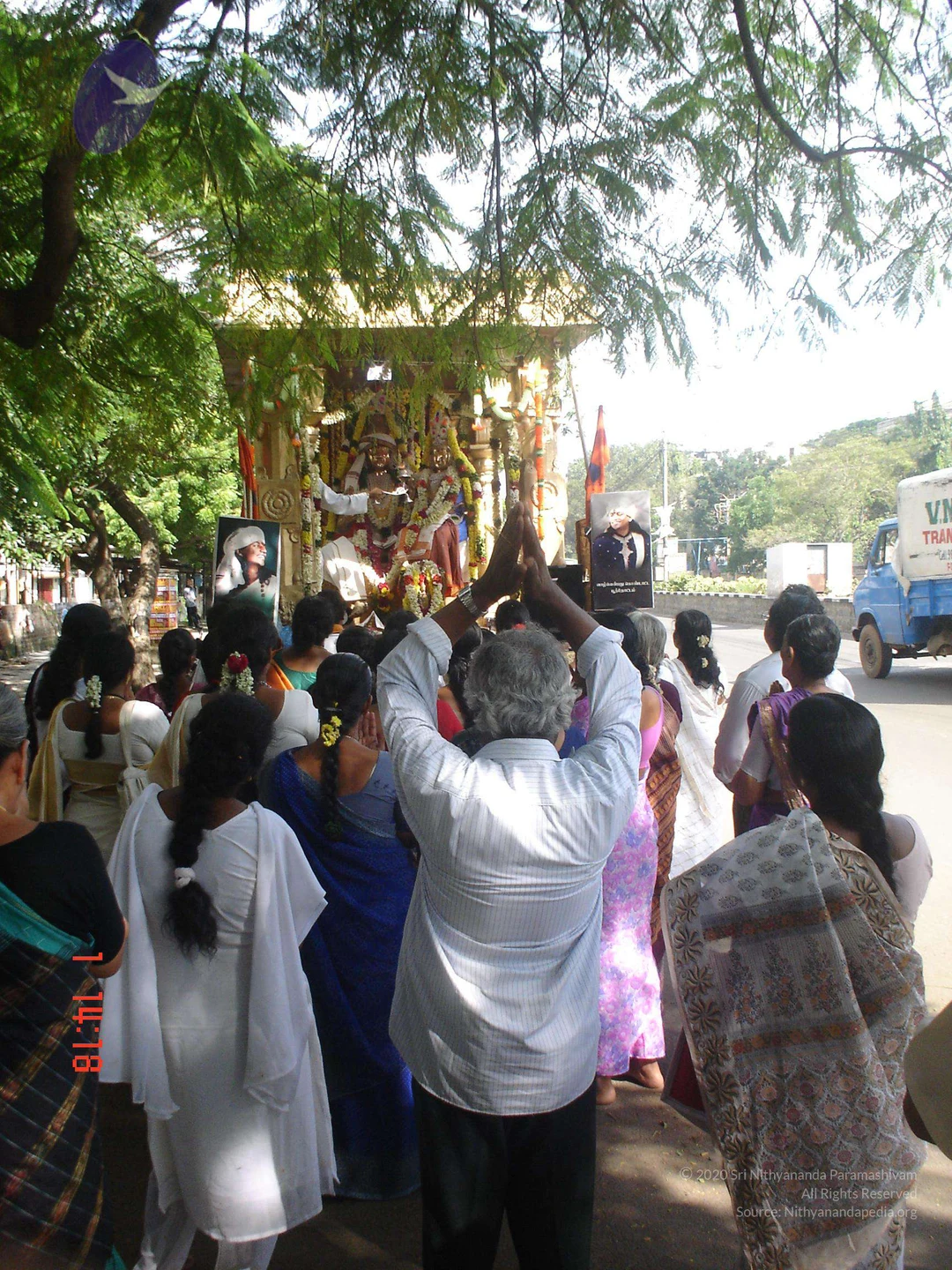
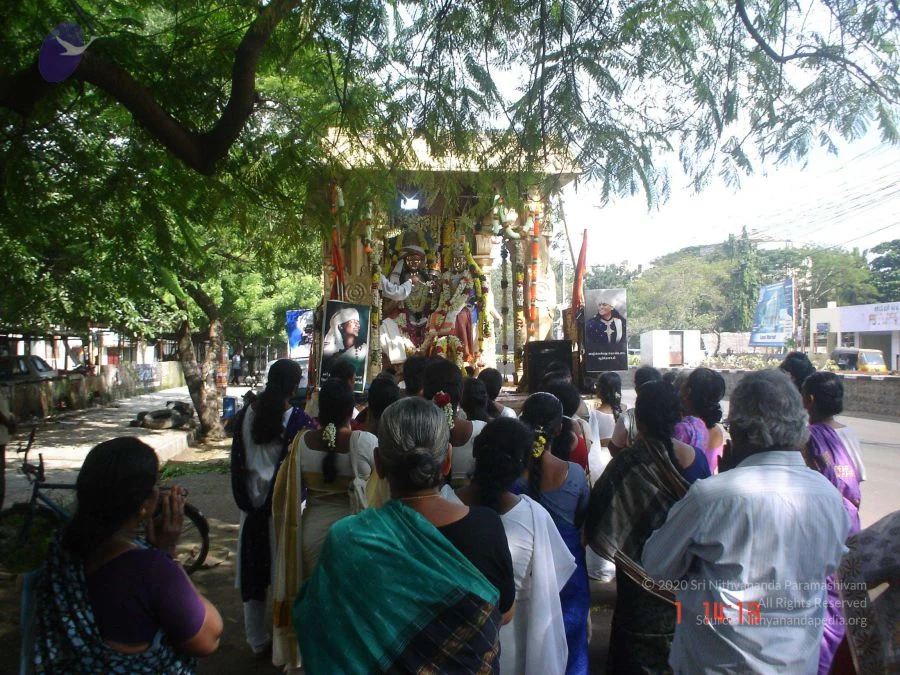
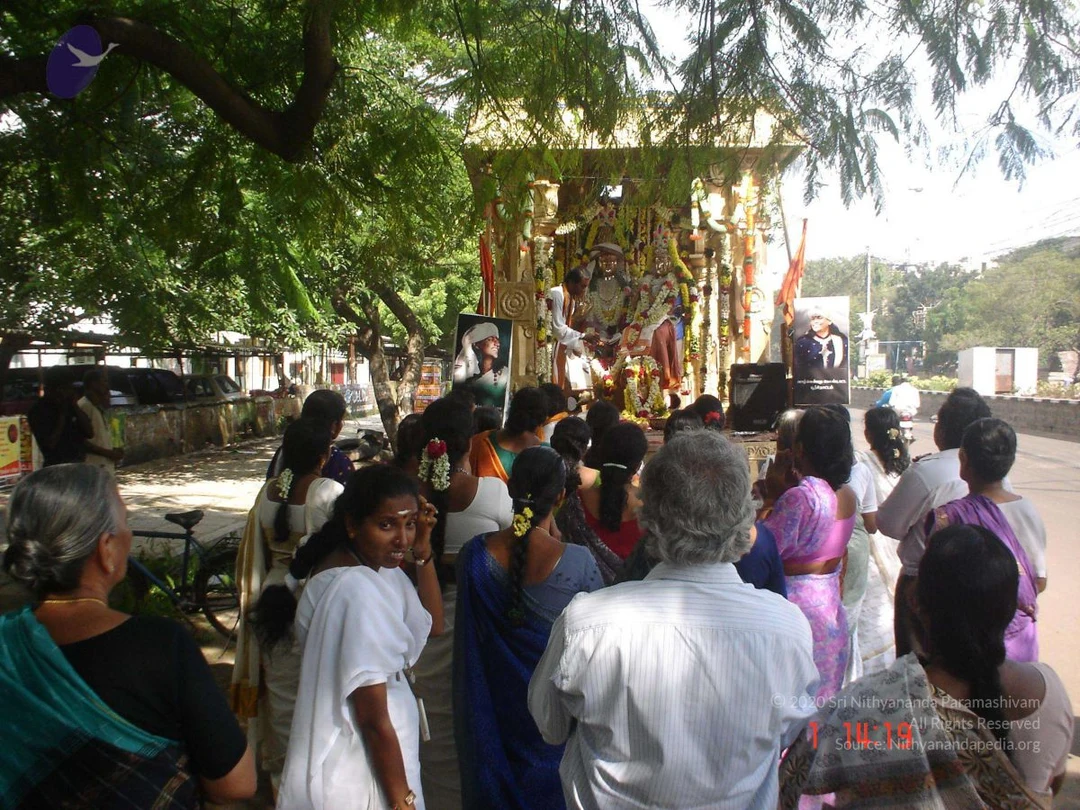
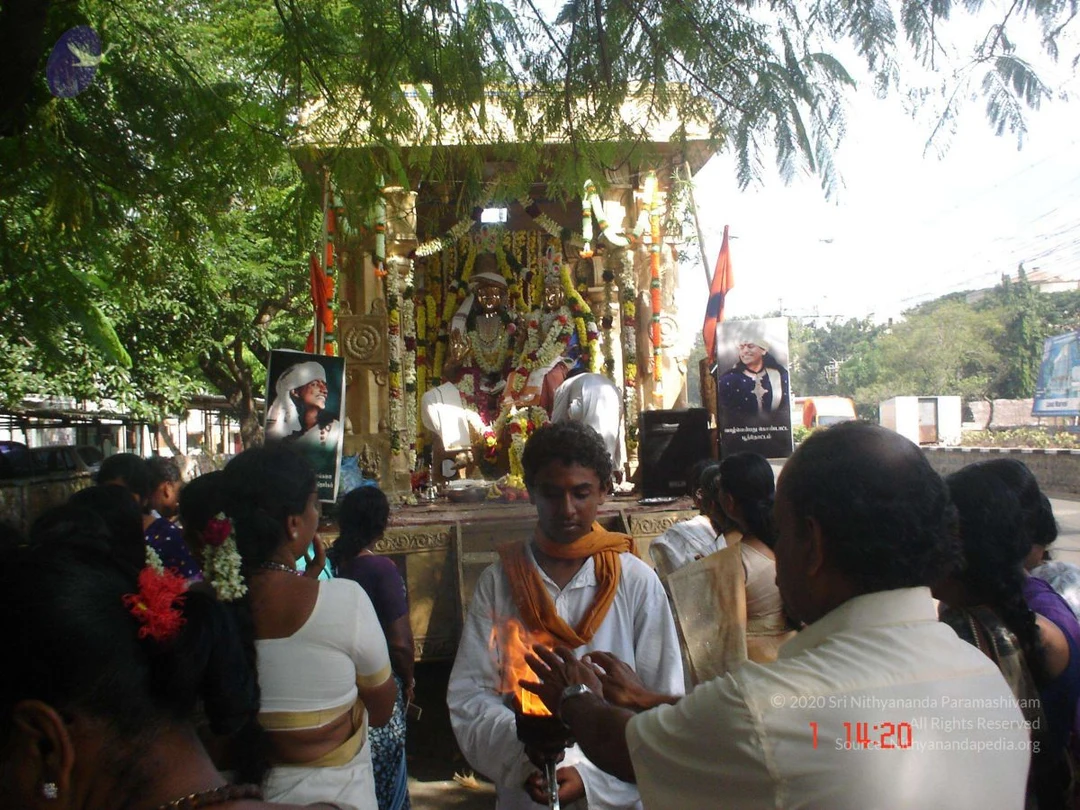
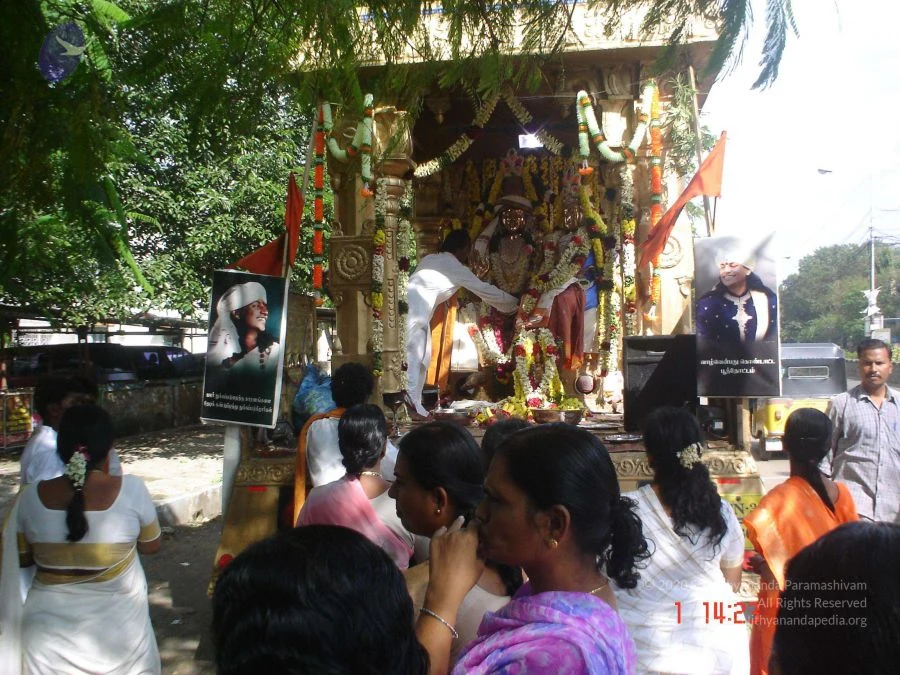
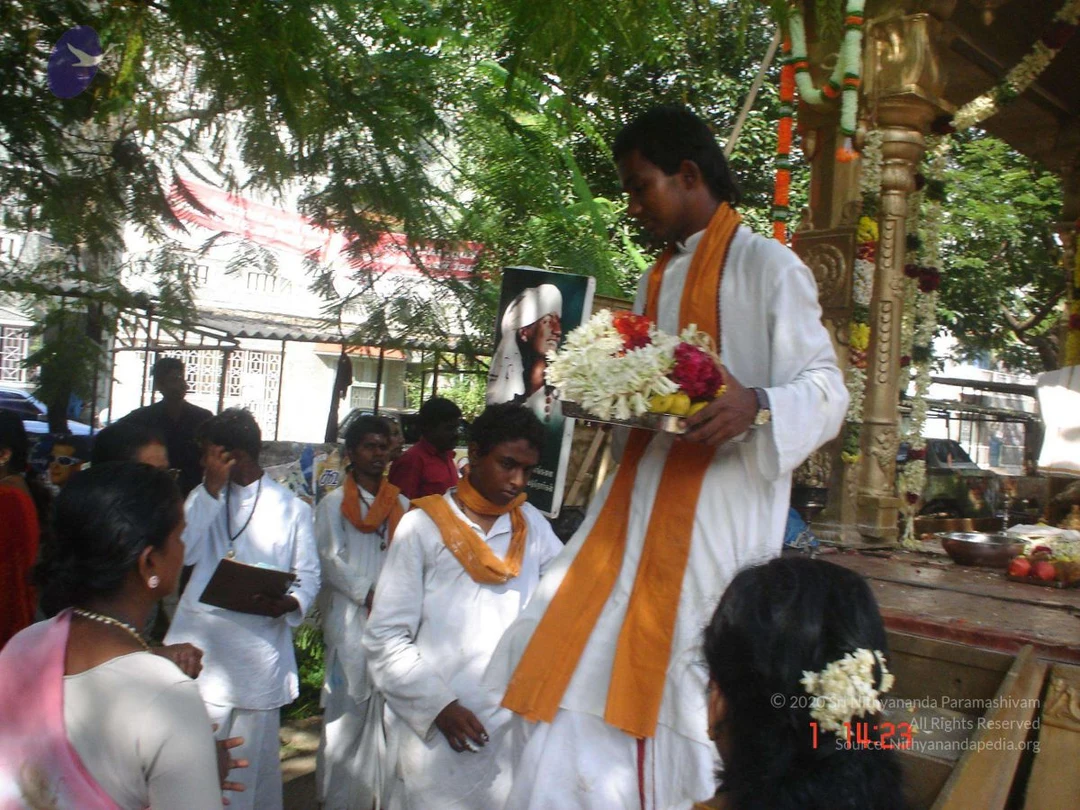
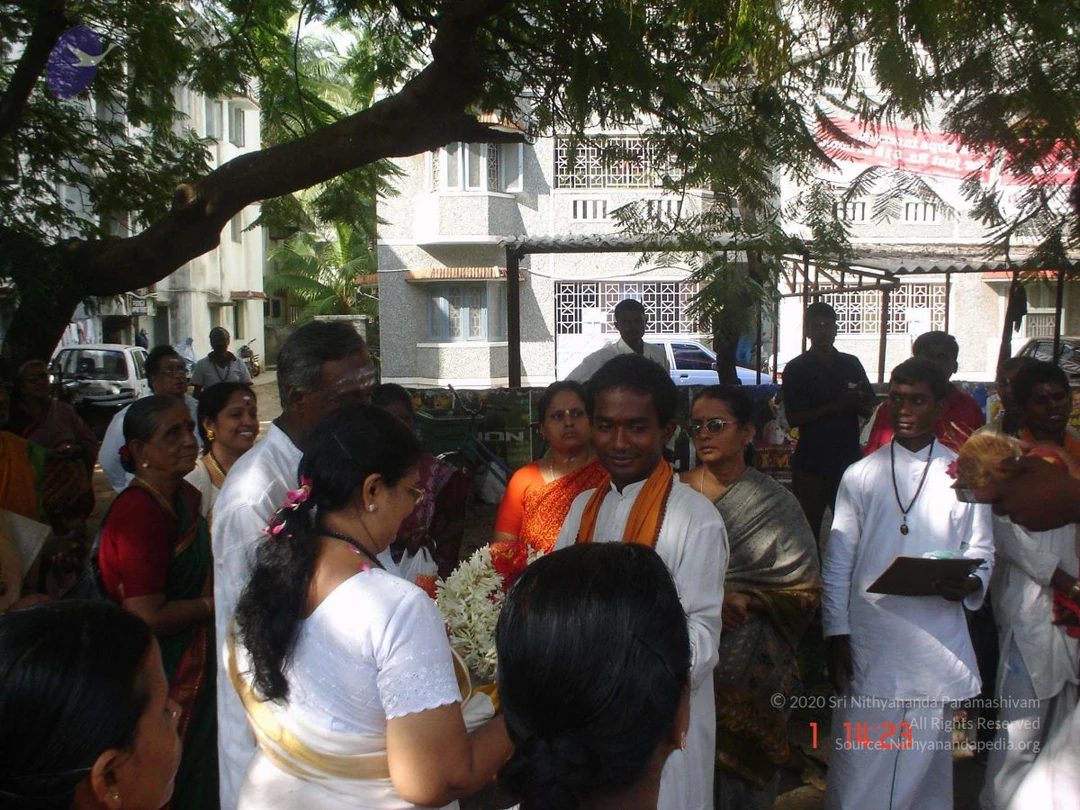
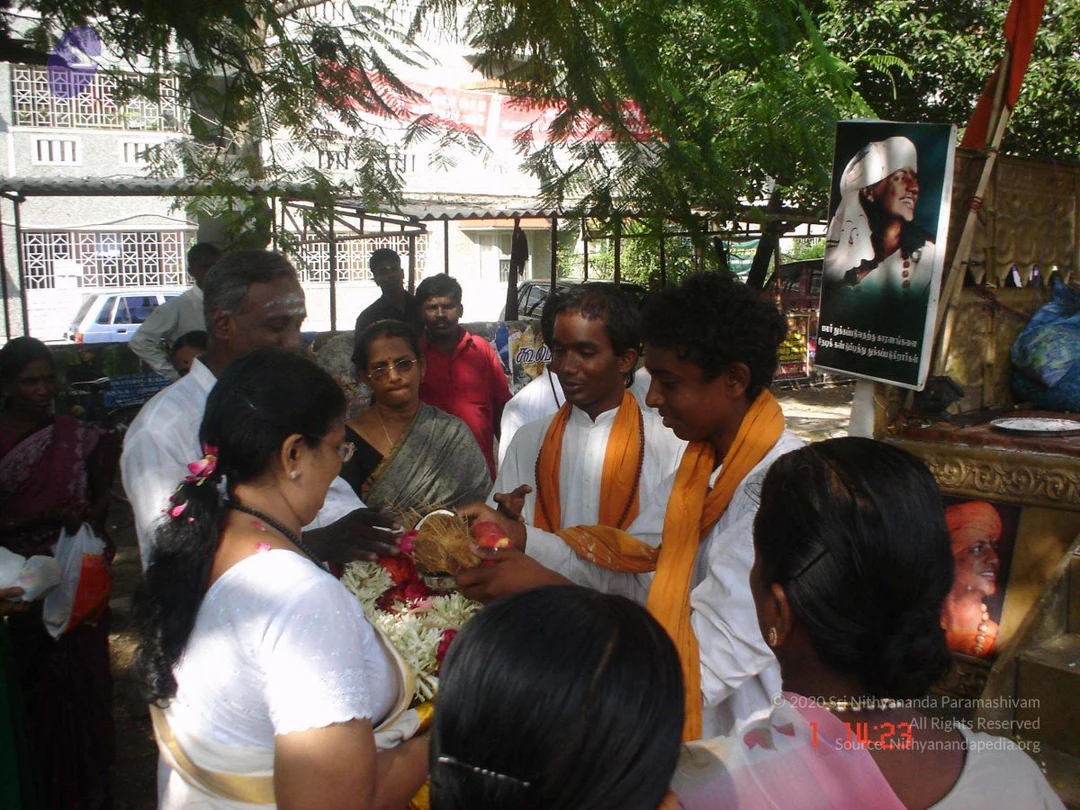
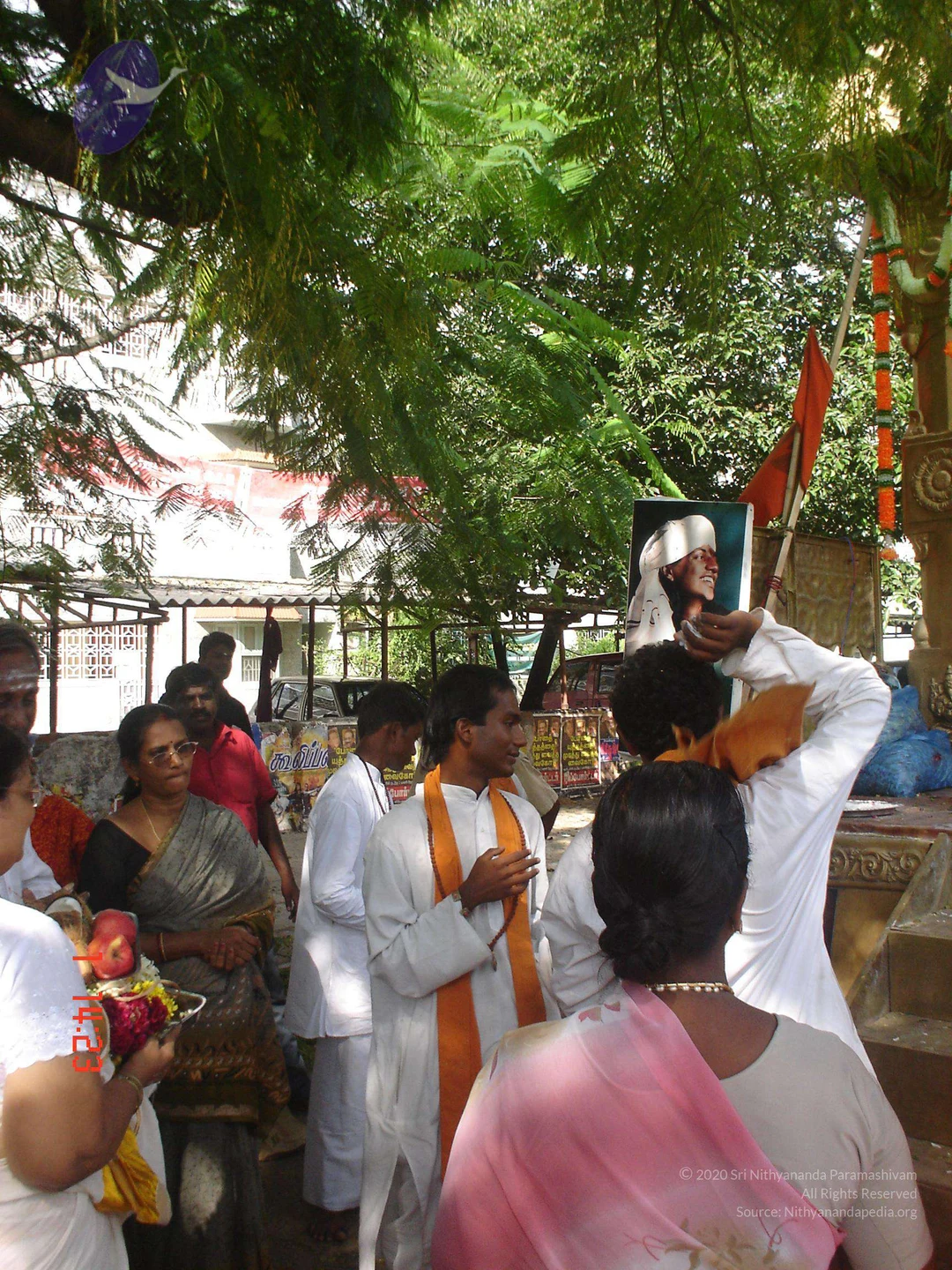
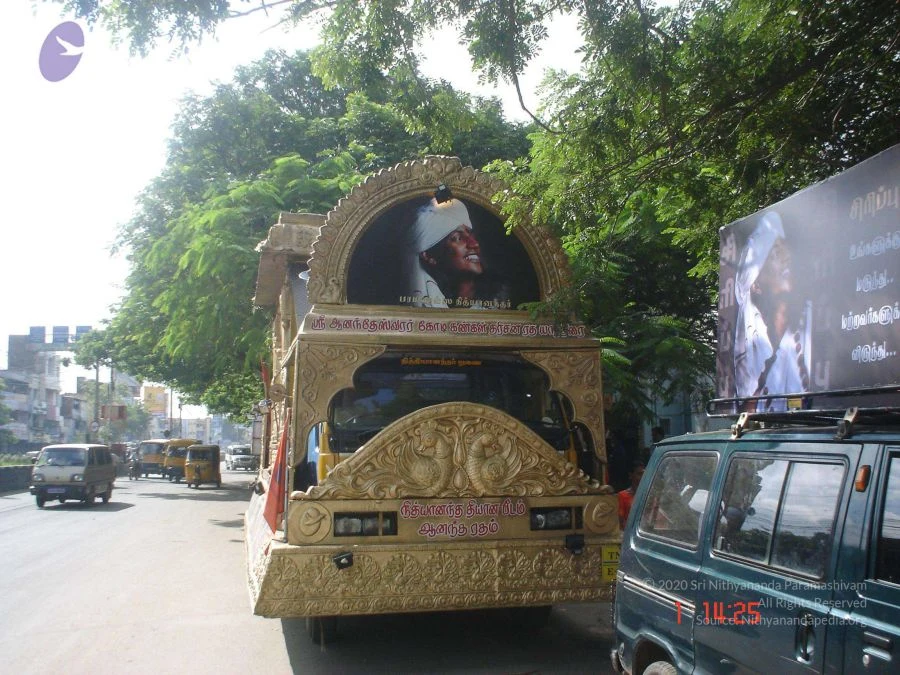
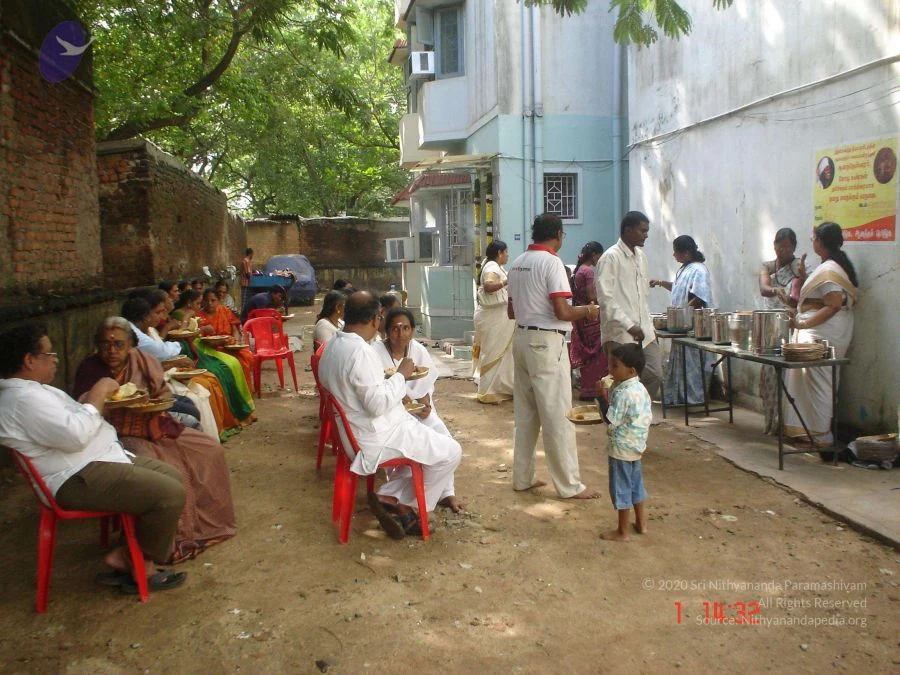
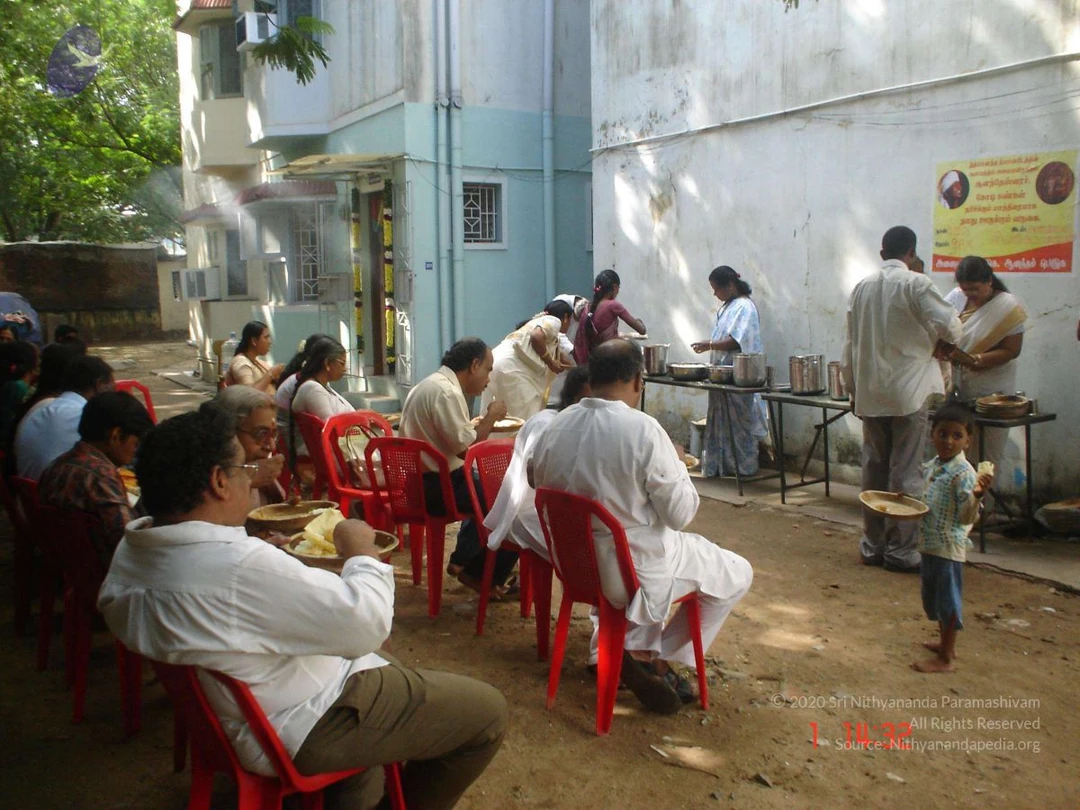
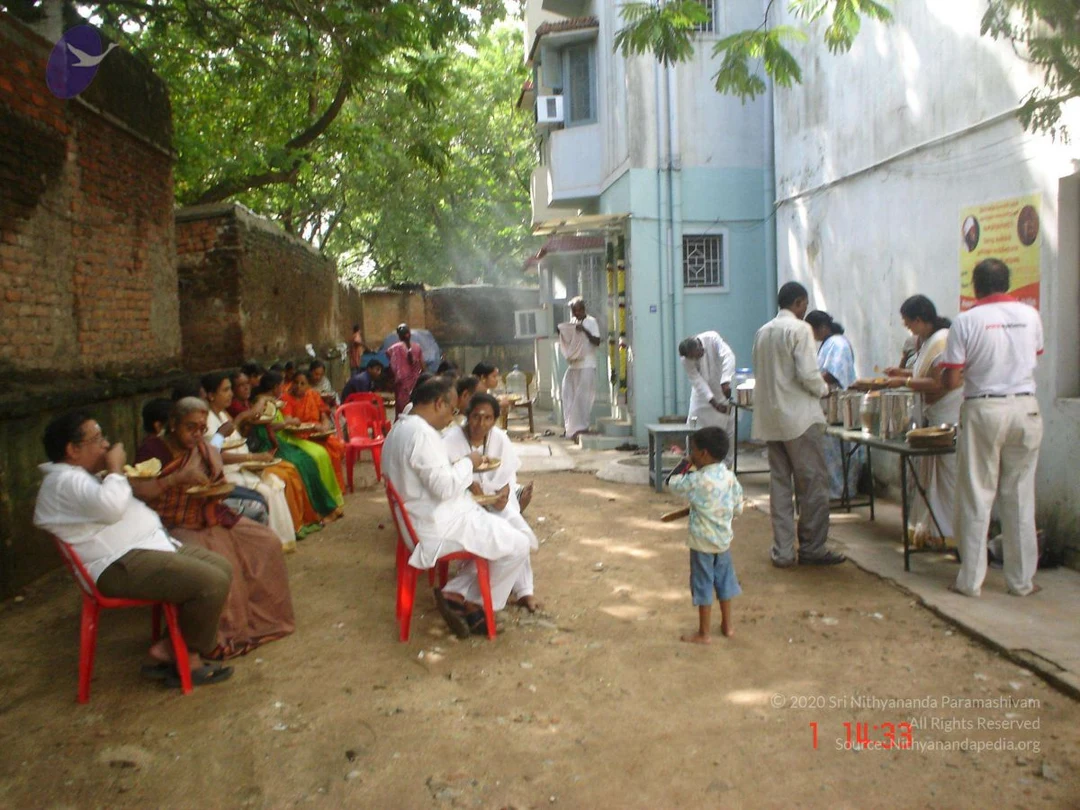
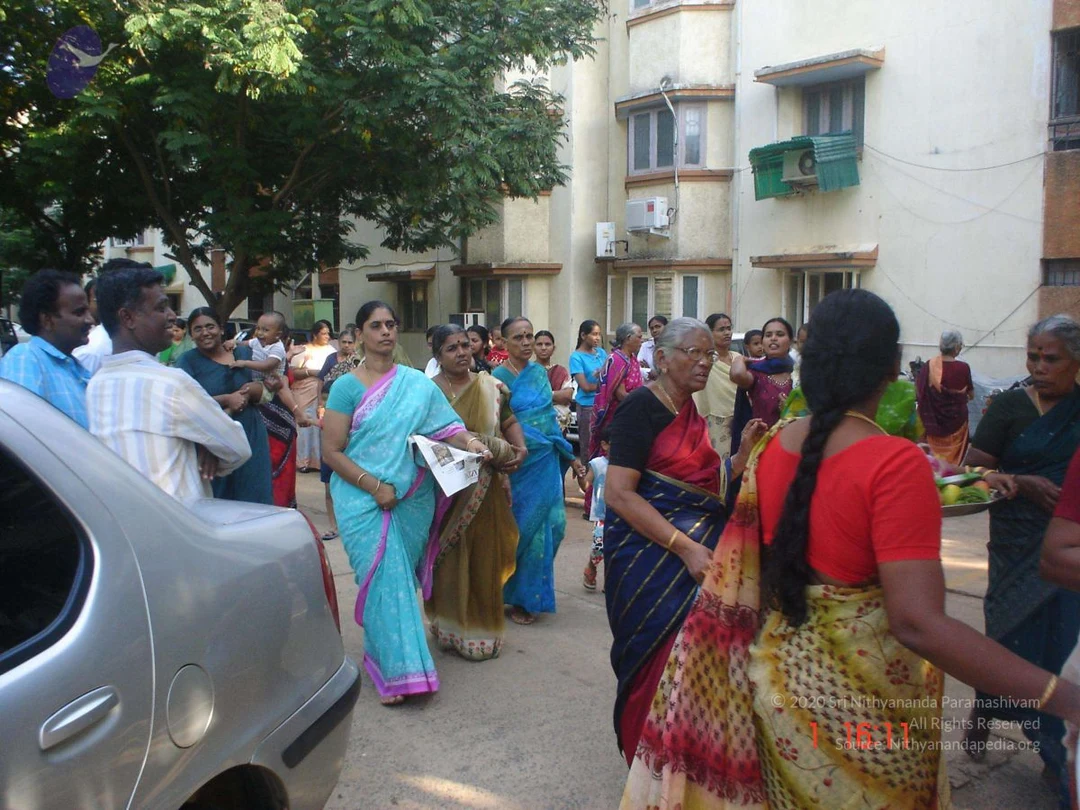
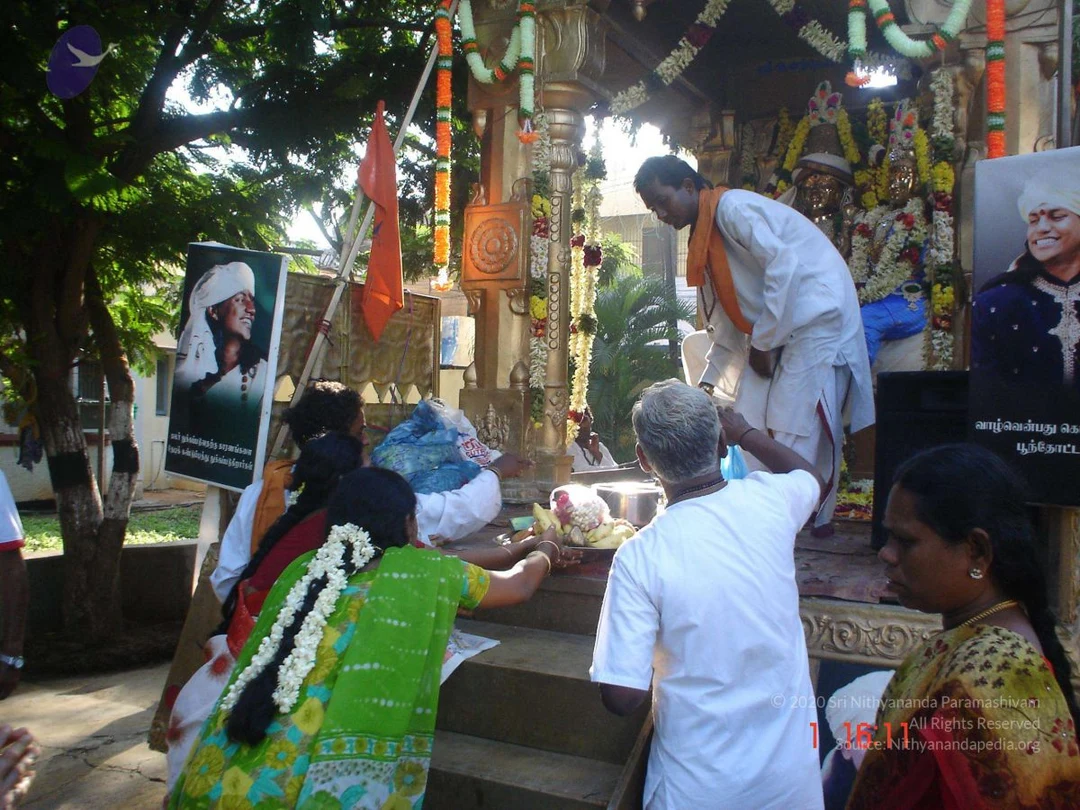
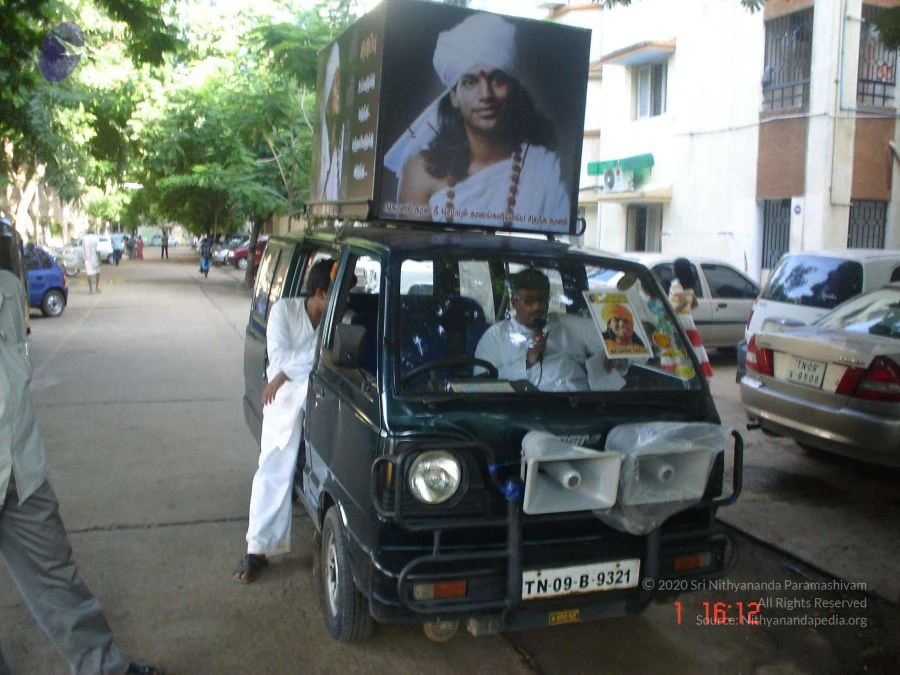
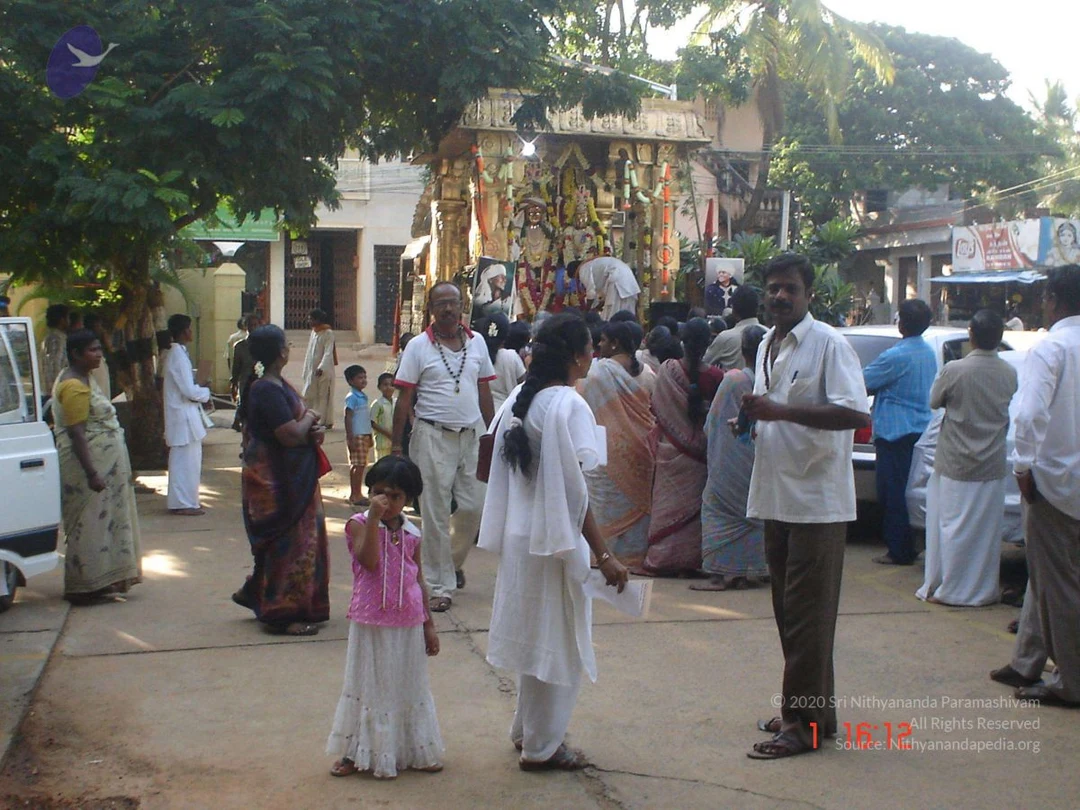
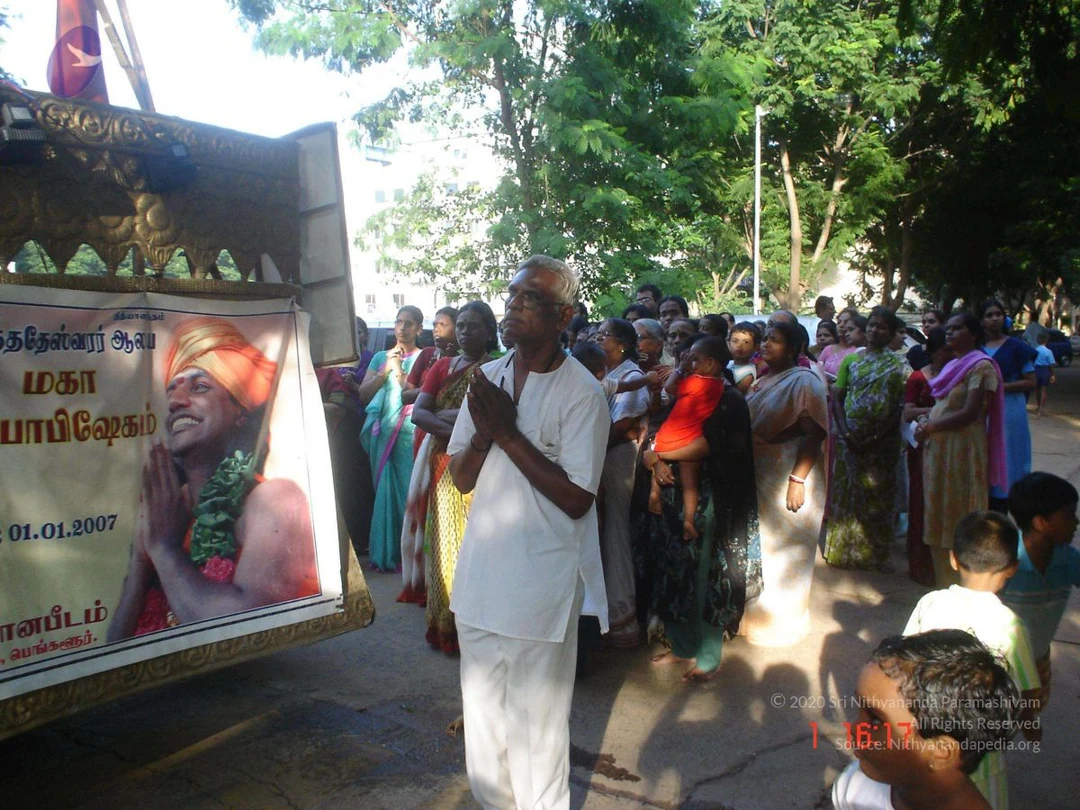
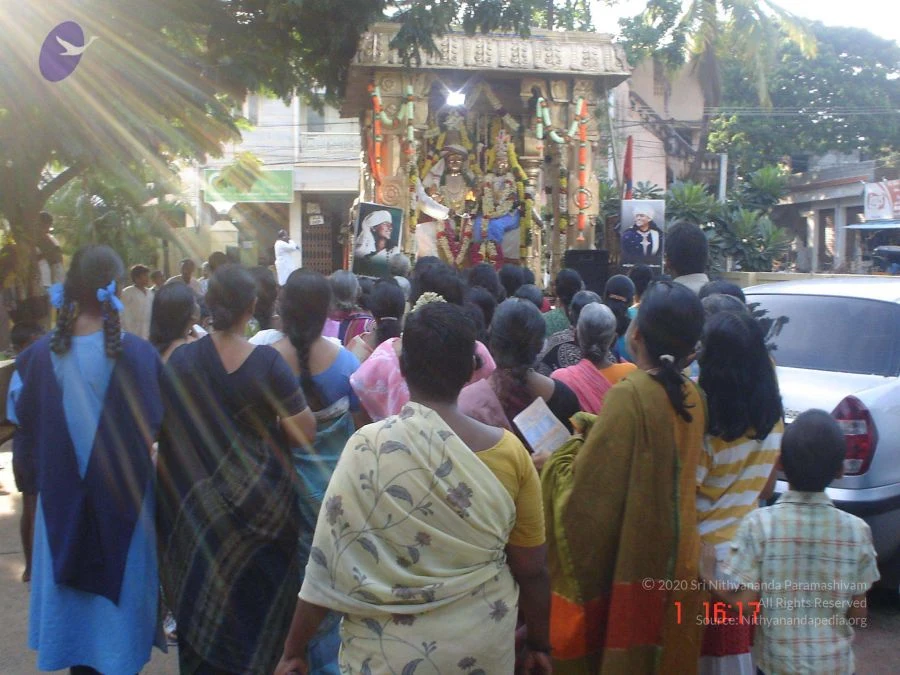
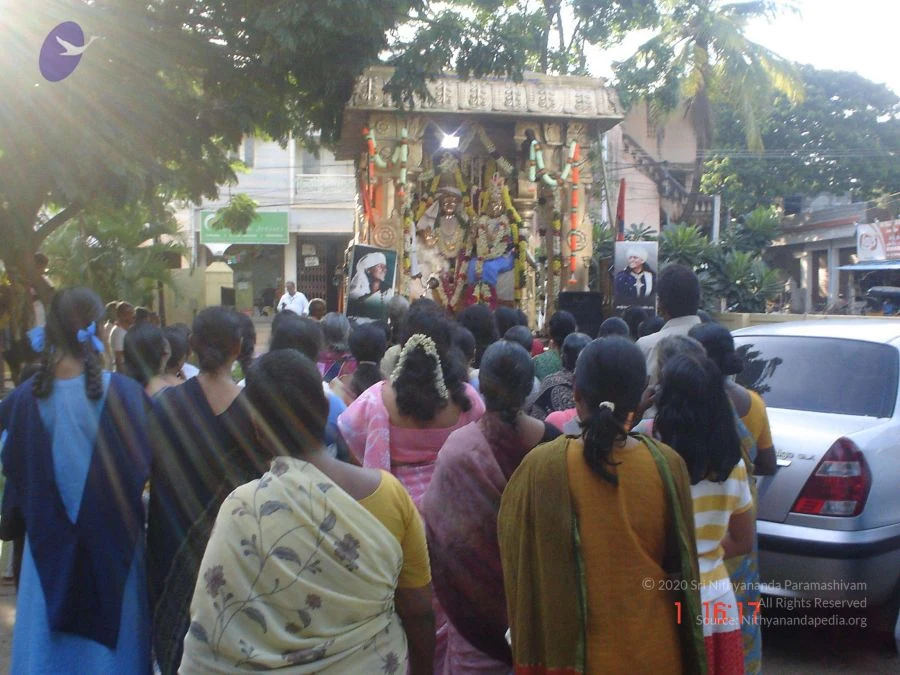
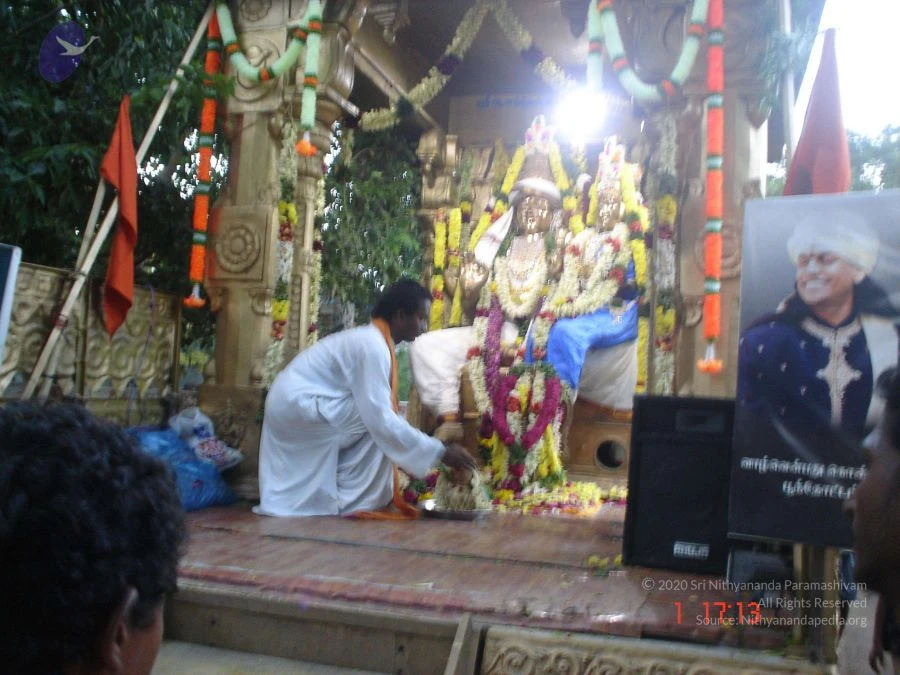
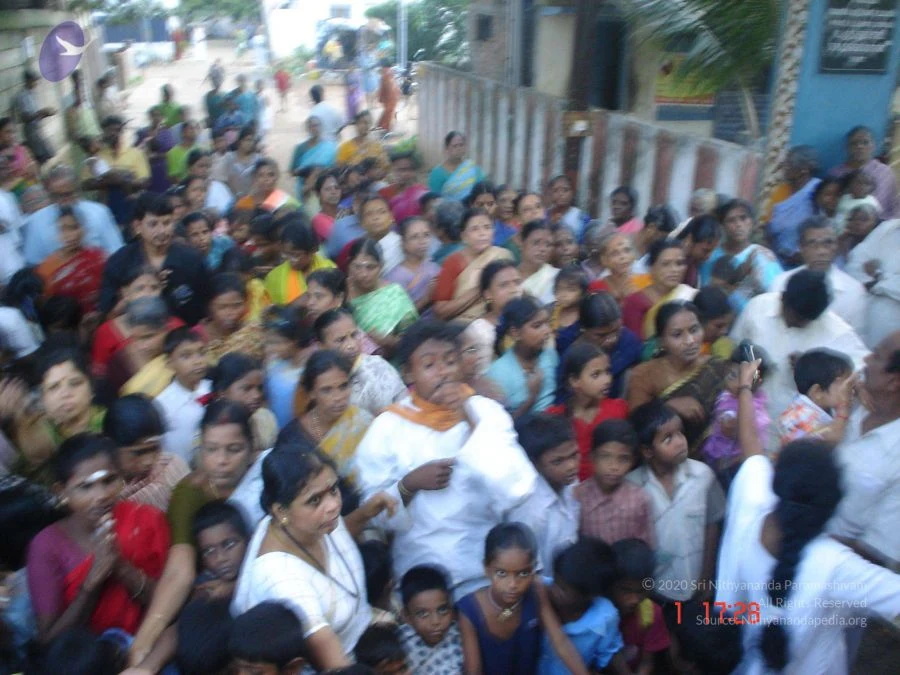
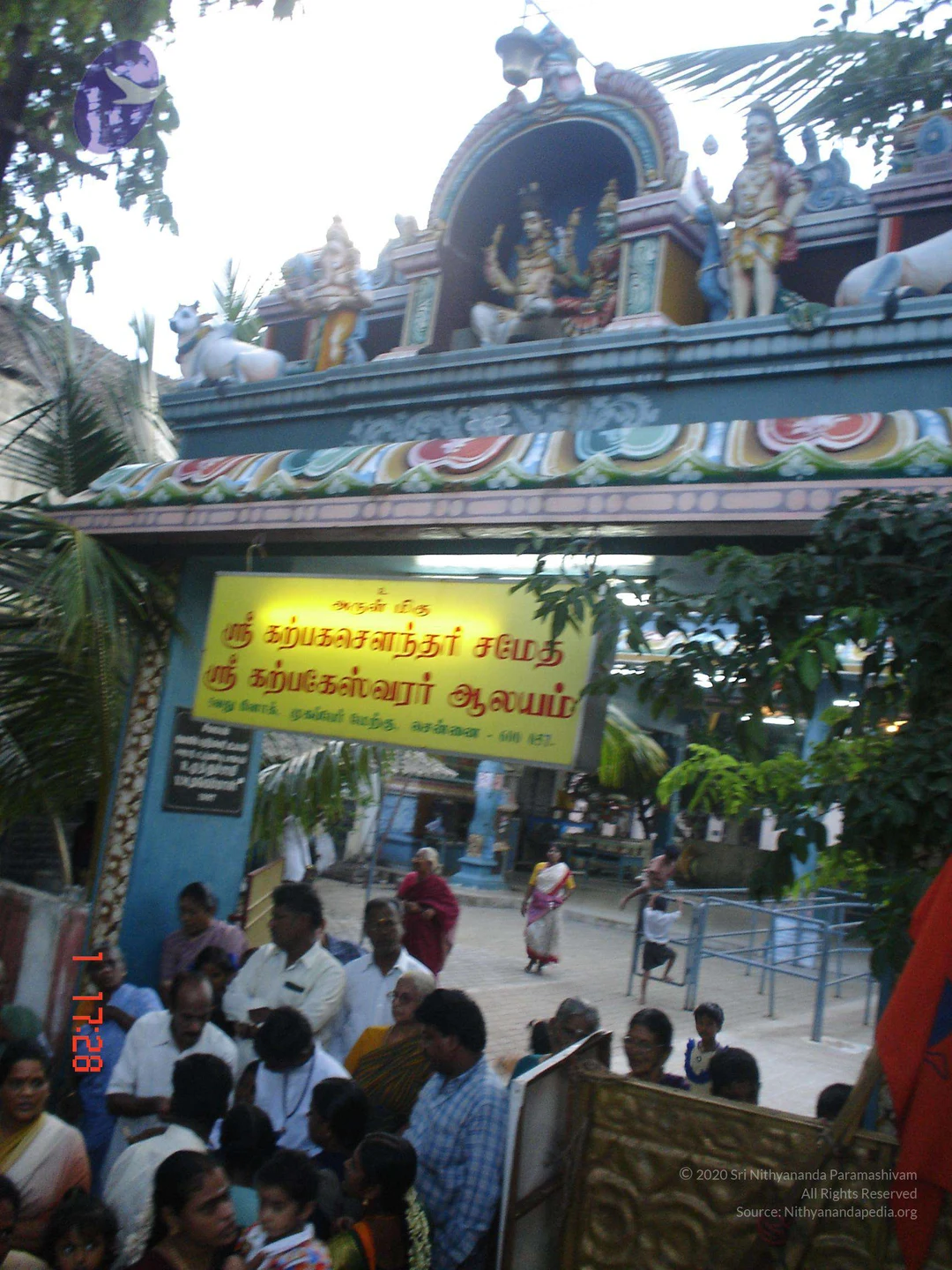
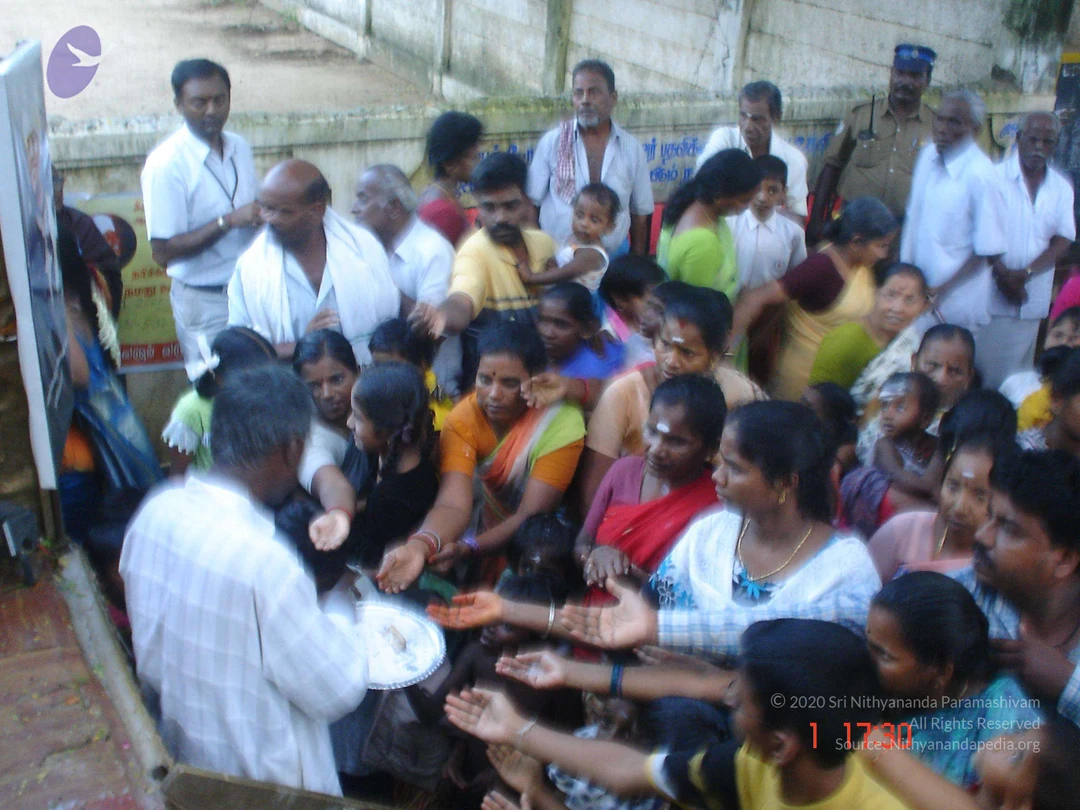
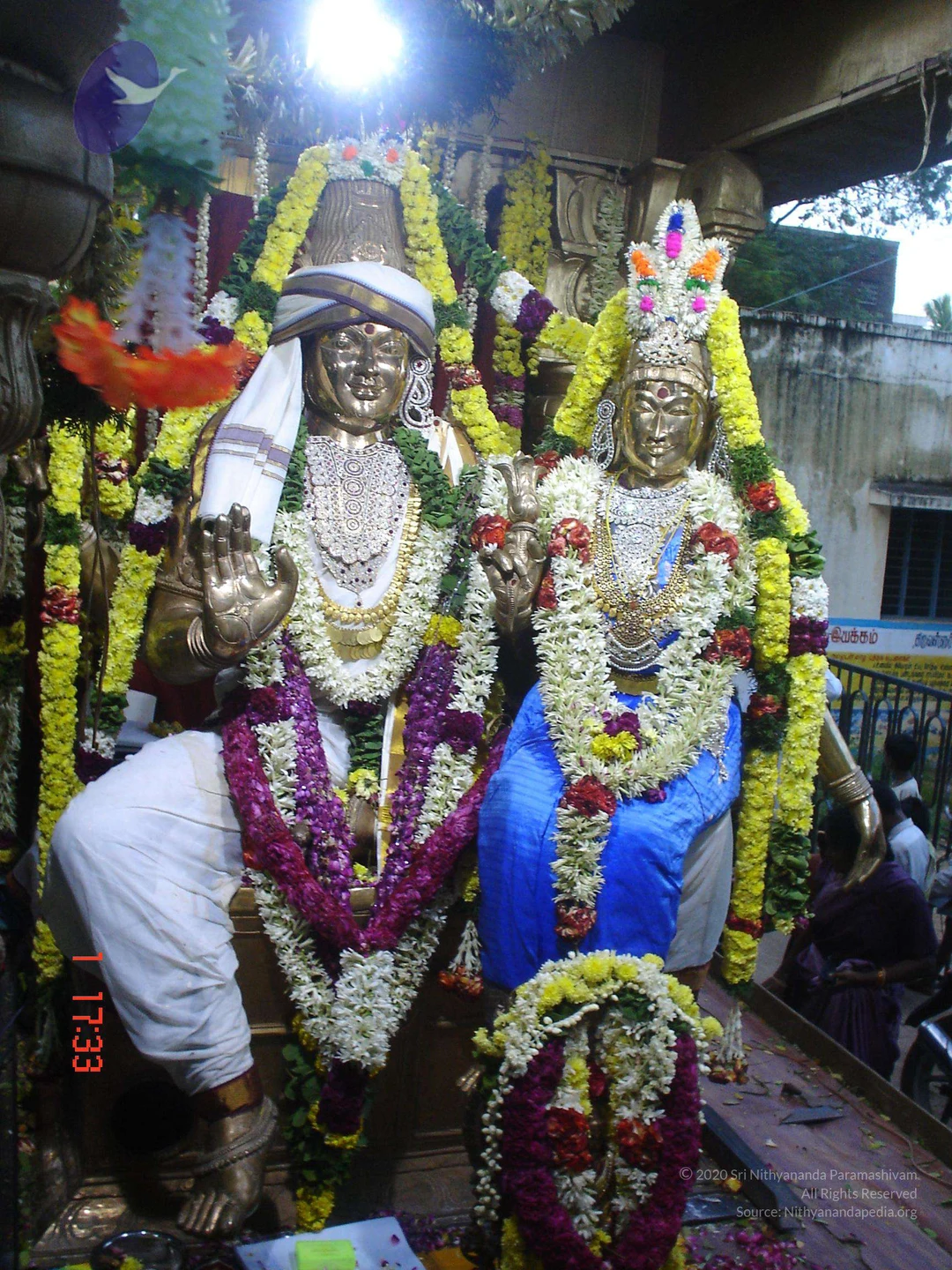
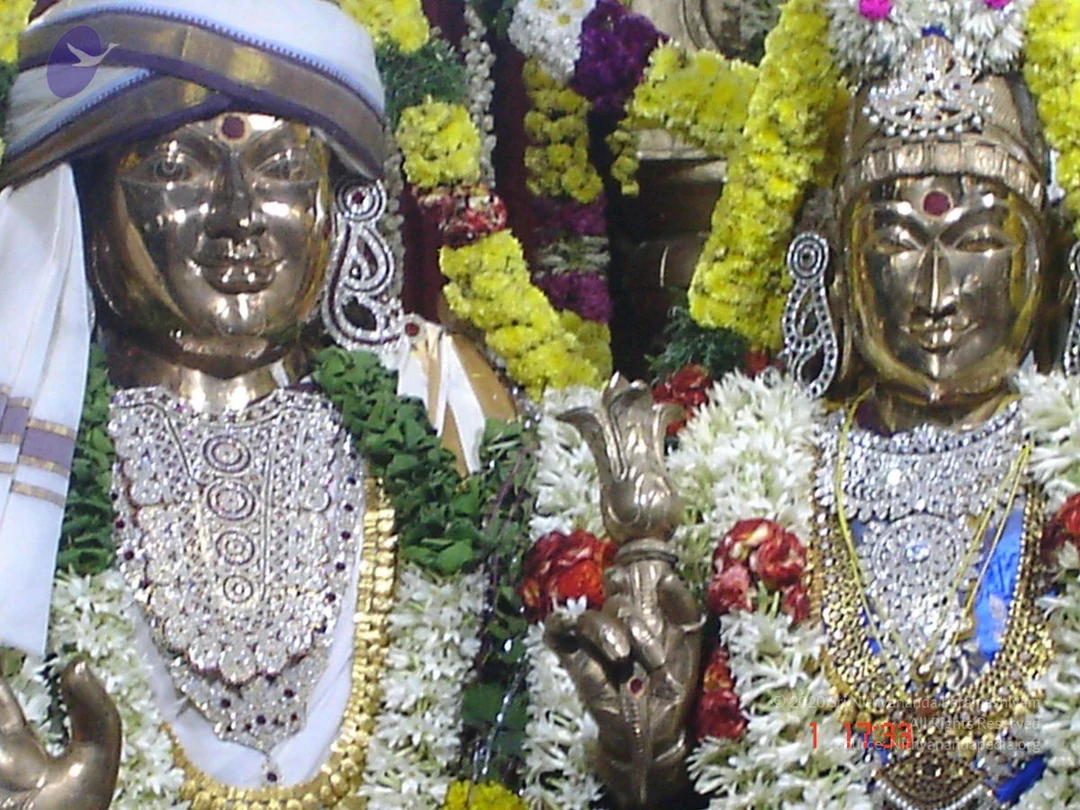
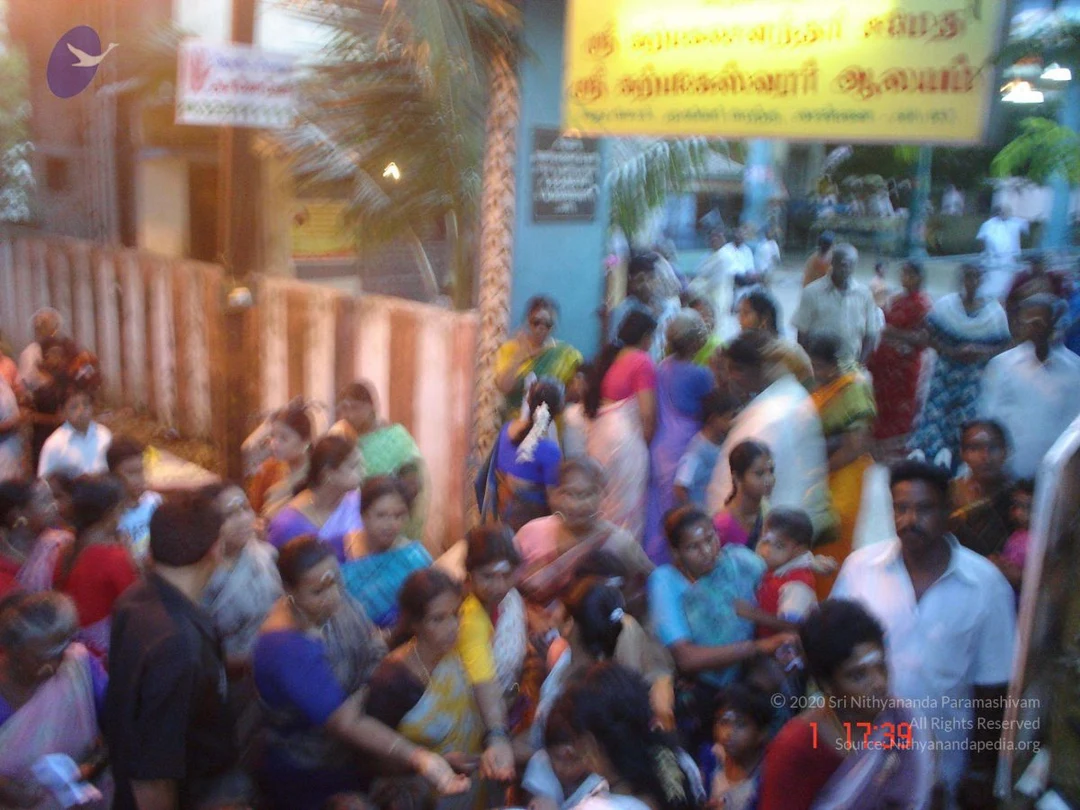
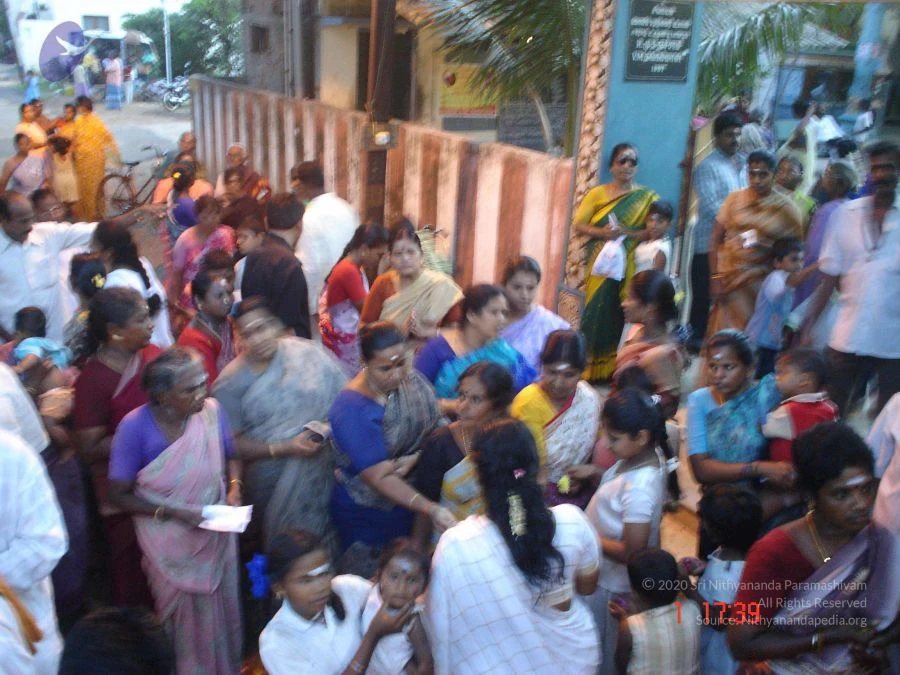
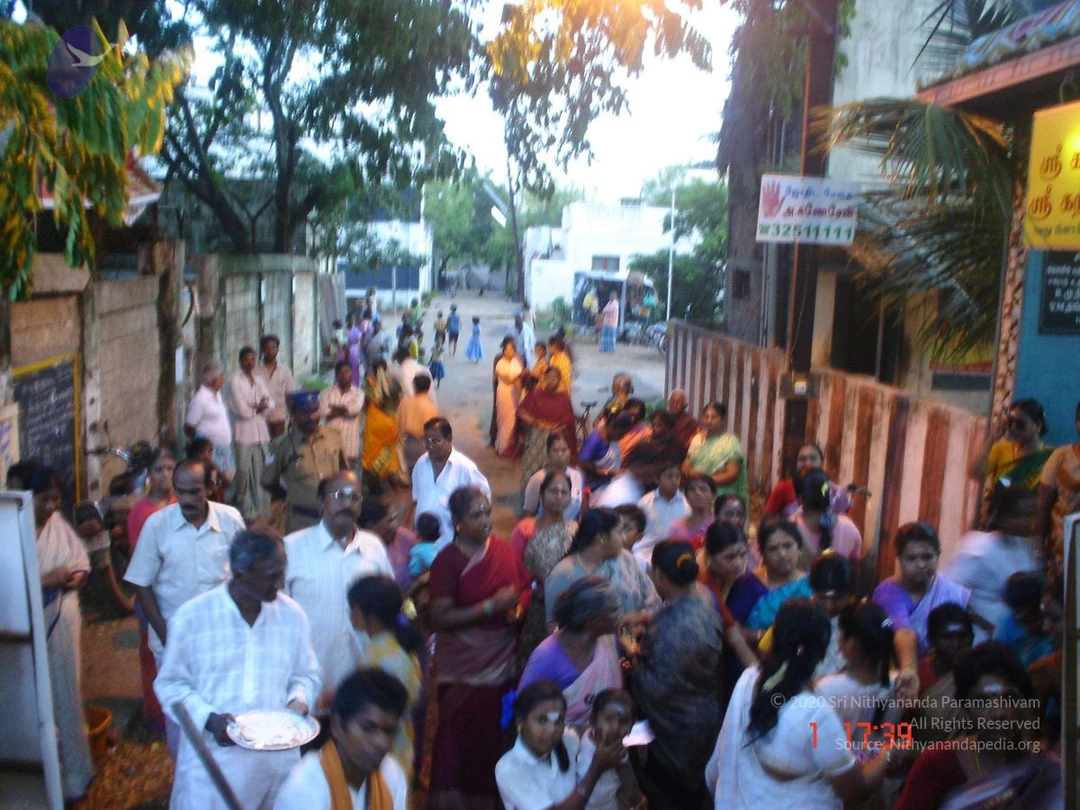
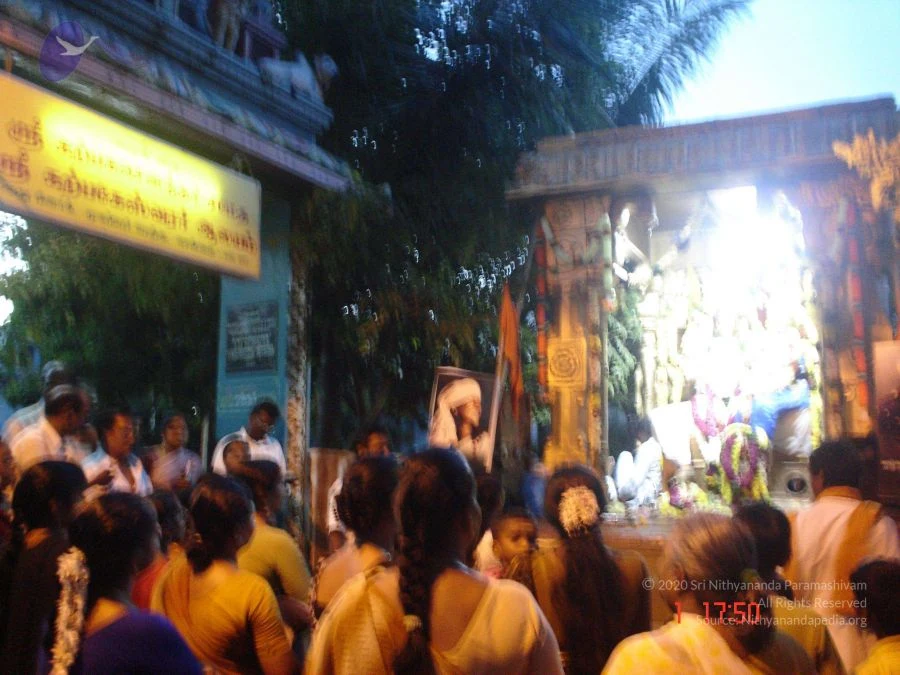
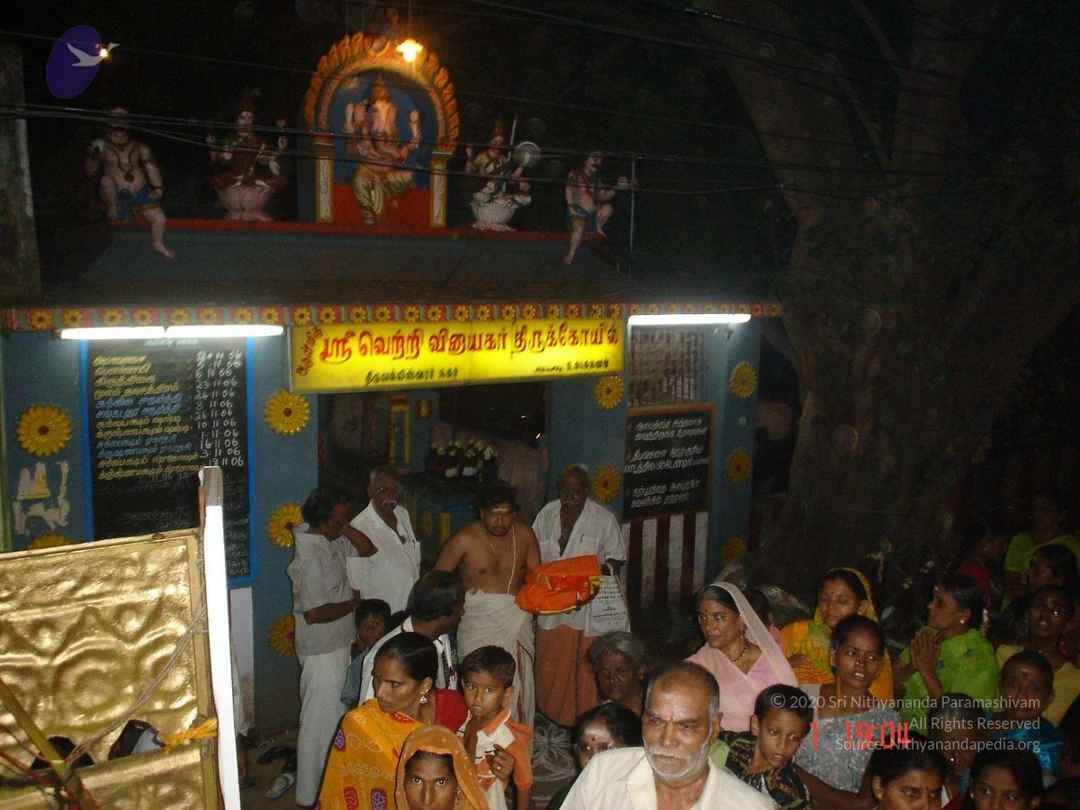
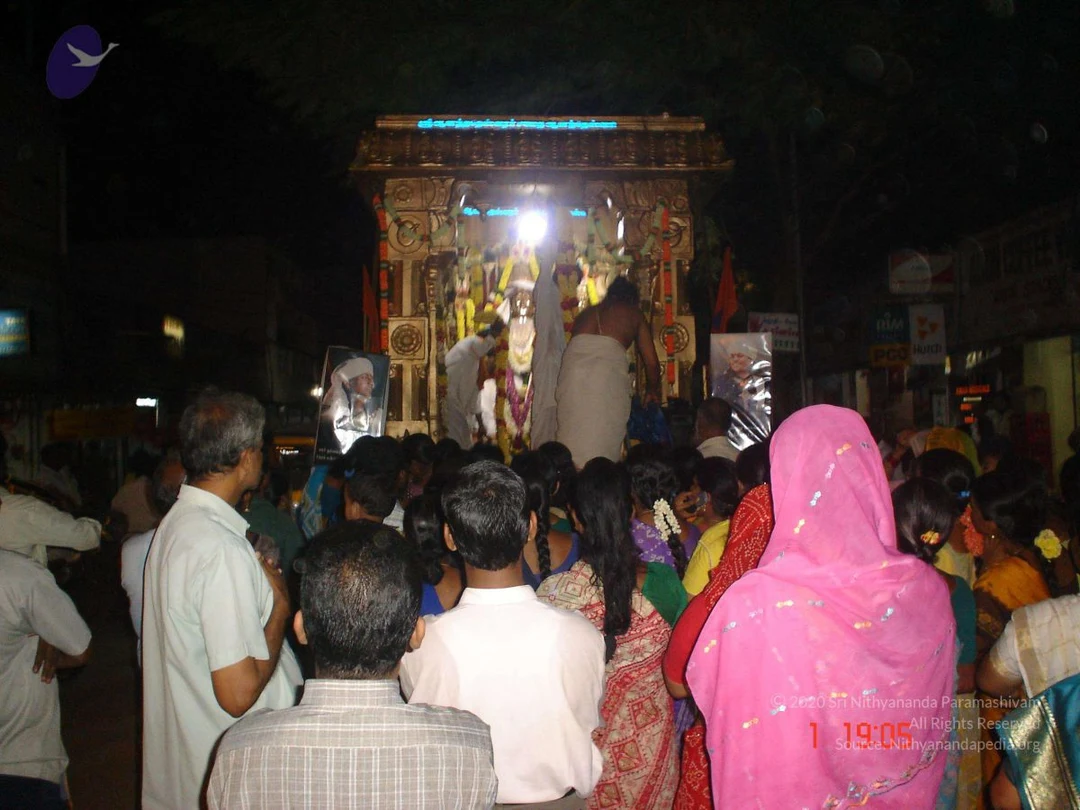
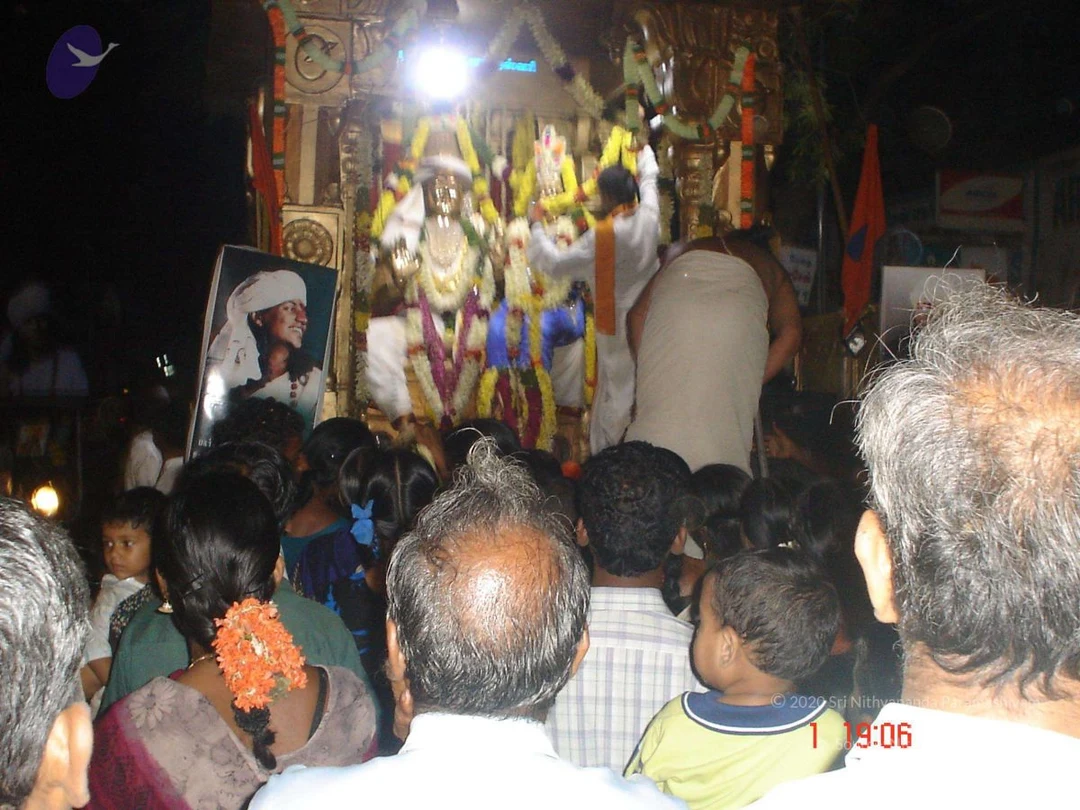
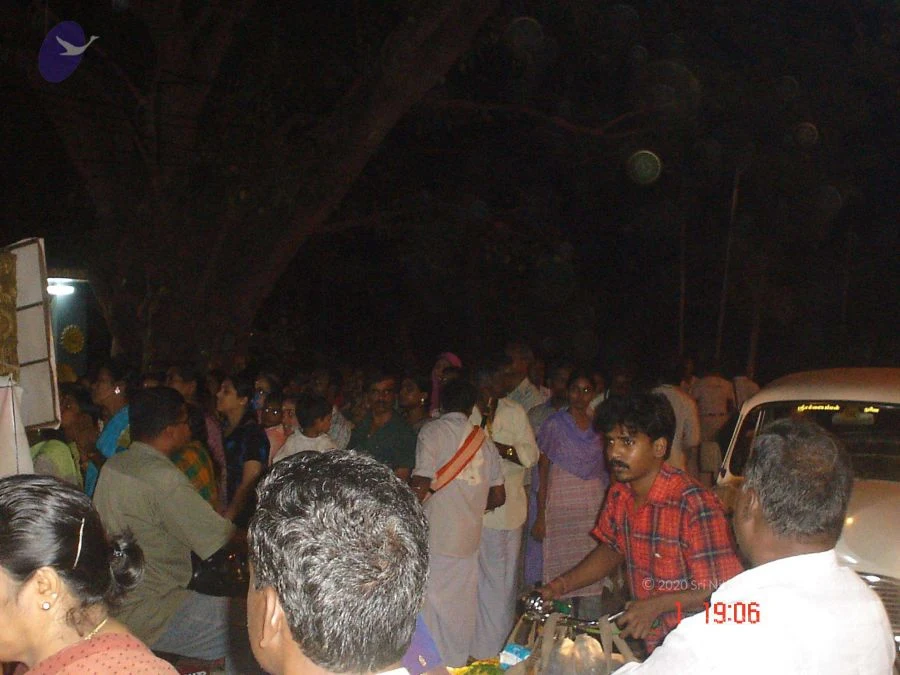
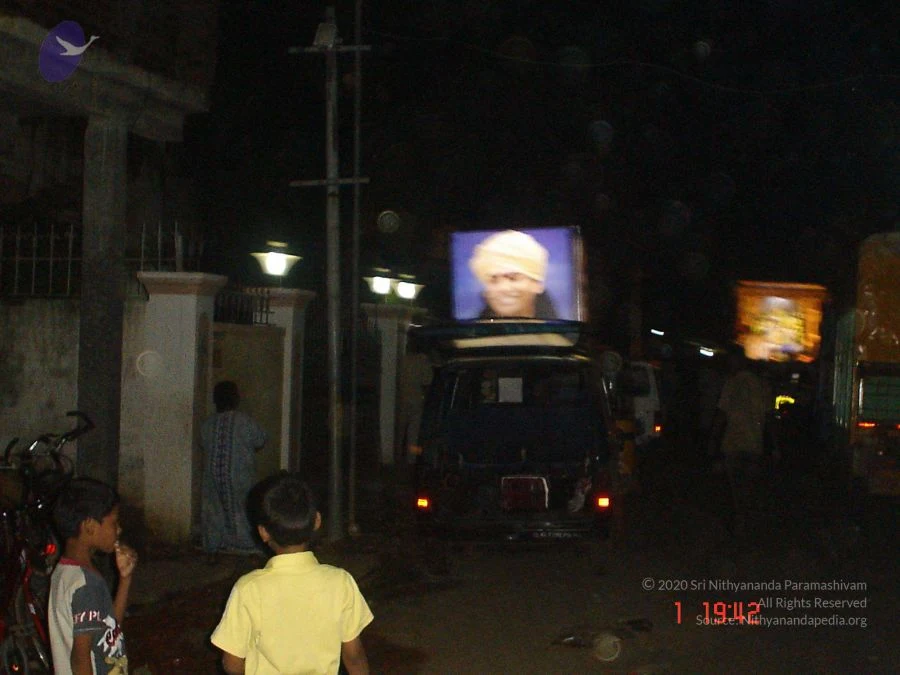
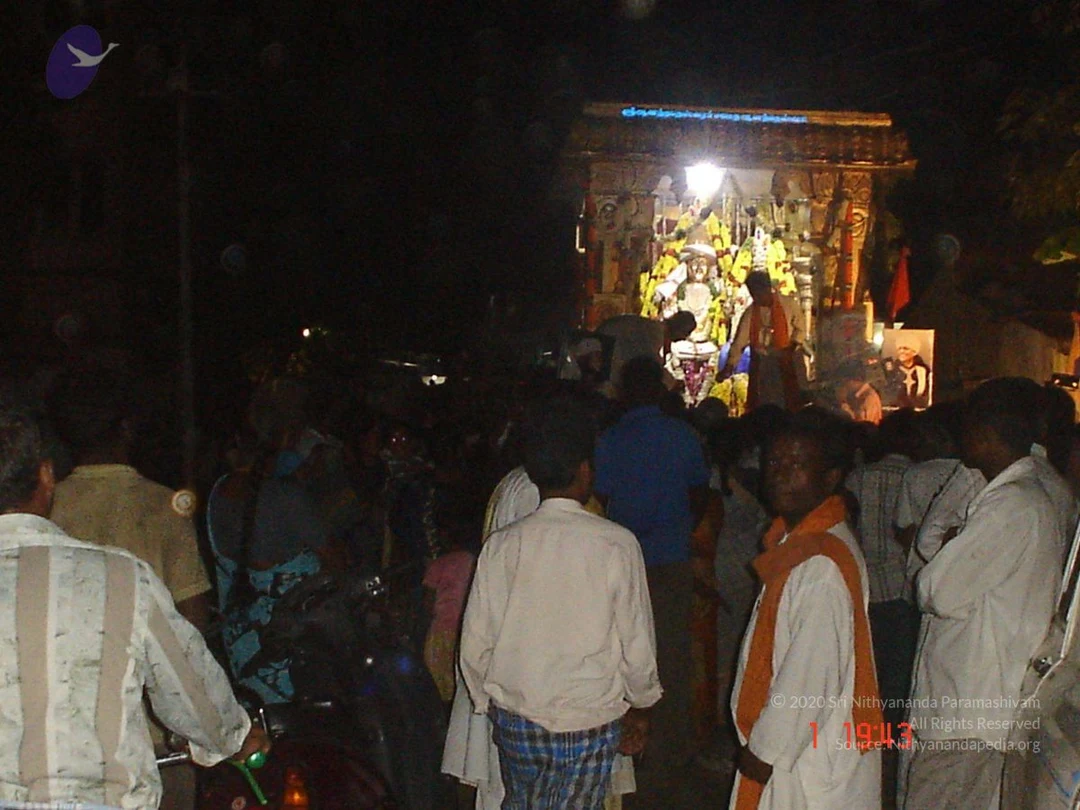
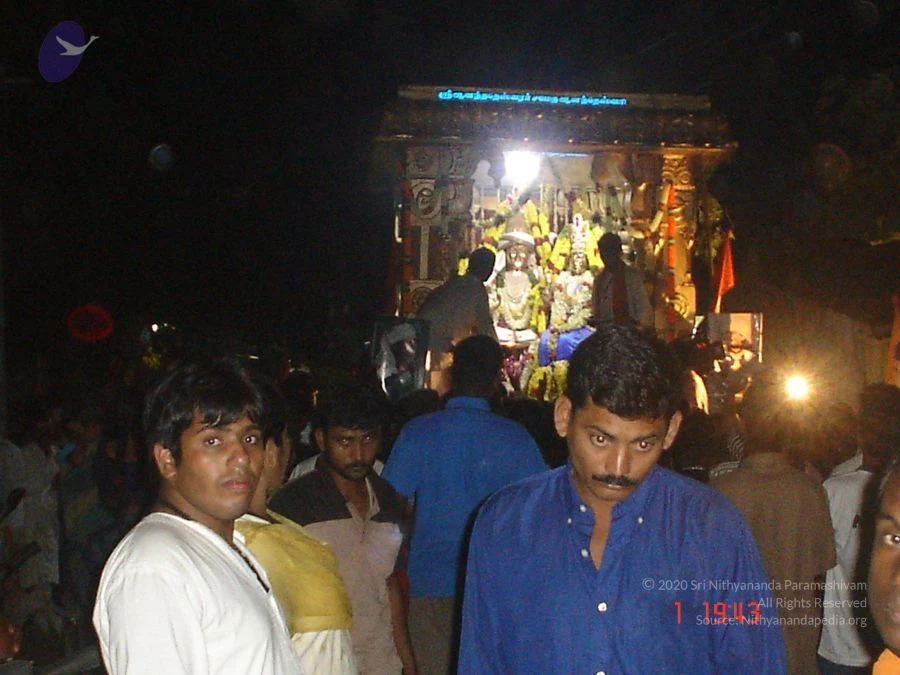
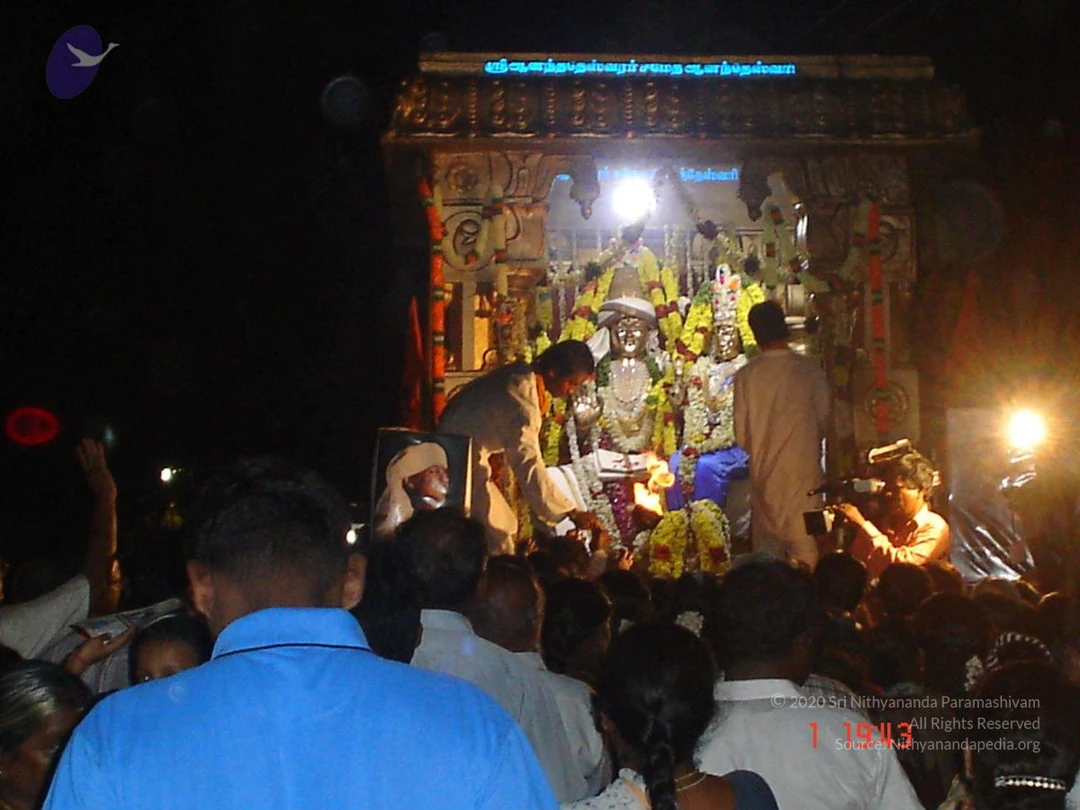
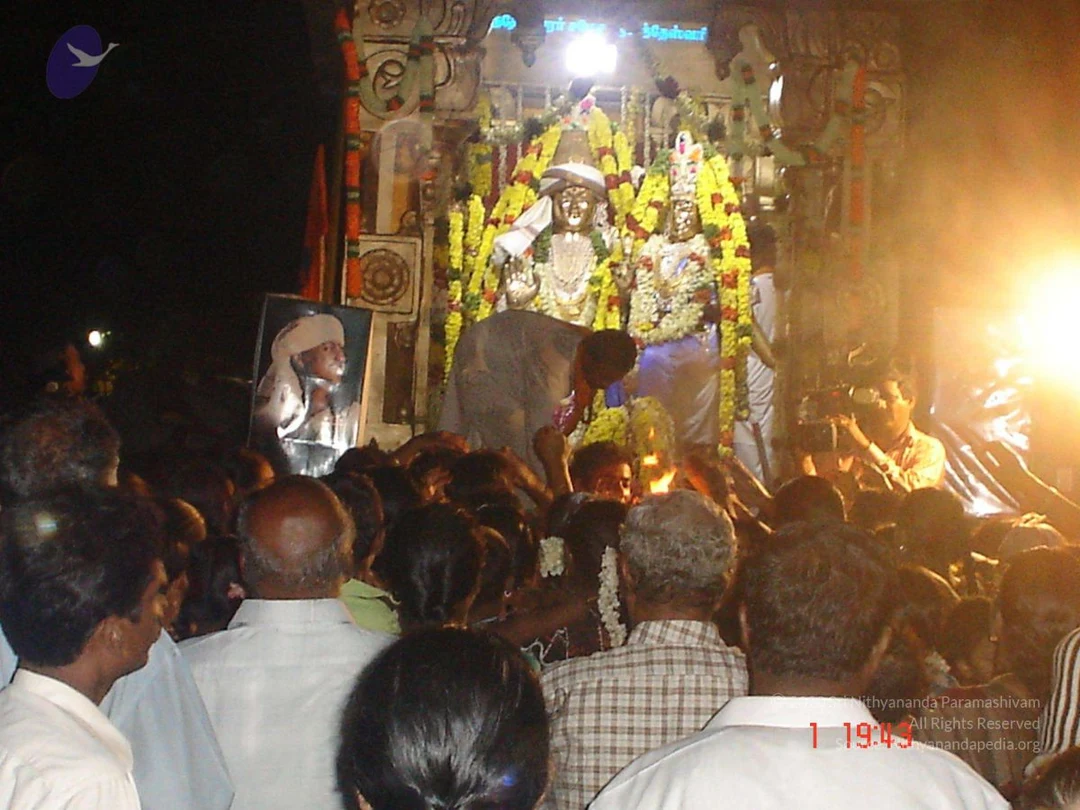
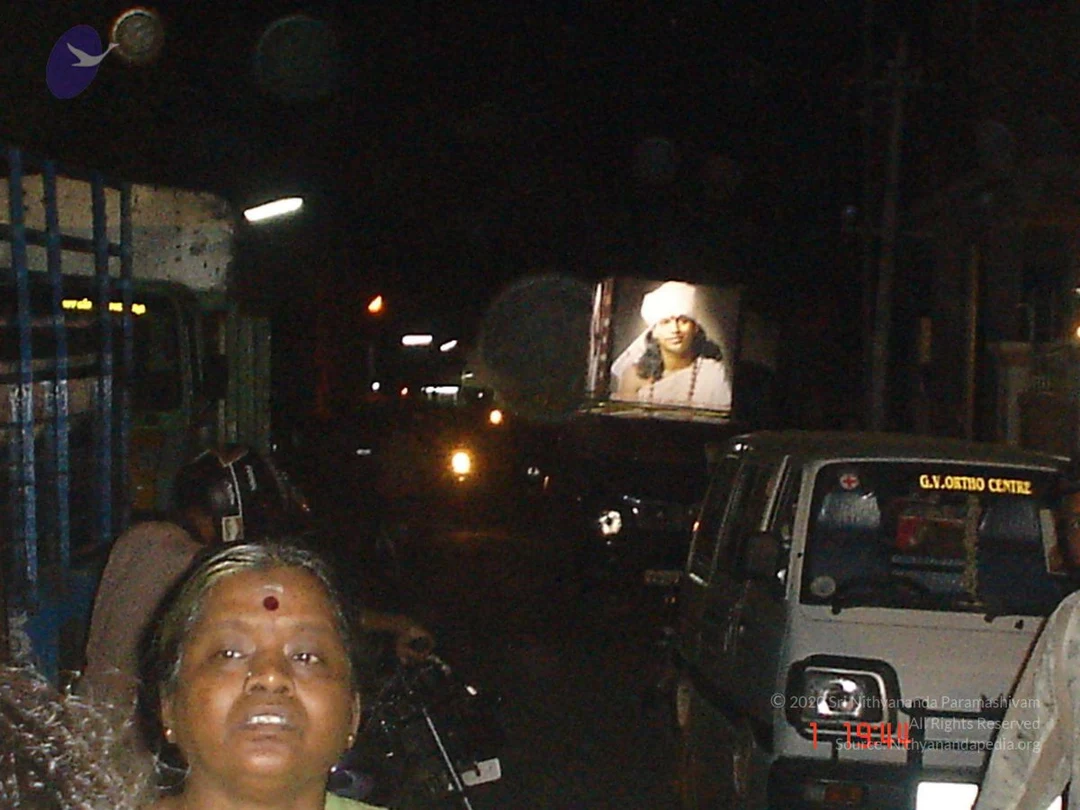
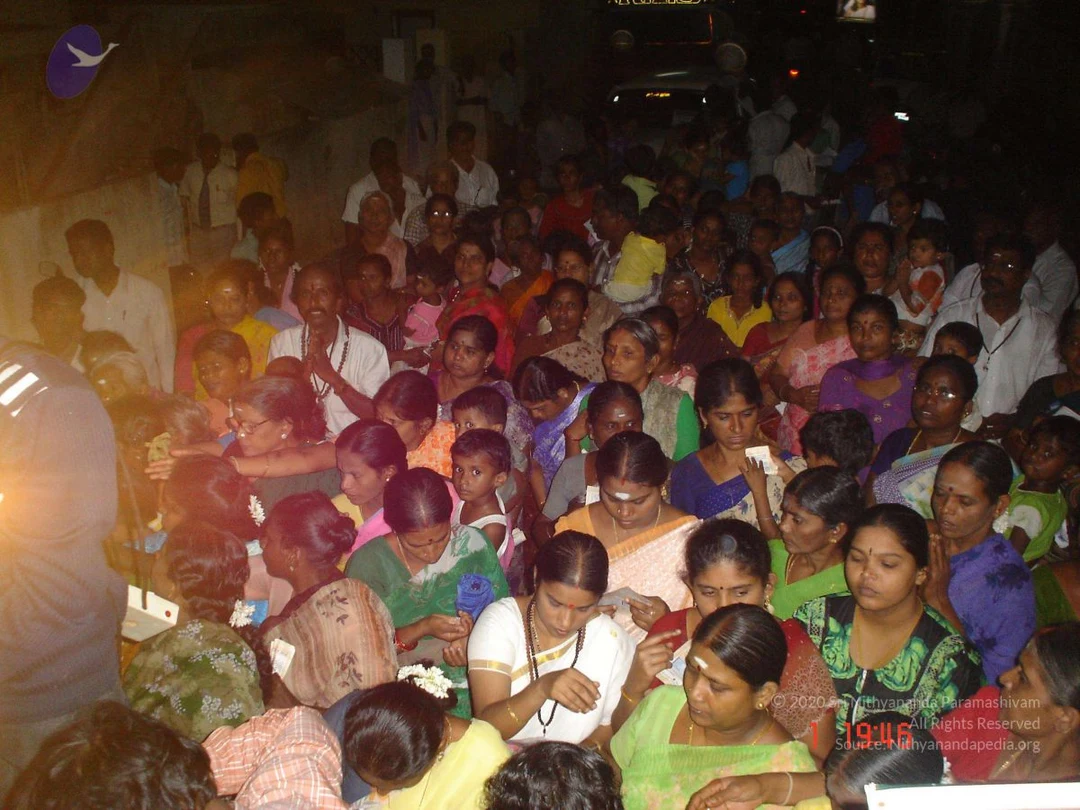
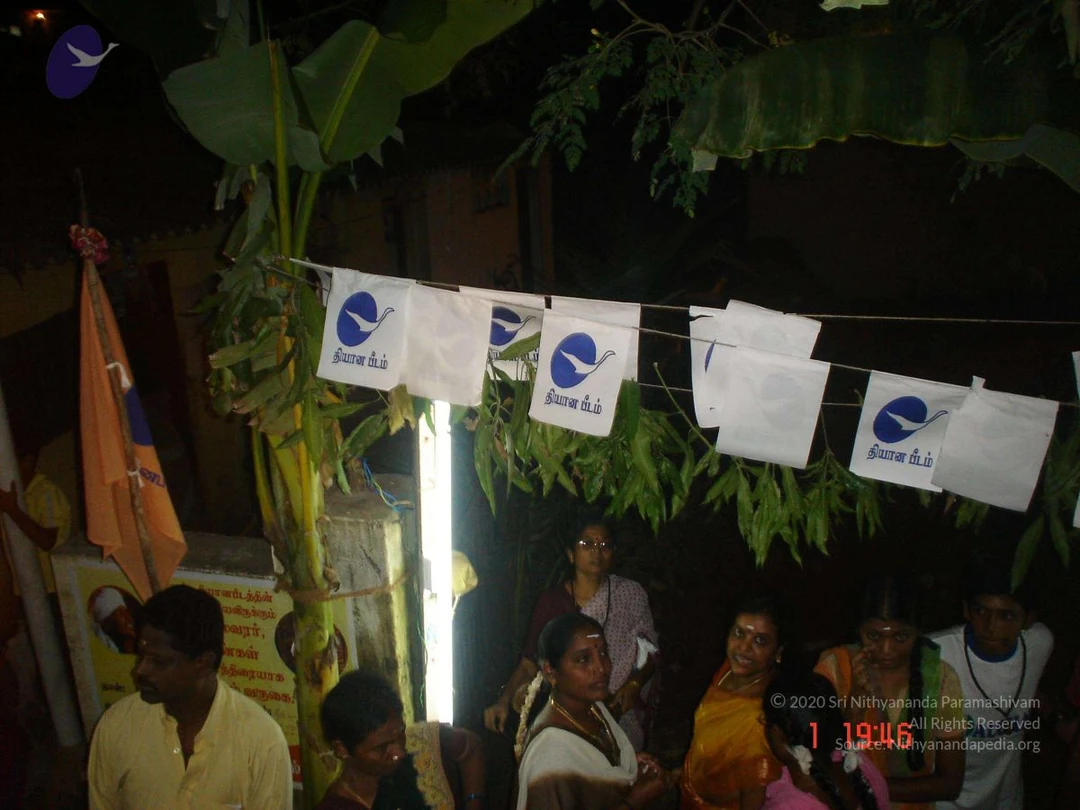
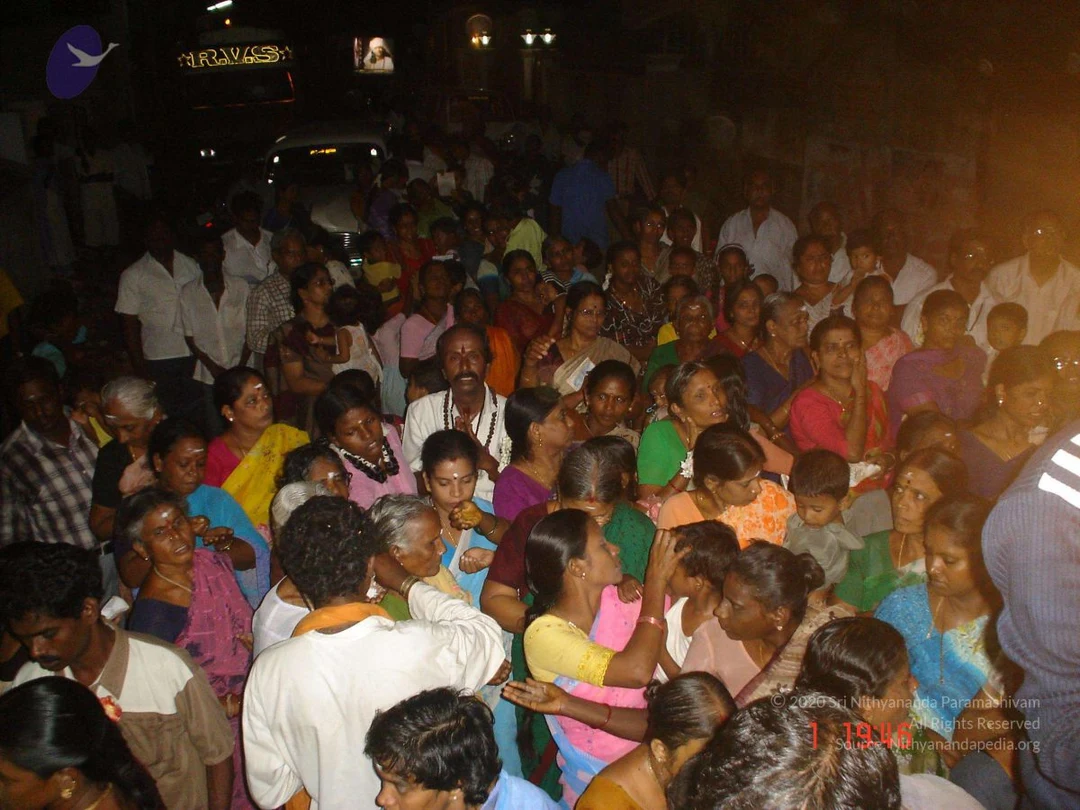
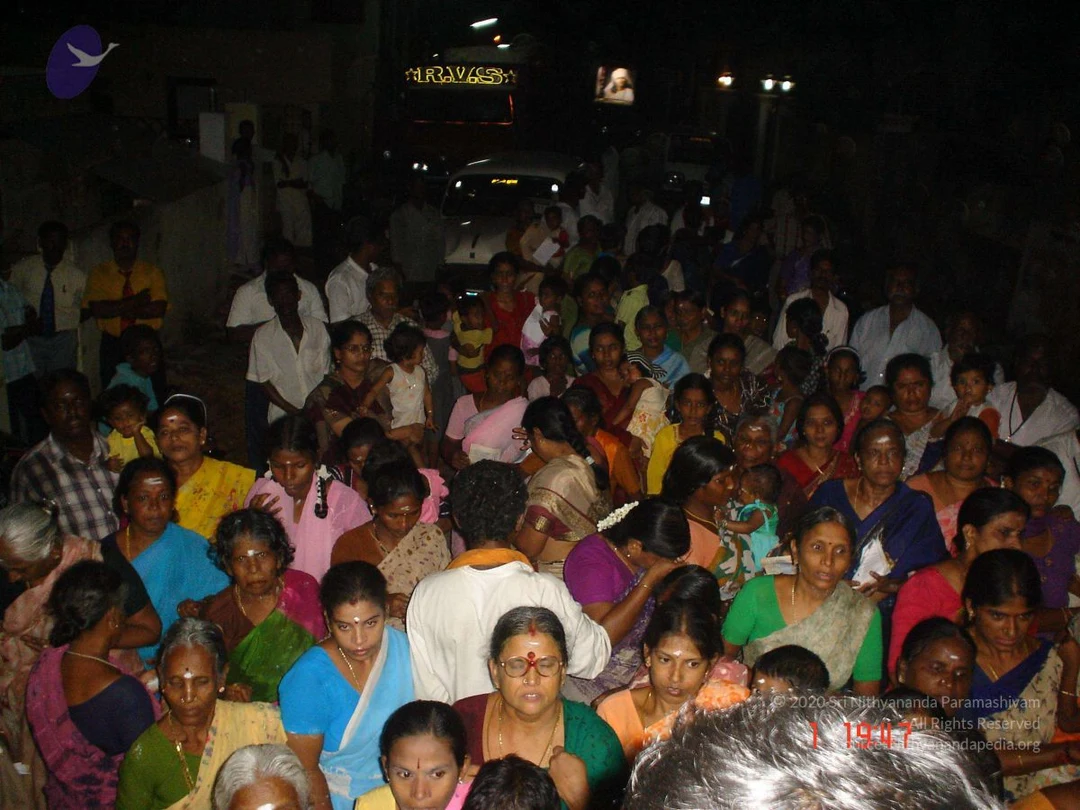
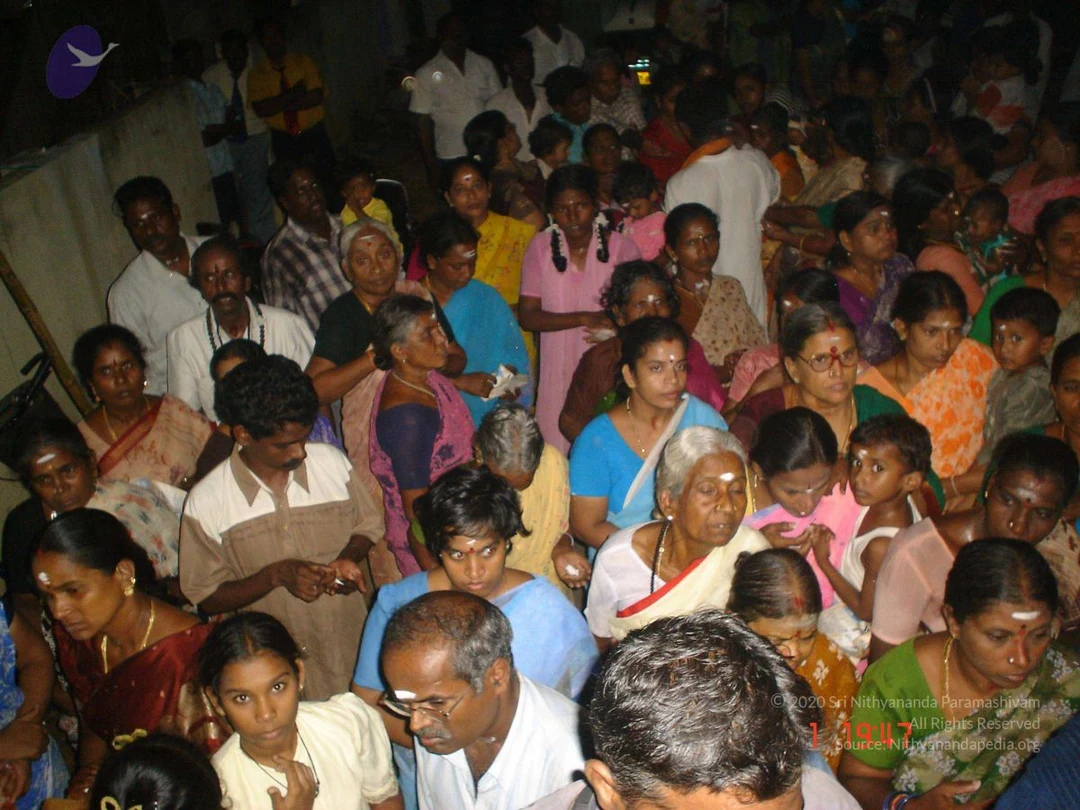
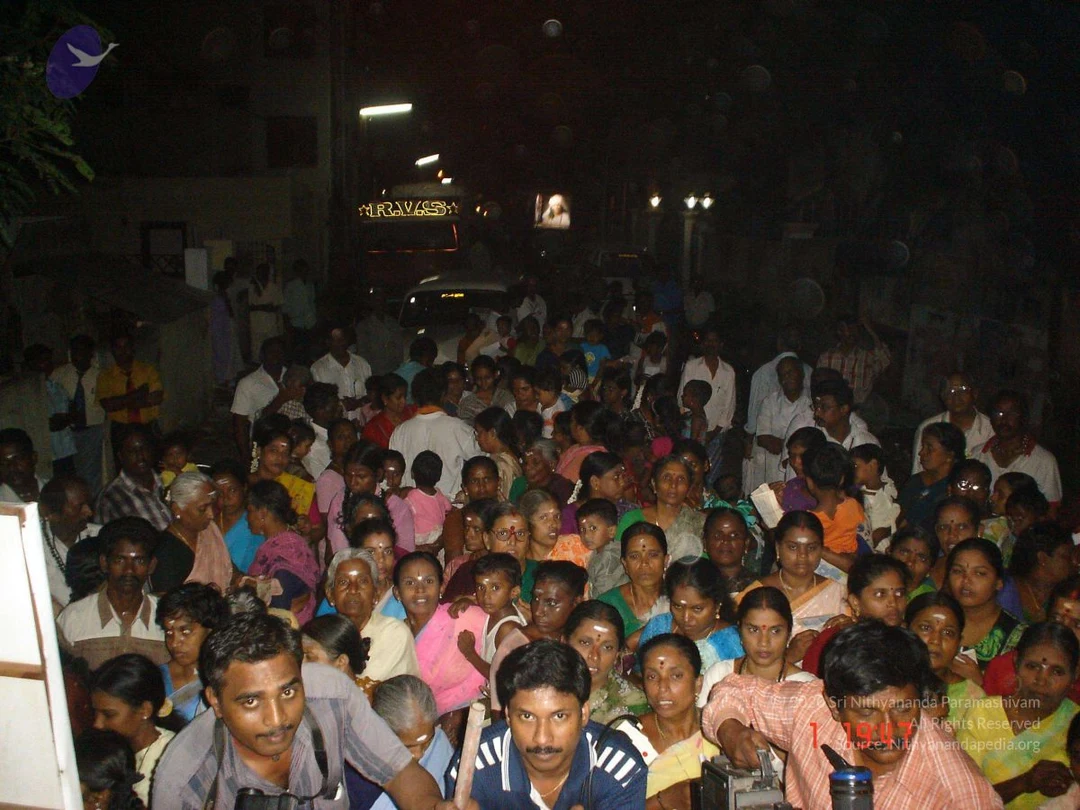
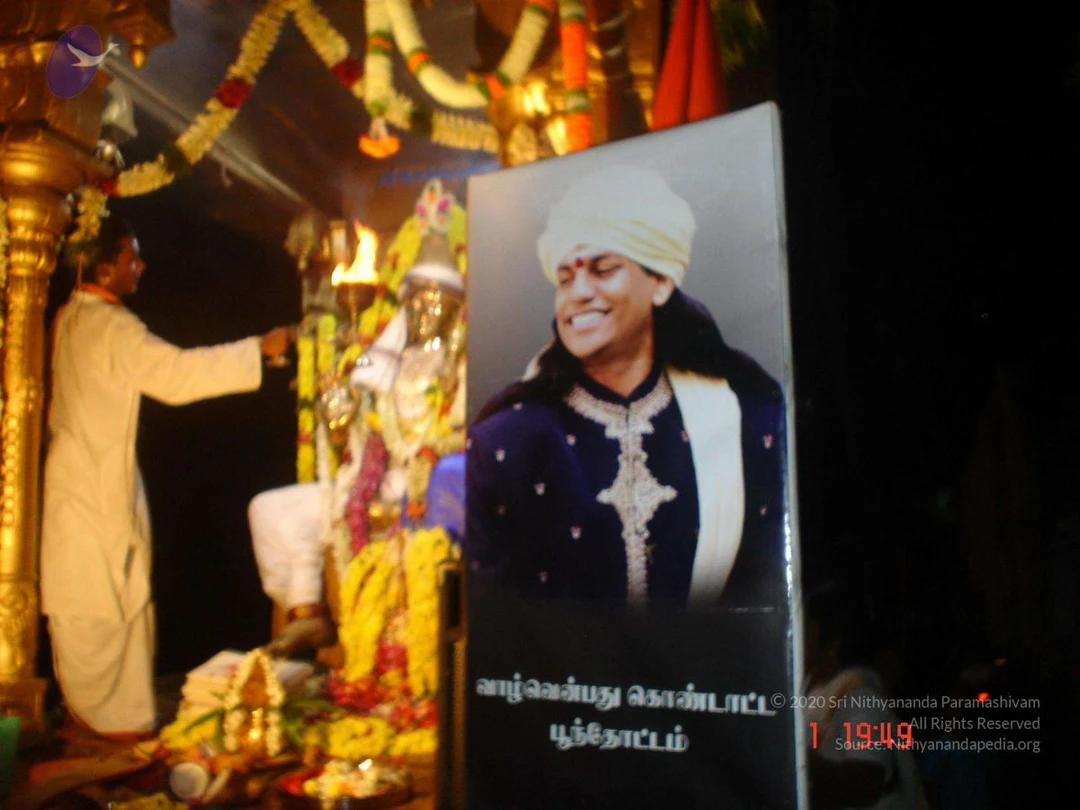
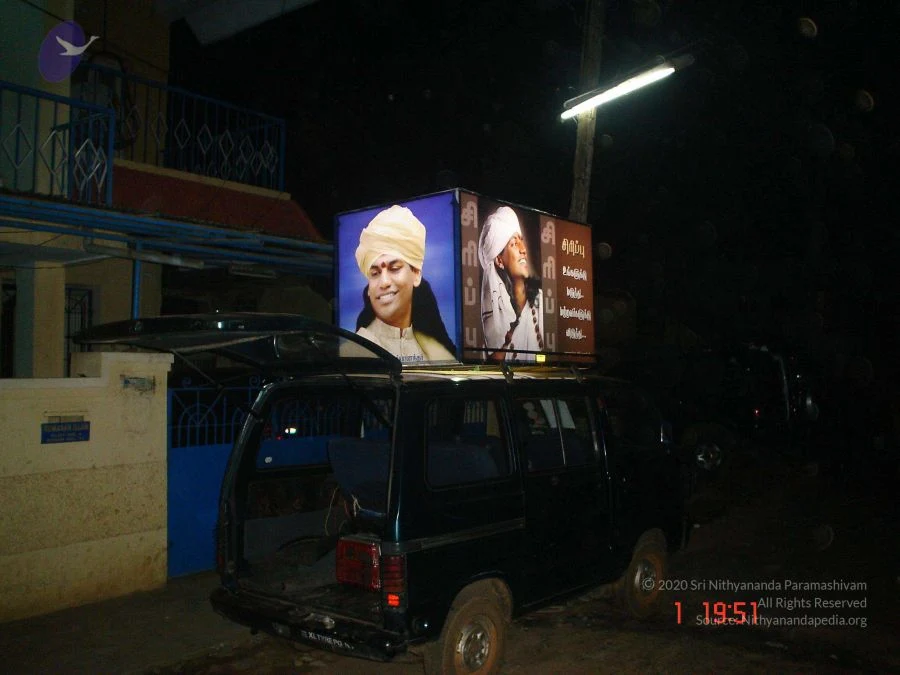
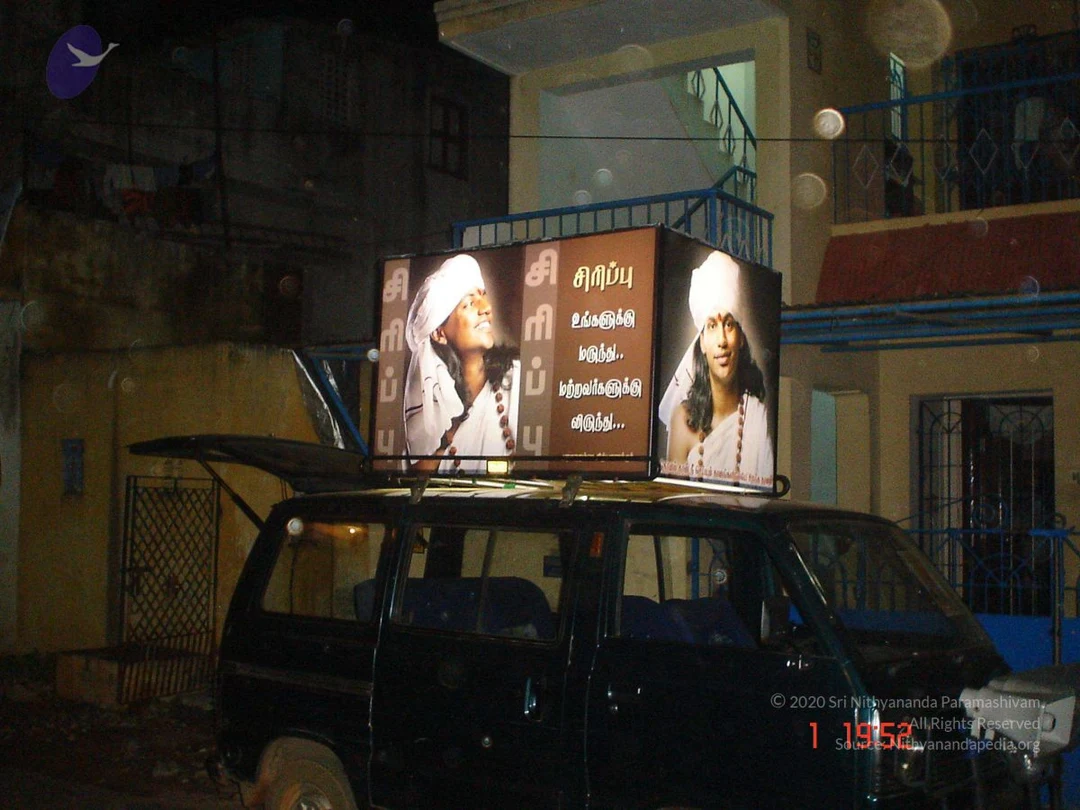
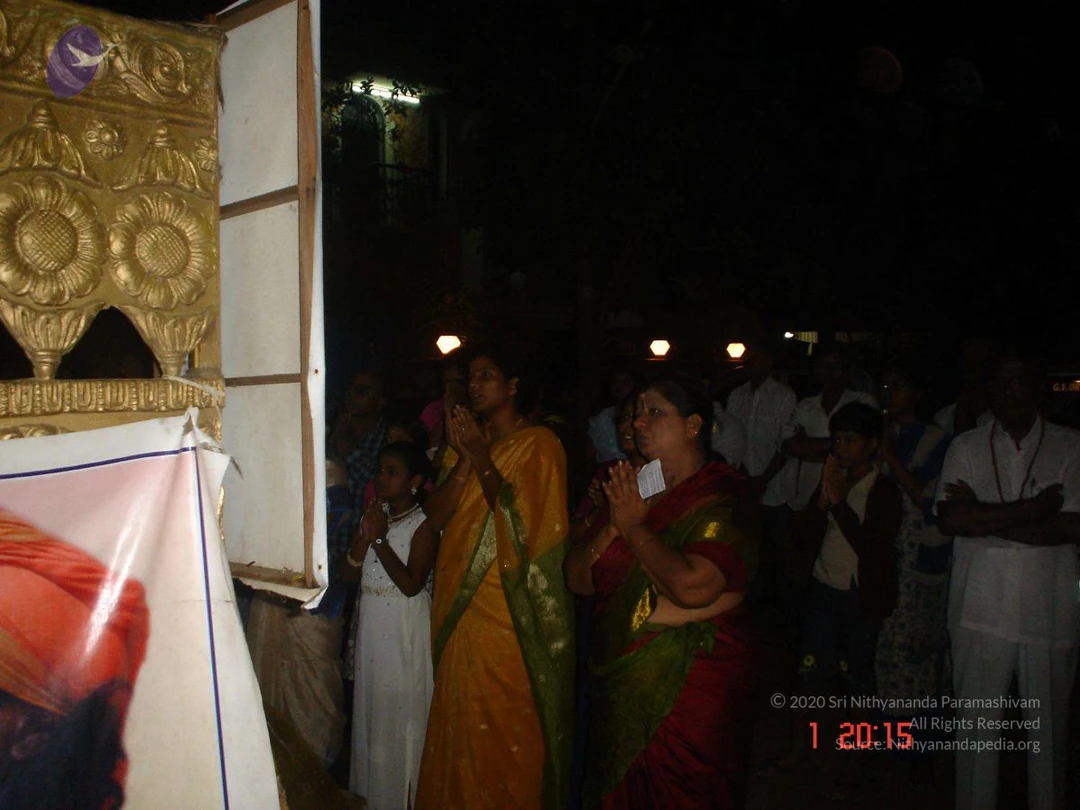
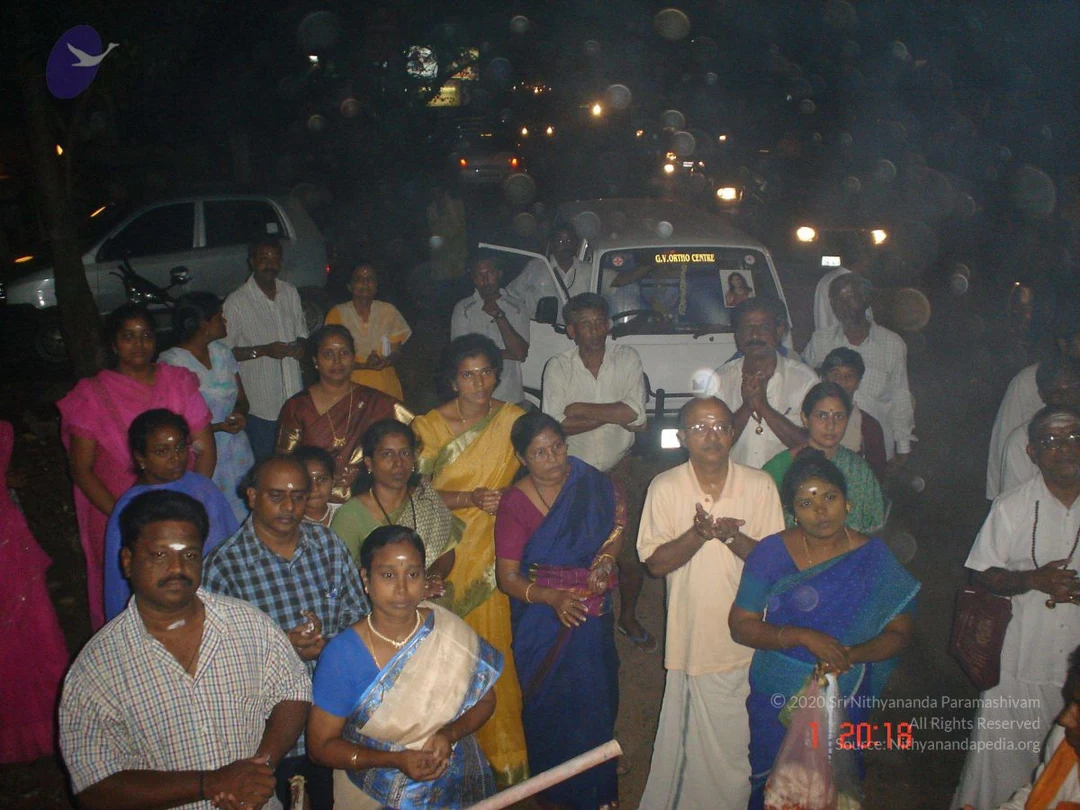
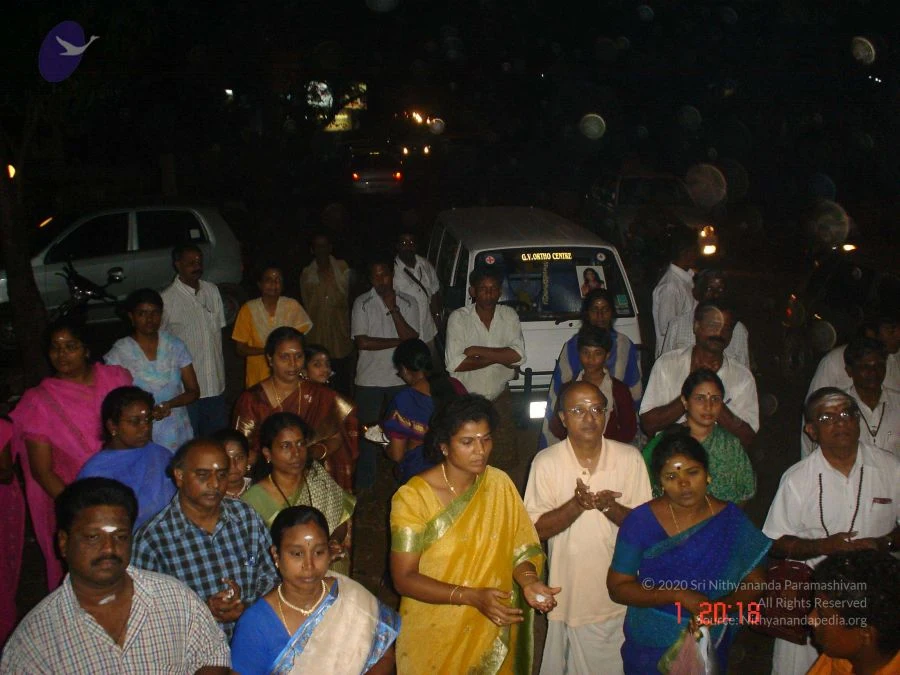
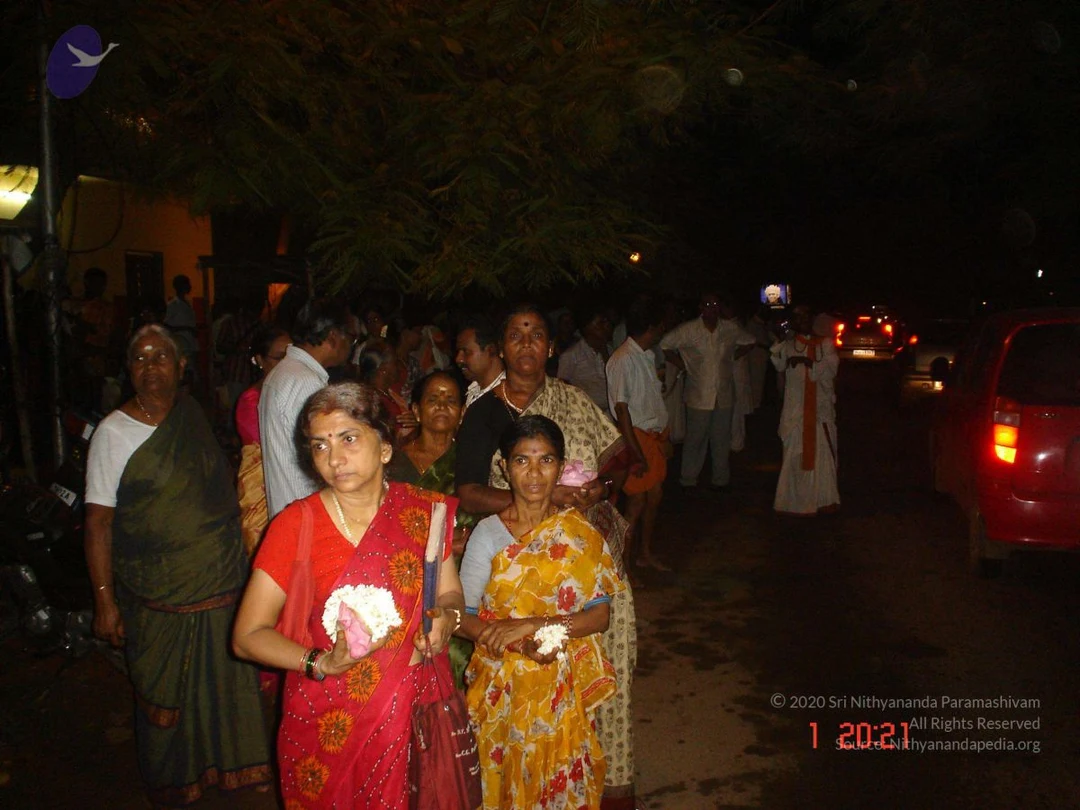
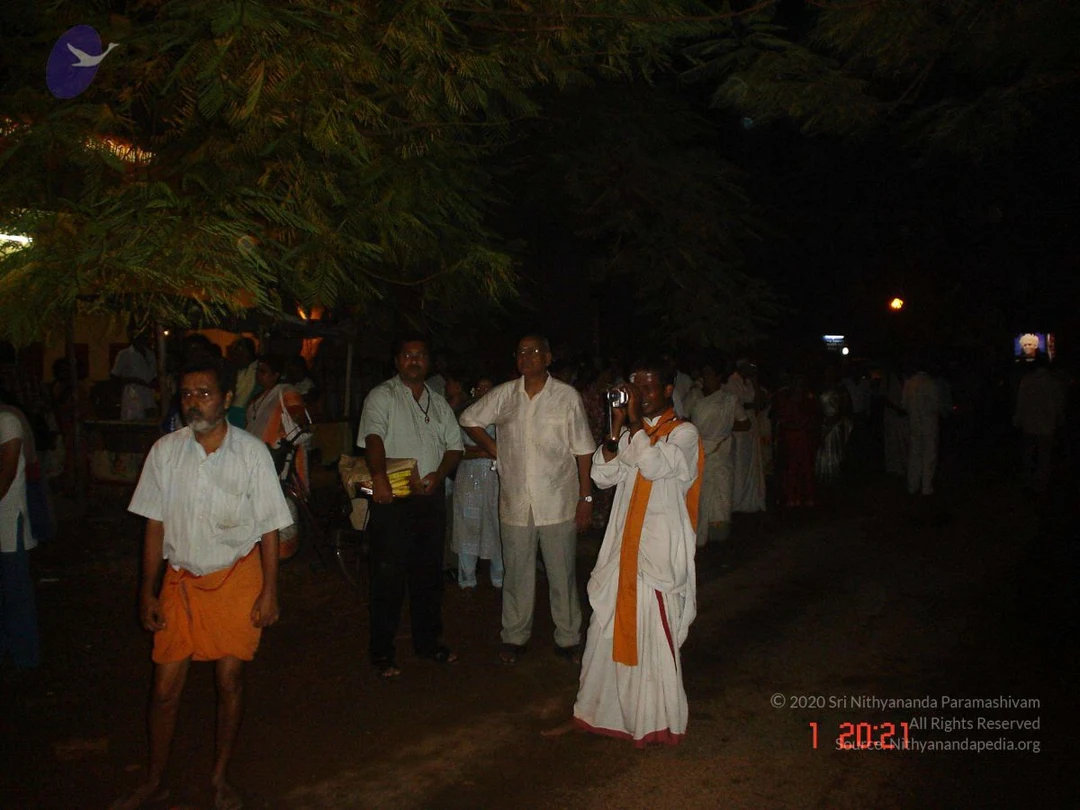
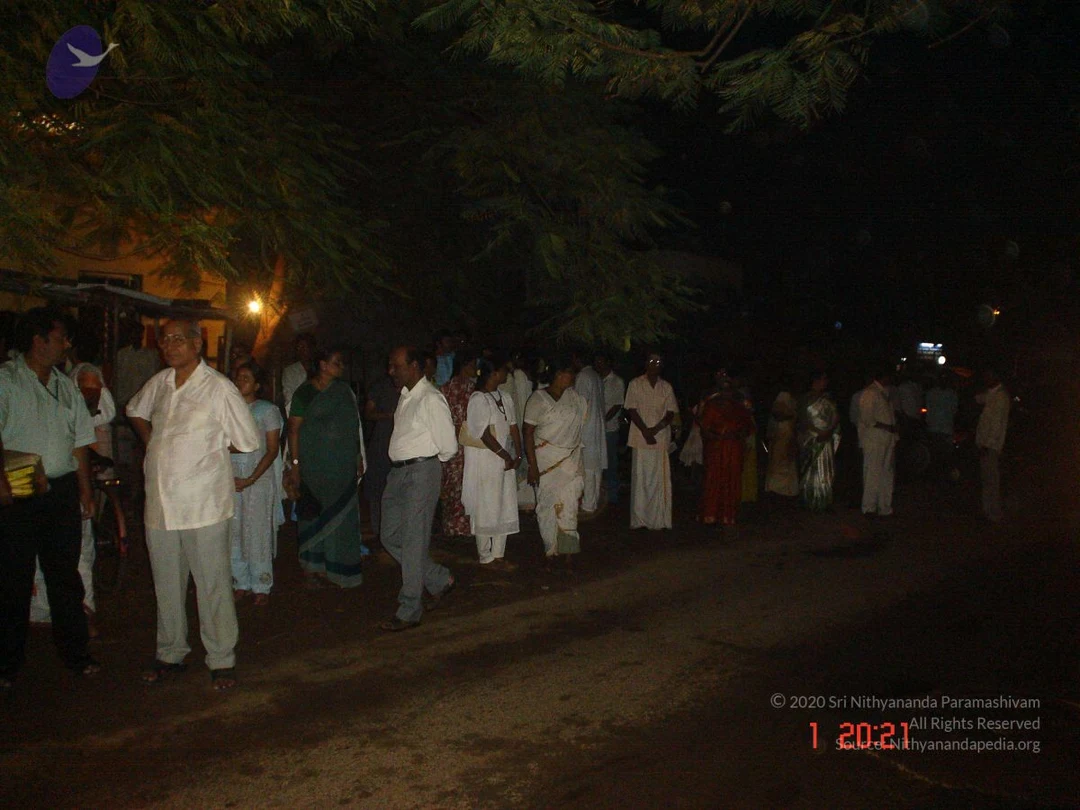
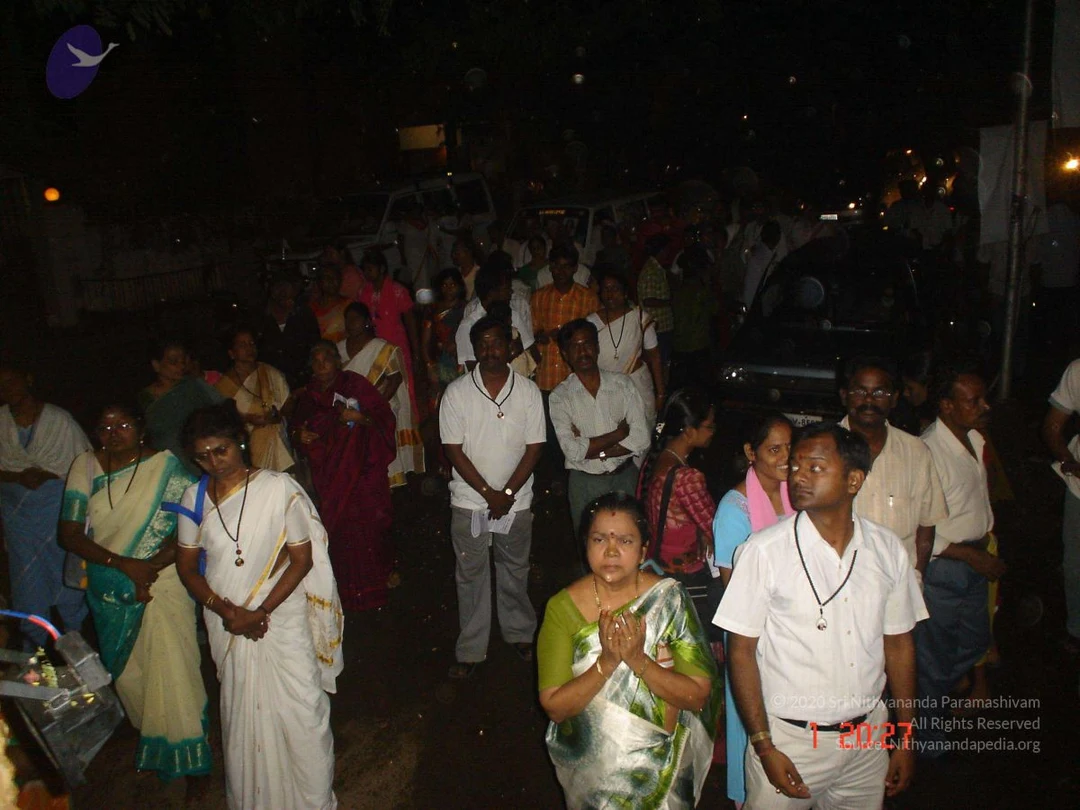
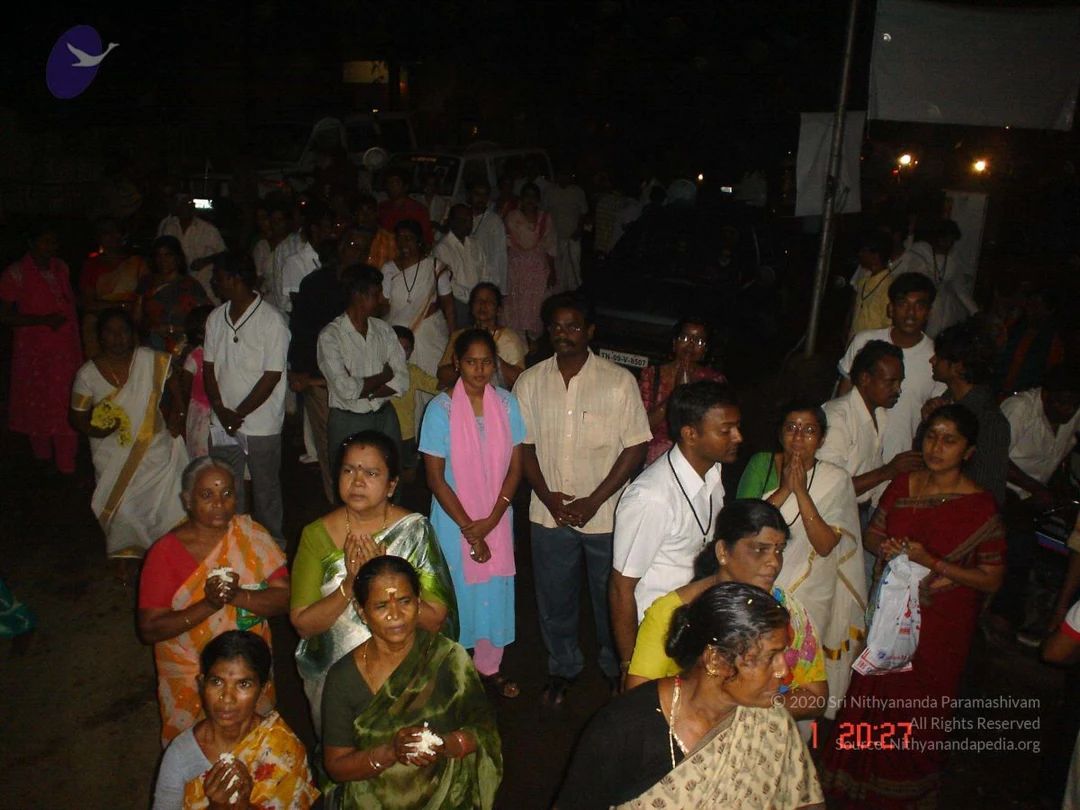
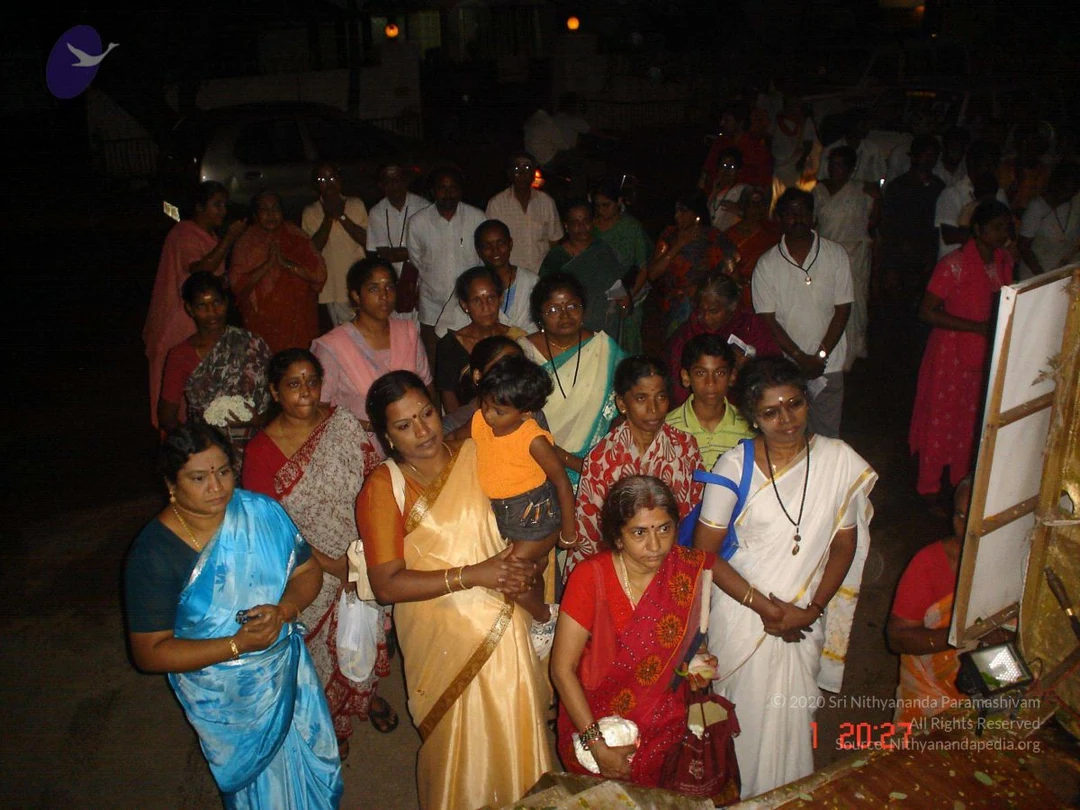
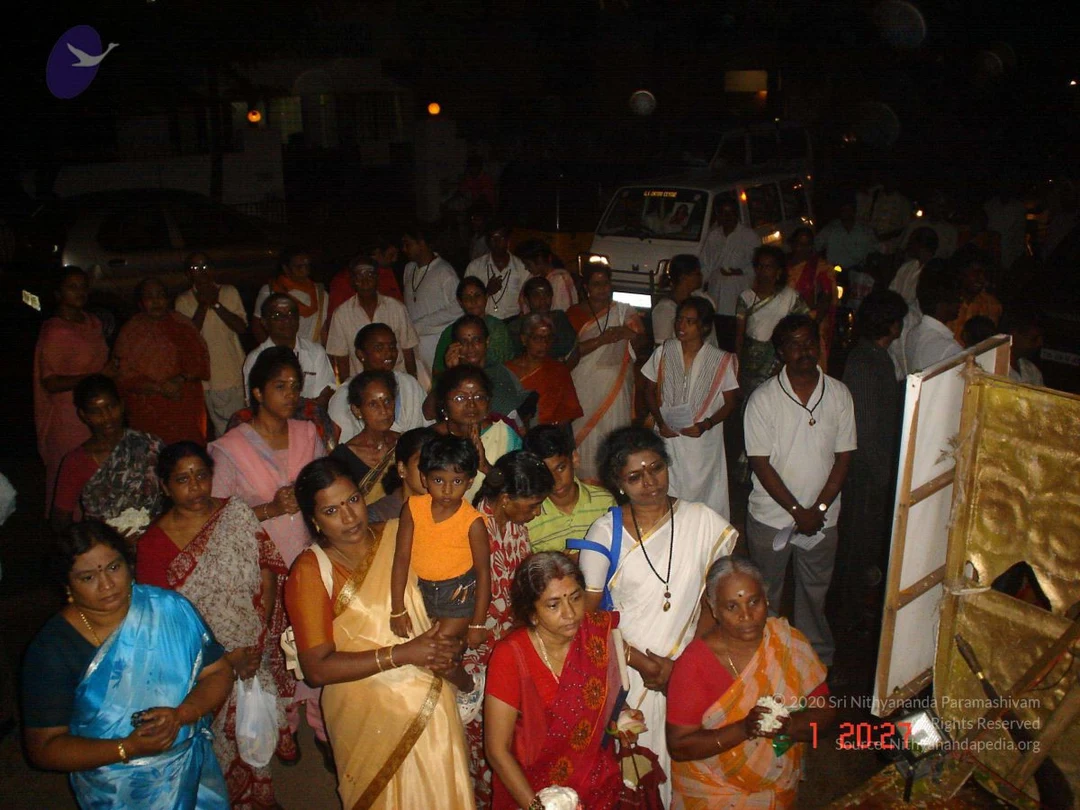
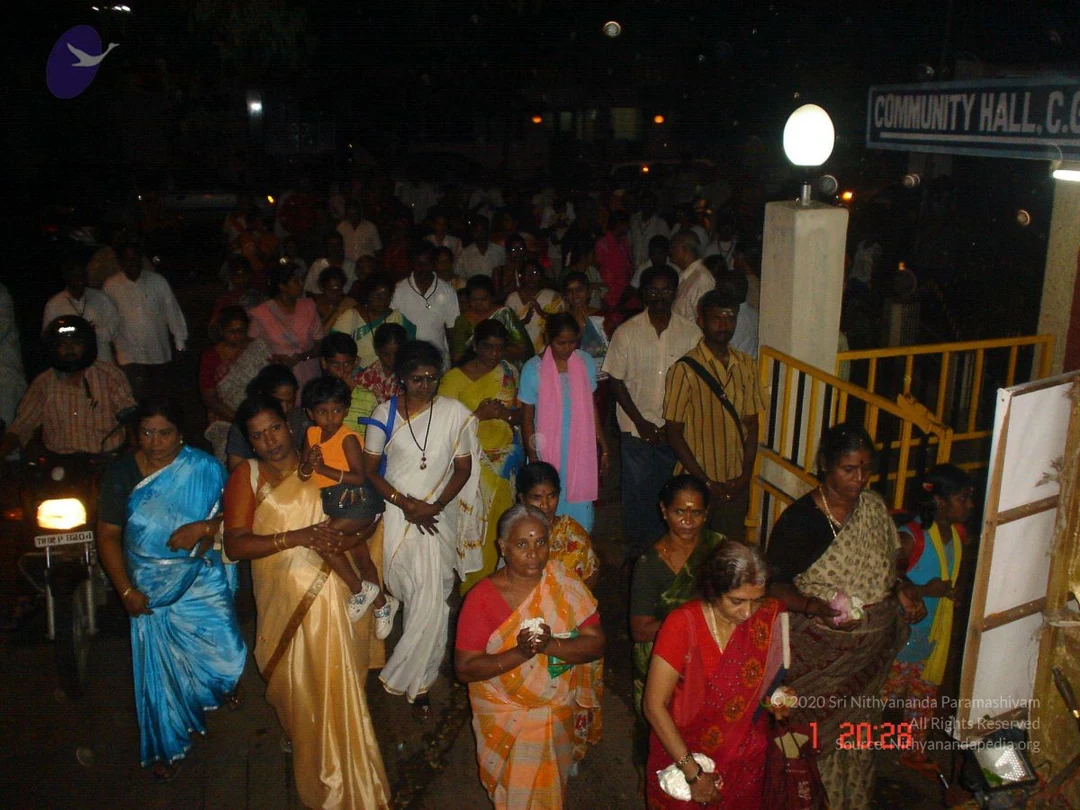
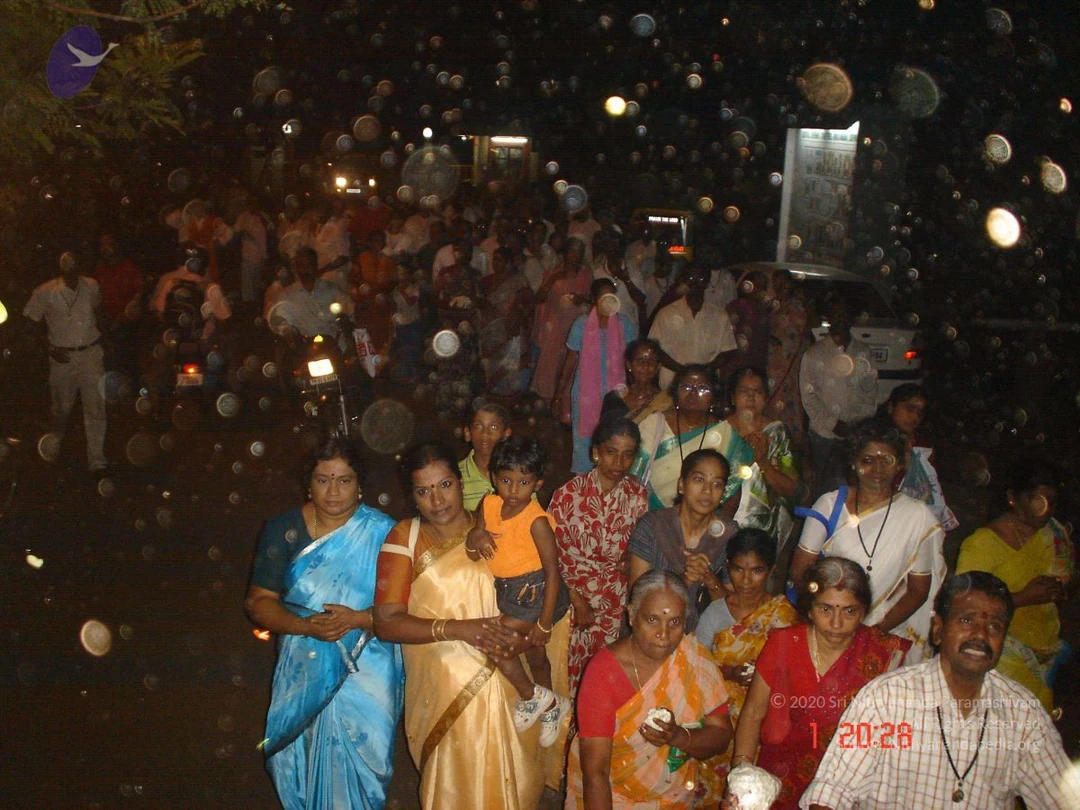
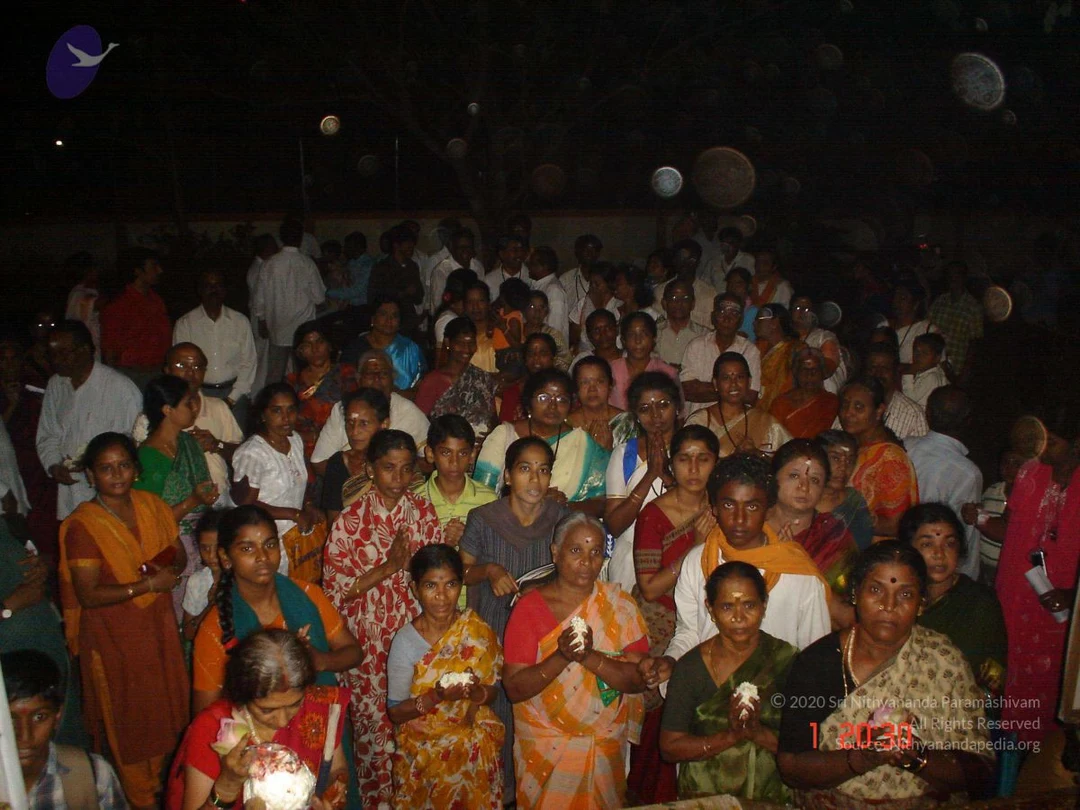
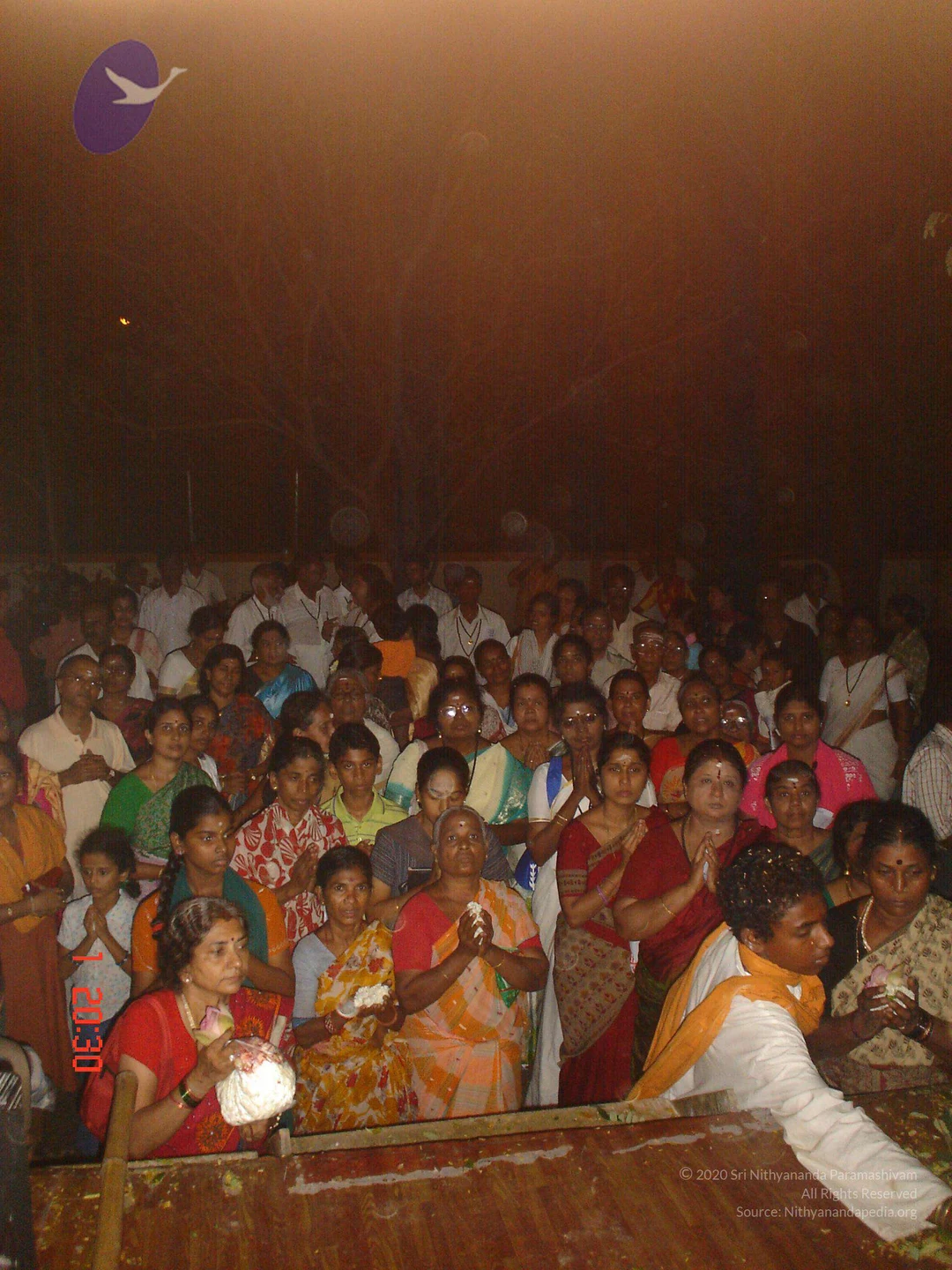
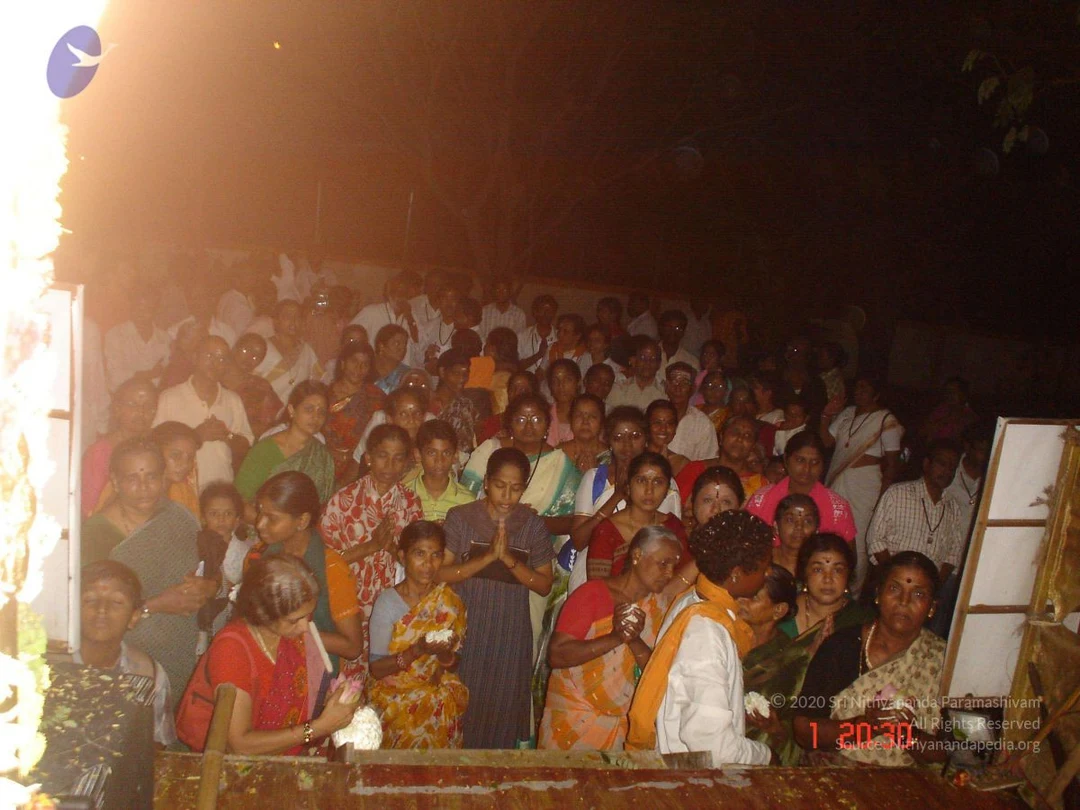
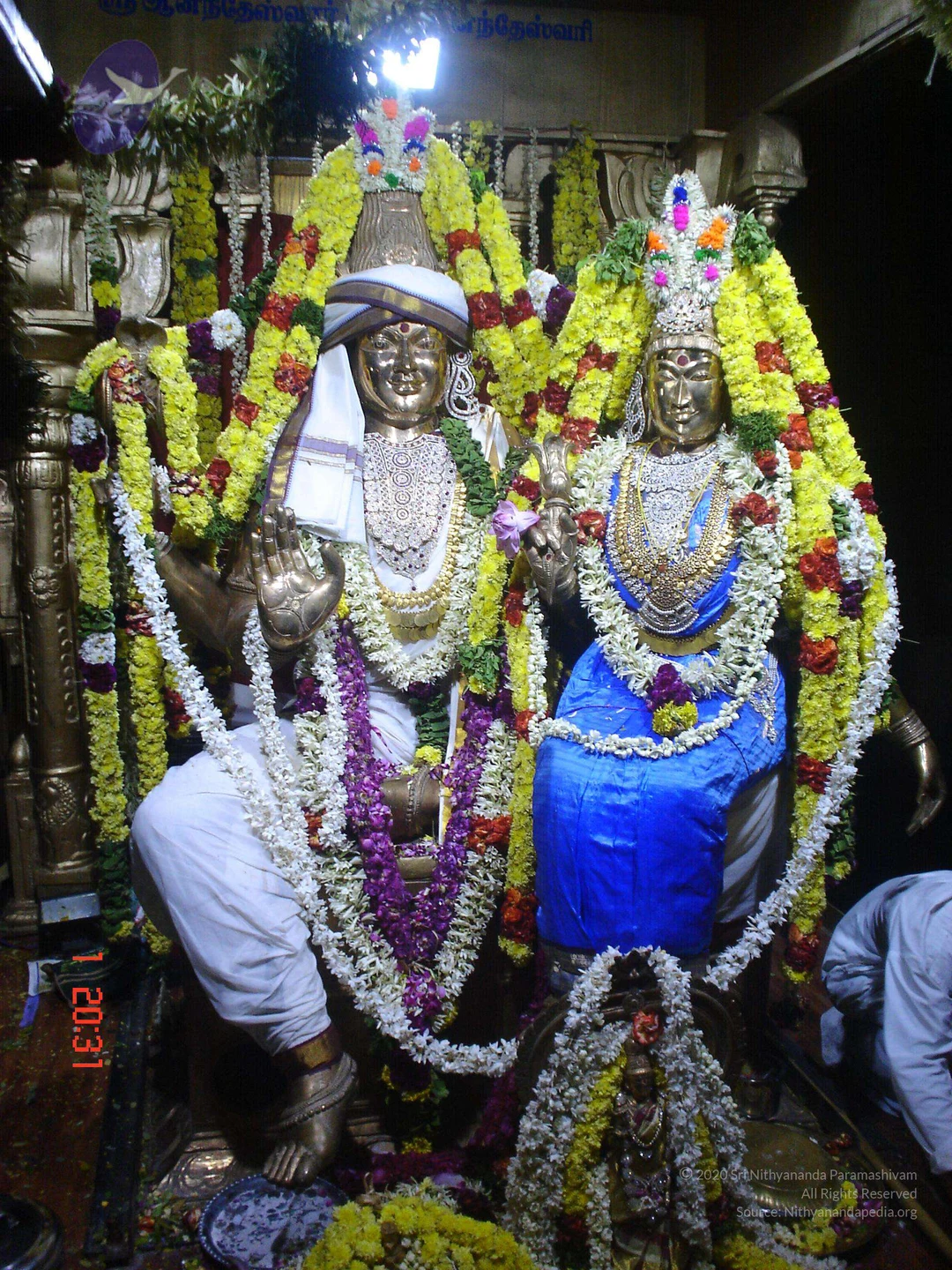
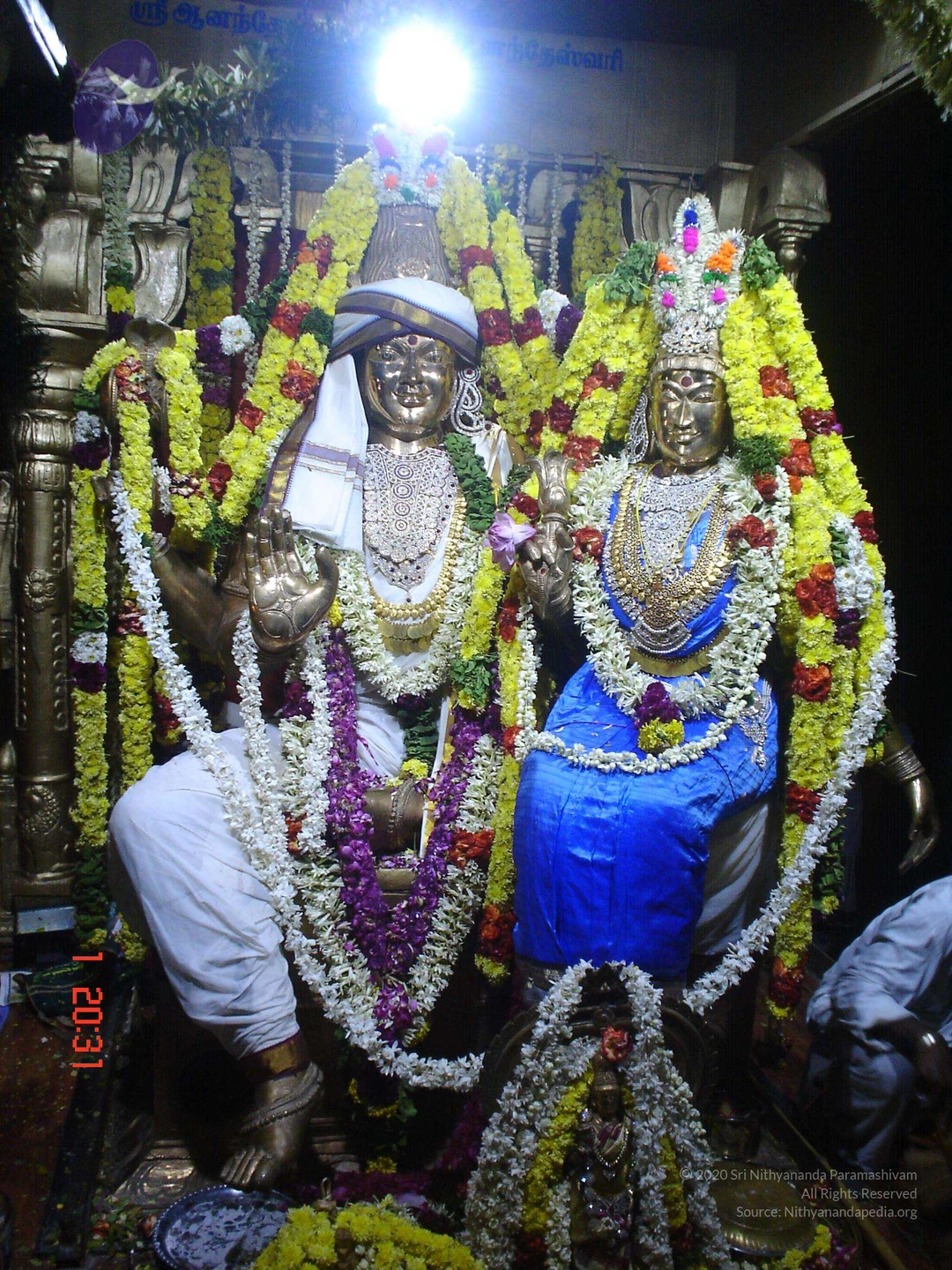
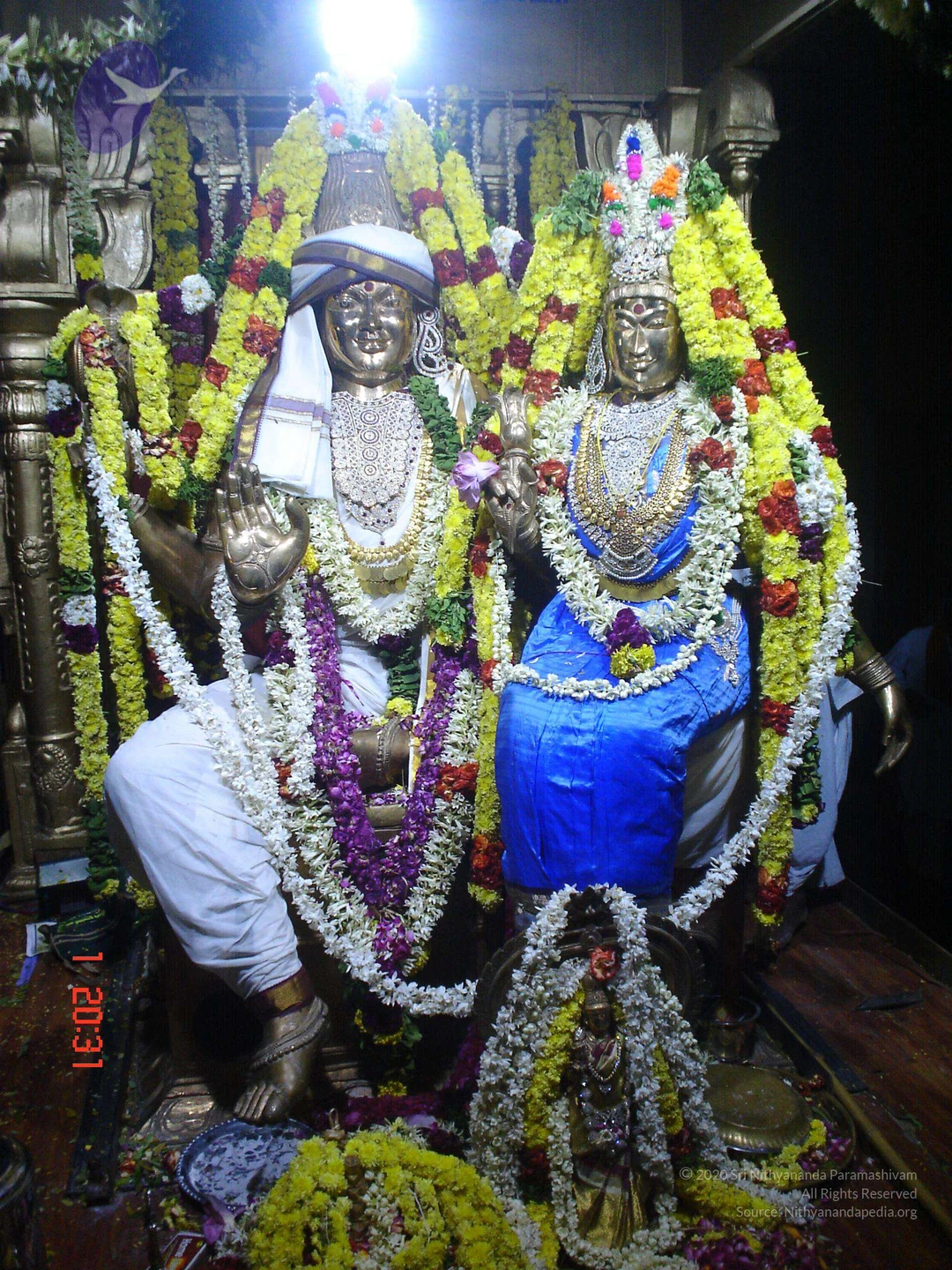
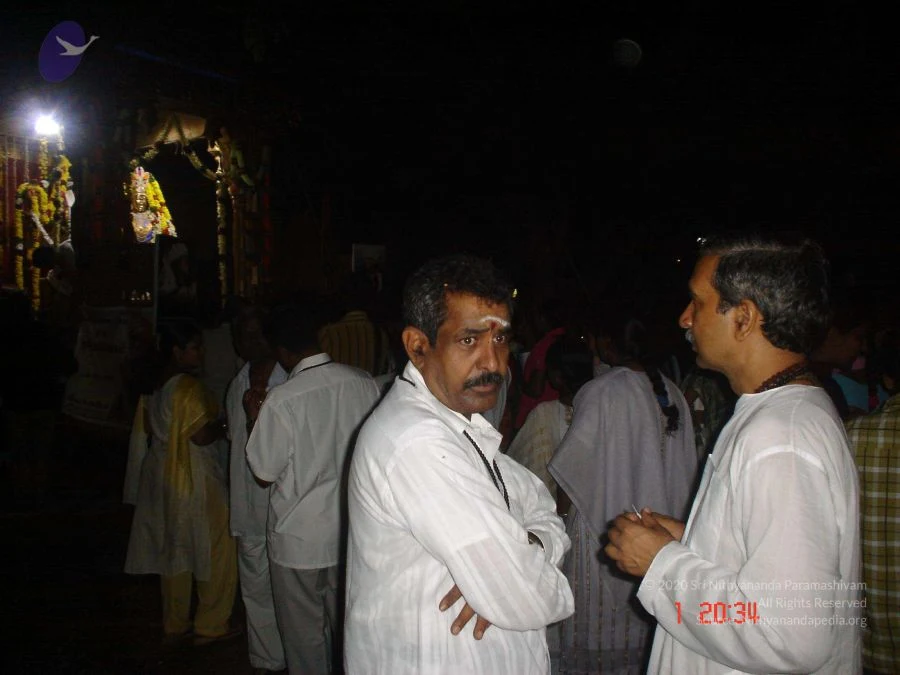
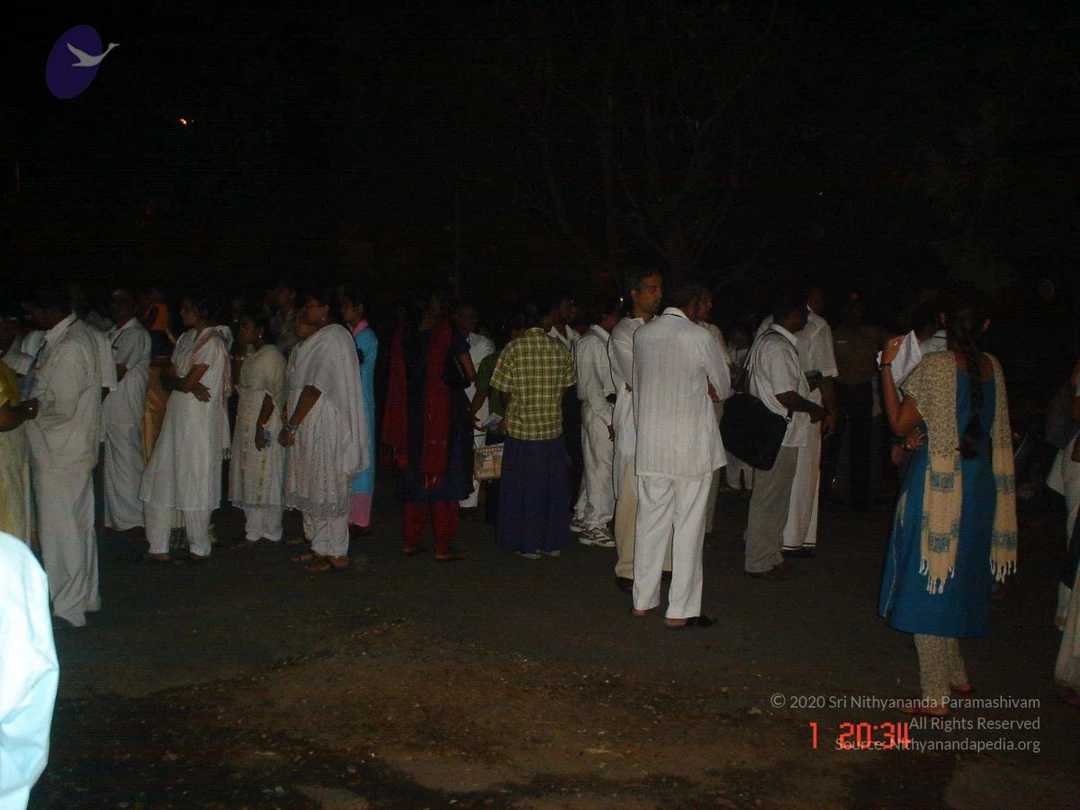
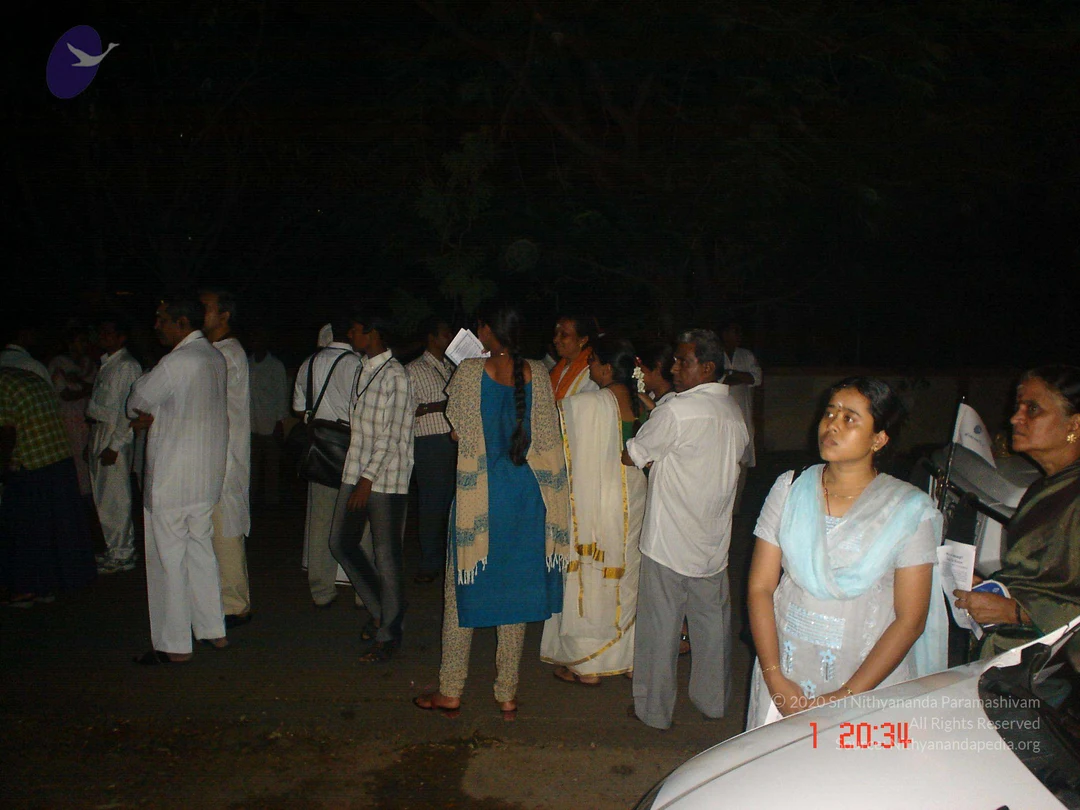
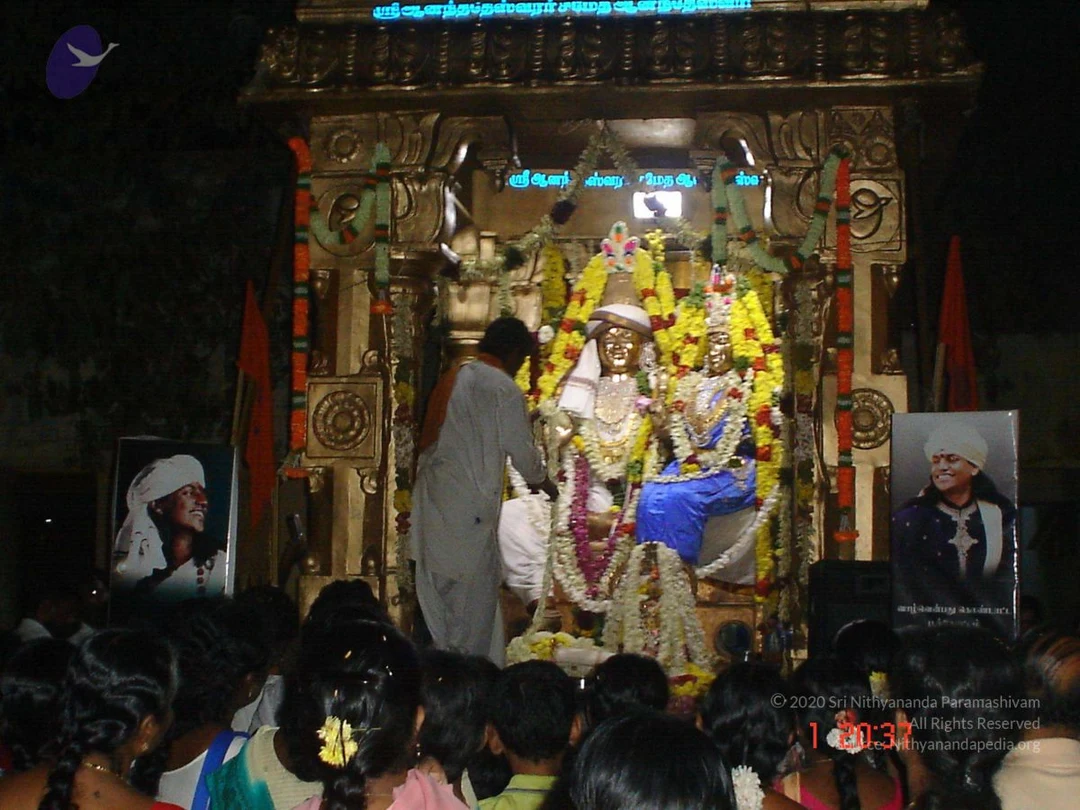
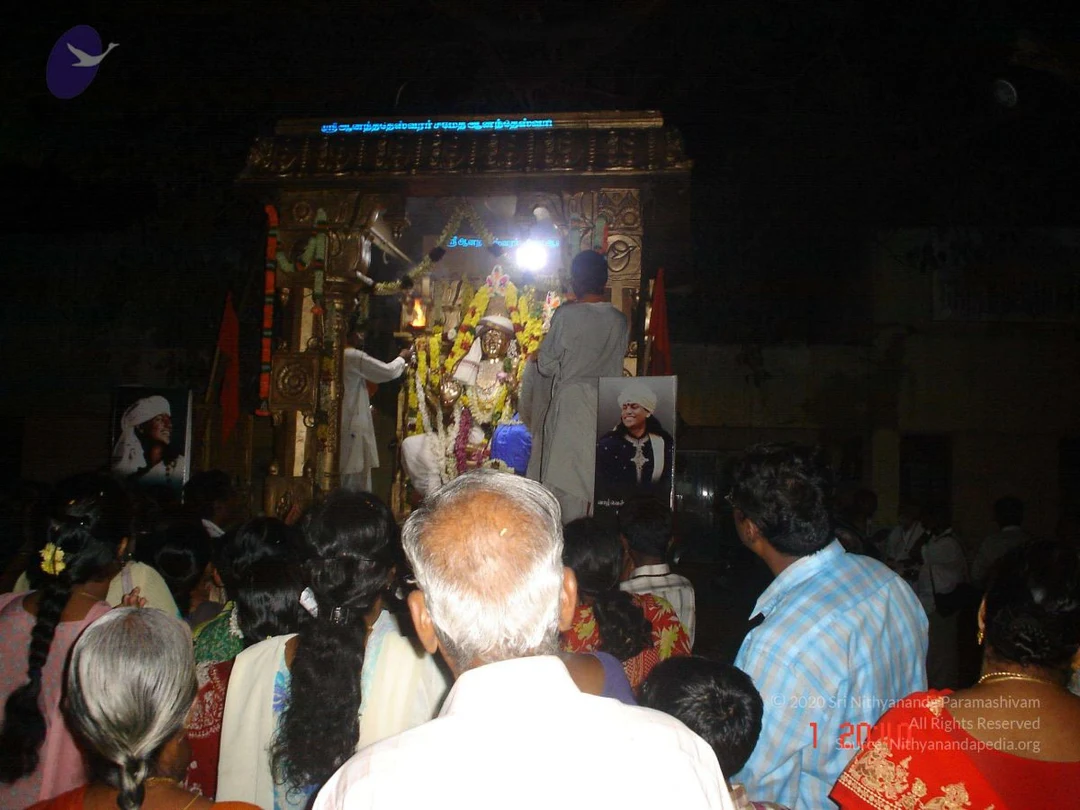
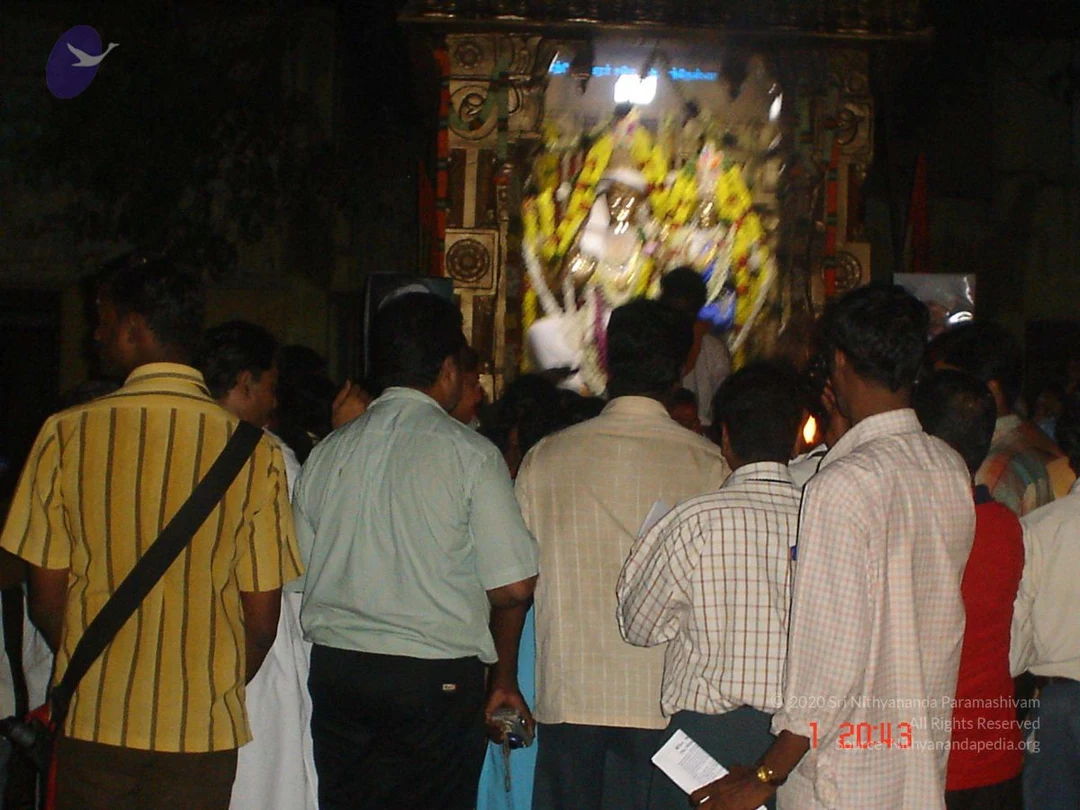
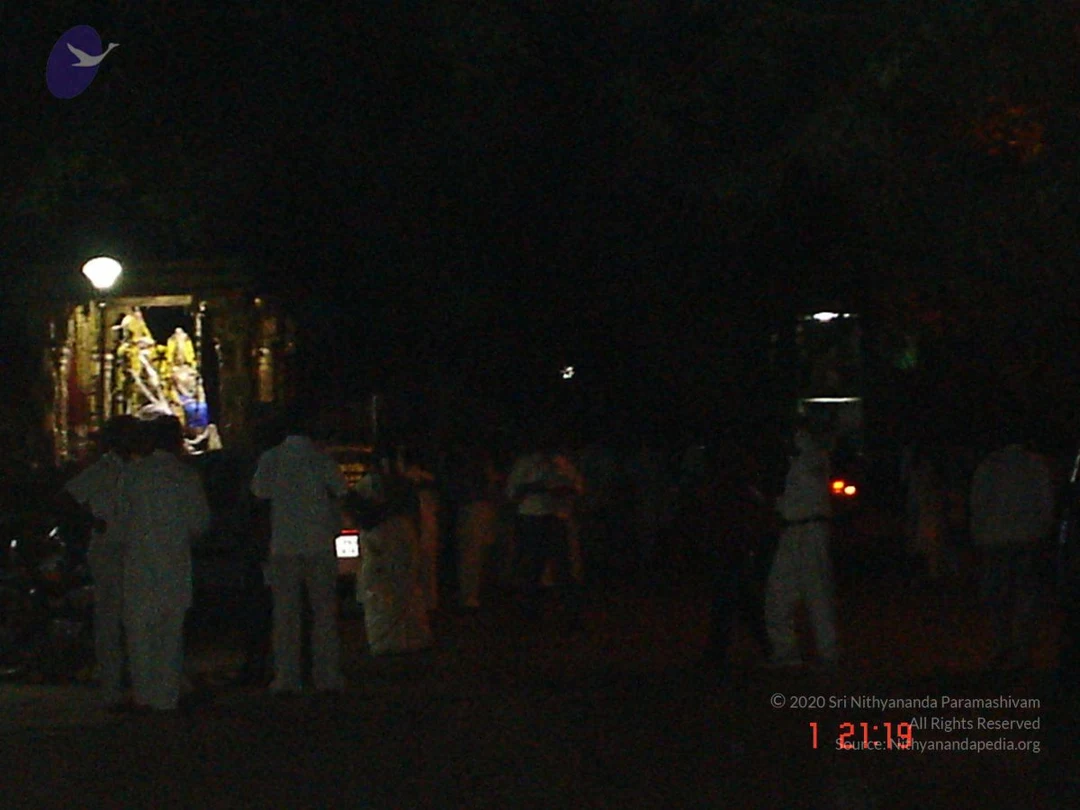
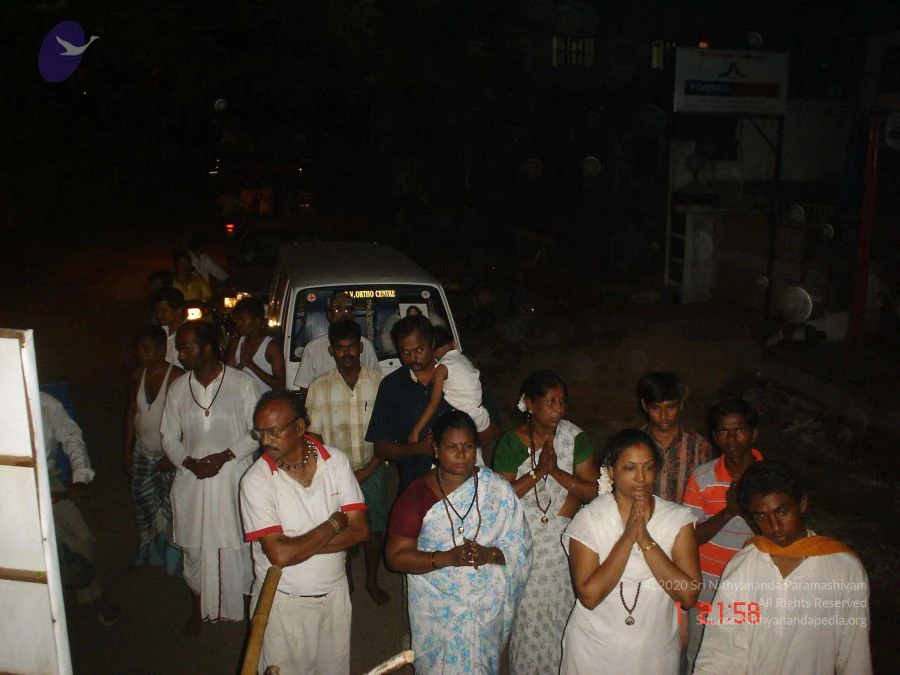
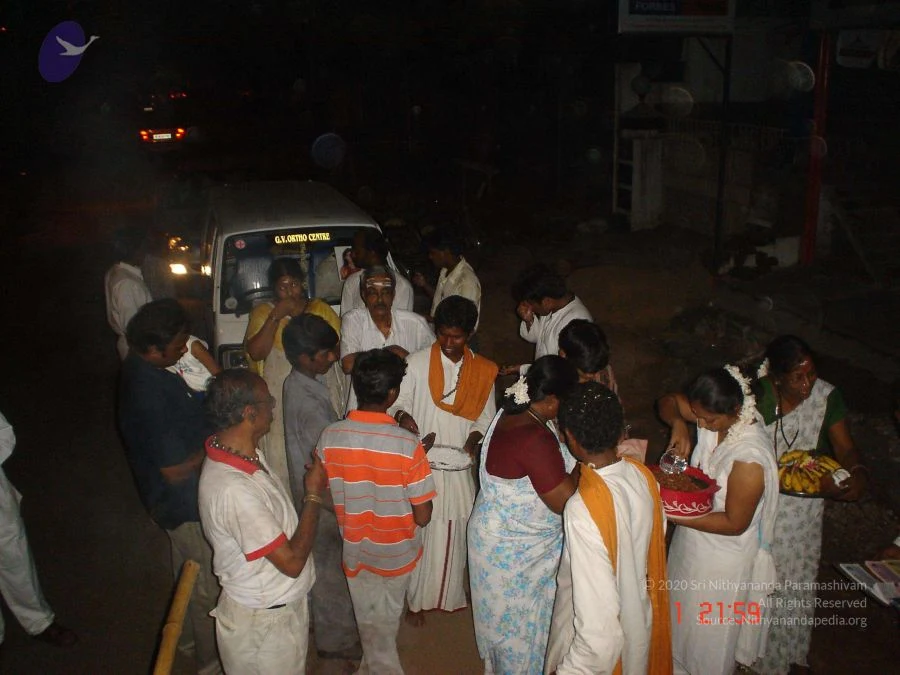
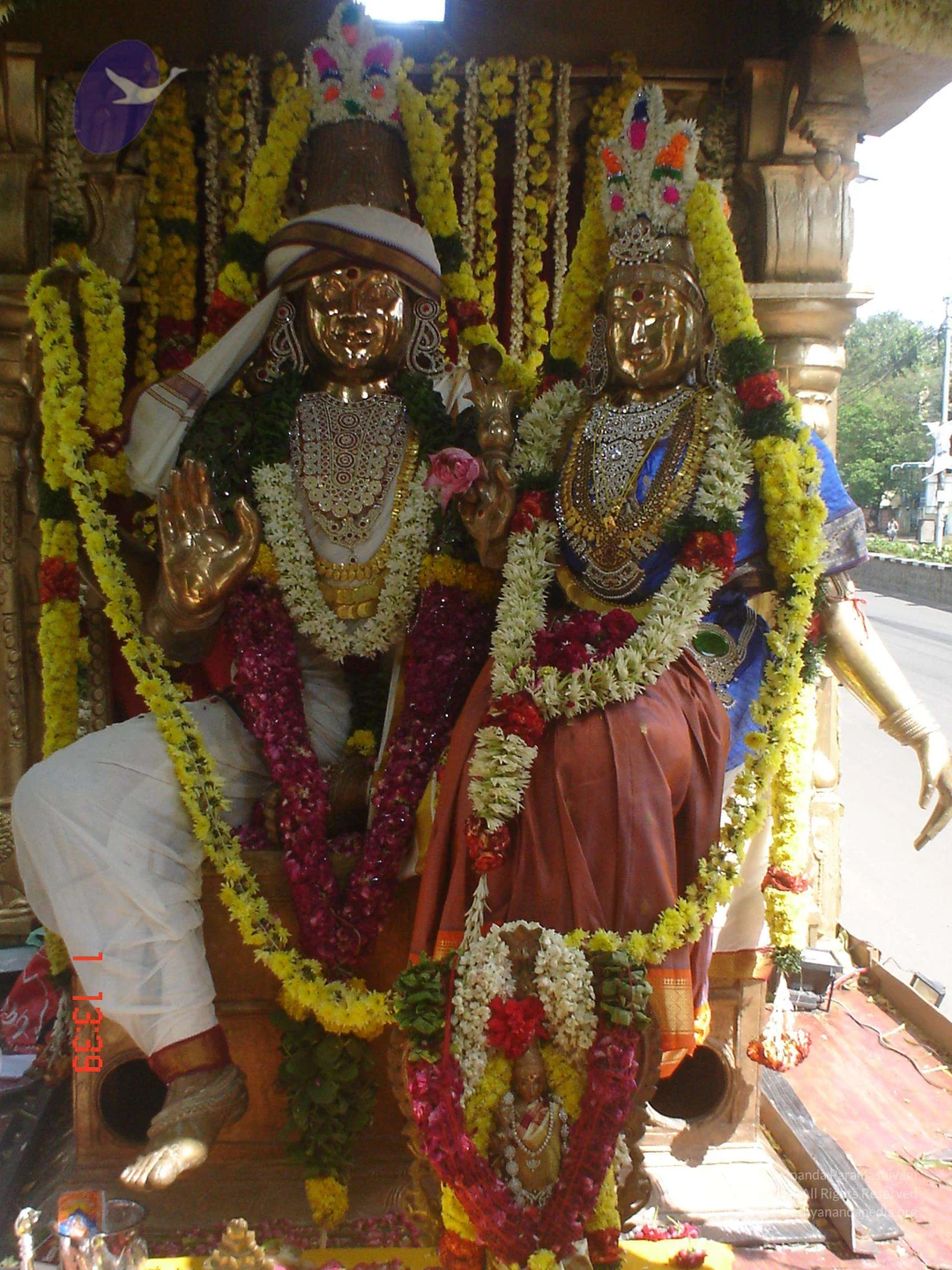
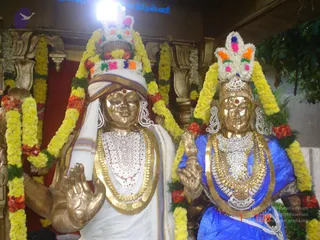
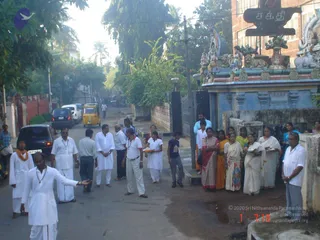
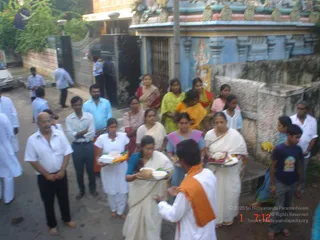
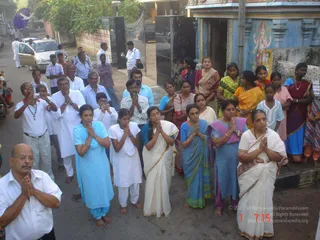
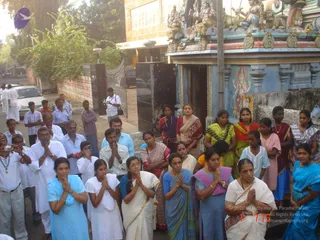
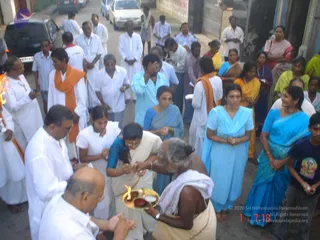
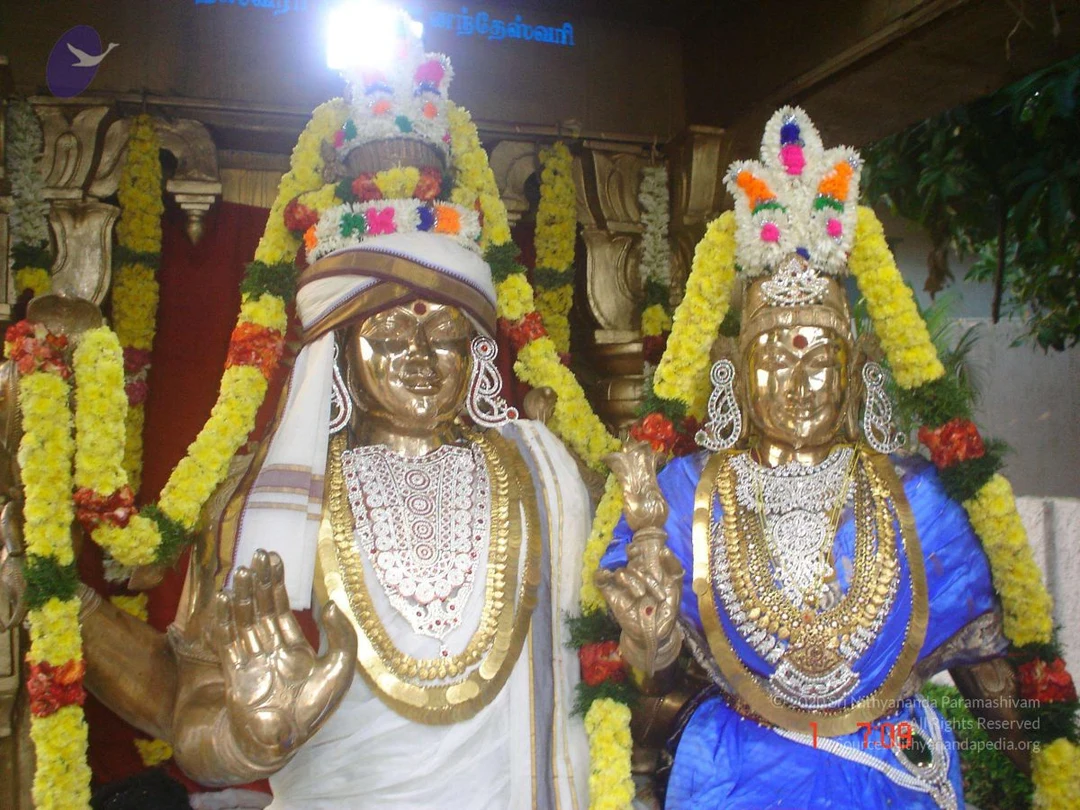
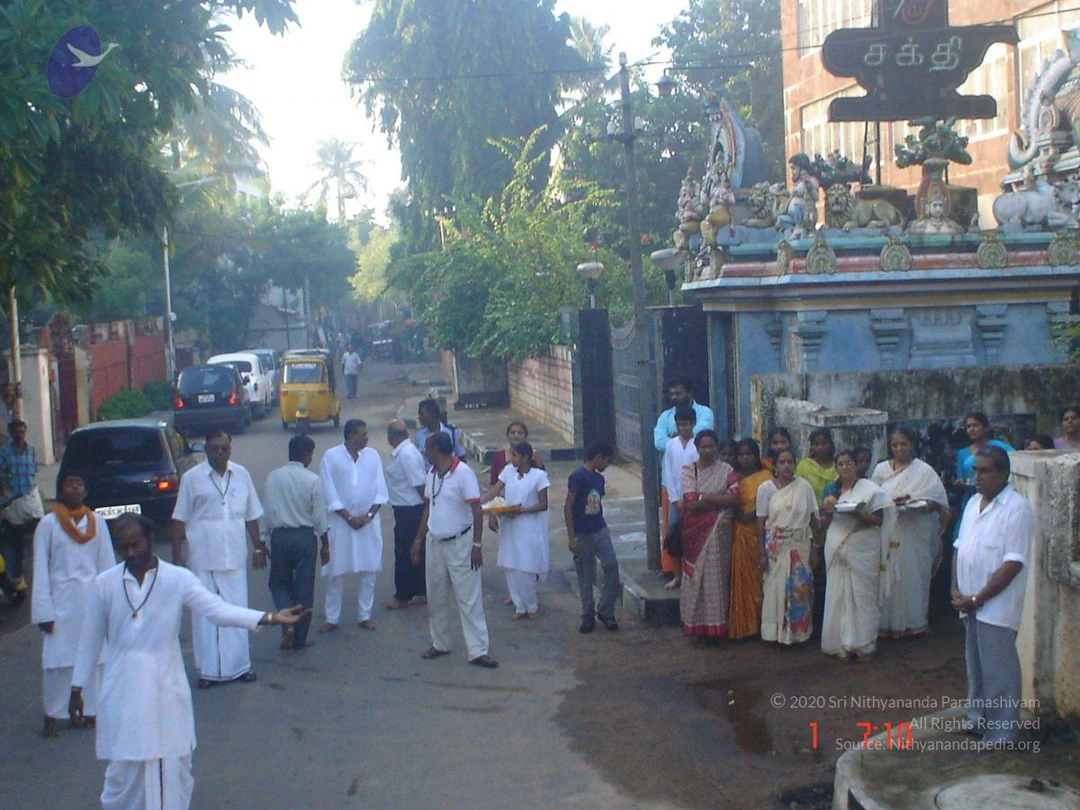
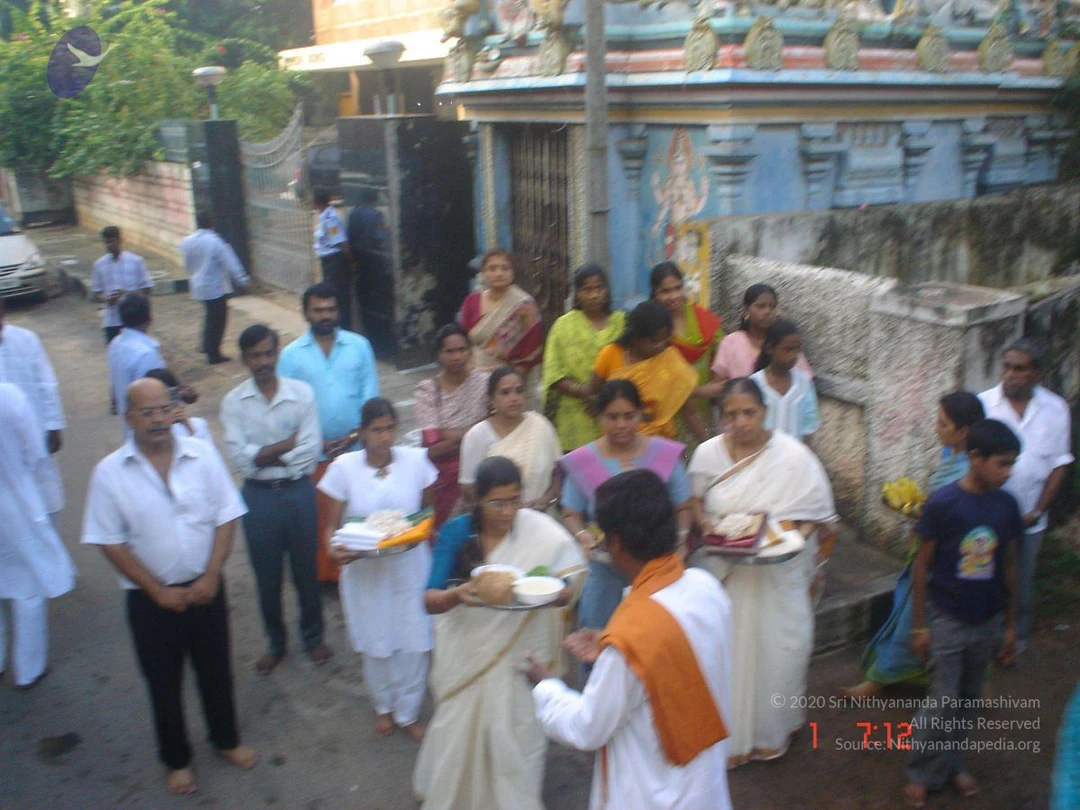
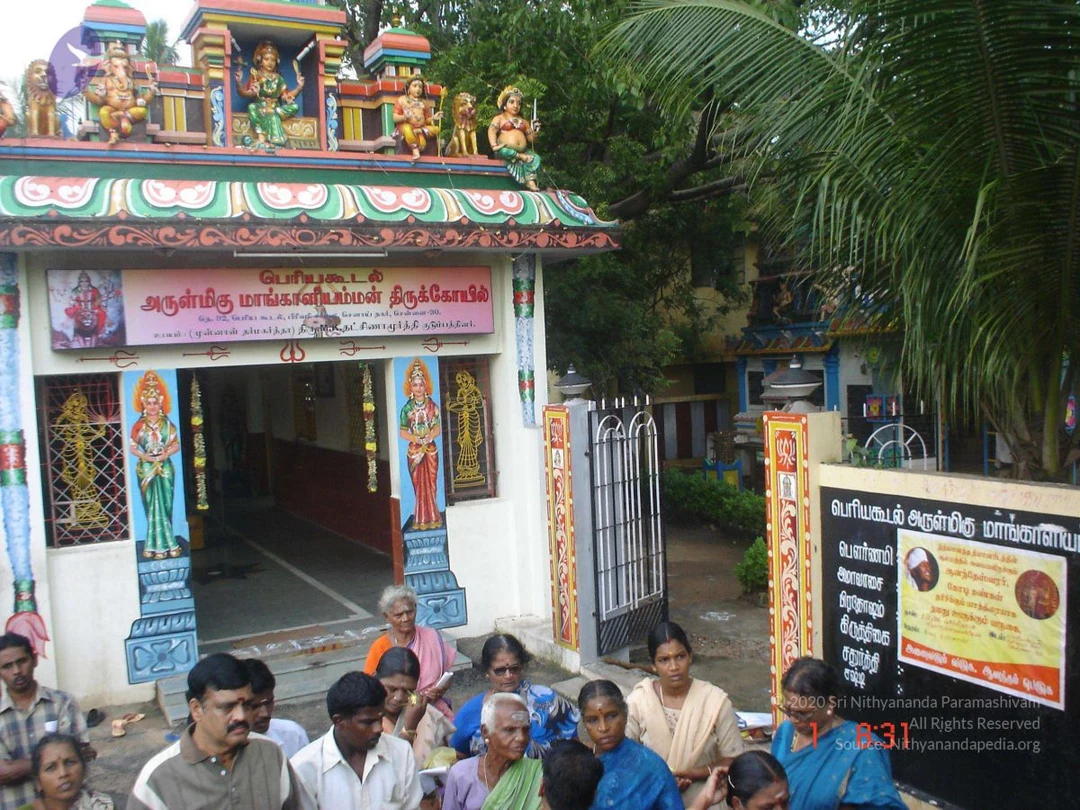
Kodikkan Ratha Yatra : Procession of deities of Sri Nithyanandeshwara and Nithyanandeshwari at Chennai, Tamil Nadu, India
Photos from this day

View all 253 photos

Kodikkan Ratha Yatra : Procession of deities of Sri Nithyanandeshwara and Nithyanandeshwari at Chennai, Tamil Nadu, India
252 photosSource gallery
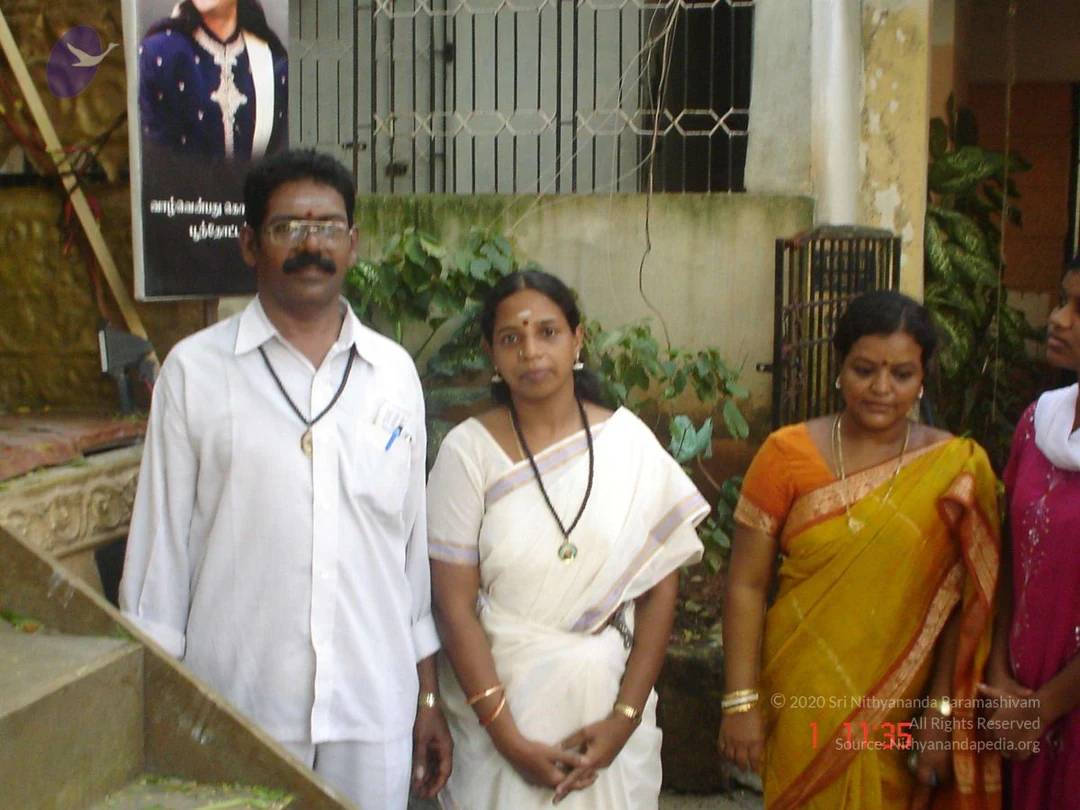
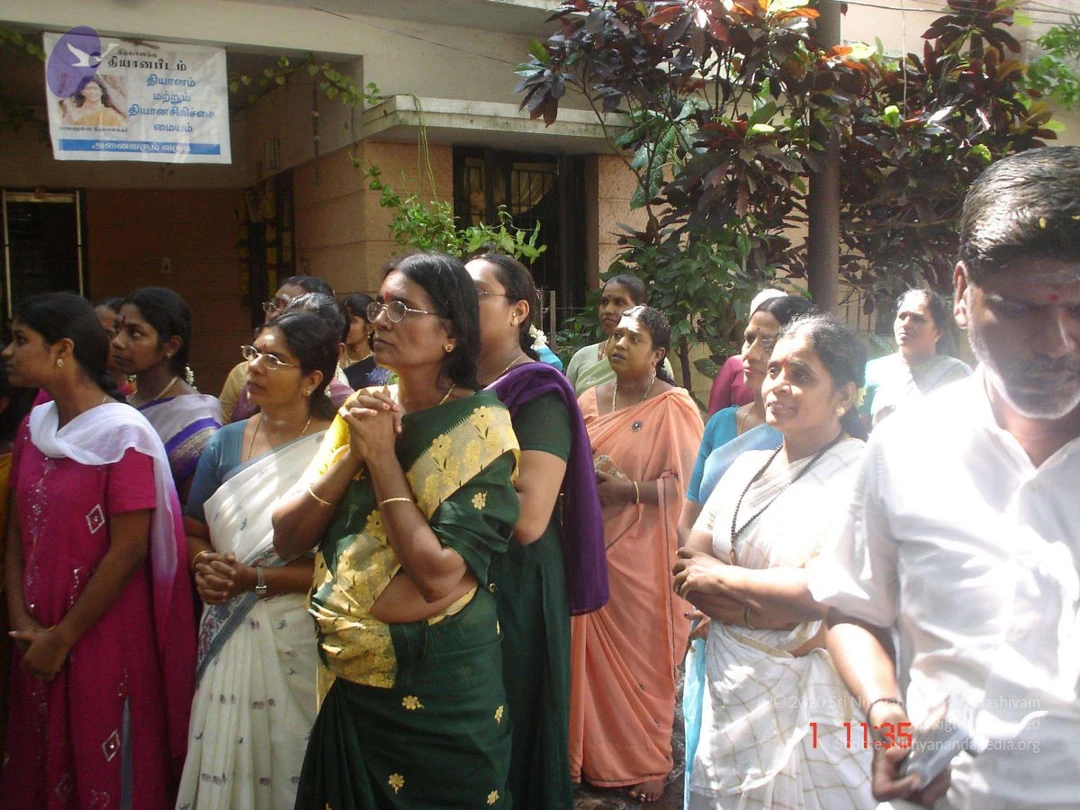
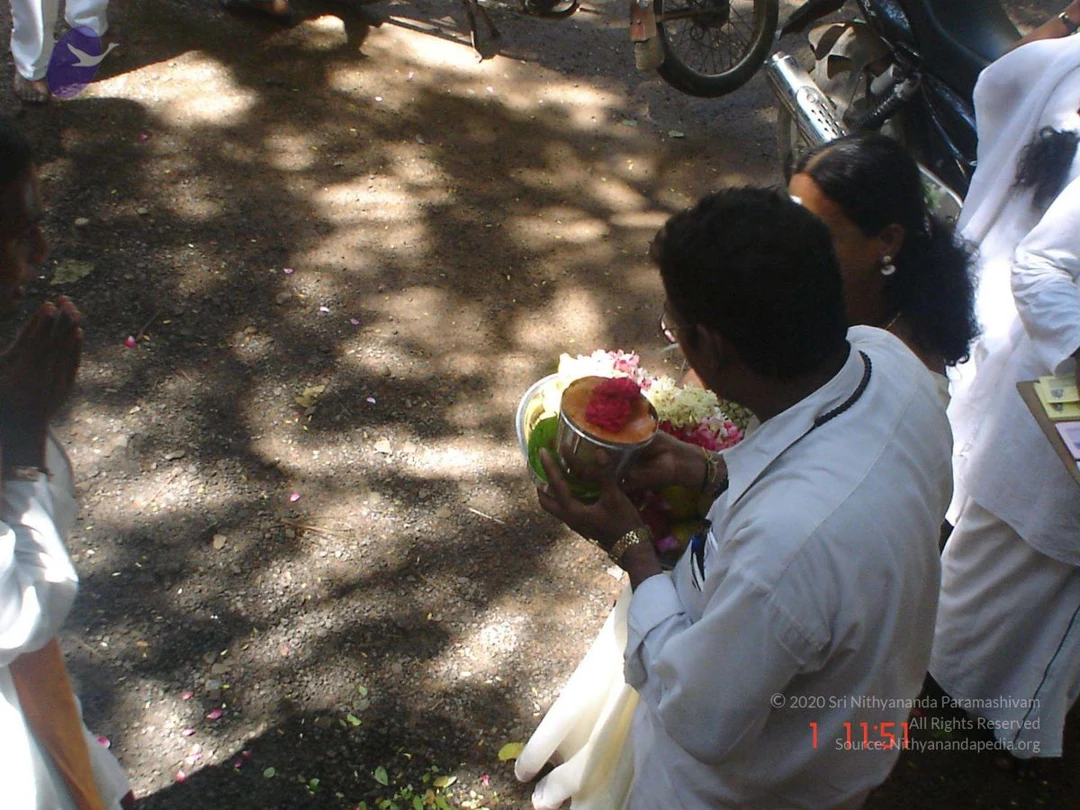
Two gilded processional deity murtis, Sri Nithyanandeshwara on the left and Nithyanandeshwari on the right, stand decorated with garlands of yellow marigolds and red flowers and crowns of white and multicoloured blossoms. The male murti wears a white dhoti and white turban-like cloth with a red bindi, a raised hand in abhaya mudra, and a white and silver-embroidered chest ornament. The female murti wears a royal blue sari with silver jewellery, layered gold necklaces and a red bindi, holding a lotus-like sceptre. A temple wall with carved pillars and Tamil script forms the backdrop; no physical people are visible.A street scene in Chennai during a procession. In the foreground a man in white dhoti and shirt extends his arm, leading a group of devotees in white clothes along a roadside lined with parked cars and a yellow auto-rickshaw. On the right, a blue temple gateway with sculpted deity figures and lions stands beside a sign reading Shakti. A line of women in saris, some in orange and red, stands on the pavement holding trays, while men in white shirts and dhotis walk the street, one wearing an orange shawl and rudraksha-style beads. Coconut palms and trees shade the road.Photograph of a street procession in a residential lane in Chennai, Tamil Nadu, with devotees carrying offering trays. In the foreground a man in a white shirt and a younger man in a white dhoti with an orange shawl face each other; the man in white holds a tray. A woman in a cream sari carries a tray with a coconut, a bowl and flowers, and another woman in white carries a tray with sweets and banana leaves. Behind them women in colourful saris (yellow, green, orange, red) and a boy in a dark blue shirt stand near a blue temple wall with painted deity figures and carved gopuram-style moldings. A partly visible white car and a uniformed guard appear at the left. Activity is consistent with a kodikkan ratha yatra procession of temple deities.A photograph of a street scene in Chennai, Tamil Nadu, where a crowd of devotees stands with palms pressed together in namaskar as a procession is expected to pass. Several women in sarees, including white with gold border, blue and pink, stand in front, while men in white kurta and shirts stand behind them; one man on the left wears a rudraksha-style mala and holds a camera. Behind the crowd is a temple gateway with a painted blue wall showing a deity figure, and a parked silver car lines the street. No swami is clearly visible among the people.Outdoor photo of a crowd of devotees gathered on a street in front of a colourful South Indian temple gopuram-style entrance with painted sculpted figures, lions and deities on its roof and a blue painted wall panel. Many people stand with palms pressed together in namaste, facing the temple. Women wear saris and salwar in blue, white, yellow, green and pink, and men wear white shirts and dhotis or light trousers. A man at left in a white shirt holds a camera and wears a rudraksha-style necklace. Parked white cars and a tree line the street behind the crowd.Outdoor street scene at dusk during a temple procession, with a crowd of devotees gathered along a narrow lane lined with parked cars and houses. In the foreground, an older bare-chested man with a white cloth over his shoulder holds a brass plate with a lit oil lamp, flowers and a red kumkum dish while a woman in a cream sari with a blue blouse bends to receive it. Men in white dhotis and shirts stand nearby, some wearing orange shawls, and women in blue, yellow and turquoise saris watch with hands folded. A flame burns at the left edge. No identifiable a person is visible.
01 நவம்பர் 2006 பத்திரிகை செய்தி

1 photoView all
A scanned page from the Tamil weekly Kumudam, serialised spiritual article layout. Top left shows a banner with a stylised figure in saffron robes and geese, labelled with the series title, beside a Kumudam logo. Below is a dense block of Tamil body text in several paragraphs under a red date bar, with the article heading and a closing line at the bottom. No physical people are present; the banner shows a painted or printed figure.