Skip to content
Thursday

12 October 2006

THE SUPREME PONTIFF OF HINDUISM JGM HDH BHAGAVAN NITHYANANDA PARAMASHIVAM

Dated photos
301
Source pages
1
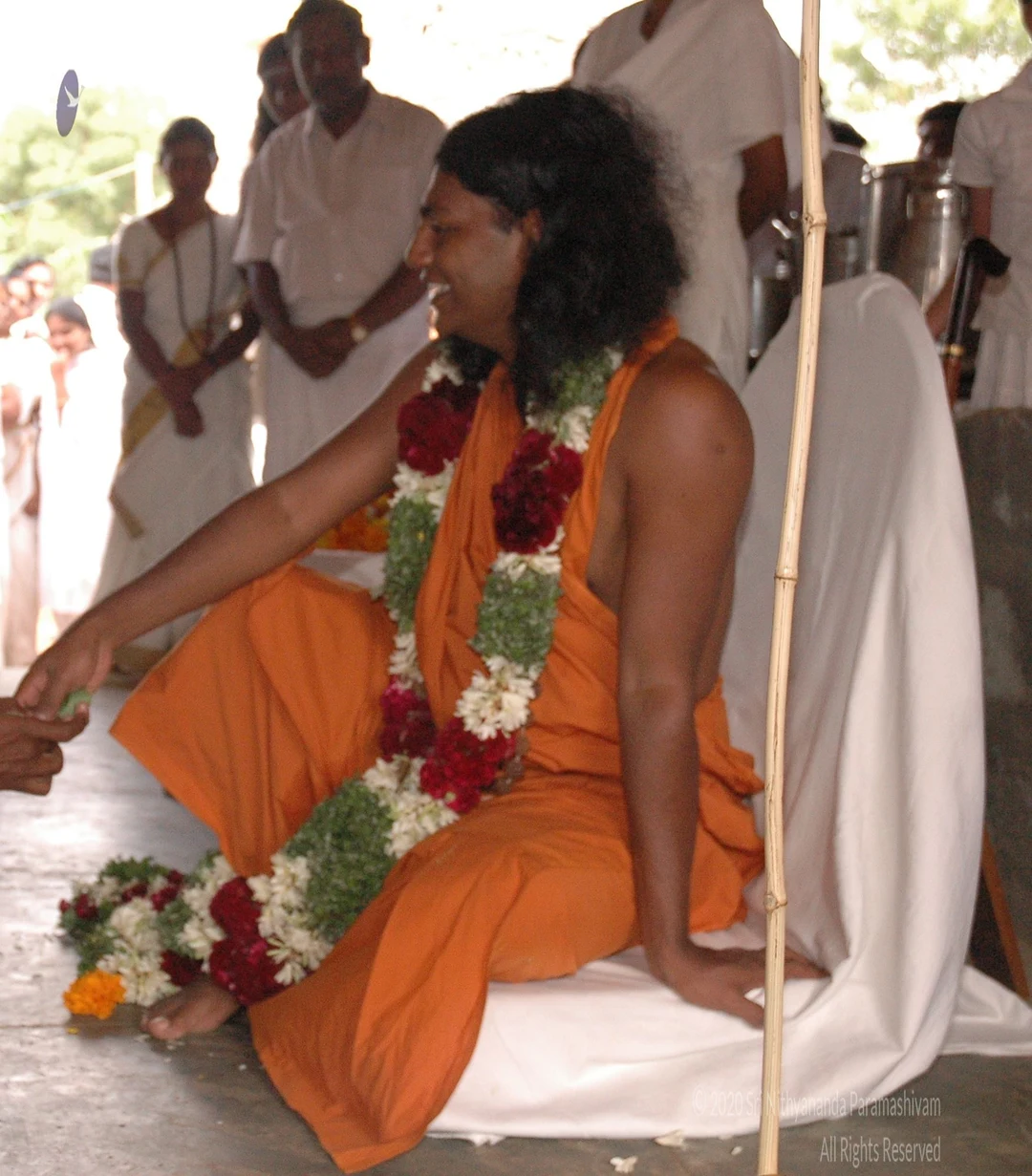
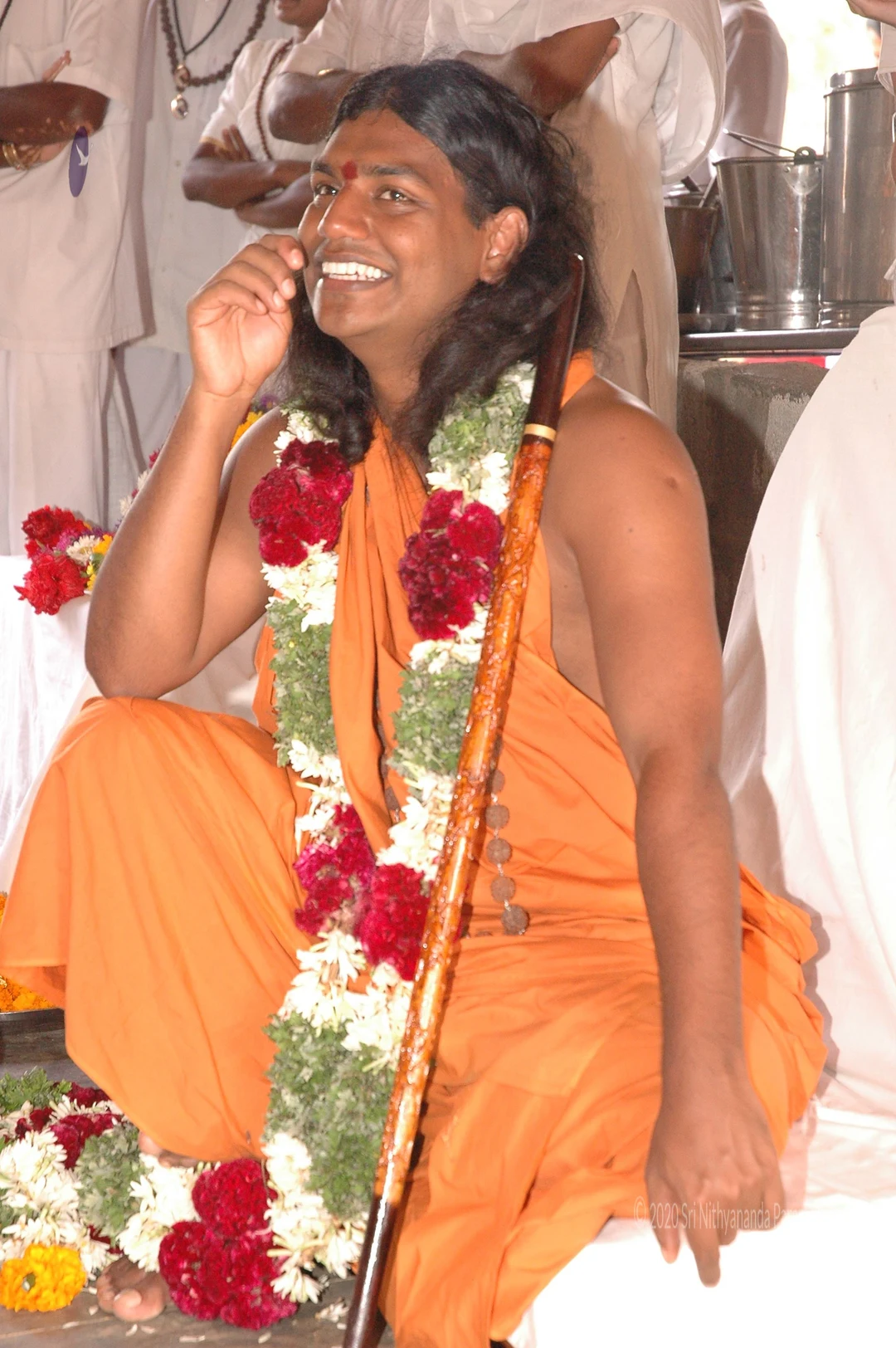
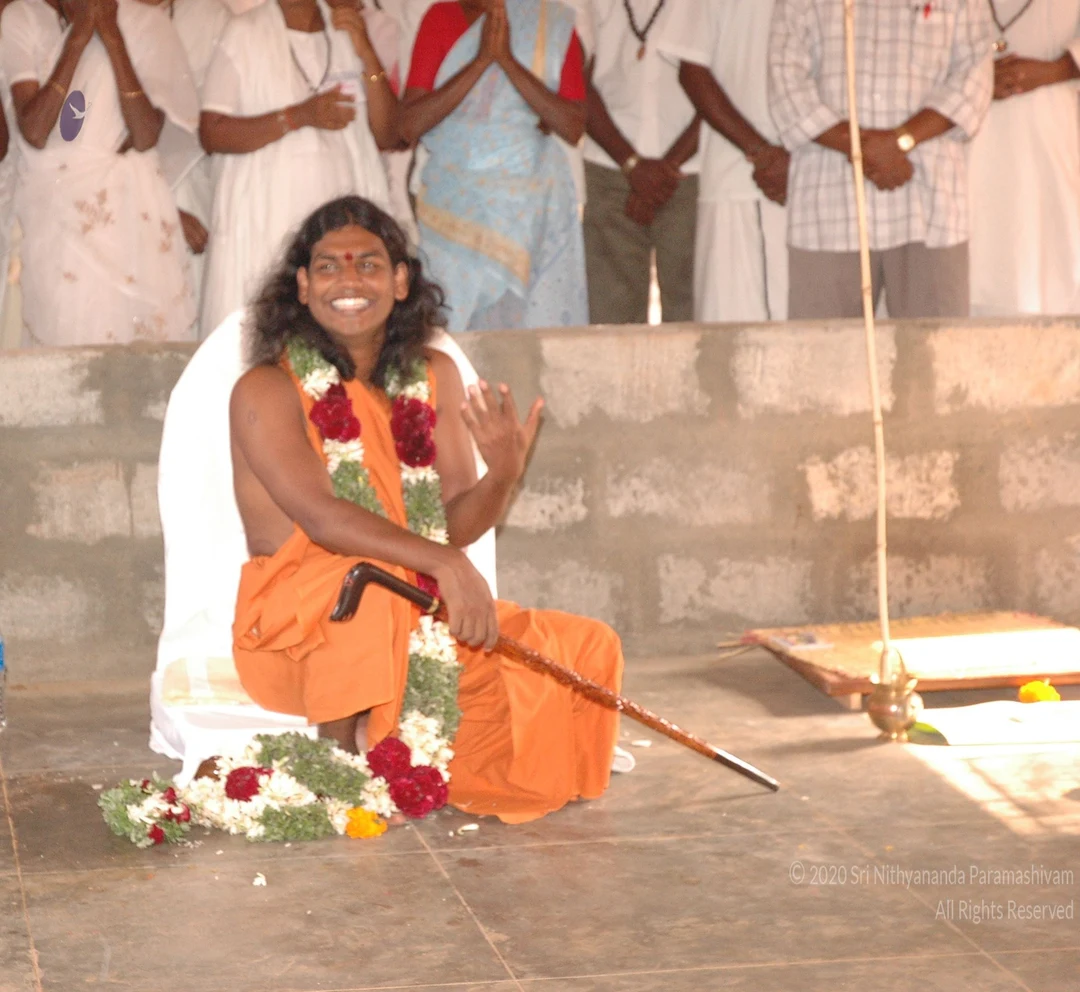
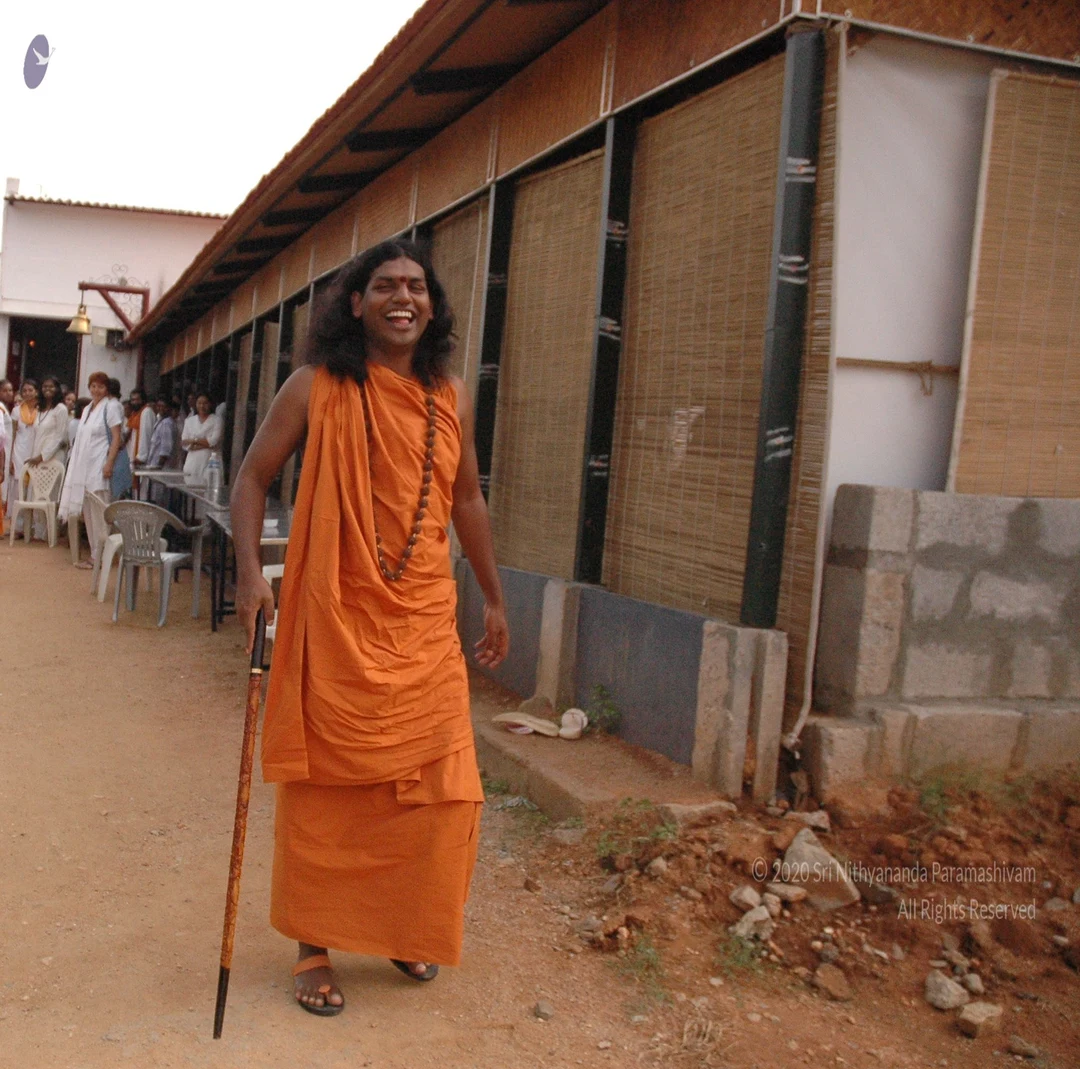
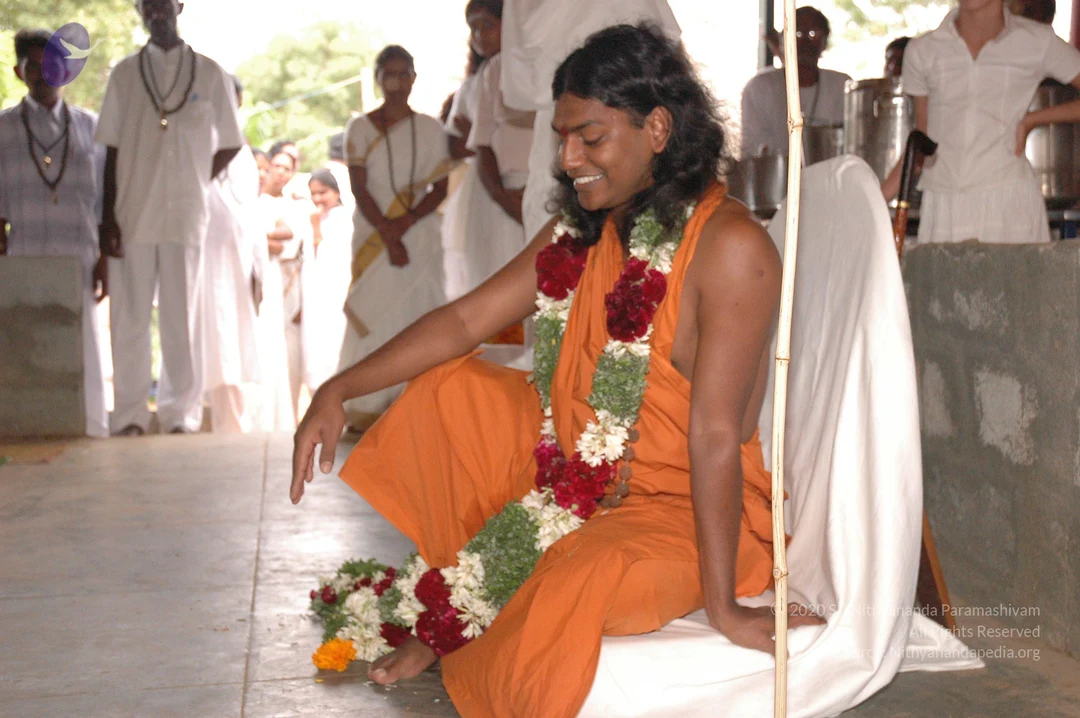
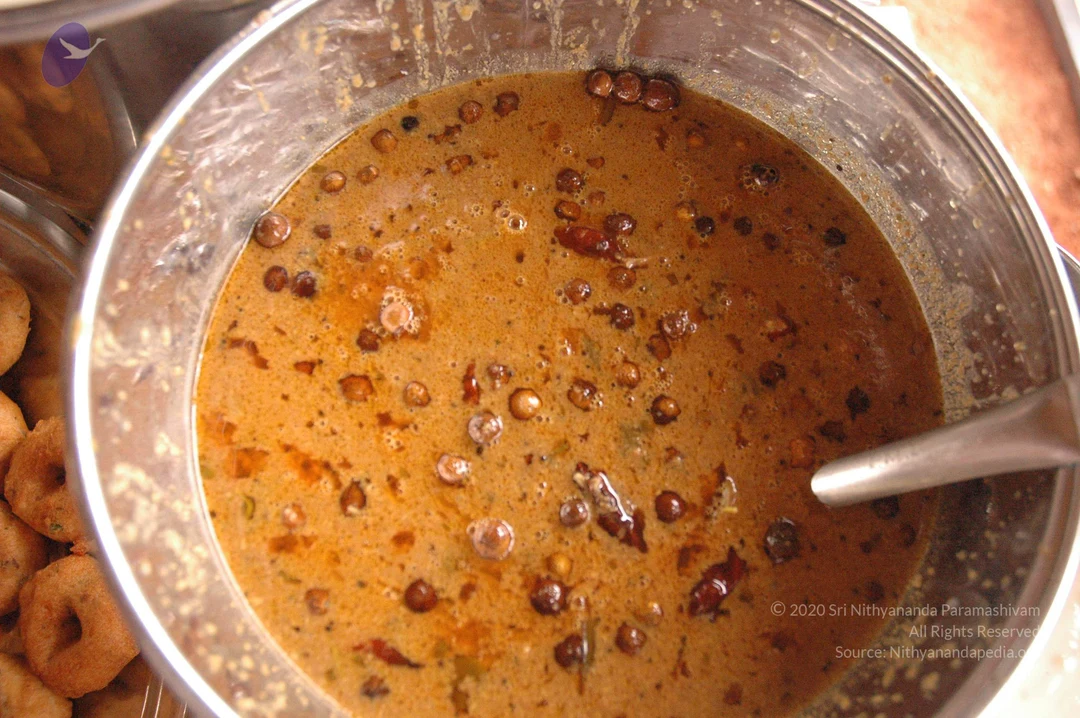
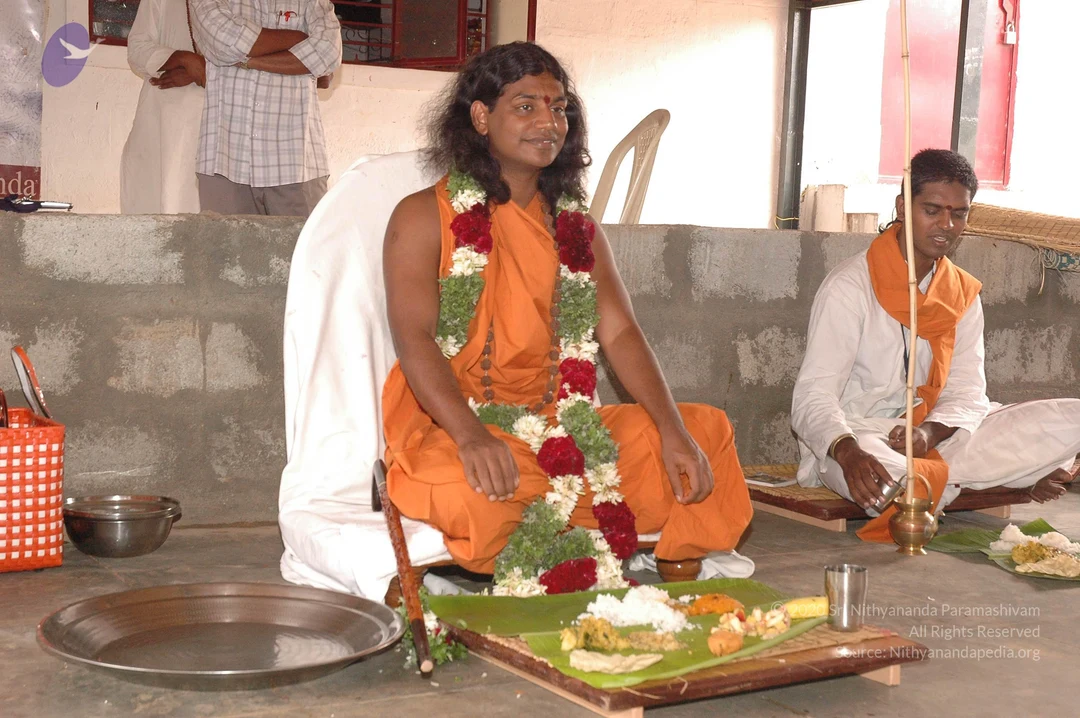
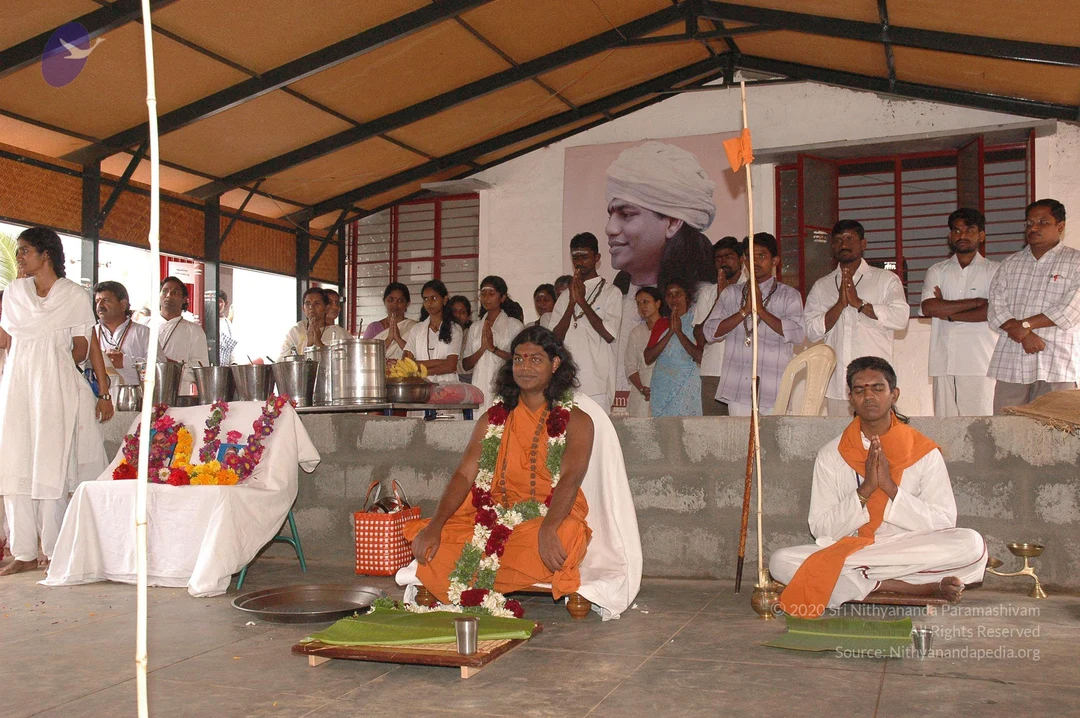
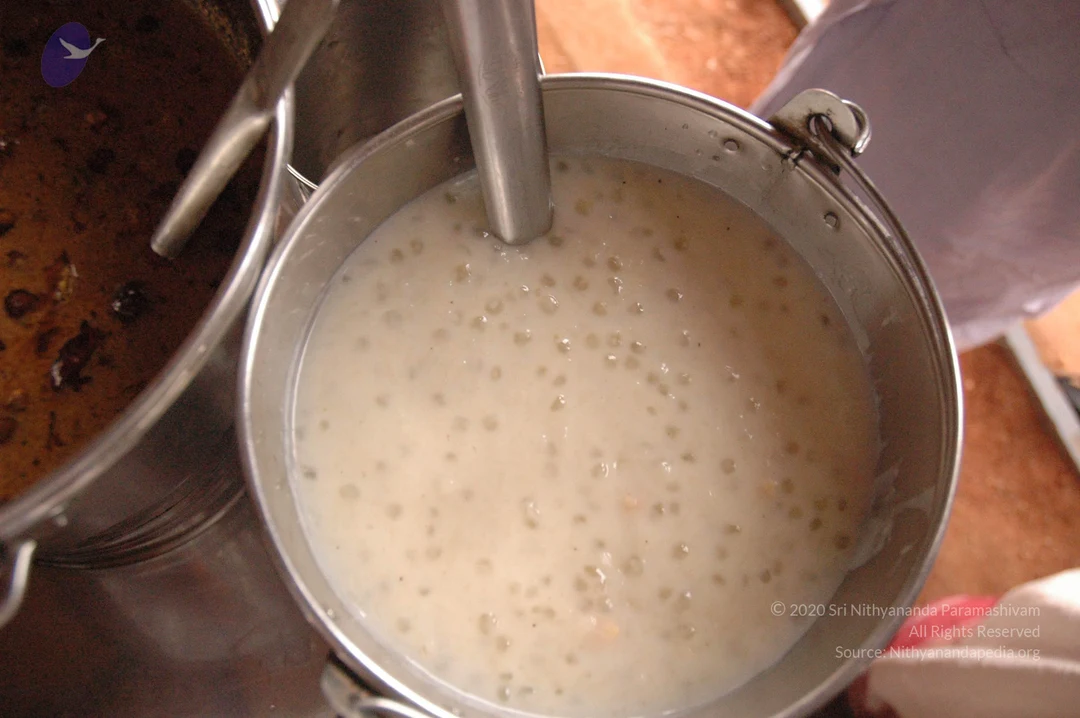
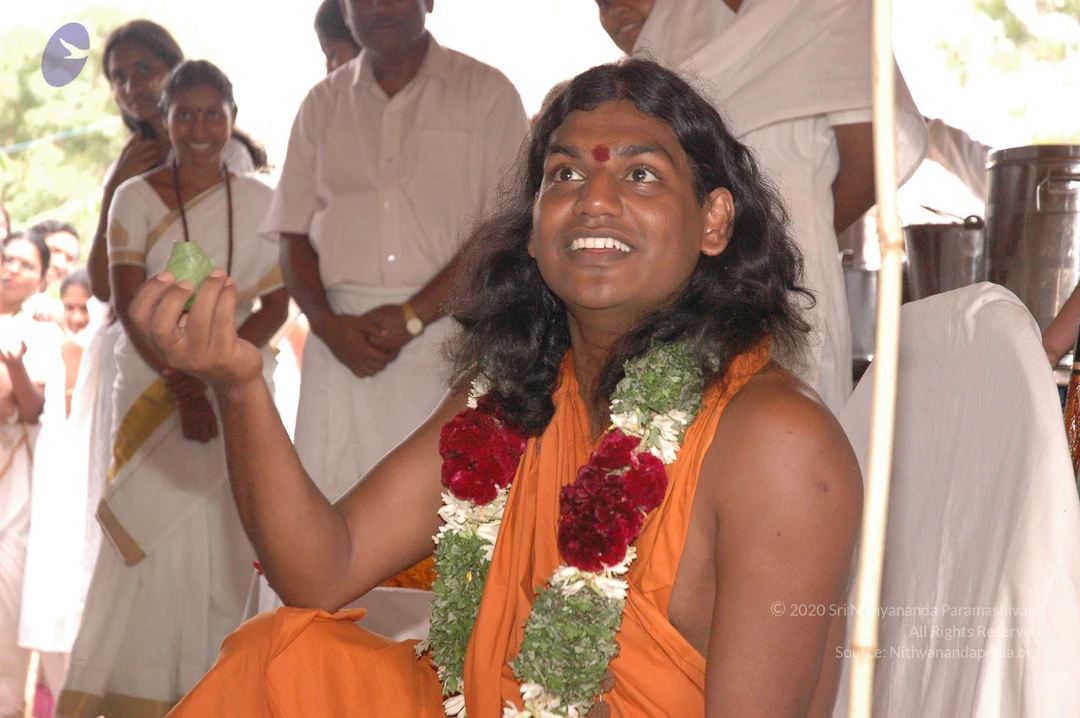
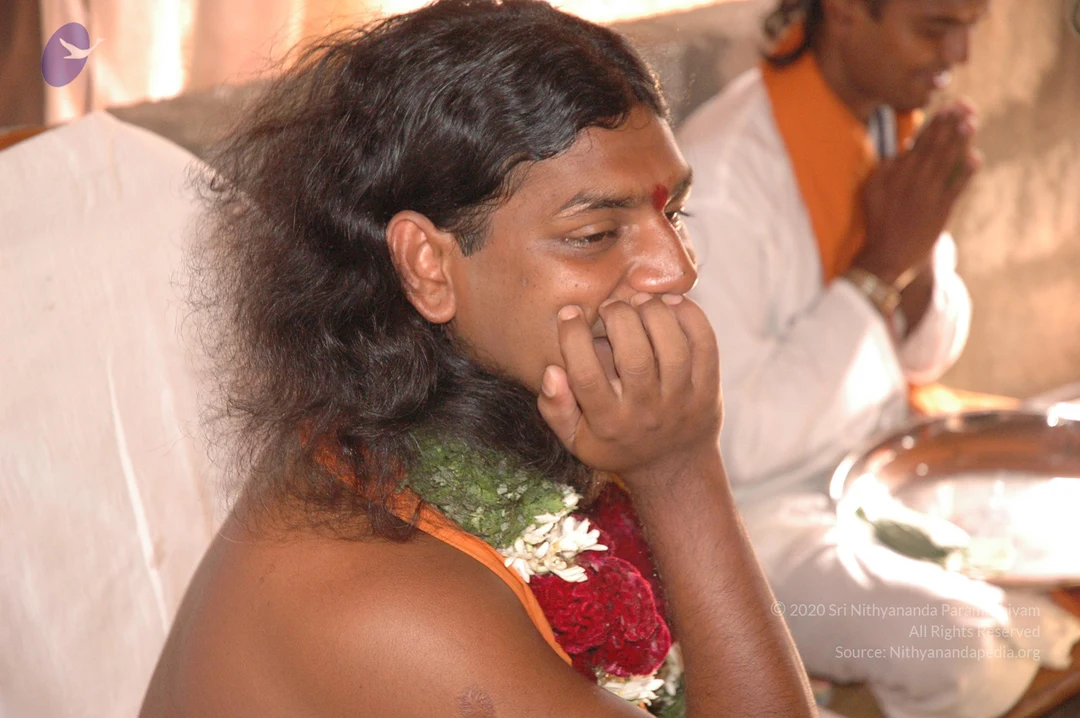
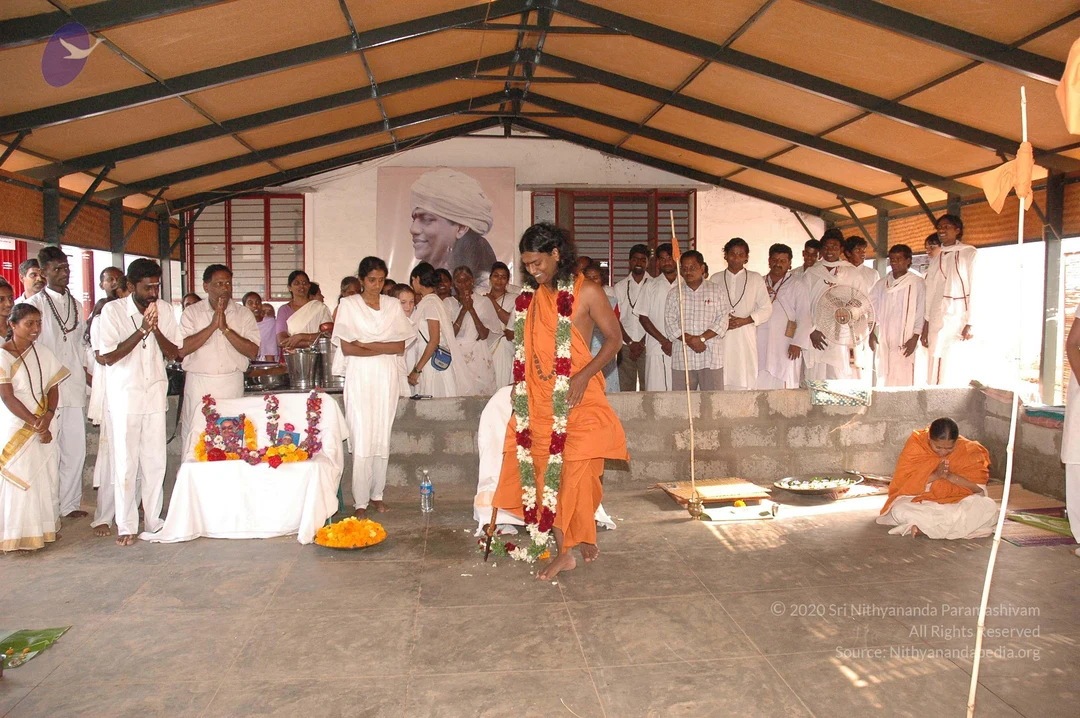
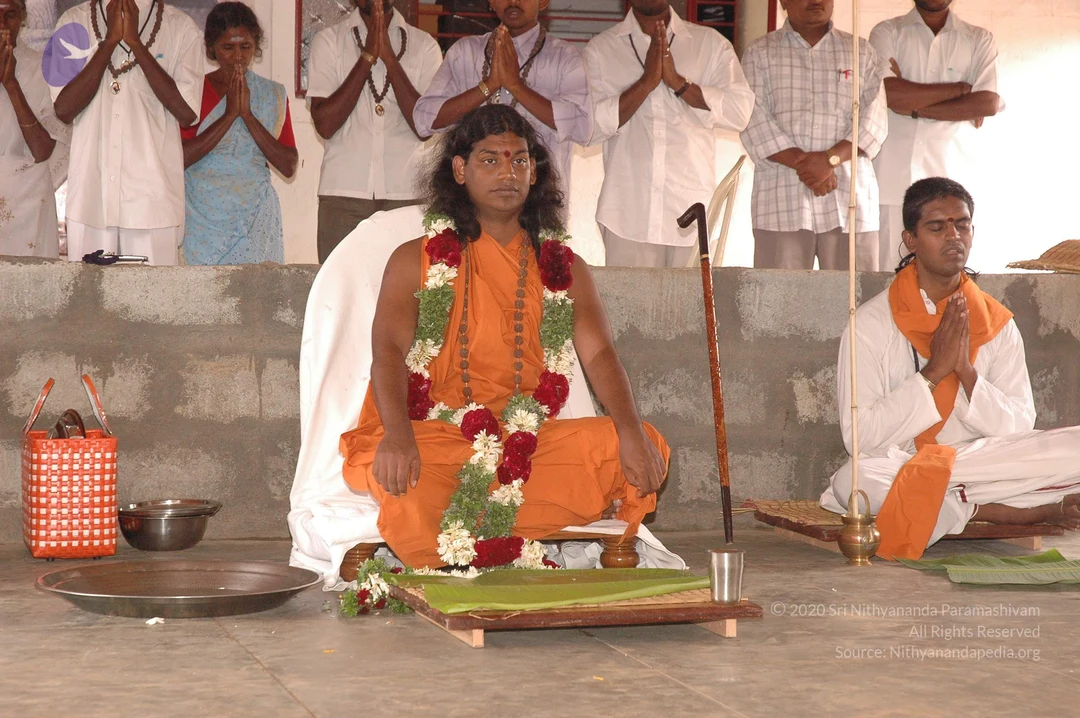
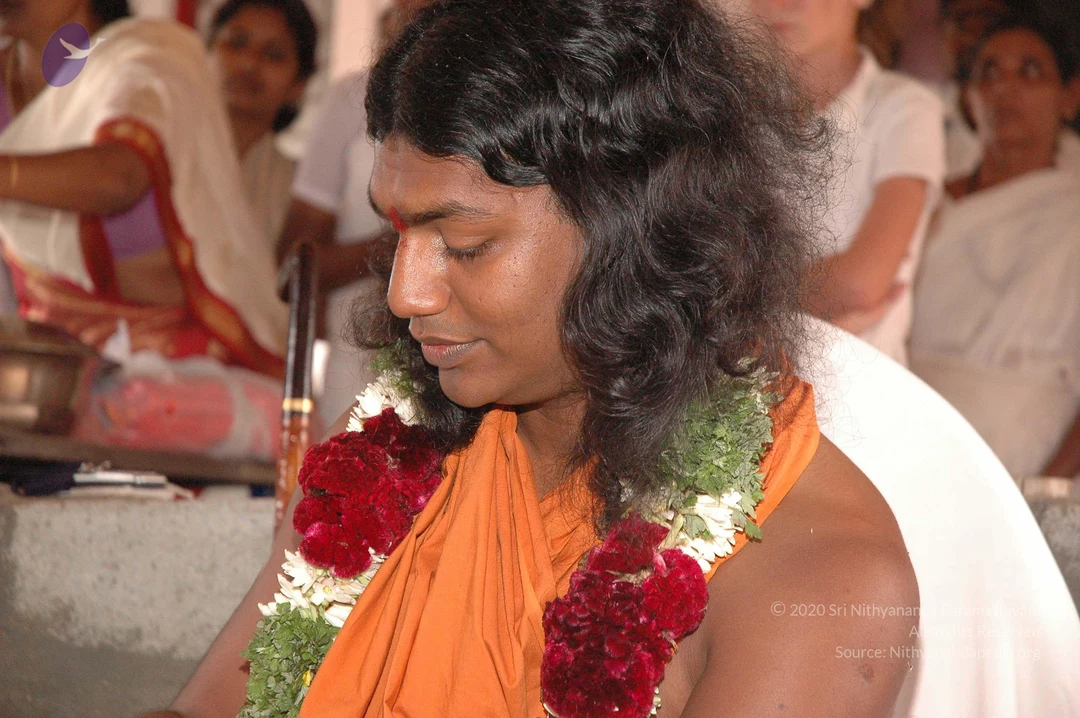
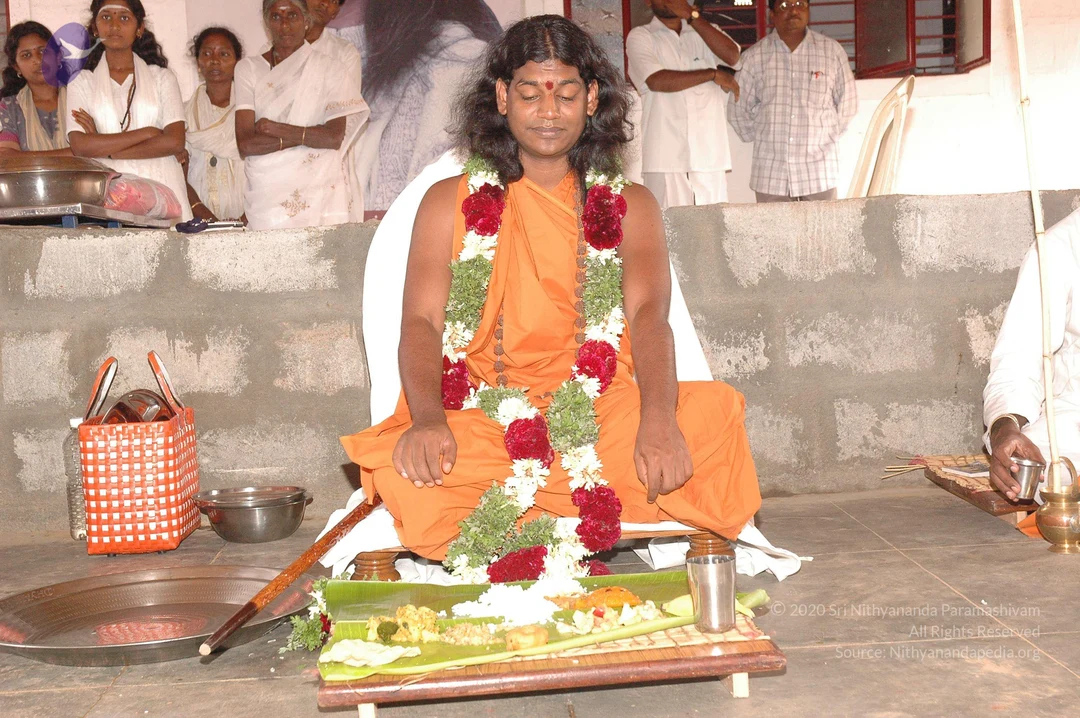
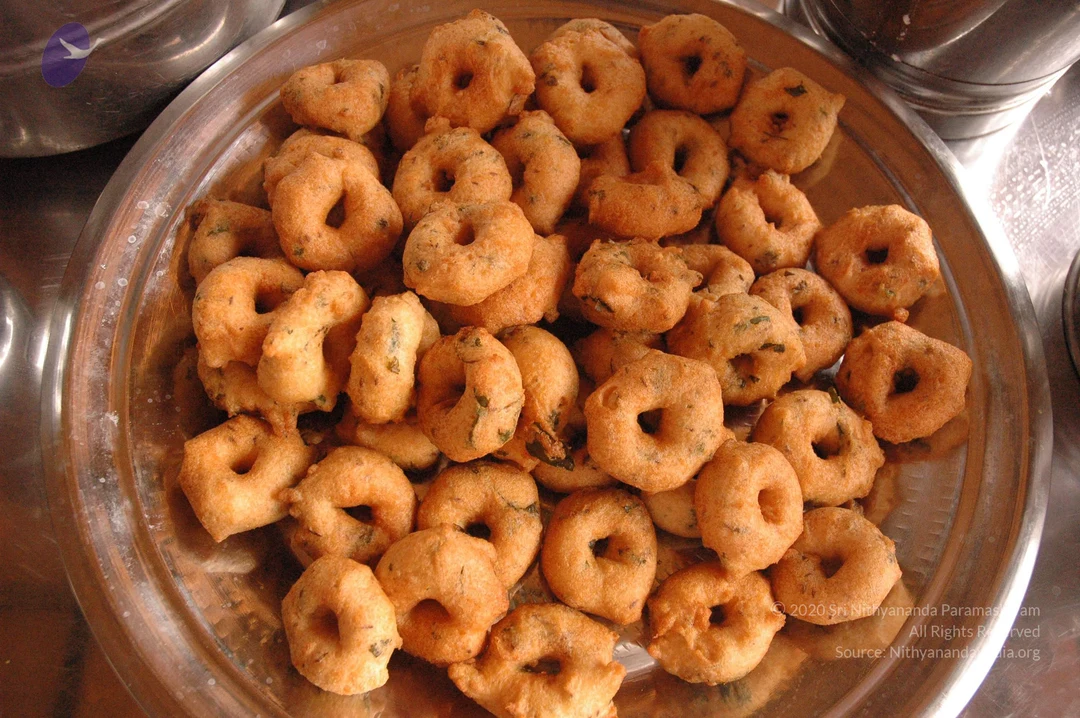
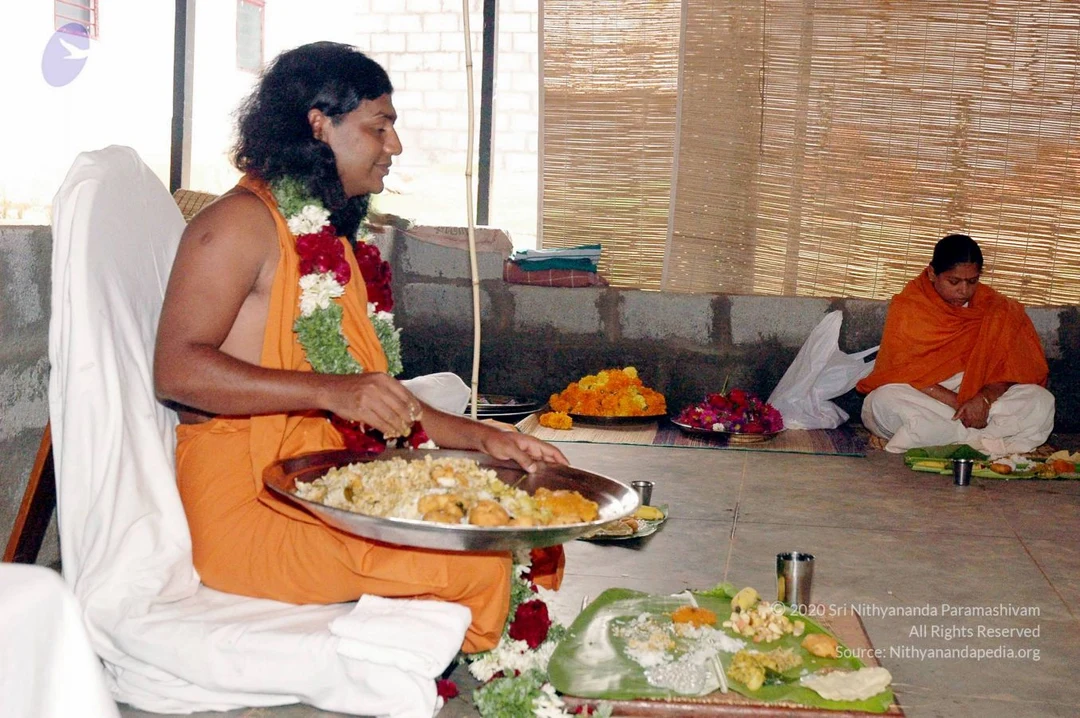
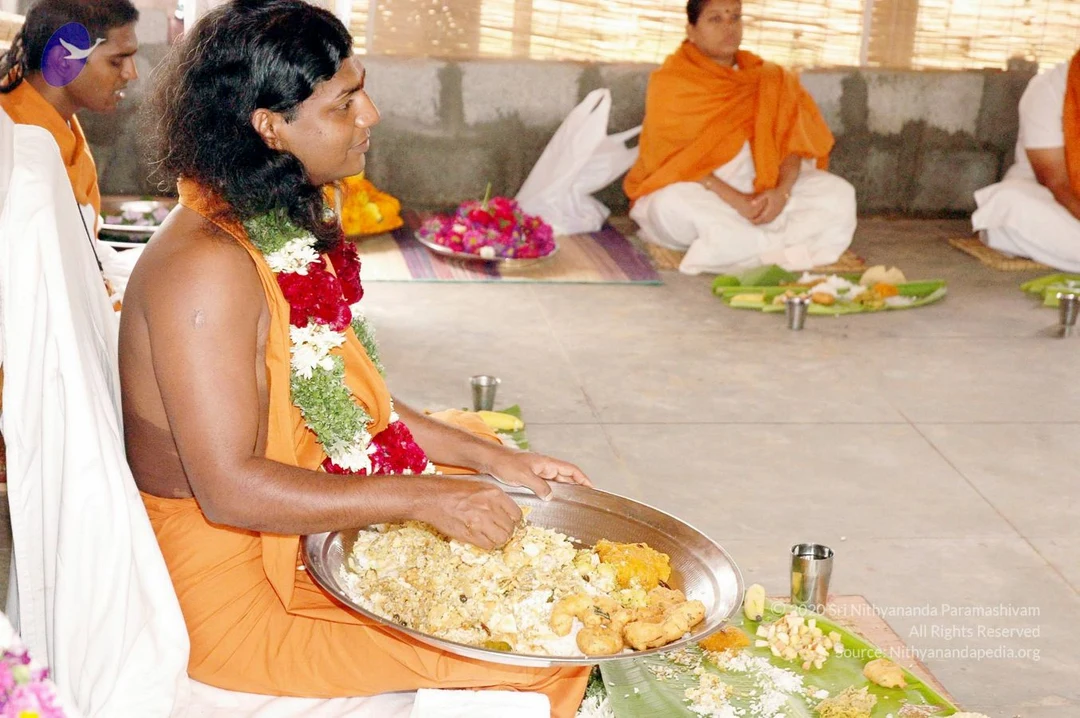
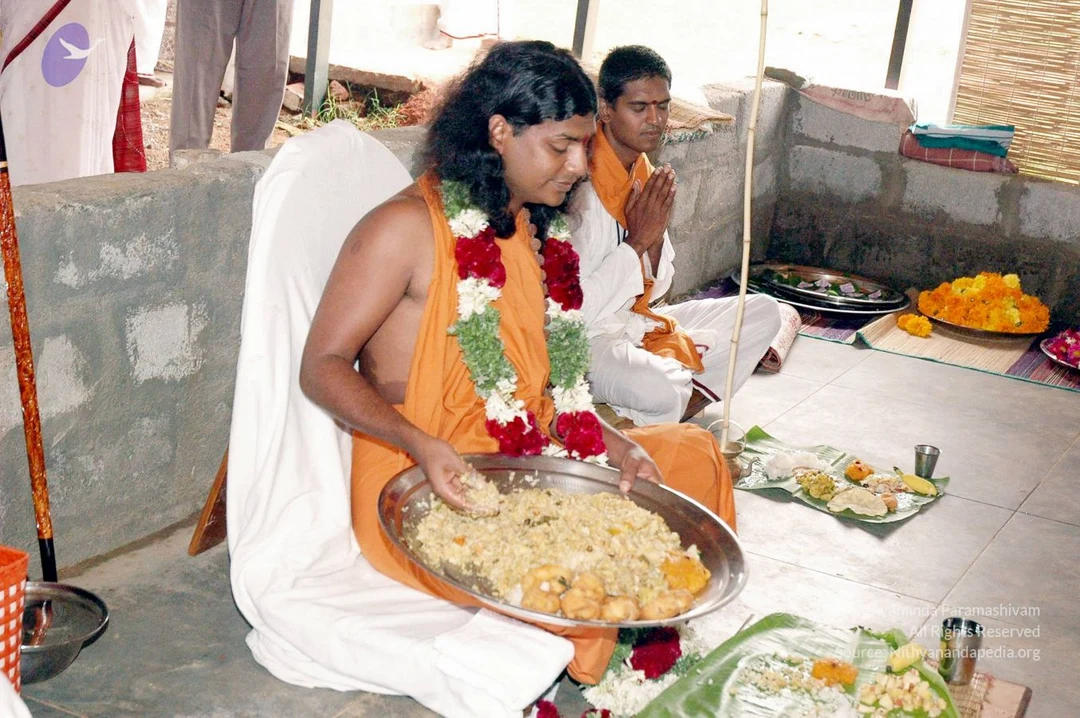
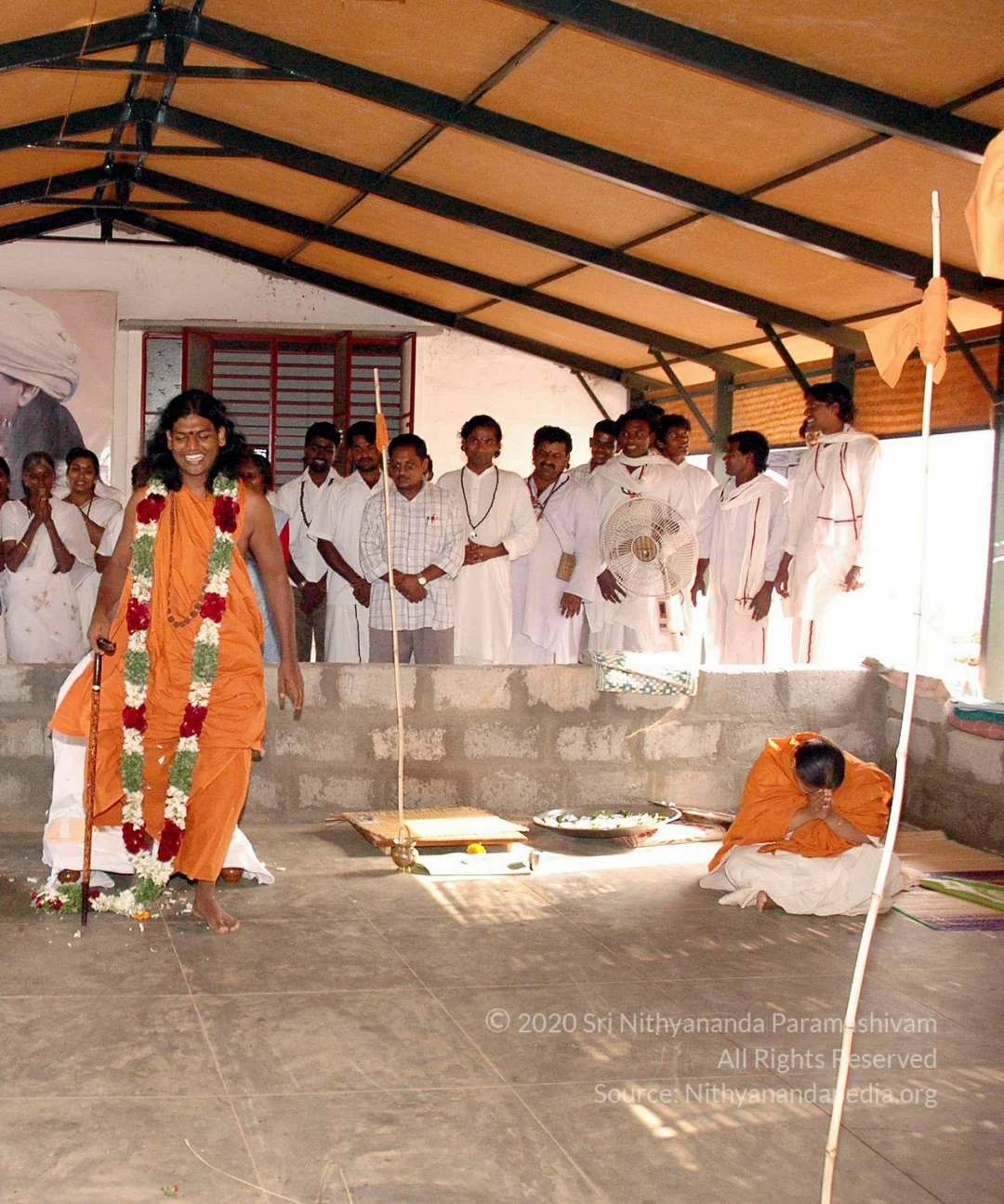
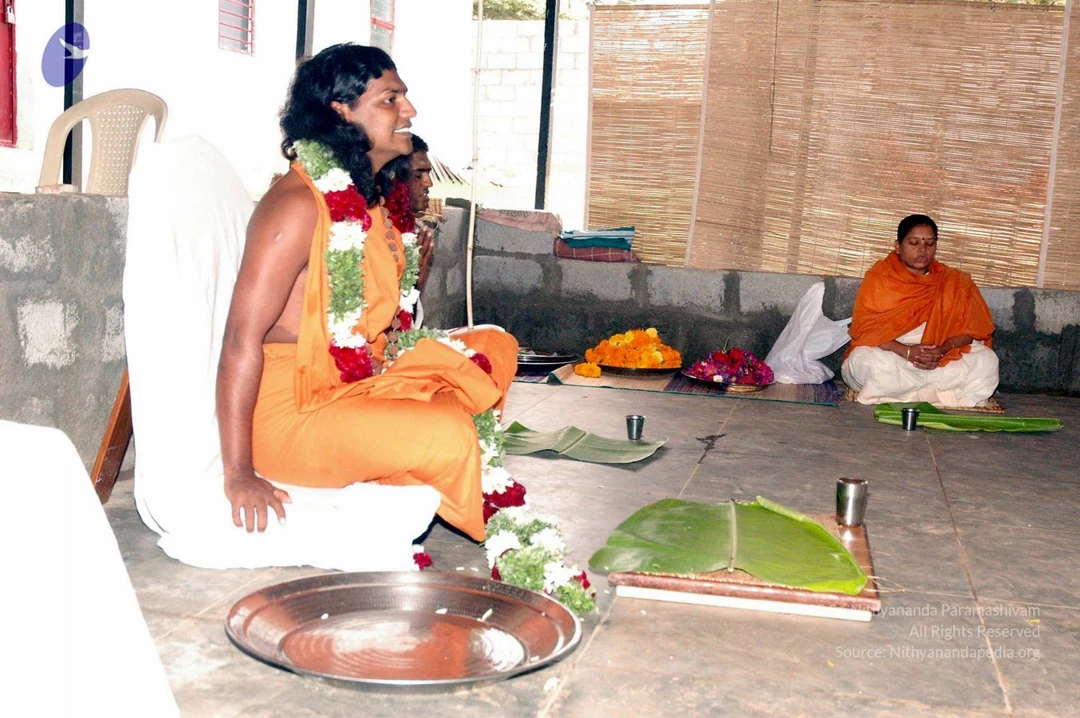
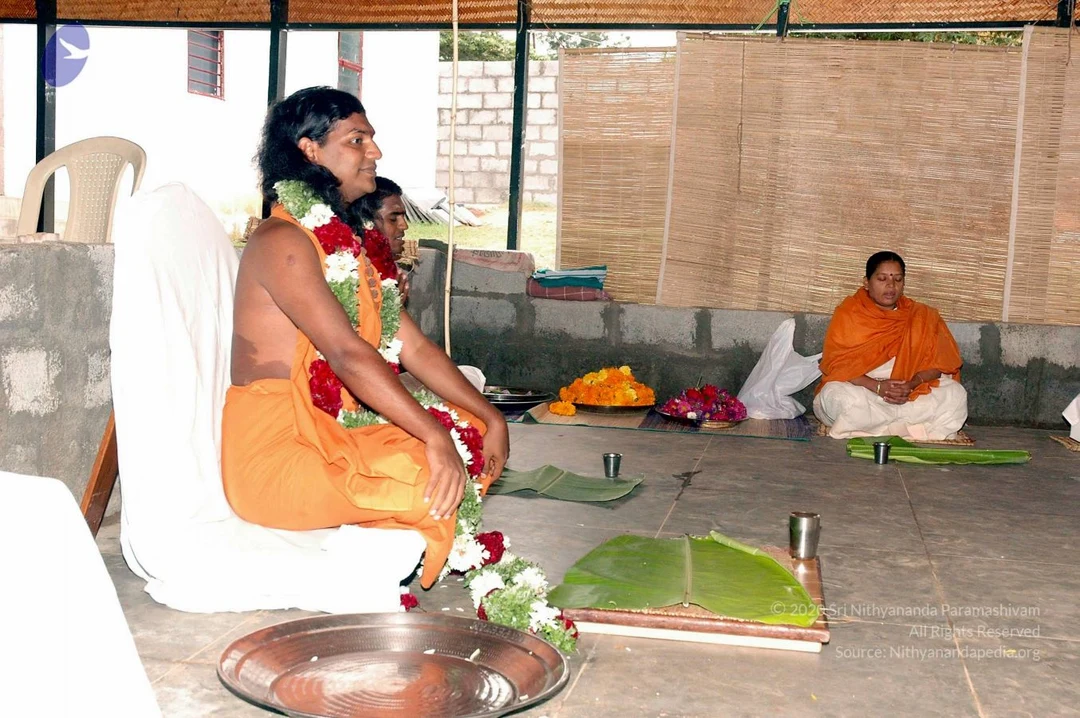
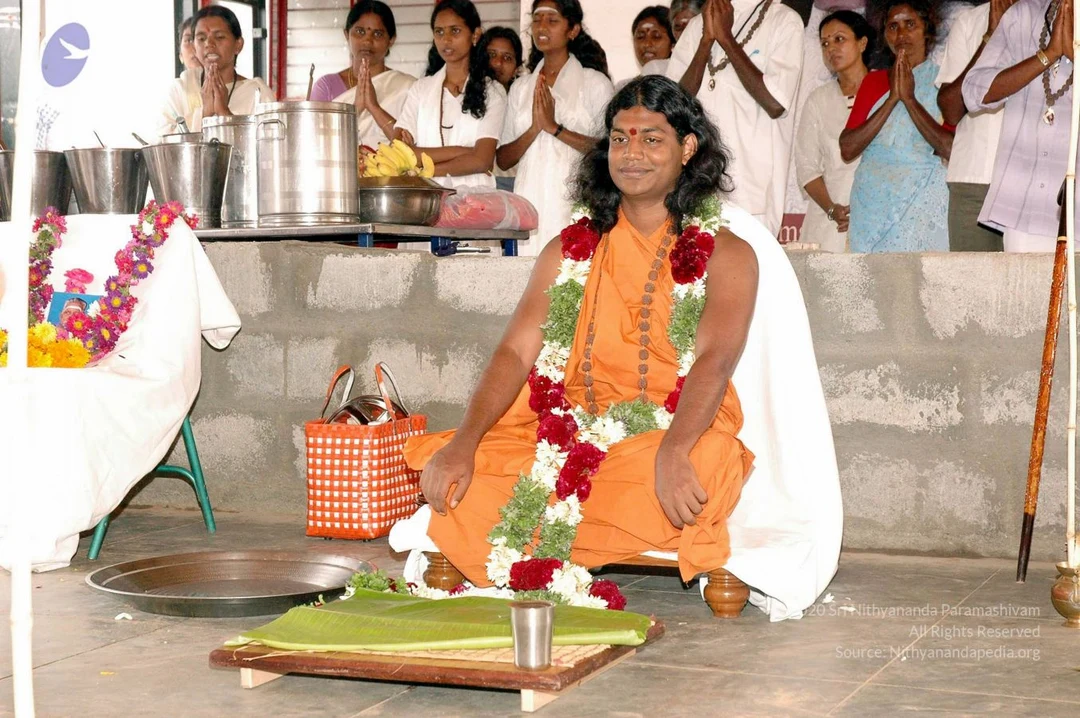
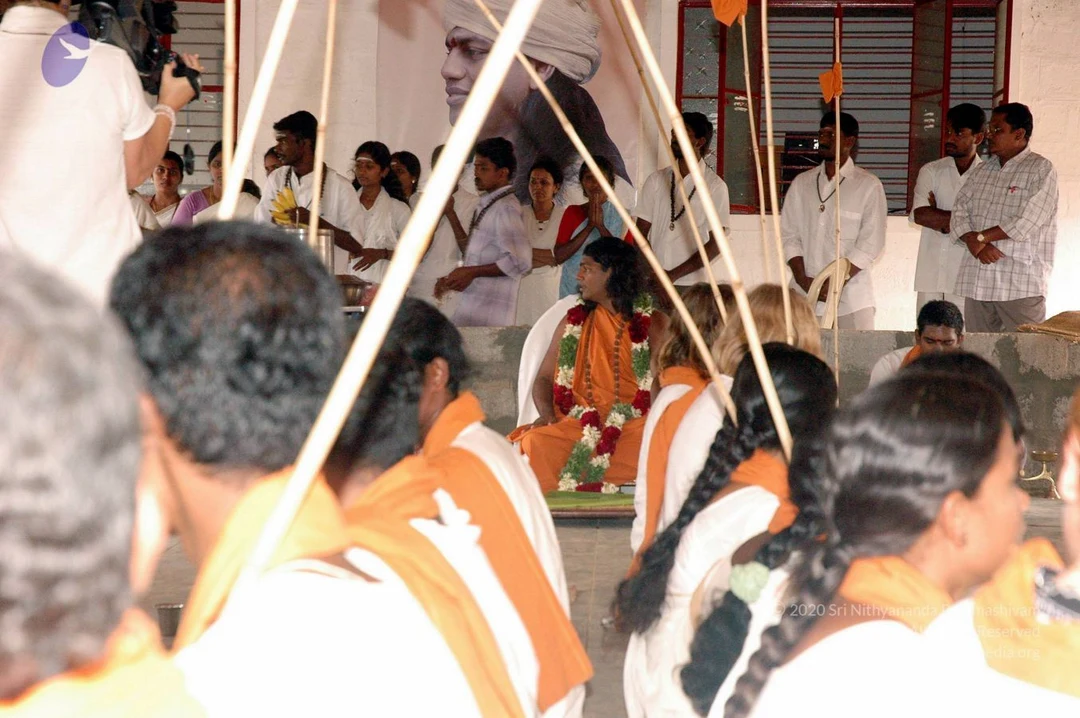
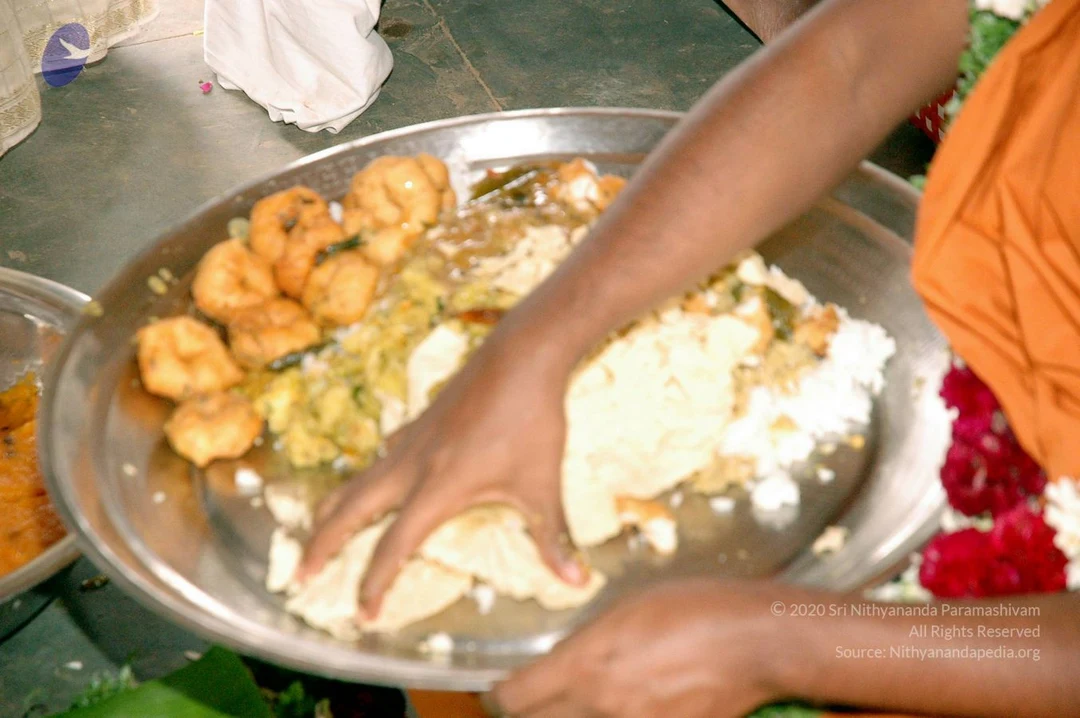
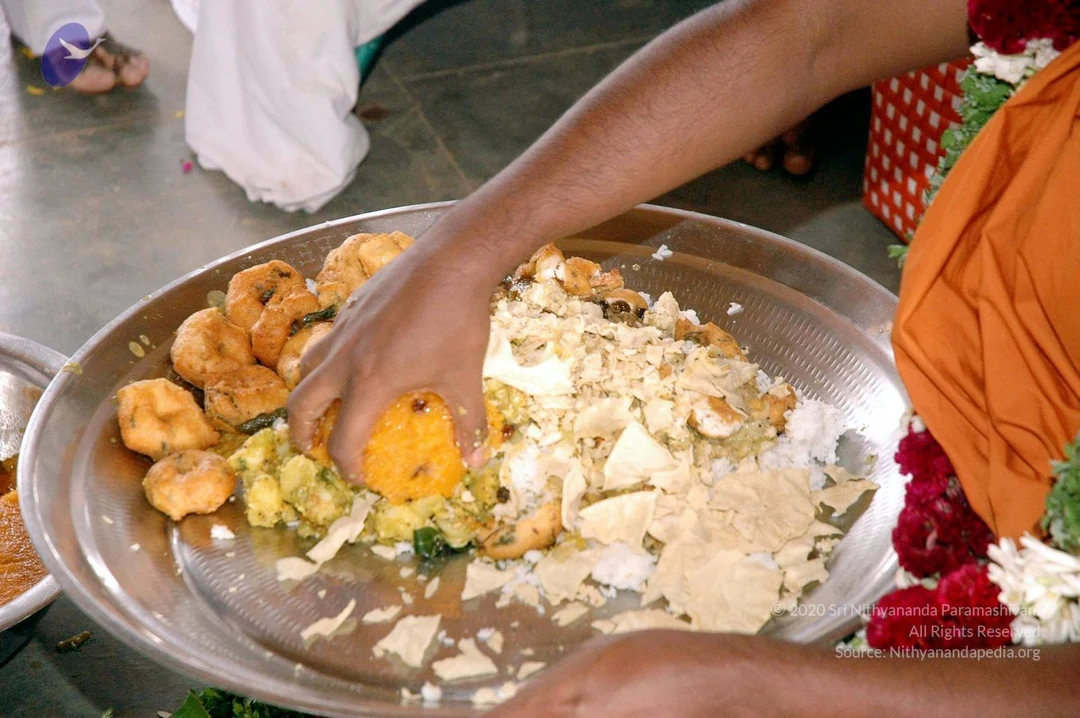
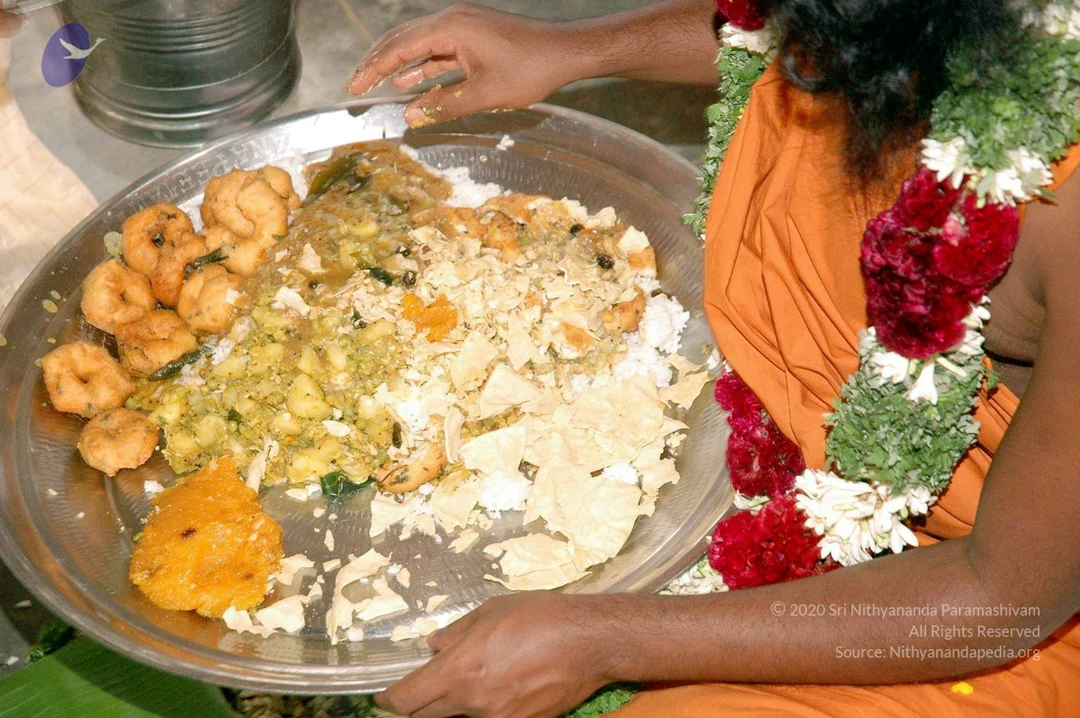
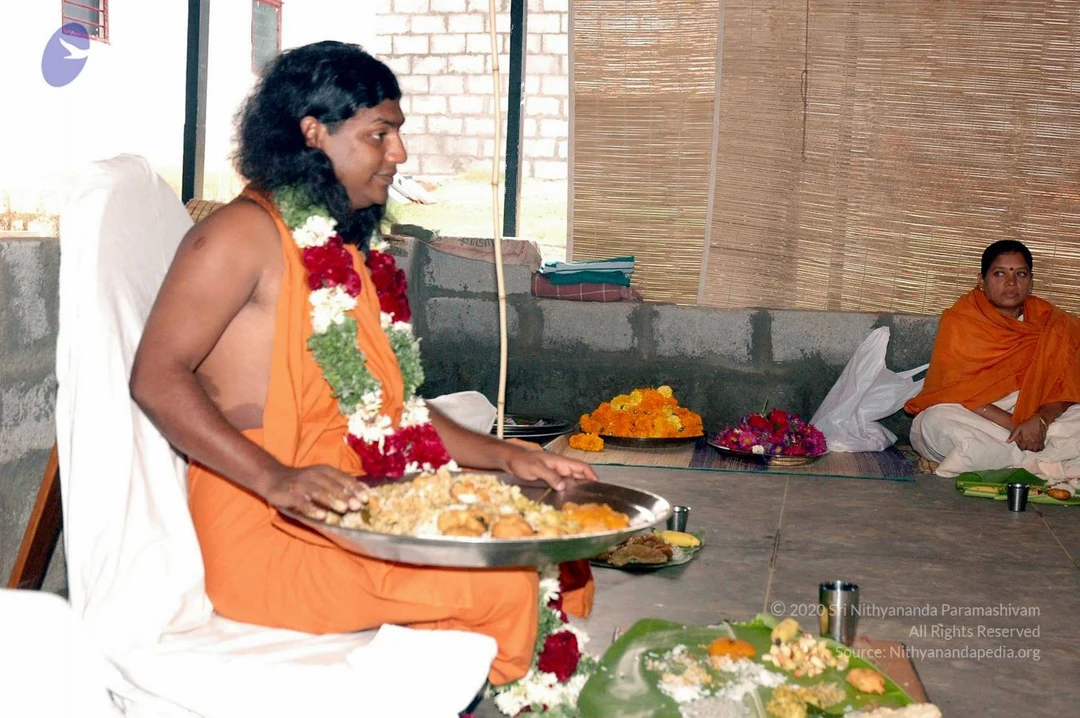
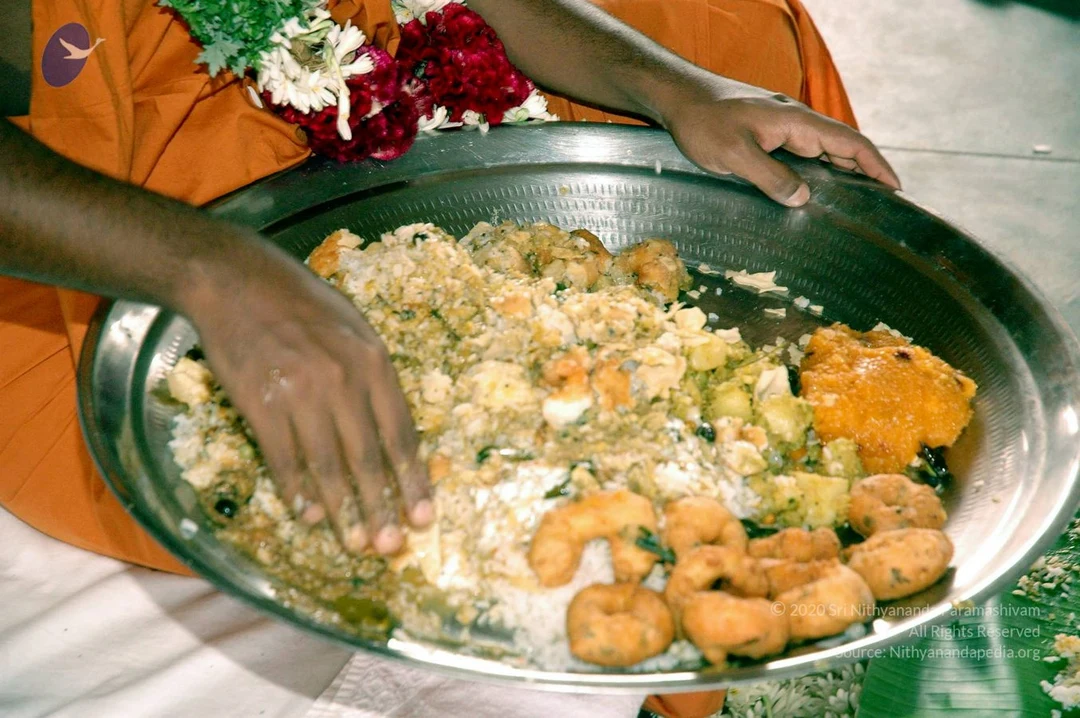
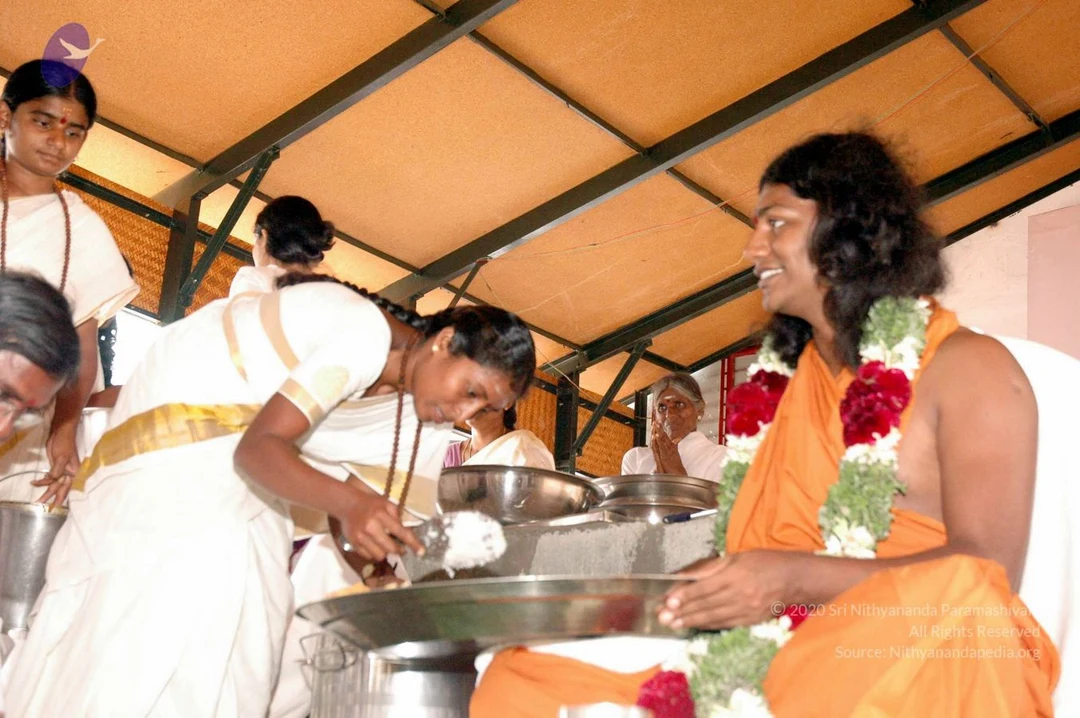
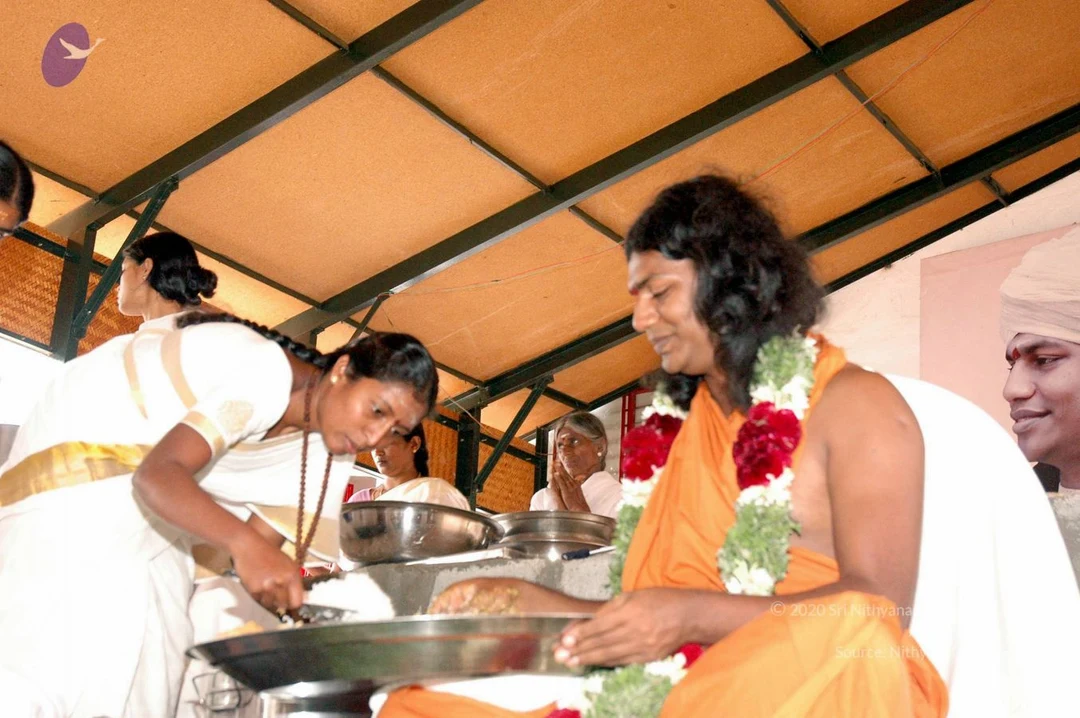
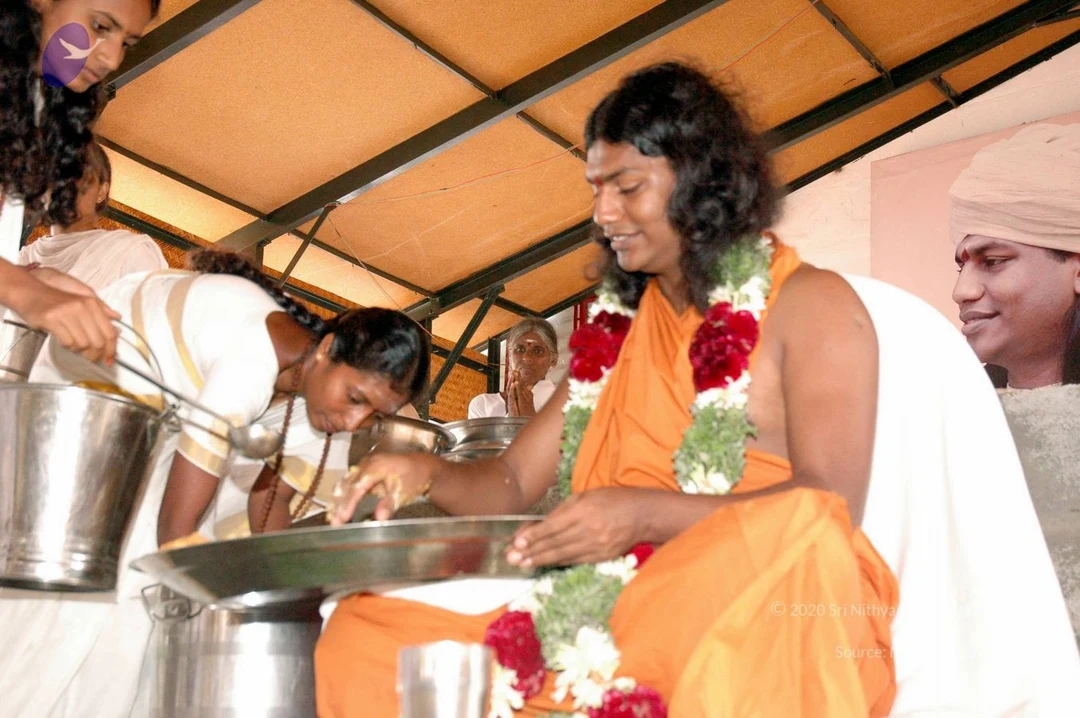
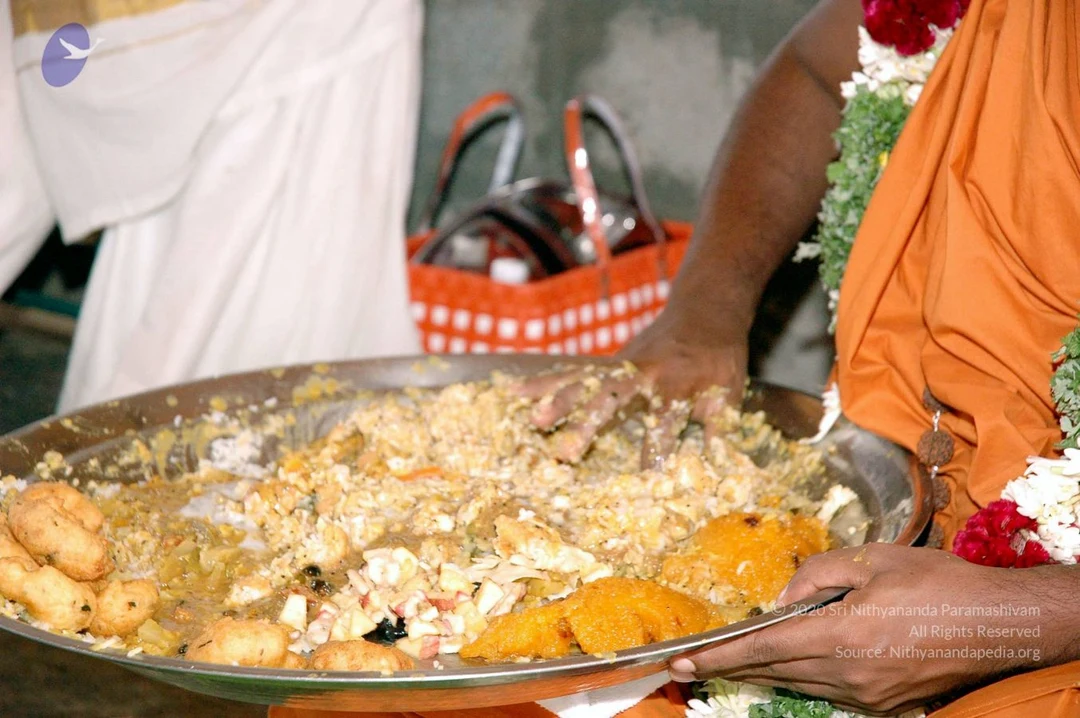
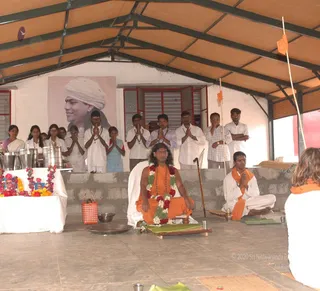
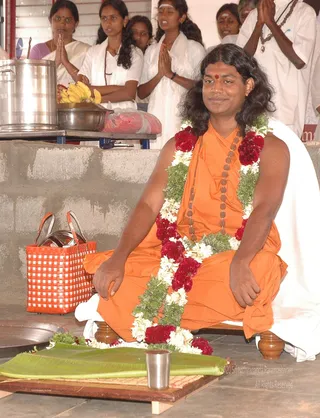
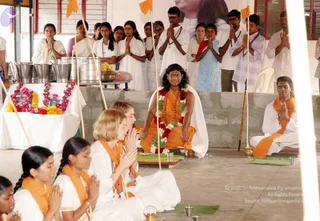
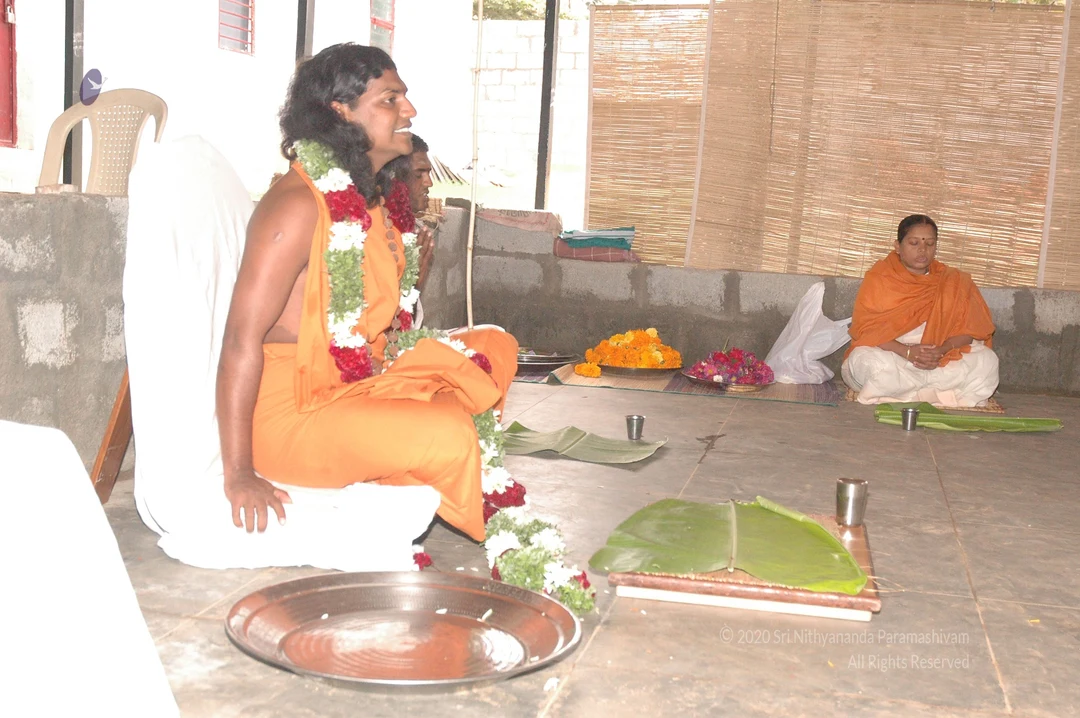
A photograph of a seated man in saffron-orange robes with long swept-back hair, a red-and-white flower garland with green leaves, and a rudraksha mala, sitting cross-legged on a low wooden platform with hands in lap and eyes closed. A wooden staff leans beside him and a brass vessel sits on a green leaf. Behind him, several men in white shirts stand with palms pressed together in namaskar, and a woman in a blue sari joins them. To the right, a second seated man in white with an orange shawl and palms together sits on a mat. A brass lamp and a metal plate lie in the foreground on a concrete floor before a block wall. The Swamiji depiction cues are distinctive (long hair, saffron robes, garland, mala), so the seated figure is a probable Swamiji; this matches a Maheshwara Puja ceremony setting.A seated man in an orange-saffron robe, with long dark hair, a red tilak on his forehead and a garland of red roses, white flowers and green leaves draped over his shoulders and lap, smiles while gesturing toward the floor. He sits on a white cloth-draped seat beside a bamboo pole. Behind him, standing people in white clothes, some wearing white shawls and necklaces of beads, watch, and steel vessels are visible at the right edge. The setting appears to be a open-sided pavilion with a concrete floor.Close overhead photograph of a stainless steel bowl filled with a thick, orange-brown liquid. A metal ladle rests in the bowl at right. Fried vadas or similar golden fried snacks are arranged on a plate at the left edge. No people or ritual setting is visible.

October 12 2006

Original wiki page
Contents

Title:

THE SUPREME PONTIFF OF HINDUISM JGM HDH BHAGAVAN NITHYANANDA PARAMASHIVAM

Photos

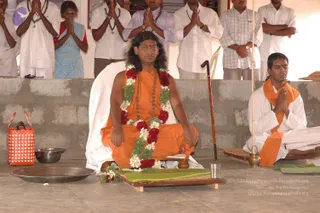
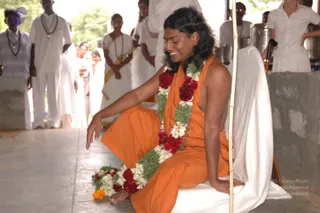
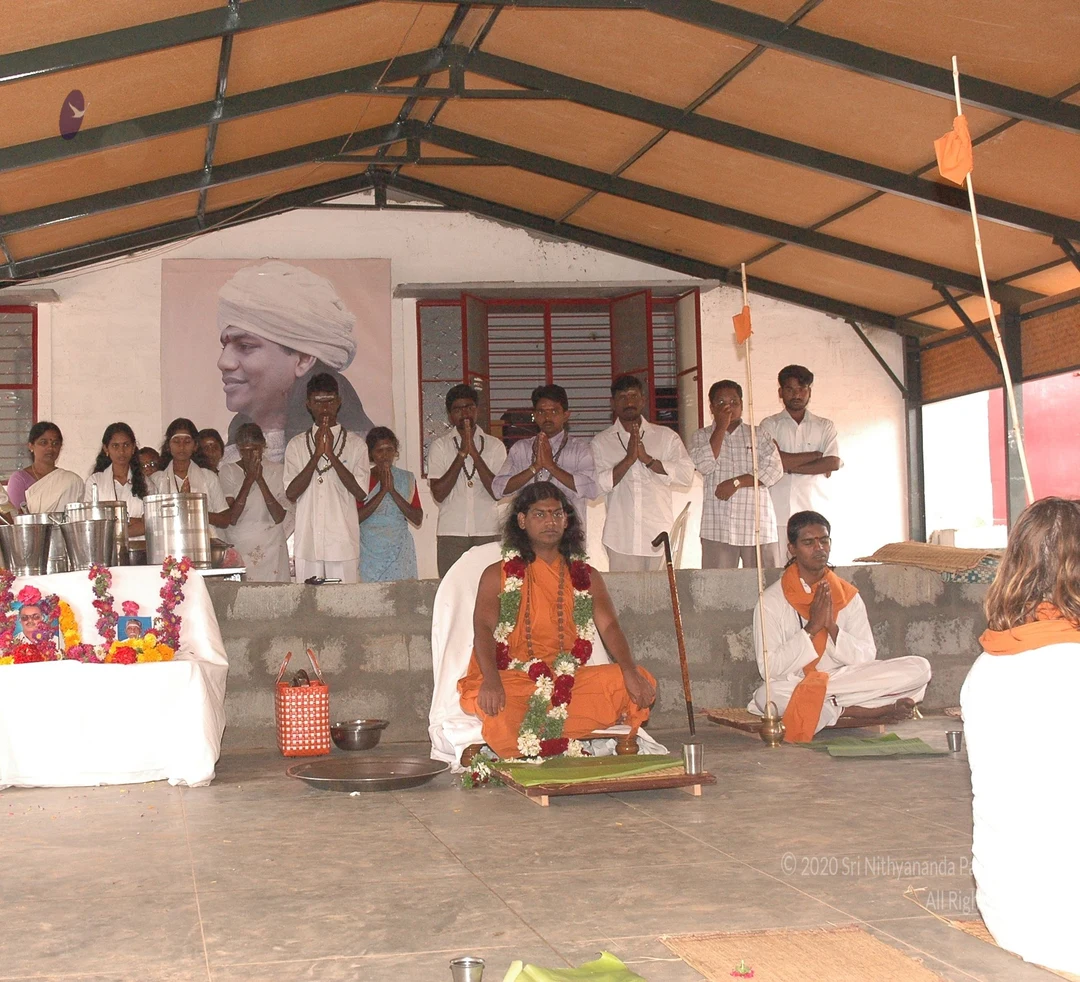
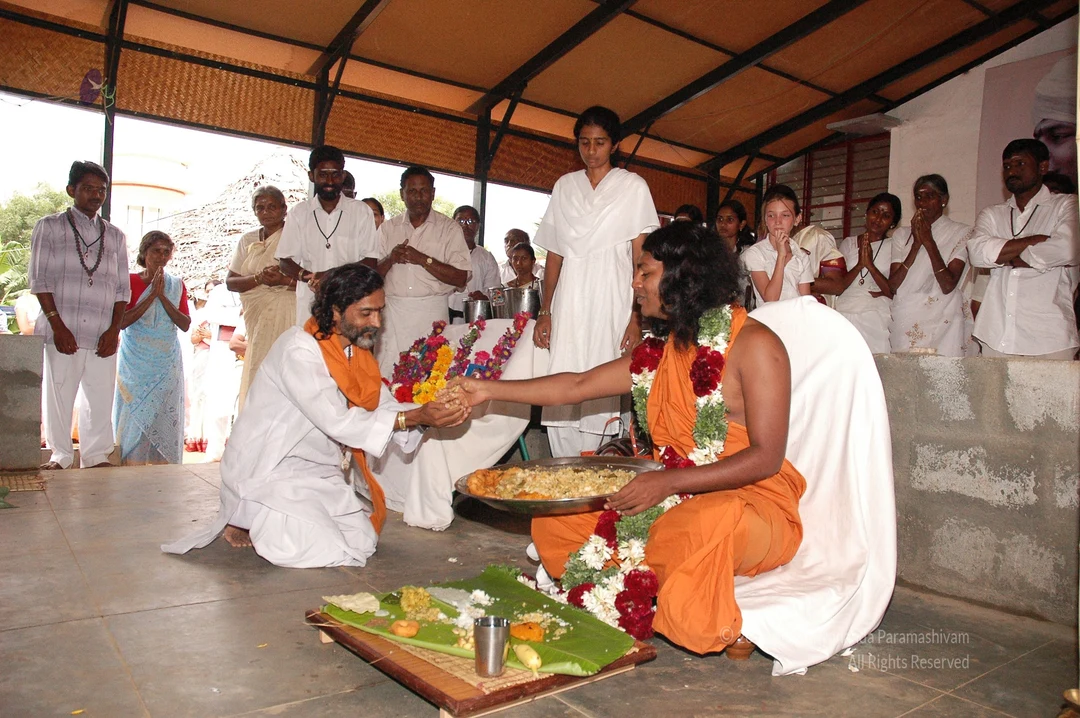
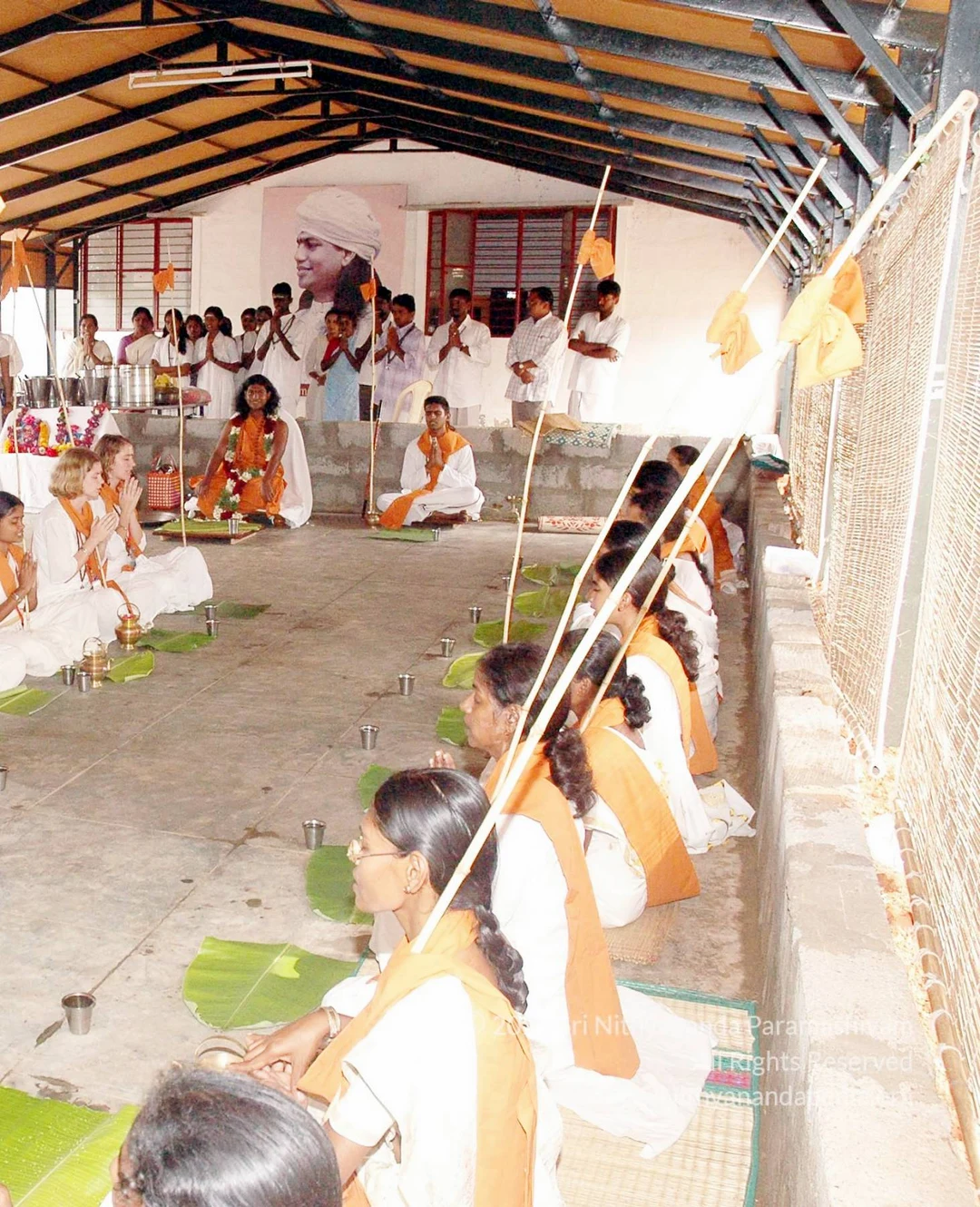
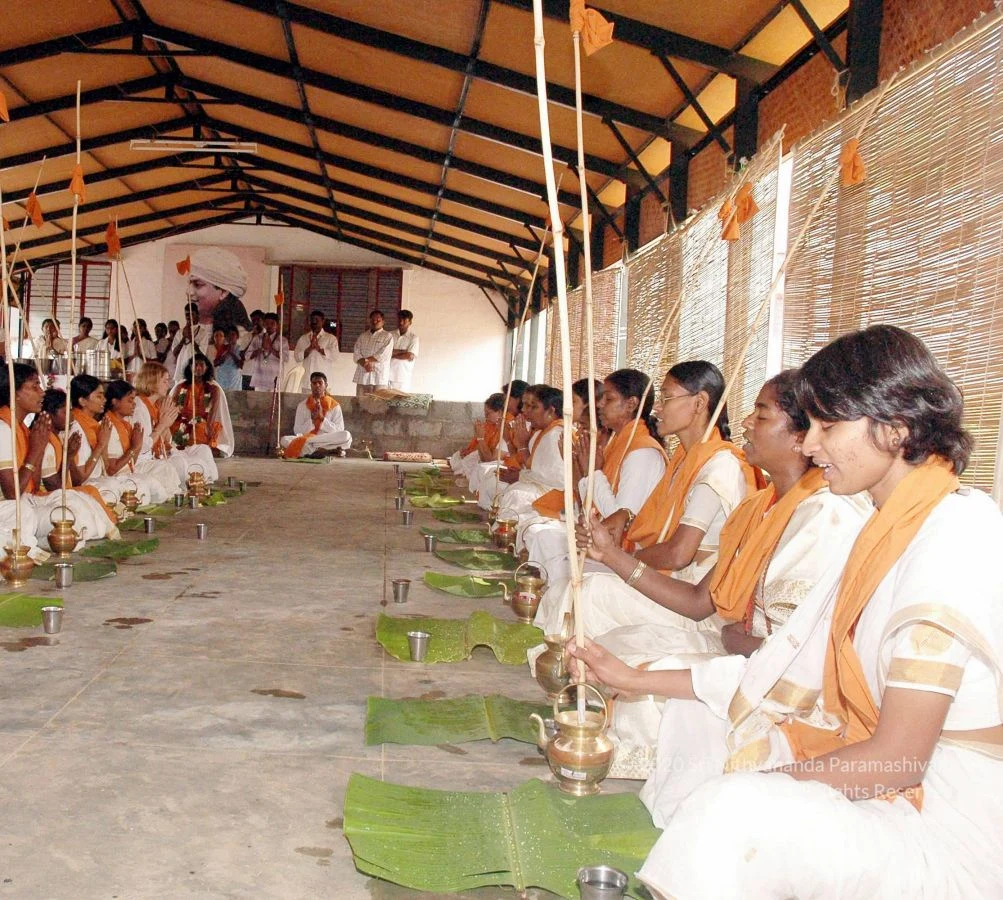
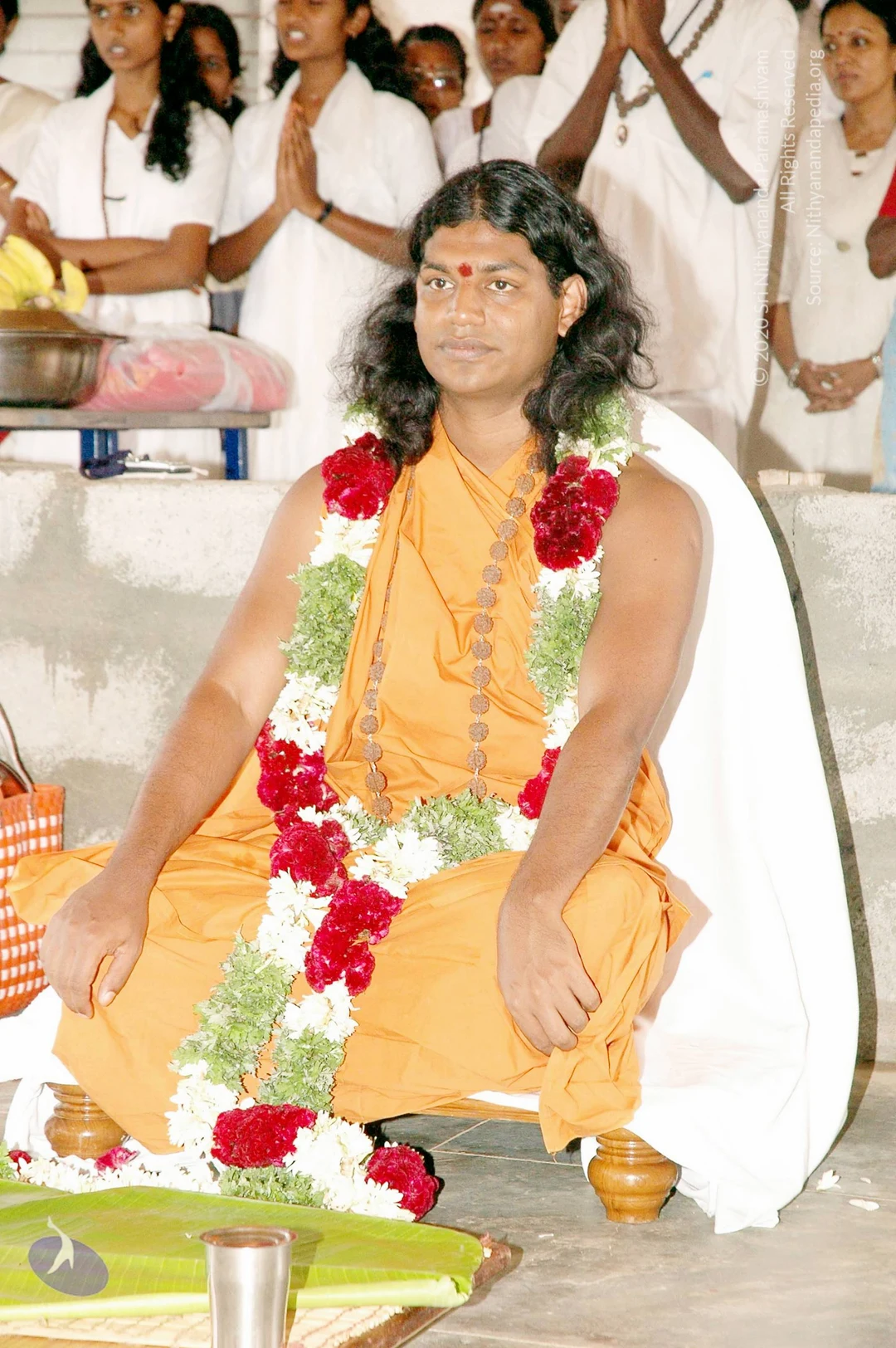
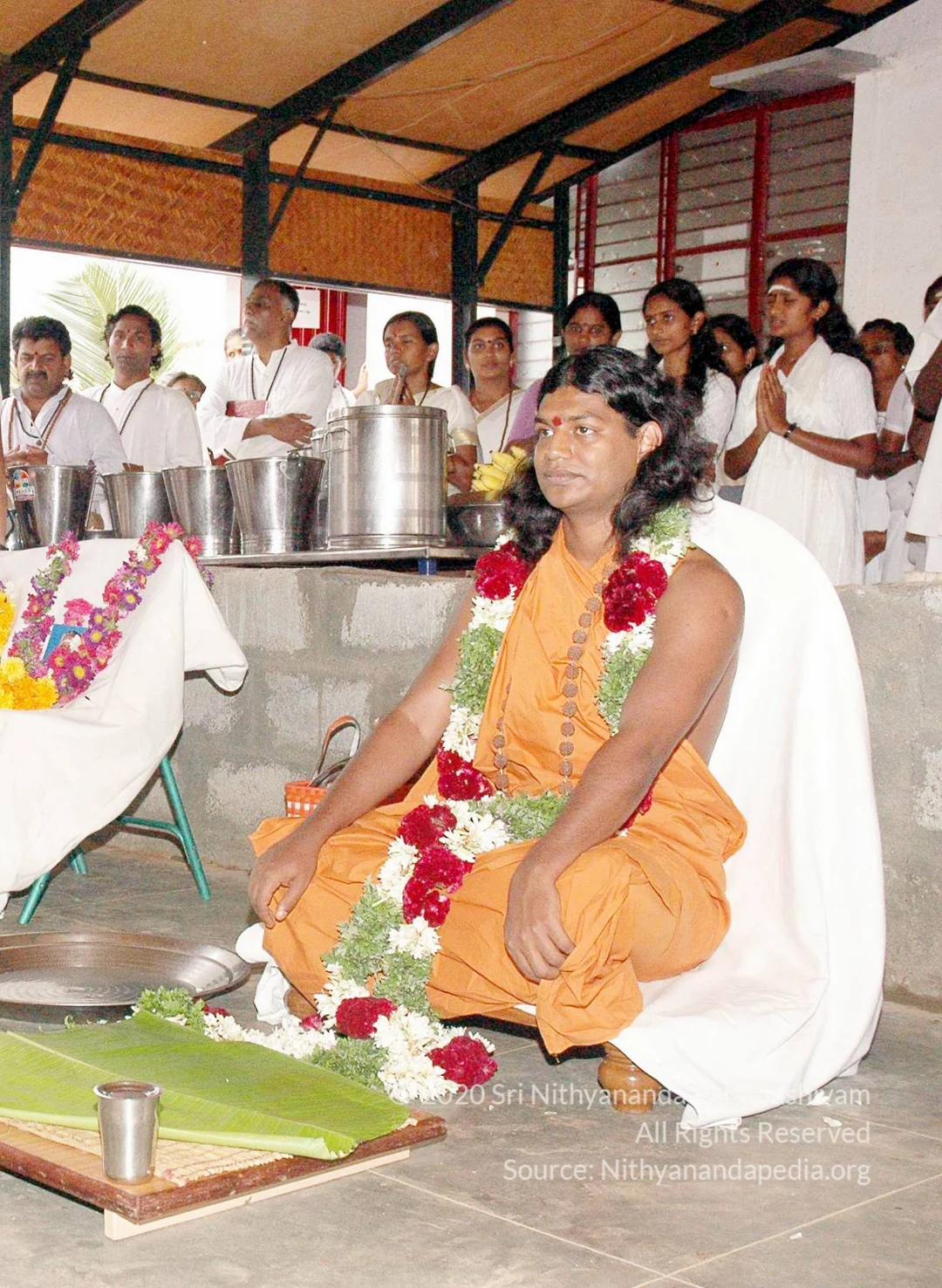
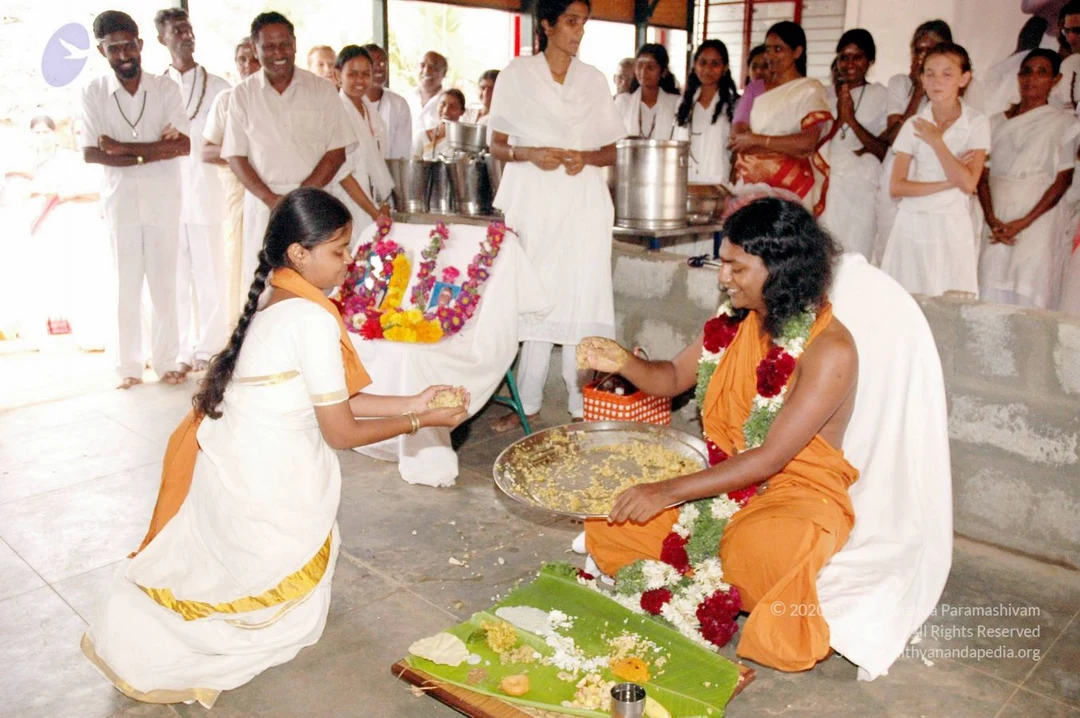
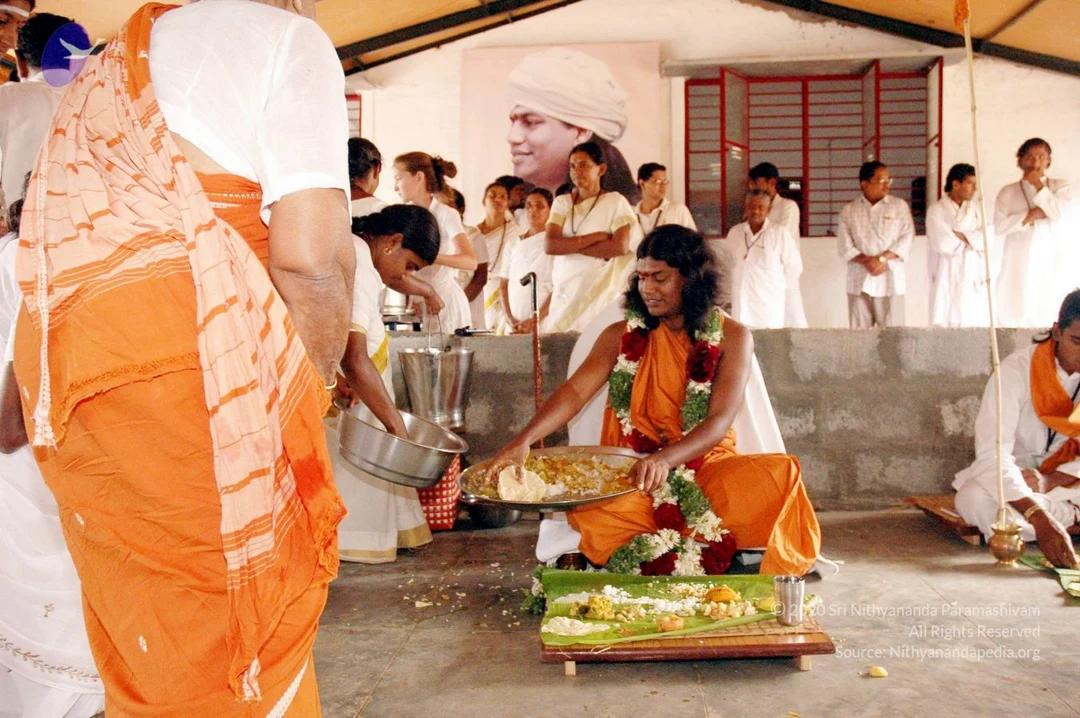
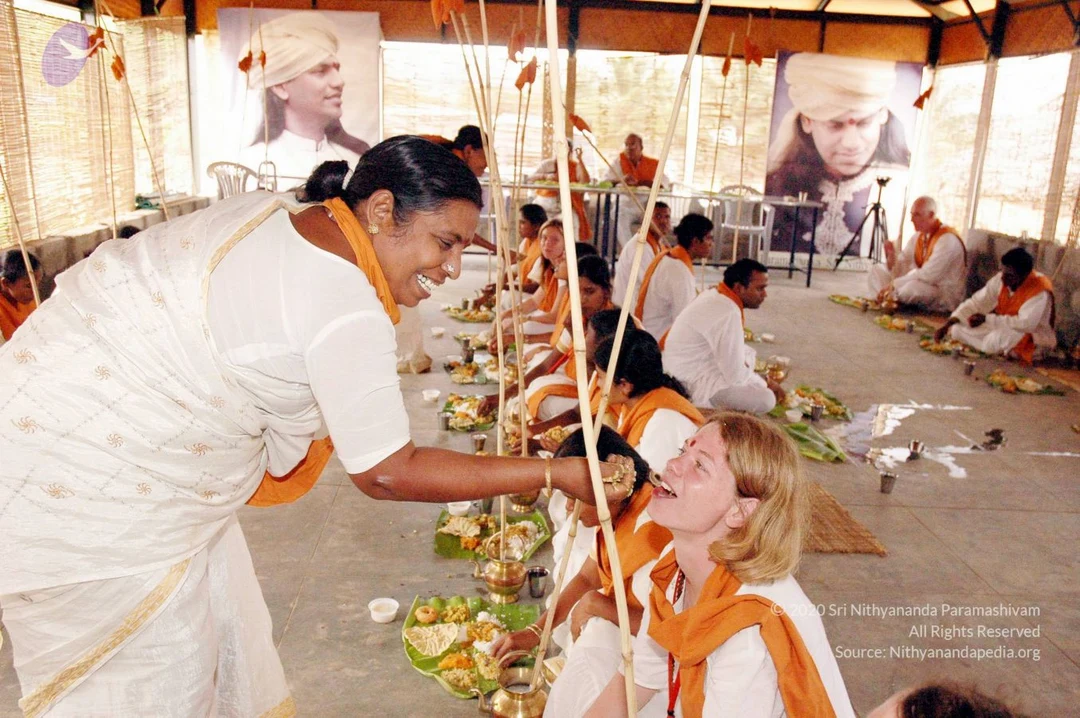
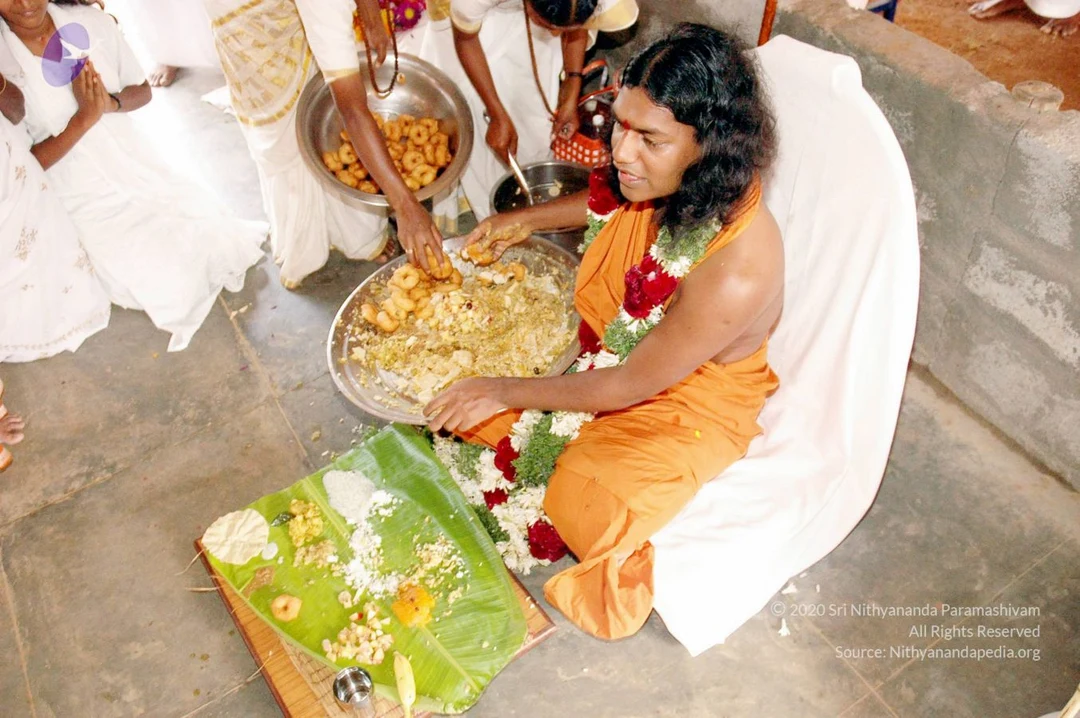
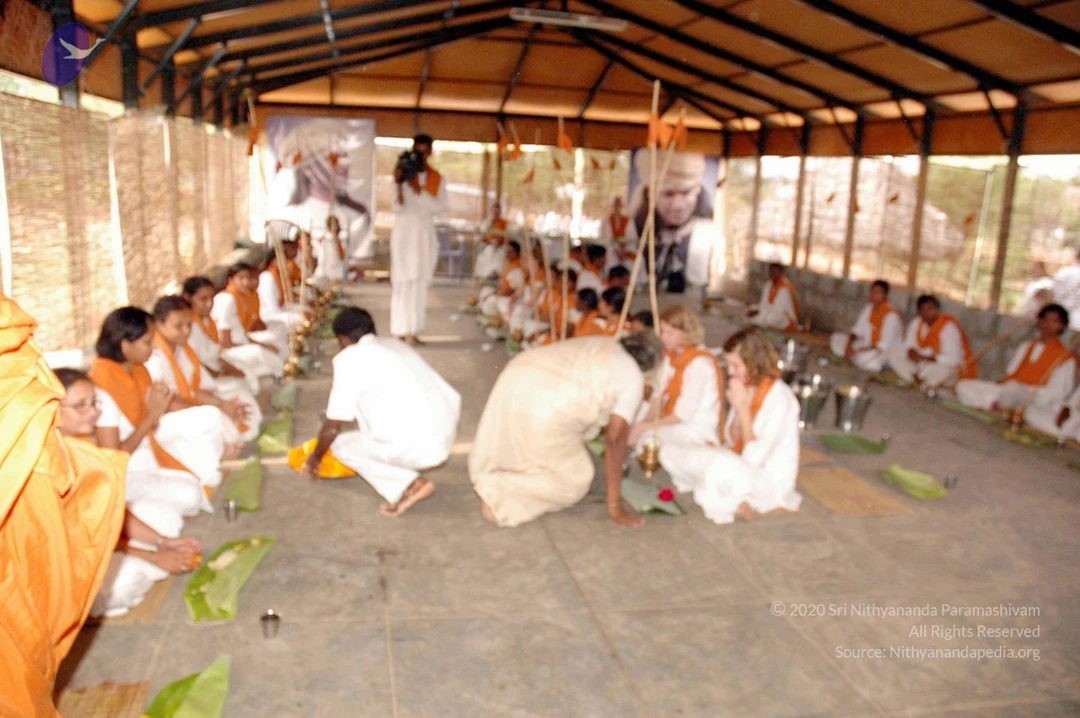
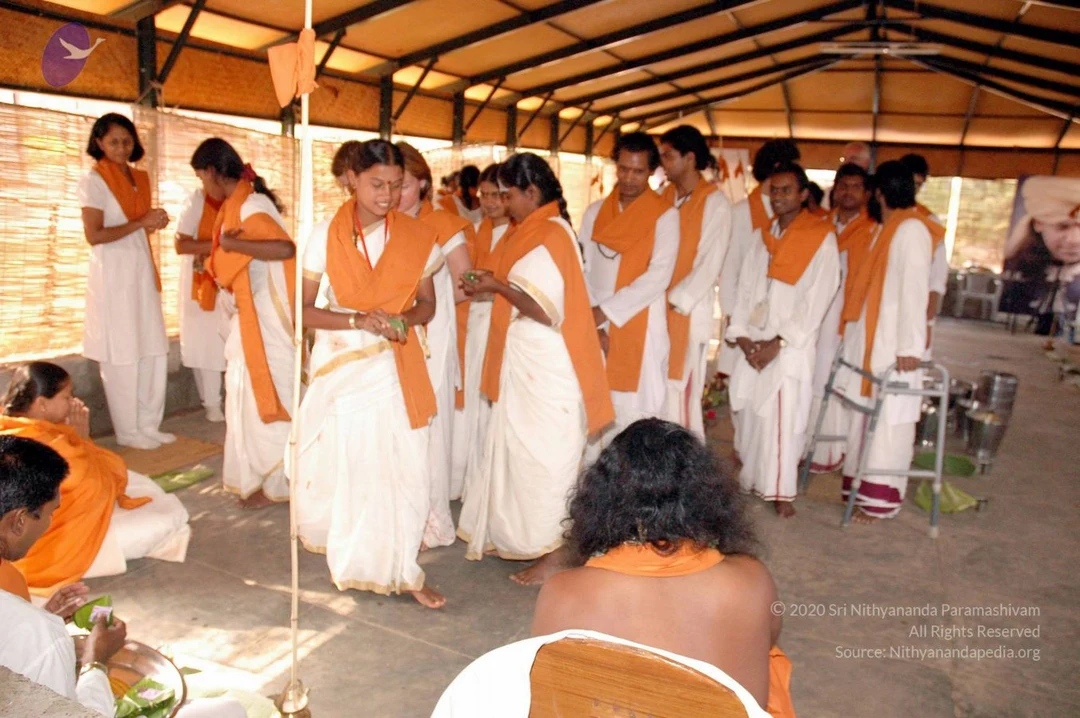
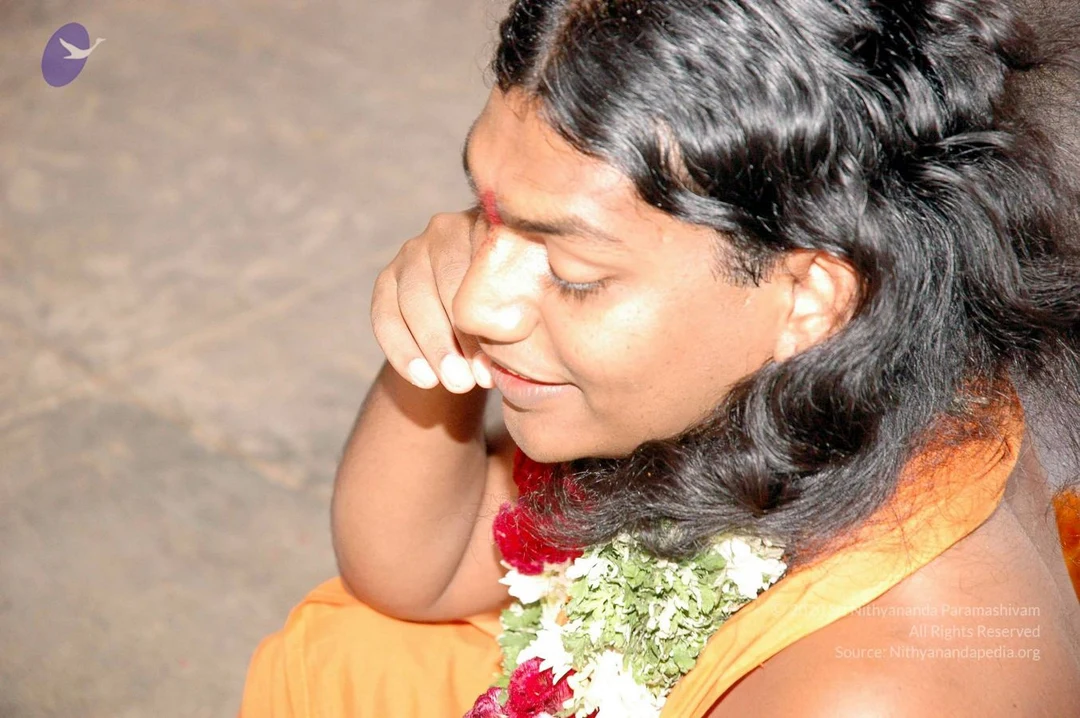
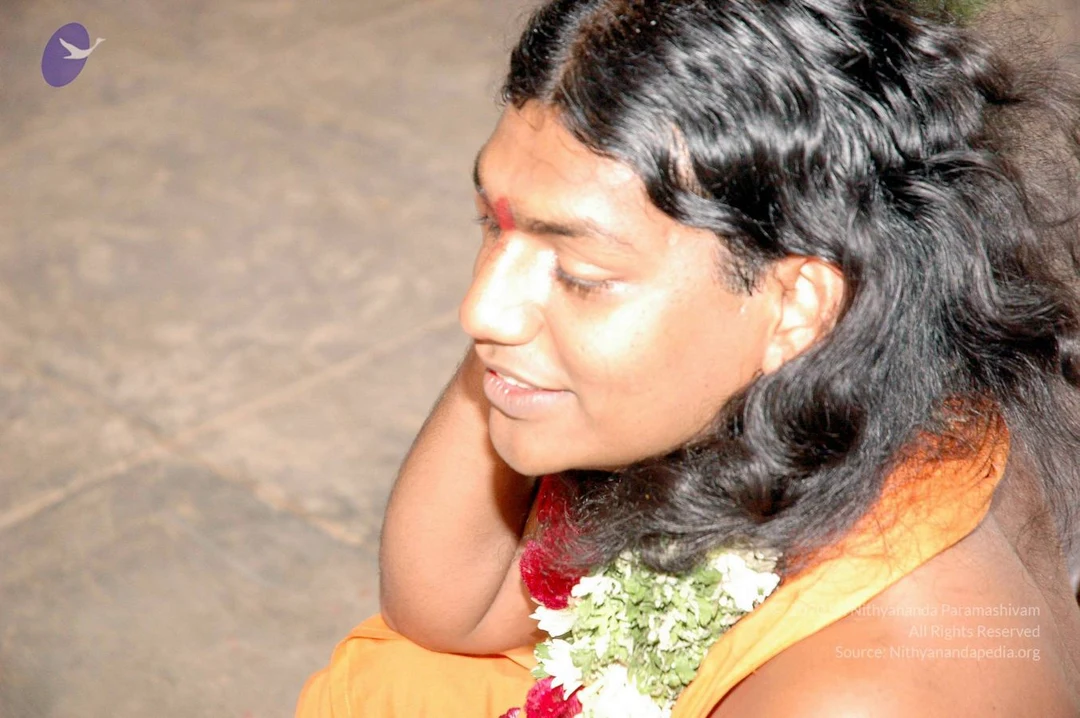
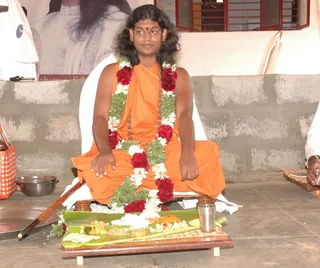
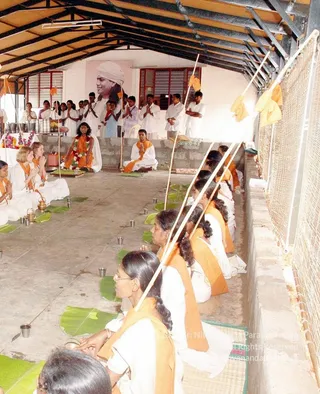
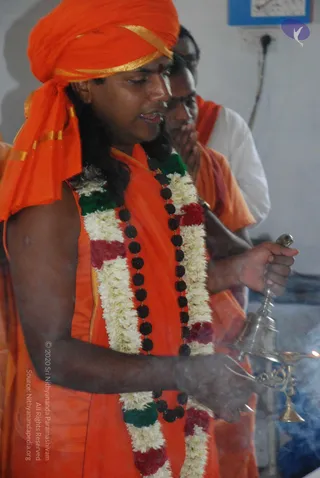
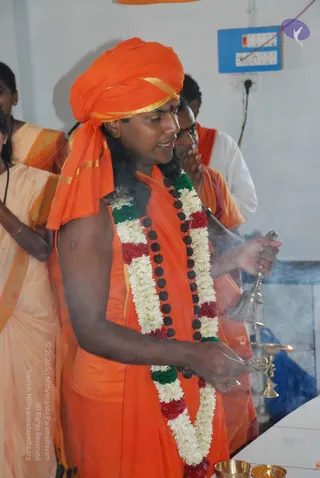
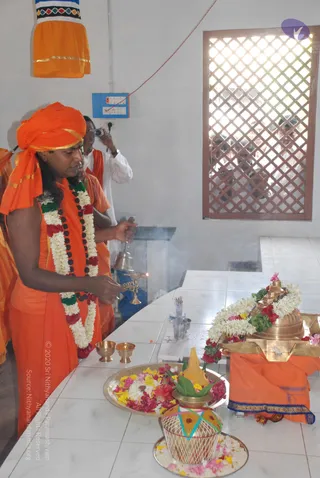
SPH Conducting Maheshwara Puja at AadiKailaasa, Bidadi

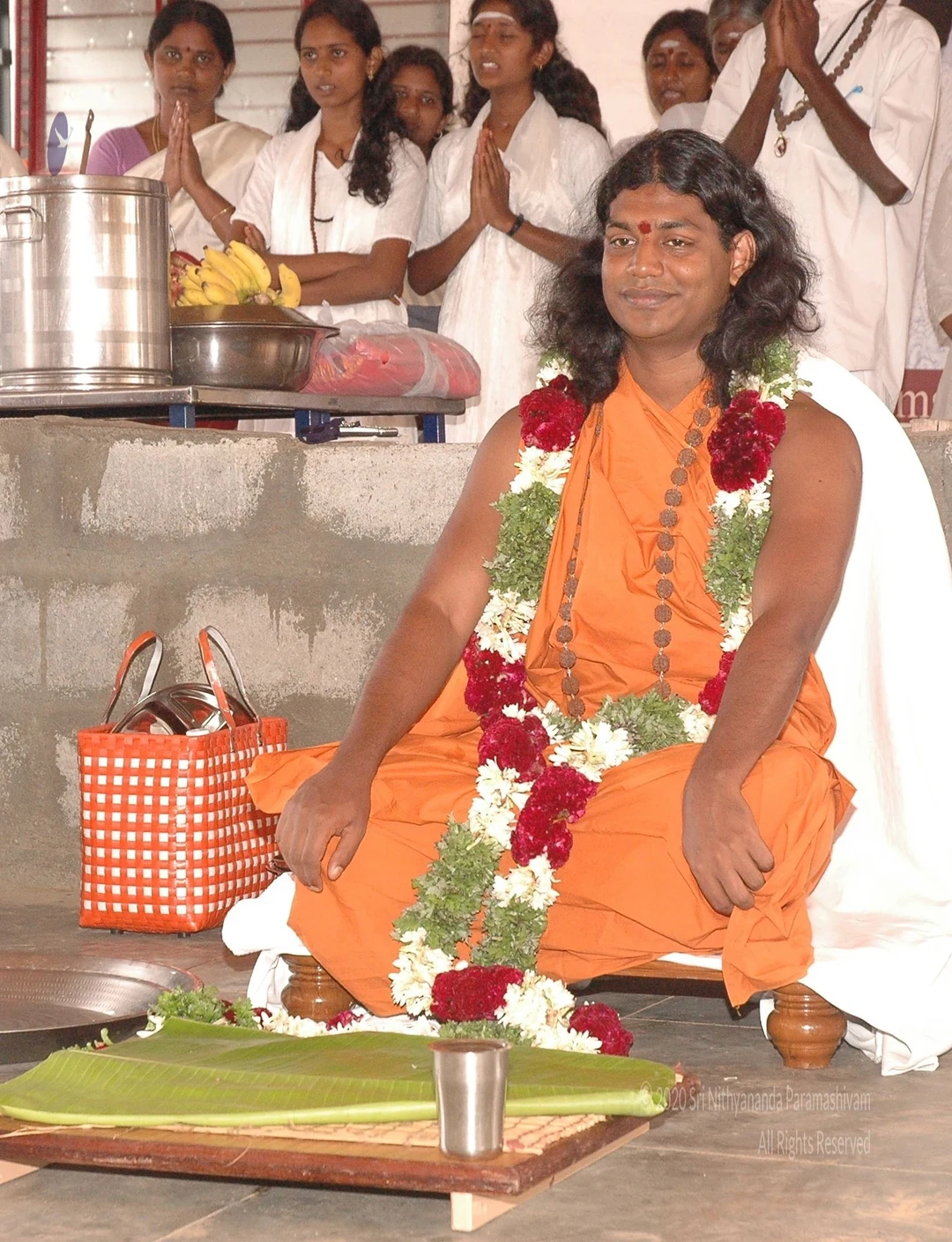
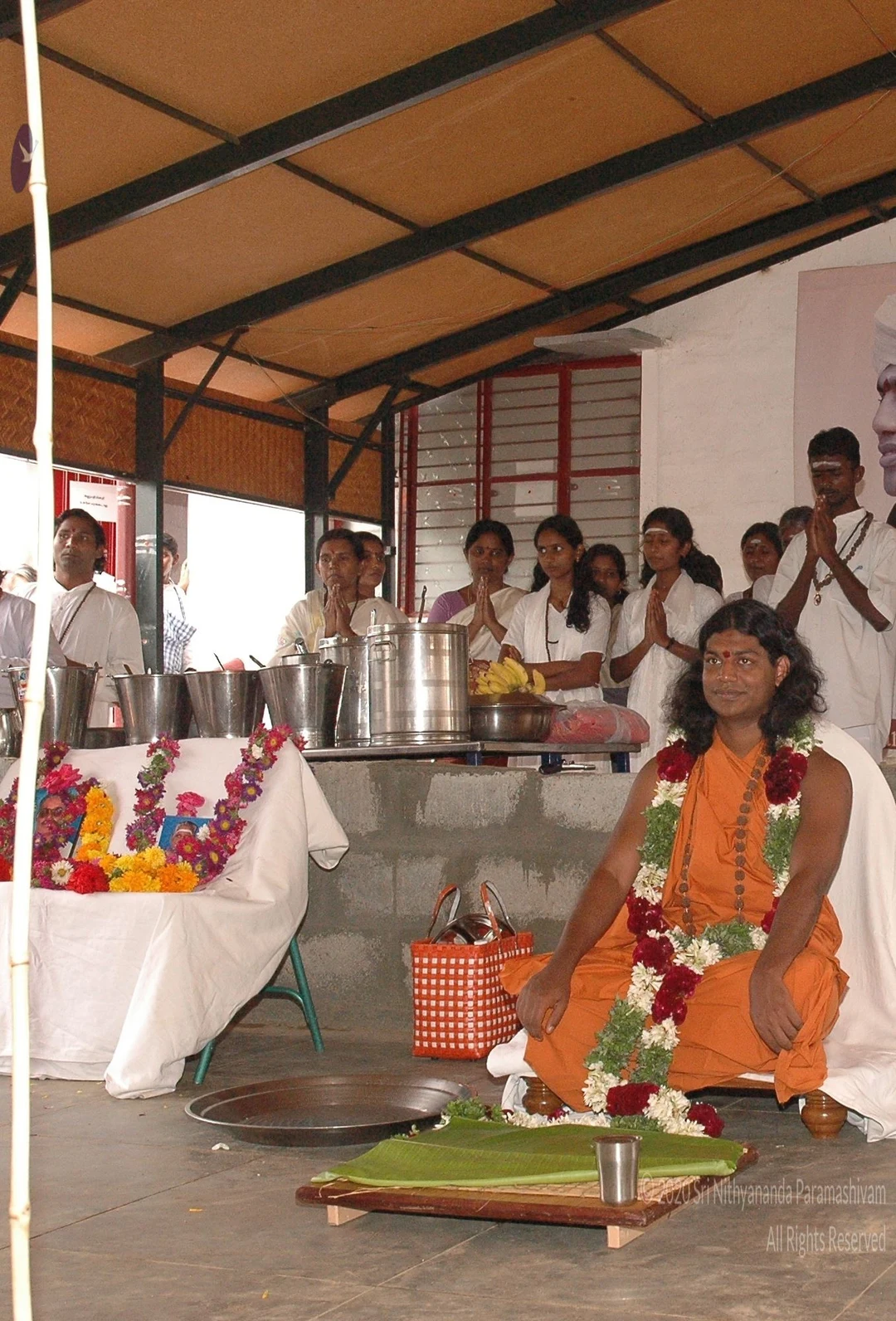
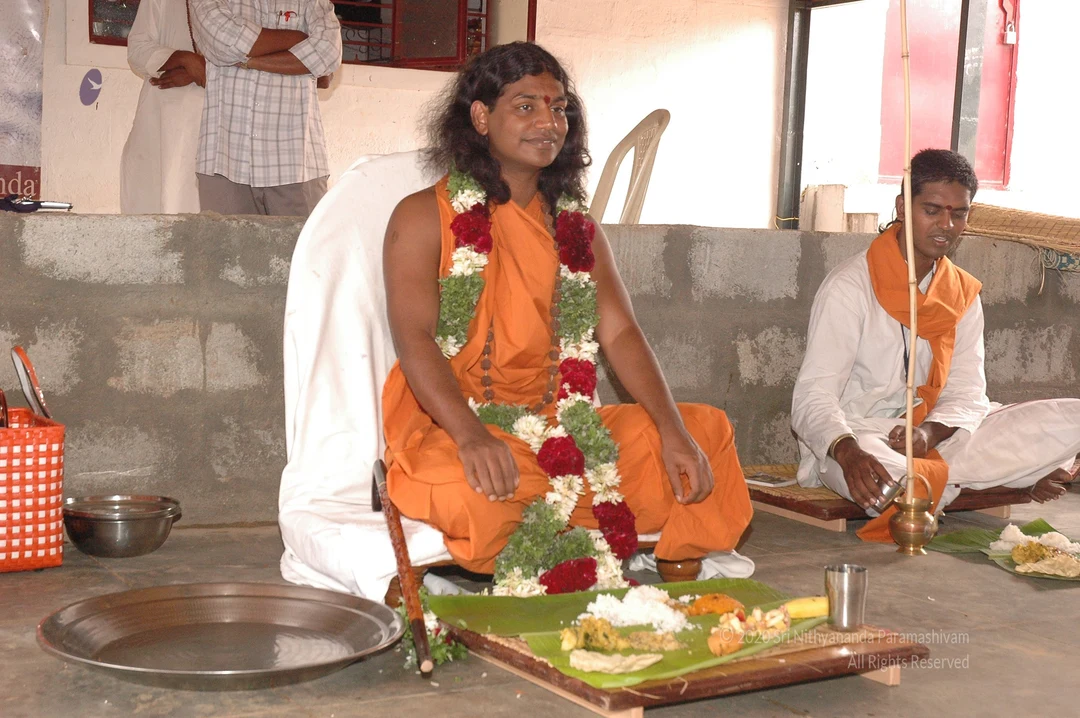
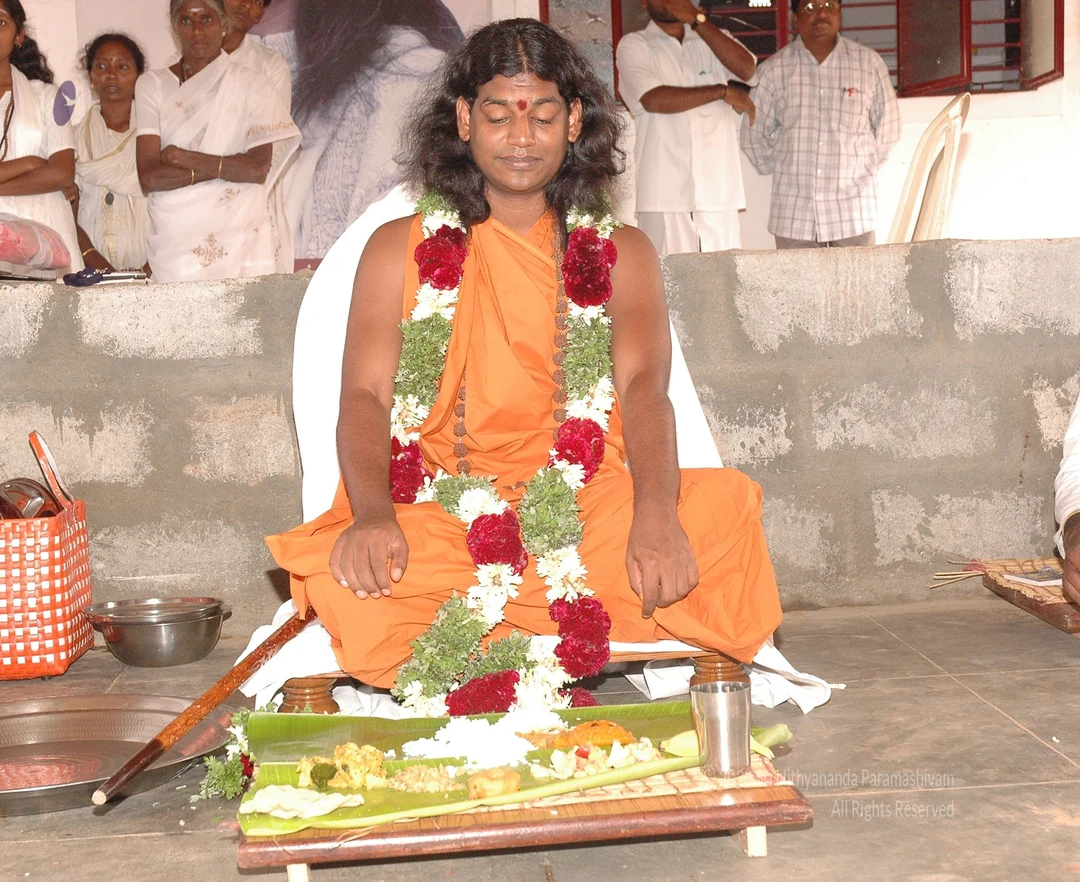
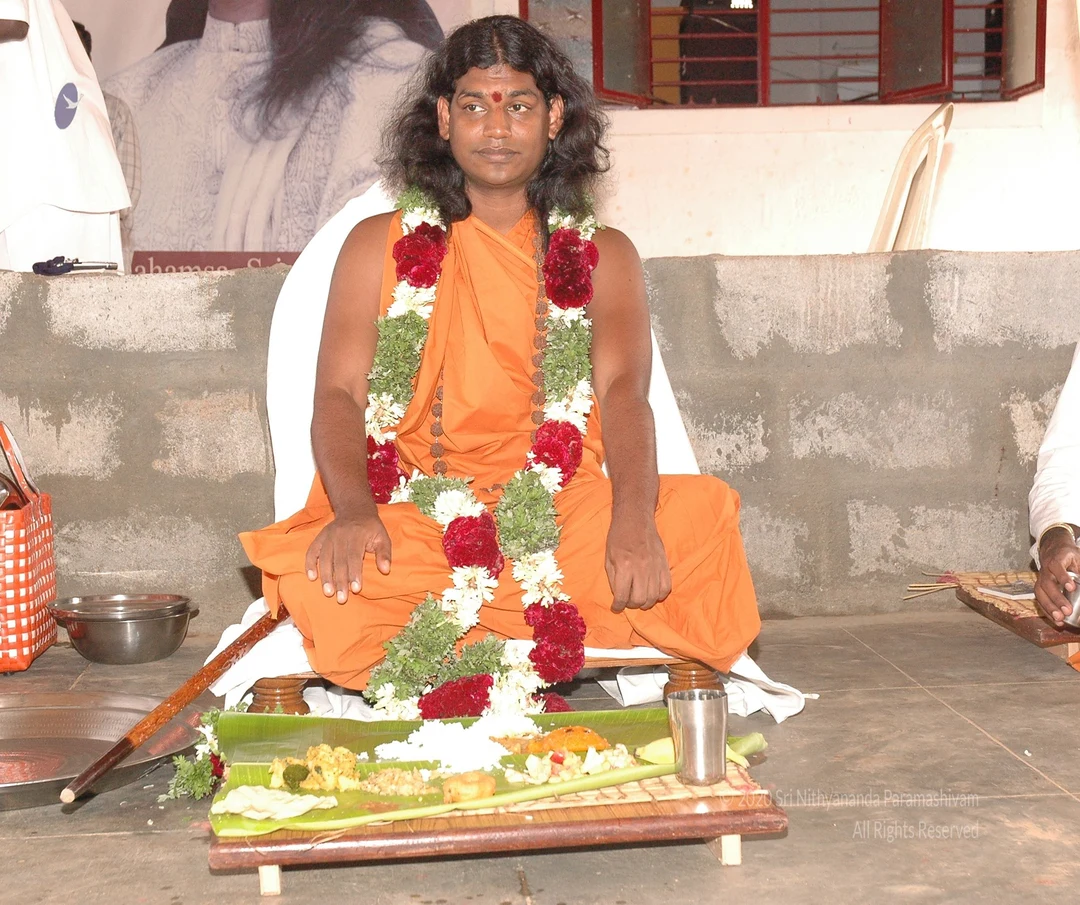
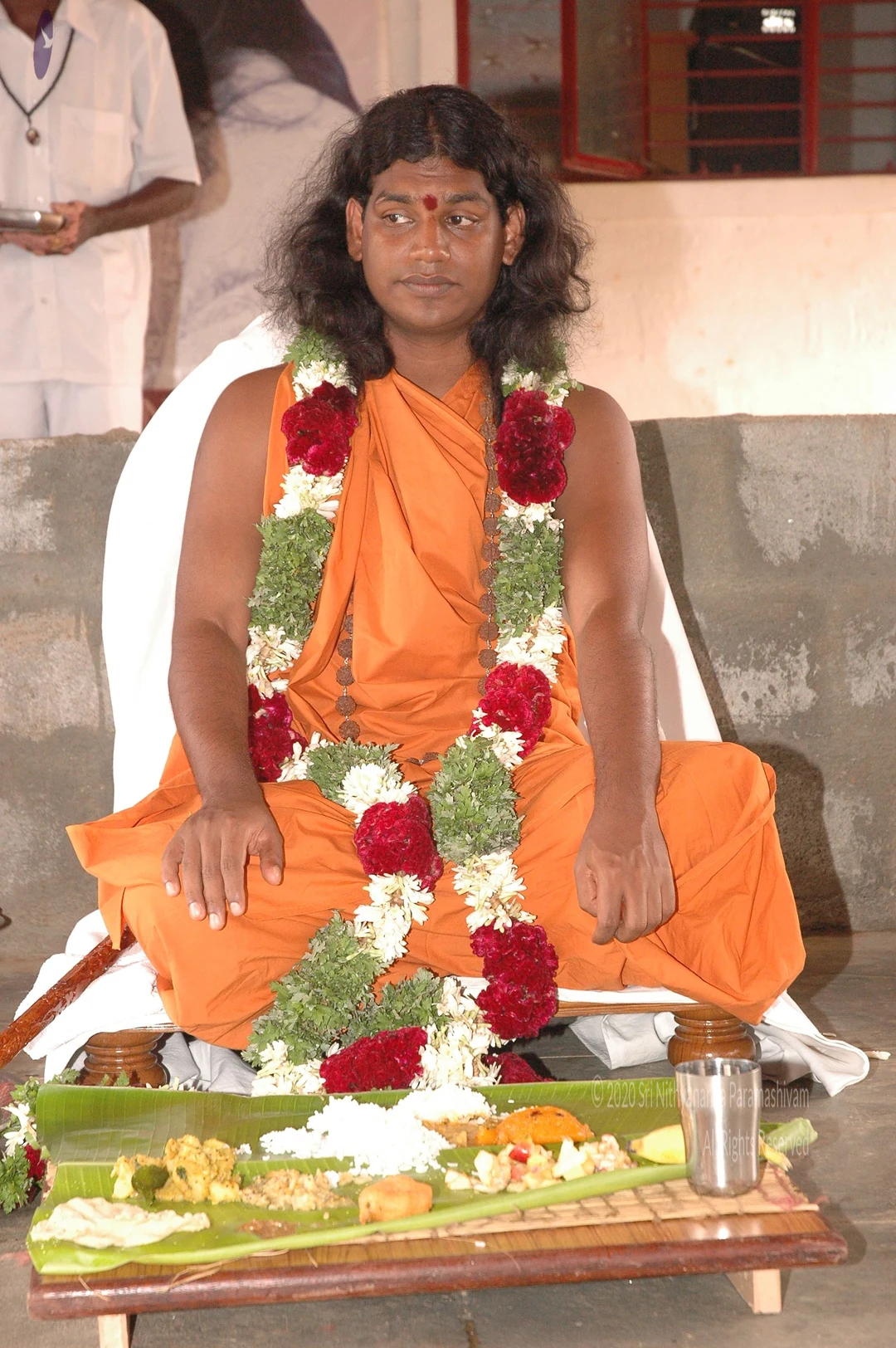
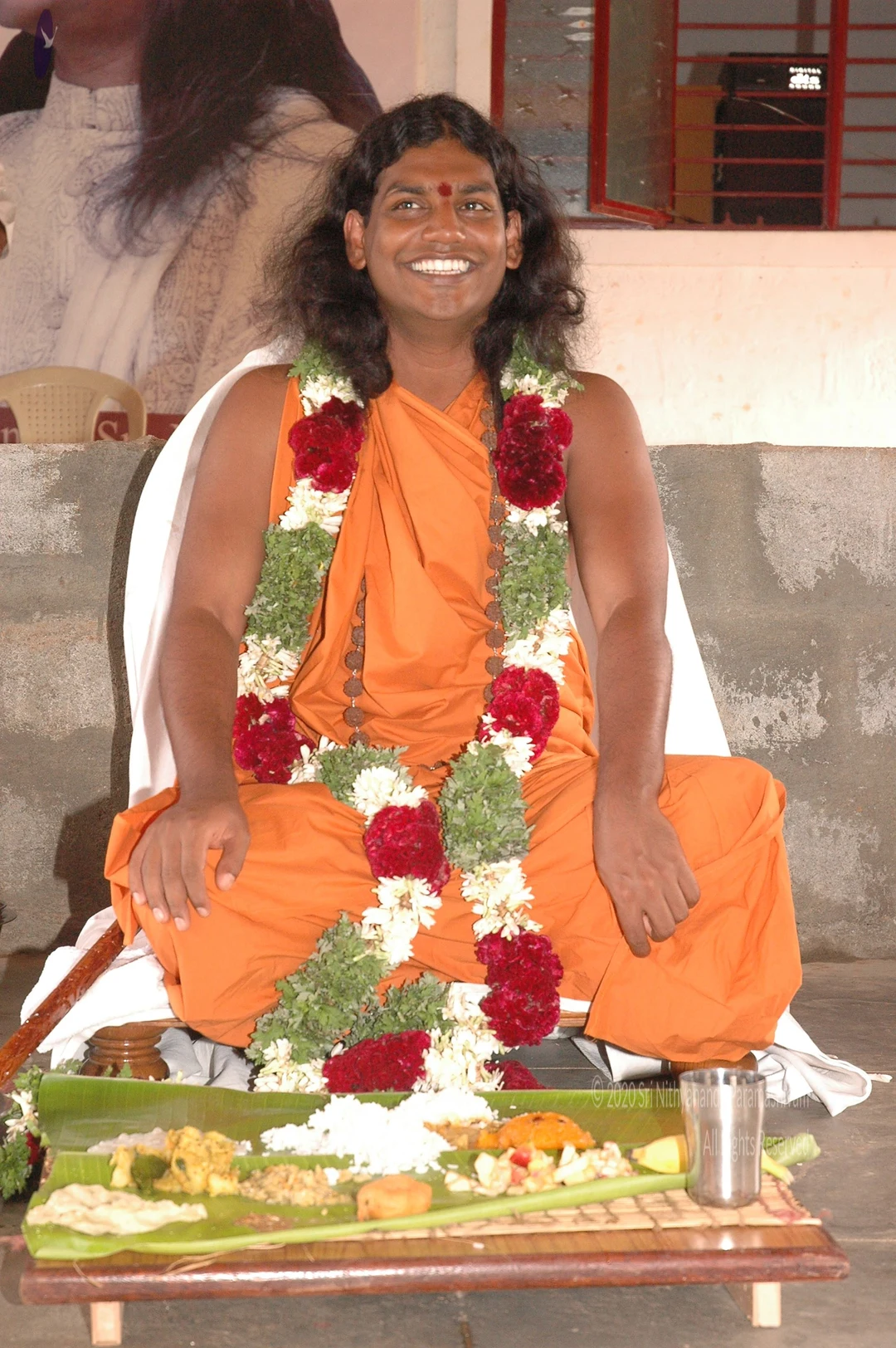
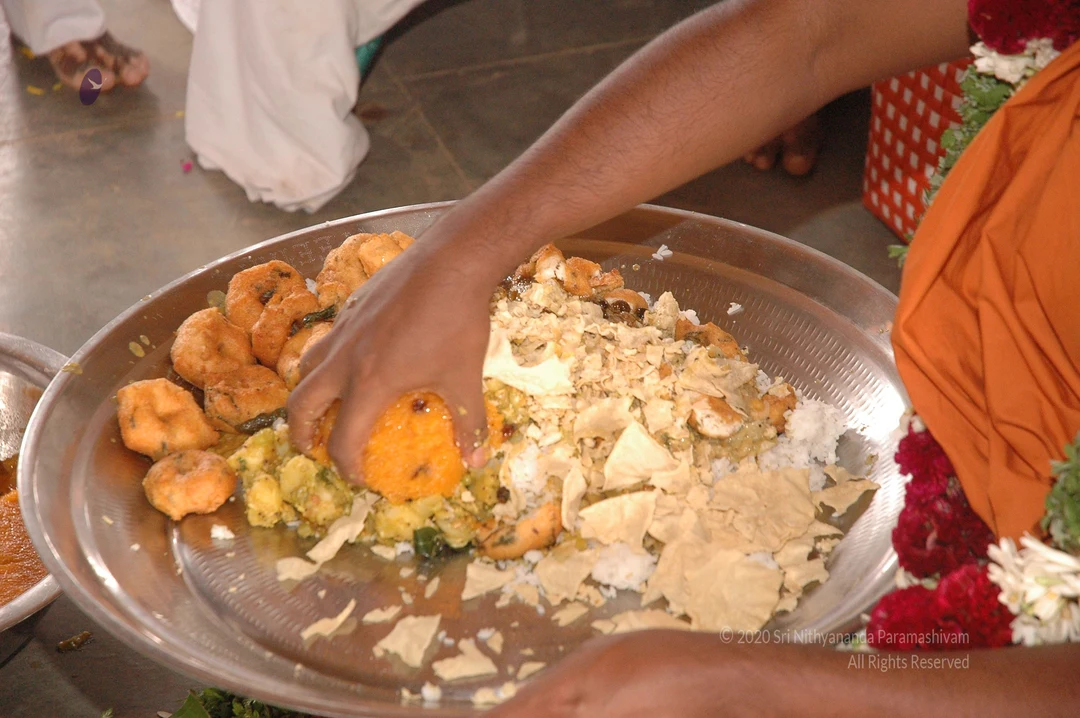
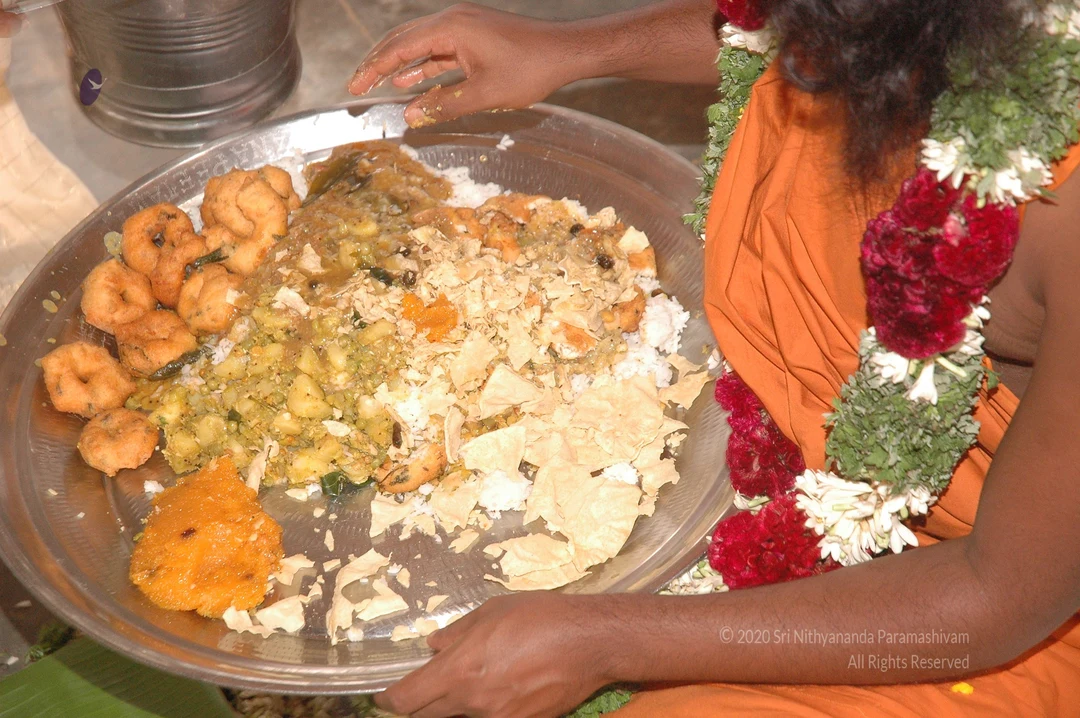
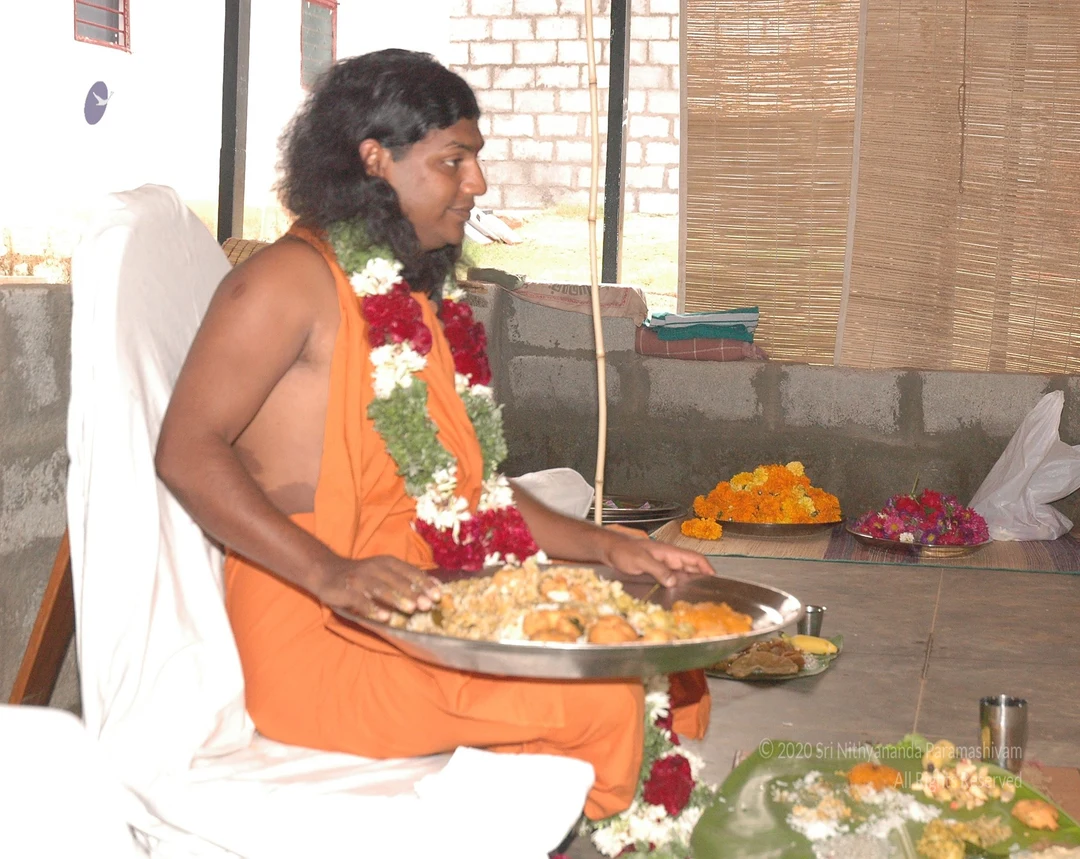
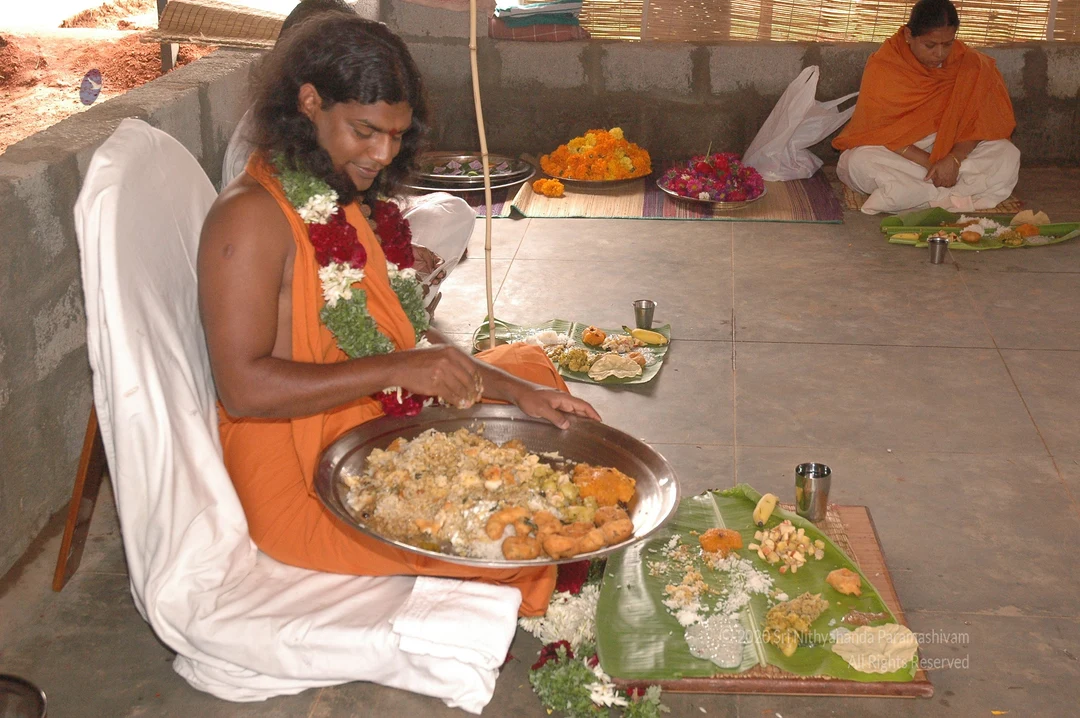
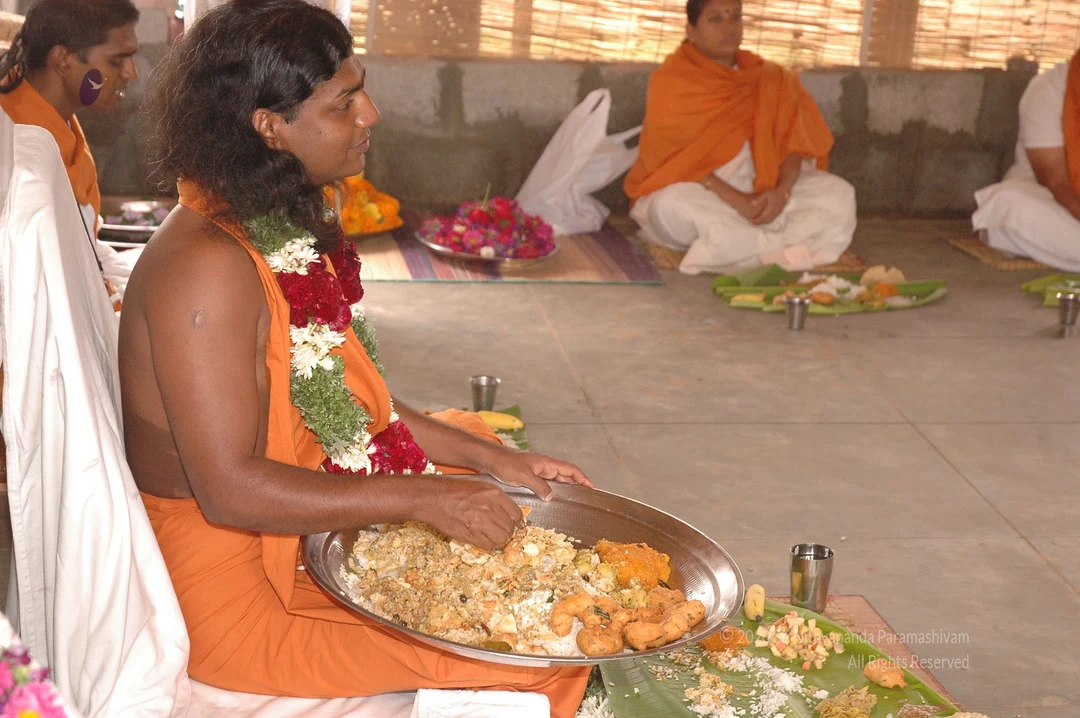
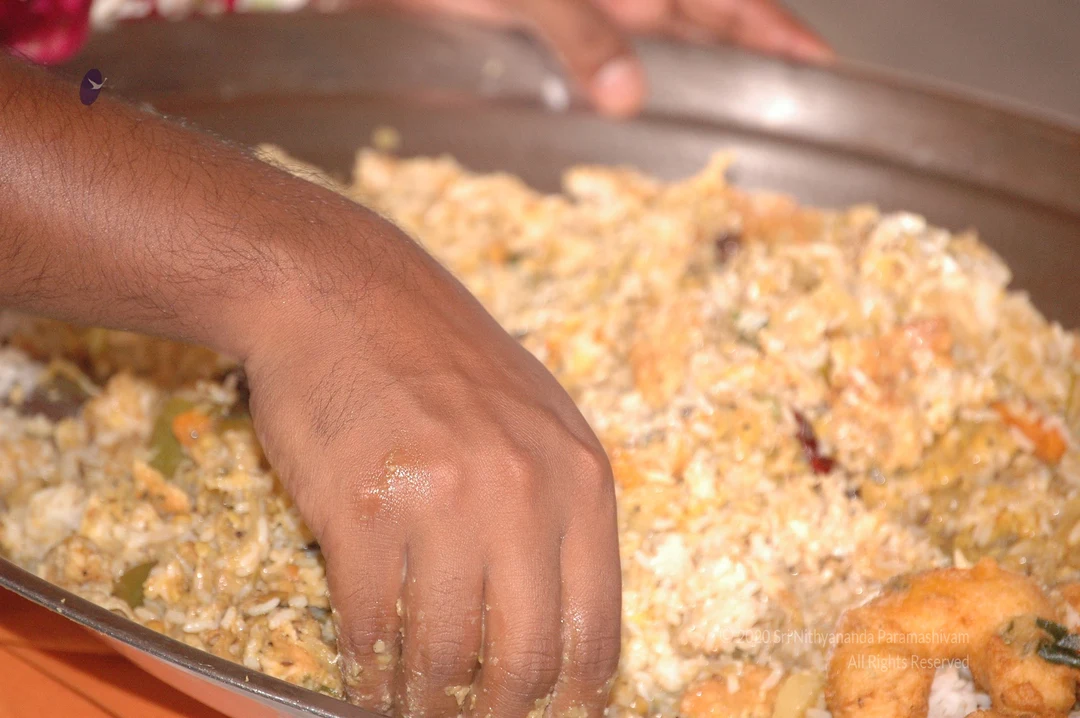
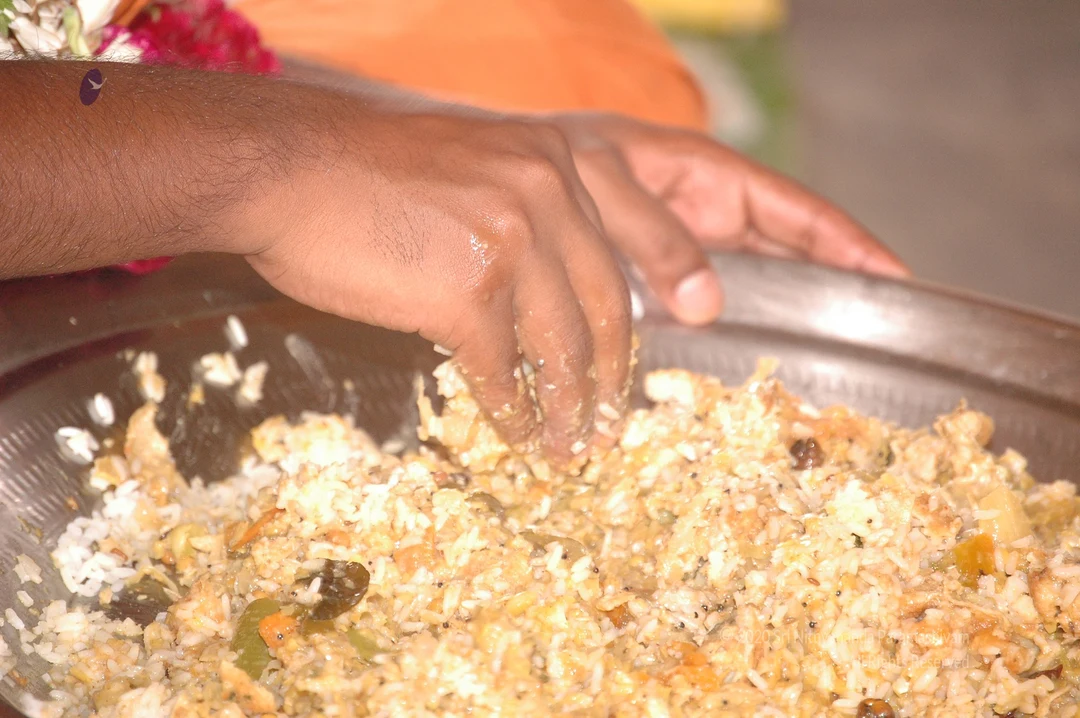
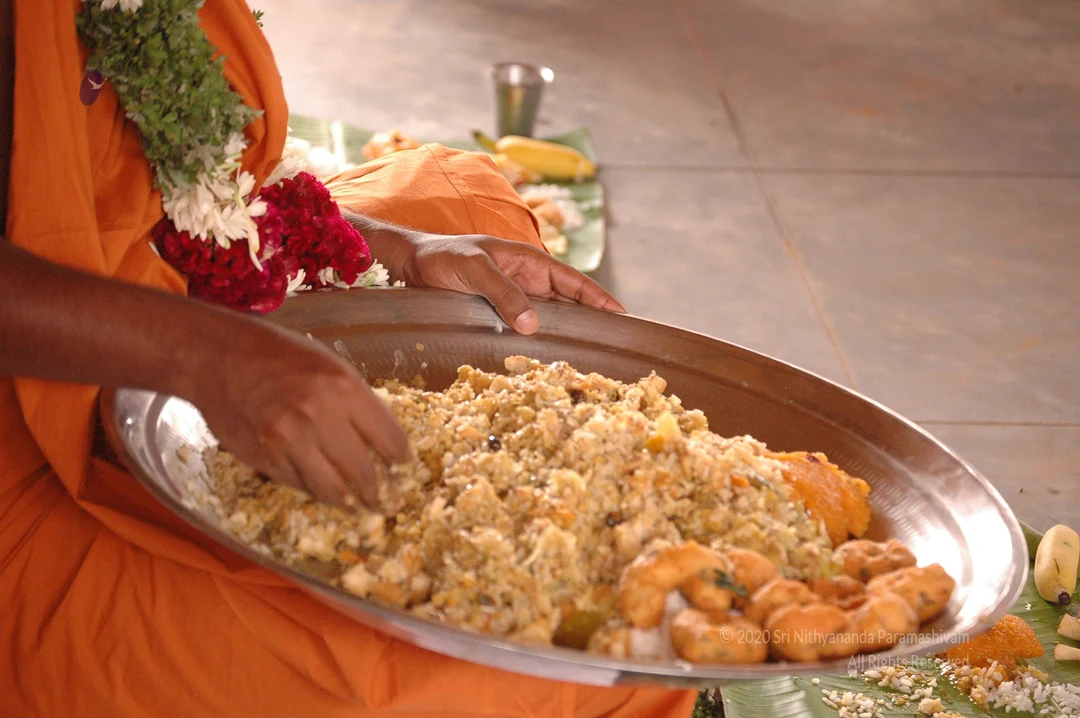
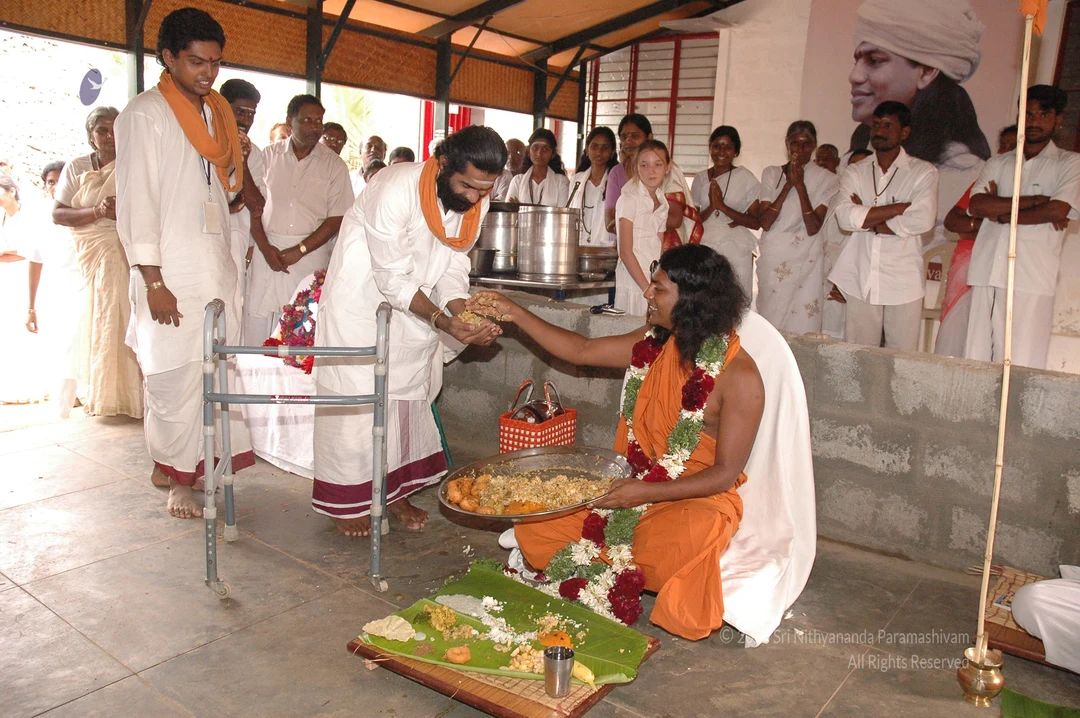
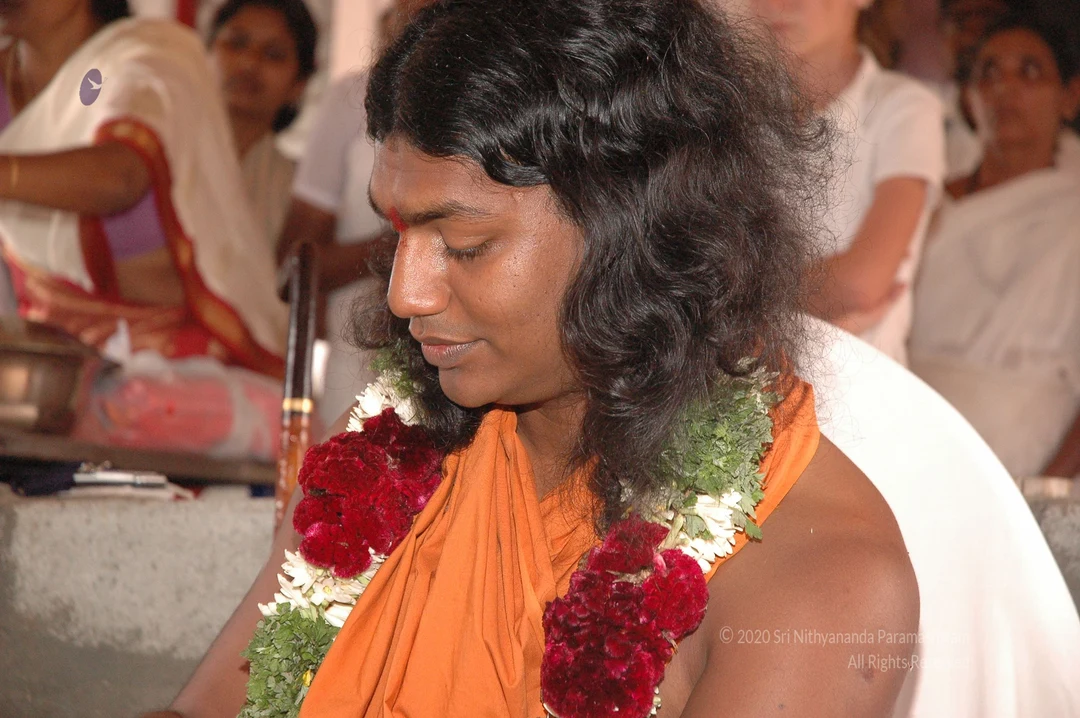
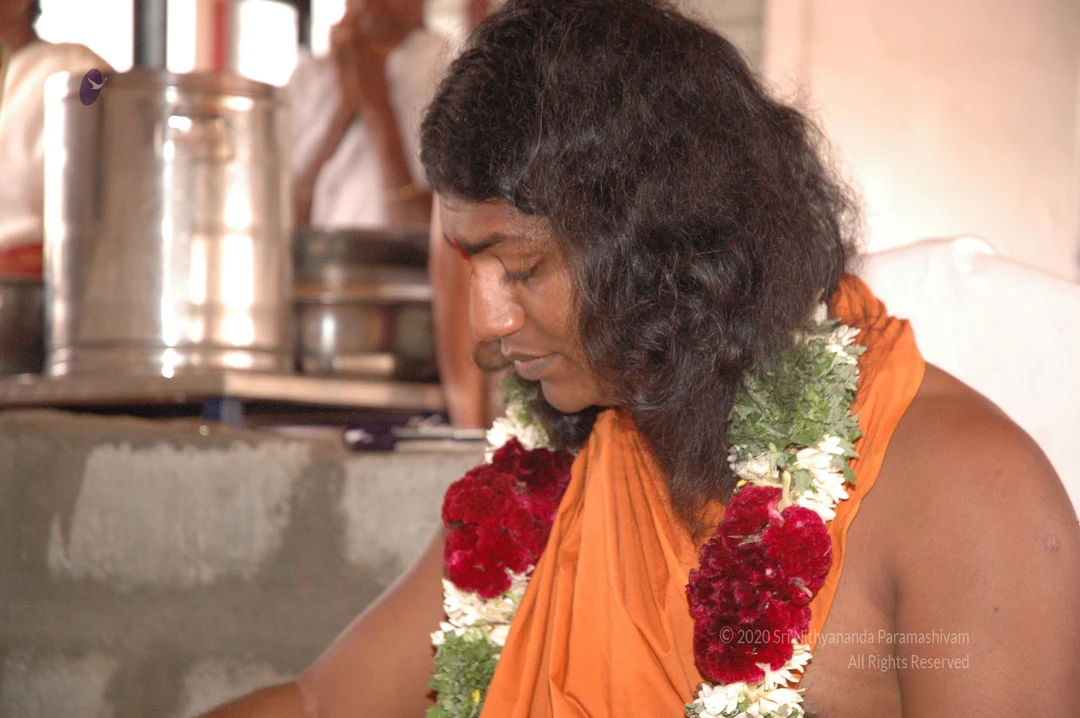
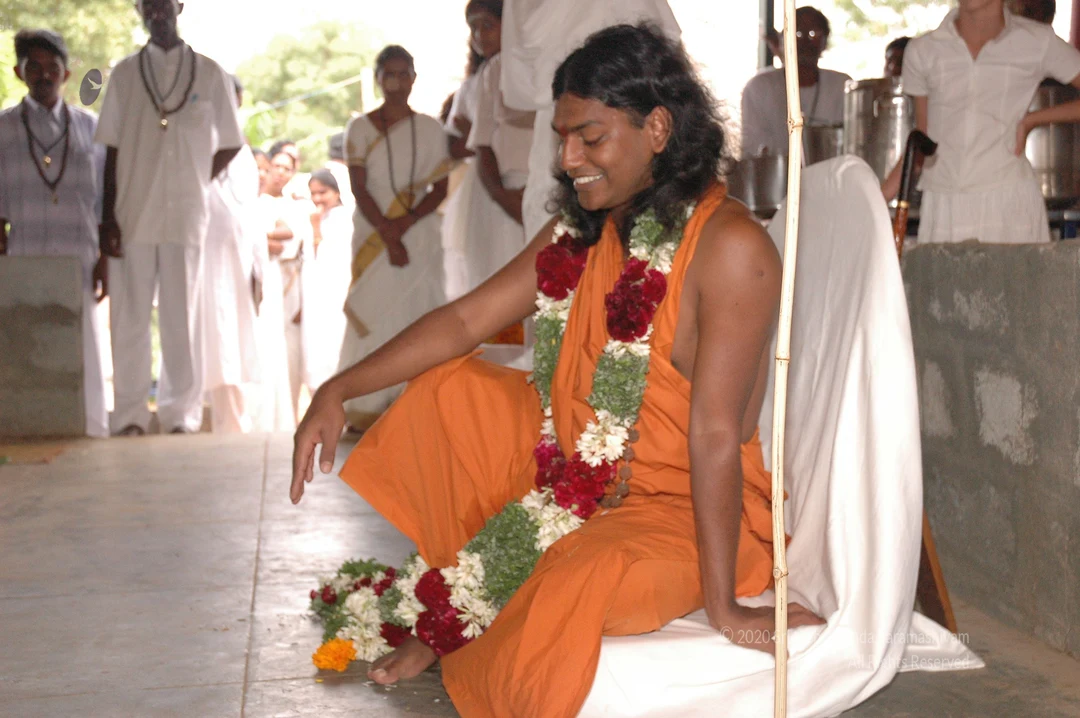
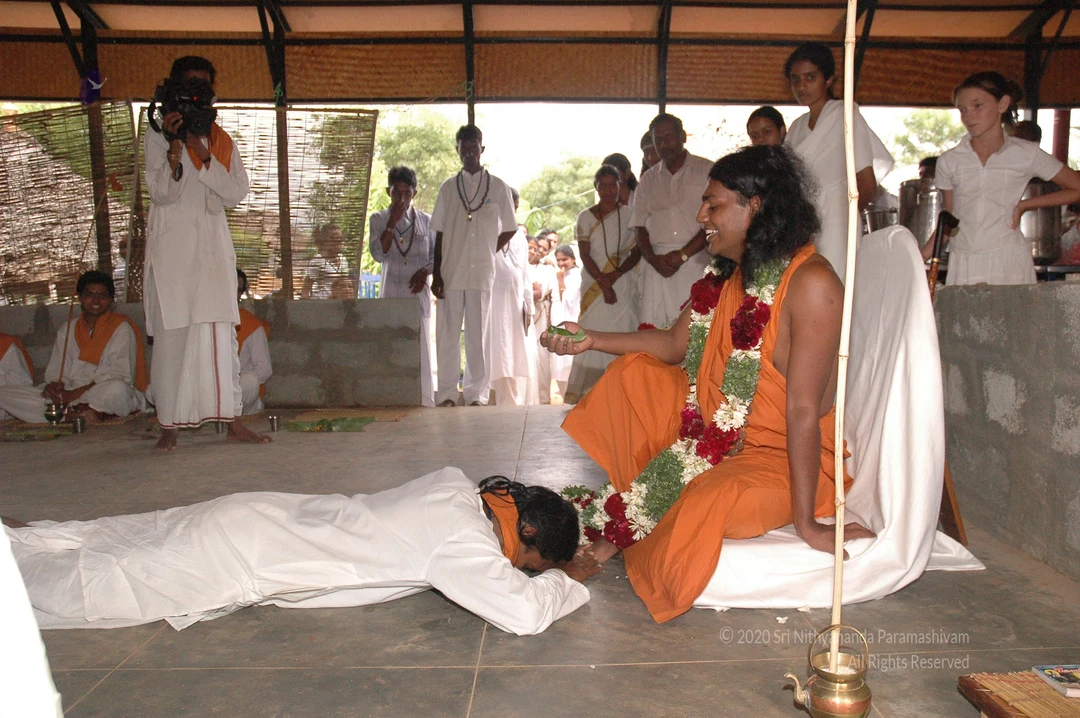
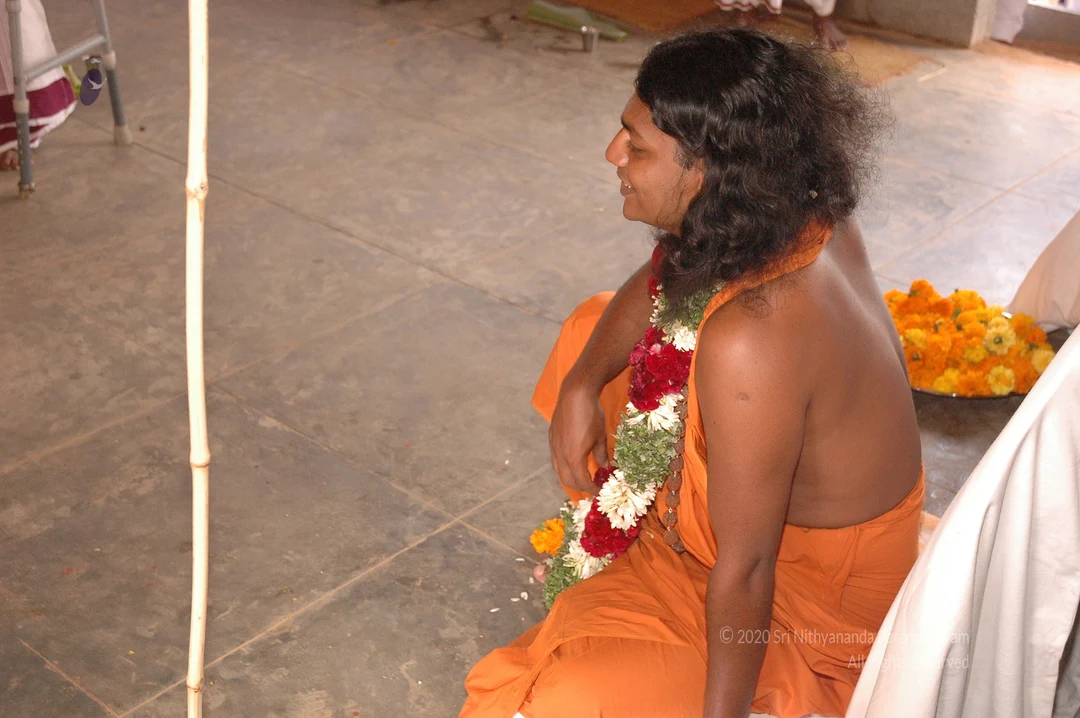
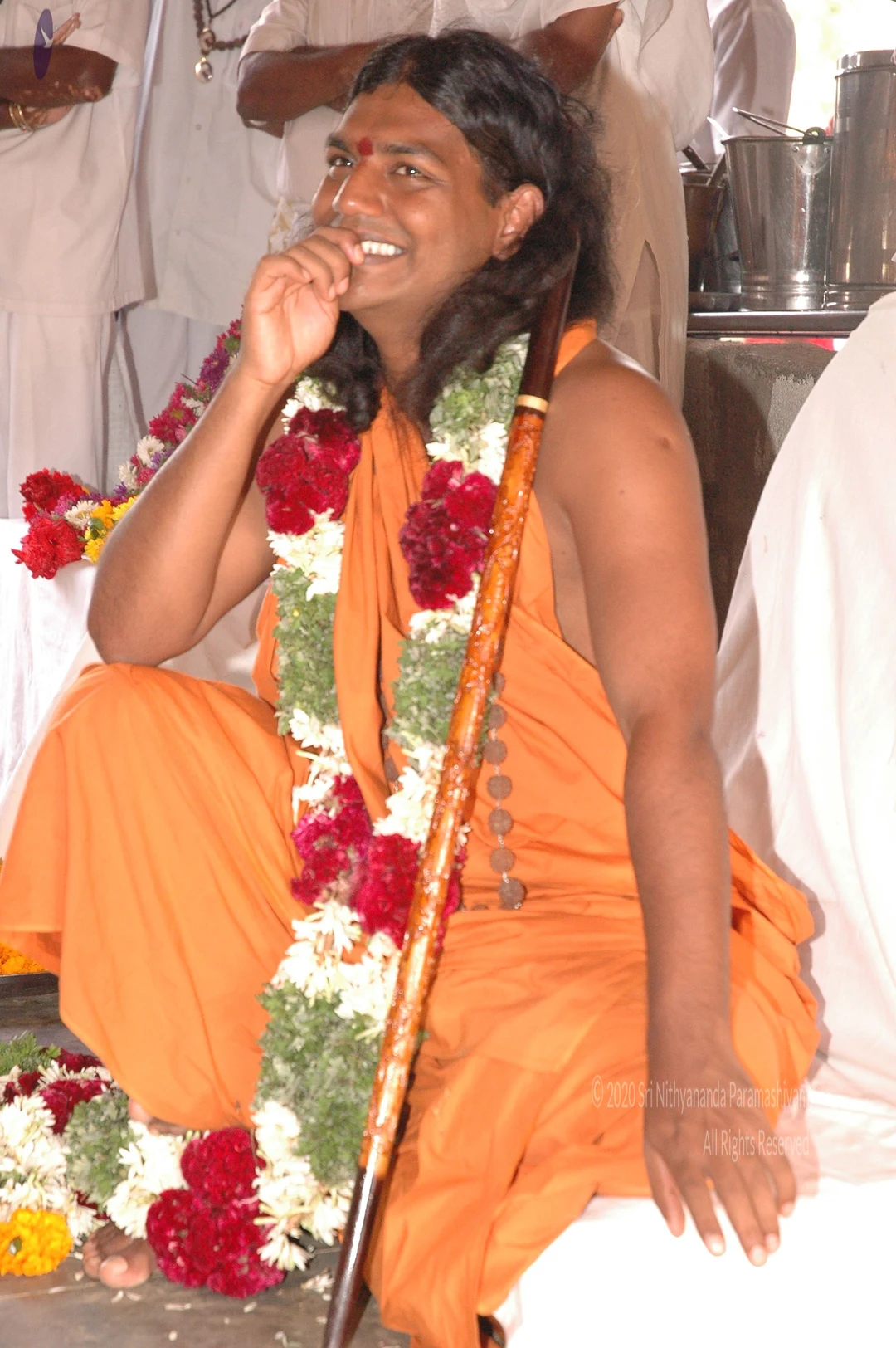
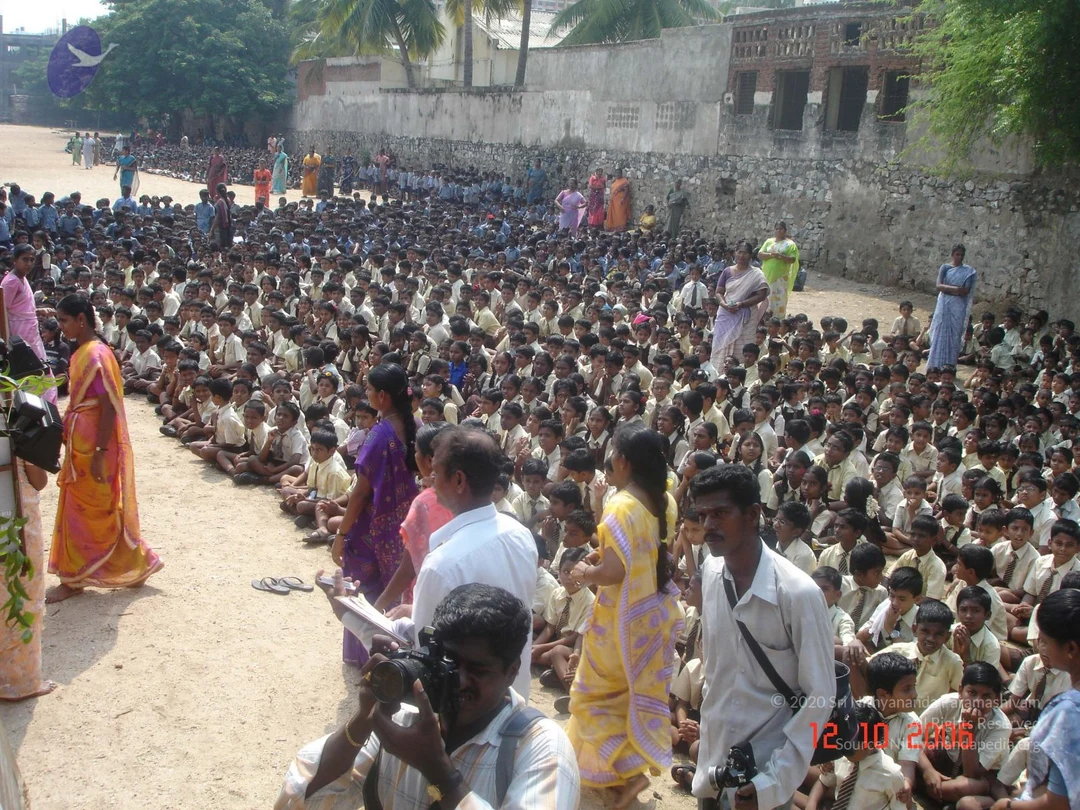
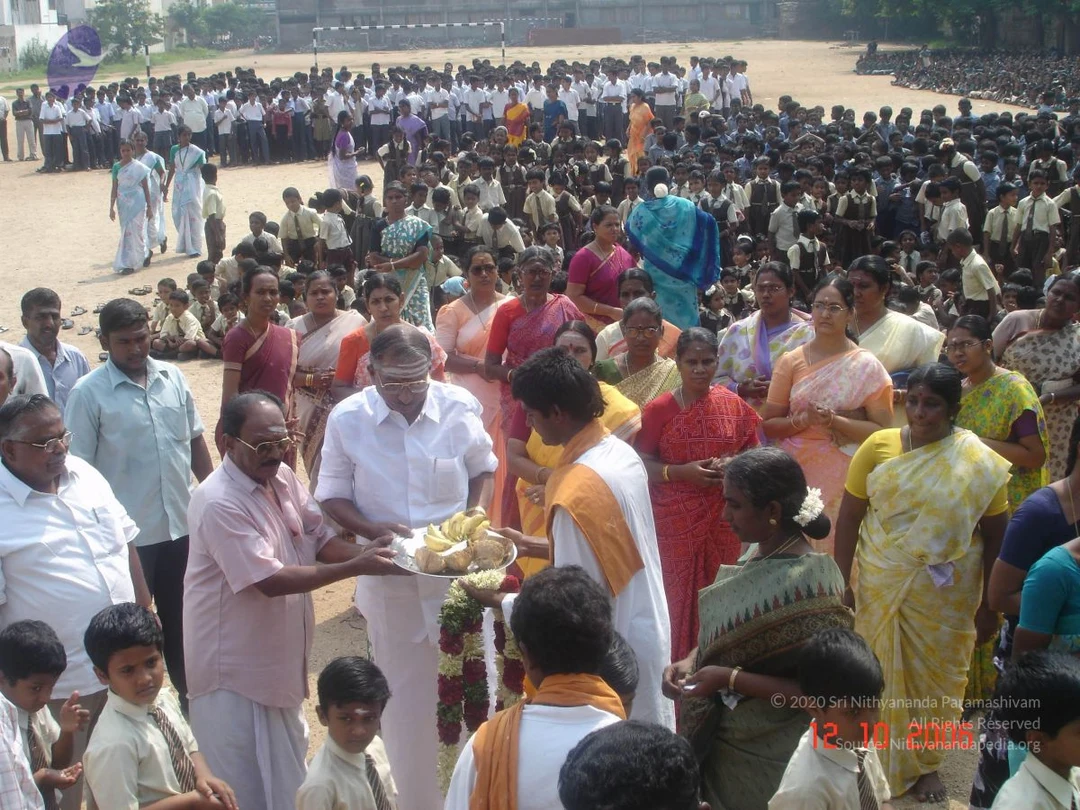
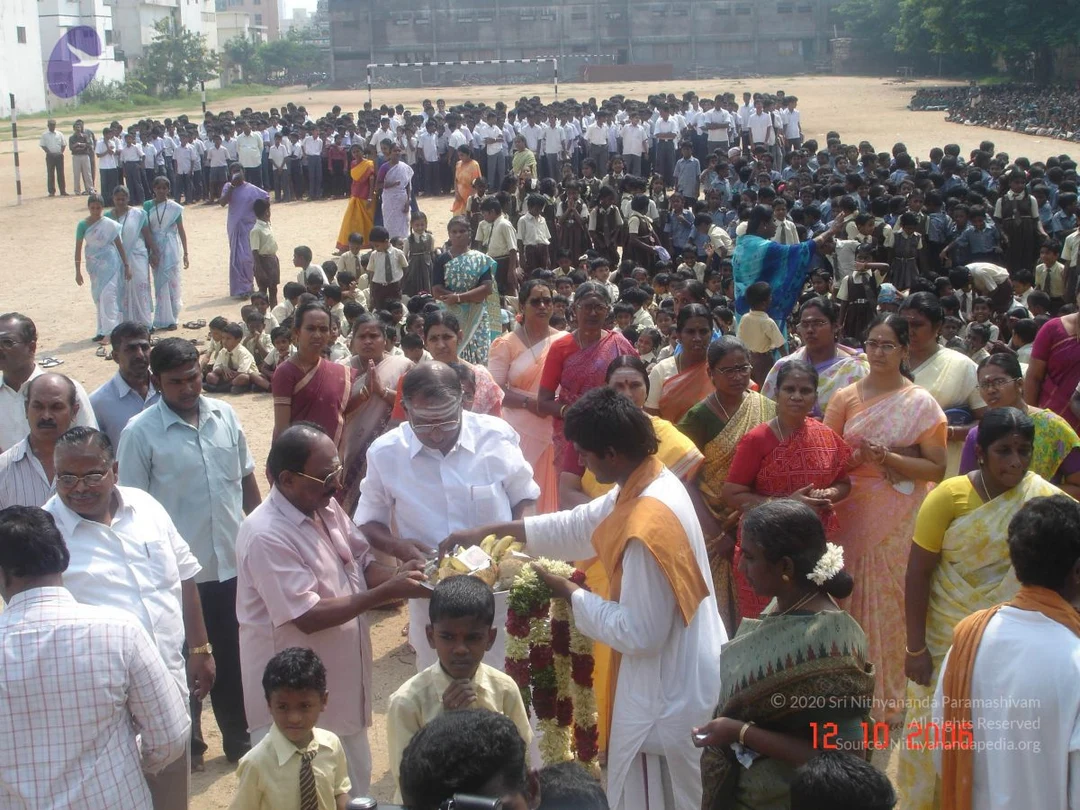
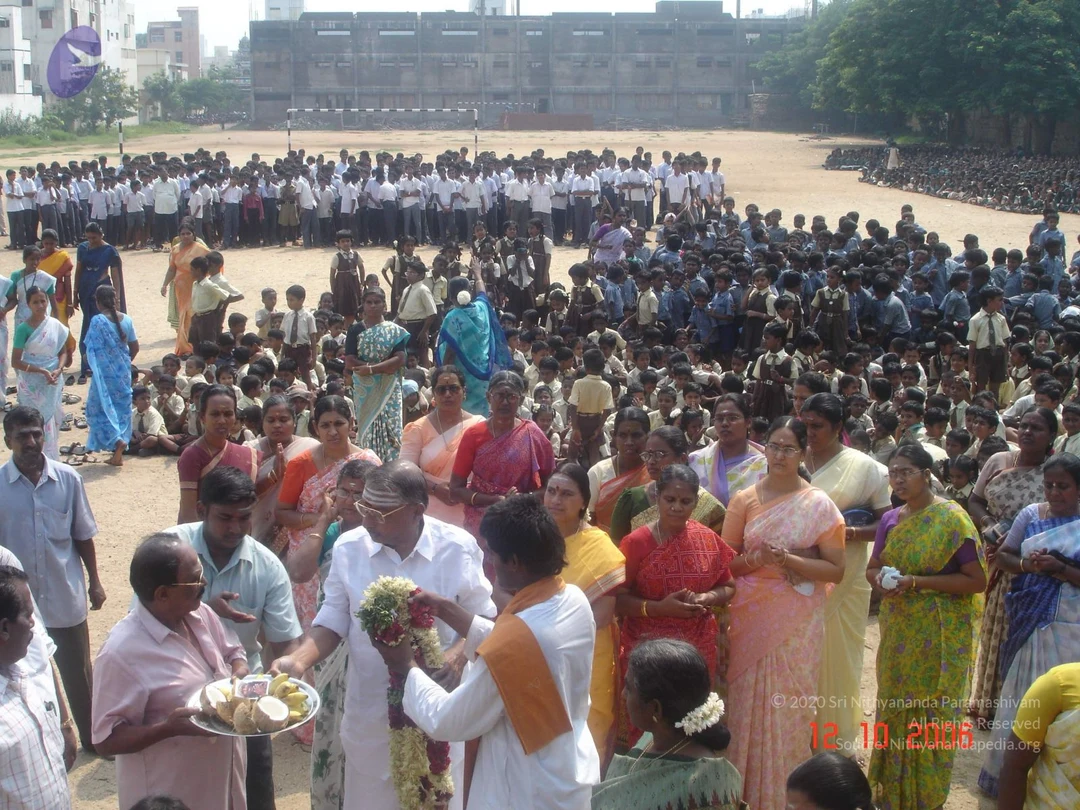
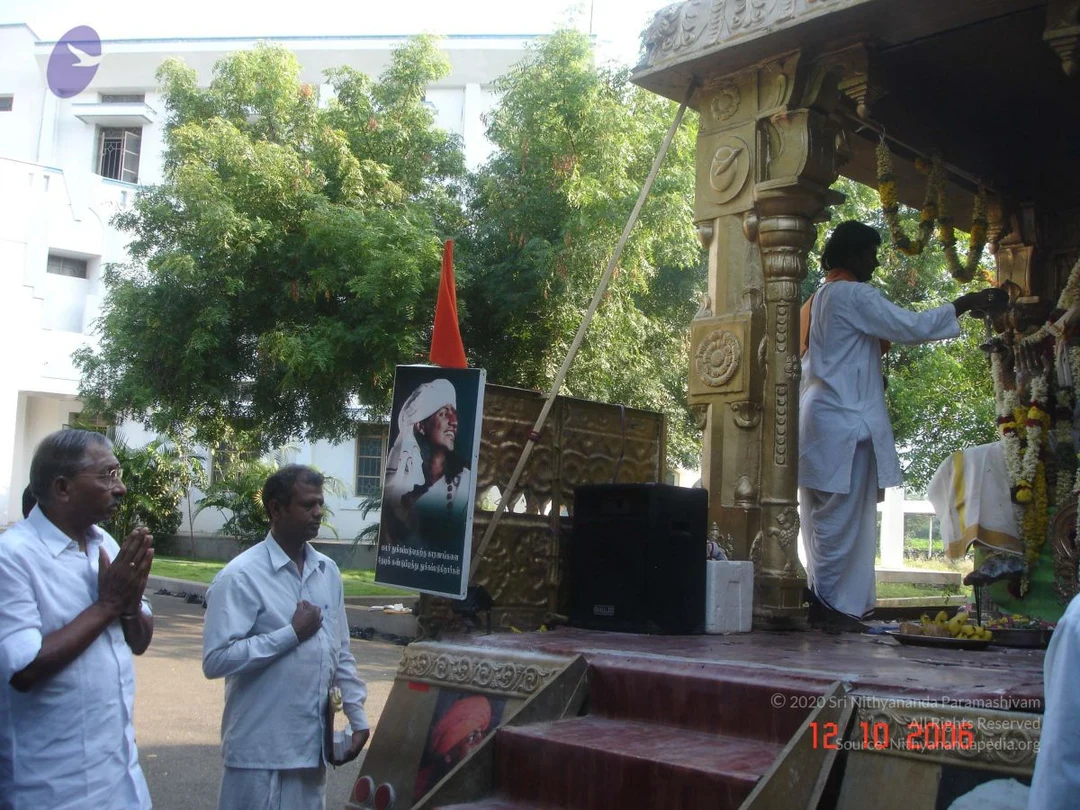
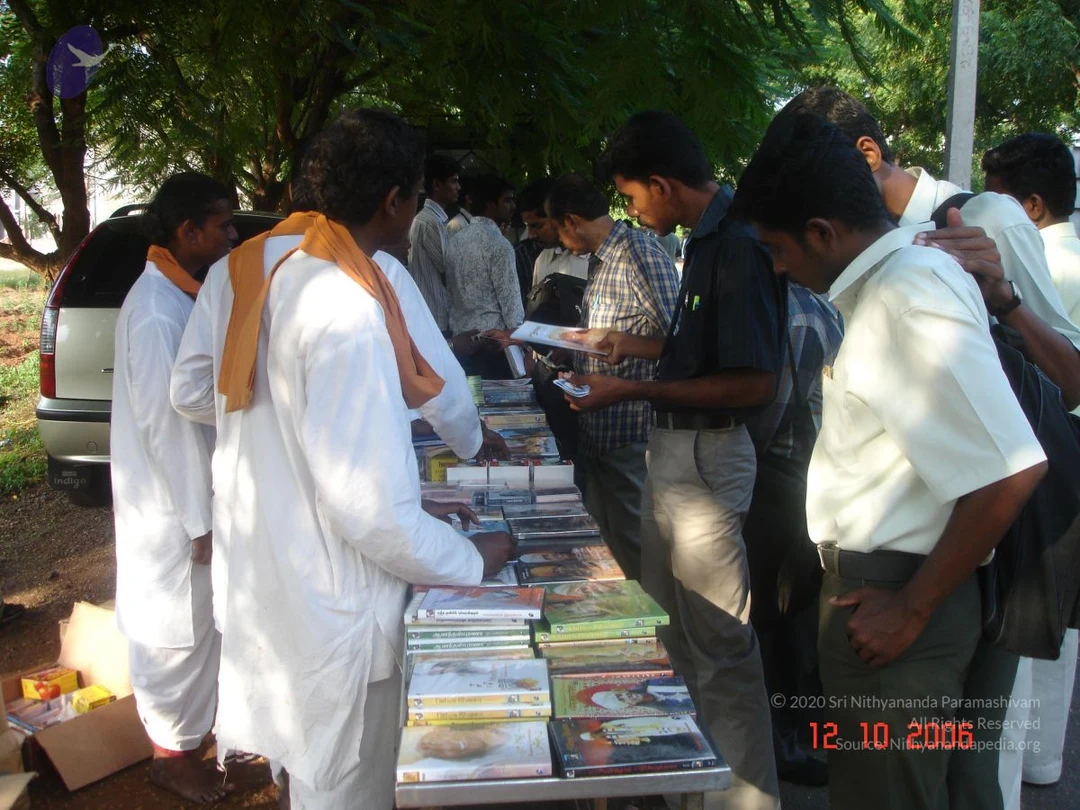
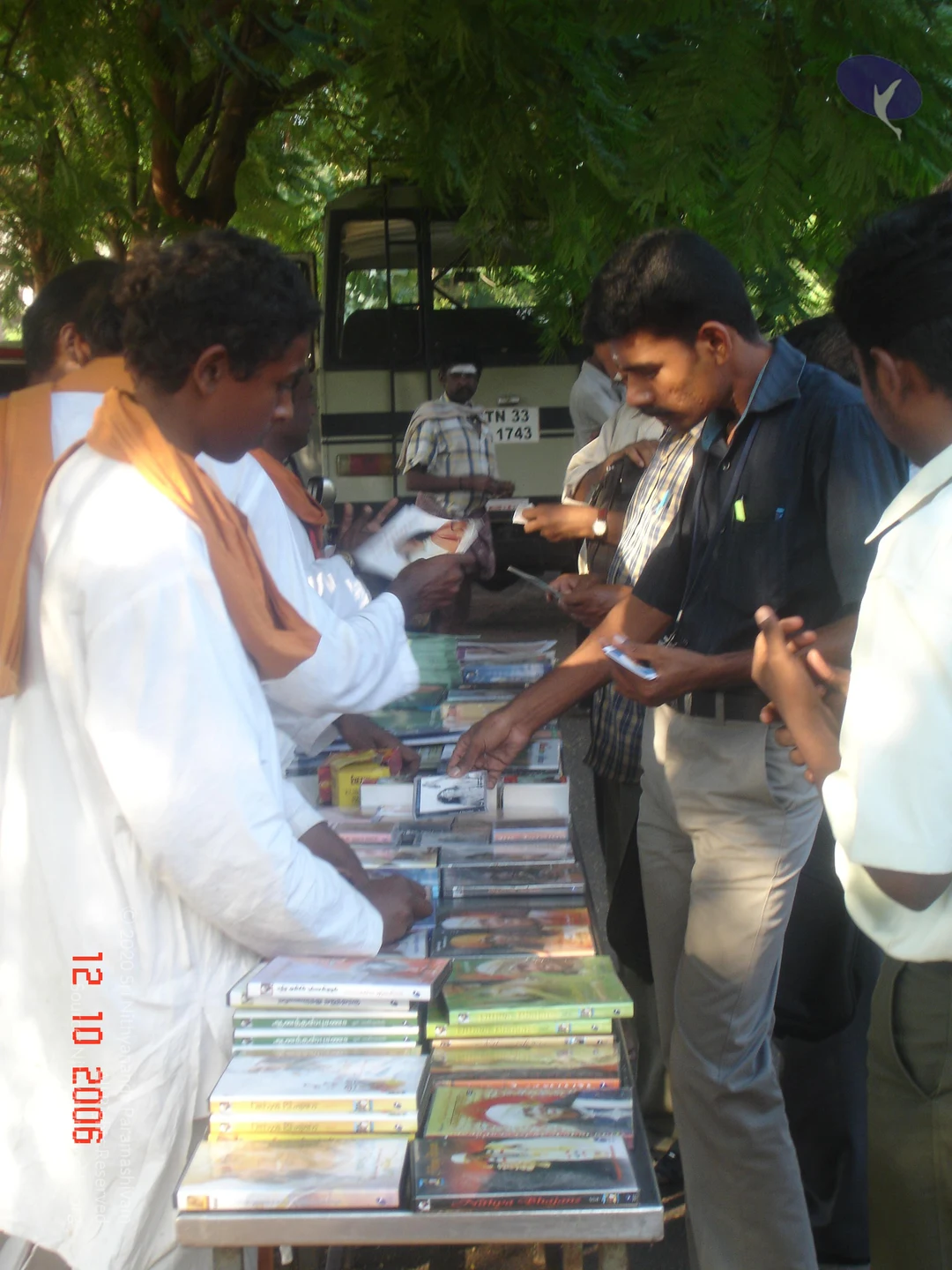
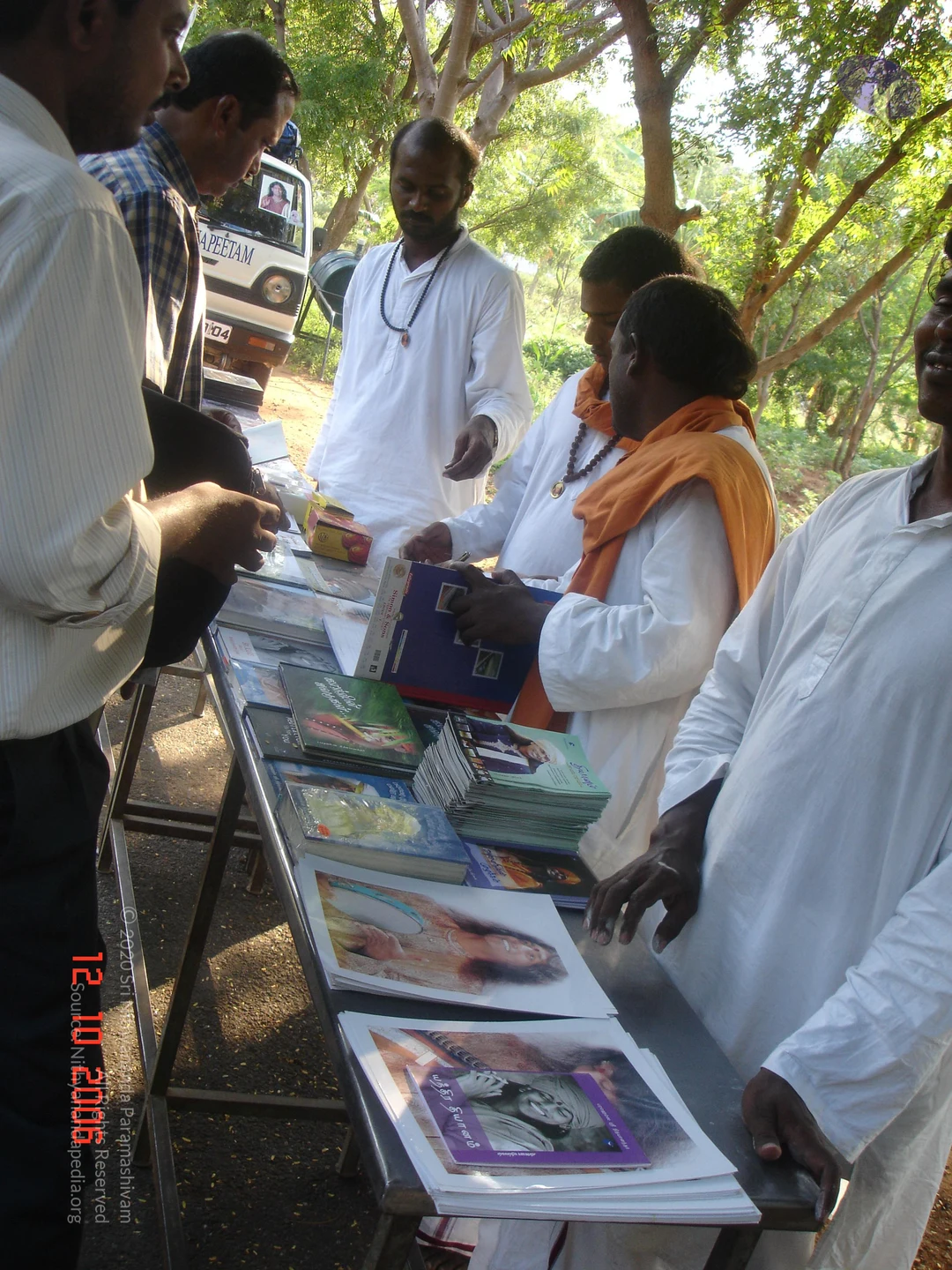
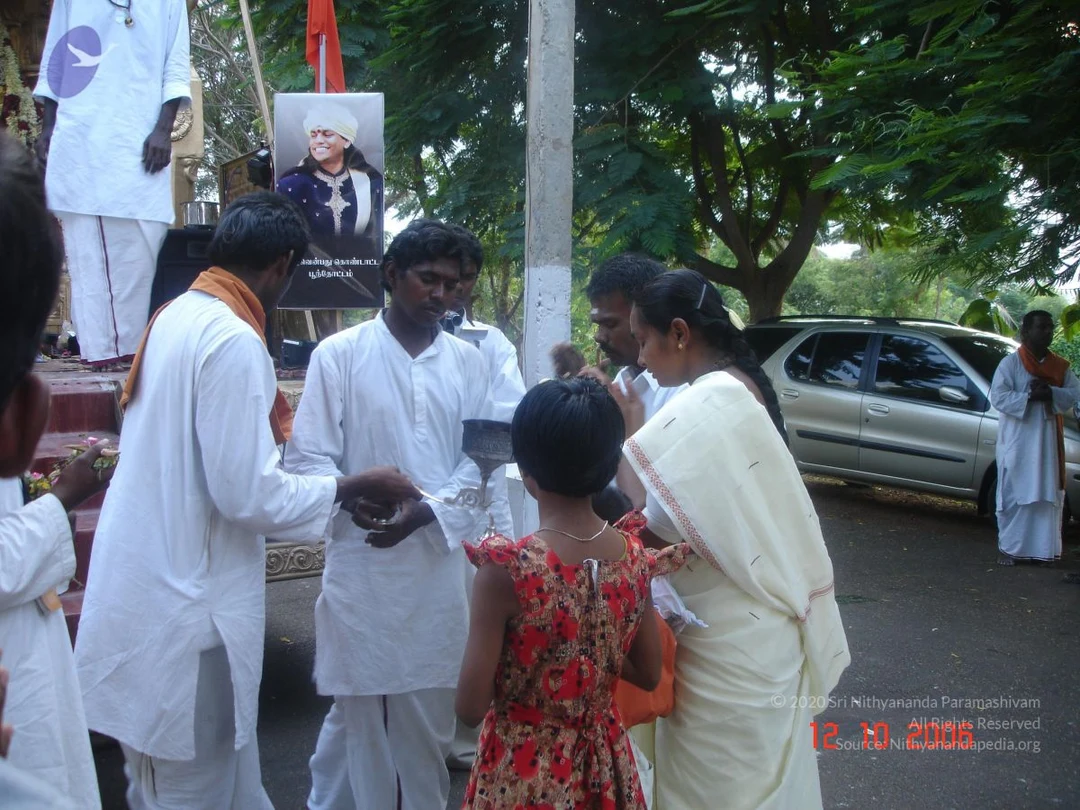
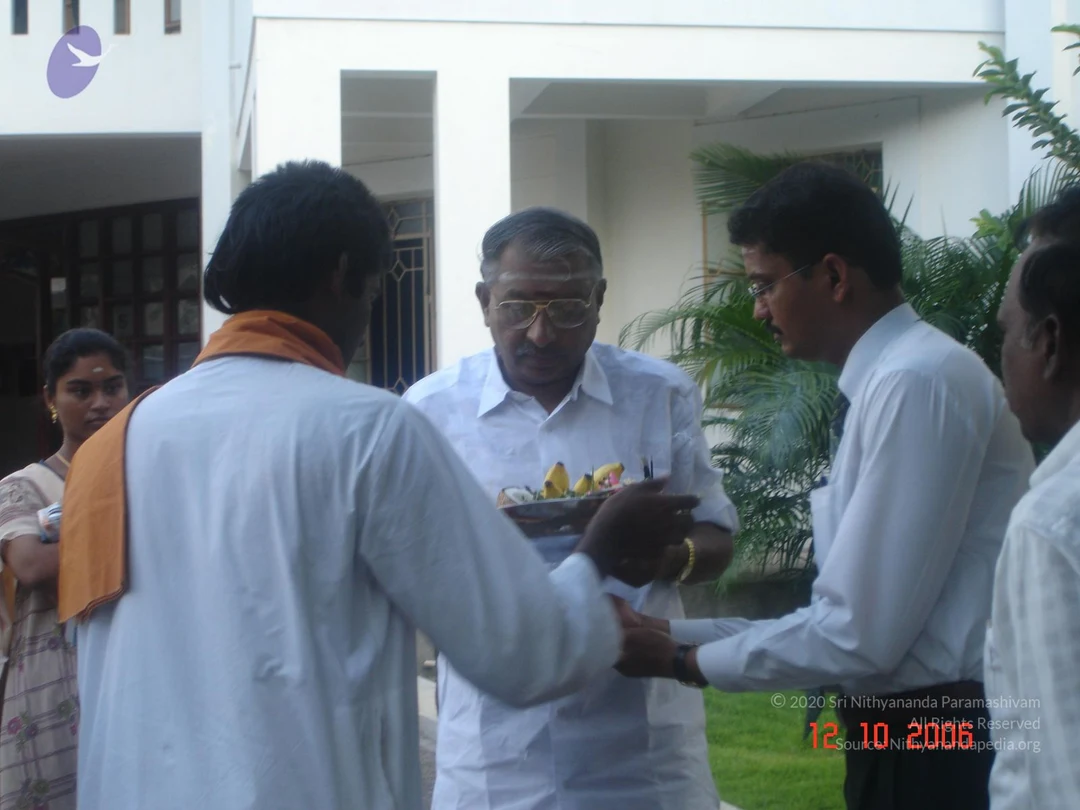
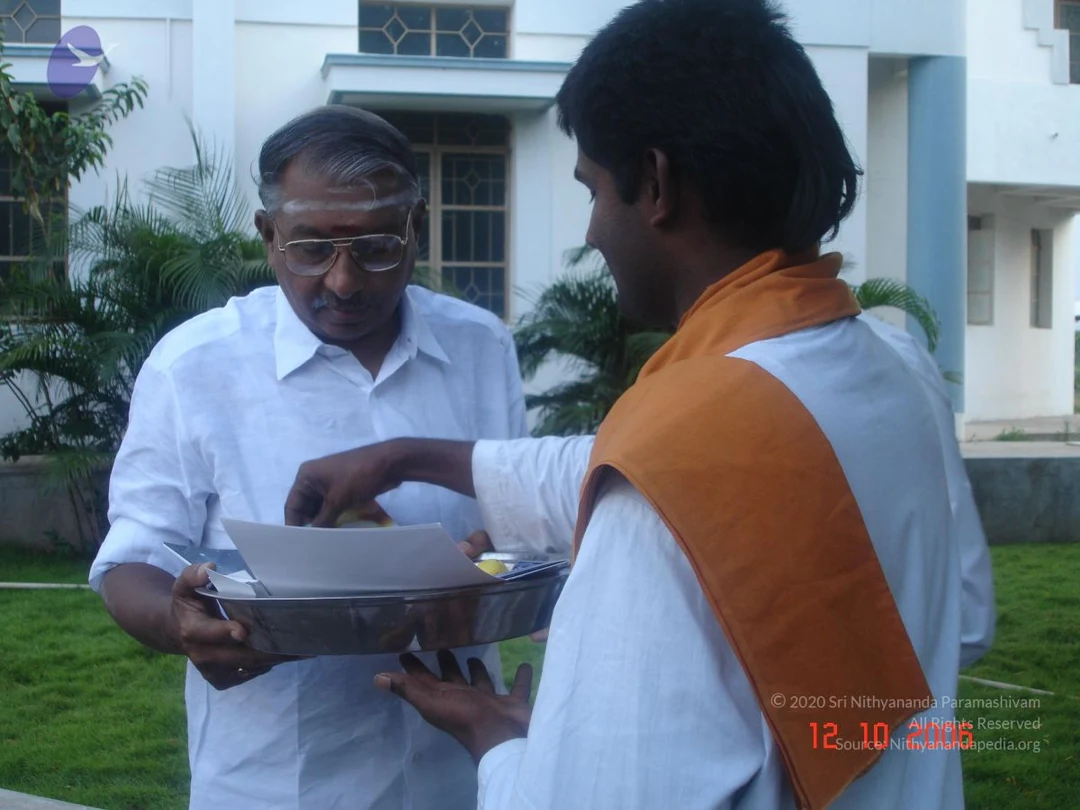
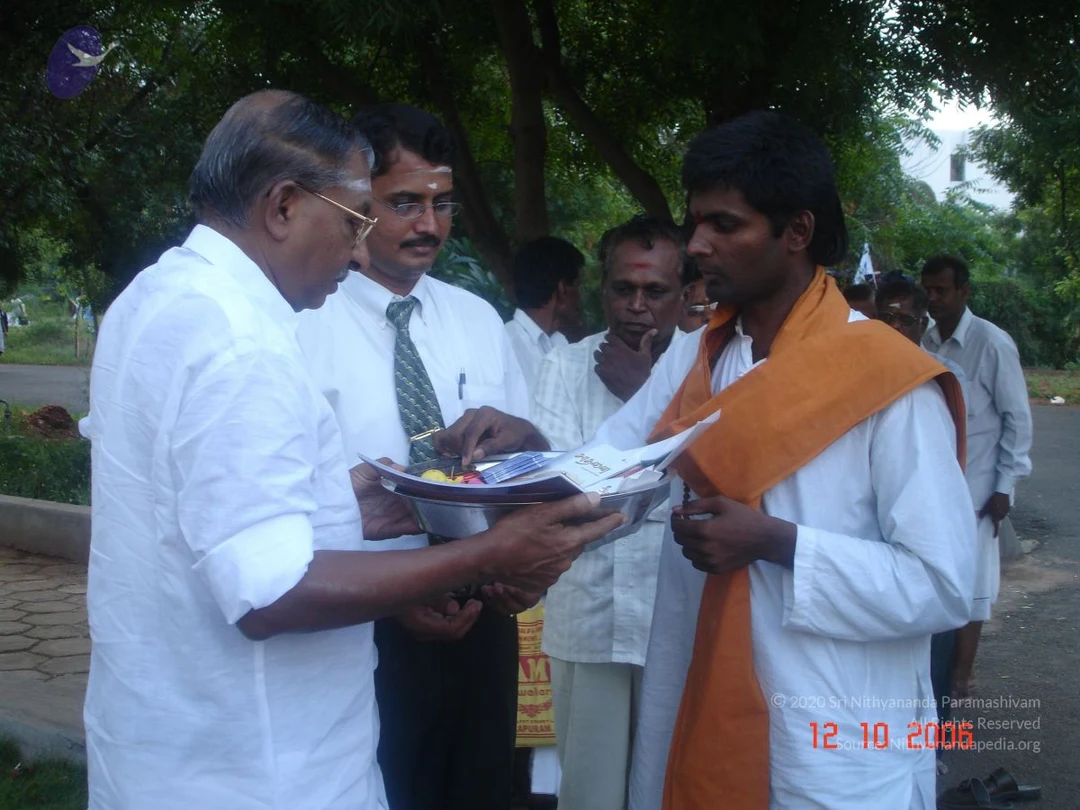
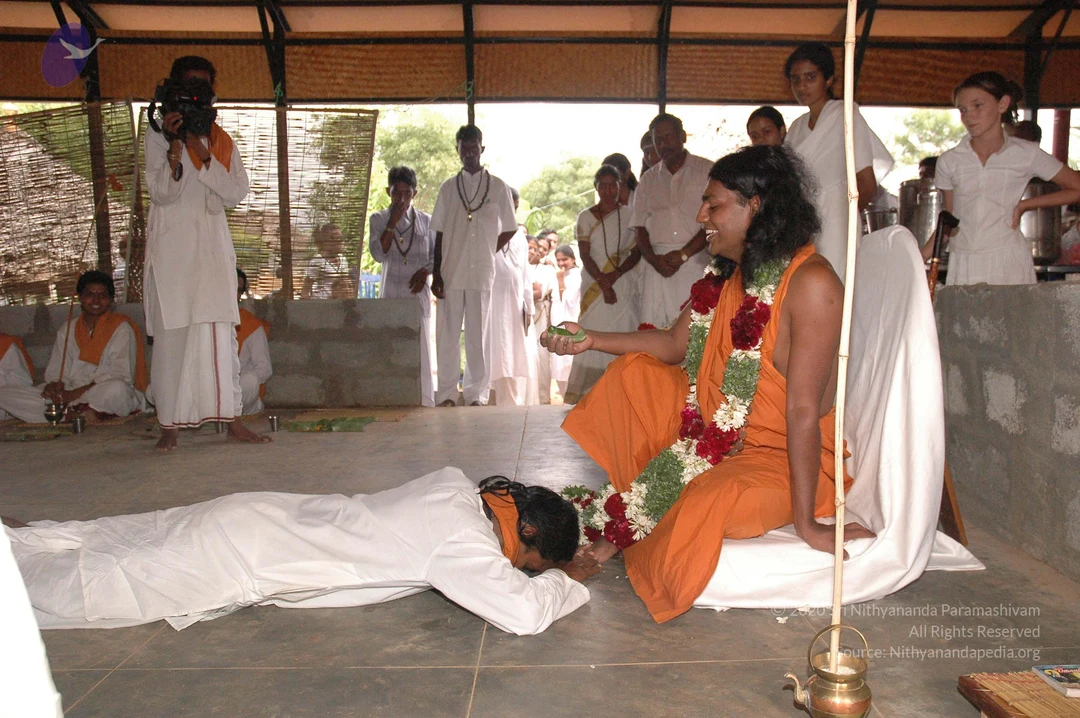
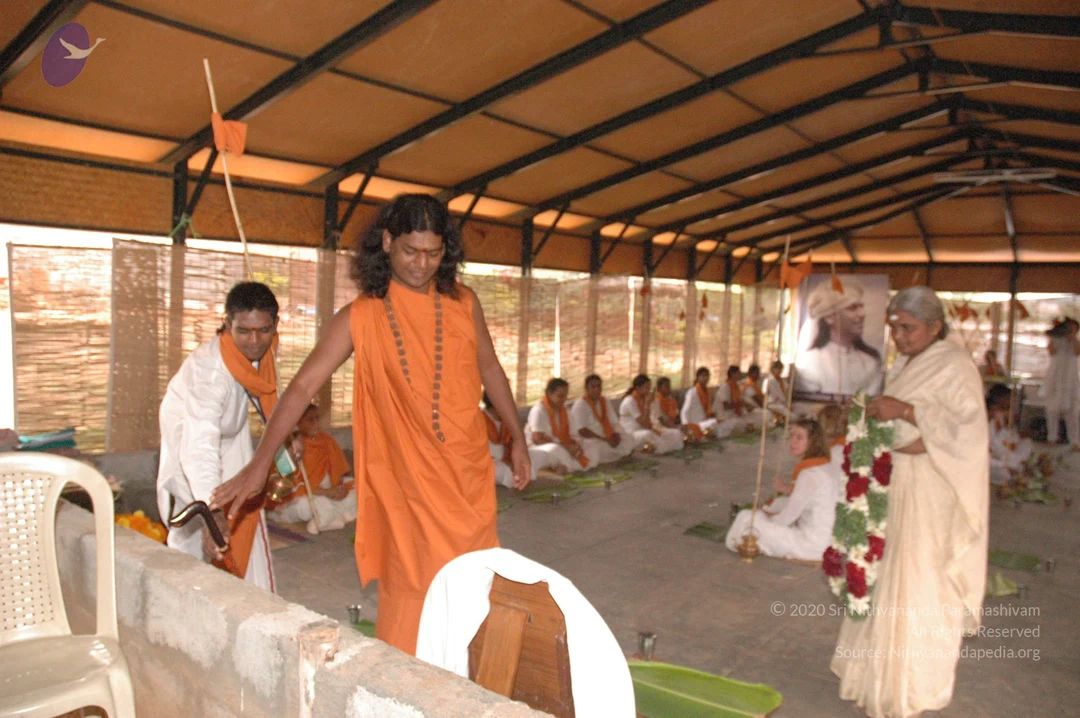
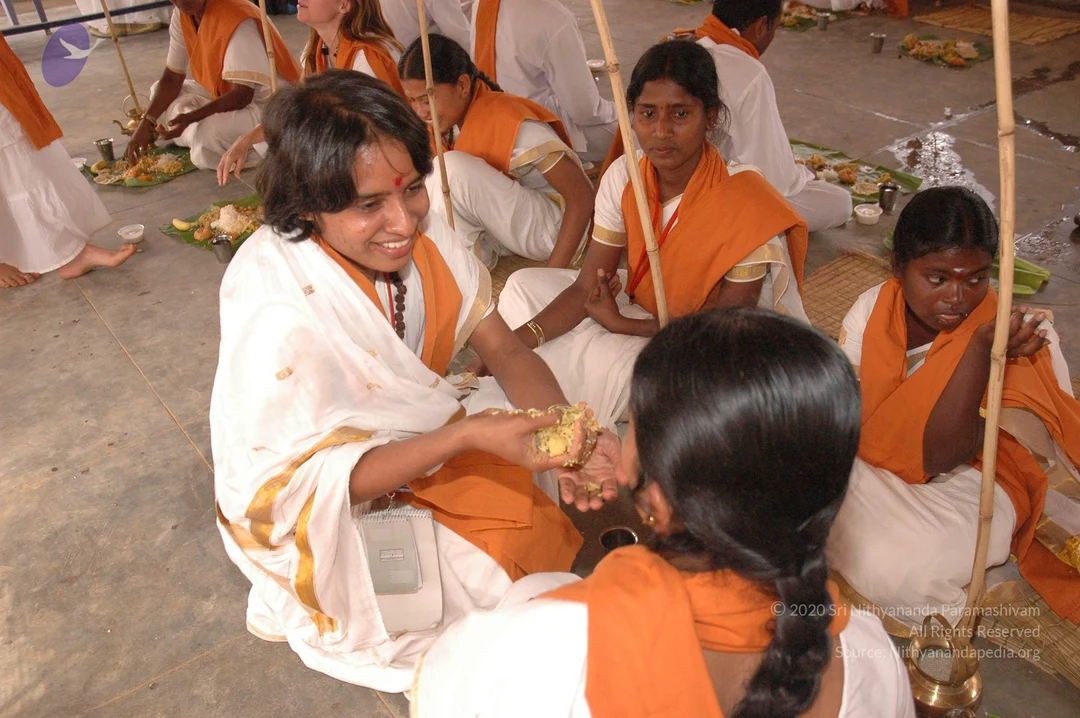
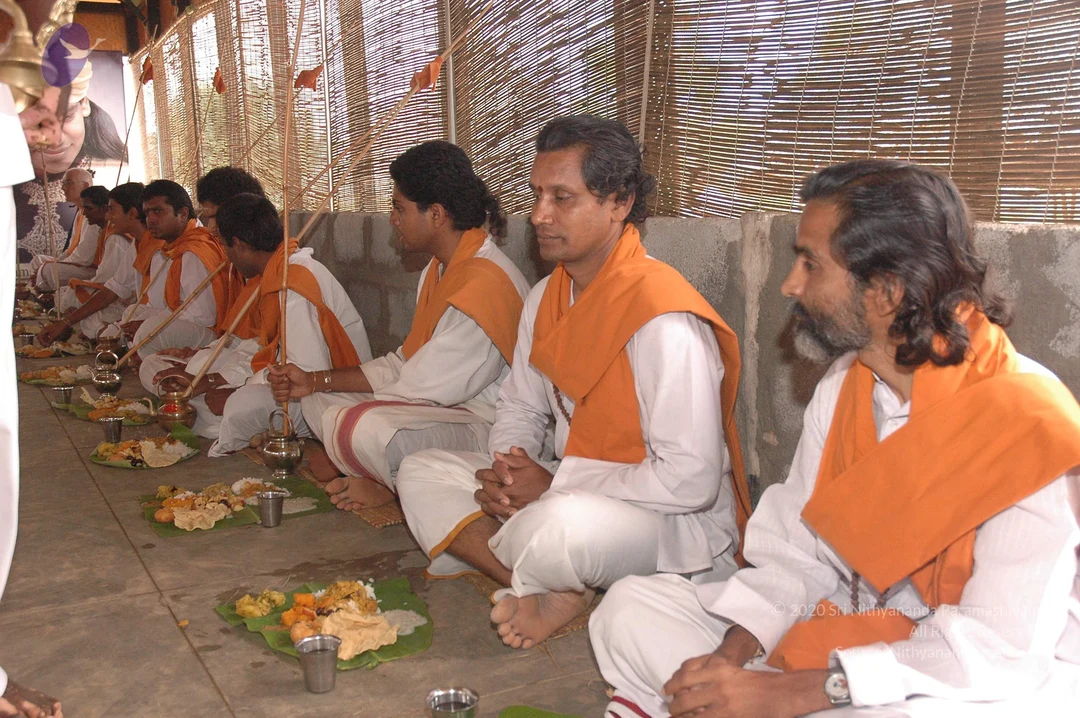
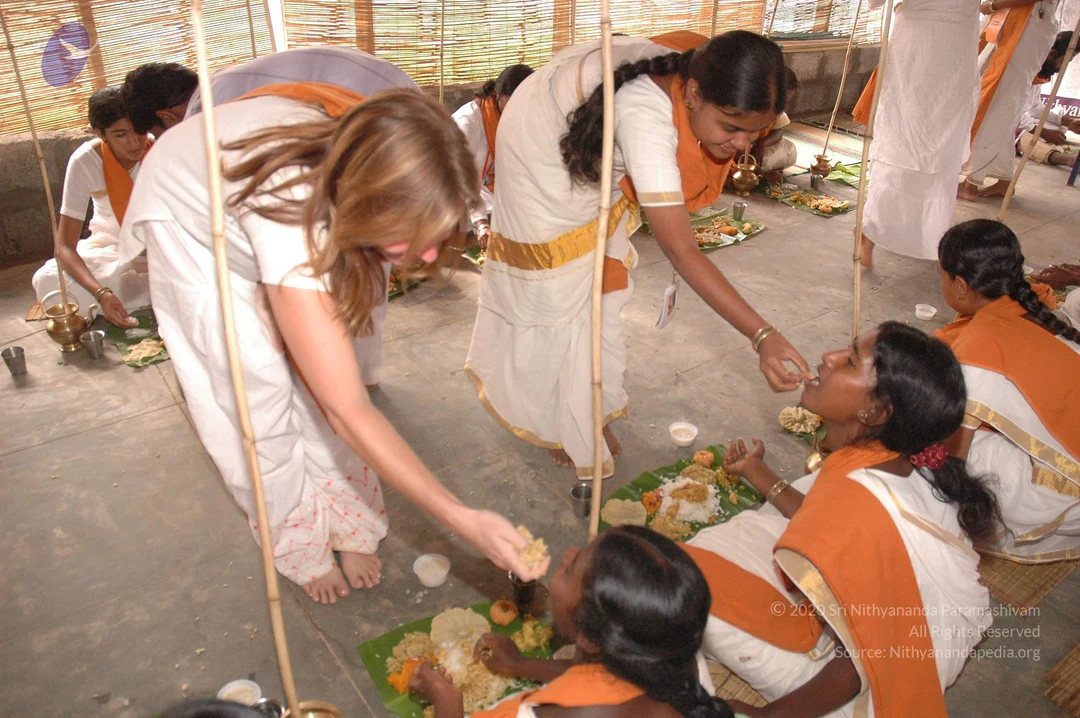
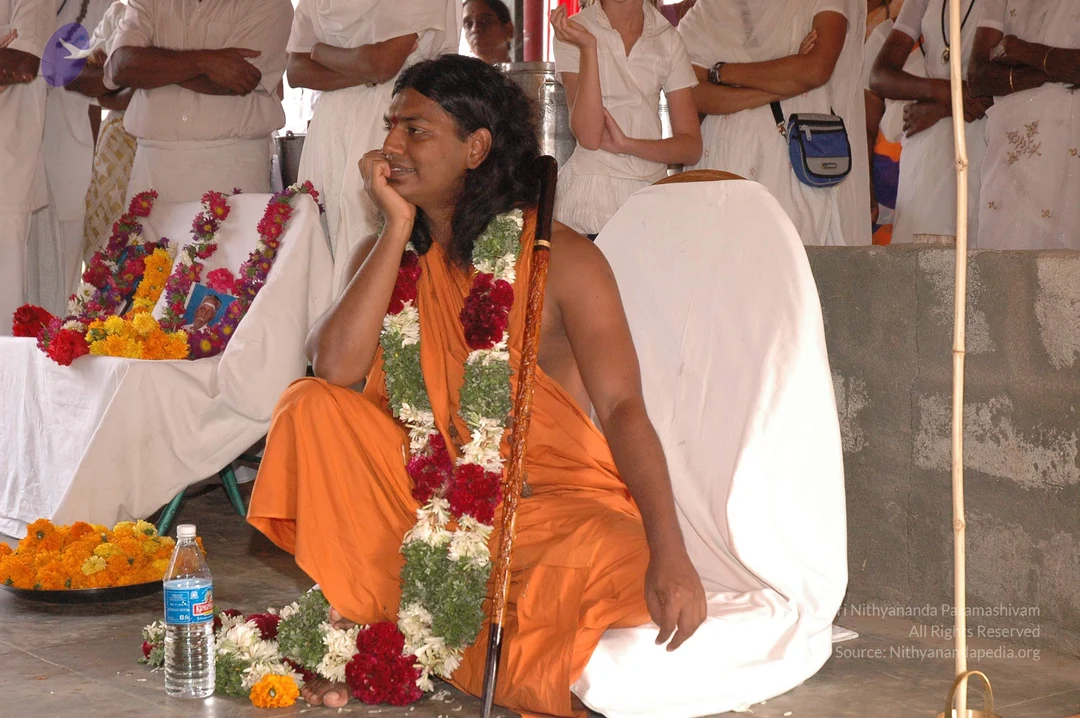
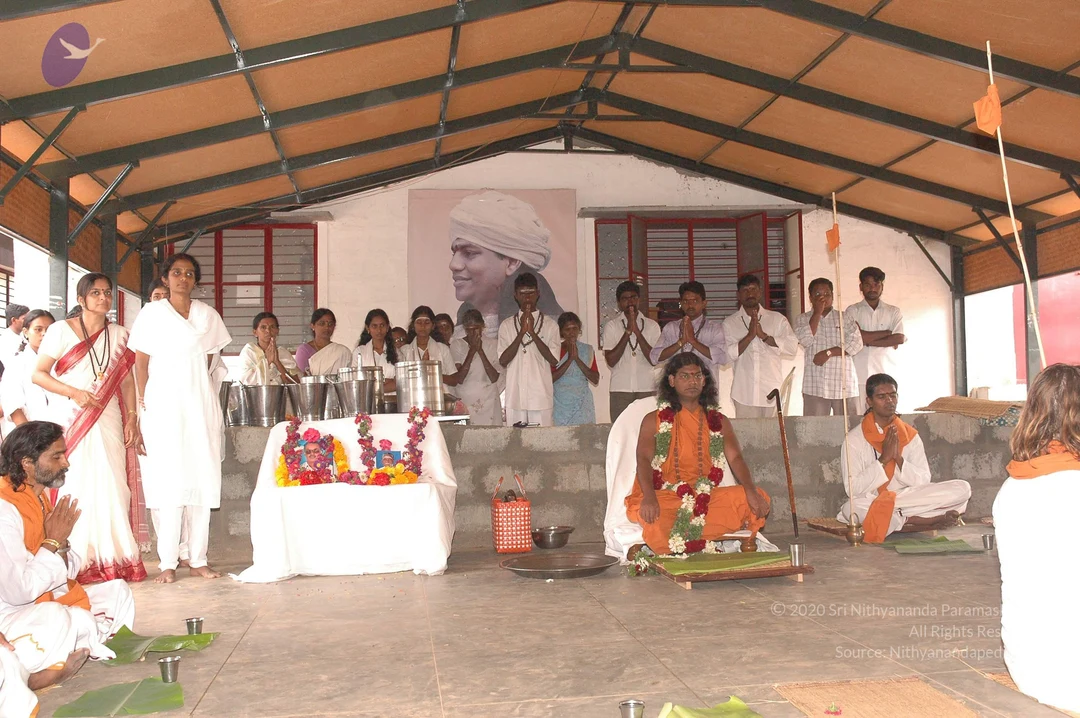
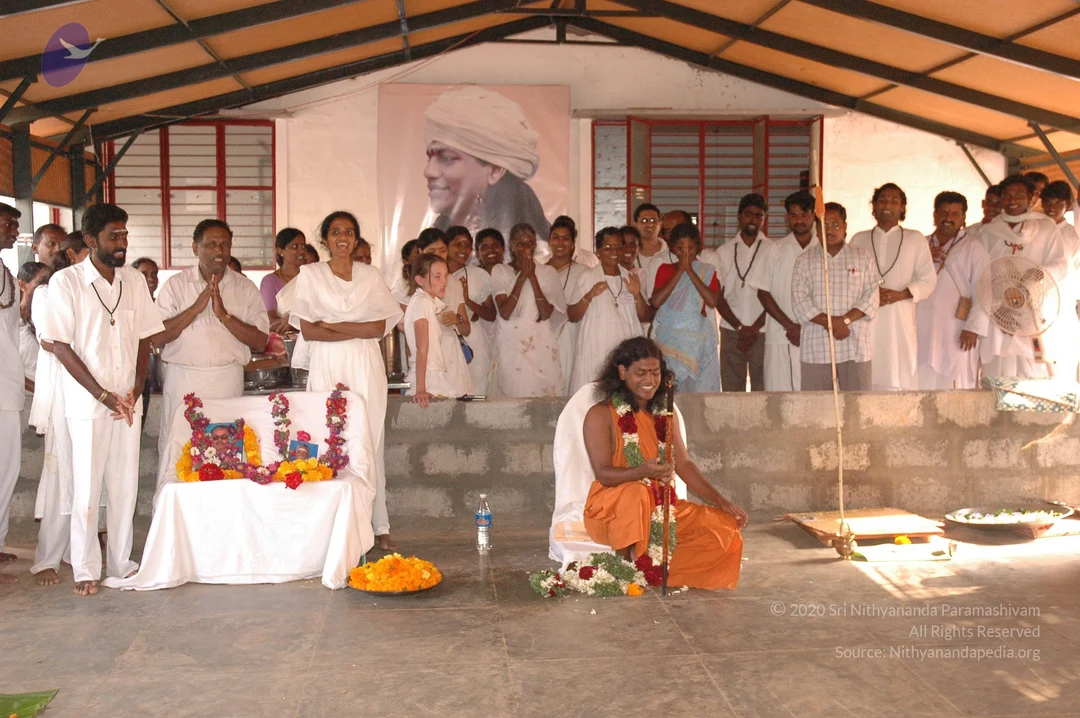
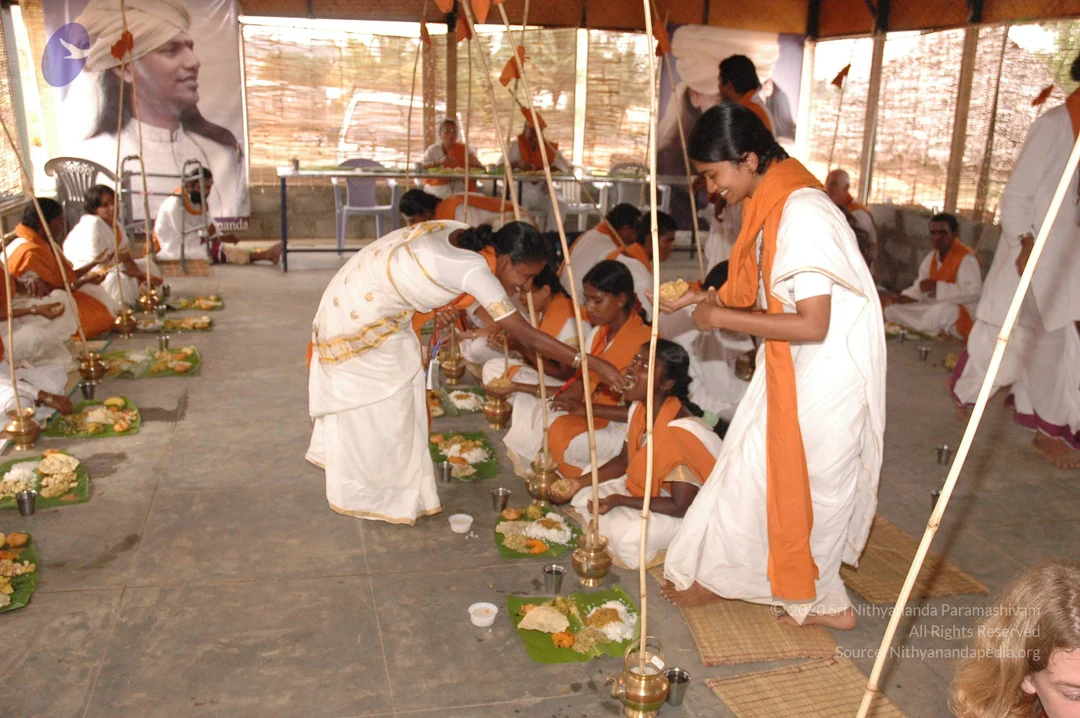
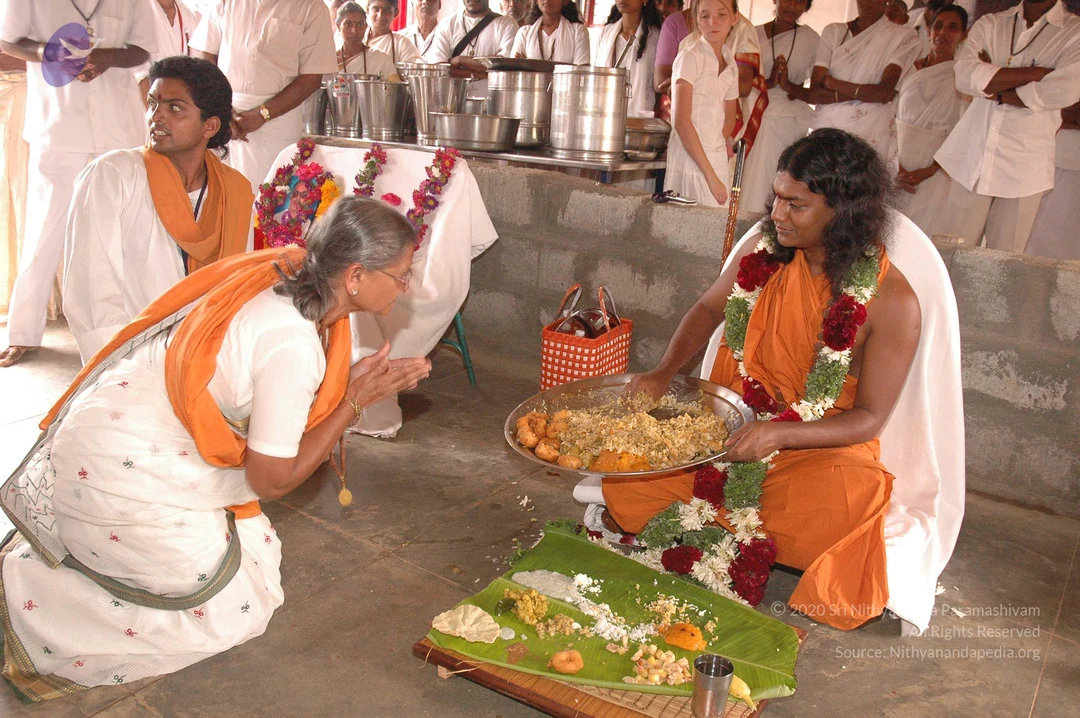
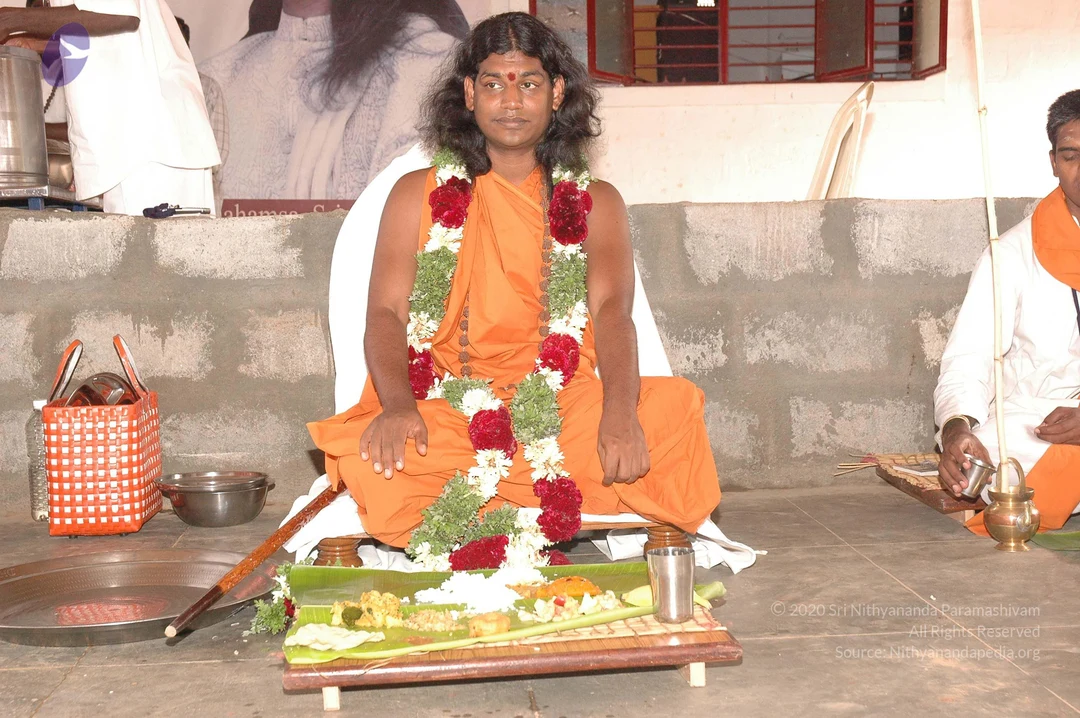
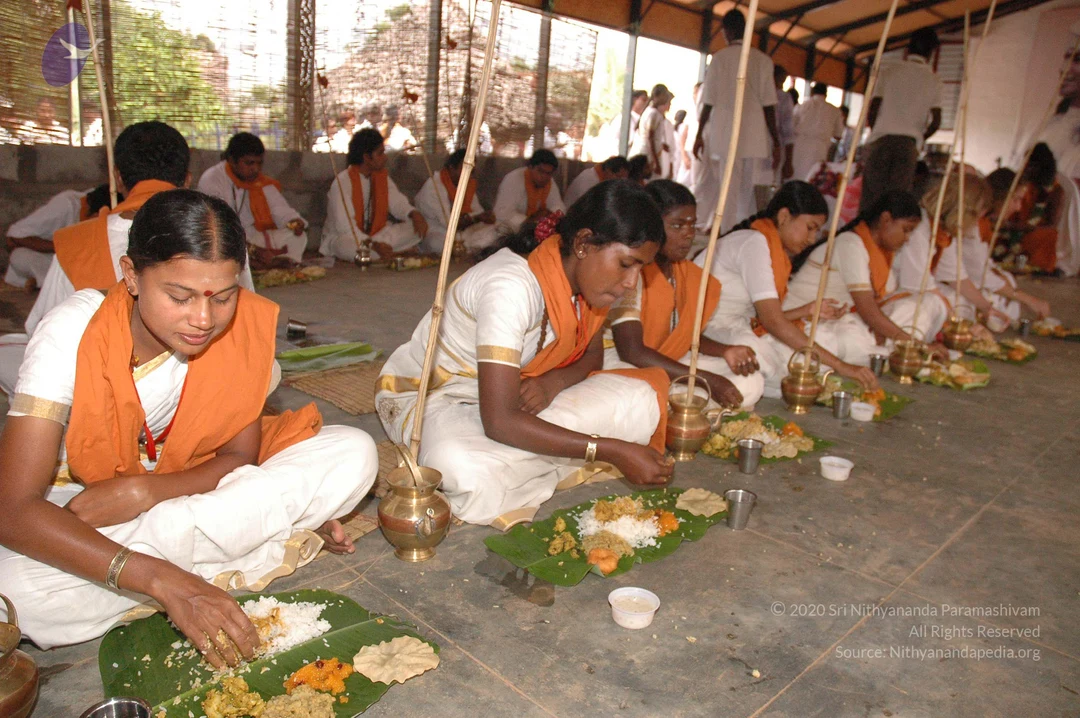
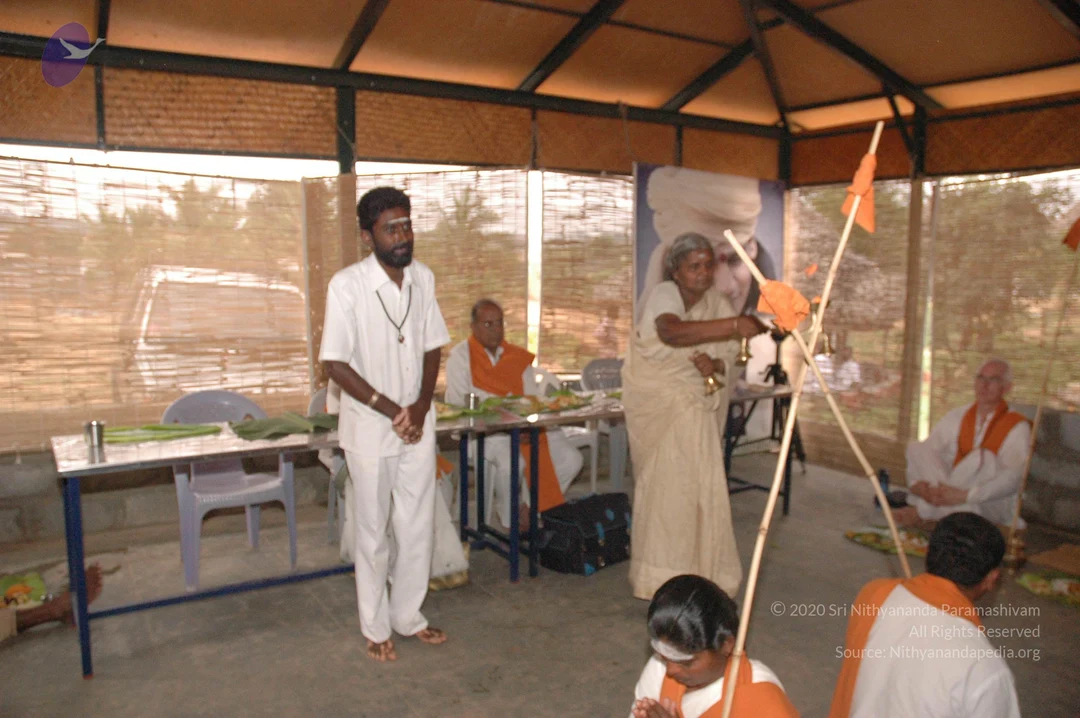
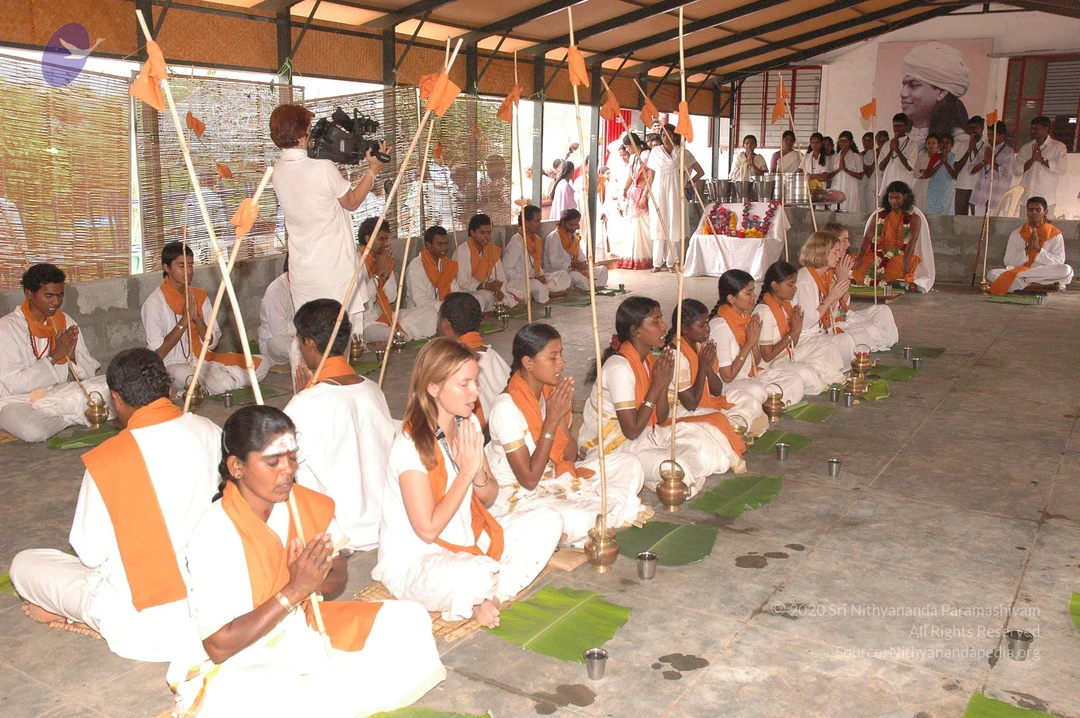
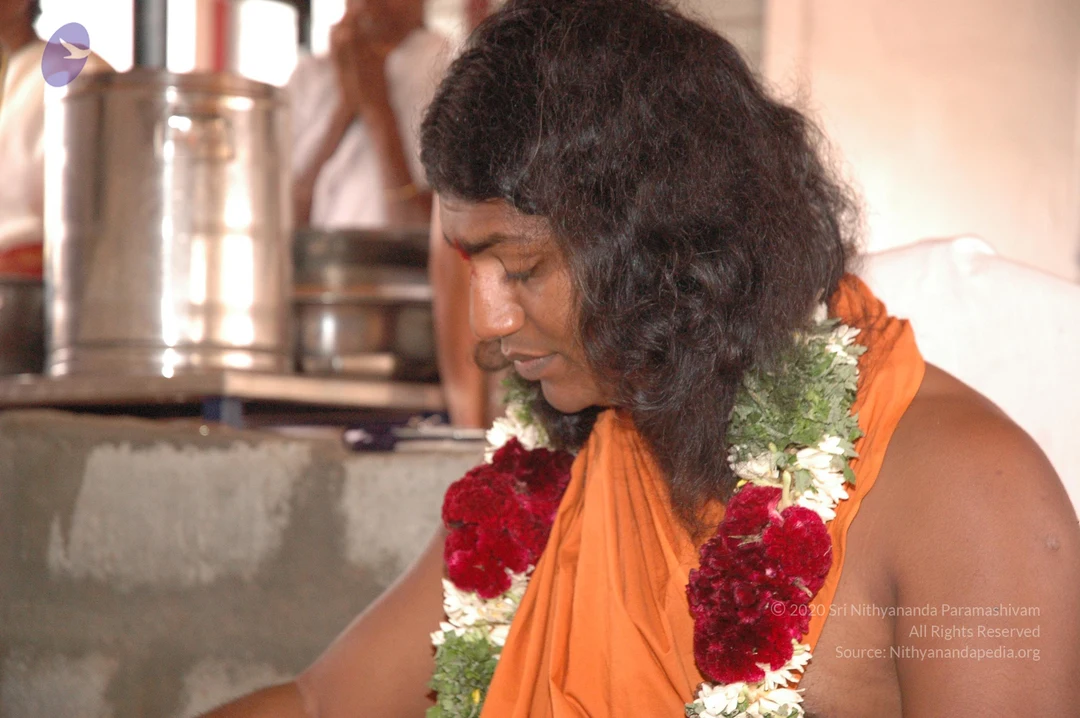
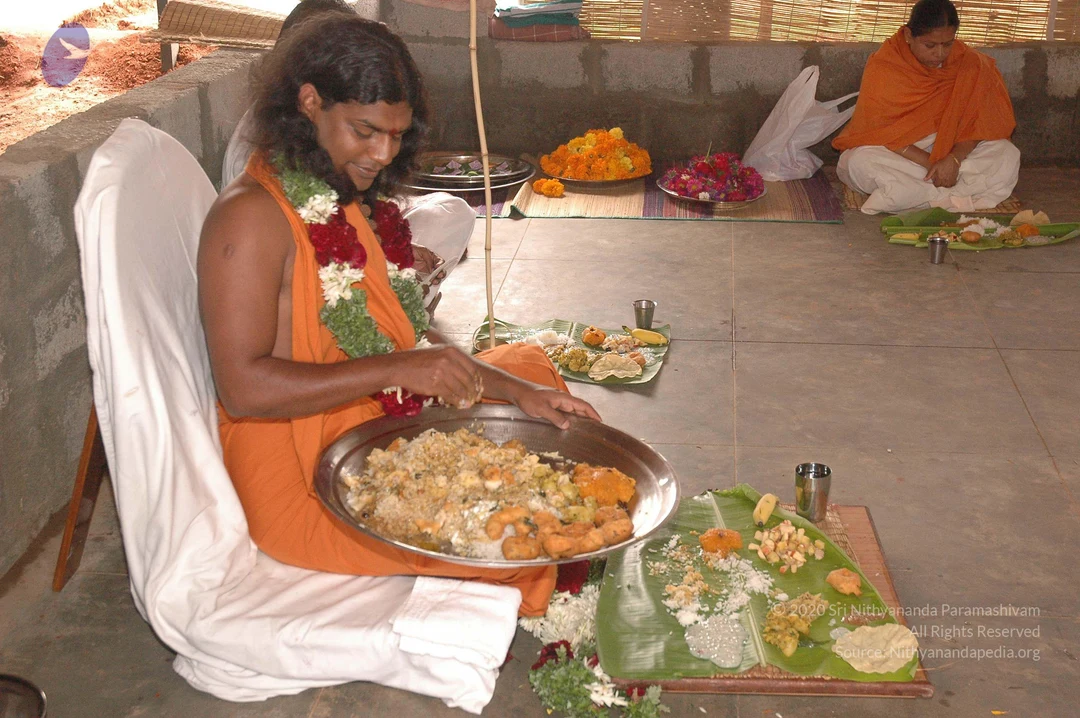
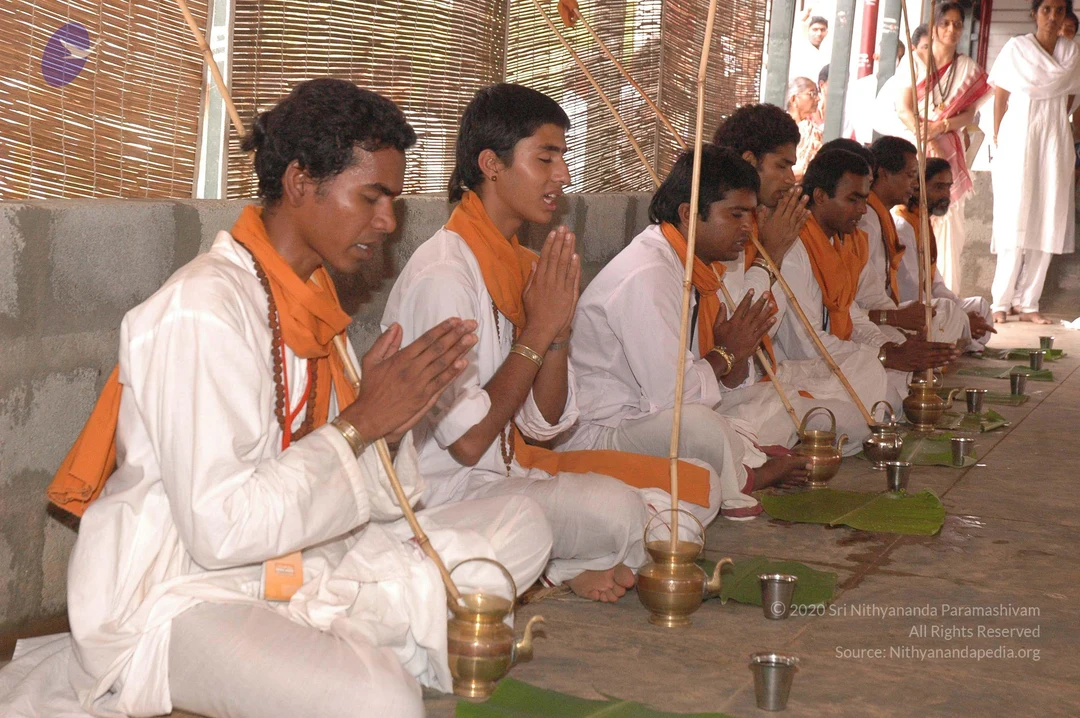
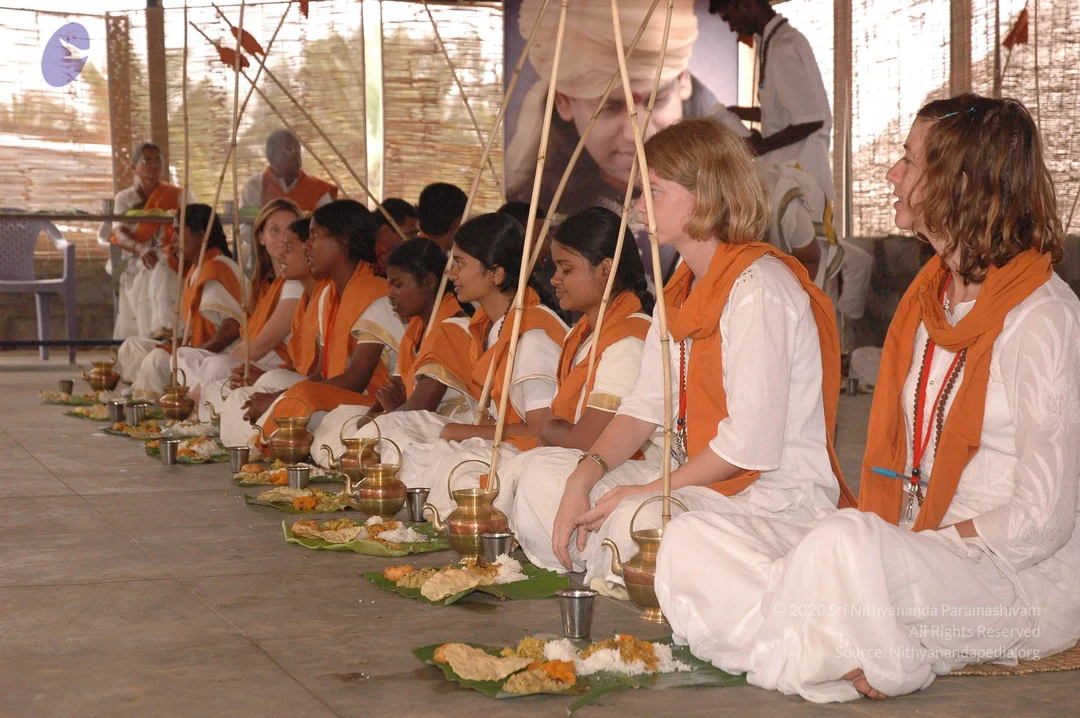
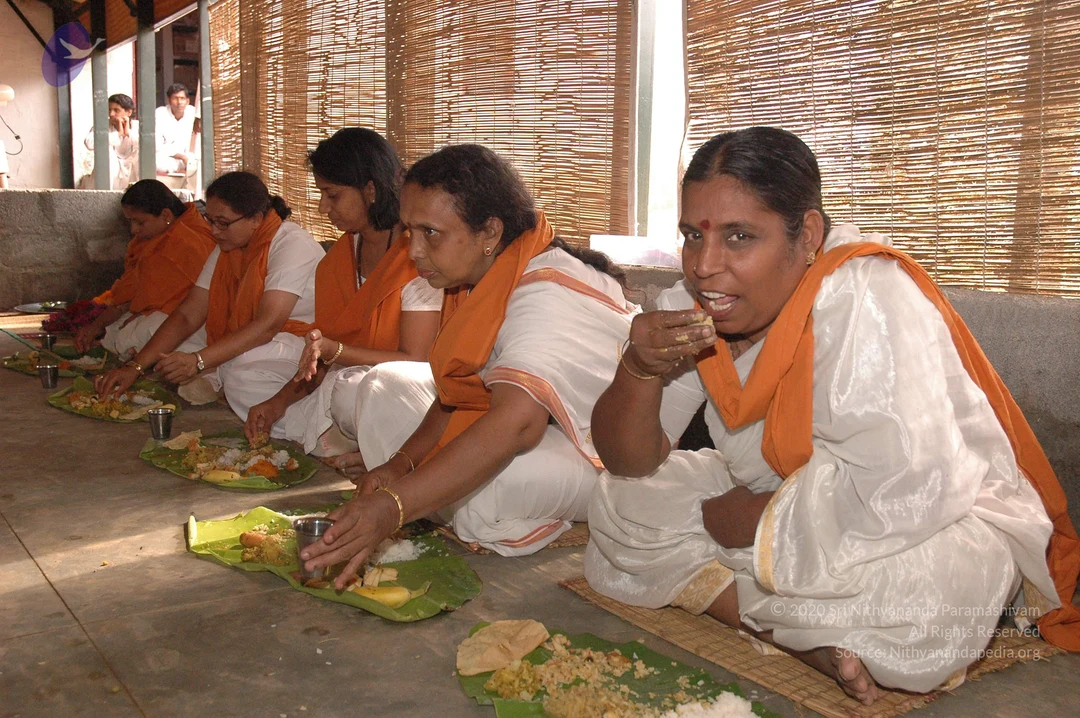
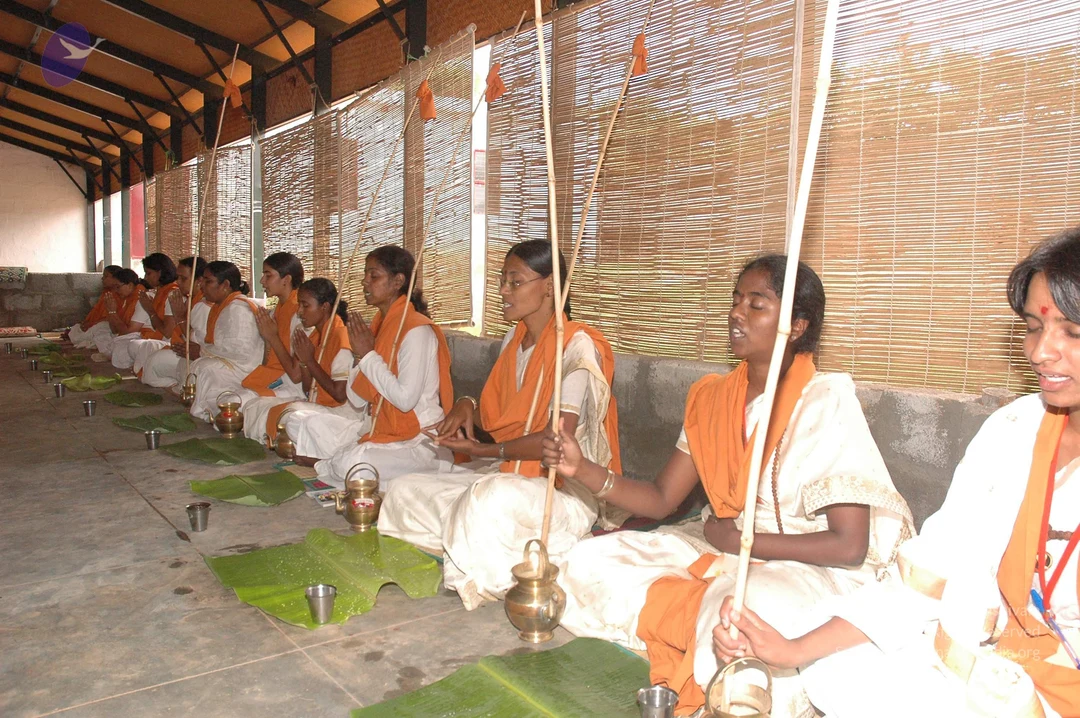
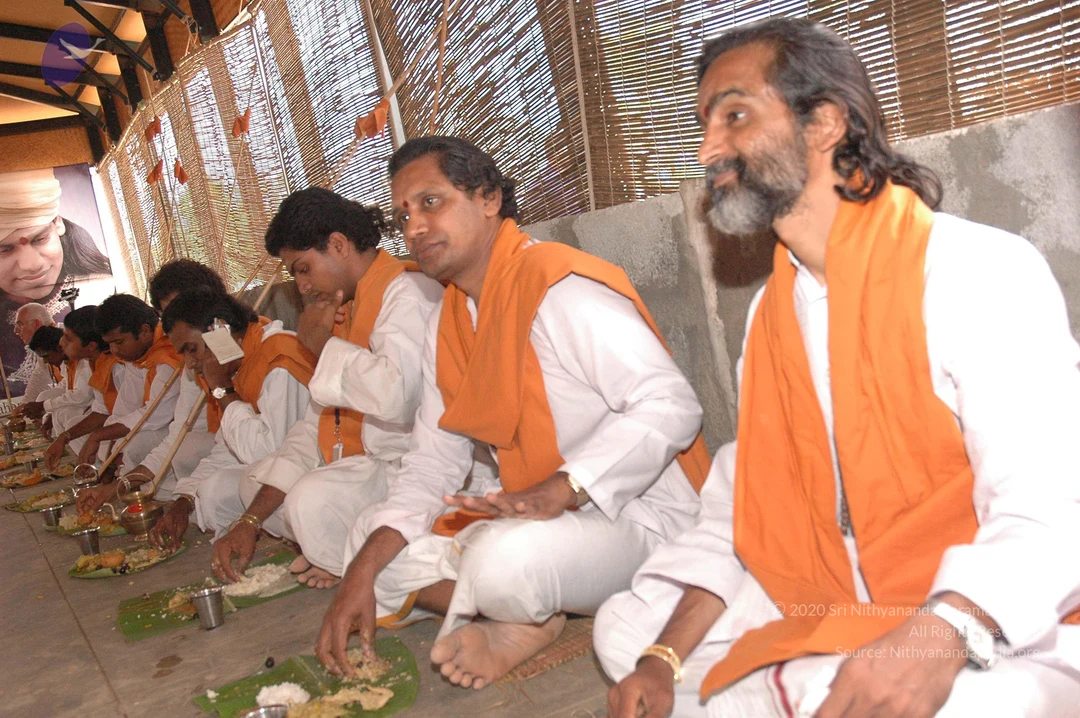
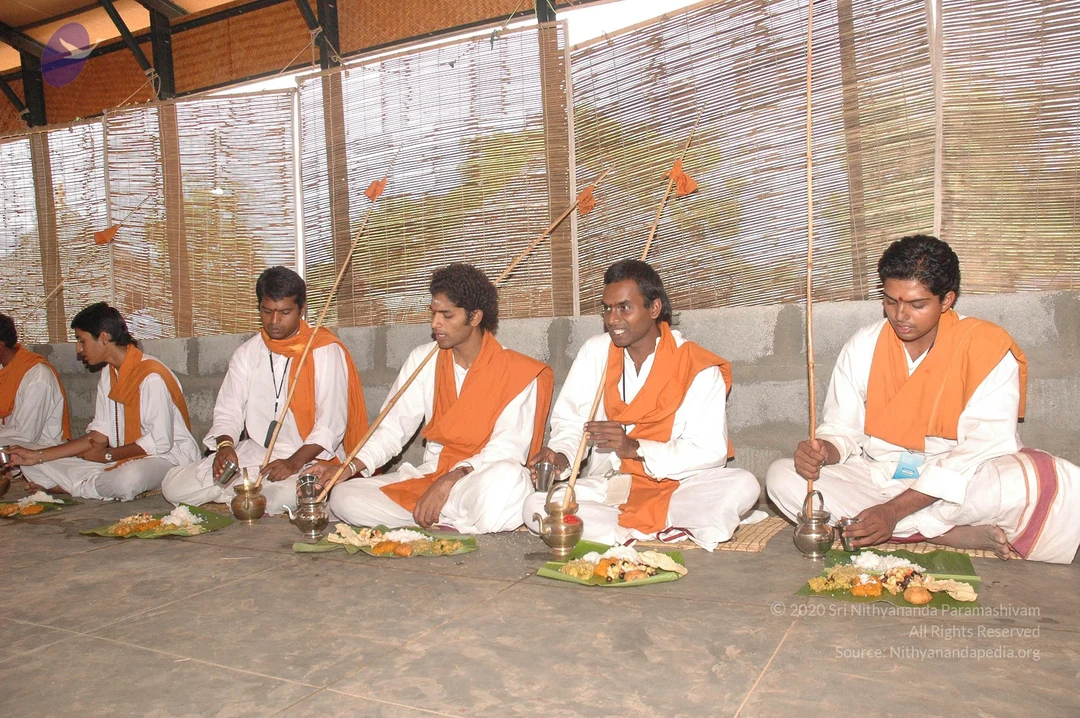
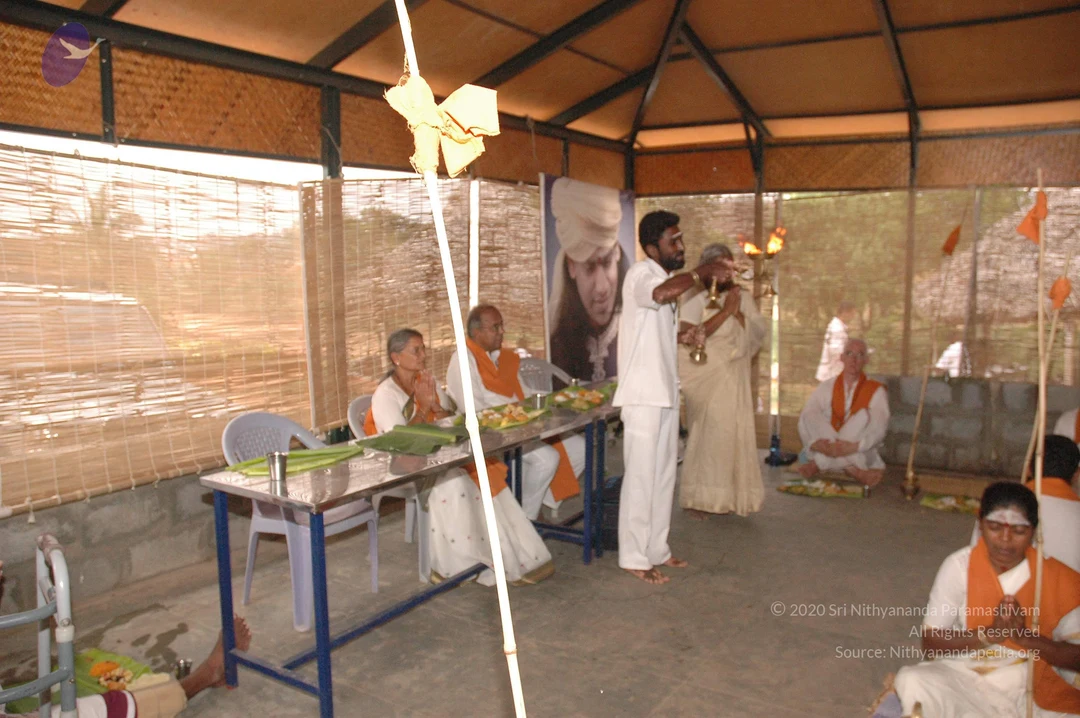
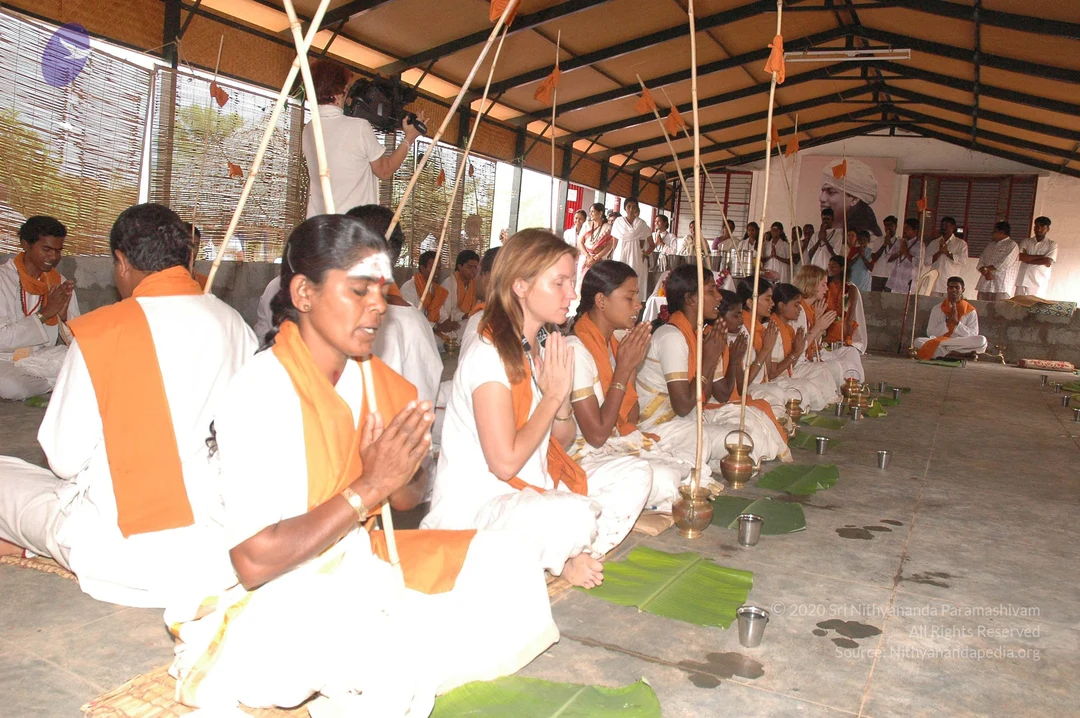
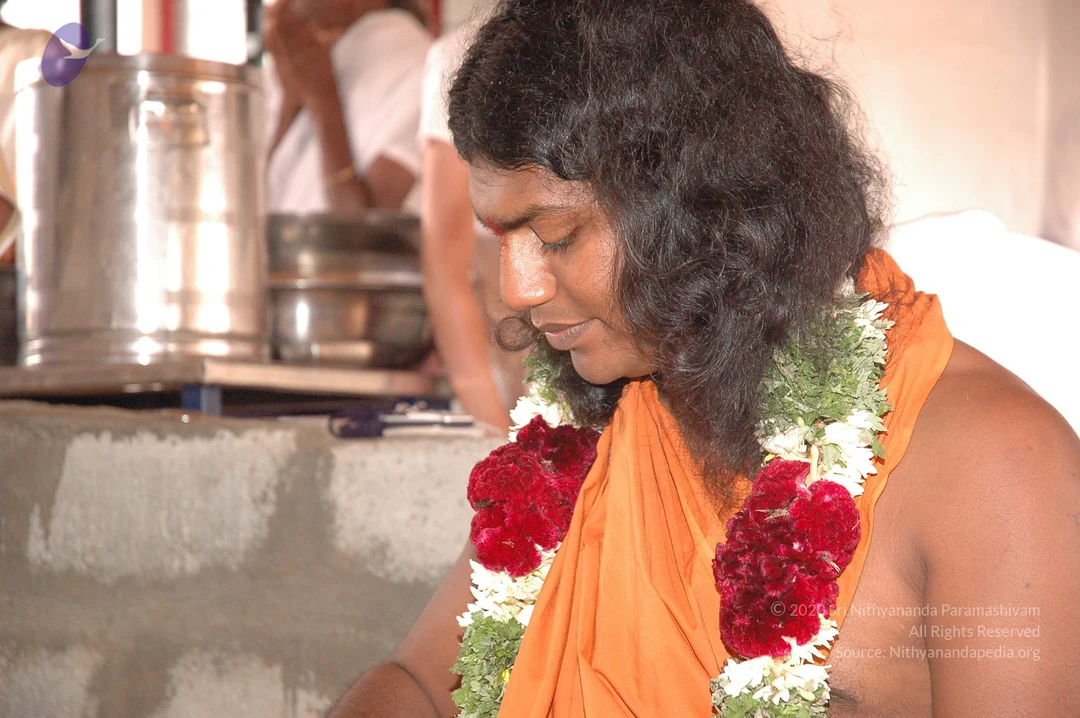
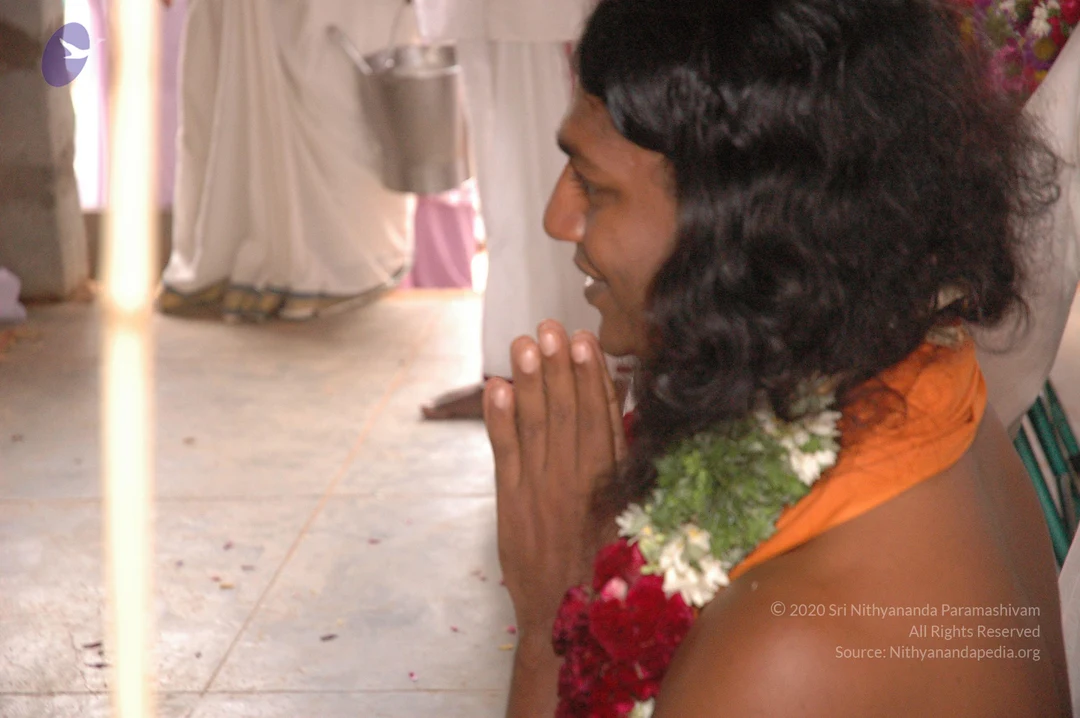
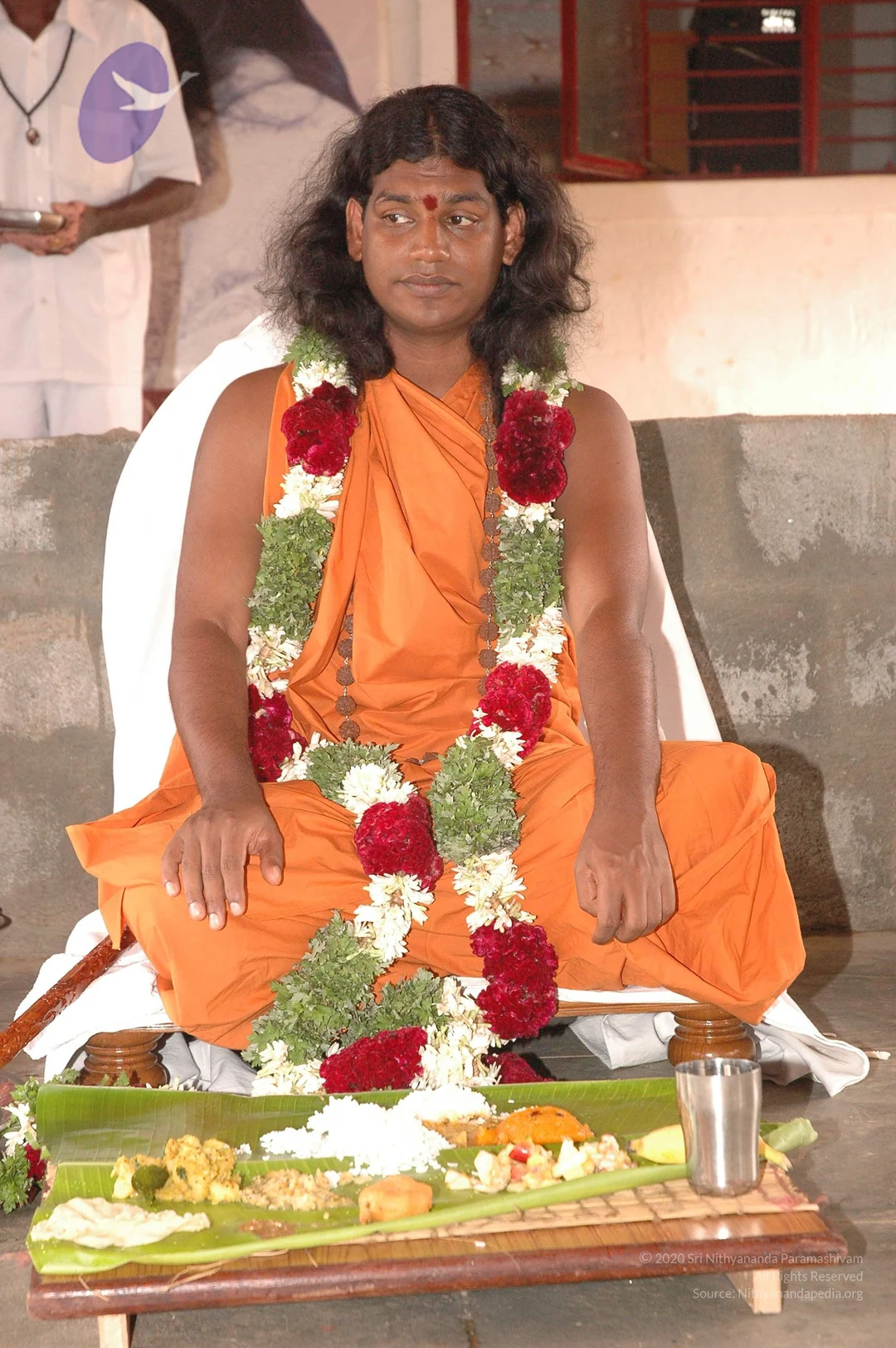
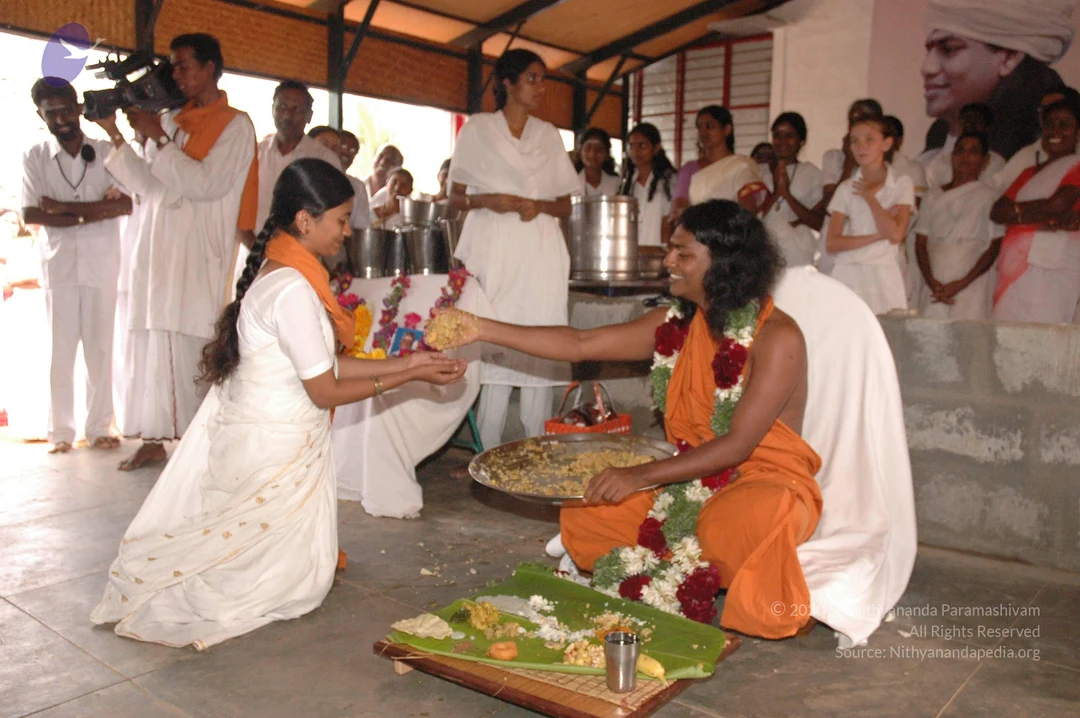
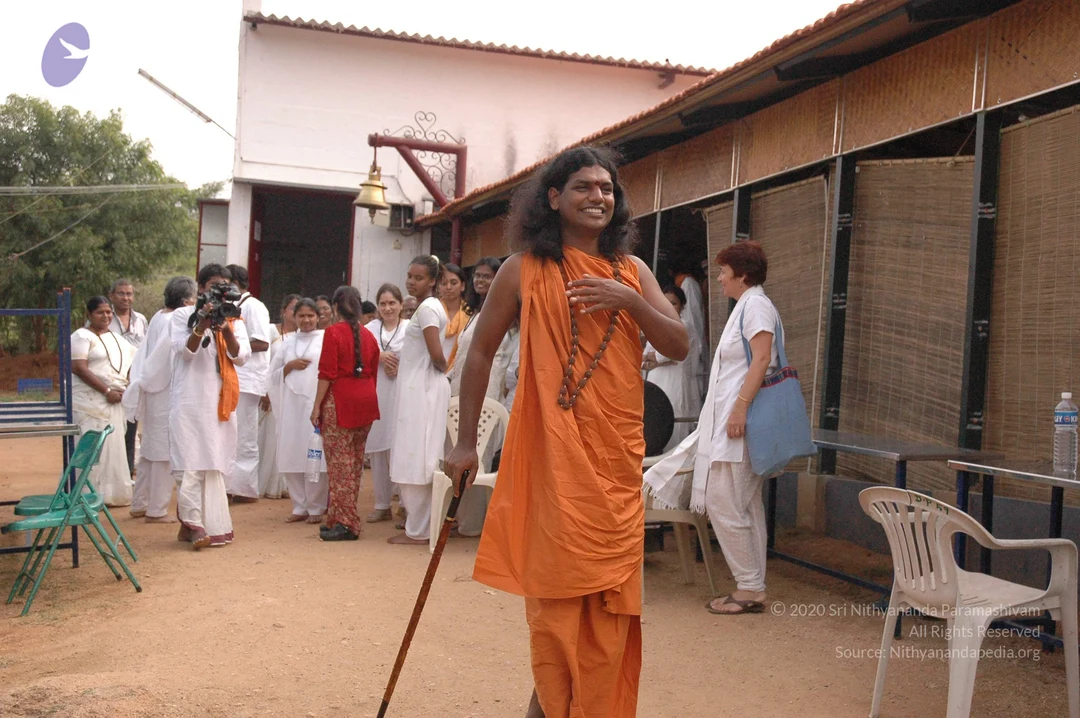
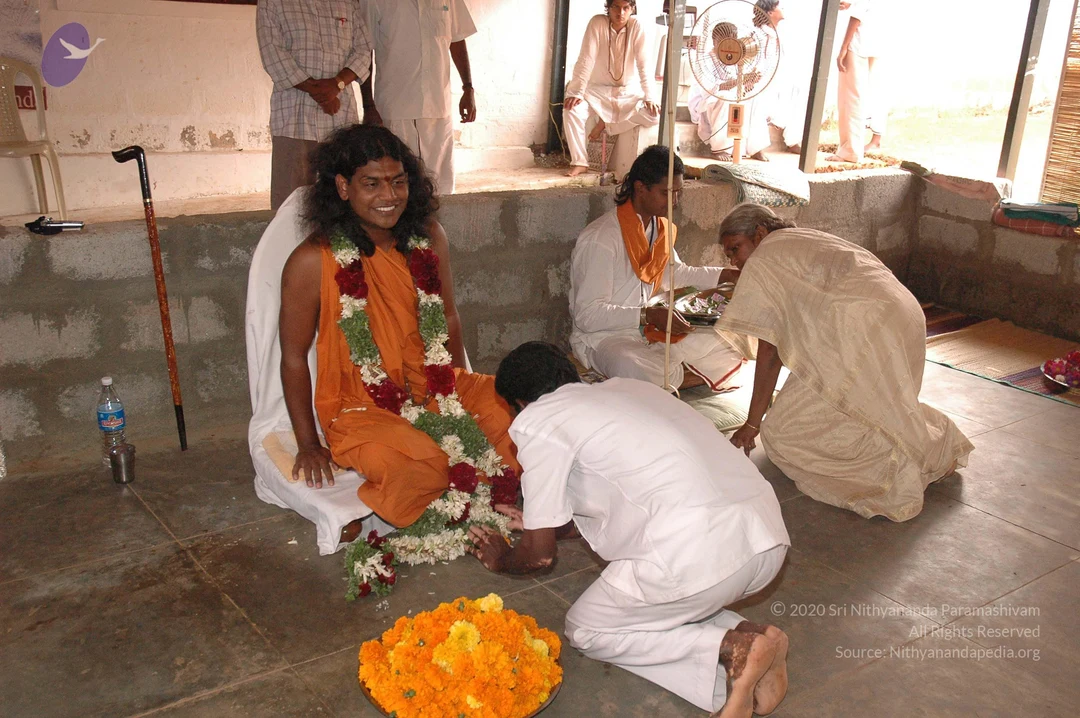
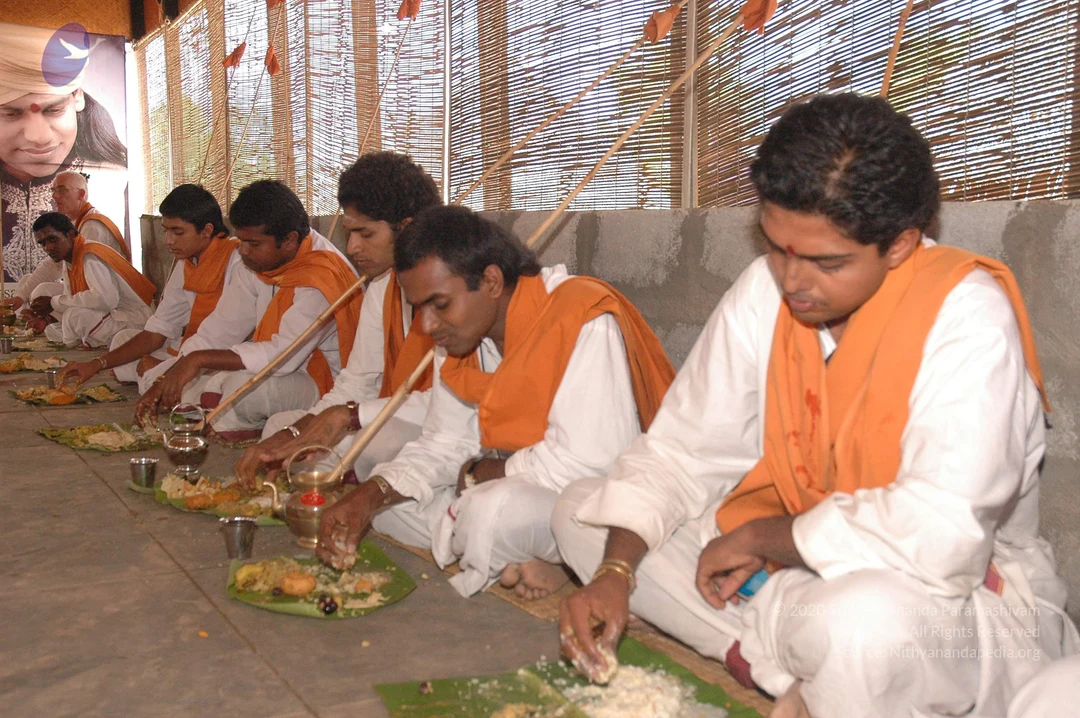
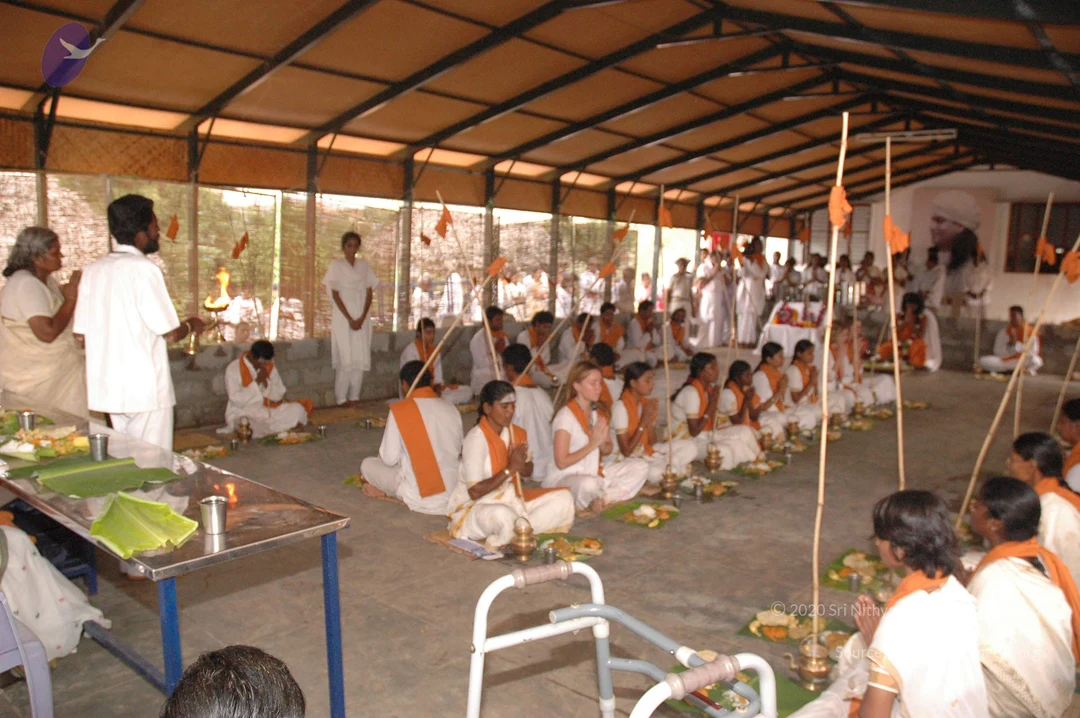
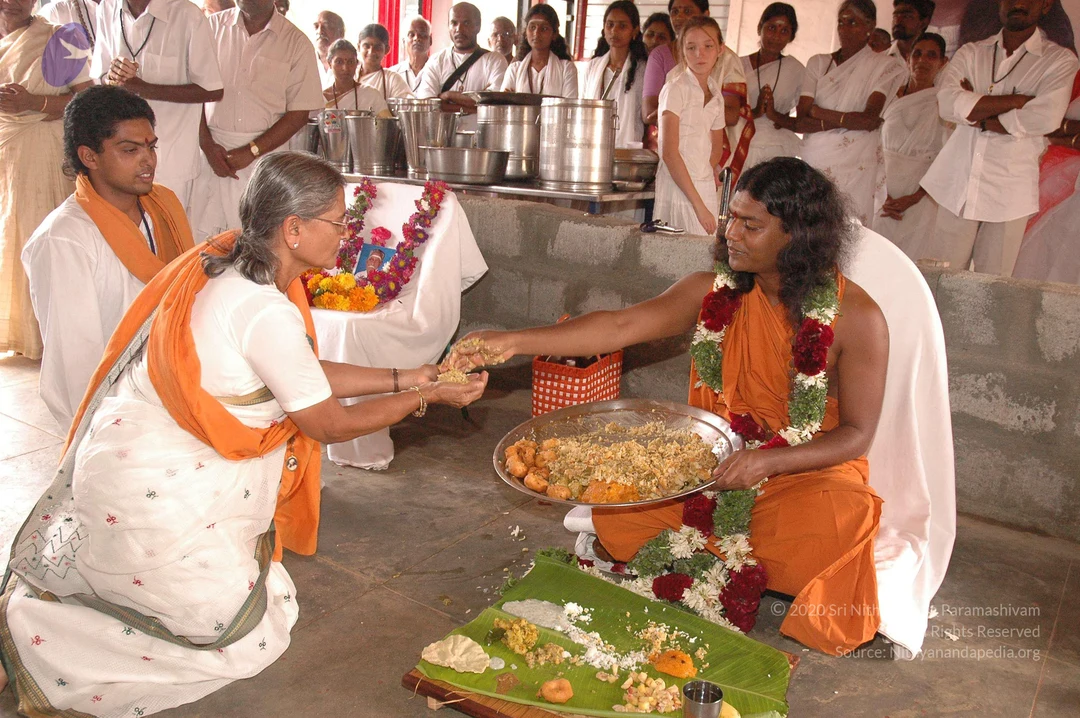
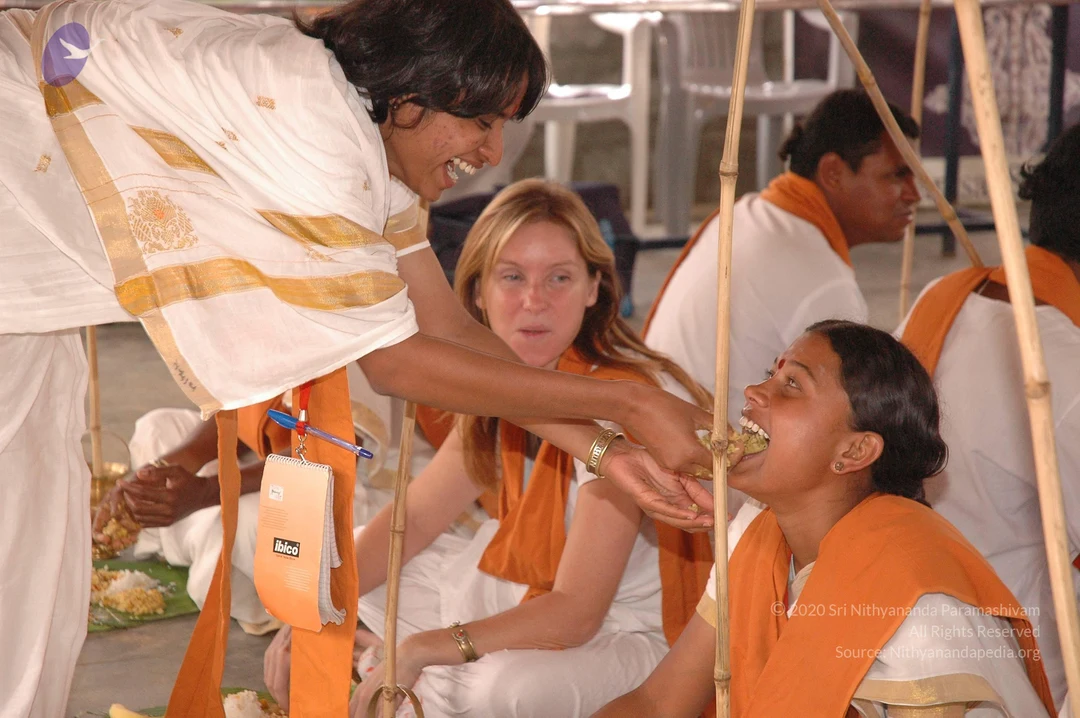
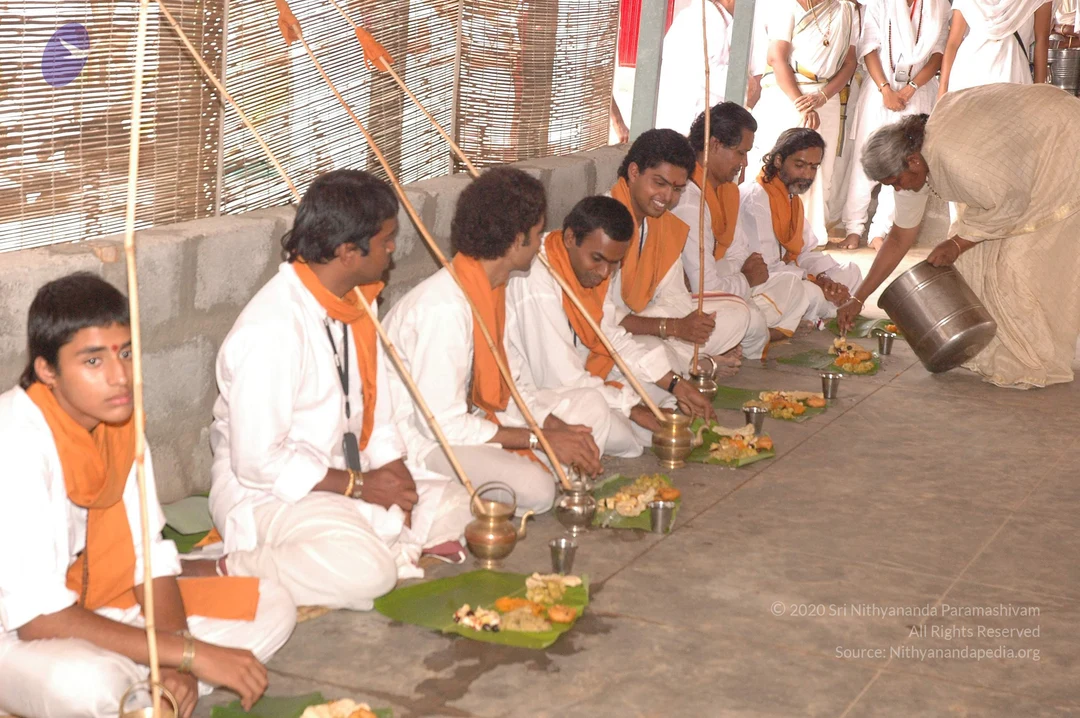
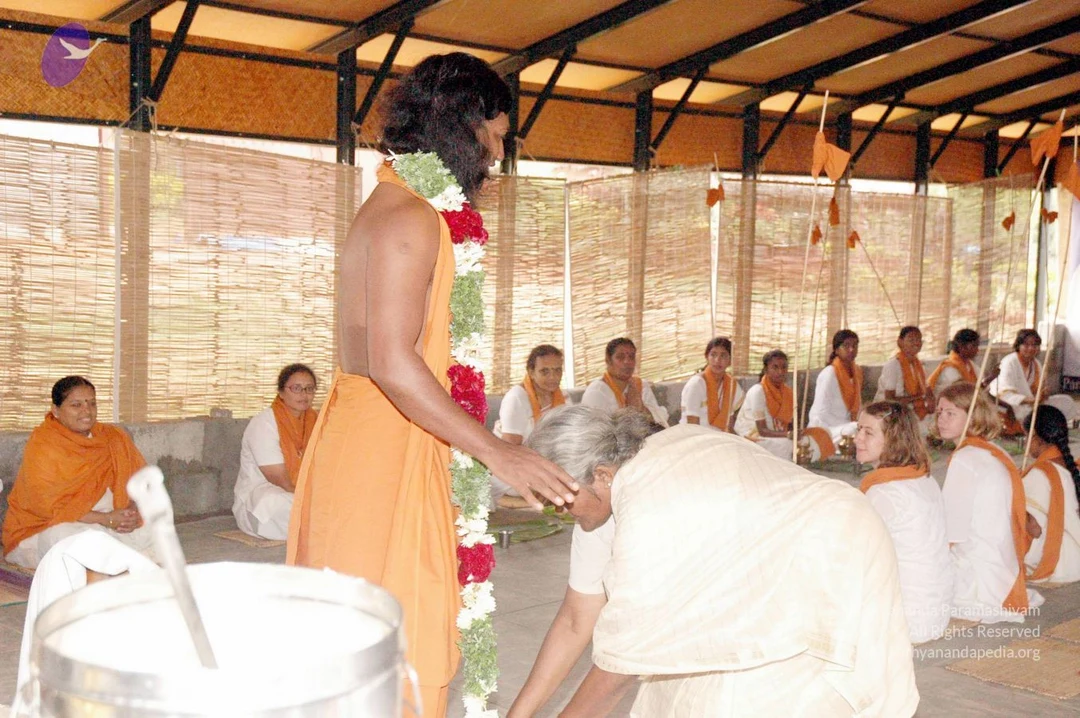
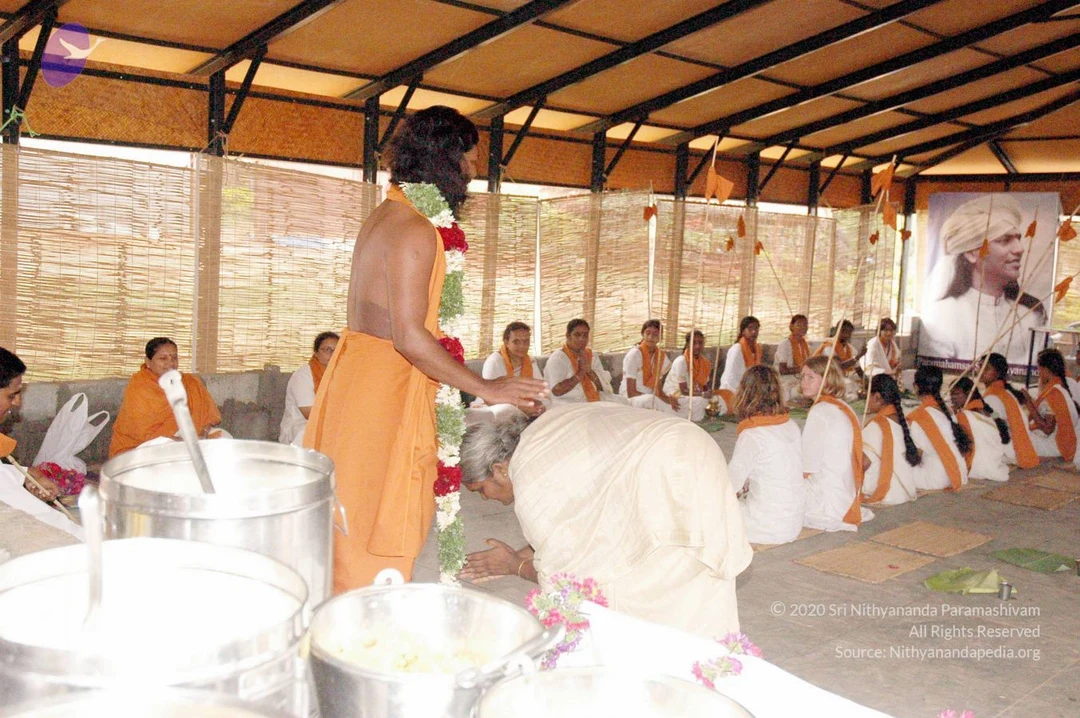
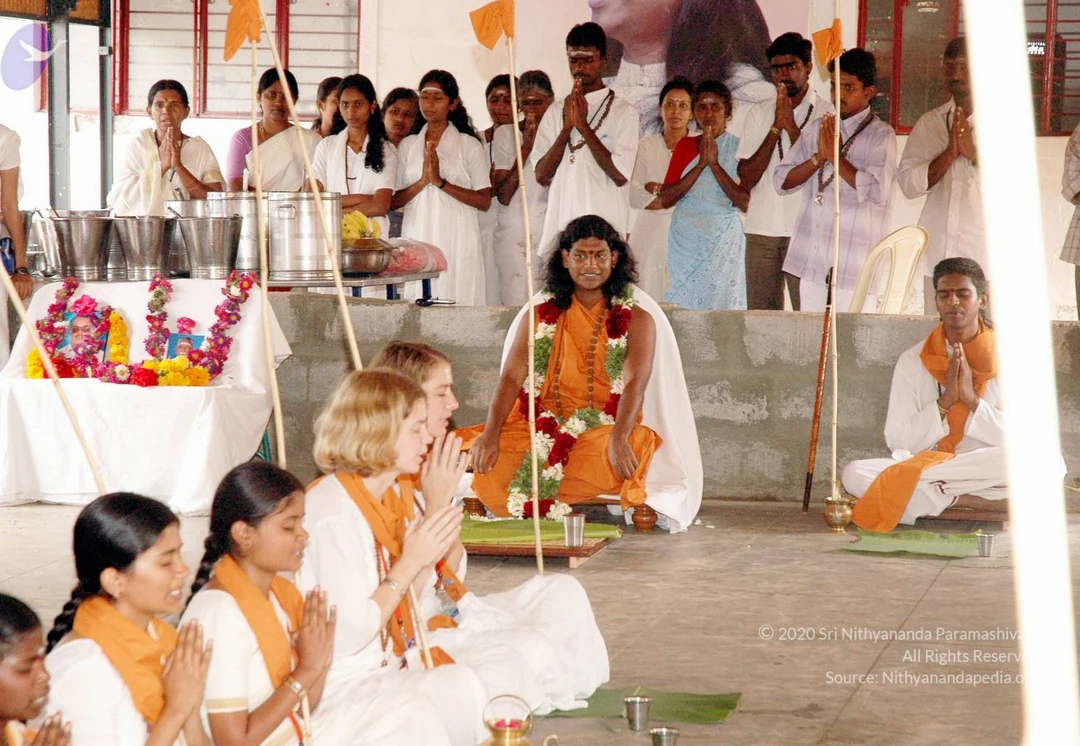
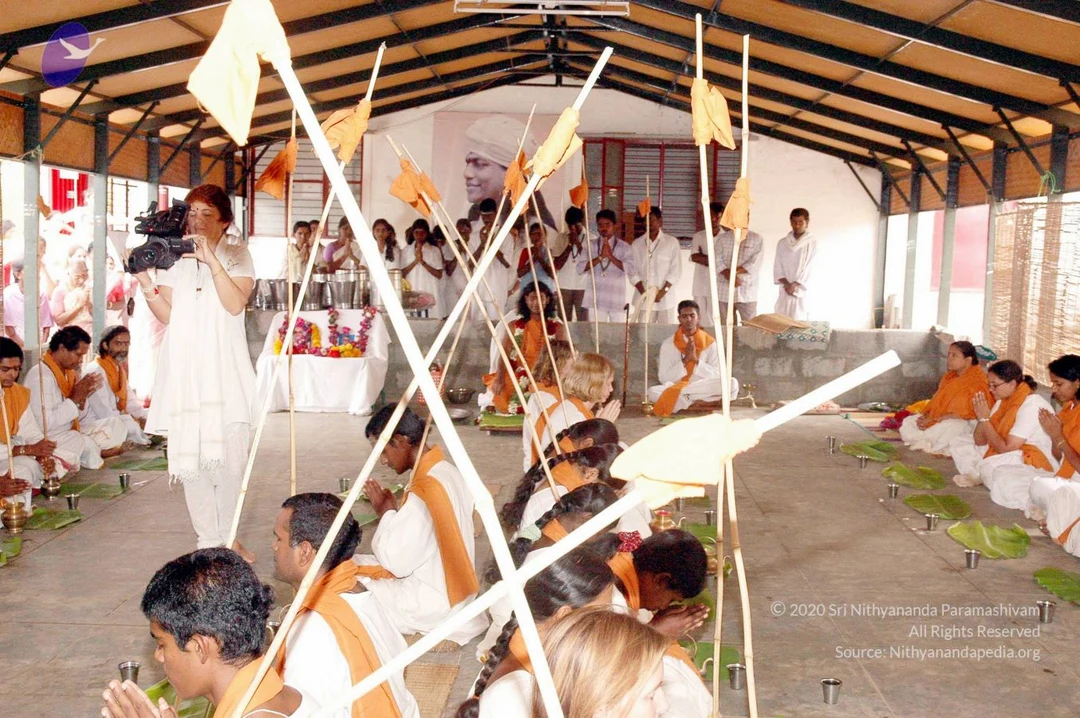
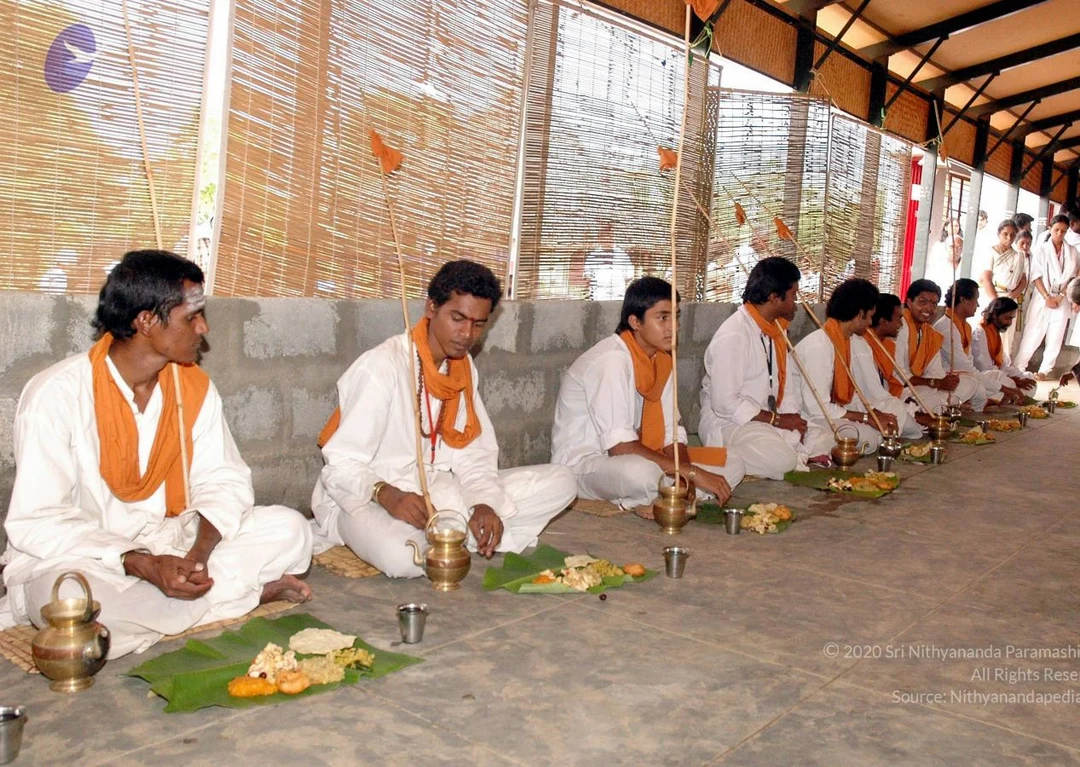
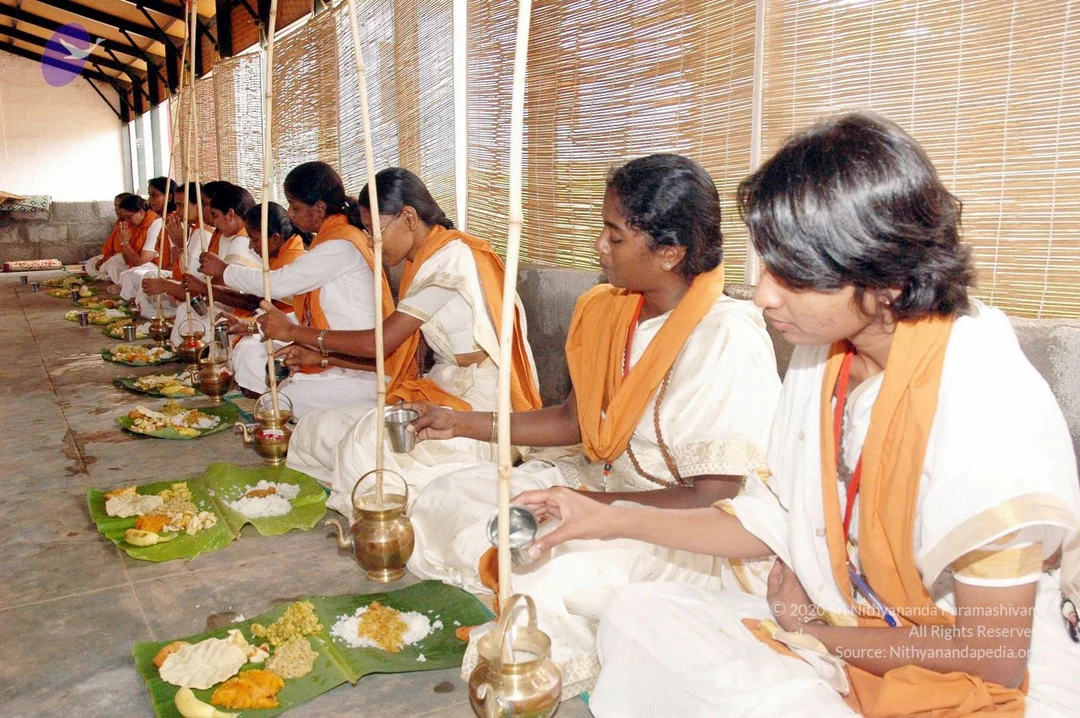
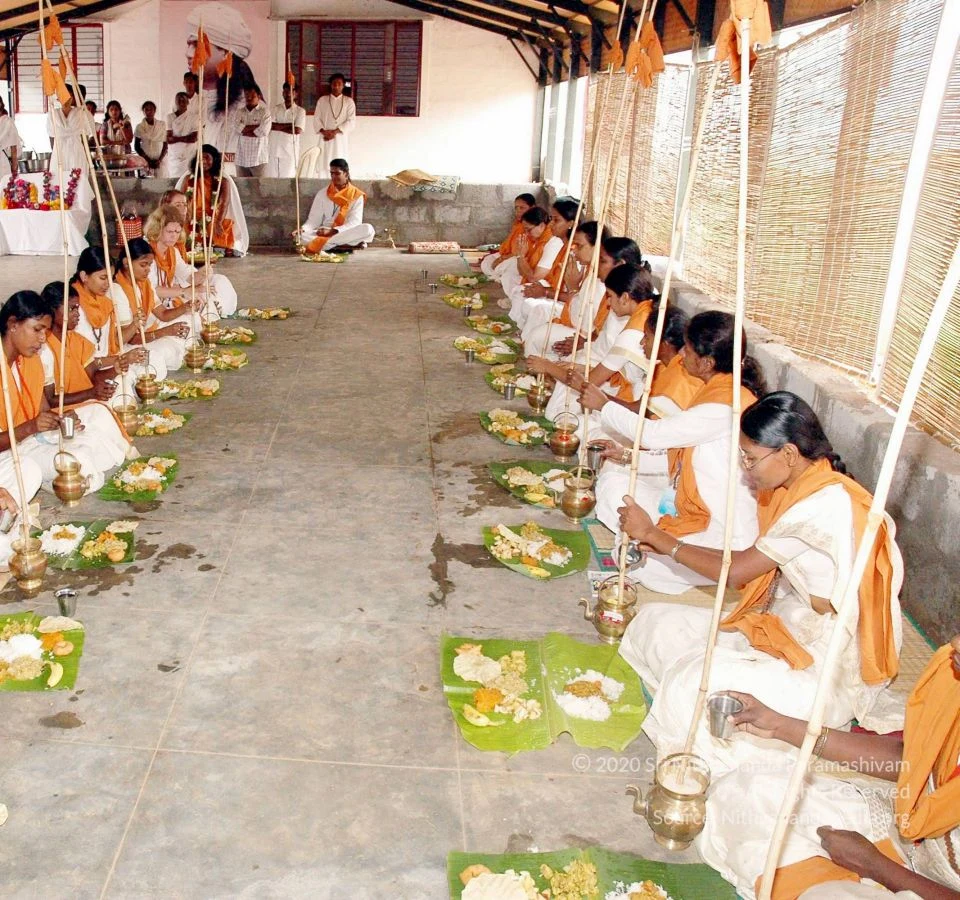
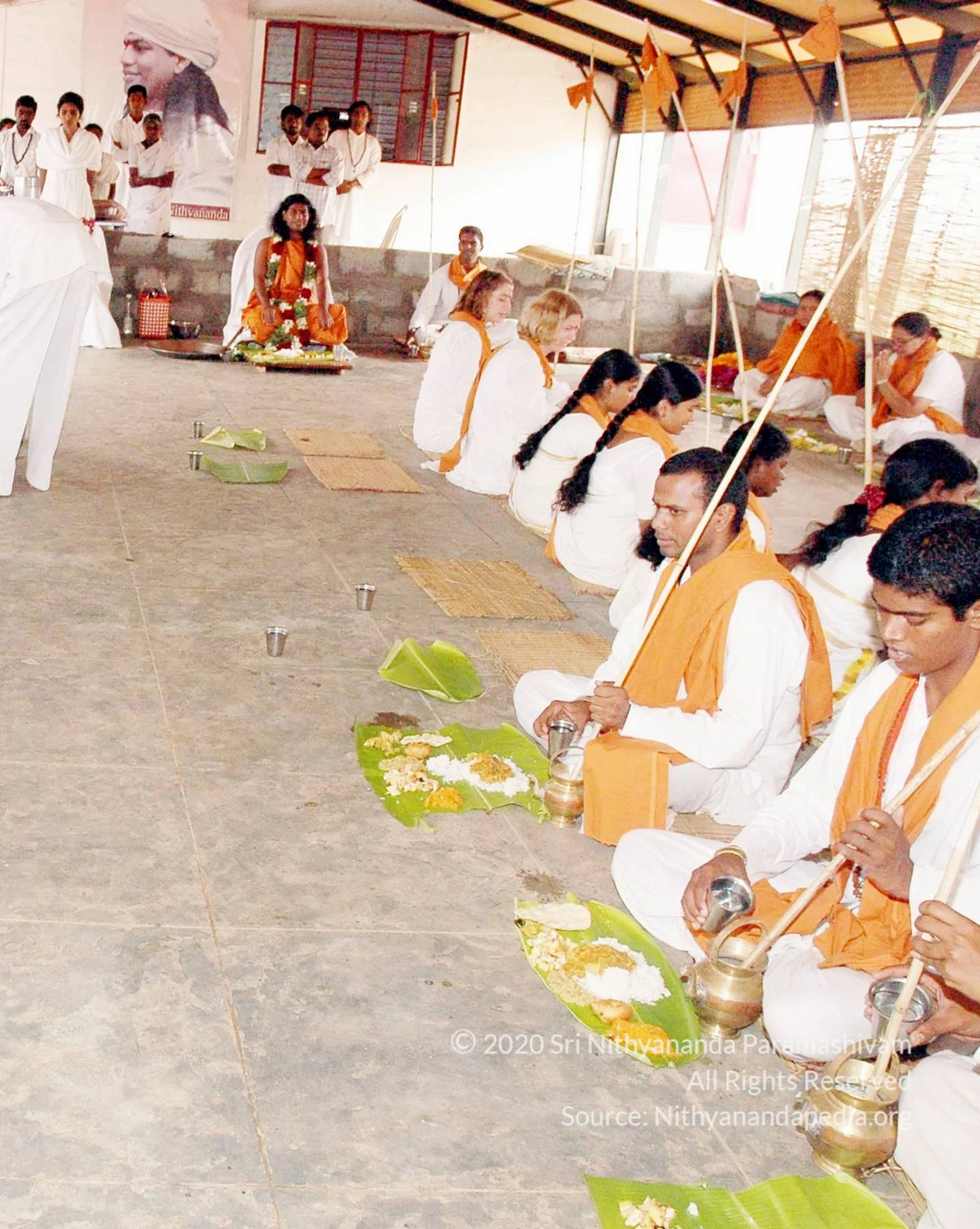
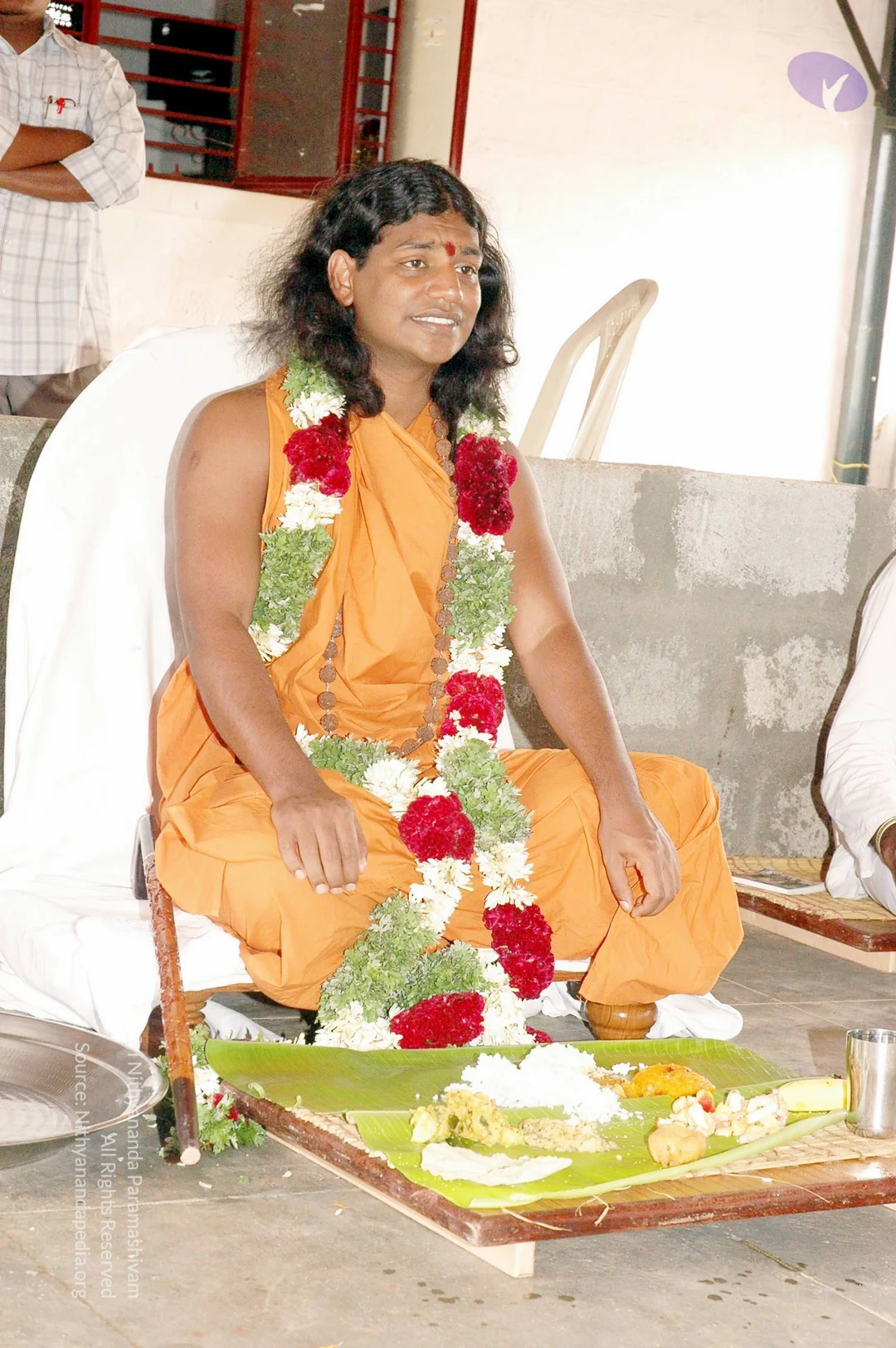
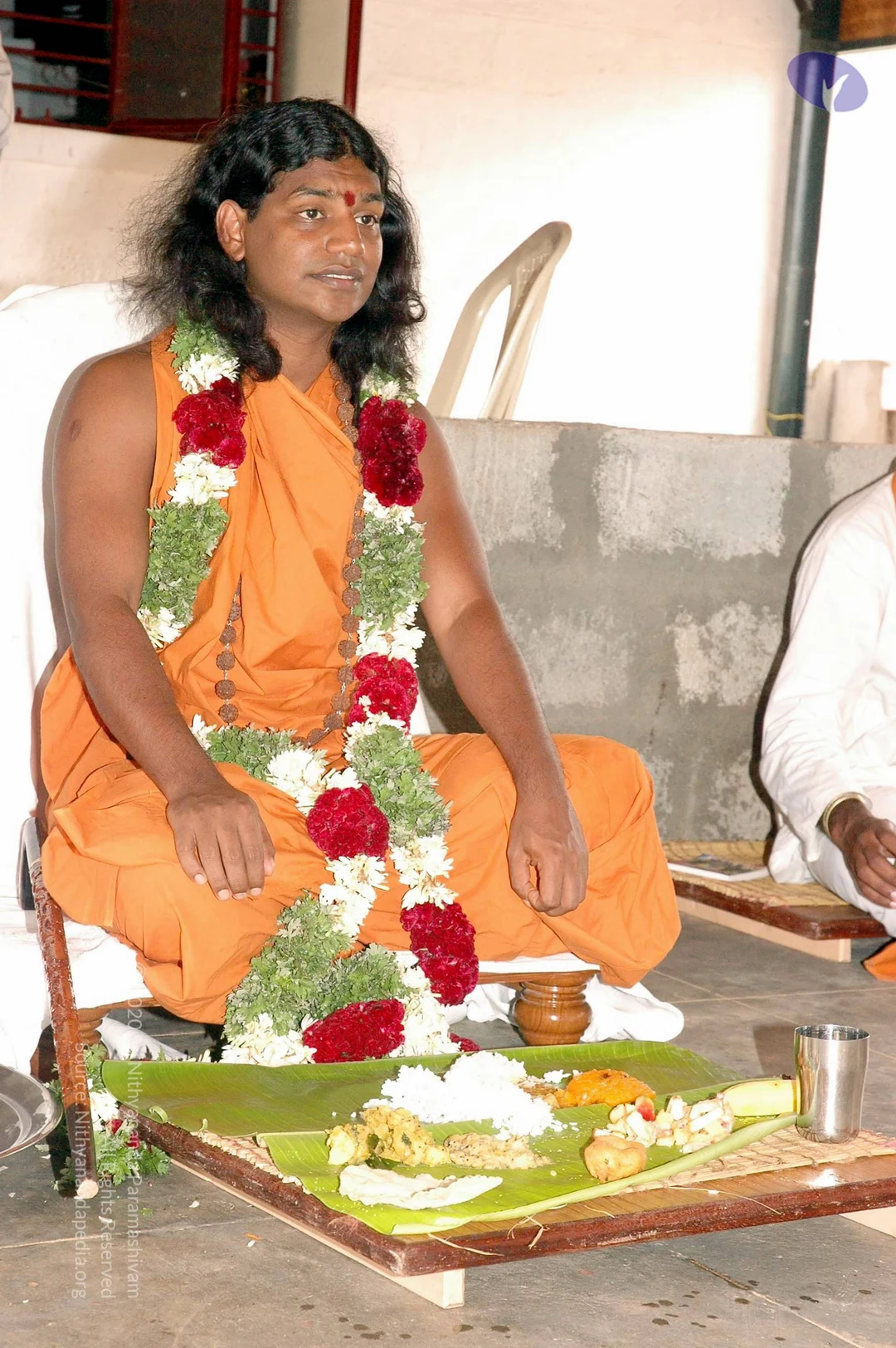
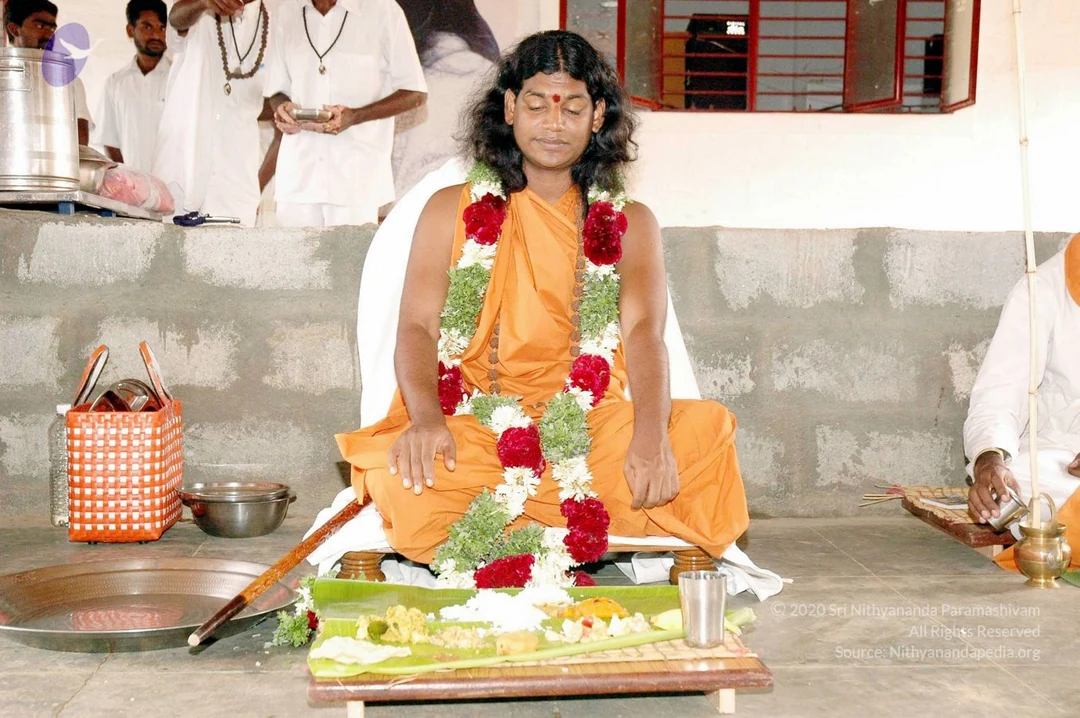
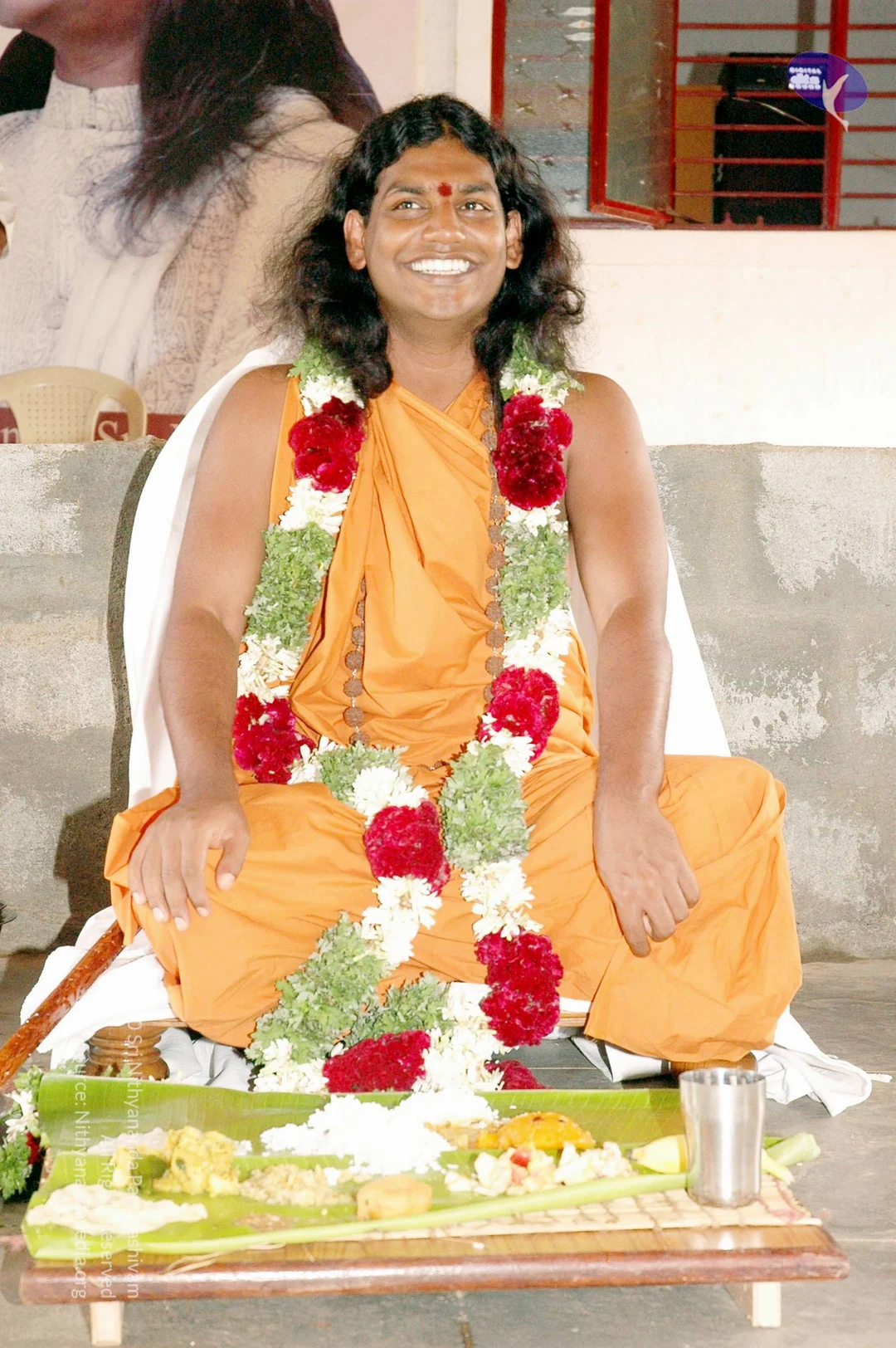
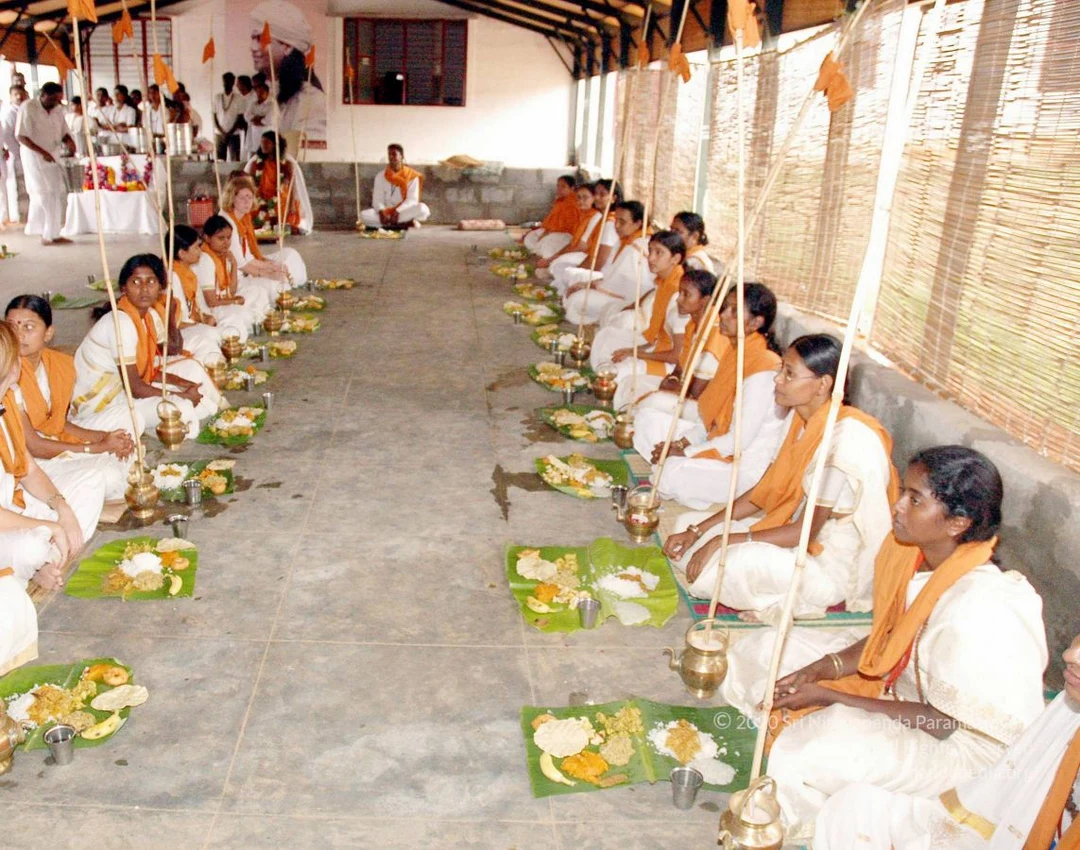
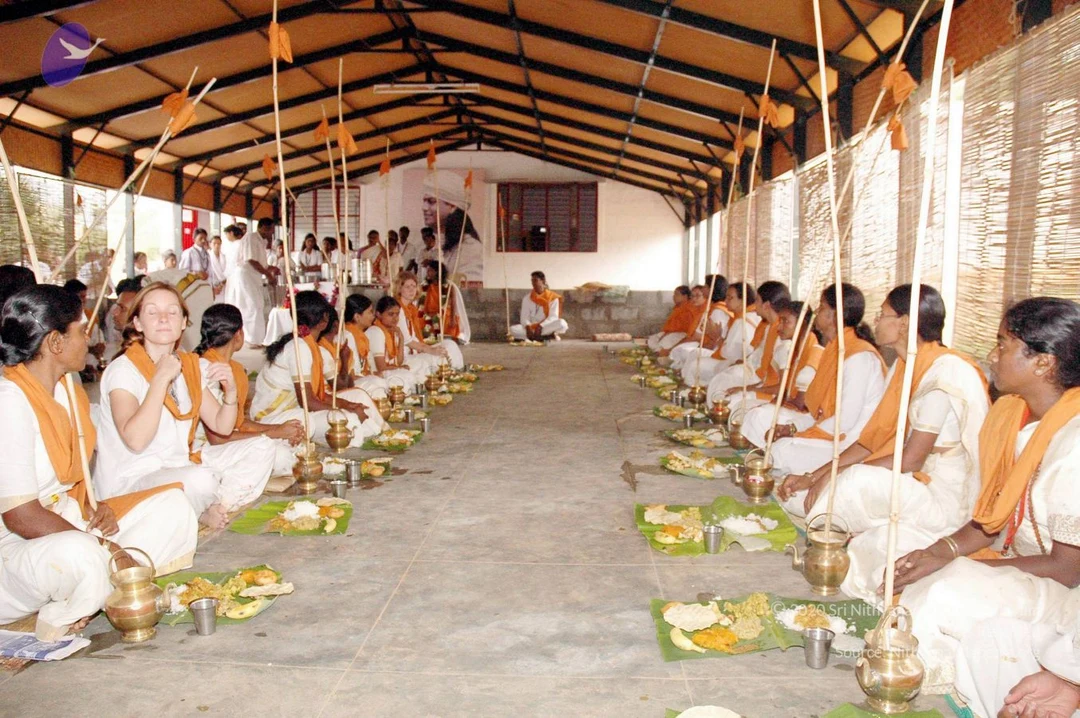
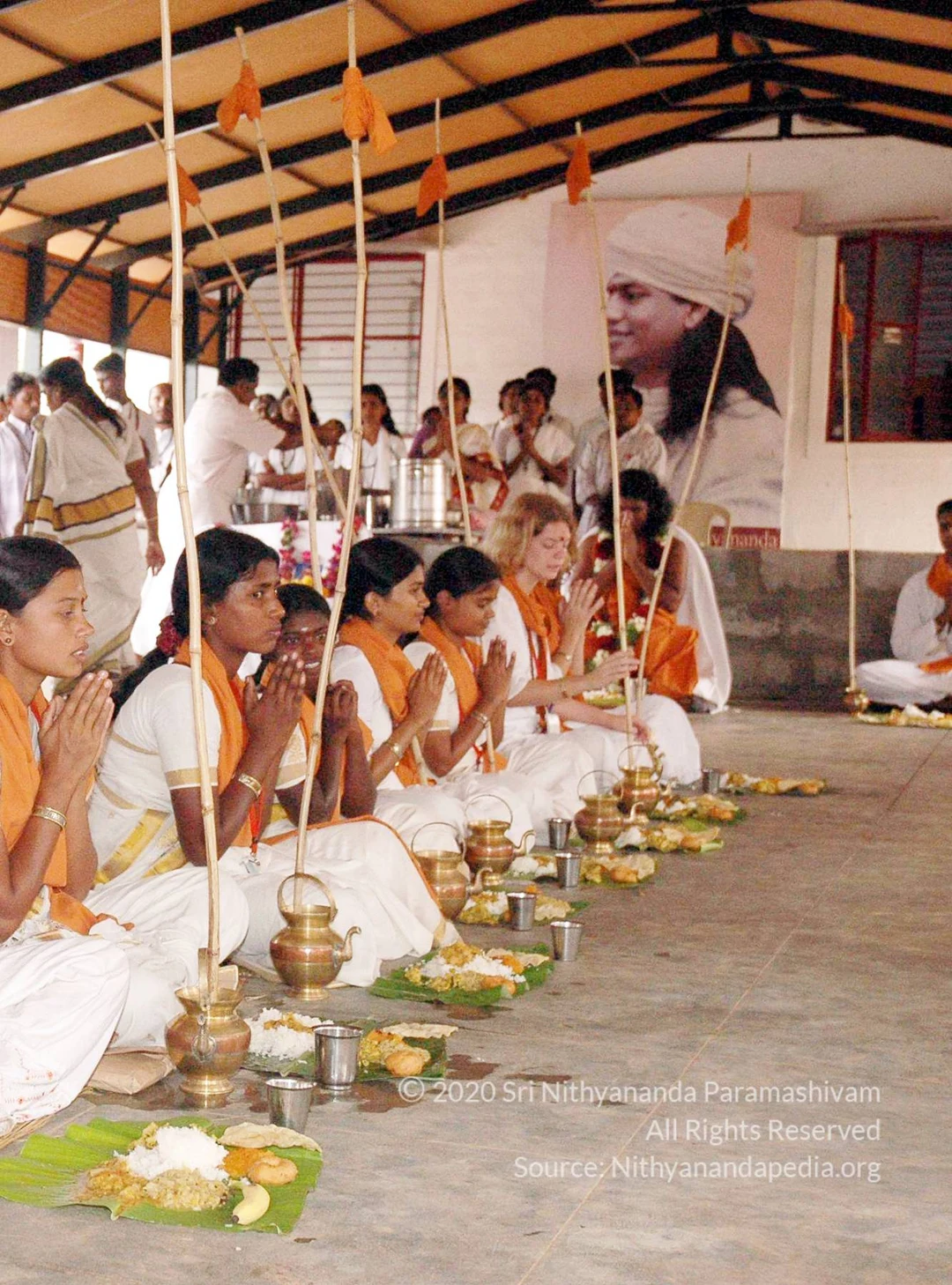
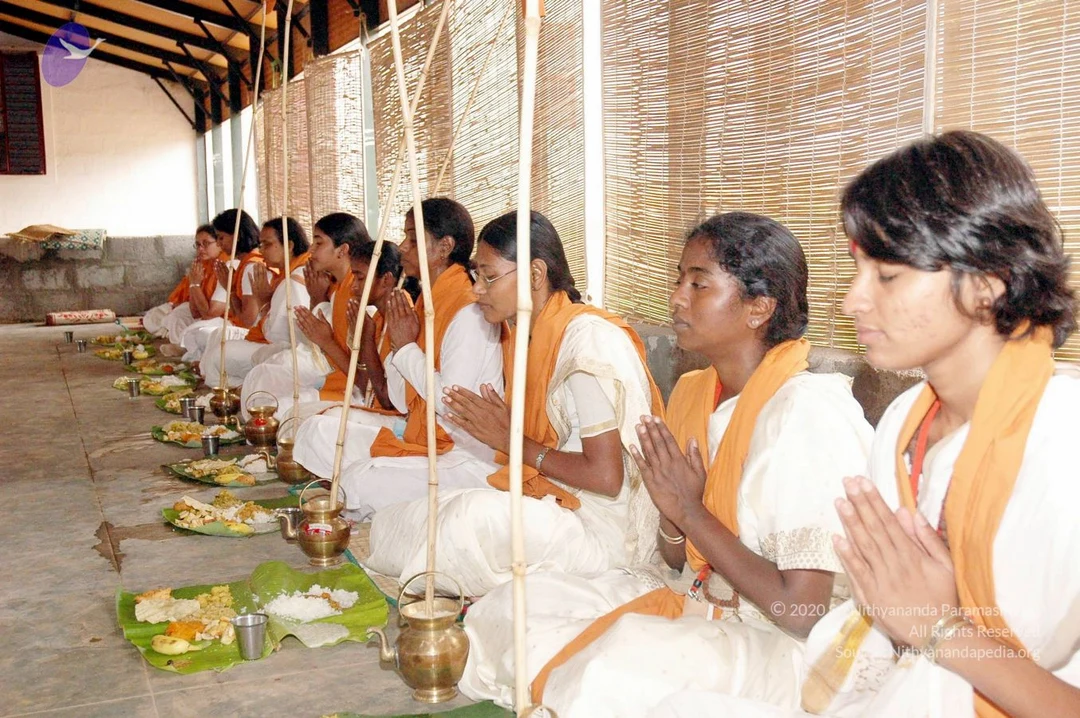
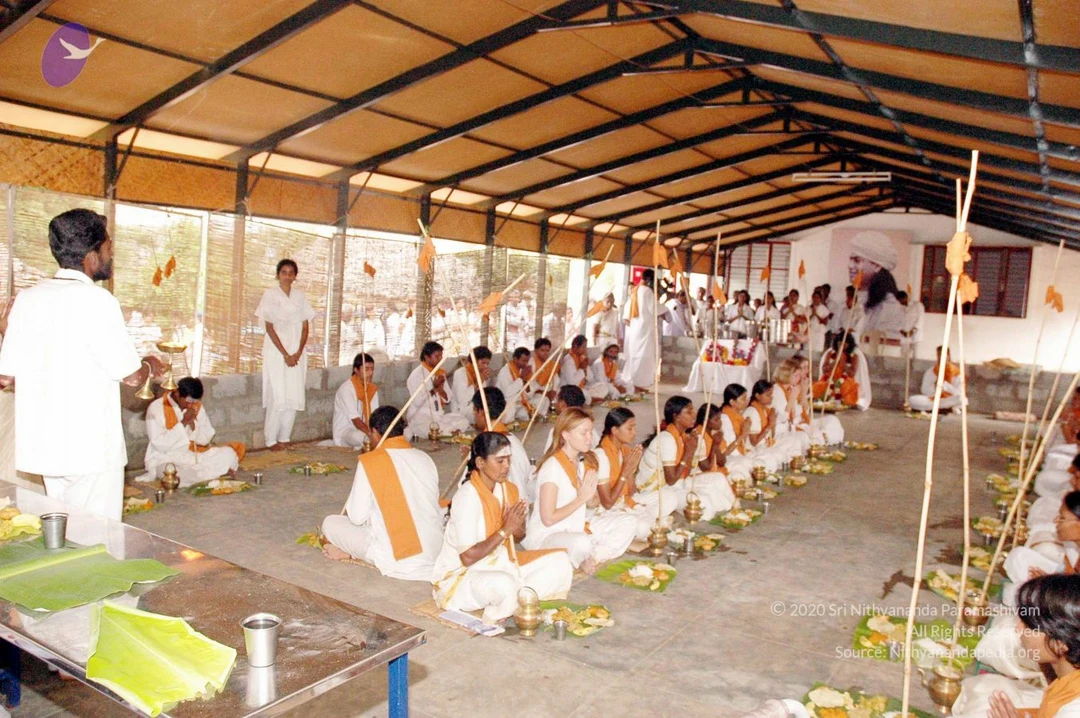
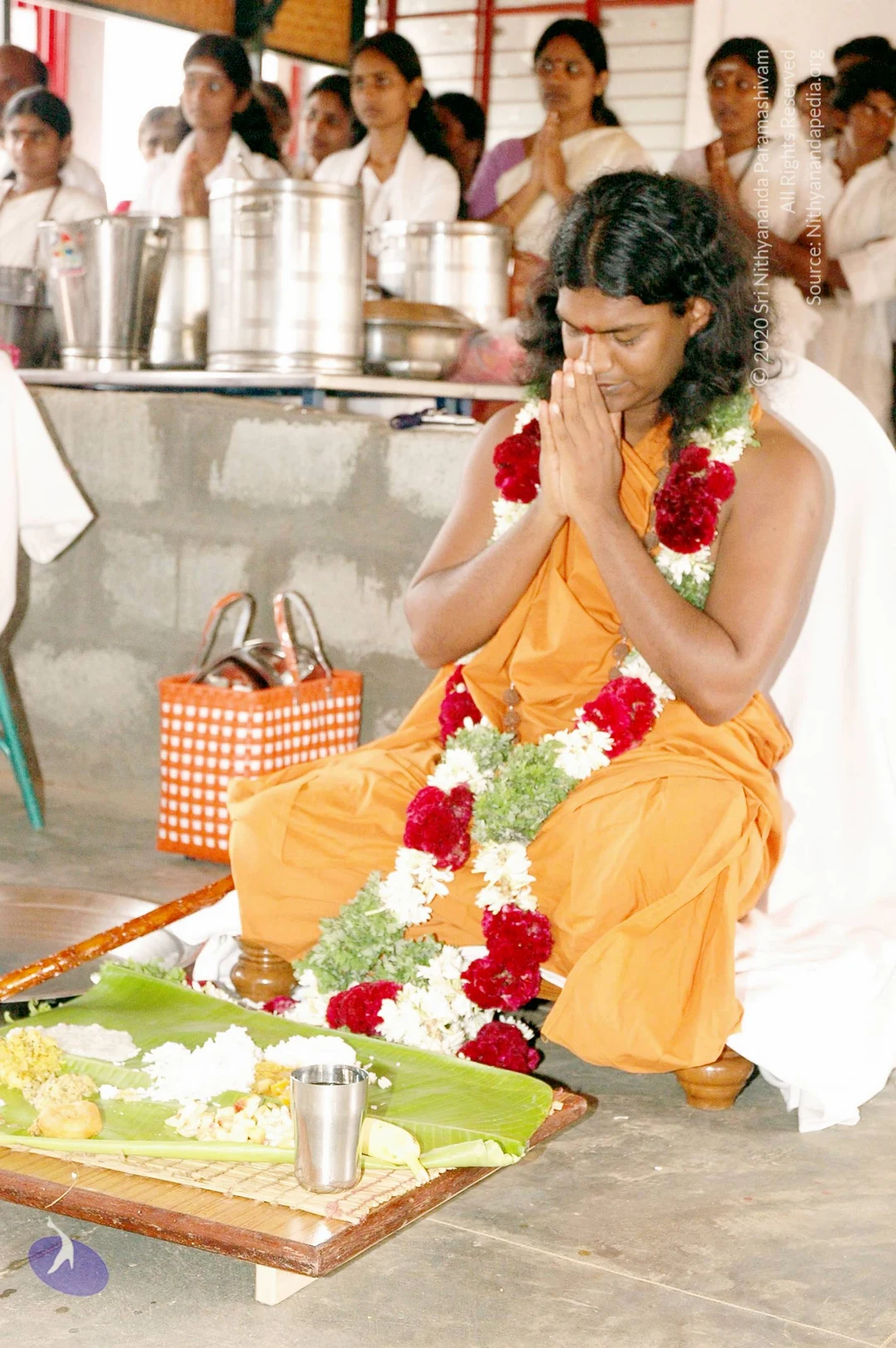
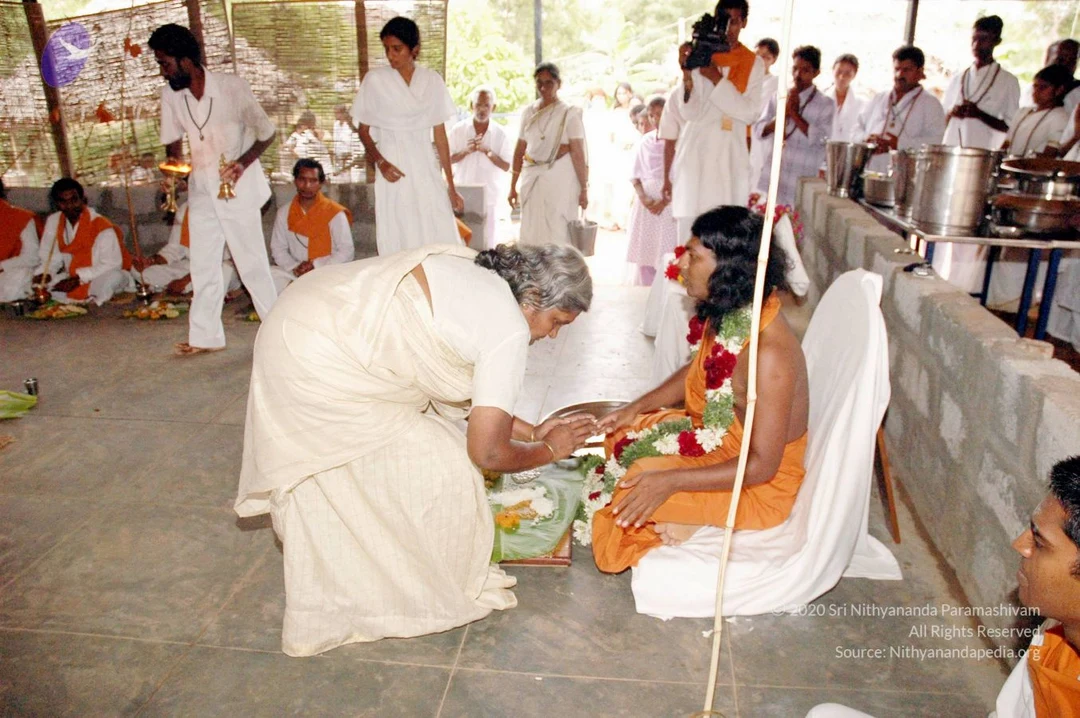
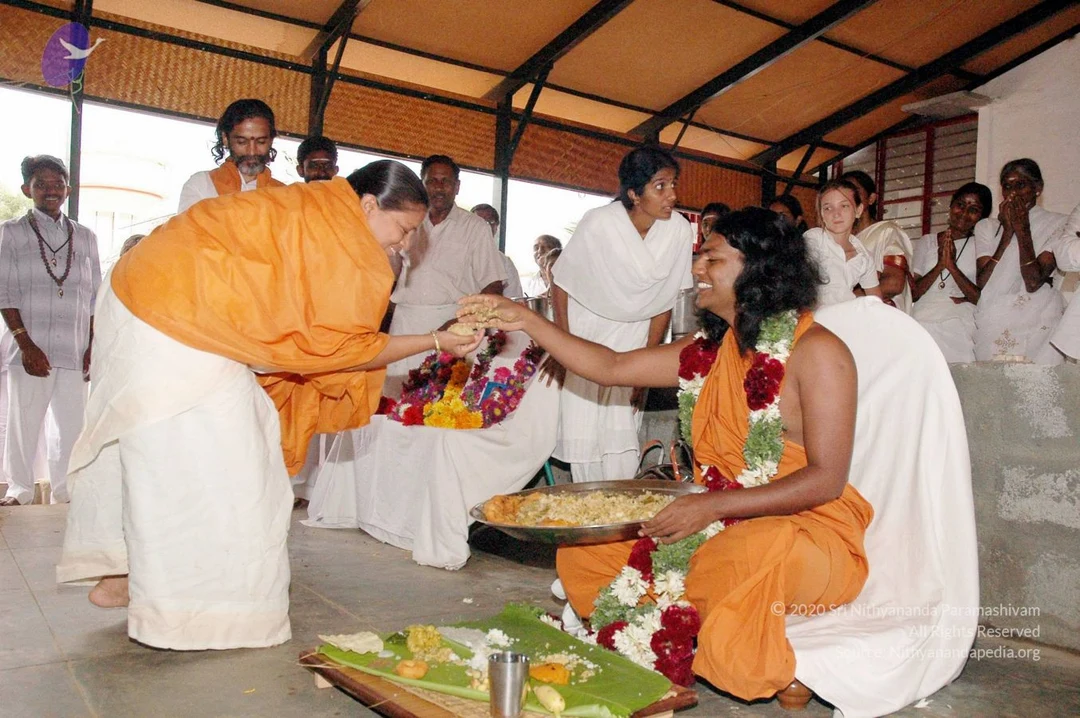
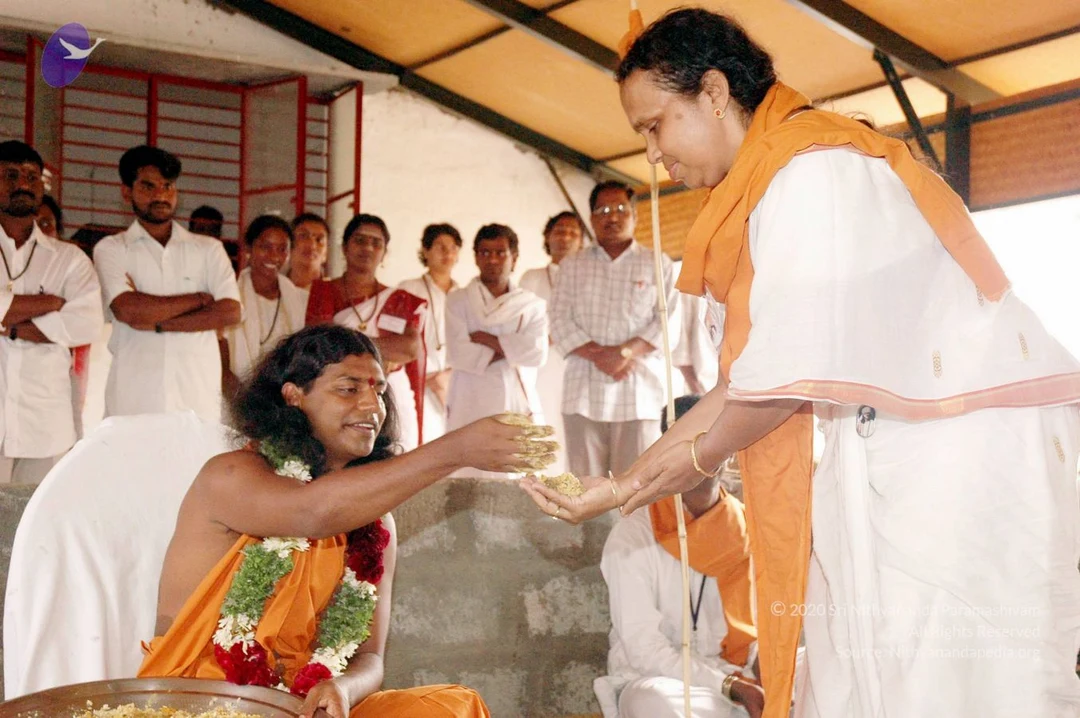
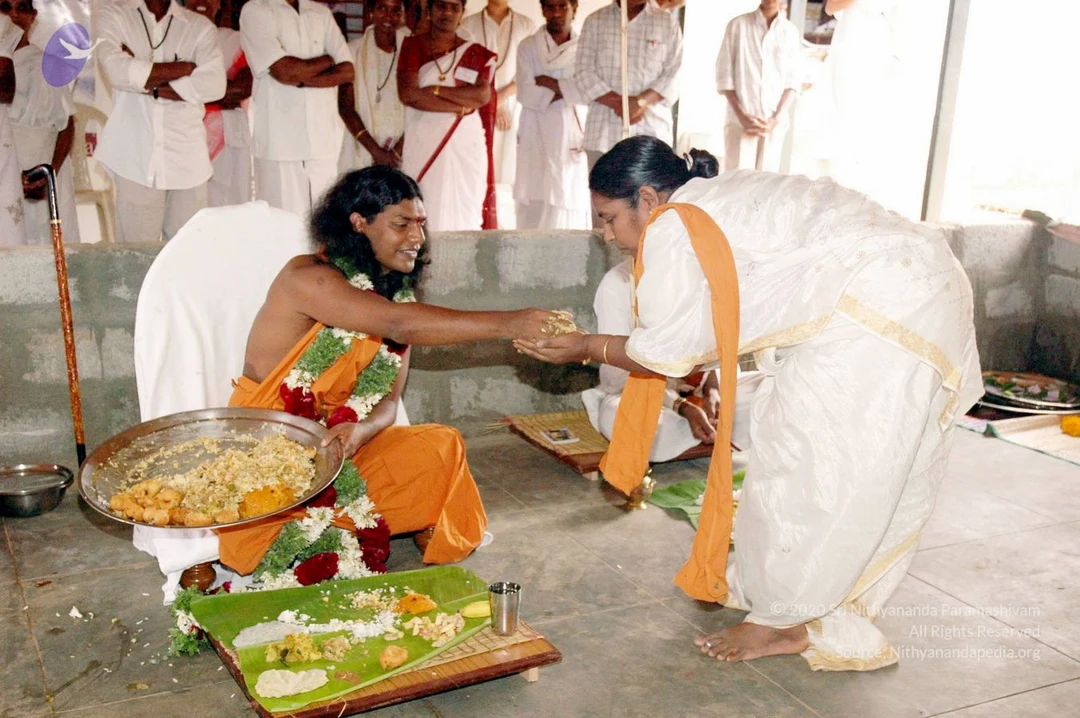
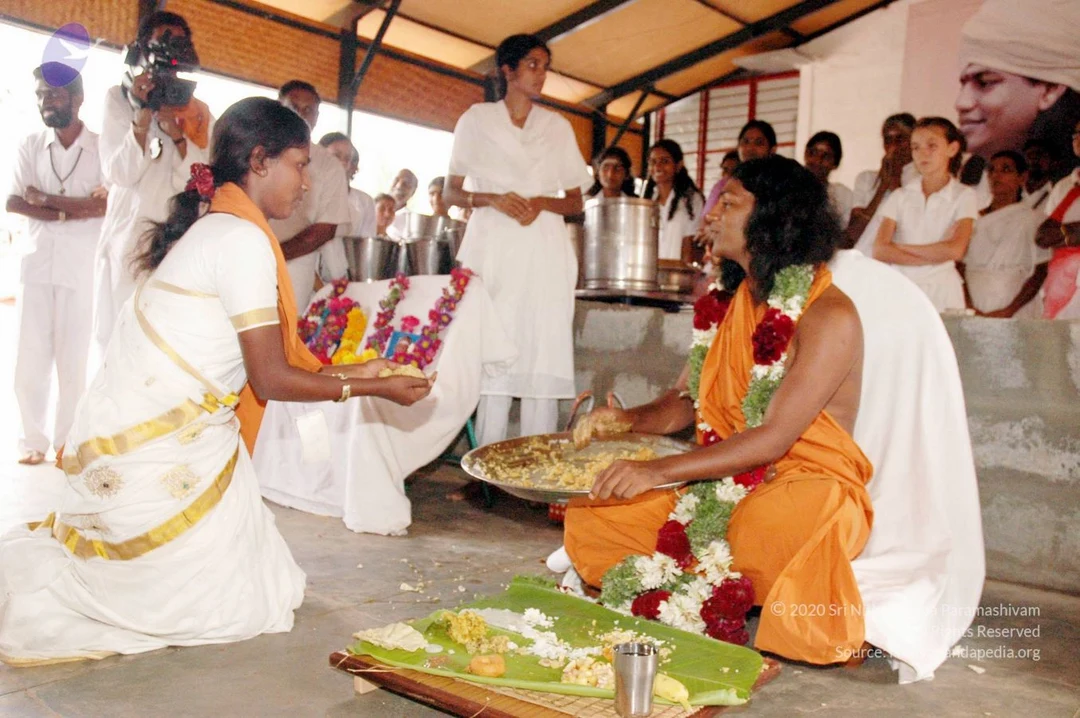
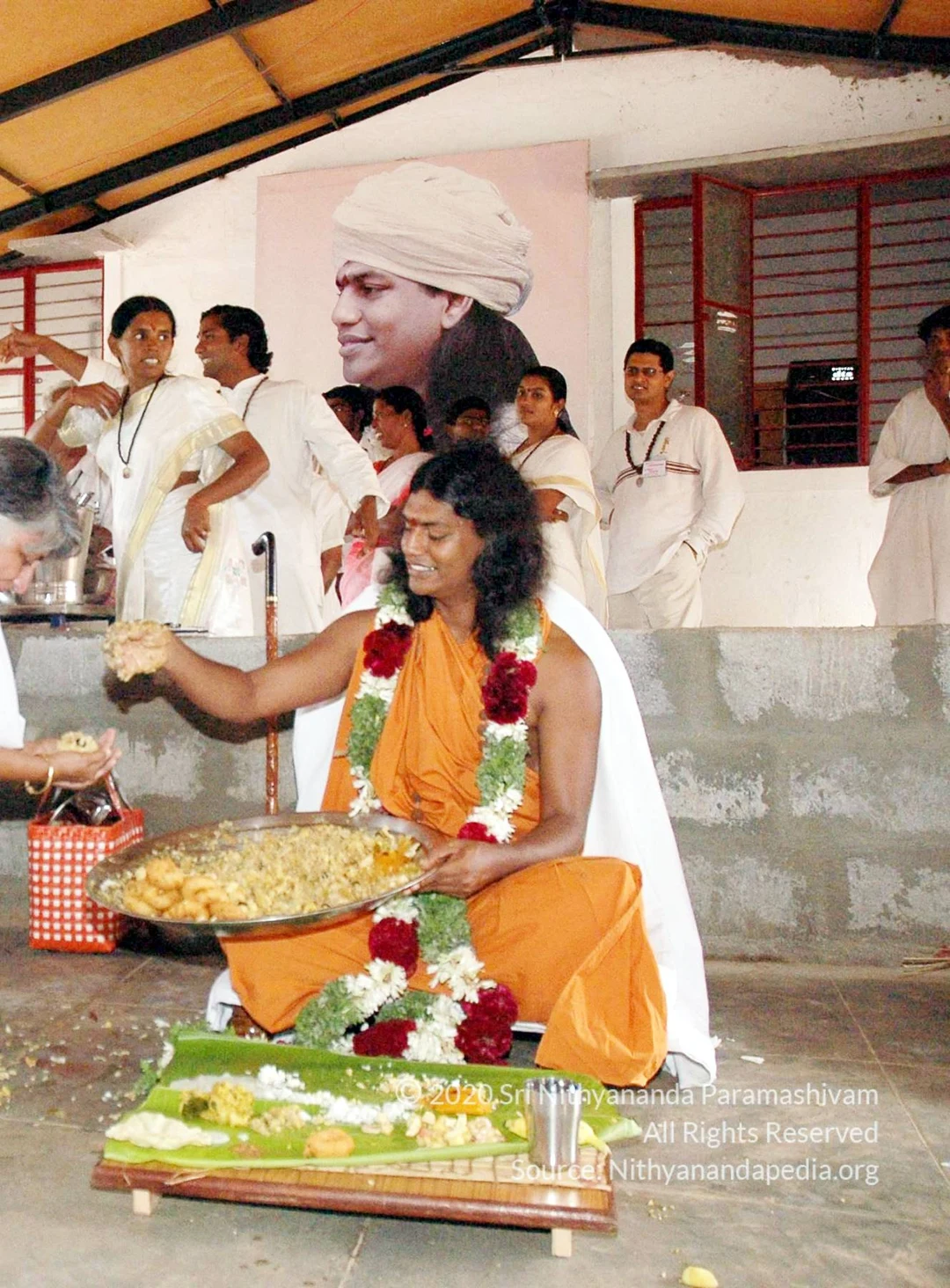
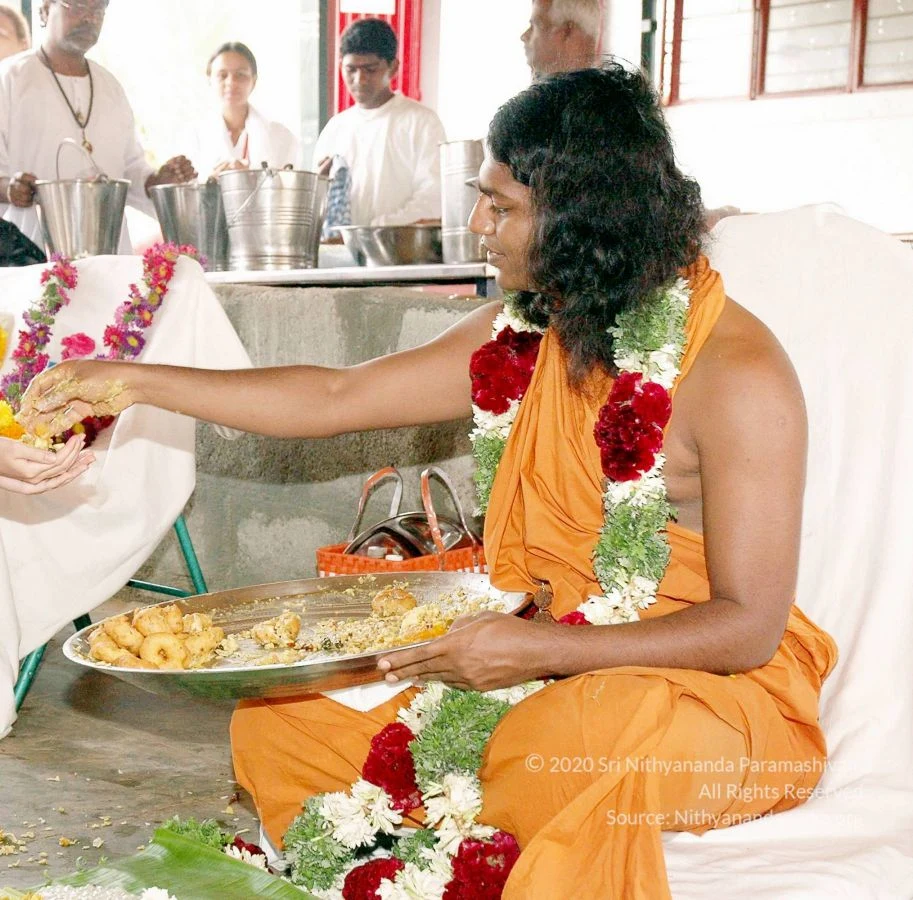
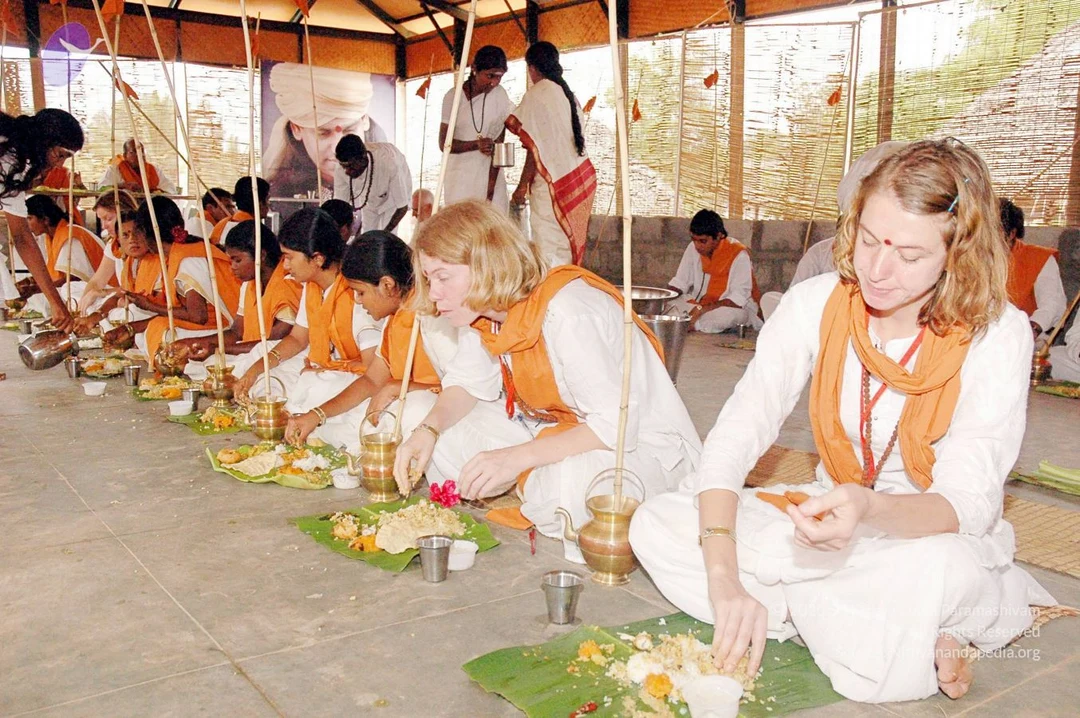
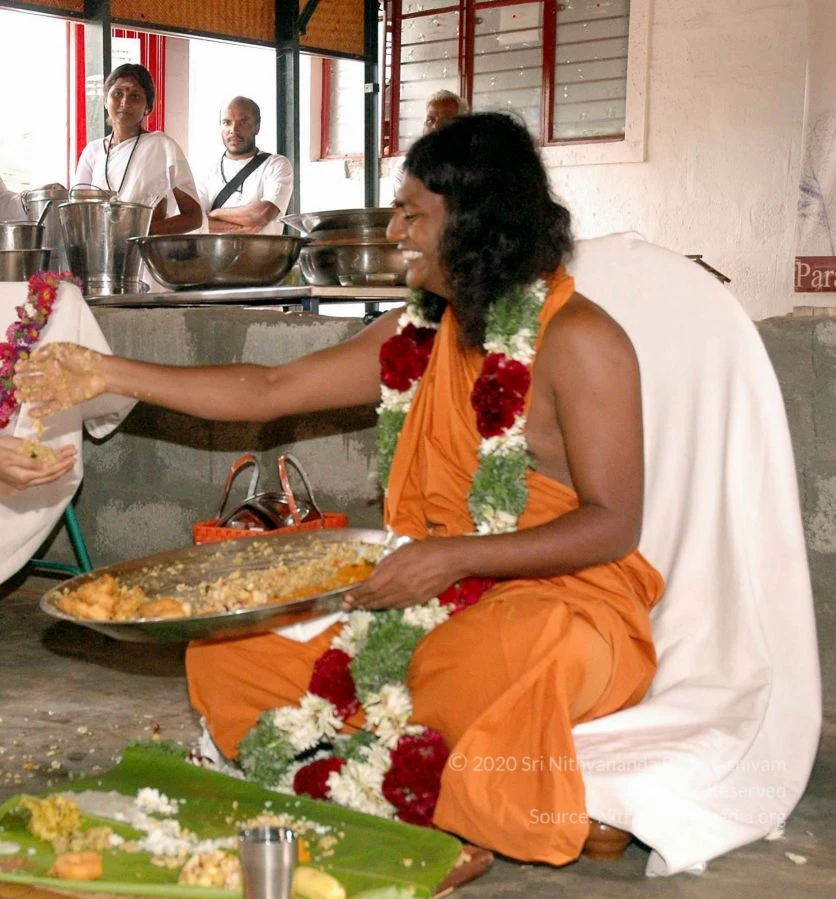
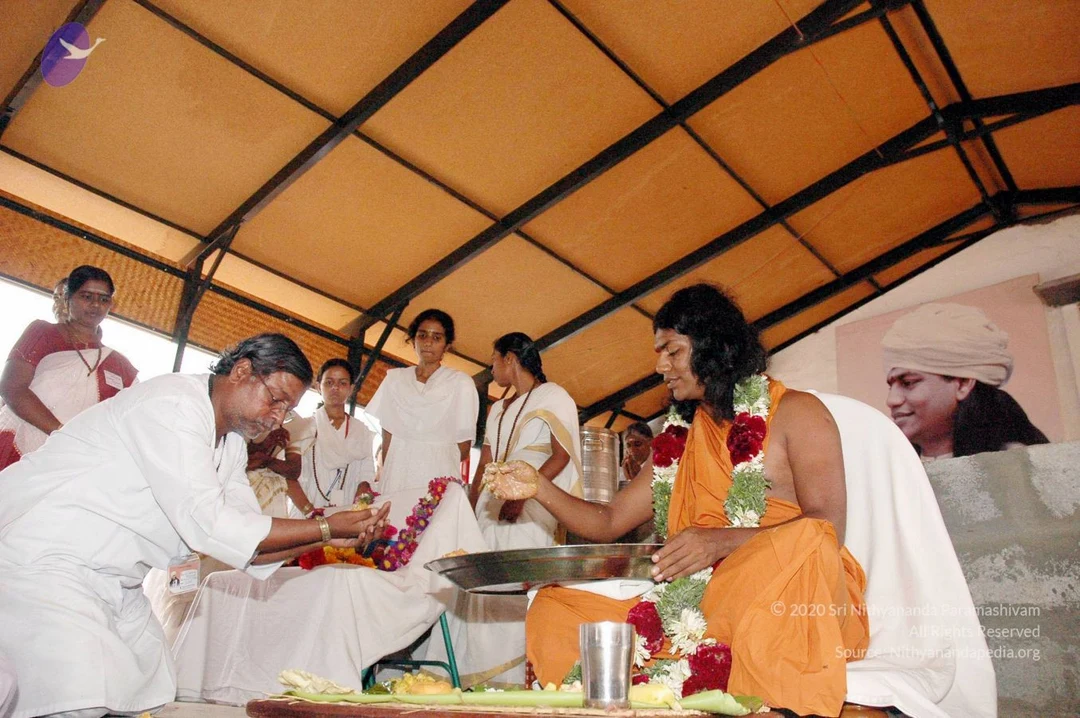
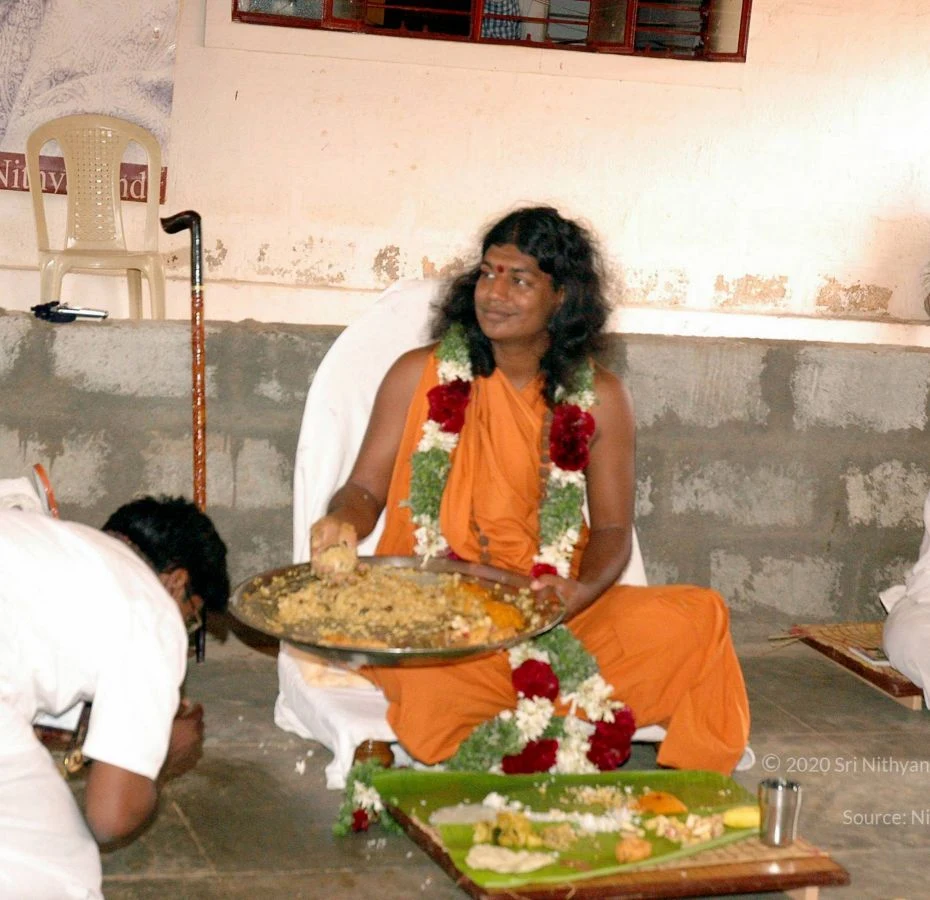
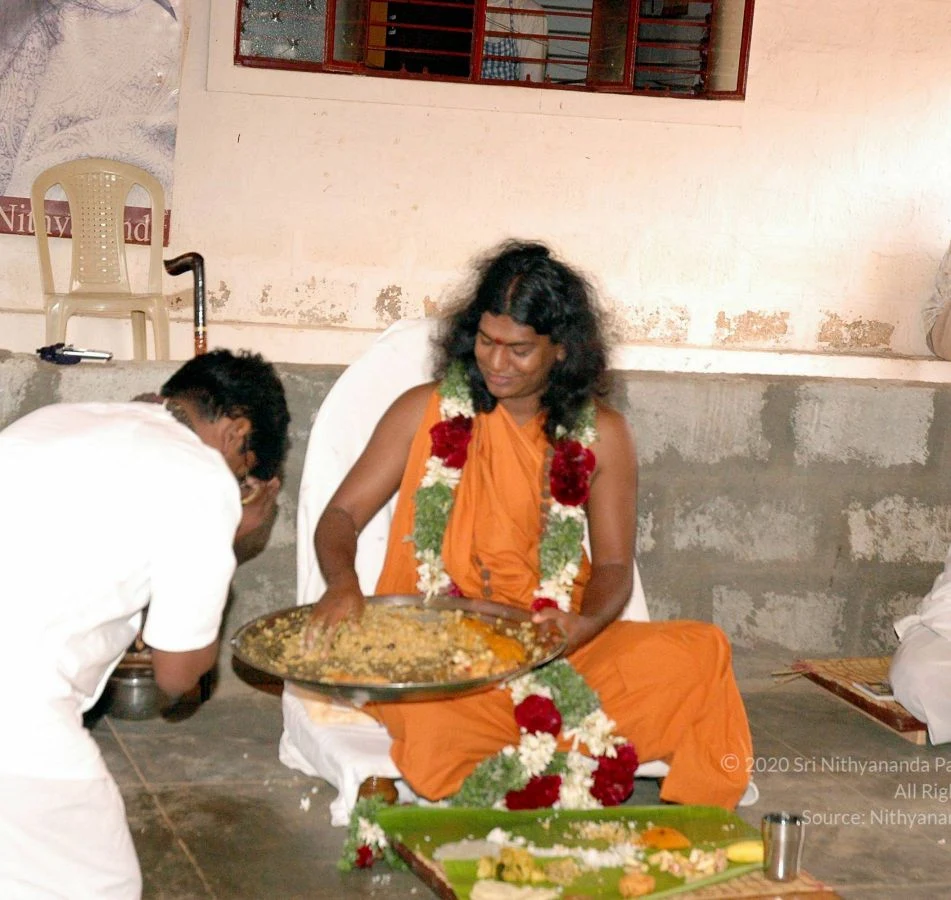
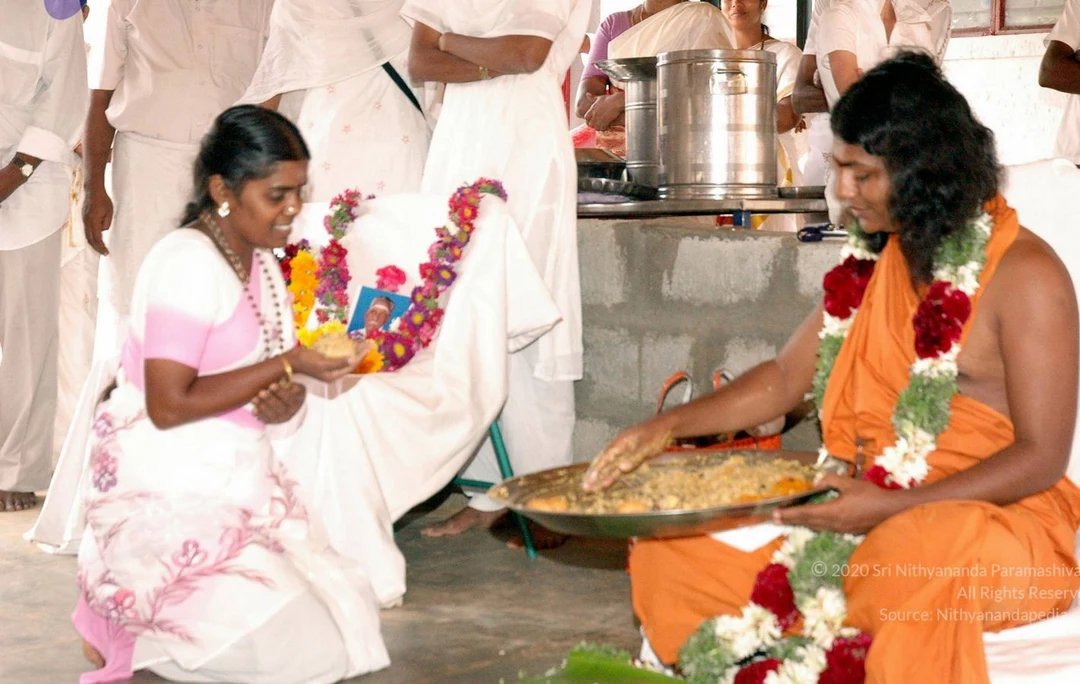
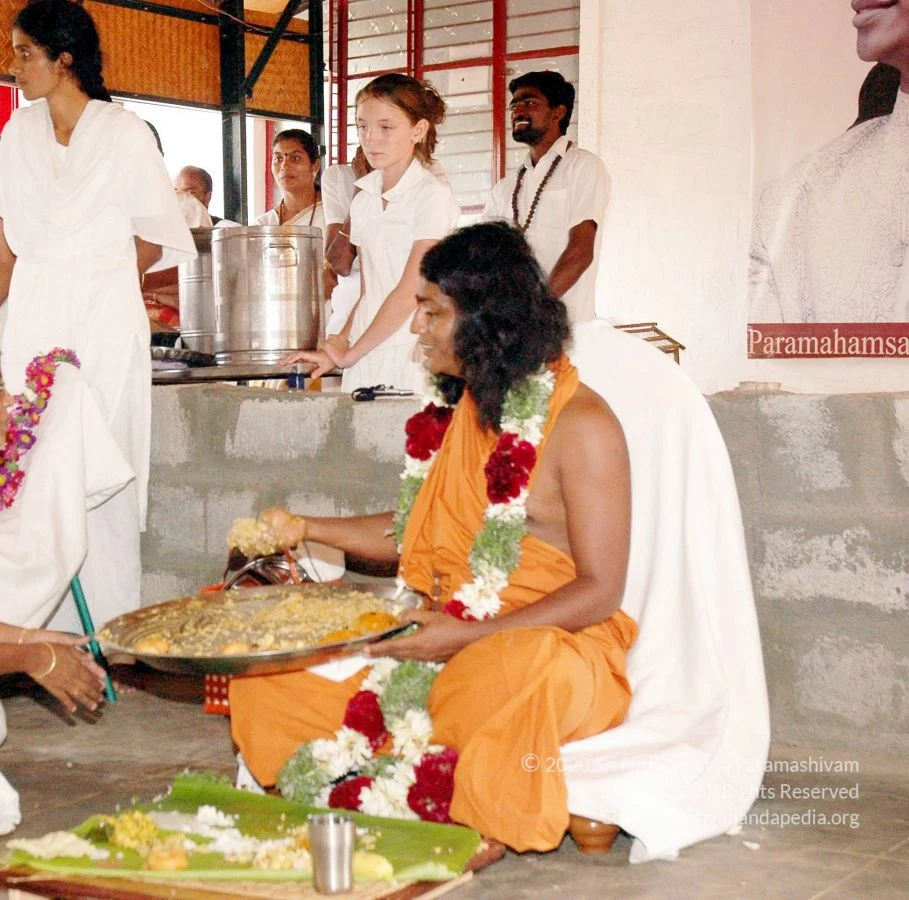
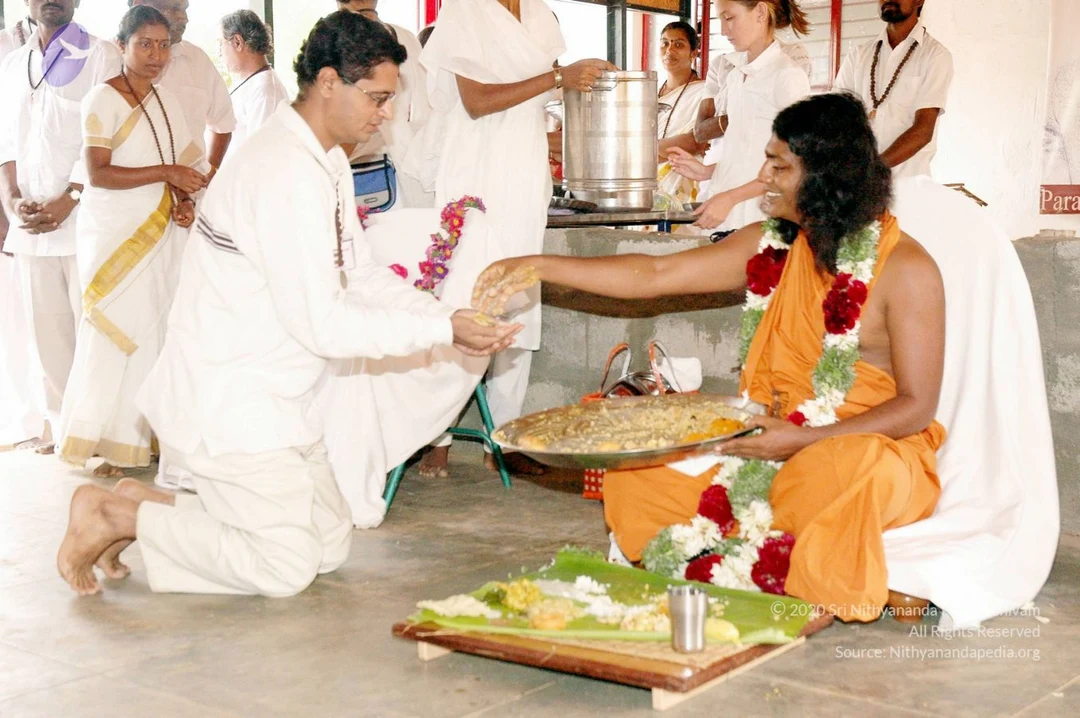
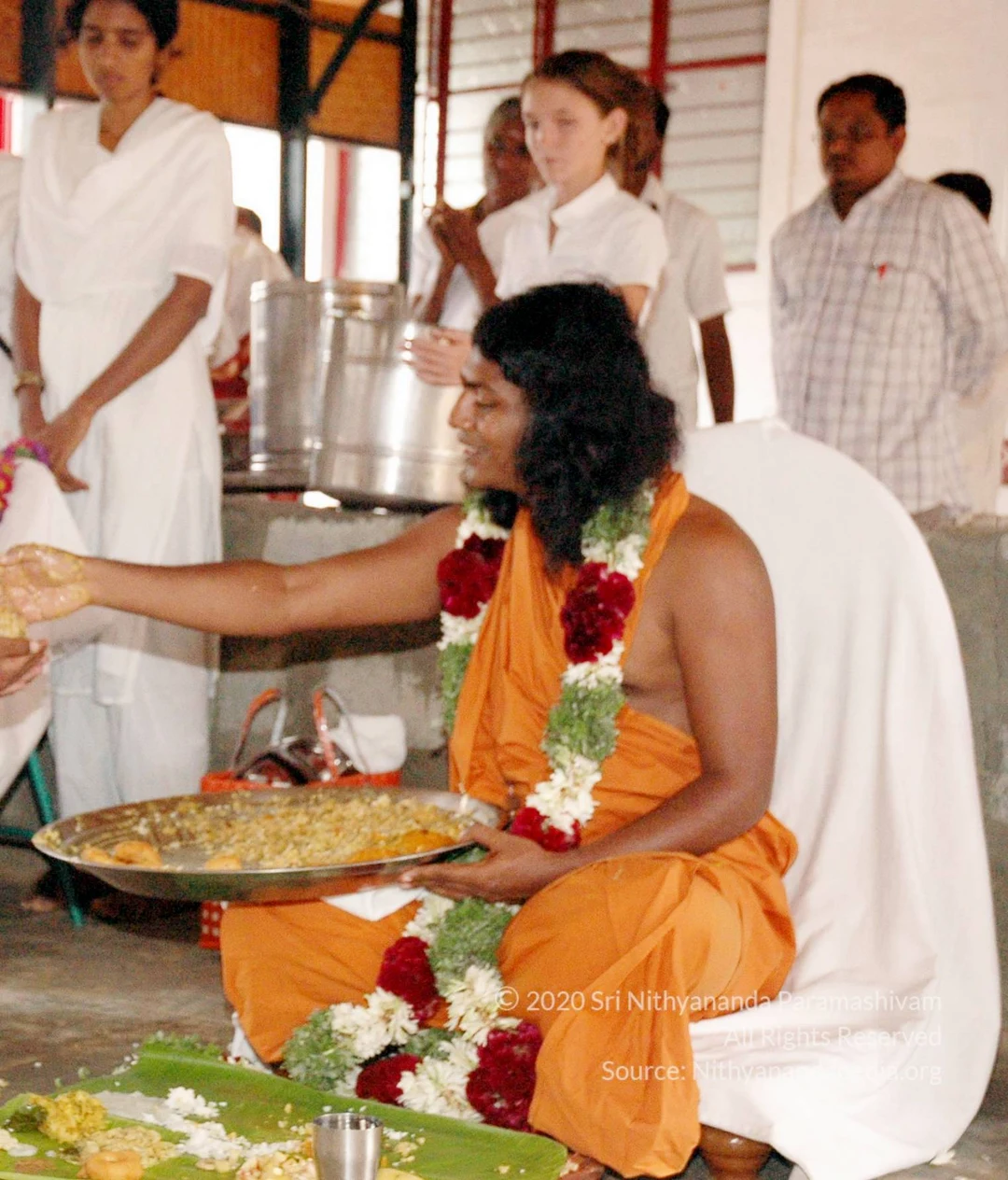
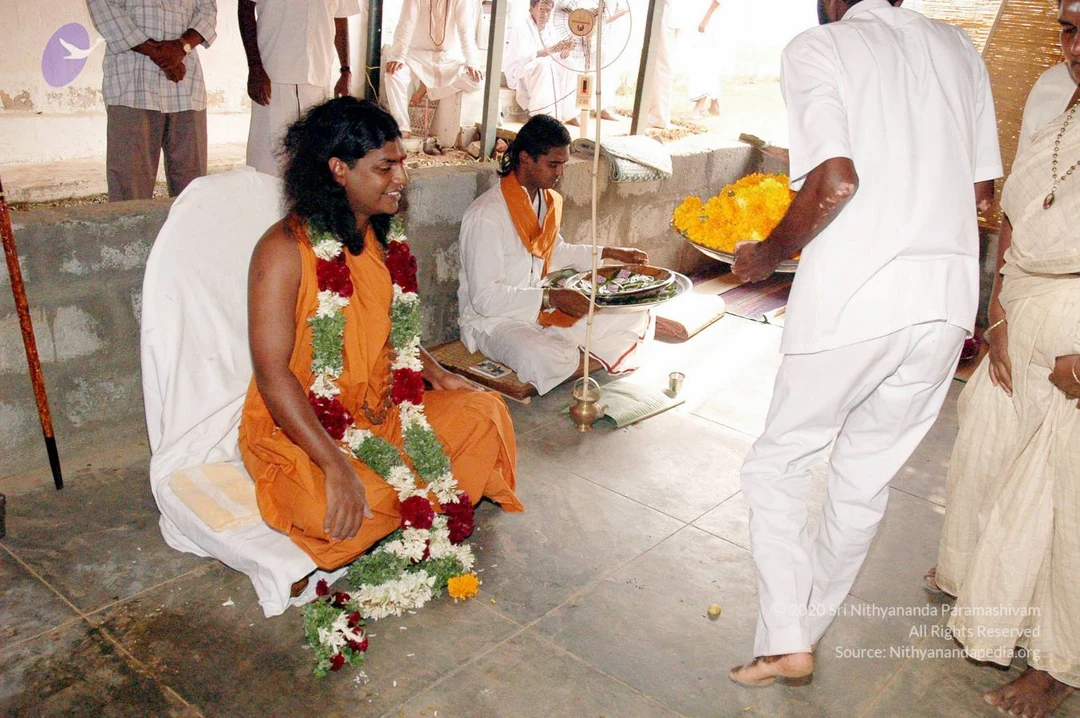
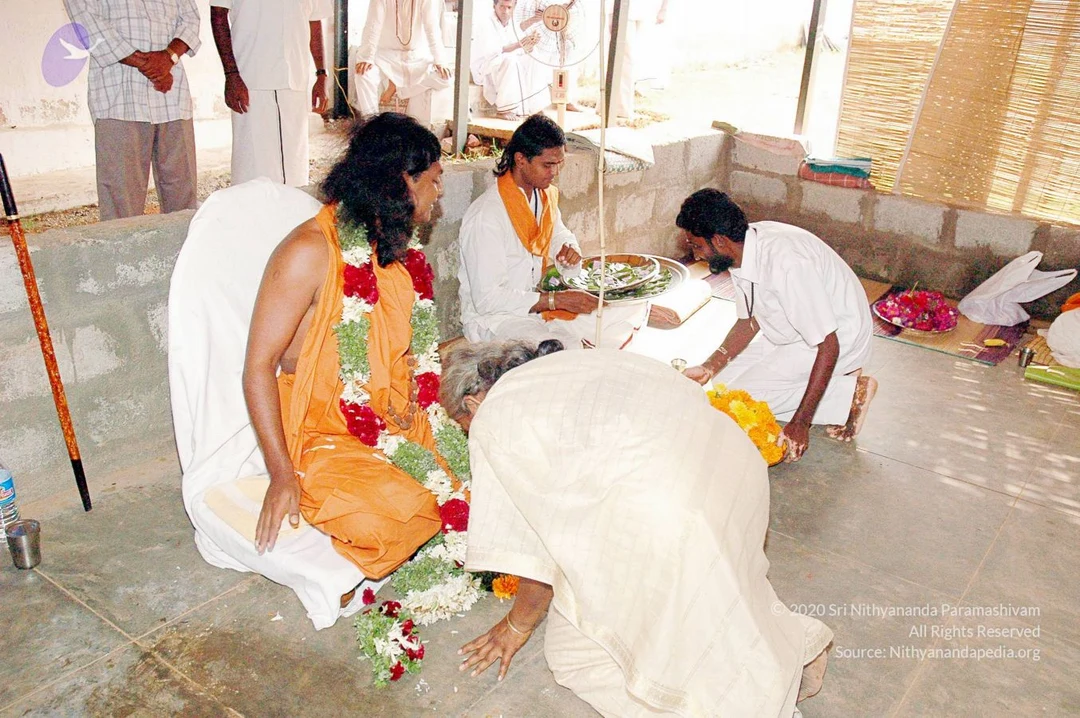
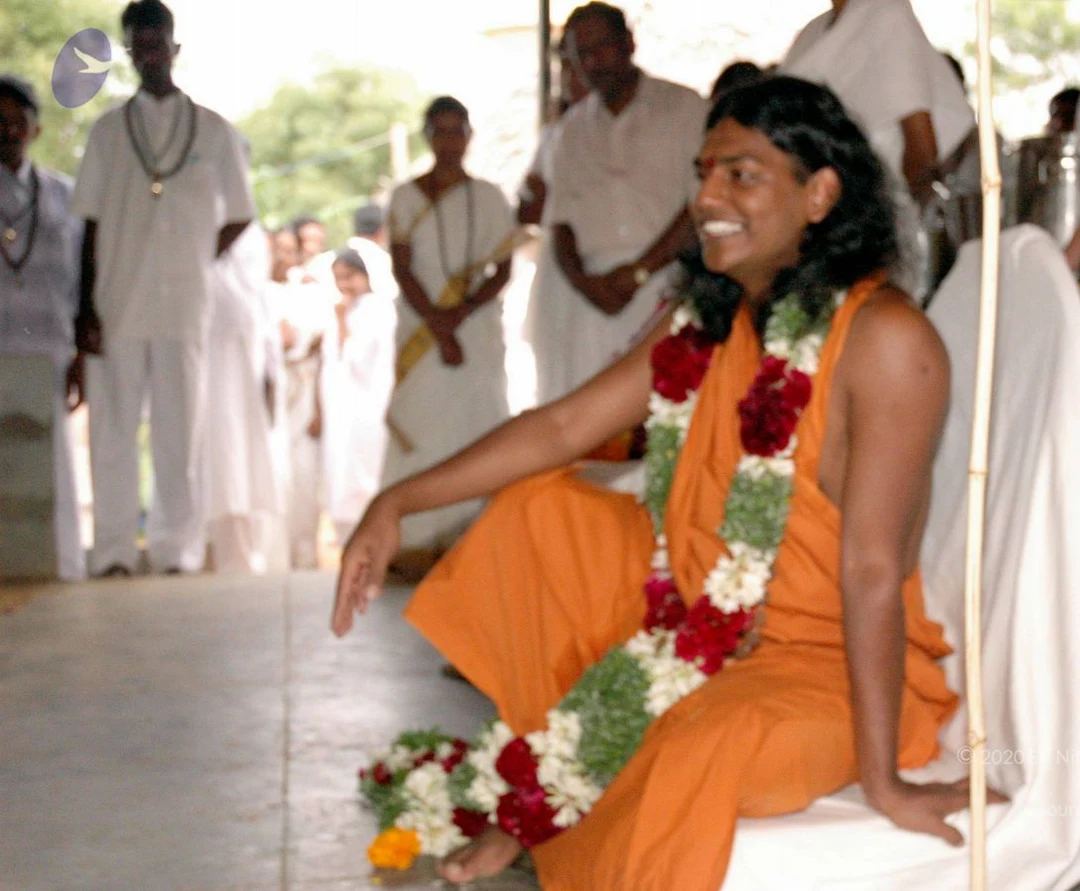
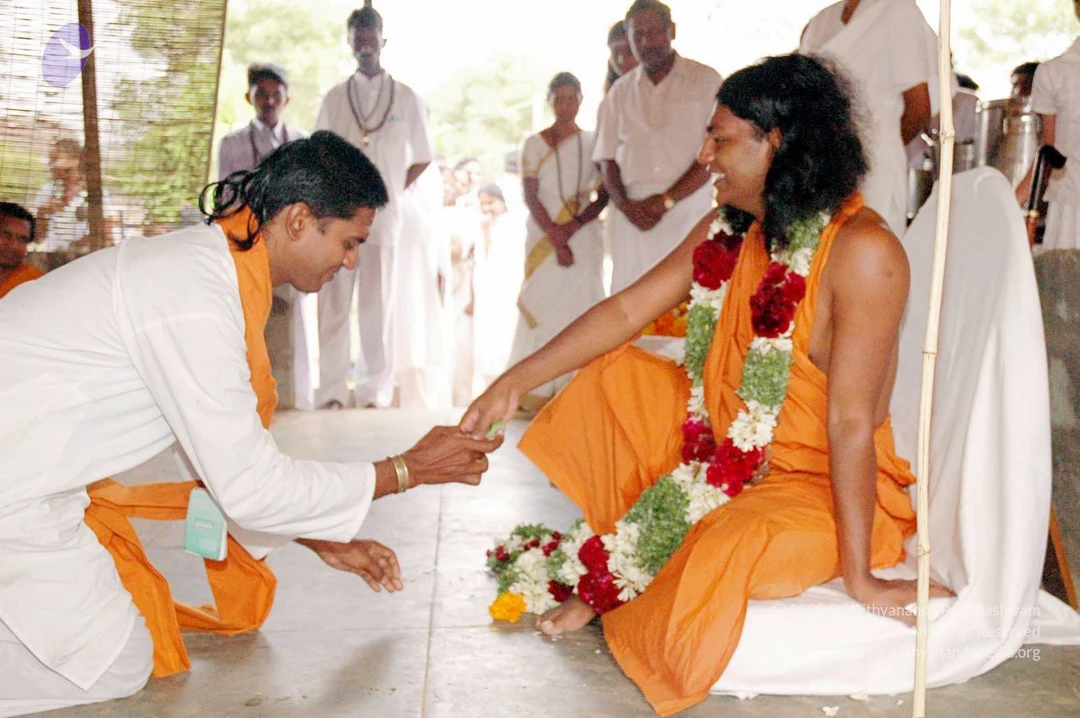
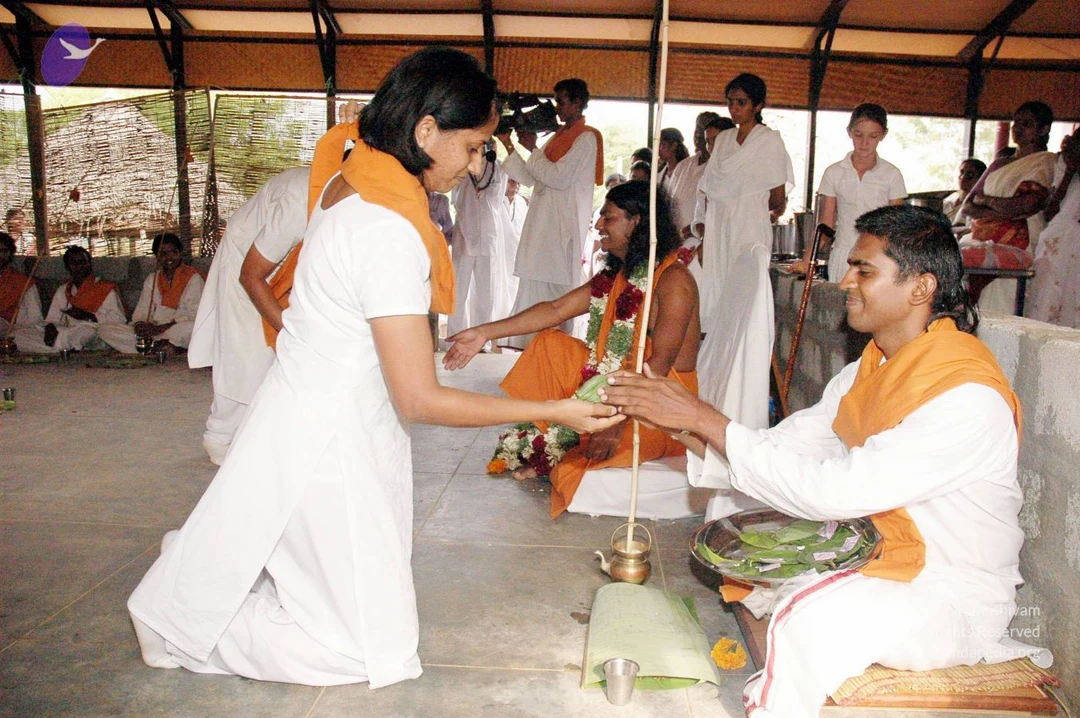
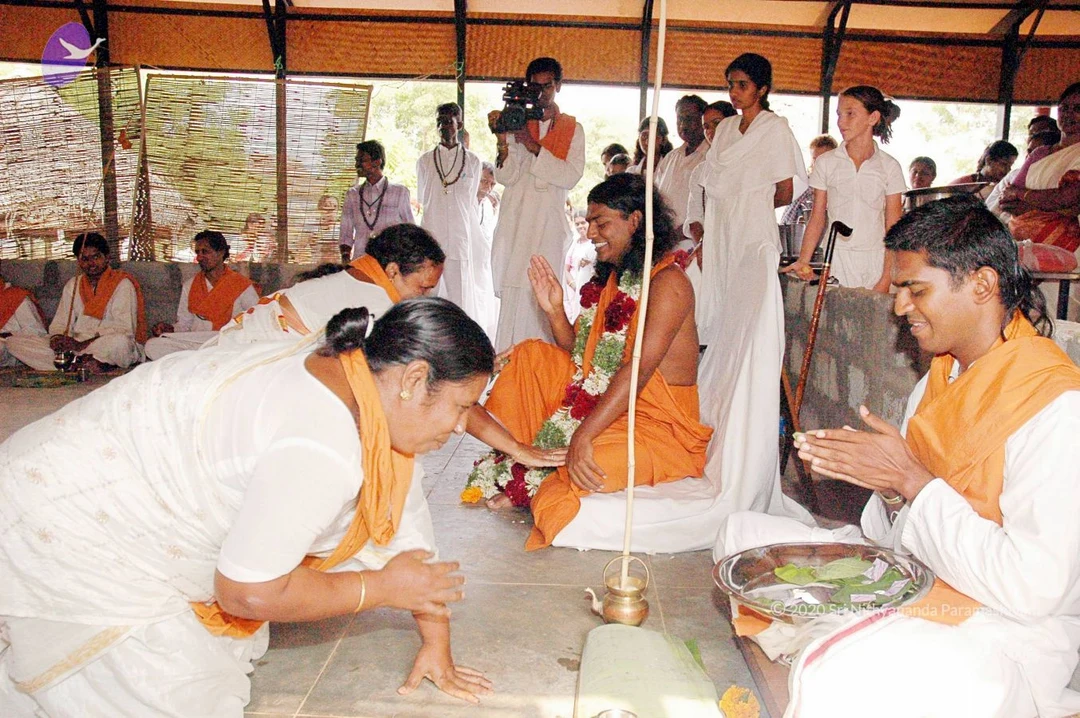
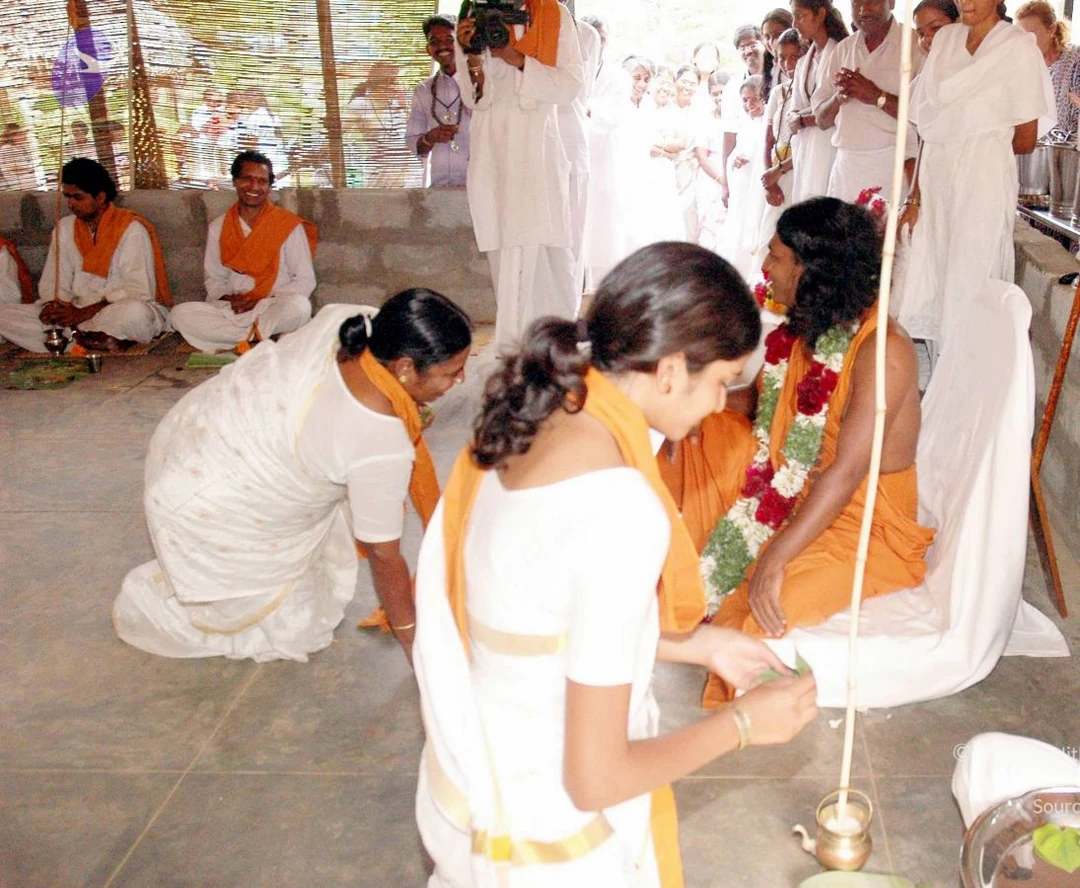
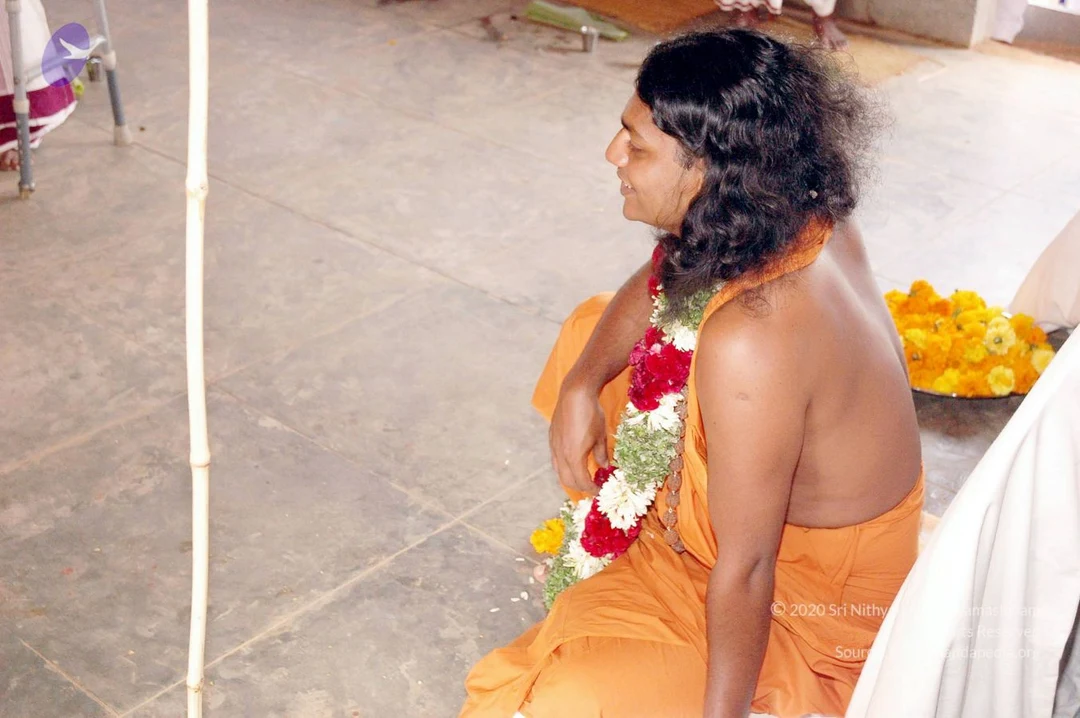
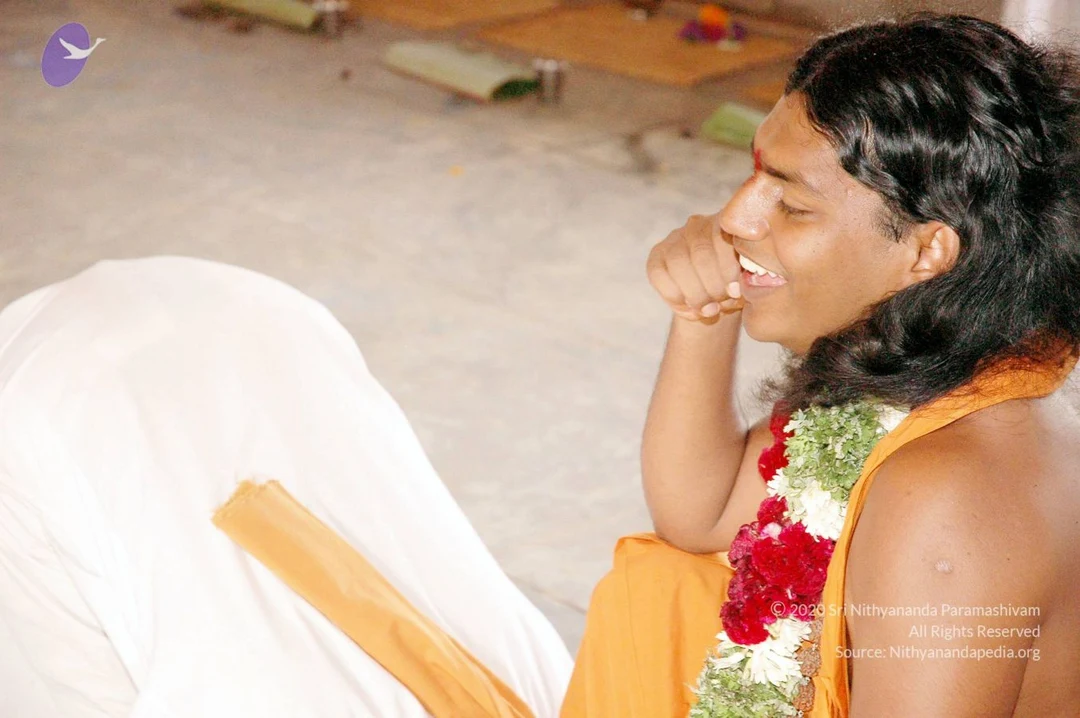
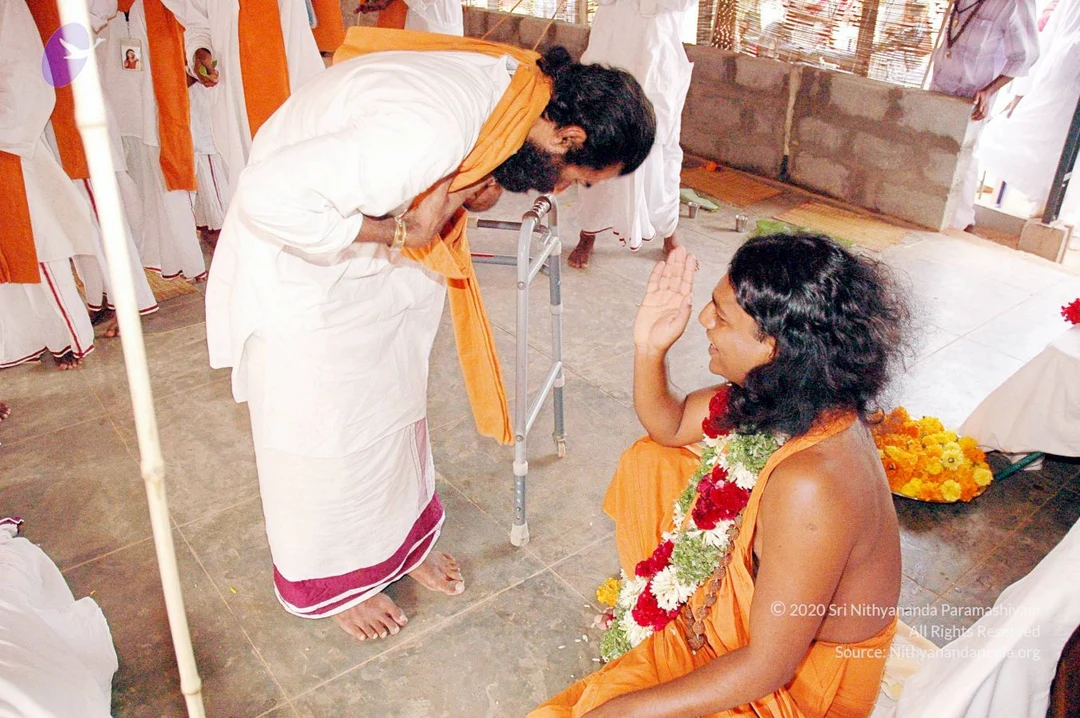
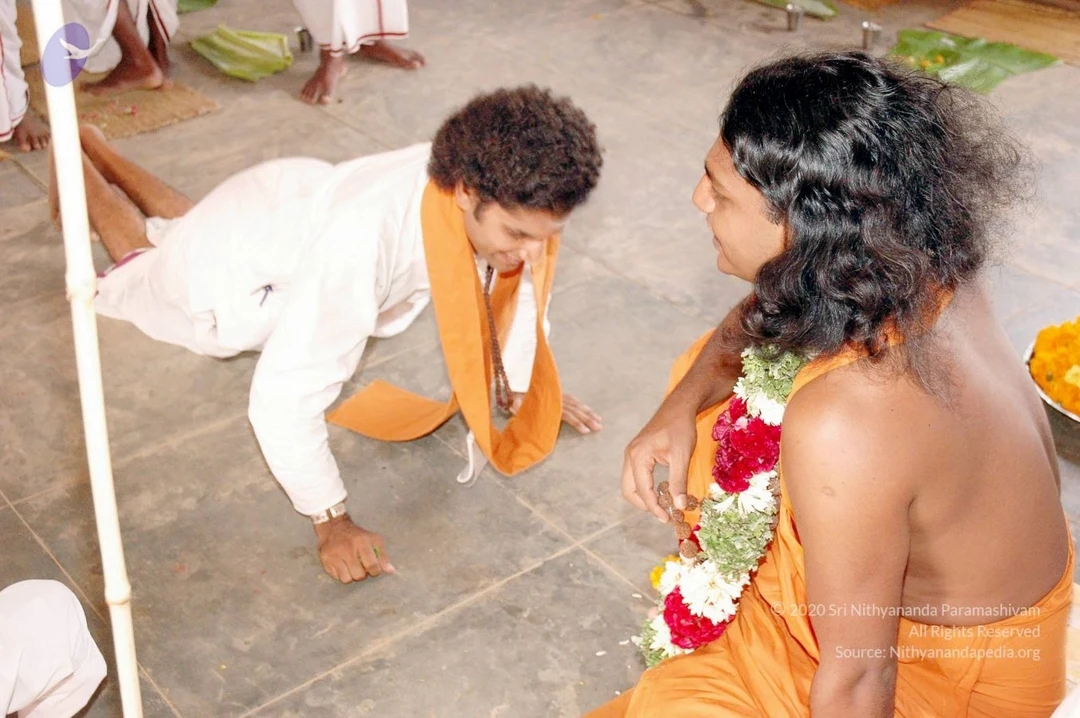
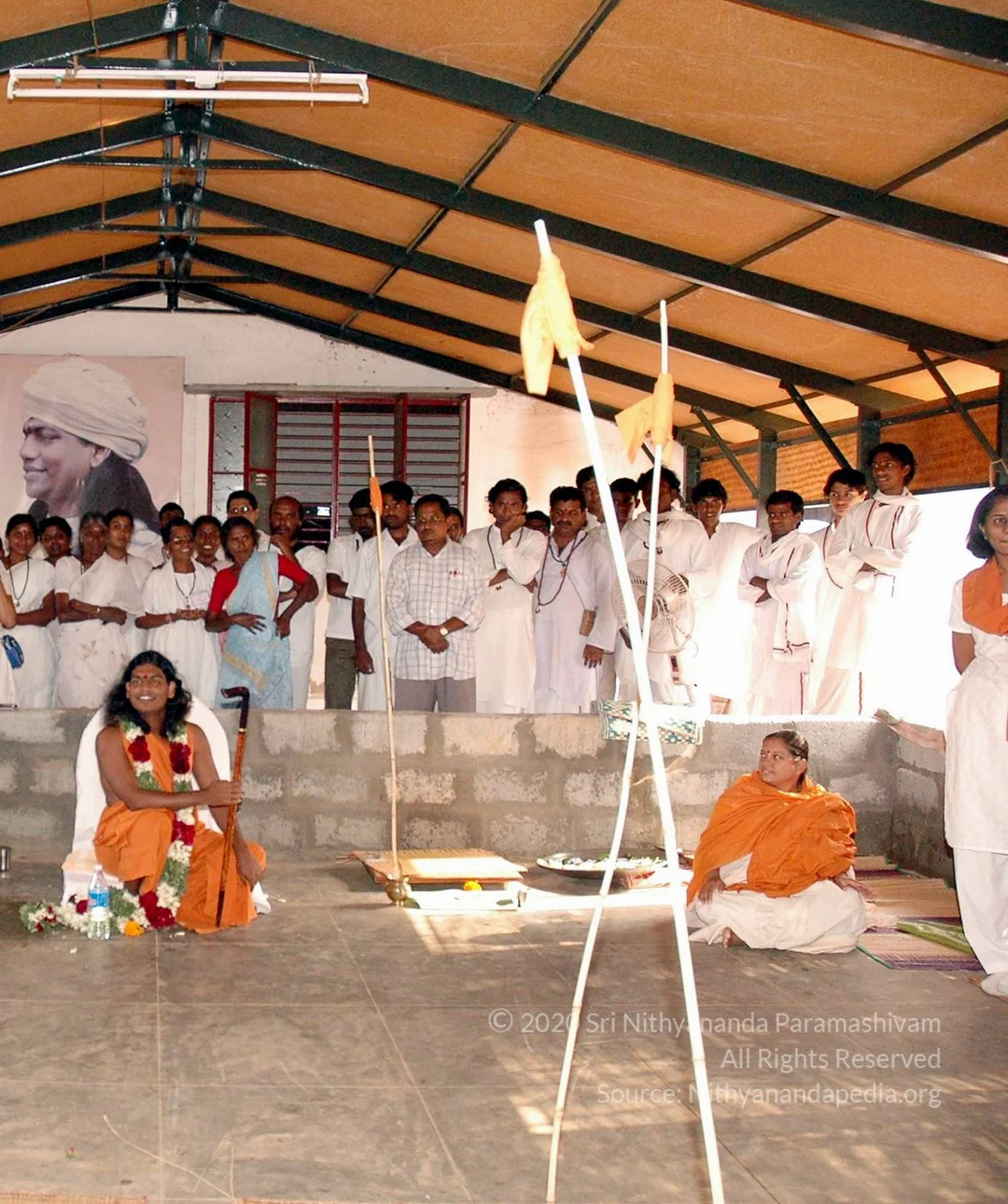
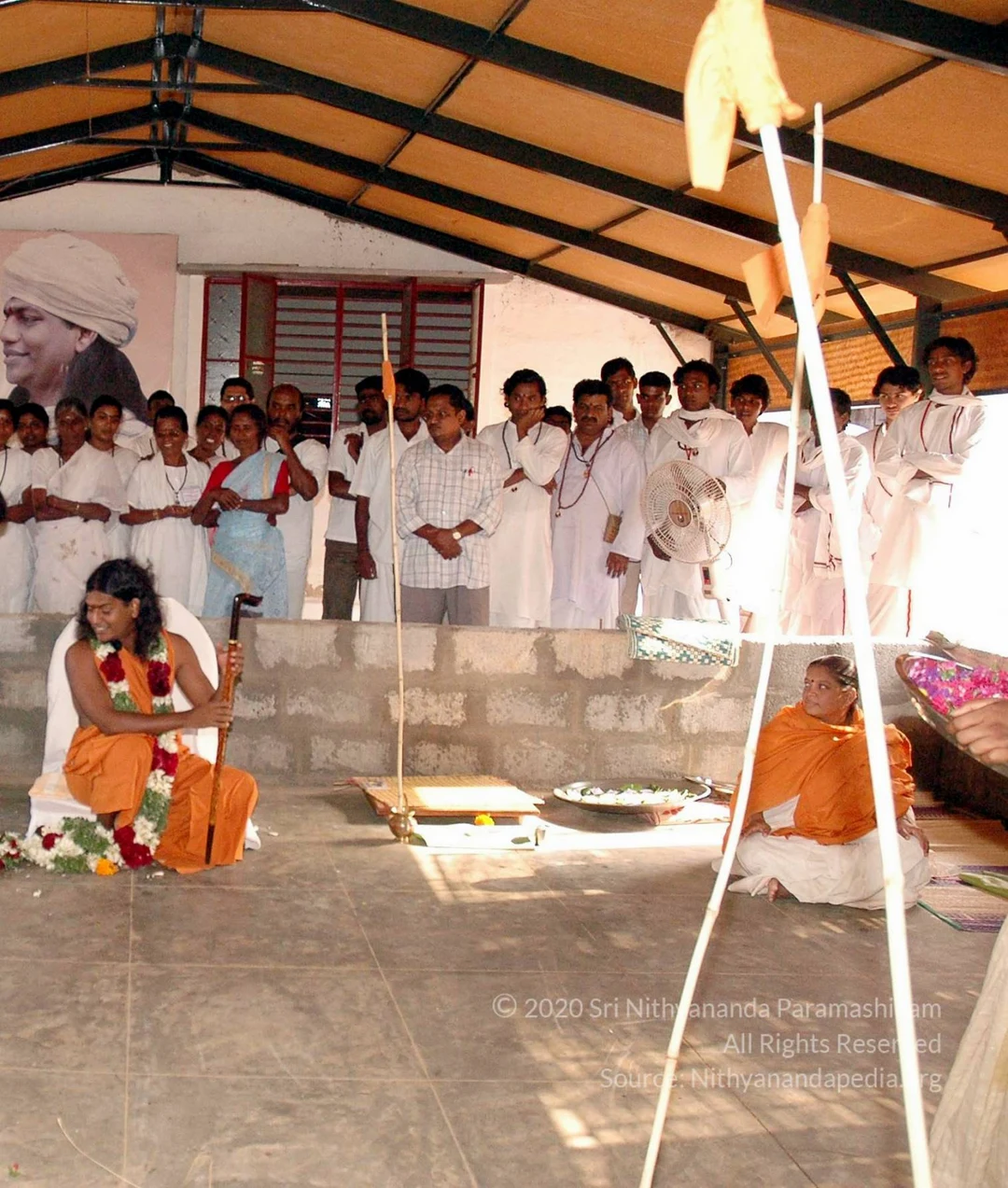
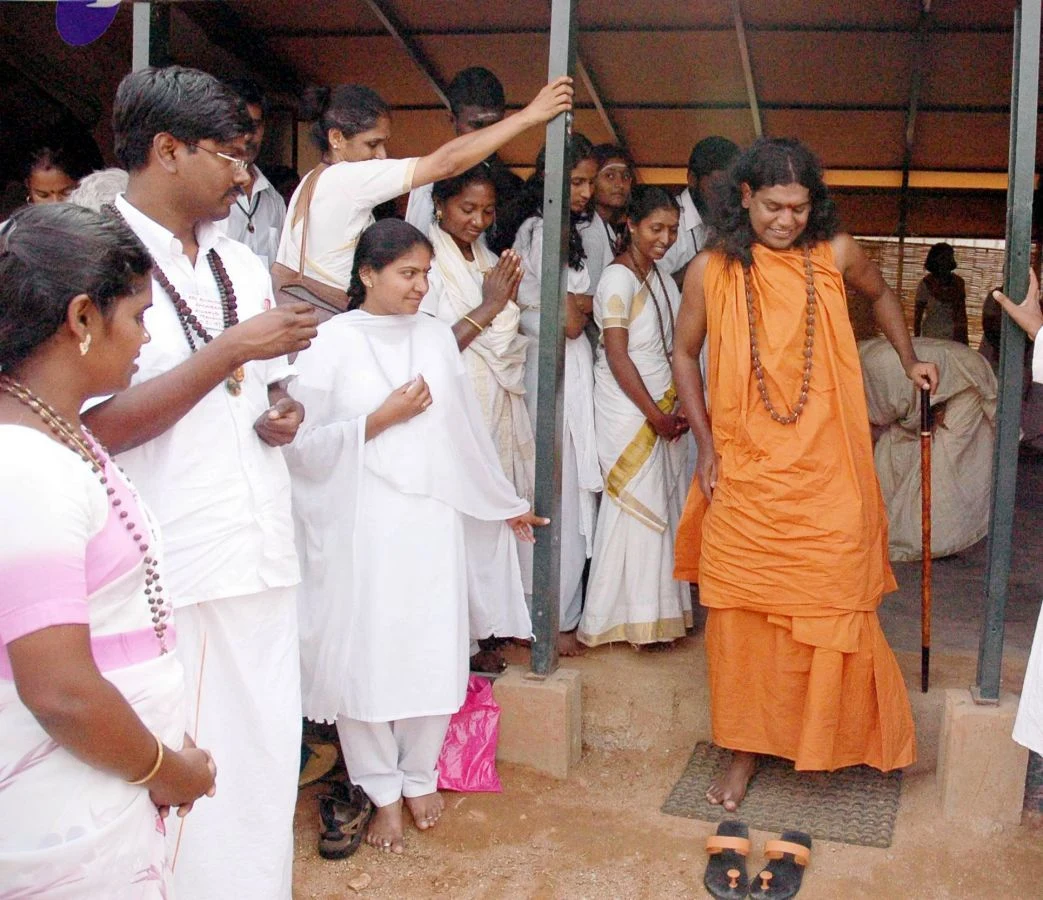
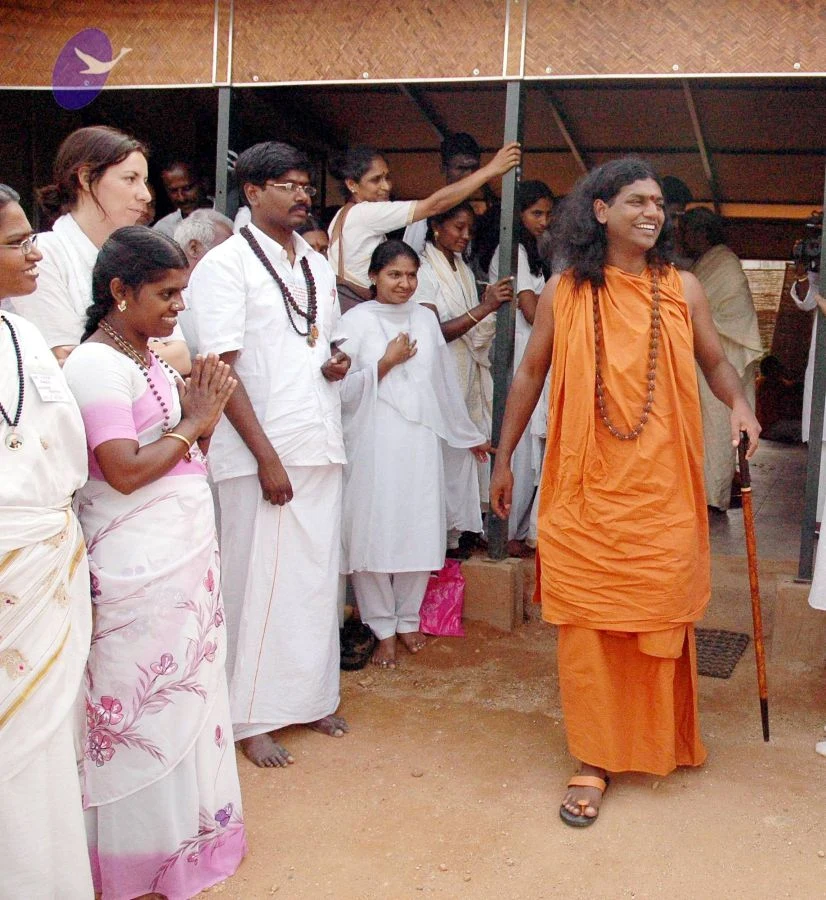
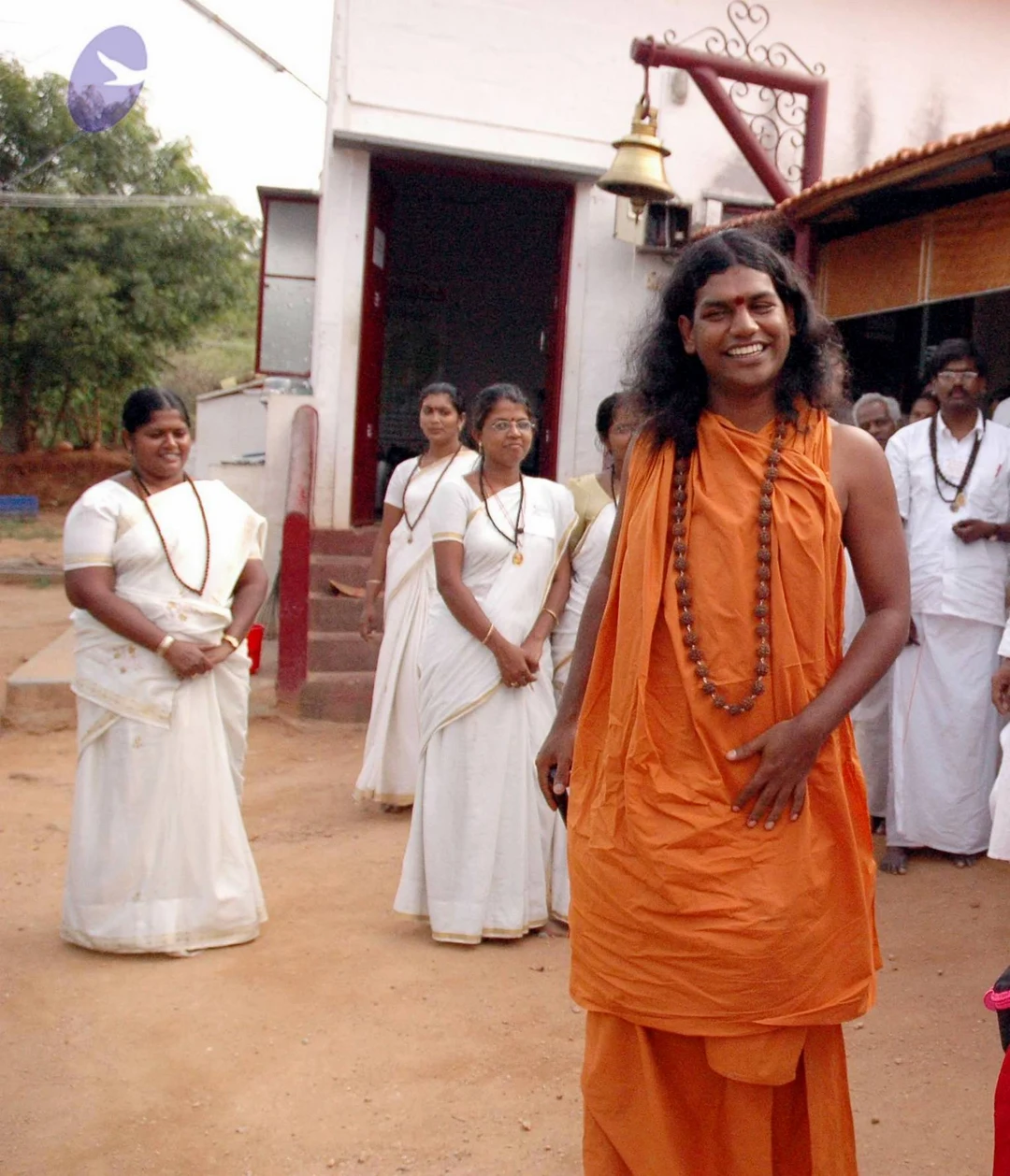
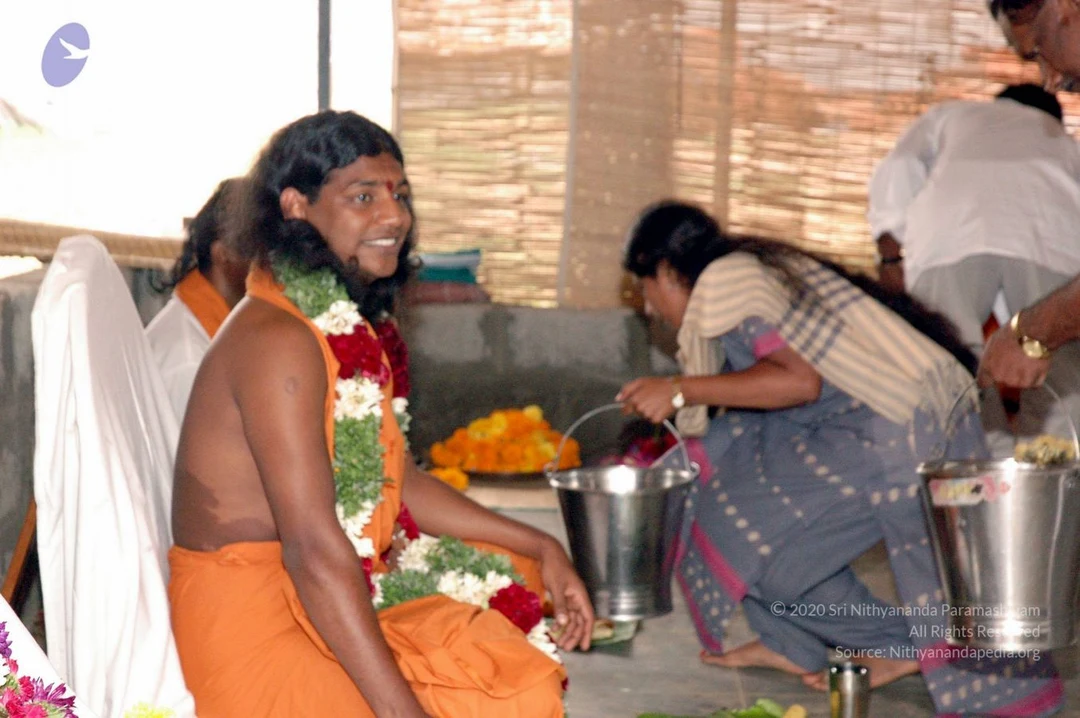
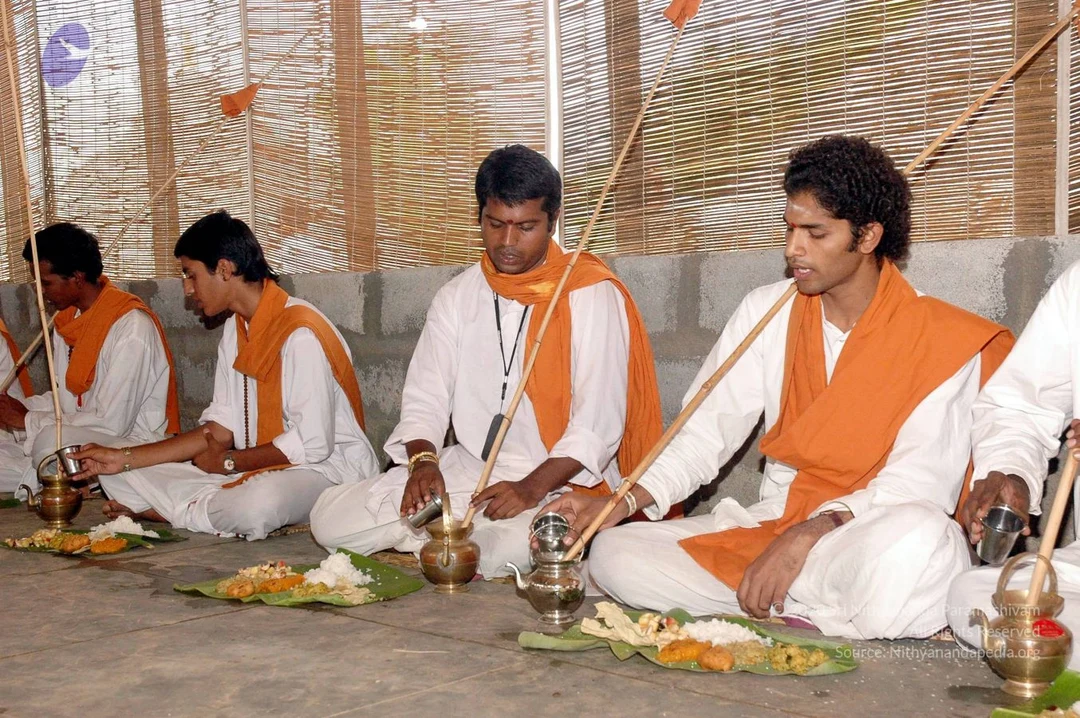
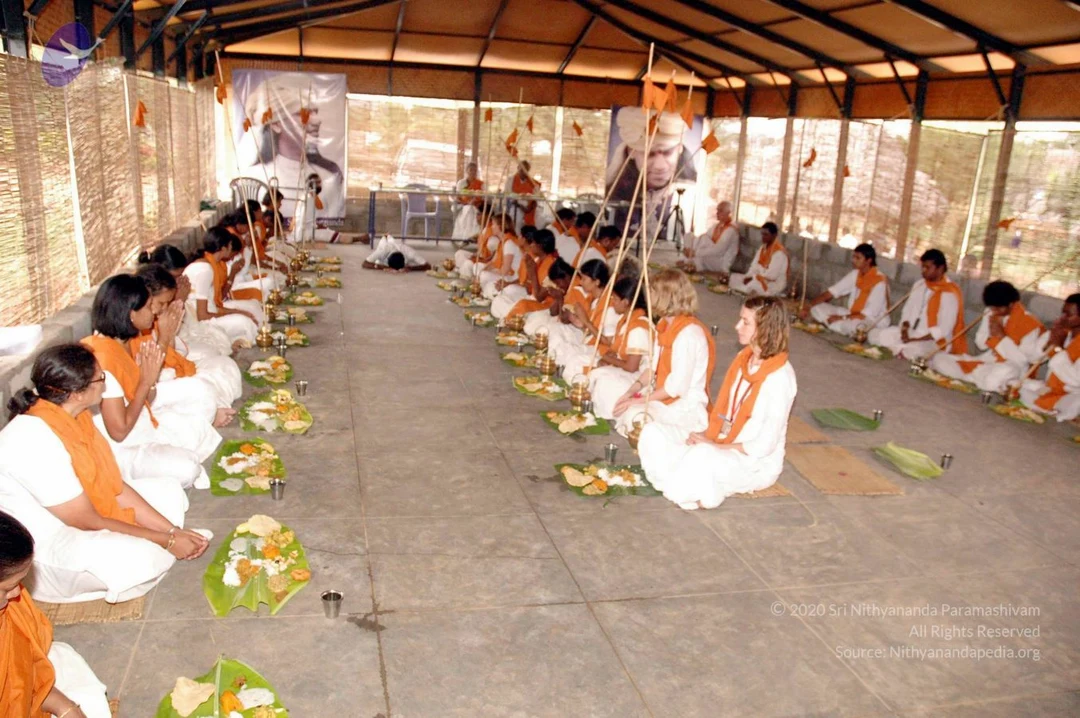
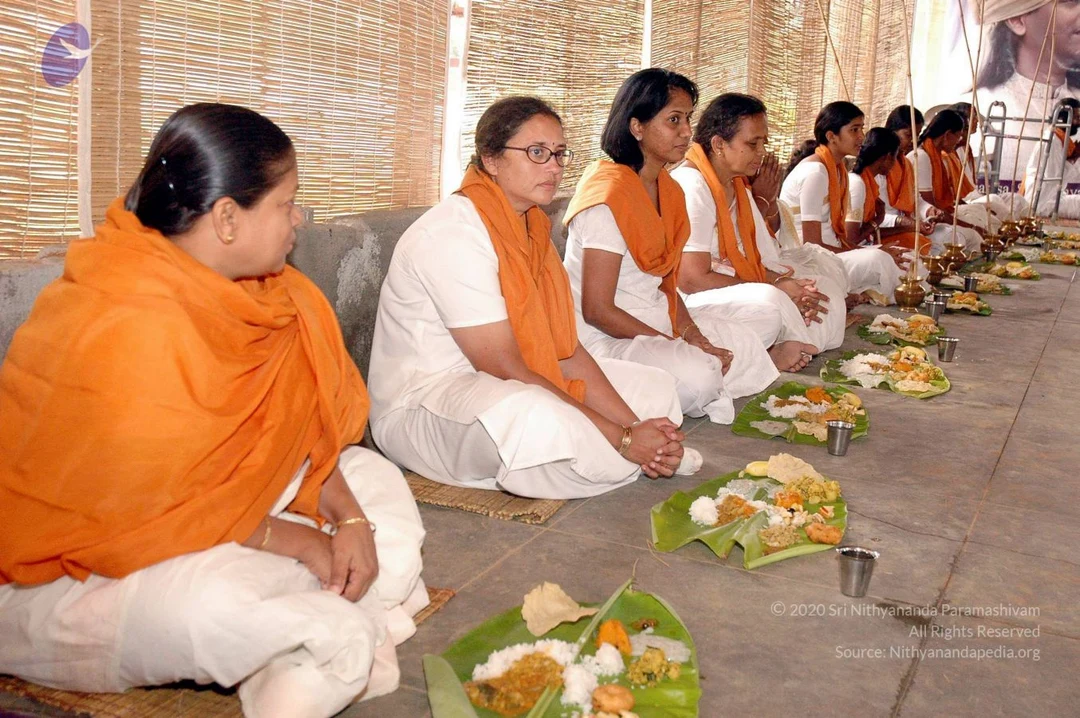
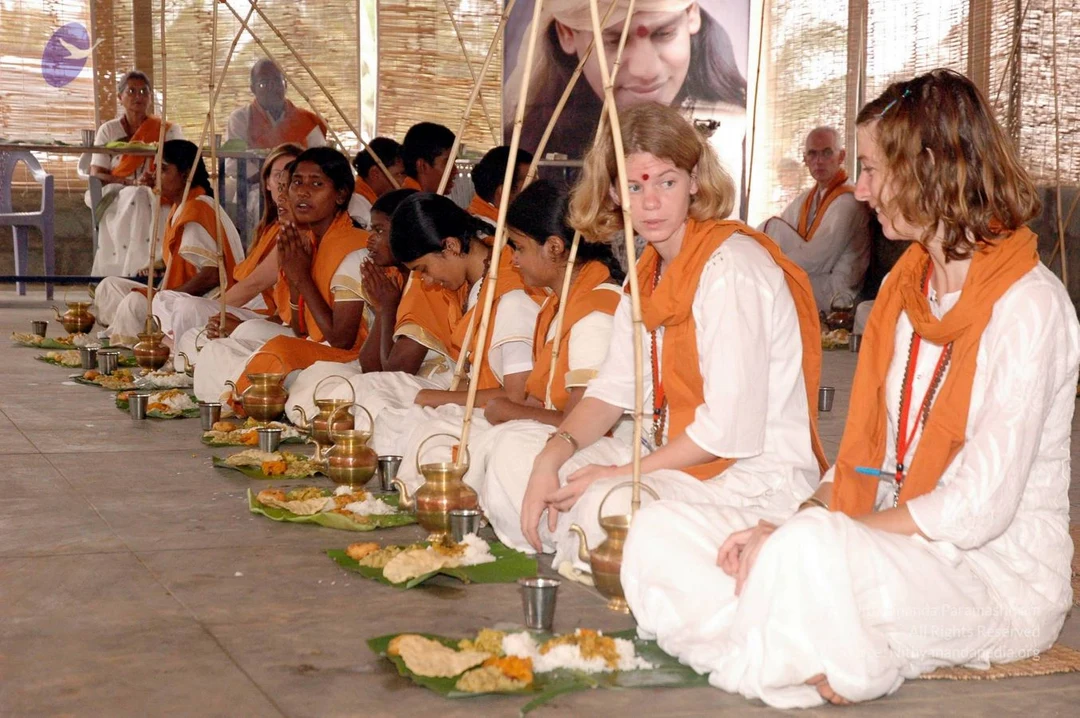
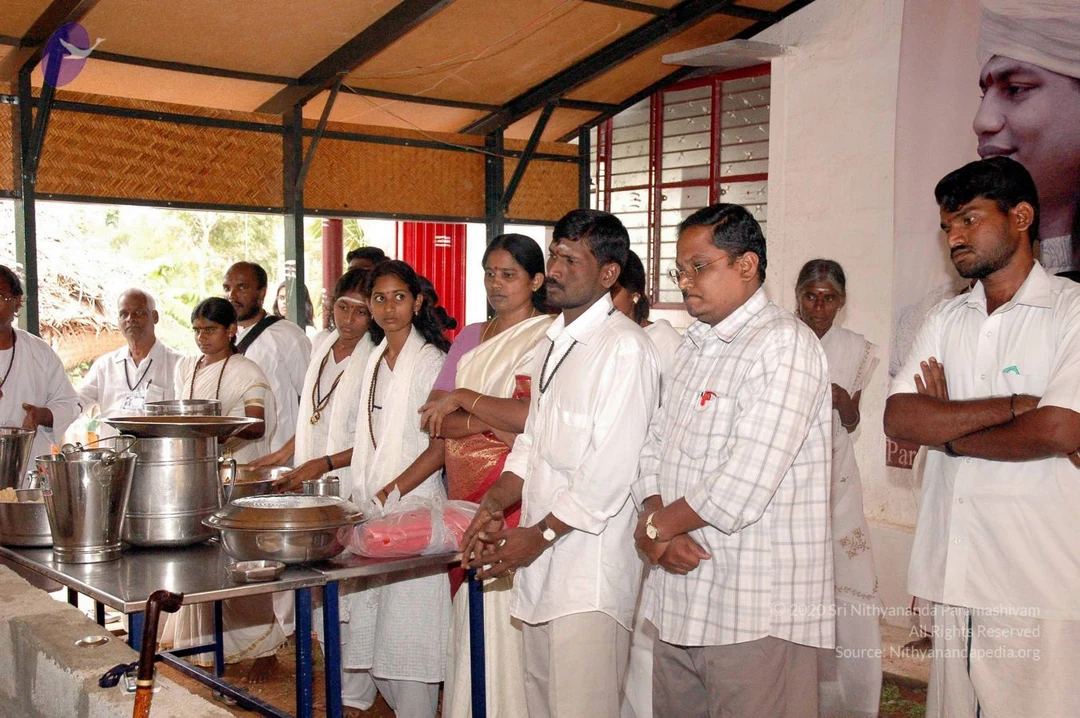
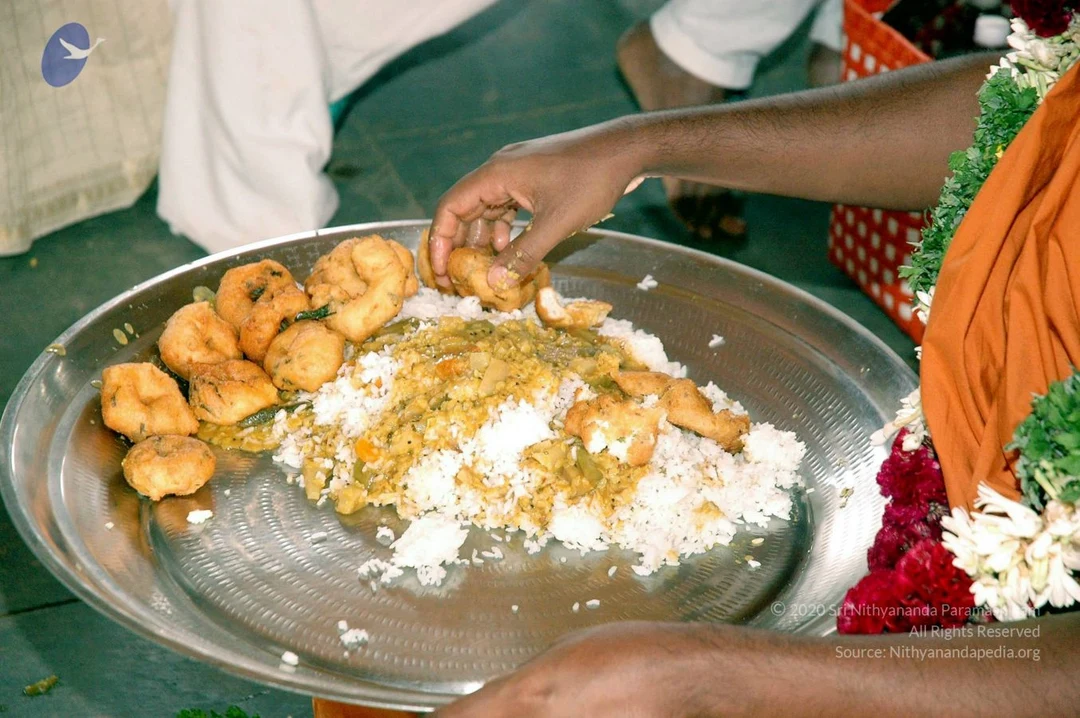
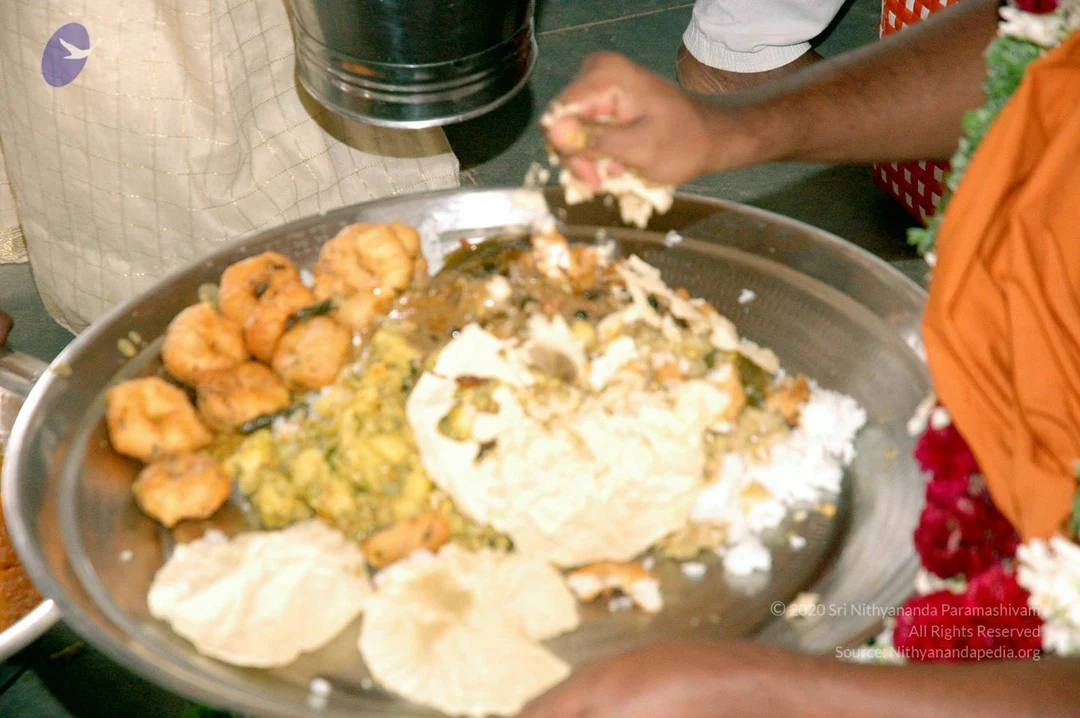
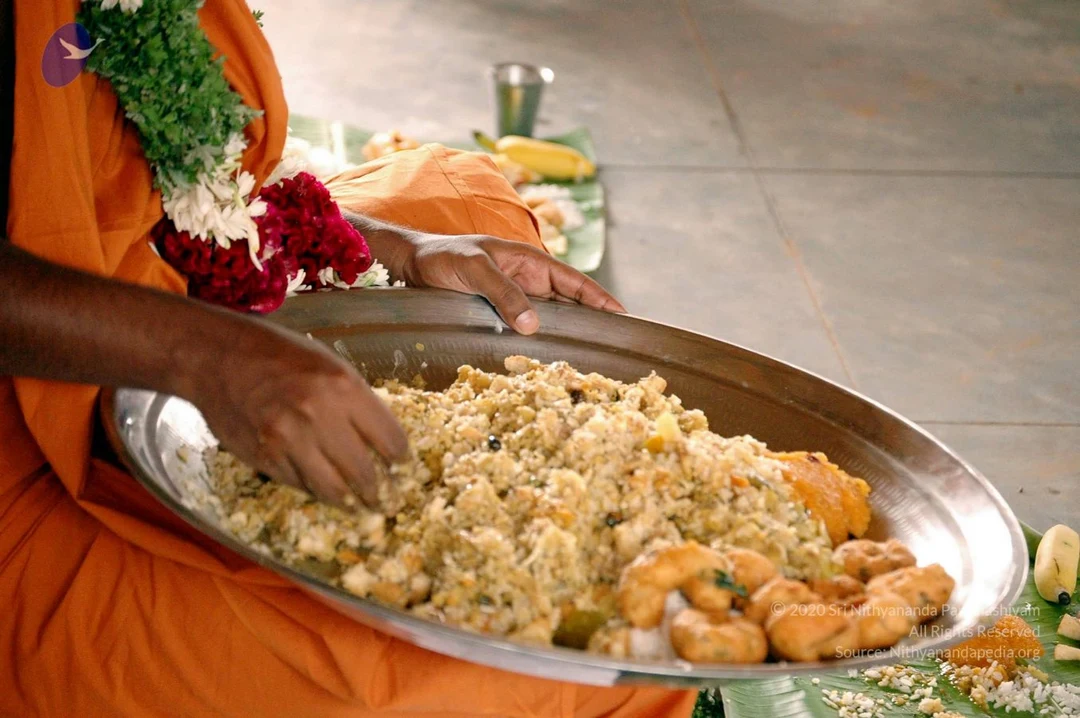
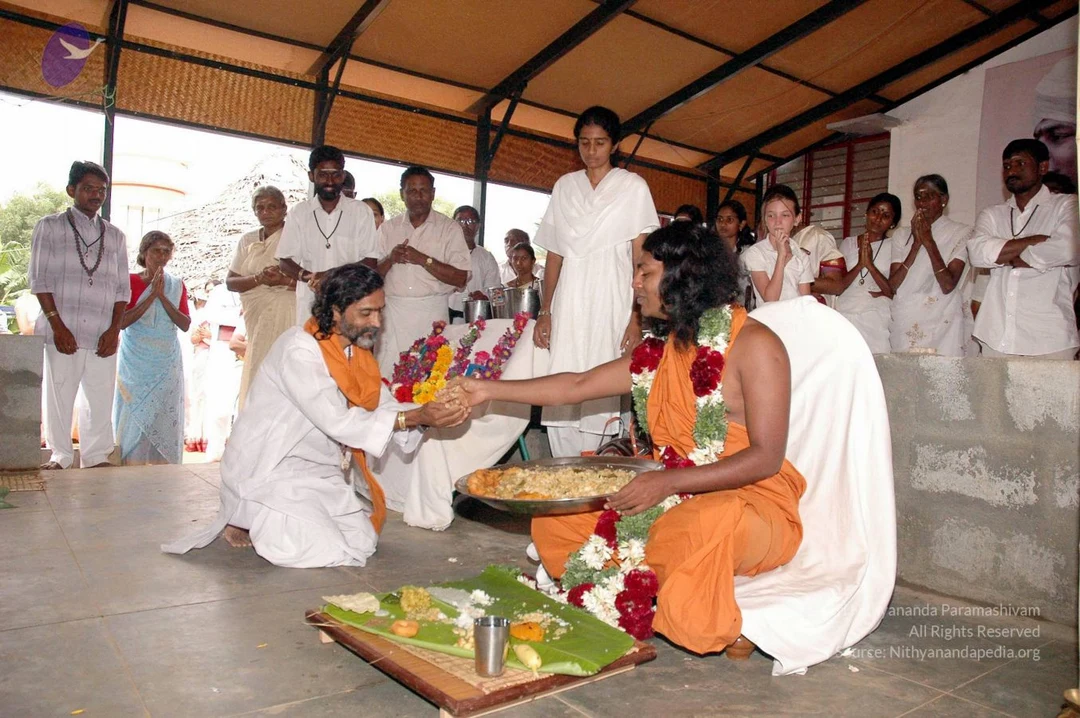
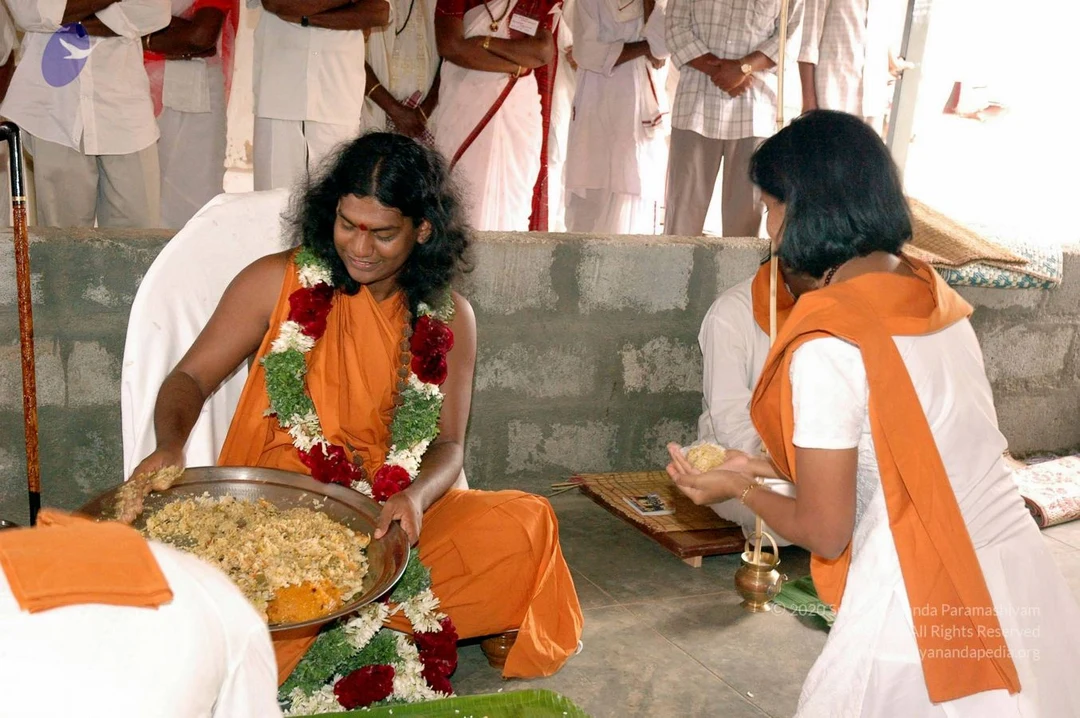
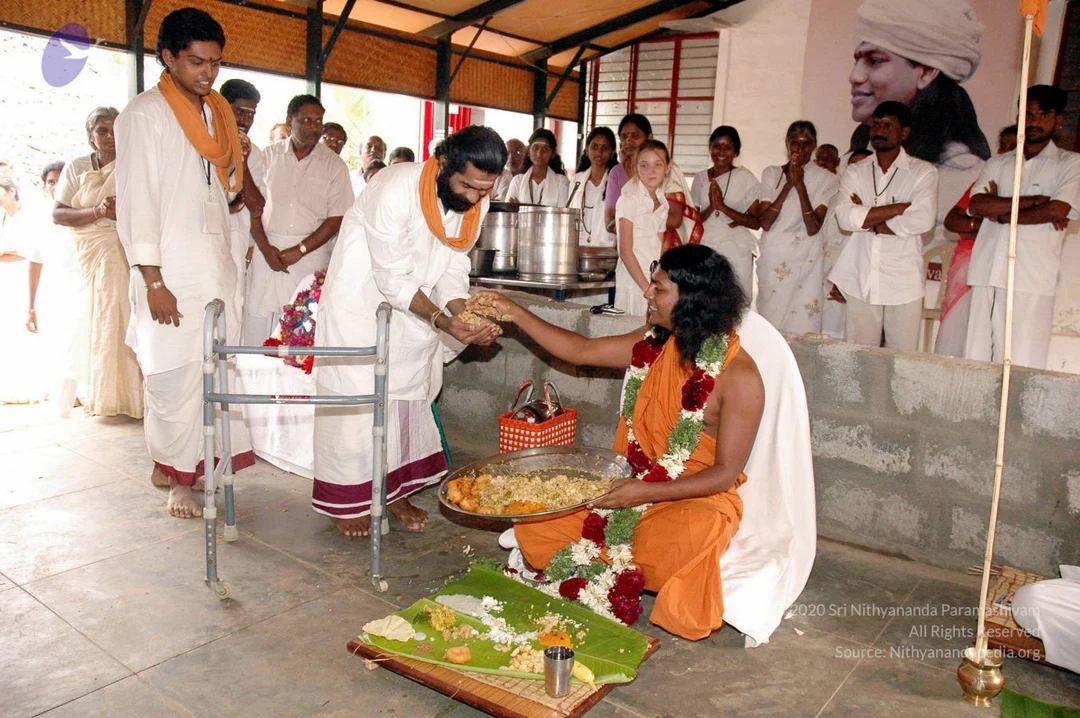
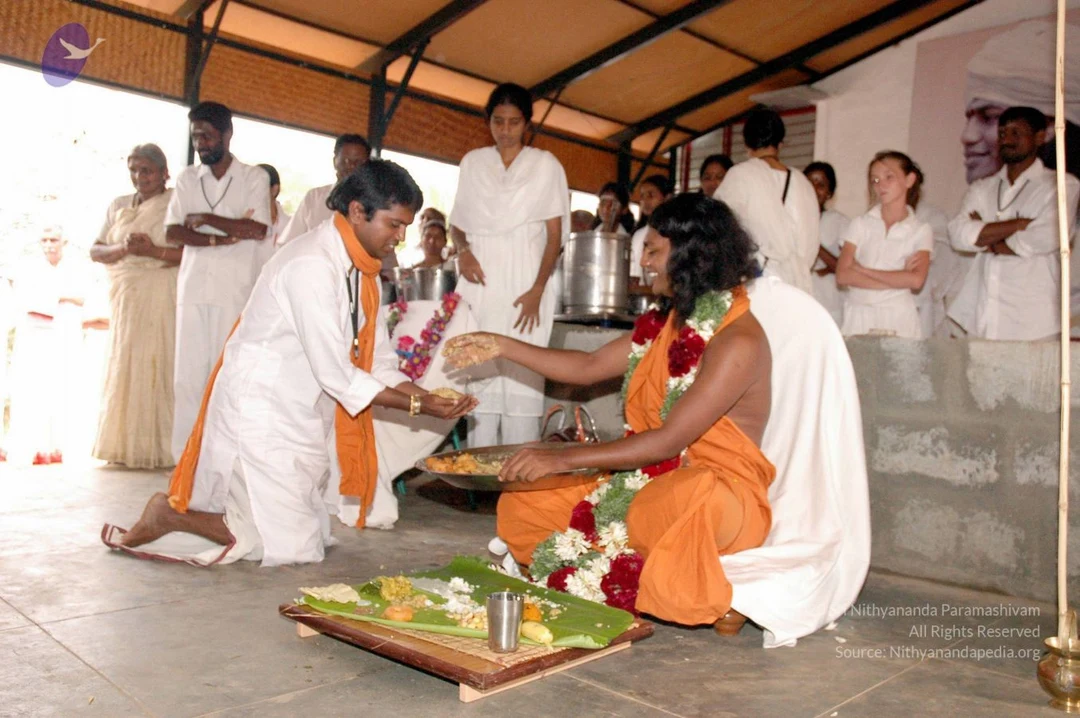
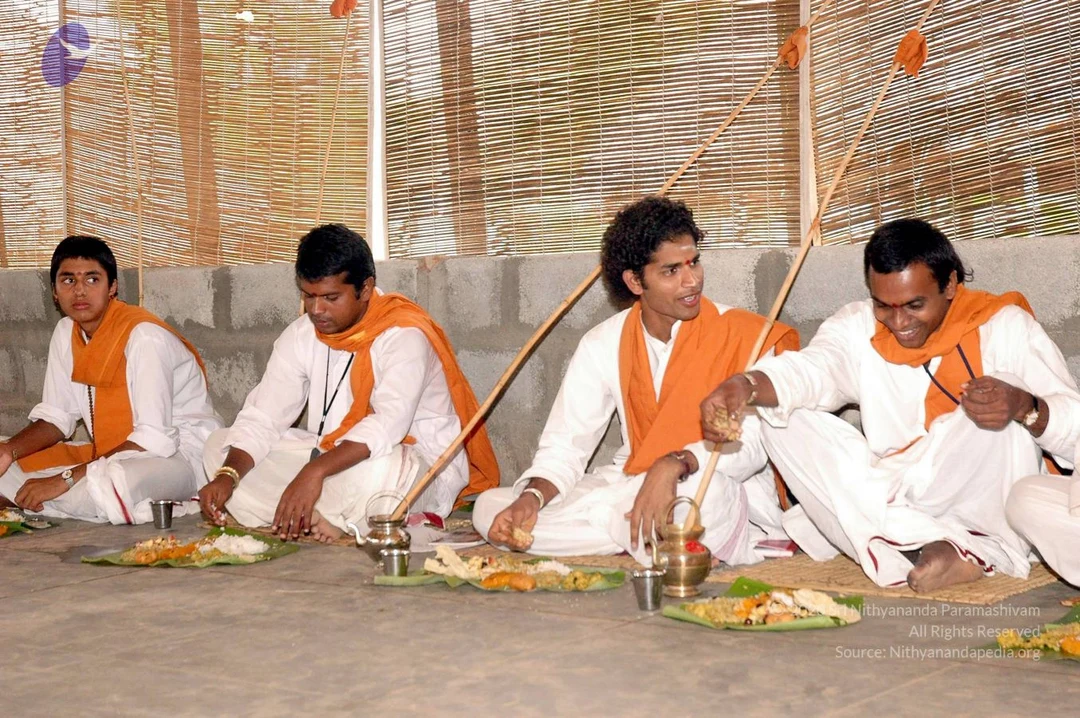
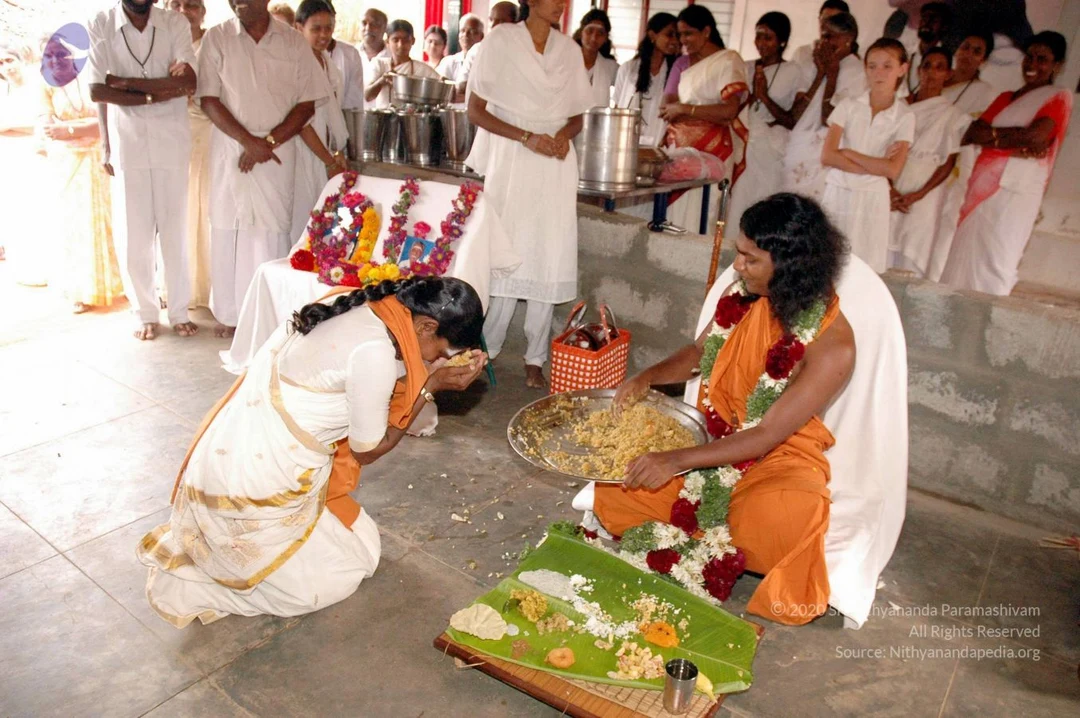
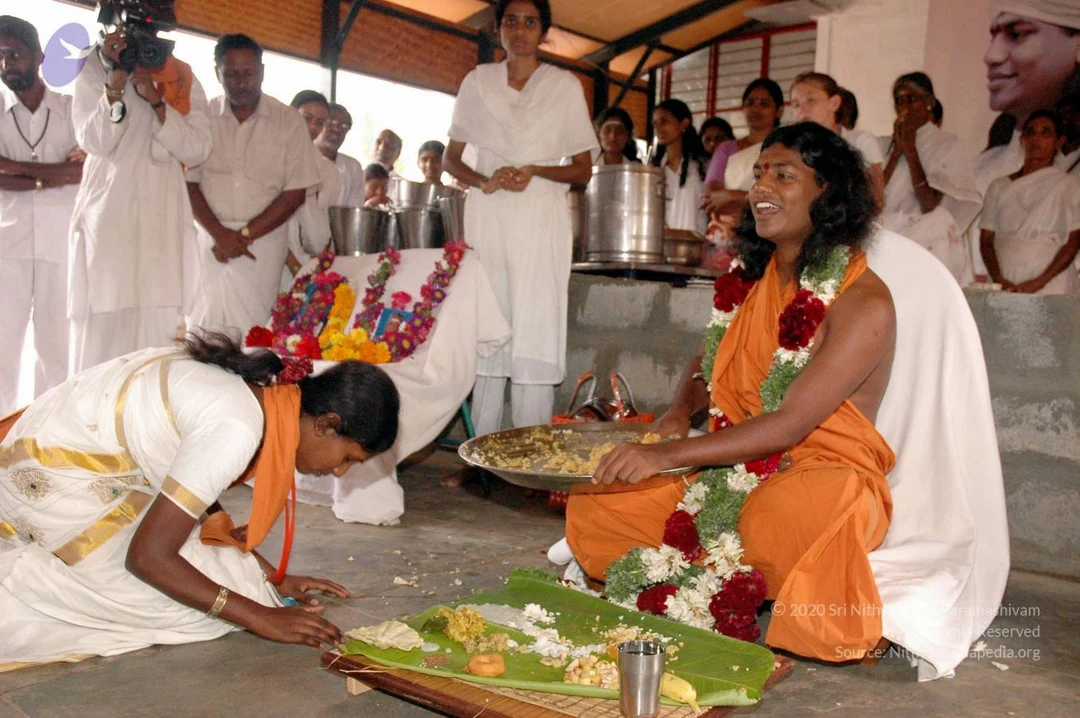
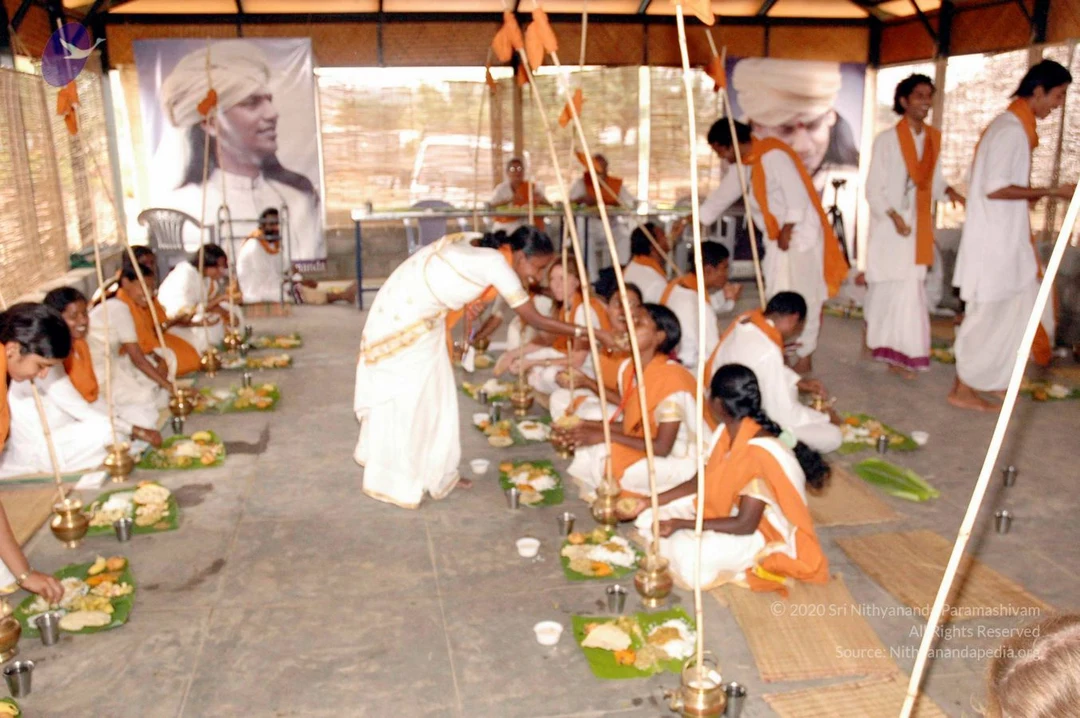
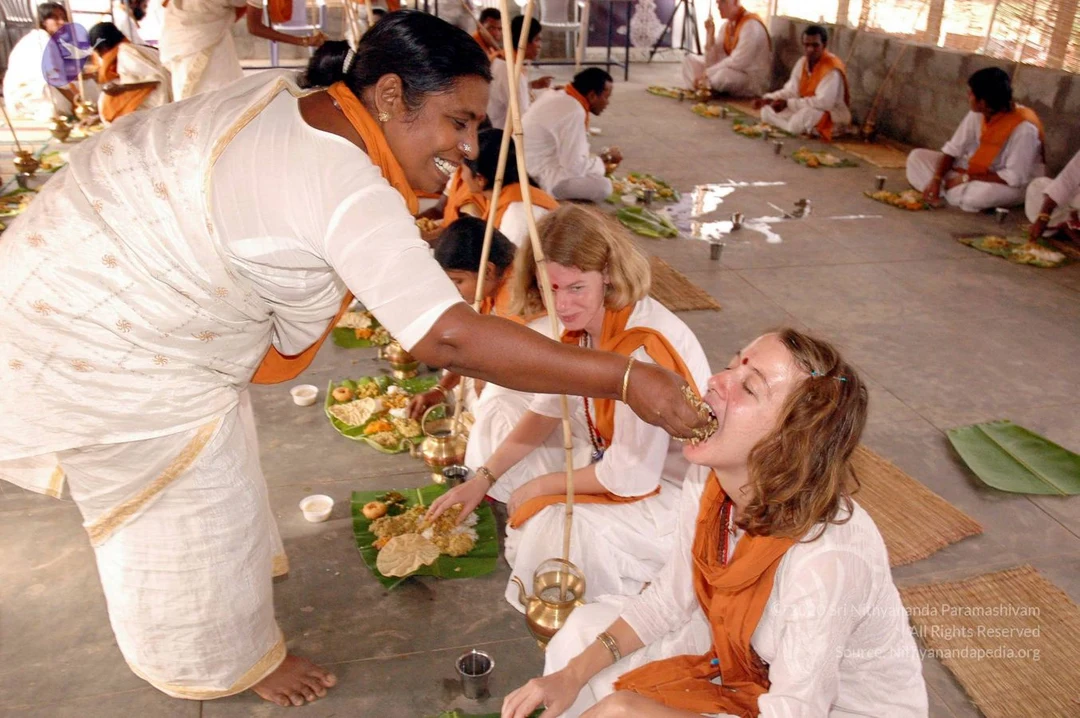
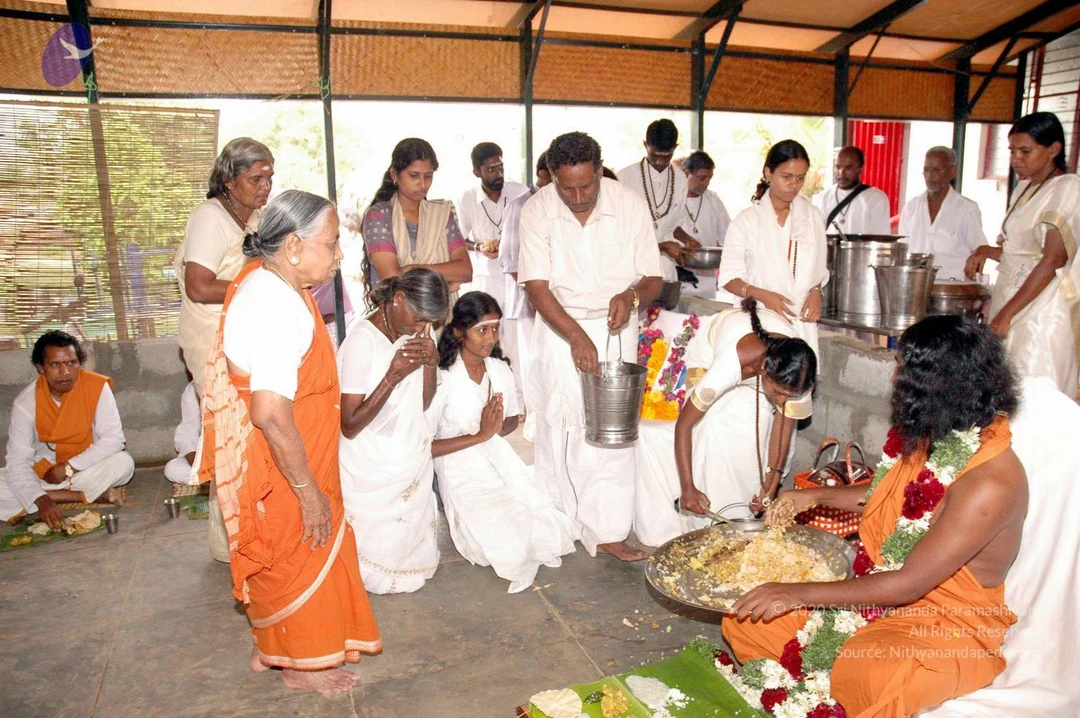
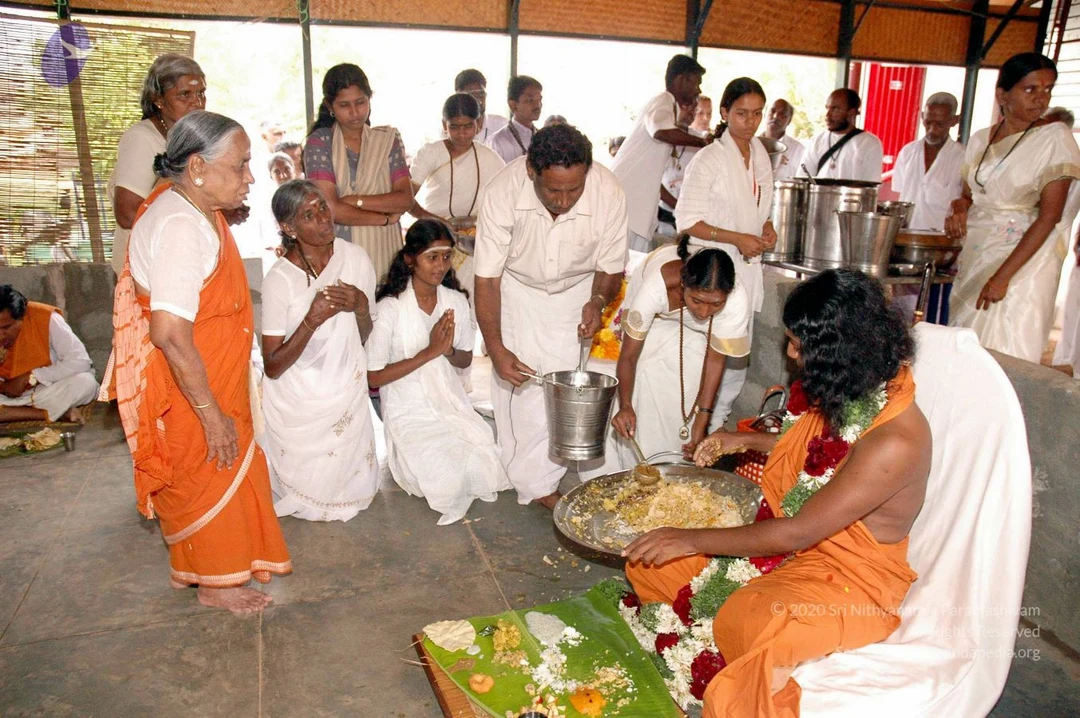
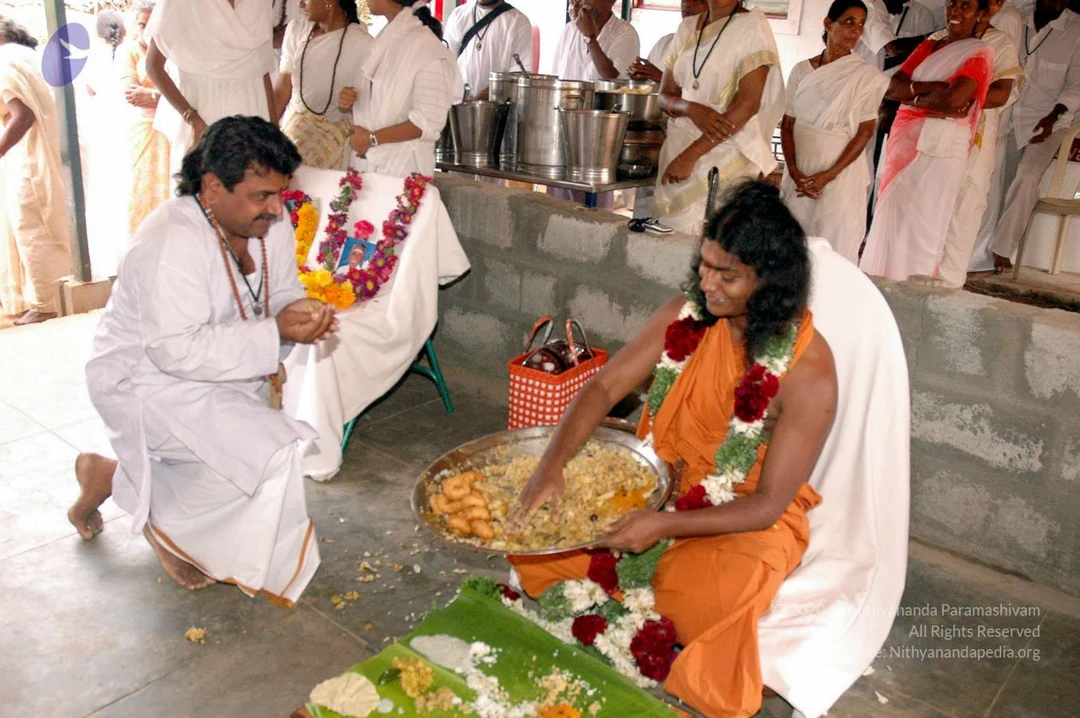
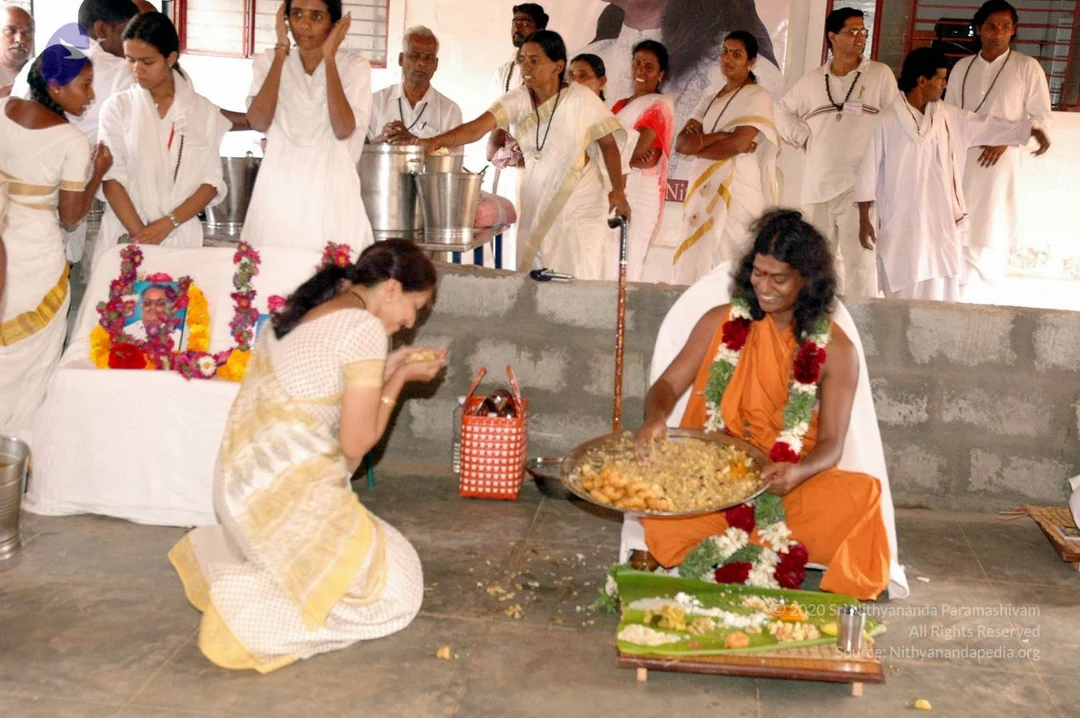
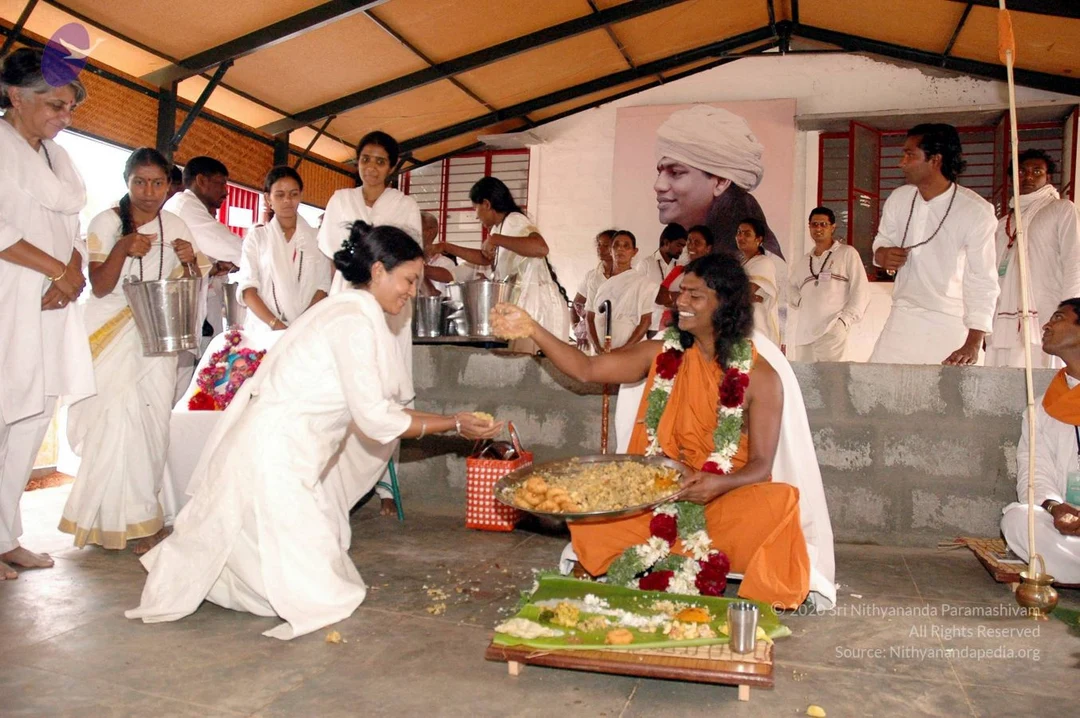
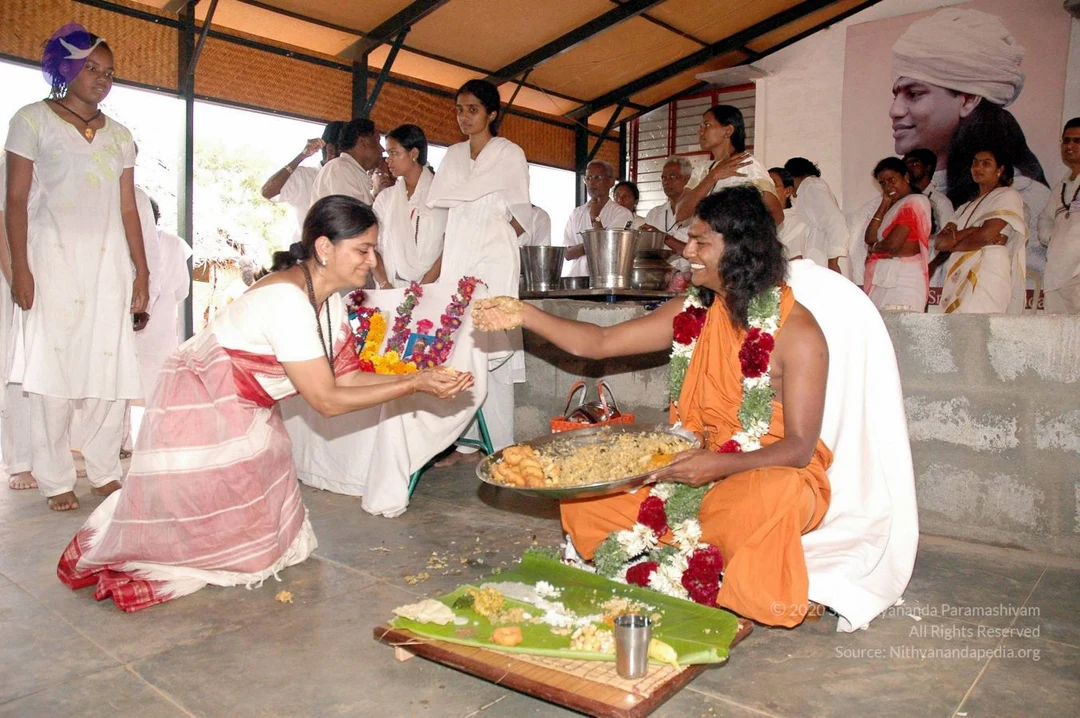
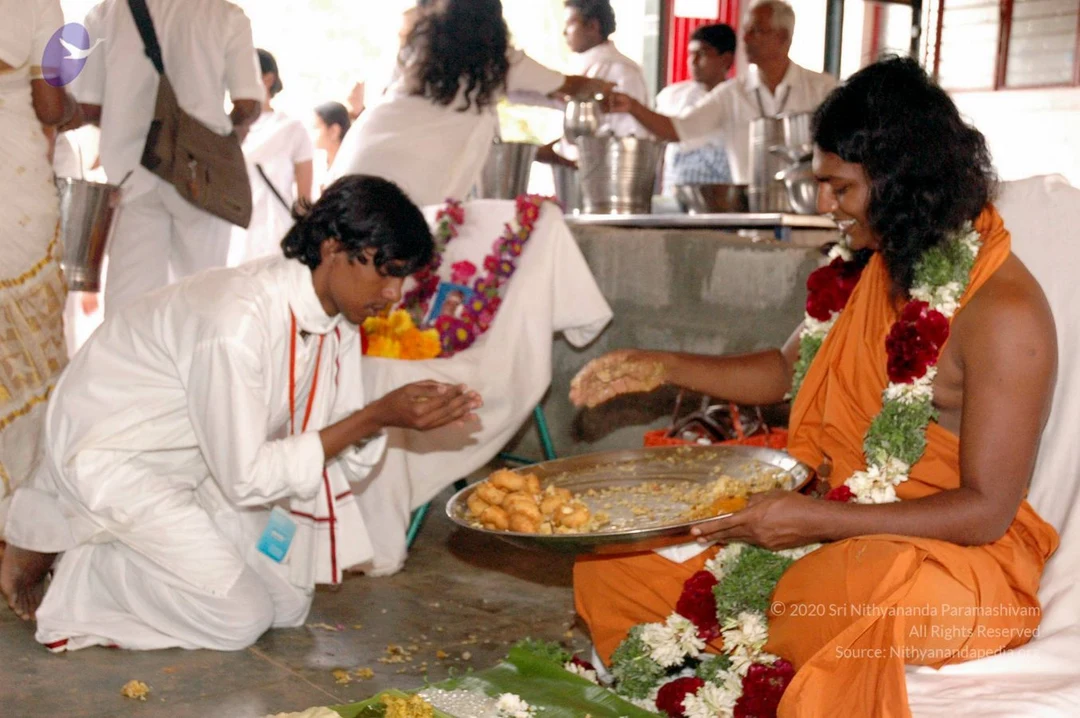
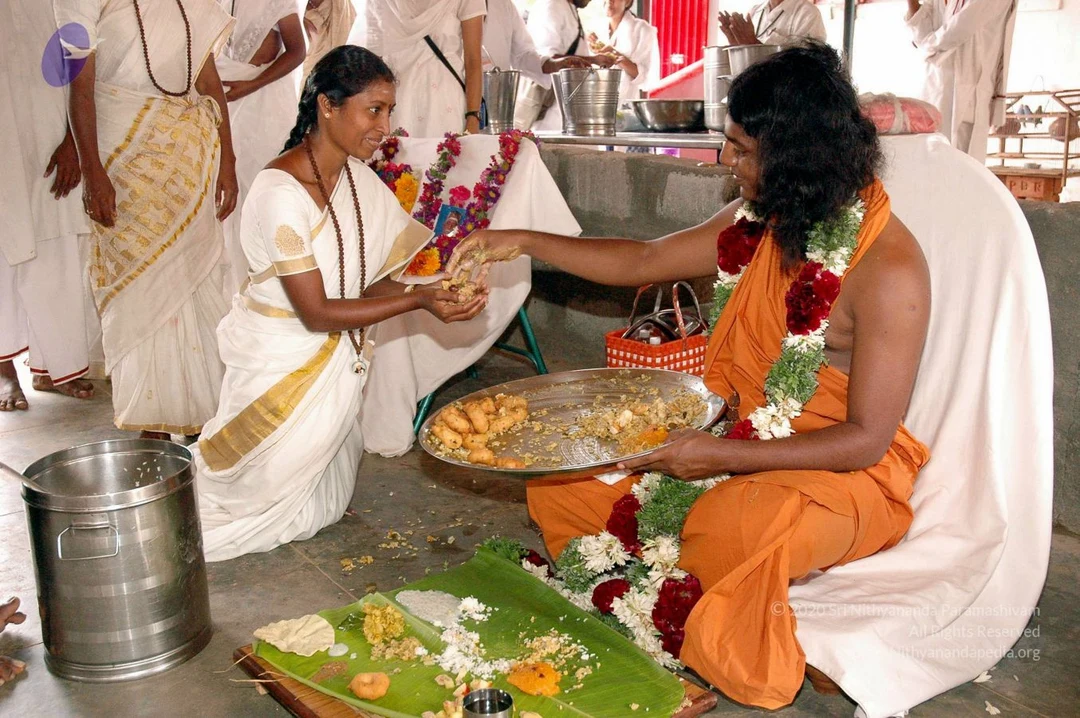
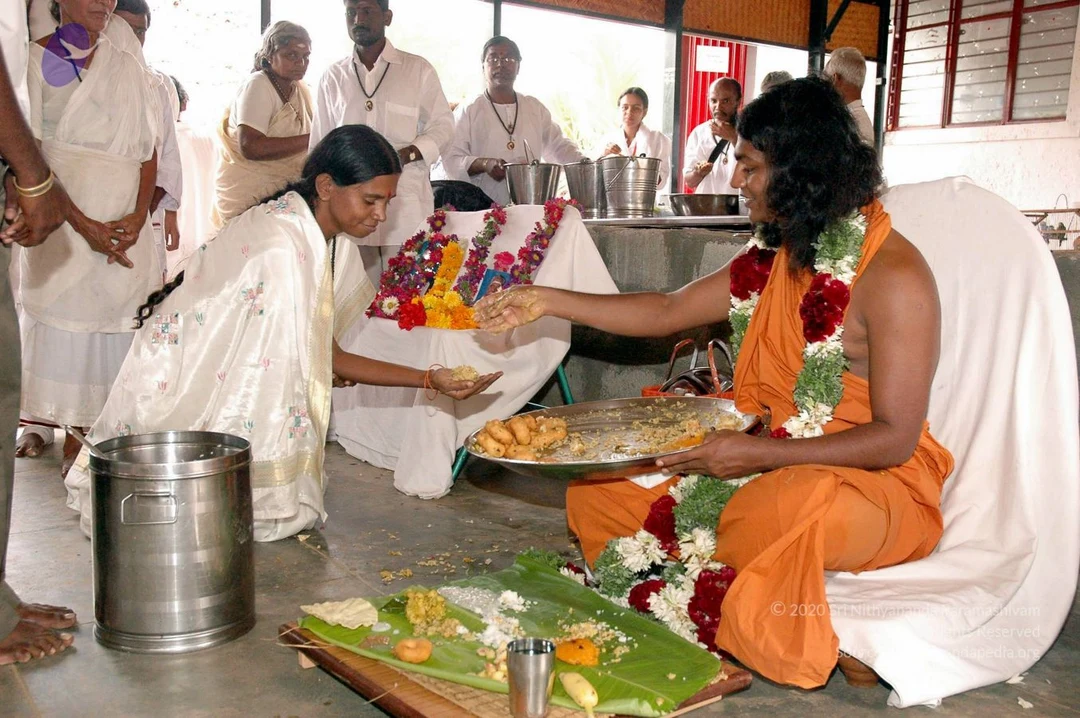
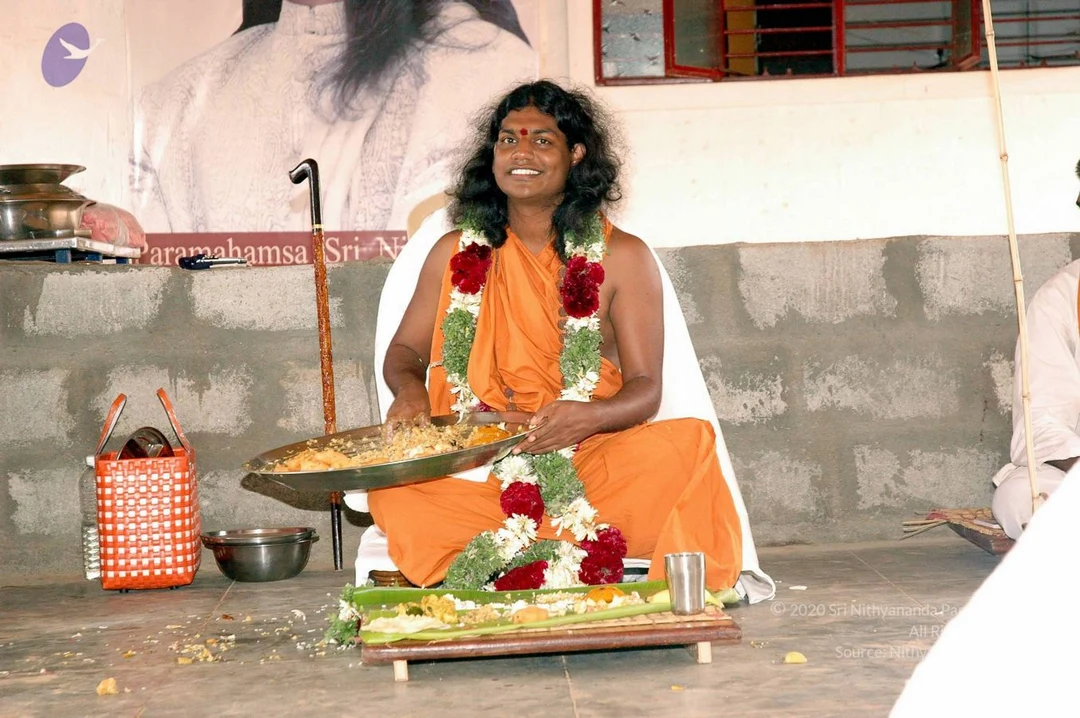
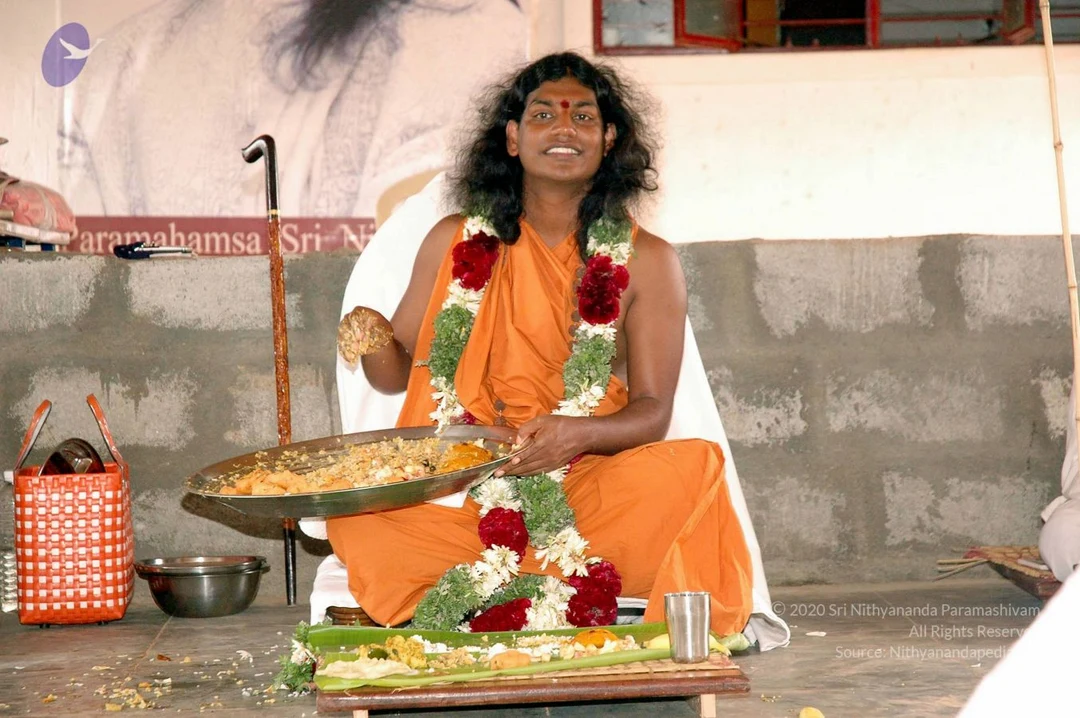
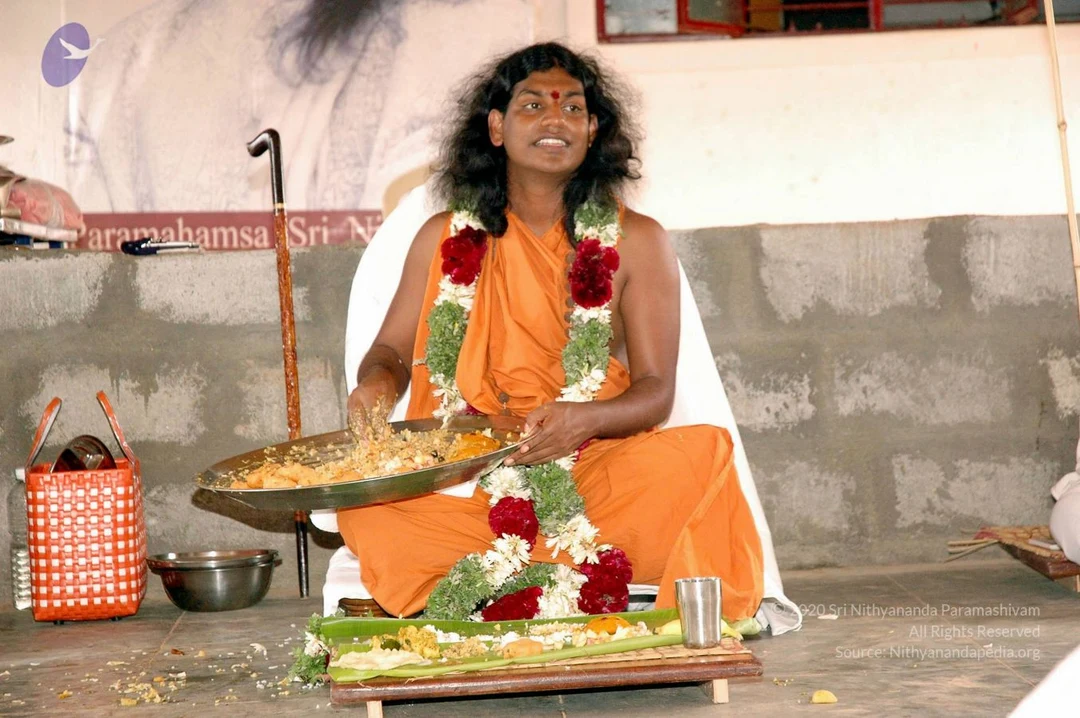
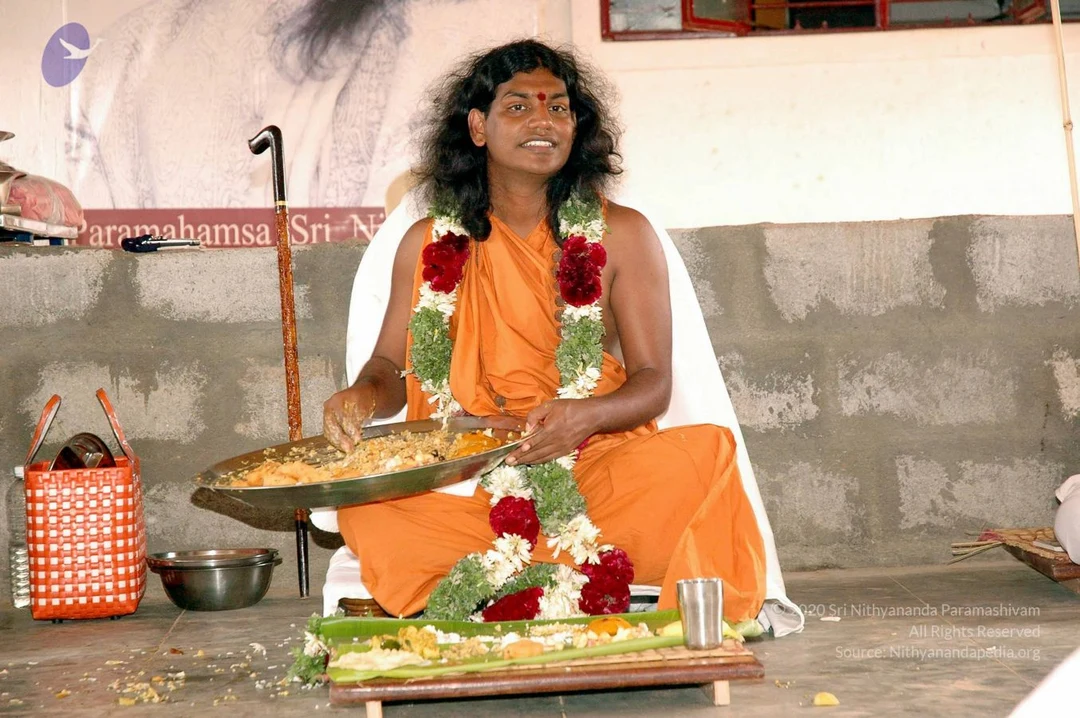
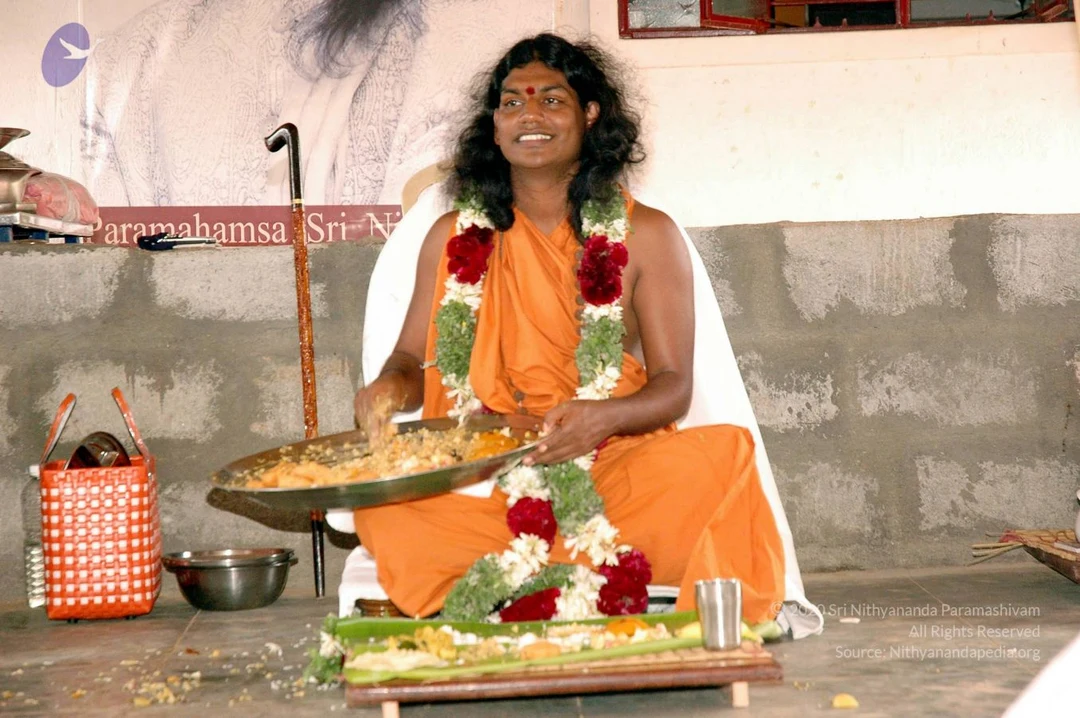
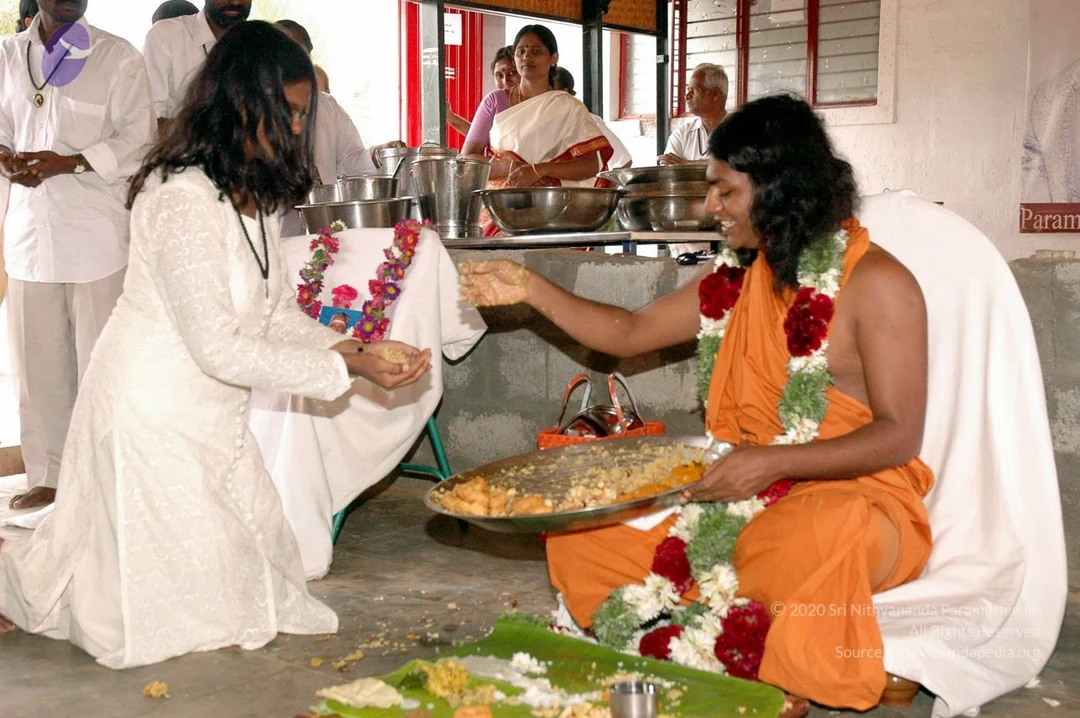
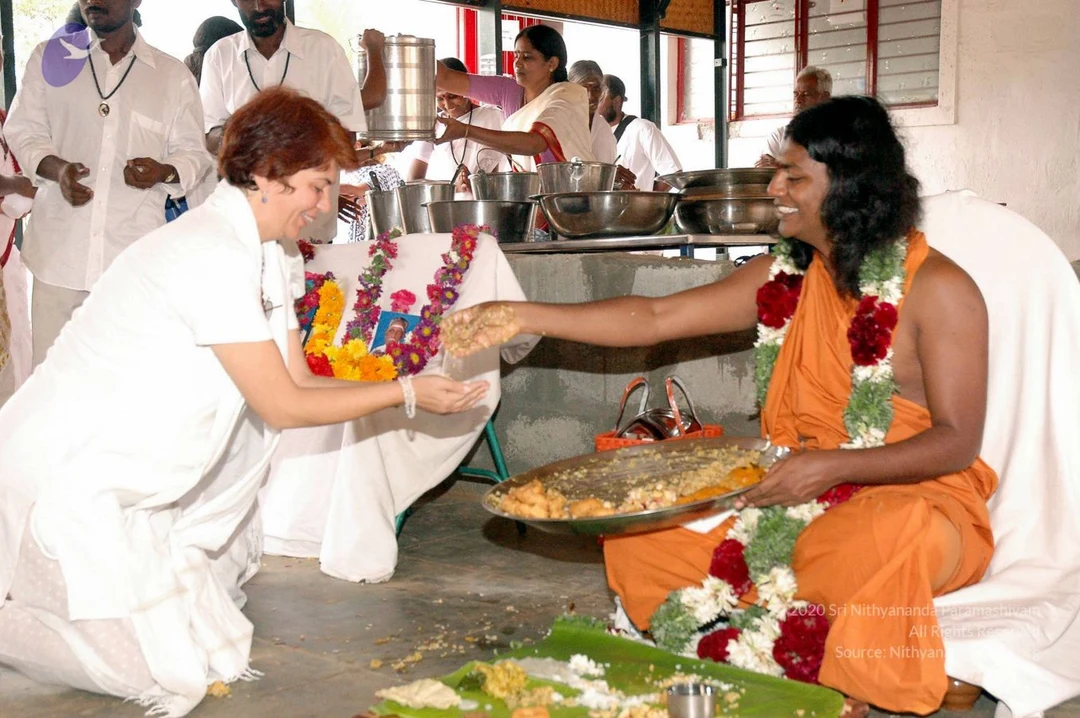
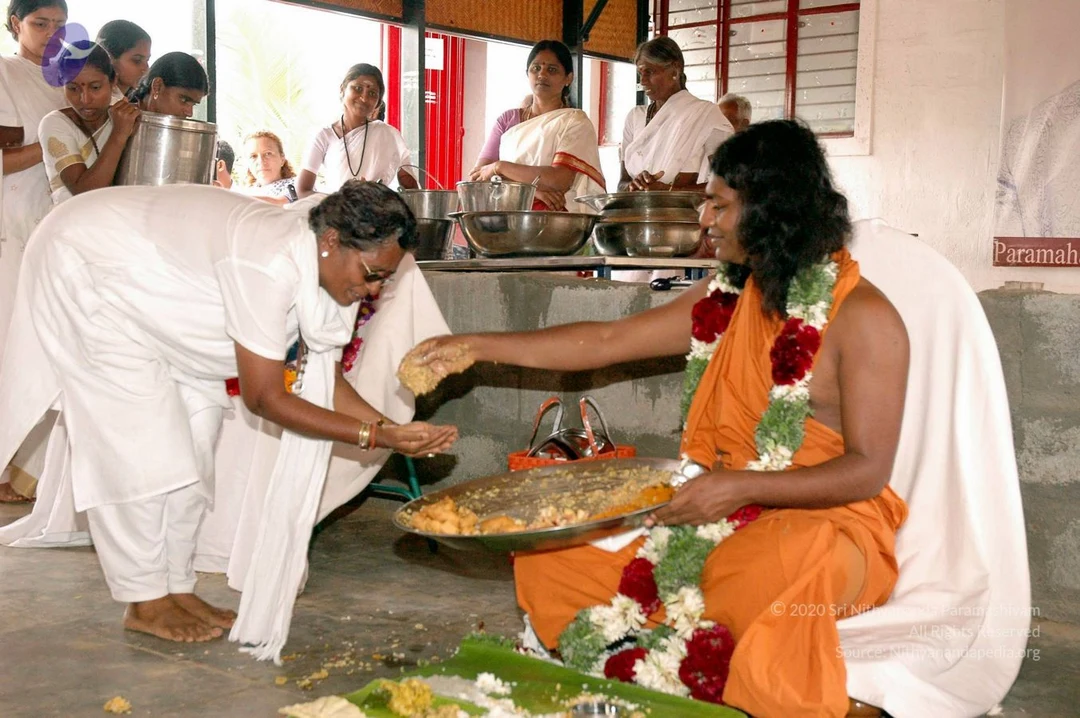
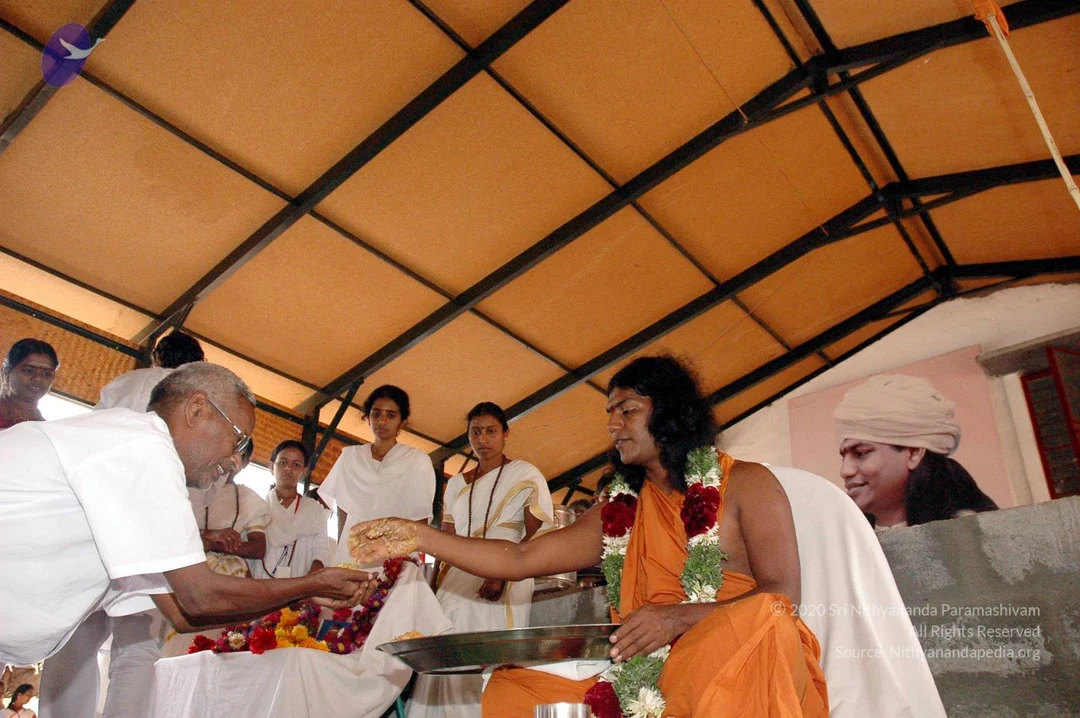
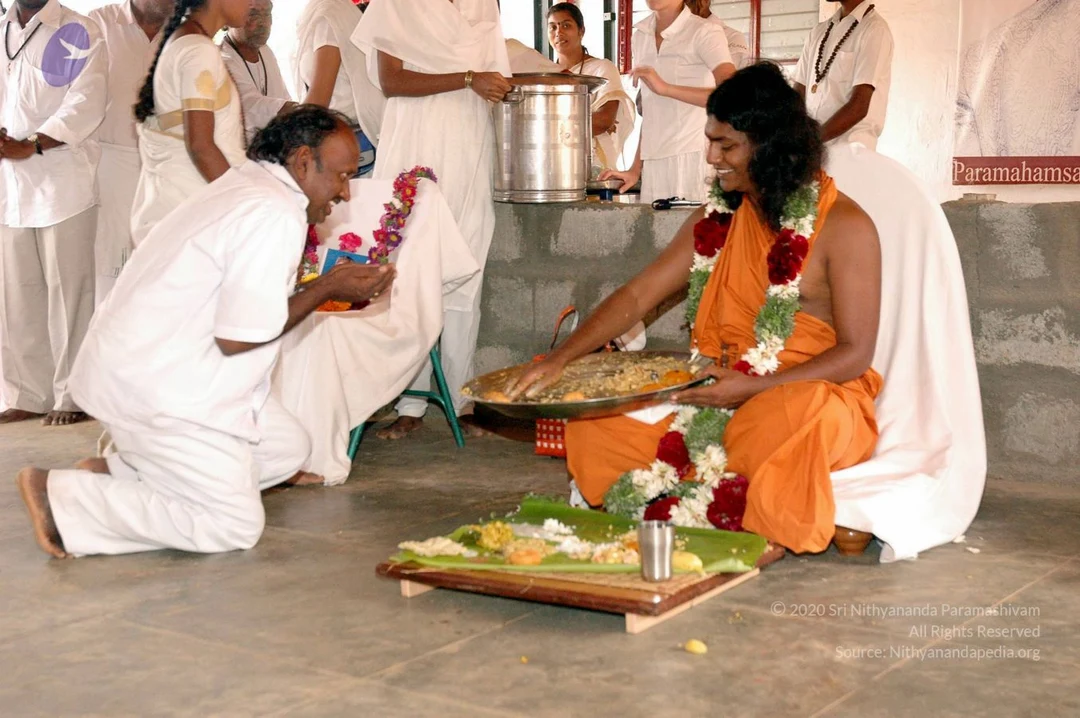
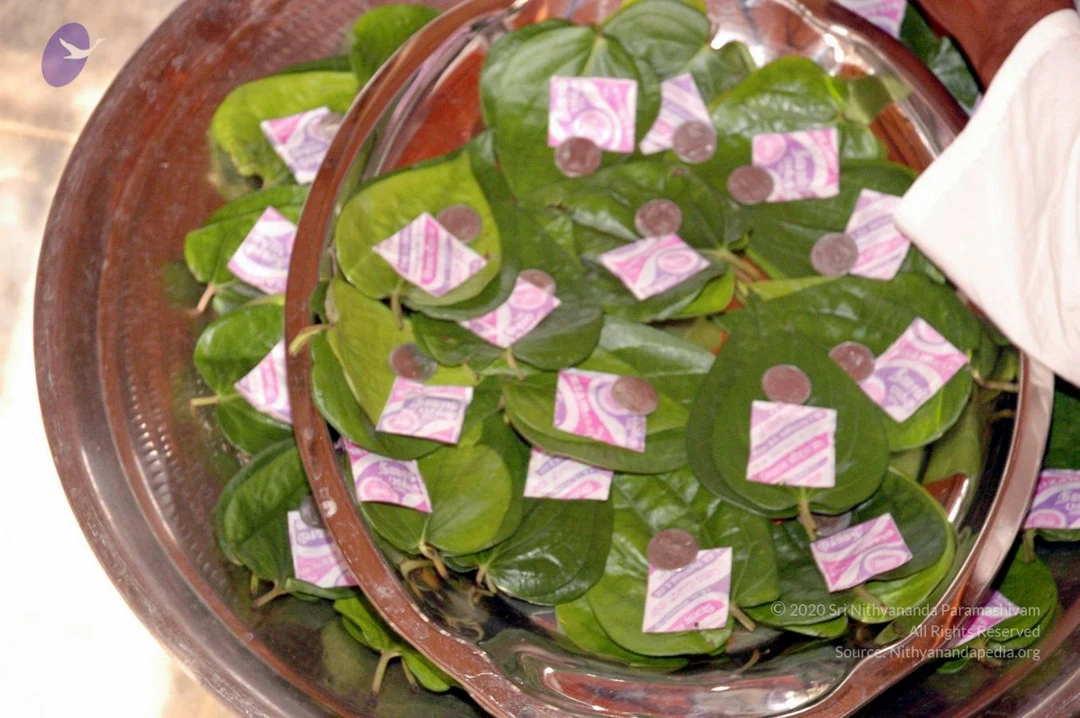
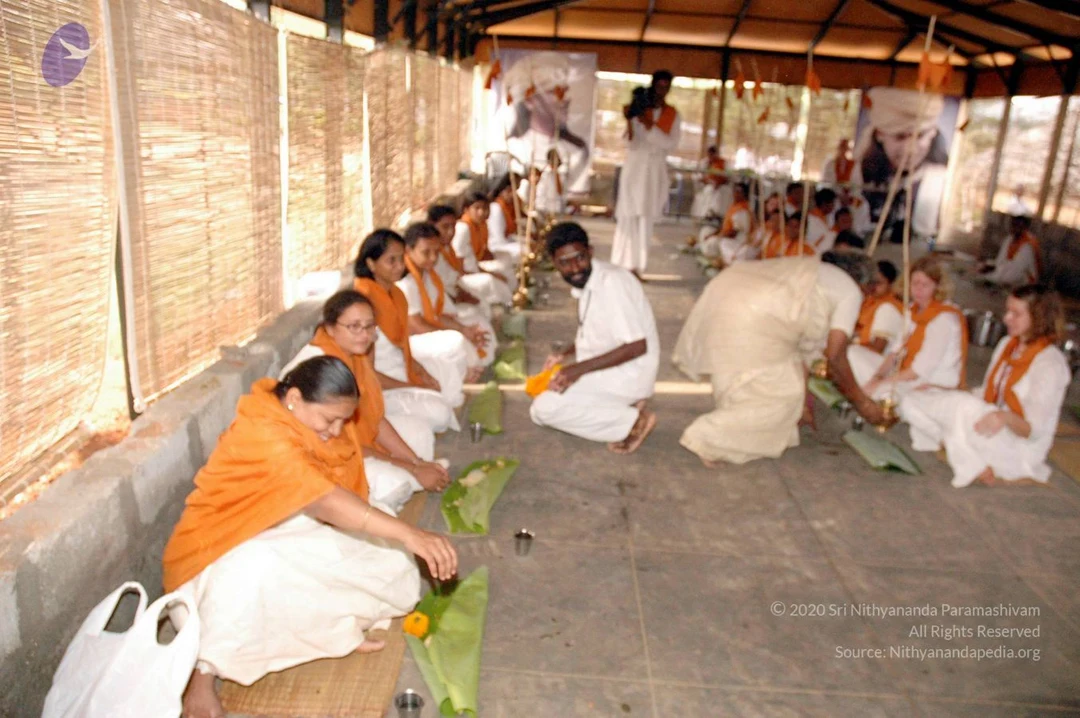
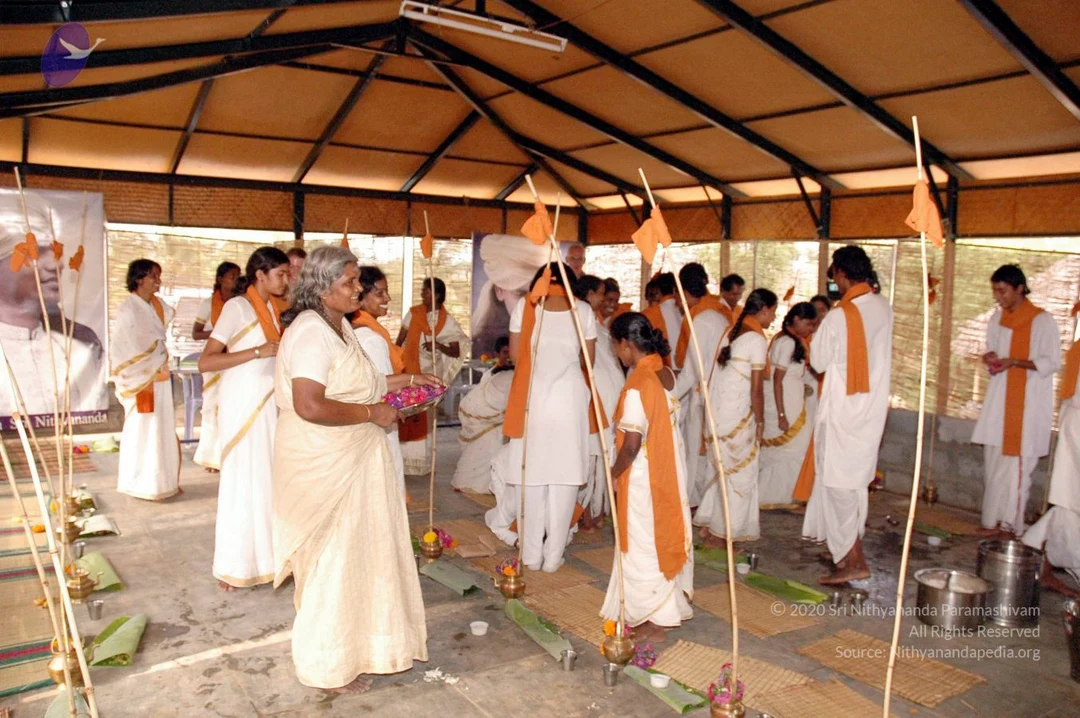
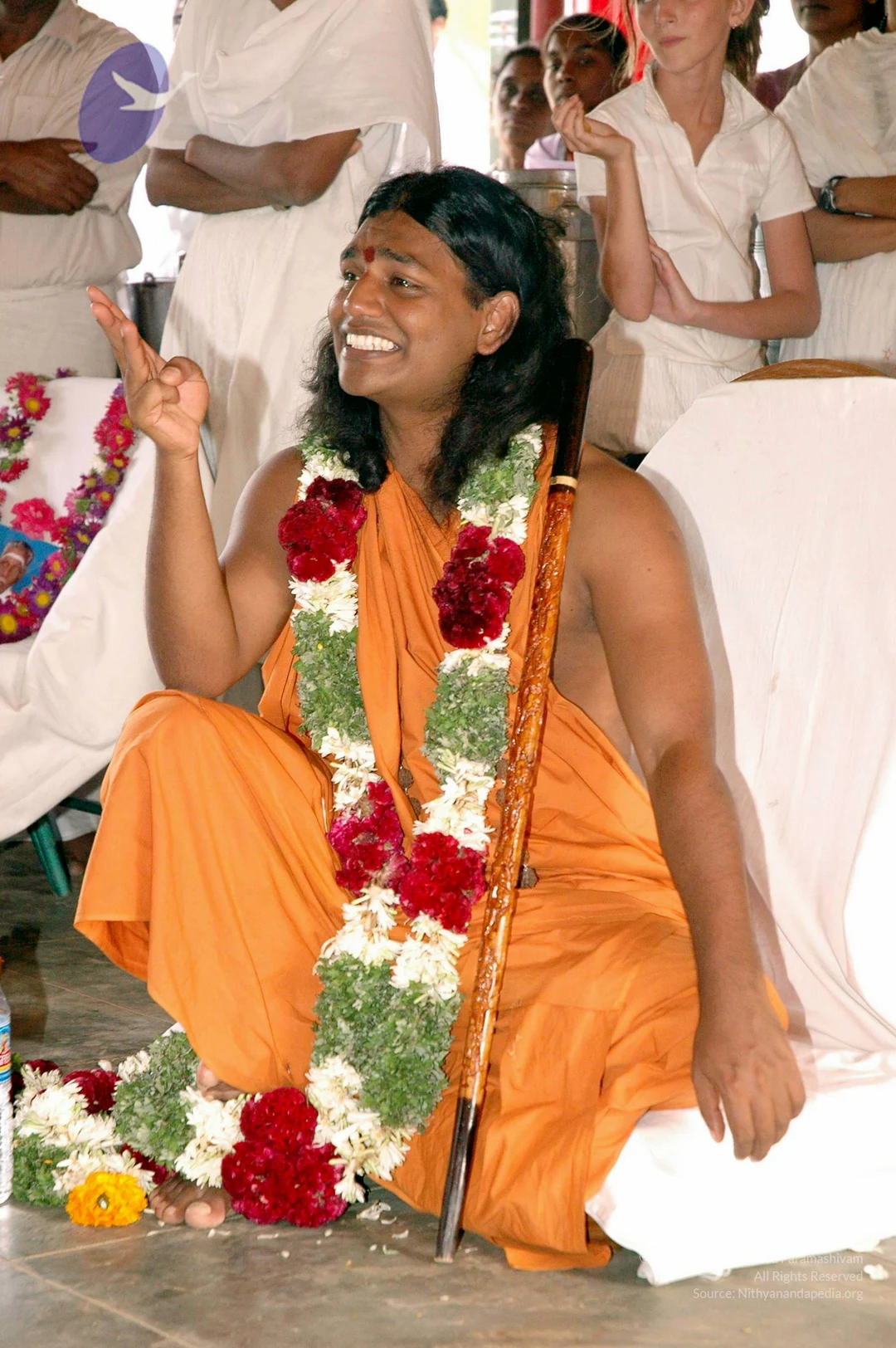
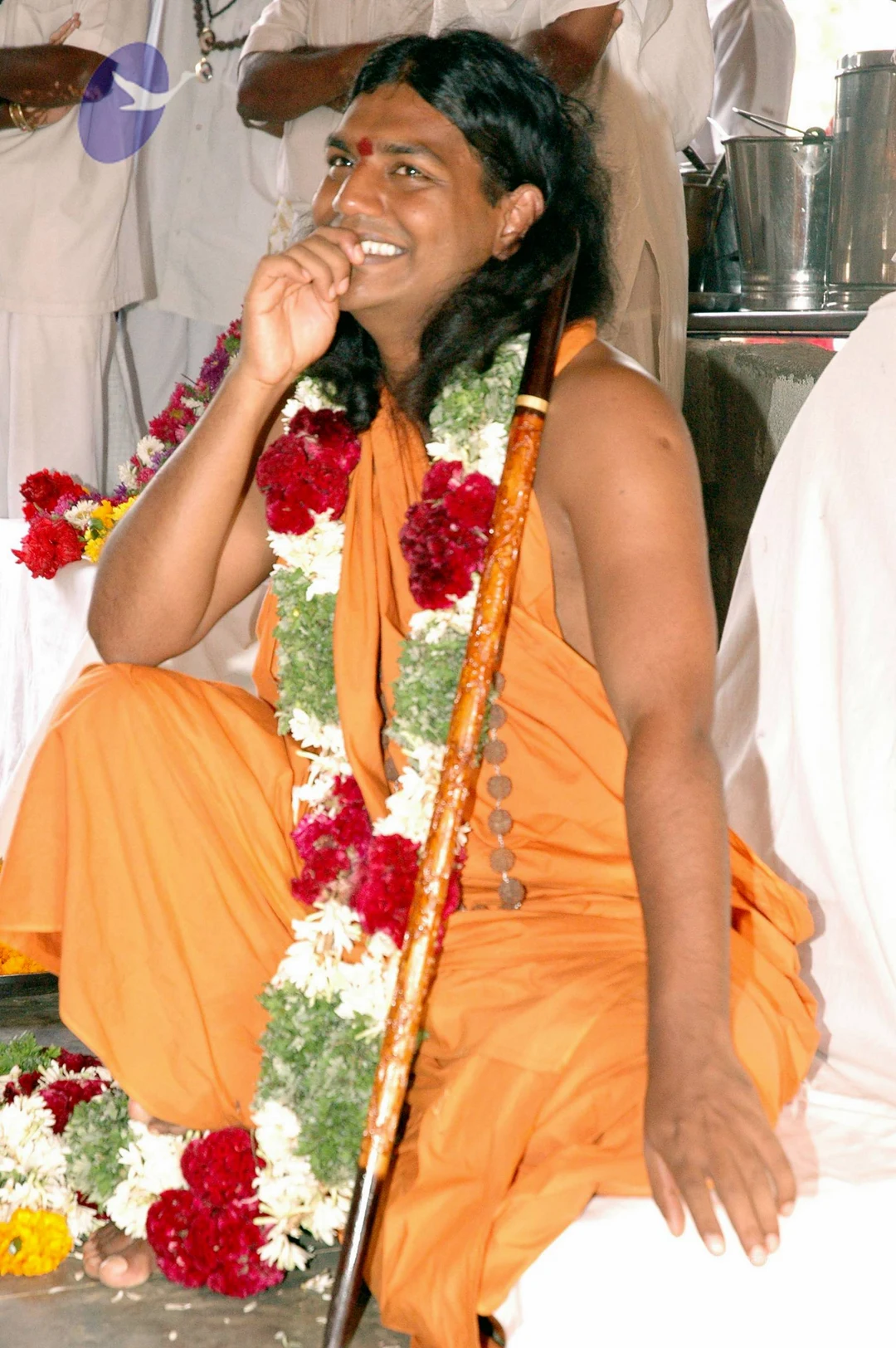
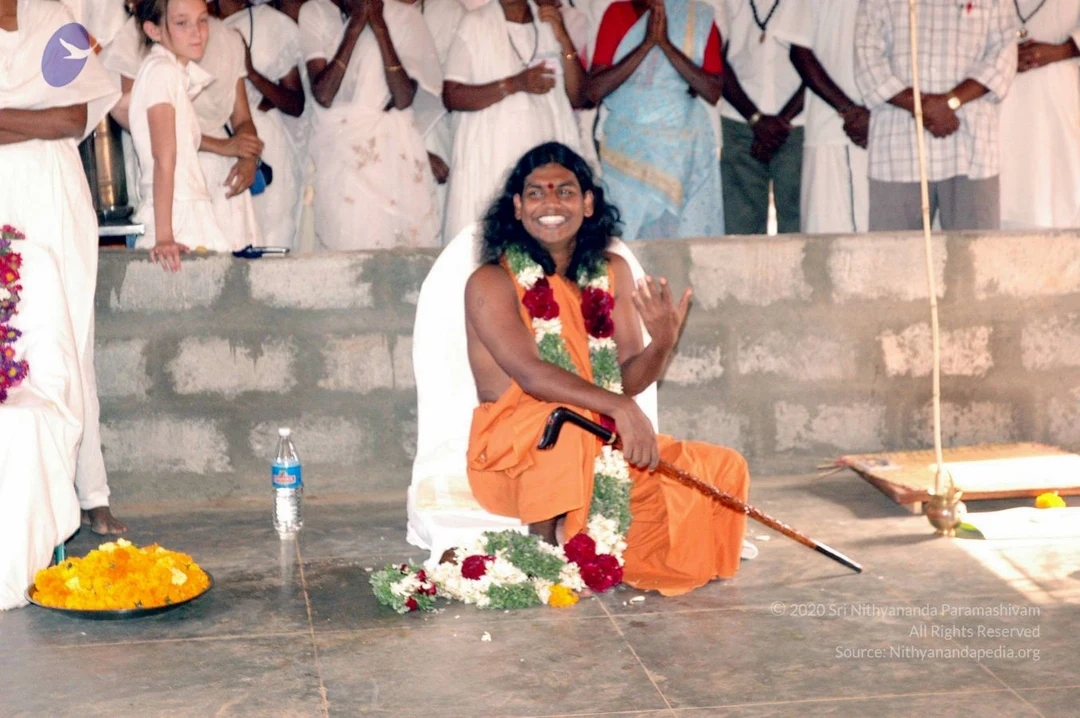
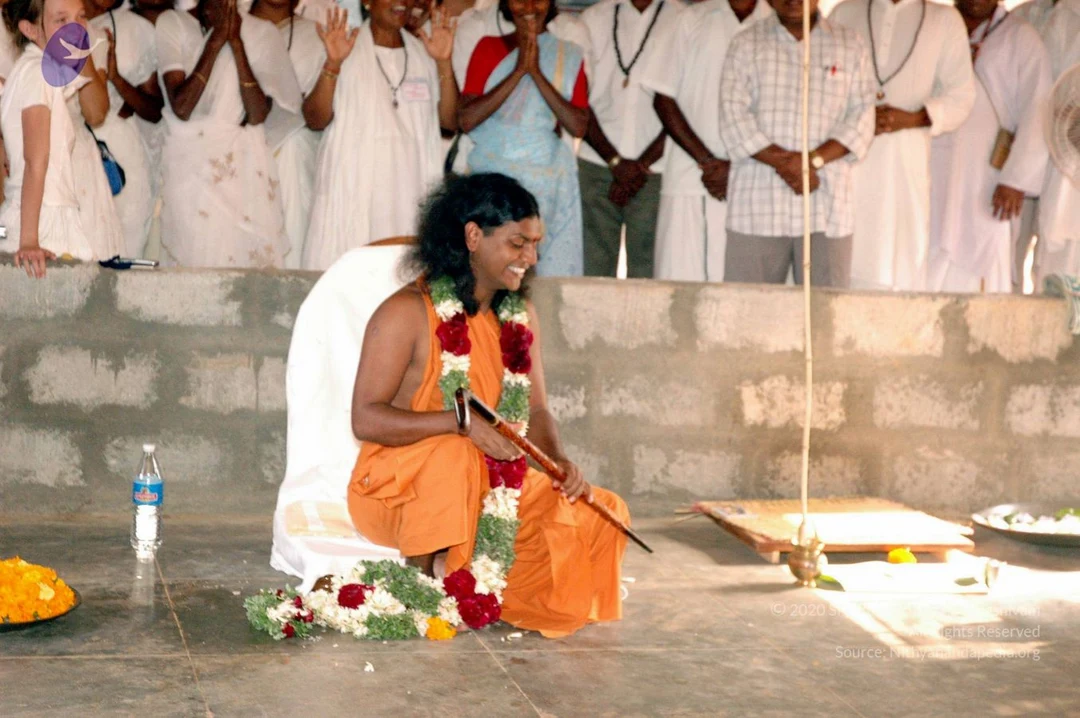
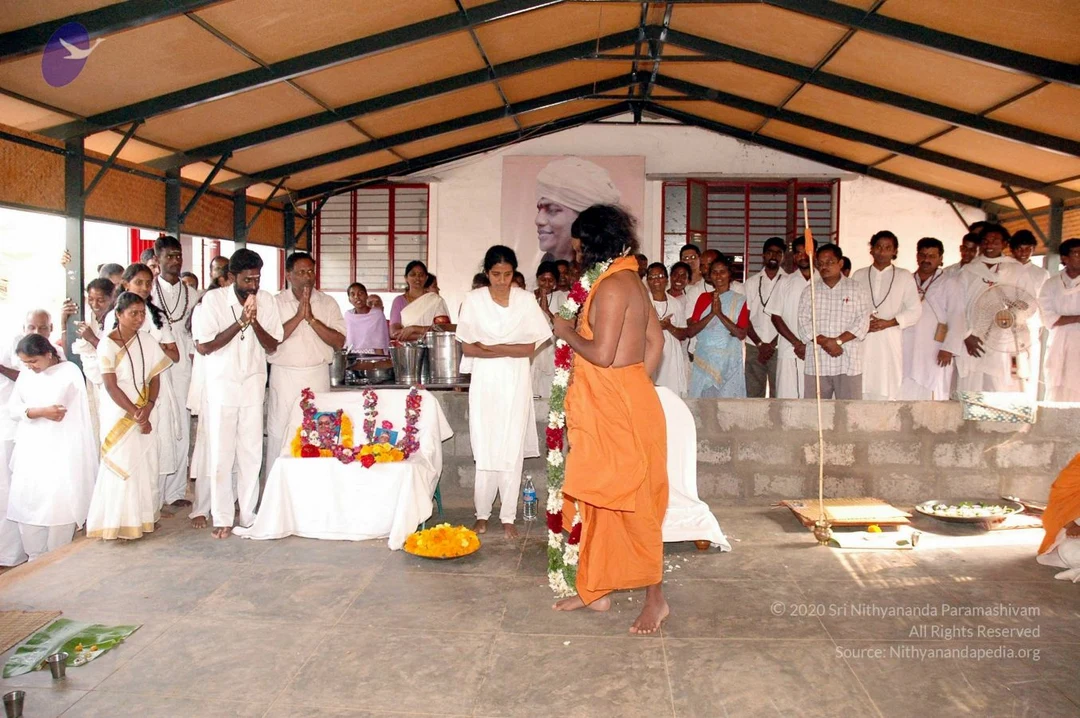
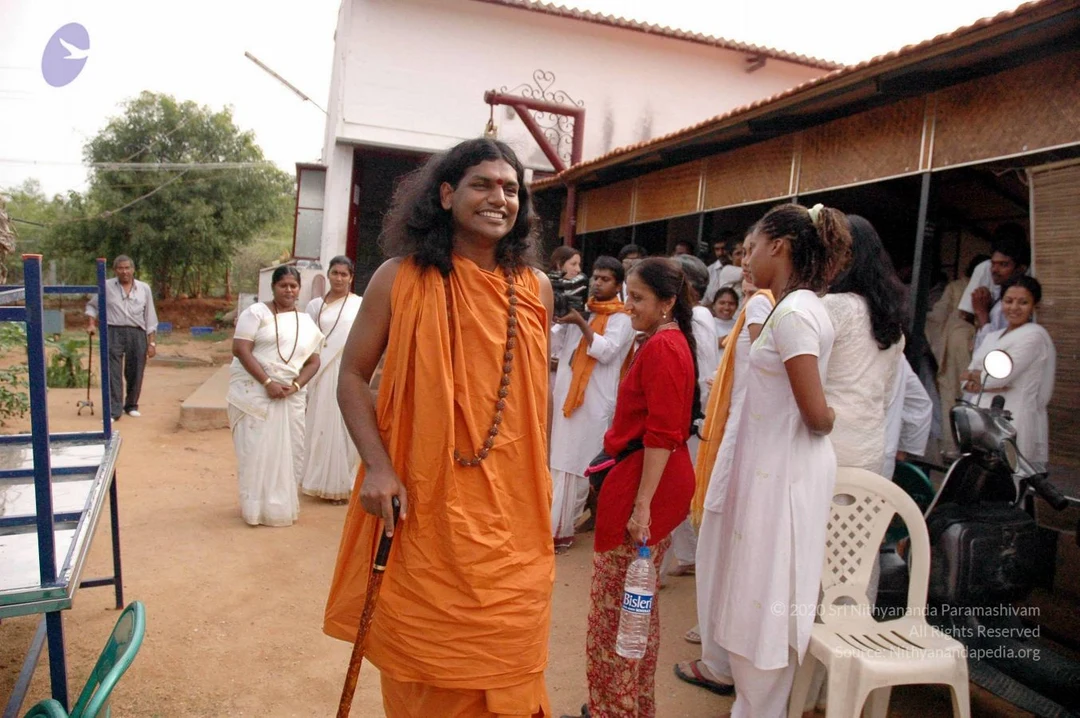
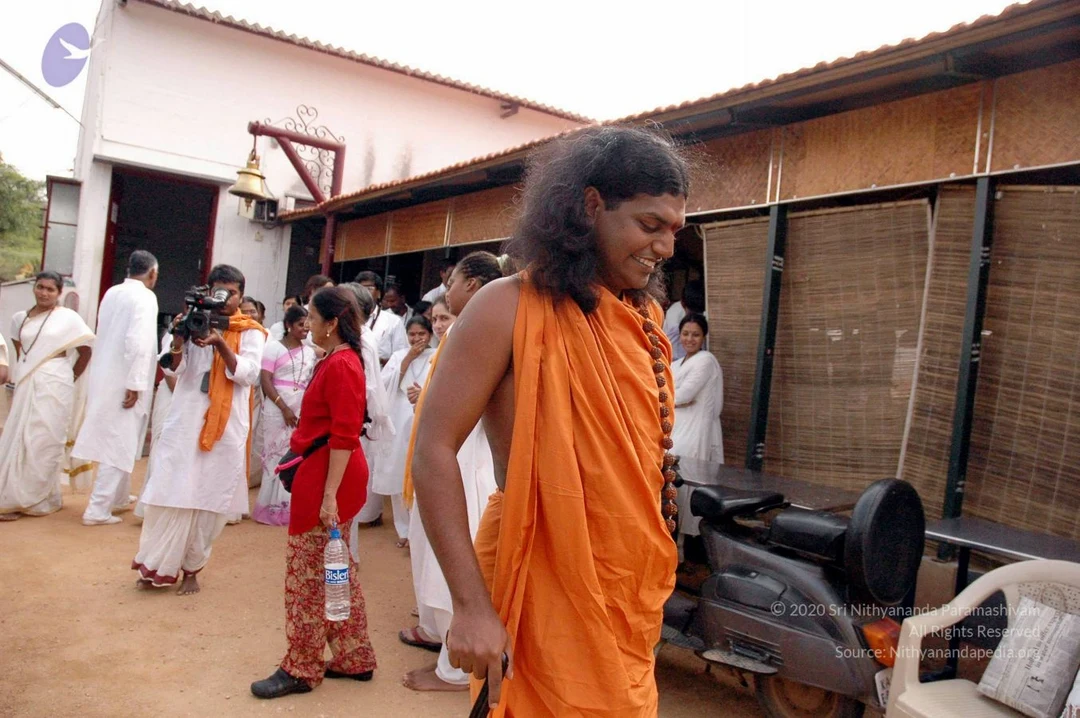
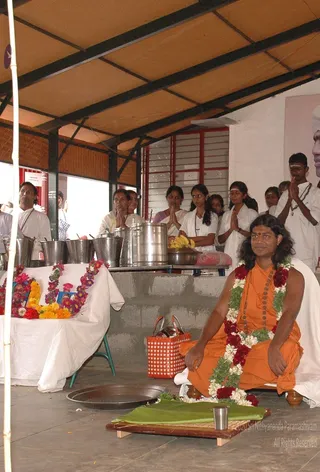
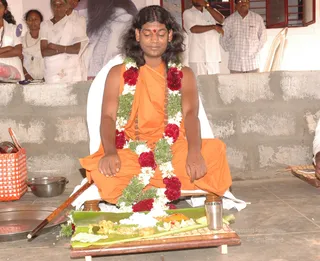
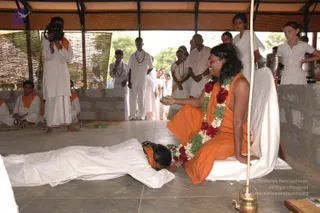
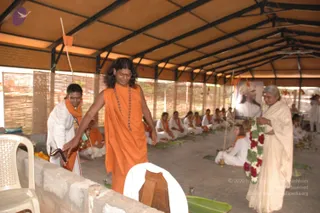
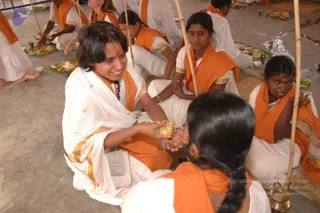
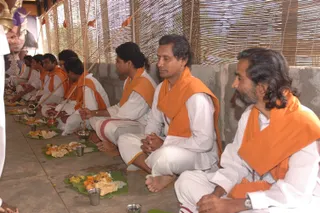
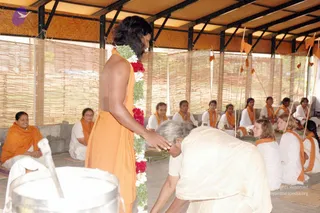
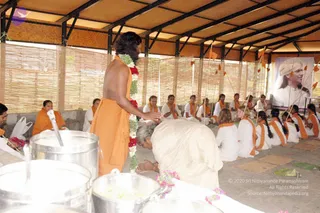
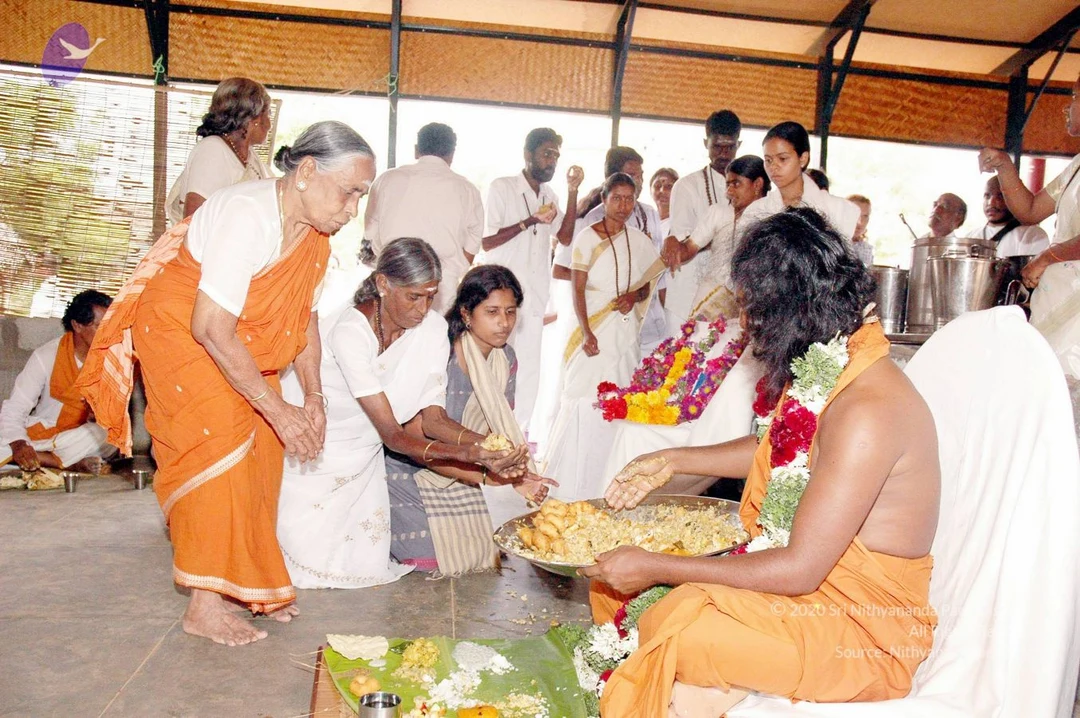
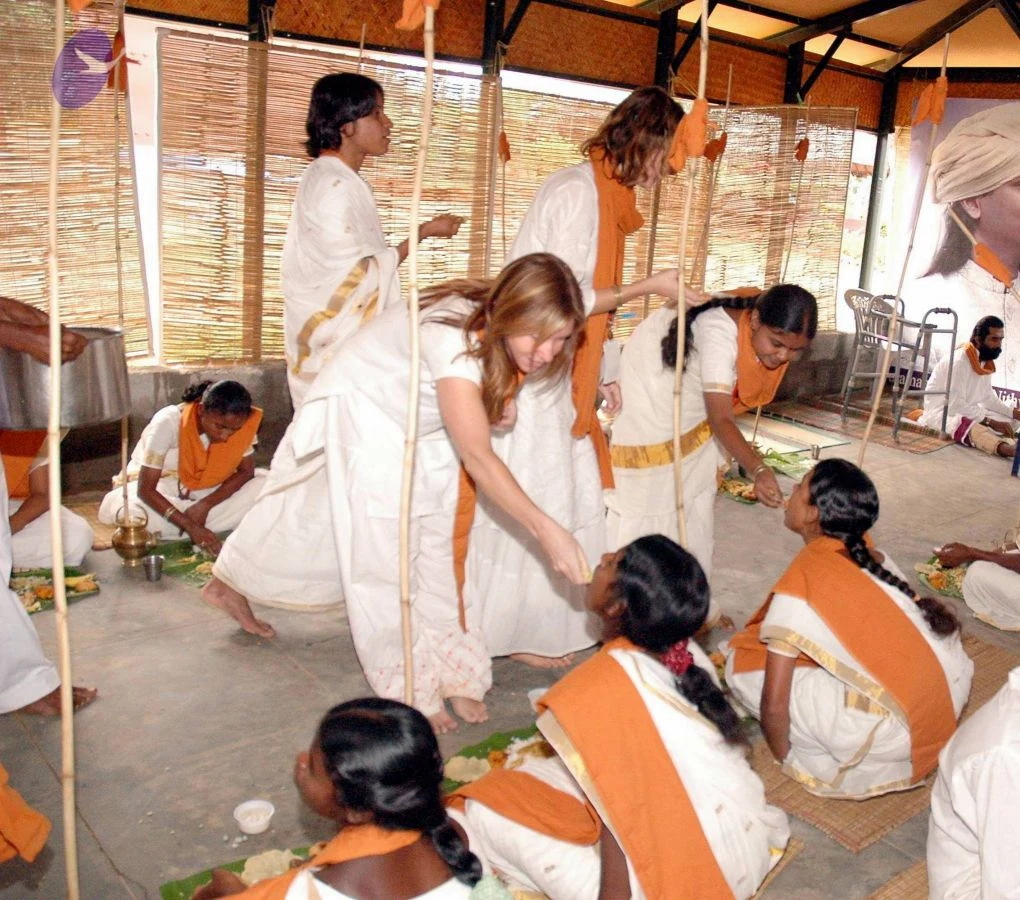
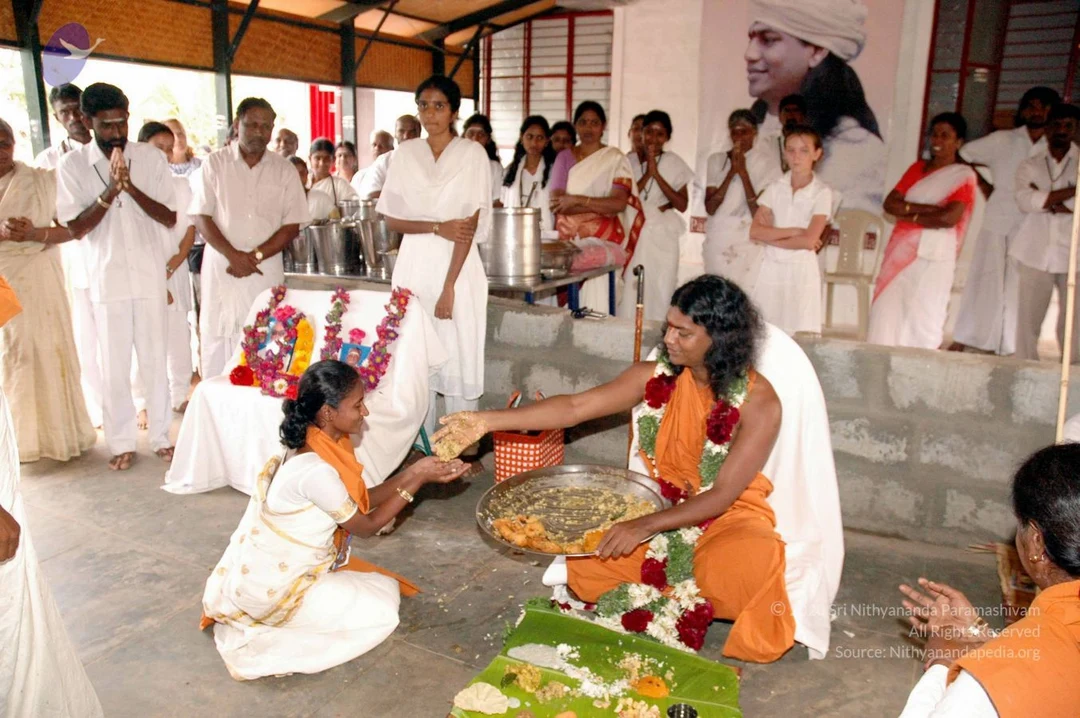
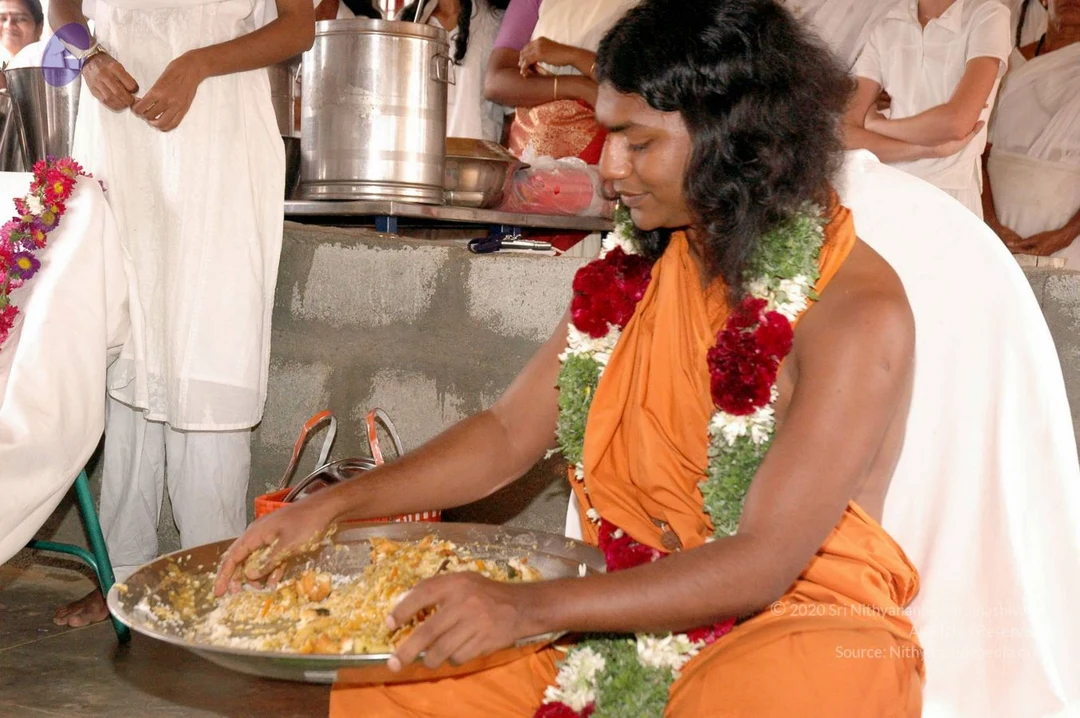
On 12 Oct, two families offered Maheshwara Pooja to Swamiji and ordained Brahmacharis, Brahmacharinis and Vanaprastha Sannyasis. Following Hindu tradition, those who have lost a family member offer this Pooja to those who have consciously taken on a path of higher learning and spirituality in life. These people are believed to be channels of Existence. By offering to them, it is believed that the offering is to Existence itself as a mark of gratitude and respect on behalf of the departed soul.Following are pictures from this event:
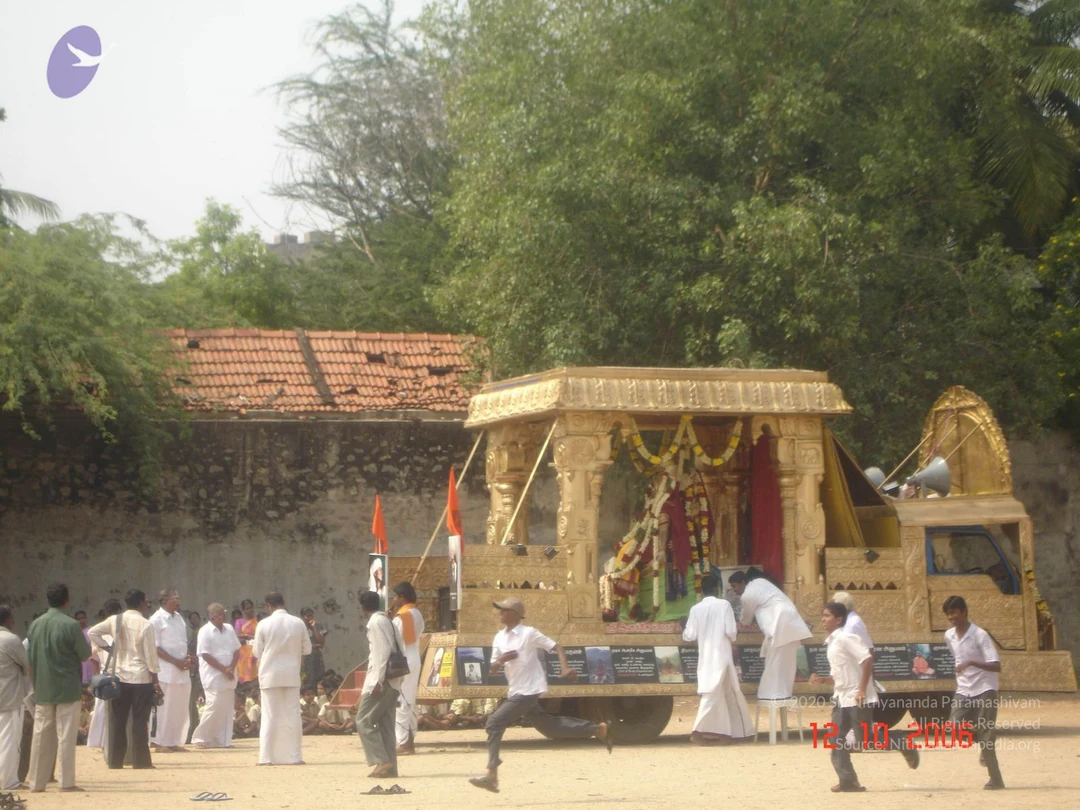
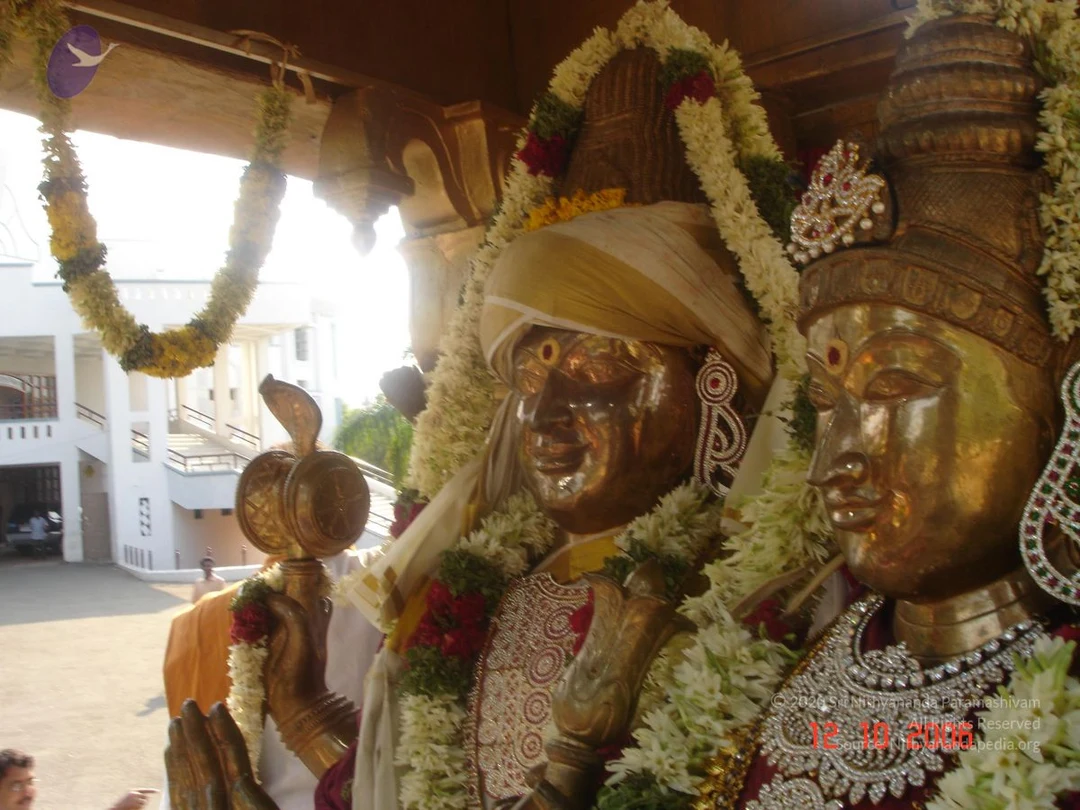
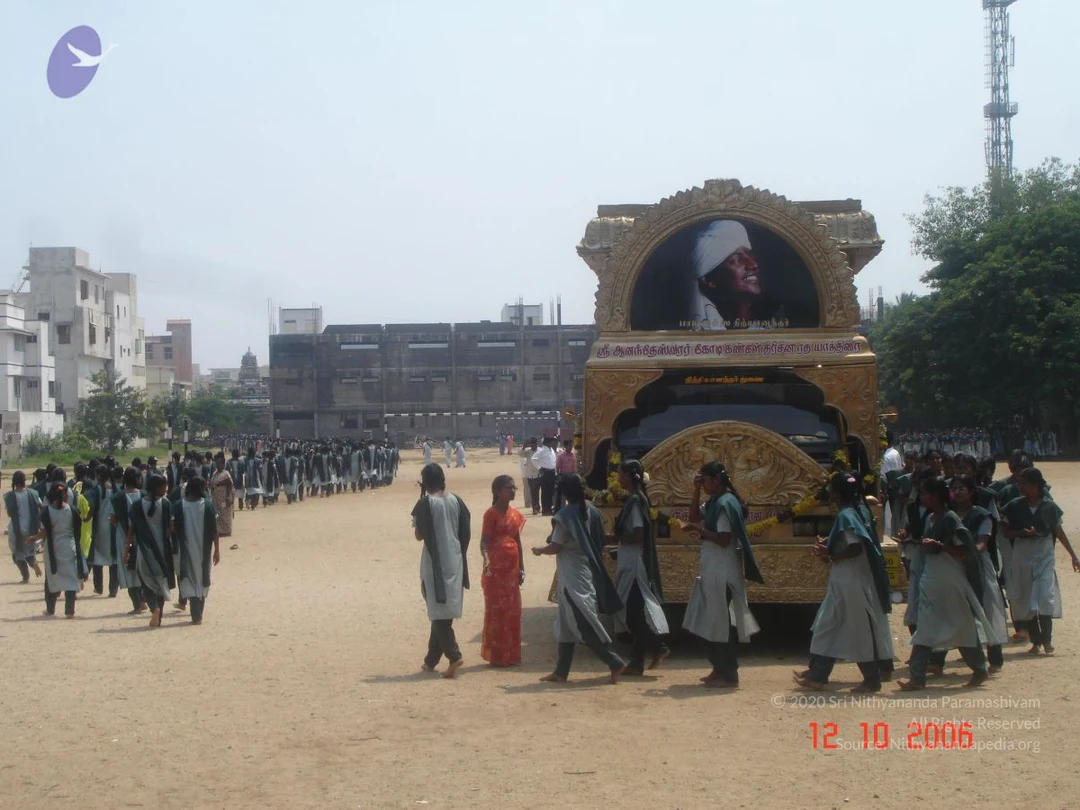
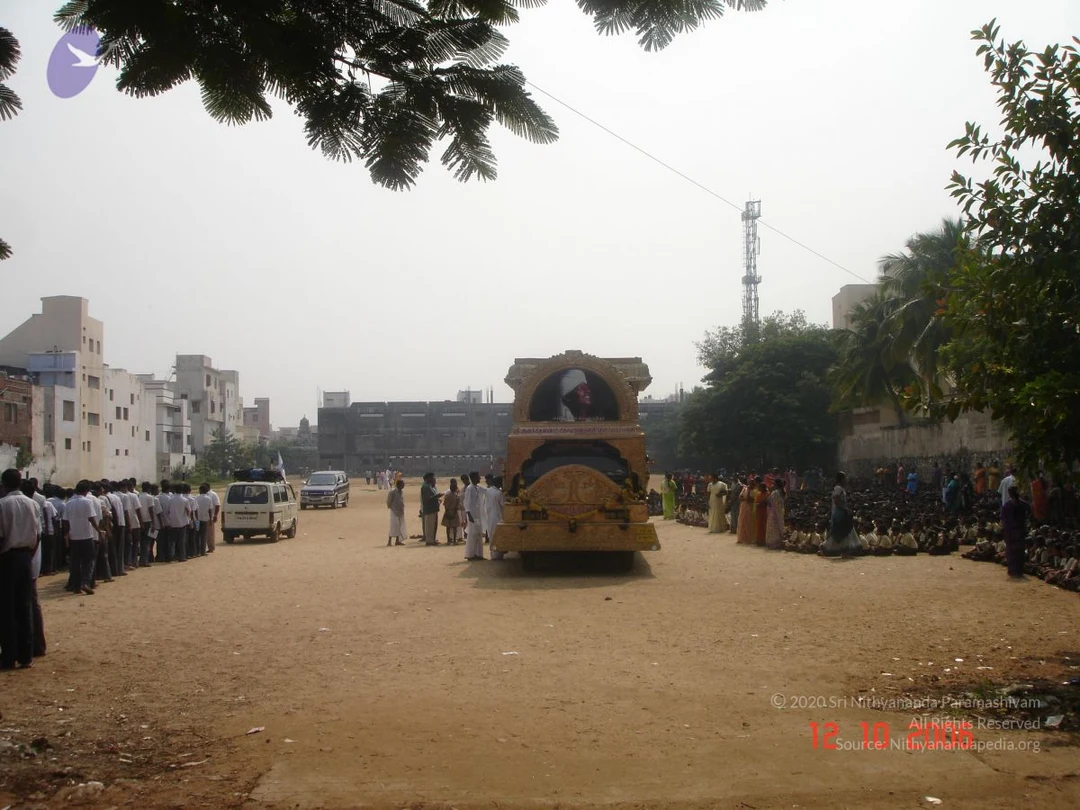
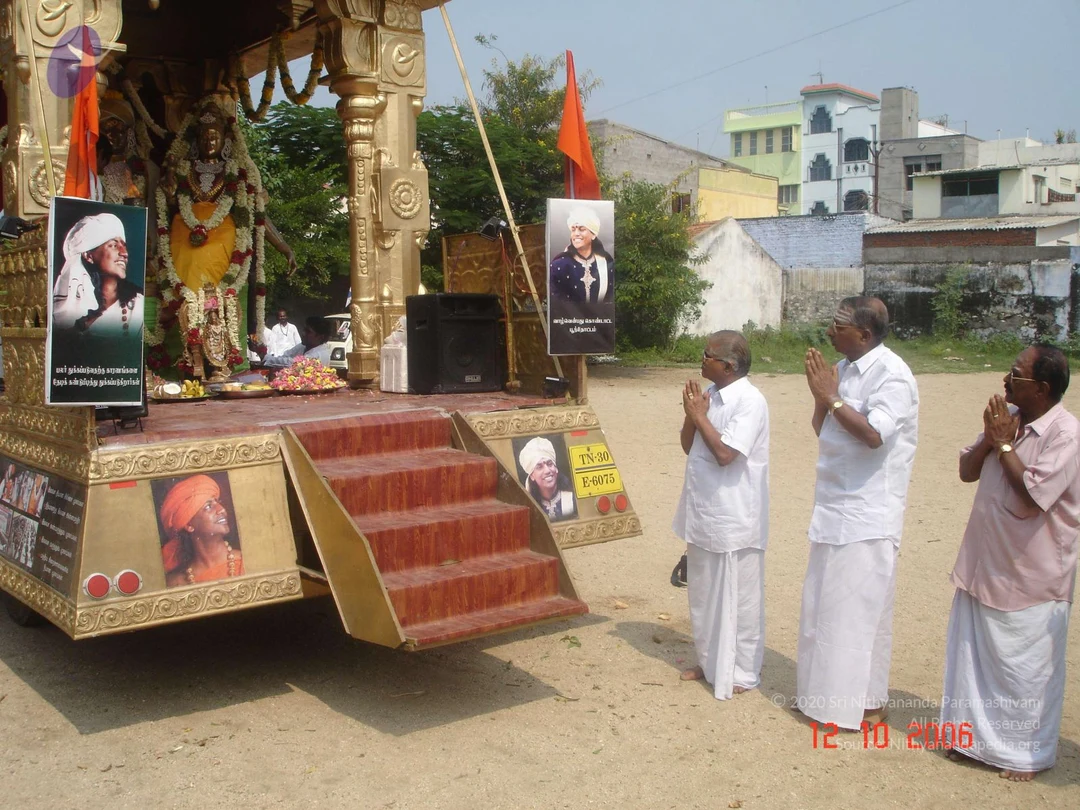
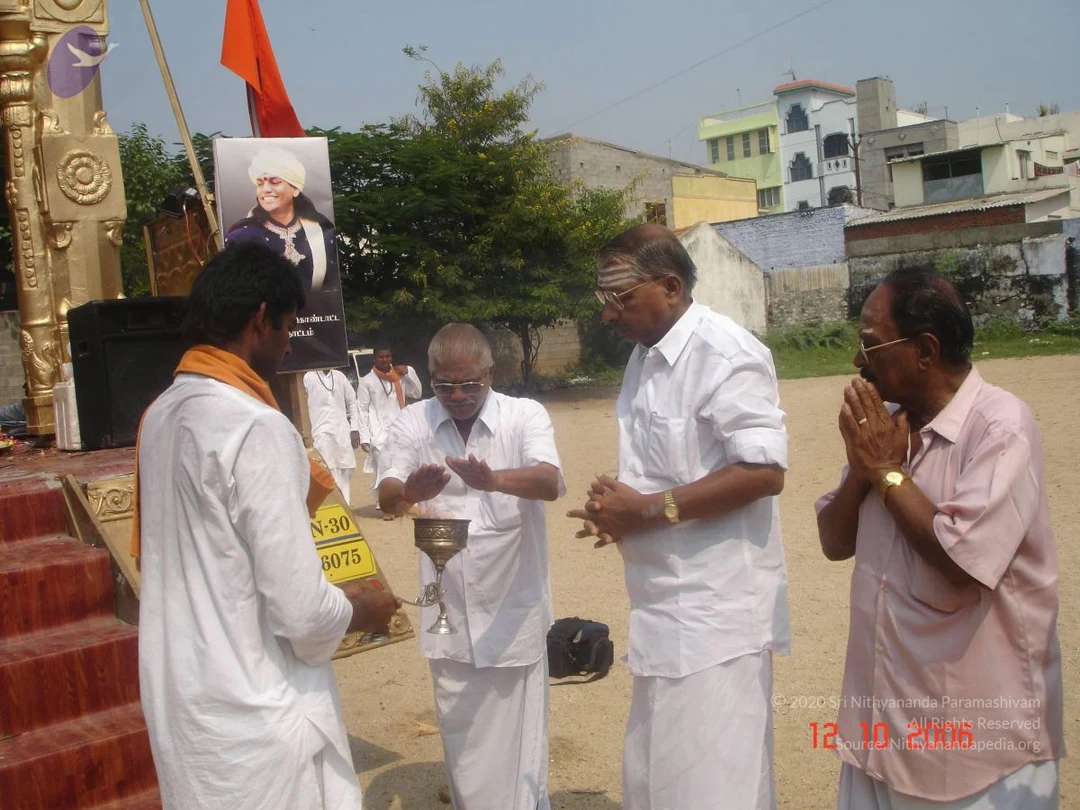
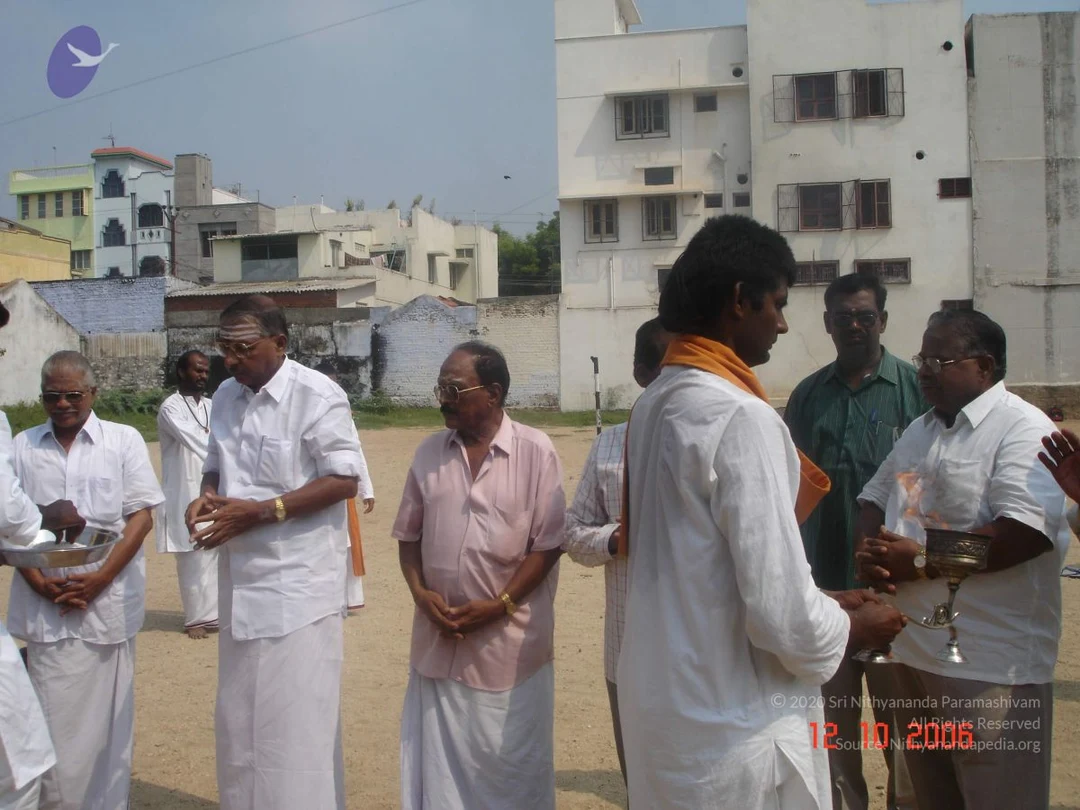
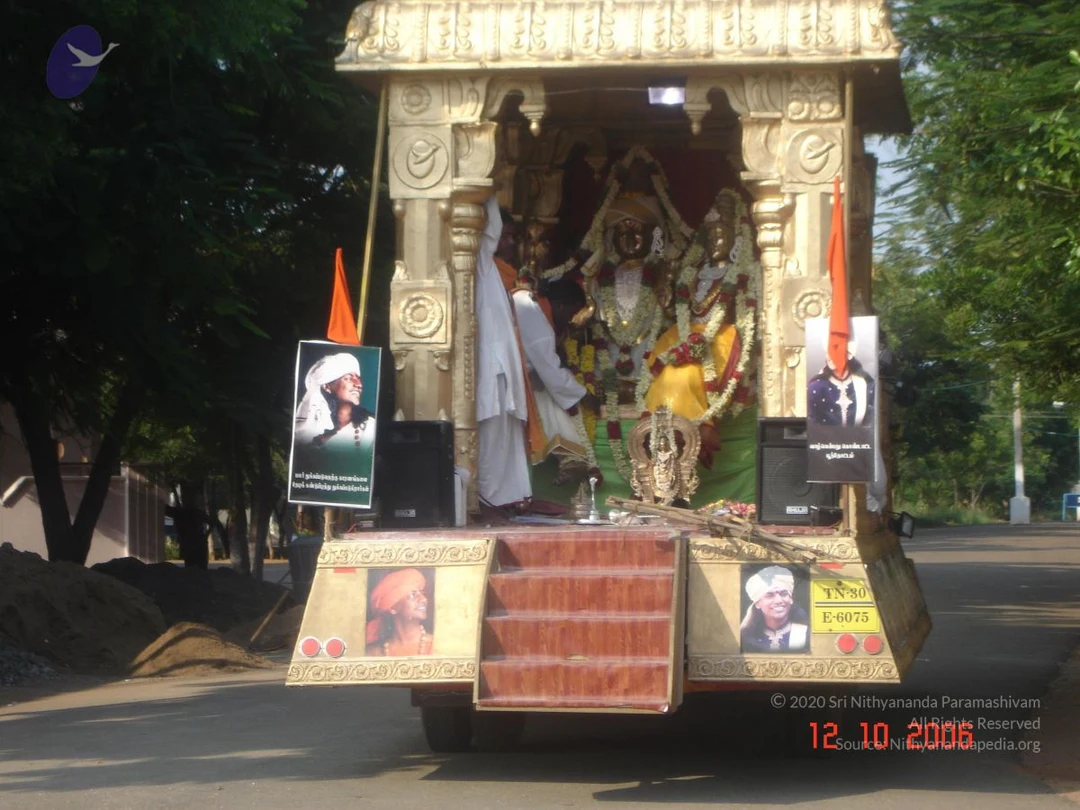
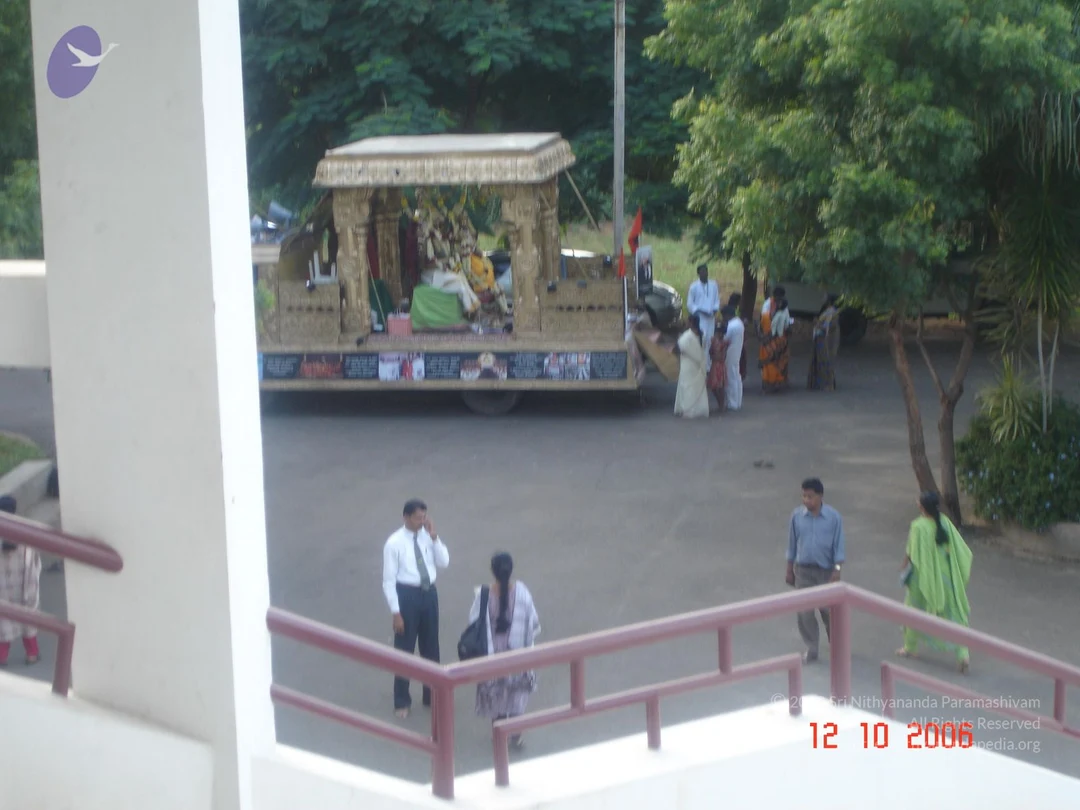
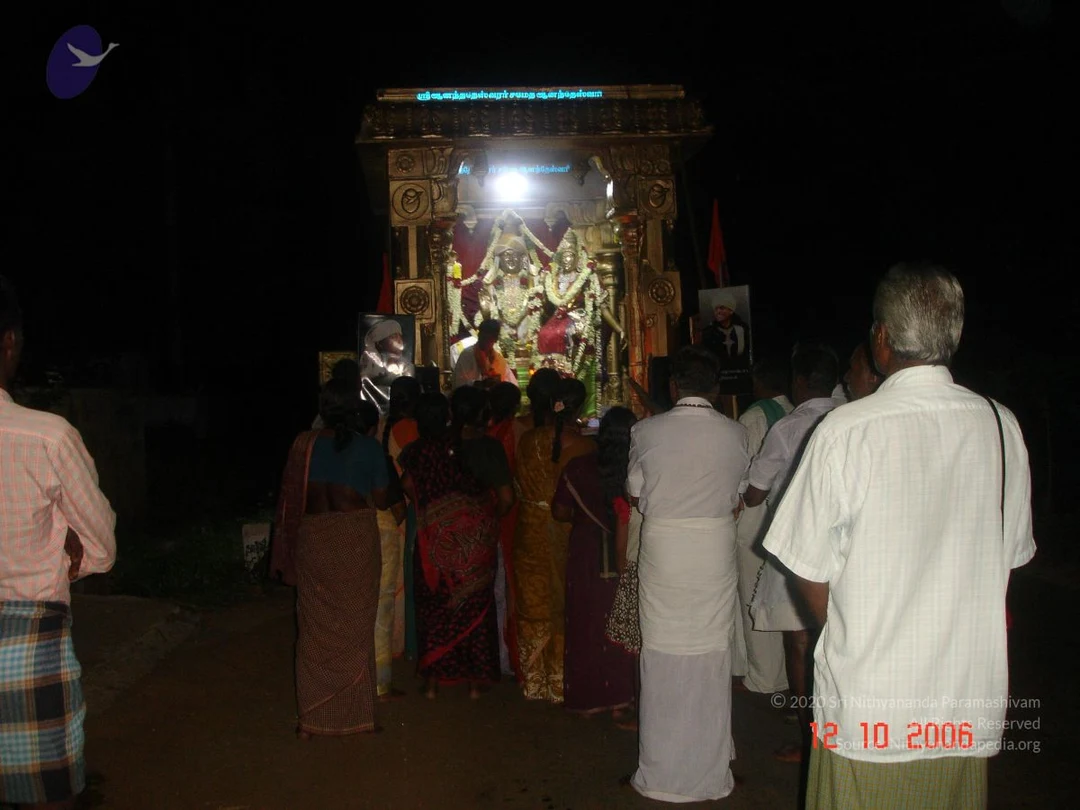
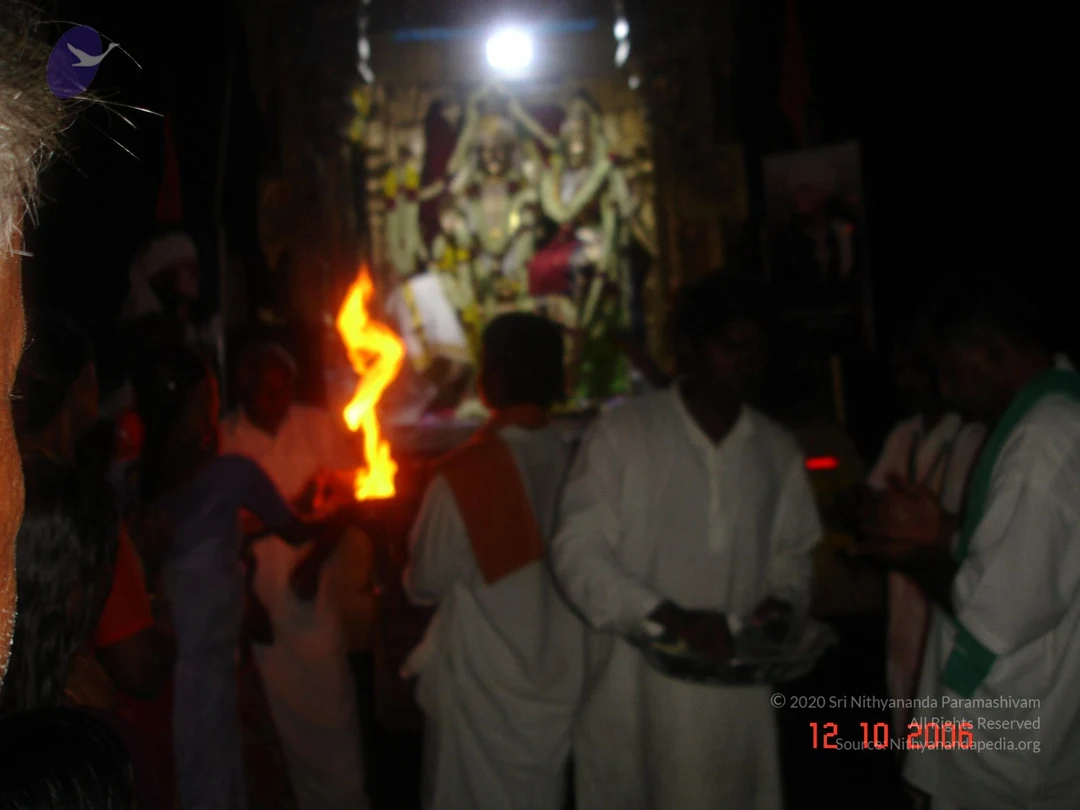
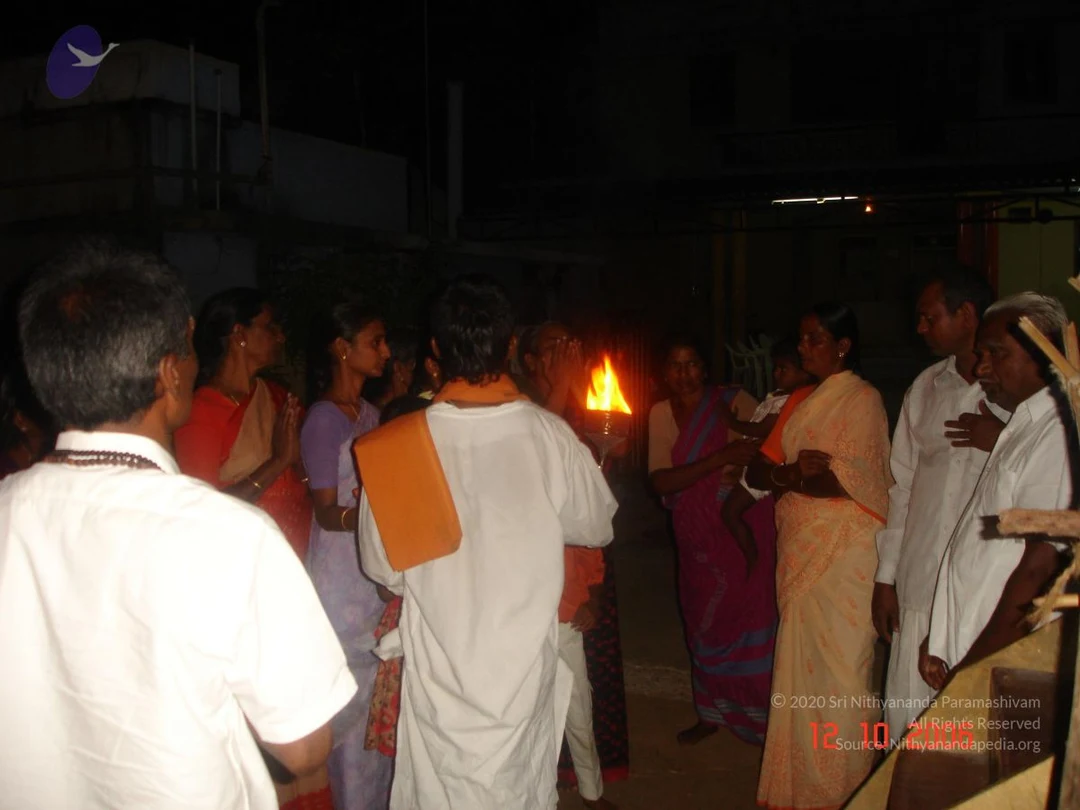
Kodikkan Ratha Yatra : Procession of Deities of Nithyanandeshwara and Nithyanandeshwari at Erode, Tamil Nadu, India
Photos Of The Day:

1-MAHESHWARA-PUJA

more photographs from maheshwara pooja

01-BHOOMI-PUJA-ADIKAILASA

Photos from this day

View all 301 photos

SPH Conducting Maheshwara Puja at AadiKailaasa, Bidadi

20 photosSource gallery
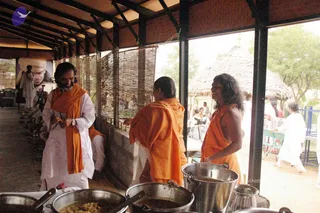
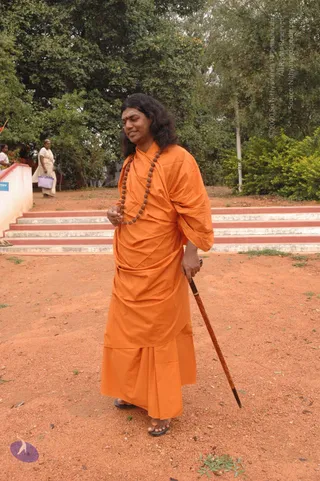
Three people stand in an open-sided thatched pavilion with a bamboo blind and slatted screen at left. At left a smiling bearded man wears a white kurta under an orange shawl and a wristwatch. In the centre a figure seen from behind wears an orange wrap over the head and shoulders. At right a long-haired man in an orange shawl and beaded necklace smiles toward them. Behind them, a few people in white and light clothing sit or stand beneath other thatched huts, and a microphone and a labelled box sit on a table in the foreground.Outdoor-style pavilion with a corrugated roof where a seated priest in saffron robes and a flower garland performs a puja, sitting cross-legged on a low wooden platform with a wooden walking staff beside him. A second seated figure in white with an orange shawl joins in folded-hand prayer. Behind them a row of standing devotees in white shirts and dhotis, one woman in a blue sari, press palms together in namaskar. At left stands a white-draped table with flower garlands, metal vessels and a framed photograph, and a large portrait on the back wall shows a smiling man in a white turban. A devotee in orange garments sits in the foreground at right, seen from behind. Metal bowls and brass items are on the floor.A photograph of a man seated cross-legged on a low wooden stool in a plain concrete hall. He wears an orange-saffron garment, a rudraksha mala hanging on his chest, a red bindi on his forehead, and a thick garland of red and white flowers with green leaves. His long dark hair falls past his shoulders and he smiles calmly. Behind him, several women and girls in white saris and white clothes stand with palms pressed together in anjali. Their hands are raised in prayer while one holds a bunch of bananas. Before the seated man lies a green banana leaf with a small steel tumbler, and a red-and-white woven bag and a steel vessel sit nearby. Probable Swamiji (probable) with long swept-back hair, saffron clothing and rudraksha mala cues, seated as the central figure receiving the offering.A seated man in an orange saffron robe sits cross-legged on a low wooden platform in a covered open-sided pavilion, wearing a red and white flower garland and a rudraksha mala, with a red bindi on his forehead, long dark hair falling past his shoulders, and a steel tumbler and banana-leaf offering on a green cloth before him. Behind him, about a dozen people in white clothes stand with palms pressed together in namaskar, some with tilak marks, while steel vessels, bananas and a table draped in white hold marigold and rose garlands and small framed photographs. The man is a person with distinctive saffron robes, long swept hair and rudraksha mala, presiding over a puja; the scene shows a maheshwara puja setting. A large portrait is visible on the right wall.A seated figure in an orange saffron robe with long swept-back dark hair and a red tilak on the forehead sits with eyes closed on a white-covered seat, wearing a garland of red roses, white flowers and green leaves and a rudraksha mala. In front of him is a banana leaf meal with rice, sides and fruit on a wooden tray, with a steel tumbler and a small brass bowl nearby. Behind, several people in white clothes stand watching against a plain concrete wall. The appearance matches the Swamiji (probable) candidate through the long hair, saffron clothing and rudraksha cues, and he is physically present at the Maheshwara Puja at Aadi Kailaasa.A photograph of a seated man in orange saffron robes at a puja, wearing a long garland of red flowers, white blossoms and green leaves, with a red tilak on his forehead and long dark hair. He sits on a low wooden seat with a white cloth, hands resting on his knees, before a banana leaf laid with rice, vegetables, fruit and a steel tumbler. A wooden staff lies beside him, and a stainless steel dish sits at left. Behind him is a grey concrete wall with a poster of a woman in white and a red bar. A second person in white sits at the right edge. The orange-robed man has distinctive long hair, saffron clothing and rudraksha beads, so he is a probable Swamiji candidate; the photo is in person.

Kodikkan Ratha Yatra : Procession of Deities of Nithyanandeshwara and Nithyanandeshwari at Erode, Tamil Nadu, India
75 photosSource gallery
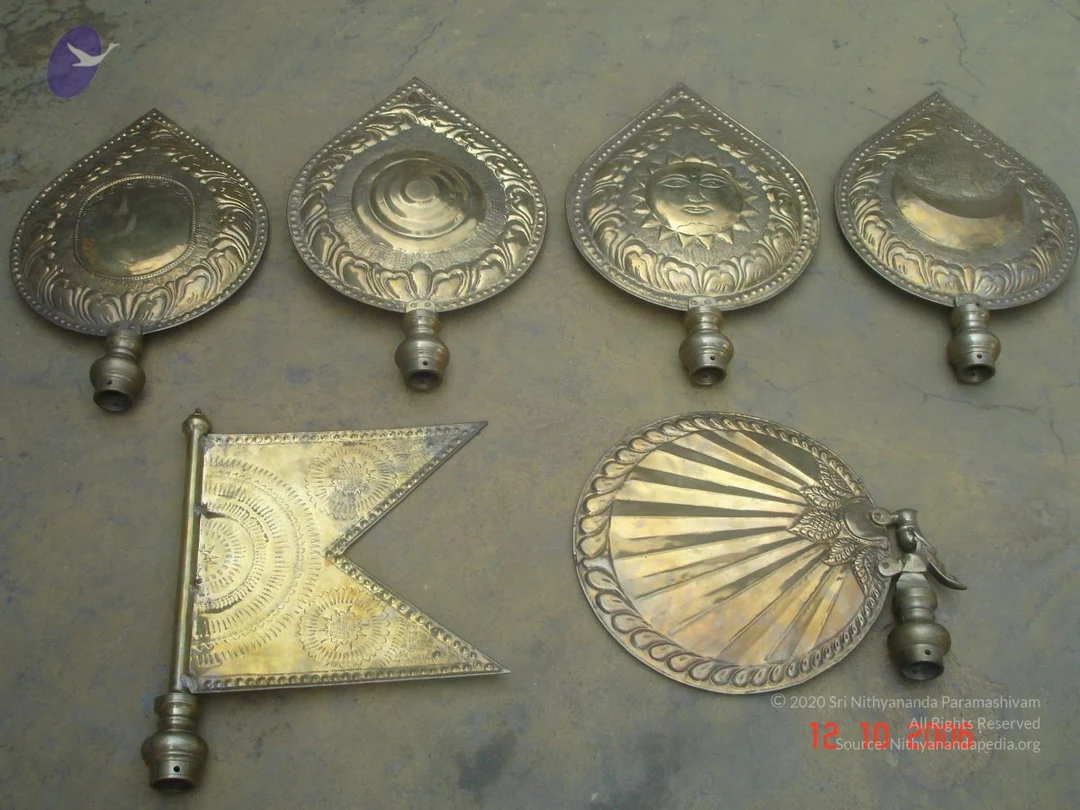
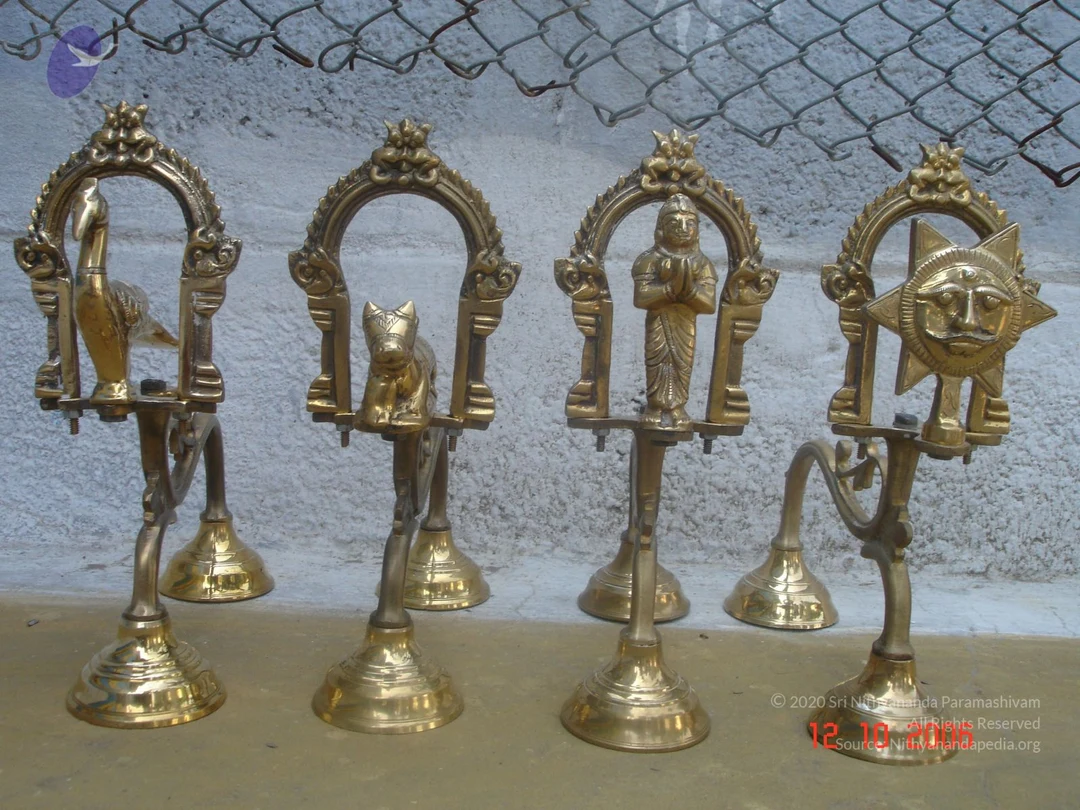
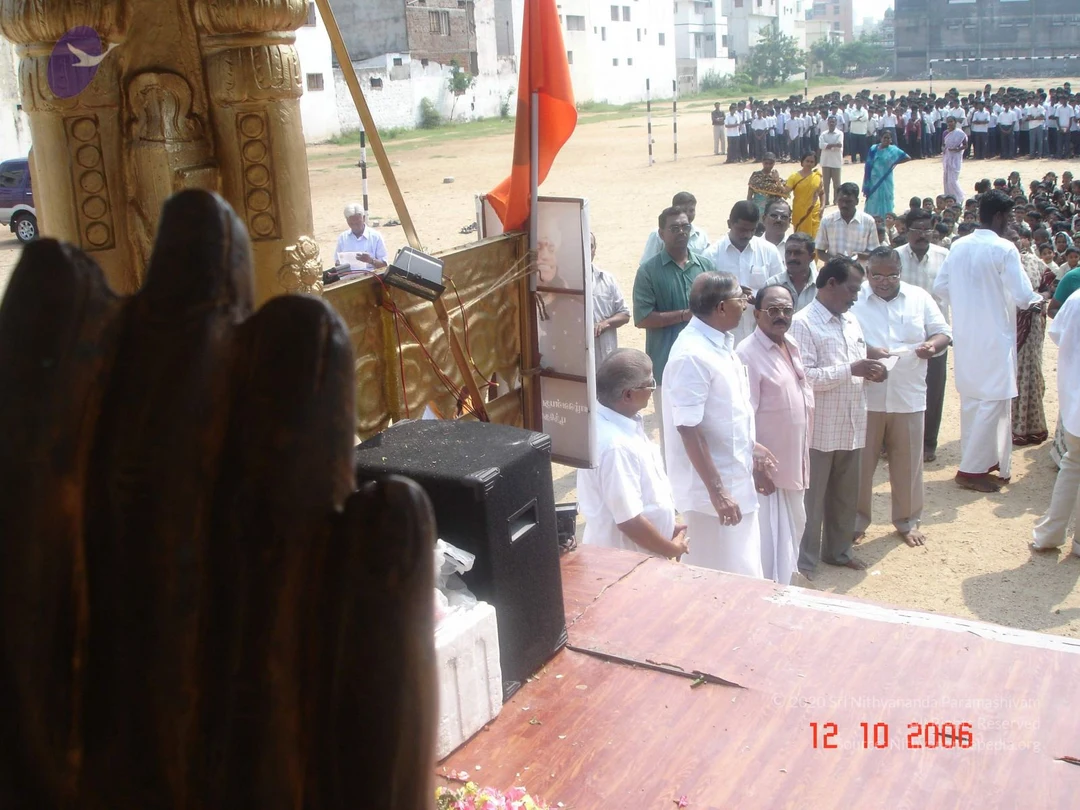
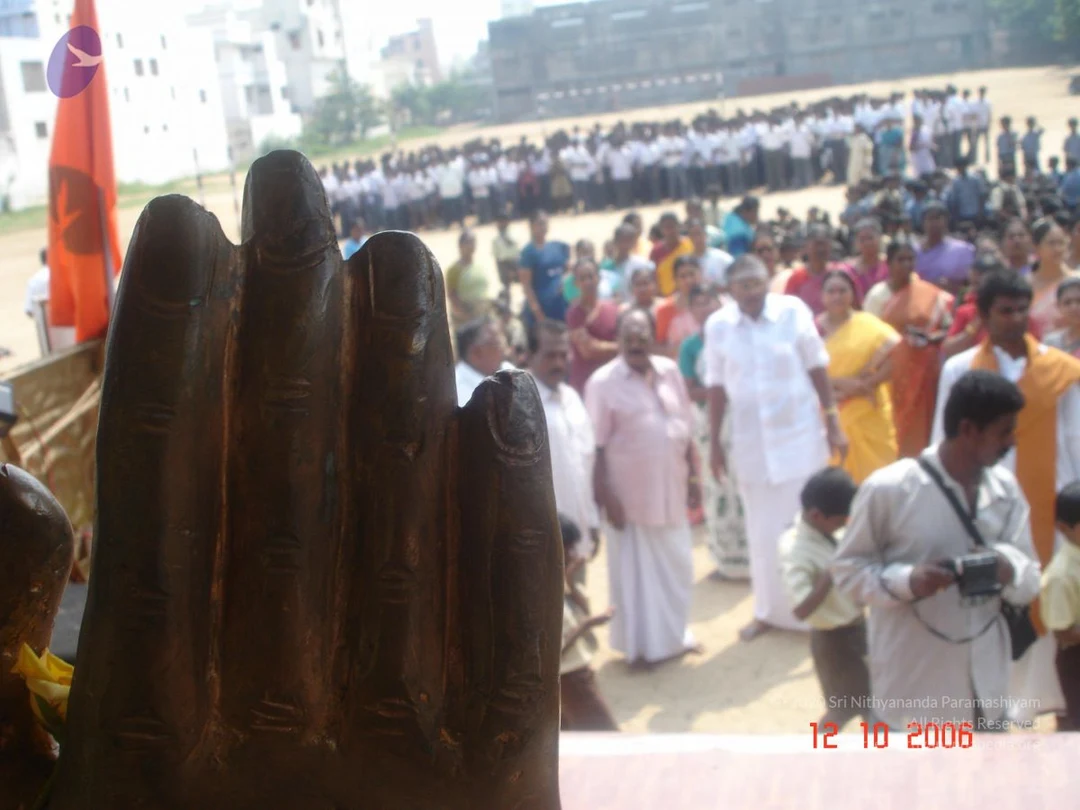
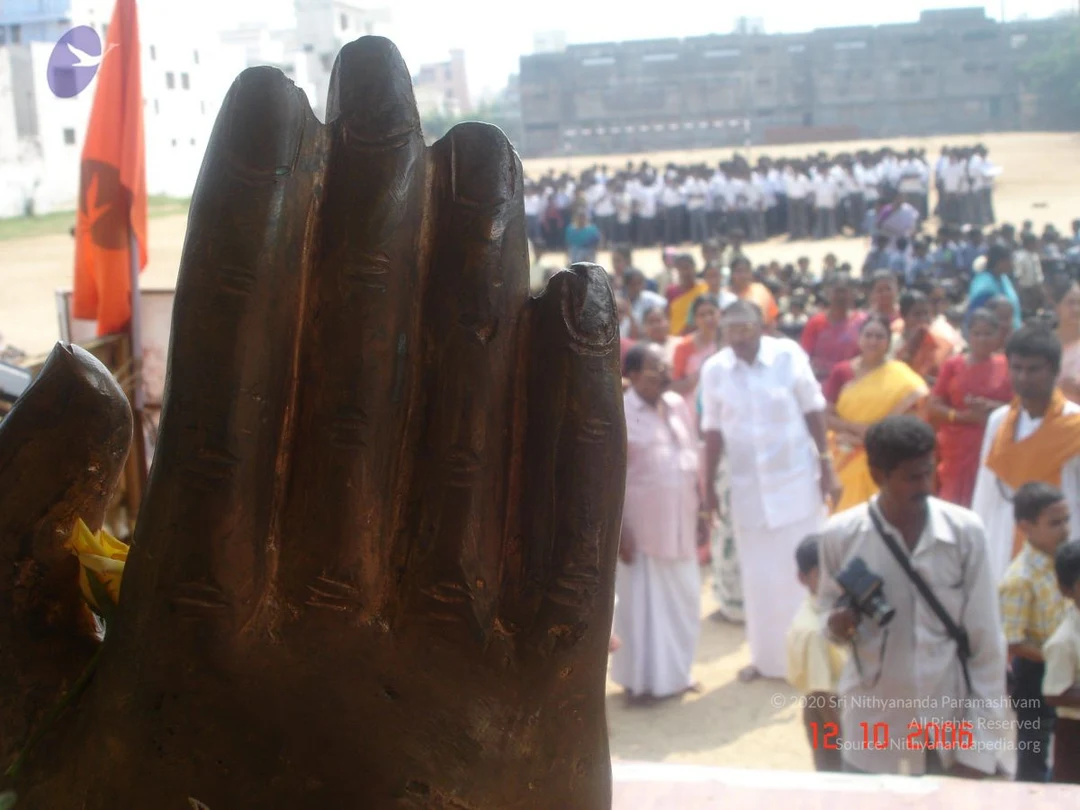
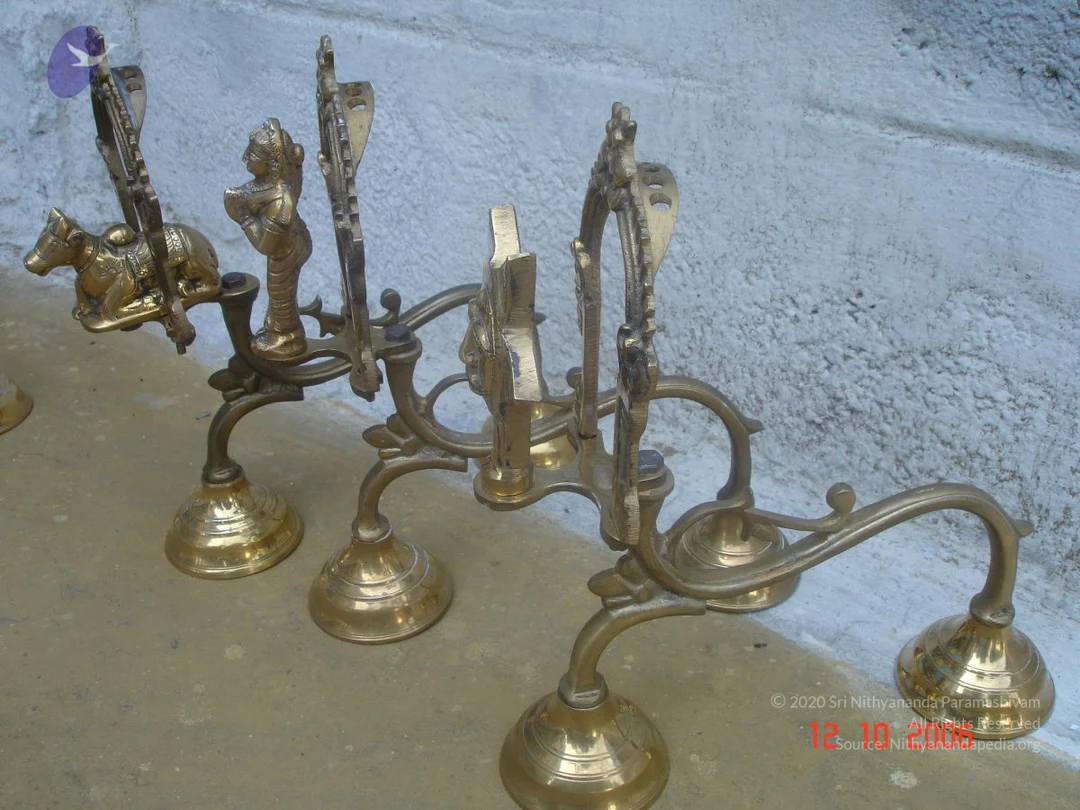
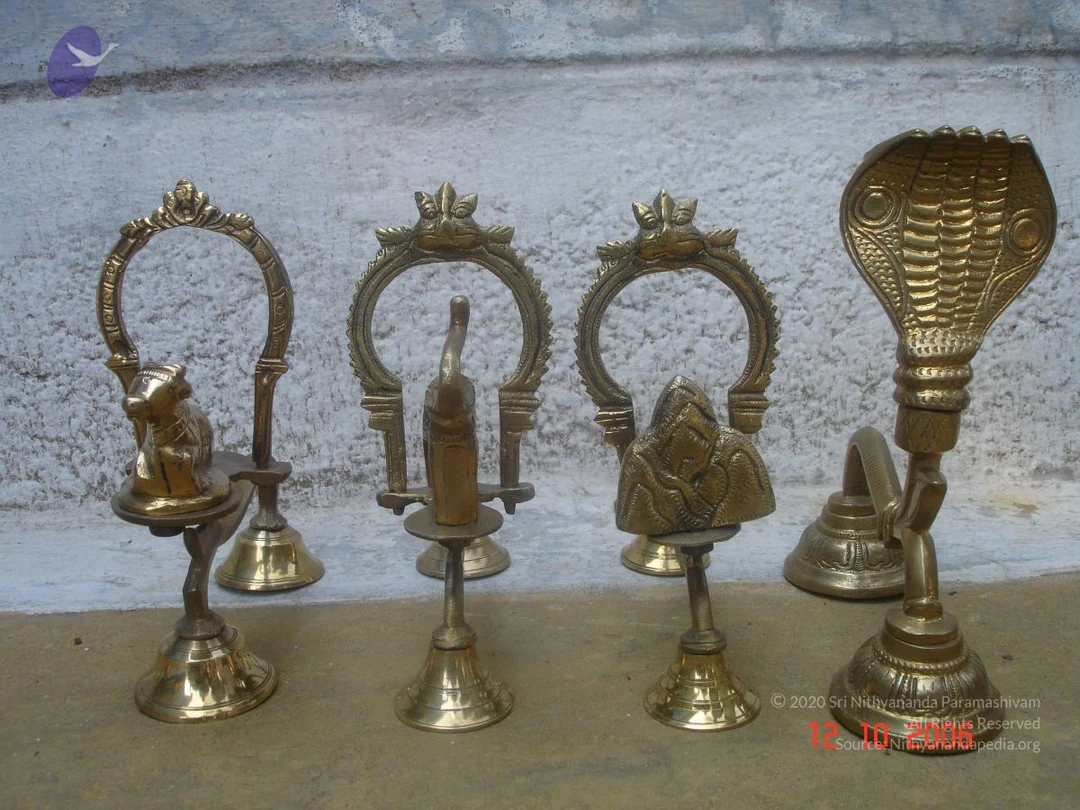
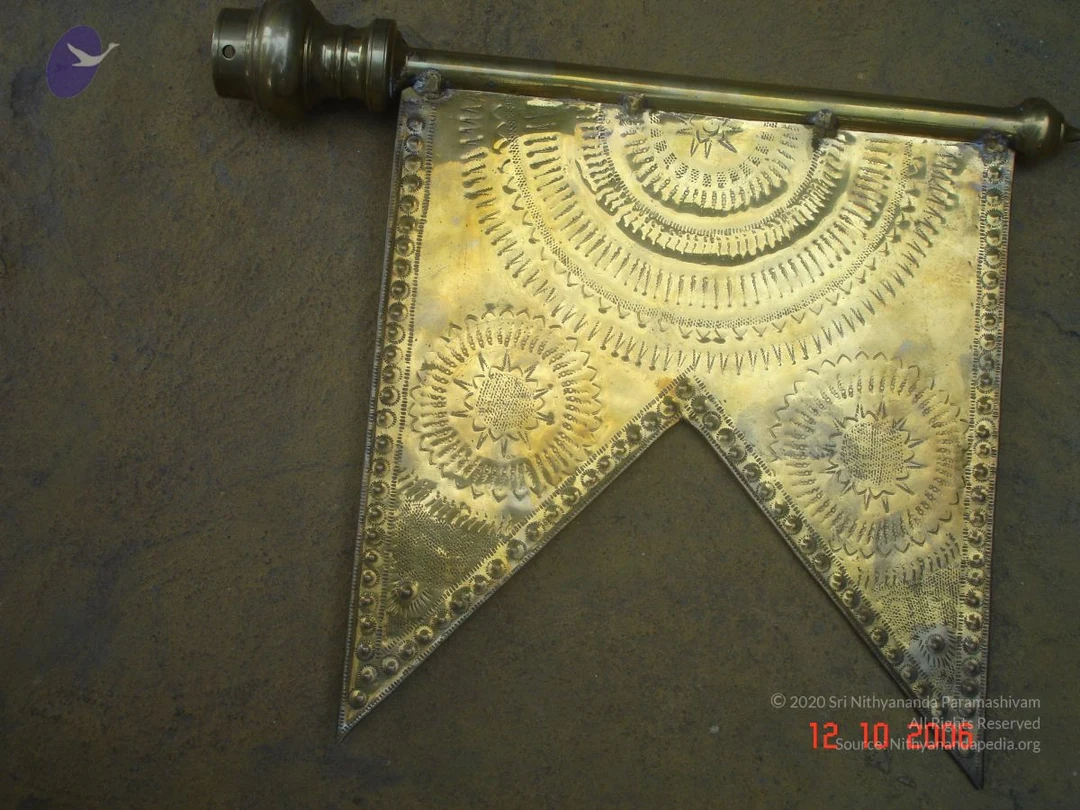
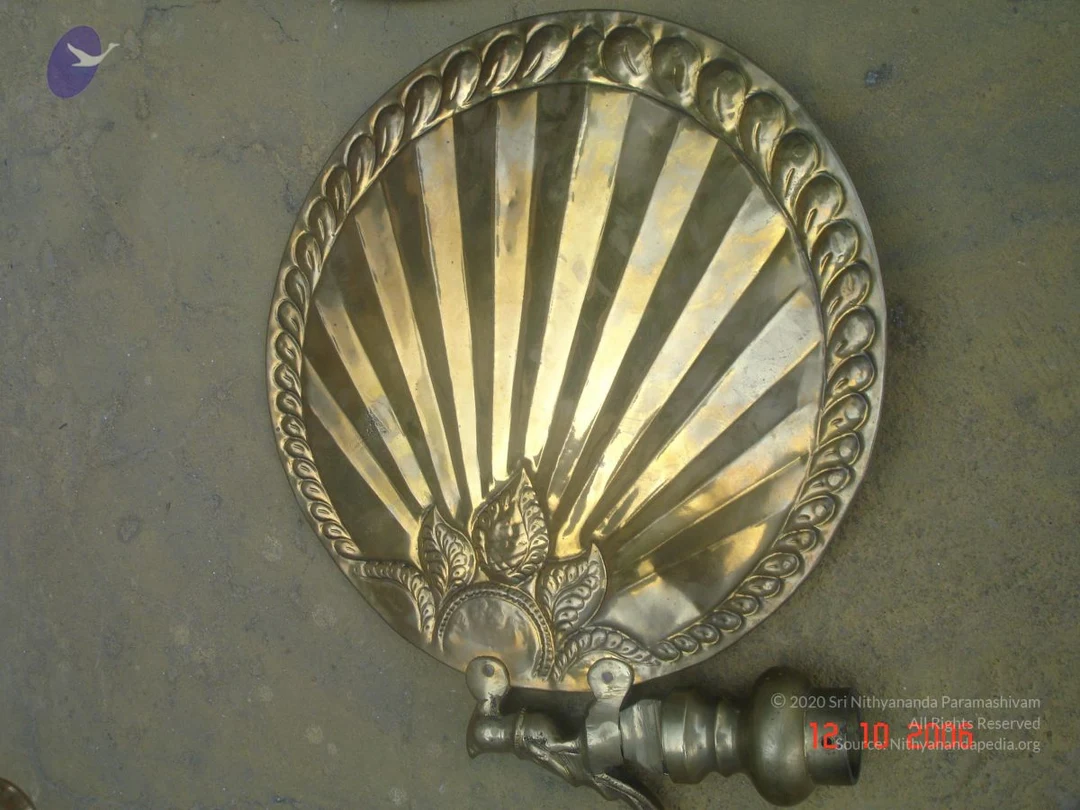
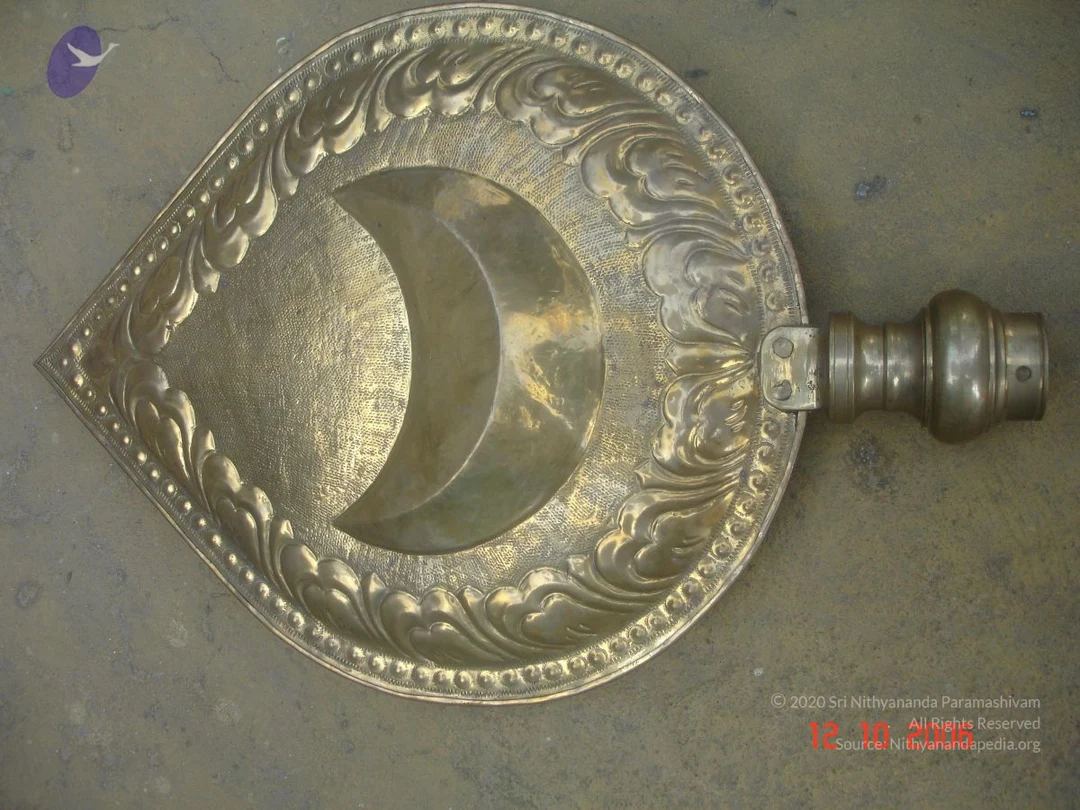
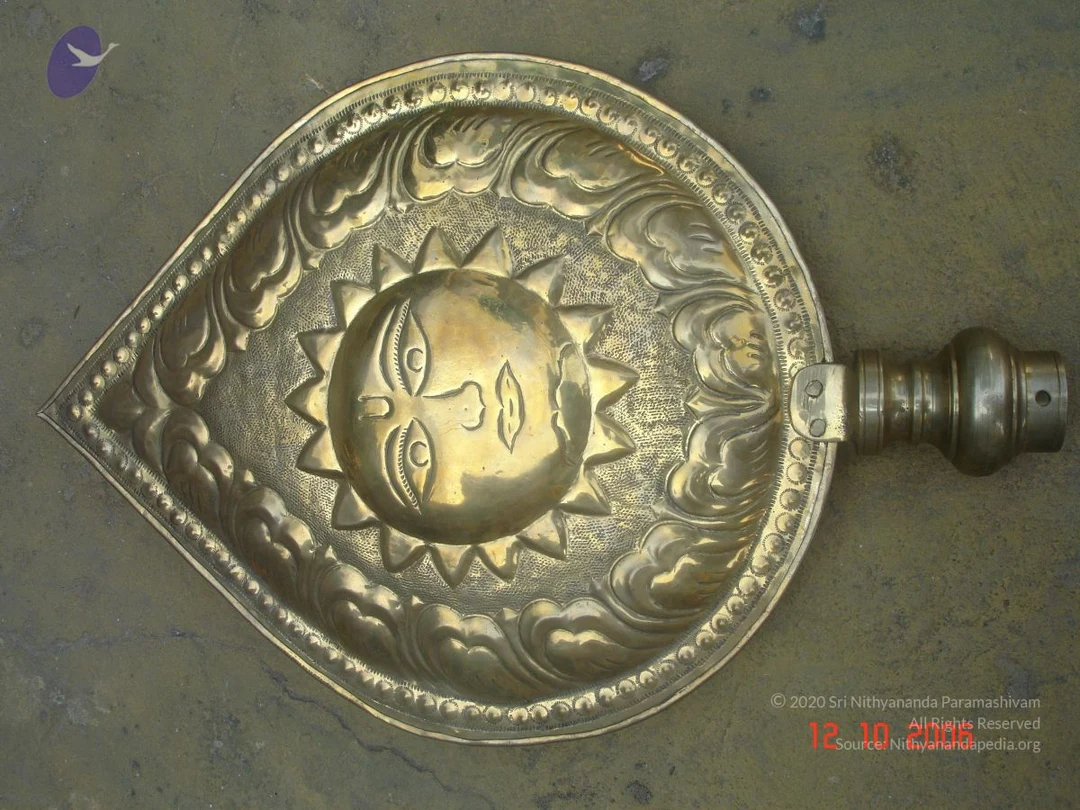
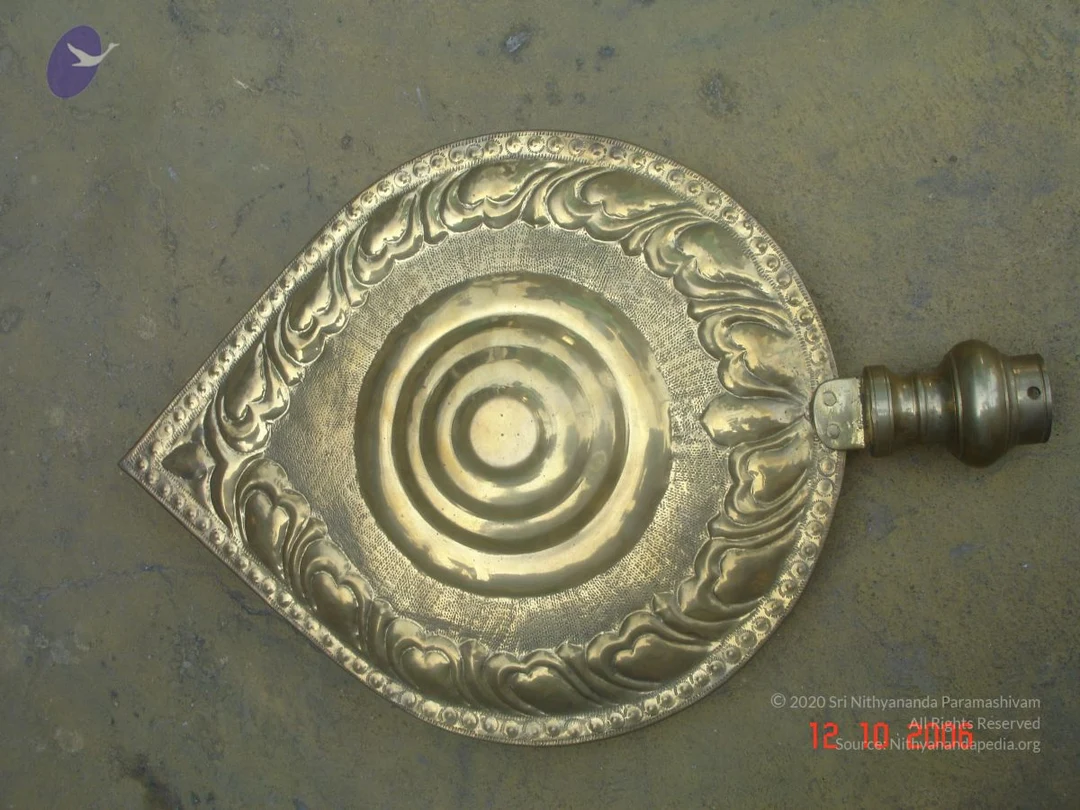
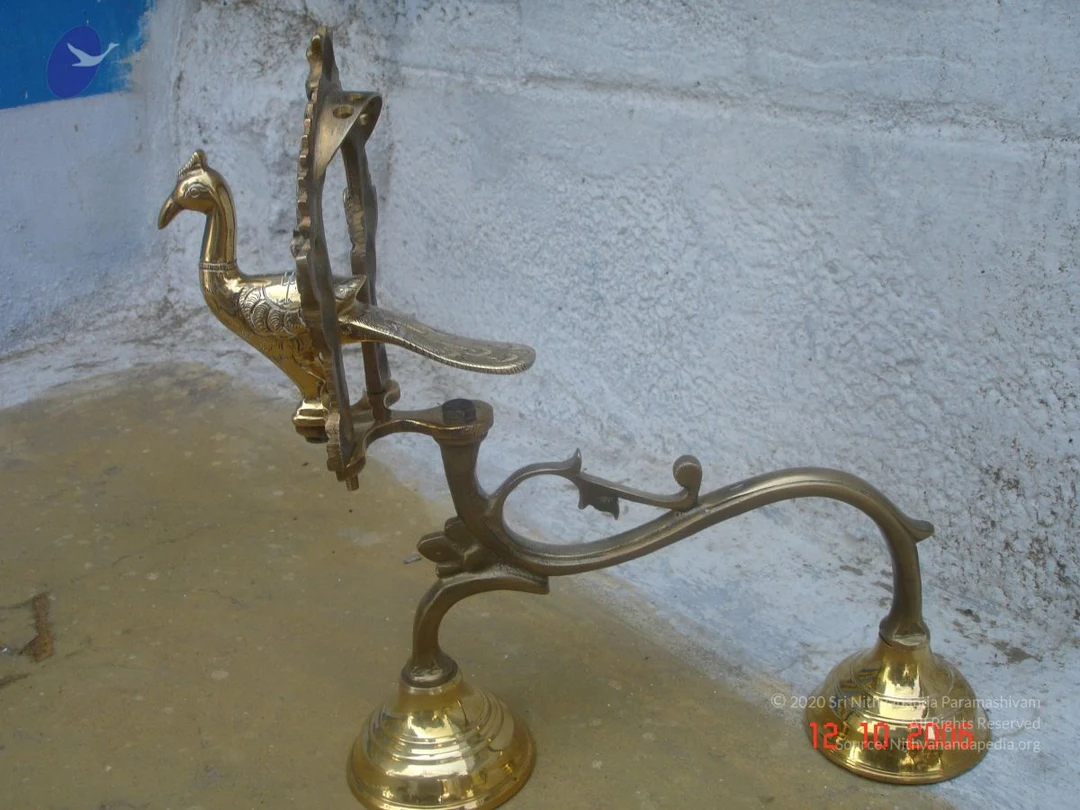
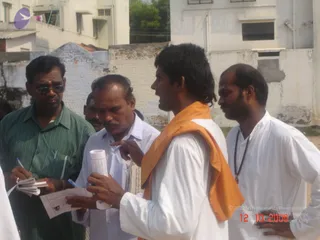
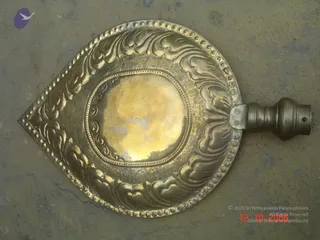
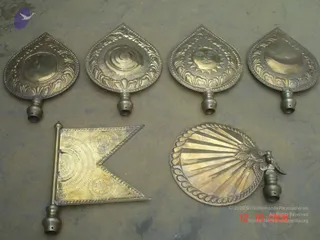
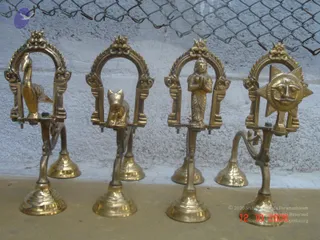
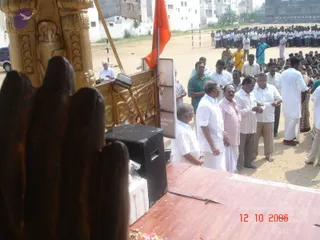
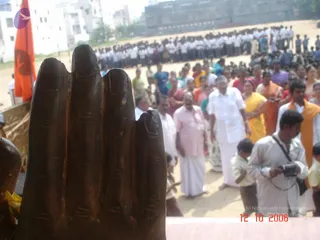
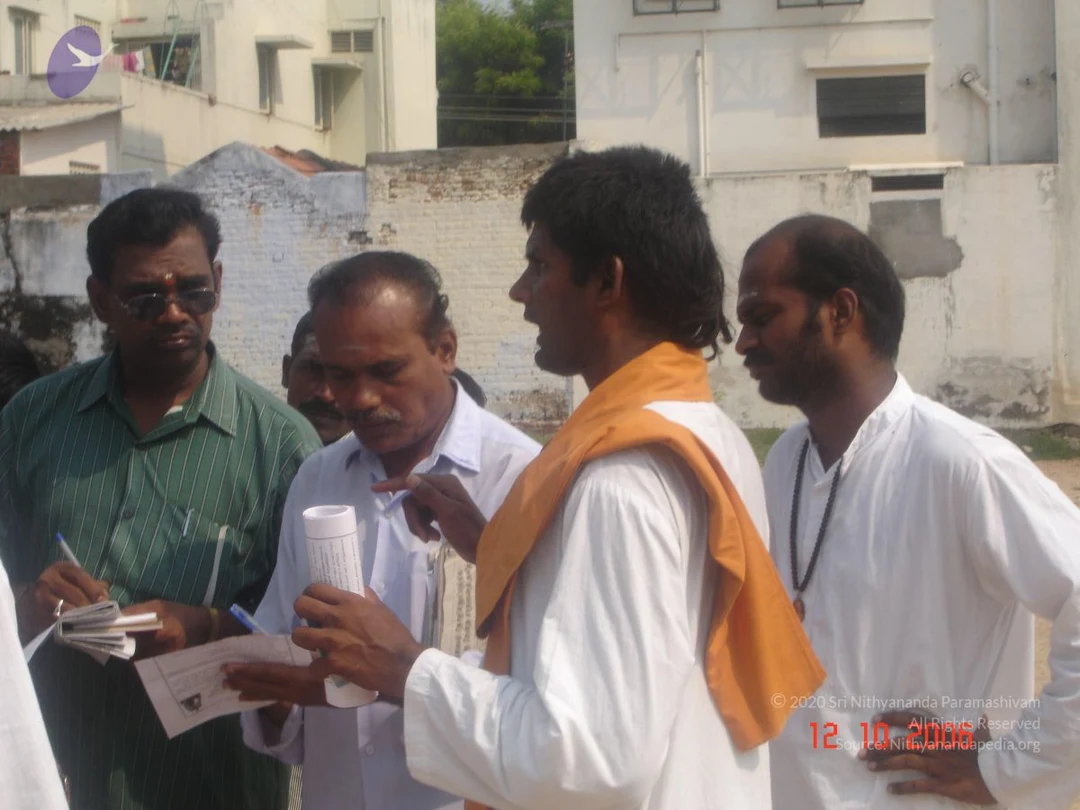
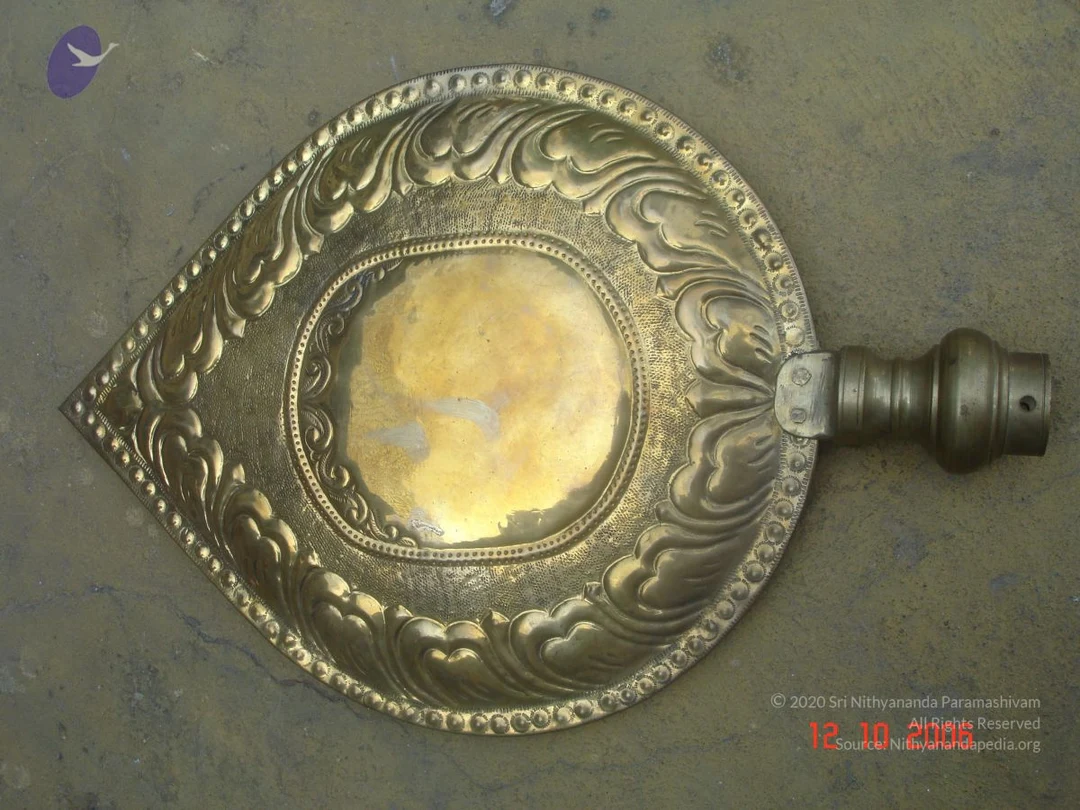
Outdoor photo of a group of men standing near a whitewashed wall and a multi-storey building. In the centre, a man with short dark hair wears a white kurta and an orange saffron shawl draped over his shoulders, and holds a rolled paper and gestures while speaking. Beside him, an older man in a white shirt holds a rolled document and looks down at it. On the left, a man in a green striped shirt and sunglasses holds a notebook and pen and writes. On the right, a bearded man in a white kurta wears a dark beaded necklace and looks on. Ordinary daytime setting with a dusty ground.A close overhead photograph of a large polished brass ceremonial object with a leaf-shaped or heart-shaped flat face, its rim decorated with repousse floral scrollwork and a beaded border, and a central smooth disc. A turned metal handle extends from one side. The object rests on a grey stone or concrete surface. No people are visible.A photograph of six ornate brass ceremonial objects laid out on a grey stone floor. Four teardrop-shaped embossed brass plates with floral borders and central motifs, one showing a sun face with rays, sit on short turned stems. Below them lies a rectangular pennant-shaped flag with engraved concentric patterns on a long pole, and a round fan-like plate with radiating rays and a bird-shaped ornament. No people are visible.Four brass oil lamps (deepa stands) with arched frames stand in a row on a concrete surface in front of a chain-link fence and a pale plastered wall. From left: a bird figure, a seated animal such as a bull or cow, a standing figure with hands joined in anjali mudra, and a lion-faced sun-like motif with rays. Ornate scrollwork decorates each arch. No people are visible. The date stamp 12 10 2006 and a copyright line appear along the lower right.Outdoor photo of a large open ground with a crowd of people standing in rows in the background, many in white and light clothing. In the foreground, a tall golden ornate pillar and a dark wooden hand or palm-shaped carving rise on the left. A small raised platform holds a black speaker and a framed portrait on a gold cloth backdrop, with a seated man in white at a table. Several men in white dhotis and shirts stand near the platform, one in a pink shirt and one in green. An orange flag rises behind the platform, and pink flower petals scatter the platform surface. Text in the corner reads a copyright line and the date 12 10 2006.A photograph taken from behind a large dark bronze hand with fingers raised, in the foreground of an open outdoor ground at Adi Kailasa, Bidadi. Beyond it, a large crowd stands in rows: many men in white shirts and dhotis, women in saffron, yellow and pink saris, and a few children. An orange flag stands at left and a man in a white shirt holds a compact camera at right. A man in a white shirt with an orange shawl stands near the right edge. The date stamp reads 12 10 2006.
1-MAHESHWARA-PUJA
54 photosSource gallery
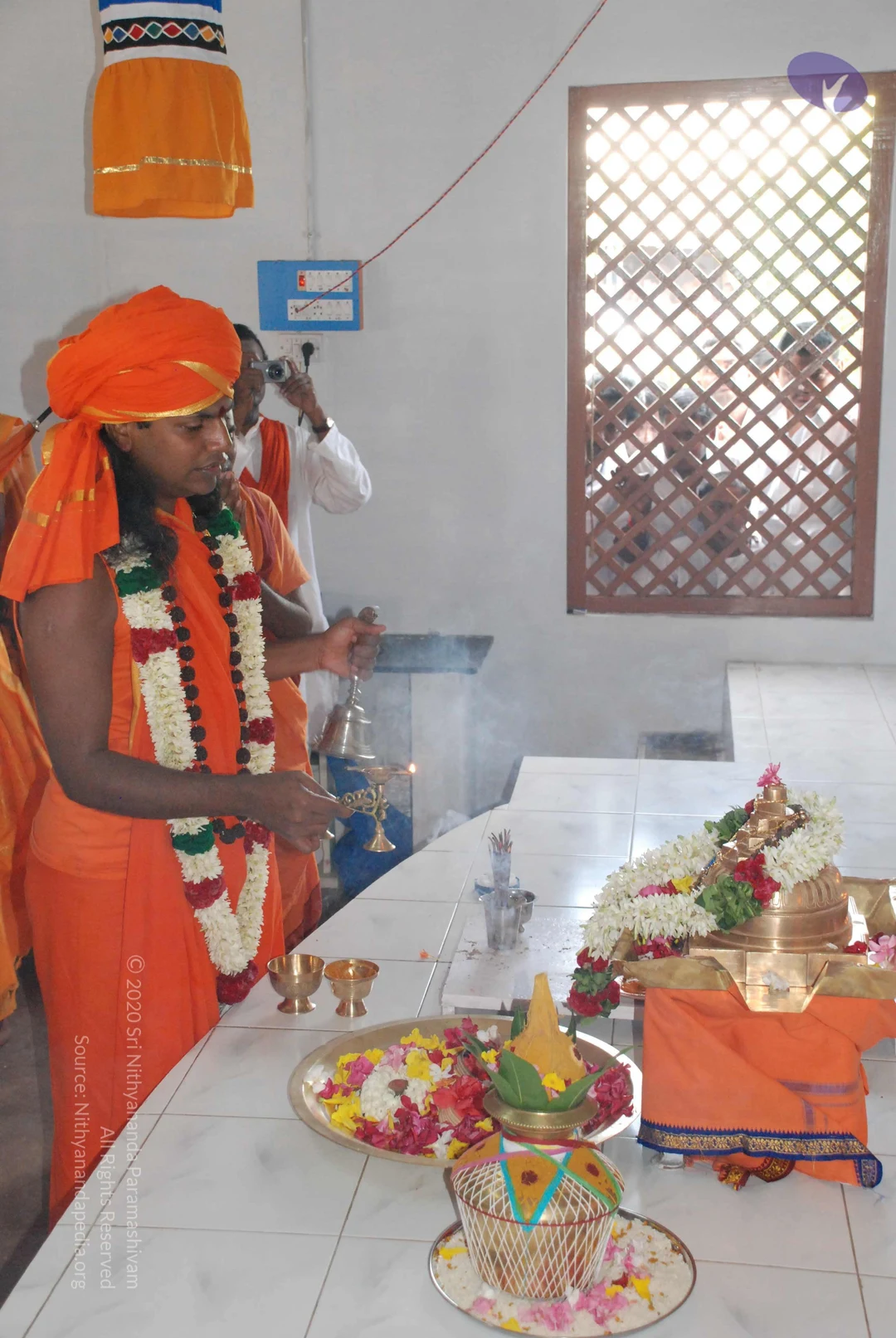
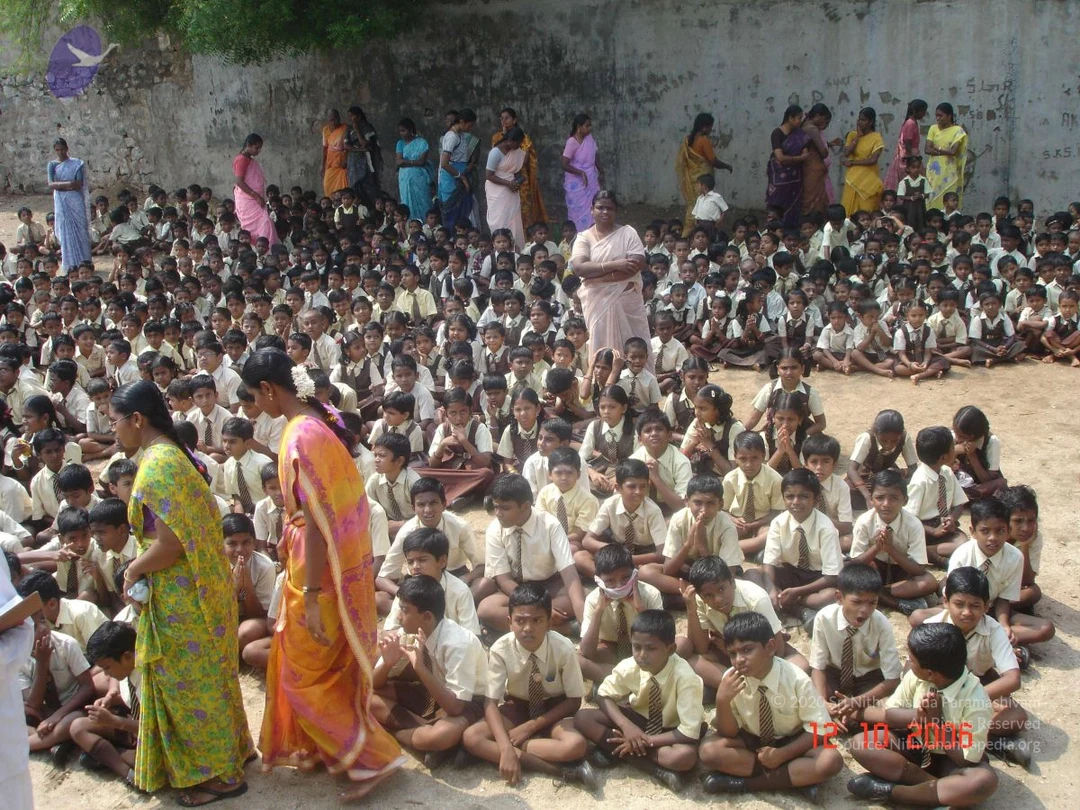
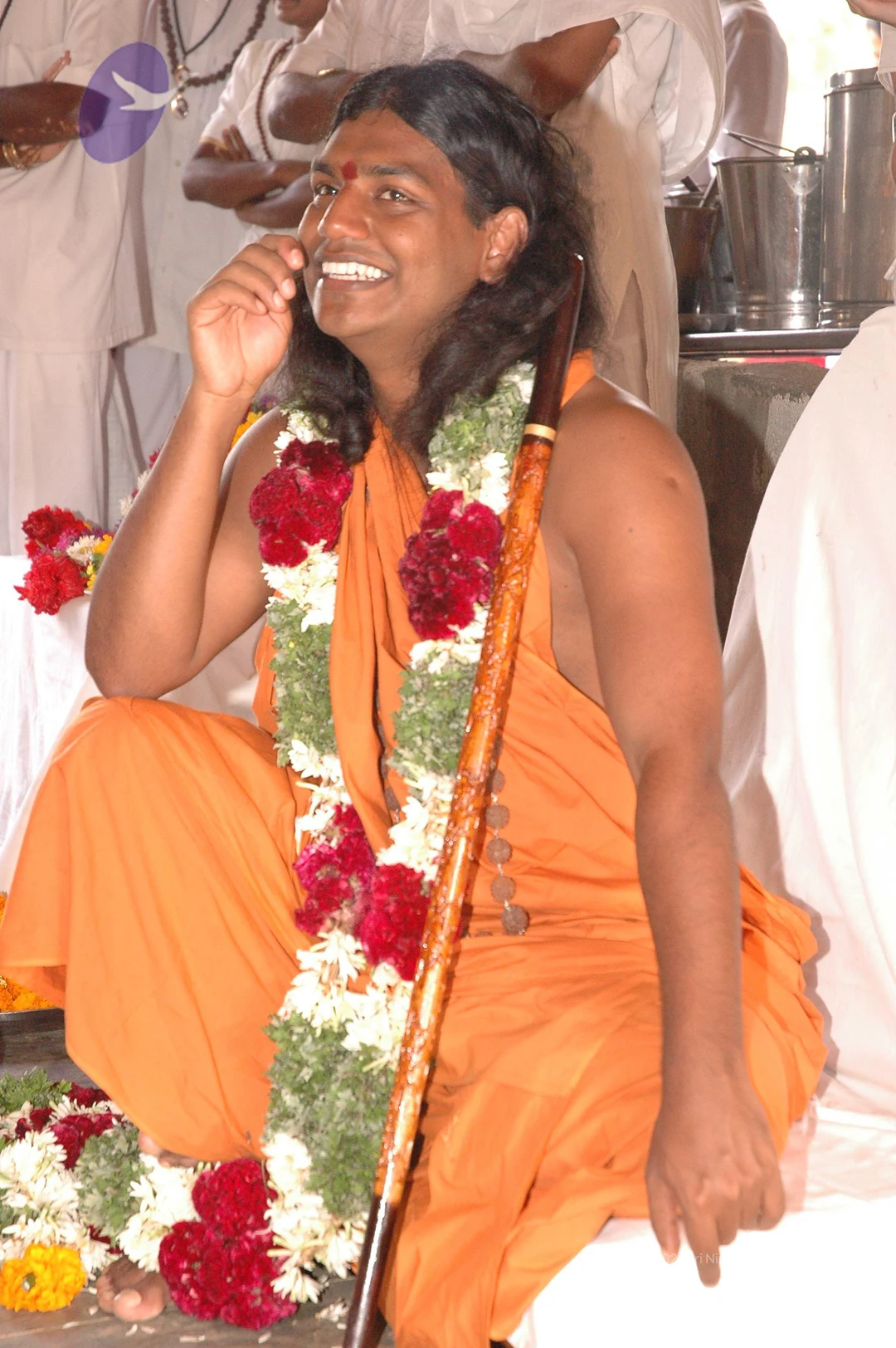
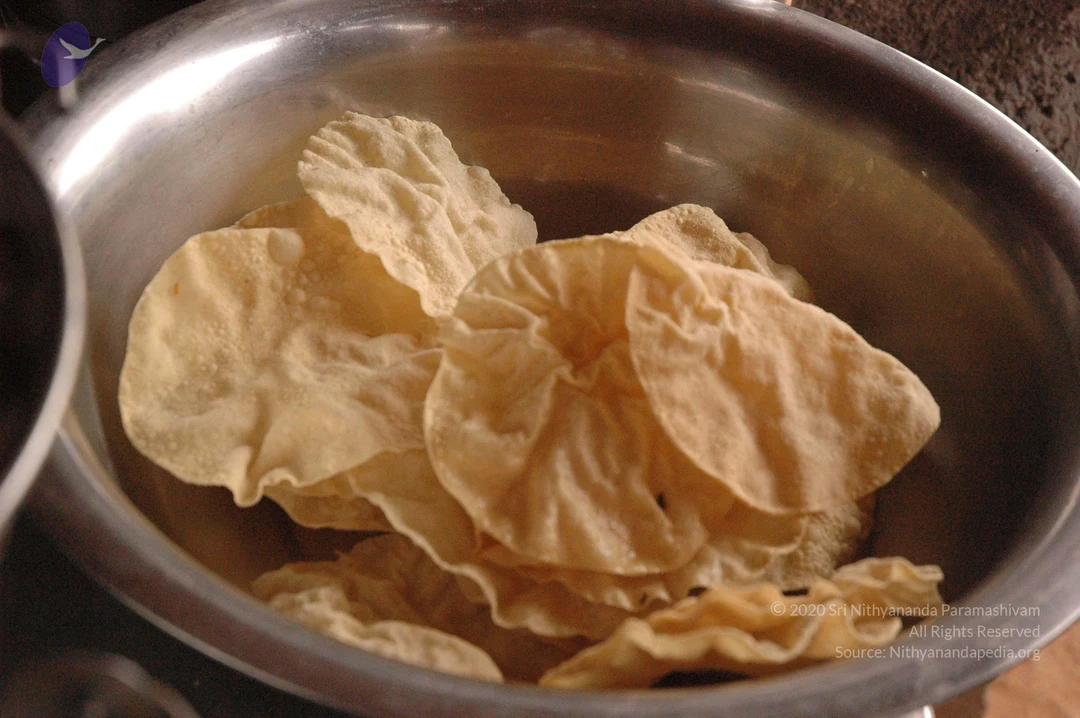
A seated man in an orange-saffron robe, with long dark hair, a red tilak on his forehead and a garland of red roses, white flowers and green leaves draped over his shoulders and lap, smiles while gesturing toward the floor. He sits on a white cloth-draped seat beside a bamboo pole. Behind him, standing people in white clothes, some wearing white shawls and necklaces of beads, watch, and steel vessels are visible at the right edge. The setting appears to be a open-sided pavilion with a concrete floor.Close overhead photograph of a stainless steel bowl filled with a thick, orange-brown liquid. A metal ladle rests in the bowl at right. Fried vadas or similar golden fried snacks are arranged on a plate at the left edge. No people or ritual setting is visible.A photograph of a pavilion ritual with a bamboo-matted roof and concrete floor. A man in white dhoti and shirt lies prostrate face-down on the floor at the lower left, his head near the seated figure. Seated on a white cushion at right, a person with long dark hair wears an orange-saffron robe, bare-chested with a long garland of red and white flowers and green leaves around the neck, smiling and holding a small green leaf toward the prostrate devotee. A brass kalasha-style vessel sits at the lower right and a brass water pot at the bottom edge. Standing spectators in white clothes and necklaces watch from behind, one man photographing with a camera at left. Seated attendants in orange cloth sit at the far left. The scene suggests a puja honouring a visiting guest, with the seated figure presenting the offering. a person: seated person with long swept hair, orange robe, bare-chested with a flower garland, in the role of the one receiving prostration.A photograph inside an open-sided pavilion with a corrugated roof and bamboo screens, where devotees sit cross-legged on green leaf mats in rows. In the foreground a man with long, swept-back dark hair wears a saffron-orange robe and a rudraksha mala, and has his hands on the rim of a low concrete wall with a small brass vessel. Beside him a man in white ritual clothes and an orange shawl stands near a chair. On the right a white-haired woman in white garments holds a garland of red flowers and green leaves. A large framed portrait of a man in white is displayed on the back wall, and orange flags hang from the poles. Several people in white and orange sit on the floor behind them. The portrait behind is a depiction.A photograph of a group of women seated on the floor of a hall during a meal ritual. Most wear white saris with orange shawls and gold borders. In the foreground a smiling woman with a red bindi and a beaded necklace holds a portion of food toward another woman whose long dark braid is visible. Behind them others sit on mats beside banana leaf plates of food and small metal cups, with bamboo poles in the foreground. No a person candidate is visible in this frame.A photograph of seated men in a row inside an open pavilion with bamboo-mat walls. They wear white dhotis and white kurtas with orange shawls draped over their shoulders. Brass vessels and steel tumblers sit beside them, and each sits before a banana leaf heaped with food, including rice, fried items and vegetables. A figure in white stands at the left edge holding a brass vessel near the leaves. The man nearest the camera on the right has long swept-back hair, a short beard and a wristwatch. Another seated man in the middle wears a rudraksha-style mala and folds his hands. A printed copyright line and a small photo of a figure appear at the upper left and right edges.
more photographs from maheshwara pooja
141 photosSource gallery
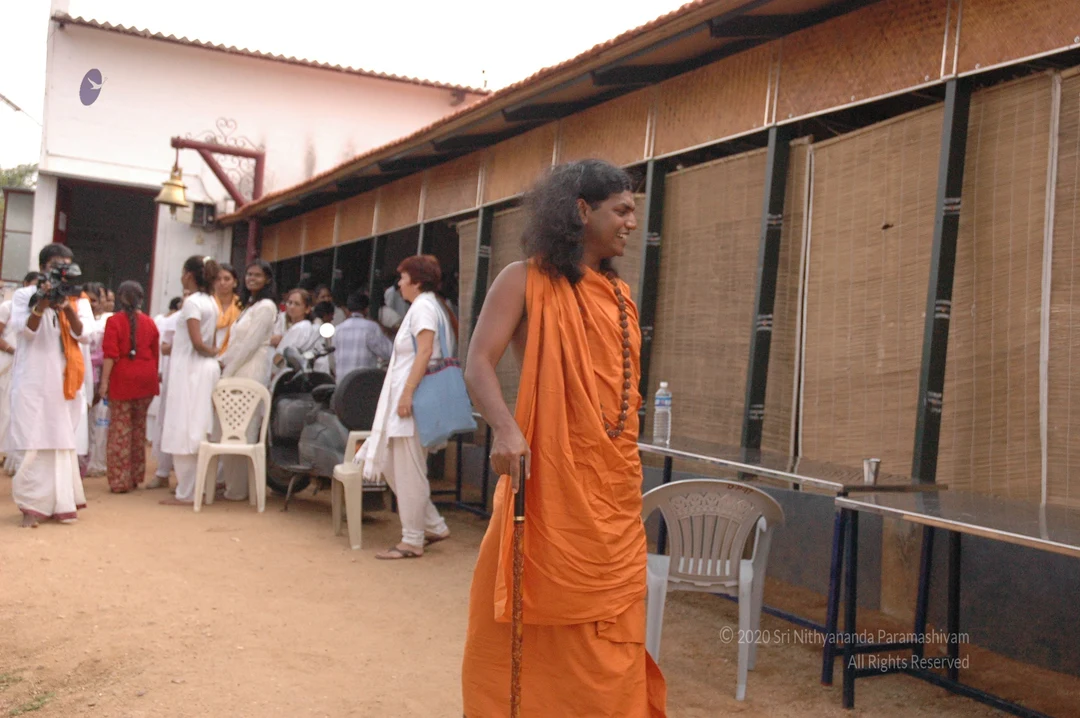
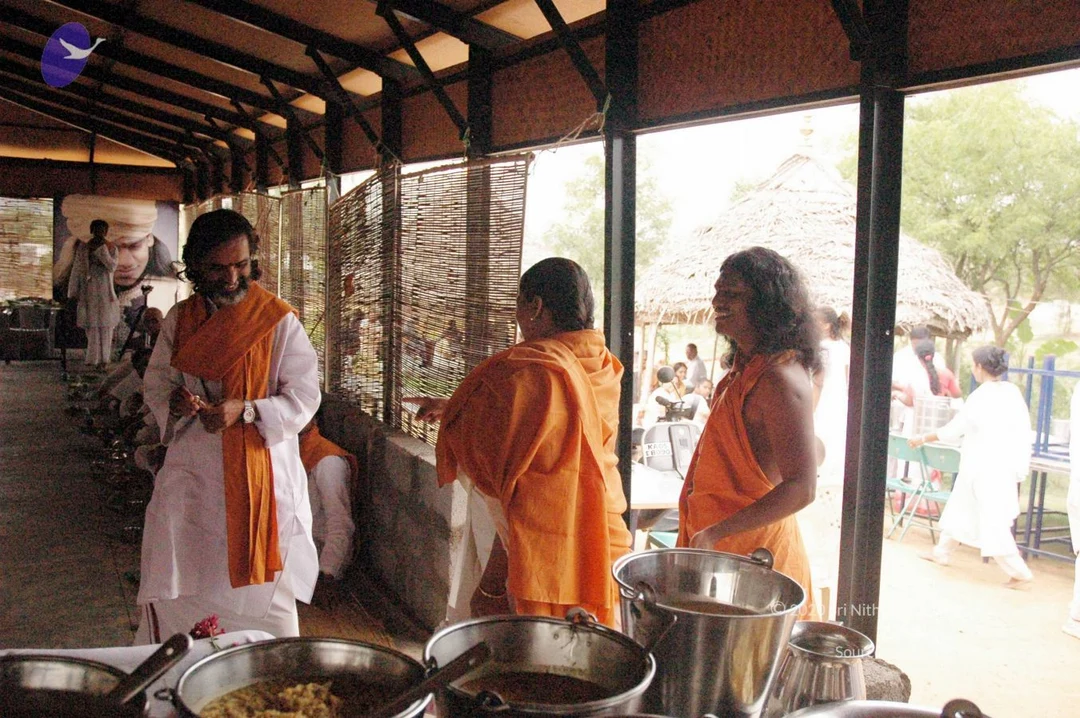
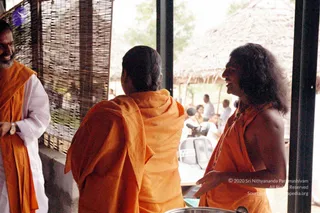
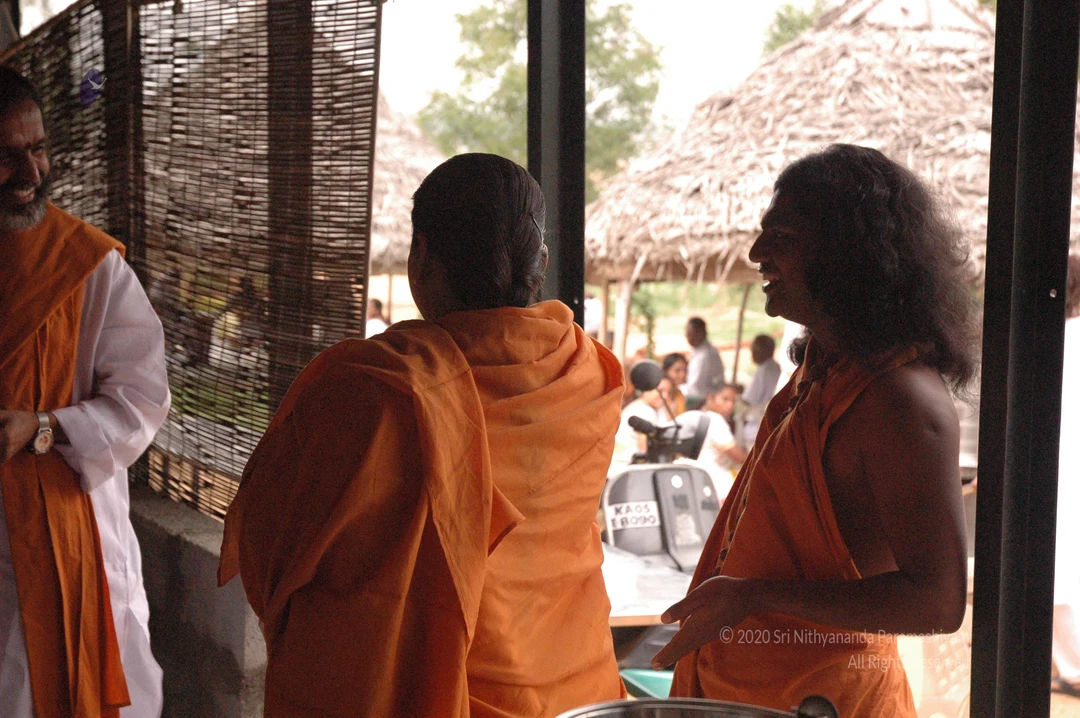
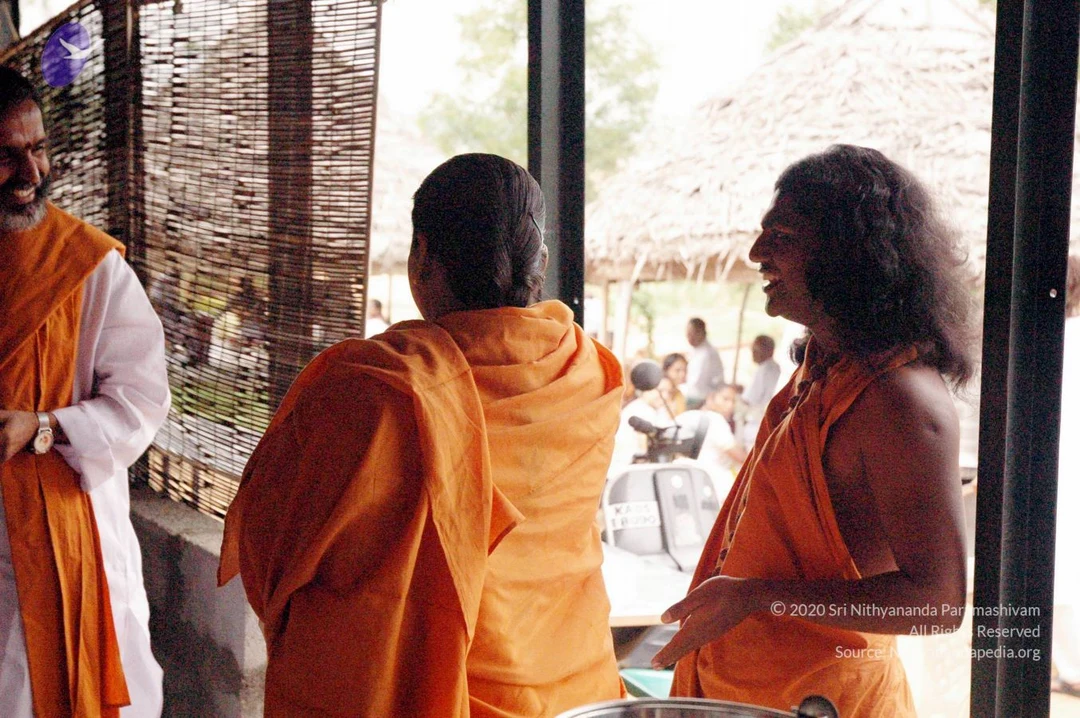
A photograph taken through a glass doorway of a thatched pavilion with a woven bamboo screen. On the left, a smiling bearded man in a white undershirt and orange shawl stands beside a watch on his wrist. In the centre, a man with his back to the camera wears an orange wrap and sleeveless top. On the right, a man with long, swept-back dark hair in an orange shawl, the most distinctive figure, gestures while speaking. Behind them, other people in white and light clothing sit in the background near plastic chairs and a thatched roof.Photograph of a covered open-sided dining pavilion with bamboo screens and dark wooden beams. In the foreground, large steel pots and pans hold food, with a ladle resting in one. Three people stand behind them: a man in a white kurta with an orange shawl over his shoulders and a wristwatch, and two women in orange saffron-coloured cloth wraps, one serving from a pot. Behind them a woman in white moves past, and a thatched hut and trees show through the open side. A partially visible portrait of a turbaned man hangs on the left wall. No readable printed text is visible.A standing figure in a long saffron/orange wrap with bare shoulders and dark flowing hair wears a garland of white and red flowers and green leaves, with a hand extended toward an elderly person in white clothes who bows low with head near the figure's hand. Behind them, a row of seated devotees in white with orange shawls sit on a raised floor under a bamboo-screened pavilion. A steel vessel stands in the foreground on the left.A photo inside an open-sided thatched pavilion with bamboo-screen walls and orange-painted posts. A bare-chested man in orange dhoti stands at left, wearing a long garland of white and red flowers, with his hands in añjali; his long dark hair is loose. Before him, an older woman in white sari kneels and bows low with hands extended, receiving the ritual. Along the right, rows of seated women and girls in white with orange shawls sit on mats, and steel vessels with food and flower offerings stand in the foreground. On the right wall hangs a large portrait labelled "Paramahamsa Nithyananda", showing a smiling man in white turban and white clothing. The scene reflects a Maheshwara Puja offering.A seated man in saffron-orange robes with long swept-back hair and a large garland of red and orange flowers sits on a low platform during a puja, his hands folded in front of his chest. A white-draped figure sits nearby, and orange-shawled young women and men sit in front with palms pressed together in namaskar. Behind them, a group in white clothes stands with hands folded, and a large portrait framed by marigold and rose garlands sits on a white-draped table beside steel vessels and bananas. Orange ceremonial flags on tall poles frame the scene in a hall with a concrete floor and brick wall. Bhoomi puja setting at AadiKailaasa.A covered open-sided hall with a concrete floor where devotees sit in rows on banana leaves and woven mats during a puja. Many participants wear white with saffron-orange shawls. In the foreground, women in orange shawls sit with hands folded in namaste; a row of kneeling devotees lines the right side beside bamboo poles hung with saffron cloth. At the far end, a seated figure in orange garland and orange shawl sits before a small altar with brass vessels, flower garlands and metal pots. Standing devotees in white and a man in a checked shirt stand near a large framed portrait of a smiling man in a white turban and dark hair, hung on the back wall. Small steel cups are set on the floor.
01-BHOOMI-PUJA-ADIKAILASA
11 photosSource gallery
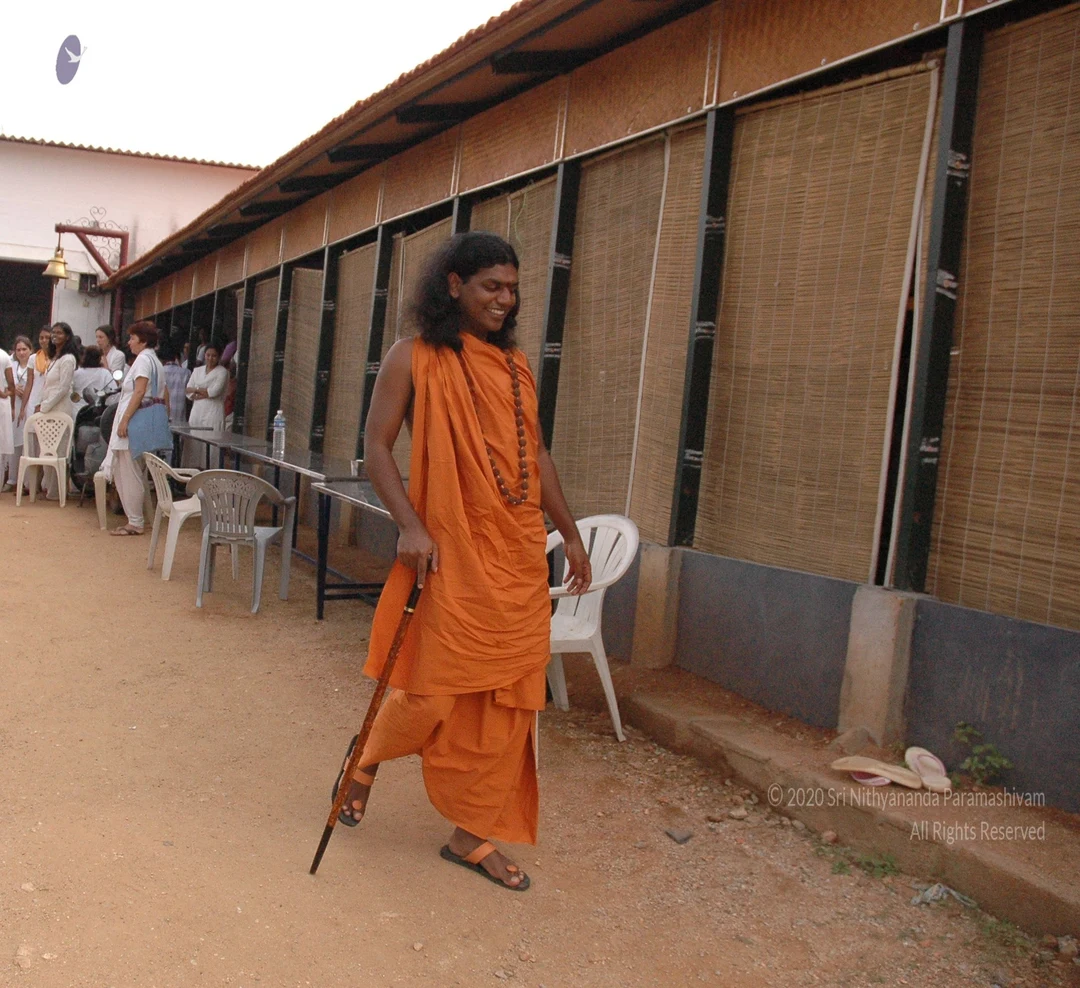
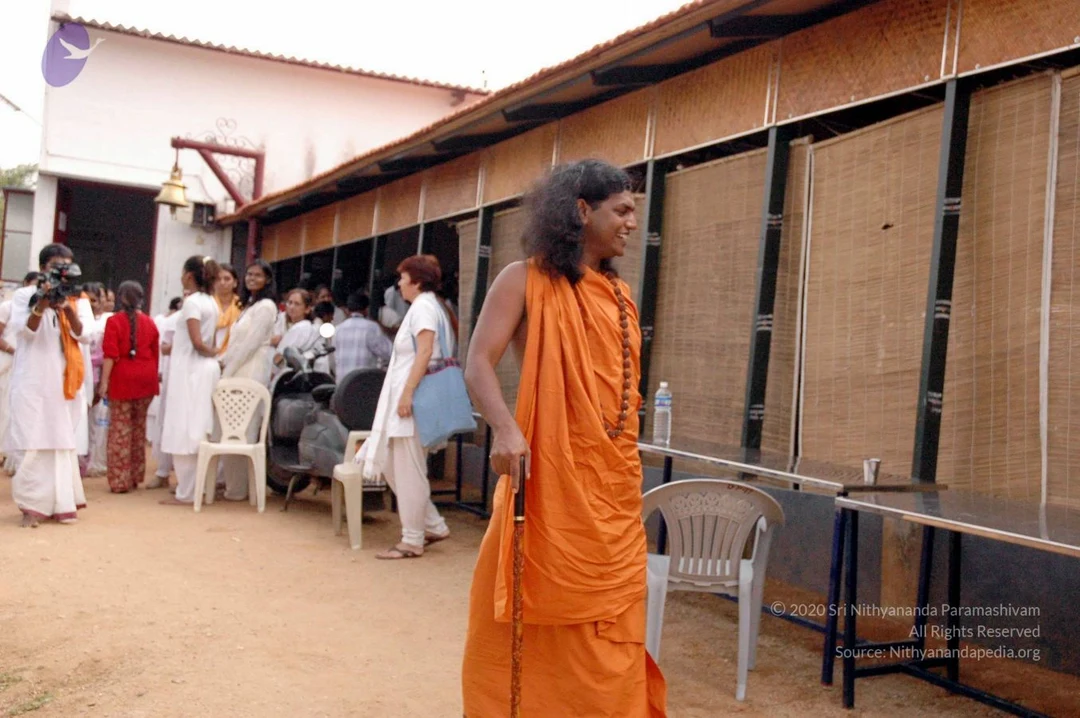
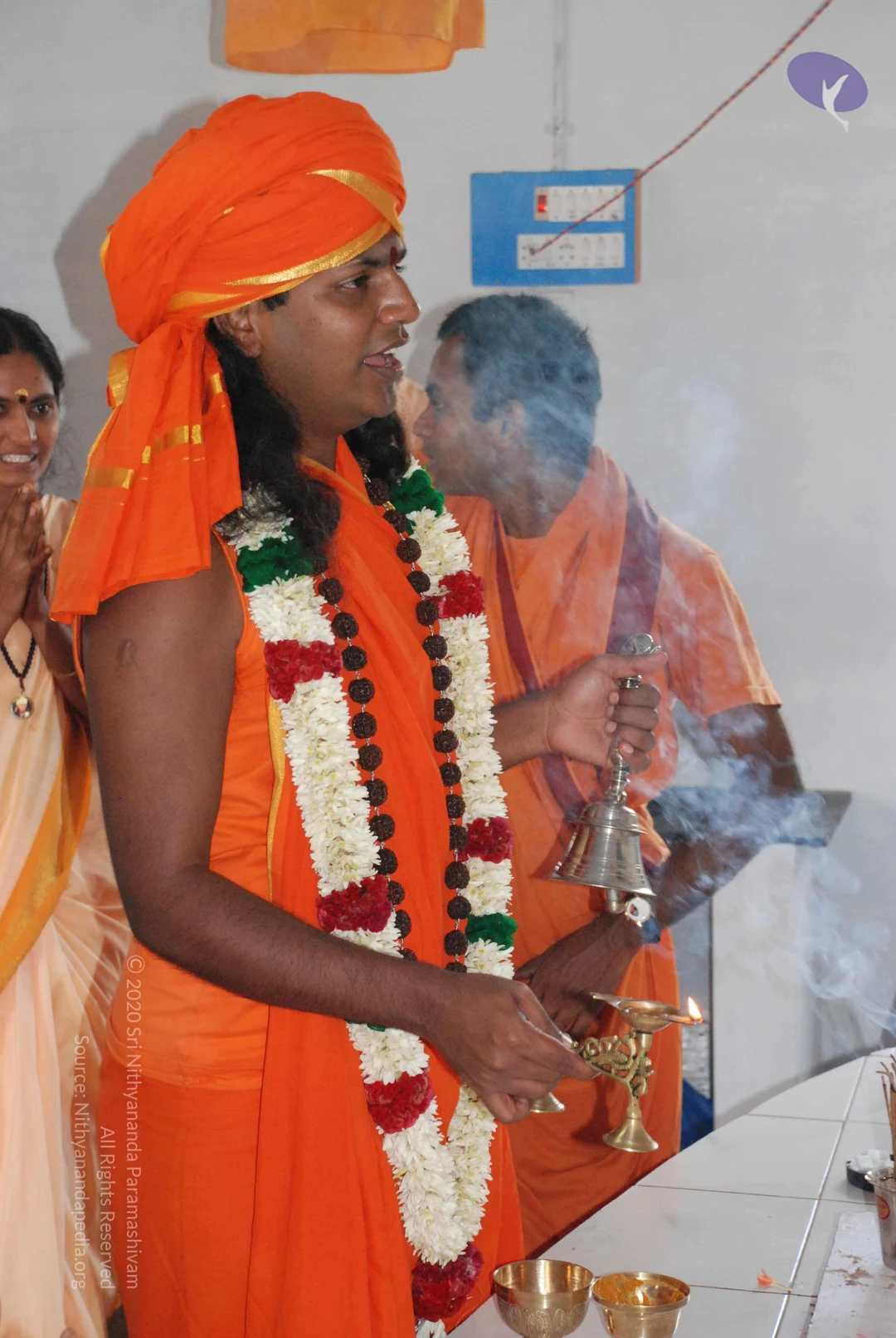
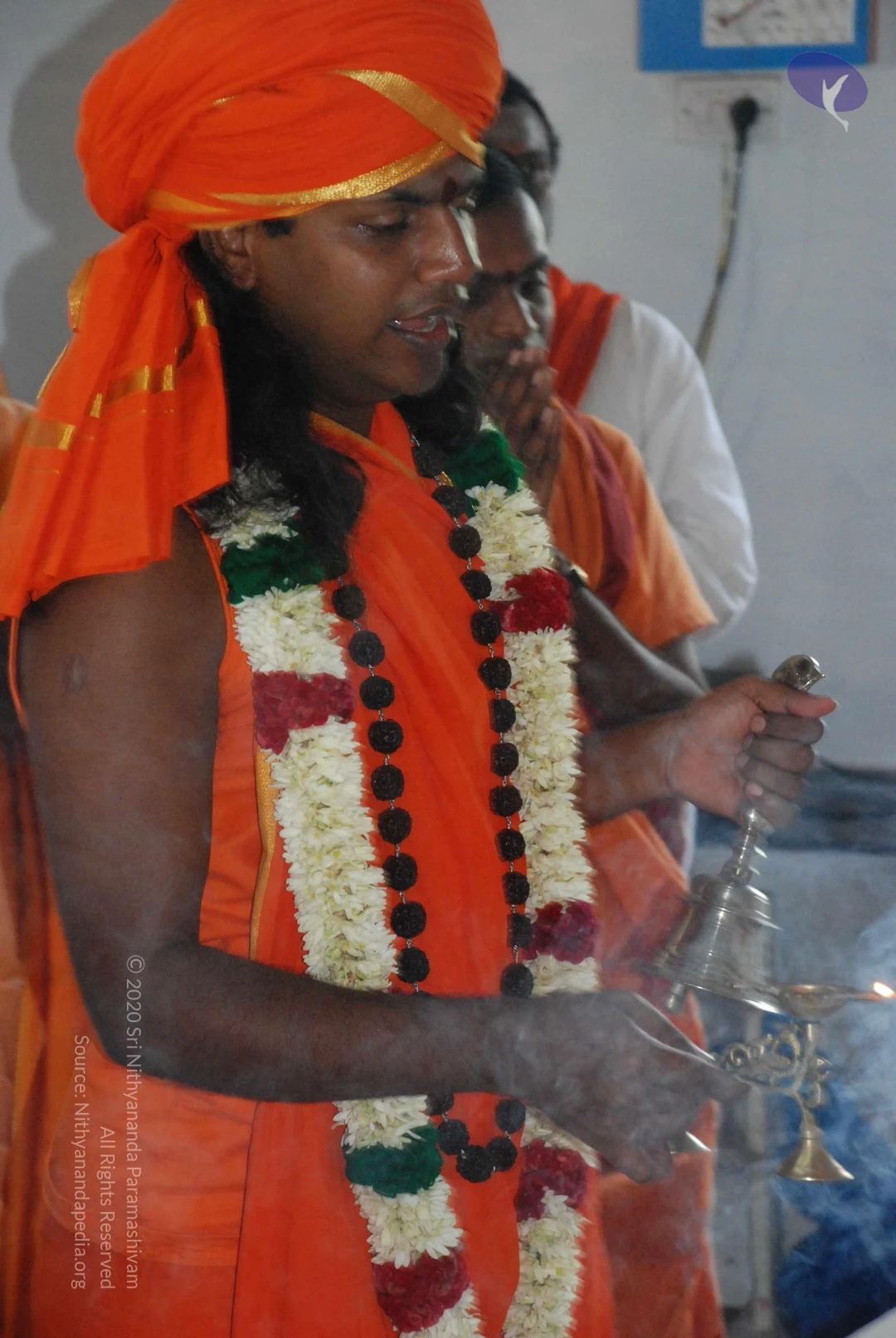
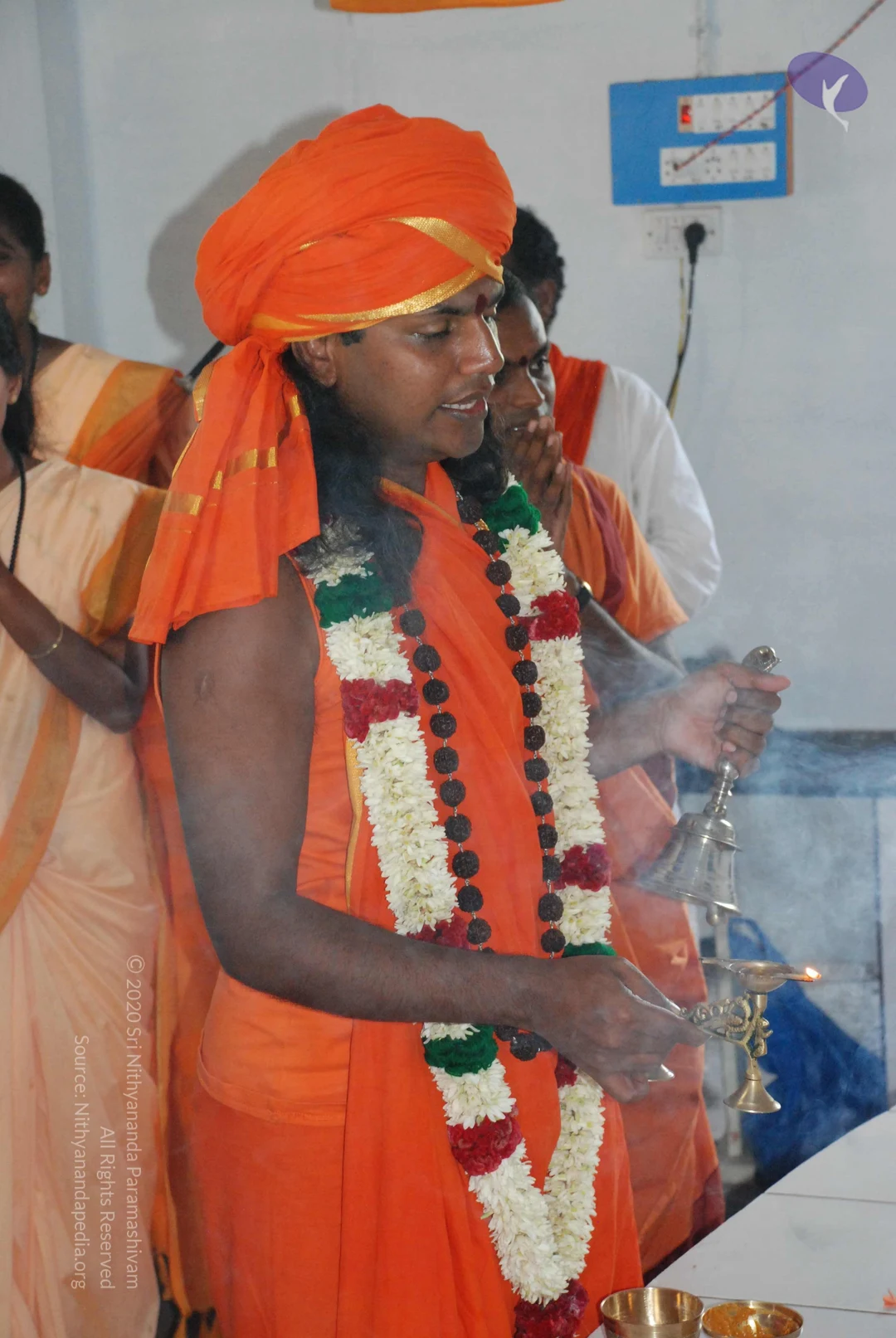
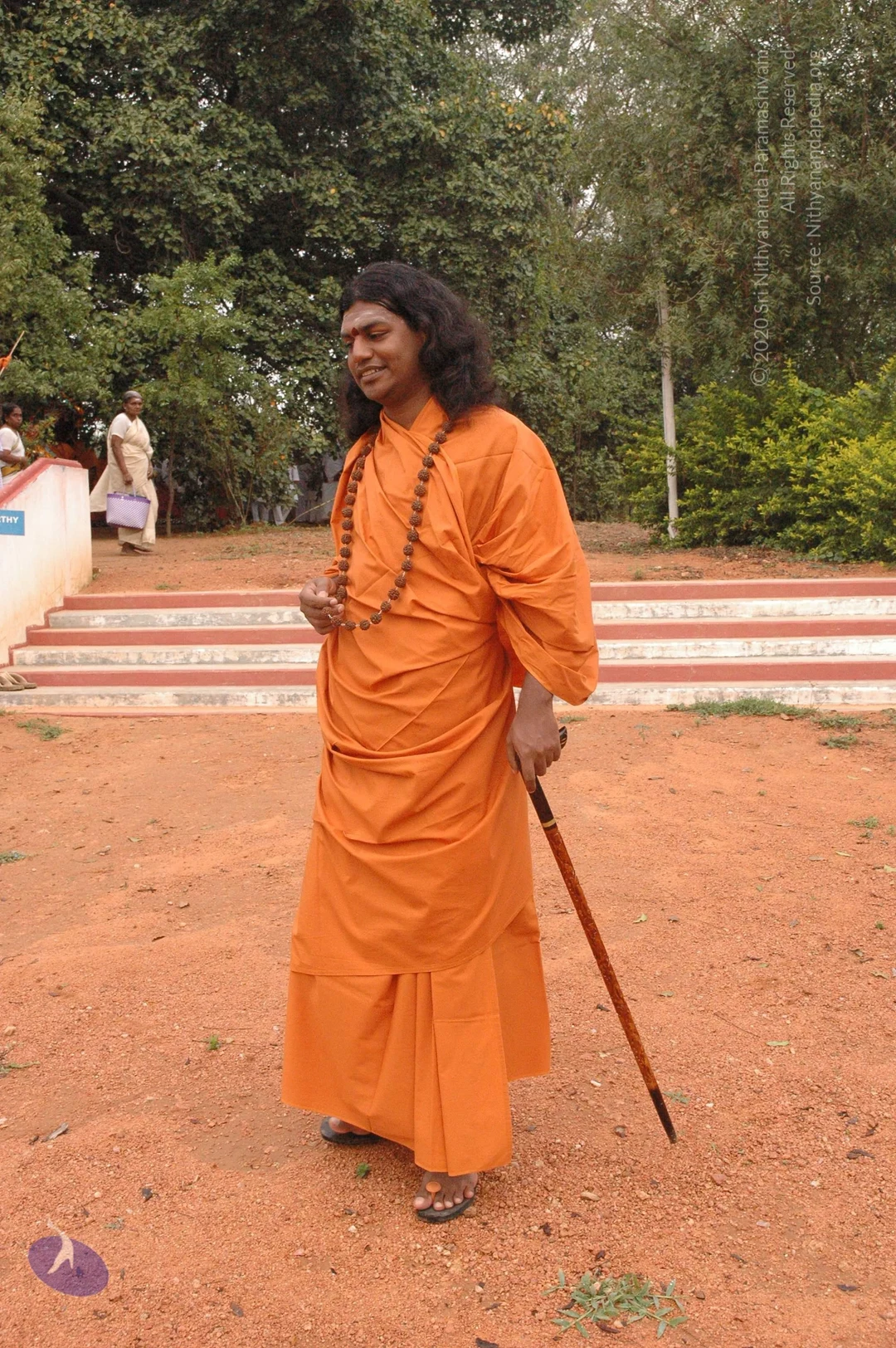
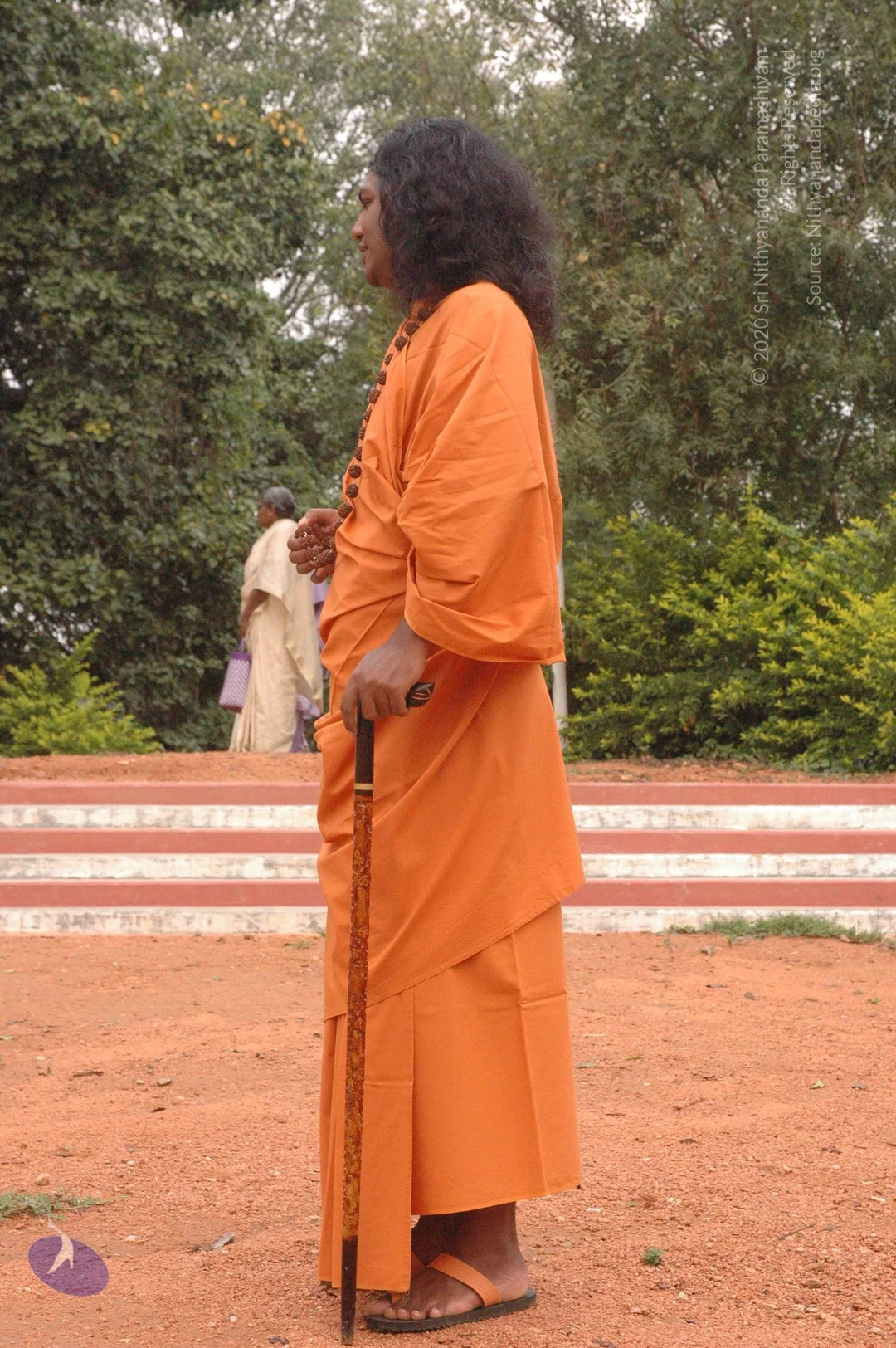
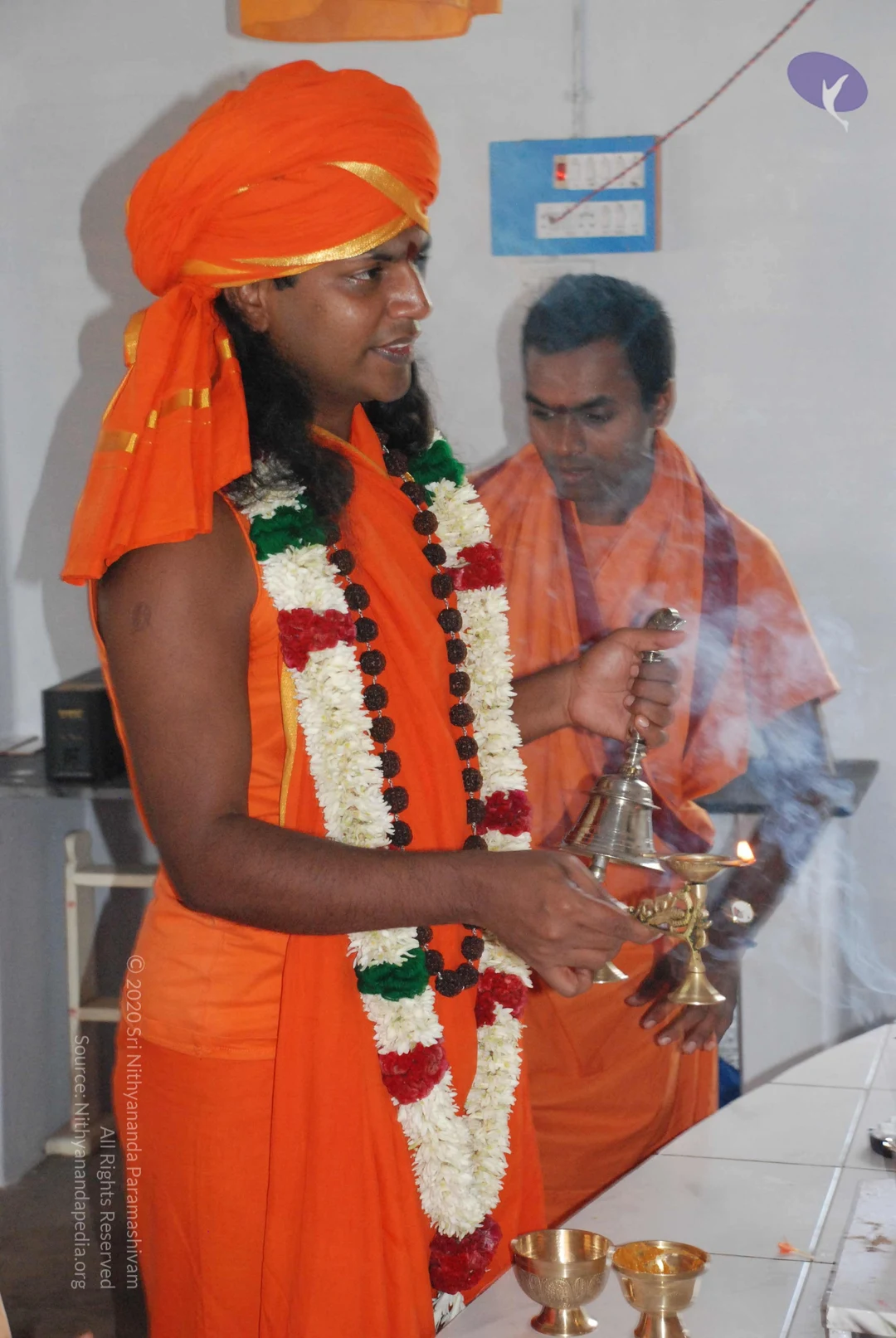
A photograph of a man in orange saffron robes and an orange turban edged with gold, wearing a long garland of white jasmine and red and green flowers over a rudraksha mala. He holds a silver ghanta bell in one hand and a brass aarti lamp with a lit flame in the other, performing puja. Behind him a second man in orange robes holds a brass lamp and stands beside a white table with small brass bowls, with incense smoke rising. A wall fuse box and a blue Nithyanandapedia-style logo appear in the background. The first man has long dark hair under the turban and a visible rudraksha mala, cues consistent with the event's Swamiji, so the appearance-based label is used.A photograph of a man in an orange saffron turban and orange robe, wearing a garland of white and red flowers with green accents and a rudraksha mala, holding a brass oil lamp (aarti) with a lit flame. Behind him a second man in orange holds a silver bell while smoke drifts through the room. On the left a woman in a cream and orange sari stands with hands in anjali mudra. Brass bowls sit on a white table in the foreground. The man with the turban and long hair matches the page's appearance cues for a person performing the aarti during a puja.A photograph of a man in an orange turban and orange robe with a gold-edged border, wearing a garland of white flowers with red and green accents and a long rudraksha mala of dark beads. He holds a silver handbell in one hand and a brass aarti lamp with a flame in the other, with smoke rising from the lamp. Behind him stands a second man in orange and white, his hands pressed together in prayer. A white wall with an electrical outlet and a blue-framed clock sits in the background.A photograph of a man in an orange turban and orange robe standing at a puja, holding a brass oil lamp in one hand and a silver handbell in the other, with a white-and-red-and-green flower garland and dark rudraksha beads around his neck. A small red tilak mark is on his forehead. Behind him, a woman in peach and orange sari and another man in orange with folded hands stand in a plain room with a blue electrical panel on the wall. Brass bowls with offerings sit on a white table in the foreground, and smoke rises from incense at right. The appearance and dress are consistent with the a person candidate described on the page, though the face is not used for identification.A man in an orange turban and orange robes stands at a white tiled table during a puja, holding a brass oil lamp in his right hand with a small flame and a bell in the other. He wears long white, red and green flower garlands and dark rudraksha beads. Beside him a second robed attendant holds a bell. On the table are a brass plate of mixed petals, a brass kalasha with mango leaves and a coconut, a bowl of rice with petals, small brass cups, and a metal deity murti with a flower garland and an orange cloth draped beside it. Behind them a man in white shirt and orange shawl photographs the scene, and a lattice window lets in light.A photograph of a man walking across a red dirt ground outdoors, with dense green trees and a white-and-red stepped stone staircase behind him. He wears a flowing saffron-orange robe draped over one shoulder, a rudraksha mala of brown beads around his neck, and a red tilak mark on his forehead. Long, swept-back dark hair falls past his shoulders. He holds a wooden walking staff in one hand and carries a small bead-like item in the other, and wears simple sandals. Behind him, two women in white saris stand near the steps, one carrying a purple bag.