Tuesday
24 January 2006
Keeping Hinduism Alive || Part 1 || Initiation into Powerful Cognitions || 24 Jan 2006
- Dated photos
- 148
- Source pages
- 1
- Media
- 4
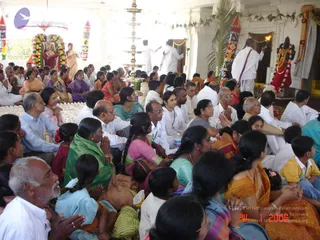
January 24 2006
Original wiki pageTitle
Keeping Hinduism Alive || Part 1 || Initiation into Powerful Cognitions || 24 Jan 2006
Description
Name Of The Convention : Initiation into Powerful Cognitions
Session on: Keeping Hinduism Alive Part 1
Date : 24 January 2006
Venue : Hyderabad, Andhra Pradesh, India
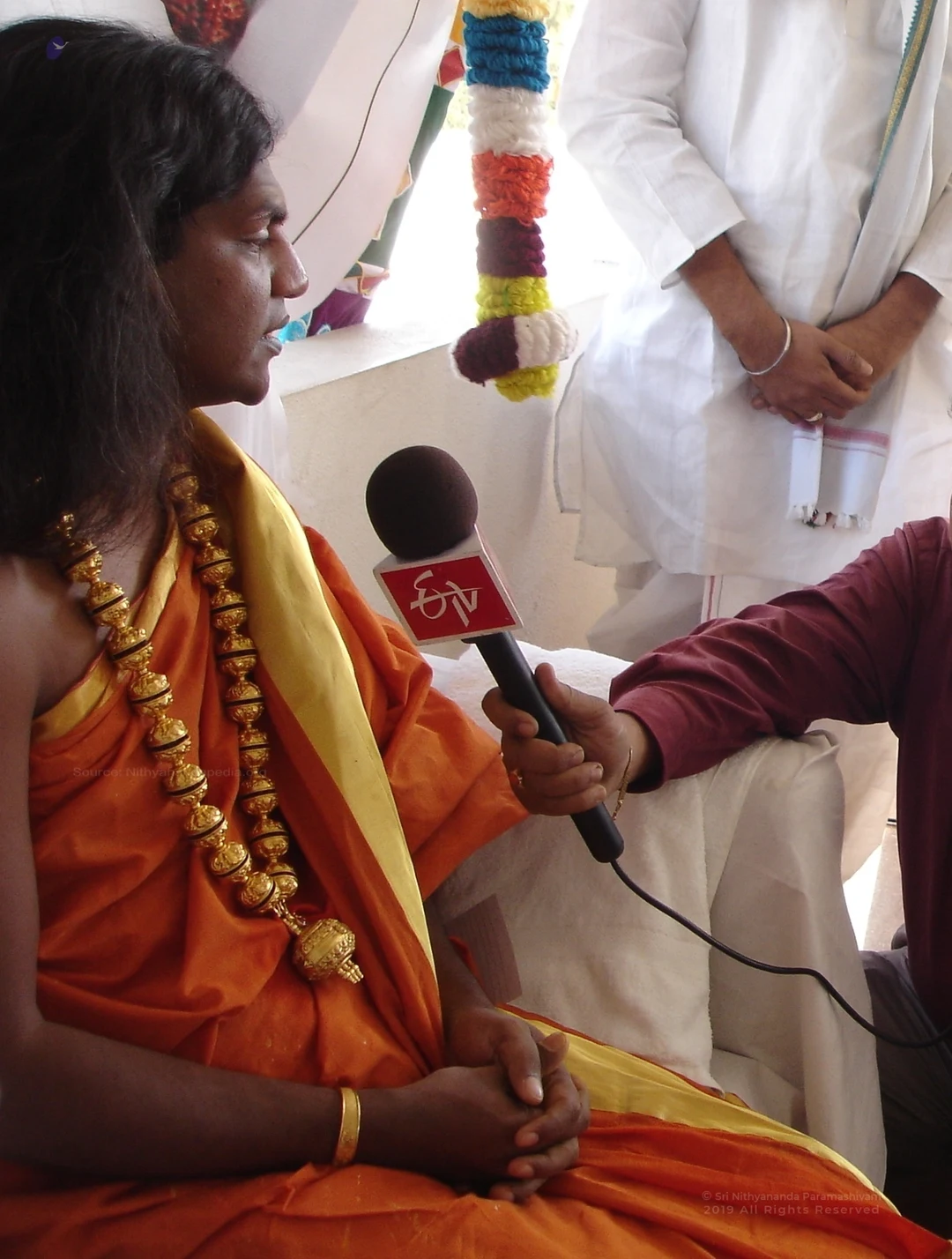
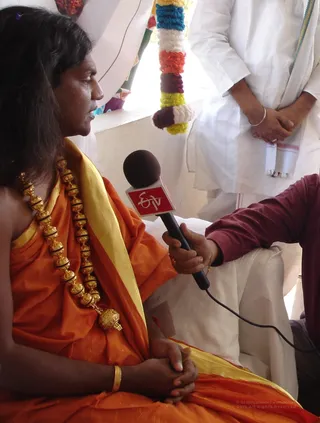
In this video, the Supreme Pontiff of Hinduism HDH #Nithyananda Paramashivam is seen giving a short discourse at the inauguration of the Ananda Rajarajeshwari Temple, in Hyderabad. His Divine Holiness gives a short press interview before speaking to the audience about the future plans for this temple, and spiritual freedom.
The Supreme Pontiff of Hinduism Jagatguru Mahasannidhanam His Divine Holiness Nithyananda Paramashivam (HDH) is the reviver of #KAILASA - the ancient enlightened civilization and the great cosmic borderless Hindu nation. Revered as the incarnation of Paramashiva - the primordial Hindu Divinity, HDH has a following of 2 billion Hindus worldwide with de facto spiritual embassies in over 150 countries. He has worked untiringly for over 26 years for the revival of Kailasa, for global peace and to give super conscious breakthrough to humanity. He has survived the worst persecution of multiple assassination attempts on person and on character by anti-Hindu elements. He is collecting, organising, preserving, time capsuling, decoding, spreading and reviving 20 Million source books of Hinduism and the 64 sacred arts & sciences like Ayurveda, music, dance, sculpting, astrology, vastu and much more. Close to 20,000 hours of HDH’s timeless talks have been recorded till date (Sep 2020), which are a treasure trove of powerful cognitions to solve individual and global problems of any kind.
Link to Video:
| Video | Audio |
Transcript
(00:16)
See, I personally believe all our temples should become a place for center for service. So, our founder of this temple has donated this temple and this place to the Dhyanapeetam. Through our Dhyanapeetam we will be doing social services from this place. It will not be only a temple which will be worshipping Devi in... god in statues. This will be a temple where Devi will be worshipped in the form of human beings also. So we believe in worshipping gods in the human forms also. Service done to the human beings, service done to the Devi or god. So we will be doing, we will be having a vedanta vidyalaya, the one year free program for empowering the youth. And other medical services or other services for this people who are in this locality. Above all, carrying our culture and spiritual tradition for ages to come will be done through this Dhyanapeetam center. Thank you.
(01:50)
I welcome you all with My love and respects. I am very happy to be here and participate in this beautiful ceremony. I wanted to recognize, beautiful service done to the world by doing this temple. It’s a beautiful temple done with lot of devotion. It is not built for any other purpose except the devotion for mother, the true love for divine mother. I am so happy and this place now will be the place for our Dhyanapeetam’s center, Hyderabad center. And the spiritual activities like meditation programs and social service activities like medical camps, or the programs for empowering the youth - all these things will be done from this place. I personally believe the temple should be a place where service is done not only to the statues, to the living human beings also. Temple should become a place where god is seen not only in the statues, in the human beings also.
(04:00)
And, those days our ancient masters, rishis they have created the system of temple or the tradition of temple to bring people together to infuse the spiritual ideals and ideologies into the people’s life. Whatever is said and done... of course again and again this so called intellectuals has, especially in America again and again I am questioned by this intellectuals. They asked Me, “Hinduism is religion of idol worship. Why are you worshipping idols?” In Brazil one person asked Me “Swamiji you speak so logically everything. And you are expressing everything very logically, scientifically. Why do you worship idols? And it’s illogical. Why do you worship idols?” I told him “In Hinduism we don’t have idol worship. Never think we have idol worship in Hinduism. We don’t worship idols. We worship through idols.” Worshipping through idols is different, worshipping idols is different. You don’t stand in front of stone and ask “Oh stone give me boon, oh brass give me boon.” Do you ask? No. You say “Oh Devi give me boon. Or Devi take care of me. Or mother, I feel grateful to you.” We relate through idol. We worship through idol. But we don’t worship the idol itself.
(05:55)
In Hinduism we don’t have idol worship. Let you be very clear. We always think, even Hindus have got feeling we have idol worship system. Especially this modern day youth, the youngsters they think that a idol worship is something low, or idol worship is not for the people who are intelligent . Let us be very clear, Hindus don’t worship idols. They worship through idols. When you stand here in the temple you don’t pray “oh stone give me boon, oh brass please give boon.” No! You see god; when you see the god through the idol, you worship through the idol not the idol itself. When you see the divine, the idea ‘stone’ is lost; idea of idol is lost. When you see this idol you will not see that as god, if you see that as god you will not see that as idol.
(07:02)
I read a beautiful research done by a doctor.He went and stayed in the forest of Africa with the tribal people. They create the replicas of a particular human being, a size of, statue like that person. They handle that person handling this statue, through handling this statue; means, if they want to disturb that person’s health, particular person’s health, they disturb this statue immediately that person falls ill. And if they want to heal the person they heal this statue the person becomes alright. It’s a strange phenomena; of course very difficult to believe. But the doctor stayed with his research team with the tribals for 30 years; not one year or two year, 30 years he spent with them doing research, how this is happening, how can this happen, how is it possible? Logically you can’t understand. It’s like, like a magic.
(08:29)
They make the statue just like you and if they break the statue’s hand, your hand is broken. If they heal the statue’s, if they heal the statue’s hand your hand is healed. How can it be? Like a story. But this doctor out of curiosity, he stayed there. He spent 30 years with them to study what exactly is happening, what’s the truth behind the whole phenomena. And he says after his research, after 30 years of research, he studied 300 incidents; like this incident he studied 300 incidents. And he says 98% are truth. More than 98%, it exactly happened. He says beautifully, they will make a statue of a person who has got cancer. For example if he has got throat cancer they will make a statue, in the throat they will put a lump. And after certain rituals they will remove that lump from the throat. The person will be healed.
(09:45)
And he says he has studied 300 incidents and 98% immediately the effect happened. And same way if they want to kill somebody, some enemy, they will make the statue and break the statue; within 10 days the person will die. And it’s just unbelievable. But the doctor says, “After my 30 years of research, I say it happens, it is happening.” And another one amazing thing, very surprising thing, when they make...when they make the idol, when they make the statue of that person they chant particular words to bring life to that statue, to bring life to that idol. I was surprised it’s almost sanskrit words, almost sanskrit words. Then the doctor concludes one more thing, not only they are able to relate with the living beings, they are able to relate with the elders who passed away. They are able to connect to that elders who are no more in the body ...just through the statues through the idols. They chant some high frequency mantras and invoke the, their presence in that statues and they start relating to that elders through the, that statues.
(11:27)
When you can relate with the normal human beings through the statues, why can’t you relate with the all pervading god, almighty through the idols? It is possible and our ancestors, our rishis they've known the science of relating with the divine energy through idols. That is why they created temples. Be very clear our rishis are not fools to spend their whole life building temples. If you go all over India there will not be a single village which doesn't have a temple. Every village will have one temple. And especially south India huge temples.
(12:24)
When I was in America one professor was boasting about his universities. I didn’t tell any. Finally he said, he made a statement “Swamiji in India you people are very lazy. You don’t want to do all this type of work.” I just laughed and told him “Fool come to our Indian villages. Each village has got much bigger temple than your university. Each village has got much bigger temple than their university.” They trusted the world of outside - outer world. We trusted and we worked towards the inner world. Our lifestyle is different. Our belief system is different. Otherwise we have also done a lot. Maybe in the modern days because of cultural invasion we lost the true meaning behind the temples and temple system. In the recent days we have lost the key to unlock the great treasures. But if you can relate and if you can get the right key the temples will unlock the treasures which are inside you.
(13:48)
The treasures, great treasures of bliss, peace, joy, ecstasy, energy, health everything can be achieved just through temples. You may think I am making a statement which is illogical. I tell you, how the satell... whatever is relayed to the satellite stations you can see them, see the program sitting in your house... you are just sitting in your house tune your TV. You will see the programs. Same way the temples are relay stations of spiritual energy. If you can sit in your house and tune yourself... tuning yourself is what I call meditation. If you can sit and meditate you can simply fall in tune with the relay stations, and receive the energy and experience health and the high energy, peace everything. See how the, if the battery is discharged, you put it in power to recharge it. Same way if your body and mind it is discharged, we come to the temples which has, which were high energy centers and recharge ourself. Temples are the place where you can recharge yourself. You can rejuvenate yourself.
(15:27)
Temples are the place where the truths are preserved, where the higher truths are practiced and preached. One more thing, an important thing but in Hinduism it is a worship altar. There is a major difference between congregation place and worship altar. Congregation place is more like a social institution where they get the informations about their activities, where they gather and socialize, spend some time; it’s the place for a congregation, place for gathering. But Hindu temples are worship altars. People ask Me, “Swamiji, in Hinduism we don’t gather and worship together. Anybody comes at any time and they pray and they go”. I tell you it has got it’s own value. Here you directly relate, you come, you offer your being, rejuvenate yourself and you live your life. In Hinduism we don’t believe in the institutionalized setup. That’s why all our spiritual things are specially designed for individual beings, individual beings. Somebody asked Me “Swamiji why so many gods in your Hinduism?” I told him “In India we have spiritual freedom. In the west you guys have got social freedom.” In India we have spiritual freedom. We have choice in Spirituality. They have choice in social life. Vivekanada says beautifully “Freedom is the basic condition for growth. Any growth freedom is the basic condition. But in India we don’t have social freedom. Social life is very clear. But you have tremendous spiritual freedom. We trusted spirituality is life. That’s why so much of spiritual freedom is given. Whatever you think as life you keep that freedom.
(17:45)
In India we believe the spirituality is base; life is spirituality. That is the reason we have spiritual freedom to worship many different gods; not only worshiping even if you want, if you want you can even create a new god. No problem with our Hinduism. We have ishta devata concept; whoever you feel you can relate with them, worship. I always tell people we have taste, that is why we created so many gods. You worship so many ideals, so many different expressions of truth. One more thing, whatever you like you will create varieties in that, you can see. You can see so many varieties of food made out of chilli in Andhra; so many different varieties of food, different dishes made out of chili, in Andhra... because people love chilli here. Same way whatever you like, whatever you think as the life, you make, you make varieties. In the west they thought social life is the life, that’s why they preserved their social freedom. They work only towards social freedom. Here we have spiritual freedom where you have plenty of choices in spiritual field... because we believe life is spirituality; spirituality is life.
(19:33)
Title
Keeping Hinduism Alive || Part 2 || Initiation into Powerful Cognitions || 24 Jan 2006
Description
Name Of The Convention : Initiation into Powerful Cognitions
Session on: Keeping Hinduism Alive Part 2
Date : 24 January 2006
Venue : Hyderabad, Andhra Pradesh, India
In this video, the Supreme Pontiff of Hinduism HDH #Nithyananda Paramashivam is seen giving a short discourse at the inauguration of the Ananda Rajarajeshwari Temple, in Hyderabad. His Divine Holiness gives a glimpse into how this temple will allow people to experience the divine, and explains Rajarajeshwari’s form, and how the idol is the ultimate expression.
The Supreme Pontiff of Hinduism Jagatguru Mahasannidhanam His Divine Holiness Nithyananda Paramashivam (HDH) is the reviver of #KAILASA - the ancient enlightened civilization and the great cosmic borderless Hindu nation. Revered as the incarnation of Paramashiva - the primordial Hindu Divinity, HDH has a following of 2 billion Hindus worldwide with de facto spiritual embassies in over 150 countries. He has worked untiringly for over 26 years for the revival of Kailasa, for global peace and to give super conscious breakthrough to humanity. He has survived the worst persecution of multiple assassination attempts on person and on character by anti-Hindu elements. He is collecting, organising, preserving, time capsuling, decoding, spreading and reviving 20 Million source books of Hinduism and the 64 sacred arts & sciences like Ayurveda, music, dance, sculpting, astrology, vastu and much more. Close to 20,000 hours of HDH’s timeless talks have been recorded till date (Sep 2020), which are a treasure trove of powerful cognitions to solve individual and global problems of any kind.
Link to Video:
| Video | Audio |
Transcript
(00:18)
Temples are supposed to be the place where the higher energy meets human beings. Please be very clear, I am not saying human beings meeting higher energy. Human beings can never meet higher energy. Only higher energies can meet human beings. Human beings can never meet the higher energy. Higher energies can shower on human beings. You can’t raise yourself, only they have to come down. Higher energies can come down and bless you. You can’t raise yourself to that level. Whoever tried to raise themself, they only become egoistic. They only become egoistic. Yesterday night I was talking to one of our devotee, I was telling her, “If you feel you have not achieved anything, be very clear you achieved a lot. If you feel you achieved a lot in spiritual life be very clear you have not even started.” Temples are the place where higher energies meet human beings; the best way, the best ways to fall in tune with the higher energy. You can’t raise yourself with their level. You can just fall in tune with that higher energy.
(01:44)
The technique to fall in tune with the higher energy is what I call meditation. When you meditate you don’t create anything you just fall in tune with the higher energy which is available to you always. When you meditate you say clear NO to your ego. Automatically you imbibe or you connect, you fall in tune with higher energy. You start experiencing the ultimate. This temple will be the place where you will be given the technology to relate with the higher energy also.
Three things for any achievement you need three things; laboratory, technology, a scientist who will use this two. In the modern world we have laboratory - temples, we have scientists - human beings. But we lost the technology to relate with the higher energy, to use the laboratory. This temple, this laboratory will be the place where people will be taught the technology also. You will receive the technology also to relate with the higher energy.
(03:13)
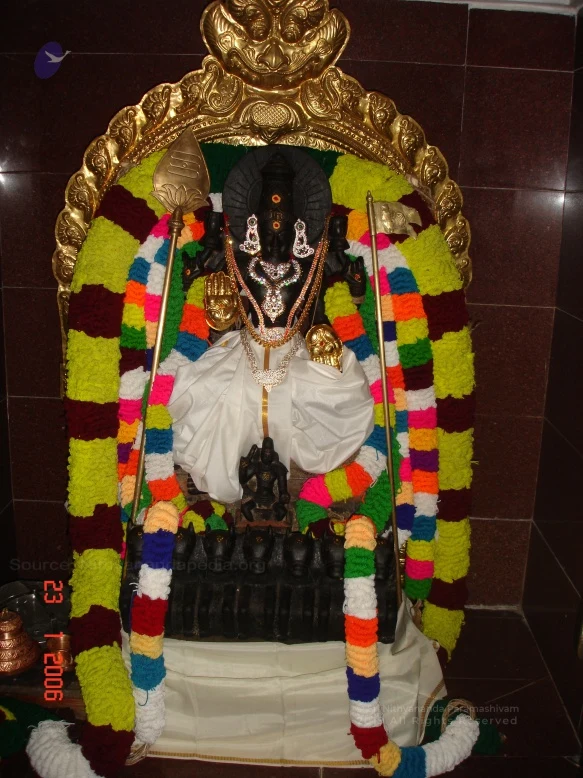
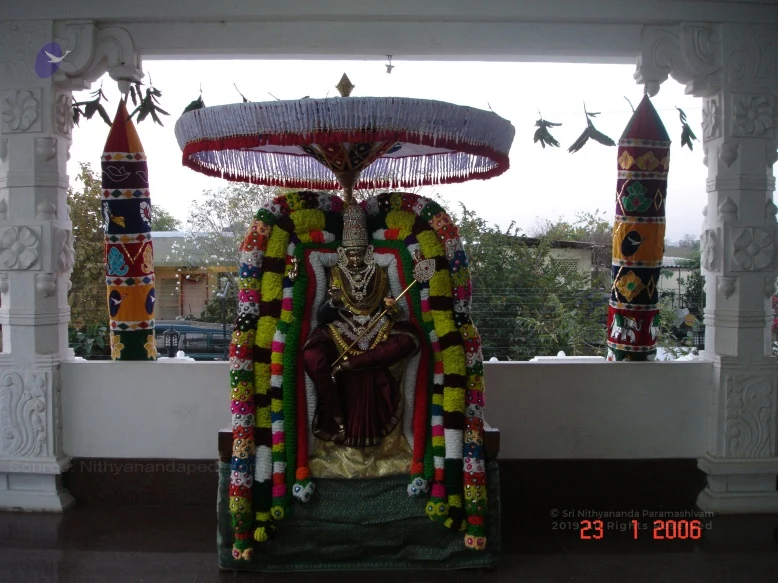
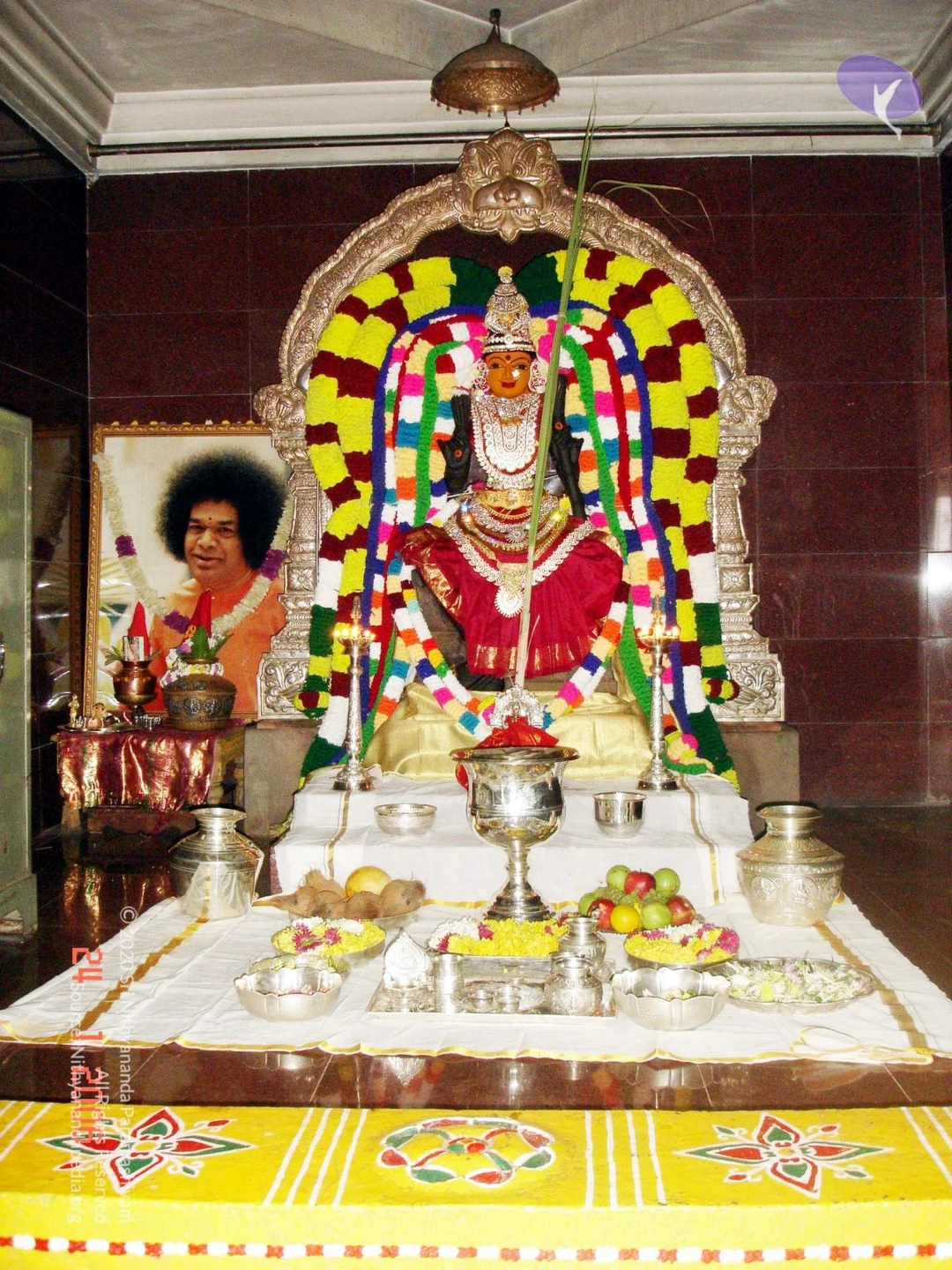
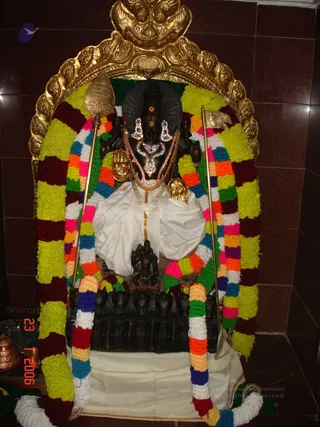
Scientist is a person who creates a formula to reproduce the same intellectual understanding which happened to him. Rishi is a person who creates a formula to reproduce the same spiritual experience which happened to him. The formulas created by rishis to experience what they experienced is what I call meditation techniques. The murti of Devi, the idol of Rajarajeshwari or the form of Rajarajeshwari is the expression or is the technology created by the great Rishi Markandeya. After his enlightenment he created the form which represents the technology to reach the same state in which he is living. You see the Devi, you can see she will be holding angusha in one hand, pasa in the other hand. Angusha means the power to handle the mind, not to control the mind. Be very clear, power to handle the mind. Controlling is something like a aggressive word, you are suppressing it. Handling is something if you want you handle it otherwise you put it out, put it. Angusha what she is holding in the right hand represents the power to handle the mind.
(04:54)
And pasa, this hand what she has got, it represents our control over all the energies or supremacy over all the energies. And the other hand she will be holding the flowers, that is thoughts, the sugar cane is mind. The different energies of your being when you are able to handle all of them, when all of them are under your control you become Devi, you become enlightened, you become the Rani of universe, queen of the universe. That is why we call her as Rajarajeshwari. She has not conquered others, she has conquered herself. She has gone beyond, she has gone beyond her mind and thoughts. She is able to handle her mind and emotions. It’s a philosophical representation from Markandeya rishi. Markandeya is the rishi who created the technology of Srividya and the form of Rajeswari. When you learn the technology you will be able to relate with the form, you will be able to relate with that god, you will be able to relate with that name. Practicing that technology is what I call meditation. So this place will be the place where the technology also will be shared with every human being, where the technology also will be given to everybody. So I request to you all to learn the technology to relate with this higher energies and experience the eternal bliss. Let you all be in, become one with and radiate eternal bliss, Nithyananda. Thank you.
(07:29)
Participant: Swamiji “How an individual can contribute for a world peace?” HDH: Nice question. How an individual can contribute for the universal peace, world peace? First thing, stop the domestic violence. We always speak about the violence which is happening in the country all over the world. But we forgot an important thing the domestic violence. See, we continuously blame there are so many terrorists, so much of terrorist activities going on. What to do? What to do? What to do? Buddha is a expression of collective positive thoughts. Same way a terrorist also is an expression of collective negative thoughts. Each one of us contribute to the collective negativity. The thoughts are the negative waves which we create in our house. When you fight with your wife or husband, mother in law, father in law, these thoughts accumulate and it expresses itself naturally in a higher level. So according to Me the transformation has to start from the first step. It should start from the house. I give emph...I give more importance to domestic violence than violence in the country. One more thing violence in the country, even if you or Me talk about that we won’t be able to do anything directly.
Usually human beings are very happy about talking things in which directly they can’t do anything. 😊 Whole day you can see people sitting and talk, sitting in the tea shops and talking about weather. Can they do anything? No. they can’t do anything. They are very happy about talking something about which they can’t do anything. Talking about weather and talking about violence is one and the same; because both we can’t do directly anything. We can do something directly - that is we can stop domestic violence. we can stop the violence in the houses. So try to bring peace in your house. That’s the only way. I personally believe the individual transformation is the only way for the universal peace. Just stop contributing negative thoughts. That’s enough. Peace is already there. We don’t have to create peace. Peace is the... peace is the nature of the nature. The nature of the nature is peace. It is we who are creating violence. Just stop creating violence, peace will, peace is already there. We don’t even have to create peace. Just stop being violent. Stop the negativity in the level of the house. That’s the best way to contribute to the universal peace. Thank you.
(11:00)
Participant: Religious fanaticism is prevailing in the society, how to overcome this religious fanatics? HDH: Religious fanaticism. 😊 See, when you start working towards achieving the state of Krishna, when you start towards achieving the state of Christ, you will not have fight. Instead of giving importance to philosophy, if you start giving importance to personality you will create problem. You will create trouble. The only way to come out of religious fanaticism is, start giving more importance to philosophy. Philosophy behind the masters, not the form itself. If you see the teachings of Krishana or the teachings of Christ - is one and the same. But when you start giving importance to personality you disturb and distort the teachings of the great masters. You disturb and distort the teachings of great masters. See, when you say my religion as big ...actually you wanted to say I am big, I am a big person. You can’t say that directly it will be too ugly, it will be too obvious. So we want something in between, so we say my religion is big. My language is big. My country is big. My region is big. Just we wanted to show our ego; you identify yourself with something and you start creating all troubles for yourself and for society. If we give importance to Gita there will not be any problem. The moment you start giving importance to the form Krishna you will start having all problems. All worship of forms should lead you to formlessness. All these things should be an inspiration to achieve the state of that enlightened being. When you start working towards the consciousness, experiencing the state of the enlightened being, I think the religious fanaticism will disappear from the planet earth. It’s a big job but we have to do. 😊 Thank you.
(13:35)
Photos:
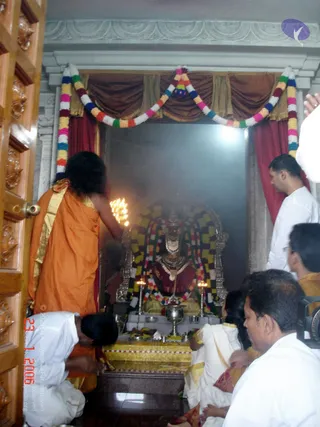
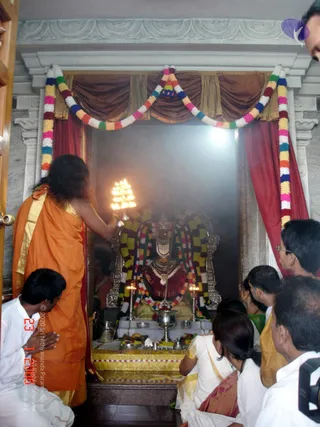
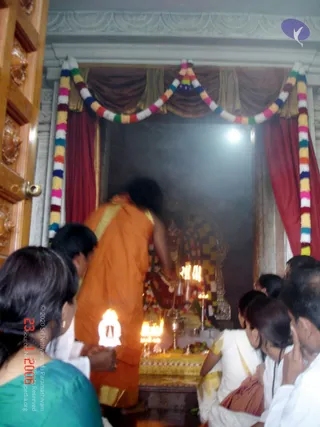
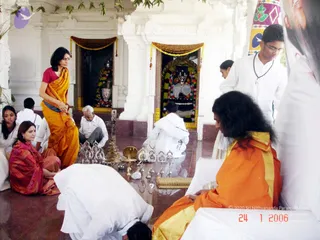
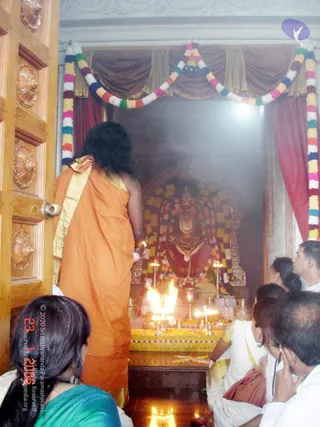
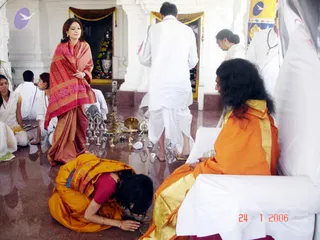
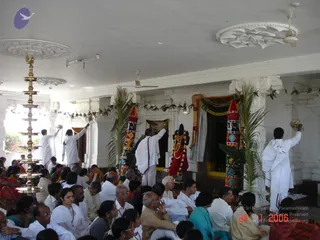
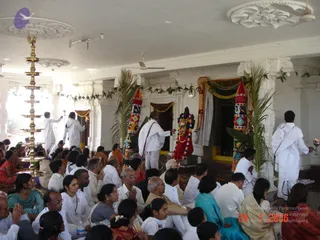
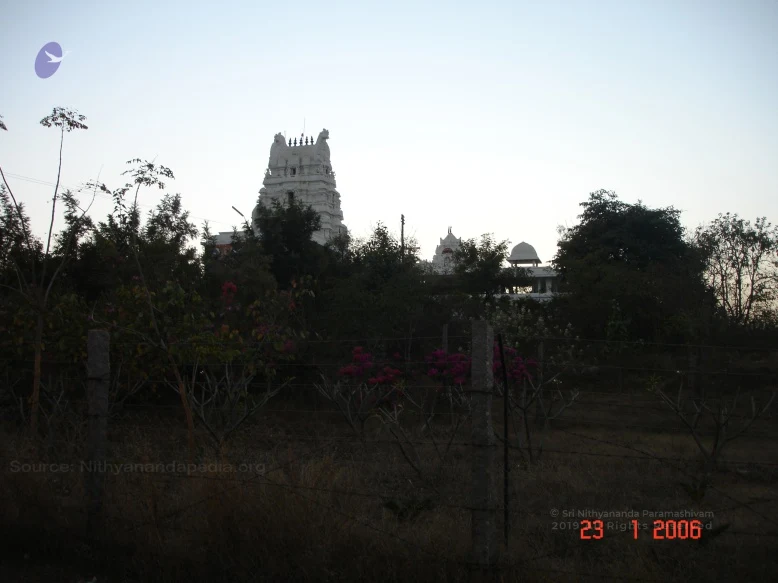
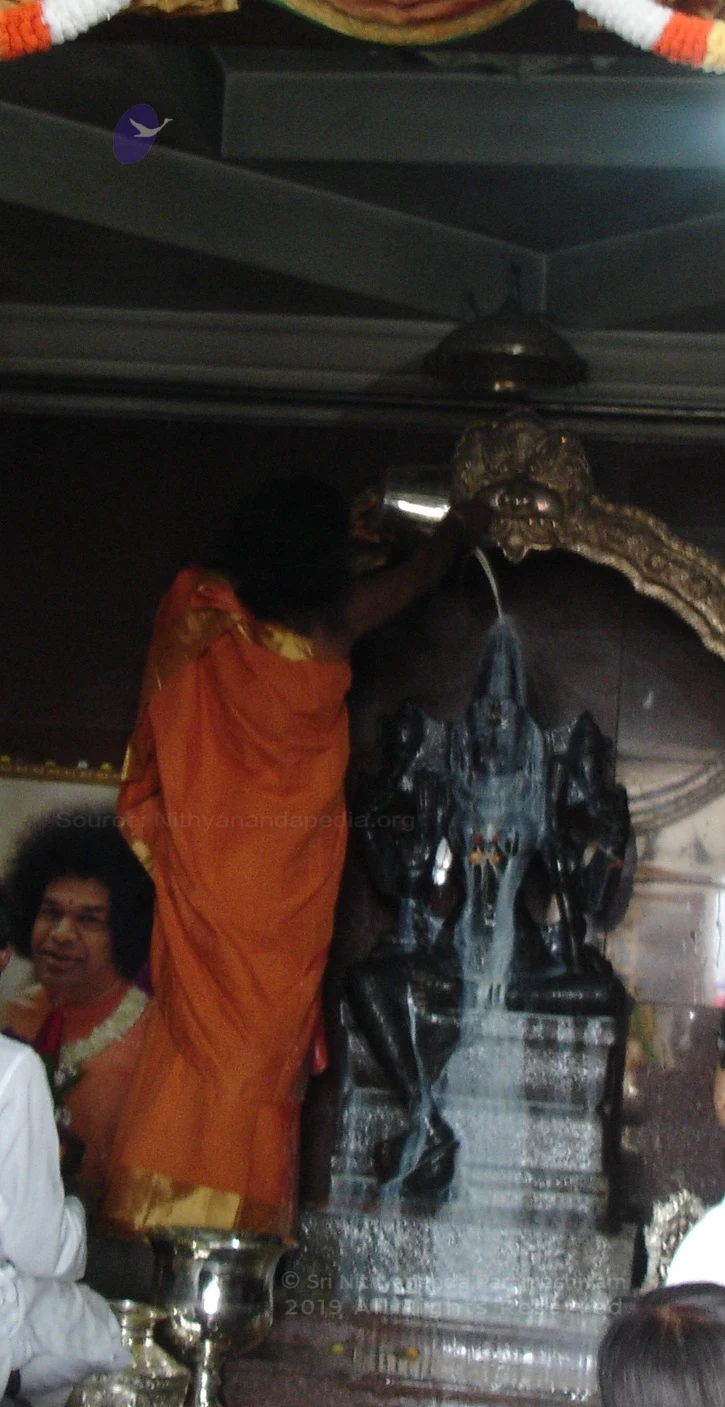
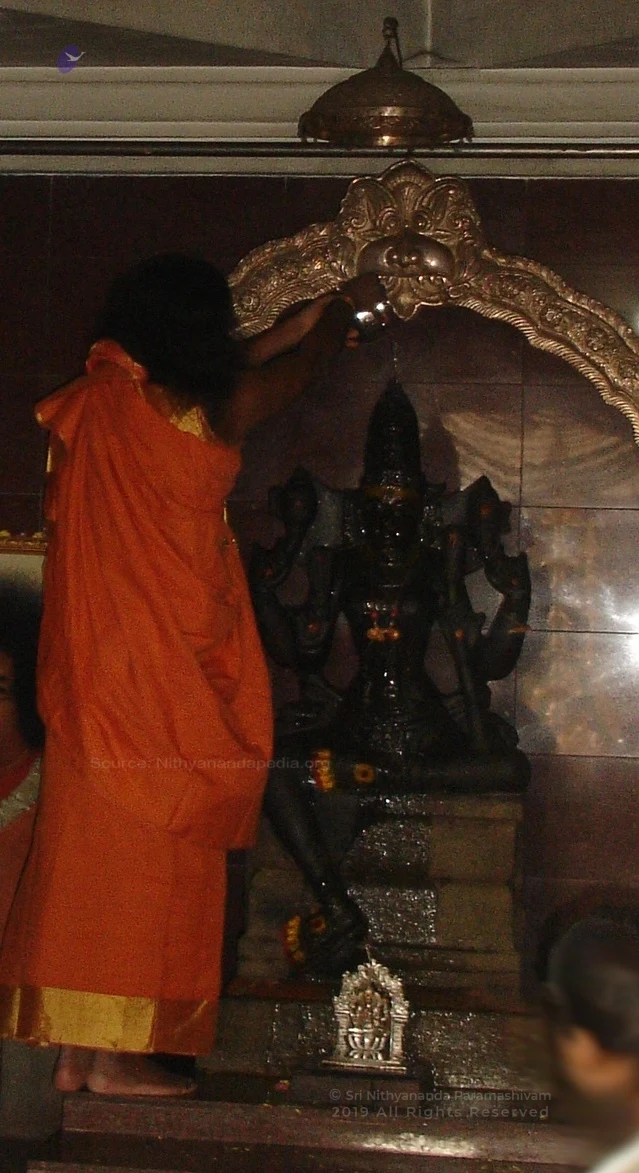
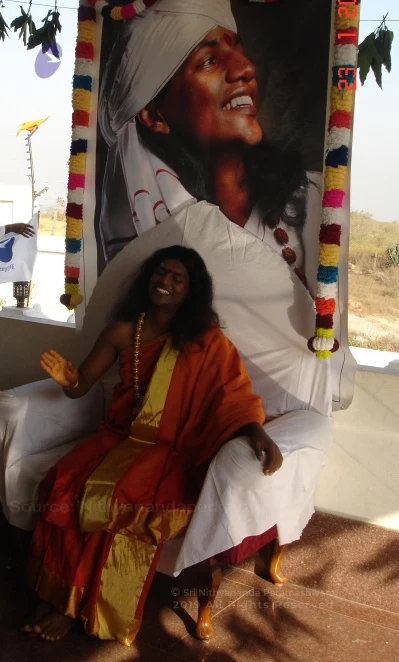
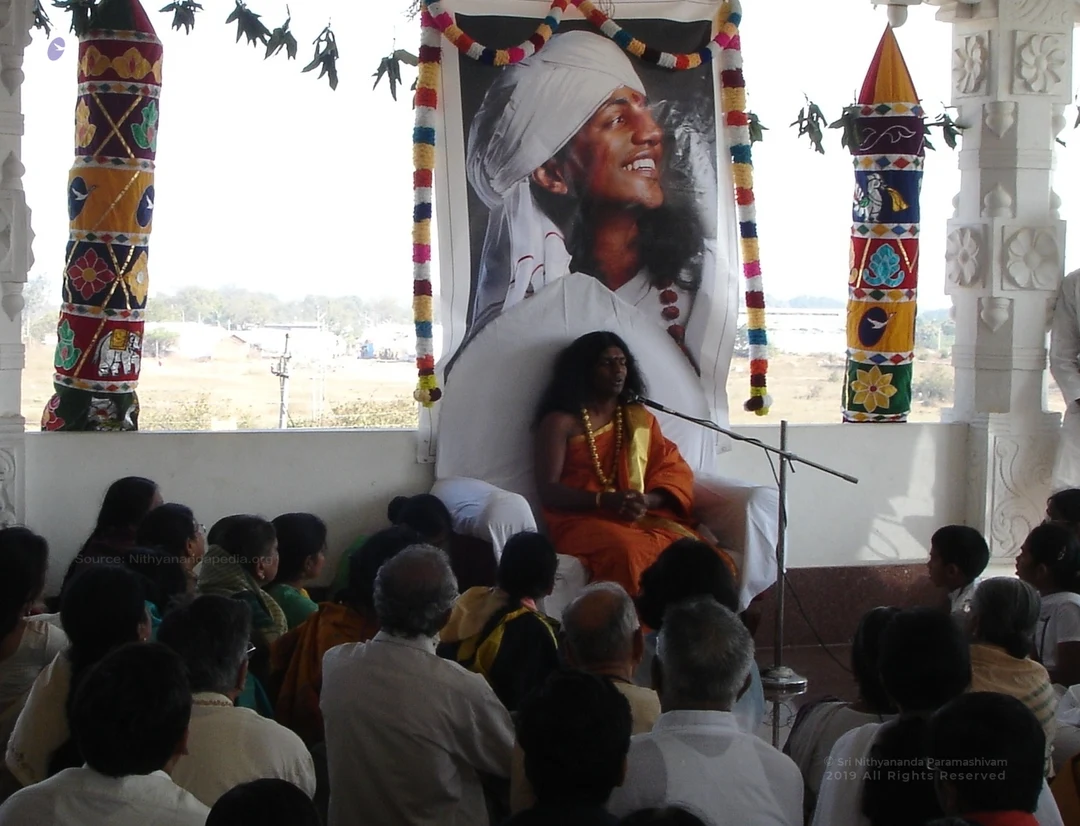
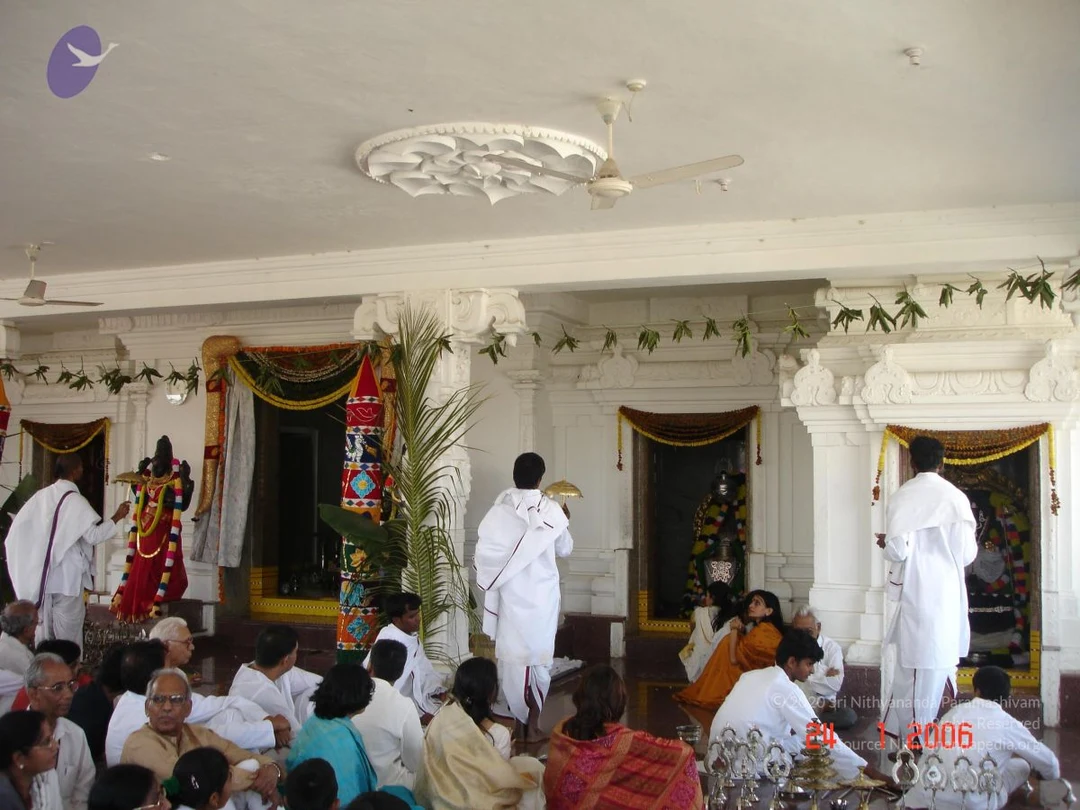
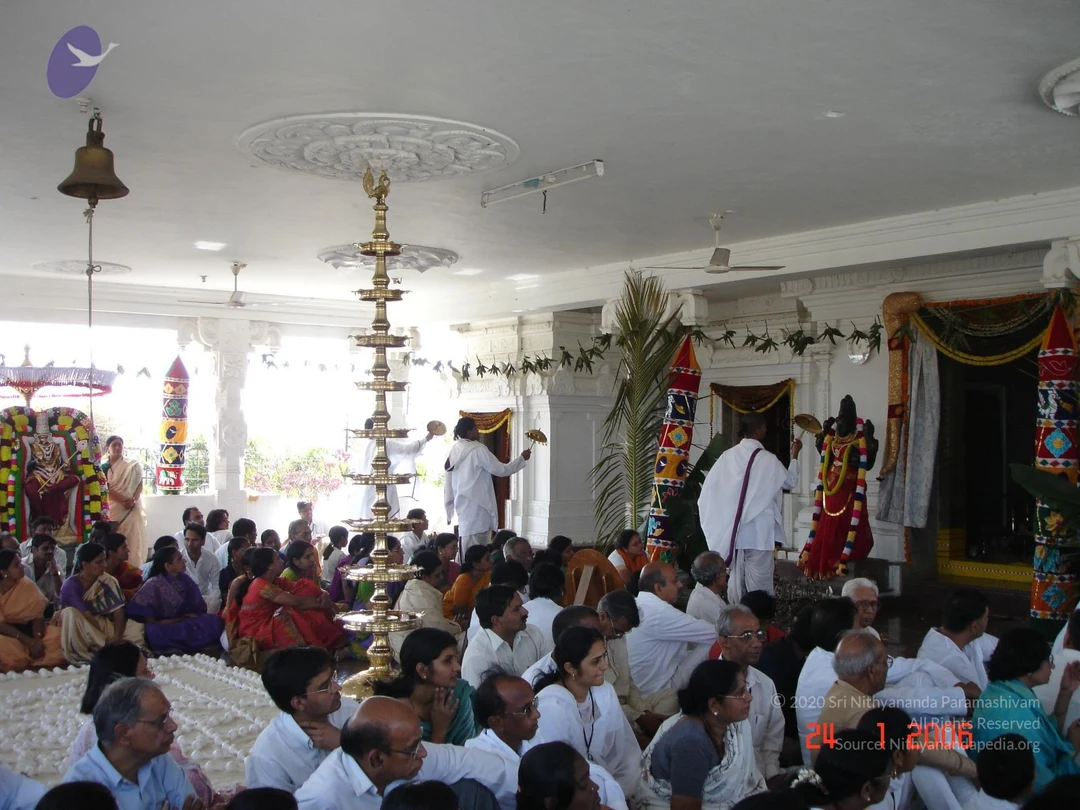
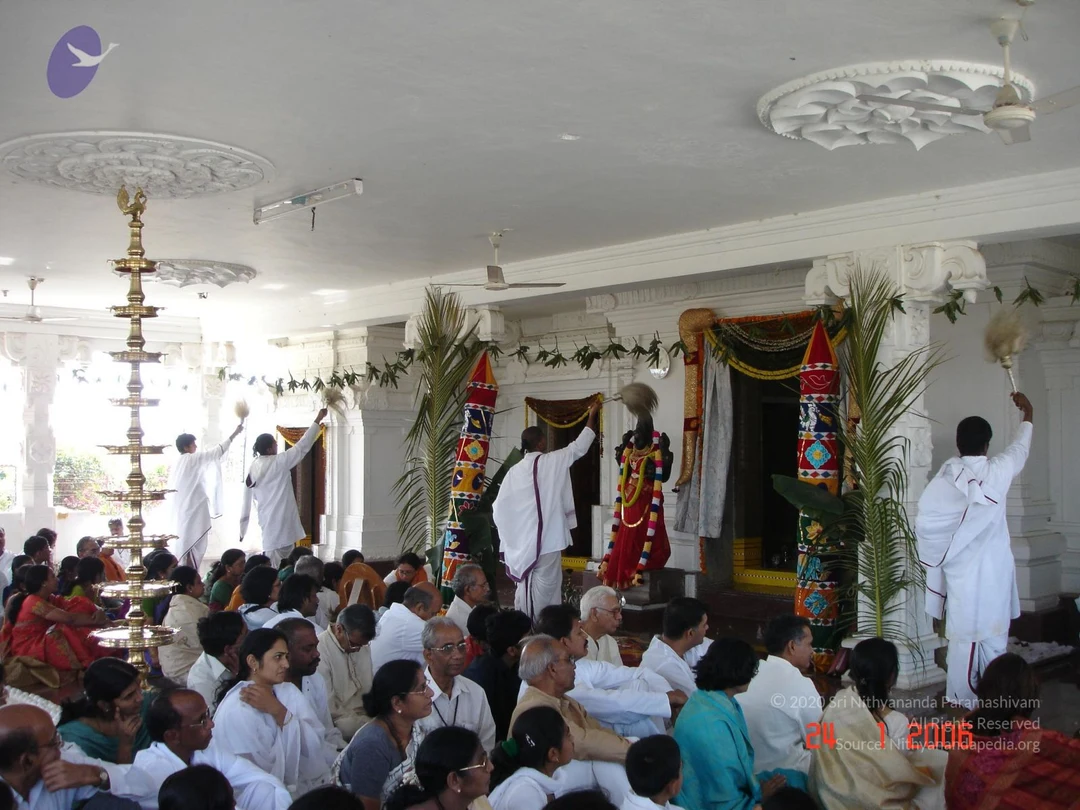
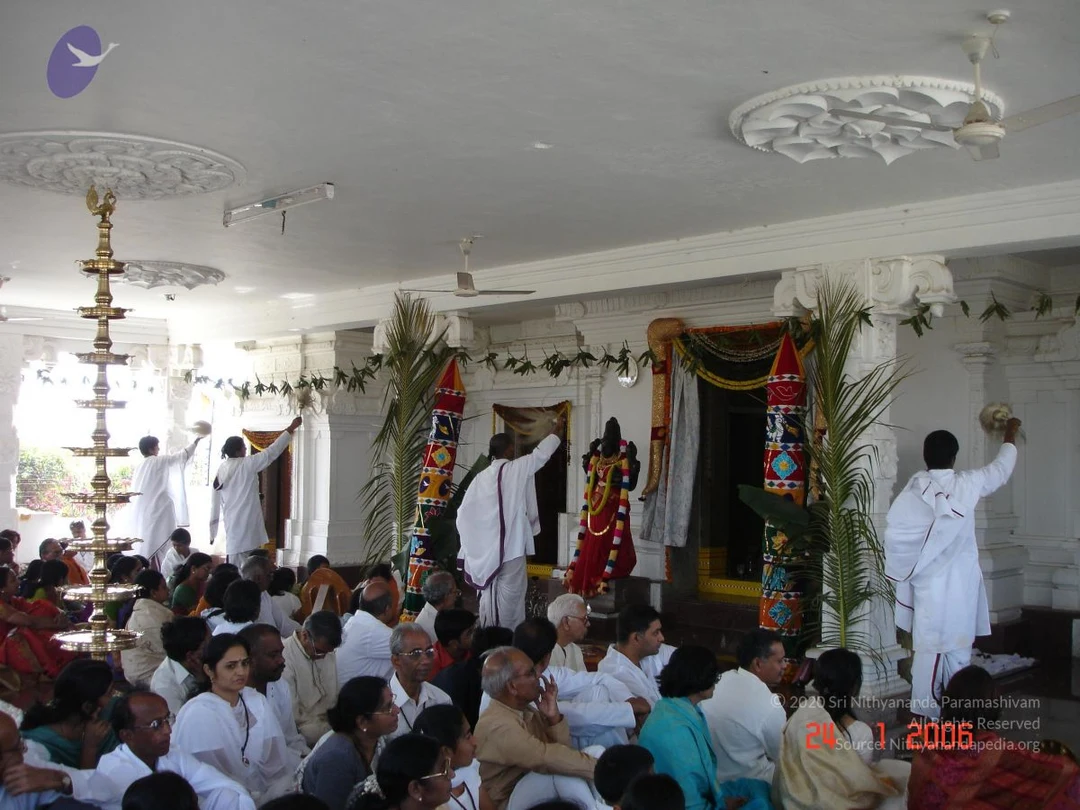
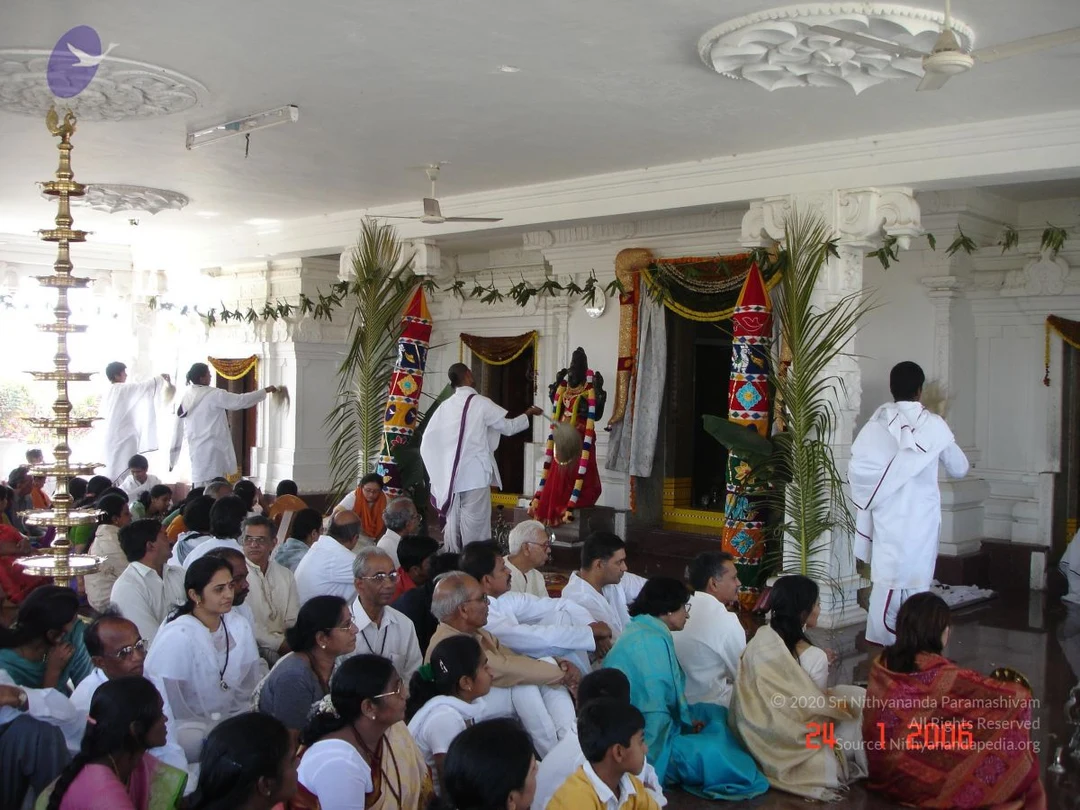
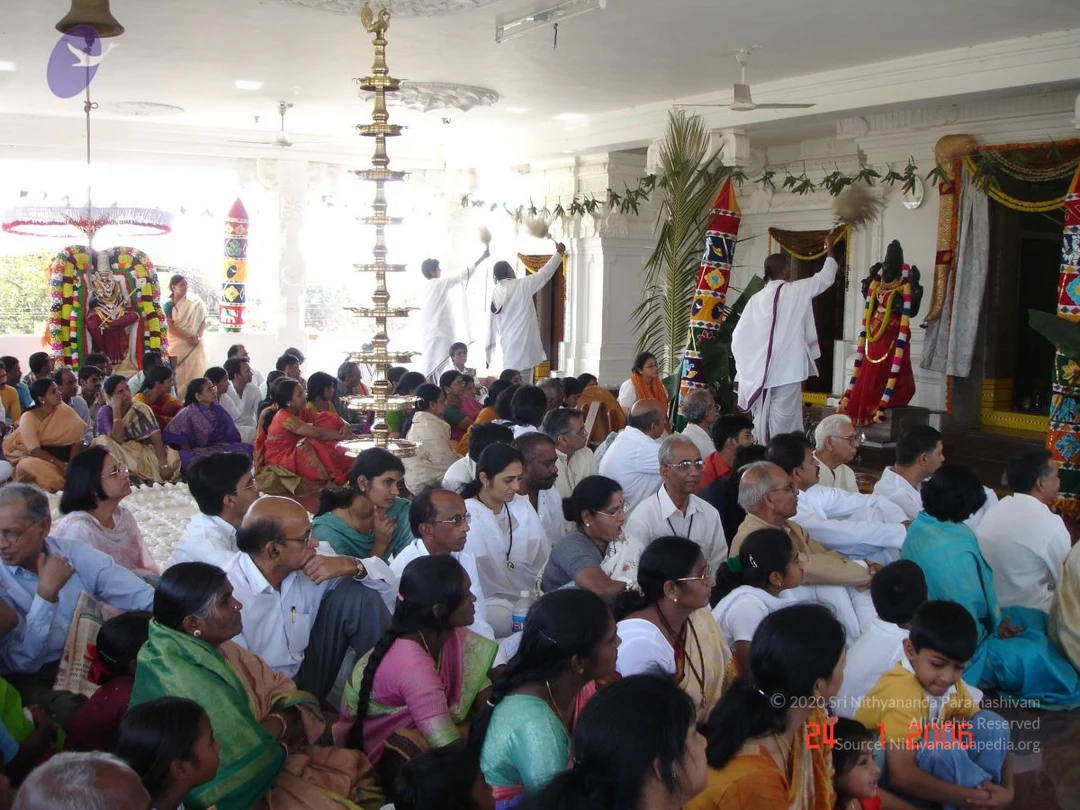
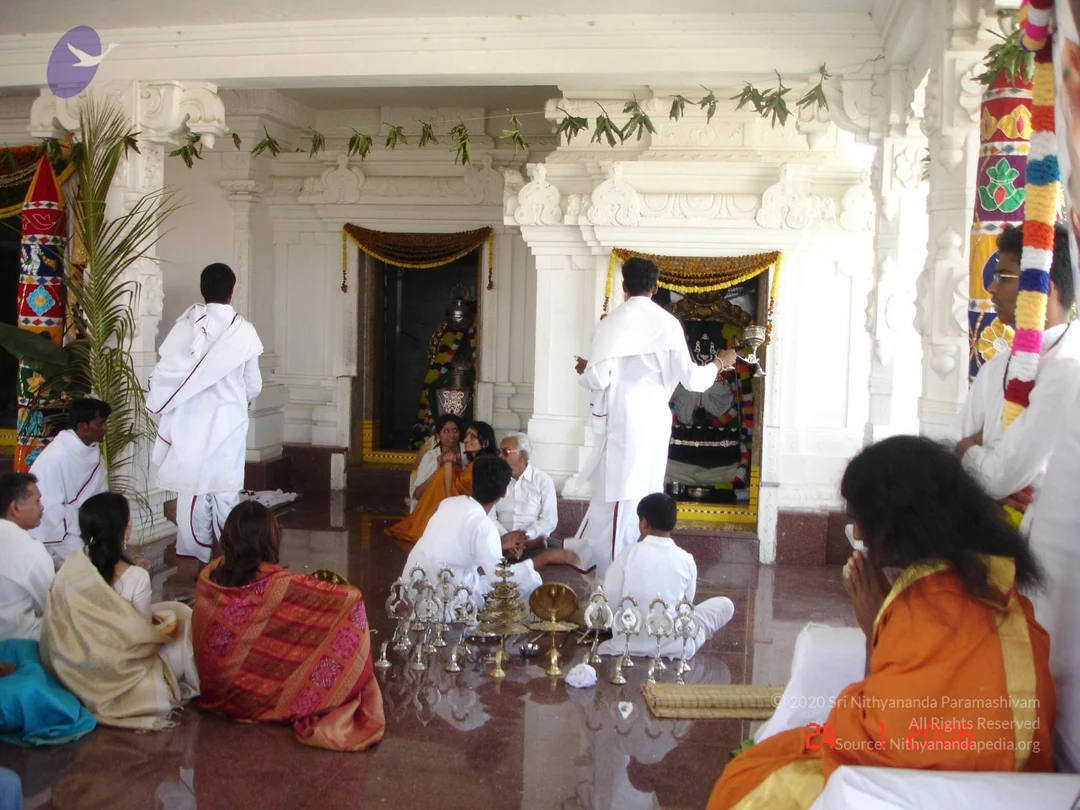
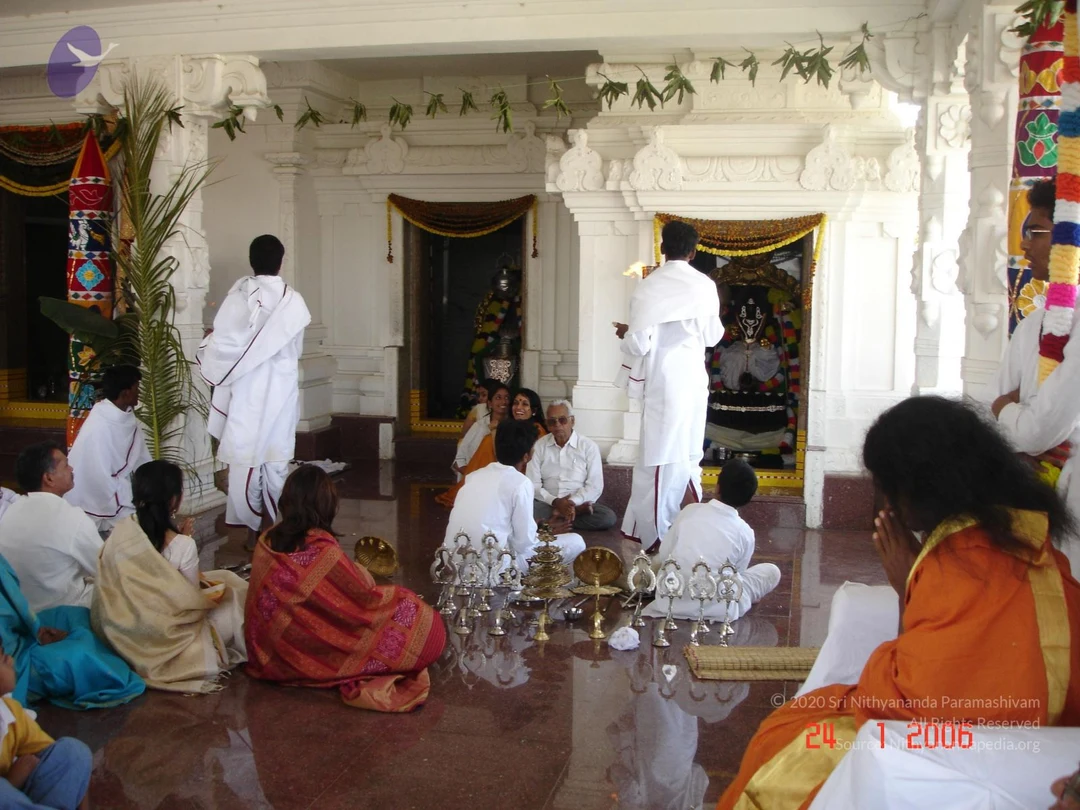
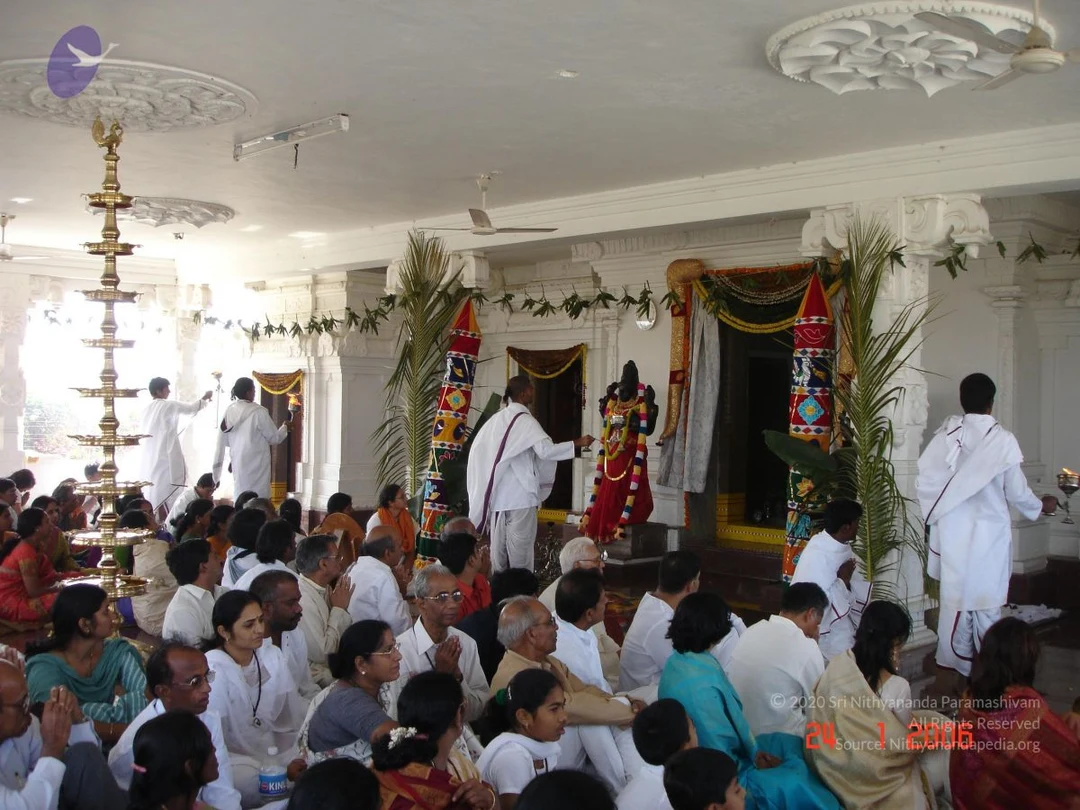
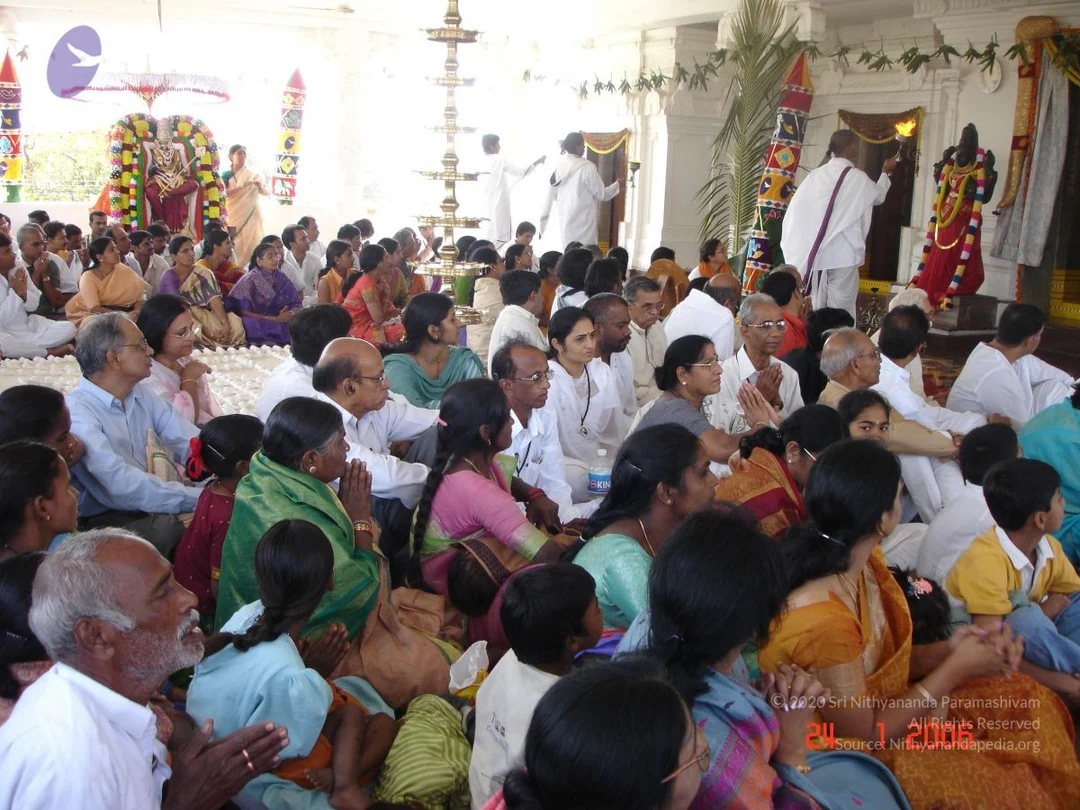
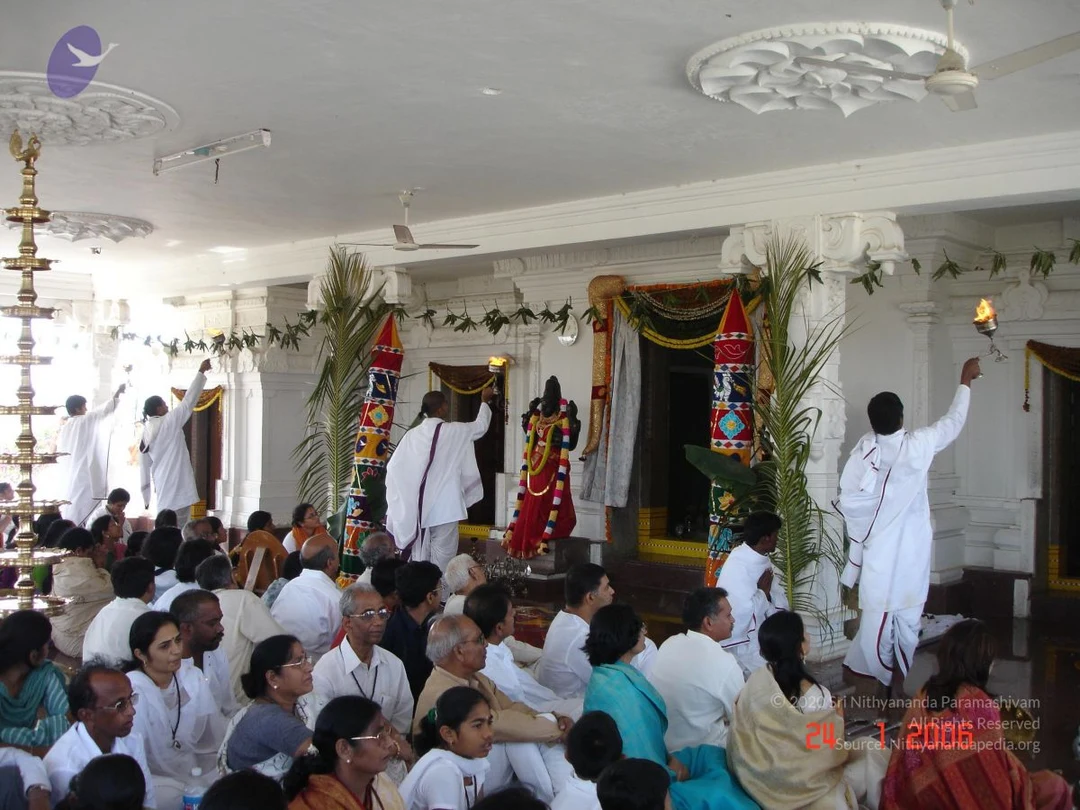
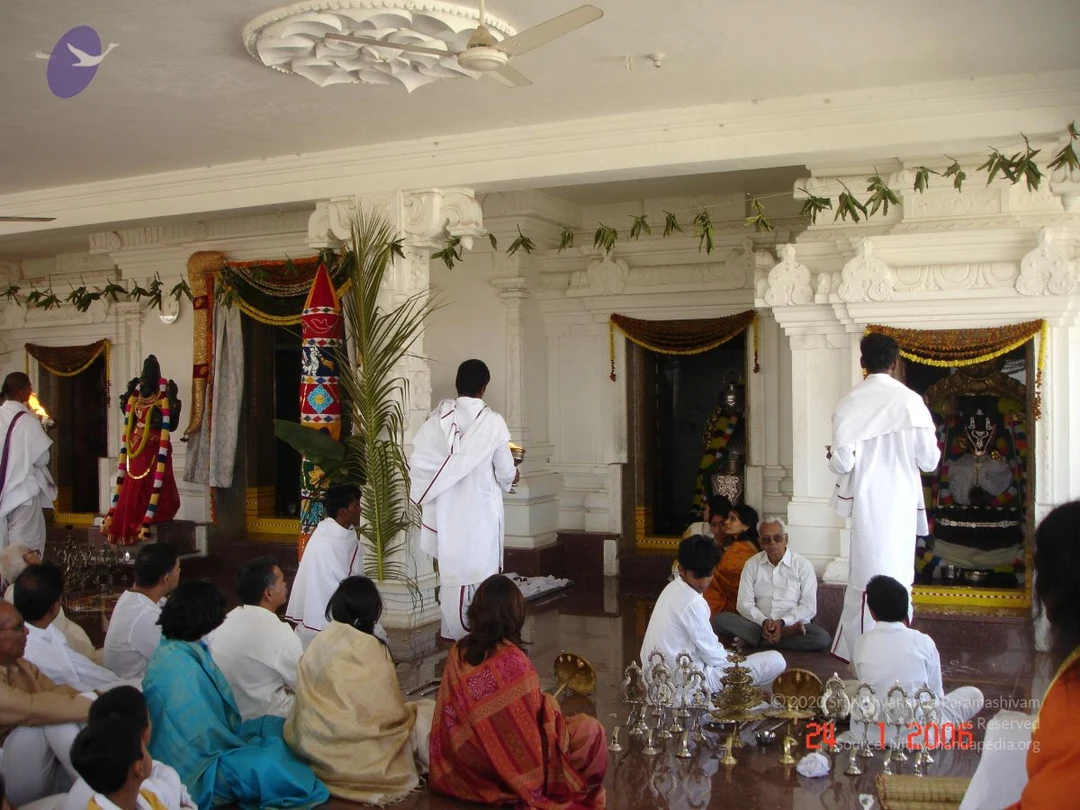
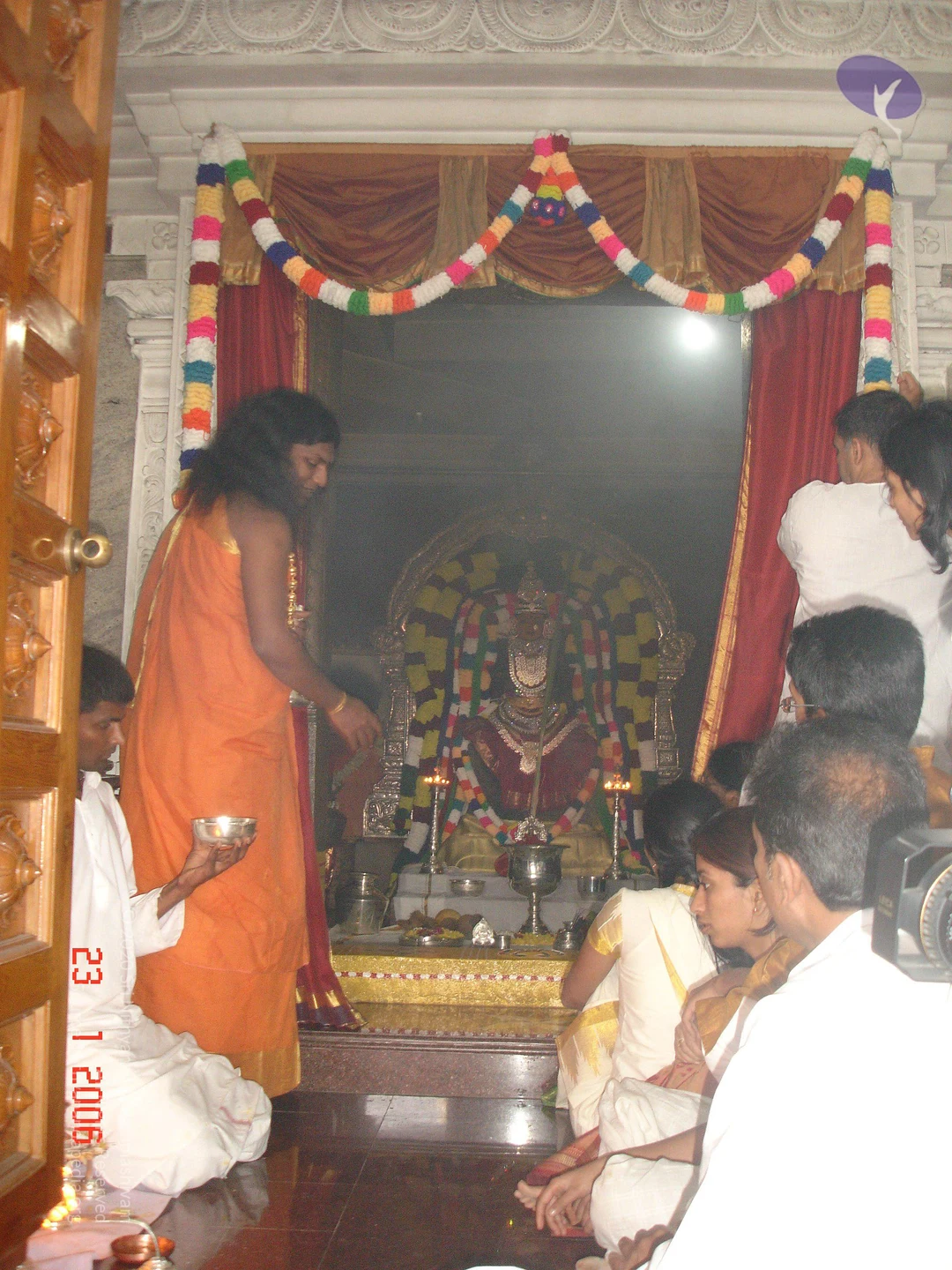
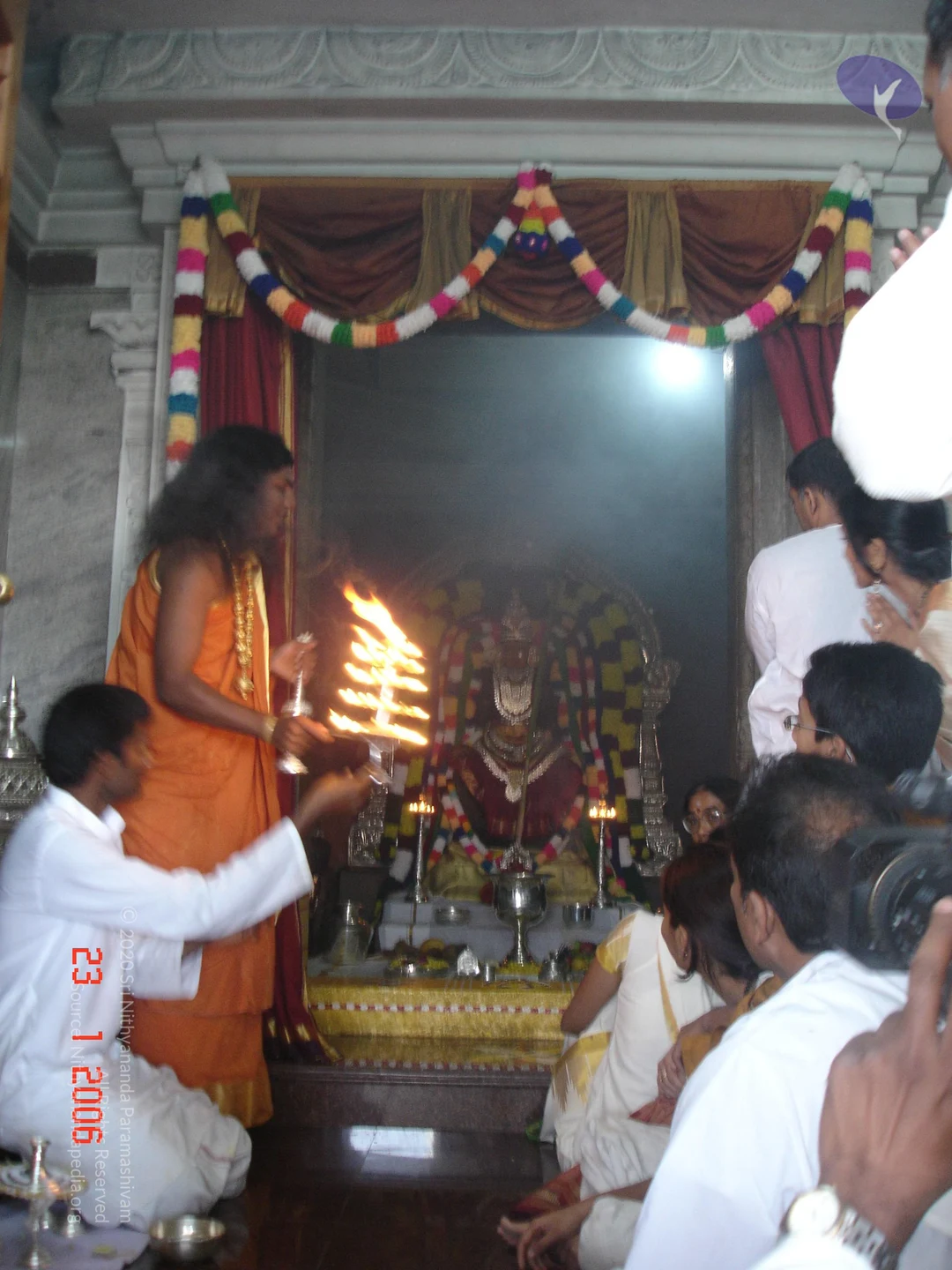
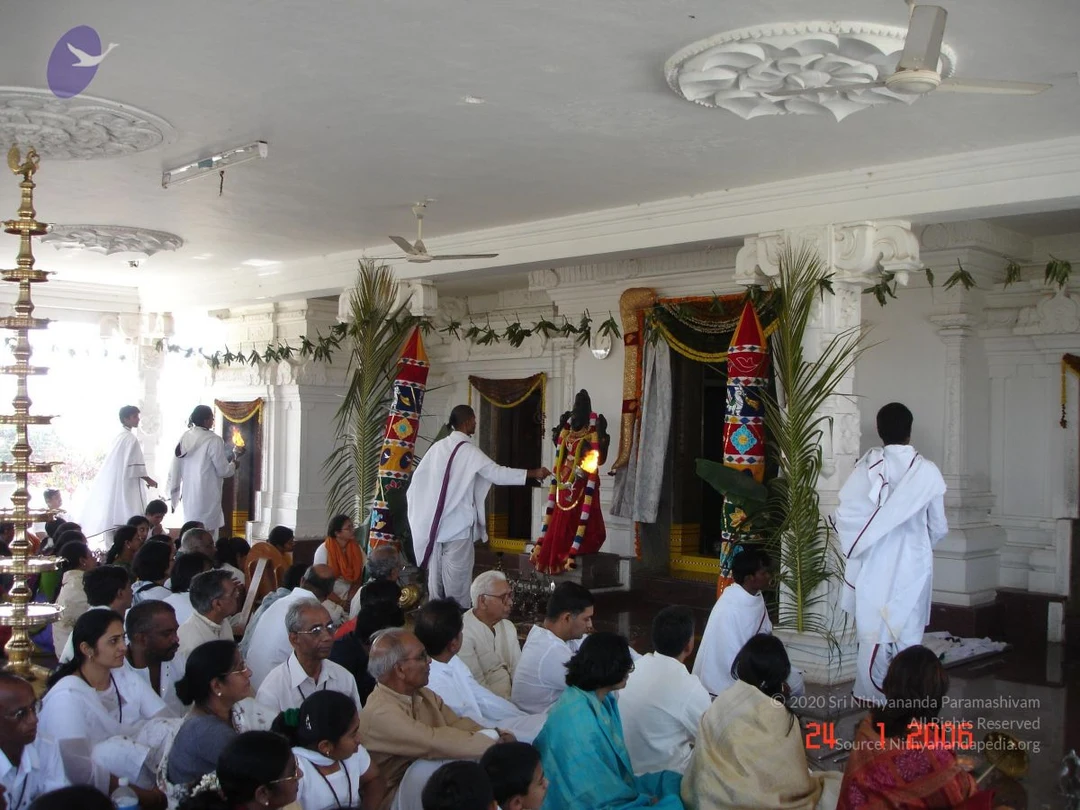
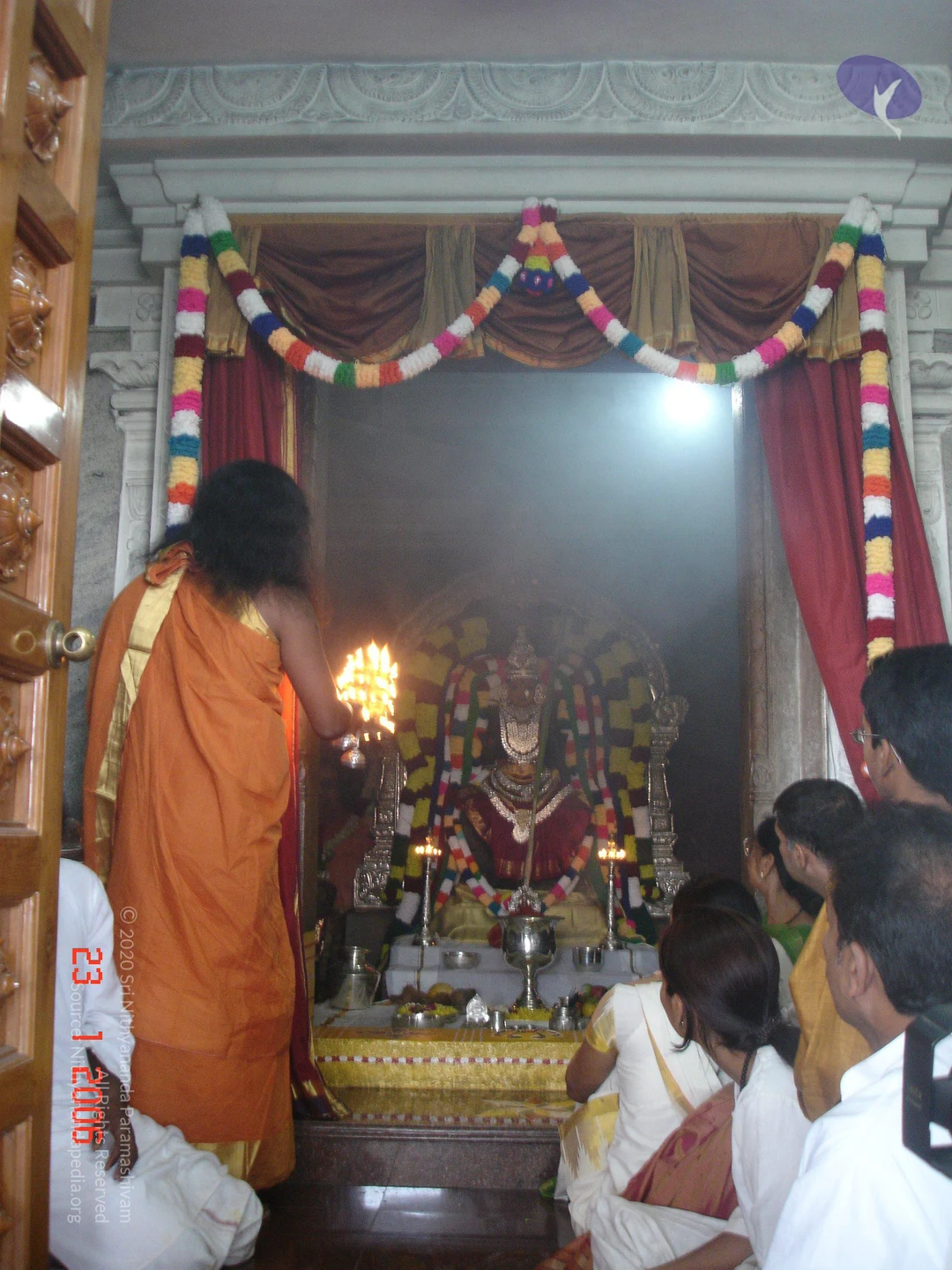
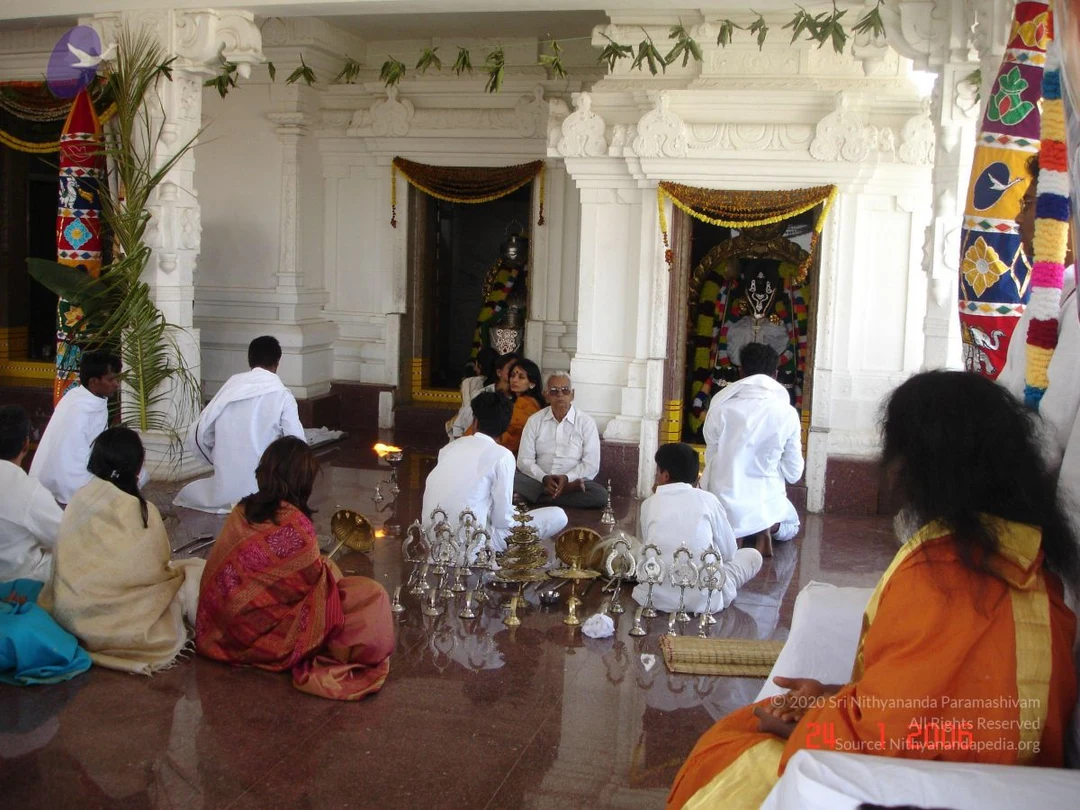
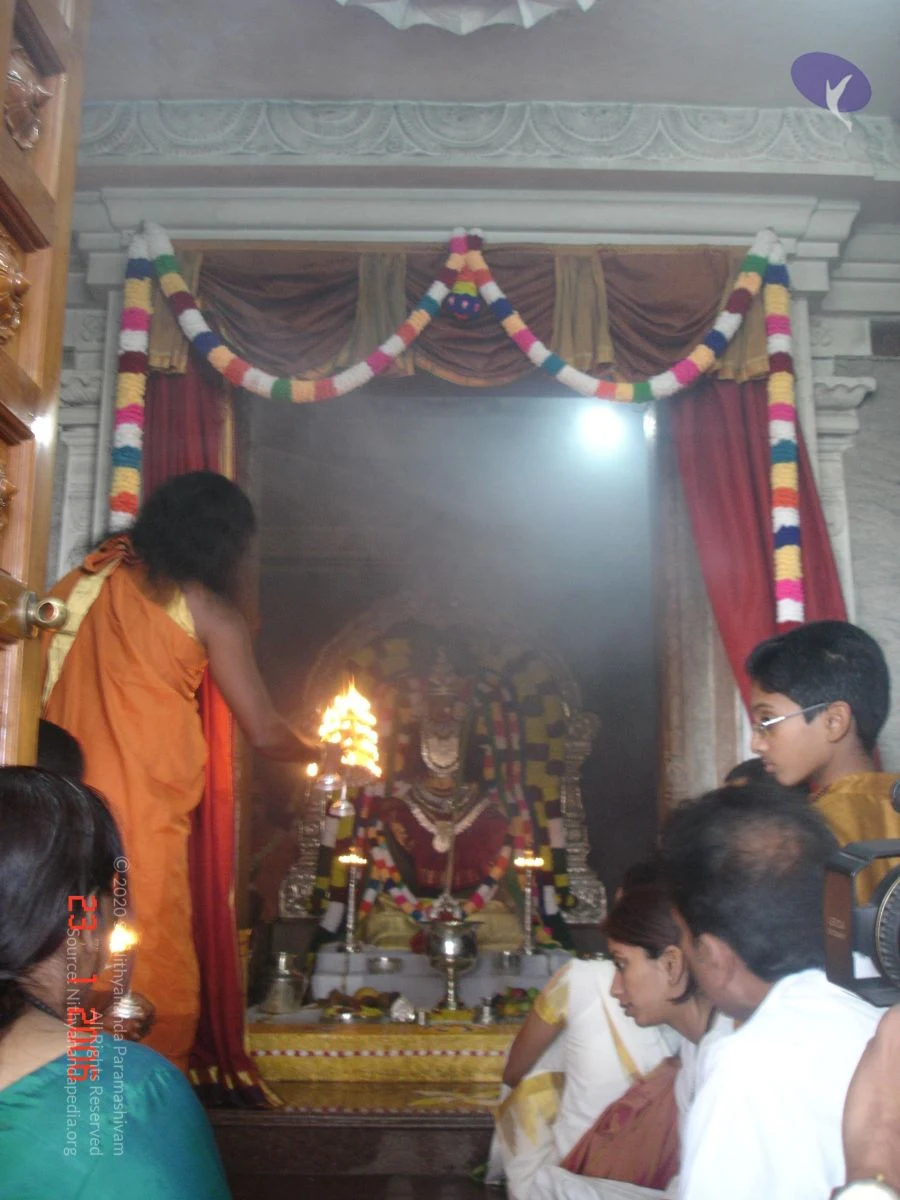
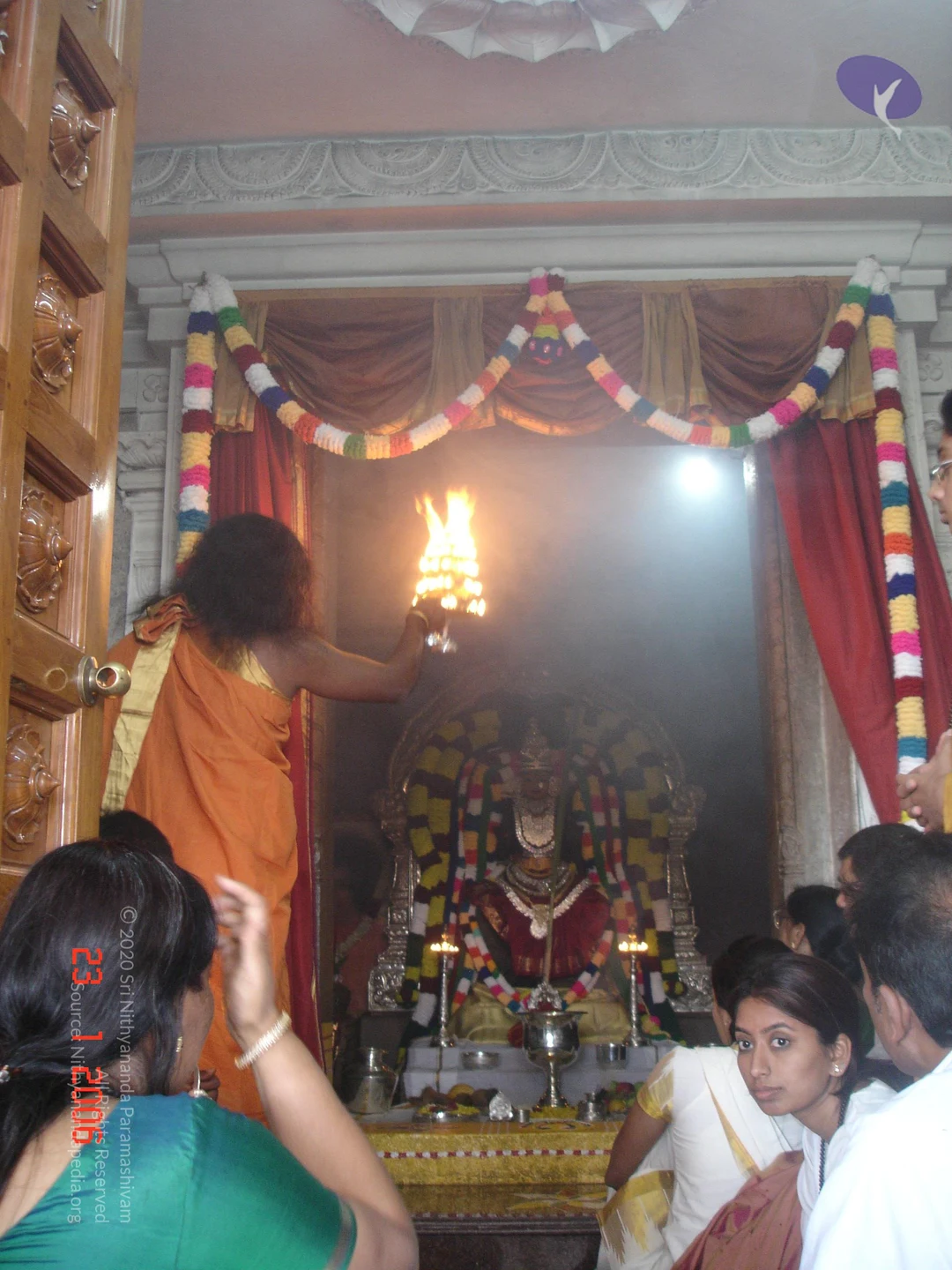
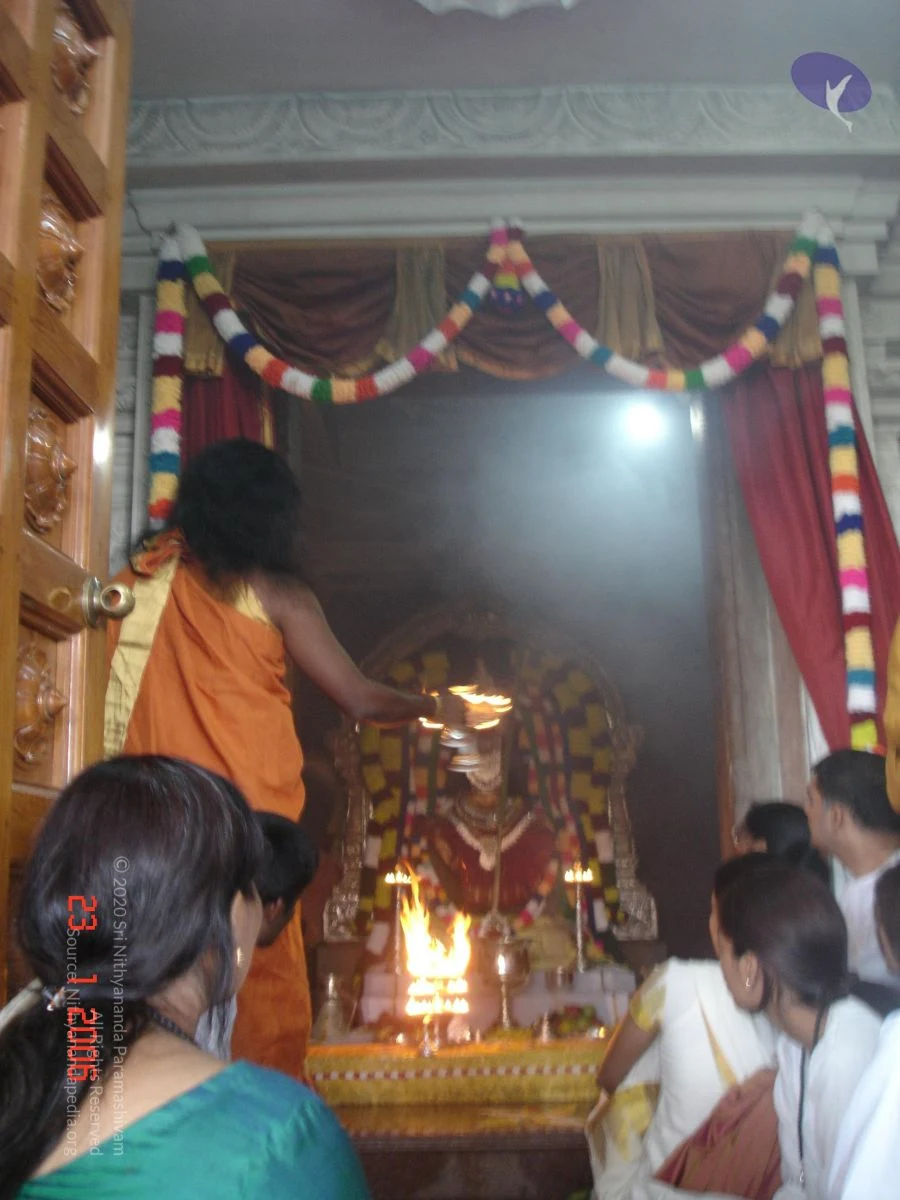
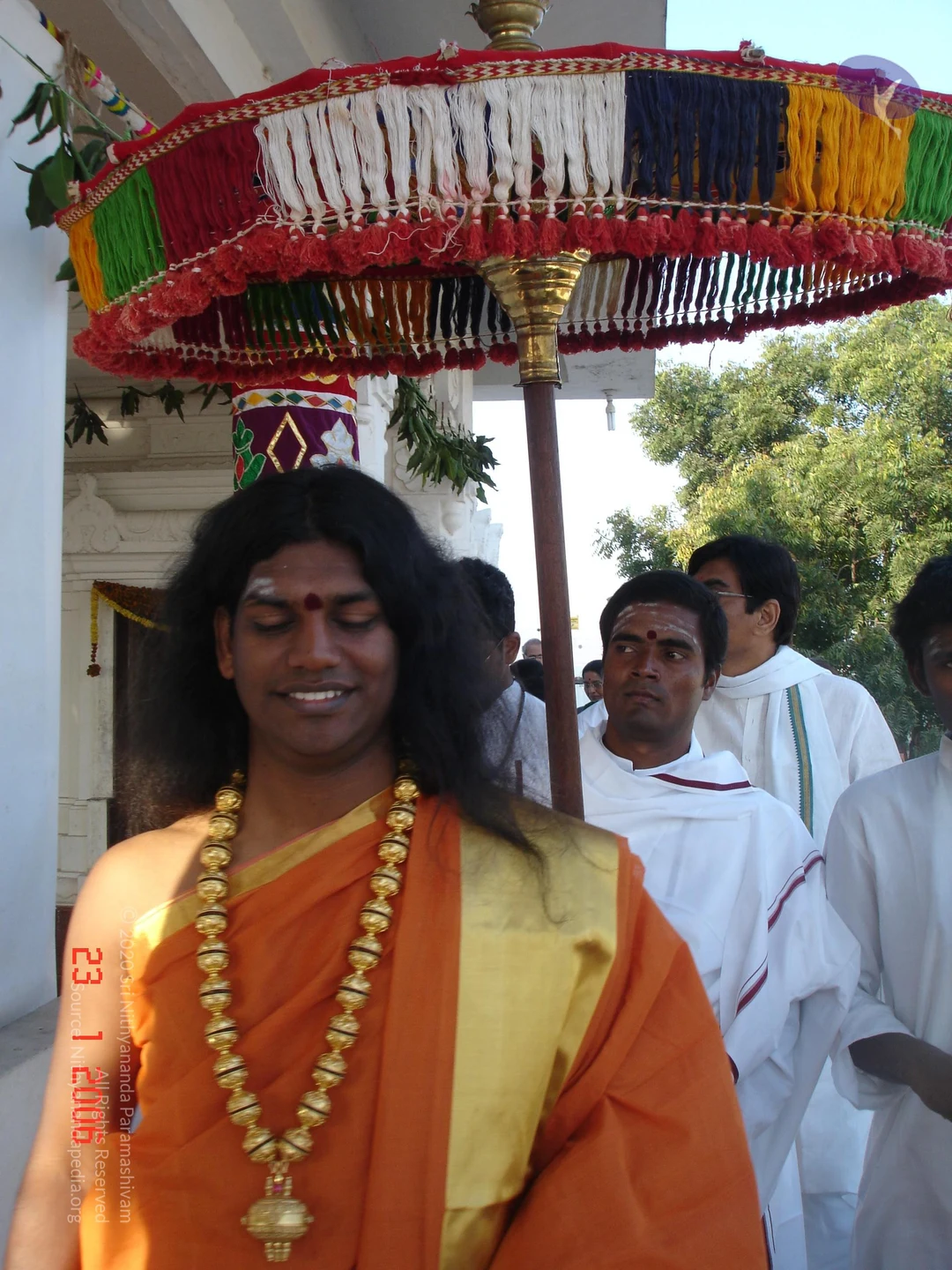
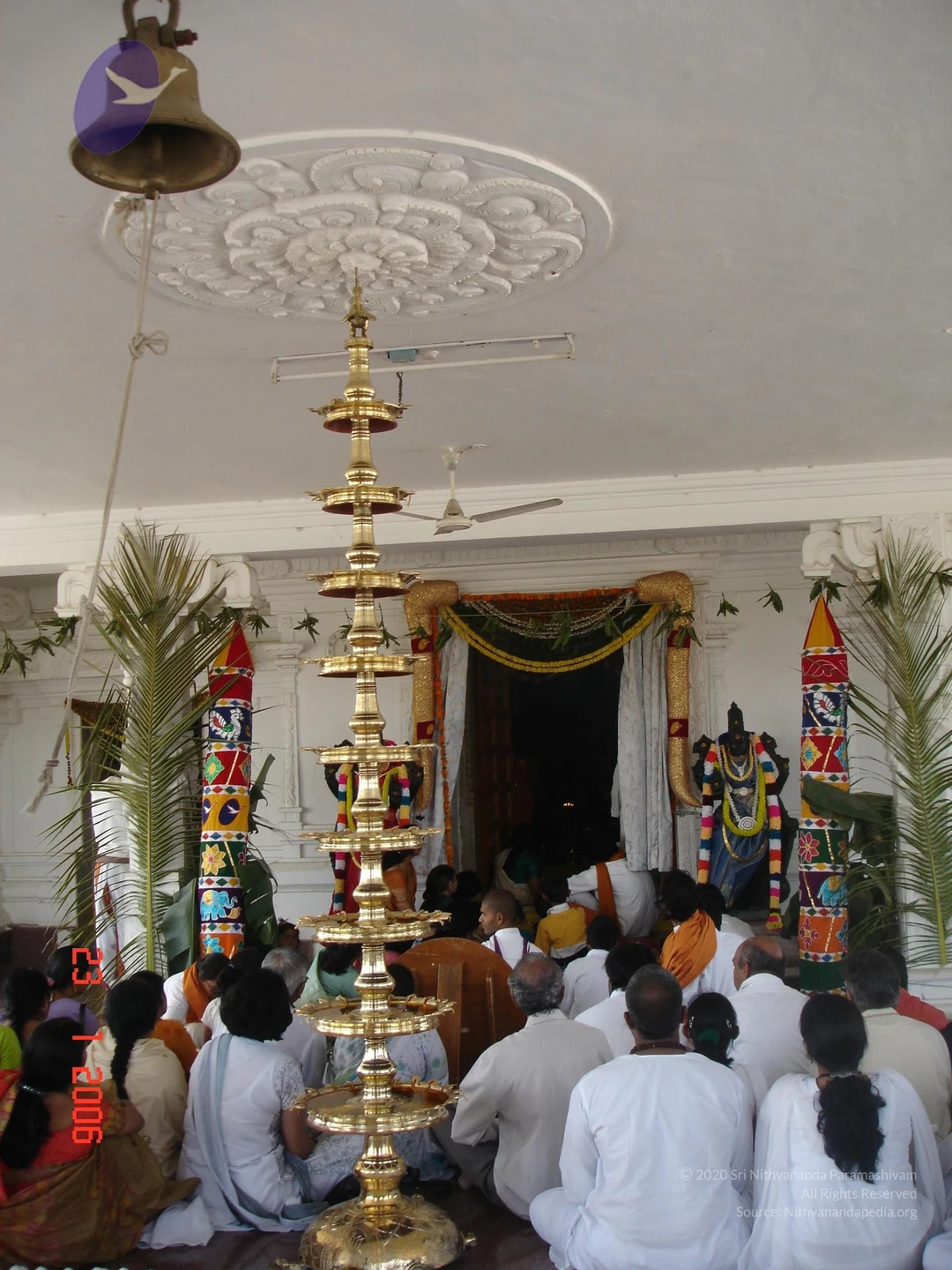
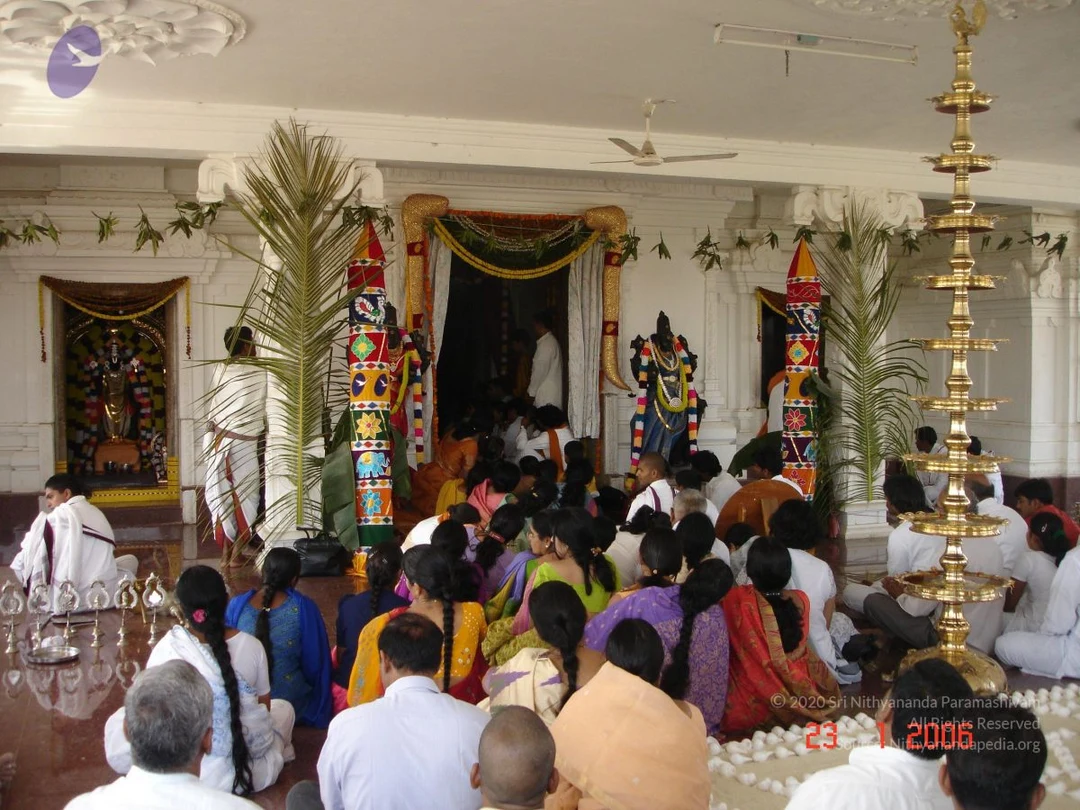
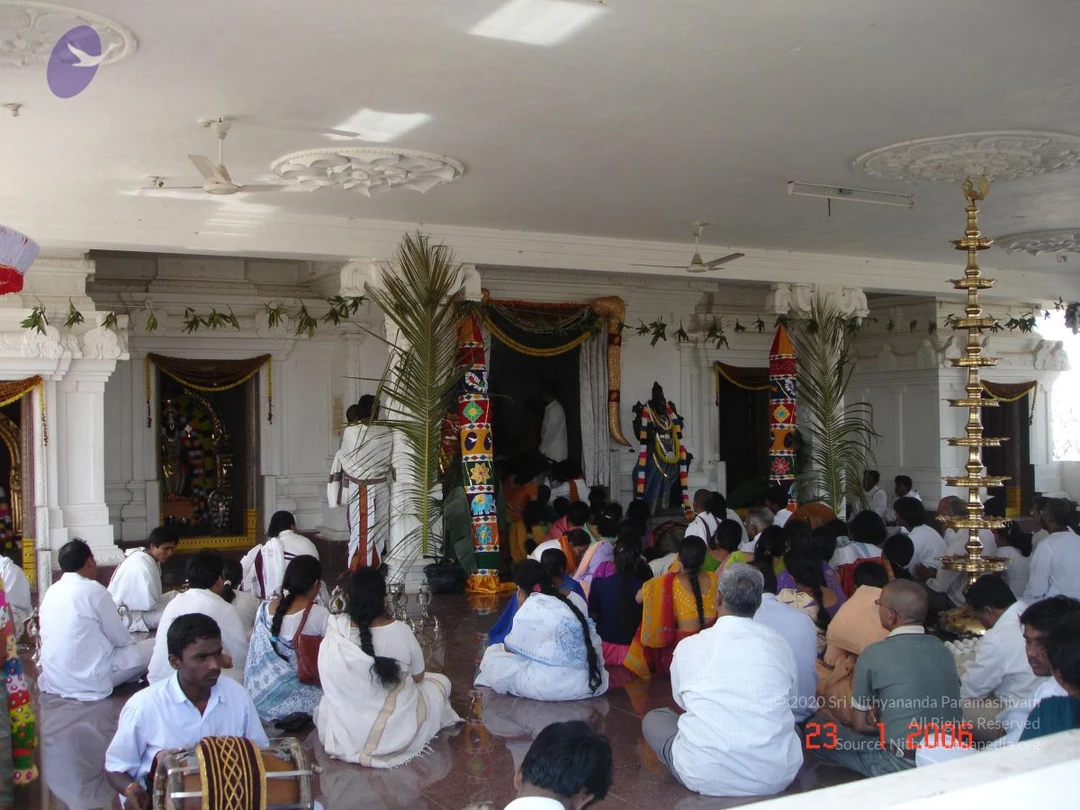
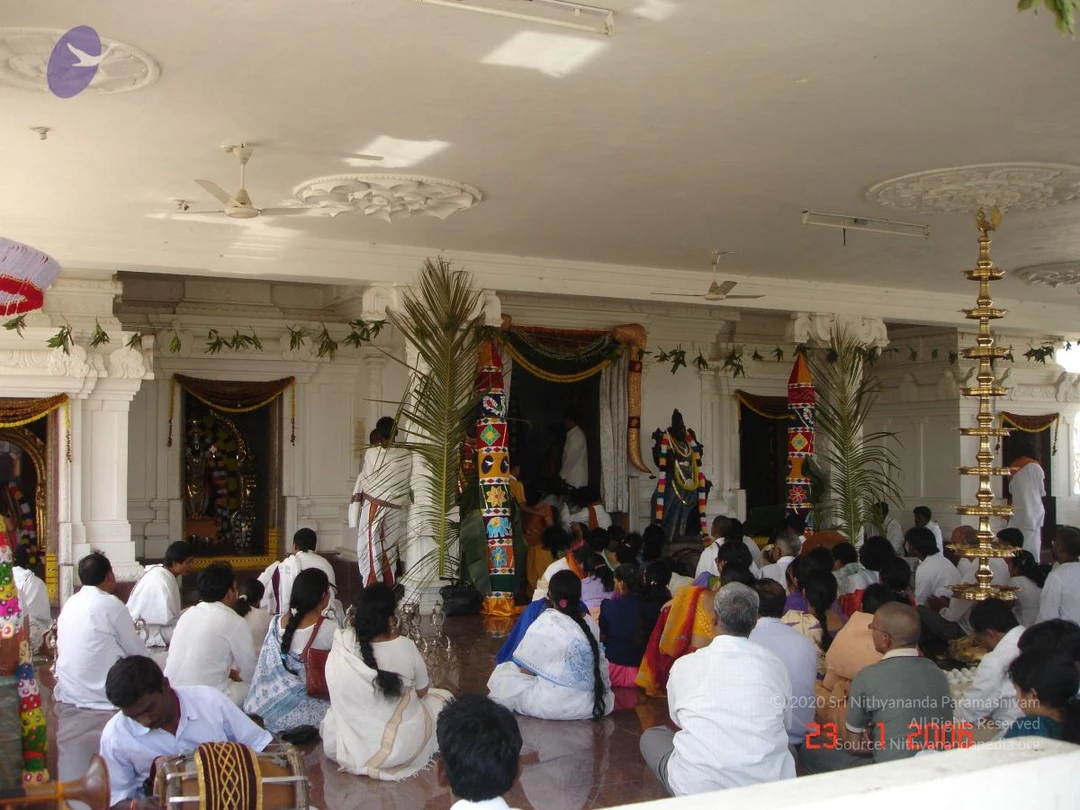
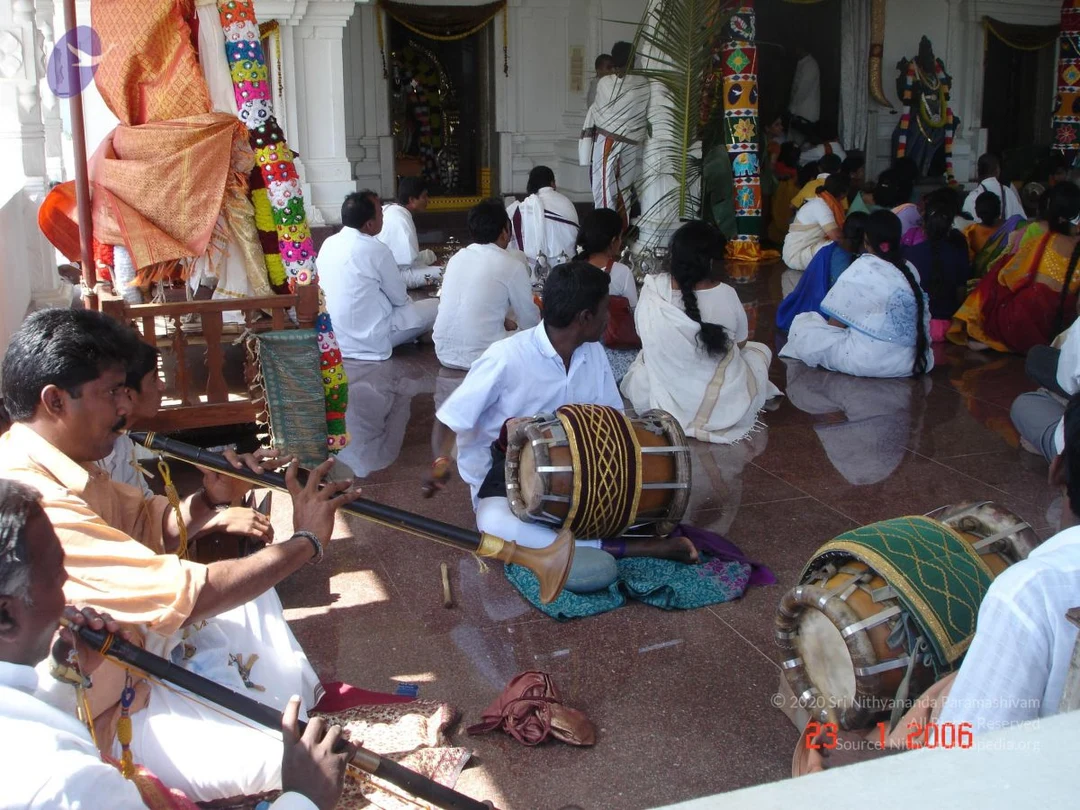
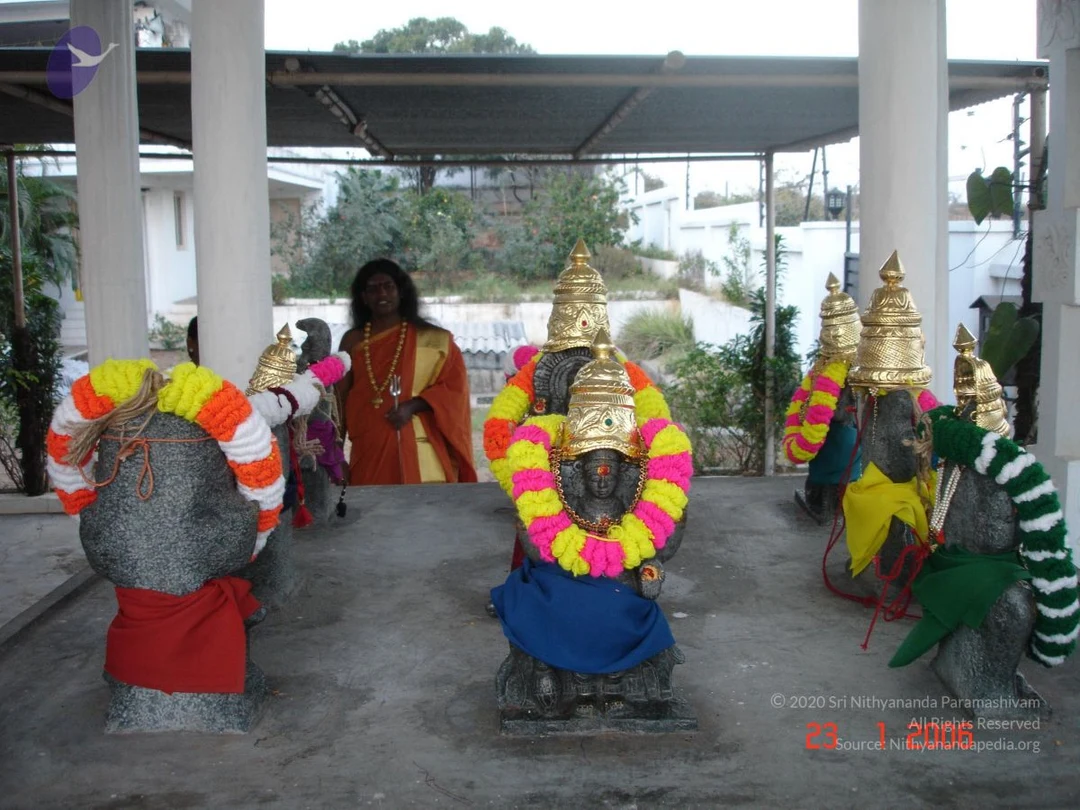
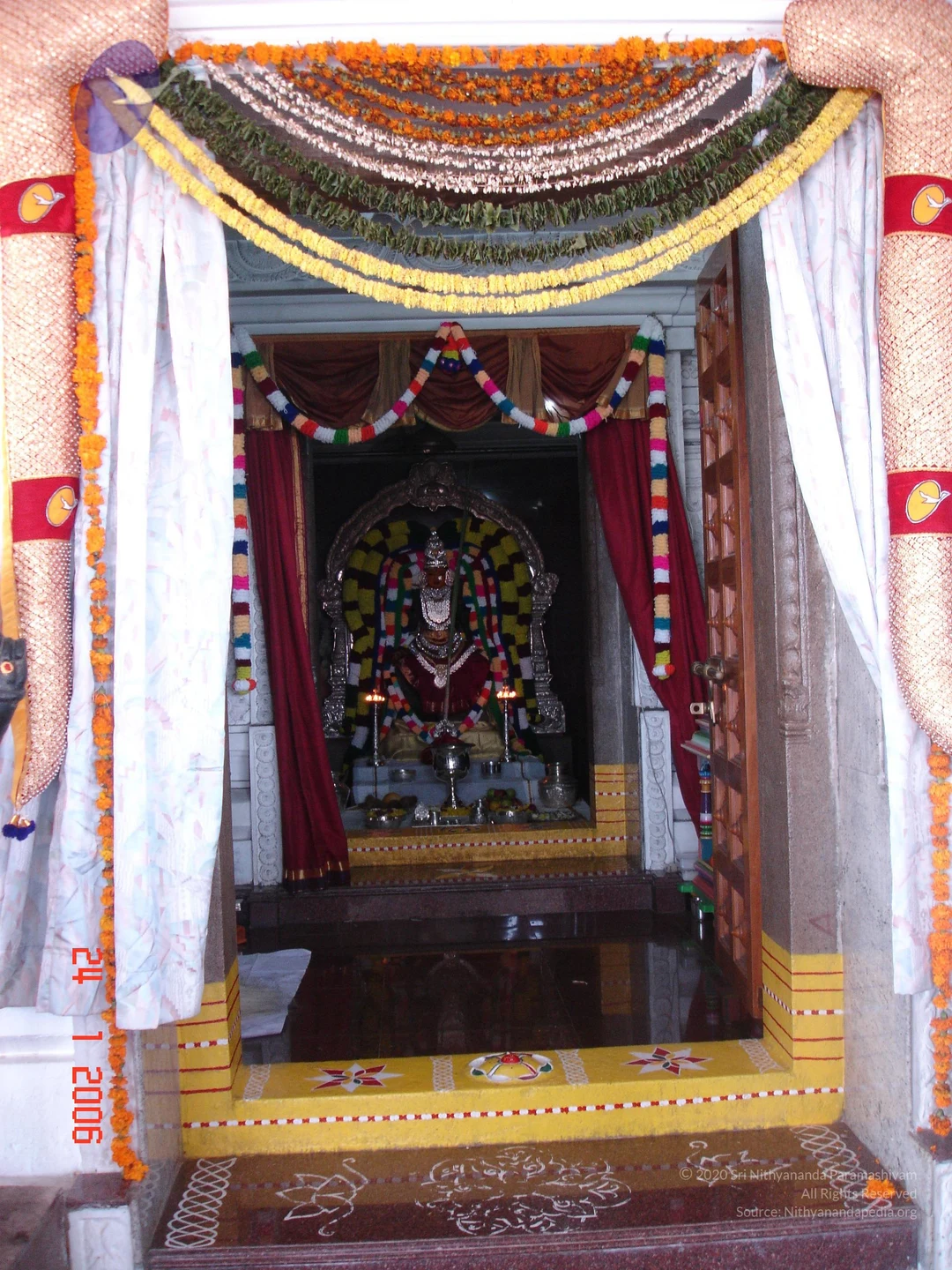
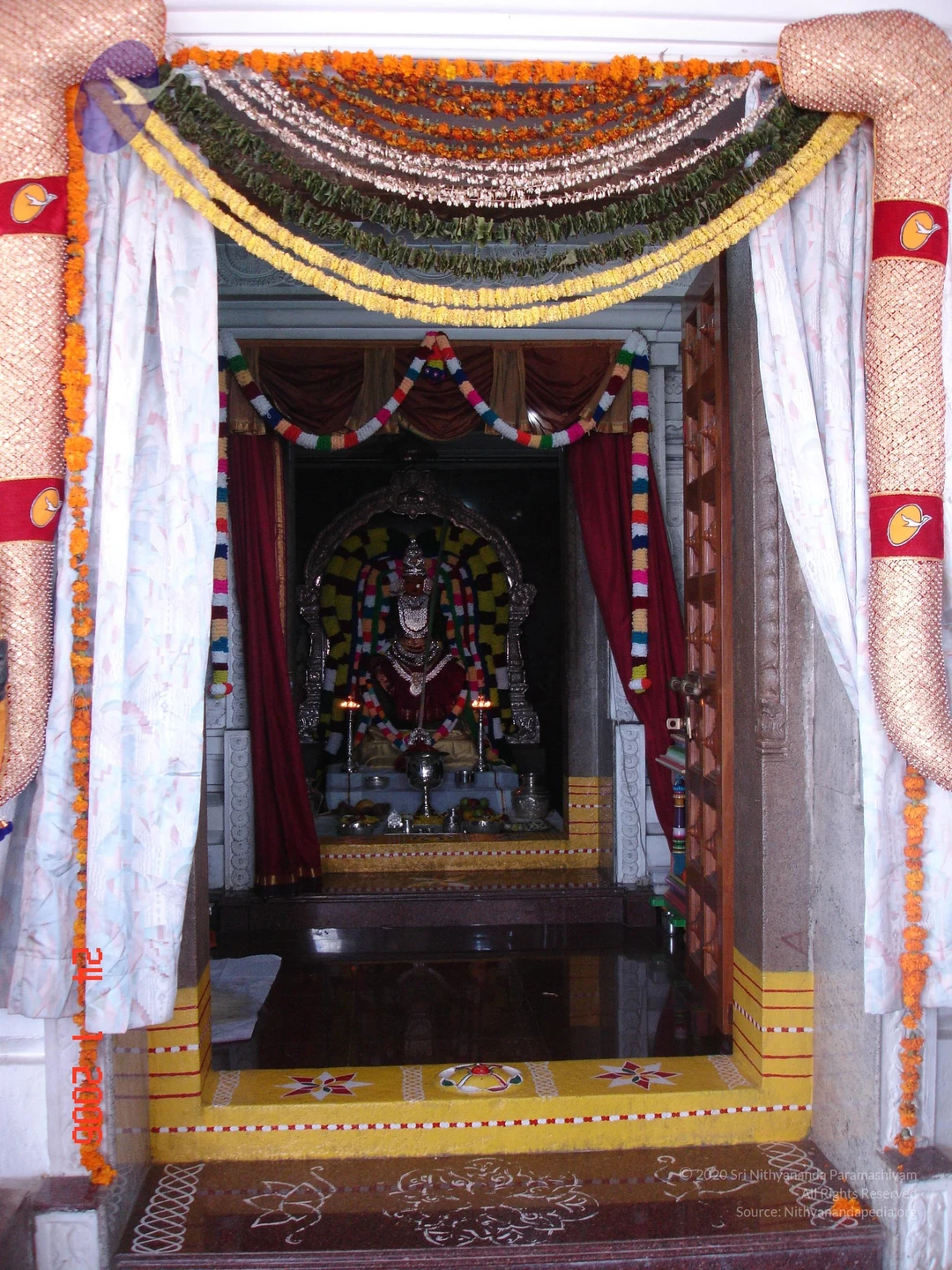
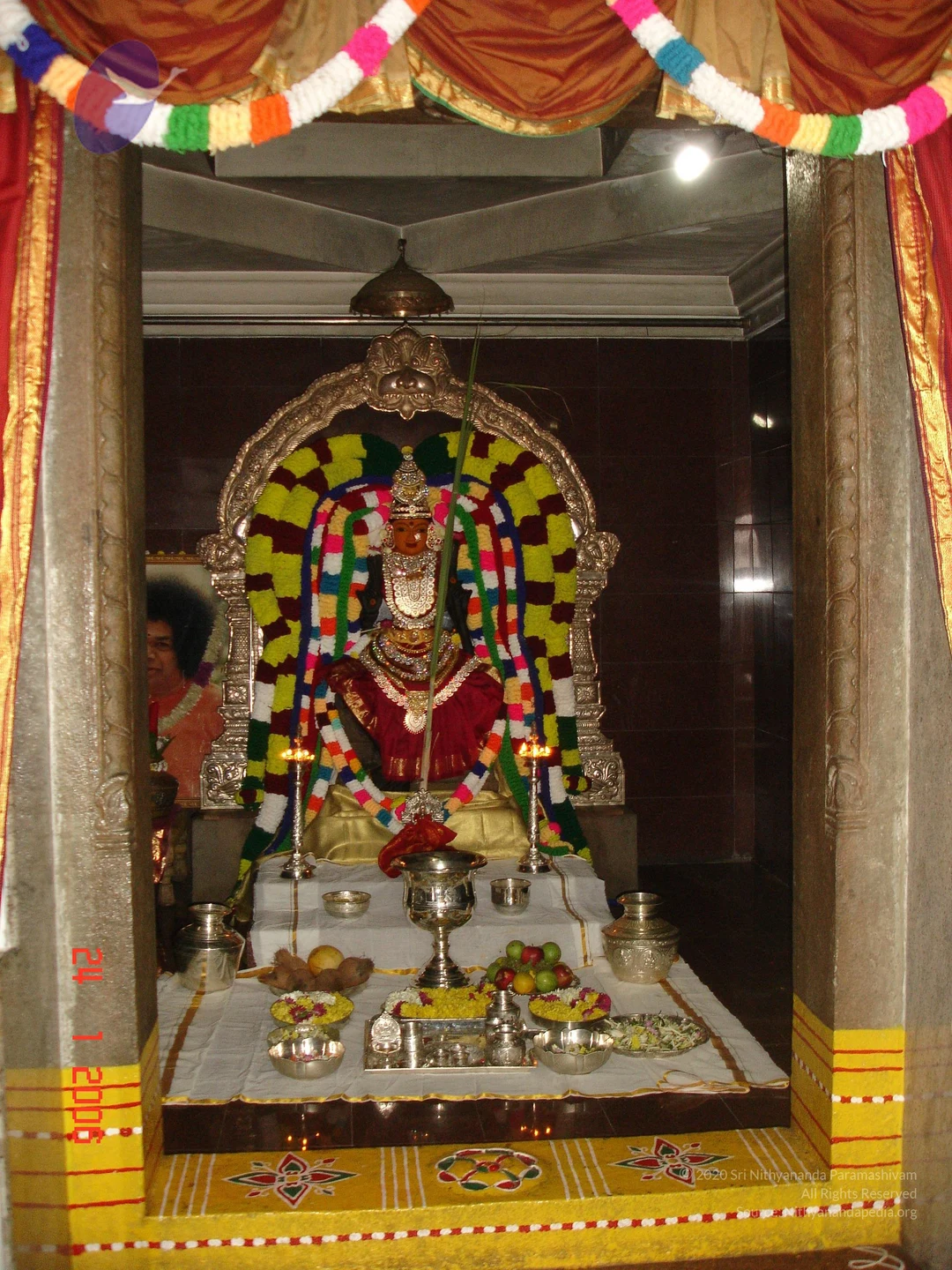
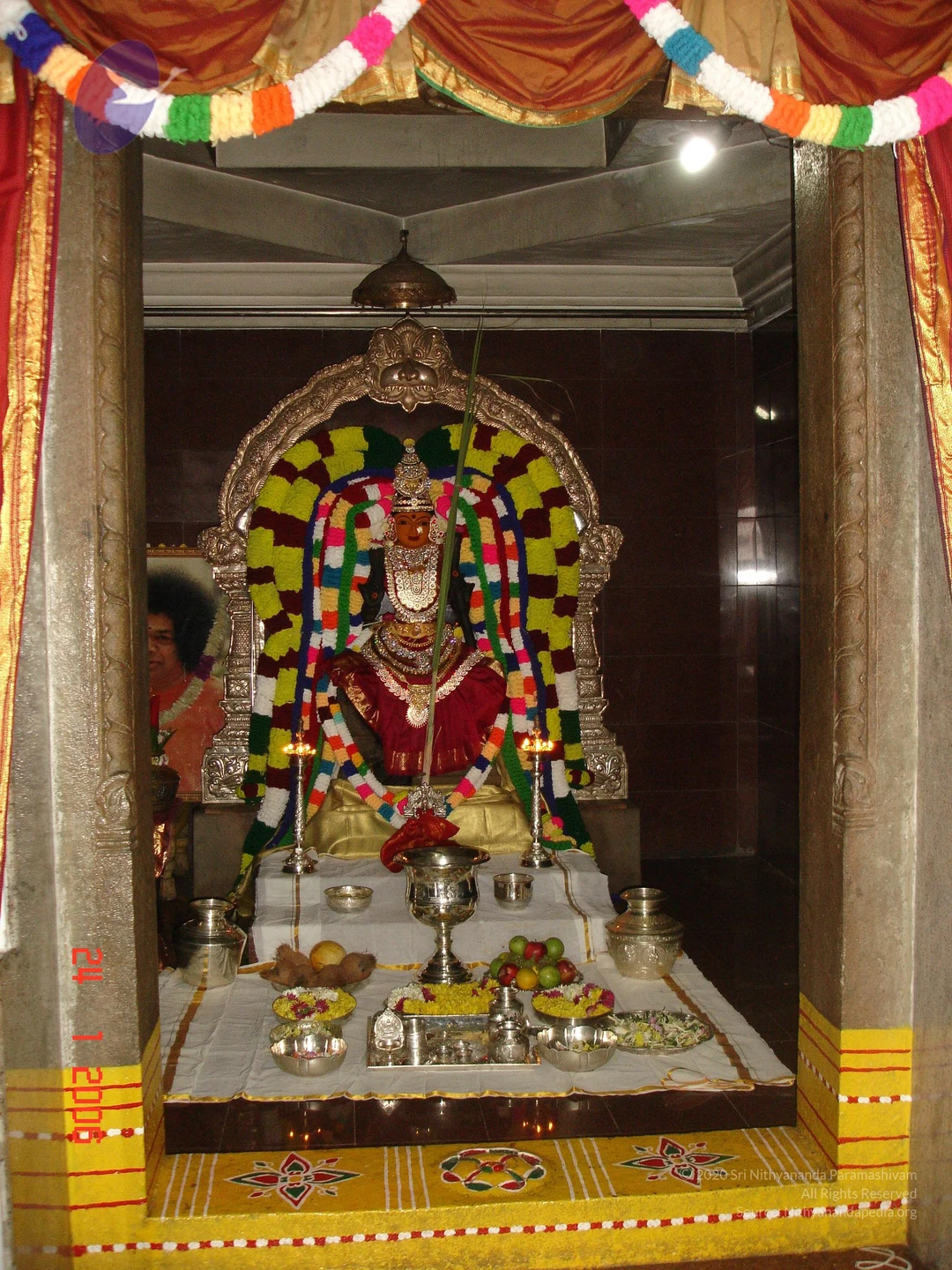
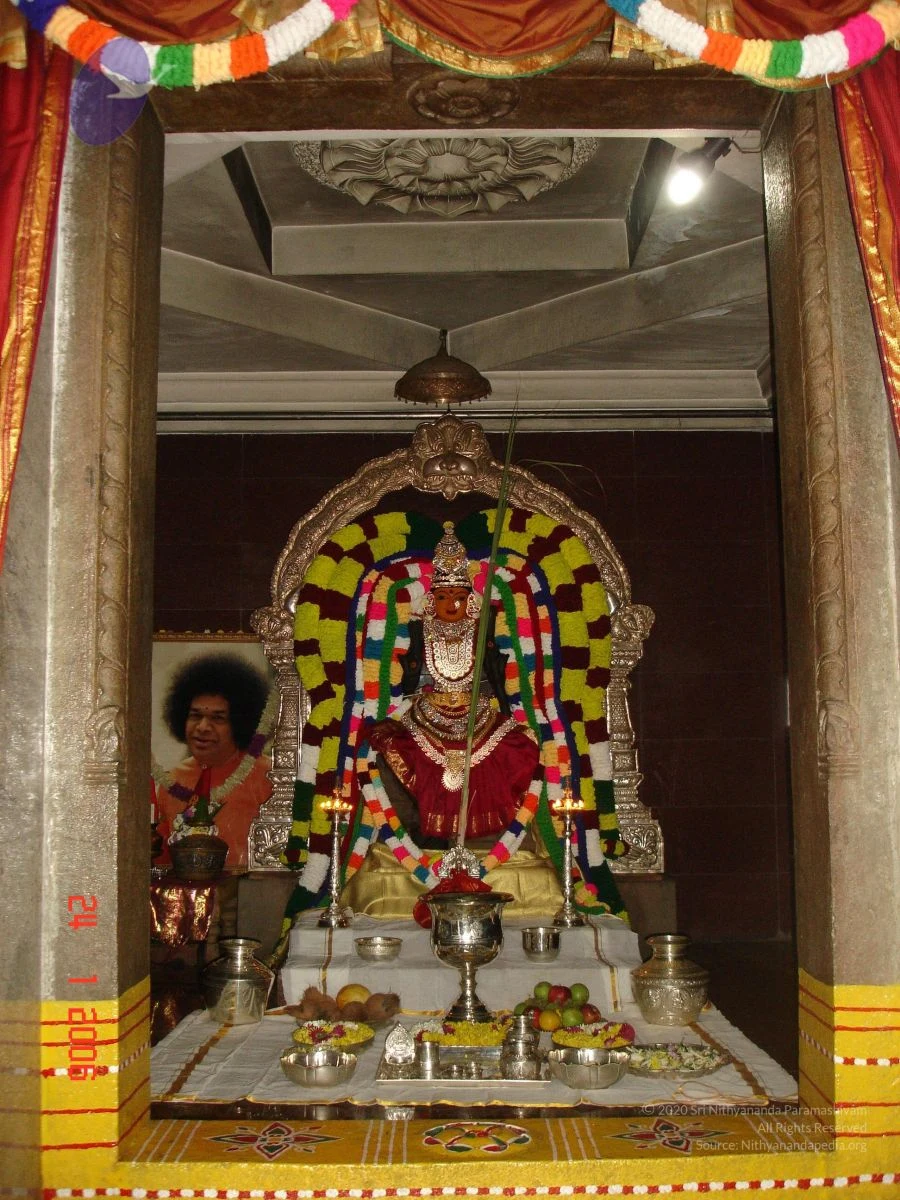
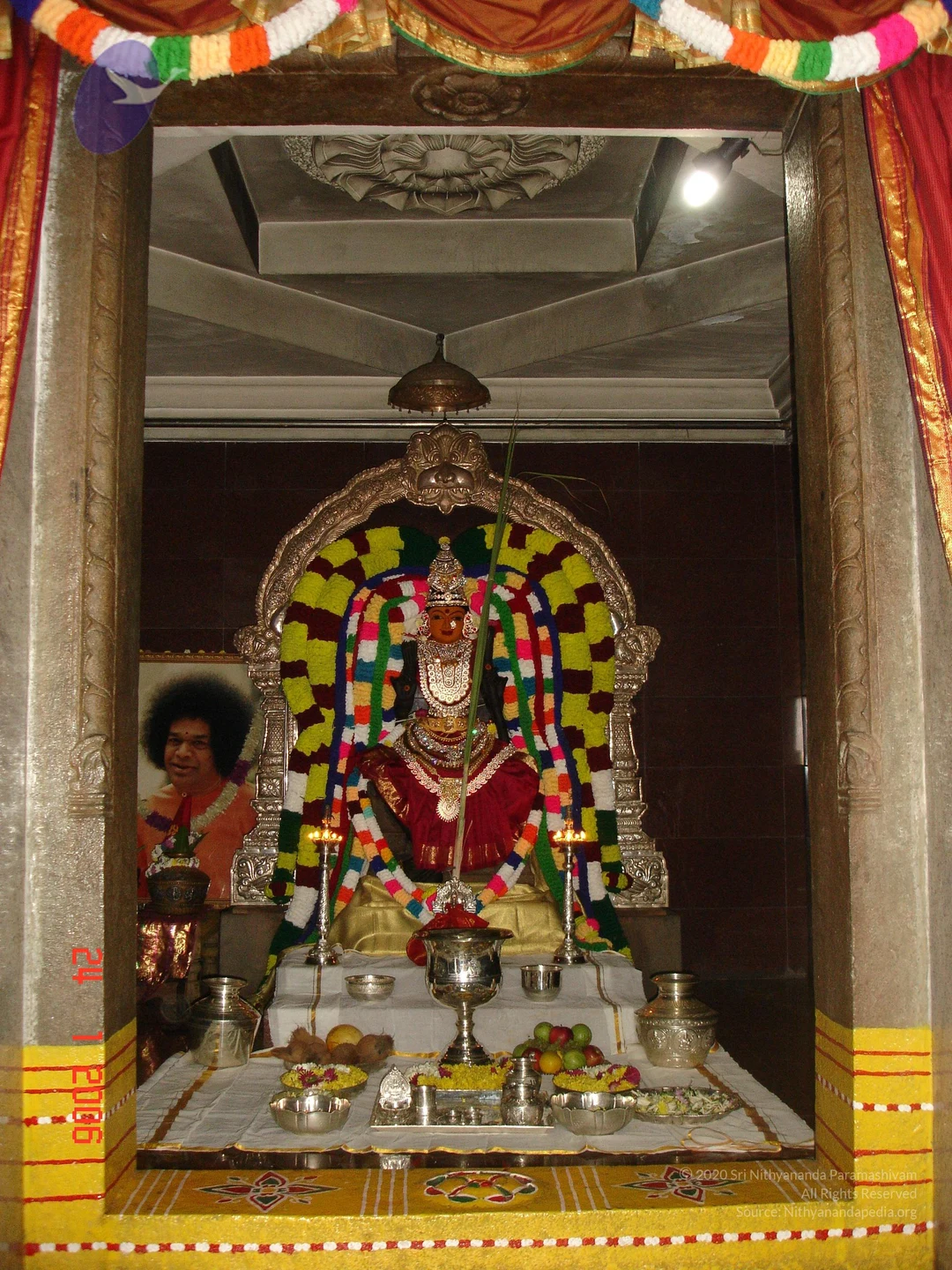
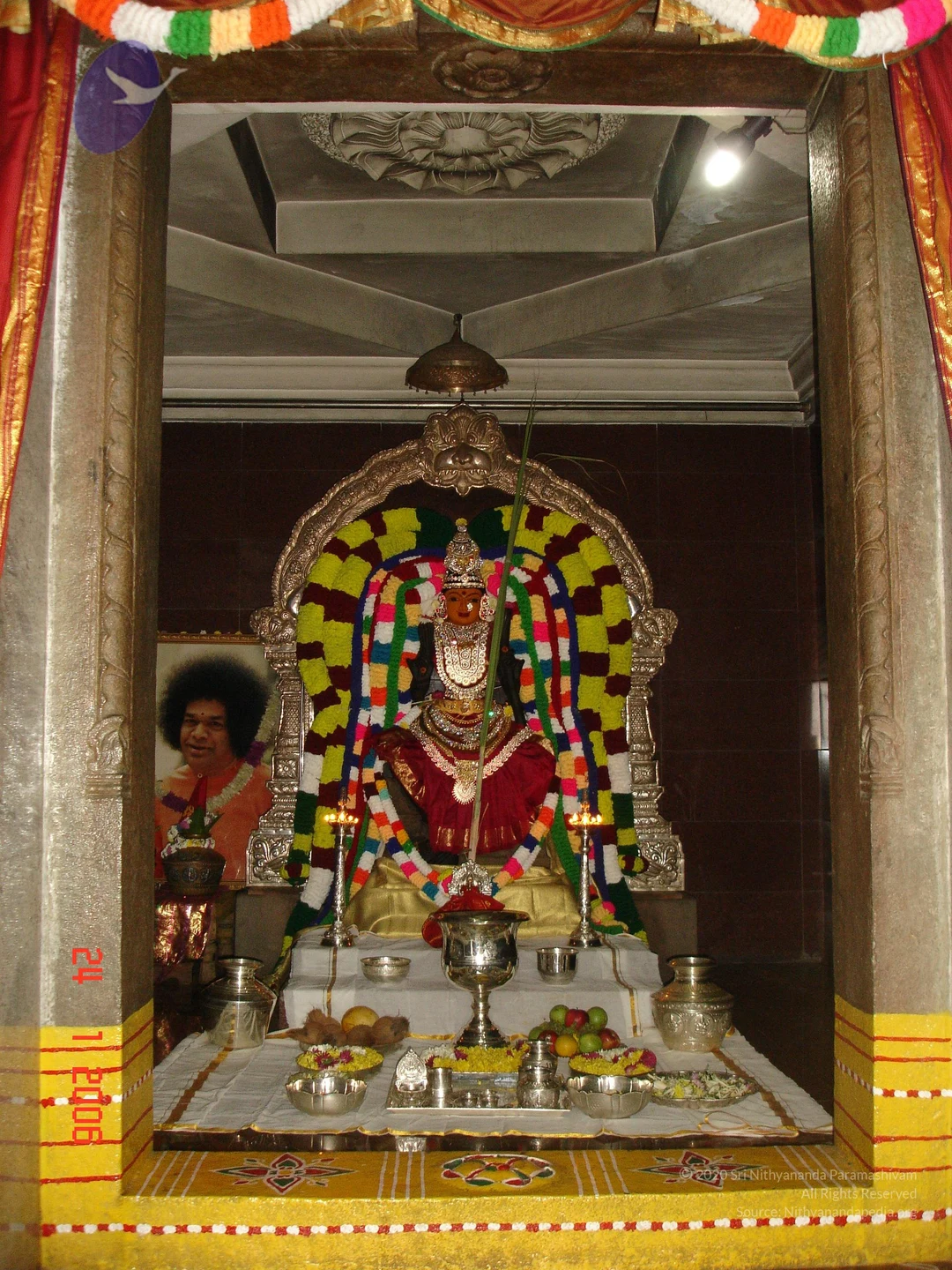
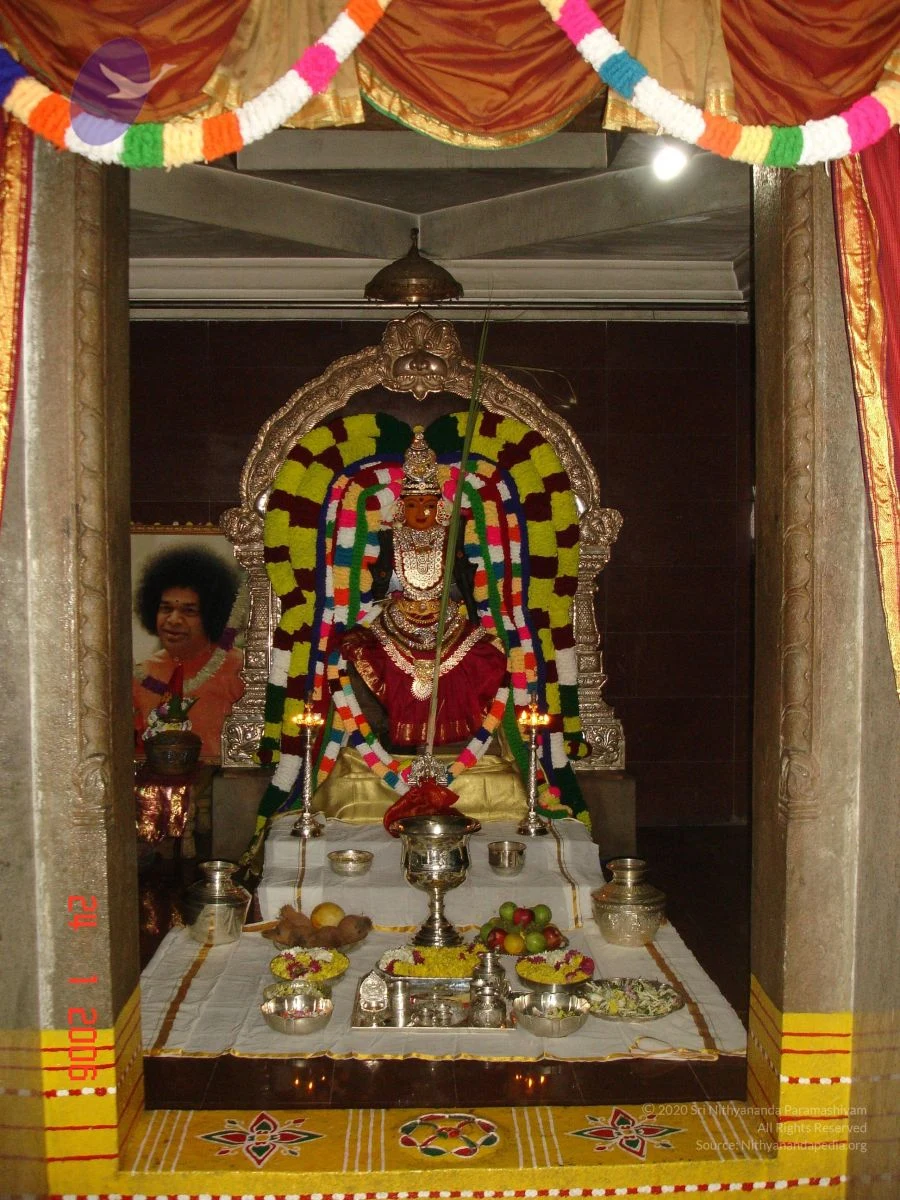
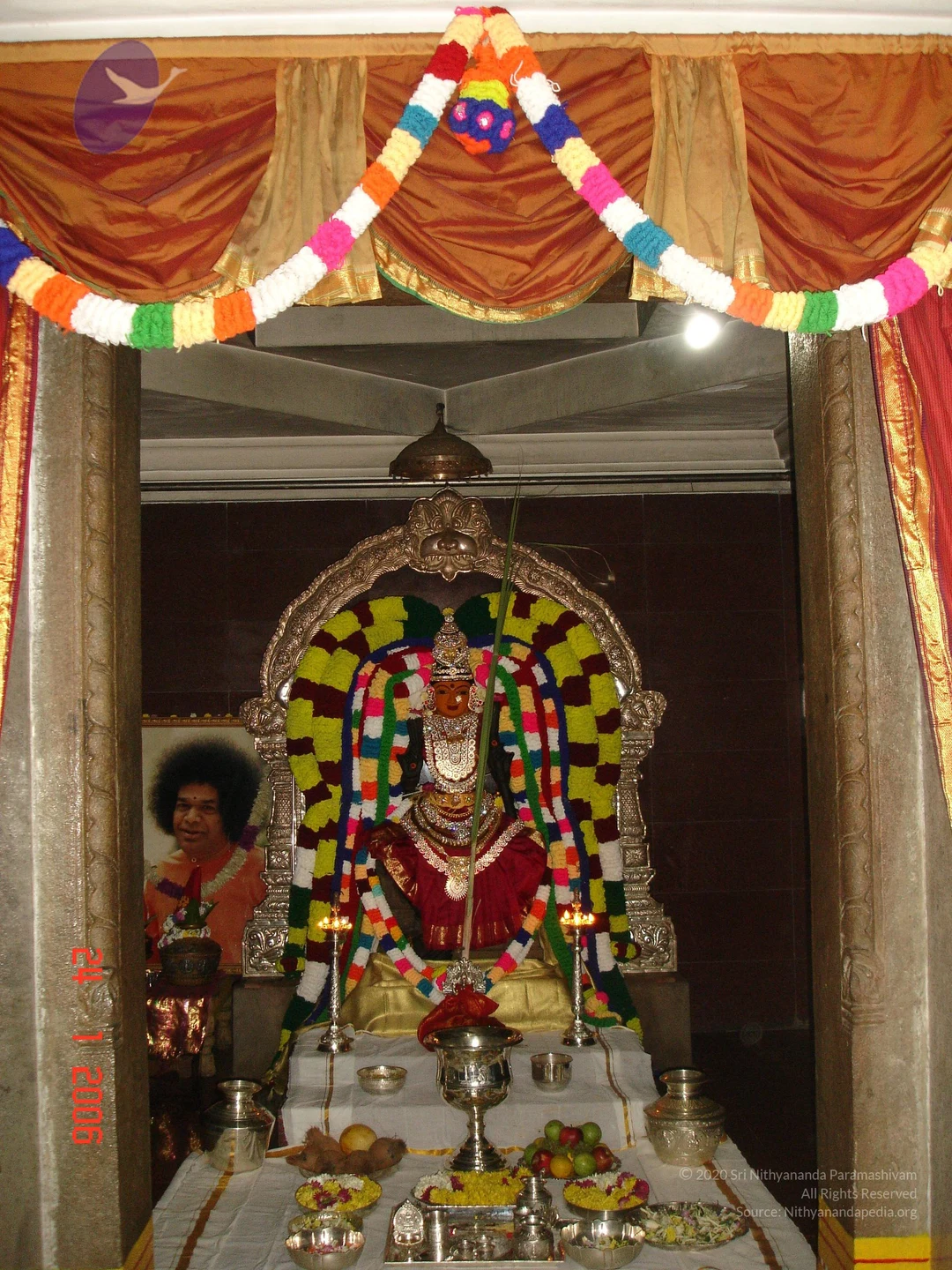
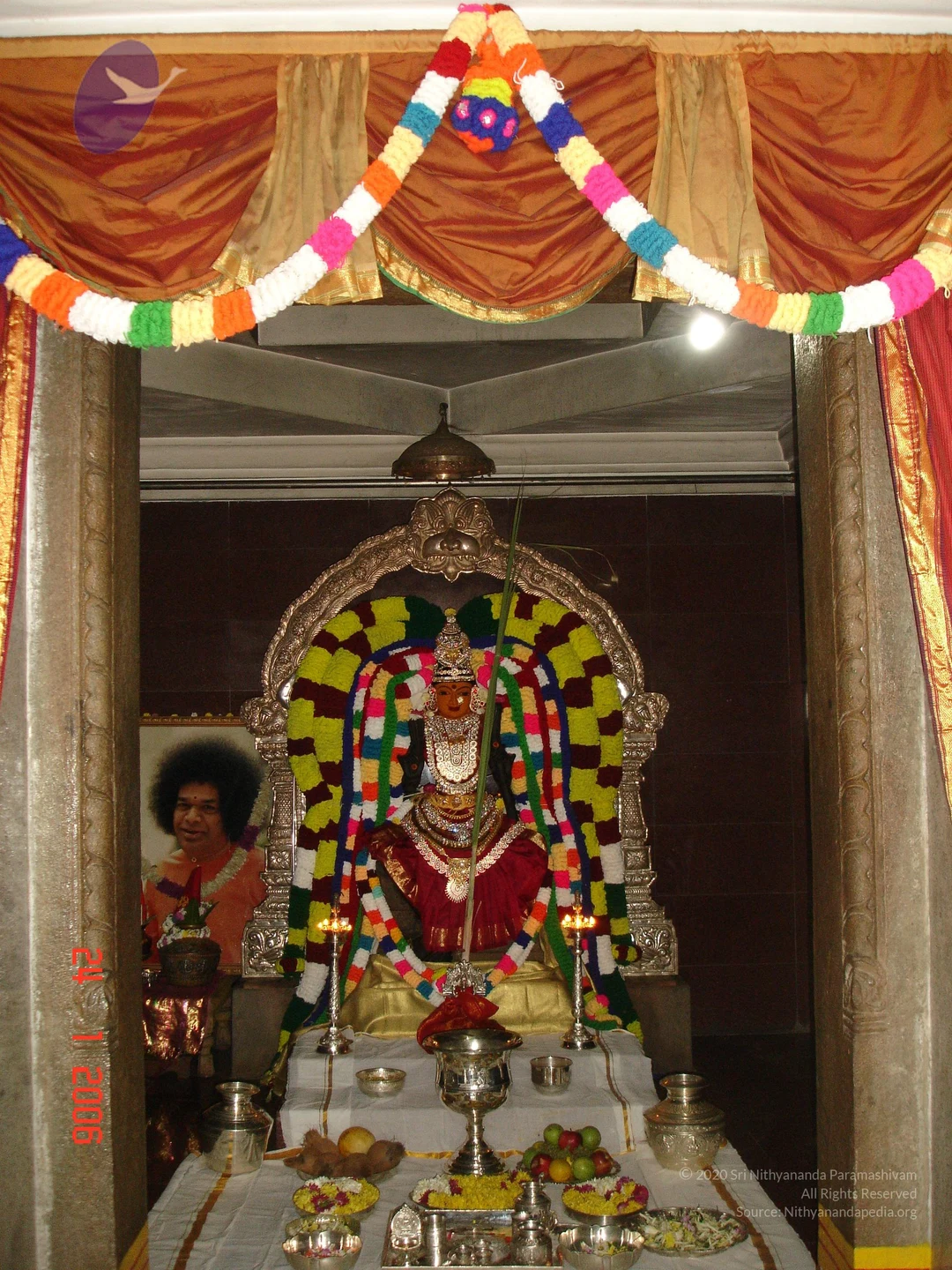
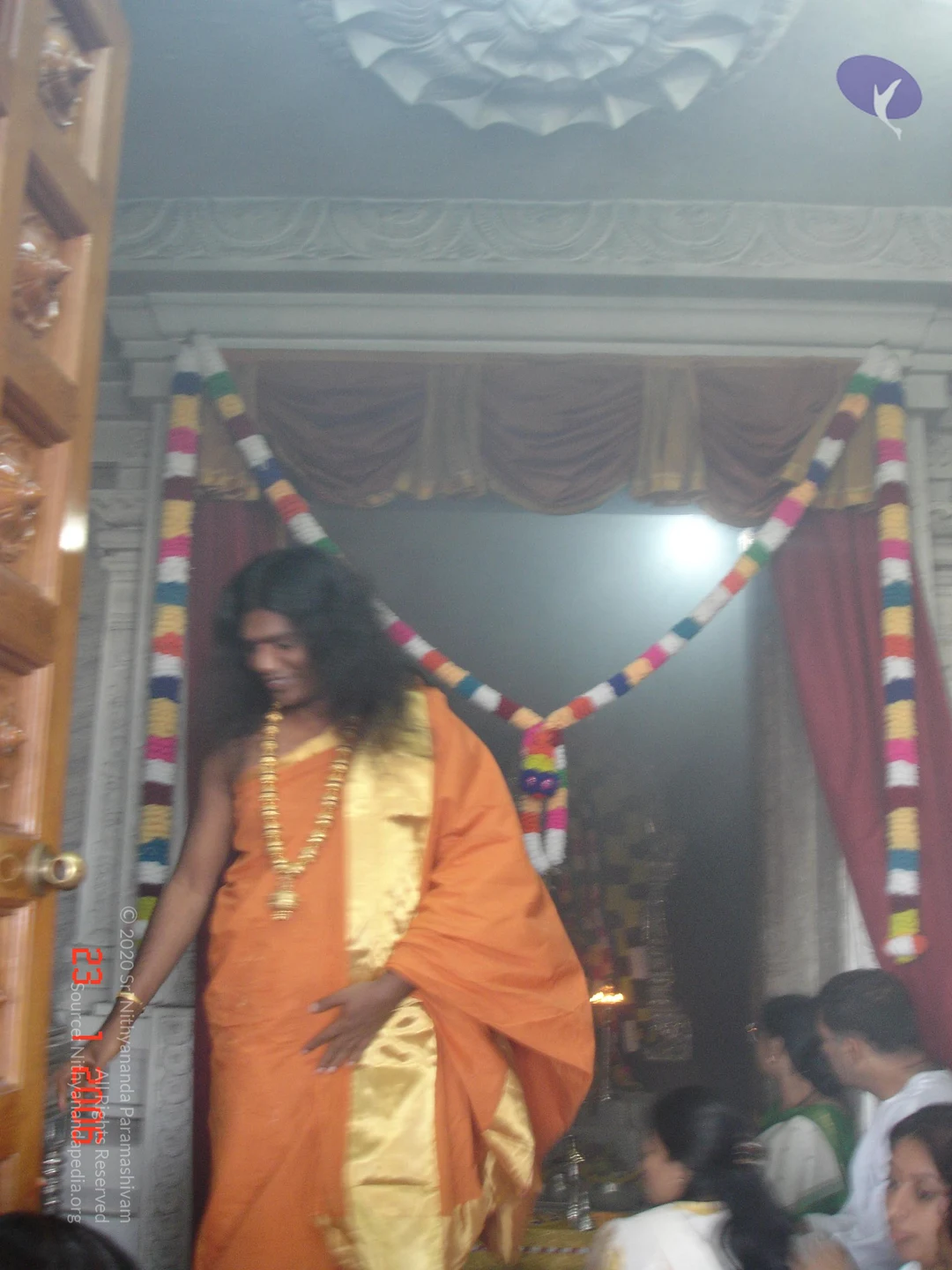
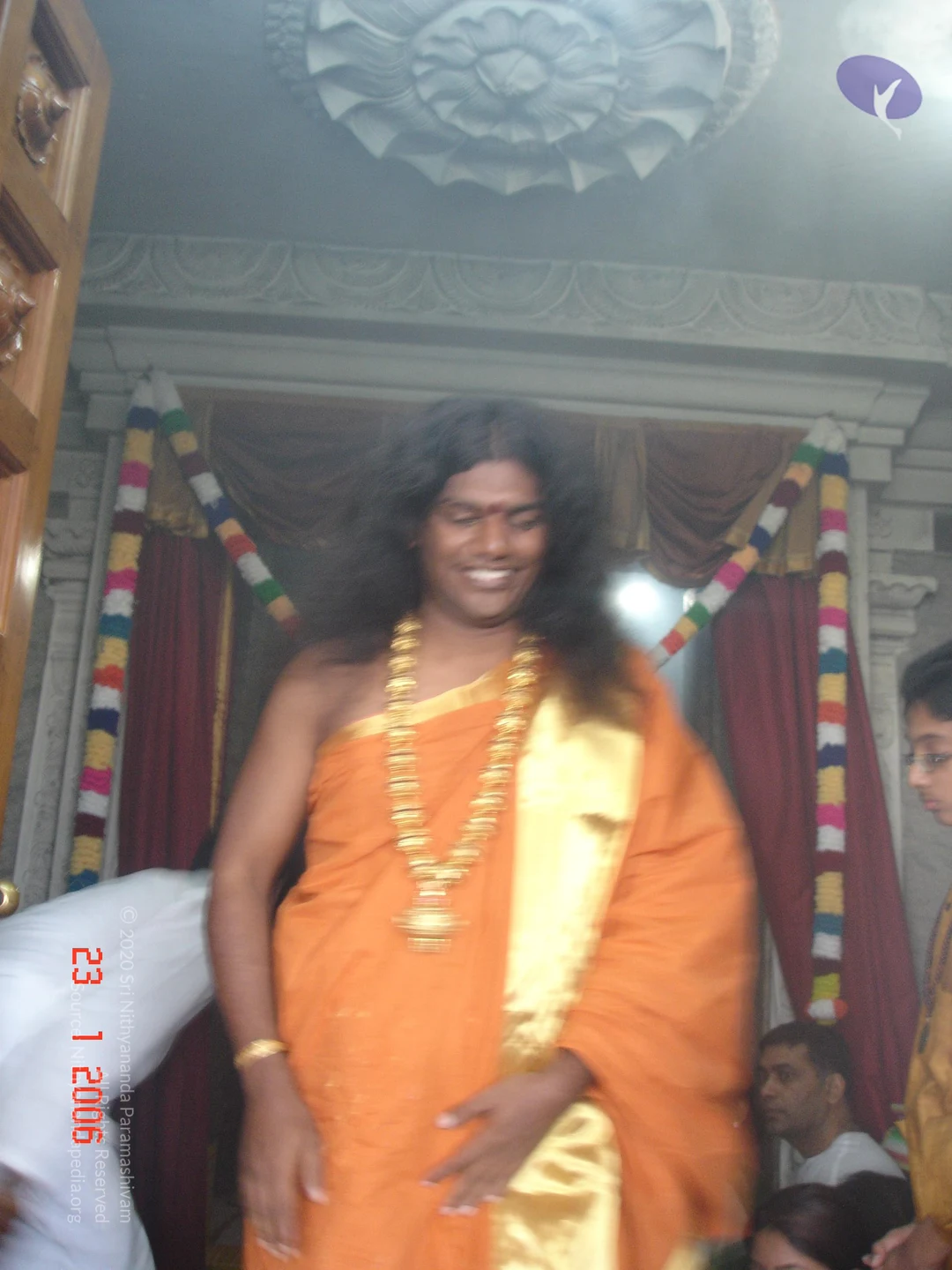
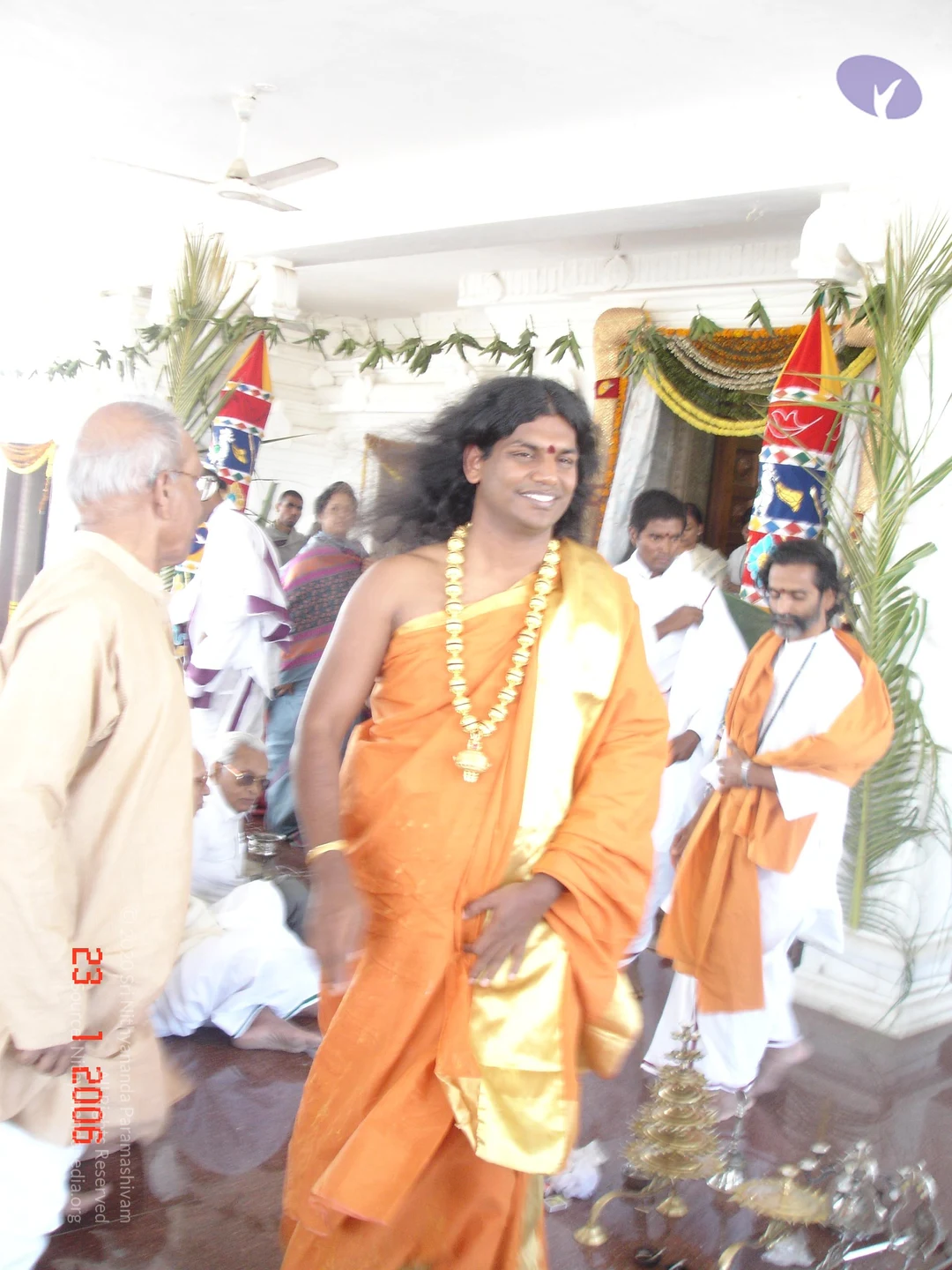
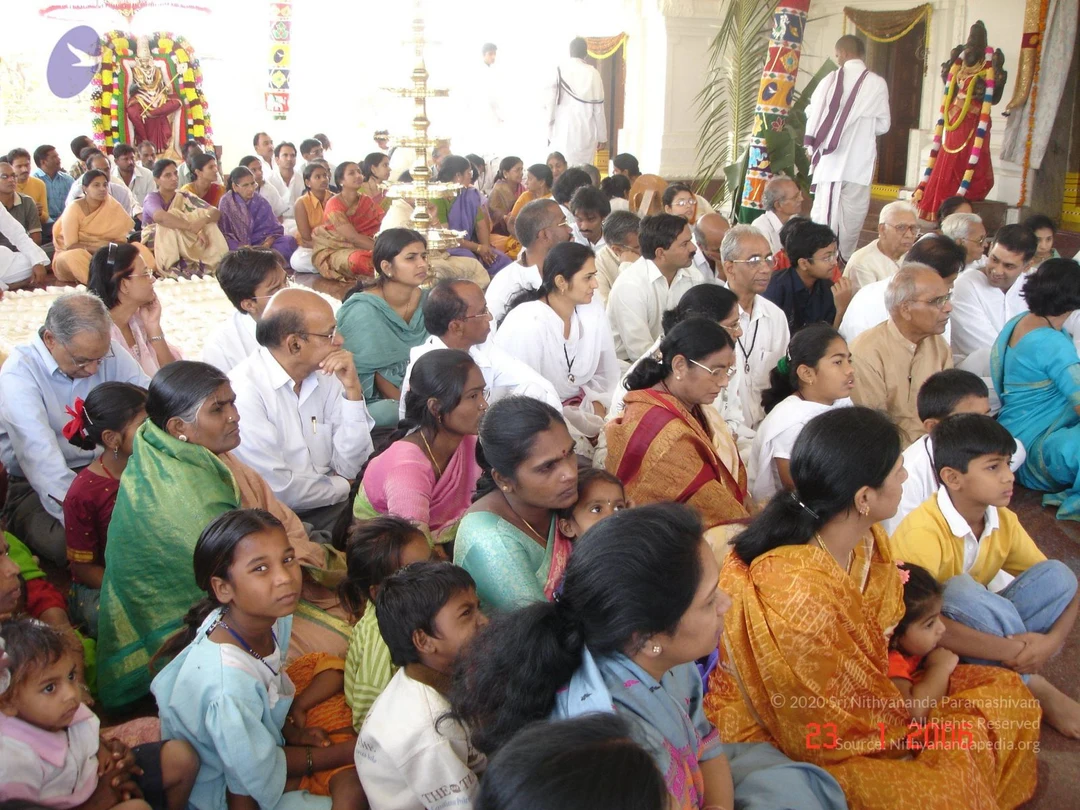
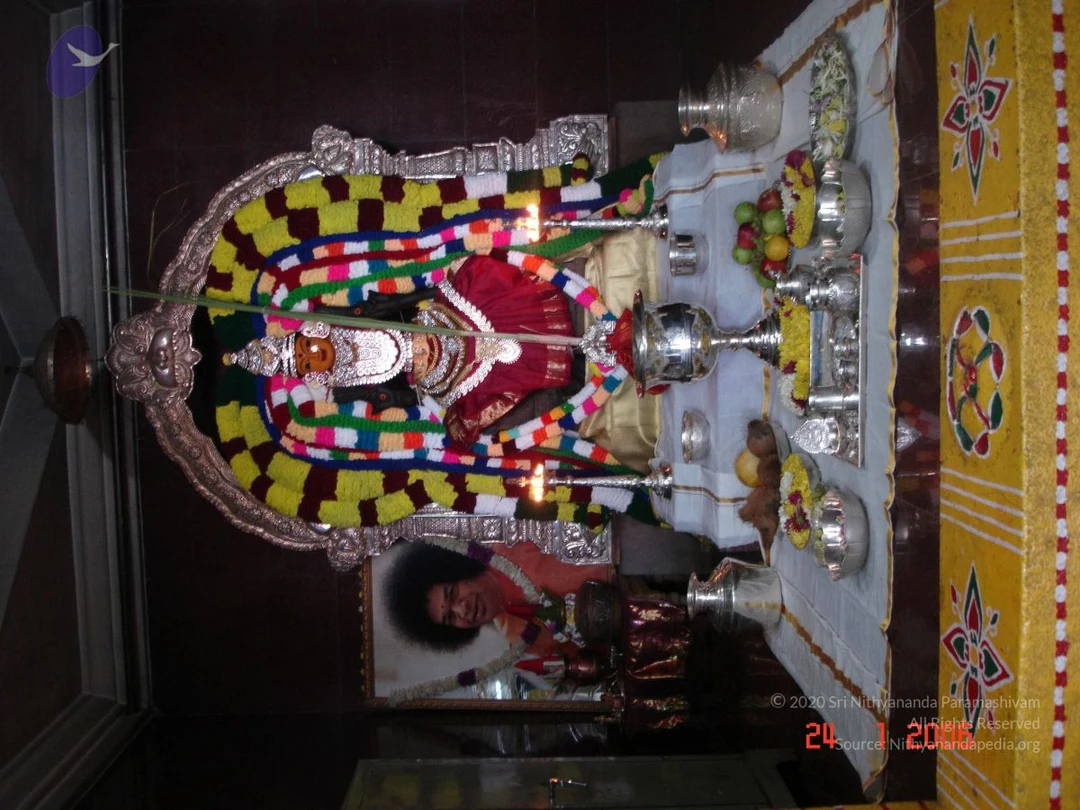
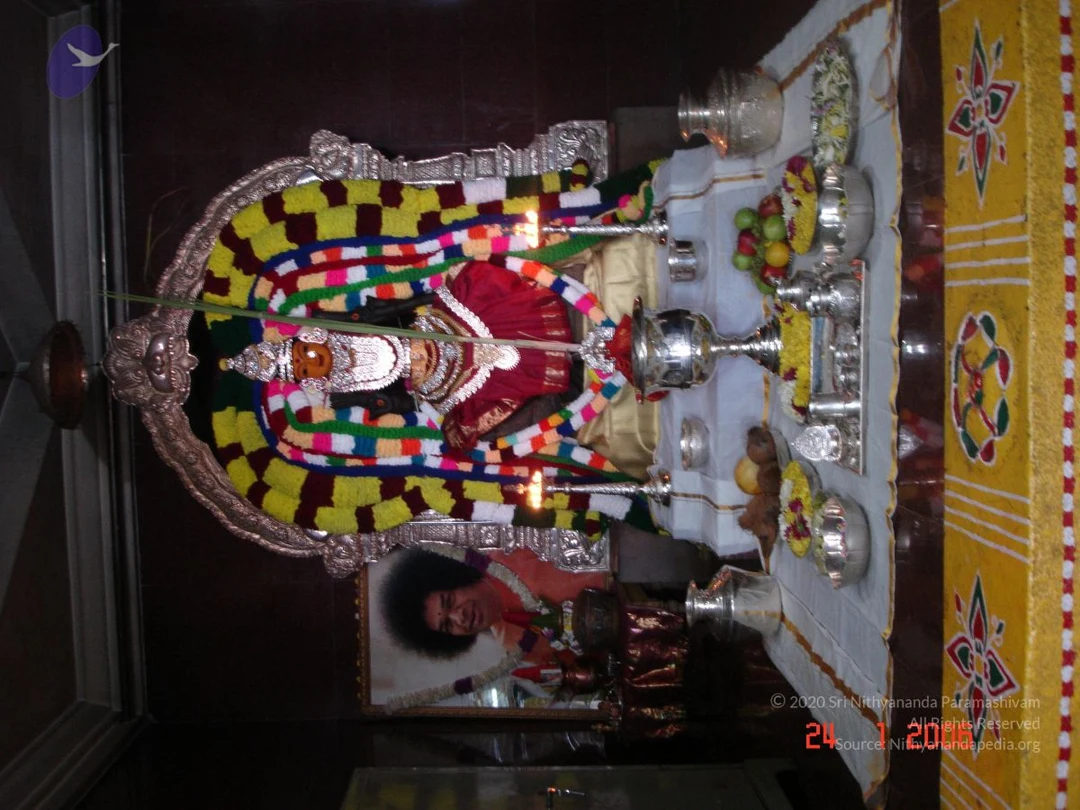
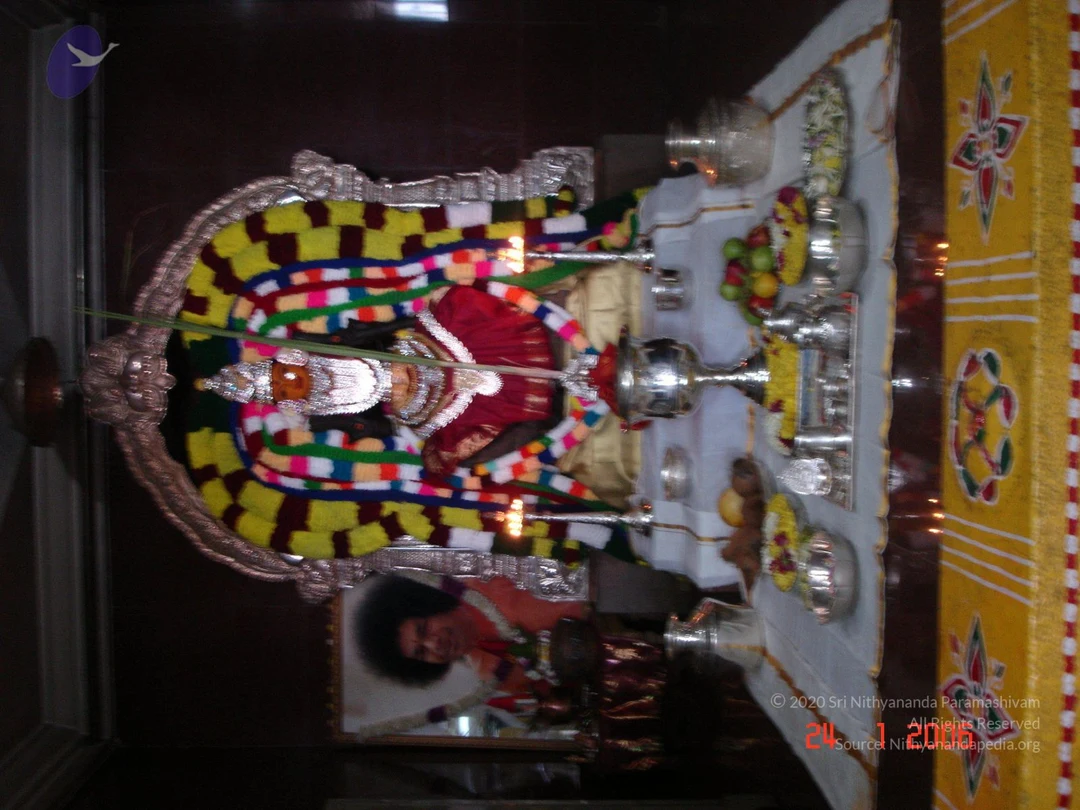
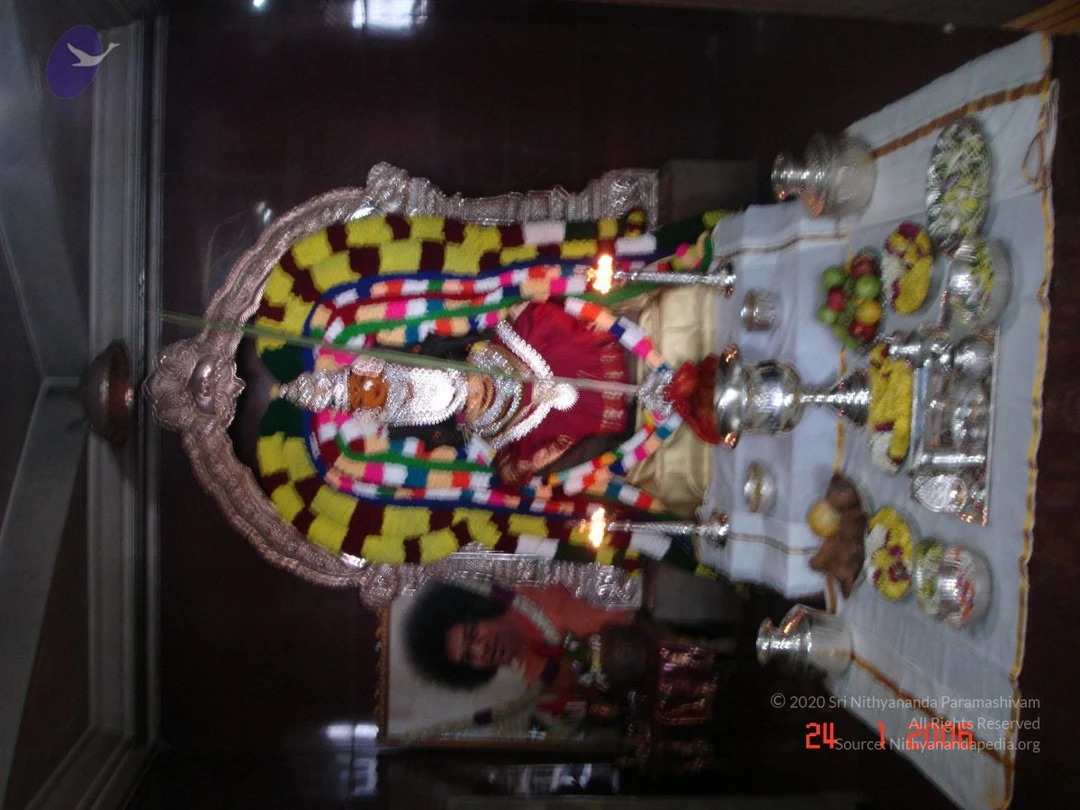
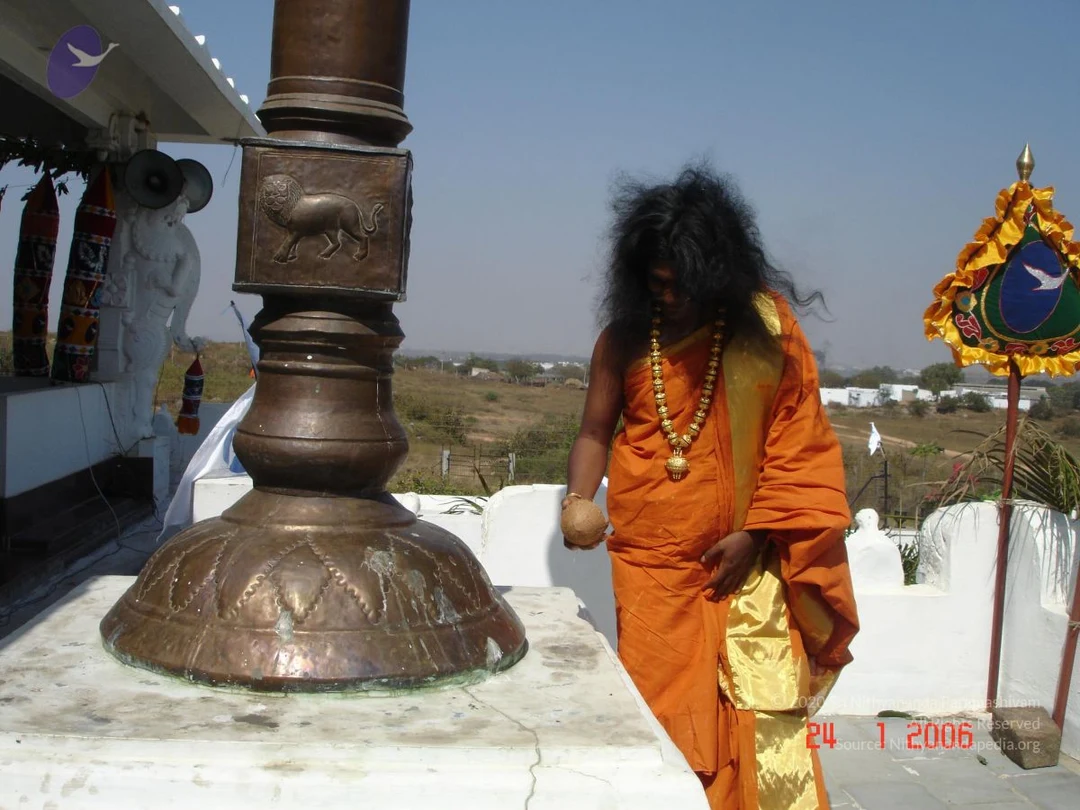
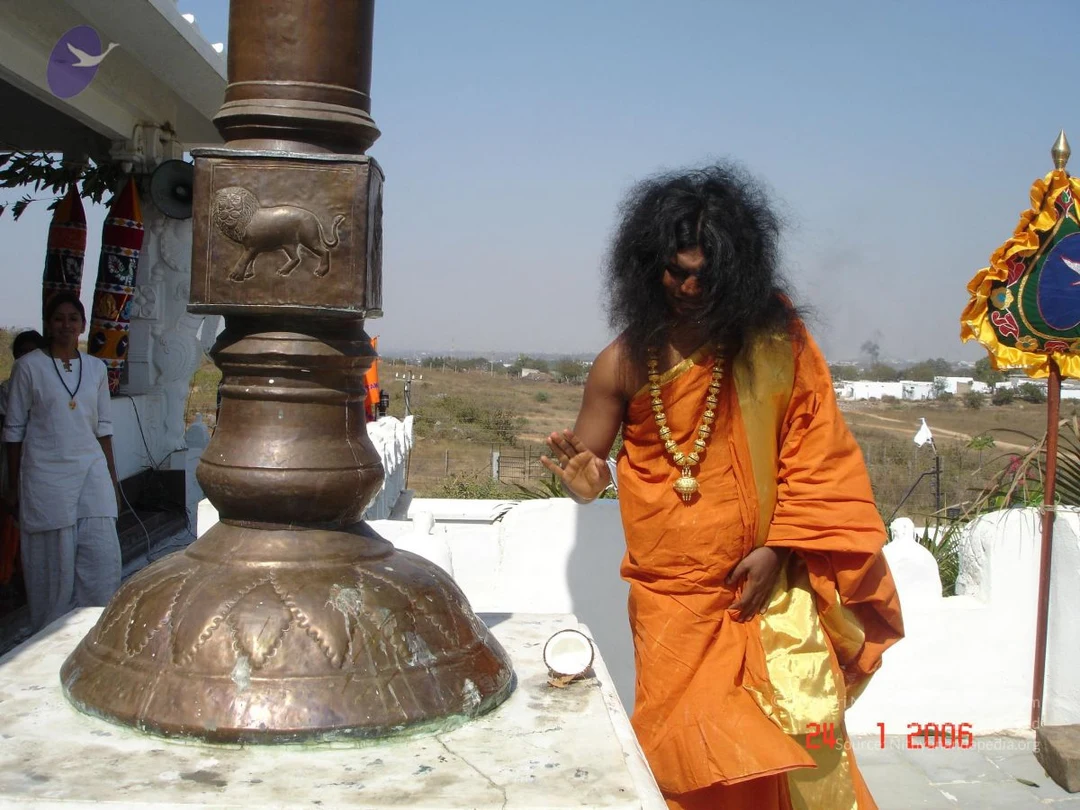
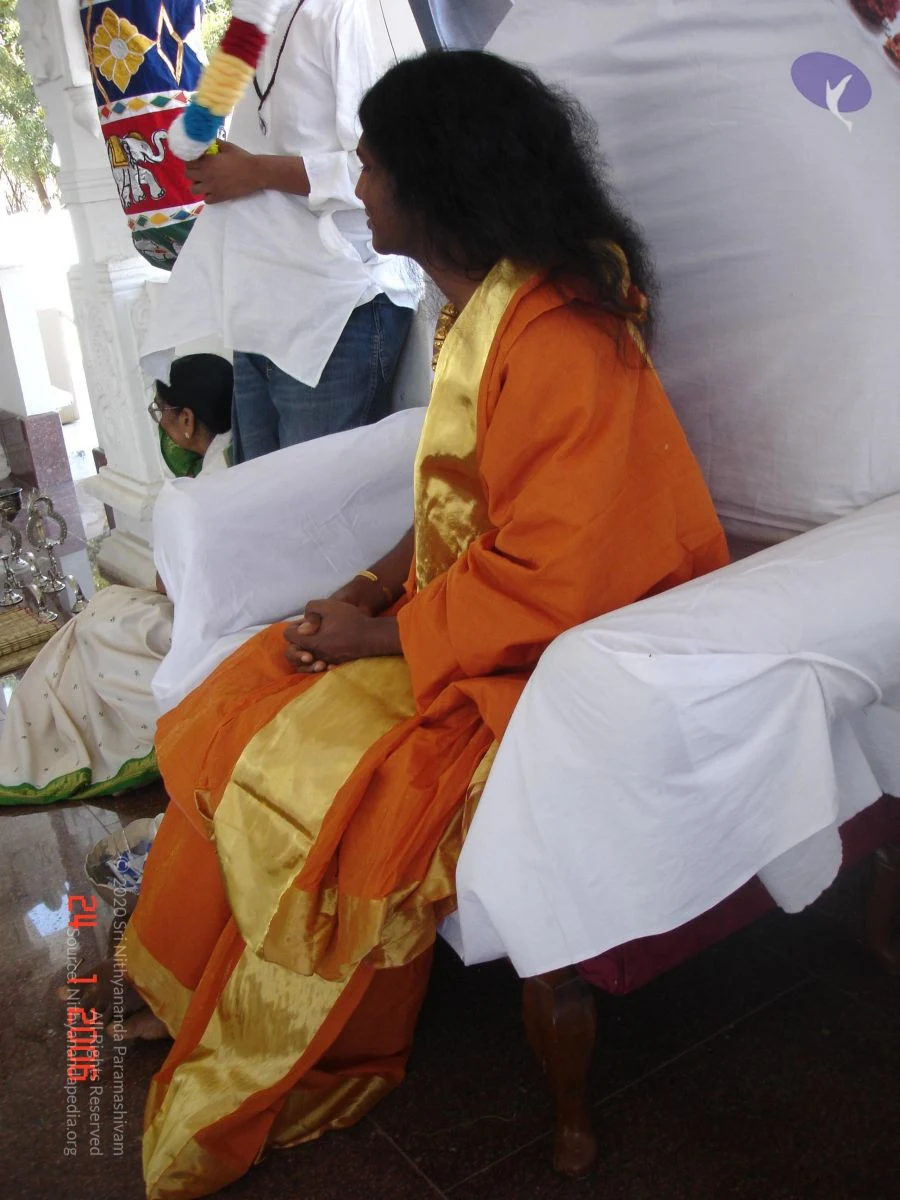
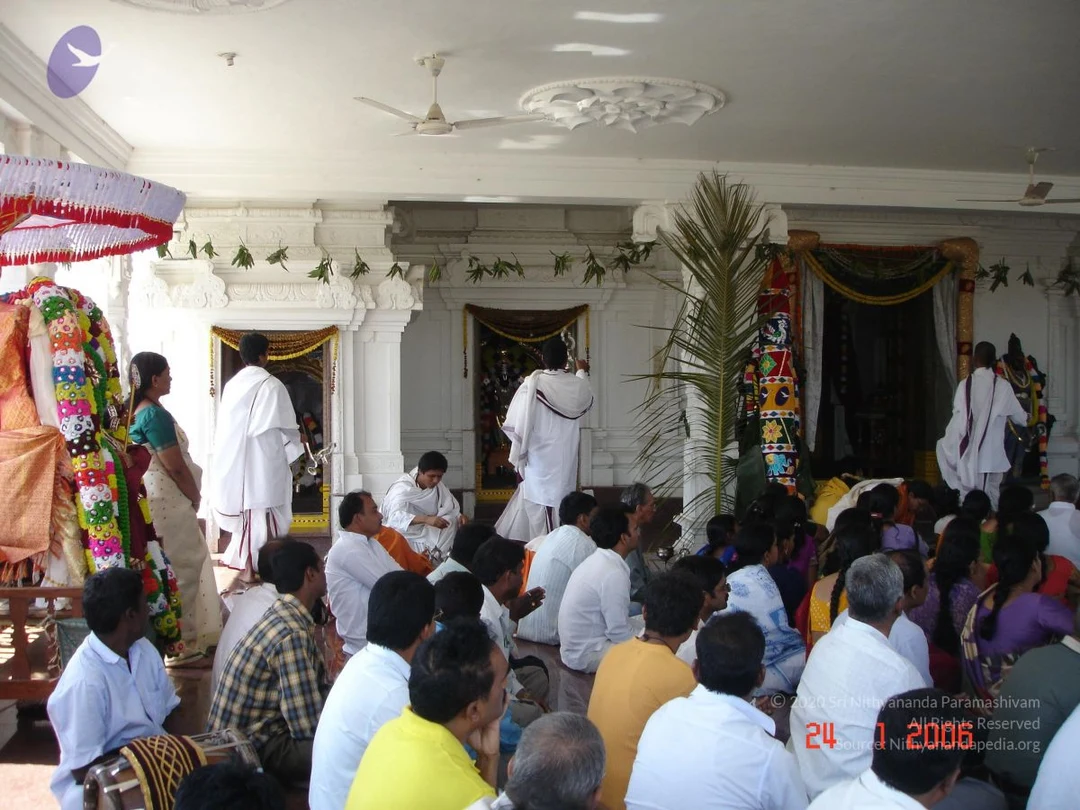
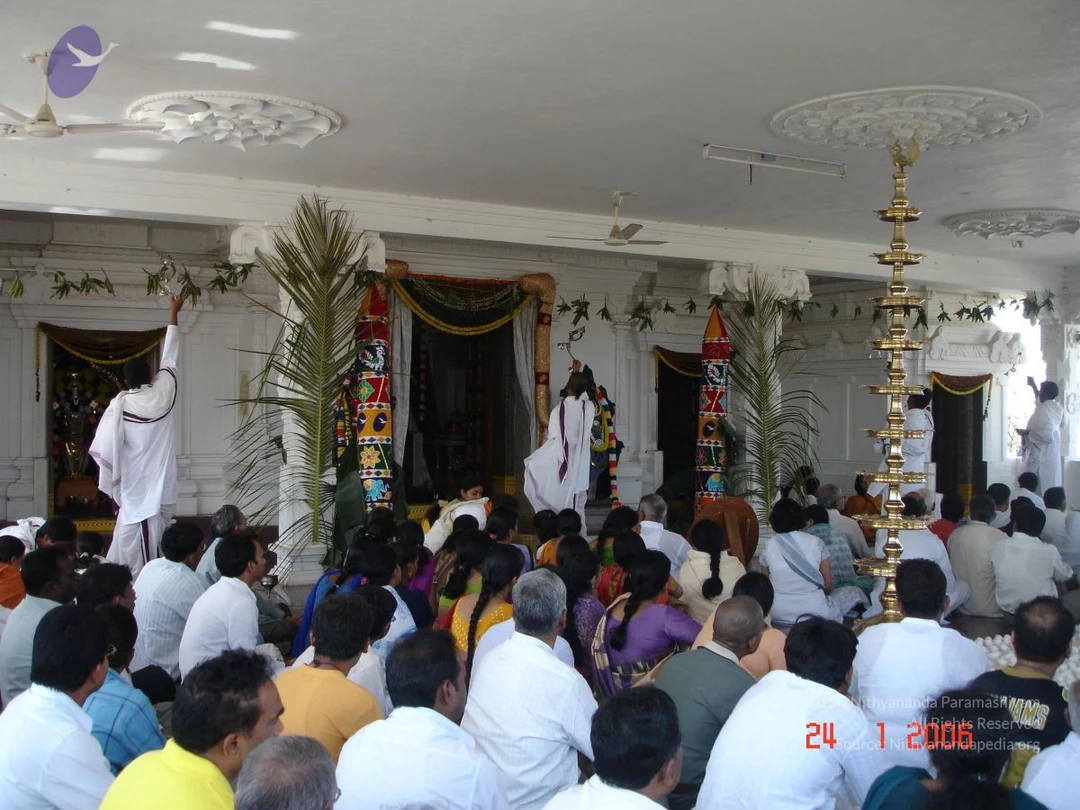
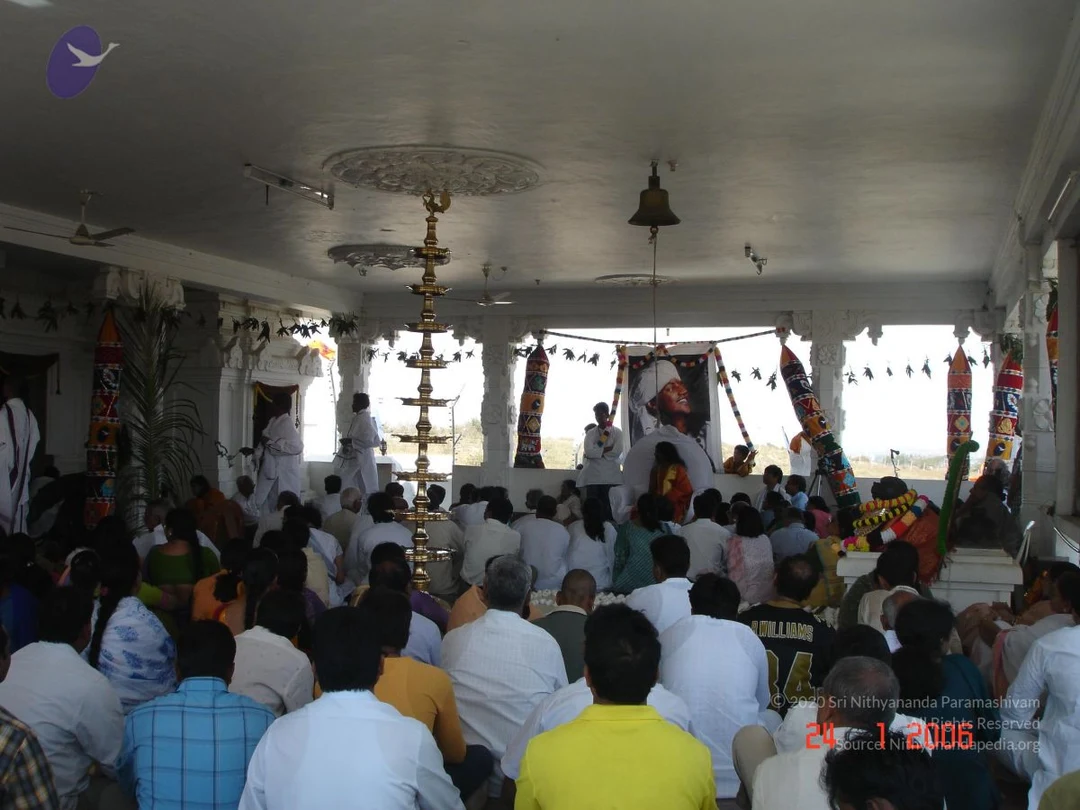
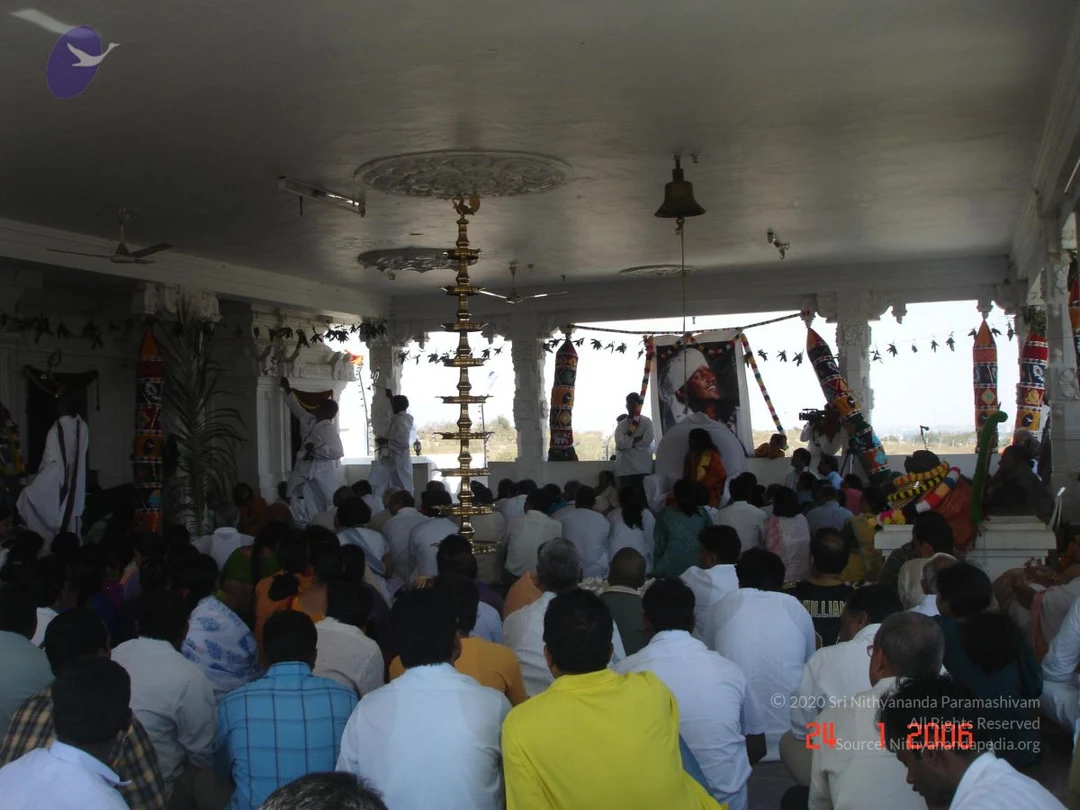
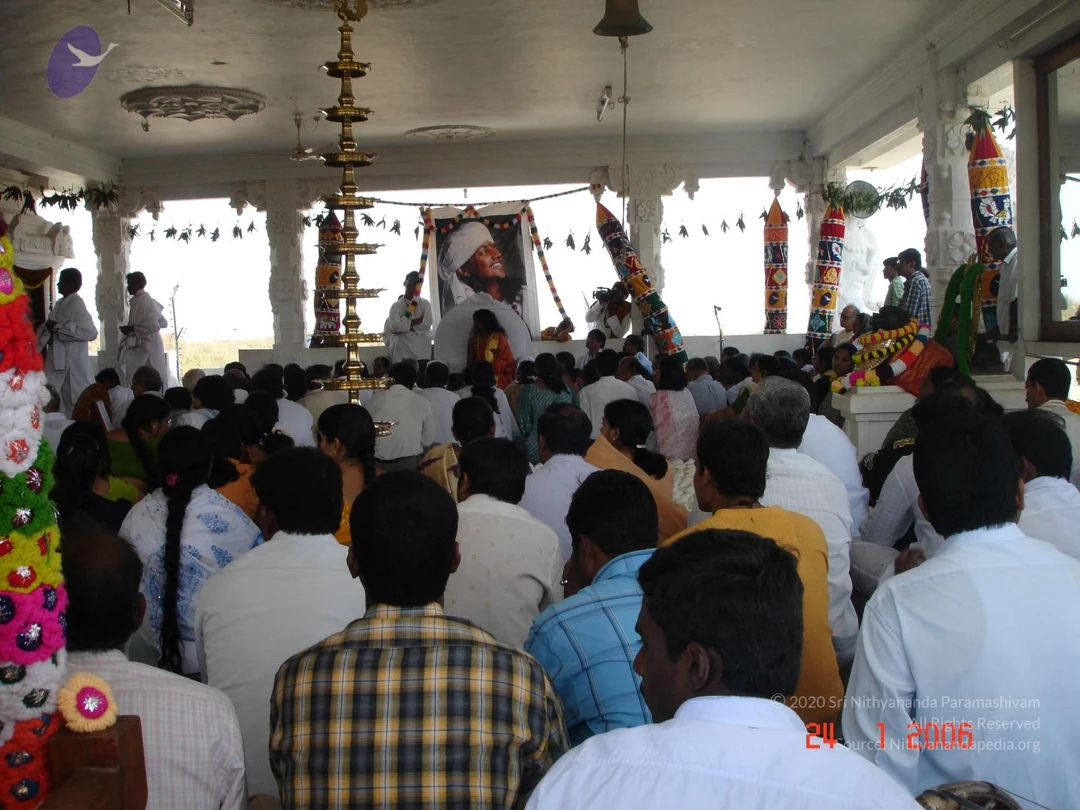
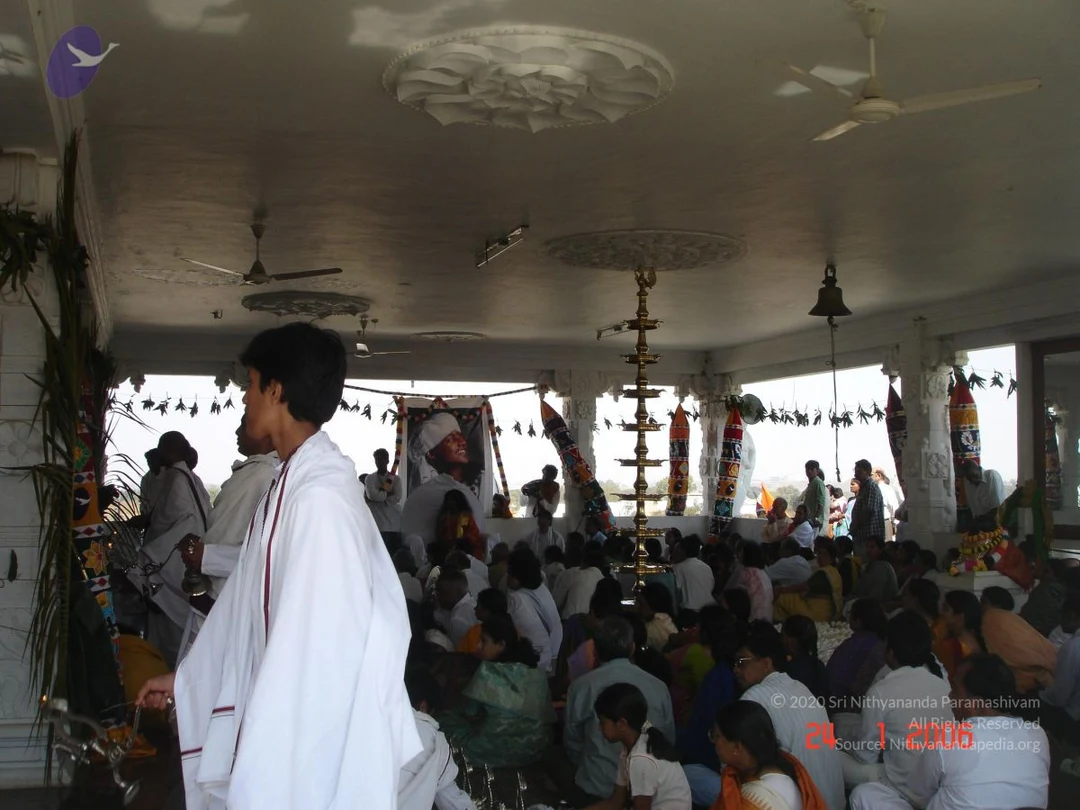
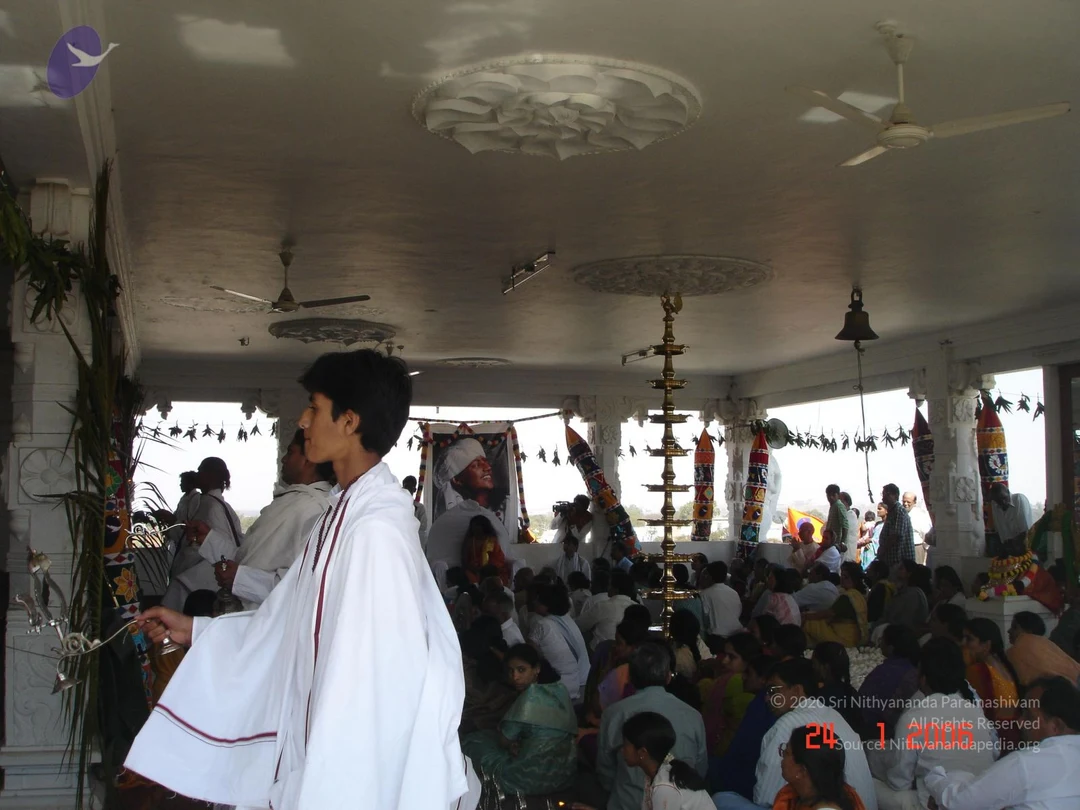
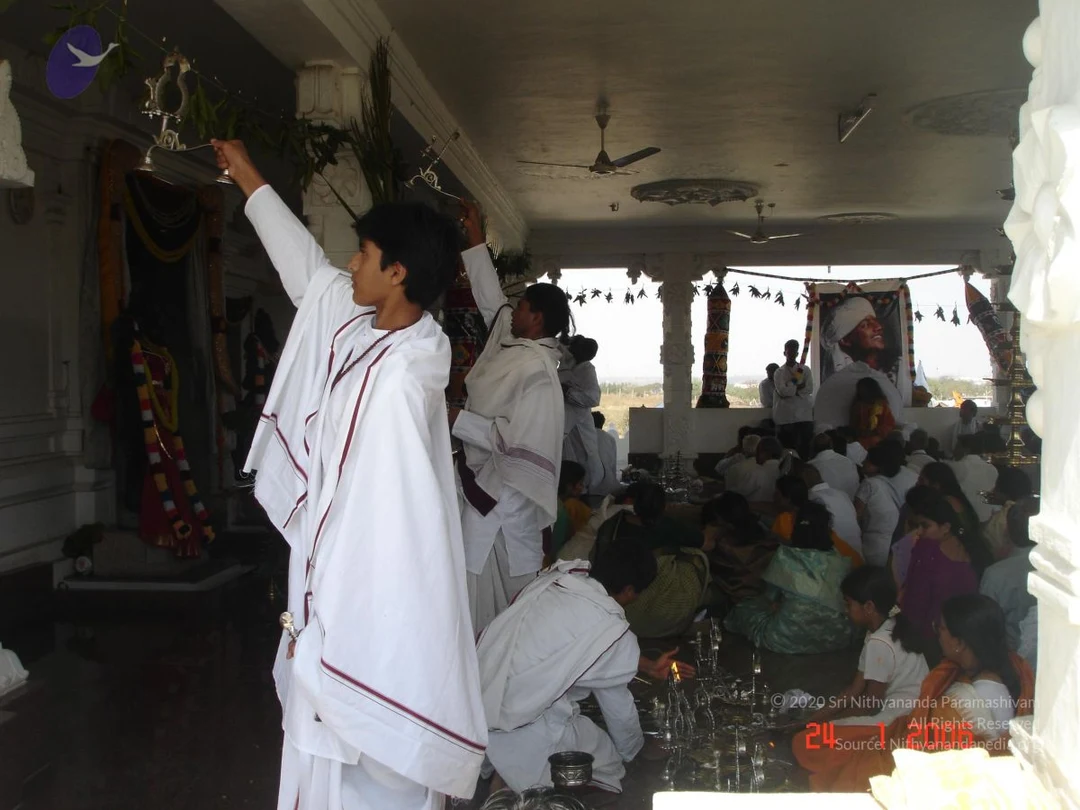
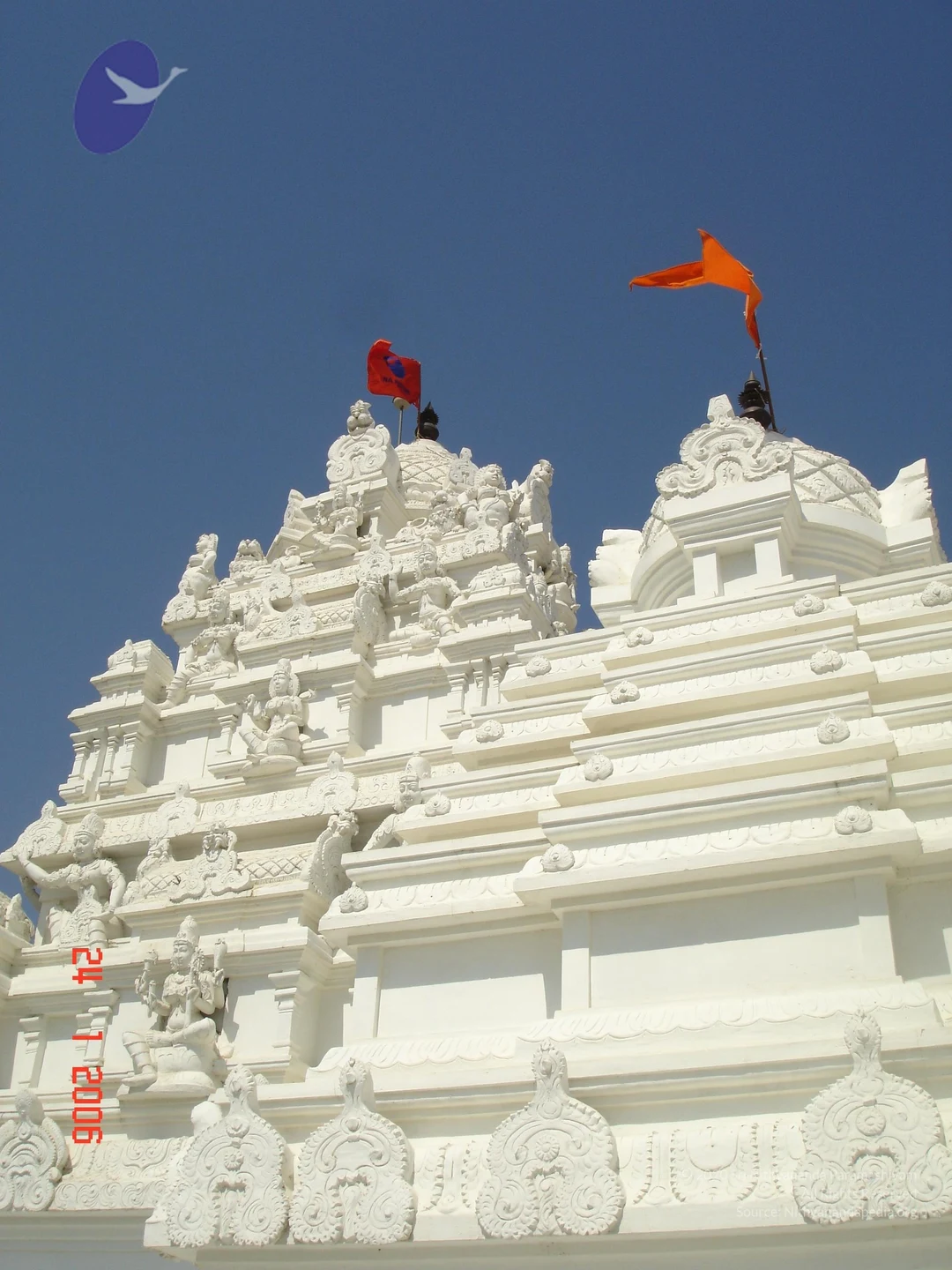
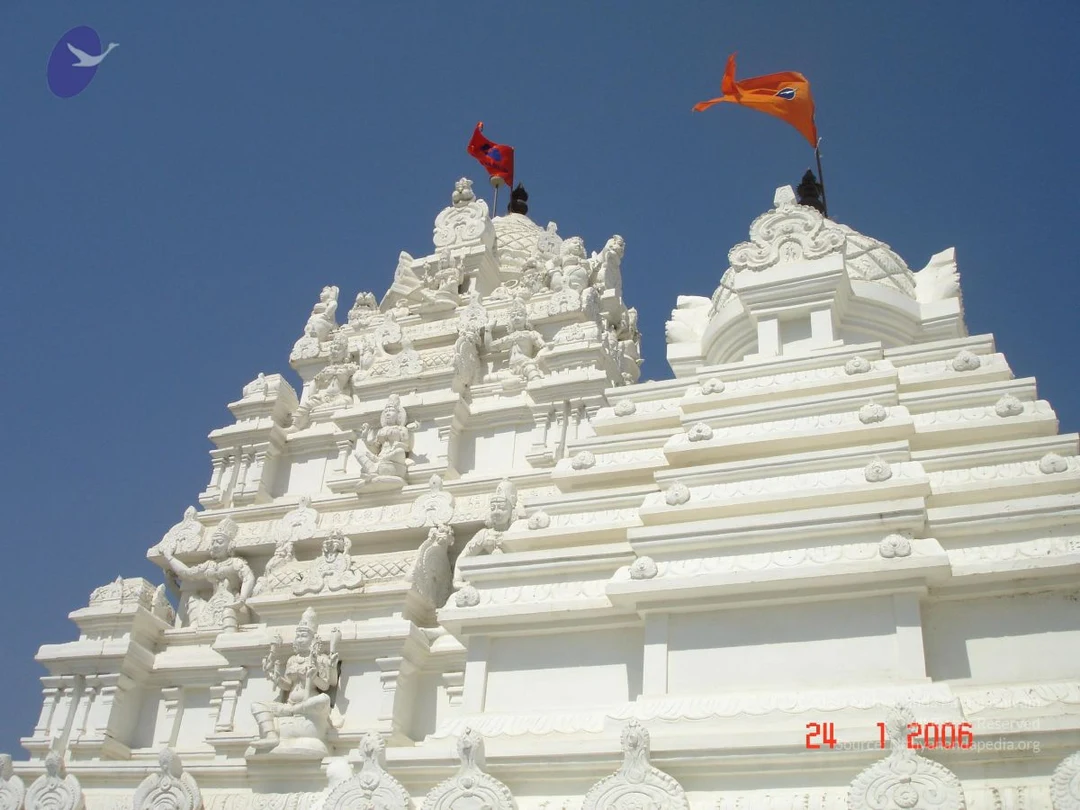
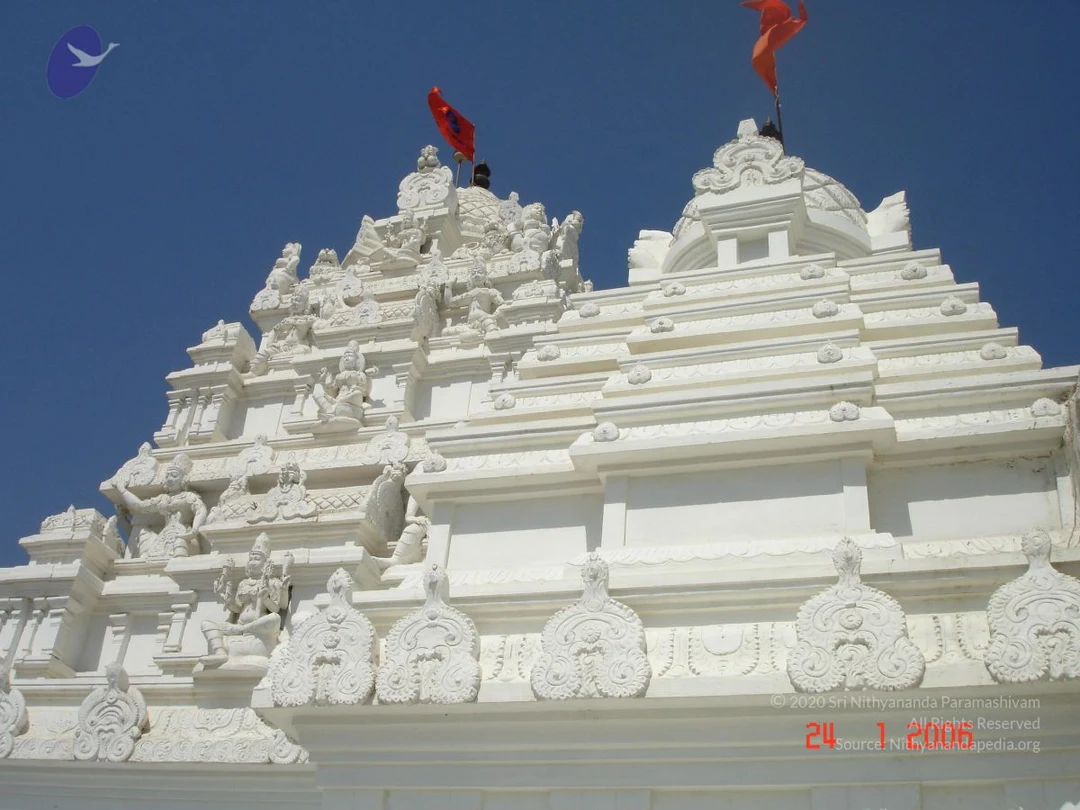
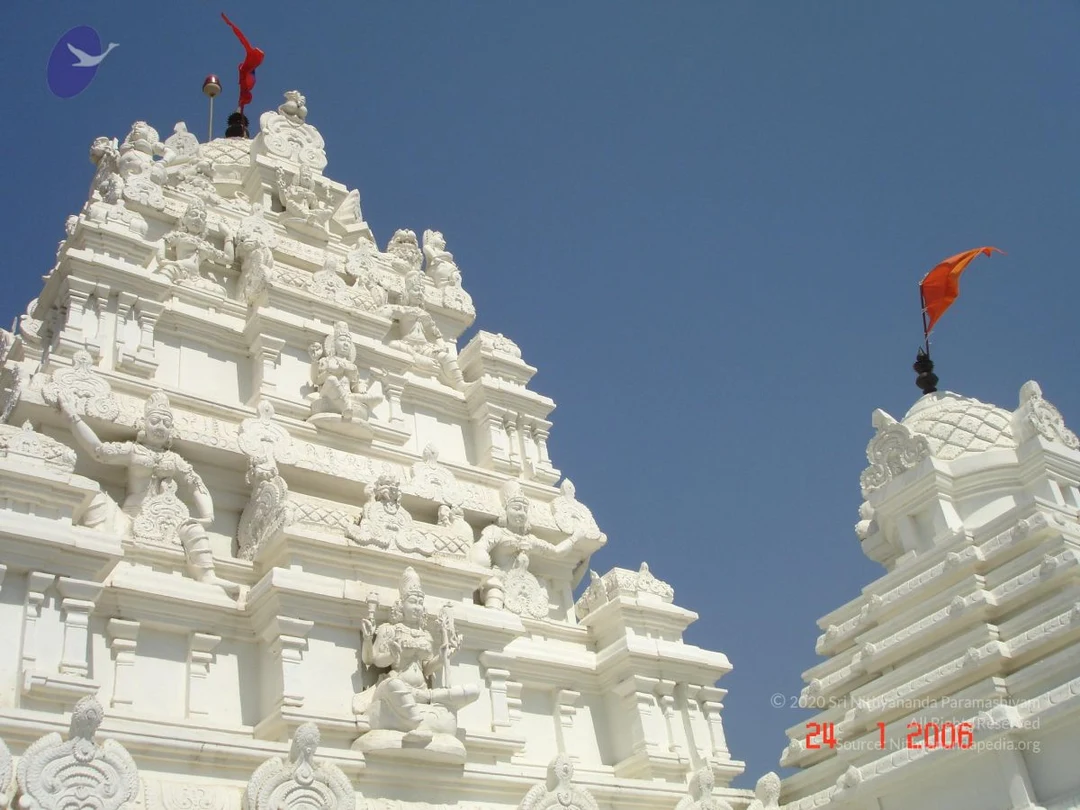
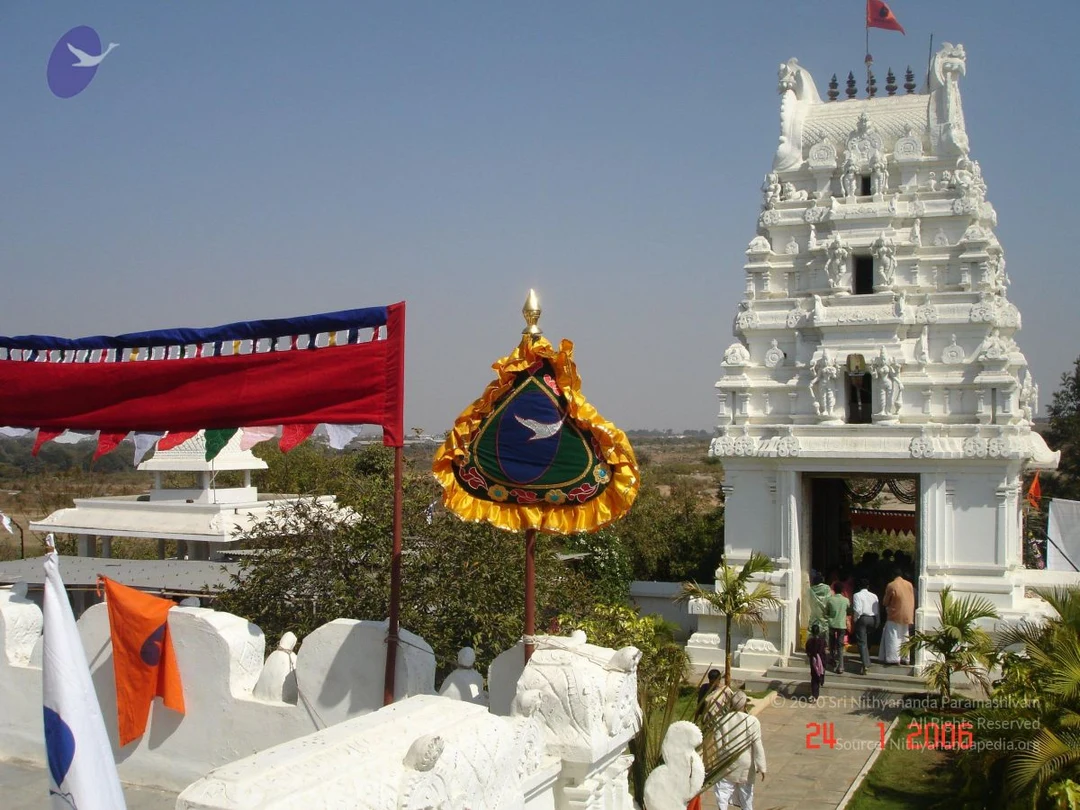
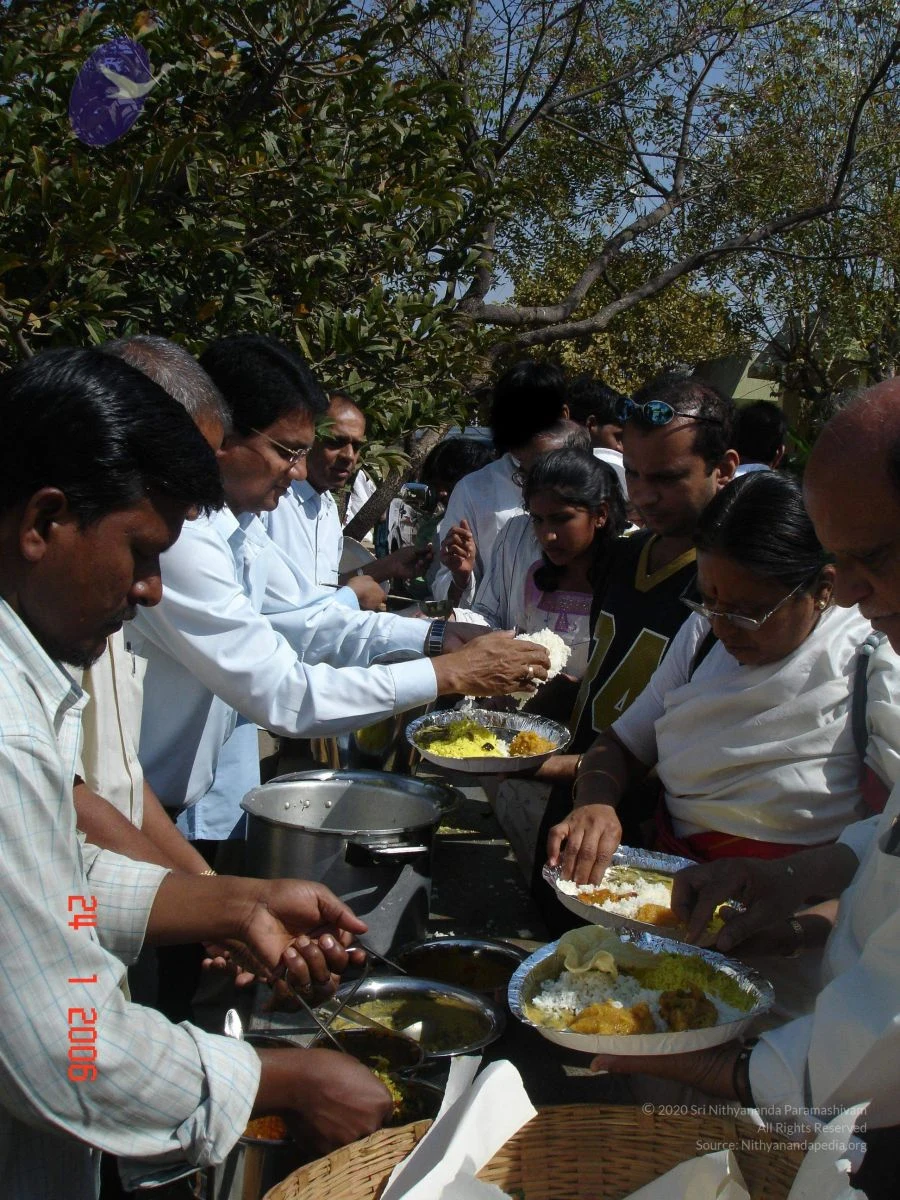
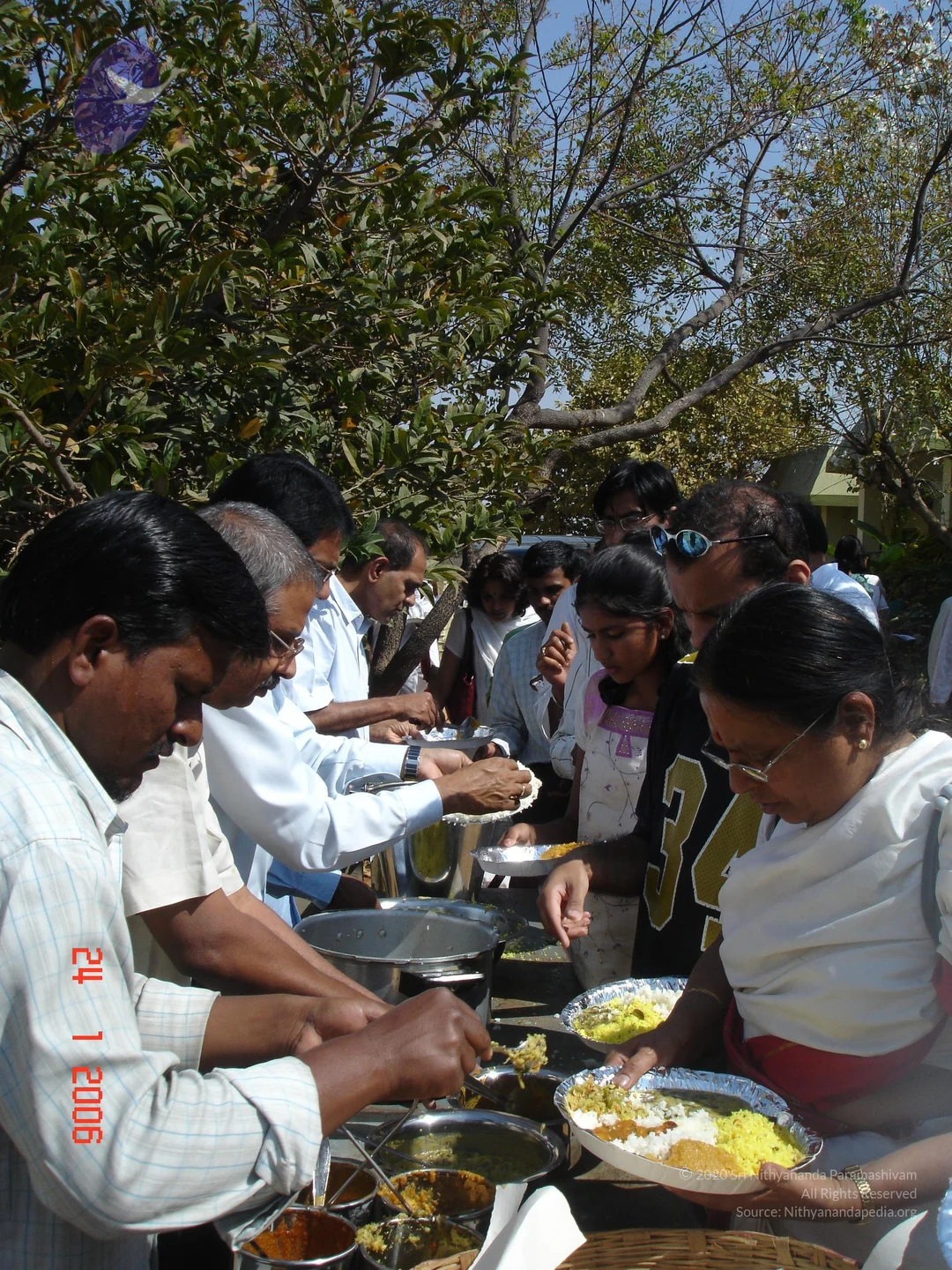
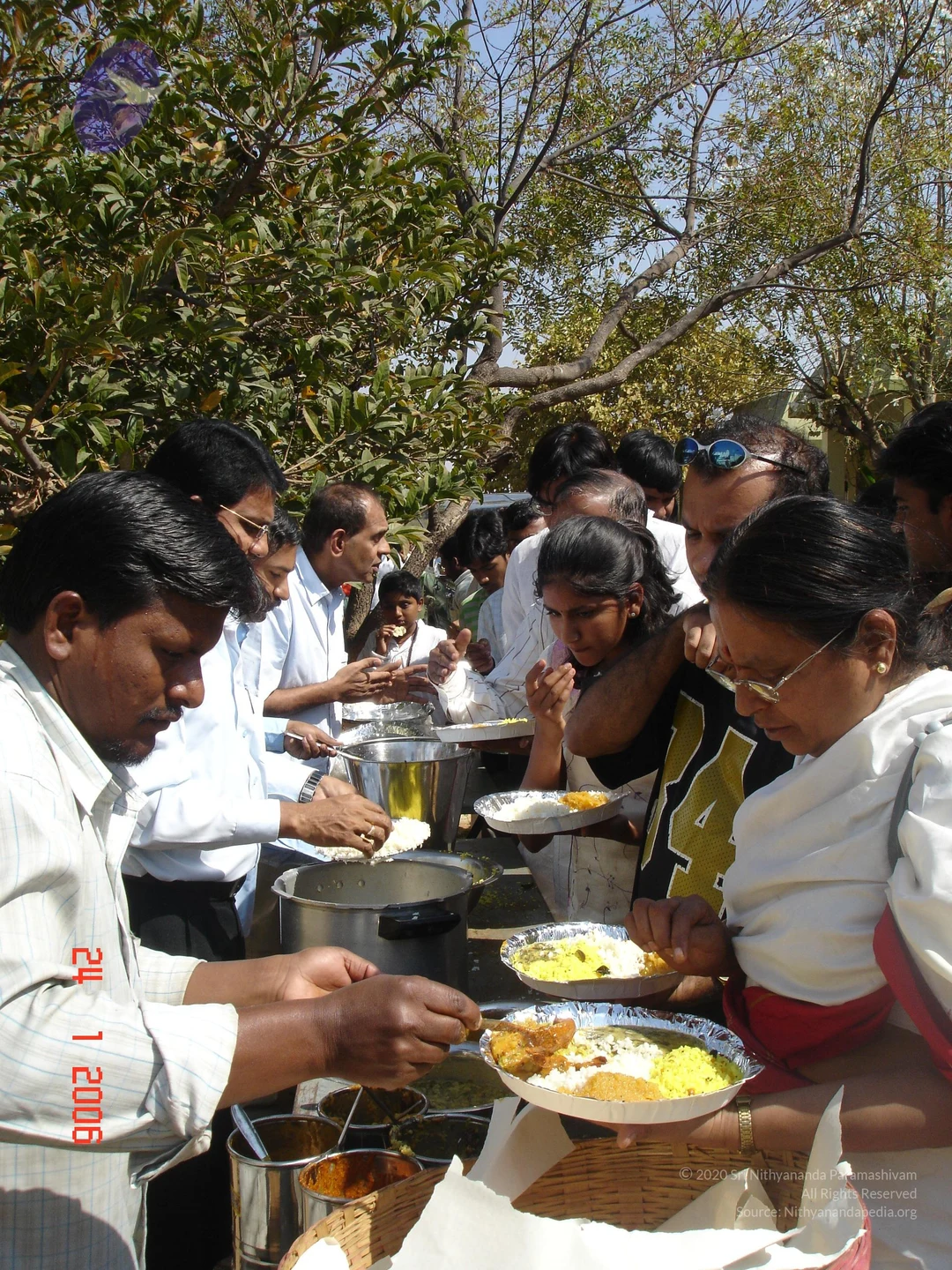
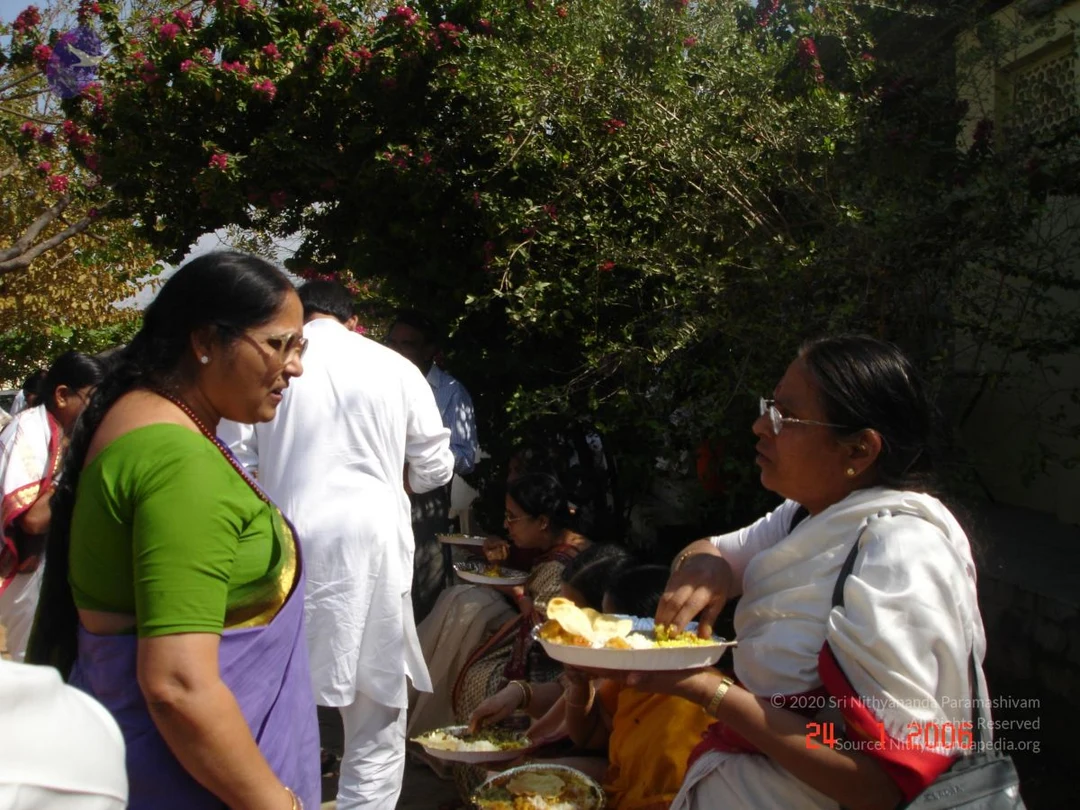
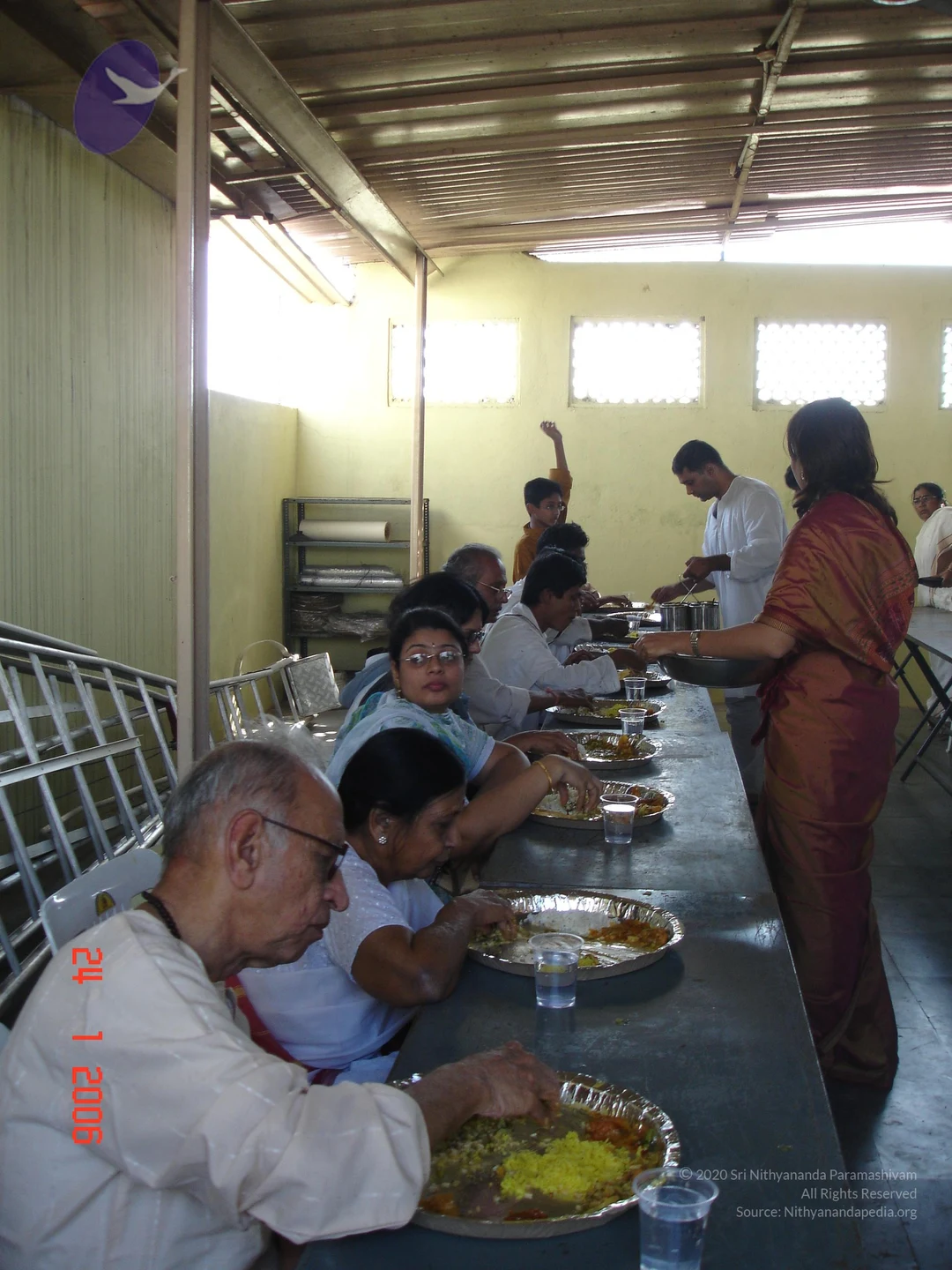
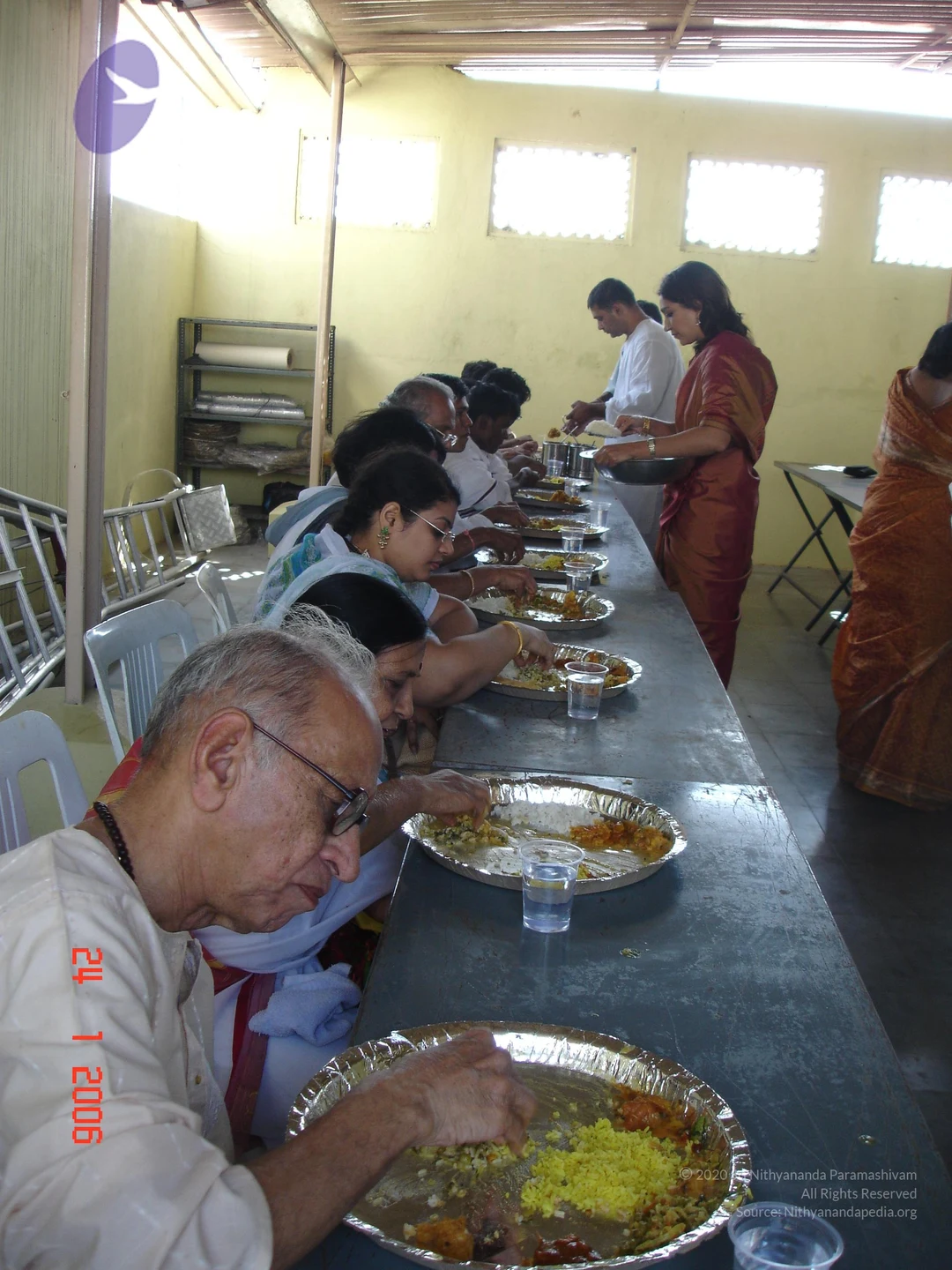
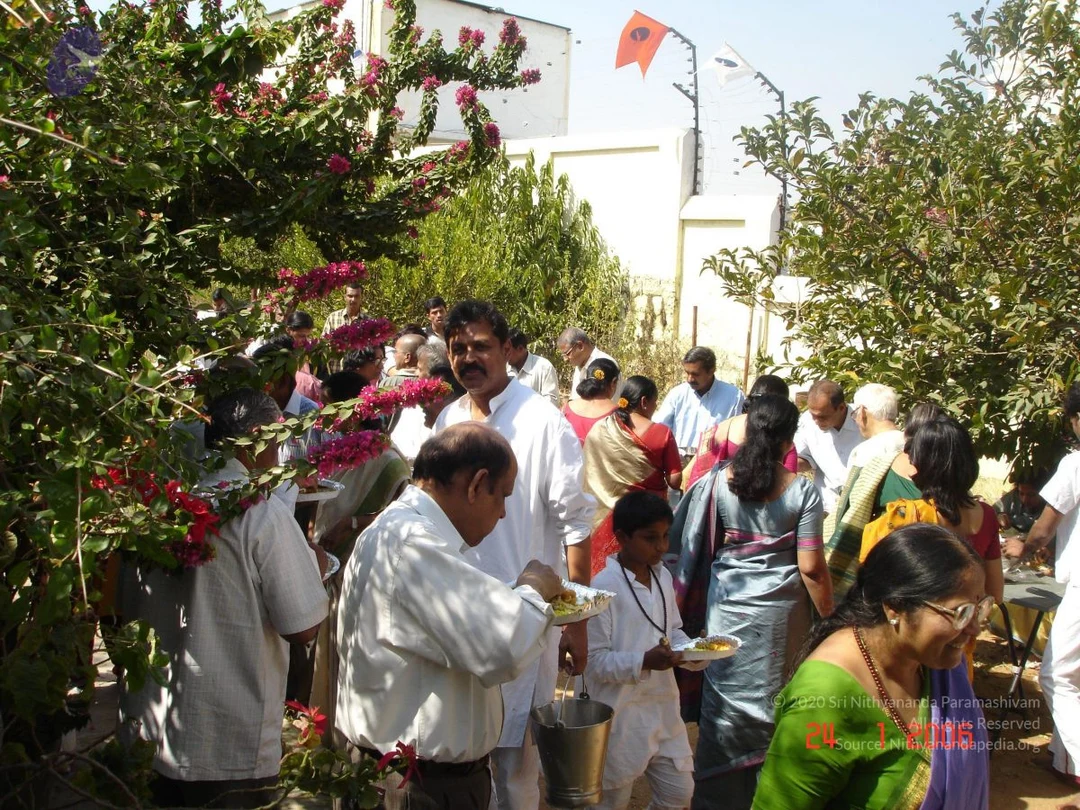
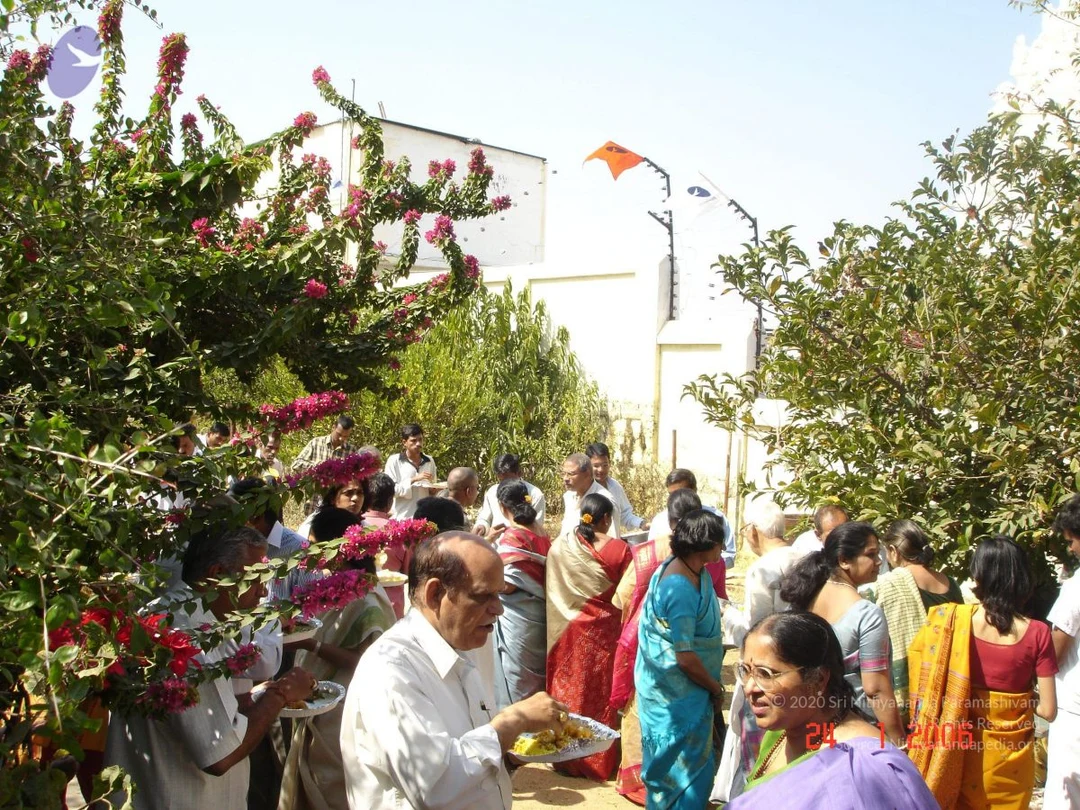
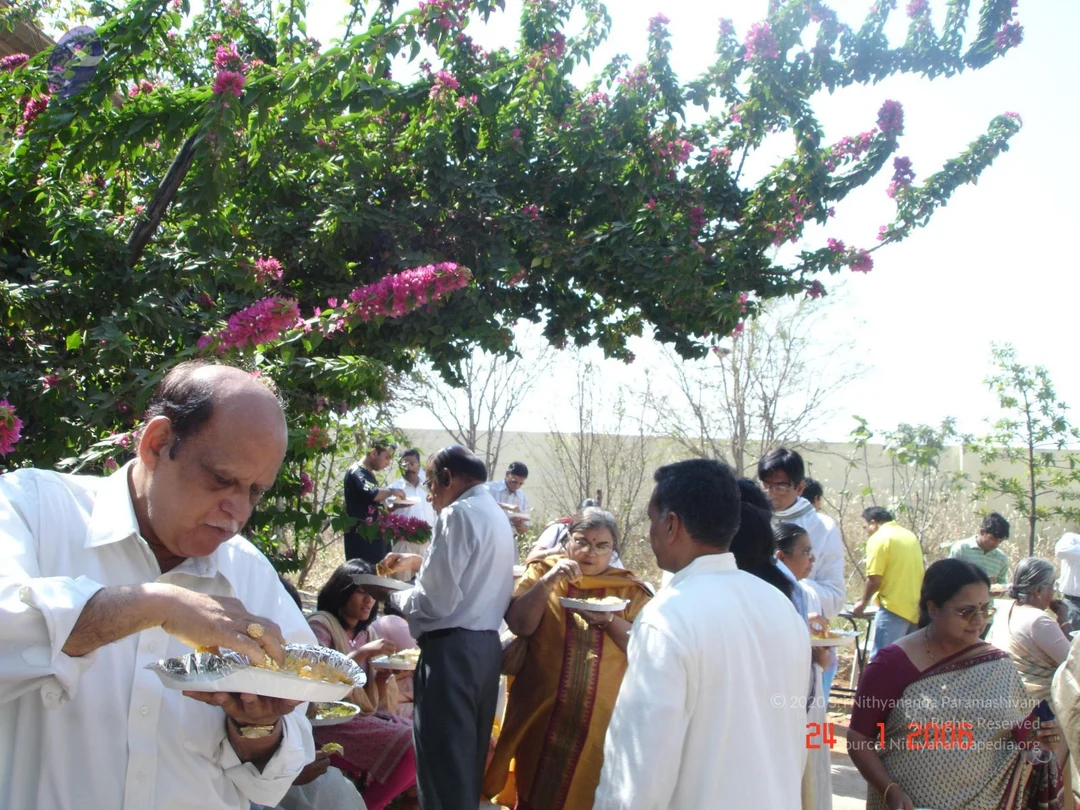
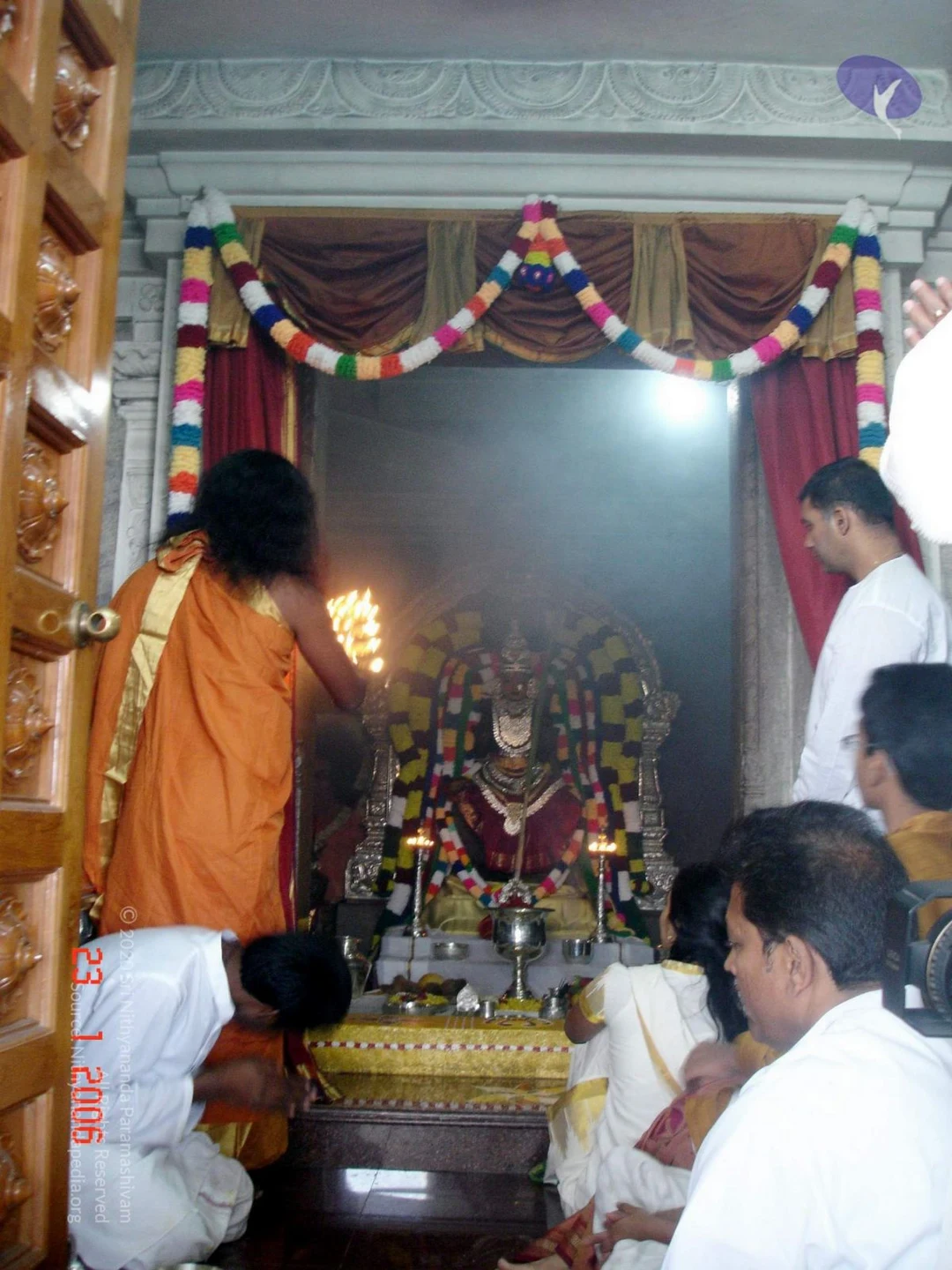
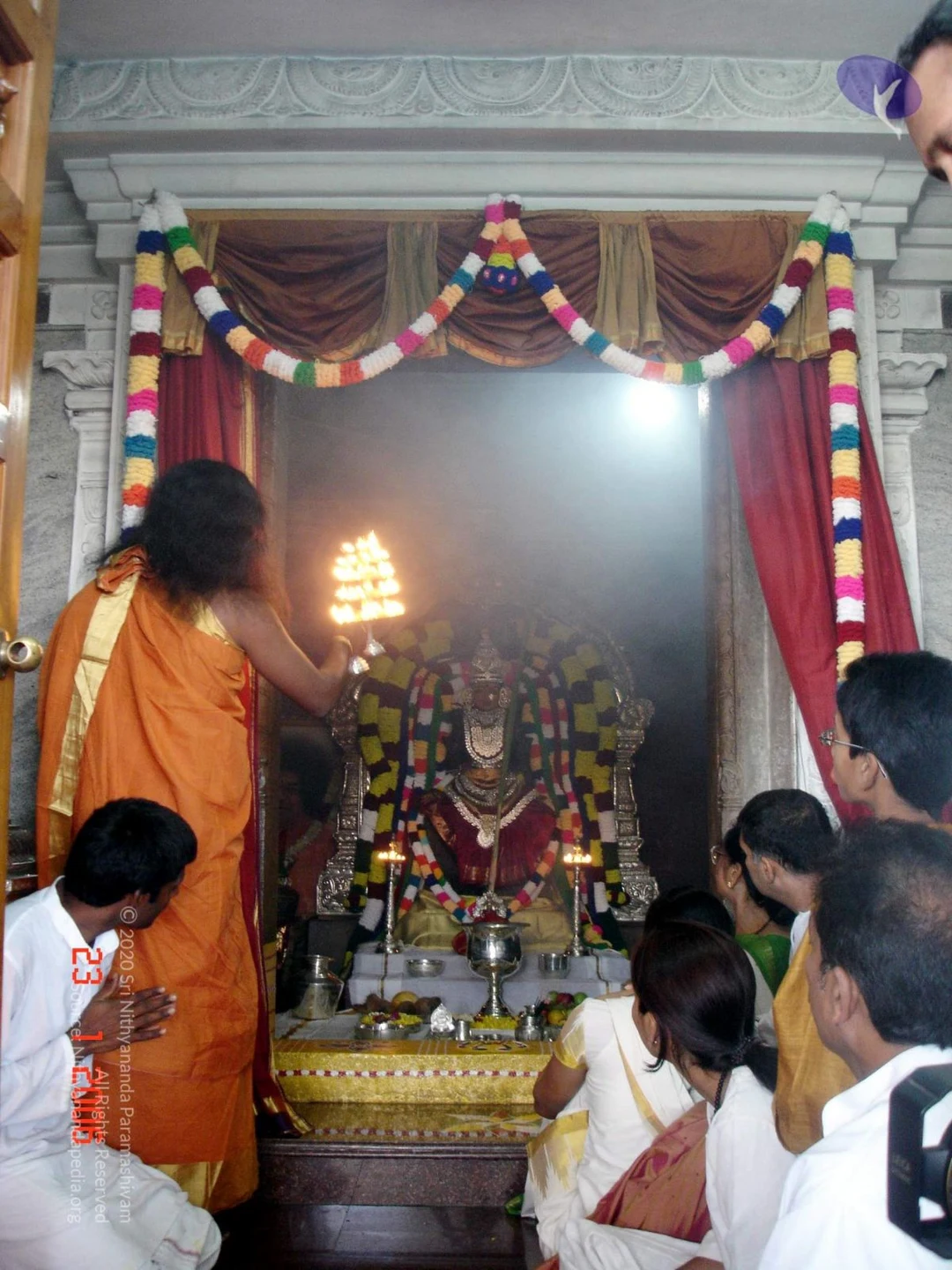
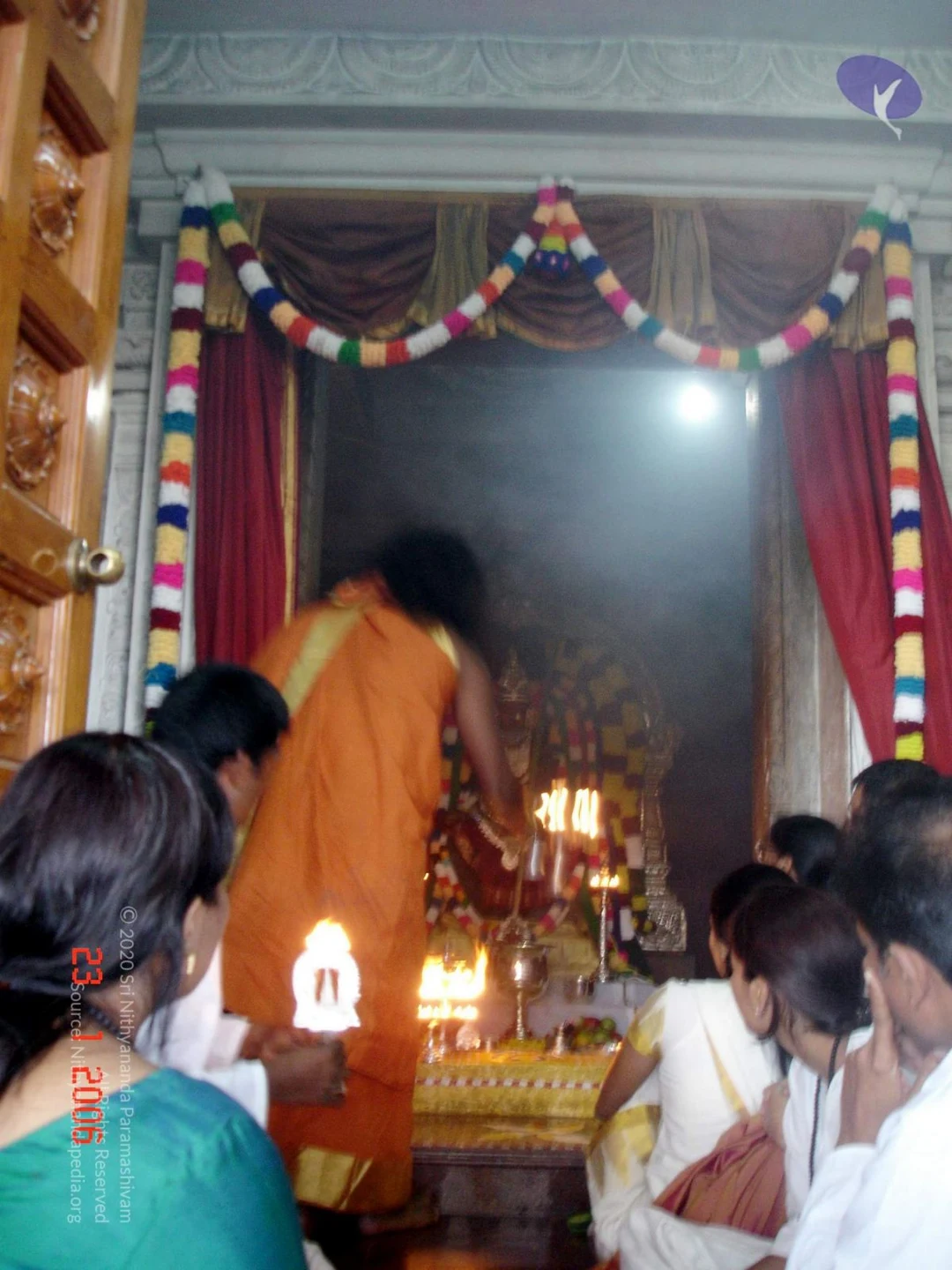
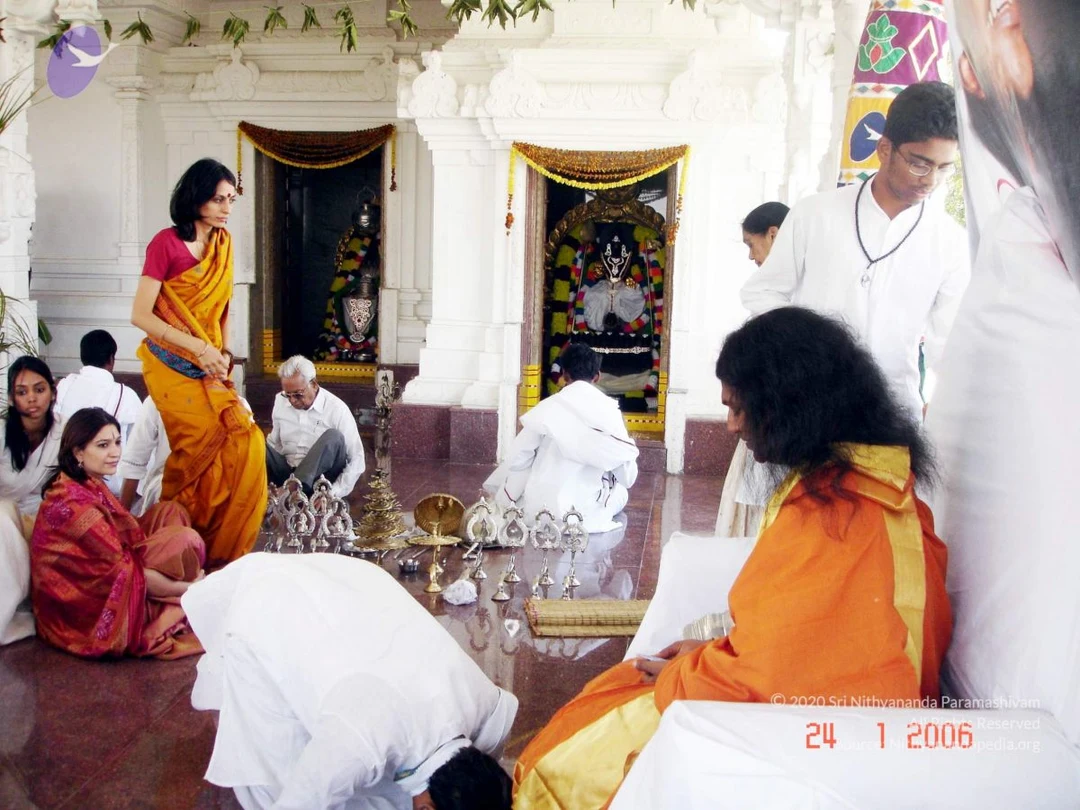
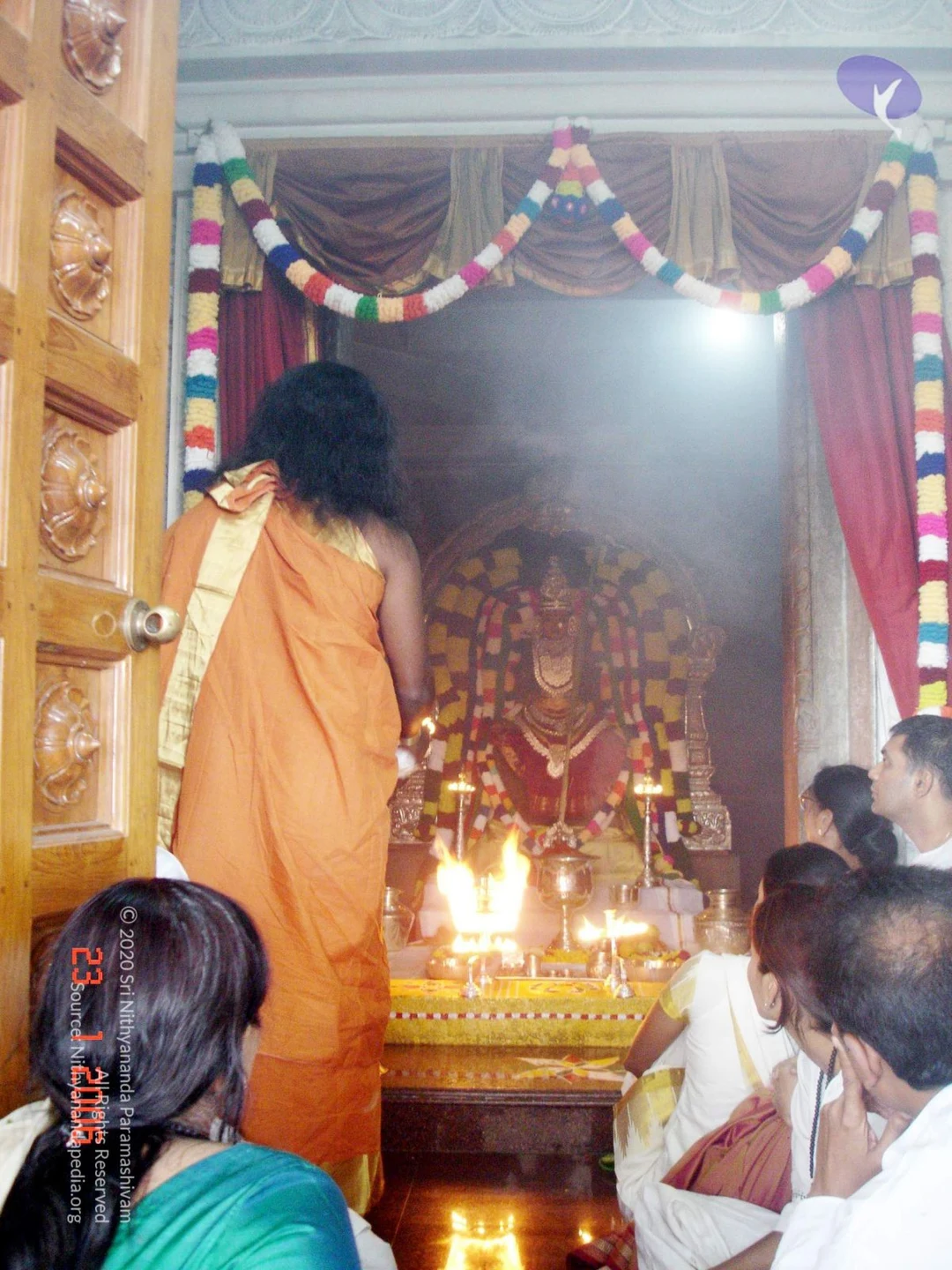
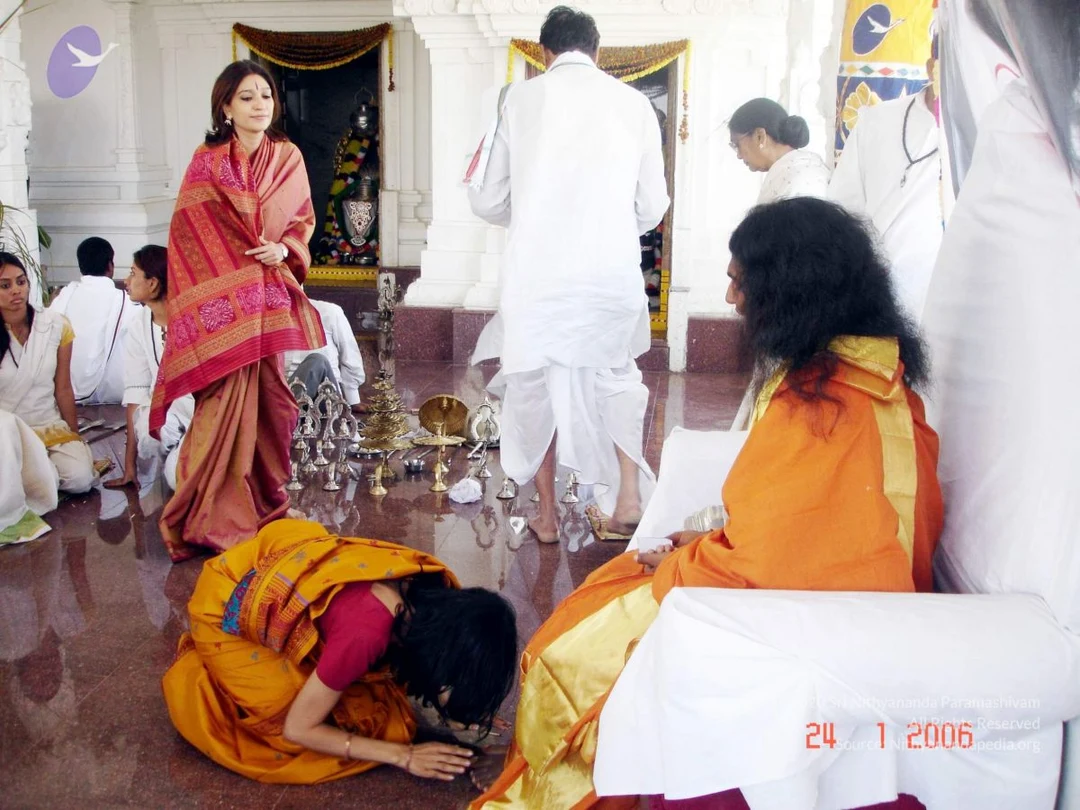
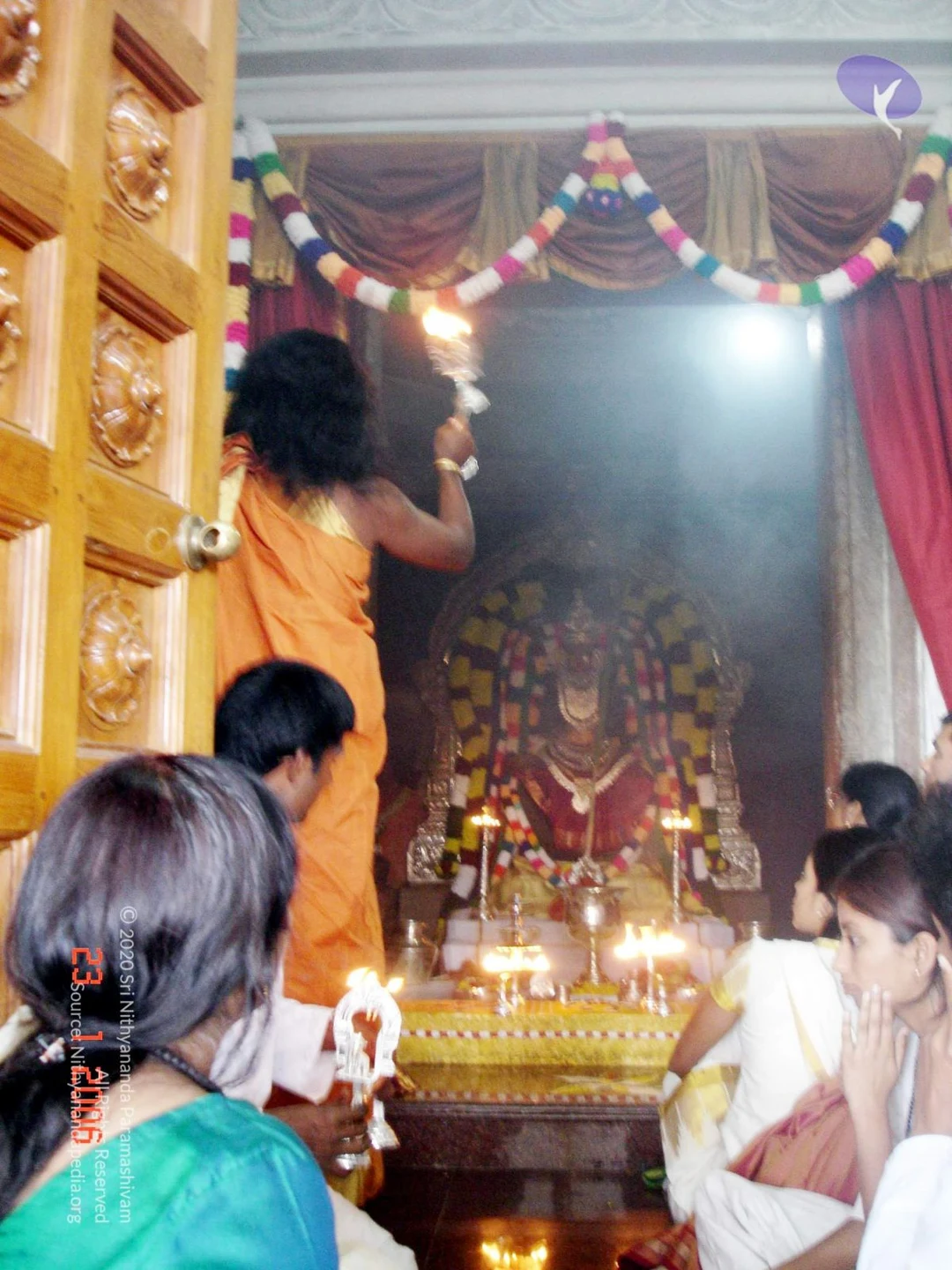
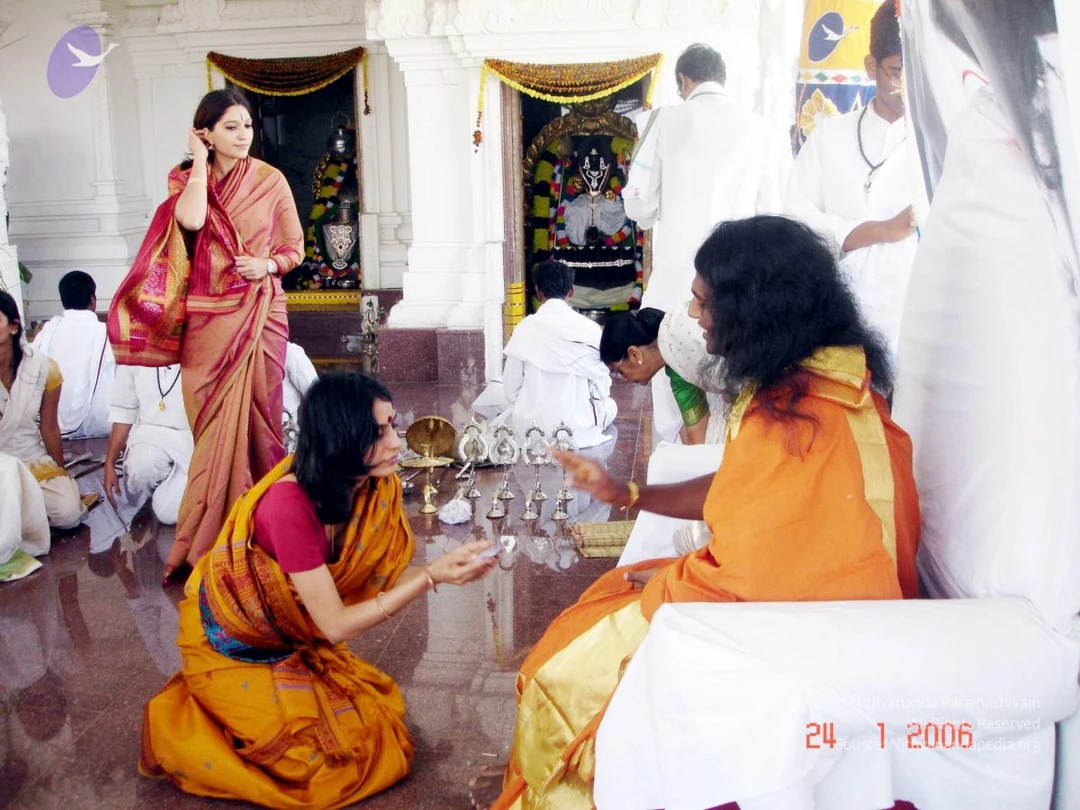
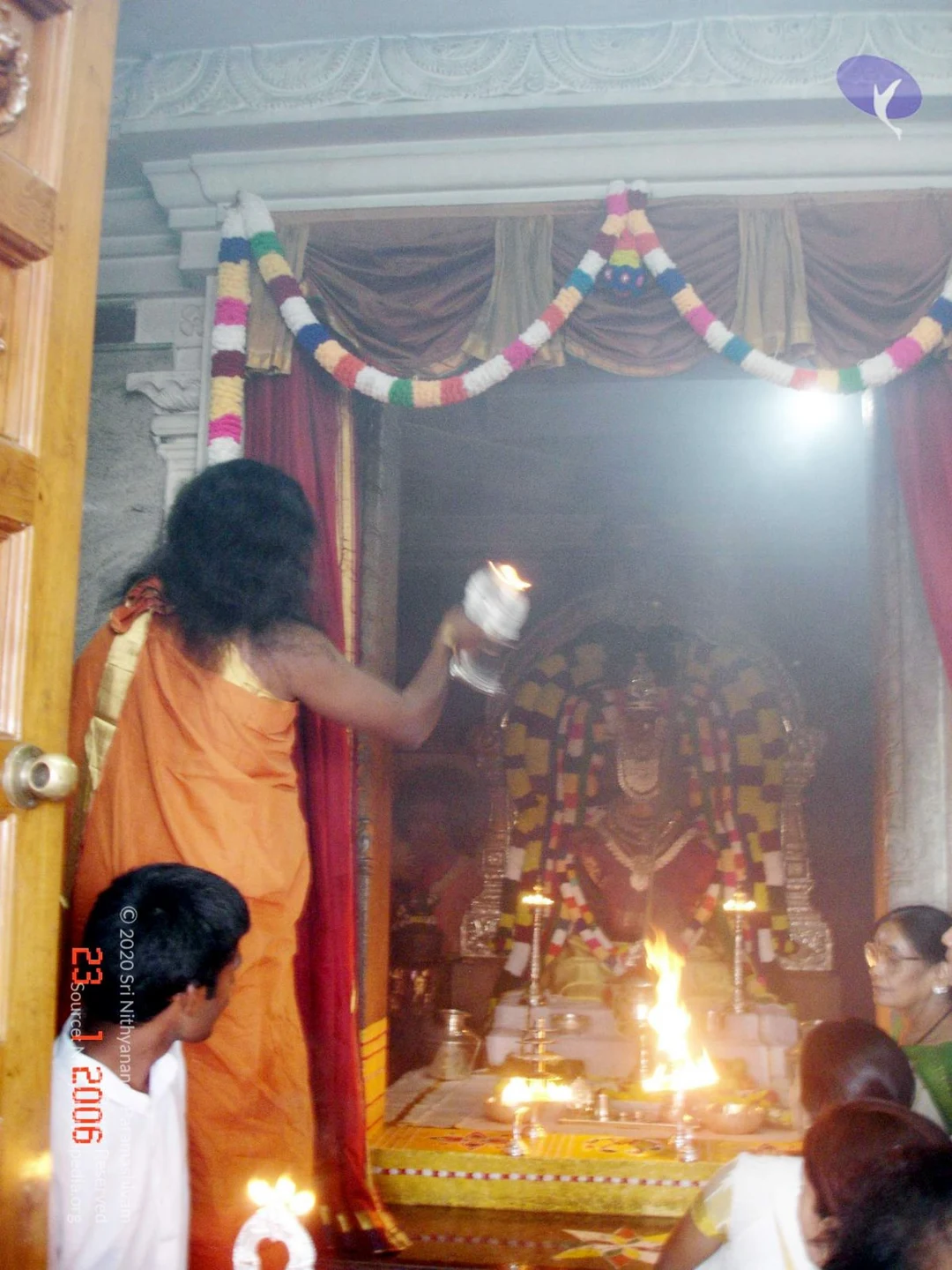
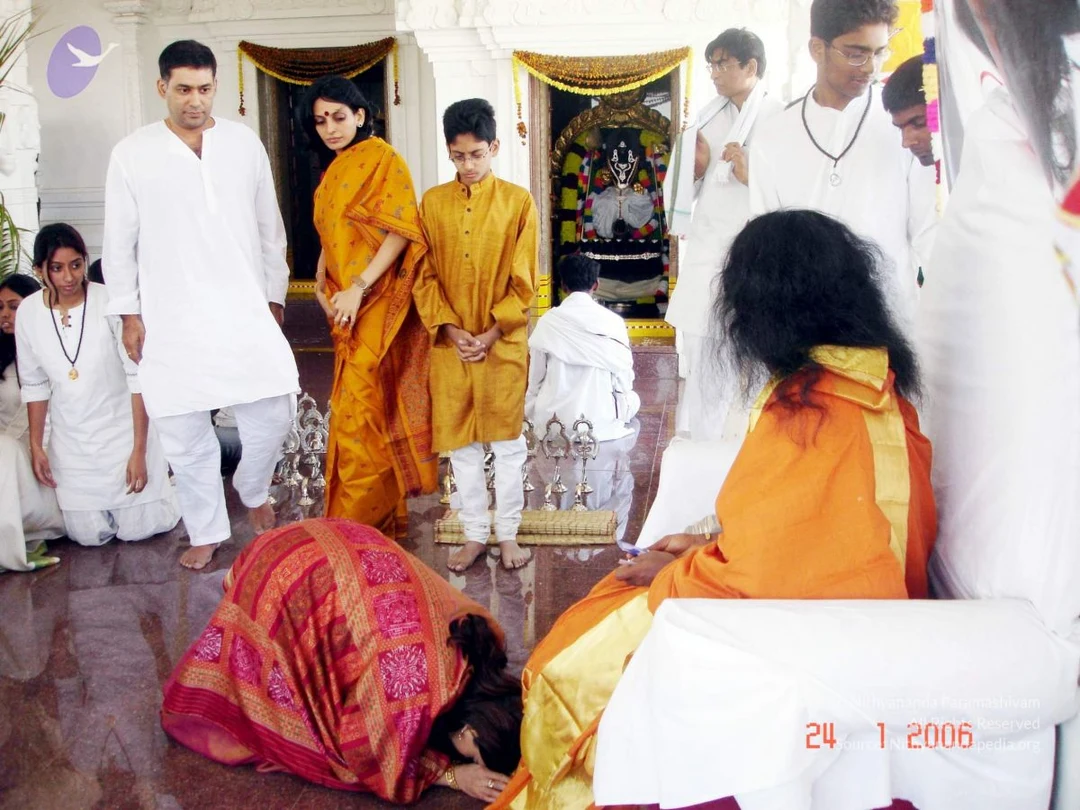
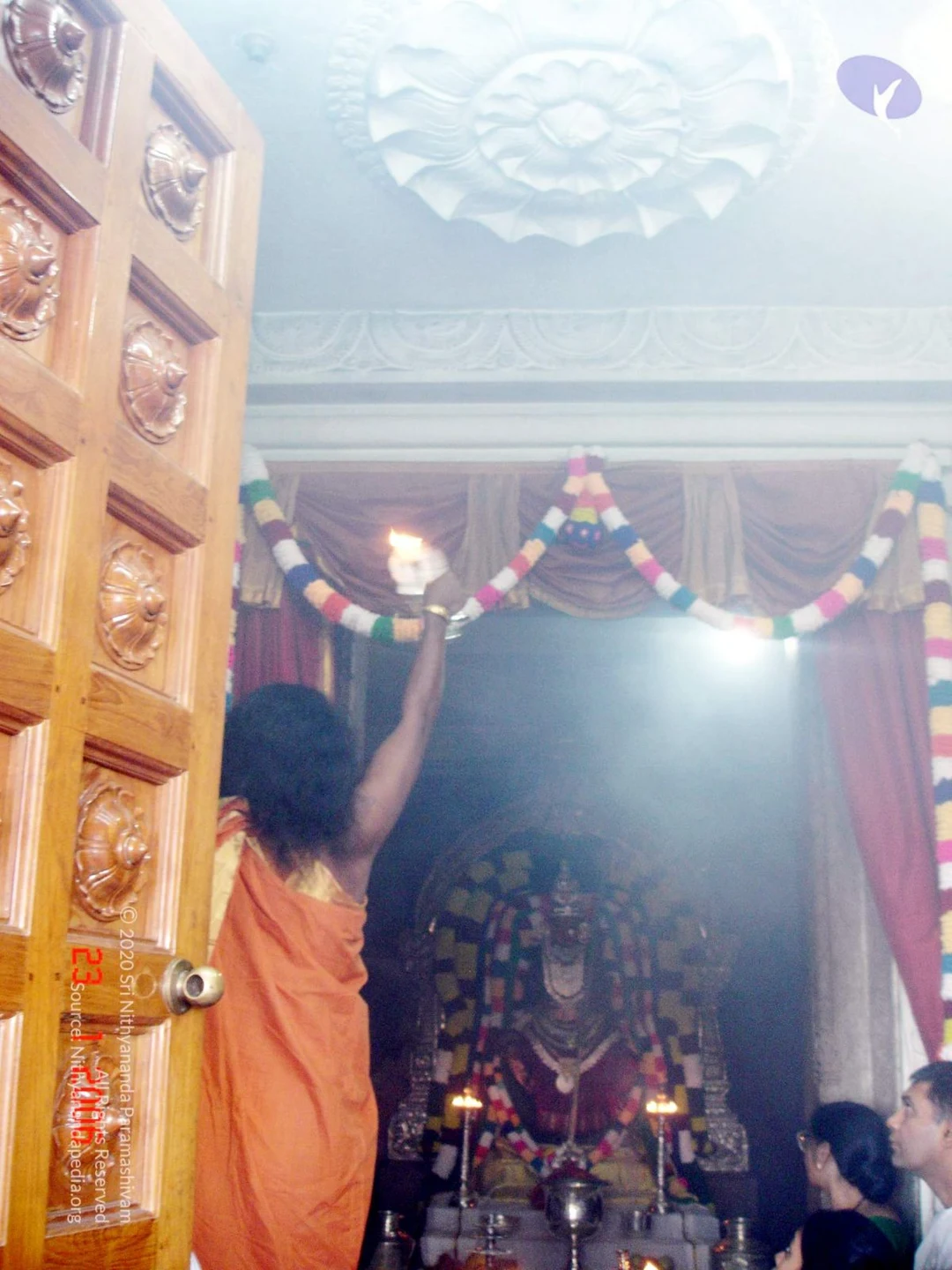
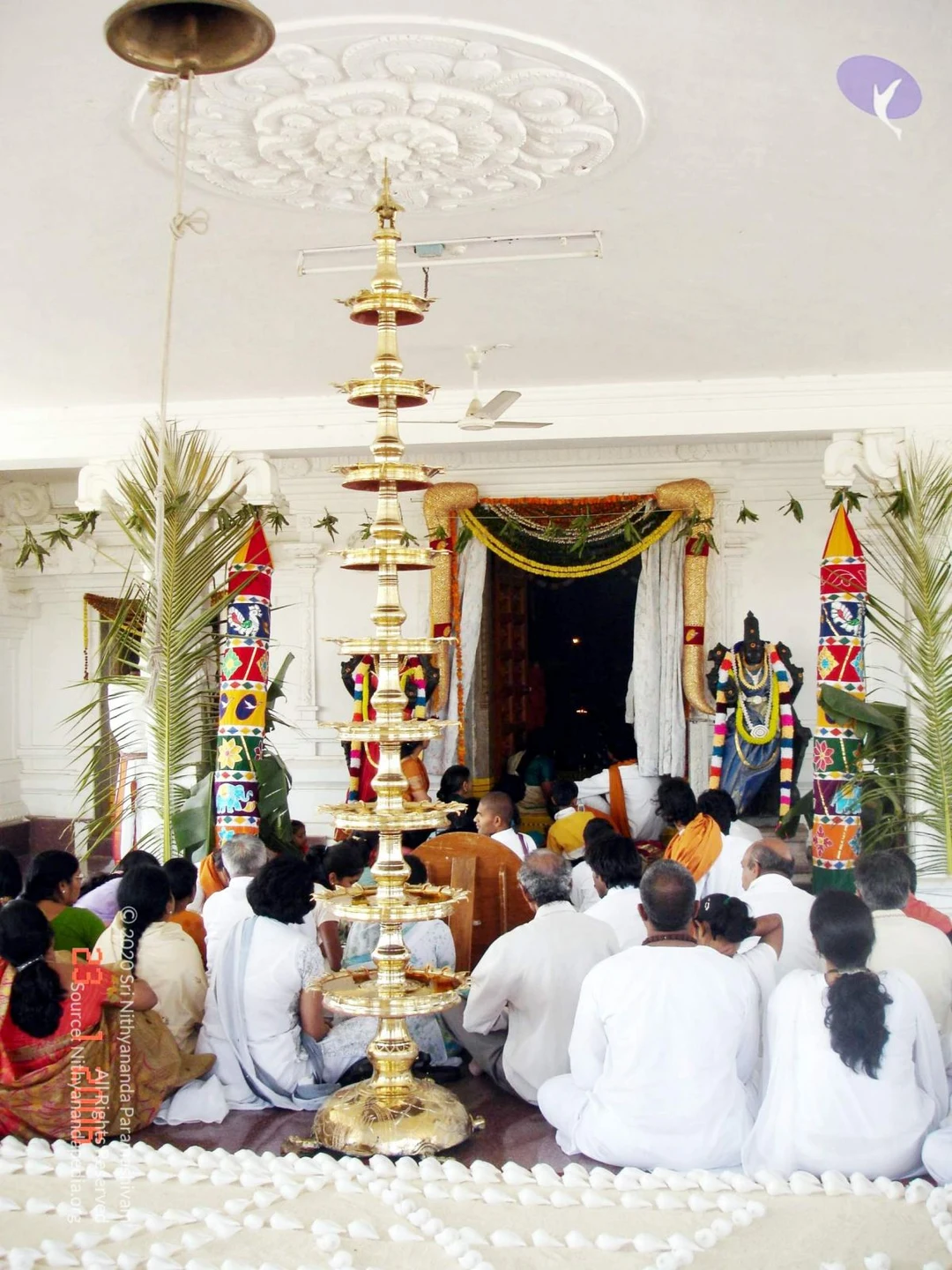
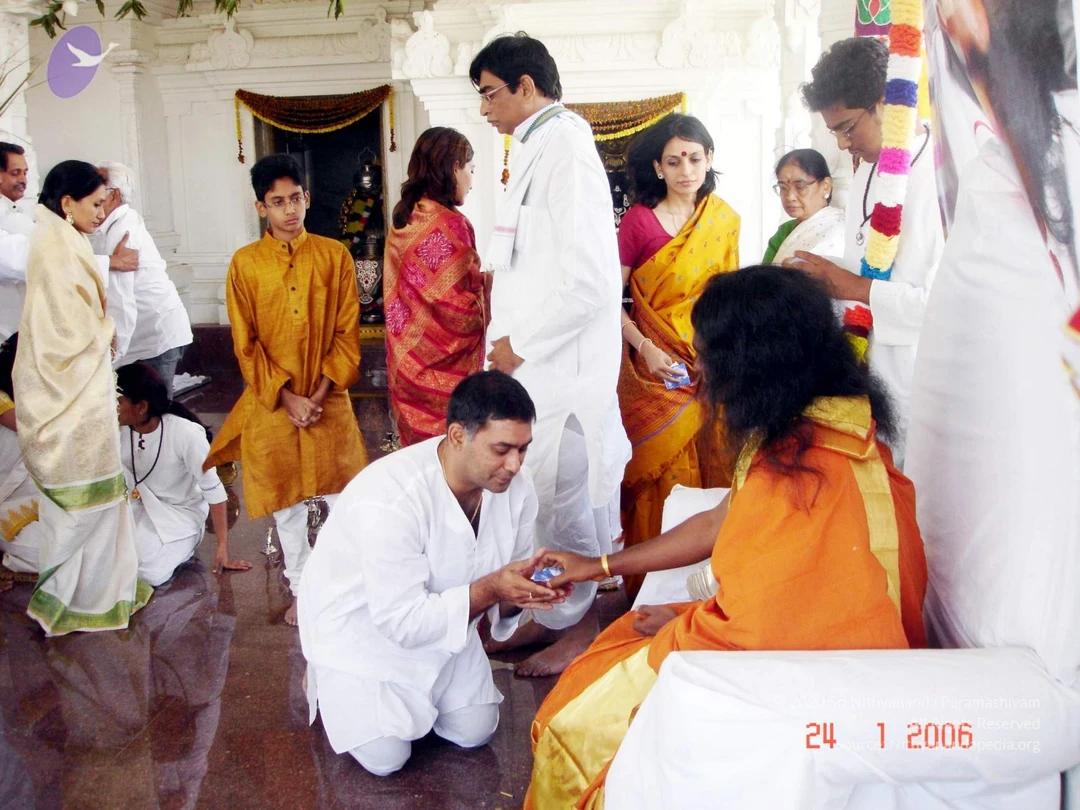
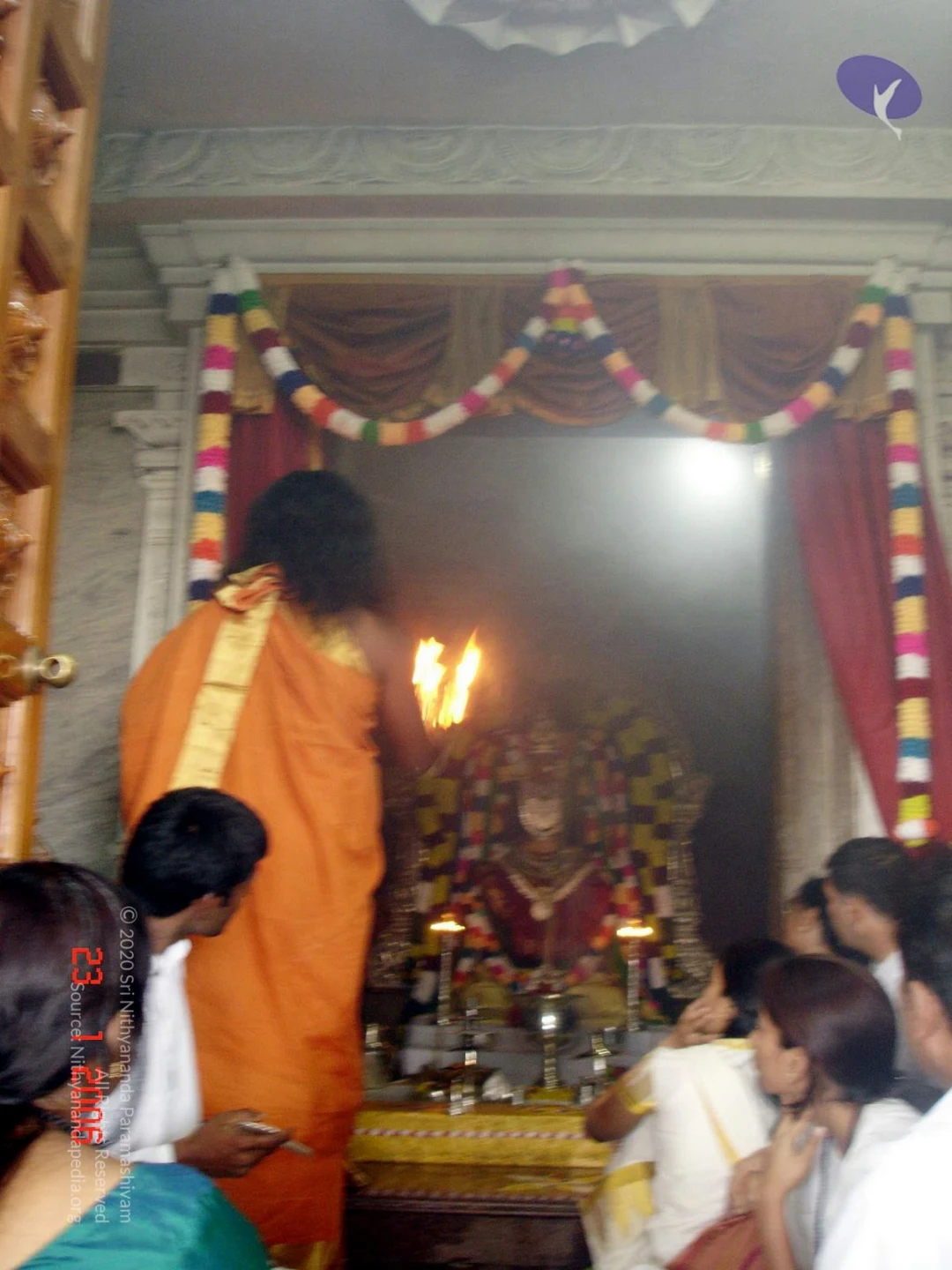
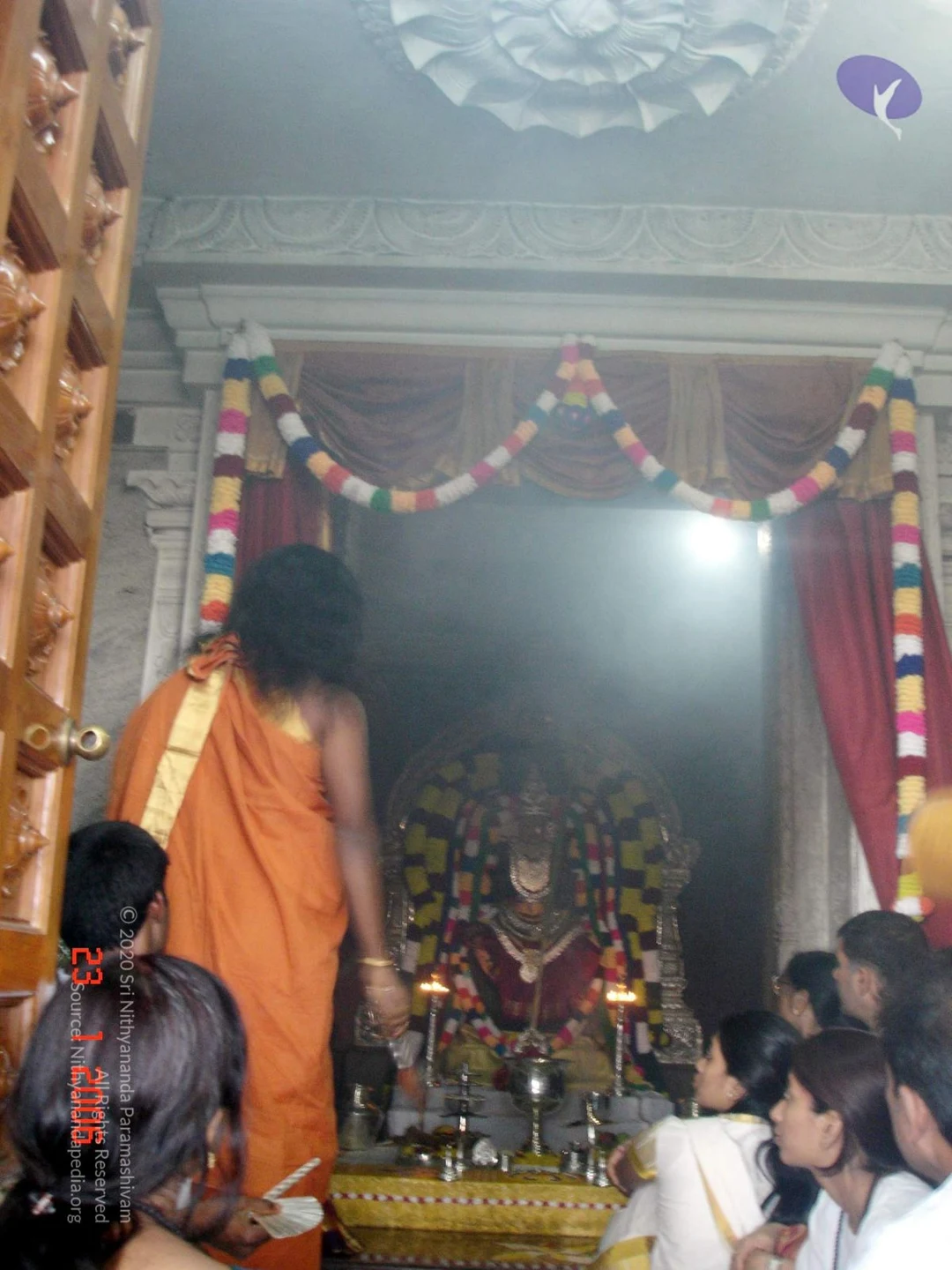
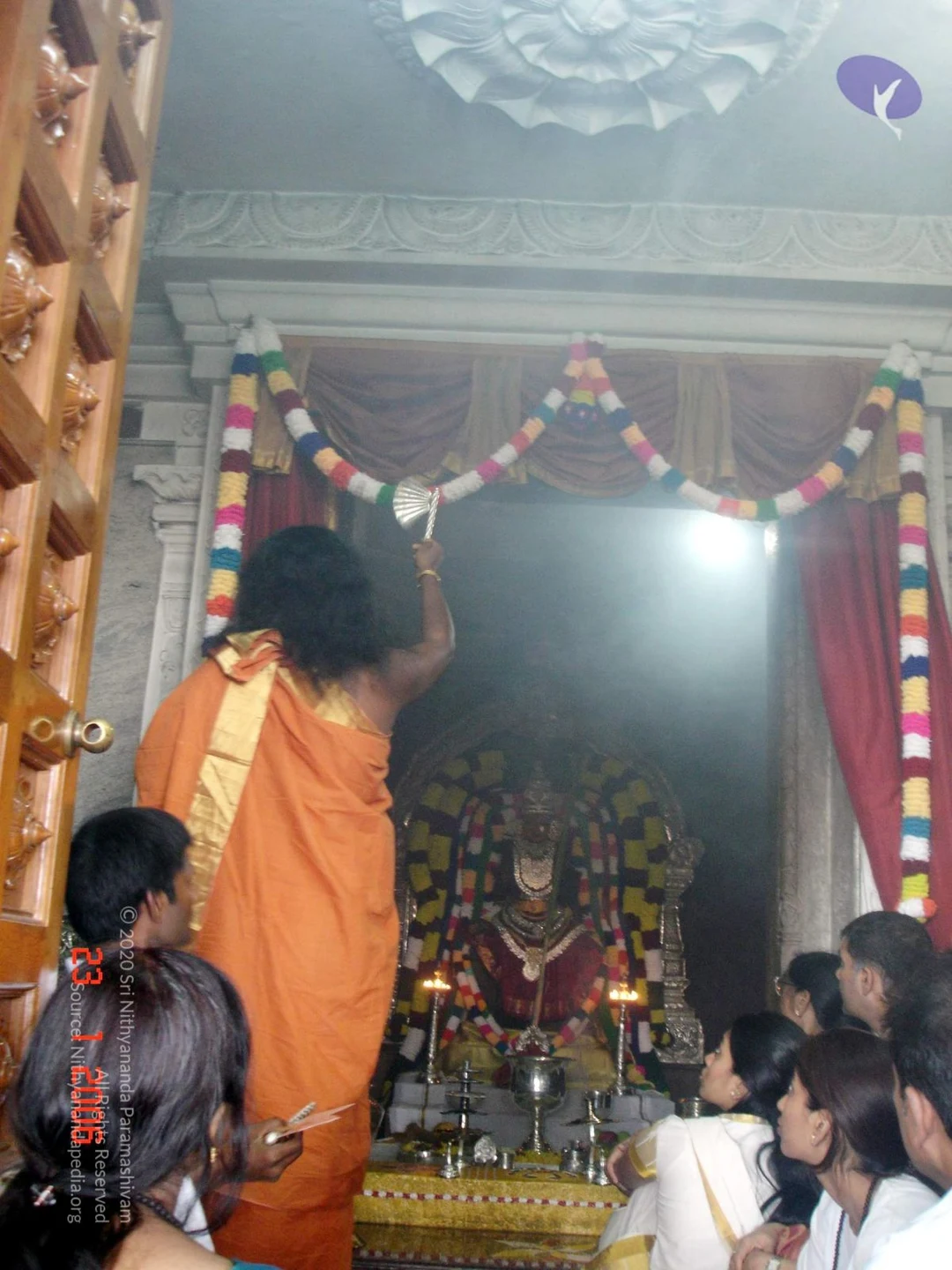
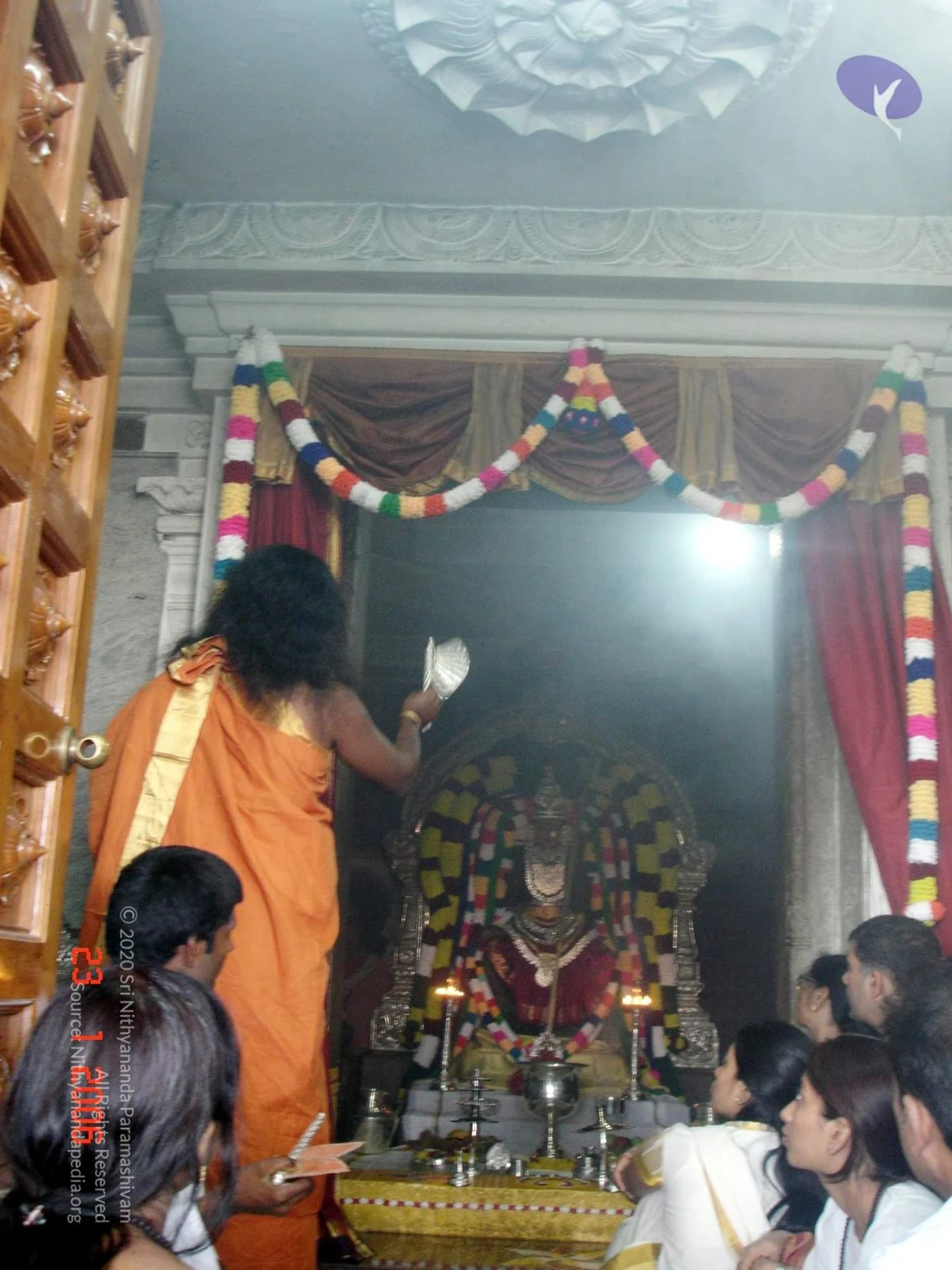
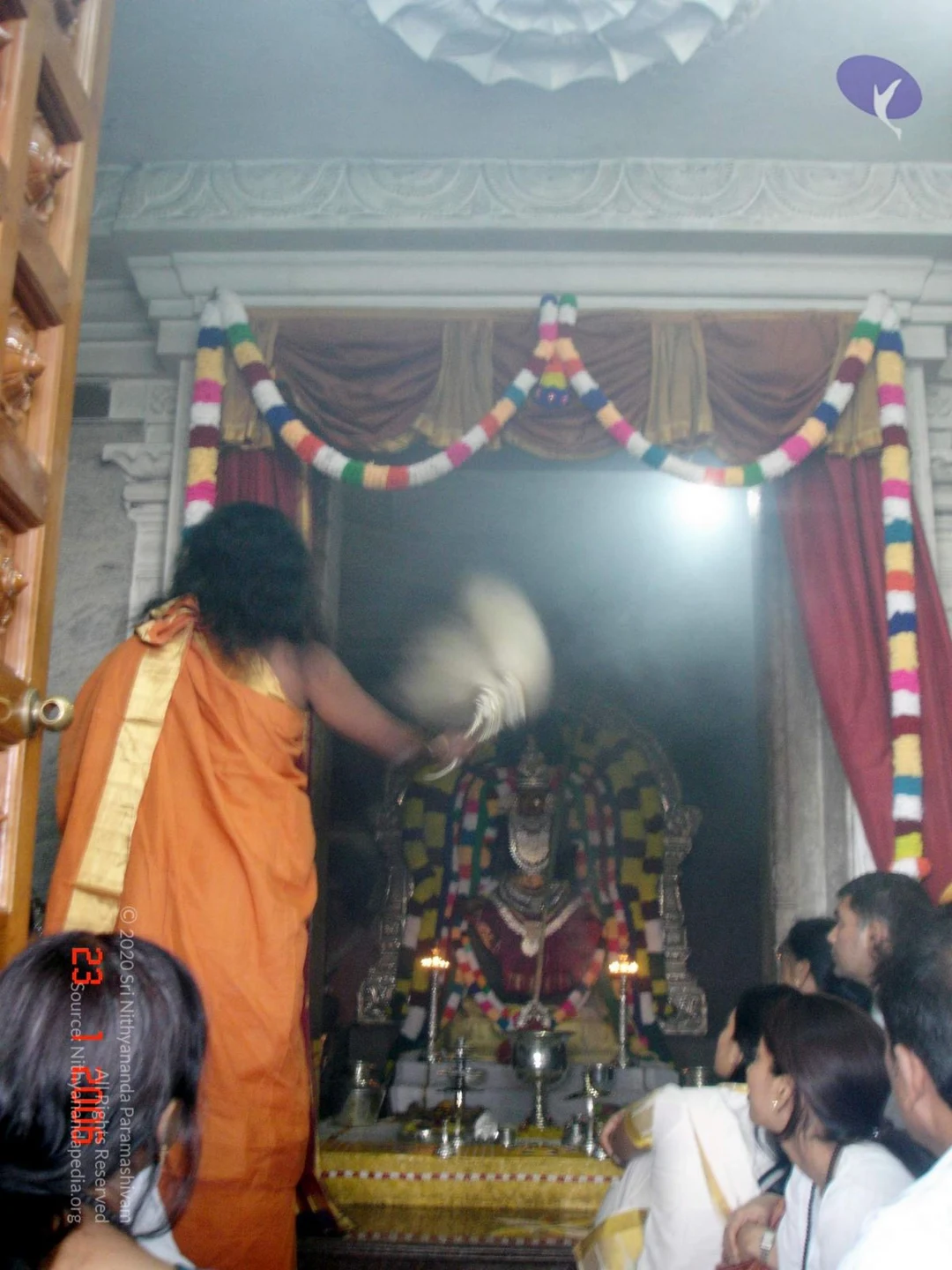
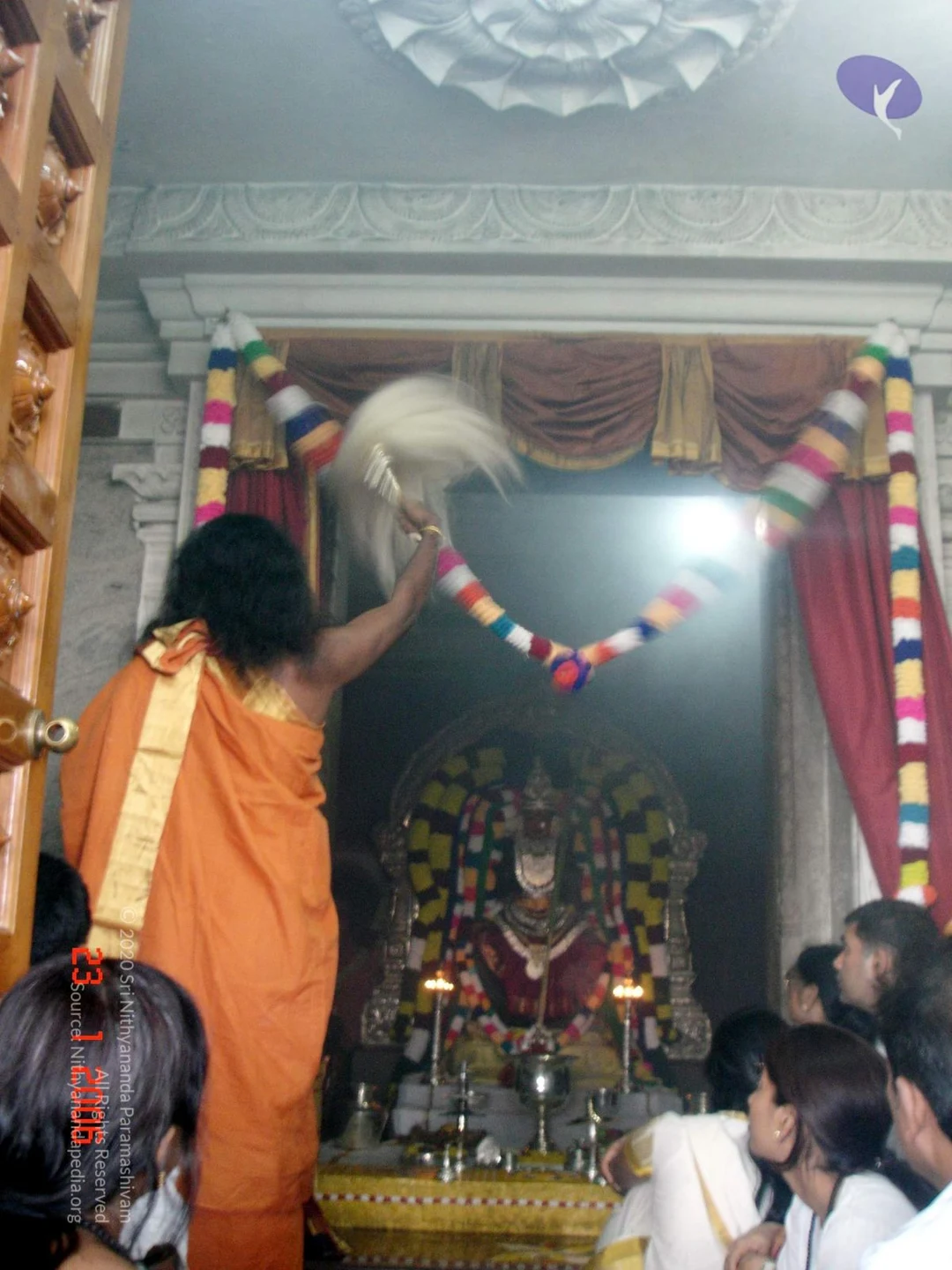
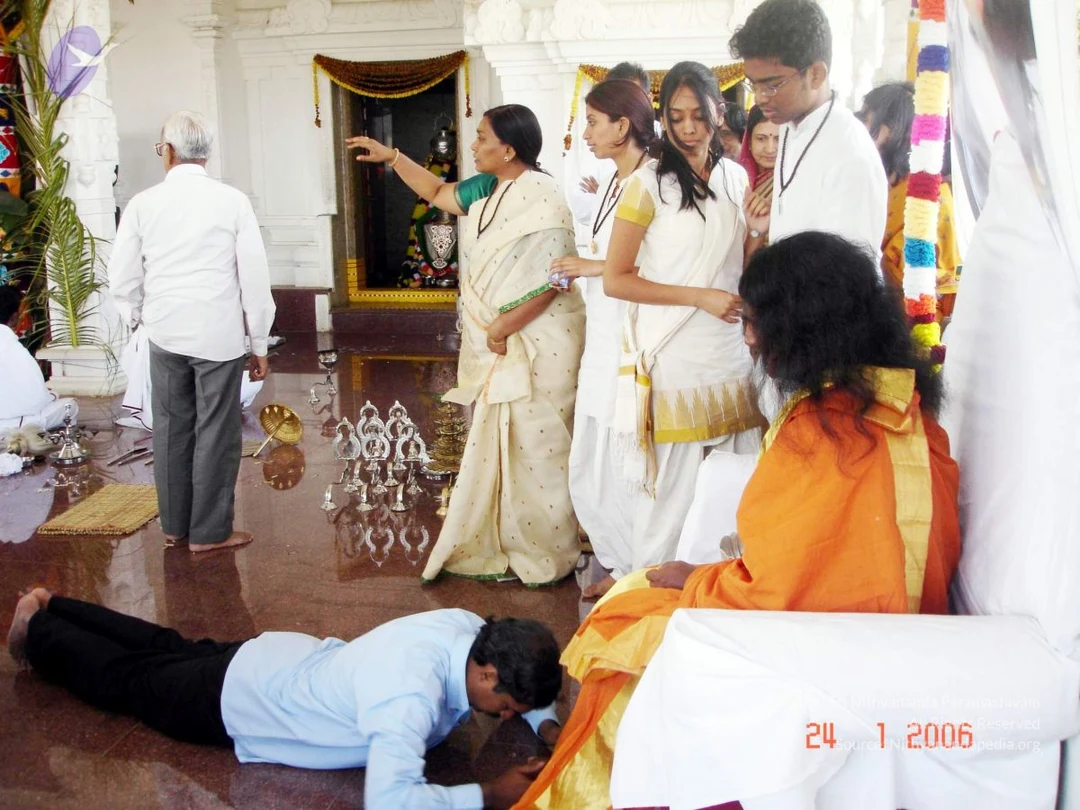
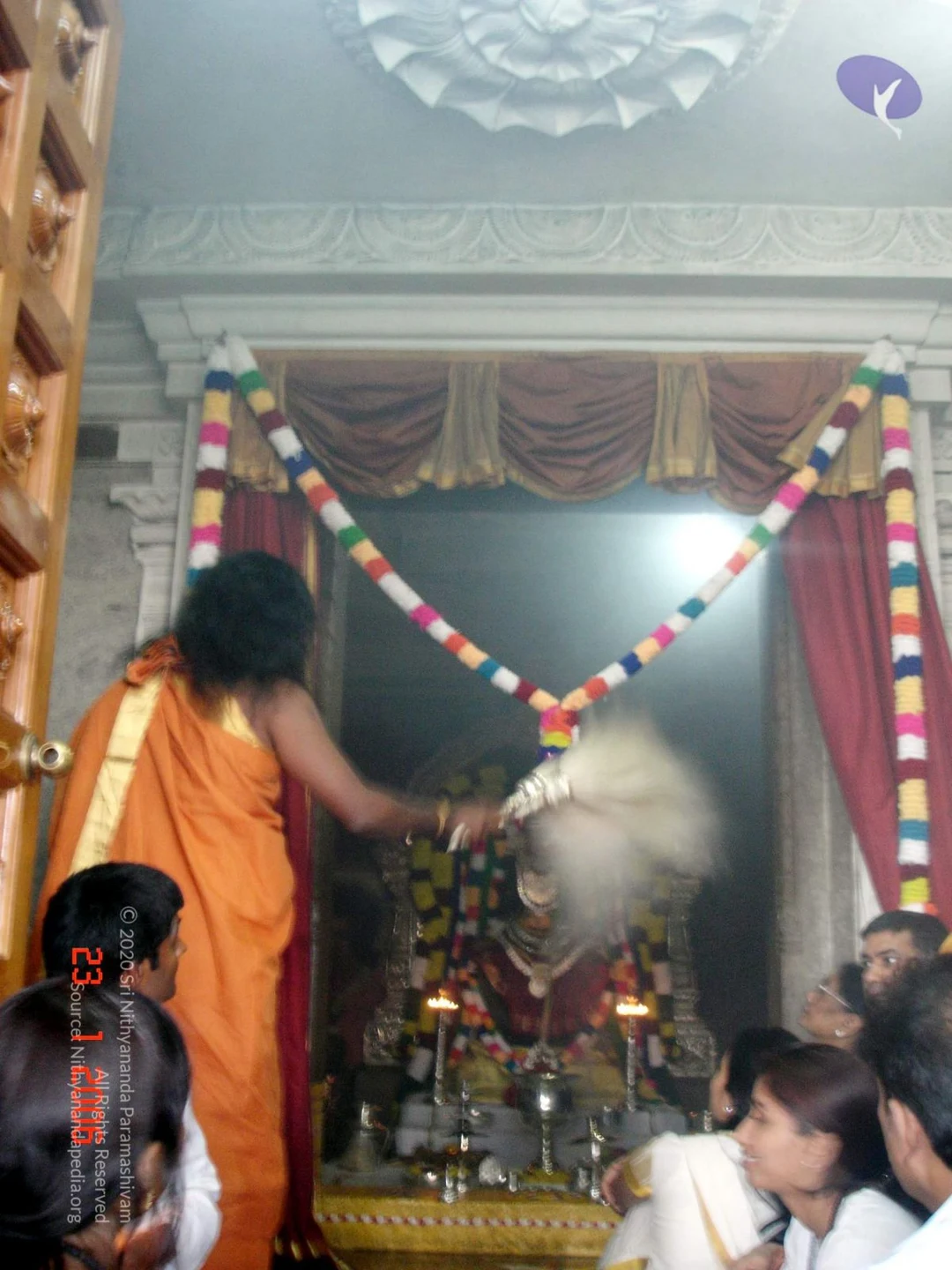
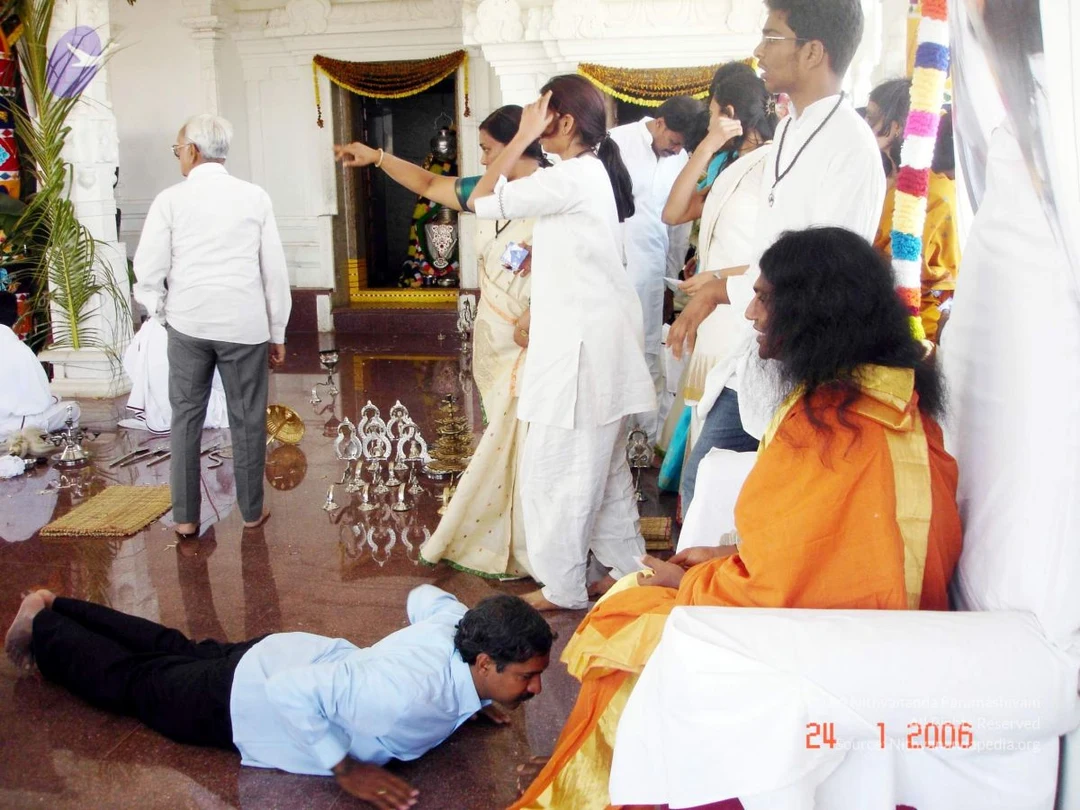
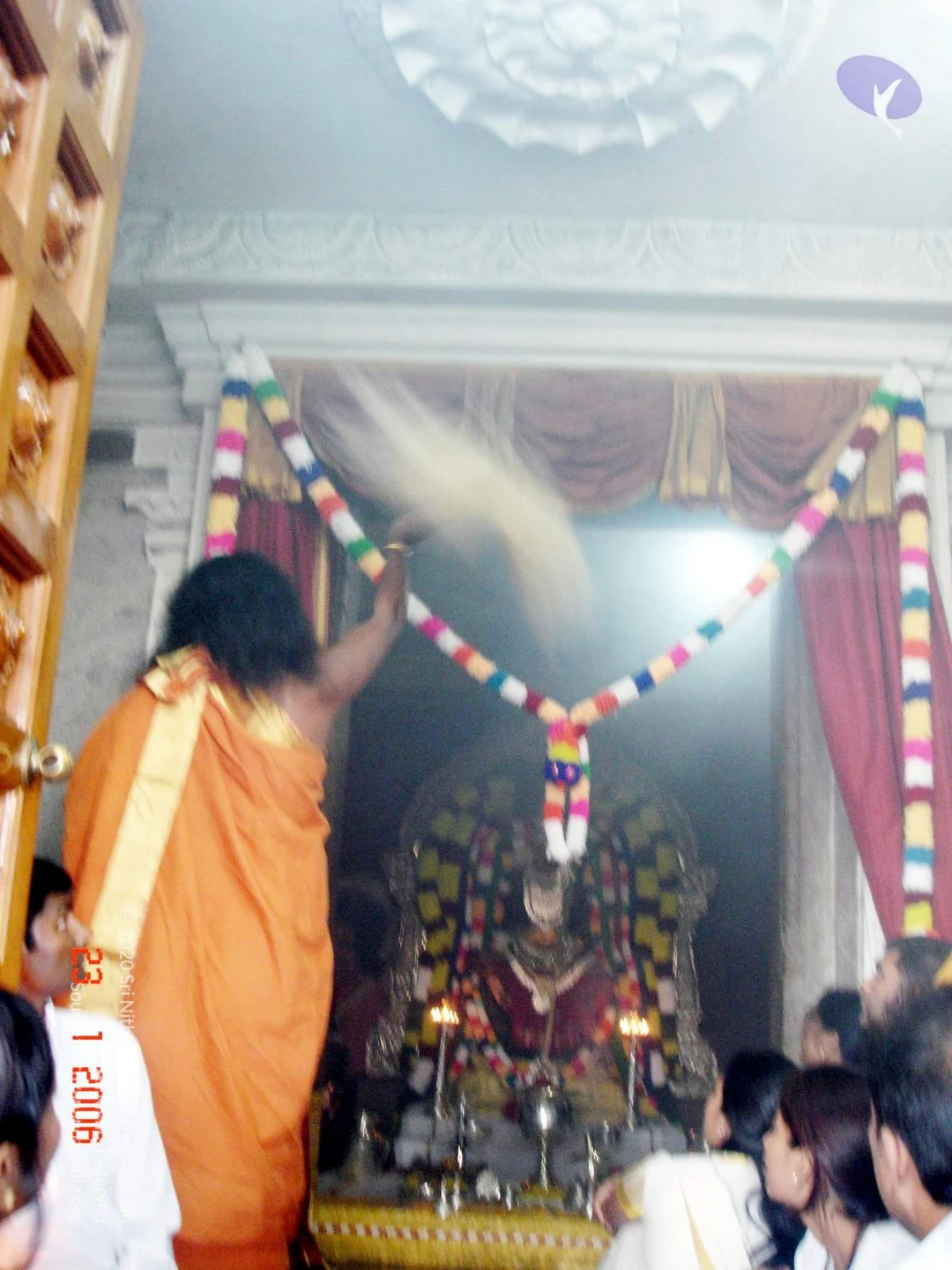
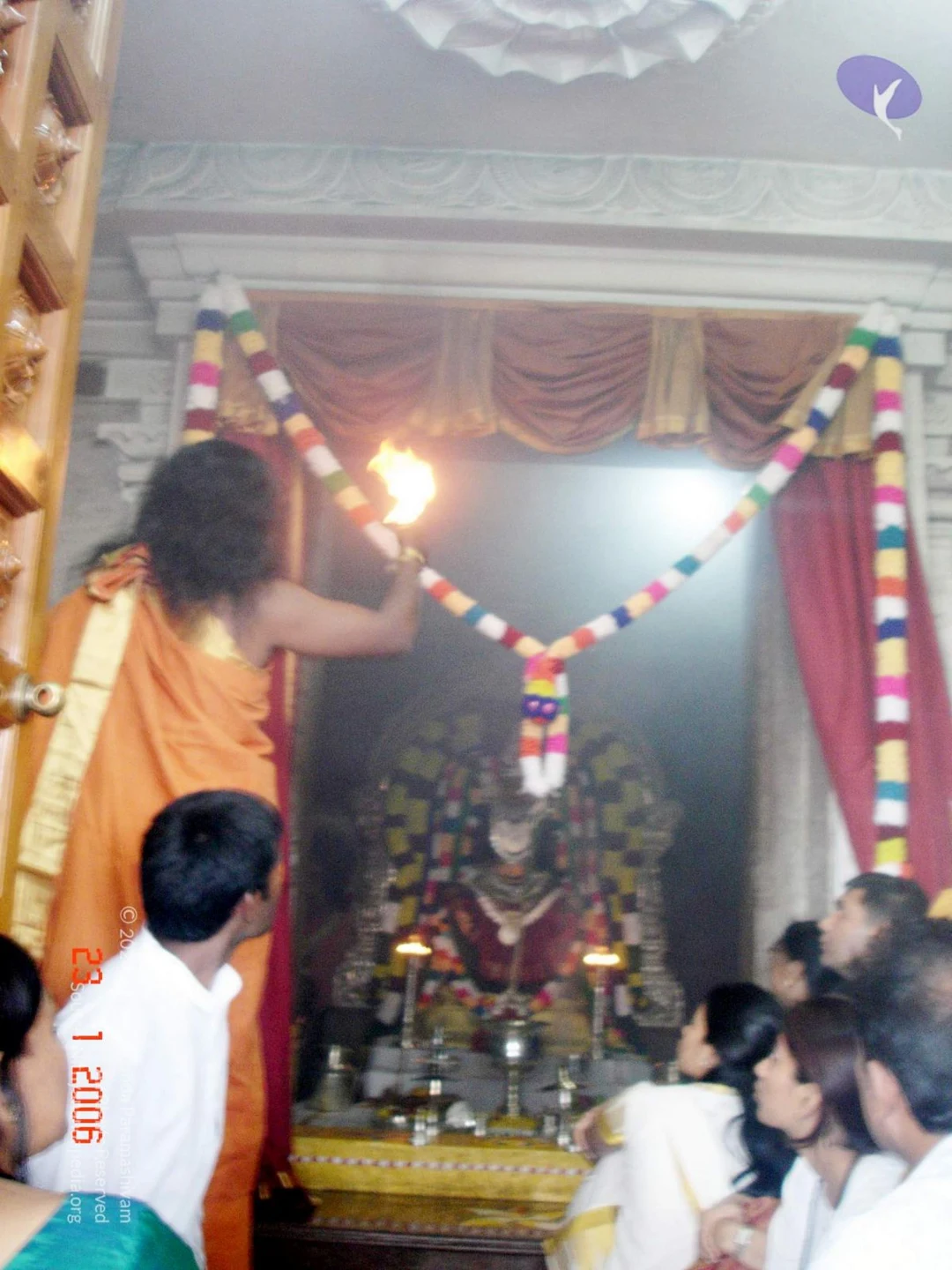
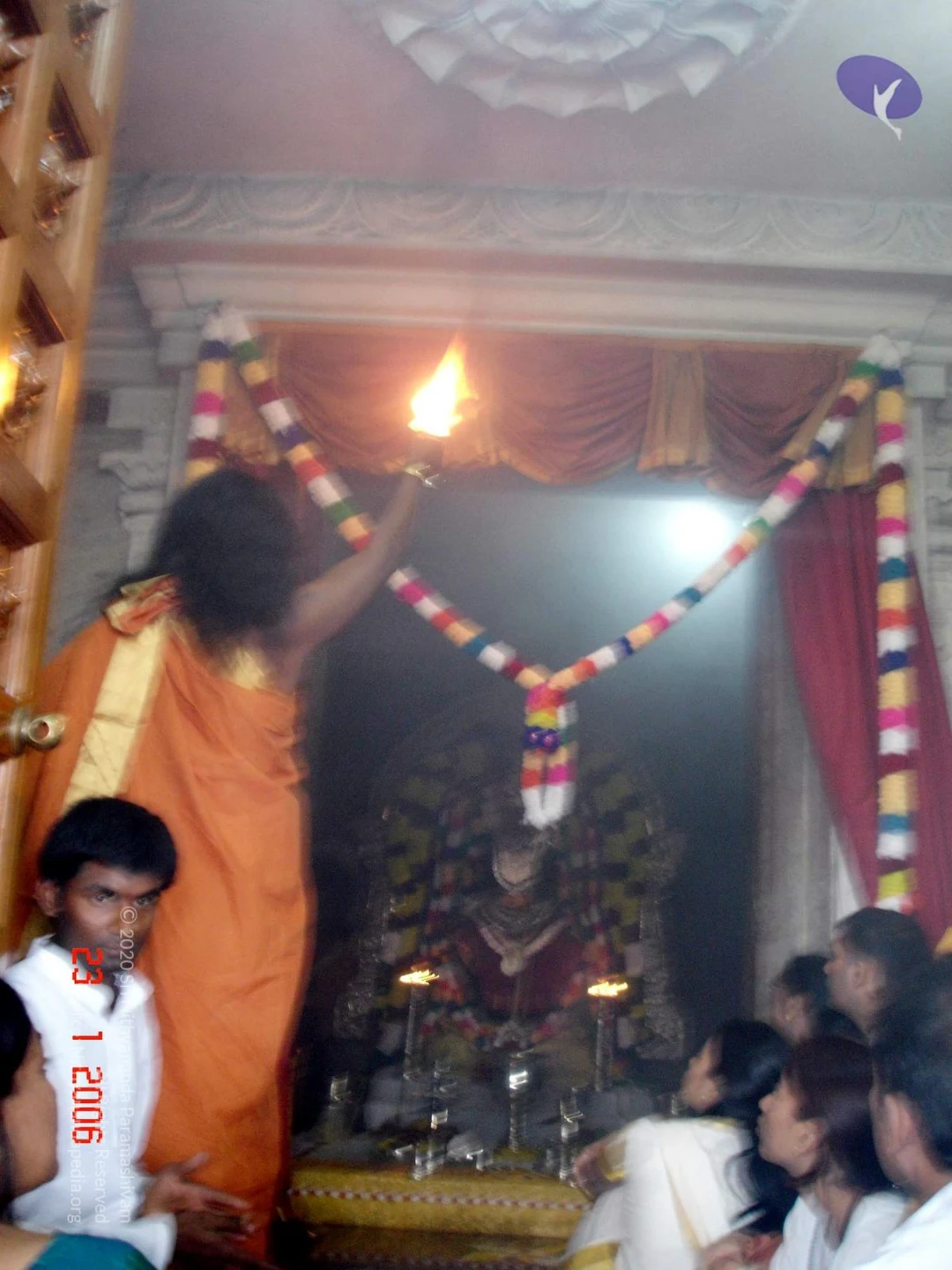
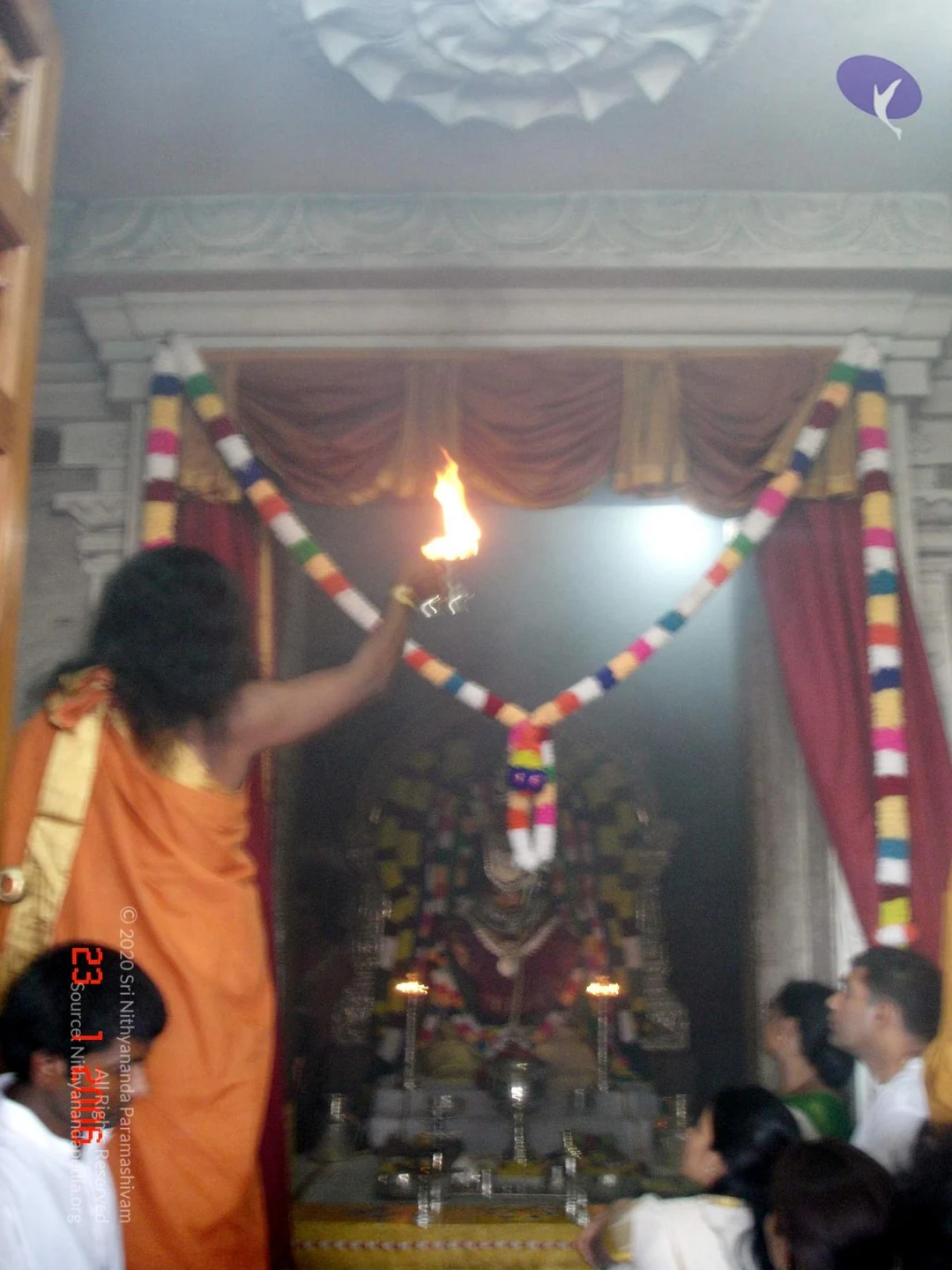
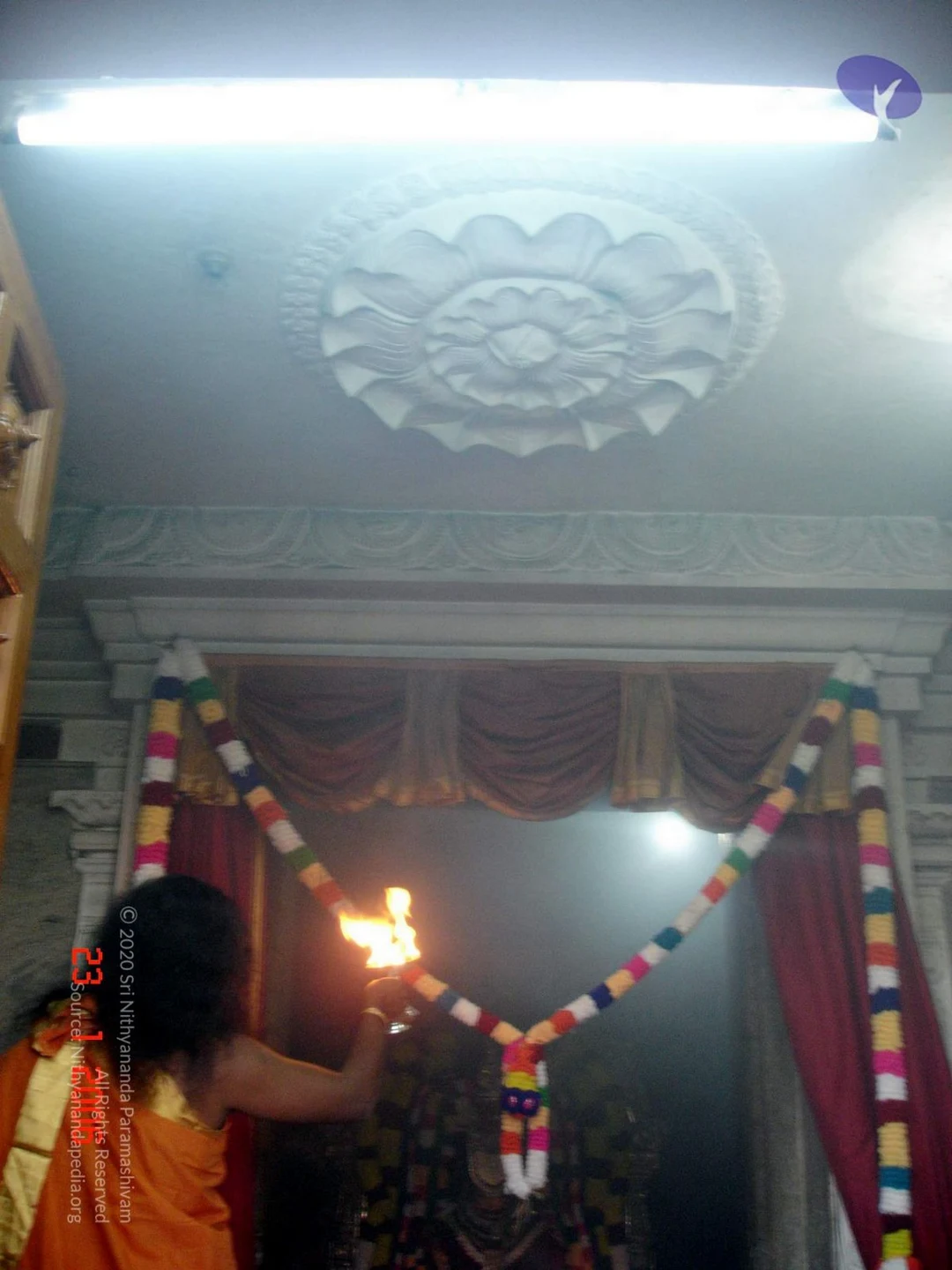
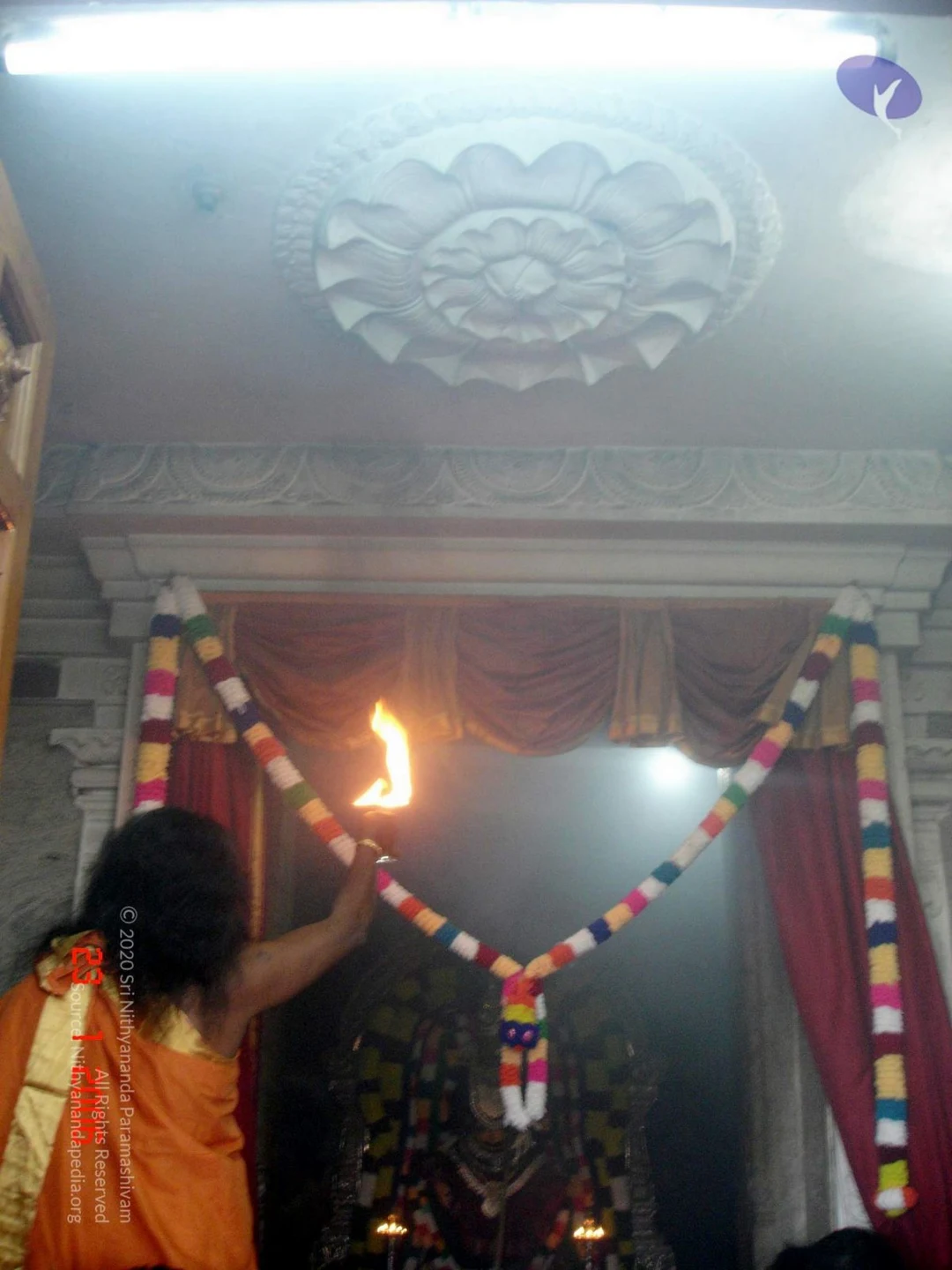
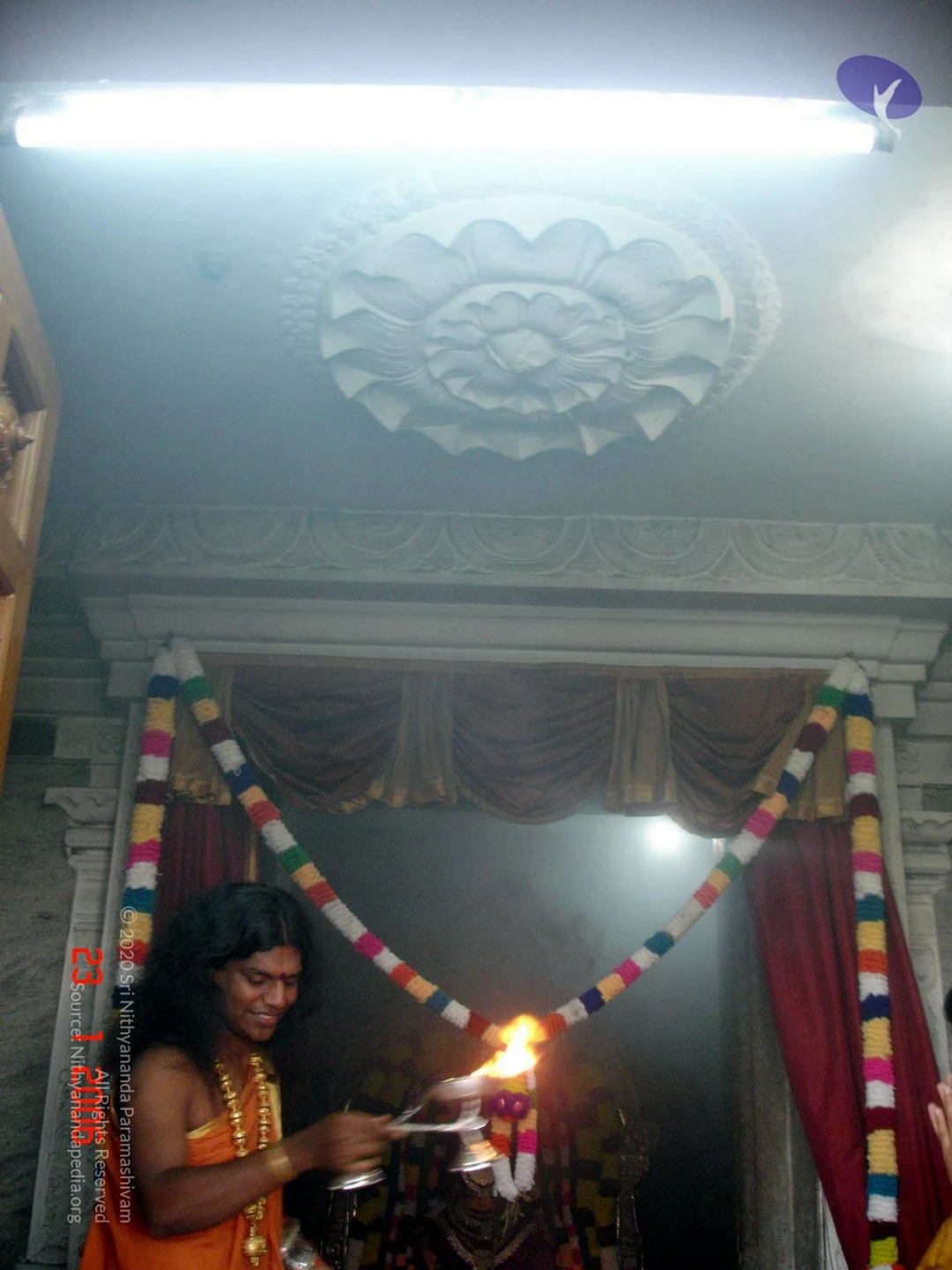
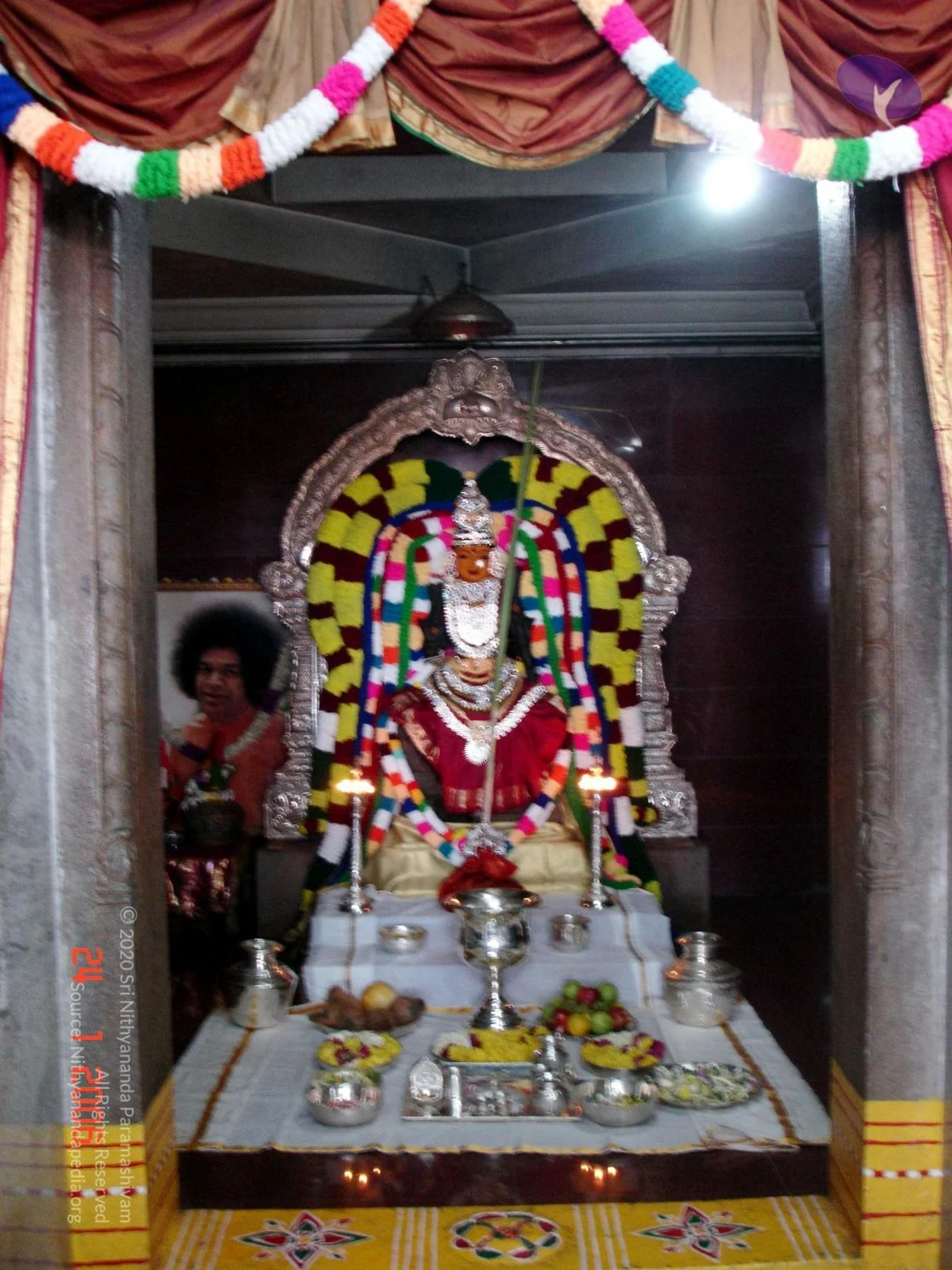
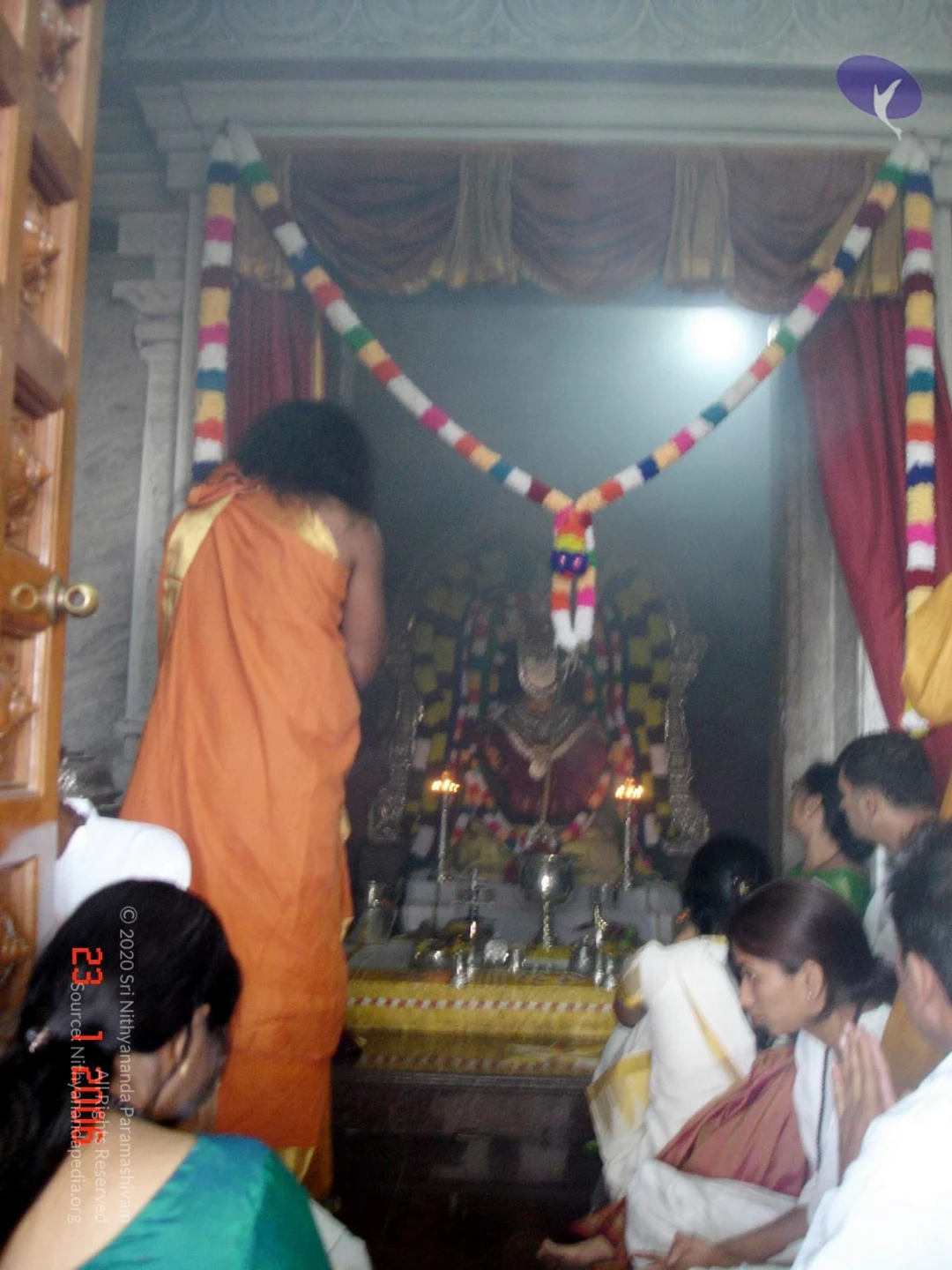
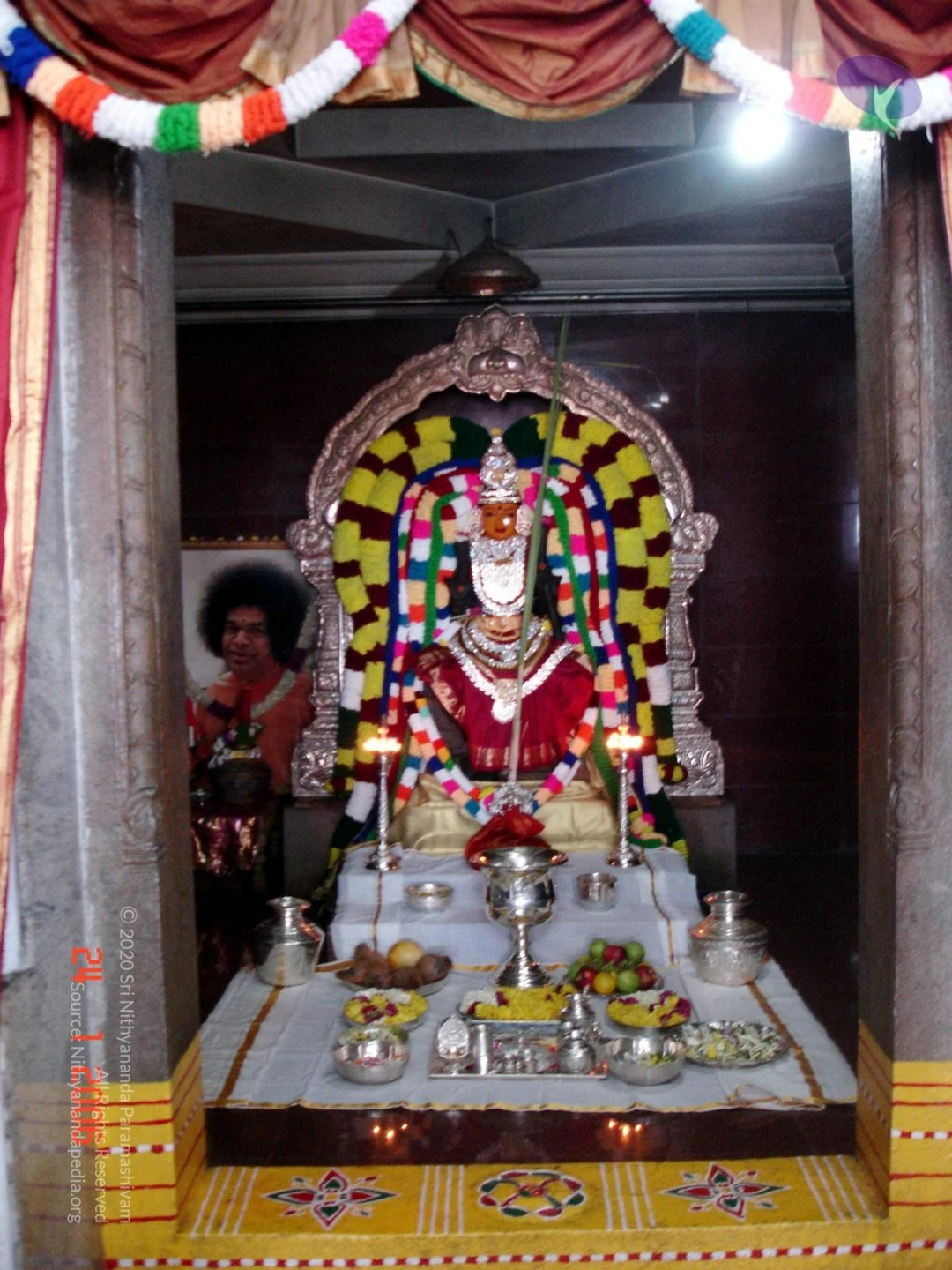
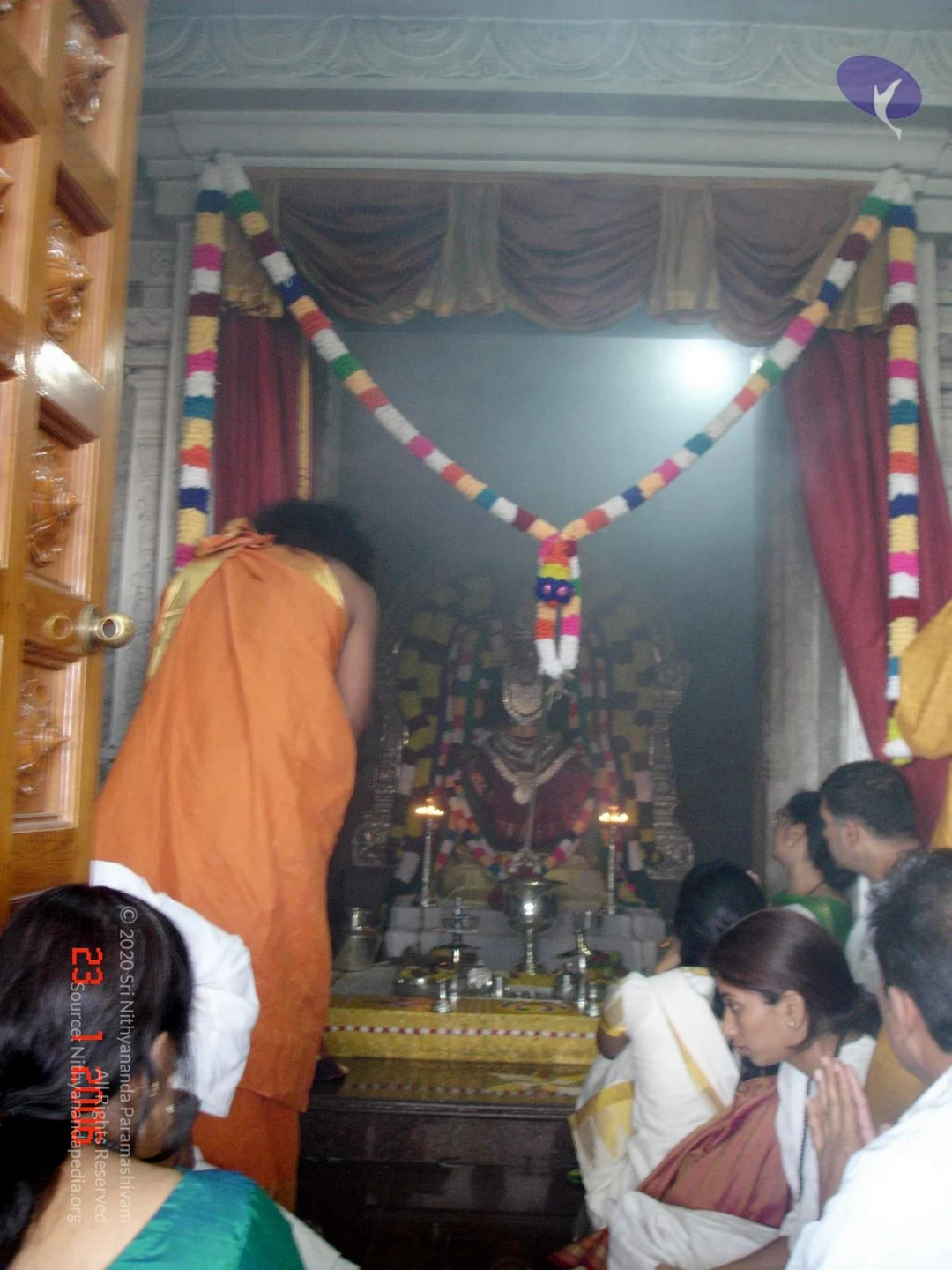
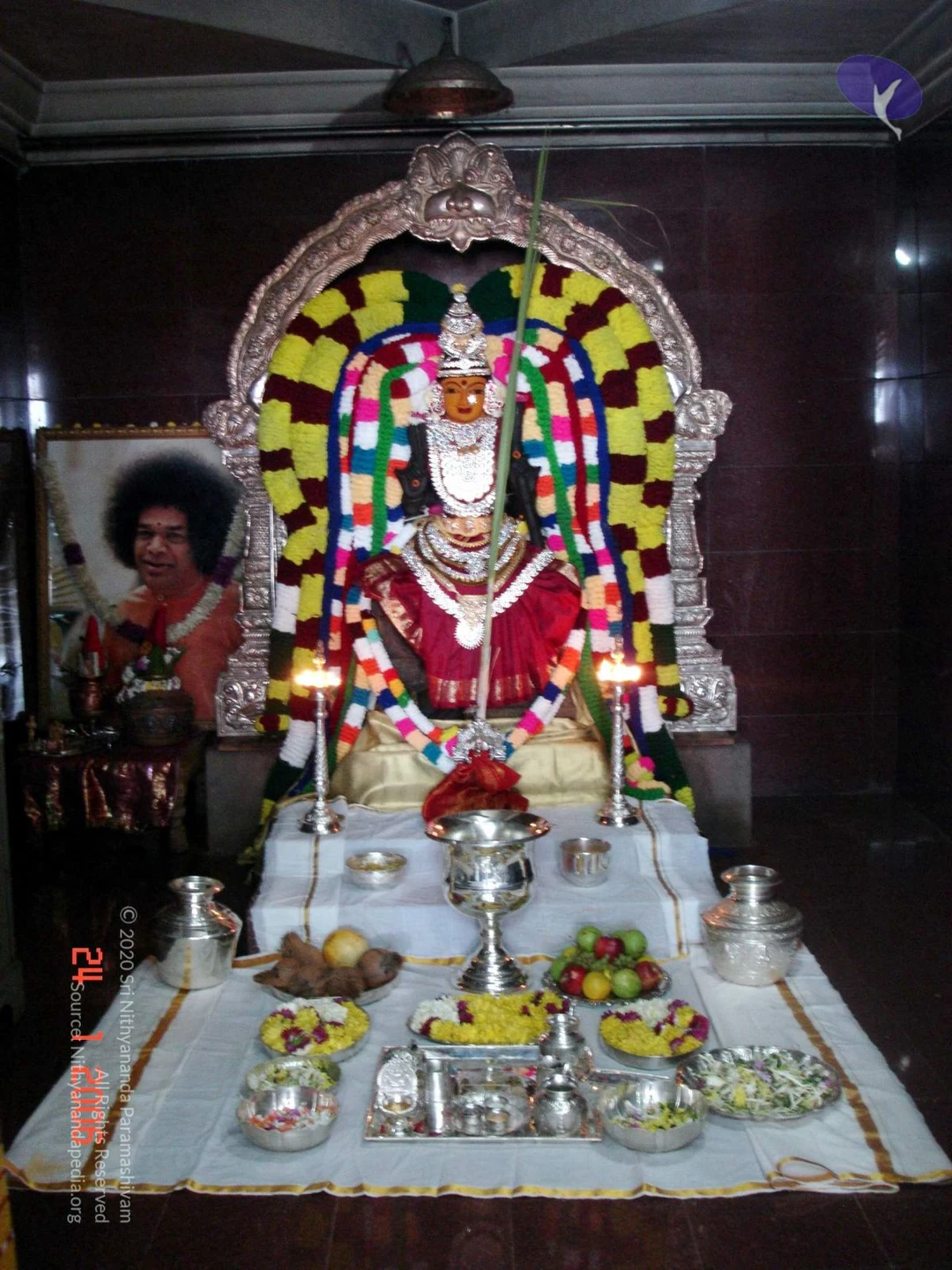
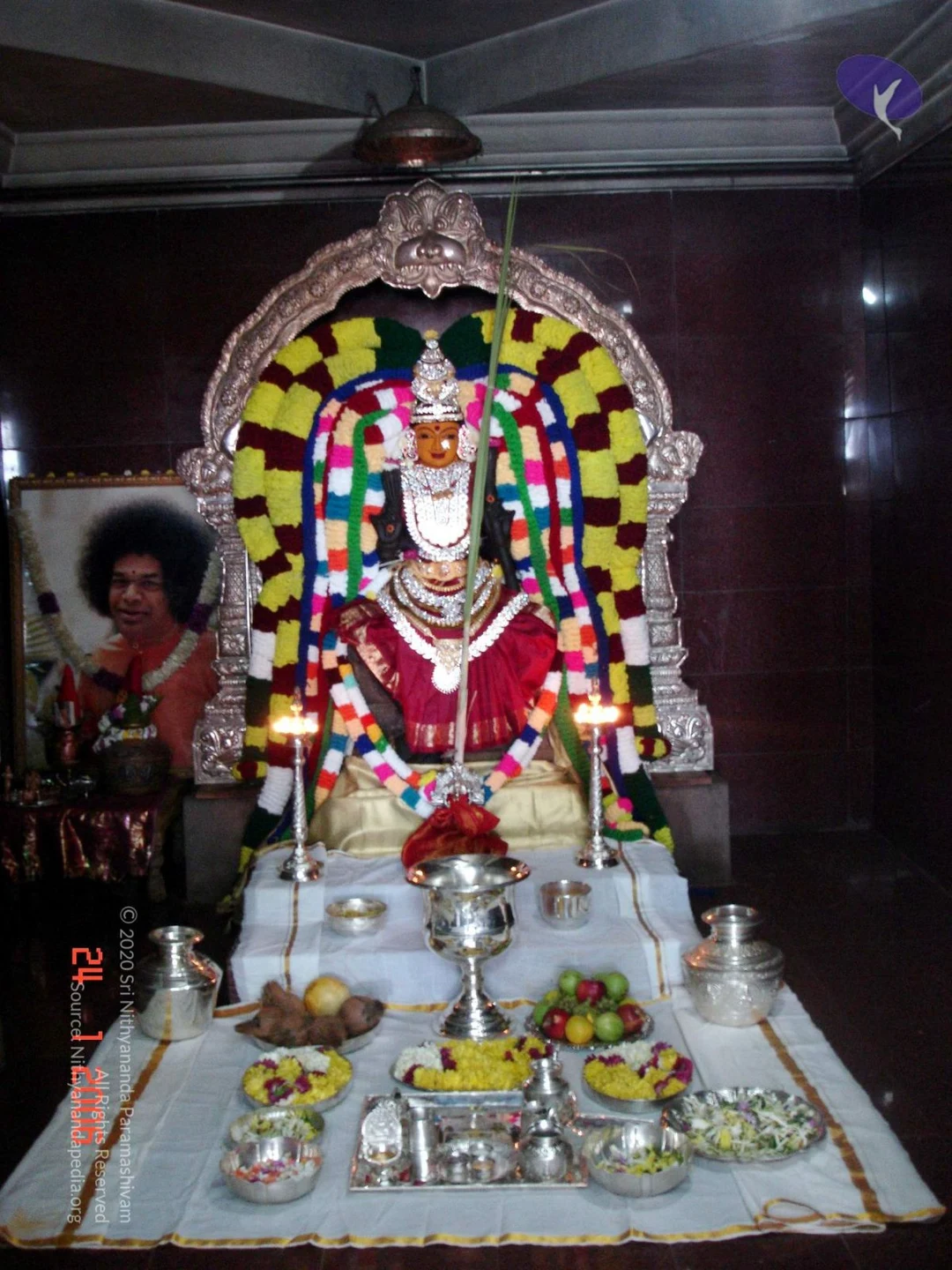
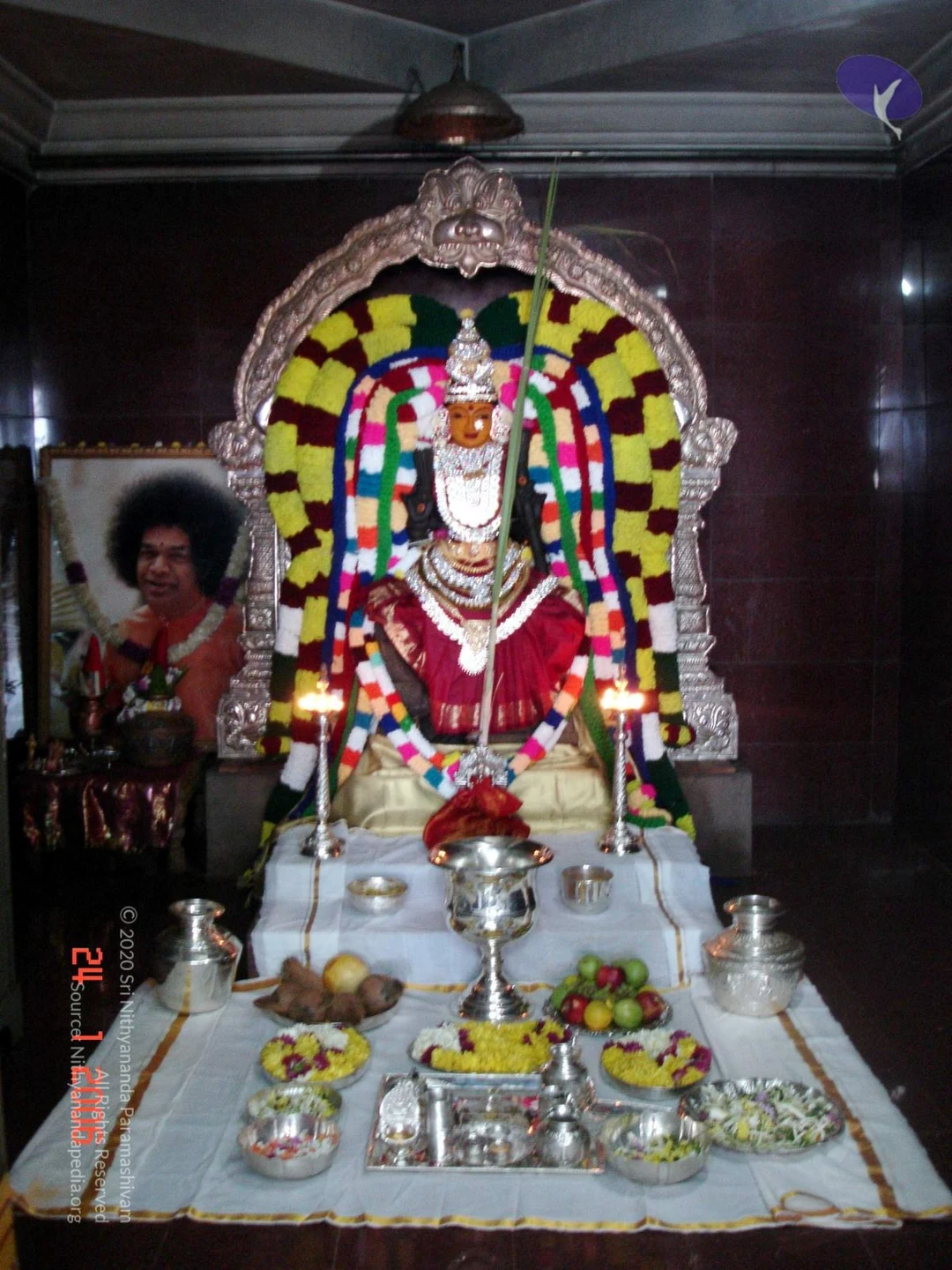
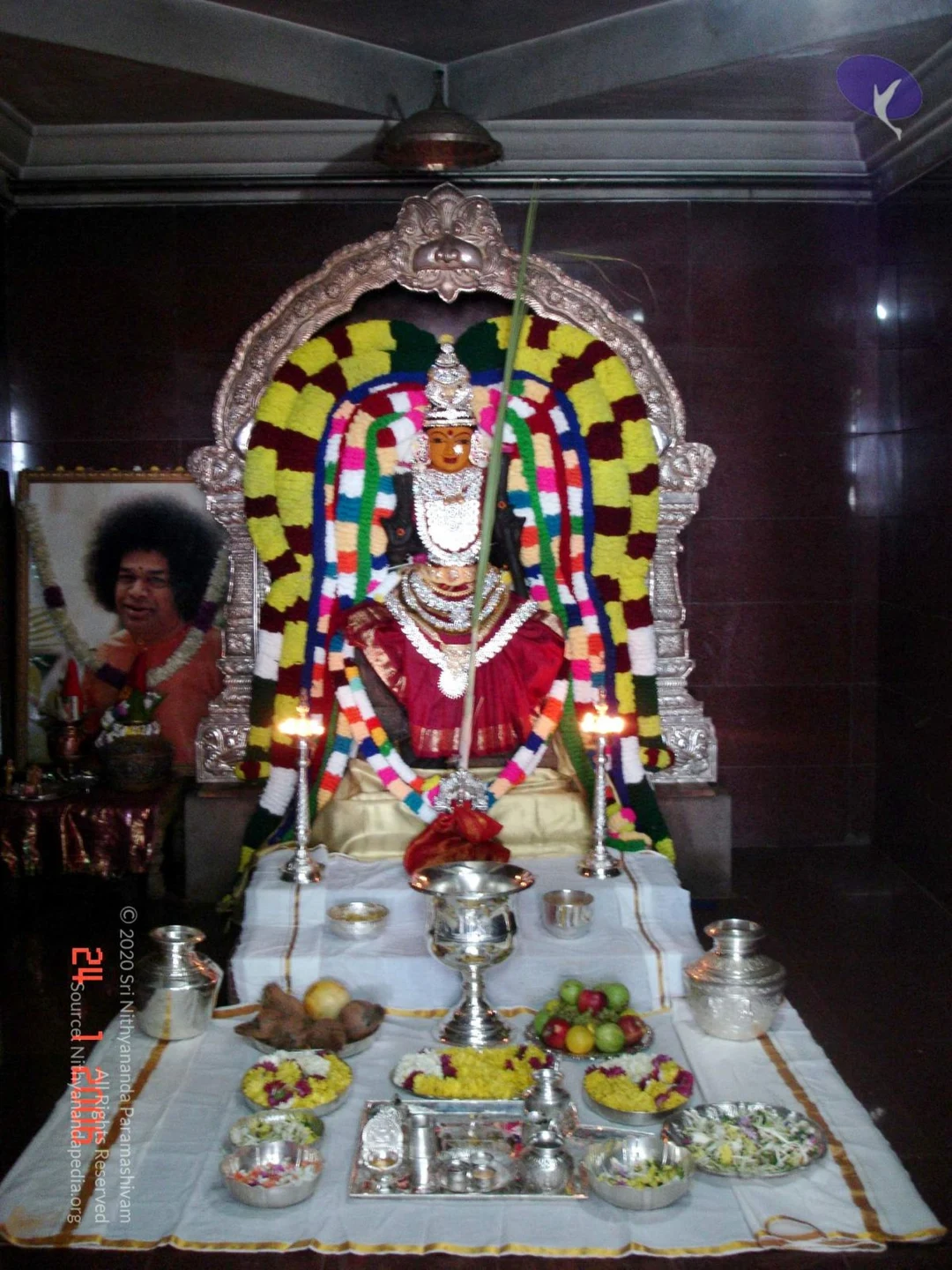
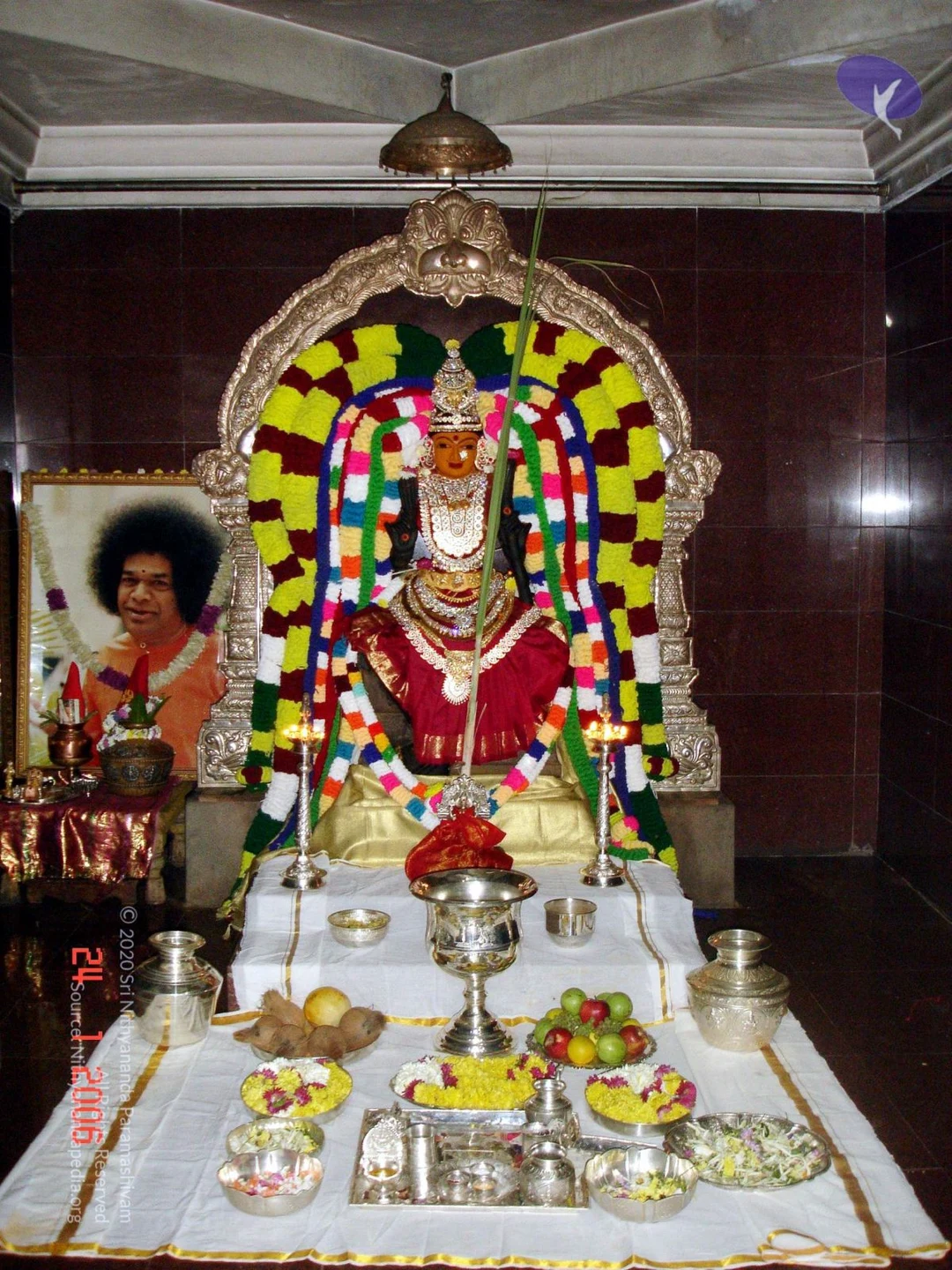
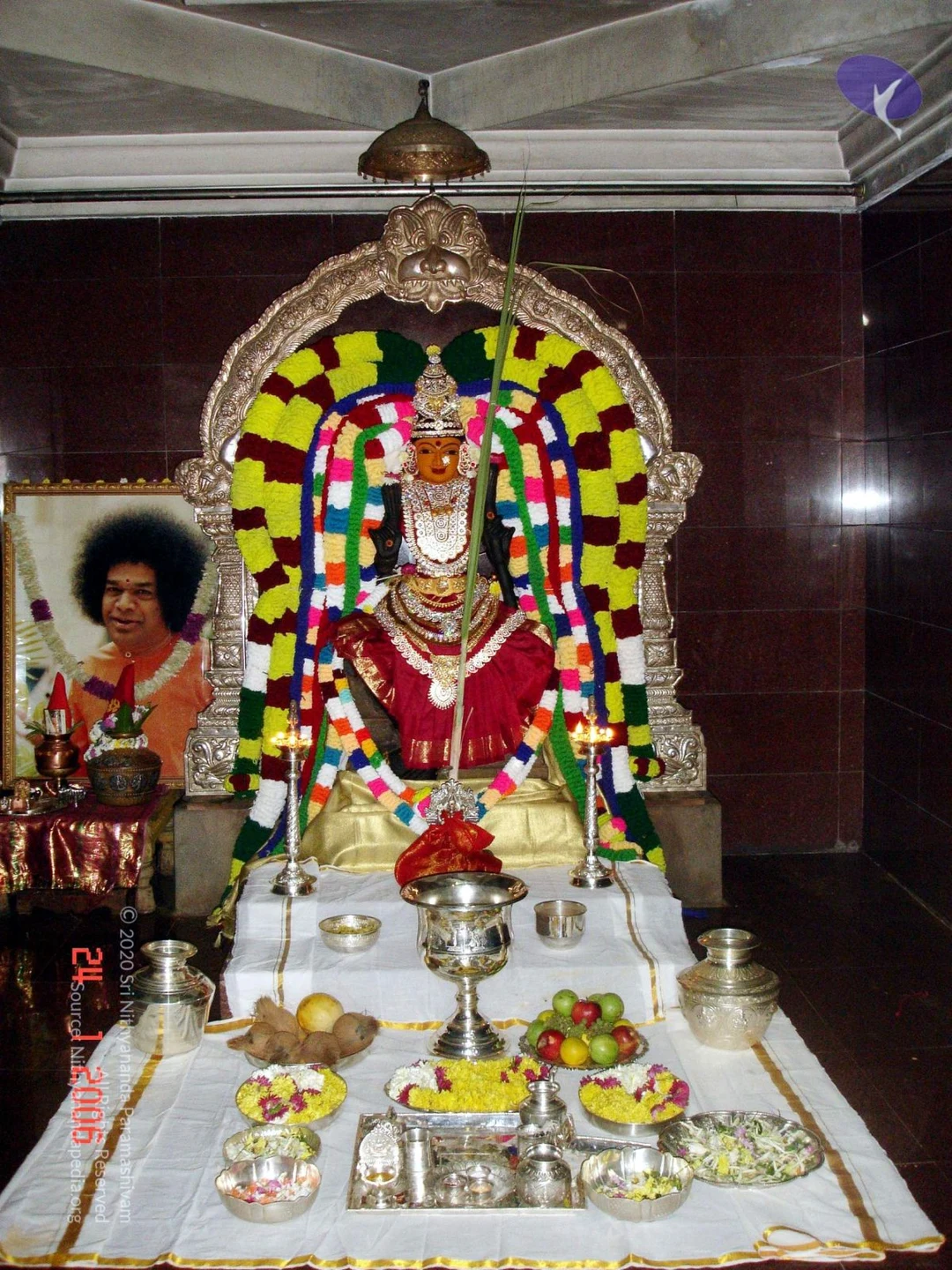
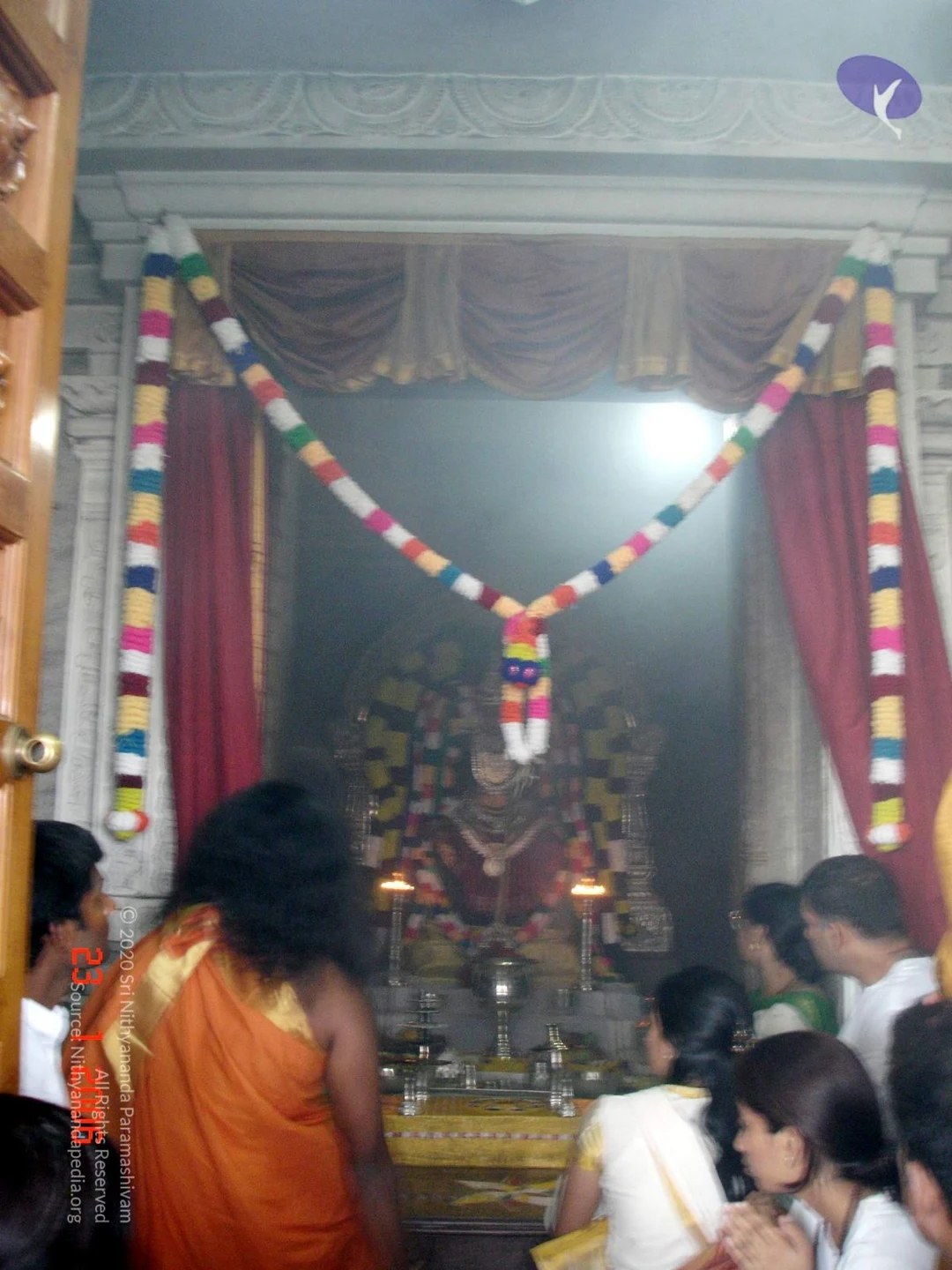
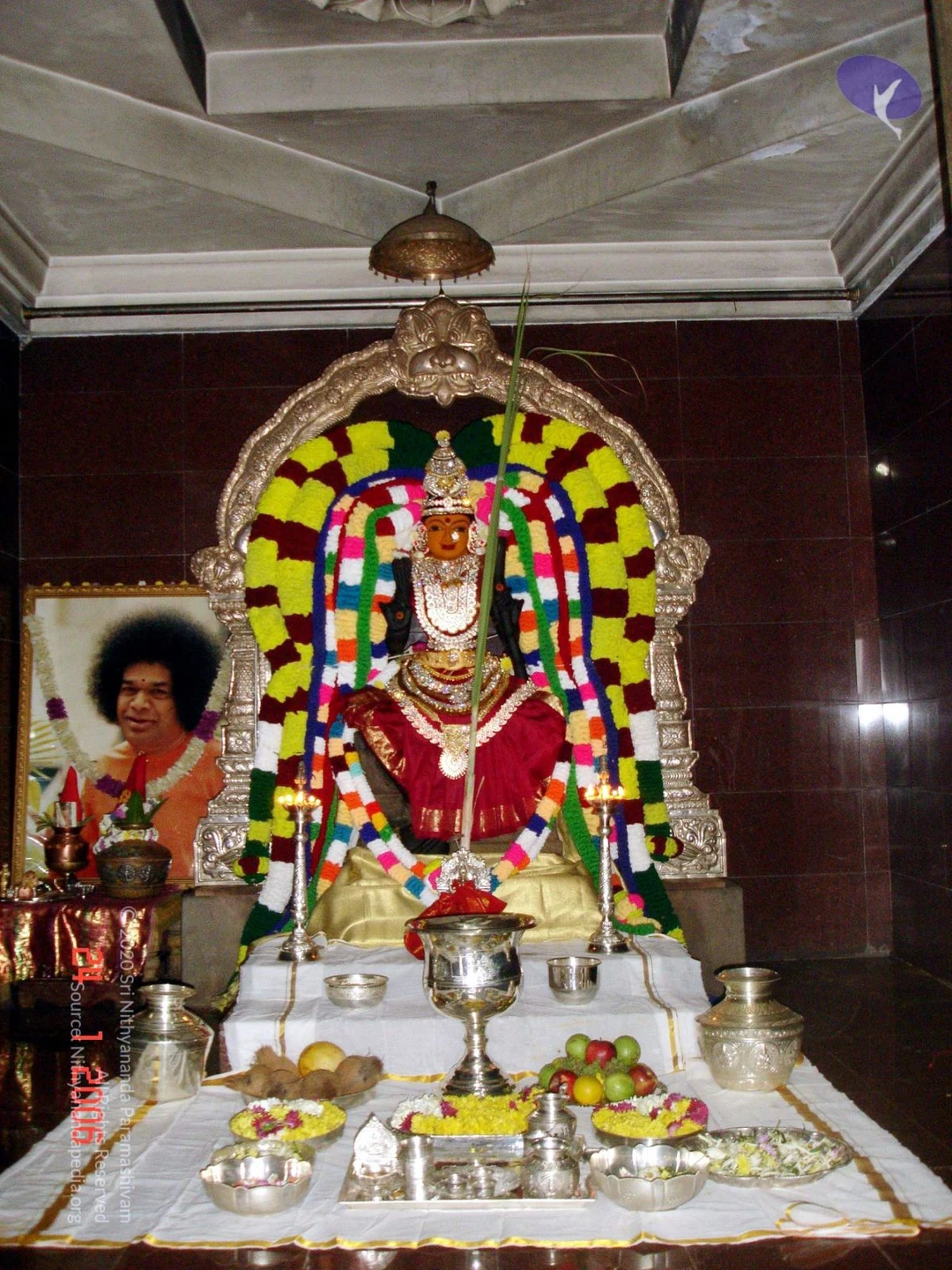
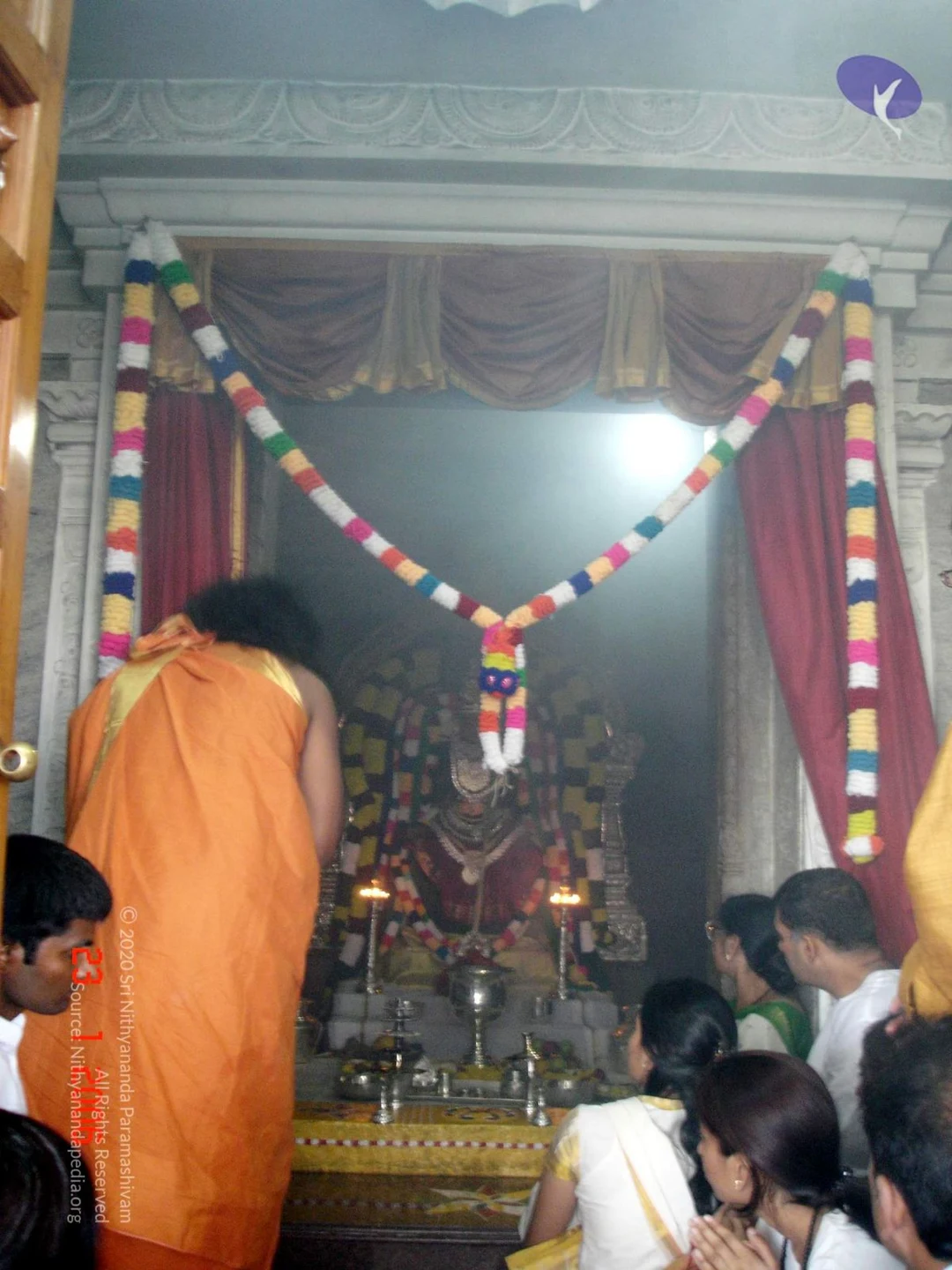
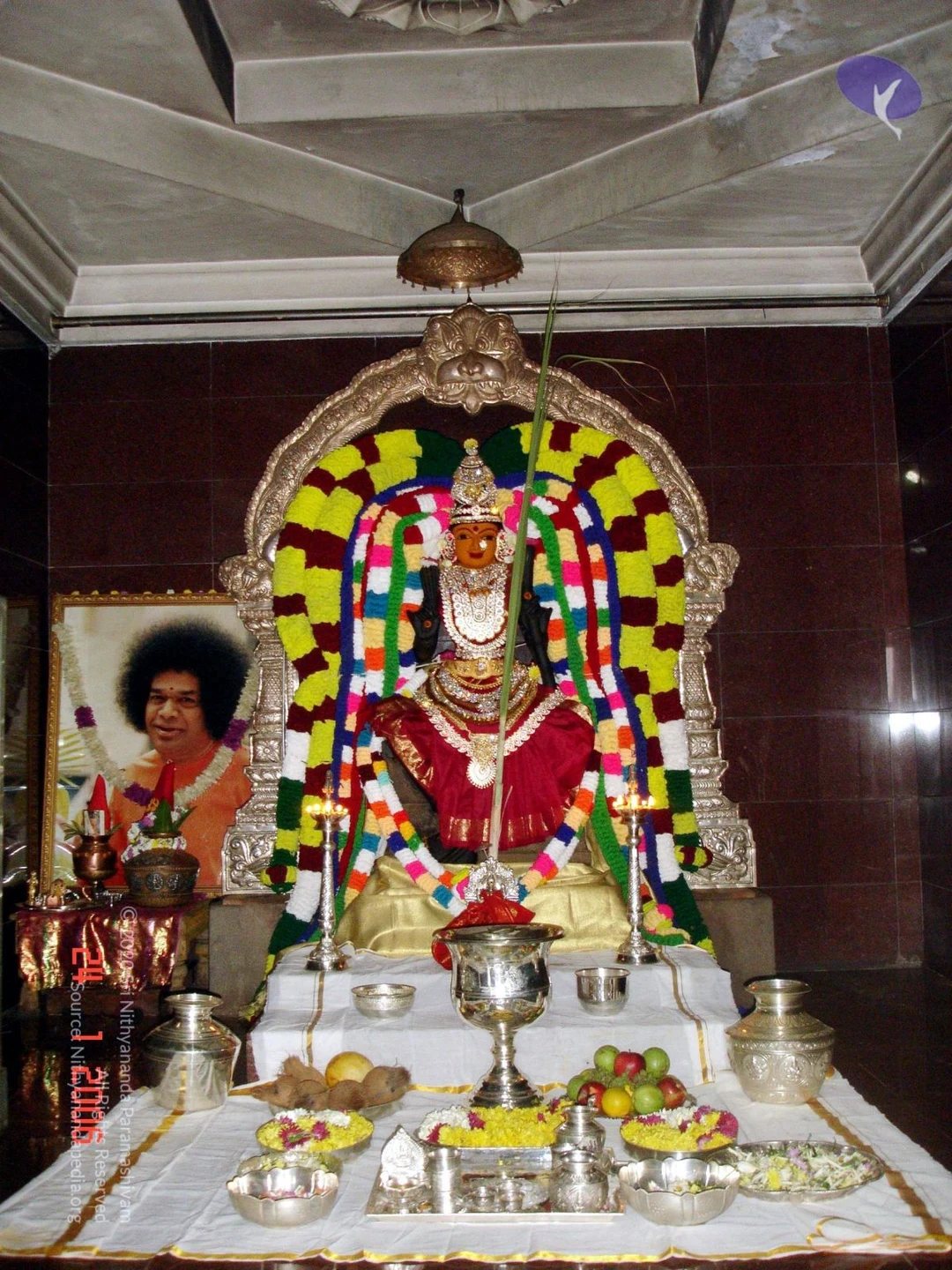
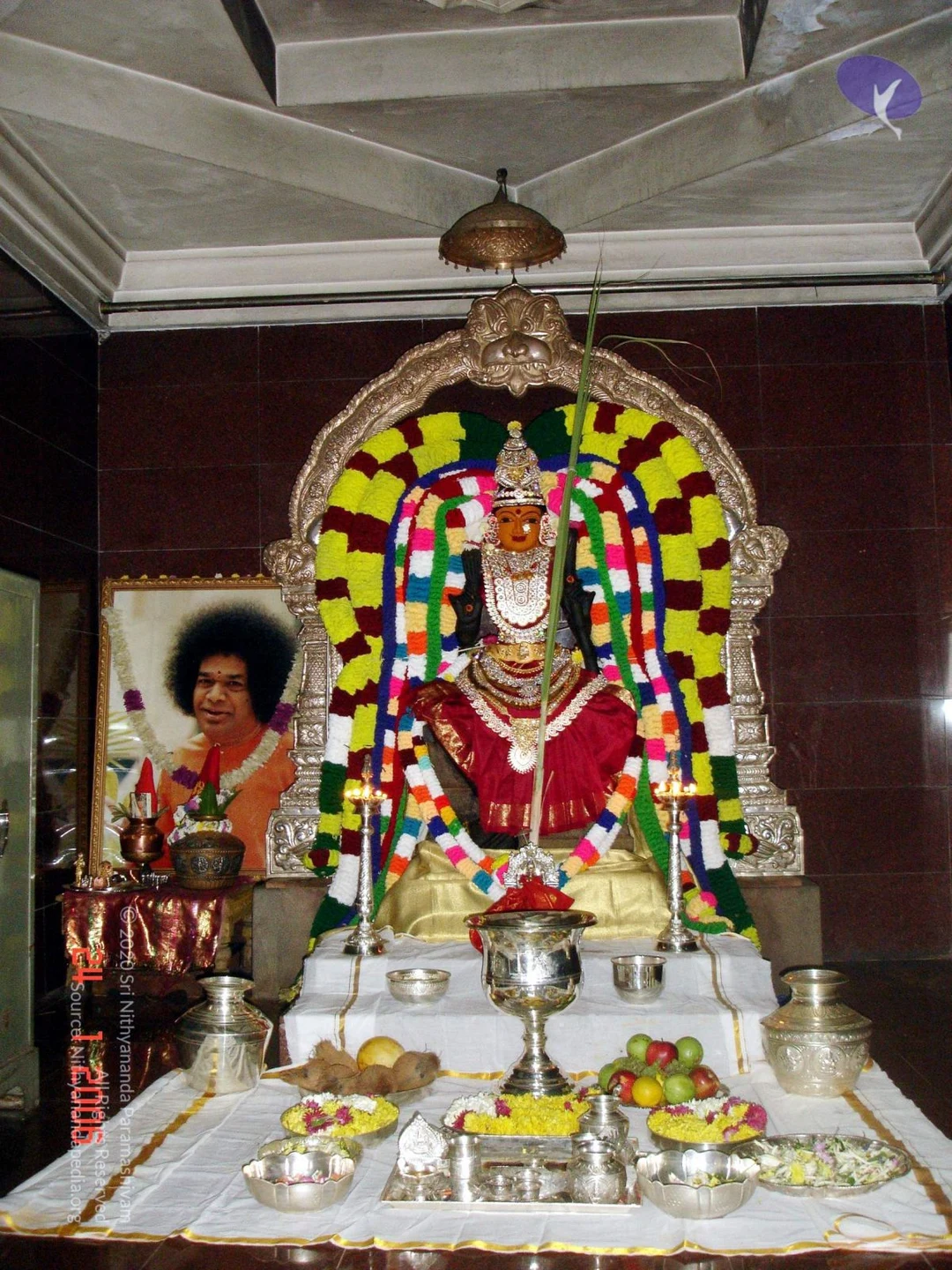
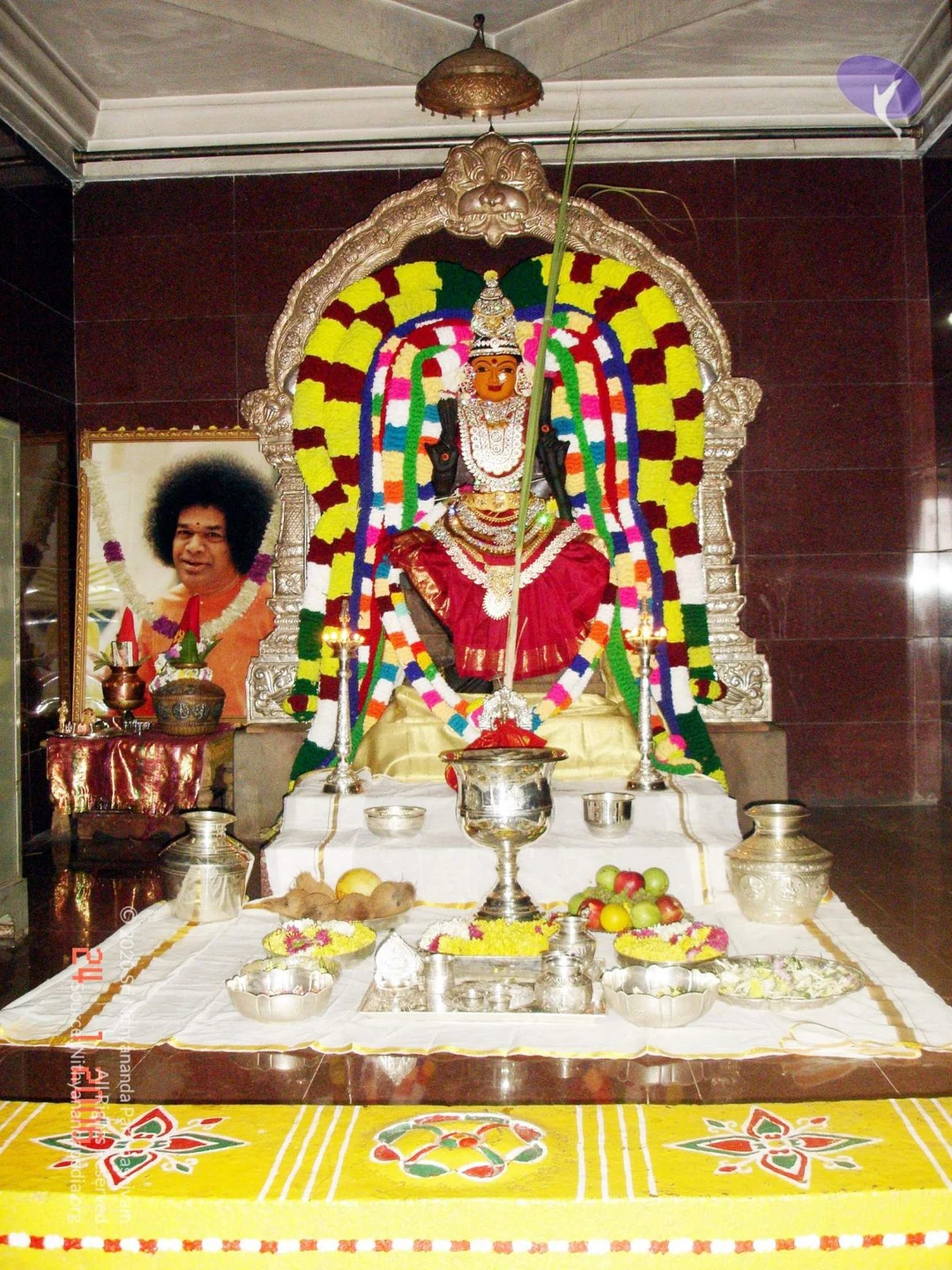
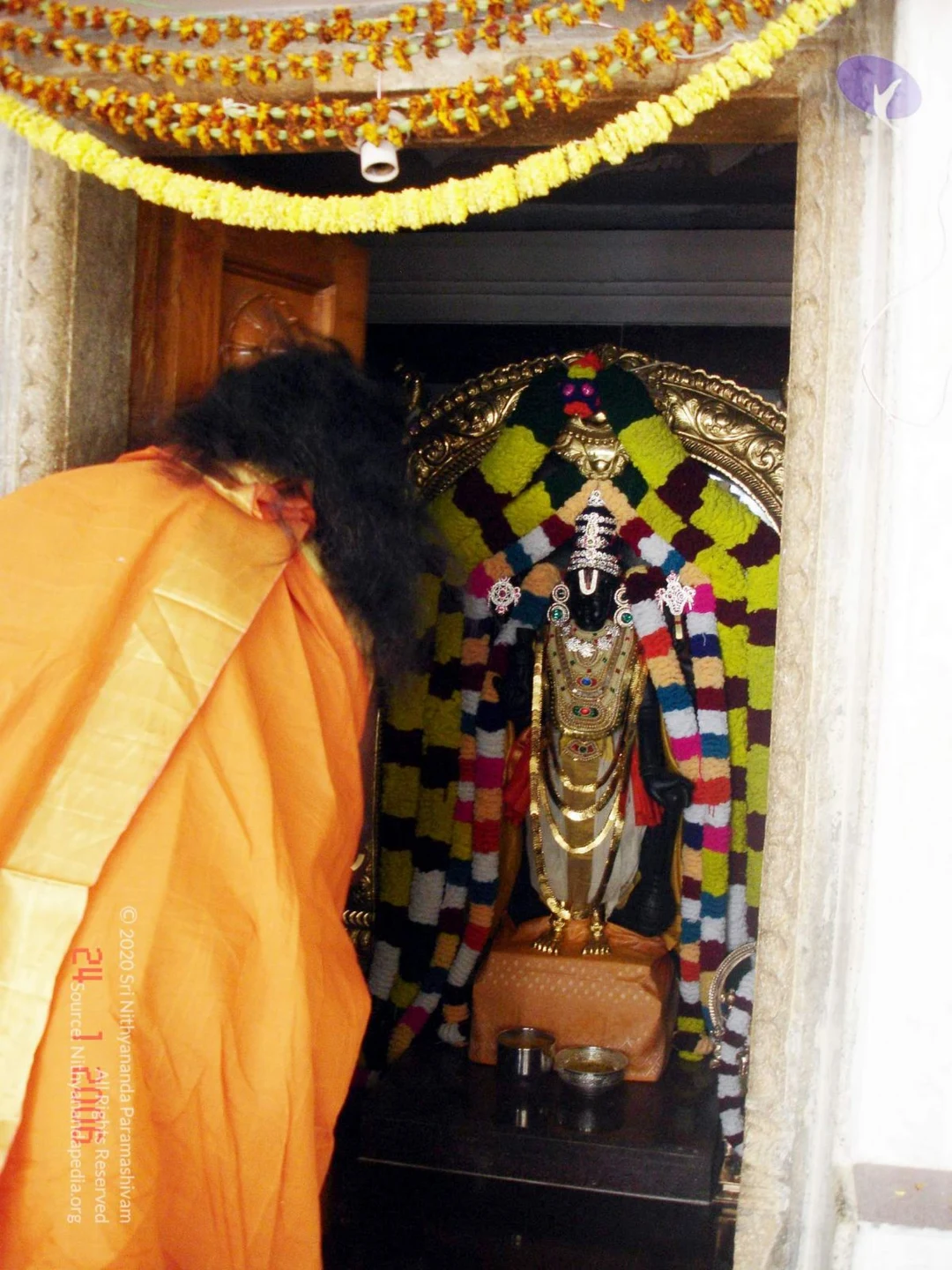
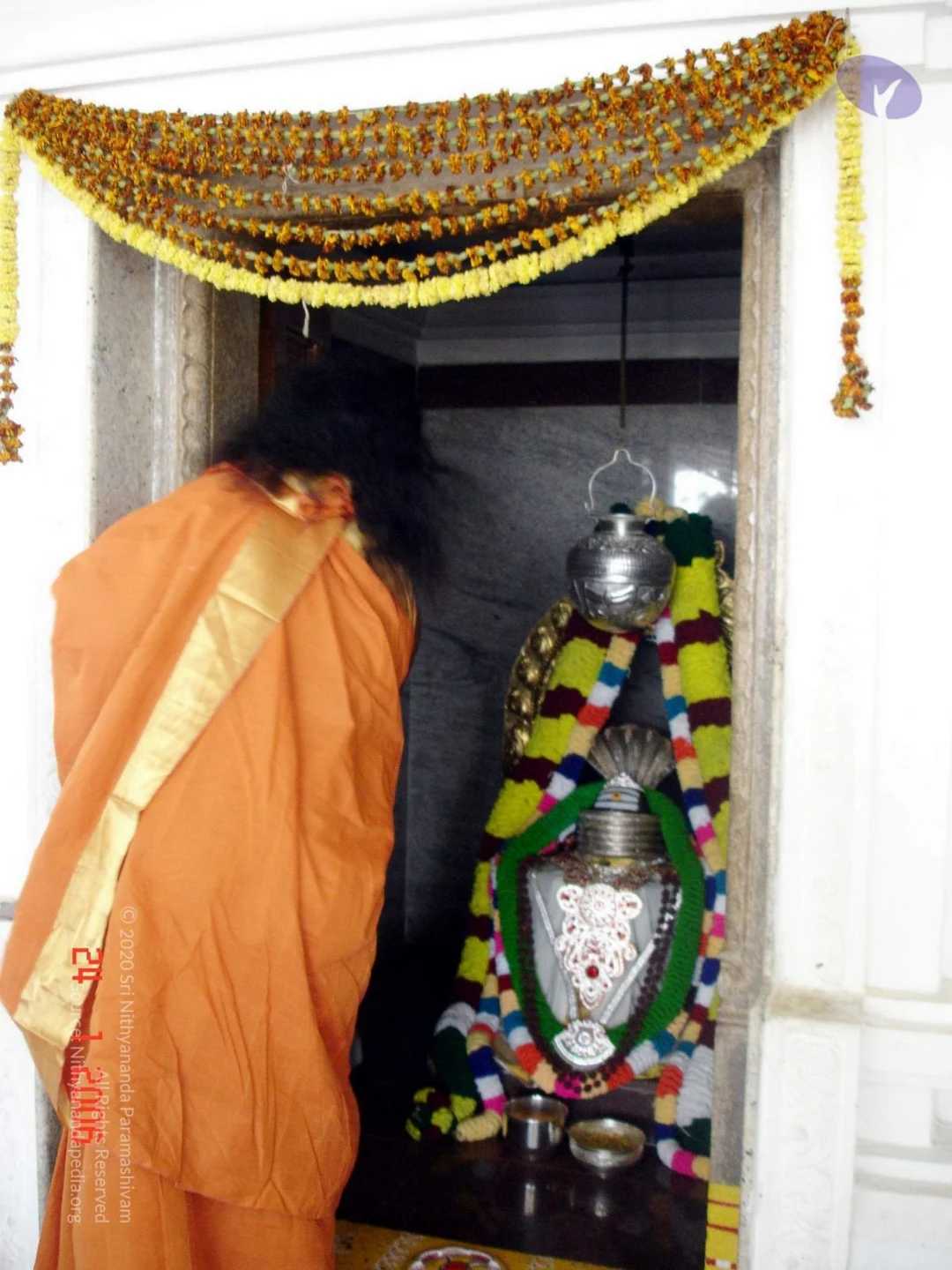
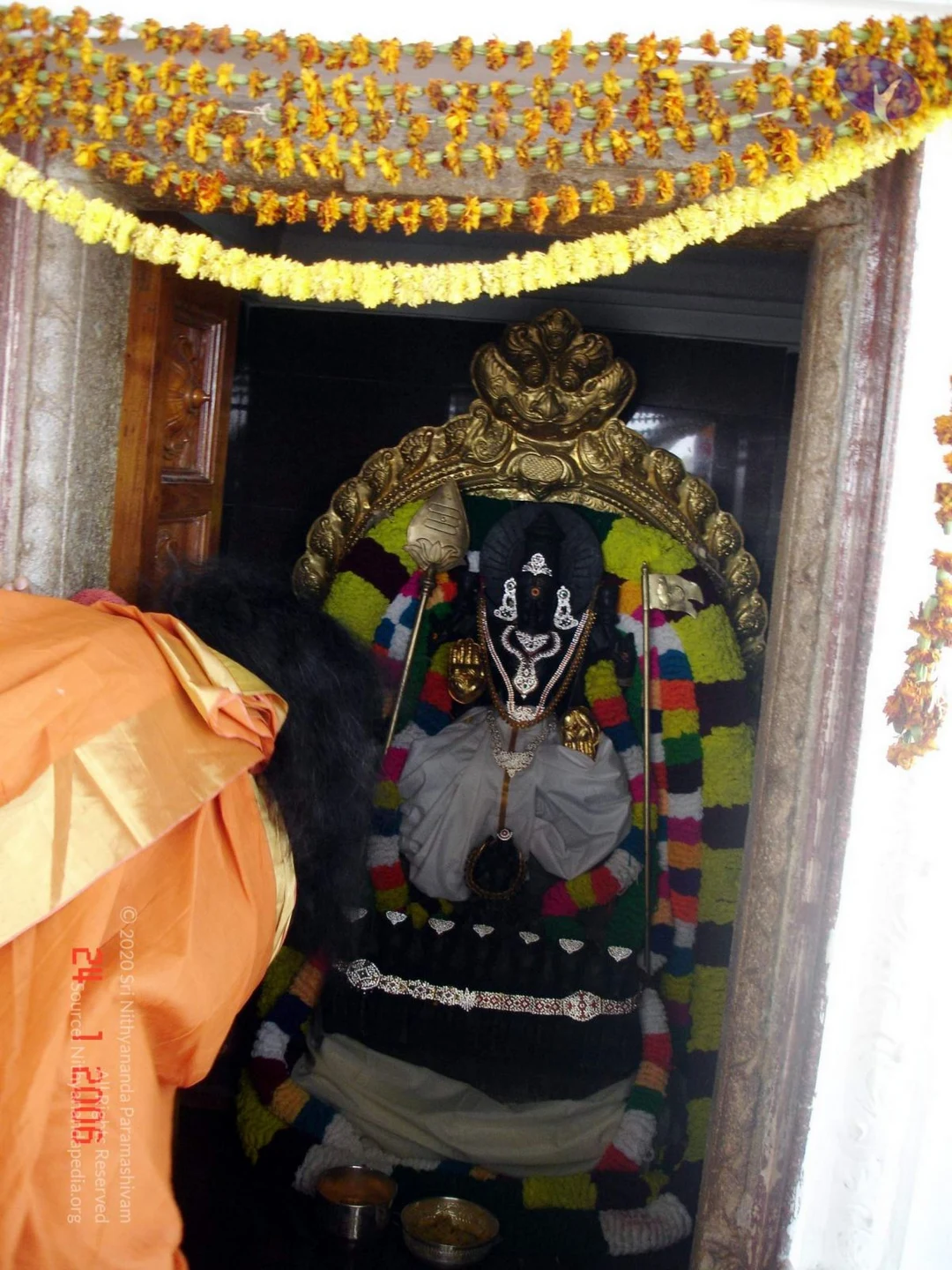
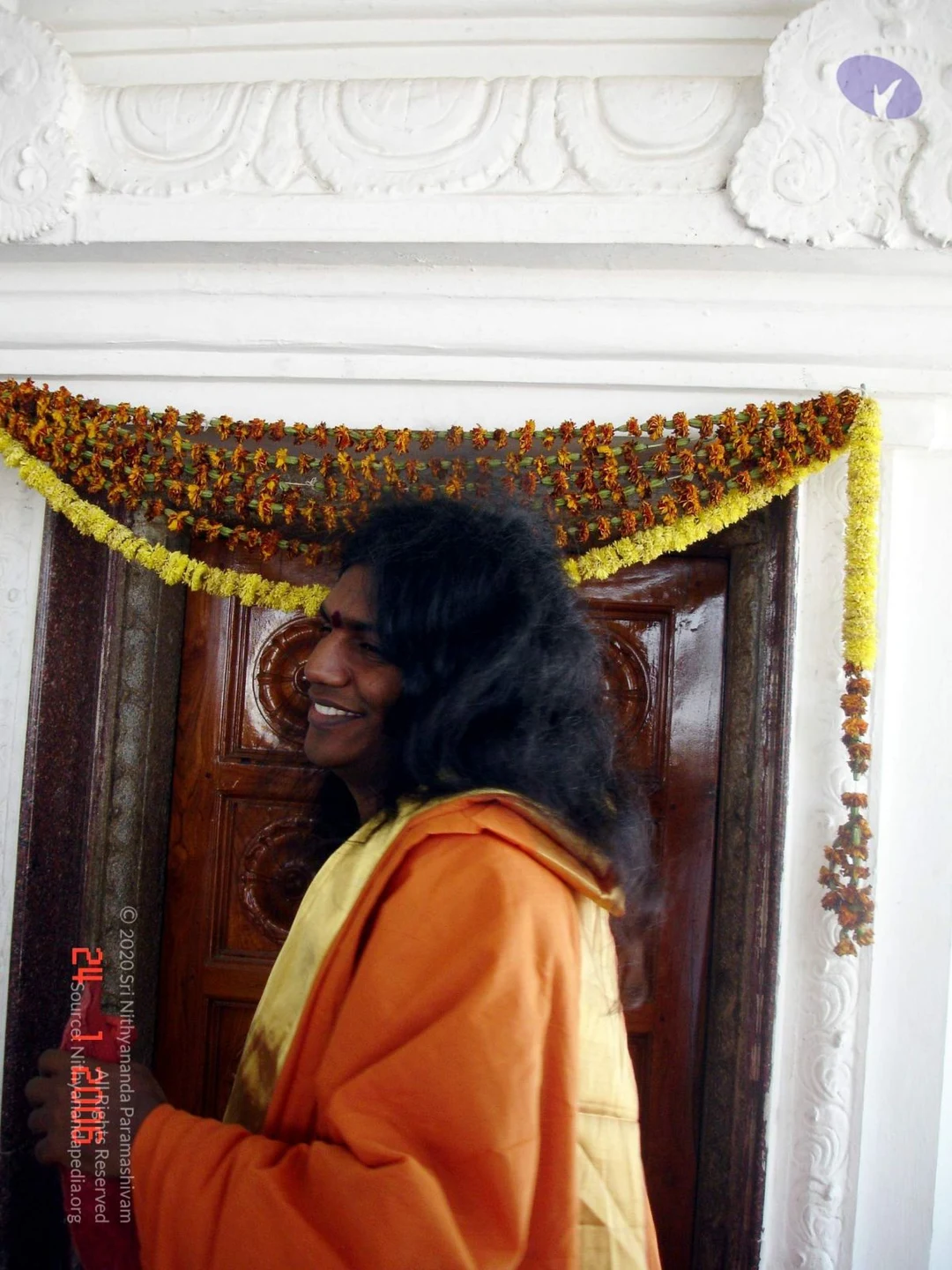
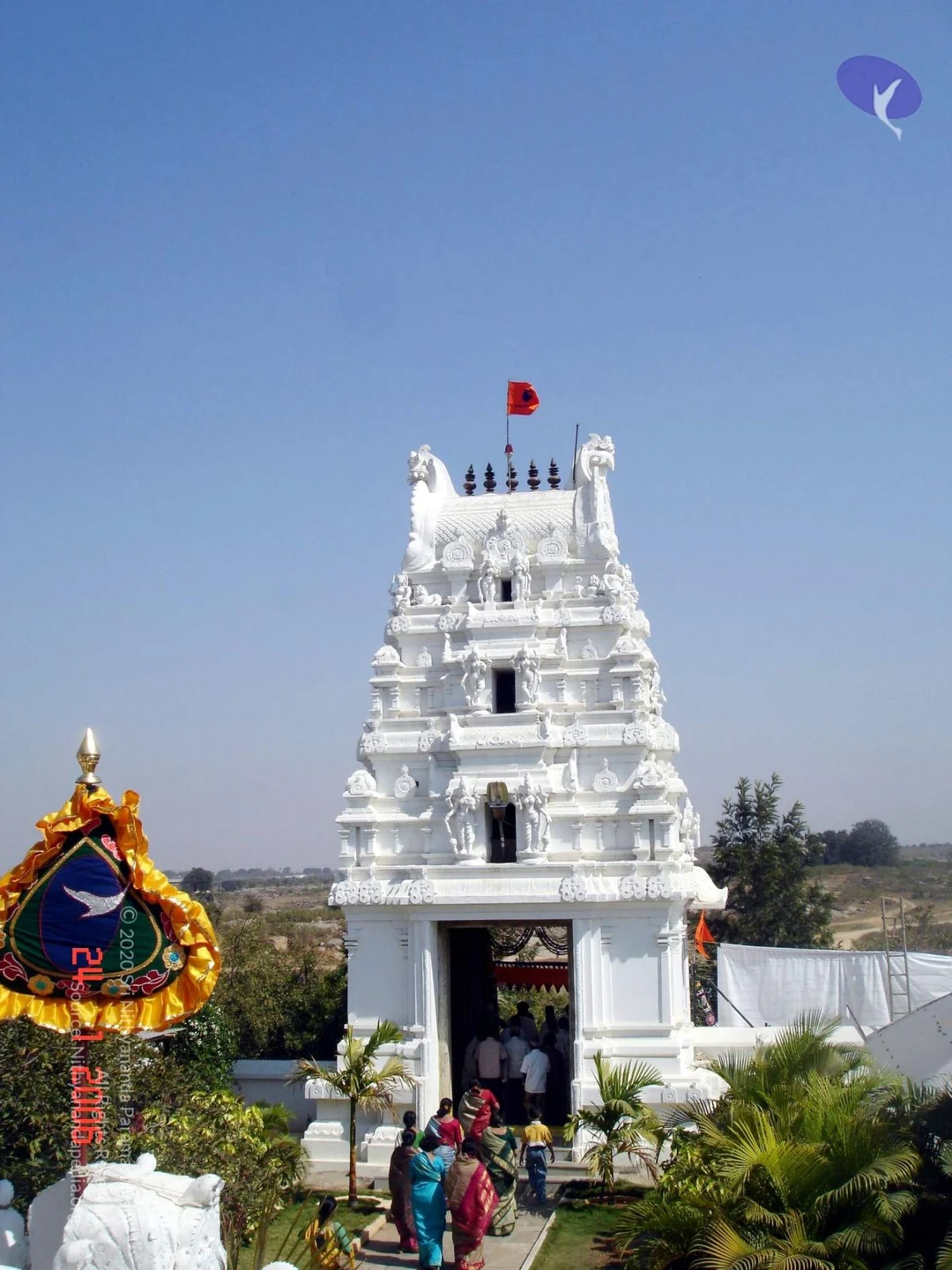
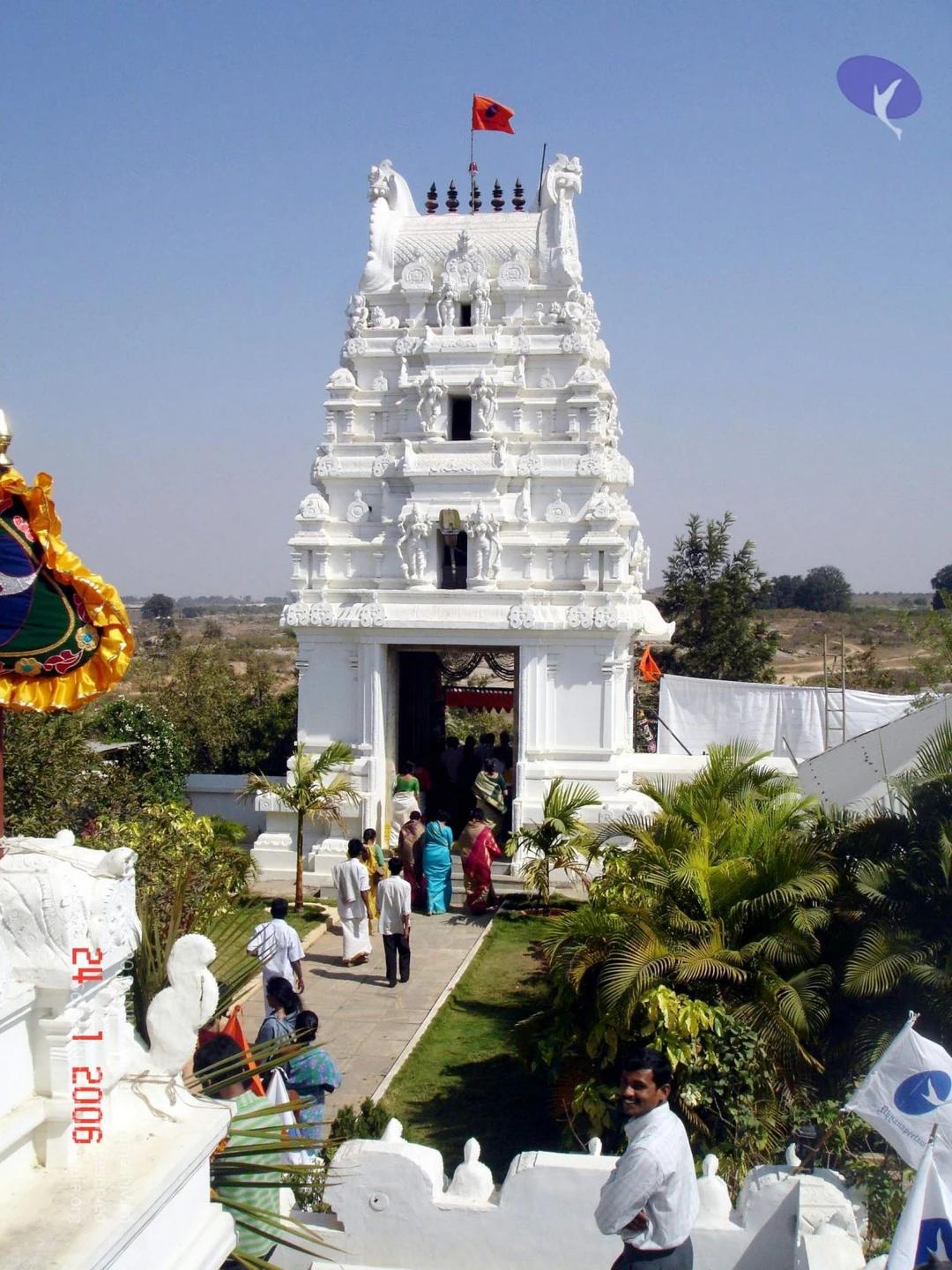
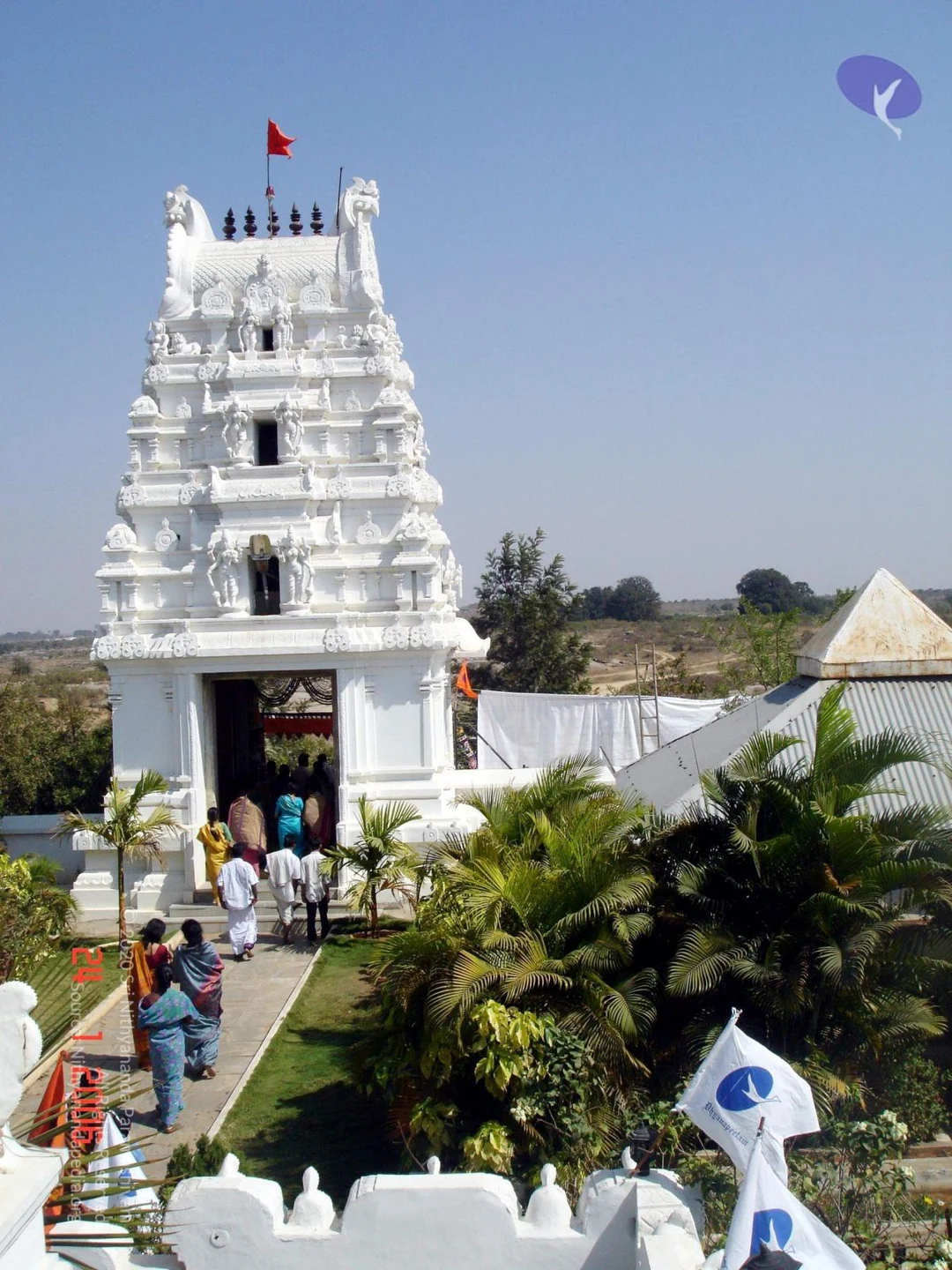
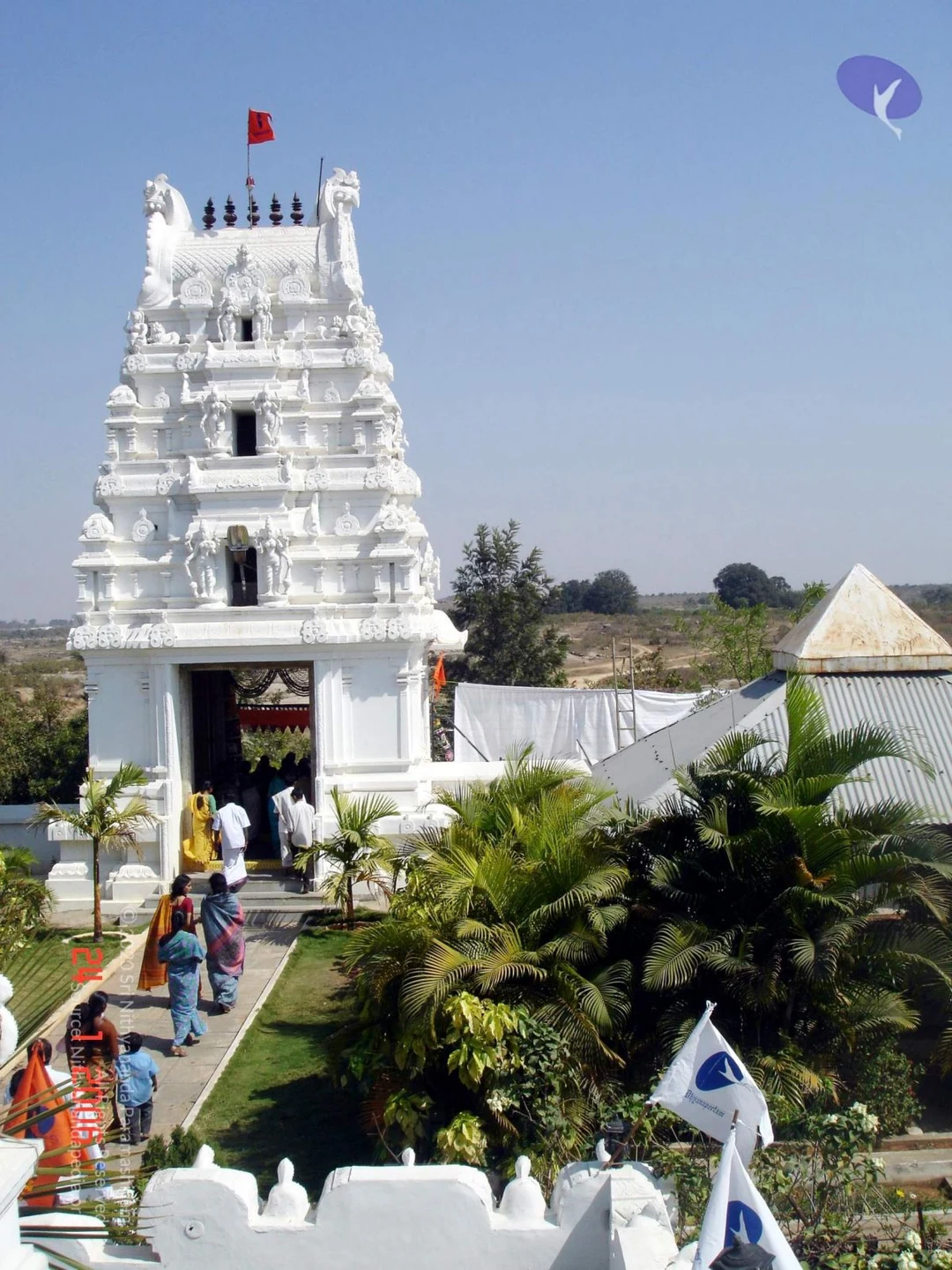
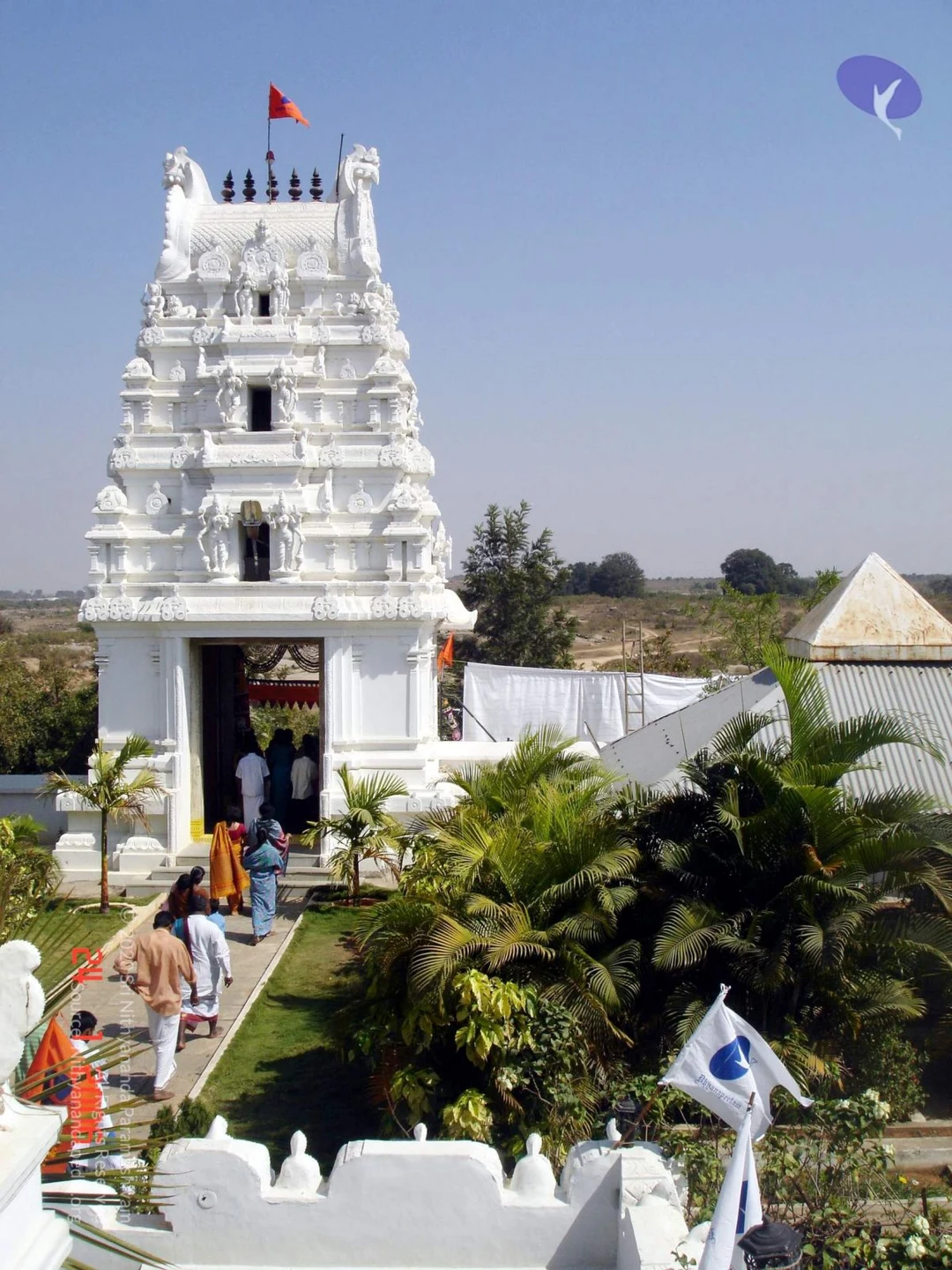
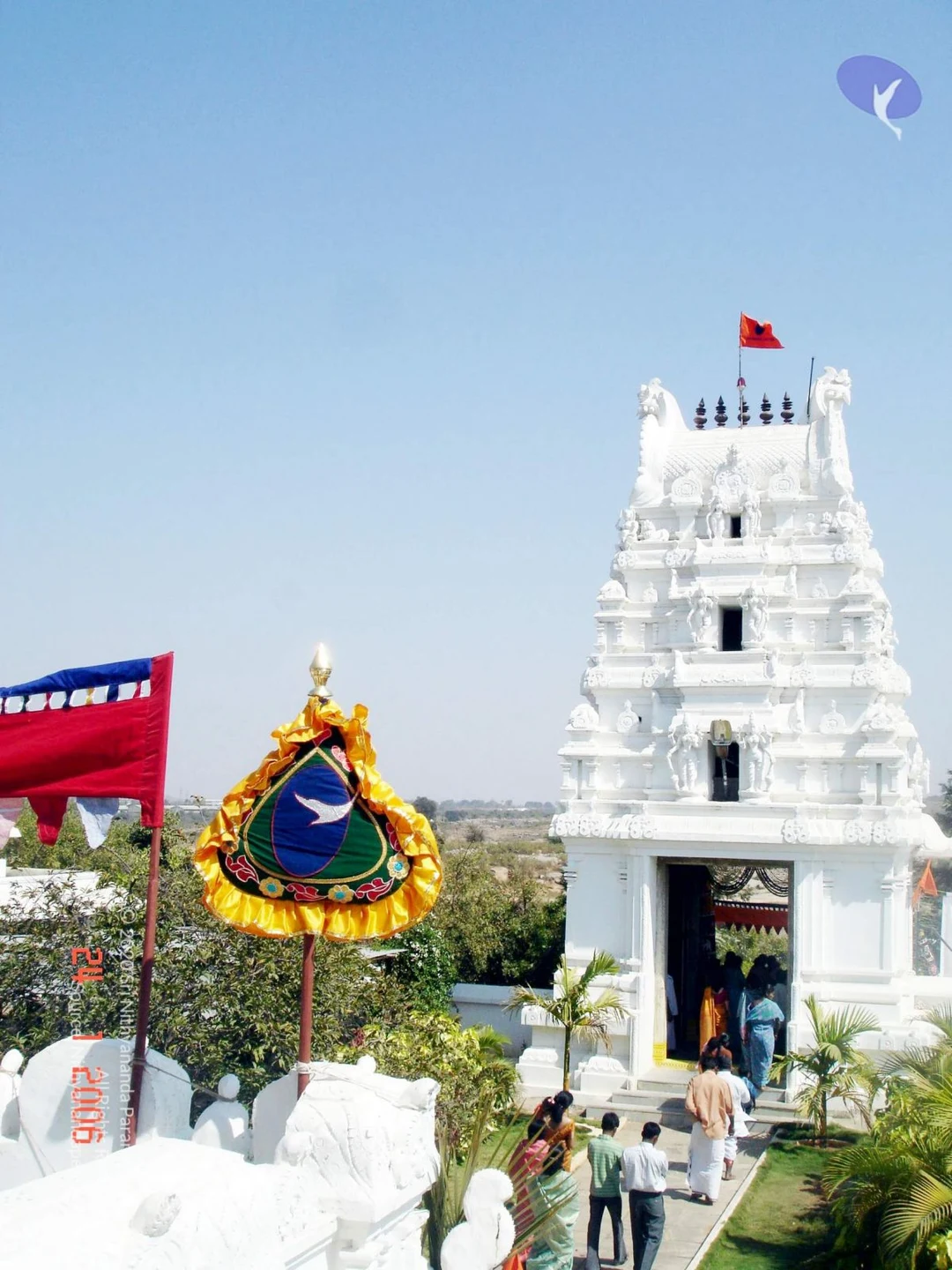
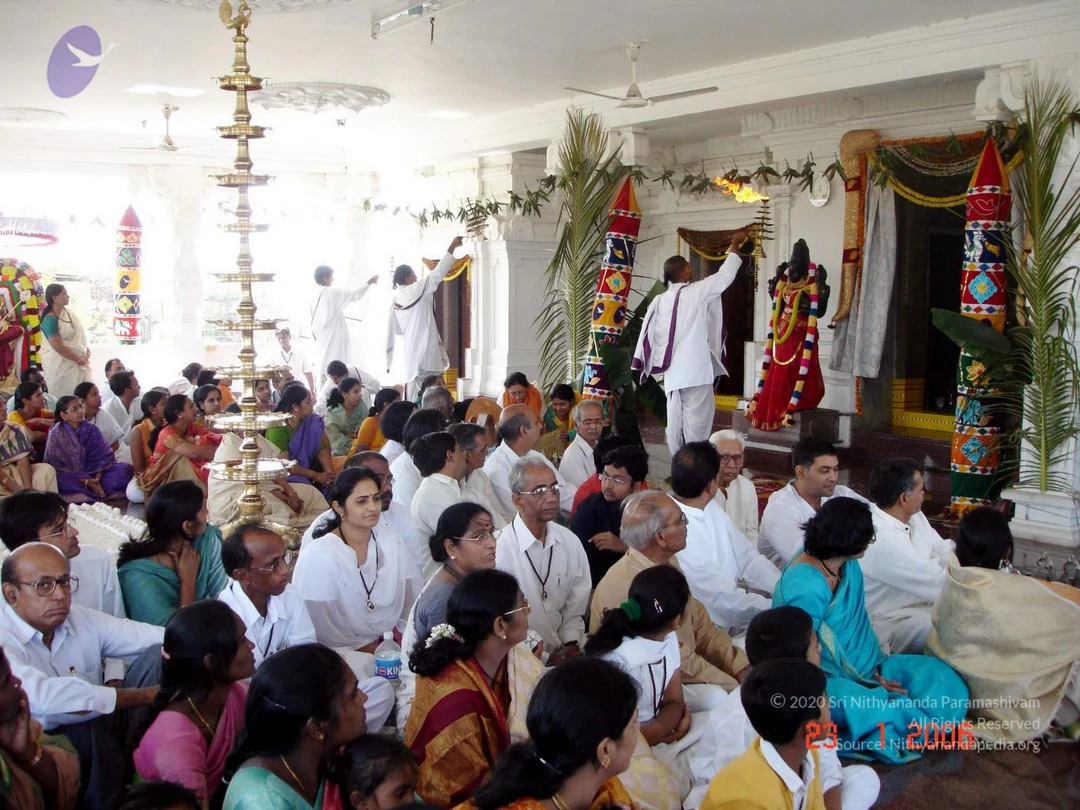
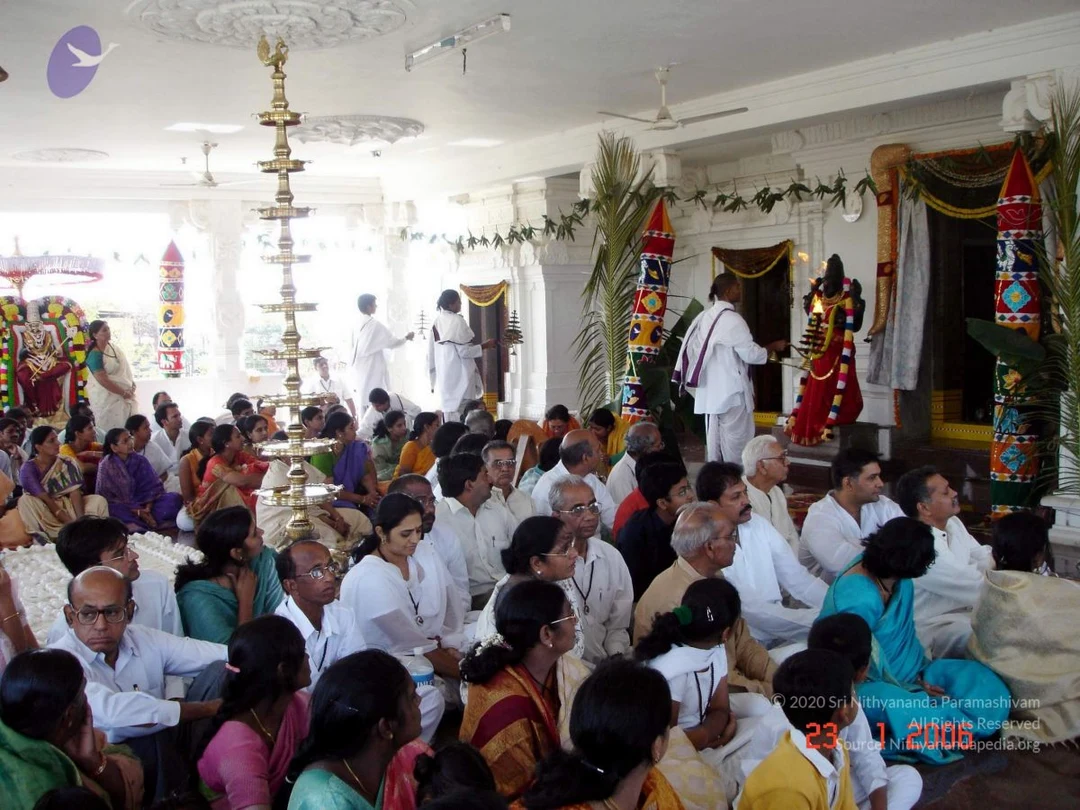
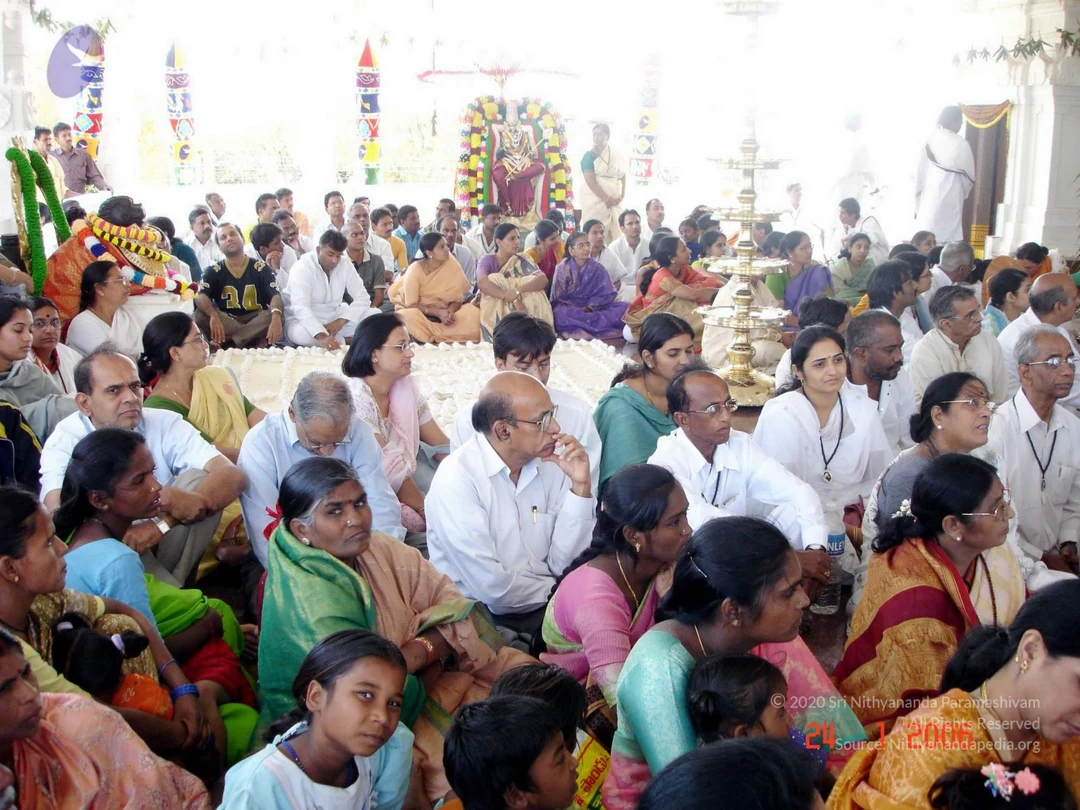
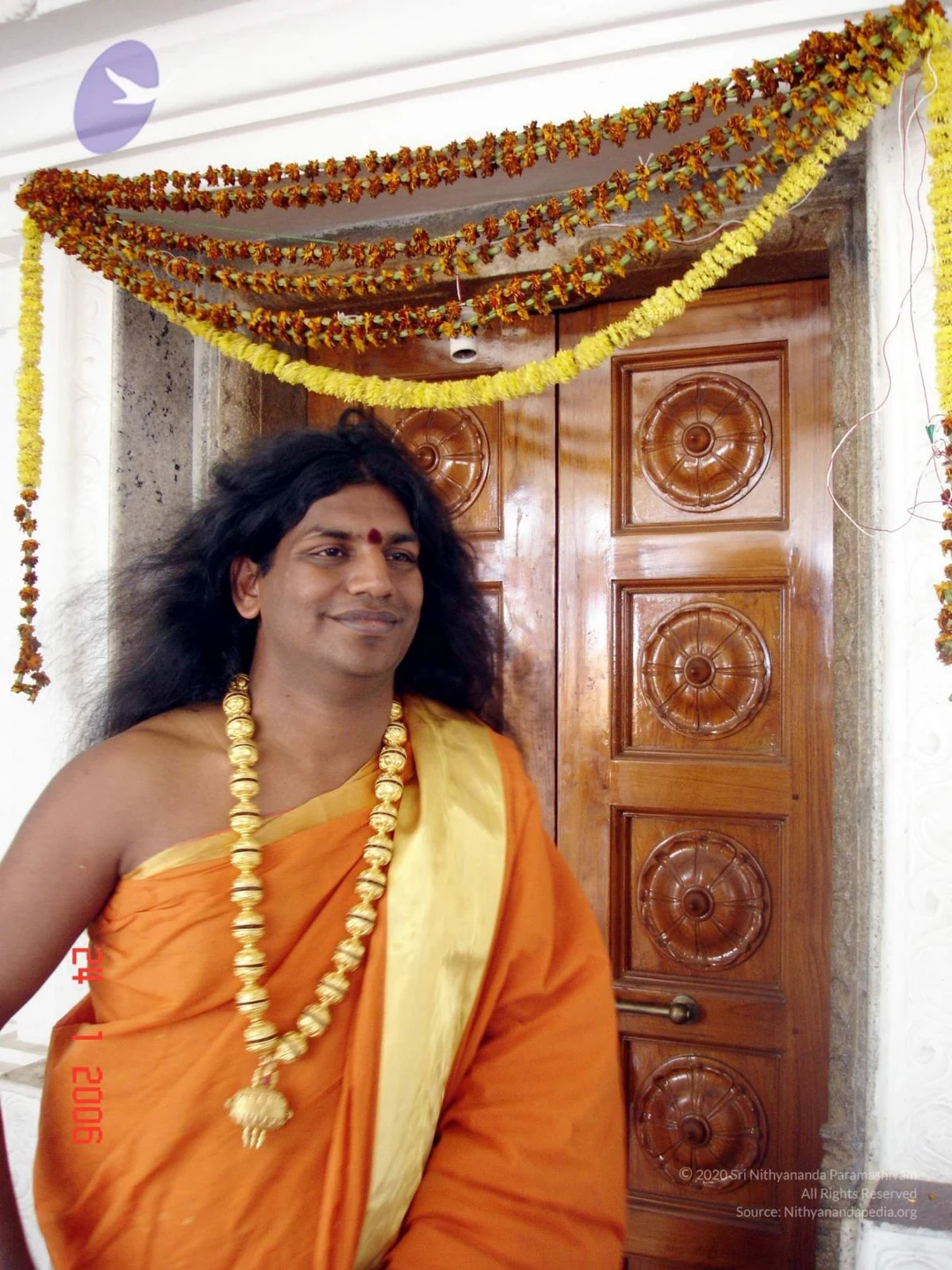
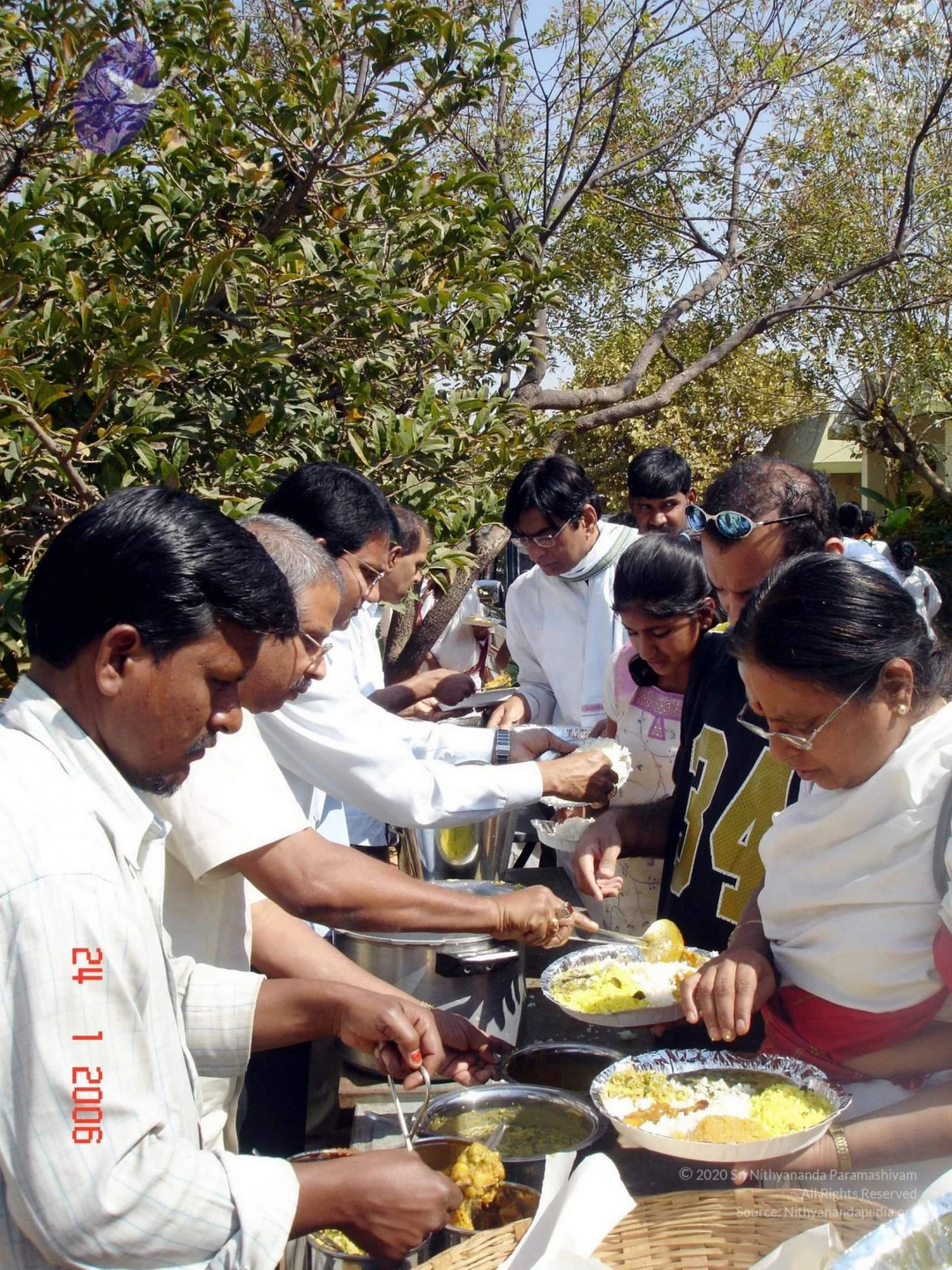
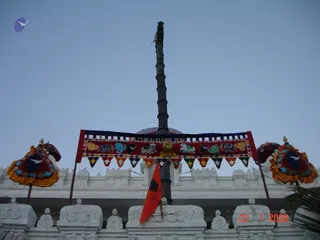
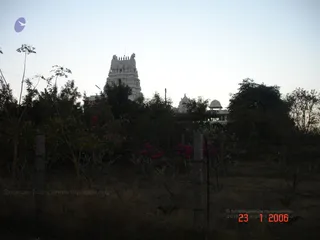
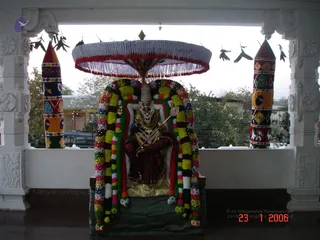
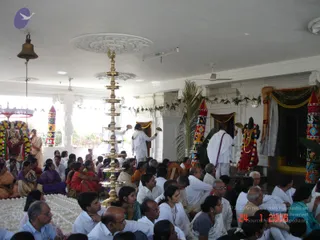
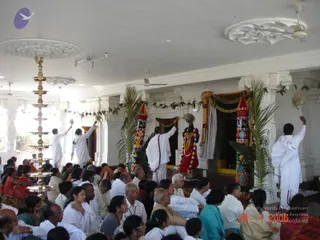
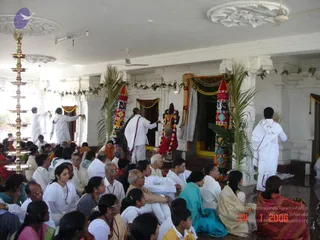
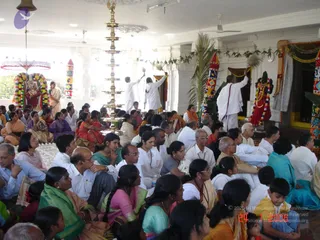
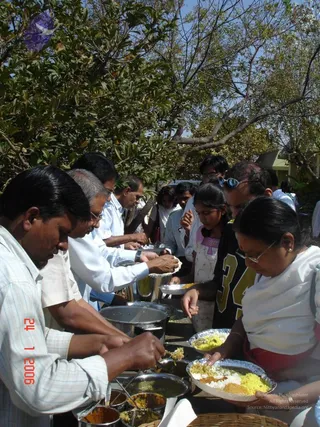
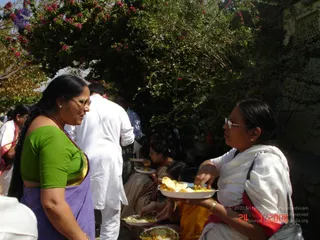
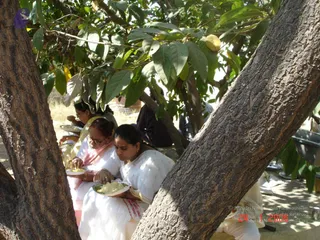
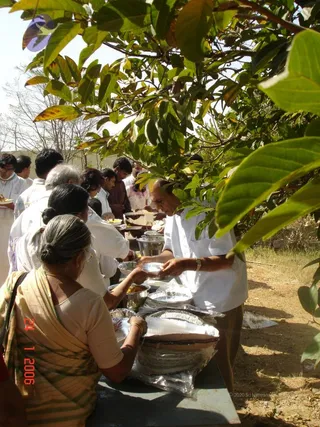
On 24 Jan 2006, His Divine Holiness Bhagavan Nithyananda Paramashivam (HDH) inaugurated the Anandeshwari temple in Hyderabad. The temple serves as the hub of activities of Dhyanapeetam in the city of Hyderabad. Following are a few pictures taken of the grand inauguration function.
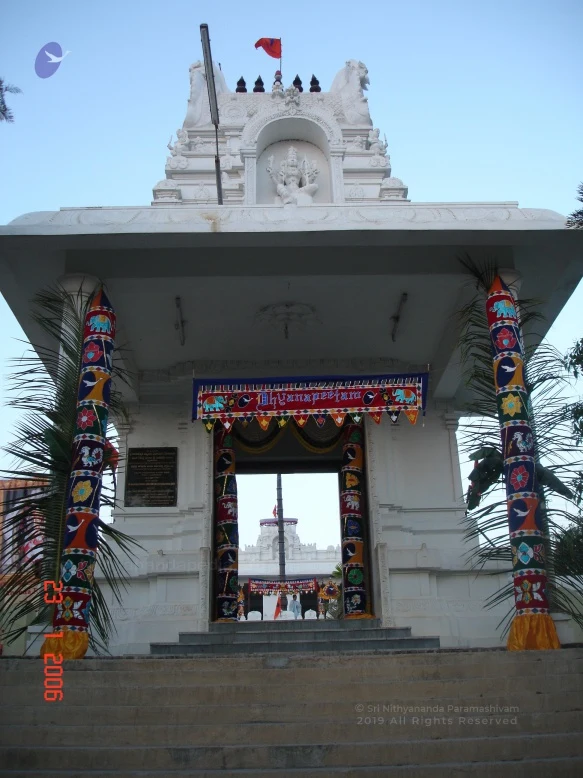
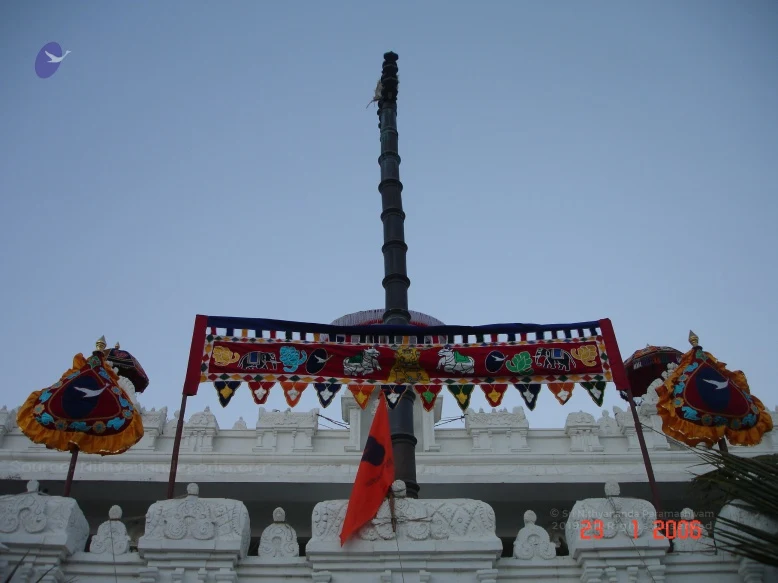
Photos Of The Day:
TempleInaguration

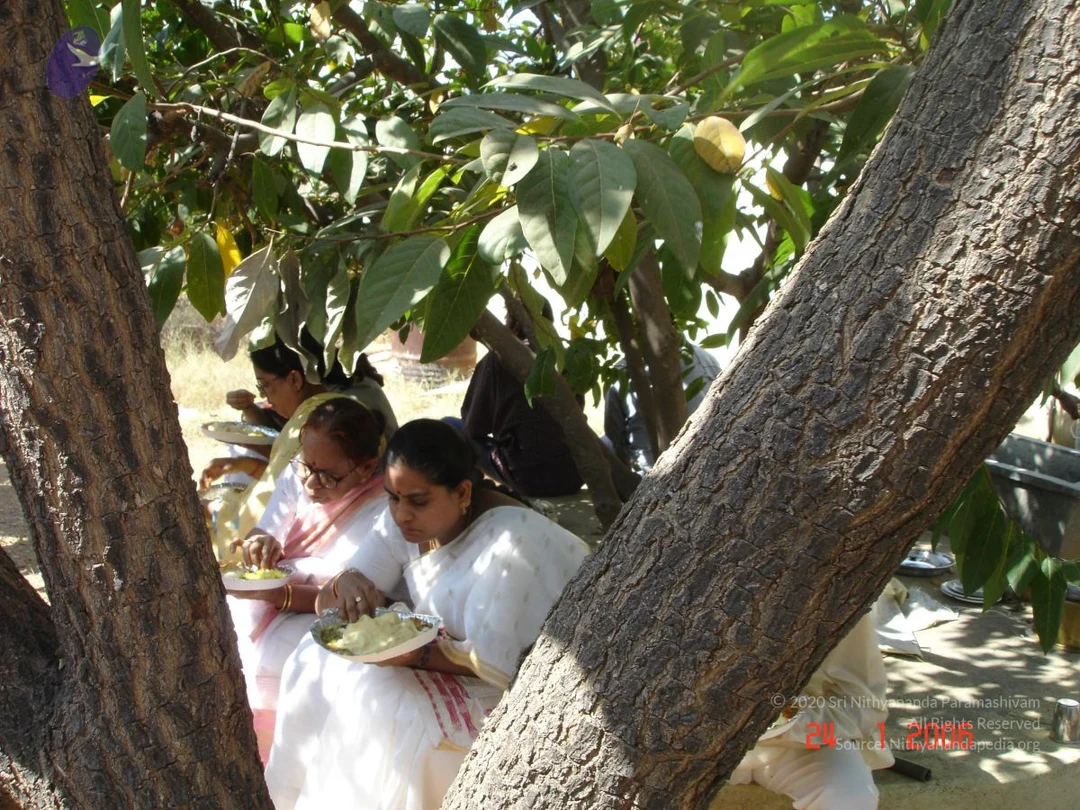
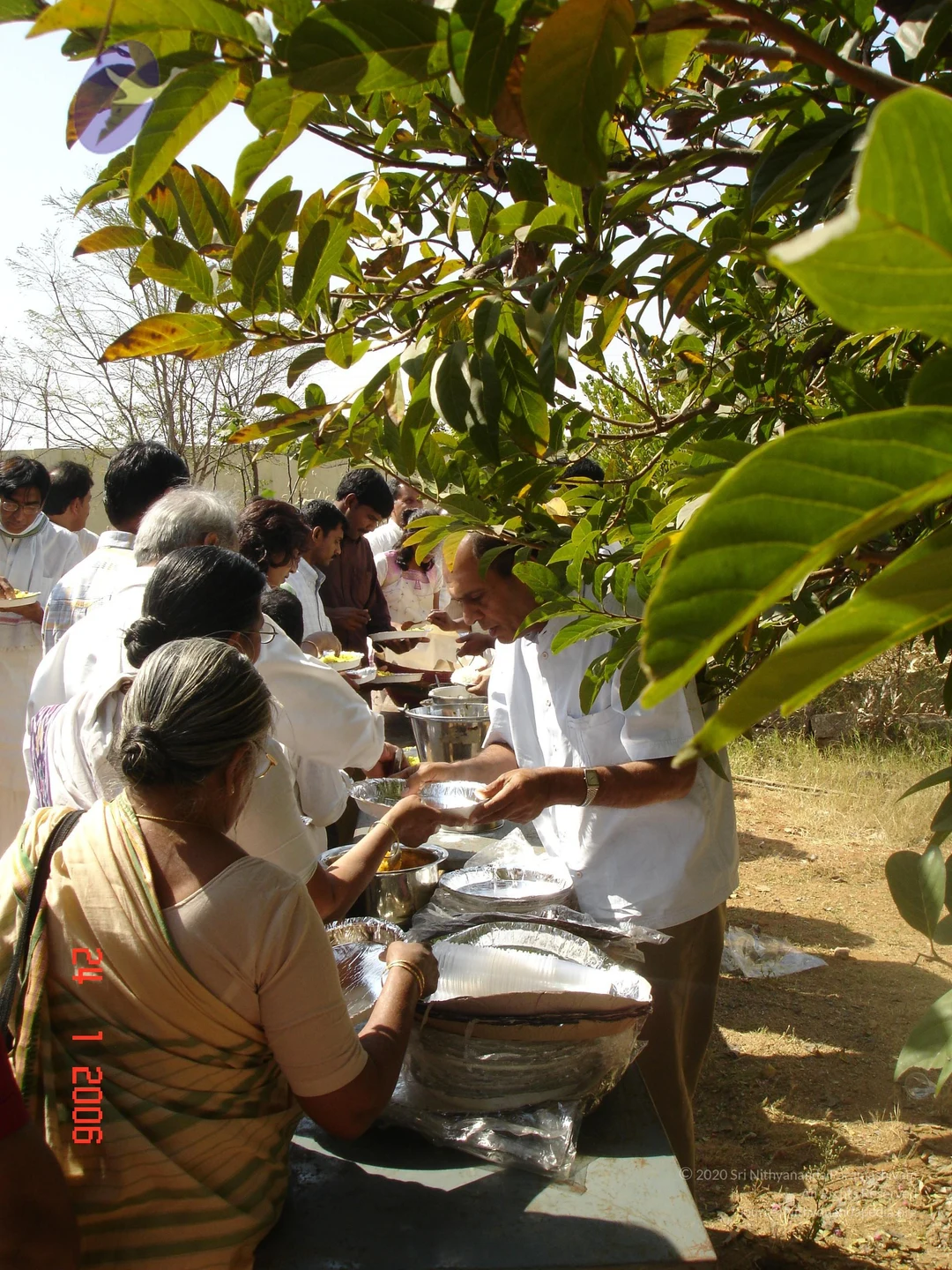
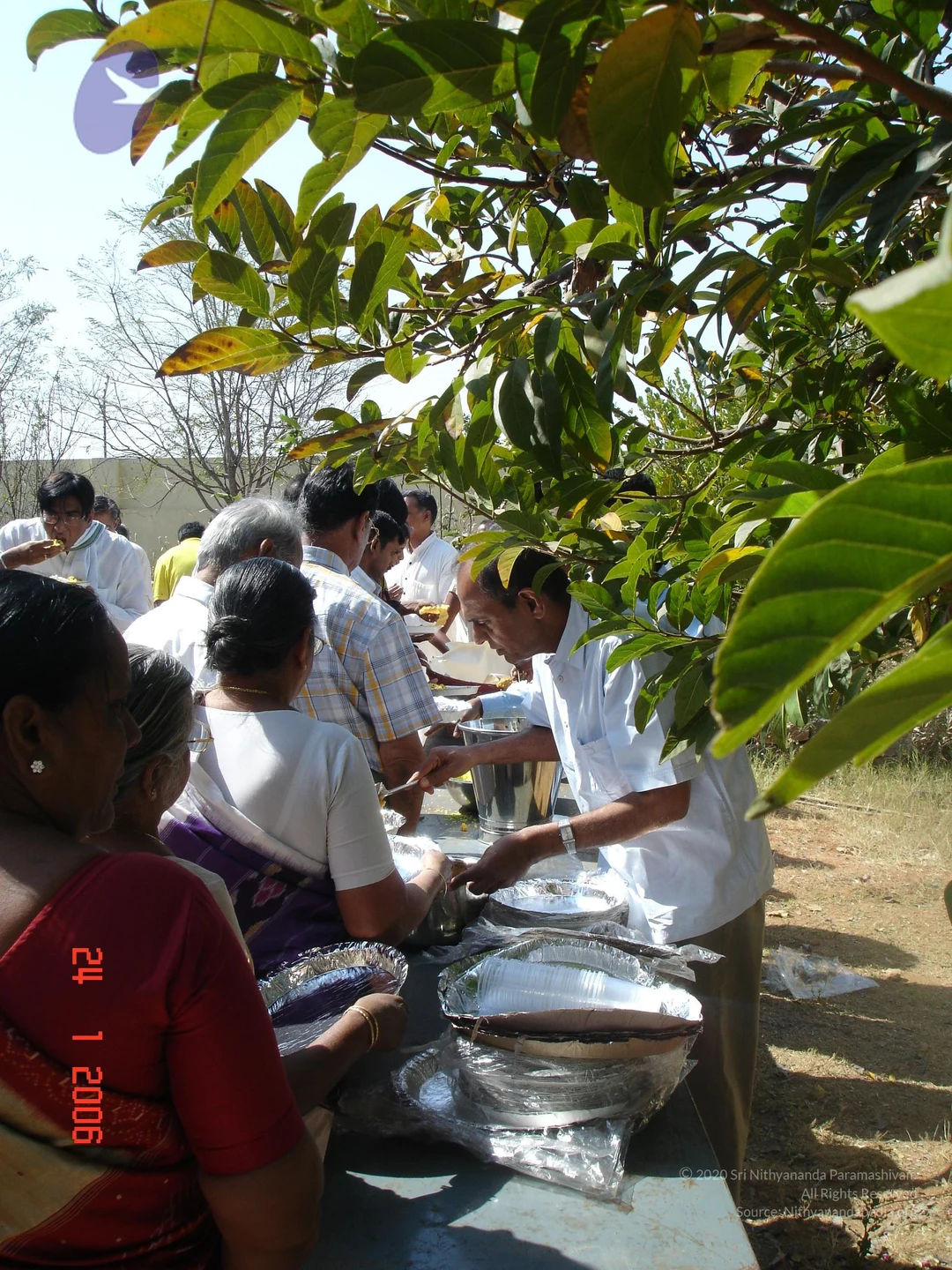
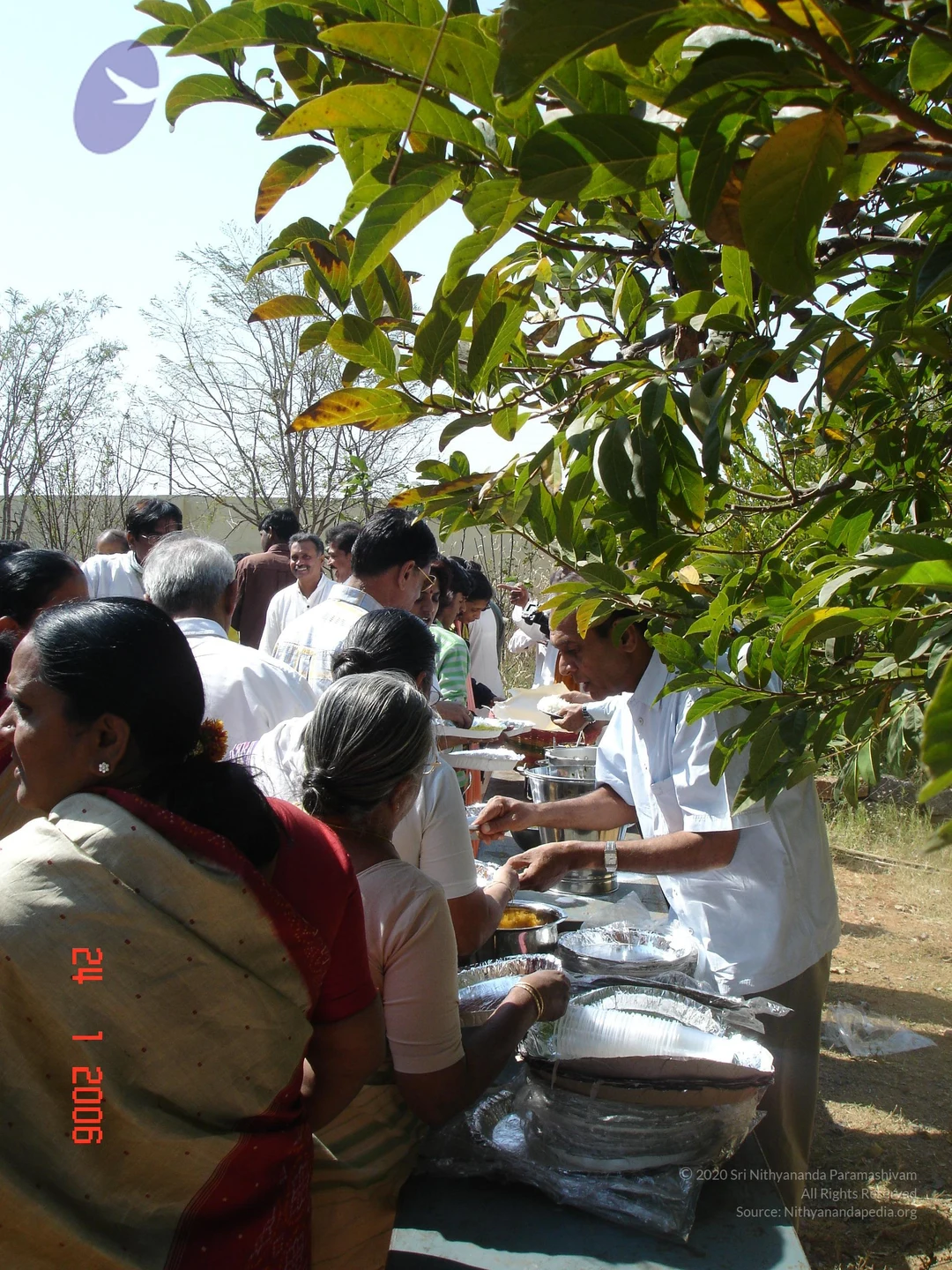
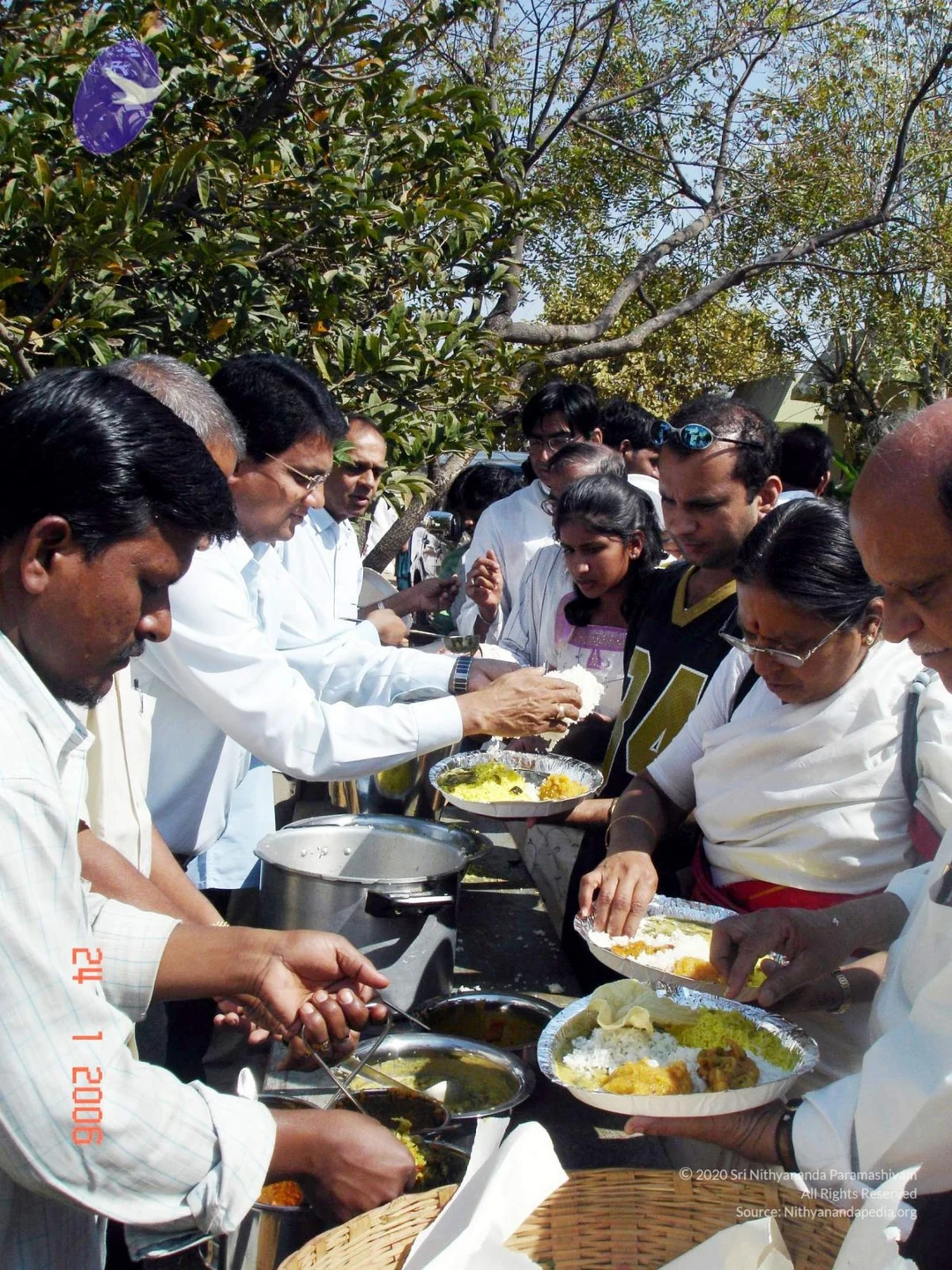
Annadaan
more Photographs




Photos from this day
View all 148 photosPhotos:
10 photosSource gallery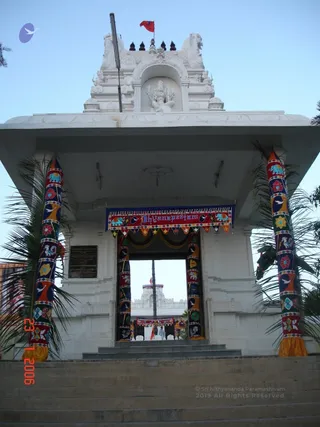
TempleInaguration
61 photosSource gallery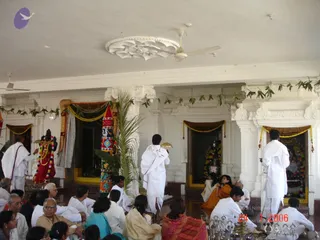
Annadaan
13 photosSource gallery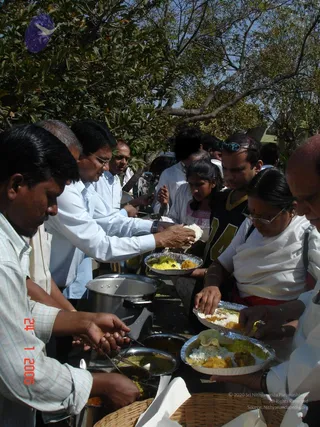

more Photographs
64 photosSource gallery