Skip to content
Thursday

14 July 2005

Name of the Program - Dynamic Shakti Program

Dated photos
15
Source pages
1
Media
1
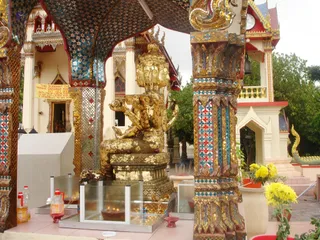
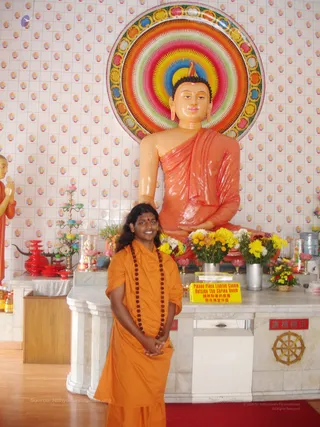
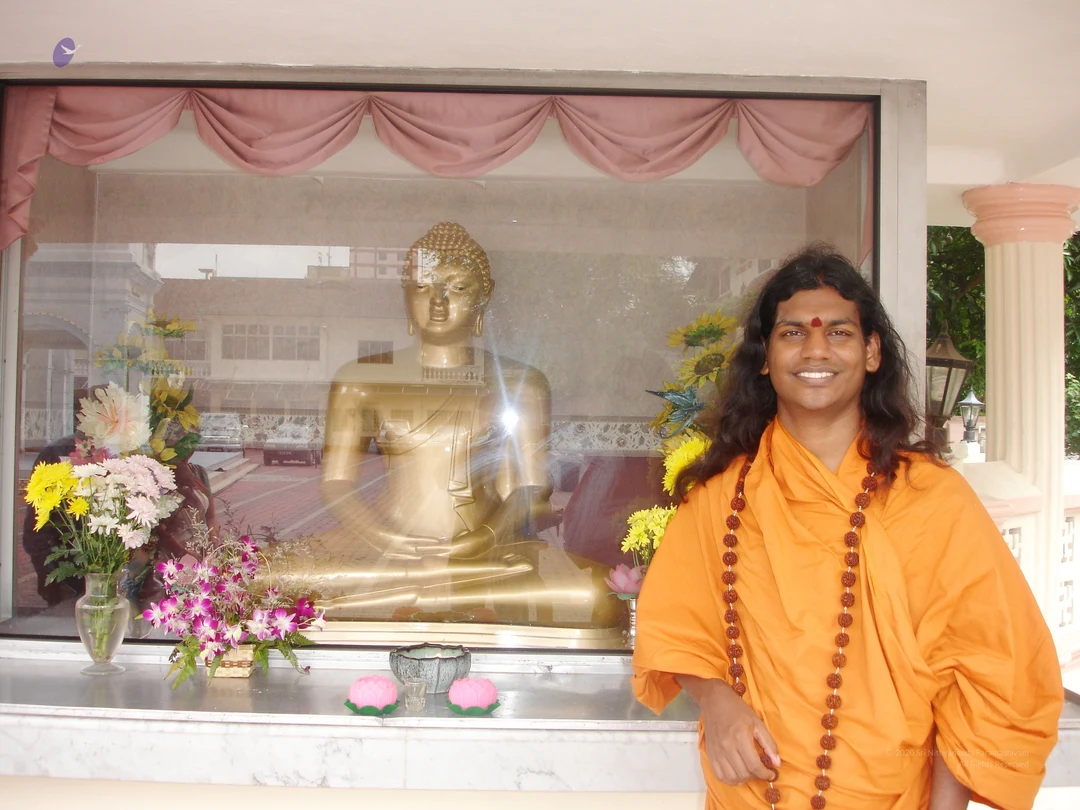
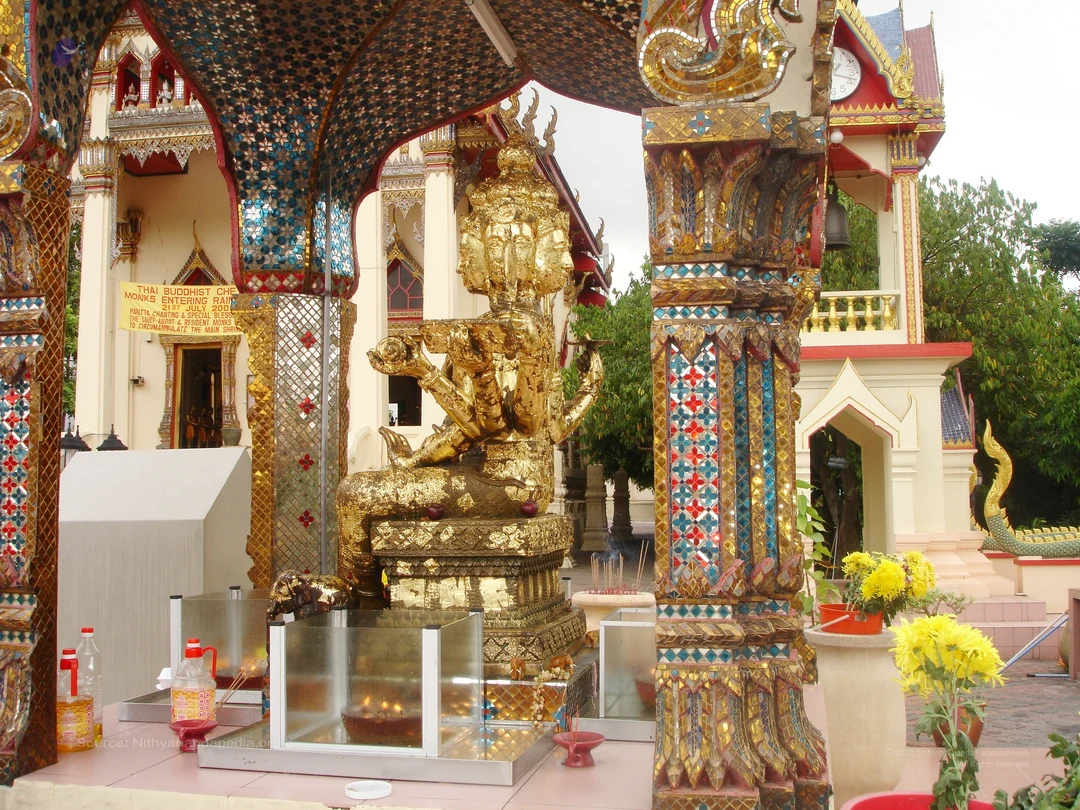
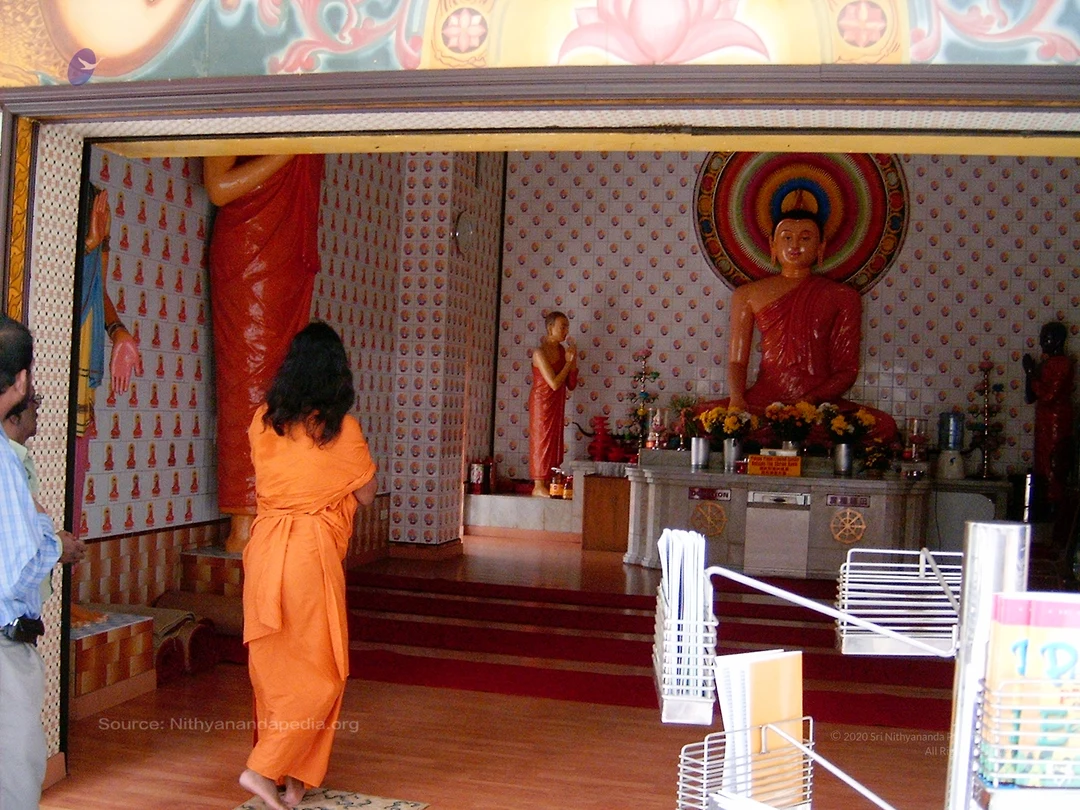
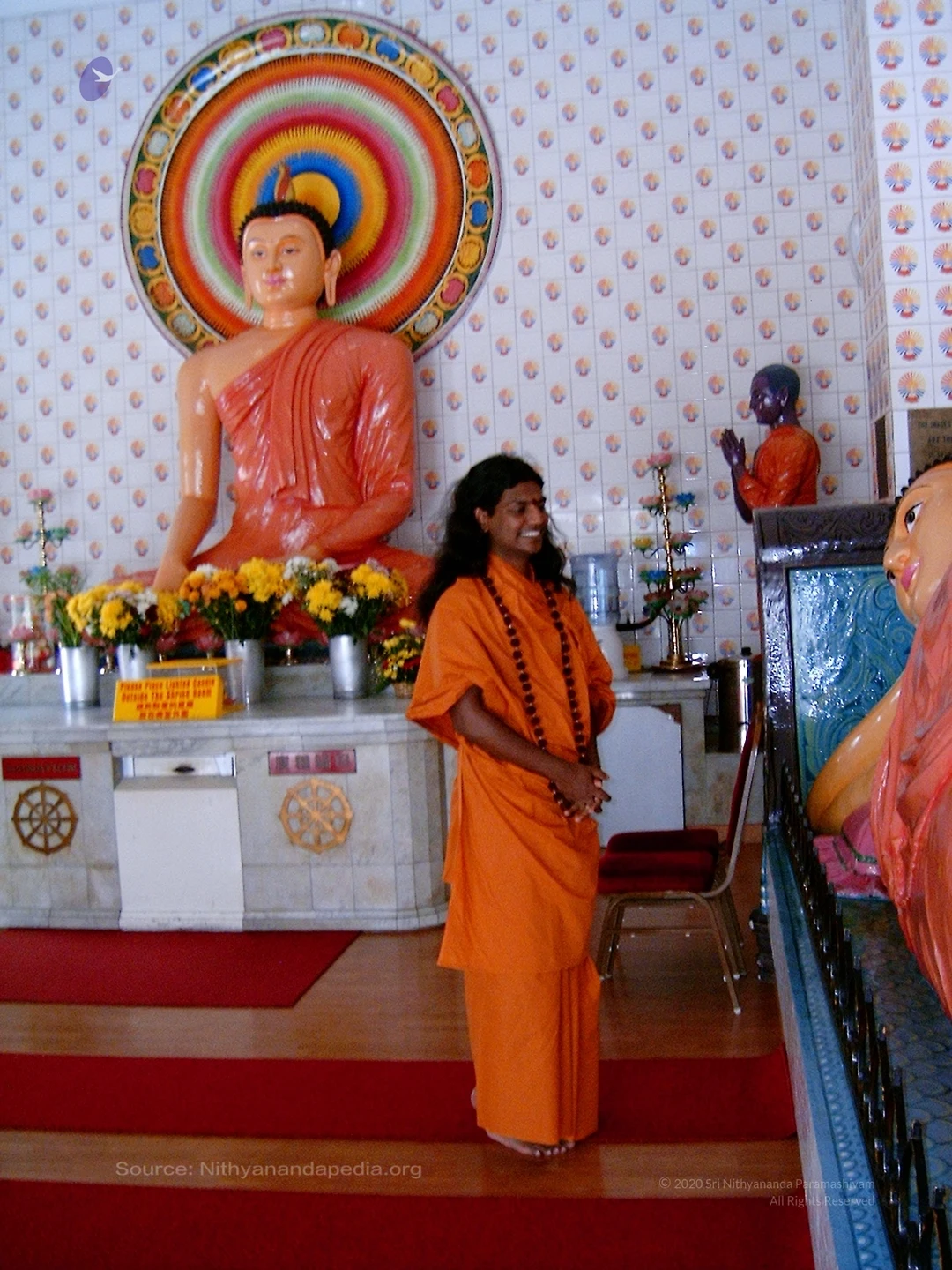
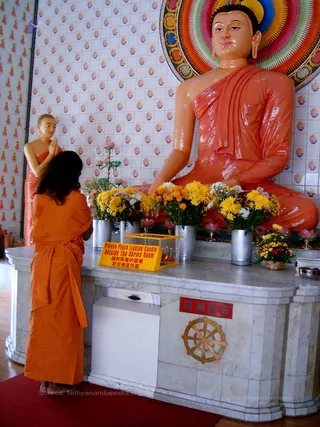
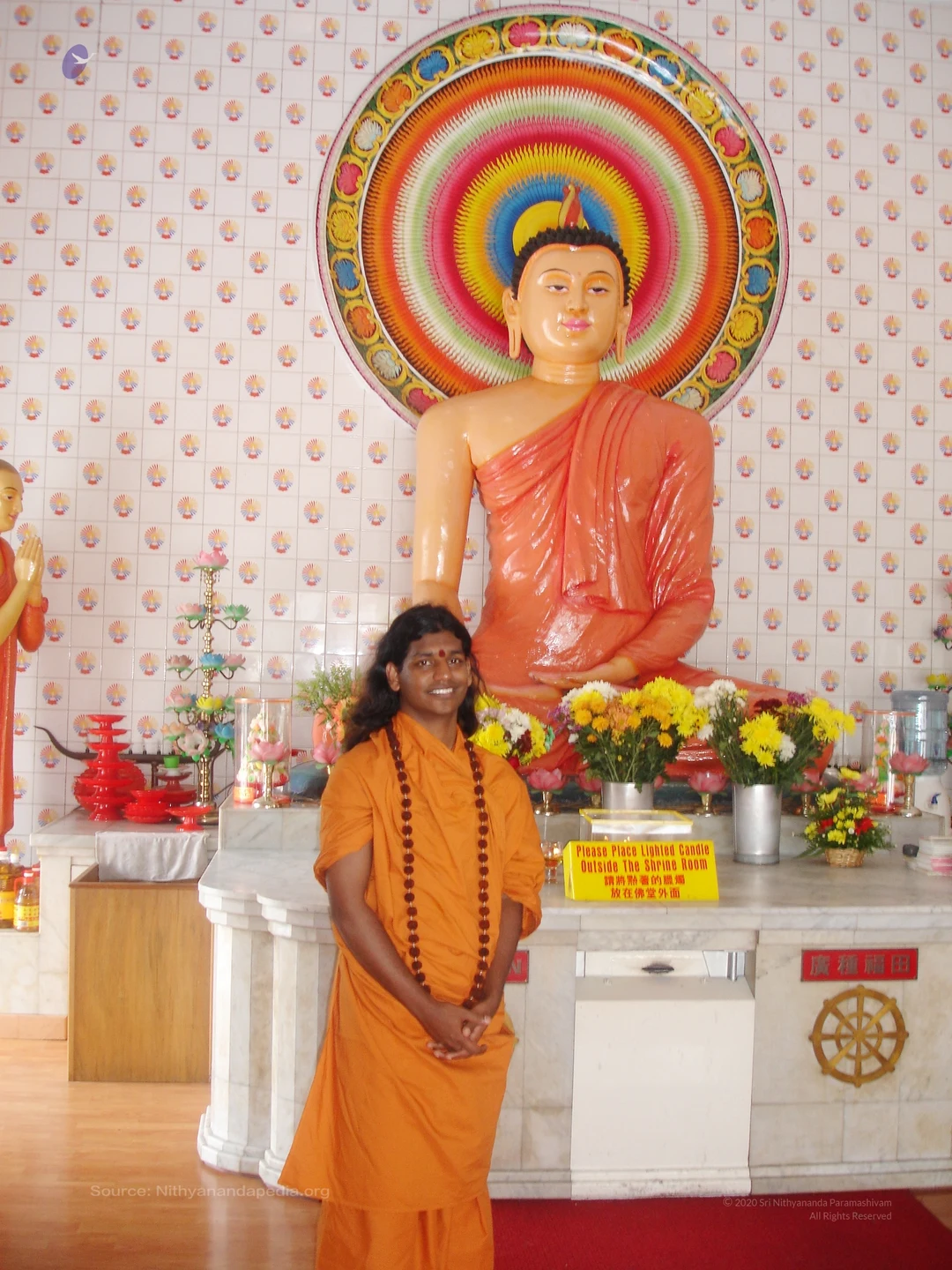
A photograph of an ornate Thai Buddhist shrine with a gilded multi-headed, multi-armed figure seated on a tiered golden pedestal beneath a mosaic-tiled canopy. Small glass-enclosed offering dishes, incense sticks, red bowls and yellow chrysanthemums surround the base. Behind it stand white and gold temple halls with red-tiled roofs, a clock tower and a naga-decorated balustrade under green trees. A yellow banner in English reads that Thai Buddhist monks are entering. No people are visible.A standing man in orange robes with a rudraksha mala and a red bindi smiles in front of a large orange-robed Buddha statue seated beneath a multicoloured circular halo. The Swamiji (probable) cues here are long swept-back hair, saffron clothing and a rudraksha mala, though the man is standing beside the statue, not in a seated or throned position. He holds his hands together at his waist. Behind him are a marble altar with yellow and white flower arrangements in metal vases, lotus-shaped candle holders, and red ritual vessels. A round gold Dharma wheel is set into the marble front of the altar, and a yellow sign reads "Please Place Lighted Candle Outside The Shrine Room" in English and Chinese. Tiled walls with a repeating fan pattern complete the shrine room.

July 14 2005

Original wiki page
Contents

Title:

Name of the Program - Dynamic Shakti Program

Session - Meditation is the Source of your Inner Space

Venue - Klang, Kuala Lumpur, Malaysia

Date - 14 July 2005

Description

On this Day Supreme Pontiff of Hinduism HDH Bhagavan Nithyananda Paramashivam during the Dynamic Shakti Program Delivered a Discourse on How Meditation is the Source of our Inner Space, and how meditation introduces the eternal component of us by opening the door of our InnerSpace.

Link to Video:

Photos

Below some pictures of Swamijis visit to Malaysia.
Photos from this day

View all 15 photos
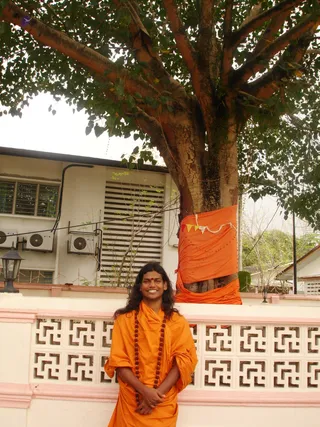
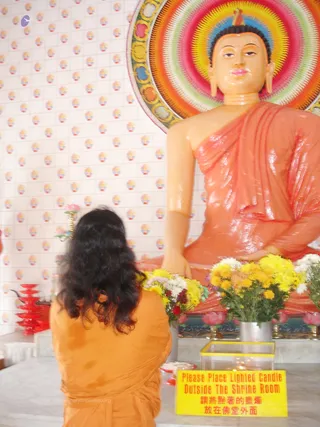
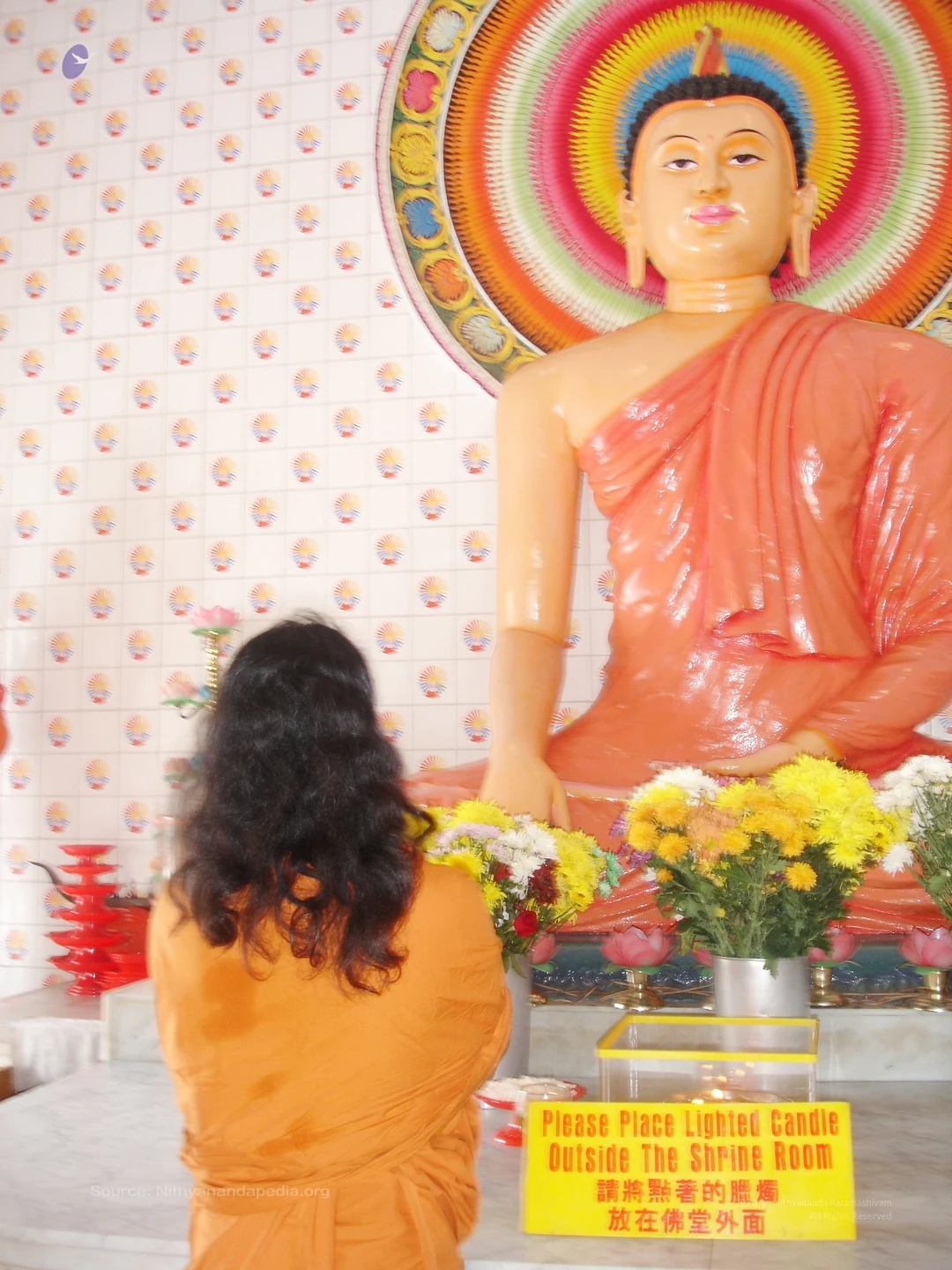
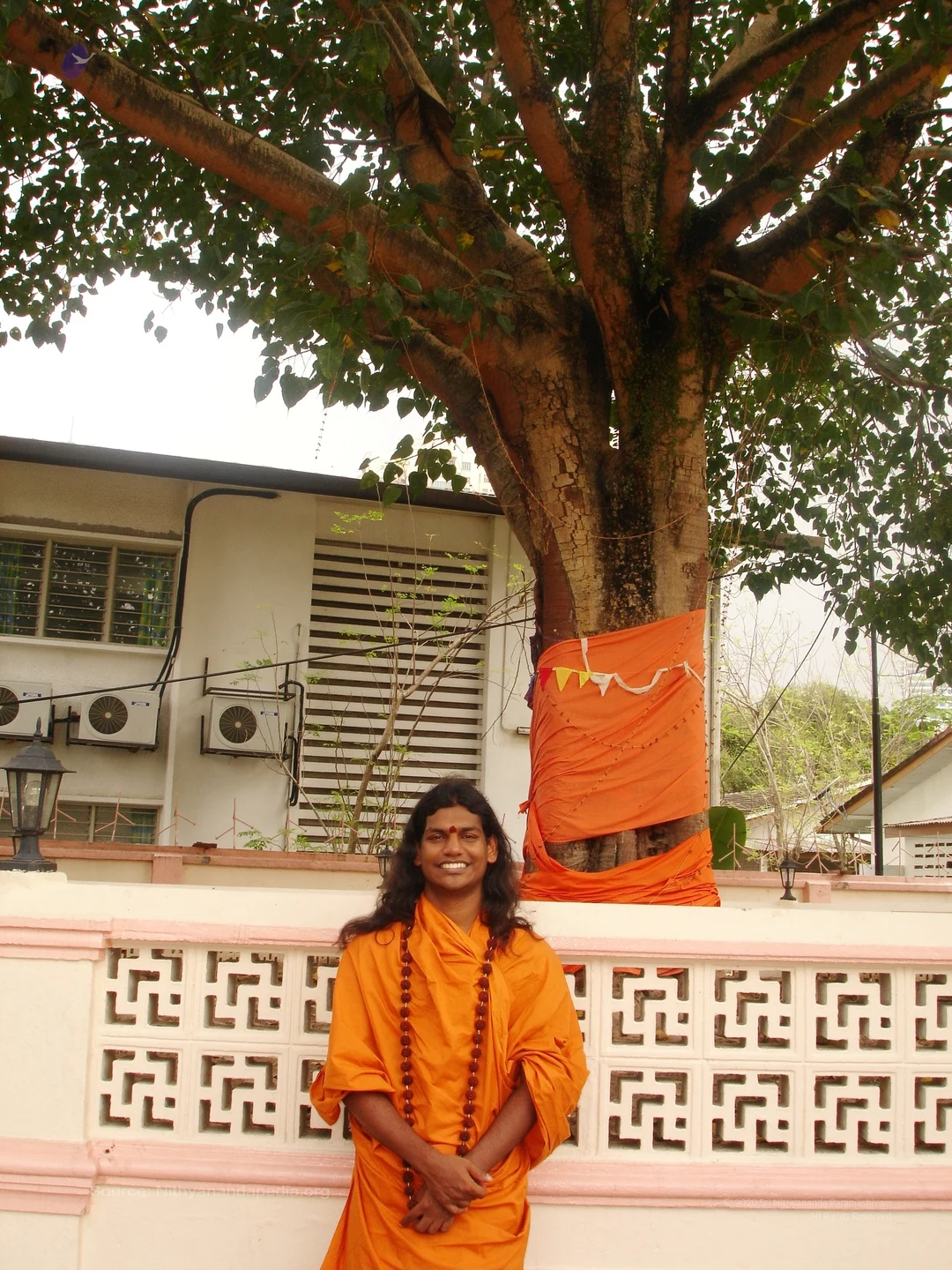
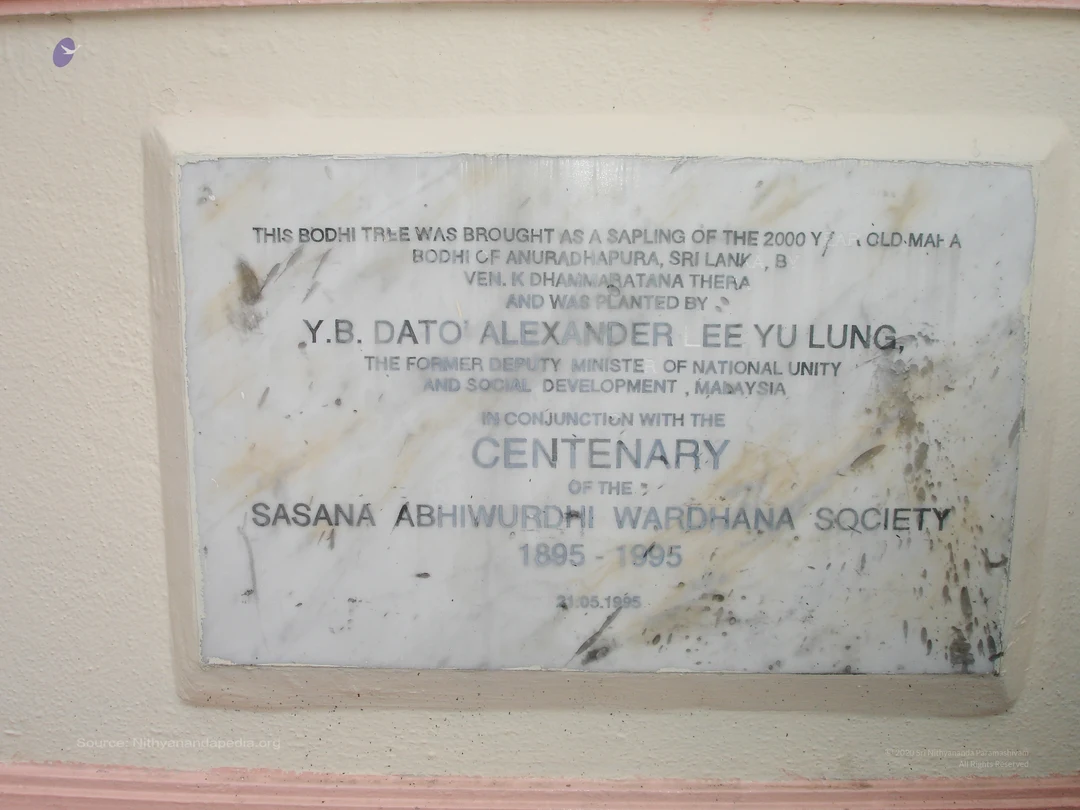
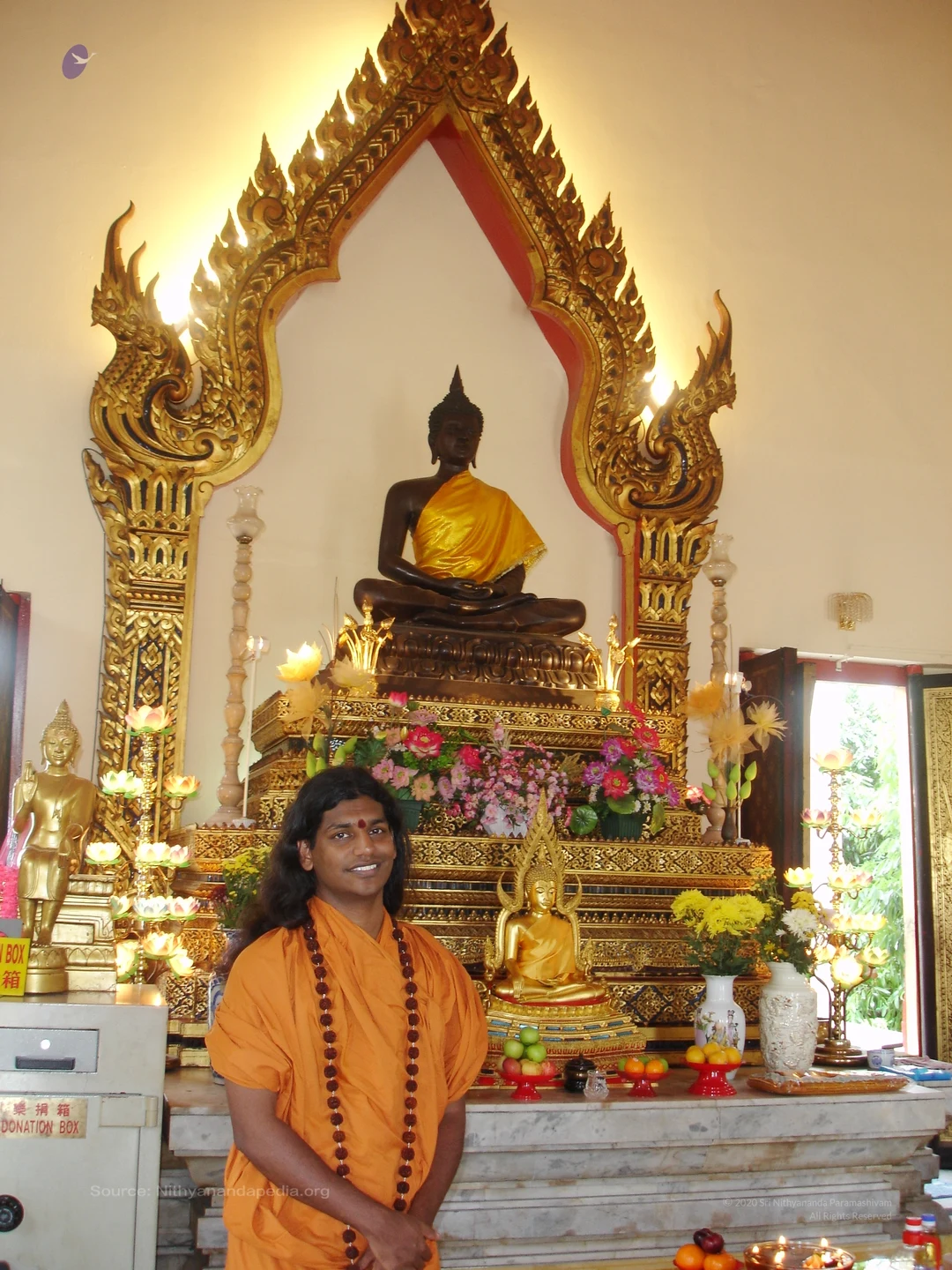
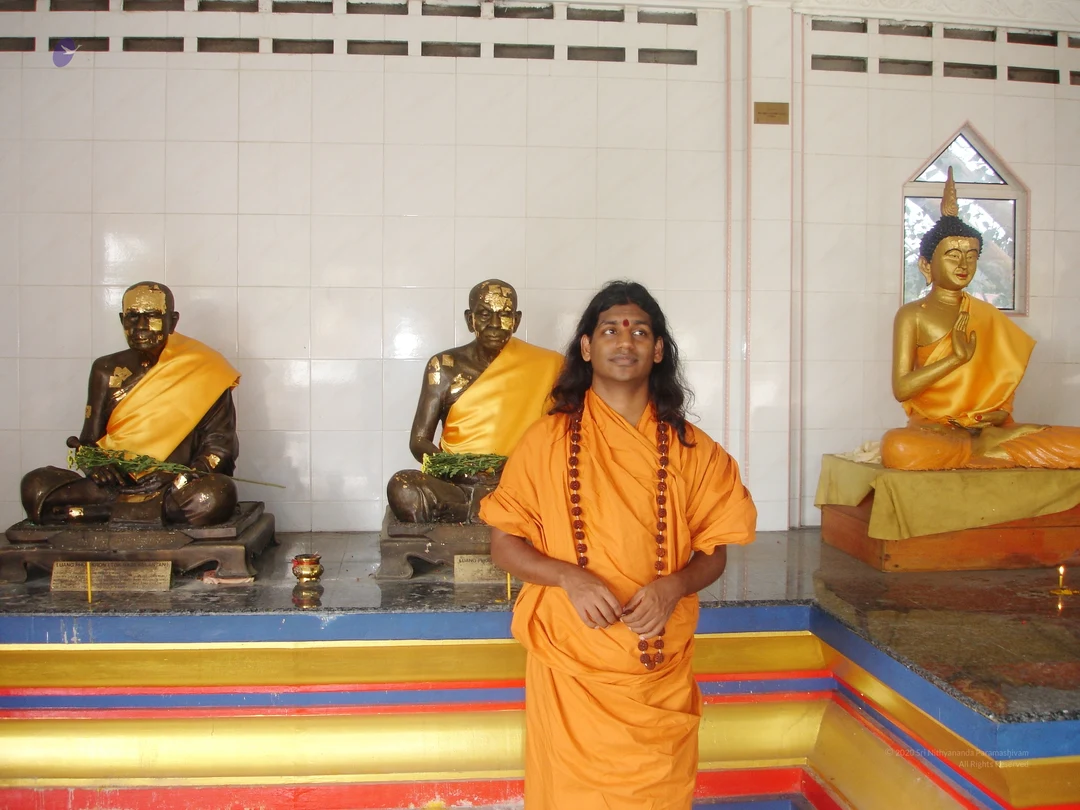
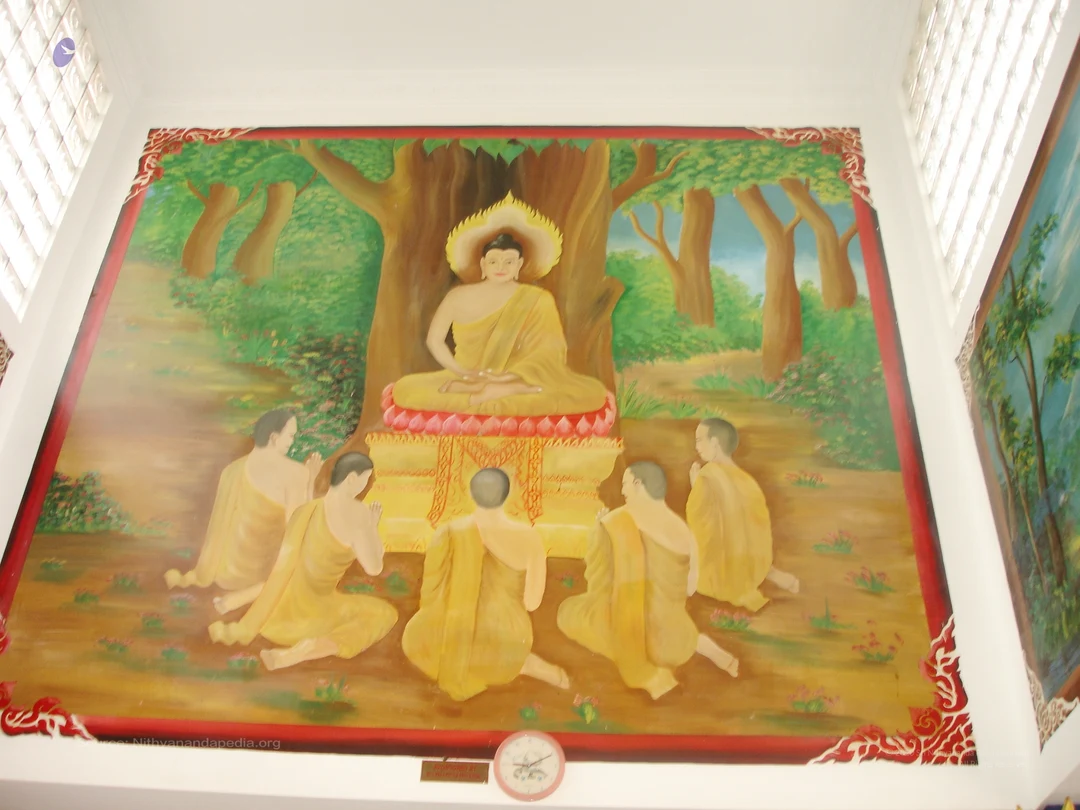
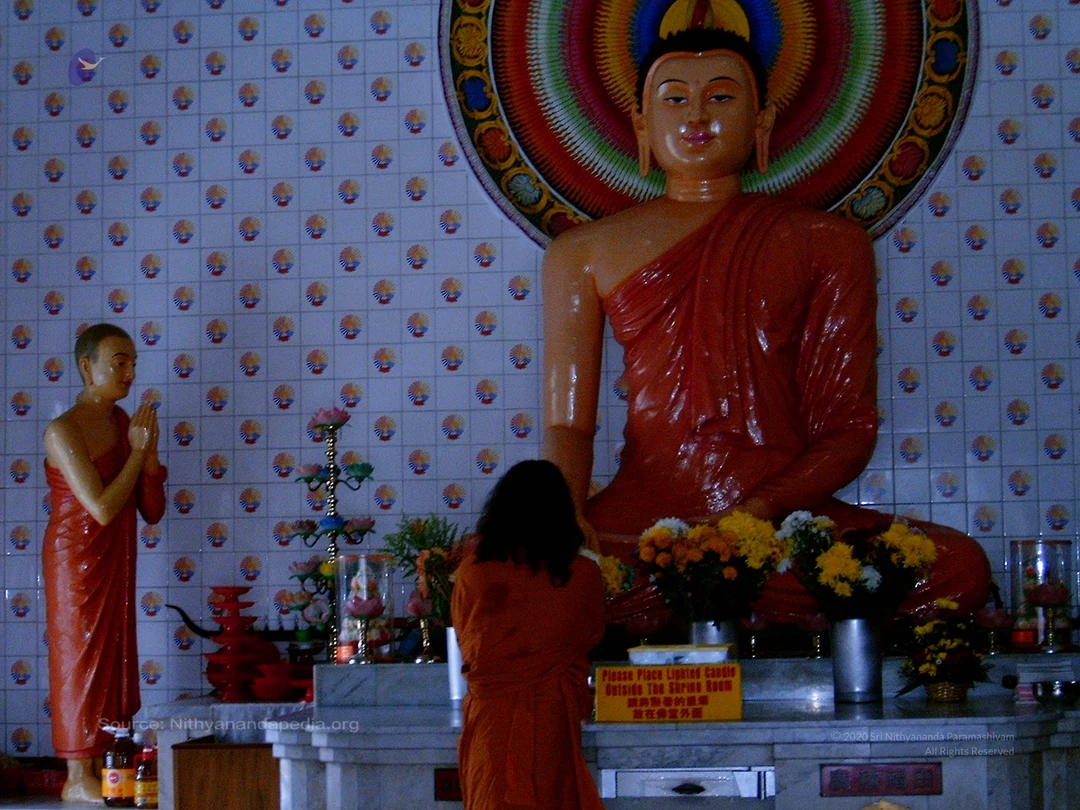
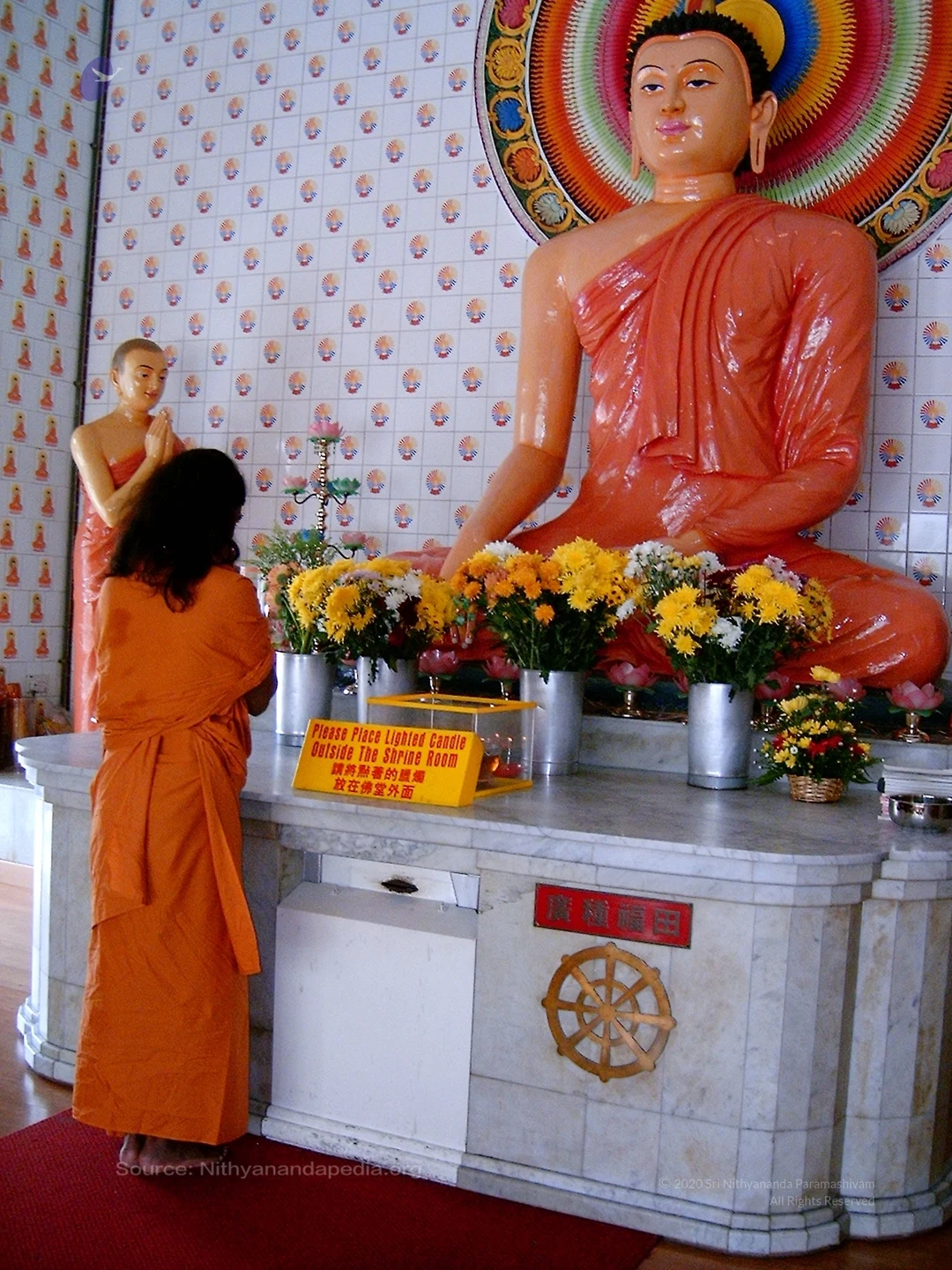
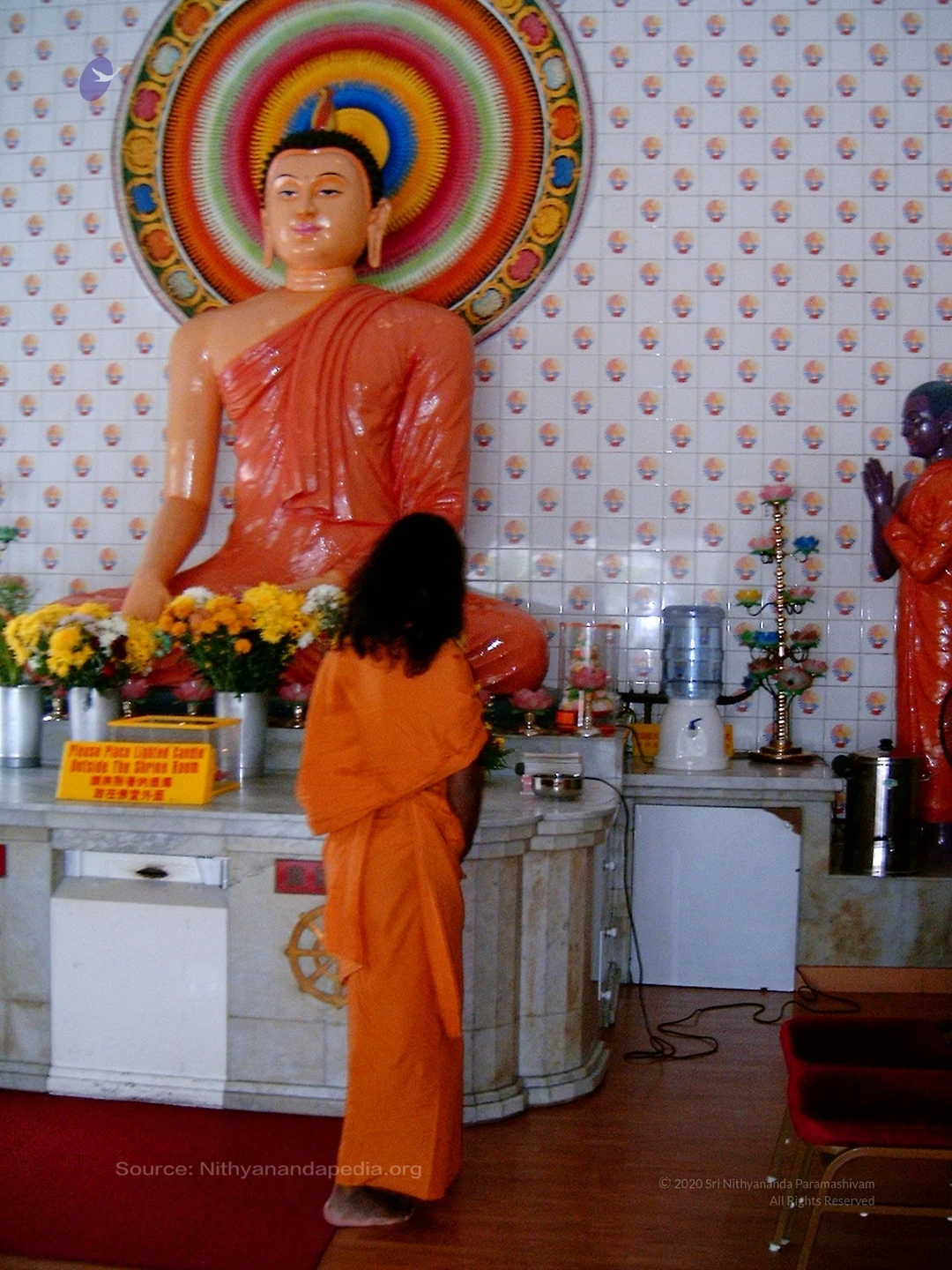
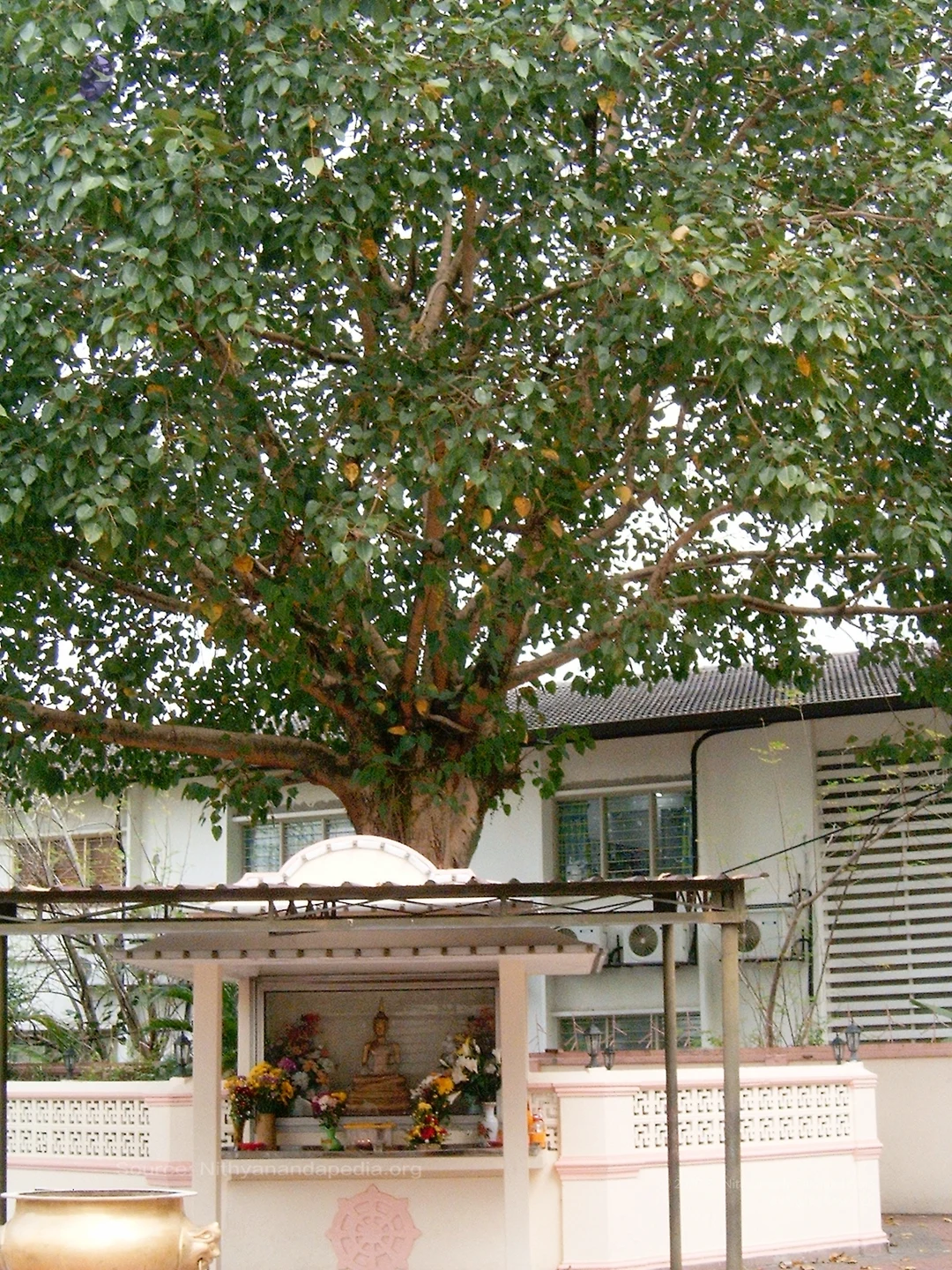
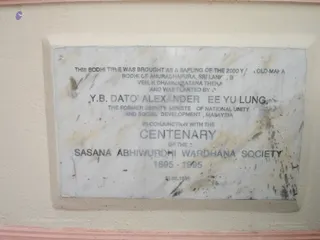
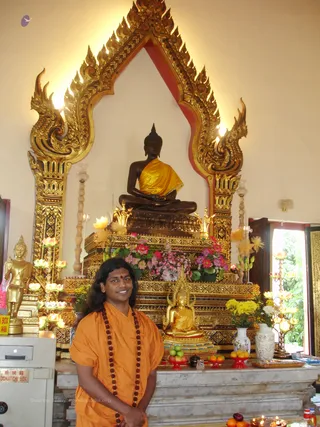
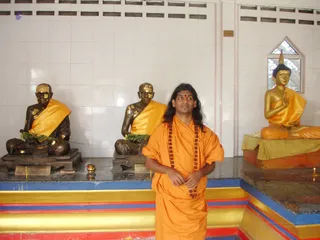
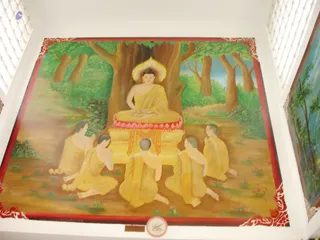
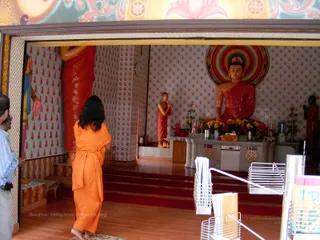
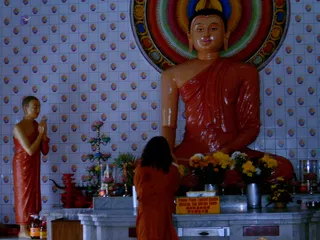
A standing man in orange robes with a rudraksha mala and a red bindi smiles in front of a large orange-robed Buddha statue seated beneath a multicoloured circular halo. The Swamiji (probable) cues here are long swept-back hair, saffron clothing and a rudraksha mala, though the man is standing beside the statue, not in a seated or throned position. He holds his hands together at his waist. Behind him are a marble altar with yellow and white flower arrangements in metal vases, lotus-shaped candle holders, and red ritual vessels. A round gold Dharma wheel is set into the marble front of the altar, and a yellow sign reads "Please Place Lighted Candle Outside The Shrine Room" in English and Chinese. Tiled walls with a repeating fan pattern complete the shrine room.A smiling man with long dark hair stands in front of a white decorative lattice wall beneath a large tree. He wears an orange saffron robe draped over his shoulders, a long rudraksha mala hanging to his waist, and a red bindi on his forehead, with his hands folded at his waist. Behind him the tree trunk is wrapped in orange cloth strung with small yellow and red pennant flags. A white building with air conditioning units and a lantern-style lamp post appear behind the wall. The appearance matches the a person cues of long swept hair, saffron clothing and rudraksha beads, so this is a person photograph in person.A close-up photograph of a white marble commemorative plaque mounted on a cream-painted wall, with a pink-tinted border. The plaque records that a Bodhi tree was brought as a sapling from the 2000-year-old Maha Bodhi of Anuradhapura, Sri Lanka, through Ven. K. Dhammaratana Thera, and was planted by Y.B. Dato' Alexander Lee Yu Lung, former Deputy Minister of National Unity and Social Development, Malaysia, in conjunction with the Centenary of the Sasana Abhiwurdhi Wardhana Society, 1895-1995, dated 31.05.1995. No people are visible.A man with long dark hair stands in front of a gilded Buddhist shrine in a temple hall. He wears a saffron-orange robe, a red bindi, and a long rudraksha mala reaching his waist, with hands clasped in front. Behind him a large dark bronze seated Buddha in a golden robe sits within an ornate gold arched frame with flame-like finials. Smaller gold Buddha images, pink and yellow flower arrangements, apples and oranges on red plates, a donation box and oil lamps fill the altar. Swamiji (probable) is shown in an orange robe and rudraksha mala, with the appearance cues of long hair, saffron clothing and rudraksha beads, and is standing as a visiting devotee at a Buddhist temple altar.A photograph of an ornate Thai Buddhist shrine with a gilded multi-headed, multi-armed figure seated on a tiered golden pedestal beneath a mosaic-tiled canopy. Small glass-enclosed offering dishes, incense sticks, red bowls and yellow chrysanthemums surround the base. Behind it stand white and gold temple halls with red-tiled roofs, a clock tower and a naga-decorated balustrade under green trees. A yellow banner in English reads that Thai Buddhist monks are entering. No people are visible.A standing man in saffron-orange robes with a long, loose dark hair and a red bindi on his forehead stands in front of a row of seated golden-brown statues wrapped in orange cloth, with gilded faces and hands. A rudraksha mala hangs across his chest. Behind him, a golden seated Buddha figure with raised right hand sits on a wooden platform beside a window. A shrine with blue, red and gold steps, a small brass bowl and a lamp fills the scene. a person appears in person, identified by long swept hair, saffron robes and rudraksha mala beads; he is the only physical person present.A painted wall mural in a white-walled room shows a seated Buddha in yellow robes under a large tree, a golden halo behind his head, hands in meditation mudra on a red-and-gold lotus pedestal. Five monks in saffron-yellow robes kneel before him in a forest clearing with green trees and flowers, hands pressed in anjali. Windows with frosted glass frame the wall, and a round clock hangs below the mural. The image is a photograph of this painting, showing a Buddhist scene rather than a Hindu ritual. No a person candidate is visibly present in the mural.A figure in orange robes with long dark hair kneels before a large seated Buddha statue painted in red-orange robes, with a rainbow-coloured halo behind its head. A smaller standing statue of a monk in orange robes with palms pressed together stands at left. The altar holds yellow and orange marigold flowers, a tiered red candle stand, and small glass offering containers. A yellow sign reads 'Please Place Lighted Candle Outside The Shrine Room'. The tiled white wall has a repeated pattern of colourful lotus-like motifs.