Skip to content
Thursday

26 August 2004

Supreme Pontiff of Hinduism HDH Bhagavan Nithyananda Paramashivam

Dated photos
67
Source pages
1
Media
2
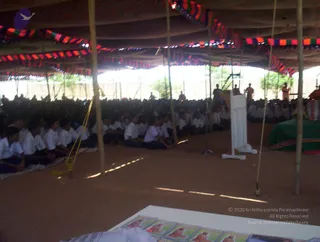
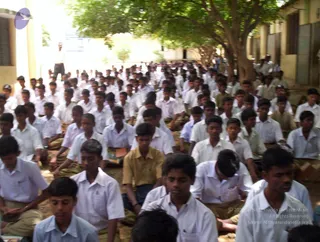
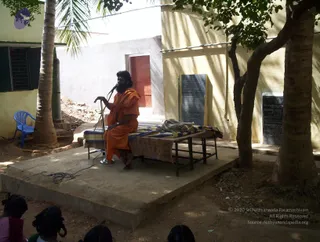
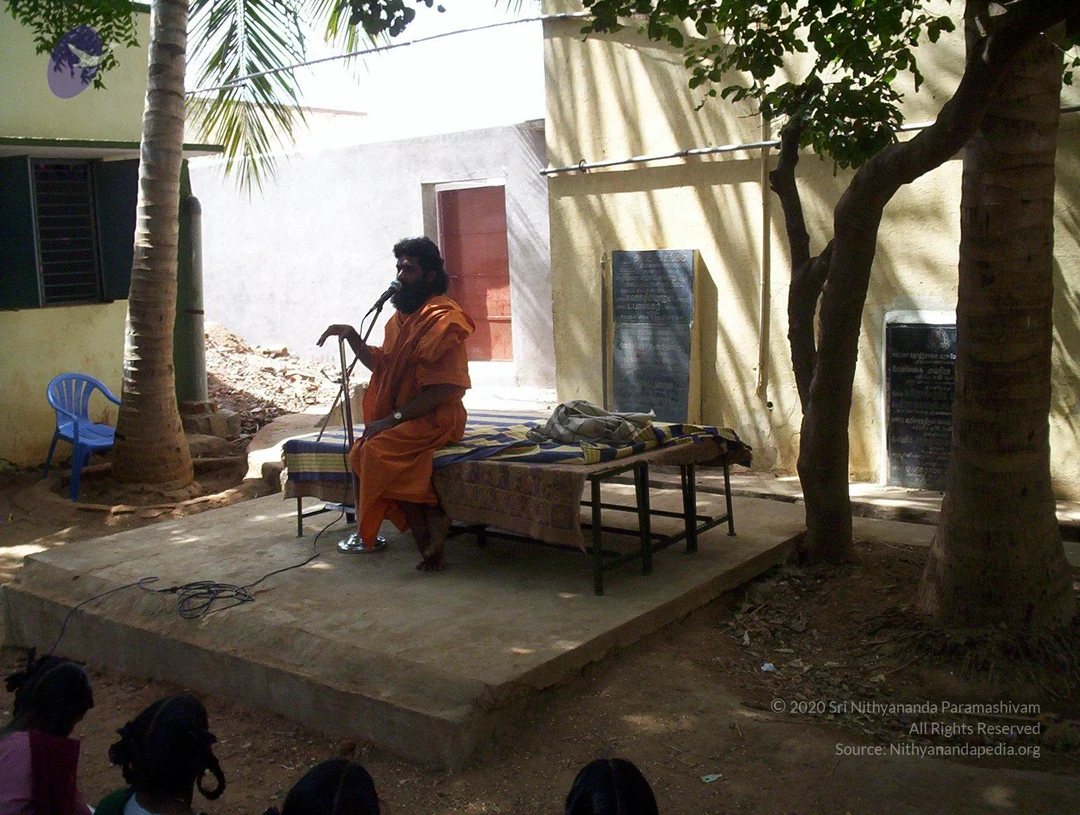
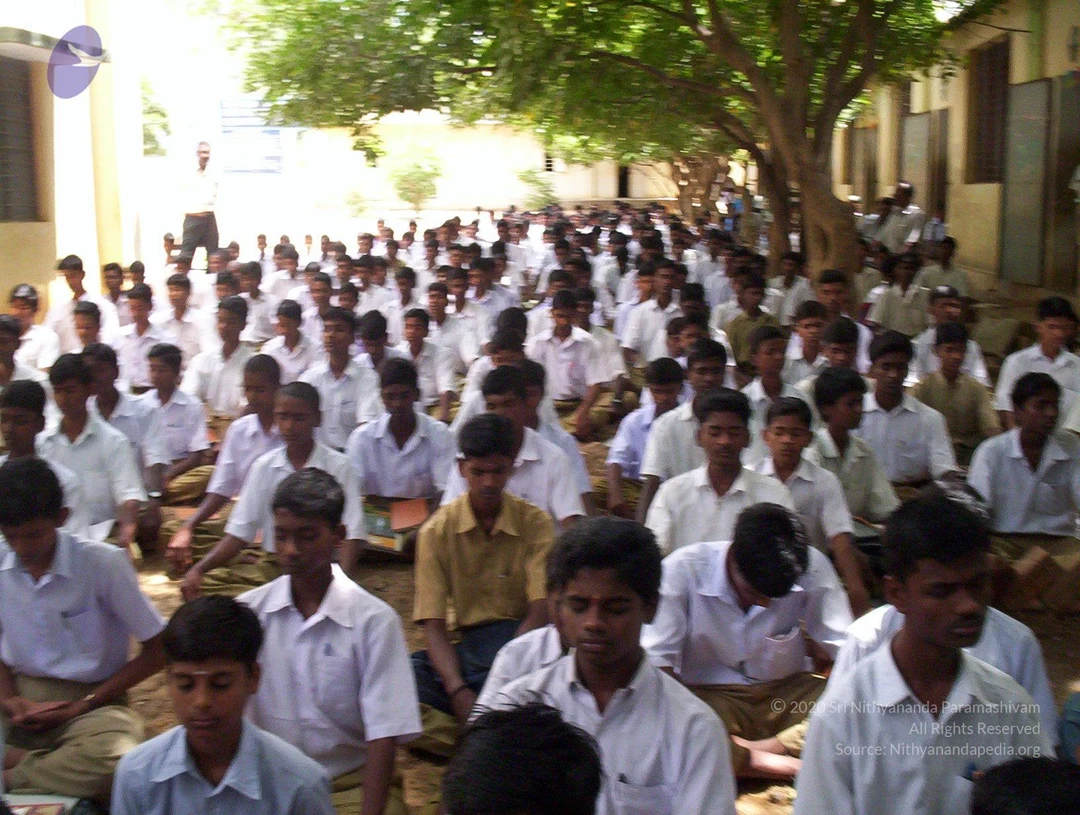
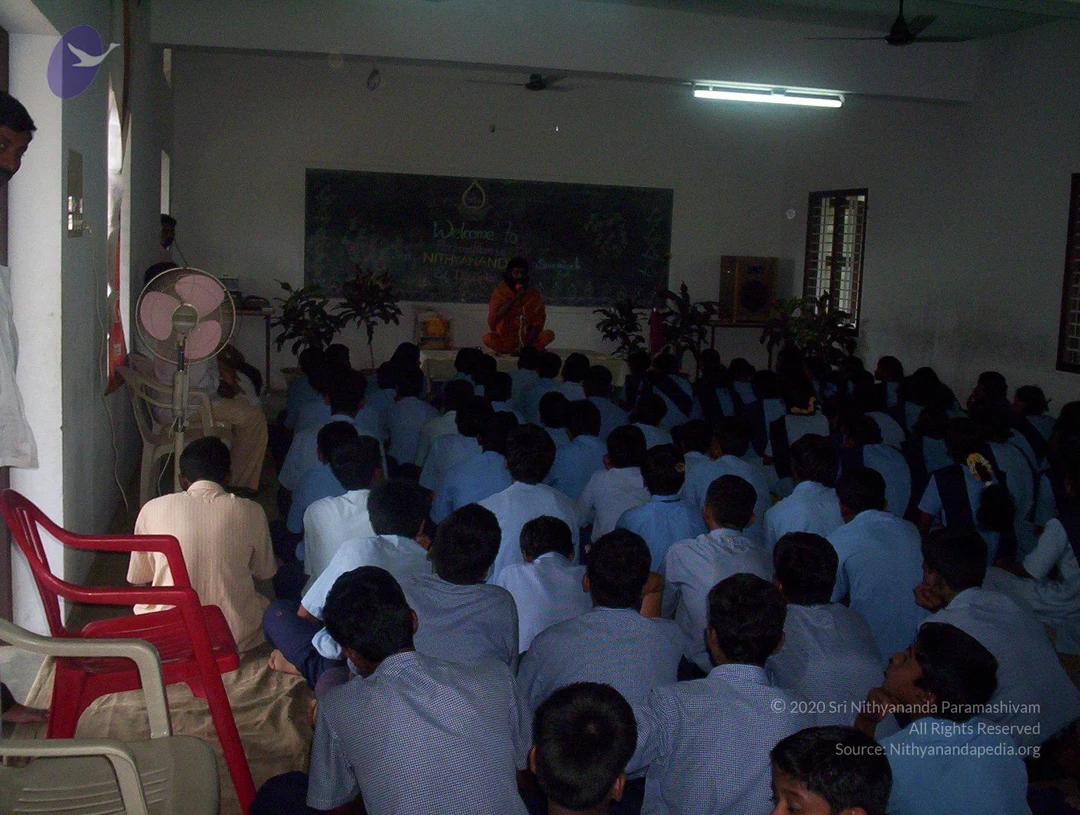
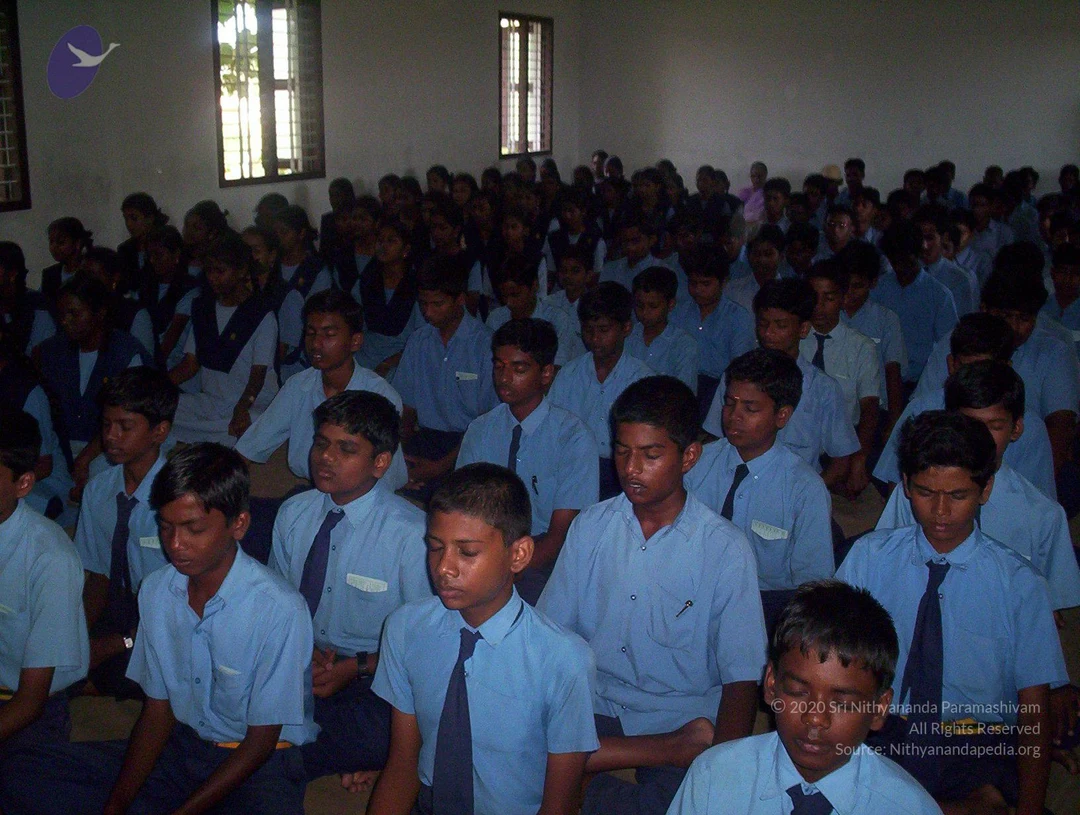
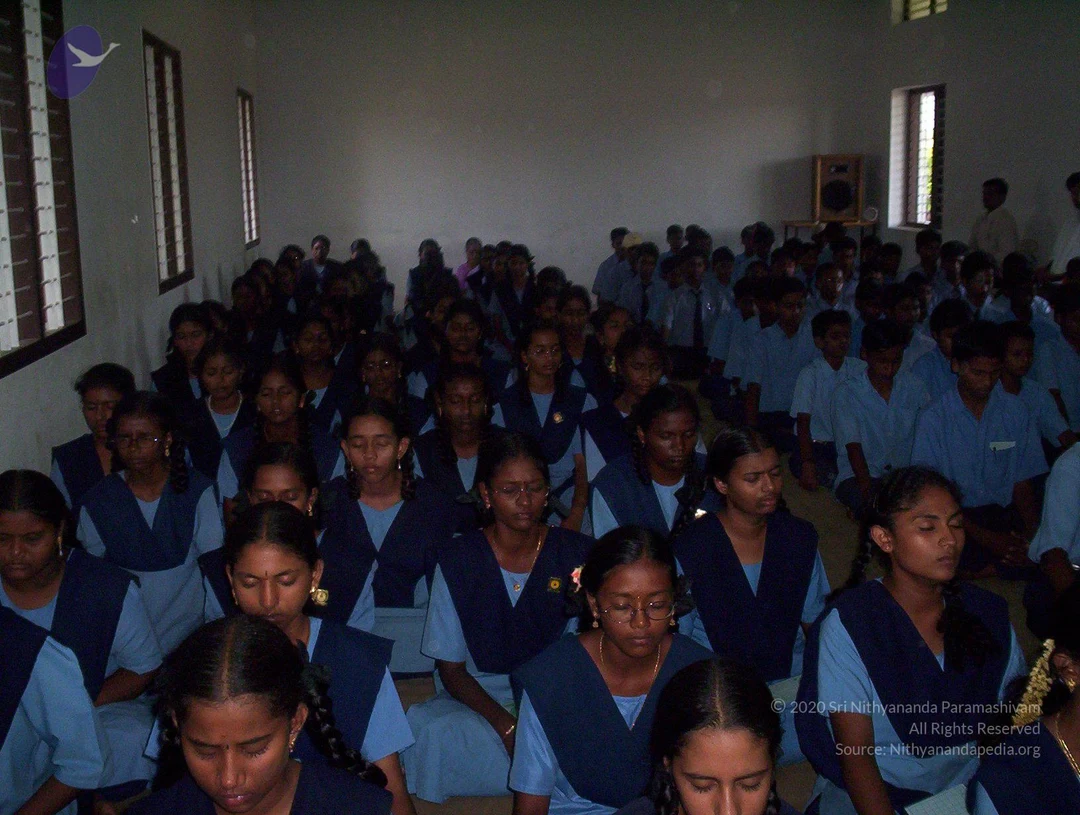
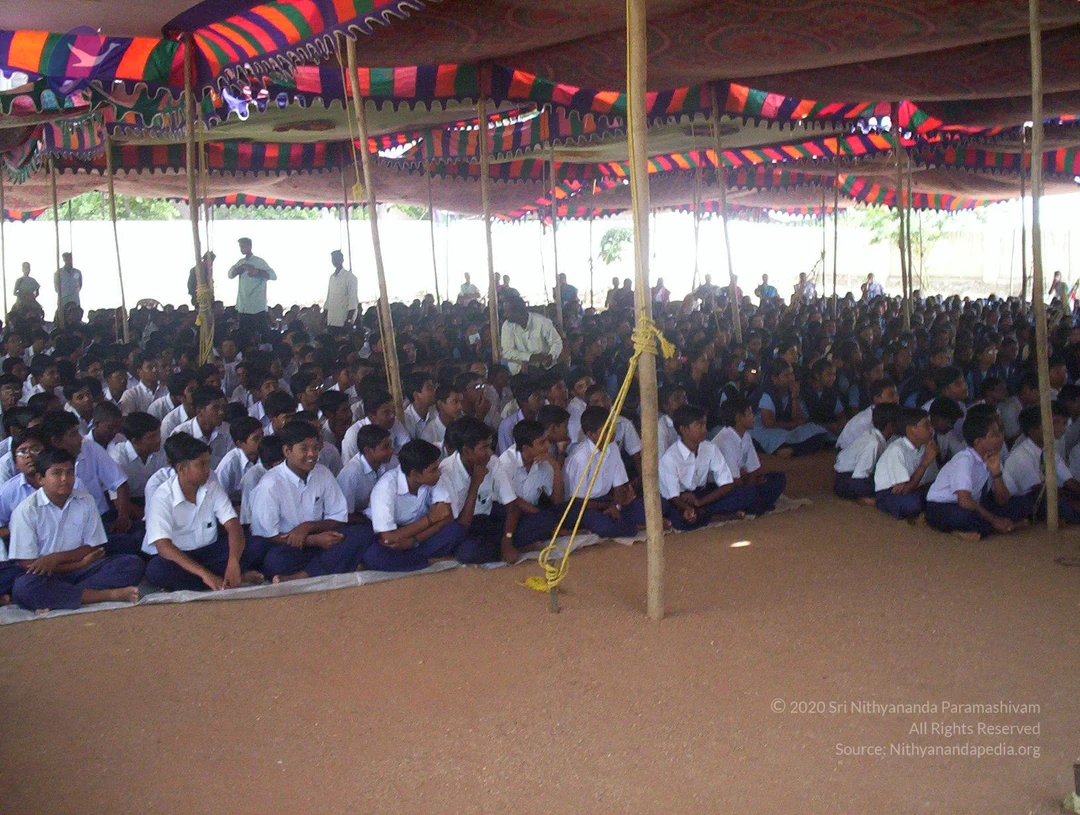
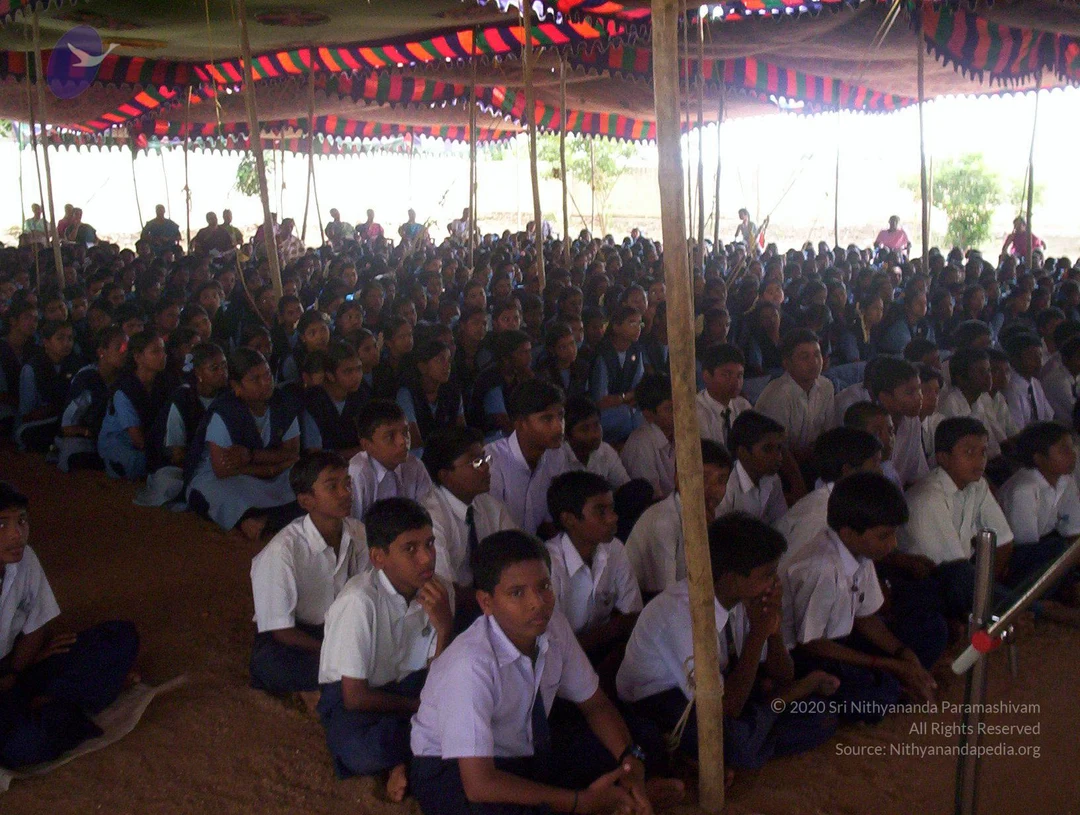
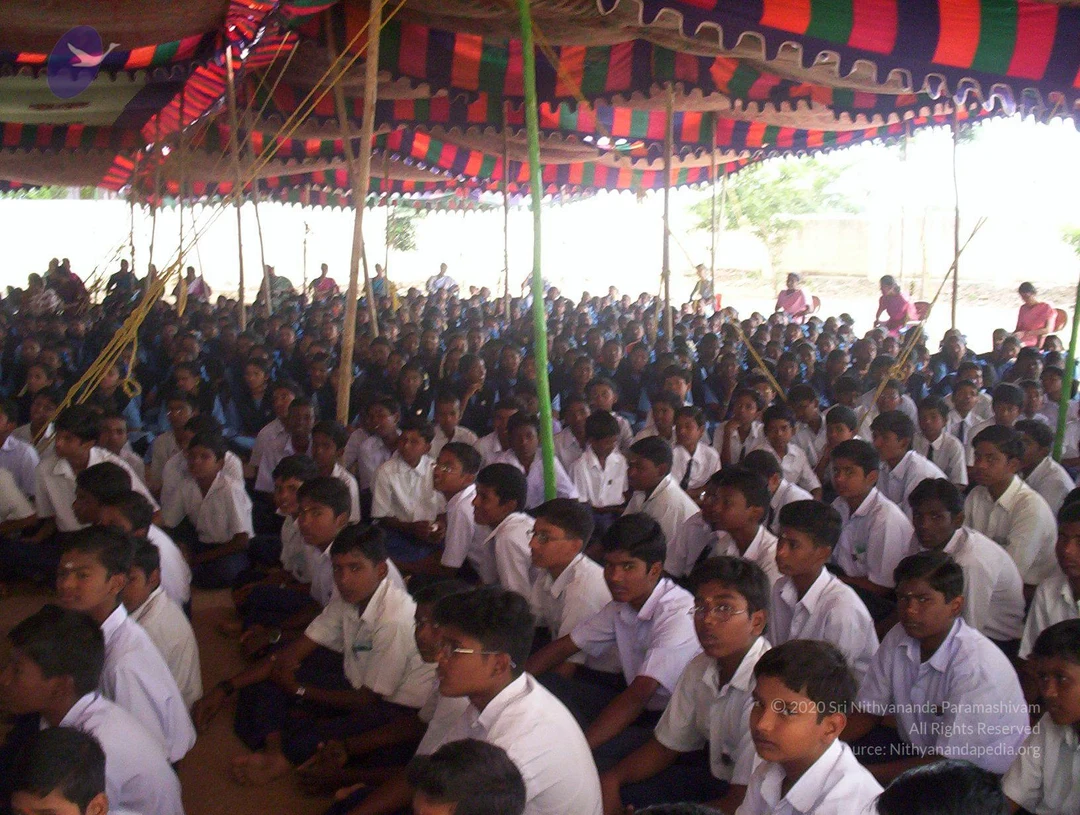
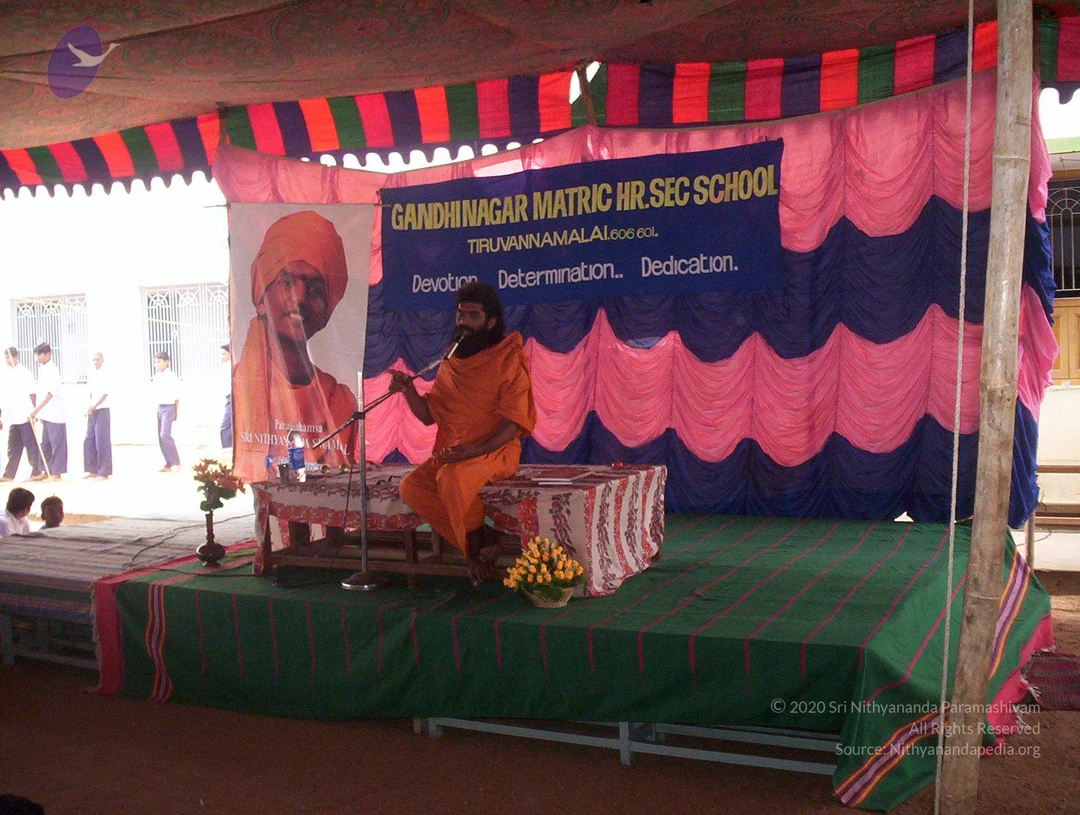
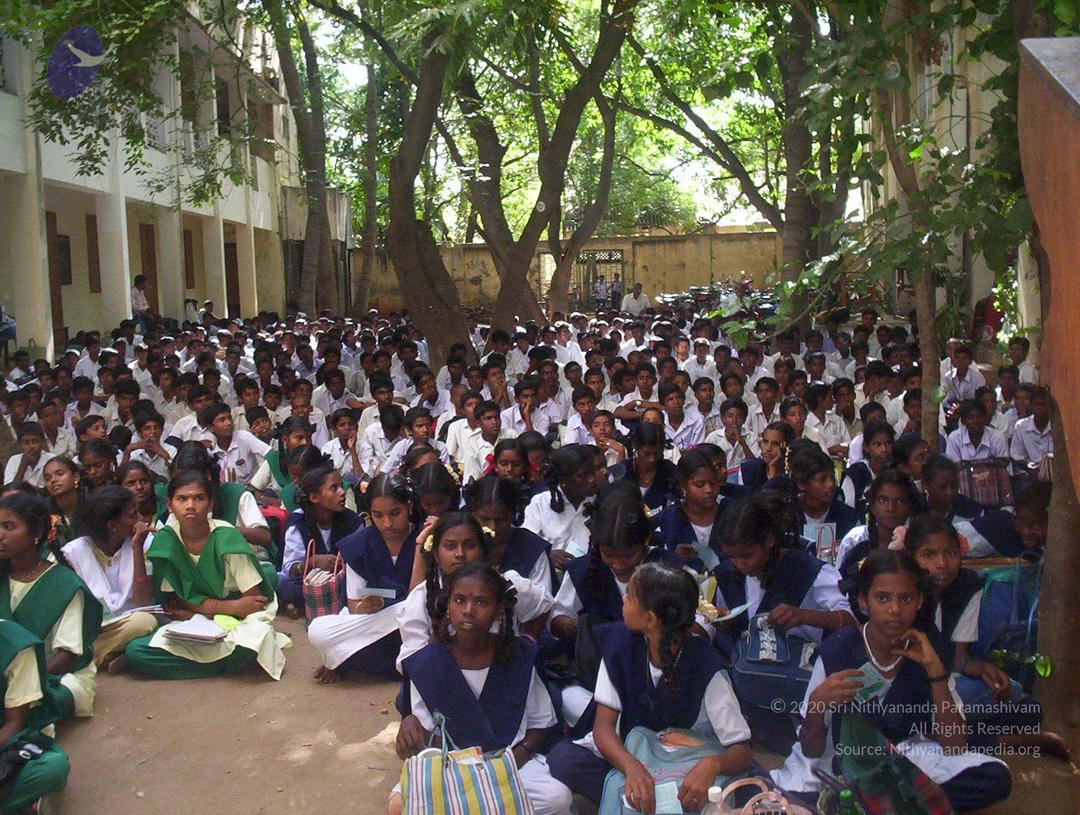
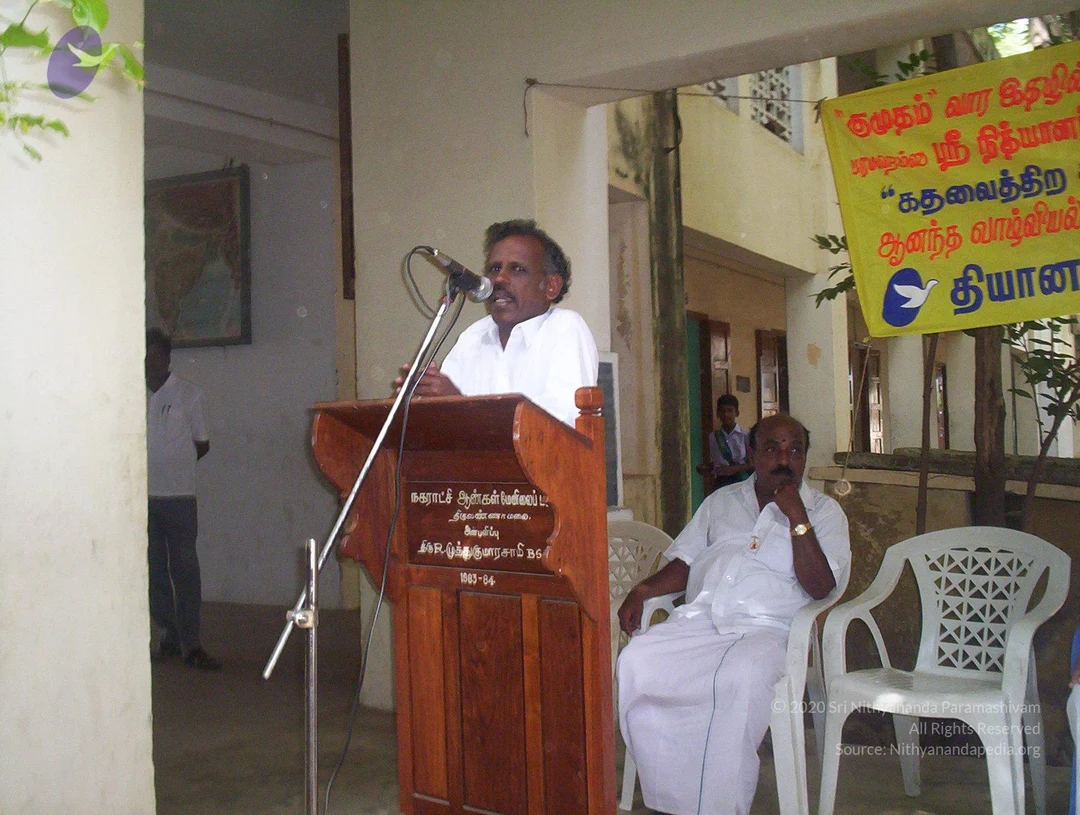
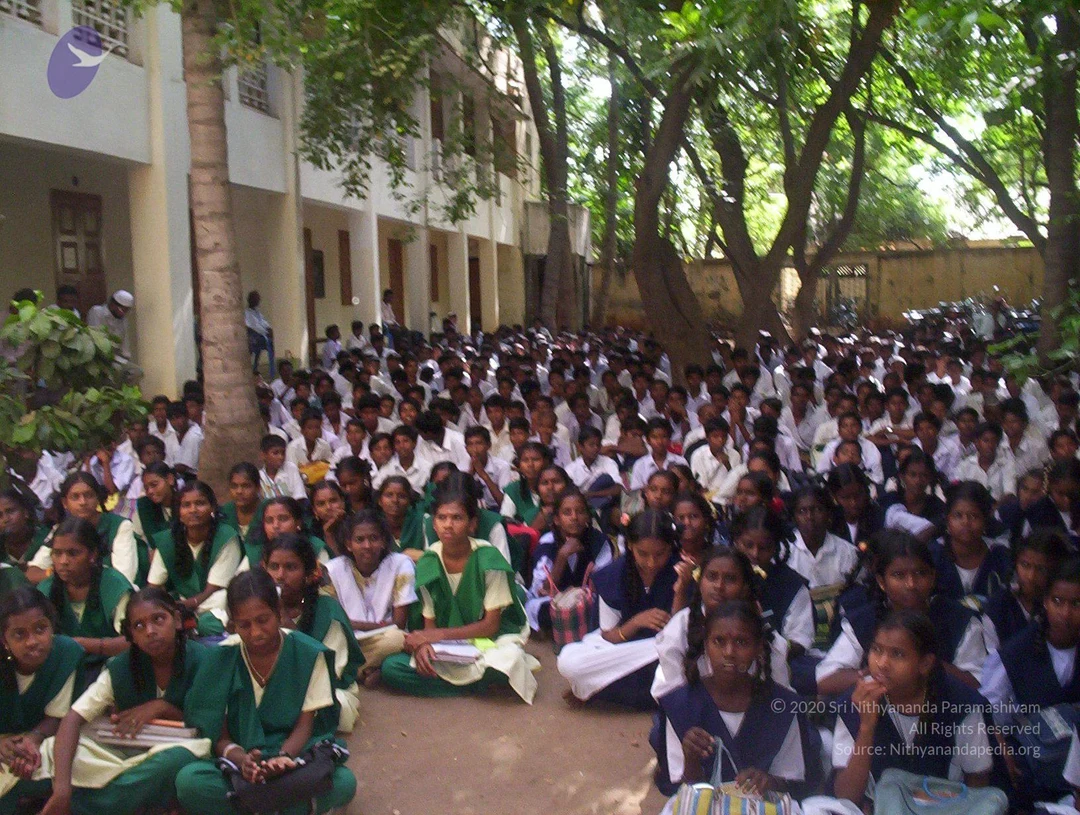
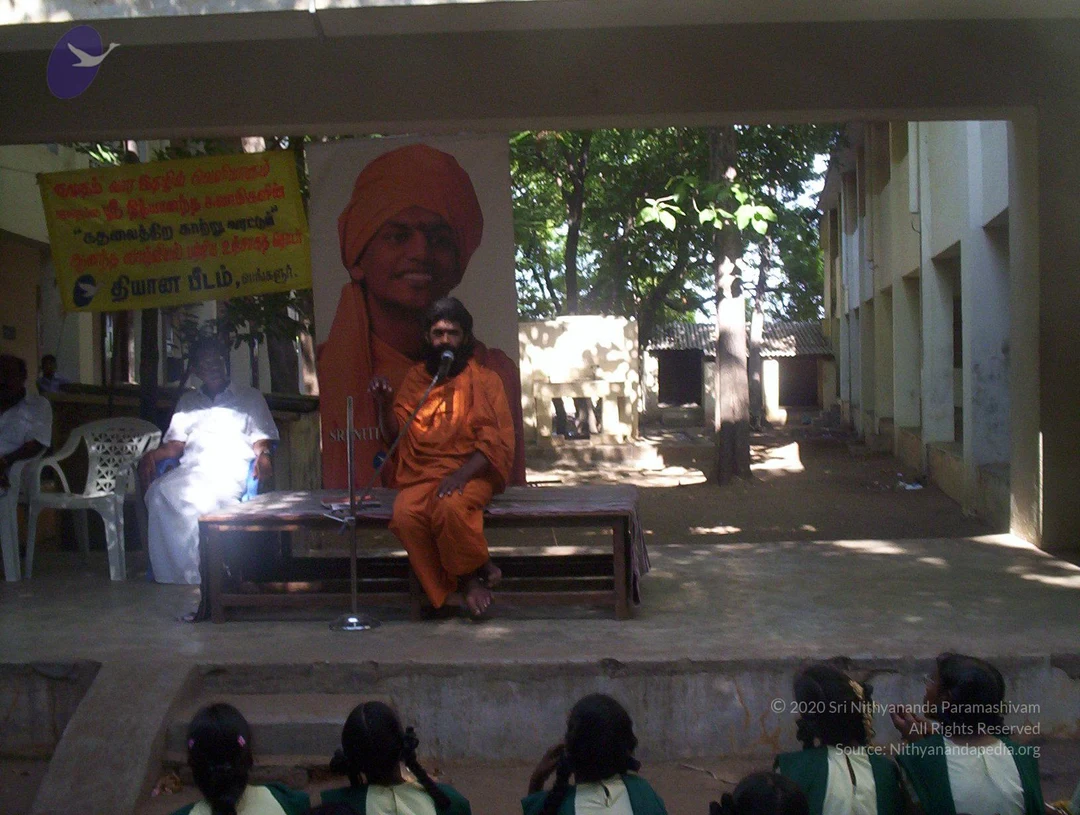
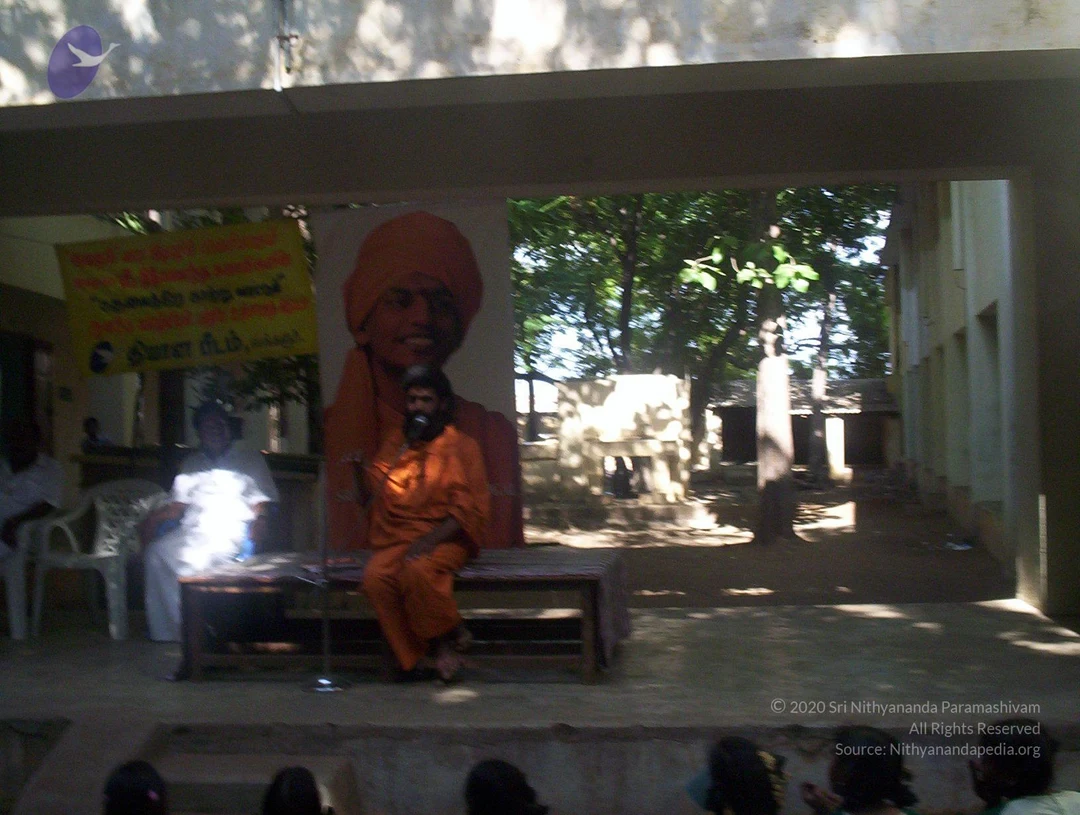
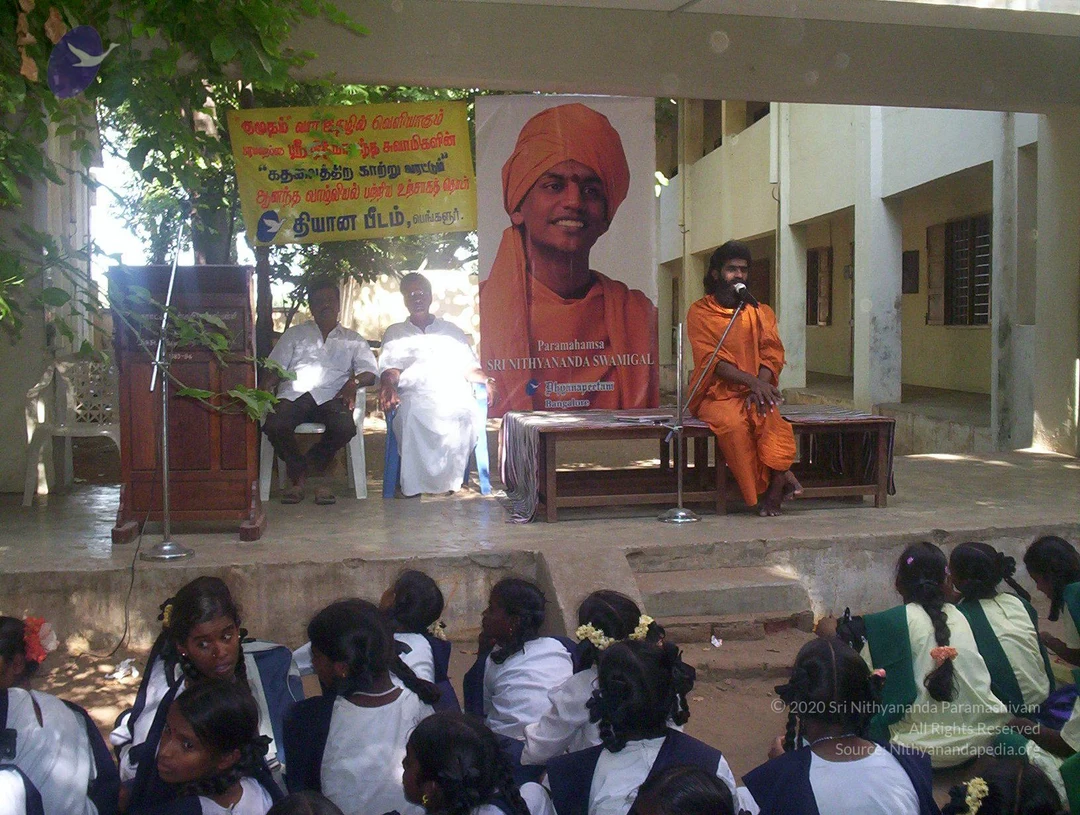
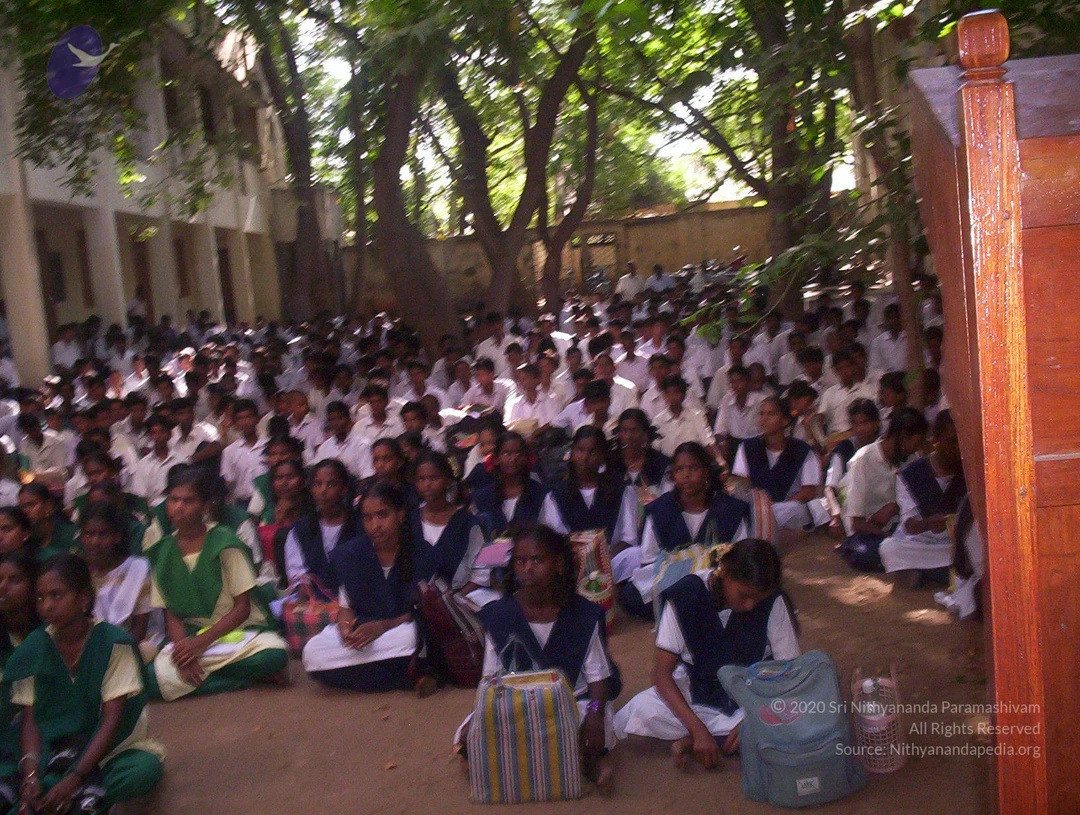
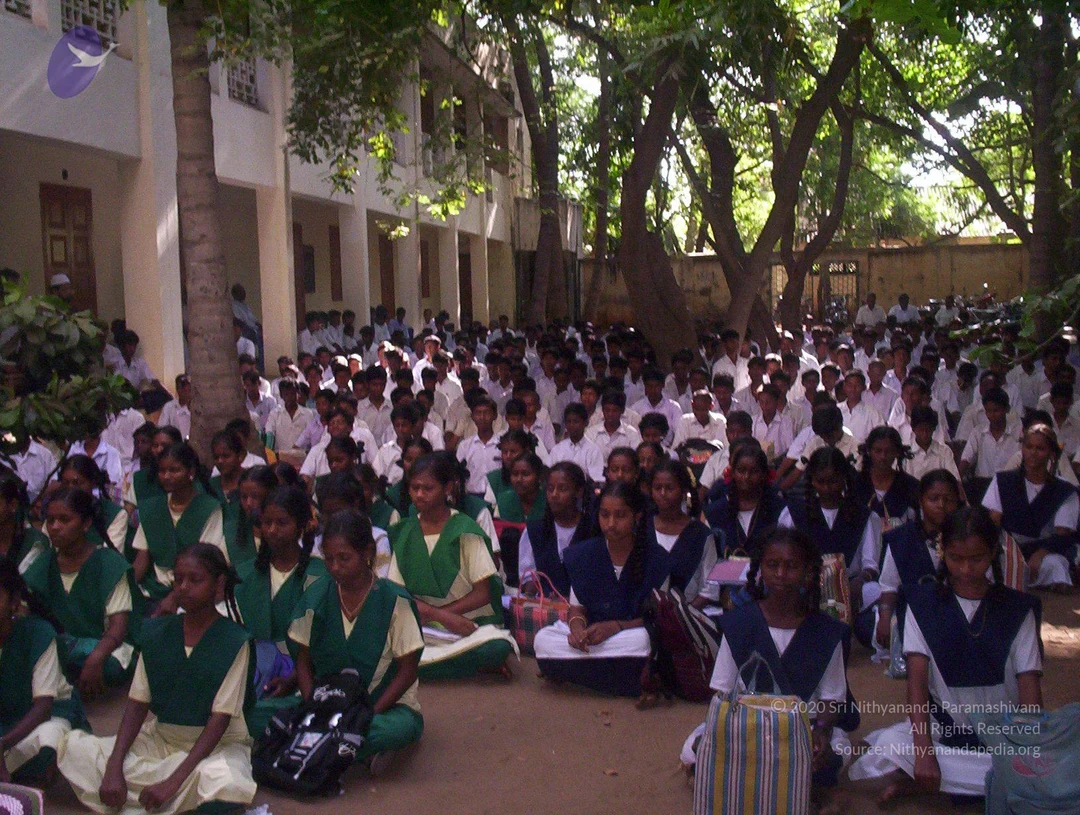
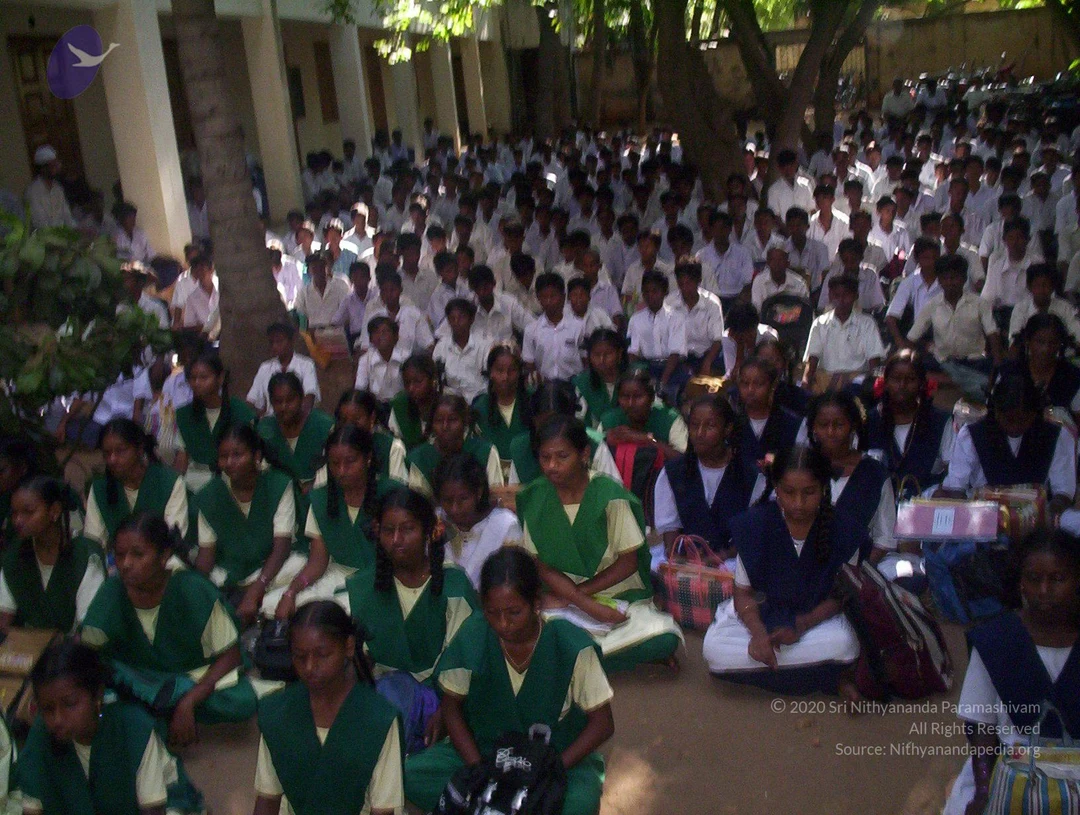
Photograph inside a large open tent with red, green and orange bunting strung along the canvas ceiling and tall wooden poles. A crowd of many people sits cross-legged on the bare earth floor, mostly in white shirts and dark trousers or white outfits. At the front, a white wooden lectern stands on a white base beside a microphone stand, with a green draped table on the right. Several figures stand near the front in orange or saffron robes and white, one in orange holding something, and another in pink. Printed booklets with green and pink covers lie on a white sheet in the foreground, and a rope runs along the left side of the frame.A large group of schoolboys sits cross-legged on the ground under a shady tree in an open courtyard, many with eyes closed in meditation. Most wear white short-sleeved shirts and khaki or brown trousers, while a few wear yellow-brown shirts. One boy in the foreground has a red tilak on his forehead. A lone adult in a light shirt stands at the far back near the building, apparently overseeing the session. Yellow school buildings and a leafy tree frame the scene.A bearded man in an orange-saffron robe sits cross-legged on a low wooden bench with a blue and yellow checked cloth on a raised concrete platform in an open courtyard, speaking into a microphone on a stand. Palm trees and a leafy tree shade the yellow wall behind him, and two black memorial plaques with white lettering hang on the wall. Several children with braided hair sit on the ground in the foreground facing him, and a blue plastic chair stands at the left edge. The scene looks like an outdoor talk or satsang.

August 26 2004

Original wiki page
Contents

Title:

Supreme Pontiff of Hinduism HDH Bhagavan Nithyananda Paramashivam

Description:

HDH started traveling around the world when He was 25 years of age in 2003 with the clear vision of establishing Kailasa, the enlightened civilization and greatest Hindu nation. In 2004, He undertook His second world tour, covering three countries - Malaysia, USA and South America. He visited 10 cities in the USA, conducting meditation programs, delivering free satsangs, and initiating the people with the Hindu Truths. In just His second world tour, He ordained 50 acharyas (teachers) who would carry forth the tenets of Hinduism to humanity at large.

During this world tour in 2004, He delivered this talk titled Guilt - the Sure Killer of Intelligence. HDH reveals the truths about Guilt. He says Guilt makes your morality skin deep, maturity happens when we act from understandings - not from Dos and Donts. Dos and Donts never lead you to enlightenment, only total bliss can get you there. He touches on 3 types of guilt - Guilt by immediate family, Guilt by social laws and Guilt you create by yourself. Guilt is the worst attitude which never lets you move on in life. What is the worst is when you hate some action you do because of the guilt, you start hating your body too. In the end, HDH also answers questions - Is it recommended to do things only at auspicious times? What is divine grace in spirituality? How when you fall into the present and penetrate to penetrate the Time Shaft? How can you make Time your Slave?

Hindu Scriptures, say "Pragnyana Brahma" Intelligence is Existence. Dreams are is housekeeping for life. Whole life is nothing but housekeeping in dreams you are doing because you enjoy it. The minute you drop guilt, and other lower emotions, you will express enlightenment.

Video link

Link to Audio

Guilt The Sure Killer Of Intelligence – Satsang Delivered by HDH Bhagavan Nithyananda Paramashivam on 26/Aug/2004

Photos Of The Day:

Bidadi-Ashram-Glimpses-2004
01-ACHARYA-CLASS

02-HOUSE-VISIT

Photos from this day

View all 67 photos

Bidadi-Ashram-Glimpses-2004
15 photosSource gallery
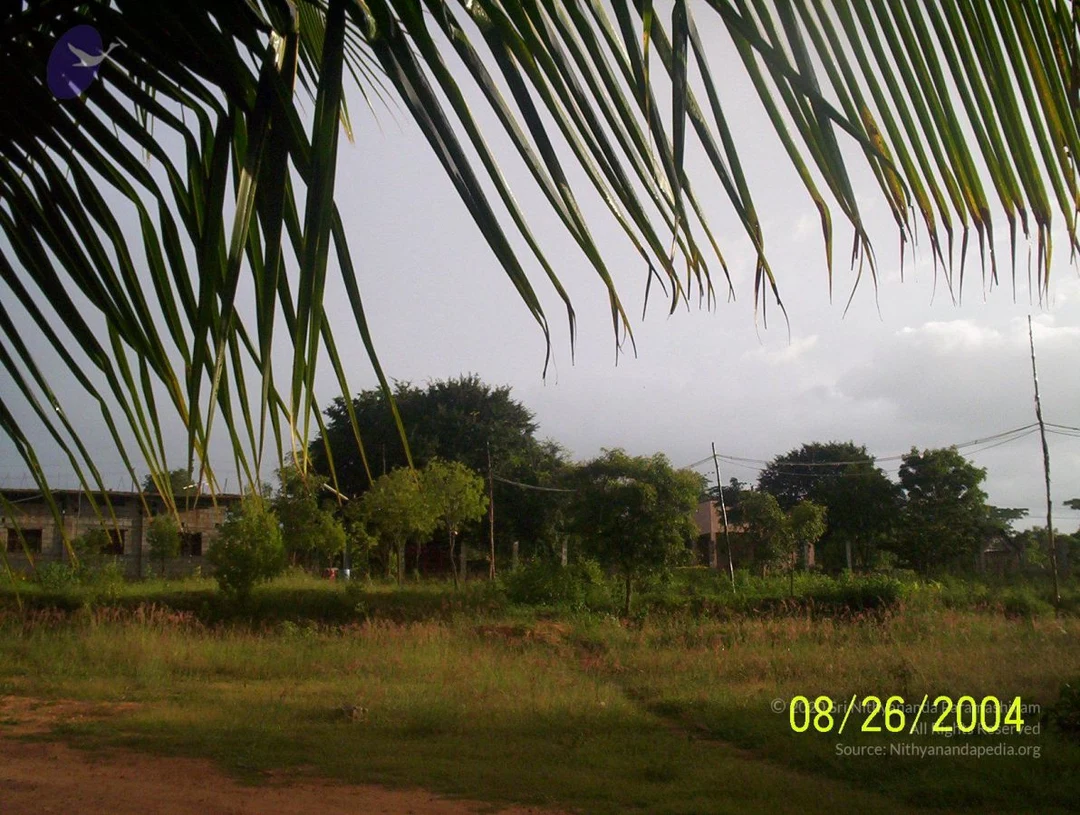
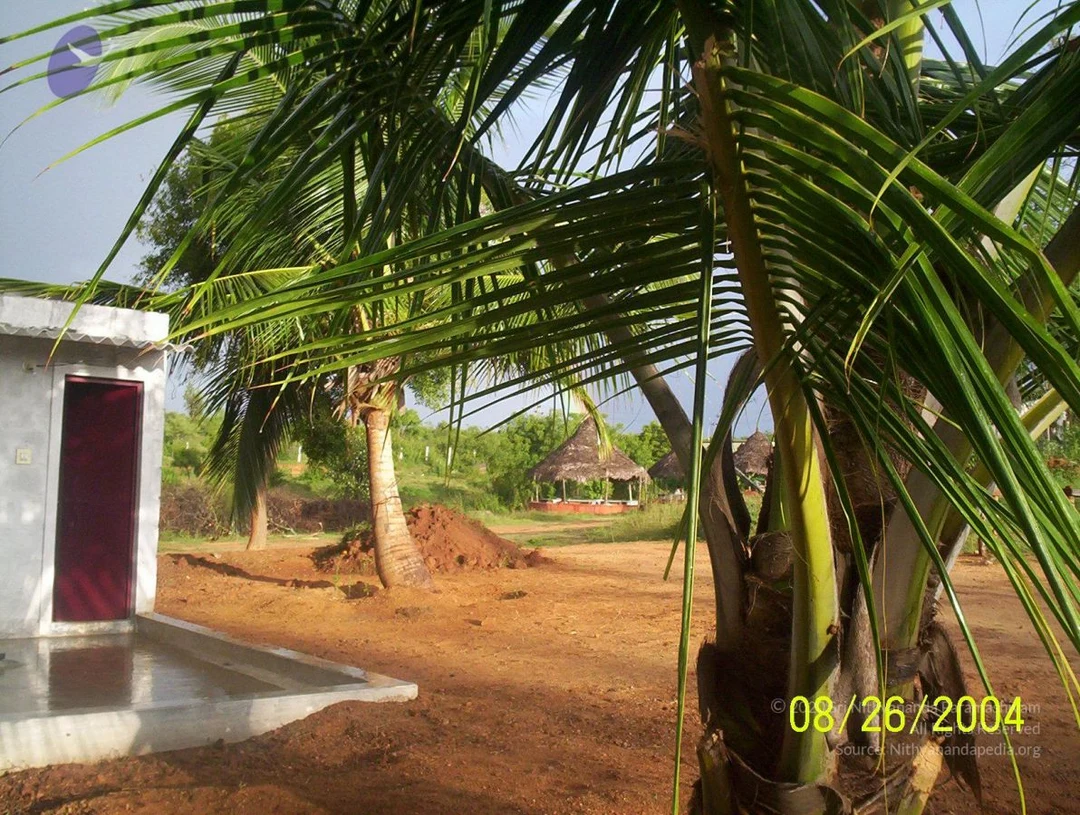
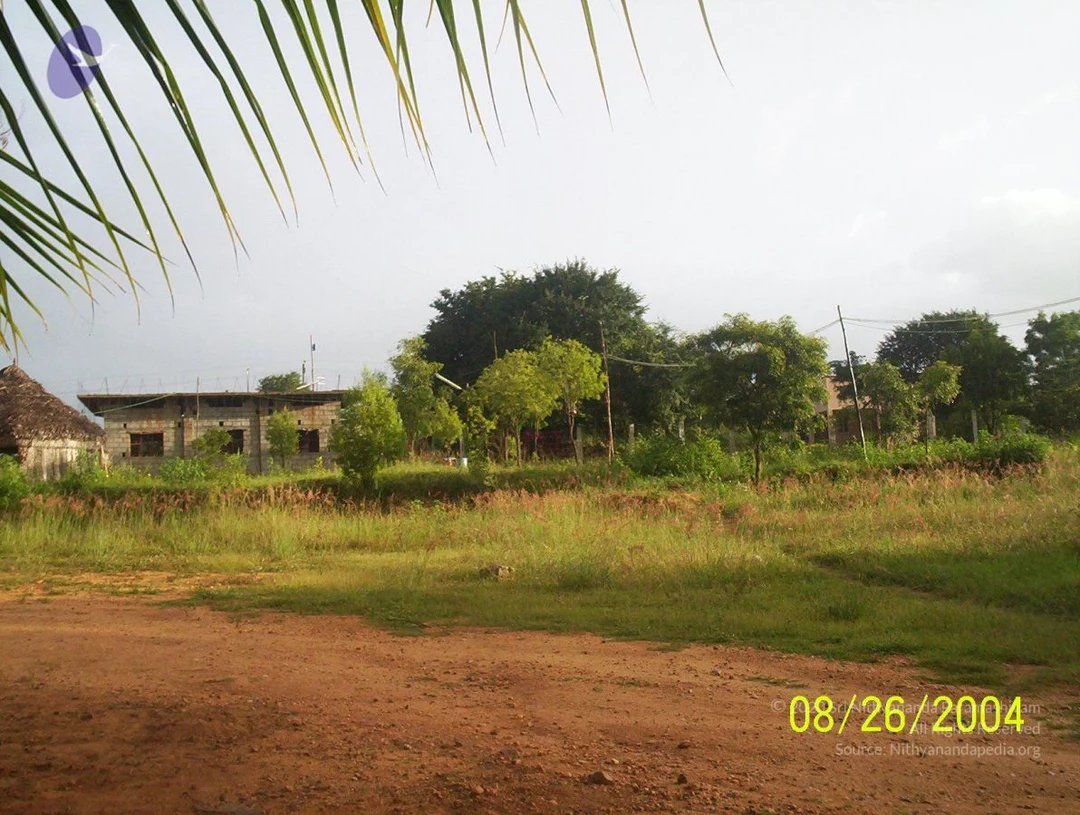
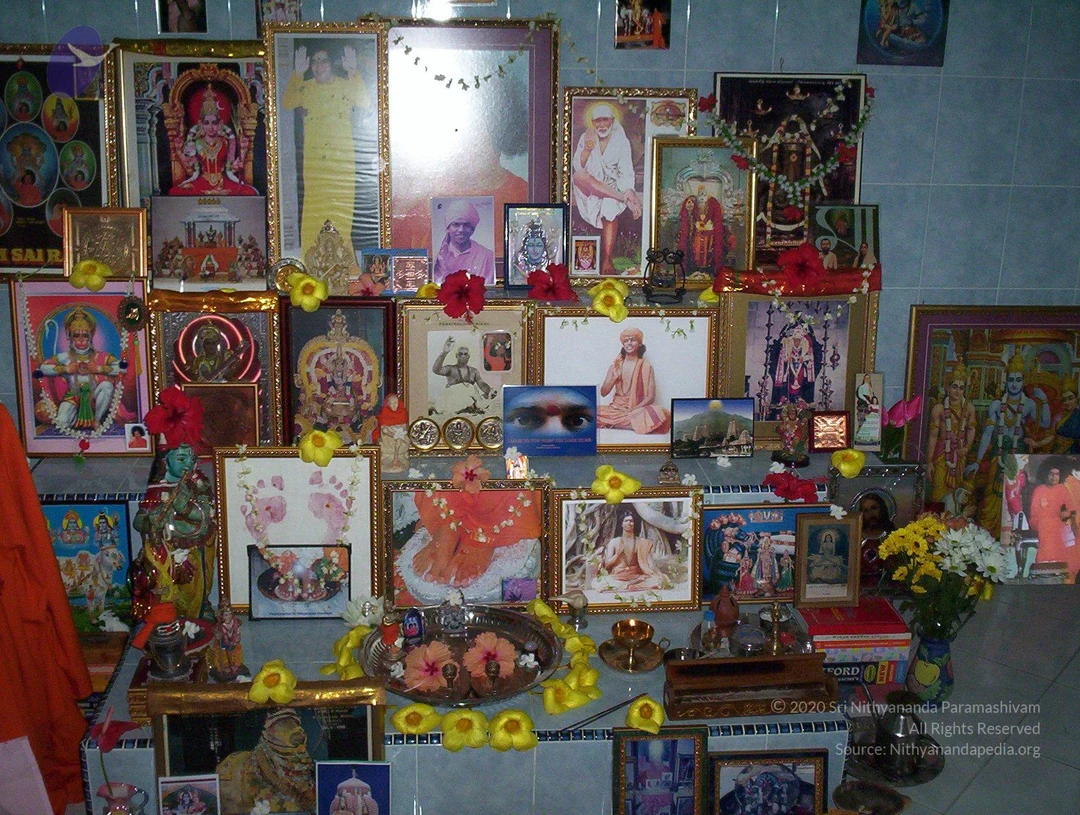
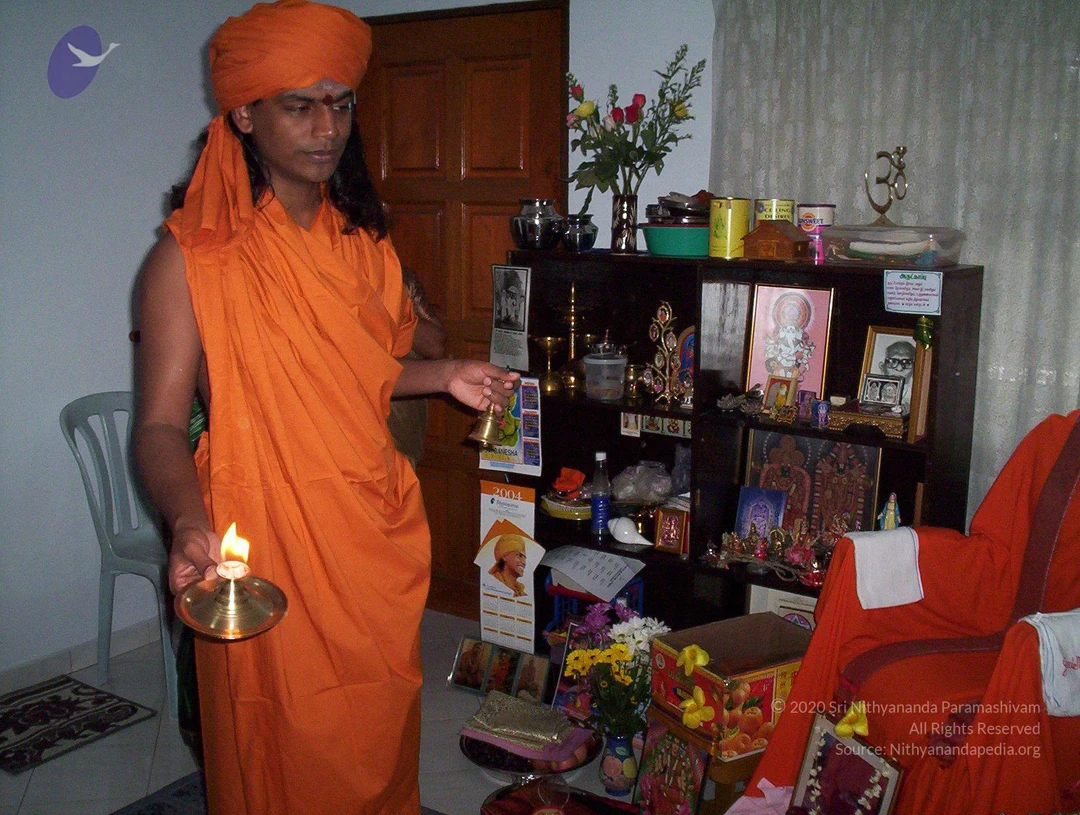
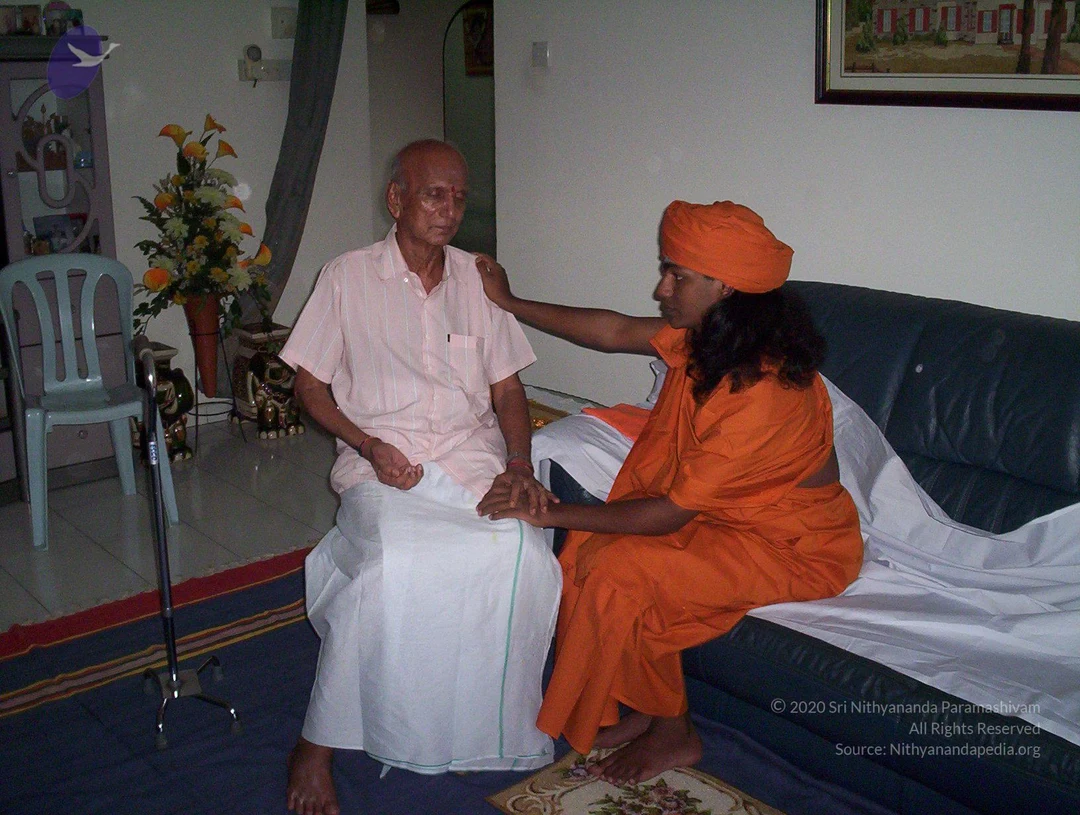
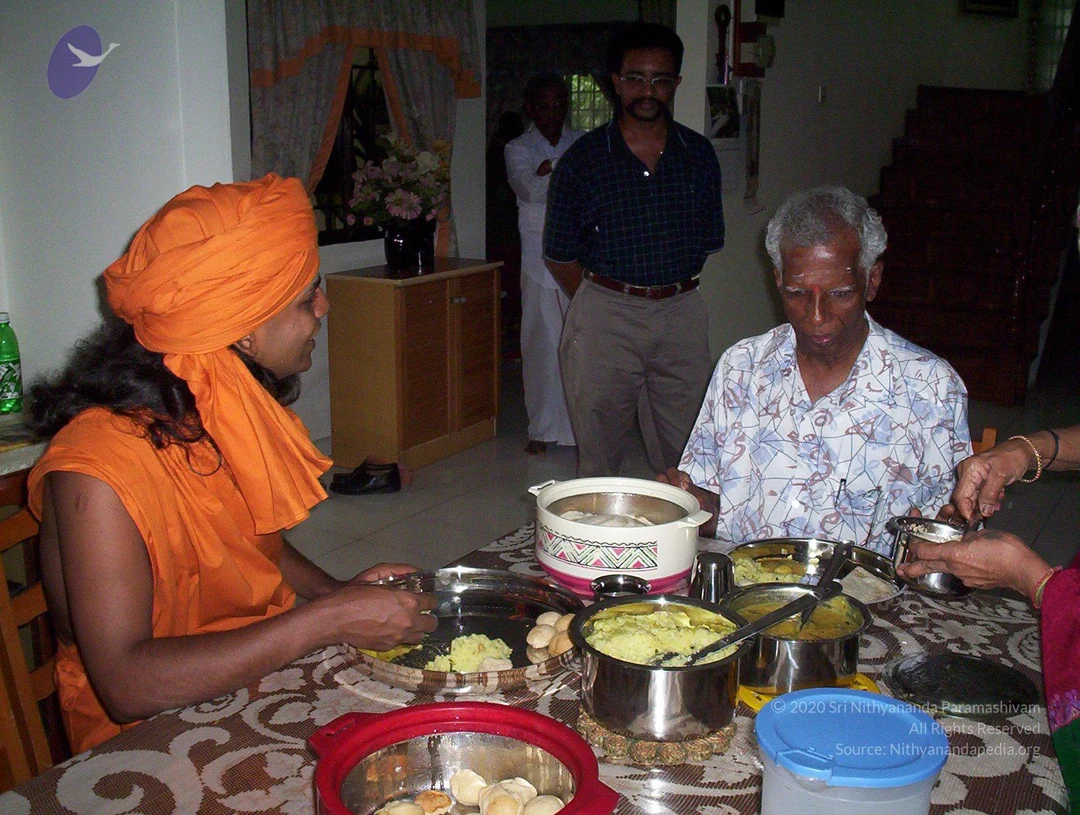
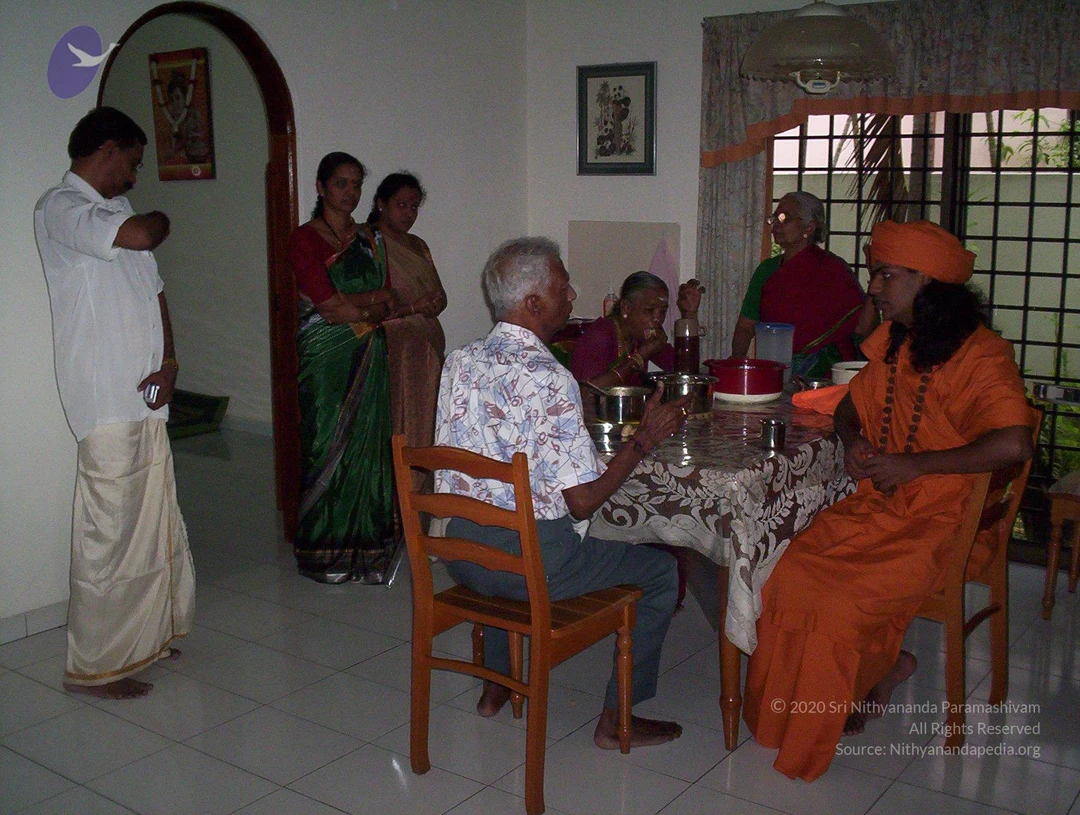
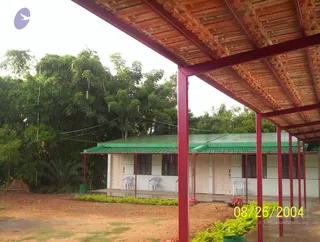
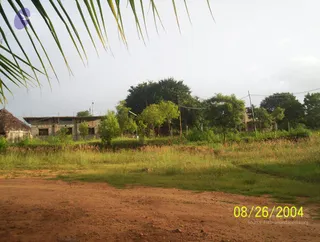
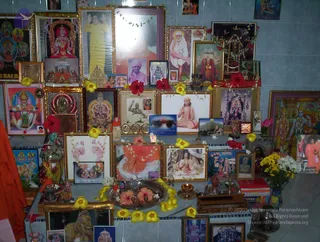
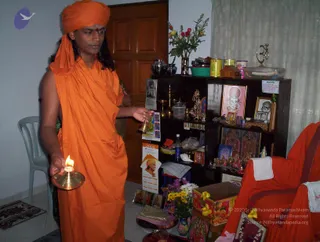
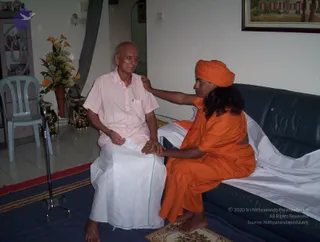
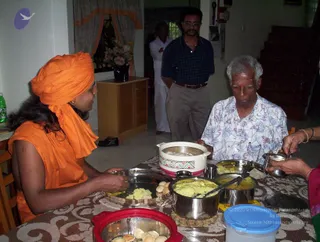
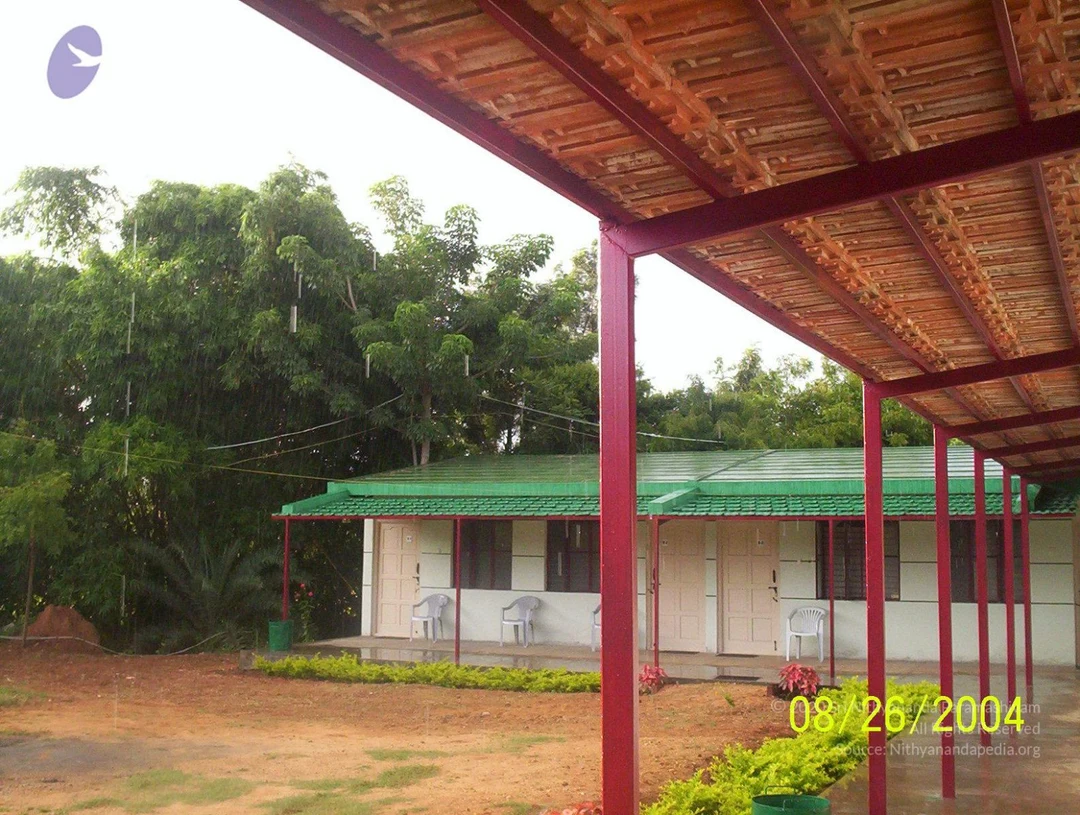
Outdoor photo of a single-storey white building with a green tiled roof and a long red-painted metal-pillared covered veranda with terracotta tile roofing. Four white plastic chairs sit on the veranda beside wooden doors and windows. Rain falls past dense green trees and a palm, with bare reddish earth and flowering shrubs in front. No people are visible.A photograph of an open grassy field under an overcast sky, framed by drooping green palm fronds in the foreground. Behind the field are low concrete buildings, scattered green trees and shrubs, and thin utility poles with overhead wires. A dirt path runs along the lower left. No people are visible in the scene.A photograph of an open dirt yard on a sunny day, with tall coconut palms leaning in from the right and a small white concrete block structure with a maroon door on the left. Mounds of red-brown earth lie in the yard, and thatched-roof huts with a reddish platform stand in the distance among green trees. No people are visible.A rural landscape photograph with a dirt path in the foreground and overgrown grass beyond it. A thatched hut sits at the left edge beside a partly built concrete-block structure with window openings under a grey sky. Several green trees, one large dark-leafed tree, and utility poles with wires stretch across the background. A palm frond hangs across the top left corner. No people are visible.A dim, empty covered corridor photographed at night with a dark red-painted wooden beam ceiling over a tiled roof. A single bare bulb glows near the ceiling on the right and another faint light further down. Pale grey walls line the right side with a row of doorways and red-framed windows, and a white plastic chair sits at the lower right edge. No people are visible.A dim, nighttime outdoor photograph of a courtyard edge with banana plants and tall grass in the dark. On the right, a concrete wall holds three metal water taps with a black hose running along the ledge, and a steel tray with green items sits on the counter beside a doorway. No people are visible.

01-ACHARYA-CLASS
45 photosSource gallery
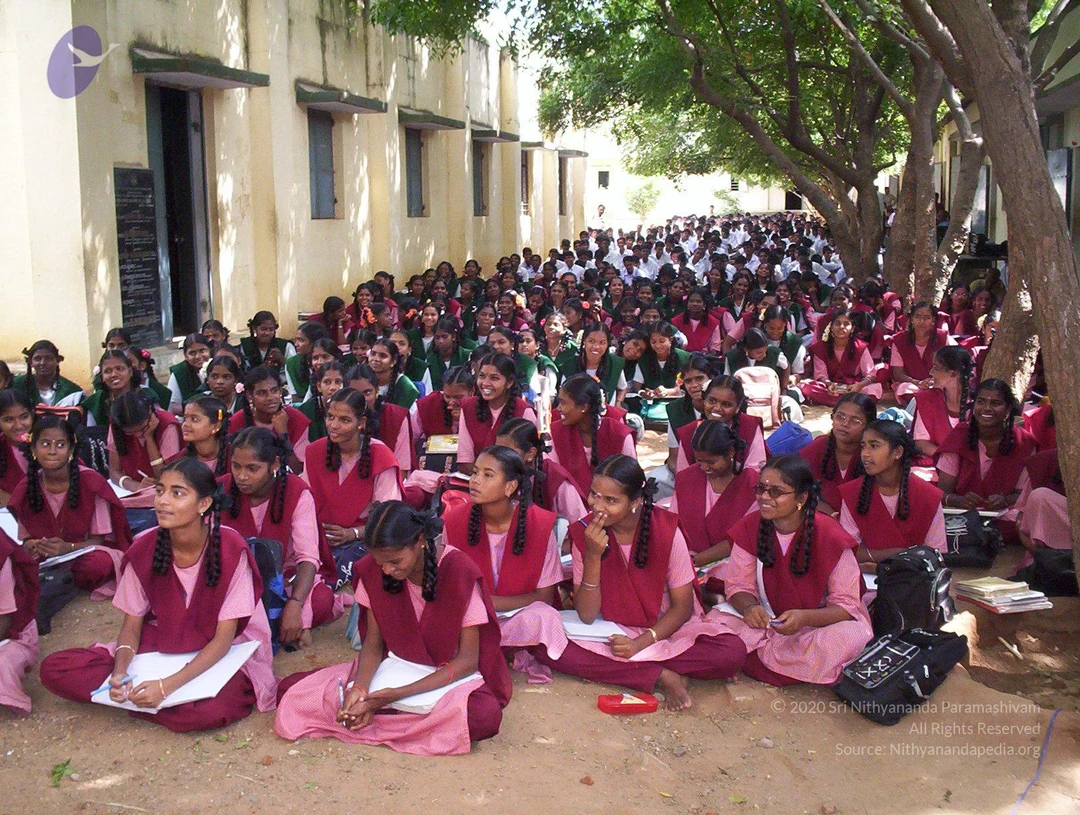
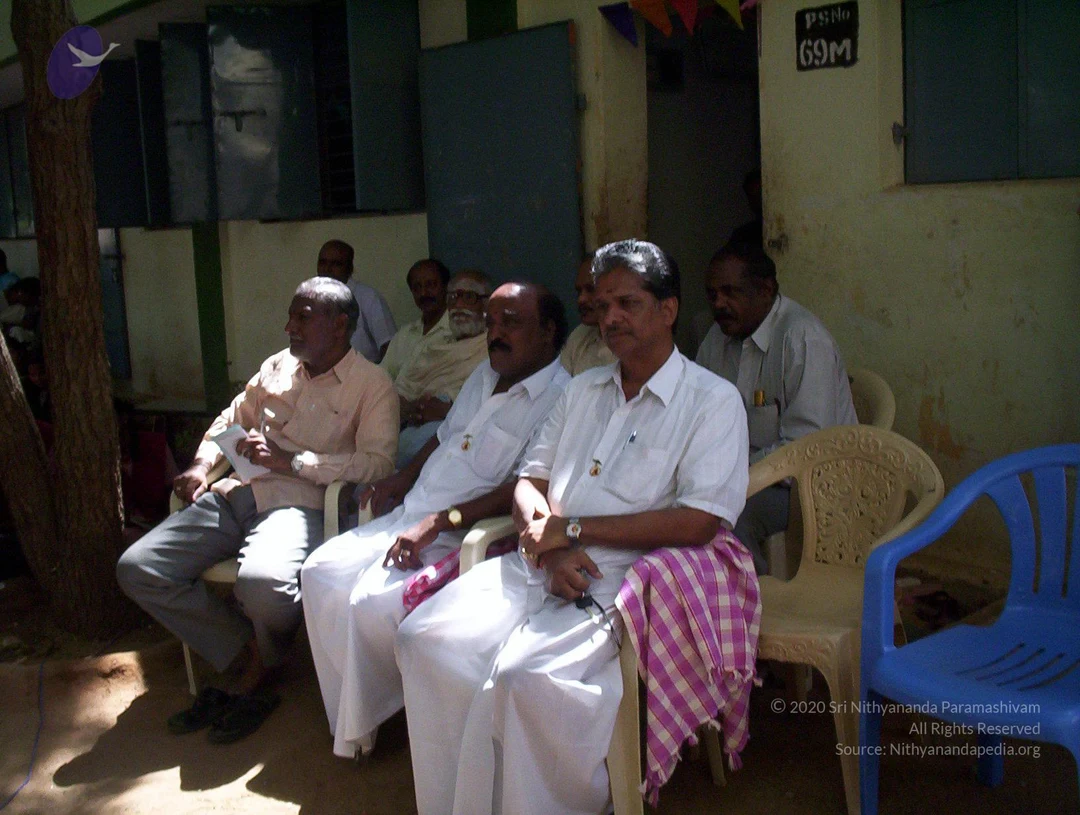
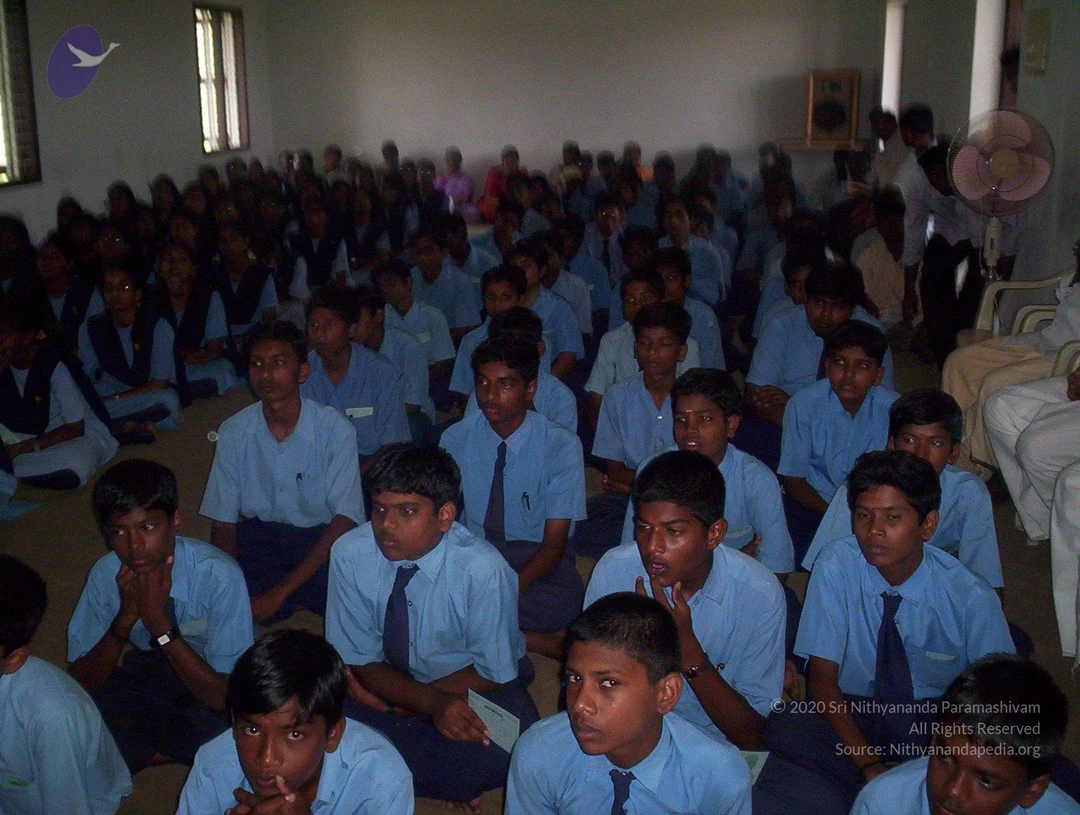
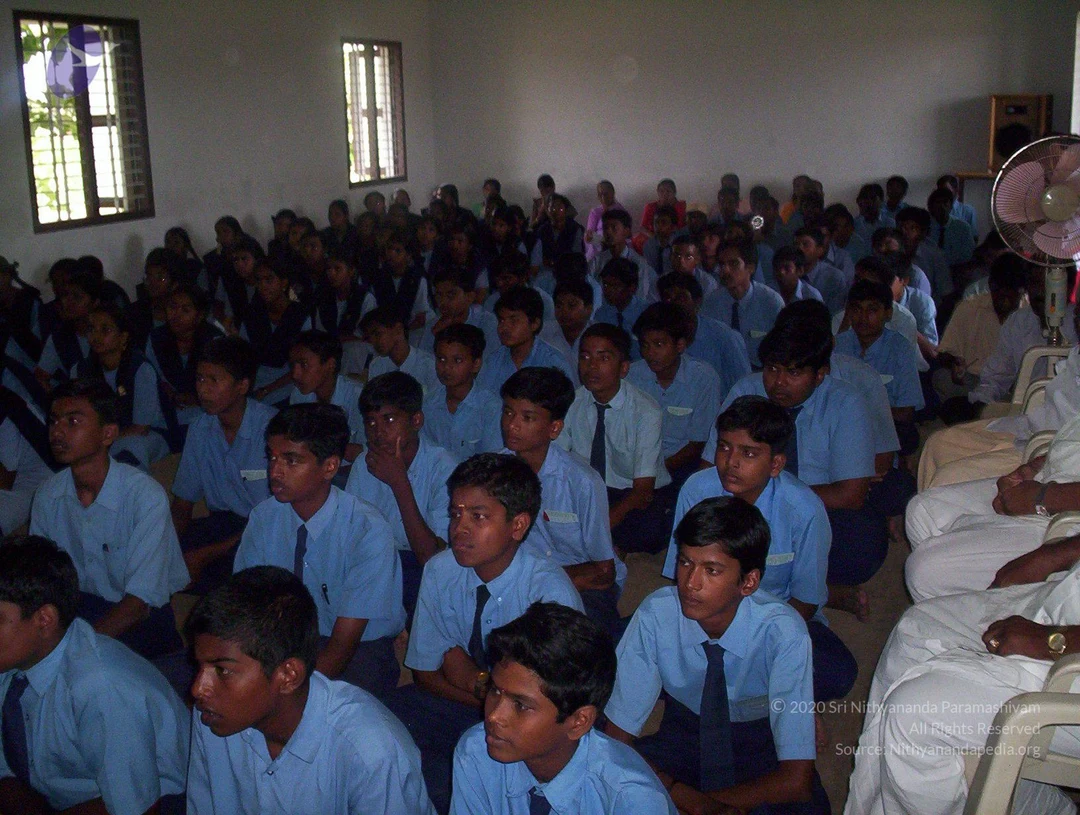
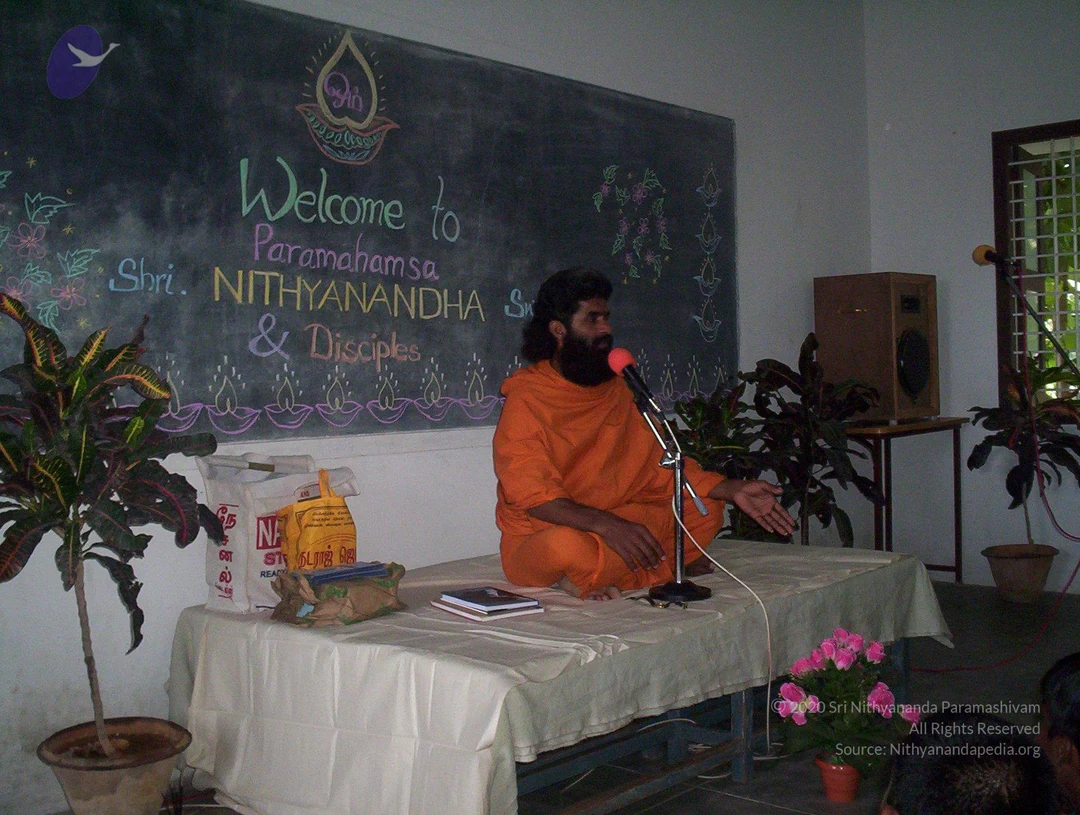
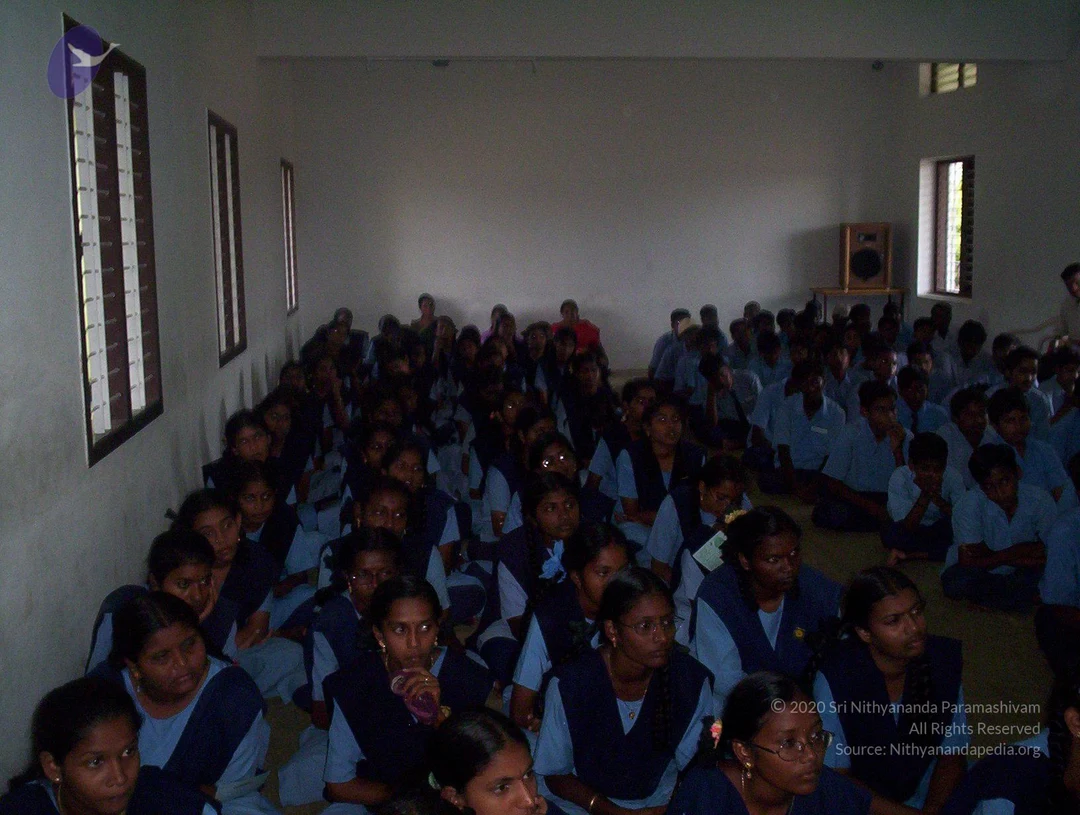
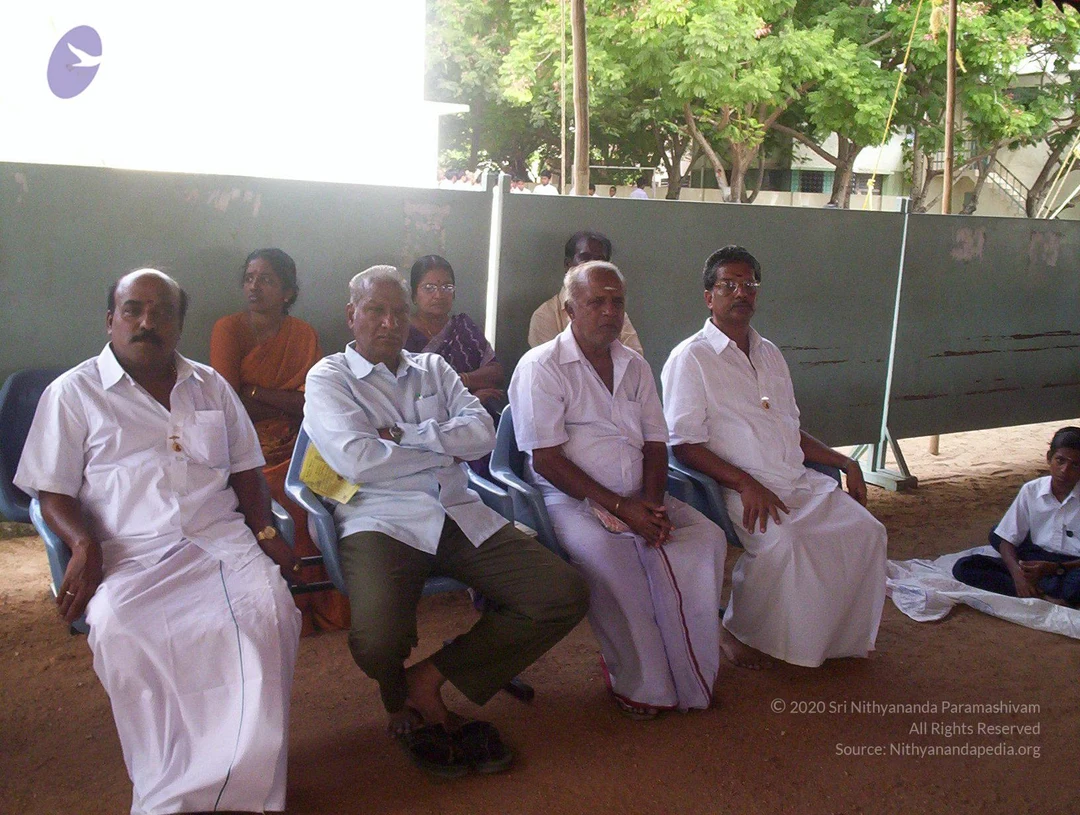
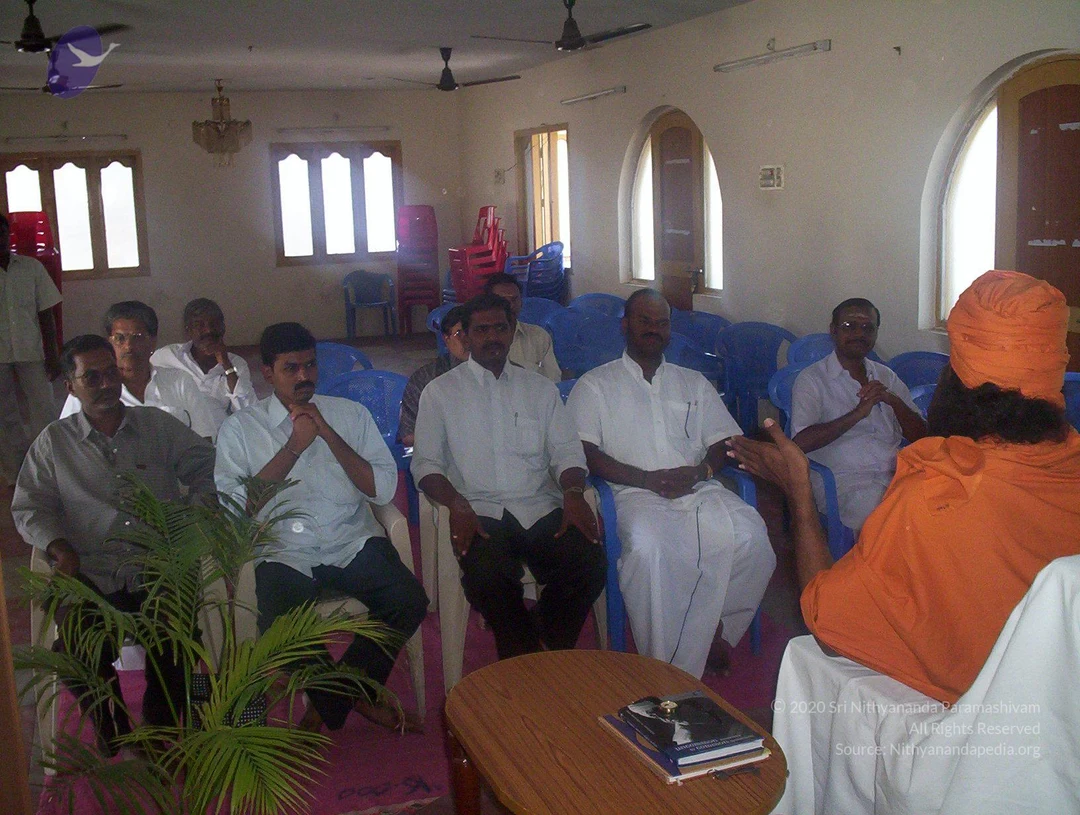
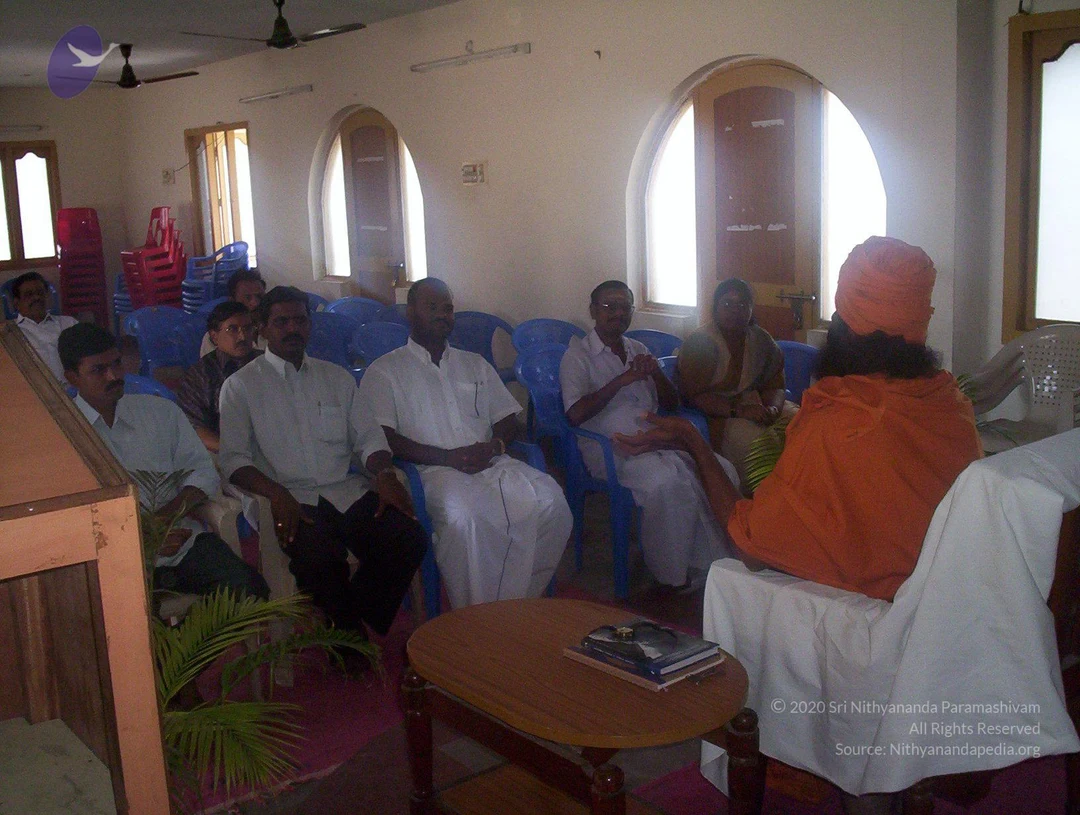
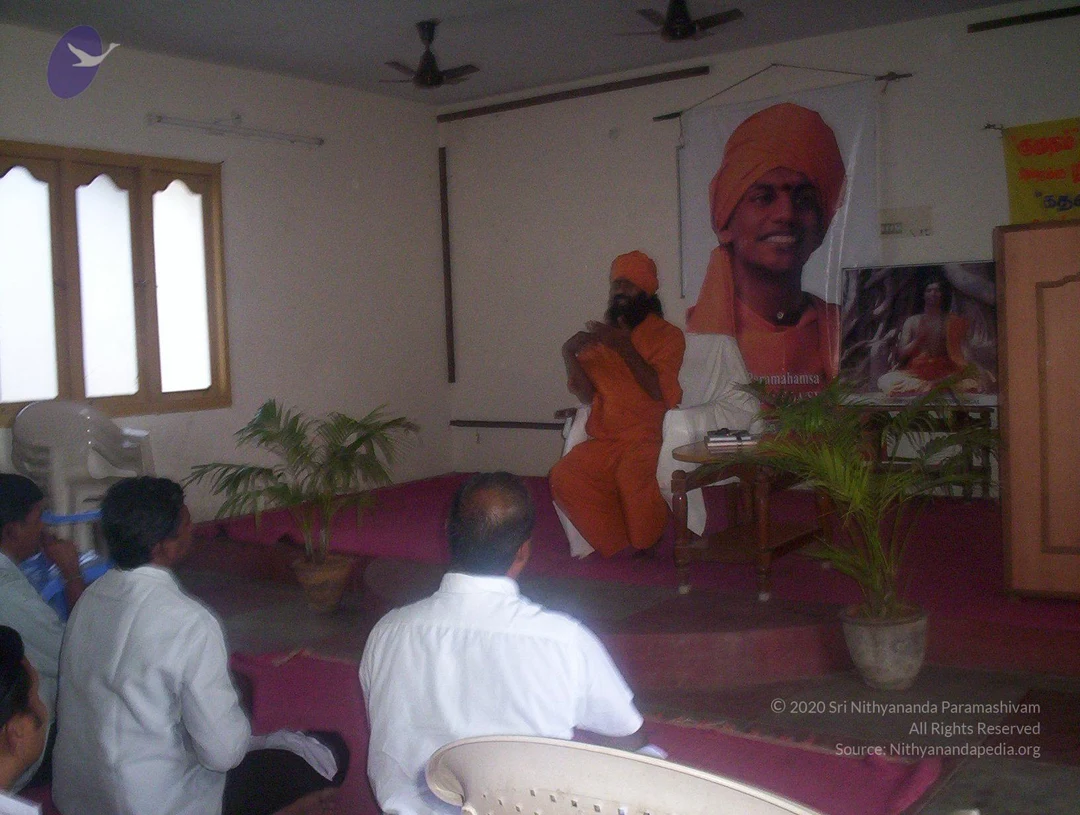
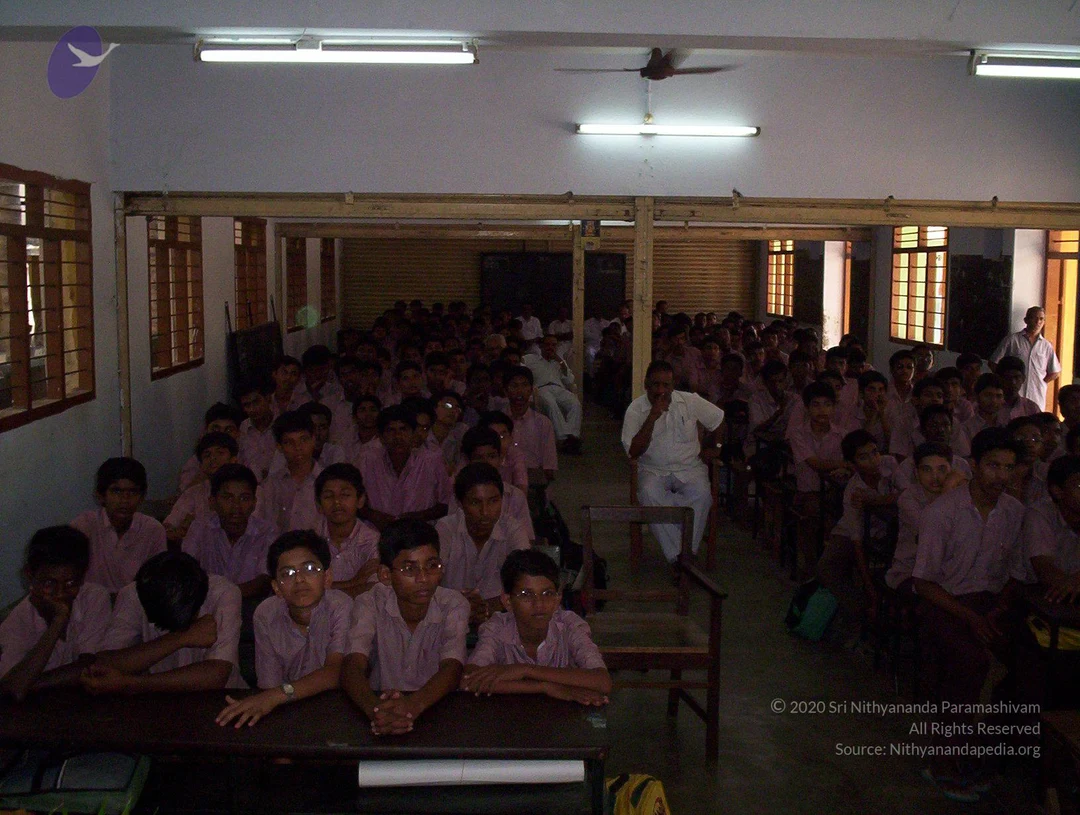
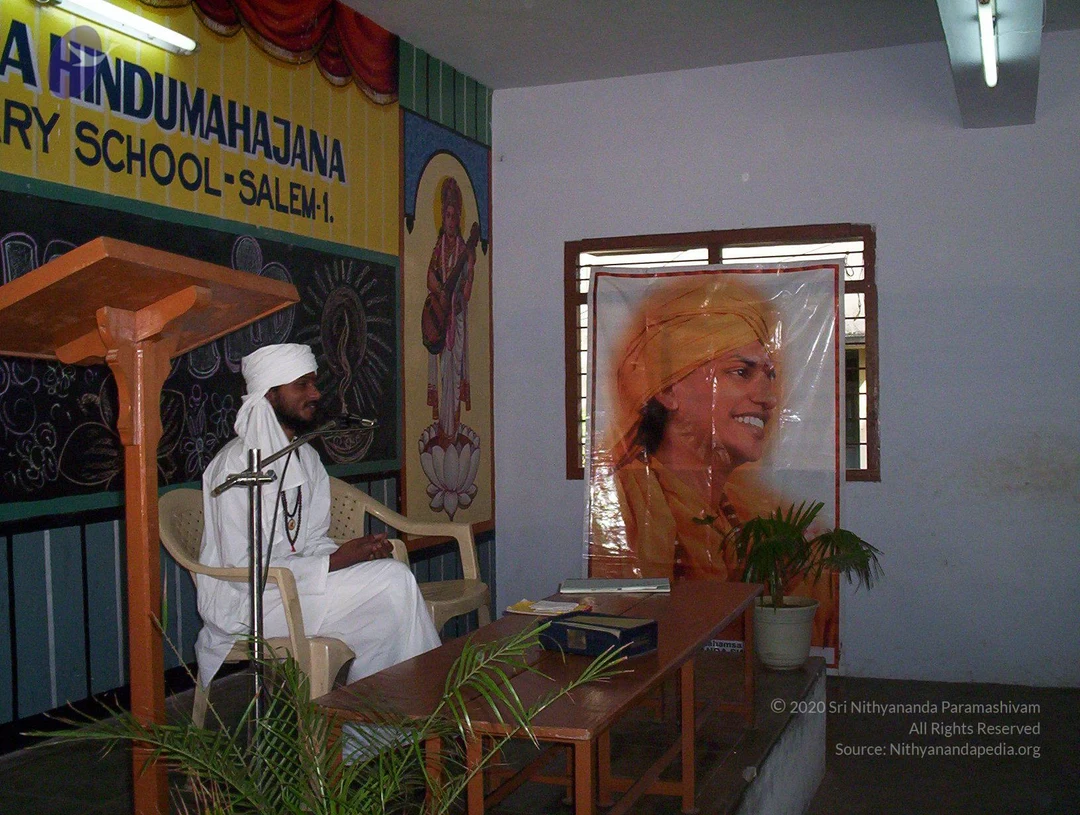
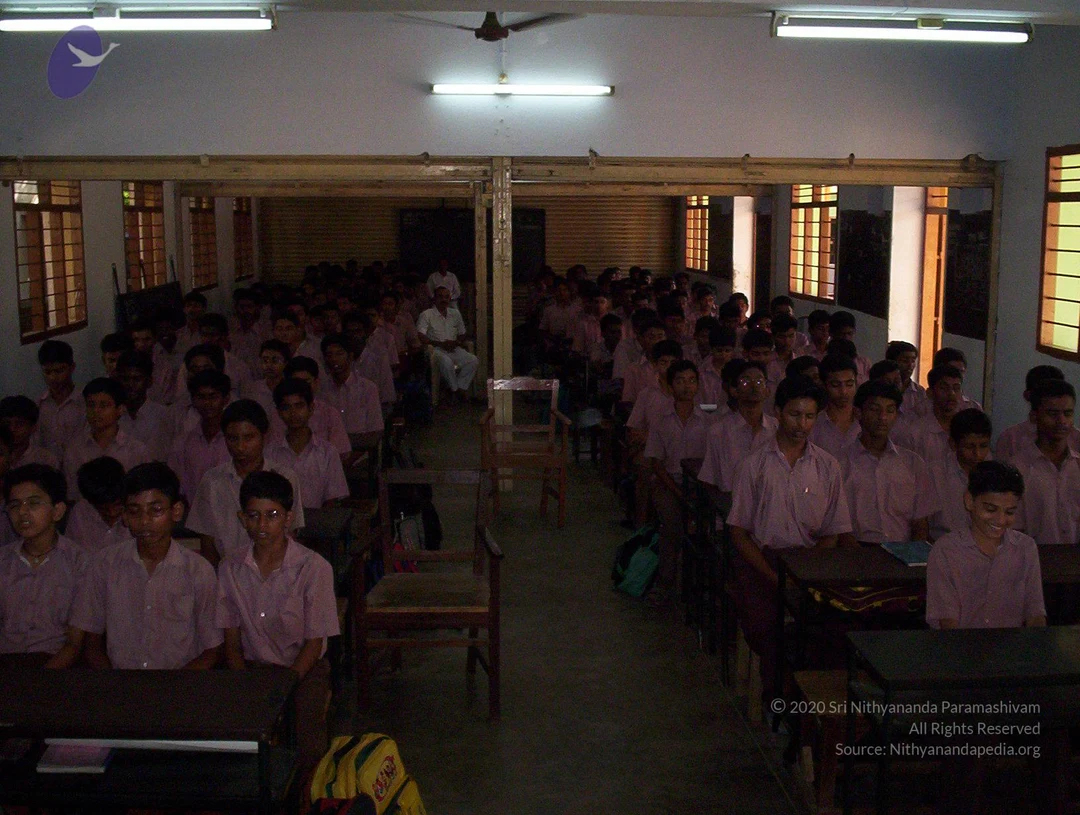
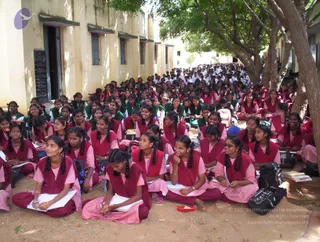
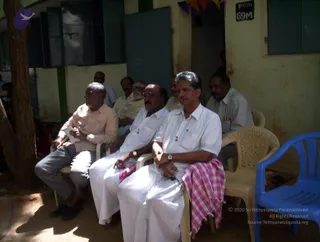
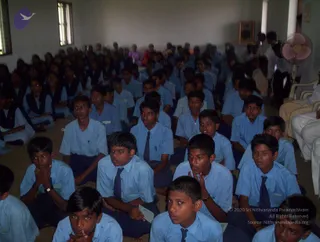
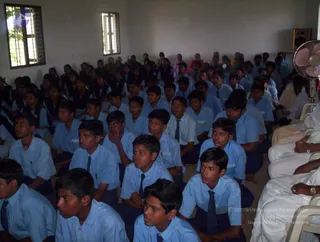
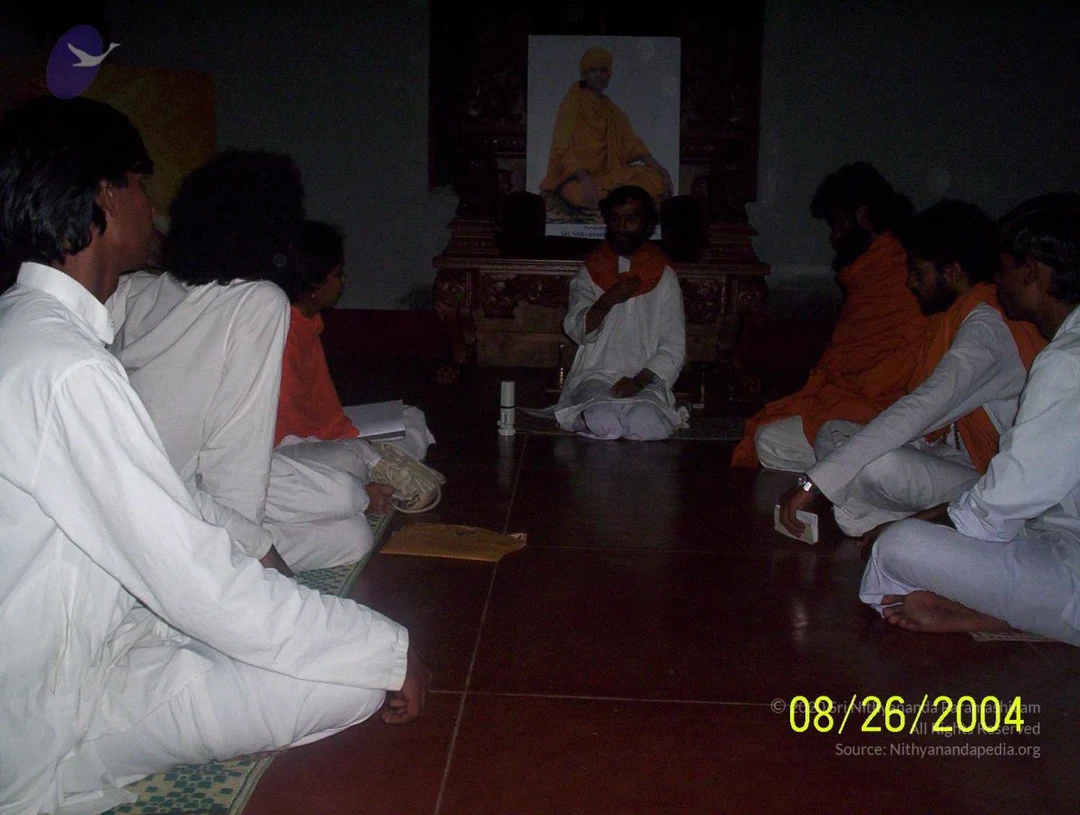
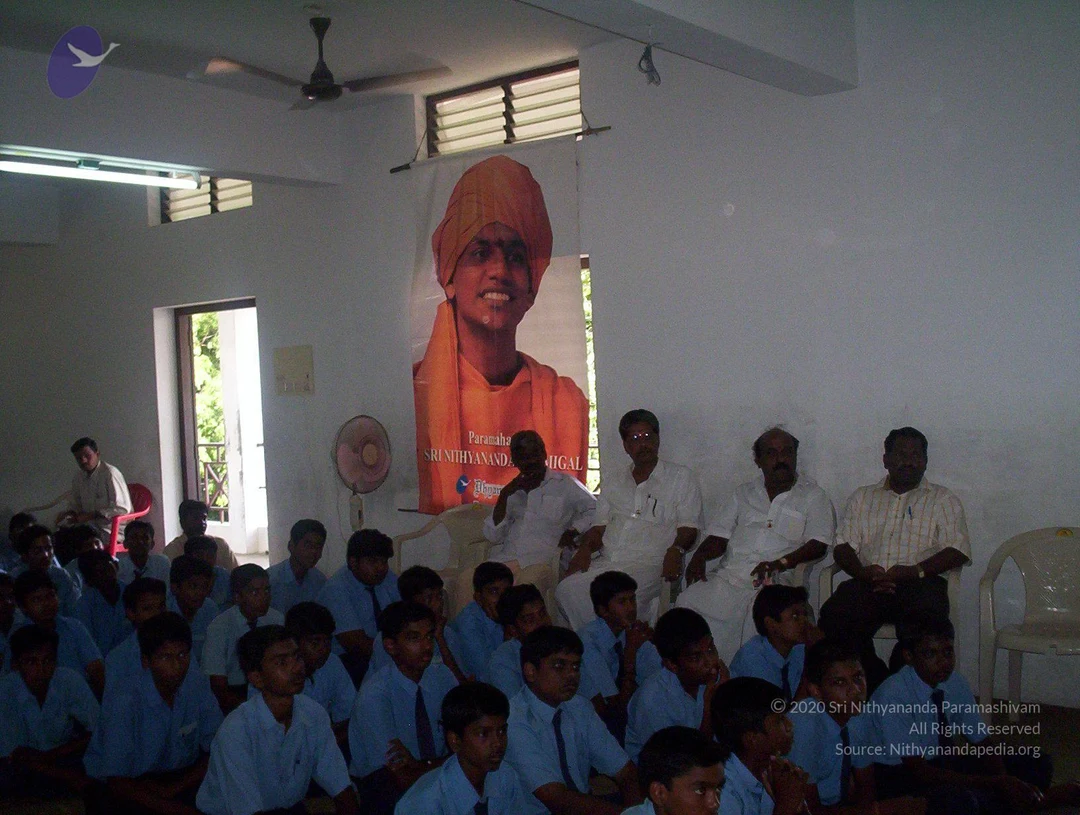
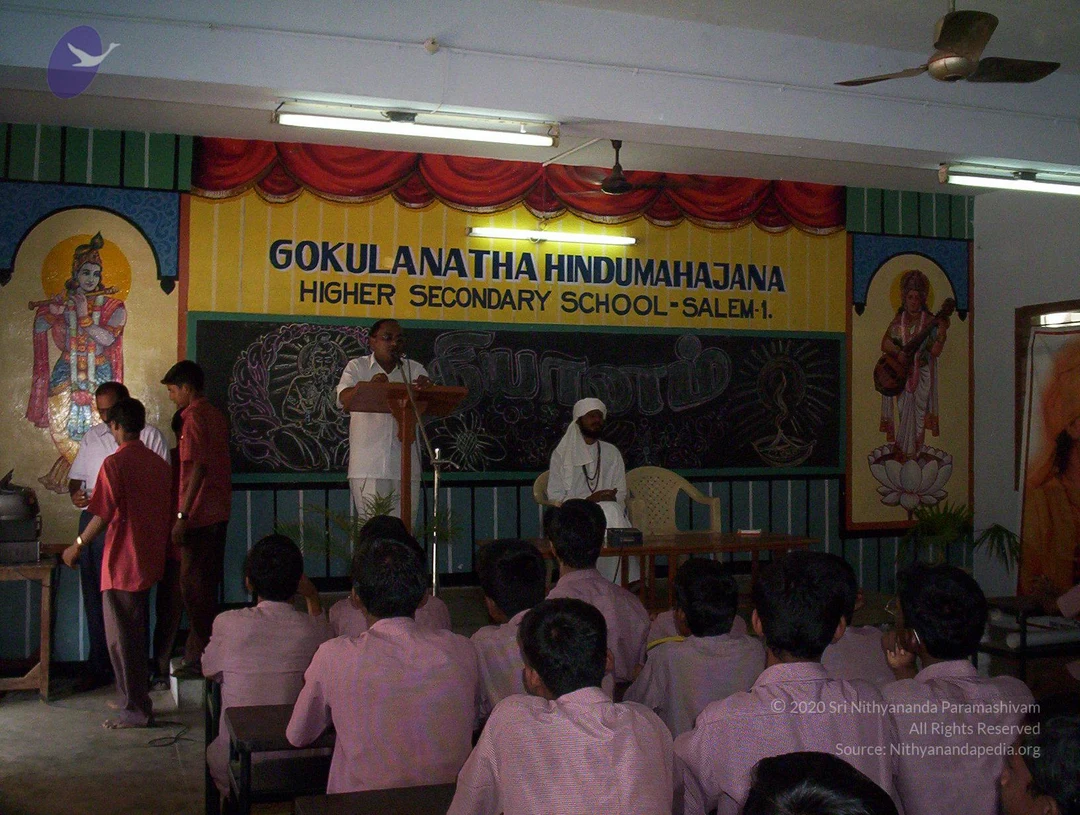
A large group of schoolgirls in maroon and pink uniforms sits cross-legged on bare ground under shady trees beside a pale yellow school building. Many hold notebooks and pens, some with long braided hair, and several wear dark or clear-framed glasses. Backpacks and bags lie on the ground at the front, and rows of students in white and green uniforms extend further back toward the trees. No ritual, deity or speaker is clearly visible in the frame.A photograph of a row of men seated on plastic chairs in the shade of a tree outside a building with blue shutters and a small sign reading PS NO 69M. In the foreground, a man in a white shirt and white dhoti with a pink-and-white checked cloth draped over his shoulder sits beside another man in white dhoti and white shirt, while a man in a peach shirt and grey trousers holds papers on the left. Behind them, several older men in shirts sit attentively, one with glasses and a white beard. No deity, statue or a person candidate is visible; the seated men are an audience of devotees or attendees listening to a talk.A bearded man in an orange-saffron robe sits cross-legged on a low wooden bench with a blue and yellow checked cloth on a raised concrete platform in an open courtyard, speaking into a microphone on a stand. Palm trees and a leafy tree shade the yellow wall behind him, and two black memorial plaques with white lettering hang on the wall. Several children with braided hair sit on the ground in the foreground facing him, and a blue plastic chair stands at the left edge. The scene looks like an outdoor talk or satsang.A large group of schoolboys sits cross-legged on the ground under a shady tree in an open courtyard, many with eyes closed in meditation. Most wear white short-sleeved shirts and khaki or brown trousers, while a few wear yellow-brown shirts. One boy in the foreground has a red tilak on his forehead. A lone adult in a light shirt stands at the far back near the building, apparently overseeing the session. Yellow school buildings and a leafy tree frame the scene.A photograph of a large crowd of schoolchildren seated on the floor of a plain whitewashed hall. Many boys wear light blue short-sleeved shirts with dark navy ties and navy trousers, while some girls wear blue uniforms with dark navy vests. Several boys hold small papers, and a few have hands near their faces as they listen attentively. At the upper right, a standing fan and a few adults in white clothing are visible near the wall. The room has tall windows and a small framed picture on the wall, and the audience faces toward the front of the hall.A photograph of a seated audience of many schoolboys and some schoolgirls in light blue uniform shirts with dark trousers or skirts and dark ties, sitting on the floor of a plain whitewashed hall with barred windows and a wall fan at right. Several men in white clothes sit on chairs along the right edge. The students face forward attentively toward an unseen speaker. No speaker is visible in the frame, so no a person candidate can be identified.
02-HOUSE-VISIT
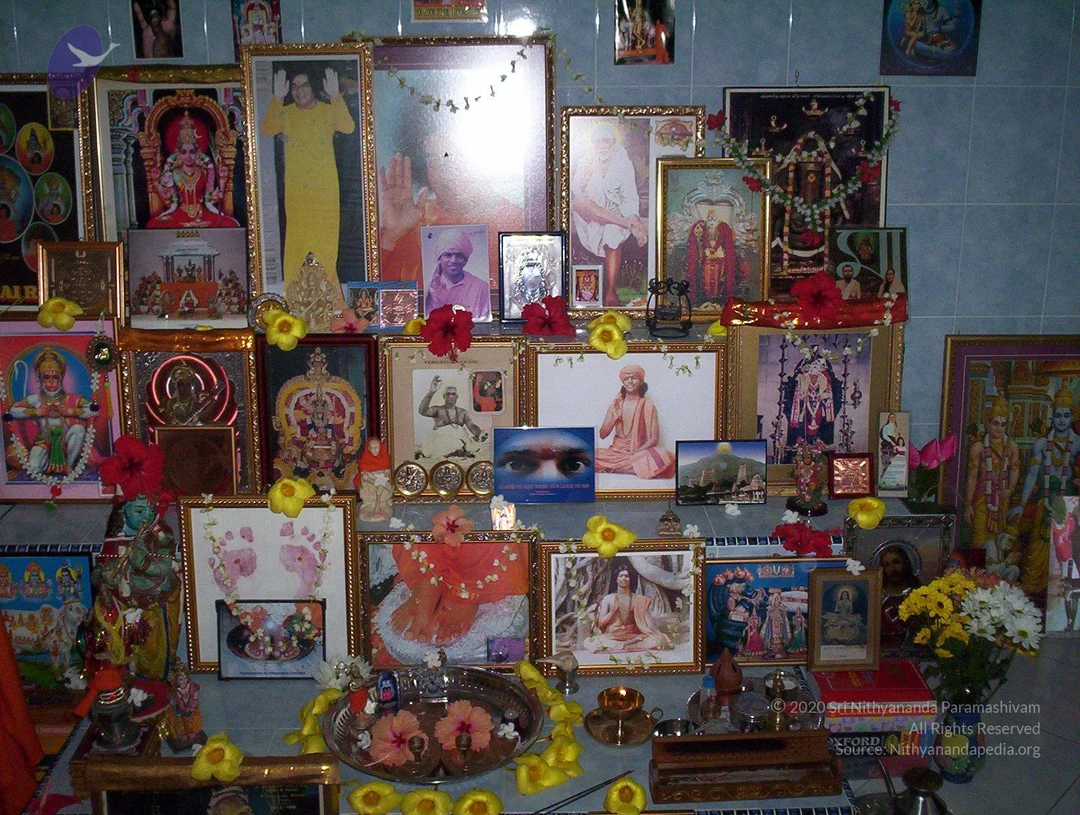
7 photosSource gallery
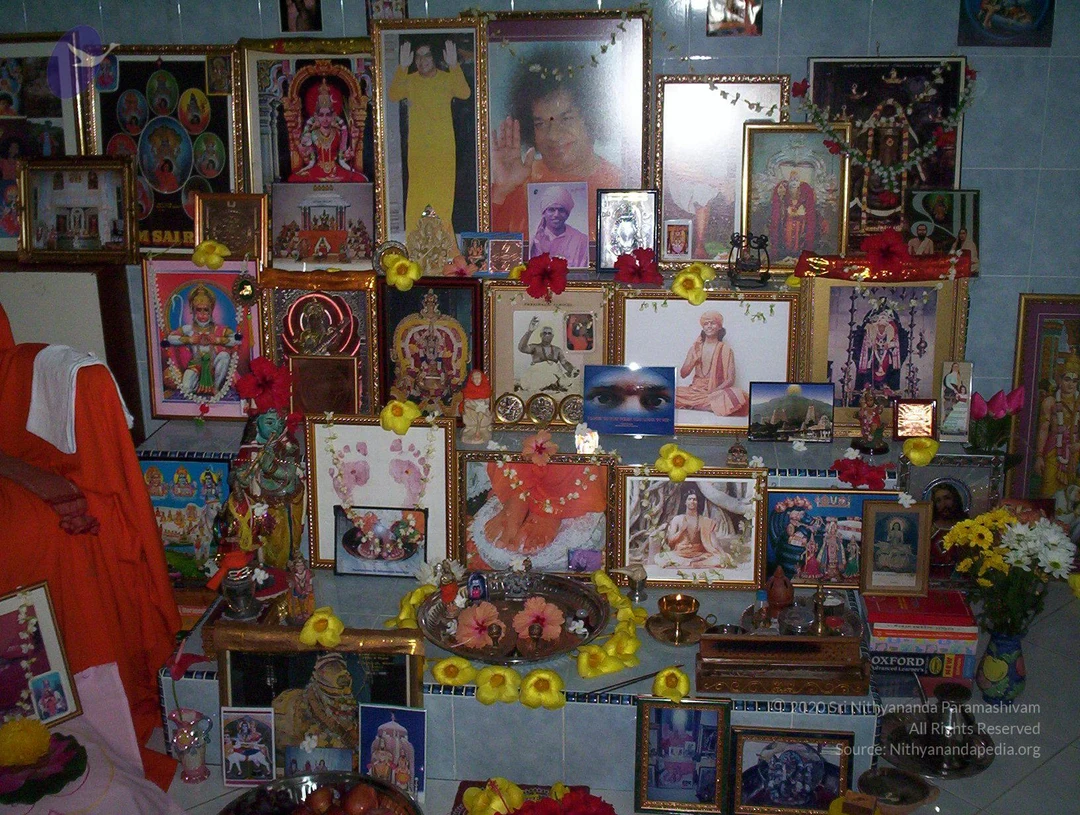
A photograph of a crowded home shrine against a tiled wall, filled with framed pictures of deities, saints and gurus. Many framed portraits hang and stand on a tiled altar ledge, decorated with yellow marigolds and red hibiscus flowers. In the centre, a framed image shows a saffron-robed figure seated in meditation. A brass tray holds hibiscus flowers, a brass lamp and an oil lamp sits on the ledge. Several printed photographs and a small lit candle are arranged among the frames. A tall flower vase stands at right and a stack of books sits beside the altar. No people are visible in the scene; the figures appear only as printed images. A saffron cloth hangs at the left edge.A home shrine photographed head-on, crowded with framed pictures and prints arranged on a tiled wall and shelf. Many framed images show deity murtis including a goddess seated in red and gold, a multi-armed deity in green, and figures in ornate red and gold attire. A large framed photo shows a figure in a yellow robe raising both palms. Another framed portrait shows a man in a white robe and dark head covering, and a central framed picture shows a robed figure seated in meditation in orange-saffron clothes. Yellow marigolds and red hibiscus flowers are scattered across the shelf, with a brass tray of flowers, lamps and small brass vessels in front. Bright yellow and red flowers accompany the display, and a blue framed sign with an eye-like image sits among the pictures. No physical people are visible.A photograph of a crowded home shrine against a pale blue tiled wall, with many framed pictures and prints arranged on a tiered altar. Framed images include deity murtis and devotional pictures, a bearded saint in saffron, and a Sai Baba-style figure in white. Yellow flowers and red hibiscus blossoms decorate the frames and the altar, and a brass plate holds more flowers. Brass lamps, a bell and a small wooden box stand on the altar, and a saffron cloth hangs at the left edge. No people are present in the scene.A photograph in a home shrine room. A man in a saffron-orange robe and matching turban stands at left, holding a brass oil lamp with a lit flame in his right hand and a small brass bell in his left. Behind him is a dark wooden shelf crowded with framed deity pictures, brass lamps, a small Om symbol, a vase of pink roses and yellow marigolds, and tins of food. On the right, orange cloth is draped over a chair. Printed calendar and photographs hang on the shelf side. a person: the robed man has long swept-back hair, saffron clothing and a turban, which are the qualifying cues for a candidate, though appearance alone leaves identity uncertain.A photo taken in a domestic living room. An elderly man in a pink striped shirt and white dhoti sits on a chair with a red tilak on his forehead, eyes lowered, hands clasped in his lap. Beside him on a dark leather sofa sits a figure in an orange saffron robe and orange head wrap, with long dark hair, placing one hand on the older man's shoulder and holding his hands. A walking cane leans nearby, a vase of orange and white flowers stands in the background, and a framed landscape painting hangs on the wall. The seated figure wears an orange robe and head wrap, appearance-based only, matching the page's a person claim, so this is a person present in person.A photograph of a dining table in a home interior. On the left, a person with long dark hair wears an orange turban and an orange sleeveless garment, serving food from a steel tray of rice and pooris. Across the table an older man with white hair and a patterned light-blue shirt sits and receives food from a woman in a pink sari whose wrist bears bangles. Steel pots of yellow curry and rice sit on the table, along with a white covered dish, a red container of pooris, and a blue-lidded plastic jar. Behind them two men stand: one in white clothes and one in a dark blue checked shirt and brown trousers. A vase of pink flowers sits on a wooden cabinet beside a window with orange-trimmed curtains, and a staircase is visible at right.