Skip to content
Saturday

31 January 2004

THE SUPREME PONTIFF OF HINDUISM BHAGAVAN NITHYANANDA PARAMASHIVAM

Dated photos
13
Source pages
1
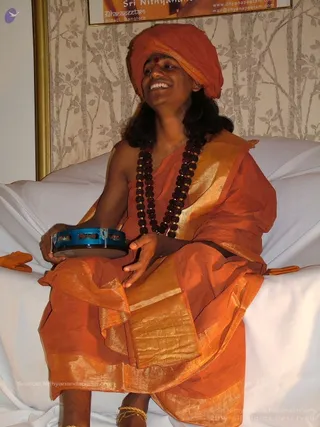
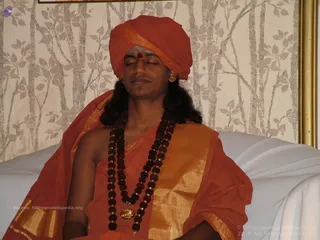
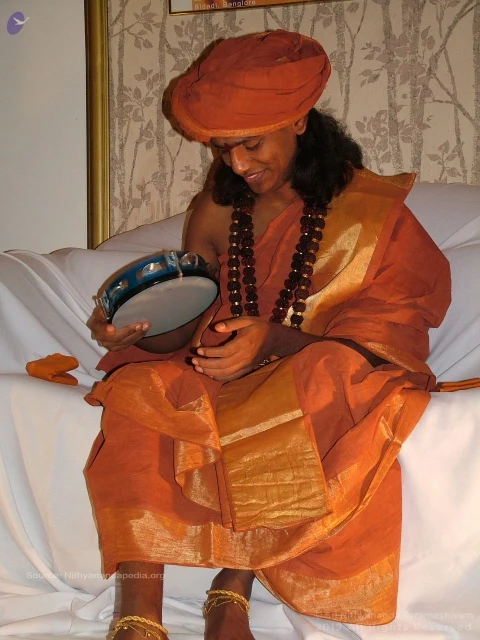
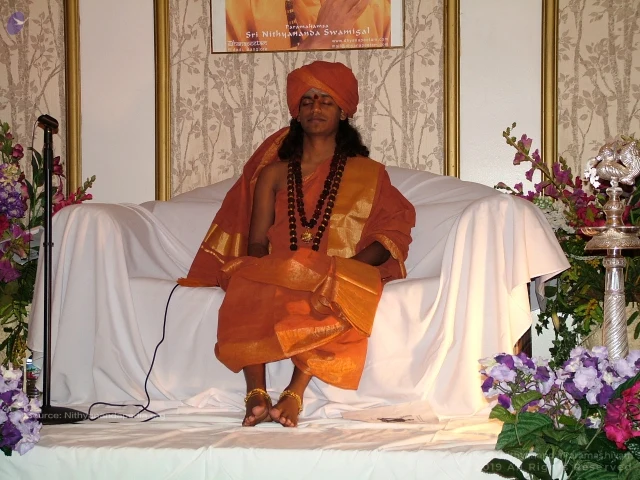
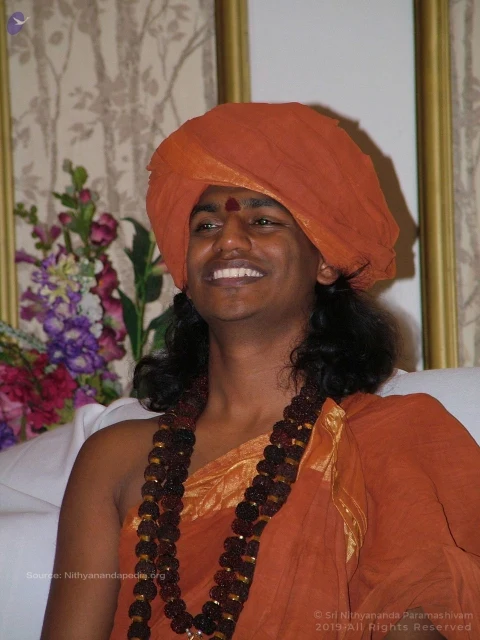
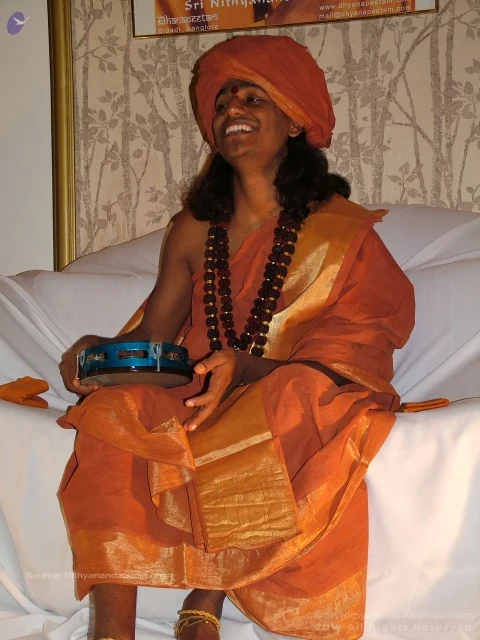
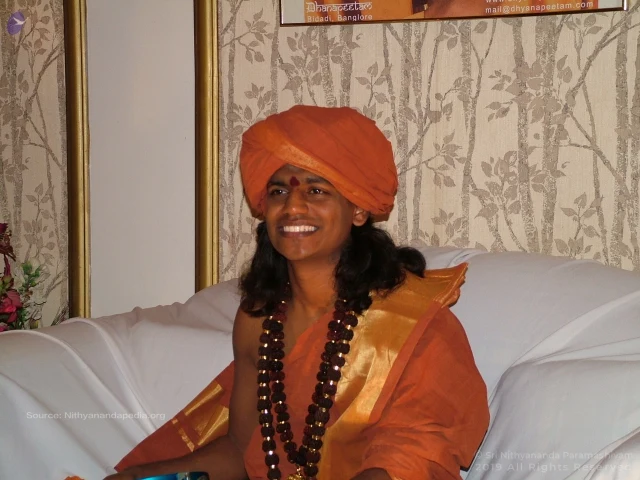
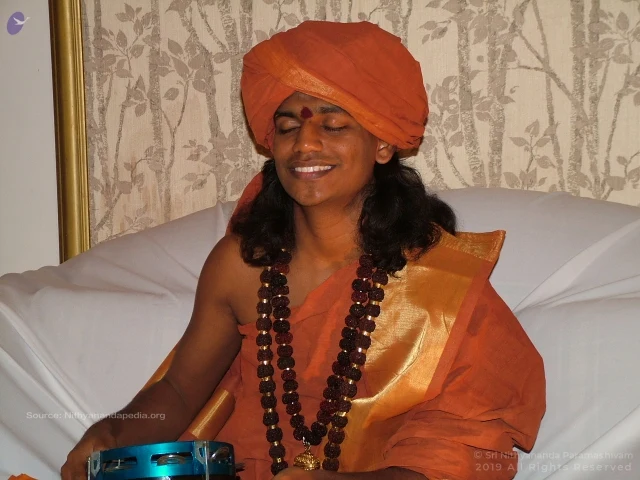
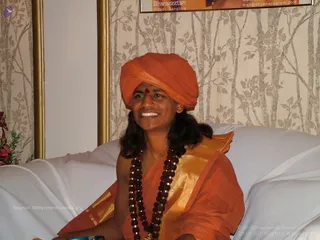
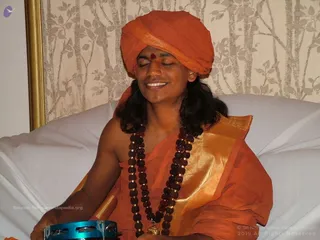
A smiling person sits on a white draped couch against a patterned wallpaper with bare tree motifs and a gilt-framed edge. They wear an orange-red turban with a small red mark on the forehead, long dark hair, a dark rudraksha mala with a gold-toned bead, and an orange garment with gold-shimmer borders wrapped over bare shoulders. They hold a small blue tambourine-like hand drum in their lap. Above them hangs a framed poster partly reading Sri Nithyananda and a small Dhyanapeetham logo. a person's presence here is appearance-based only.A seated man in orange-saffron robes sits with eyes closed in meditation against a floral-patterned wallpaper with white upholstered furniture beside him. He wears an orange turban, a red-orange tilak mark on his forehead, long dark hair falling behind his shoulders, and a double strand of dark rudraksha beads with a gold pendant on his chest. A gold-bordered orange shawl drapes over his shoulders.

January 31 2004

Original wiki page
Contents

Title

THE SUPREME PONTIFF OF HINDUISM BHAGAVAN NITHYANANDA PARAMASHIVAM

Narration

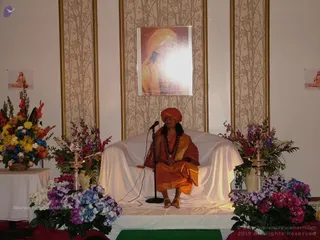
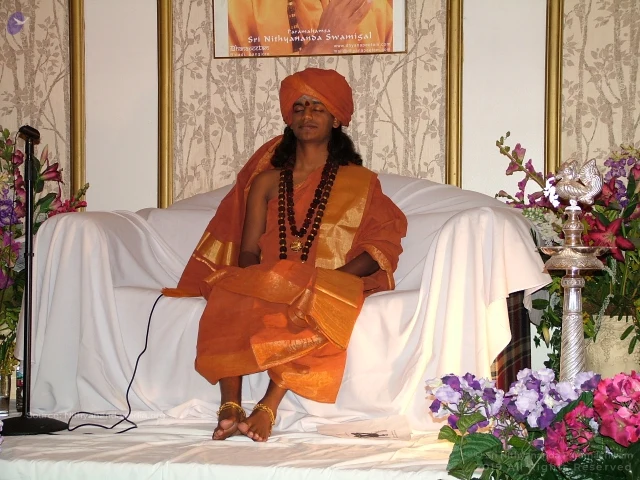
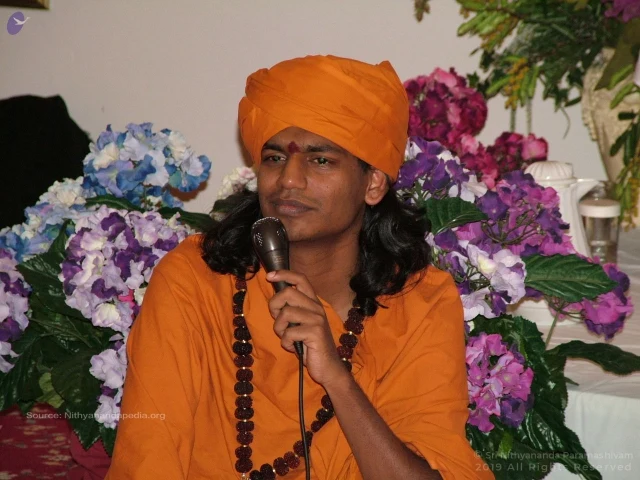
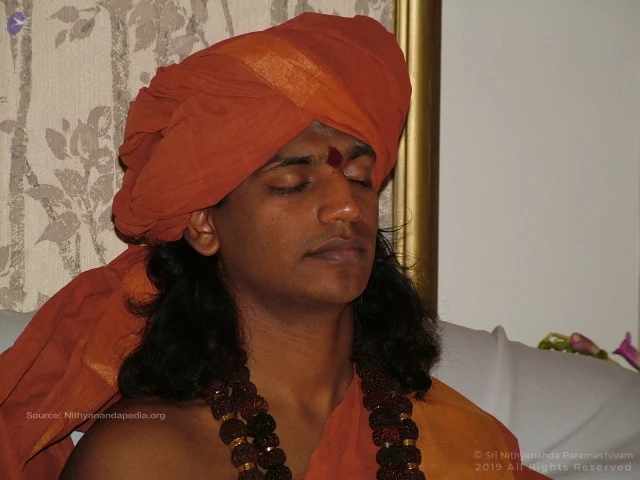
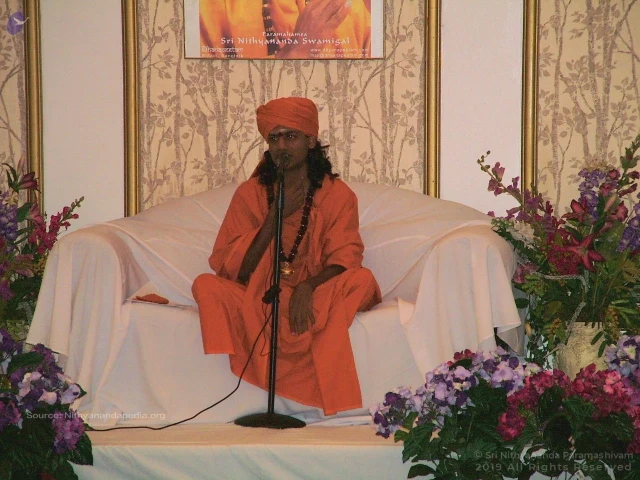
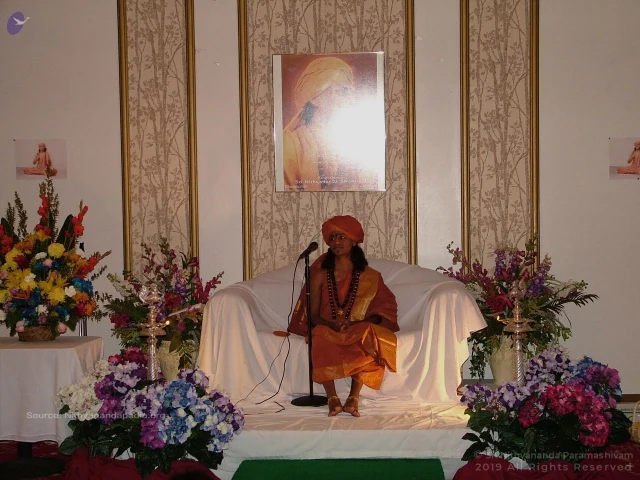
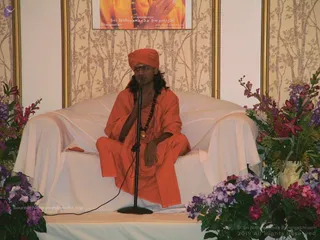
The second day of Ananda Spurana Convention was presided over by the Supreme Pontiff of Hinduism Bhagavan Nithyananda Paramashivam on 30 January 2004 in Los Angeles, California, USA. The Convention was attended by the ambassadors and diplomats from Kailasa's embassy in Los Angeles and various other embassies.

In one of the groundbreaking discourses on "From Loneliness to Aloneness", the SPH explained that in Sanskrit we have the word “Kaivalya” which means, “aloneness”. “Loneliness” is, wanting to have somebody to escape from ourselves and our incompletions, that is “loneliness”. SPH further elaborated that even if we have the other person or not, we will be lonely. “Aloneness” is, when we are so complete, so fulfilled, so powerful that we don’t need anybody to complete us, to make us powerful, that is “aloneness”, whether we have the other person or not. Whether we have the other person or not, if we are complete with ourselves, we are “alone”. Whether we have the other person or not, if we are incomplete with ourselves, we are “lonely”. “Lonely” people attract slavery, abusive relationships. “Alone” people attract joyful, completing relationships, where not only they are complete, they complete the other person also.

Photos
Photos from this day

View all 13 photos
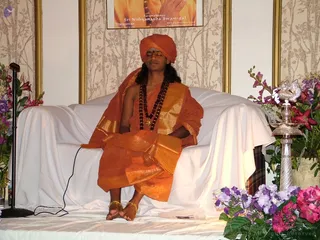
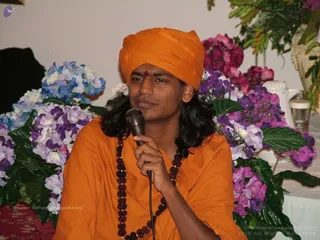
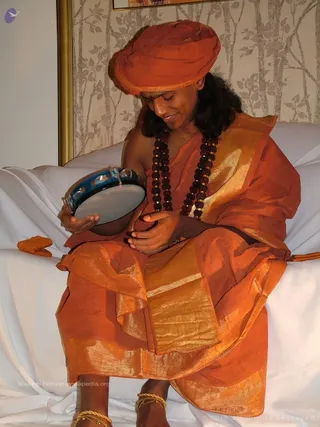
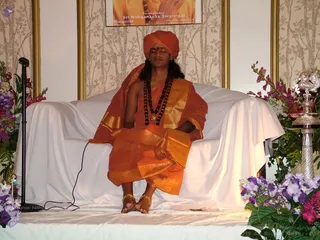
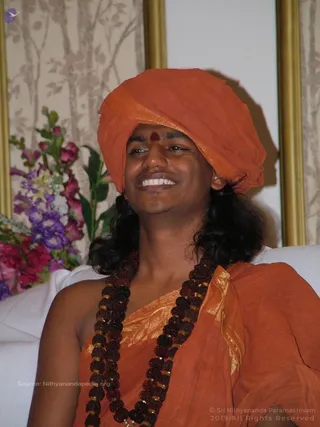
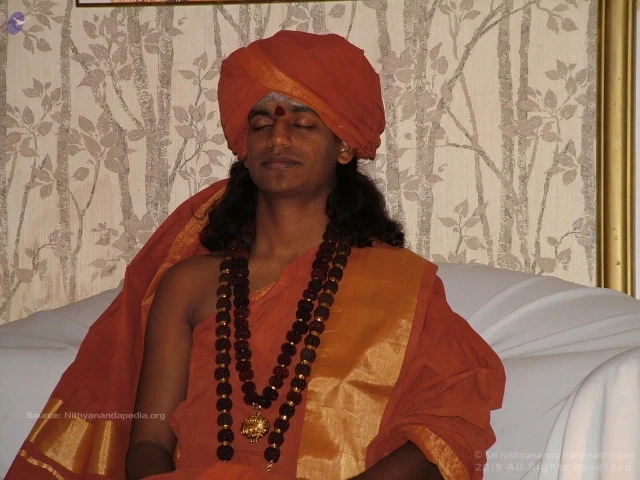
A seated man in orange-saffron robes sits with eyes closed in meditation against a floral-patterned wallpaper with white upholstered furniture beside him. He wears an orange turban, a red-orange tilak mark on his forehead, long dark hair falling behind his shoulders, and a double strand of dark rudraksha beads with a gold pendant on his chest. A gold-bordered orange shawl drapes over his shoulders.A man in an orange-saffron turban and matching saffron robe sits before a large floral arrangement of blue and purple hydrangeas with green leaves. He wears a long rudraksha mala of dark beads with a red tilak on his forehead, holds a silver microphone up to his mouth, and appears to be speaking. Swamiji (probable): the long dark hair falling past the shoulders, saffron turban and robe, and rudraksha mala are consistent with the page's identification of the speaker at a convention. Behind him a white tablecloth and a flowered table decoration are visible.A seated figure in saffron-orange robes and an orange turban sits cross-legged on a white-draped sofa in front of a microphone stand, with a rudraksha mala around the neck. Long dark hair falls to the shoulders. Vivid purple and pink flower arrangements frame both sides of the platform, and a framed poster with an orange-toned image hangs on a floral wallpaper behind. The setting suggests a discourse hall.A seated man in an orange turban and matching orange-and-gold tissue robe sits on a white draped sofa, holding a blue-rimmed tambourine-style drum in his left hand while his right hand rests on it. Dark rudraksha beads hang in multiple strands across his chest, and gold bangles or anklets appear at his feet. Behind him are a patterned wallpaper with birds and branches and a framed picture on the wall. The page identifies this as an event with a person; appearance cues of orange ornate clothing, a turban, long hair and rudraksha malas make a probable match, so this is a probable in-person presence.A smiling person sits on a white draped couch against a patterned wallpaper with bare tree motifs and a gilt-framed edge. They wear an orange-red turban with a small red mark on the forehead, long dark hair, a dark rudraksha mala with a gold-toned bead, and an orange garment with gold-shimmer borders wrapped over bare shoulders. They hold a small blue tambourine-like hand drum in their lap. Above them hangs a framed poster partly reading Sri Nithyananda and a small Dhyanapeetham logo. a person's presence here is appearance-based only.