Skip to content
Tuesday

21 October 2014

Inner Awakening Day 14| Padukapuja | Nithya Kirthan | Satsang

Dated photos
19
Source pages
1
Media
1
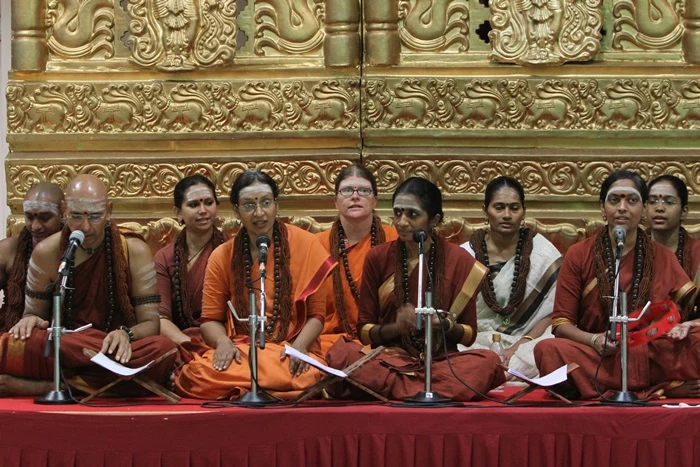
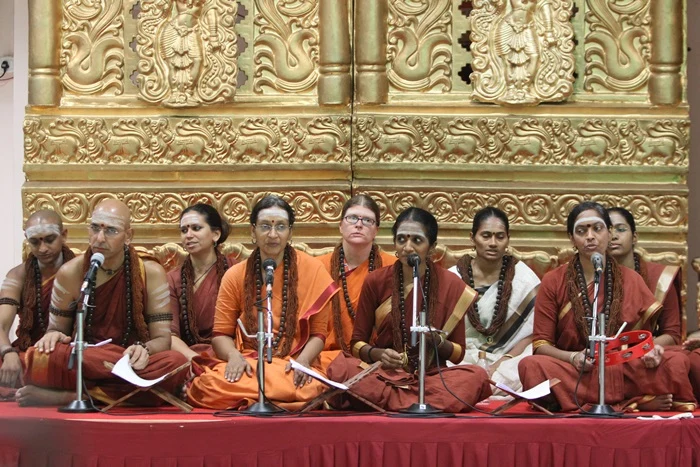
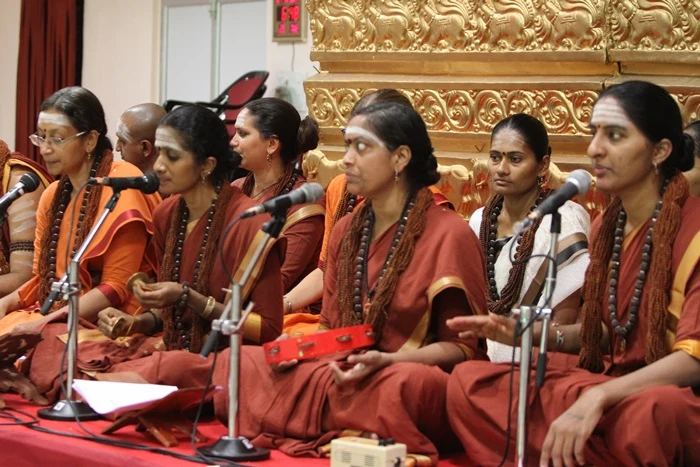
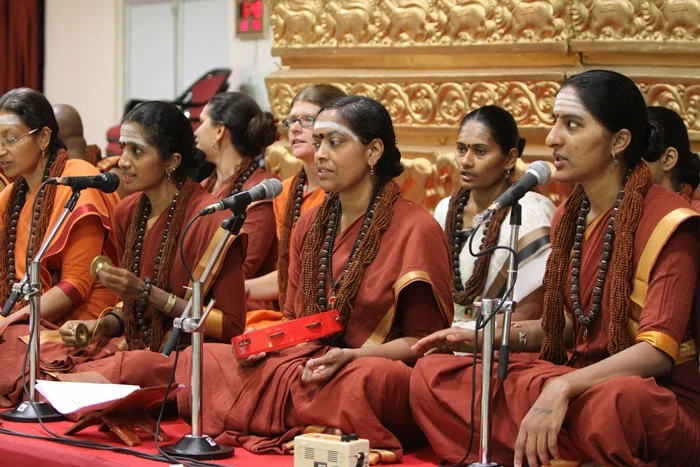
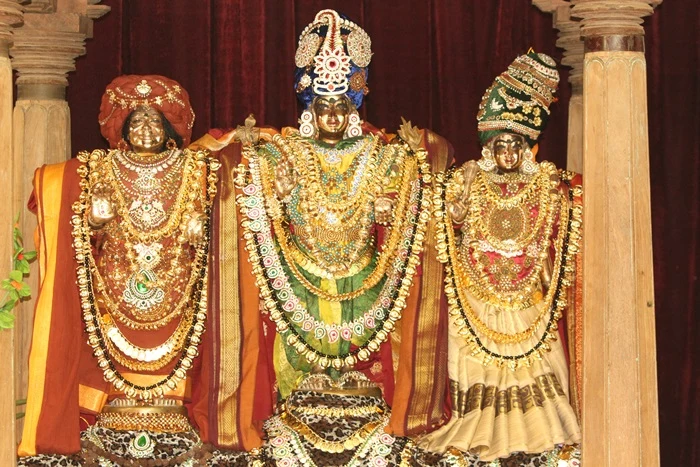
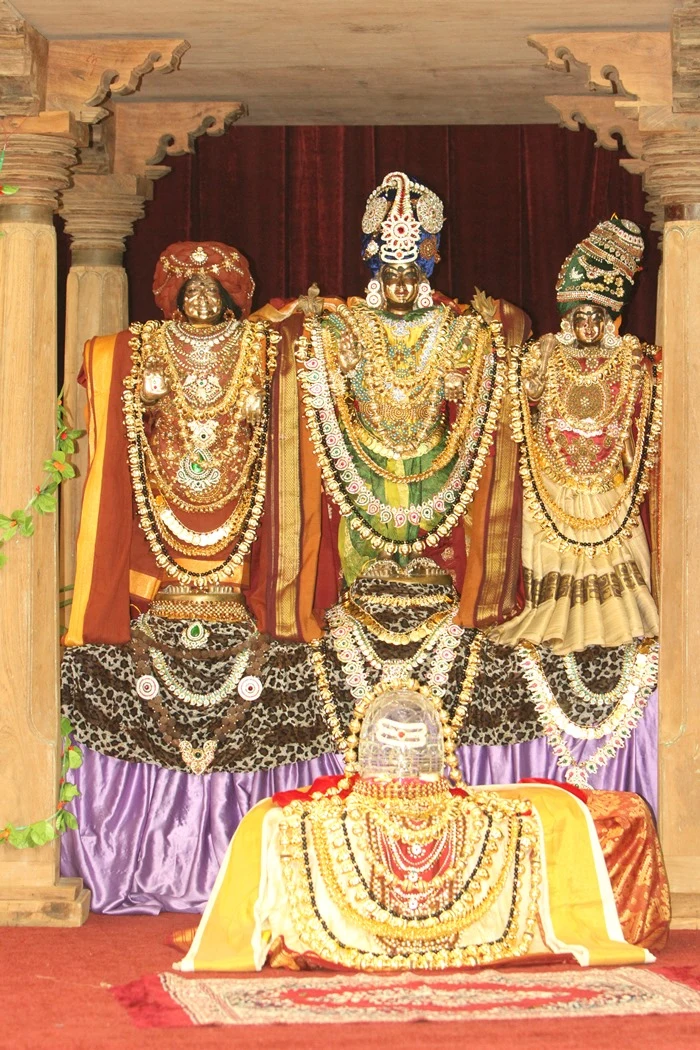
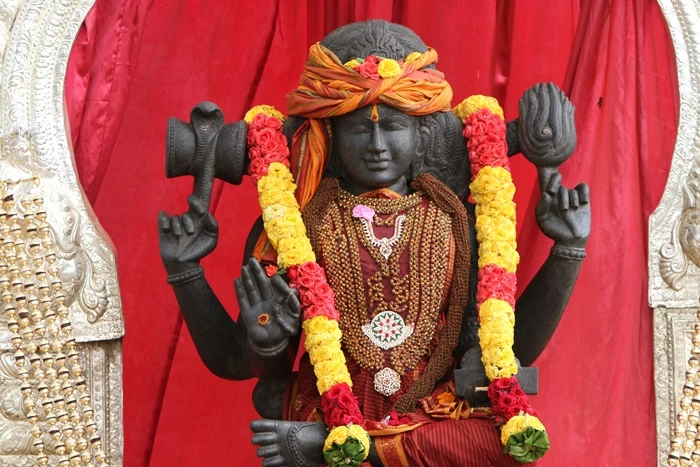
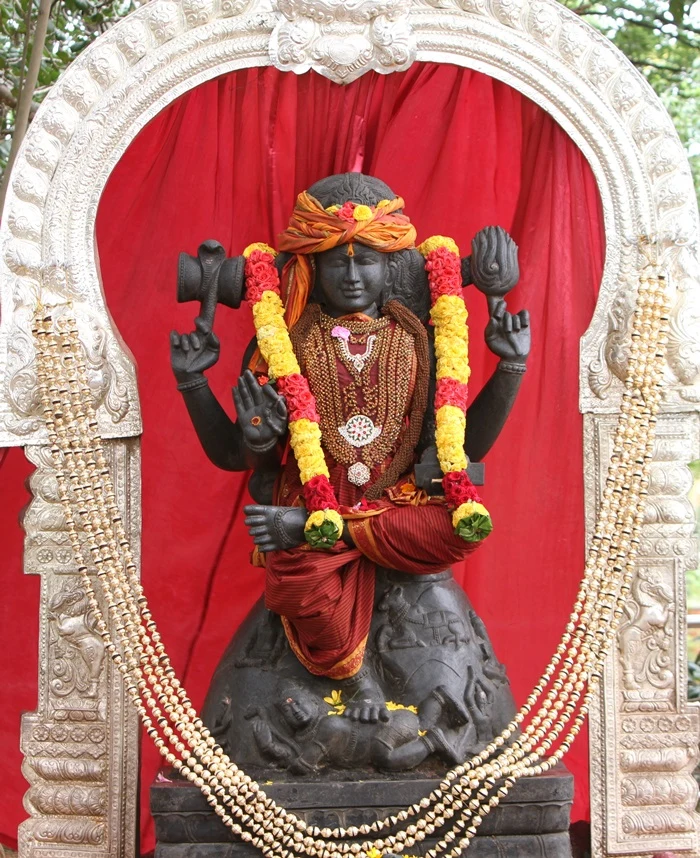
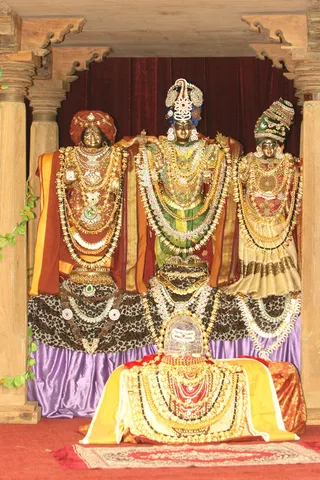
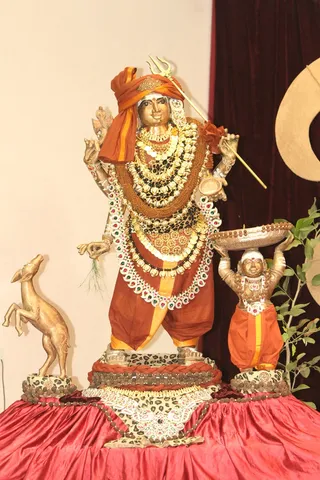
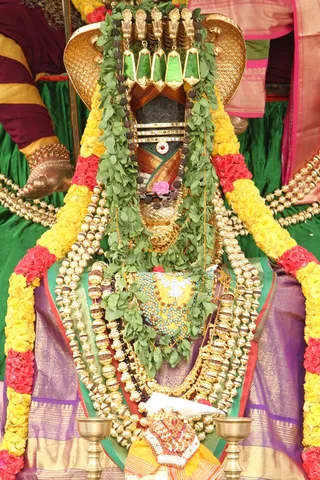
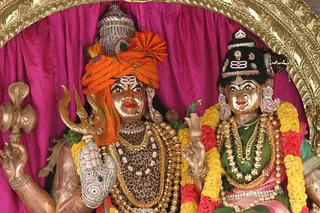
Two close-up photographs side by side of brass padukas (sandal-shaped sacred footwear) resting in brass bowls. On the left, the padukas sit in a bowl heaped with pink rose petals. On the right, they sit in water surrounded by slices of pale yellow fruit arranged in a ring on a brass tray with a decorated rim, set on a bamboo mat beside a green cloth. This is a padukapuja offering setup with flower and fruit decoration.A row of about eight seated singers in a golden-carved hall performs nithya kirthan at microphones draped in a red cloth. Most wear rust-red or saffron garments with rudraksha malas, and several have white tilak marks on their foreheads. Several people hold sheets of paper, and the gilded wooden backdrop has carved horses or lions. The setting suggests an ashram satsang gathering.A group of about eight seated devotees sings Nithya Kirthan at microphones on a red-draped stage before an ornate gold-carved wooden backdrop with figures and scrollwork. Most wear rudraksha malas and ochre, saffron or maroon robes; some have white or red garments and sandalwood or vibhuti markings on their foreheads. Several hold printed sheets of song lyrics. The scene suggests a satsang gathering during a kirthan session.

October 21 2014

Original wiki page
Contents

Title:

Inner Awakening Day 14| Padukapuja | Nithya Kirthan | Satsang

Photos

Sakshi Pramana:

Sharing from INNER AWAKENING

Photos from this day

View all 19 photos
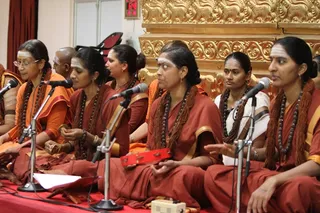
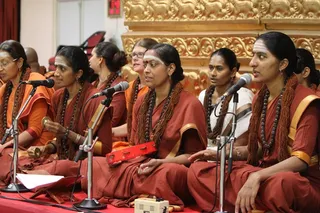
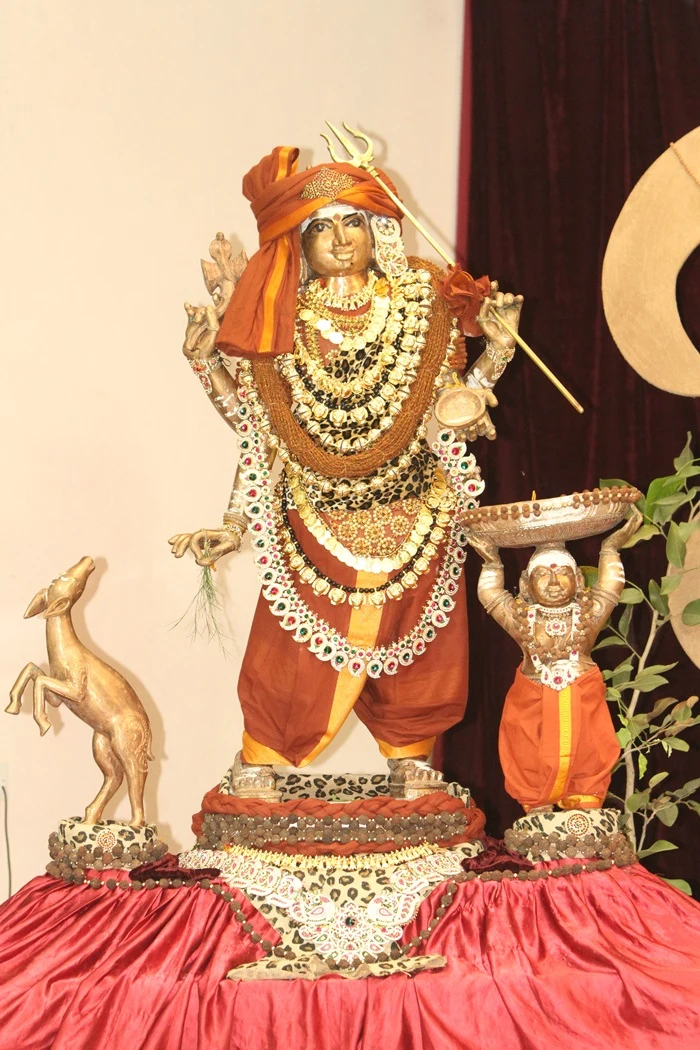
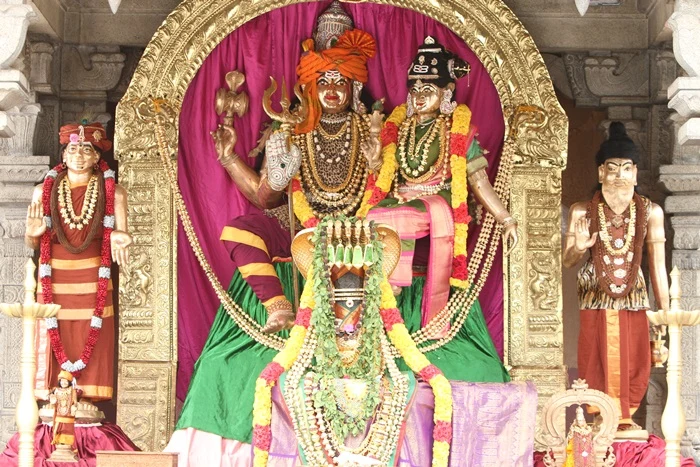
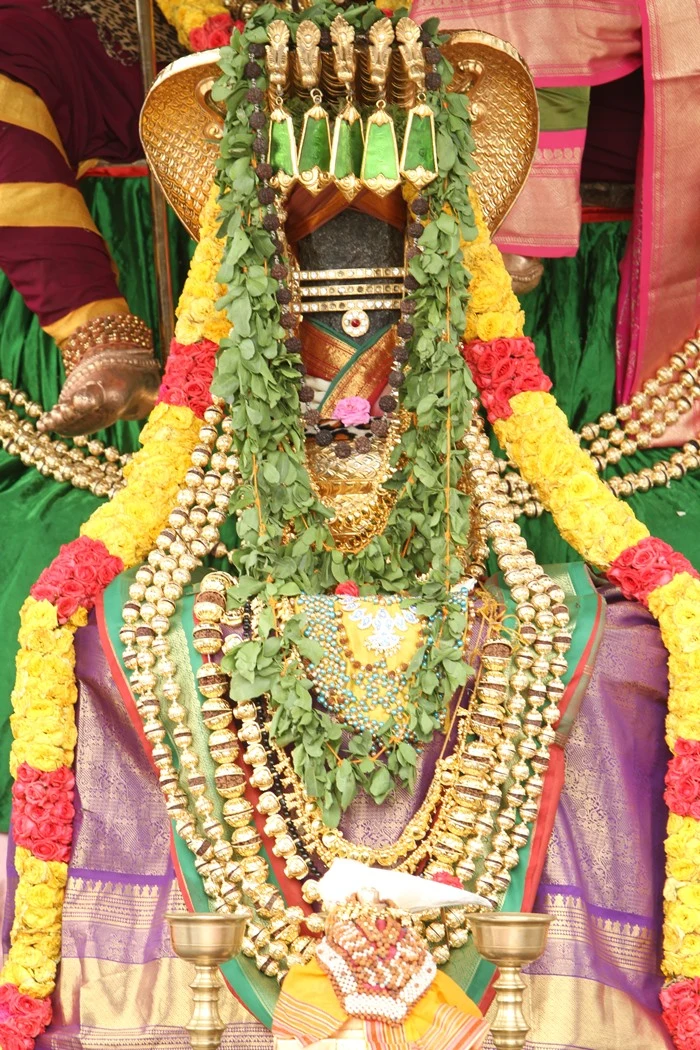
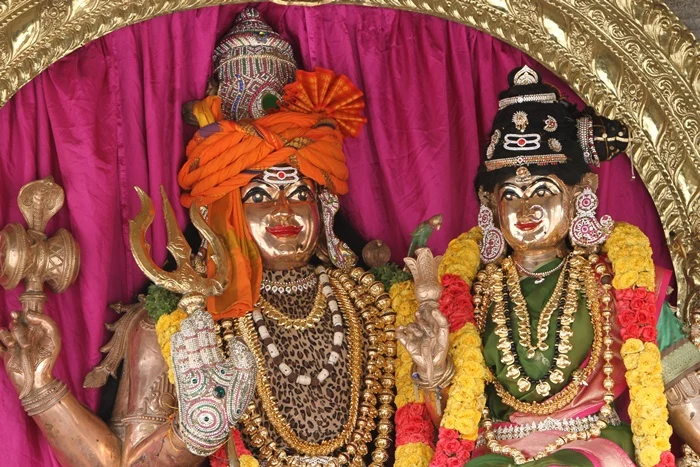
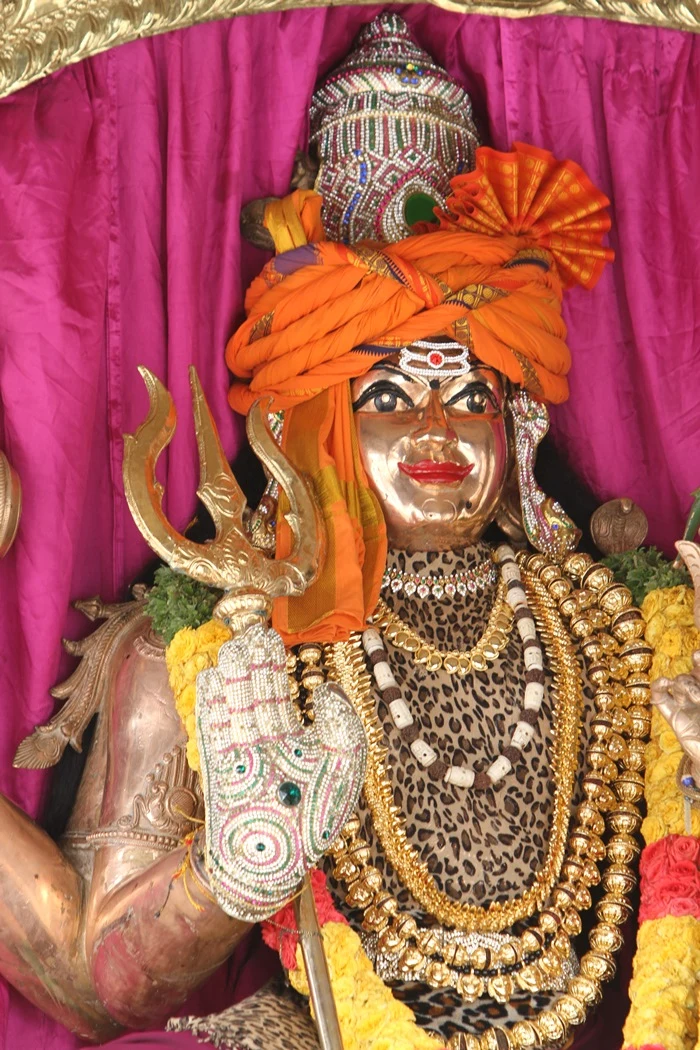
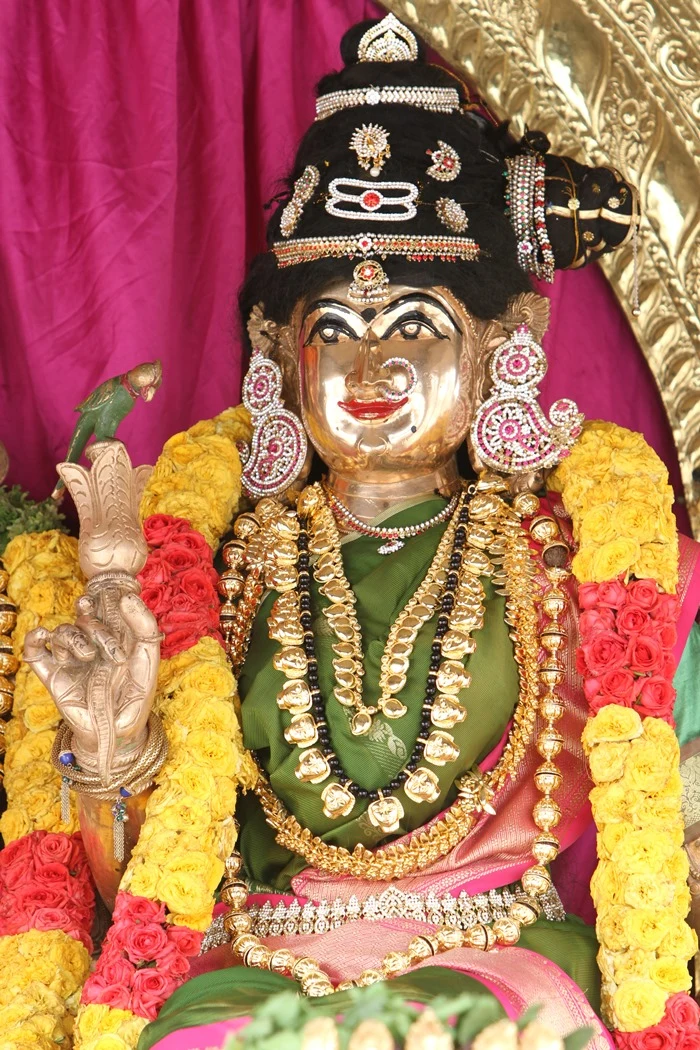
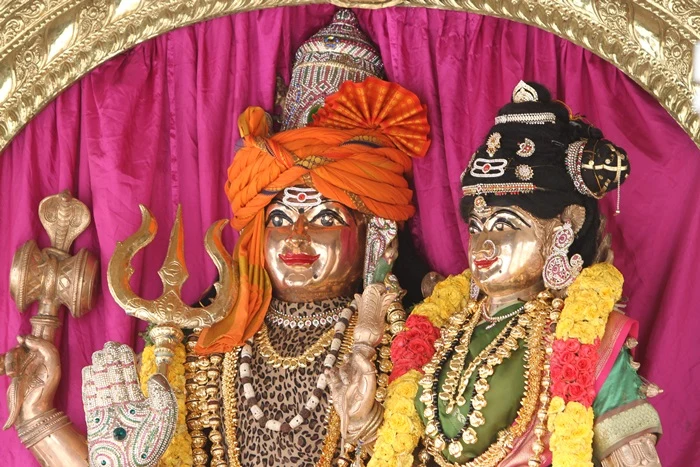
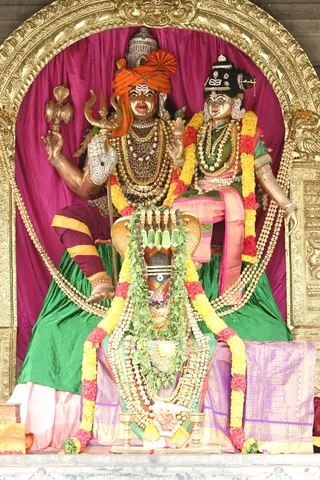
Two close-up photographs side by side of brass padukas (sandal-shaped sacred footwear) resting in brass bowls. On the left, the padukas sit in a bowl heaped with pink rose petals. On the right, they sit in water surrounded by slices of pale yellow fruit arranged in a ring on a brass tray with a decorated rim, set on a bamboo mat beside a green cloth. This is a padukapuja offering setup with flower and fruit decoration.A row of about eight seated singers in a golden-carved hall performs nithya kirthan at microphones draped in a red cloth. Most wear rust-red or saffron garments with rudraksha malas, and several have white tilak marks on their foreheads. Several people hold sheets of paper, and the gilded wooden backdrop has carved horses or lions. The setting suggests an ashram satsang gathering.A group of about eight seated devotees sings Nithya Kirthan at microphones on a red-draped stage before an ornate gold-carved wooden backdrop with figures and scrollwork. Most wear rudraksha malas and ochre, saffron or maroon robes; some have white or red garments and sandalwood or vibhuti markings on their foreheads. Several hold printed sheets of song lyrics. The scene suggests a satsang gathering during a kirthan session.A group of women sit cross-legged on a red stage cloth, singing kirtan into microphones on stands. They wear rust-red and orange saris with rudraksha malas, and have white and red forehead markings. One woman on the right holds a small red harmonium-style instrument with her hands, and another woman in the middle plays hand percussion. Behind them, an ornate gold-toned carved backdrop with figures of animals and deities fills the frame. A white sheet of paper rests on the stand at left.A group of women sit cross-legged in a row performing devotional music before microphones on stands. They wear rust-red and saffron-orange sarees with rudraksha malas around their necks, and several have white vibhuti marks on their foreheads. The woman in front centre holds a red hand percussion instrument, and another woman at left holds a small brass cymbal-like instrument. Music stands with papers sit in the foreground. Behind them a gold-toned carved wall with ornate figures forms the backdrop, and a small electronic device sits on the floor in front.Three ornately decorated metal murtis stand side by side in a shrine before a deep red curtain and carved wooden pillars. The central figure wears a tall jewelled crown, a green and gold garment, and layered gold and beaded garlands. The figures on either side wear rust-red and gold dresses, large gold necklaces, and ornamental headpieces, with a green sprig of foliage at the left edge. The murtis are deity figures, not living people, and the scene shows a decorated shrine arrangement with garlands and jewellery.Three ornately dressed deity murtis stand together in a carved wooden shrine with red velvet drapes behind them. The central figure wears a tall blue and white crown, a green and gold garment, and heavy layered gold and jewelled garlands. The figures to the left and right wear orange and gold cloth and similar gold necklaces and crowns. In front, a Shiva lingam is covered by a clear protective case and draped in gold and red garlands, resting on a yellow and red cloth with a patterned rug below. Purple satin covers the platform. This is a decorated shrine display of murtis as seen at a satsang-related padukapuja event.A gilded statue of a standing deity murti in an orange-saffron dhoti and turban, adorned with layered gold and beaded necklaces and a jewelled garland. The figure holds a trident in one hand and a small drum in another, with a deer figurine at its left and a smaller statue of a kneeling attendant holding an oil lamp on a tray at its right. The statues stand on a red draped cloth with leopard-print and jewelled trim, beside a dark red curtain and green foliage. No physical people are visible.Photograph of a temple sanctum with a central deity murti pair seated on a green-and-pink cloth-draped platform before a magenta curtain and gold-carved arch. The central male figure wears an orange turban, holds a trident, and is adorned with rudraksha malas and marigold garlands; the female figure beside him wears a black crown and yellow-and-red garlands. A linga-like form in front is decorated with green leaves and flower garlands. Standing statues flank the sanctum: one in orange-brown dress with a red-and-white garland, another with rudraksha beads and a folded-hand gesture. No physical people are visible; all figures are statues.A gilded arched shrine framed by a magenta cloth backdrop holds two large painted deity statues seated side by side on a green-draped throne. The male figure wears an orange turban, layered gold and beaded necklaces, and holds a trident and a damaru-like drum; the female figure wears a black crown, green blouse, pink sari and garlands of yellow and red flowers. In front, a linga-shaped form is decked with green leaves, marigold and beaded garlands, and pendant ornaments, with brass lamps at its base. No living people are visible; the scene shows deity murtis in a temple sanctum.A close photograph of a dressed Shiva lingam in a temple sanctum, showing a dark stone lingam wrapped in a green and gold sari-like cloth. It is adorned with a crown-like gold headpiece set with green stones, long garlands of green leaves, yellow marigolds and red roses, and layered gold bead necklaces and rudraksha strands. Brass oil lamps stand at the base, and a gold-and-pink silk drape with purple and gold brocade frames the scene. No people are visible.Two golden-hued sculpted murti figures stand side by side in a niche framed by an ornate gold arch against a magenta draped backdrop. The figure on the left wears an orange turban, a silver crown-like headpiece, a trident in one hand, a rudraksha-style mala and layered gold necklaces. The figure on the right wears a green garment, a crescent-moon crown, gold jewellery and garlands of yellow and red flowers. Both have white and red tilak marks on their foreheads. The scene is a temple deity display, with deity murti rather than living people present.