Skip to content
Saturday

9 March 2013

THE SUPREME PONTIFF OF HINDUISM HDH BHAGAVAN NITHYANANDA PARAMASHIVAM

Dated photos
19
Source pages
1
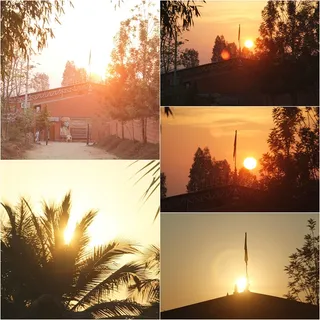
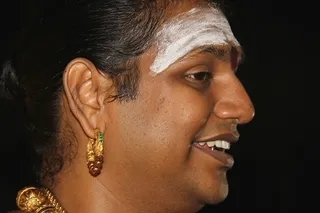
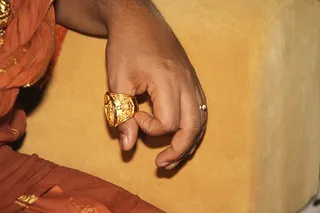
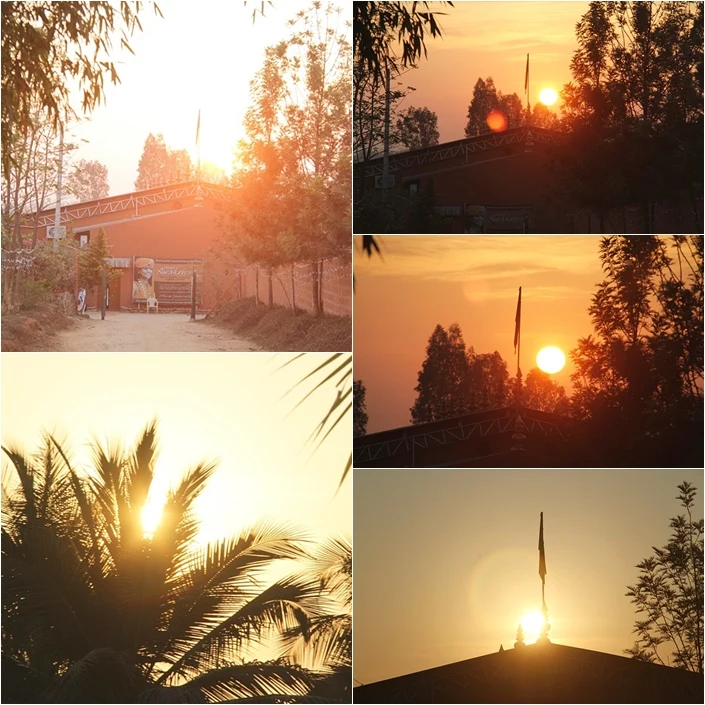
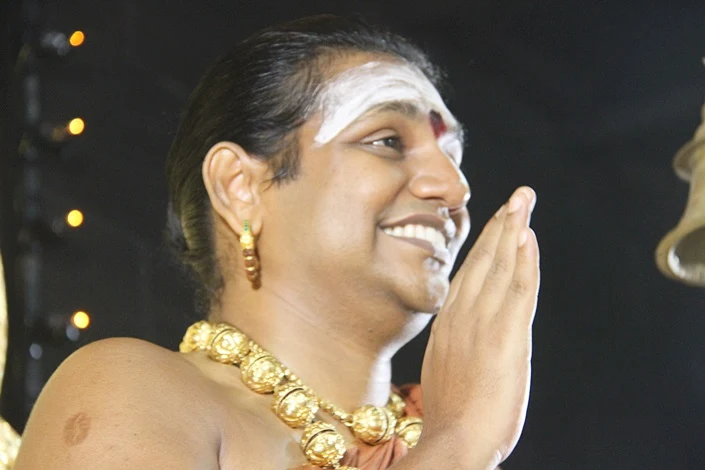
A collage of five sunrise photographs at Adi Kailasa, Bengaluru. Top left shows a low orange-brick building with a decorative roofline under a glowing sun, with a path and a poster-like sign on the building's front. Top right shows the sun rising behind silhouetted trees above the same roofline and a tall flag. Middle right shows a large orange sun beside a tall flagpole and dark treetops. Bottom left shows a palm tree silhouetted against a bright sun. Bottom right shows a tall flag on a dark rooftop peak with the sun glowing behind it. No physical people are visible.Close-up side profile photograph of a smiling man against a black background. He has a white horizontal line of sacred ash across his forehead with a red mark between the brows, dark hair pulled back, and an ornate gold earring set with a green stone. A gold necklace with a floral design is visible at the bottom edge. No other people are visible.Close-up photograph of a man's right hand resting on a mustard-yellow velvet cushion, with the index and middle fingers curled in a mudra-like gesture. He wears a large ornate gold ring with engraved floral and geometric patterns on the middle finger and a small white-stone ring on the little finger. Orange-saffron cloth with gold embroidered border is visible at the left edge, and a gold ornament is partly visible at the upper left. Only the hand and part of the clothed body are shown, so no face is visible.

March 09 2013

Original wiki page
Contents

Title

THE SUPREME PONTIFF OF HINDUISM HDH BHAGAVAN NITHYANANDA PARAMASHIVAM

Description

On this day,the Supreme Pontiff of Hinduism (SPH) Bhagavan Nithyananda Paramashivam conducted the 21st Day of the Inner Awakening. The day begun with SPH presiding over the Morning Nithyananda Yoga, after which he conducted the Nithya Satsangh and that day's Inner Awakening Sessions.

That day's Presidential Address-Nithyananda Satsang and Inner Awakening Convention were conducted by the Supreme Pontiff of Hinduism Bhagavan Nithyananda Paramashivam on 09 March 2013 in Adi Kailasa, Bengaluru, Karnataka, India.

Photos From The Day:

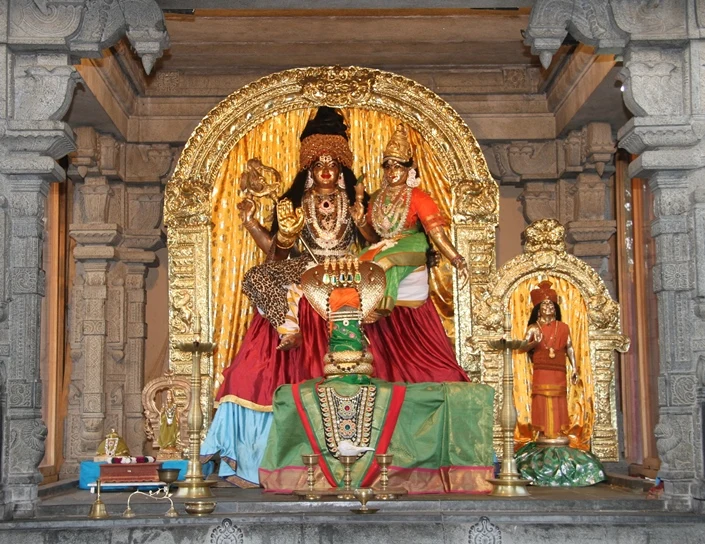
Temple Glimpses
Pada Puja
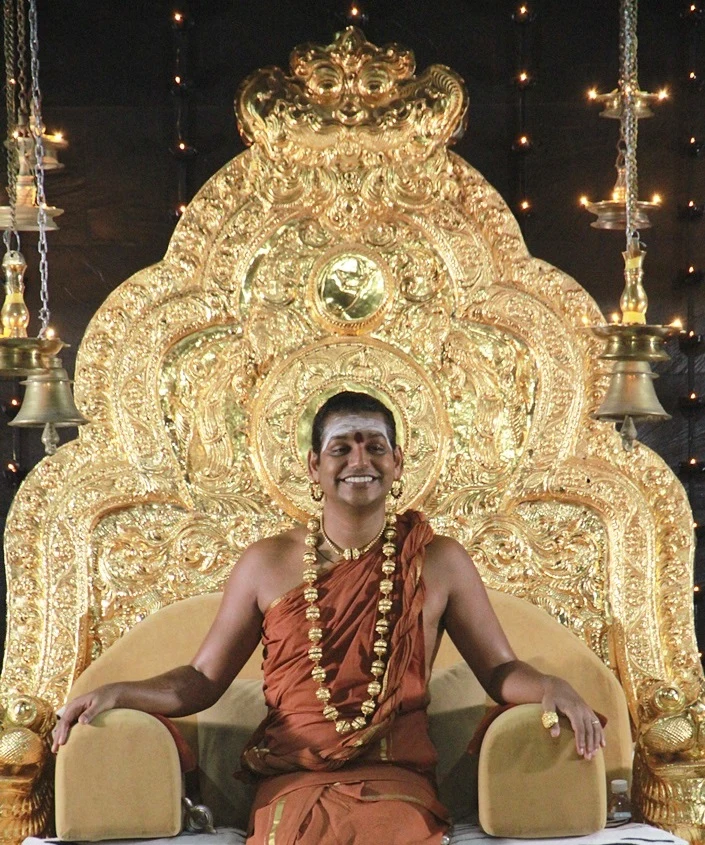
Morning Satsang
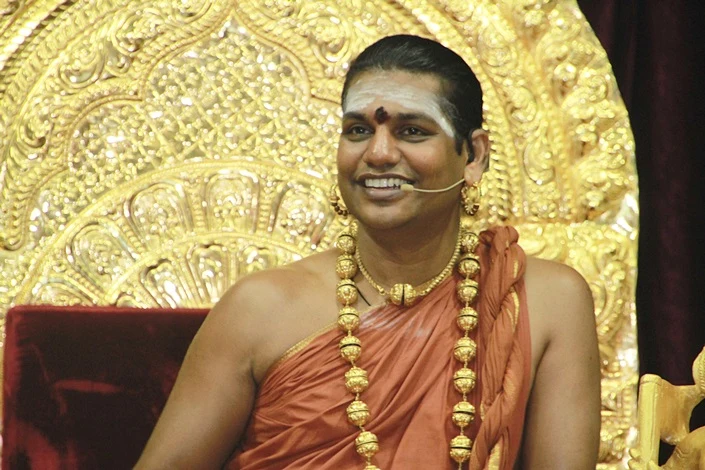
http://nithyananda.org/sites/default/files/photo-gallery/Nithyananda_Swami_09031319.JPG

Dail The Avatar

Swamiji Blesses All
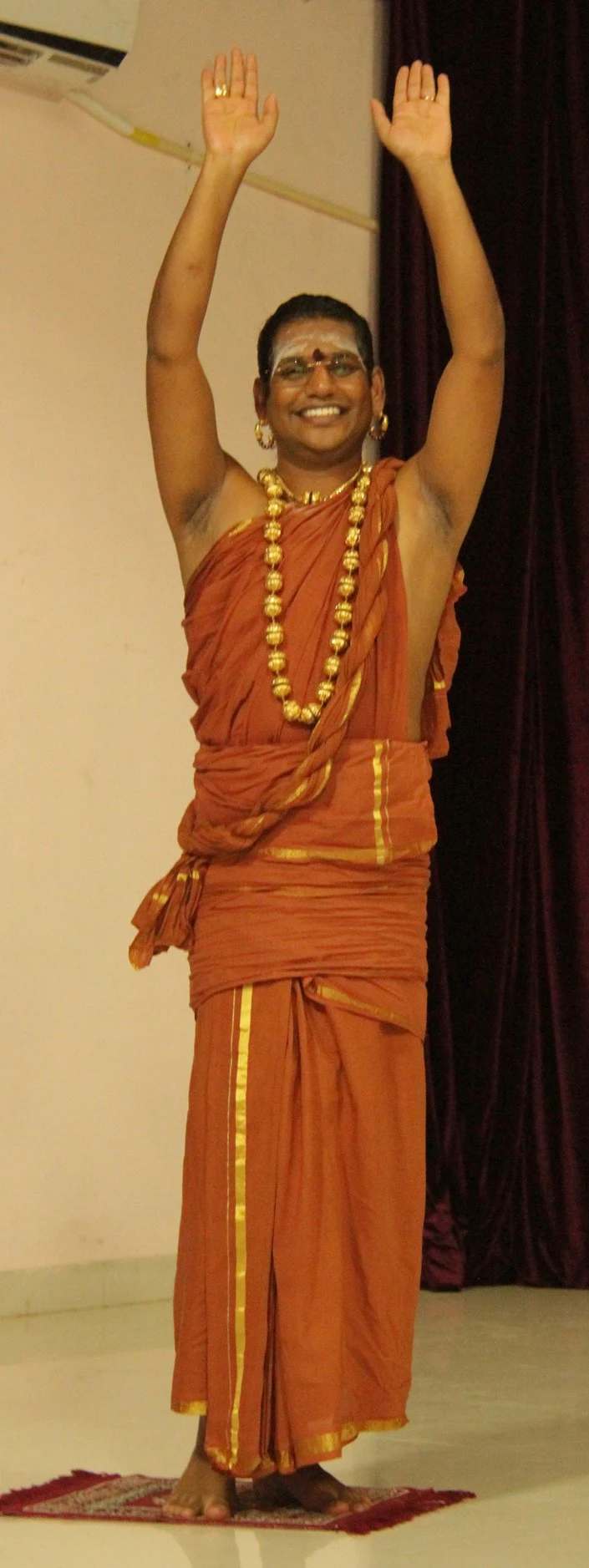
http://nithyananda.org/sites/default/files/photo-gallery/Nithyananda_Swami_09031322.JPG

Photos from this day

View all 19 photos

Temple Glimpses

2 photosSource gallery
A temple shrine photographed head-on, with a grey stone frame and a gilded arch behind a golden drape. At the centre sits a seated Shiva-Parvati murti: the goddess on the left wears a tall crown, a red sari and heavy jewellery, and holds a small mirror or lotus-like object, while the god on the right wears a red-and-green garment and a crown with a turban-like top. Between them is a tall green-and-gold kalasha-like pillar draped with a green cloth and a jewelled garland. Brass oil lamps stand on the stone platform in front, and a smaller standing devotee figure in red and gold appears at the right edge with a lamp. No living people are visible.A collage of five sunrise photographs at Adi Kailasa, Bengaluru. Top left shows a low orange-brick building with a decorative roofline under a glowing sun, with a path and a poster-like sign on the building's front. Top right shows the sun rising behind silhouetted trees above the same roofline and a tall flag. Middle right shows a large orange sun beside a tall flagpole and dark treetops. Bottom left shows a palm tree silhouetted against a bright sun. Bottom right shows a tall flag on a dark rooftop peak with the sun glowing behind it. No physical people are visible.

Pada Puja

6 photosSource gallery
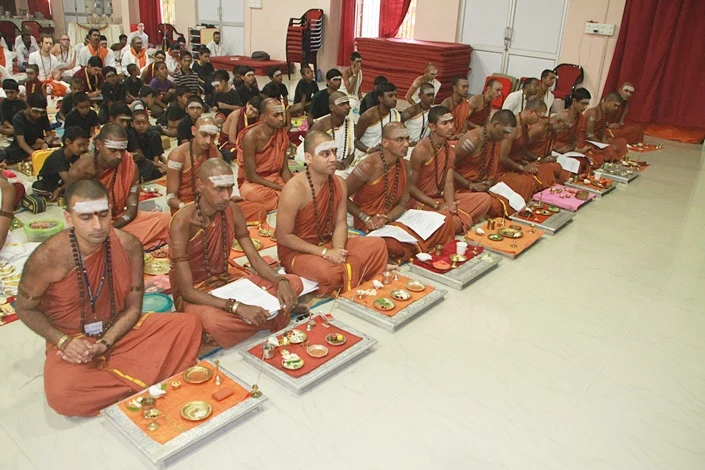
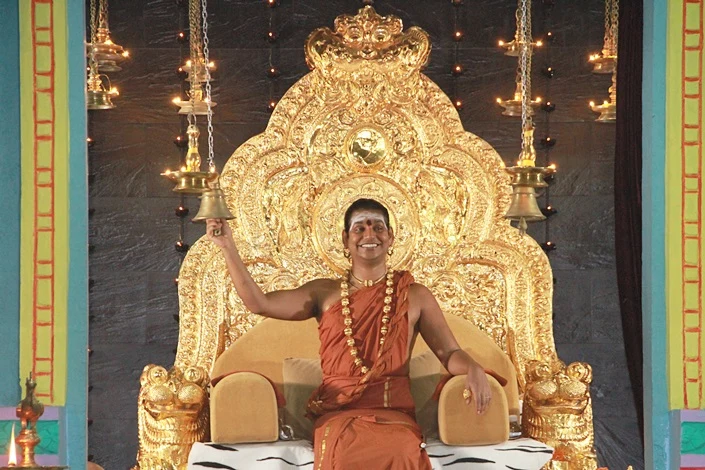
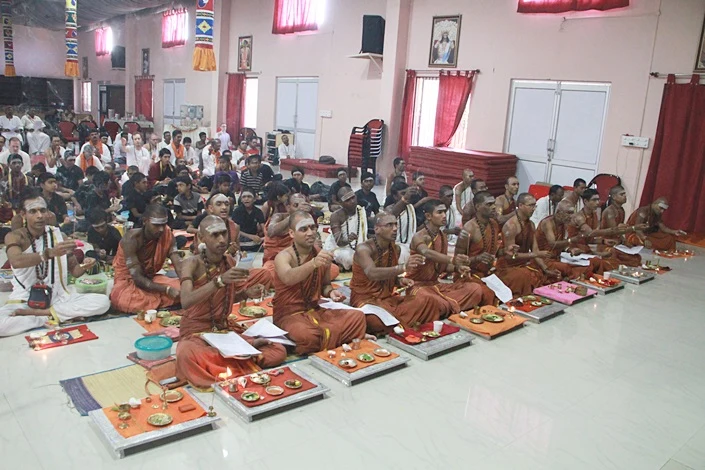
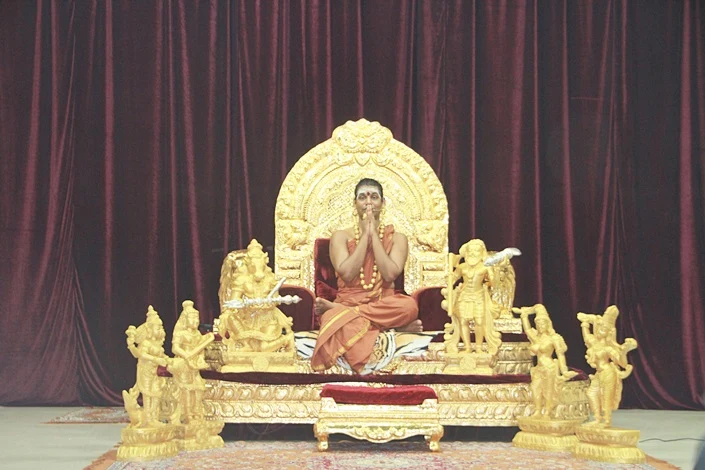
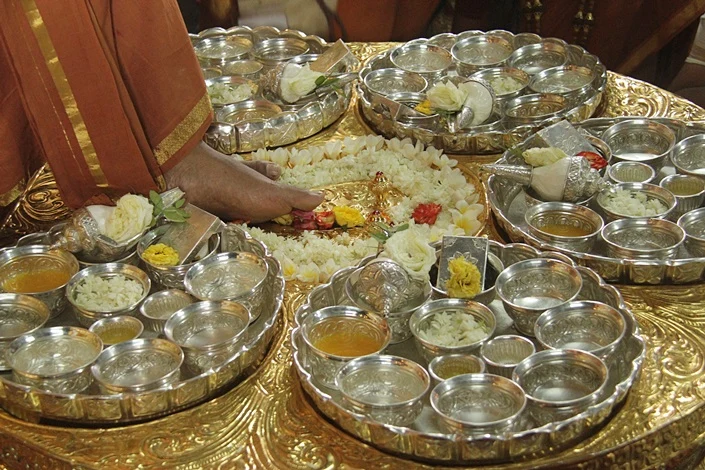
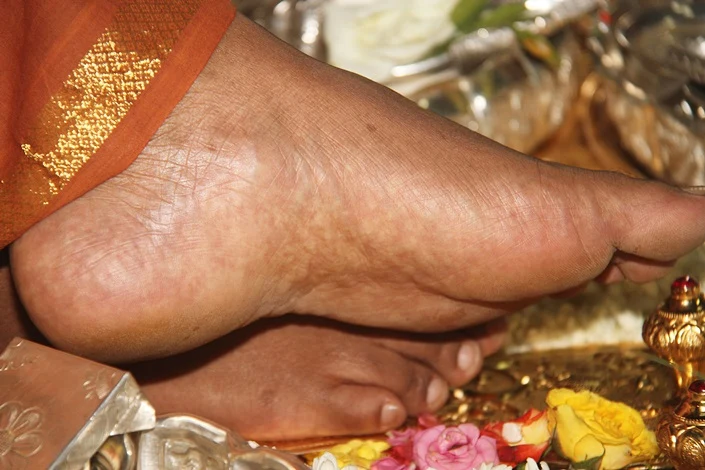
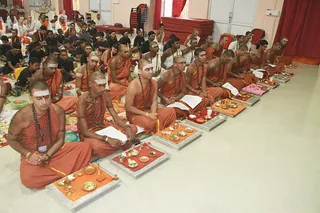
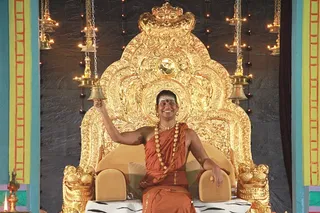
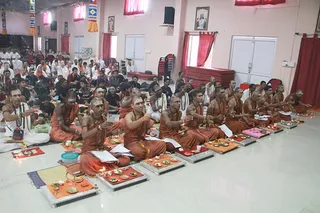
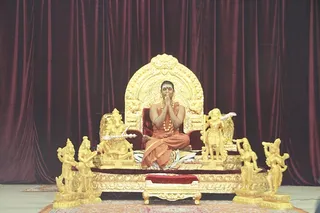
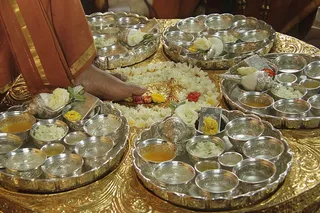
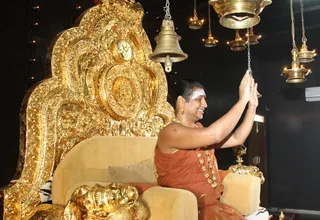
A smiling man with a shaved head sits on an ornate golden throne with elaborately carved gilt backrest and a large circular halo-like motif behind him. He wears an orange-saffron dhoti and shawl, a long gold bead necklace, gold earrings, a white vibhuti marking on his forehead with a red kumkum dot, and gold rings on his hand. Hanging brass oil lamps and bells frame the throne against a dark background with rows of small lamps.A row of shaved-headed men in saffron-orange dhotis and shawls sit cross-legged on a white floor during a ritual gathering. Each wears white tripundra markings on the forehead and rudraksha malas, and most hold white paper sheets, with brass thalis of lamps, flowers and offerings placed on orange-and-silver trays in front of them. Behind them, a larger audience in white, orange and dark clothing sits in rows under a red-curtained wall.A man seated on an ornate golden throne with lion-carved armrests and a large gilded backrest, flanked by hanging brass bells and dark pillars with green and yellow borders. He wears a saffron-orange shawl and dhoti, a gold necklace, a rudraksha mala, and a horizontal white-and-red tilak on his forehead. His right arm is raised holding a brass bell, and he smiles while seated on a white-and-black striped cloth. A small oil lamp is visible at the lower left edge. Depicted as a candidate a person by his saffron robe, gold necklace, rudraksha mala and forehead markings.A photograph of a large indoor hall with pale pink walls, red curtains and framed portraits on the wall. Rows of men in orange-saffron dhotis and shawls sit cross-legged on the floor before individual low trays holding small brass oil lamps, flowers, fruit and bowls of food, as if for a ritual puja. Several seated men in white dhotis and shawls sit among the rows and at the left edge; behind them a large crowd of people in white and orange clothing sits on the floor, and a stage area with a sound system is visible at the top left. The setting resembles a satsang or puja gathering with lamps and offerings laid out before the participants.A seated man in saffron-orange robes sits on an ornate gilded throne with a tall arched back, his palms pressed together in namaste. He wears a rudraksha mala and a gold necklace, with a bindi on his forehead. Around the raised platform stand gilded deity figures and a golden trident-like staff, with maroon velvet drapes hanging behind. A red cushion lies at the base of the dais. The gilded figures and throne are sculptural, while the seated figure is a live person in front of the drapes.Close photo of a padapuja ritual: a bare foot in an orange-saffron garment rests on a golden plate heaped with white flowers, rose petals and red and yellow blossoms. Around it are many silver and gold-rimmed bowls and trays holding rice, yellow liquid, white flower offerings and small betel or flower packets, all set on an ornate gold surface. Only the foot and lower garment are visible, so no face or full figure appears; the person is a devotee or priest in saffron clothing. Two cards with yellow flowers sit among the offerings.

Pada Puja

7 photosSource gallery
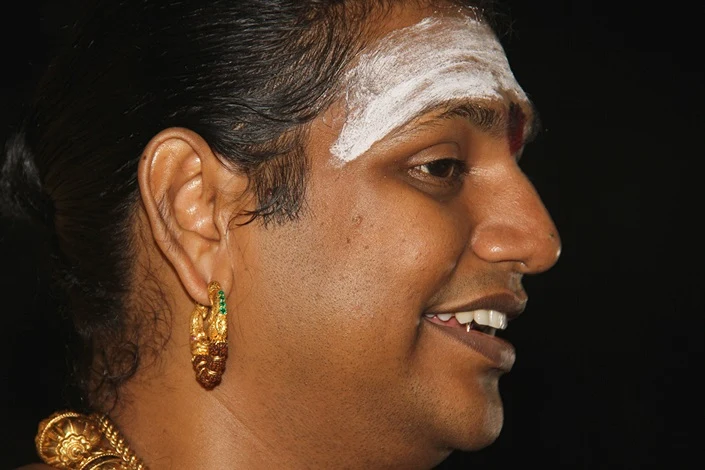
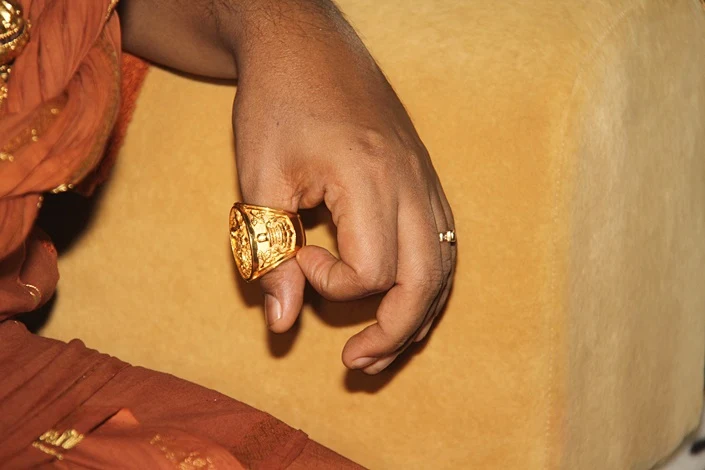
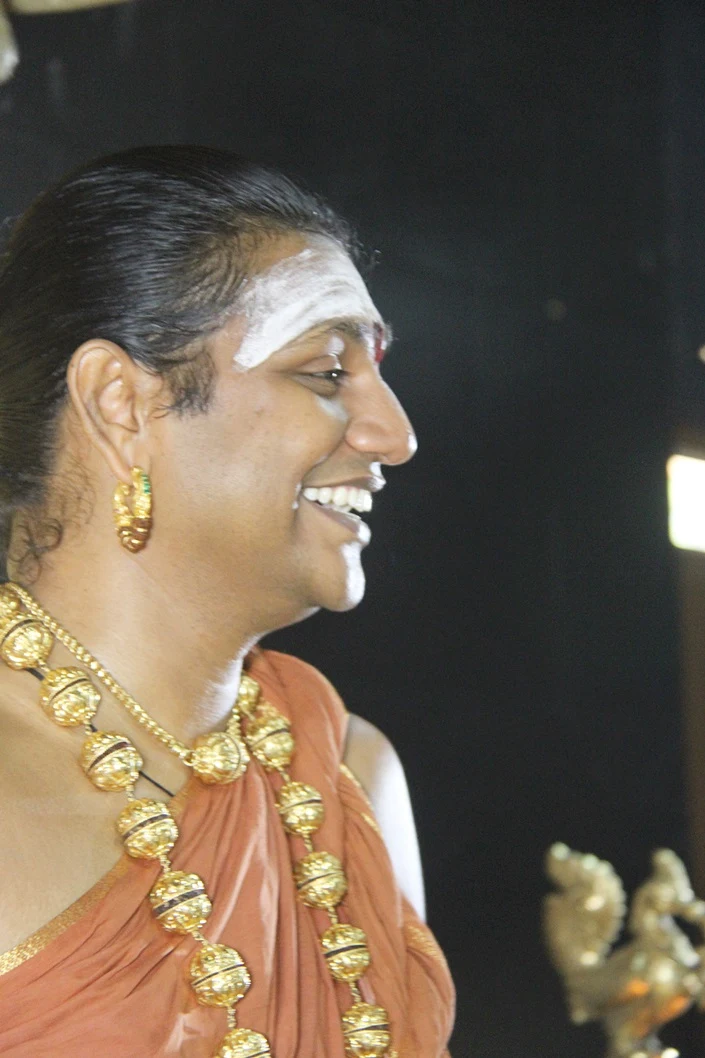
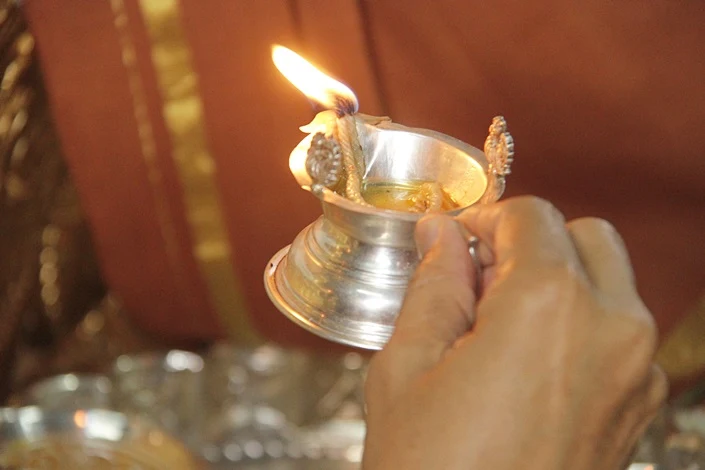
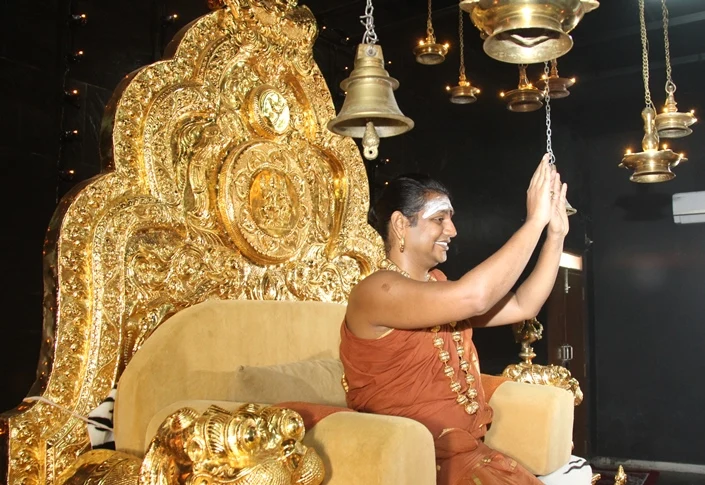
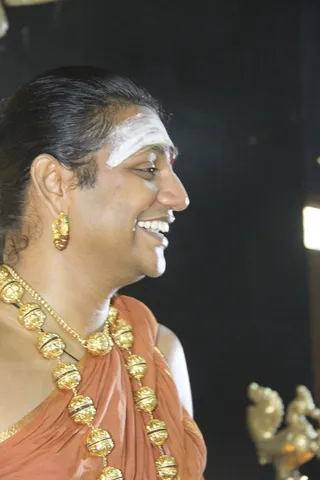
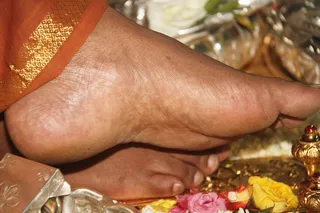
Close-up side profile photograph of a smiling man against a black background. He has a white horizontal line of sacred ash across his forehead with a red mark between the brows, dark hair pulled back, and an ornate gold earring set with a green stone. A gold necklace with a floral design is visible at the bottom edge. No other people are visible.Close-up photograph of a man's right hand resting on a mustard-yellow velvet cushion, with the index and middle fingers curled in a mudra-like gesture. He wears a large ornate gold ring with engraved floral and geometric patterns on the middle finger and a small white-stone ring on the little finger. Orange-saffron cloth with gold embroidered border is visible at the left edge, and a gold ornament is partly visible at the upper left. Only the hand and part of the clothed body are shown, so no face is visible.Close side-profile photo of a smiling man with slicked-back dark hair, a white vertical tilak across his forehead with a red mark at the centre, and a gold hoop earring. He wears a saffron-orange shawl over a bare shoulder and a layered necklace of large gold beads with dark stripes and a fine gold chain. The background is dark, with a warm light at the right edge and a partial gold statue figure in the lower right. a person by appearance cues: ceremonial gold necklace, orange-saffron wrap, and tilak, shown as an in-person candidate in a satsang-style setting.Close-up photograph of a pair of bare feet resting on a brass tray during a padapuja ritual. The feet belong to a person wearing an orange silk garment with a gold zari border visible at the upper left. Around them are yellow, pink and red rose petals and flowers, a small ornate gold-toned vessel at the right, and silver-coloured ritual vessels at the left and top. Only the feet and lower garment are visible; no face or other person is shown.Close-up photo of a hand holding a small polished silver oil lamp with a lit wick and yellow oil, its flame rising at the upper left. The lamp has decorative scroll handles on either side and a footed base. Behind the hand is a blurred backdrop of reddish-brown and gold fabric with a gold border, and clear glass or metal vessels sit out of focus at the bottom edge. The scene suggests an aarti or lamp offering during a temple ritual. No face is visible and no person other than the hand can be seen.A man seated on an ornate gold throne with carved floral and figural panels, palms pressed together in namaskar and smiling. He wears an orange-saffron dhoti and shawl, a rudraksha-style bead necklace with gold ornaments, and a white vertical tilak on his forehead. Above him hang brass oil lamps and a large brass bell on chains, and a wall-mounted air conditioner is visible in a dark room.

Dail The Avatar

2 photosSource gallery
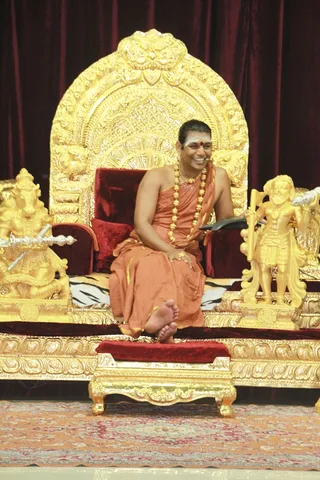
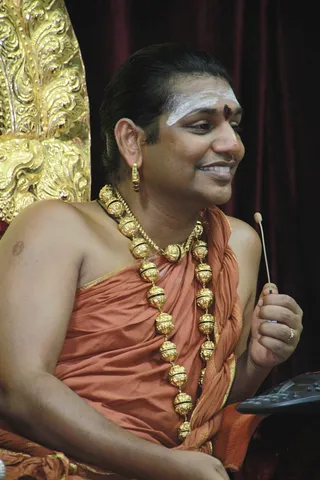
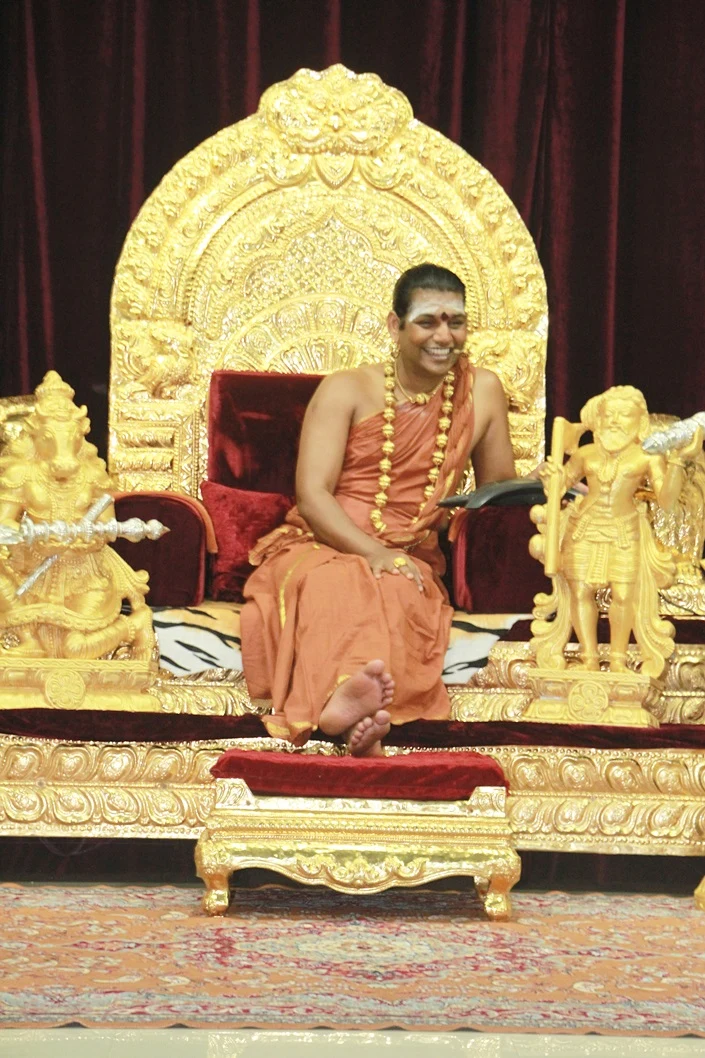
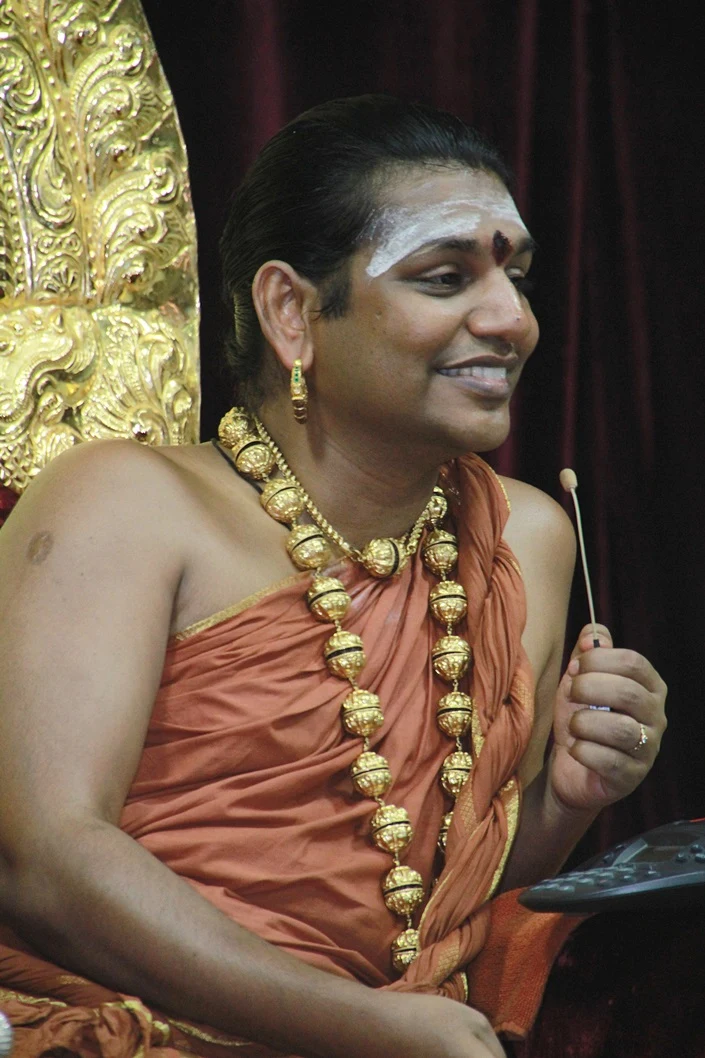
A smiling man sits on an ornate gold throne with a deep red velvet seat and cushion, backed by red velvet drapes. He wears an orange-saffron dhoti-style garment draped over one shoulder, a gold necklace with beaded gold mala, and a red bindi and white tilak on his forehead. His bare feet rest on a small gold footstool with red velvet top. Gilded deity figures flank the throne, including a figure holding a sword on the left and a standing figure holding a staff on the right. A patterned red carpet covers the floor. The photo appears to be from a stage event.Close photo of a smiling man seated in front of an ornate gold throne with carved floral details and a deep red velvet backdrop. He has slicked-back dark hair, white vertical tilak on the forehead with a red dot, and a gold stud earring. He wears a rust-orange shawl draped over one shoulder and a heavy gold rudraksha-style bead necklace with a gold chain. He holds a small white-tipped wand or microphone-like stick near his chest and looks to one side. Appearance-based label: a person, seated on a throne in saffron-toned ceremonial dress. Single person visible.

March 09 2013

2 photosView all
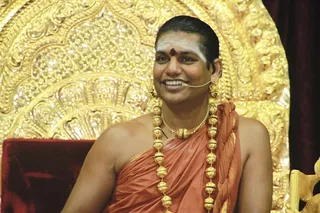
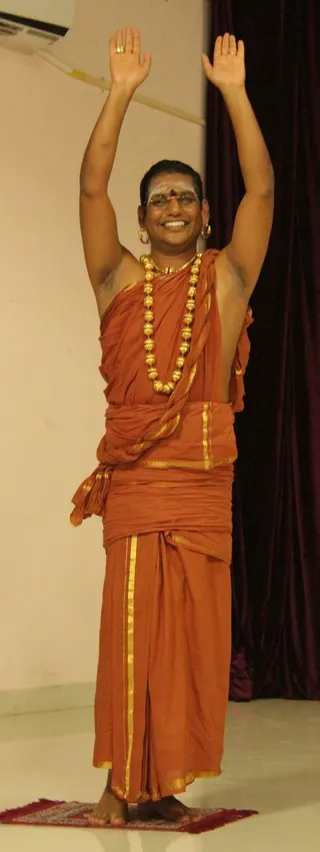
A smiling man sits on a red velvet throne with an ornate gold-embossed backrest. He wears an orange-saffron shawl draped over one shoulder, a heavy gold necklace and long gold bead malas, gold earrings, and a small red bindi with white sacred ash markings on his forehead. A small headset microphone is attached near his face. The setting appears to be a stage or satsang hall. a person: the appearance cues of orange robe, gold ornaments, bead malas and ceremonial throne match the page's claim of a person presiding at this event, so the figure is labelled as a probable candidate; the person is seated in person.A smiling man stands barefoot on a small red patterned mat, arms raised overhead with palms open, in front of a maroon velvet curtain and a white wall with an air conditioner. He wears a rust-orange dhoti and shawl with gold borders, a heavy gold bead necklace, gold hoop earrings, glasses, and a white and red tilak on his forehead. The appearance matches the a person cues: ornate saffron-orange clothing, a rudraksha-style gold mala and ceremonial gold necklace, though the page is an event photo and the scene shows a yoga-style standing pose.