Skip to content
Thursday

8 November 2012

Supreme Pontiff of Hinduism HDH Bhagavan Sri Nithyananda Paramashivam

Dated photos
14
Source pages
1
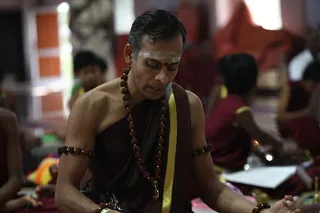
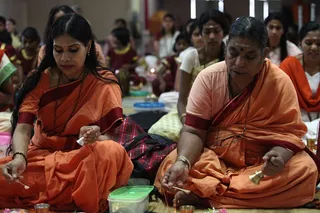
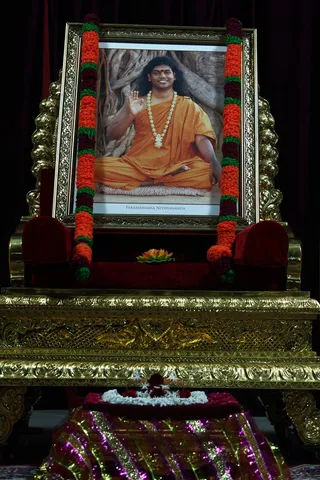
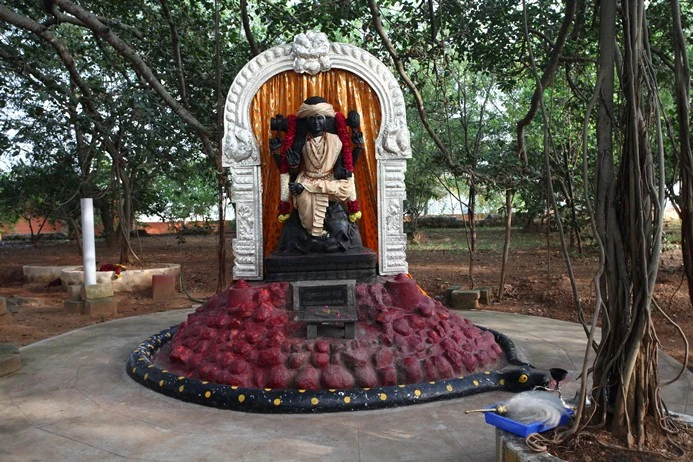
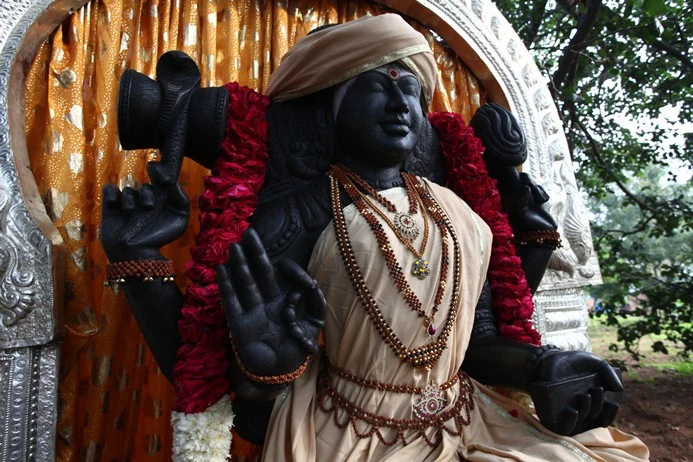
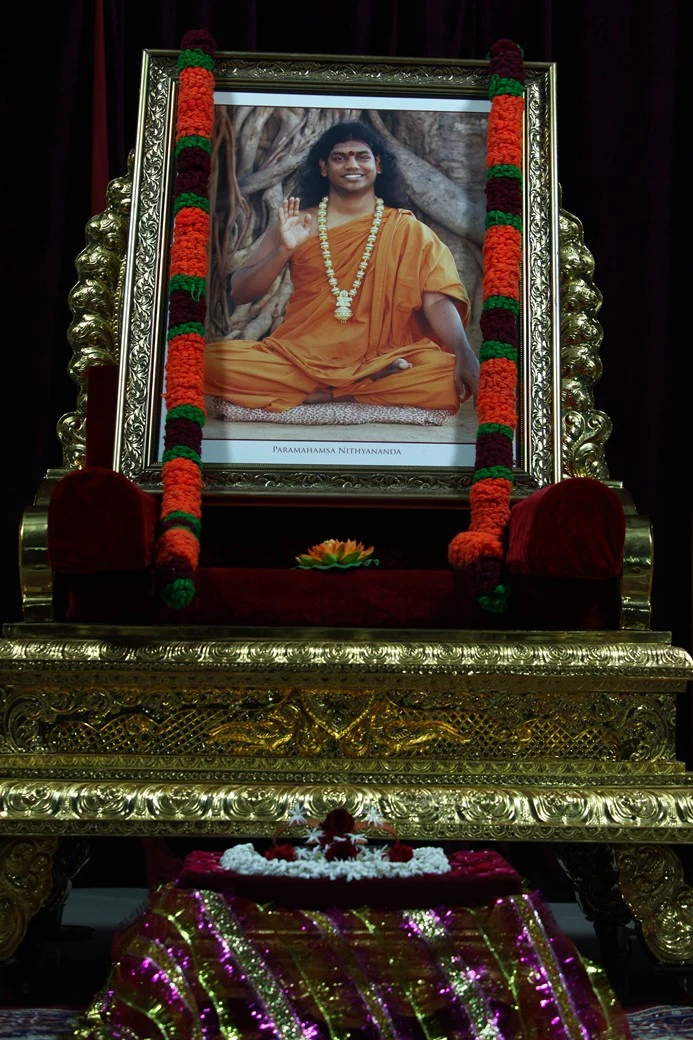
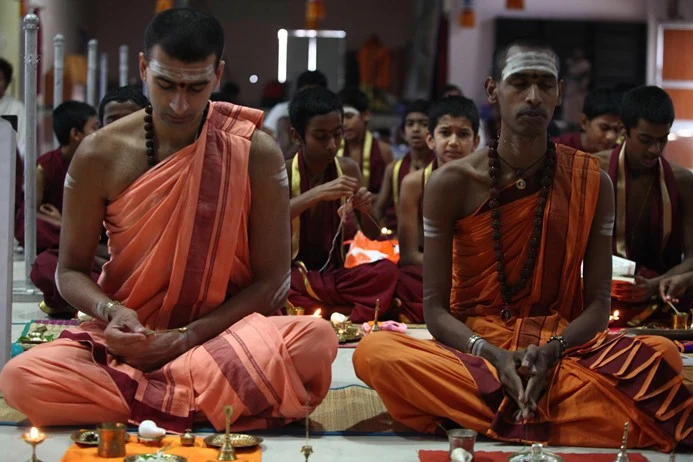
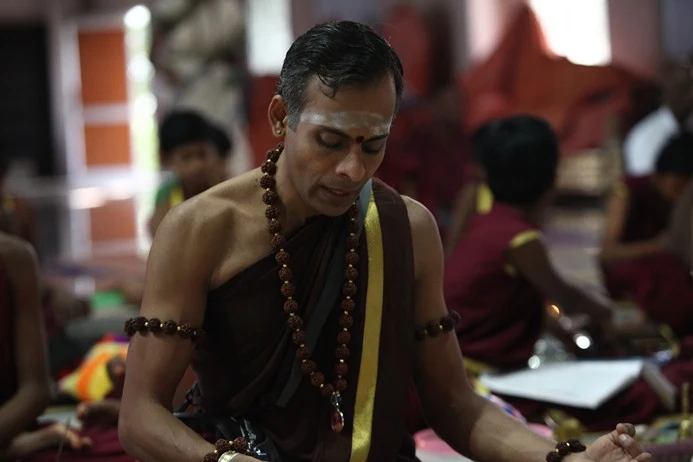
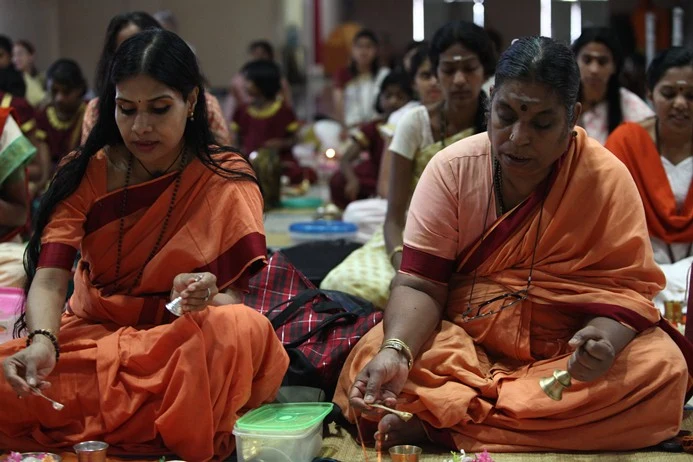
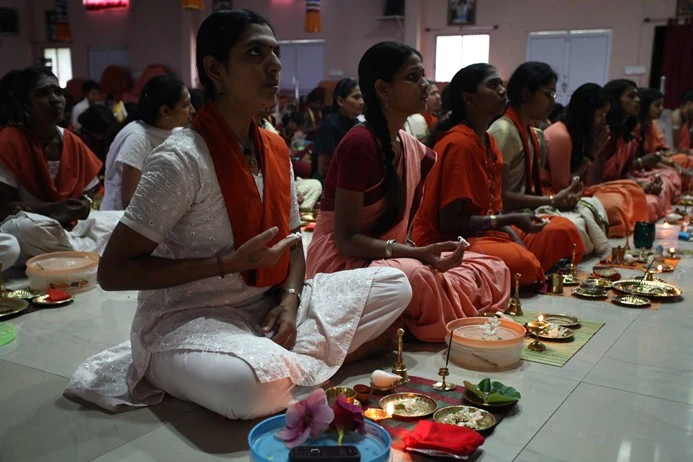
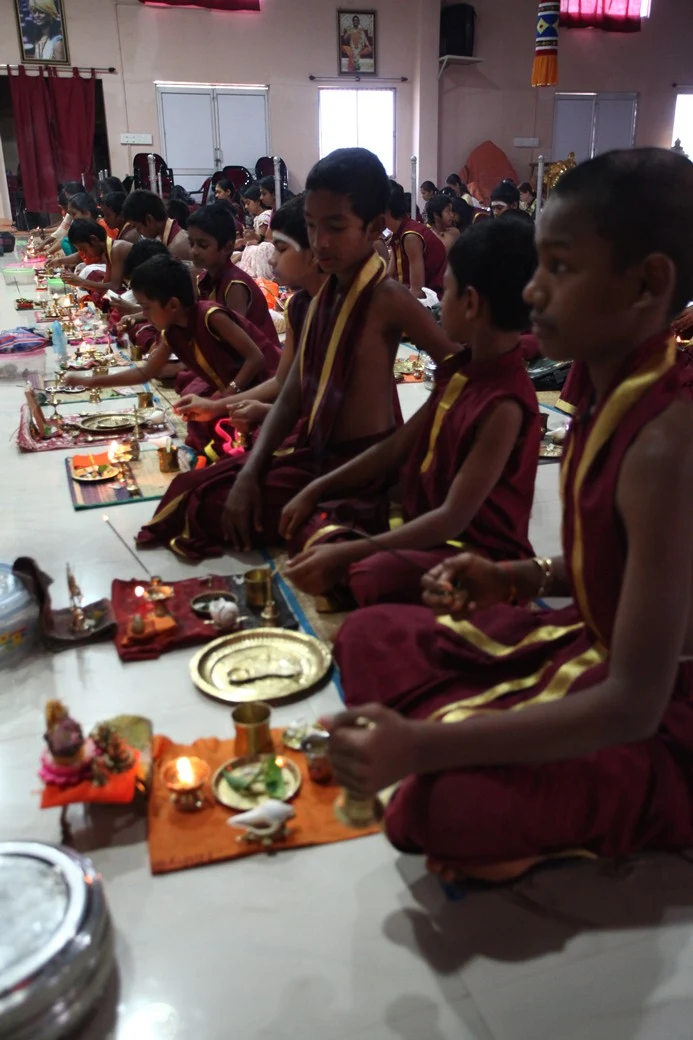
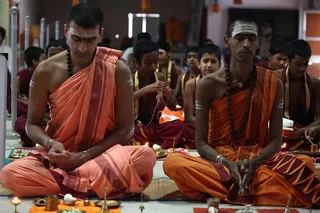
A photograph of a seated man in a dark brown, unstitched wrap with a yellow-gold border, eyes lowered in meditation. He wears multiple rudraksha mala necklaces and bracelets, a red bindi and a white forehead mark, and sits with hands resting in a mudra on his lap. Behind him, several younger people in maroon and red robes sit on the floor in a bright hall with orange and red cloth draped on the walls. A small oil lamp and papers are visible on the floor in the foreground. The main figure has rudraksha malas and a shaved-looking short hairstyle, and the page indicates a person at this event, but the appearance cues are not distinctive enough to confirm identity, so the candidate is described by role only.Two women in orange saris sit cross-legged on a mat in the foreground during a ritual. The woman on the left, with long dark hair and rudraksha beads, holds a small spoon over a steel bowl. The older woman on the right, wearing a red bindi and a rudraksha mala, holds a brass bell and a small ritual implement above a metal dish. Behind them, other participants in orange and maroon clothing sit in rows, and a plastic container, small cups and a lit oil lamp are visible on the floor.A framed portrait labelled "Paramahamsa Nithyananda" sits on an ornate gold throne-like stand draped with red and orange garlands. The portrait shows a smiling man with long dark hair in an orange robe, a white flower necklace, seated before a banyan tree trunk with one hand raised in blessing. Below the throne is a cushion strewn with white flowers and red blossoms, and a lotus-shaped floral decoration sits on the red velvet seat. No physical people are visible in the scene.

November 08 2012

Original wiki page
Contents

Title:

Supreme Pontiff of Hinduism HDH Bhagavan Sri Nithyananda Paramashivam

Photos From The Day:
Photos from this day

View all 14 photos
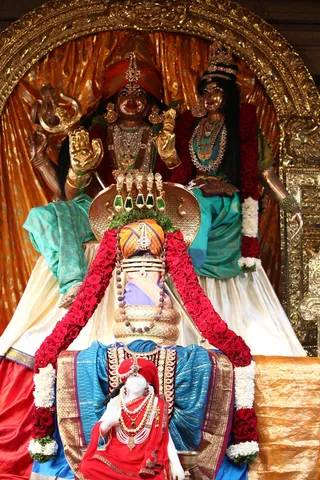
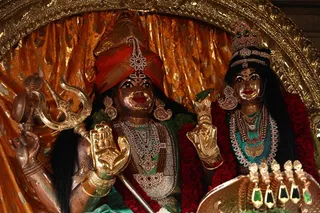
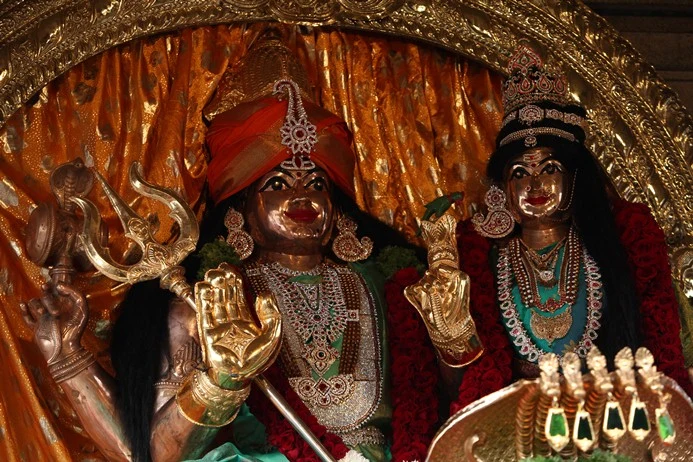
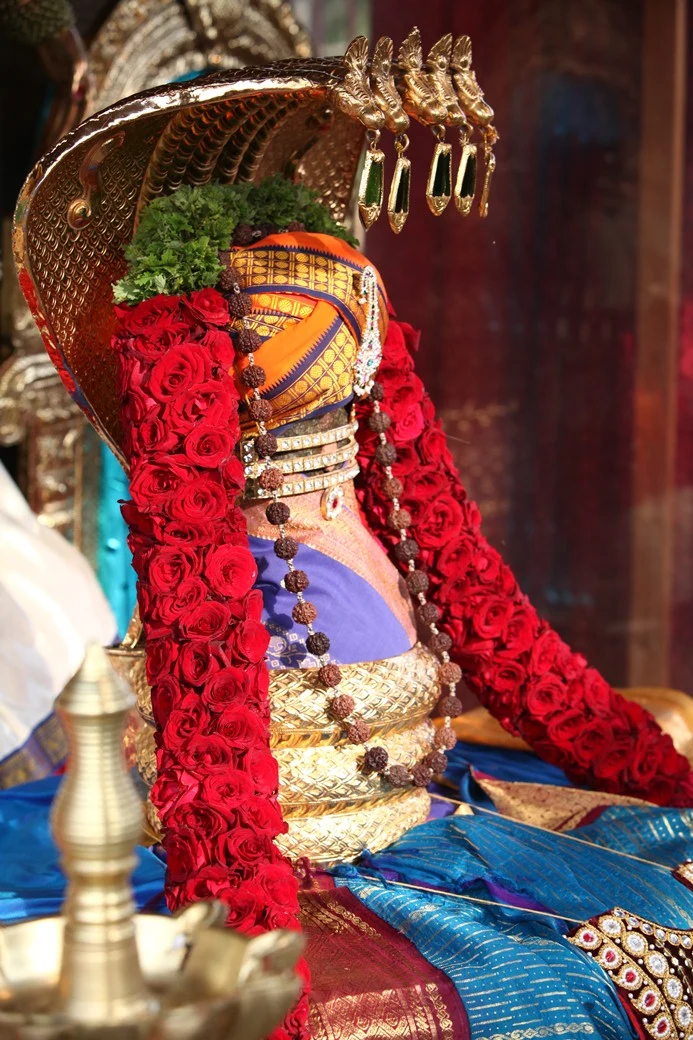
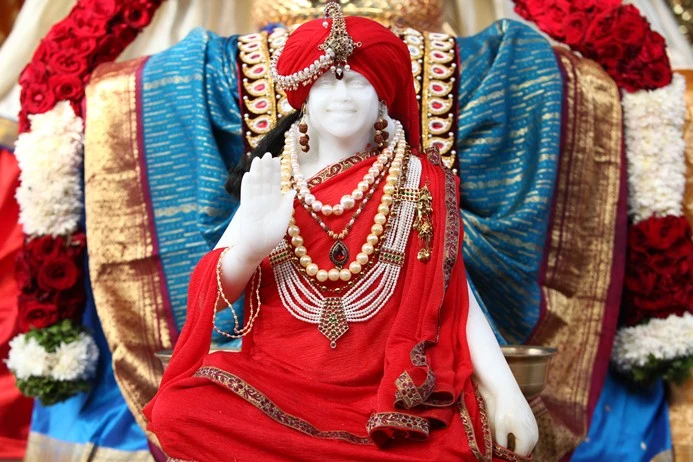
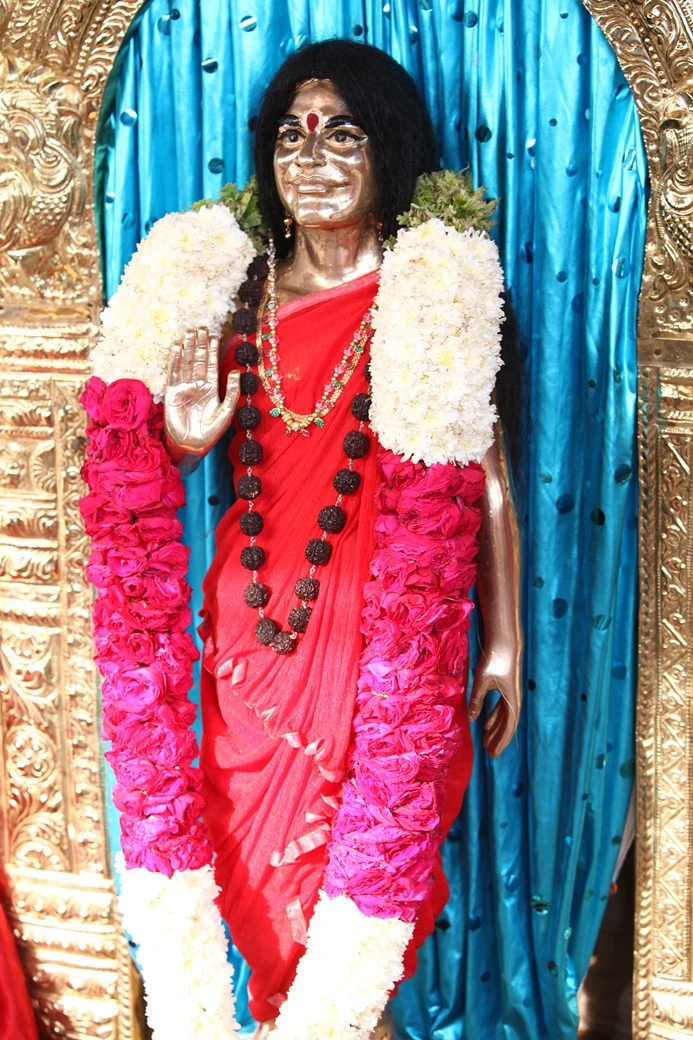
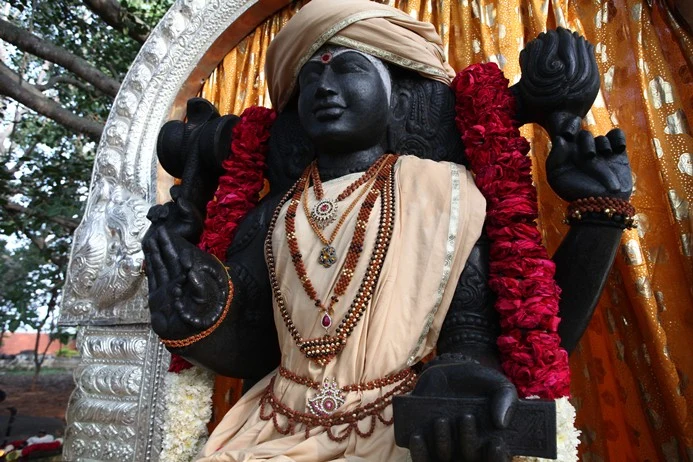
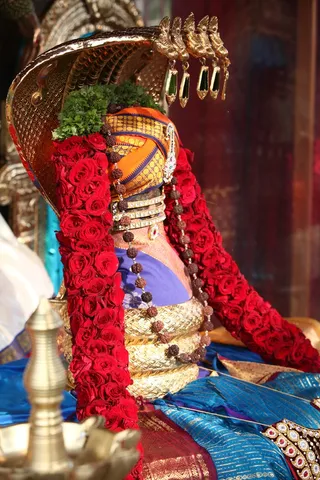
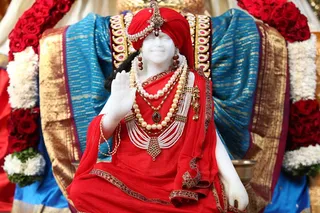
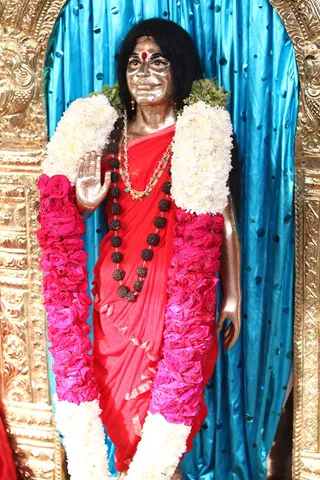
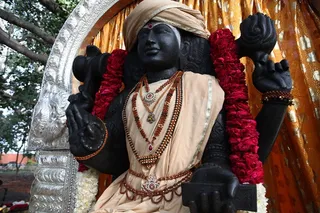
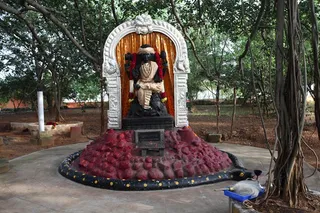
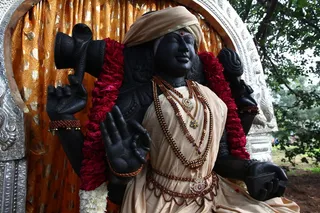
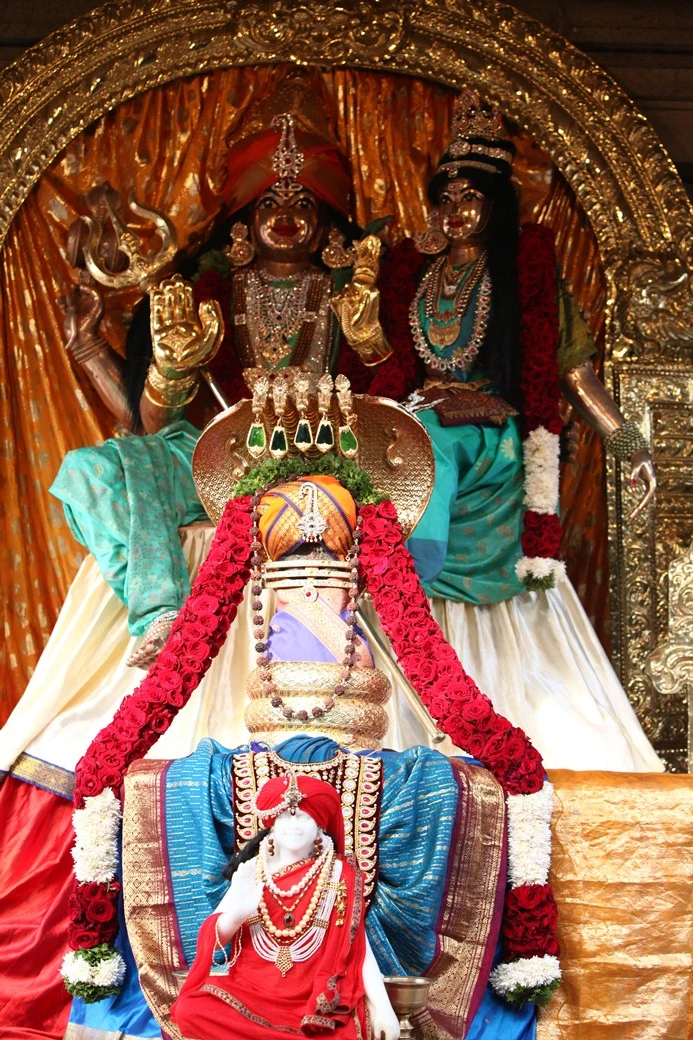
A shrine arrangement of deity murtis set against a gold arched backdrop with gold and orange draped cloth. Two large standing deity statues in teal and green garments stand behind, one with a trident and one with a tall crown and green-gemmed ornaments, both garlanded with red roses. In the centre is a white shivalinga-like form wrapped in a blue and gold cloth with a tall striped crown, and beneath it a small white statue in red garments with necklaces and a red headpiece, also garlanded with roses and white flowers. No physical people are visible; the figures are statues only, and no identifiable person is present.Two large deity murtis, a golden-hued figure and a female figure, stand before a gold-brocaded orange silk backdrop with an ornate gilded arch. The left figure wears a red turban with a jewelled ornament, holds a golden trident, and wears a green garment with layered silver and jewelled necklaces and jewelled earrings. The right figure wears a crown, red-and-gold bindi, layered red and white flower garlands, and bead and gemstone necklaces, and raises a hand near a golden tray of lamps with green stone accents. These are statues, not physical people. Visible ritual setting suggests a temple sanctum decoration.A photograph of a deity murti, a ceremonial figure dressed for worship rather than a living person. The face is not visible; the head is covered in a red garland of roses and fresh green leaves beneath a gilded crown-like headdress with hanging golden ornaments. Strands of rudraksha beads hang across the chest. The figure wears an orange and gold turban-like cloth, gold bands at the neck, a purple blouse-like covering, and a blue and gold silk drape with embroidered borders. A brass lamp stands in the lower left foreground.A white marble statue of a seated sage or guru, with the right hand raised in blessing. The figure wears a red turban with a jeweled ornament, a red shawl draped over red robes with gold border, multiple strands of pearls and red beads, a red pendant, and bangles. Behind it is a blue and gold brocade backdrop, and red roses and white flower garlands frame the figure. Since this is a statue, no physical people are present.A golden statue of a standing male figure with long dark hair and a red bindi, wearing a red sari-style drape, a rudraksha mala, a beaded necklace and white and pink flower garlands. The raised right hand is in a blessing gesture. Behind it hangs a turquoise satin backdrop with ornate gold carved frame around it. The statue is a depiction, not a living person.A dark stone deity murti stands in an outdoor setting, wearing a cream-colored dhoti-style cloth with a silver border and a cream turban. Multiple layered rudraksha malas and beaded necklaces with a central gold pendant adorn the chest, and red and white flower garlands drape the figure. Its arms are raised holding ritual objects. Behind it hang gold-orange draped fabric and an ornate silver arch, with trees and a building visible in the background.A photograph of an outdoor shrine set among large trees with aerial roots. A dark stone statue stands within an ornate white arched niche with an orange cloth backdrop, wearing a light-coloured garment and a headpiece, adorned with red and white garlands. The figure sits on a dark pedestal, with a small plaque beneath. The base is heaped with red-stained stones or offerings, edged by a black and gold-dotted border. Stone steps and a paved platform surround it, with a blue container and a small white post nearby. This is a statue, not a living person.A dark stone statue of a multi-armed deity murti sits before a gold curtain and silver arch outdoors, under trees. The figure wears a cream draped garment, a cream turban with a red tilak, layered rudraksha-style beaded malas, and a gold pendant. Red and white flower garlands drape over the shoulders, and the raised hands hold ritual implements.A framed portrait labelled "Paramahamsa Nithyananda" sits on an ornate gold throne-like stand draped with red and orange garlands. The portrait shows a smiling man with long dark hair in an orange robe, a white flower necklace, seated before a banyan tree trunk with one hand raised in blessing. Below the throne is a cushion strewn with white flowers and red blossoms, and a lotus-shaped floral decoration sits on the red velvet seat. No physical people are visible in the scene.Indoor ritual scene with several young men and boys seated on a mat in saffron and orange dhotis and shawls, with white and red ash marks on their foreheads and rudraksha malas. In the foreground two seated men with bare upper bodies hold their hands together in prayer, with brass puja vessels, small oil lamps, a kalasha and flowers set on the floor before them. Behind them more boys in maroon and red robes sit in rows, some holding offerings, in a hall with pillars and orange lighting. No individual is identifiable as a person from appearance cues in this view.A photograph of a seated man in a dark brown, unstitched wrap with a yellow-gold border, eyes lowered in meditation. He wears multiple rudraksha mala necklaces and bracelets, a red bindi and a white forehead mark, and sits with hands resting in a mudra on his lap. Behind him, several younger people in maroon and red robes sit on the floor in a bright hall with orange and red cloth draped on the walls. A small oil lamp and papers are visible on the floor in the foreground. The main figure has rudraksha malas and a shaved-looking short hairstyle, and the page indicates a person at this event, but the appearance cues are not distinctive enough to confirm identity, so the candidate is described by role only.Two women in orange saris sit cross-legged on a mat in the foreground during a ritual. The woman on the left, with long dark hair and rudraksha beads, holds a small spoon over a steel bowl. The older woman on the right, wearing a red bindi and a rudraksha mala, holds a brass bell and a small ritual implement above a metal dish. Behind them, other participants in orange and maroon clothing sit in rows, and a plastic container, small cups and a lit oil lamp are visible on the floor.