Skip to content
Tuesday

31 July 2012

Supreme Pontiff of Hinduism HDH Bhagavan Sri Nithyananda Paramashivam

Dated photos
364
Source pages
1
Media
4
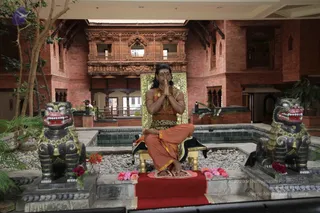
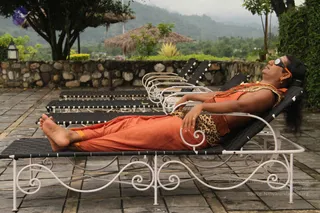
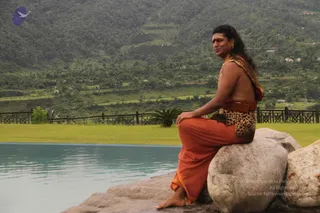
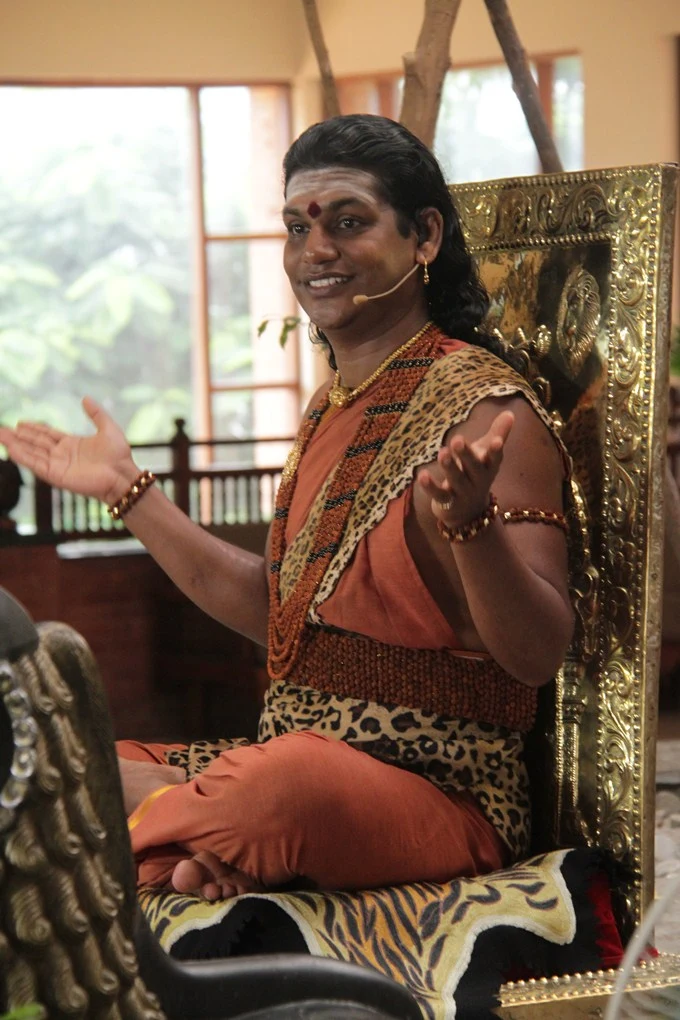
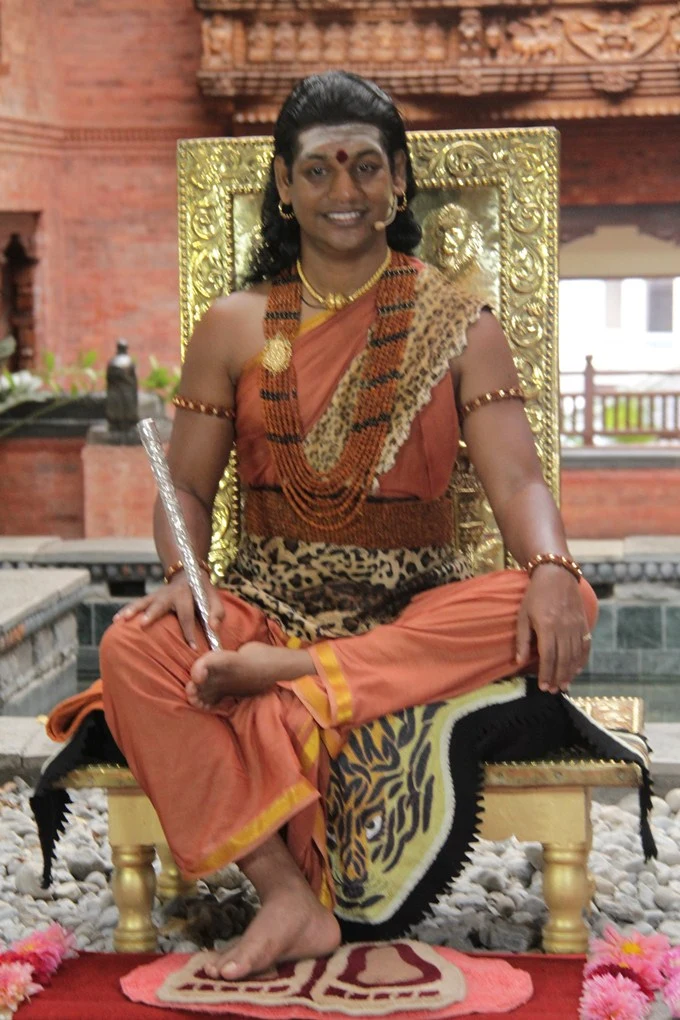
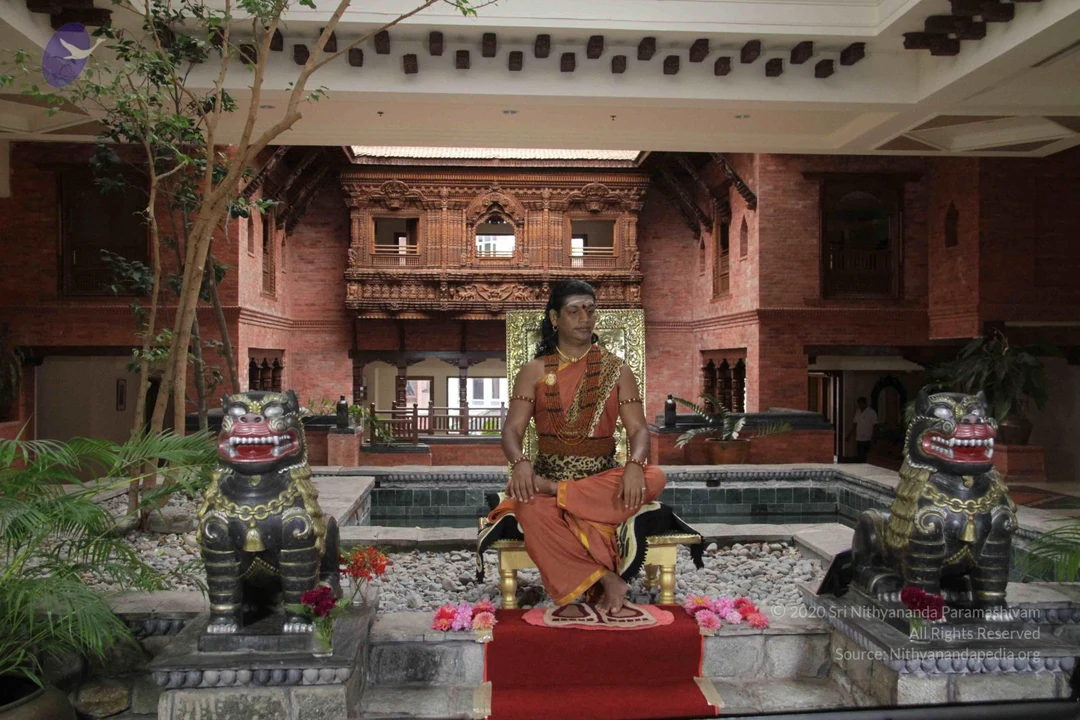
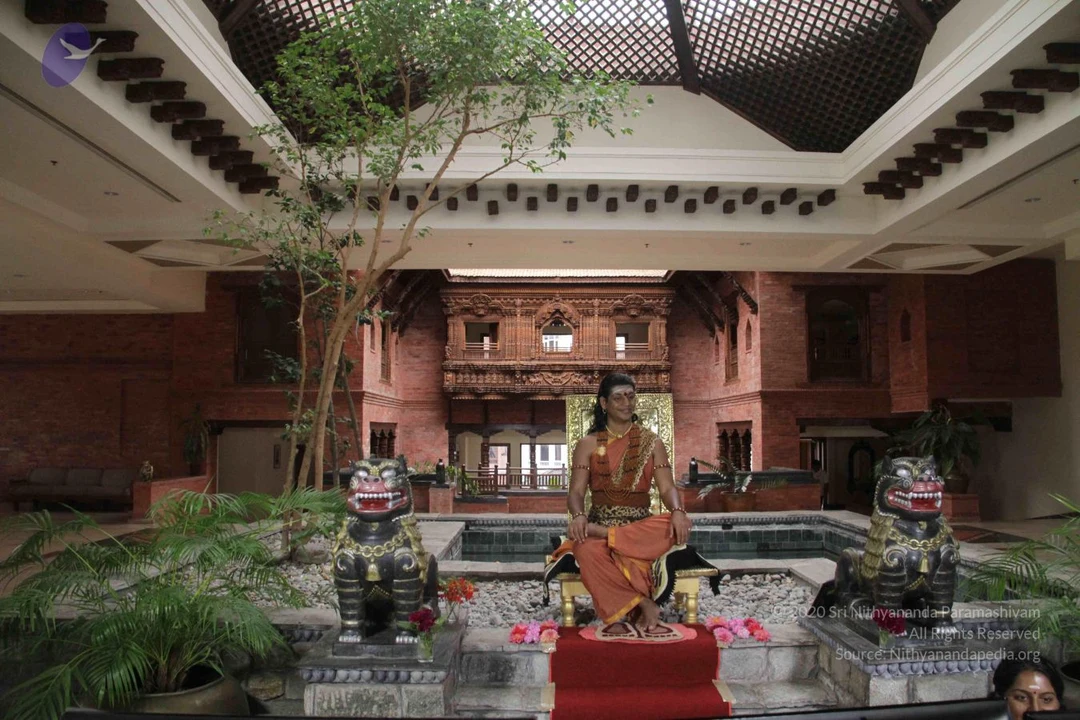
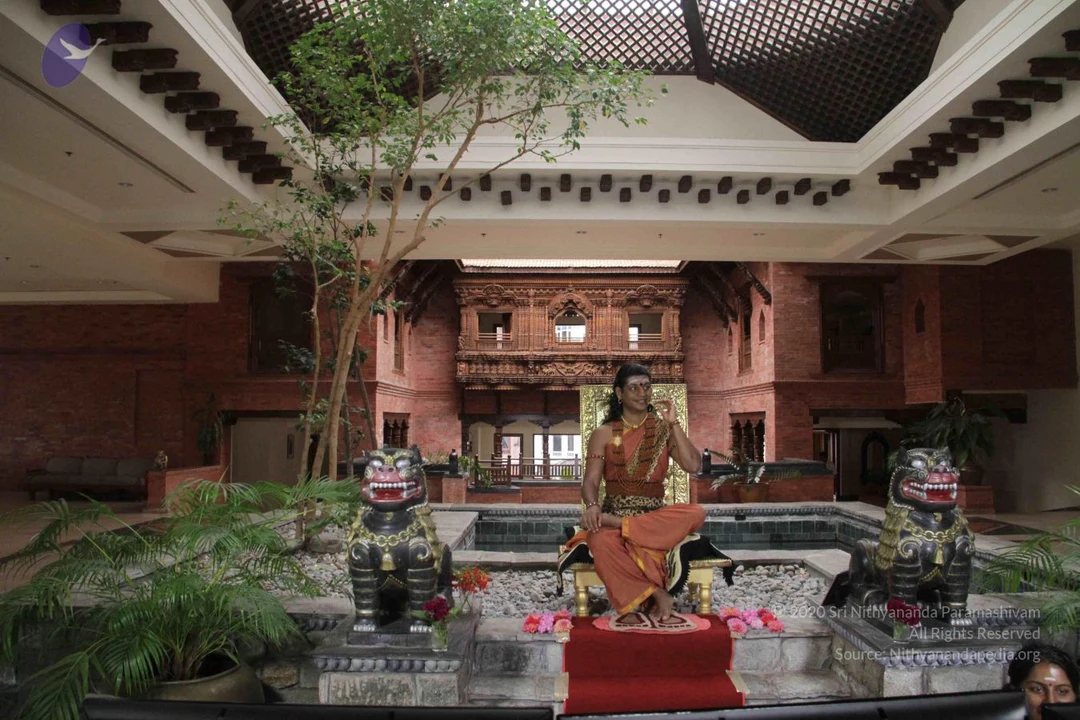
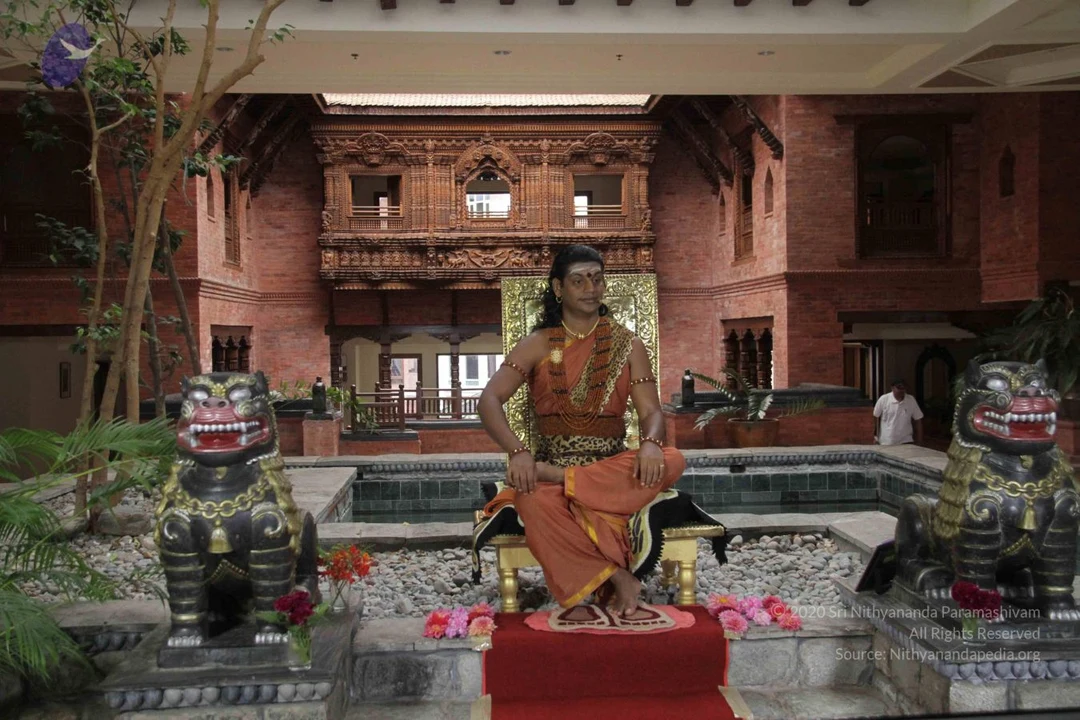
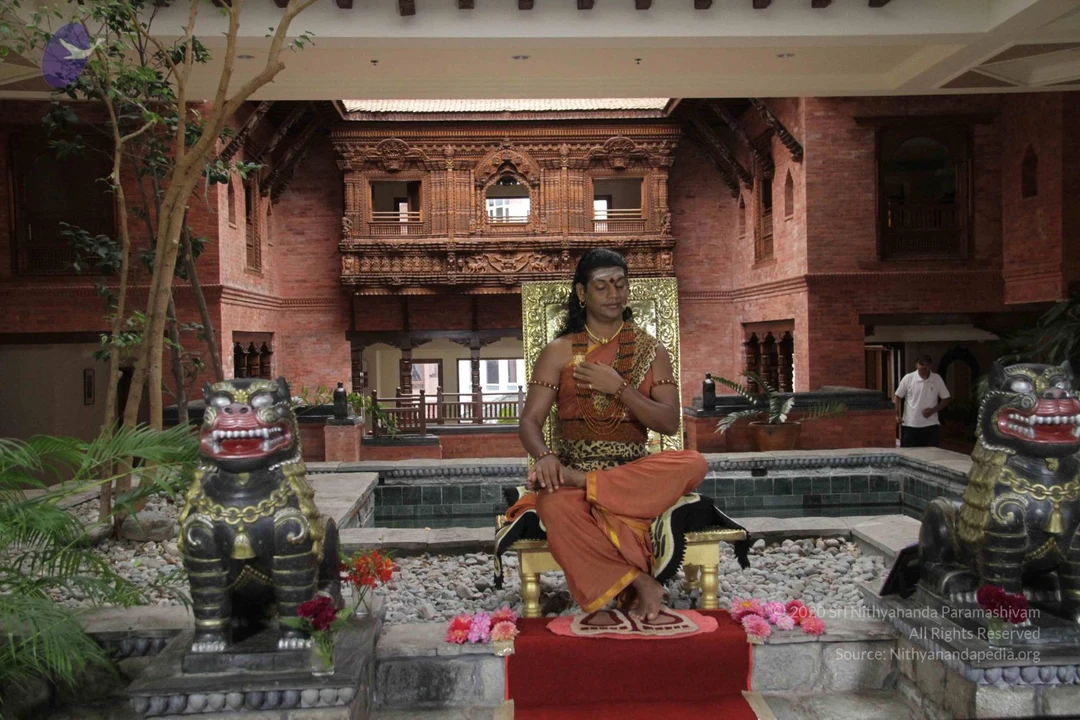
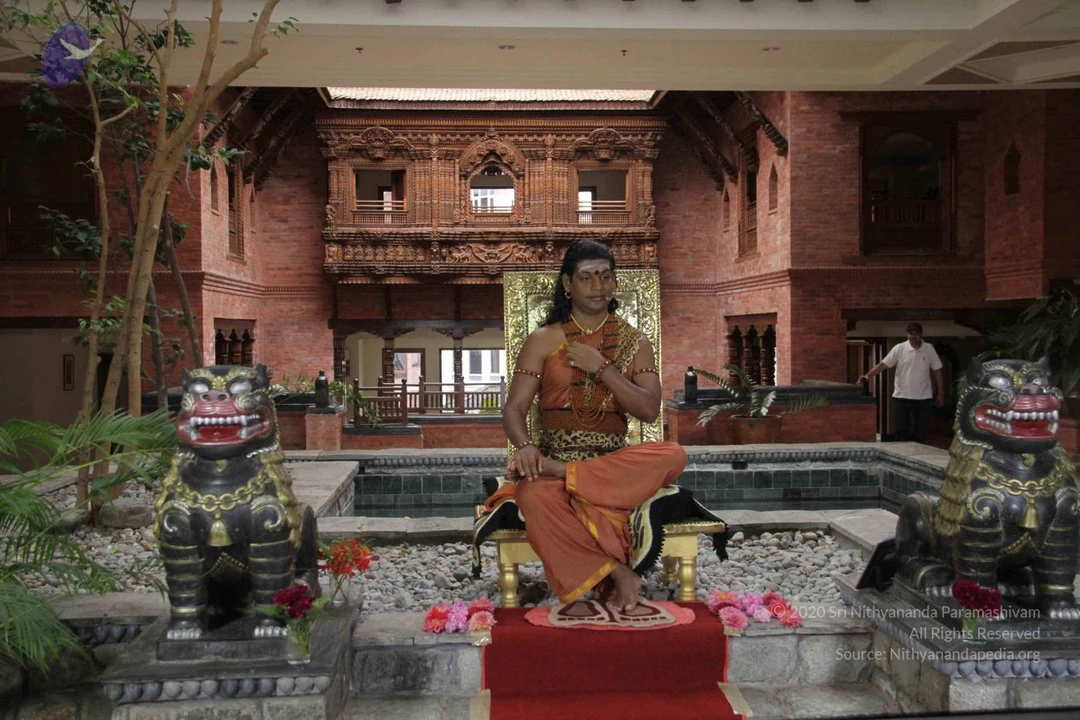
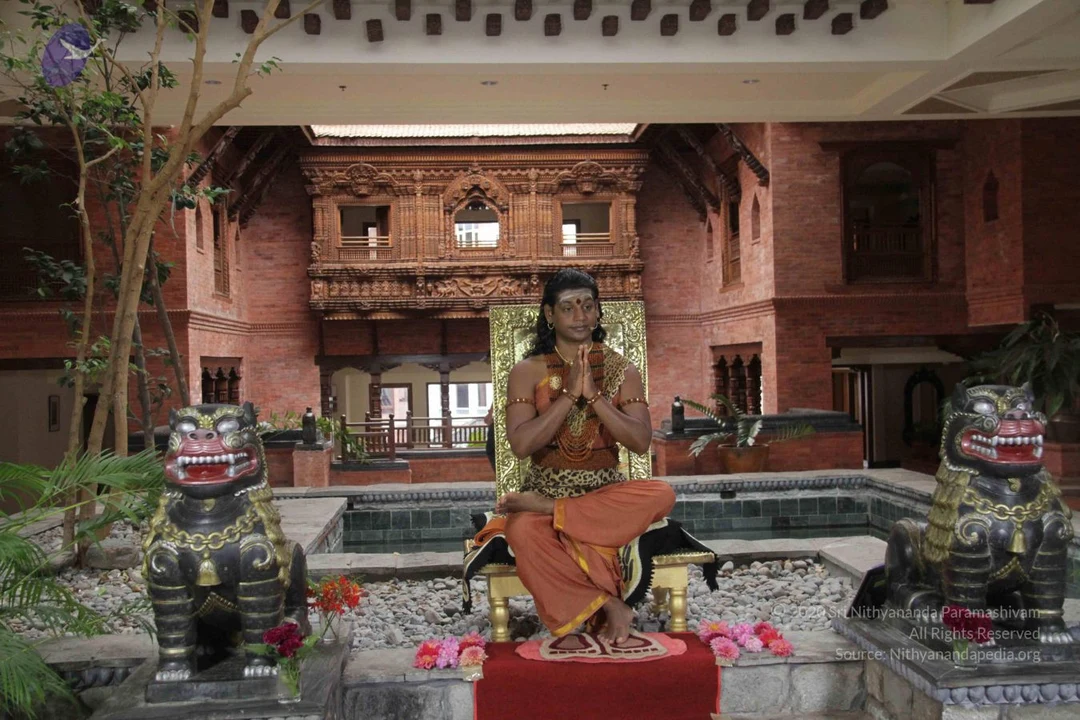
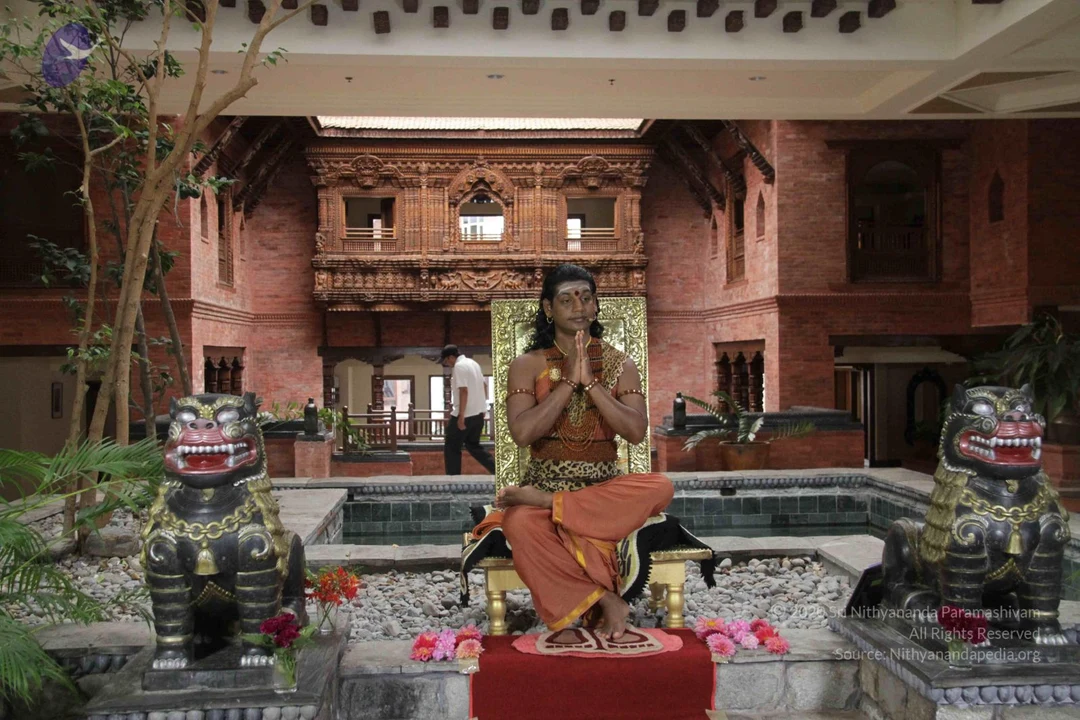
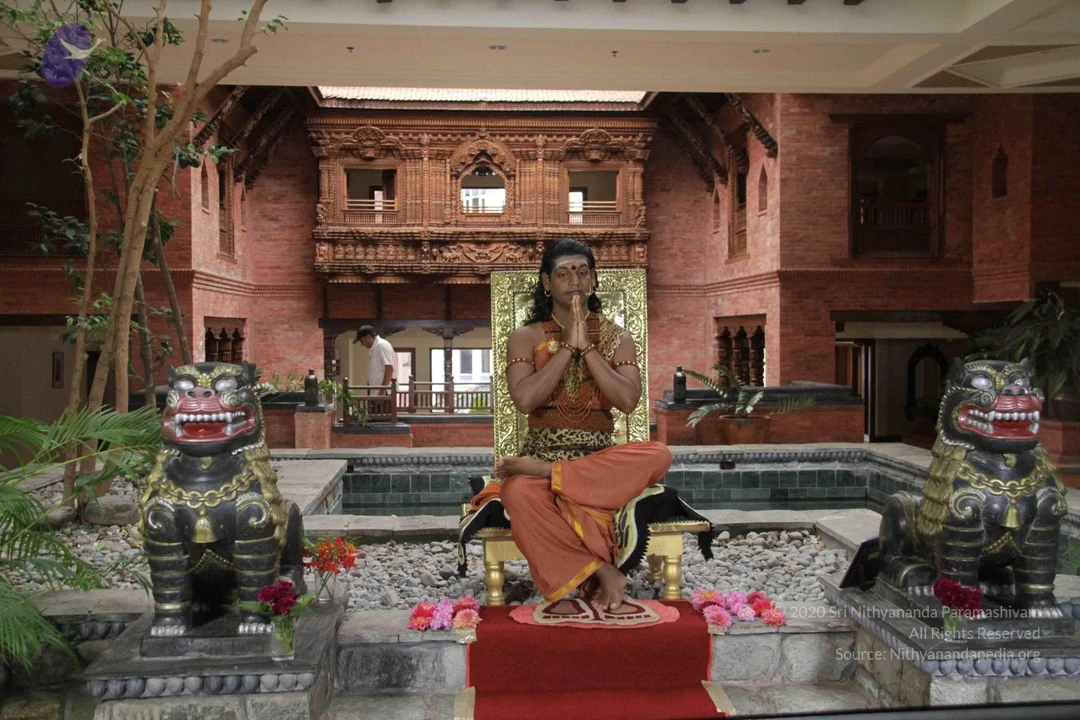
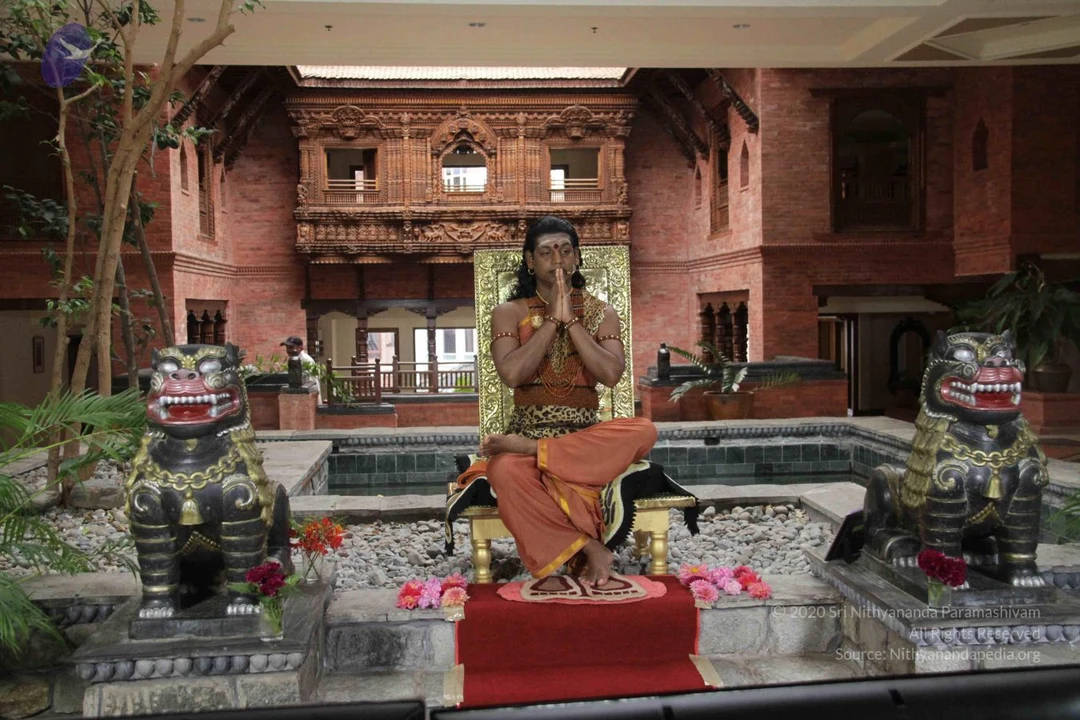
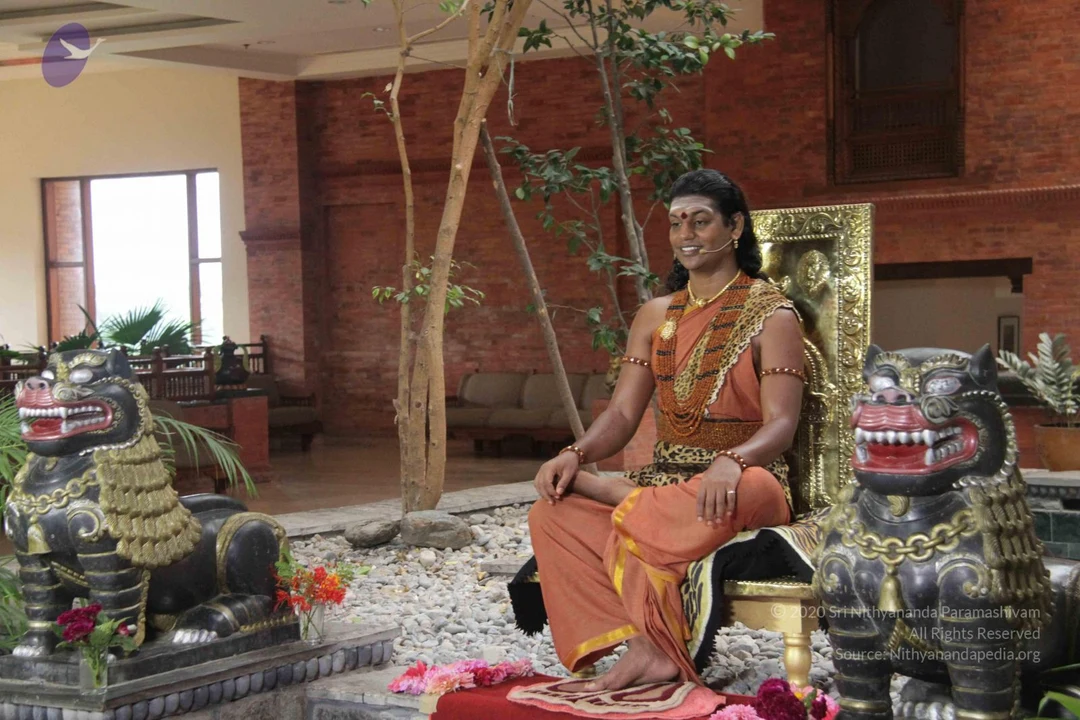
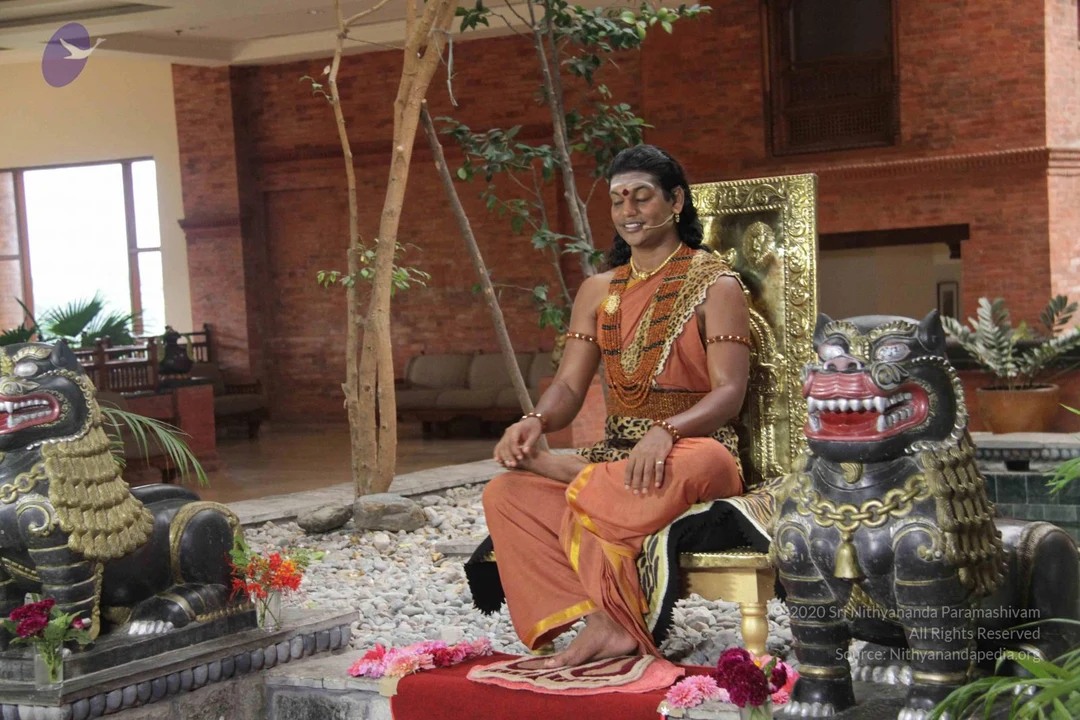
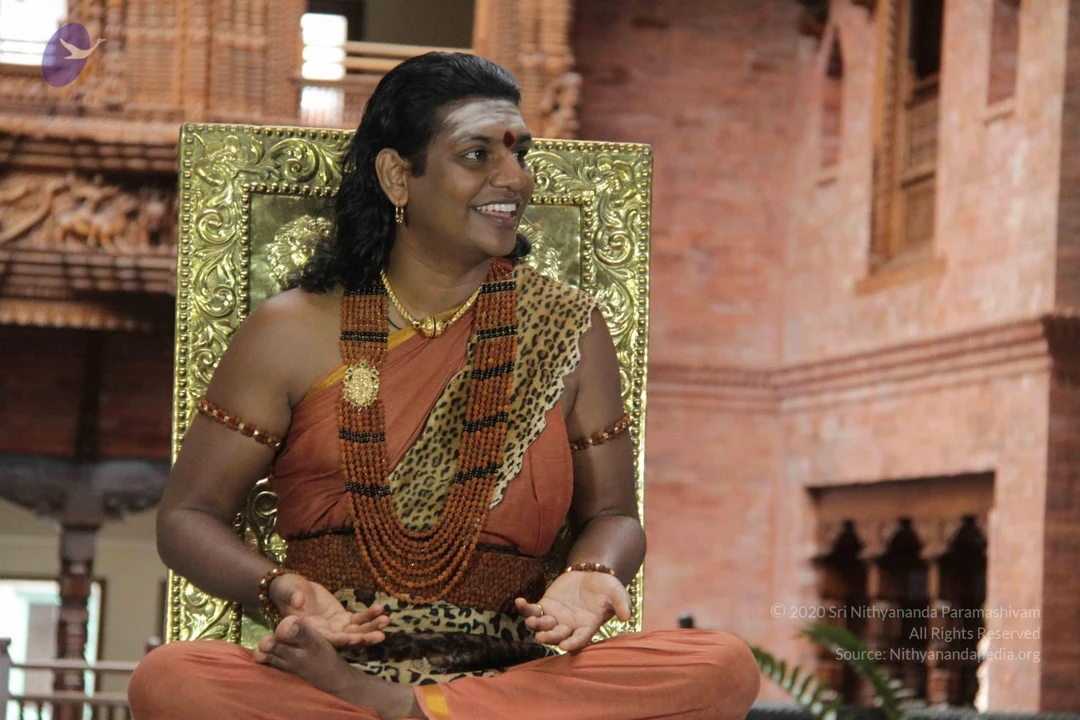
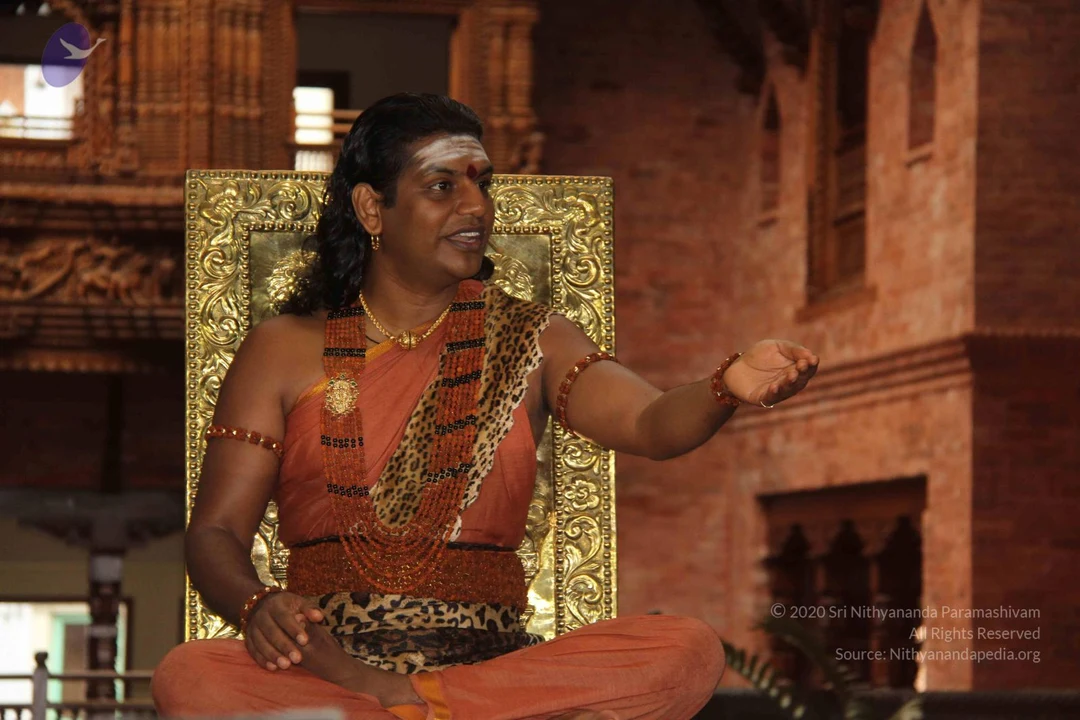
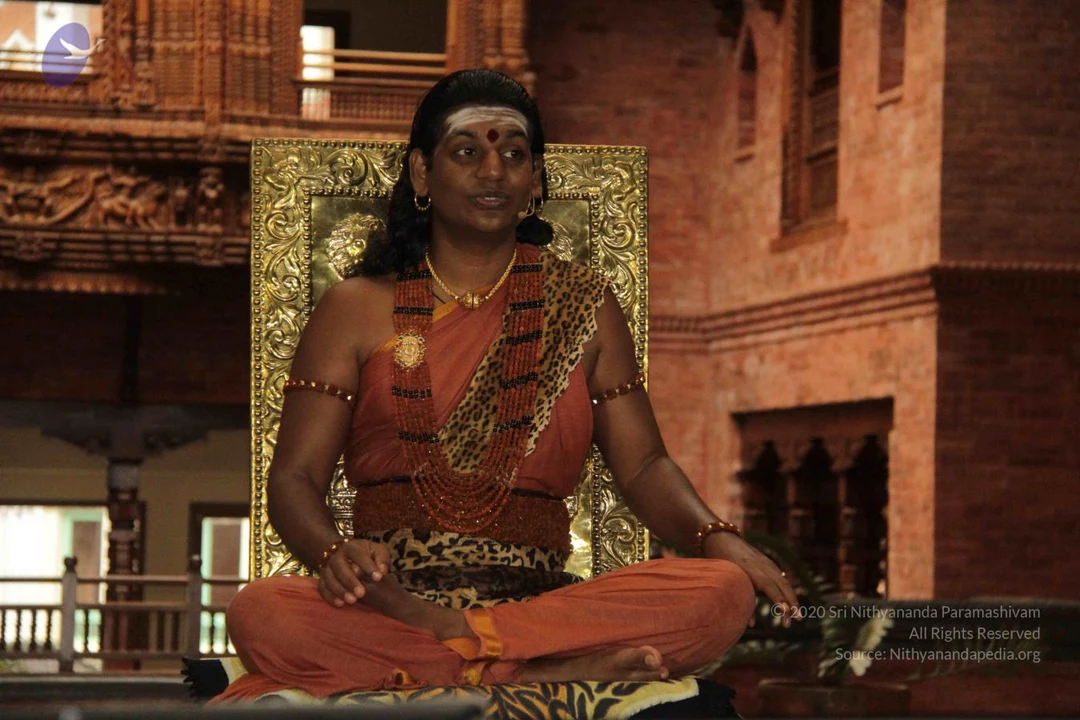
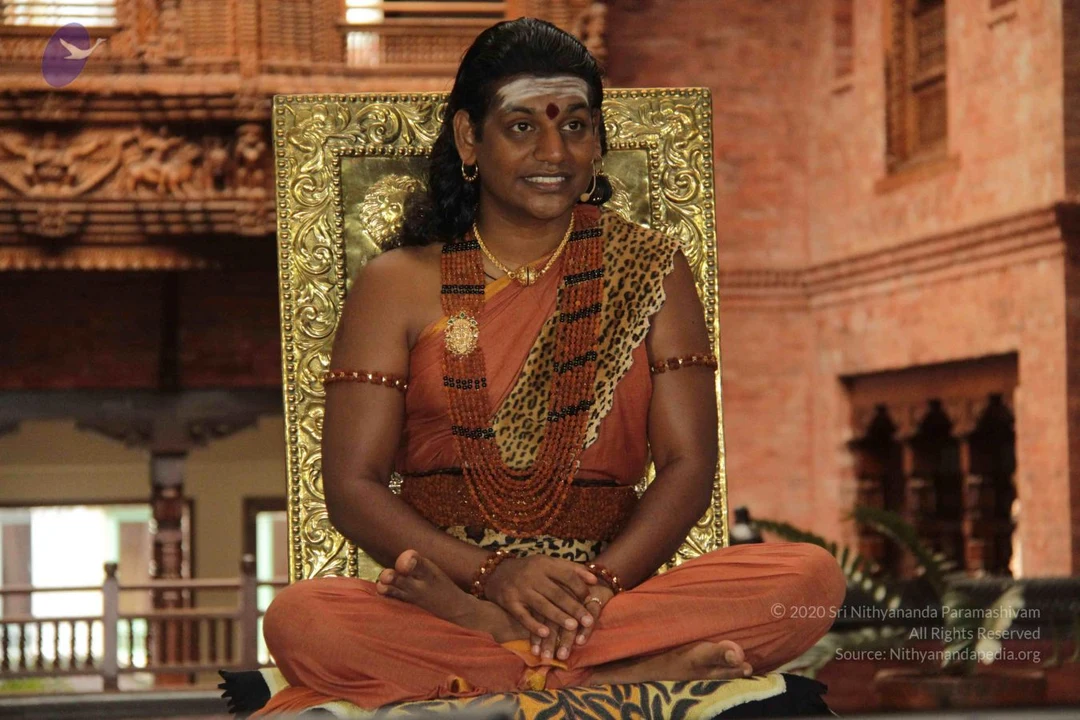
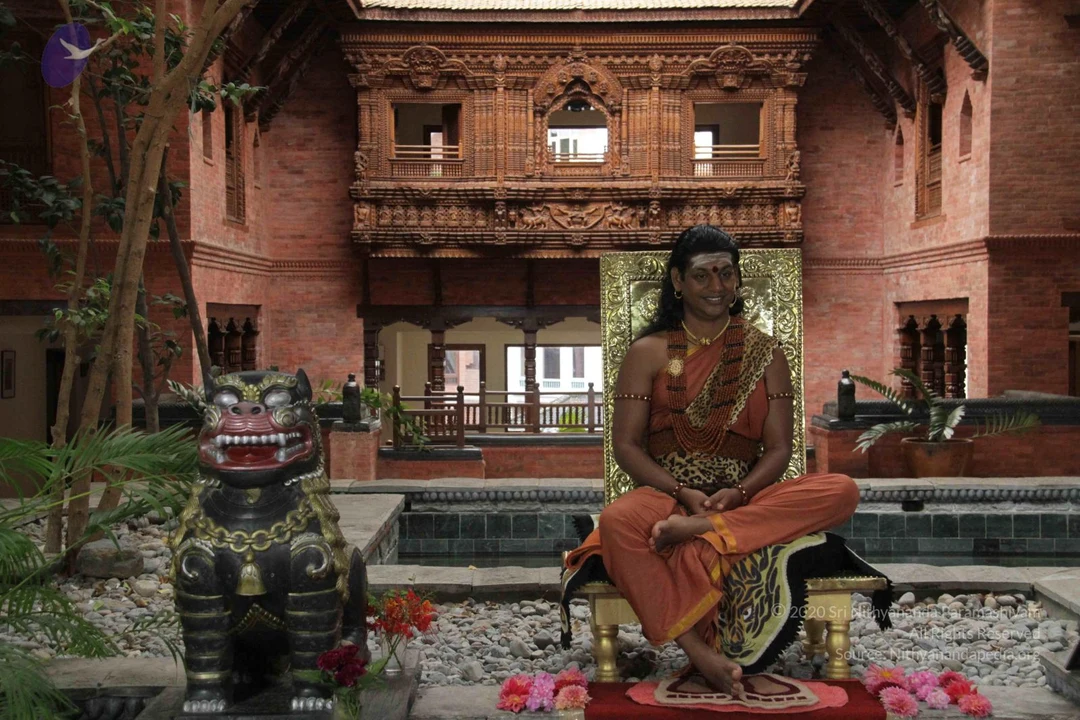
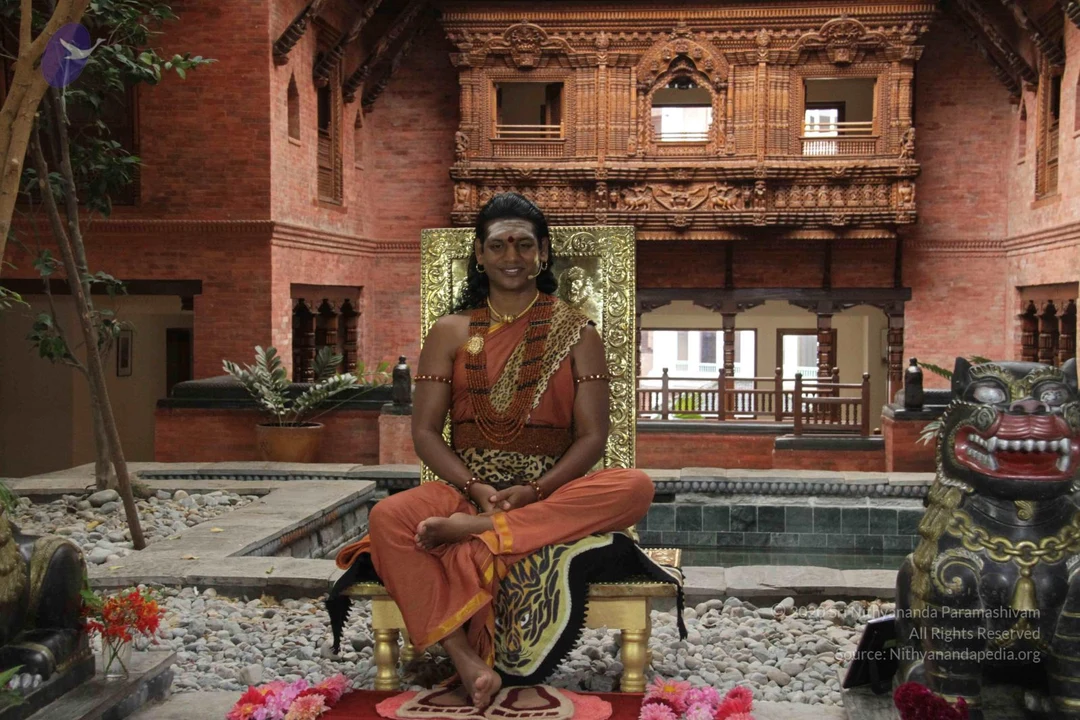
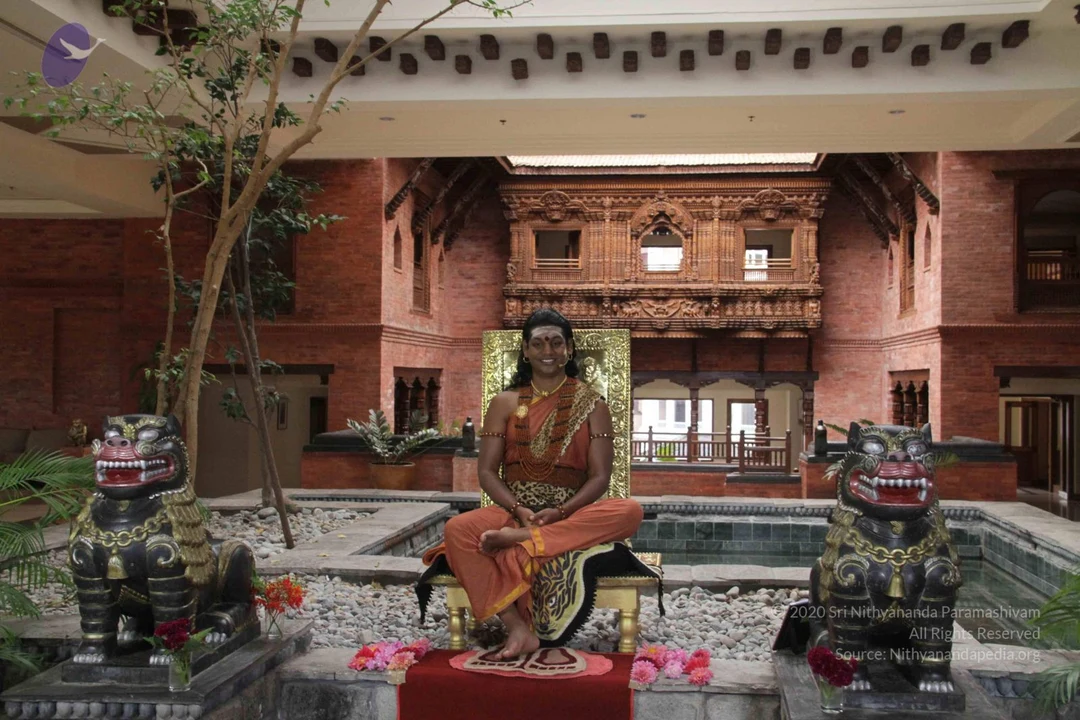
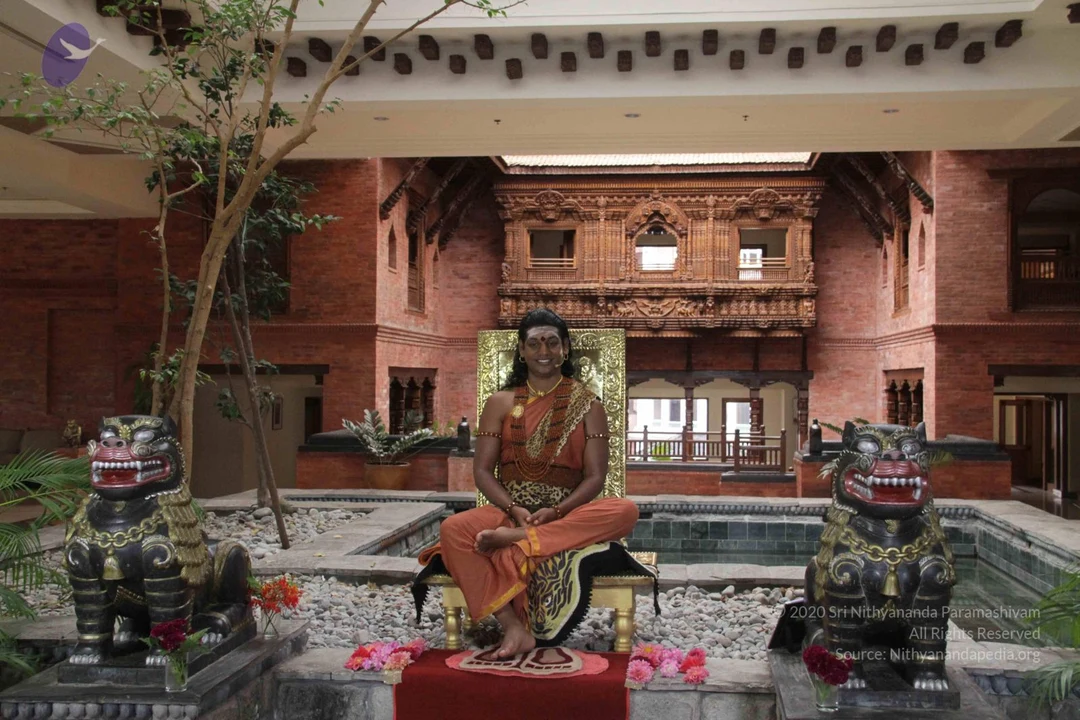
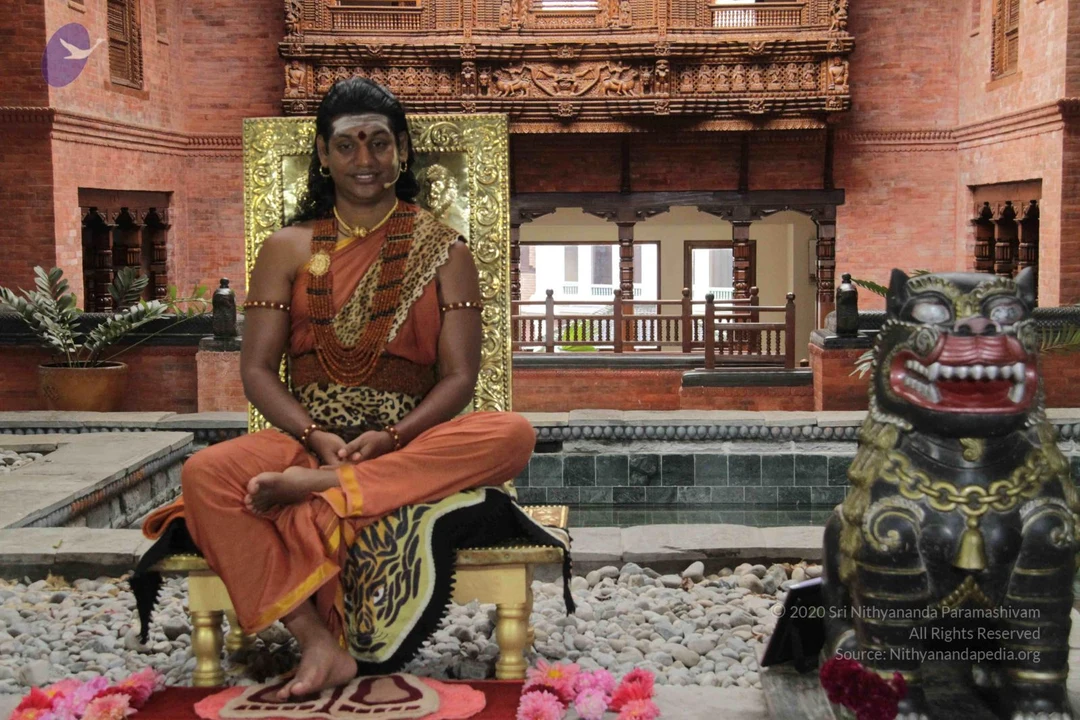
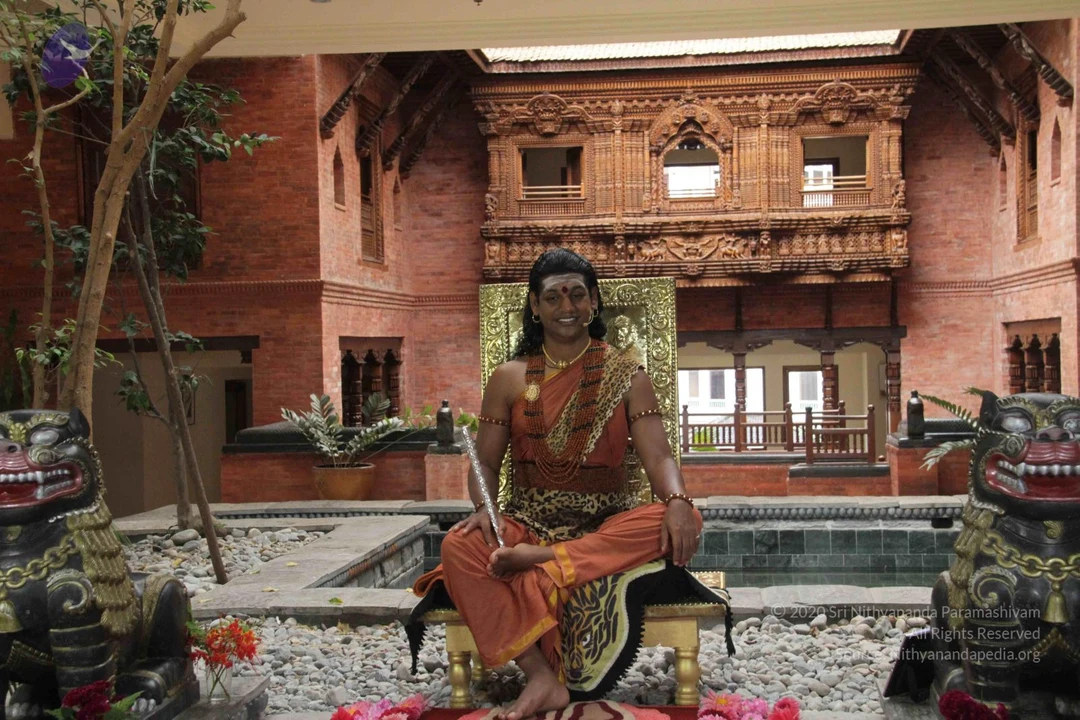
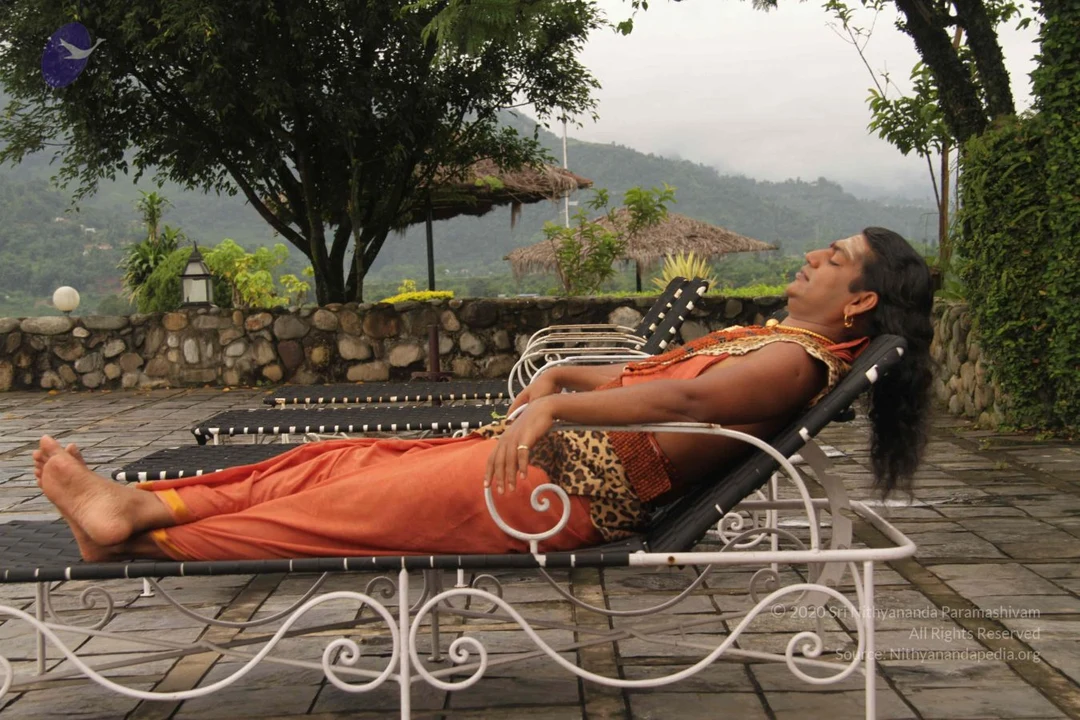
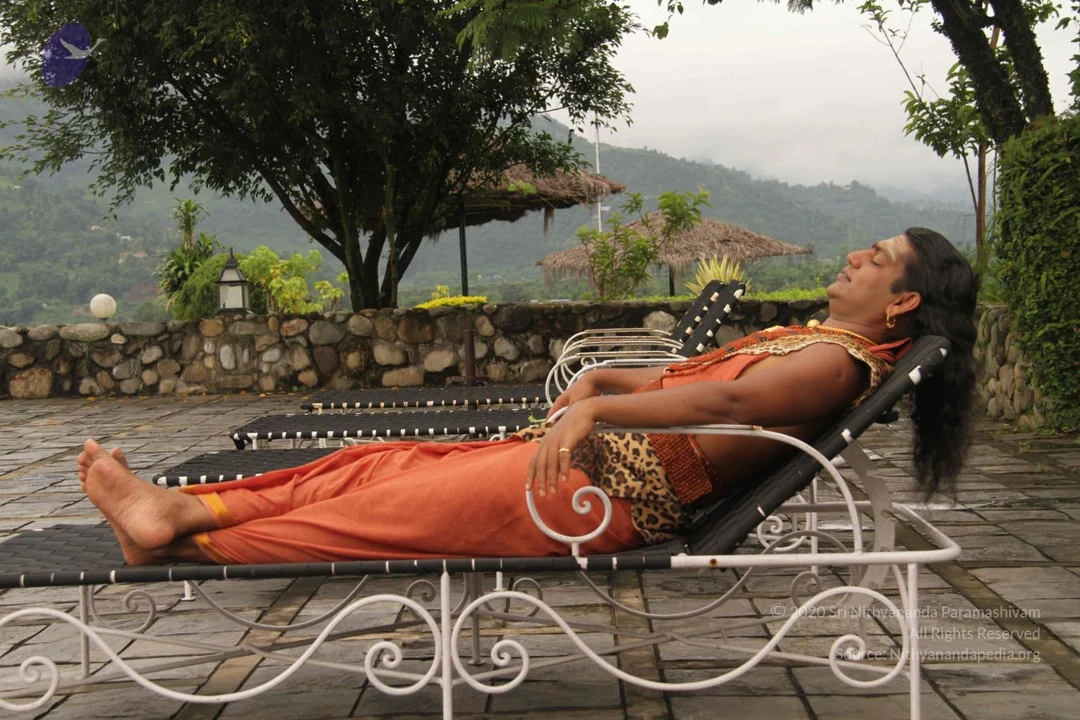
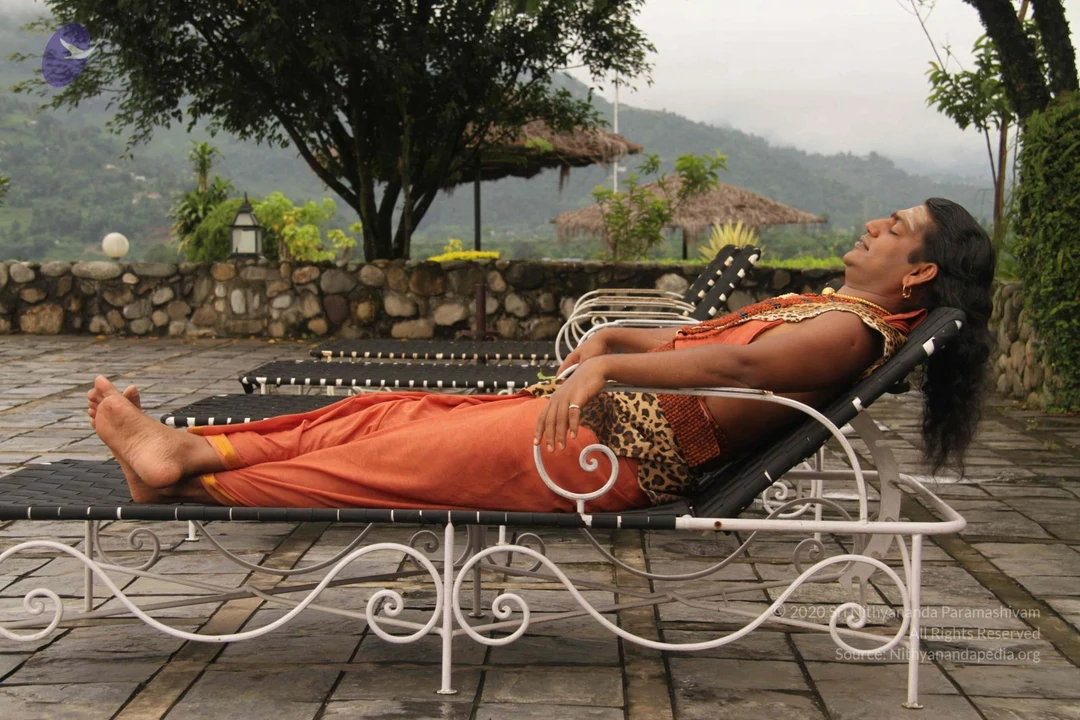
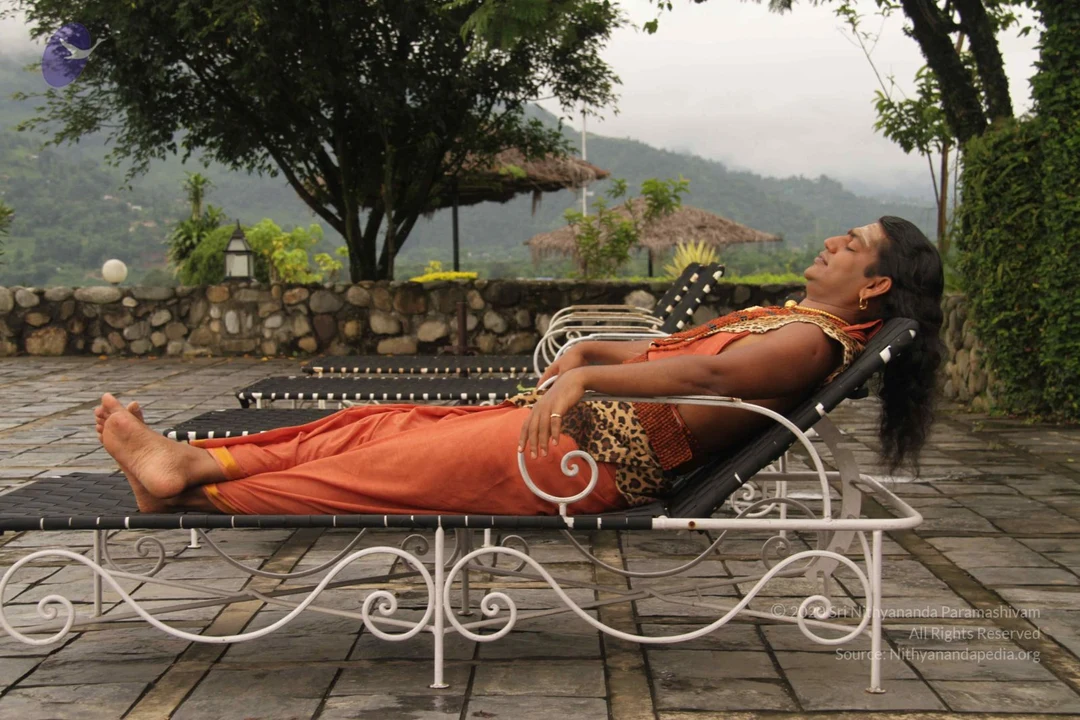
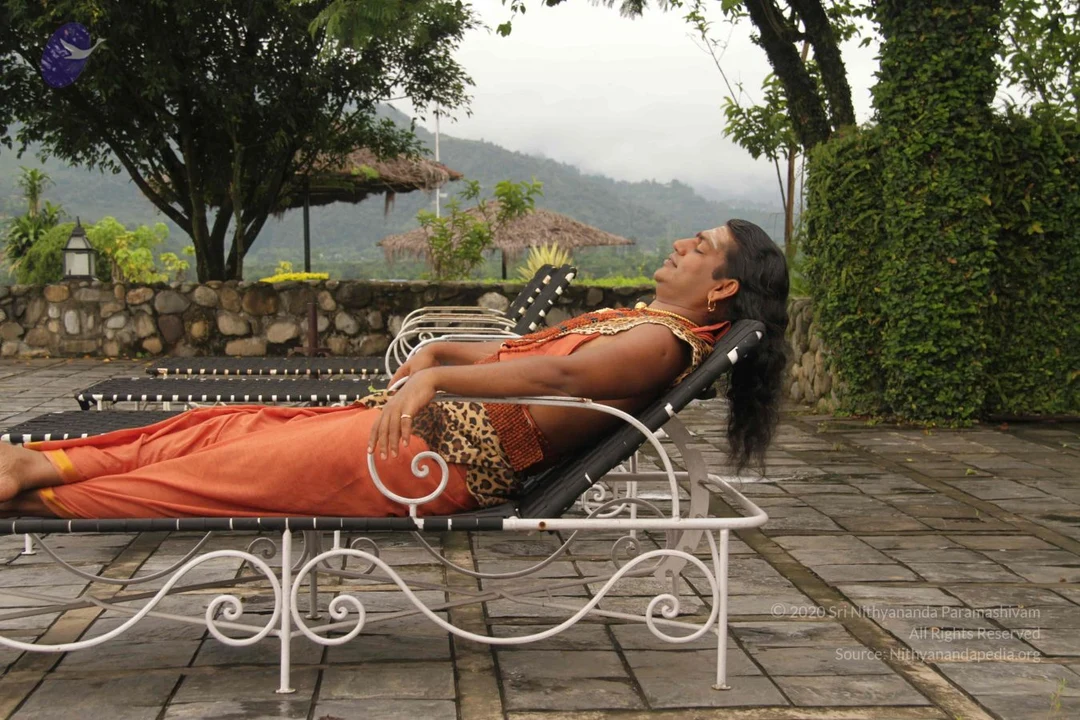
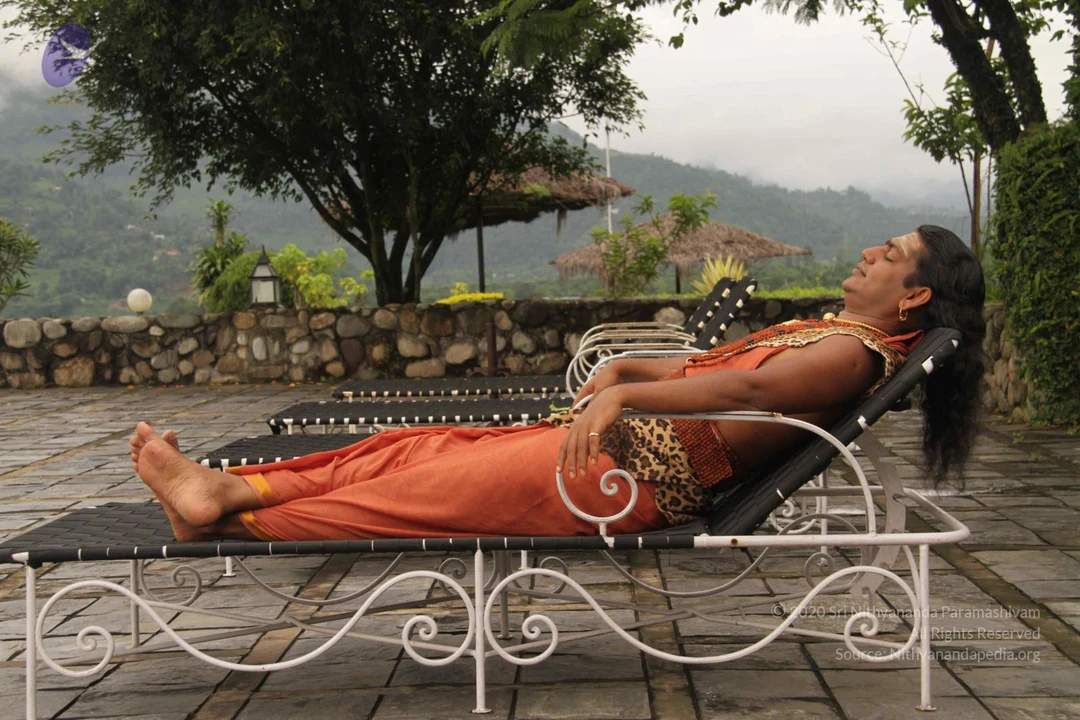
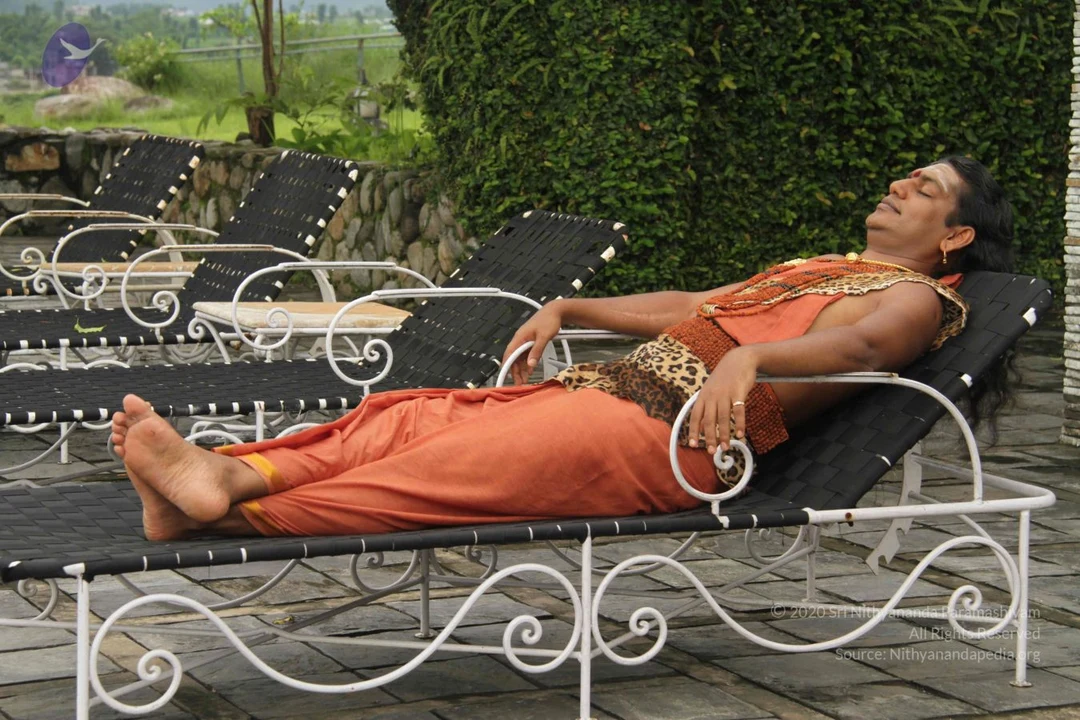
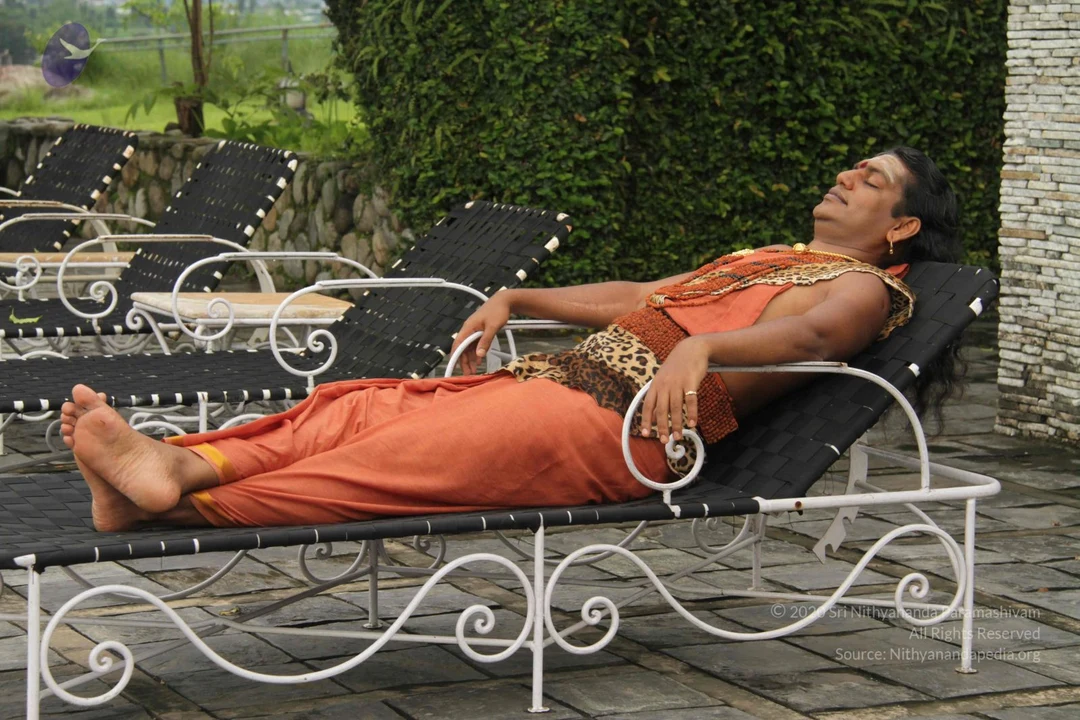
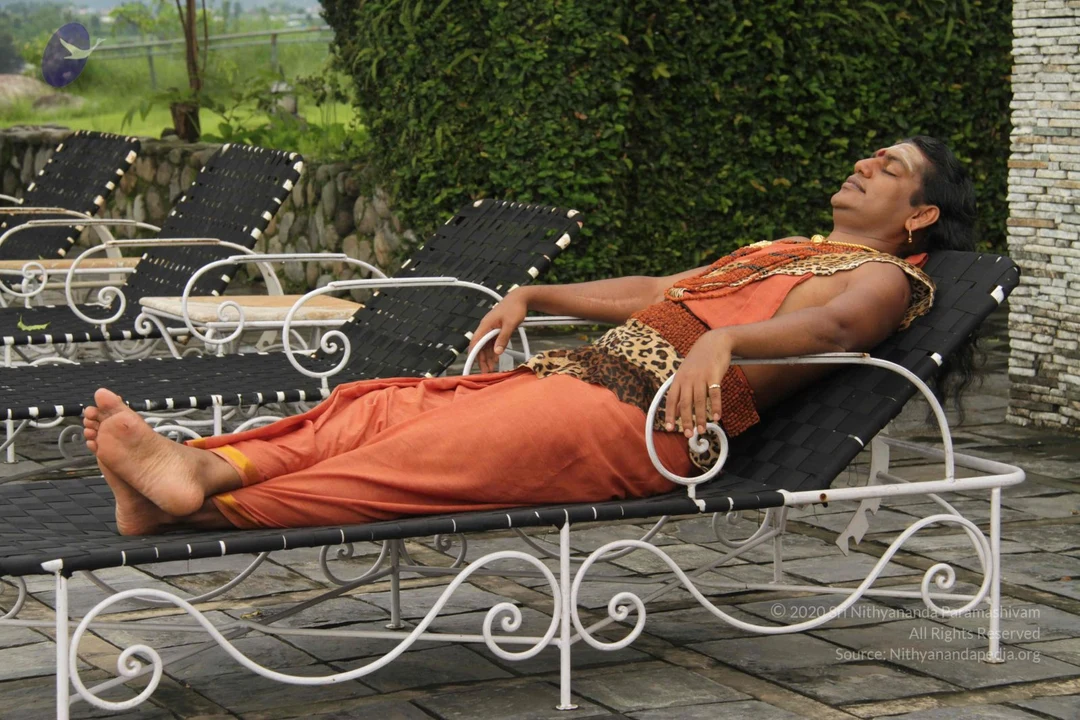
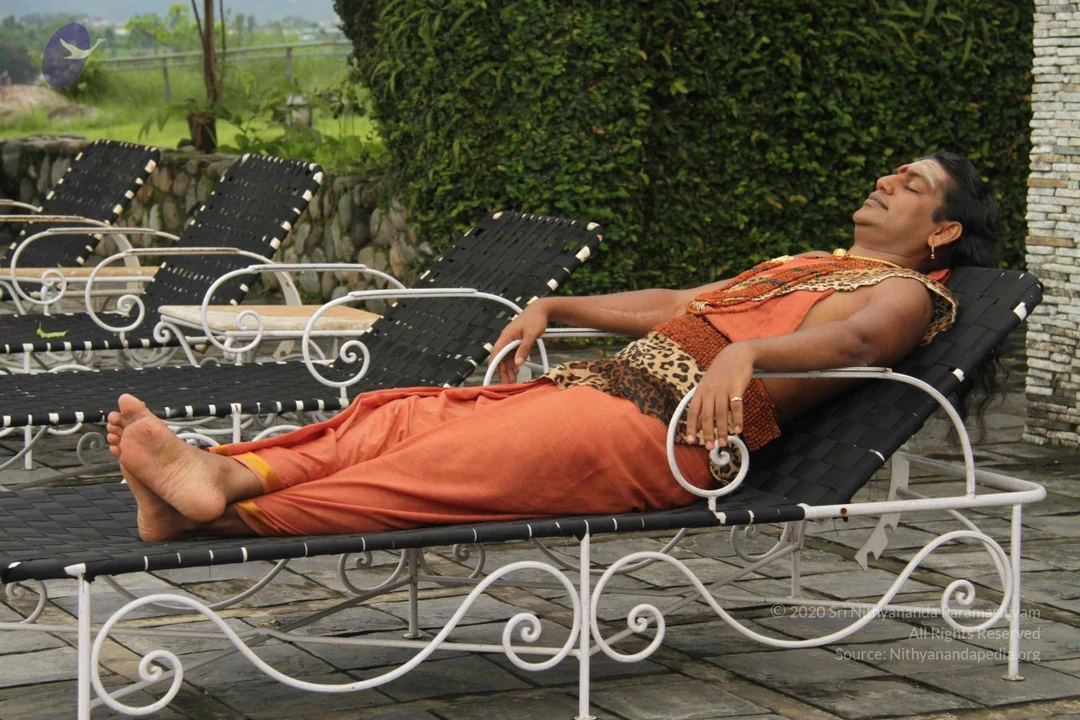
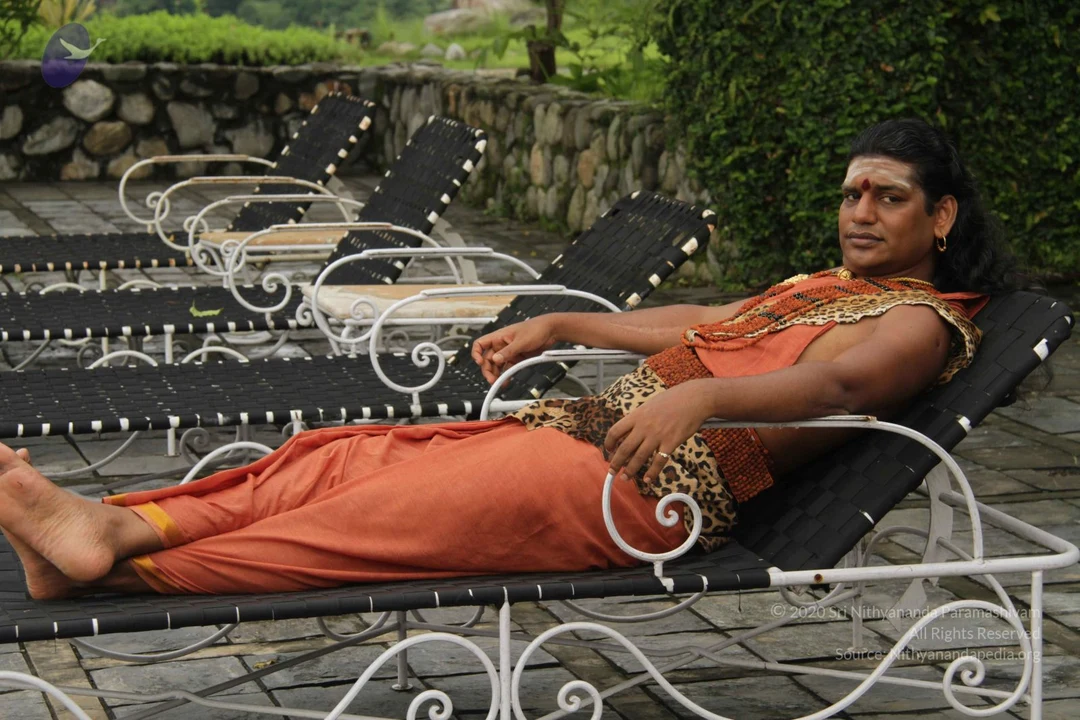
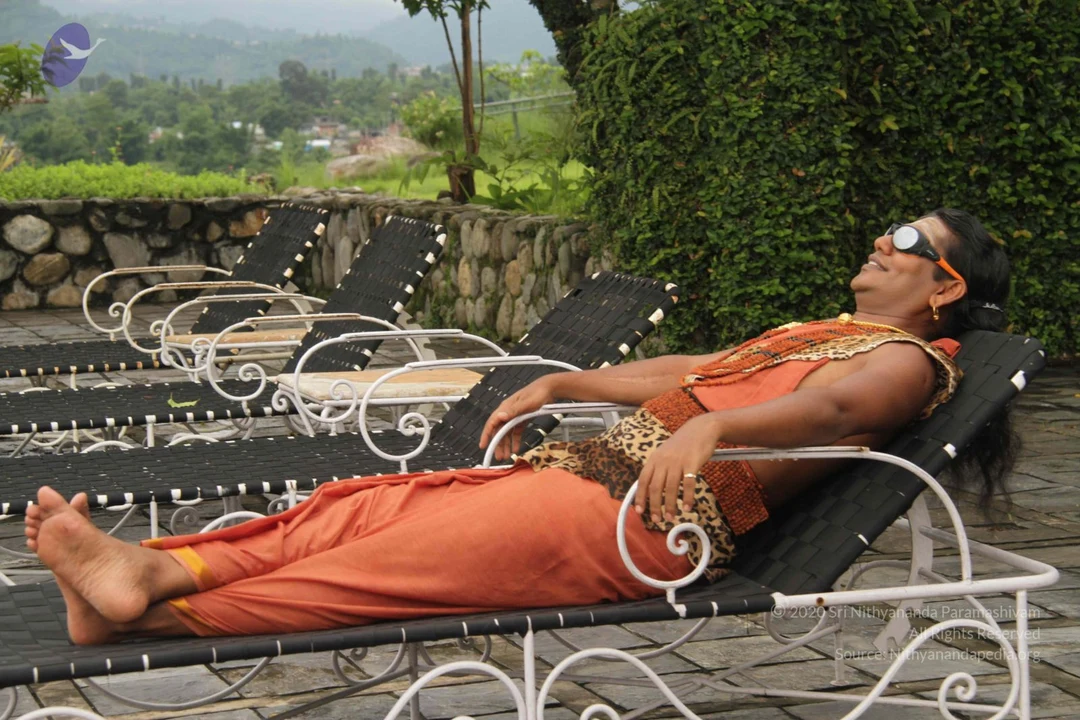
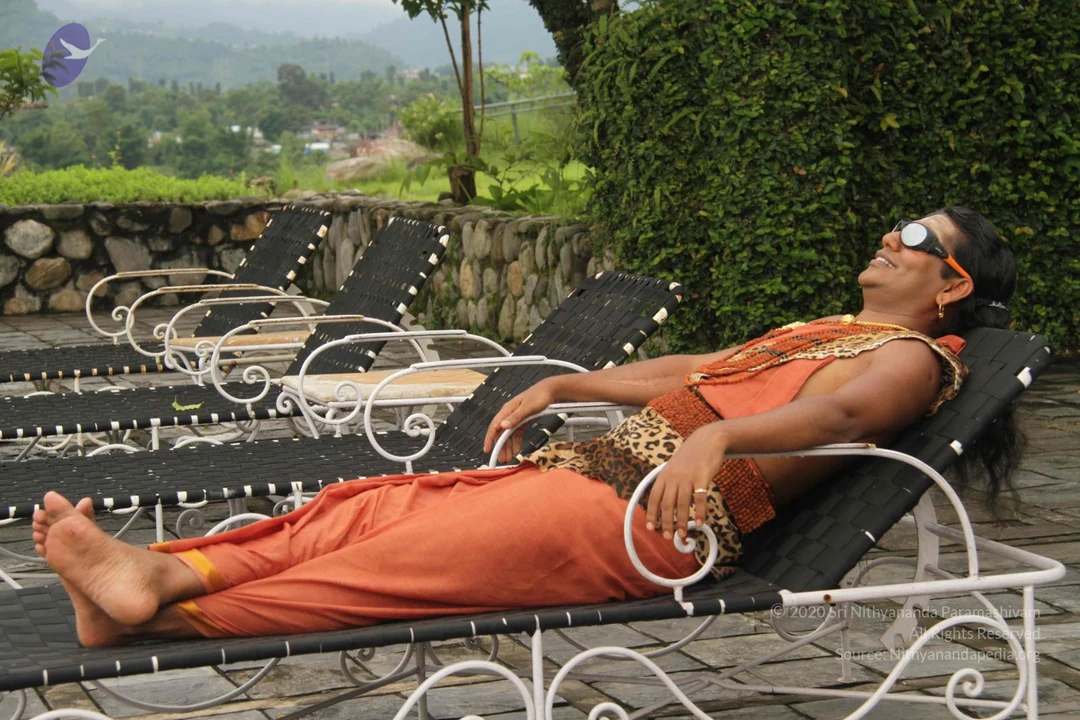
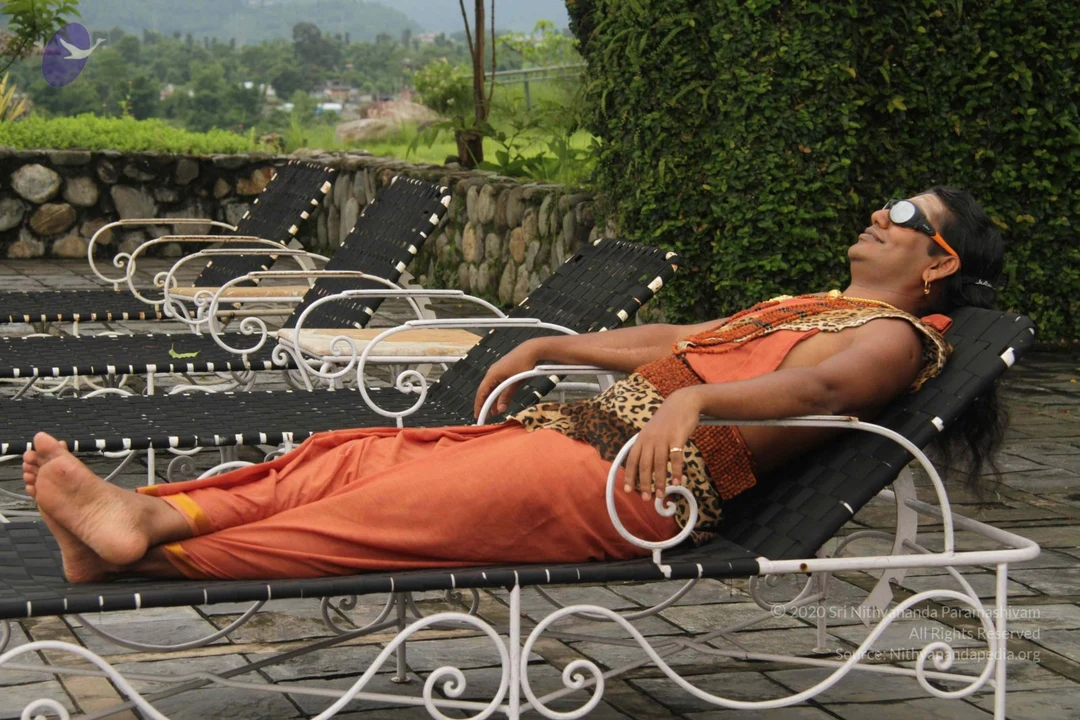
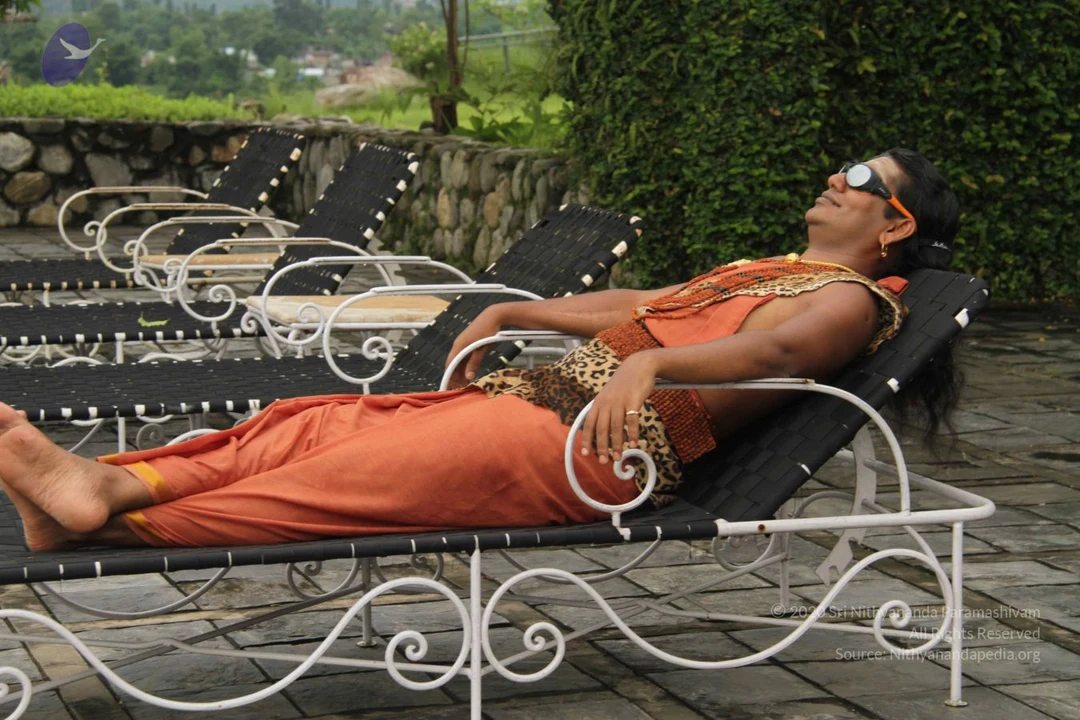
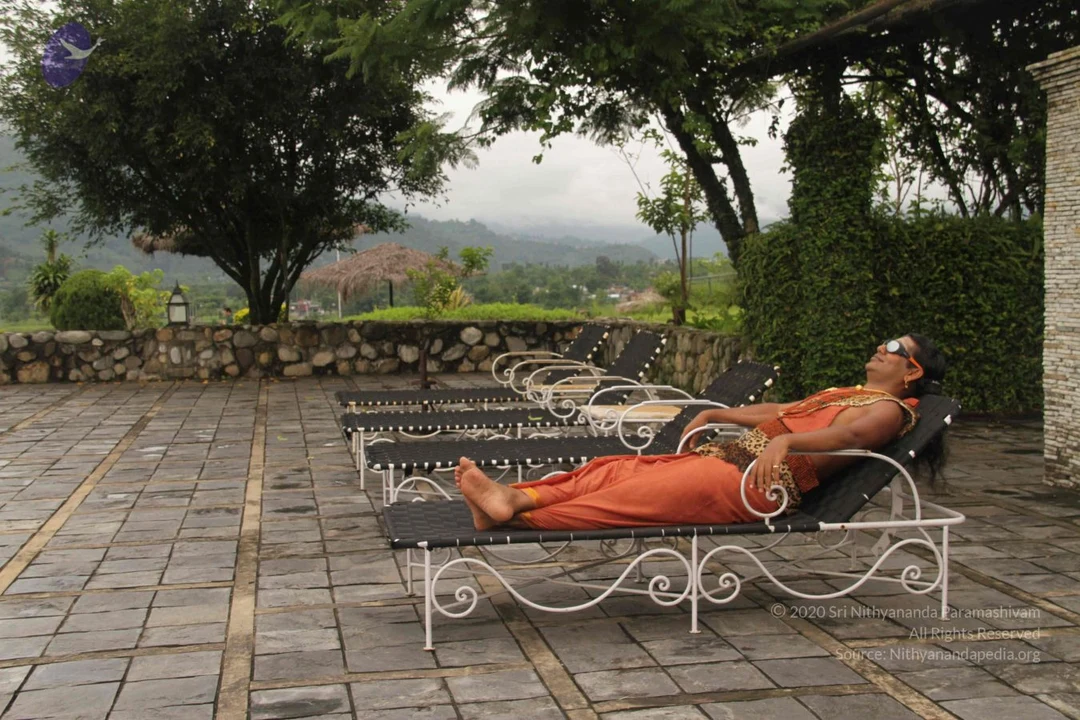
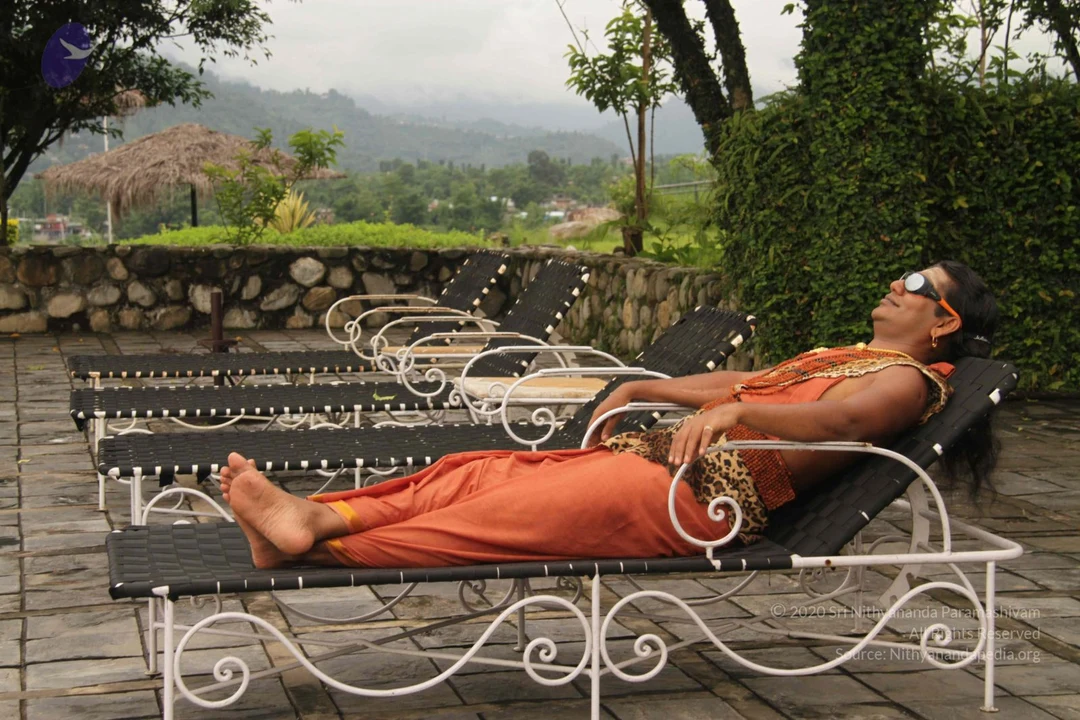
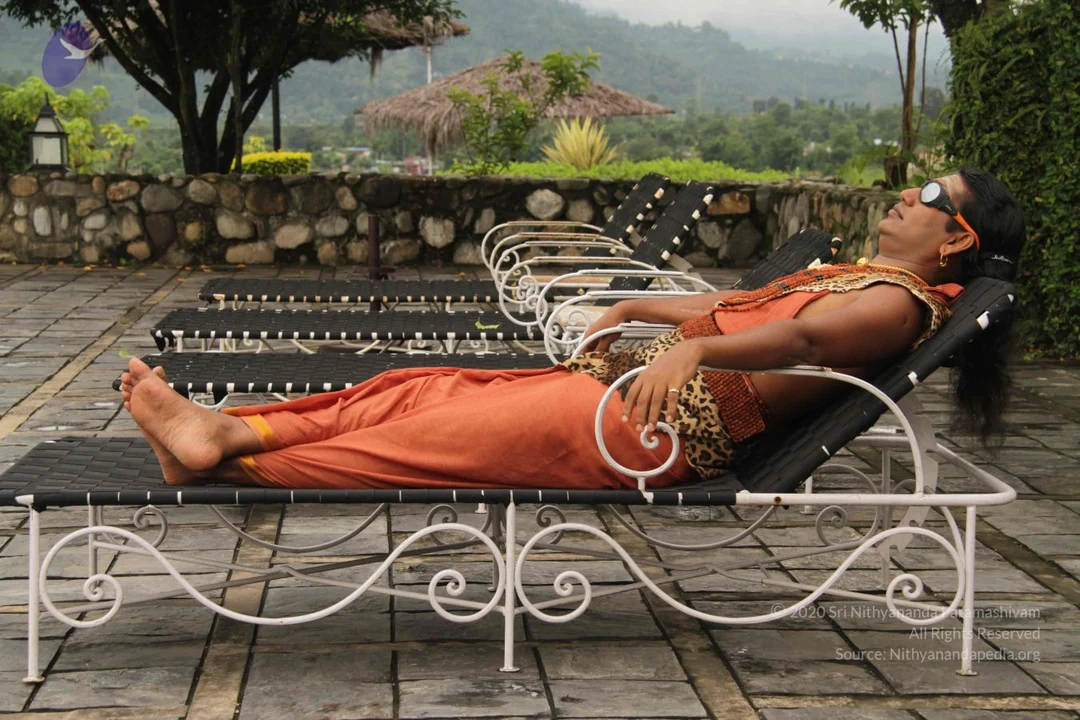
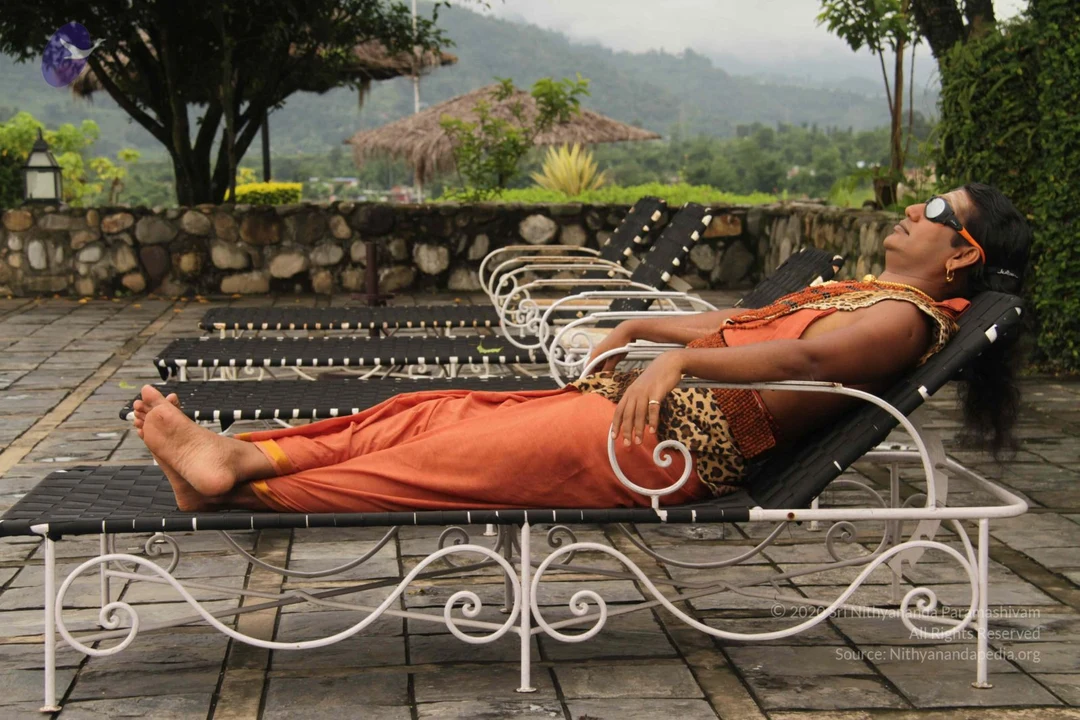
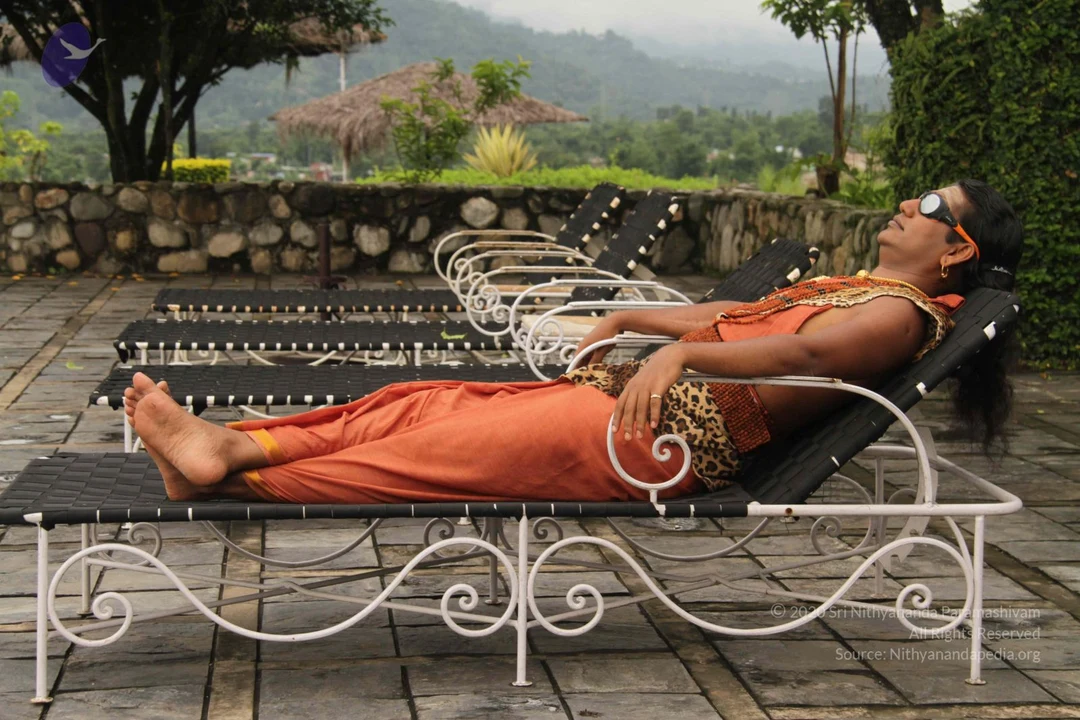
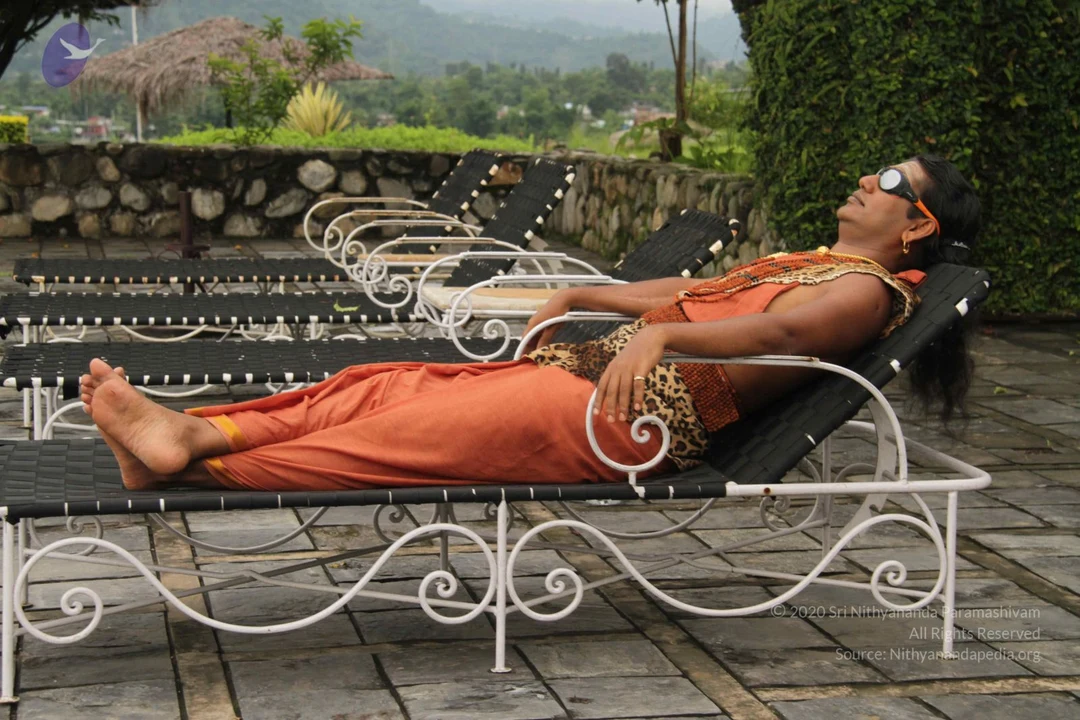
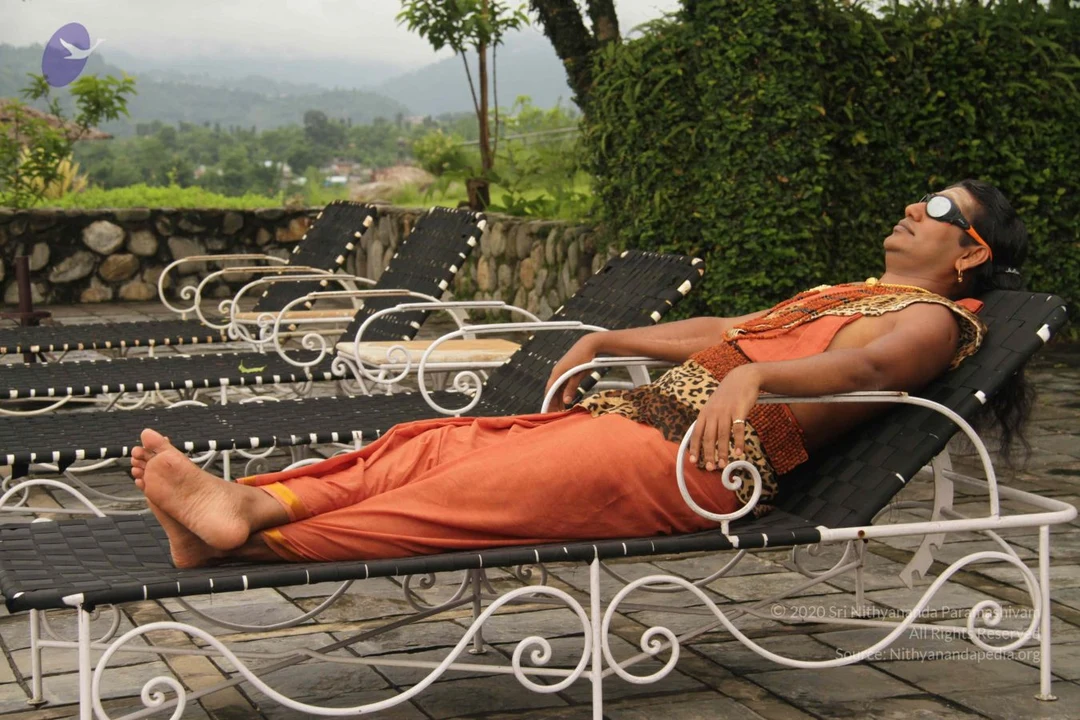
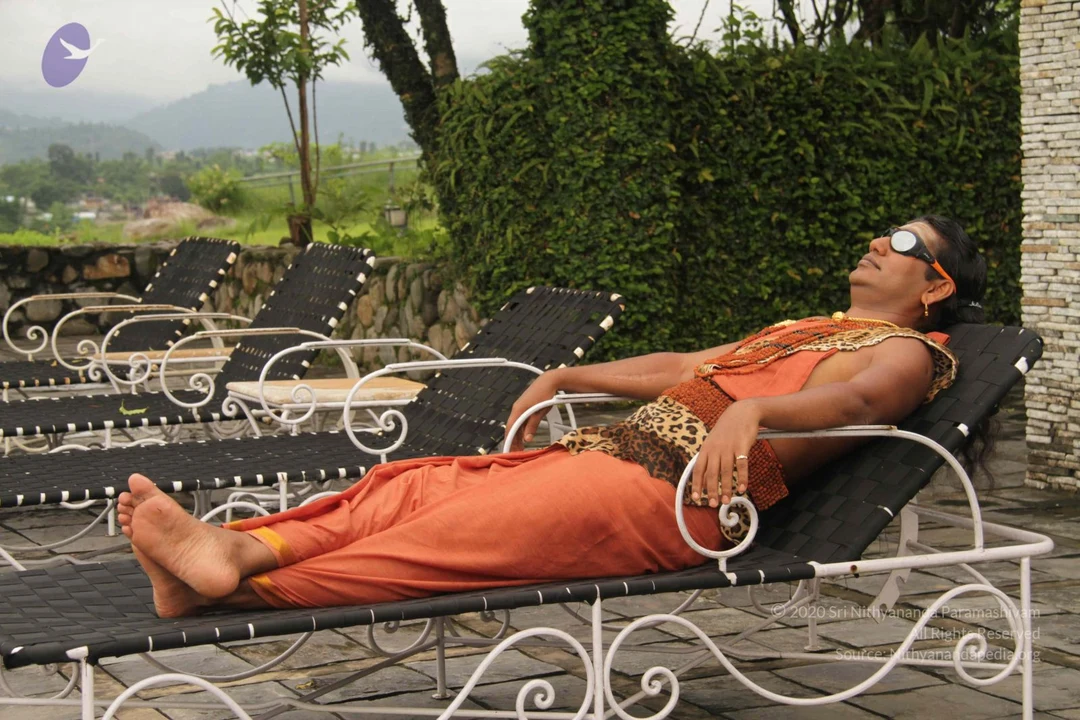
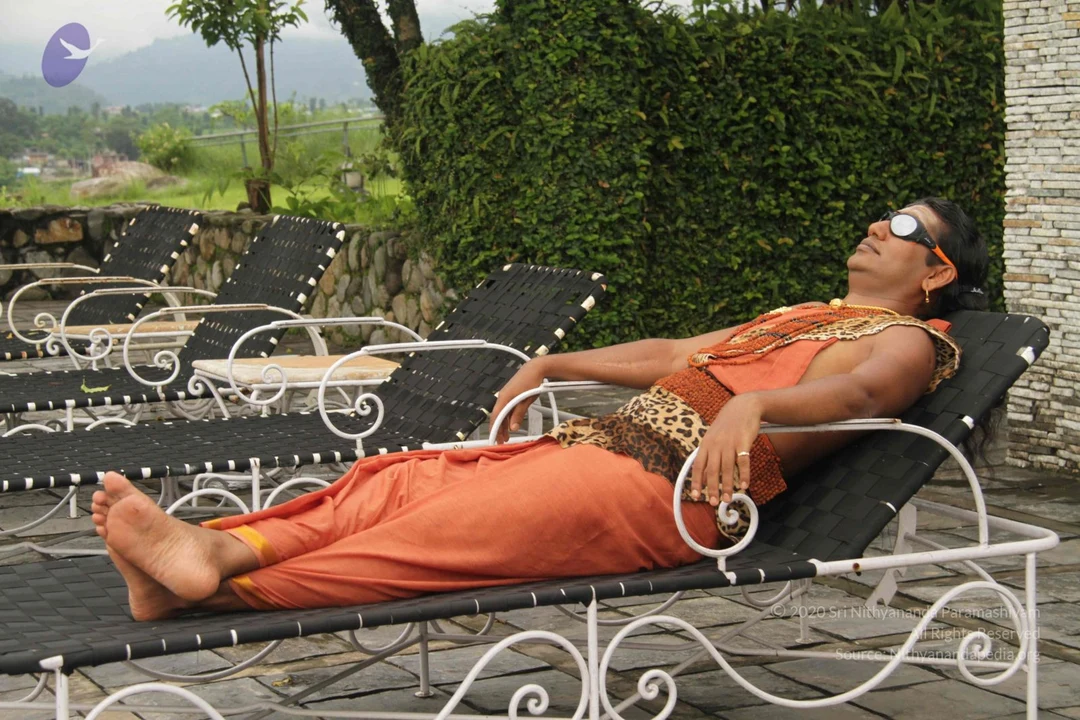
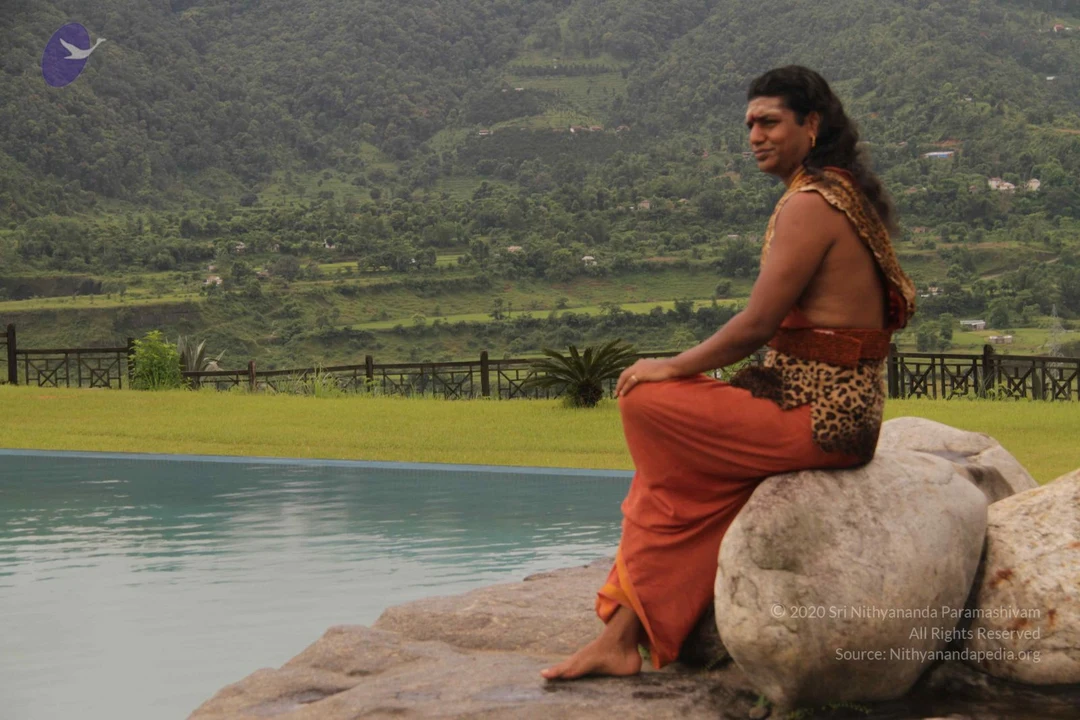
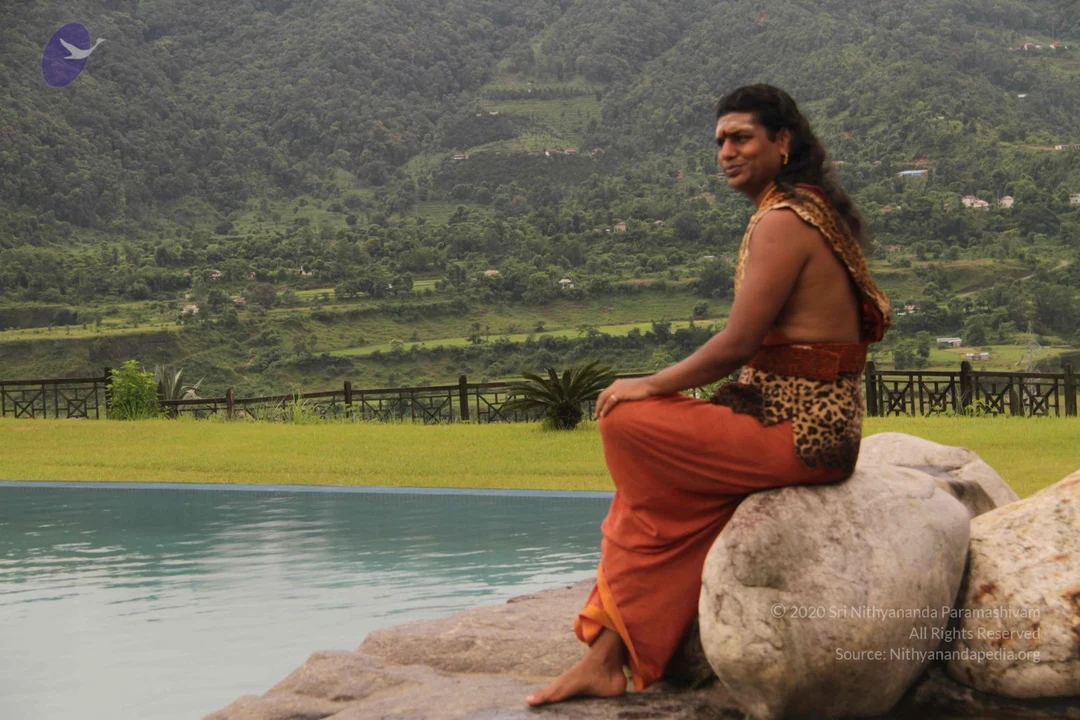
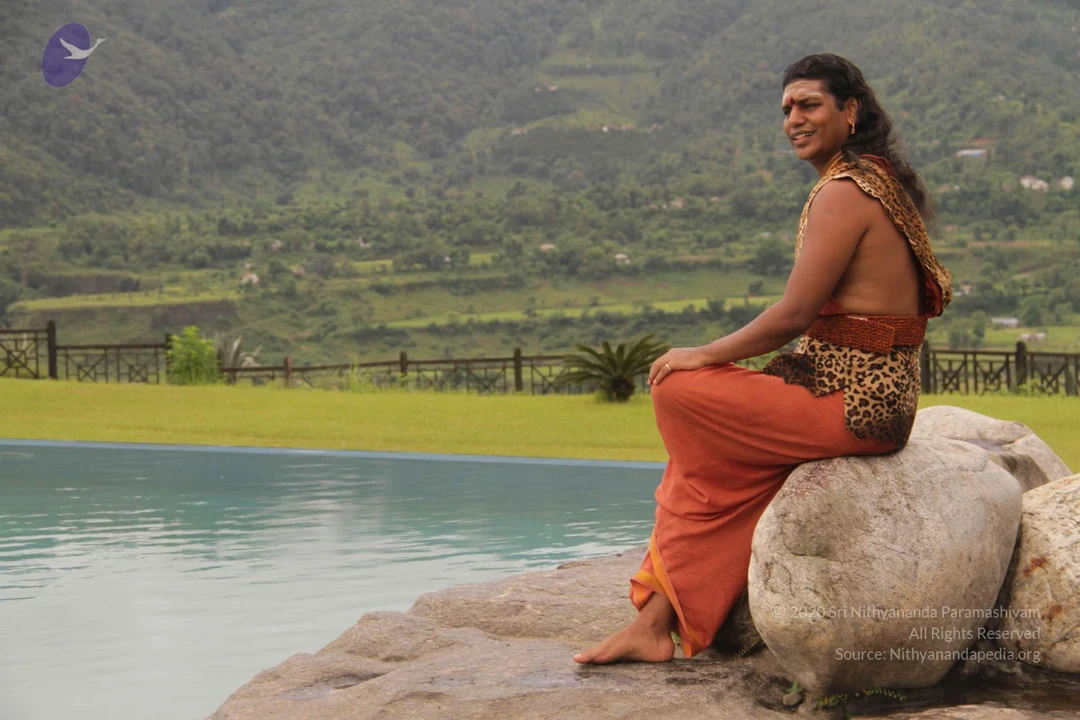
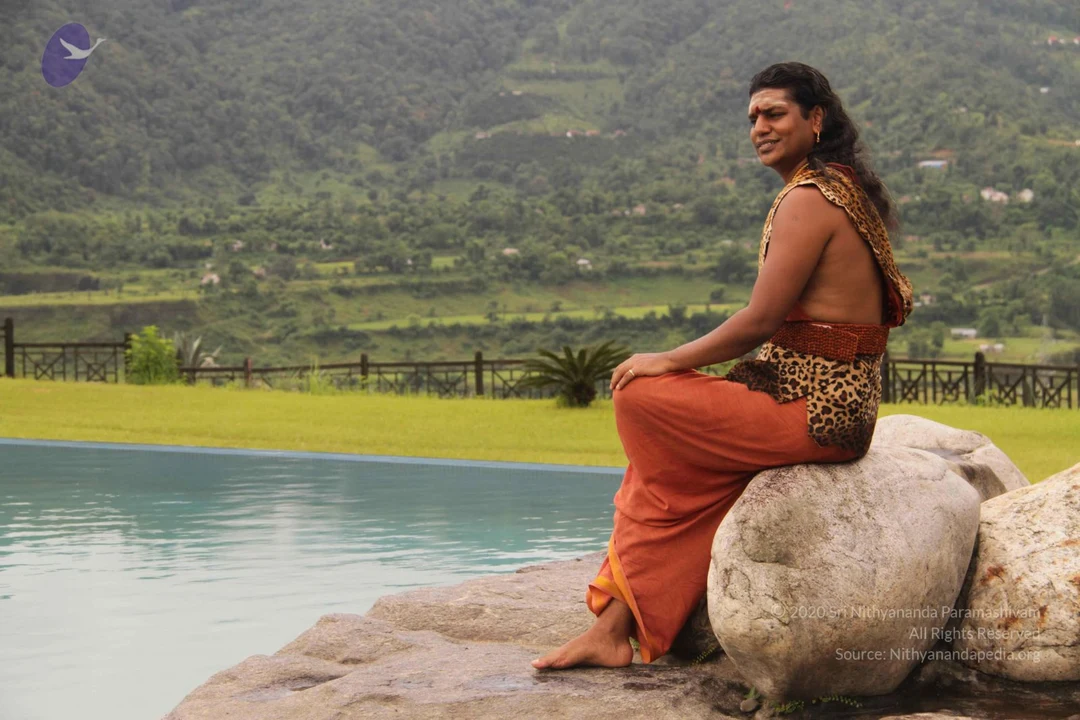
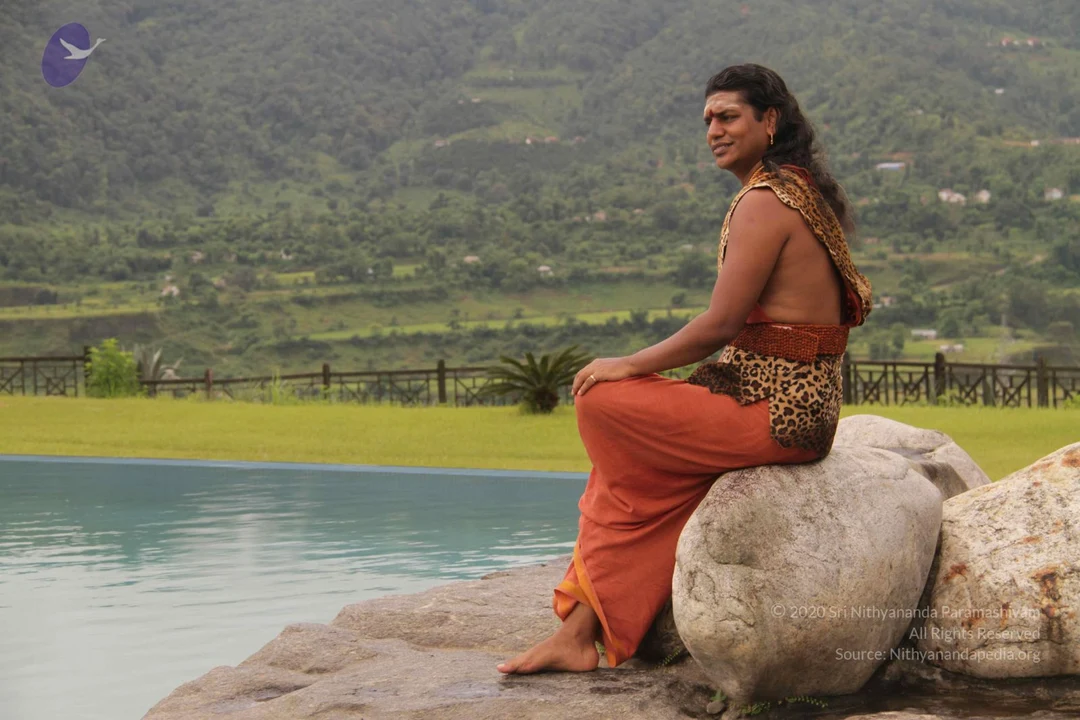
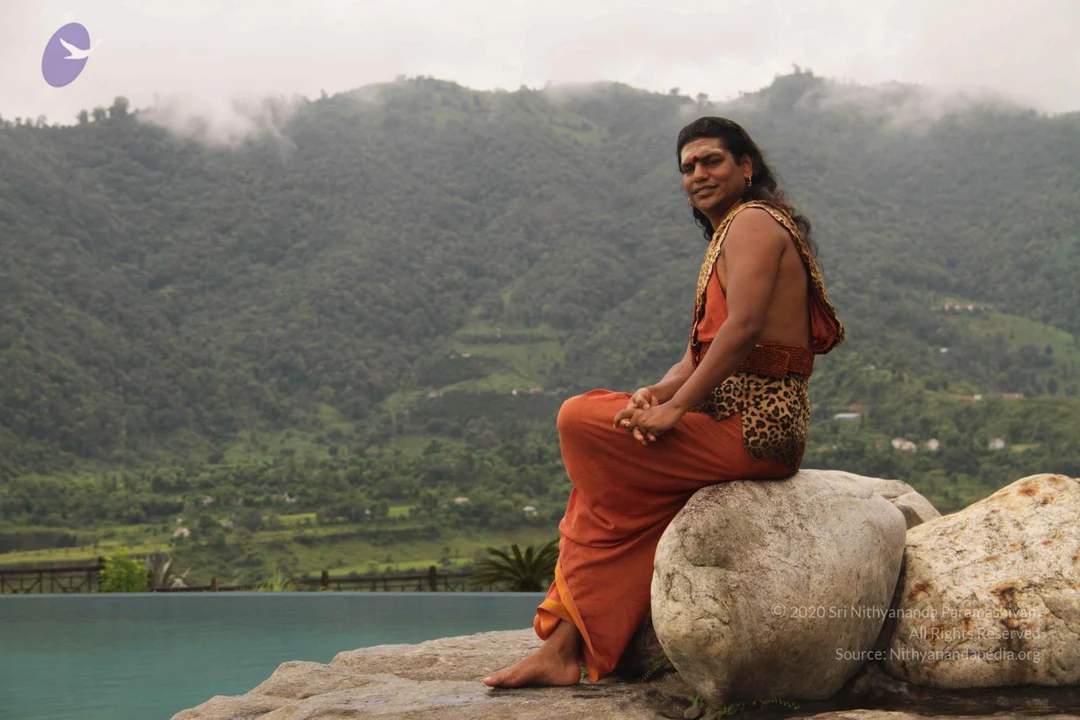
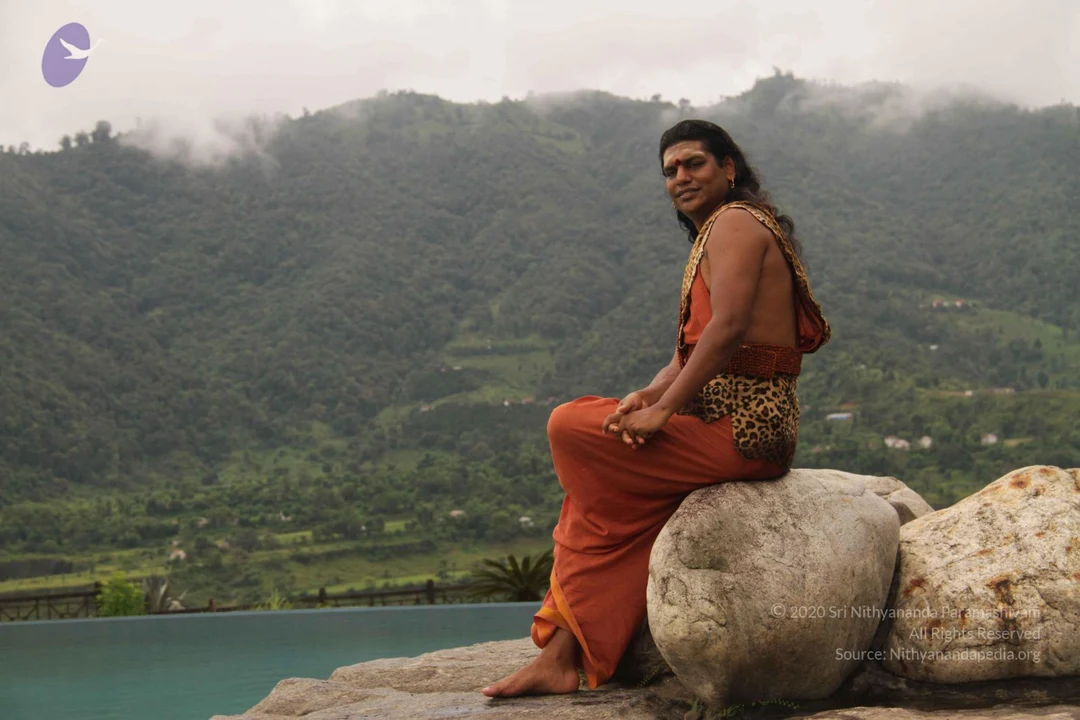
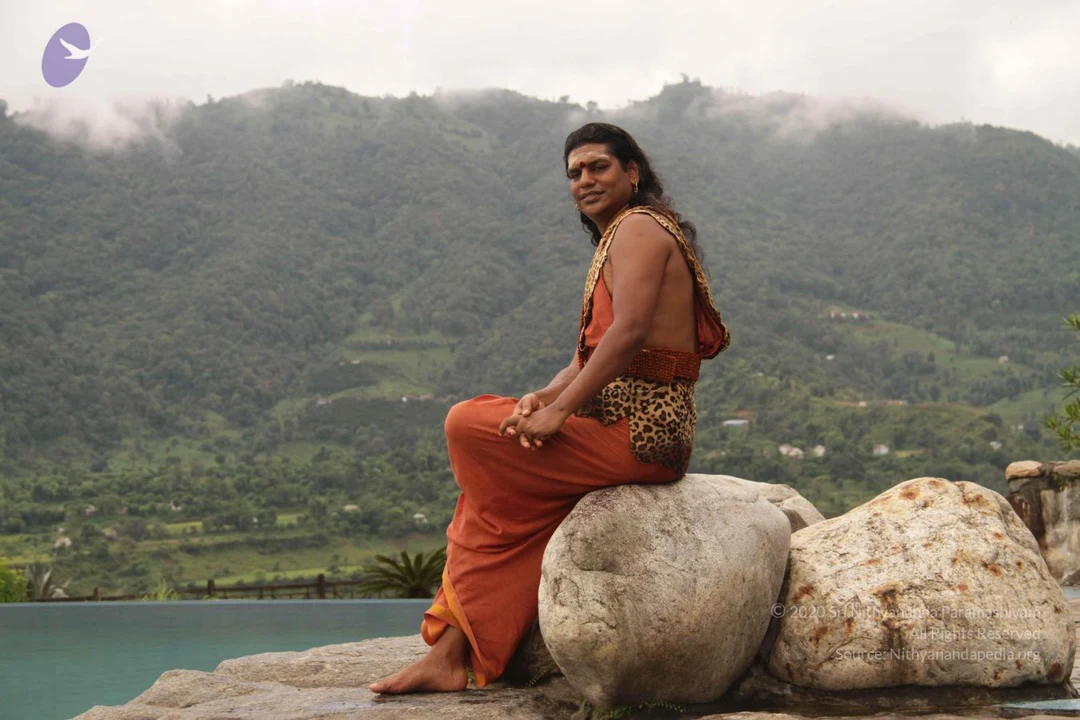
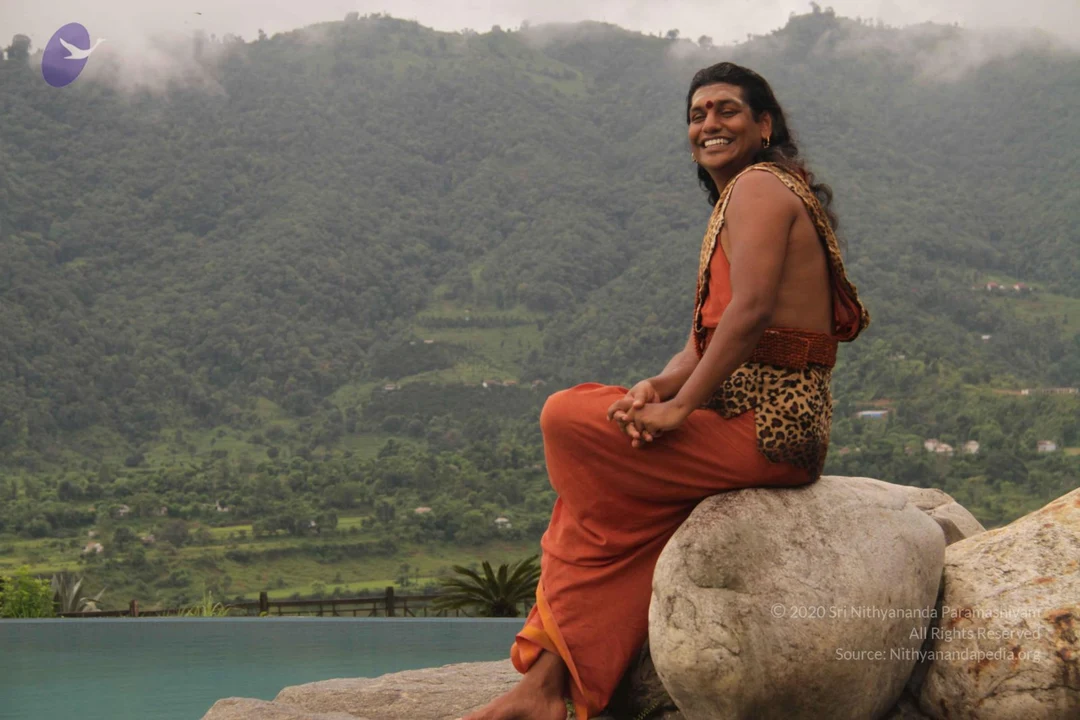
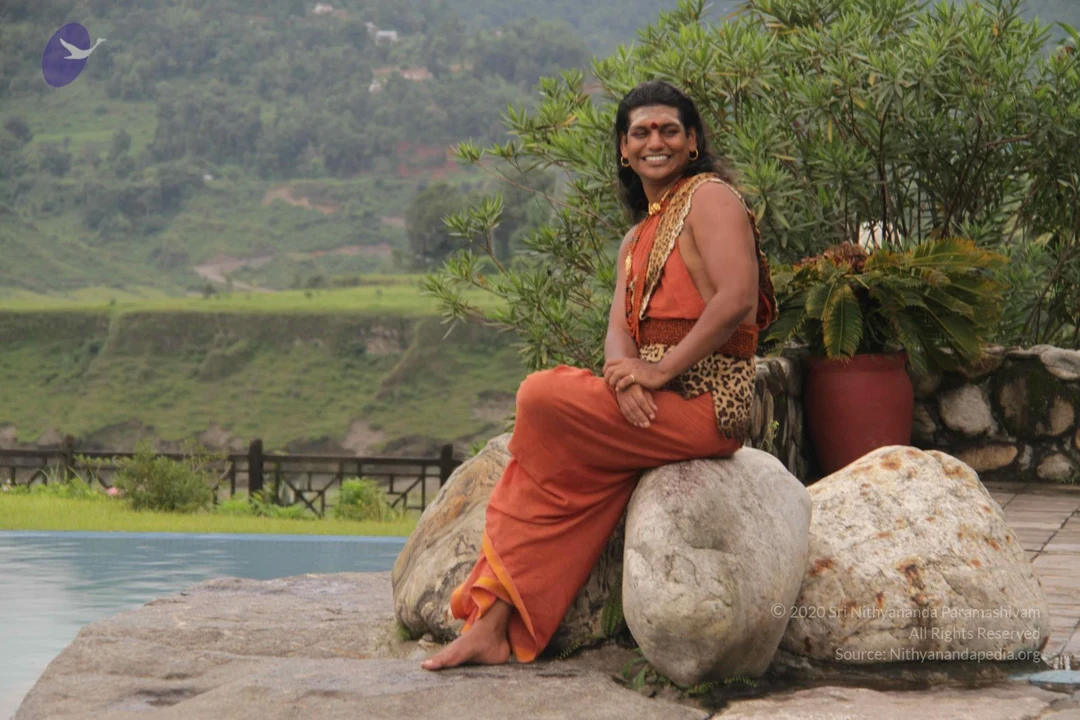
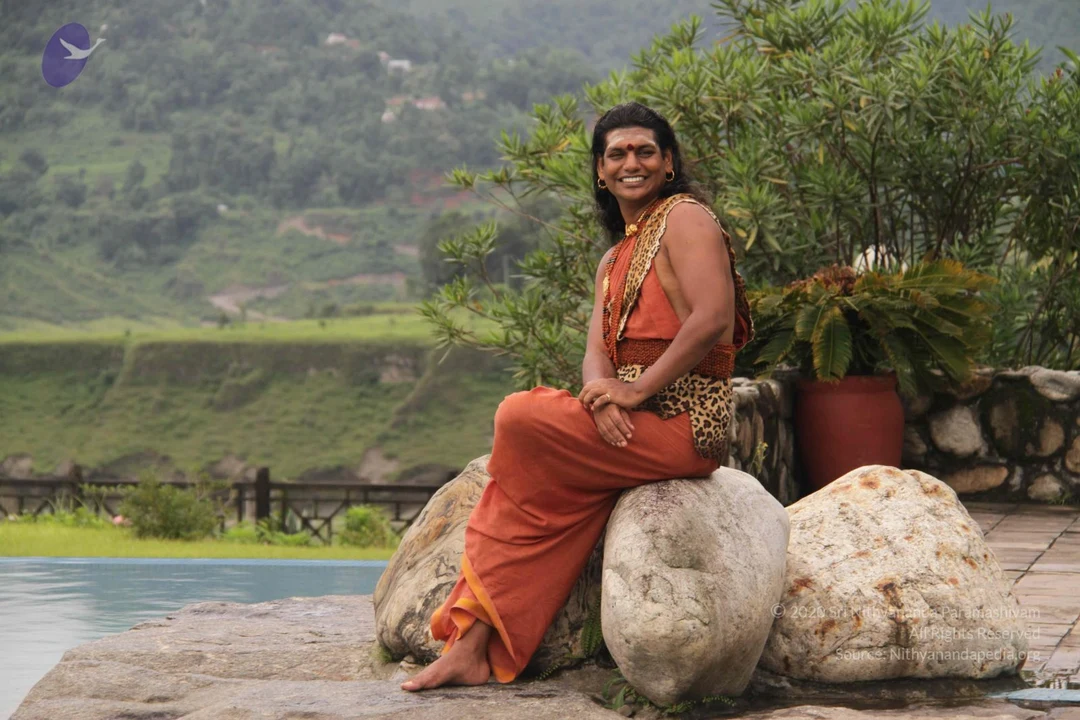
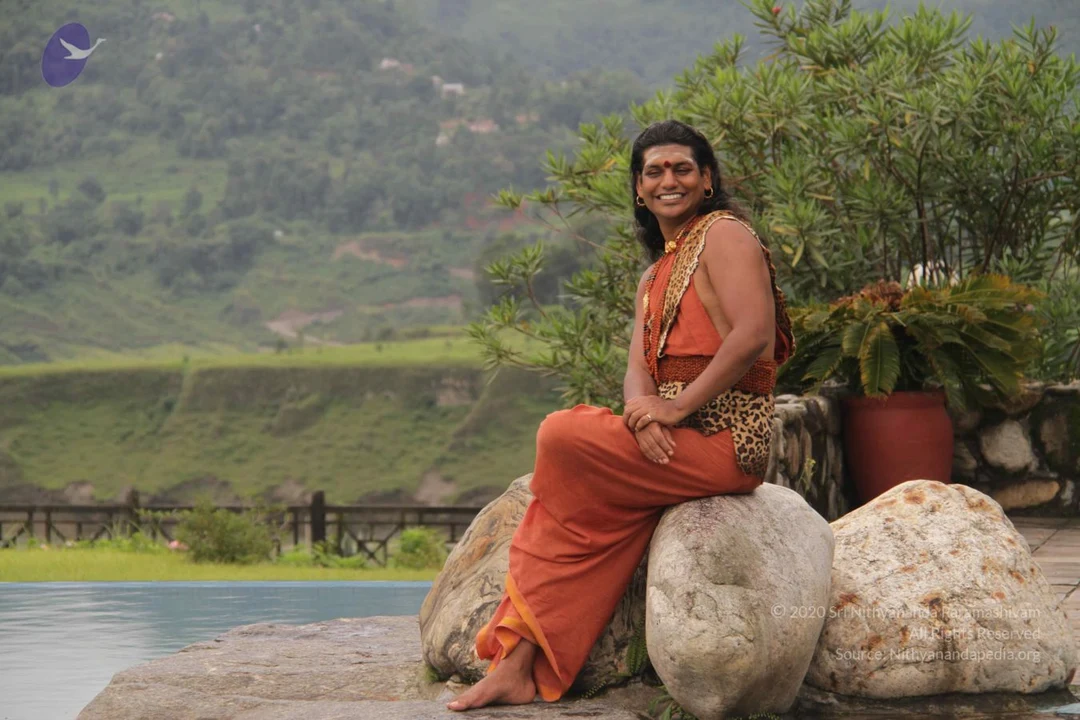
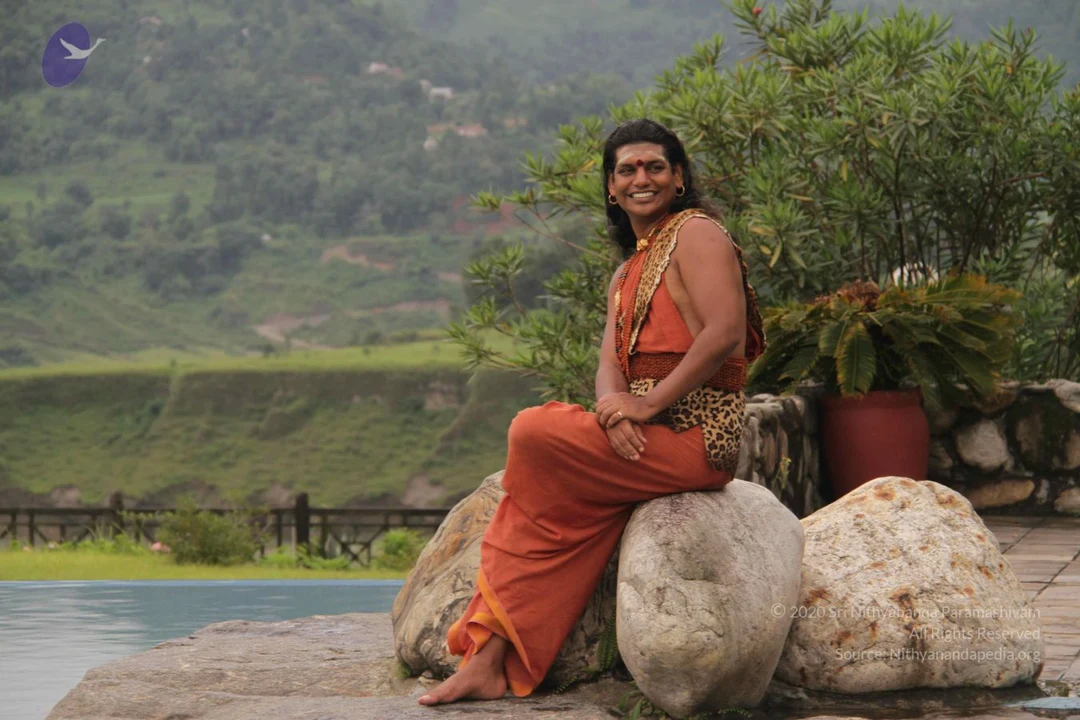
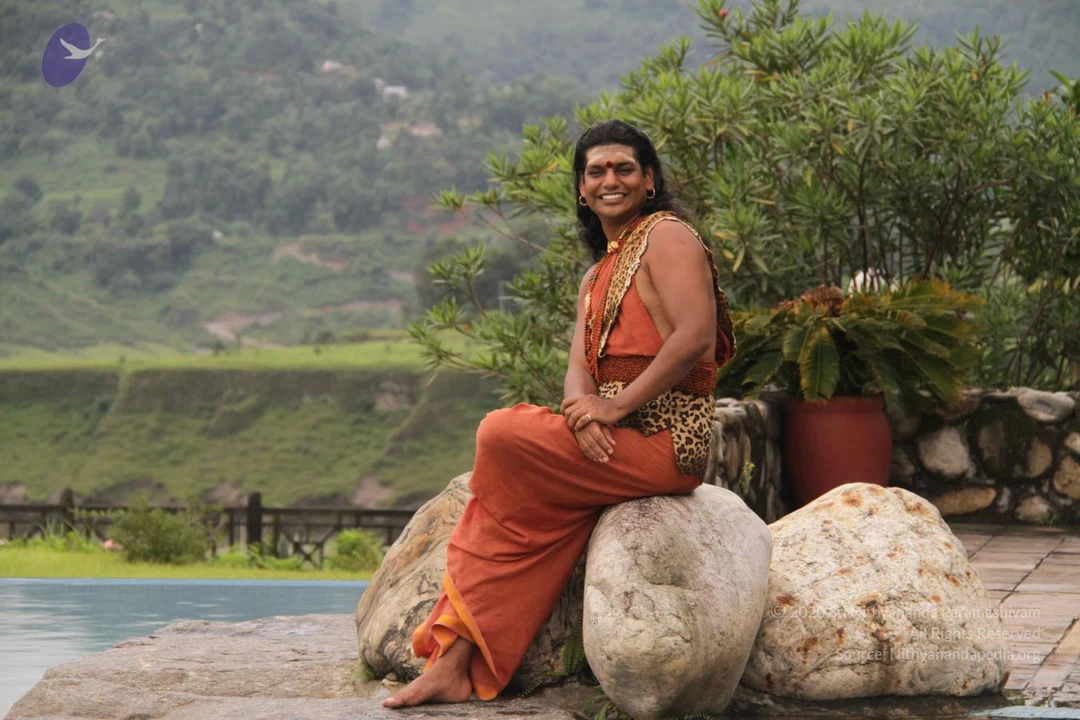
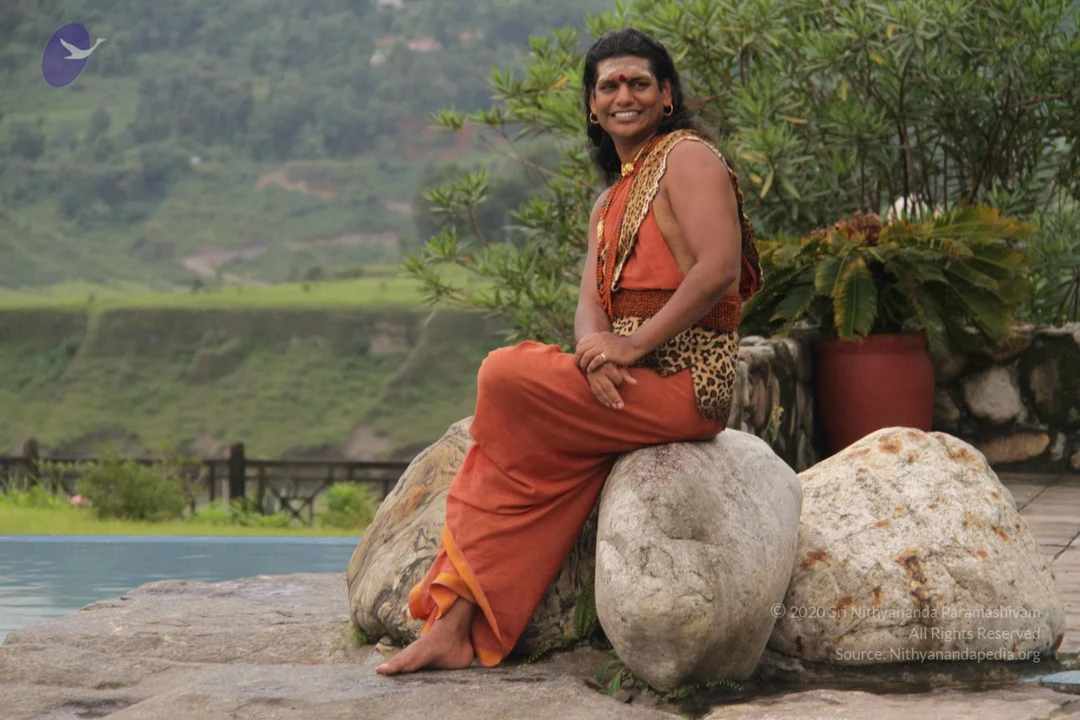
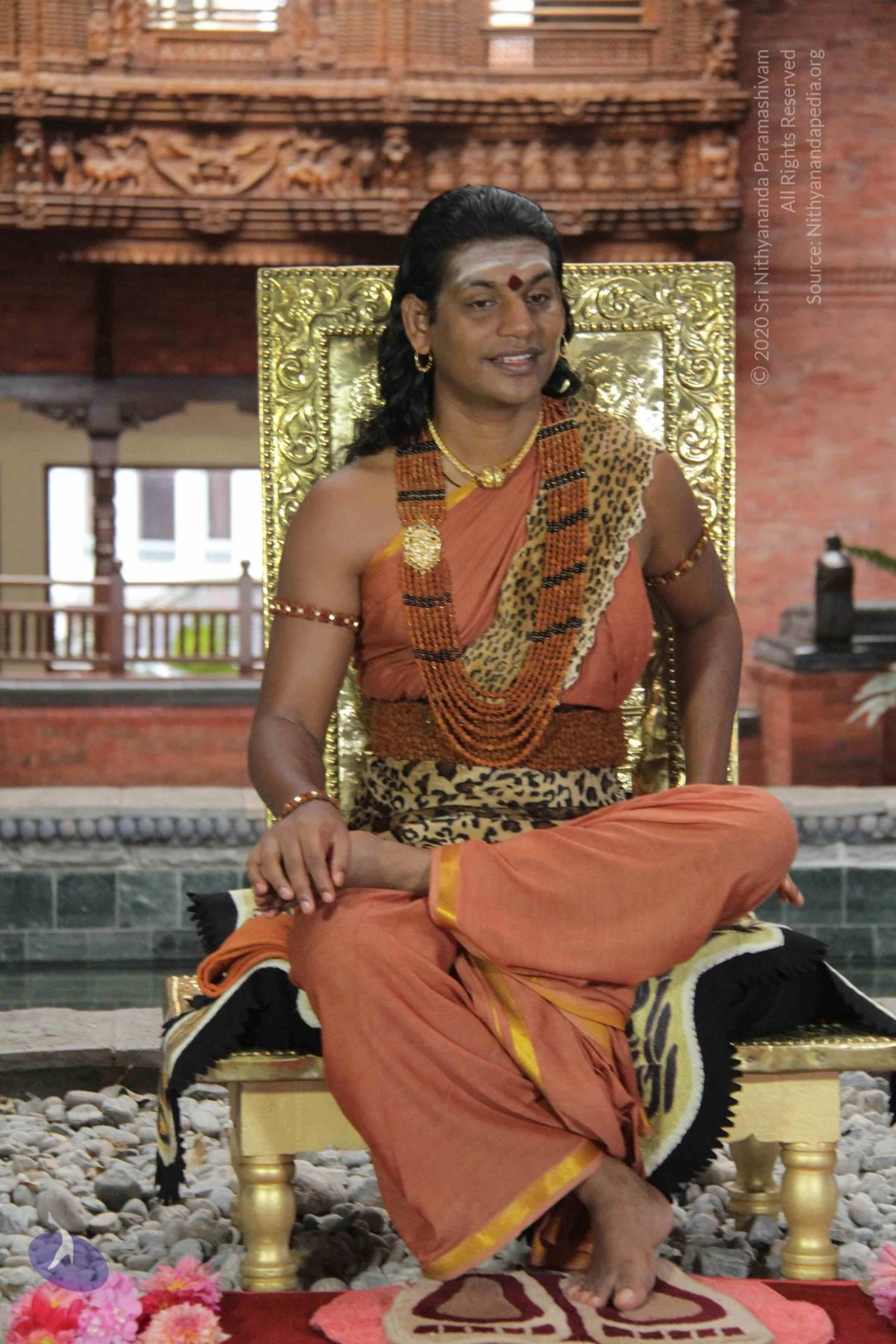
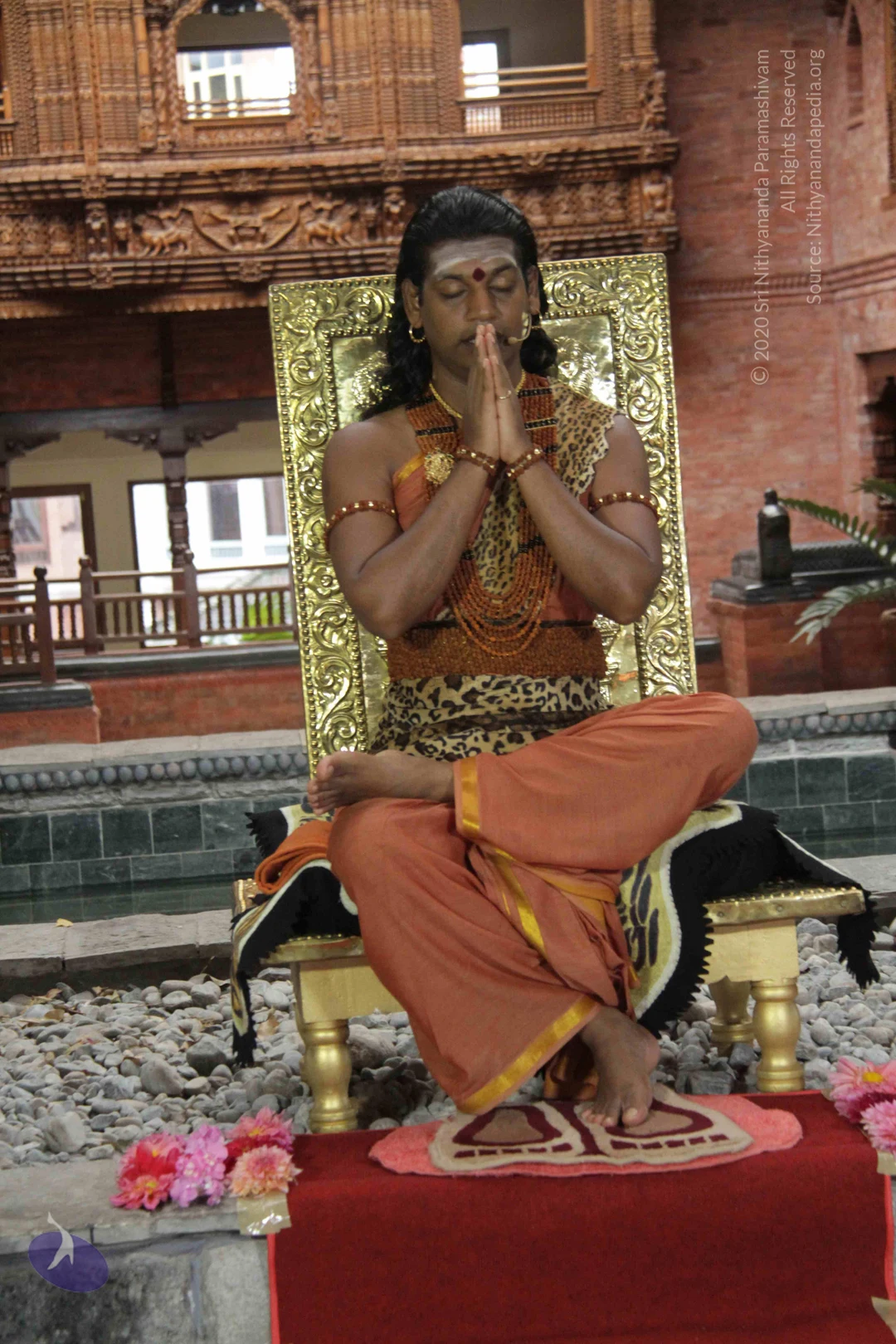
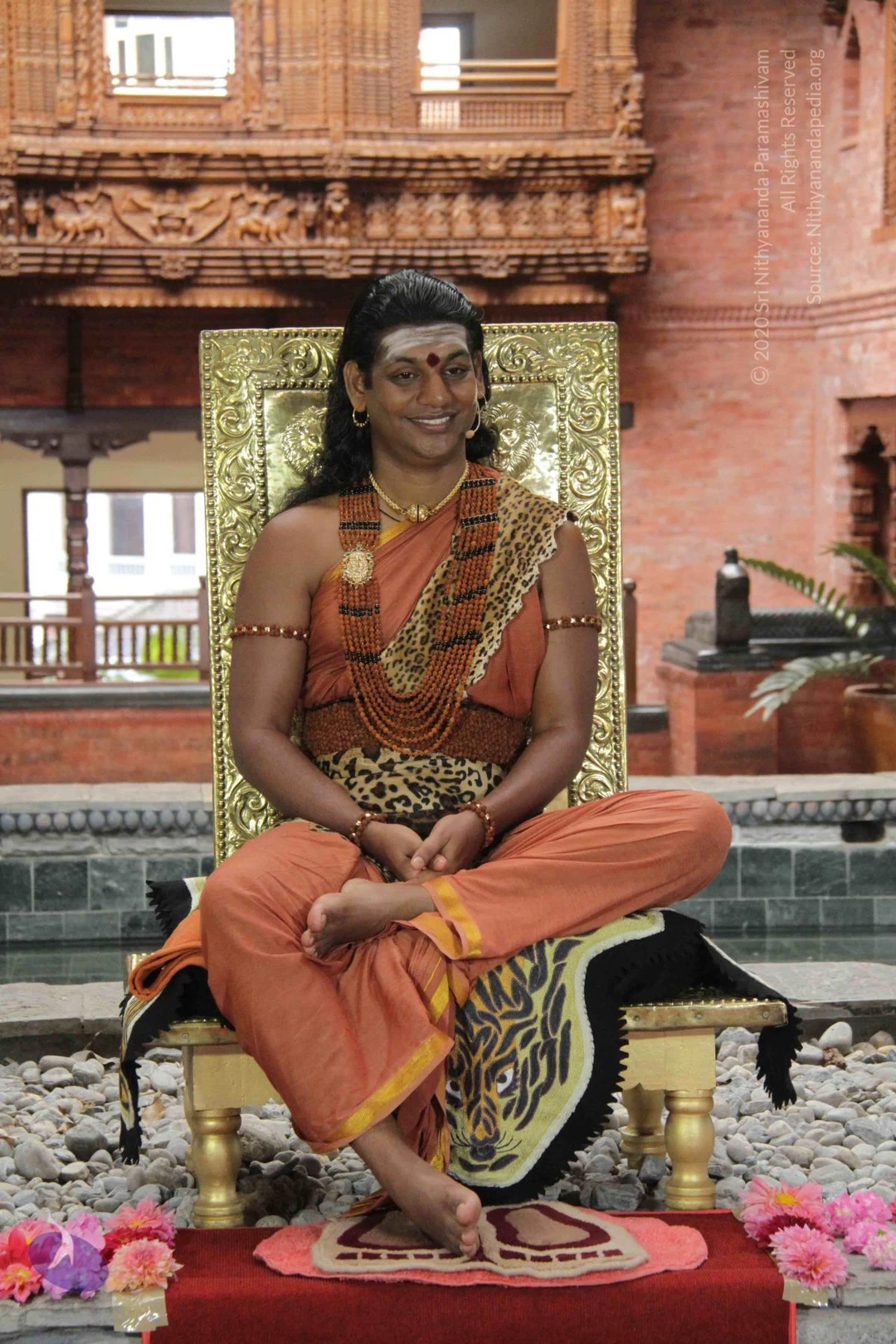
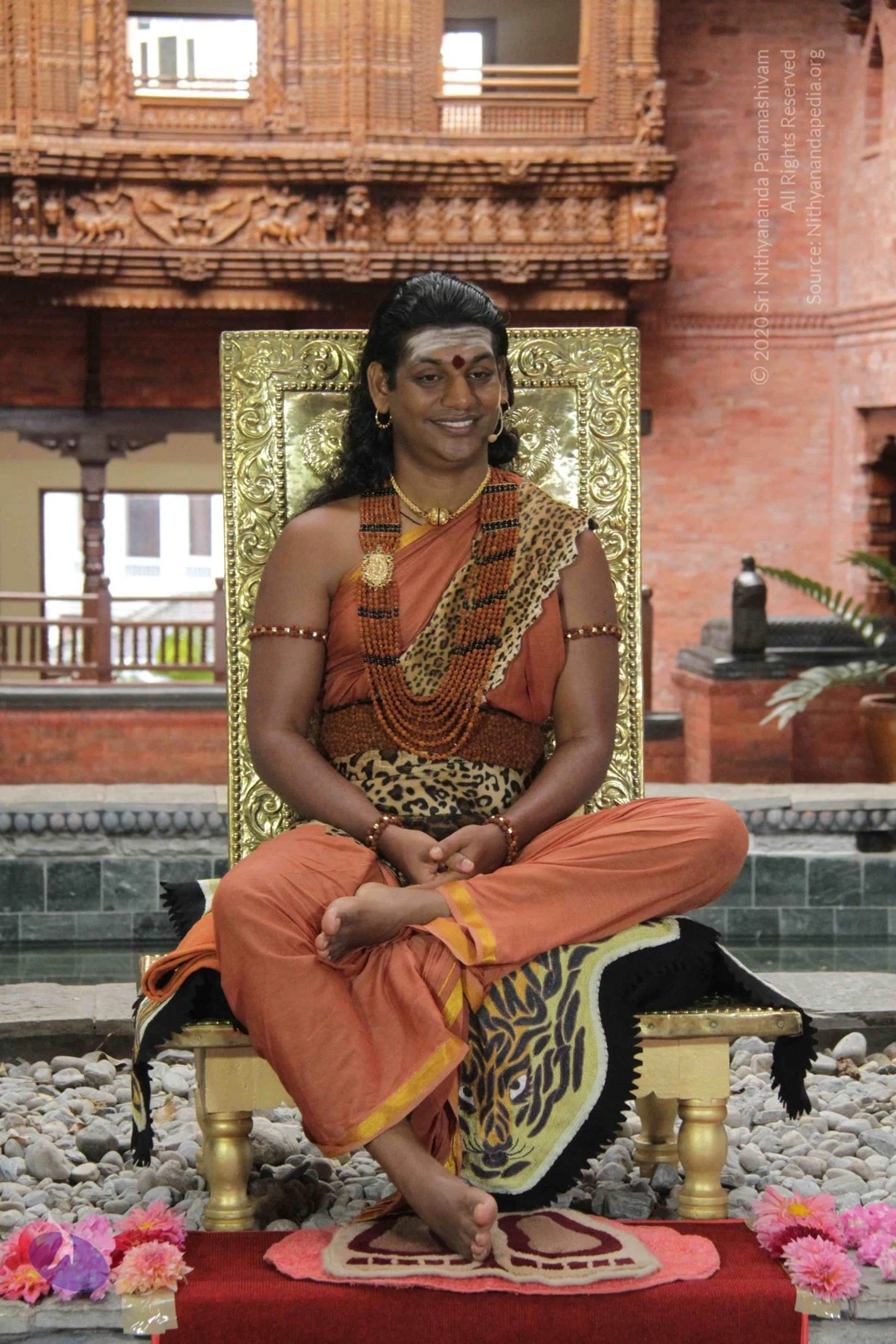
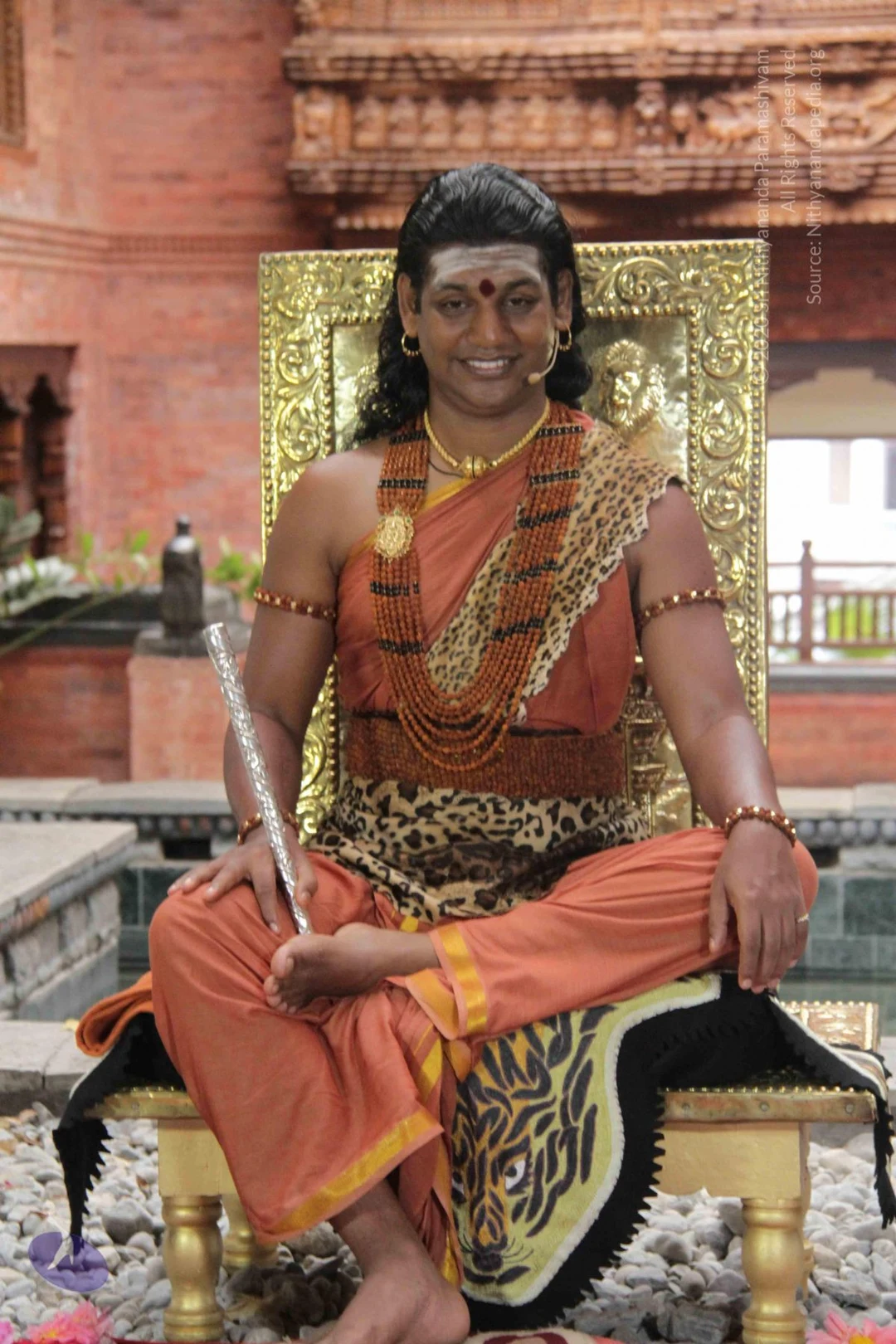
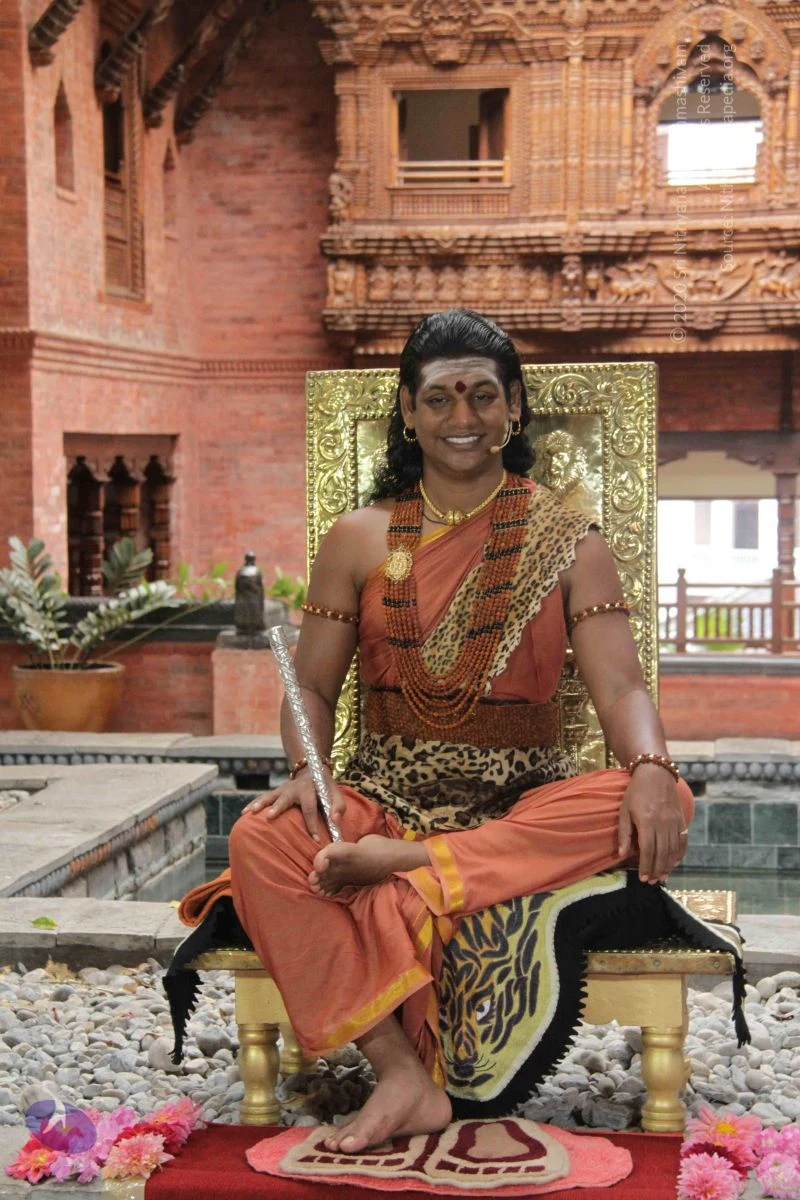
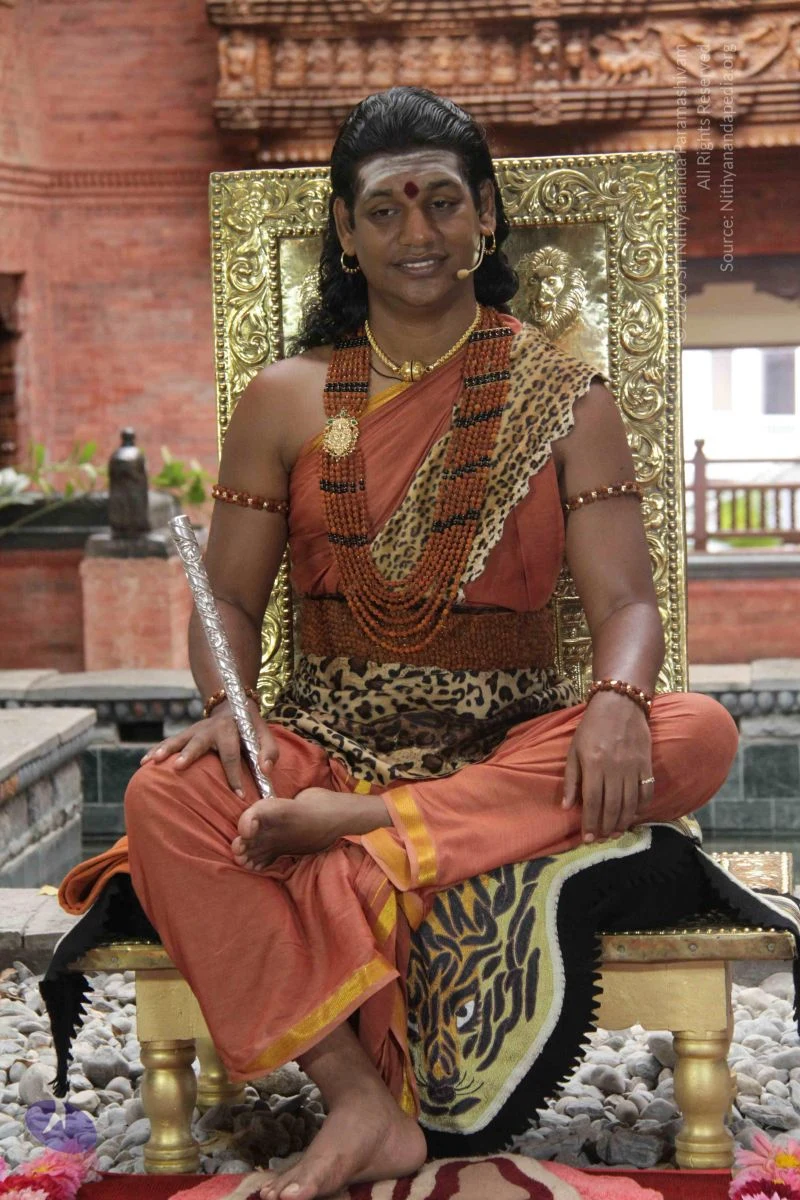
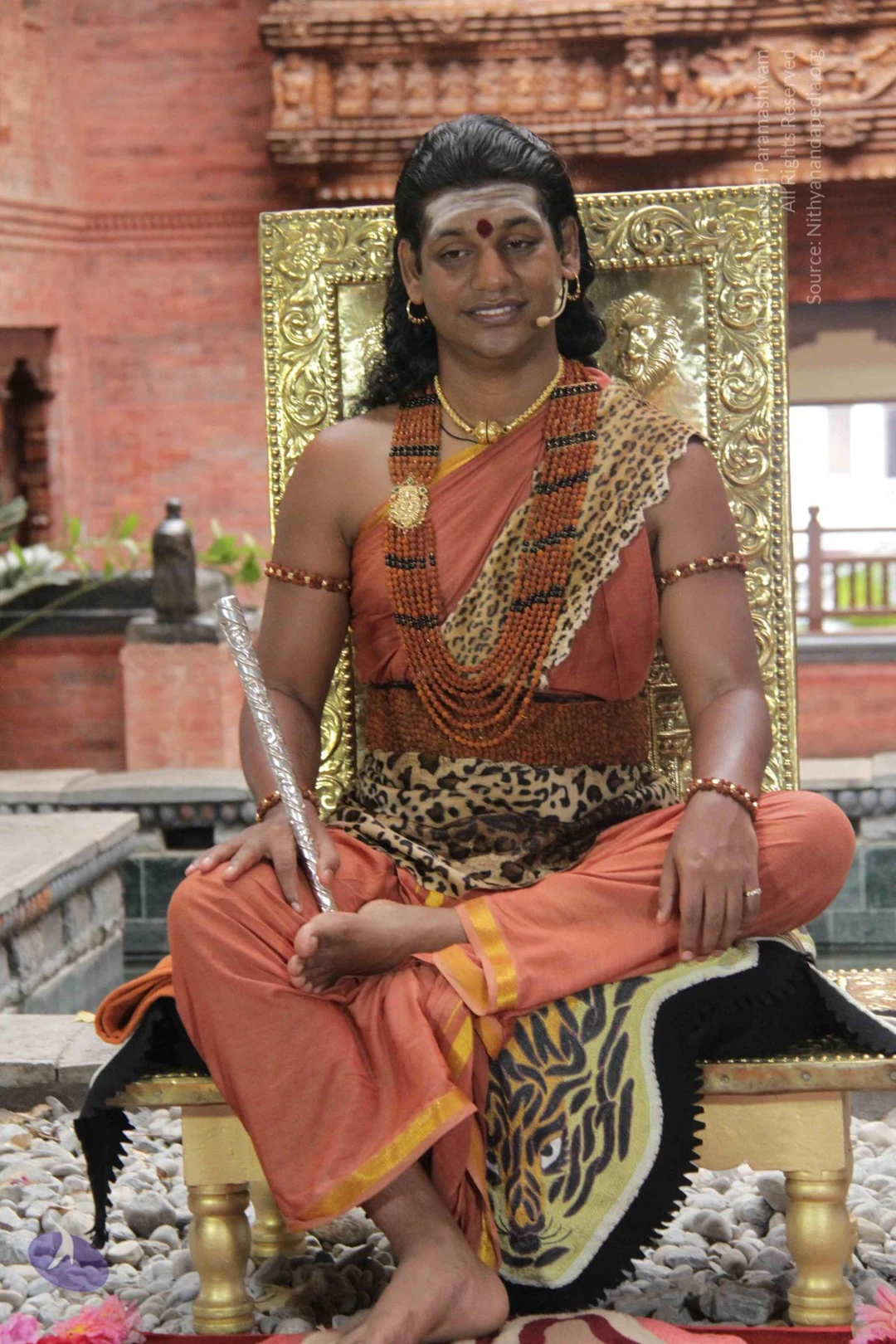
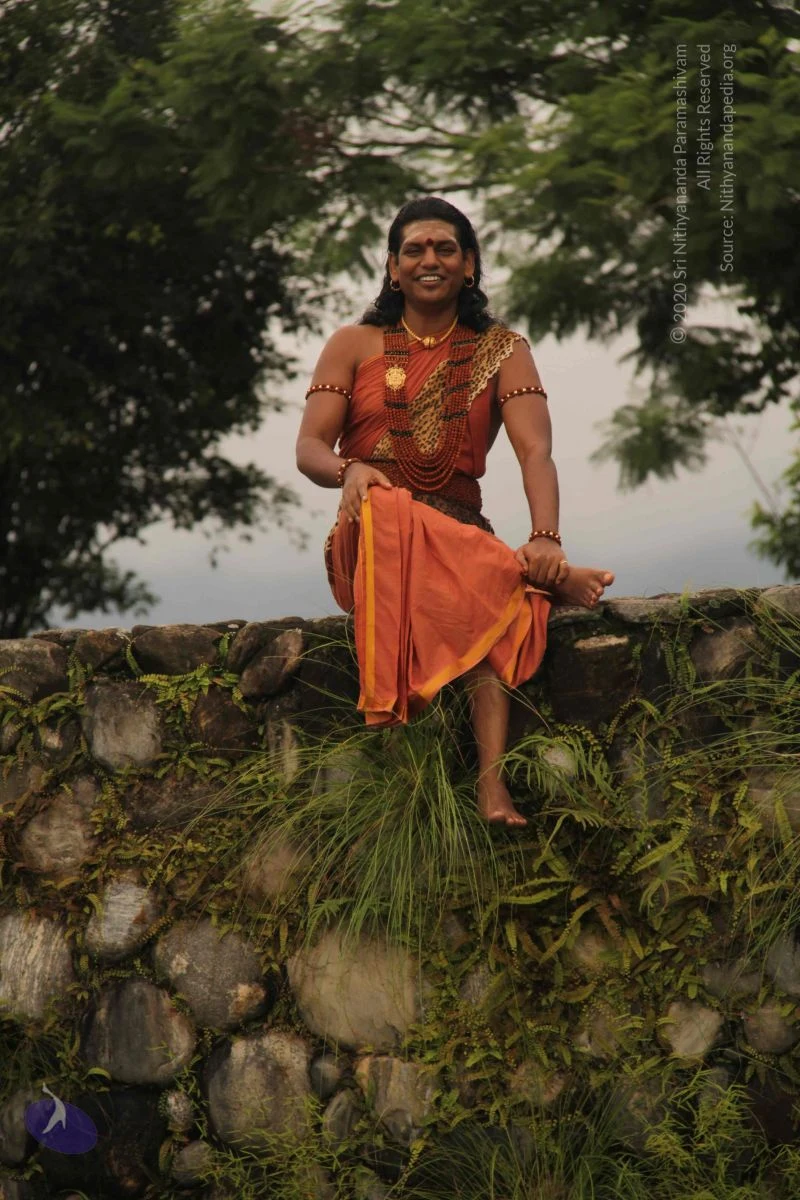
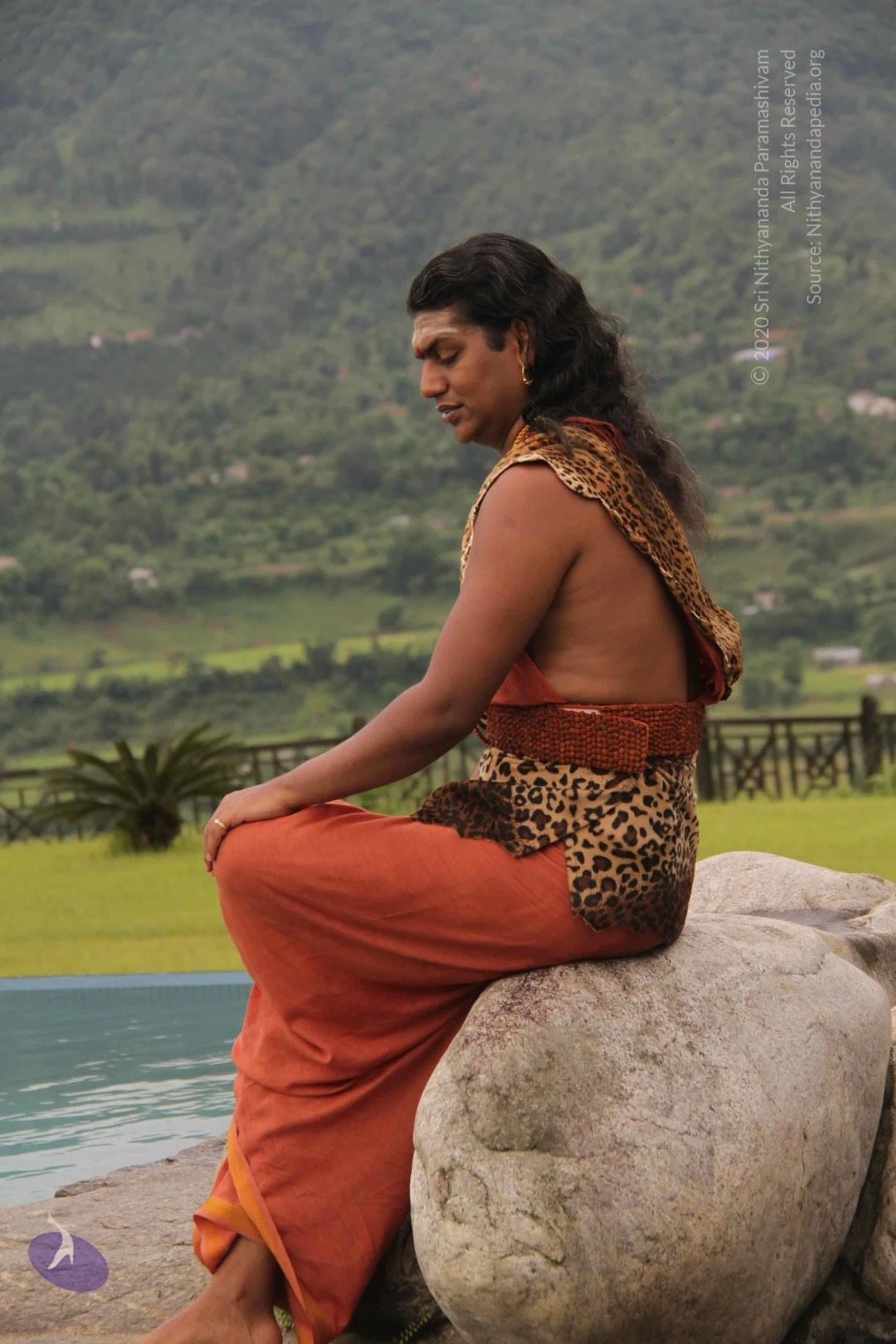
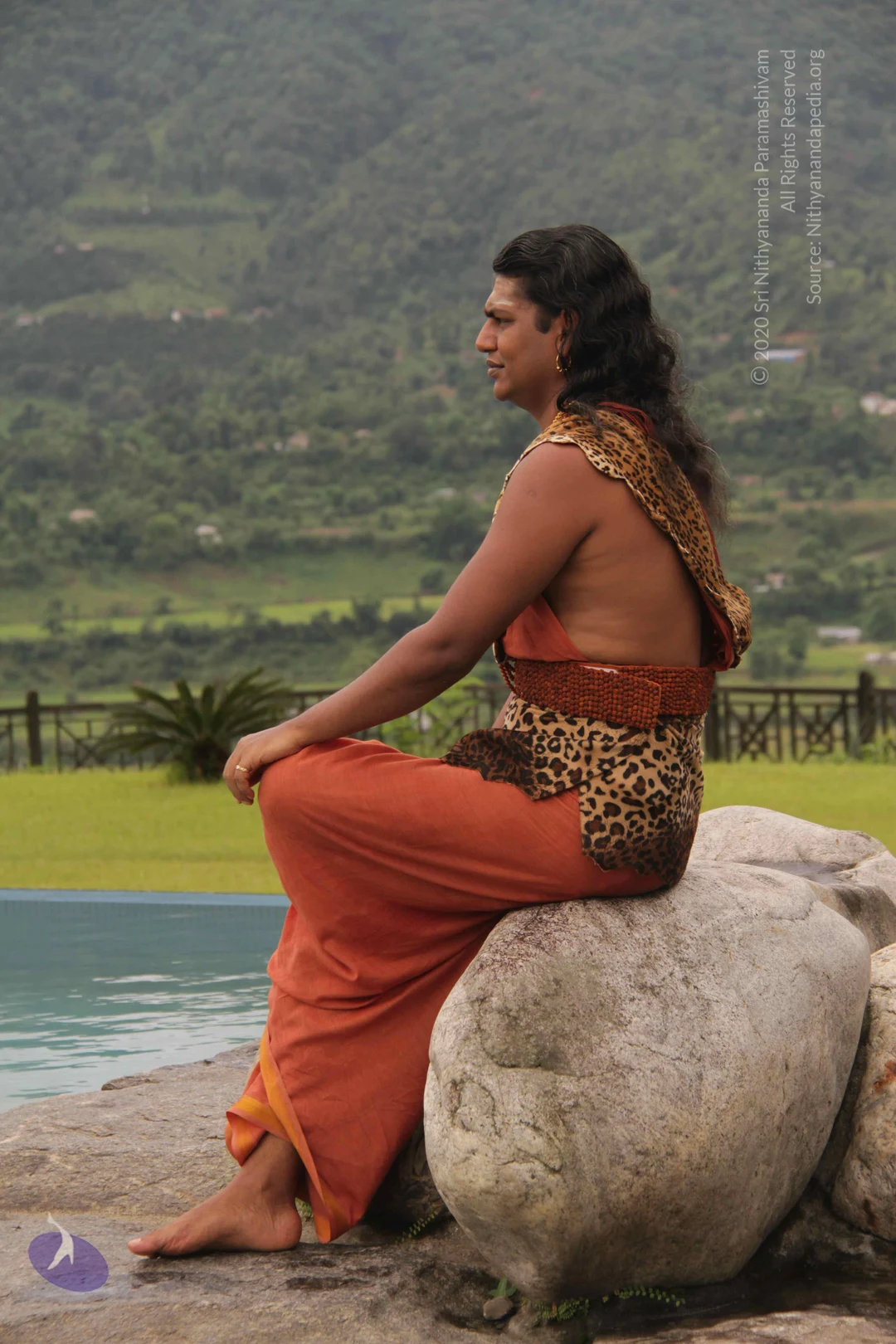
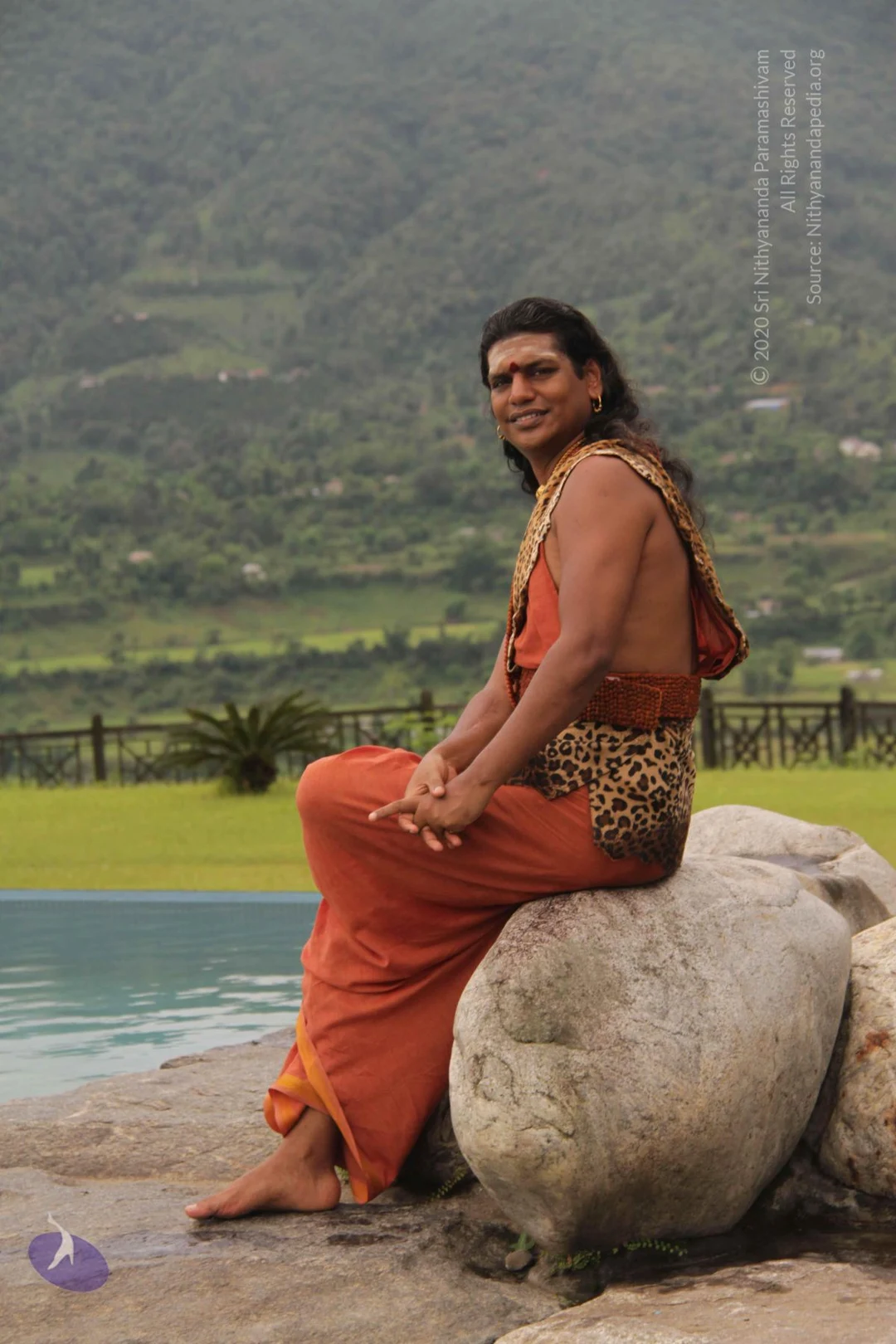
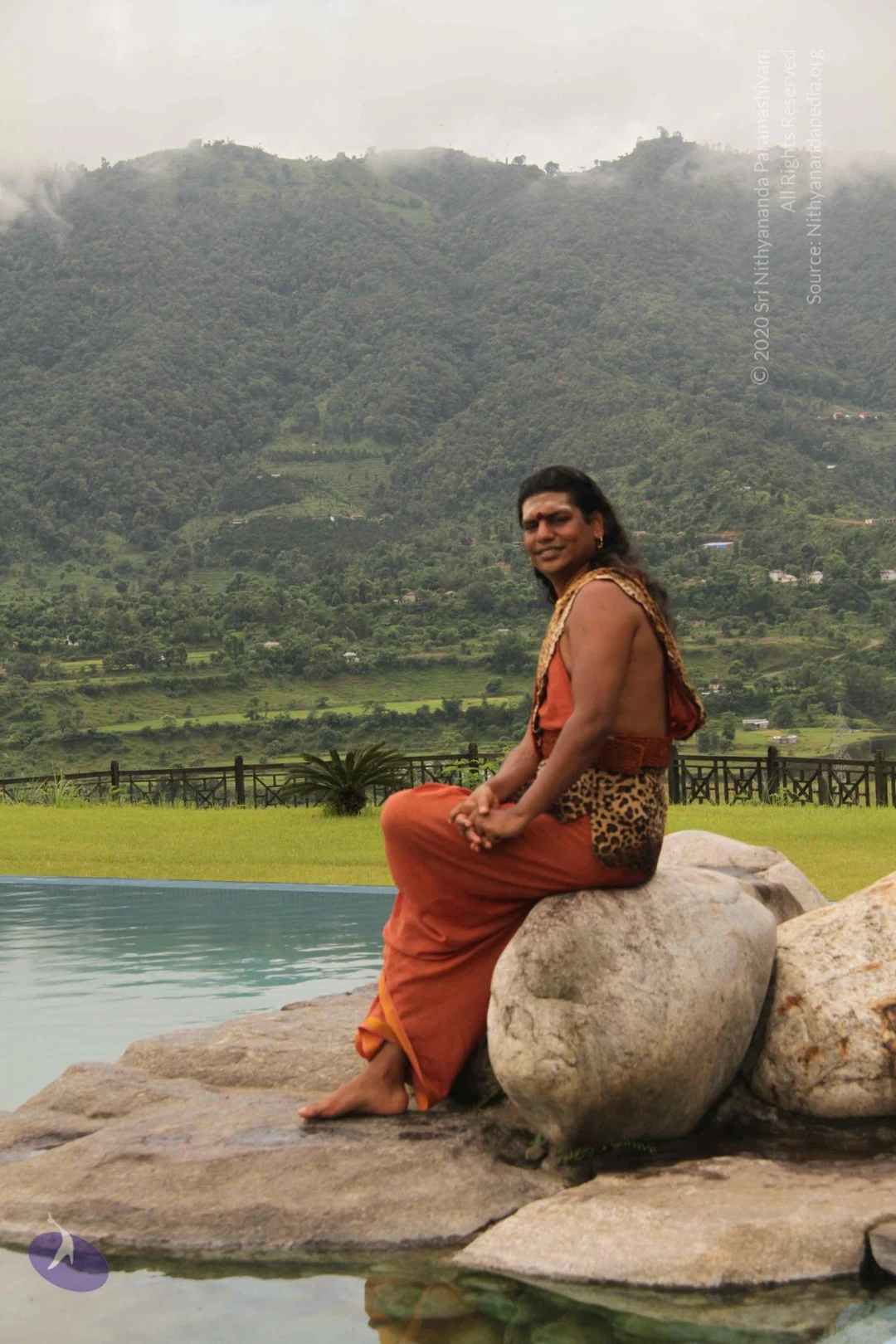
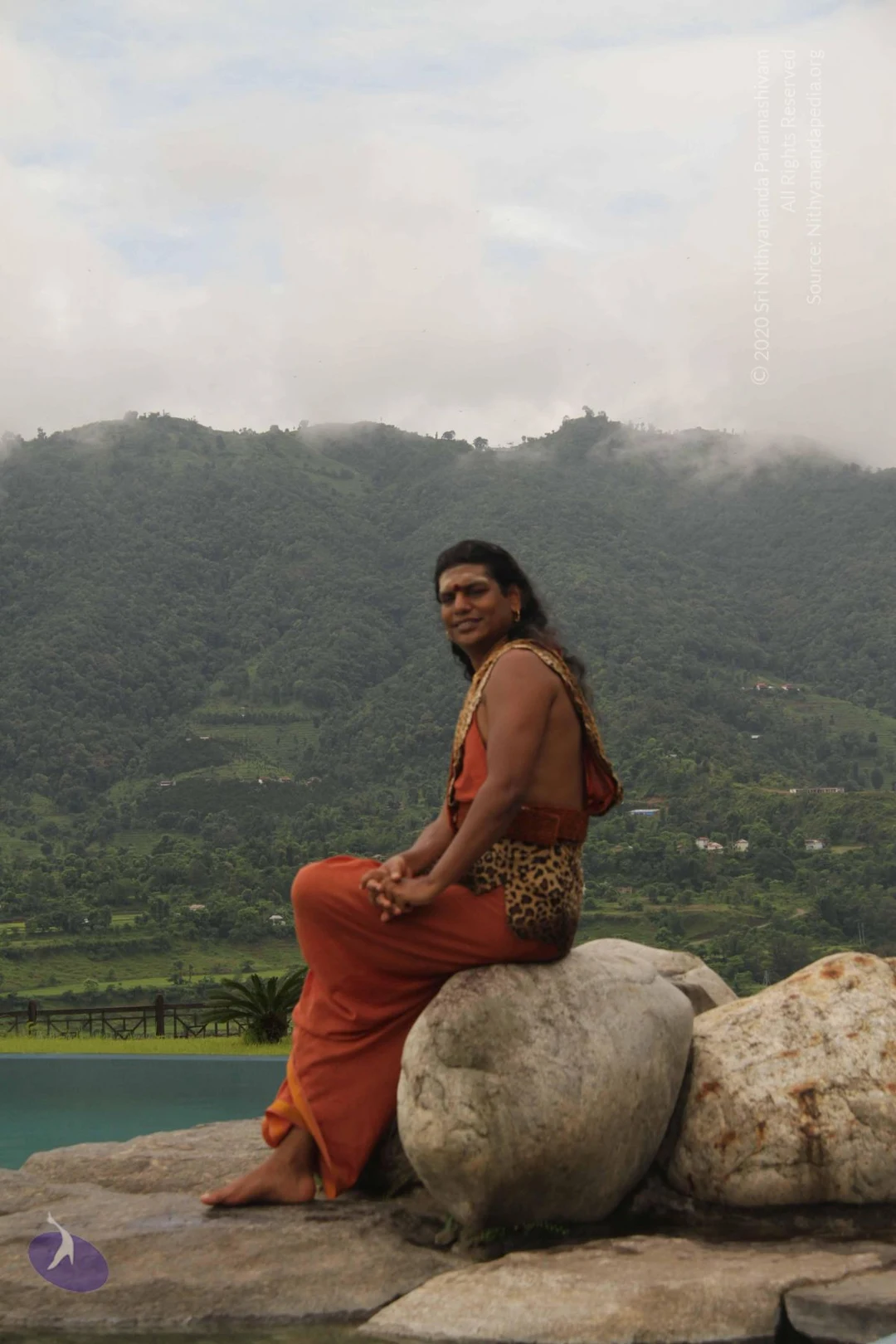
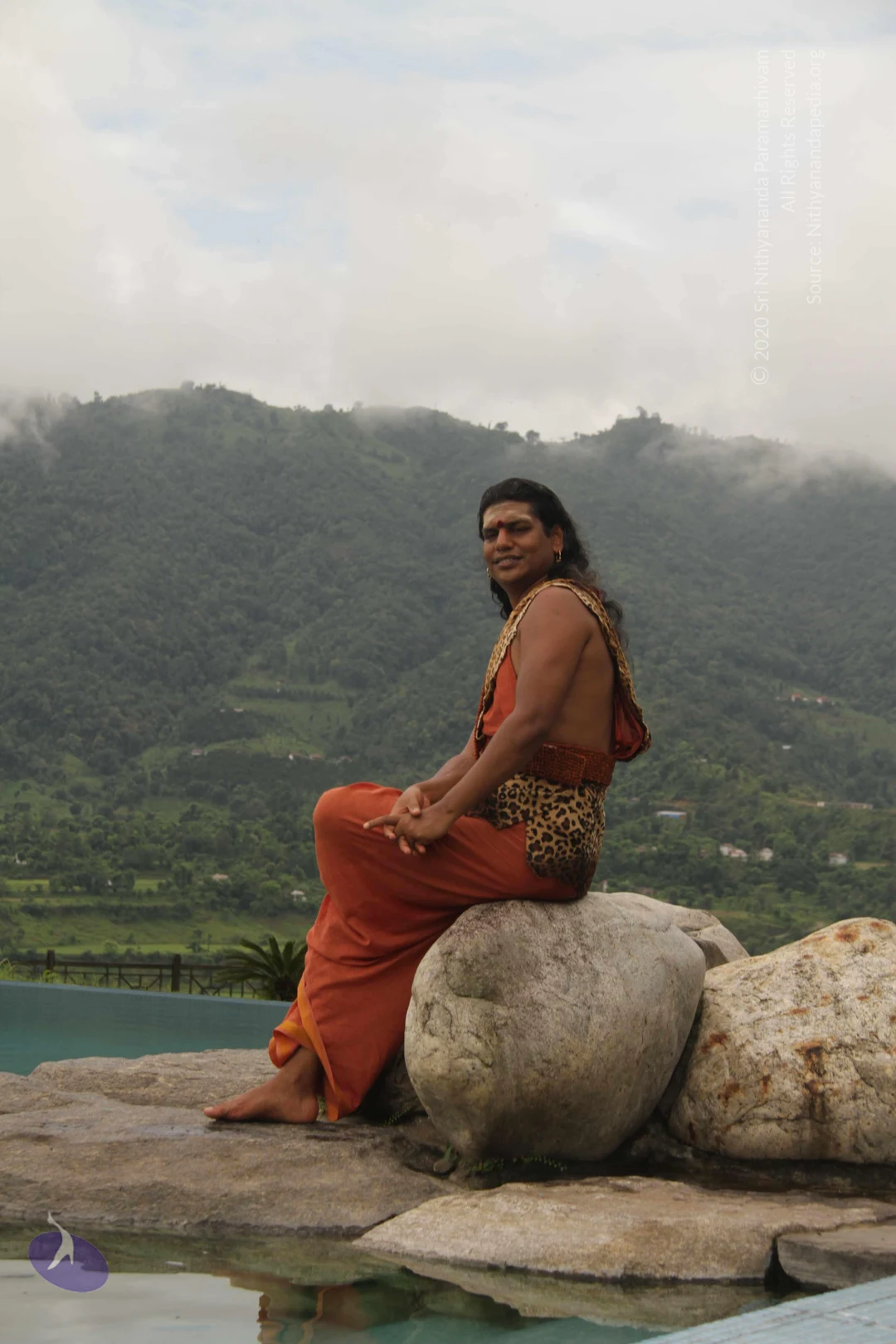
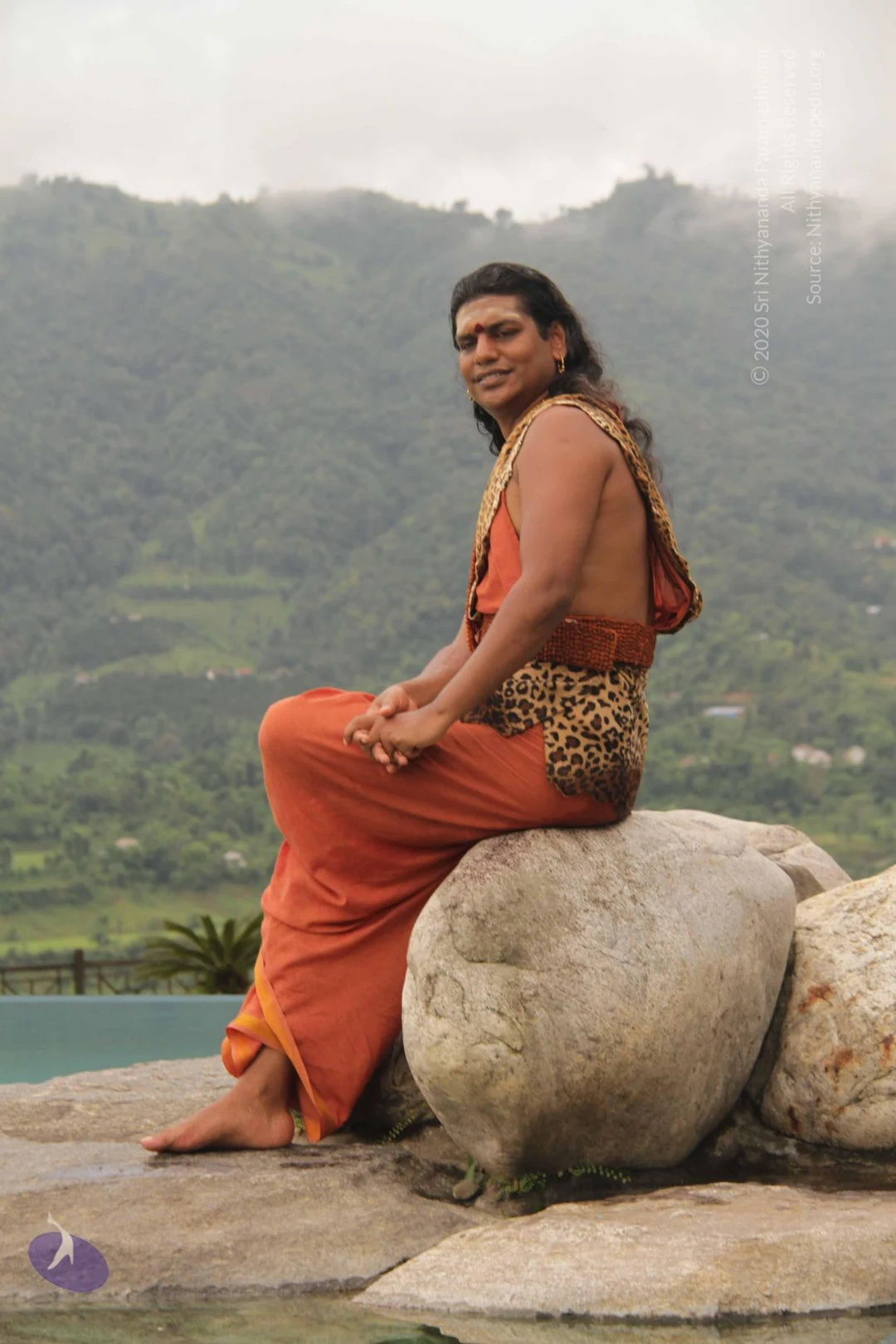
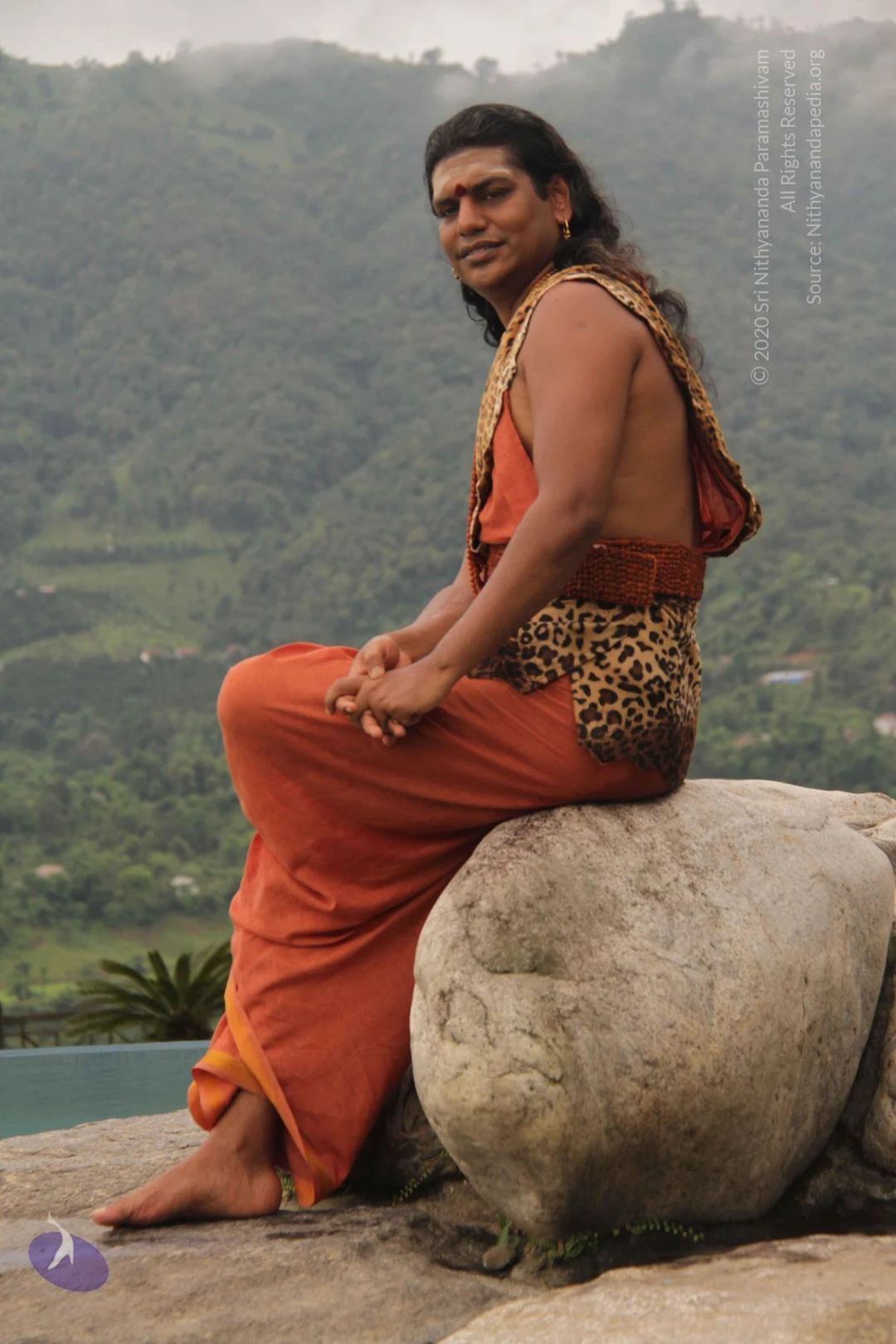
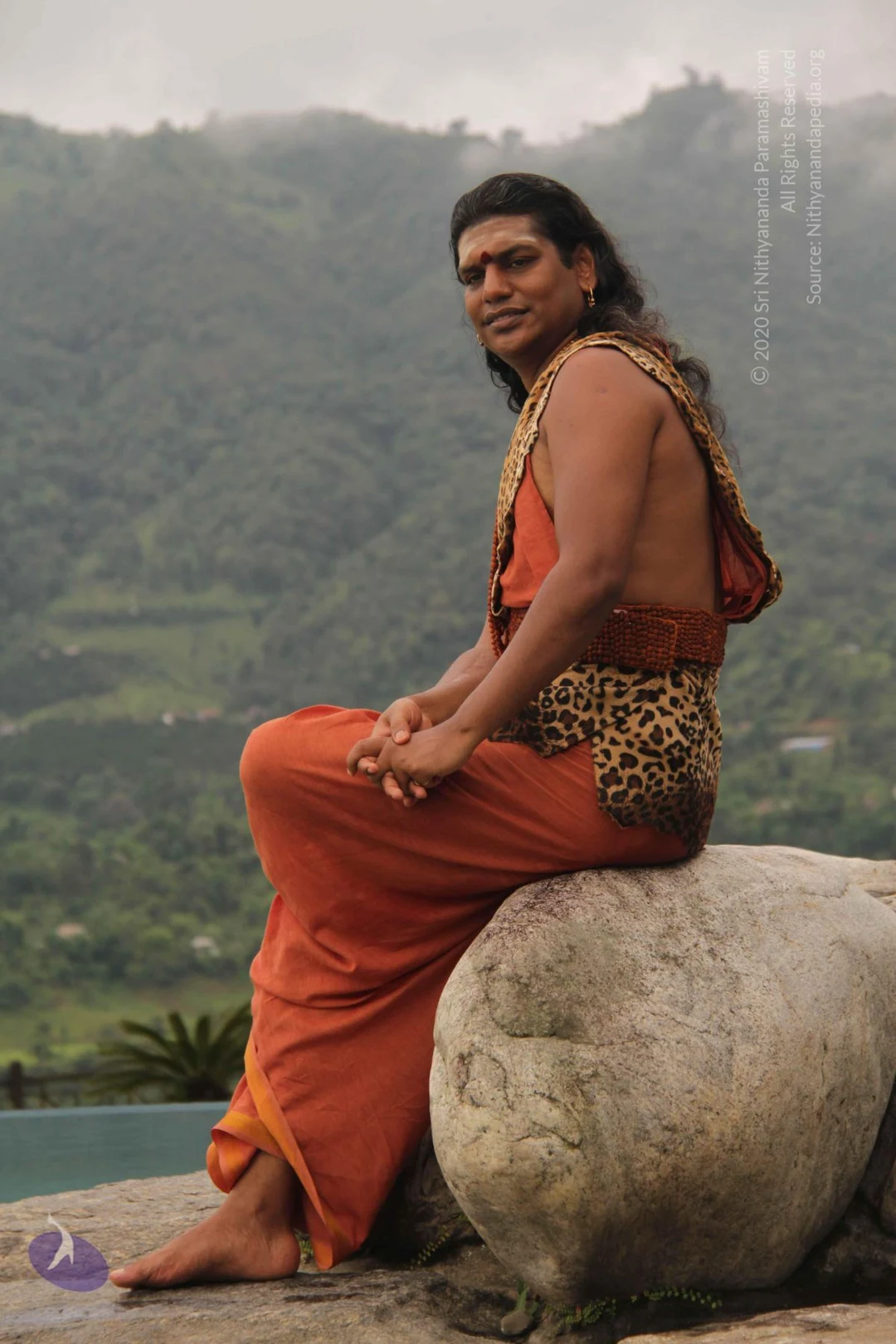
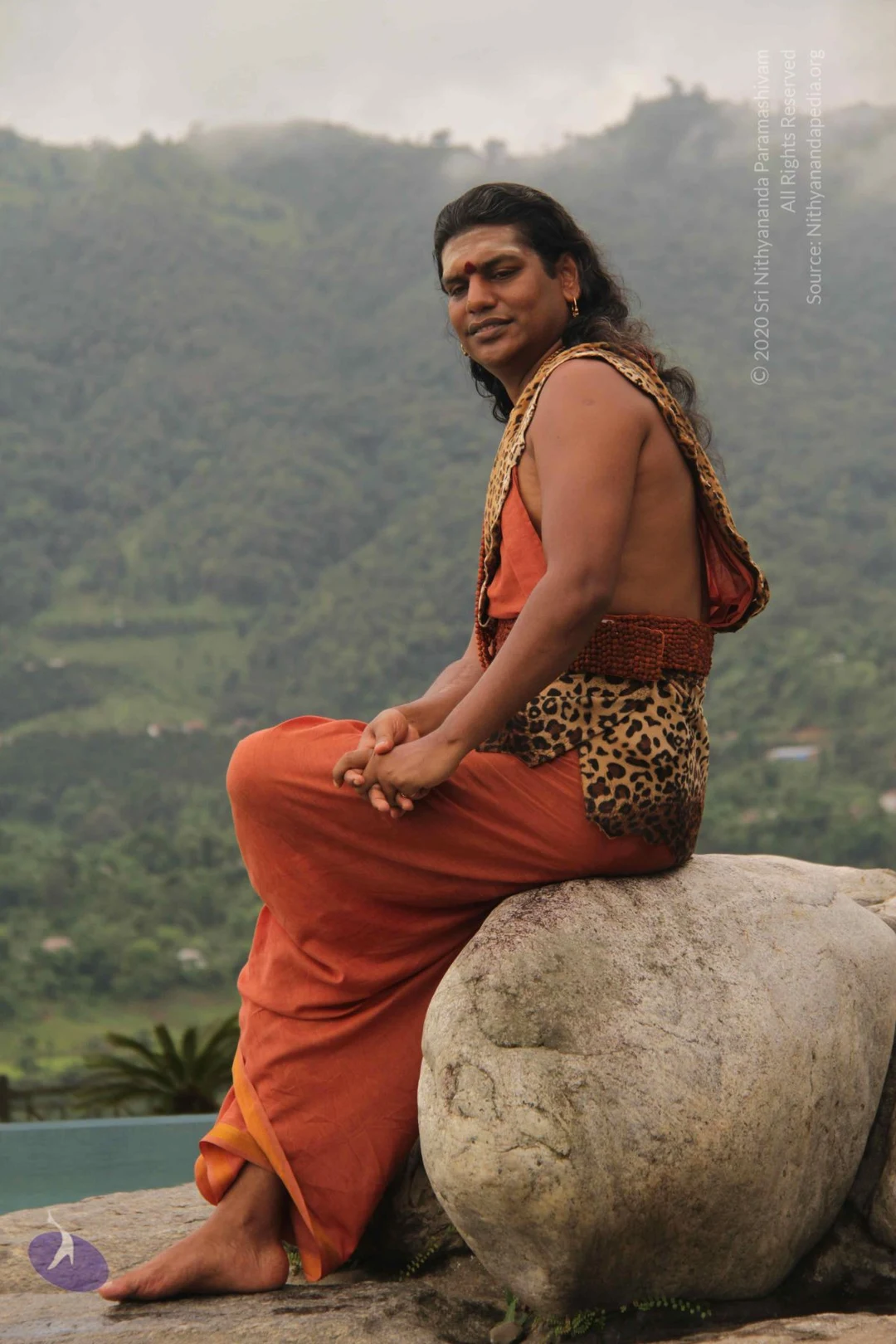
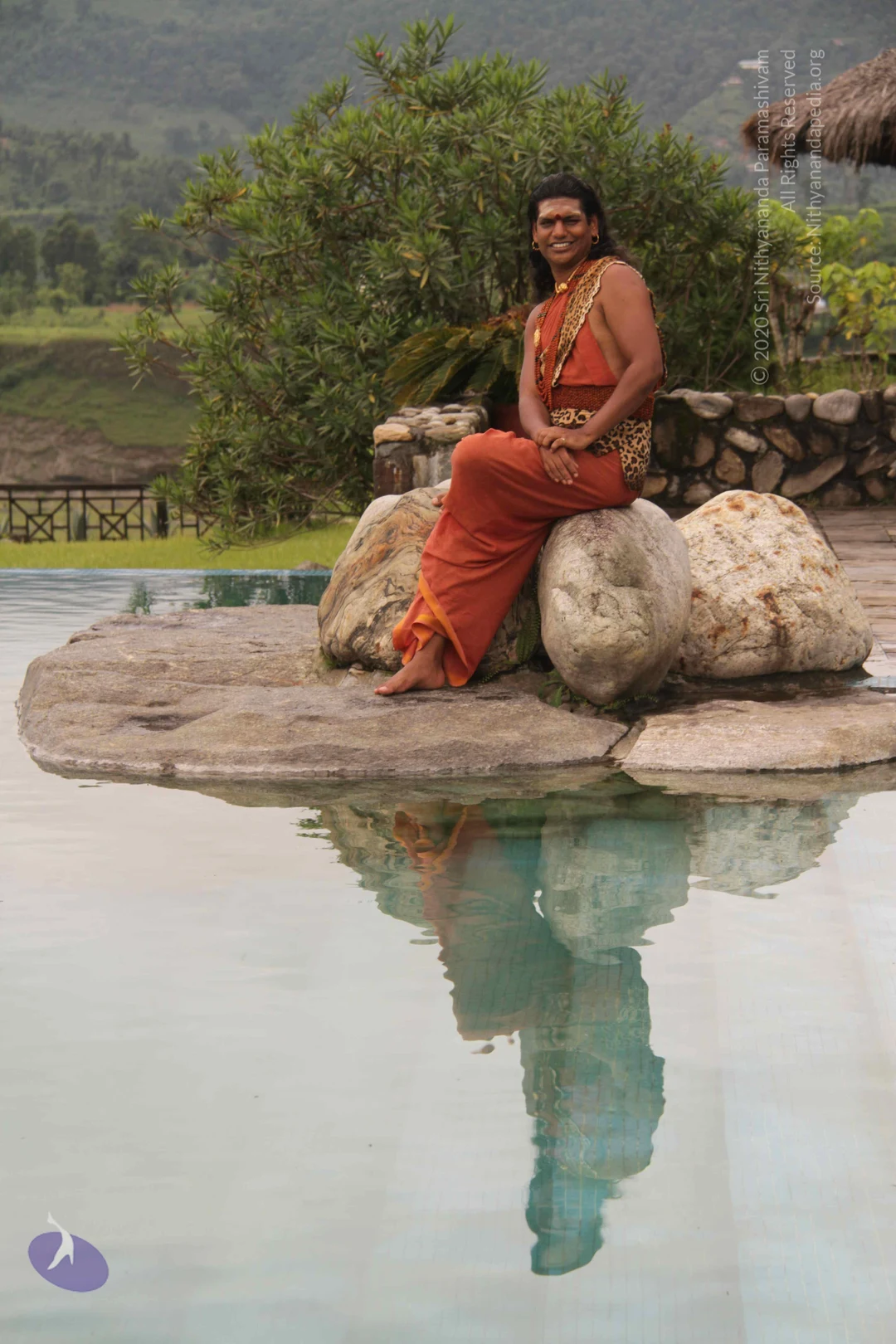
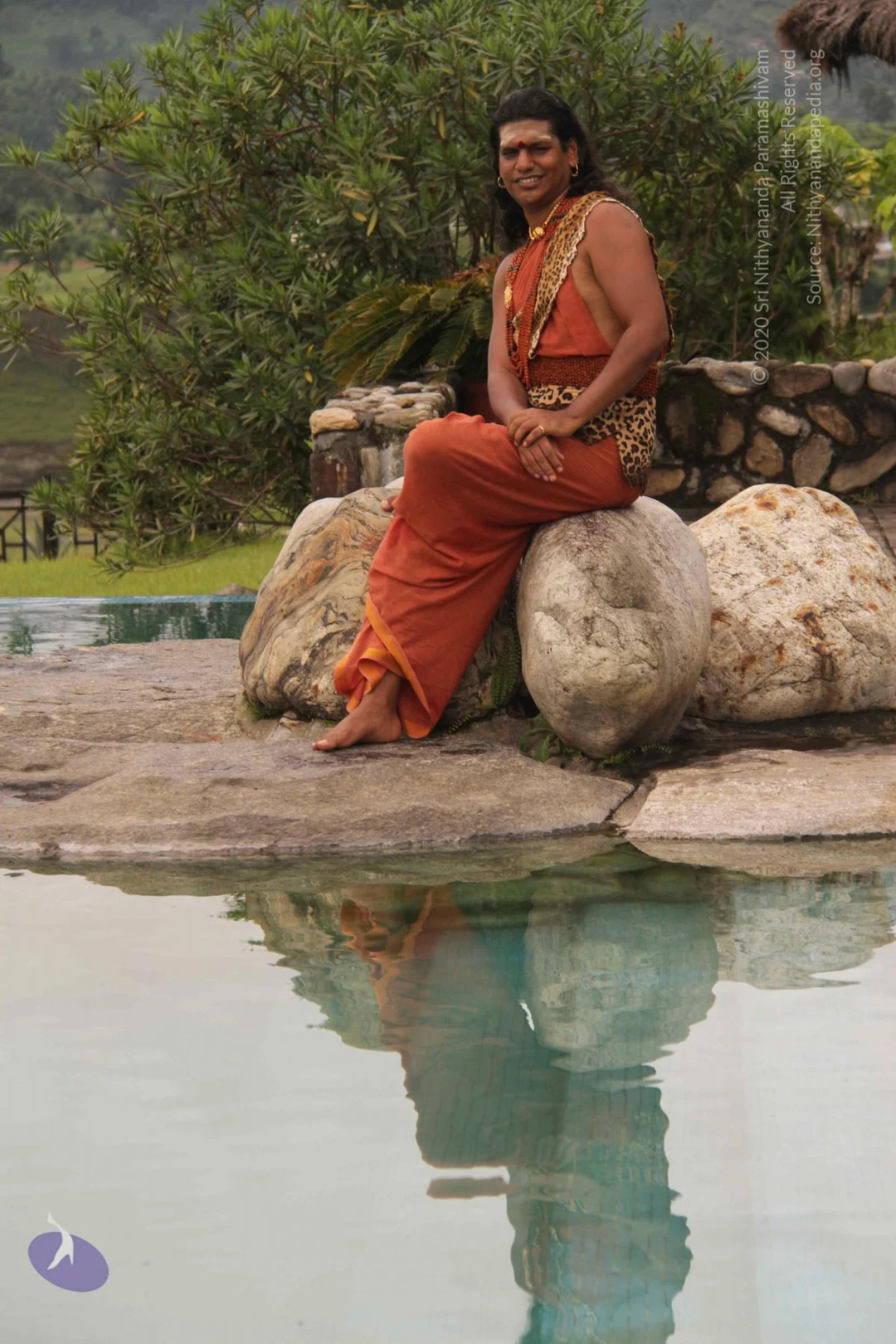
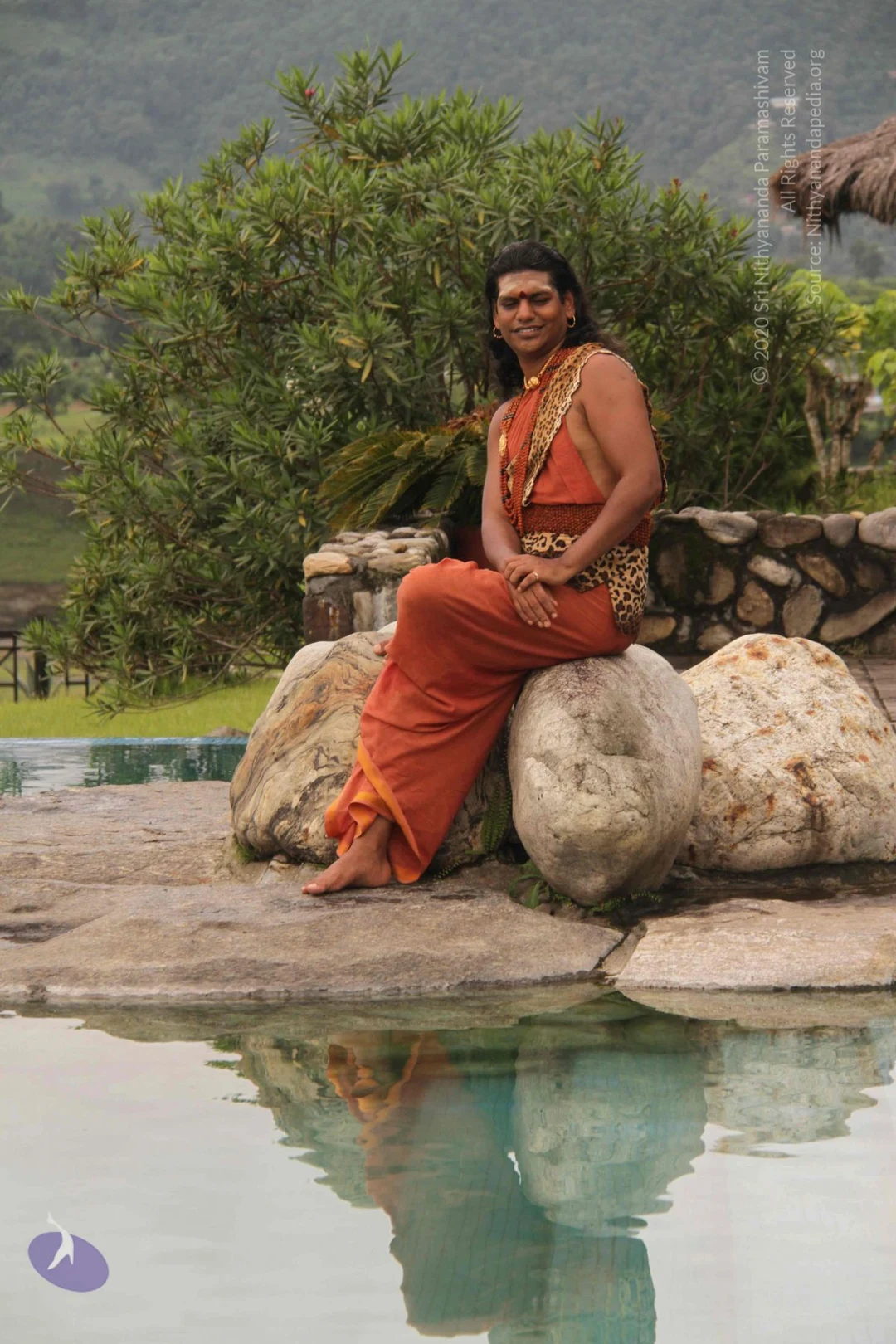
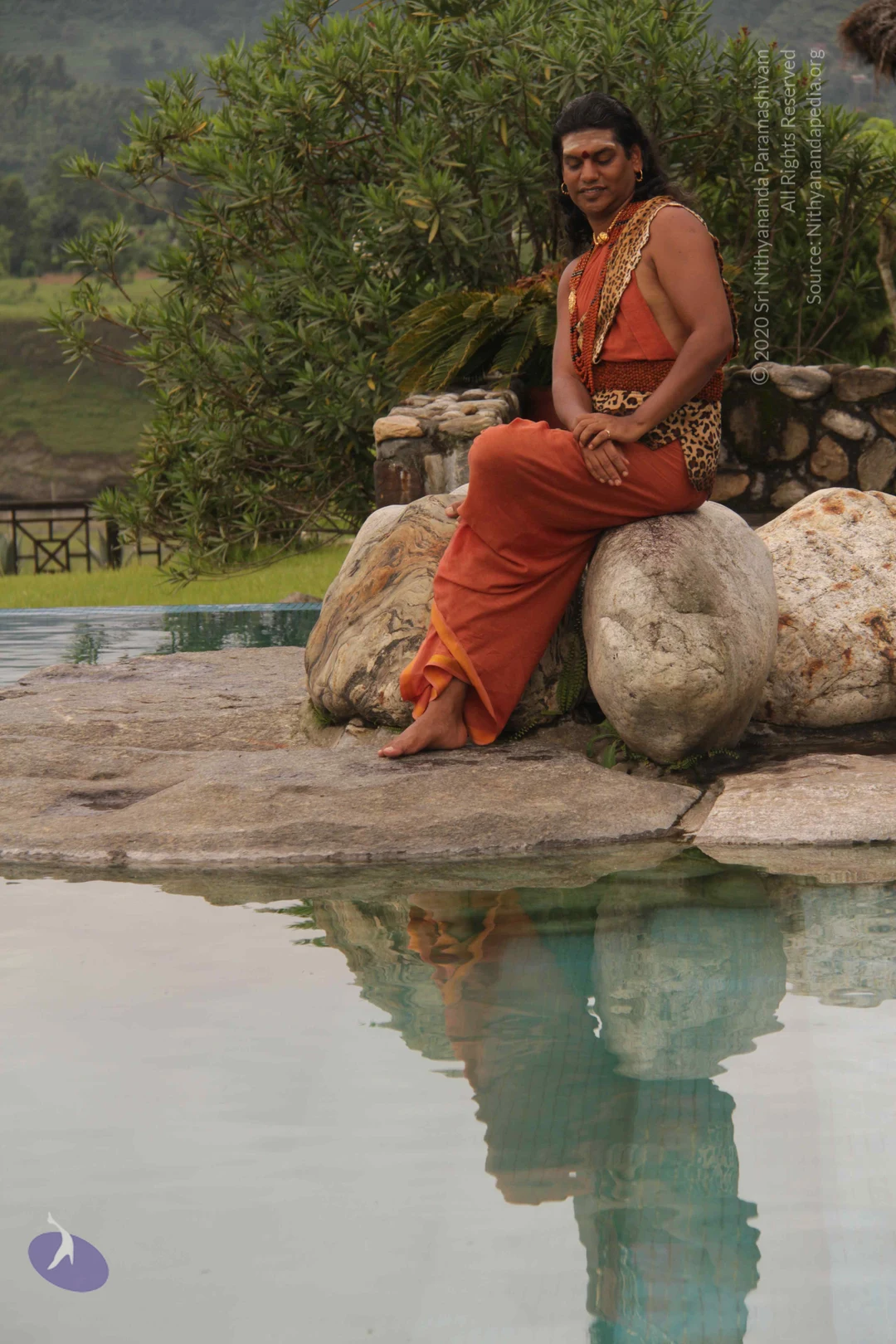
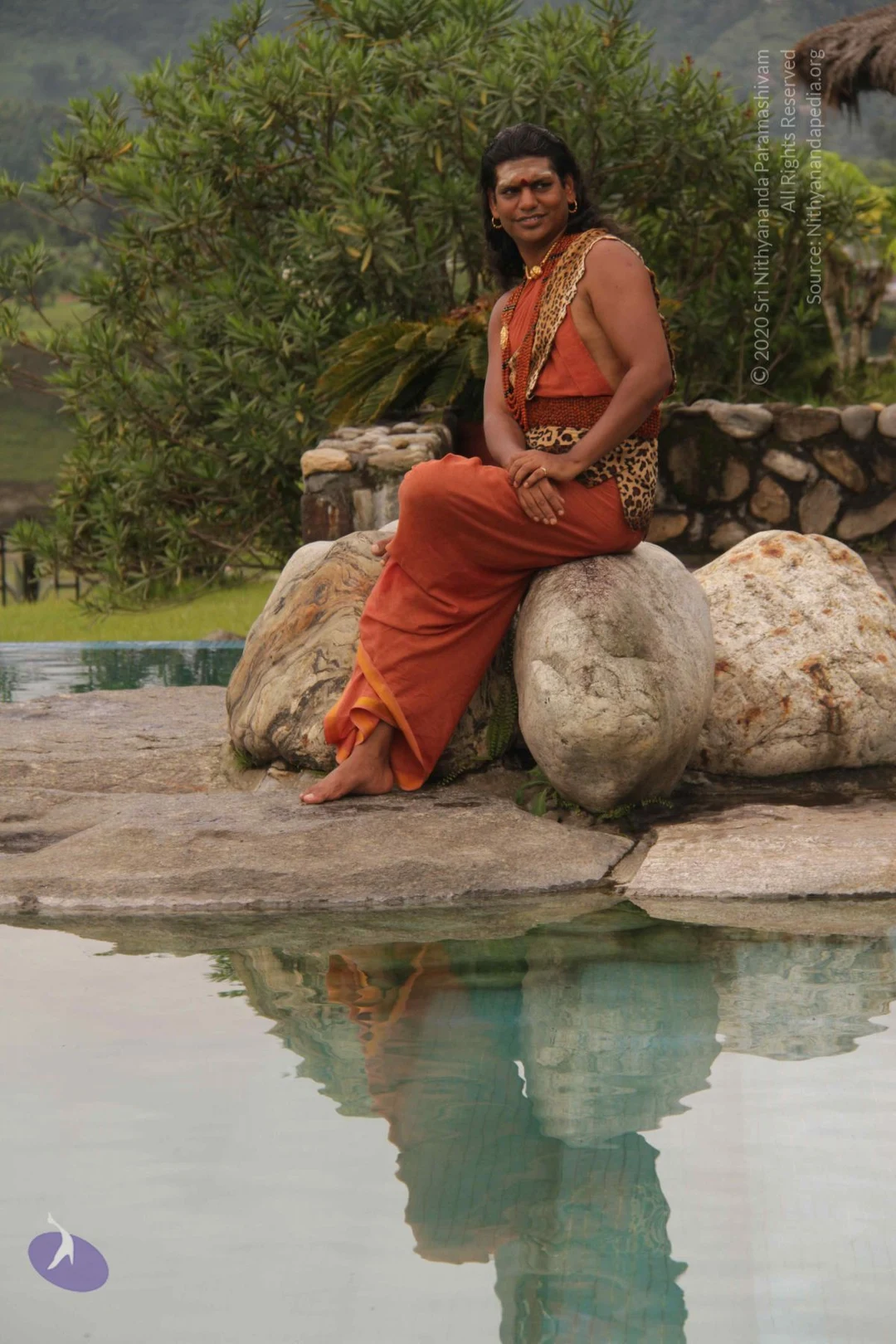
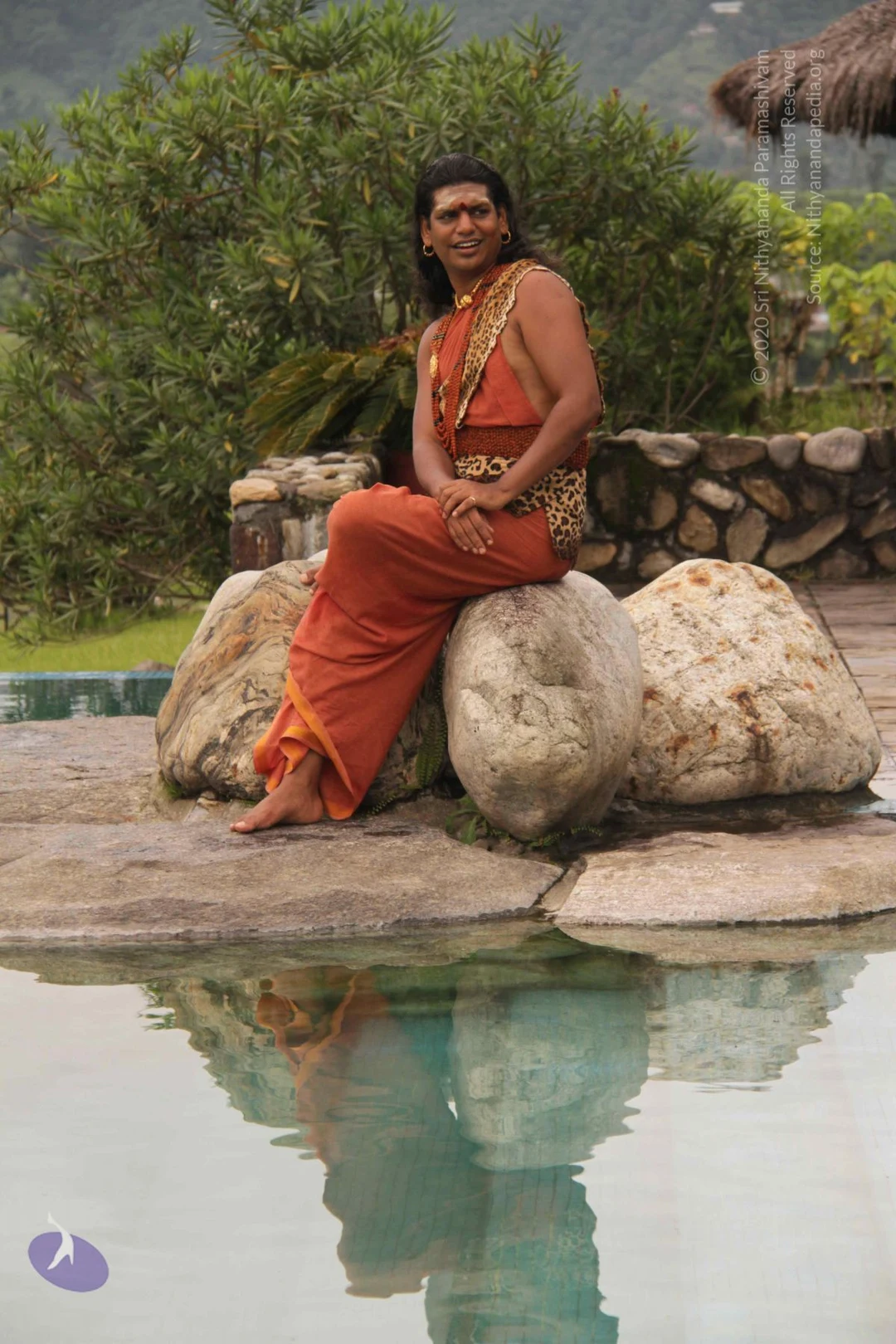
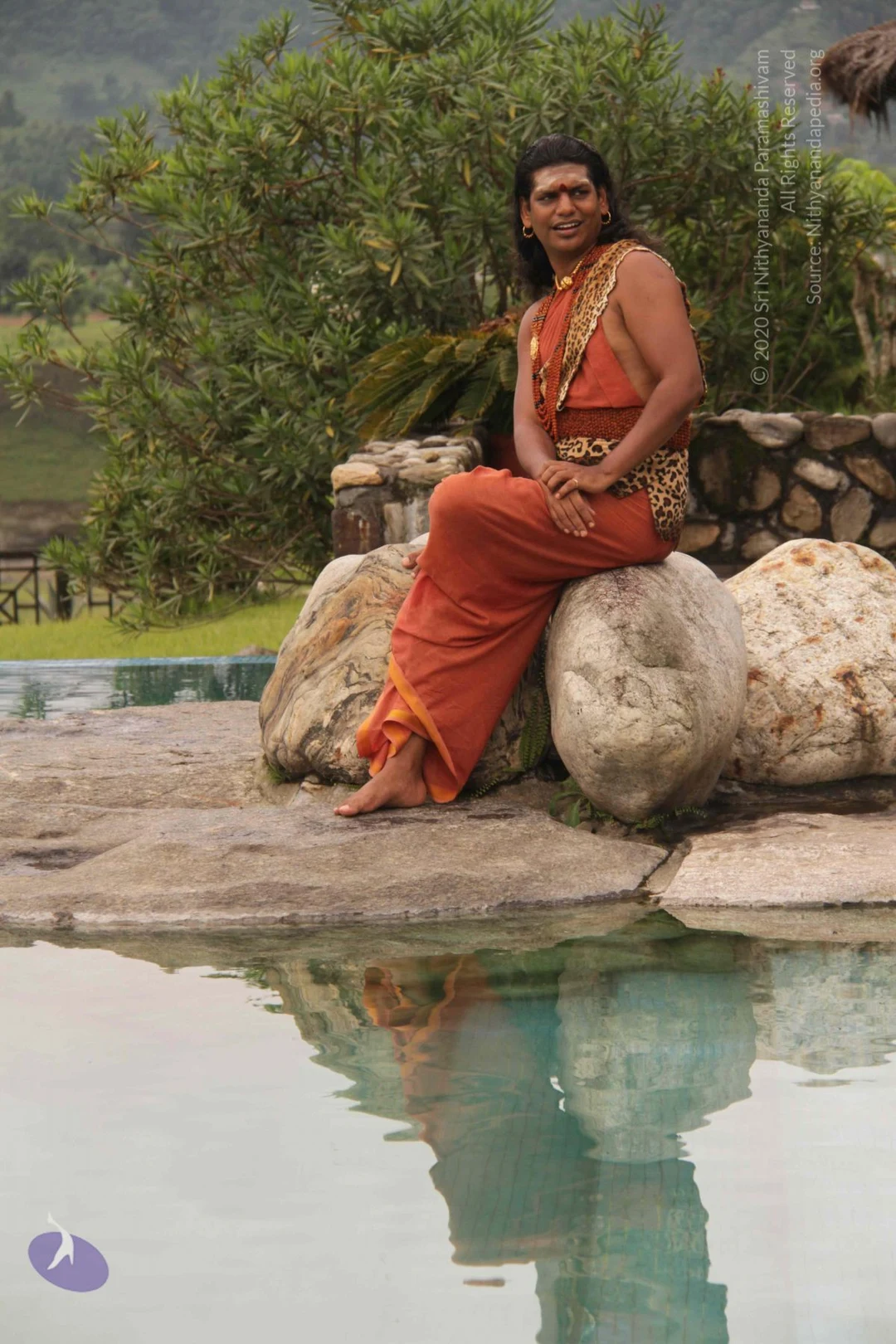
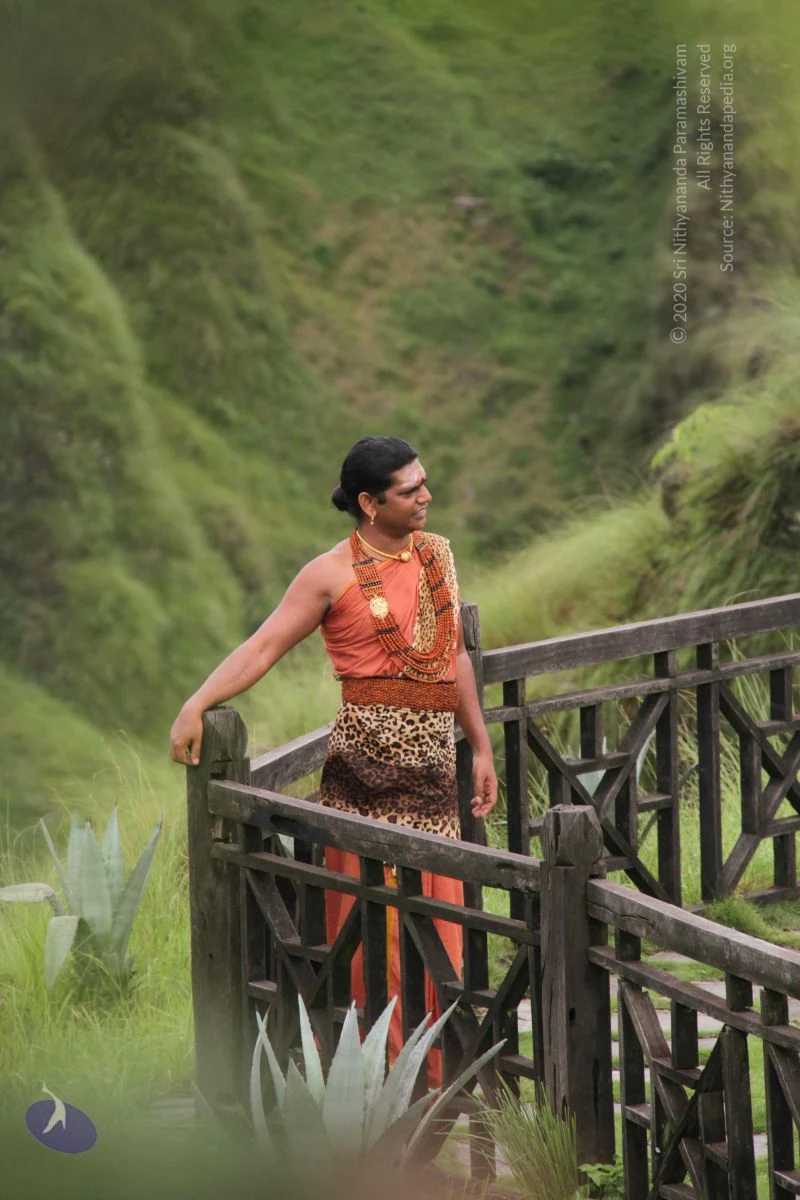
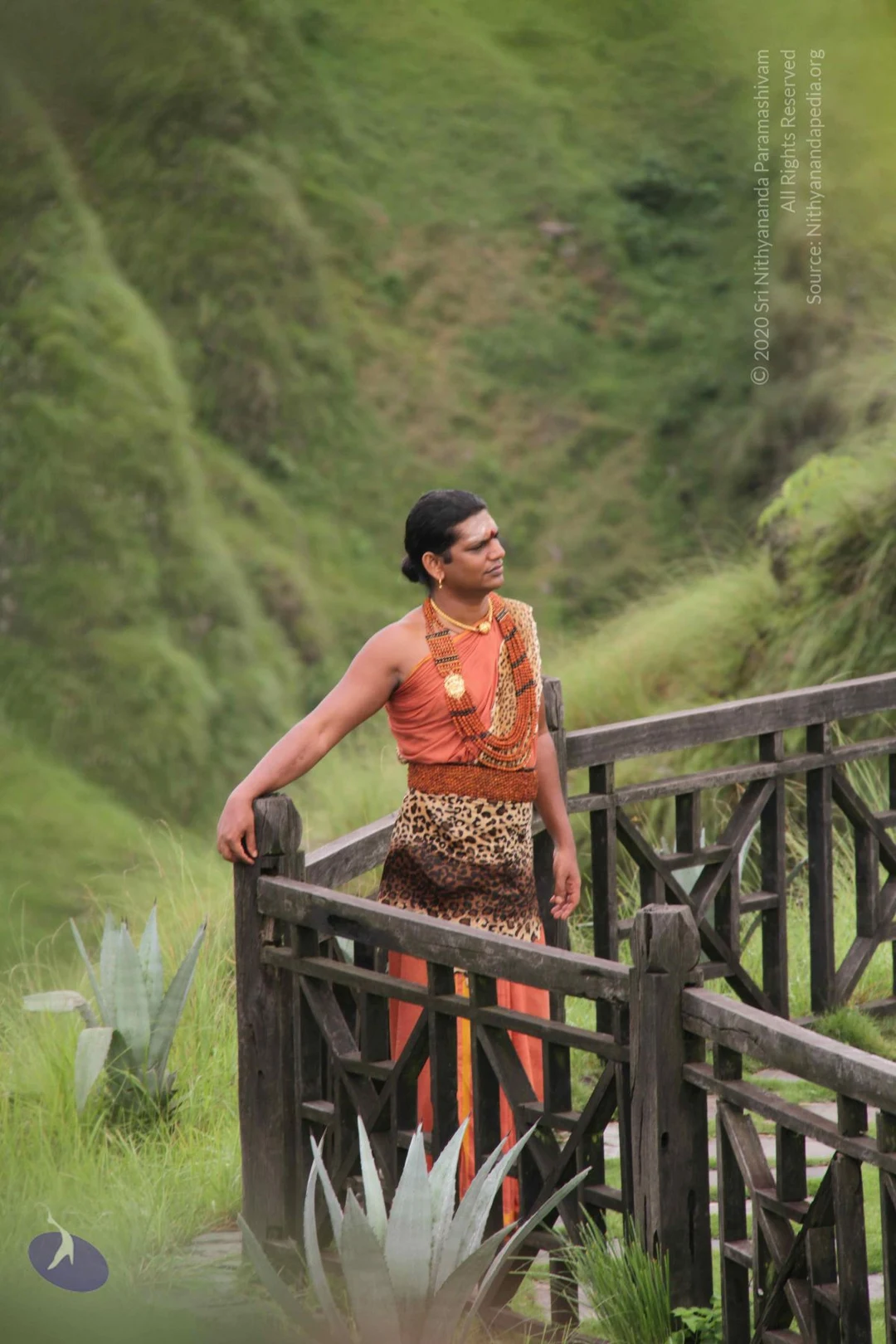
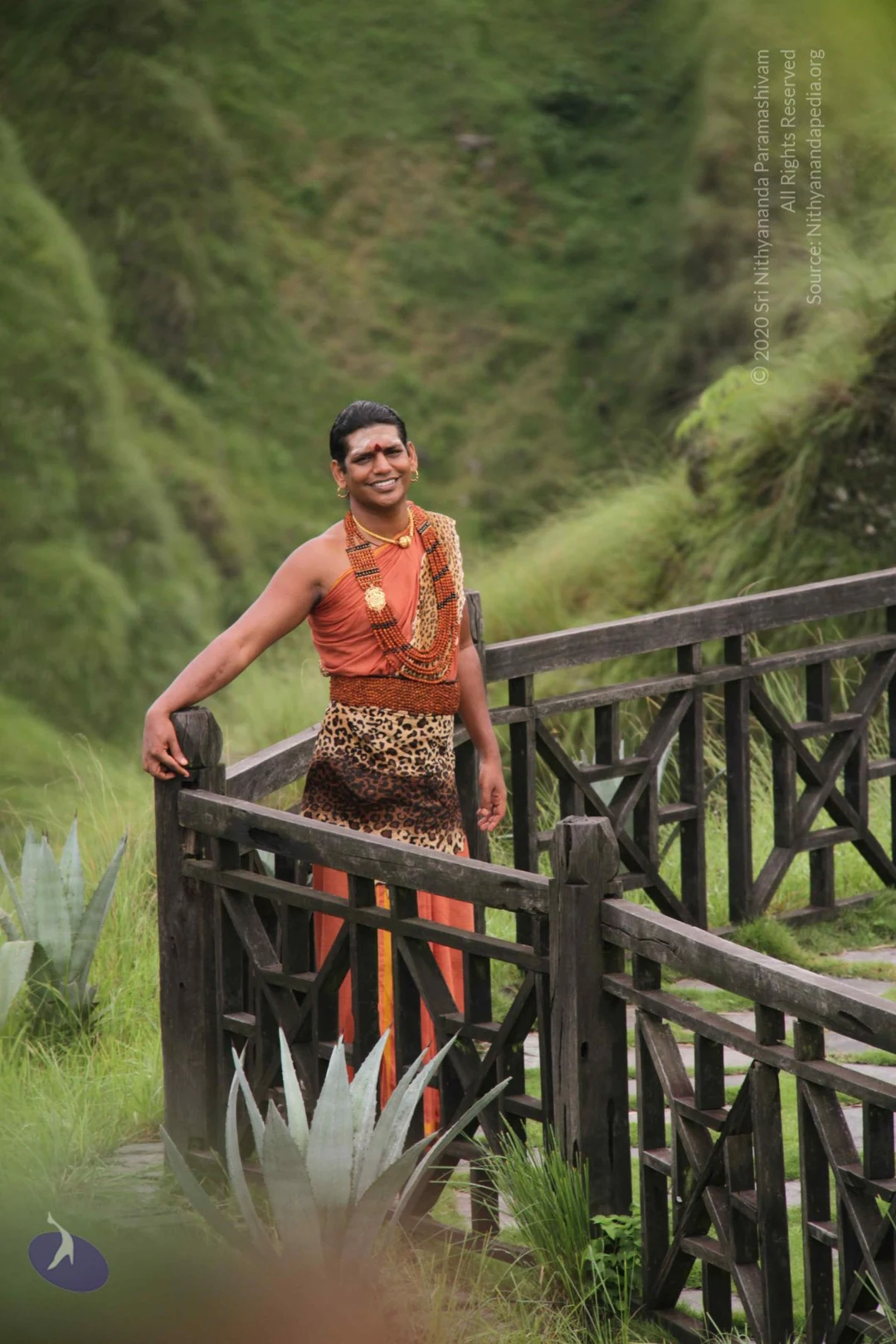
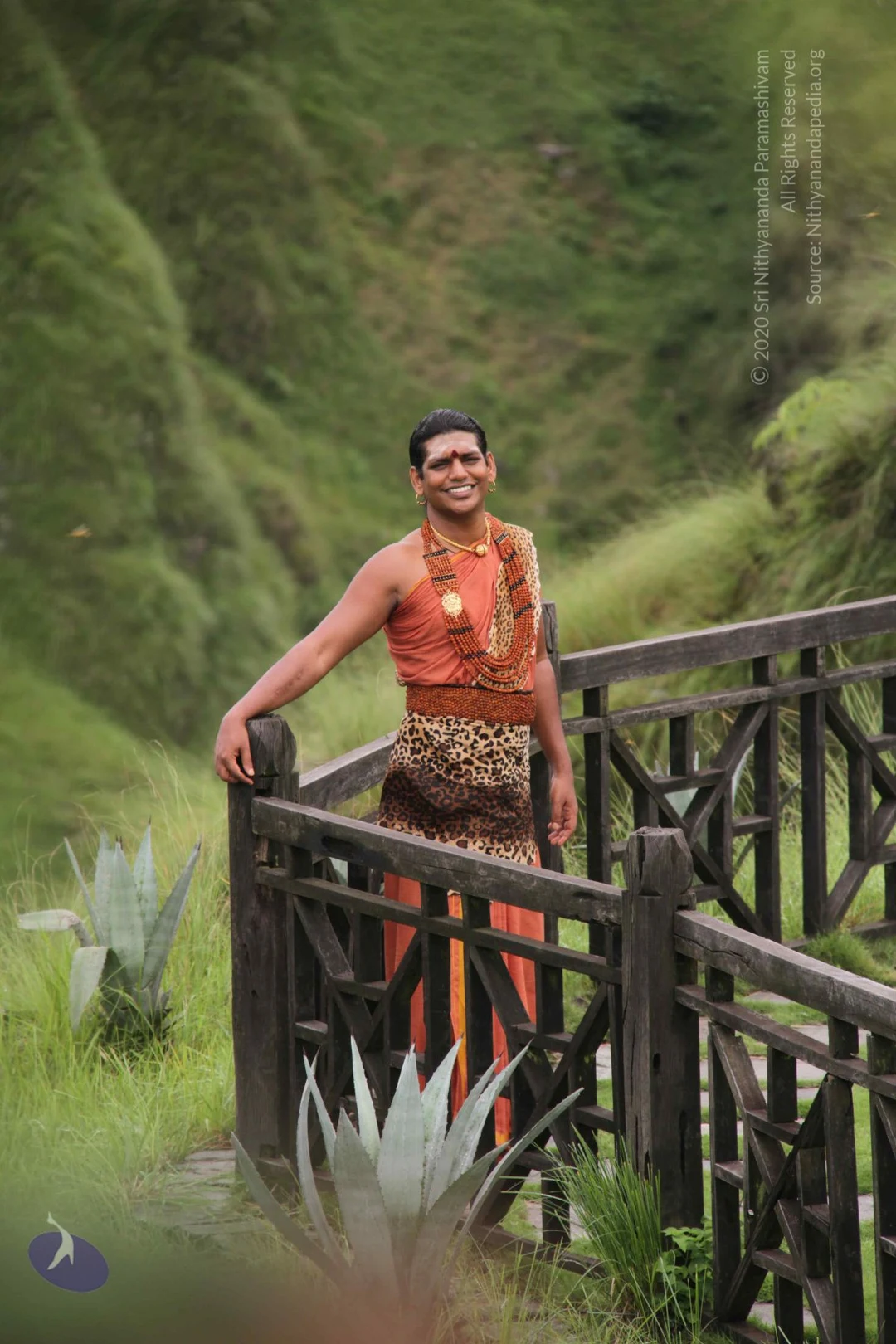
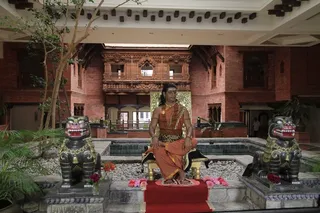
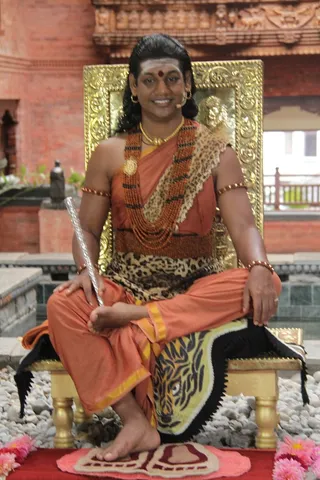
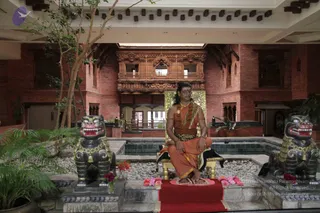
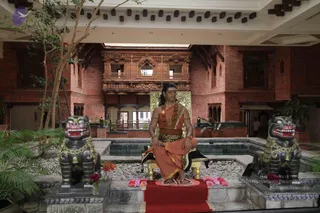
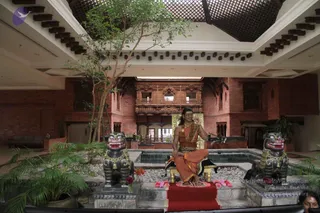
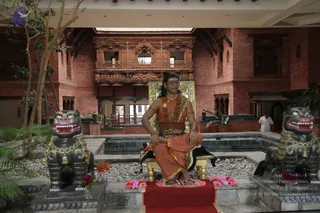
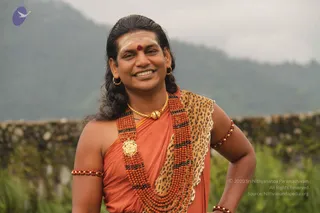
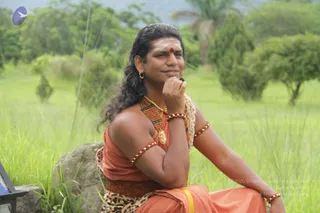
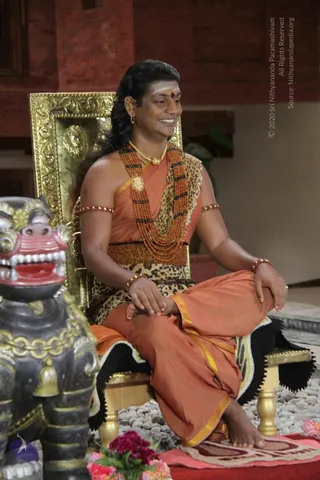
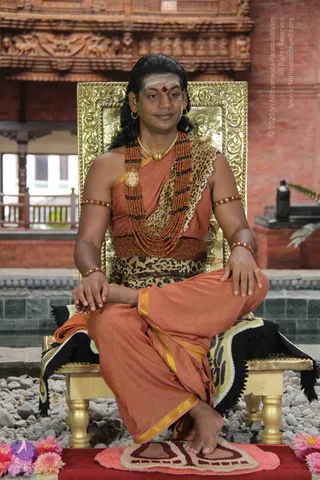
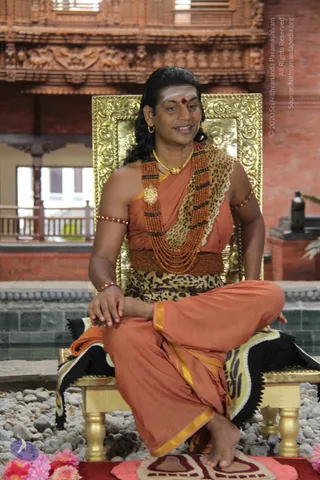
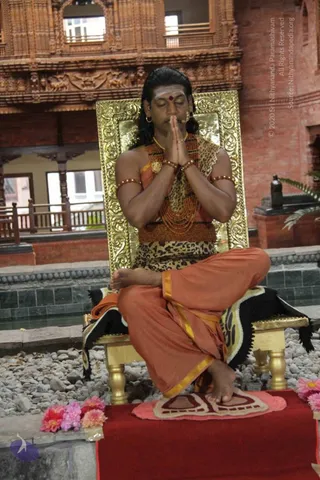
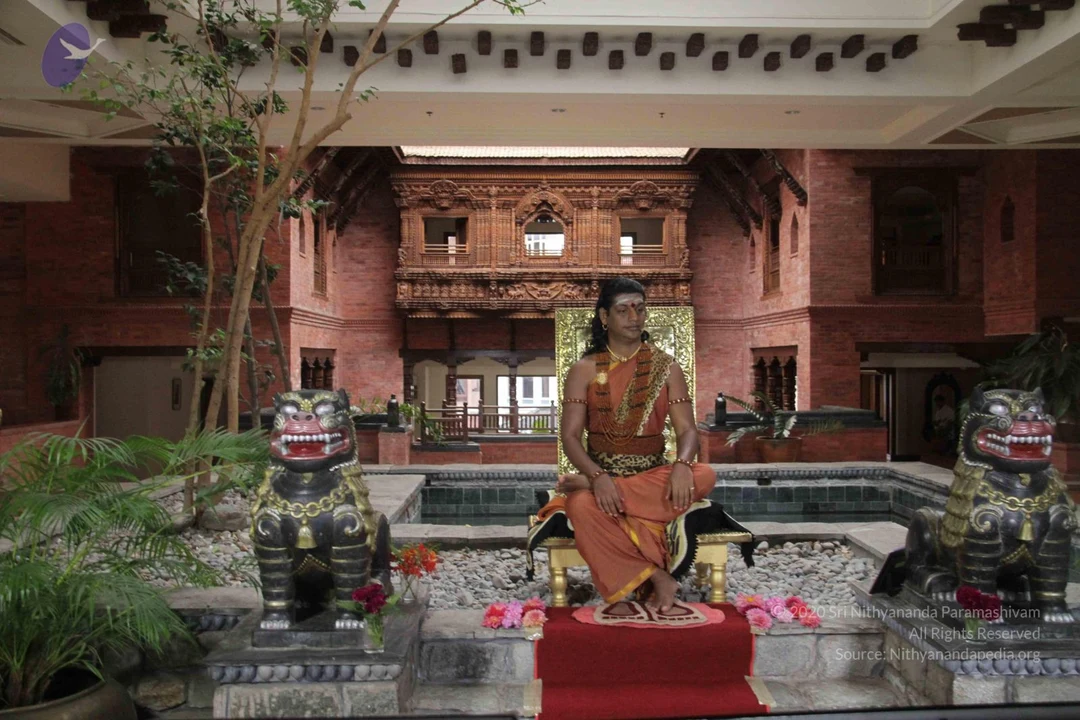
A photograph of a life-sized figure seated cross-legged on a gold-framed throne in a brick courtyard with carved wooden balconies and a shallow pool. The figure sits with palms pressed together in namaste, wearing saffron-orange dhoti-style cloth, a leopard-print shawl, gold armbands and layered ornate necklaces, with long dark hair and a red tilak. Flanking the throne are two large black stone lion guardian statues with red mouths. Pink and red flower offerings lie on the red carpet below. The figure is a statue, not a live person. The image is an appearance-based candidate depiction, and the statue's ornamentation is consistent with a depiction of a guru, though no name is printed on it. A small lamp-lit corner and a person in the distant background, partially visible, are also present.A person lies reclined on a white wrought-iron lounge chair with black woven seat on a stone paved terrace, eyes closed, head resting back. They wear dark sunglasses, an orange-red garment wrapped around the lower body and an orange top, a leopard-print belt, a beaded necklace, and small gold earrings. Behind them a low stone wall, rows of empty lounge chairs, a thatched umbrella, green shrubs and misty hills form the backdrop.A photograph of a man seated on a large rounded boulder beside a turquoise-blue pool, with his body turned toward the camera over one shoulder. He wears a saffron-orange dhoti or wrap and a leopard-print shawl or cloth draped across his bare upper body and hips, with a wide leopard-print belt at the waist. His long dark hair falls past his shoulders and he has a small gold earring. Behind him a lush green terraced hillside with scattered houses rises under overcast sky, and a dark wooden railing lines the lawn. The man resembles the appearance-based Swamiji (probable) described in the page, with long swept-back hair, saffron clothing and leopard-print adornment, so the in-person candidate is recorded as such.

July 31 2012

Original wiki page
Contents

Title:

Supreme Pontiff of Hinduism HDH Bhagavan Sri Nithyananda Paramashivam

Description

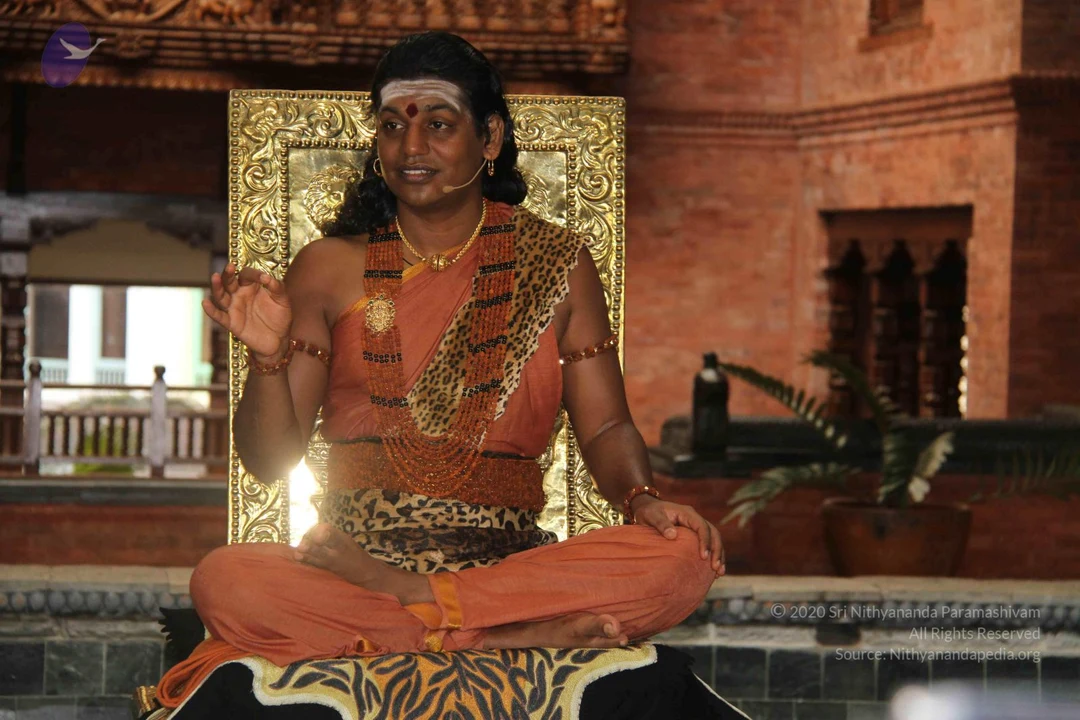
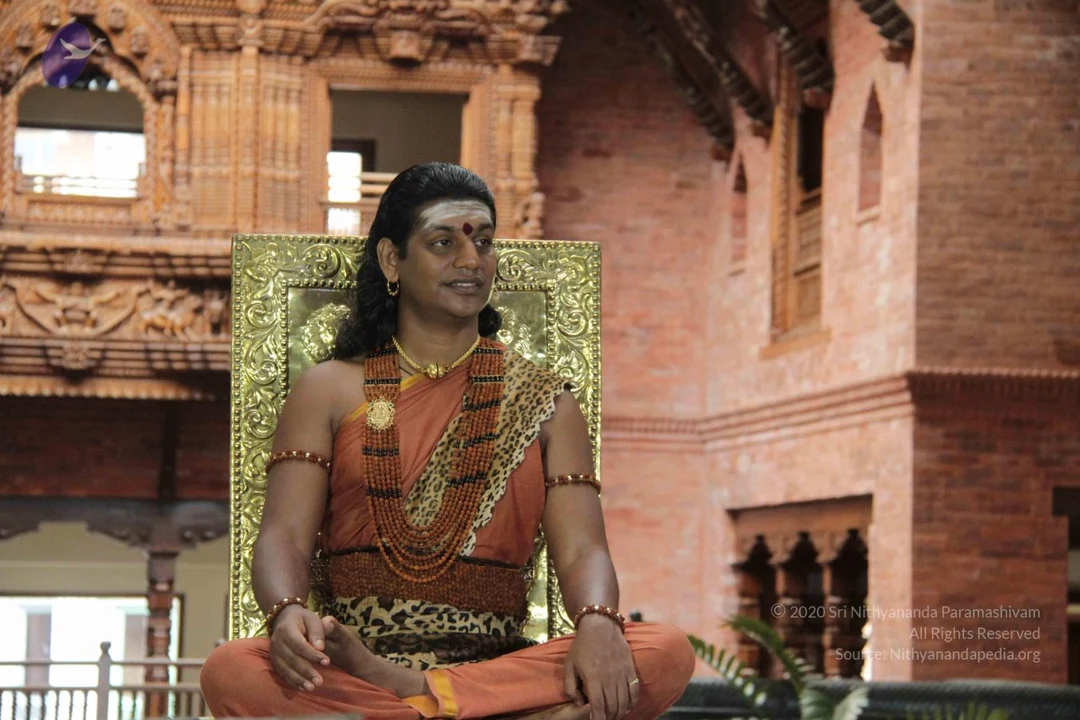
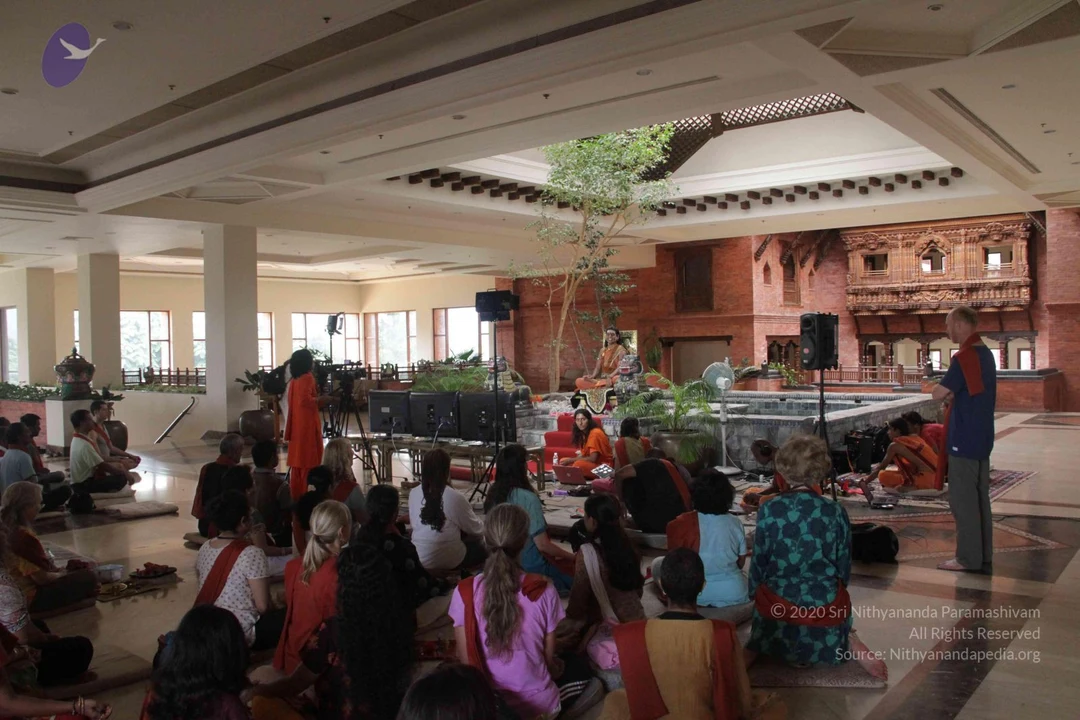
In this video (31 July 2012), Paramahamsa Nithyananda expands on the Bhagavad Gita, where Sri Krishna talks about beings who are established in the Self and are unattached from outer happenings. Paramahamsa Nithyananda explains that this experience of being established in the supreme Self, in the state of Shivoham, is worth more than everything else and that anything can be given up, just to be established in the Self.

On this Kailash Yatra, Paramahamsa Nithyananda compares how the devotees who have travelled with him have accepted to give up their comforts for a few days to have a glimpse into the space Kailash. In the same way, He urges His devotees to give up anything and everything just to be established in the Self, as it is the greatest wealth.

Whether it be family, wealth, work - anything is worthy of being given up to be established in the supreme Self.

Link to Video

VideoAudio

Link to Video

VideoAudio

Photos From The Day:

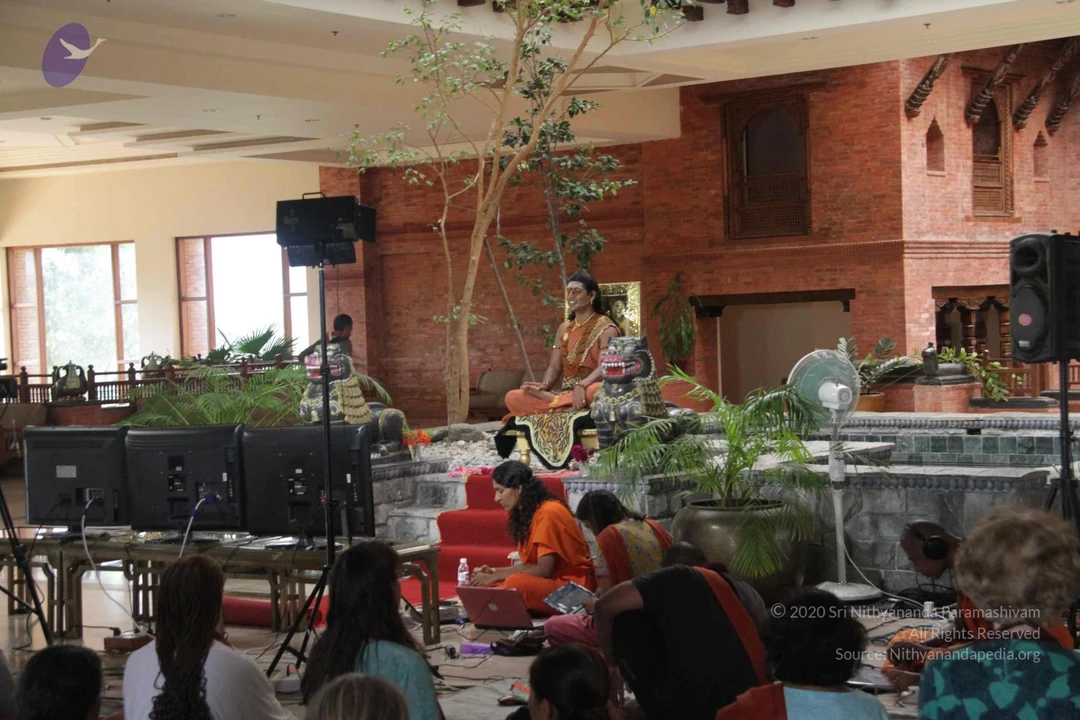
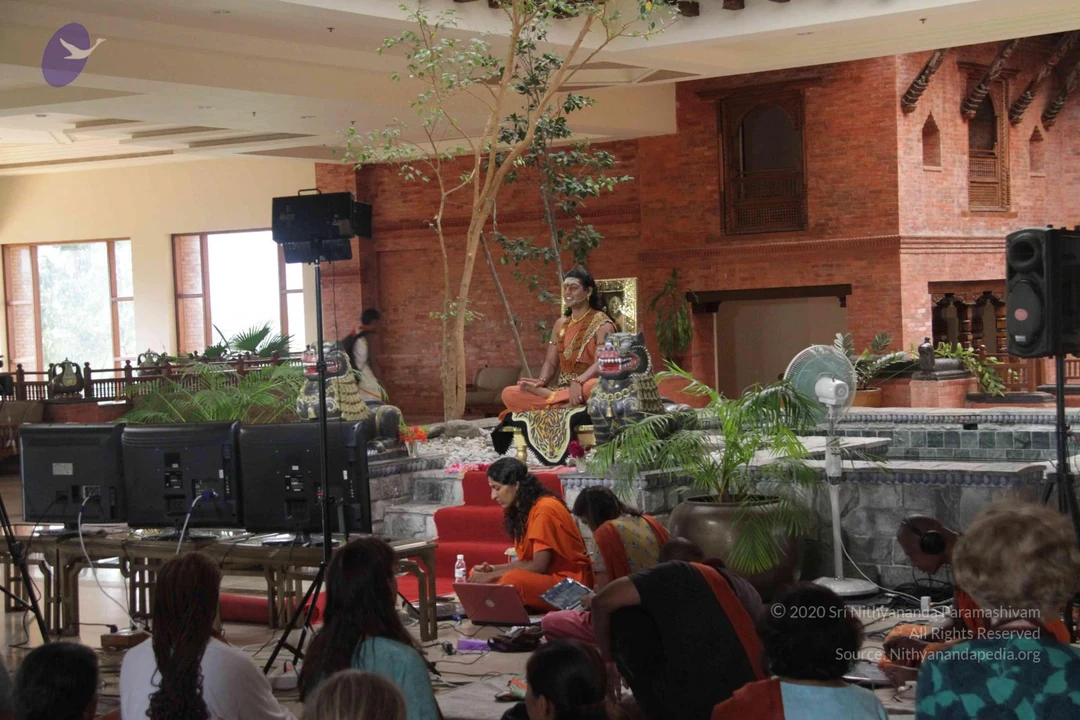
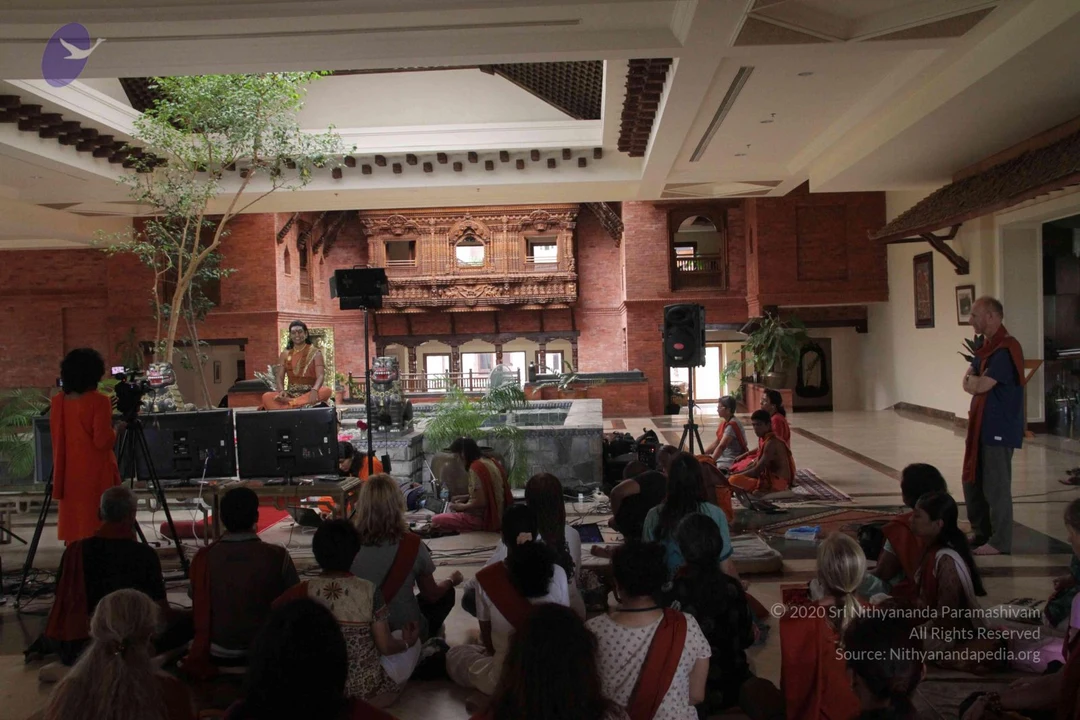
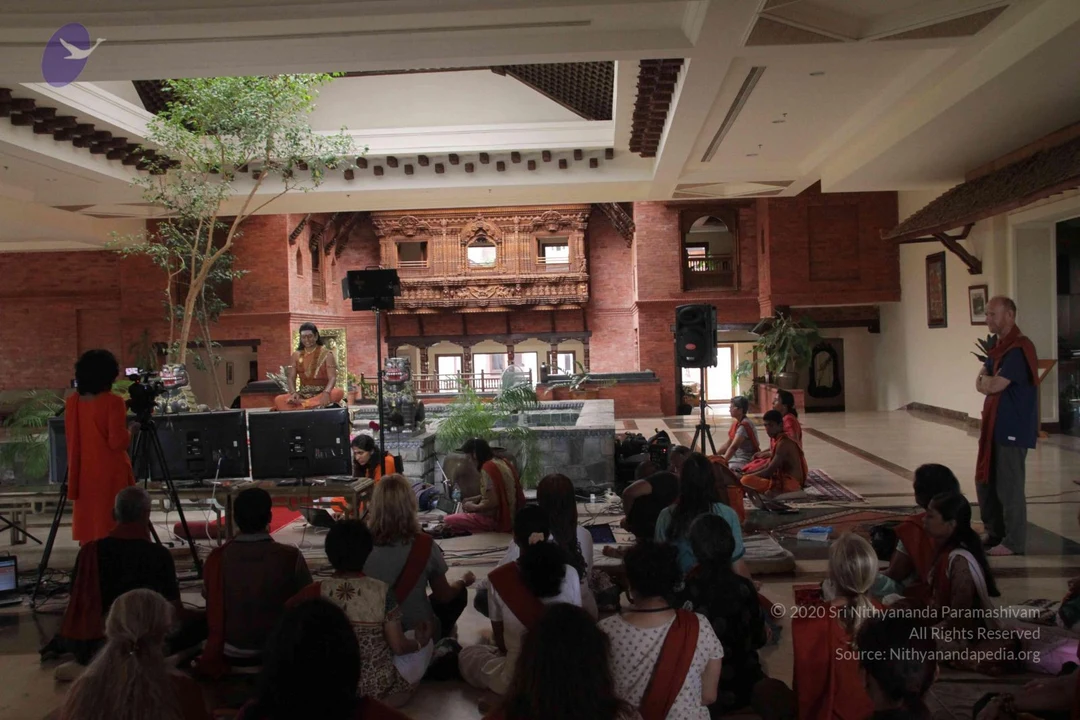
Kailash Yatra - 5th day/ Morning Satsang, Pokhara Nepal - July 31 2012
Photos Of The Day:

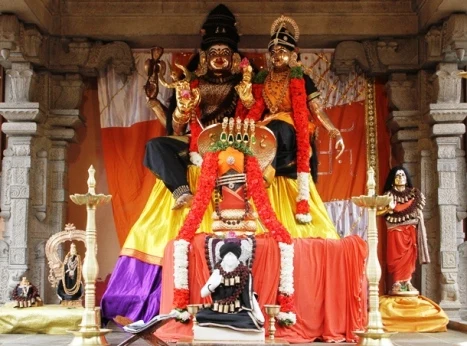
Temple

Morning-Satsang

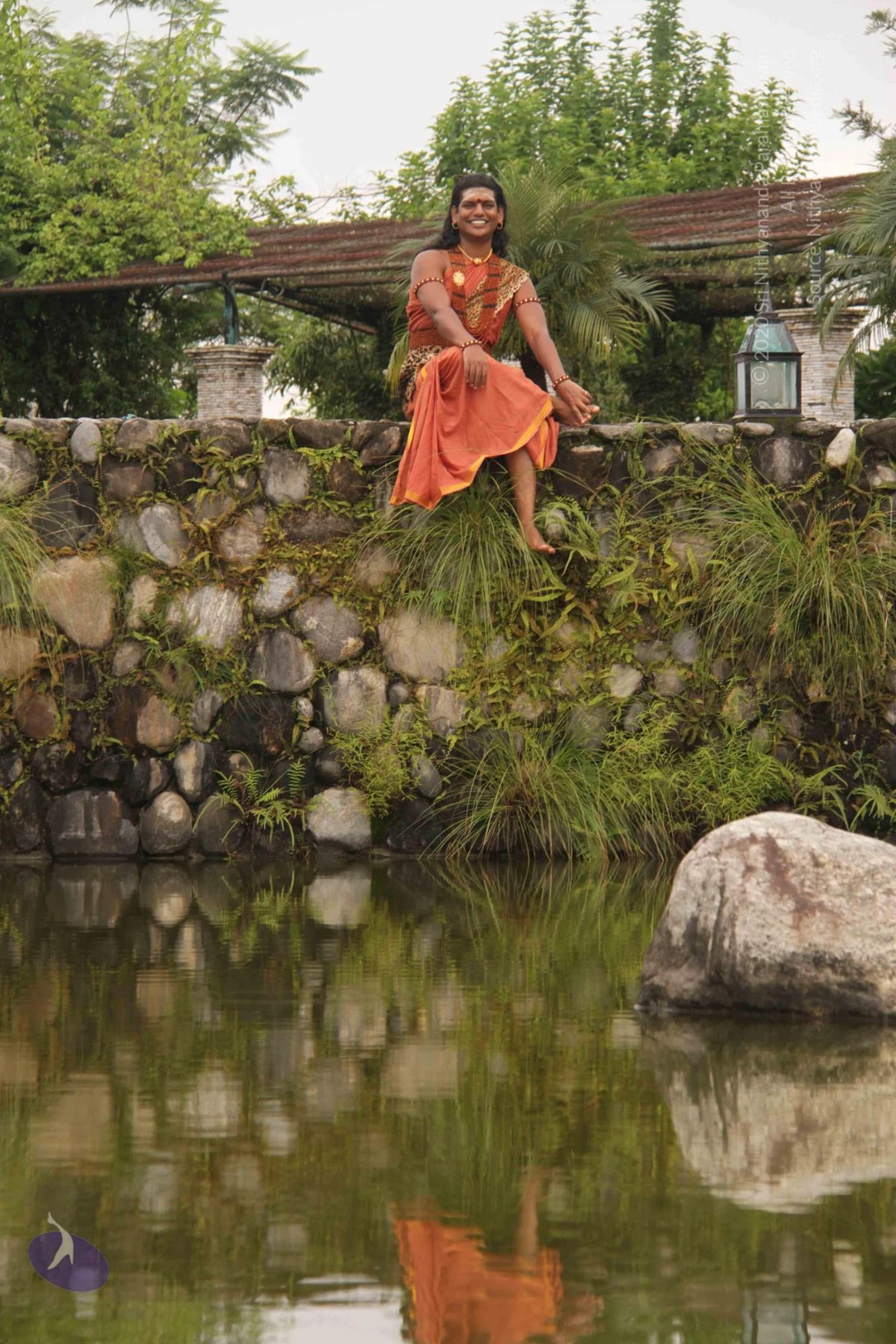
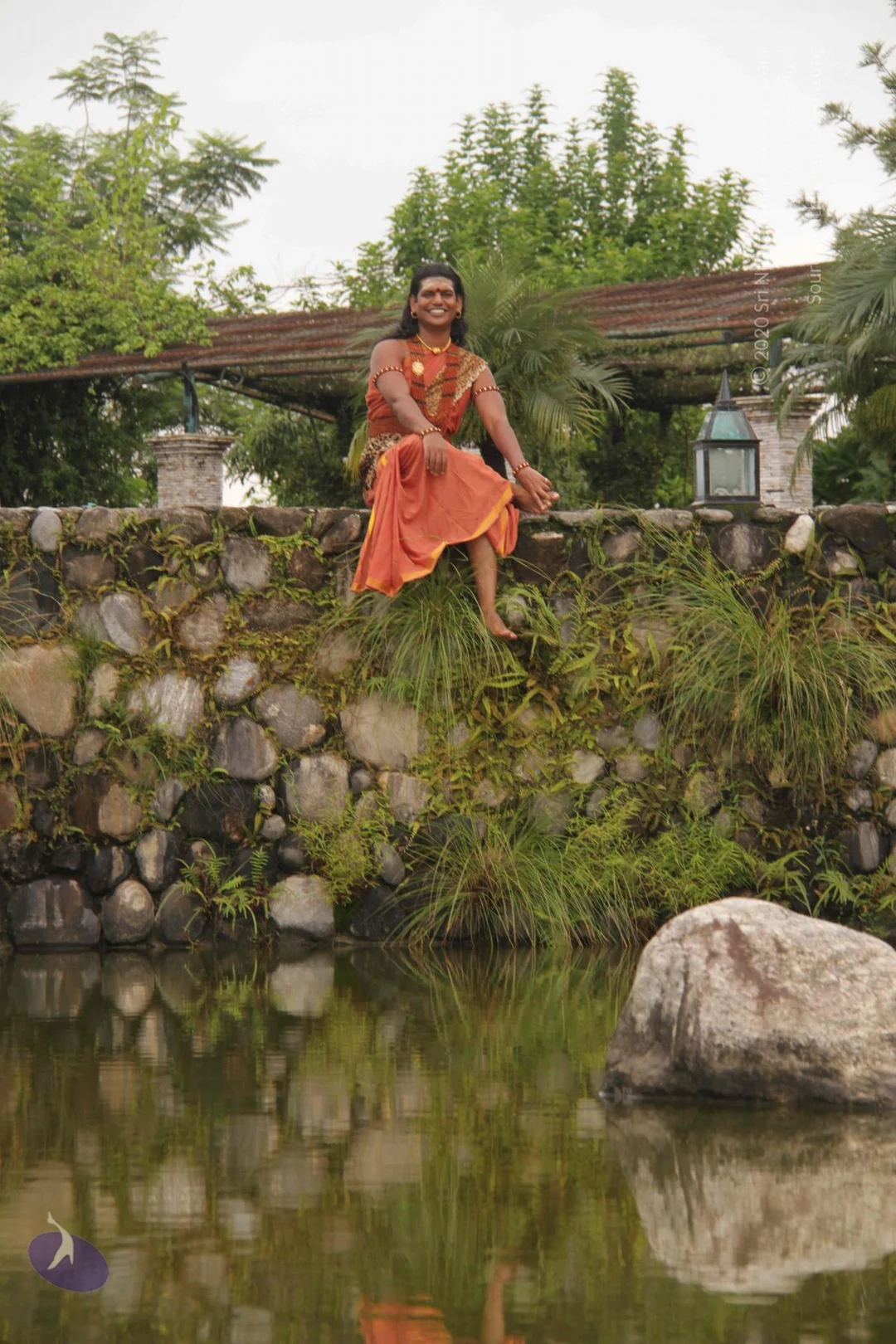
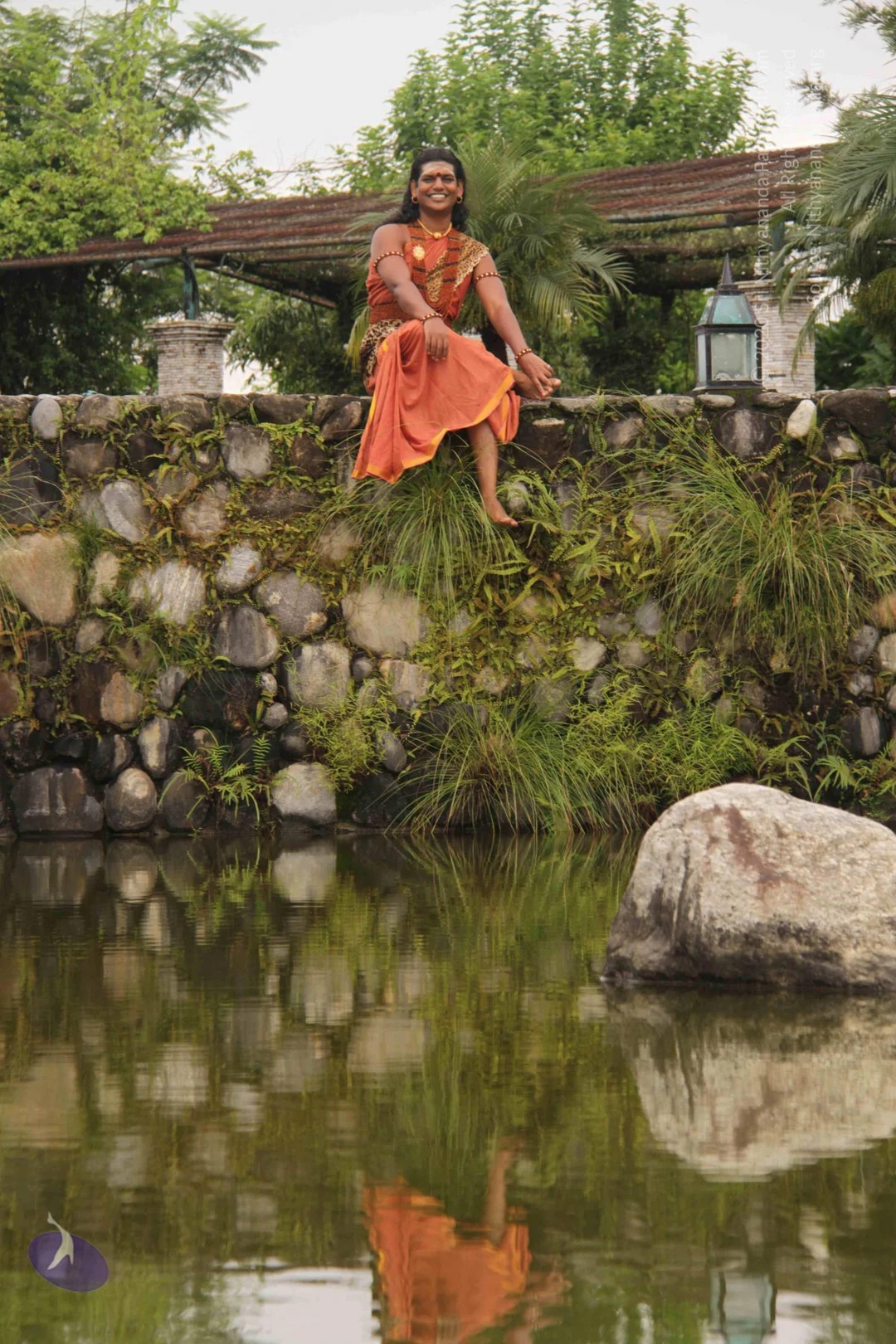
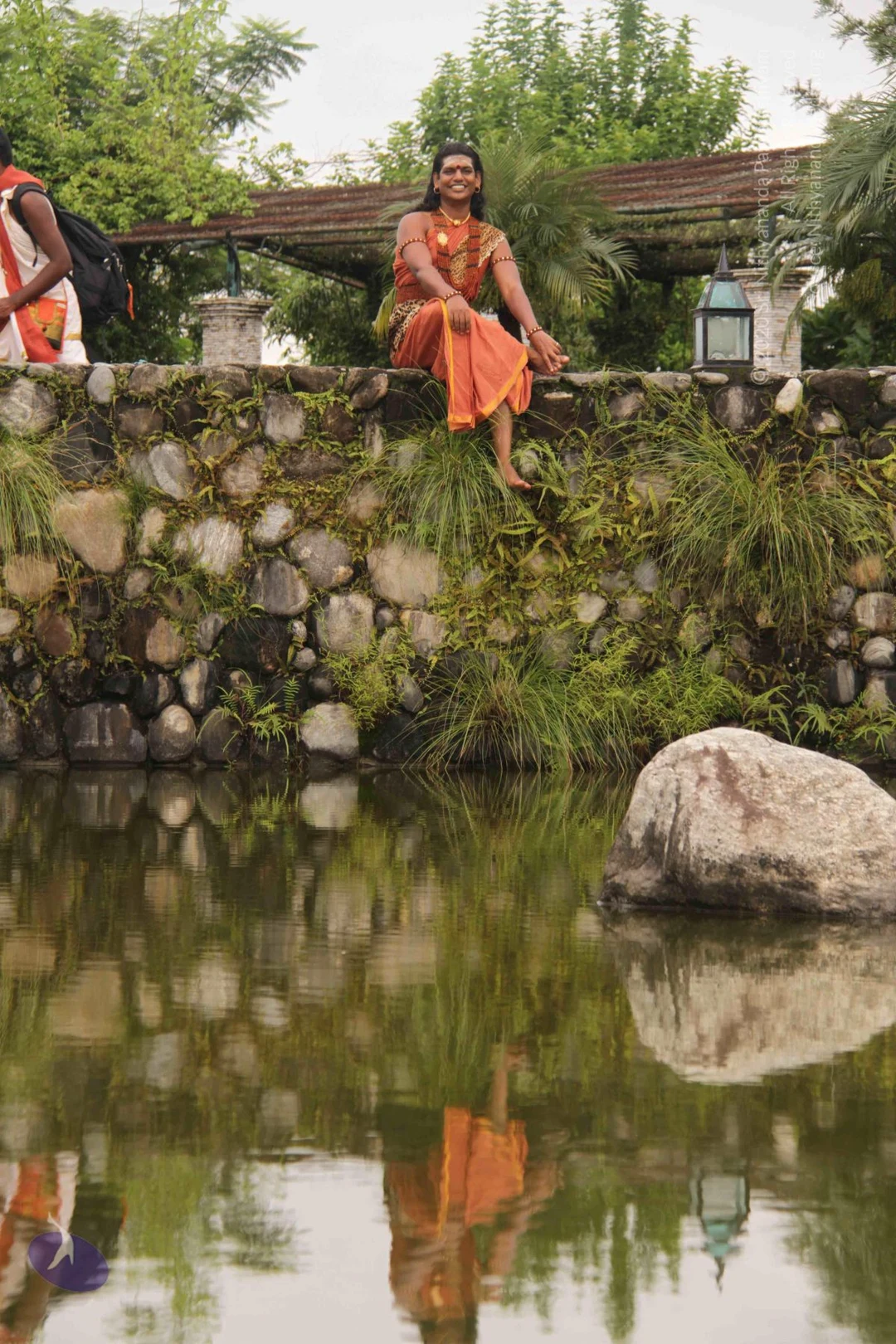
Photo-Shooting-with-Swamiji

Delegates-Kailash-Yatra

Photos Of The Day:

Temple

Morning-Satsang

Photo-Shooting-with-Swamiji

Photos from this day

View all 364 photos

Kailash Yatra - 5th day/ Morning Satsang, Pokhara Nepal - July 31 2012
6 photosSource gallery
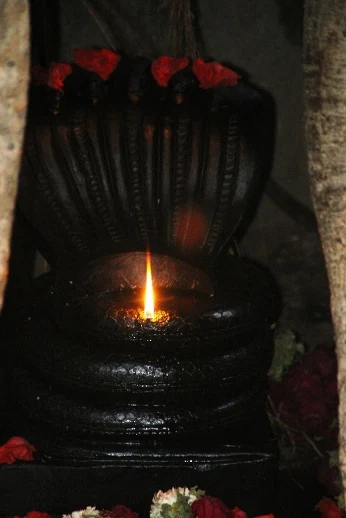
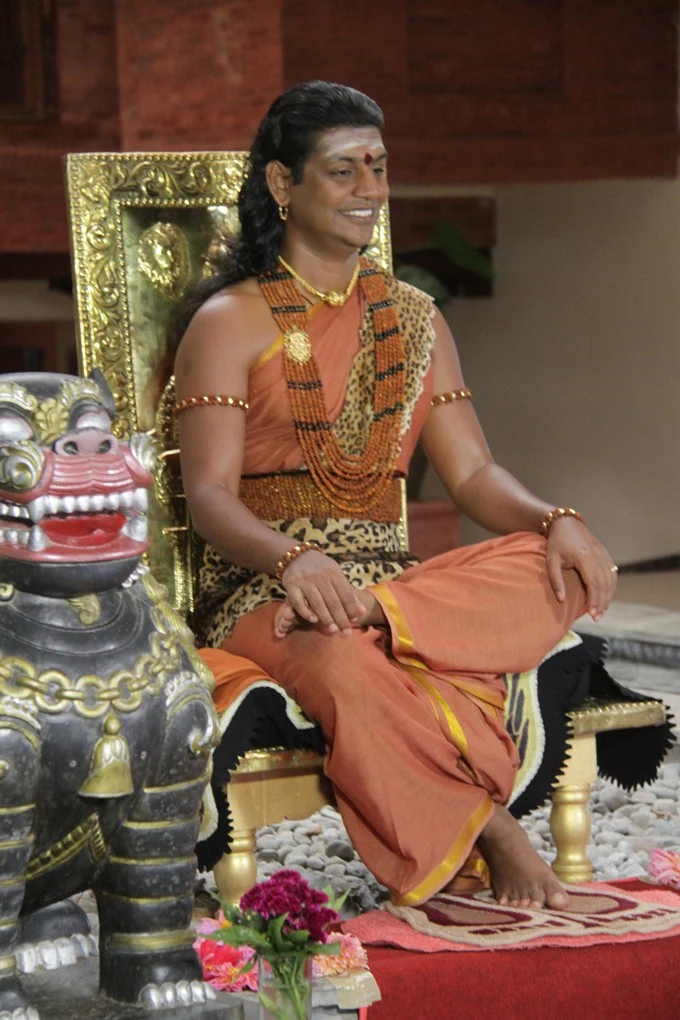
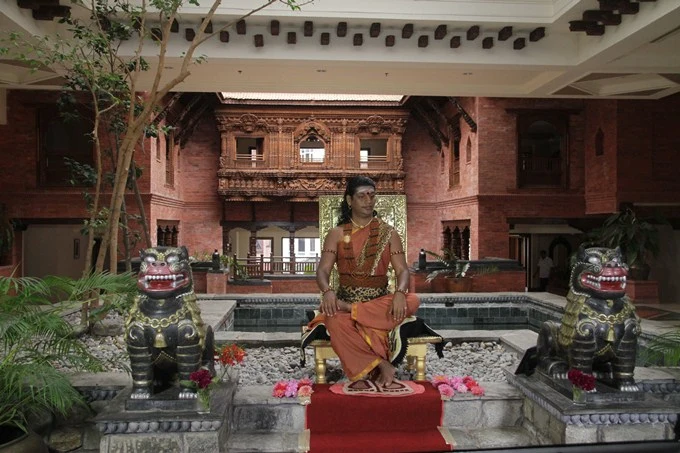
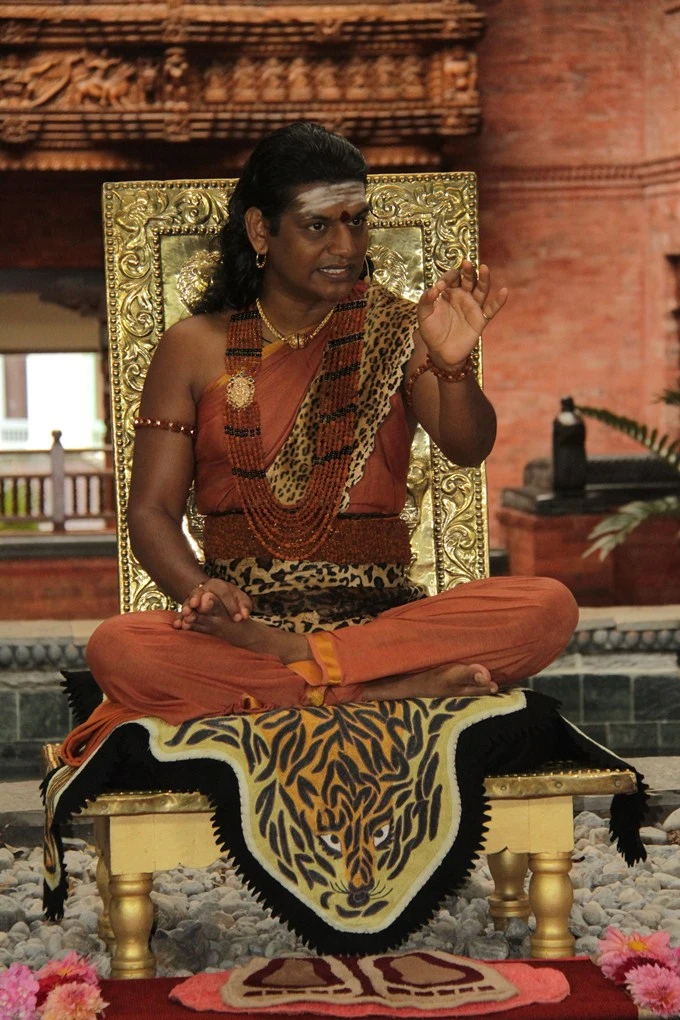
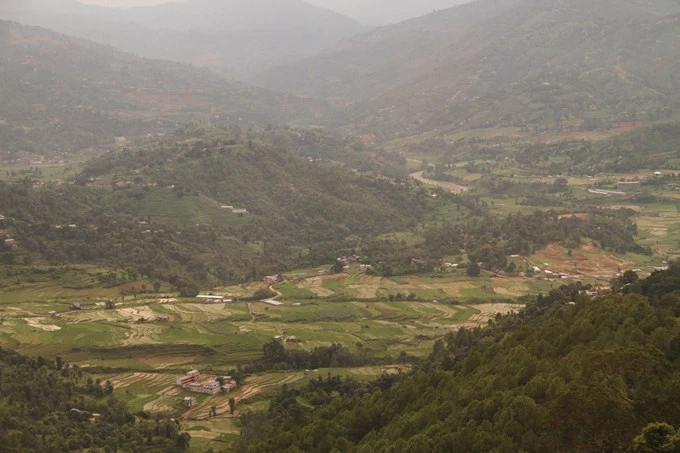
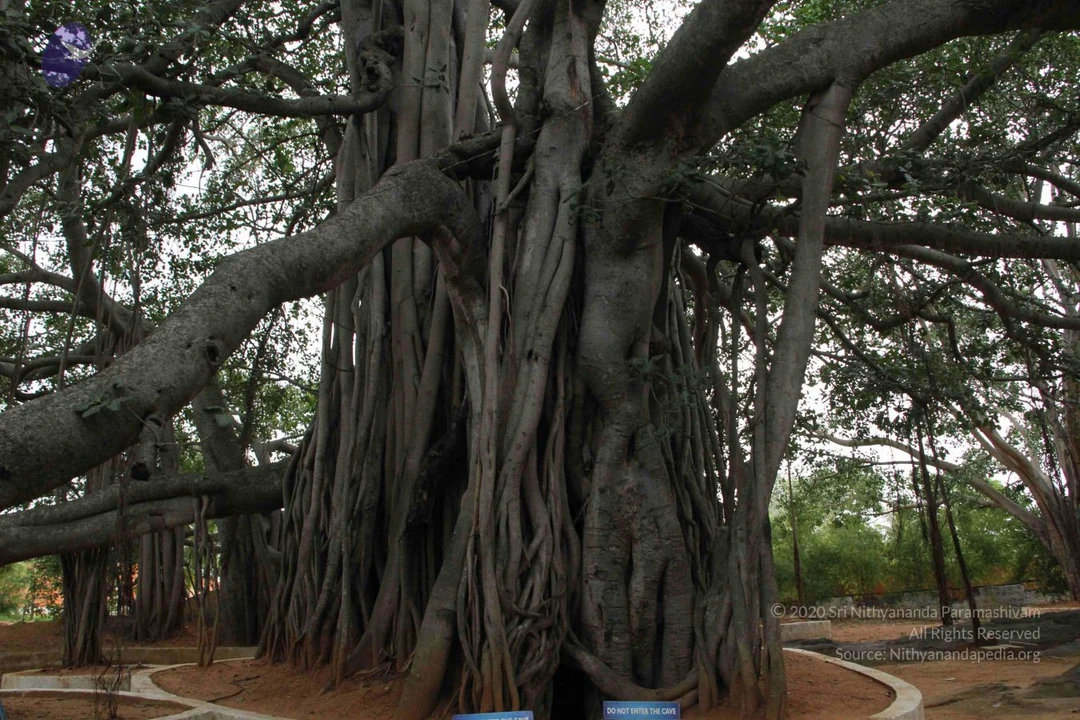
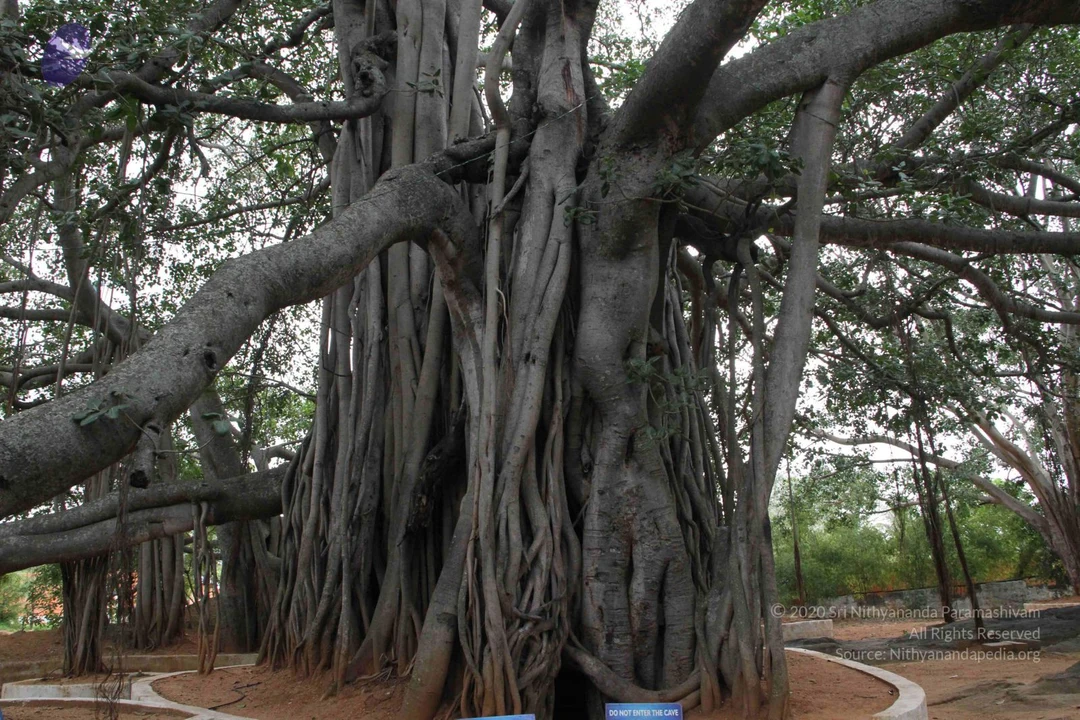
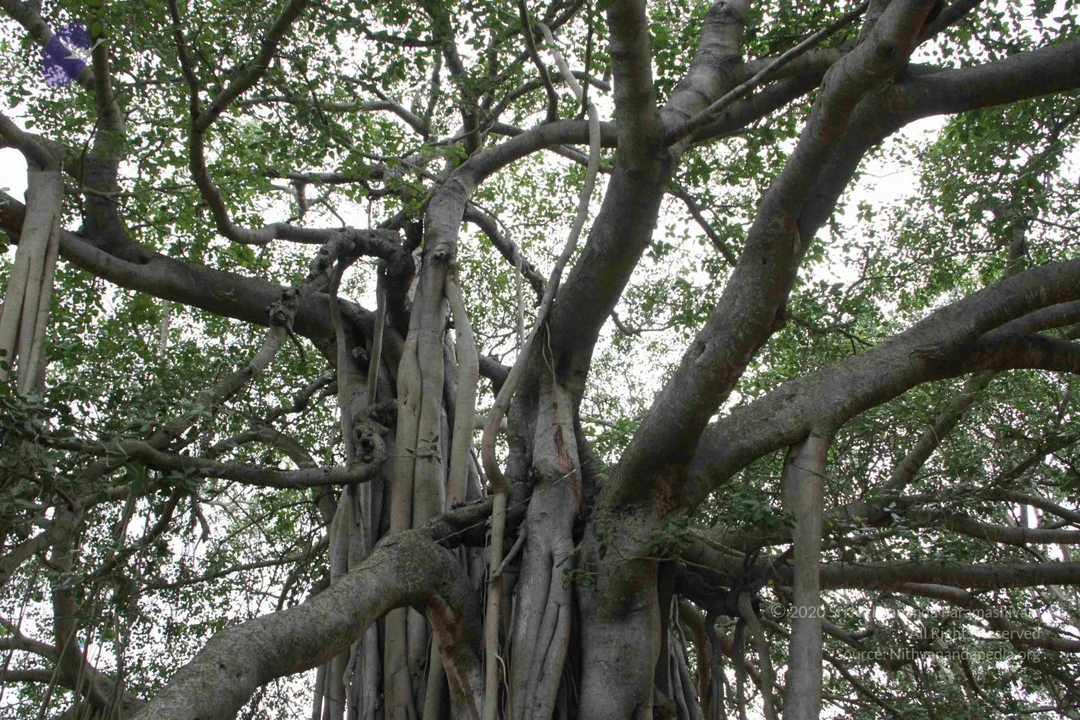
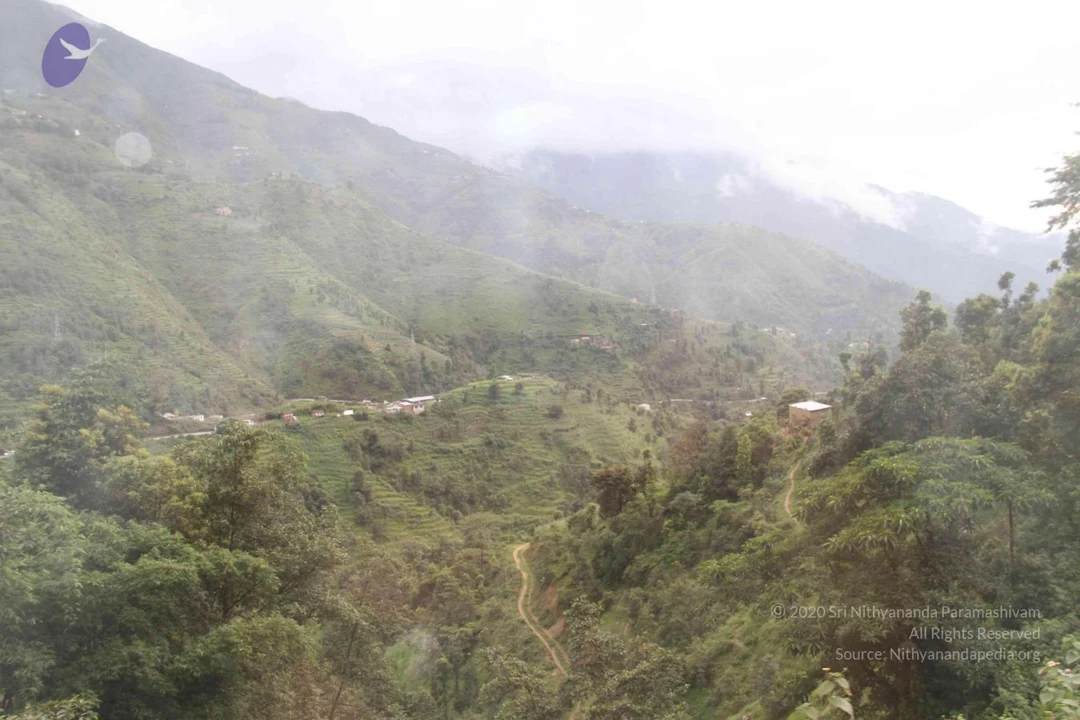
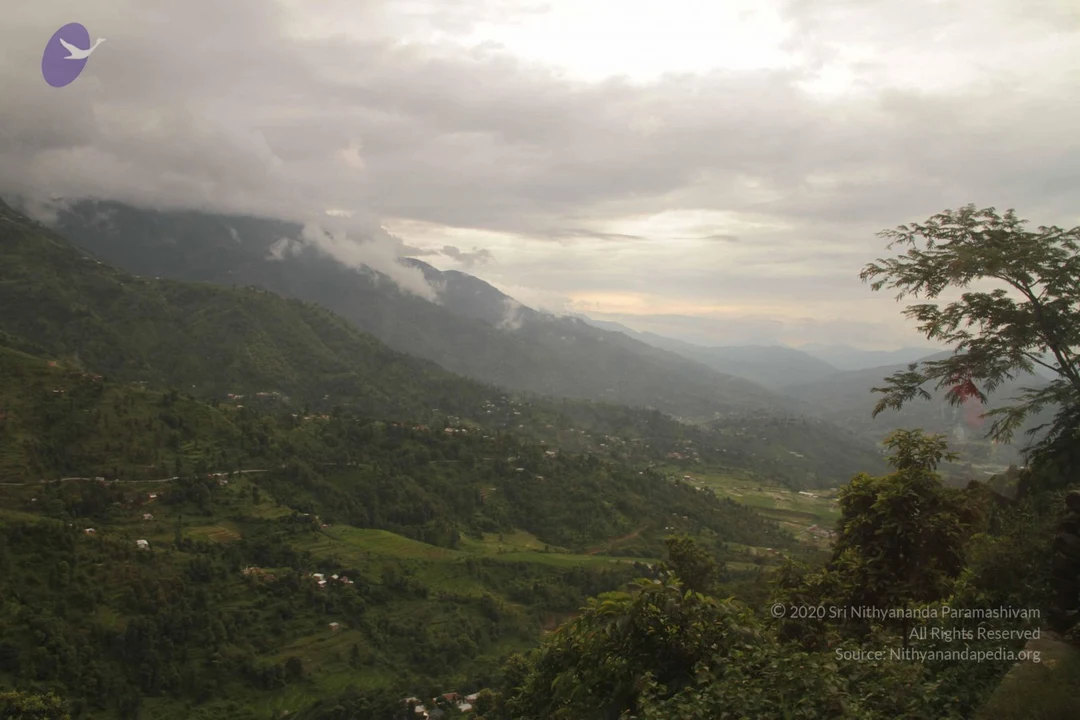
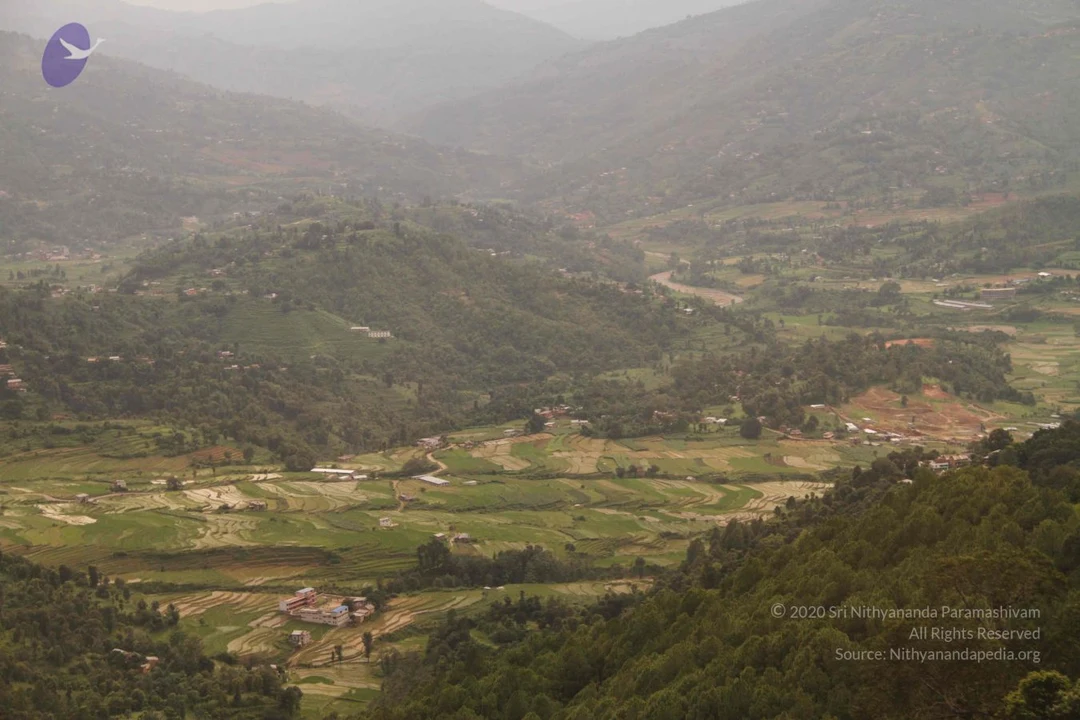
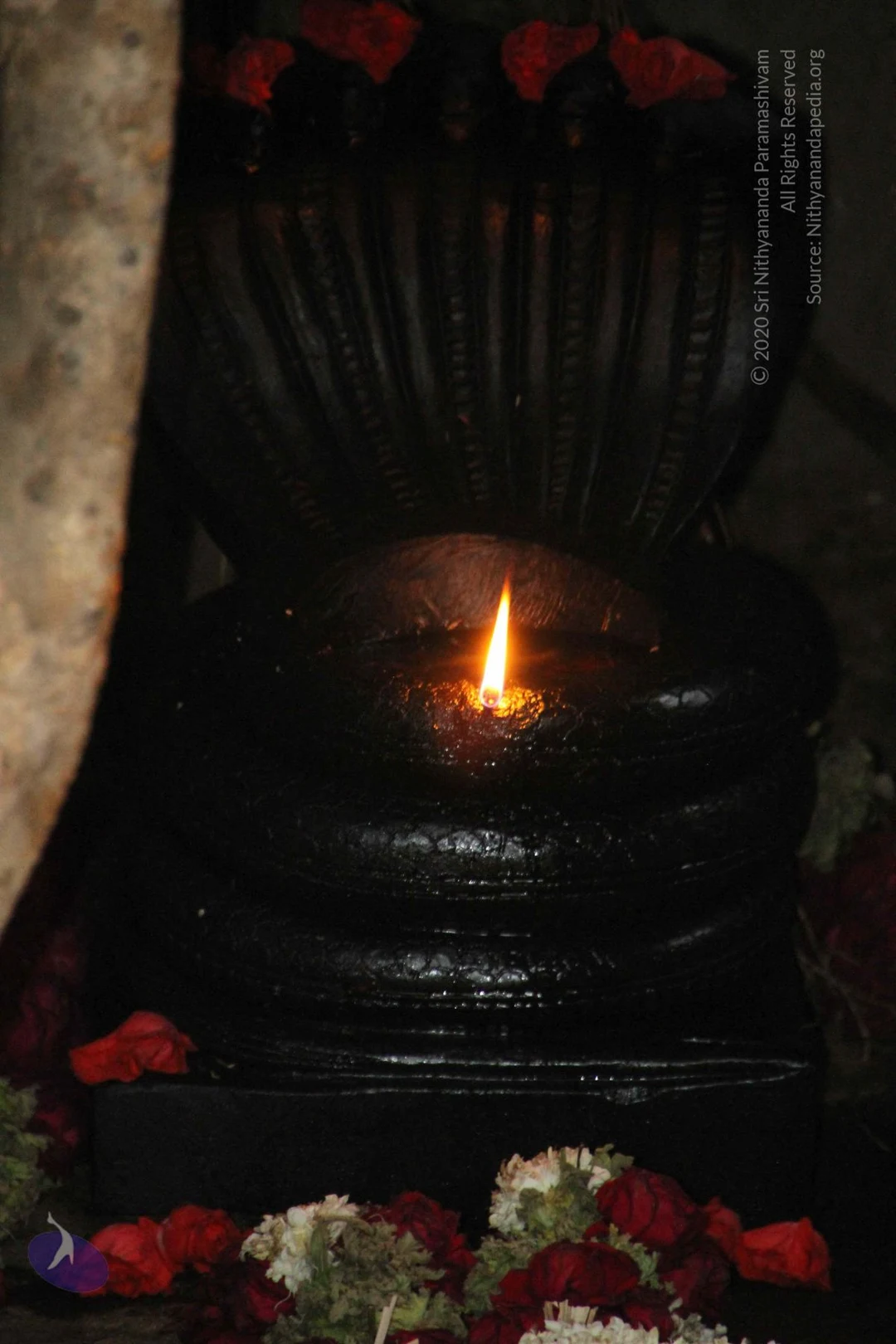
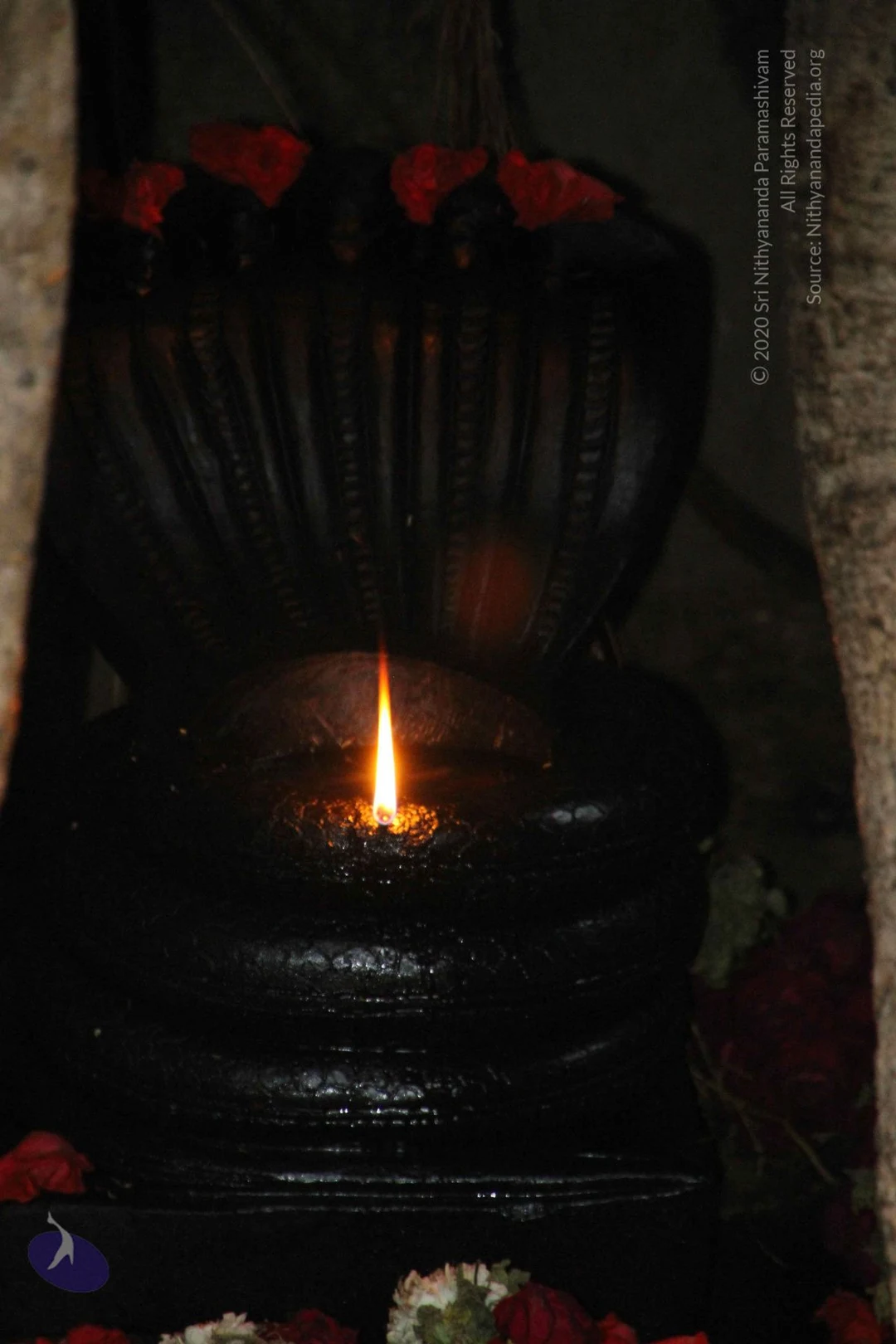
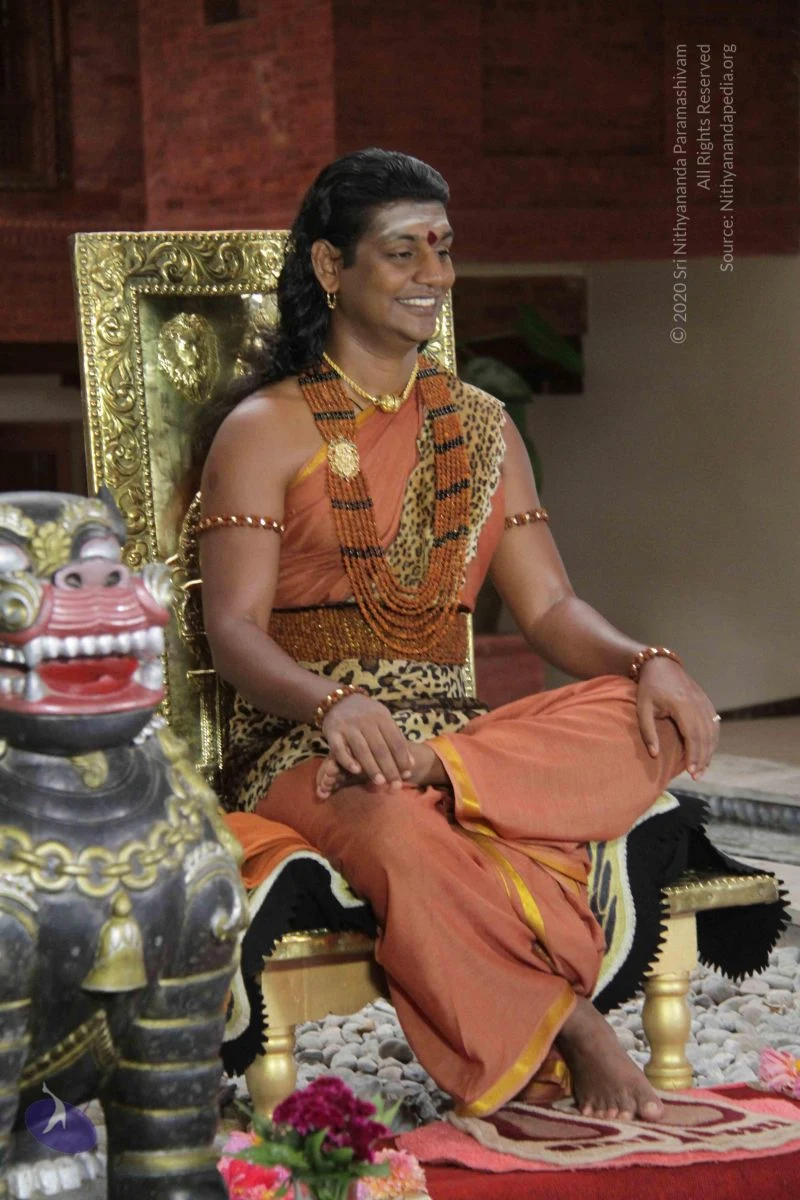
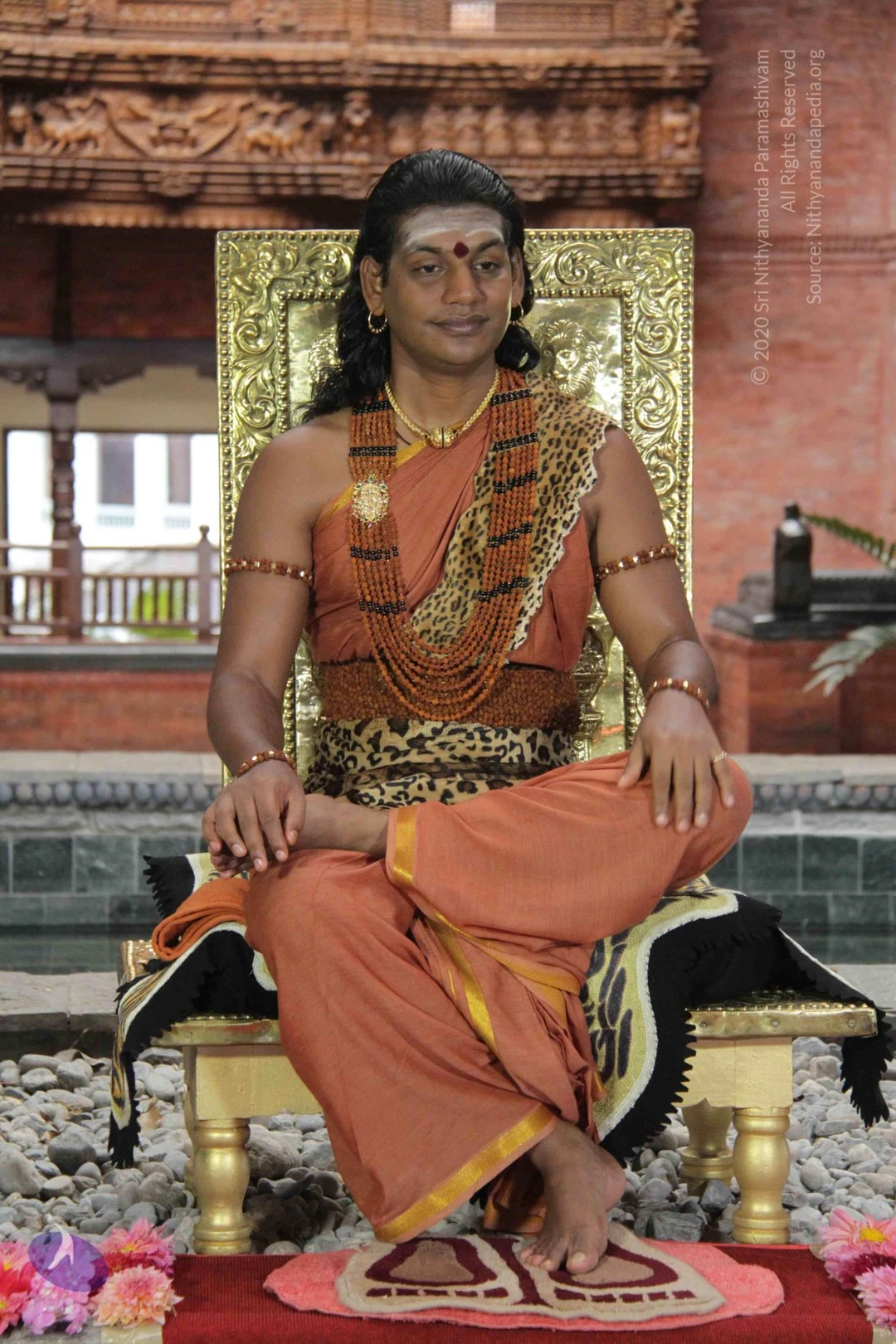
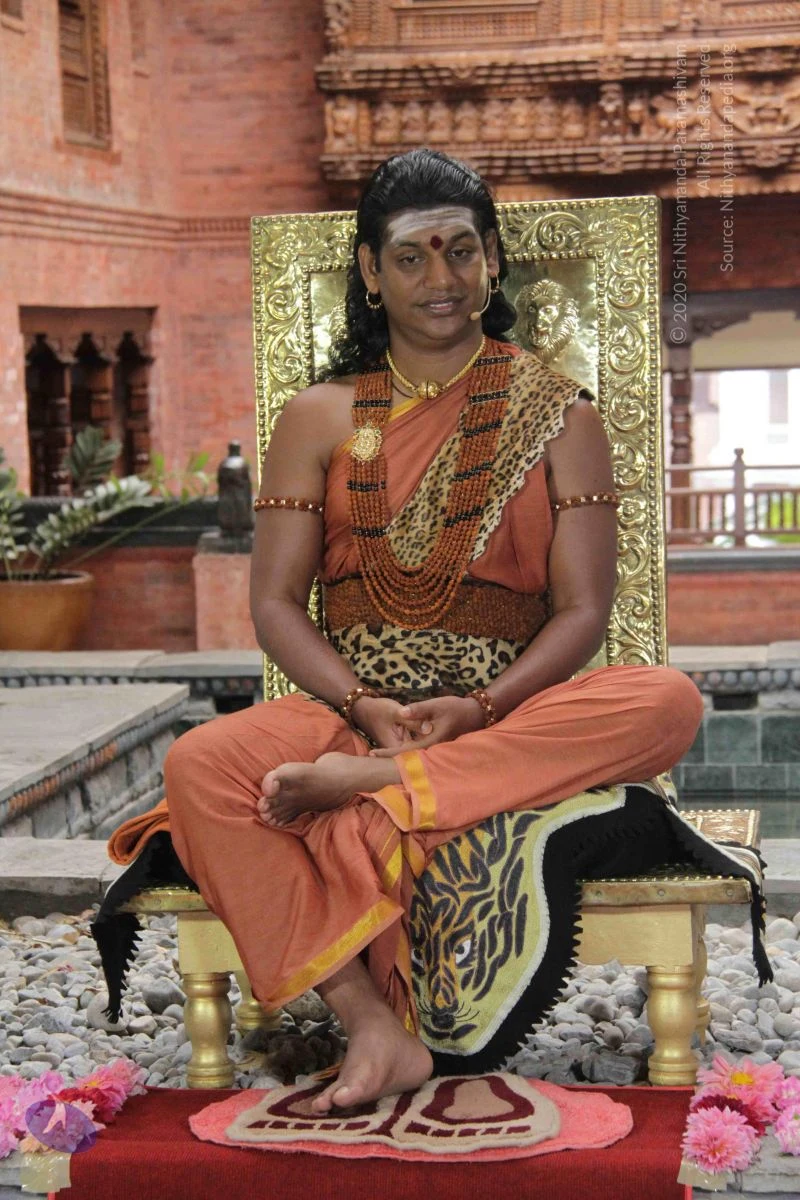
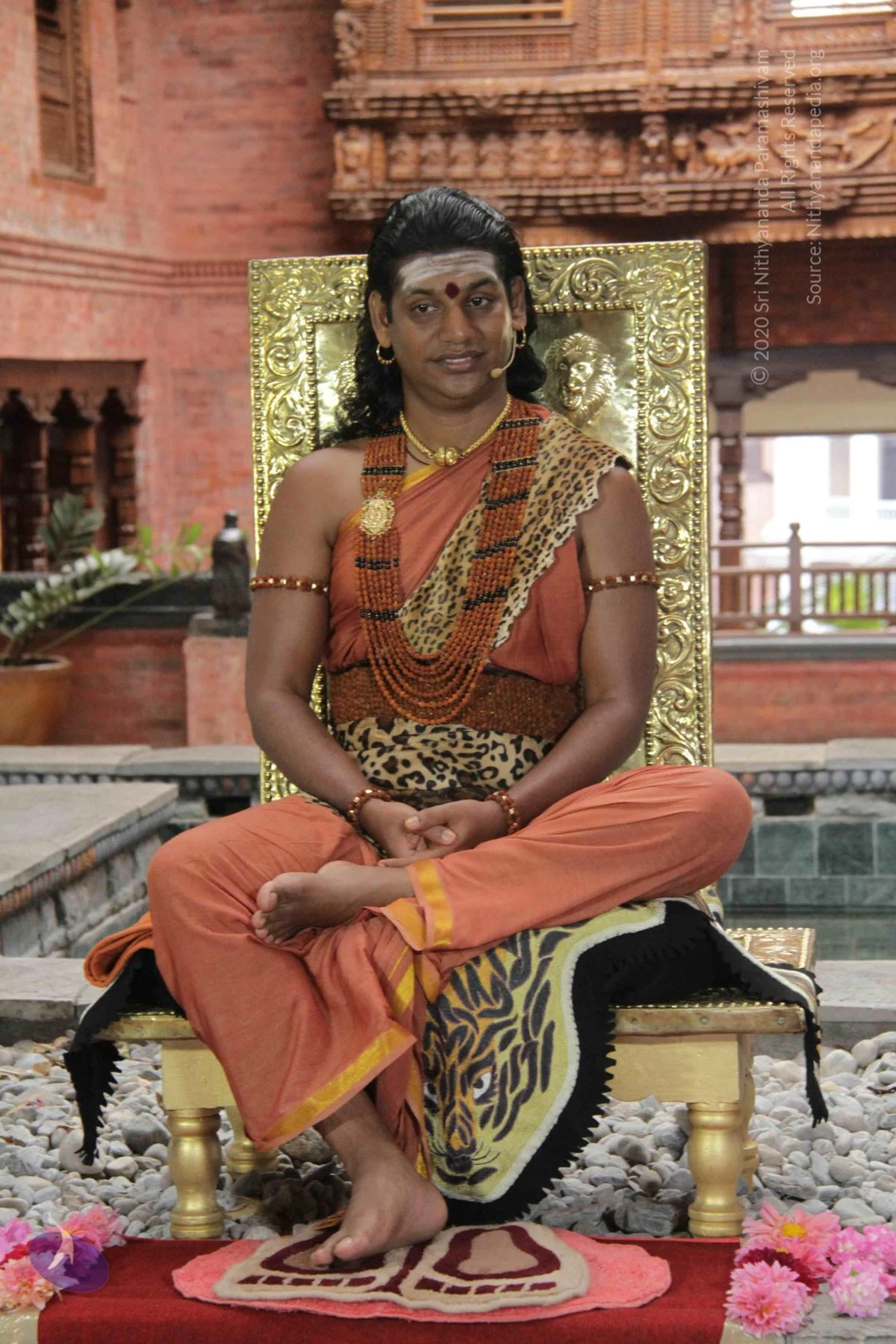
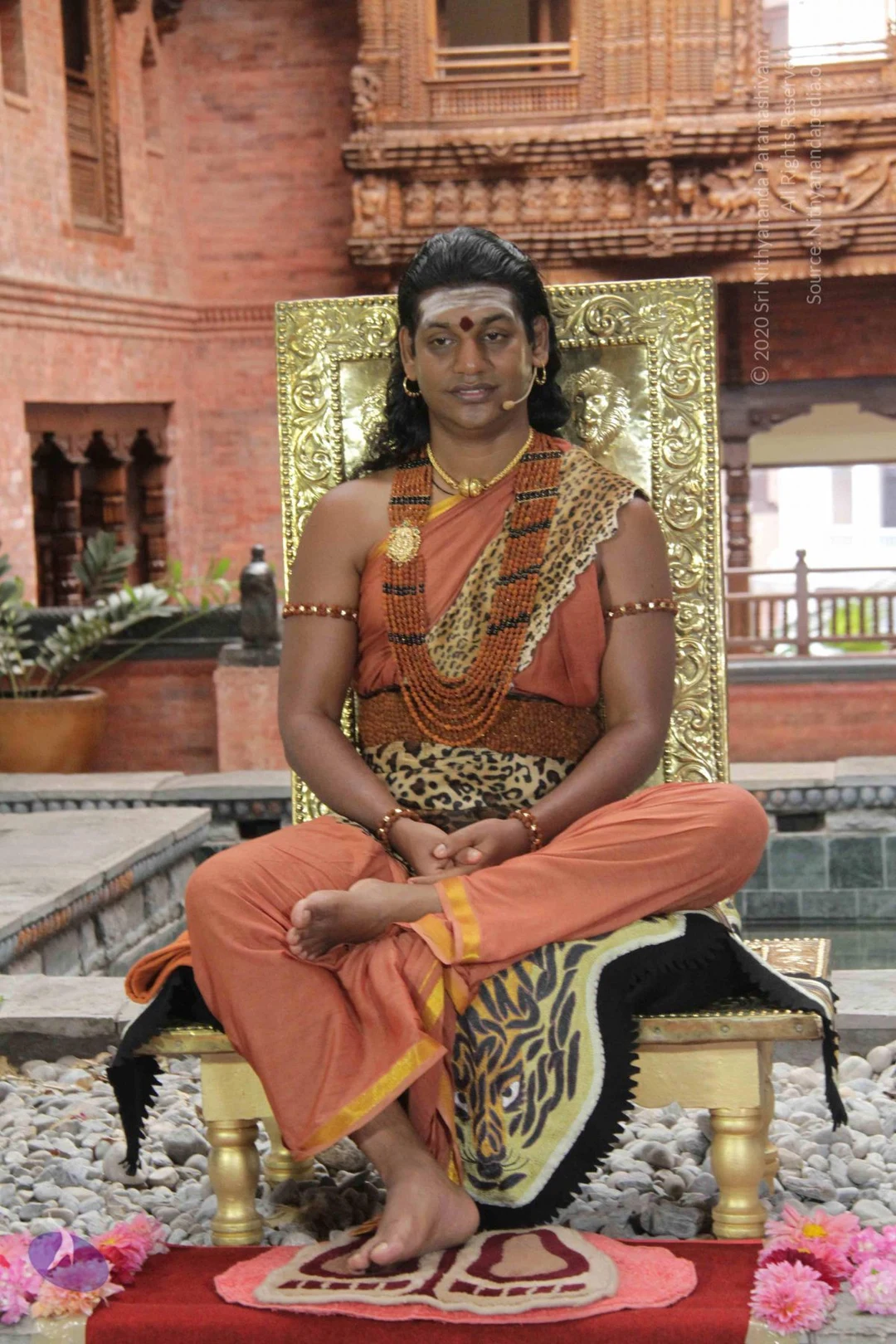
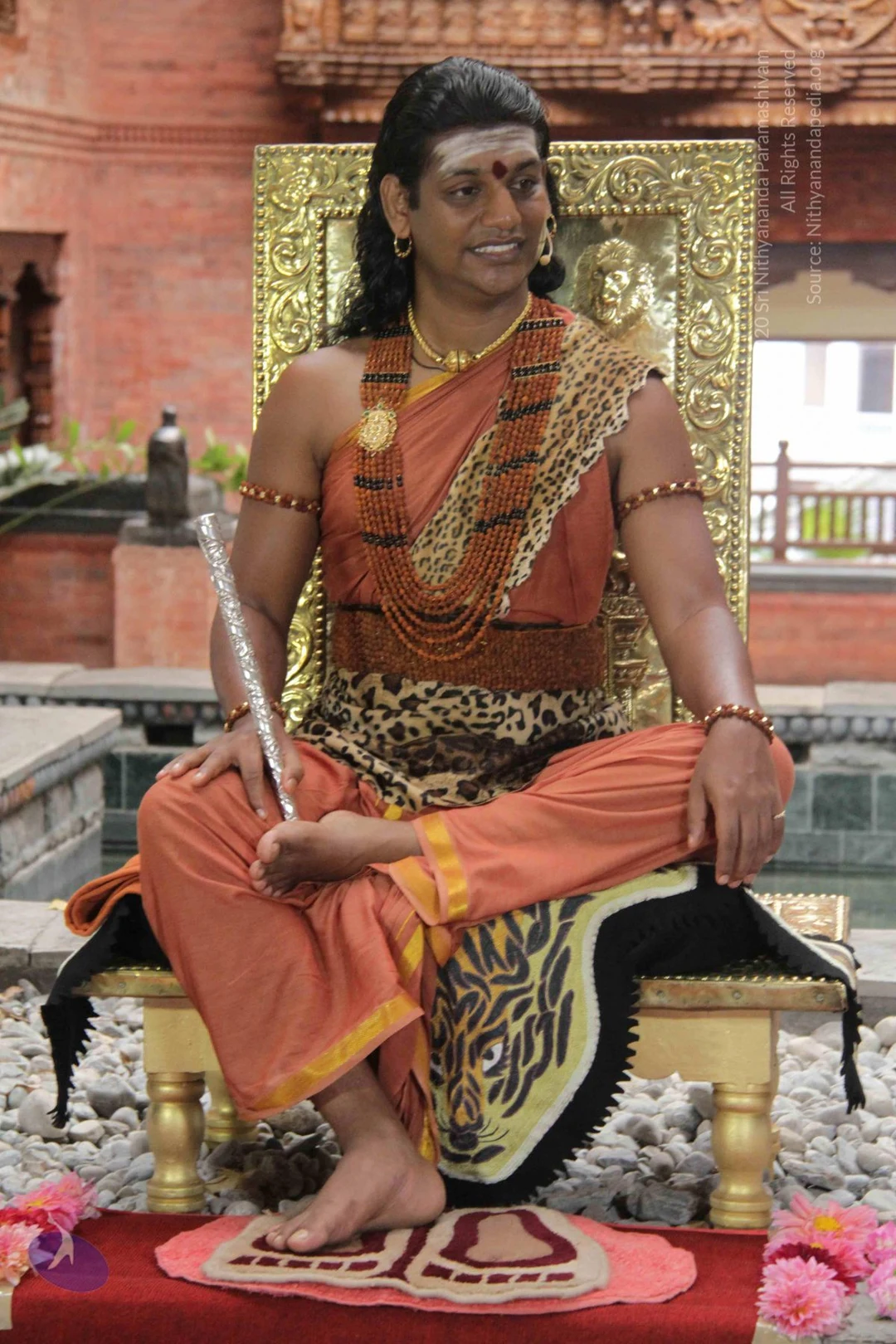
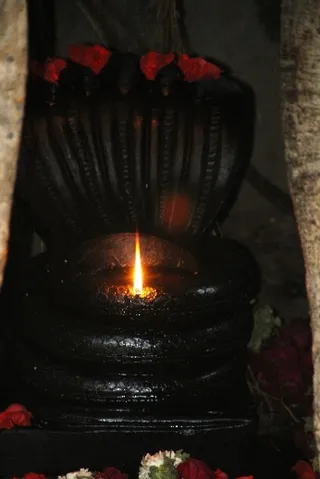
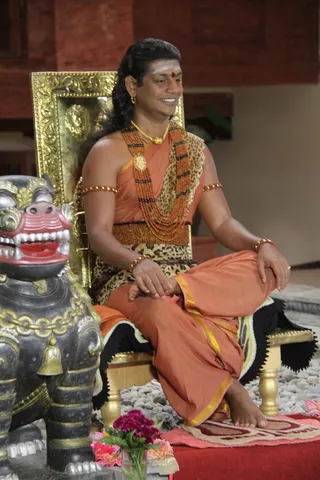
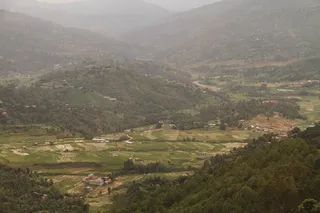
A dark stone lingam on a layered black yoni-pitha base is lit by a single oil lamp flame in a dim shrine. Red rose petals and white flowers are scattered around the base and against the stone, with a fibrous cord hanging above. No people are visible; the frame is close and warm-toned, showing a Shiva lingam offering with lamp and flowers.A large banyan tree photographed from below, its thick grey branches spreading outward in a wide canopy against a pale sky. Many aerial roots hang down from the limbs and descend toward the trunk, and dense green leaves fill the upper frame. No people, deities or ritual objects are visible.A seated man sits cross-legged on an ornate gold-framed throne with black-and-gold cushioning, smiling and gazing to the side. He wears an orange-saffron dhoti and a leopard-print shawl draped over his torso, with a long multi-strand orange-and-black rudraksha mala and a gold pendant, plus gold armlets and bracelets. He has a white tilak with a red dot on his forehead and long swept-back dark hair. A black stone lion-like guardian statue with gold trim sits at the left edge, a small arrangement of pink and magenta flowers lies in the lower left, and the bare feet rest on a red mat.A seated man in an orange-and-saffron robe with gold-patterned trim sits on an ornate gold-and-black throne-like chair atop a red carpet, bare-footed, with a long dark hairstyle and a gold necklace and orange shawl. Two large black stone lion guardians with red-painted faces flank him, and pink and red flower offerings lie at his feet. Behind him stands a carved wooden balcony and a reflecting pool in a red-brick atrium with potted plants. A central figure with ritual clothing and jewellery is seated in a temple-like hall. a person seated on the throne, wearing saffron robes, rudraksha-style gold necklace and long swept hair, the appearance cues supporting the page's identification.A seated man in an ornate golden throne with carved panels, wearing saffron-orange draped robes with a leopard-print shawl, a long rudraksha mala with a gold pendant, gold necklace, and orange armbands. He has a red bindi and tilak on his forehead and holds a silver staff across his lap, sitting on a tiger-striped mat before a stone pool with pink flowers in the foreground. Appearance-based probable Swamiji (probable): long swept-back hair, saffron robes, rudraksha mala and ceremonial gold necklace, seated on a throne. Brick temple architecture is in the background.Aerial view over a green valley of terraced rice paddies and scattered rural houses, with forested hillsides rising on both sides under a hazy grey sky. Small buildings with tin or tile roofs sit among the fields, and a winding river or road cuts through the valley floor. No people or ritual activity are visible; the scene reads as a Himalayan foothill landscape seen from a height.

Temple

23 photosSource gallery
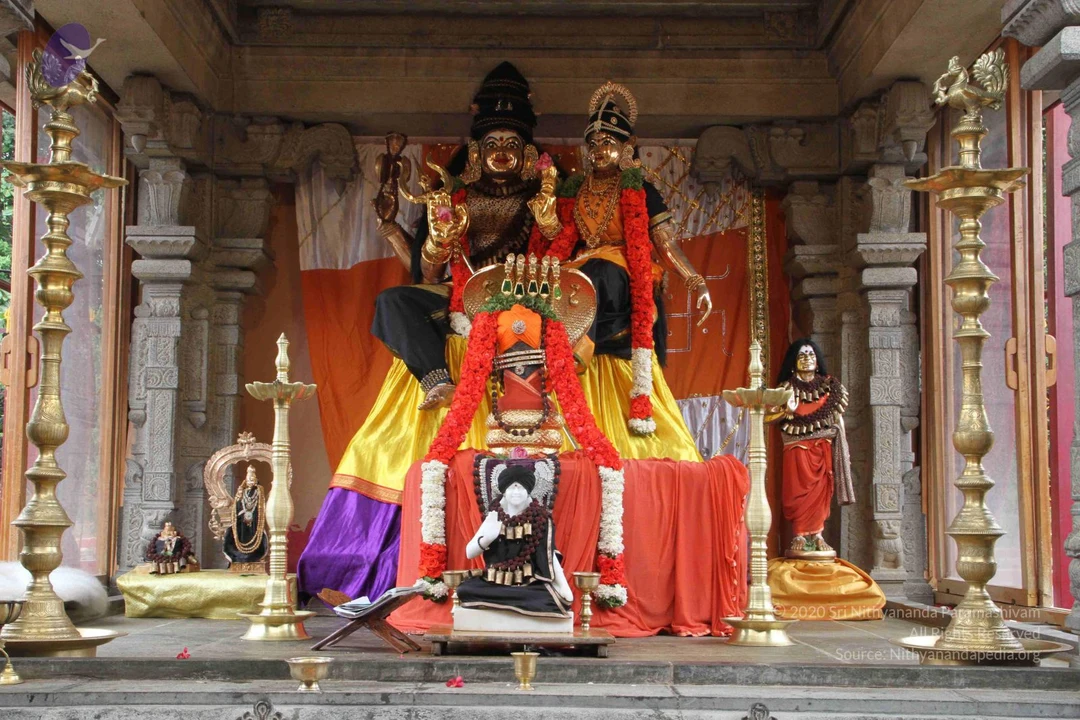
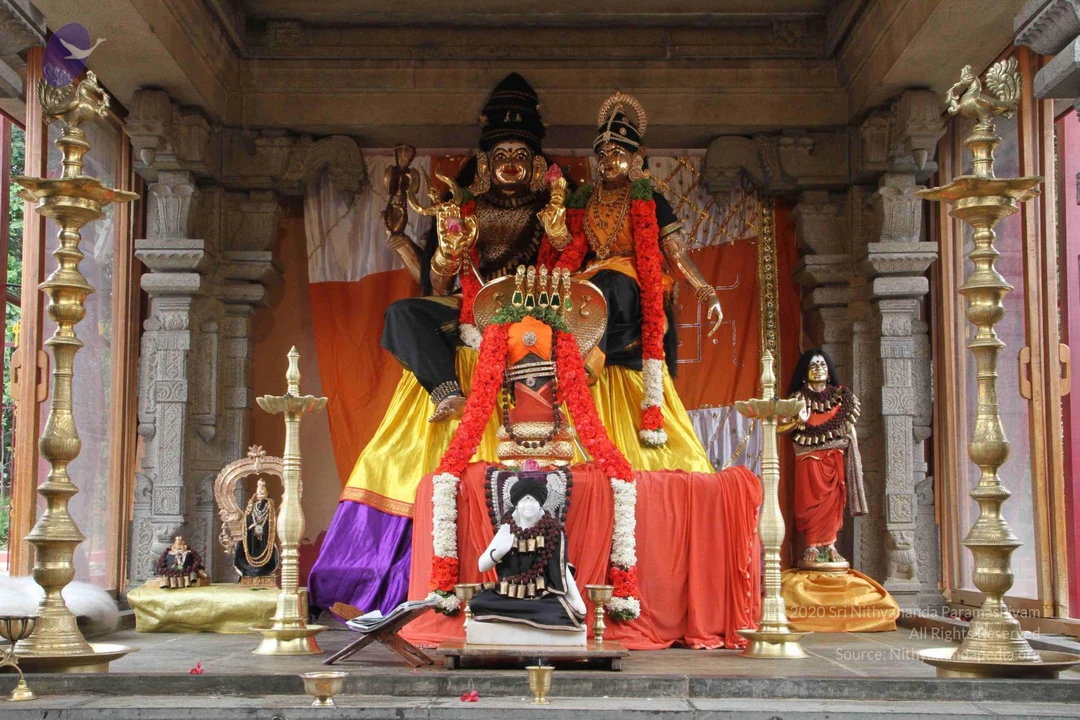
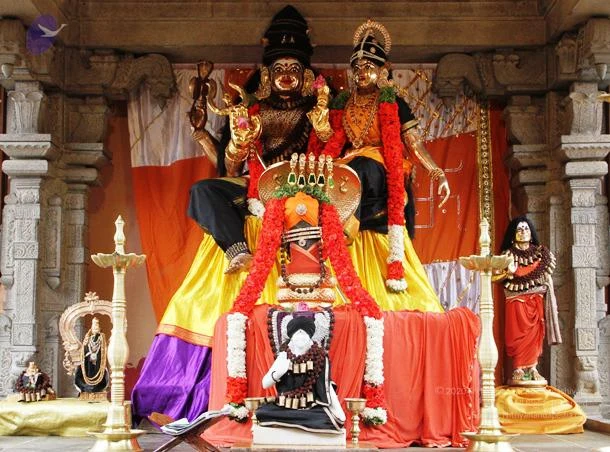
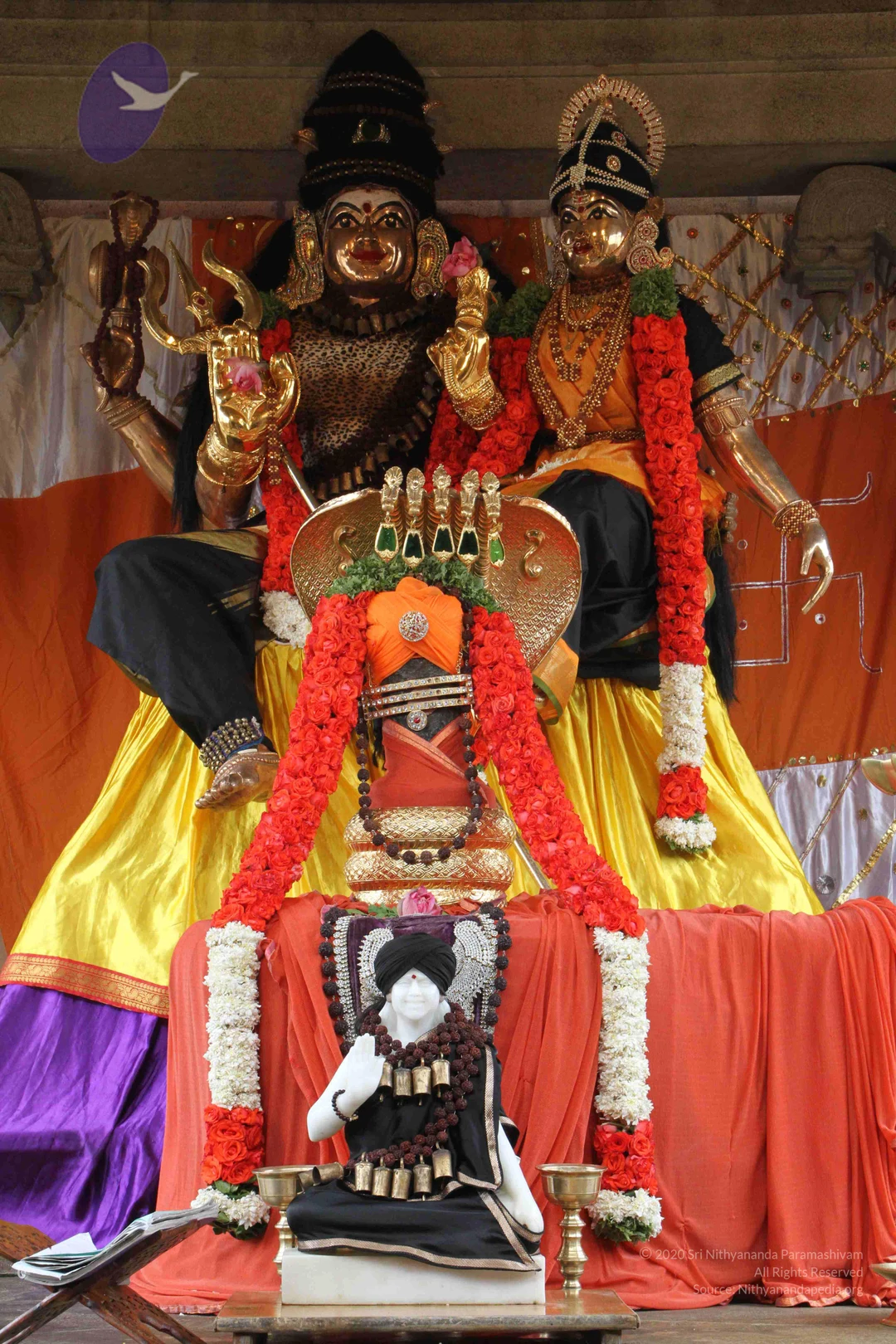
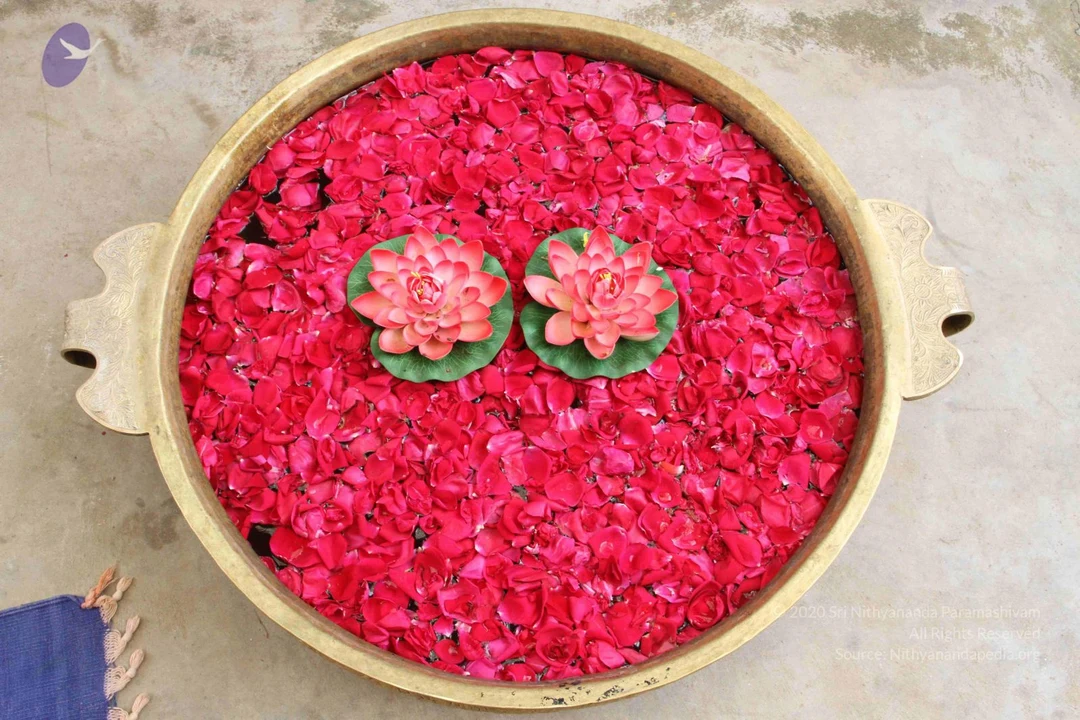
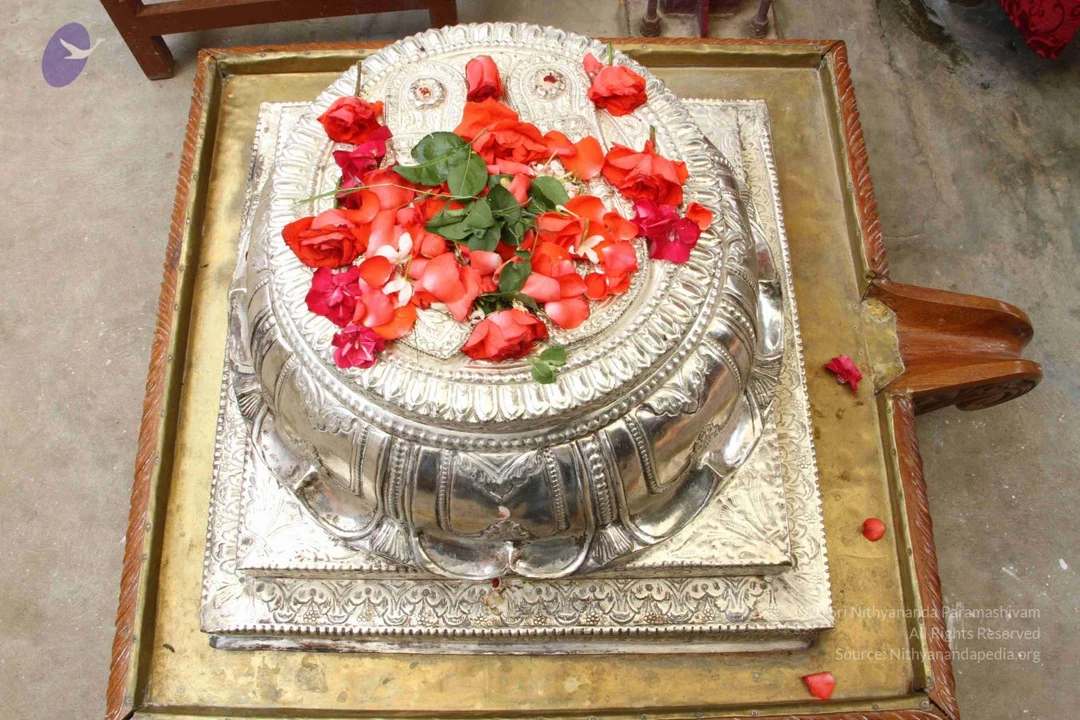
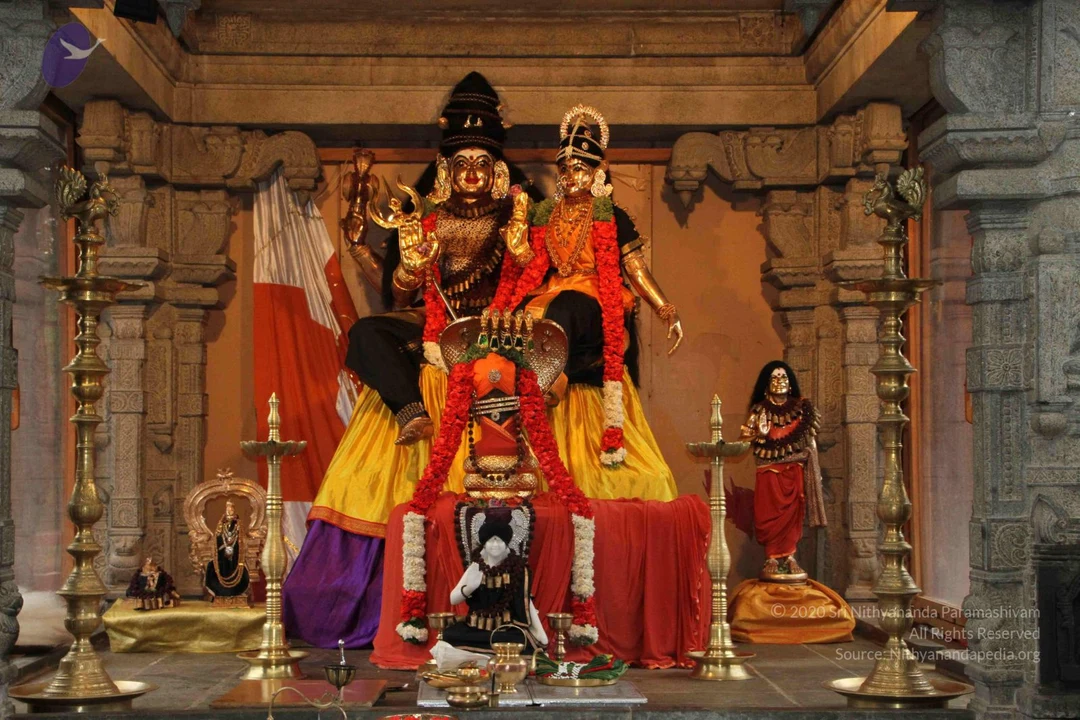
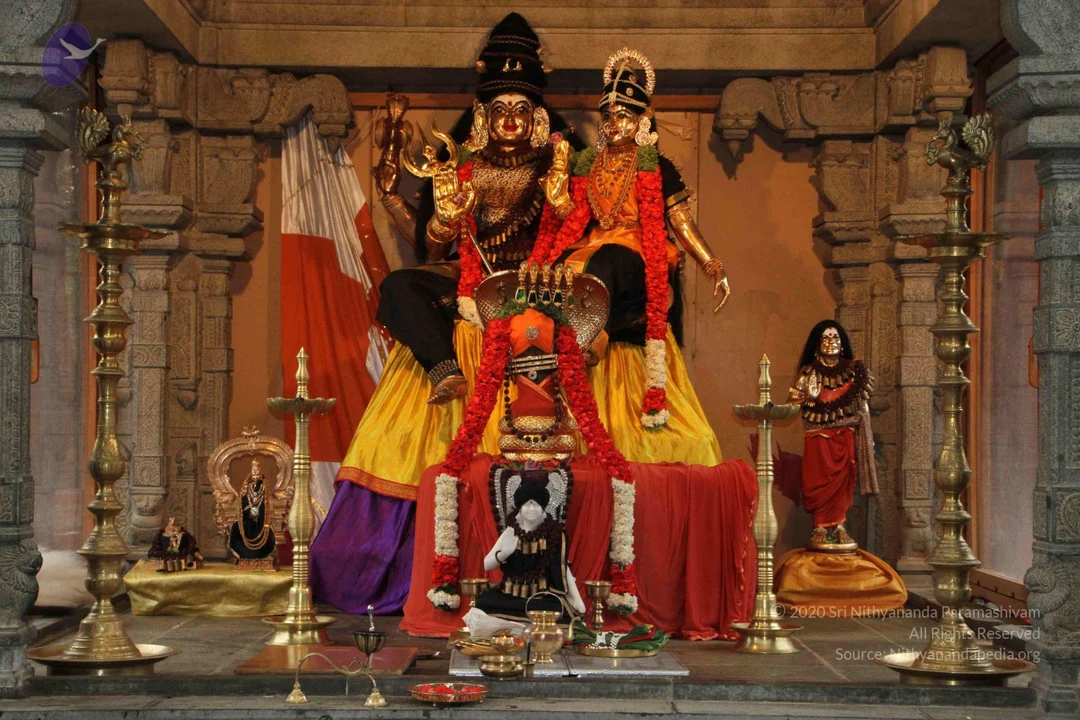
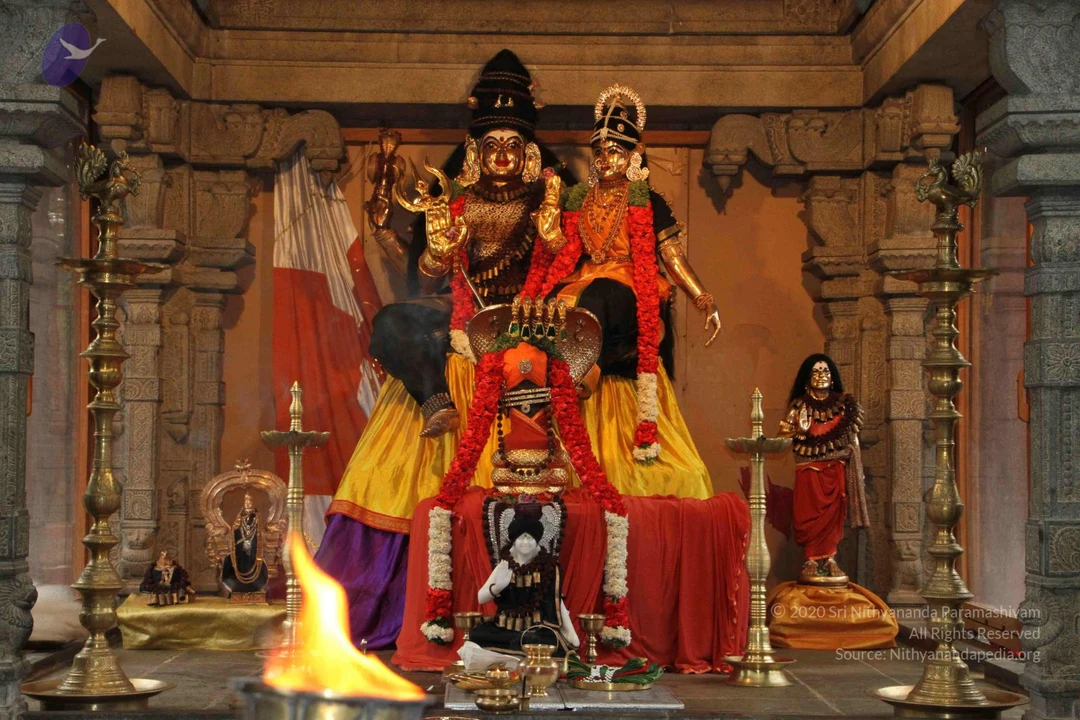
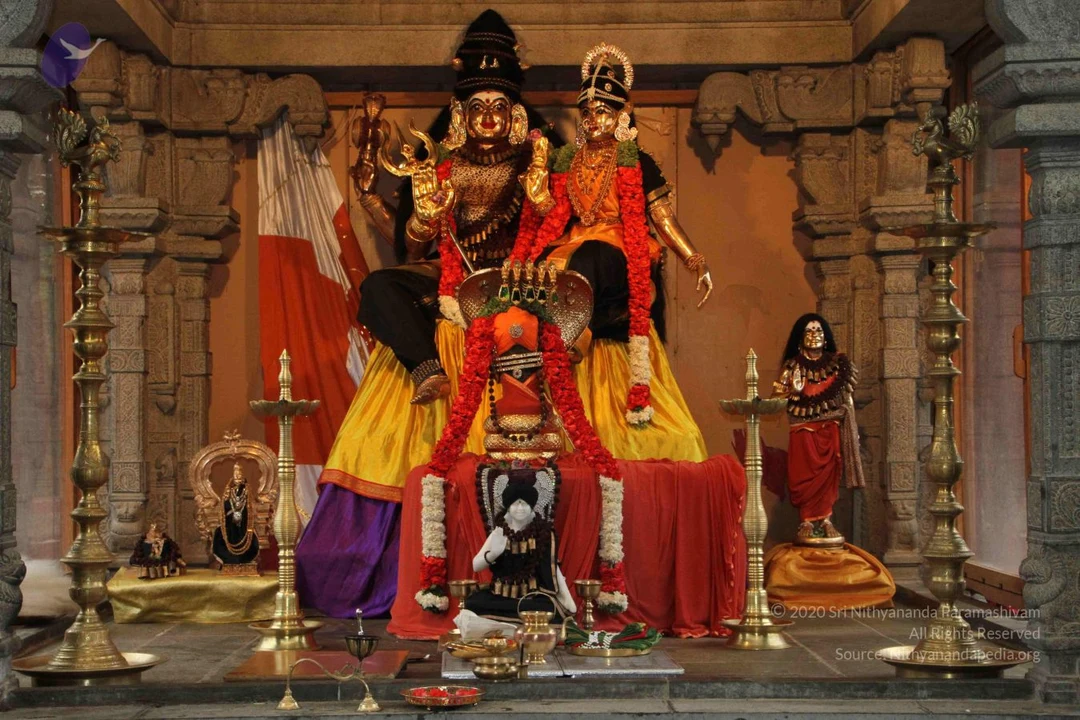
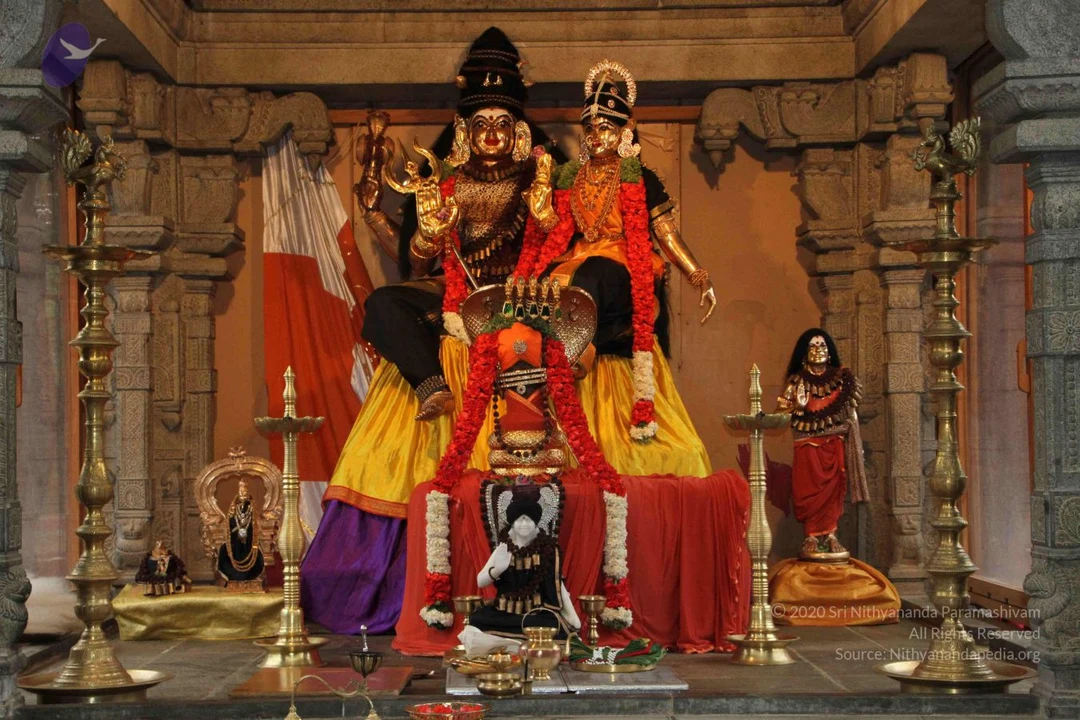
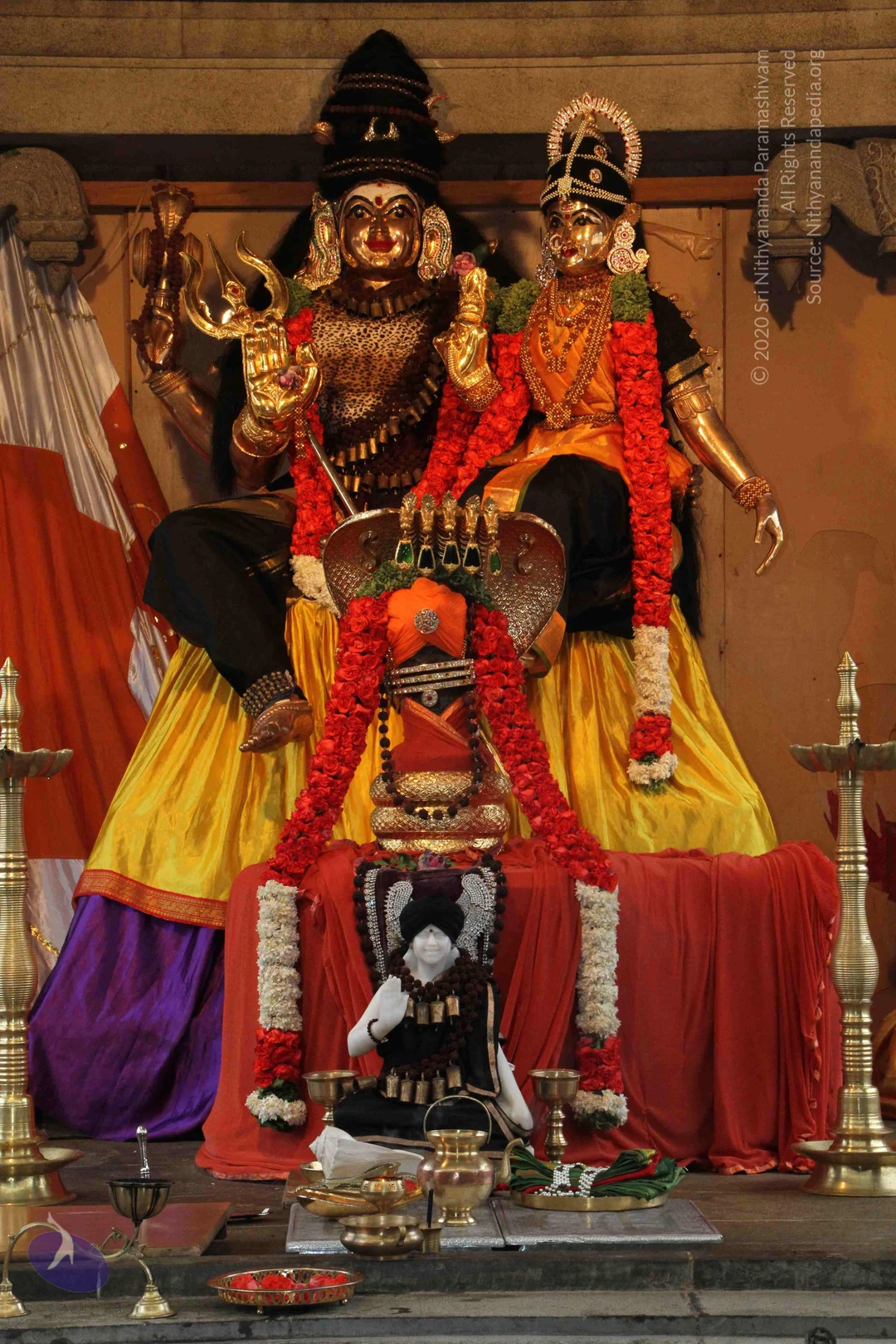
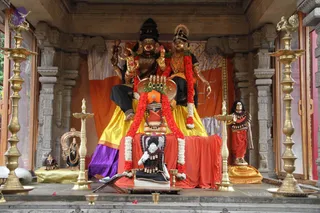
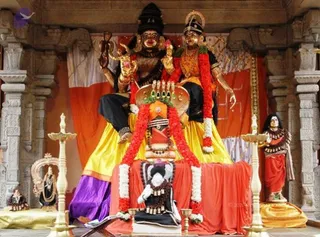
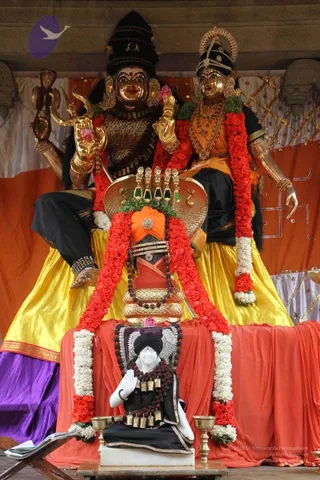
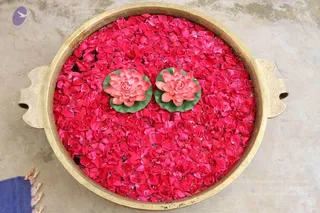
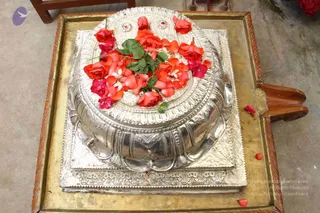
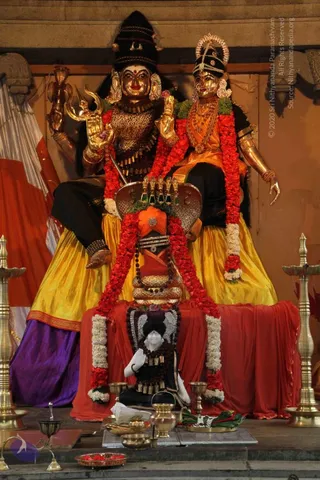
A temple shrine photograph showing a large sculpted pair of deities seated on a raised platform, the figure on the left with a dark face, a tall jatamukuta-style crown, a trident held in one hand, and the figure on the right in a golden crown with a yellow and orange garment. Both wear red and white flower garlands and gold ornaments. In front, a tall red-and-white garlanded murti sits on an orange cloth, with a smaller white and black figure below and a rudraksha-style mala draped across. Tall brass oil lamps (dipa stands) flank the shrine, and a small figure in orange stands at the right edge. An orange and white backdrop hangs behind, with carved stone pillars framing the scene. No living people are visible.A temple shrine with a large sculpted pair of deity murti seated on a raised dais, one with a trident and damaru and the other in a crown, against an orange and white backdrop. Both wear yellow and black dress with heavy red and white flower garlands. In front, a small seated figure in white and red marigold garland sits on a red cloth, with brass oil lamps on tall stands flanking the shrine and a brass pot in the foreground. A standing attendant in orange garb stands at right. No living people are visible.A temple sanctum shows large painted deity murti seated on a yellow and purple dais, with a Shiva-like figure wearing a tall jata crown and a female consort figure in red and gold, both garlanded with red flower strands. Before them stands a red-draped altar bearing a small lingam-like form adorned with a white and black cloth and garland, with brass oil lamps on either side and a small painted figure at right. Orange and red banners hang in the background. No physical people are visible; all figures are statues.A decorated shrine with two large gilded deity murtis seated on a raised platform draped in orange and yellow cloth. The taller figure, painted dark with a tall black crown, holds a trident and a flower and wears a leopard-print garment; the figure beside it wears an orange garment, gold necklaces and a crown. Red and white flower garlands hang across the platform. In front, a white marble statue in a seated mudra wears a black garment, a rudraksha mala with bells and an orange turban, set on a lit cushioned seat with brass oil lamps on either side. No physical people are visible.A large brass ceremonial bowl with ornate looped handles sits on a grey stone floor, filled with red rose petals on which two pink lotus flowers rest on green leaves. A blue cloth with tassels is visible at the lower left edge. No people are present. The arrangement appears as a floral offering or puja display.A photograph from above of an ornate silver deity pedestal or yoni-peetha set on a brass tray, decorated with red and pink rose petals and green leaves scattered across its top and sides. The silver base has embossed floral and scalloped patterns, and red petals lie on the grey floor beside the tray. No people are visible. The setting suggests a temple shrine offering of flowers.

Morning-Satsang
40 photosSource gallery
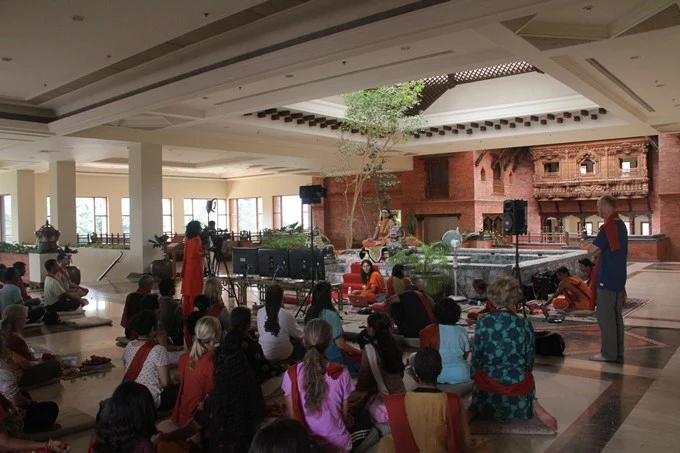
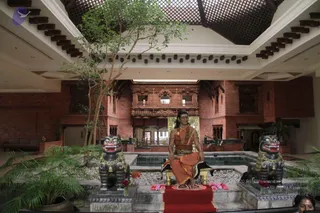
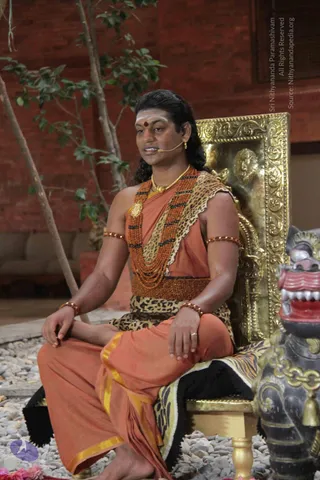
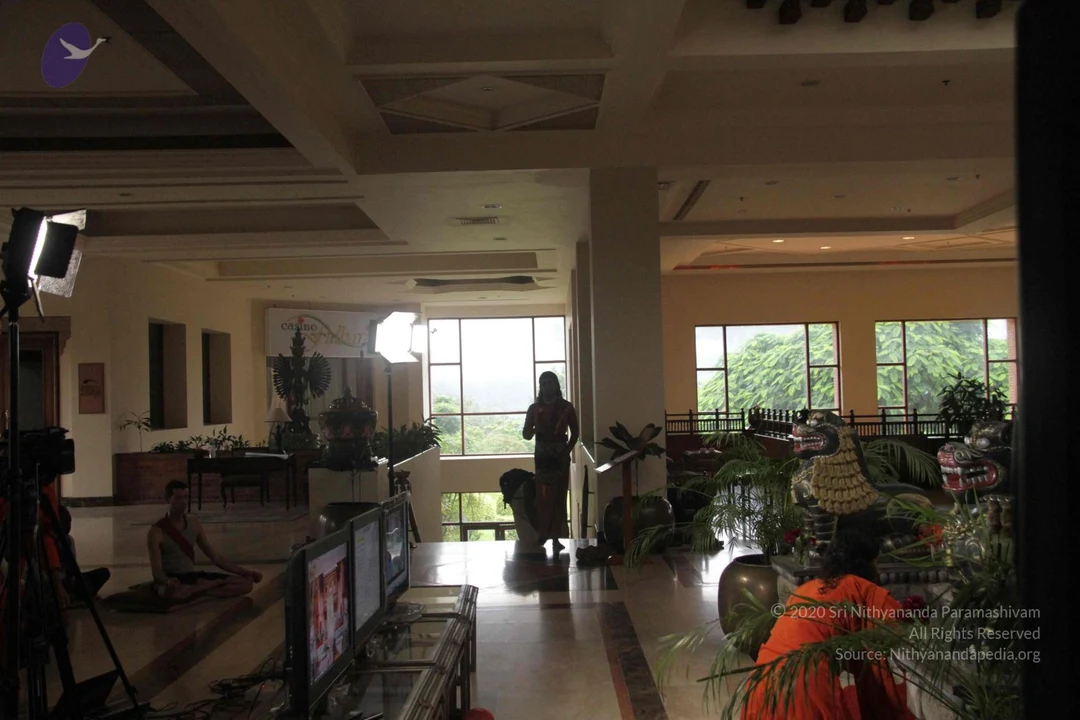
Interior hotel lobby with high coffered ceiling, tall windows showing green trees, and a dark-tiled floor. A standing figure in a long red-brown wrap stands near a column in the middle distance, while a seated figure in a light cloth sits cross-legged on a mat at left. A photography light on a tripod stands at left and monitors sit on a low cabinet. In the right foreground a person in orange robes is partly visible beside carved guardian statues and potted palms. A sign on a wall reads Casino Sri Lanka style lettering. The scene shows a filming or photo setup.A seated man in saffron-orange robes sits on a gold-trimmed chair on a red carpet in a carved-wood and brick atrium, flanked by two large black-and-gold guardian lion statues. He wears a rudraksha mala, a ceremonial gold necklace, a shawl with leopard-print trim, and a tilak on his forehead. Pink and red flower petals lie on the carpet and steps, with a small water pool and pebbles beside him. Tall carved wooden balconies rise behind, and a palm and potted plants frame the scene. The man visibly matches the Swamiji candidate cues of long swept-back hair, saffron clothing, and ornate adornments, so he is recorded as a probable in-person presence.A photograph of a seated man on a golden-legged throne in a courtyard with a shallow tiled pool of pebbles and red-pink flowers. He wears an orange-saffron dhoti and shawl, rudraksha-style beaded necklaces, gold armlets and a leopard-print waist cloth, with long dark hair and a tilak on his forehead. A red carpet lies beneath his feet. Flanking him are two black guardian lion statues with gold accents. Behind is a carved wooden balcony and red brick architecture with a potted tree and palms. A man in white stands far right near the doorway.A seated figure in an ornate indoor courtyard with a carved wooden balcony and red brick walls under a latticed wooden skylight. The figure wears an orange and gold draped garment, bead necklaces and bangles, and sits on a gilded throne with a red carpet and pink flower offerings. Two black lion-like guardian statues with gold trim flank the throne beside a small pool with pebbles and potted plants. A partially visible person appears at the lower right corner. The figure matches the appearance of a person in a Kailash Yatra setting, shown with a sweeping hairstyle and distinctive saffron adornments, so this is a probable in-person presence.A seated man in saffron-orange robes and a long rudraksha-style necklace sits on a gold-trimmed wooden seat over a red carpet in a courtyard. Two large black guardian lion statues with gold accents flank him, and flower petals lie at his feet. Behind him are carved wooden balconies, red brick walls, a small pool with stones, potted plants and a small tree under a latticed skylight. The seated figure appears to be in a ceremonial pose, with one hand raised. Another person is partly visible at the lower right edge.A seated figure in saffron-orange robes sits on a gold-trimmed low throne draped with a black cushion, set on a red carpet in a courtyard with carved wooden balconies and red brick walls. He wears a rudraksha mala, a gold necklace, bangles and a leopard-print waist cloth, with vibhuti marks on his forehead. Two black lion-shaped guardian statues flank the dais, and pink and red flowers lie at its base beside a small pool with a green tiled edge. A figure in white stands at the right edge. a person is seated on the throne, identified by the saffron robes, rudraksha mala and ceremonial gold necklace.

Photo-Shooting-with-Swamiji

76 photosSource gallery
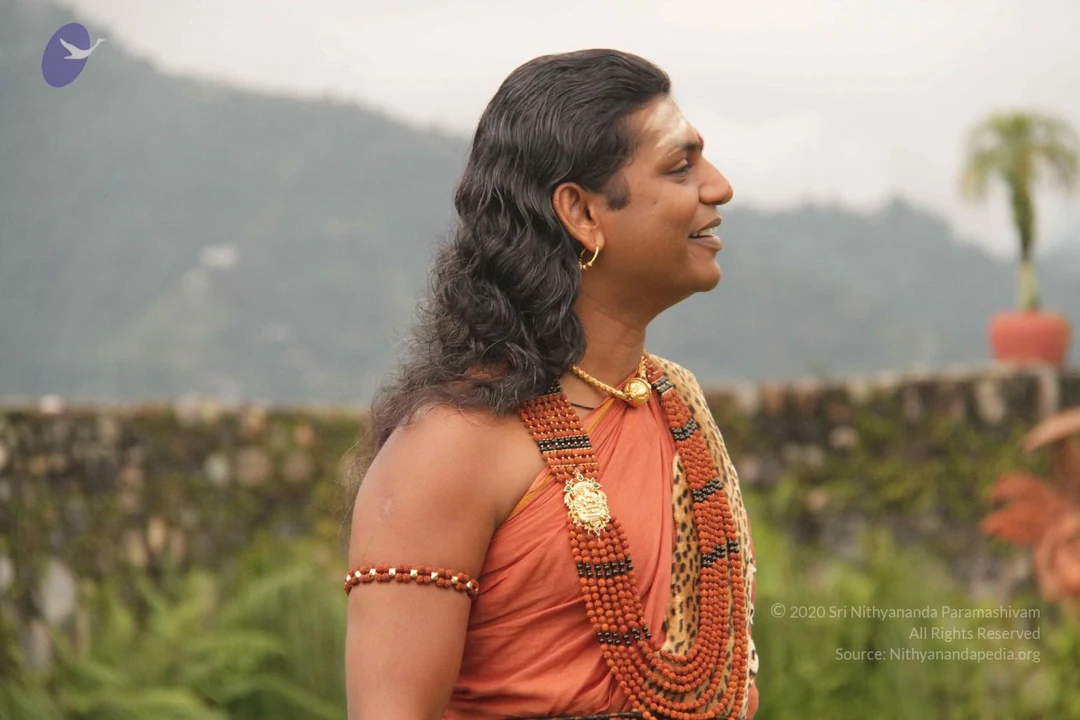
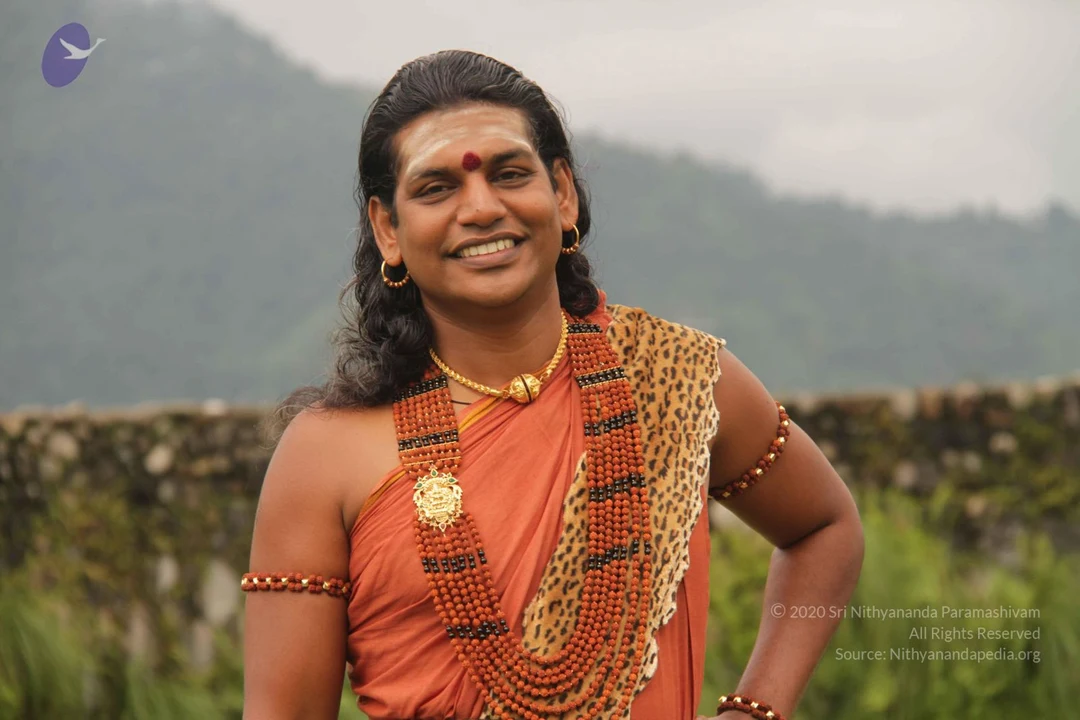
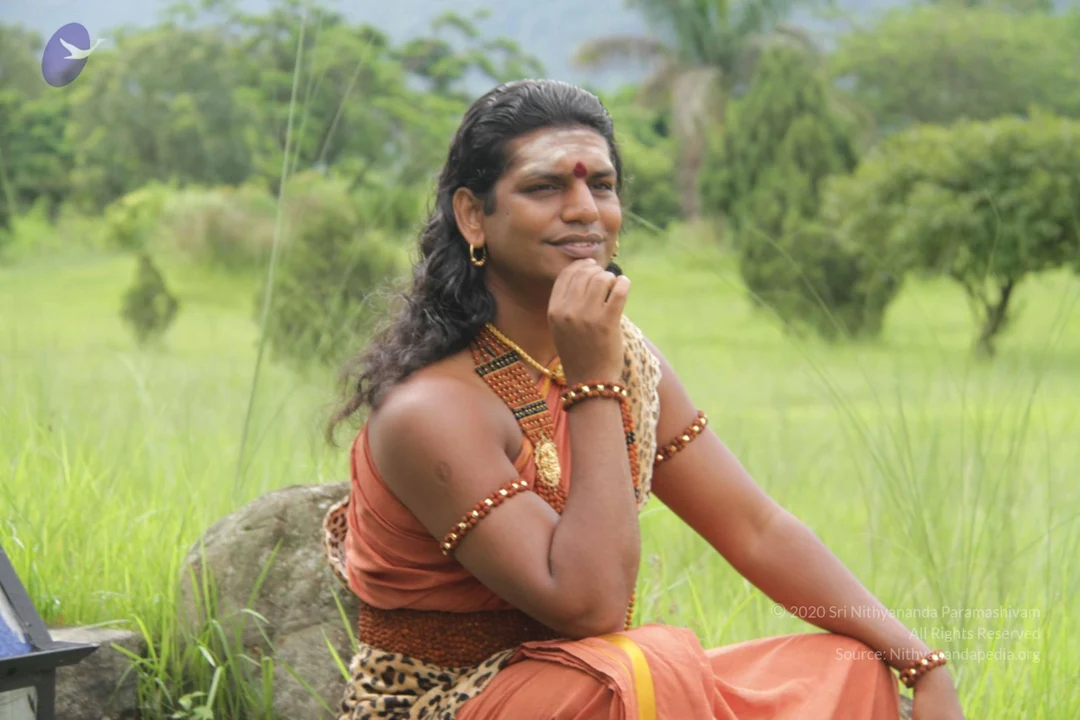
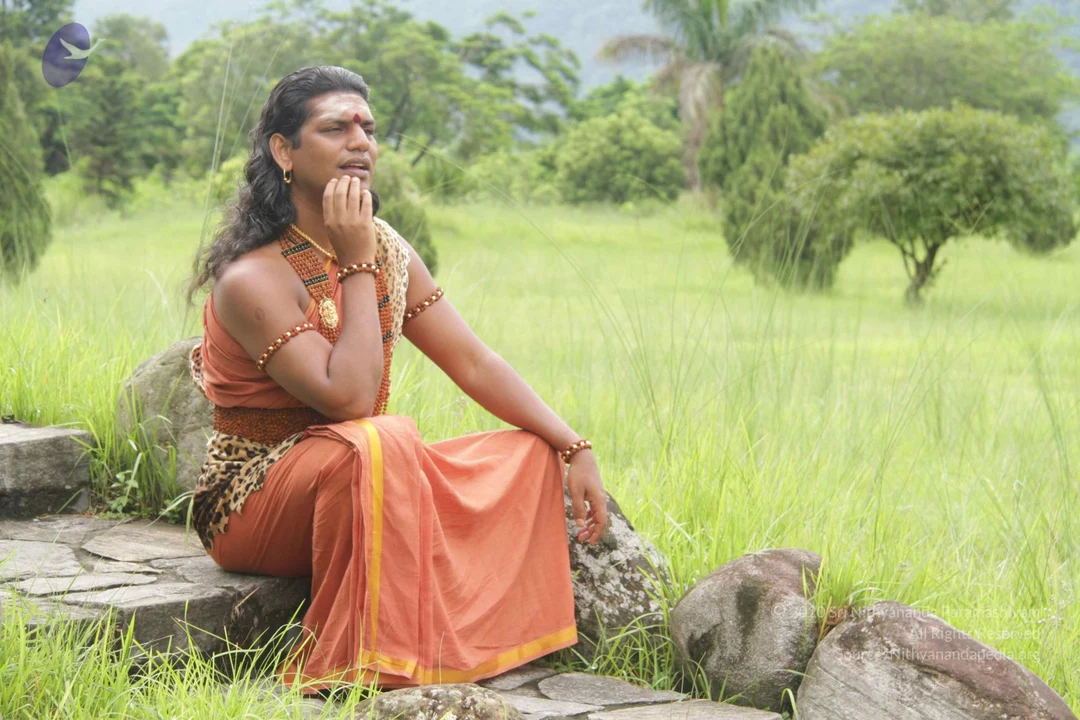
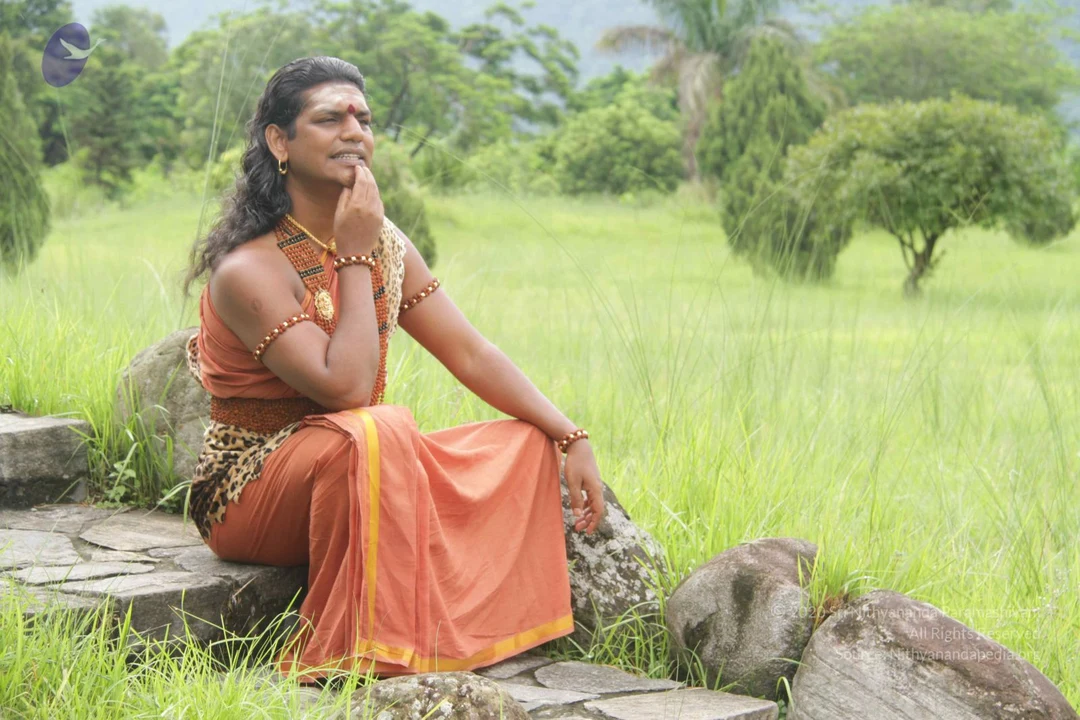
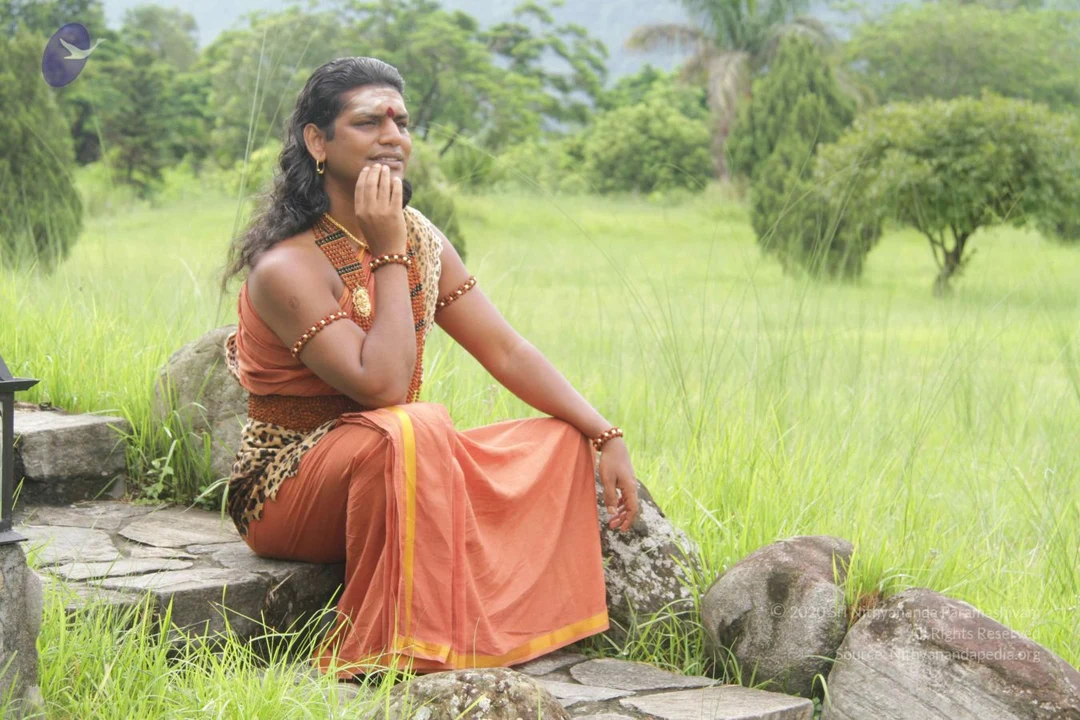
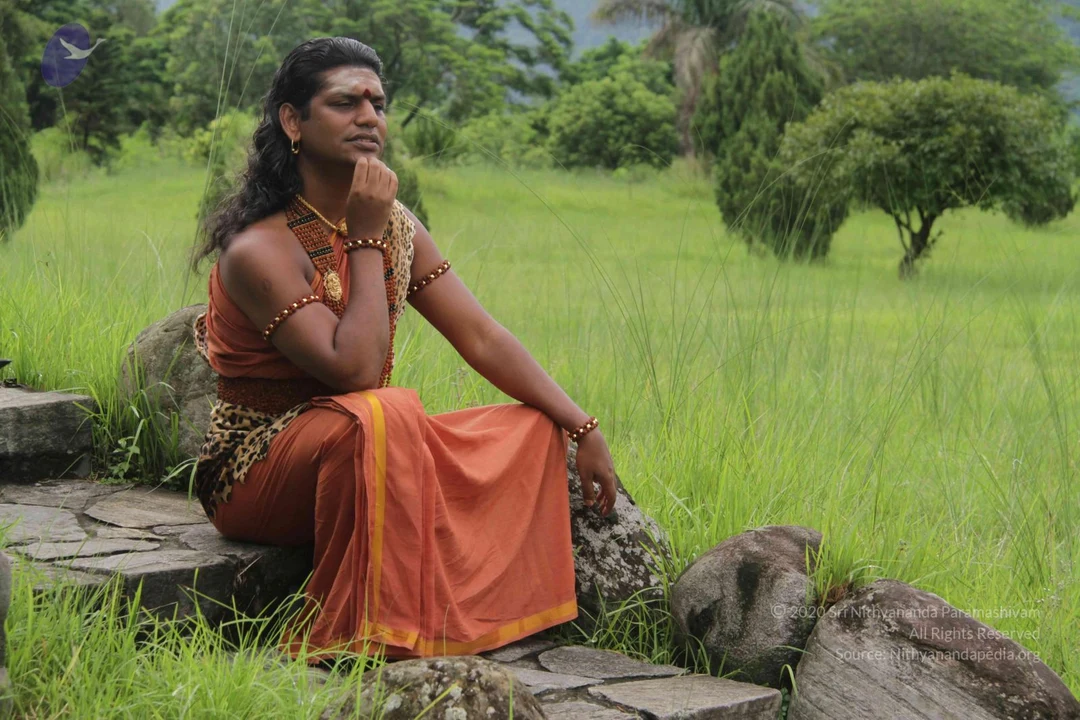
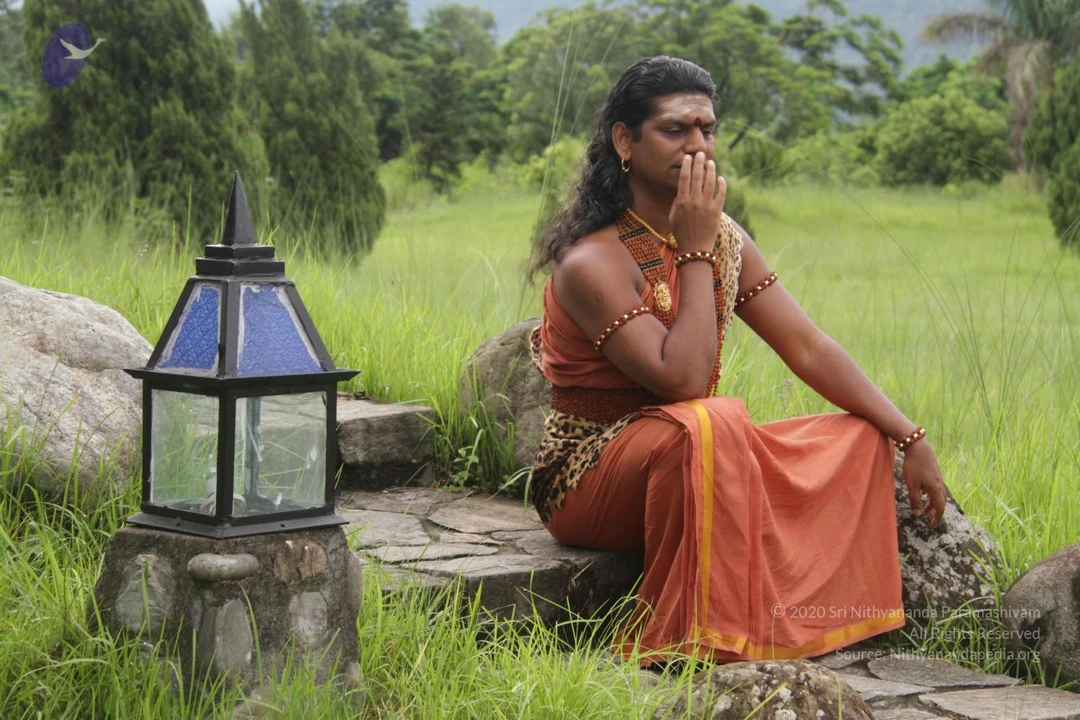
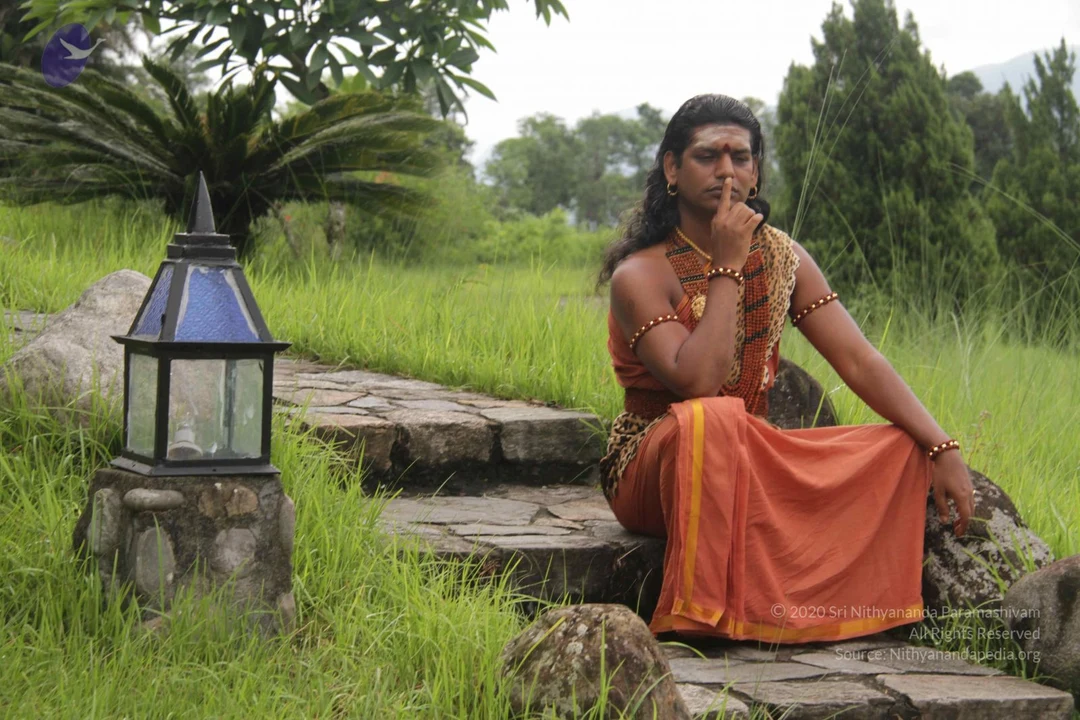
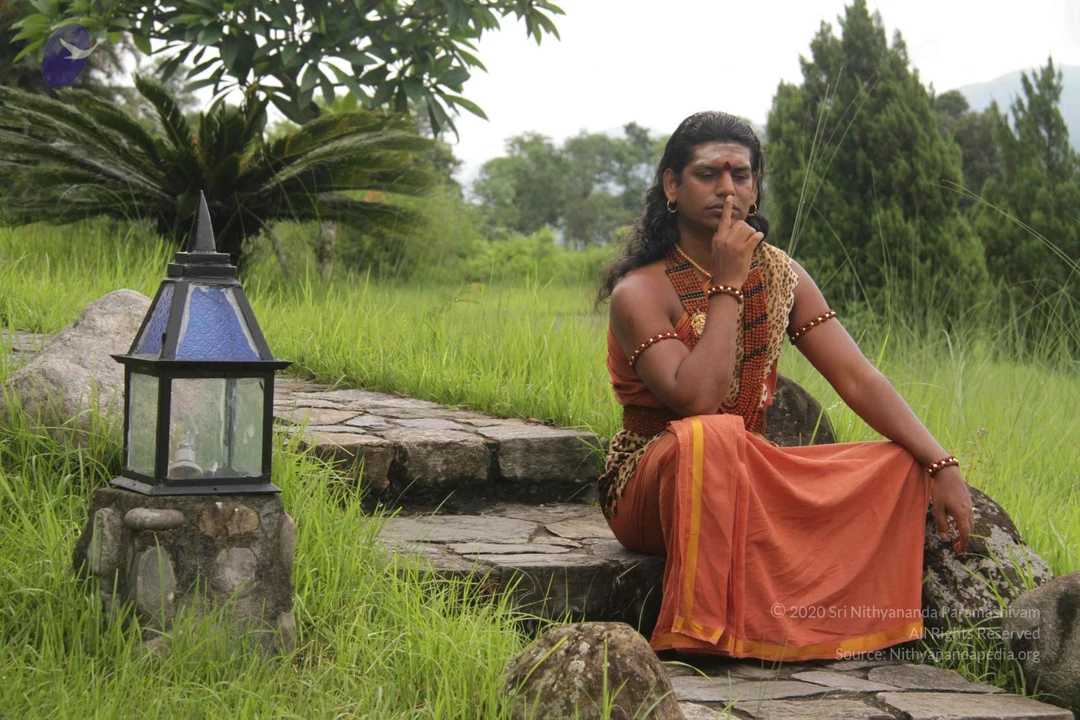
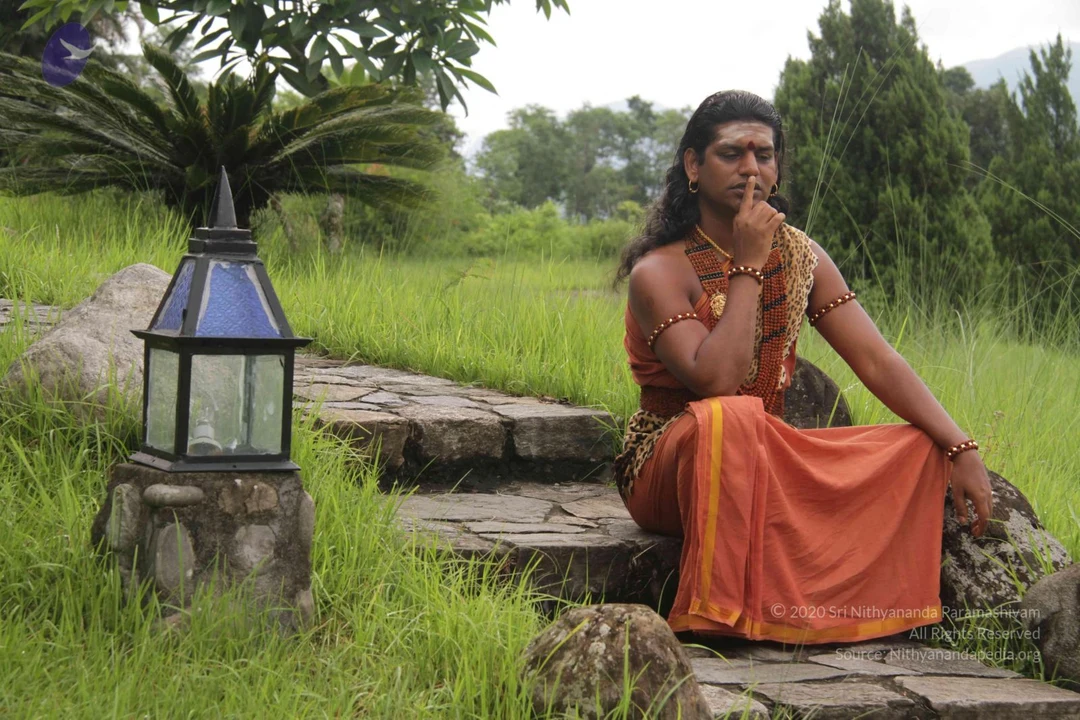
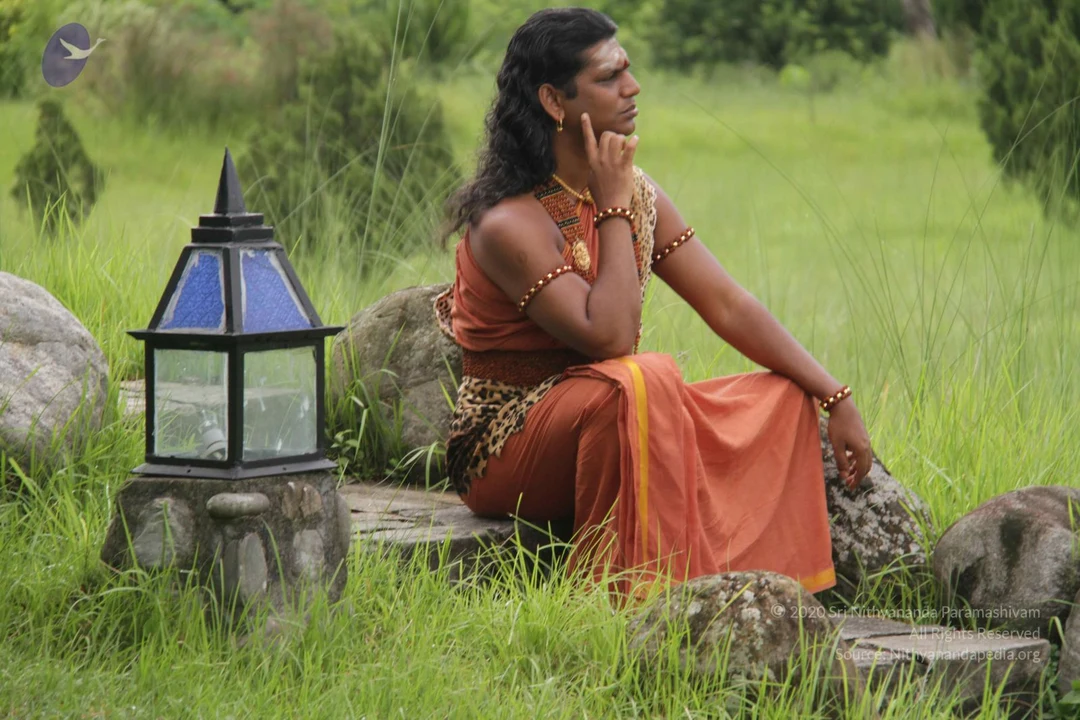
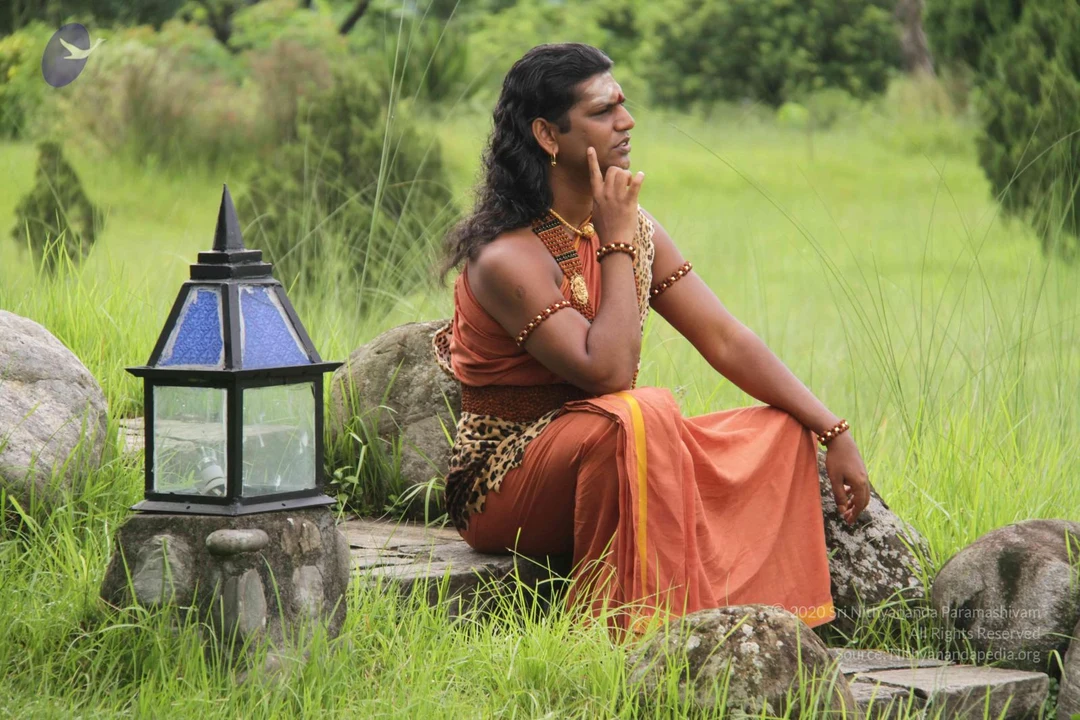
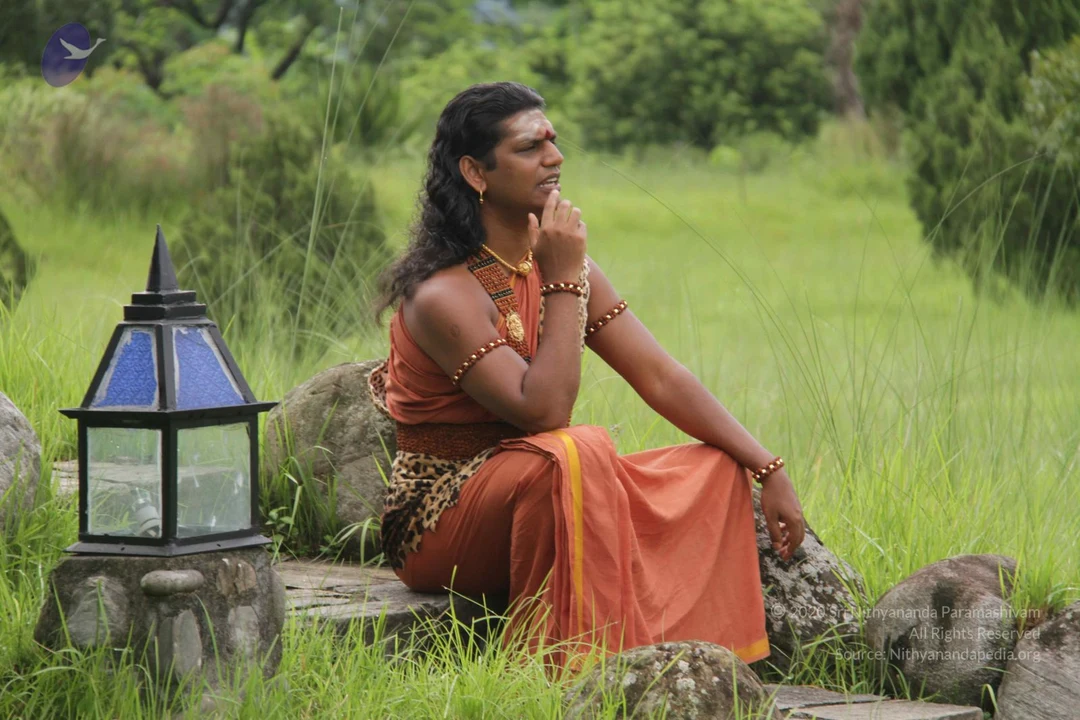
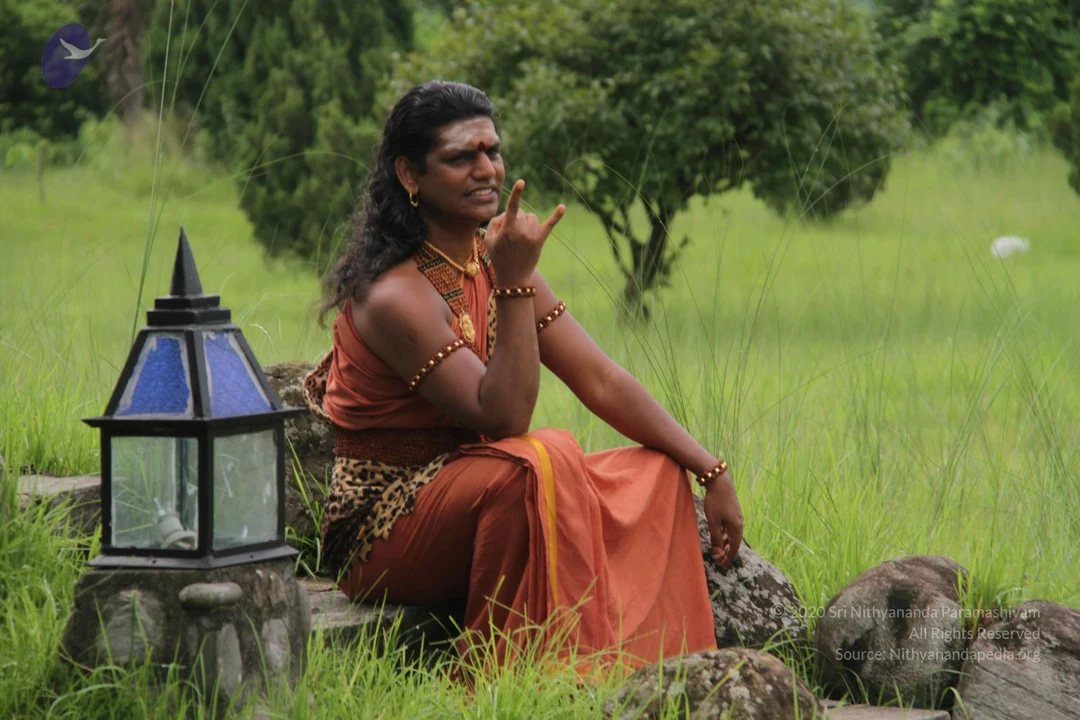
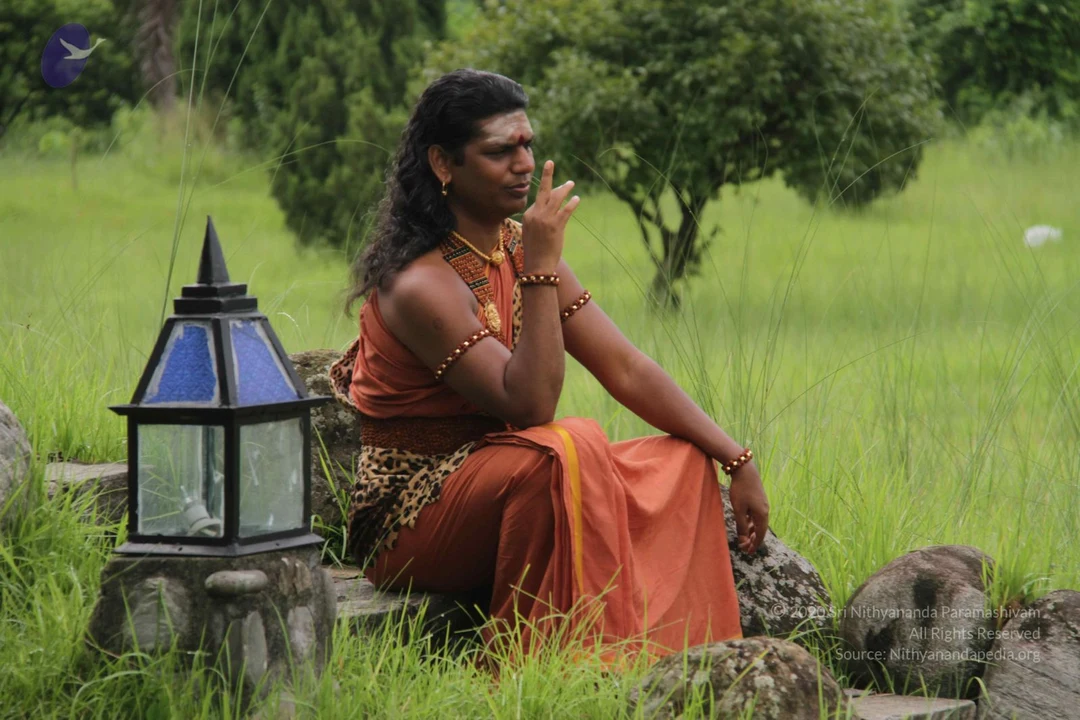
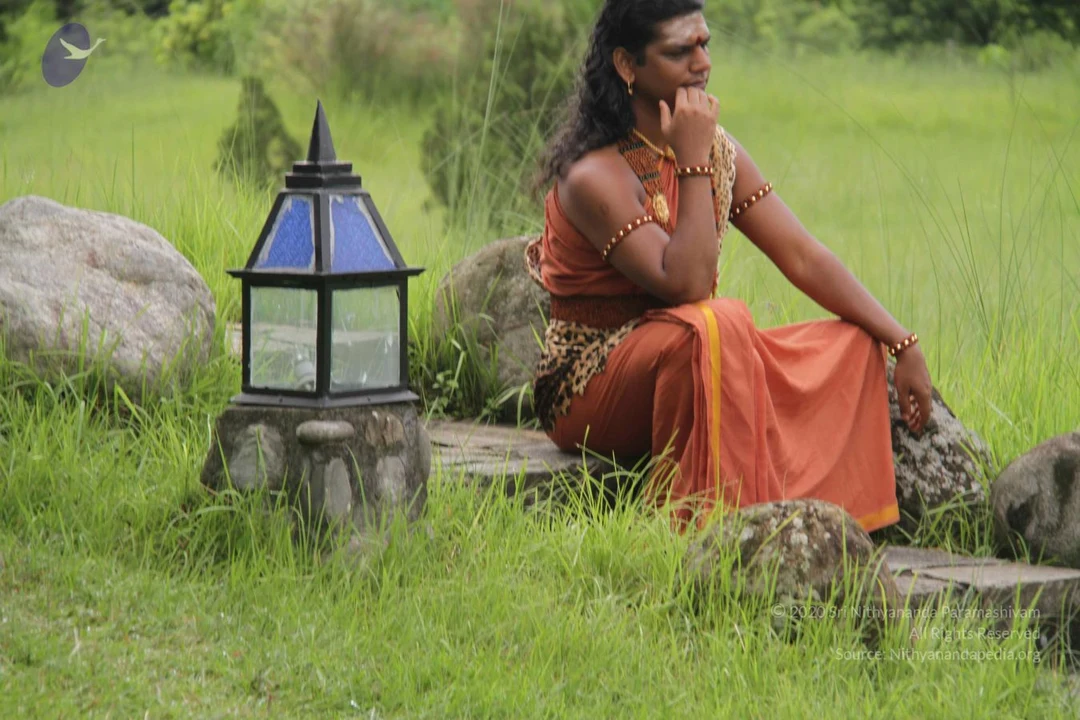
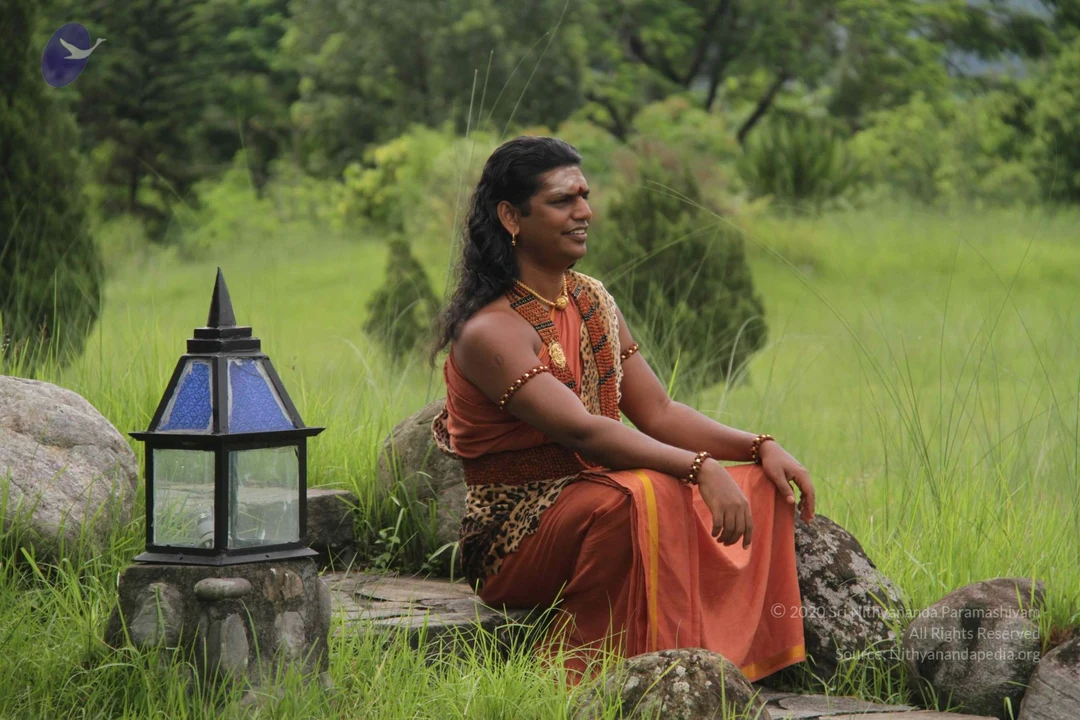
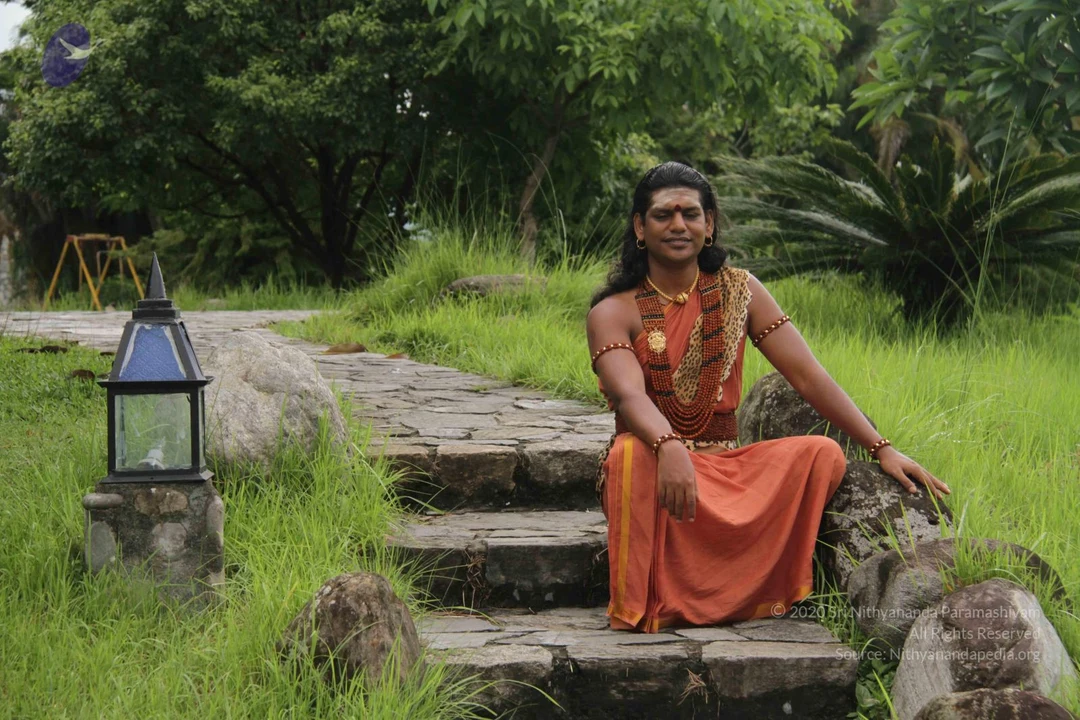
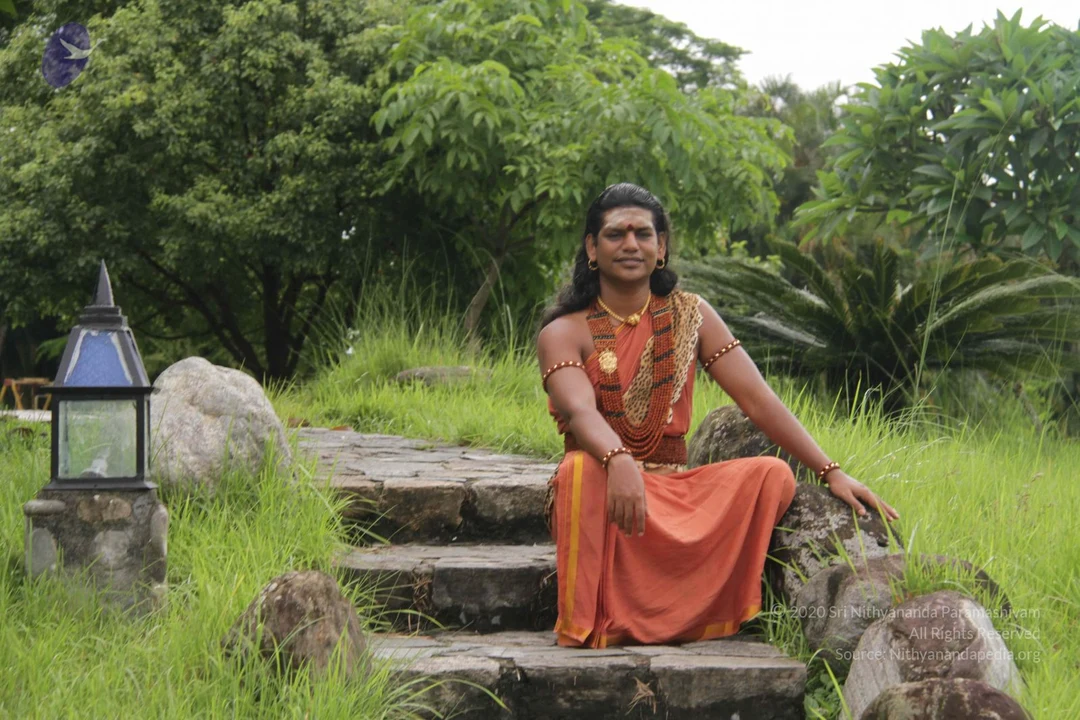
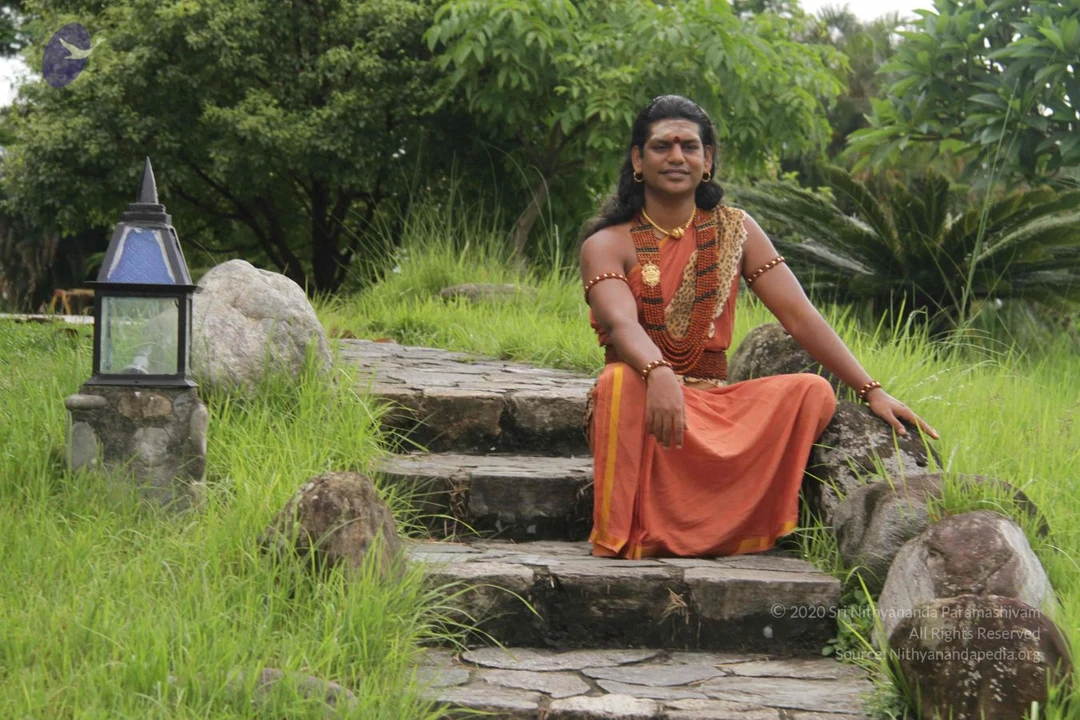
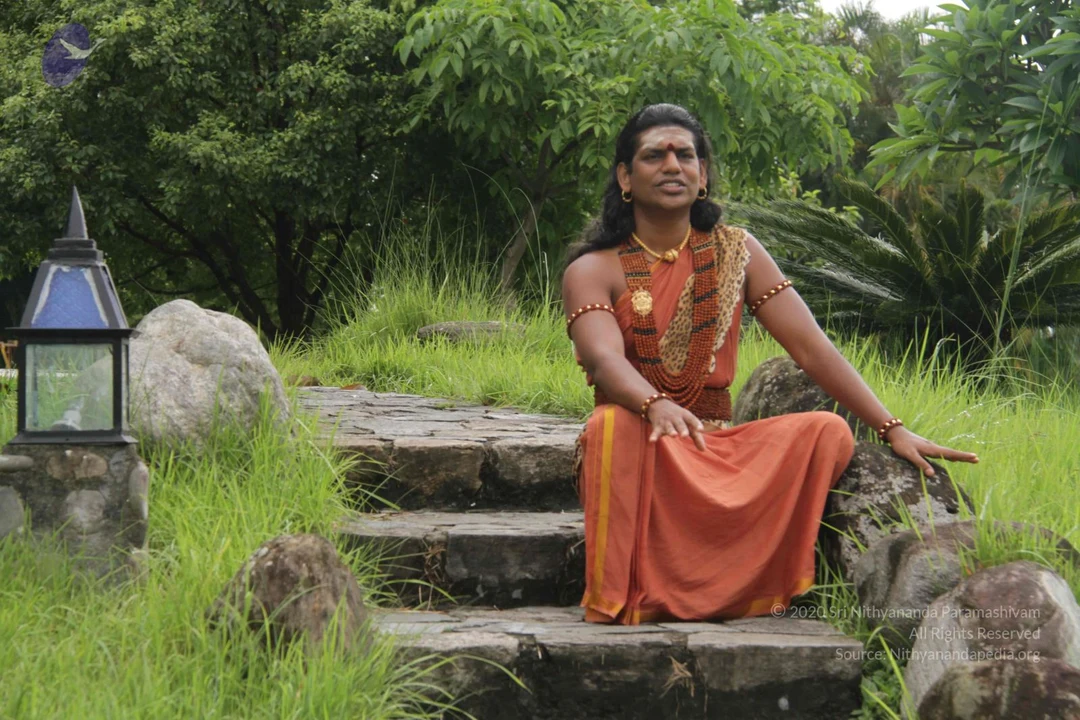
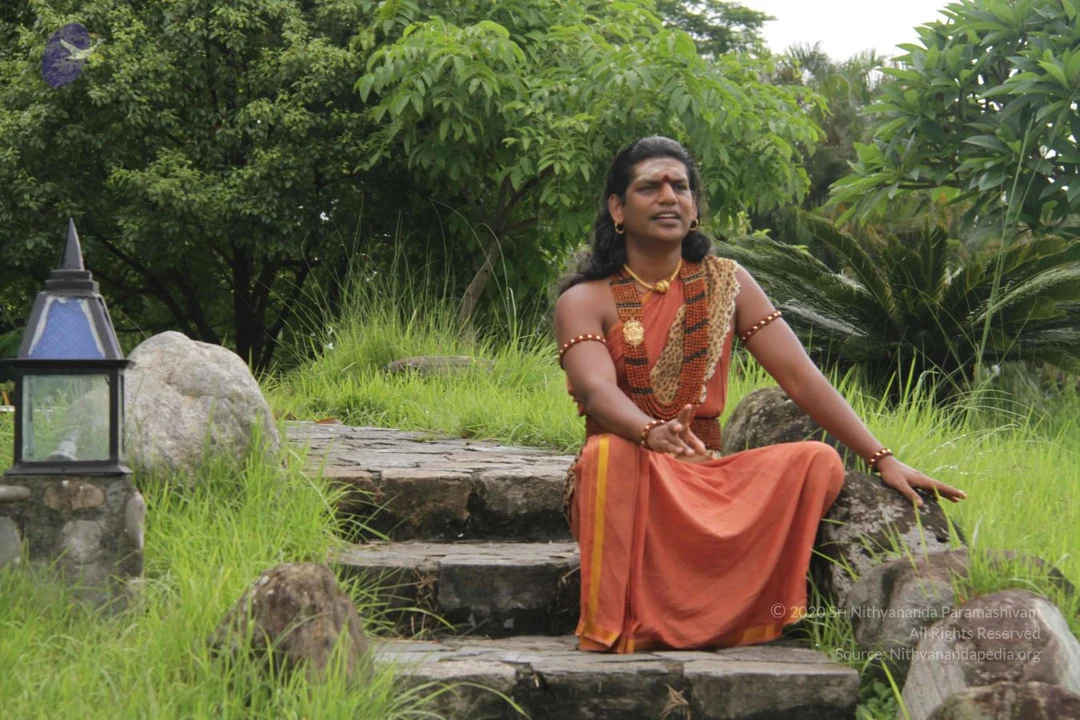
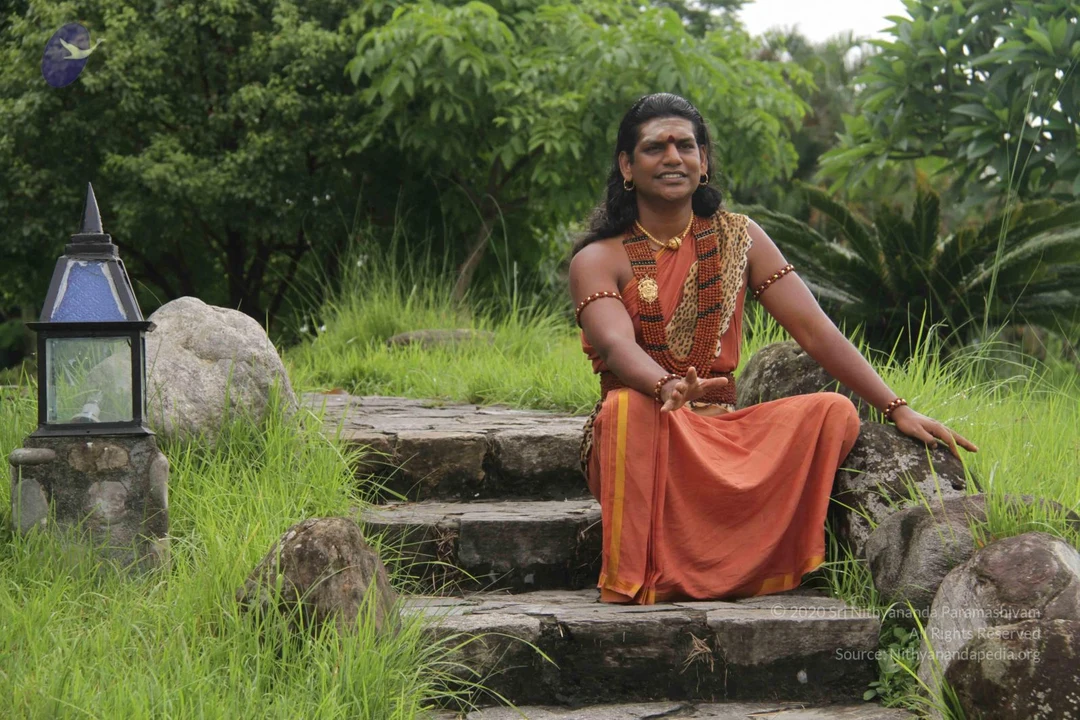
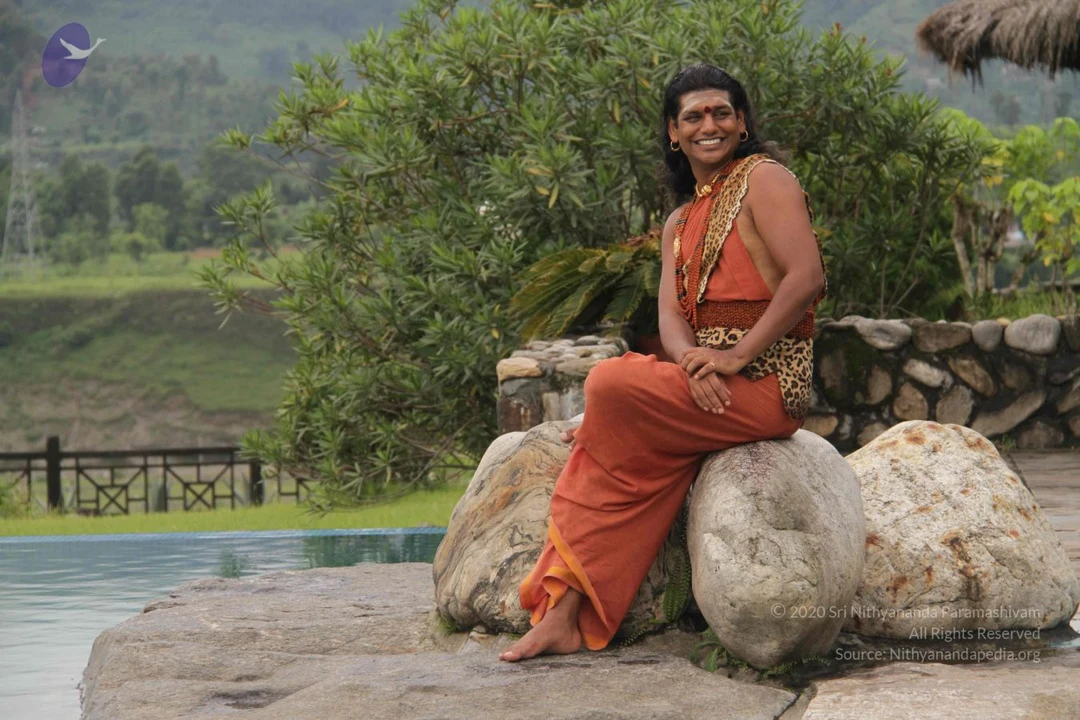
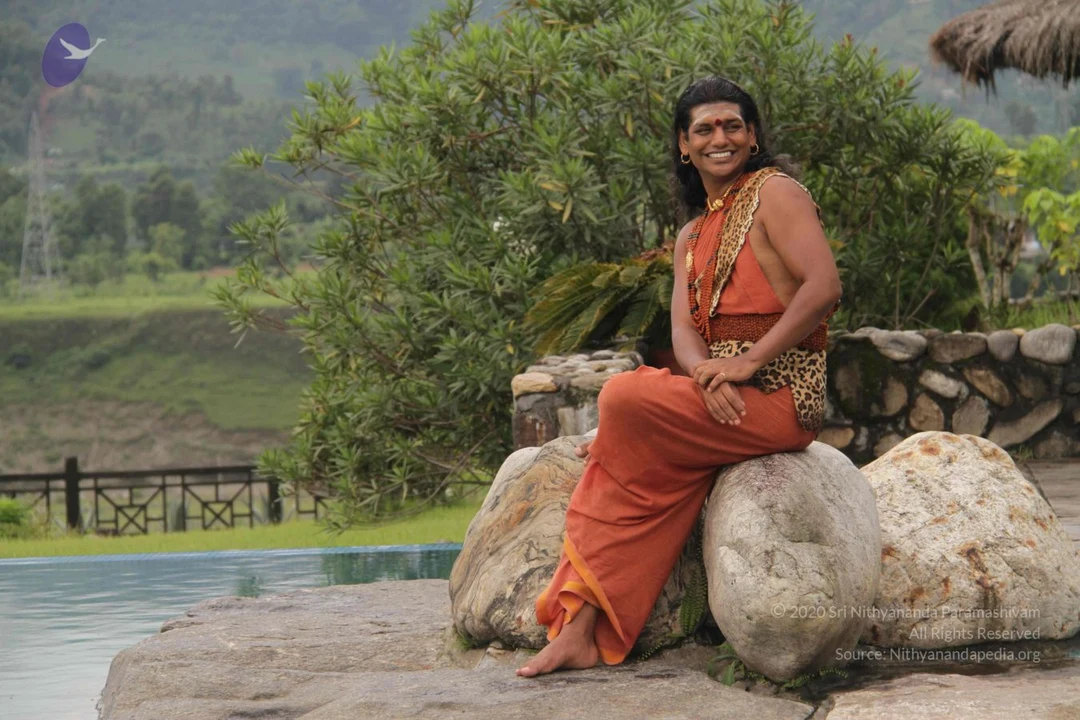
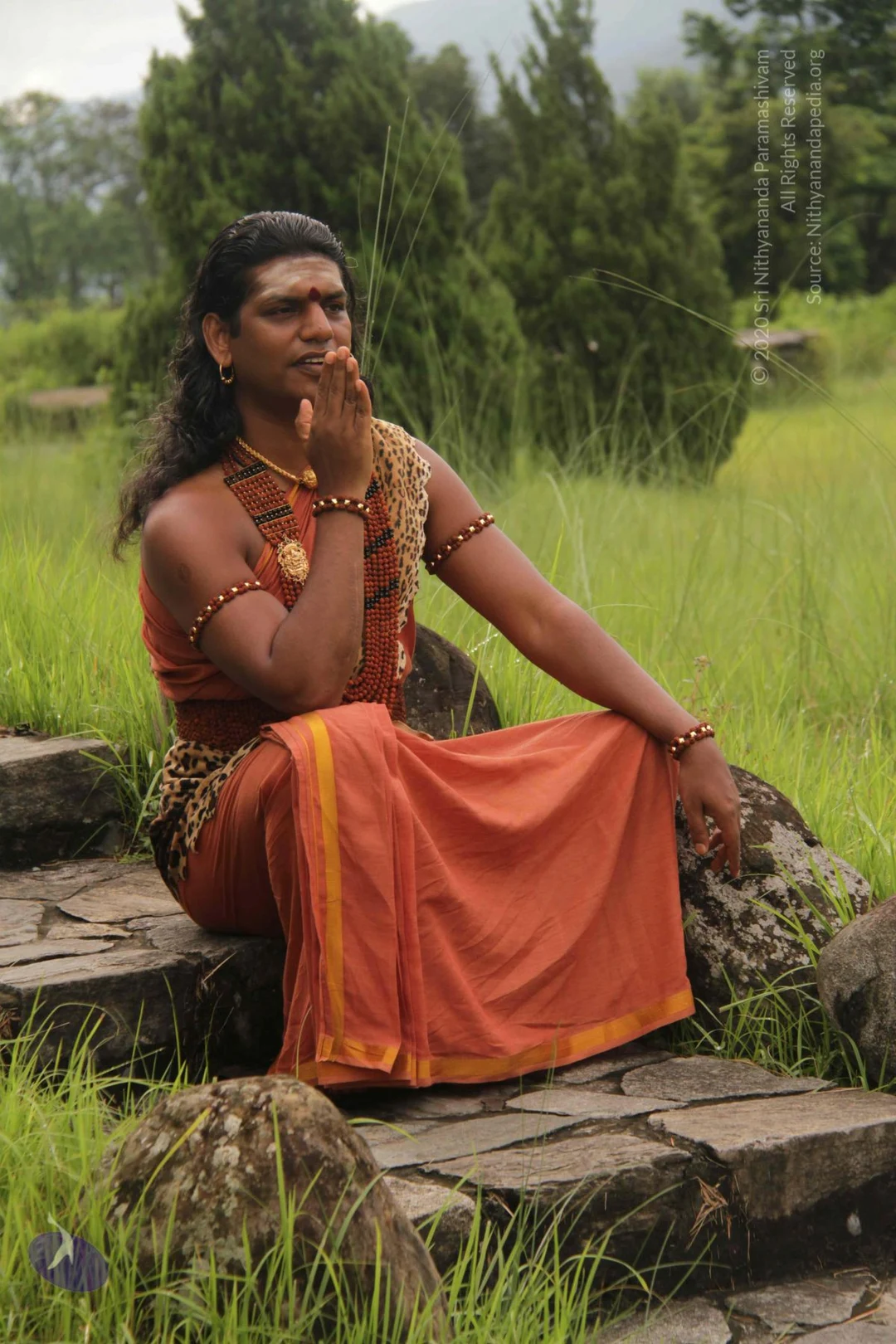
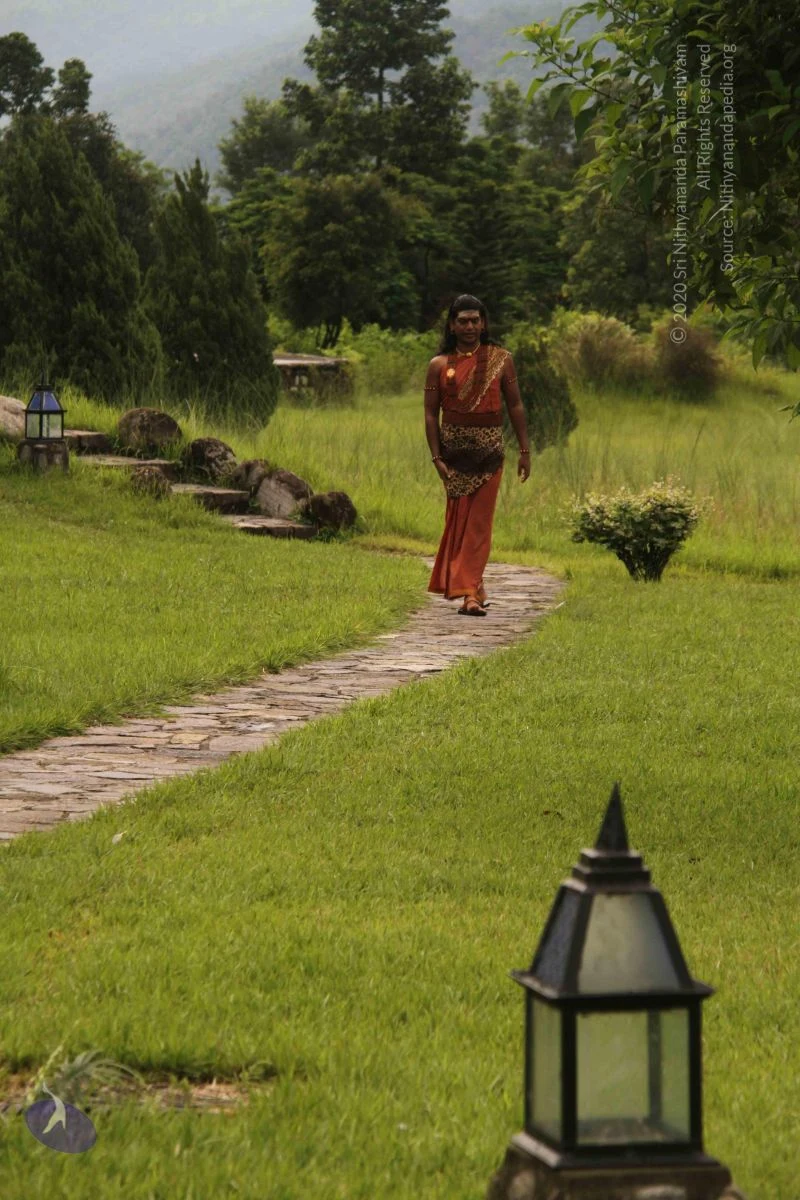
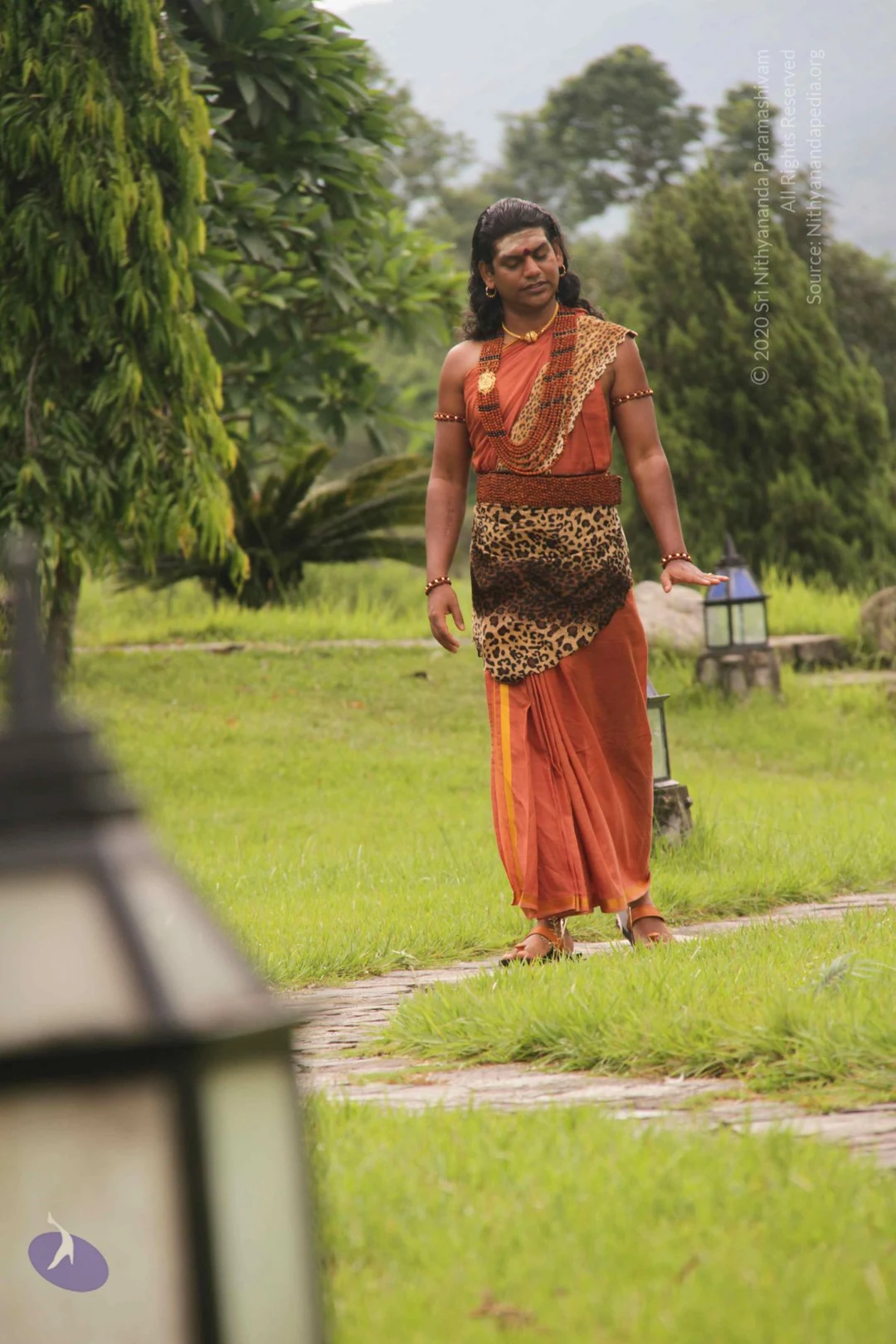
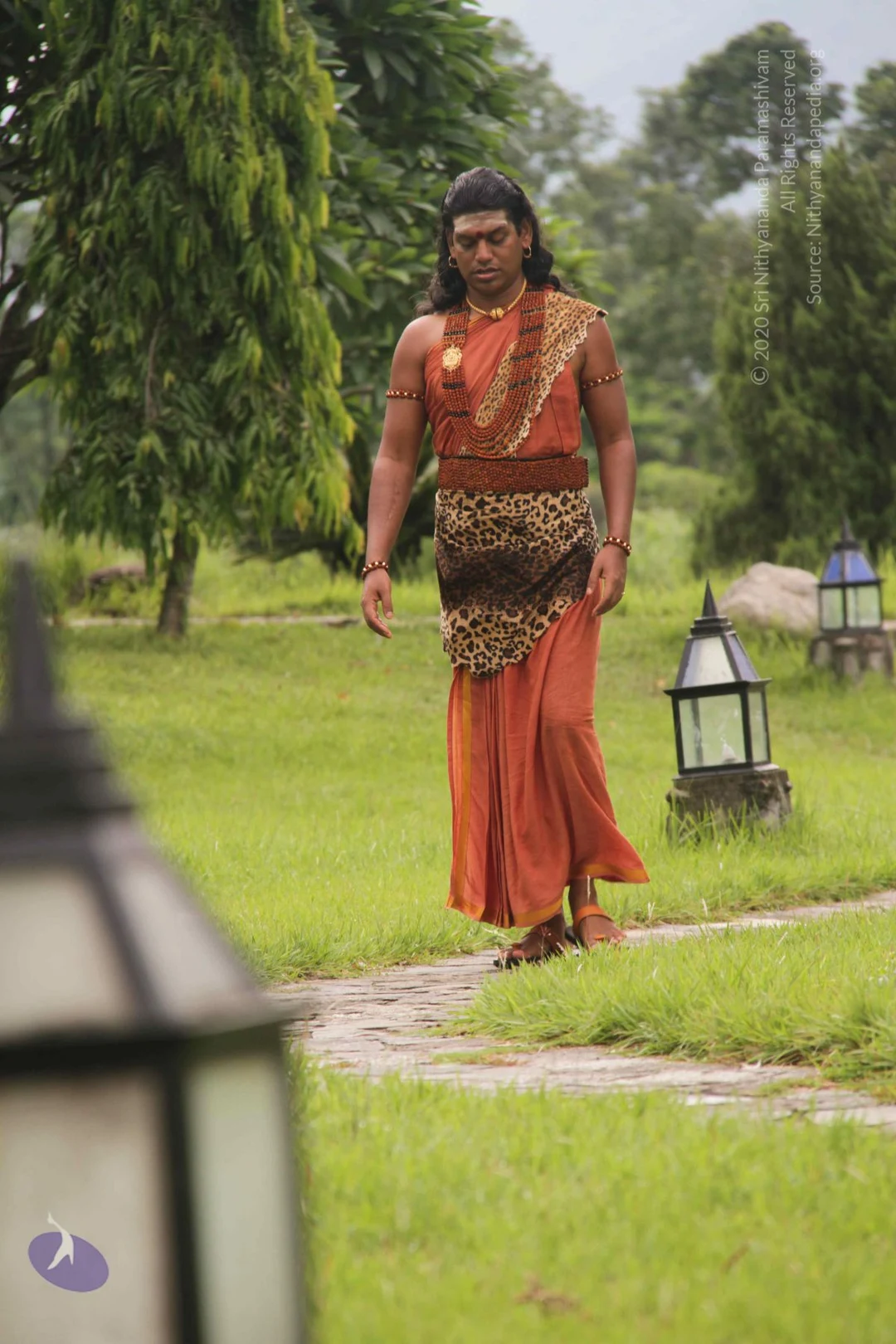
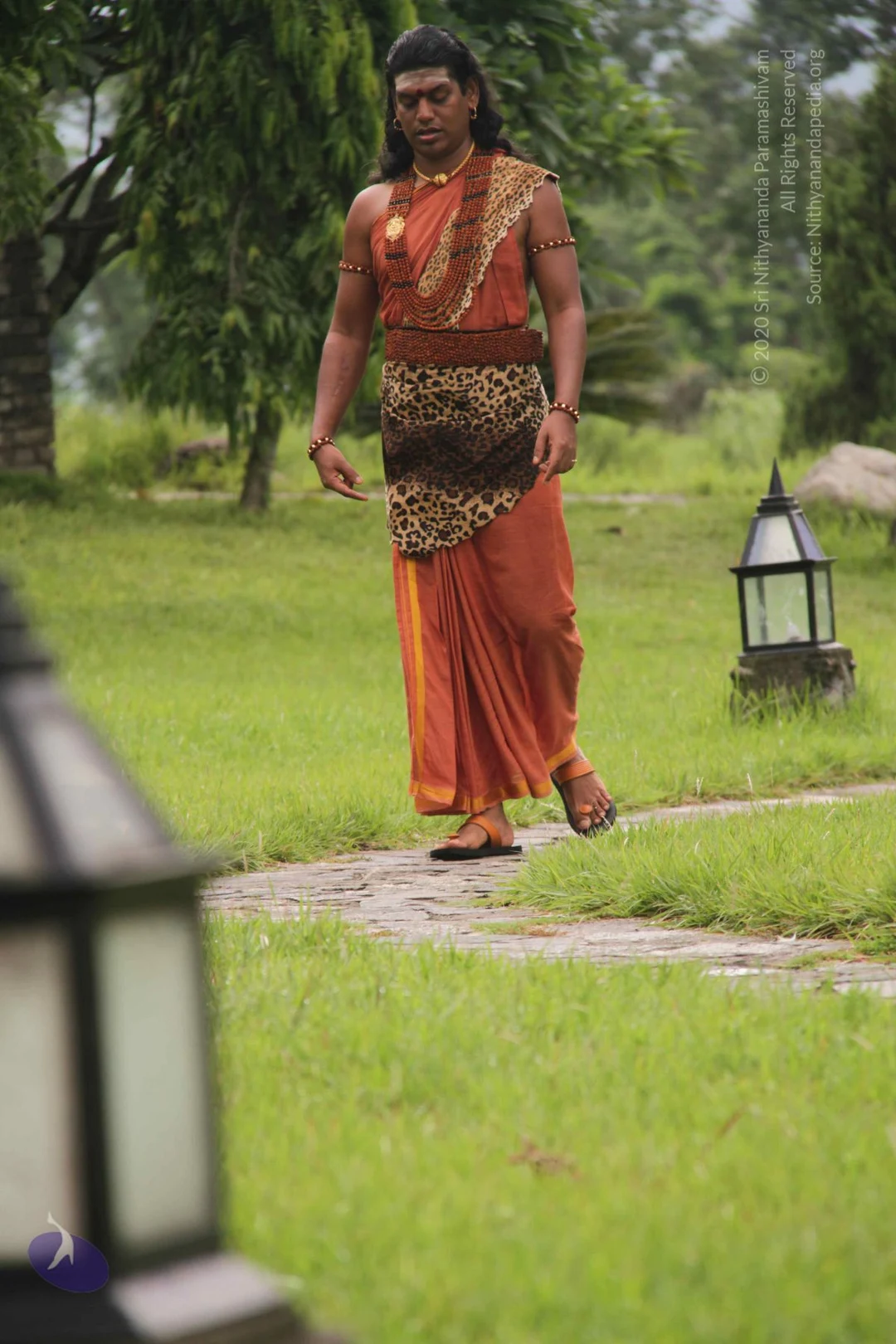
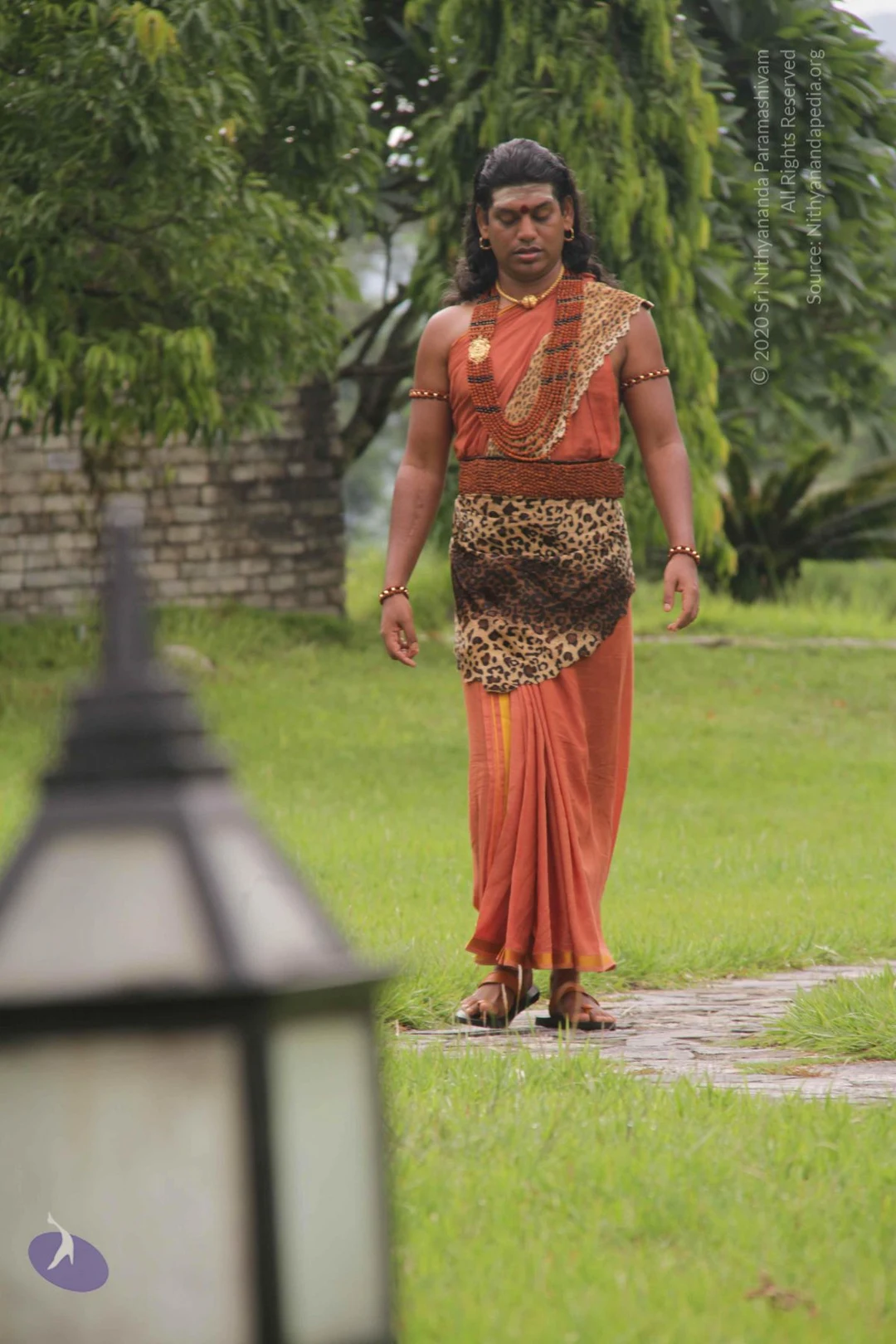
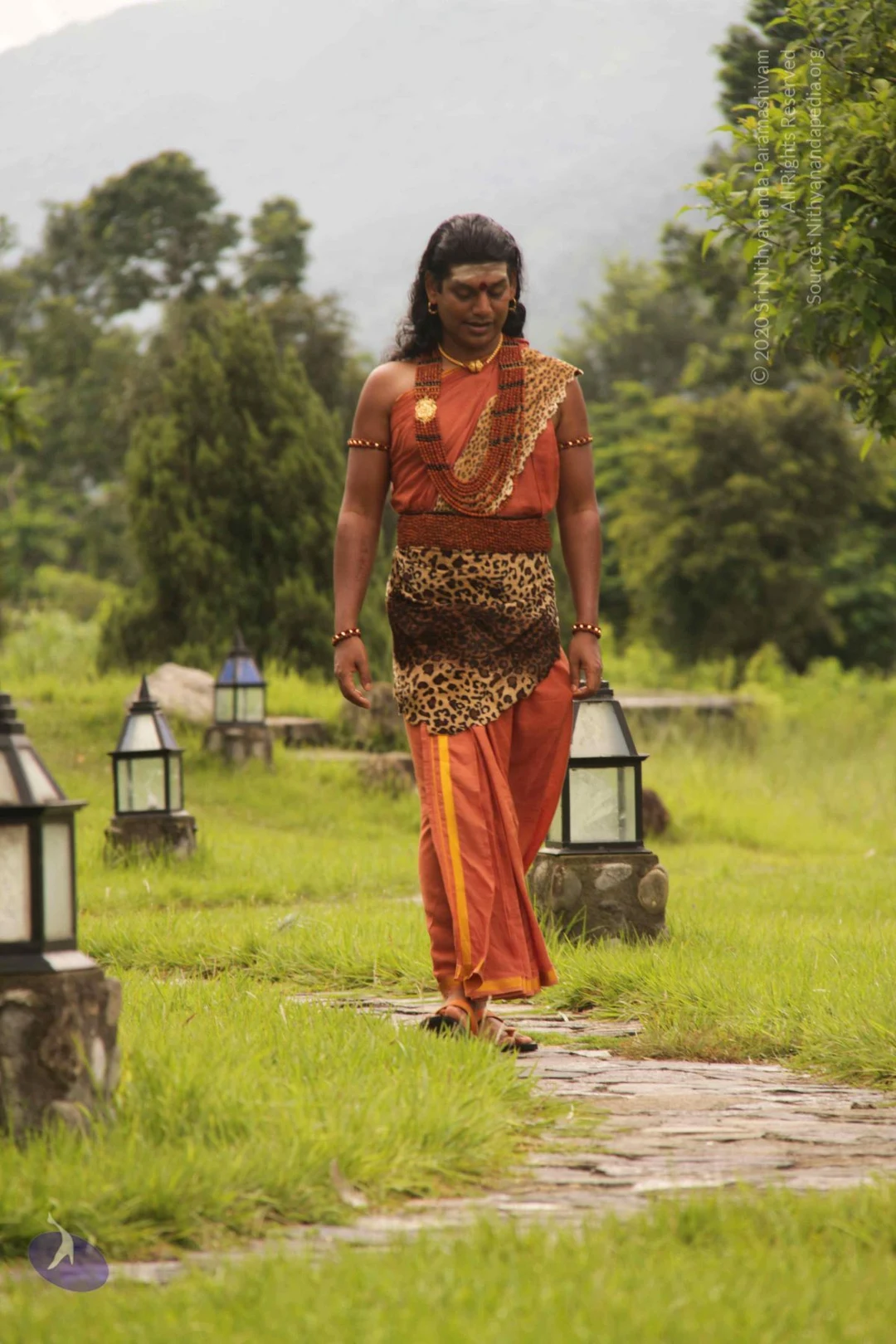
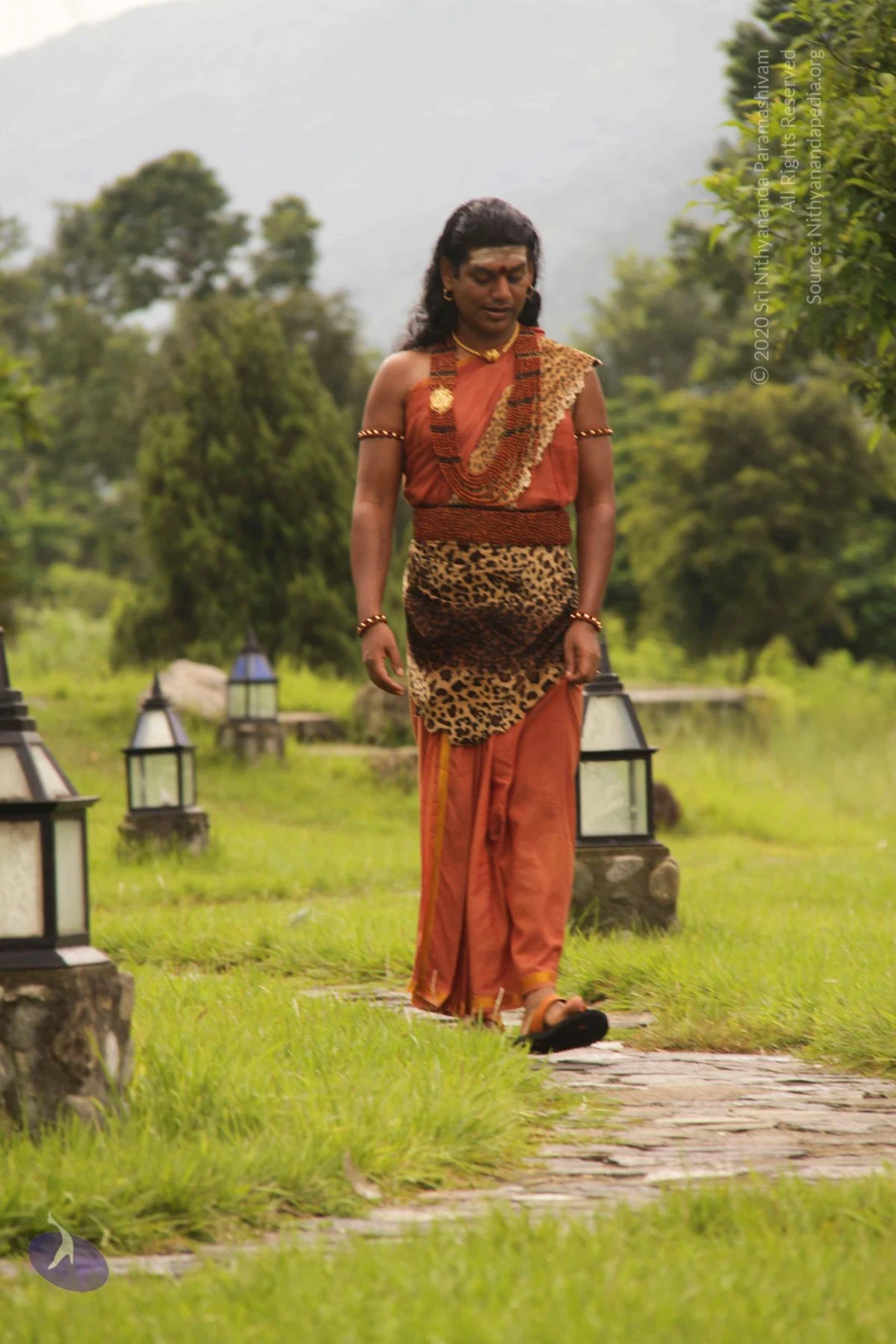
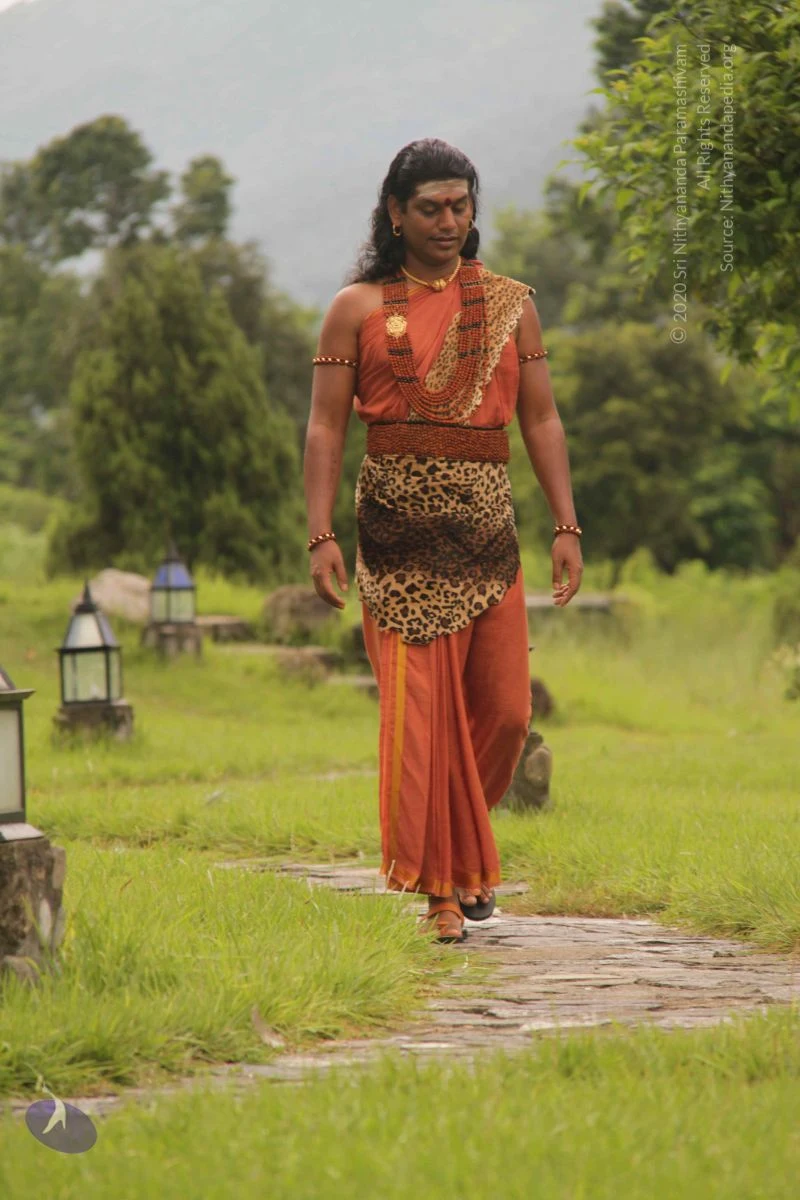
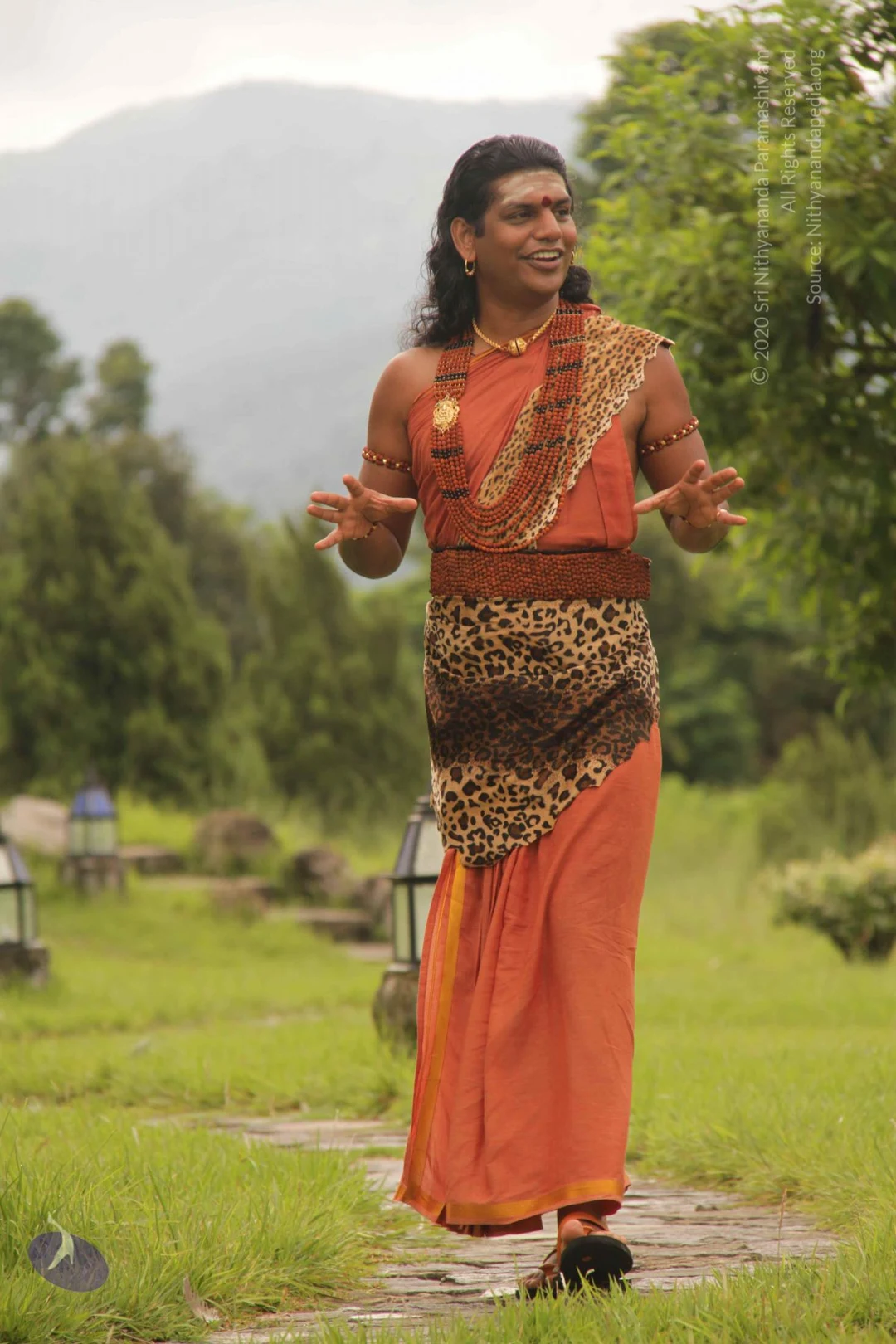
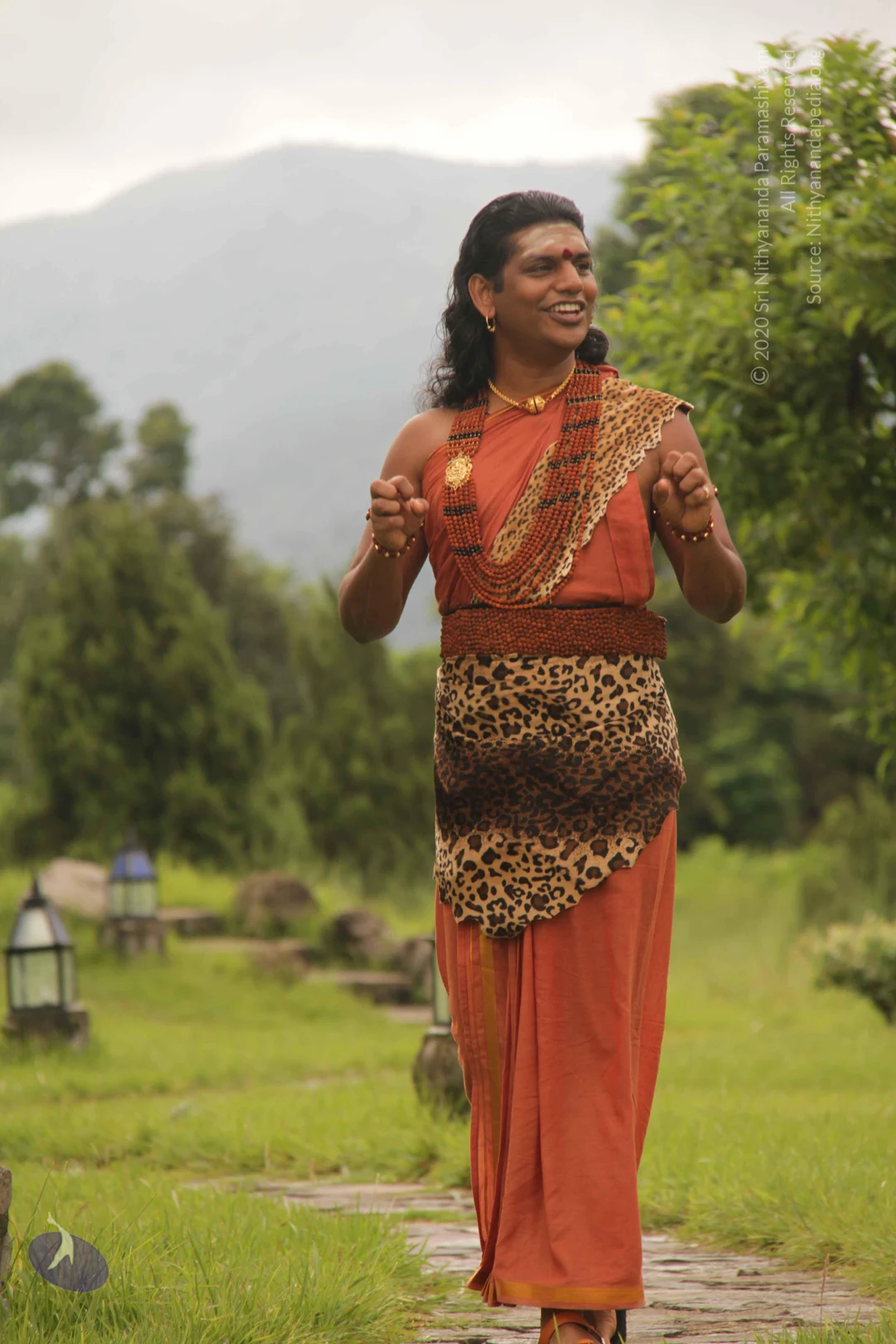
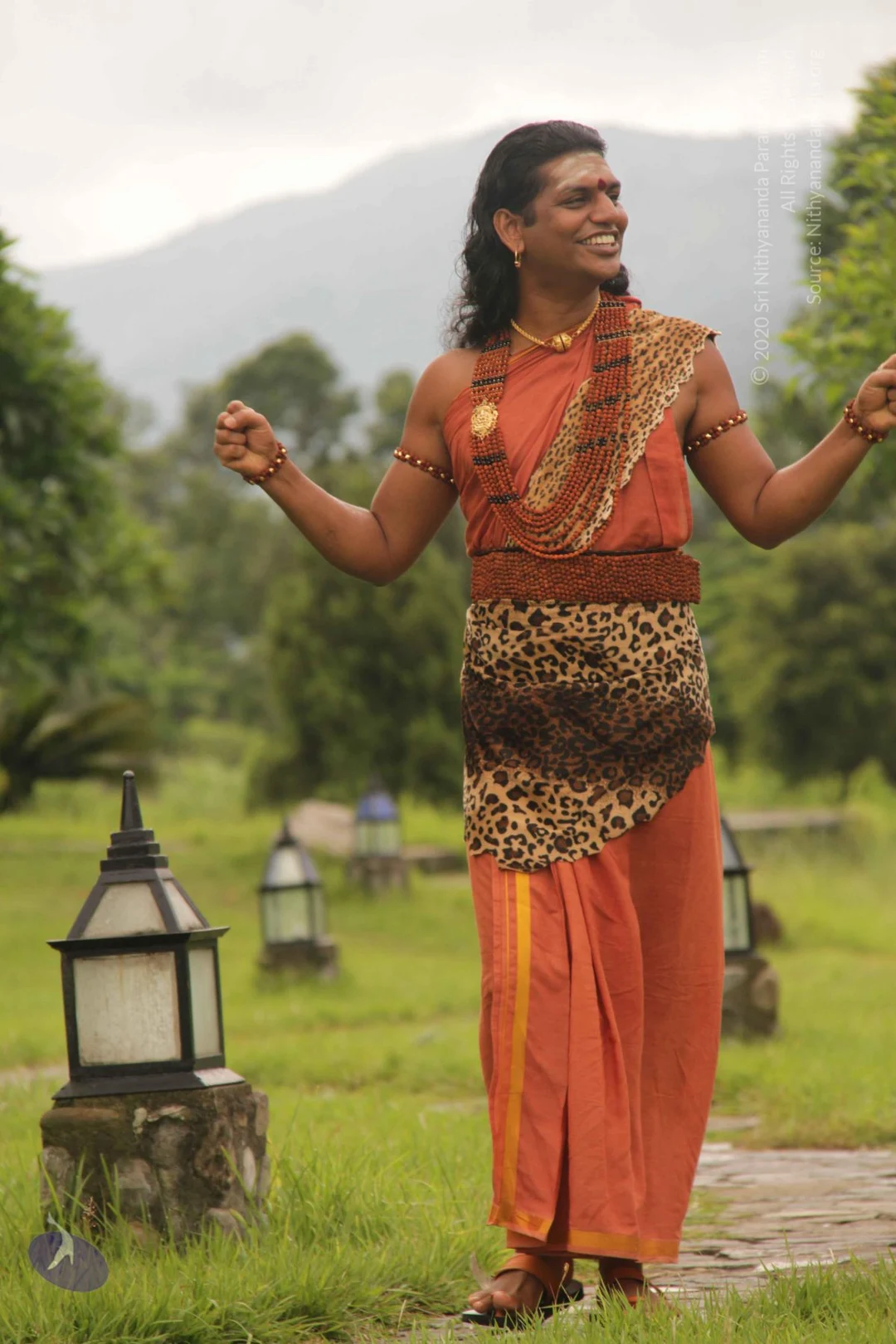
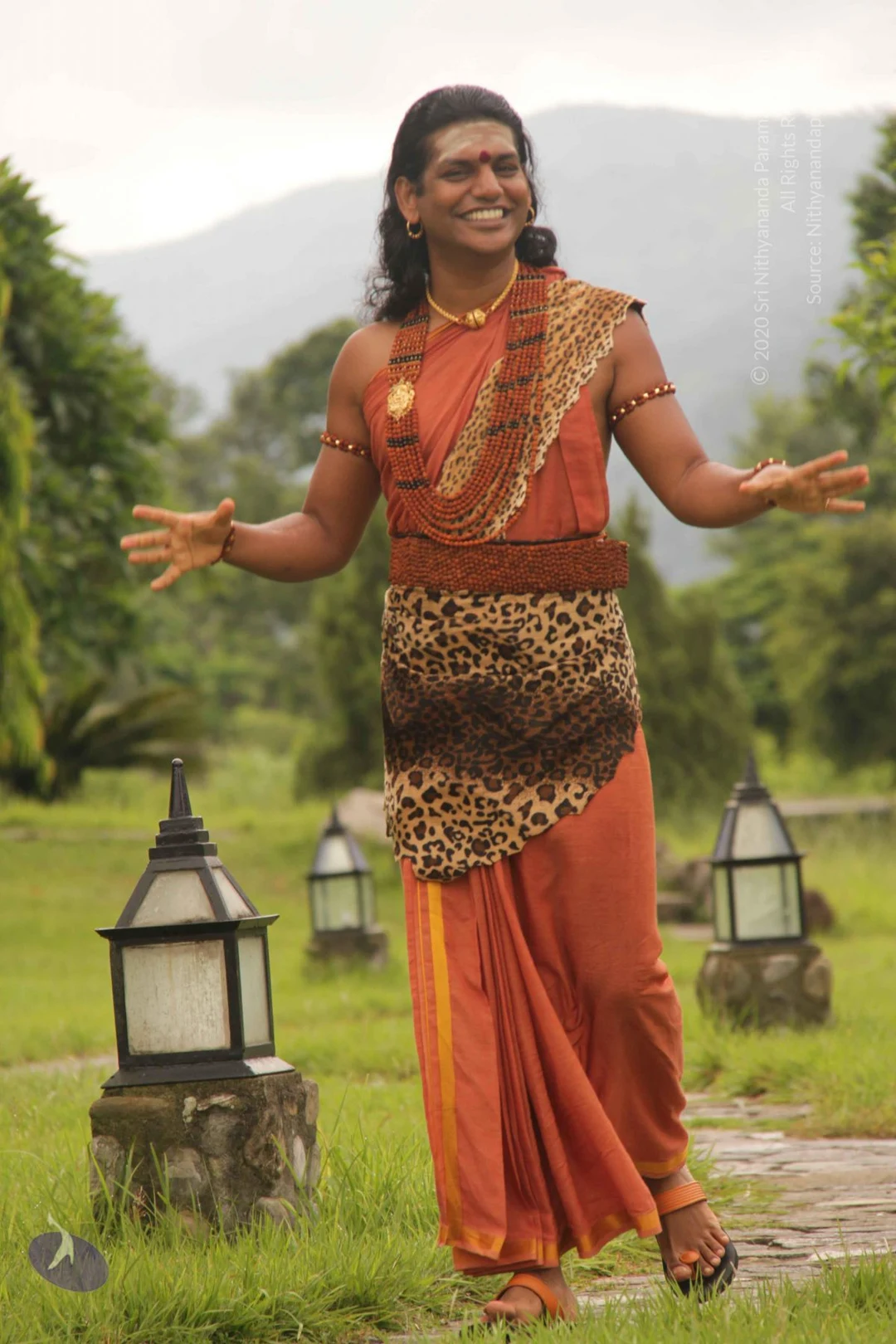
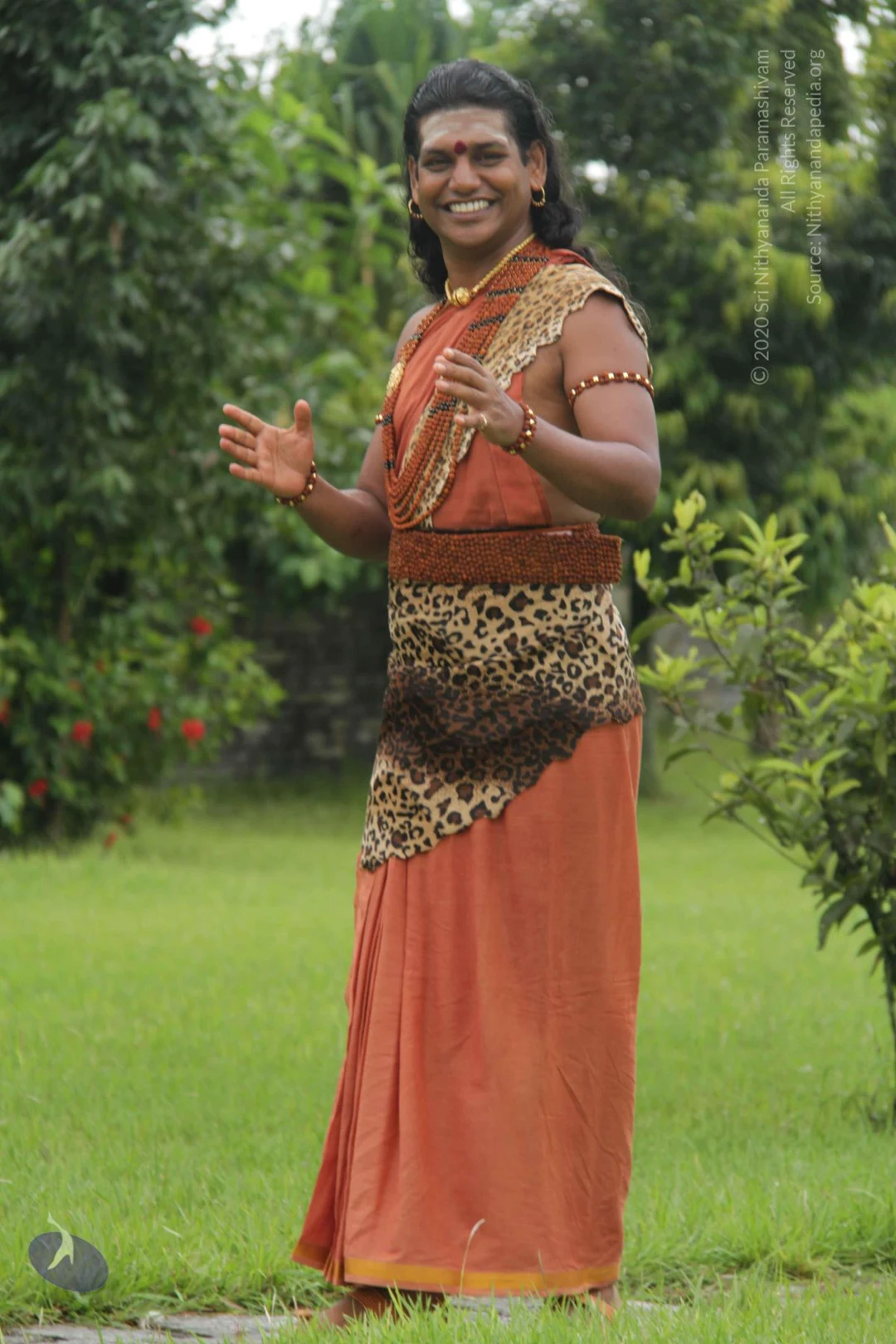
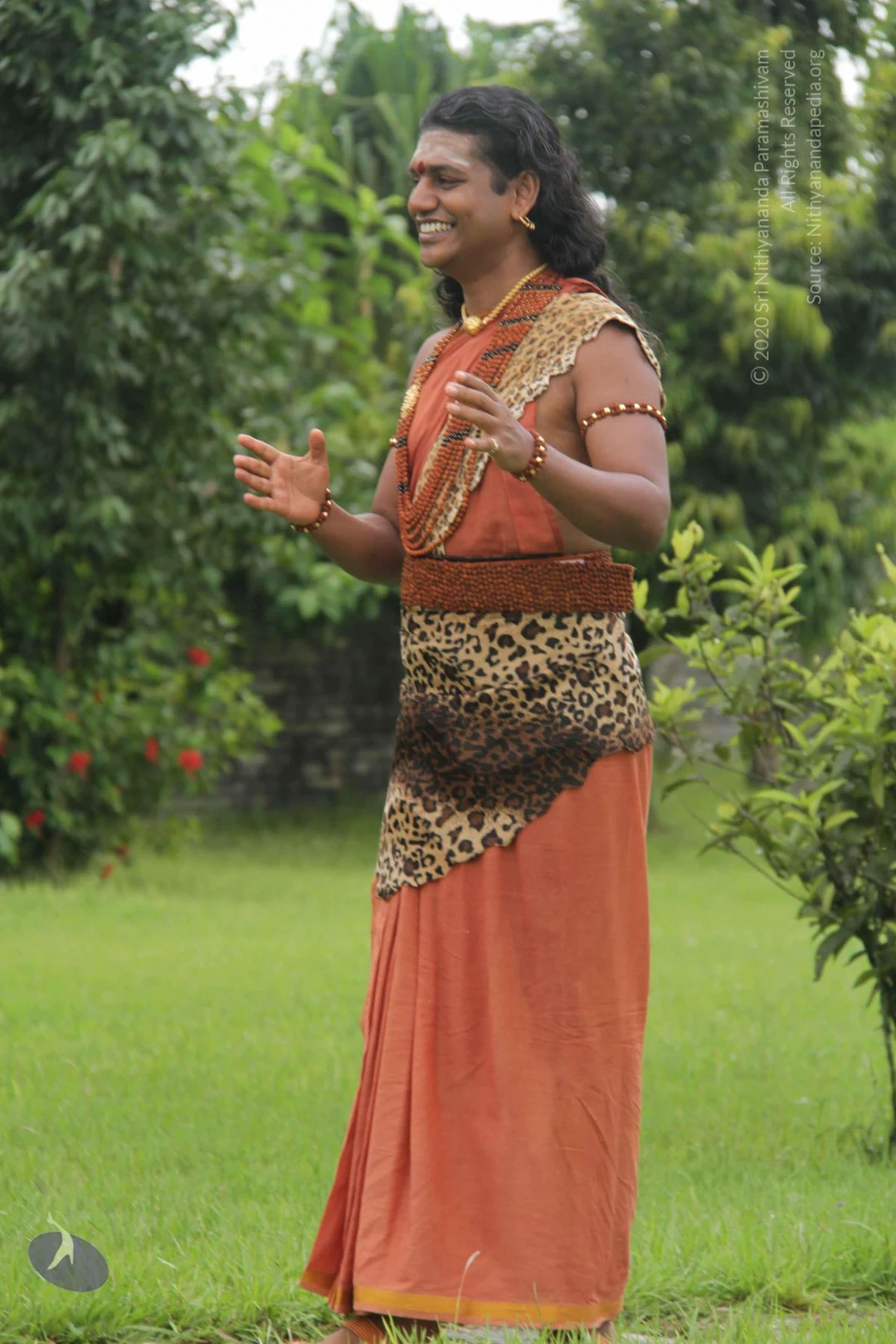
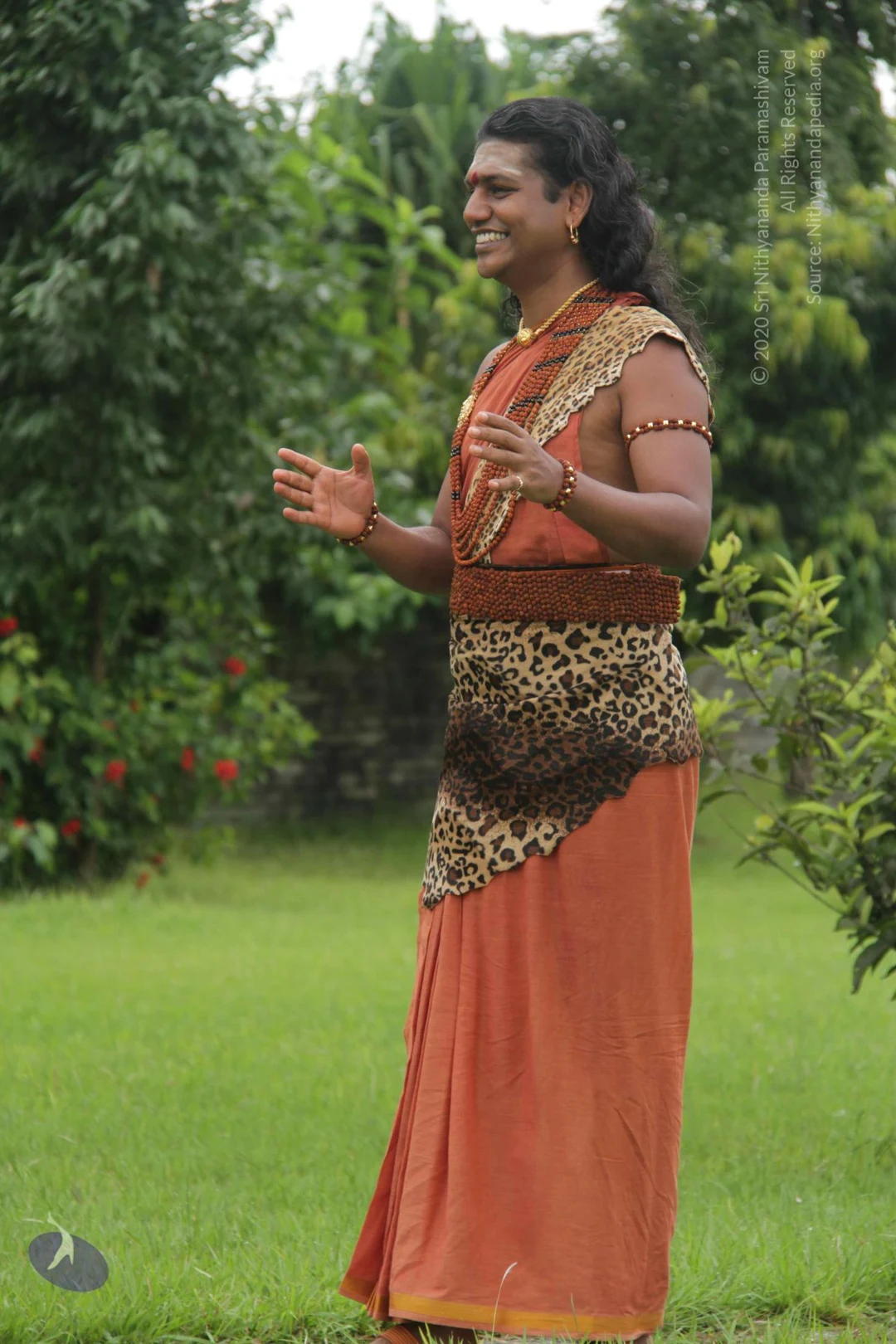
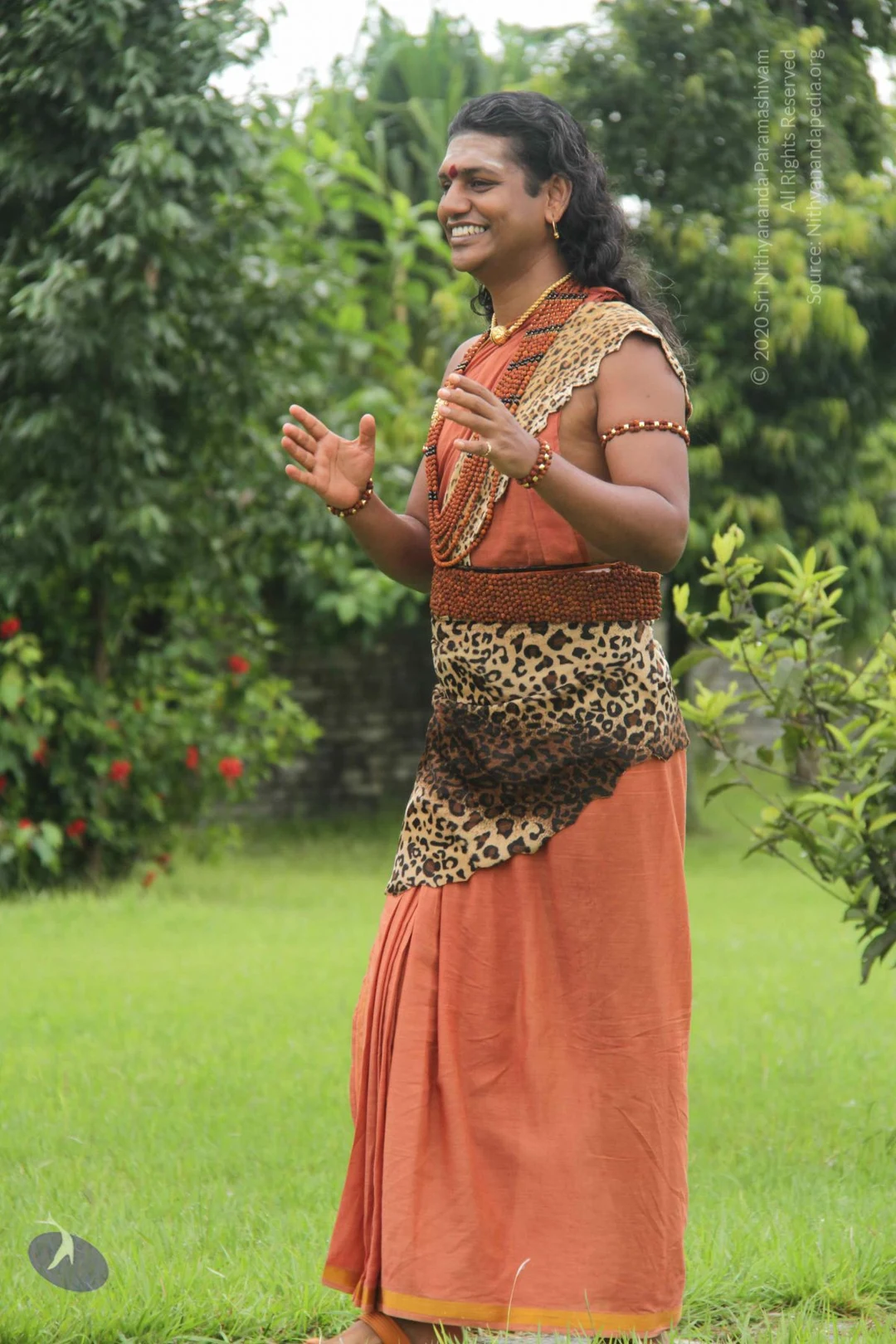
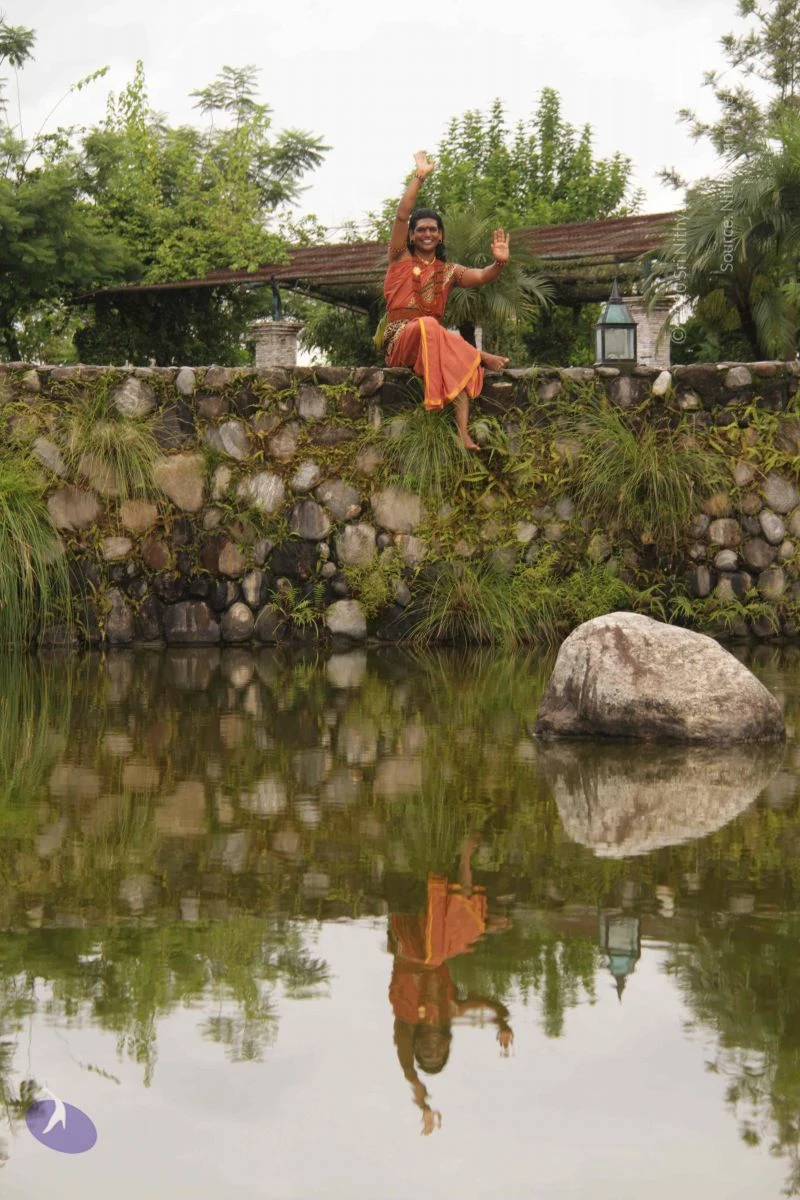
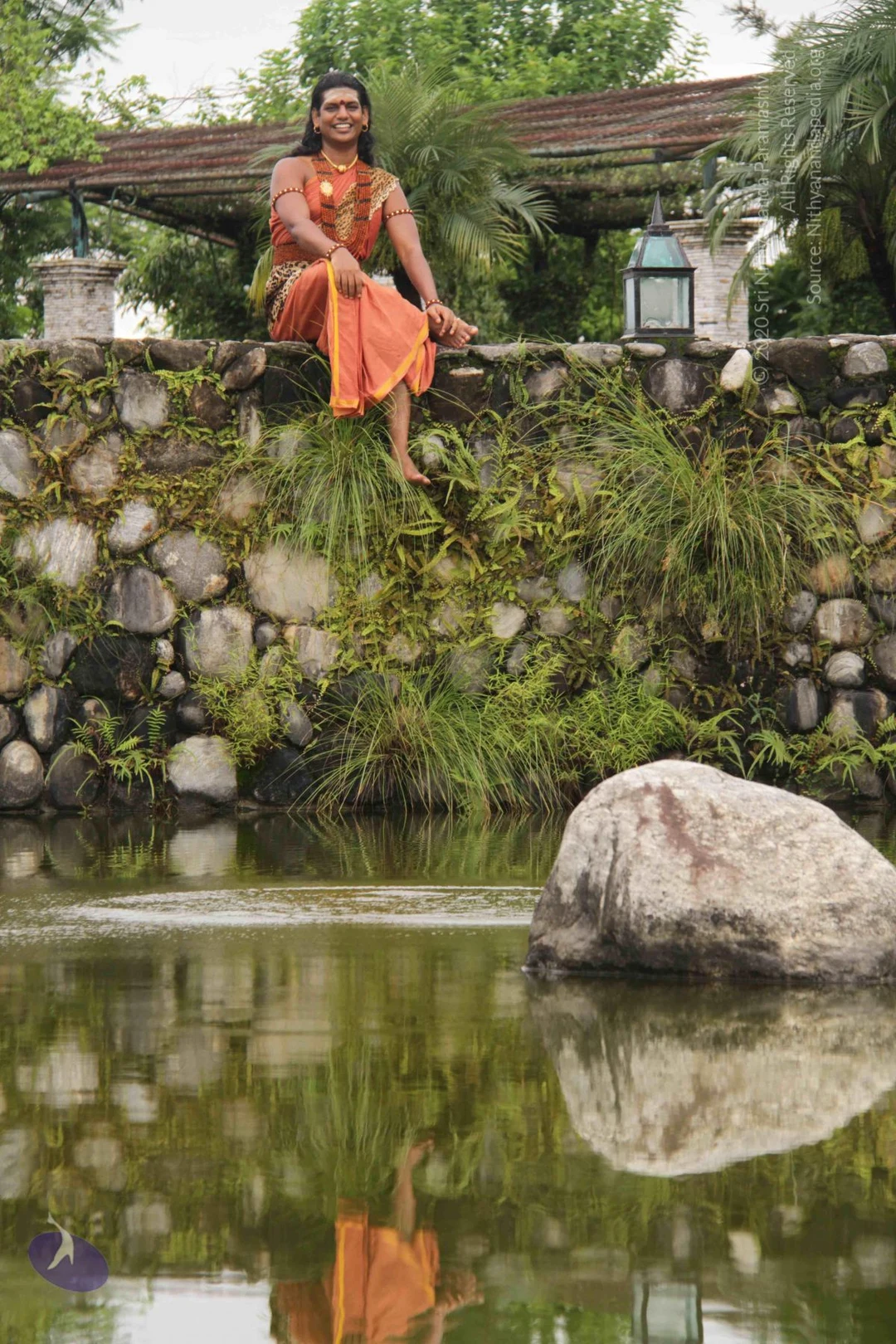
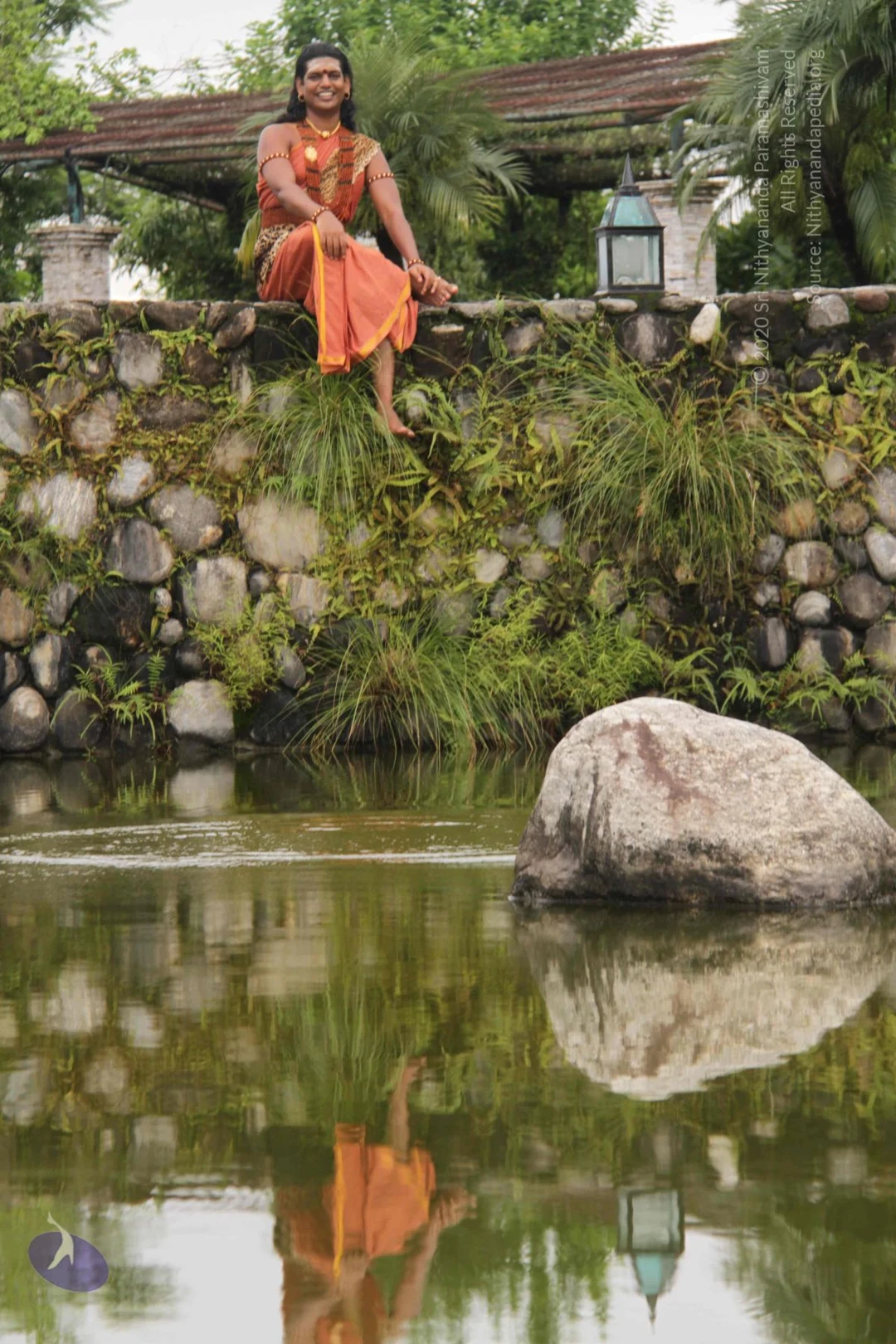
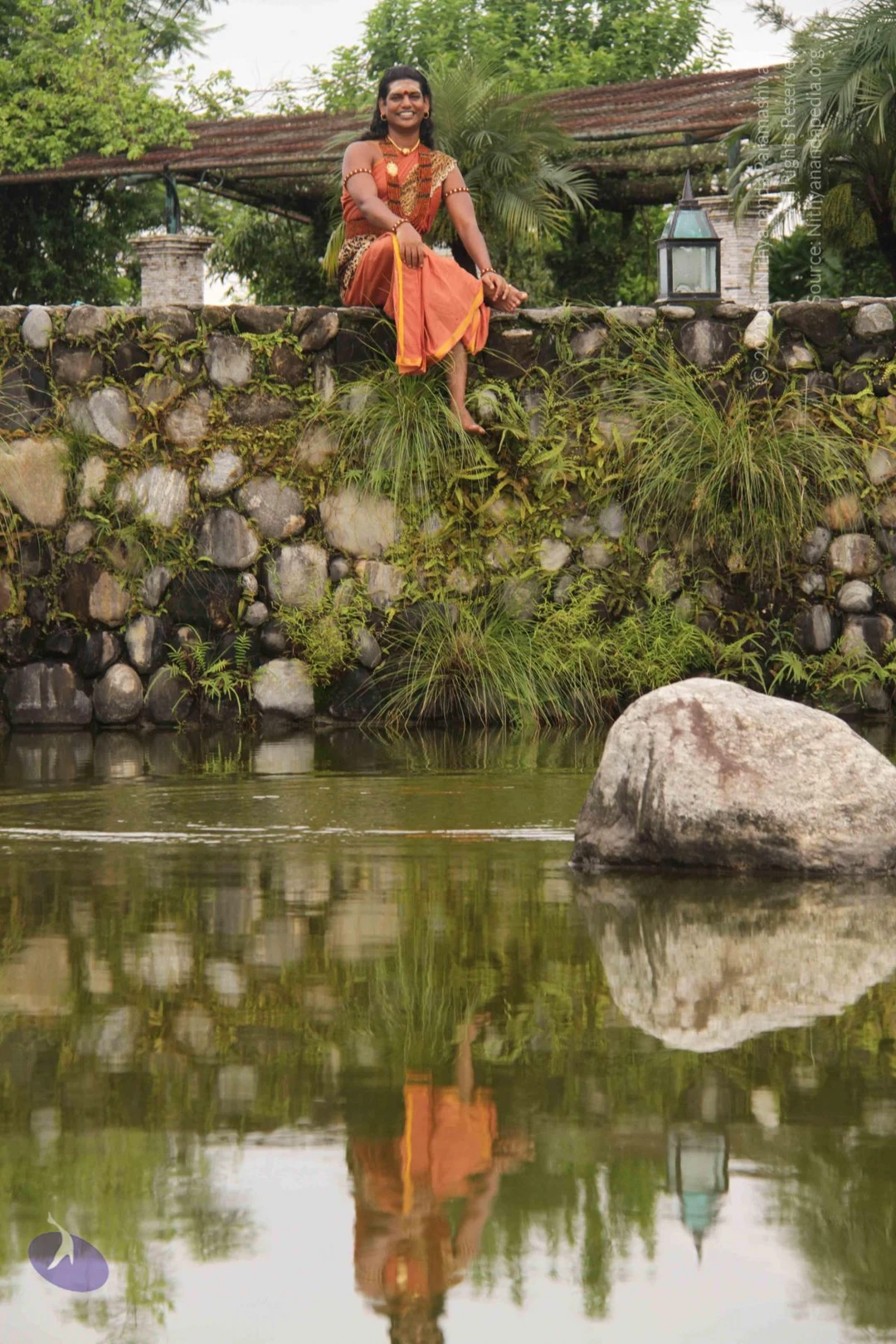
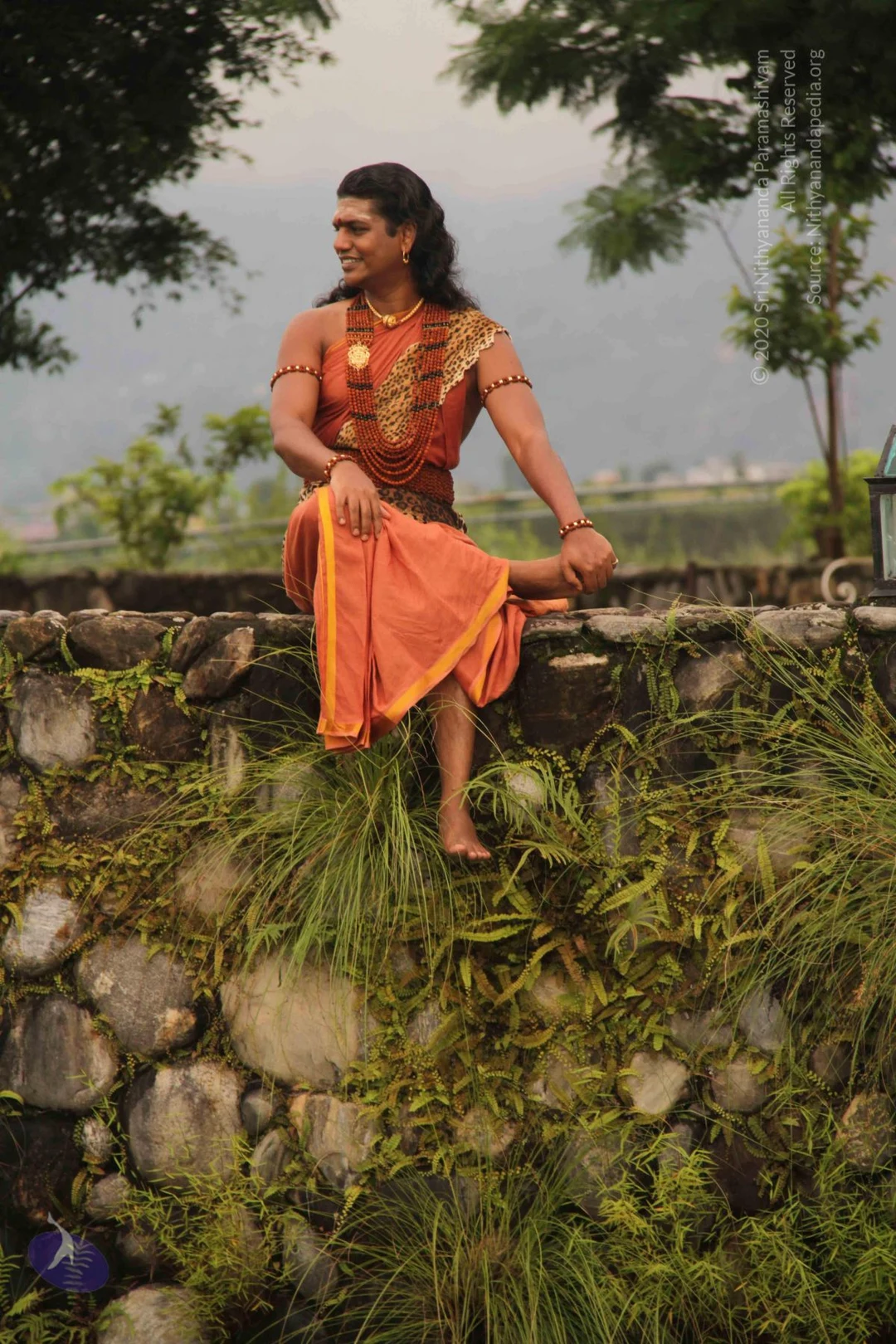
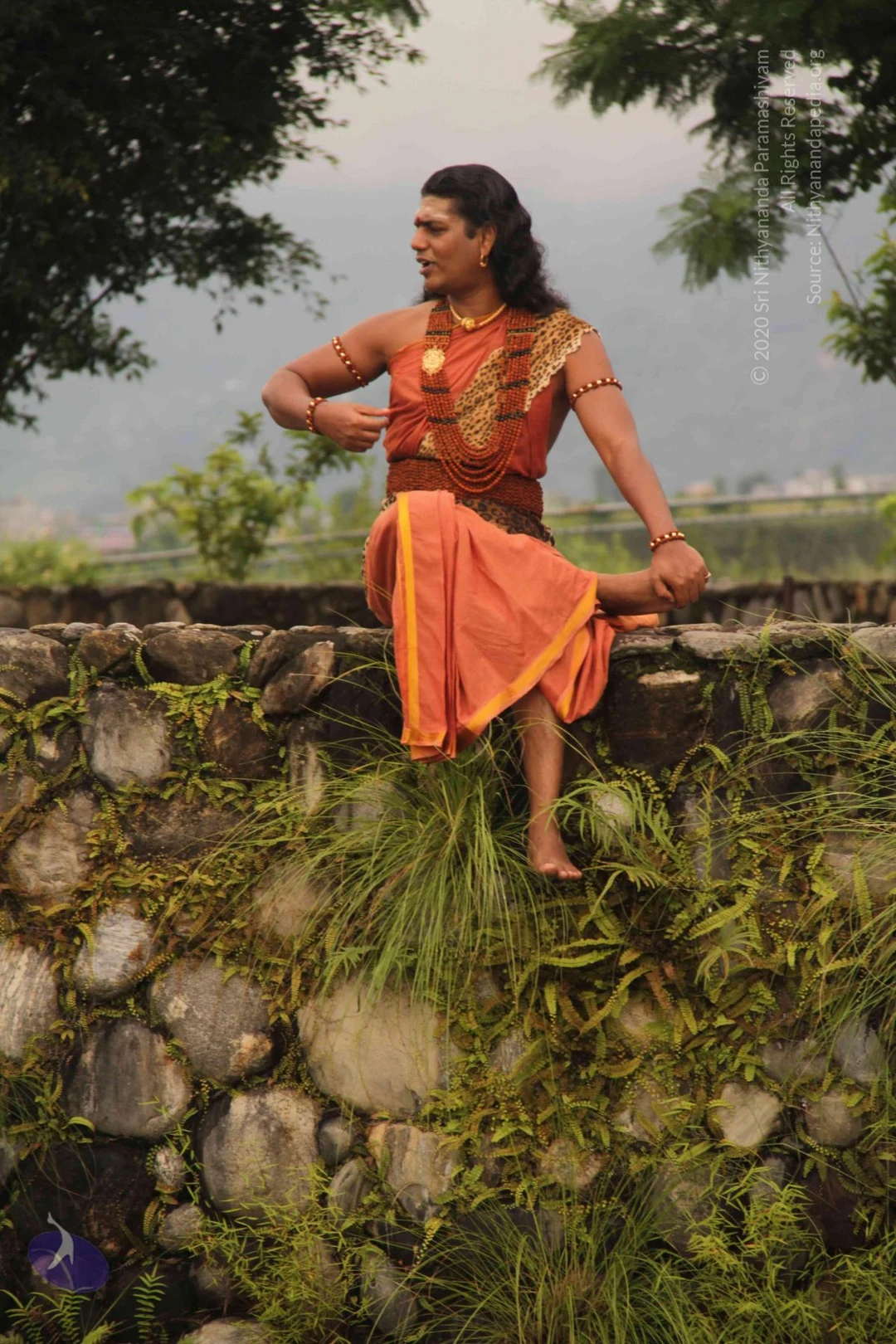
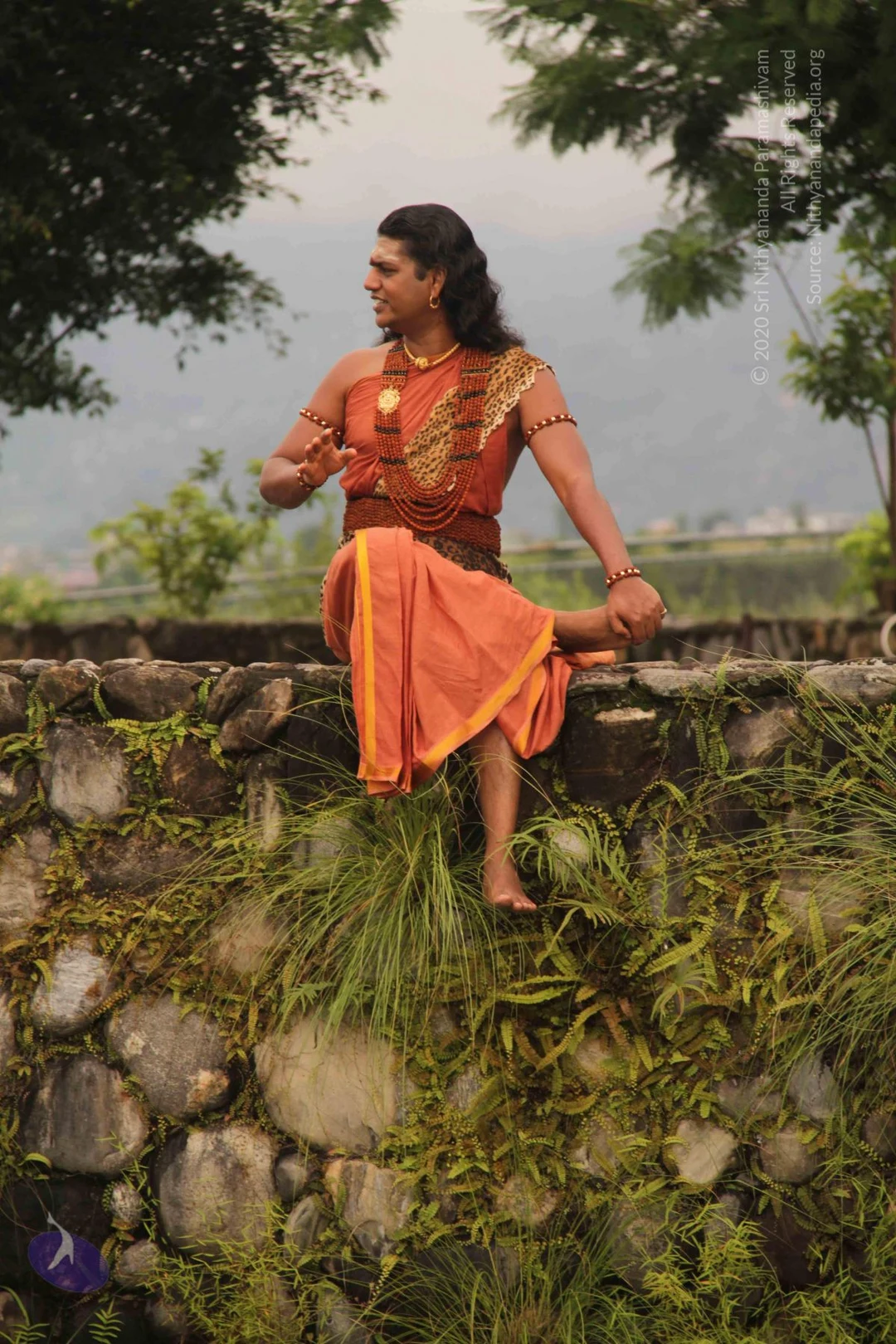
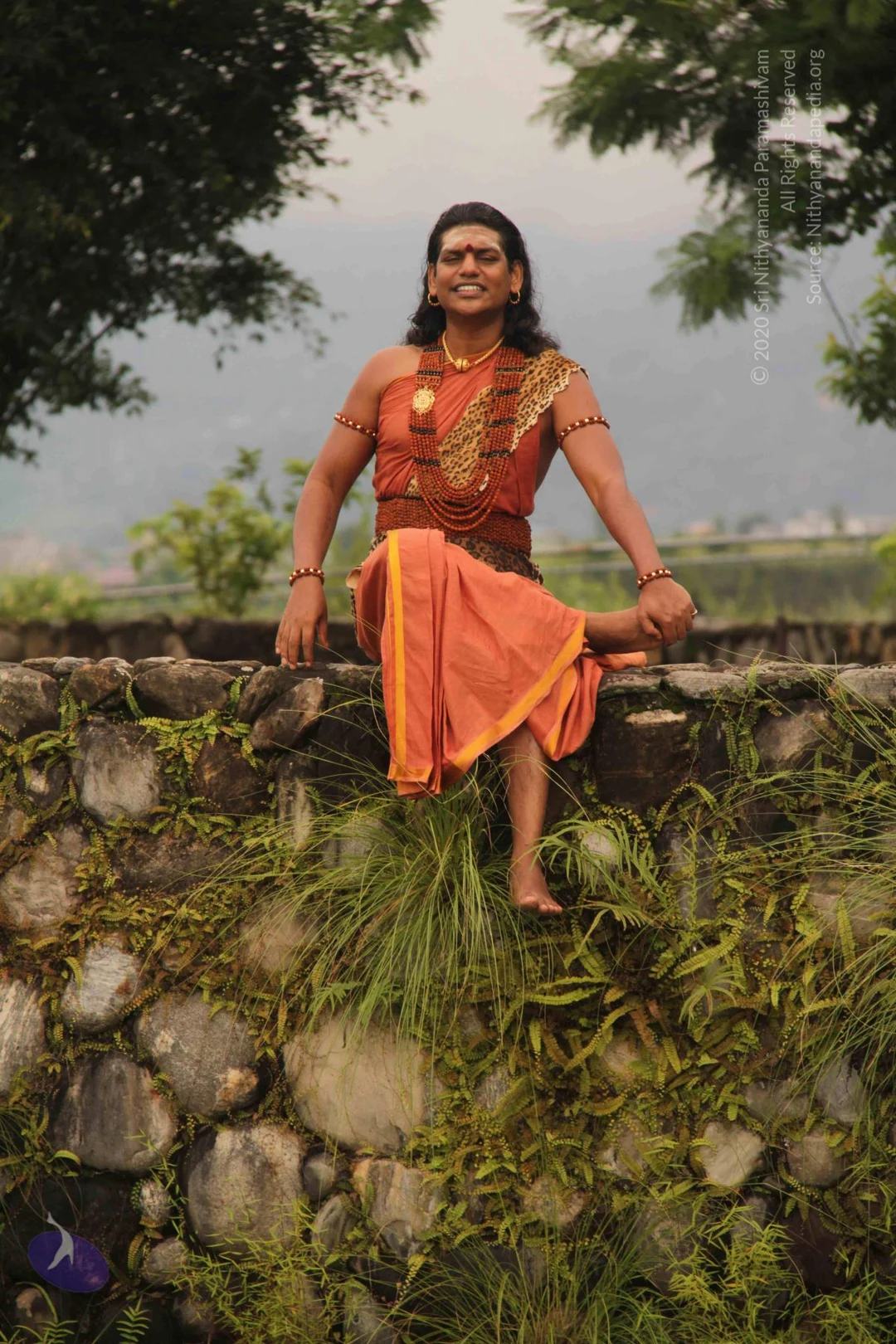
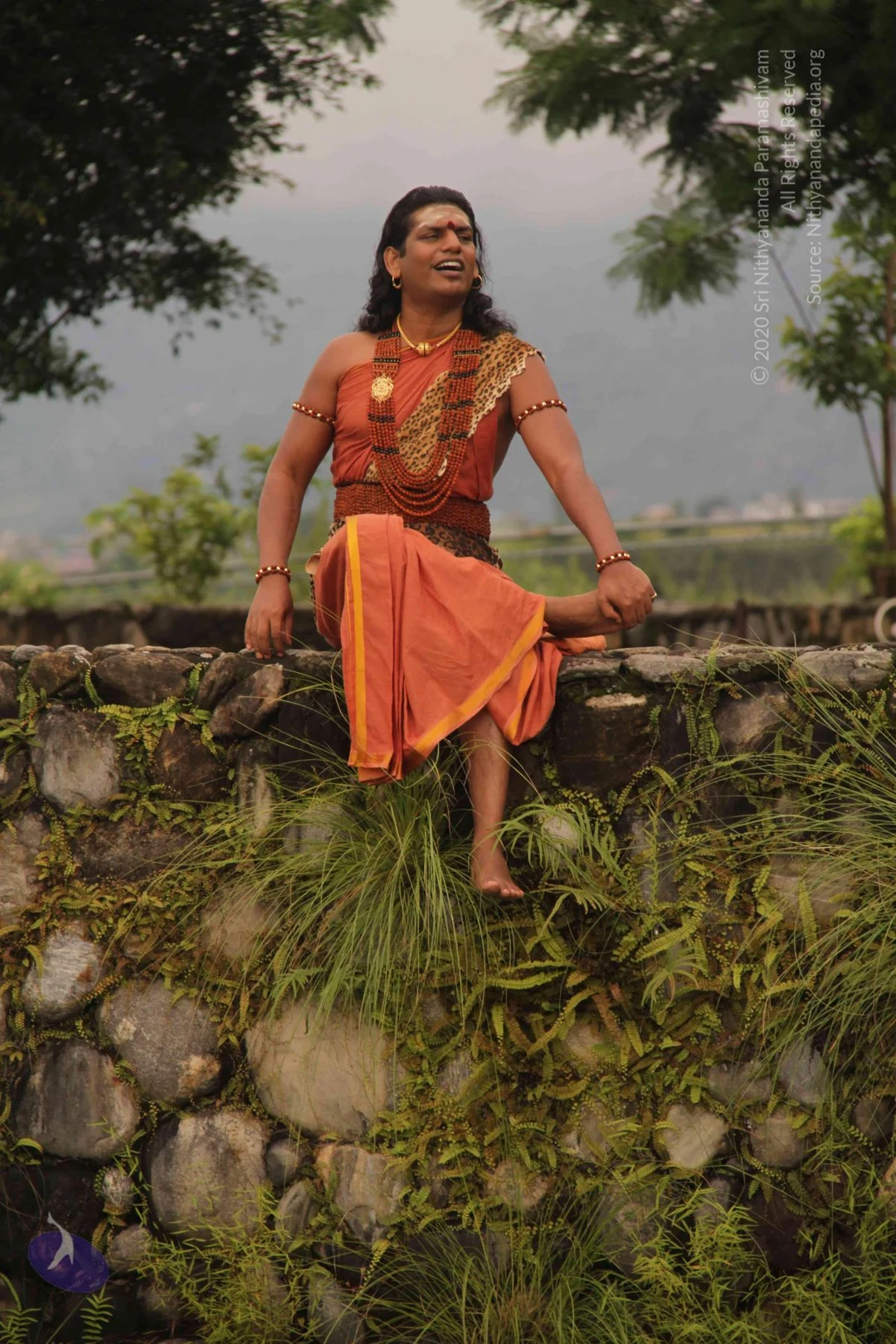
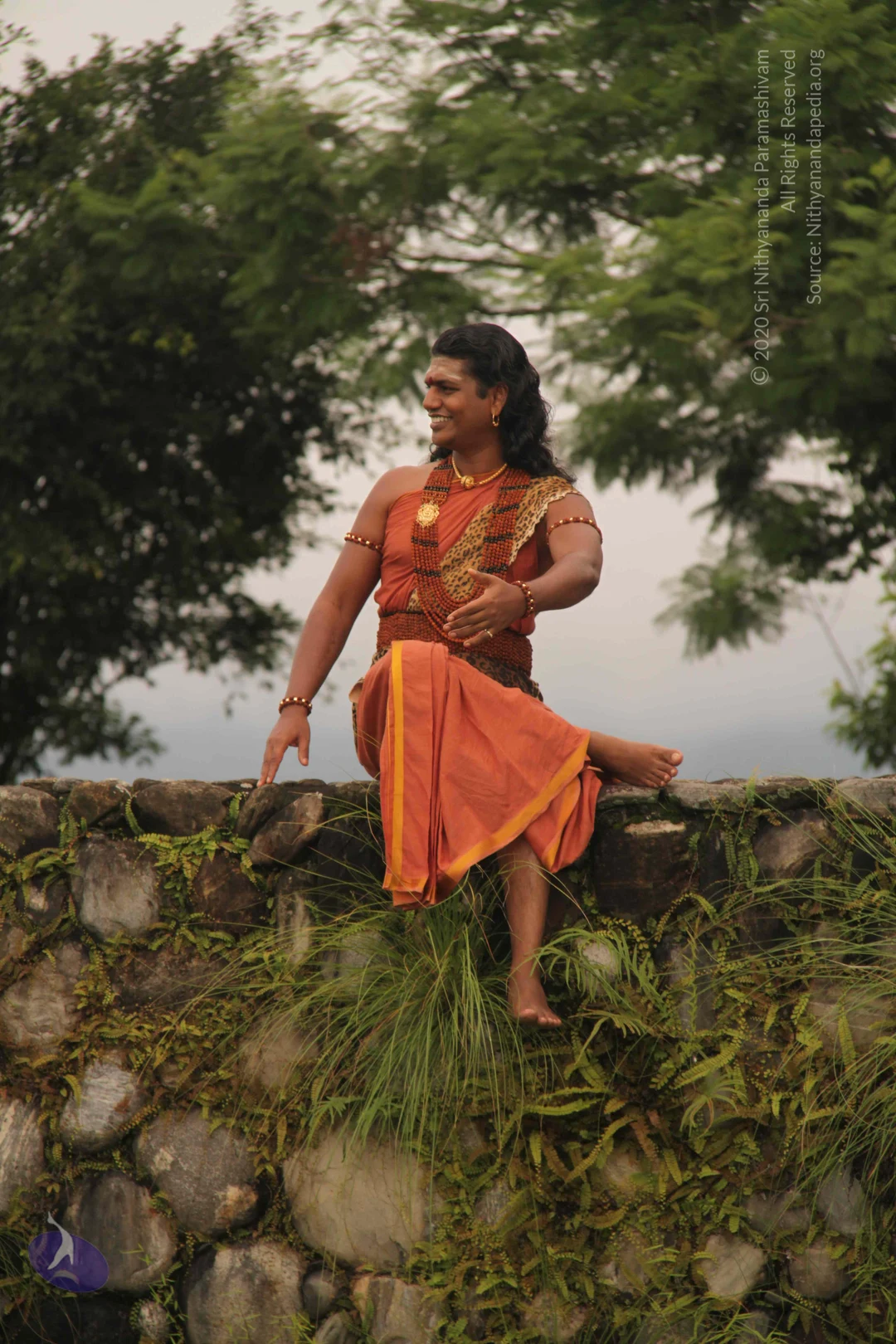
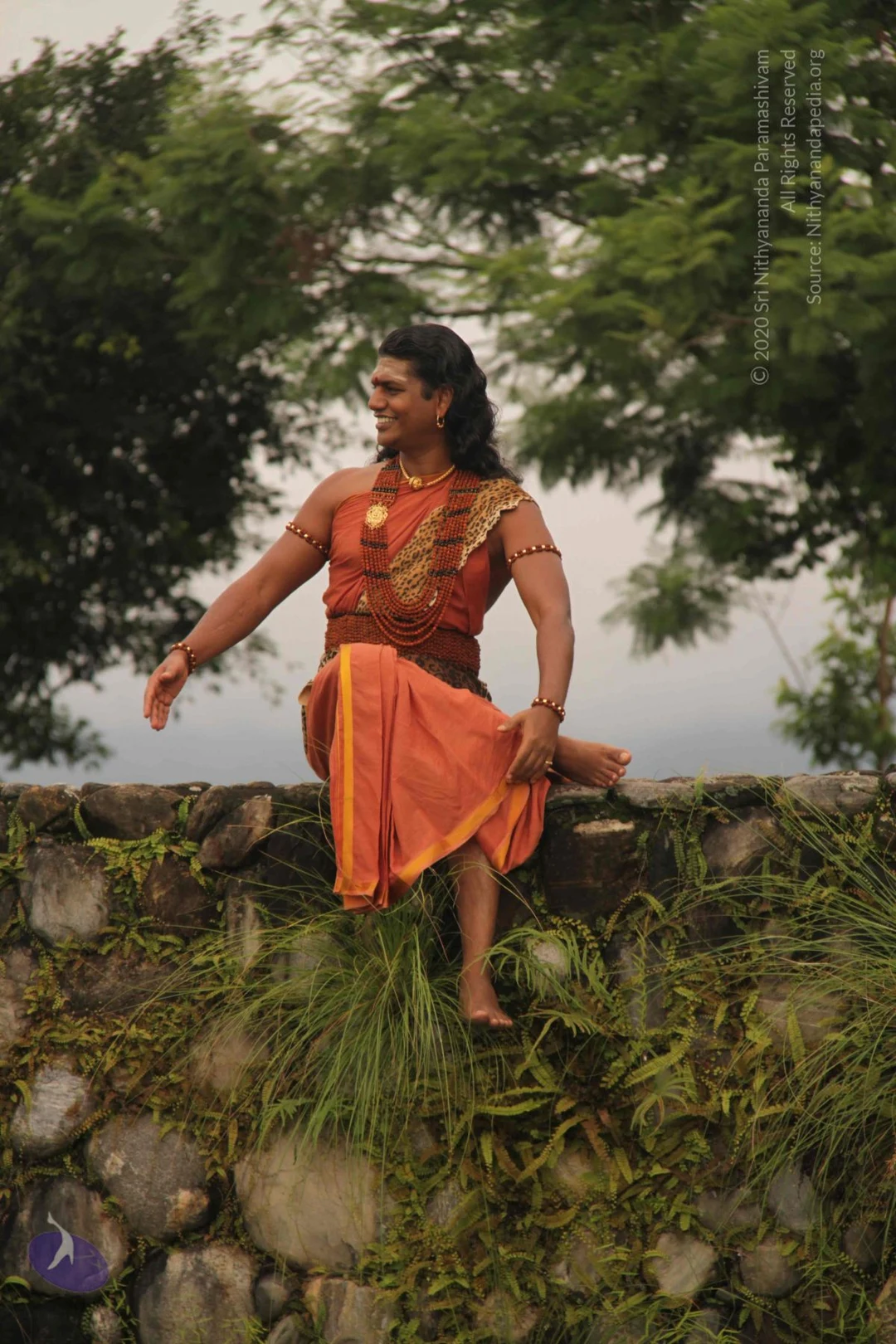
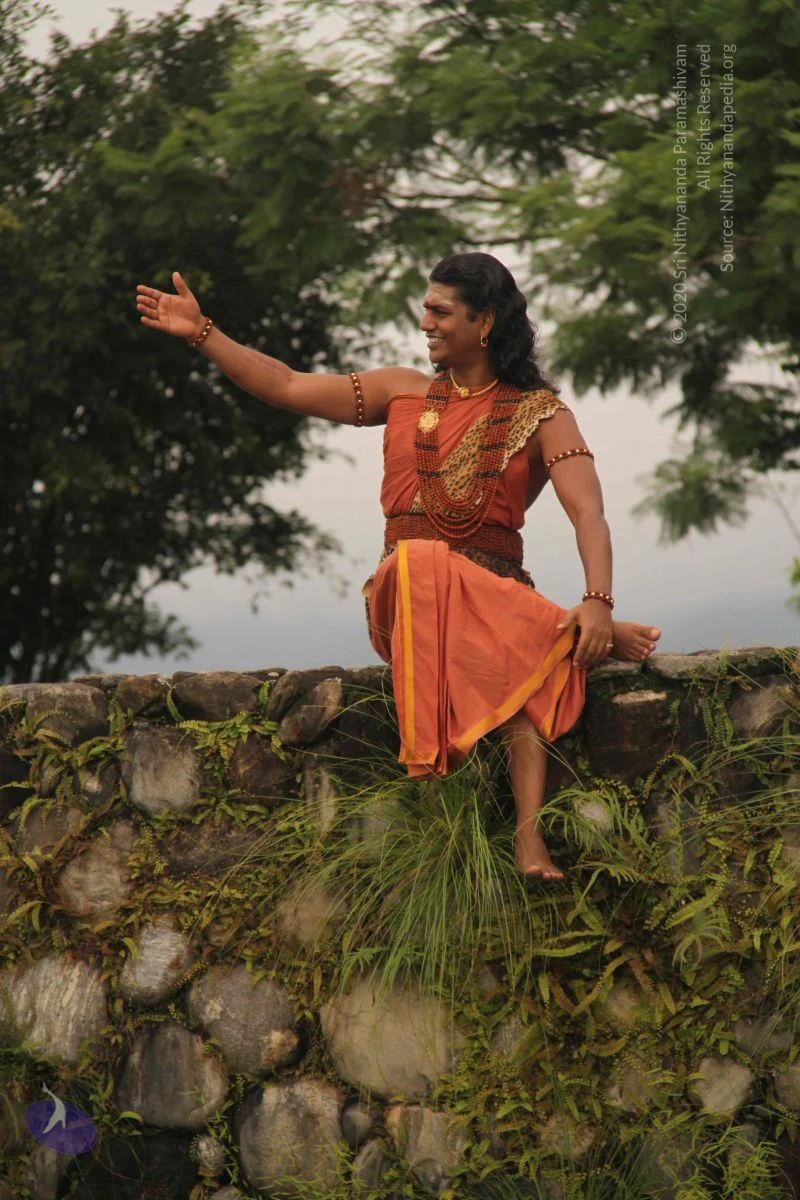
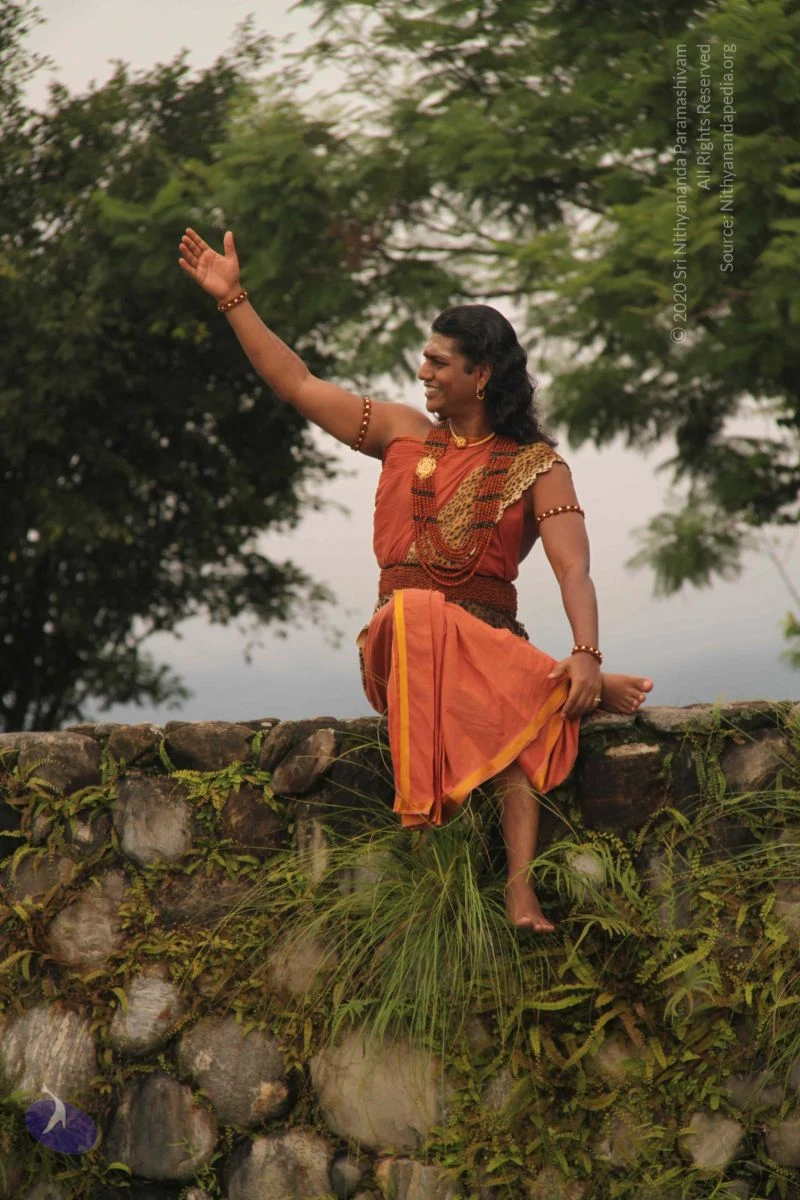
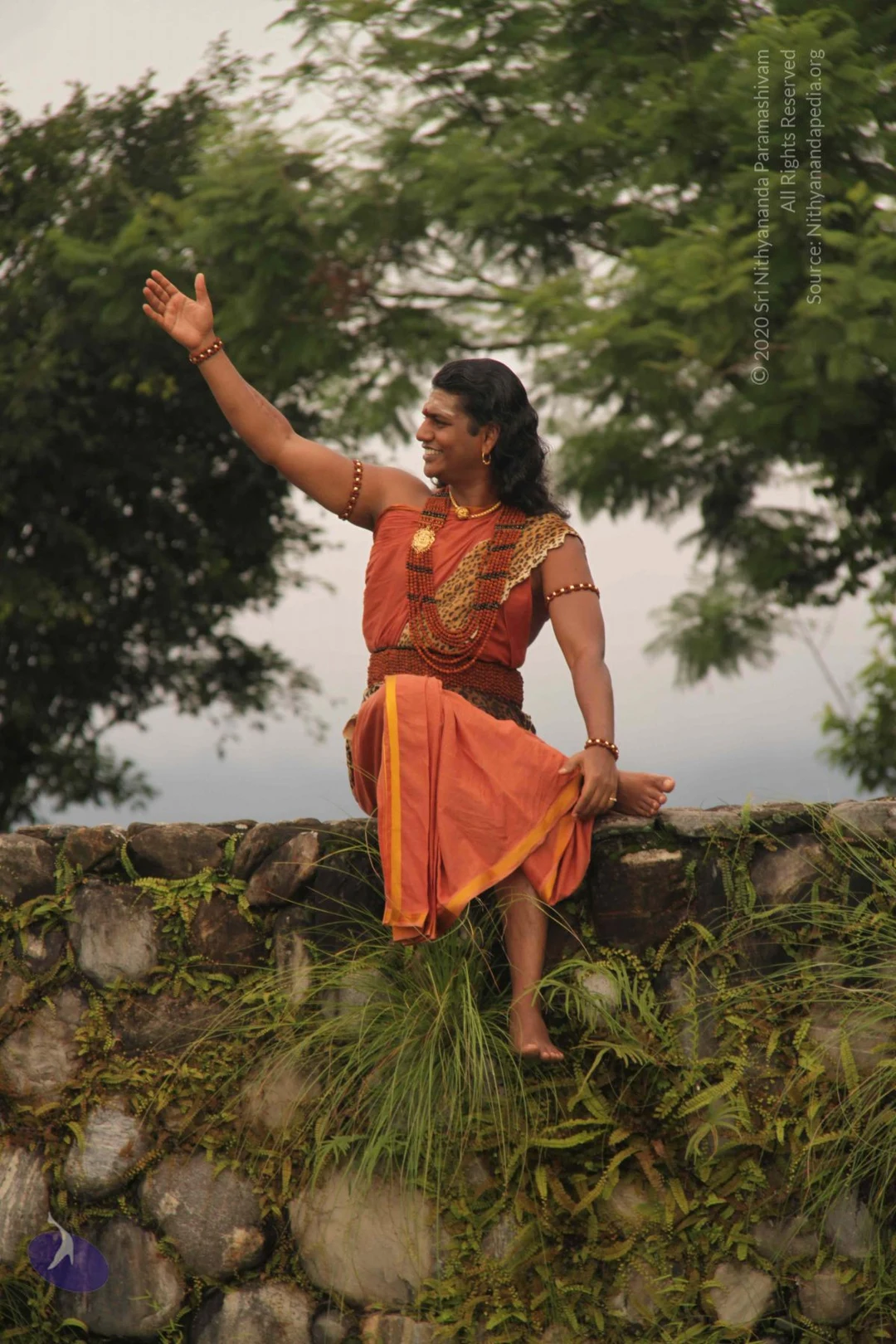
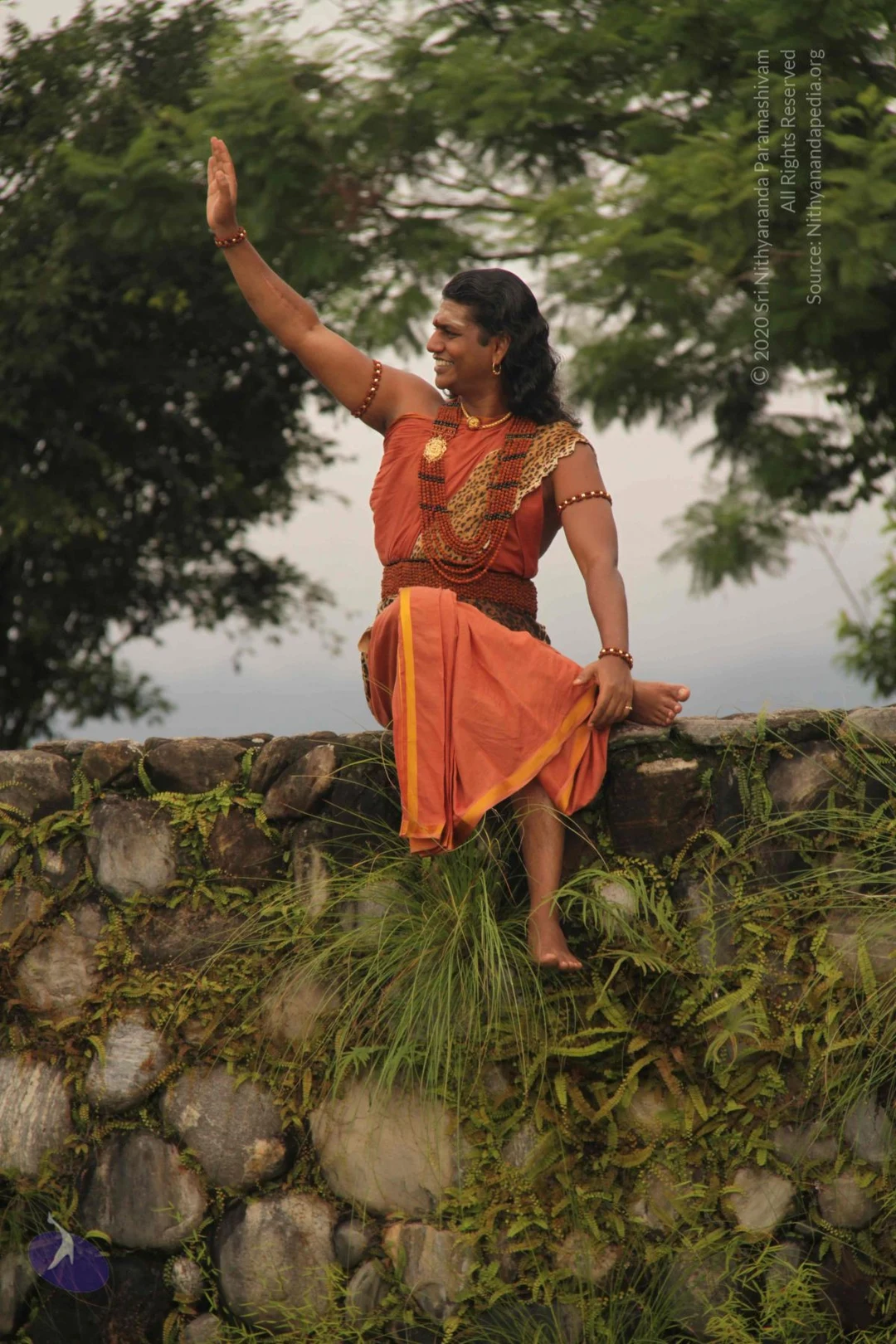
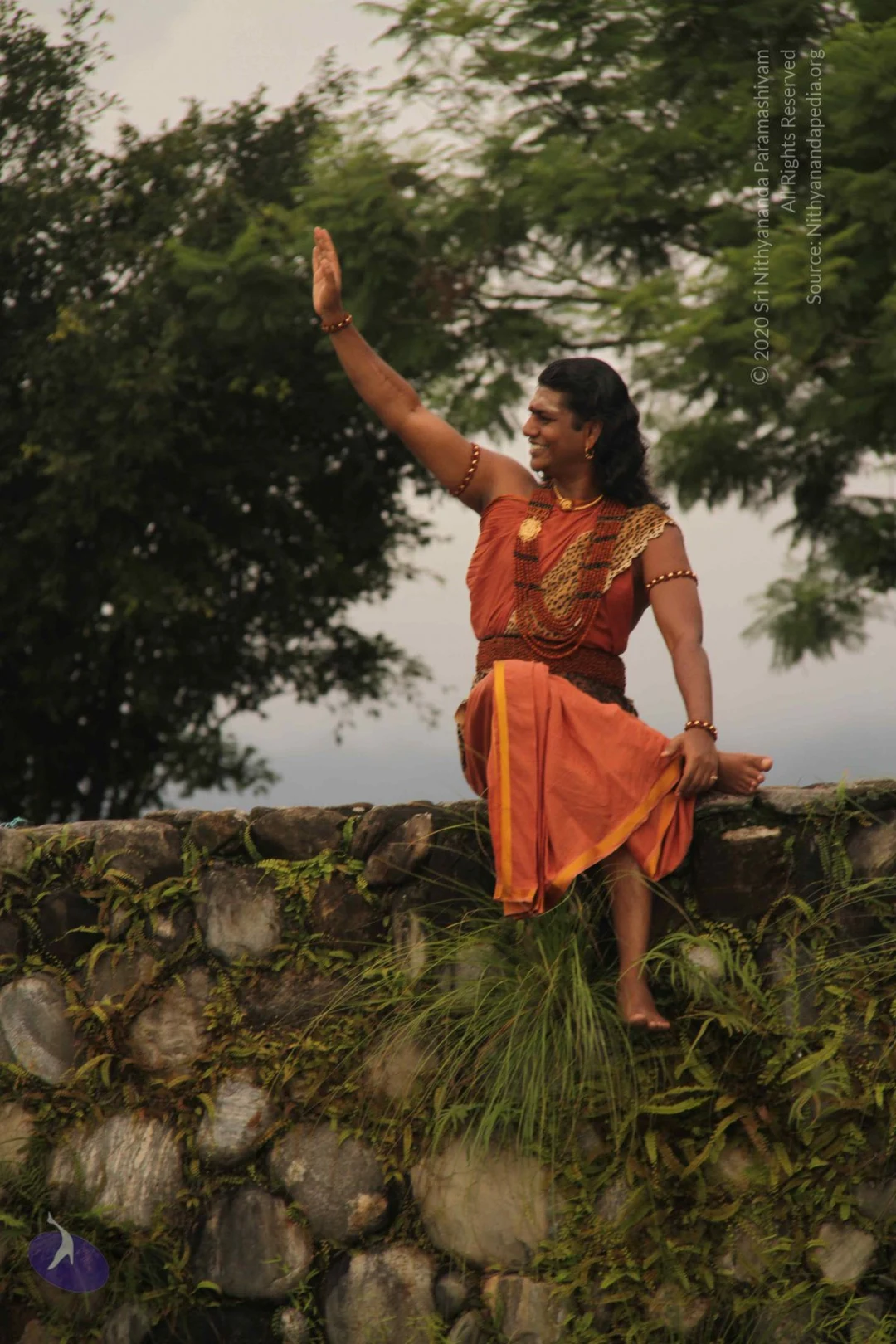
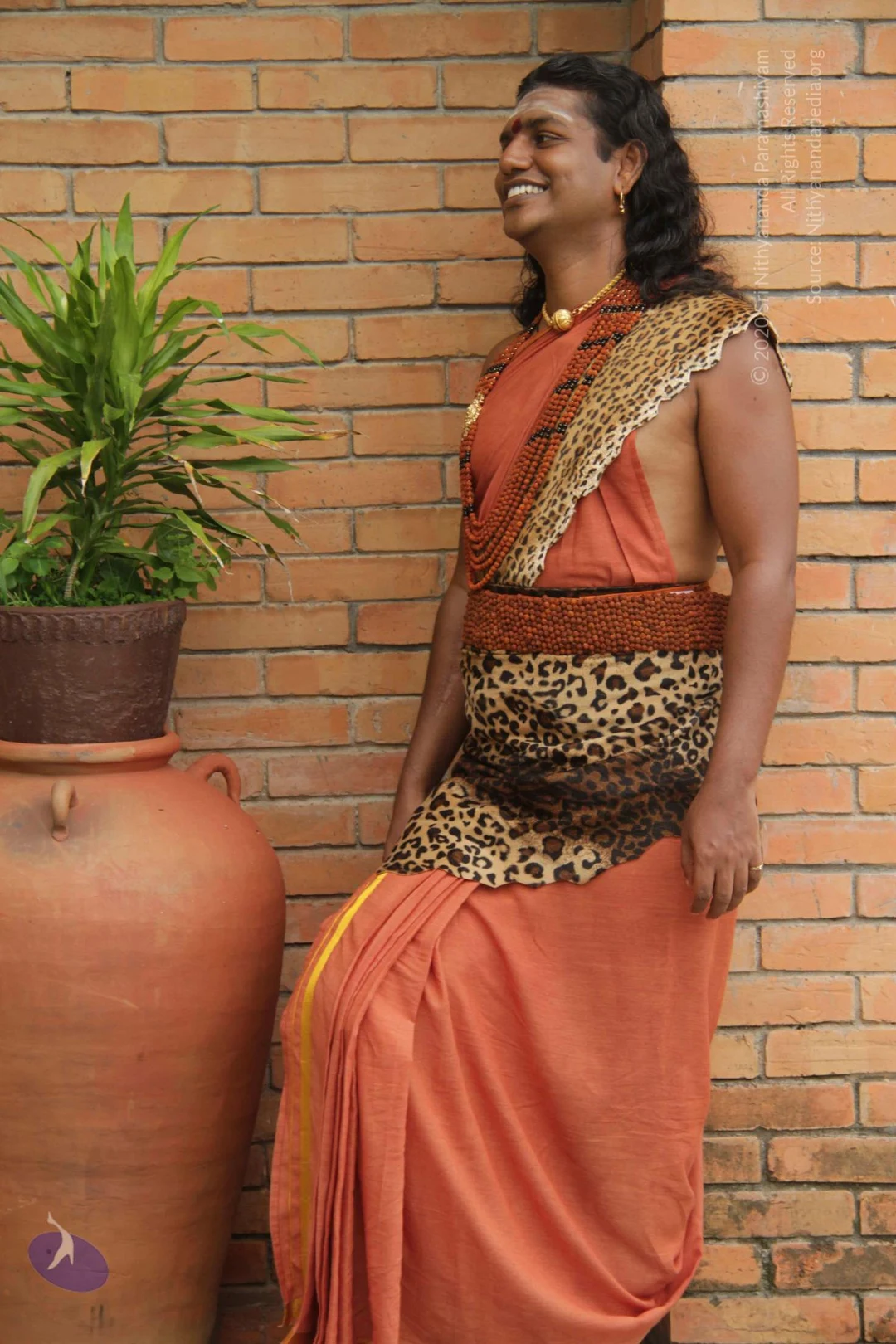
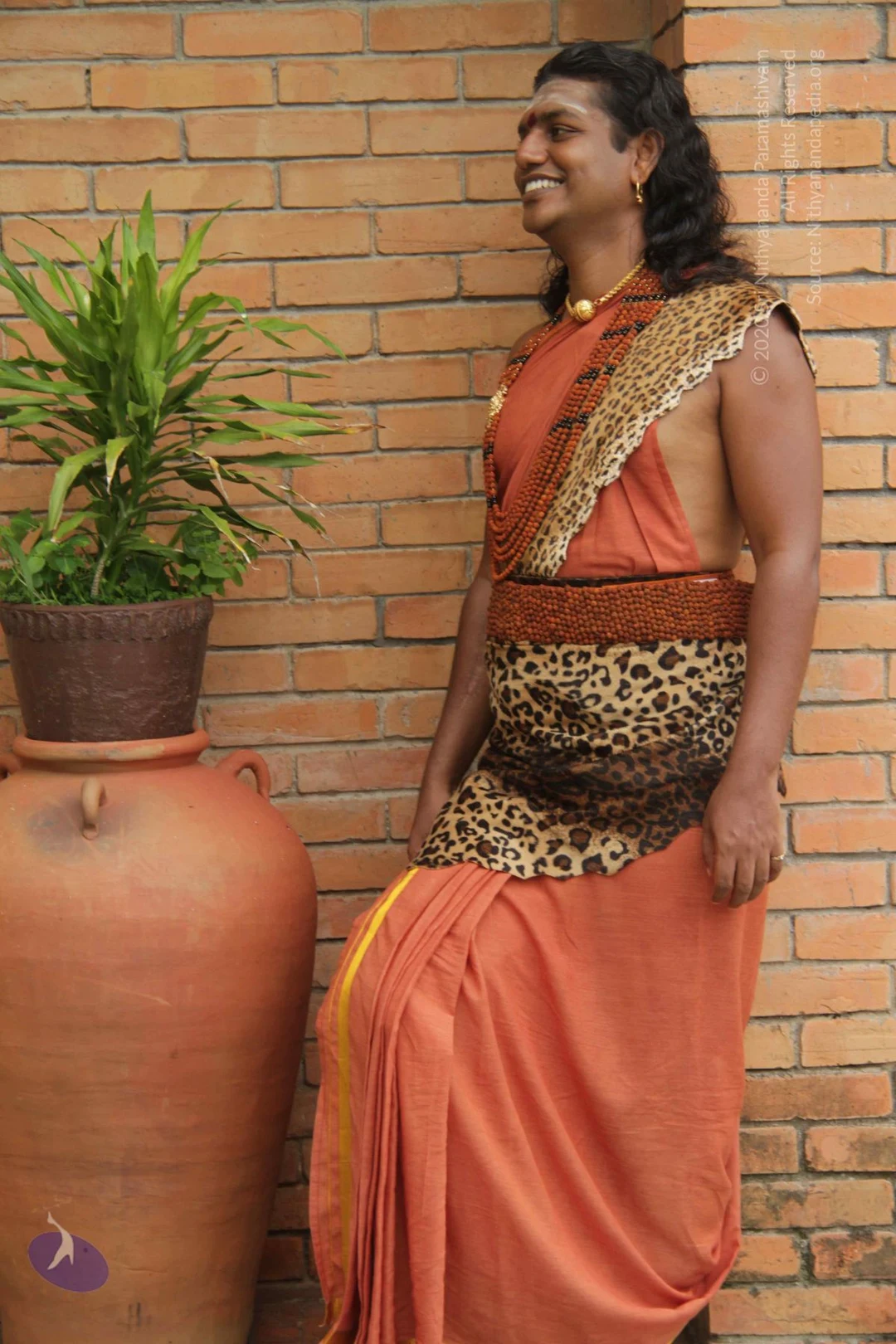
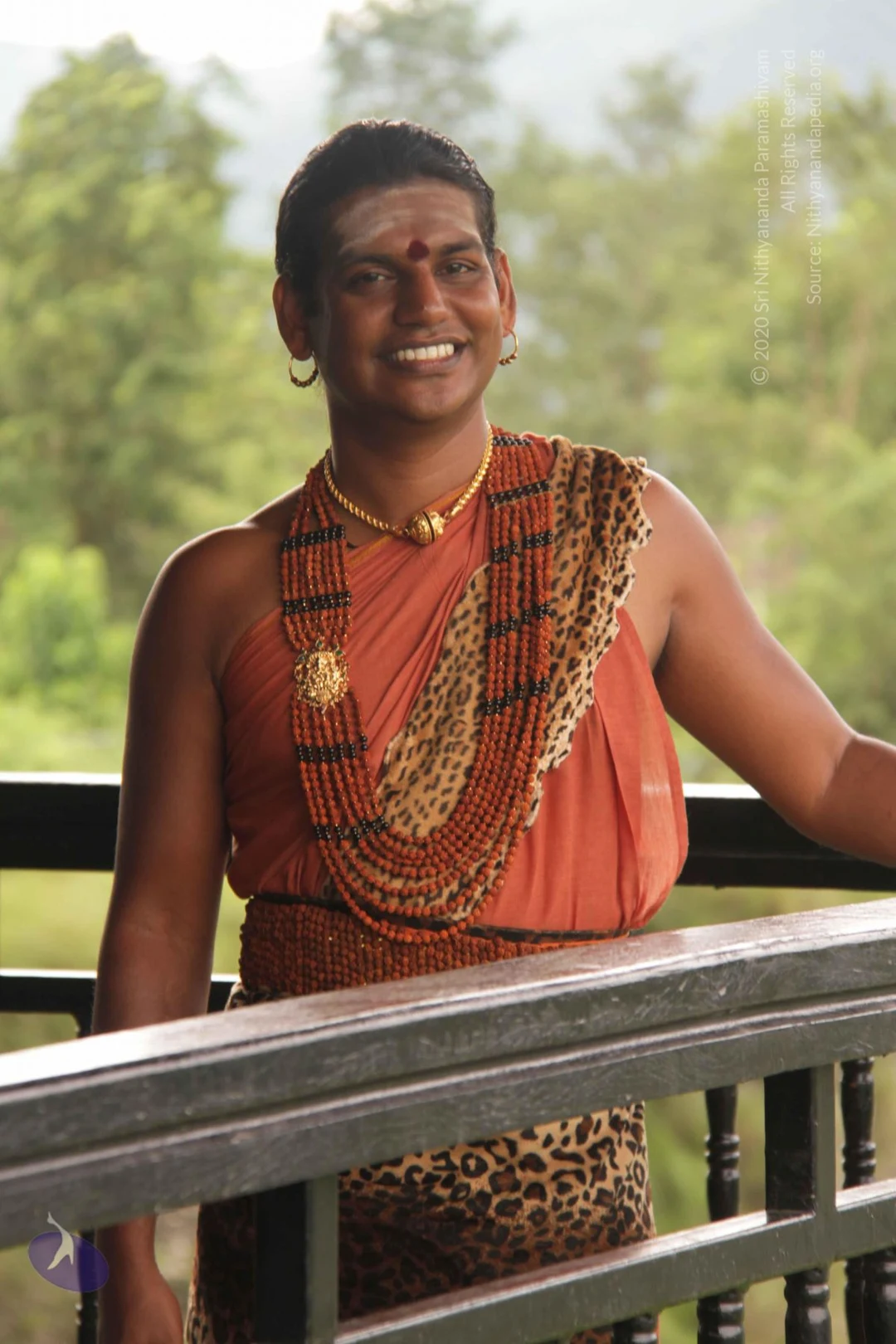
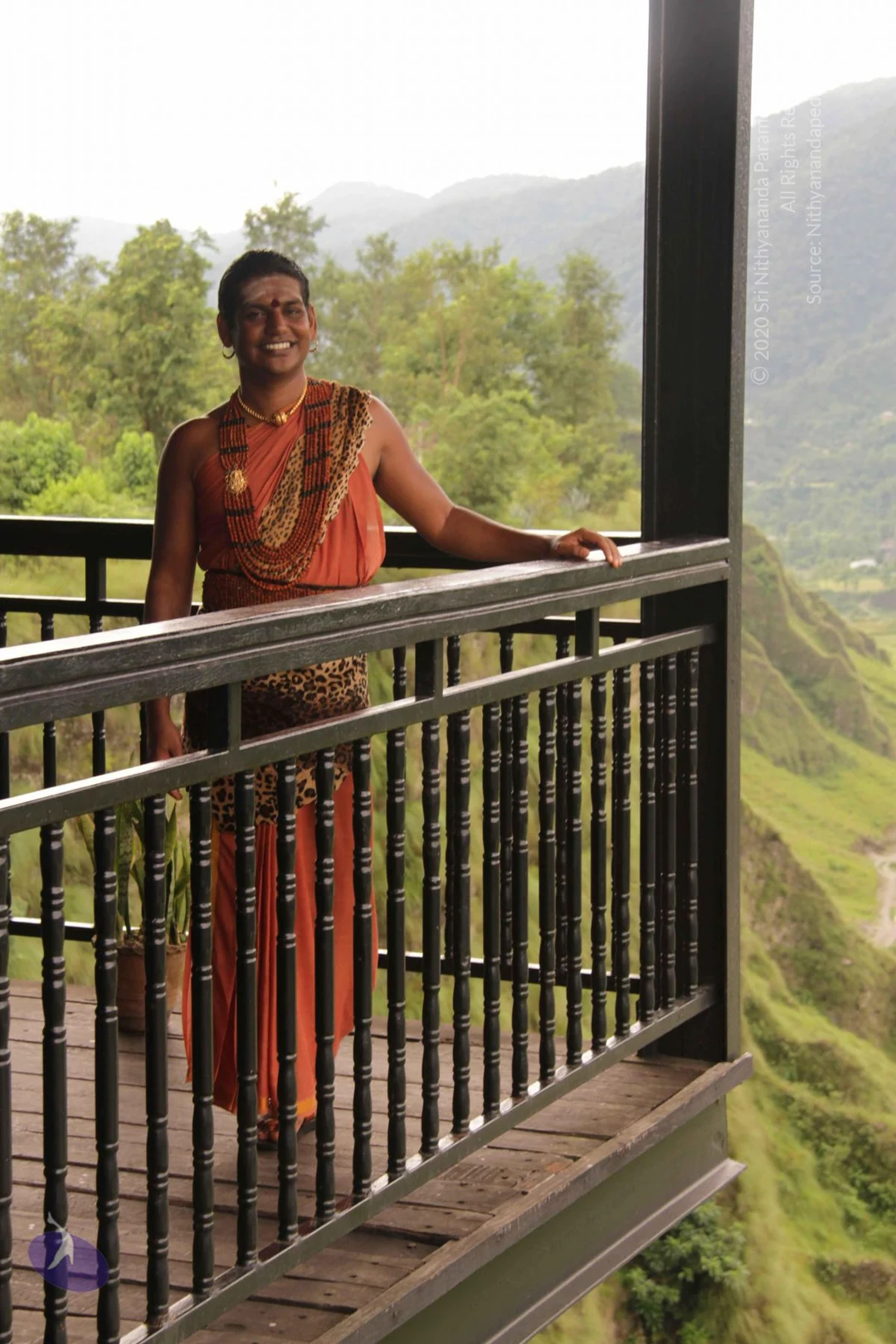
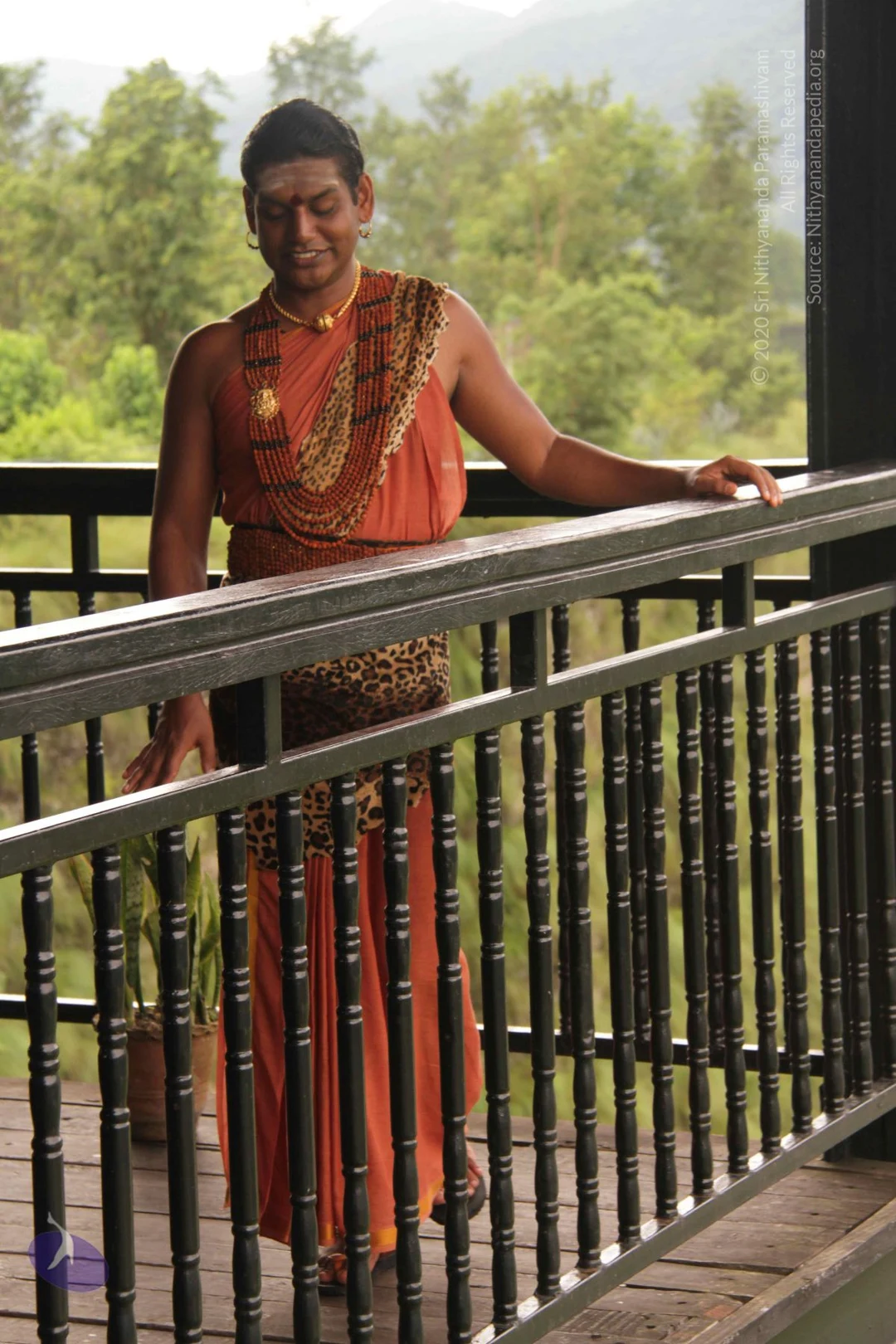
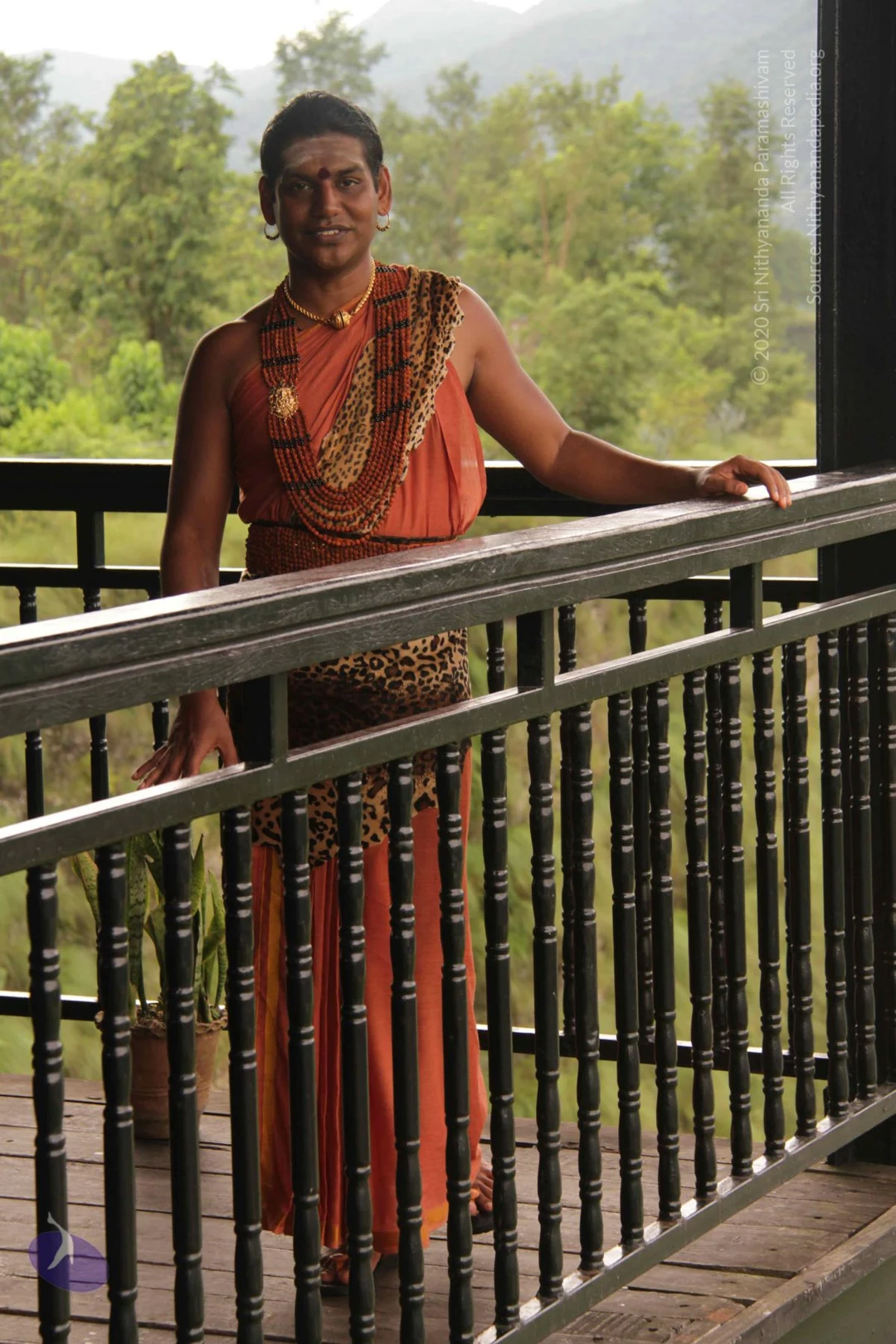
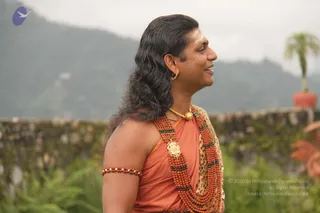
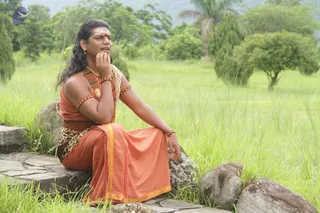
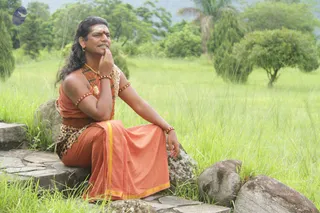
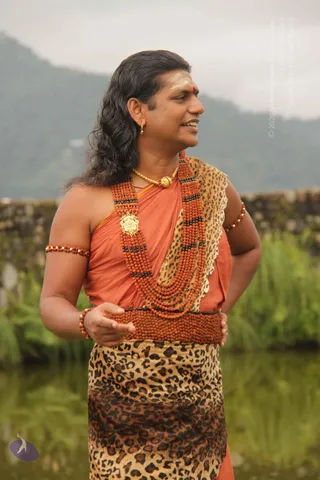
A photograph taken through a dark frame or window opening of a manicured garden. Clipped topiary bushes in layered yellow-green foliage dominate the foreground, with a stone-paved path curving through grass. A small blue-glass lantern stands on a low stone base, and a pale conical garden light sits at the lower edge. A partially hidden figure in dark blue clothing stands behind the hedge on the lawn, and tall trees and a fence line lie beyond.Photograph of a man in profile on an outdoor terrace, smiling and looking toward the upper right. He has long, wavy black hair swept back, small gold hoop earring, and wears an orange-red draped garment over the shoulder with a leopard-print shawl. Multiple strands of red rudraksha beads with dark spacers hang across his chest, with a gold pendant and gold necklace, and a red beaded bracelet on the upper arm. Behind him are a low stone wall, green foliage, misty hills and a potted palm. Probable Swamiji by appearance cues: long hair, rudraksha malas, ornate gold jewellery and saffron-orange clothing.A smiling man stands outdoors in front of a stone wall and misty green hills. He wears an orange-saffron cloth draped over one shoulder with a leopard-print shawl across his chest, multiple strands of red-brown rudraksha beads with black spacers, a gold pendant, a gold necklace, gold hoop earrings and red-brown beaded armbands. He has long swept-back dark hair, a white tilak on his forehead and a red dot at its centre. One hand rests on his hip. a person: the long swept hair, rudraksha malas, saffron clothing and ceremonial gold ornaments match the visible cues for the a person candidate, although the image alone does not confirm identity.A man with long, swept-back dark hair sits on a rock in a lush green grassy field with trees behind him. He wears an orange-saffron garment draped over one shoulder, a leopard-print wrap at the waist, a multi-strand rudraksha-style bead necklace with a gold pendant, beaded bangles and armlets, and gold hoop earrings. He has a white vibhuti line and a red bindi on his forehead, and rests his chin on one hand while gazing thoughtfully to the side. Swamiji (probable) appearance cues: long swept-back hair, saffron clothing and bead adornments. A small blue-and-white logo appears in the corner. Photographic, outdoor setting.A man with long, swept-back dark hair sits on a flat stone in a grassy meadow with palm trees and shrubs behind him. He wears an orange-saffron dhoti-style garment with a yellow border, a leopard-print wrap over one shoulder, a red-orange beaded rudraksha-style necklace, a gold pendant, beaded armlets and bracelets, and a red bindi on his forehead. He rests his chin on one hand and gazes off to the side. Swamiji (probable) appears as this seated figure, distinguished by his long hair, saffron clothing and beaded adornments.A man with long swept-back dark hair sits on a flat stone slab in a grassy field with shrubs and trees behind him. He wears an orange-saffron dhoti-style garment with a yellow border, a leopard-print shawl over one shoulder, a layered beaded necklace with a large gold pendant, rudraksha beaded bracelets on his arms, and a red tilak on his forehead. His right hand rests near his chin in a contemplative pose while he looks off to the side. Swamiji (probable): the long hair, saffron clothing, rudraksha malas and ceremonial gold necklace match the page's description of Paramashivam, shown here as a posed photograph in an outdoor setting.

Delegates-Kailash-Yatra

15 photosSource gallery
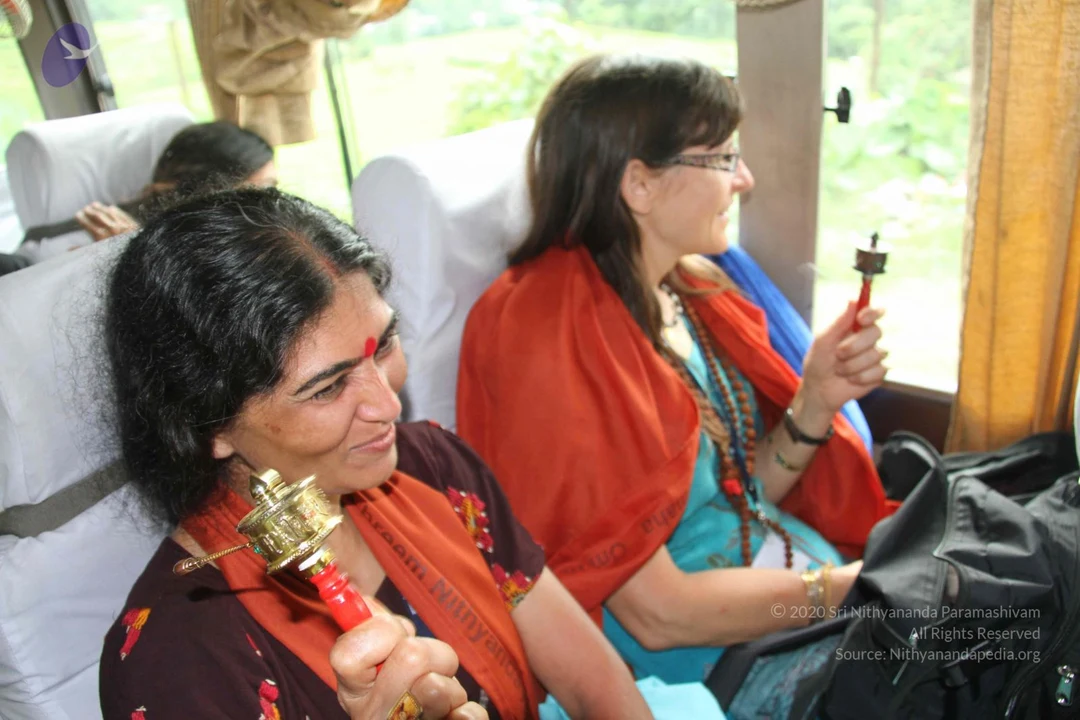
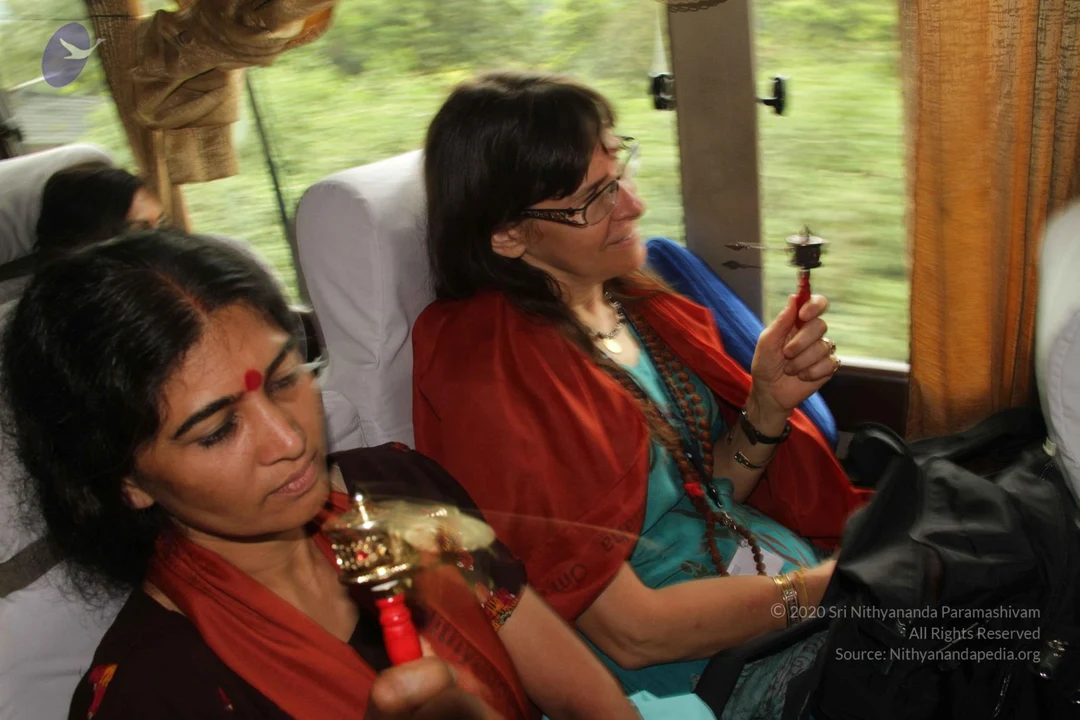
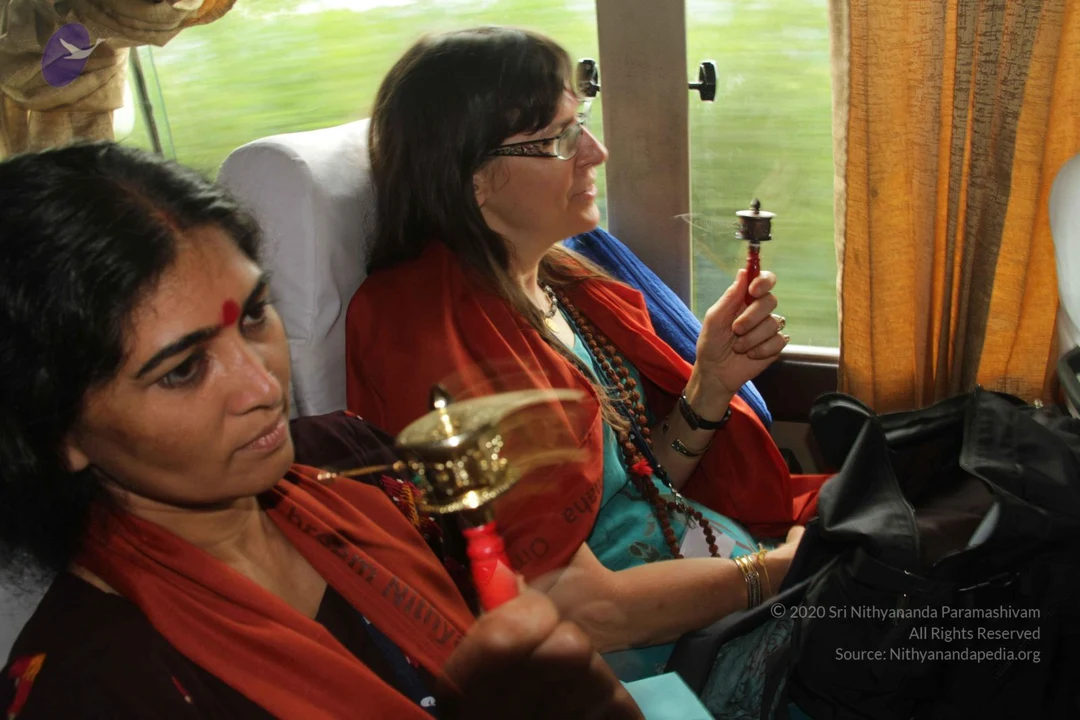
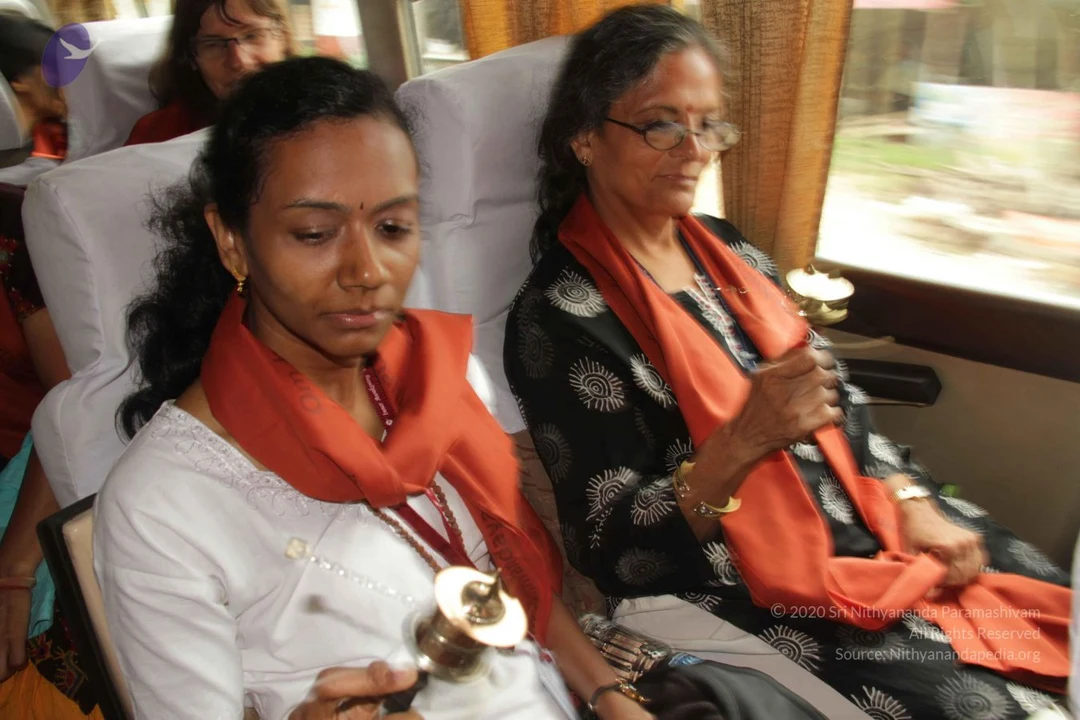
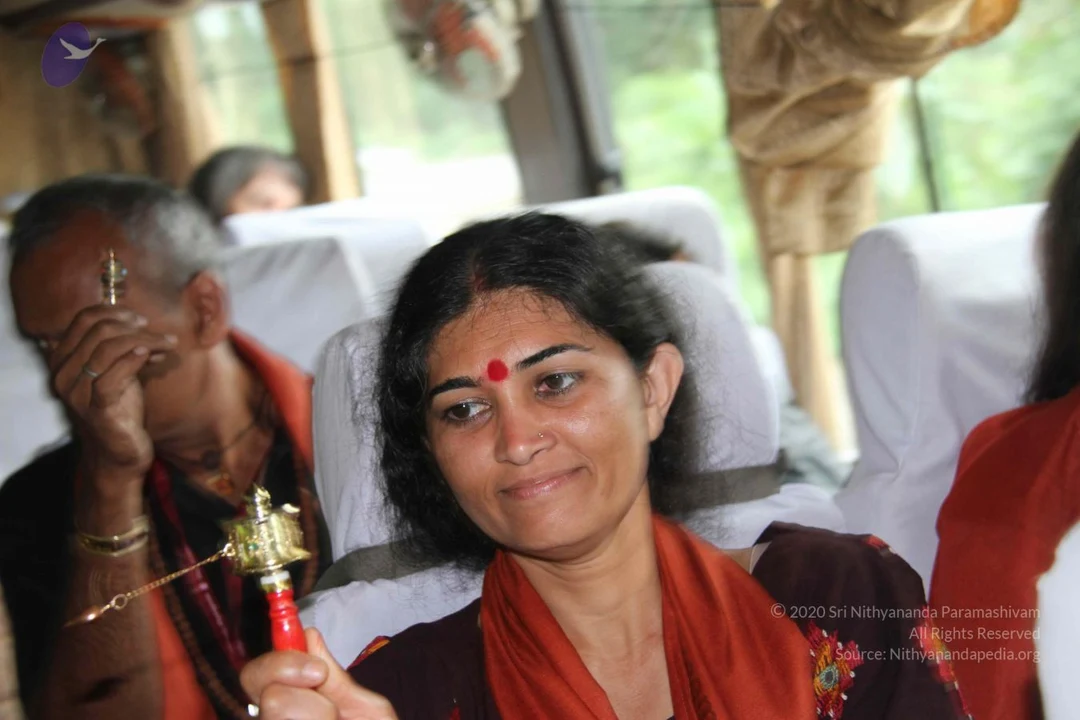
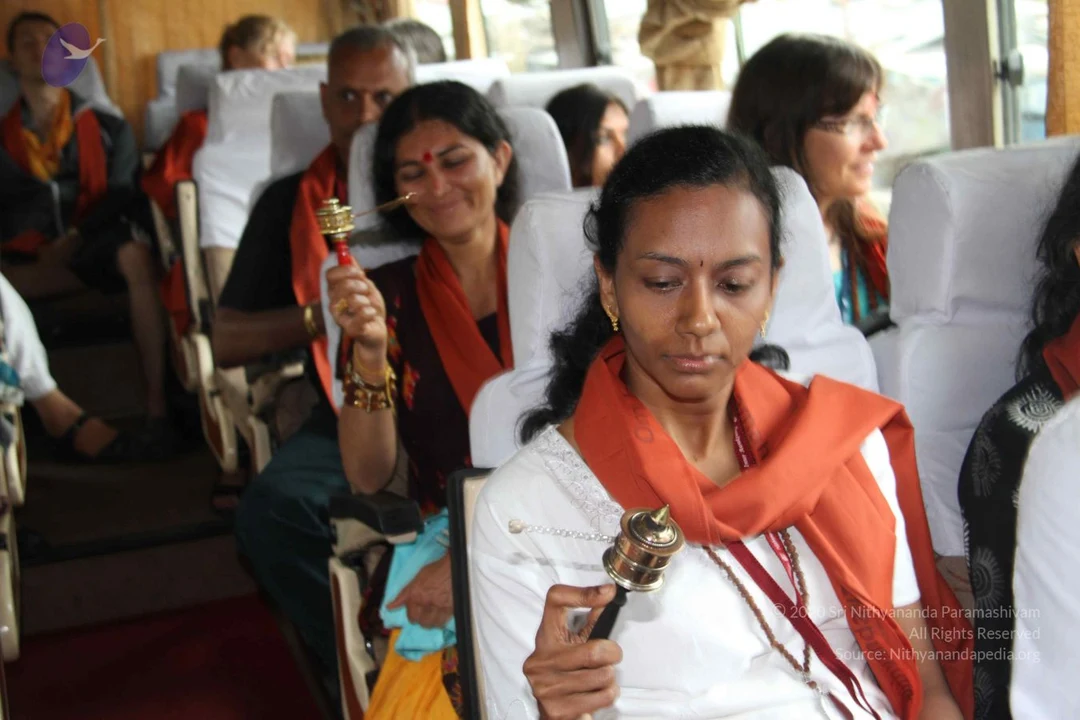
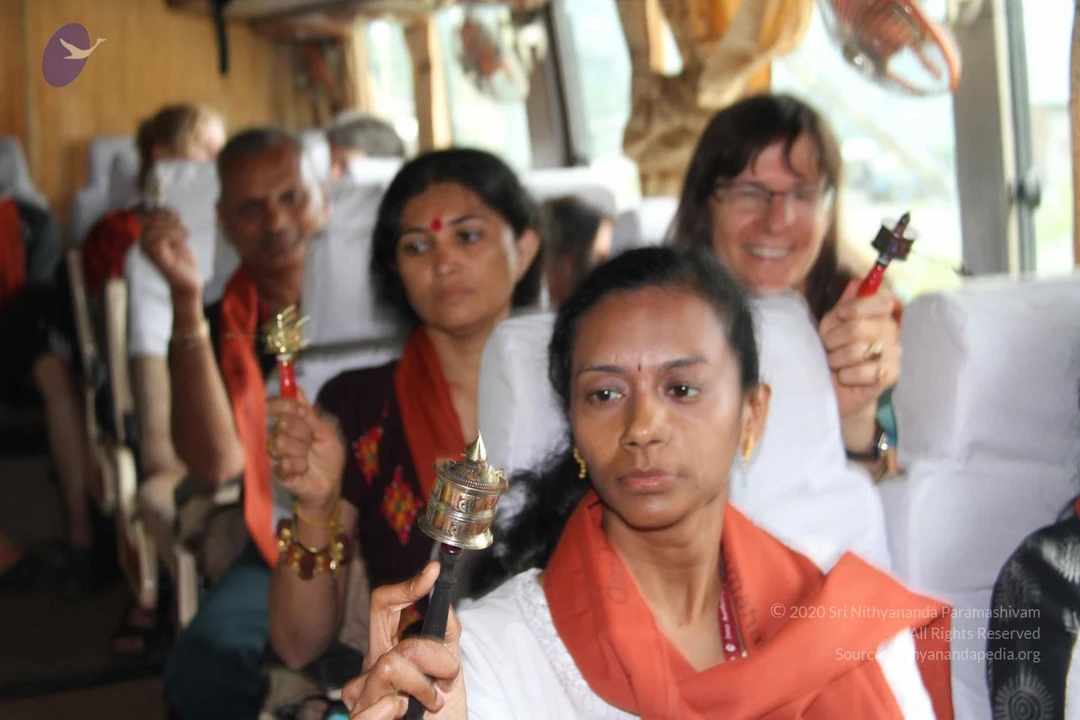
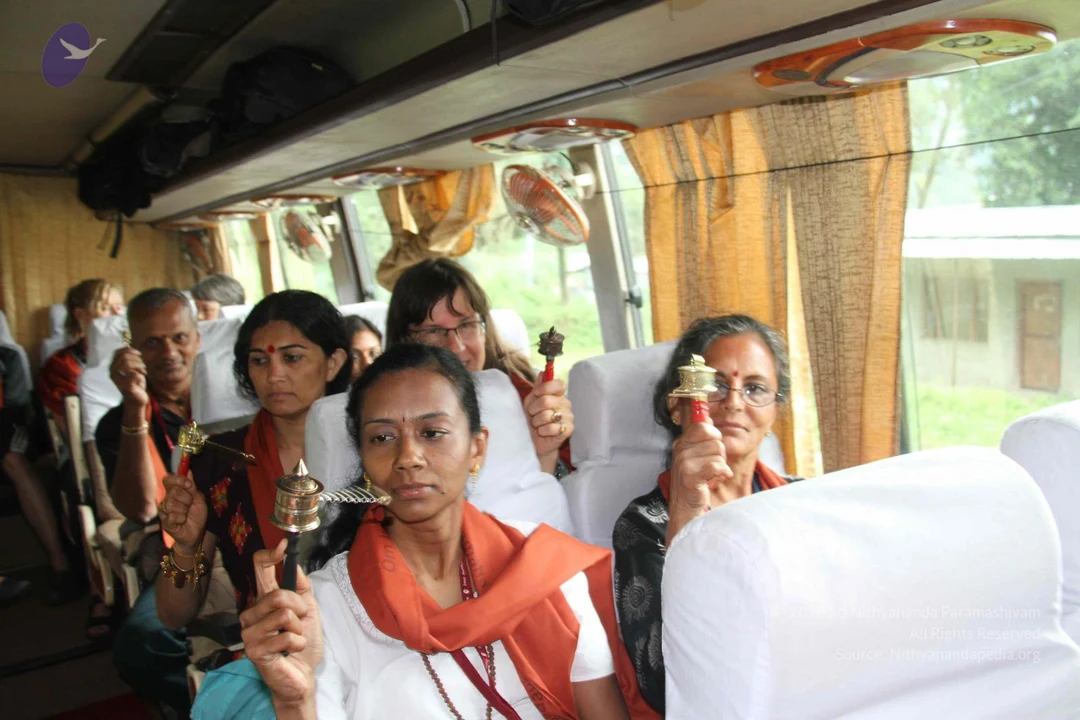
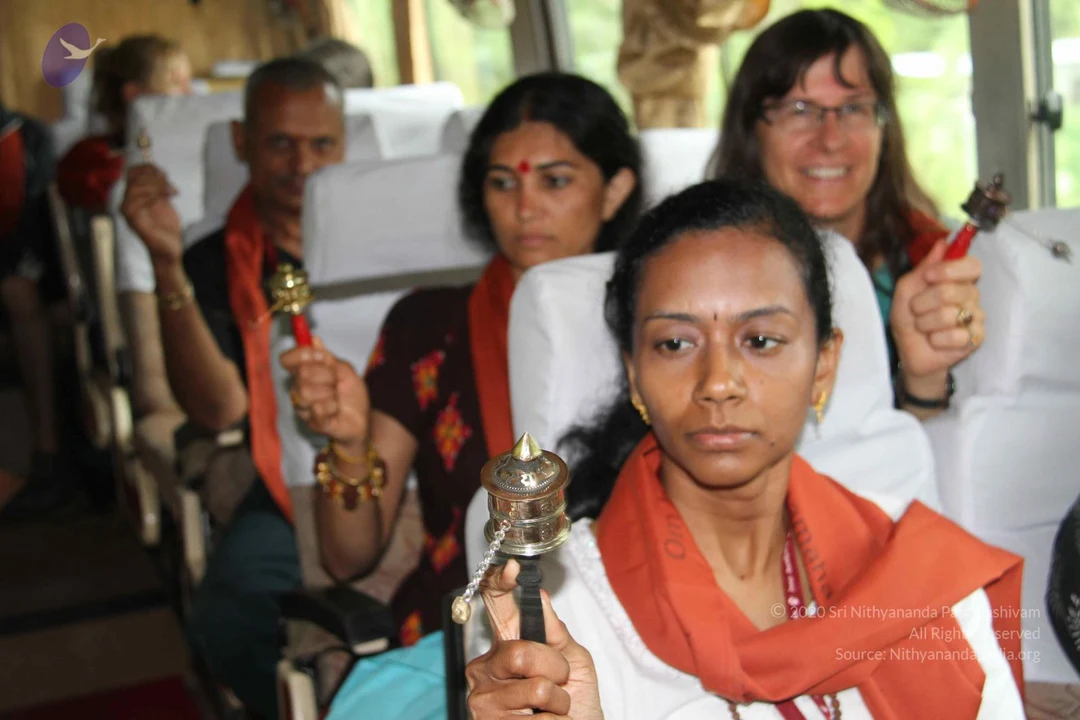
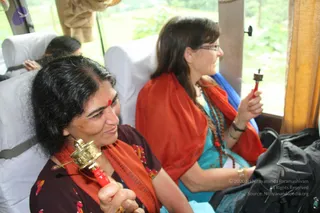
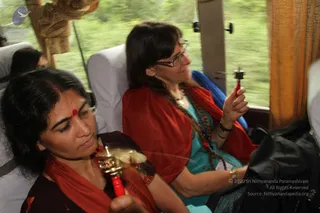
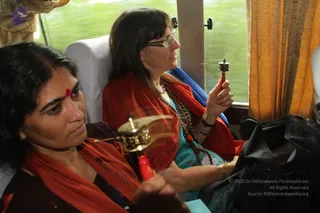
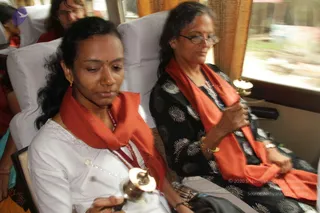
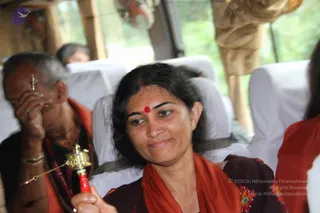
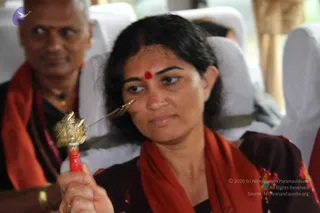
Photograph taken inside a bus with white seat covers and tinted windows showing green foliage outside. In the foreground a smiling woman with dark hair and a red bindi wears a maroon top with floral embroidery and an orange shawl printed with text, holding a gold-and-red handheld prayer wheel. Beside her a woman with brown hair and glasses wears a turquoise dress and an orange shawl, a rudraksha mala around her neck, and holds a small red prayer wheel. A black backpack sits on the seat at right. Two more seated passengers are partly visible behind them. No one is identified as a person in this image.Two women seated inside a bus or coach with a green landscape blurred through the window and orange curtains at the side. The woman on the left wears a dark top with a red-orange shawl and a red bindi, holding a small brass vessel with a red handle. The woman on the right wears a teal blouse, a red shawl, a rudraksha mala and a gold pendant, and holds a small brass lamp or ritual object with a red handle while looking toward the window. Both appear to be travelling together.Two women sit side by side inside a moving bus, with blurred green scenery visible through the window behind them. The woman on the left, with dark hair and a red bindi, wears an orange-red shawl with printed lettering and holds a brass-topped ritual object with a red handle. The woman on the right, wearing glasses and a teal outfit with a red shawl and a rudraksha mala, holds a small silver-and-red ritual implement up near the window. A dark bag and orange curtain are at the right edge.Two women sit side by side on a bus seat with white upholstery, a window with a blurred roadside view behind them. The woman on the left wears a white blouse with an orange shawl and a red cord necklace, holding a small brass oil lamp or puja vessel in her lap. The woman on the right wears a black printed kurta with white circular motifs, an orange shawl, gold bangles and glasses, and holds a small brass vessel. A man with glasses and a red top is partly visible in the seat behind. The scene appears to show devotees travelling during a yatra.A photograph taken inside a bus during the Kailash Yatra. In the centre, a smiling woman with dark wavy hair and a red bindi wears a dark maroon top with an orange shawl, and holds a small brass handheld prayer wheel with a red wooden handle. To her left, an older man in an orange shirt with a rudraksha mala and gold bracelet touches his forehead with one hand. White seat covers and windows with green trees fill the background. Two other passengers are partly visible.A woman seated in a white-upholstered bus seat holds up a small gold ornamental item with a red handle and a hanging chain, looking toward it. She wears a dark maroon top with embroidered colourful trim, an orange-red shawl draped over her shoulders, and a red bindi on her forehead. Behind her, a man in a black top with an orange shawl and gold necklaces sits in a bus seat and watches. The scene appears to be inside a vehicle during a group trip.

Temple

8 photosSource gallery
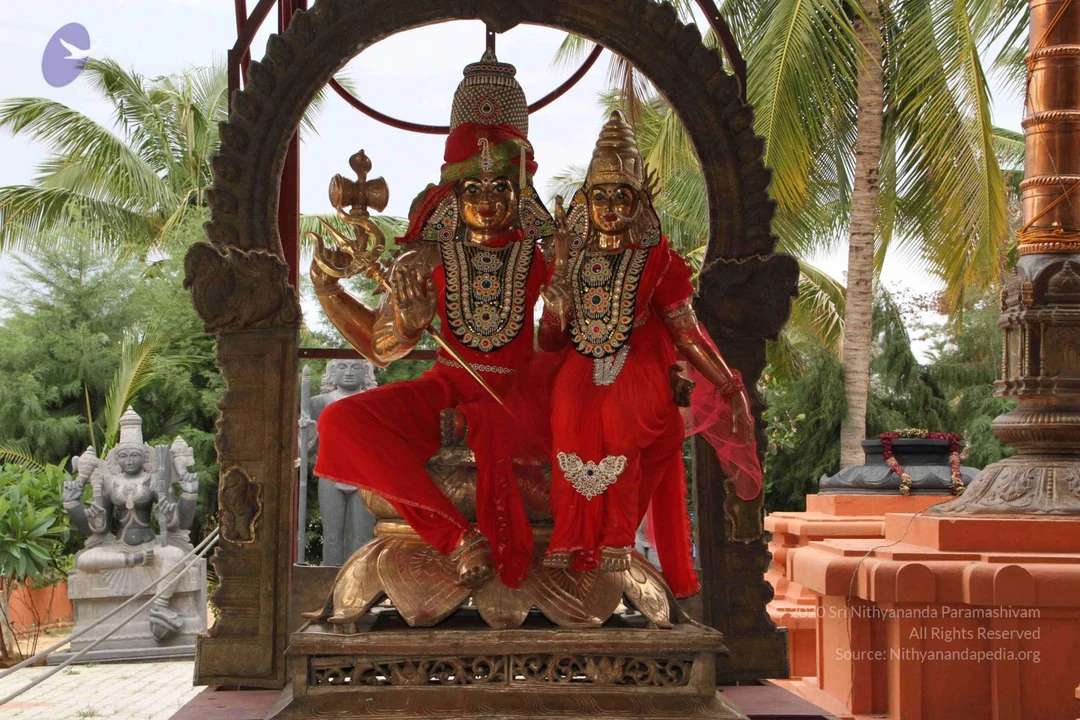
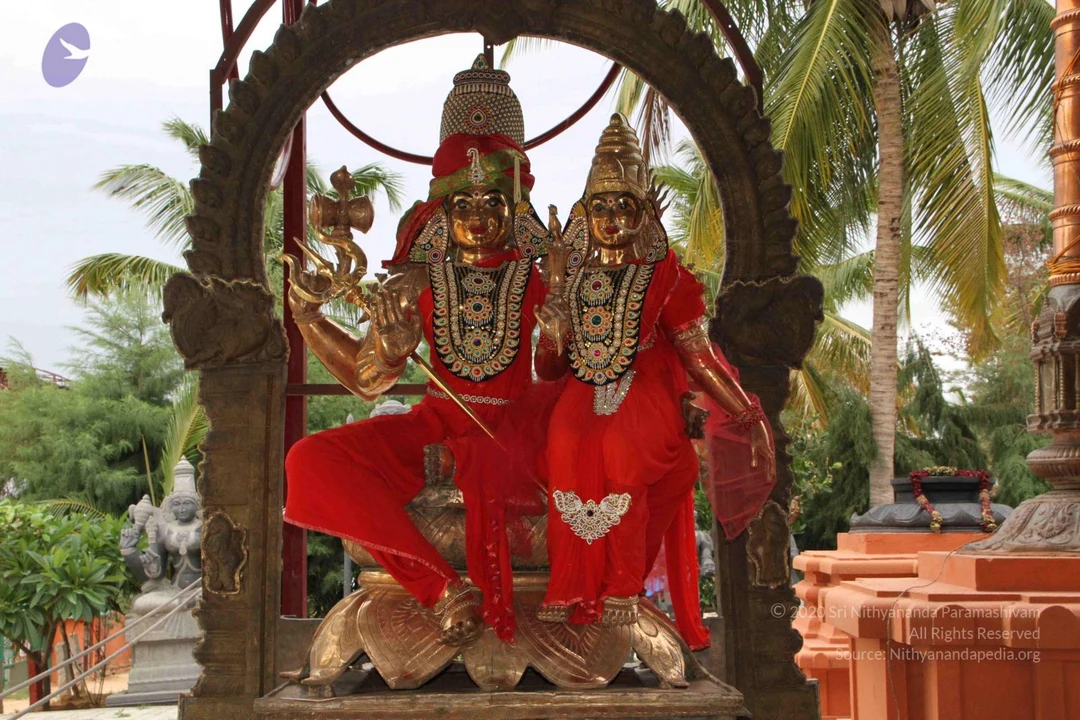
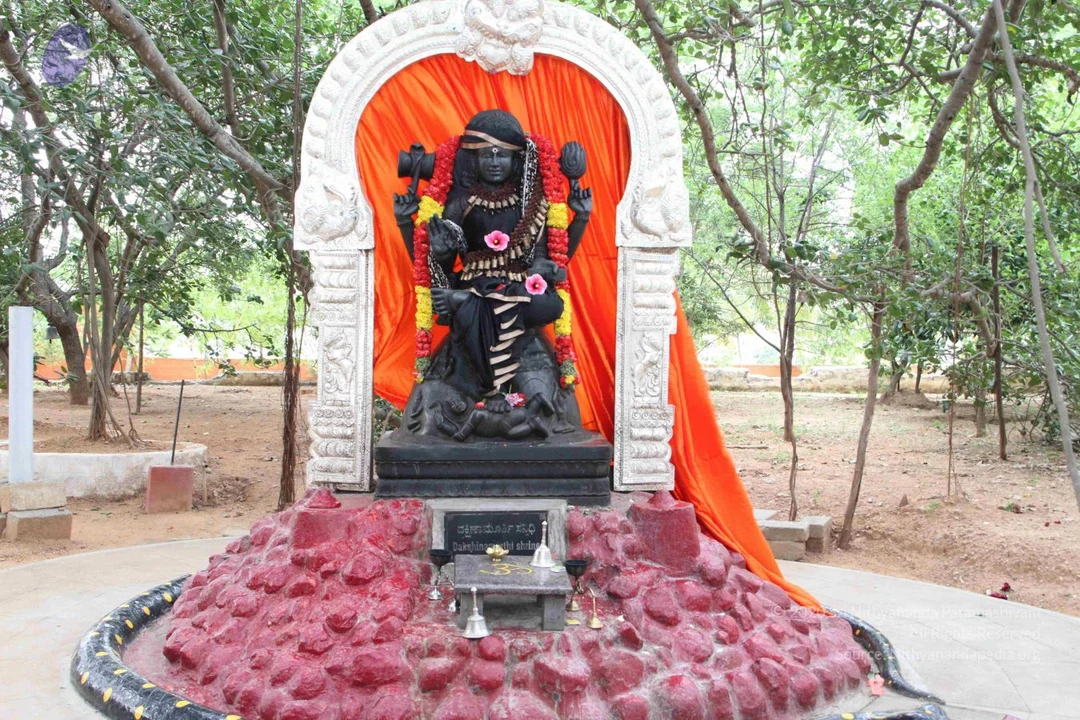
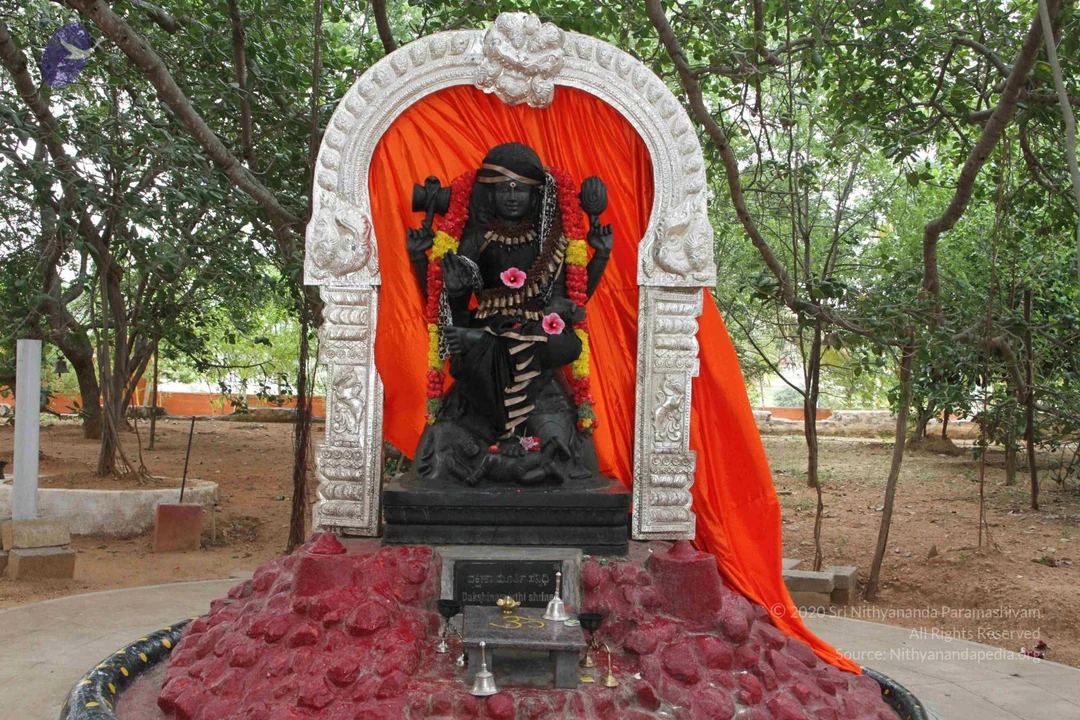
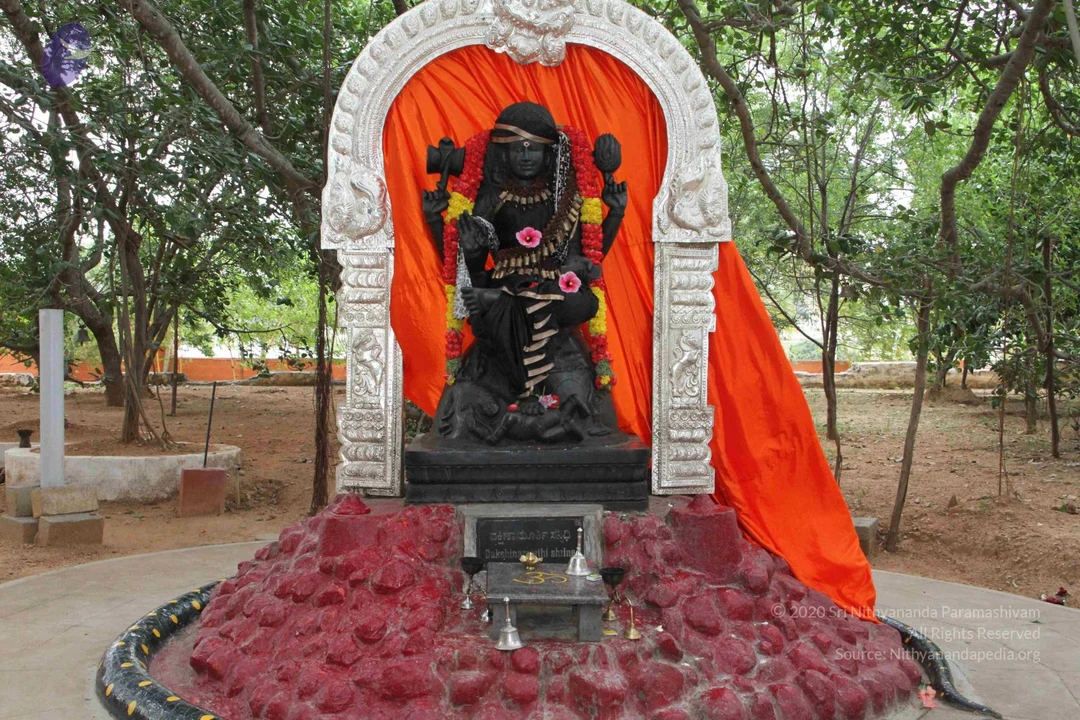
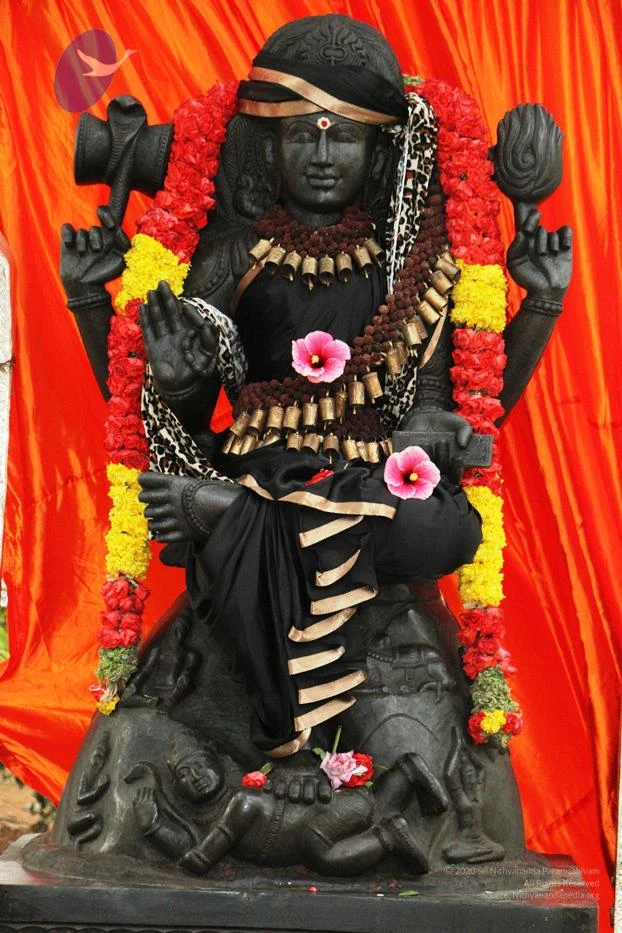
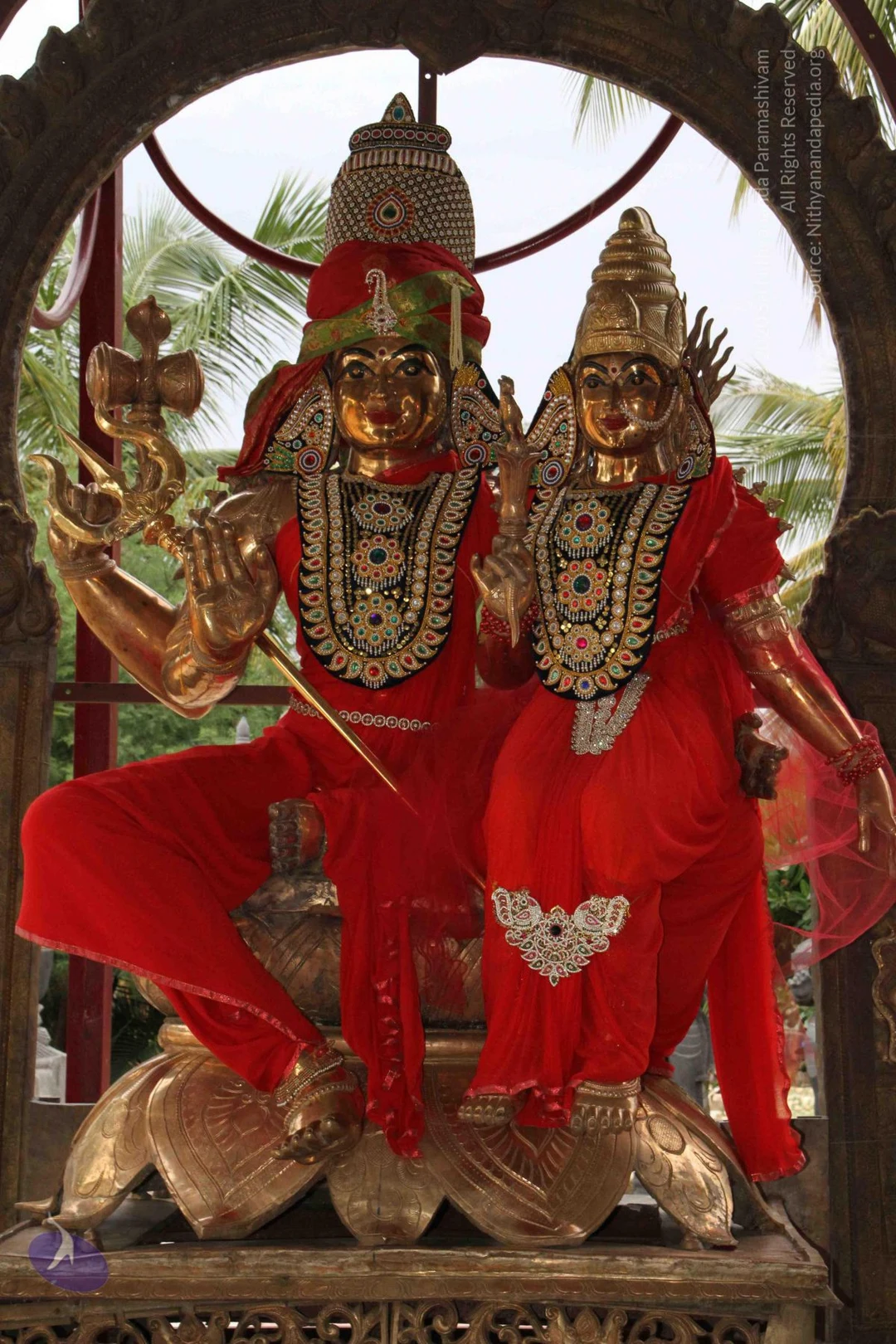
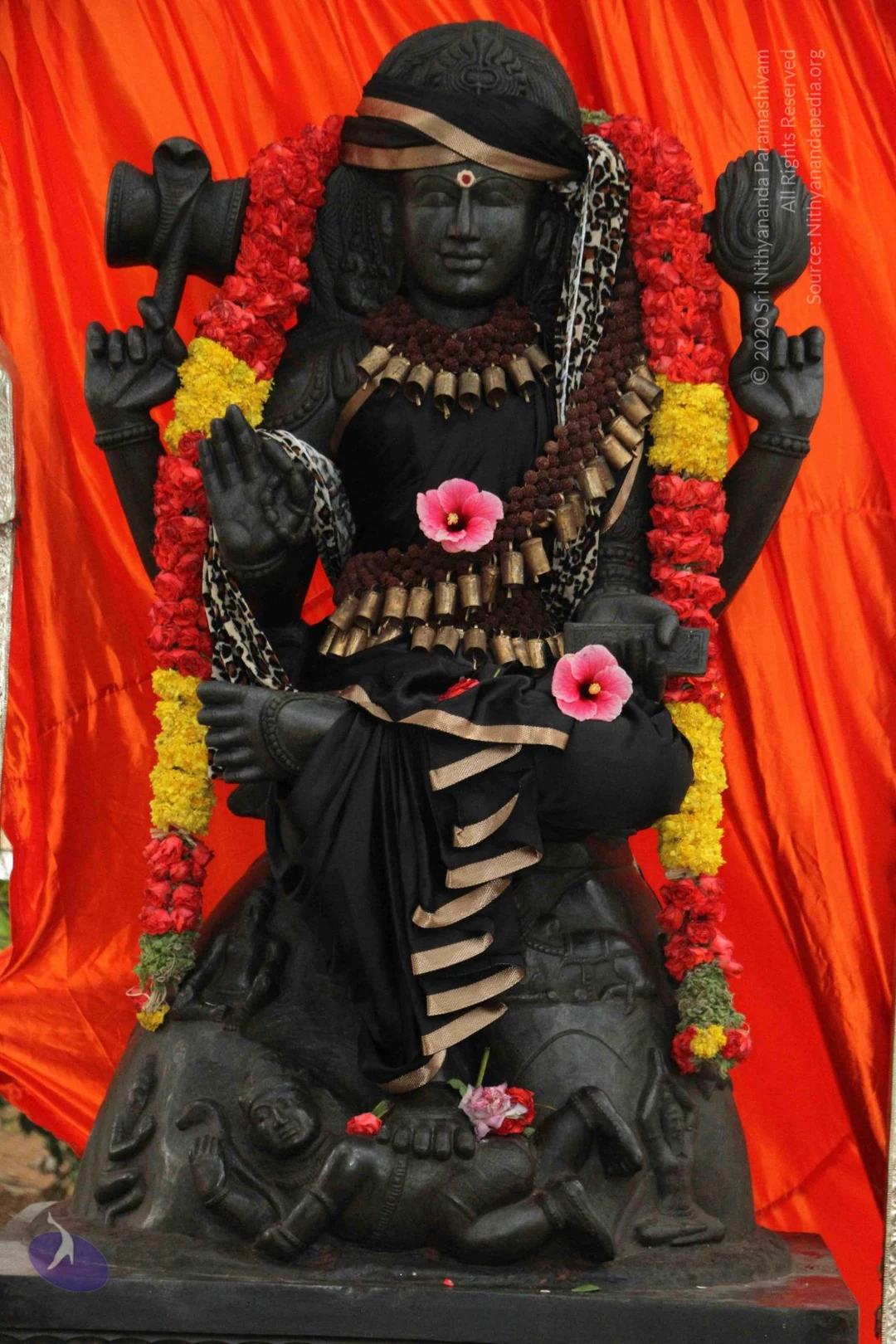
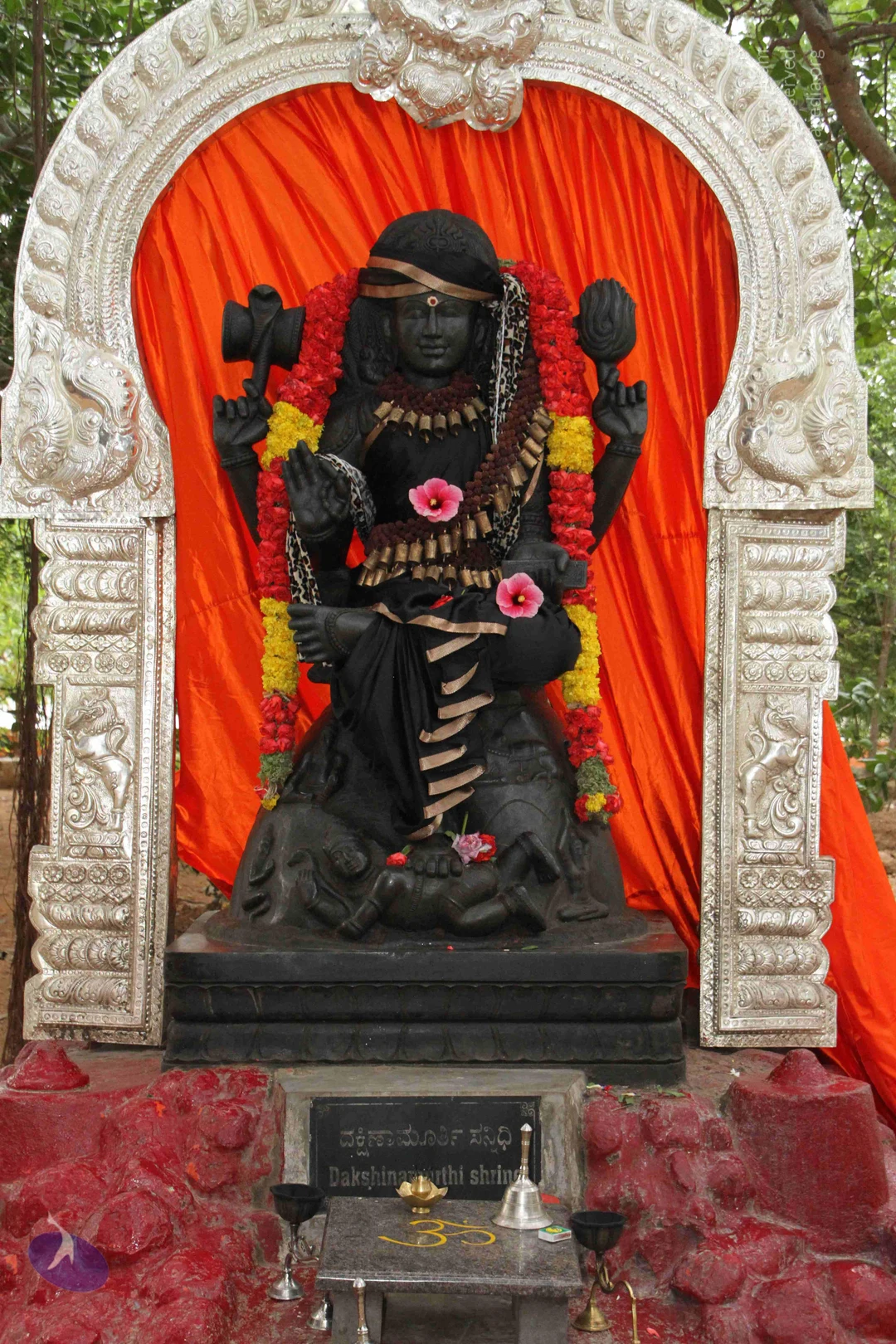
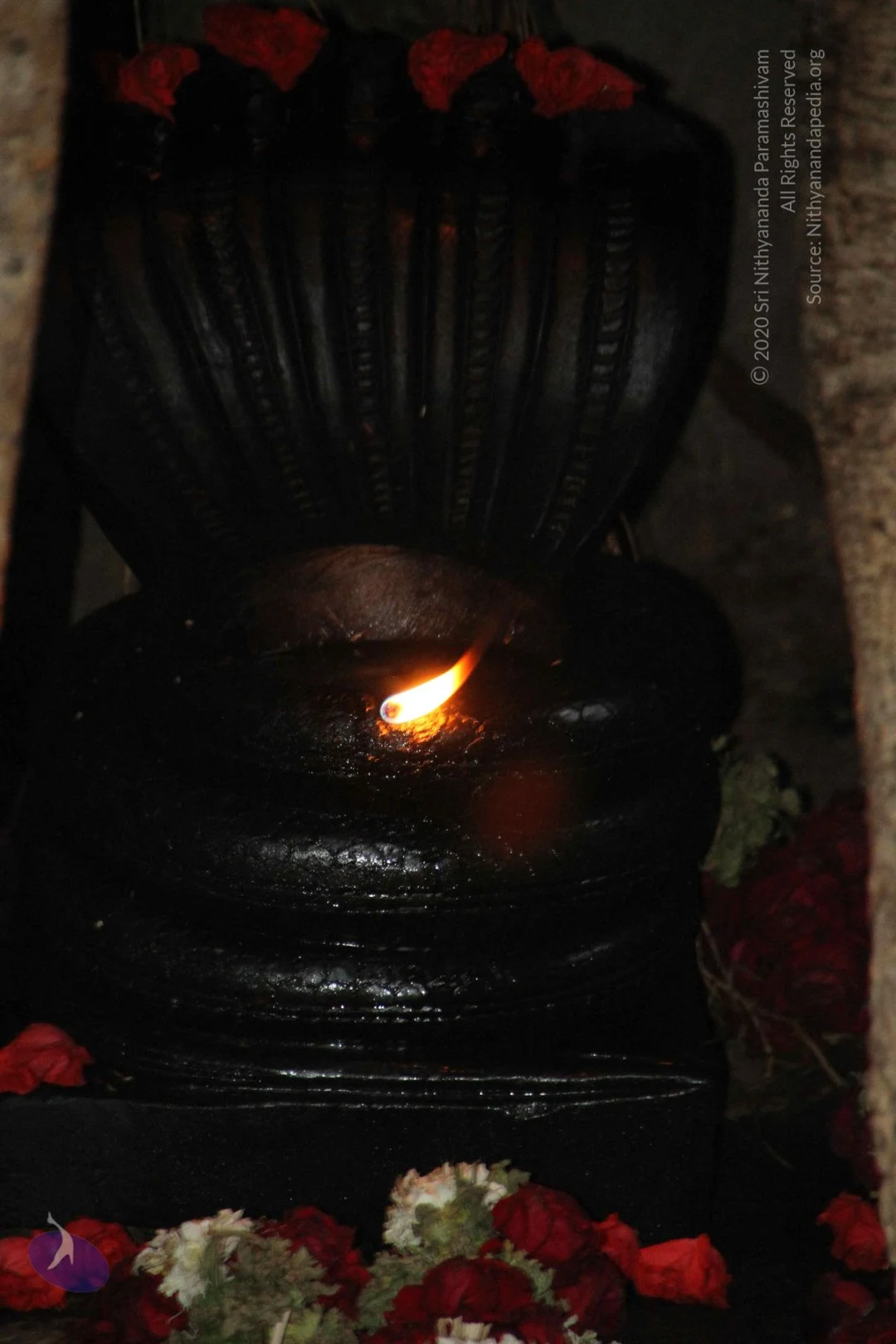
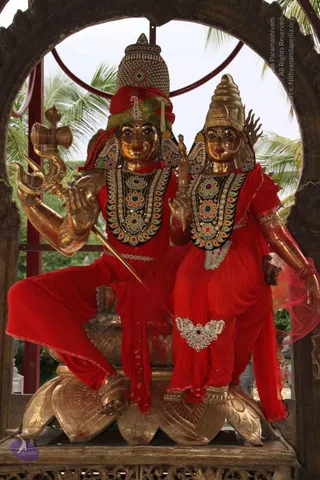
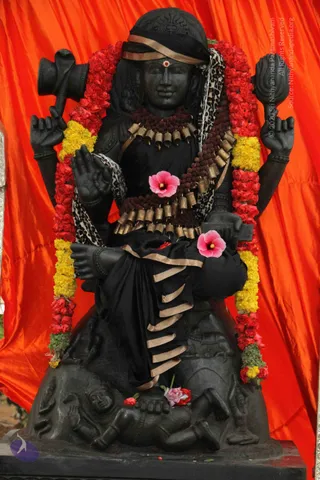
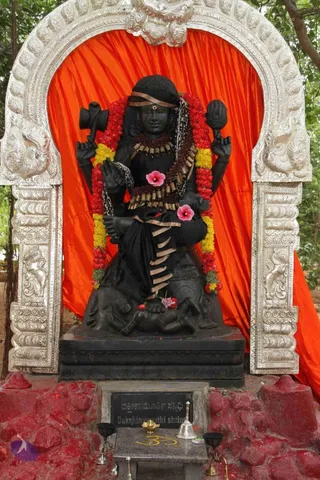
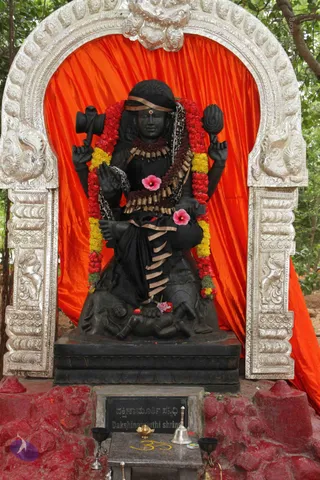
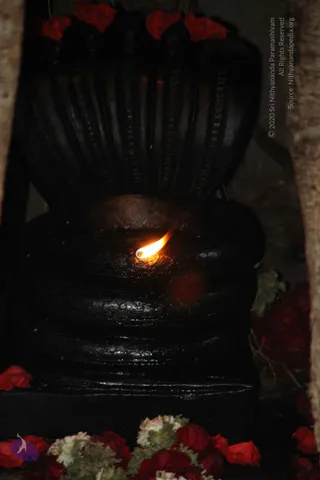
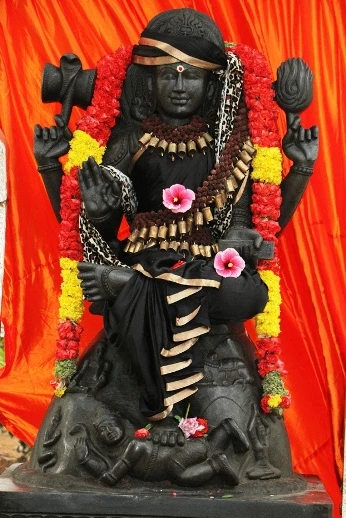
A pair of golden metal statues of a male and female deity stand on a lotus pedestal within an ornate arched frame, with palm trees behind. The figures wear red draped garments and jewelled collars set with coloured stones. The male figure holds a trident and a drum-like object and wears a tall jewelled crown with a red and green turban; the female figure wears a golden conical crown and holds a small ritual item. No physical people are present; these are statues.A photograph of a temple shrine with two large gilded deity murtis seated on a raised red-draped platform. The left figure has a tall black crown, a trident and a damaru-like hand object, a leopard-print garment and rudraksha malas. The right figure wears a crown with a halo-like arch, orange and gold garments and a heavy gold necklace. Both are garlanded with red roses and white jasmine. In front stands a black lingam draped in red cloth and garlanded, with a small white marble figure of a seated figure with folded hands. Brass oil lamps, a kalasha pot, offering bowls and a tray of rose petals surround the base. No living people are visible.A large black stone statue of a four-armed deity murti seated on a rock base, wearing a black garment with gold ribbon wrapped around it and a leopard-print shawl over the shoulder. The figure has a gold headband, a red tilak on the forehead, a rudraksha mala with brass bells, and red and yellow marigold garlands draped on both sides. Pink hibiscus flowers are placed at the chest and lap, and a small rose lies at the base. Orange satin cloth forms the backdrop. Small carved figures are visible at the base. No physical people are present.A black stone murti of Dakshinamurthi, a form of Shiva seated as a teacher, is framed in an ornate silver arch against a bright orange cloth backdrop. The deity has four arms holding a damaru drum and a flame, wears a dark cloth with a leopard-print shawl, a rudraksha mala and brass bells, and is garlanded with red and yellow flowers and decorated with pink hibiscus blossoms. Two small figures lie at the base beneath the seated deity. In front, a stone altar holds a brass bell, oil lamps and an Om symbol, with a black plaque reading Dakshinamurthi Sannidhi. Trees surround the shrine outdoors.A black stone murti of Dakshinamurthi, the seated form of Shiva as teacher, sits in a silver-framed arched niche against a bright orange cloth backdrop under trees. The deity has four arms, a third eye marked with a red bindi, and a black headcloth with a band. It wears a black garment with a striped sash, a rudraksha mala with bells, and red and yellow marigold garlands with pink hibiscus flowers. A small kalasha stands on a stone pedestal before a brass bell, oil lamps and a plaque reading Dakshinamurthi shrine, with an Om symbol painted on the base. No physical people are visible.Close photograph of a dark black stone Shivalinga within a shrine, with a carved hooded cobra-hood canopy above it. A single small oil lamp flame burns on the top of the lingam. Red and white flower petals and garlands are scattered around the base and lie at the top of the carved canopy. No people are visible in the frame.

Morning-Satsang
23 photosSource gallery
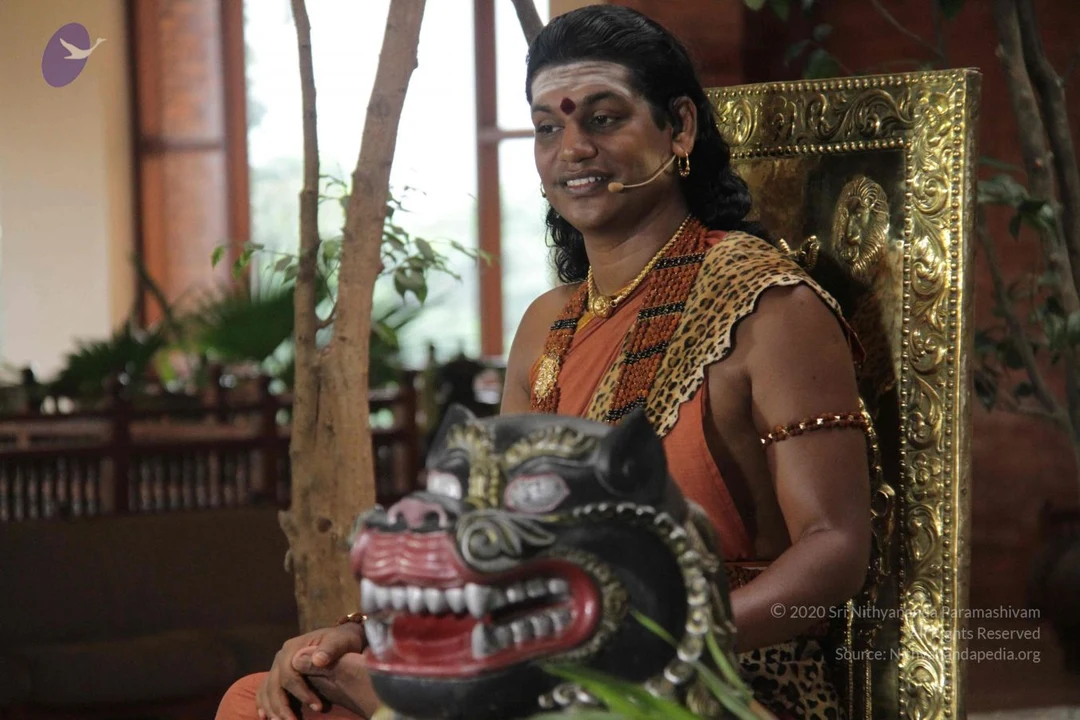
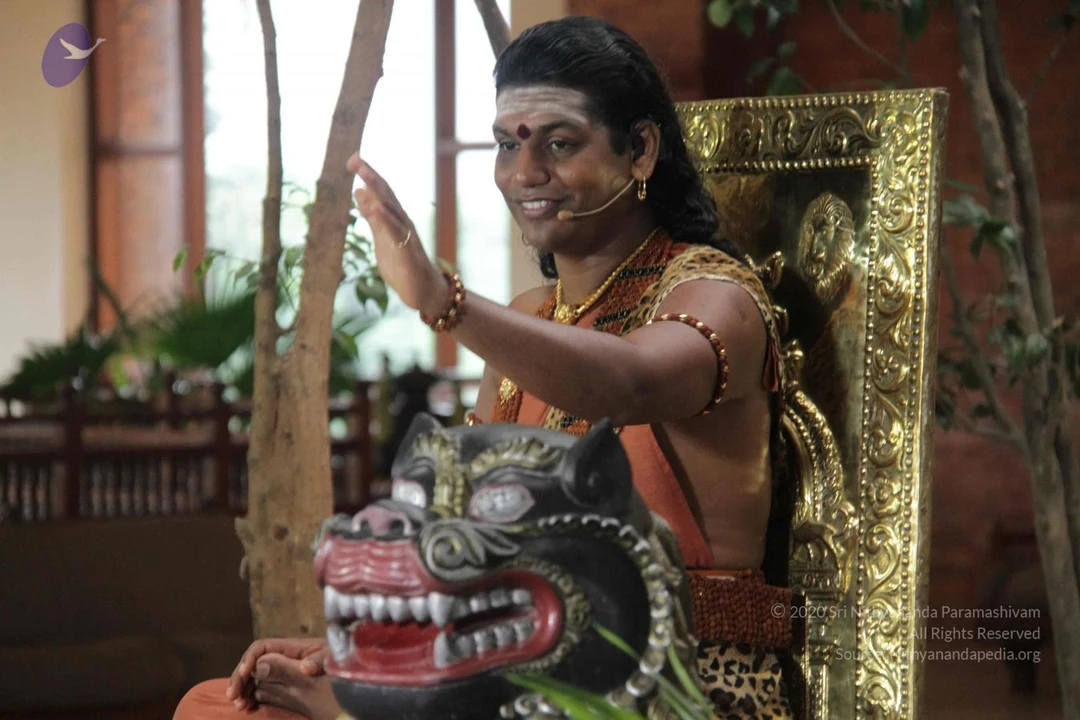
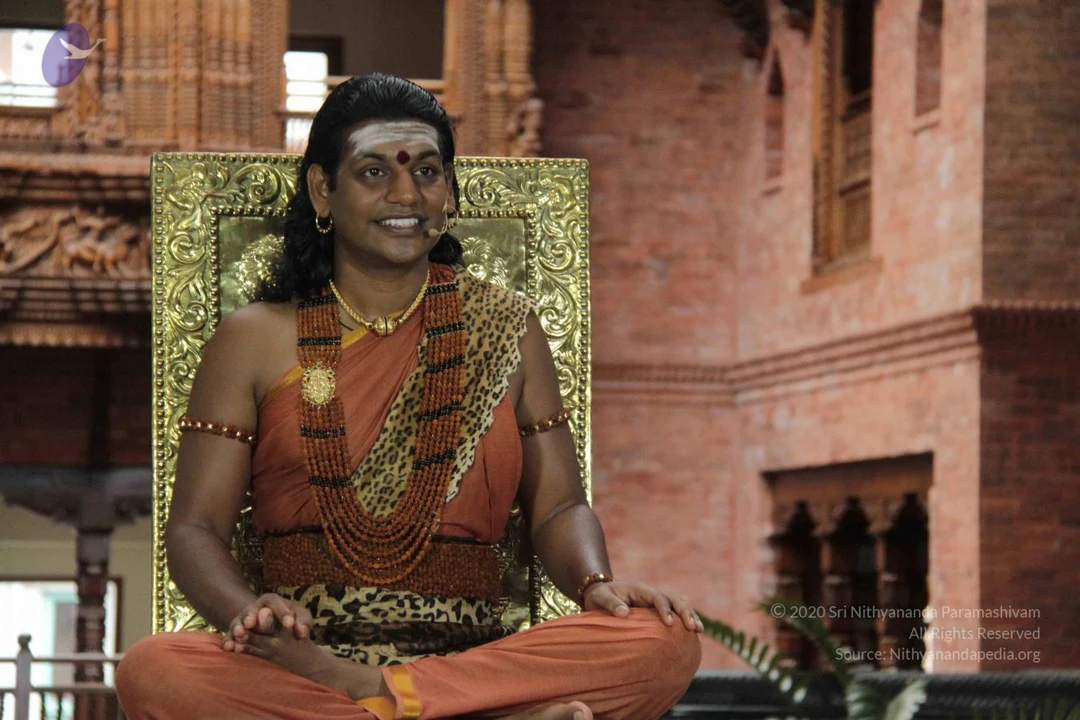
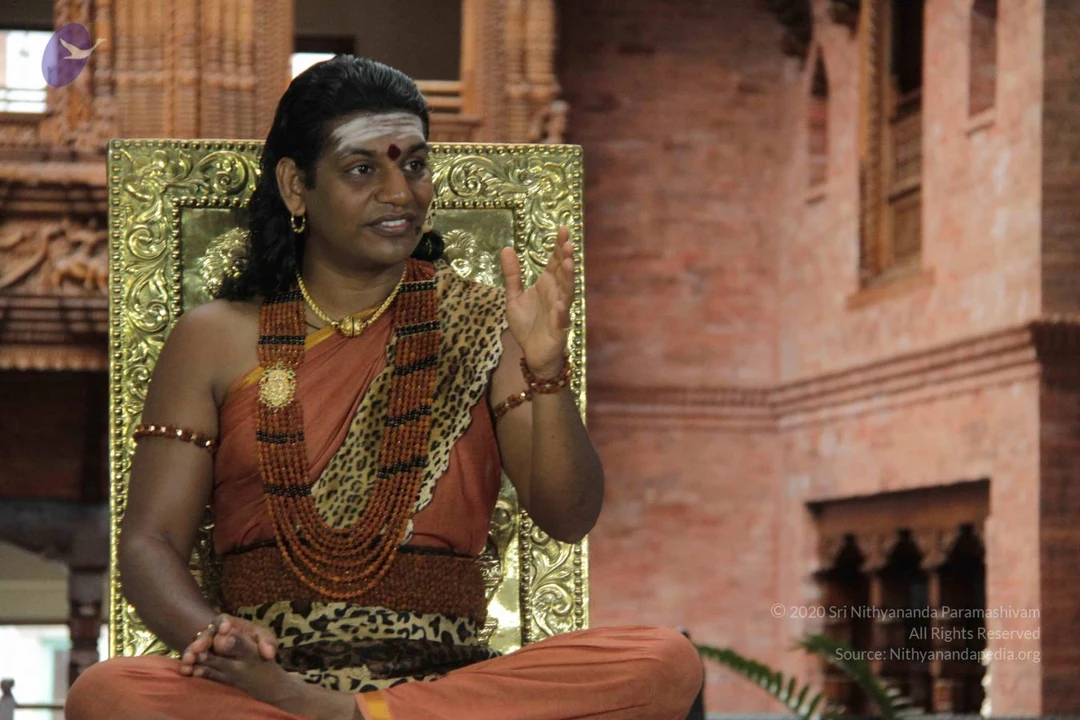
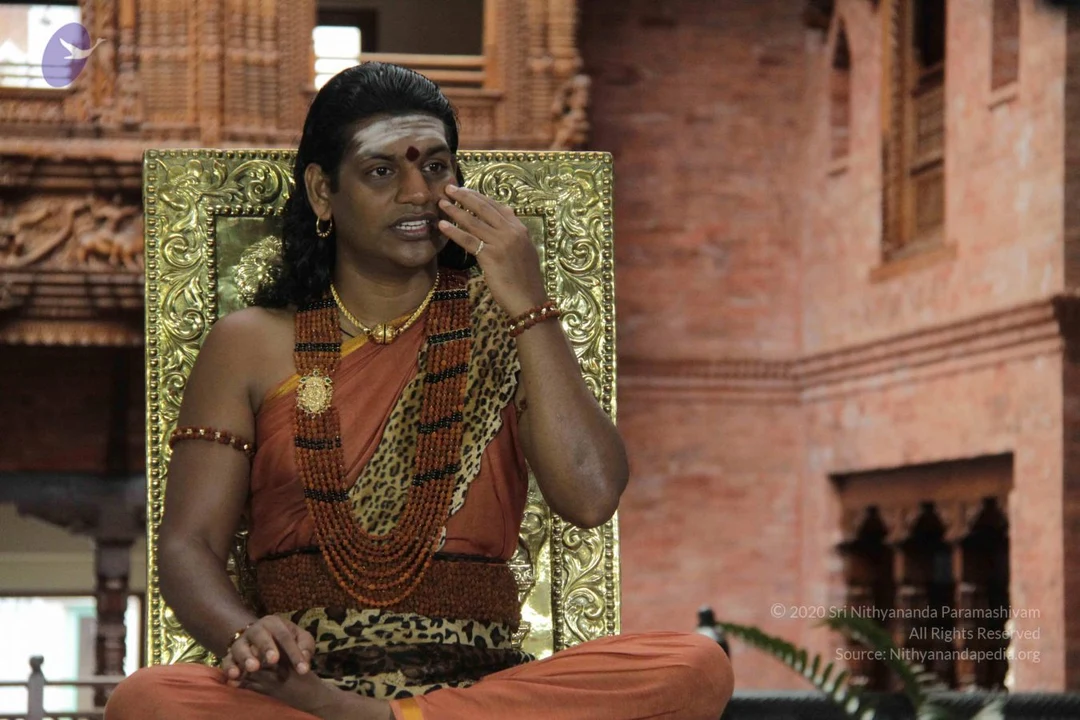
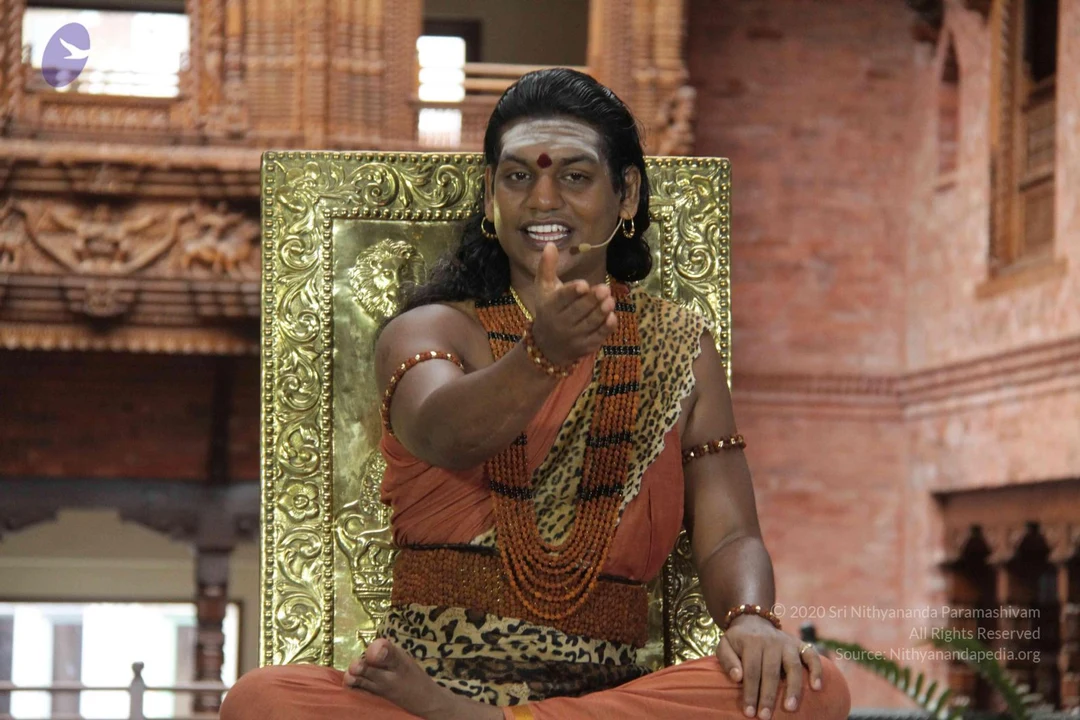
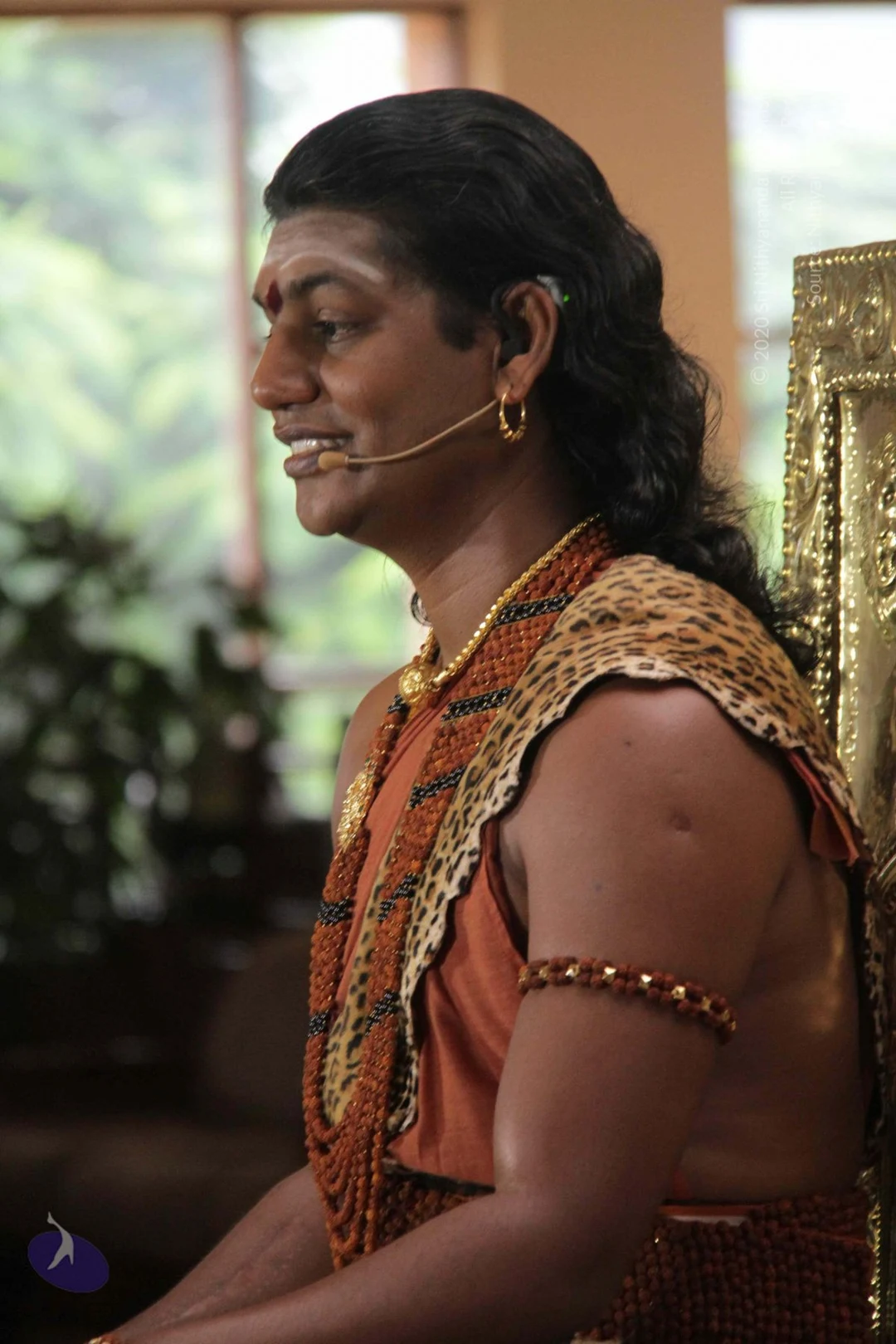
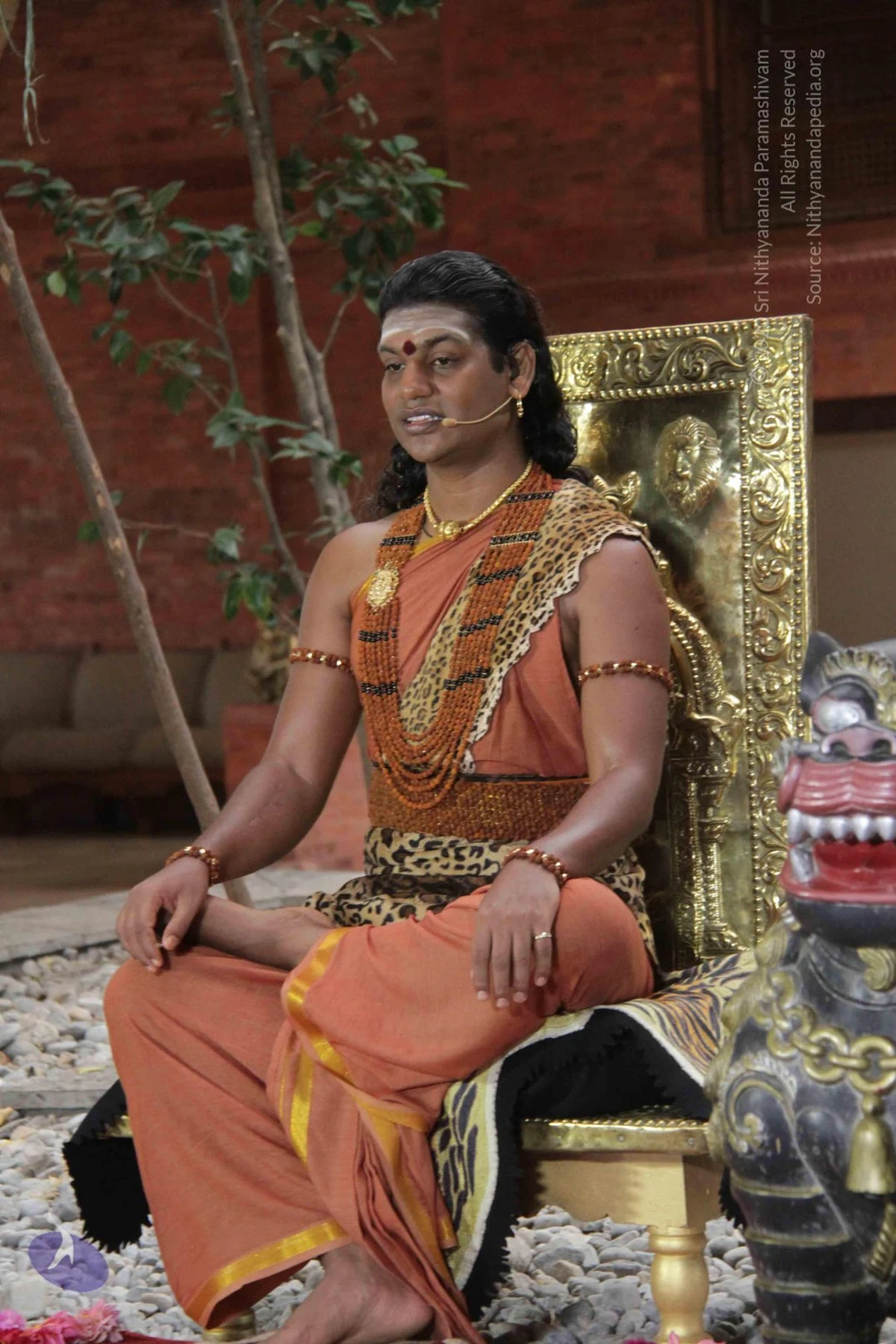
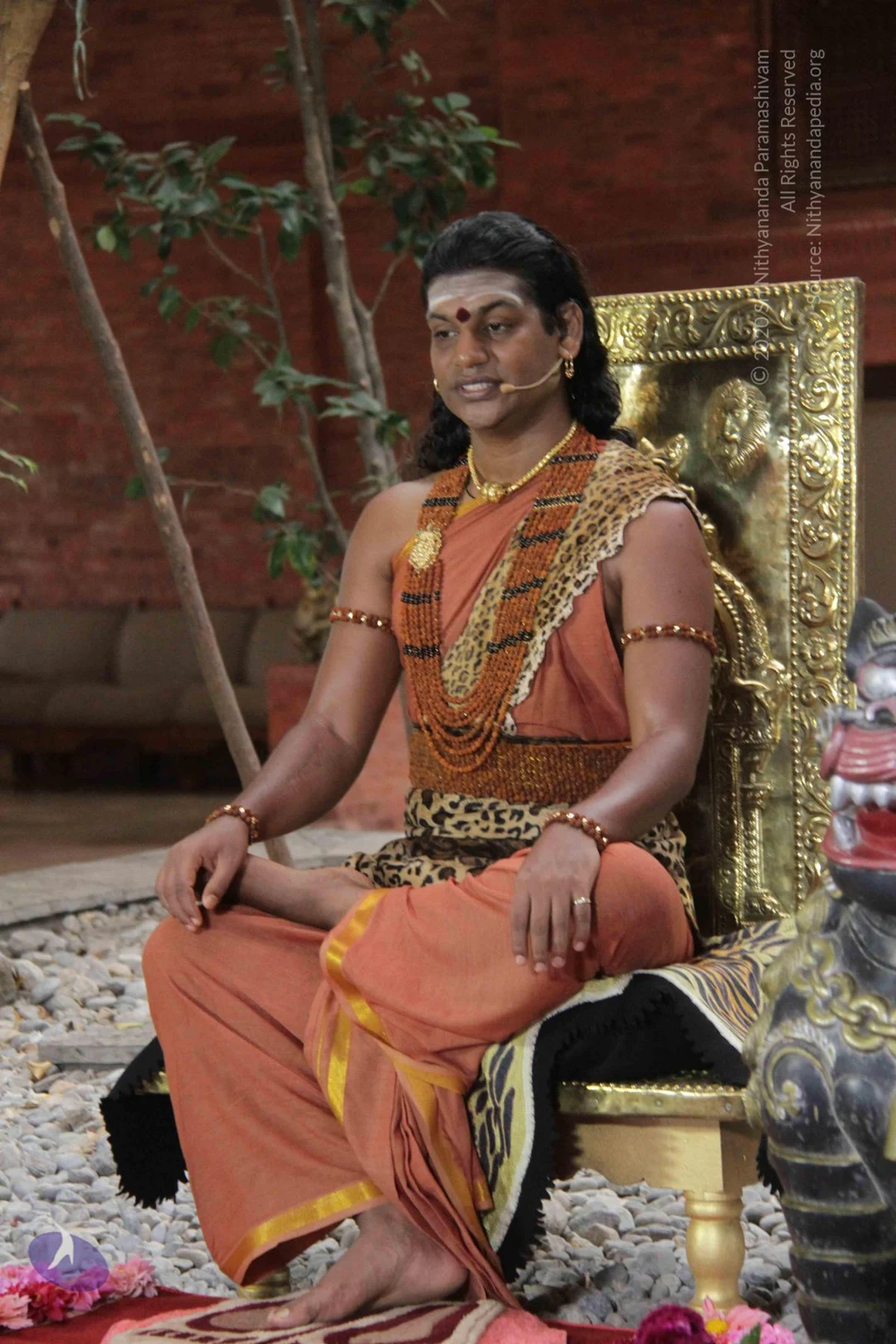
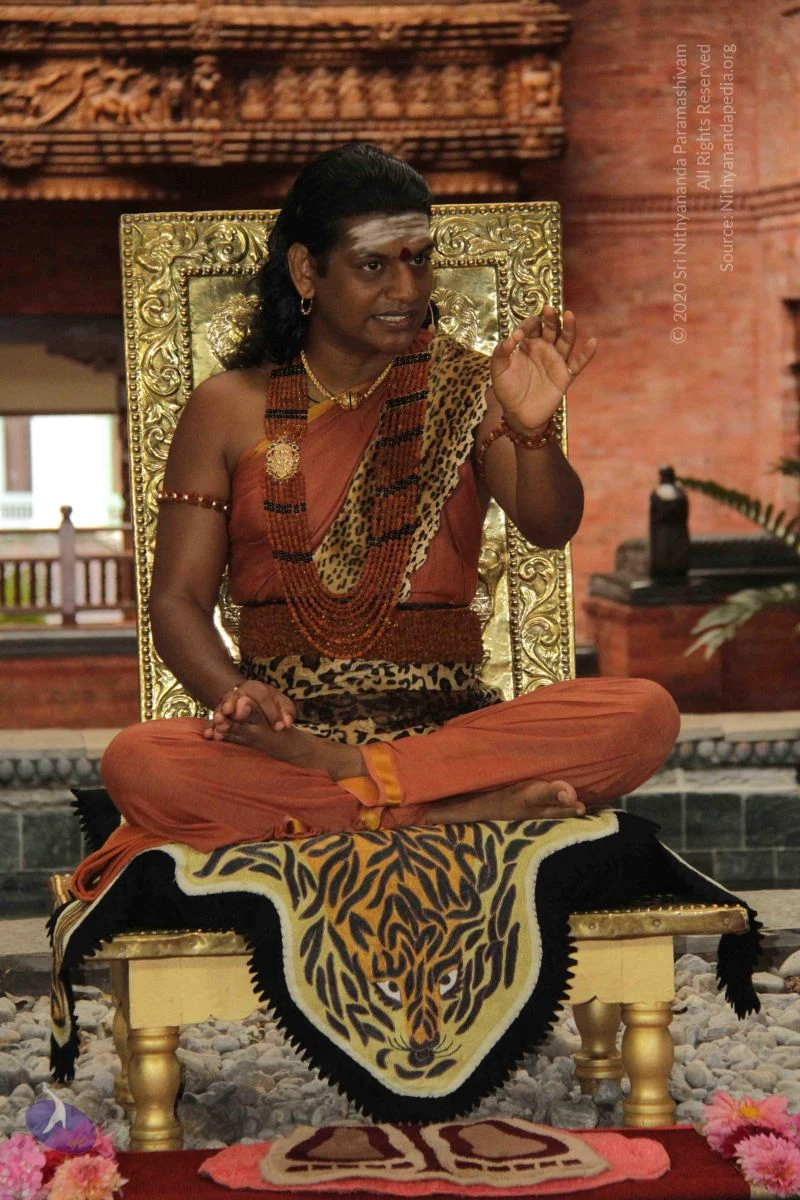
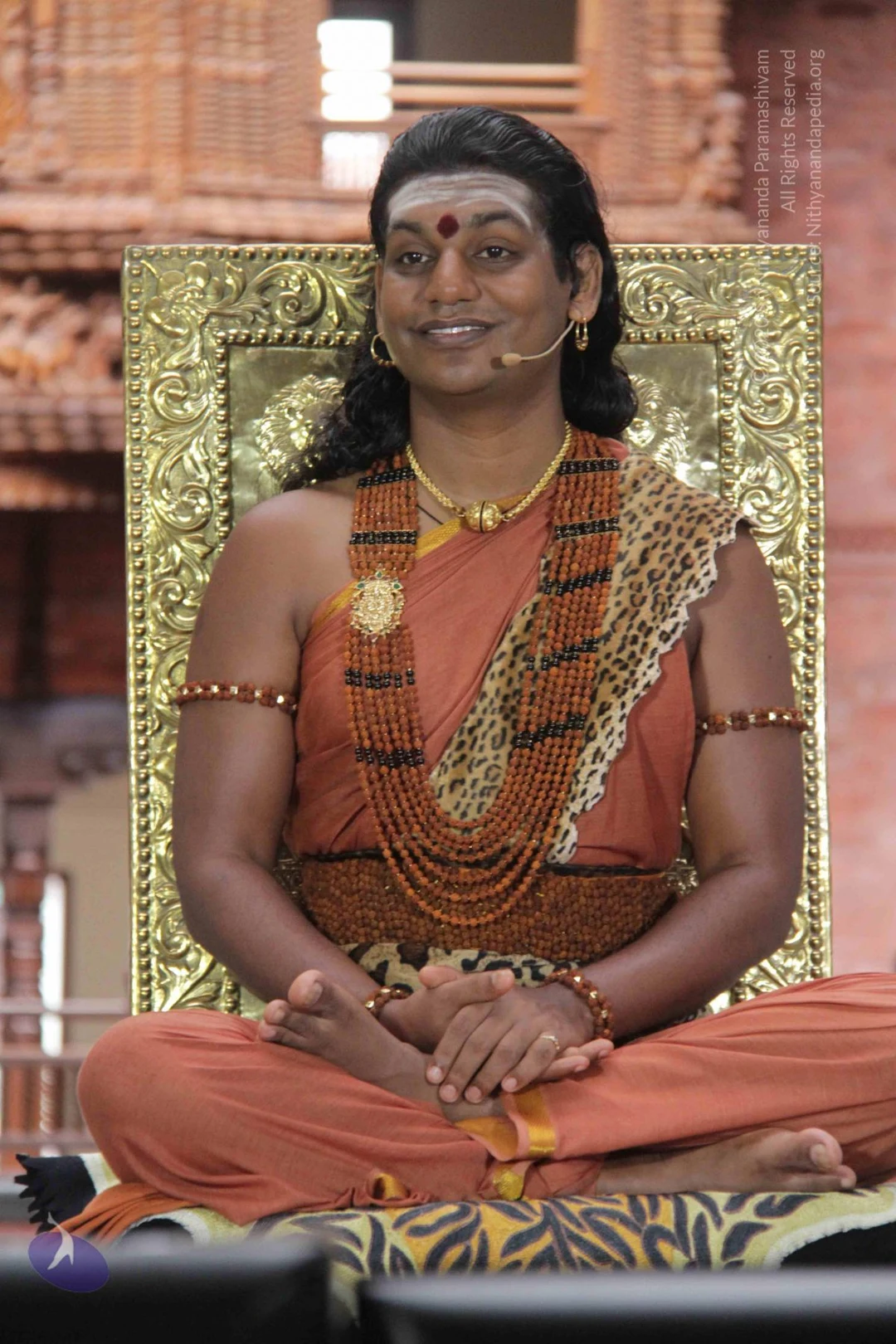
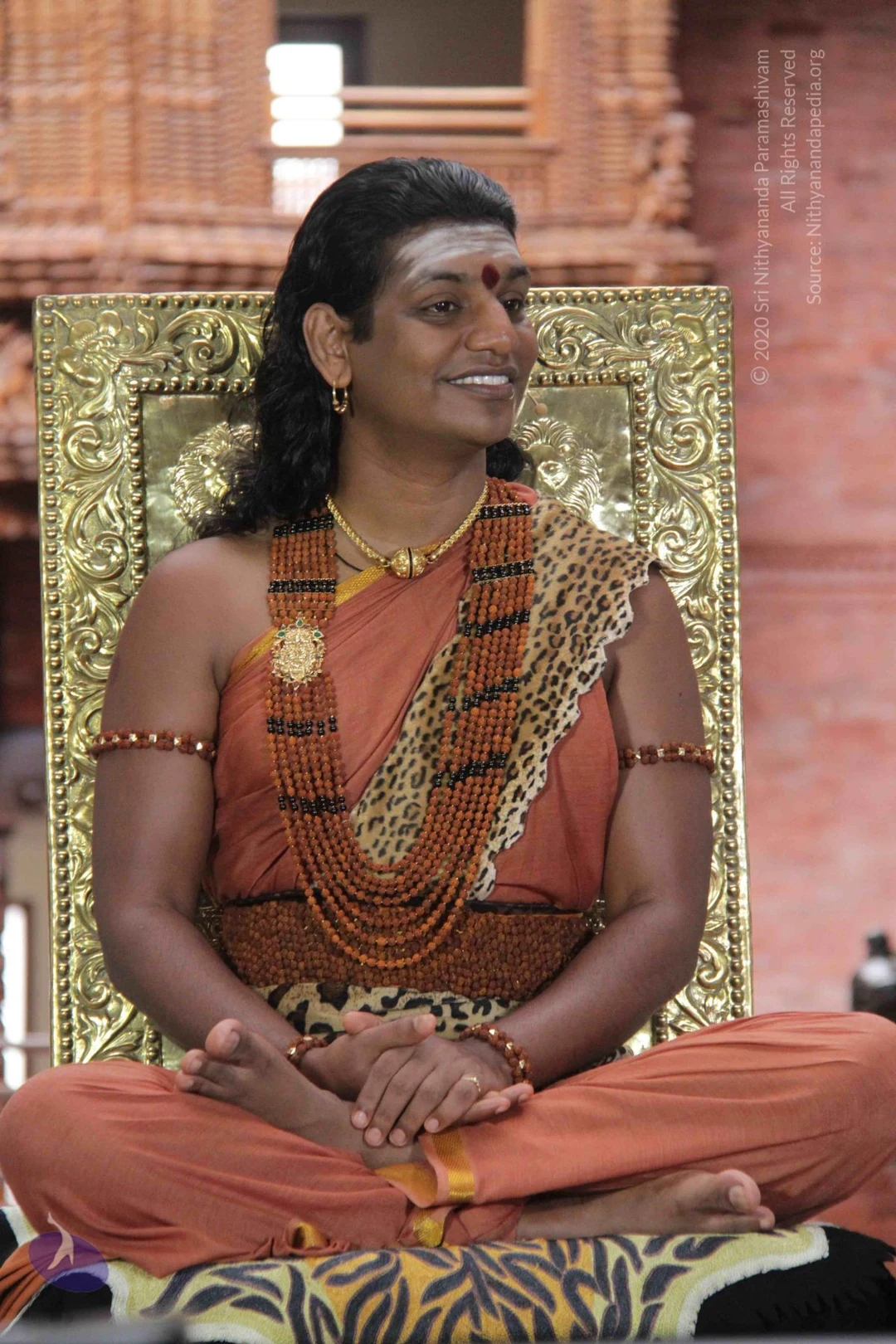
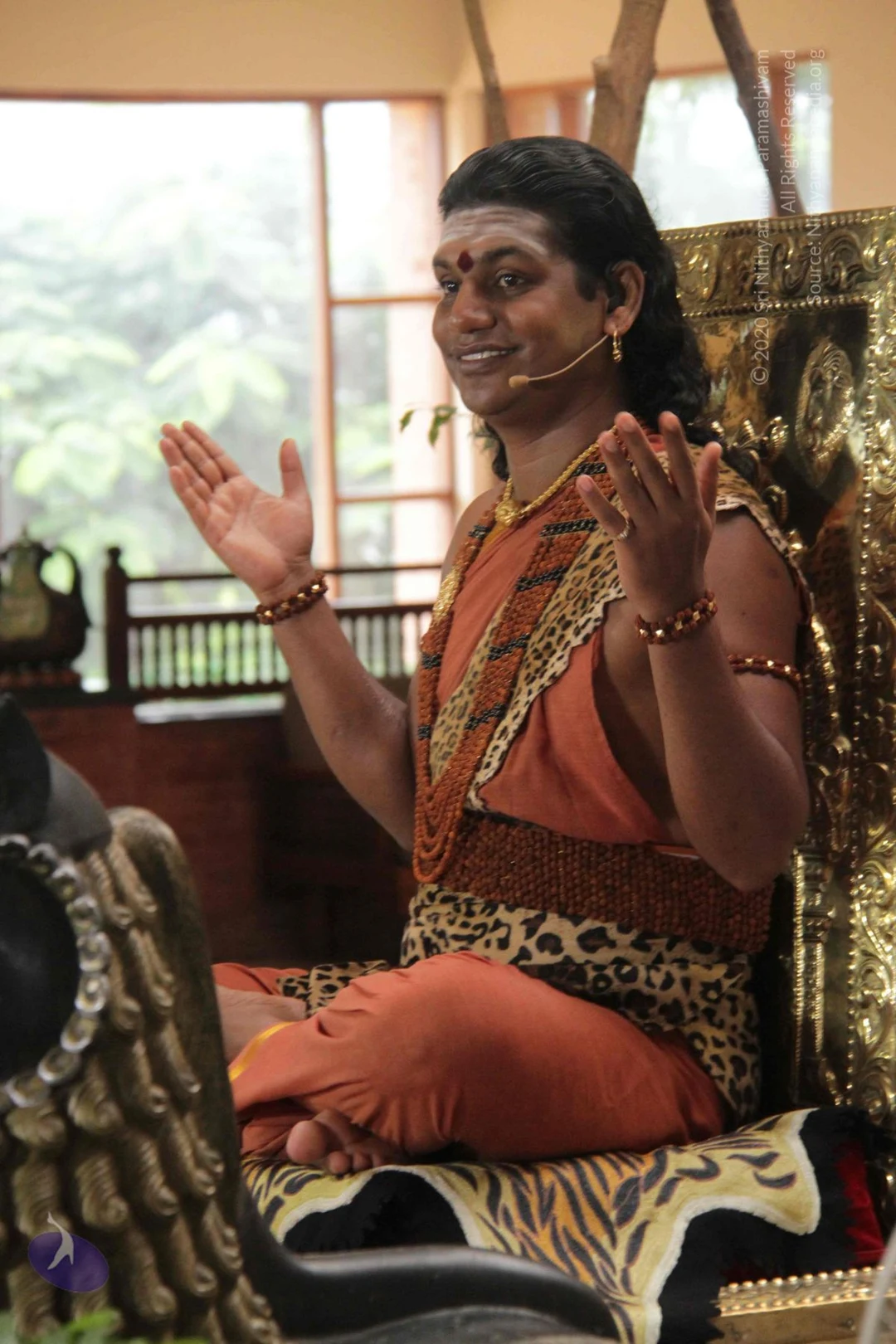
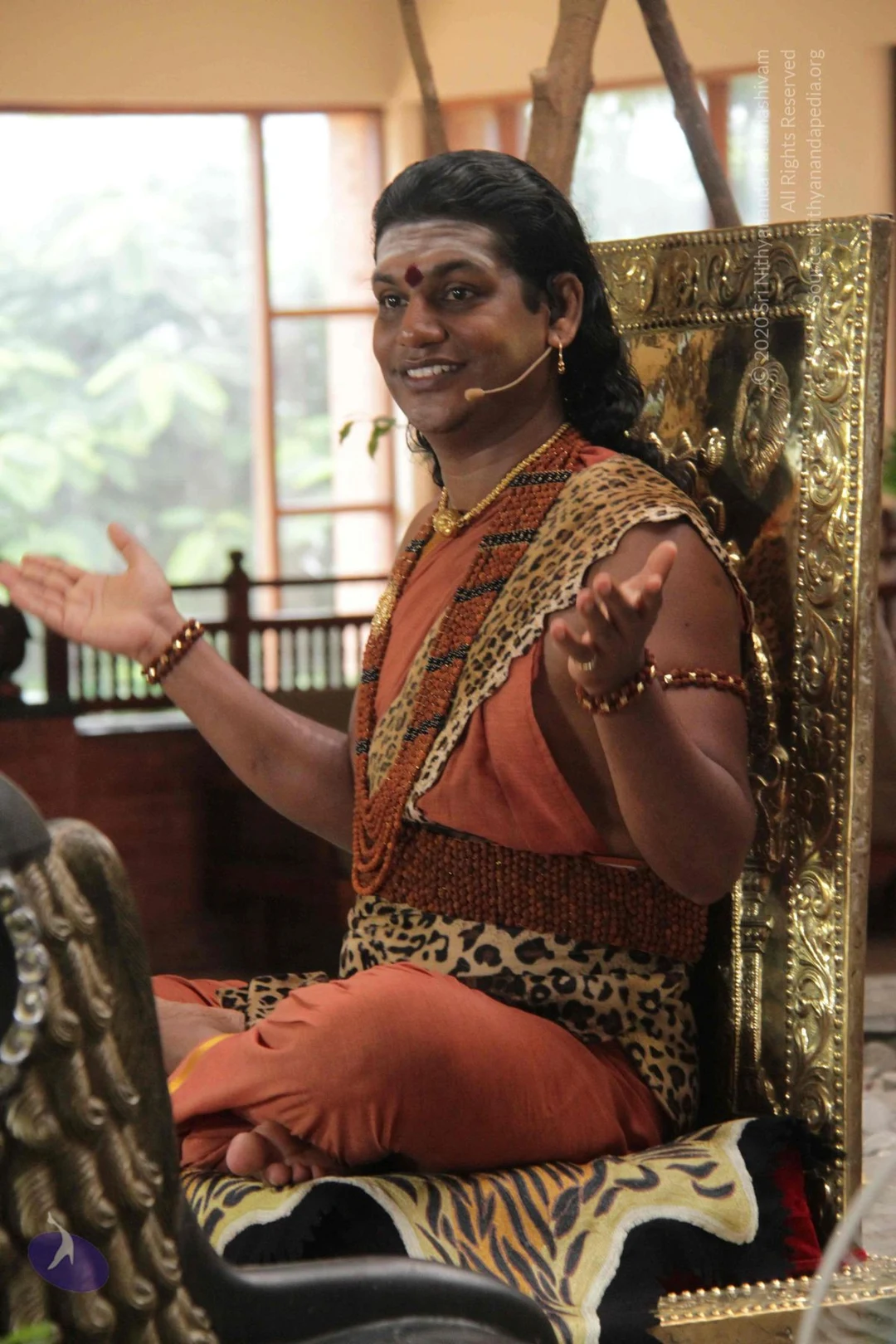
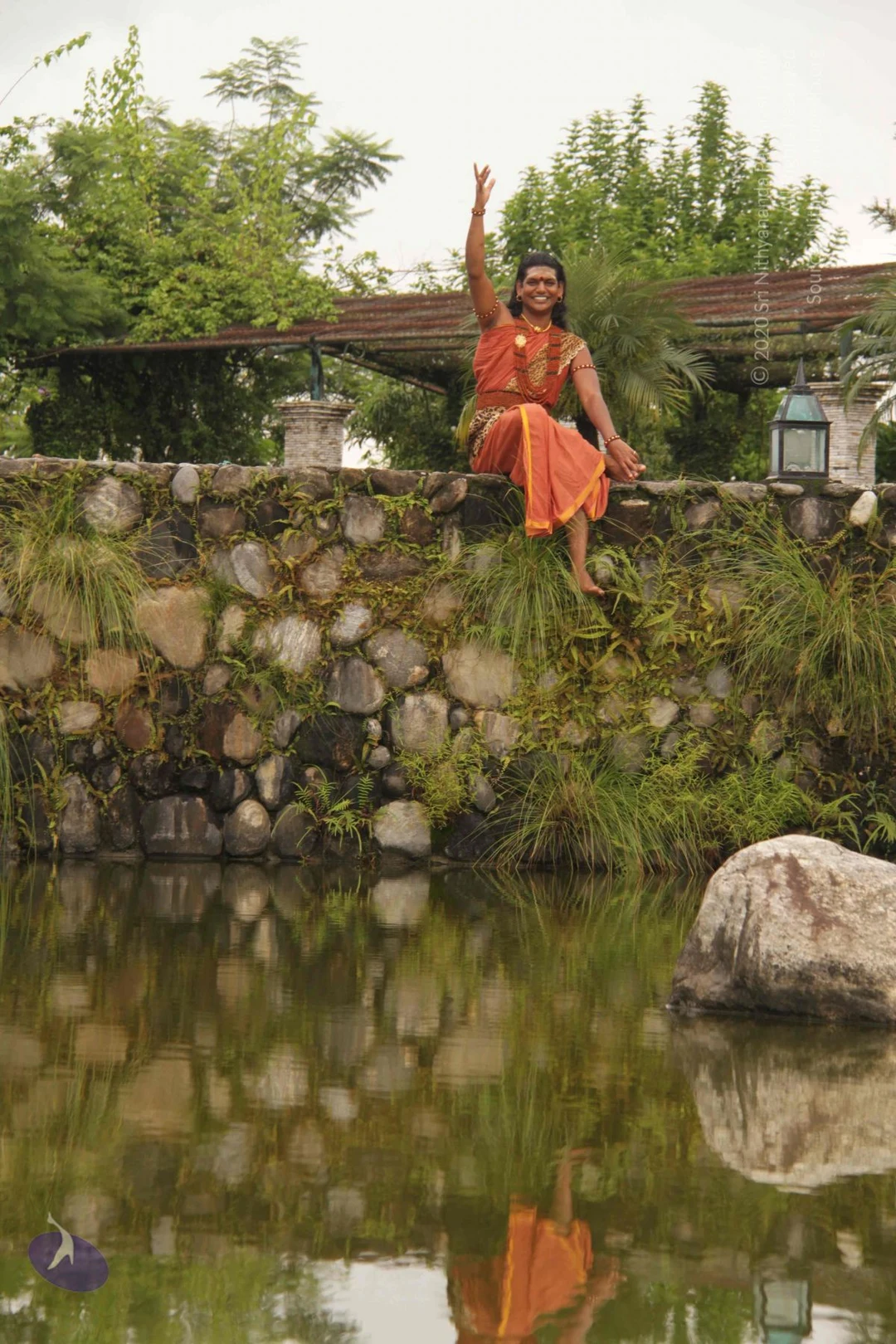
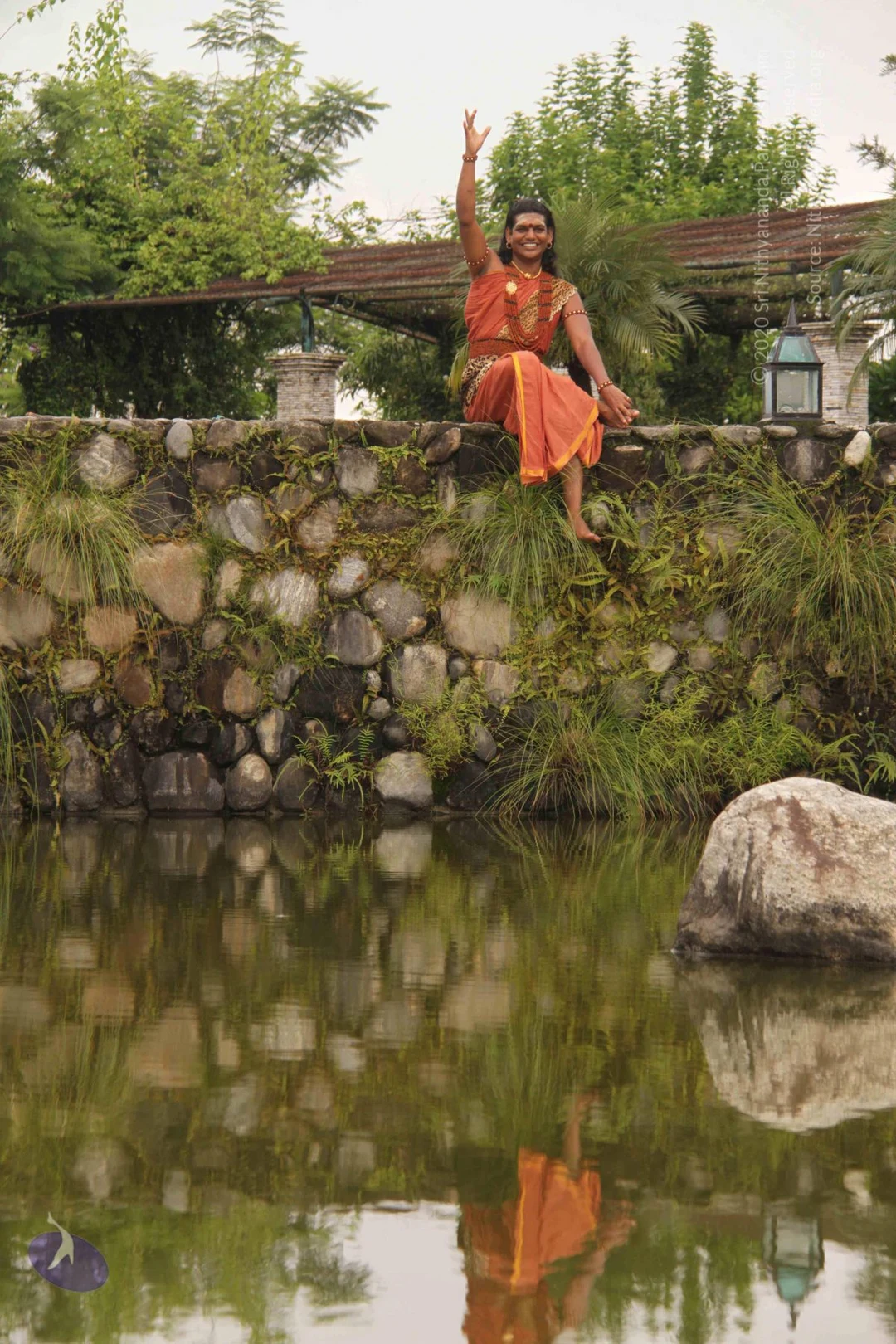
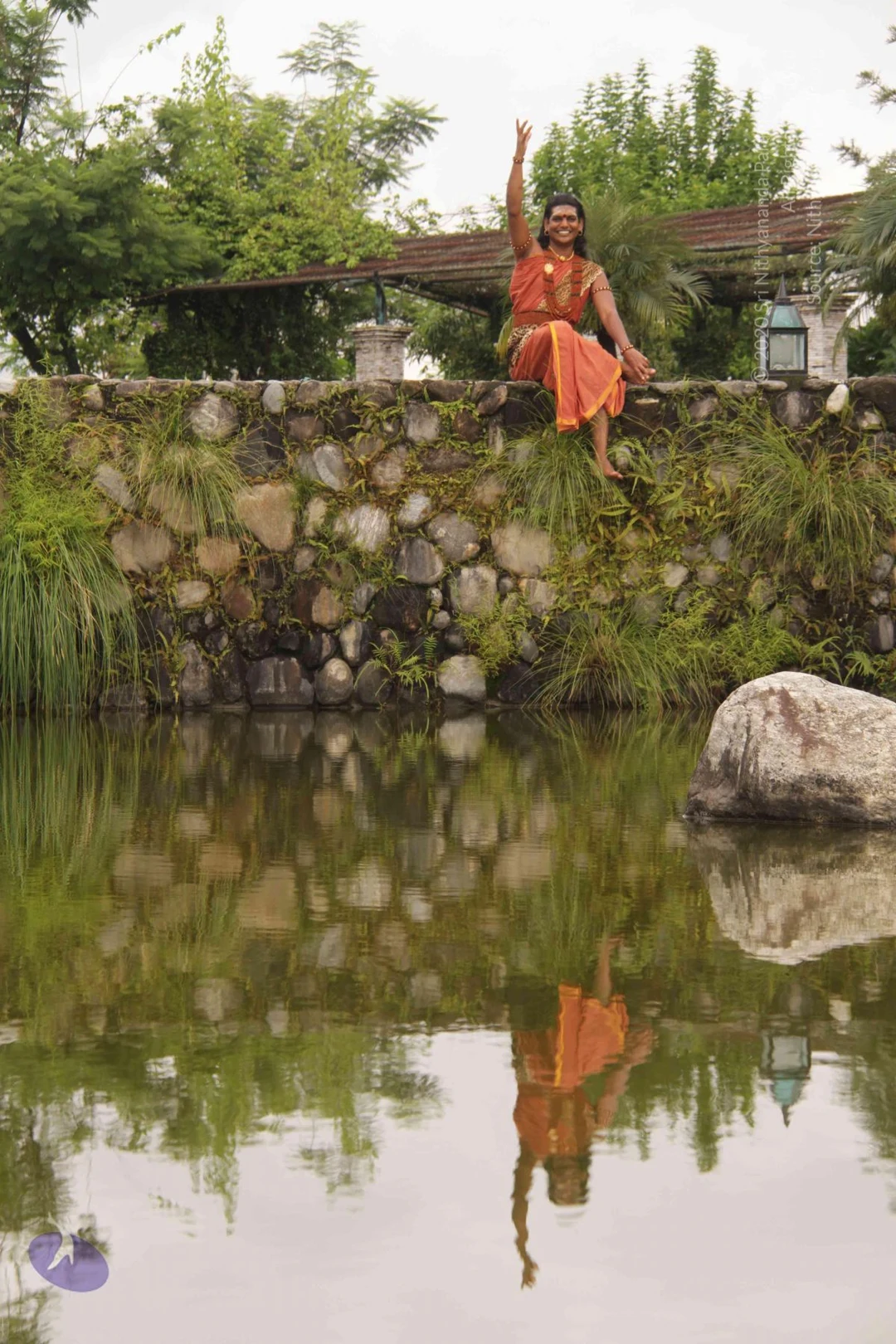
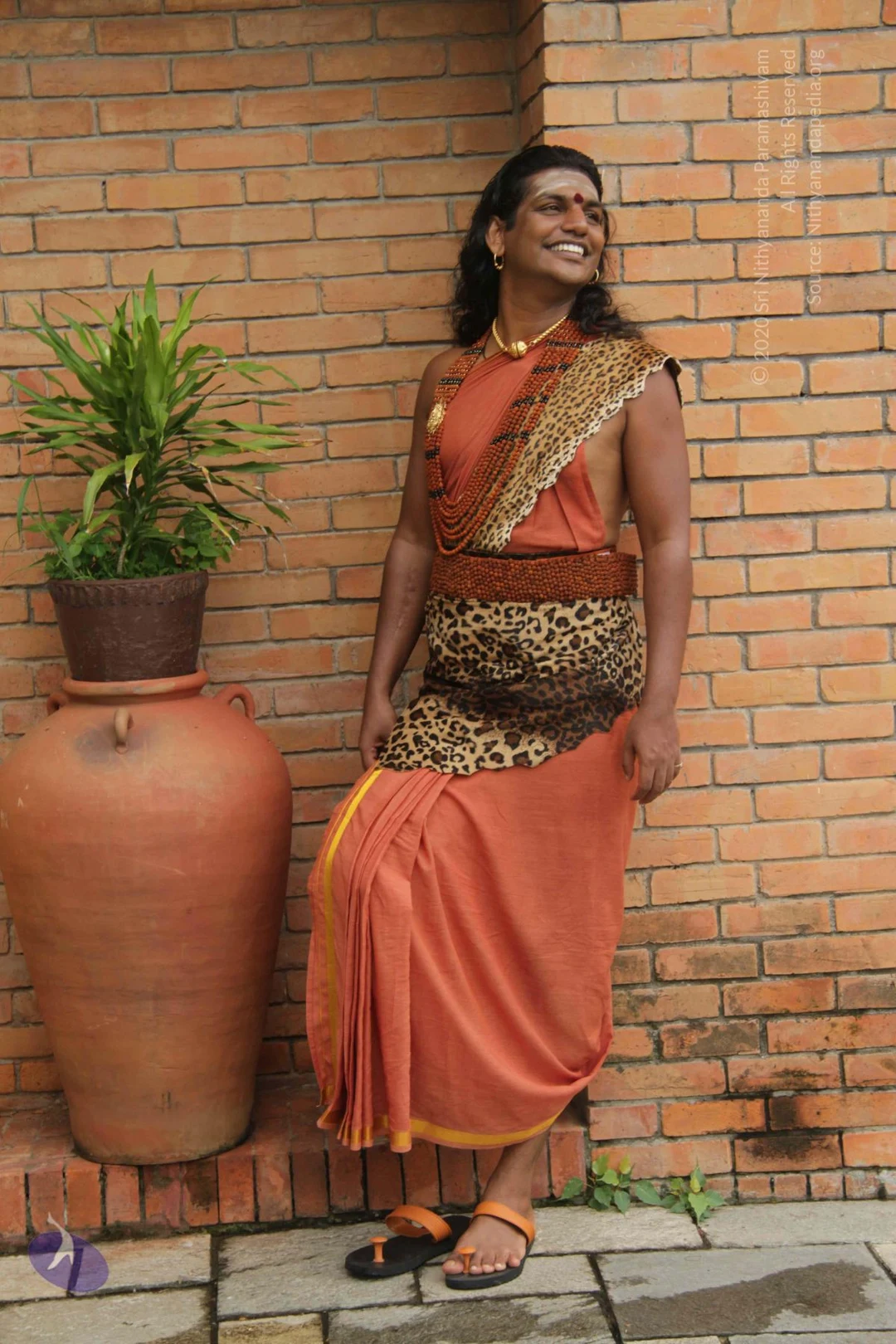
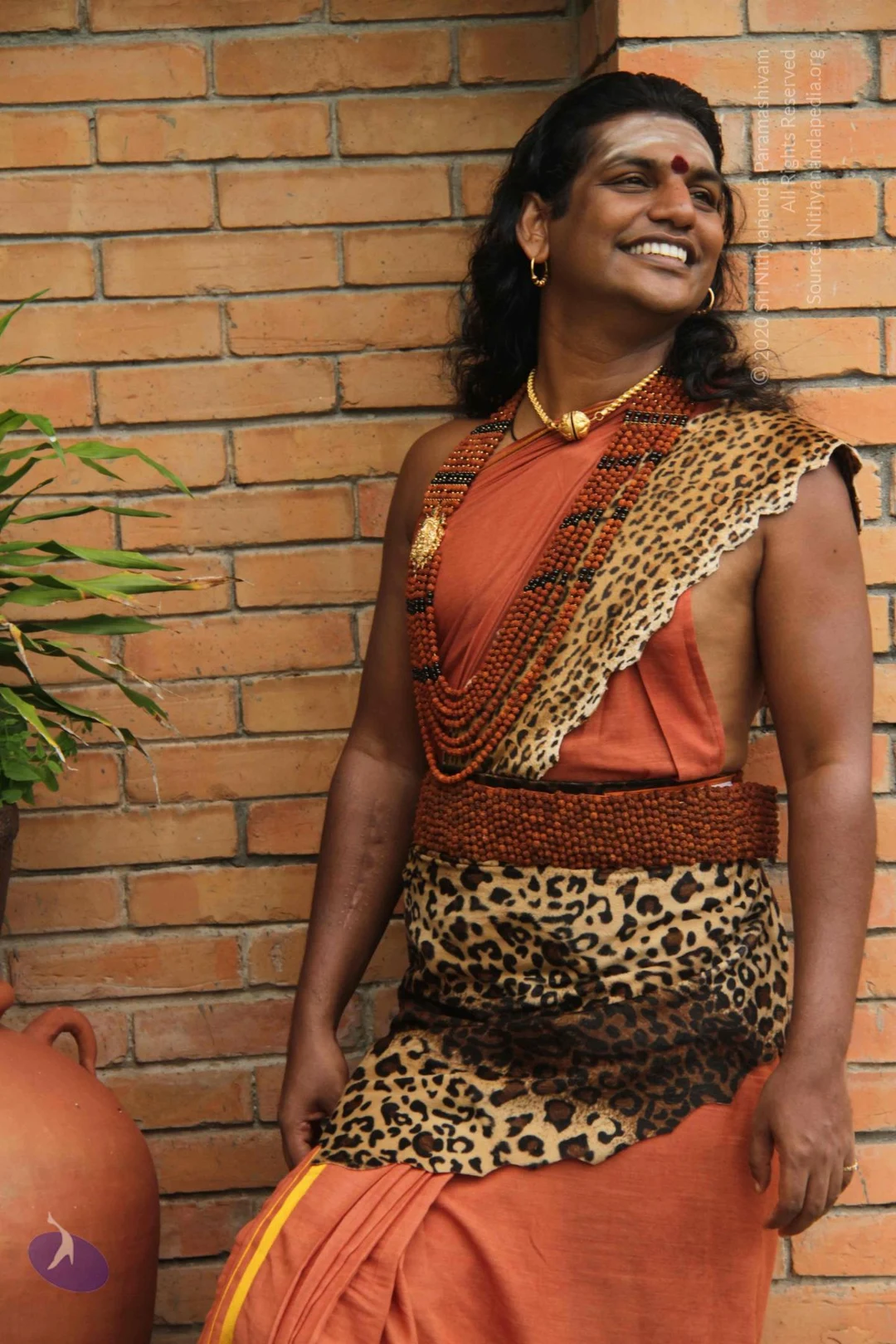
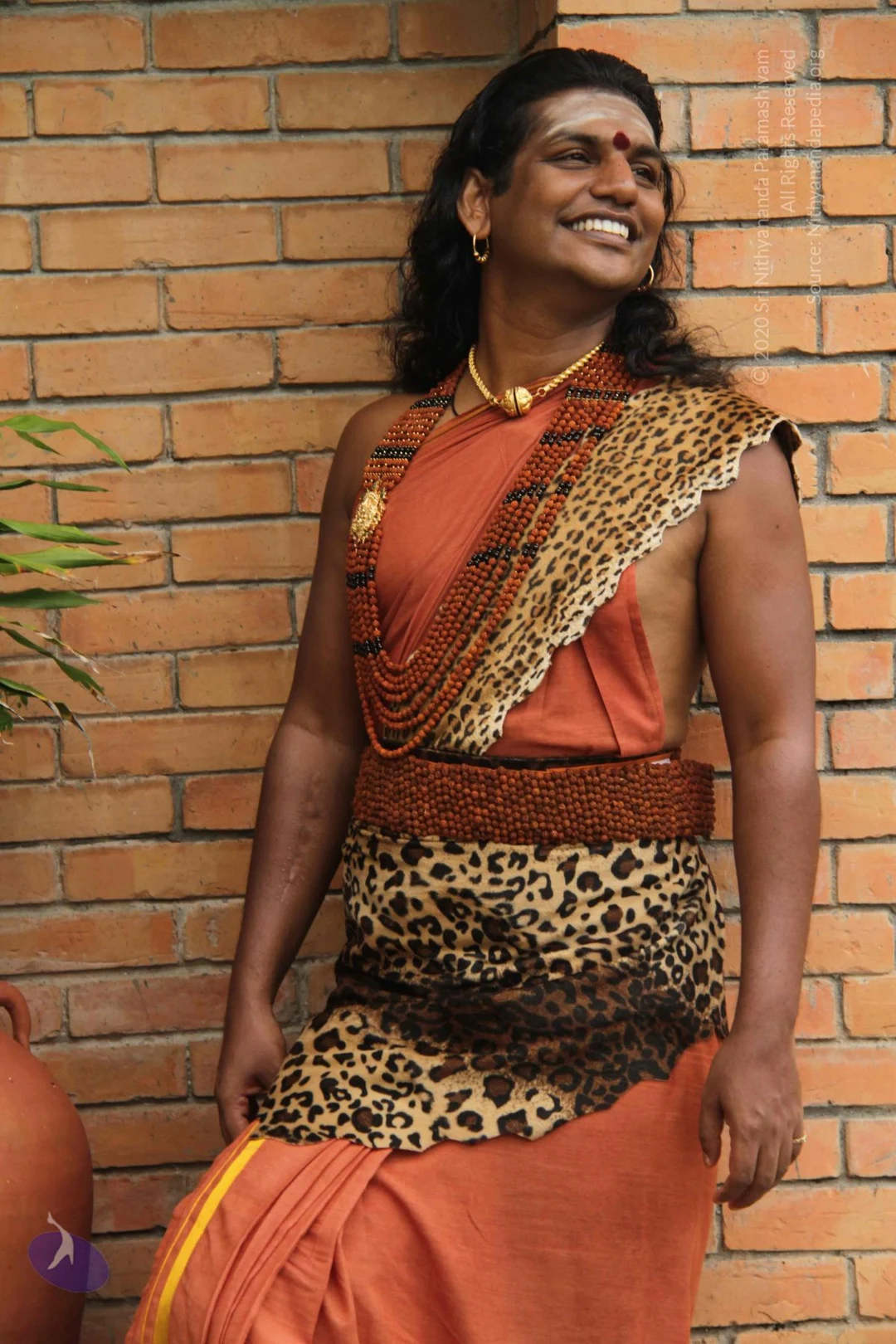
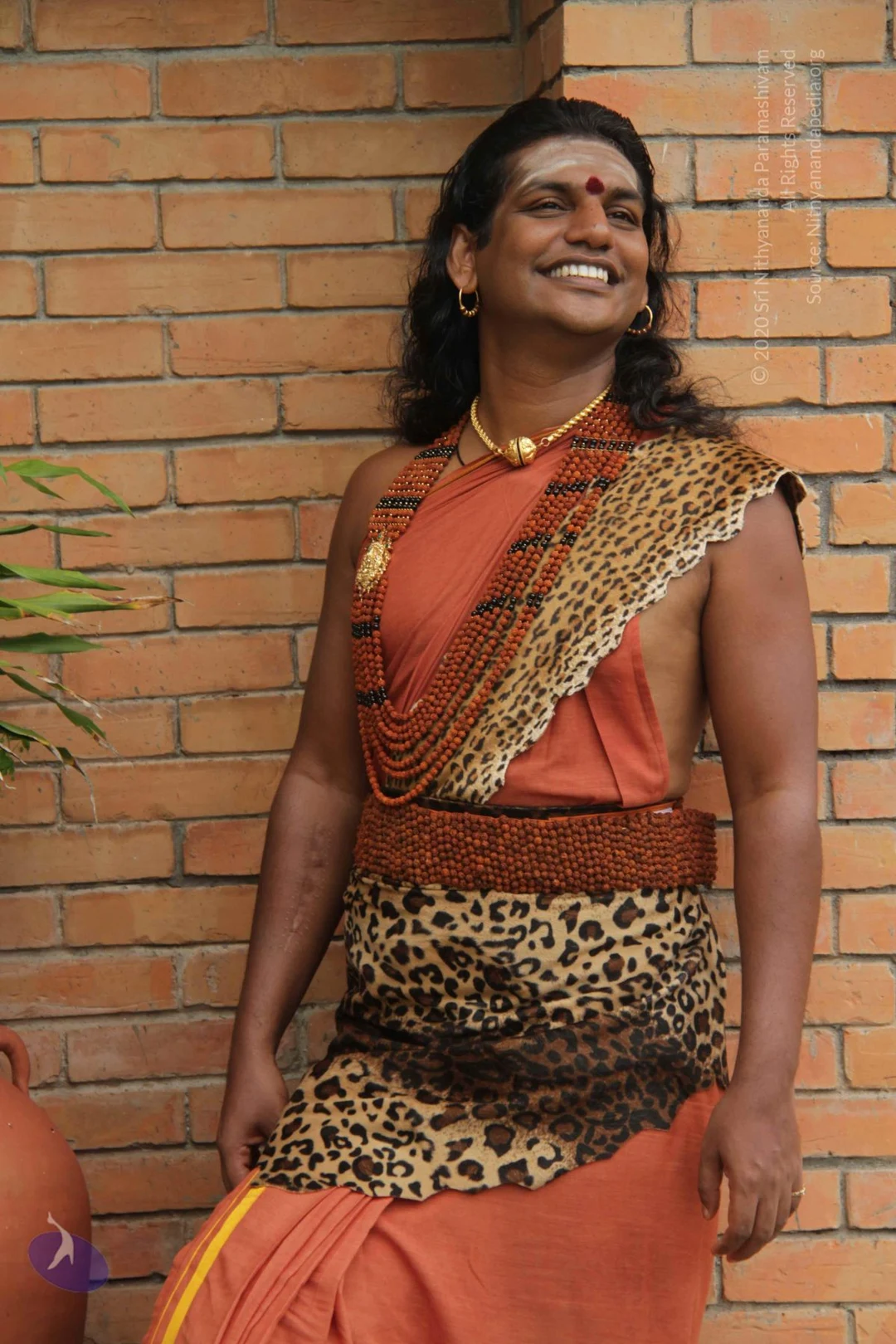
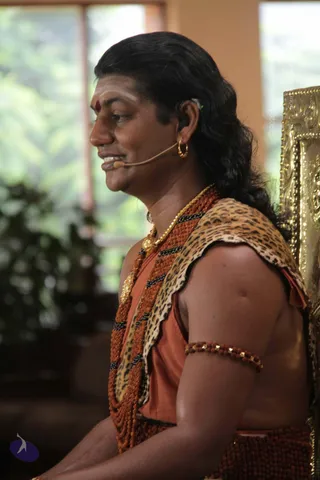
A man with long swept-back dark hair sits cross-legged on a gold-framed ornate throne, smiling and gazing to the side. He wears an orange-saffron dhoti and shawl with a leopard-print wrap across his chest and waist, multiple strands of dark and orange rudraksha malas, a gold necklace, gold earring, and orange beaded armbands and wrist bracelets. A red bindi and white markings are on his forehead. A carved black-and-gold guardian lion statue sits to the left, with pink and red flowers at the base of the throne and a red floor mat with black fringed trim beneath. The background shows a red-brick wall and a potted plant.A man sits cross-legged on an ornate gold throne with carved golden panels and black-and-gold trim, set on a red-and-maroon mat before pink flowers and a pebble bed. He wears an orange-saffron dhoti and upper cloth with a gold border, a leopard-print shawl, a thick rudraksha mala and gold ceremonial necklace, rudraksha armbands, a white forehead marking with a red bindi, and long swept-back hair. Behind him stand carved red-brick walls and wooden railings. Swamiji (probable): the saffron clothing, rudraksha malas, gold necklace and swept-back hair match the page's identification, seated on a throne as the central figure.Photo of a man seated cross-legged on an ornate gold-covered throne with carved gold panels, on a leopard-print cushion over a black and cream rug, with pink flowers and grey pebbles at the base. He wears a saffron-orange dhoti with gold borders, a leopard-print shawl draped over one shoulder and a leopard-print waist cloth, multiple strands of orange and black rudraksha beads with a gold pendant, a gold necklace, gold earrings, rudraksha armbands and wrist beads. His long dark hair is swept back, with white and red tilak marks on his forehead. Behind him stand carved wooden balconies and red brick walls with a fountain-style basin. Probable Swamiji by appearance cues: swept-back long hair, saffron clothing, rudraksha malas and ceremonial gold necklace, seated in a throne setting.A man sits cross-legged on a gilded wooden throne in an ornate carved wooden courtyard with a stone-lined pool behind him. He wears an orange-red dhoti with gold borders, a leopard-print shawl over one shoulder, and many strands of rudraksha beads across his chest and arms. He has long swept-back dark hair, gold earrings, a white tilak with a red bindi, and presses his palms together in anjali mudra with eyes closed. Pink flowers lie on a red cloth before the throne. Swamiji (probable): long swept-back hair, rudraksha malas and ceremonial adornment, seated in devotional pose. The scene suggests a satsang or darshan setting.Side profile of a seated man on a golden throne with ornate gold-toned carved panels at right. He has long, swept-back black hair, a red bindi and white forehead markings, a small gold hoop earring, and a headset microphone near his mouth. He wears an orange-red sleeveless garment, a leopard-print shawl draped over one shoulder, layered rudraksha malas, a gold chain necklace, and a rudraksha armlet. Blurred green foliage and windows form the background. Appearance cues of long swept hair, a leopard shawl and rudraksha malas match the page's a person label, so this is a person in person.A man seated on an ornate gold throne with carved lion-head detailing, wearing an orange saffron dhoti and a leopard-print shawl draped over his shoulder. He wears multiple strands of orange and black rudraksha malas, a gold pendant, gold armlets with beaded bands, and a small red bindi with white forehead markings, with a lapel microphone clipped on. His hands rest on his knees in a calm seated pose as he speaks. A carved black and gold lion statue stands at the right edge, a tiger-stripe cloth covers the seat, and a potted tree and red brick wall sit in the background over a bed of pebbles. Appearance-based identification suggests a person as the speaker, given the saffron clothing, rudraksha malas, ornate gold necklace and throne-seated discourse setting.
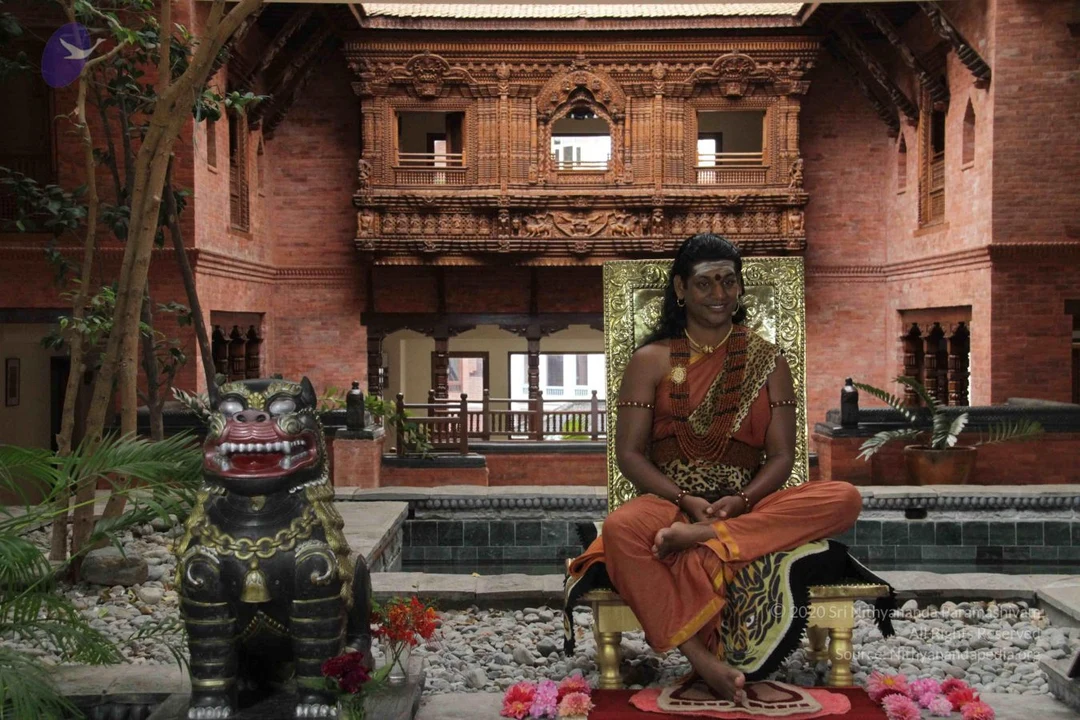
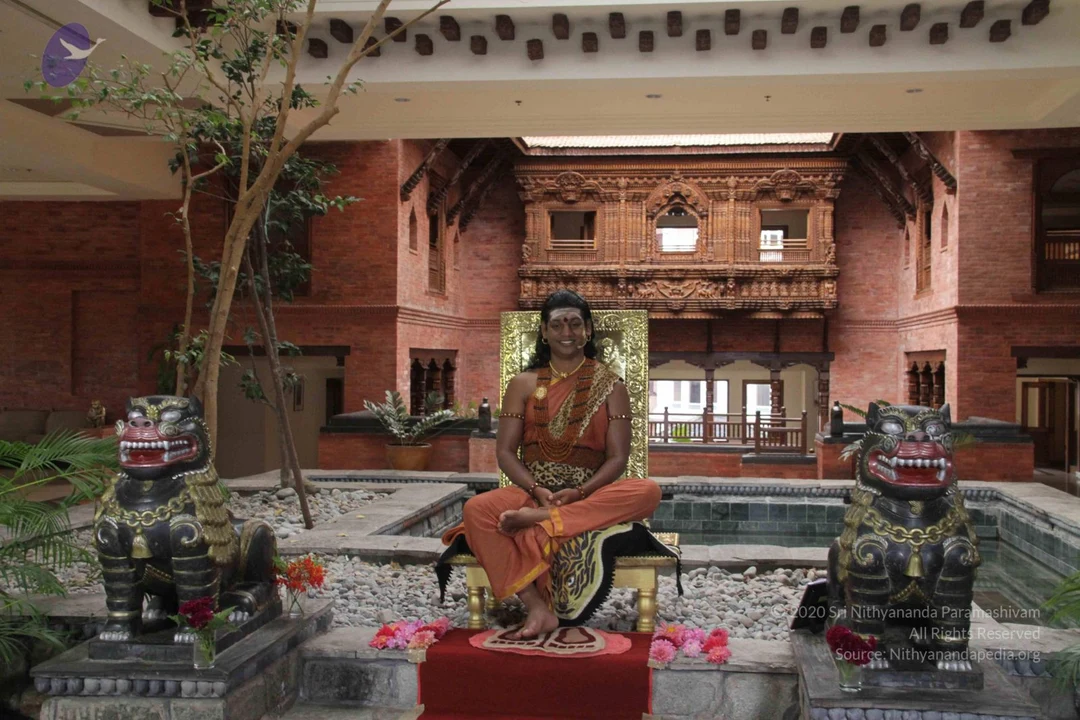
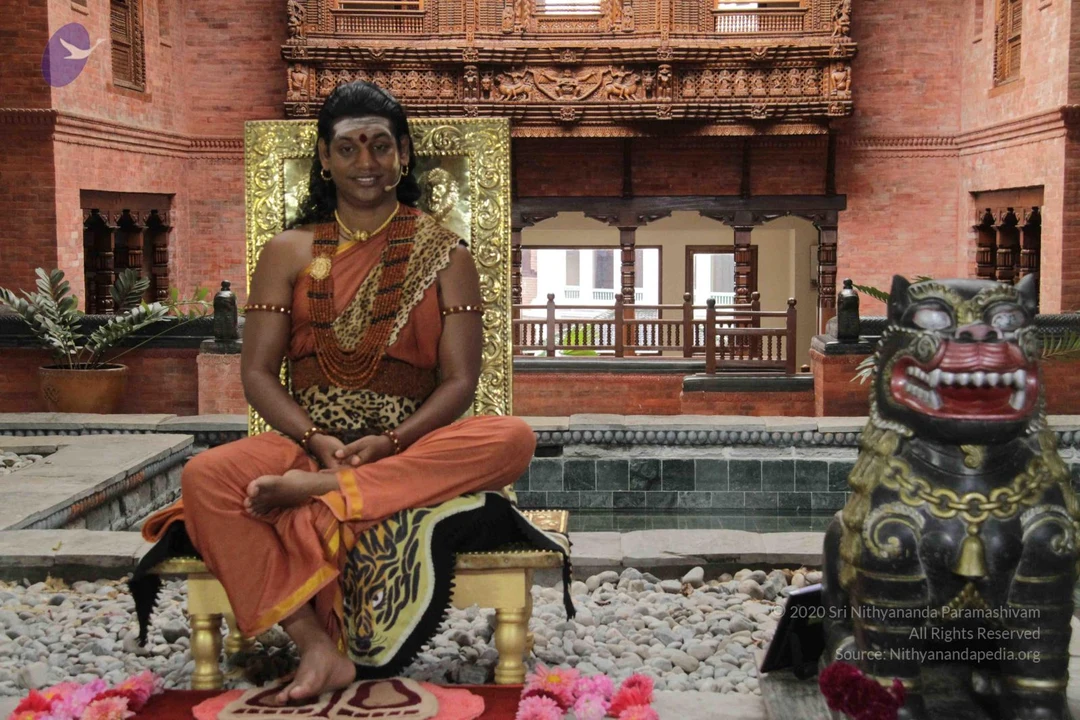
Photo-Shooting-with-Swamiji
173 photosSource gallery
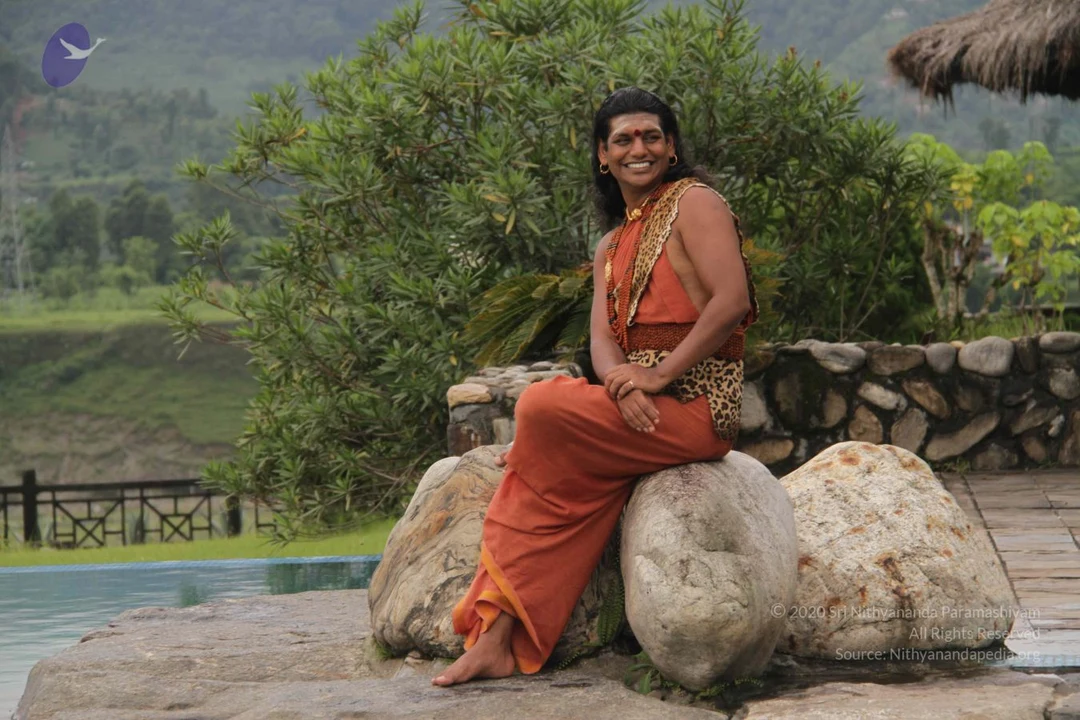
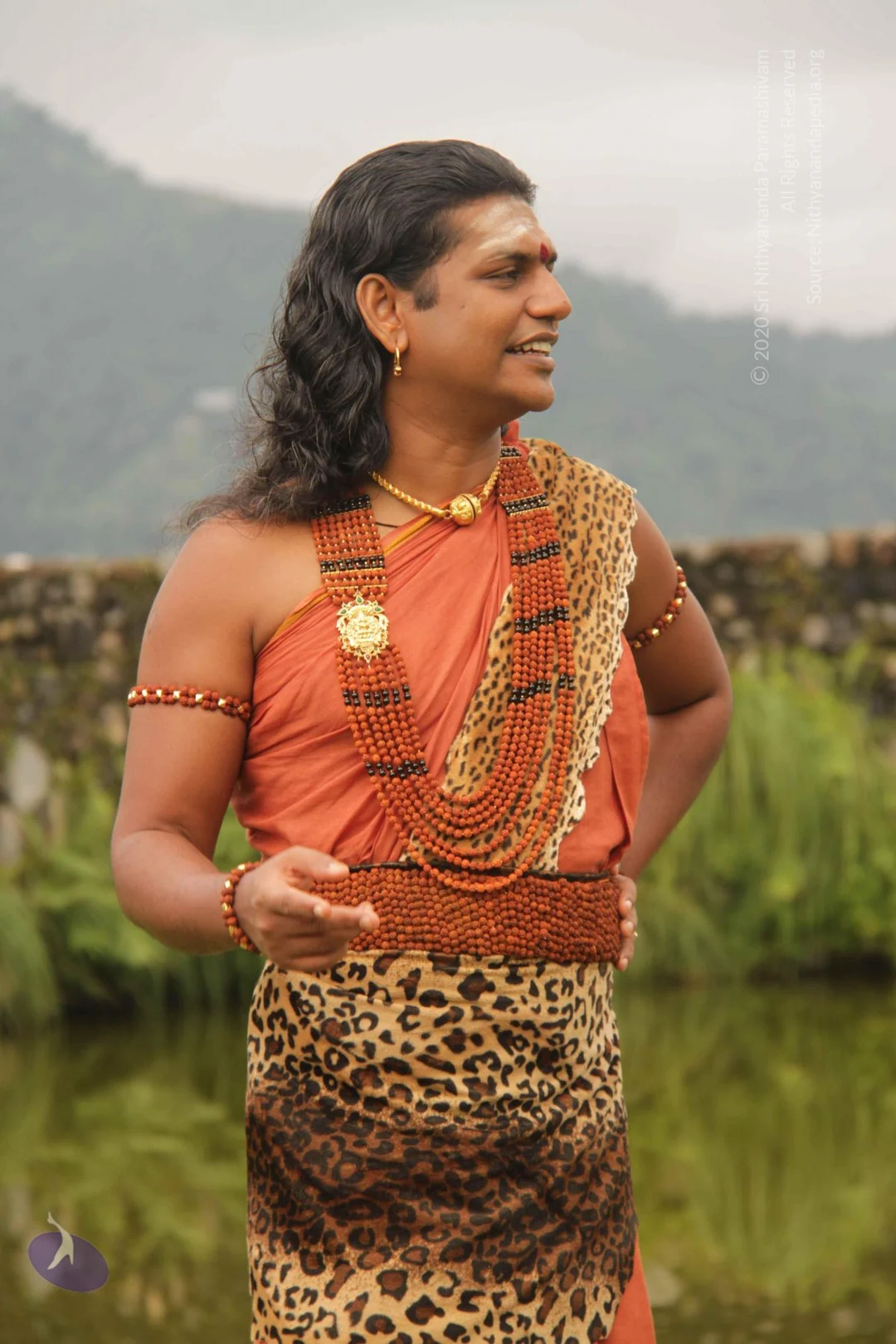
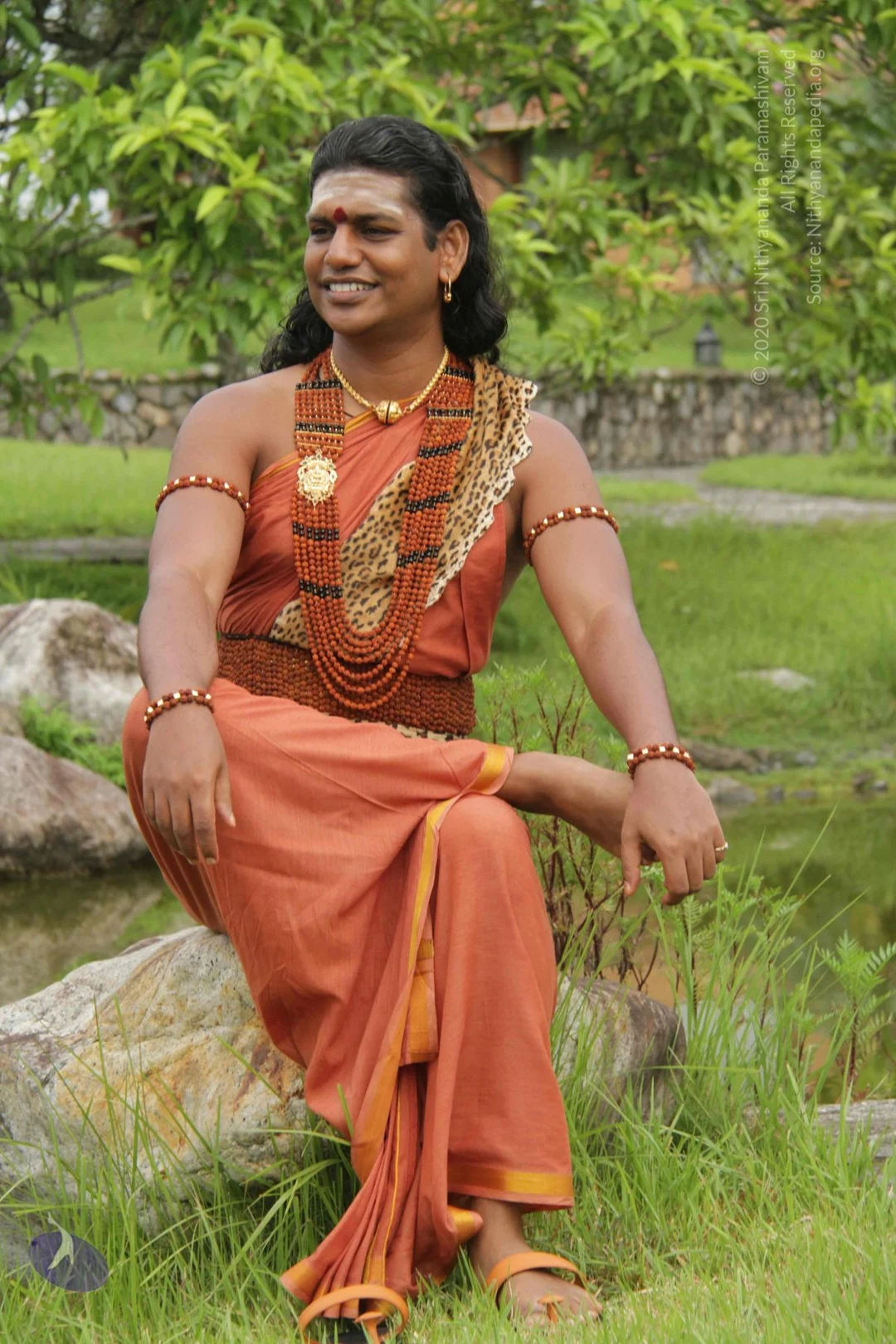
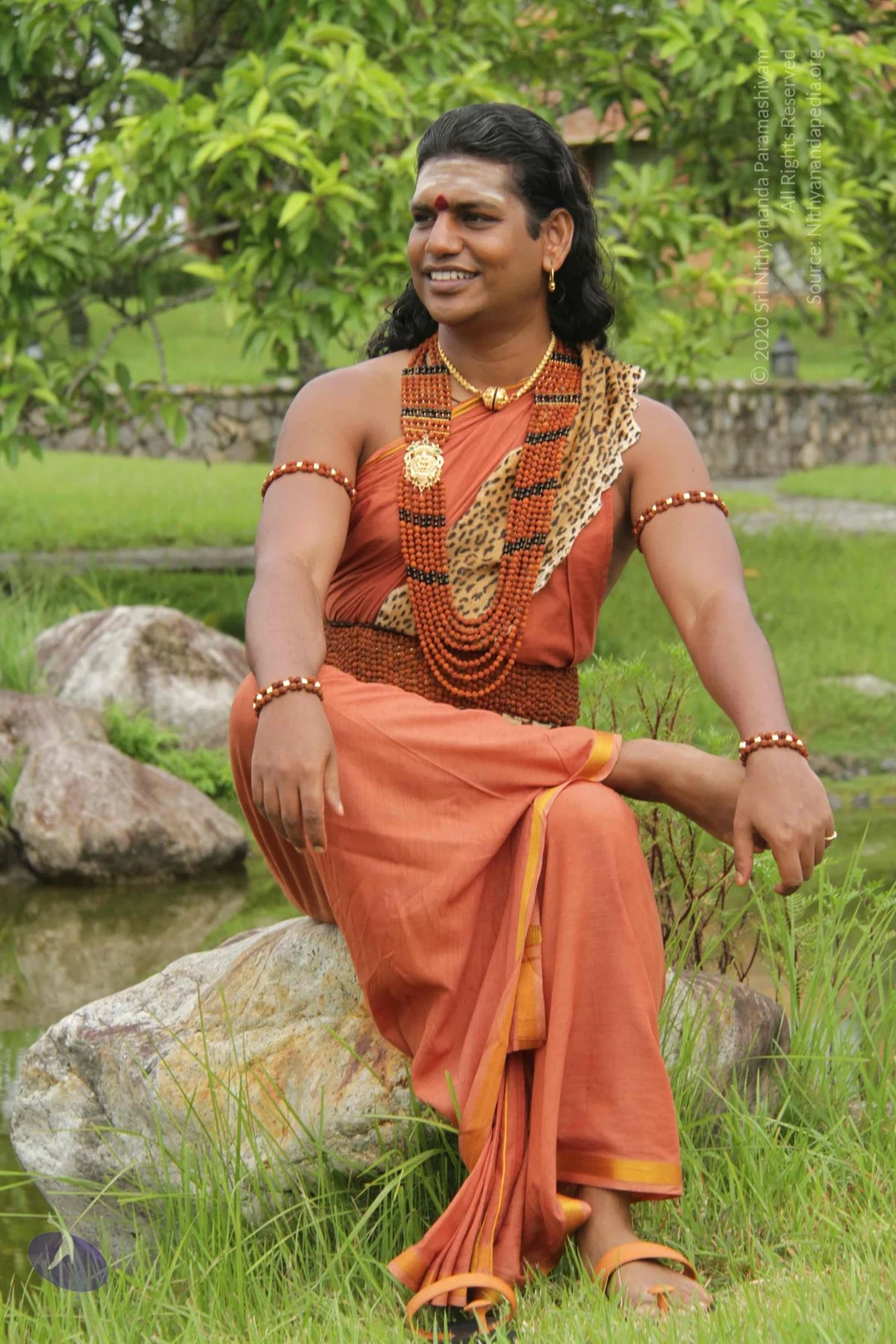
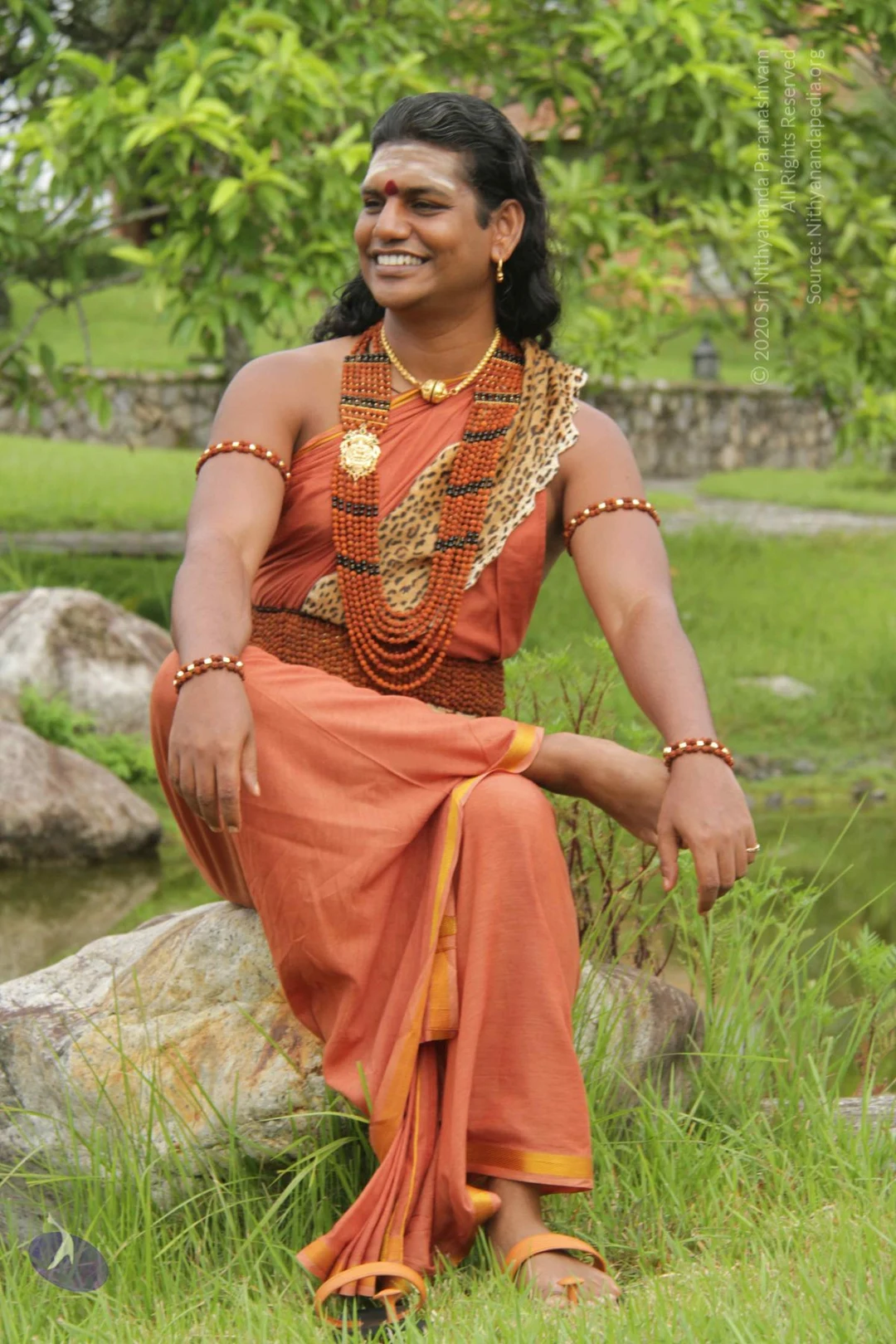
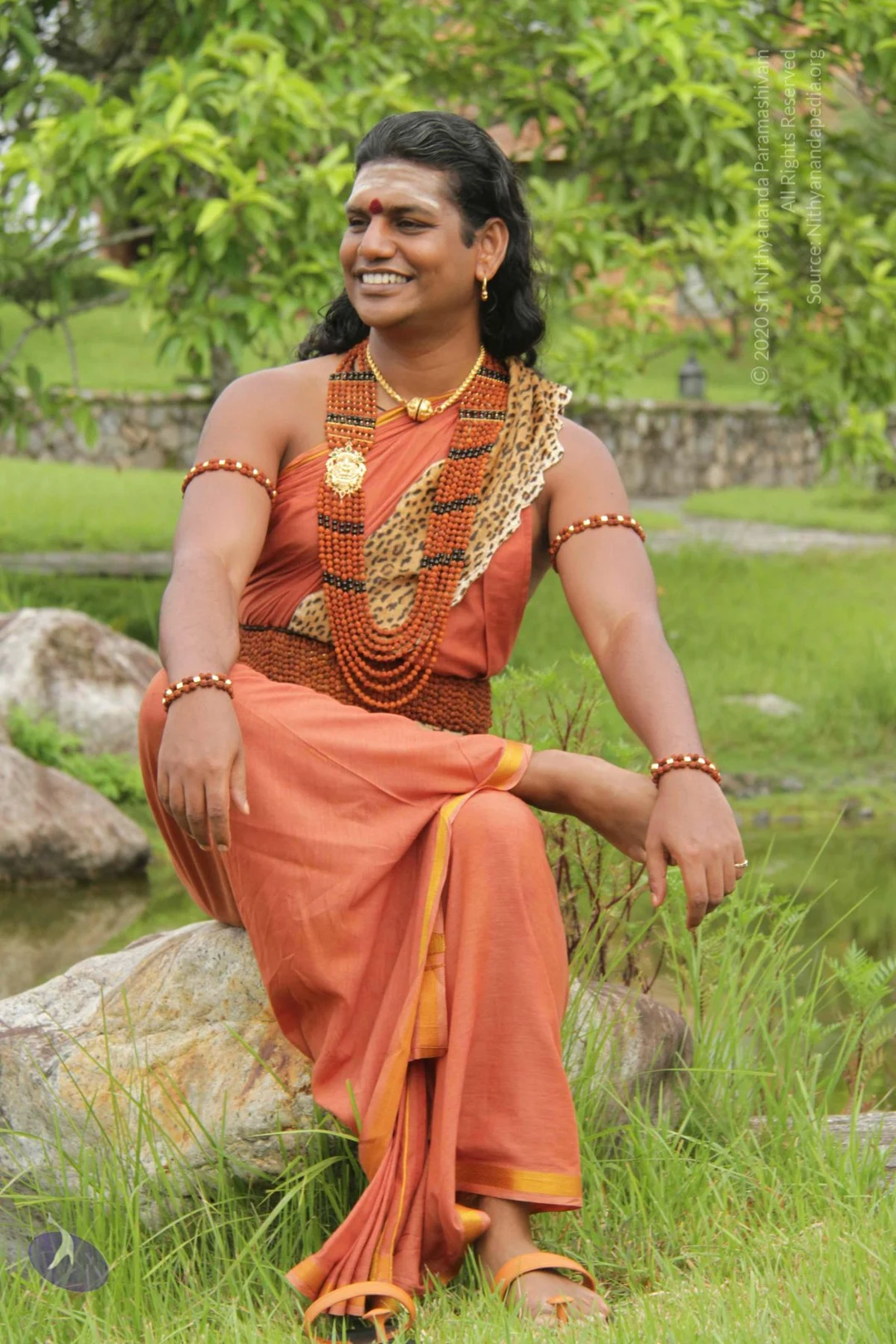
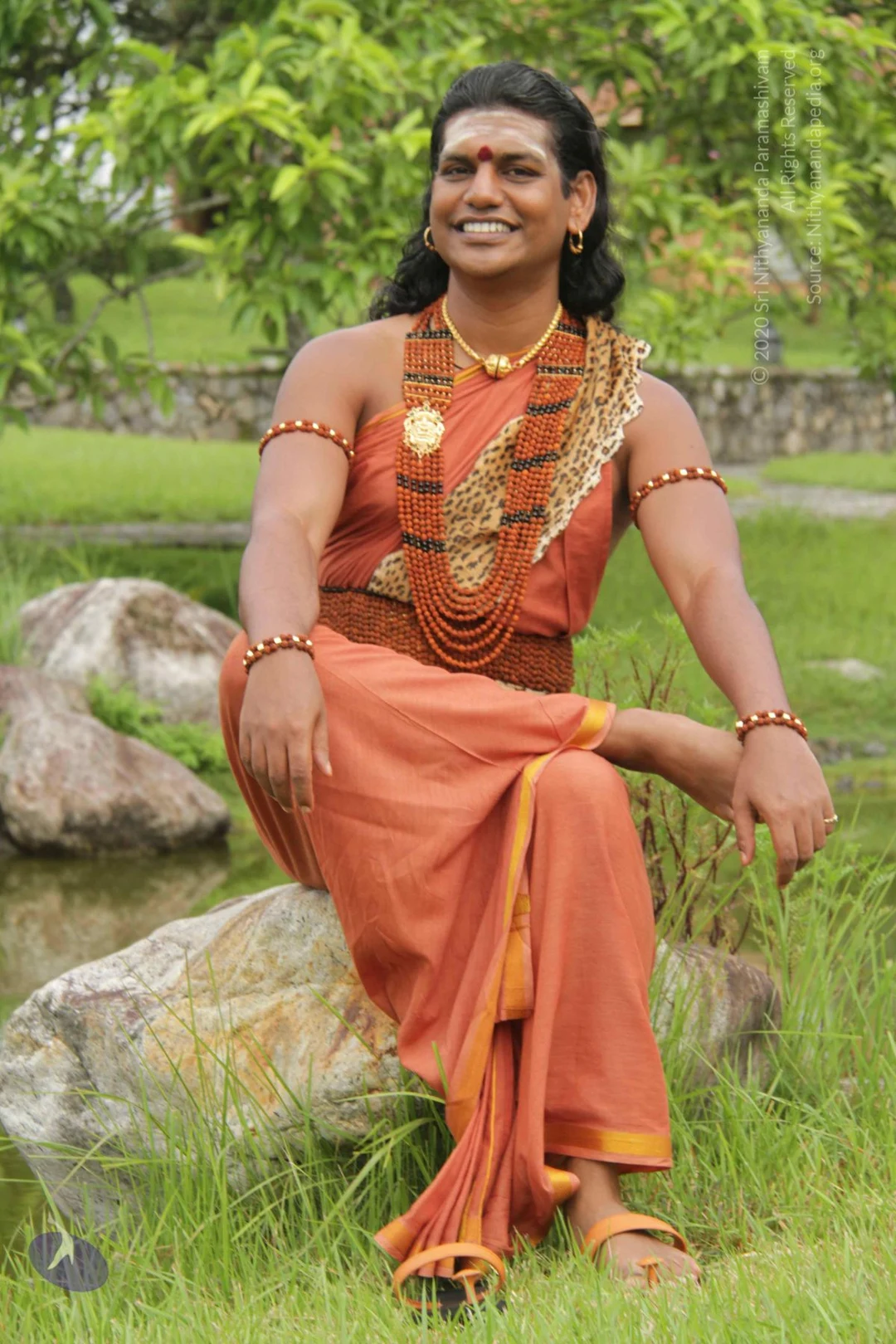
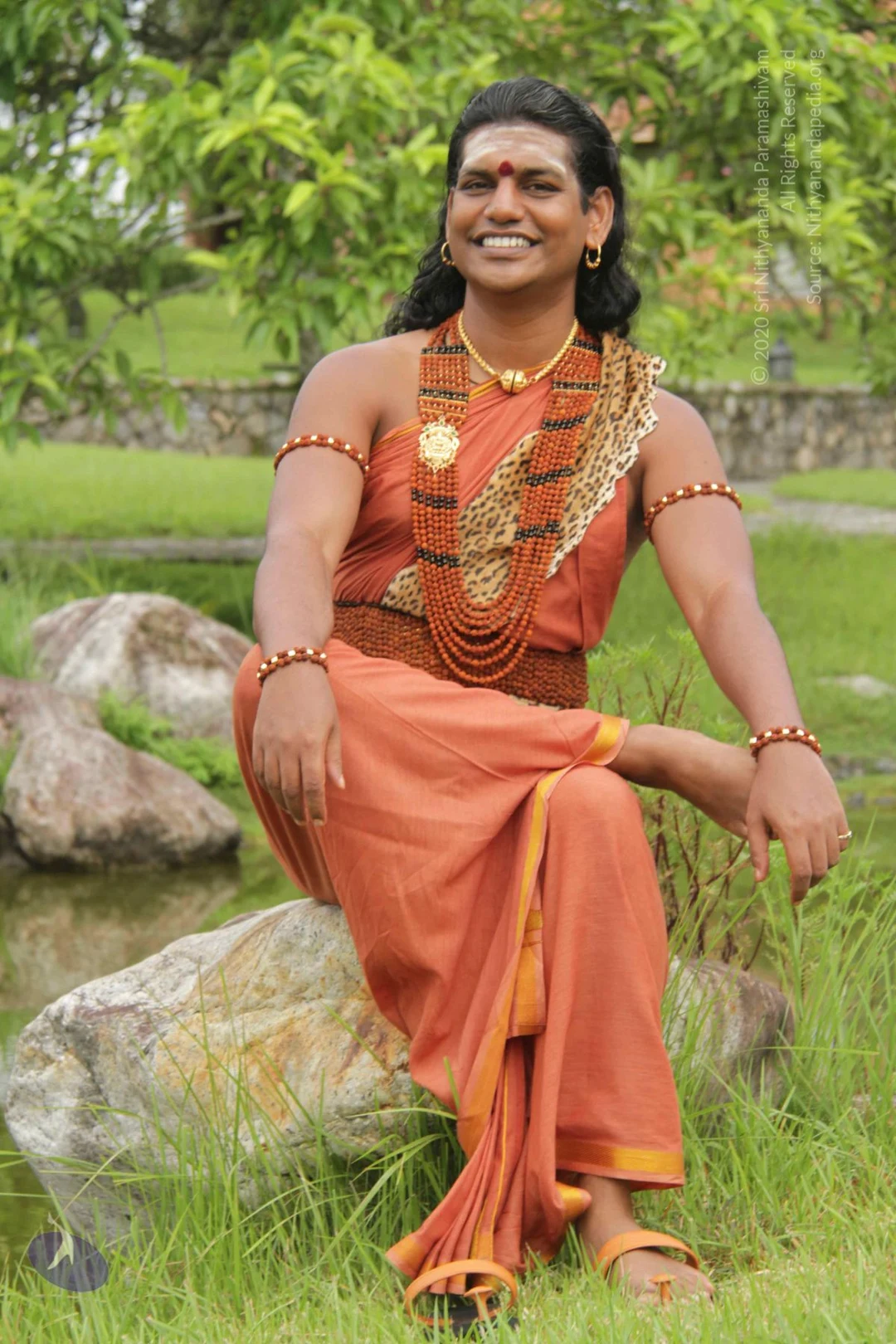
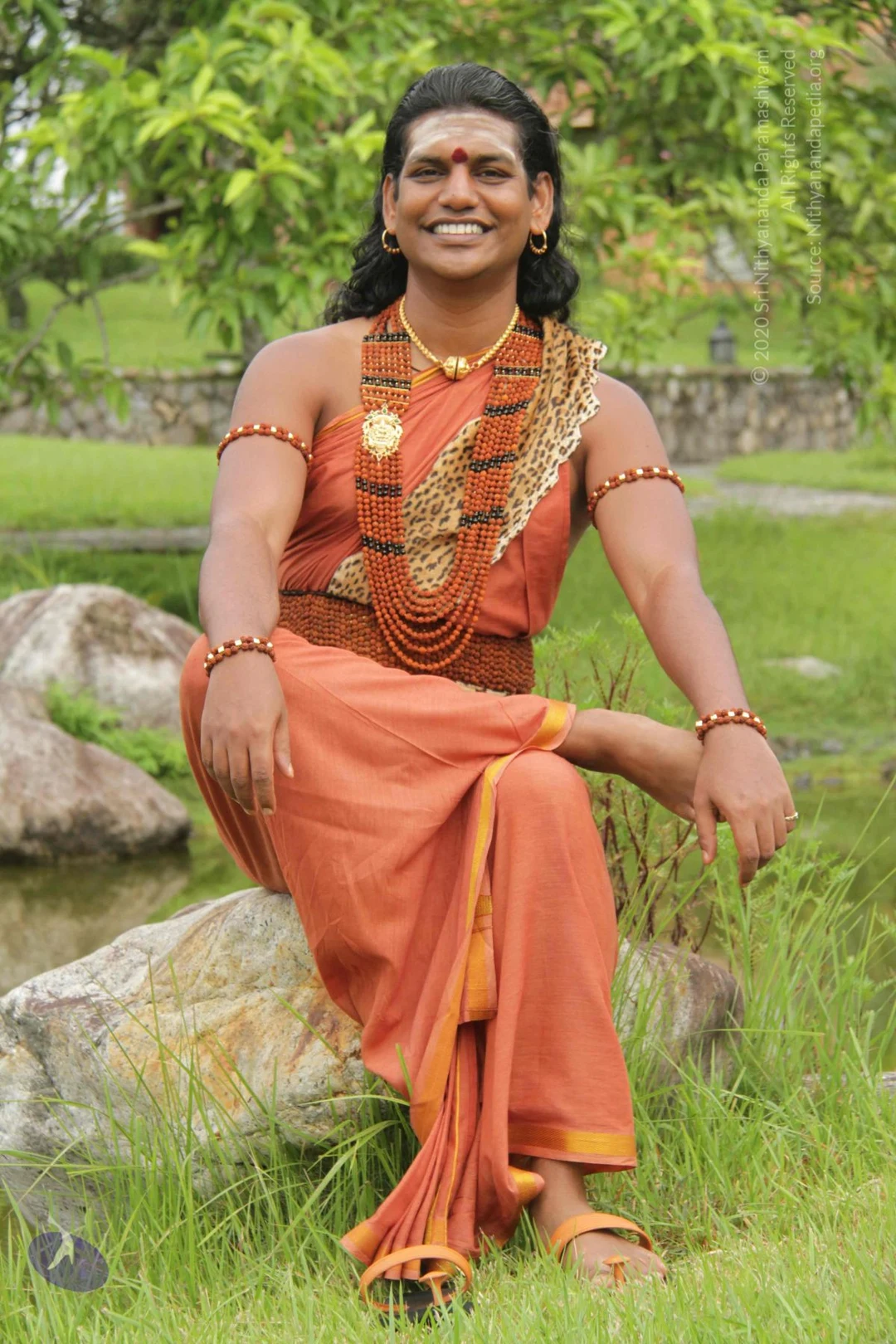
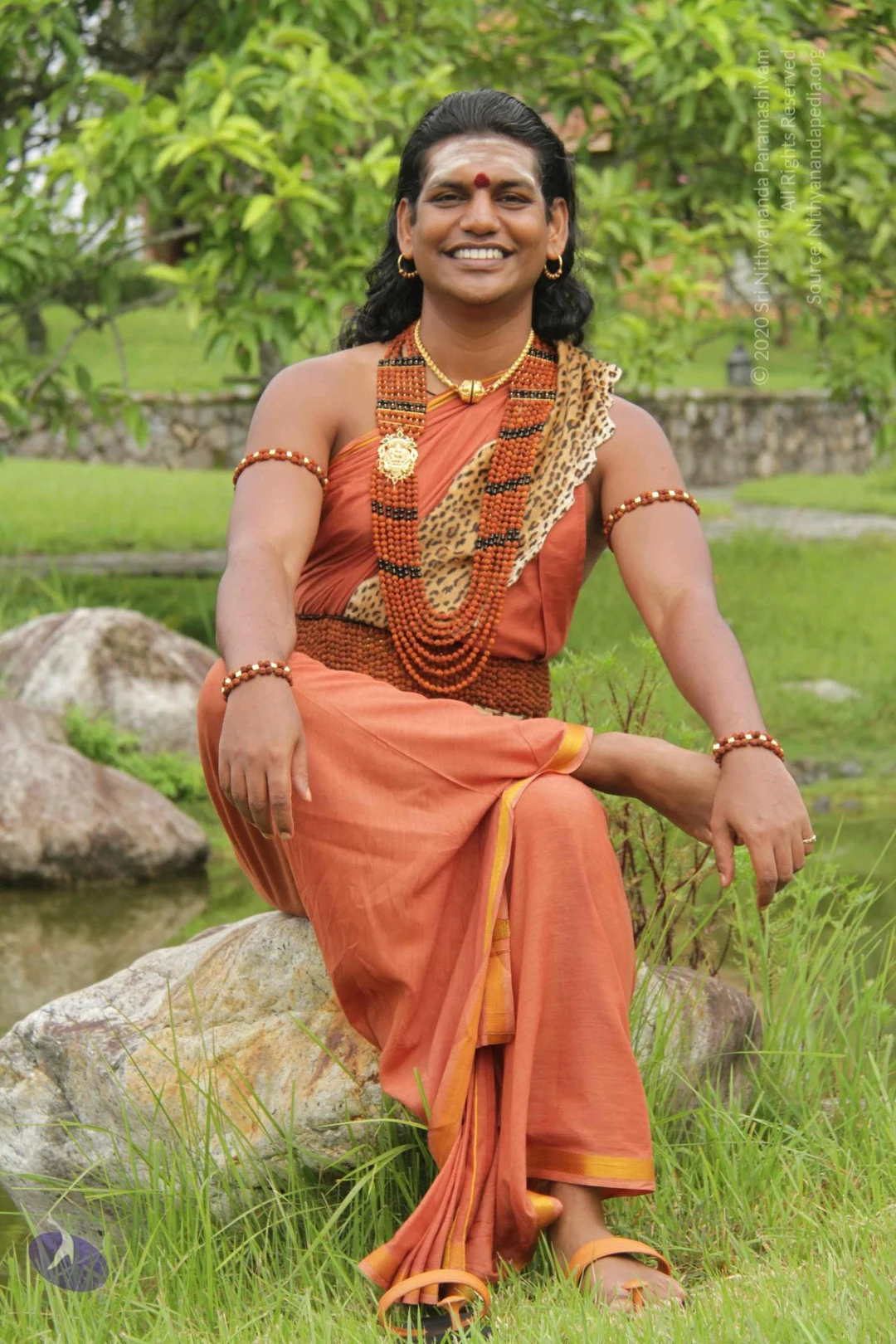
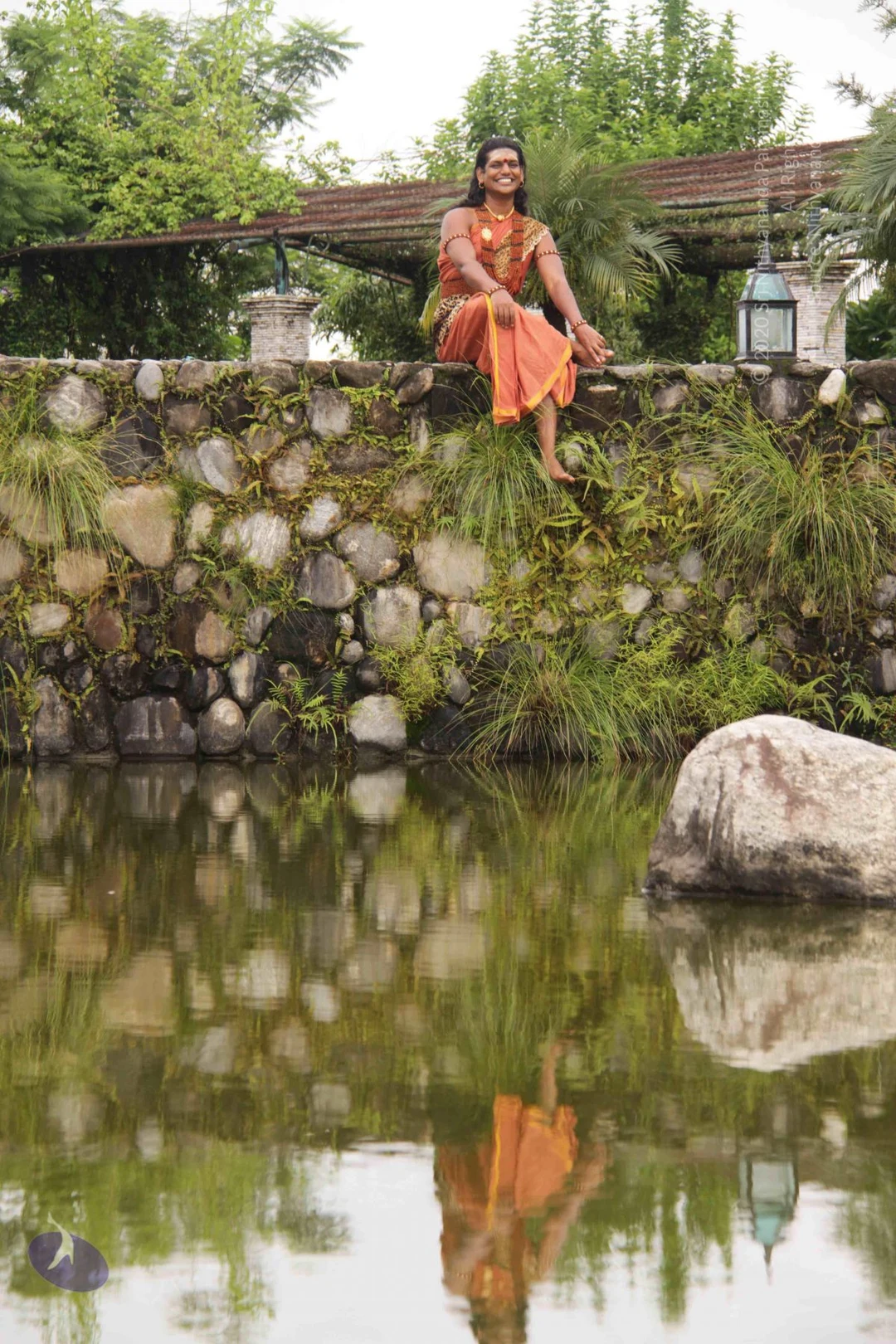
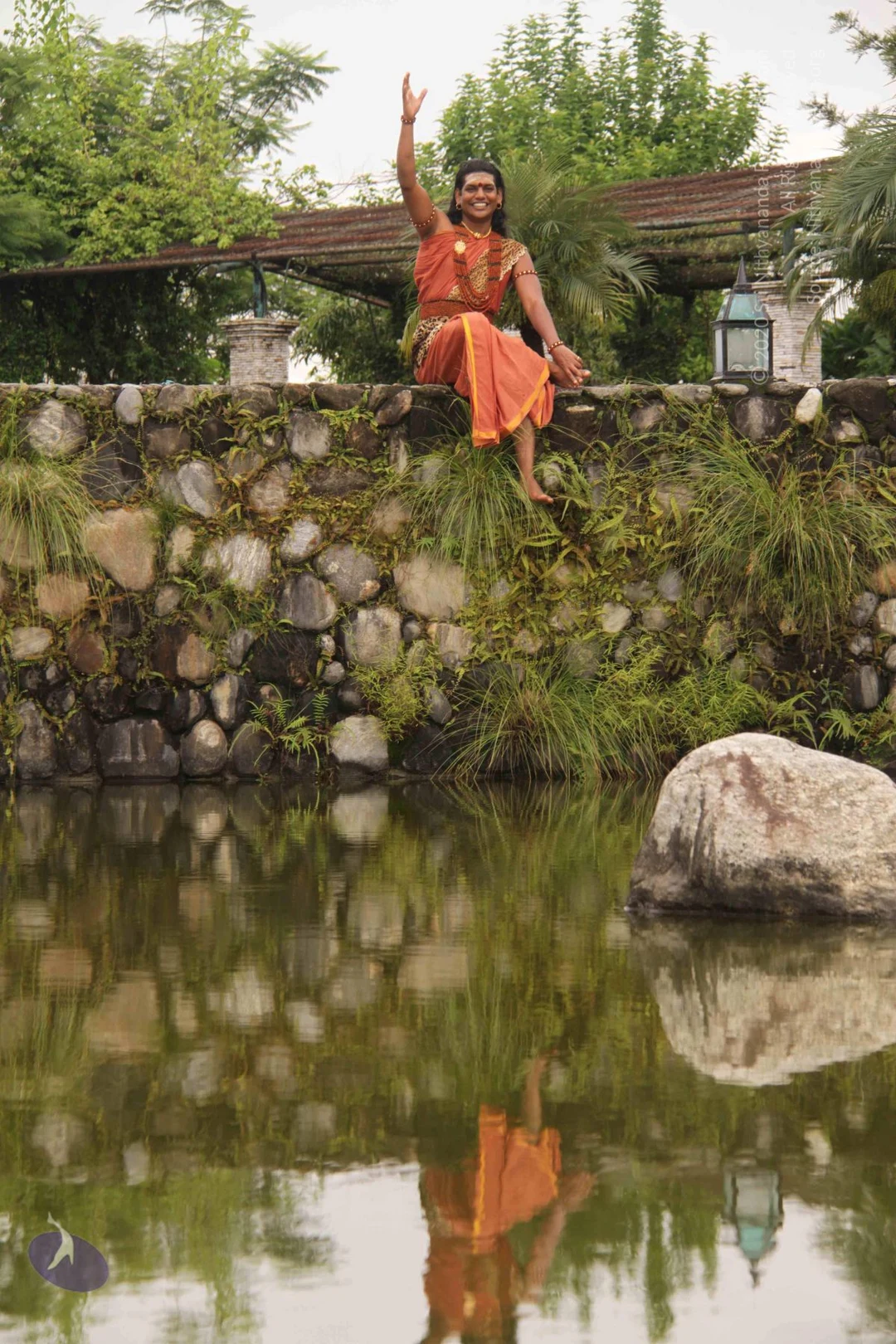
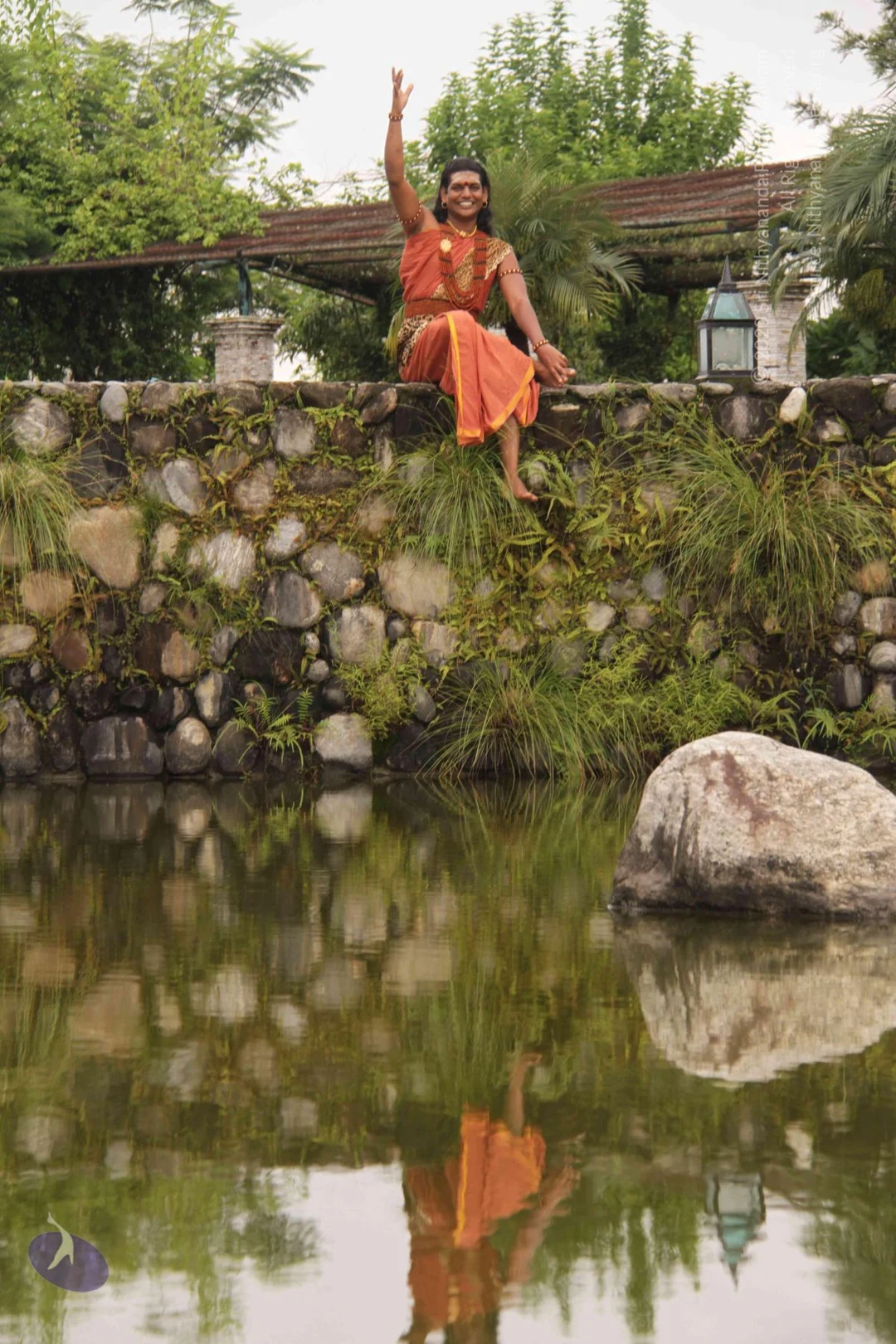
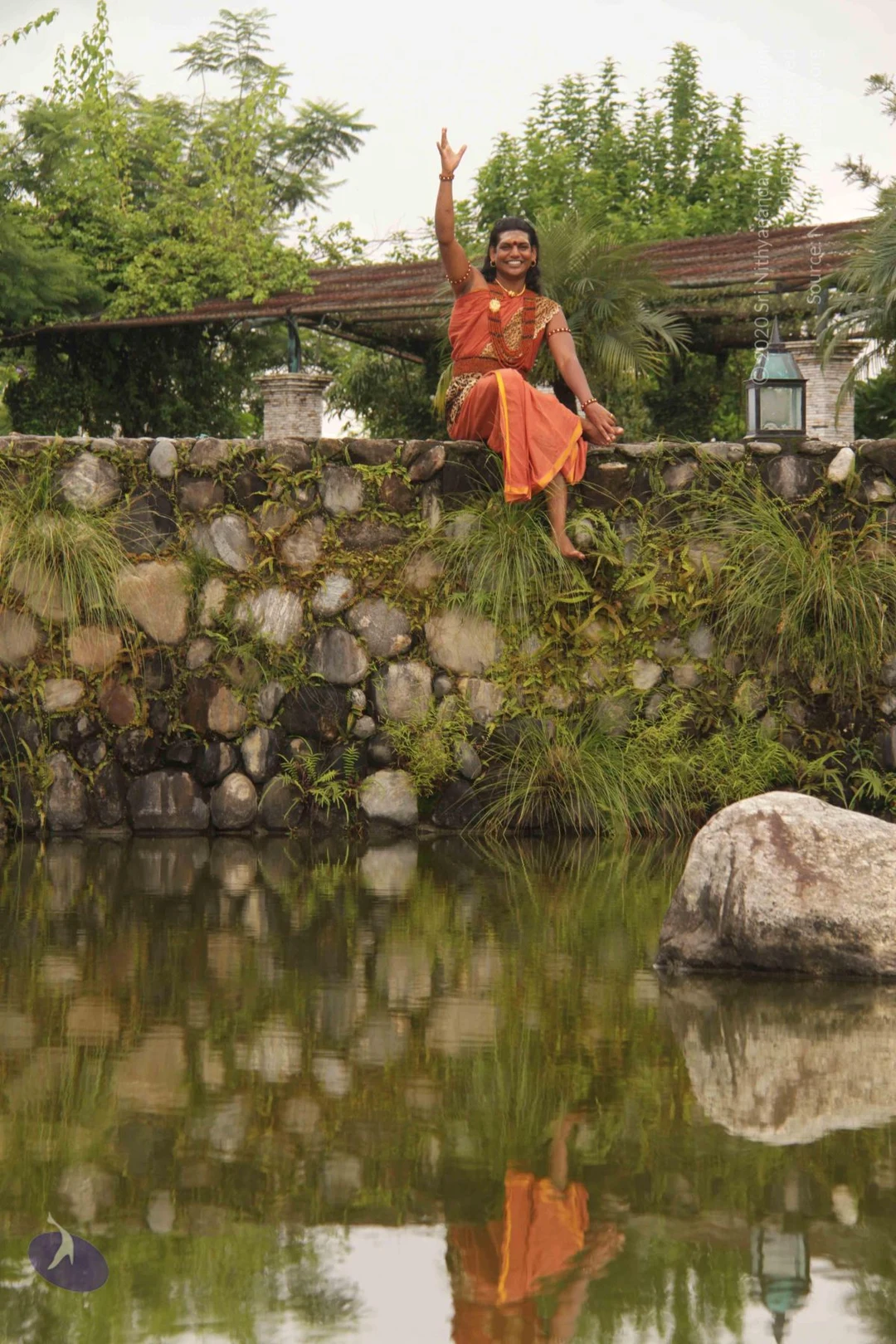
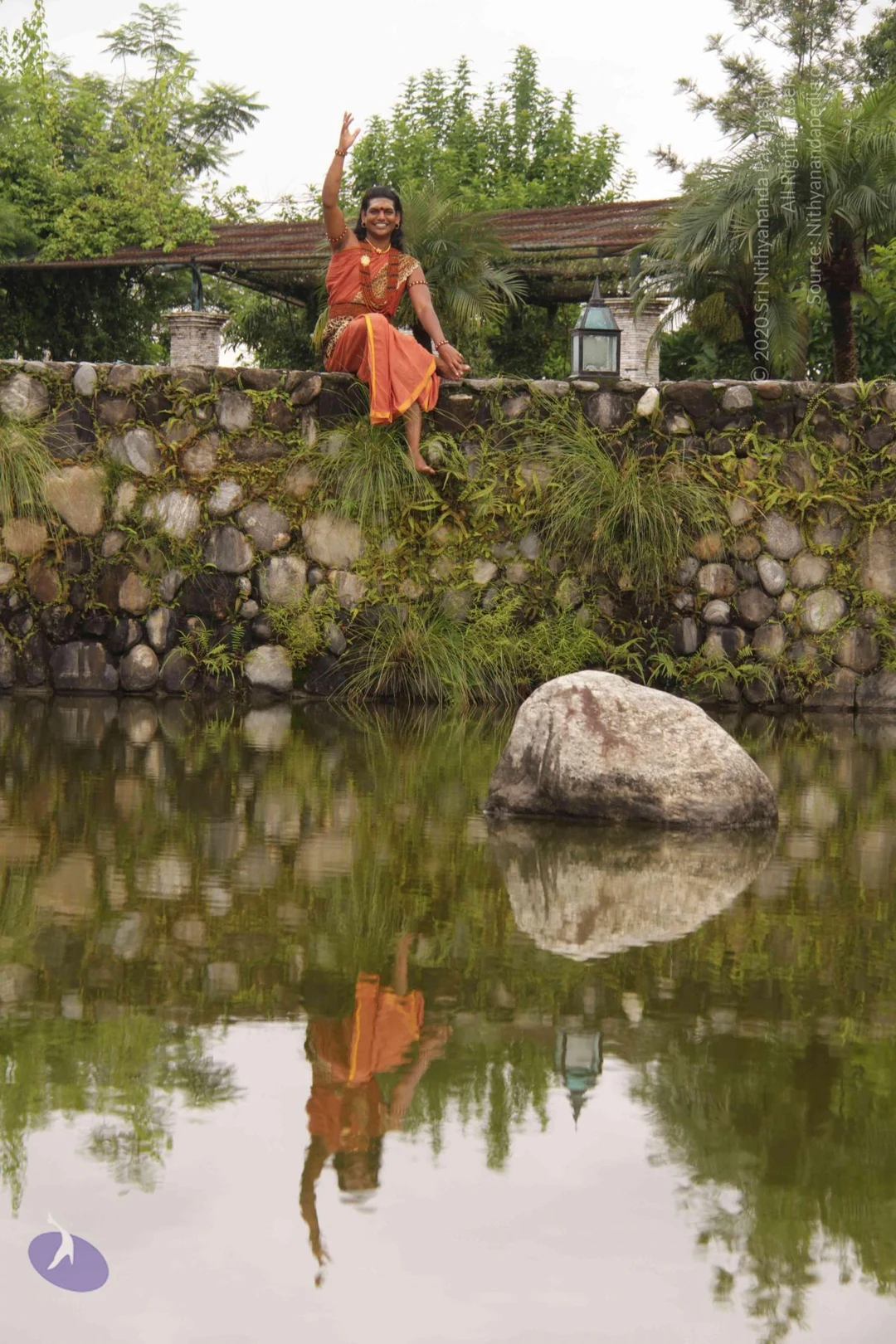
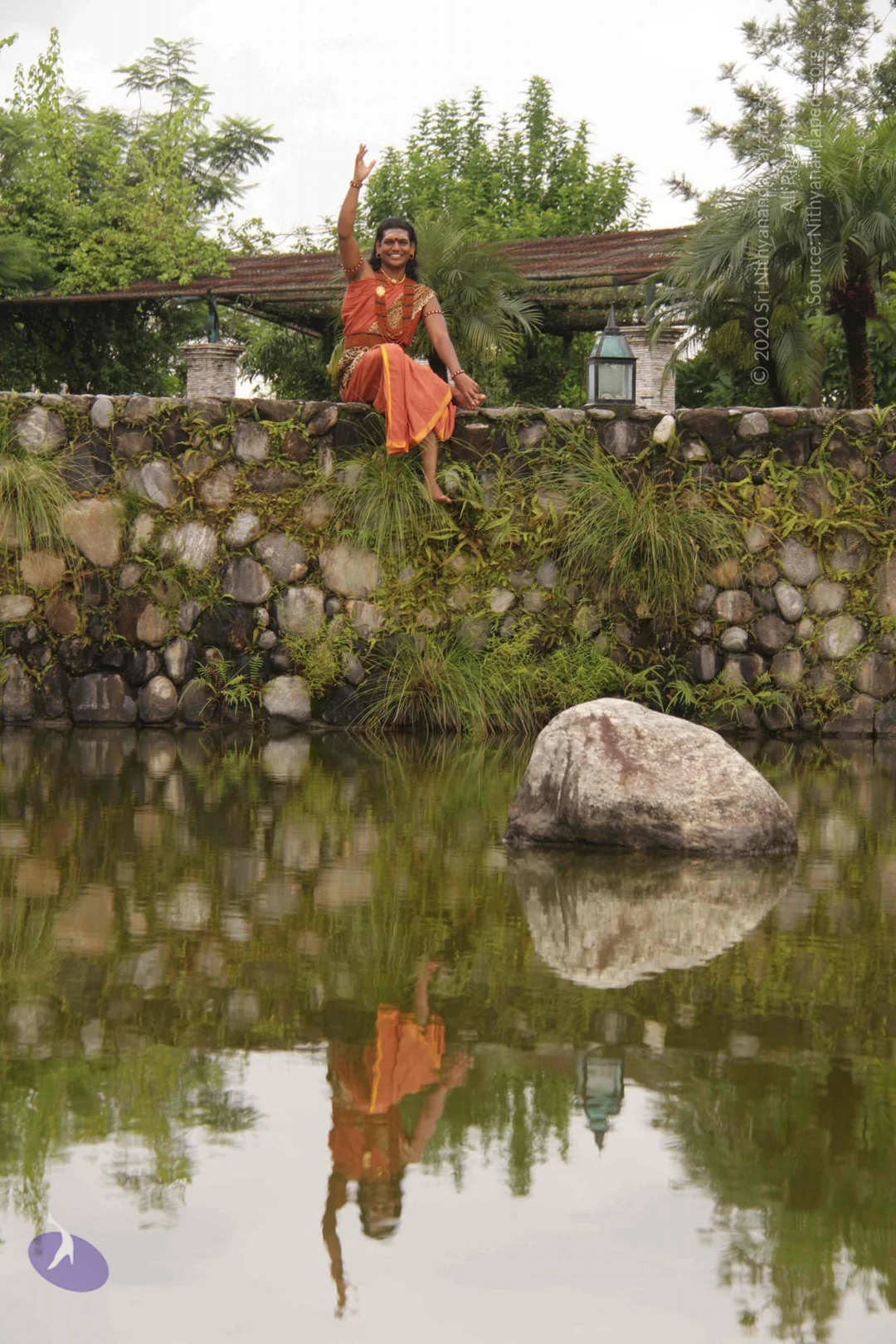
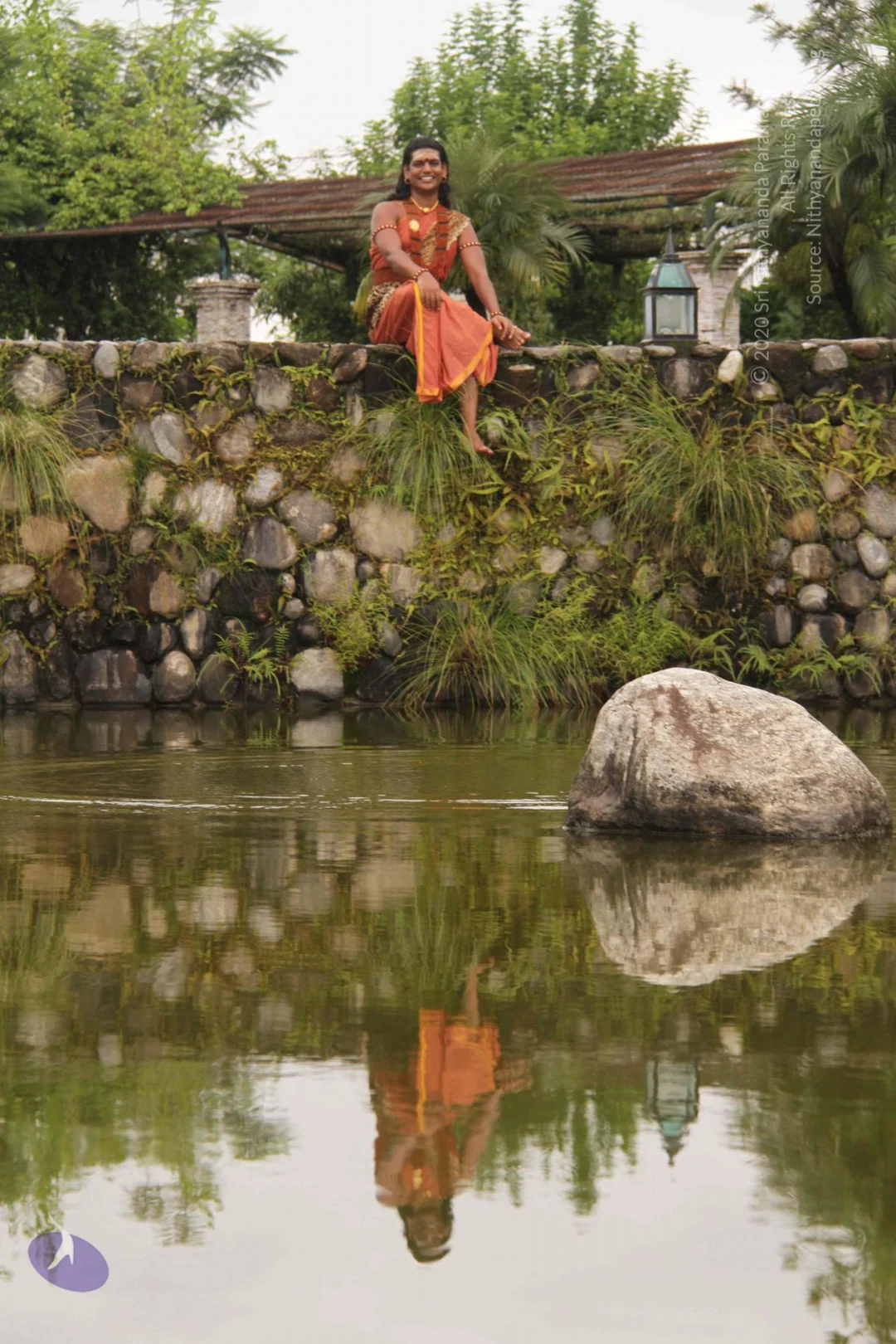
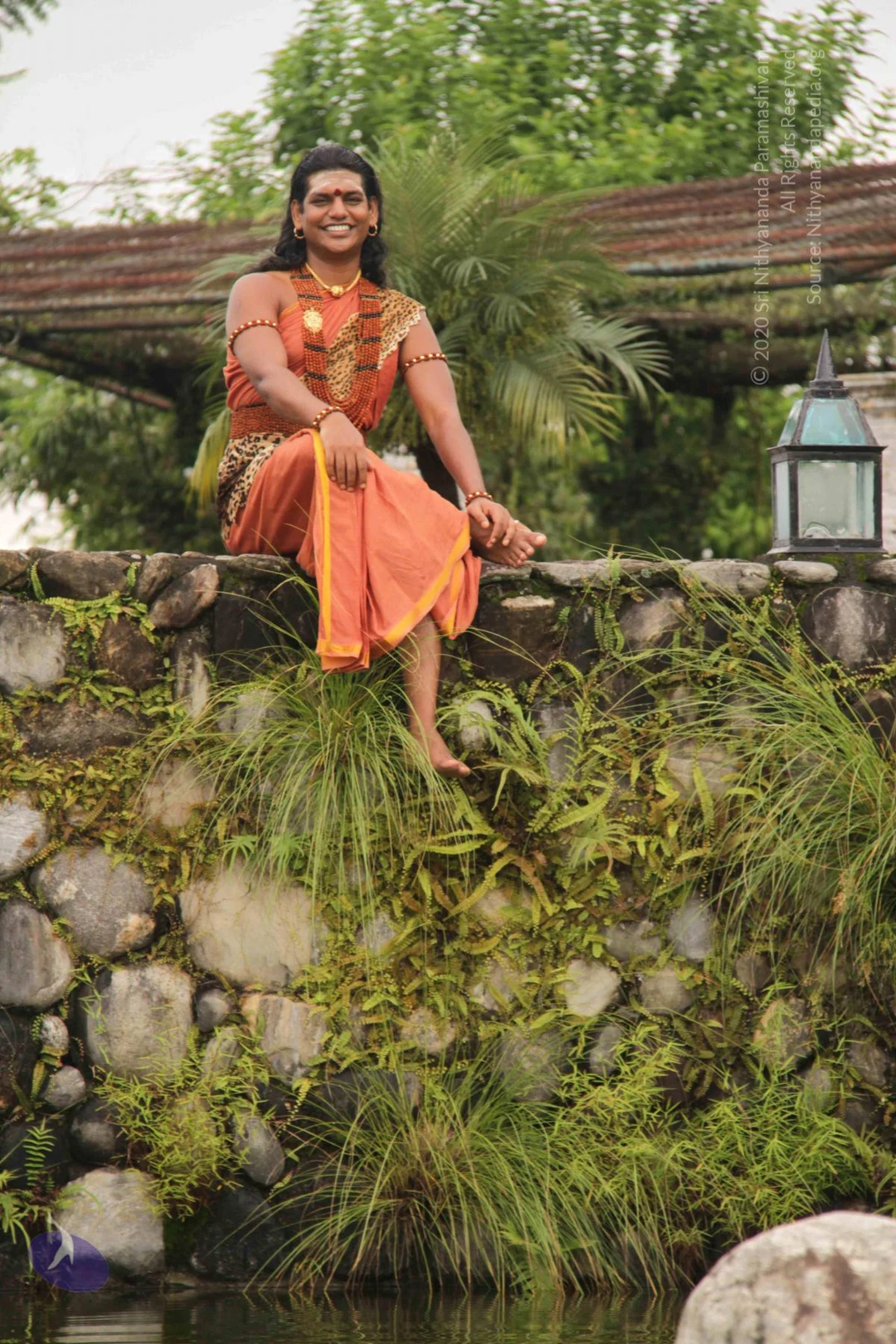
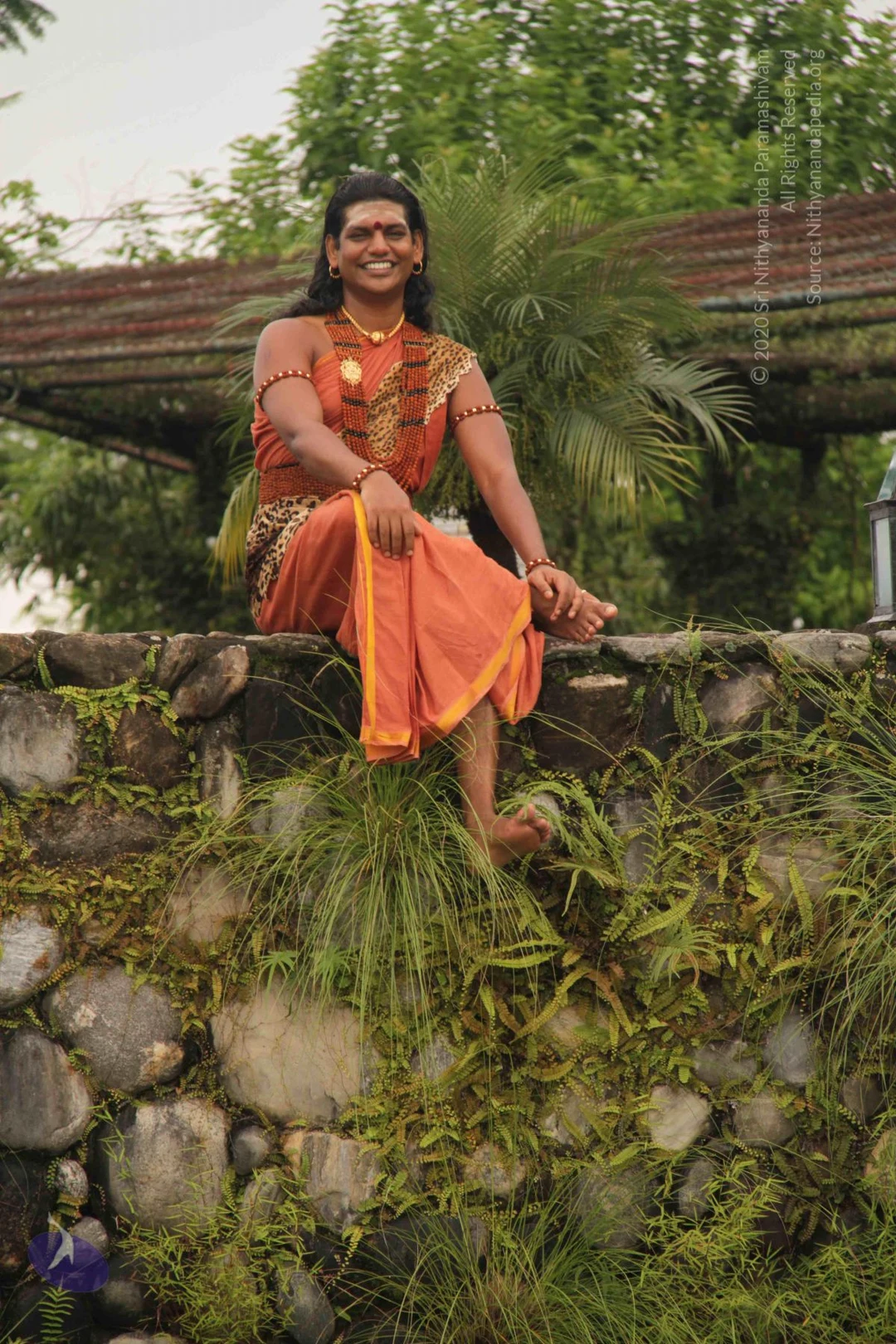
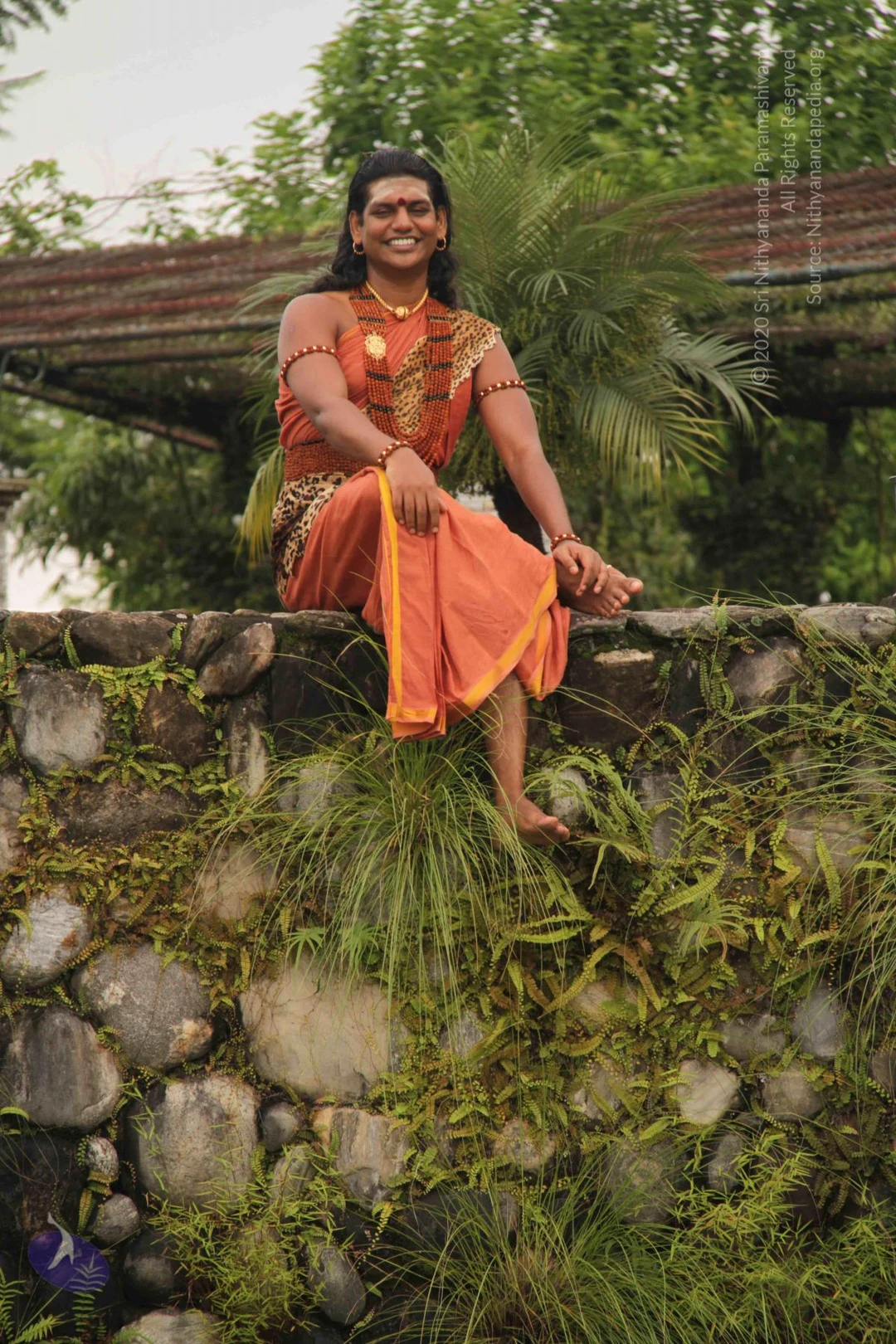
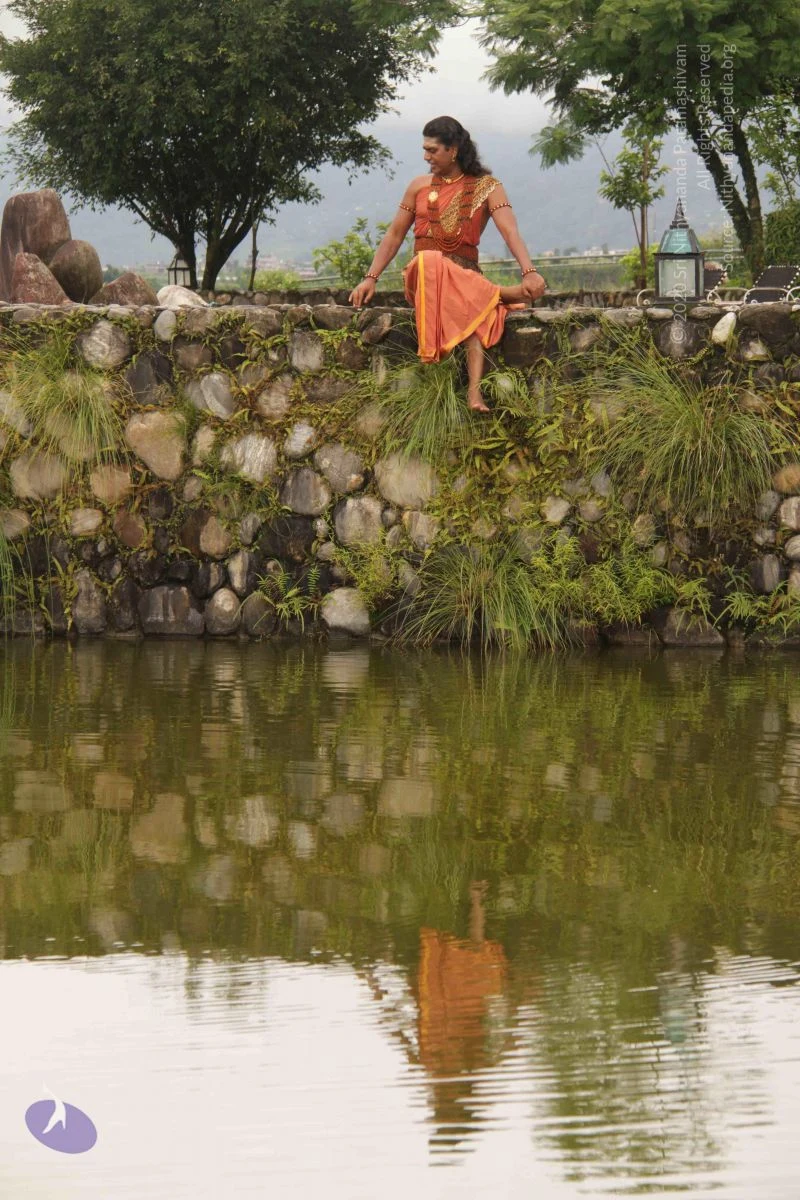
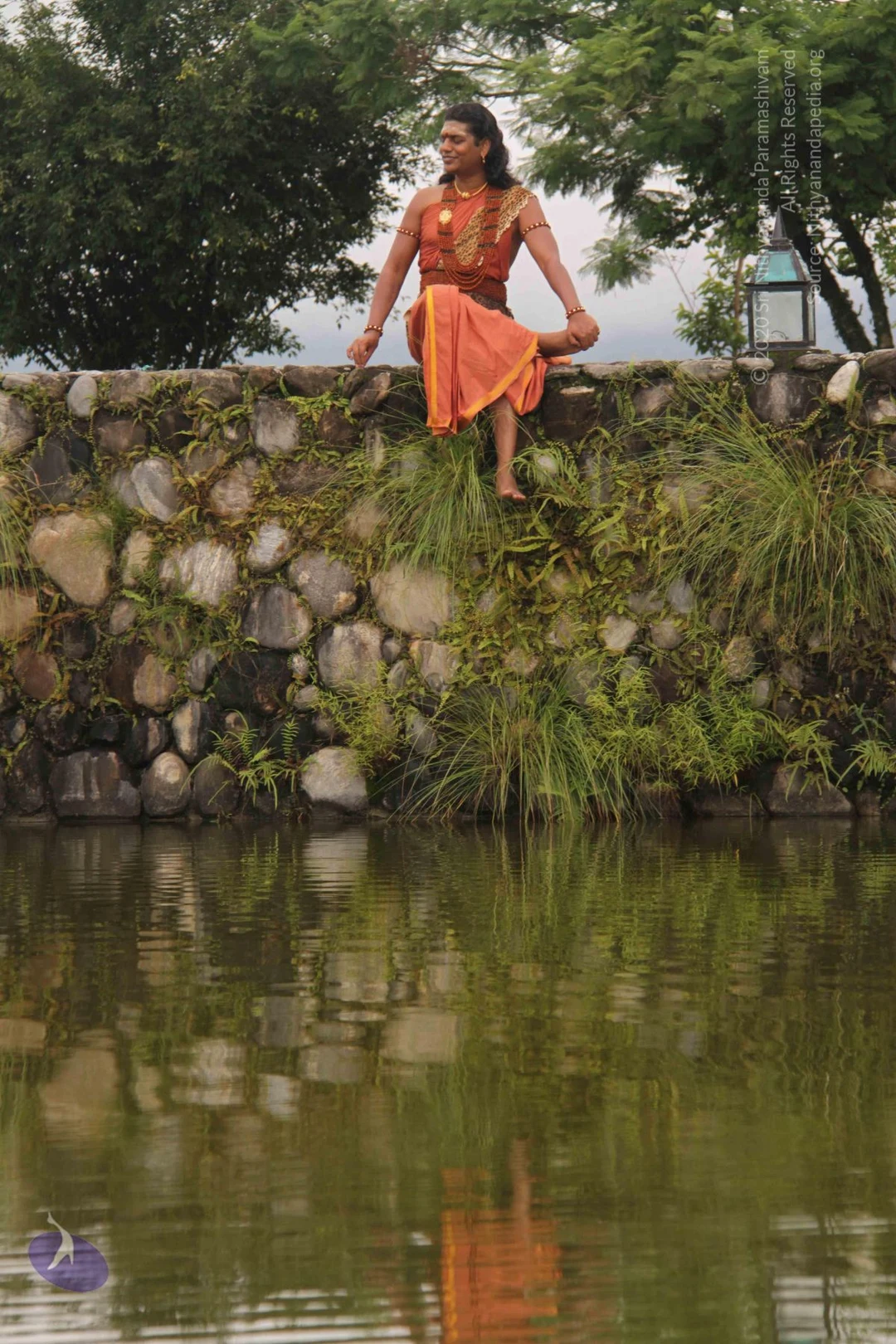
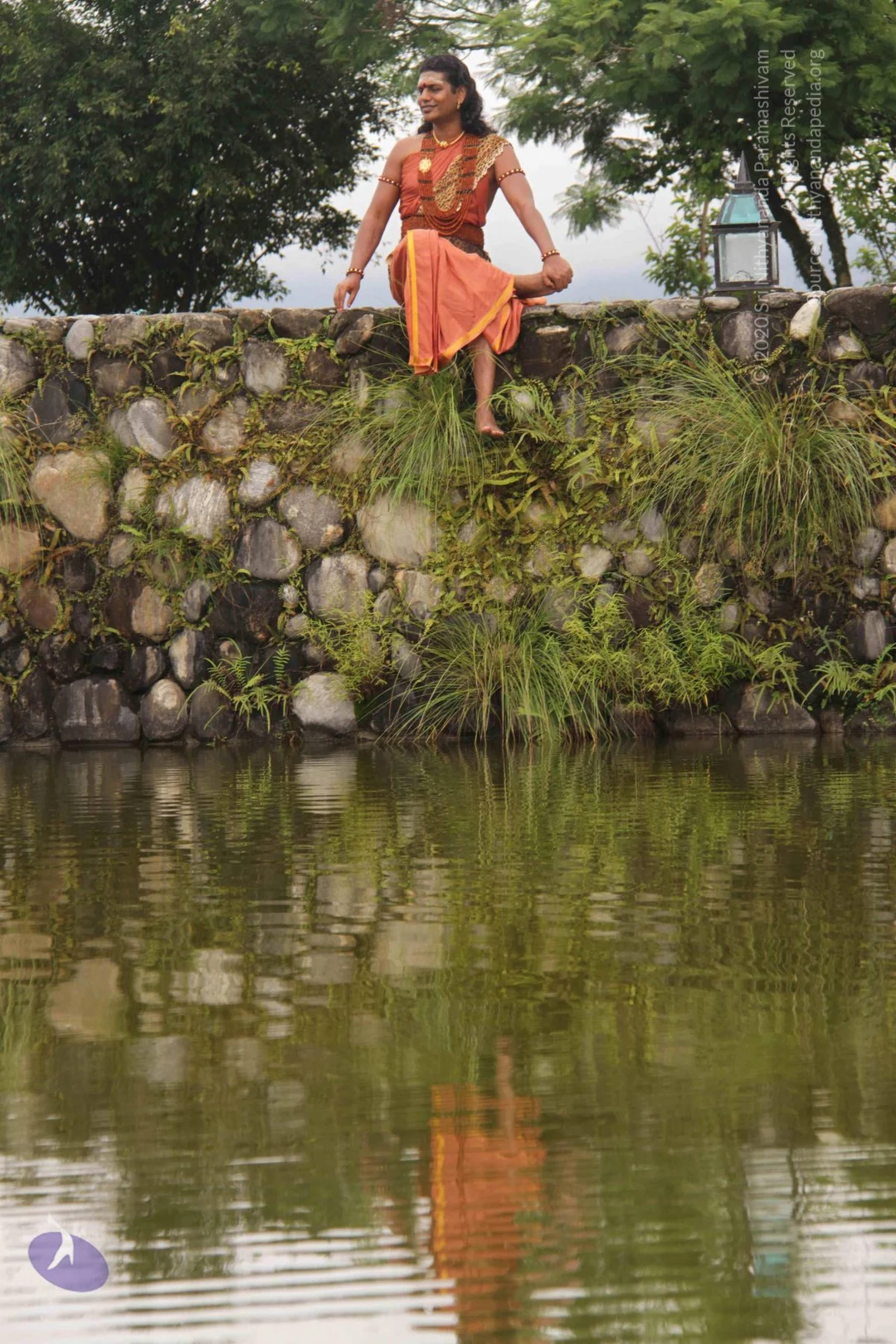
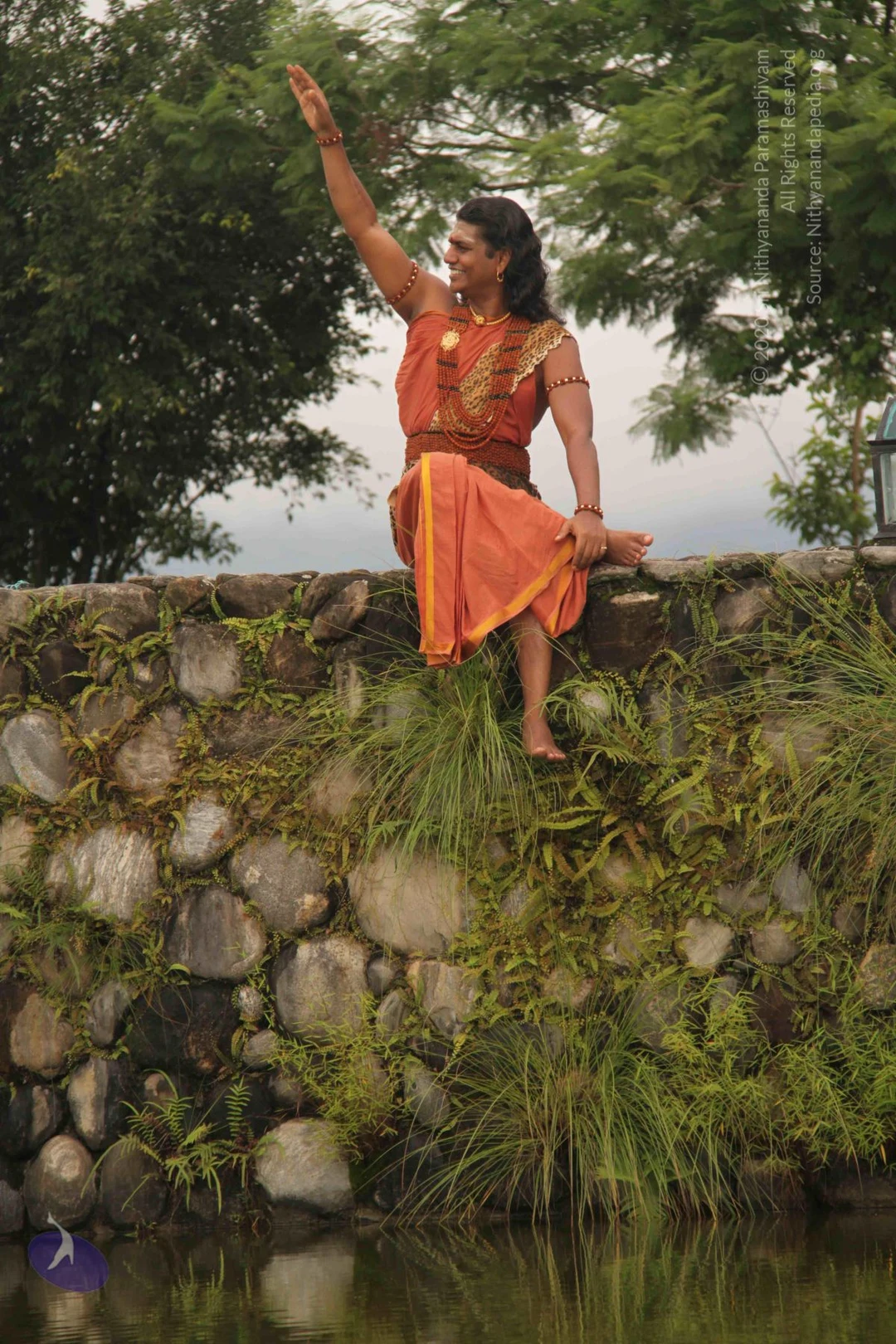
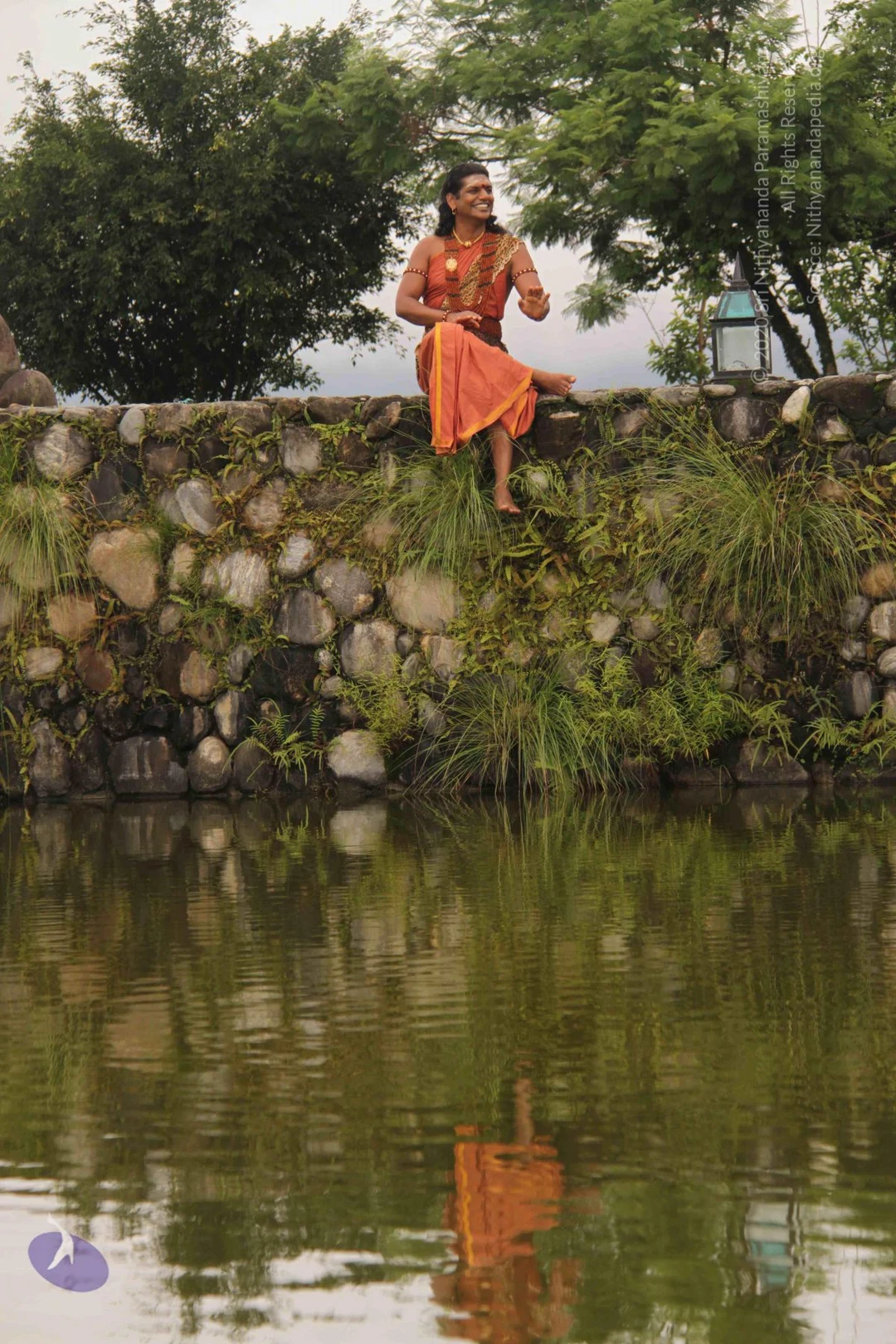
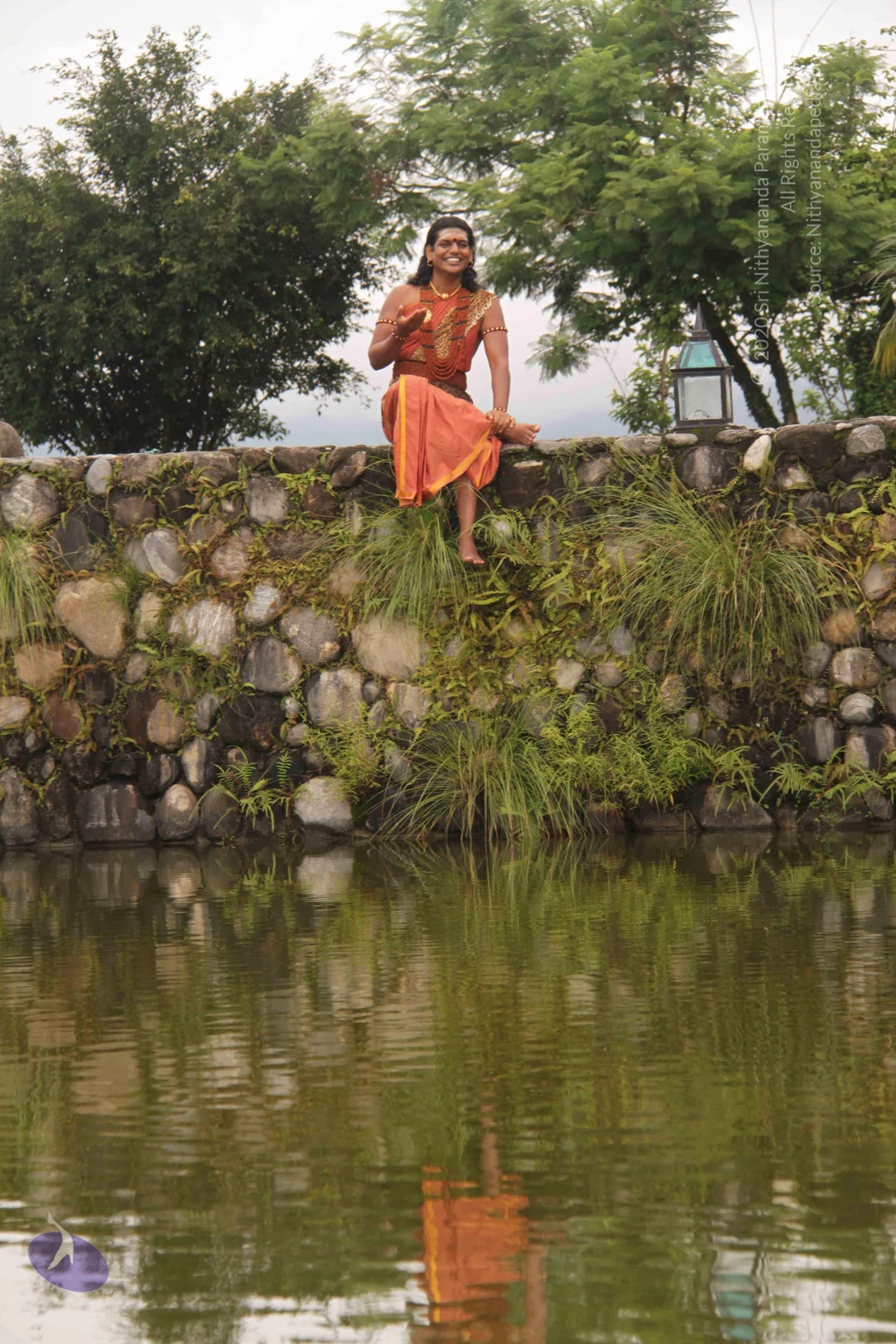
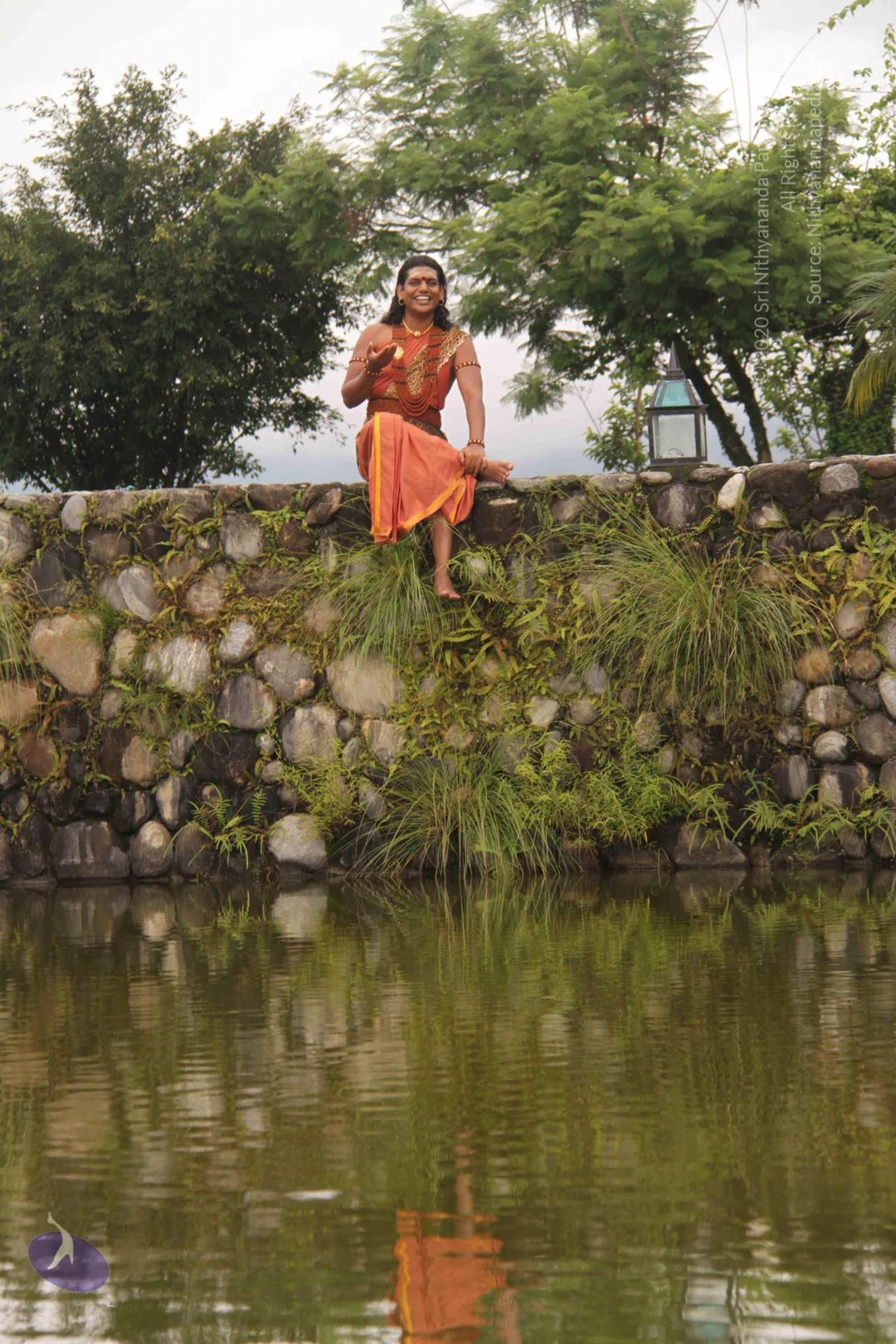
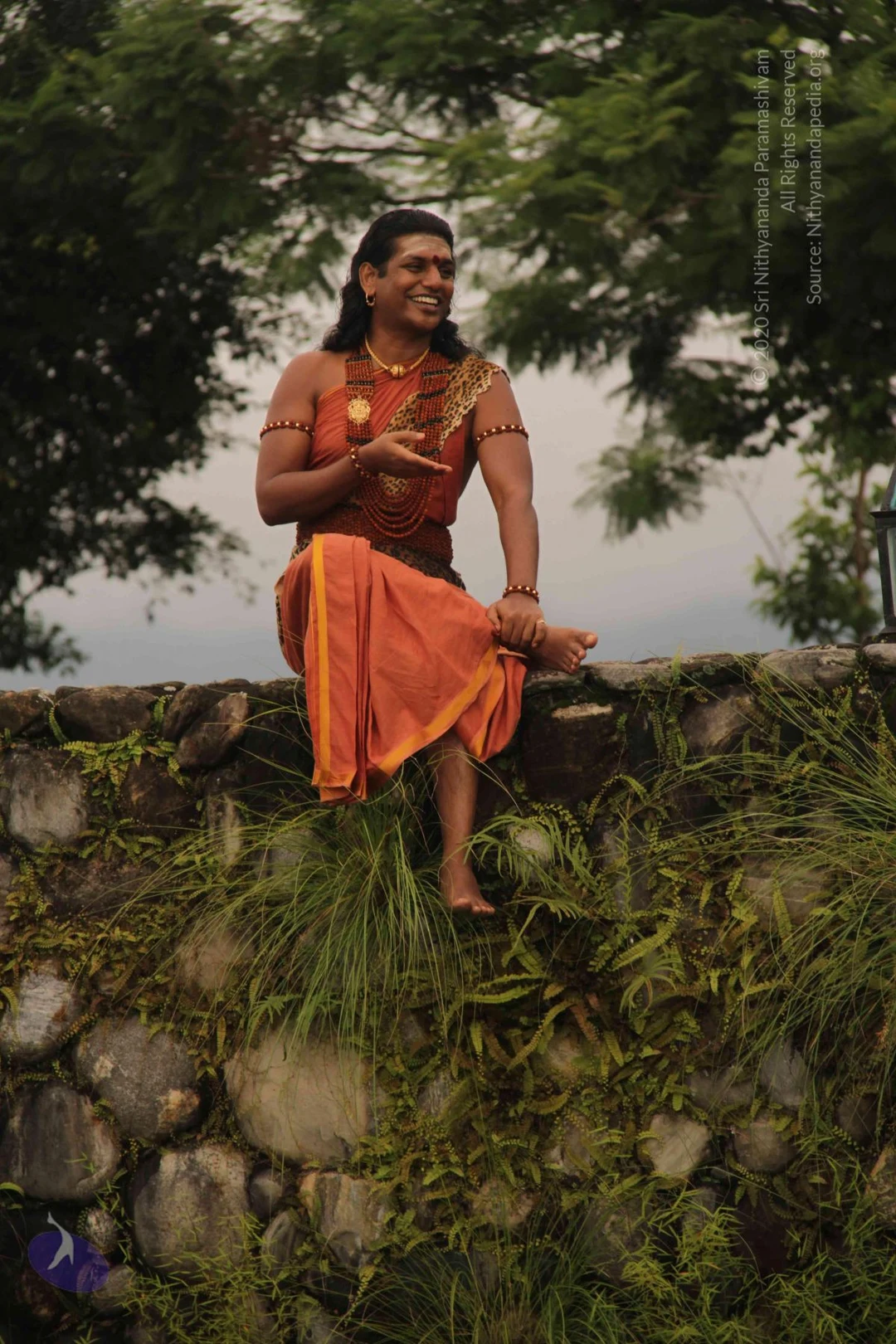
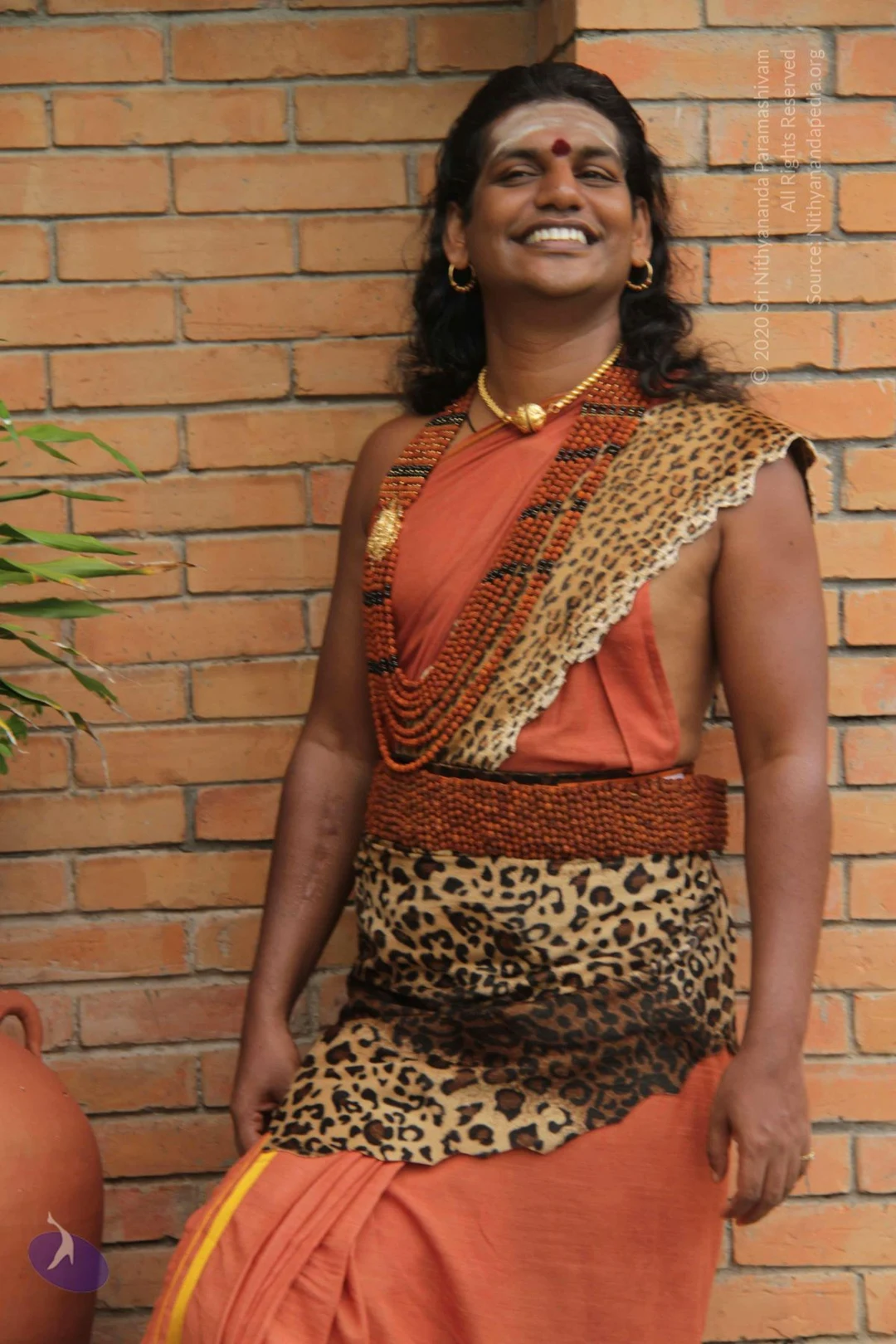
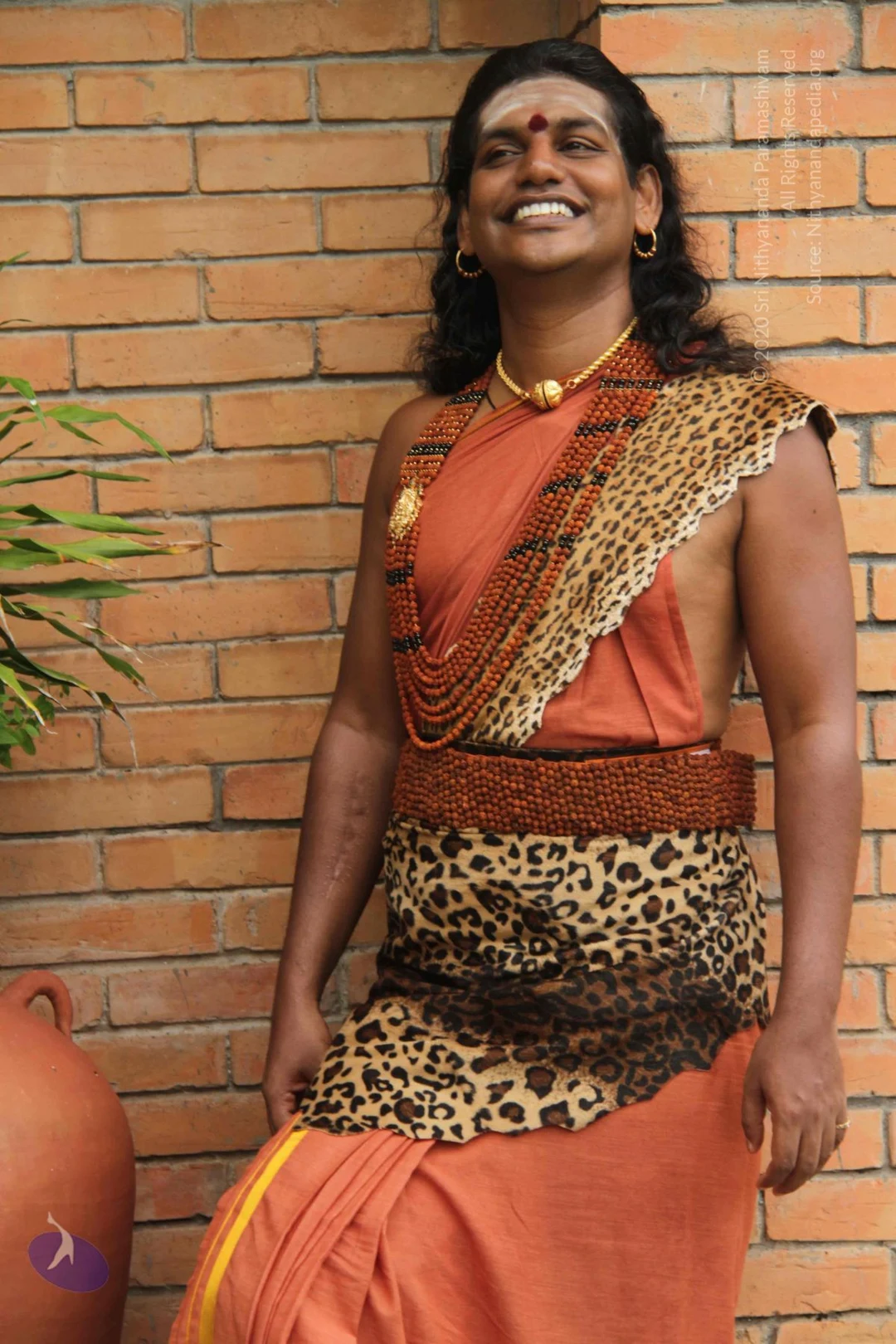
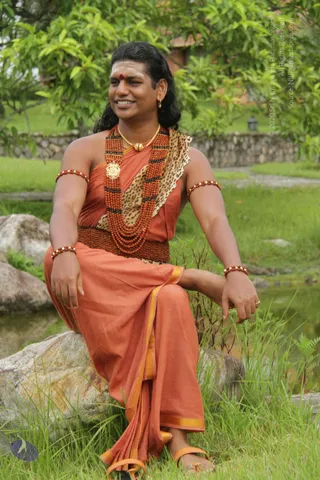
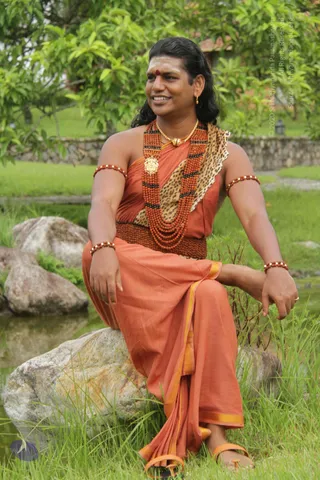
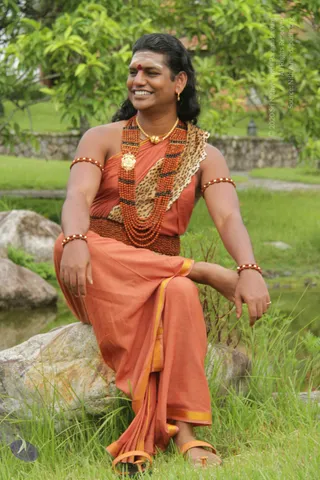
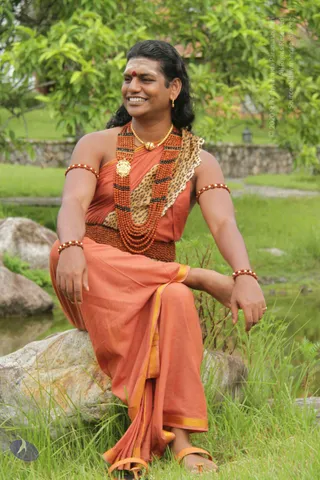
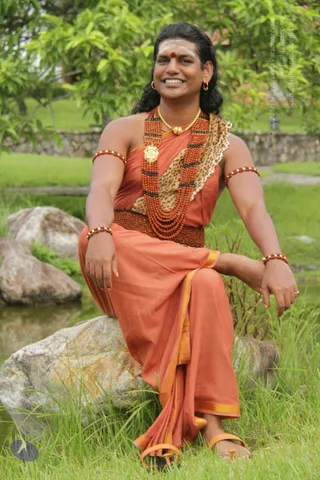
A man stands outdoors in front of misty green hills and a stone wall with lush reeds beside still water. He has long, swept-back dark hair, a red tilak on his forehead, a gold drop earring and a gold necklace with a round pendant. He wears an orange-saffron shawl over one shoulder, layered with a leopard-print wrap, and multiple strands of rudraksha mala with a large gold pendant, plus rudraksha armlets and a thick rudraksha waist belt over a leopard-print lower garment. He gazes to the side with a smile while gesturing with one hand.A man sits on a large grey rock beside a pond in a green garden, smiling and gazing to his left. He wears an orange-rust draped garment with a gold-bordered edge, a leopard-print shawl over one shoulder, and multiple strands of rudraksha beads in a heavy layered mala with a gold pendant, a gold chain, and rudraksha armlets and wristbands. A red bindi and tilak mark his forehead, with small gold earrings. Swept-back long dark hair frames his face. Grass, a stone wall and leafy trees surround him. Swamiji (probable) cues: long swept-back hair, saffron-orange clothing, rudraksha mala and gold necklace.A man sits on a large grey boulder beside a still pond in a green garden, with leafy trees and a stone wall behind him. He wears a saffron-orange draped garment with a leopard-print shawl across his chest, multi-strand rudraksha malas with dark bead bands, a gold pendant necklace, rudraksha armlets and bracelets, and orange sandals. His long dark hair is swept back, and he has white tilak markings and a red bindi. He smiles and looks to the side with one hand resting on his knee. The garden setting and posed composition suggest a photo shoot. Swamiji (probable) cues include long swept-back hair, saffron clothing, rudraksha malas and gold necklace.A smiling man with long dark hair sits on a large grey rock beside a pond in a green garden. He wears an orange-rust draped garment with orange borders, a leopard-print shawl over one shoulder, multiple strands of rudraksha beads in rust and black, a gold pendant necklace with a gold clasp, a wide rudraksha waist belt, beaded armlets and wrist bands, and a small gold hoop earring. A white tilak with a red dot marks his forehead. He sits with one leg bent and an arm resting on his knee, with orange sandals on his feet. Trees and a stone wall stand behind him. Swamiji (probable): the long swept-back hair, rudraksha malas, ornate gold necklace and saffron-orange clothing match his distinctive presentation.A smiling man with long dark swept-back hair sits on a large grey rock beside a pond in a green garden. He wears an orange-saffron dhoti and a leopard-print shawl over one shoulder, with multiple strands of rudraksha malas, a gold pendant and necklace, gold earrings, and rudraksha bracelets on his arms and wrists. He has white and red forehead markings and orange sandals. Lush trees and a stone wall fill the background. Cues match the Swamiji description (long hair, saffron clothing, rudraksha malas, gold ornaments), so this is an appearance-based probable candidate seated in person.A smiling man with long swept-back dark hair and a red bindi with white vibhuti on his forehead sits on a large rock beside a garden pond with lush green foliage behind him. He wears an orange-red sleeveless garment with a gold-yellow border and a leopard-print shawl draped over one shoulder, layered with multiple strands of orange rudraksha beads, a gold pendant necklace, a wide beaded waist belt, beaded armbands and bracelets, and orange sandals. He rests one arm on his knee and the other hand on the rock.