Skip to content
Saturday

10 March 2012

Supreme Pontiff of Hinduism HDH Bhagavan Sri Nithyananda Paramashivam.

Dated photos
26
Source pages
1
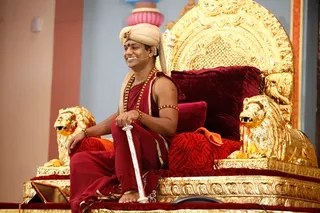
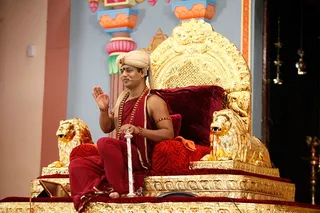
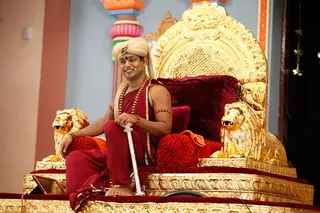
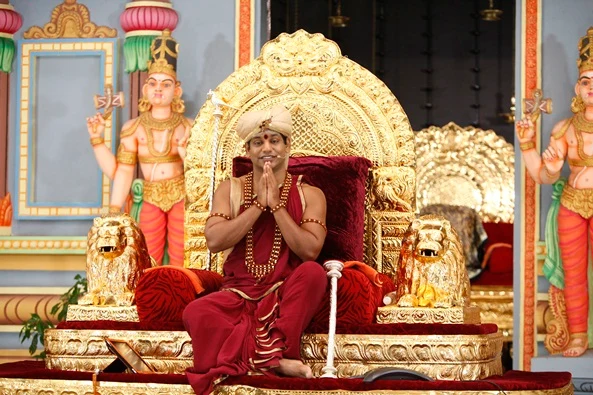
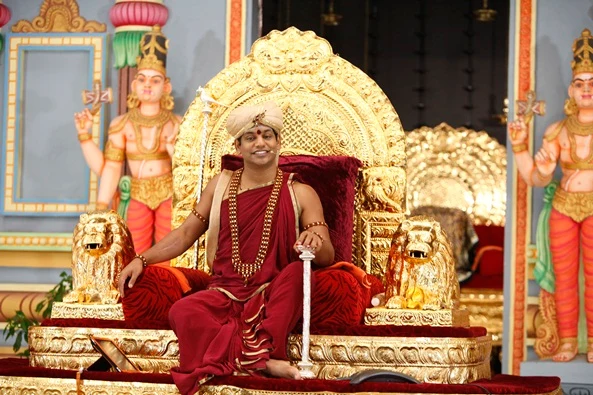
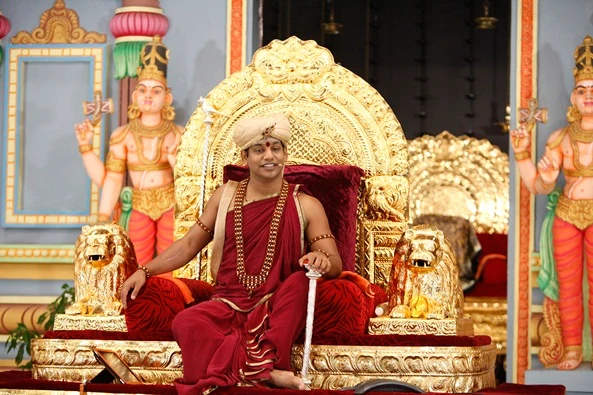
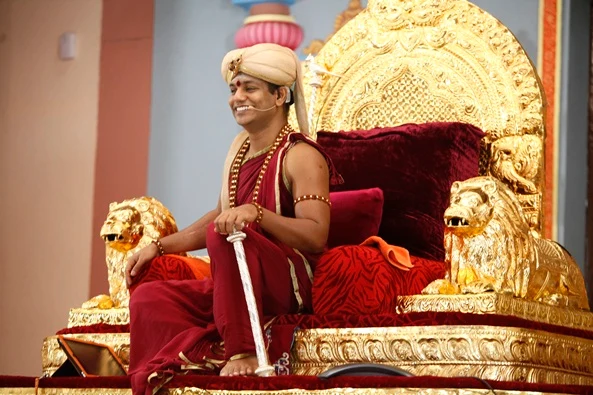
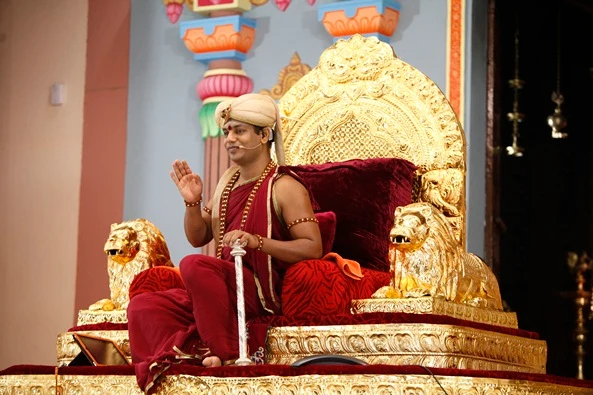
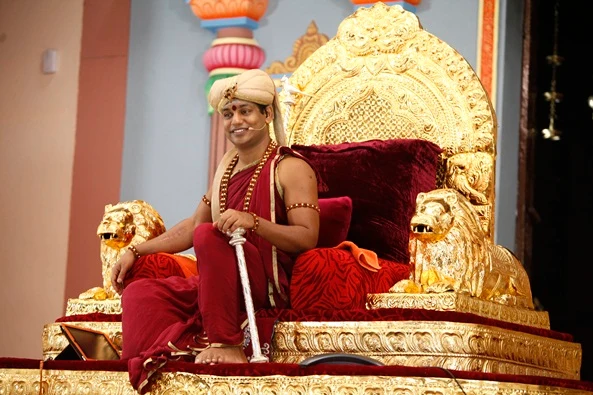
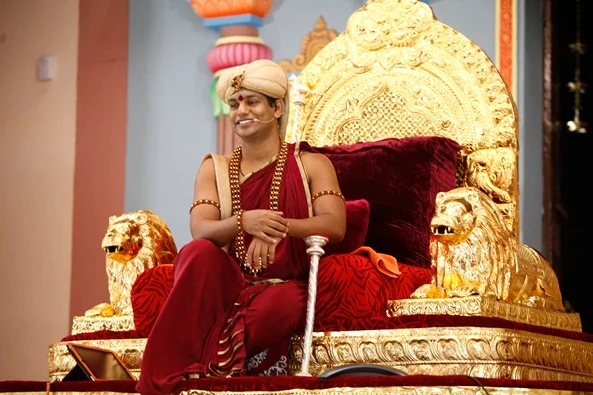
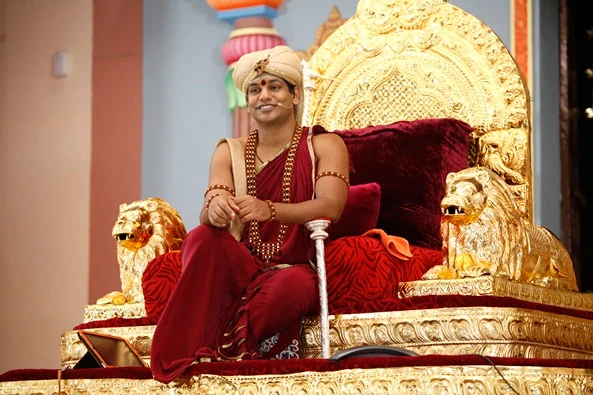
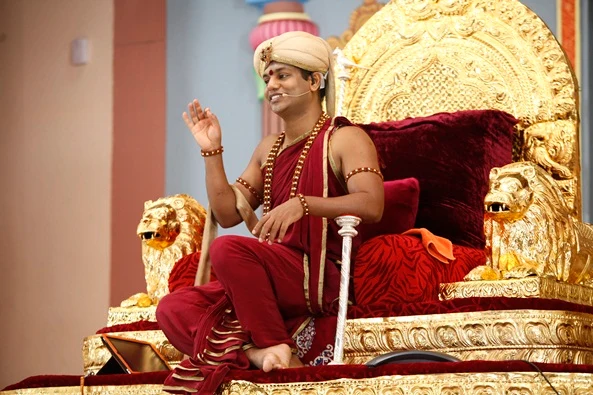
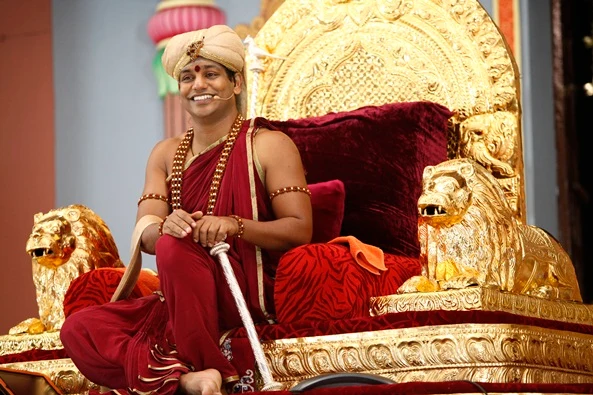
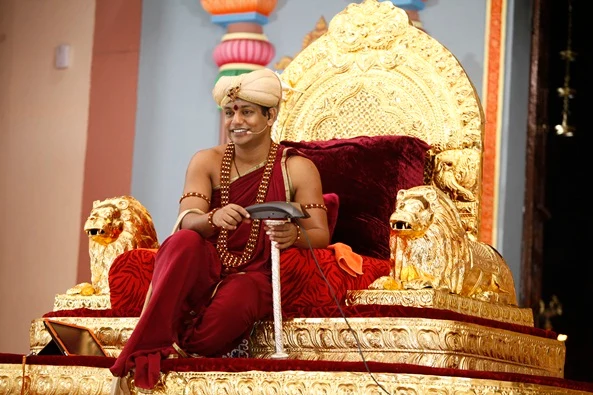
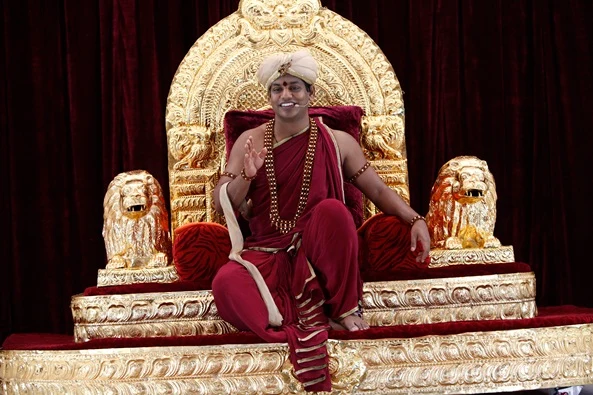
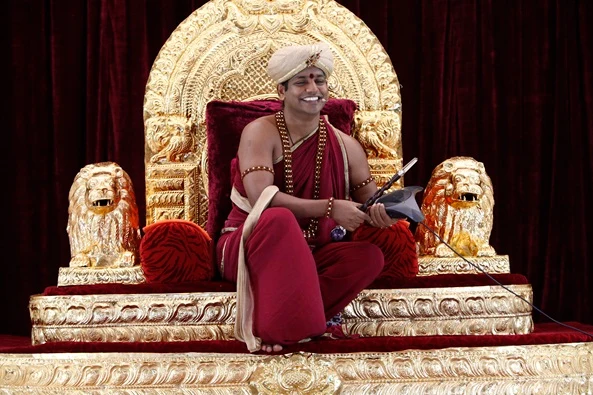
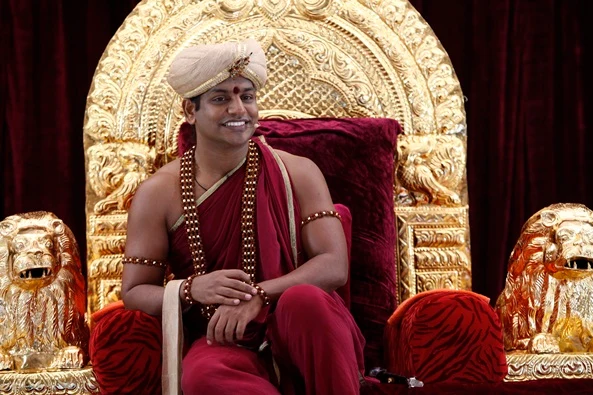
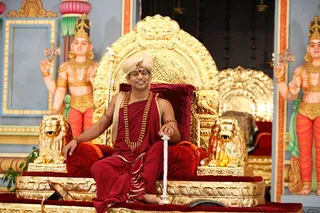
A man in a maroon and red robe sits on an ornate golden throne with carved lion-head armrests and a deep red velvet cushion. He wears a light pink turban, a red-beaded rudraksha-style mala, gold bangles and an armlet, and holds a white ceremonial staff across his lap. He smiles broadly while seated barefoot on a red and gold draped platform in a stage setting with pink walls. a person: the appearance cues of a turban, ornate maroon attire, beaded mala and a throne fit the page's claim, so this is an in_person candidate seated as a presiding figure.A seated man in a maroon-red robe with a cream turban and a small headset microphone sits on an ornate golden throne flanked by golden lion sculptures, with a red cushion behind him. He raises his right hand in a blessing gesture and holds a white staff in his left hand. He wears rudraksha-style beaded malas, gold bangles and a gold necklace. Behind him is a pink and blue temple-style wall with a golden pillar and hanging lamps. Appearance-based identification is uncertain, so the sitting figure is described only by role as a speaker giving satsang from the throne.A seated man on an ornate gold throne with carved lion heads, draped in deep red velvet cushions. He wears a cream turban, a red-and-maroon wrap over his shoulders, rudraksha-style beaded necklaces and gold armlets, and holds a white staff across his lap, smiling. The setting is a stage with a pale blue wall, a red and gold decorative pillar behind him and hanging gold ornaments. Swamiji (probable): the seated figure has a turban, rudraksha malas, gold ornaments and a red wrap on a throne, consistent with the page's description of the presidential satsang.

March 10 2012

Original wiki page
Contents

Title:

Supreme Pontiff of Hinduism HDH Bhagavan Sri Nithyananda Paramashivam.

Narration

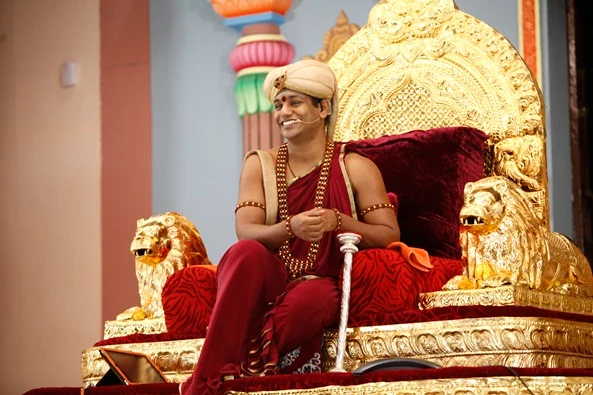
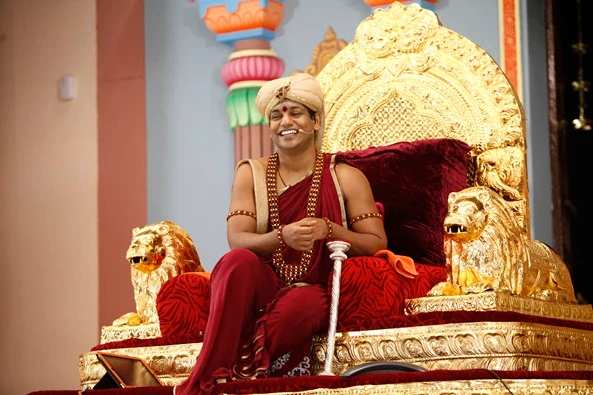
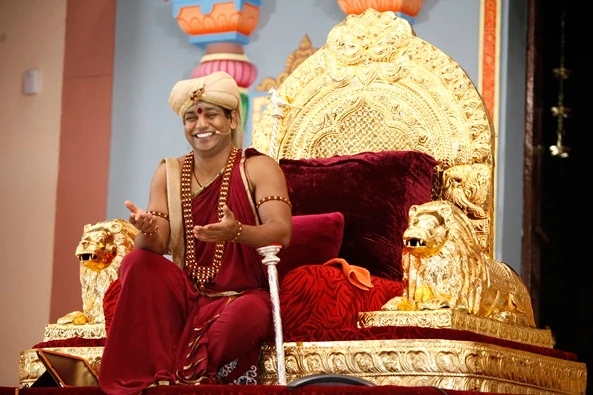
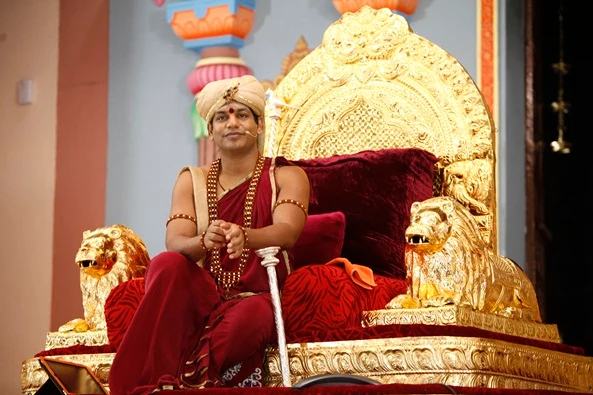
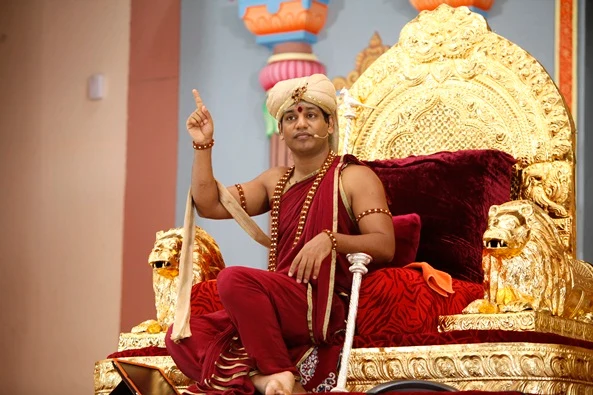
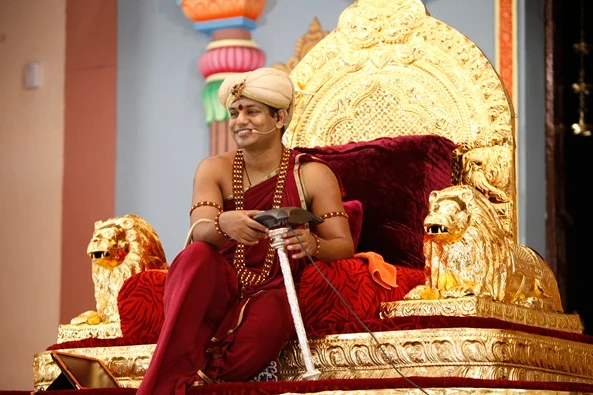
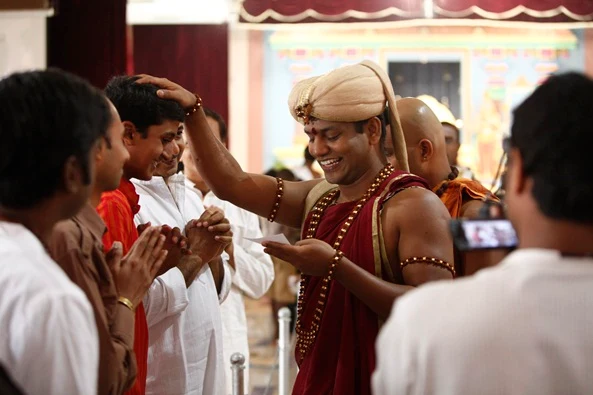
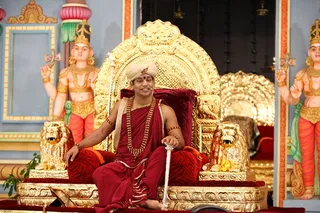
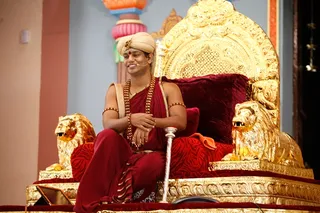
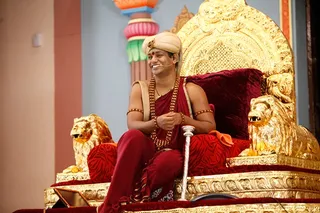
On this day’s Presidential address, the Supreme Pontiff of Hinduism (SPH) Bhagavan Nithyananda Paramashivam announced that a new segment called Nithya Jyothisam was going to start which was not about prediction alone. Nithya Jyothisam was going be a guidance and counselling also. SPH answered to a devotee's question about thyaga and explained that Tyaaga is sacrificing for no reason. ‘’Not converting the hits received by you from the reality into pain or anger or guilt or pain is Tyaaga!’’ SPH further shared that He is constantly transforming people living around Him that is why He is constantly exploding in enlightenment. Furthermore He beautifully emphasized that those who just create a biological community around them, are just Fools. Those who just create an ideological based community around them, are Great. But those who create a Consciousness Centric community around them, are truly Blessed.

That day's Presidential Address-Nithyananda Satsang was conducted by the Supreme Pontiff of Hinduism Bhagavan Nithyananda Paramashivam on 10 March 2012 in Adi Kailasa, Bengaluru, Karnataka, India.

Photos From The Day:
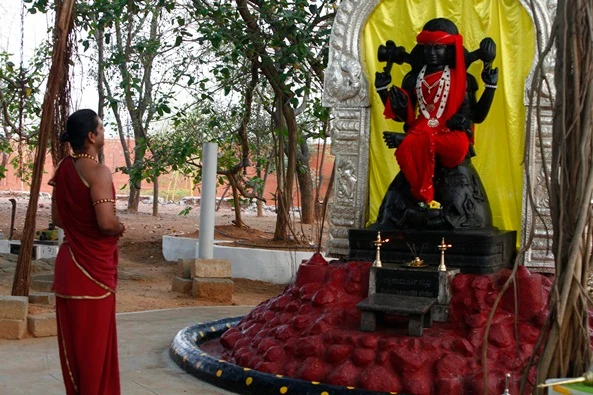
Photos from this day

View all 26 photos
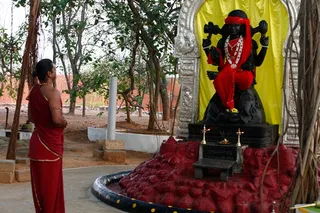
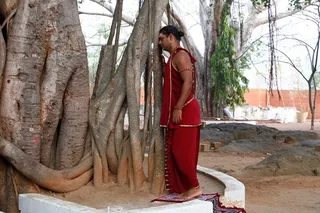
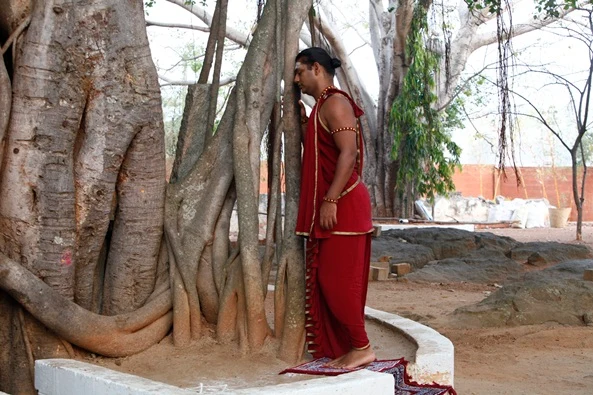
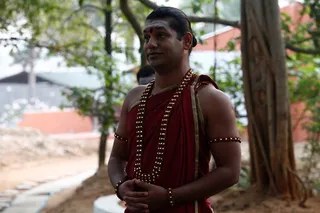
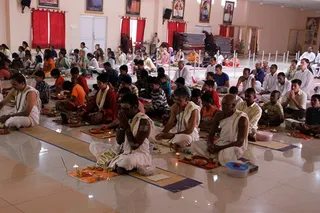
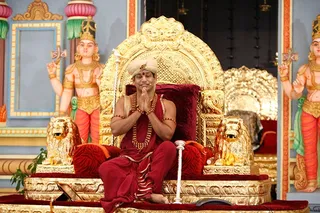
A standing person in a red-orange saffron garment with a gold-toned armband and gold necklace faces away from the camera toward a dark black stone murti of a multi-armed female deity, adorned with a red cloth, a red-and-white garland and red offerings heaped at its base. The deity sits on a black pedestal with a yellow backdrop and an ornate silver-toned arch; two small brass lamps sit in front. Trees and a red brick wall surround the open courtyard. The person's role is devotee, and their face is not visible, so the identity cannot be established.A photograph of a barefoot man in a red sleeveless robe with gold trim and a red wrap, standing on a small white-edged platform beside a large banyan tree with thick aerial roots. He leans his shoulder and head against the trunk, facing away from the camera. A red and dark patterned cloth covers part of the platform, and dry sandy ground, rocks and a low red wall lie behind him. The man has long dark hair tied up and wears gold-coloured adornments on his arms. No readable text is visible. a person (long dark hair tied up, gold armlet adornments, red ceremonial robe) standing in a quiet outdoor setting.A man stands outdoors among trees and a low concrete wall, hands clasped in front of him. He wears a deep red wrap draped over one shoulder, edged with a gold border, with a long strand of rudraksha beads across his chest and matching beaded armlets and wrist bands. His hair is swept back and he gazes calmly to one side. Behind him are a red brick building and a shaded pathway.A large hall with a cream tiled floor holds a seated congregation of devotees in rows on mats. Several men in the foreground wear white dhotis with white shawls, sitting cross-legged with hands joined in prayer before small brass lamps and offering plates with flowers and kumkum on banana-leaf-style trays. Behind them, more participants sit in rows, some in saffron and red clothing and others in white. Along the far wall, red curtains hang beside framed deity pictures and a tall backdrop of religious imagery. A satsang-style gathering with lamps and puja offerings is taking place; about 40 to 60 people are visible.A man seated cross-legged on an ornate gold throne with lion-figure armrests and a red cushioned seat, palms pressed together in greeting. He wears a maroon-red dhoti and wrap with a gold-coloured turban, layered gold and beaded necklaces, and red-and-gold bracelets. A gold staff with a finial rests beside the throne. Behind him are painted deity figures with gold jewellery and a gilded arch, in a temple-style hall. Swamiji (probable): the figure wears a turban, ornate gold necklaces, rudraksha-style beads and a red-saffron robe, with the throne.A seated man on an ornate gilded throne with lion-shaped armrests and a red cushioned seat, in a decorated hall with painted deity murals on the sides. He wears a cream turban, a red-maroon robe, a long gold-beaded mala and a red tilak, holding a white ceremonial staff. Two painted deity figures in gold jewellery stand on either side, one holding a trident-like staff. Swamiji (probable): the seated man has a turban, saffron-red robe, rudraksha-style mala and ceremonial gold necklace, and the page names him as present at this satsang.A seated man on an ornate golden throne with lion-head armrests and a deep red cushioned seat, in a gilded hall with painted panels. He wears a cream turban, a maroon robe over a saffron-toned garment, a rudraksha-style beaded necklace, gold bangles and a gold armband, and holds a white staff upright in one hand. Flanking the throne are two large gold-painted deity figures in red and gold dhoti-like clothing with elaborate crowns and gold jewellery, one raising a hand.A man in a maroon and red robe sits on an ornate golden throne with carved lion-head armrests and a deep red velvet cushion. He wears a light pink turban, a red-beaded rudraksha-style mala, gold bangles and an armlet, and holds a white ceremonial staff across his lap. He smiles broadly while seated barefoot on a red and gold draped platform in a stage setting with pink walls. a person: the appearance cues of a turban, ornate maroon attire, beaded mala and a throne fit the page's claim, so this is an in_person candidate seated as a presiding figure.A seated man in a maroon-red robe with a cream turban and a small headset microphone sits on an ornate golden throne flanked by golden lion sculptures, with a red cushion behind him. He raises his right hand in a blessing gesture and holds a white staff in his left hand. He wears rudraksha-style beaded malas, gold bangles and a gold necklace. Behind him is a pink and blue temple-style wall with a golden pillar and hanging lamps. Appearance-based identification is uncertain, so the sitting figure is described only by role as a speaker giving satsang from the throne.A seated man on an ornate gold throne with carved lion heads, draped in deep red velvet cushions. He wears a cream turban, a red-and-maroon wrap over his shoulders, rudraksha-style beaded necklaces and gold armlets, and holds a white staff across his lap, smiling. The setting is a stage with a pale blue wall, a red and gold decorative pillar behind him and hanging gold ornaments. Swamiji (probable): the seated figure has a turban, rudraksha malas, gold ornaments and a red wrap on a throne, consistent with the page's description of the presidential satsang.A man seated on an ornate golden throne with lion-head armrests and a deep red cushioned seat. He wears a light peach turban, a maroon-red draped garment, a long rudraksha-style bead necklace with a gold ornament, gold armbands, and holds a silver-topped staff across his lap while smiling. The throne sits on a red carpeted platform before a pale blue wall with a hanging lantern and gold-framed decor. Only one physical person is visible.A smiling man in a cream turban and maroon-red robes sits on an ornate gold throne with a red velvet cushion and gold lion-head armrests. He wears a long gold-bead necklace and gold armlets, and holds a white staff across his lap. a person: the figure has a turban and ornate gold-and-red regalia consistent with the page's satsang context, though the face is not used for identification. Behind him stand a tall painted pillar with colourful bands and a pale blue wall. A small red device sits on the dais near his foot.