Wednesday
29 February 2012
The power of small changes.
- Dated photos
- 20
- Source pages
- 1
- Media
- 5
February 29 2012
Original wiki pageTitle
The power of small changes.
Description
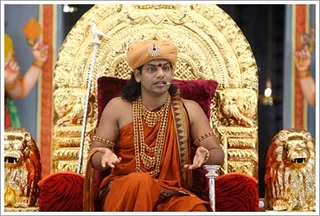
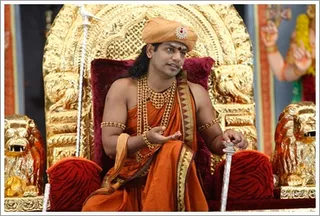
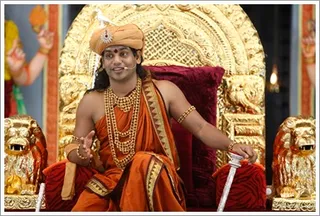
Paramahamsa Nithyananda talks on different types of problems and gives the solution for that problems. He adds up that how the problem is connected to the brain and how it is been reacted in different bodies like men and women.
This talk was delivered by Paramahamsa Nithyananda on 29 Feb 2012 to live global audience.
Link to Video
| Video | Audio |
Transcript:
(01:15)
Unfortunately, men finish their whole sadhana cerebrally; they don’t walk through the path and they are already imagining they are in the goal, almost near the goal. Really, I have seen every men the moment they finish reading solution for all small problems, they think they have crossed the small problem. I have seen hundreds of men just by reading the solution for problems they think they already crossed those problems. Those problems do not exist in them. When you write book for men describe all the problems in a detail visual way, all you need is make them read that. That’s all. By the time they finish reading they have a complete satisfaction they don’t have all those problems. Now those problems are all solved. Even if it comes they have a weapon to handle it only when it comes they will know, weapon is only bookish knowledge and they are in depression.
(02:25)
Problem needs to be handled as it is. Patanjali is the first Master who can handle feminine Consciousness. Patanjali is the first Master who can solve the problems as they are. For all men or the people with men’s mind, Shankara, Buddha, Mahavir, they are the best Masters. For all the people who are straight, direct to the problem, to the core, to the solution Patanjali is the ultimate Master. He is a straight person. He is very clear, “Are you coming this.. for this problem? Here I am giving the solution.” See I am not disrespecting Buddha’s solution for that mother but I will not completely go with it. If I have to face that same situation I will tell the mother very clearly, “I do not have solution for your problem. I can sympathize, empathize. I can cry with you for few seconds, few moments and show that I standby you as a well wisher, not more than that.” Maybe if you ask for ultimate solution I will be able to give that will be the straight answer. But Patanjali is a guy who can revive the child and give the ultimate solution to the mother. After reviving the child he will tell, “Now I revived but understand your attachment with this baby is going to be impermanent. Let the baby grow and live on his own. After little time come and take sanyas and achieve enlightenment.”
(04:49)
Commercial
(09:52)
After little time come, take sanyas, and achieve Enlightenment. He would have given a complete solution. The only difference and major difference I see between other Masters and Patanjali is, Patanjali is straight, humble and simple. He does not hypnotize people with that ultimate diamond he is having. This poor guy is coming and asking for ten kg brinjal for his day today food. And you have a huge diamond you just dangle that in front of him saying that, “I have a huge diamond come on come on. I’ll give you, I will give you.” Alright with this diamond he can’t have his lunch…. You may say, “No, no, no he can sell the diamond and get the money have his lunch.” But to achieve that diamond you want him to spend for twelve years. You say, “After twelve years I will give you the diamond.” And that poor fellow, what will he do for twelve years for the lunch? “No, no, no, it’s okay. You die without having lunch, take one more birth. That time you will spend twelve years. Then I will give you the diamond.” Don’t you feel it is simple cheating? I really feel when you go on diverting attention of people to the ultimate solution, unable to handle and give the simple immediate solution. It is cheating. (11:31) Many time I tell people very clearly, “I am good at this. I am not good at some of the things.” So, those few things I will stand by you as a friend, well wisher not more than that…. Just My compassion, My love I feel the people should be told very clearly, the difference between ultimate solution and immediate solutions. I had... I had two great teachers in My life. I was able to trust them completely for the ultimate solutions because they were very clear in immediate solutions. In the immediate solutions they are very clear about their abilities and inabilities. Because they were very clear about their abilities and inabilities in the immediate solutions, I was able to trust them, that they are very clear about the ultimate solutions also. Sadhana Pada is a very powerful methods and techniques given by Patanjali. He gives solution for every simple immediate problems. He is not saying when you go and ask him ten kg brinjal, he is straight giving you ten kg brinjal. No. Patanjali is immediate. I can say, Patanjali is the most compassionate Master. He is just compassion, He understands you as you are.
(13:40)
He relates with you as you are. When you understand your simple problems as ultimate problems and ask for ultimate solution. Please understand, your Sadana will never be perfect. People come and ask Me, “I am bored and tired in the Sadana Swamiji. I tell them are you bored and tired when you make money? When you want to… when you are working for making money.” They say, “No.” Then that is your right desire, immediate desire that is the immediate solution you need. If you’re feeling tired when you do Sadana be very clear your problem is not ultimate problem. It is immediate problem which your mind is constantly verbalizing and making it as a cerebral layer and thinking it as the ultimate problem. No. When you don’t have ultimate problem and cerebrally you start thinking you have ultimate problem and working on the ultimate solution you will be tired, bored and nothing will work.
(14:49)
| Video | Audio |
Transcript:
(01:14)
If you are feeling tired, when you do Sadhana, be very clear, your problem is not ultimate problem, it is immediate problem, which your mind is constantly verbalizing and making it as a cerebral layer and making it as a ultimate problem. No. When you don’t have ultimate problem and cerebrally you start thinking you have ultimate problem and working on the ultimate solution, you will be tired, bored and nothing will work. Ultimate solutions do not work for the people who do not have ultimate problems. I remember a beautiful incident. One day I was reading a sutra from this Patanjali yoga sutras. He was explaining about the samyama and kurma nadi. Kurma nadi is a energy… special energy flows on your body, if you concern… the sutra says, if you concentrate on that, if you do samyama on that, you will have the experience of the whole Cosmos. You will be able to see very clearly, the whole Cosmos. I asked, “How can that be”? Just meditating on some nadi on your body, how can you see the whole Cosmos?
(02:41)
He just..He just pressed it, the moment we came out of that hall to the open sky, He just pressed that kurma nadi, and that samyama has happened on the kurma nadi. It was so sweet that spot, so tasty, so ecstatic, automatically My whole attention fell on that spot, on that samyama, on that kurma nadi, and He told Me like, “Now look up.” It was maybe around eleven o’clock, daytime morning eleven o’clock, I could see very clearly, the sun and moon, and the whole, all the stars, very clearly. Please understand. I am telling you as it happened. I was shocked, I said, “Oh God, how can this be”? When He .. the moment He took His hands off, again the whole thing disappeared, I saw, the simply.. how we see now. I asked Him, “How can this happen”? He said, “It’s nothing, when you put samyama on the kurmanadi, the eyeball movements stops.”
(04:01)
See, all of us continuously have a eyeball movement. Every thought which happens in you makes the eyeball moves very little. But sure there is a movement. That subtle shaking of eyeball, stops you look beyond the blue layer. It stops you look beyond certain distance. If that eyeball movement is arrested and stable, in the puranas there is a mention, Devatas, Gods, do not have eyeball movements. Their eyelids do not move. That is one of the symbol described for Gods. See, if you have any darshan or vision, to find out the person whom you are seeing in the dharshan, is he really God or some illusion, these are the two, three basic scales, their feet will not be touching the ground, there will not be eyeball or eyelid movement.
(05:13)
So, He says, “I just made you do samyama on the kurma nadi.” The eyeball movement stops. When eyeball movement stops you can just penetrate through the layer of right.. light deflection or light reflection and see beyond. That's all. This one incident has made something totally different in Me. This one incident has made something totally different in Me. All the techniques, methods Patanjali describes in this sadhana paatha are straight and immediate.
(05:50)
Testimony from the program participants.
(10:18)
...are straight and immediate does not require twelve years. Some time people come and tell Me, “Swamiji, You make things very simple and too straight.” I tell them, “I cannot help it because that is the way I learnt it. That is the way I was told. That is the way I imbibed. So, I cannot help it. I am not making you instant coffee. I was given instant coffee. So, I am sharing it with you” The immediate solutions, straight things, the immediate solutions make you understand your immediate problems and helps you solve it. If I go on talking about the ultimate solutions, you also start thinking all your problems are ultimate problems, and land up in depression. I have seen hundreds of people, taking up this ultimate solution as their life and lifestyle, go on living, living, living, after some time, feeling only frustrated, because that is not their problem at all. By that time they realize that is not their problem at all, their life is over. And they are into bigger problems and mess.
(11:38)
Because any Advaita book you read, it very nicely diverts your problems into tak, tak,tak,tak, this, this, this, finally they prove the ultimate problem is your problem. And this poor fellow, anything logically proved, immediately he starts believing, and he starts thinking that is his problem, and he is sitting. His problem is simple two kg brinjal, and little bit of salary... raise in the salary. All I am trying to tell you is, find your problem, solve your problem directly, directly. Meera’s experience is much more solid and truthful, honest for Me than, this so called Advaita Vedantins, this so called Advaita Vedantin’s silence. But Meera’s ecstasy and dance, cannot be disturbed even by giving poison, or even by putting in prison…. Meera was put in prison.
(13:00)
I always used to ponder, analyze, I tell you, first know your immediate problems…. Let you have the immediate solutions, then you will see, when you have the ultimate problem, go for the ultimate solutions. Patanjali is the ultimate Master, He is for feminine Consciousness. If you want immediate solution and ultimate solution, Patanjali is the solution…. The sadhana, the method of understanding your immediate problem and going for the immediate solution, is described so thoroughly, so beautifully in this.
(14:30)
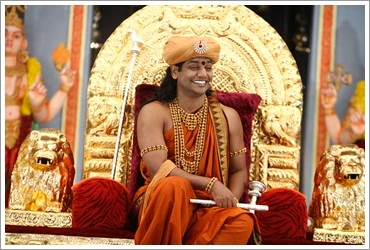
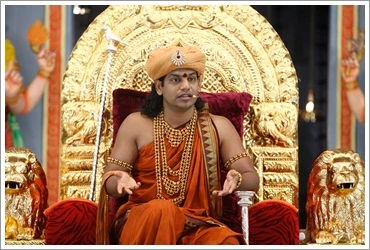
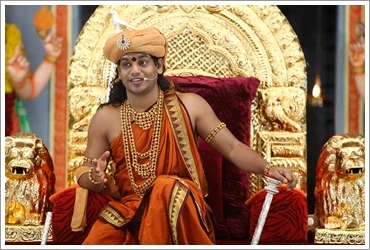
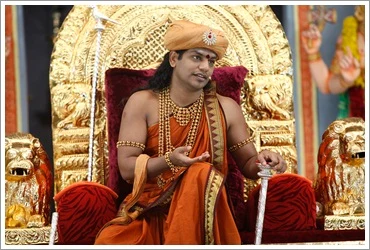
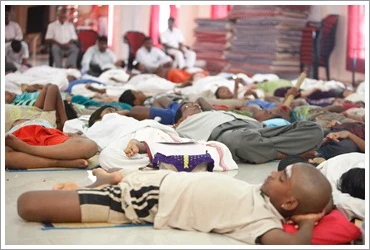
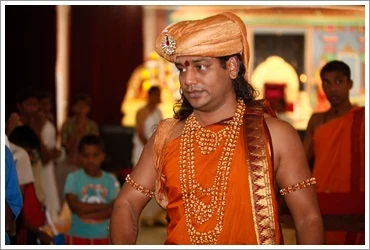
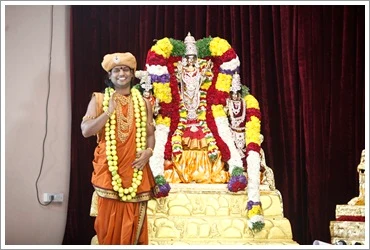
Photos From The Day:
Sakshi Pramana:
Sharing from Other (Specify)
Photos from this day
View all 20 photos