Skip to content
Wednesday

14 December 2011

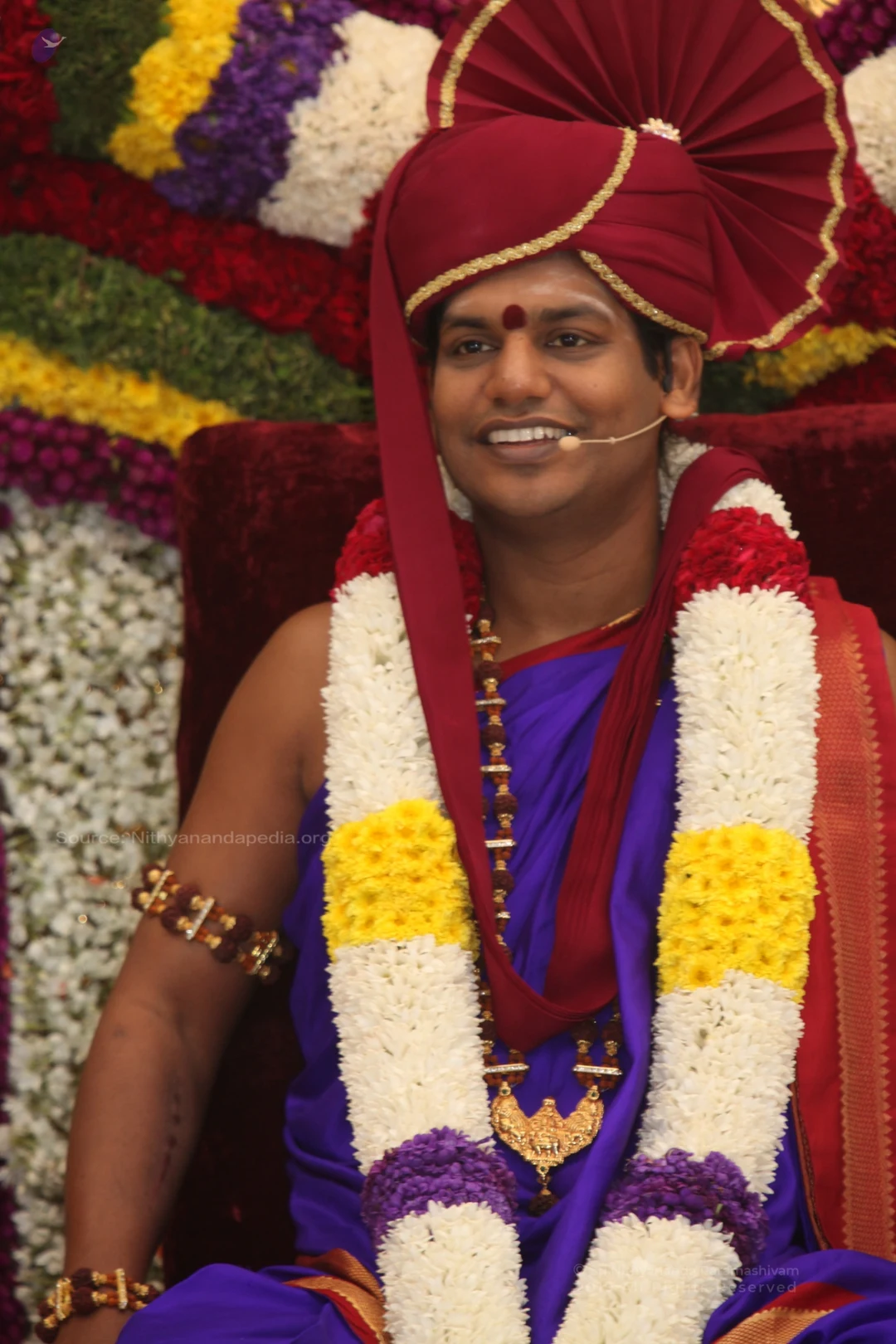
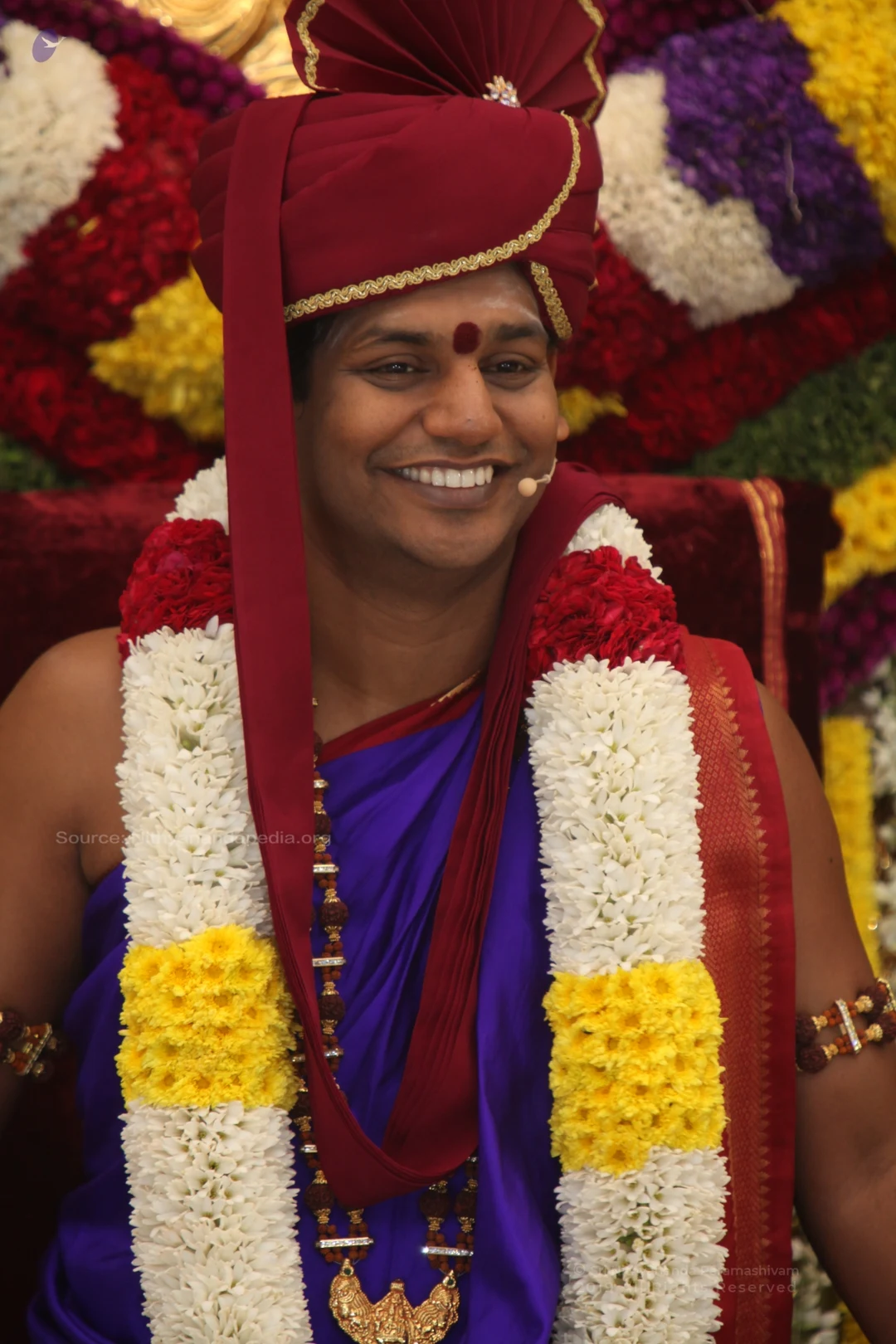
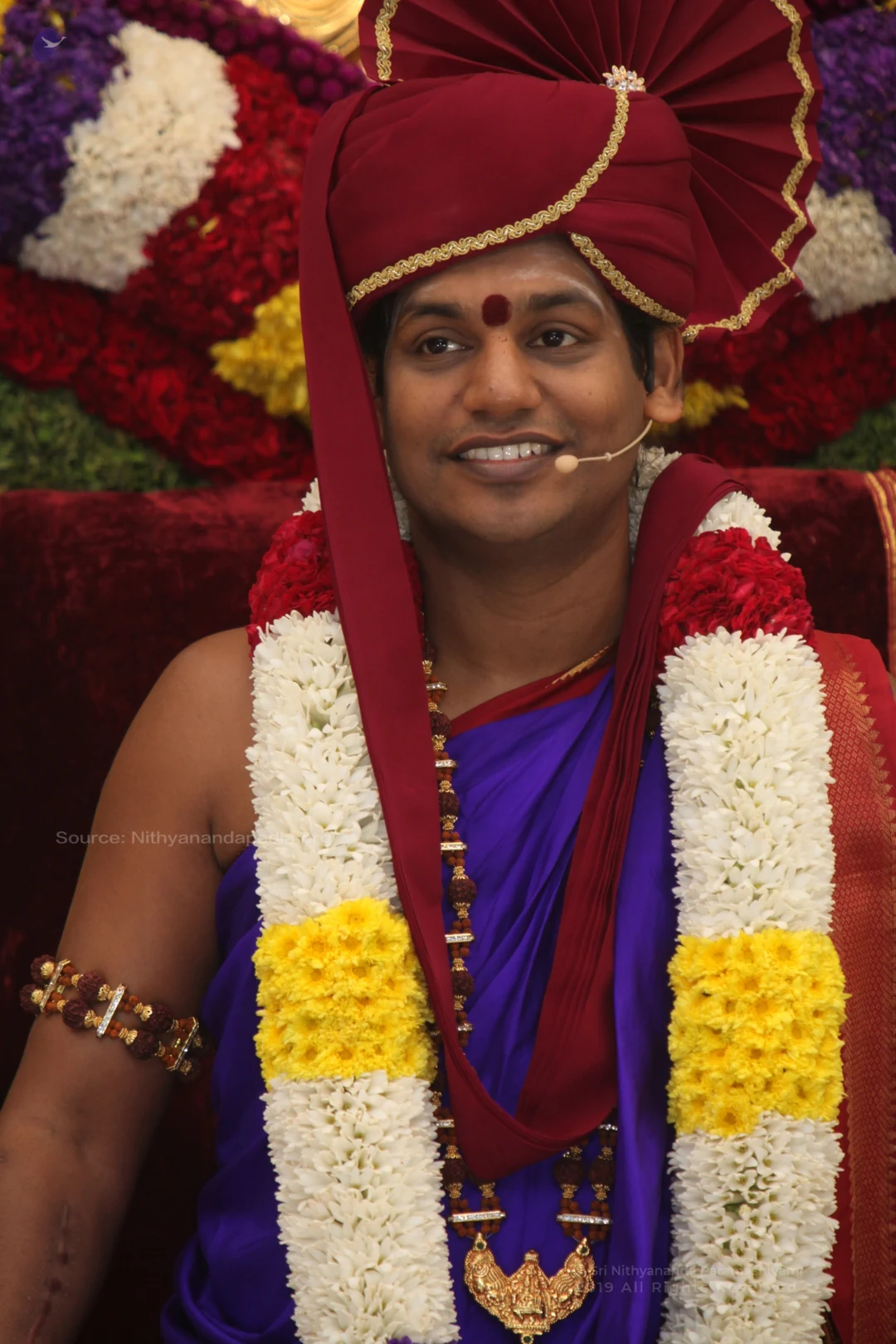
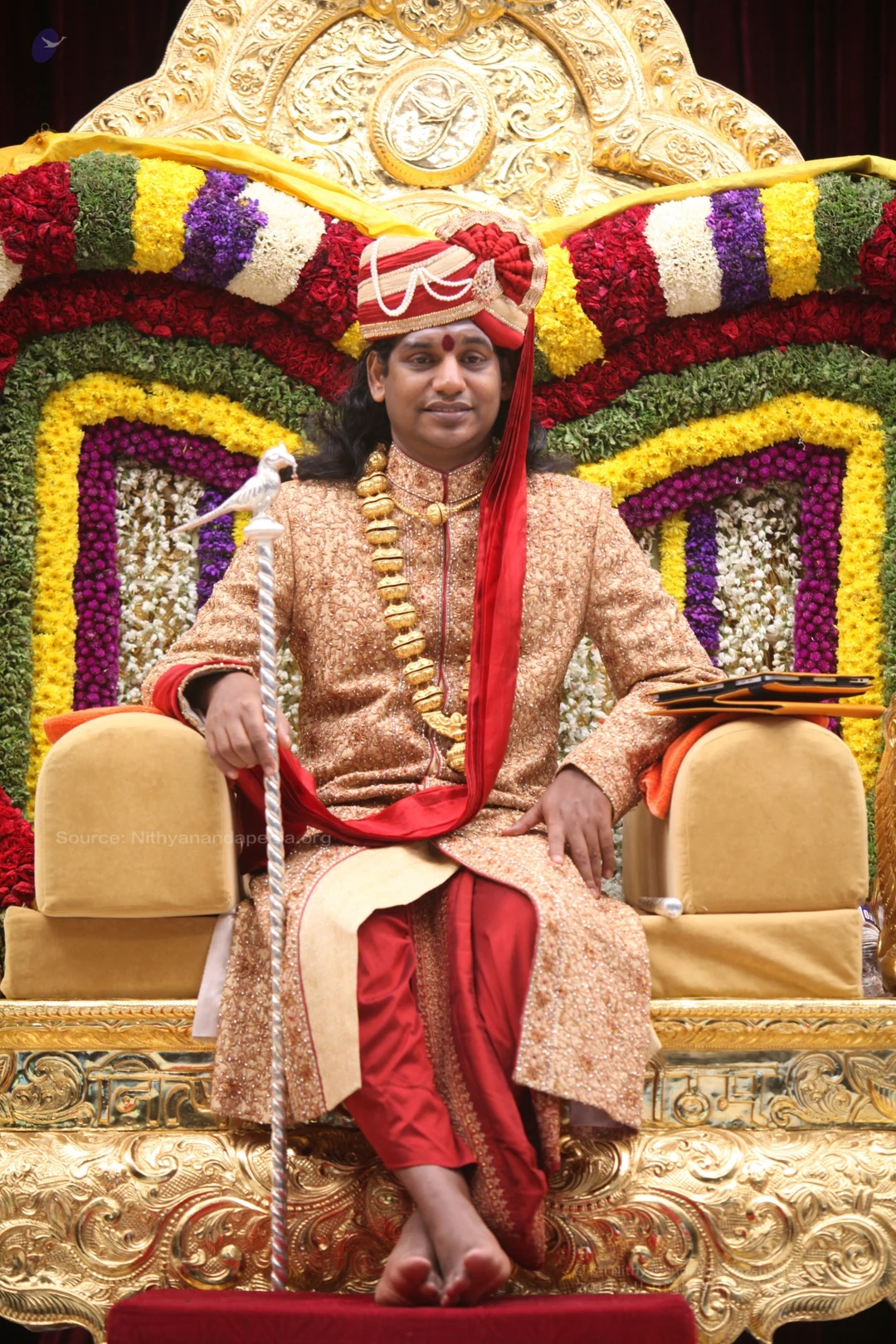
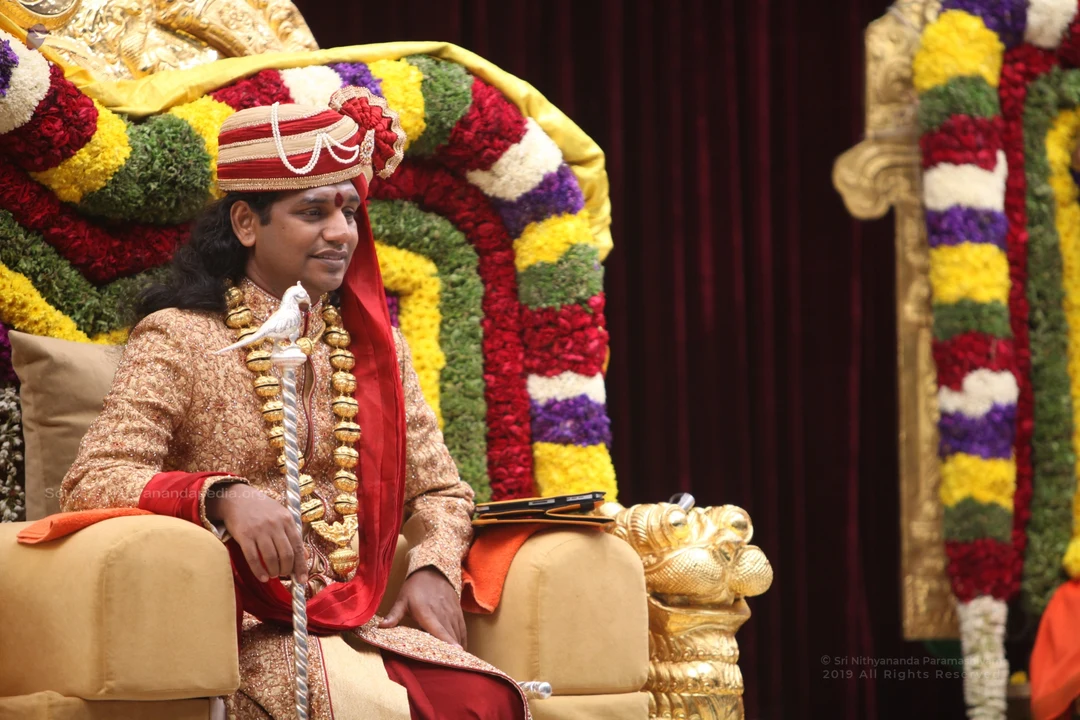
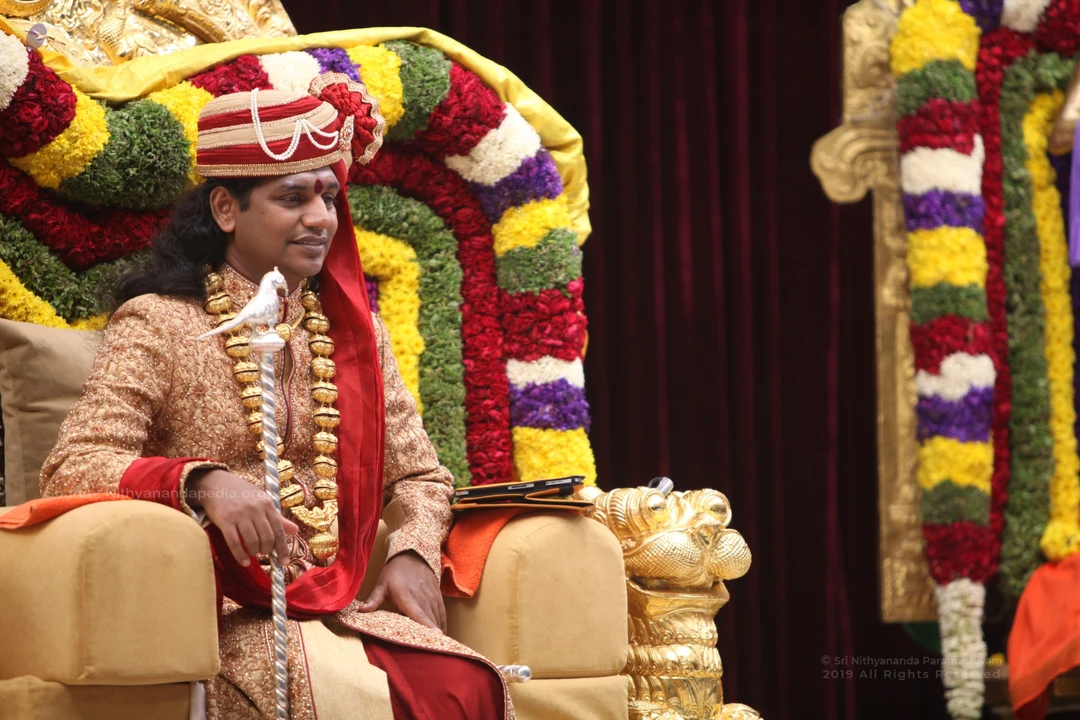
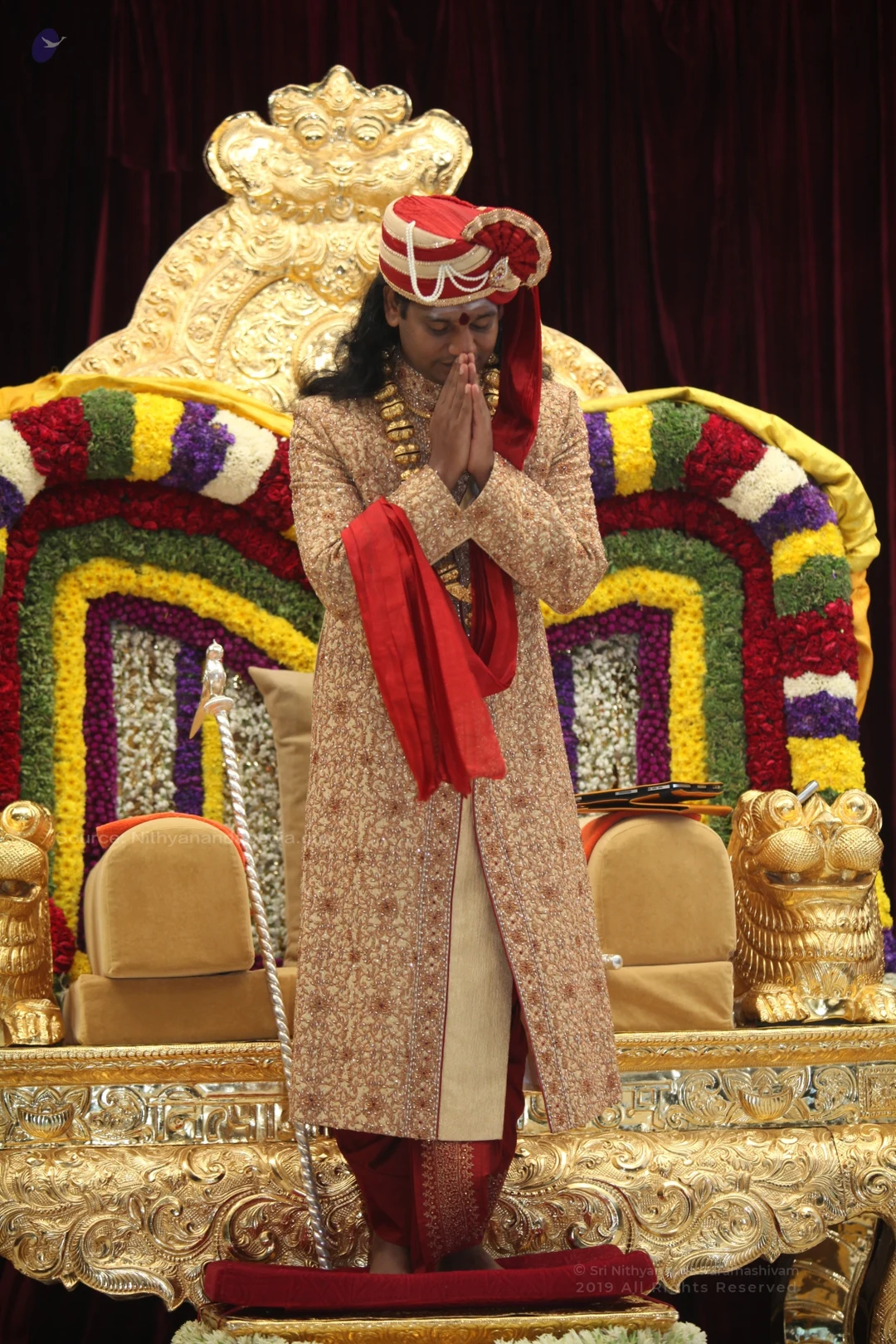
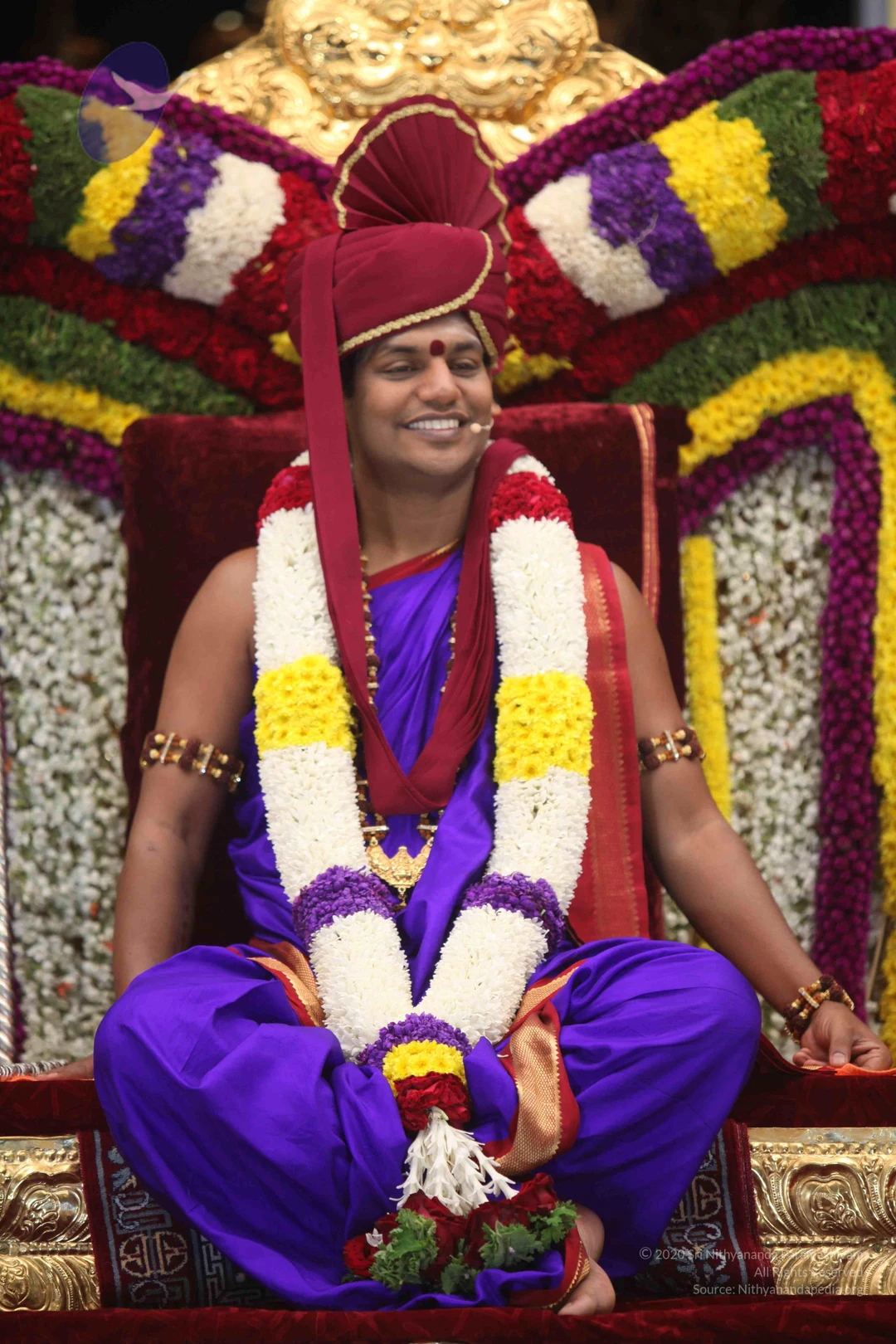
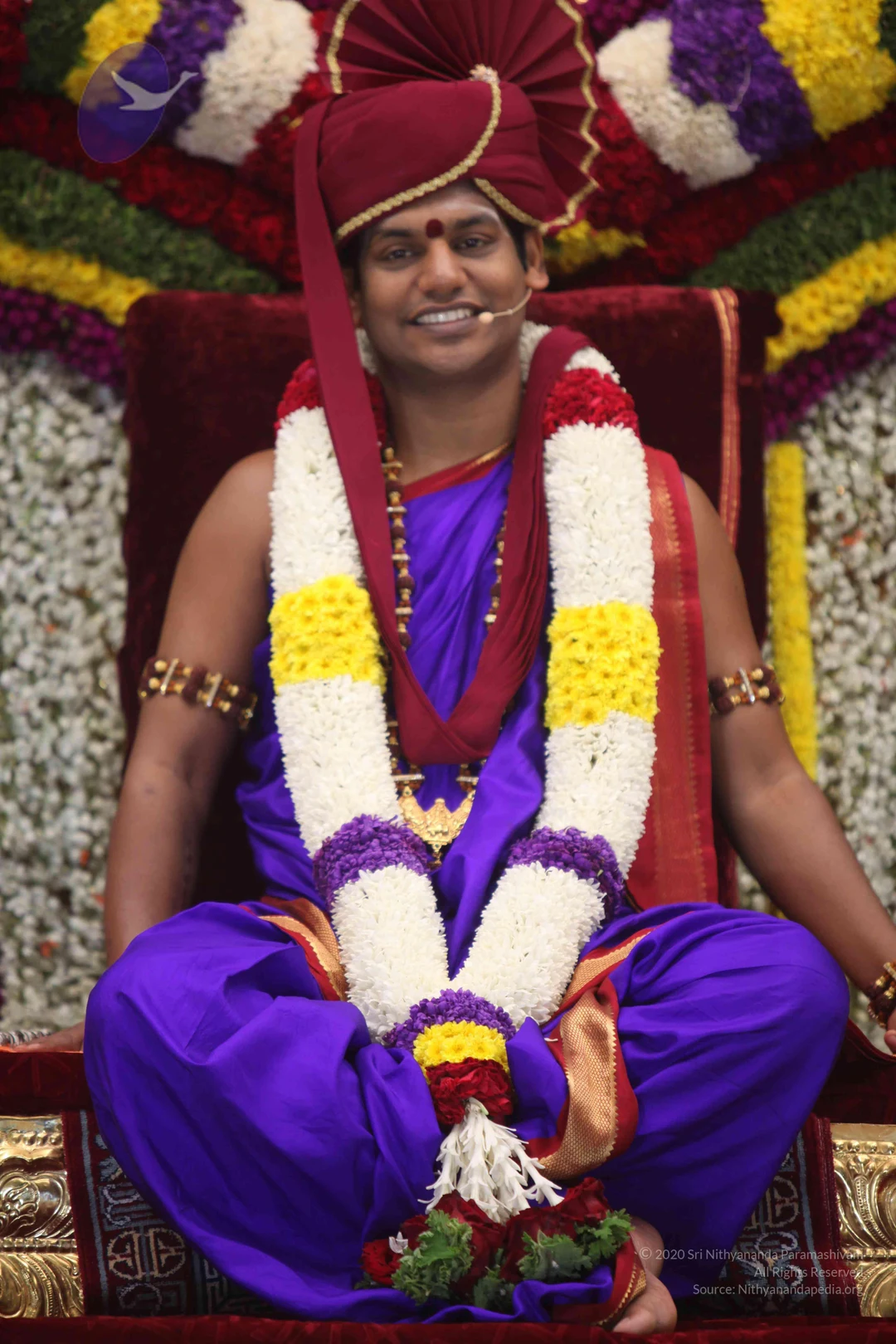
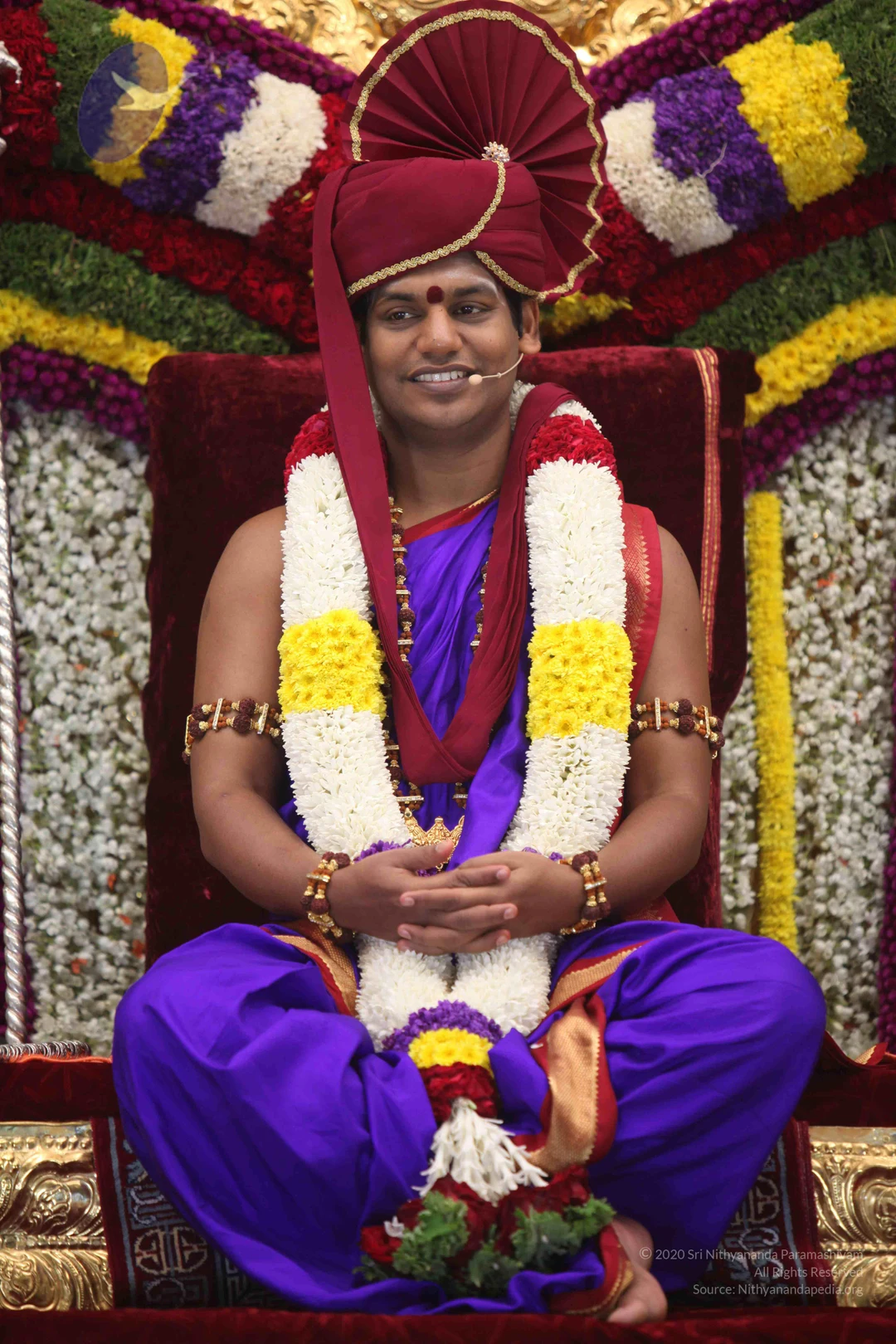
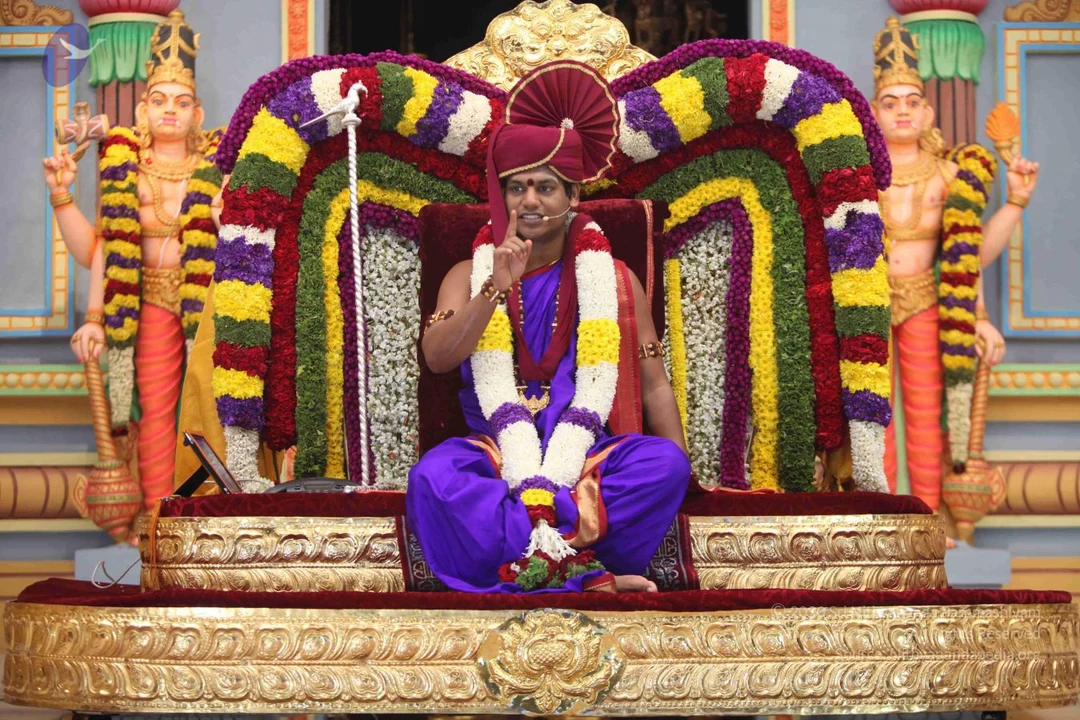
The Supreme Pontiff of Hinduism HDH Bhagavan Sri Nithyananda Paramashivam

Dated photos
601
Source pages
1

December 14 2011

Original wiki page
Contents

Title:

The Supreme Pontiff of Hinduism HDH Bhagavan Sri Nithyananda Paramashivam

Photos:

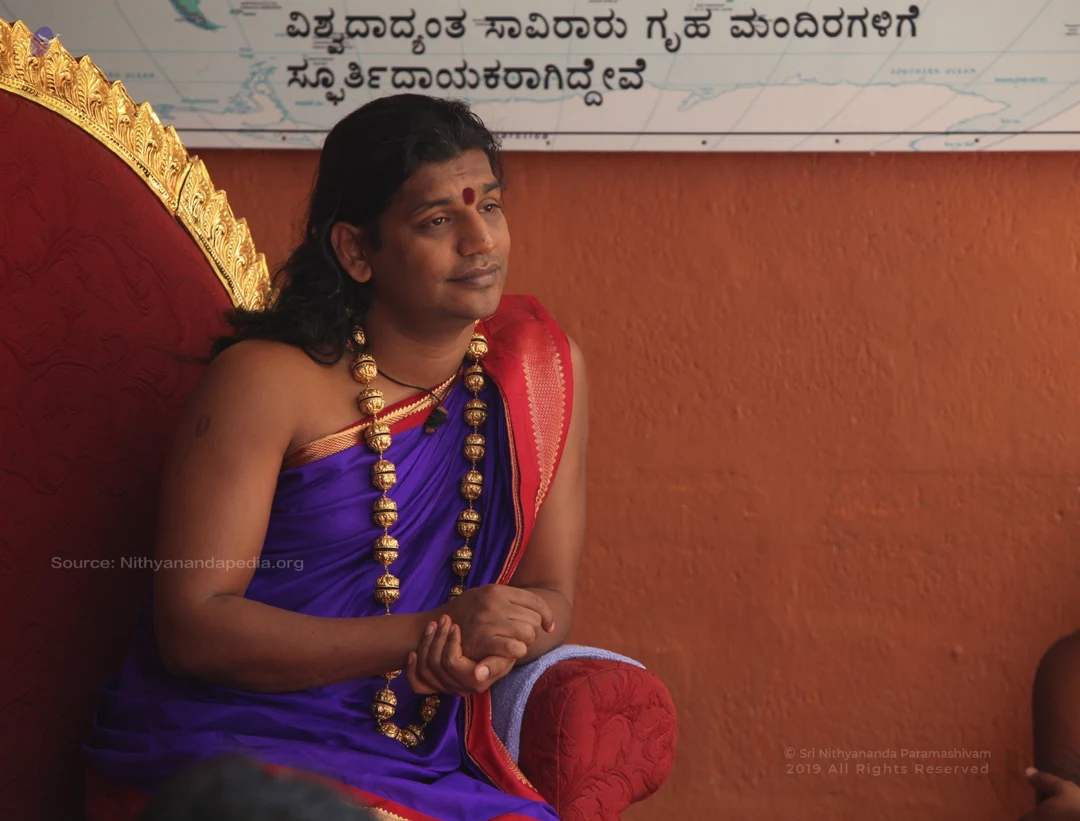
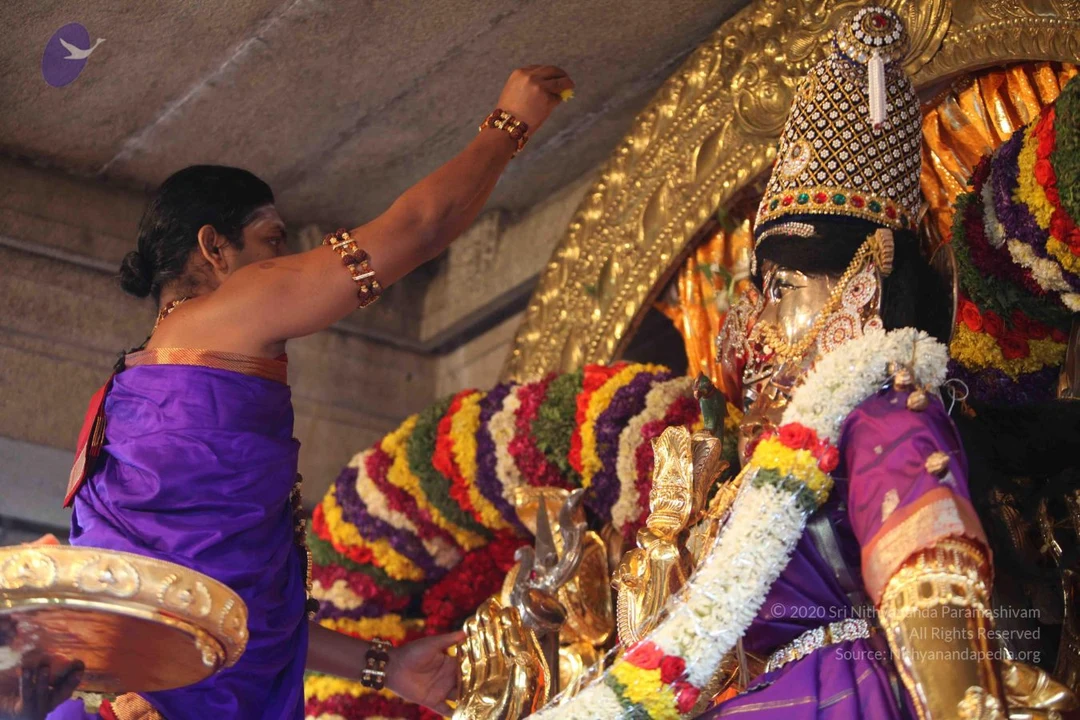
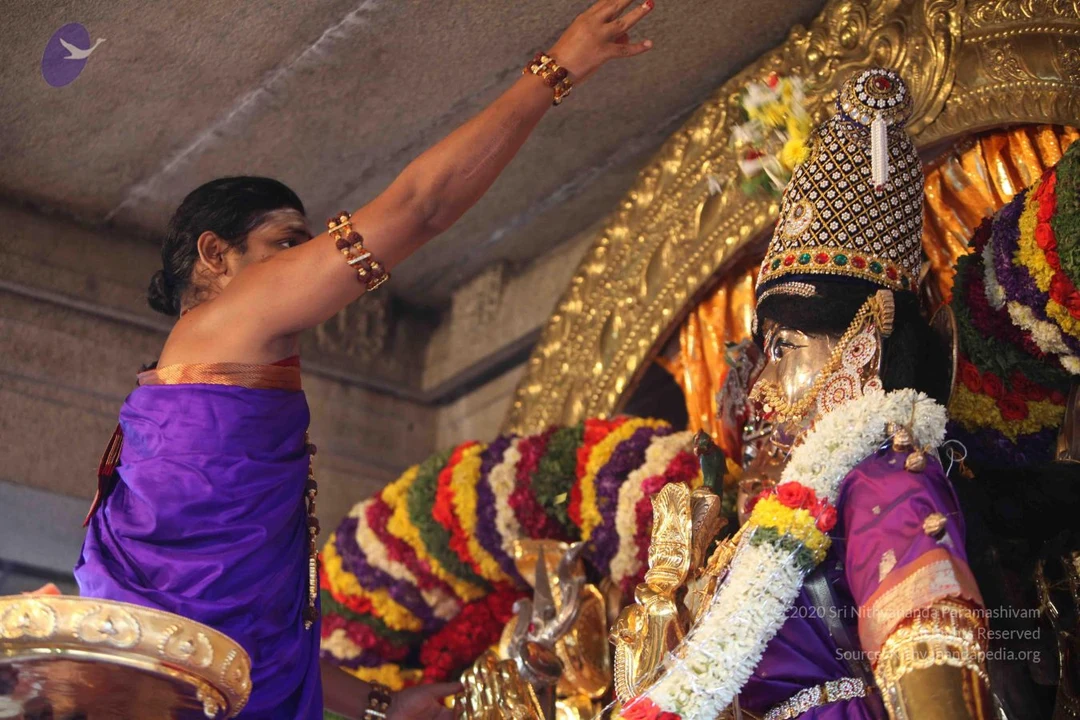
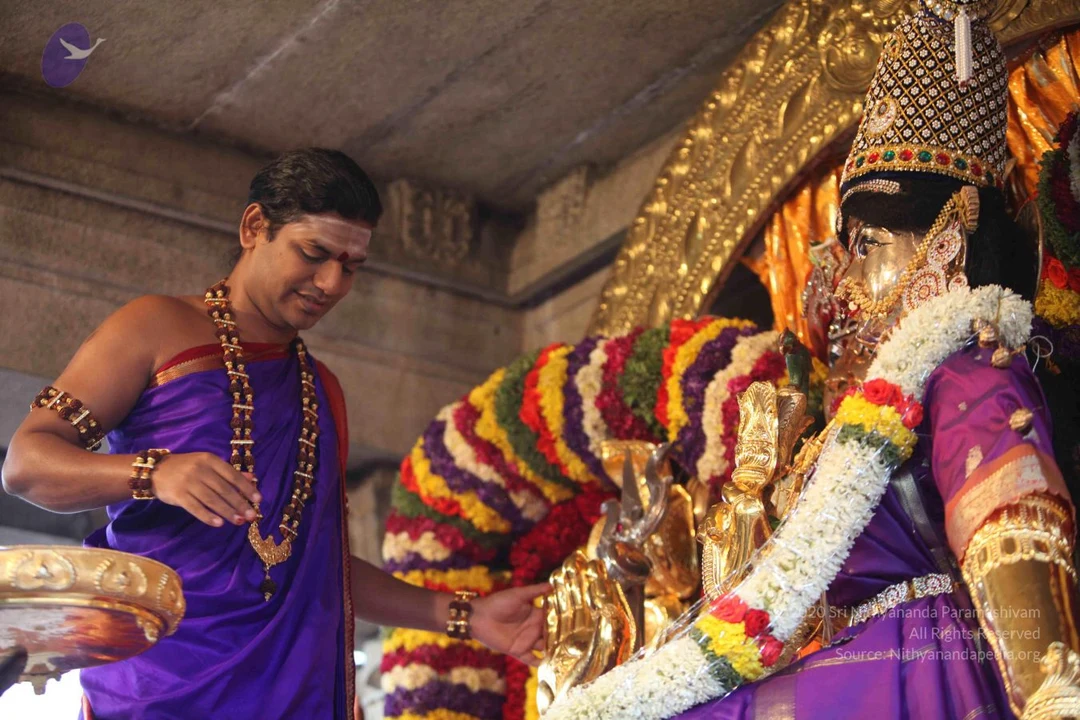
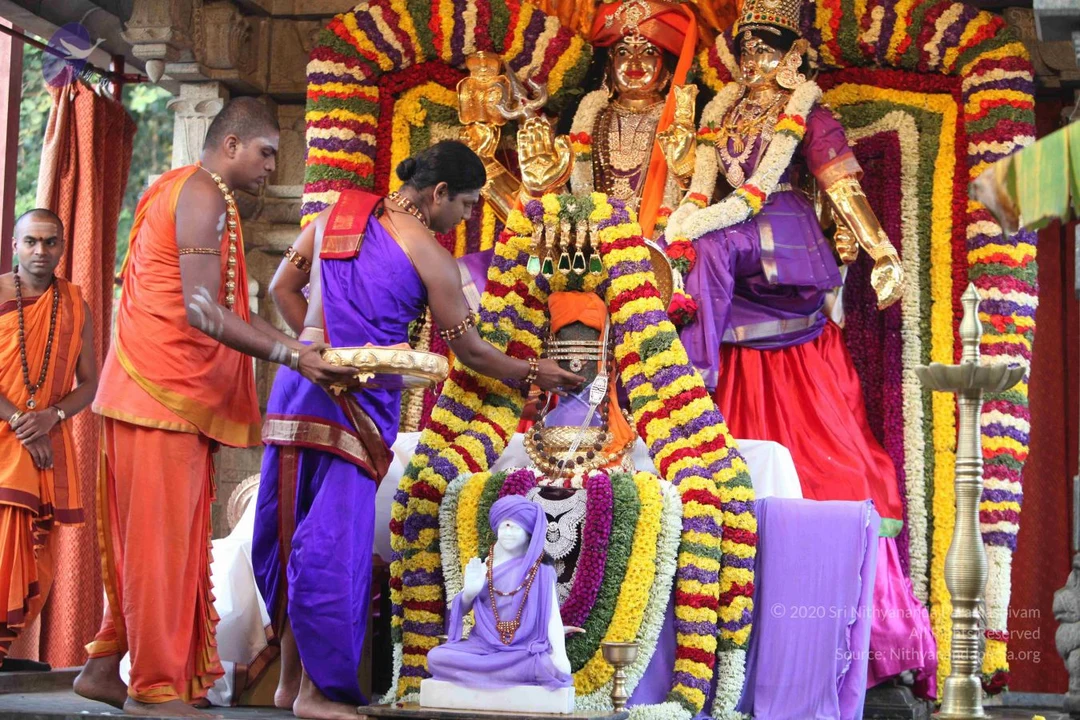
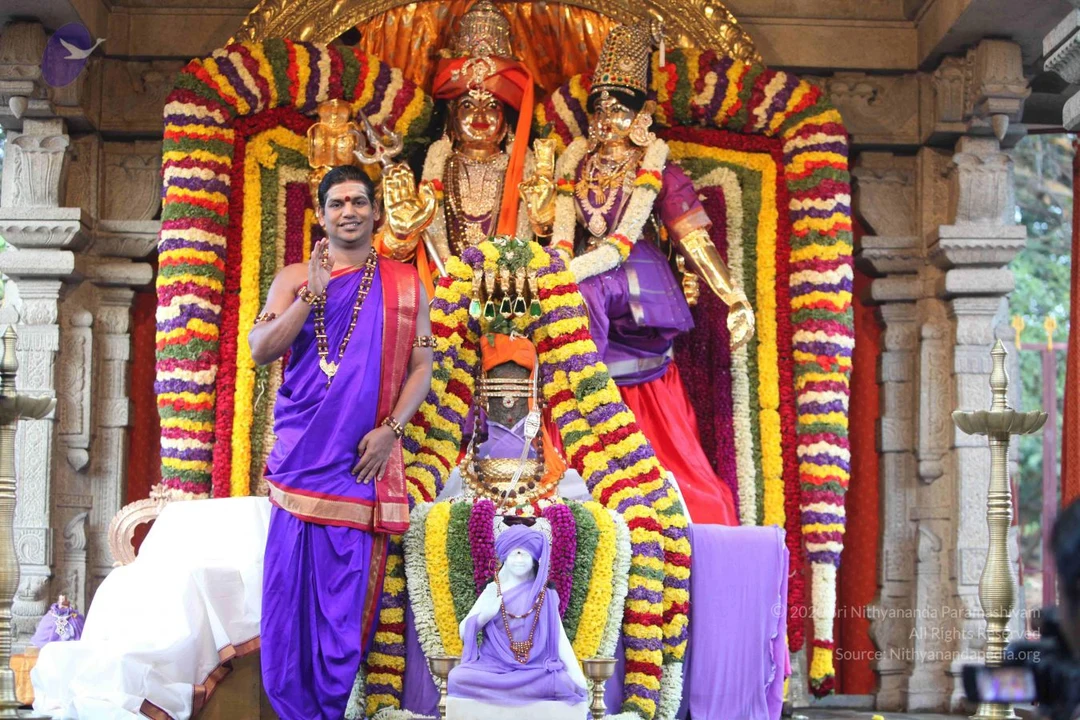
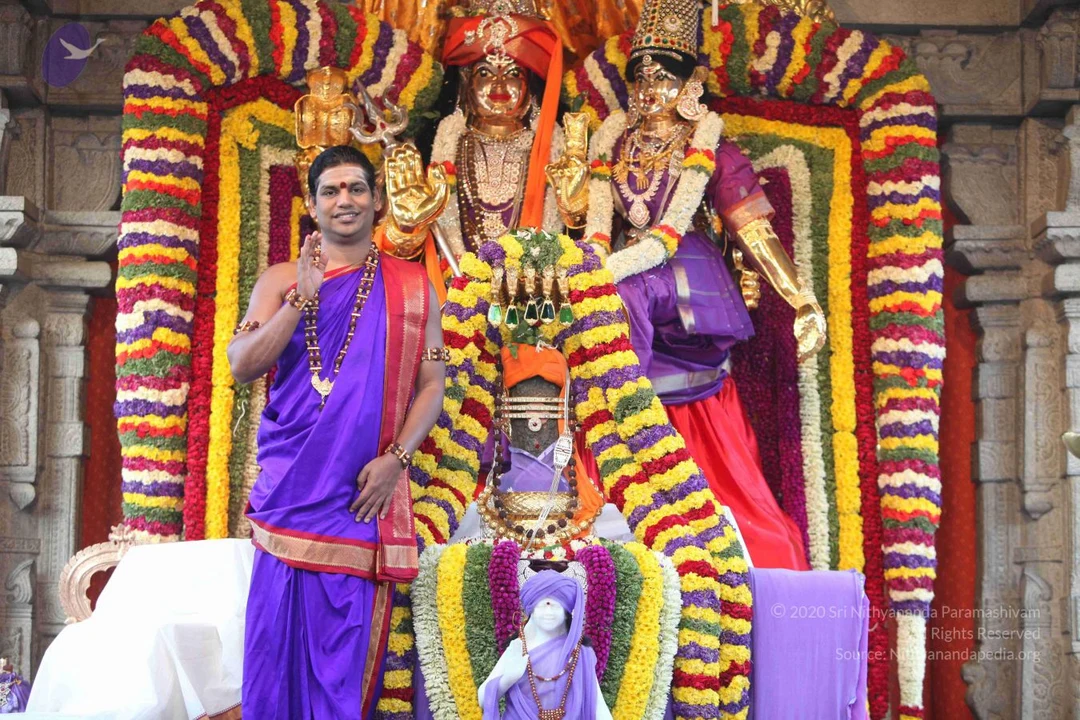
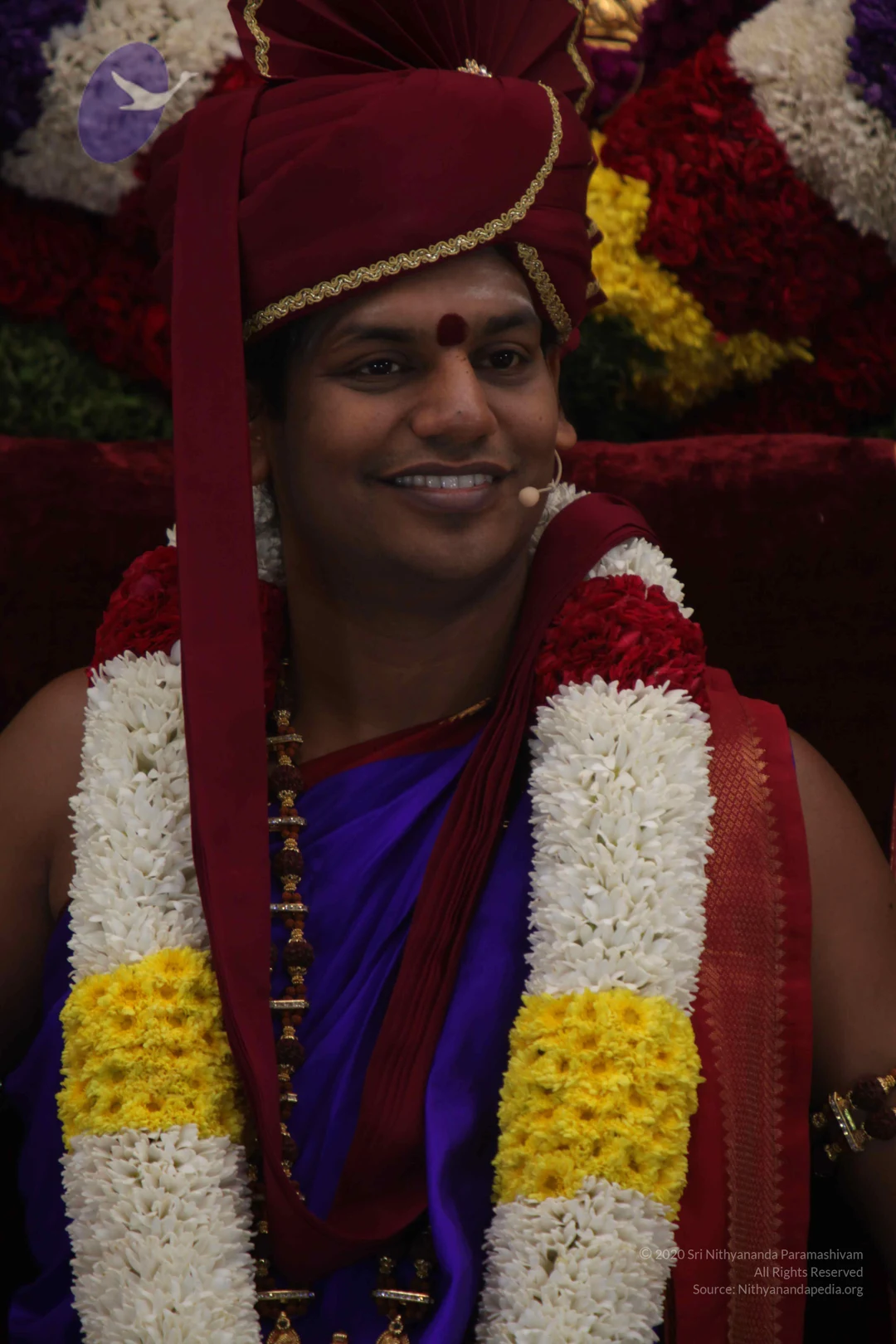
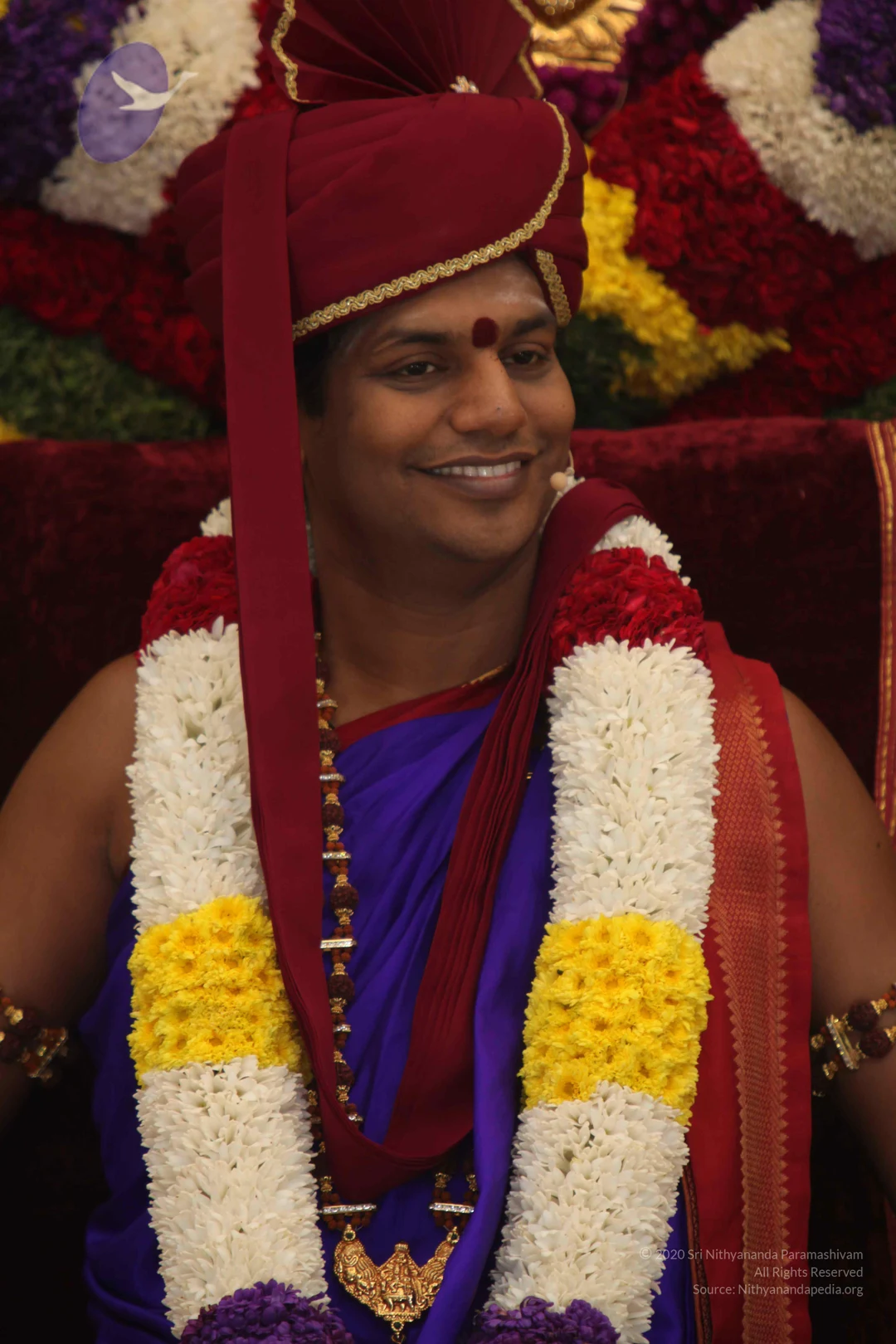
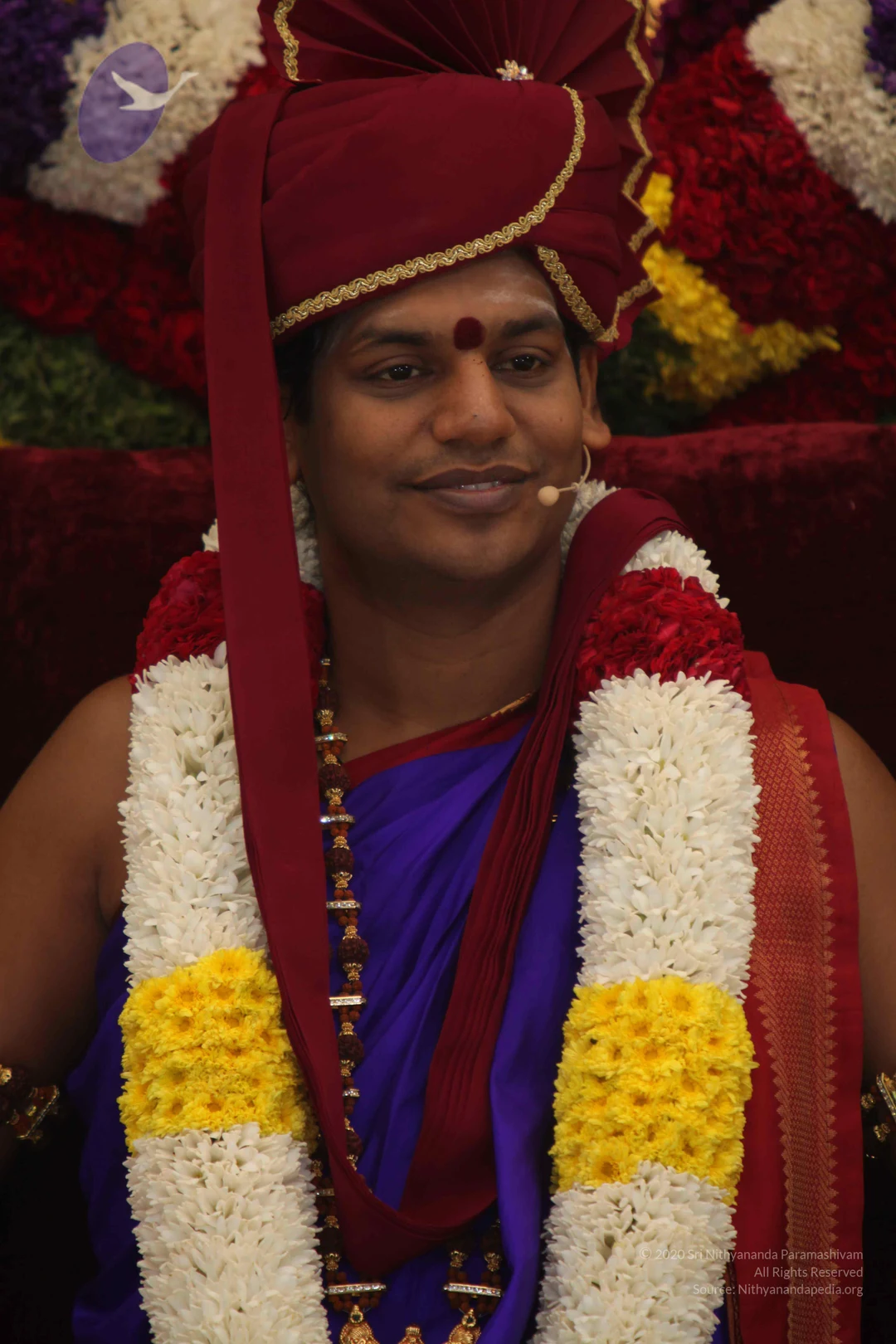
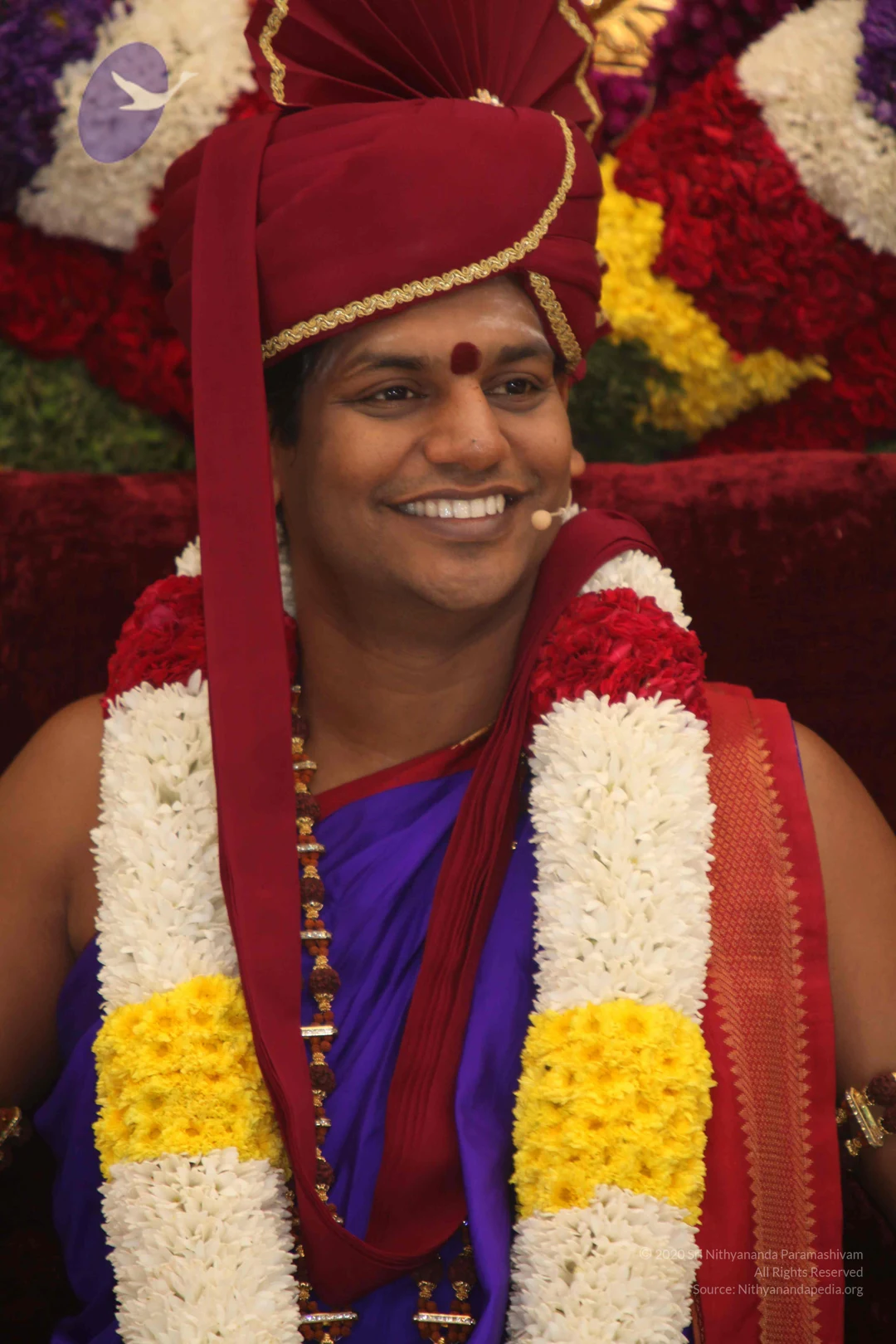
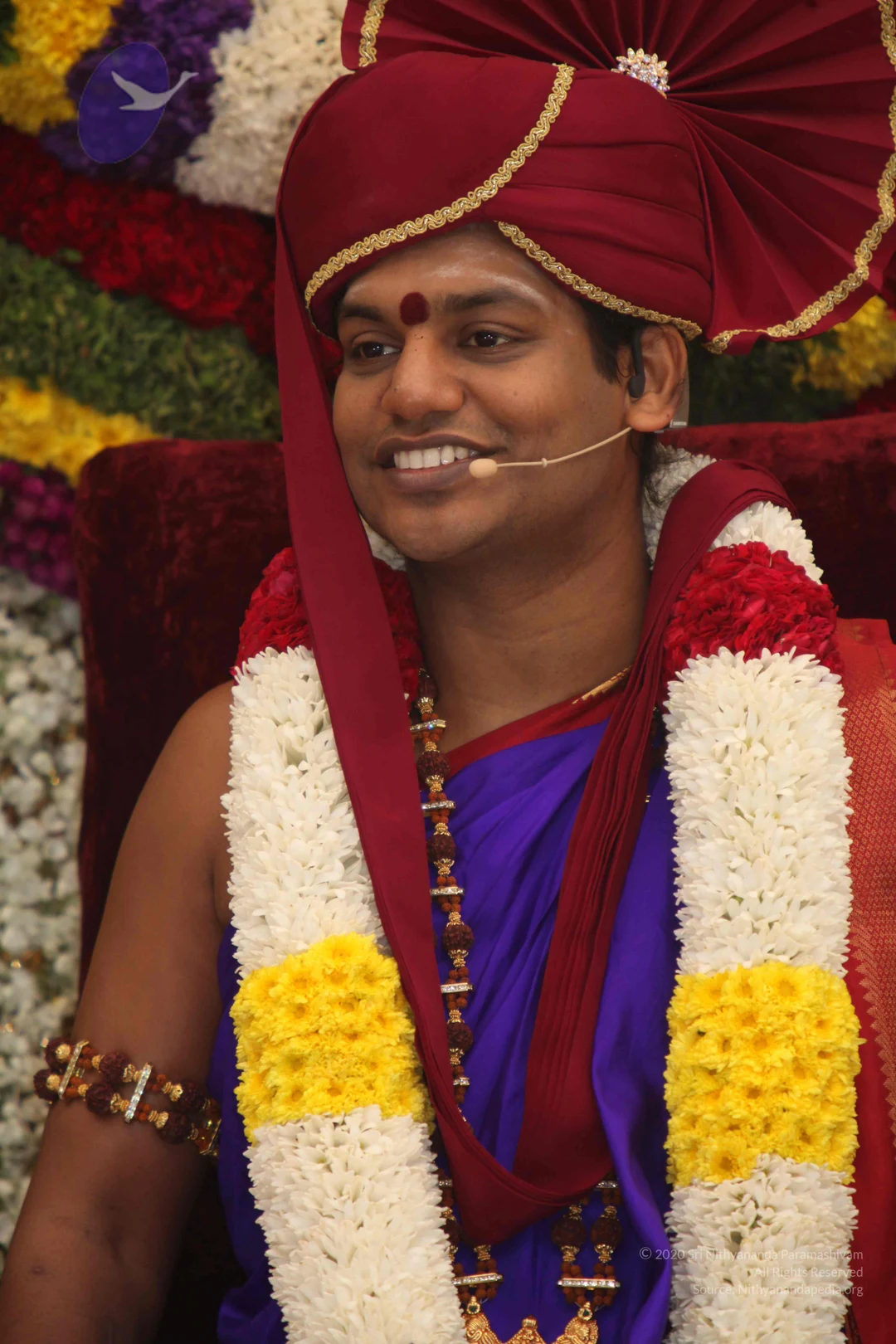
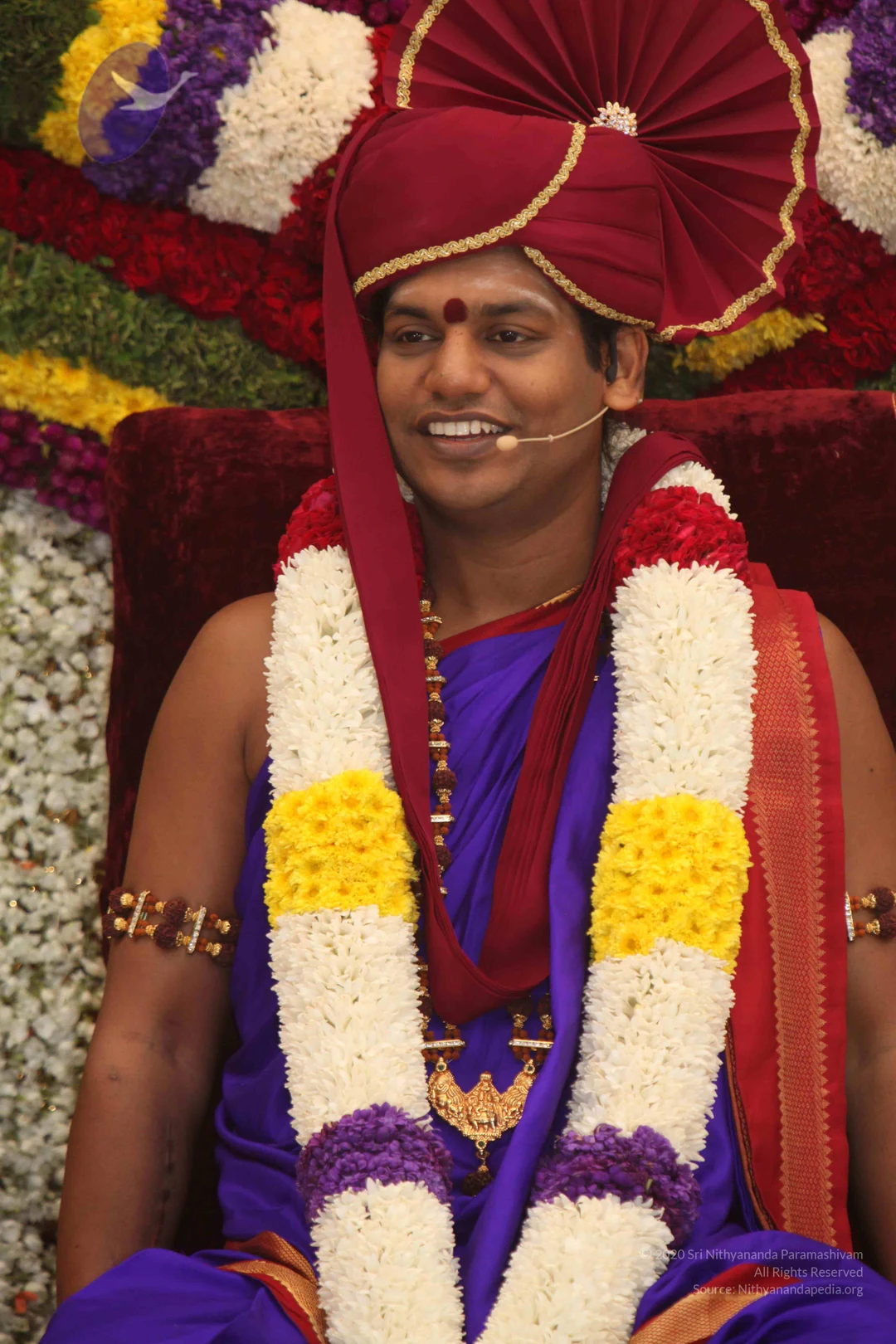
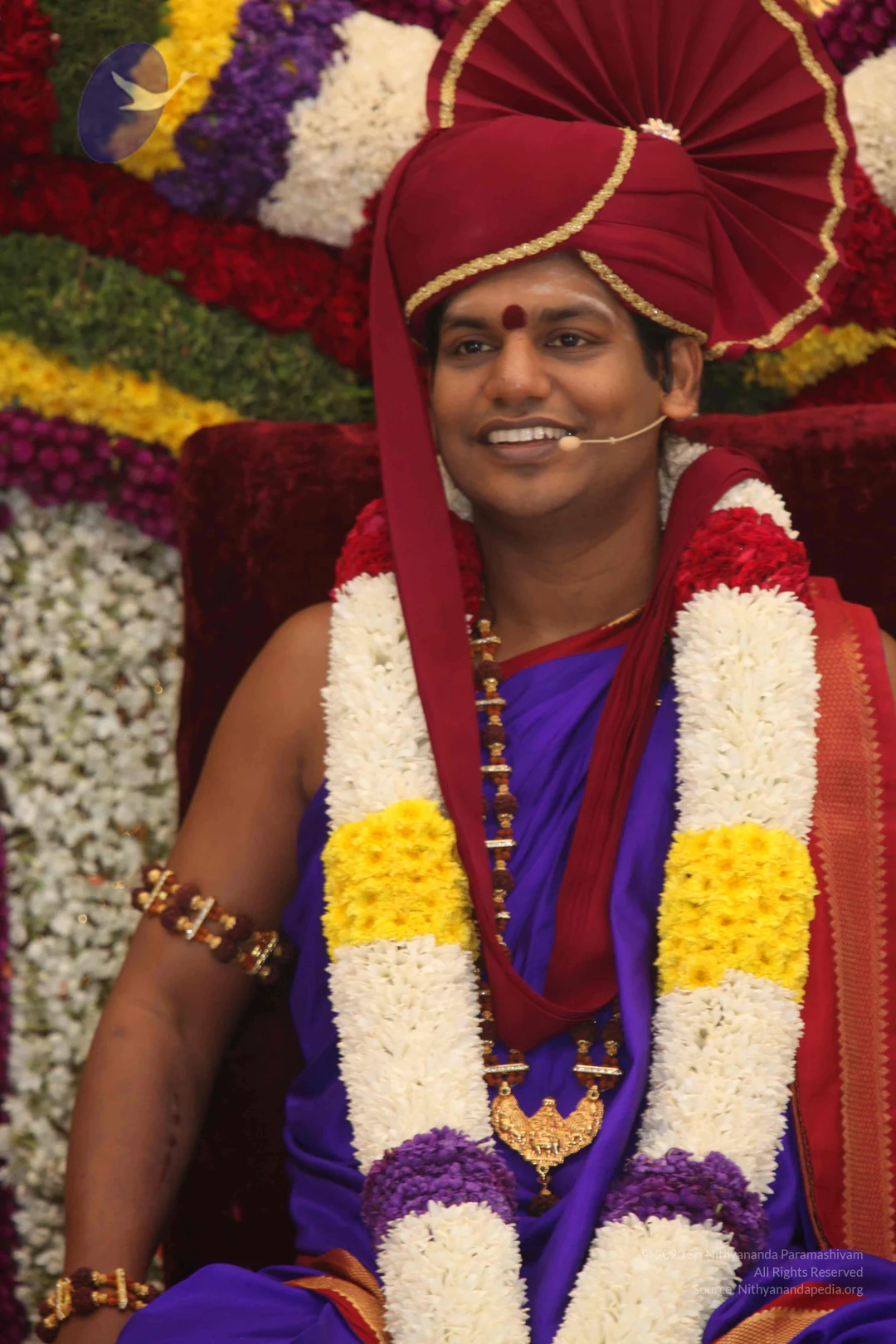
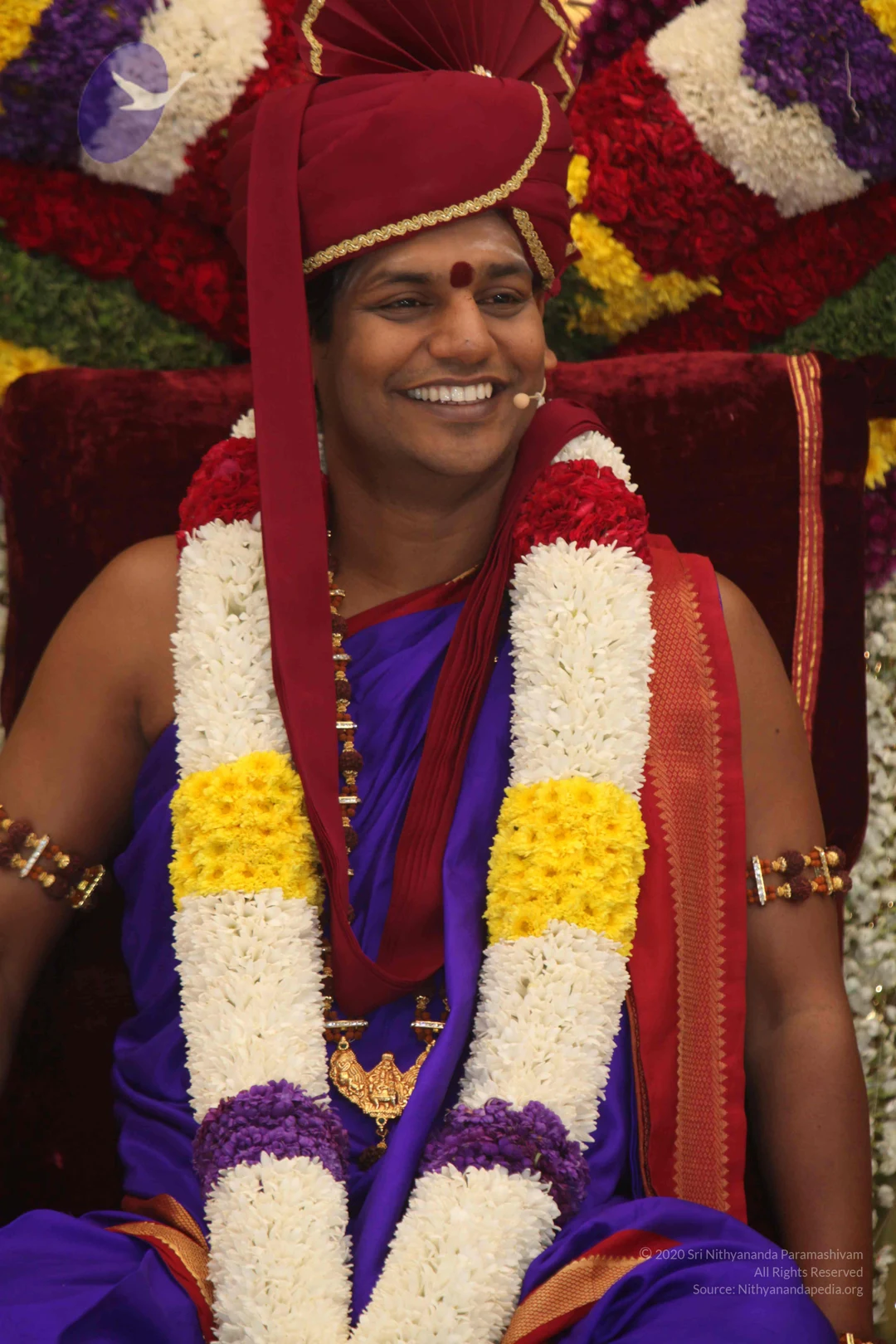
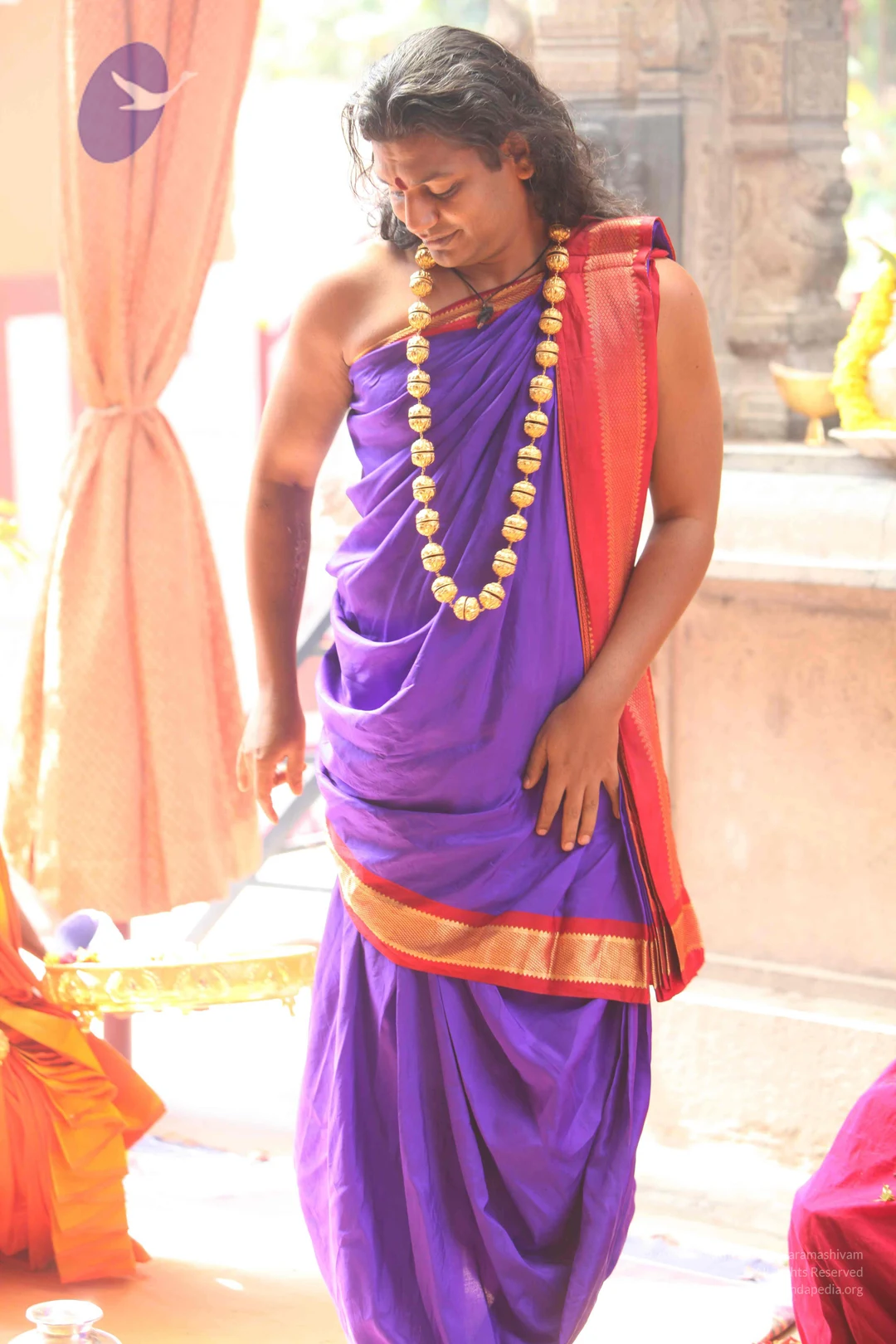
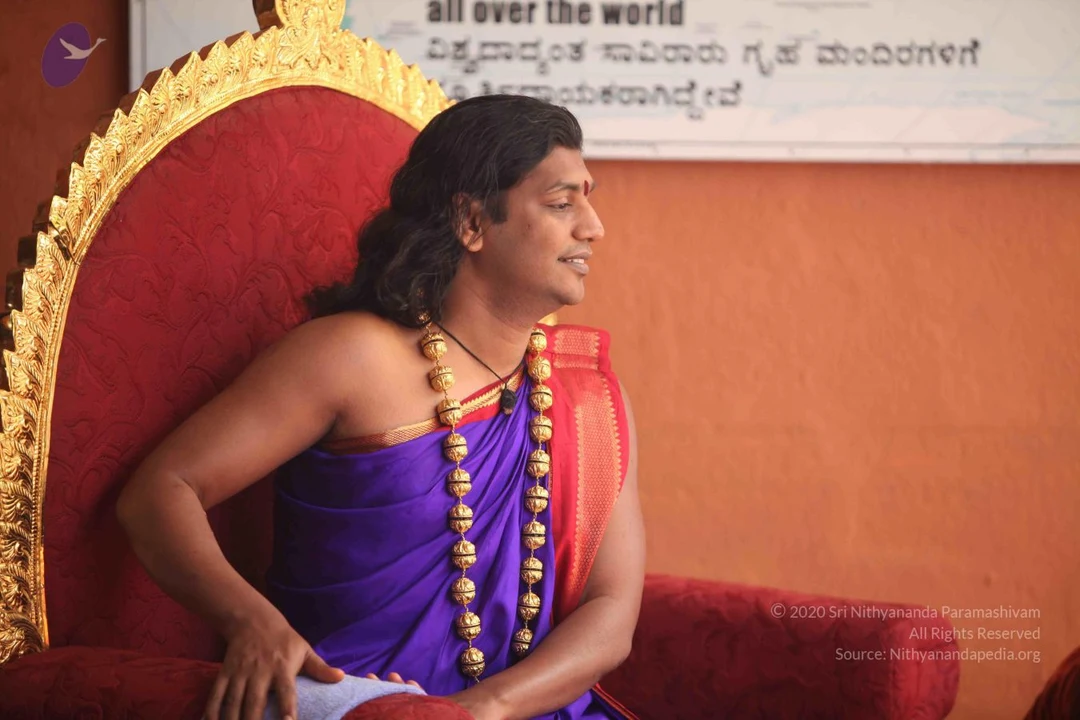
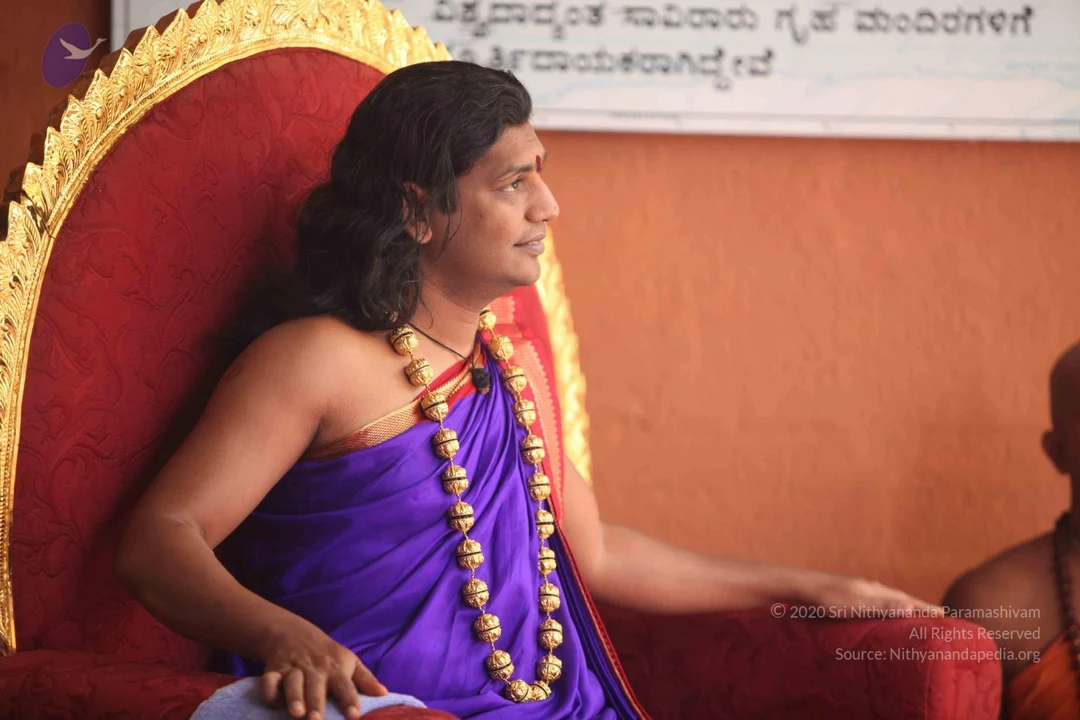
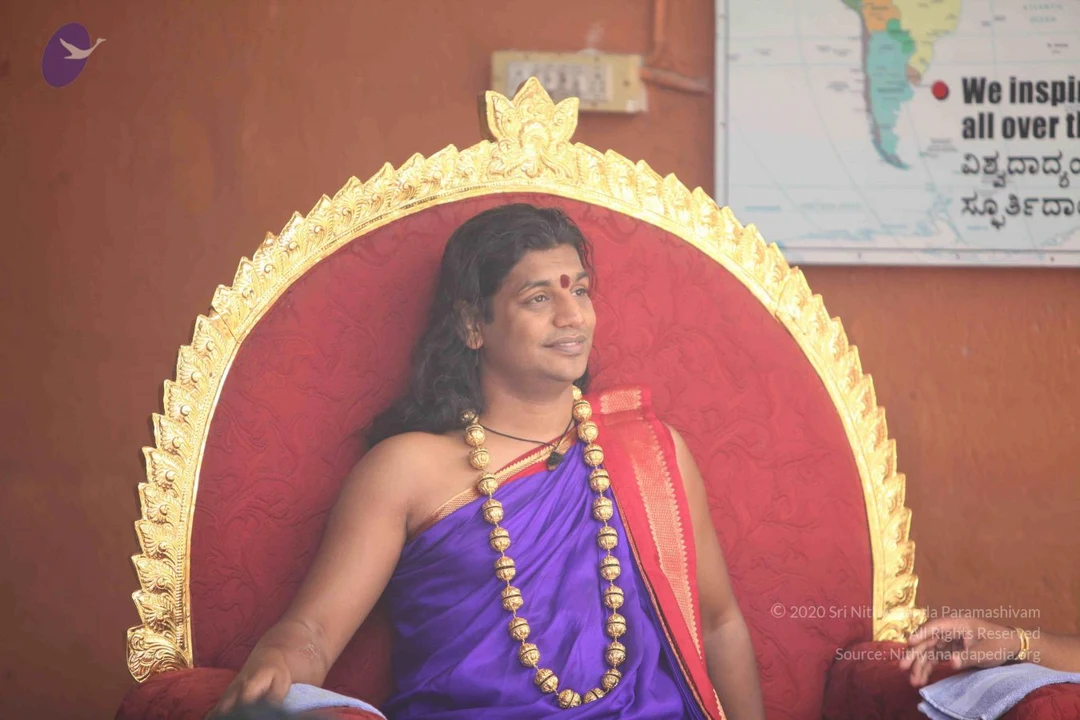
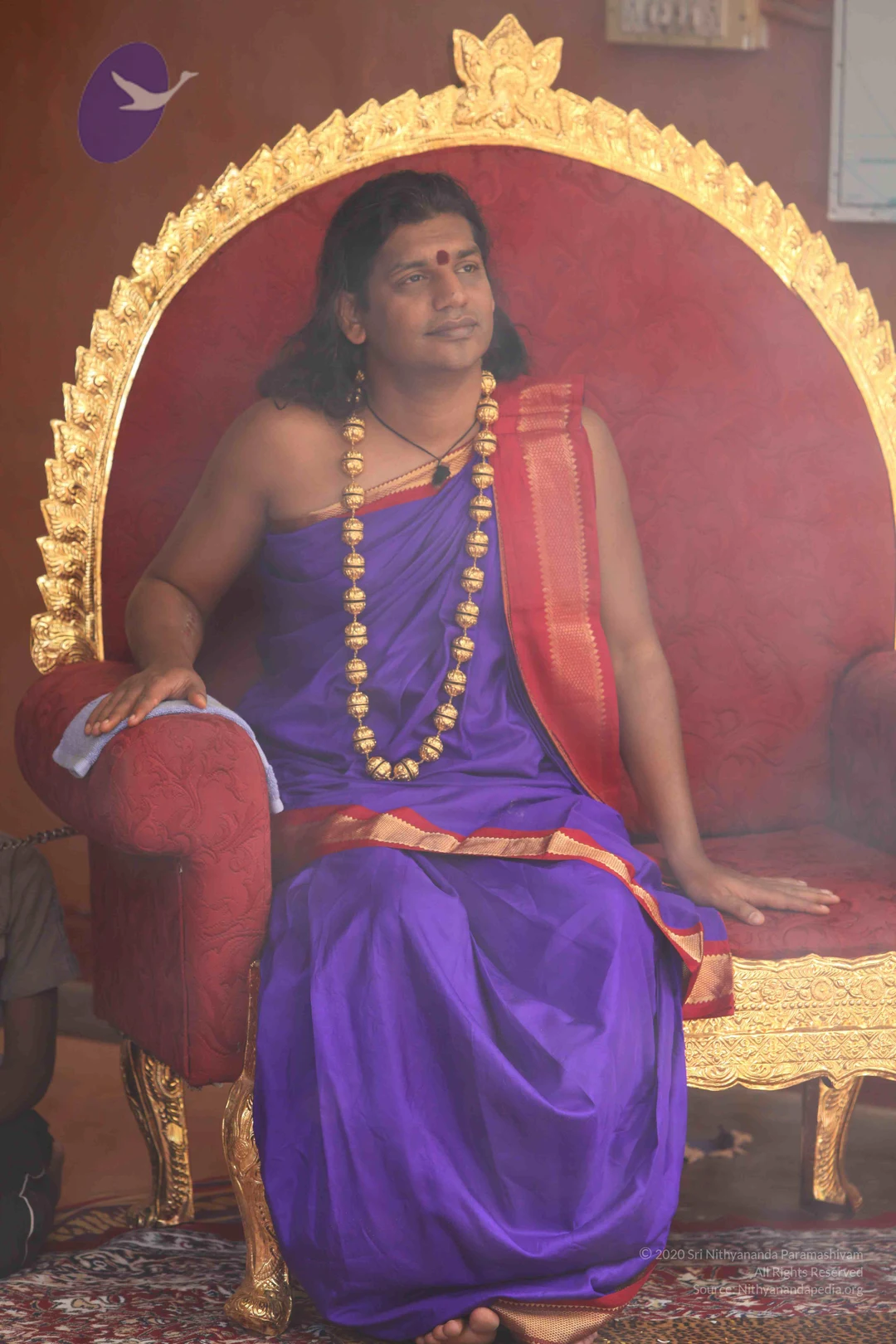
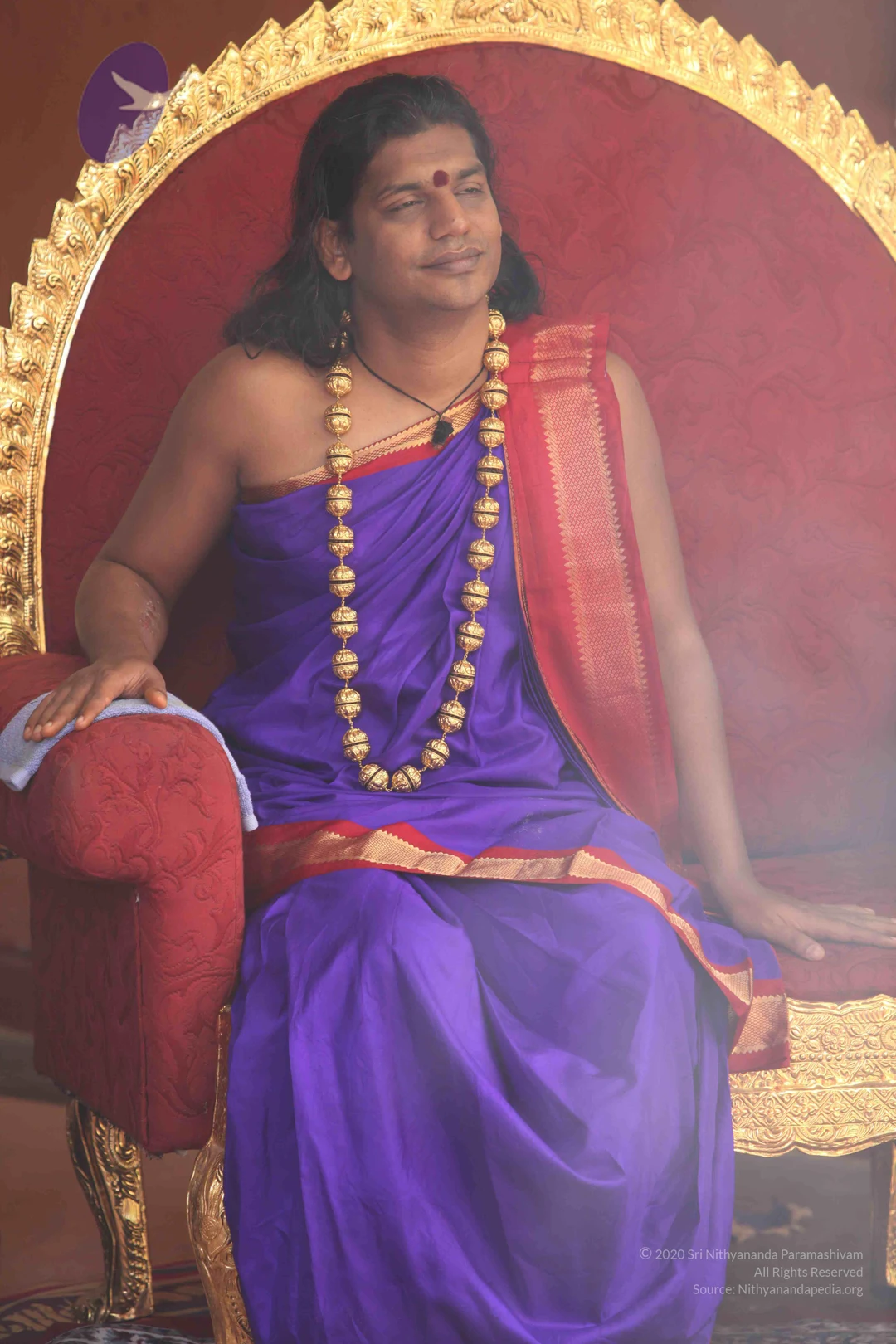
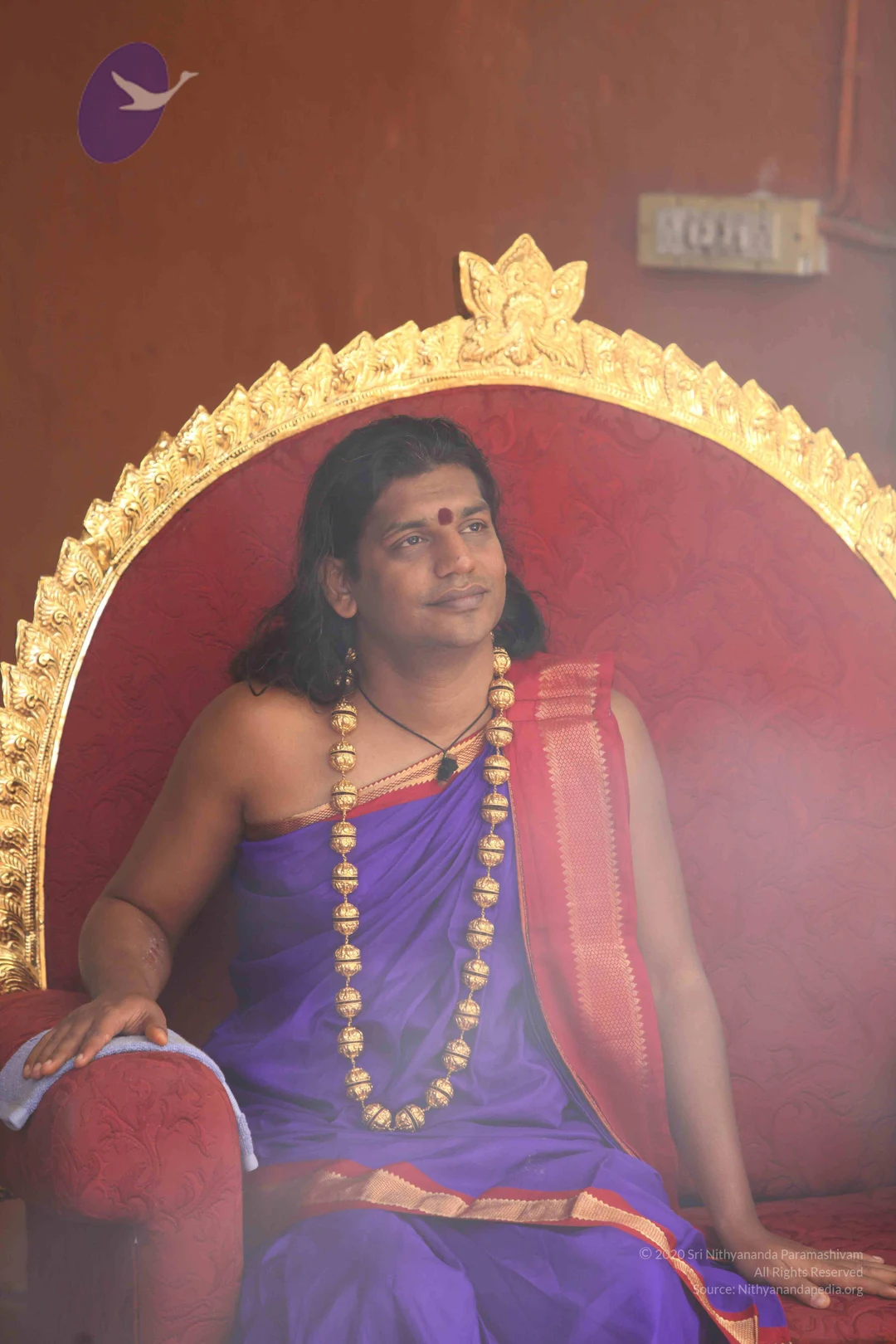
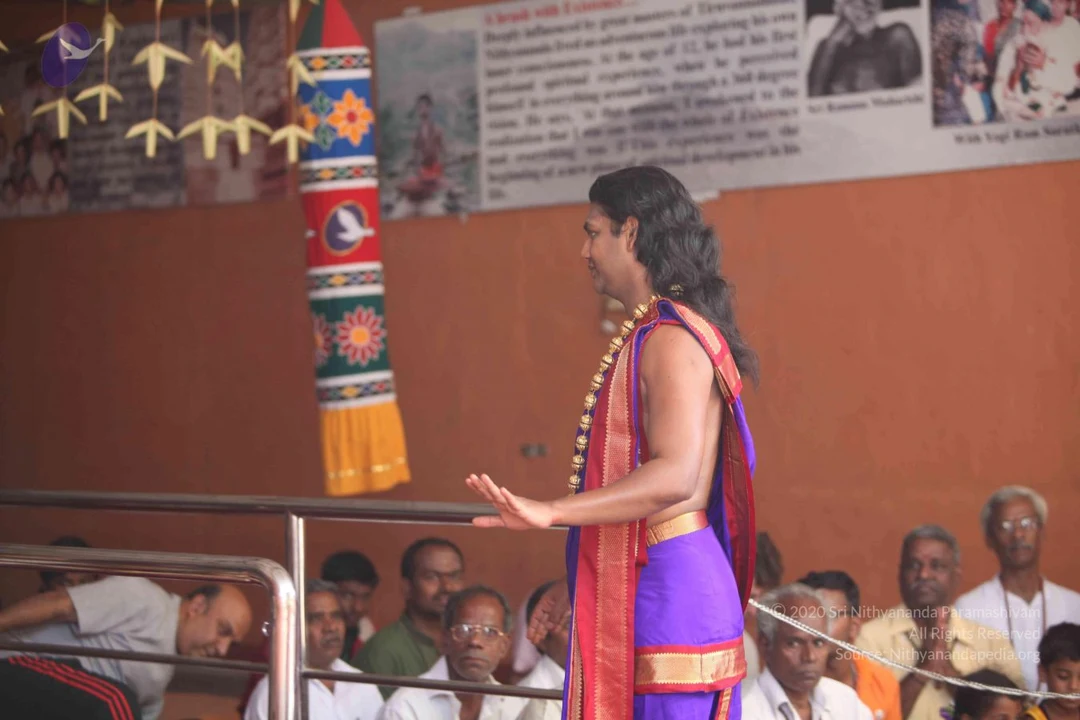
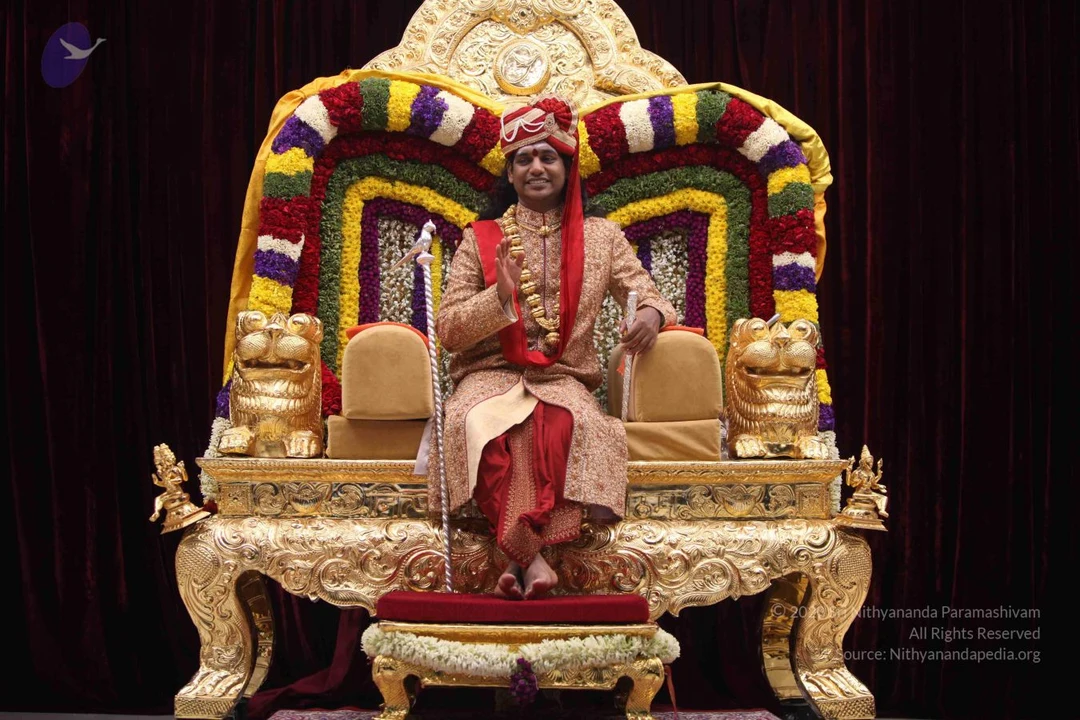
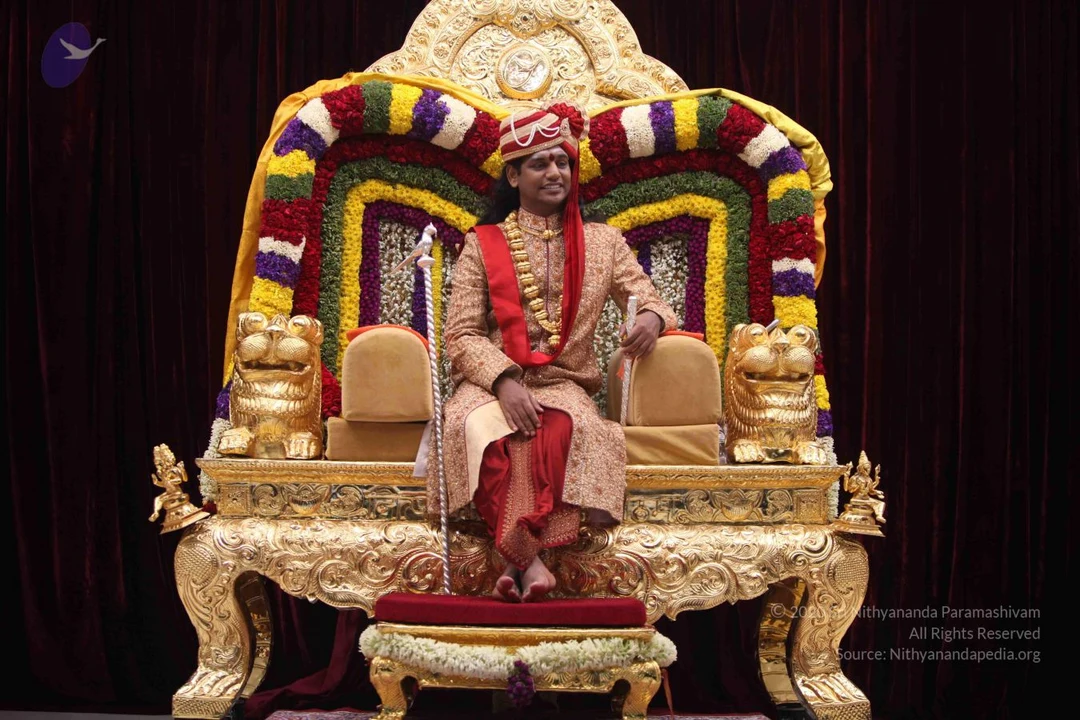
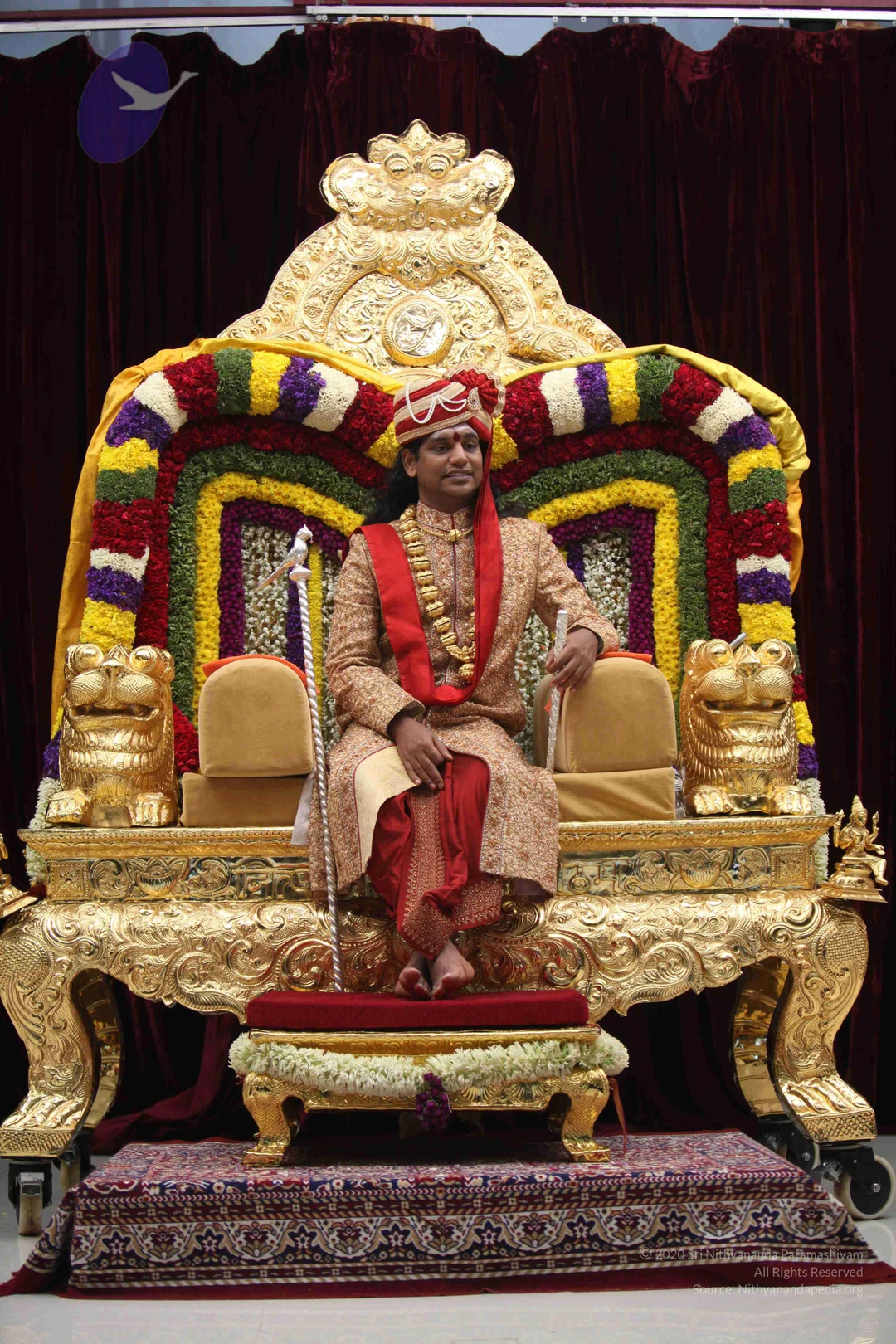
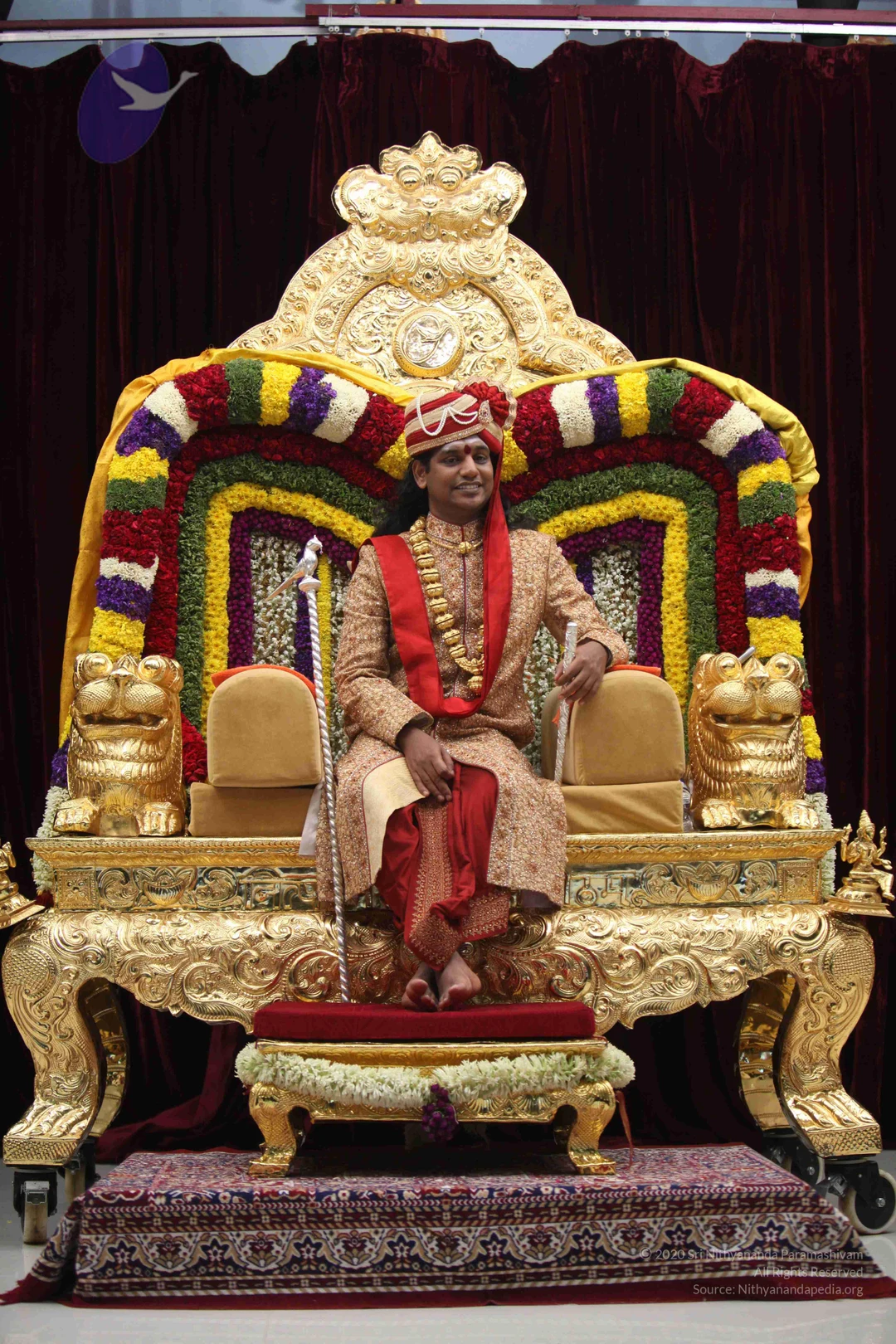
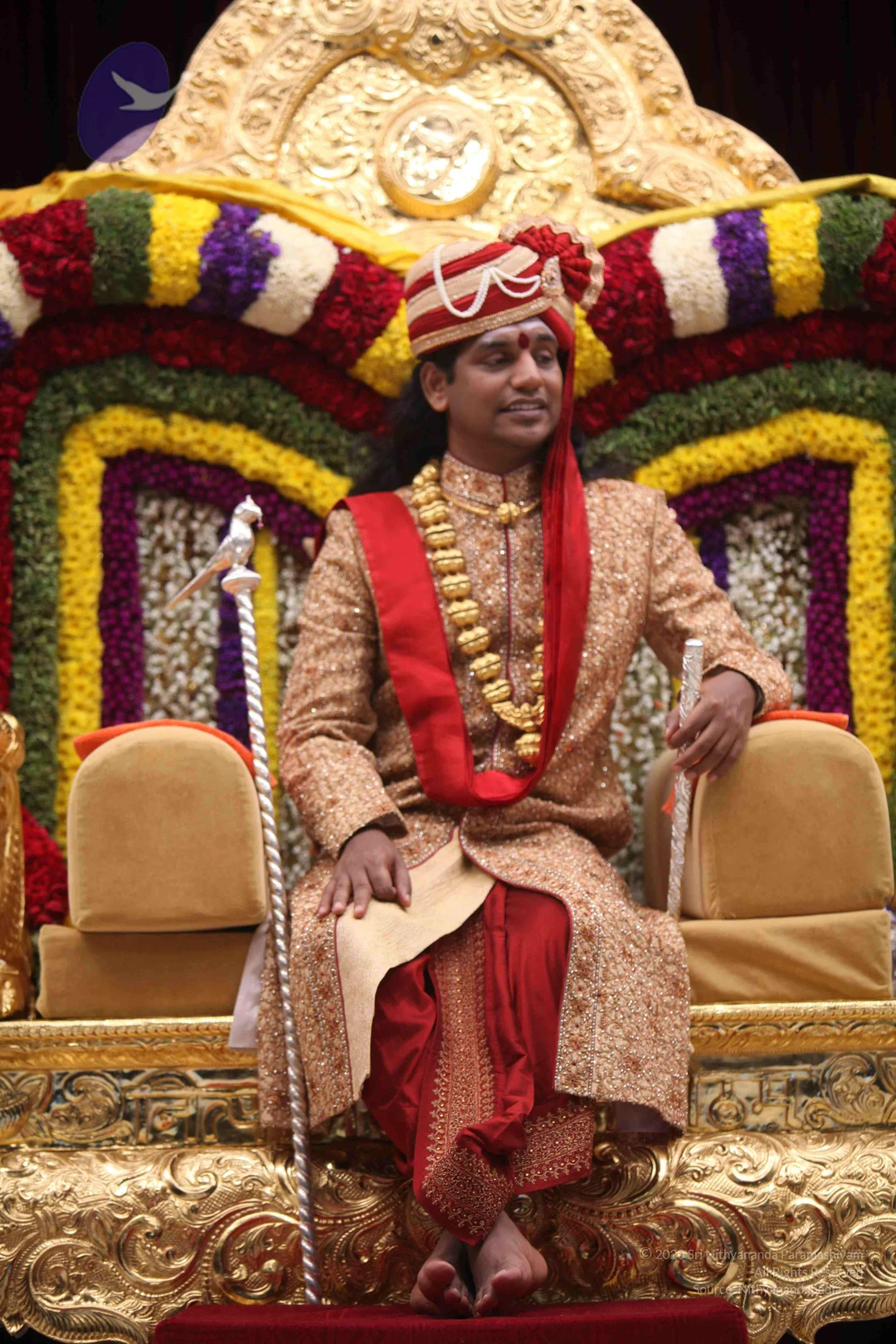
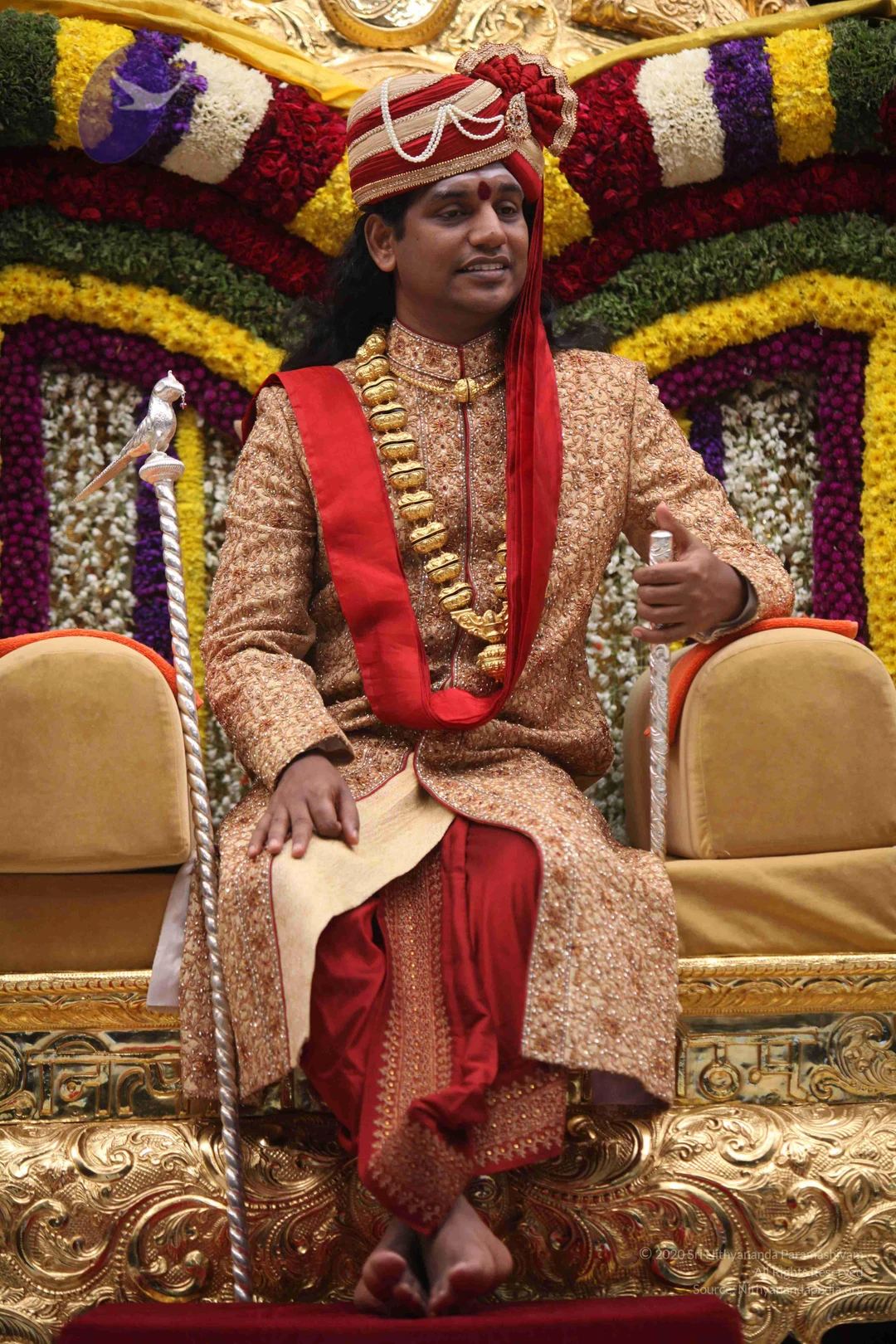
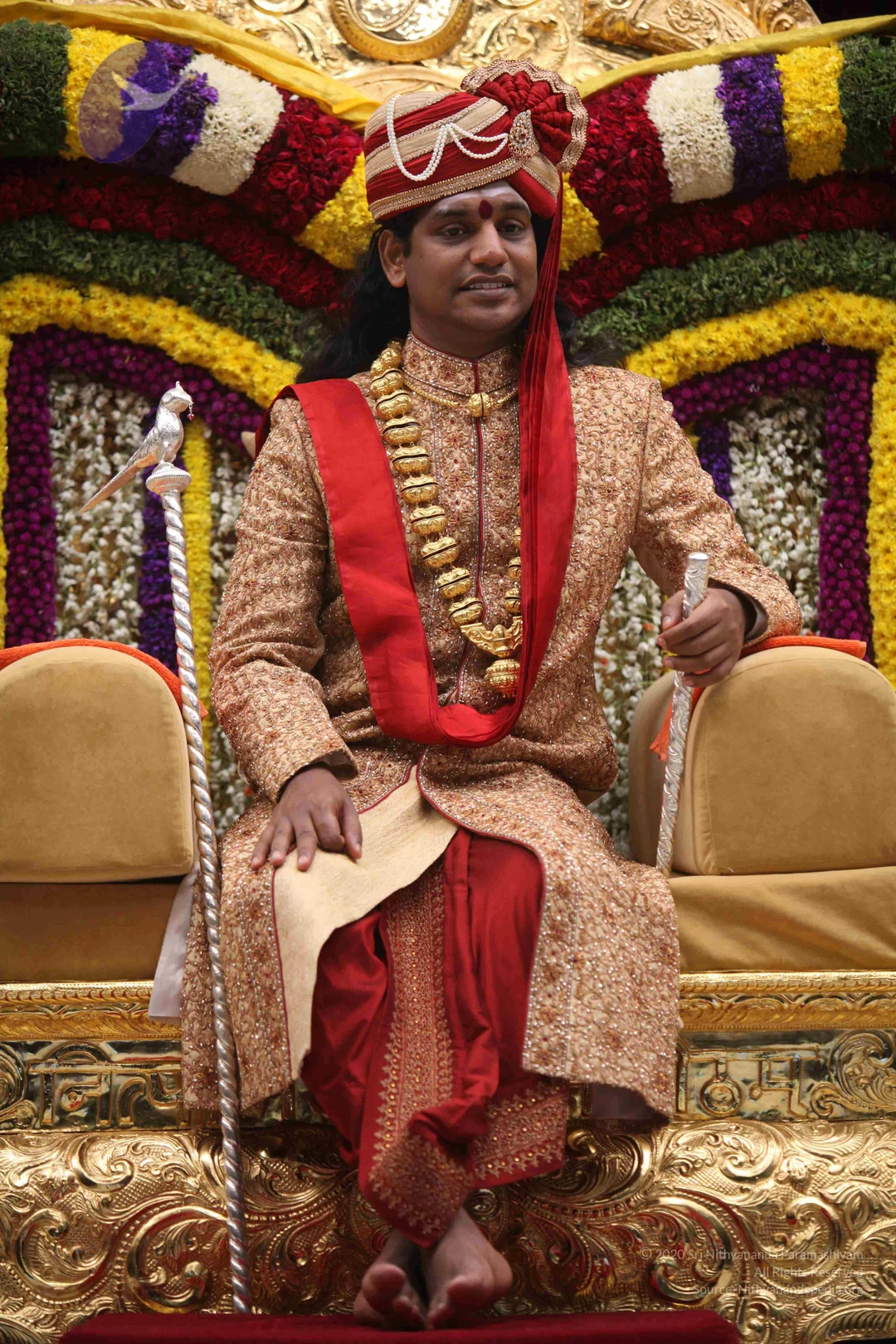
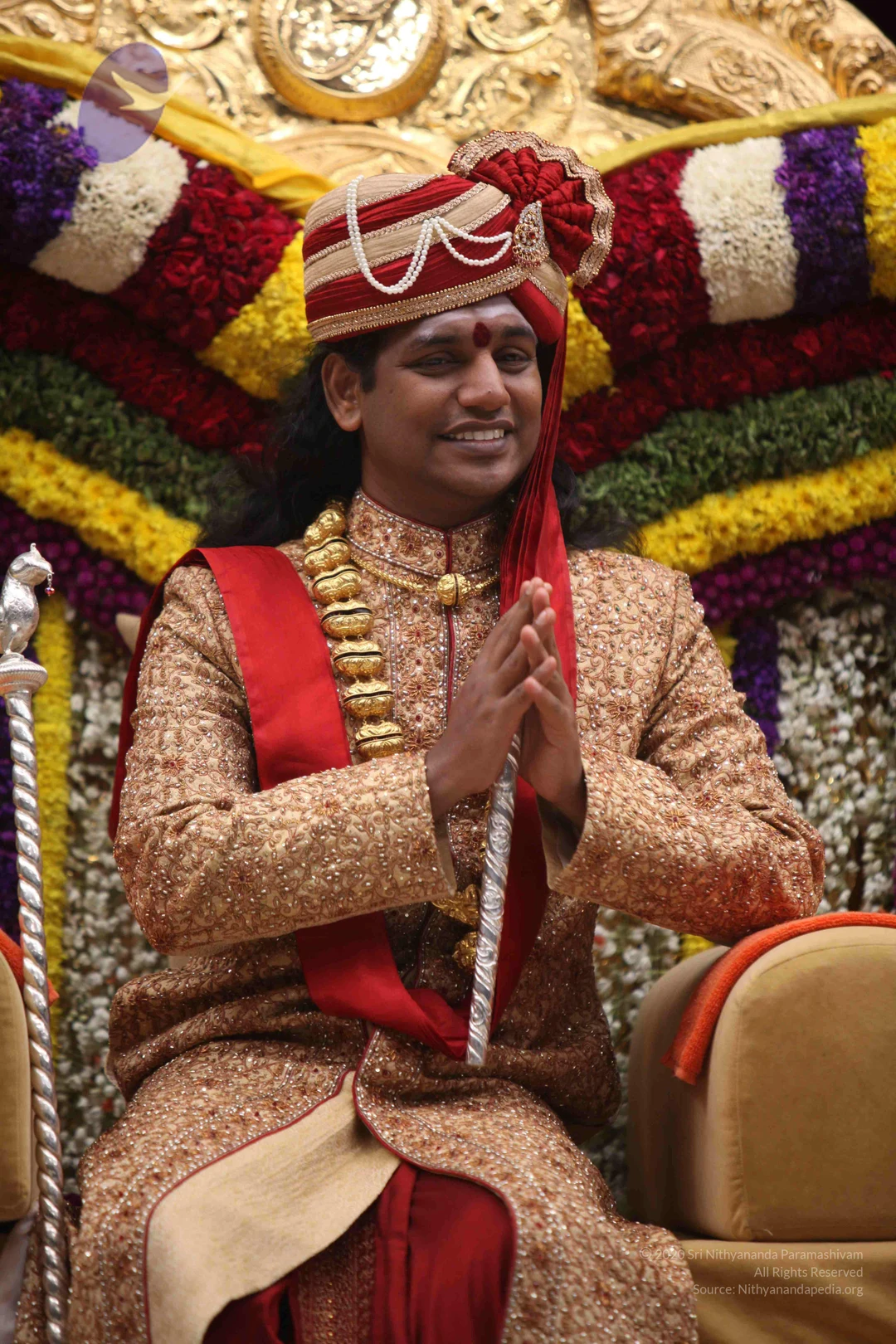
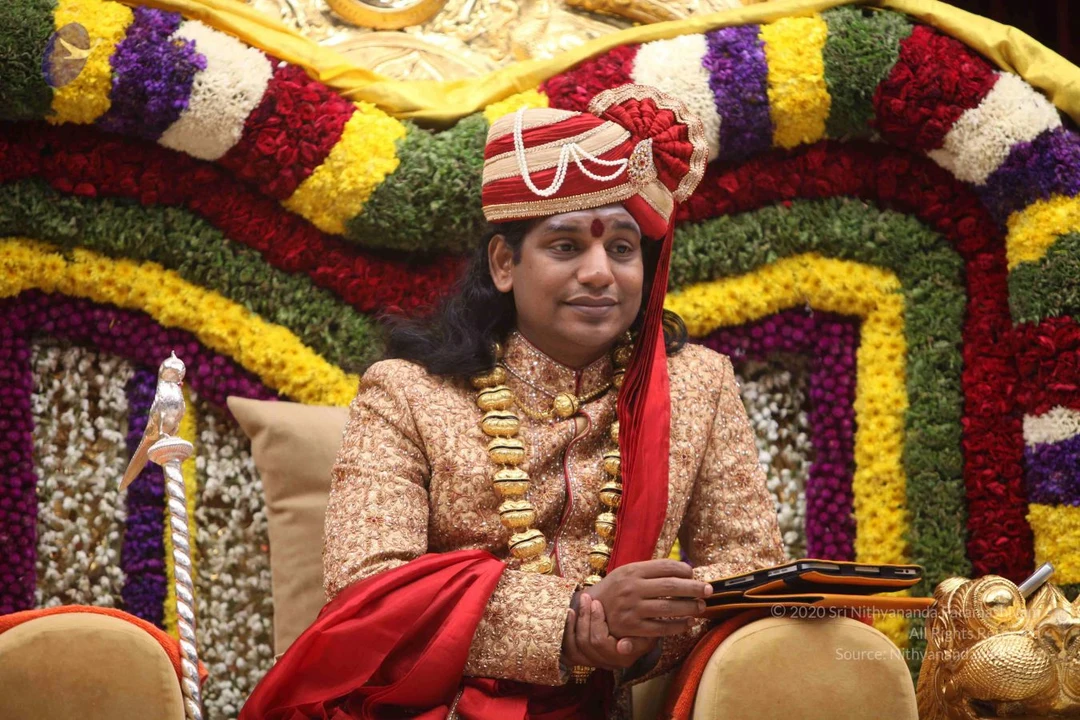
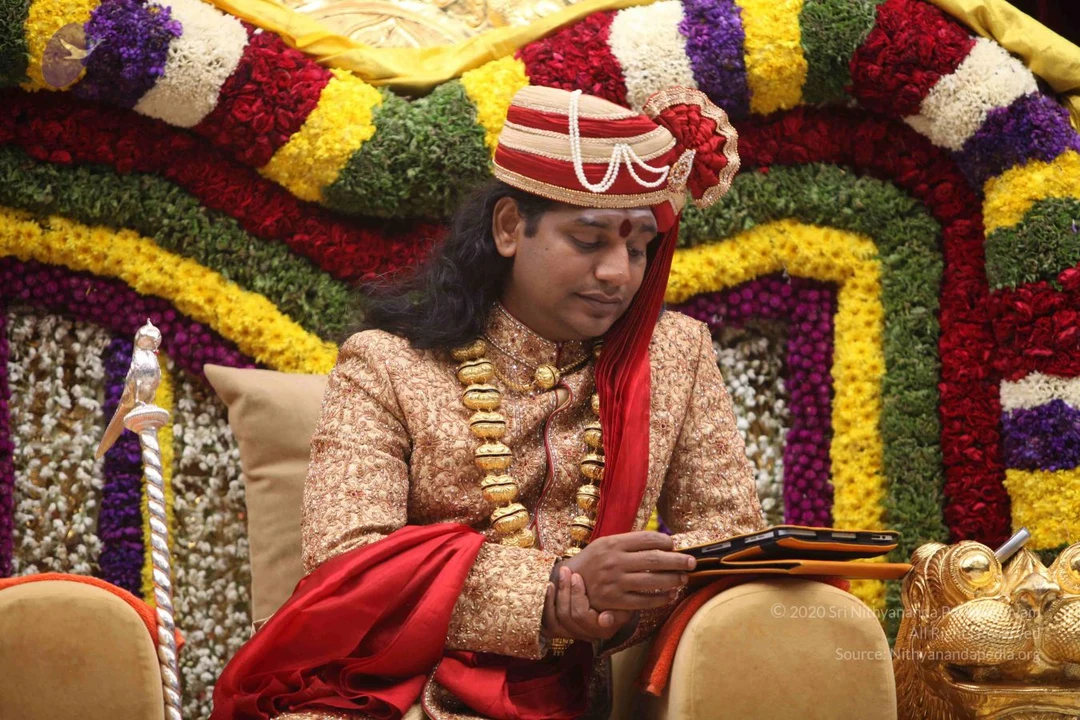
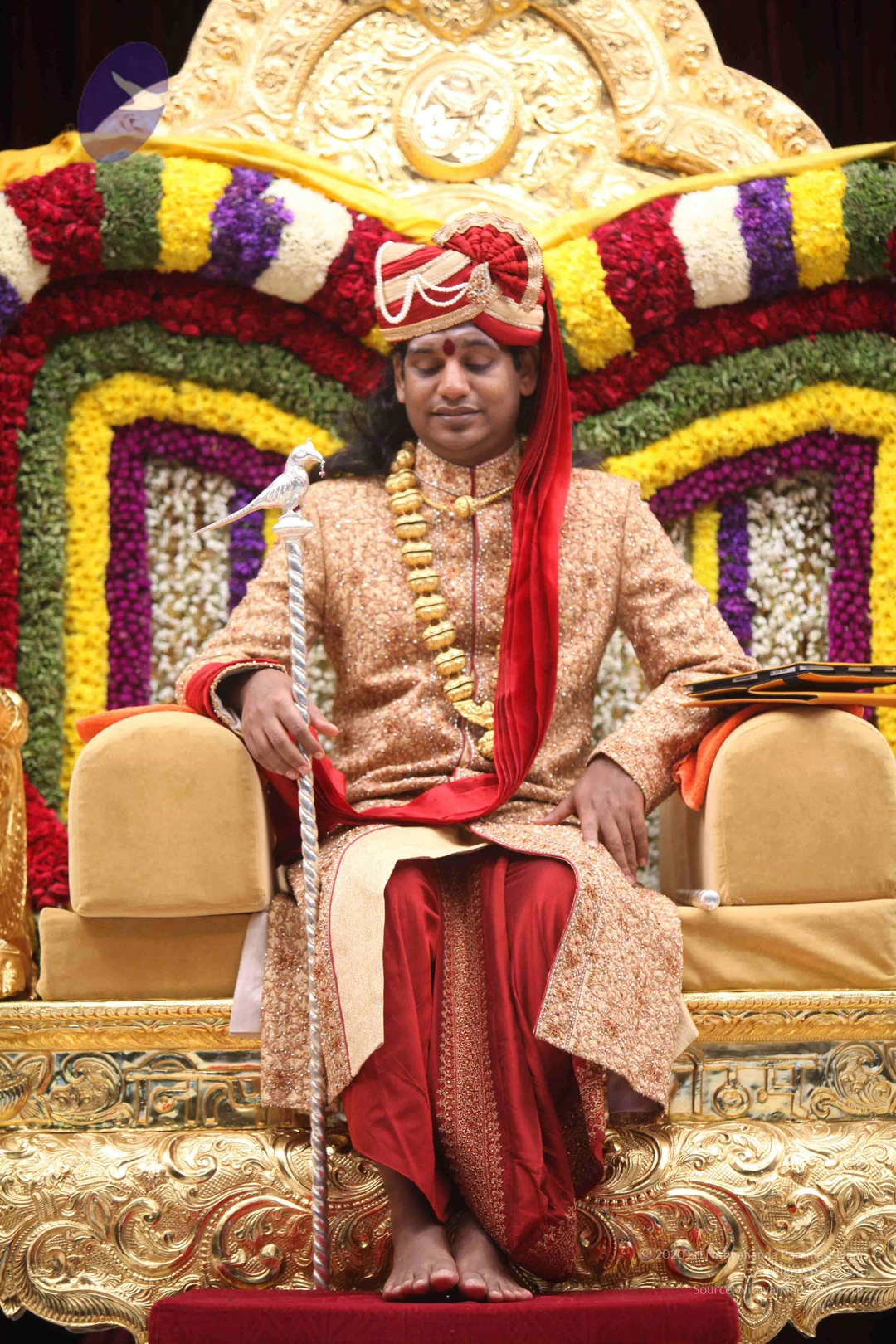
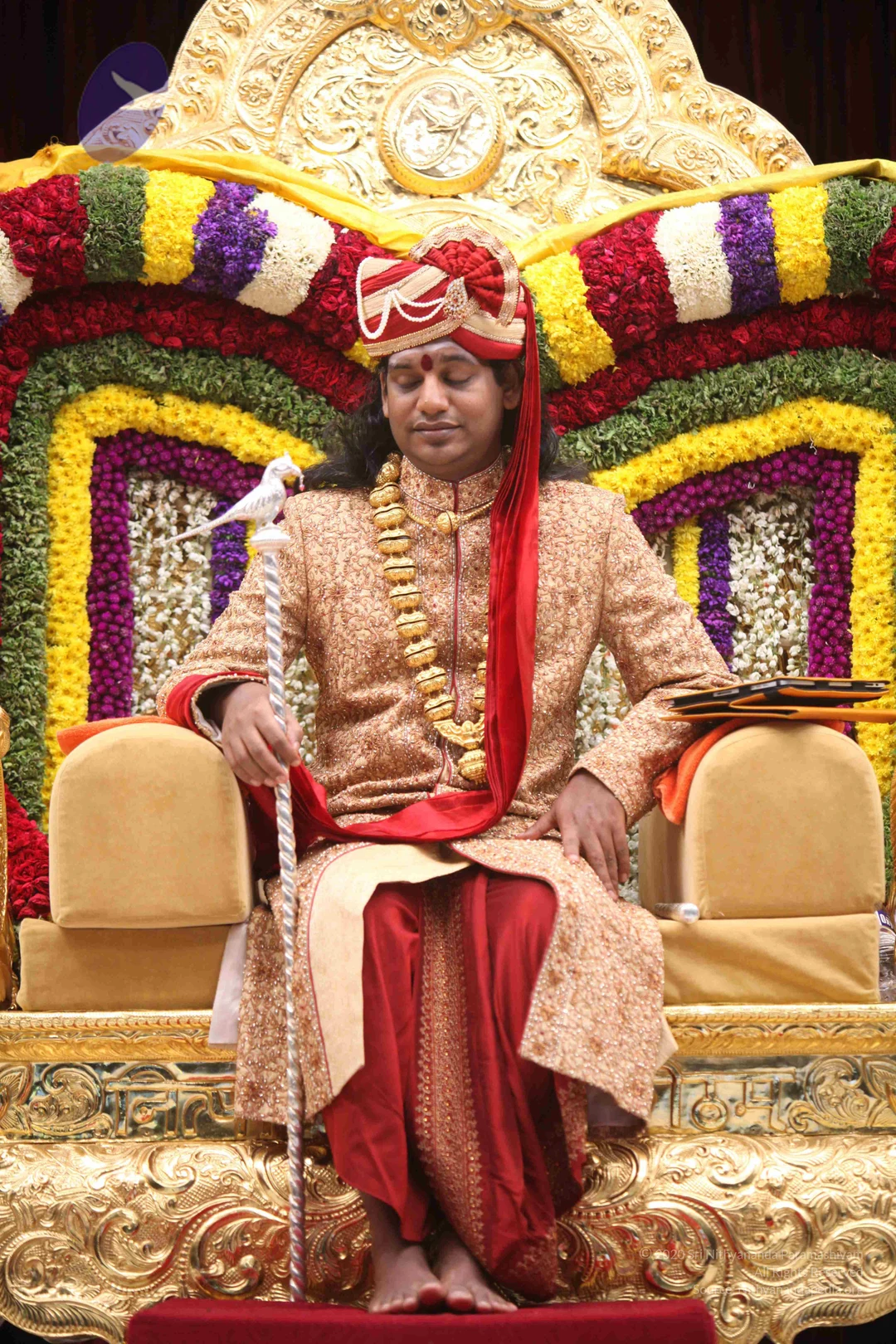
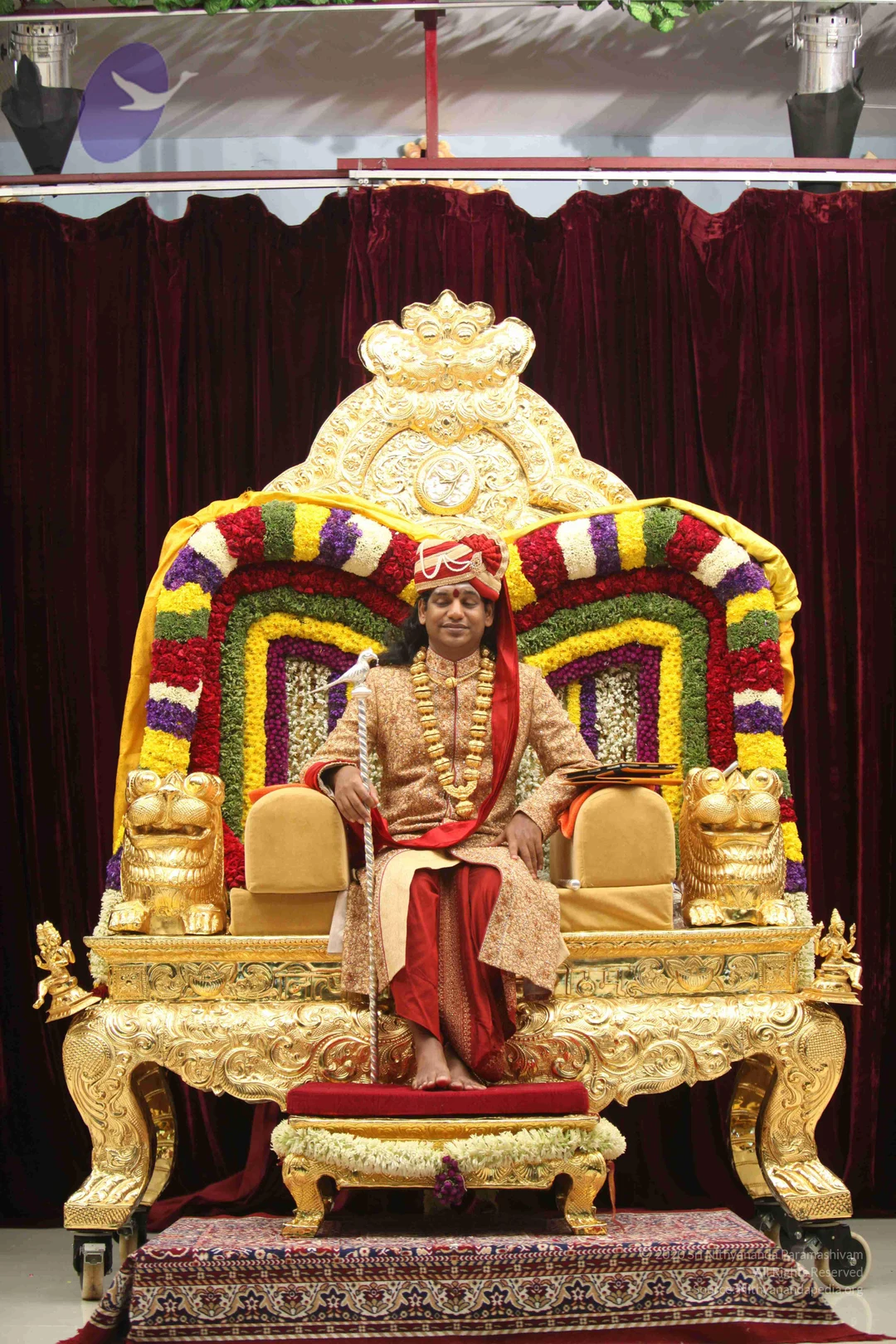
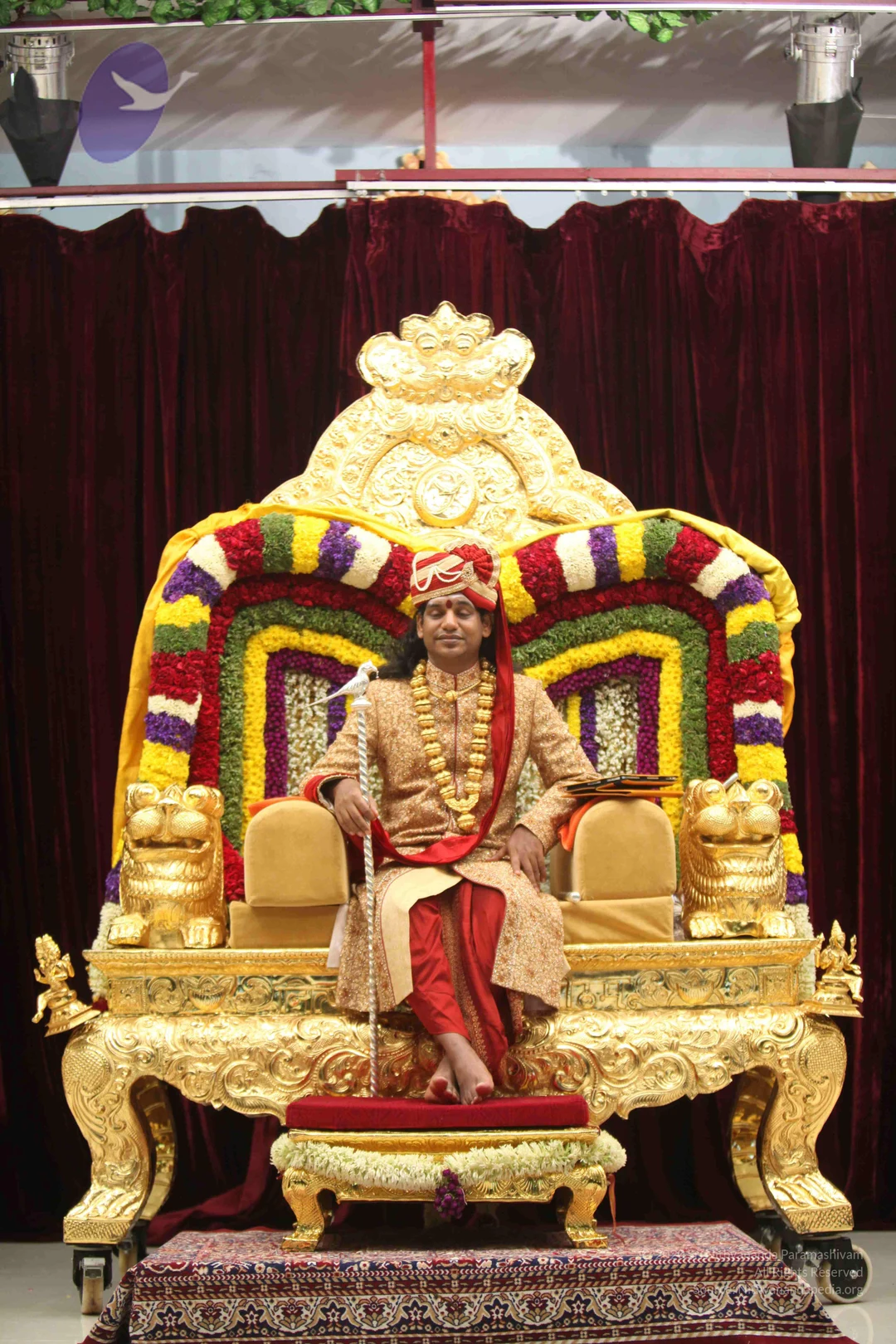
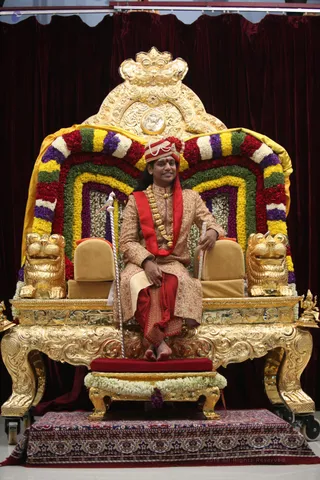
In today’s biographical talk, His Divine Holiness Bhagavan Sri Nithyananda Paramashivam discusses the wisdom of Lord Buddha and Shankaracharya, who spent their lives in continuous wandering. As they engaged intensely in radiating compassion to the world, they each chose to teach in areas where they were unknown and were met with suspicion and hostility. Shankara taught that spiritual seekers should not remain in the same village for longer than three days, because they might become stagnant and lazy. His Divine Holiness followed this counsel in his travels, and recommends that all of us can benefit from the same advice. We should keep ourselves in a challenging environment which will tax us to transform ourselves into enlightened beings.
Photos:

Photos Of The Day:

BIDADI-ADIKAILASA-NITHYANANDESHWARA-SADASHIVA-TEMPLE

Pada-pooja

BHAGAVAD-GITA-SATSANG

DIAL-THE-AVATAR

NITHYA-KRIYA-FOR-CURE-OF-LOW-SELF-ESTEEM

SARVA-DARSHAN

MEENAKSHI-KALYANOTSAVAM

JAYANTHI-BRAHMOTSAVAM-COUPLES-DAY-EVENING-CULTURALS

Photos Of The Day:

Pada-Puja

Photos from this day

View all 601 photos

Photos:

14 photosSource gallery
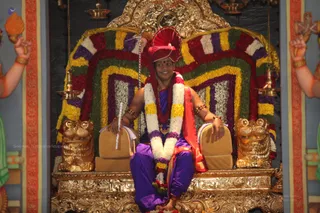
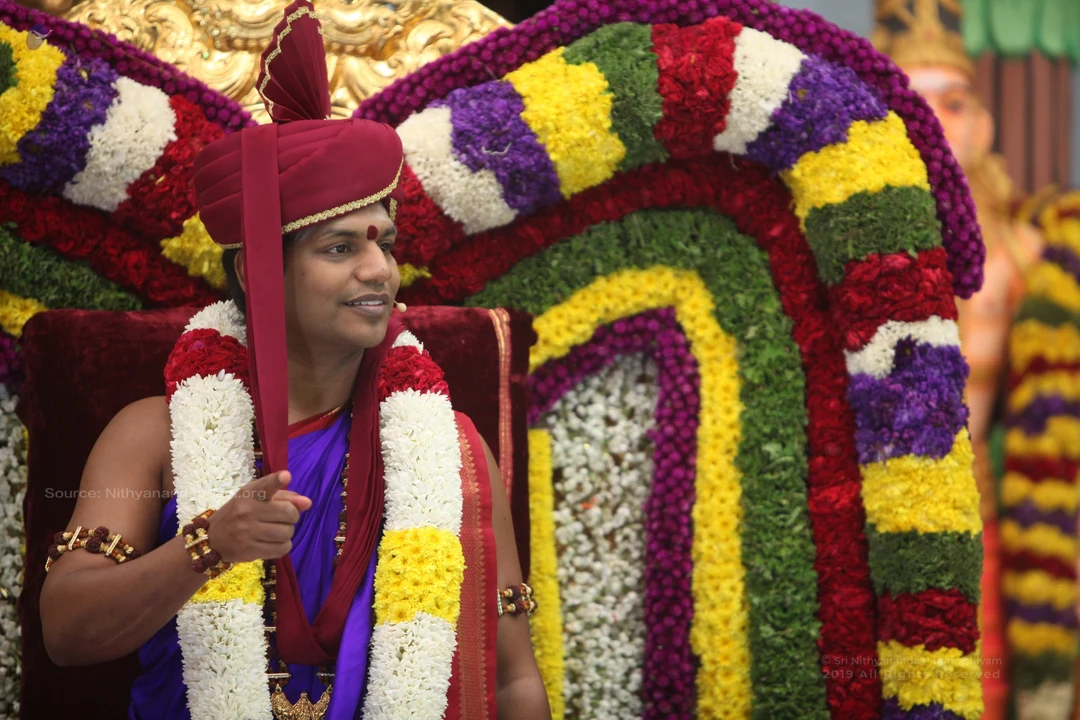
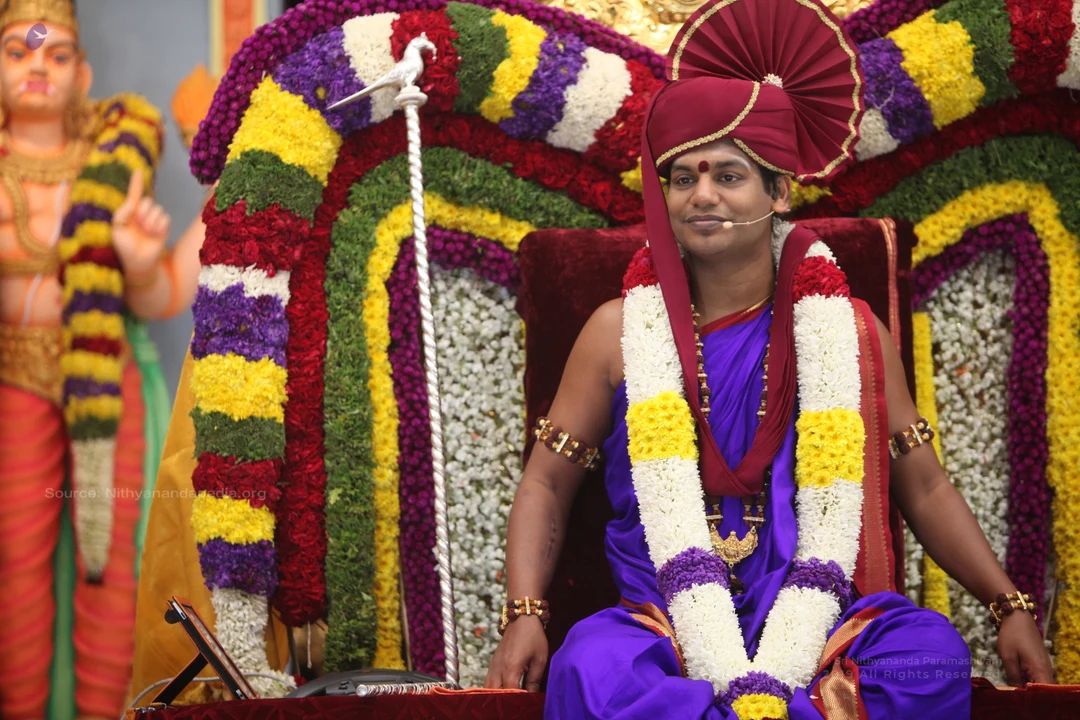
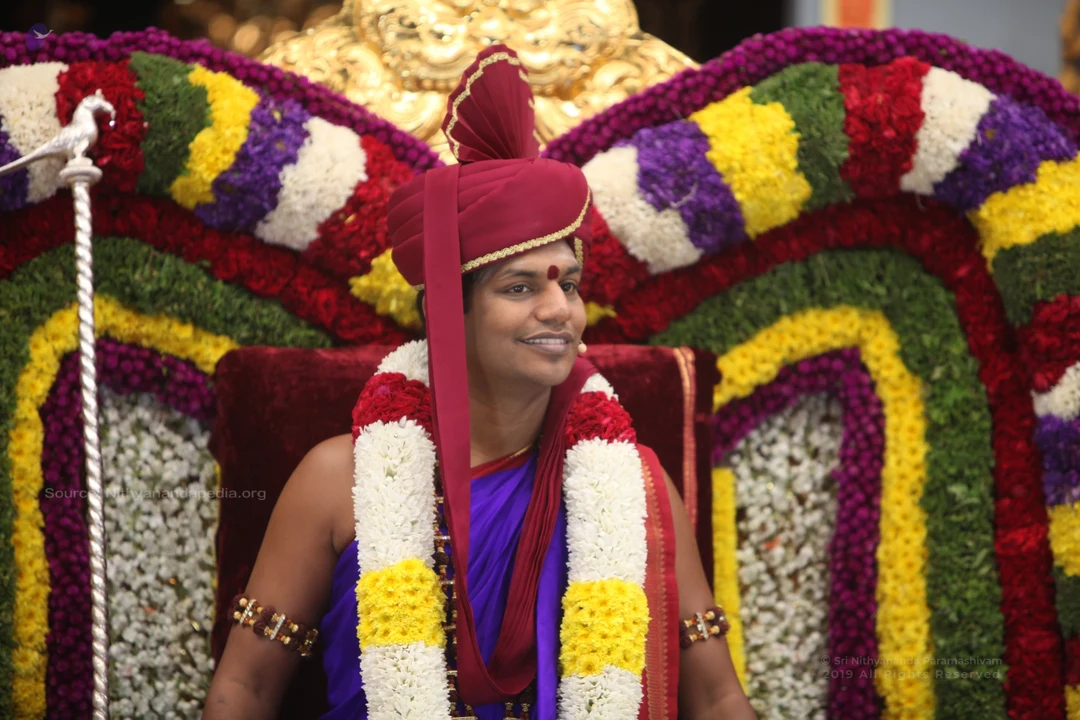
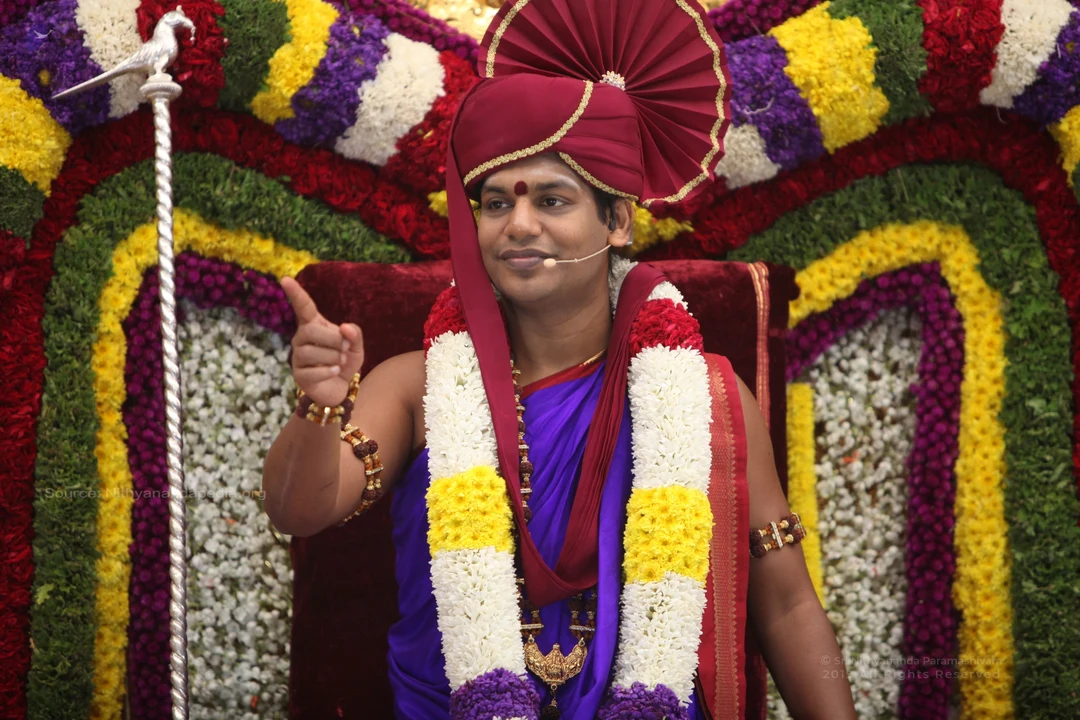
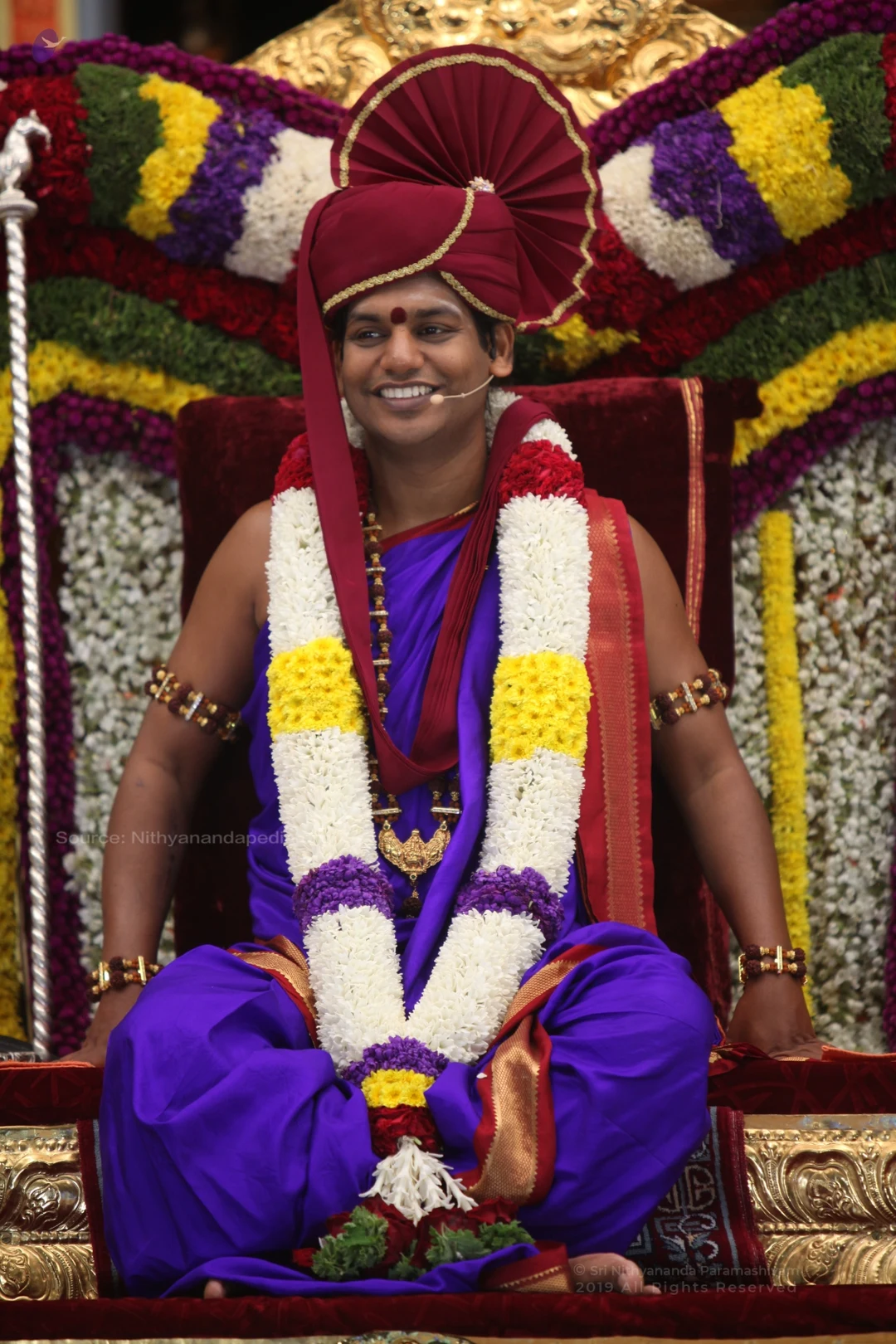
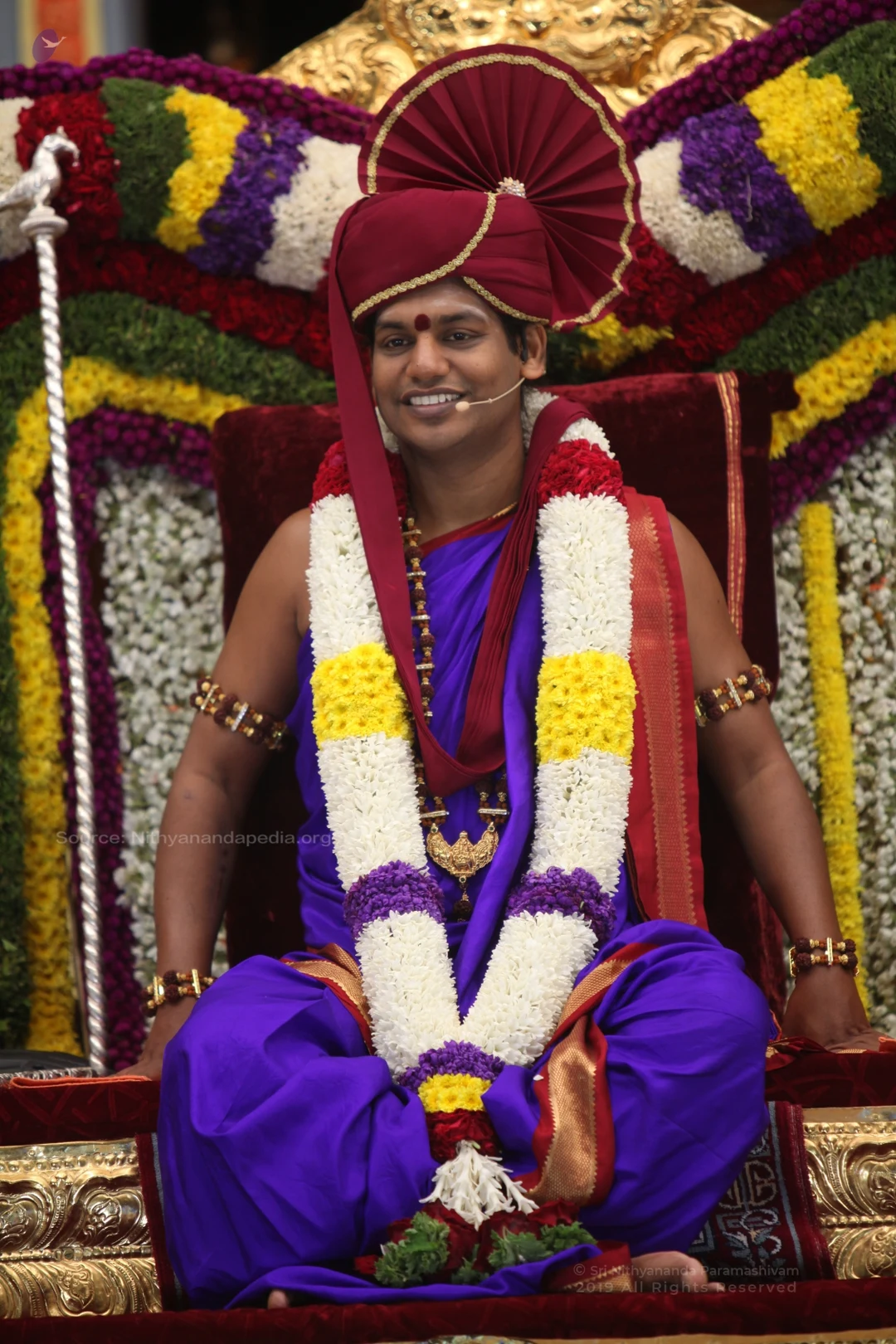
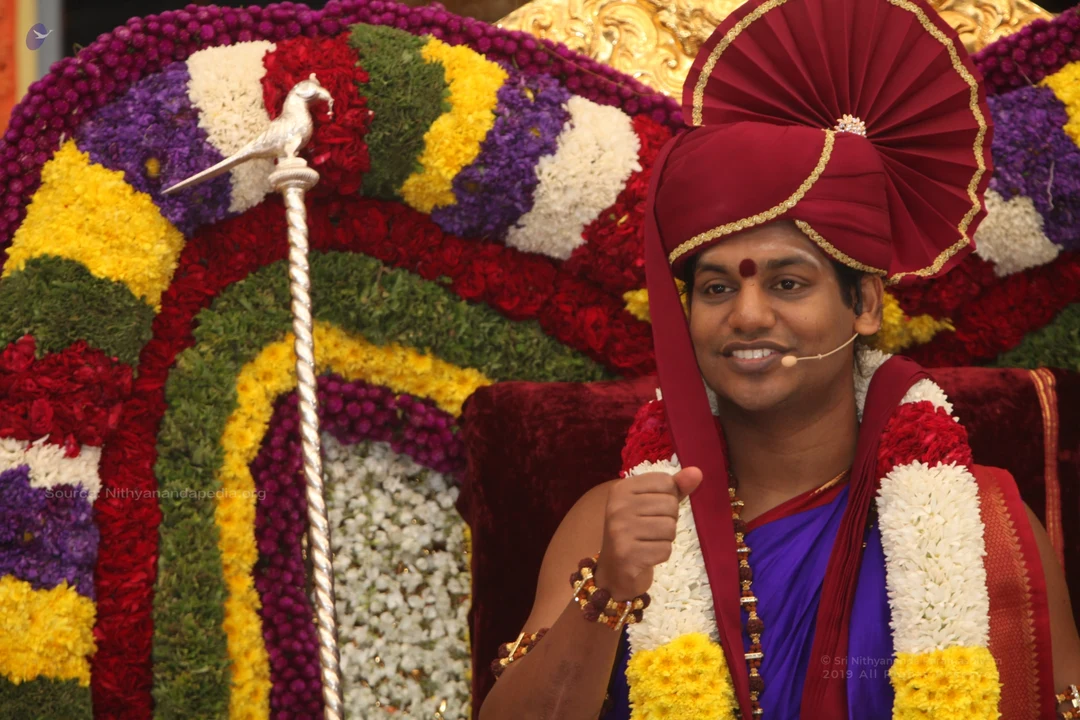
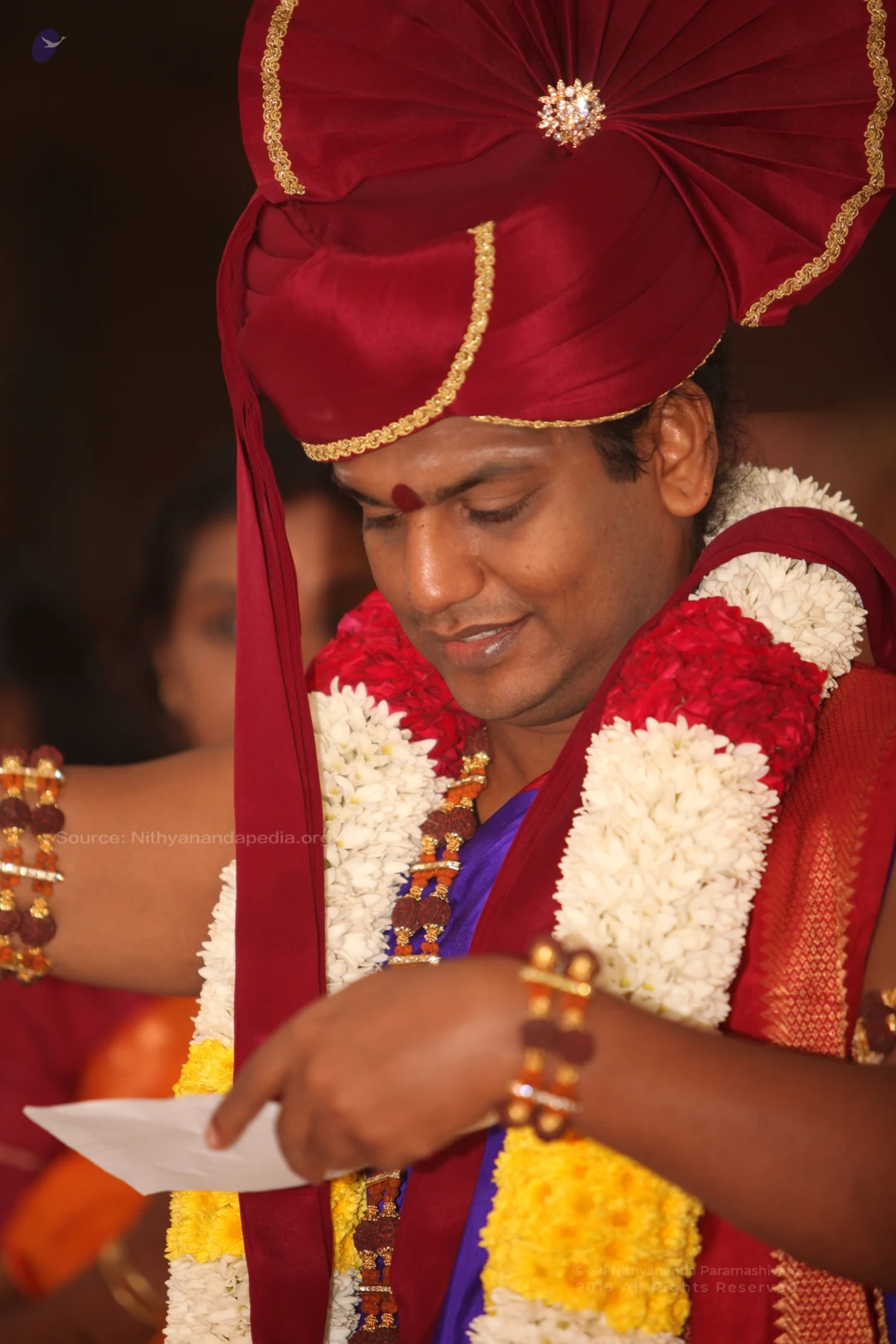
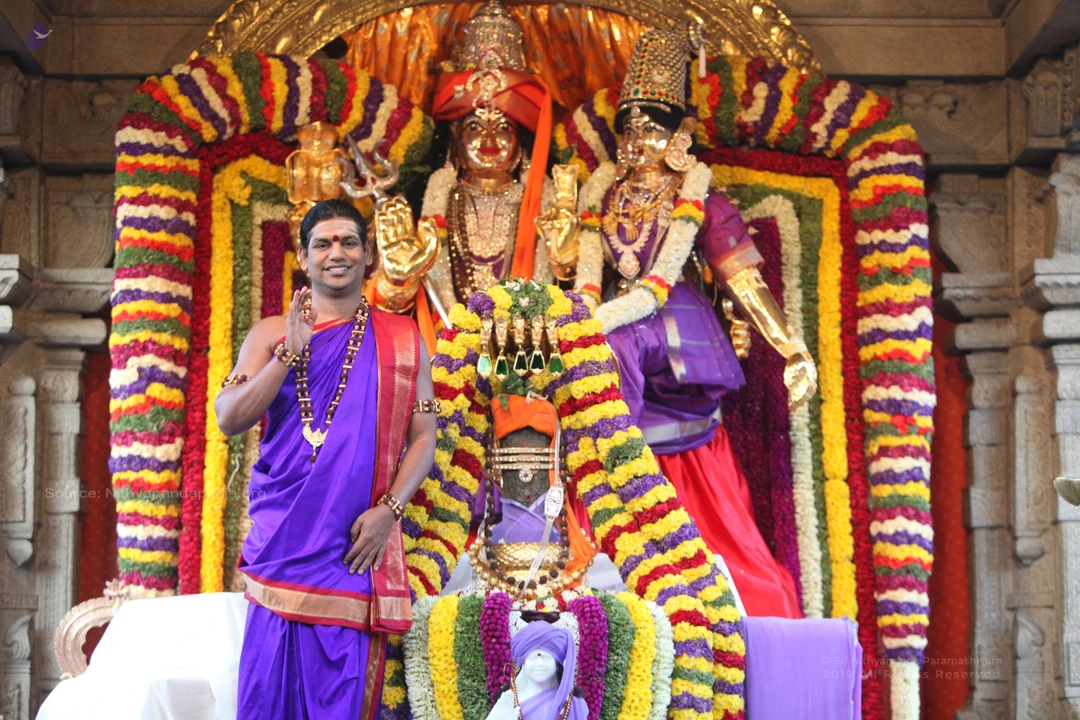
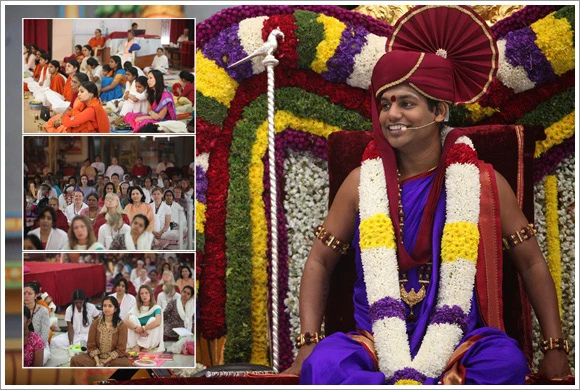
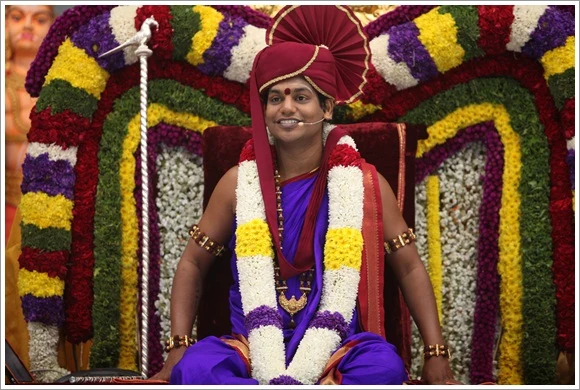
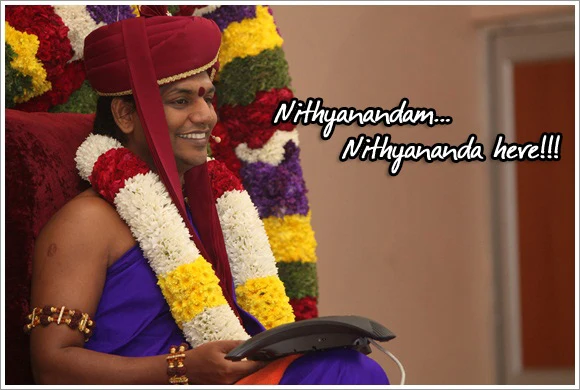
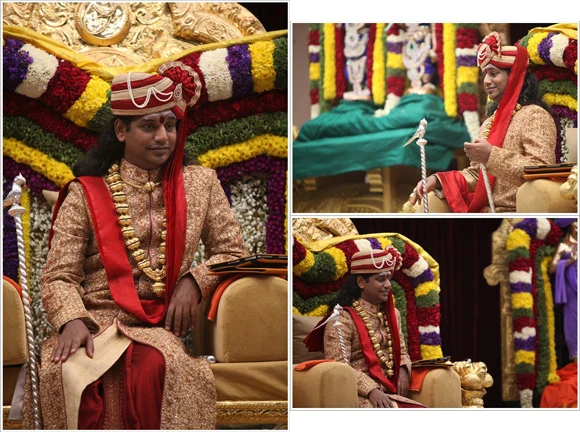
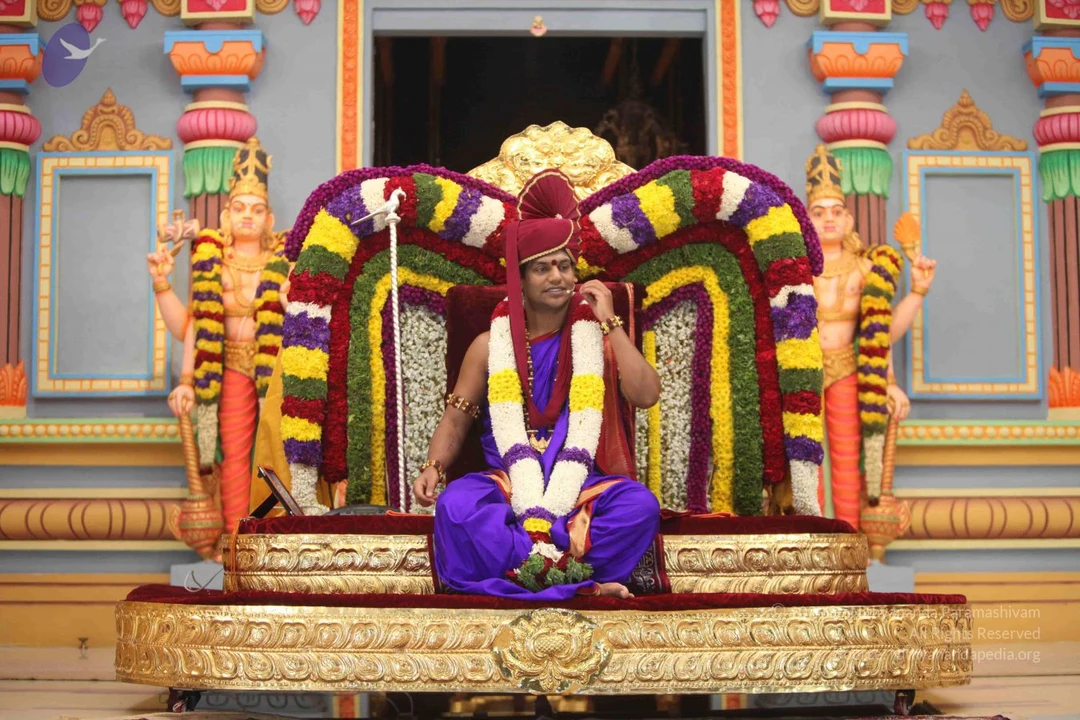
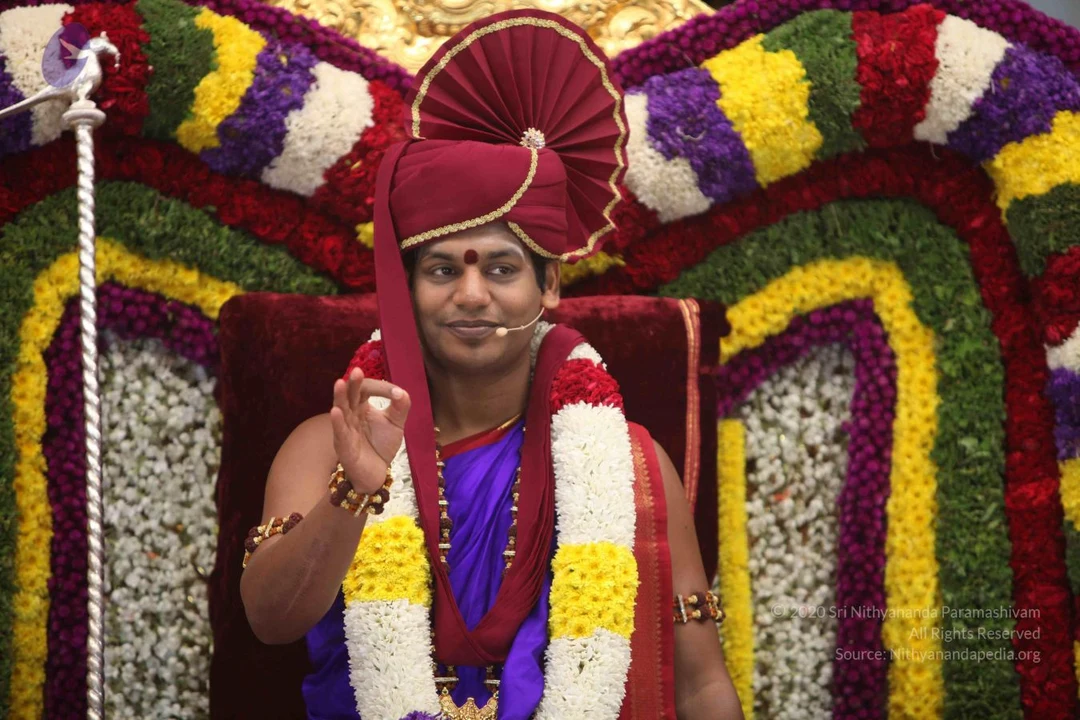
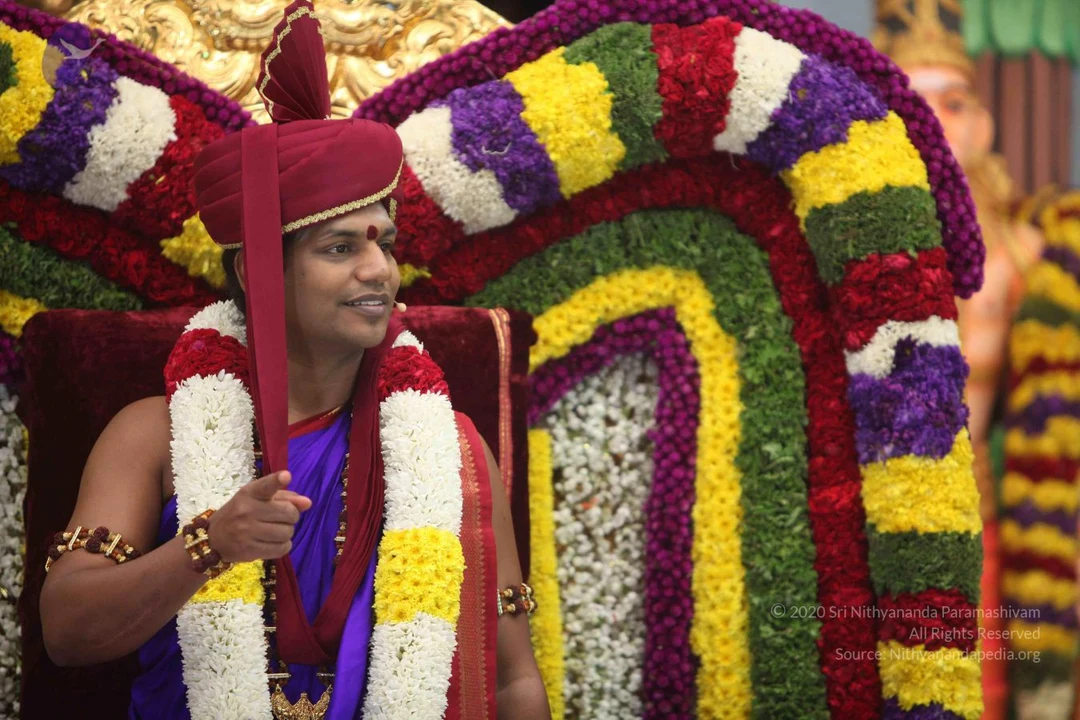
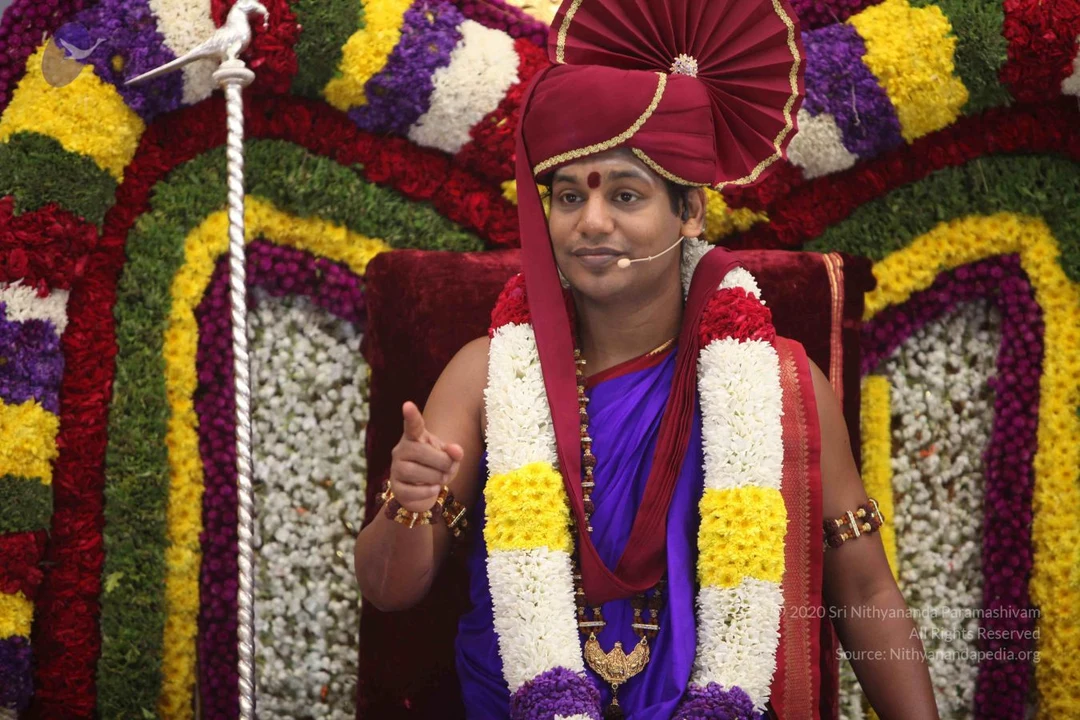
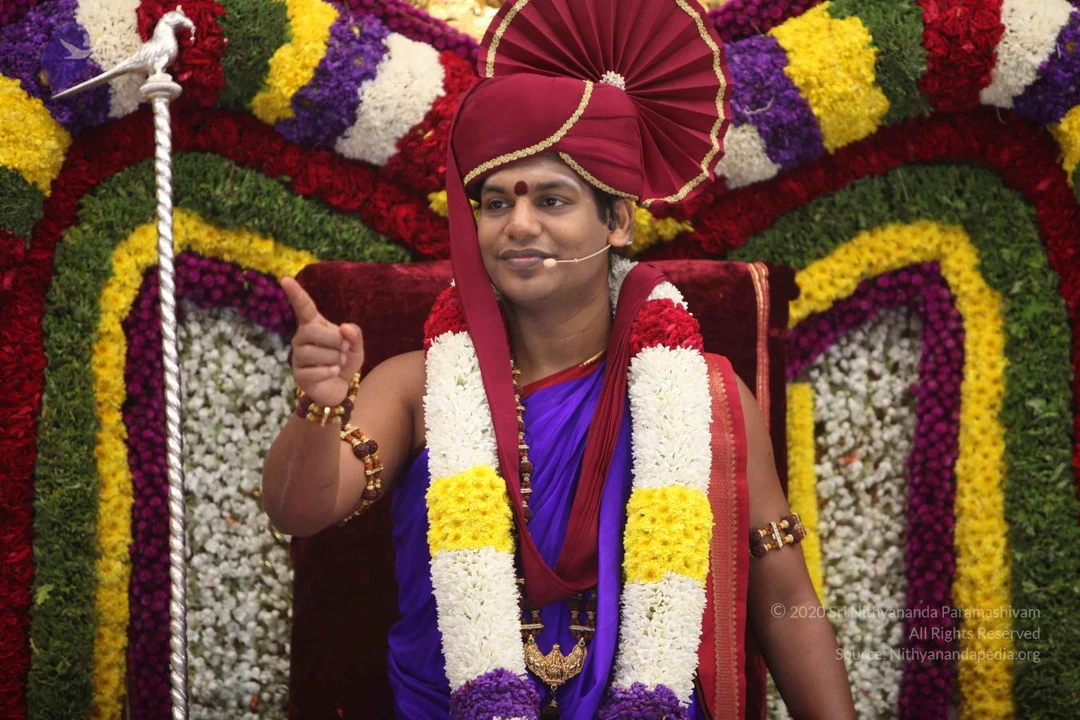
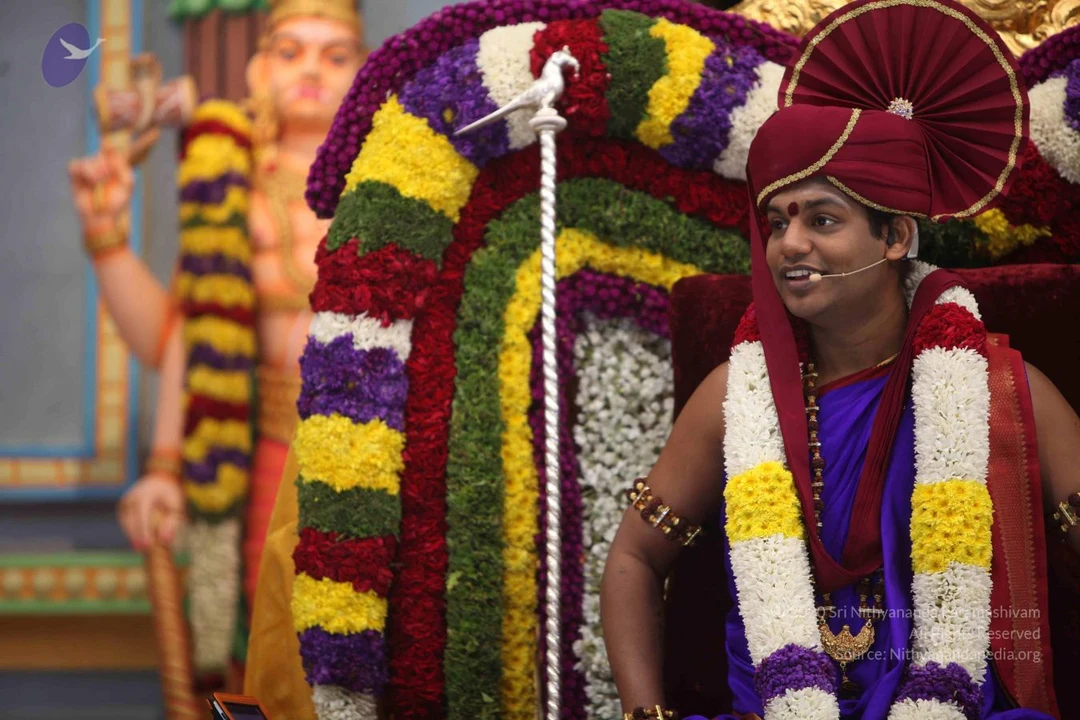
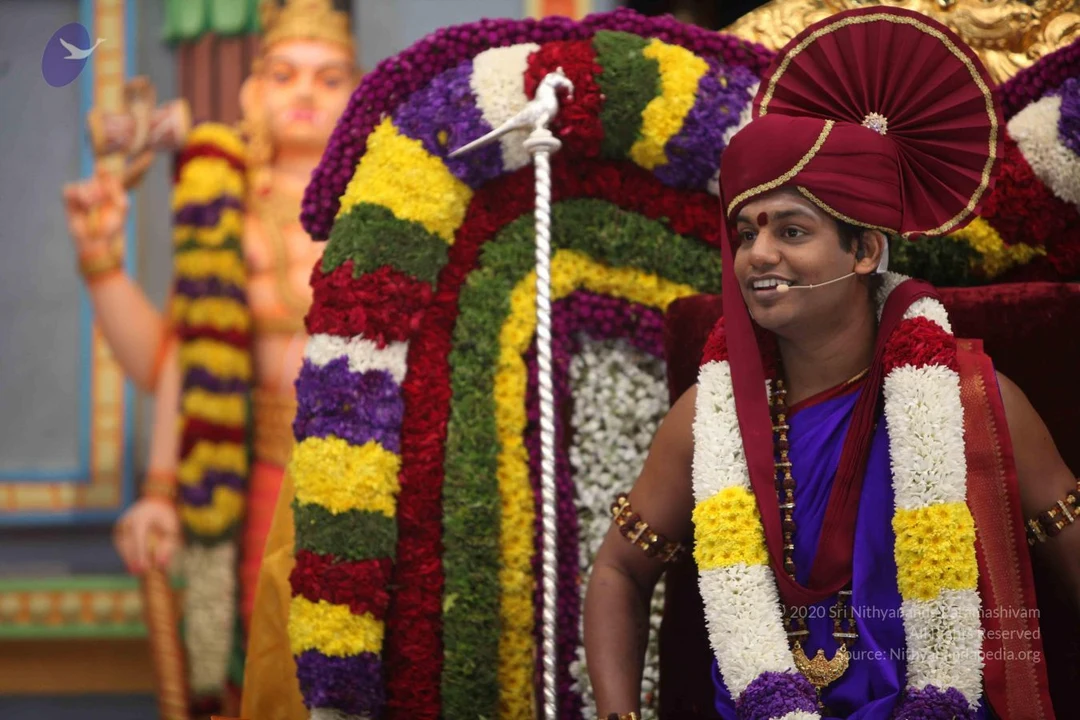
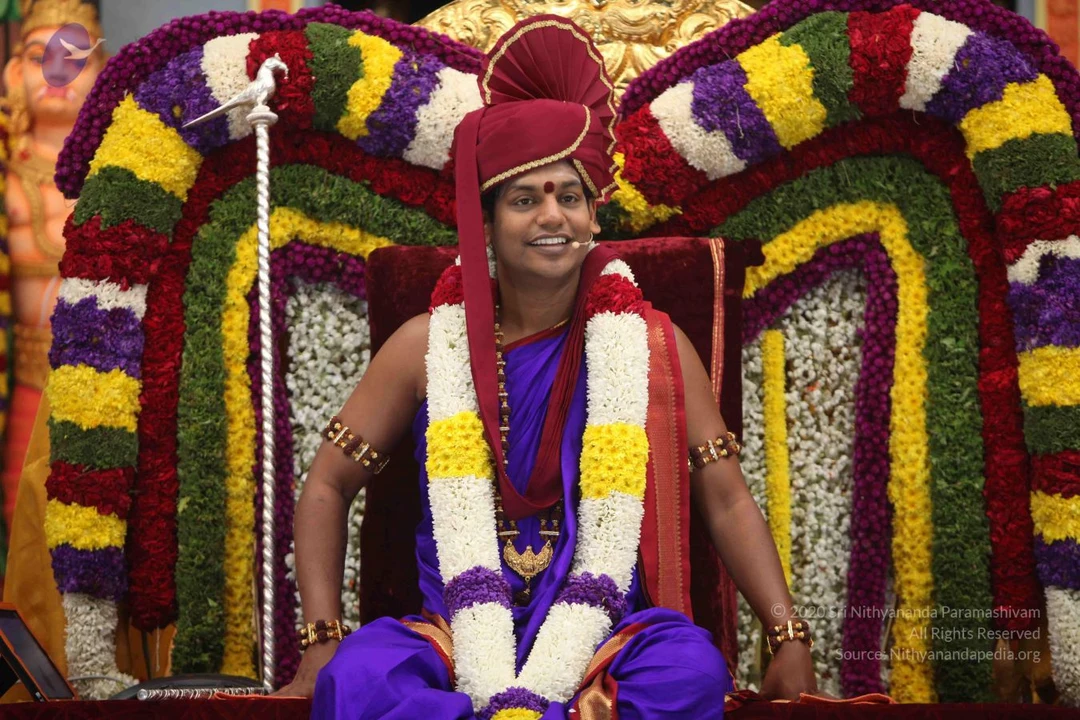
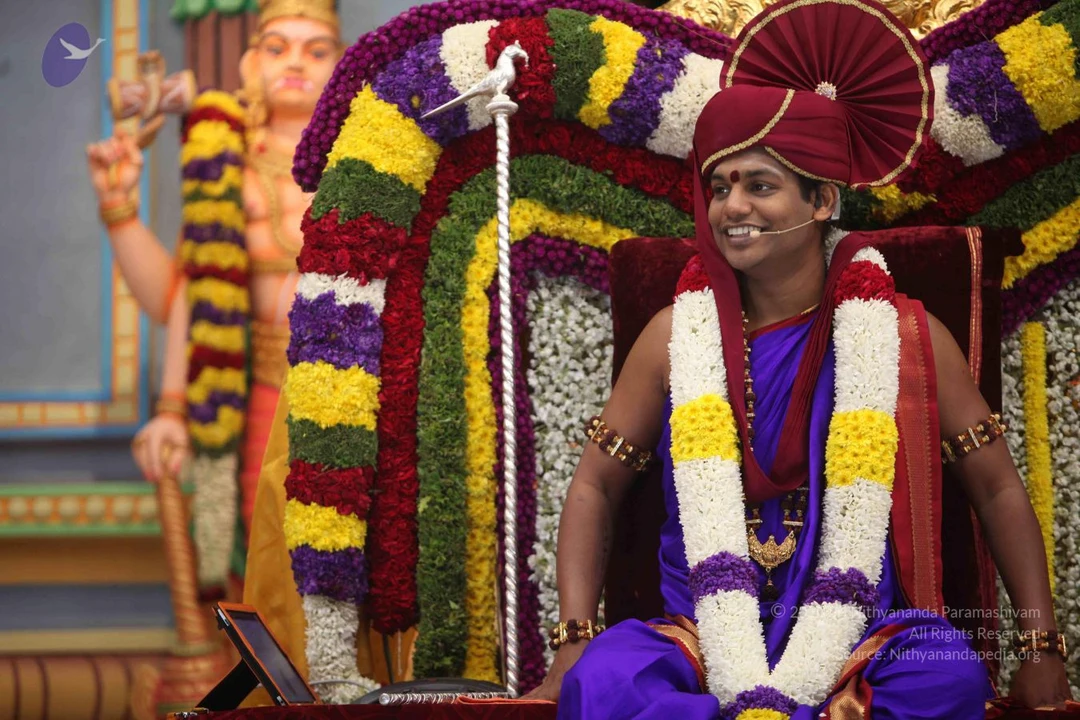
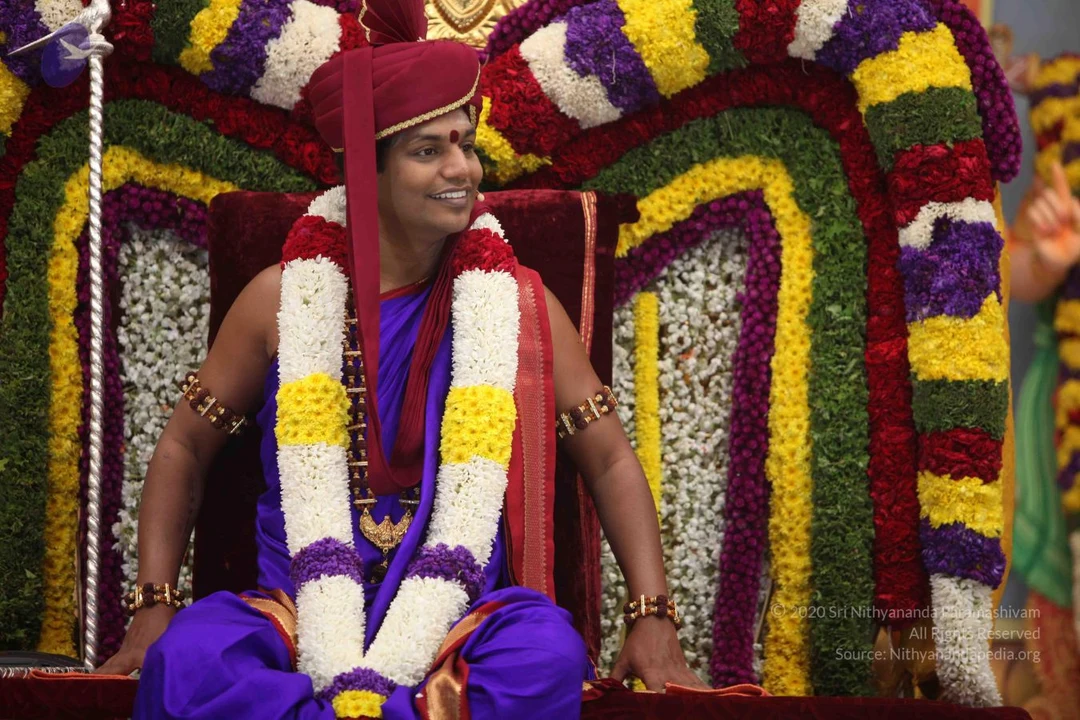
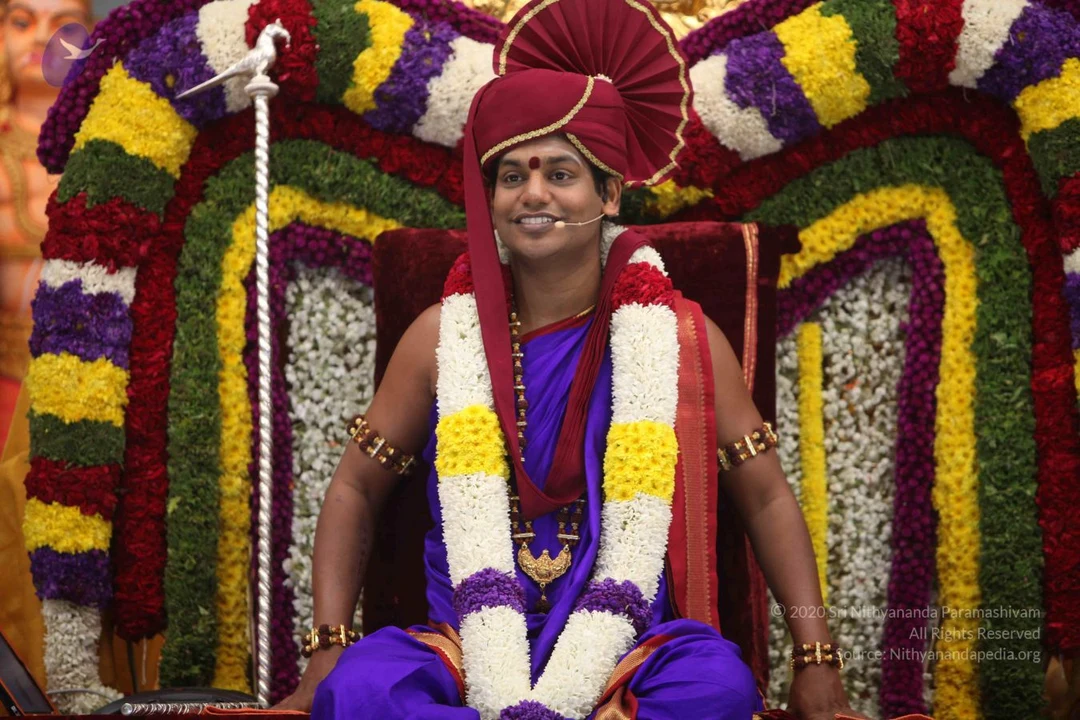
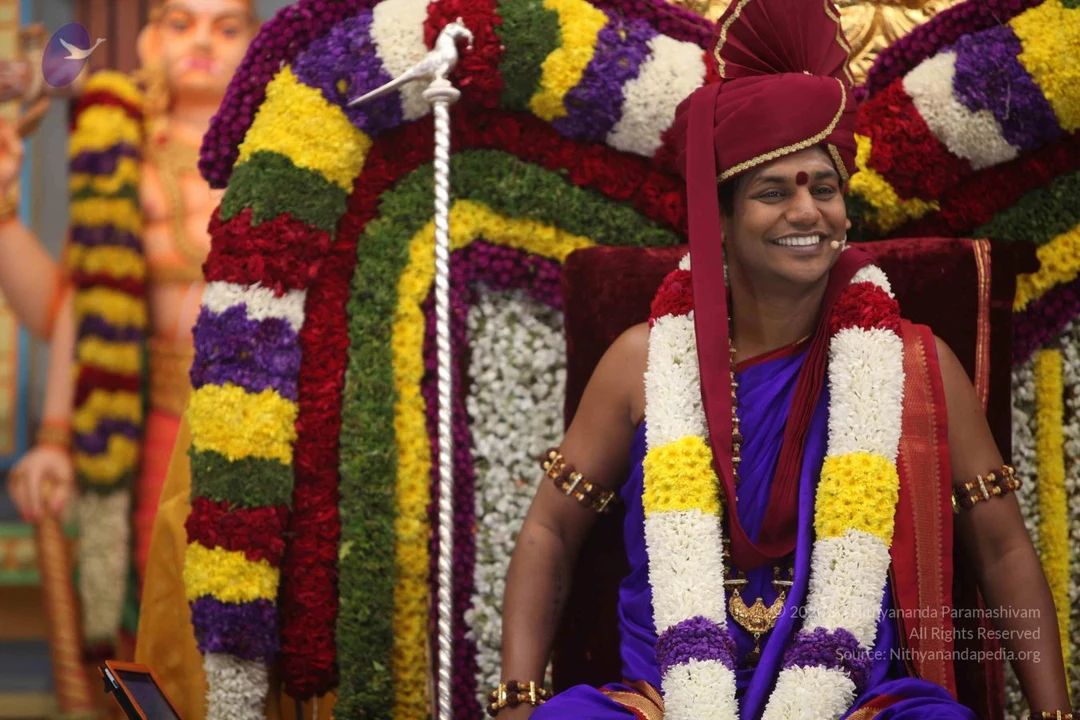
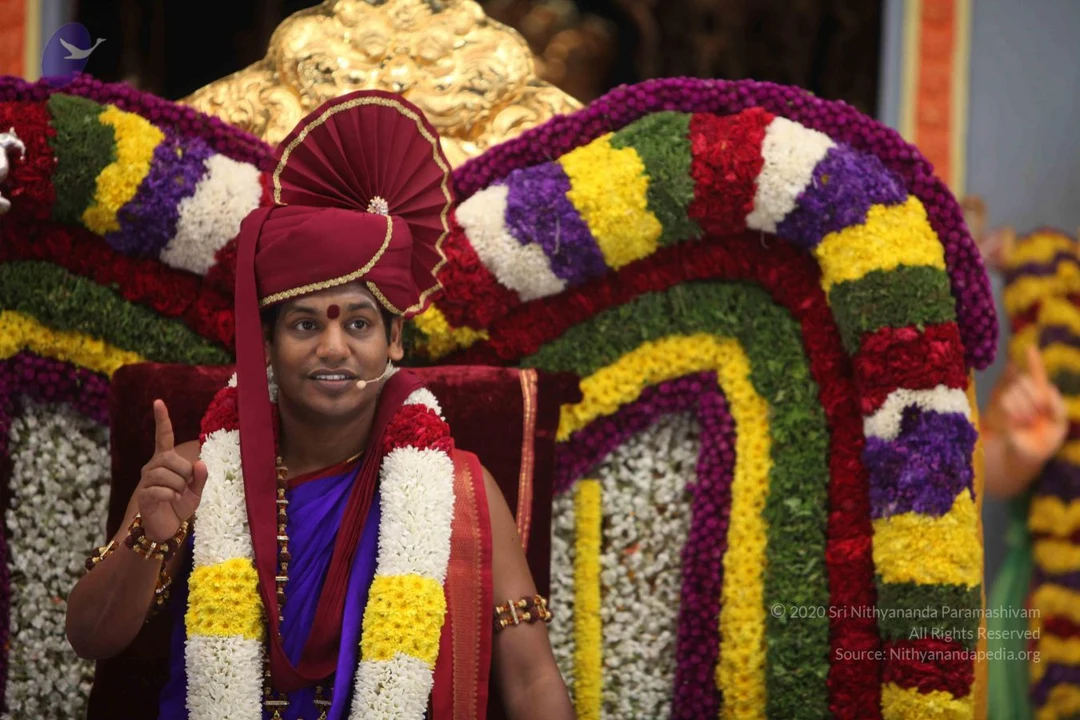
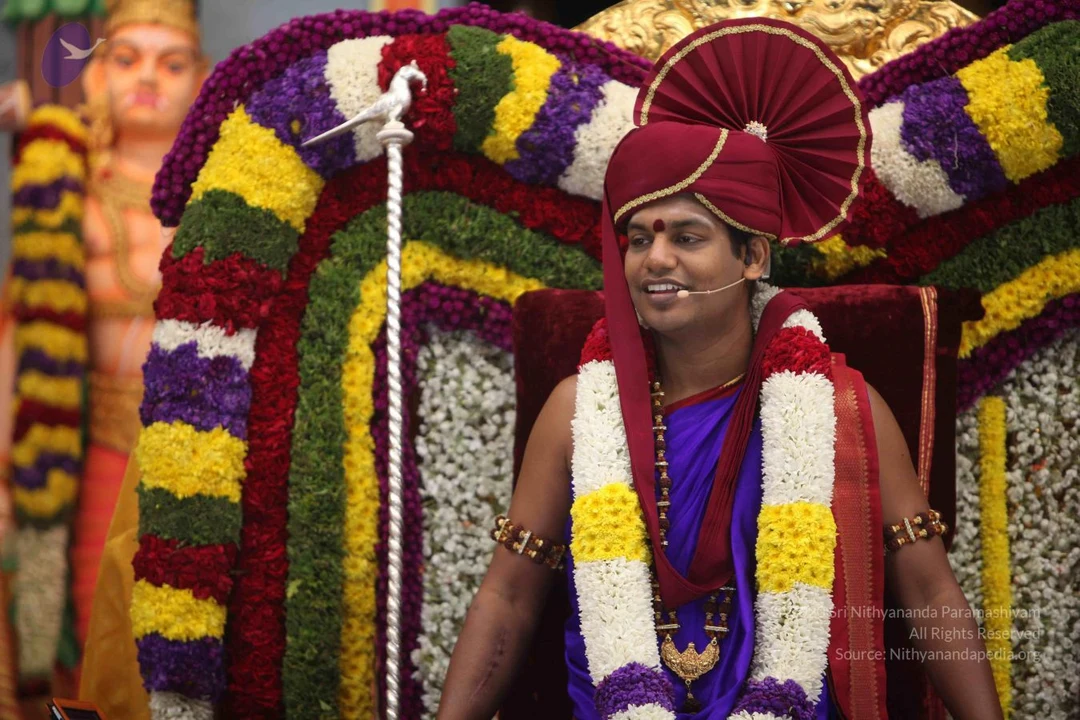
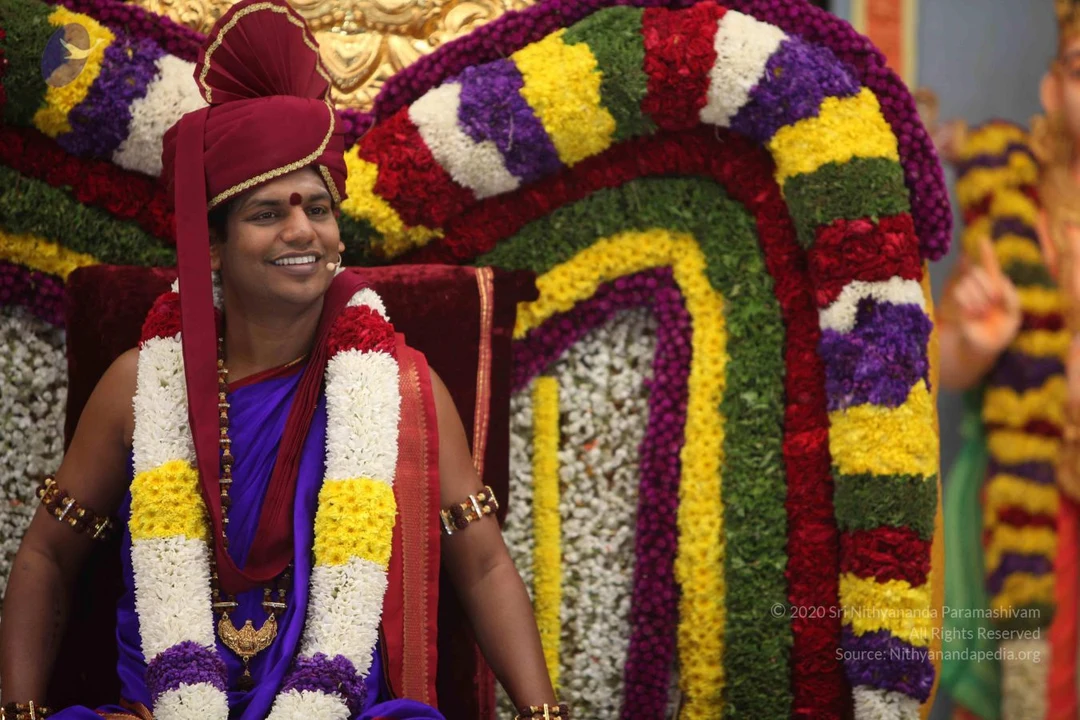
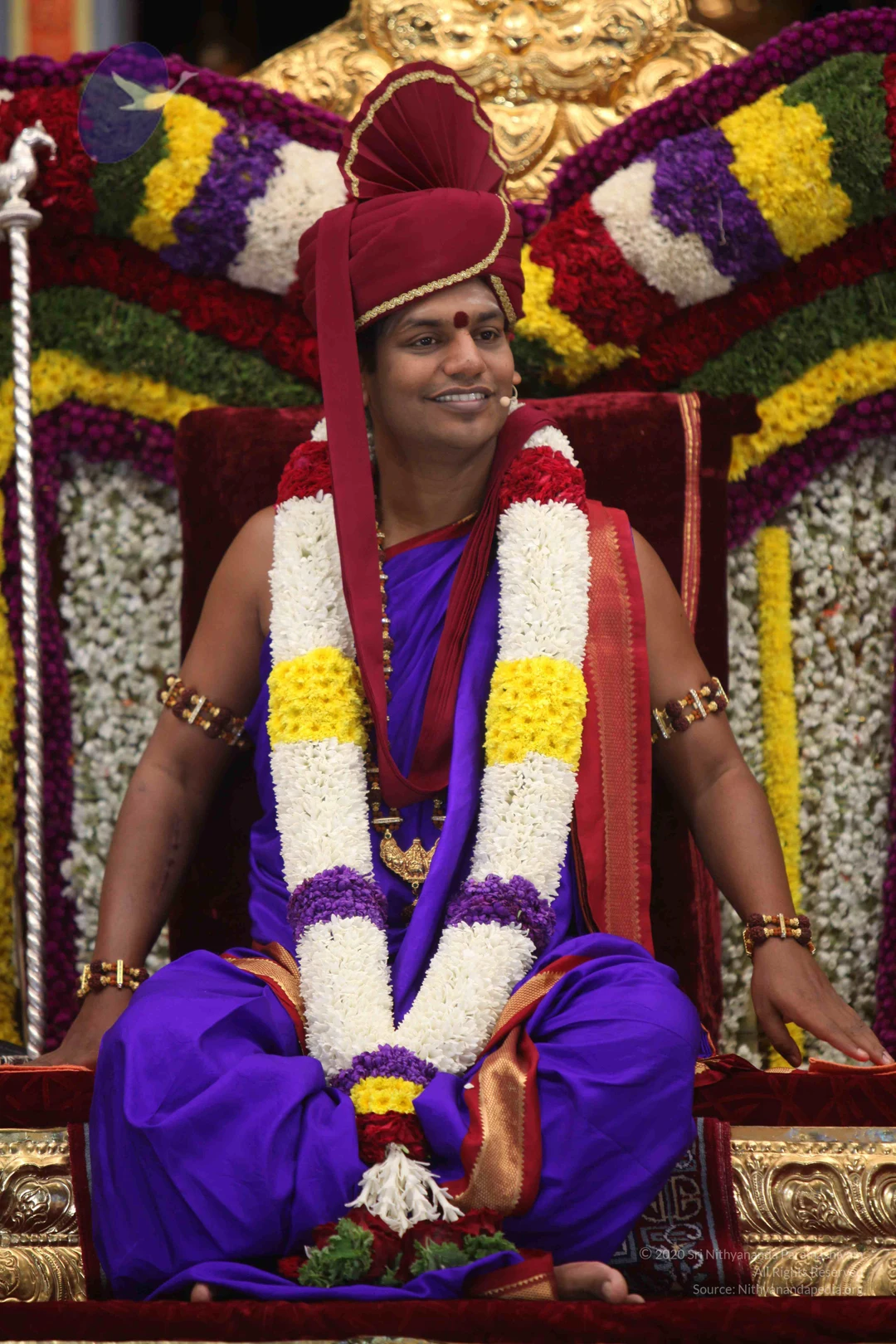
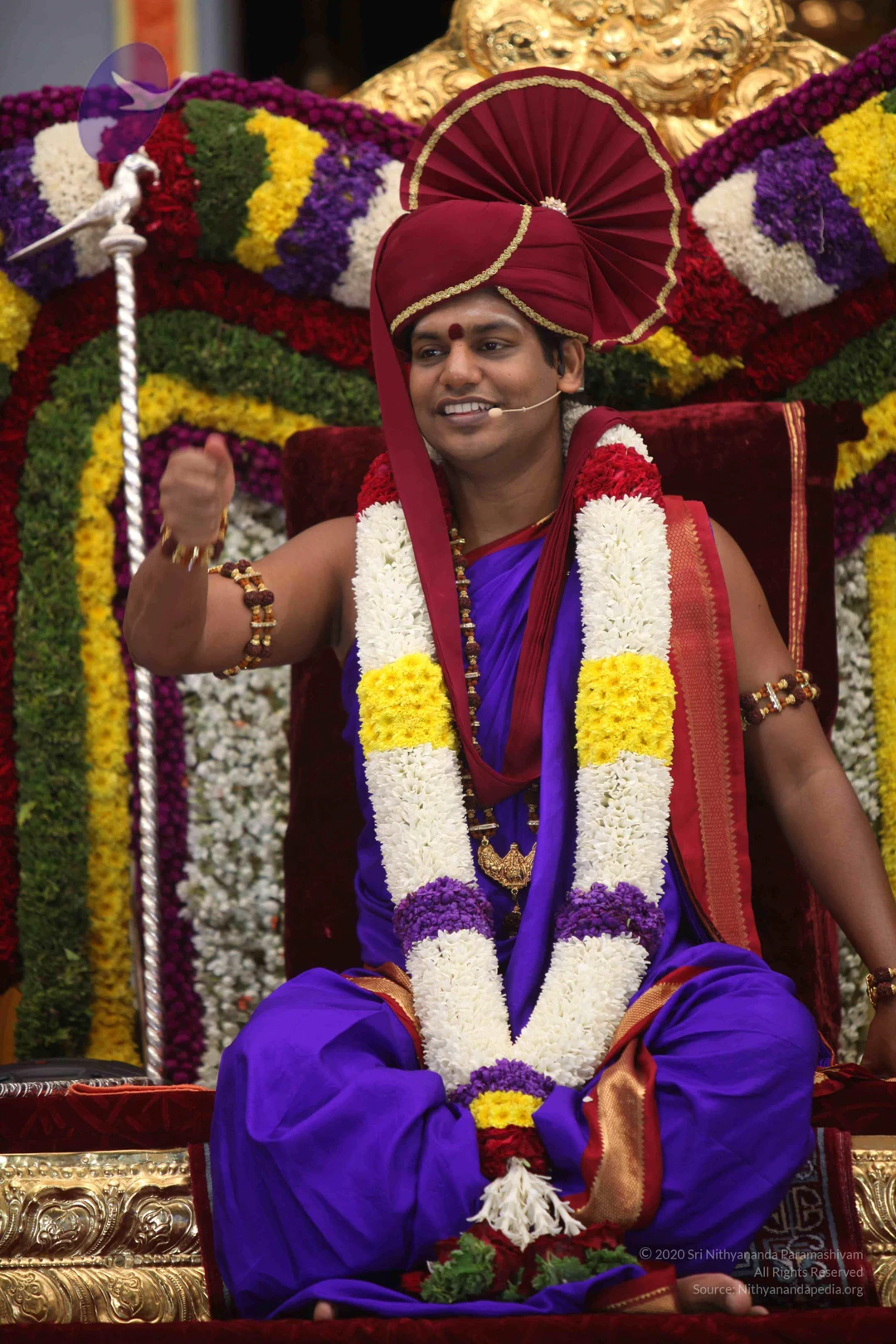
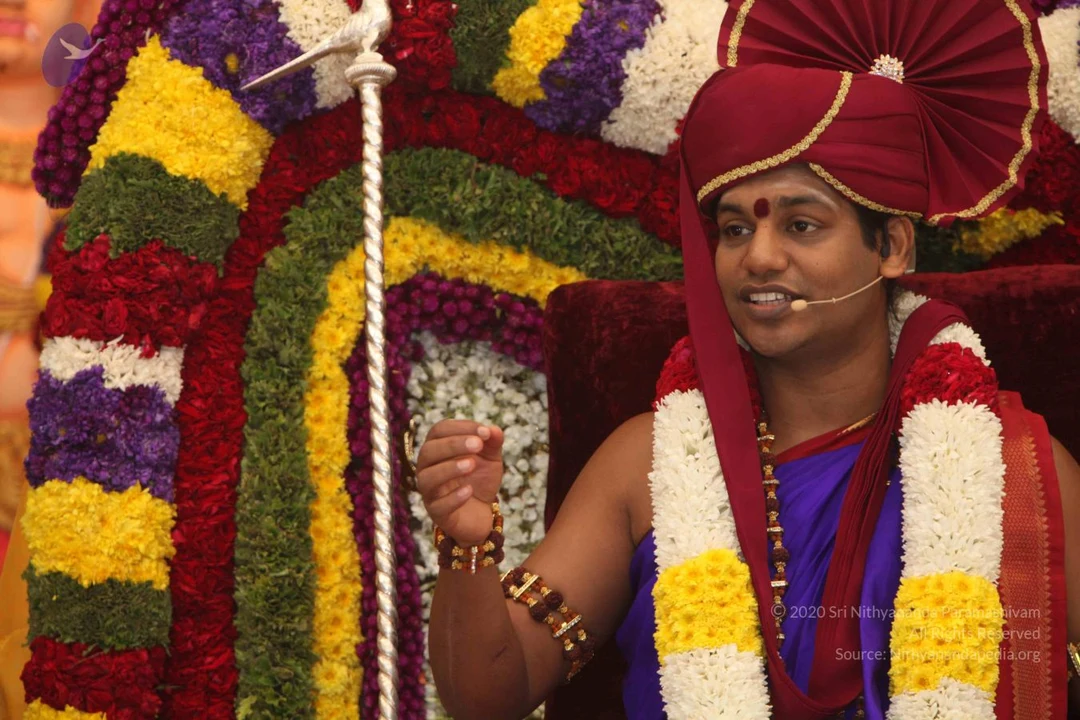
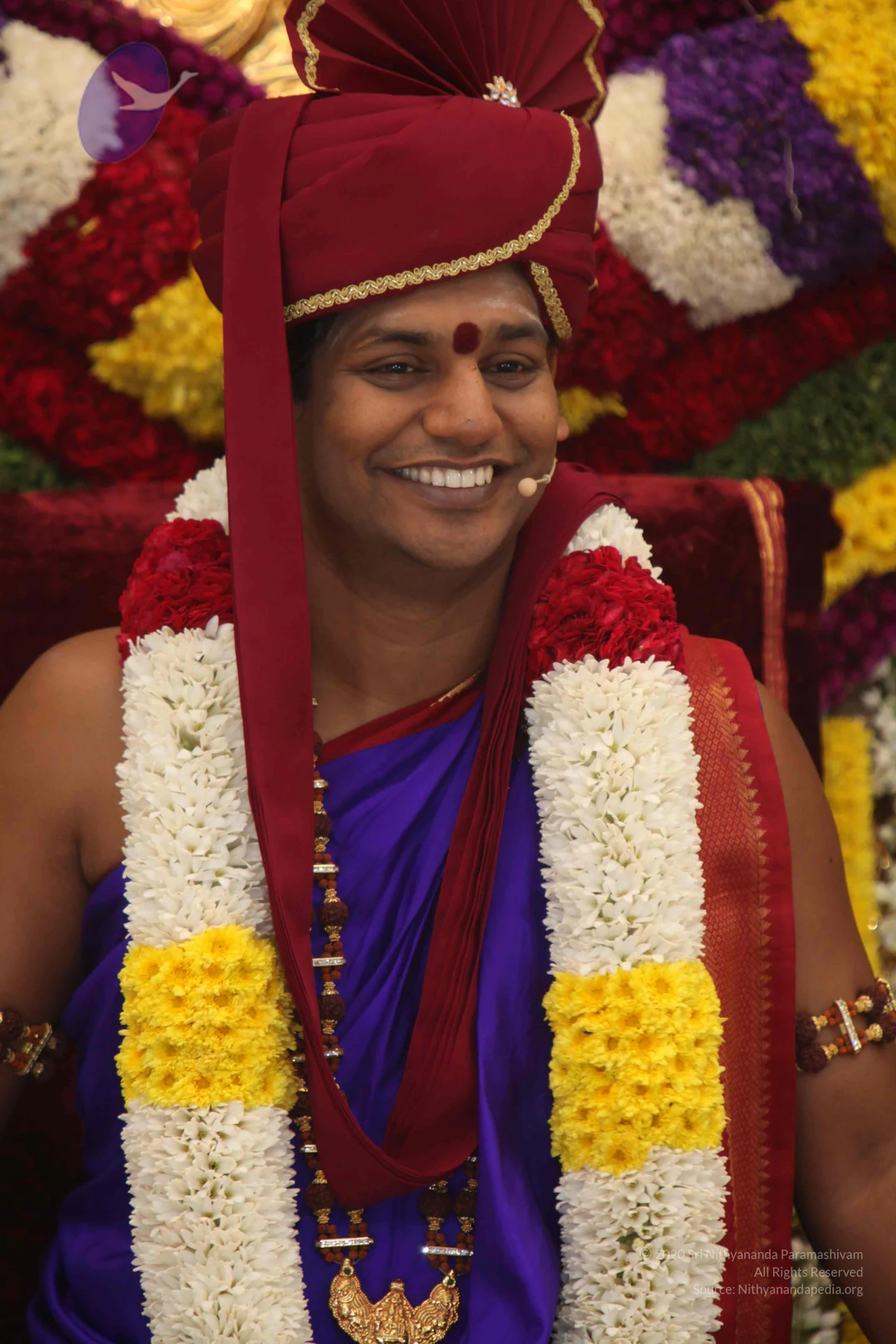
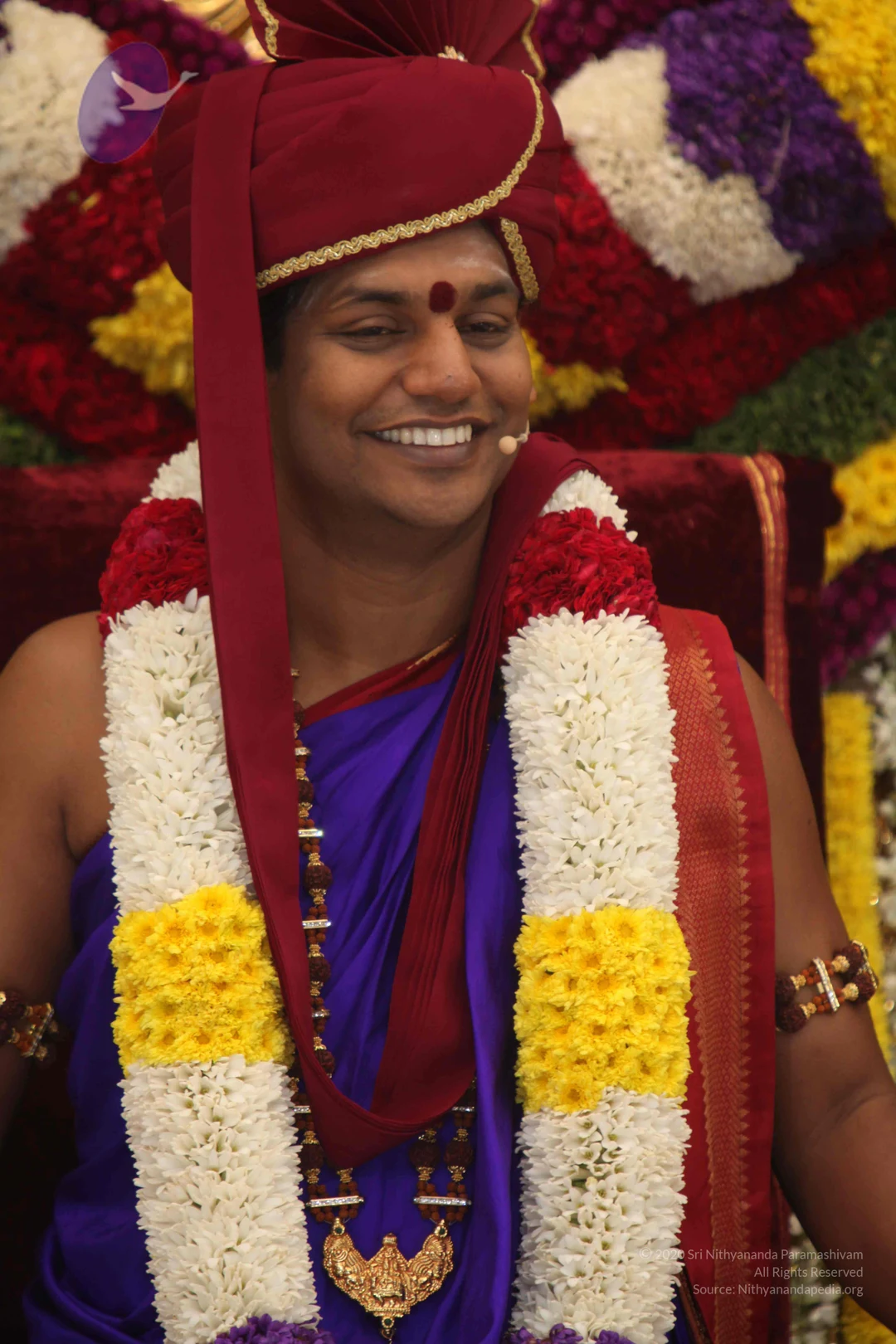
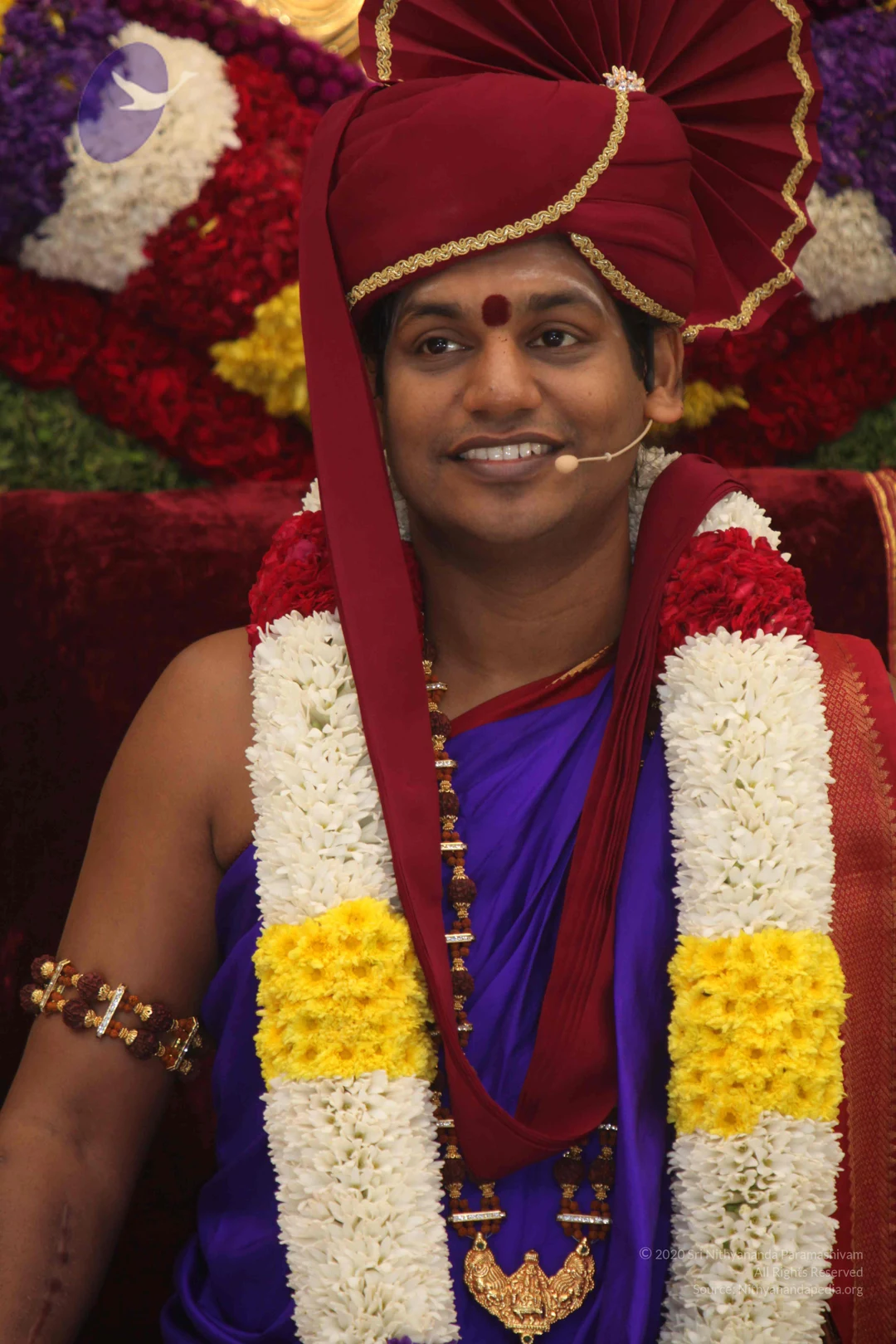
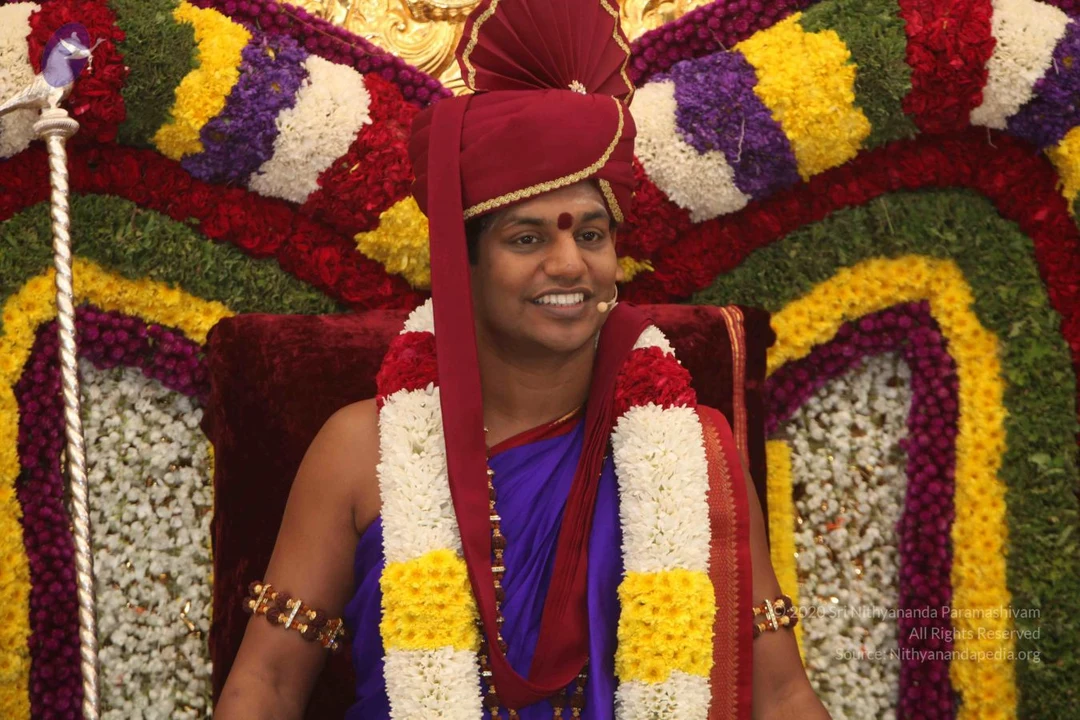
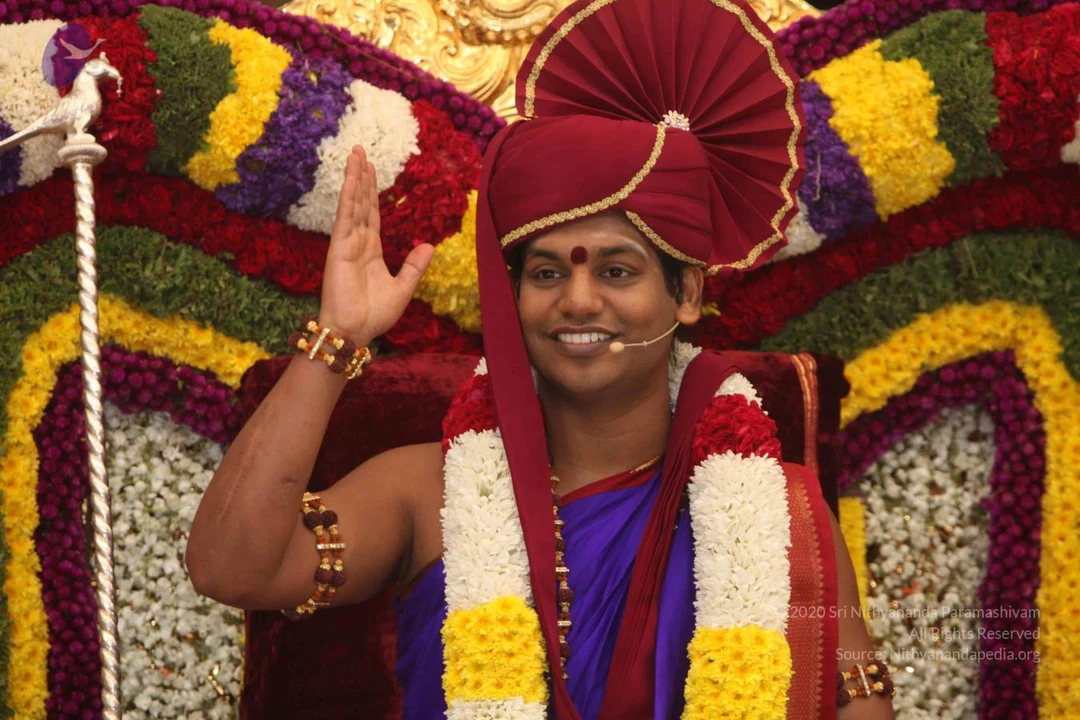
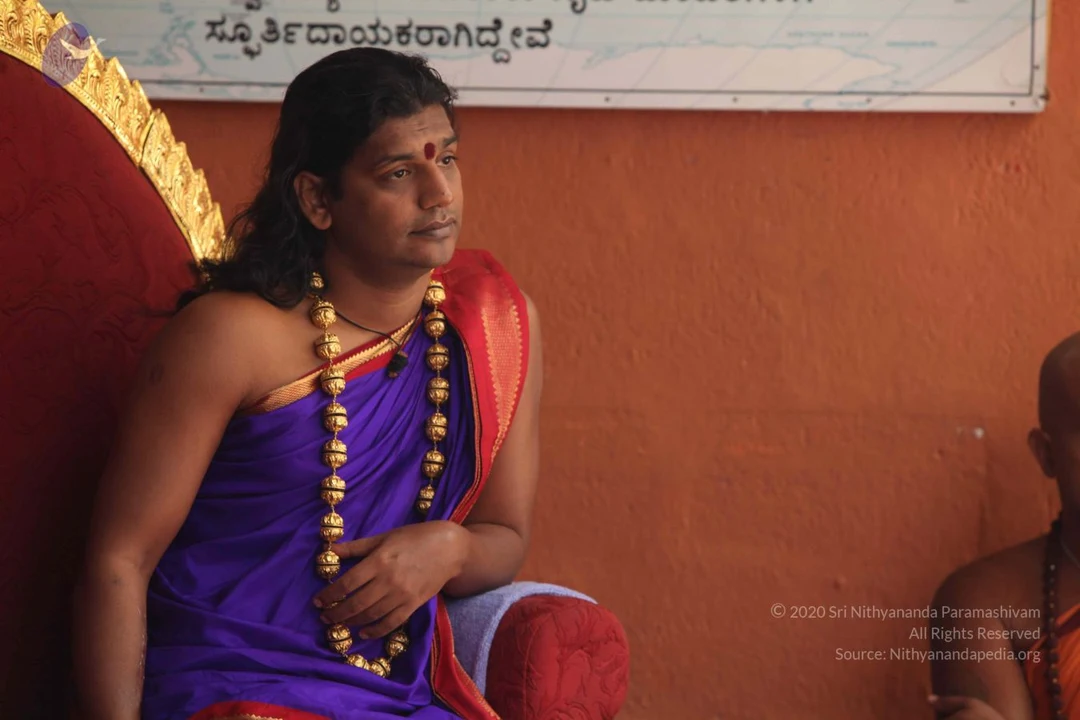
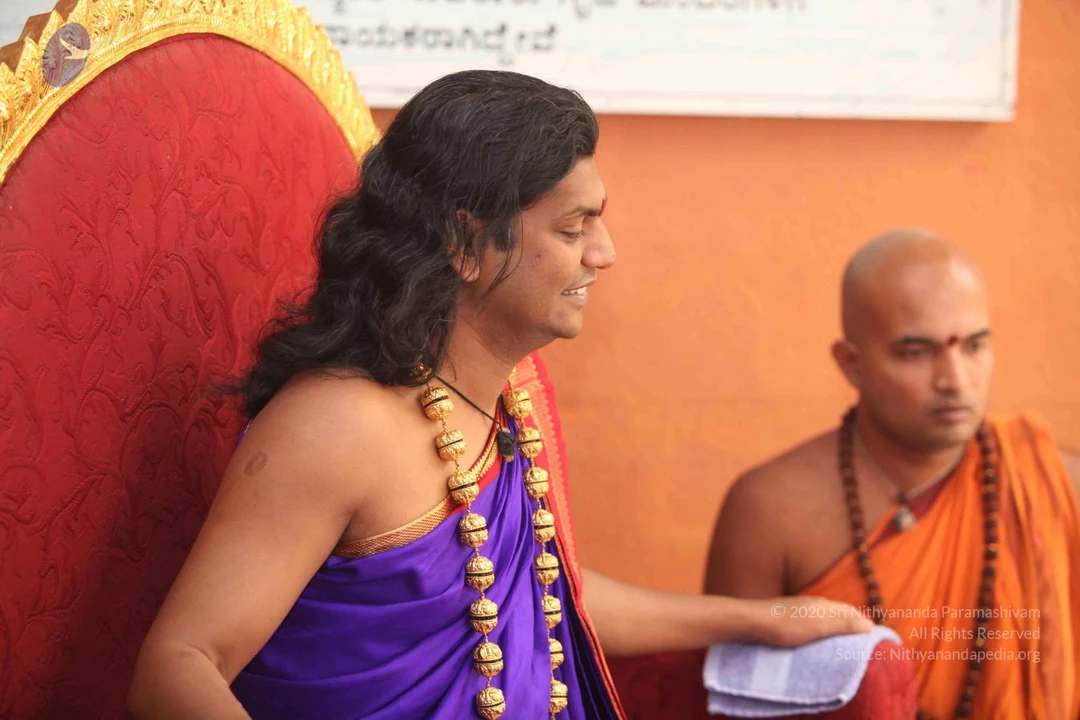
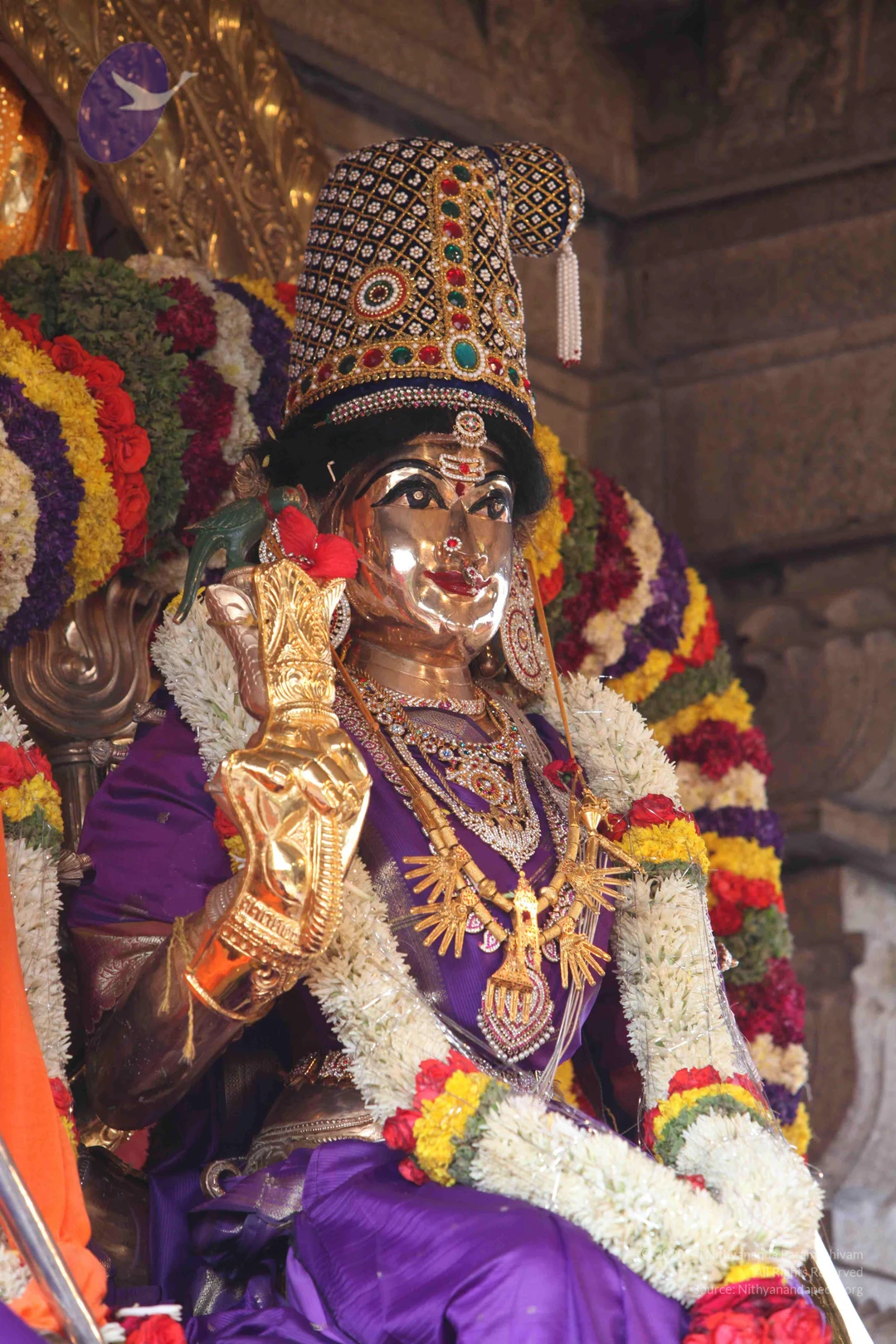
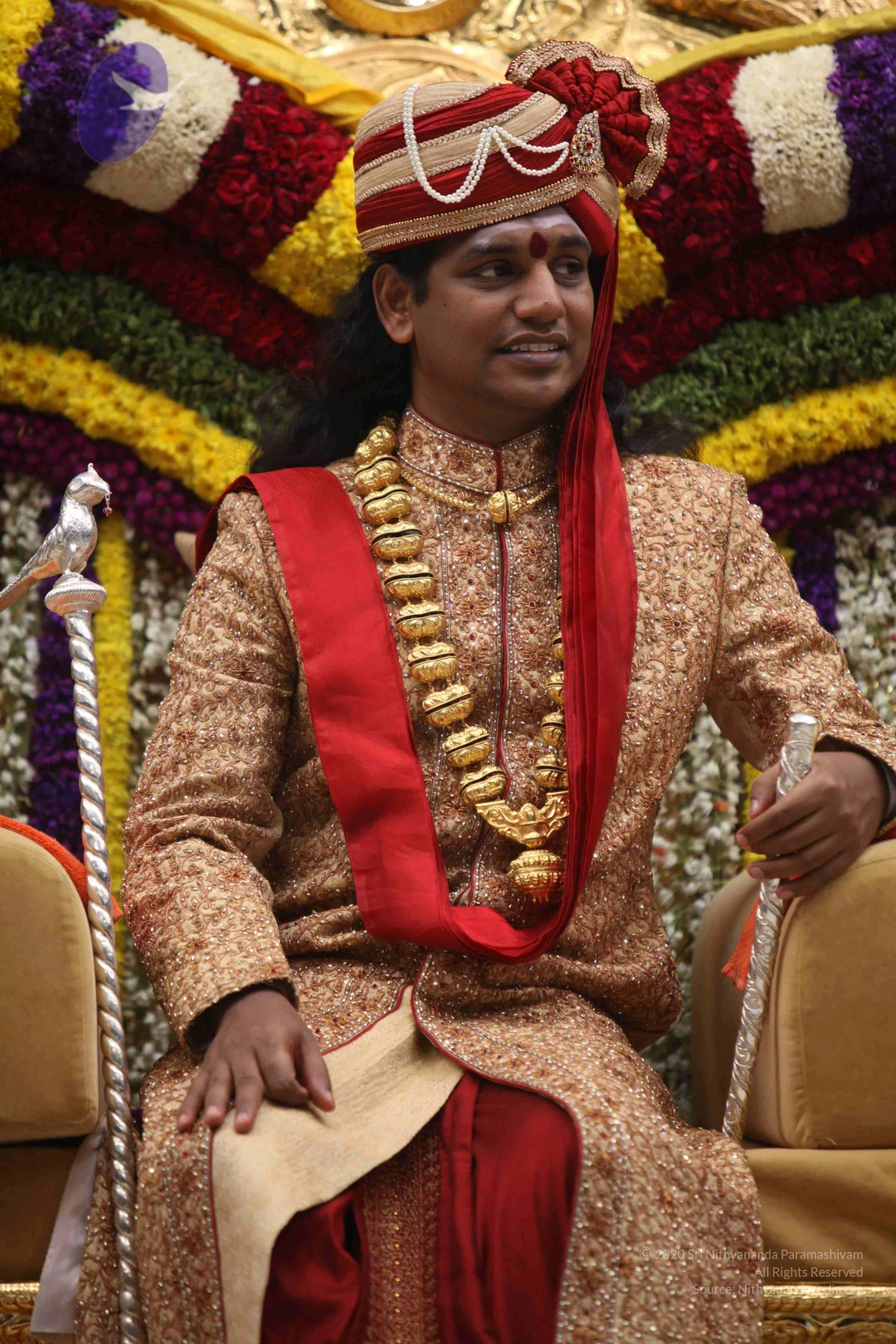
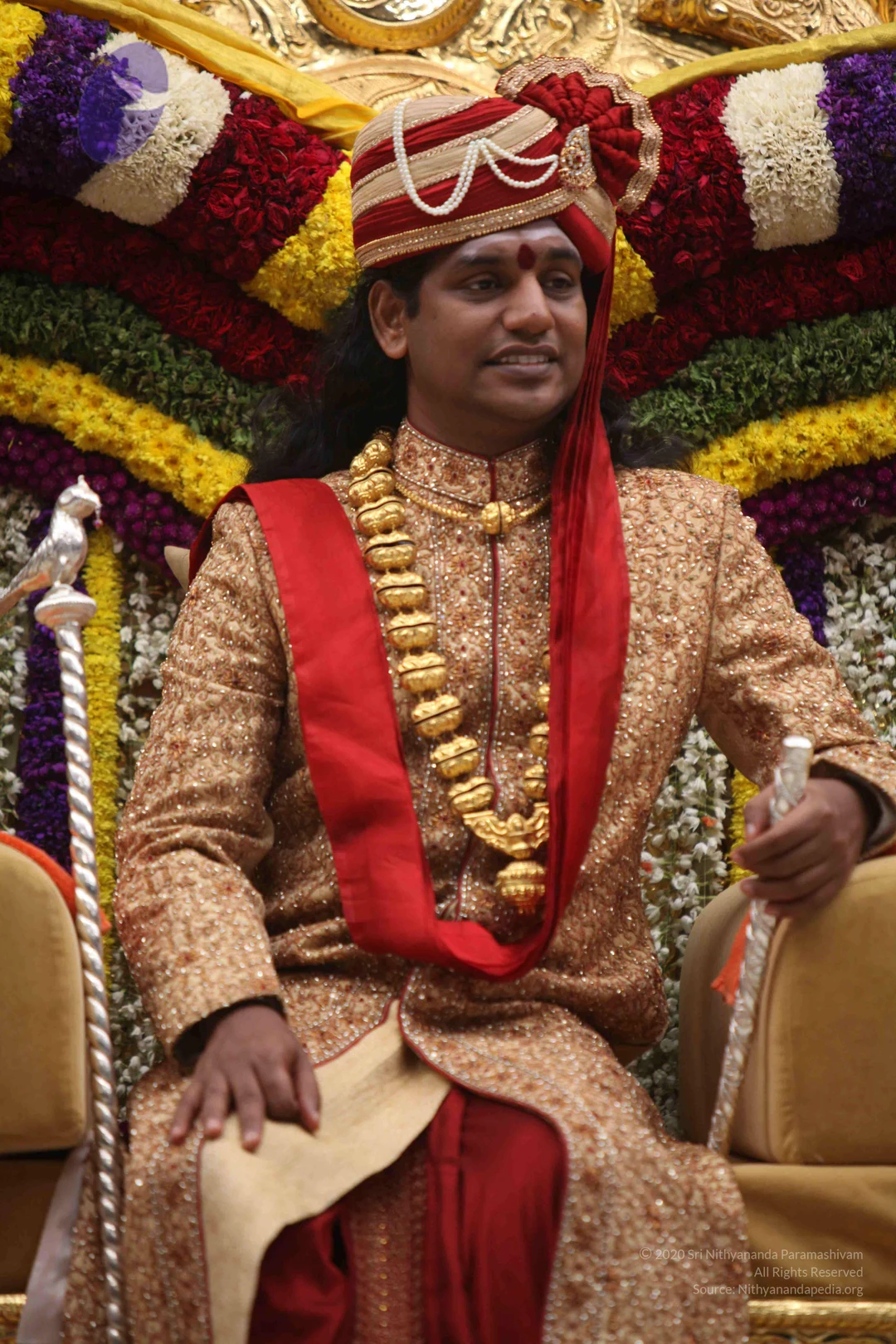
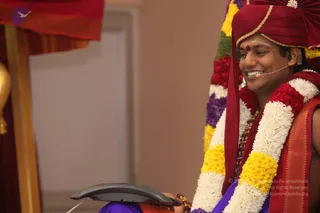
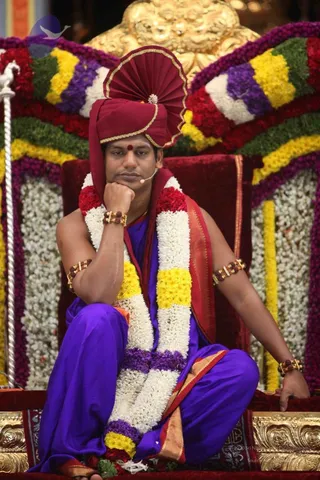
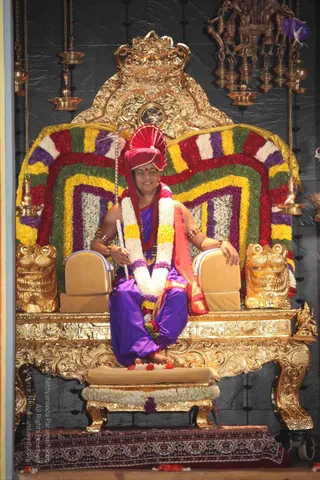
A photograph of one seated man in front of a floral backdrop of marigolds, roses and white jasmine in yellow, purple, red and white bands, topped by a silver bird ornament on a silver pole. He wears a deep red turban with a gold-edged fan fold and a red tilak on the forehead, a purple garment with a red-and-gold shawl, long beaded malas and gold bangles. A small microphone is clipped near his face, and he smiles while raising one thumb. He appears to be a seated teacher, with the scene resembling a satsang or pada puja setting. Cues are a red turban, beaded malas and a shawl, though the image does not confirm his identity.

BIDADI-ADIKAILASA-NITHYANANDESHWARA-SADASHIVA-TEMPLE

77 photosSource gallery
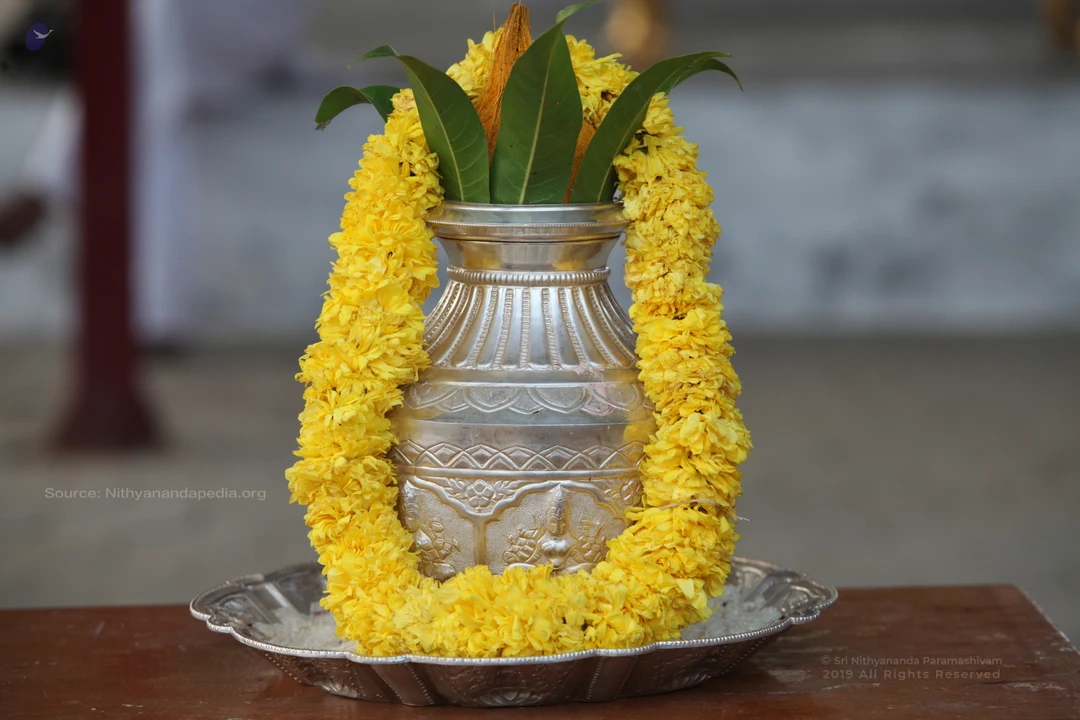
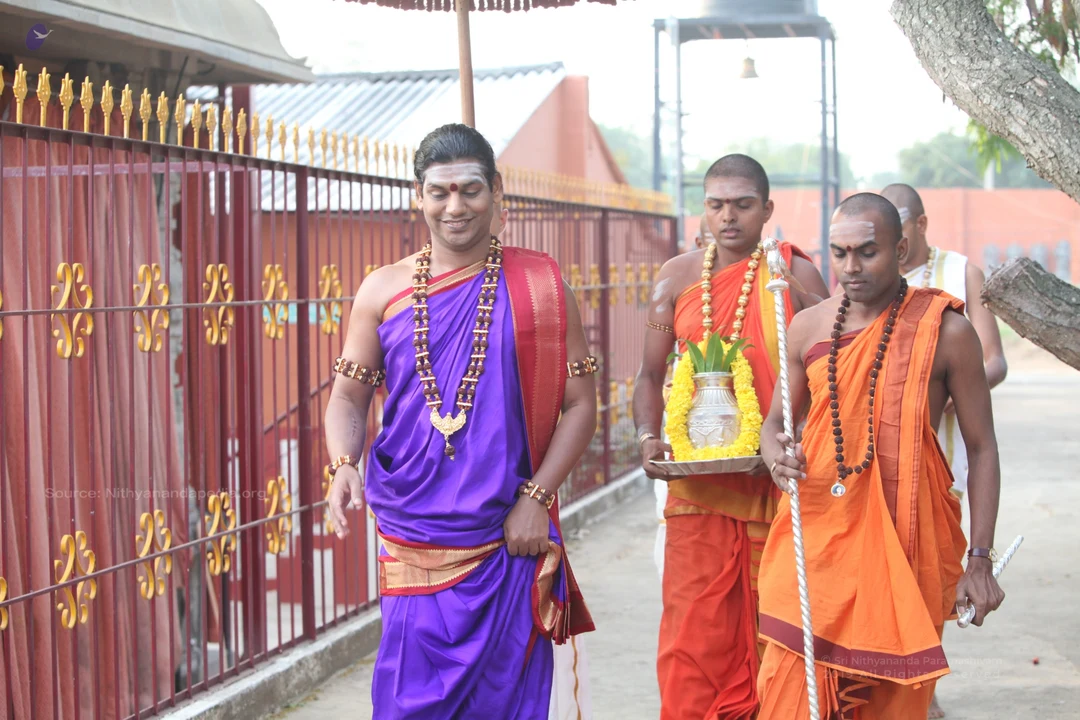
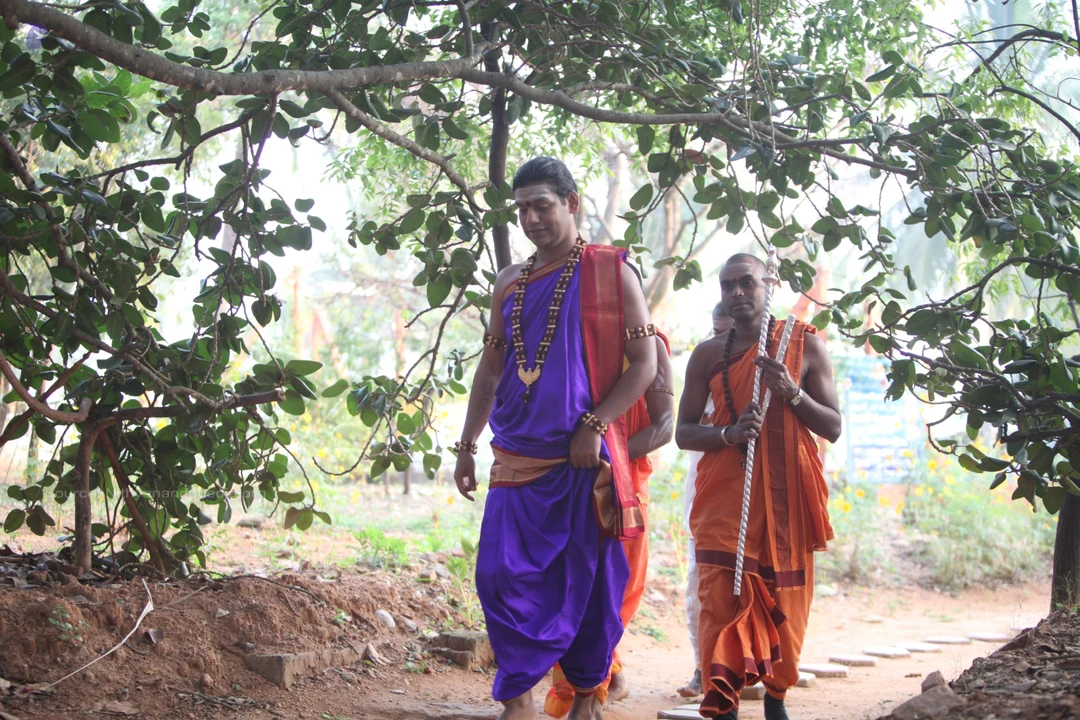
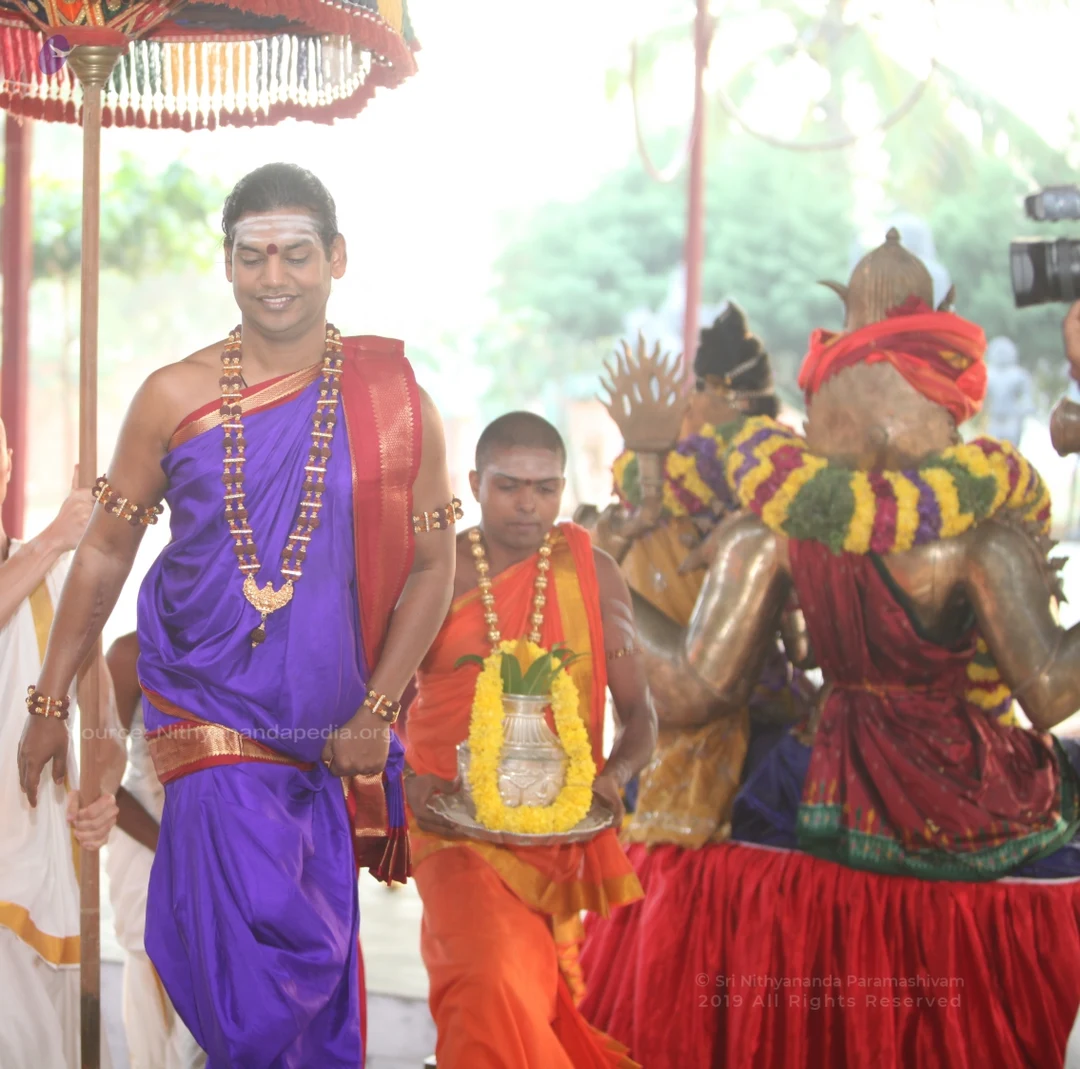
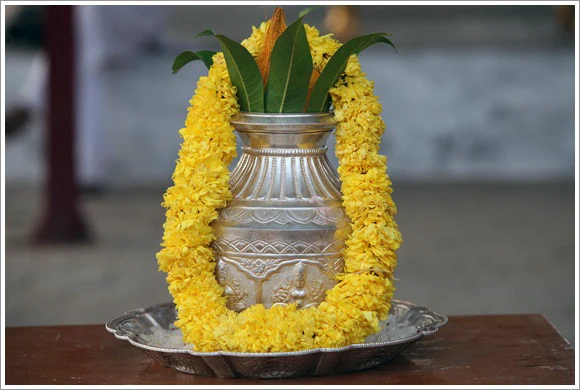
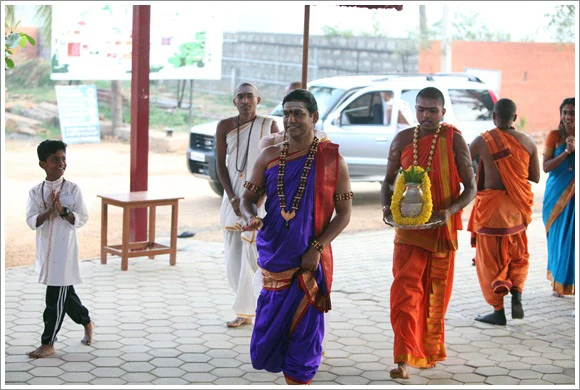
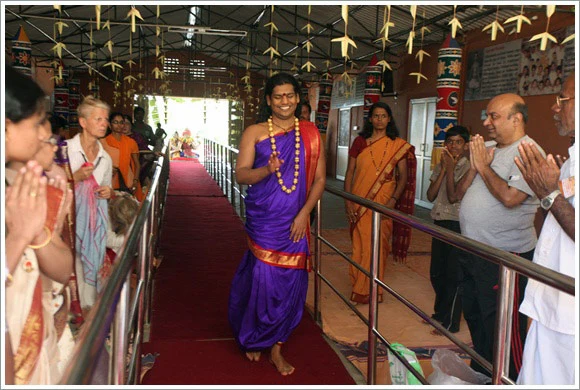
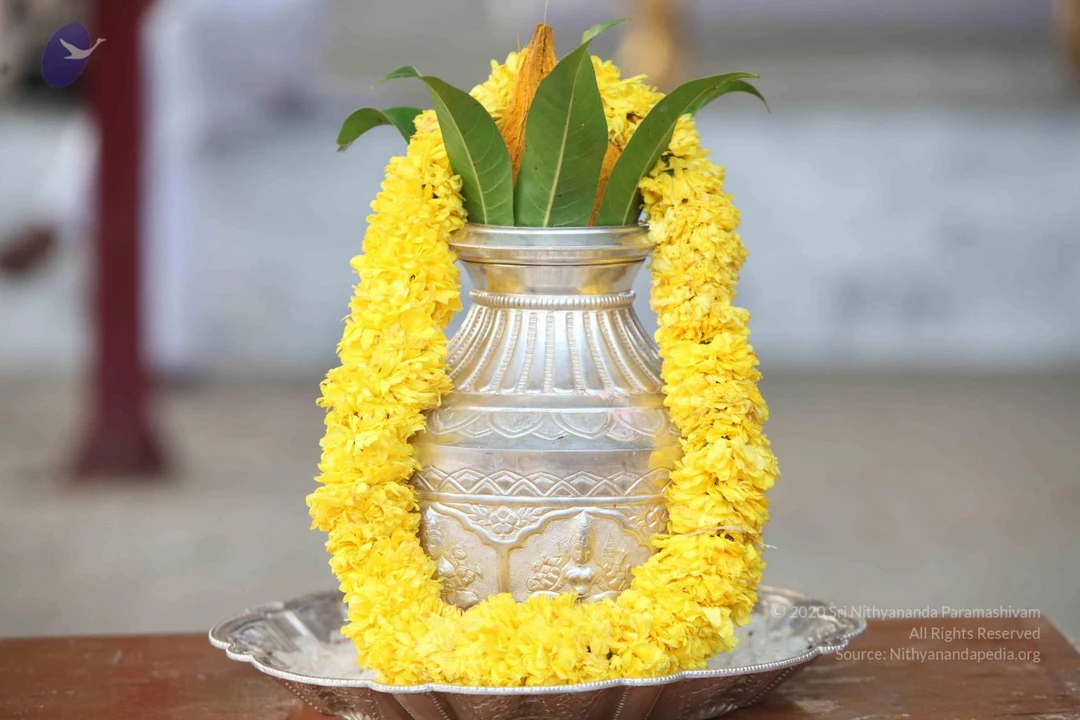
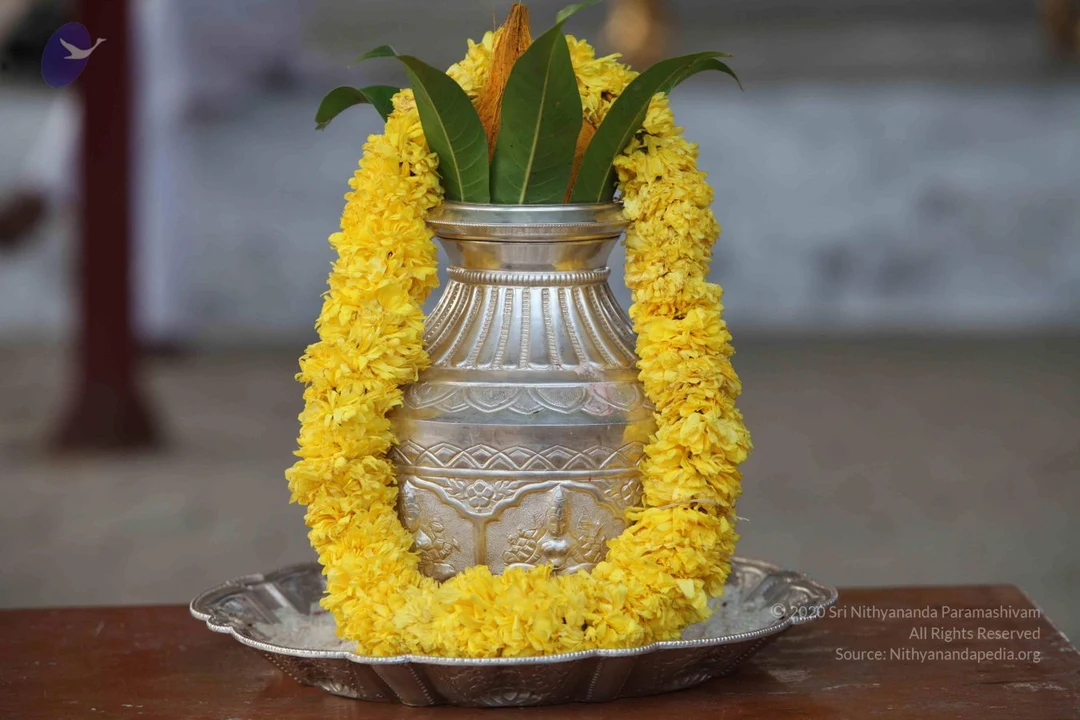
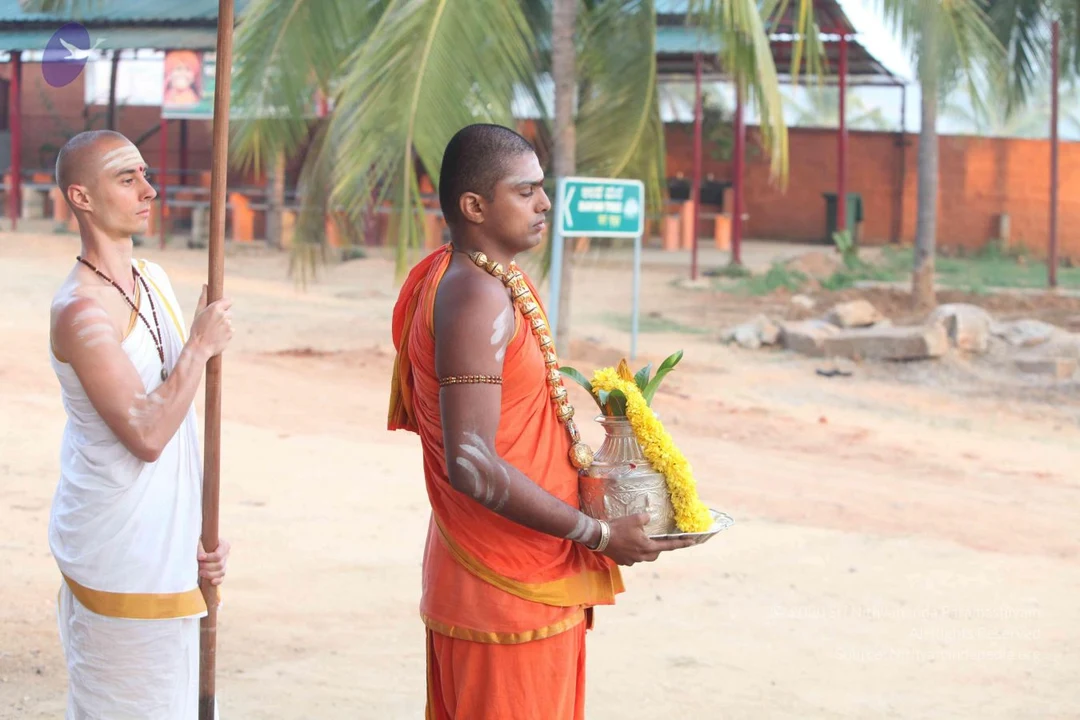
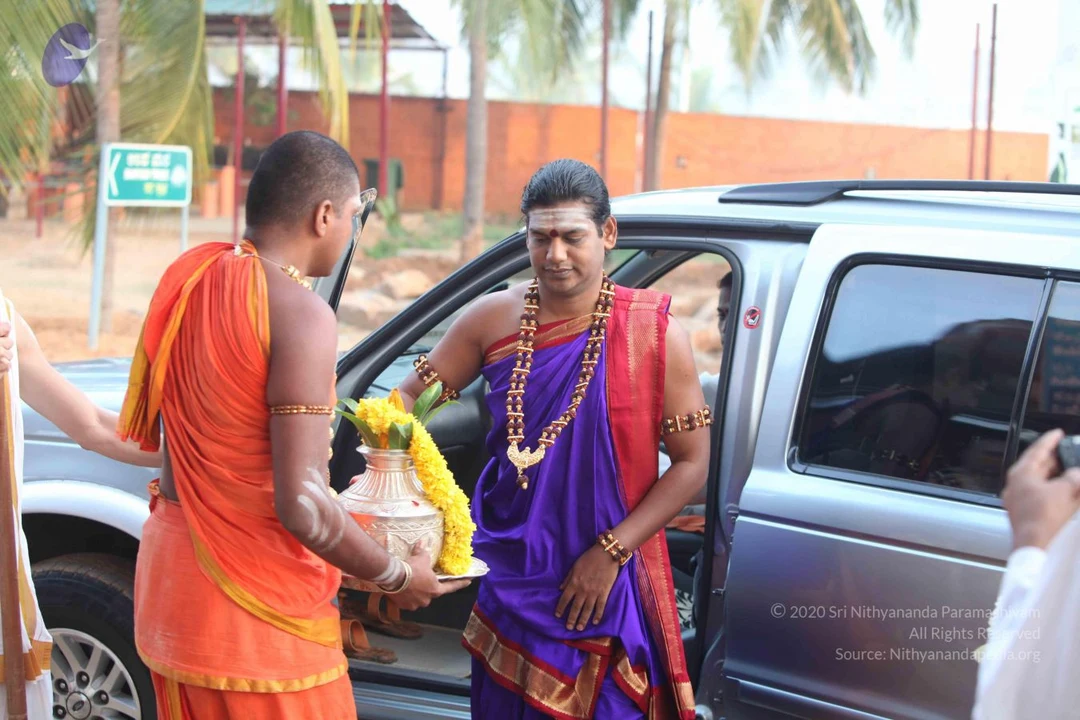
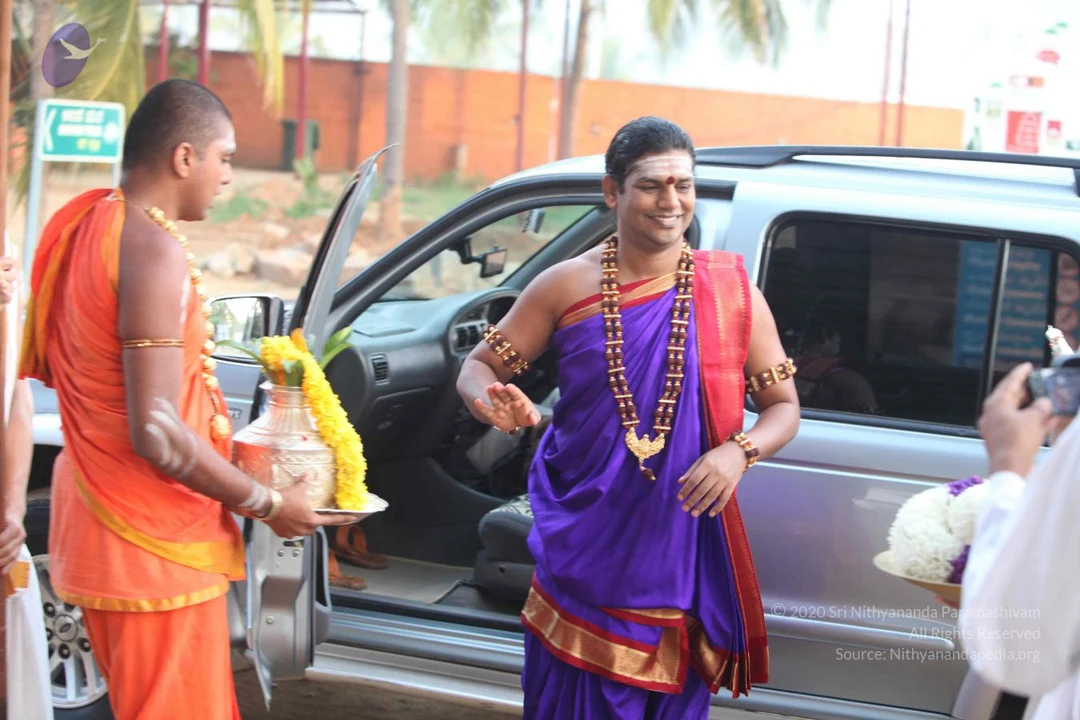
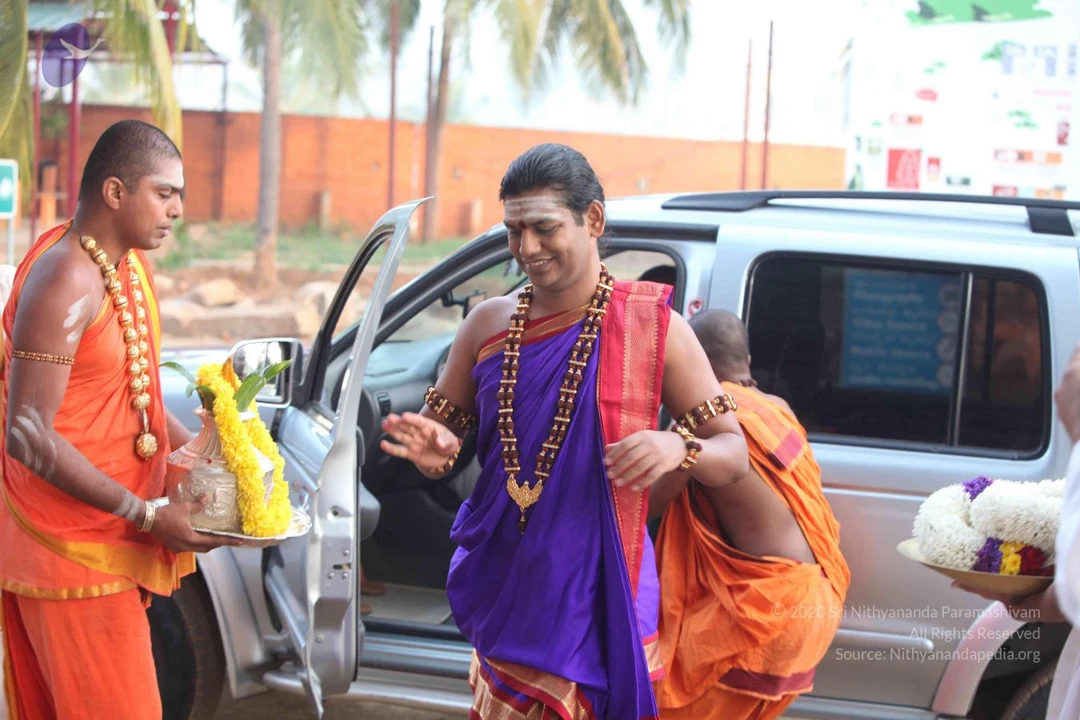
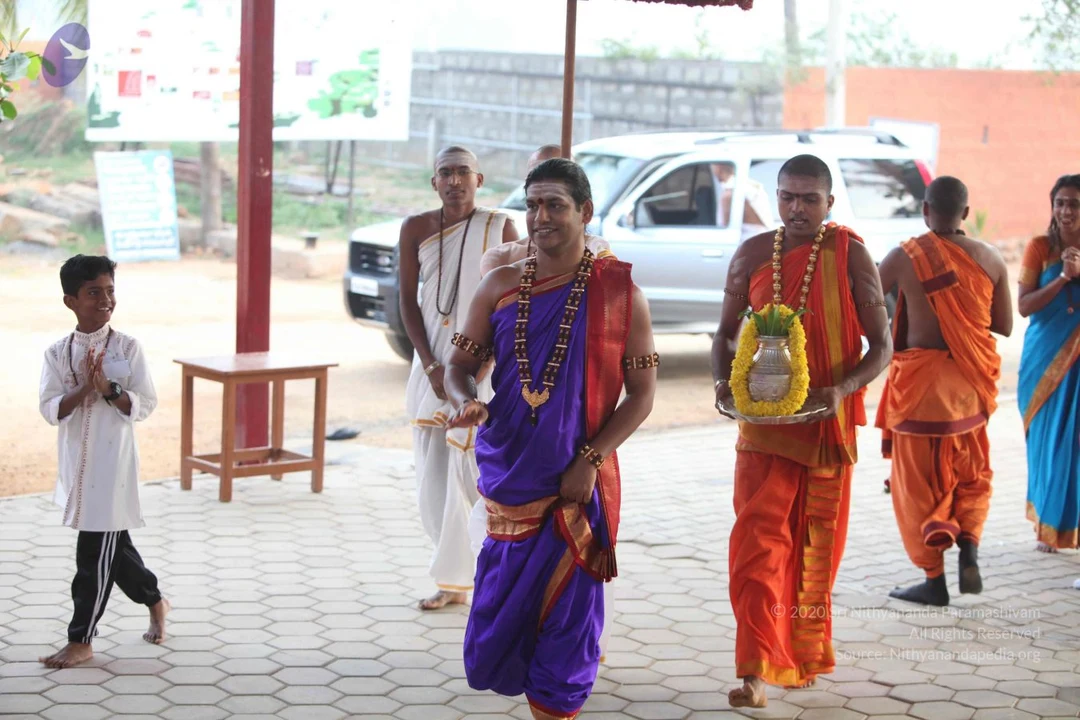
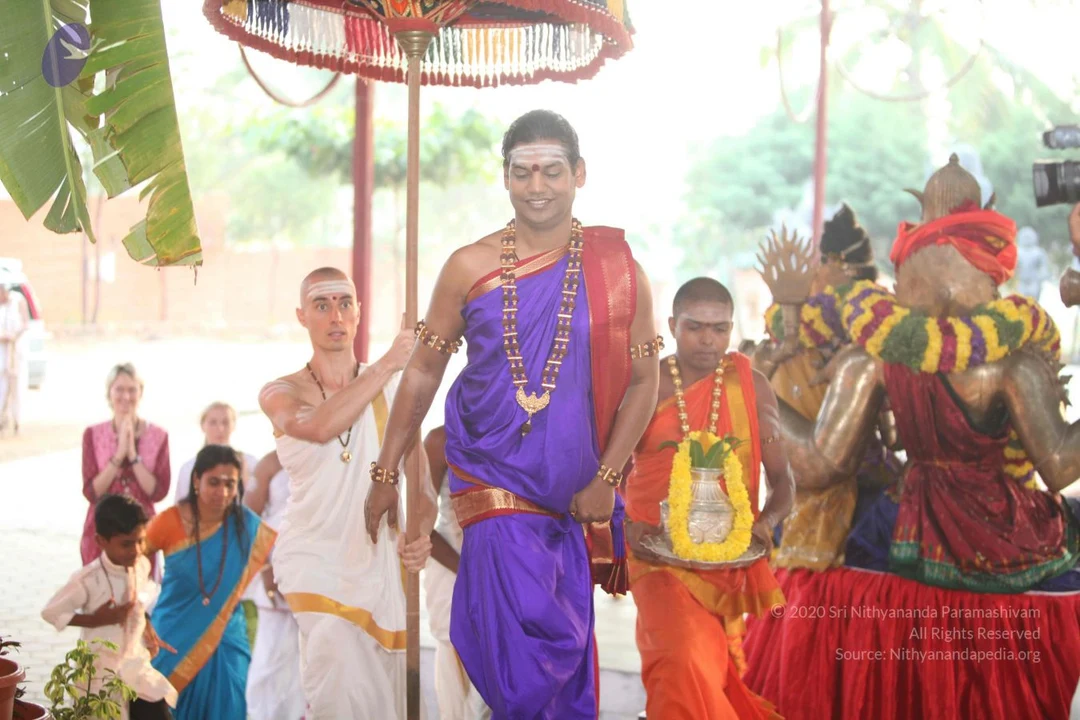
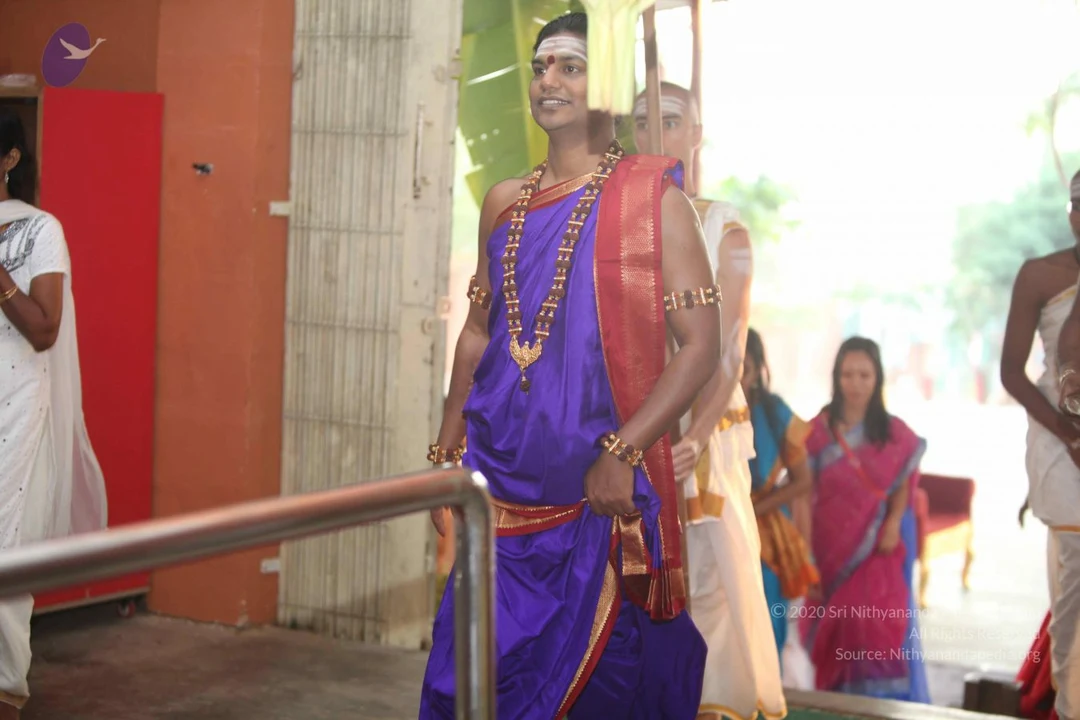
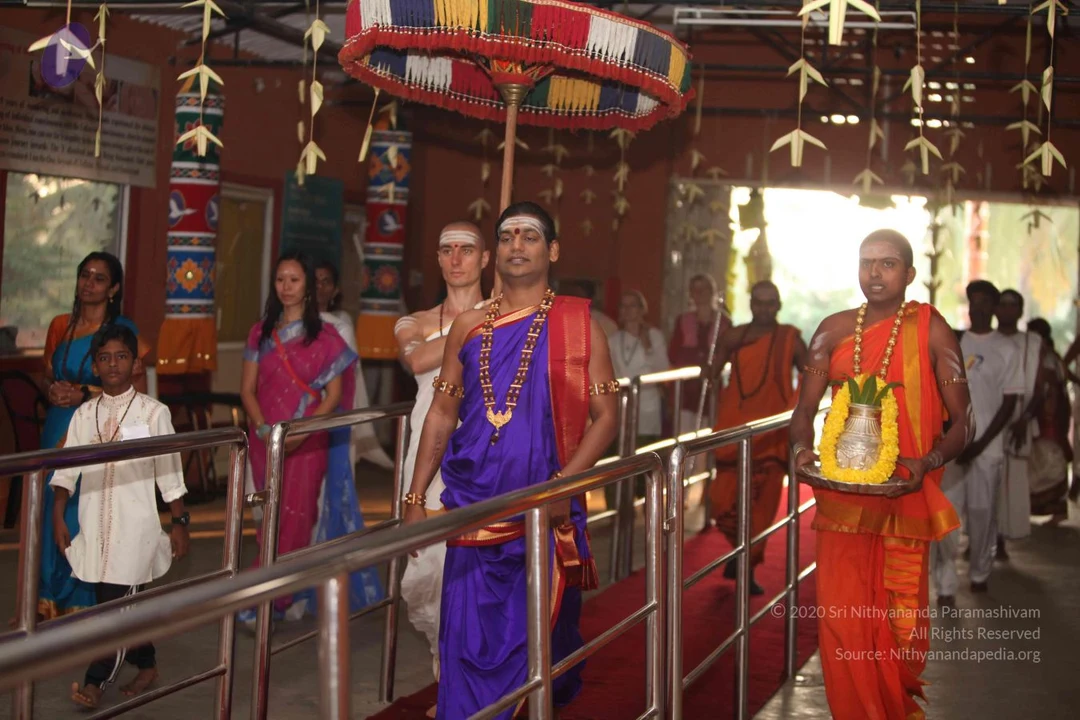
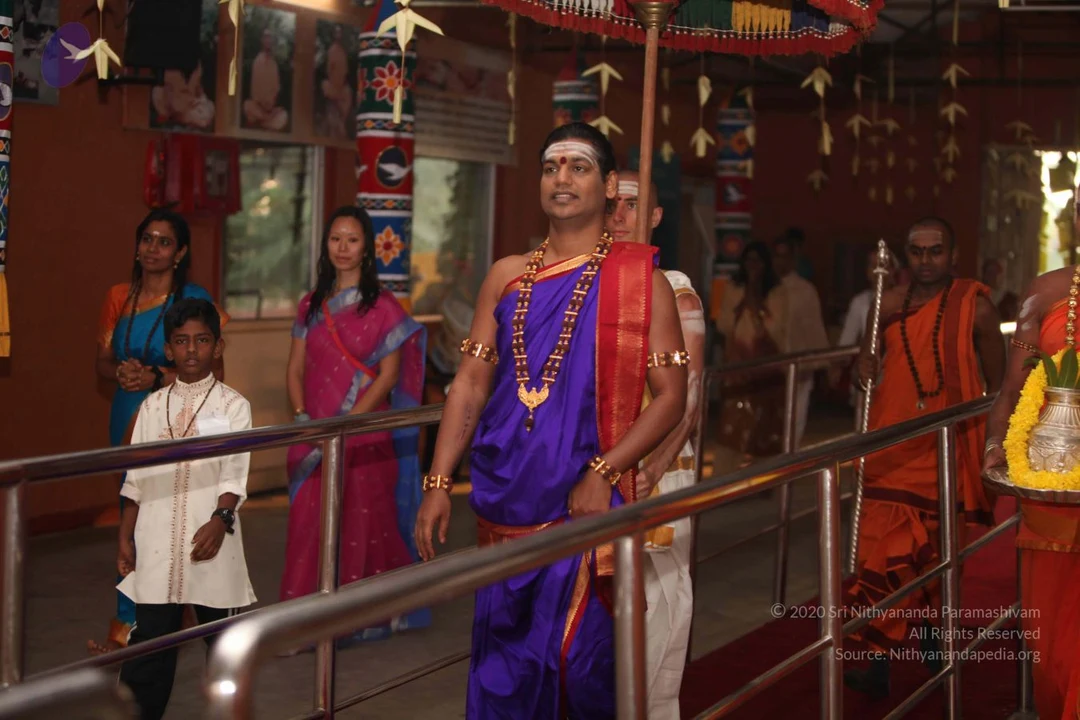
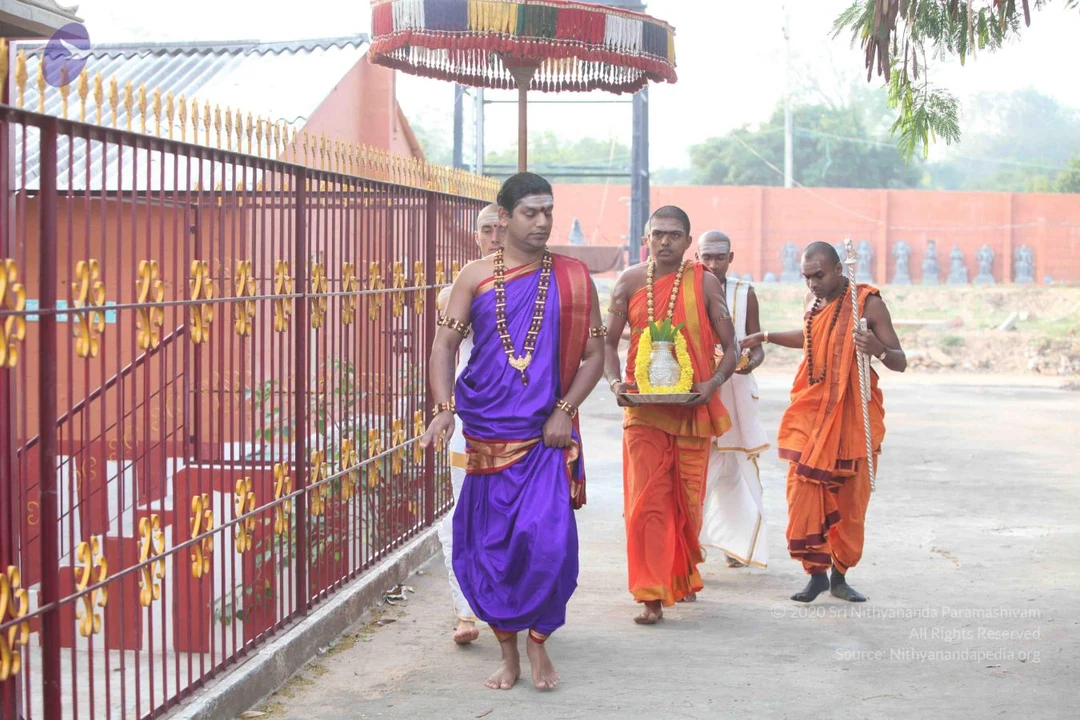
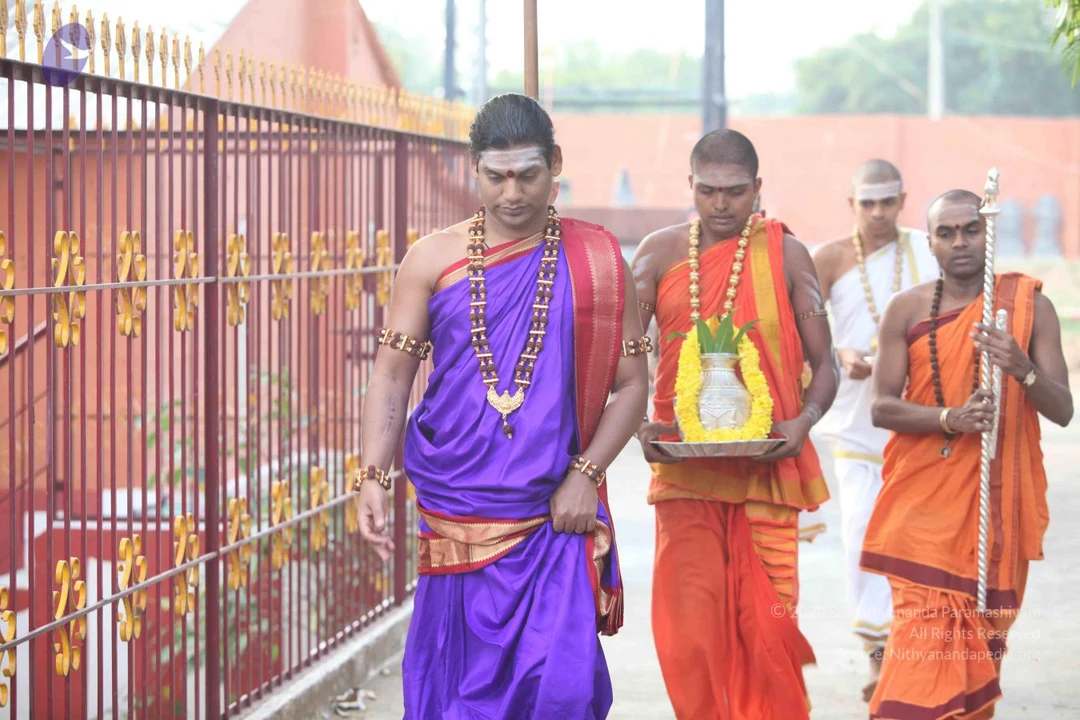
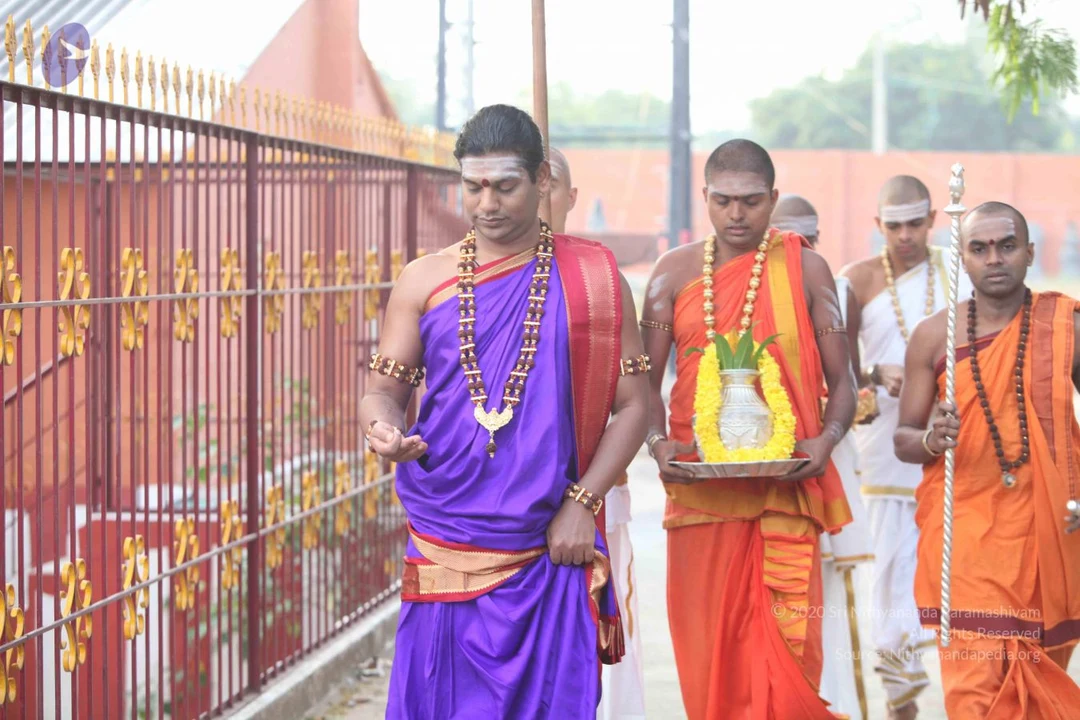
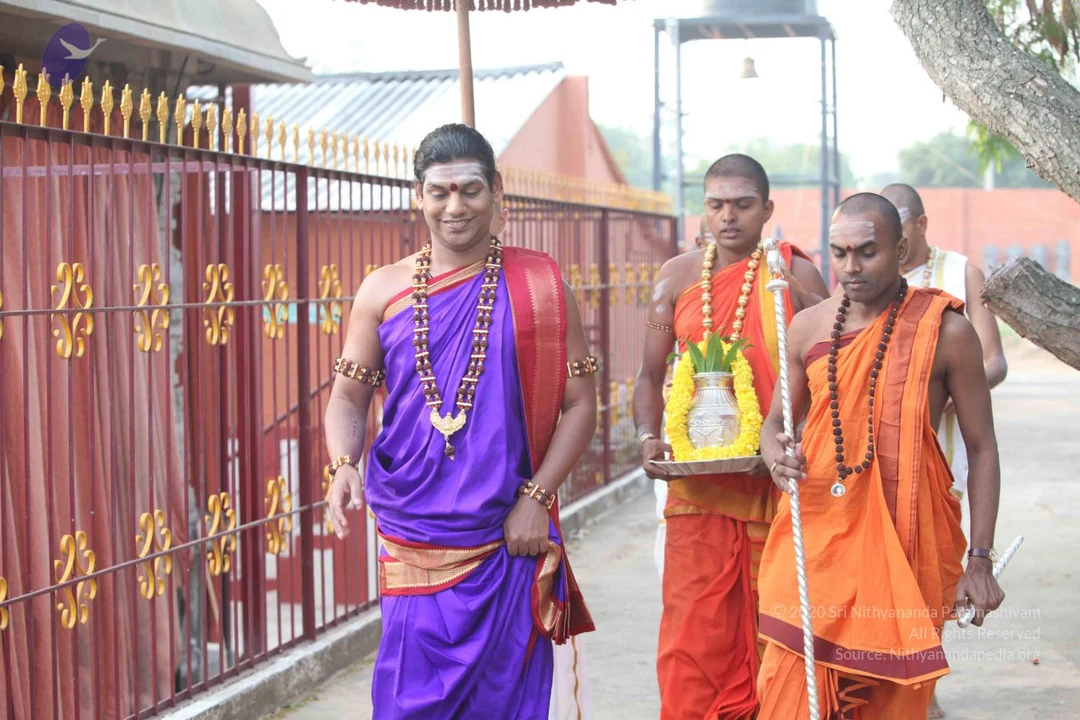
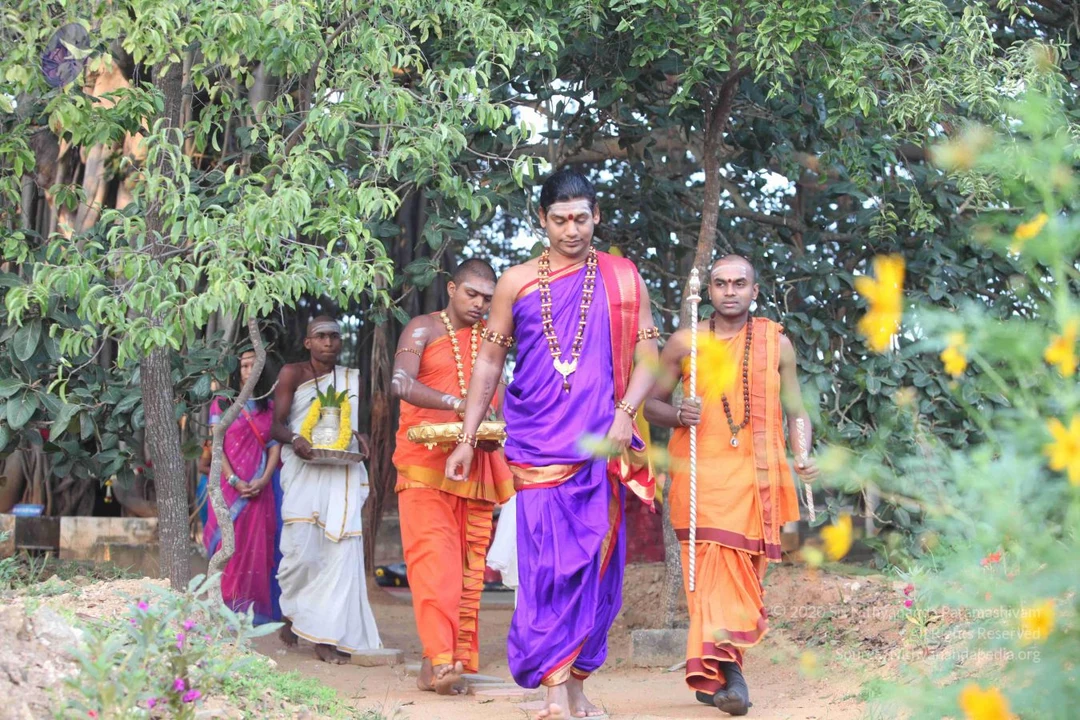
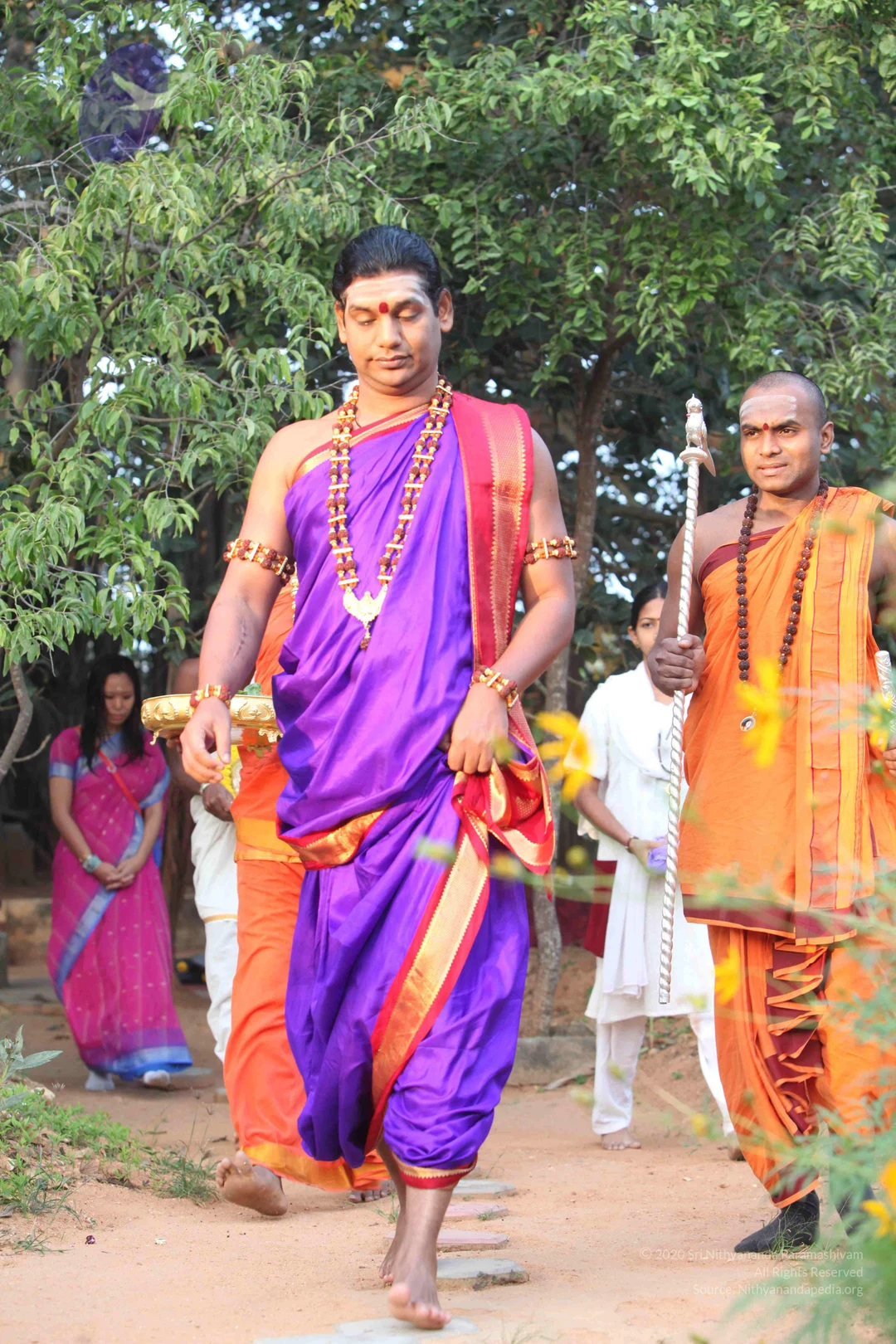
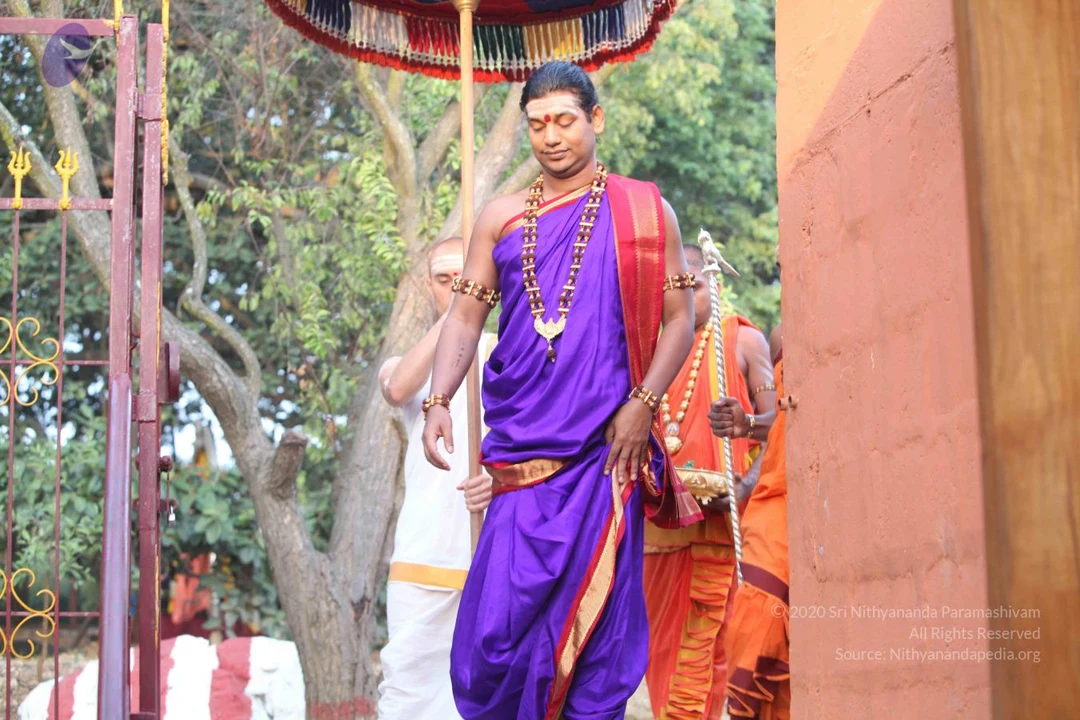
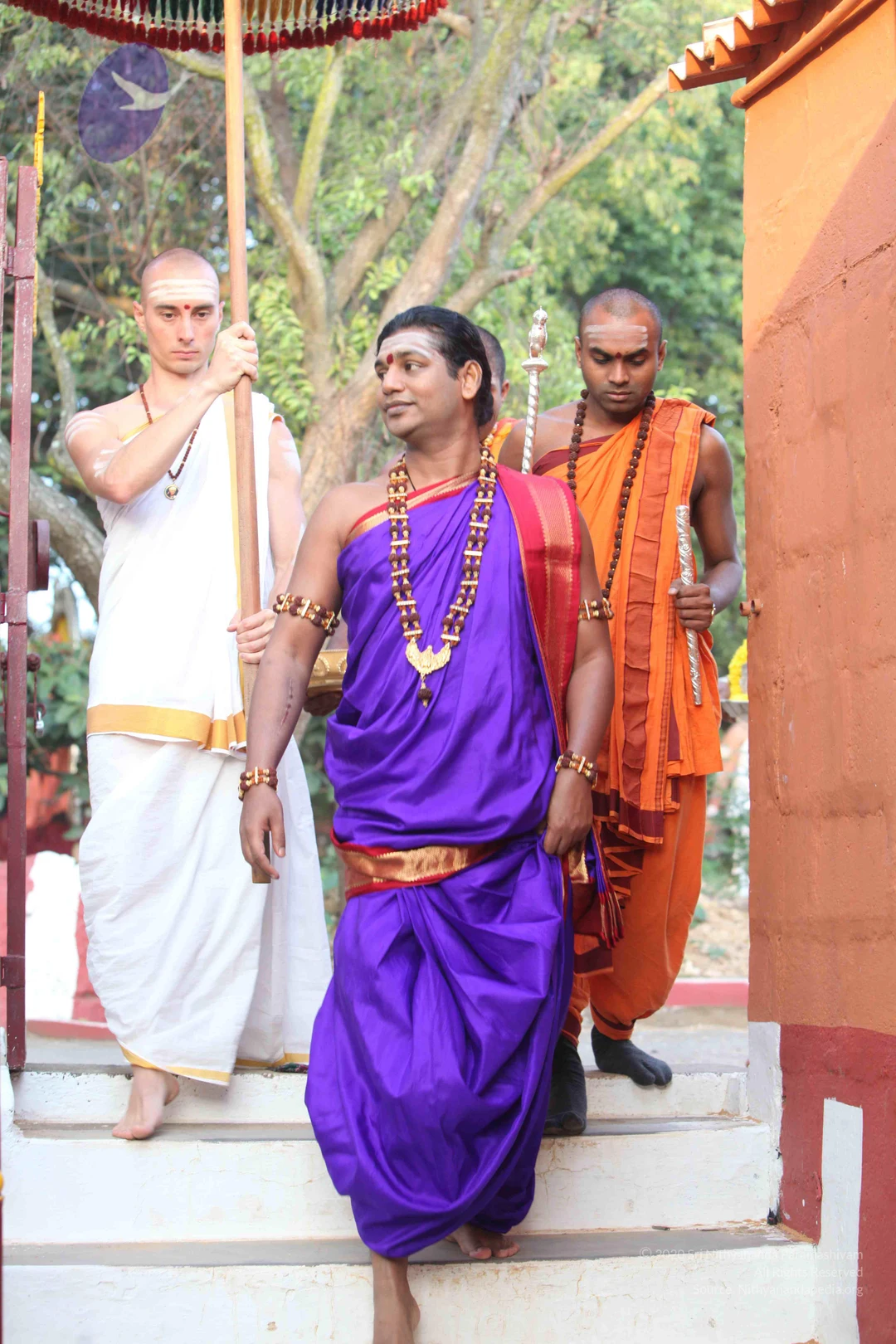
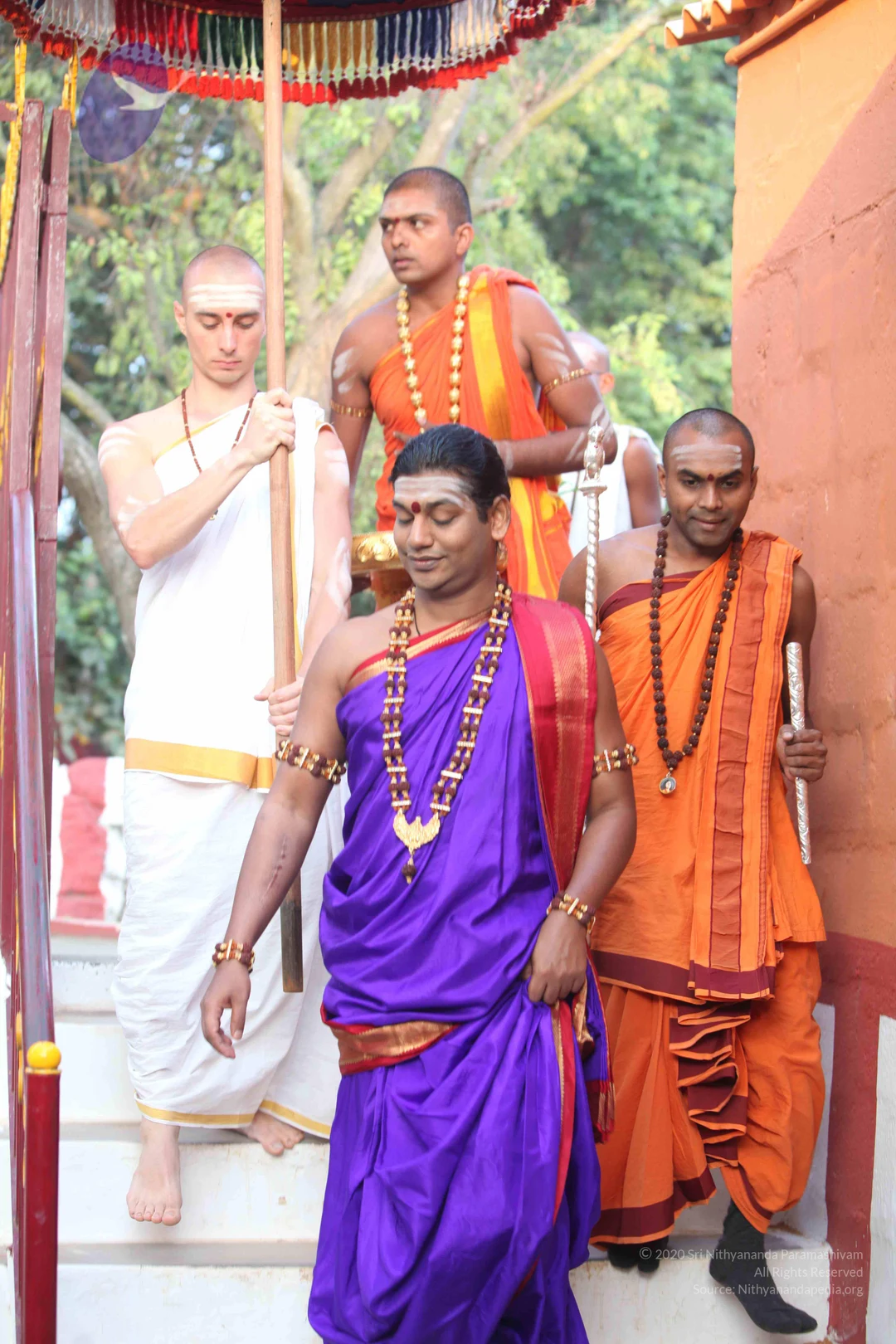
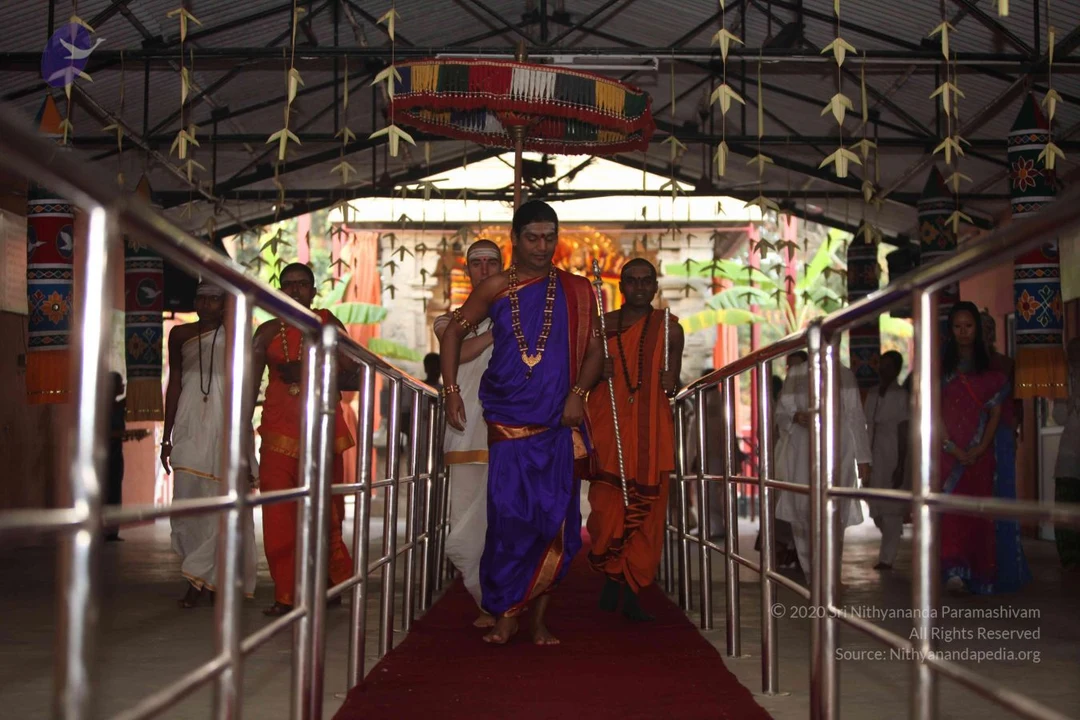
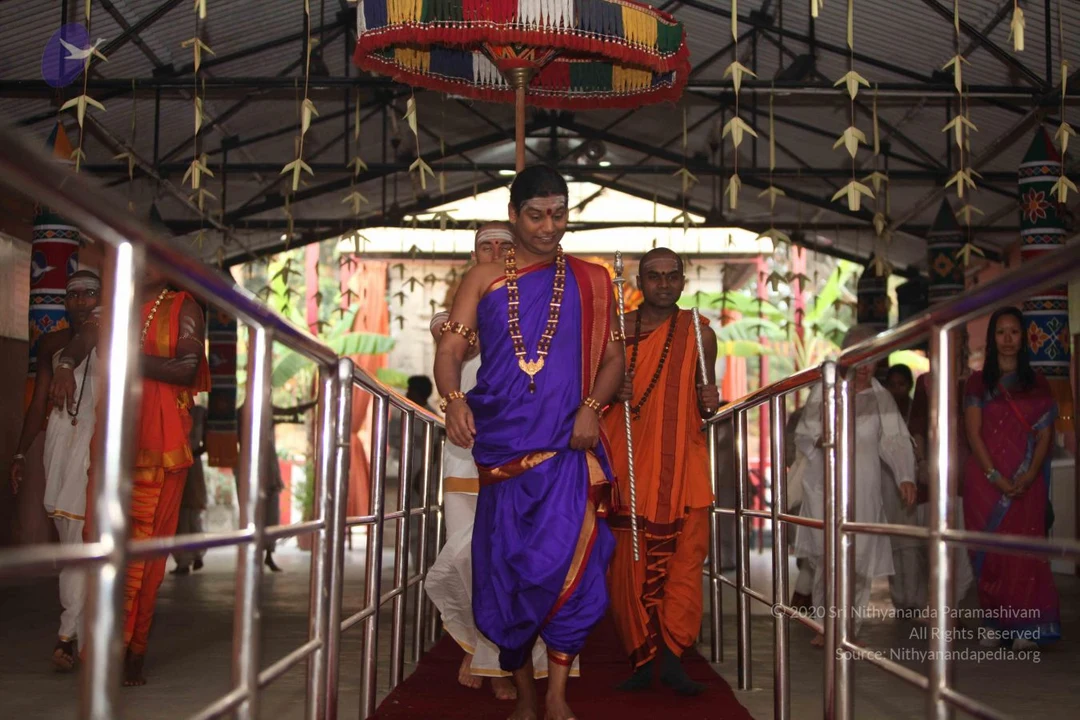
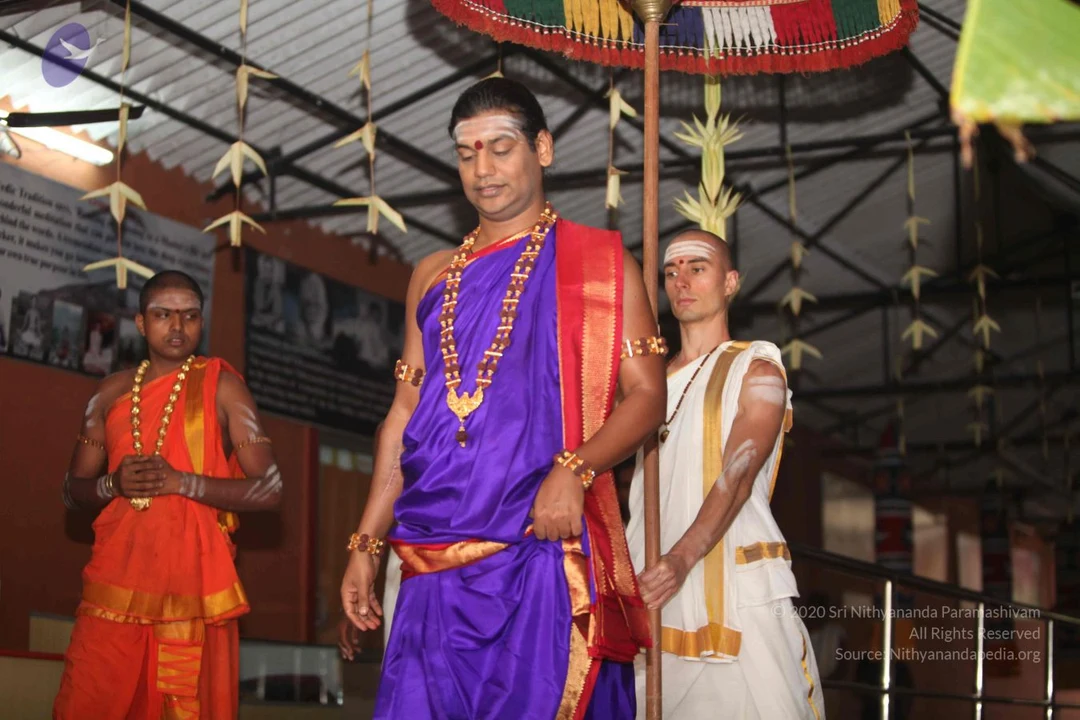
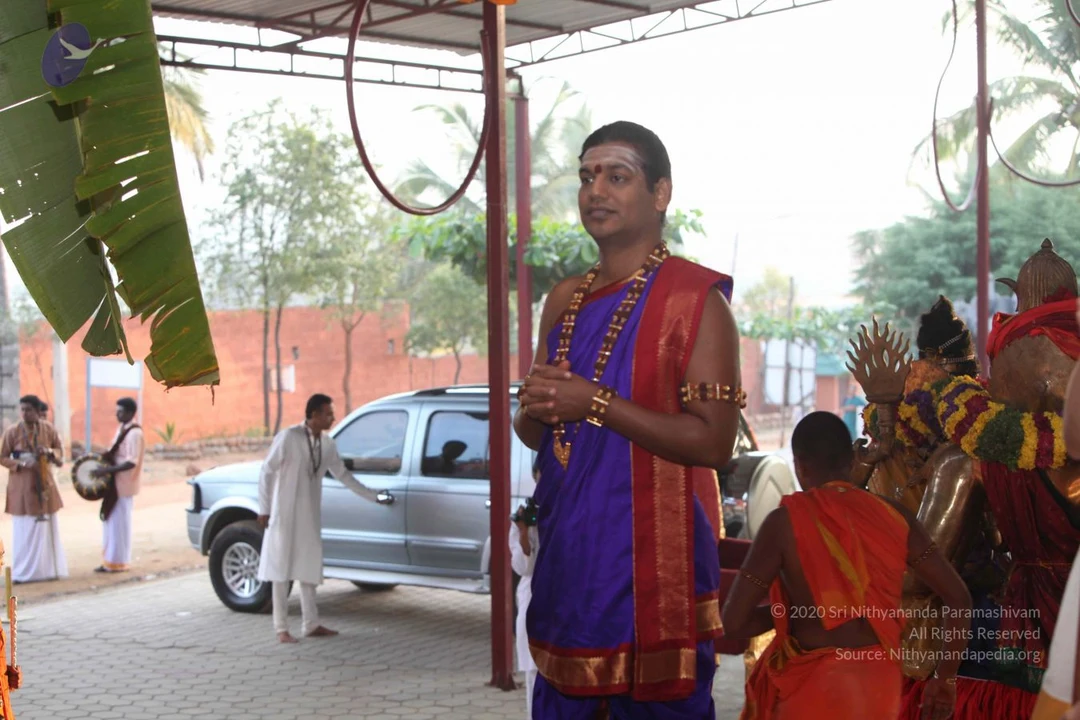
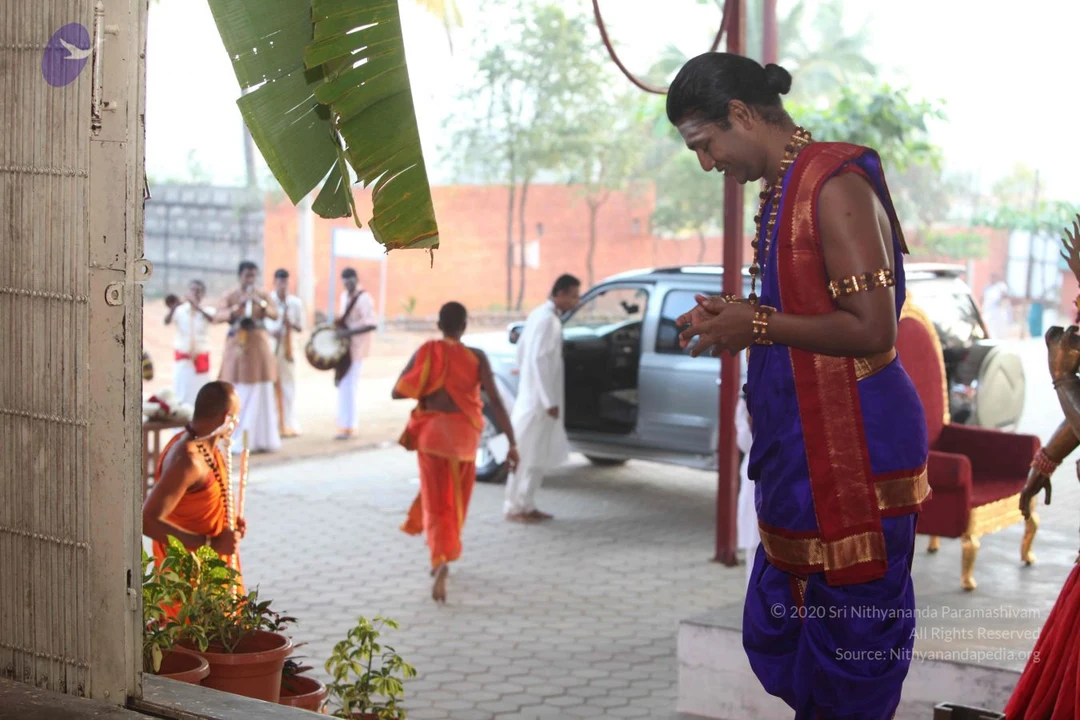
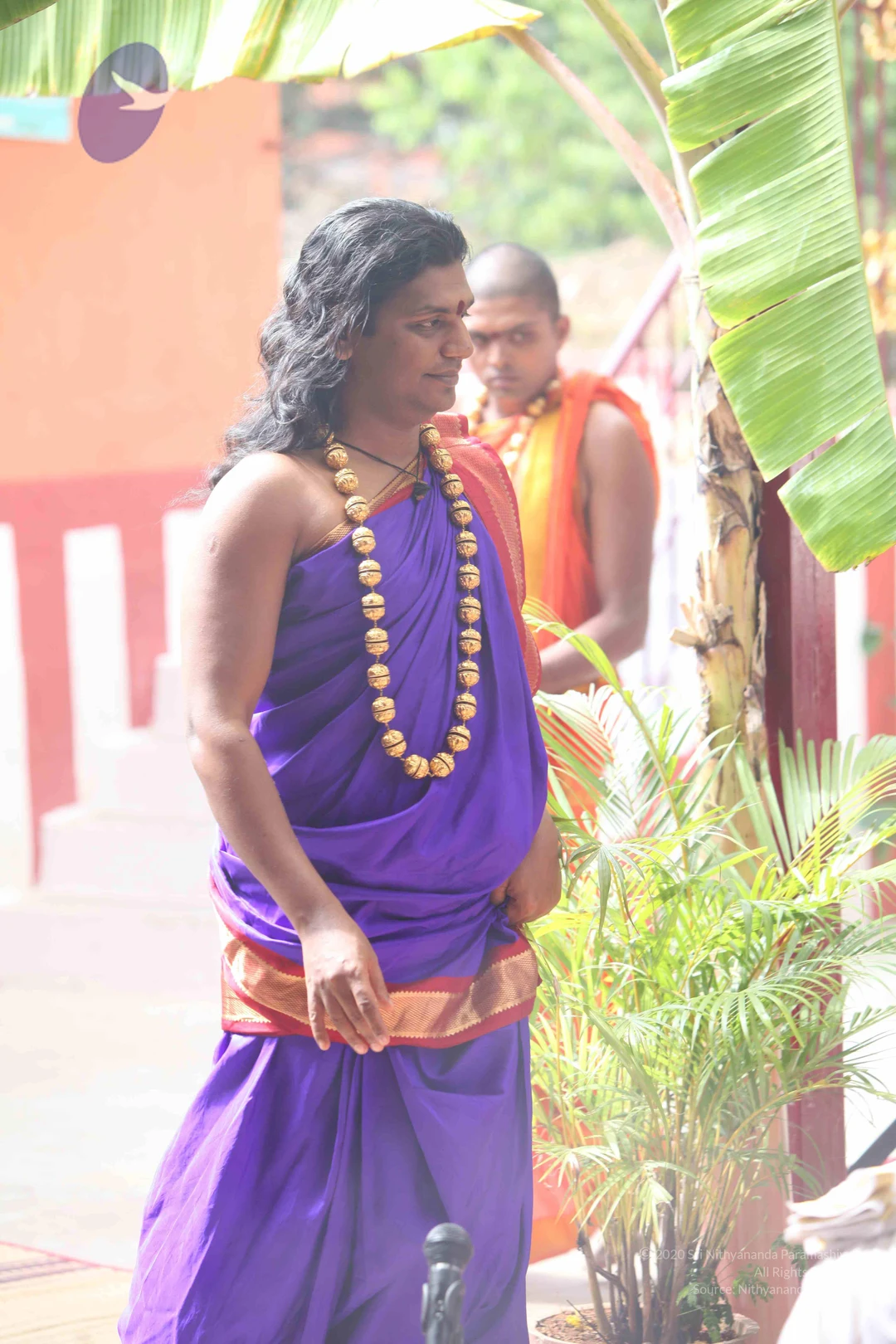
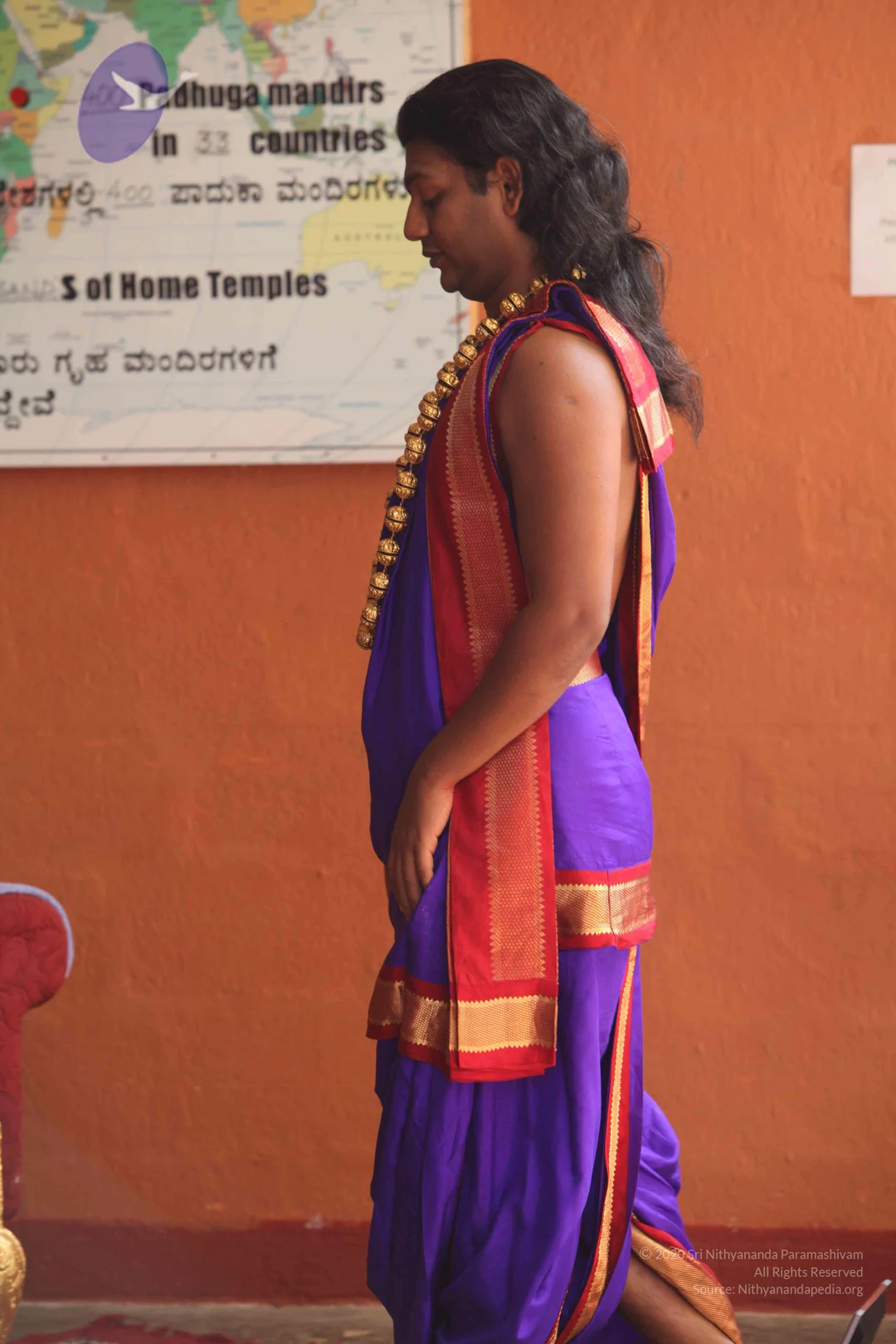
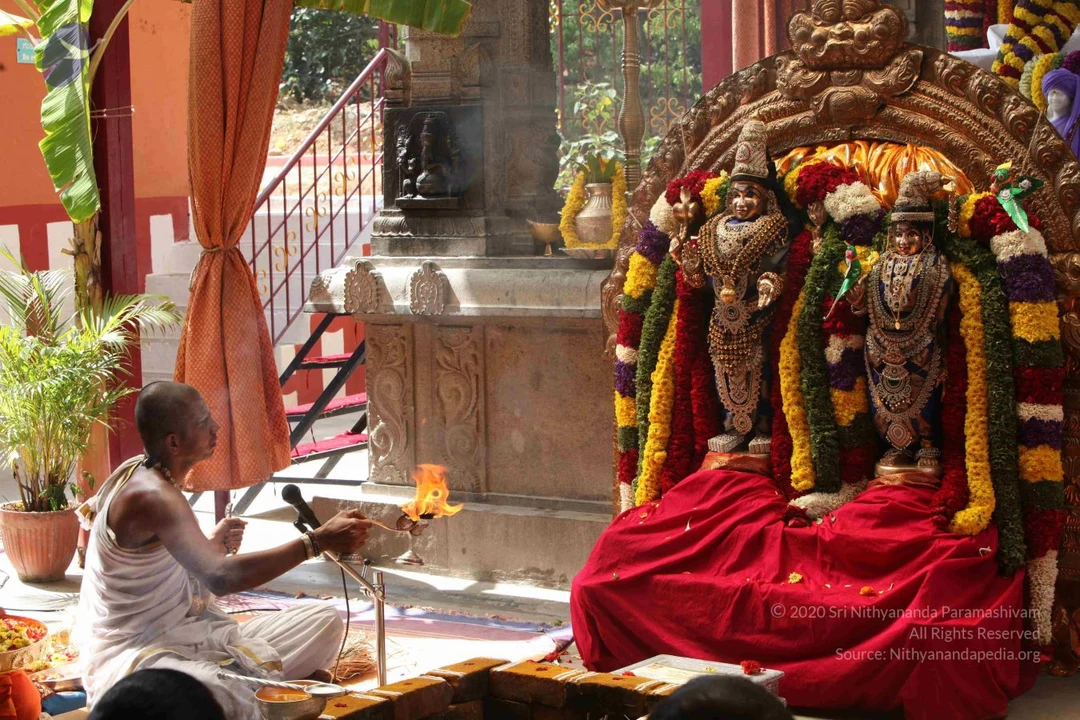
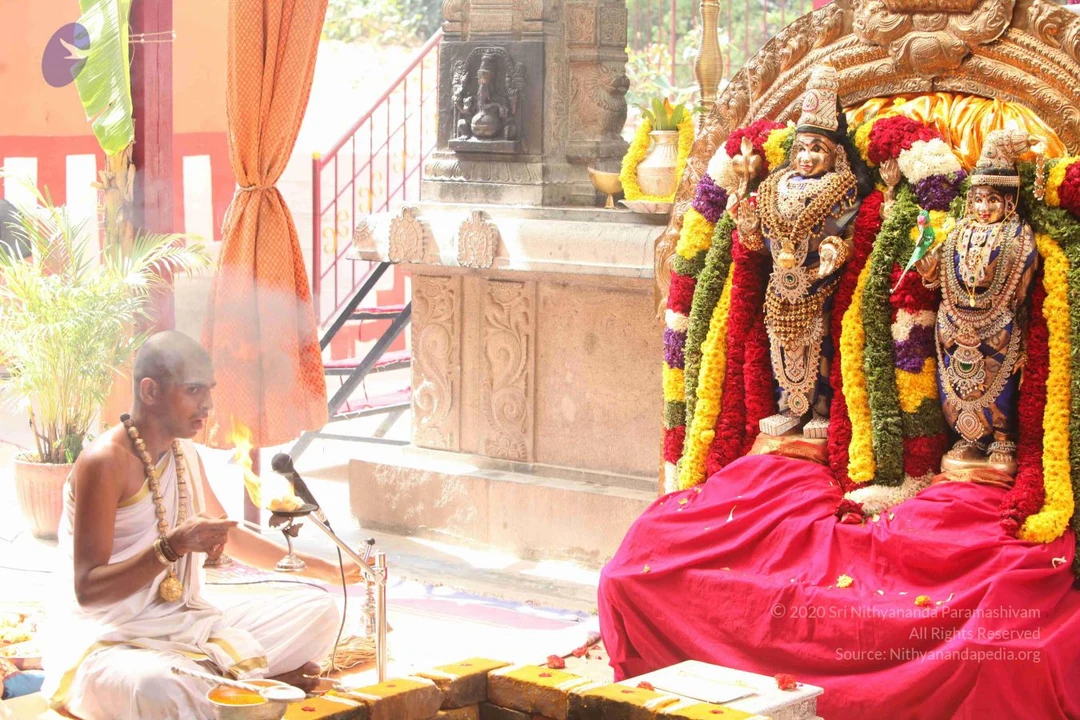
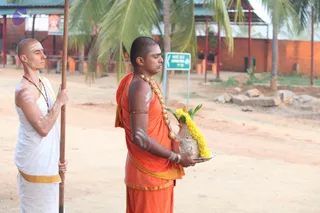
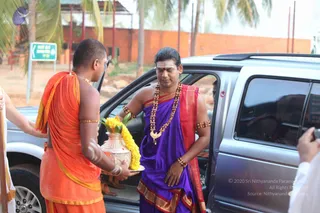
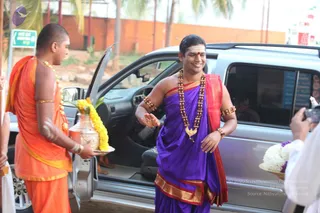
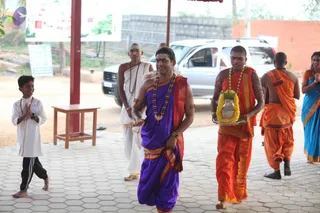
A close photograph of a silver kalasha, a ceremonial pot with embossed decoration and a relief figure, wrapped in a thick garland of yellow marigolds and topped with fresh green mango leaves. It rests on a polished silver plate on a wooden surface, with a blurred background of a red pillar and light walls. No people are visible. Shown as a ritual vessel for pada puja offerings.A close view of a polished silver kalasha, a ceremonial pot with embossed bands and figures, set on a silver tray. Yellow marigold garlands wrap around its body, and mango leaves with a corn-like cob rise from the mouth. No people are visible; the background is a blurred stone and wooden setting.Outdoor scene on a dusty ground beside palm trees and a red-brick wall. On the left, a shaved-headed man in white dhoti and upper cloth, with white markings on his arms and chest, holds a tall wooden staff upright and wears a rudraksha mala. Beside him, a man in saffron-orange robe with a gold-coloured ceremonial necklace and gold armband carries a silver plate holding a silver vessel garnished with yellow flowers and green leaves, while bearing white markings on his arms. The setting appears to be a temple compound with a green directional sign and red pillars.A photograph of a man in a purple silk dhoti with a red and gold border and a matching red-gold shawl, wearing a long rudraksha mala and a gold pendant, standing beside an open silver SUV door. A priest in an orange saffron cloth holds a silver kalasha with yellow marigold garlands and a tray, performing a welcome ritual. Palm trees and a brick wall stand behind them. The man wears a red forehead mark and gold armlets. Another person in white stands at the left edge, and a photographer's arm appears at the right edge. Two people are visible.Outdoor photograph beside a silver SUV with its door open, at what looks like an ashram entrance with a brick wall and palm trees behind. A man in an orange saffron dhoti and shawl, with a gold necklace, carries a silver vessel with yellow flowers on a tray, while a smiling man in a purple silk dhoti with a red-and-gold border and a red shawl, wearing a rudraksha mala and gold ornaments on his arms, steps forward with his hand extended. A third person in white holds a tray of white flowers at the right edge, and a photographer is partly visible. The scene suggests a pada puja welcome.Outdoor covered walkway with grey tiled floor during a ritual procession. A man in the centre wears a violet-purple dhoti with a red-bordered shawl, multiple rudraksha malas, a gold pendant and gold armbands, and walks barefoot with a serious expression. To his right, a man in an orange dhoti and shawl carries a silver tray holding a kalasha with yellow flower garlands. Behind them a bare-chested man in orange and another in white stand near a white SUV. A young boy in white kurta with hands in anjali stands at left, and a woman in a blue sari with red border stands at right. A red pillar and an information board with a map are visible behind. This appears to be a padapuja ceremony.

Pada-pooja

41 photosSource gallery
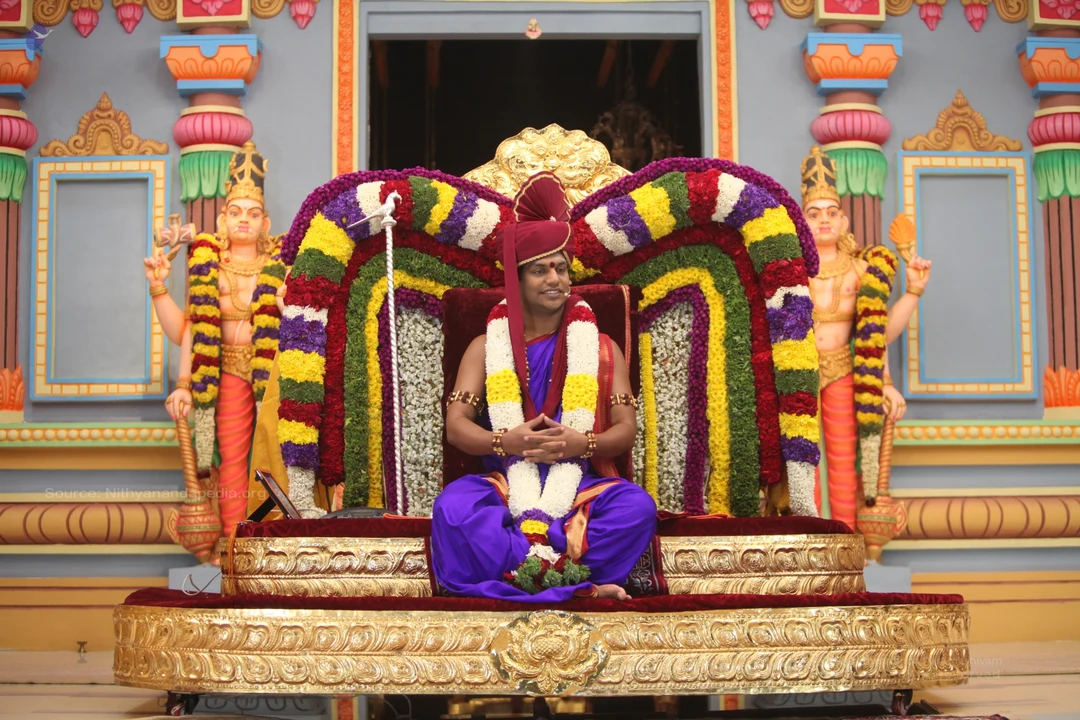
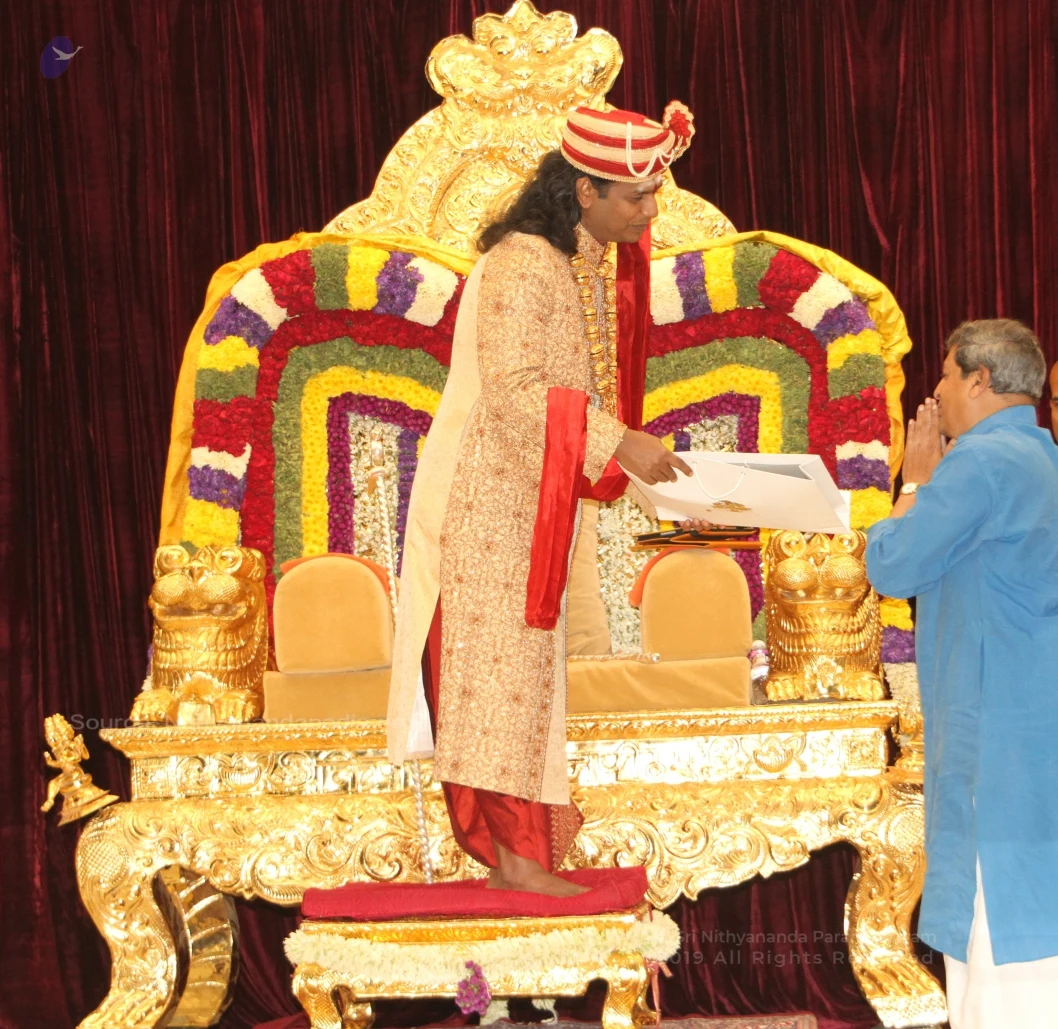
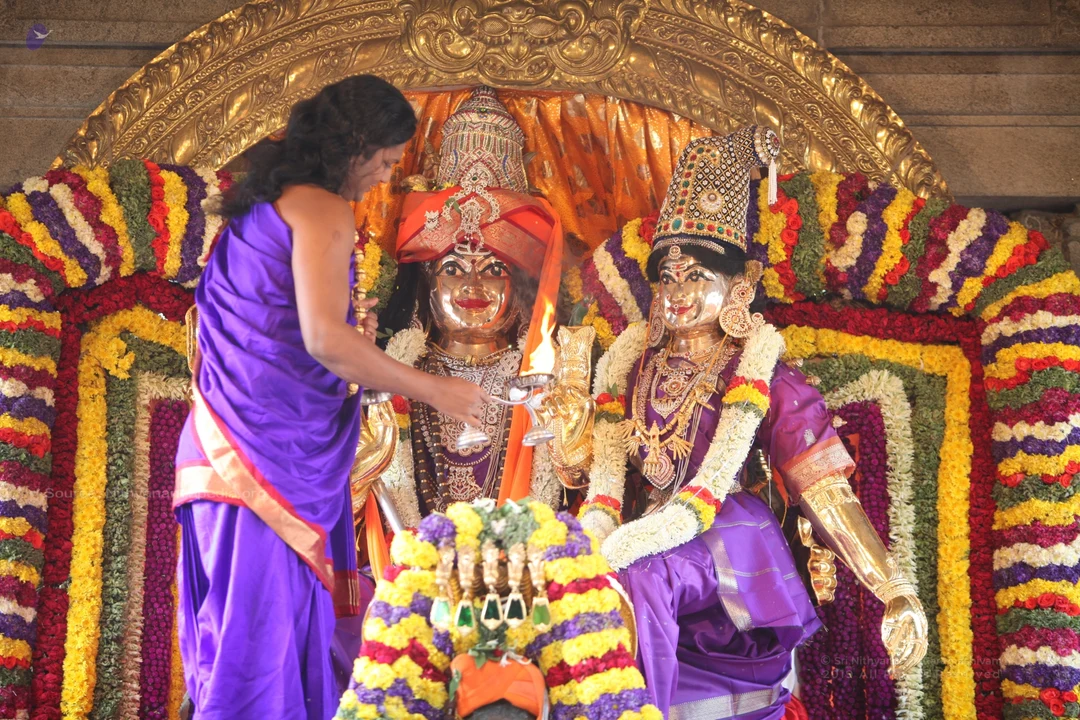
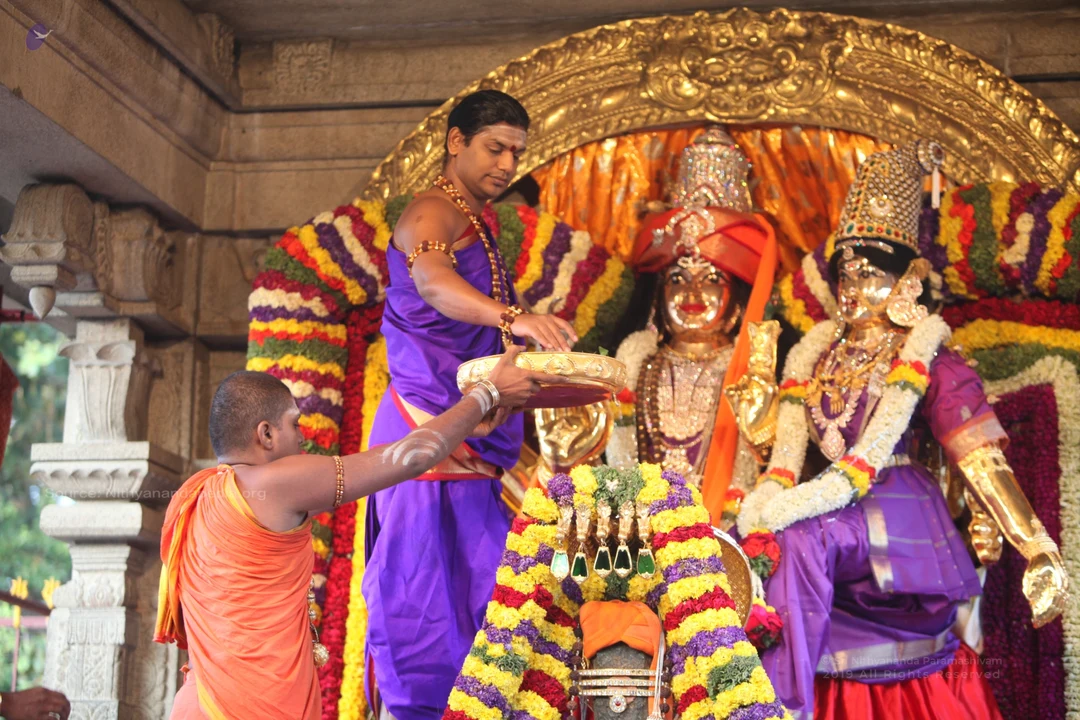
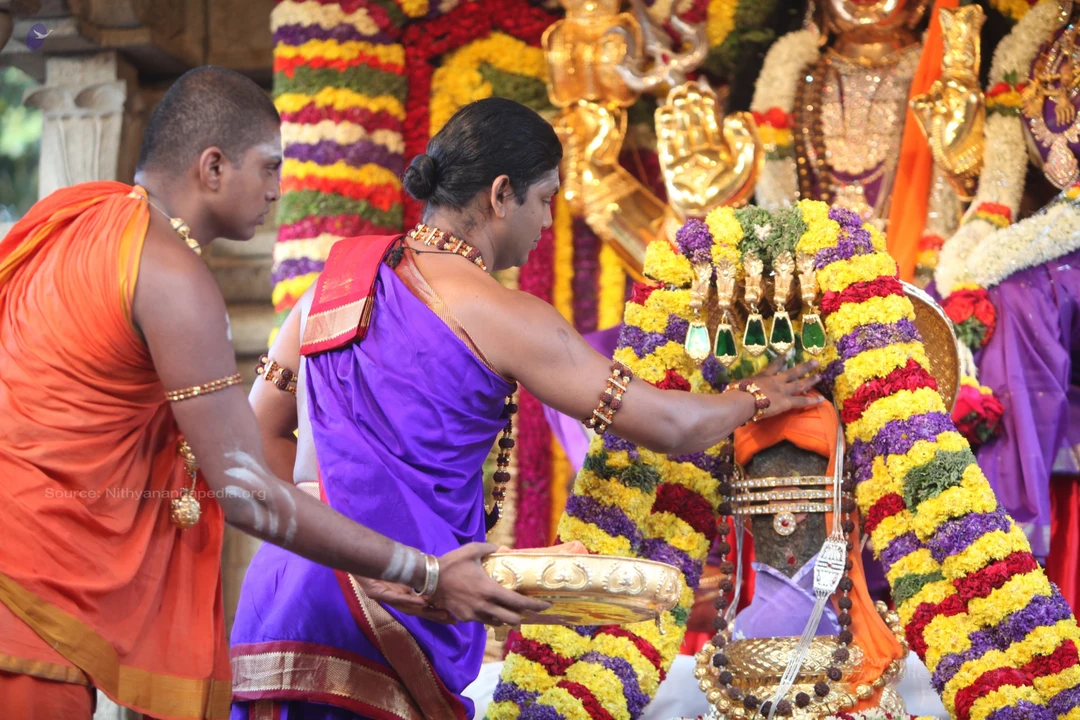
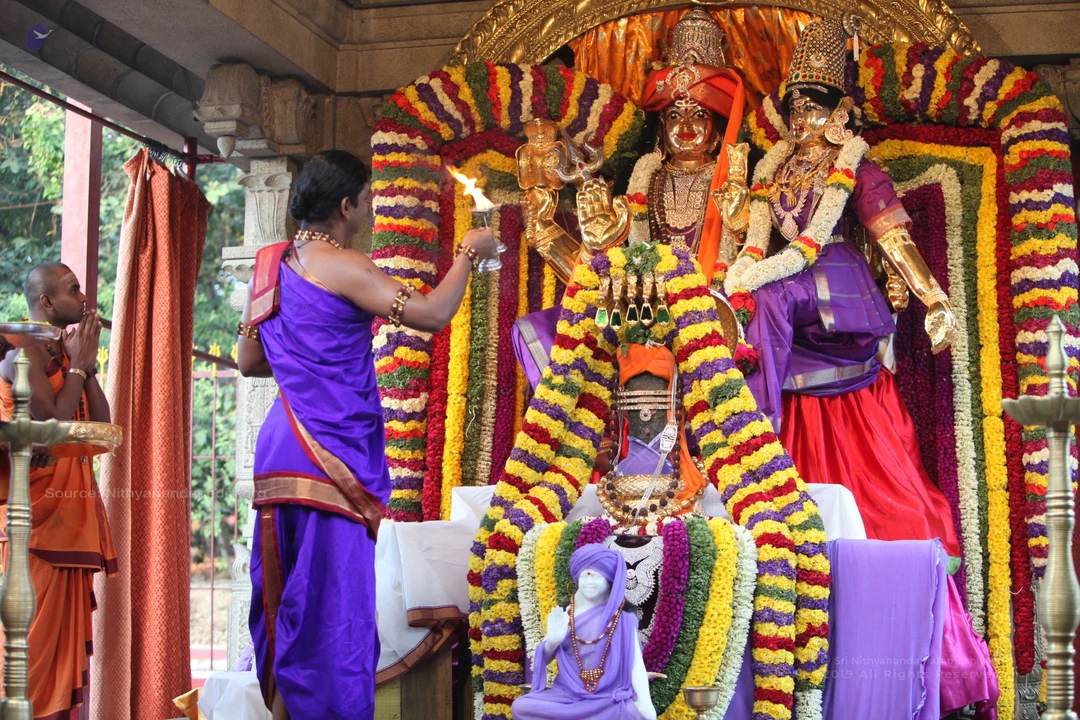
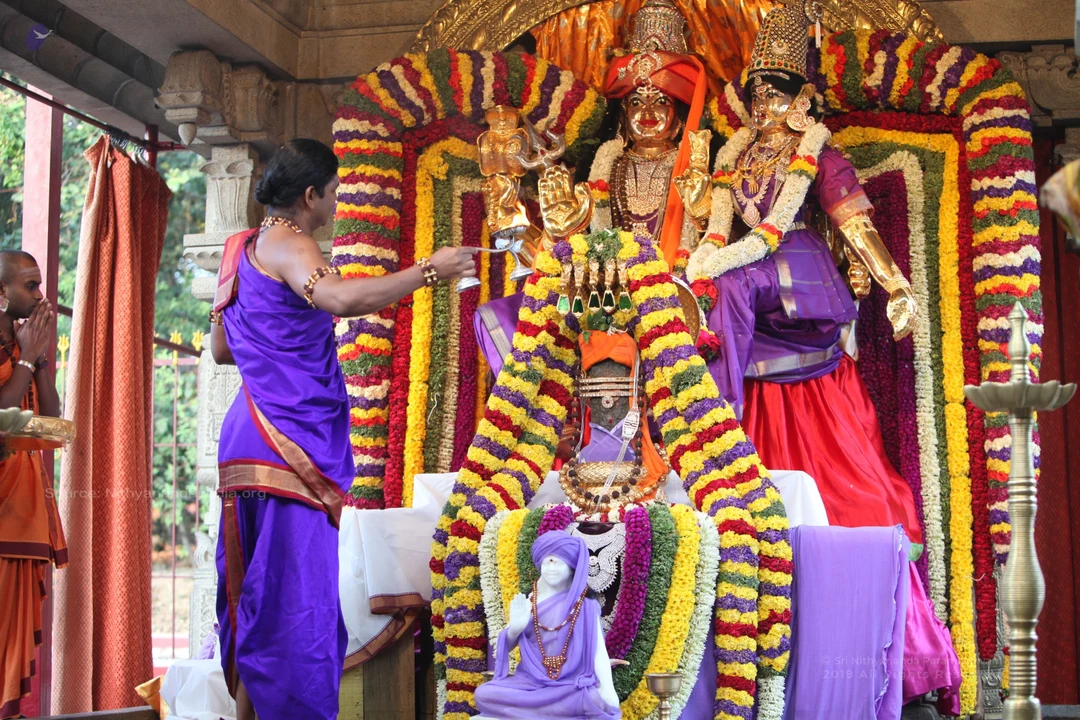
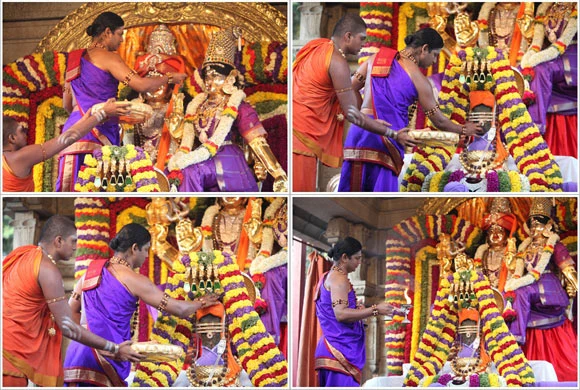
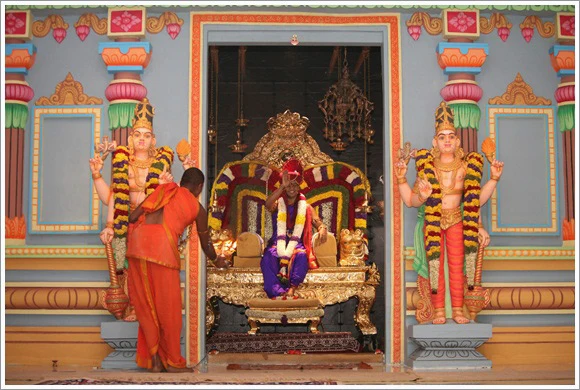
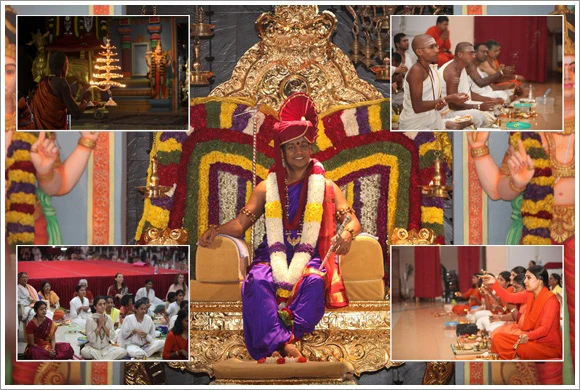
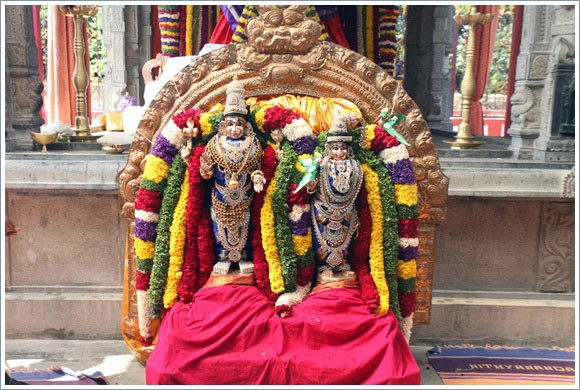
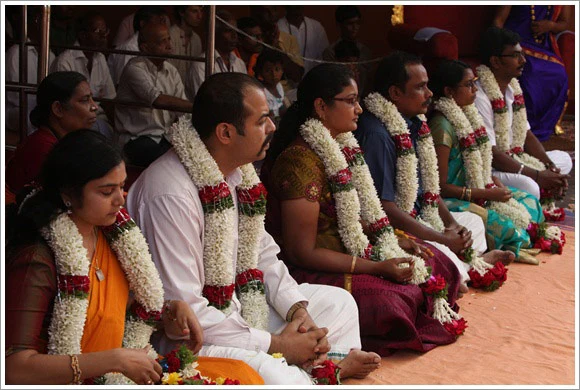
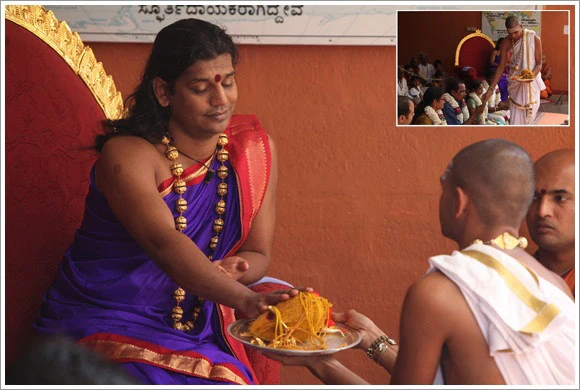
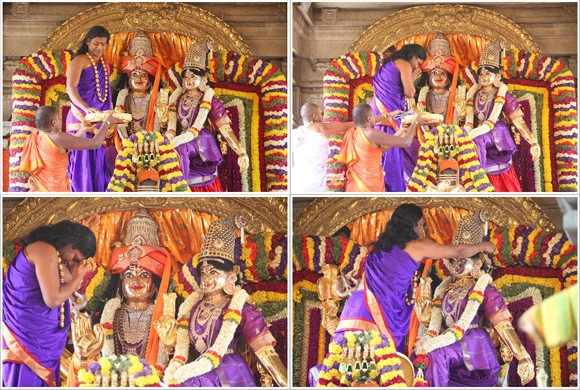
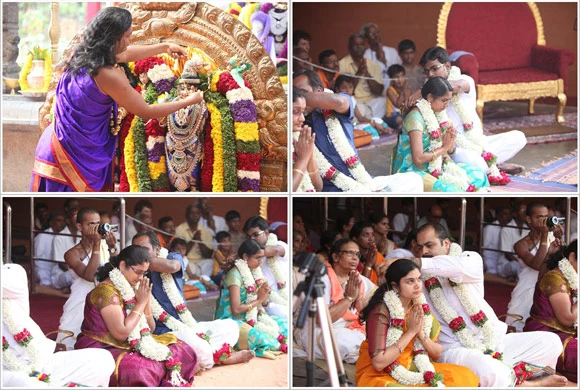
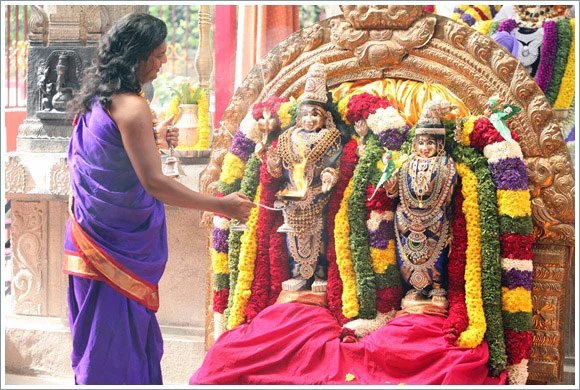
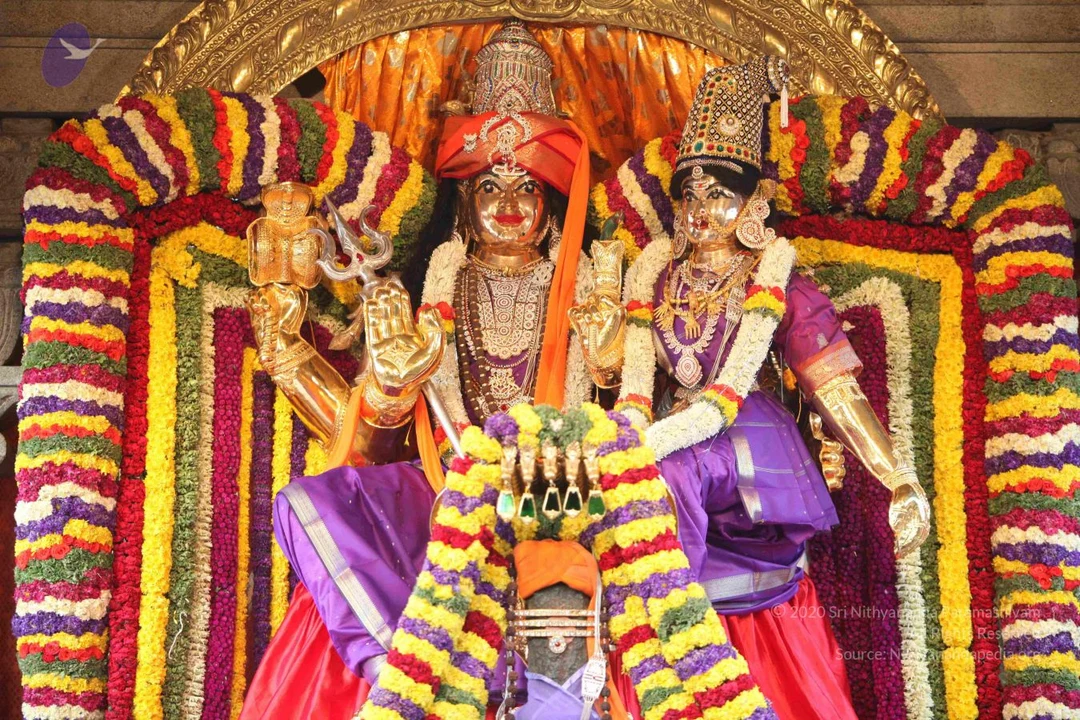
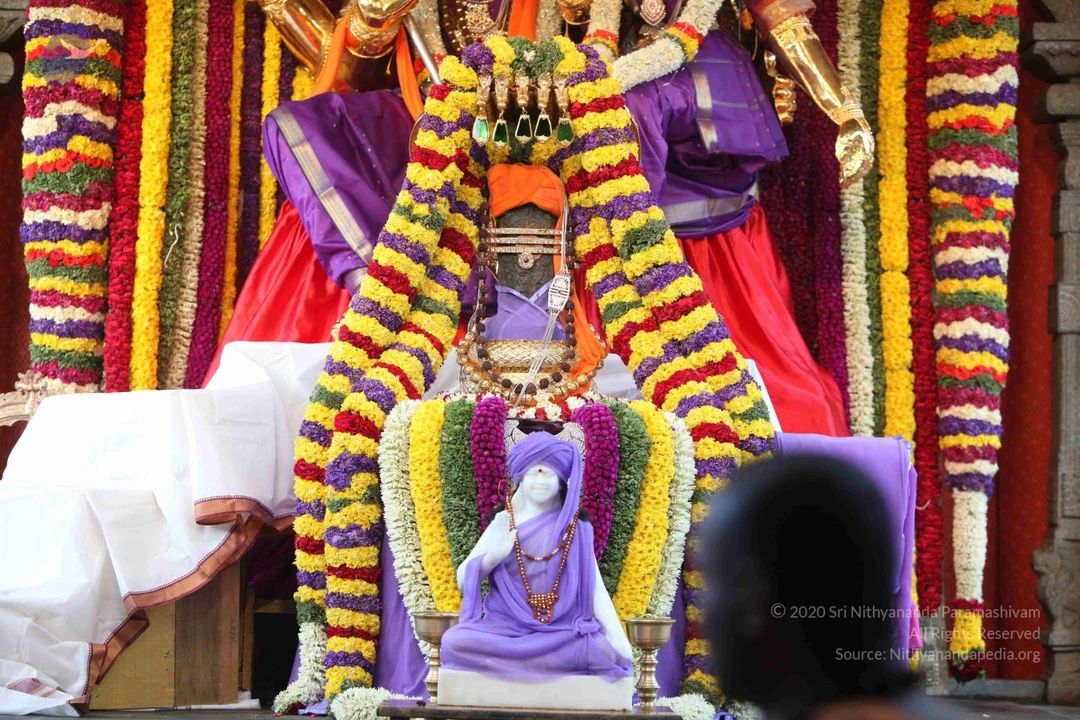
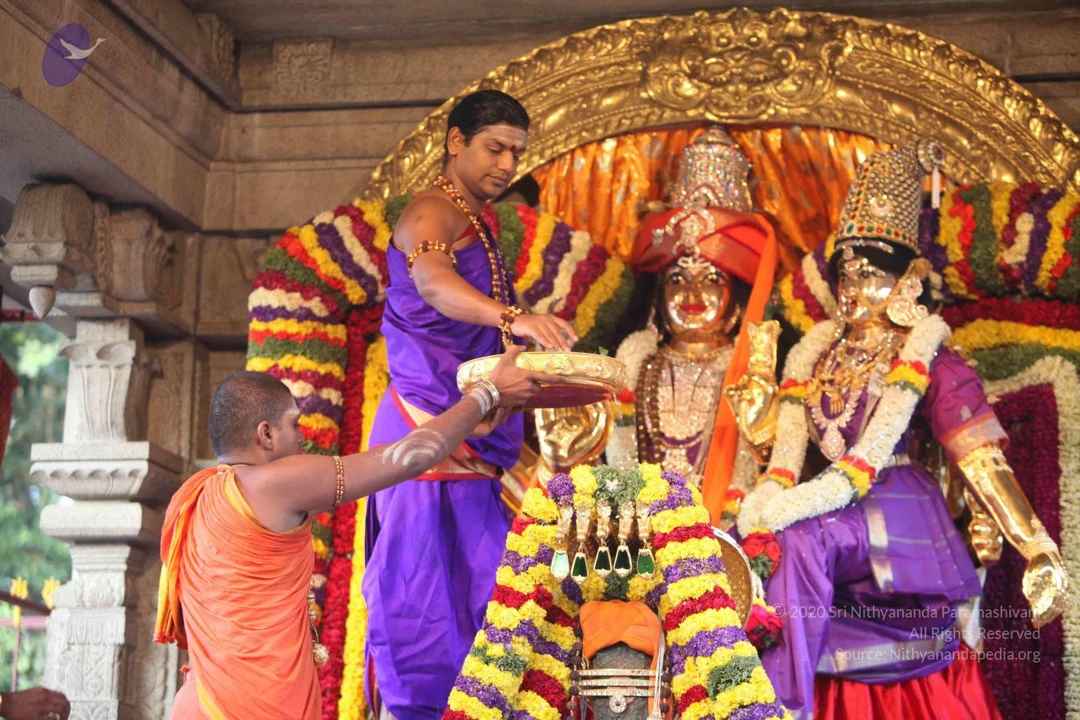
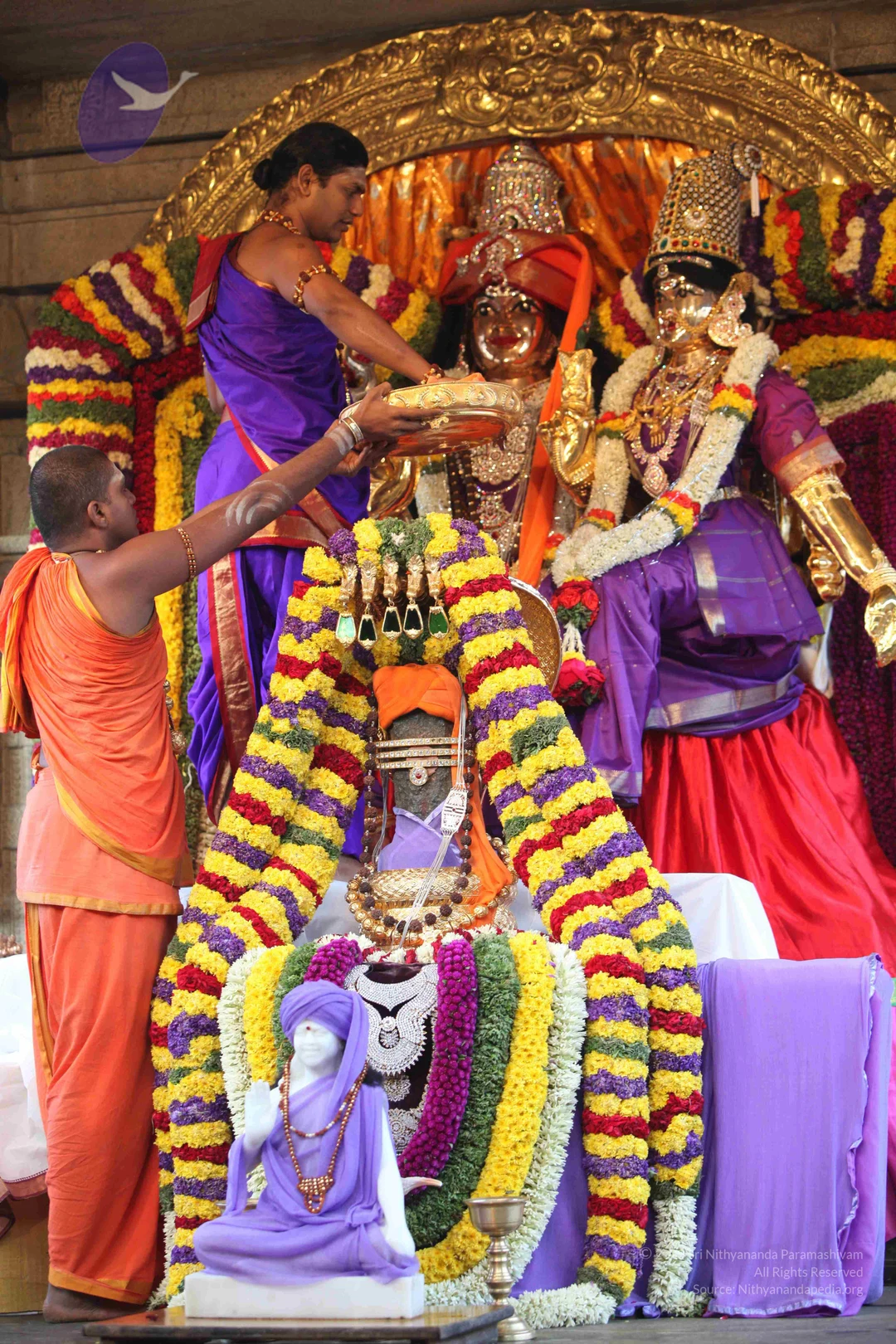
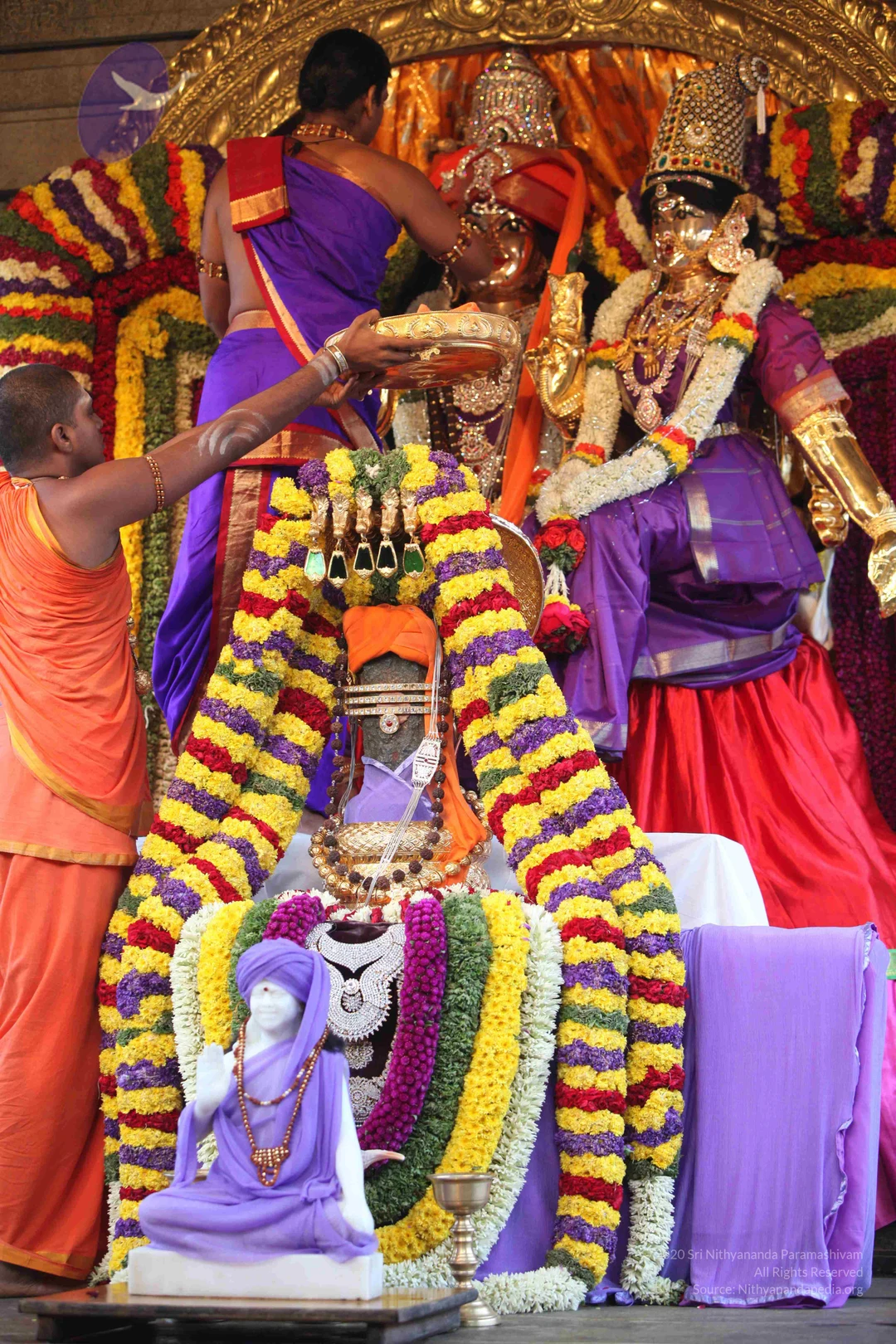
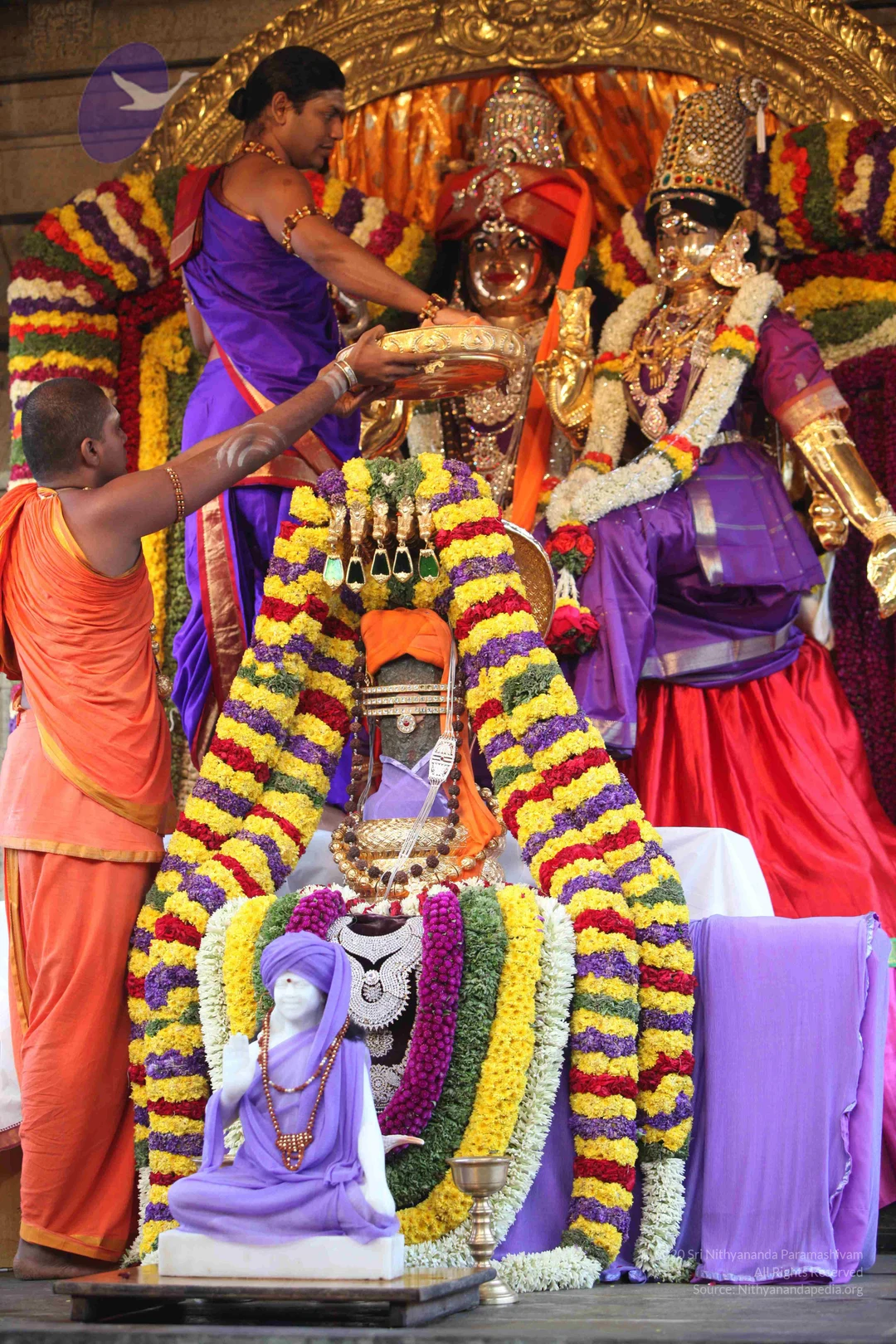
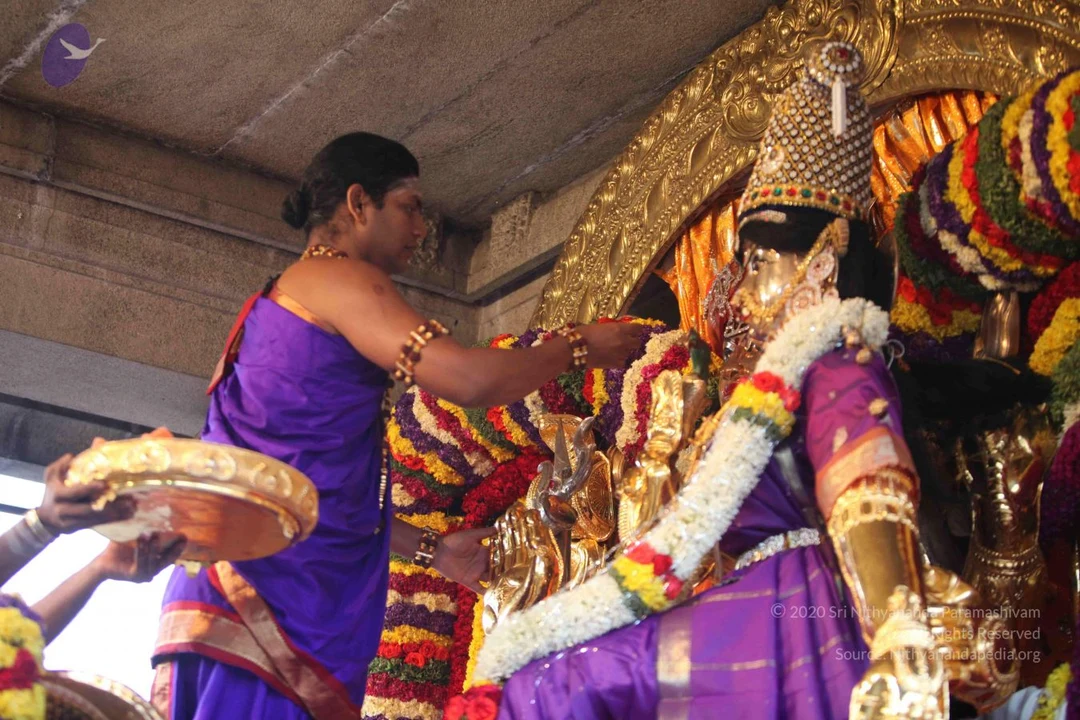
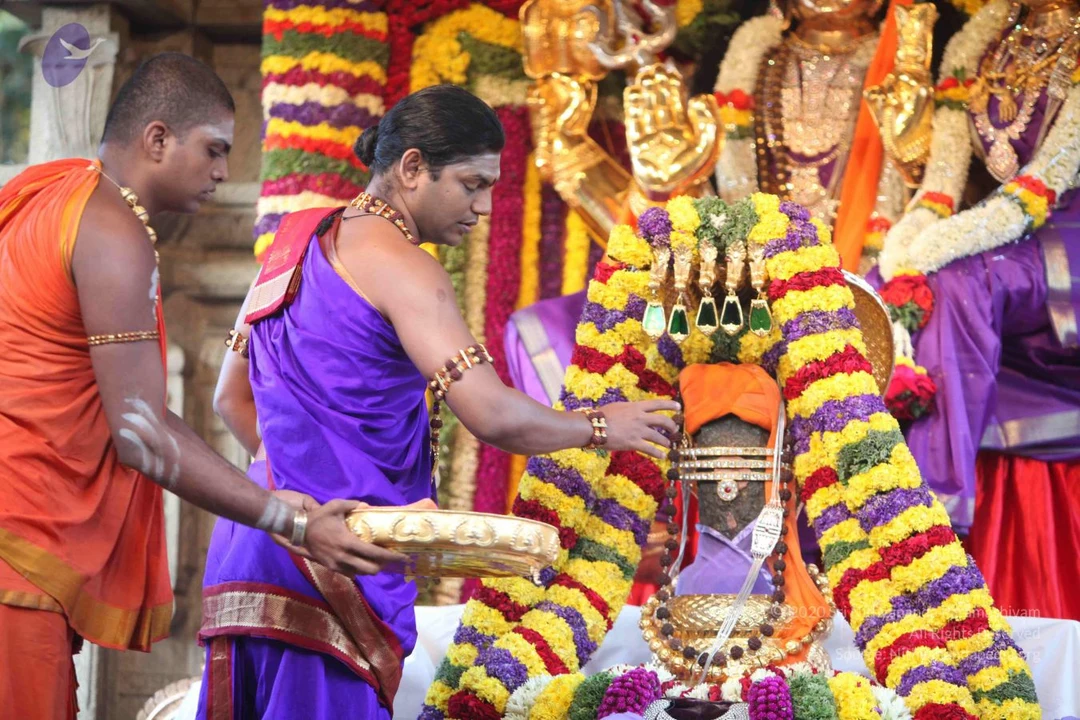
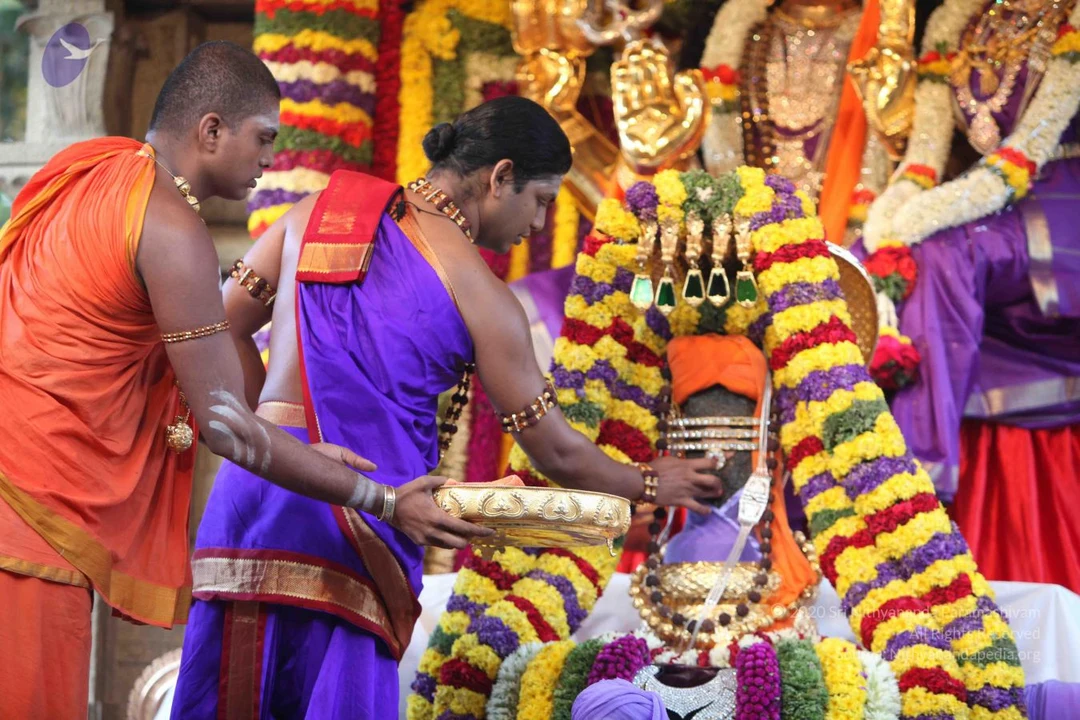
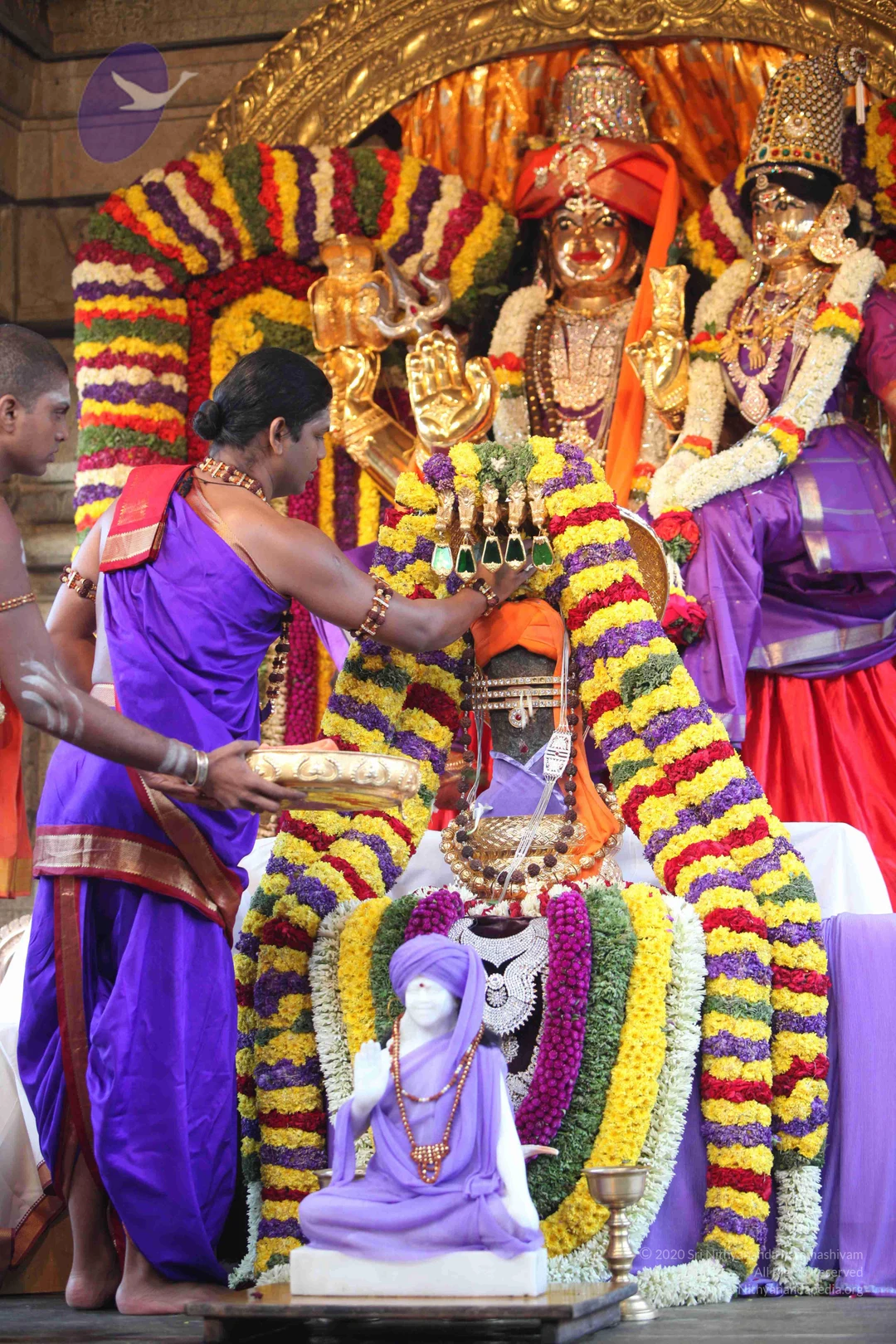
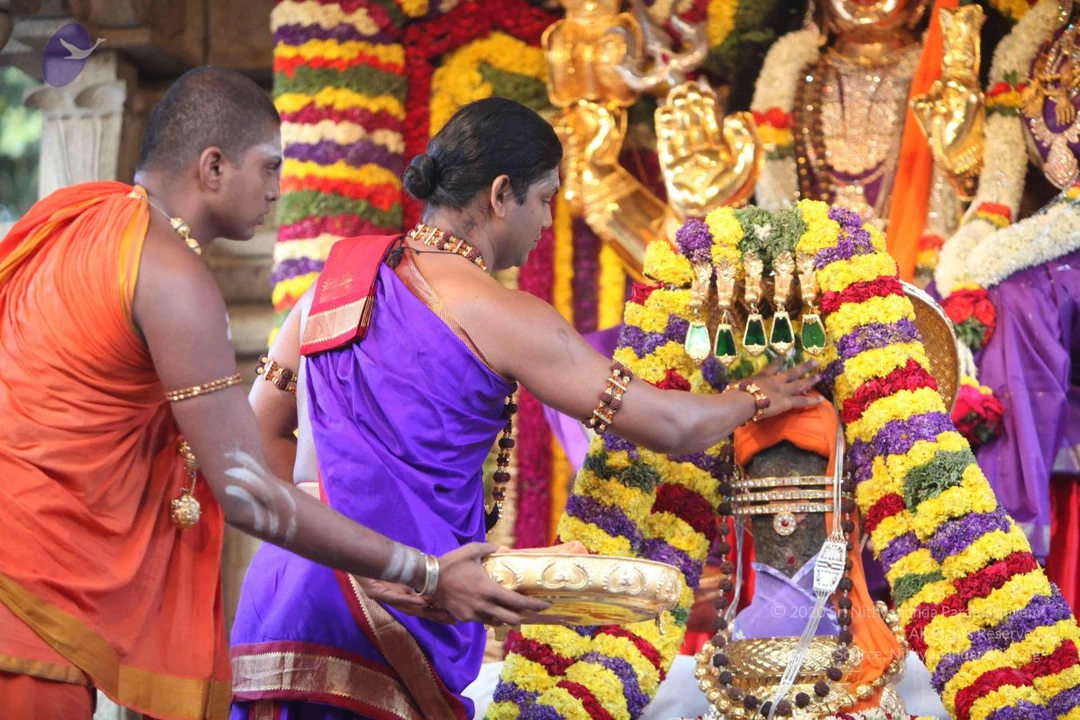
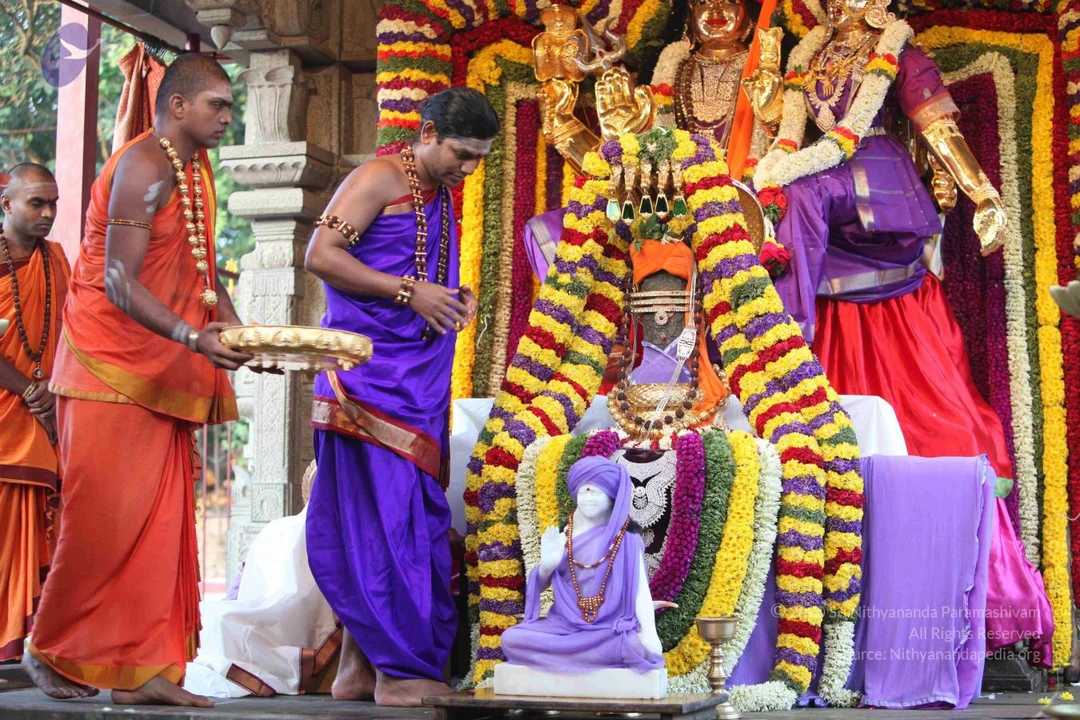
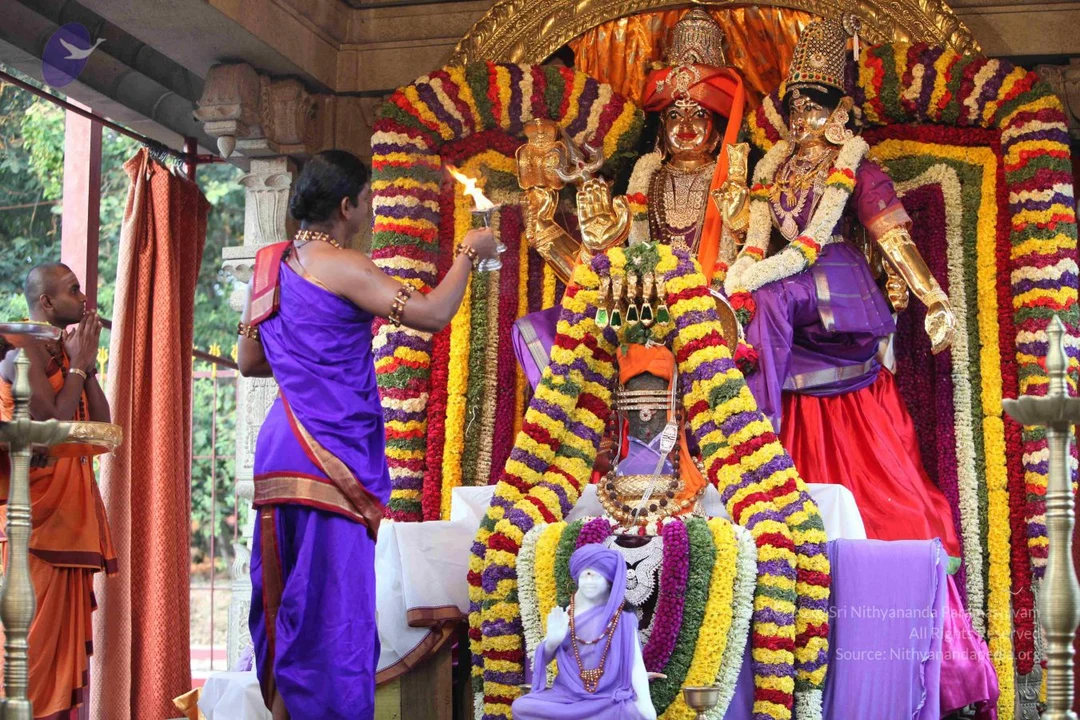
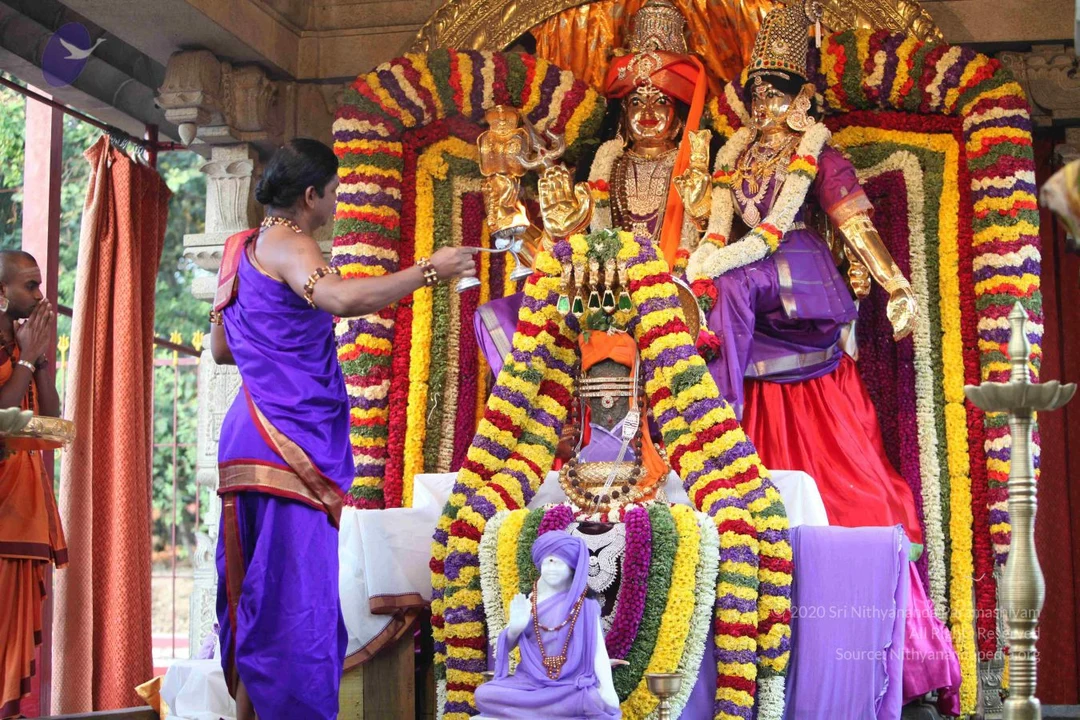
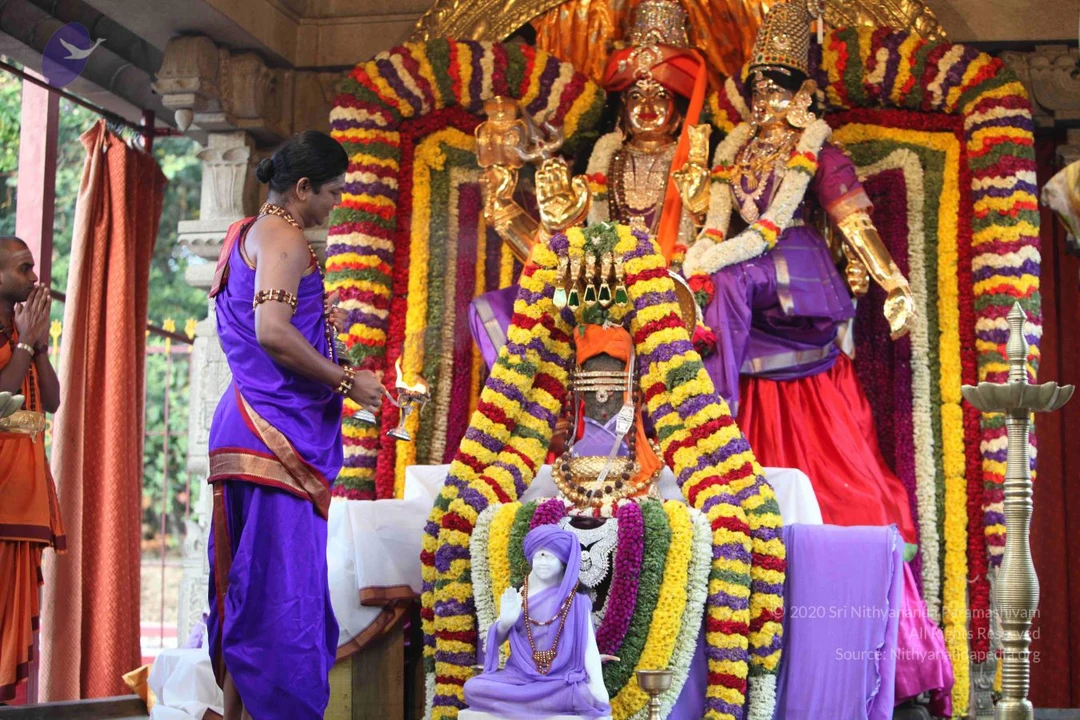
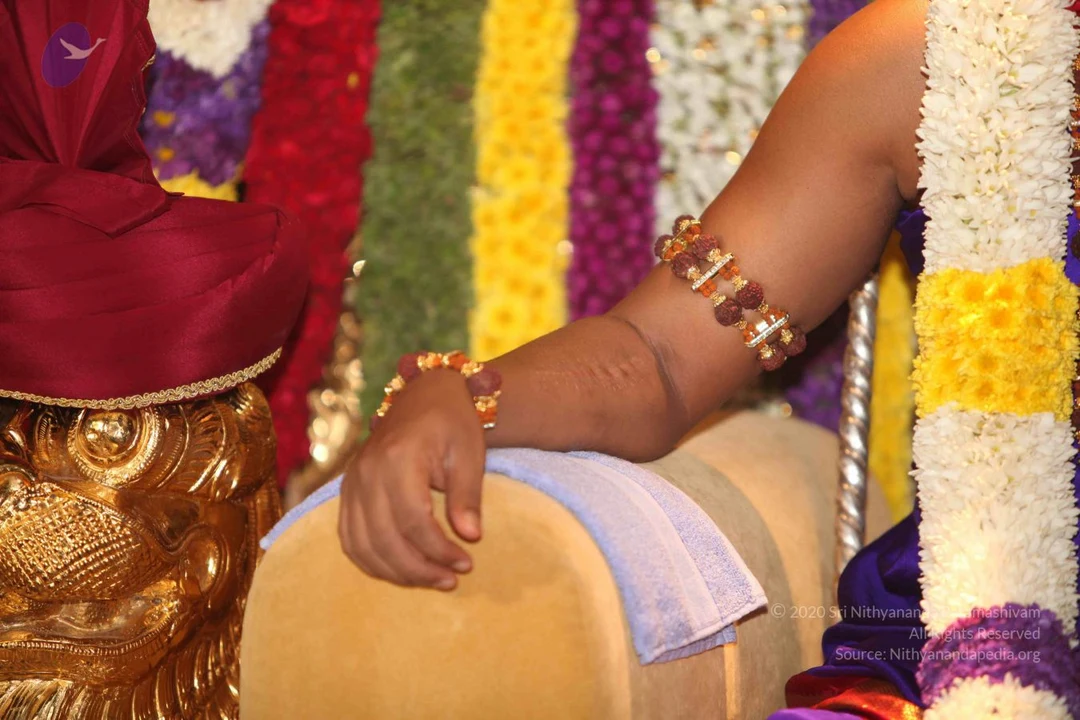
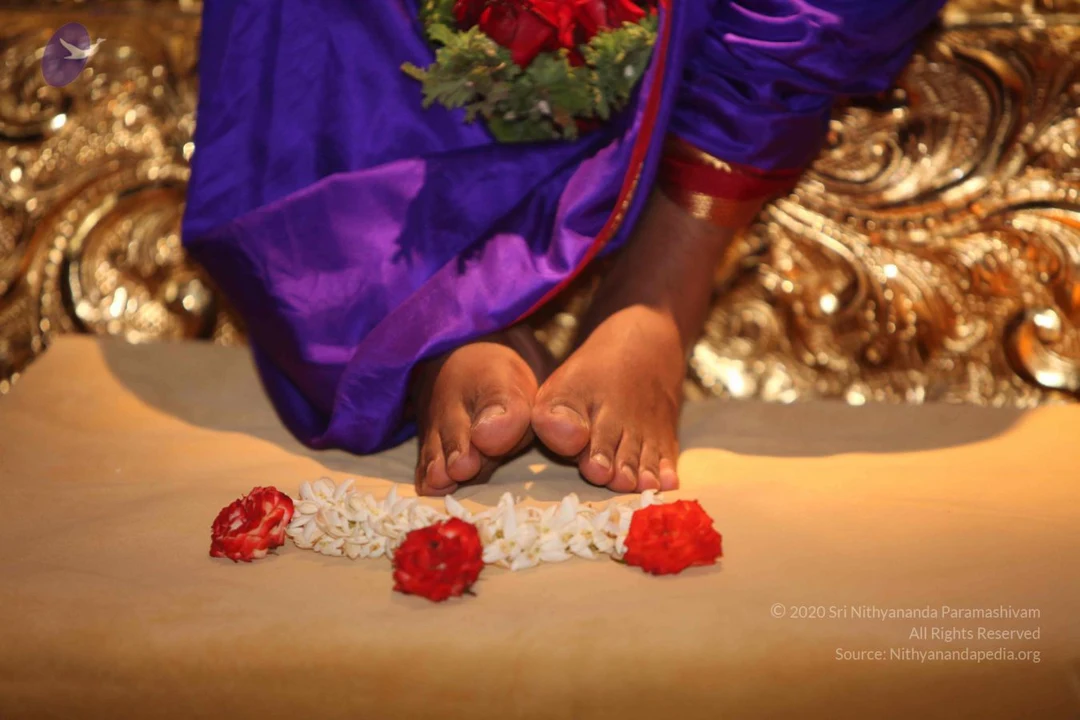
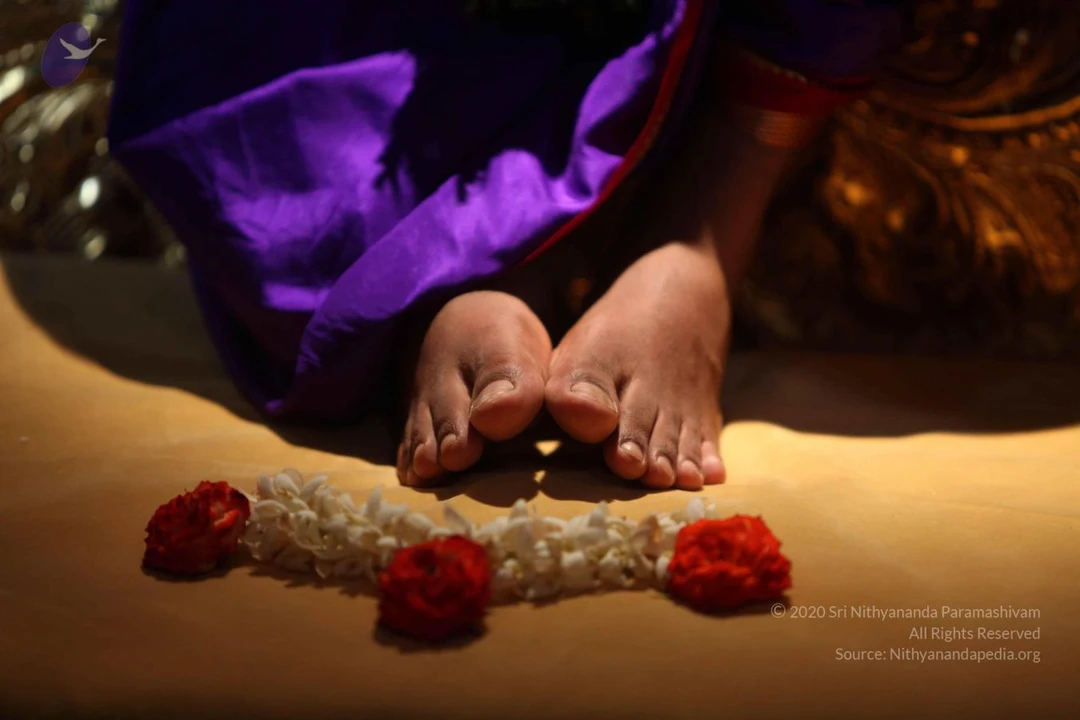
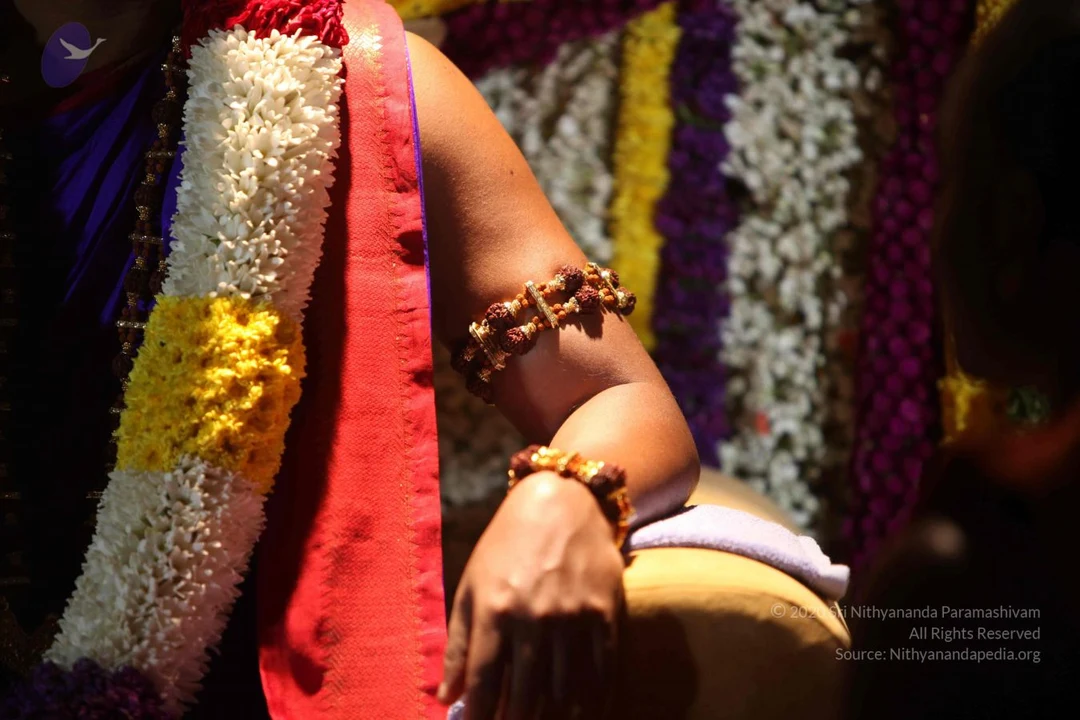
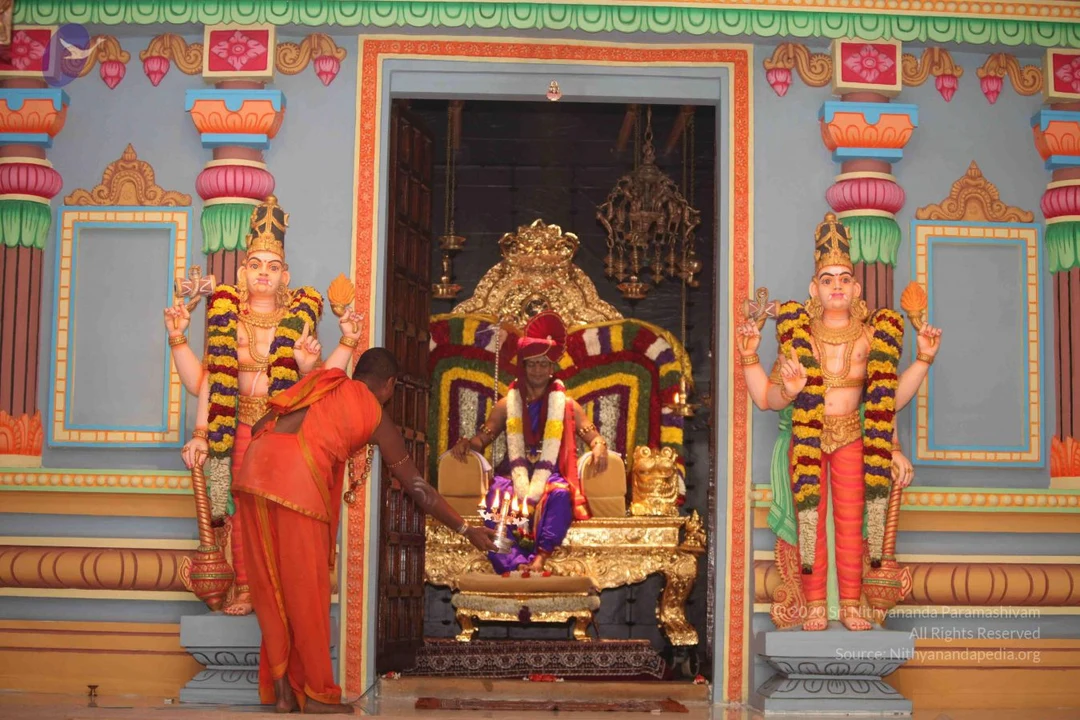
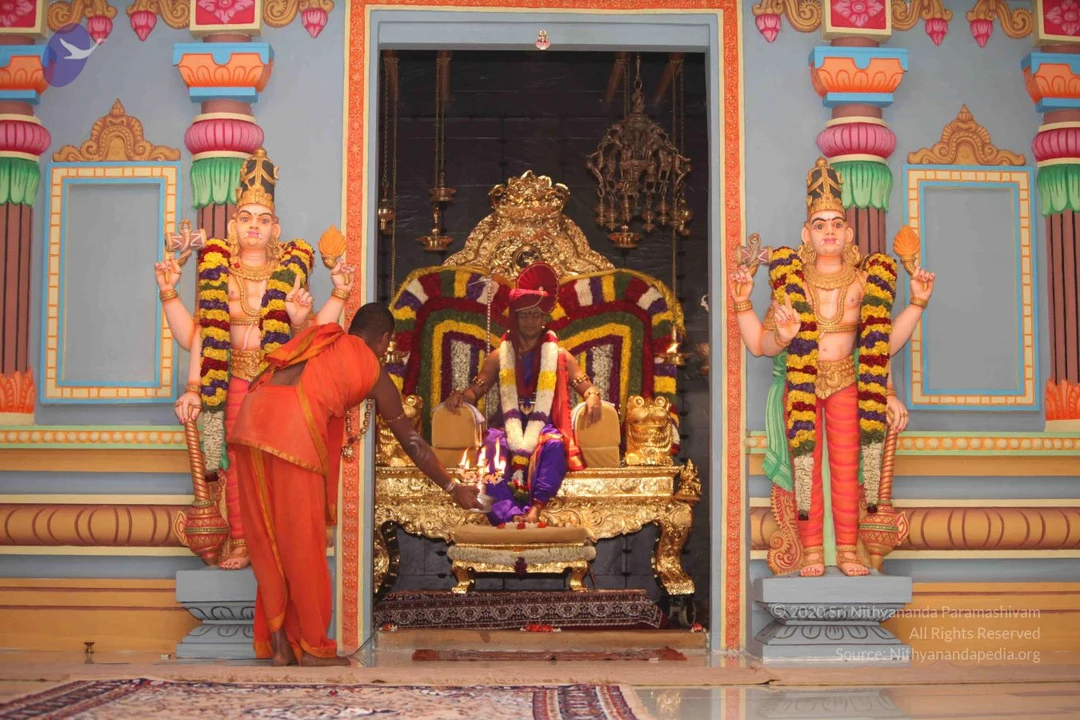
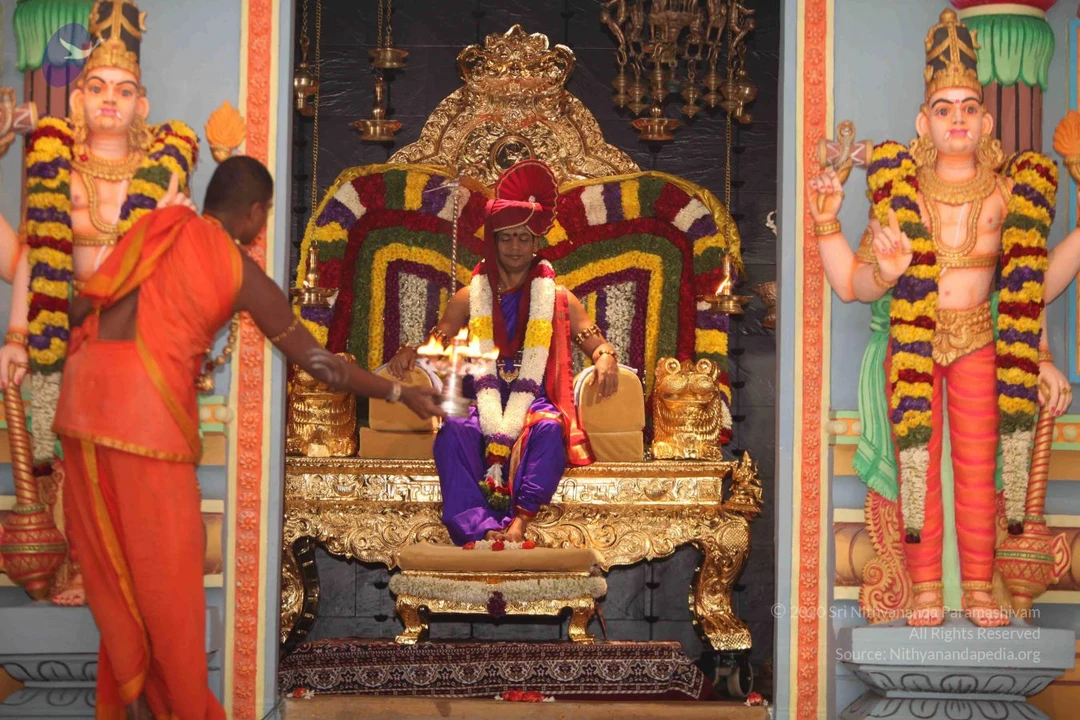
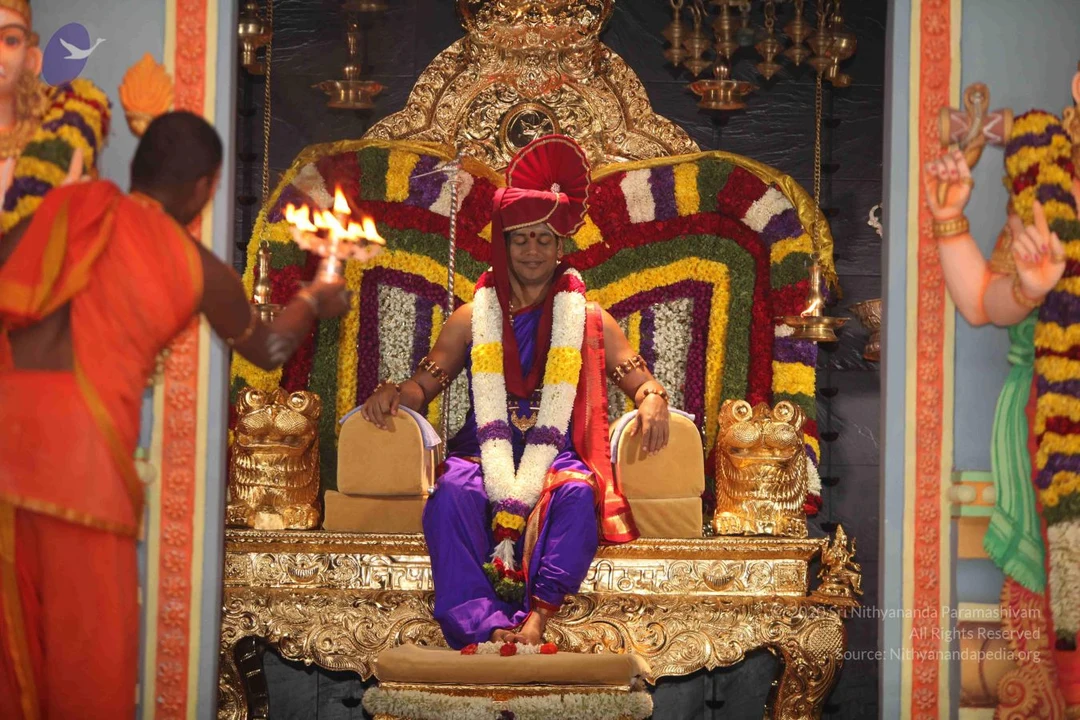
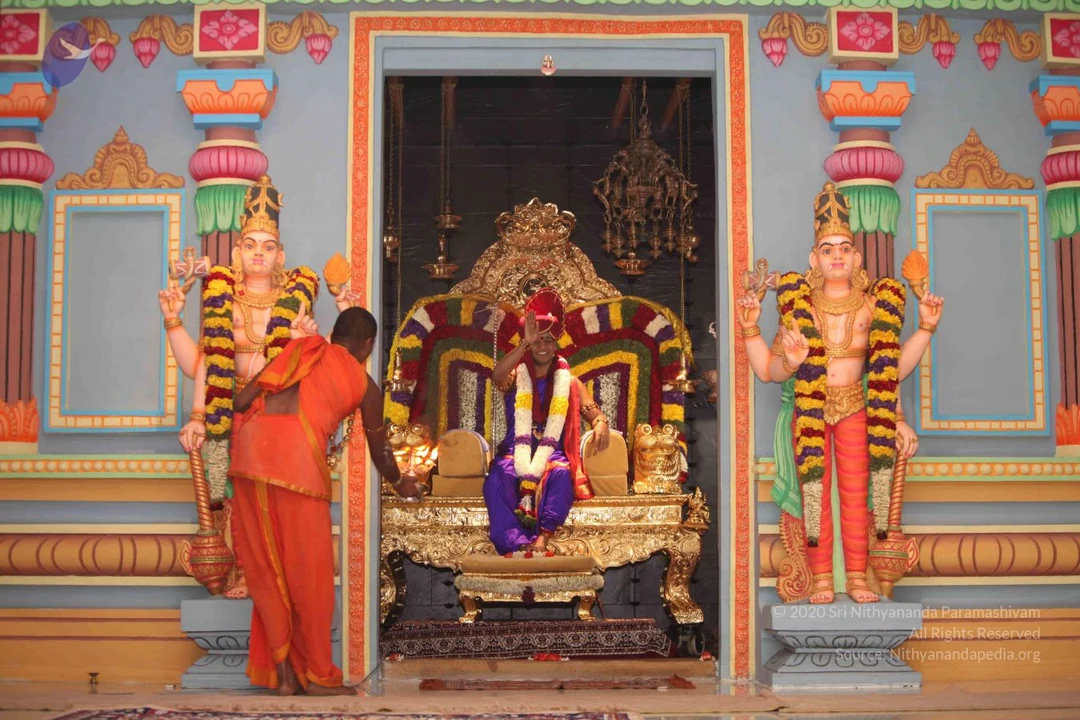
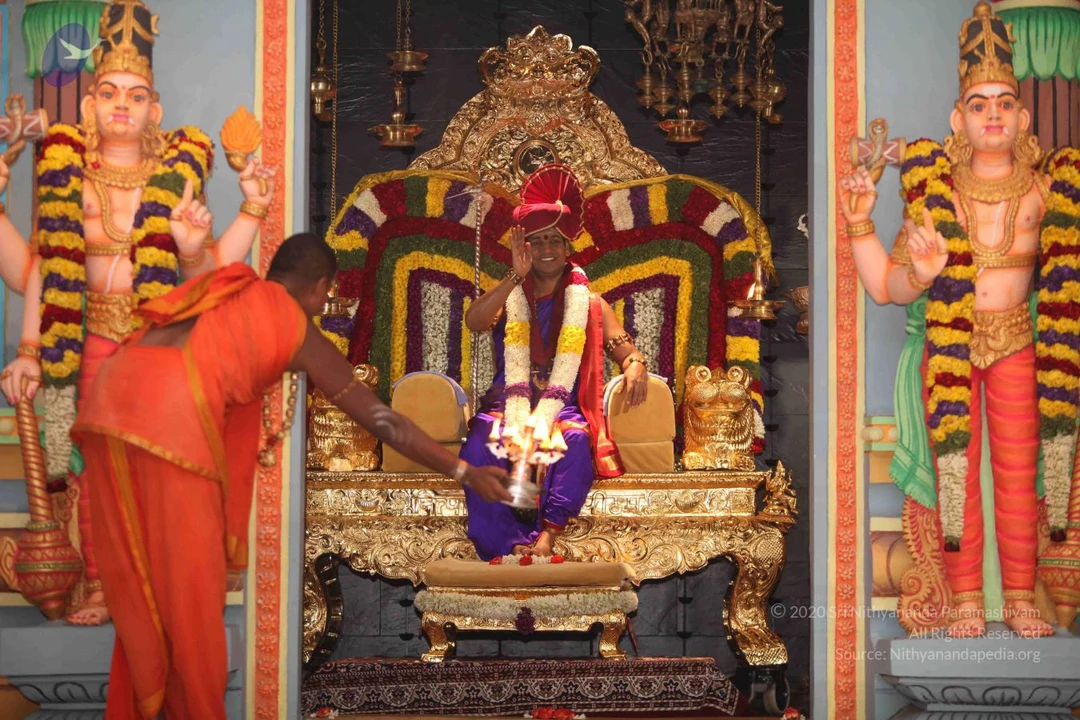
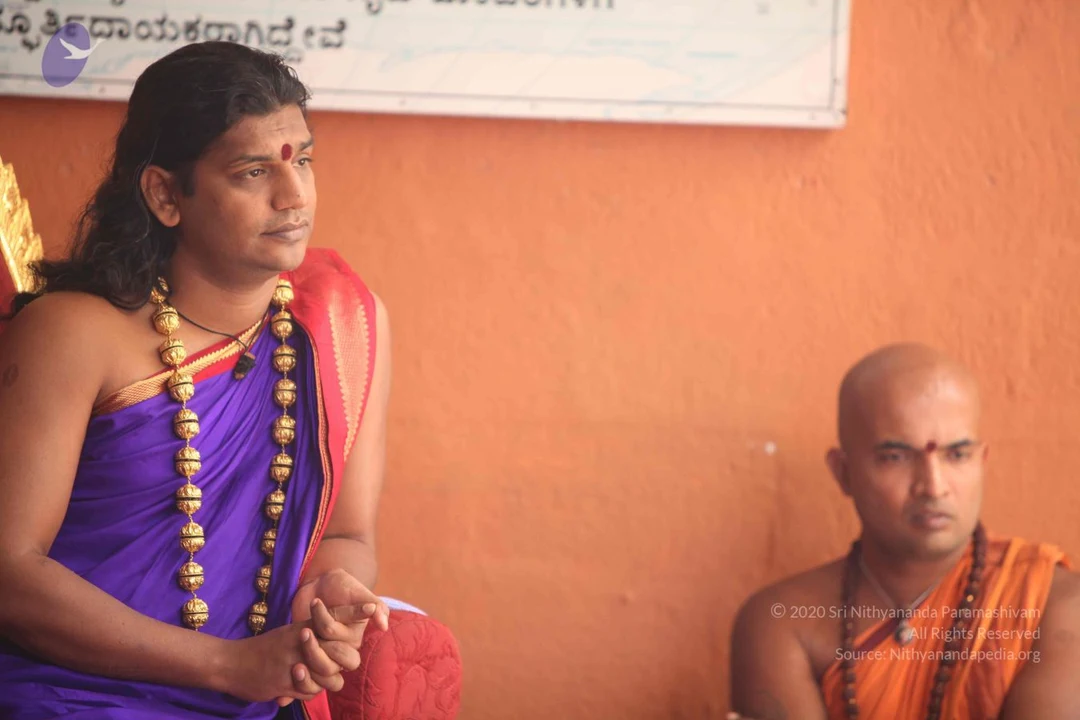
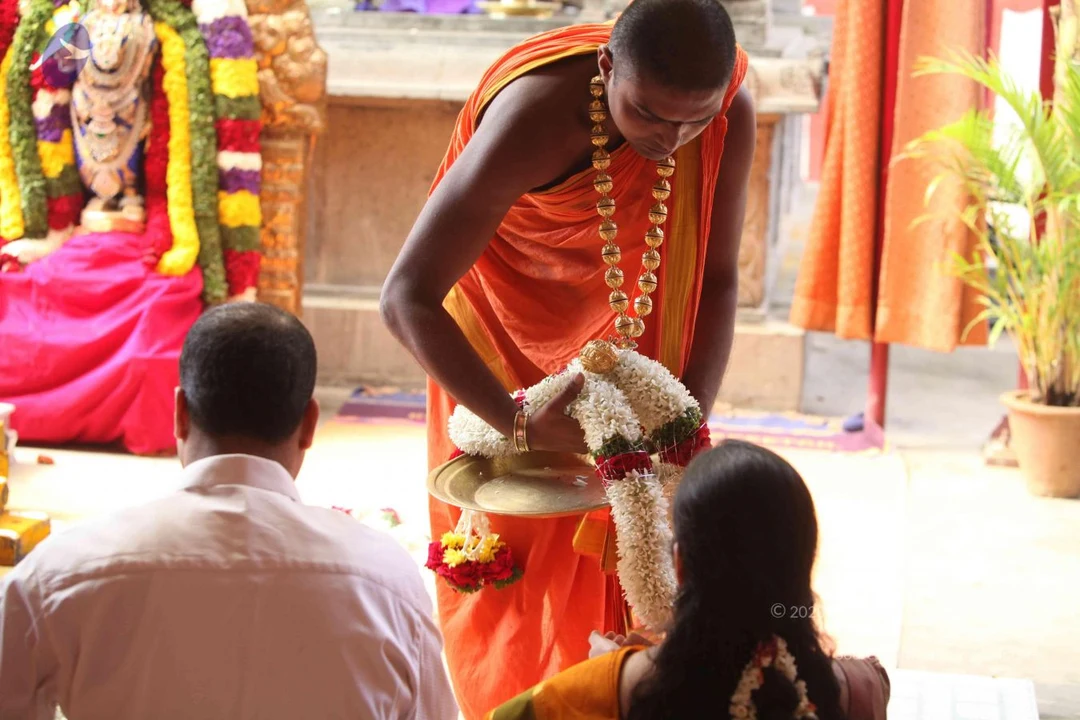
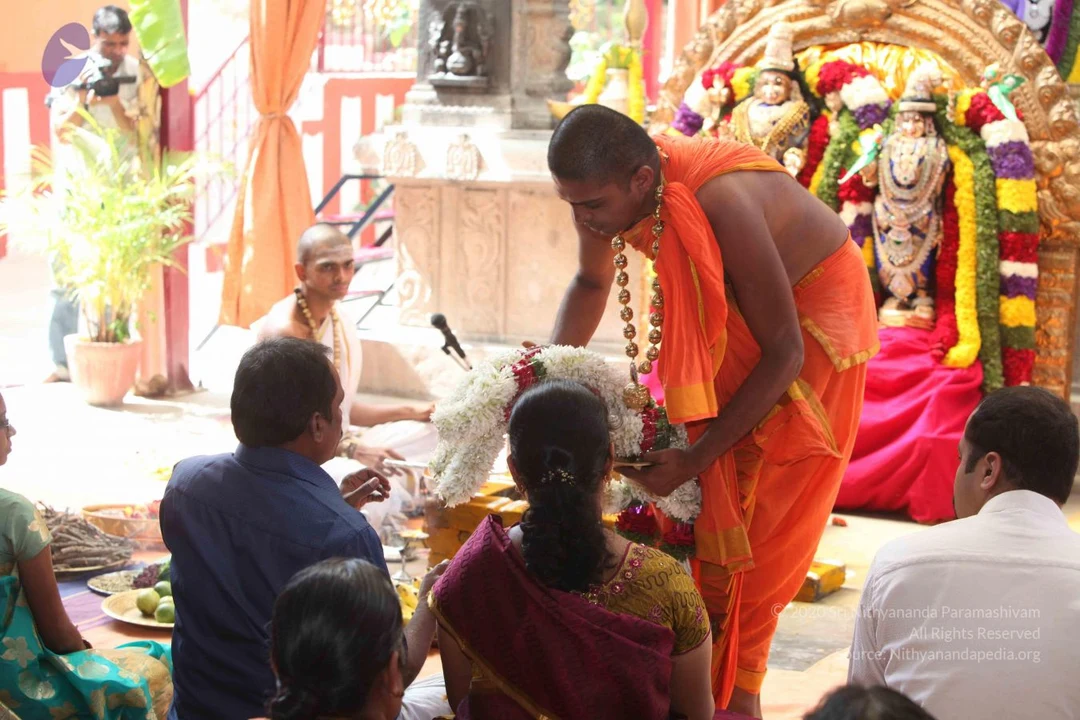
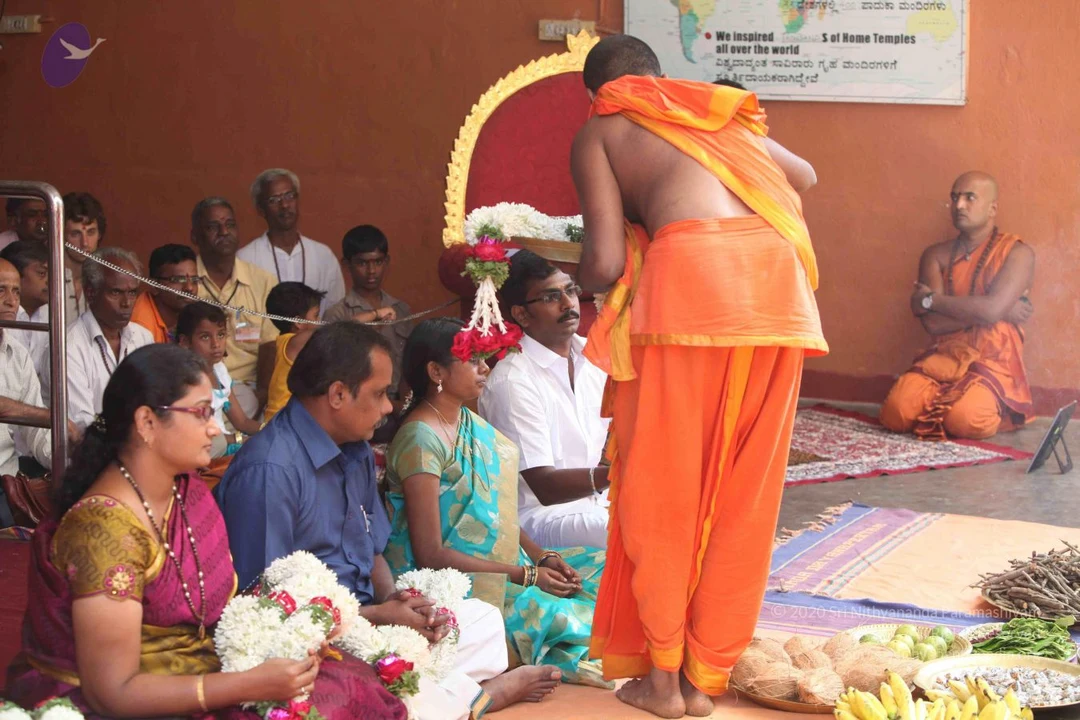
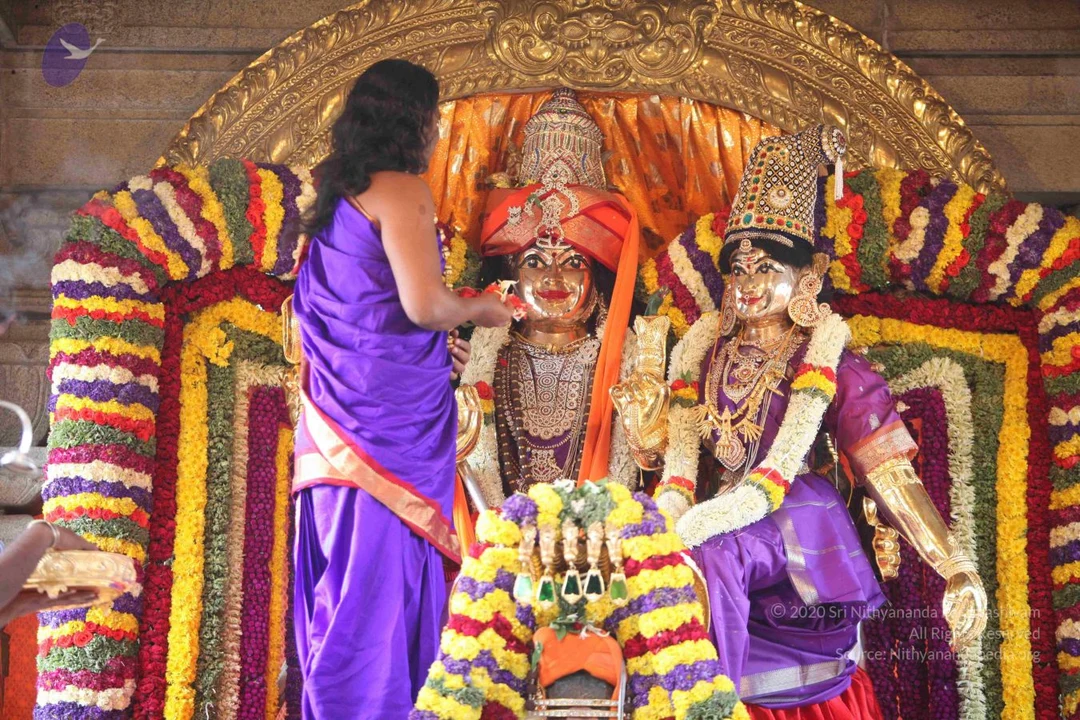
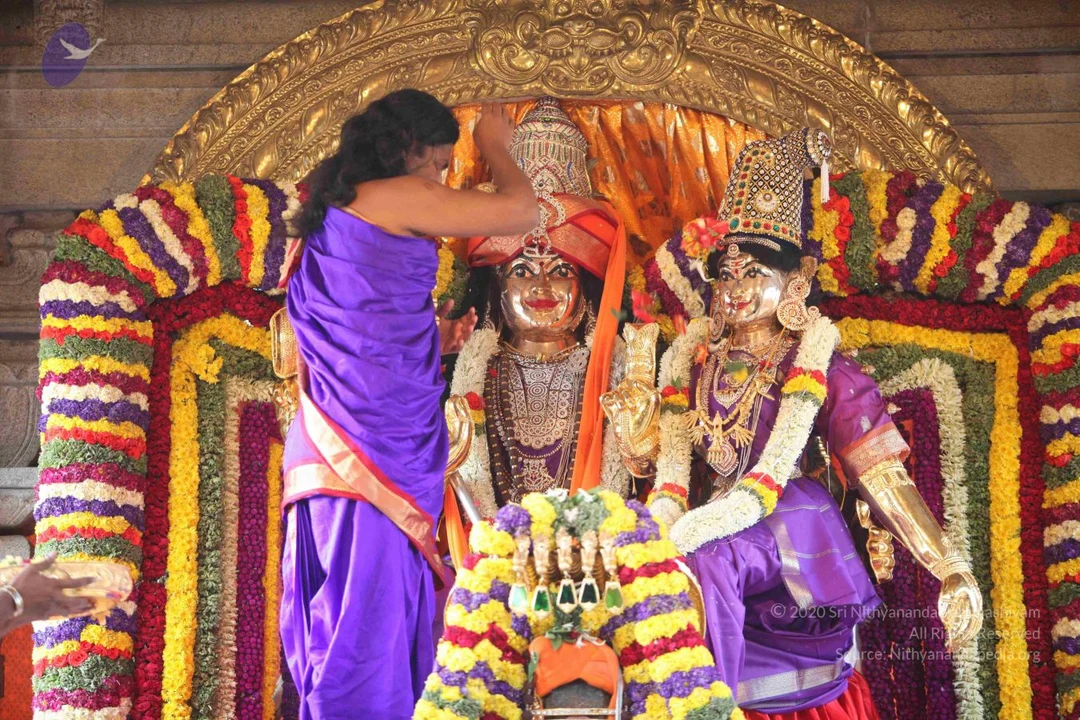
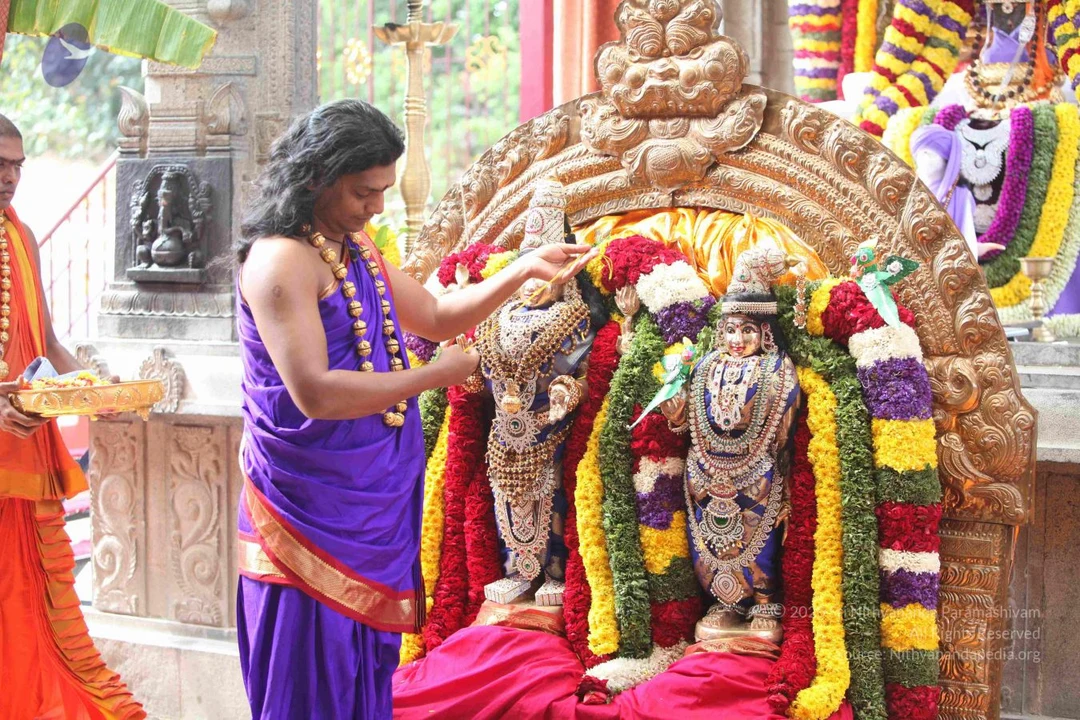
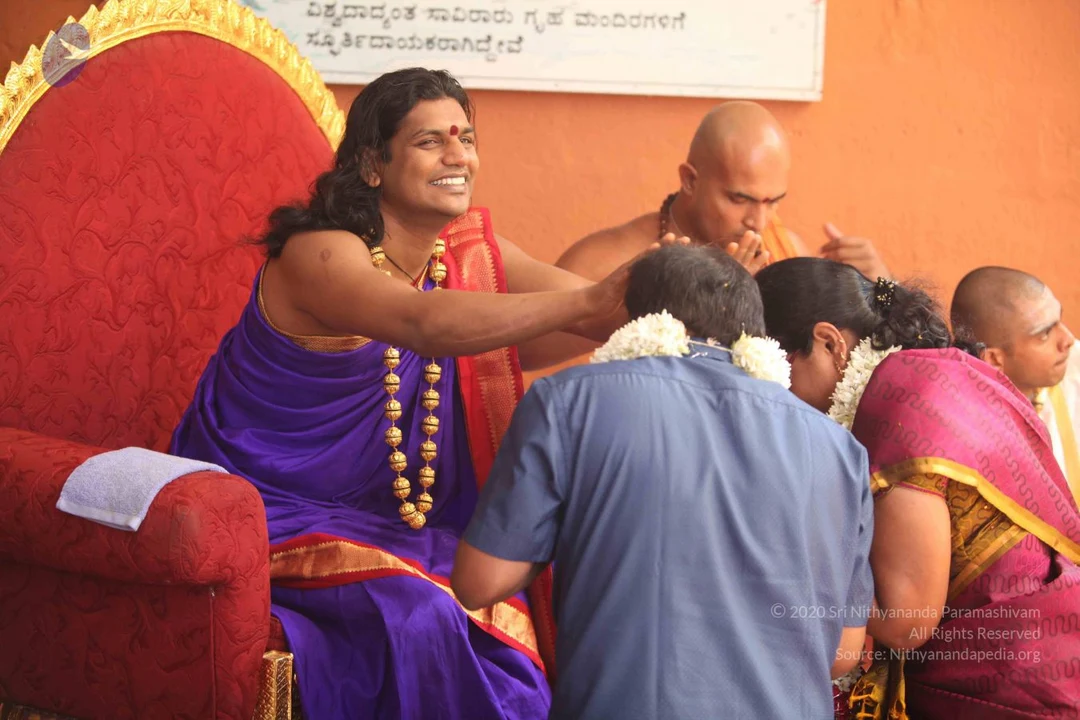
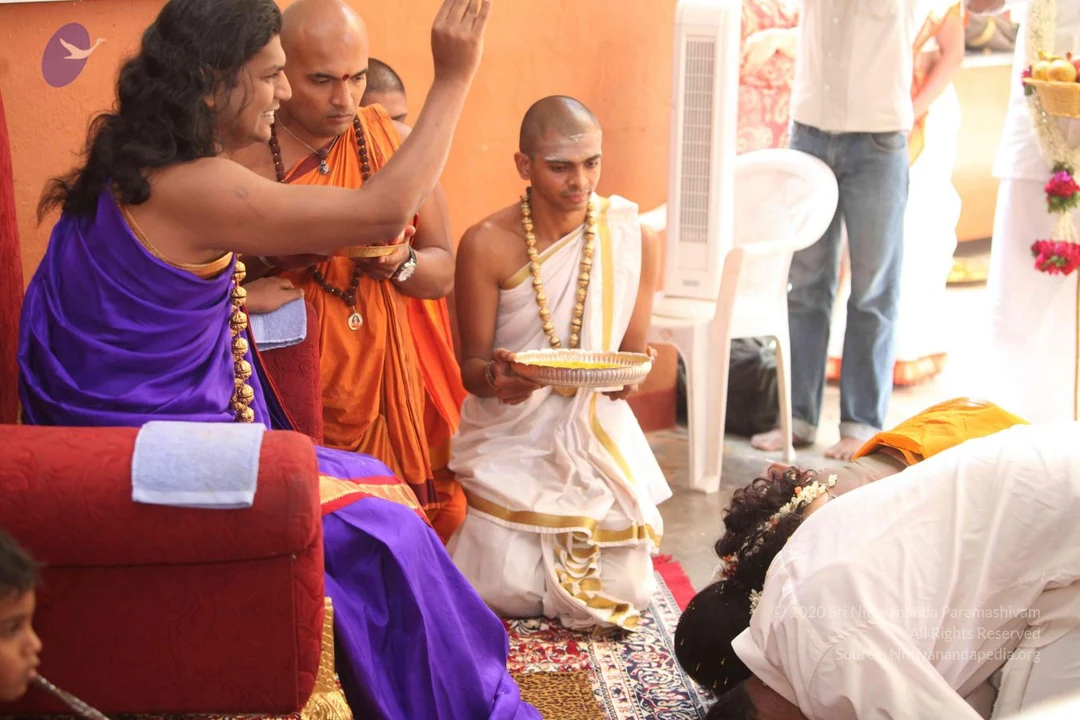
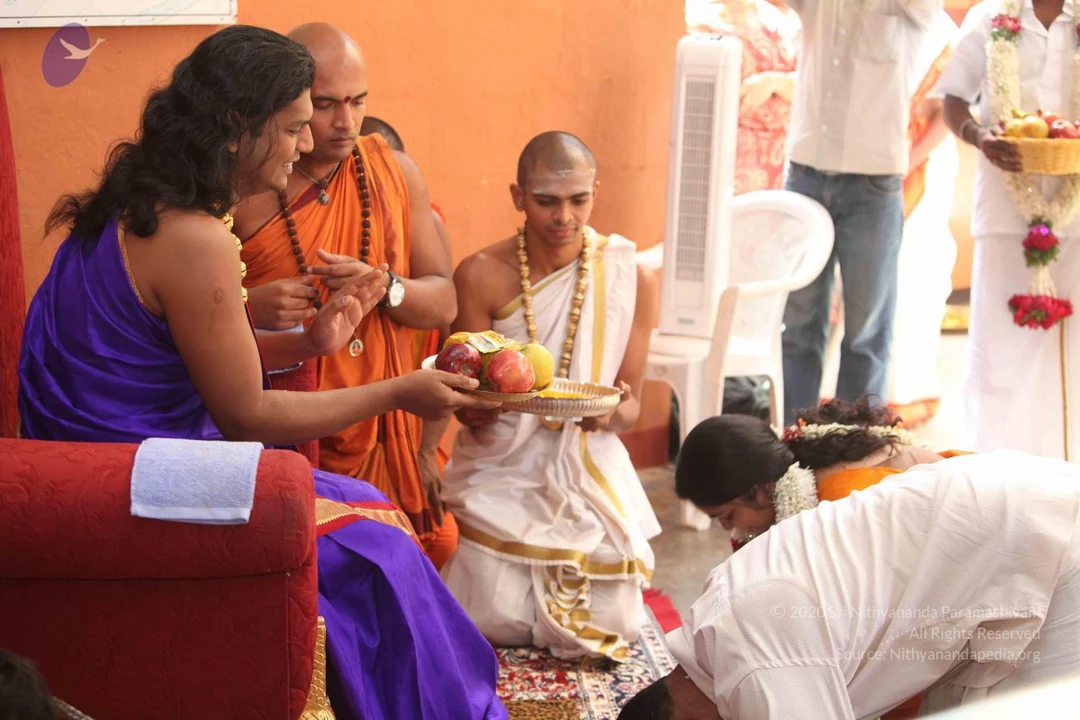
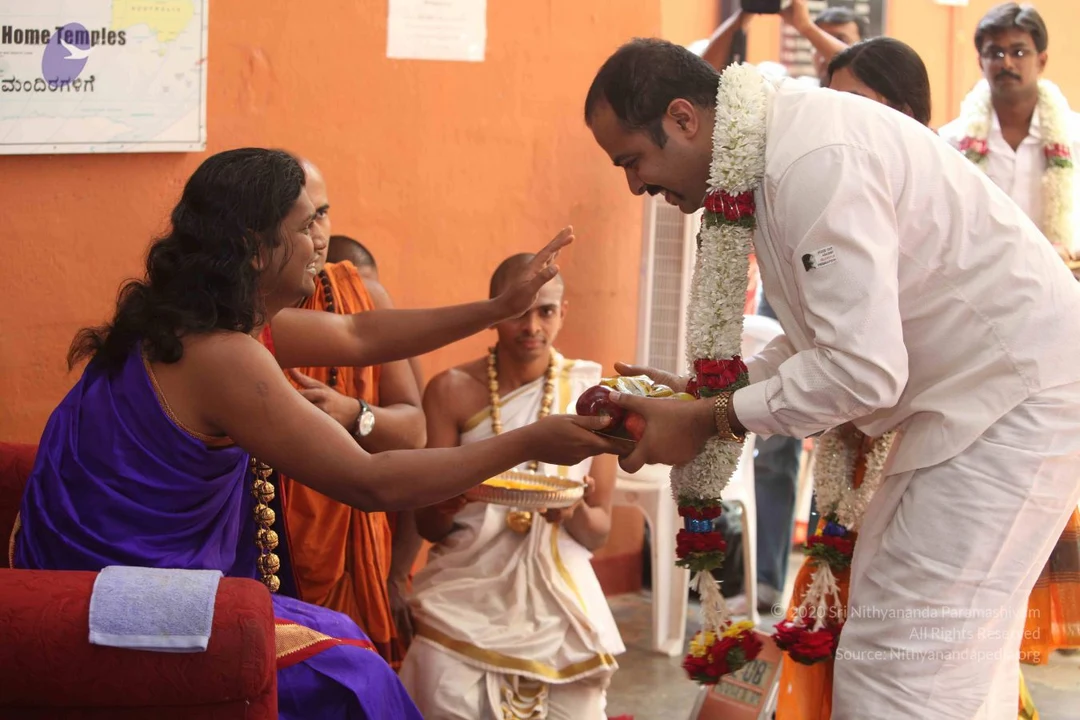
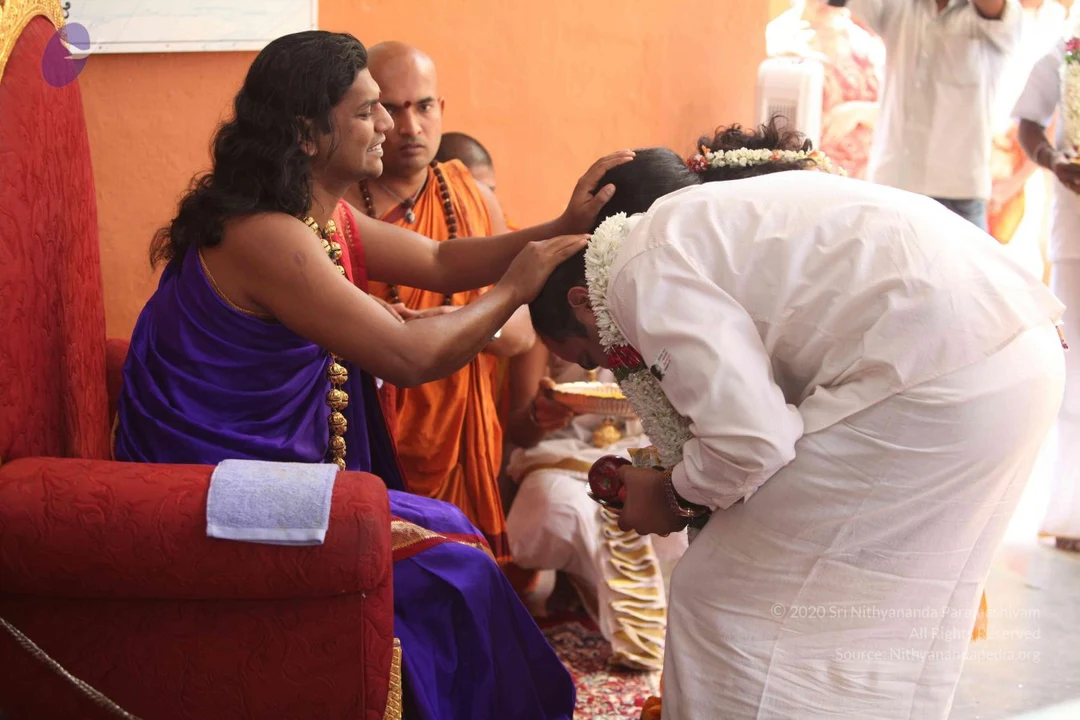
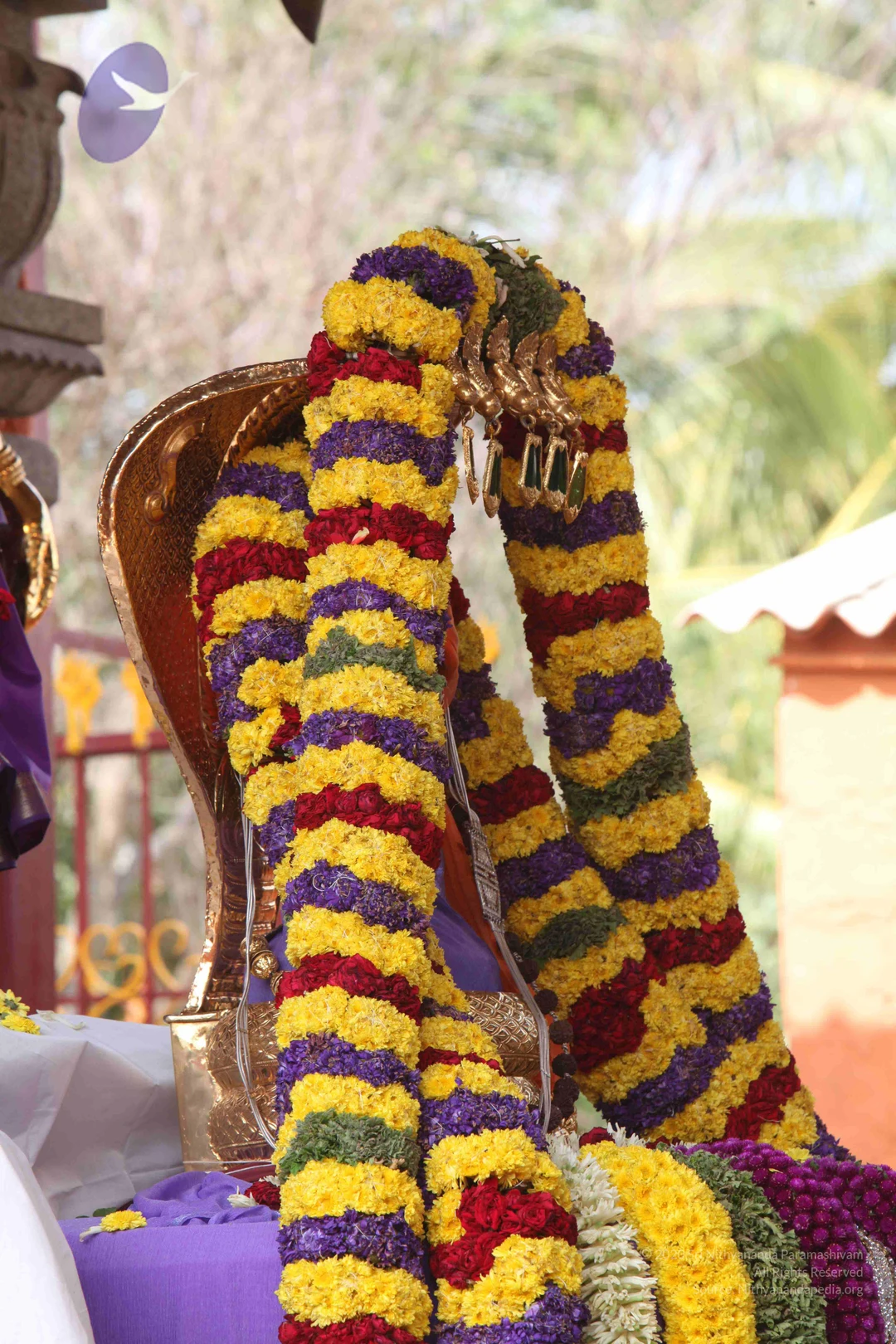
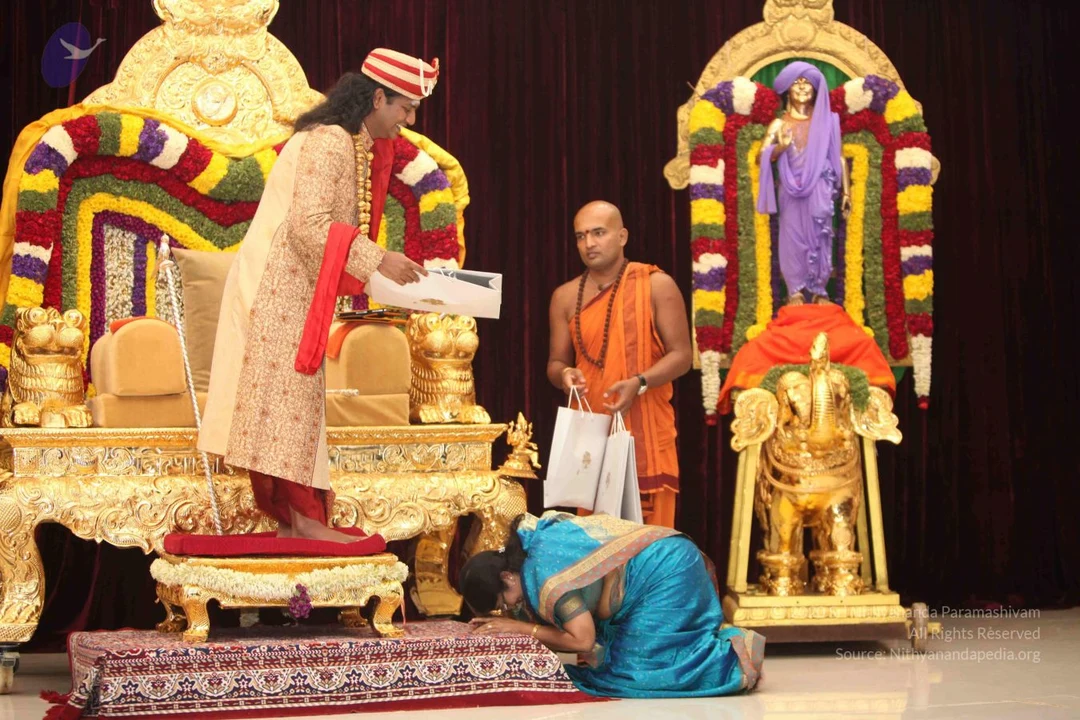
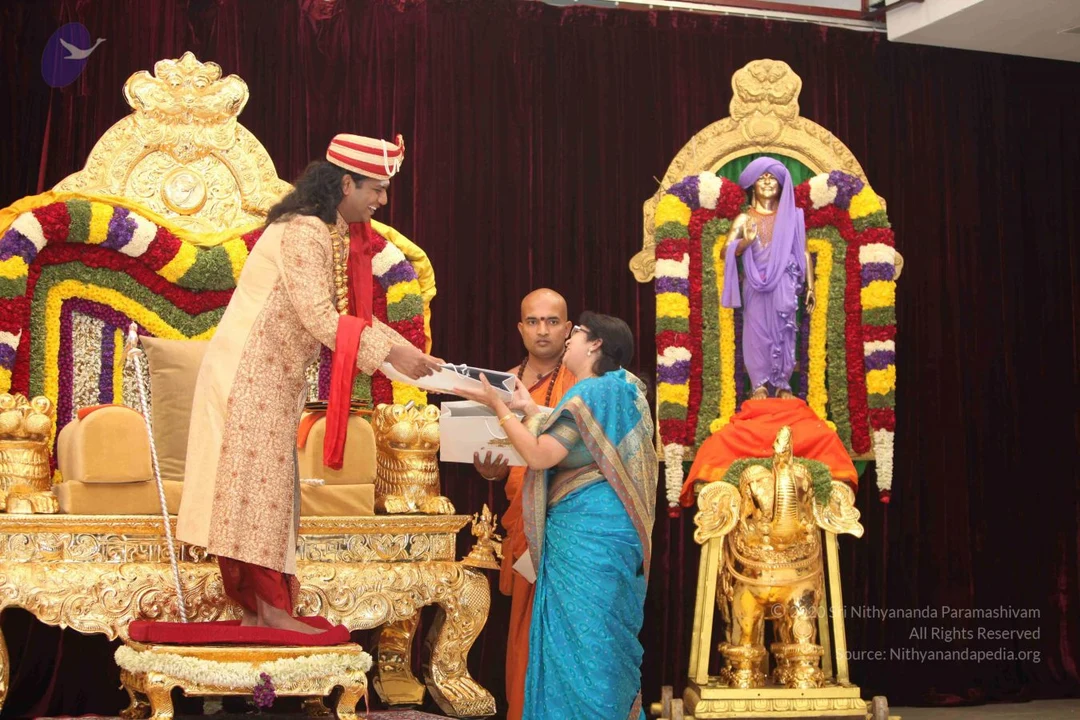
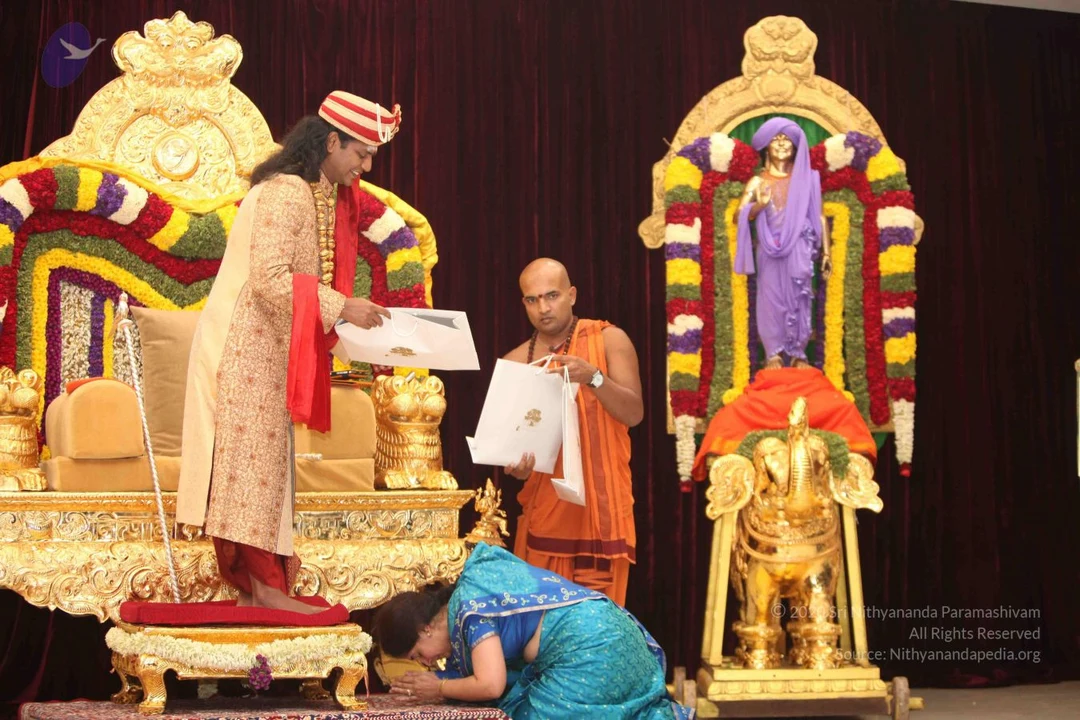
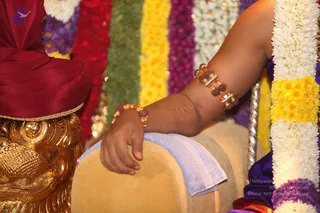
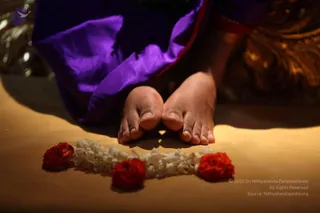
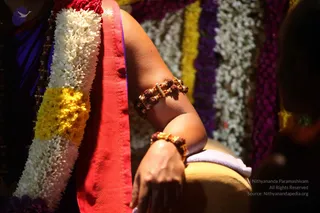
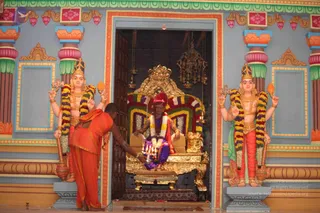
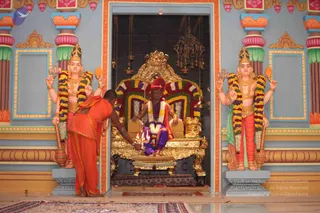
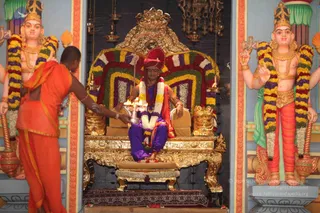
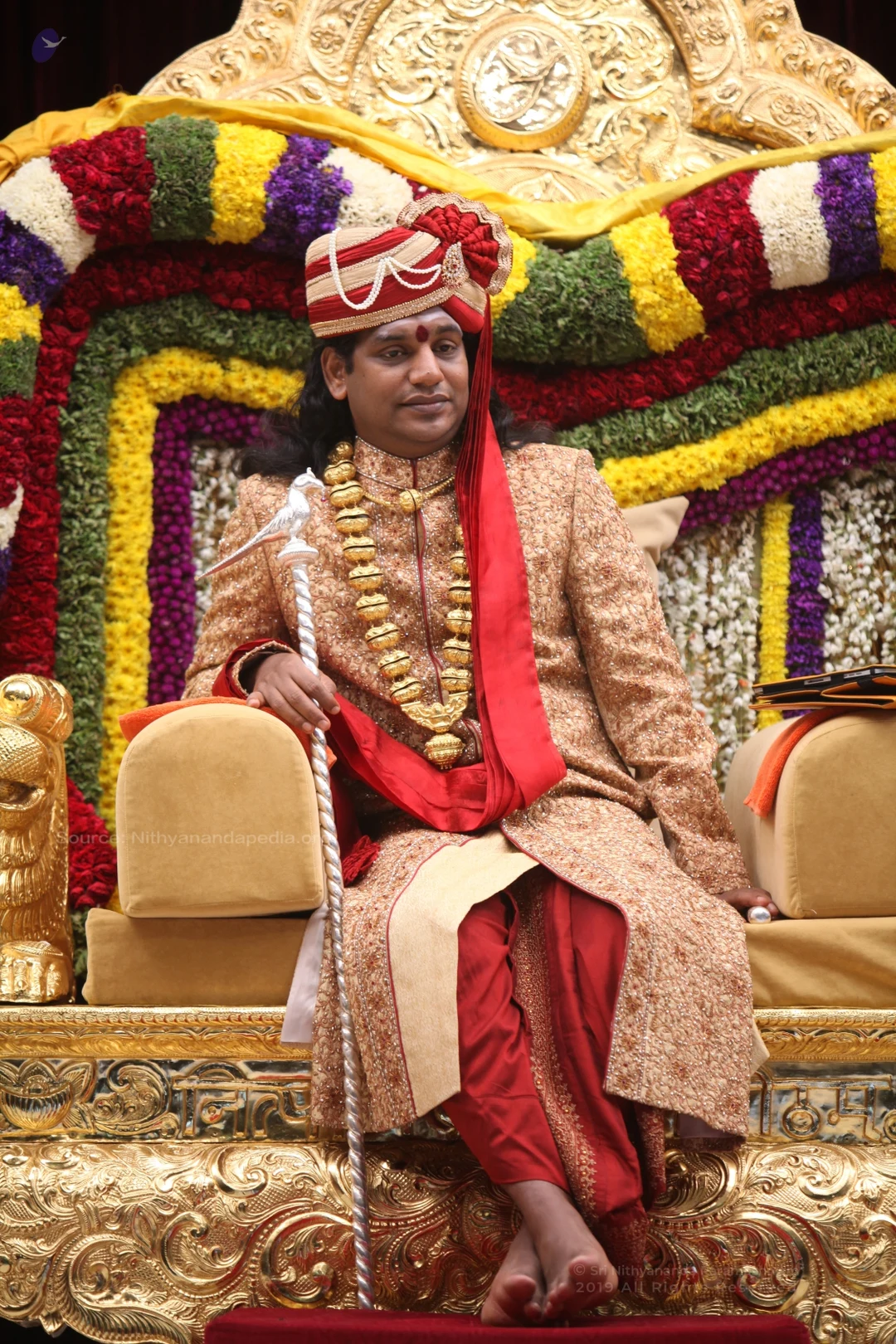
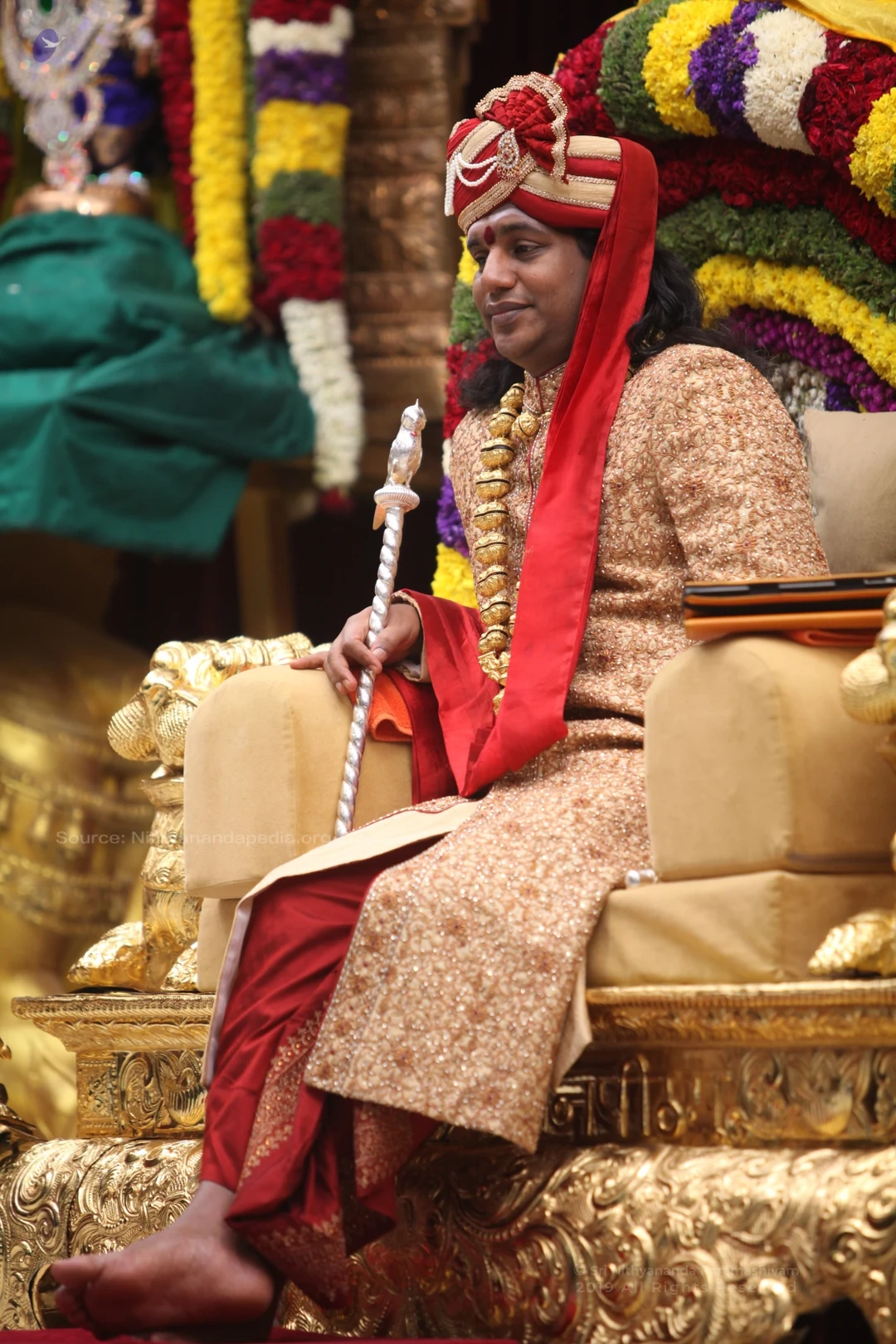
Close-up photograph of a seated figure's bare arm and hand resting on a cream cushioned armrest draped with a light blue towel, during a pada puja setting. The arm wears a rudraksha bracelet with reddish-brown beads and amber-orange beads with silver spacers. Behind, long garlands of white, yellow, red and purple flowers hang as a backdrop. At left, the figure wears a maroon garment with gold trim and a golden ornate throne or seat edge is visible. The image shows only part of the person, with the face out of frame.Close-up photograph of bare feet pressed together on a golden-brown cloth, with a purple silk garment draped over the legs above them. Two red flowers and a white jasmine garland lie on the cloth in front of the feet. No face is visible; the figure is partially shown and only the feet and clothing are in frame, so no identity is established. A small blue-and-white logo appears at the upper left.Close photograph of a seated figure's bare arm and wrist adorned with rudraksha mala bracelets with gold-toned bead caps, while a red-and-gold cloth draped over the shoulder and white-and-yellow flower garlands hang behind. The hand rests on a yellow cushion beside a white cloth, in a warm, dark setting. No face is visible and the person cannot be identified.A temple-style photo of a pada-puja ritual at a shrine. A seated figure in a red turban, purple dhoti and white-and-red flower garlands sits on an ornate golden throne with a colourful floral backdrop. In front, a devotee in saffron-orange robes bends forward, reaching toward oil lamps arranged on a golden stand, a traditional padapuja offering. Two painted dvarapala-style guardian statues with crowns, multiple arms and garlands flank the doorway, with a golden lamp hanging above. Painted pillars in blue, pink and green frame the scene.A seated figure on an ornate gilded throne in a temple shrine is receiving padapuja from a bowing priest in orange-saffron dhoti and shawl, who holds lit oil lamps or aarti near the seated figure's feet. The seated figure wears a red turban, a purple garment and a white and red flower garland, with bangles on the arms. Behind the throne hangs a bright multicolour flower garland decoration and hanging brass lamps. Two tall painted dvarapala-style guardian statues with raised hands, gold necklaces and flower garlands stand on either side of the doorway, which has colourful pillars with pink, green and yellow designs. A patterned carpet covers the floor. The seated figure appears to be a candidate for a person, but the visible cues are limited to a turban and purple attire, so identity is uncertain.Photograph of a pada-puja ceremony inside a temple shrine. A seated figure in a red turban, purple dhoti and a multi-strand white and orange garland sits on an ornate gold throne with a colourful flower-decorated backrest, feet resting on a flower-strewn cushion. A priest in orange robes stands at left, swinging a lit oil lamp (aarti) toward him. Two large painted guardian statues flank the throne, each in garlands of yellow, purple and white flowers, with gold ornaments and crowns. Hanging brass oil lamps are visible above.

BHAGAVAD-GITA-SATSANG

57 photosSource gallery
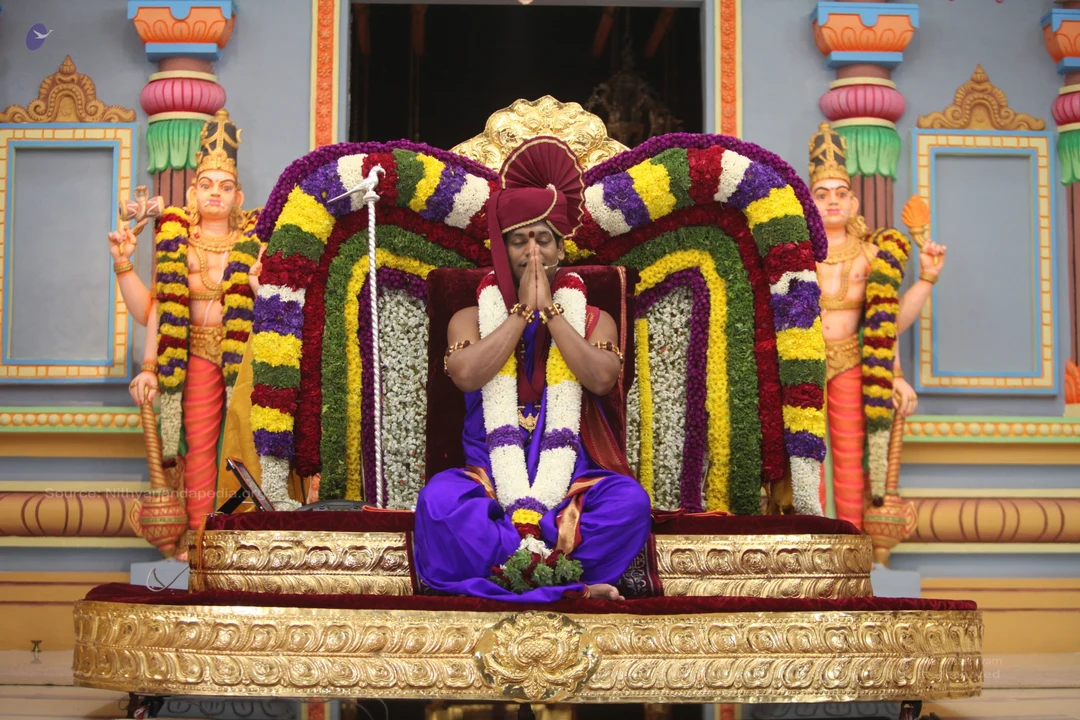
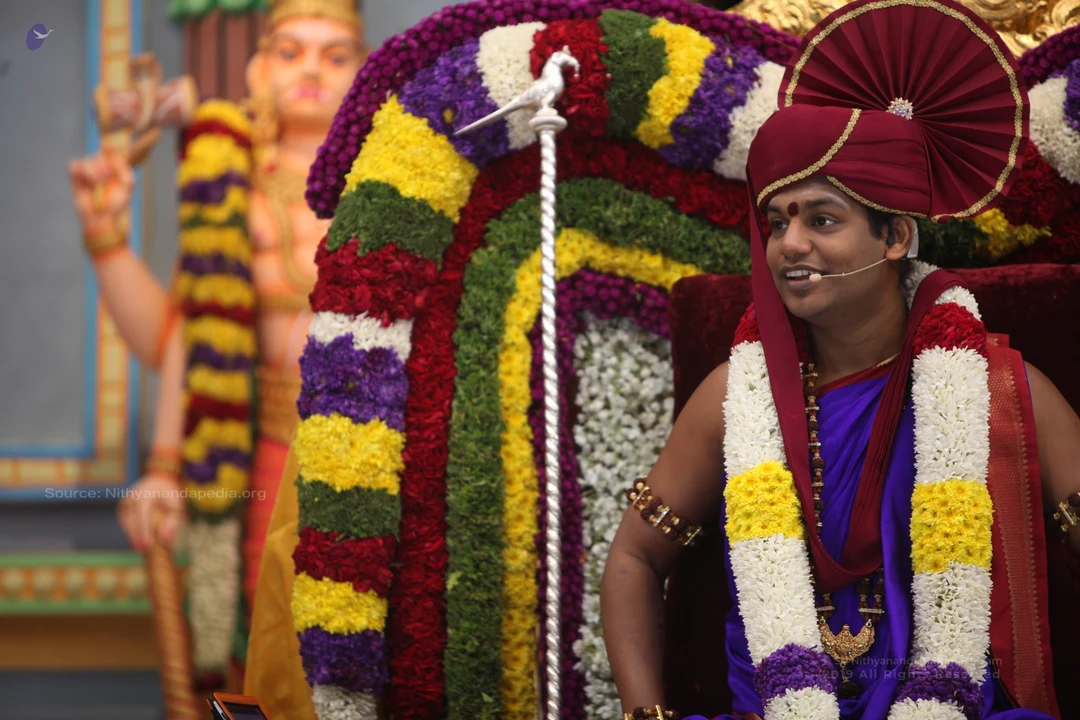
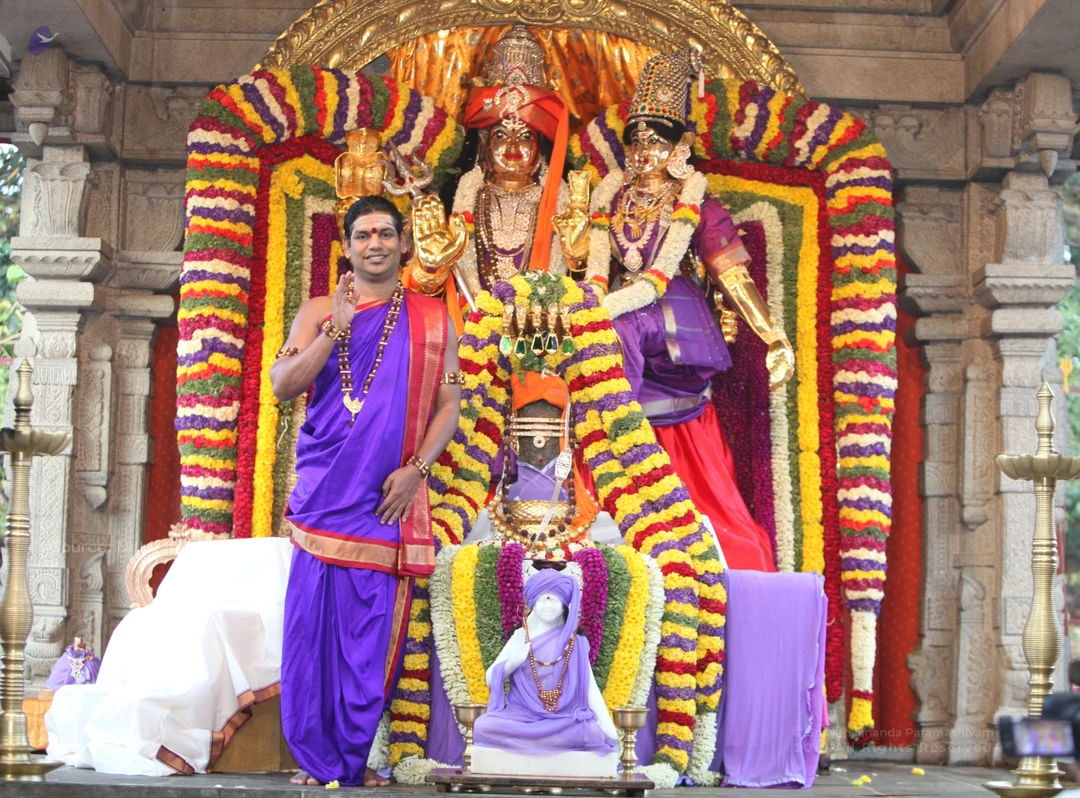
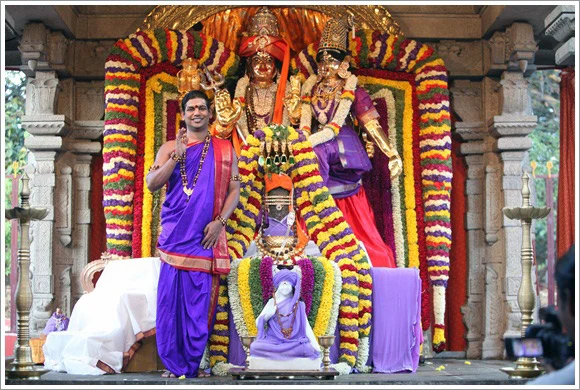
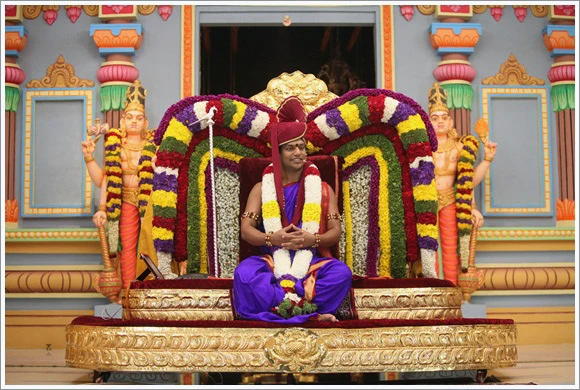
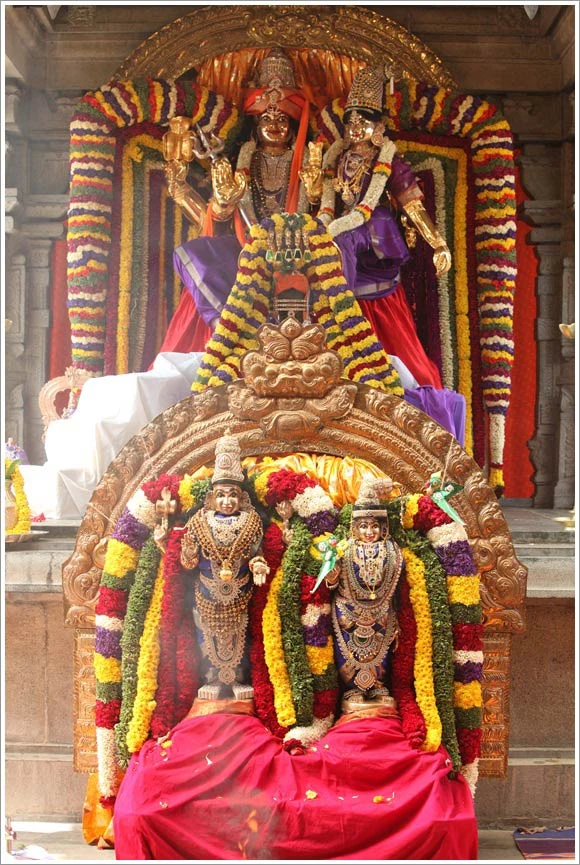
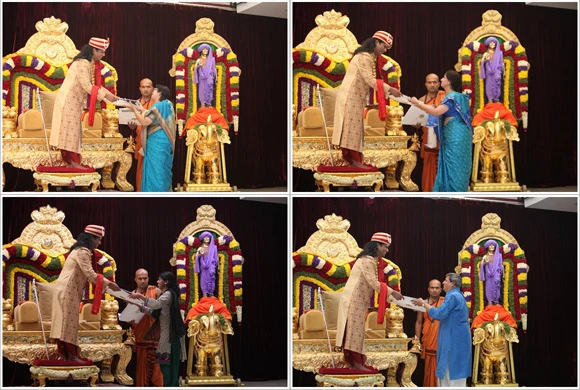
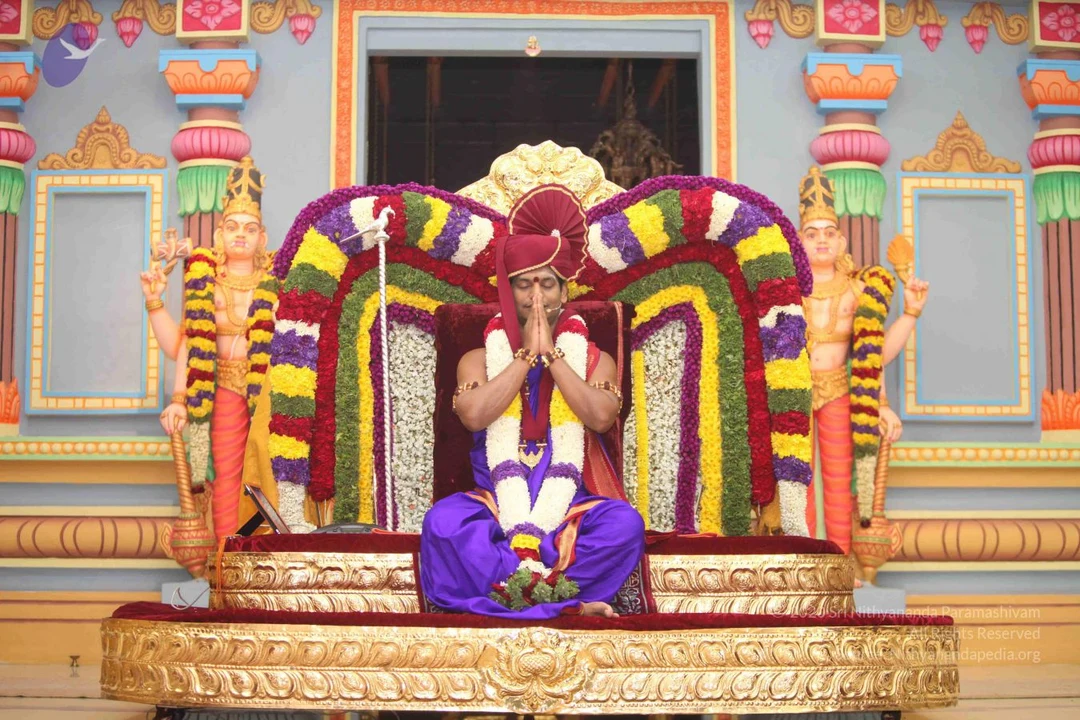
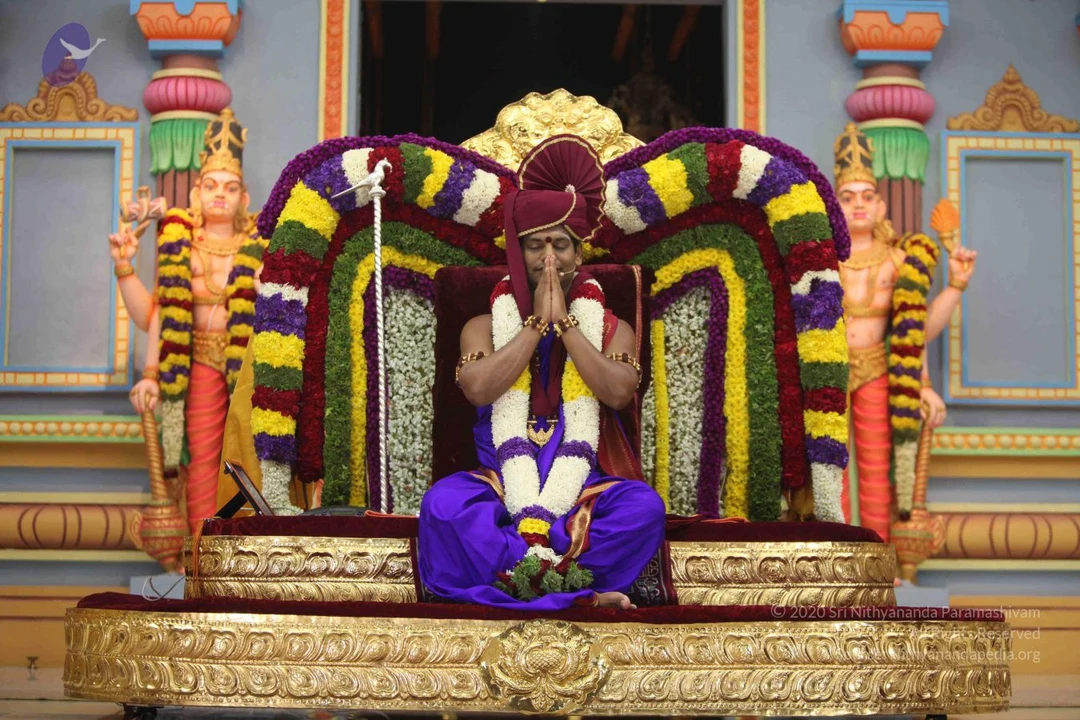
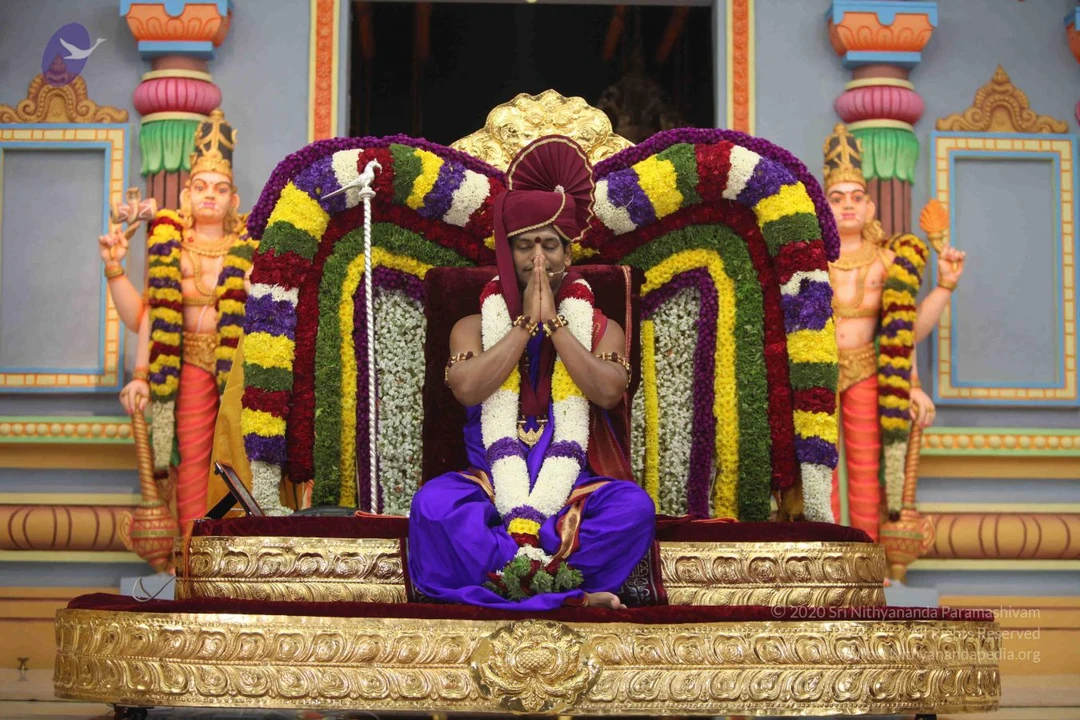
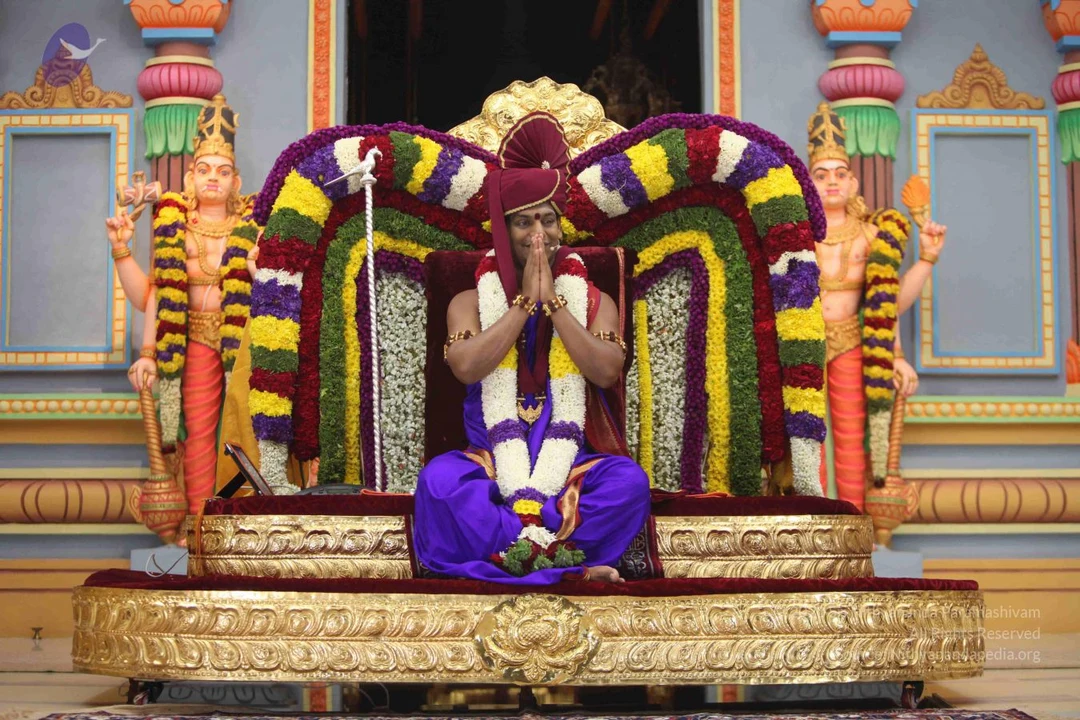
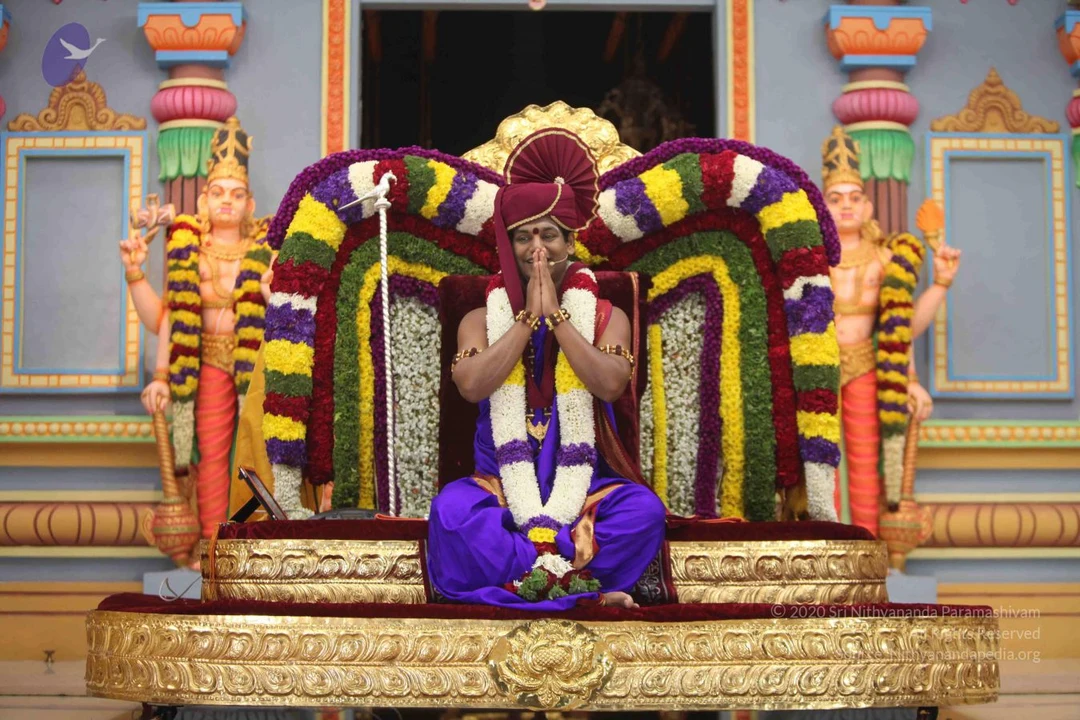
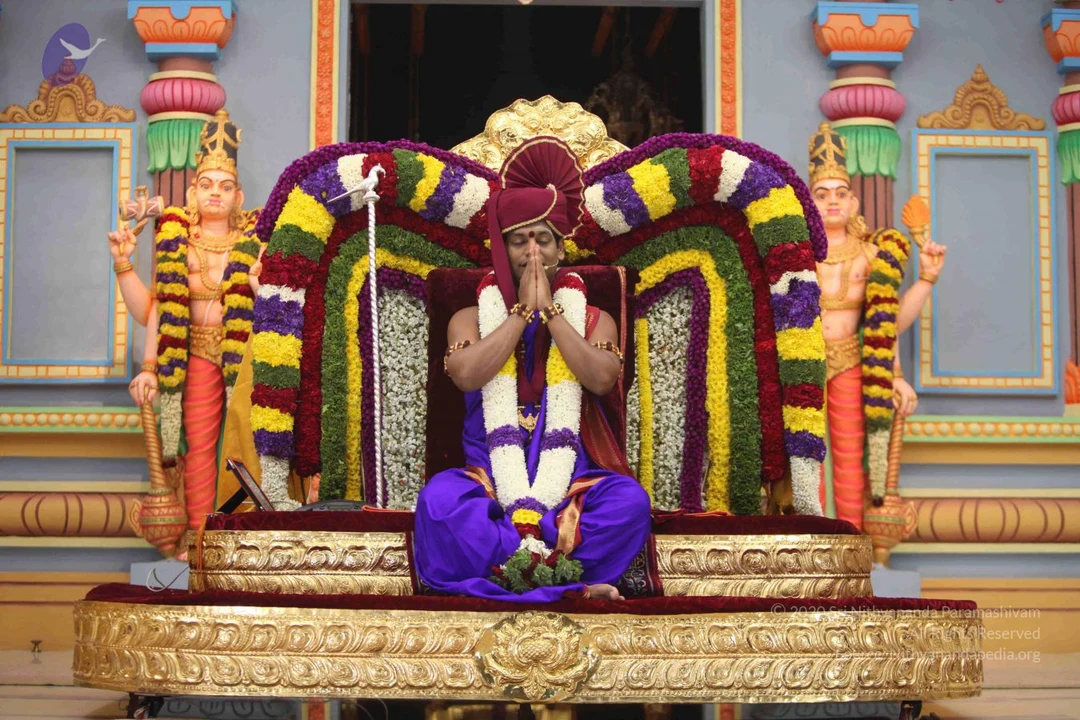
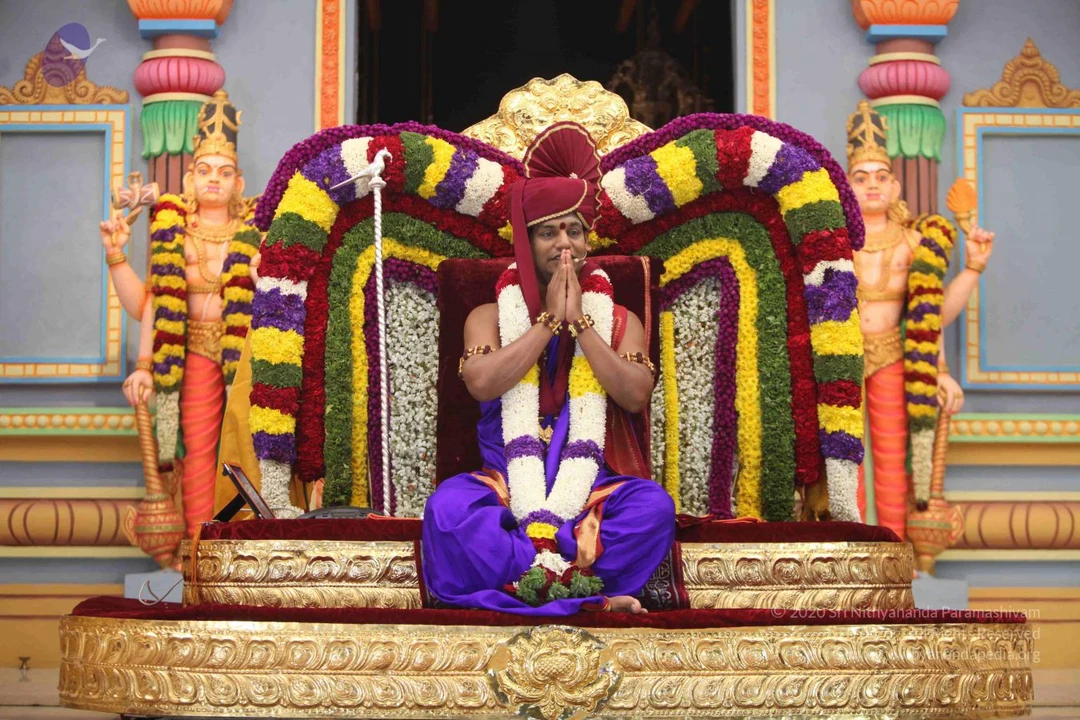
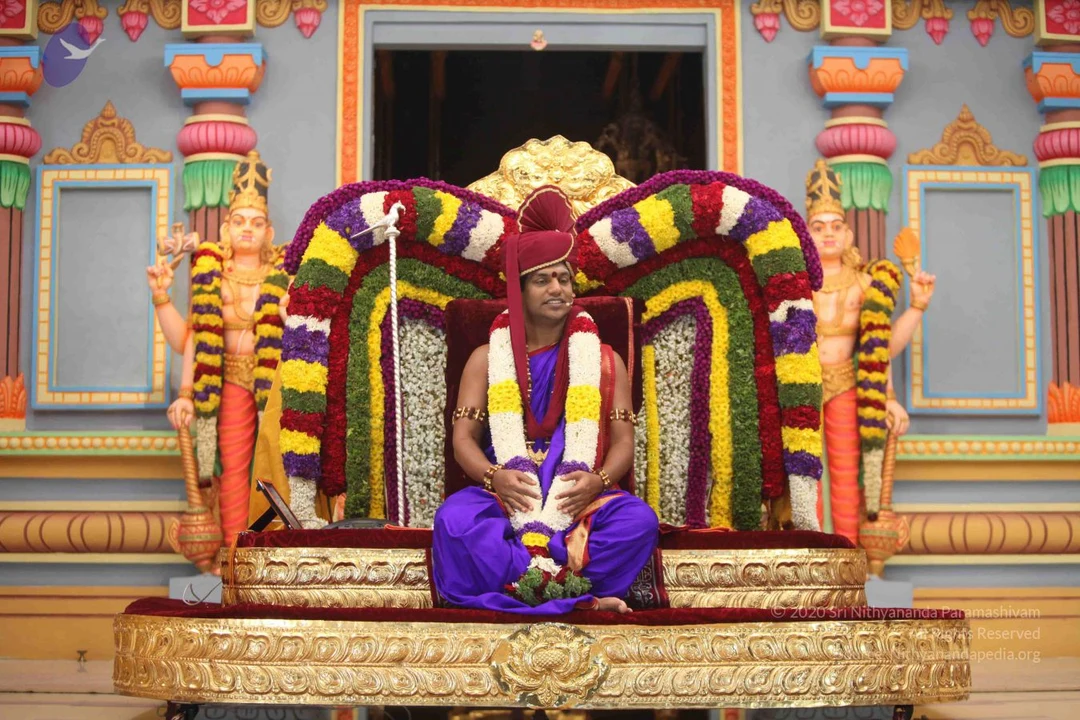
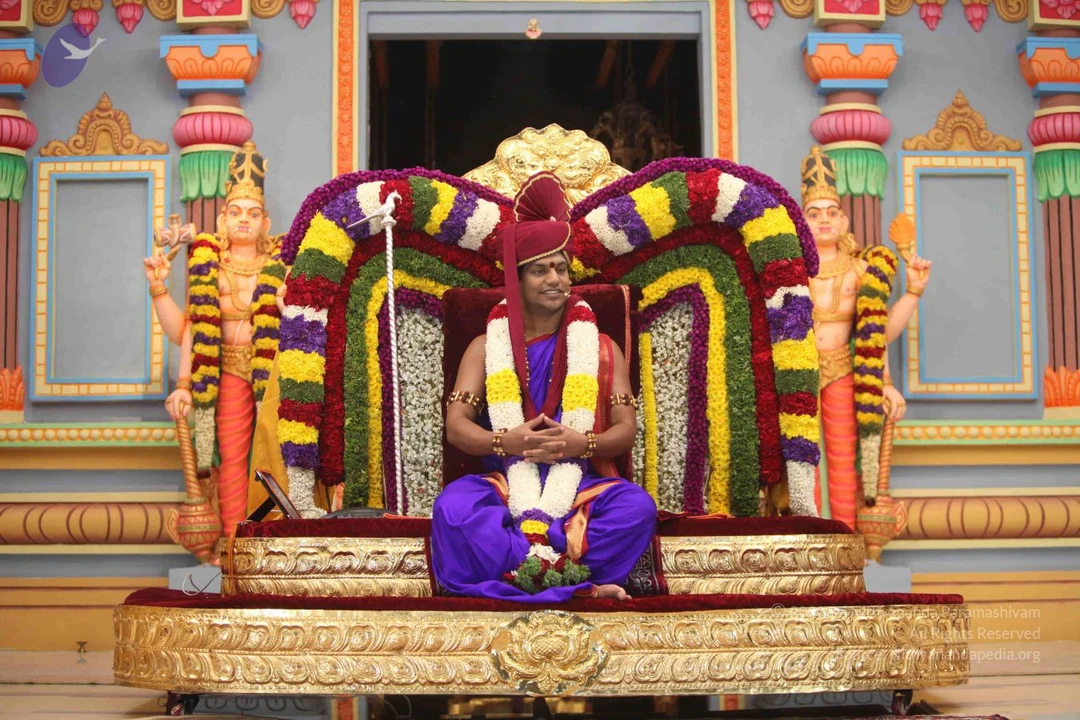
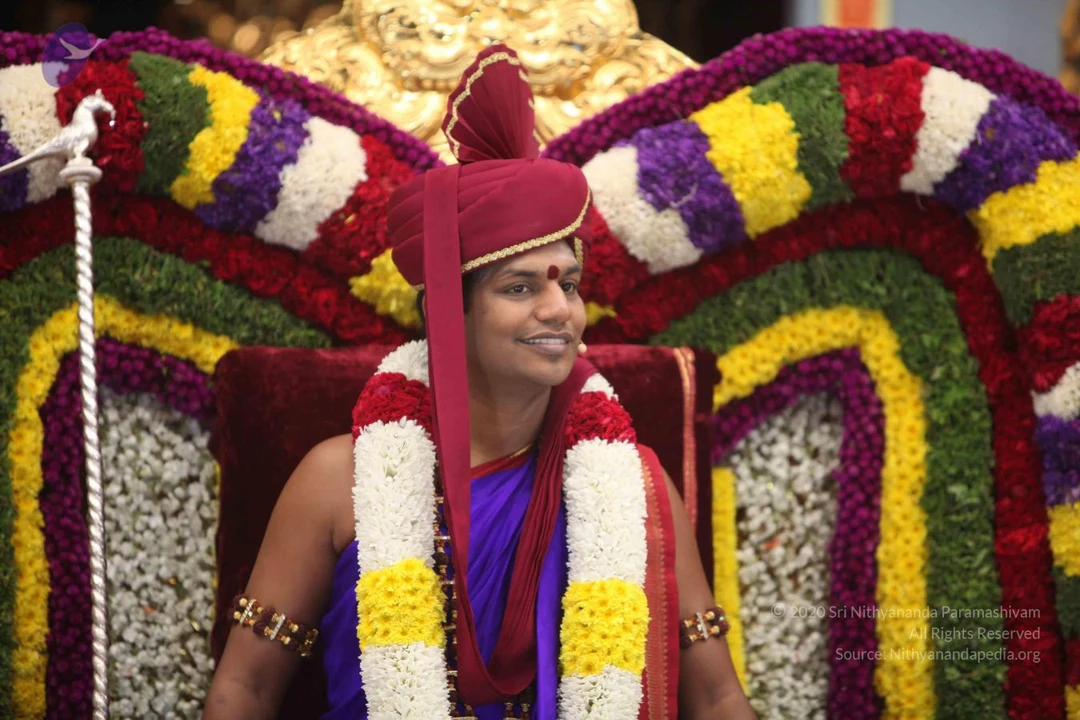
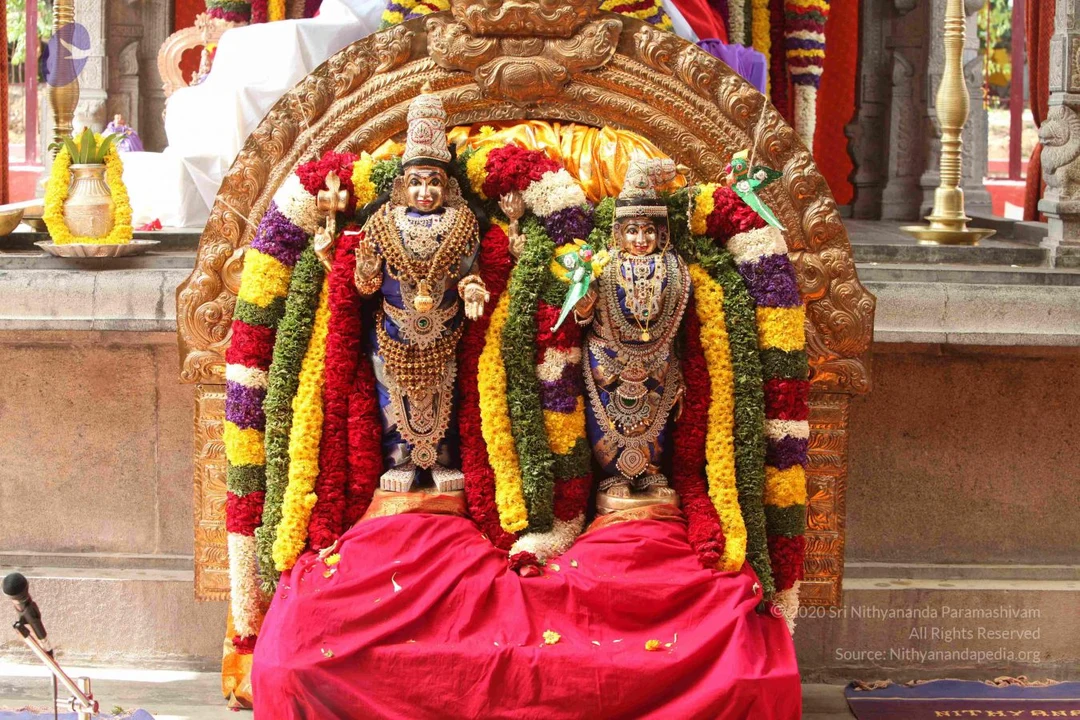
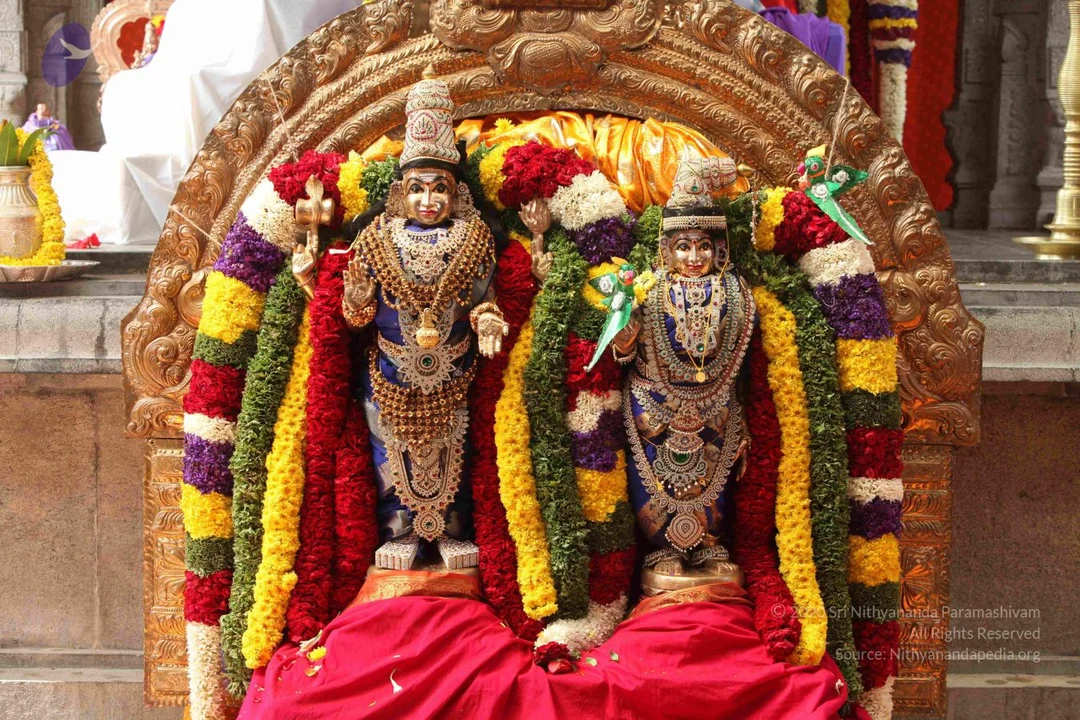
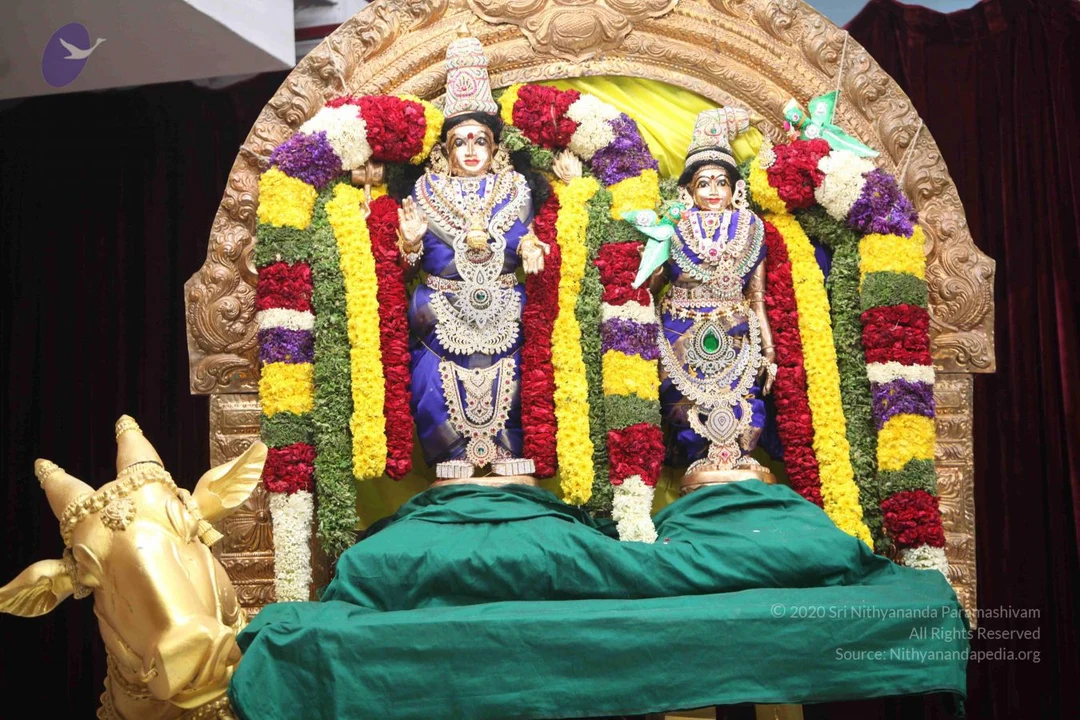
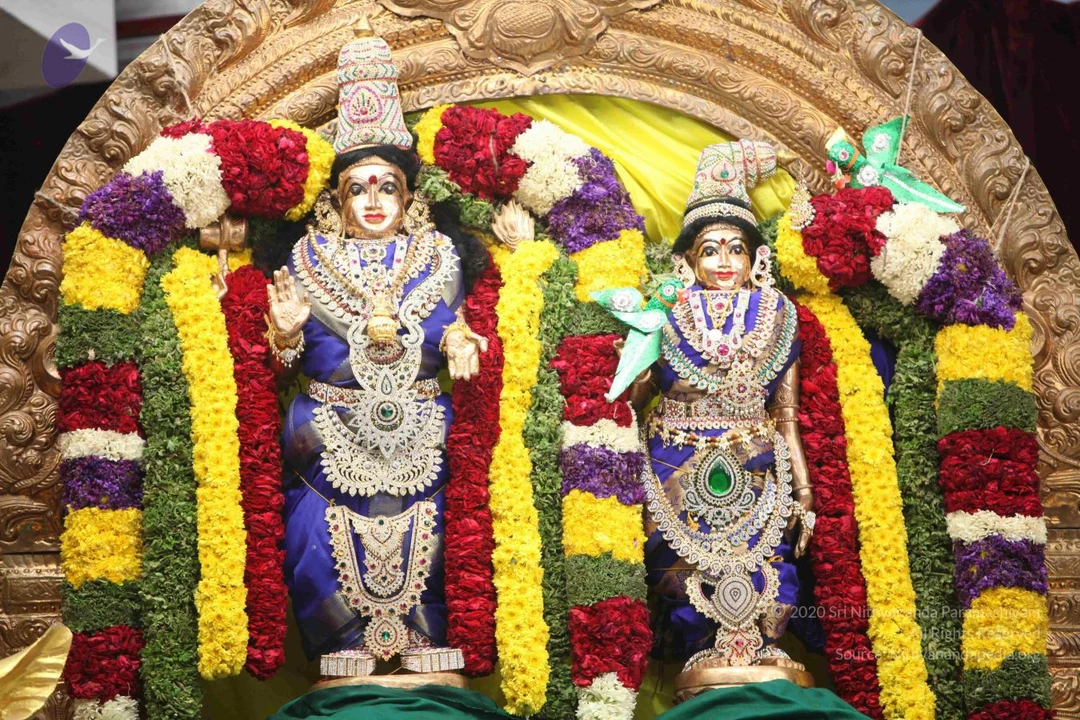
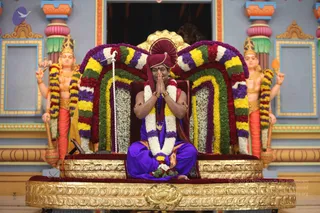
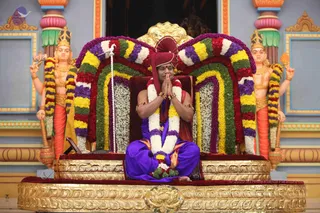
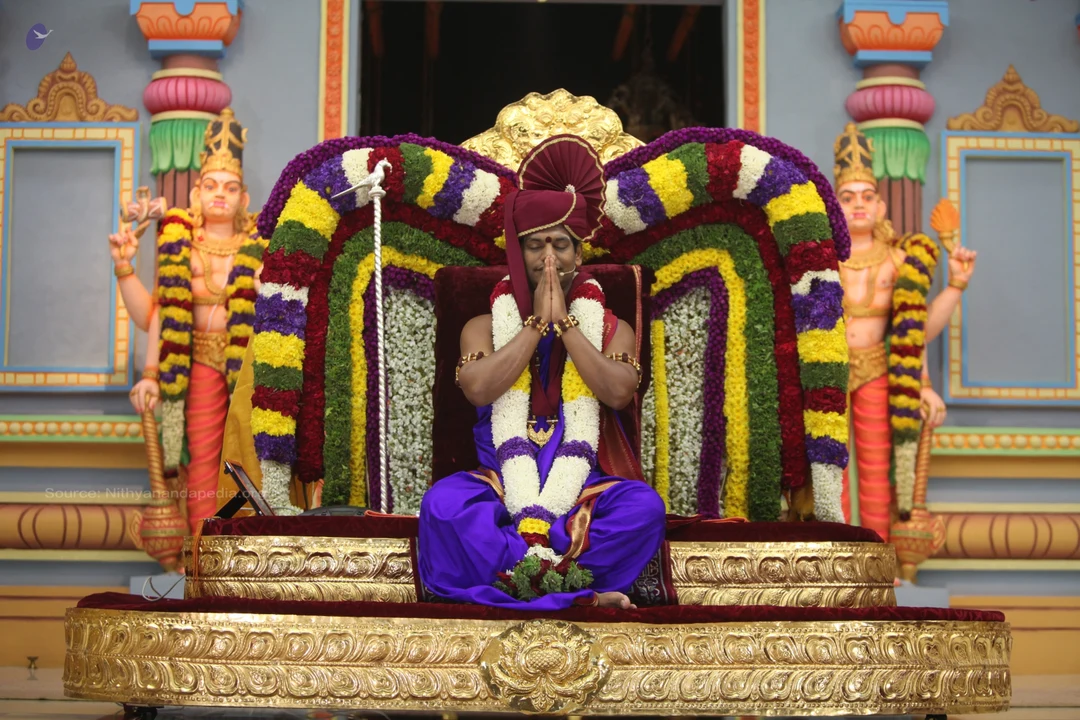
A seated man in purple dhoti and a maroon turban sits with palms pressed together in namaskar on a gold-edged, red-cushioned throne-platform. He wears white and multicolour garlands and gold bangles. Behind him is a tall arch of garlands in purple, yellow, green, red and white framing the throne. Flanking him are two painted standing deity figures with raised hands, and the pastel-coloured temple architecture has ornate pink and green pillars. The scene depicts a pada-puja ceremony.A seated figure with hands pressed together in namaskar sits on a gold-trimmed throne decorated with multicoloured garlands in purple, yellow, green, red and white. He wears a maroon turban, a purple dhoti and a white and yellow flower garland with a small pendant, plus gold bangles. Two painted deity figures with gold crowns and jewellery stand on either side holding ritual objects, and a gold-framed pedestal with a flower offering sits below. a person is indicated by the throne, garland-draped seat and turban, but the appearance cues are limited, so the identity is uncertain.A seated man sits on an ornate gold-and-red throne with his palms pressed together in namaste, wearing a maroon turban, a purple dhoti and draped garlands of white and multicolored flowers, with bangles on his wrists. Two standing deity murti statues flank the throne, each holding a trident and wearing flower garlands. Rainbow-colored garlands and flowers decorate the throne backrest, and the setting resembles a temple hall with painted pillars. Overlay text in the corner reads Paramashivam and , with a site credit. This appears to be a pada puja scene.A seated man in a deep red turban and purple robe sits cross-legged on a gold throne (peetha) before a temple backdrop with painted pillars. He presses his palms together in greeting, wearing a long white and multicolored garland with gold armbands. The throne is draped with a multicoloured floral arch of yellow, green, purple and red blooms, and two gold-and-white dvarapala guardian figures stand on either side holding staffs. Pada-puja (padapuja) is the ritual setting. Based on the page's description, the seated figure is a person, identified by a crown-like turban, ornate gold jewellery and the honoured throne setting, while the figure's appearance alone is only partly clear.A seated figure in a purple dhoti and maroon-and-gold head wrap sits on an ornate gold-and-red throne (peetha) at the front of a temple hall, hands pressed together in namaskar with eyes closed. A long white and multicolored garland drapes over the shoulders and throne. Flanking the throne are two standing deity statues with crowns, gold waist cloths and garlands, and a flower-decorated arch frames the seat. The setting suggests a pada puja, with a small offering of leaves at the base of the throne.A photograph of a seated man in a purple dhoti and a maroon turban, with a white and multicolored flower garland draped over his shoulders, palms pressed together in namaste on a gold-trimmed throne. The throne is framed by an arch of garlands in purple, yellow, green and white. Two standing deity murtis flank him, each with gold crowns, garlands and raised hands. The gold-edged dais and ornate pillars suggest a temple setting, consistent with a pada-puja gathering. The man's appearance is consistent with a person, given the turban and seated throne with garlanded honours, but the cues are limited, so identity remains uncertain.

DIAL-THE-AVATAR

7 photosSource gallery
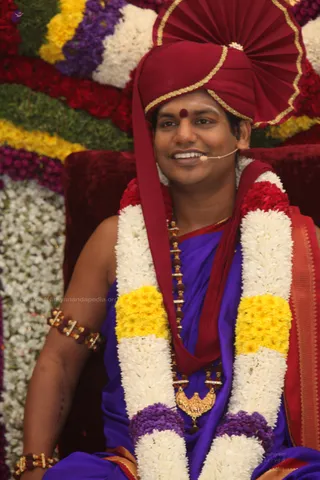
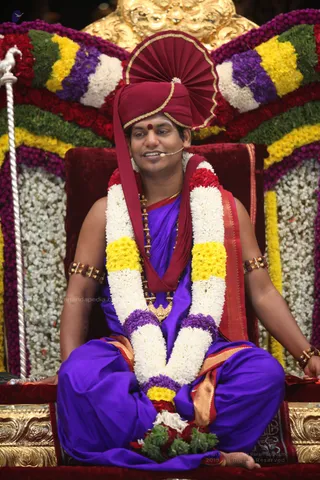
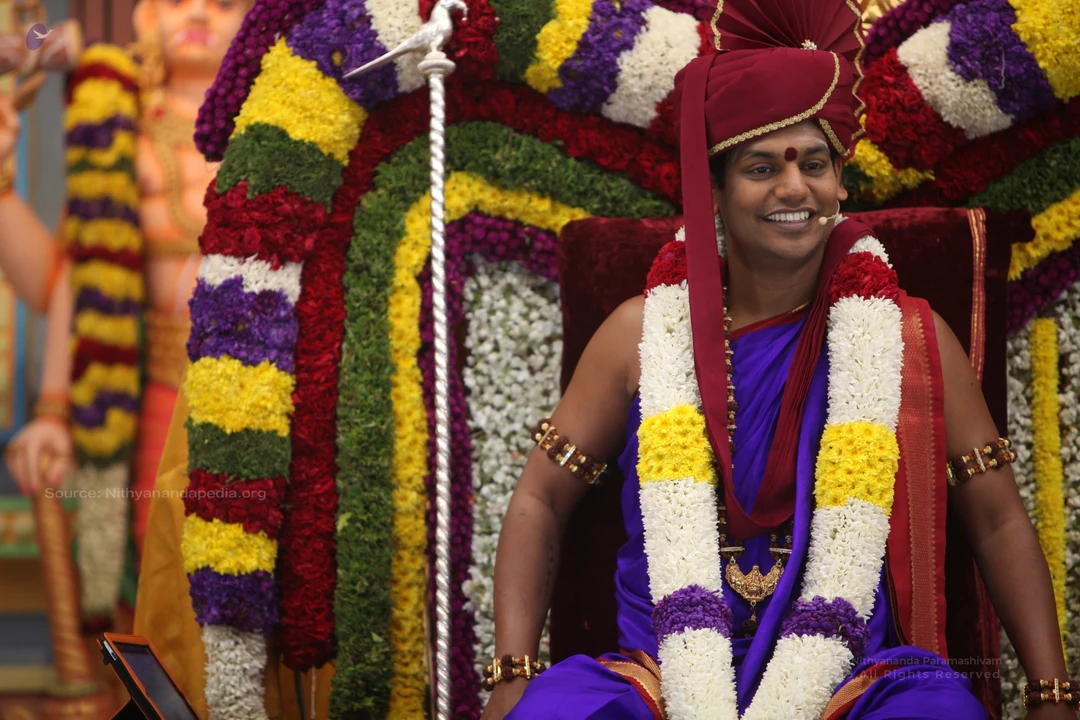
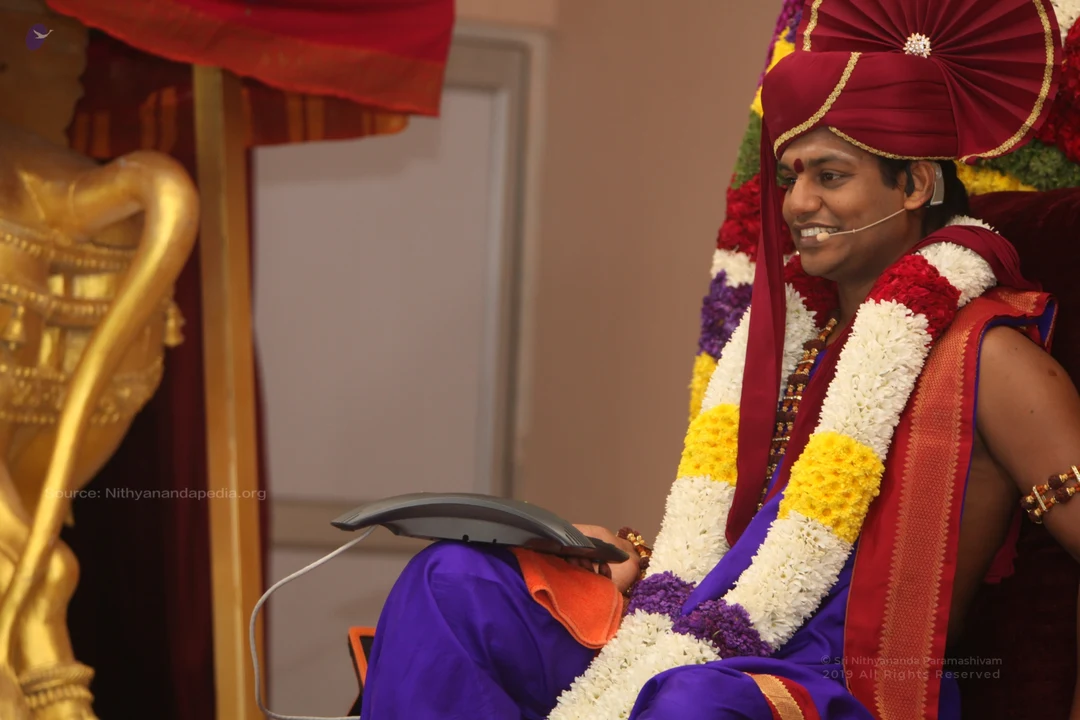
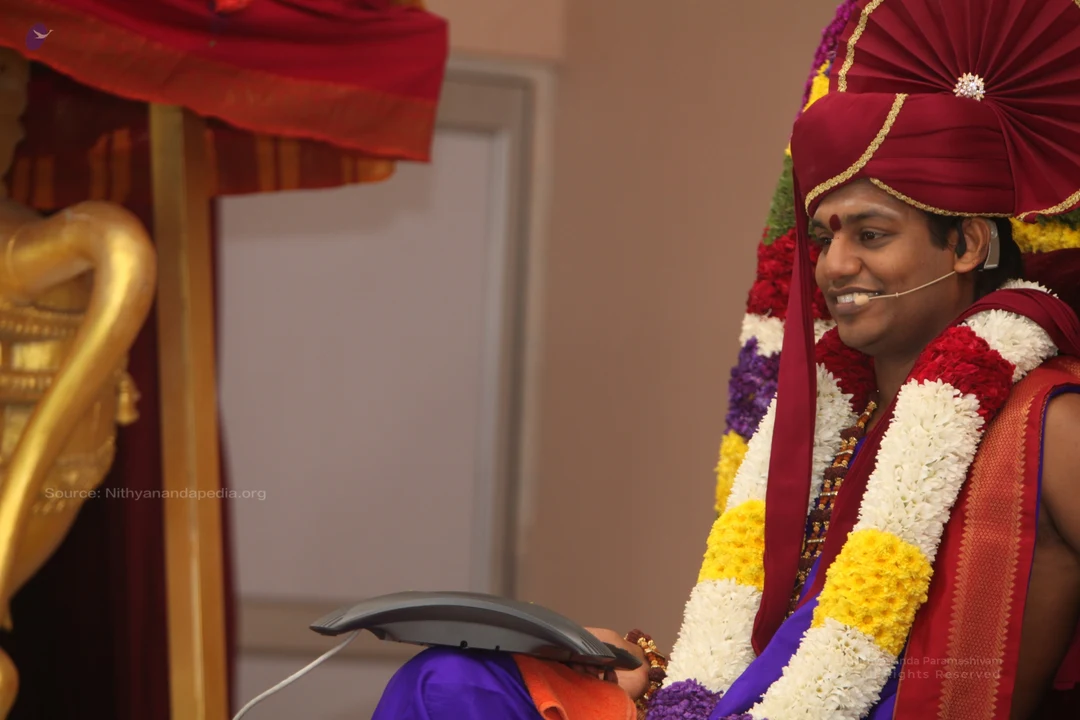
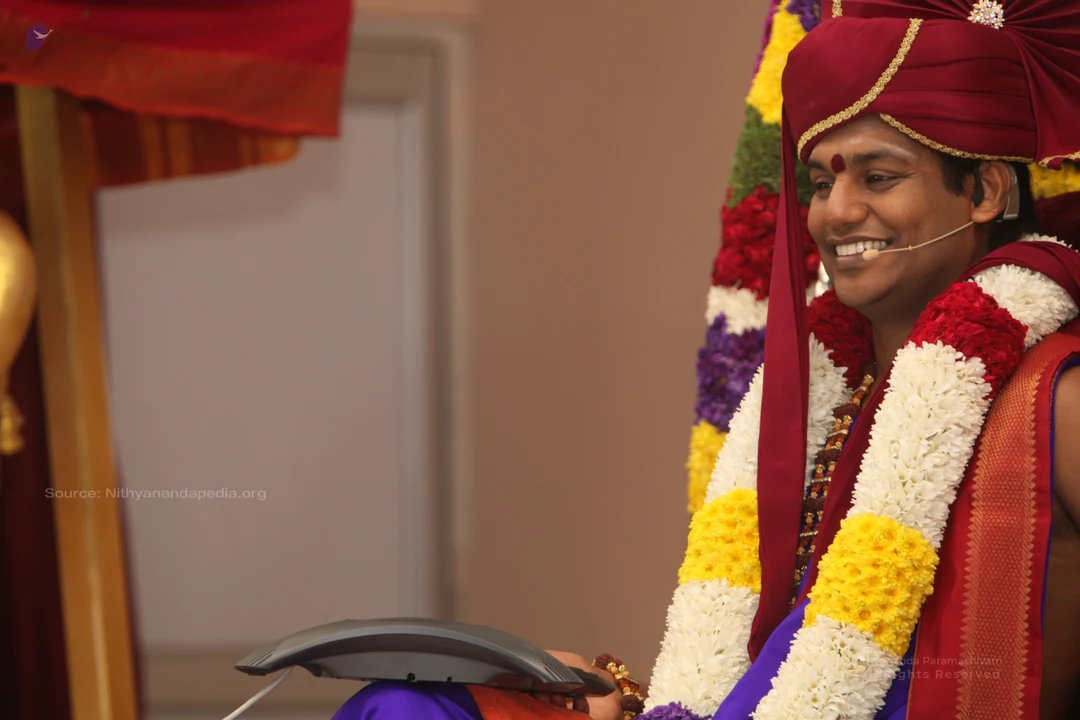
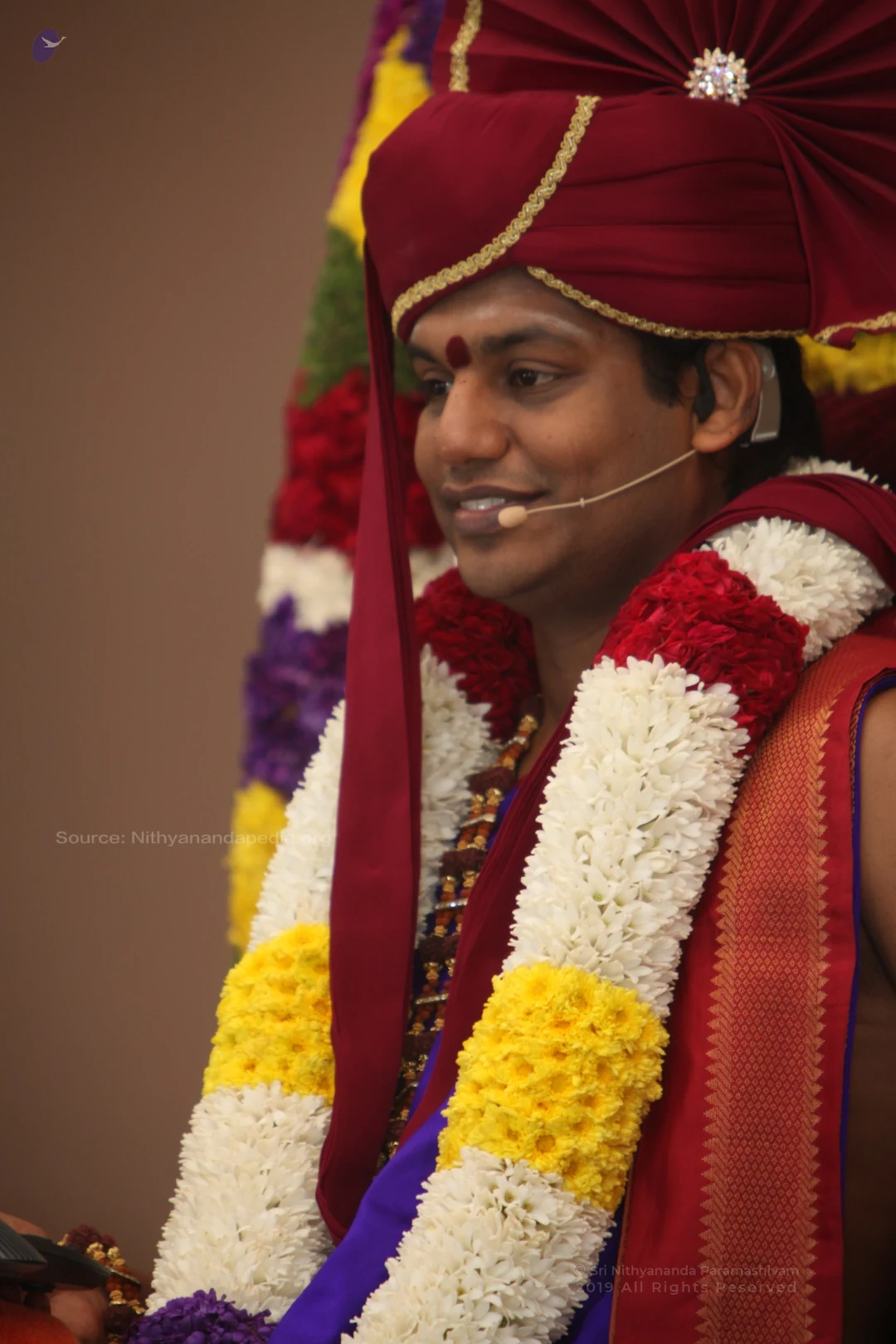
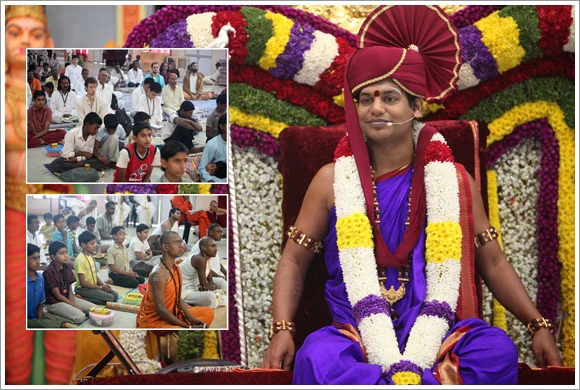
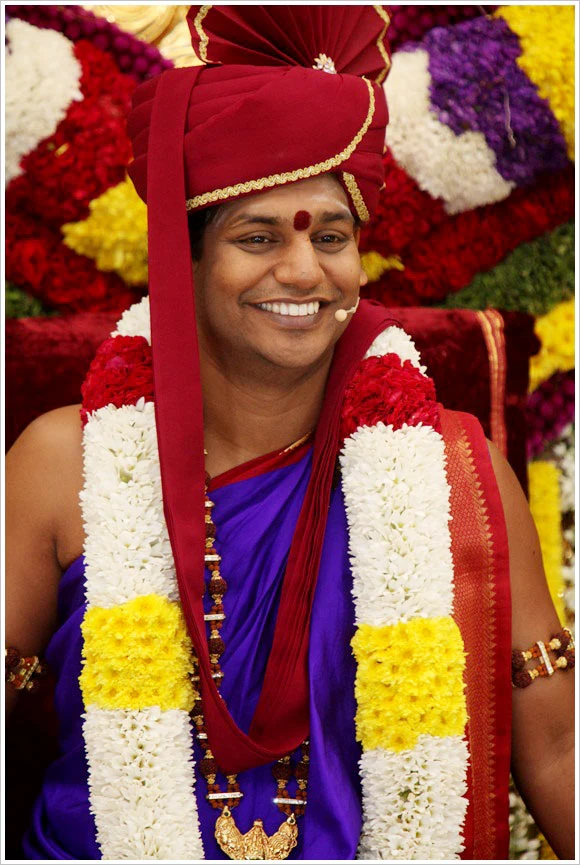
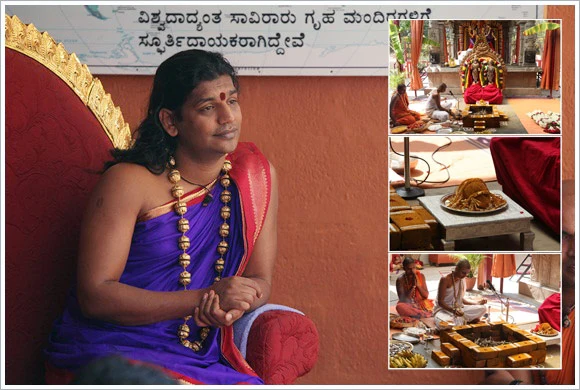
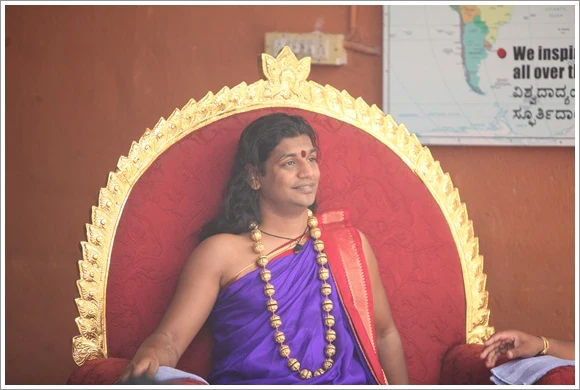
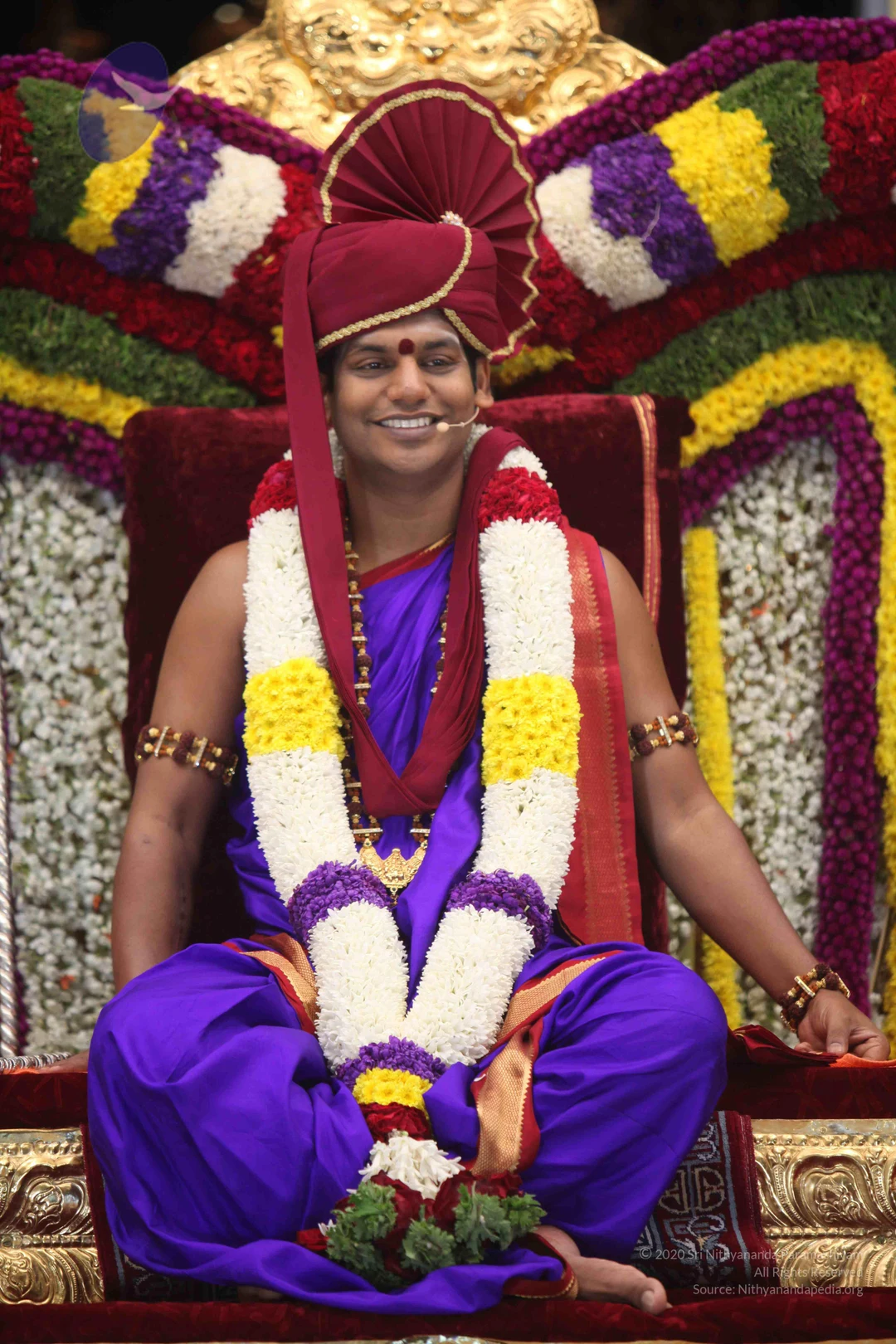
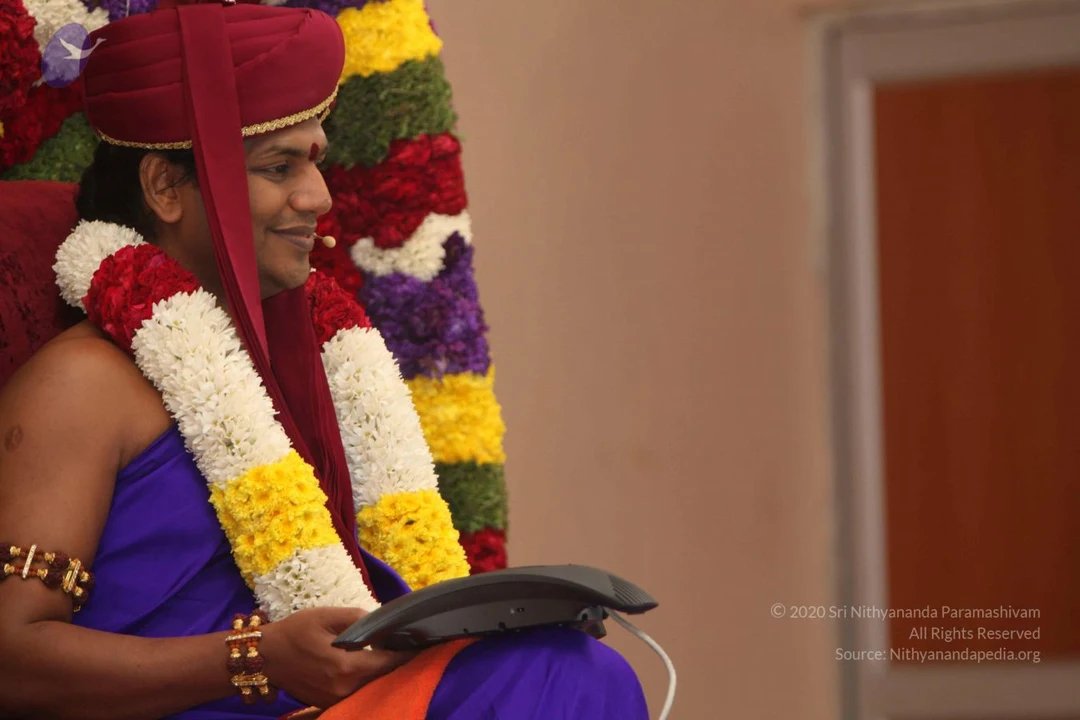
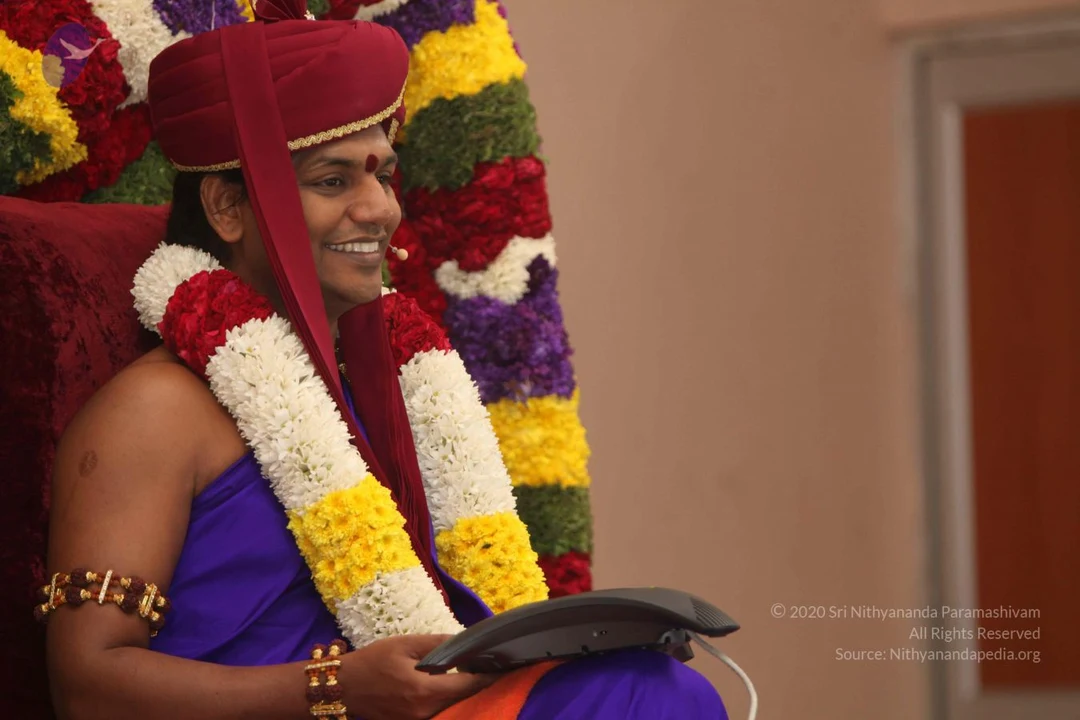
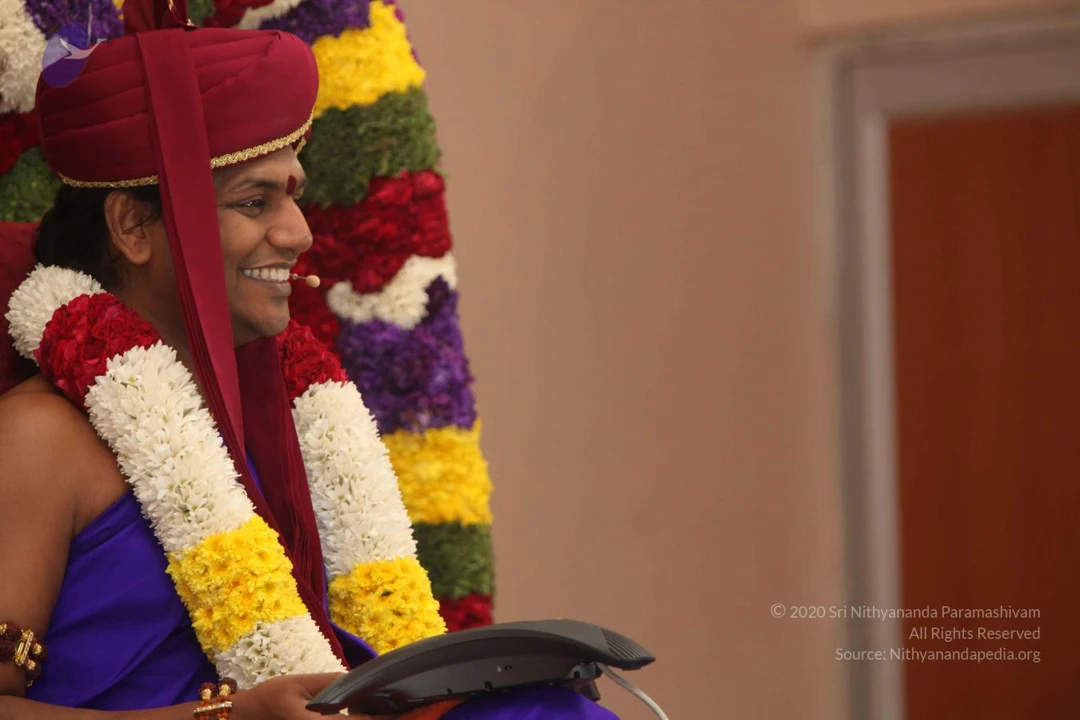
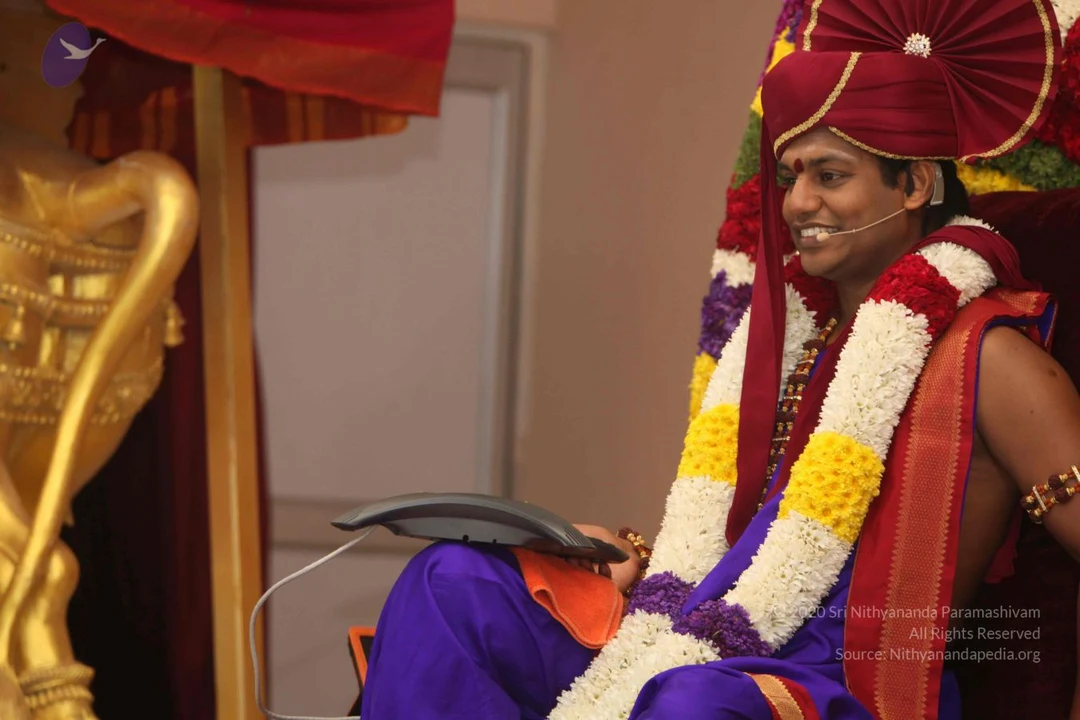
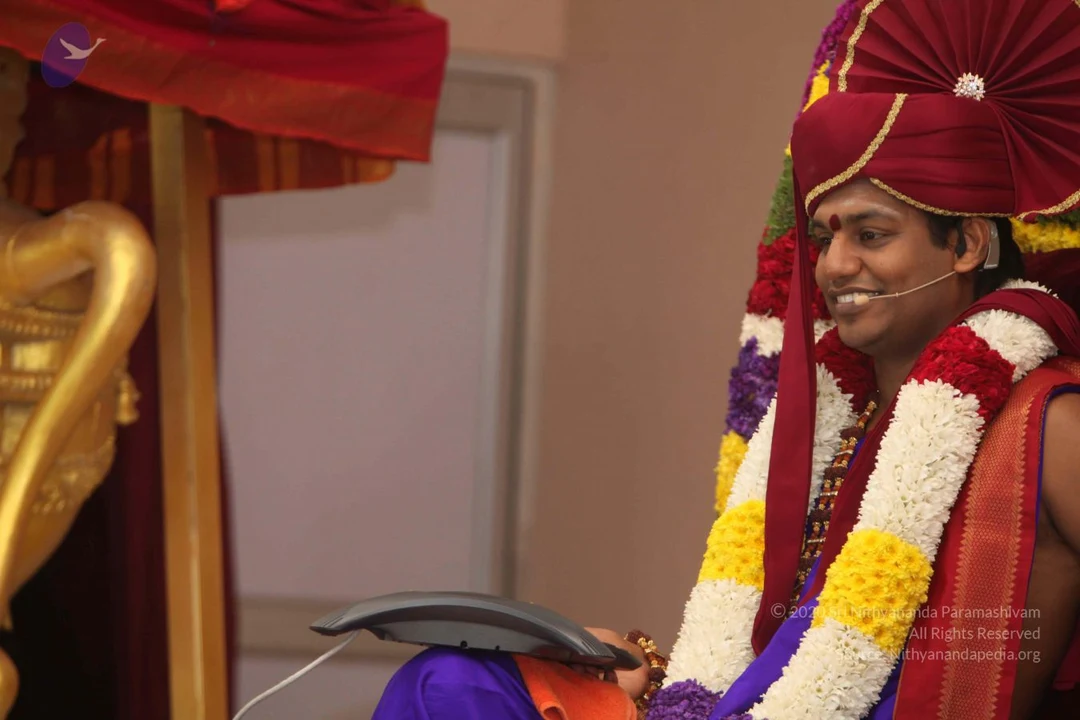
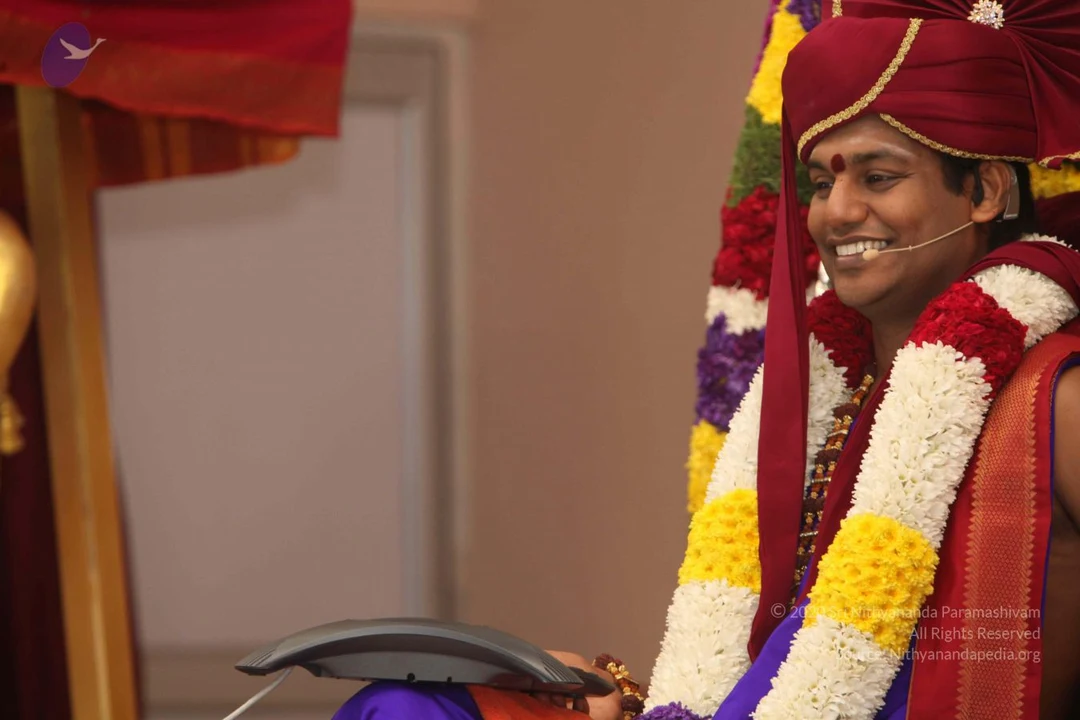
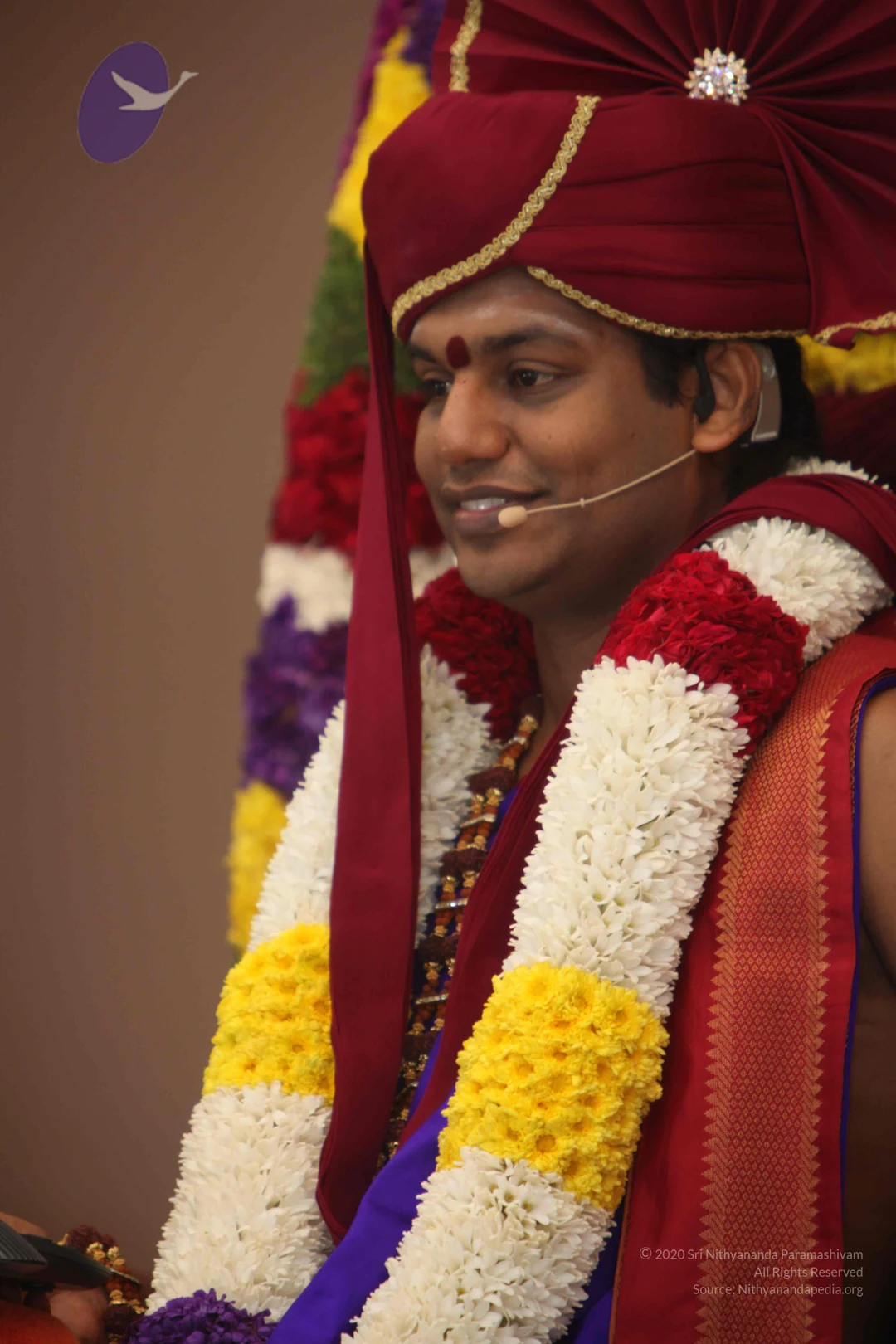
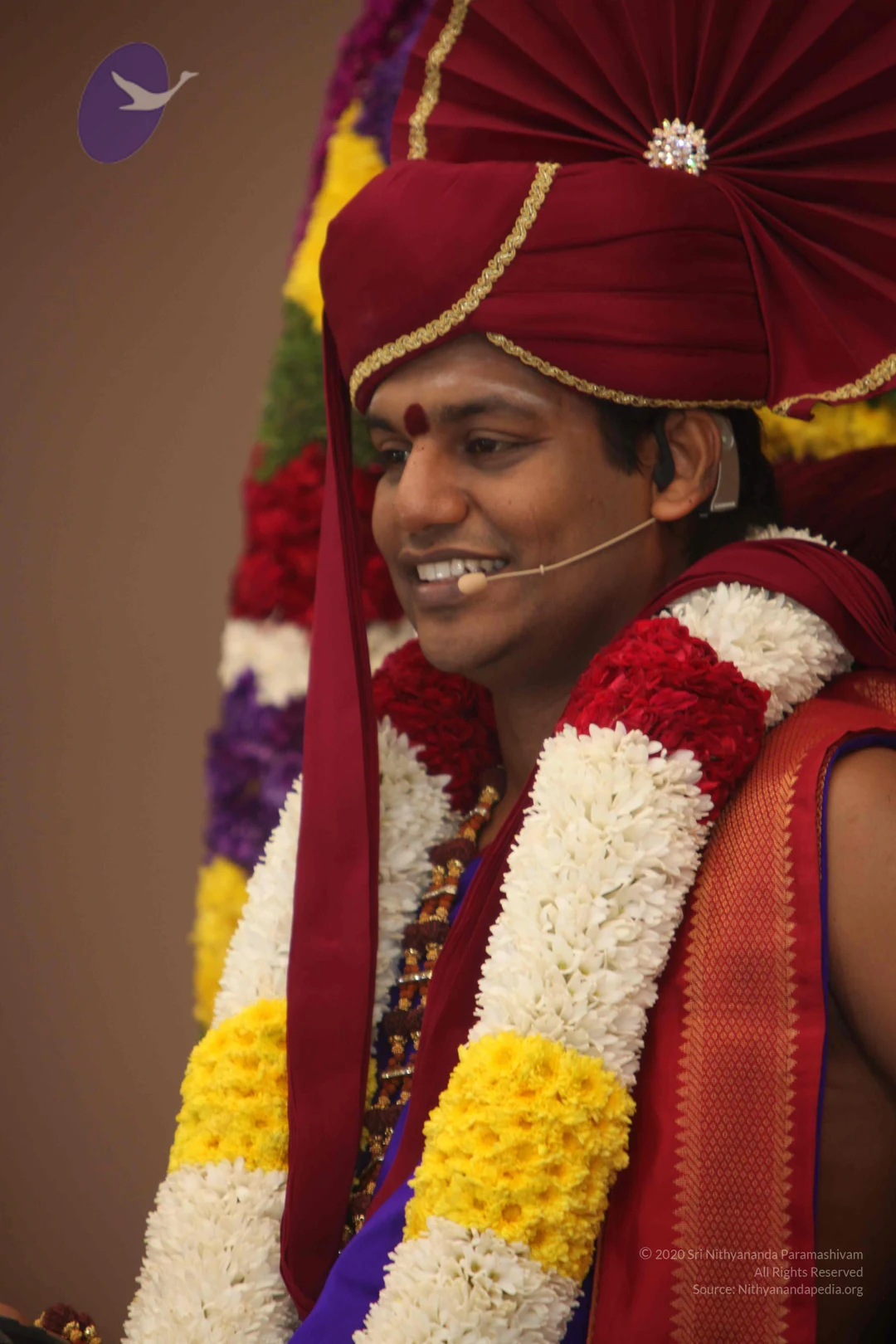
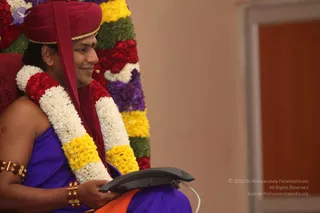
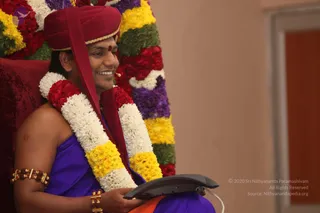
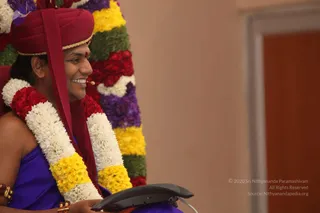
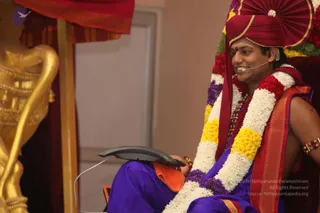
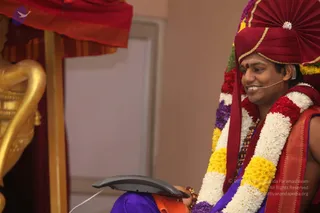
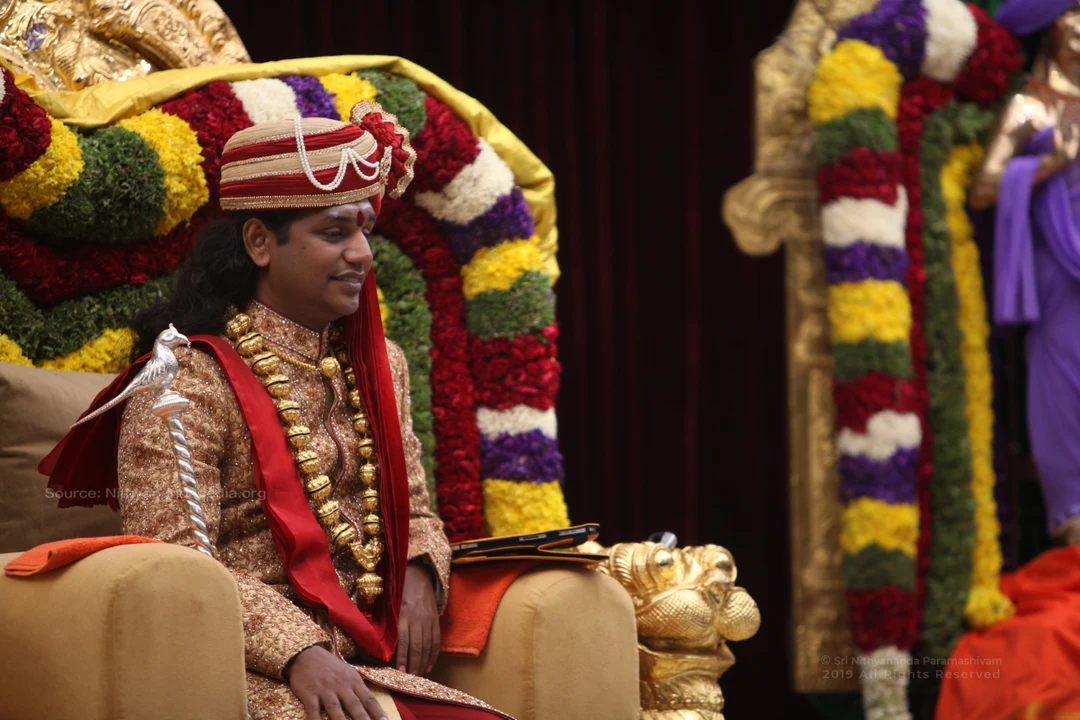
A photograph of a seated figure in a crimson turban with a red cloth draped over one shoulder, wearing a purple garment and a long white and yellow flower garland with red blooms. He has a red bindi, rudraksha-style beaded bracelets on his wrist, and a small headset microphone near his mouth. He rests a black handheld device on his lap and smiles toward the side. Behind him stands a floral backdrop of red, white, purple, yellow and green blossoms.A photograph of a smiling man seated on a red cushioned chair, wearing a red turban with gold trim, a red-and-purple garment draped over his shoulder and a blue-purple cloth around his body, with a long multicolour garland of white, yellow, red and purple flowers over his shoulders. He wears a red bindi, a beaded rudraksha bracelet and gold-toned armbands, and holds a small black conference-style microphone or speaker device in his lap. Behind him stands a tall flower decoration of red, yellow, purple, white and green blooms against a pale wall.A photograph of a smiling man seated at a microphone, wearing a deep red turban with gold trim, a red shawl draped over his shoulder, and a violet garment. He wears thick white and yellow marigold garlands with red flowers and a red bindi on his forehead. Behind him stands a floral backdrop of stacked rows of red, white, yellow, purple and green blossoms, and a plain beige wall with an open doorway on the right. He rests his hands on a dark podium. The photo appears to be a pada-puja setting. The man is a probable Swamiji by appearance: a turban, saffron-toned red clothing and ornate garlands, presented as a seated guru at a microphone.A photograph of a smiling man seated on an ornate throne-like chair in a temple-style setting. He wears a deep red turban with a jewelled brooch, a headset microphone, a thick multicolour garland of white, yellow, red and purple flowers, rudraksha-style beads, a red shawl and violet garments with orange trim, and holds a cordless phone. To the left, a golden deity figure and a red draped canopy are visible. Appearance-based label: a person, seated in a seat of honour with a garland and turban, consistent with the page's account of a pada-puja event.A smiling man sits on a gilded golden throne-style seat with red draped fabric above it. He wears a large red and gold turban with a jewelled brooch, a red-and-gold shawl, and a purple lower garment. He is adorned with long garlands of white jasmine, red roses, yellow marigolds and purple flowers, and wears rudraksha beads and a red tilak on his forehead. A small microphone headset is attached near his face, and he rests his hand on a grey podium or cushion. The setting appears to be a satsang or pada-puja event with a golden peetha behind him. Probable Swamiji cues: long garlands, ornate ceremonial turban and rudraksha mala, seated on a throne during a pada-puja event.A photograph of a smiling man seated on a ceremonial throne-like seat during a pada-puja event. He wears a deep red turban with gold trim and a small jewel, a red bindi, and a small microphone clipped near his ear. Around his neck are thick garlands of white jasmine and yellow and red flowers, with rudraksha beads visible beneath. He wears a red and gold shawl over the shoulder. Behind him hangs a garland of red, purple, yellow and white flowers, and a red fabric canopy with gold tassels frames the left side. A person's hand with a bead bracelet rests on a silver footstool or pada rest in the foreground.

NITHYA-KRIYA-FOR-CURE-OF-LOW-SELF-ESTEEM

7 photosSource gallery
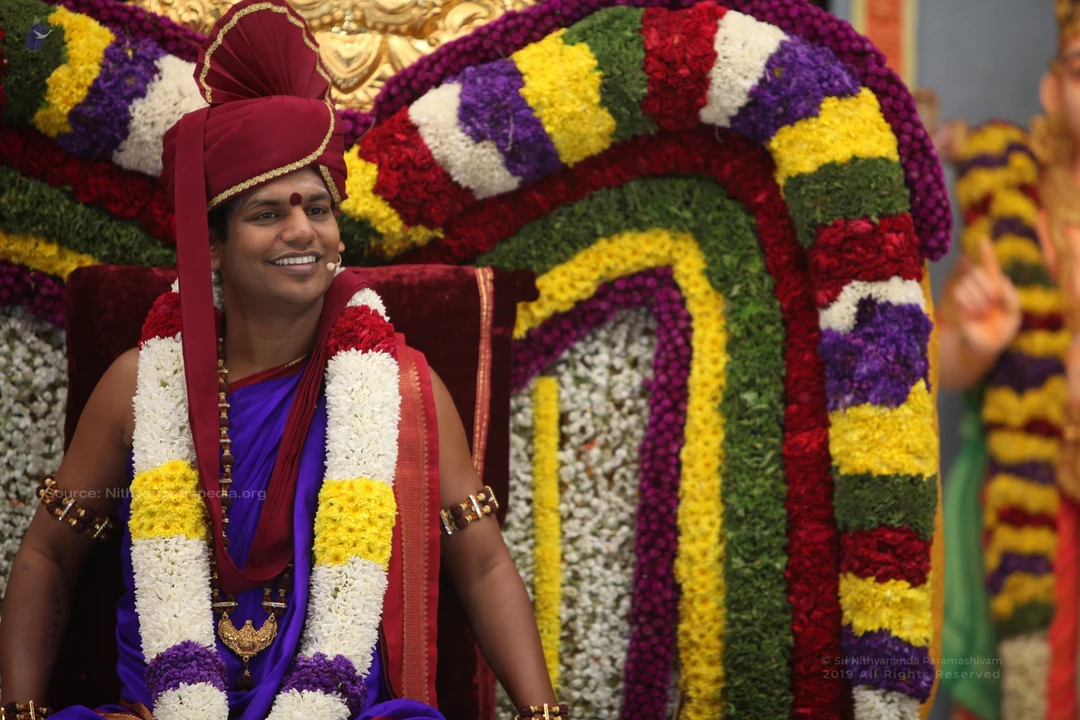
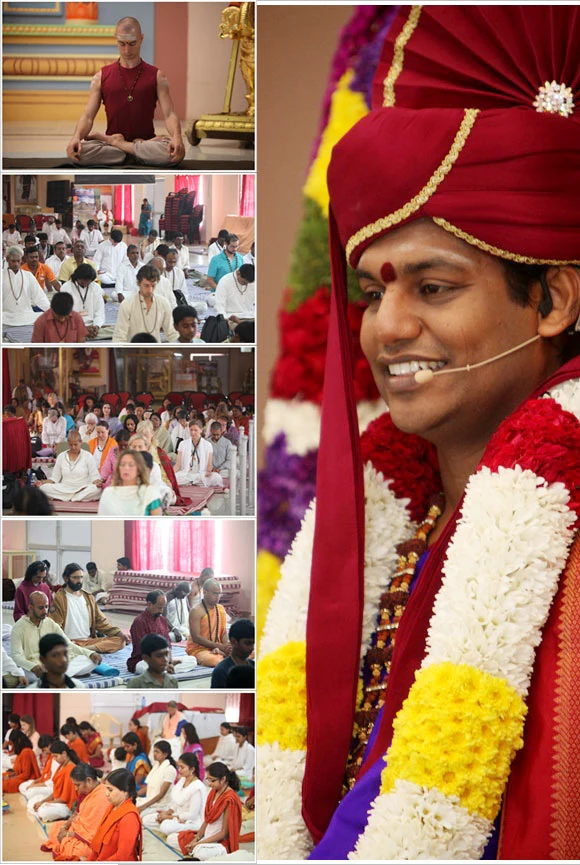
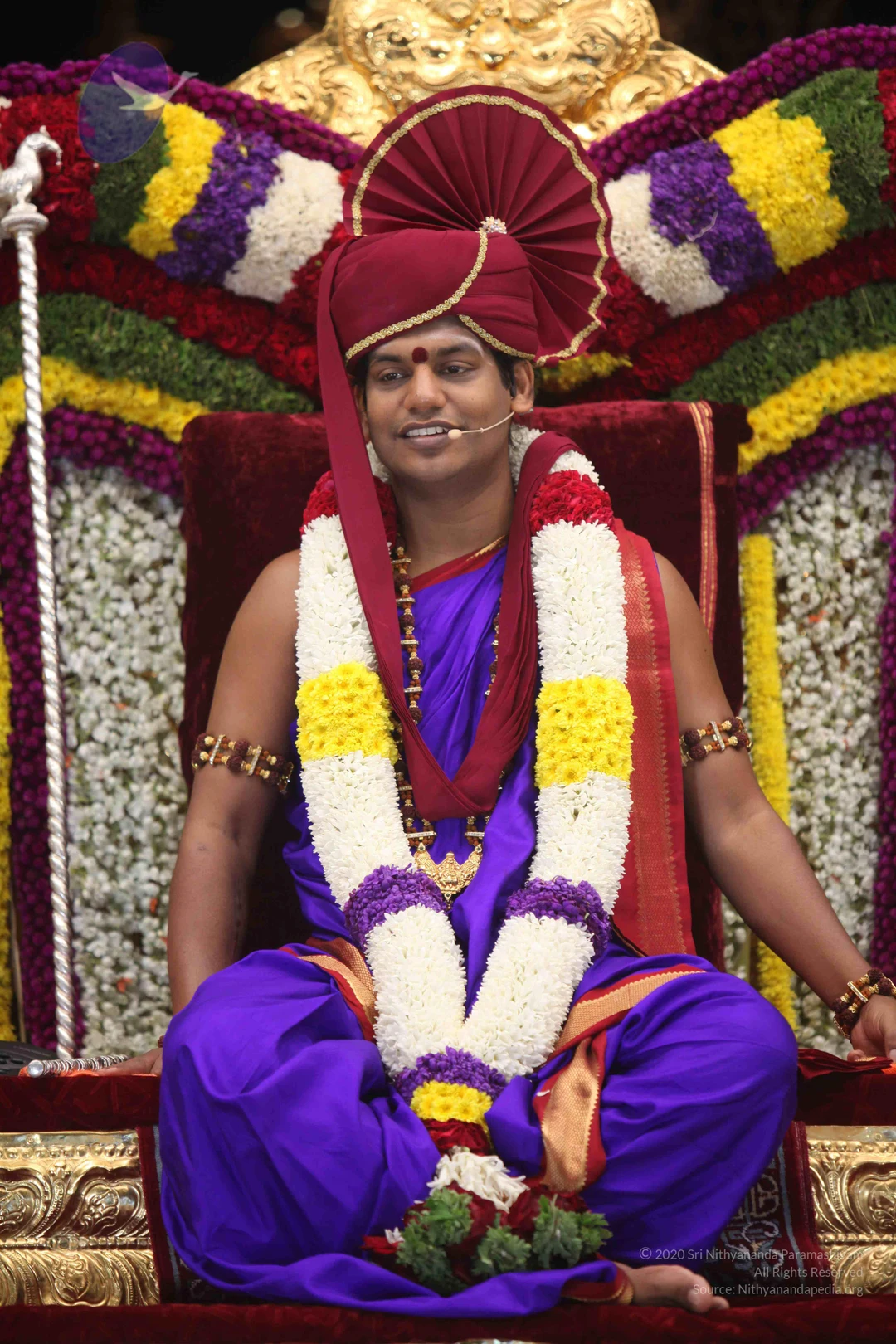
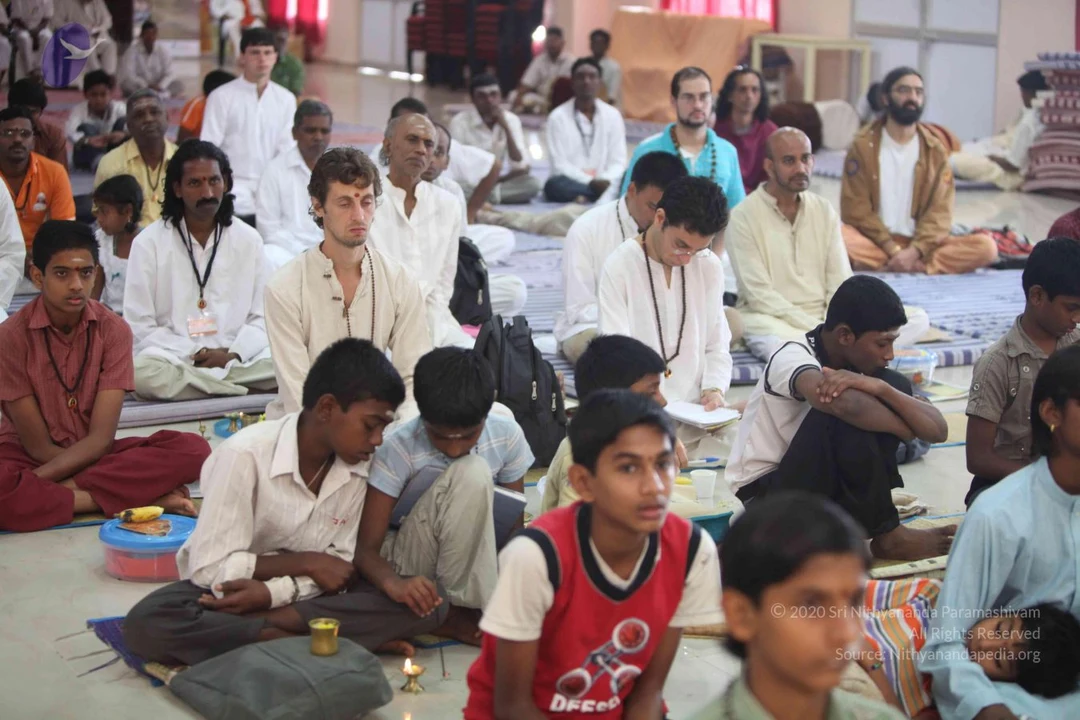
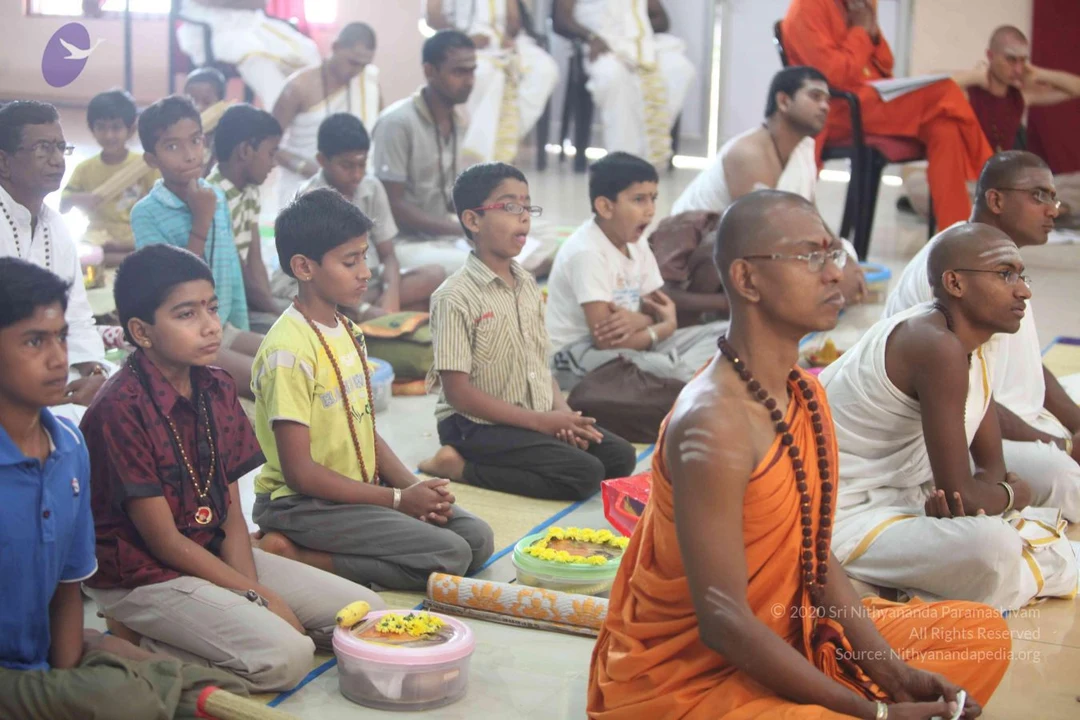
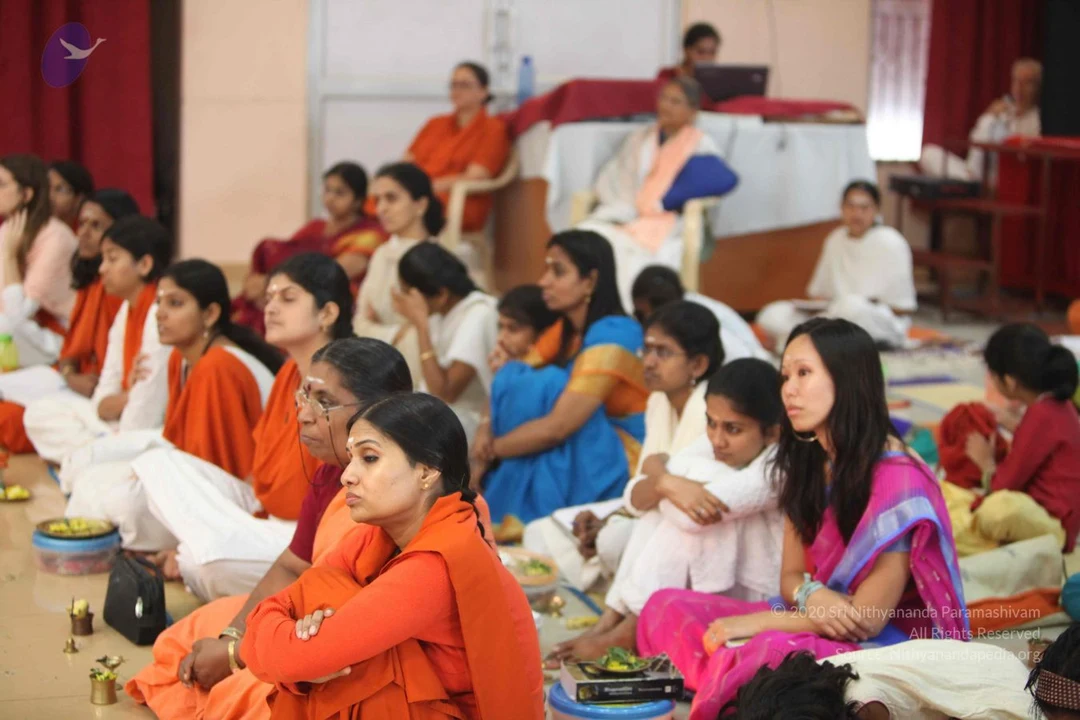
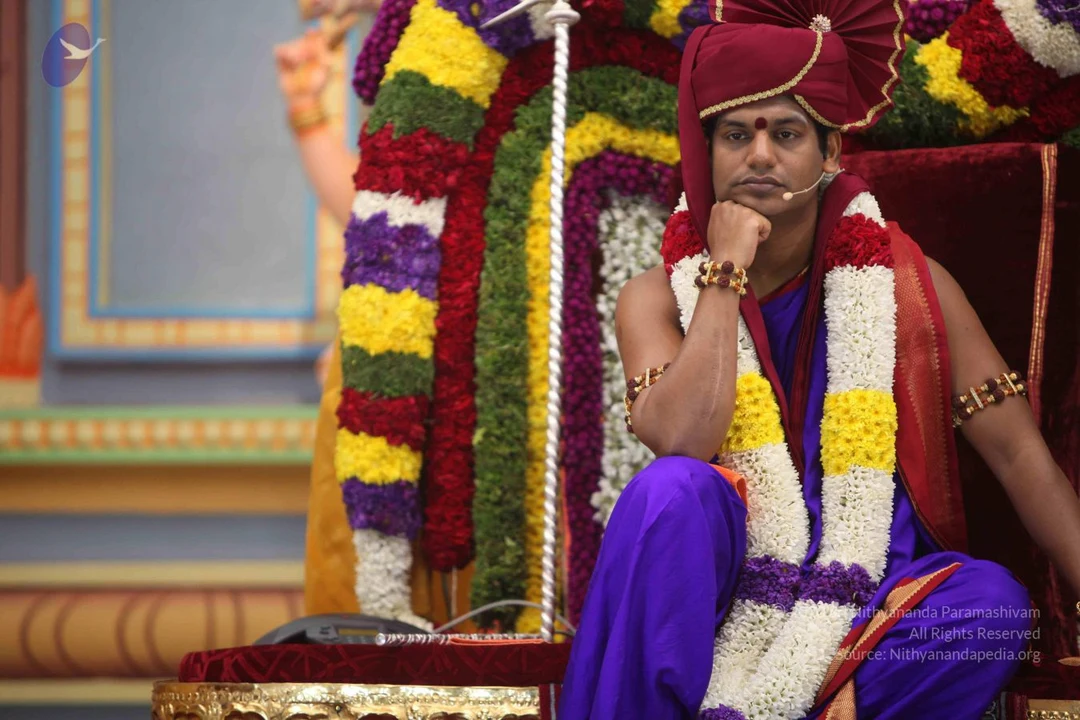
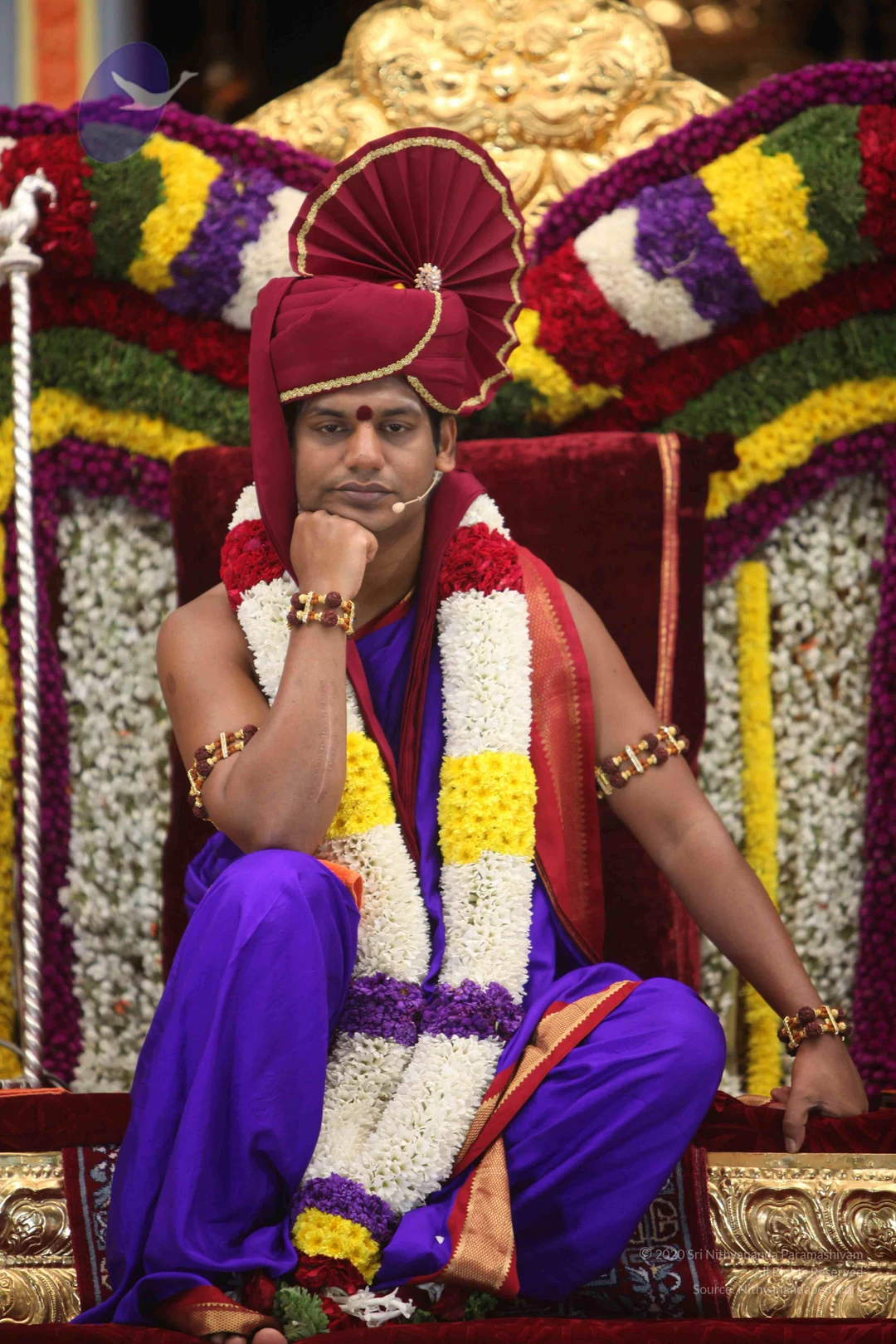
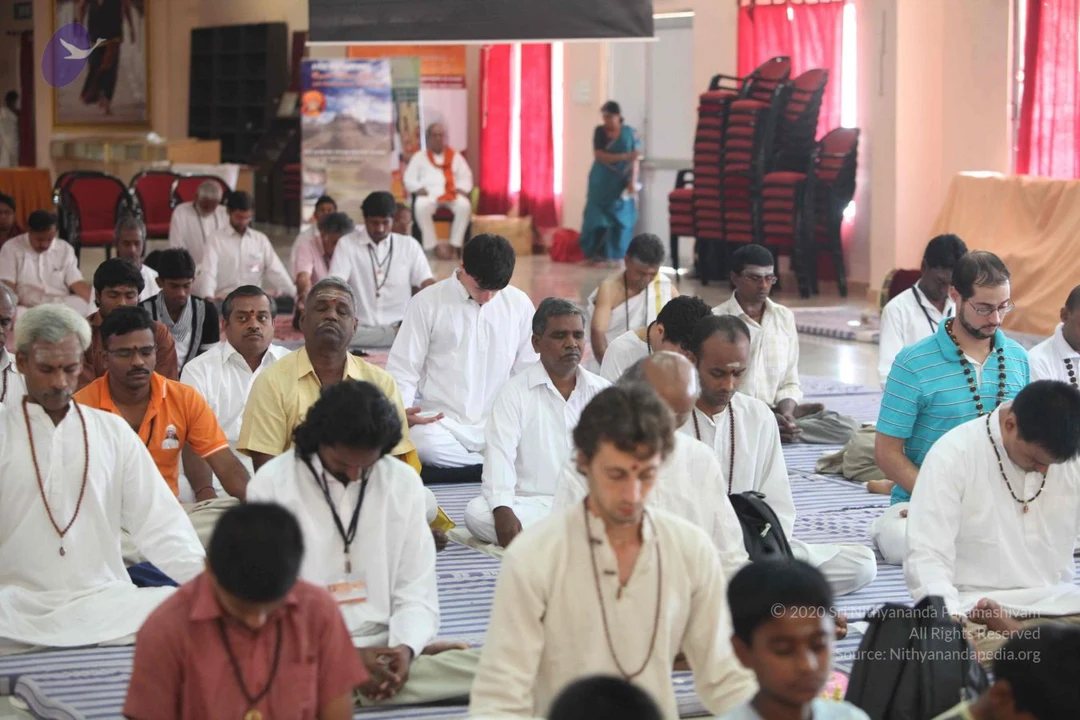
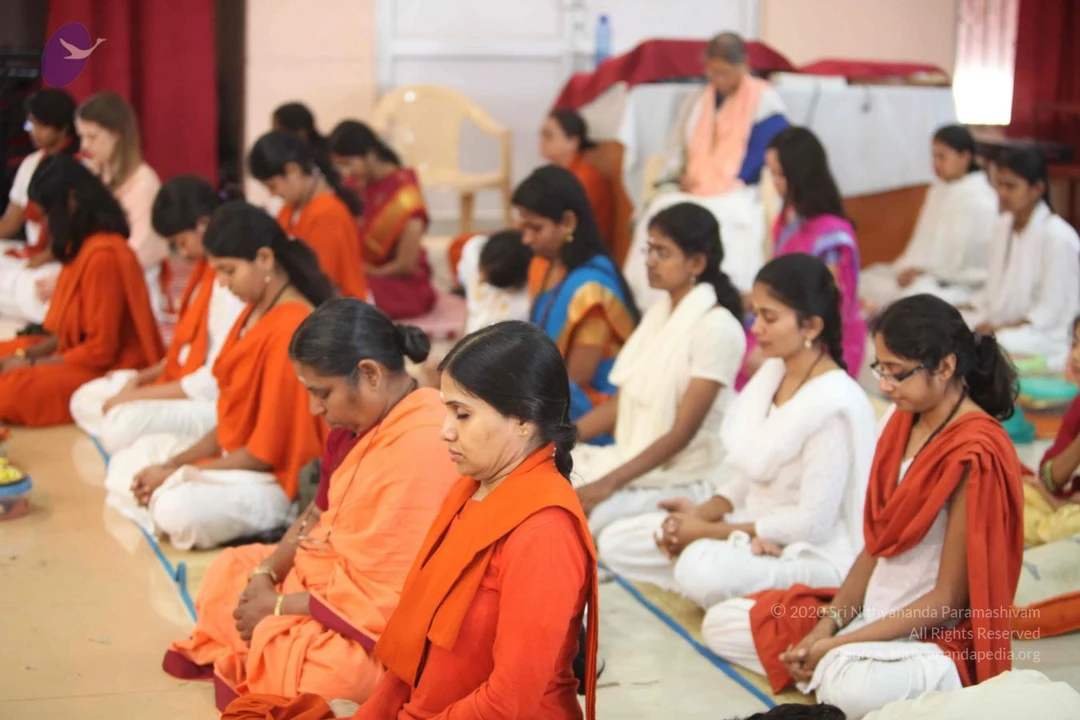
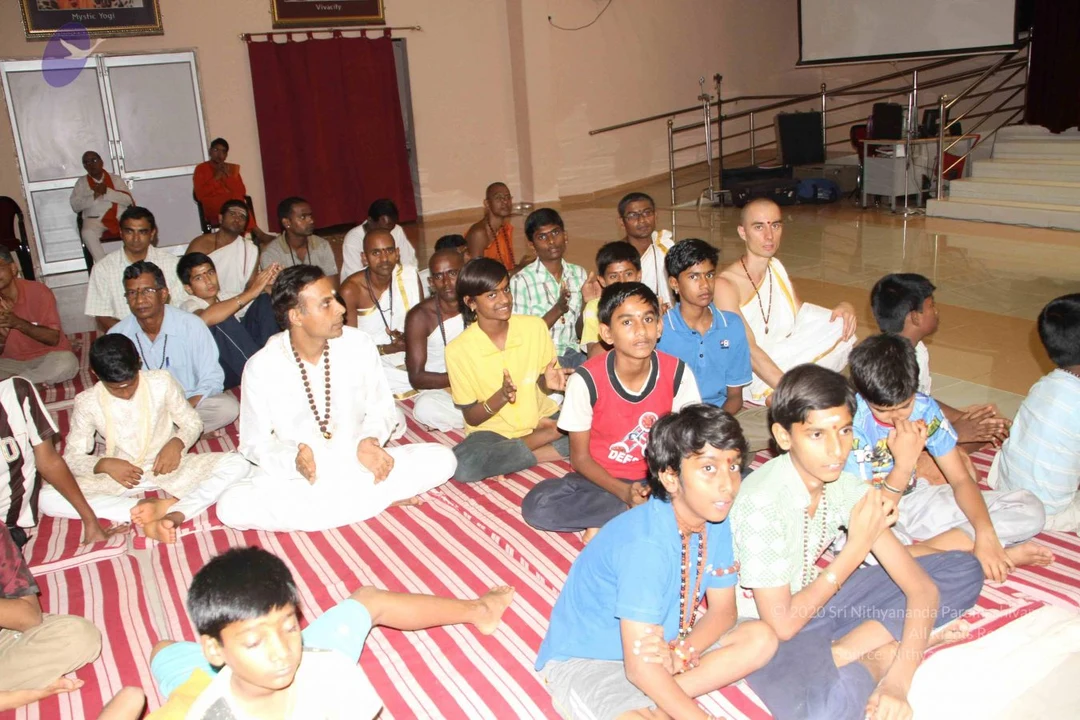
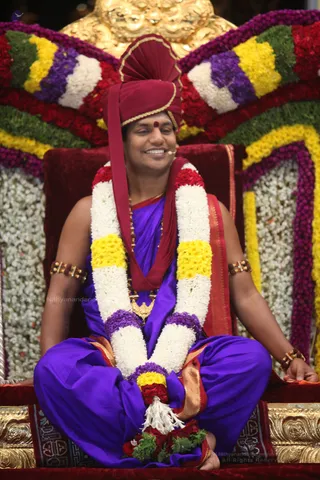
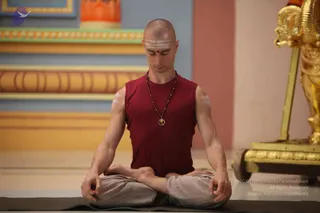
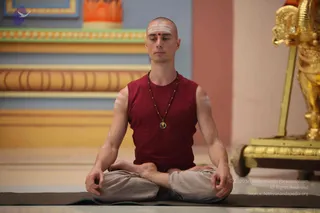
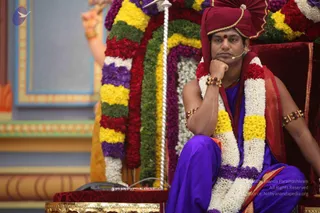
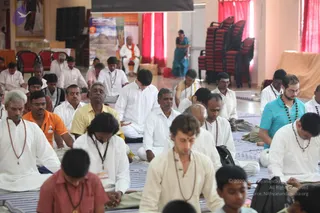
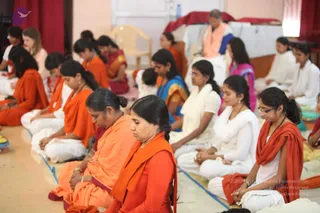
A shaved-headed man sits cross-legged on a dark mat in meditation, eyes lowered, hands resting on his knees in mudra. He wears a sleeveless maroon top, beige trousers, a dark rudraksha-style mala with a small round pendant, and white horizontal tilak lines on his forehead and arms with a red dot between the brows. Behind him are painted bands of blue, orange and yellow on a temple-style wall, and at right a gilded ceremonial palanquin or ratha element with carved lion-like figures. The setting suggests a temple hall used for meditation or puja.A shaved-headed man sits cross-legged on a dark mat in meditation with eyes closed and hands resting on his knees in mudra. He wears a maroon sleeveless top, grey-beige trousers, a rudraksha mala with a small pendant, and white horizontal tilak marks on his forehead and arms, plus a red bindi. Behind him are painted yellow, orange and blue temple-style wall panels, and at right a gilded object with a lion-like carved head stands on a golden base. The scene reads as a devotee performing meditation or pada puja in an ashram hall.A photograph of a man seated on a red-cushioned throne, wearing a maroon turban with gold trim, a purple dhoti-style garment, a red-and-gold shawl over one shoulder, and a white-and-yellow flower garland around his neck. His right hand rests against his chin, and he wears beaded bracelets and a small red bindi. A microphone is clipped near his face. Behind him stands a tall garland of marigolds, roses and white blossoms in yellow, red, purple and green, with a painted pillar in the background. The setting suggests a pada-puja or seated satsang. Watermarked credit text appears in the lower right and is omitted here.A man seated on a dark red cushioned throne before a backdrop of floral arrangements in rows of red, yellow, white, green and purple blooms. He wears a maroon fan-pleated turban with gold edging and a central jewel, a red kumkum dot on his forehead, and a violet dhoti with a red-and-gold border. A long multicoloured garland of white jasmine, yellow marigold and purple flowers hangs over his shoulders. His bare arms are adorned with rudraksha bracelets and gold-capped armlets, and his right hand rests against his chin. A small headset microphone is visible near his jaw. Gilded carved panels frame the throne and a silver-topped staff stands at left.A large indoor hall with rows of seated devotees on blue-and-white striped mats during a pada-puja gathering. Most men wear white dhotis and kurtas, some with rudraksha malas; a few wear orange, yellow or light blue shirts. Many sit with eyes closed or heads bowed in meditation. Red chairs are stacked along the wall and red curtains frame windows. A seated elderly figure in white with an orange shawl sits near the back, beside a standing woman in a blue sari. A banner stands at left.A photograph of a seated group of devotees in a hall performing a pada puja ceremony. Women and girls sit cross-legged on mats in rows, many in orange and saffron shawls over white or orange outfits, with a few in red, blue and pink saris. They have their eyes closed or look down, hands resting in their laps. Fruit and offerings sit on a plate at the lower left. At the top right a man in white clothes with an orange shawl sits on a raised platform near a red cloth. Red curtains line the back wall.

SARVA-DARSHAN

26 photosSource gallery
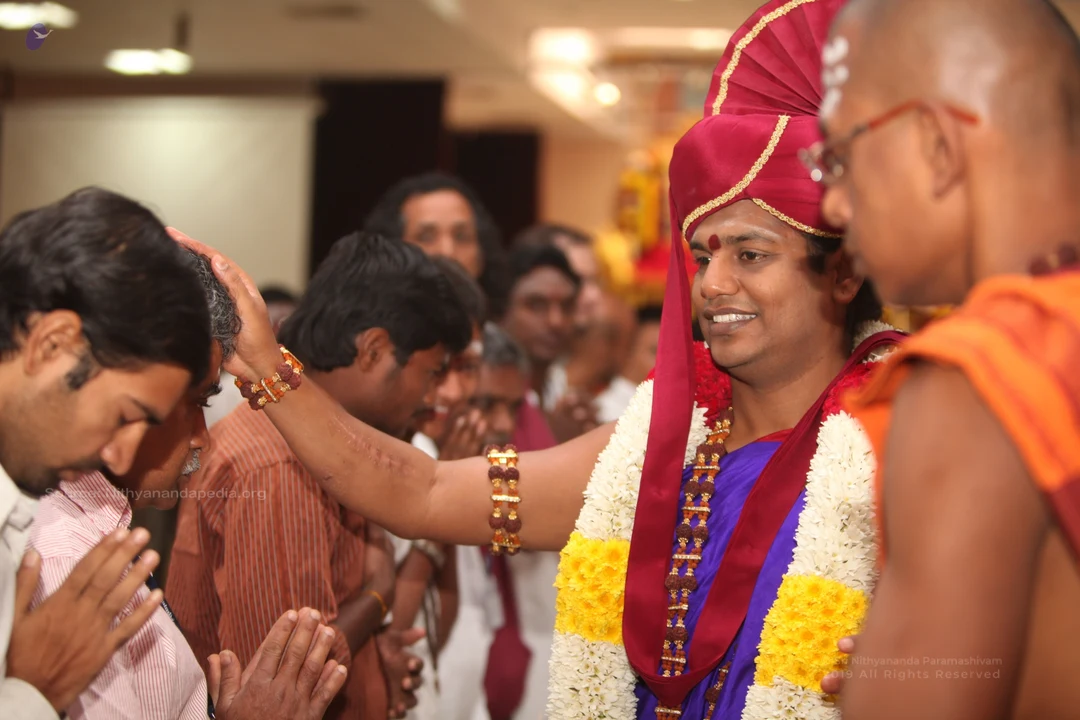
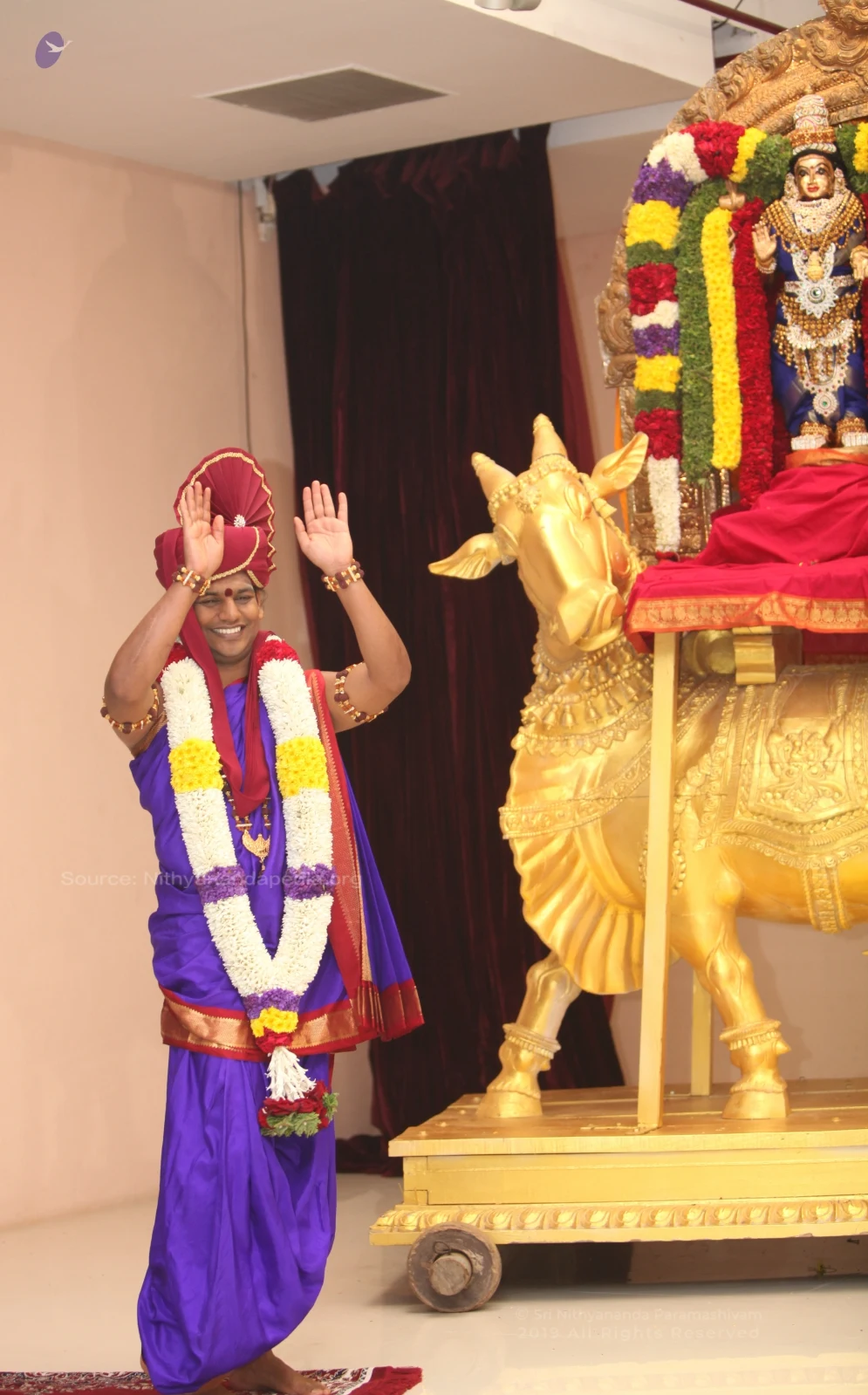
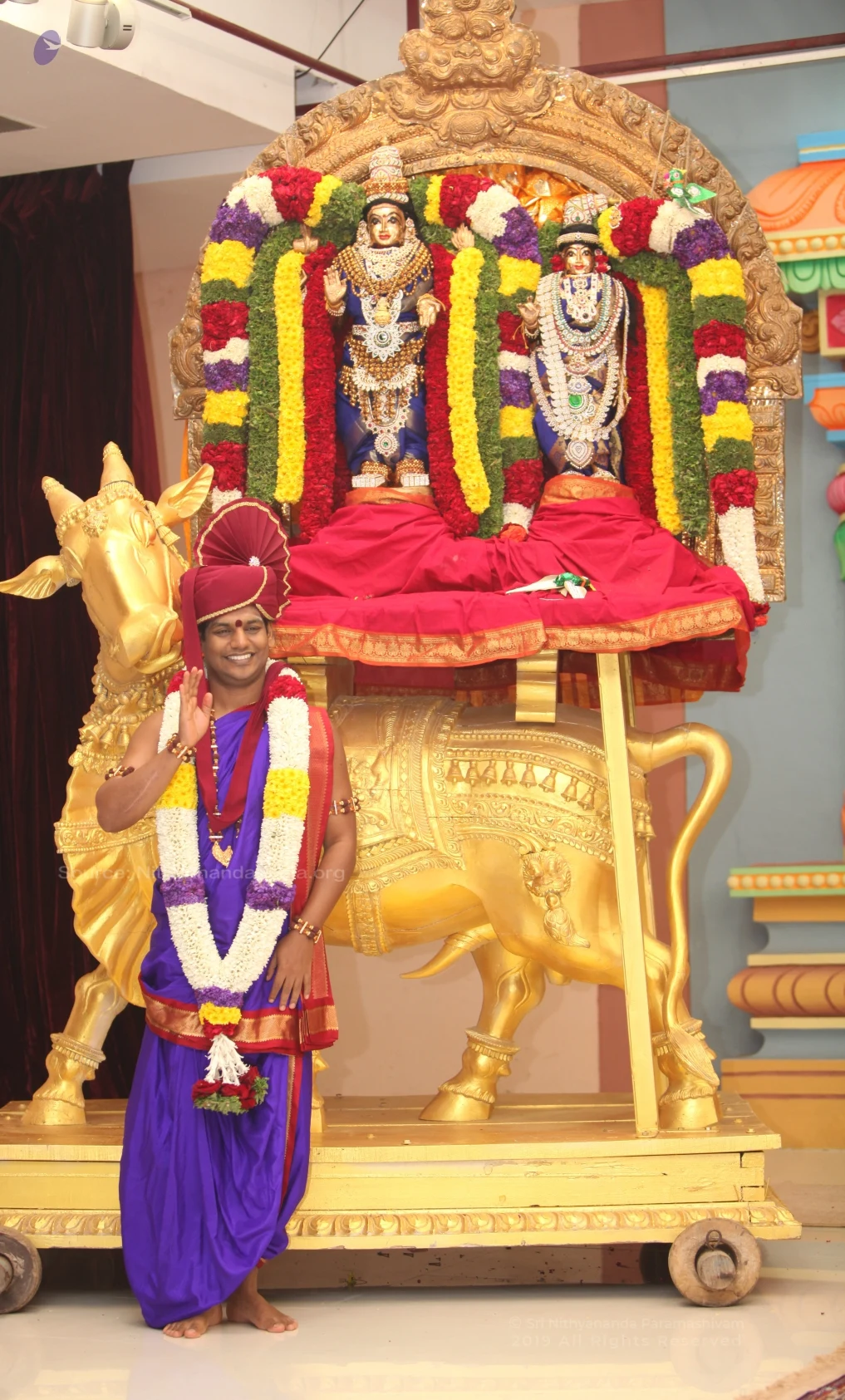
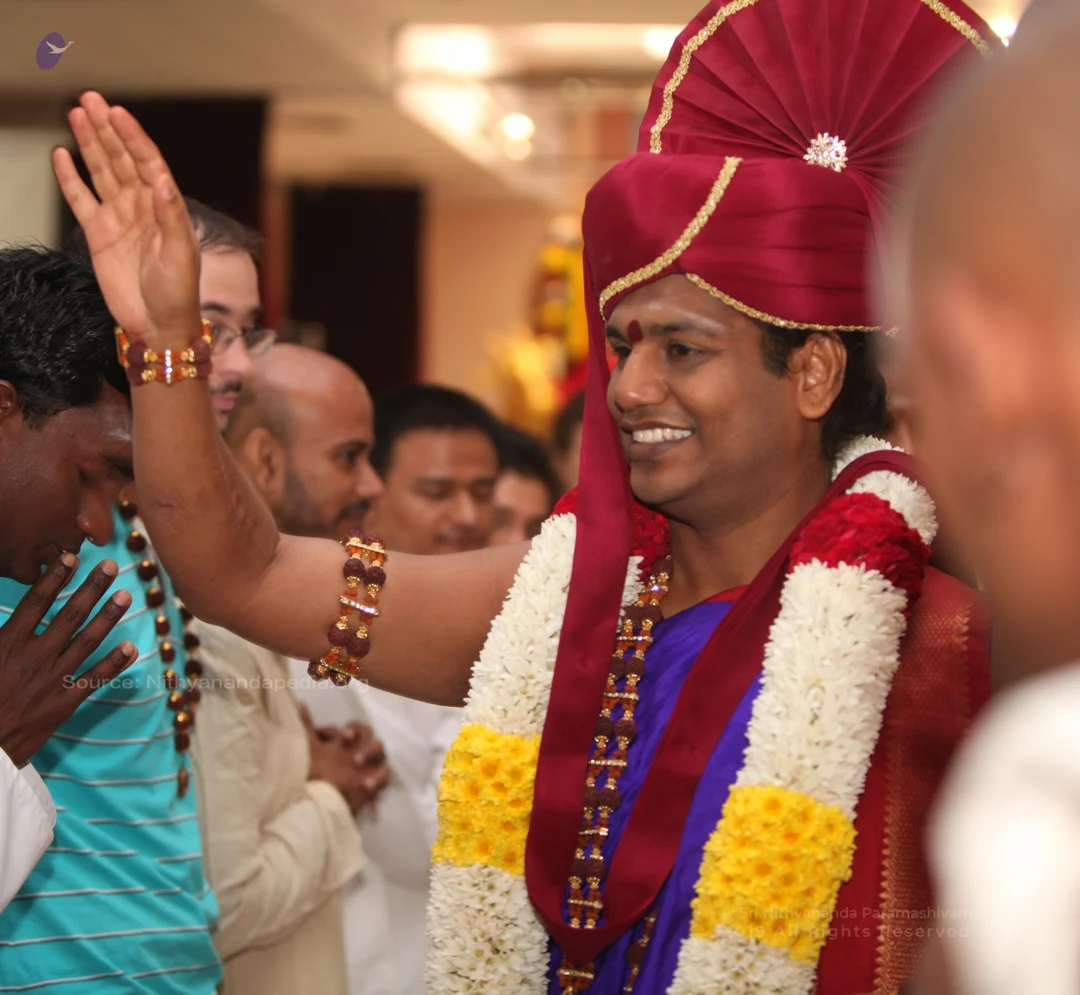
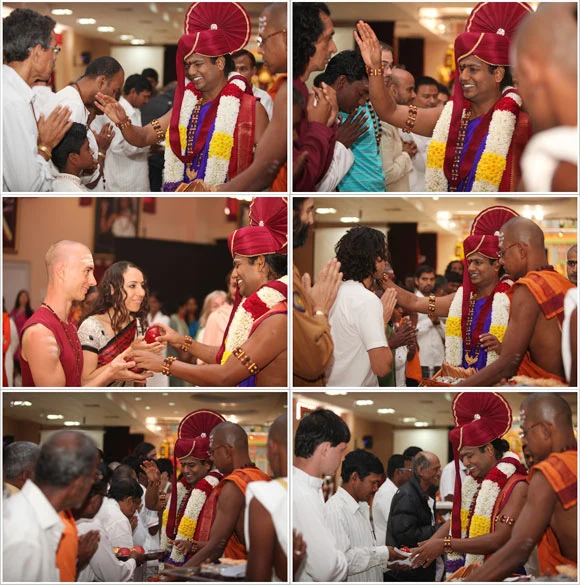
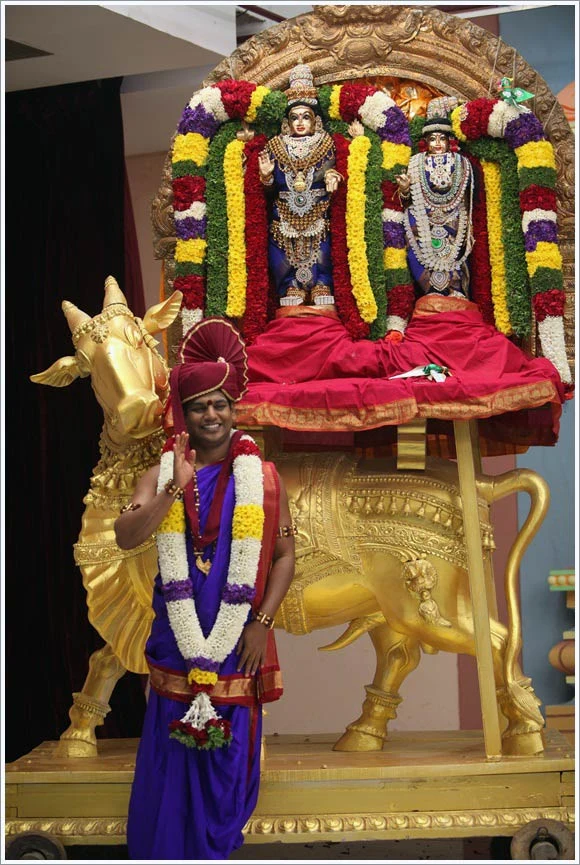
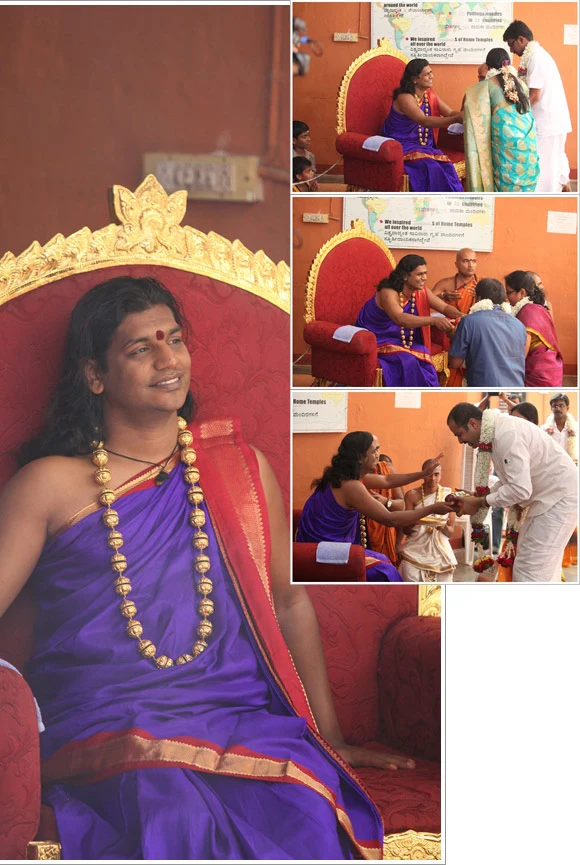
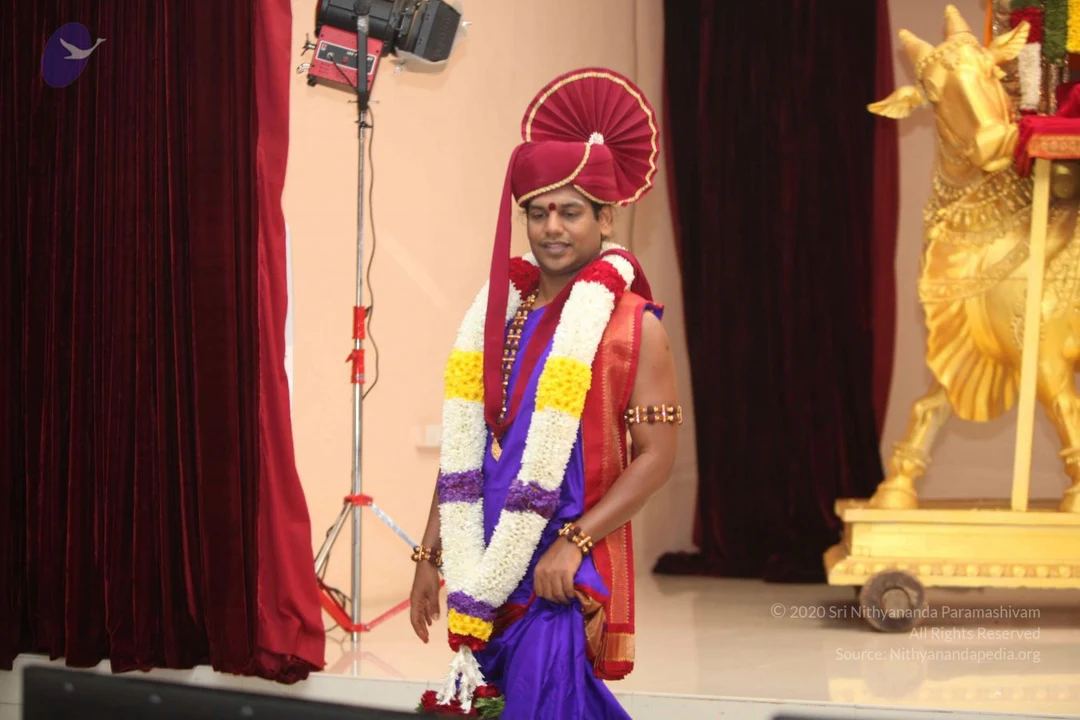
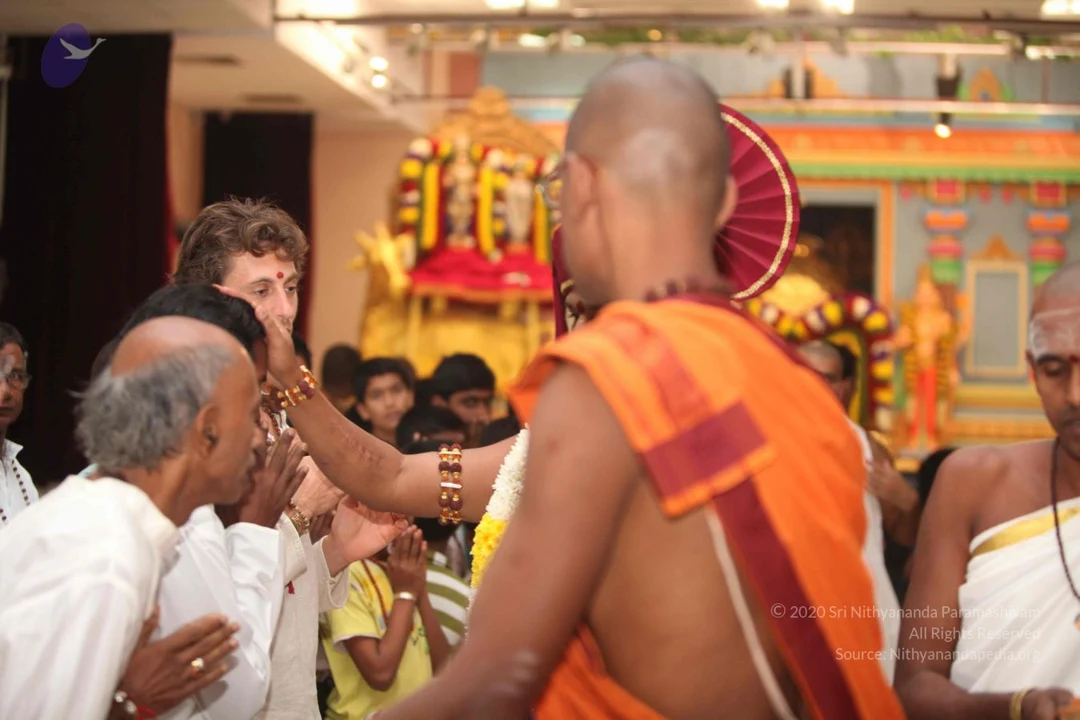
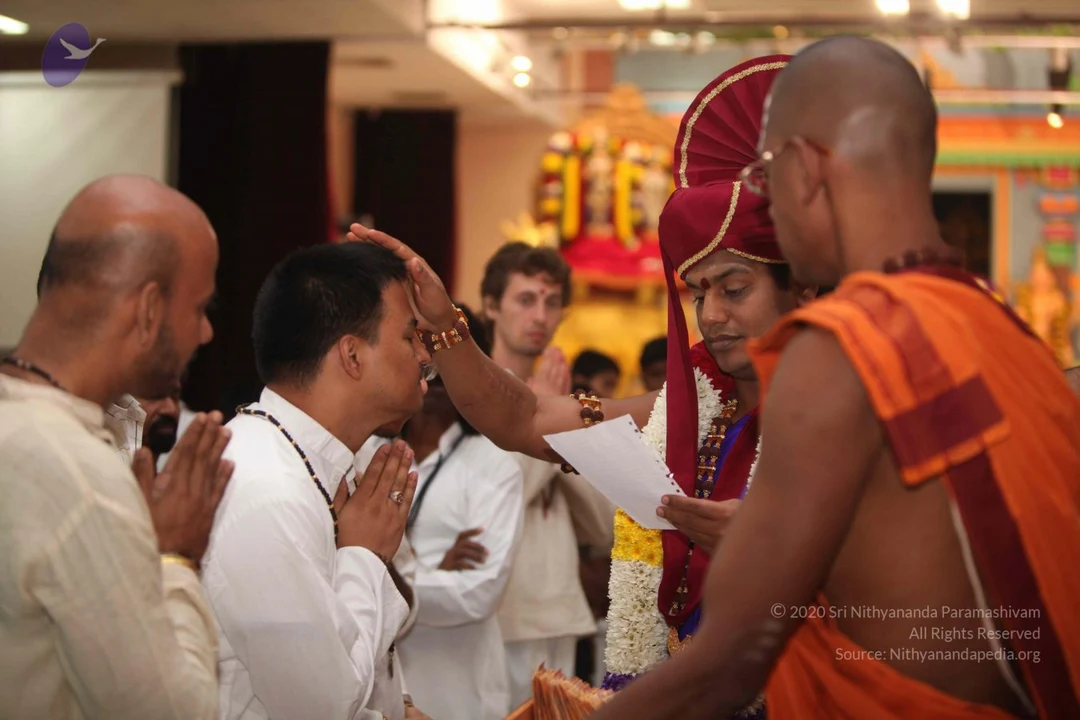
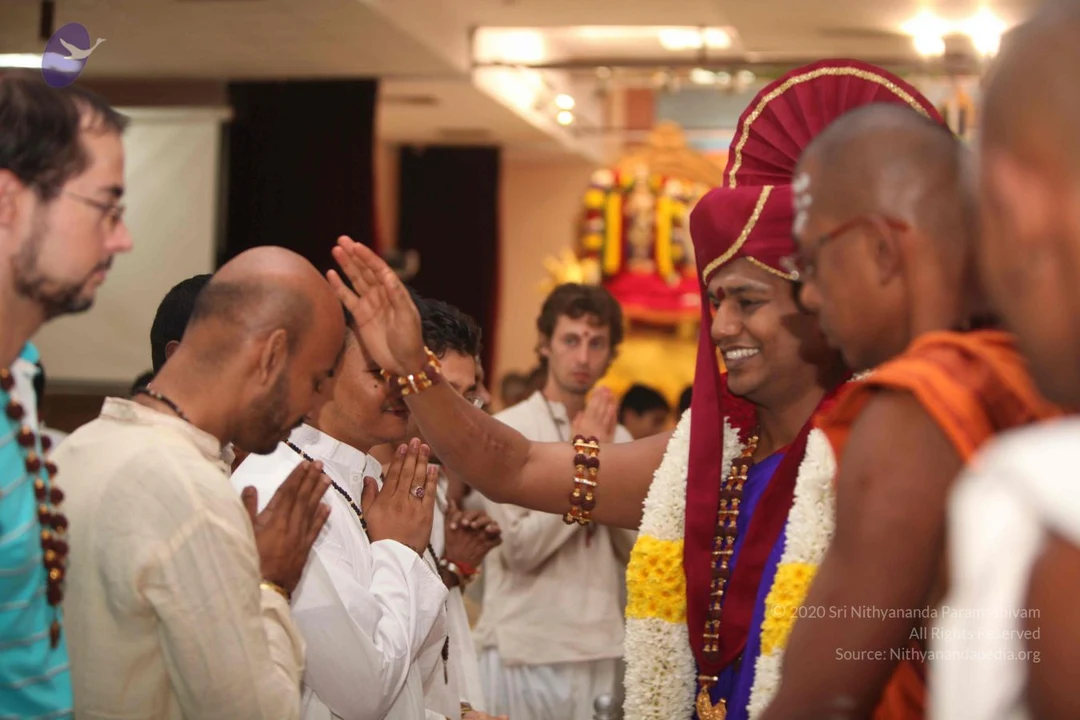
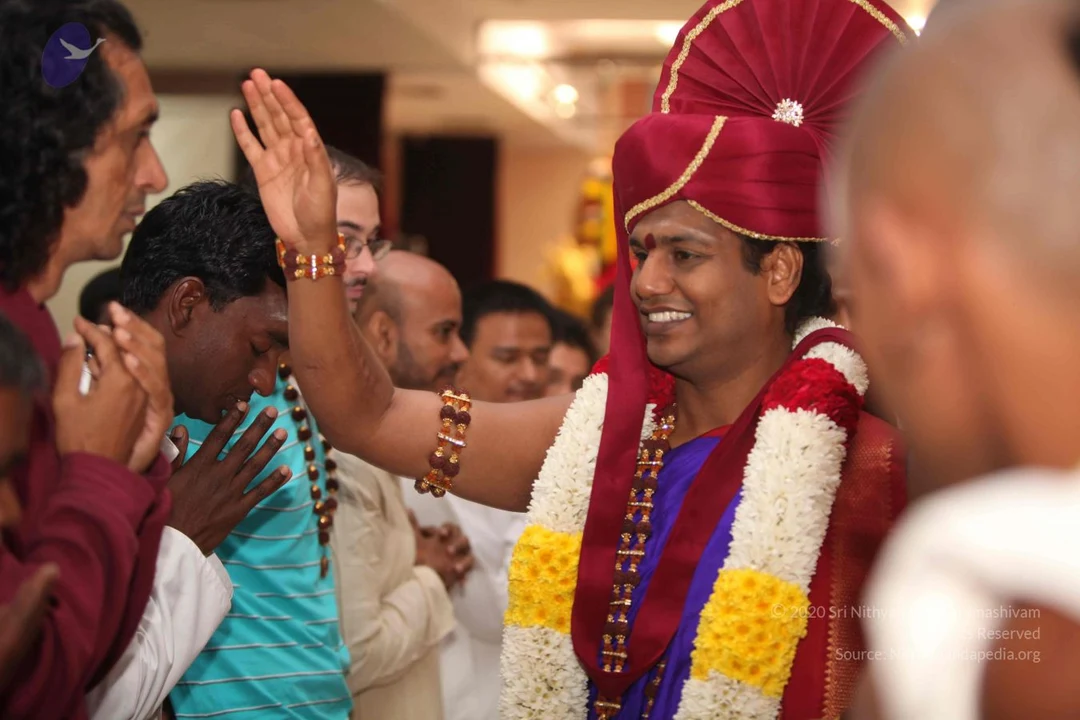
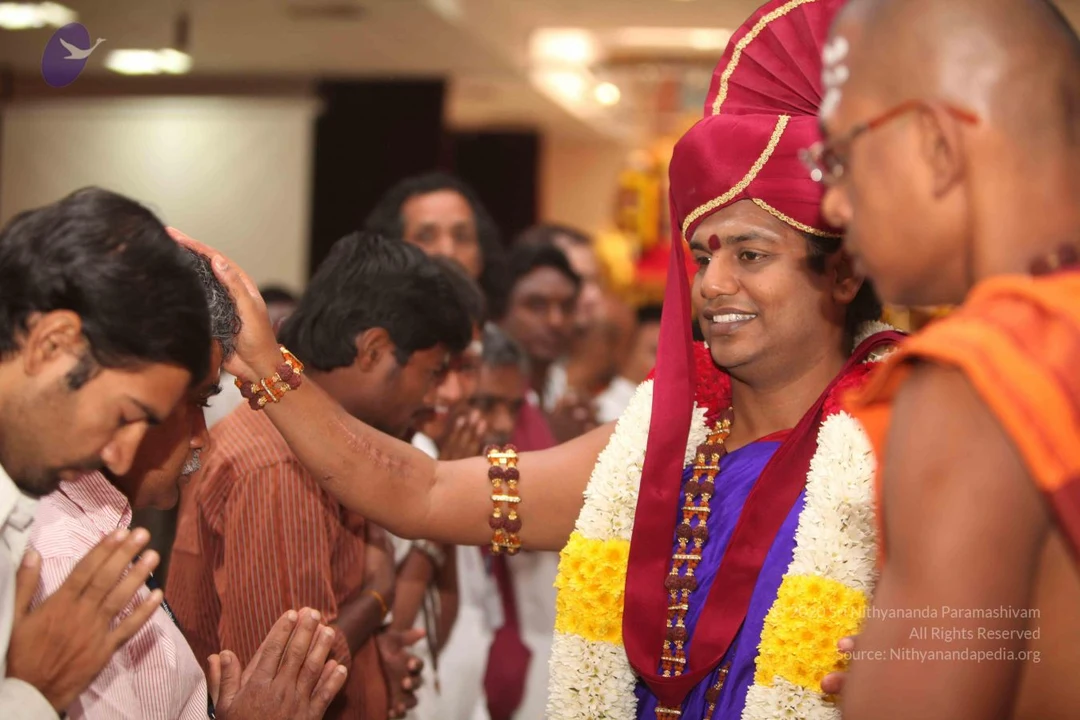
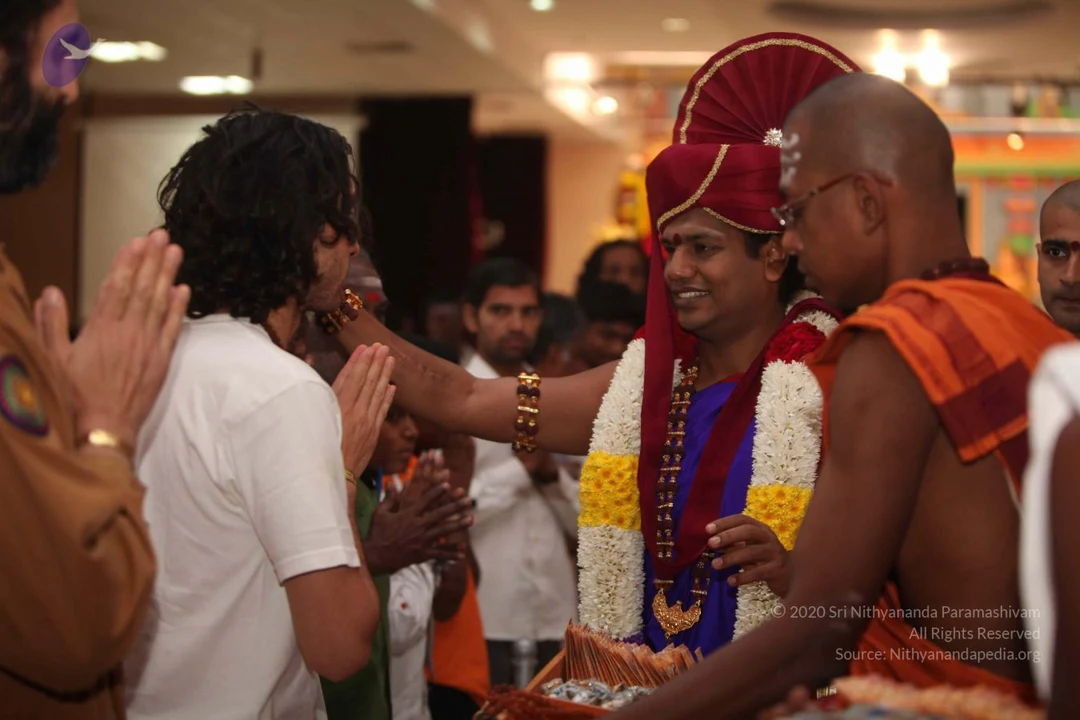
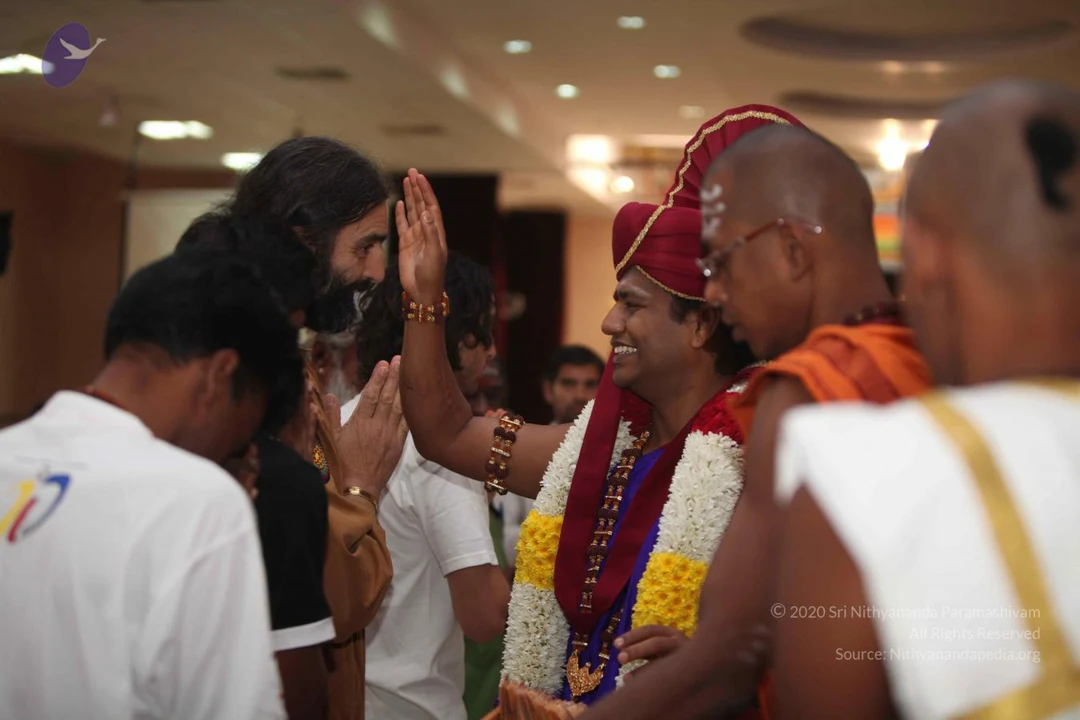
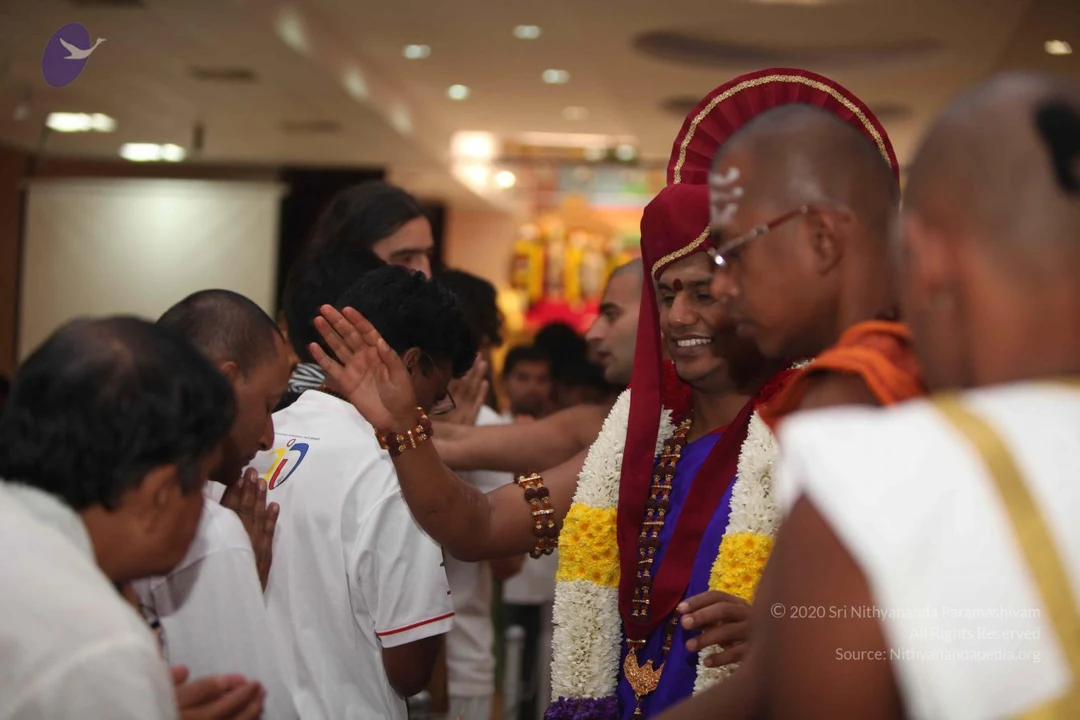
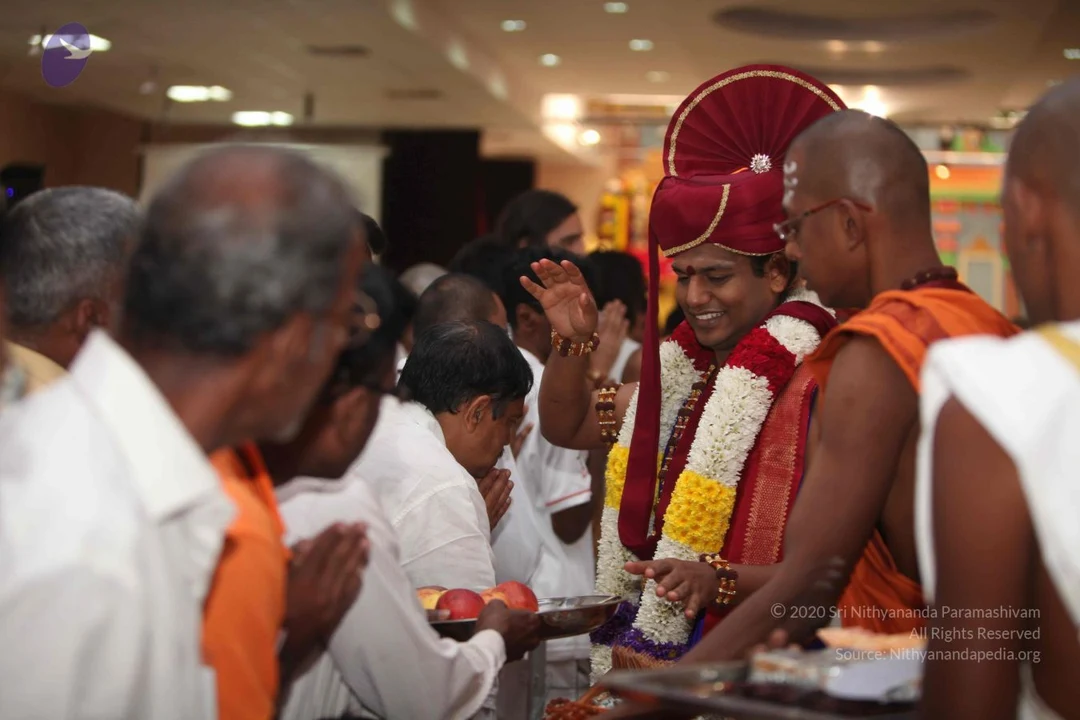
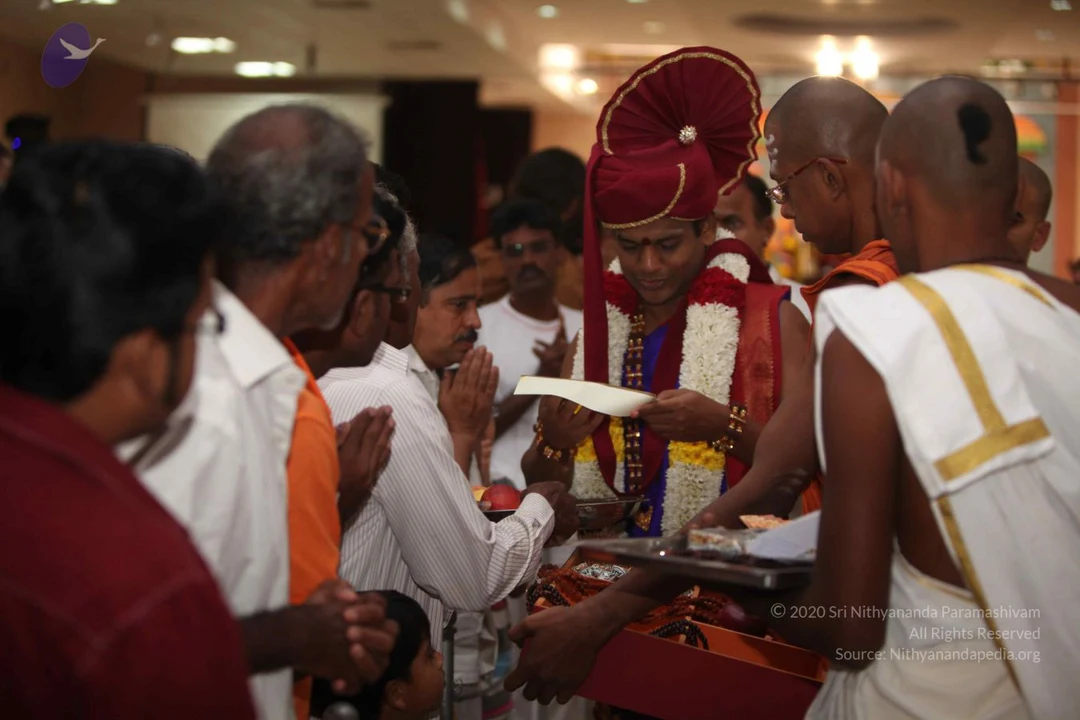
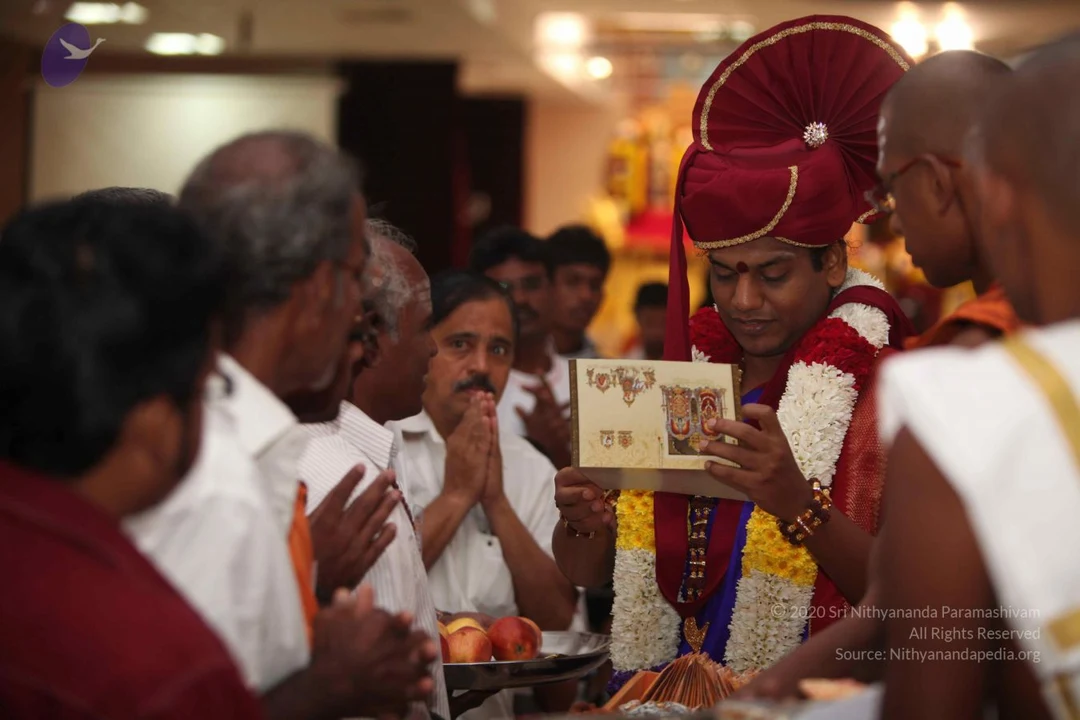
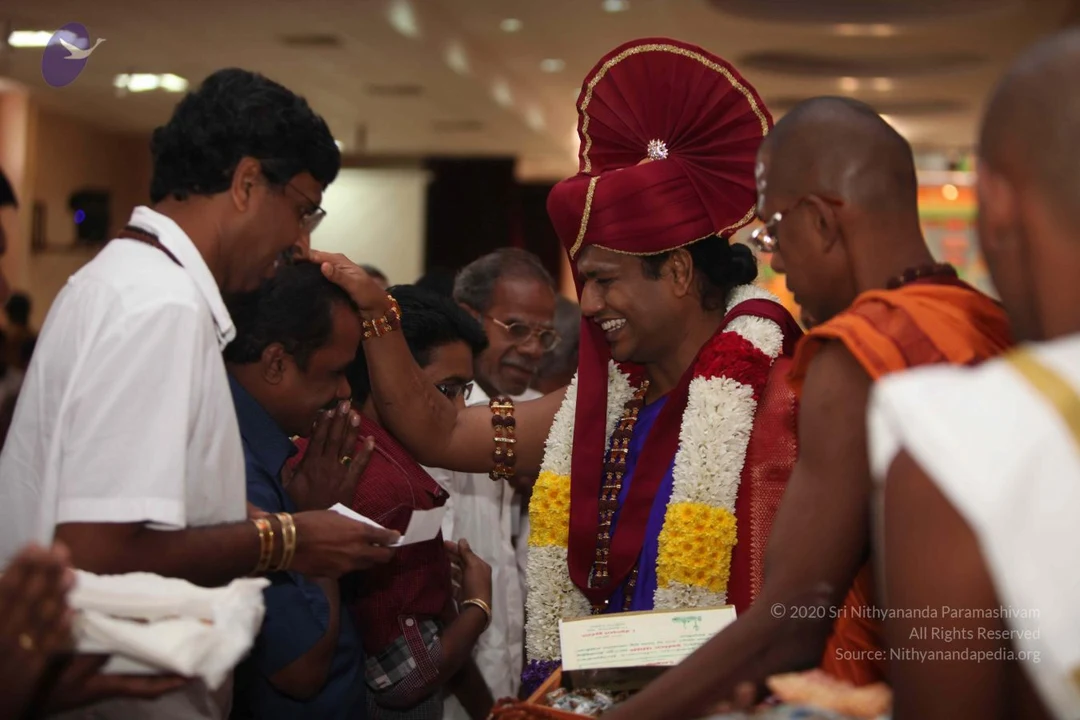
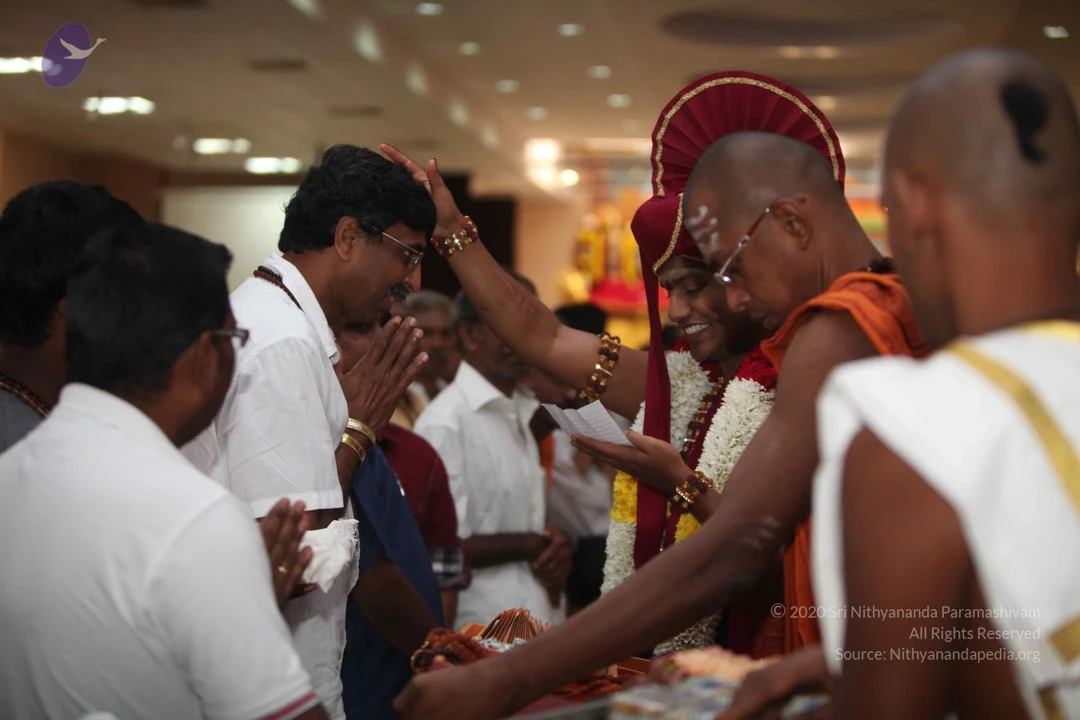
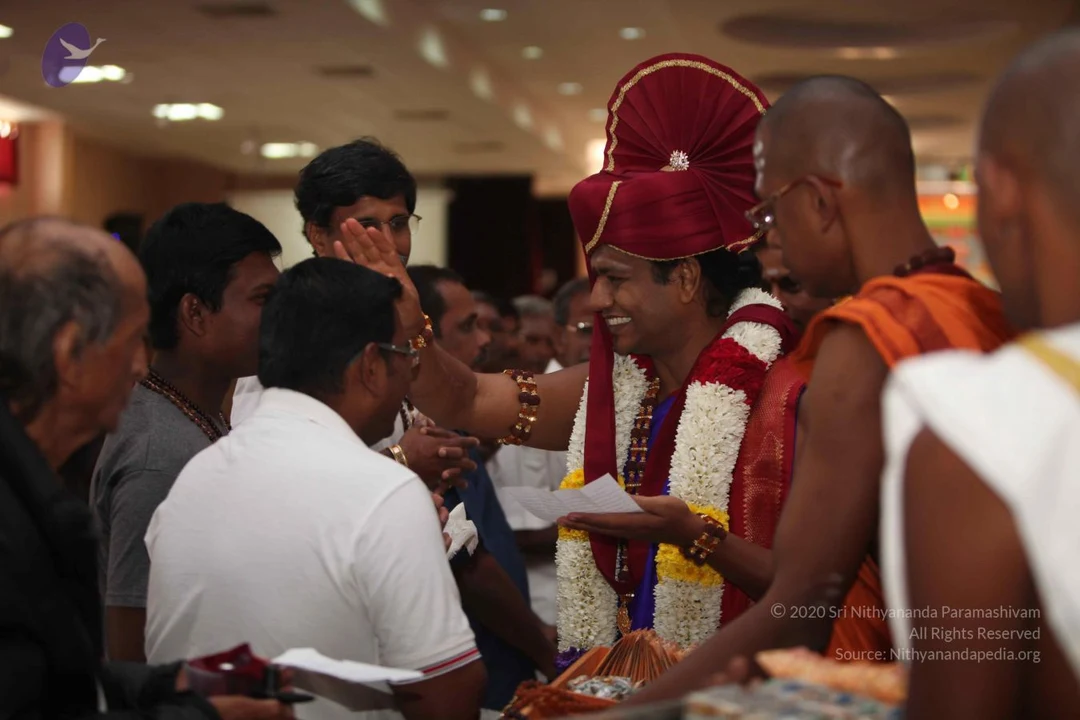
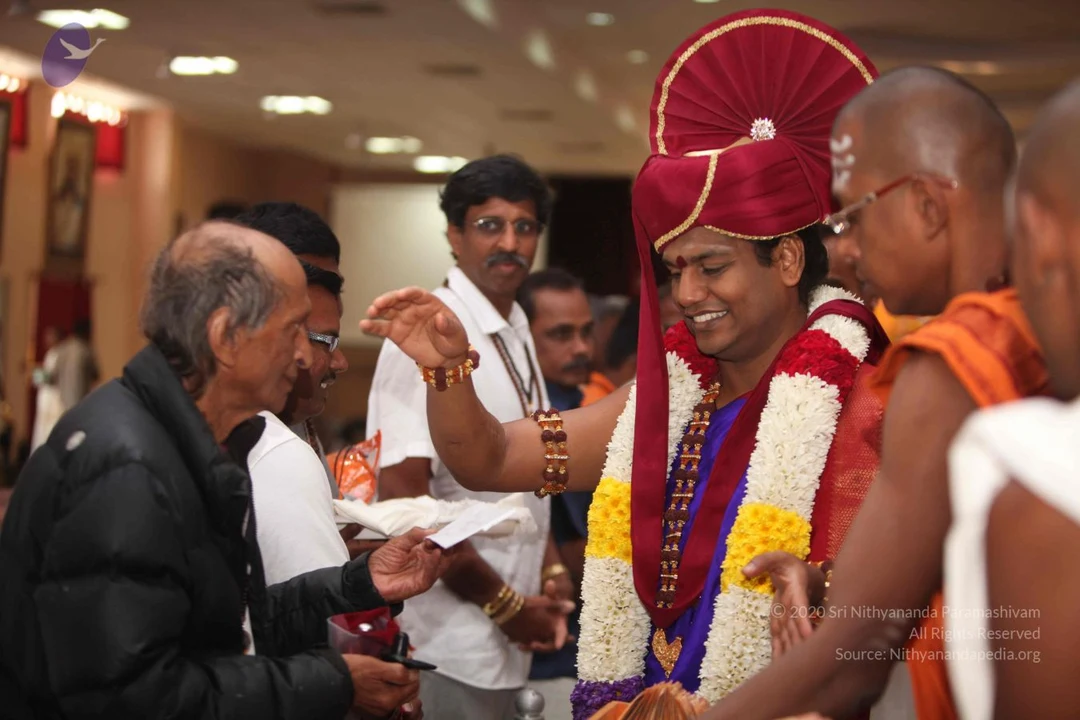
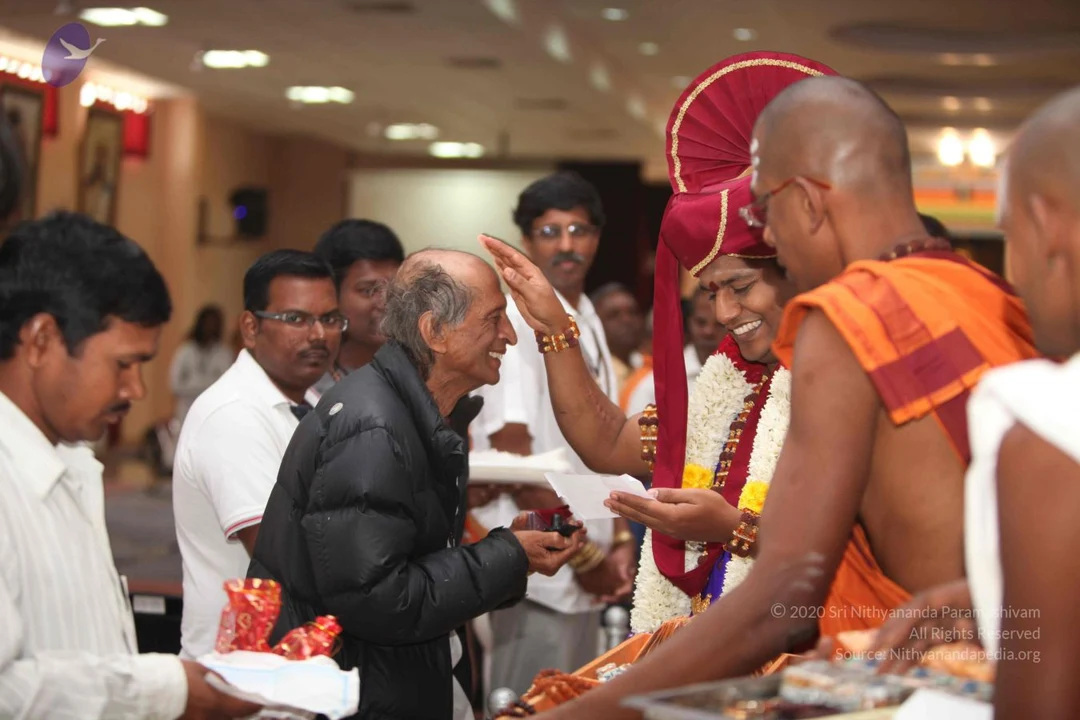
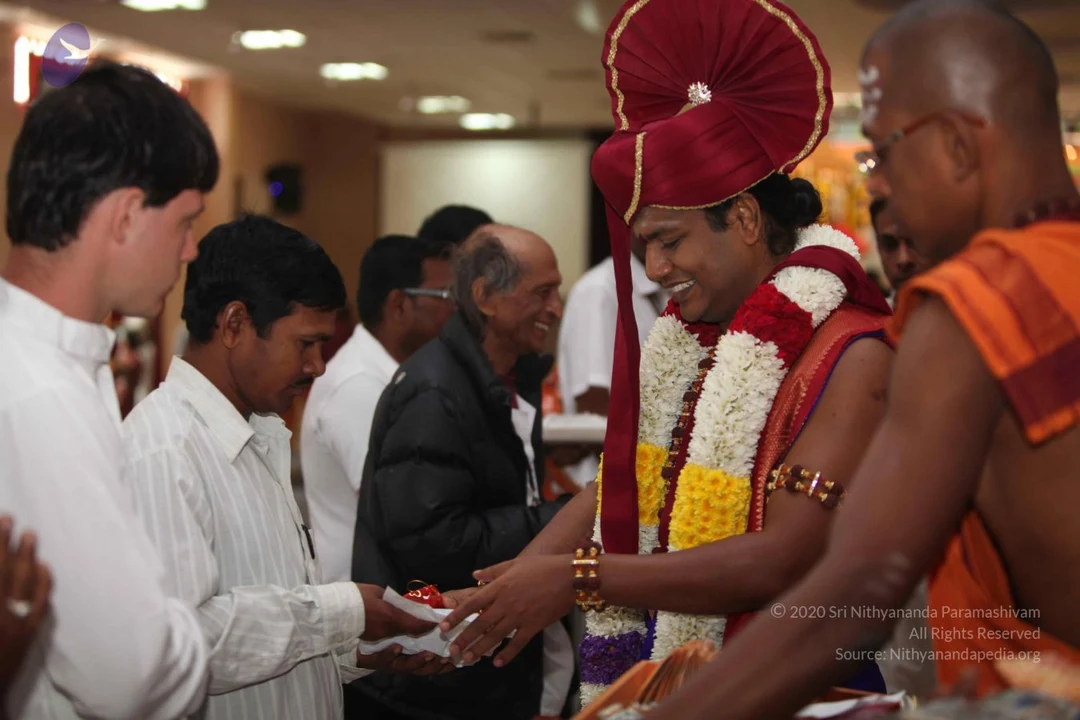
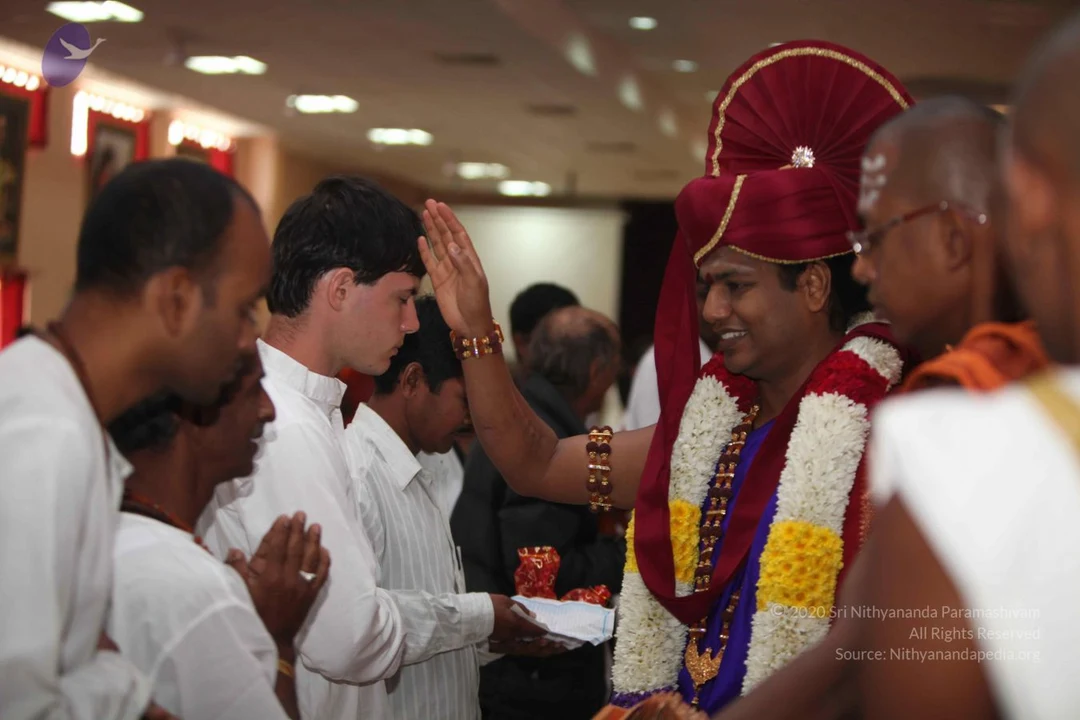
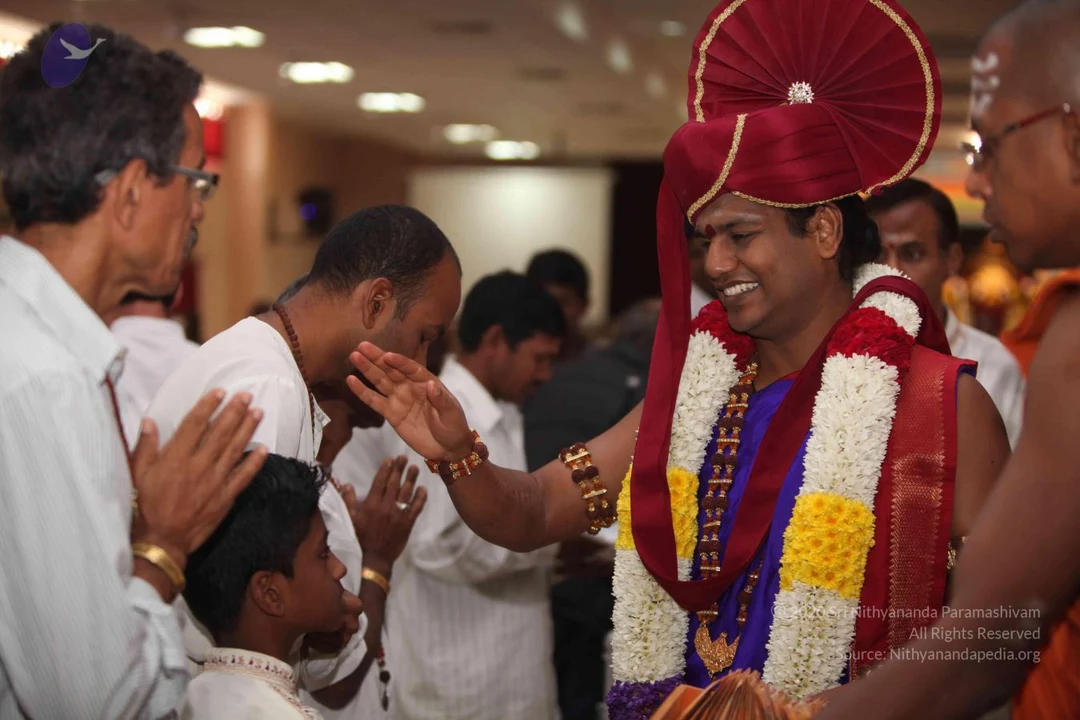
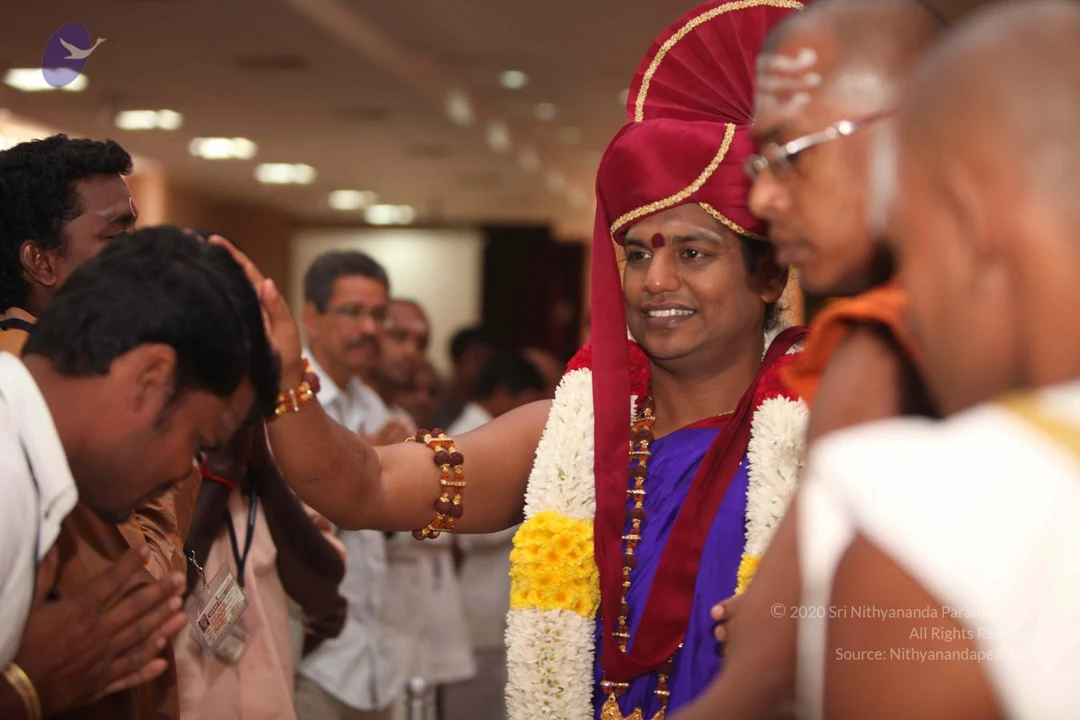
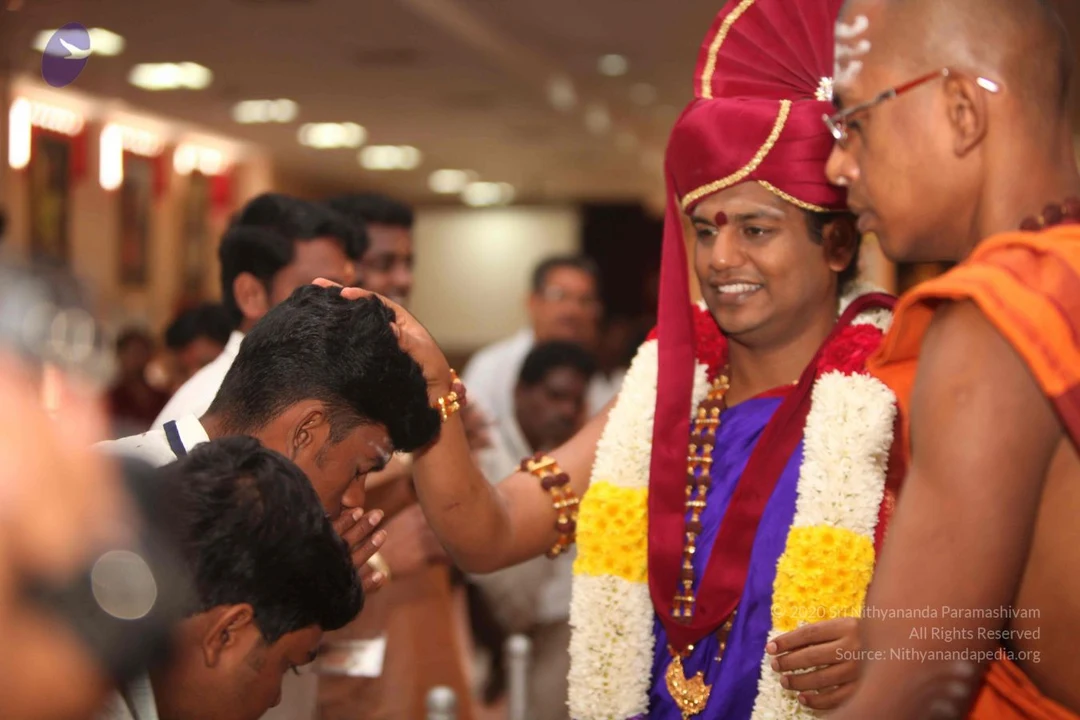
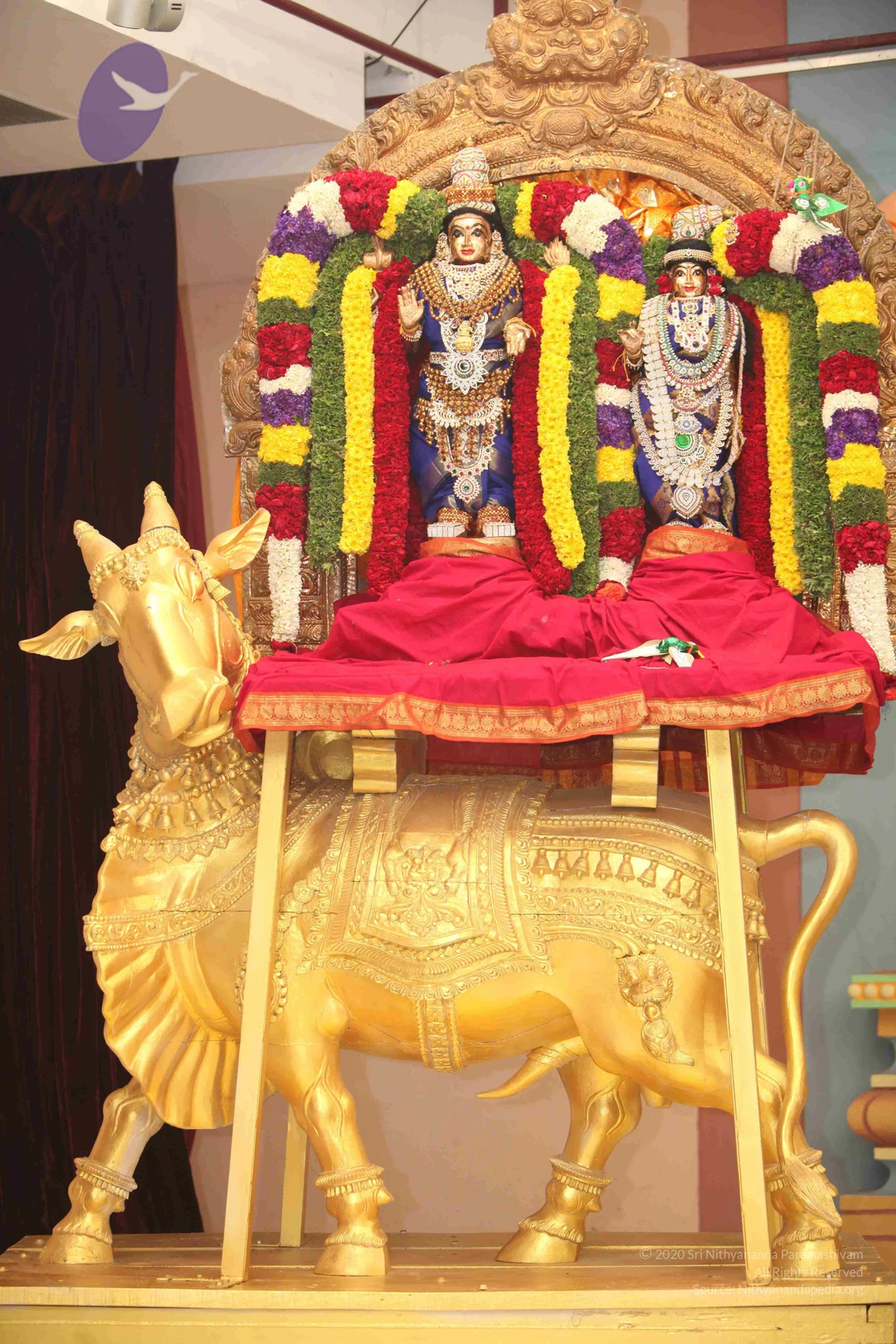
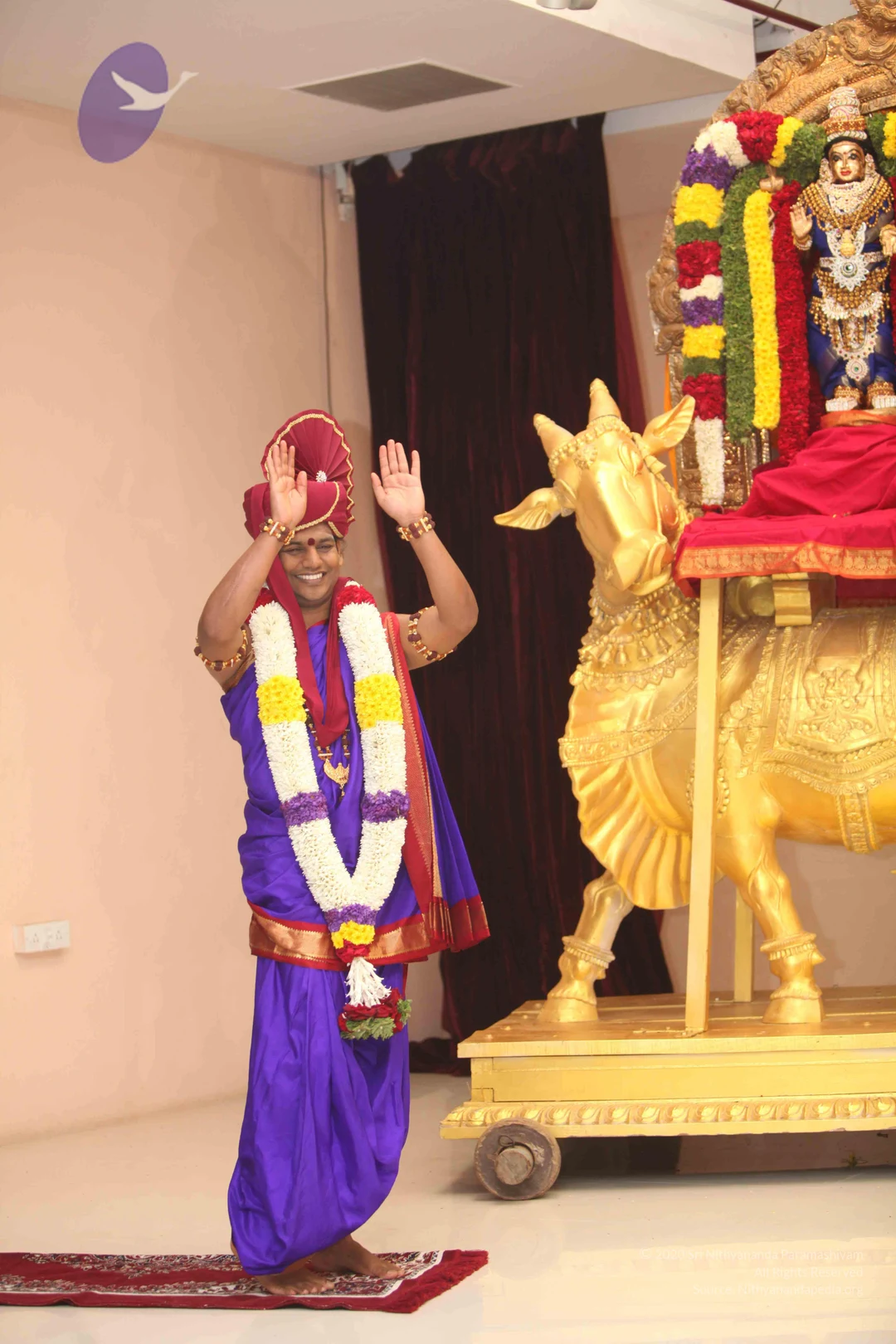
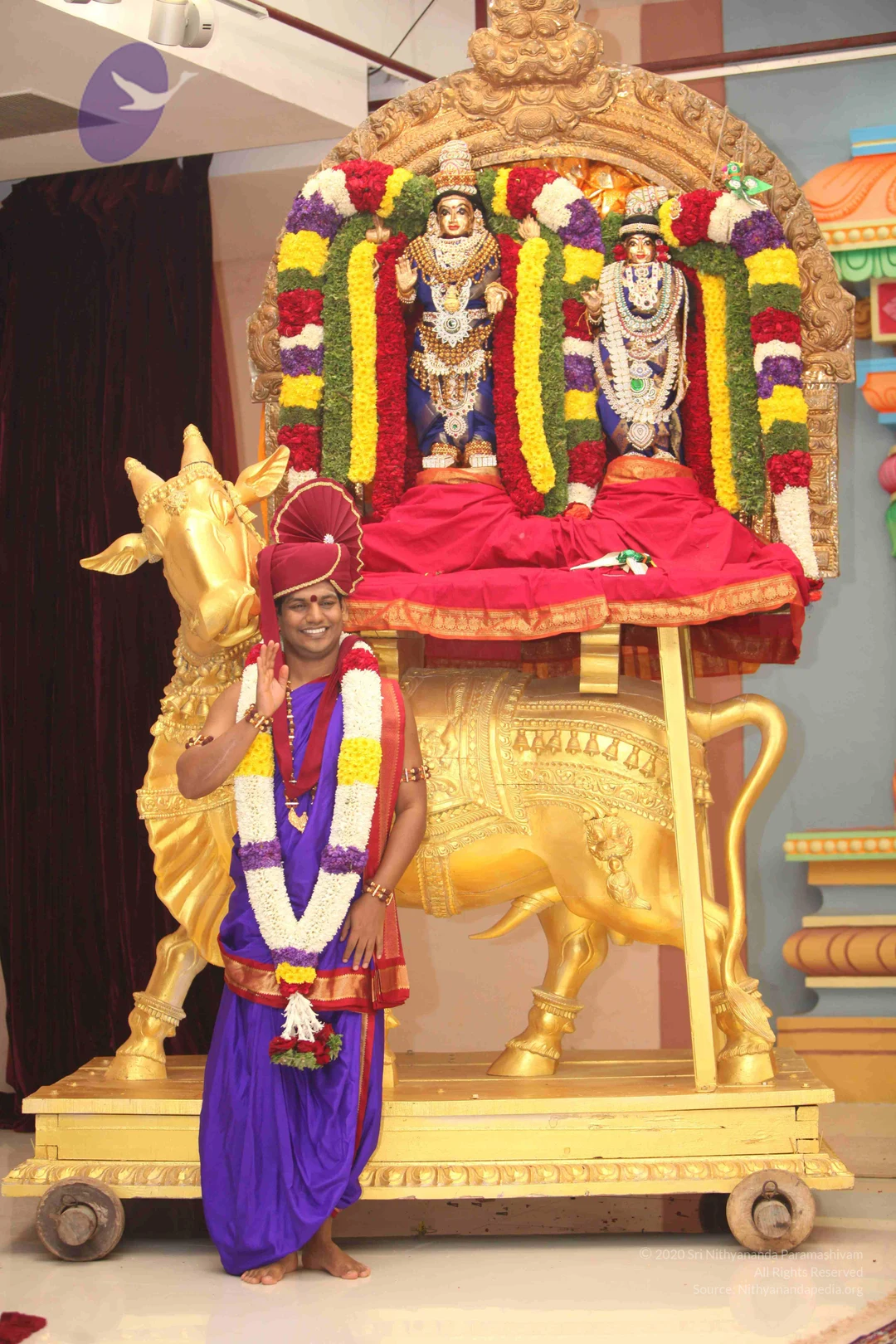
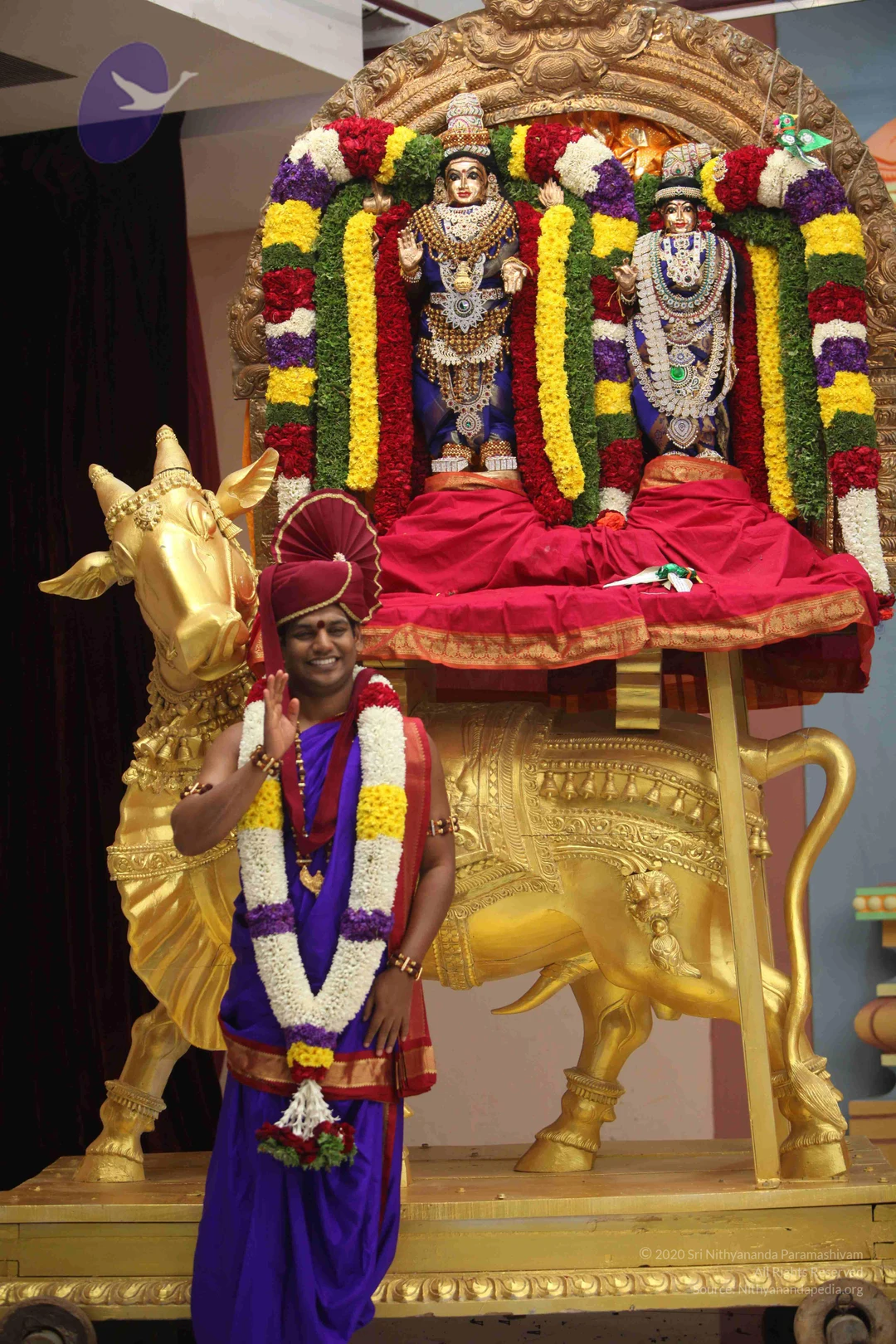
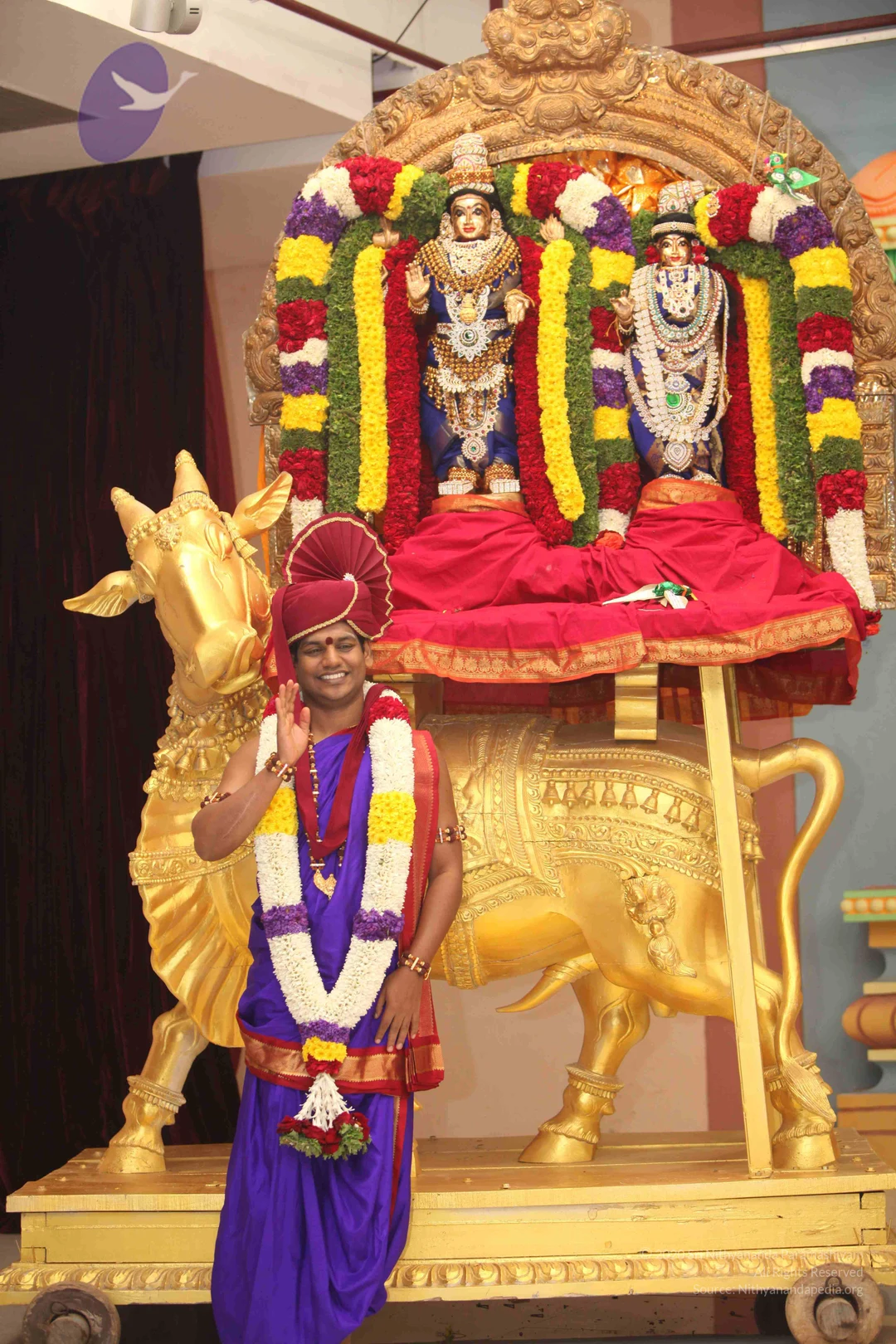
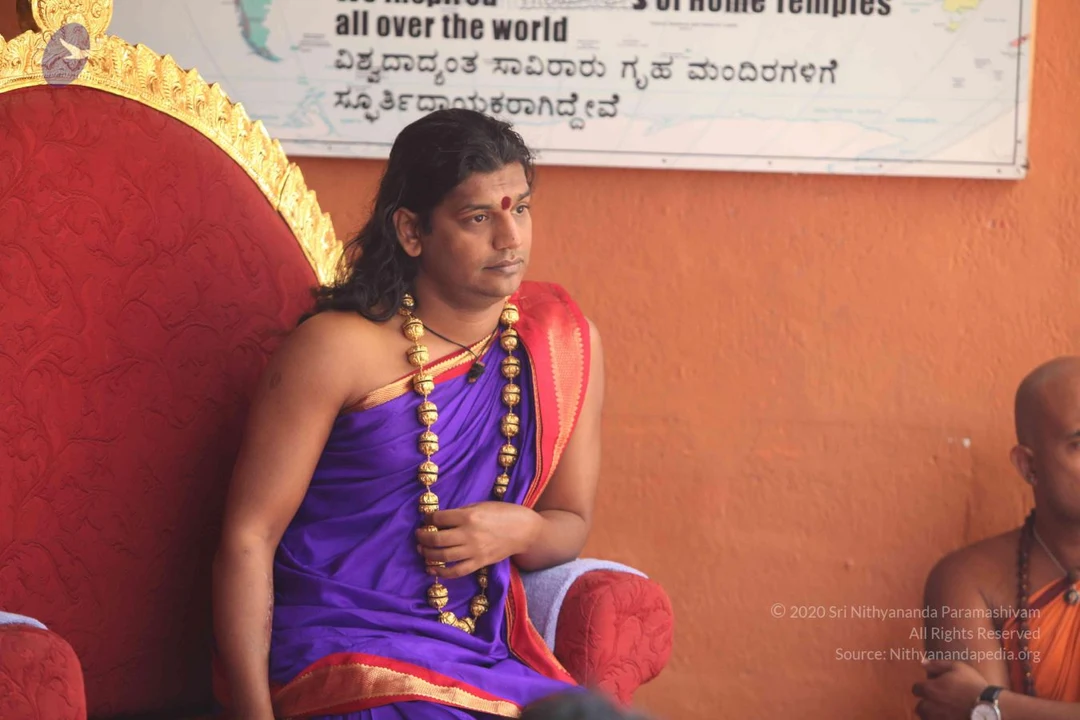
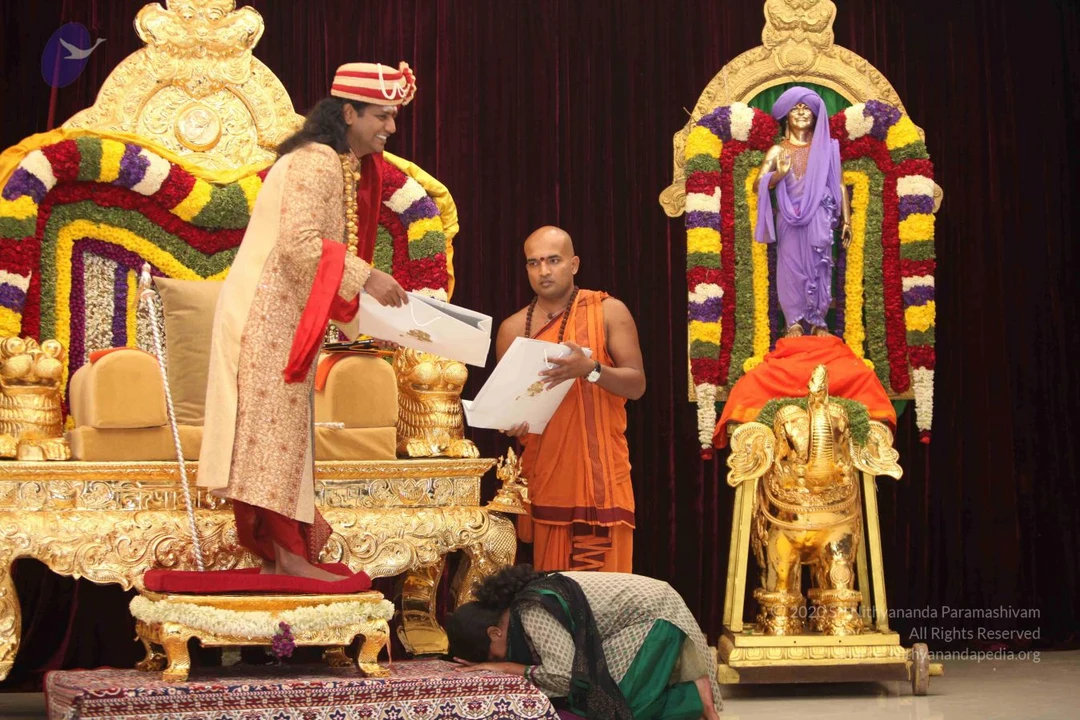
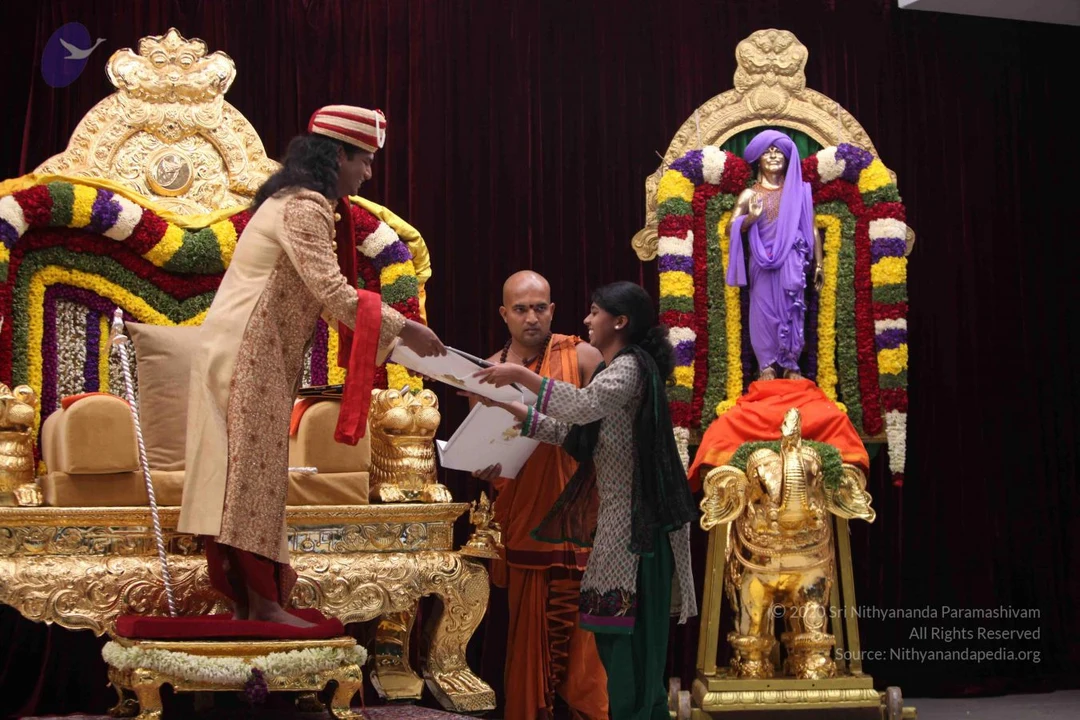
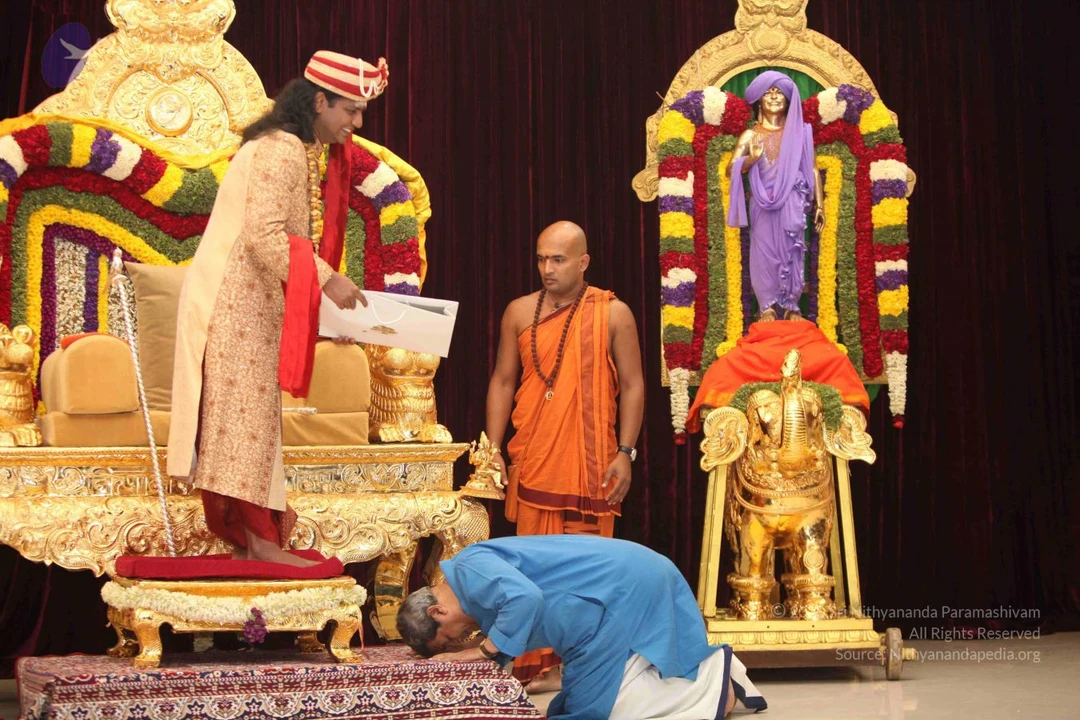
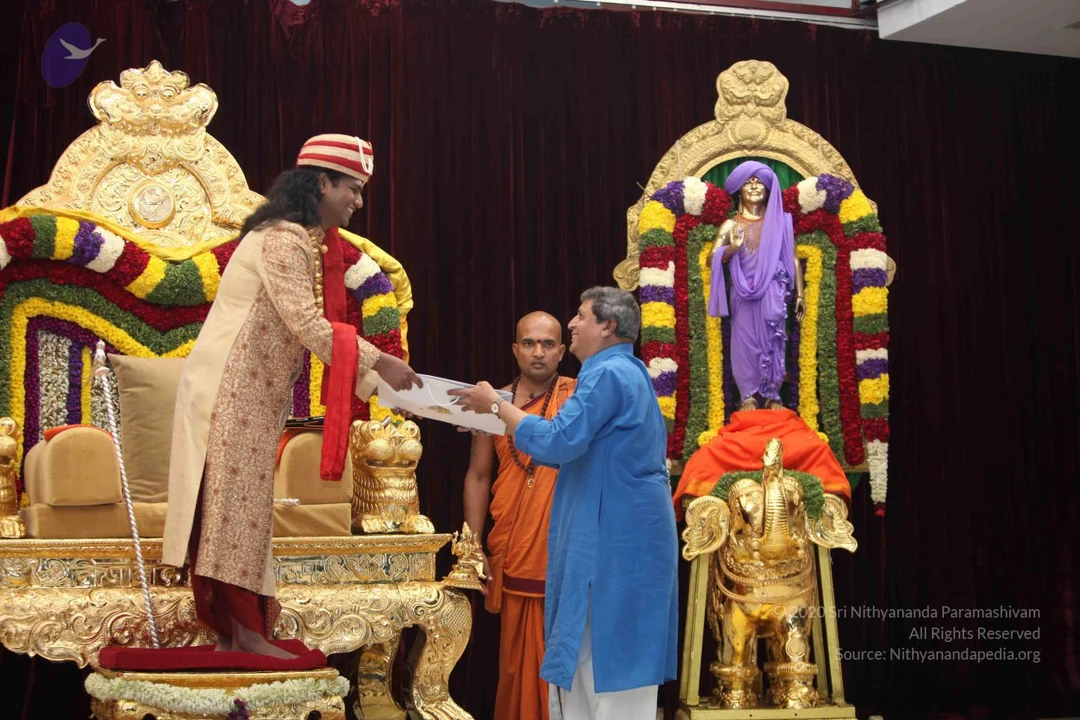
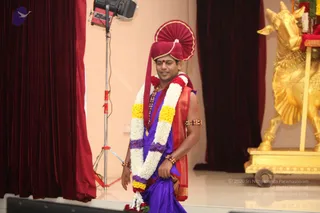
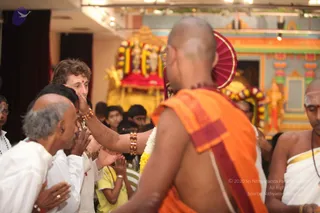
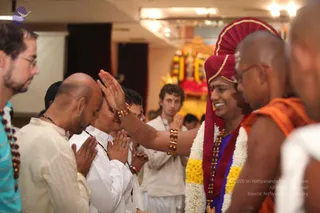
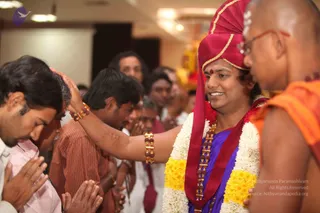
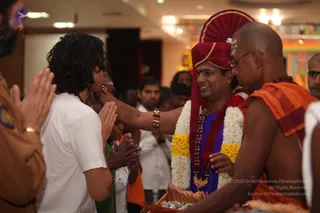
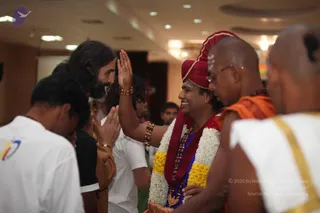
A man stands on a stage wearing a deep red turban with a fan-shaped pleated top and a red and gold border. He wears a purple dhoti-style garment with a red and gold silk shawl draped over his shoulder, a long garland of white flowers with yellow and purple bands, and red flower garlands. He has a red bindi and rudraksha-style beaded bands on his upper arm and wrist. Behind him is a golden ornate bull figure (nandi) with a garland, and dark red velvet curtains frame the stage, with a stage light on a stand. He is a single person, and no clear appearance-based cues establish him as a person, so the a person field is unsure.A photograph of a devotional gathering inside a hall with a colourful temple backdrop and a gold and red decorated shrine with garlanded deity murti behind. In the centre, a bare-chested figure in an orange saffron garment with a red border and a red-and-white umbrella-like fan stands with his back to camera, extending his hand to touch the forehead of a seated devotee with a red tilak and beaded bracelets. Older men in white dhotis and shirts sit with palms joined on the left, a priest with white vibhuti markings on the right wears white garments, and children stand in the background. Garlands of yellow and white flowers hang around the scene. This appears to be a pada-puja.Indoor pada-puja scene in a hall with ceiling lights and a decorated shrine in the background. A smiling man in a maroon turban with gold trim, a purple garment and a white flower garland, with rudraksha beads on his wrist and neck, extends his raised hand to bless a devotee who kneels with palms pressed together. Around them, devotees in white dhotis and kurtas and one man in an orange robe stand with folded hands; a man in a turquoise shirt with rudraksha mala watches at left. a person is not supported strongly enough by the visible cues to attribute the blessing figure's identity, so he is described by role as the one receiving devotees in pada-puja.A photograph of a pada-puja or blessing moment in an indoor hall. A man in a tall magenta turban with gold trim, a magenta shawl, a purple garment, white and yellow flower garlands, and rudraksha malas stands smiling while another man's hand rests on the head of a devotee bowing with folded hands. A saffron-robed monk stands at the right edge. Several other devotees in white and reddish clothing are visible behind. a person cues: the turban, ornate gold-trimmed magenta headwear, garlands and beaded malas are present on the central standing figure, who performs the blessing.A photograph of a pada puja in an indoor hall. A smiling man in a tall red and gold turban and a blue robe with a red shawl and white and yellow jasmine-marigold garlands extends his hand toward a long-haired man in a white shirt who stands with palms pressed together. A bald priest in orange ochre cloth stands at right beside a tray of offerings. Several devotees with folded hands, one in a brown uniform at left, watch in the background. a person: the turbaned man wears a crown-like red turban, saffron-coloured and ornate garments, a rudraksha mala and a ceremonial gold necklace.Indoor photograph of a pada-puja moment in a hall with ceiling lights. A smiling man in a red turban, red shawl, rudraksha mala and a white-and-yellow flower garland holds his right palm up in greeting toward a long-haired, bearded man at left, who presses his palms together. Around them, a shaved-headed man in orange robes and glasses, another shaved man in white with a gold-bordered cloth, and devotees in white shirts stand or bow. The man in the red turban and garland appears to be a person by appearance cues (red turban, rudraksha mala, ceremonial garland), though identity is uncertain. Approximately six to twenty people are visible.
MEENAKSHI-KALYANOTSAVAM

165 photosSource gallery
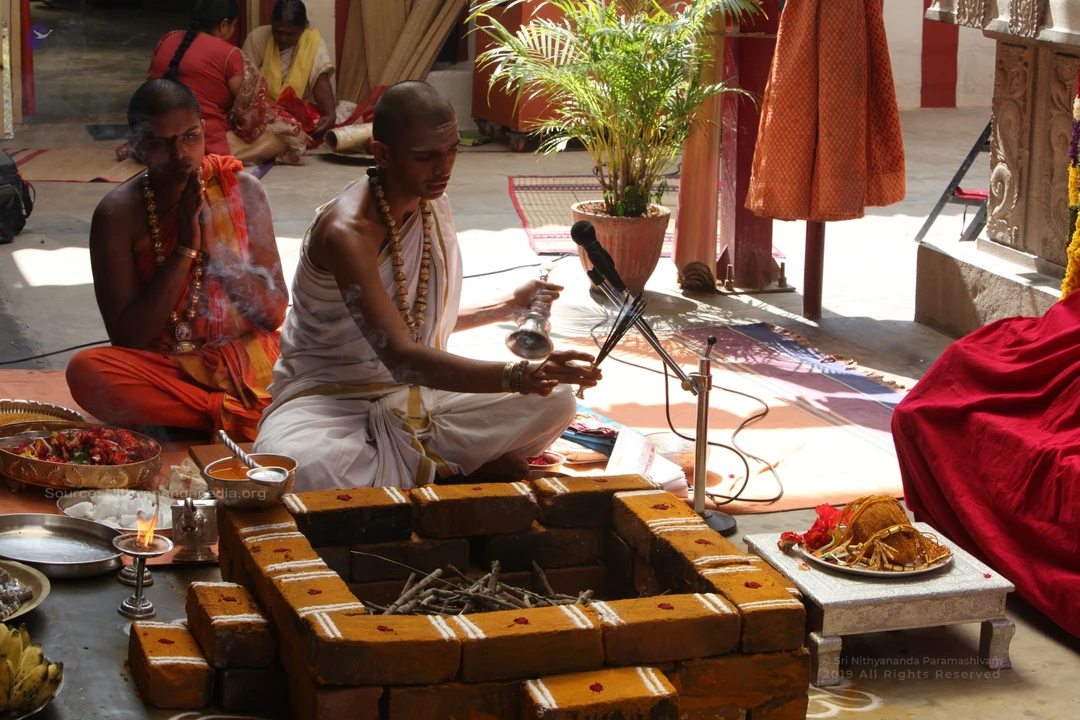
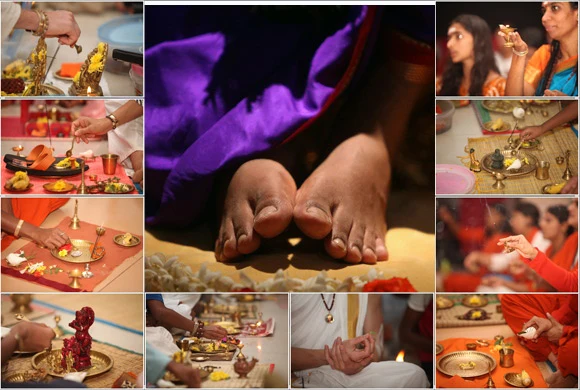
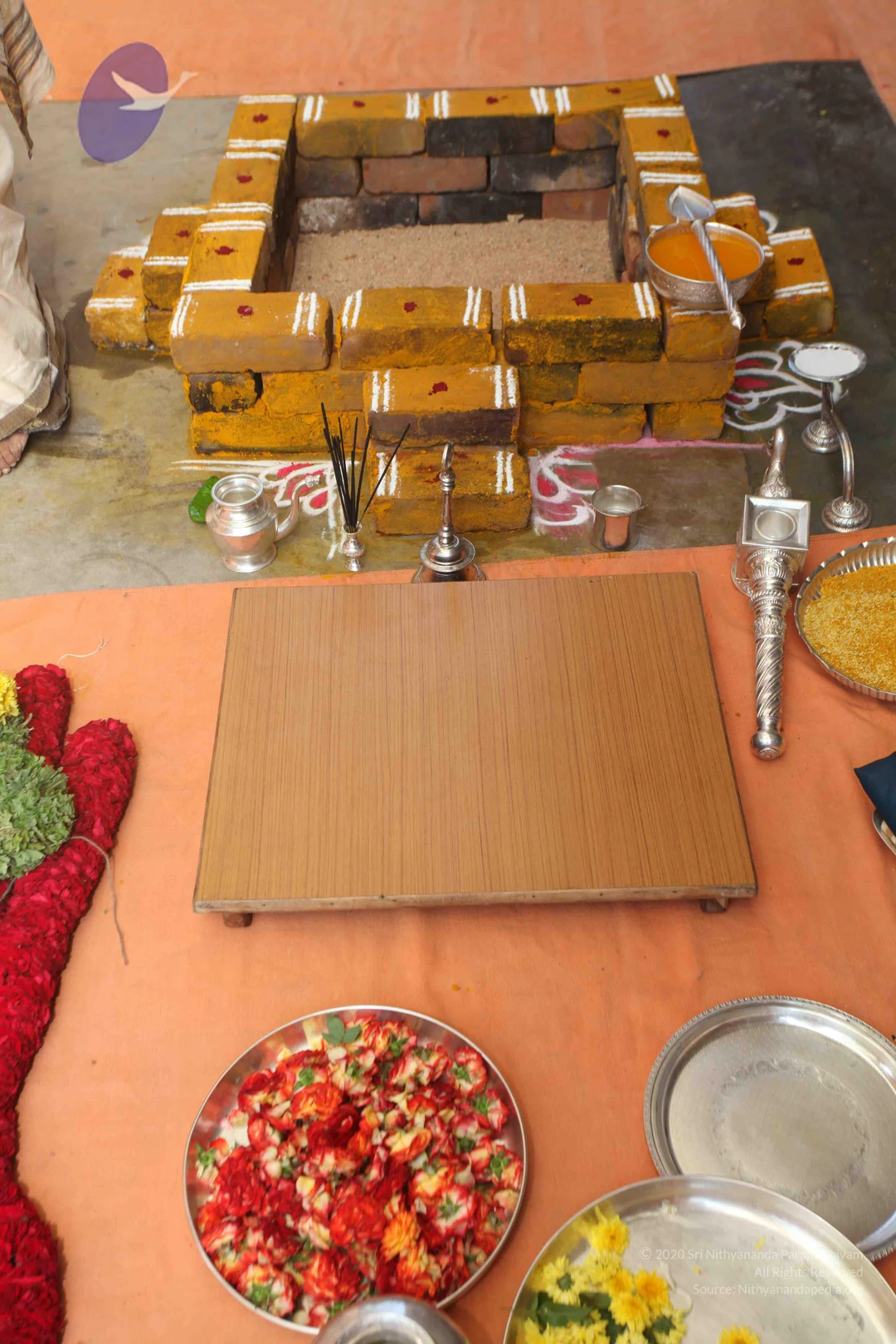
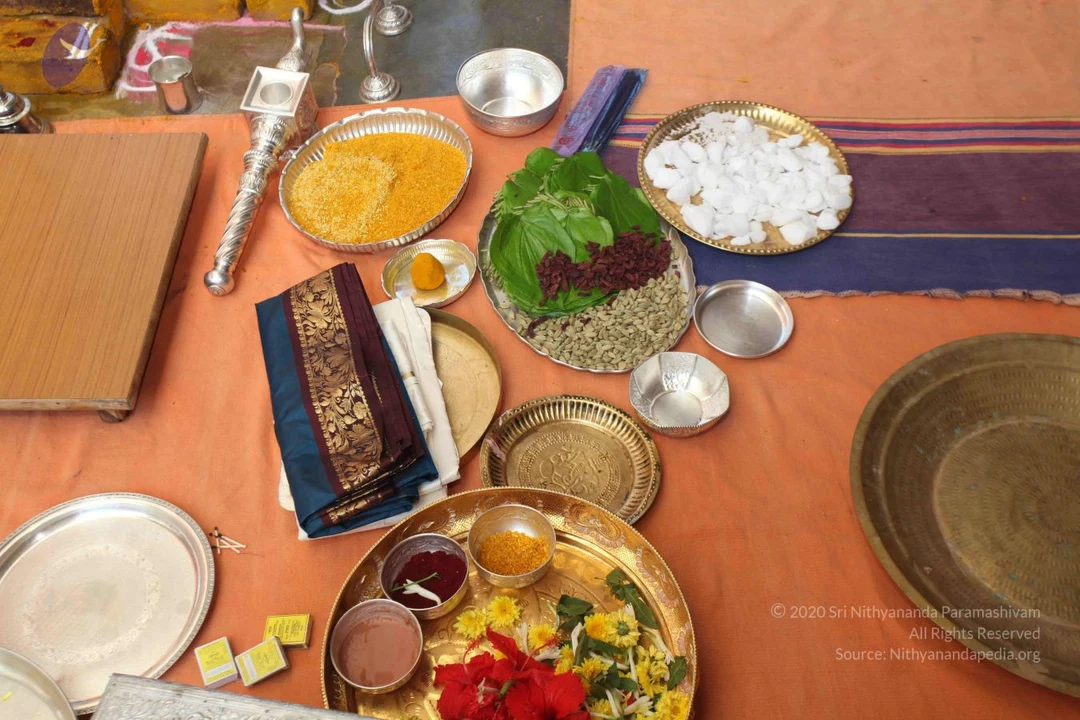
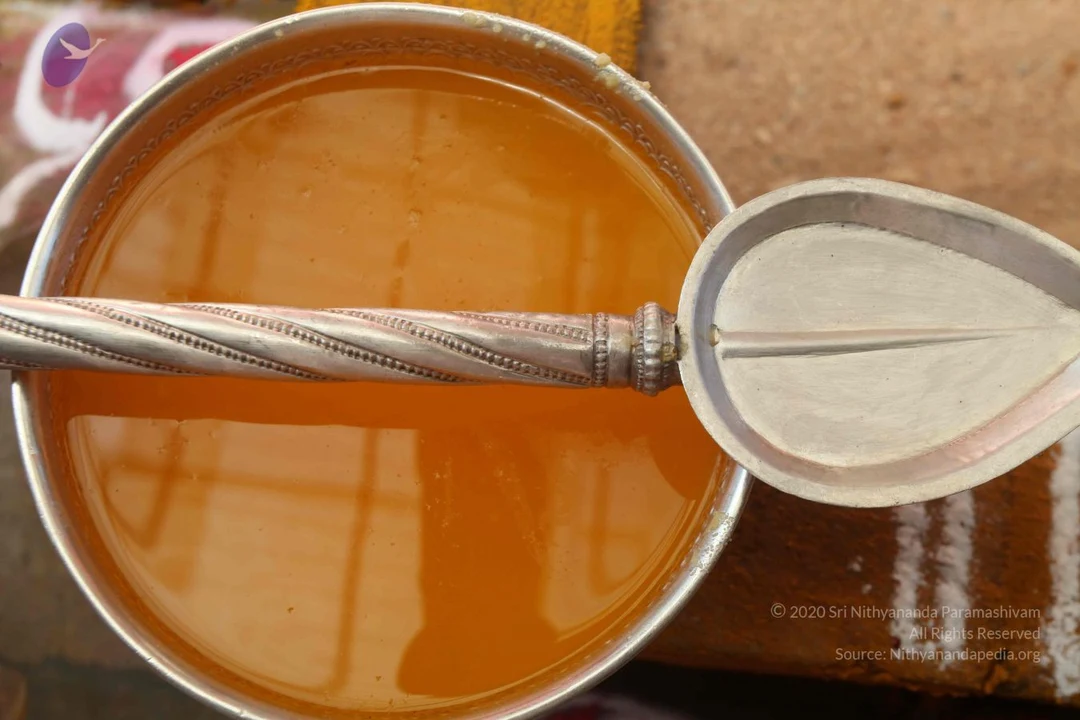
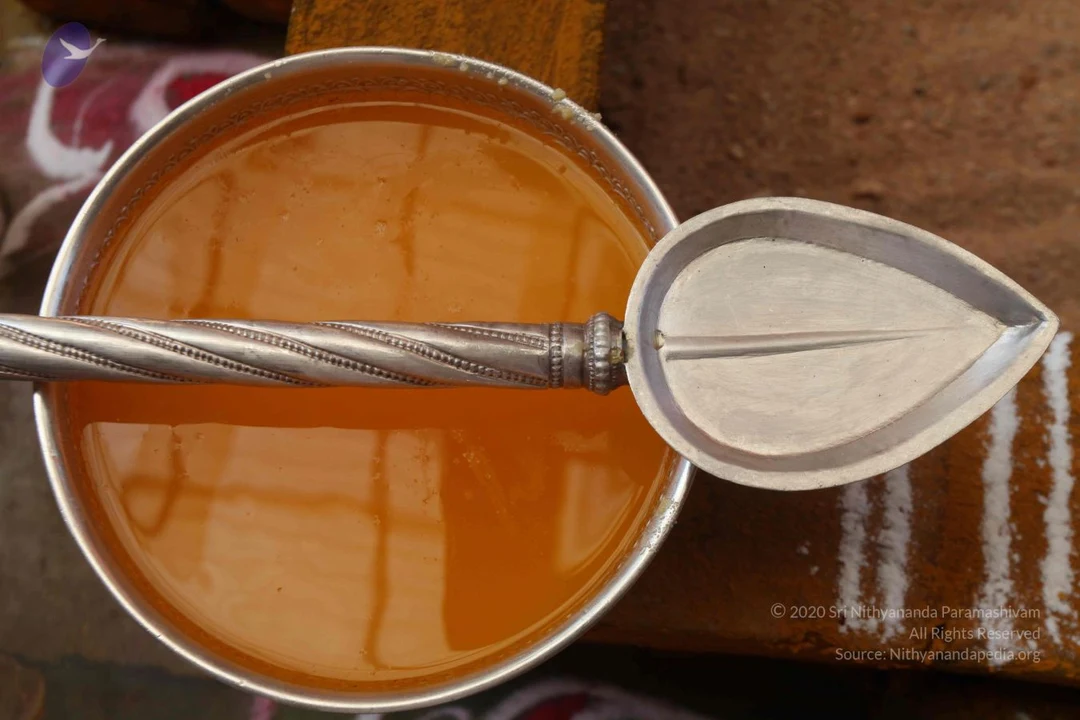
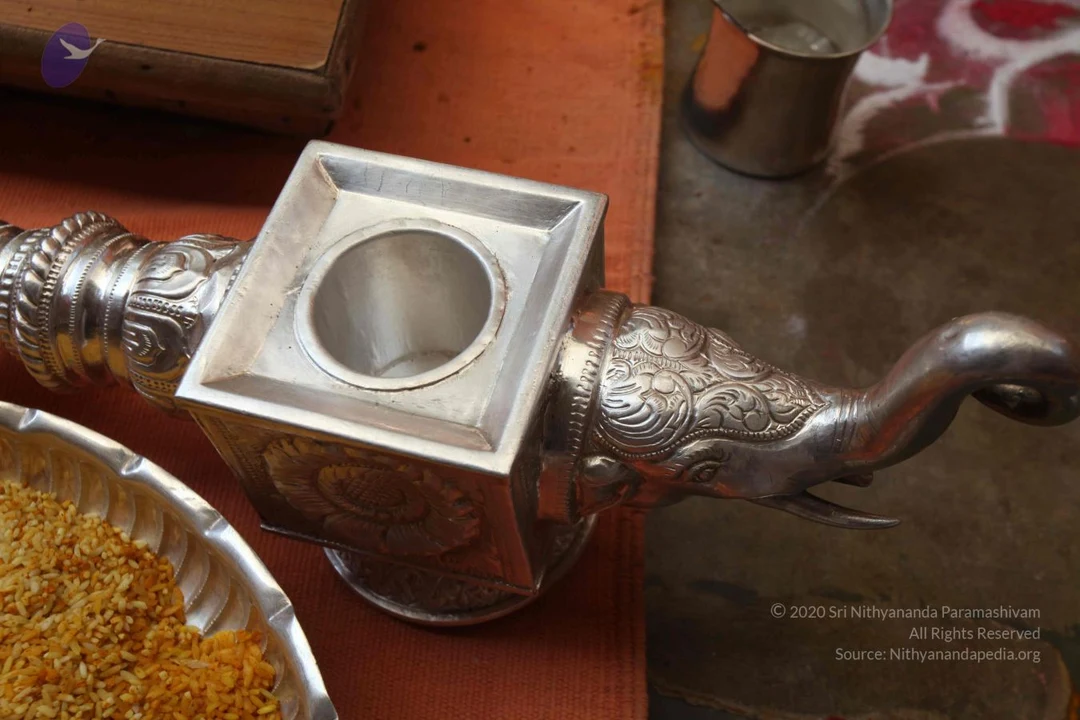
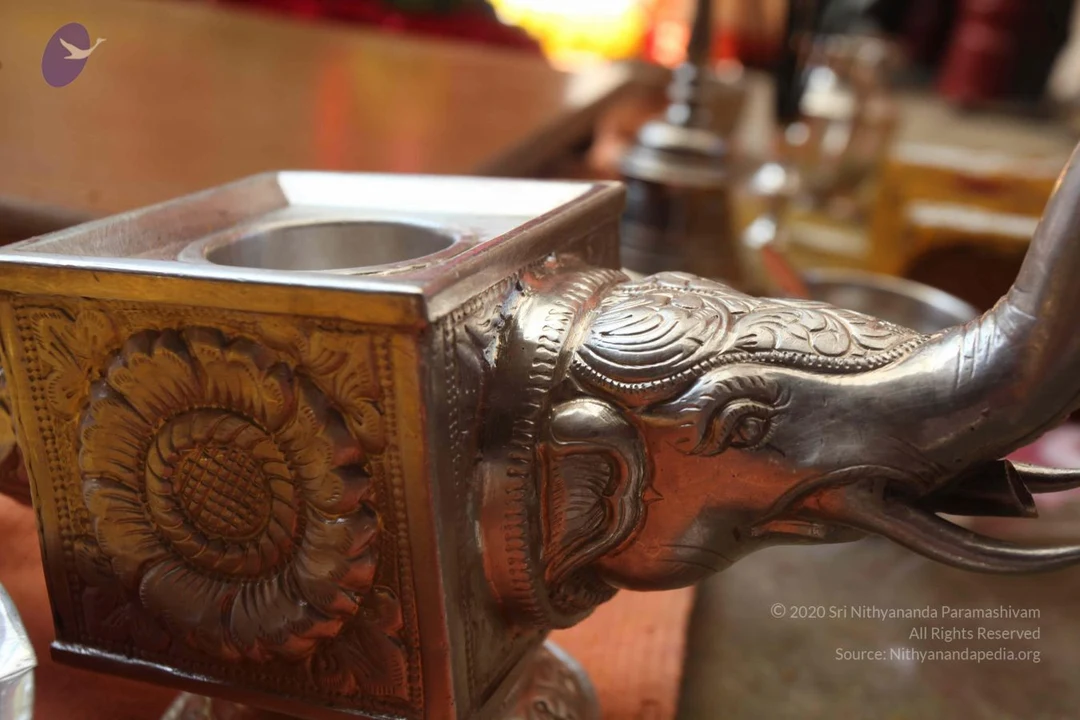
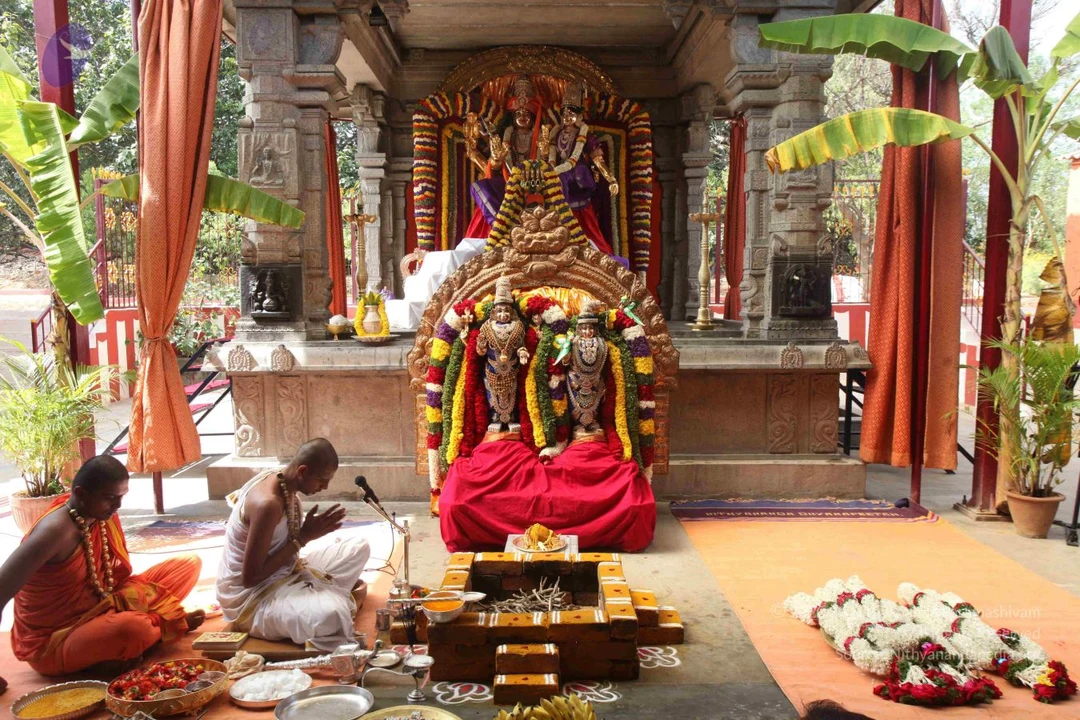
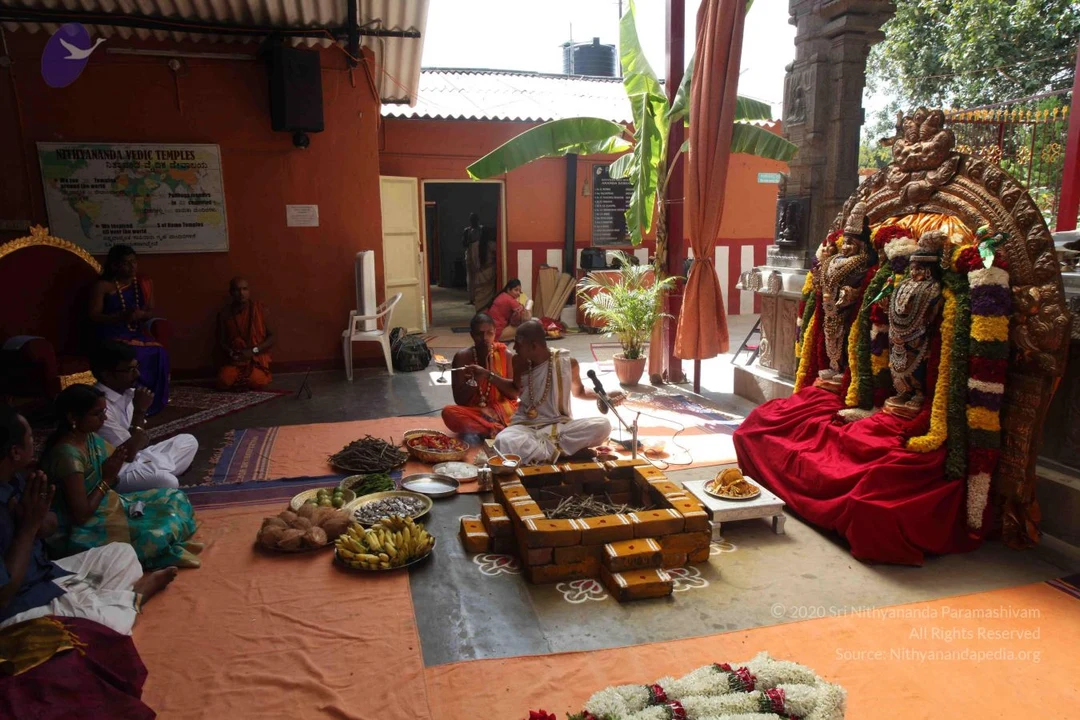
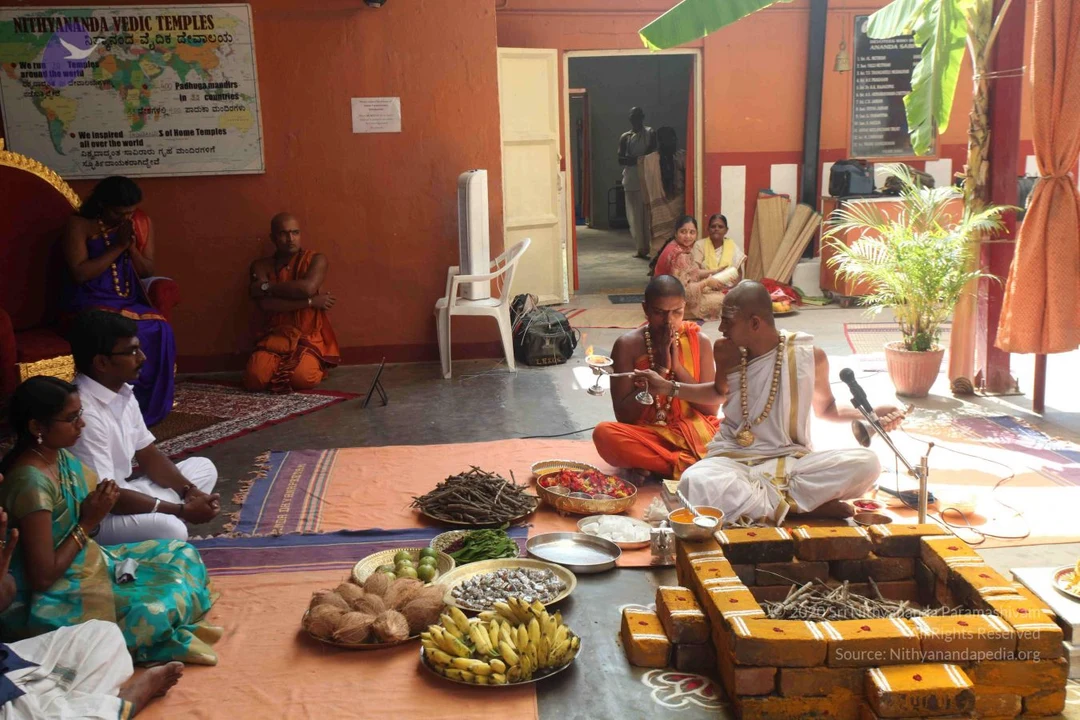
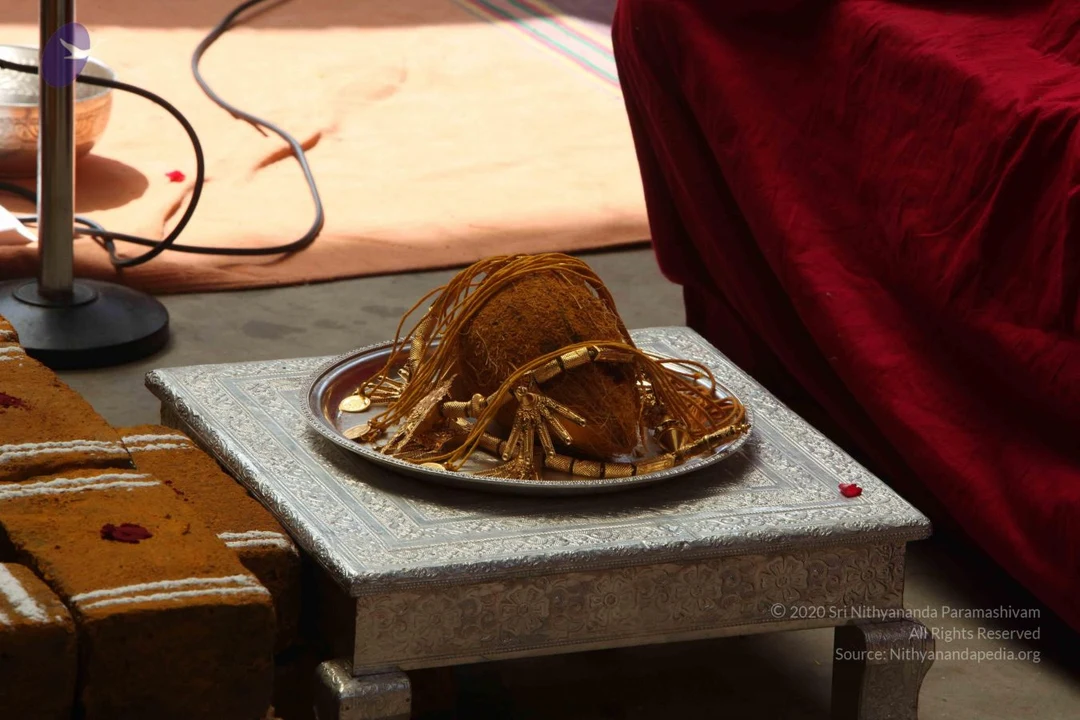
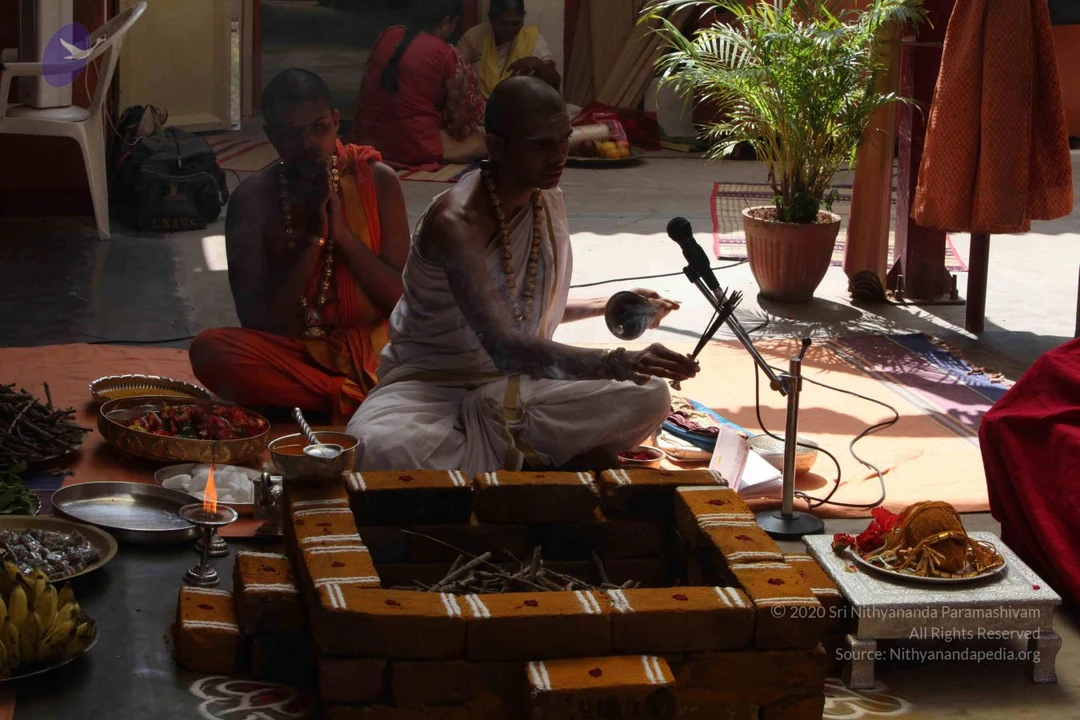
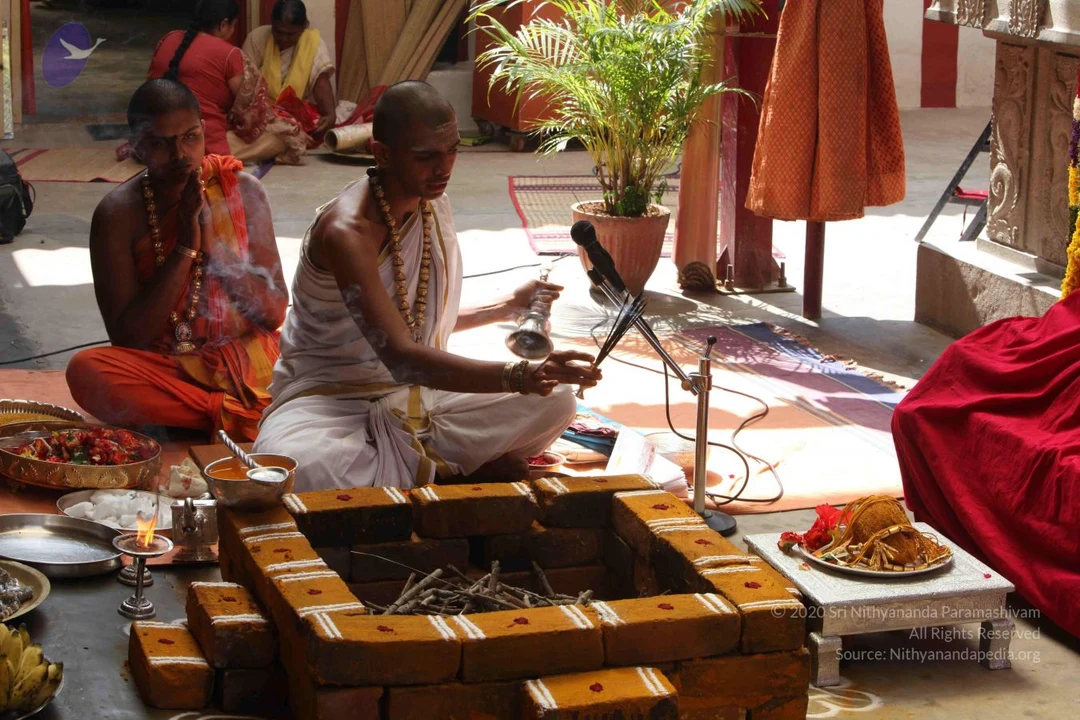
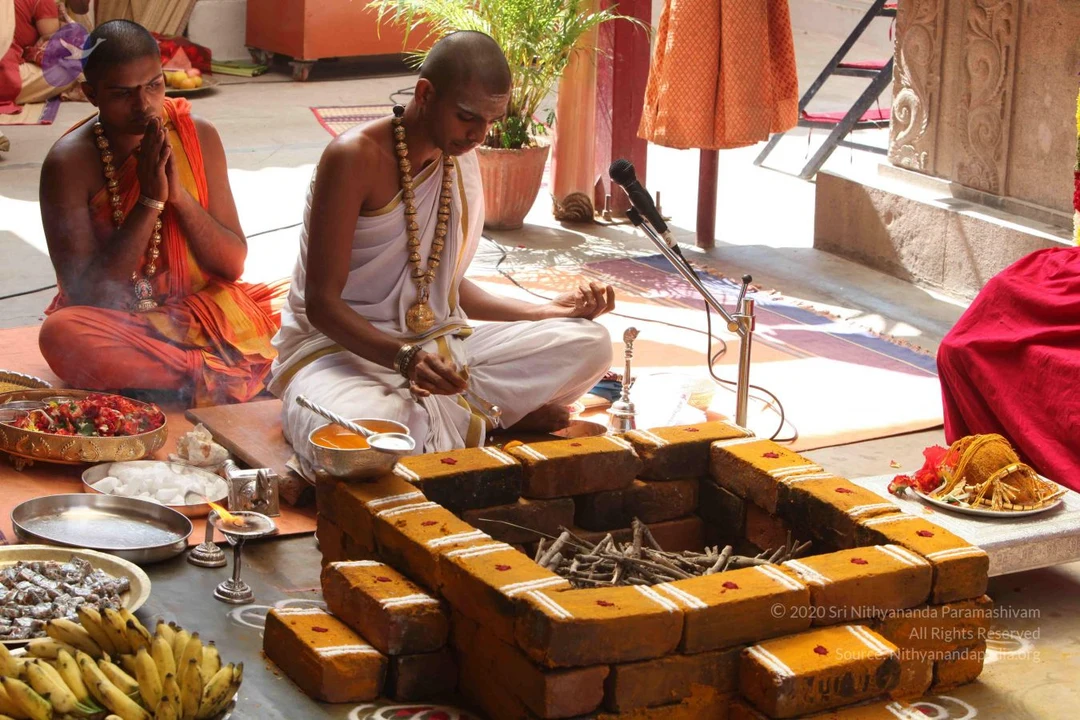
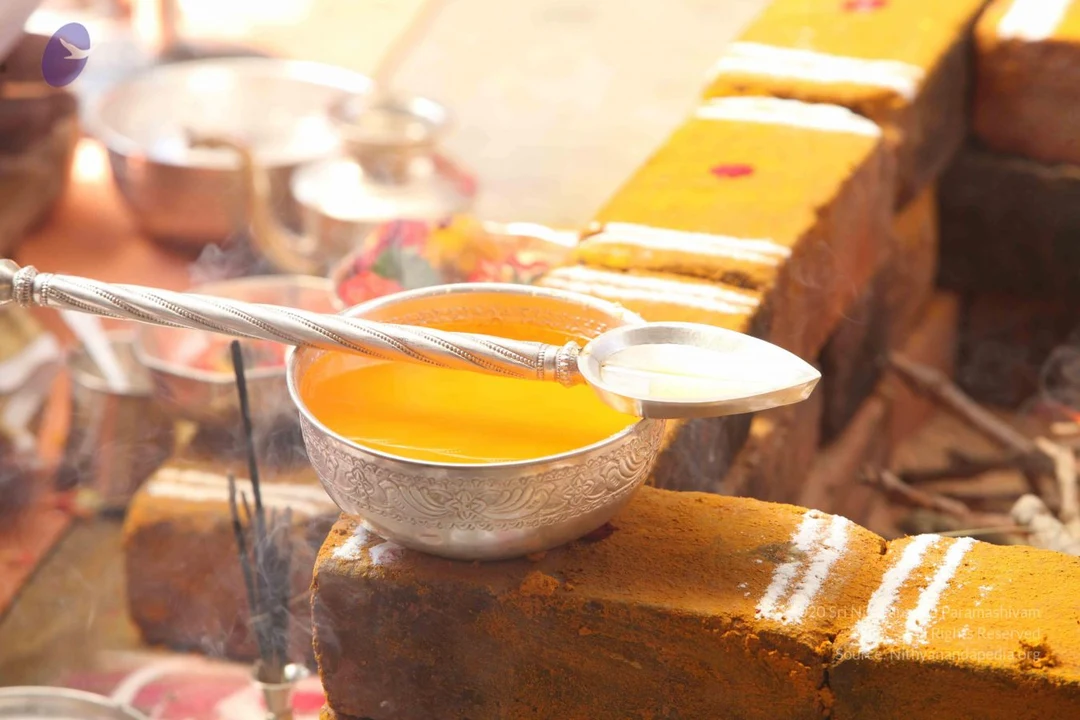
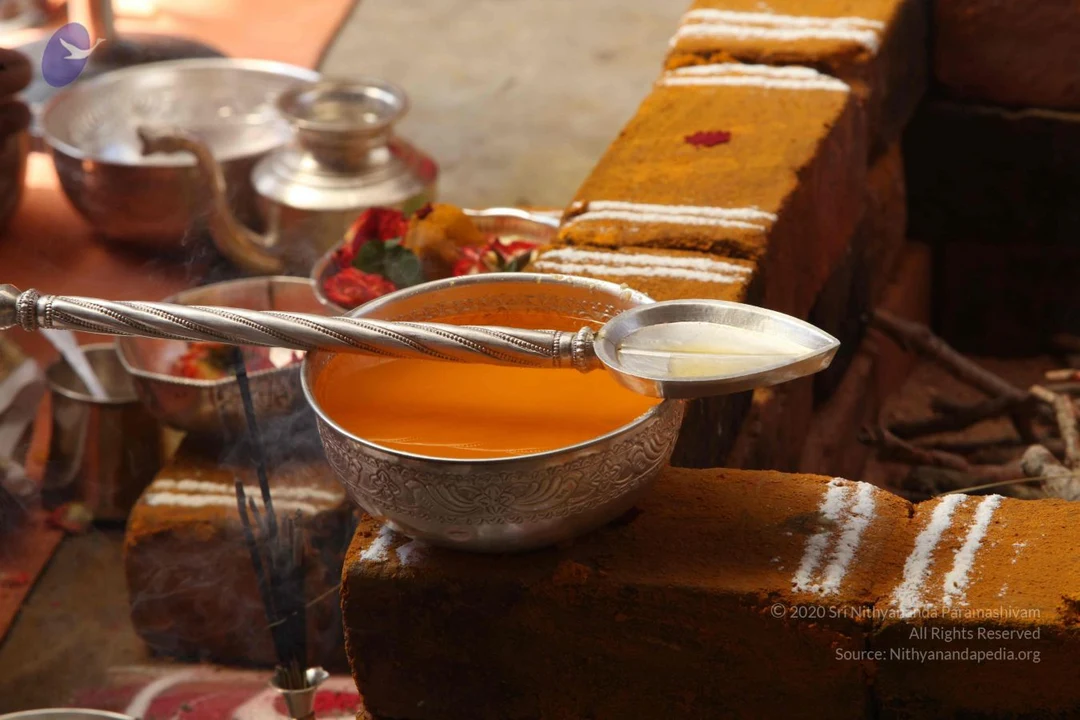
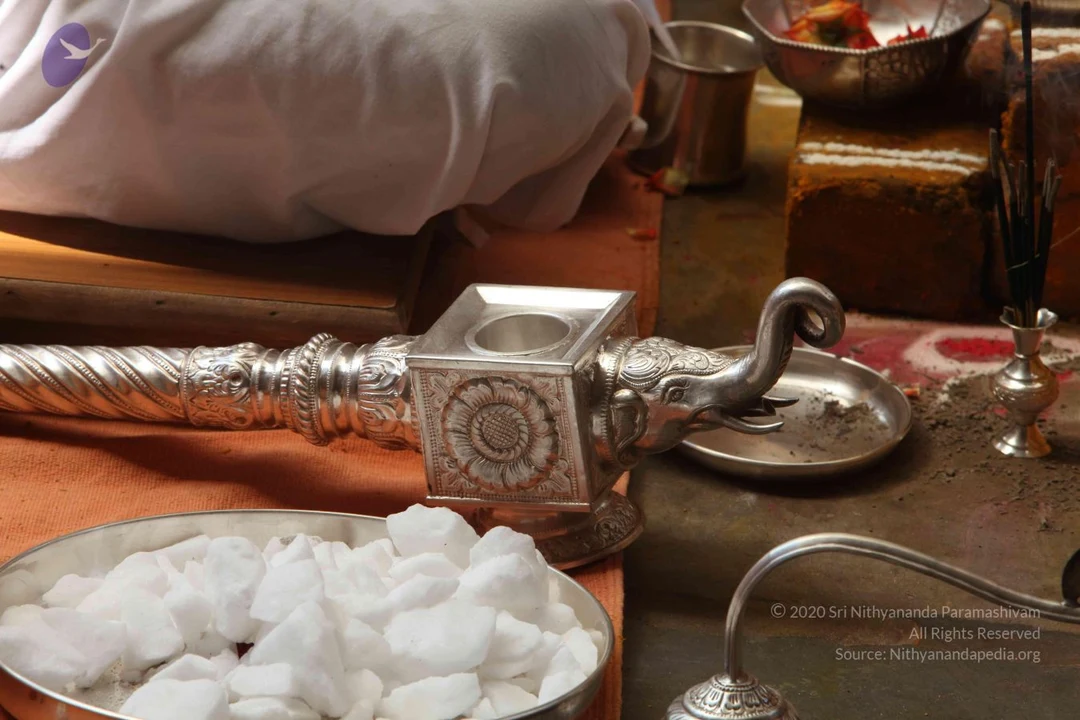
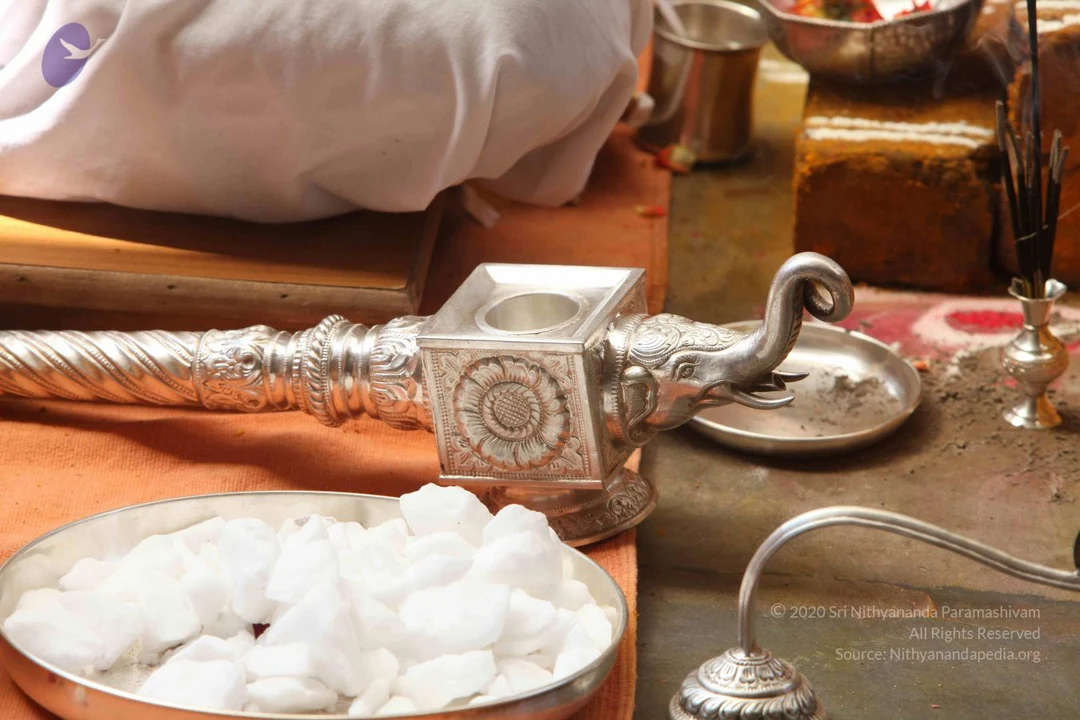
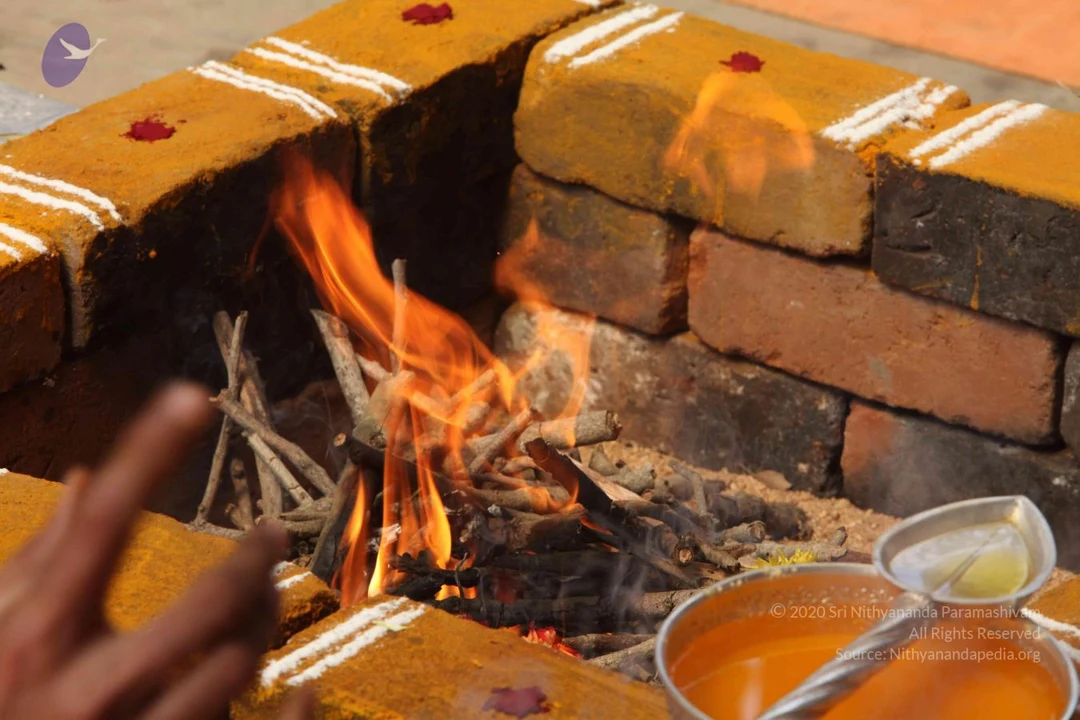
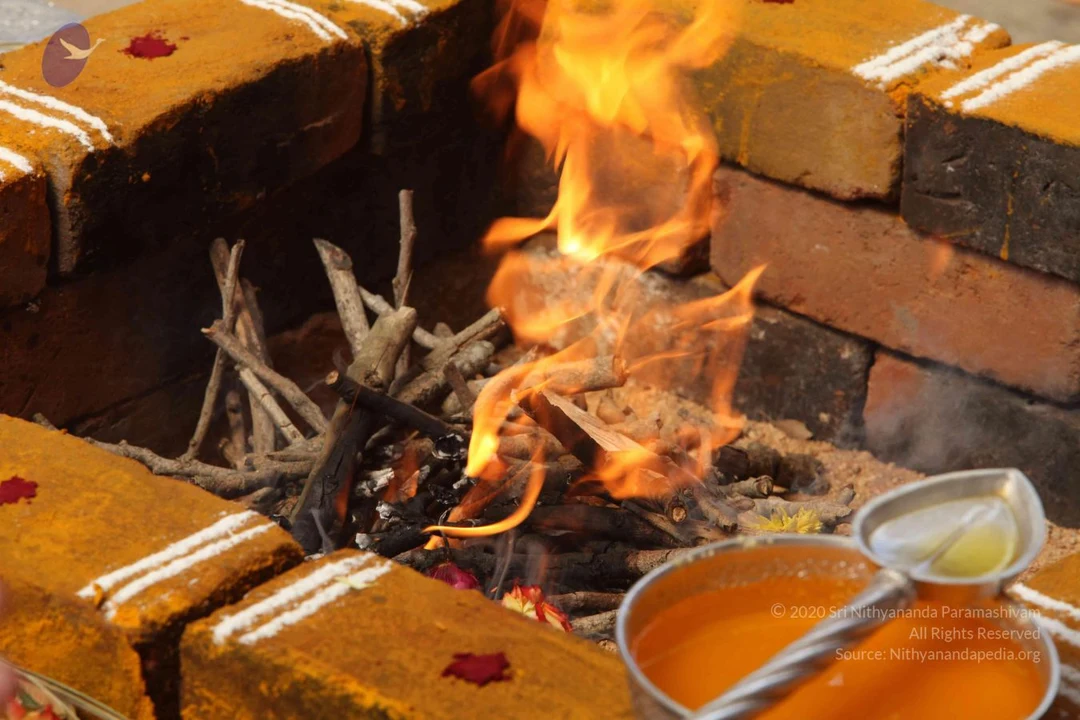
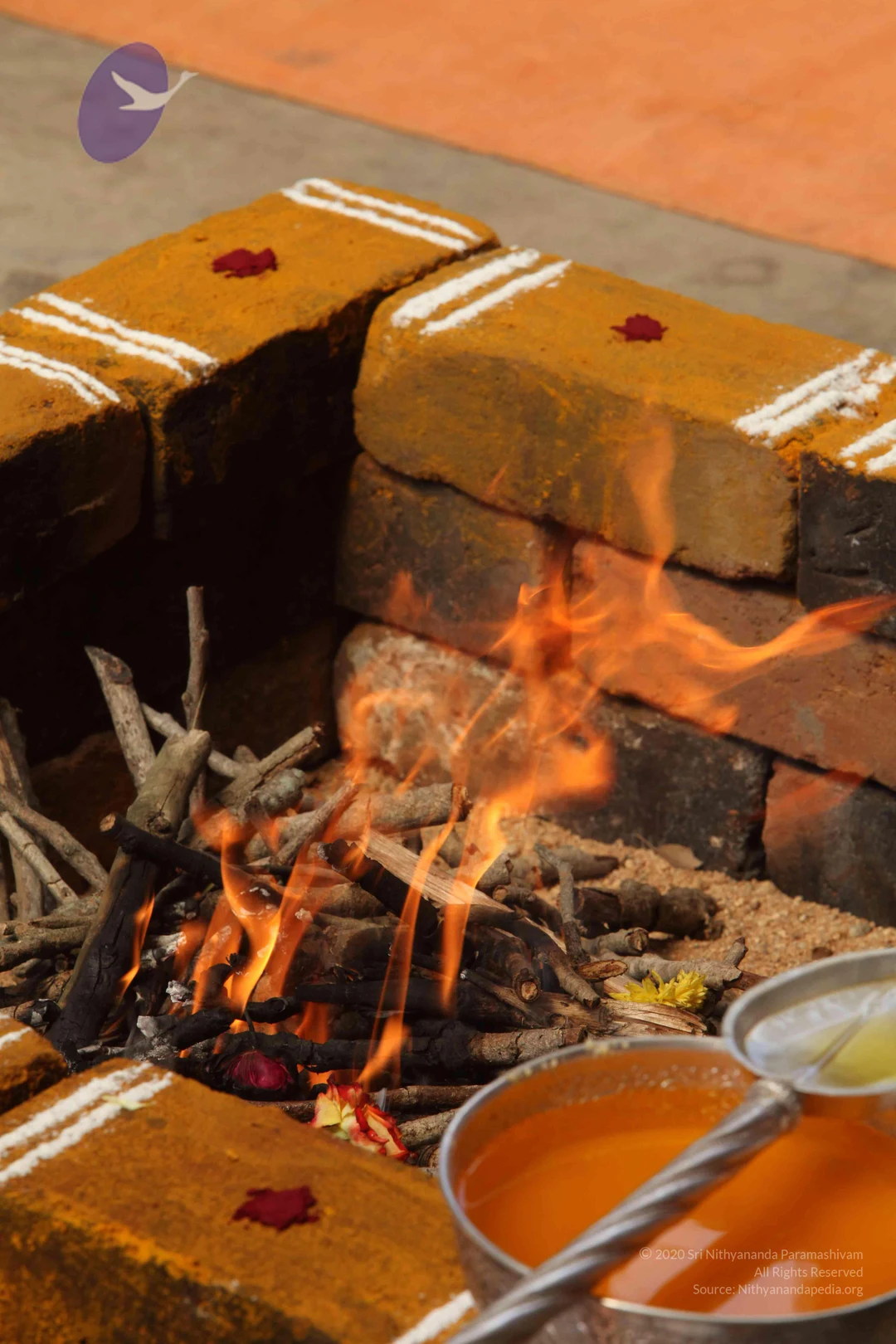
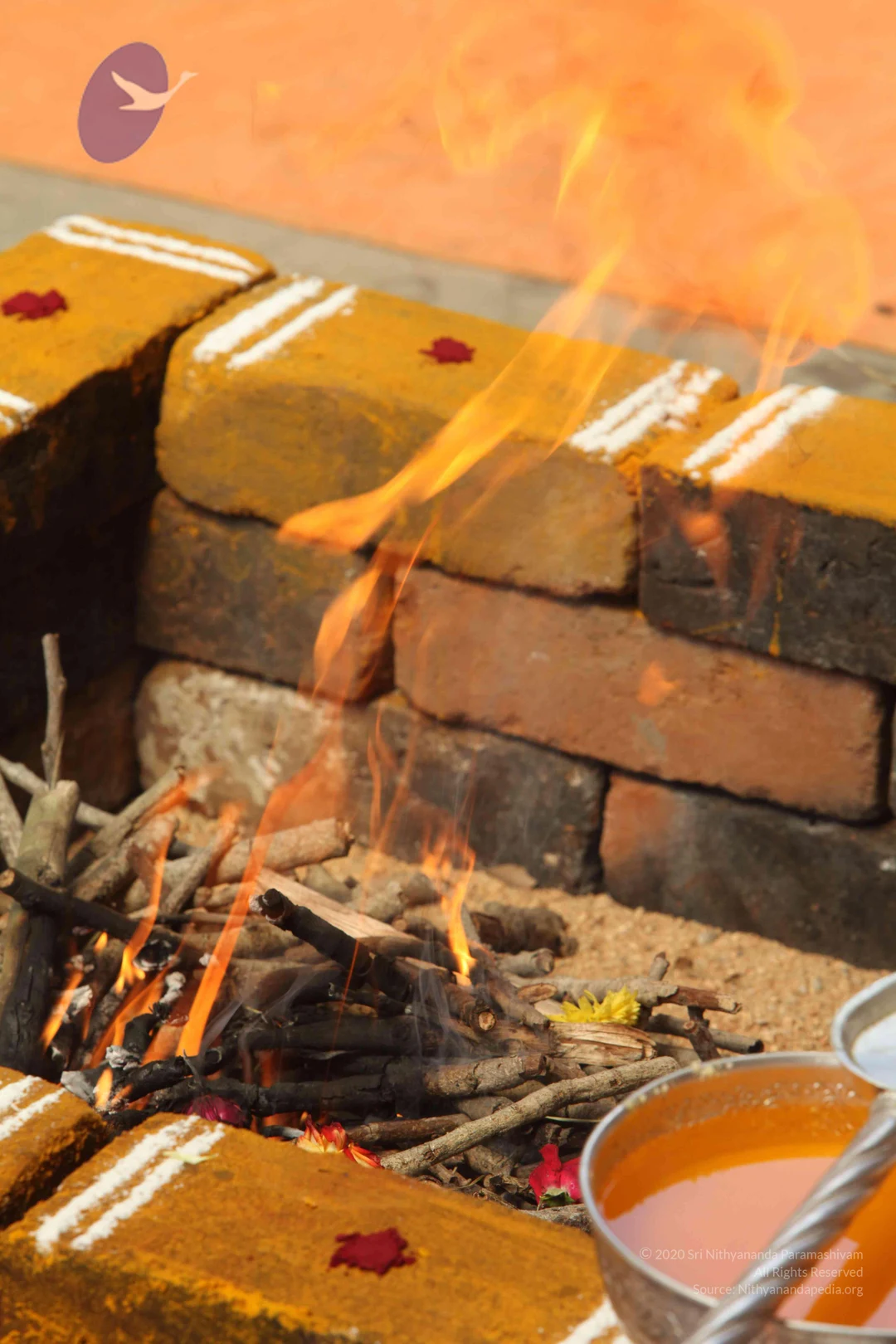
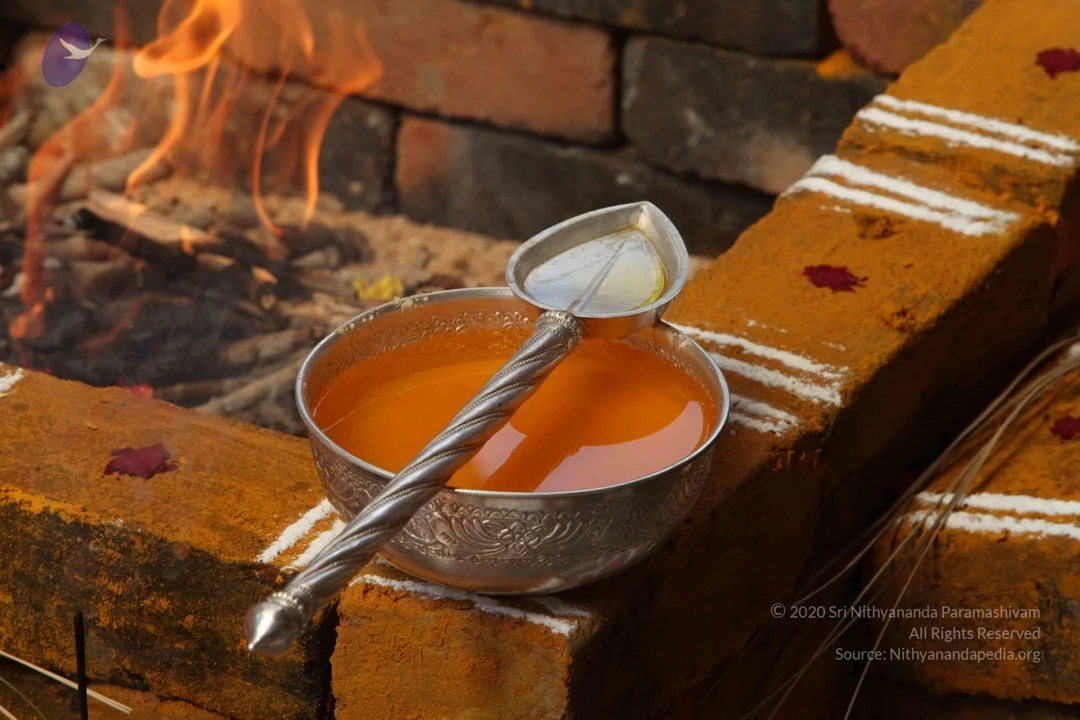
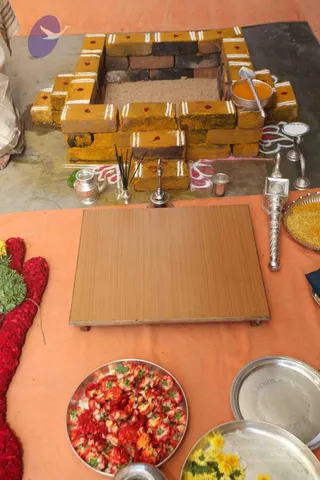
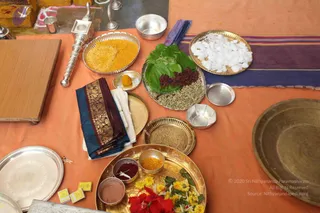
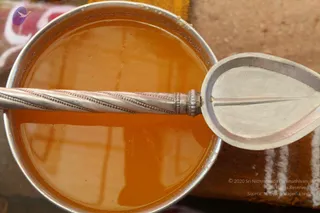
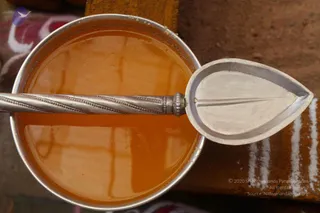
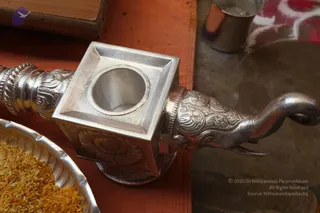
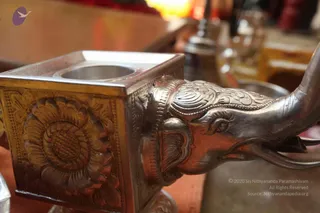
Overhead photo of a ritual setup on an orange cloth: a square fire pit built from turmeric-yellow painted bricks with white stripes and red dots, filled with sand, beside an empty low wooden seat or board. Around it are silver vessels, a silver pitcher, a silver cup, incense sticks, a silver lamp stand, a silver bowl of yellow powder, plates of red and yellow flowers, and a red flower garland. A rangoli design is drawn in red and white on the floor. A partly visible figure in white clothing sits at the left edge. No a person candidate is visible.A top-down photograph of a ritual preparation table draped in orange cloth for a pada-puja. Brass and silver bowls and plates hold turmeric powder, a yellow mound of turmeric, white camphor or coconut pieces, green betel-like leaves, dried red flowers, green cardamom pods, a red kumkum paste, and a plate of red and yellow flowers. A folded dark blue silk cloth with gold zari border lies in the centre, and a silver ritual lamp stand with a long handle stands at upper left. No people are visible.Overhead close-up photograph of a round silver vessel filled with amber-coloured liquid. The ladle has a twisted handle and a leaf-shaped bowl. The background shows a red and white painted surface and a yellow-orange edge. No people are visible.Overhead close-up of a round silver vessel filled with golden-orange liquid. A twisted silver ladle with a leaf-shaped bowl rests in the liquid, its handle extending to the left. White painted lines and a reddish surface are visible at the right edge, with a patterned cloth partly visible at the upper left. No people are shown.Close-up photograph of an ornate silver ritual vessel with a square base and cylindrical cup opening, its handle shaped as an elephant head with curled trunk and embossed floral and petal patterns. It rests on an orange cloth beside a silver plate of yellow-orange grains, with a small steel cup and a red-and-white patterned floor in the background. No people are visible. The setting suggests a pada puja preparation, with the kalasha-like vessel displayed as a ritual implement.Close-up photograph of an ornate silver-toned ritual vessel shaped with an elephant head and trunk, its square body carved with a large sunflower-like floral relief. The open top shows a cylindrical cup-like receptacle. Blurred background shows other brass or silver ritual items and warm lamp light. No people are visible.
JAYANTHI-BRAHMOTSAVAM-COUPLES-DAY-EVENING-CULTURALS
104 photosSource gallery
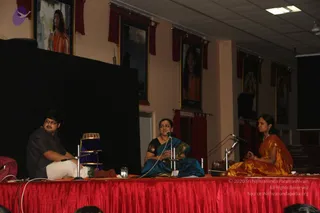
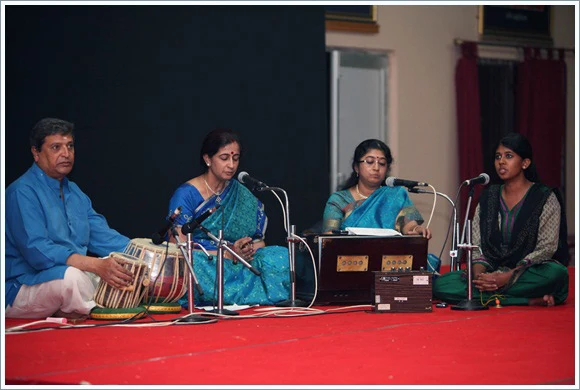
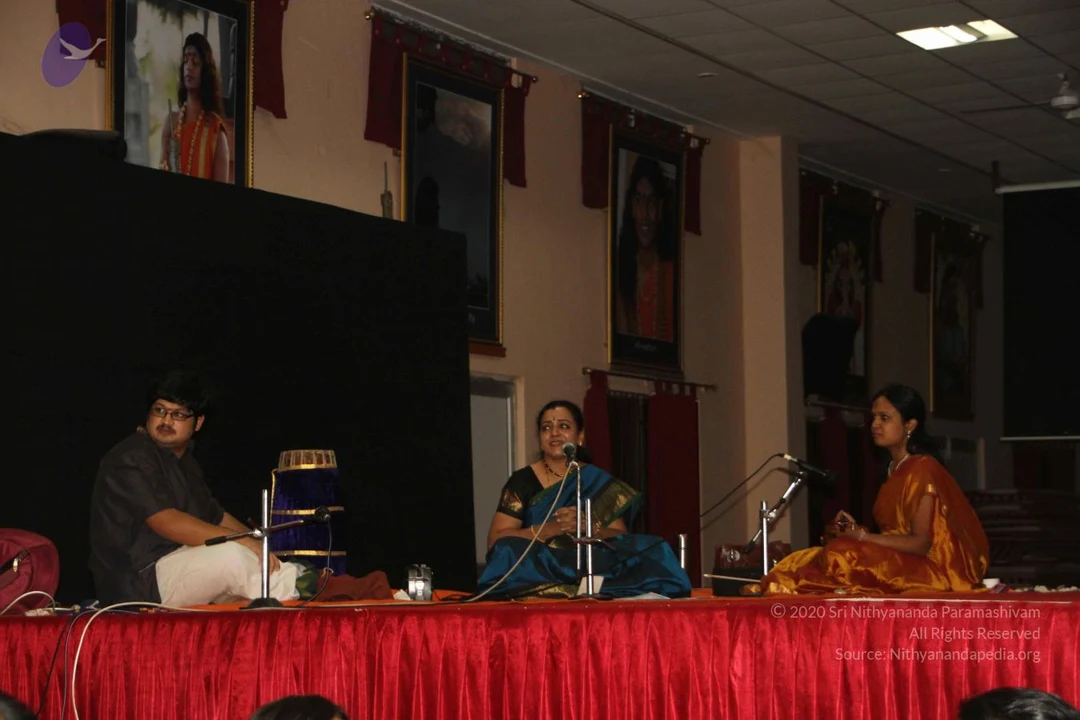
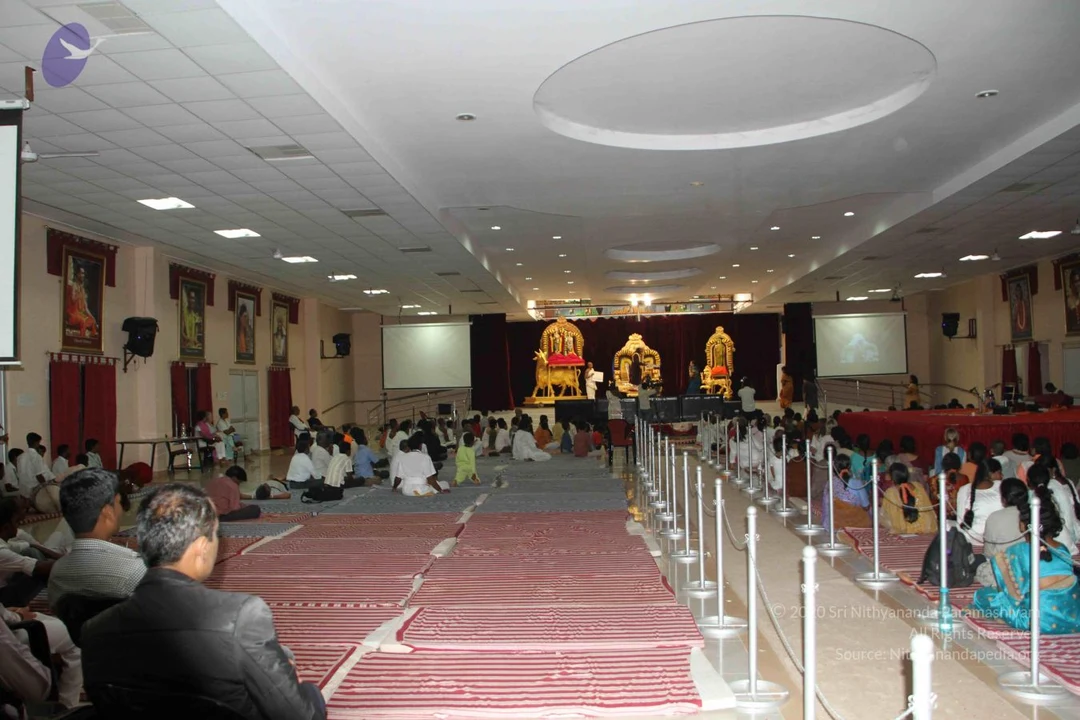
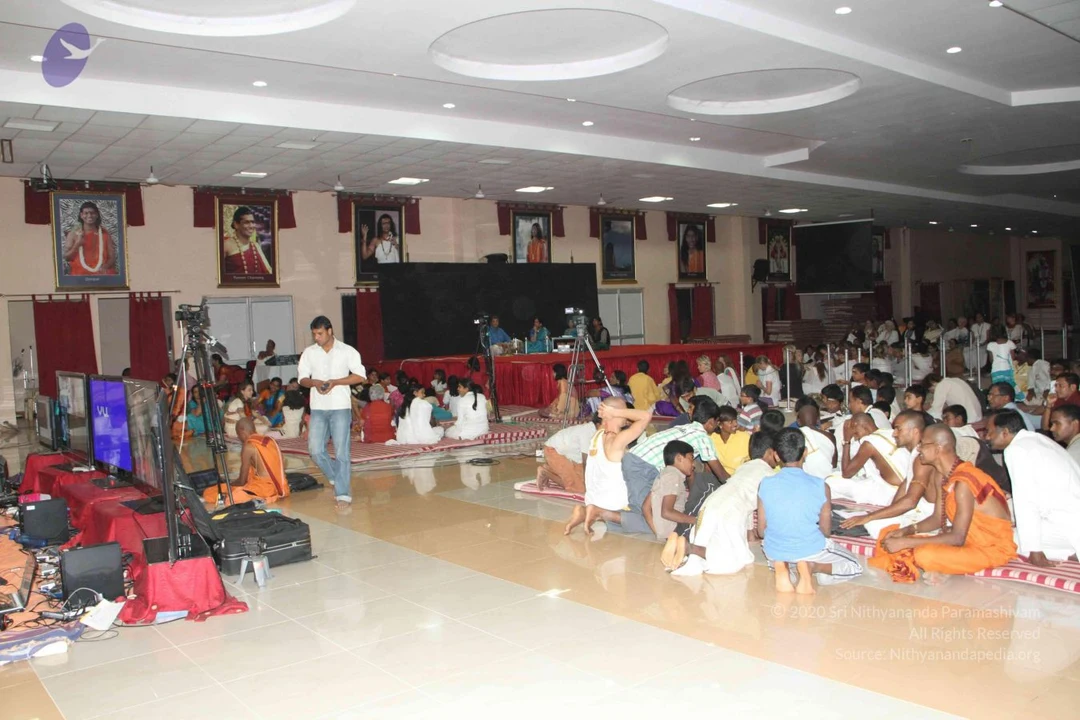
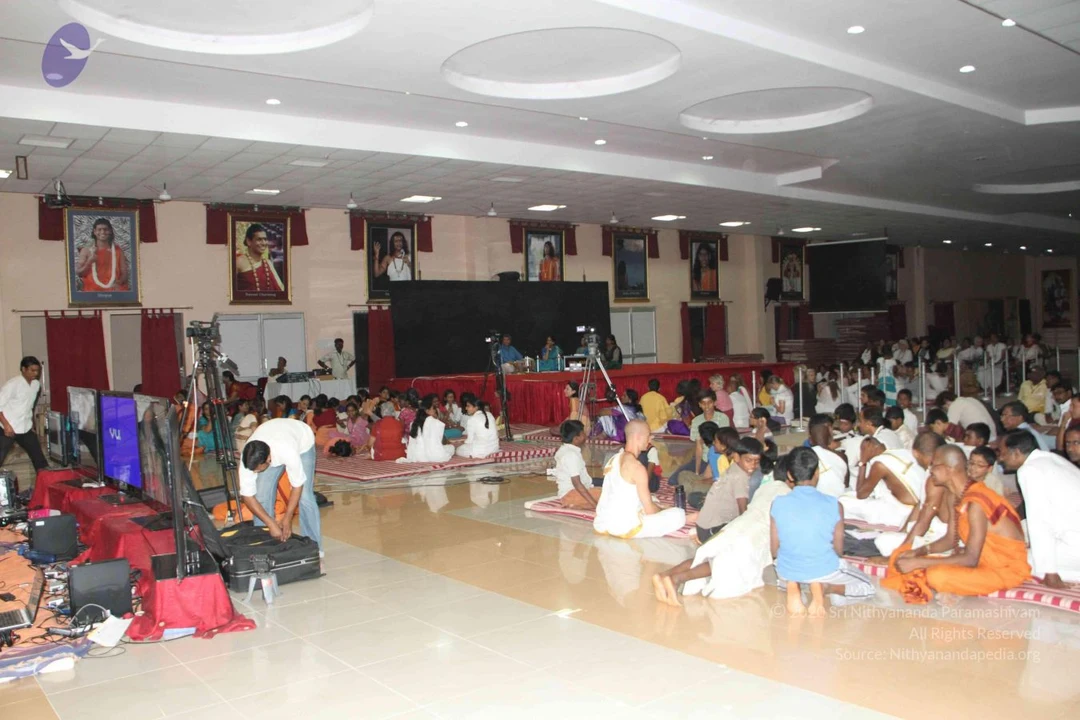
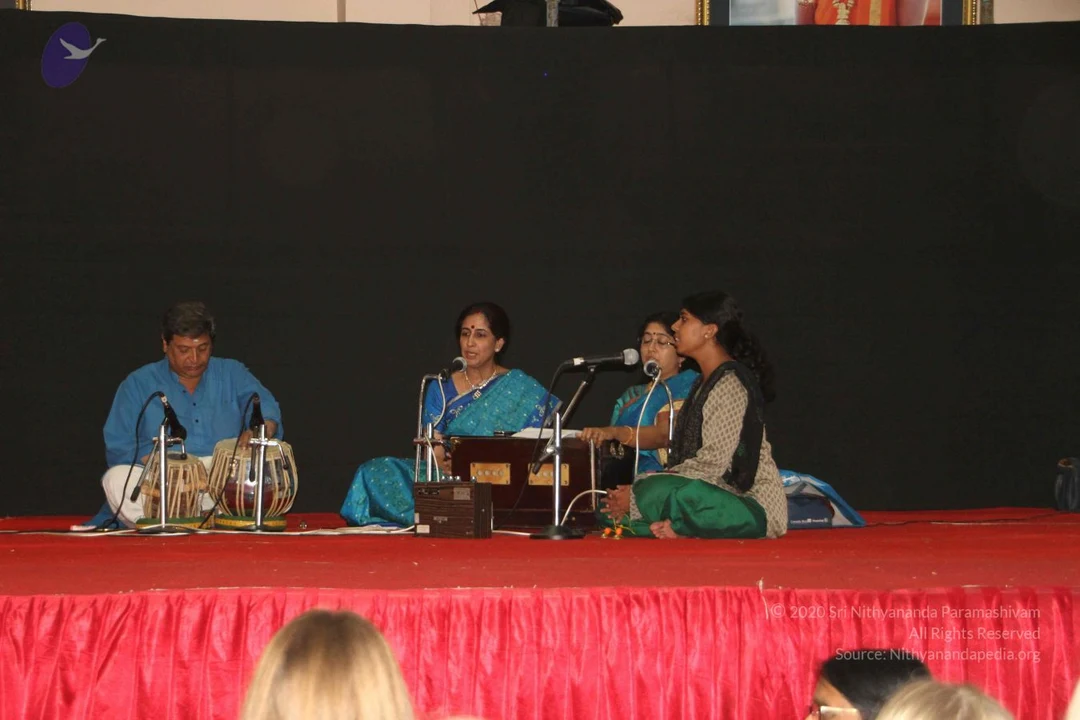
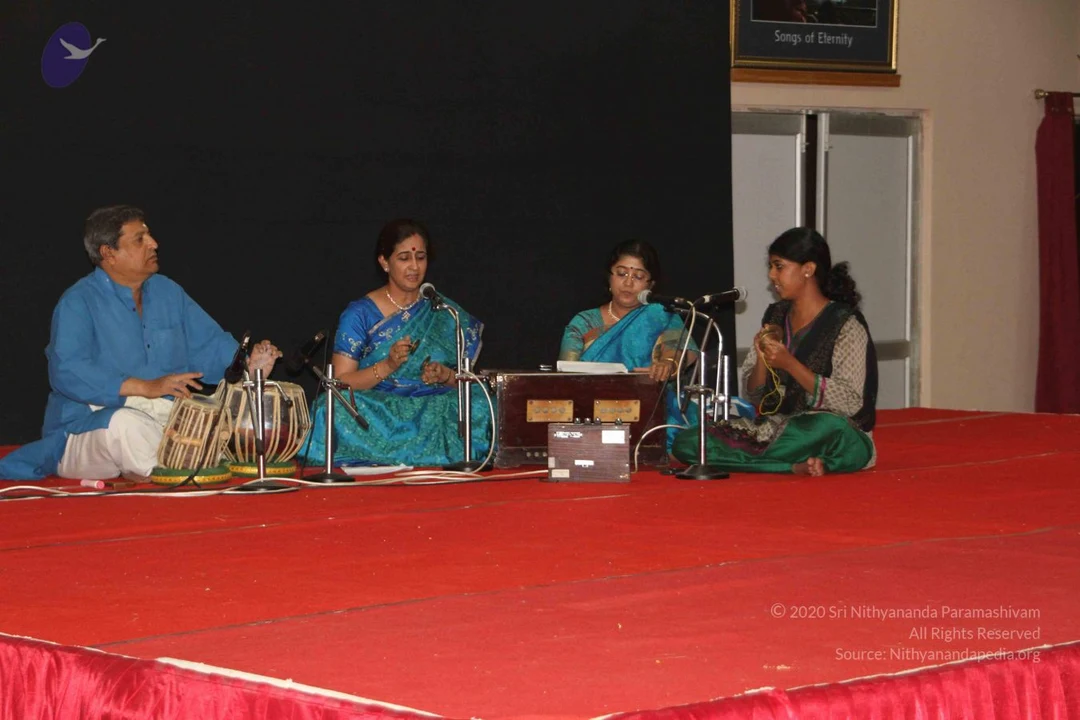
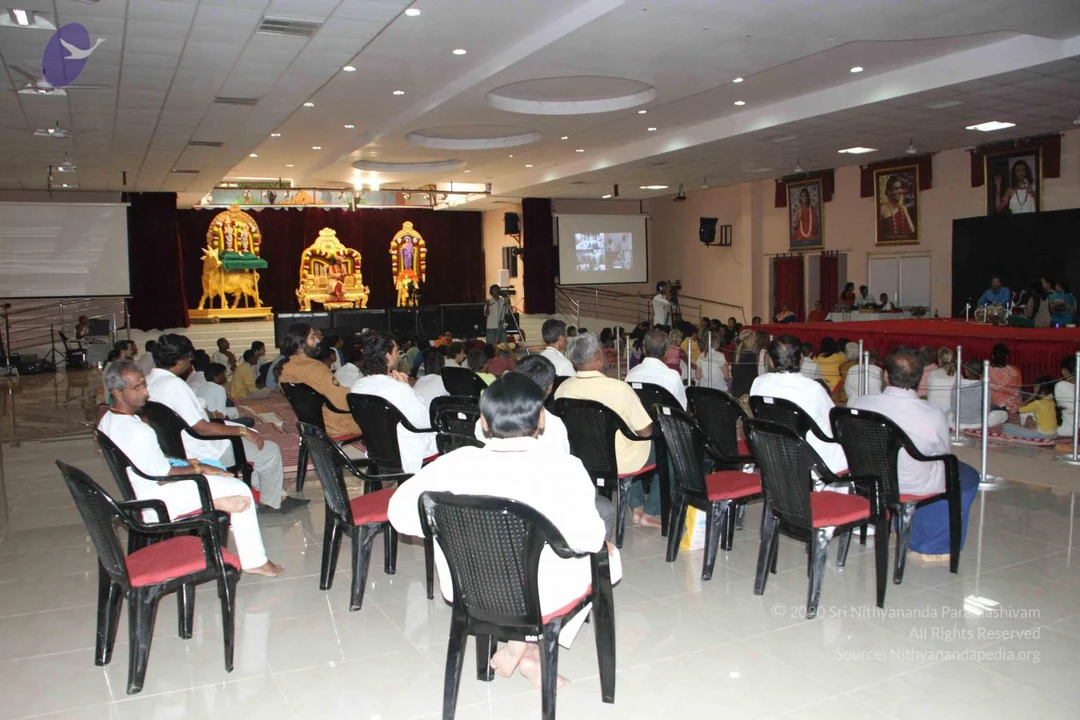
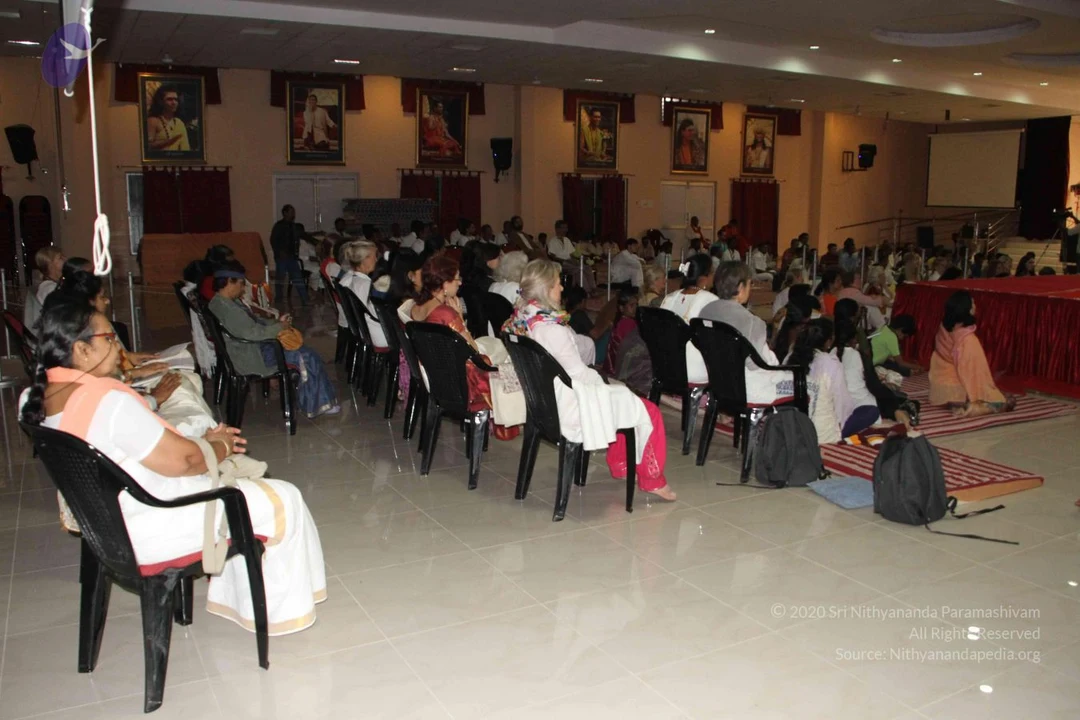
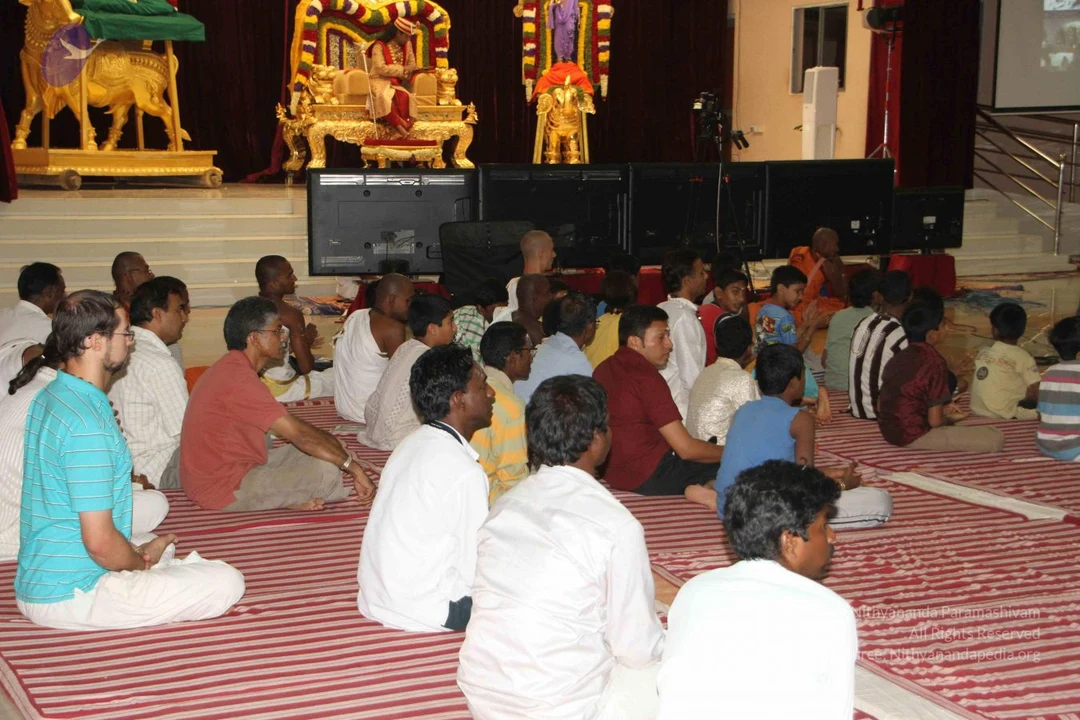
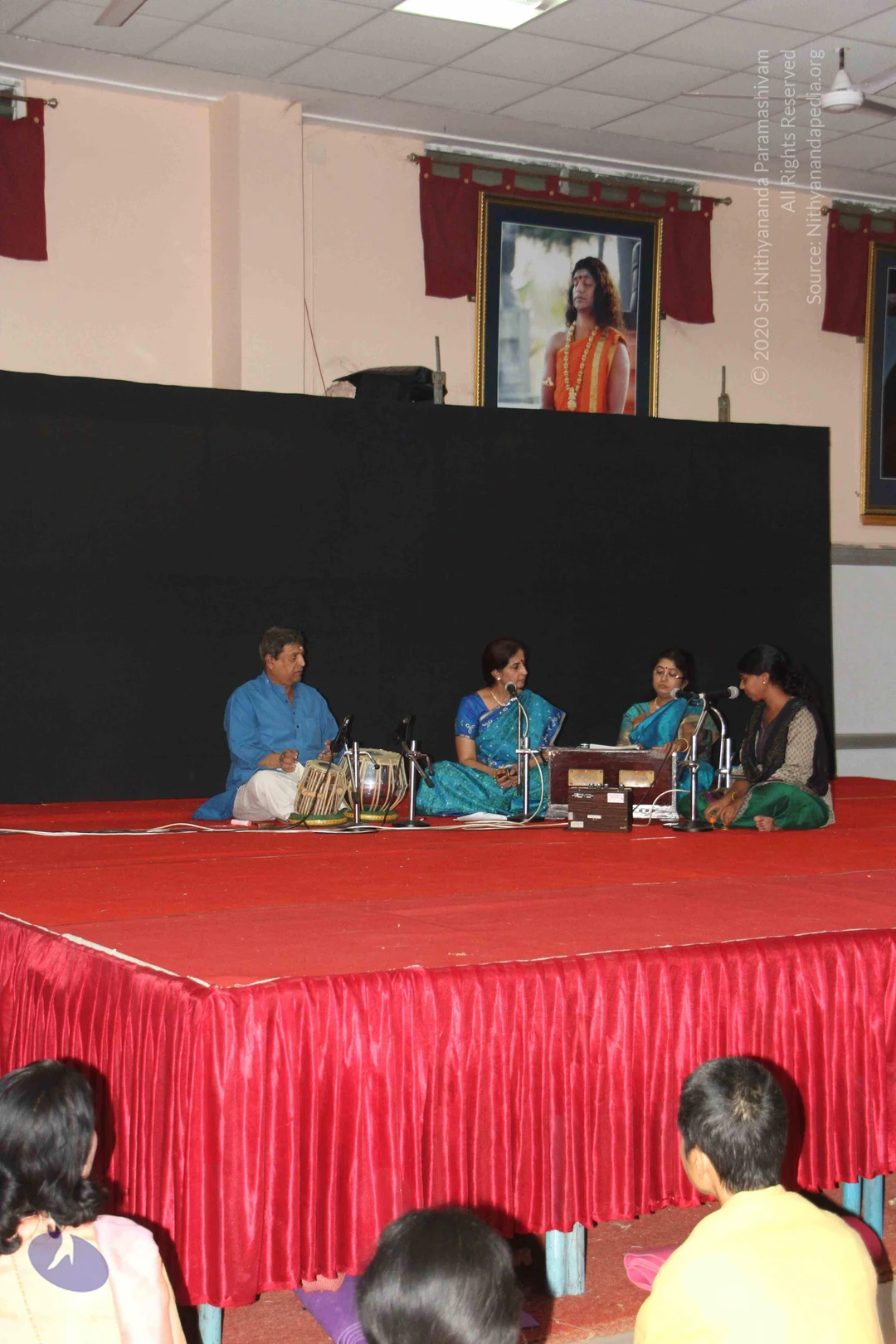
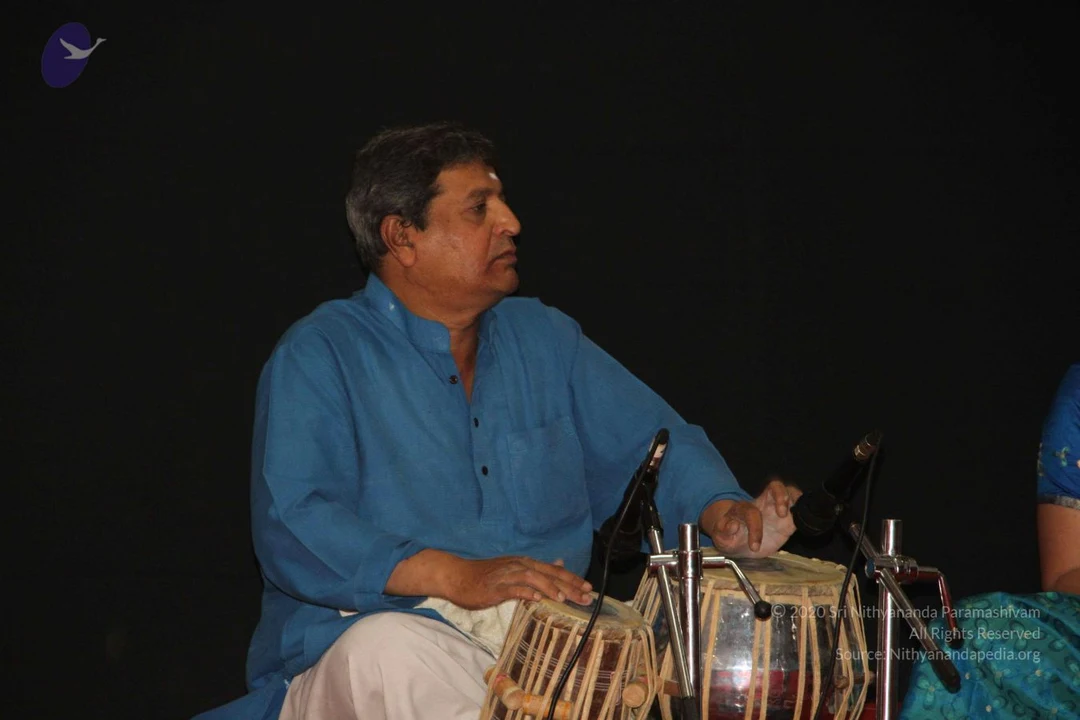
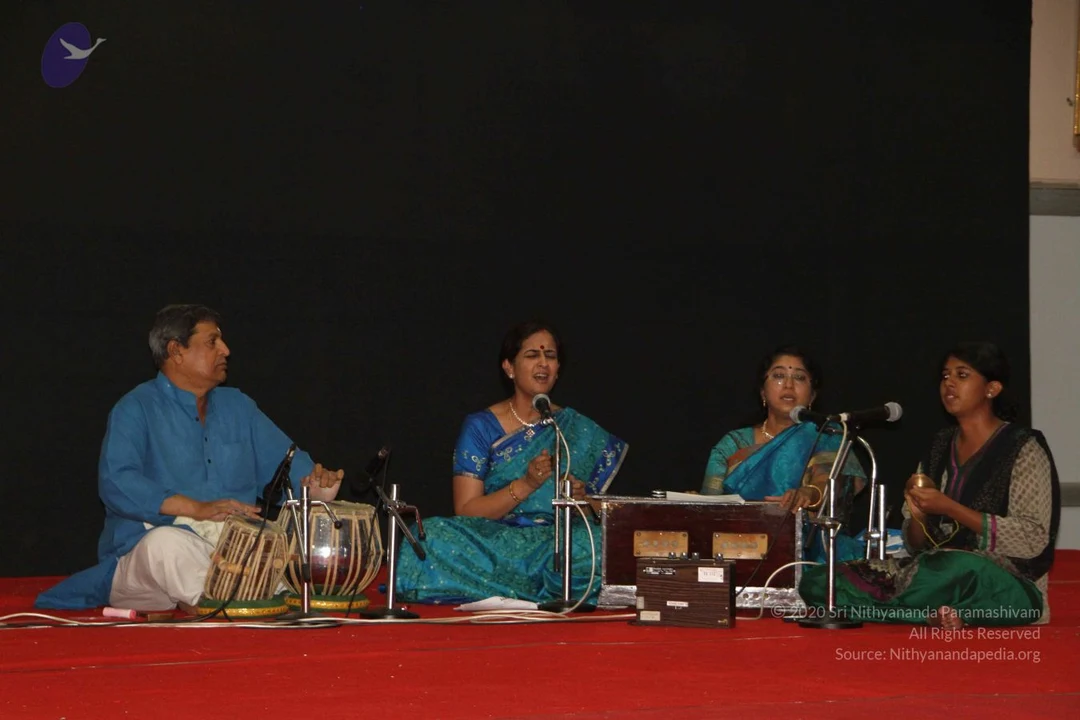
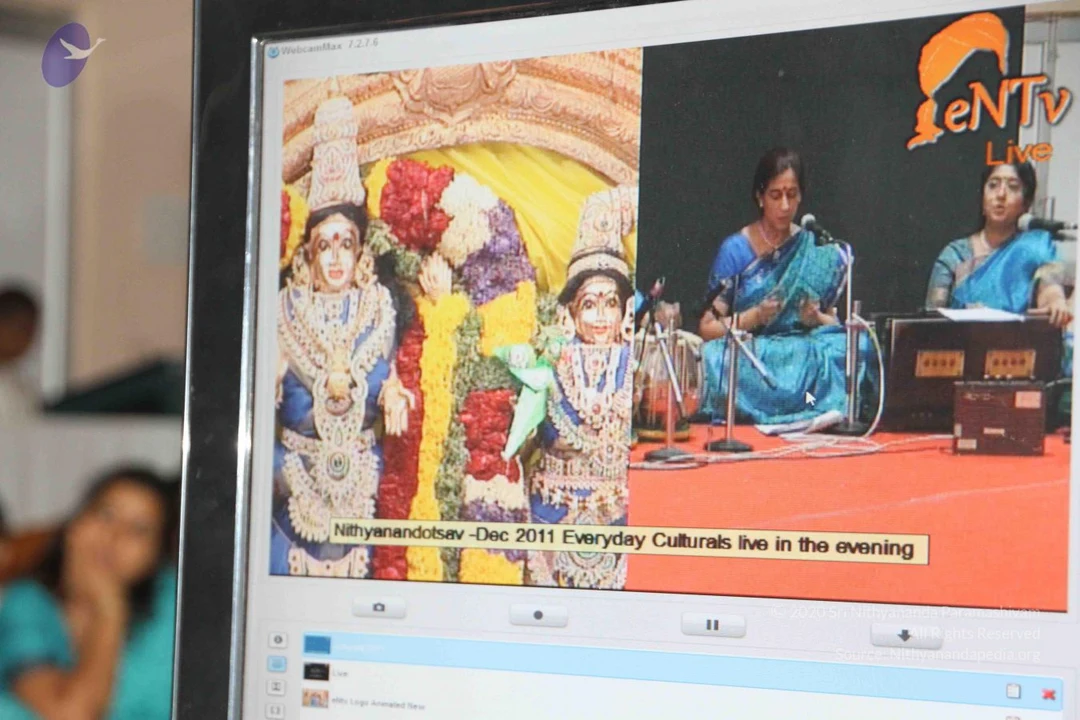
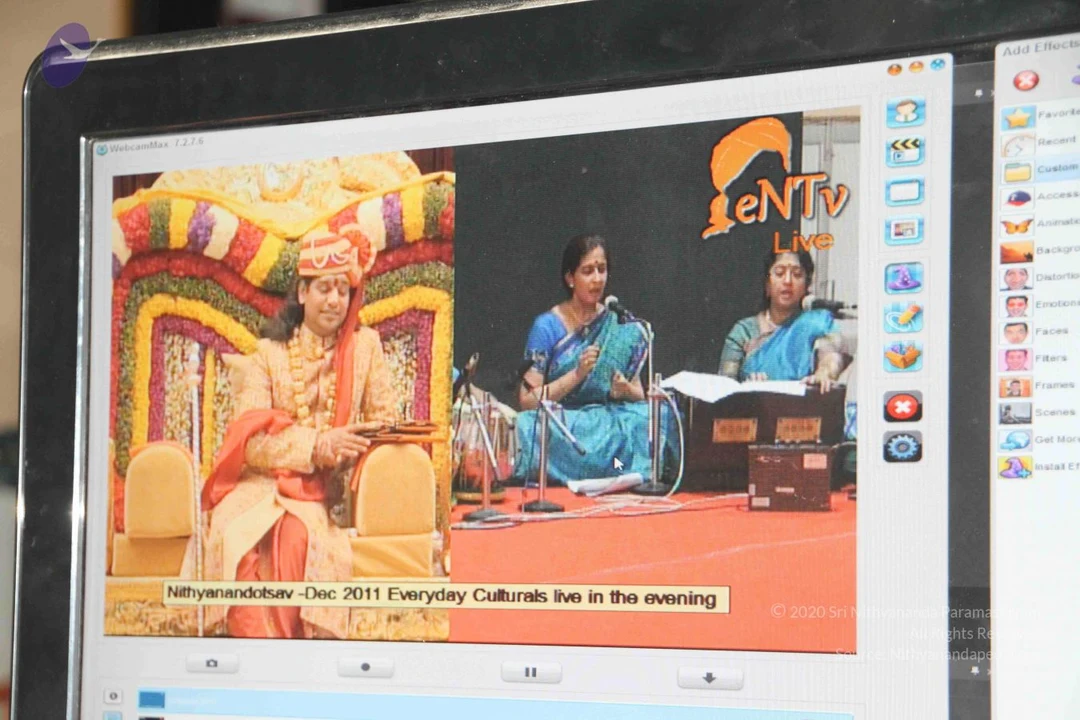
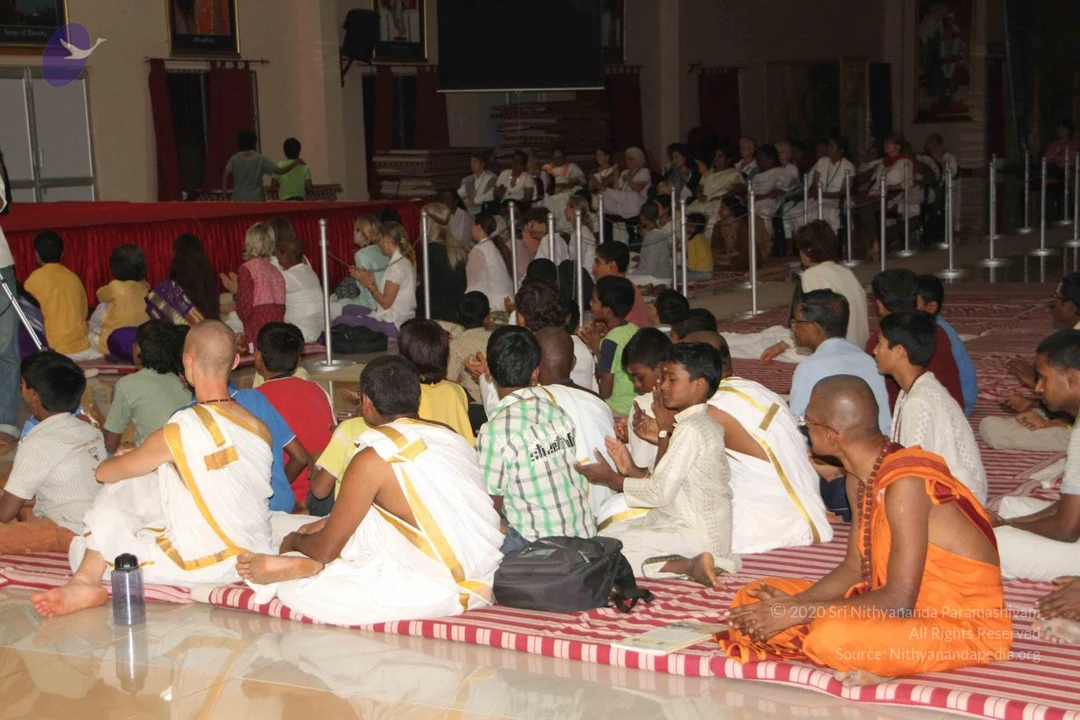
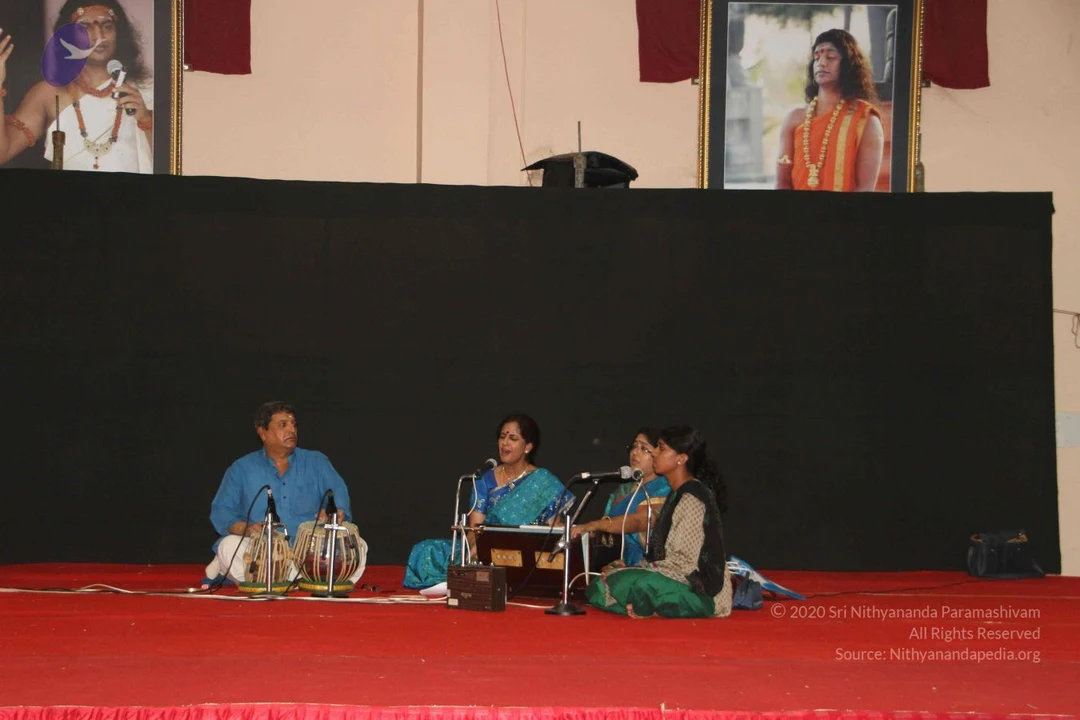
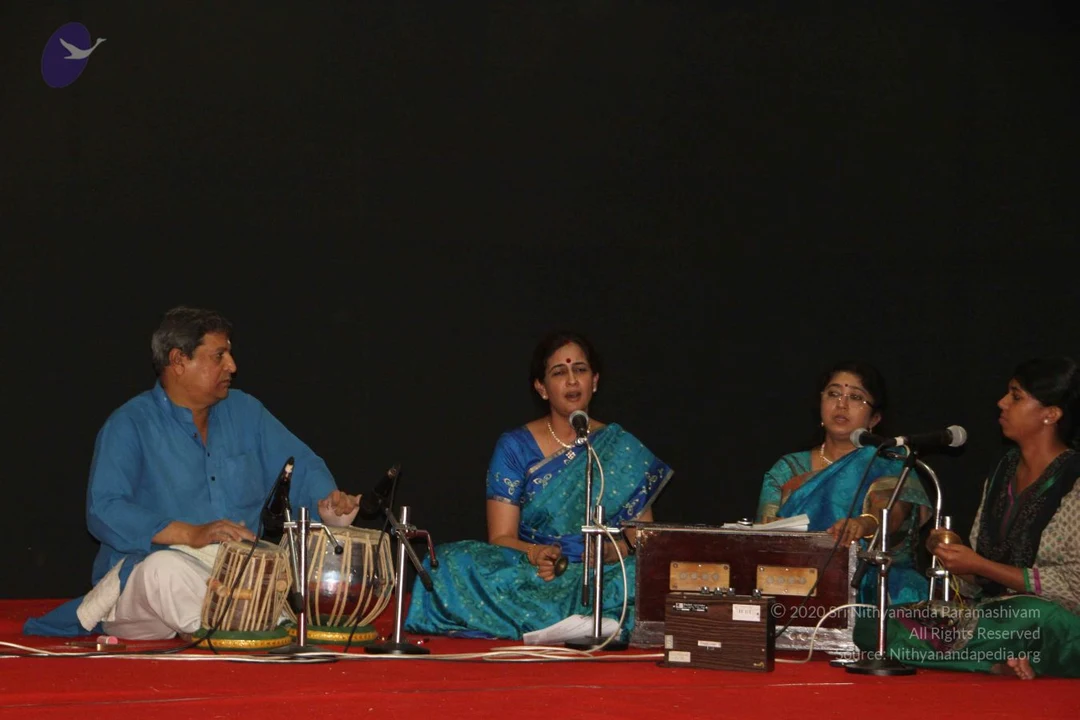
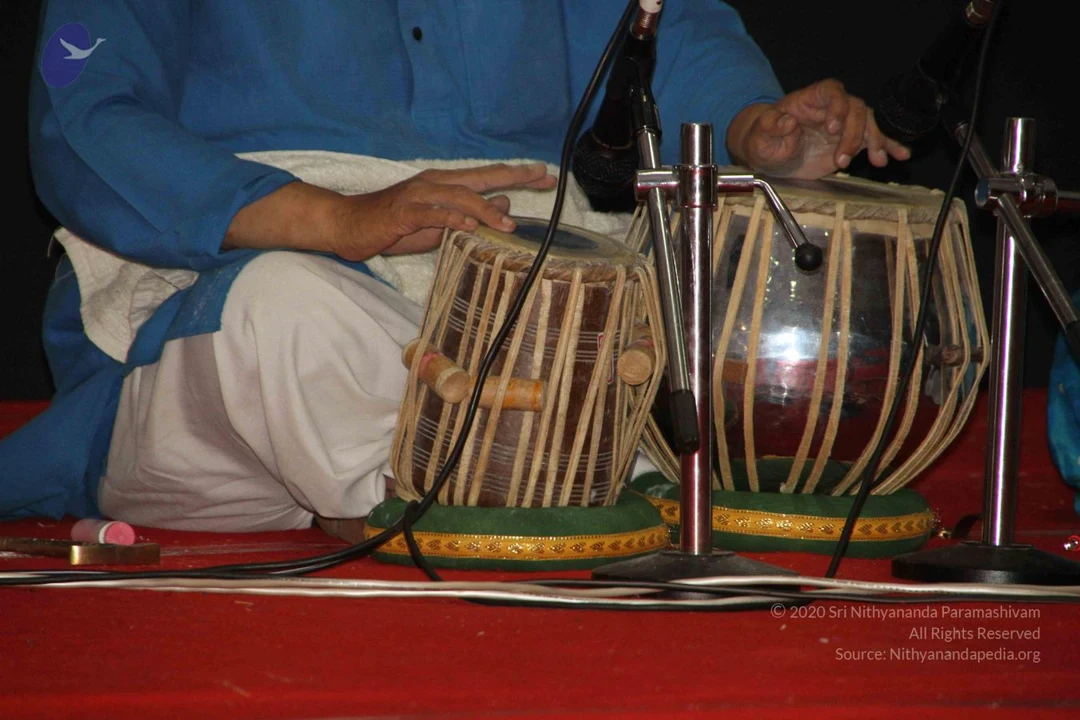
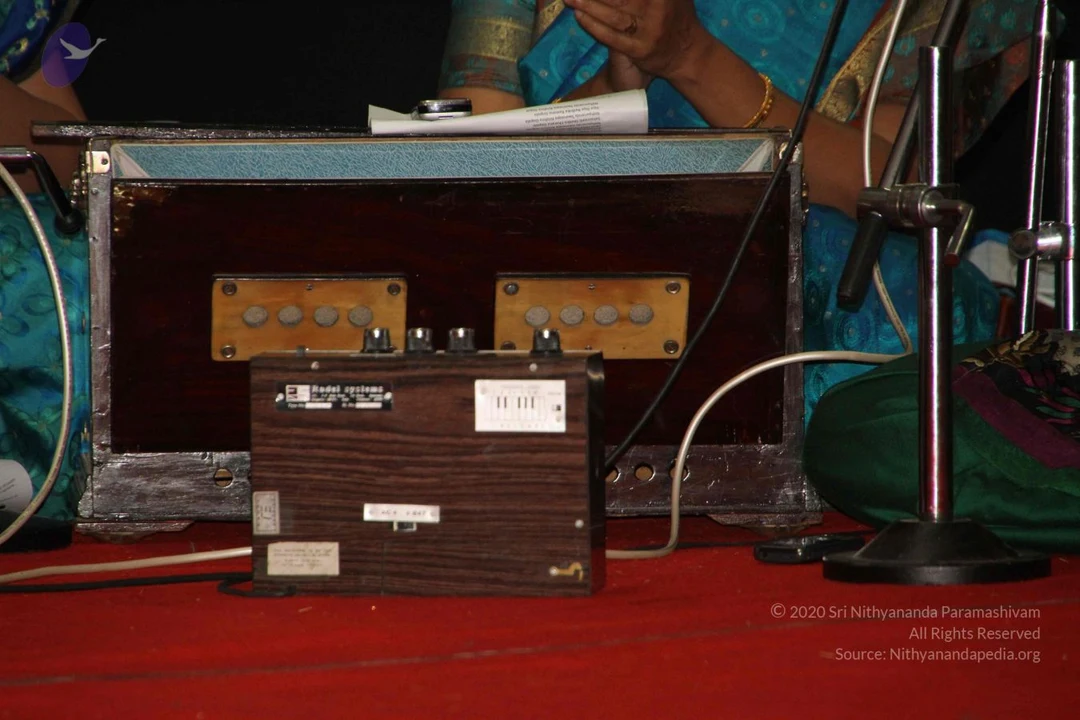
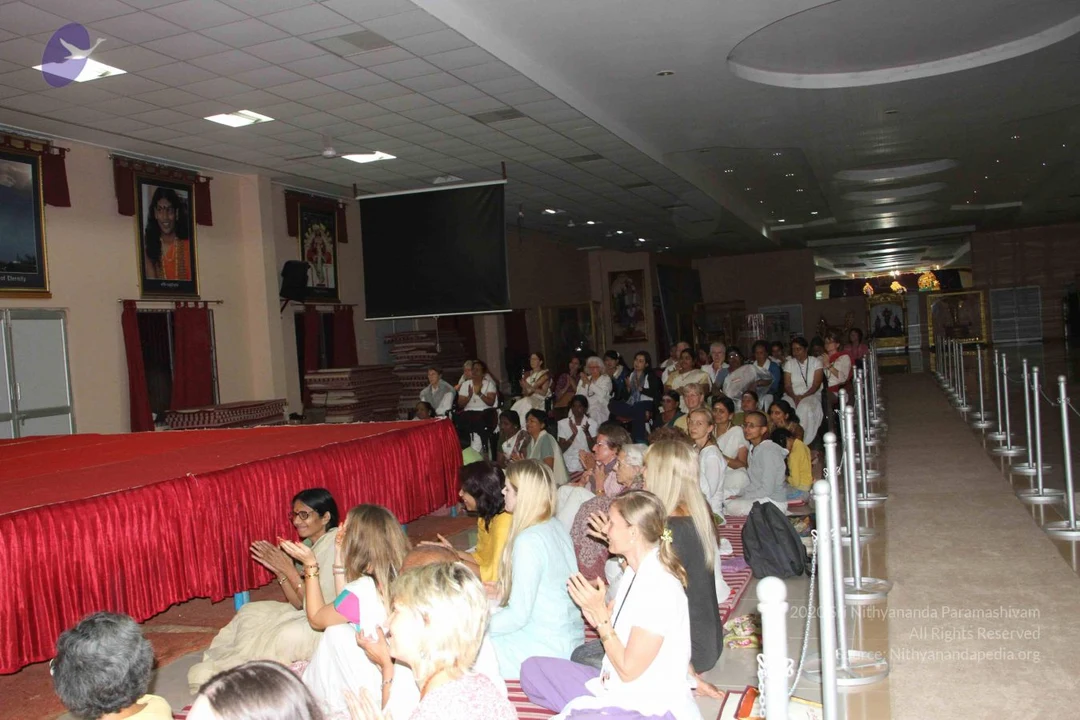
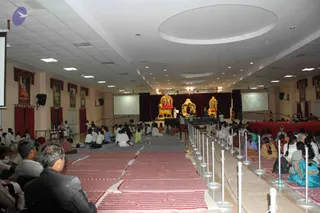
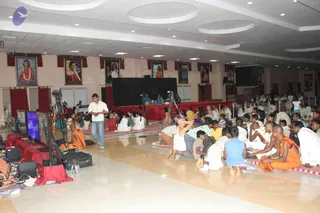
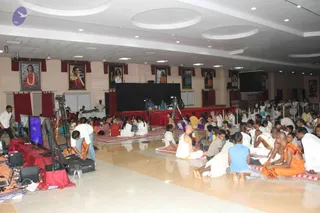
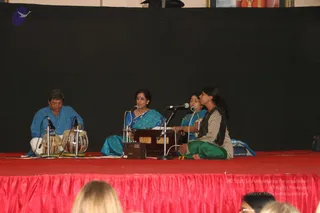
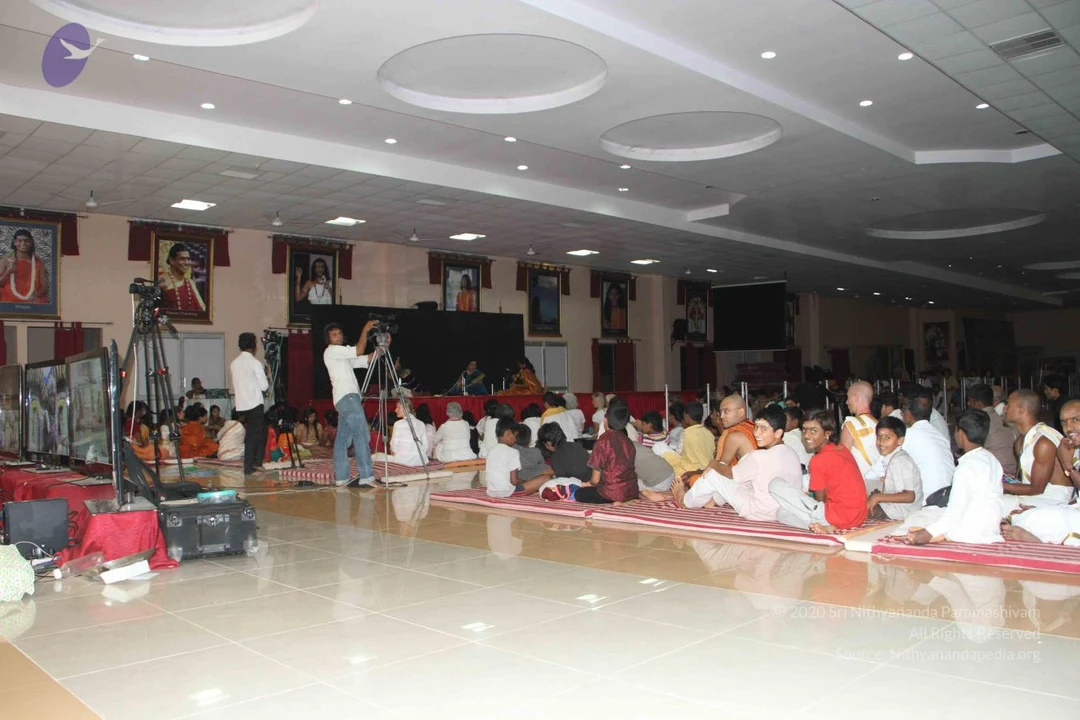
Wide view of a large hall with a polished tiled floor and ceiling lights, where a seated group of devotees in white and orange clothing sits on red-and-white striped mats. A cameraman in a blue shirt operates a video camera on a tripod in the foreground, and a man in a white shirt stands nearby. Framed portraits of deities and saints hang on the back wall, with a dark stage and red drapes at the front. Several flat-screen monitors line the left side. Many people are seated in rows facing the stage, with a few figures in orange robes near the front. The scene suggests a pada puja or satsang gathering being recorded.A stage performance with three seated musicians on a red-draped platform in a hall with framed portraits on the walls. On the left, a man in a dark shirt and white dhoti sits behind a tabla-style drum with microphones. In the centre, a woman in a dark blue saree with a gold border sings or speaks at a microphone. On the right, a woman in an orange-gold saree sits with a tanpura-like instrument. Framed portraits and red curtains line the back wall, and a few heads of audience members are visible at the bottom edge.Wide view of a large hall with white walls and a white ceiling with round recessed lights, where devotees sit on red-and-white striped floor mats in rows along a roped aisle. Many seated people wear white and cream clothing; some wear blue and green saris. On the stage at the far end, ornate gold thrones and a golden seat with red cushions stand before dark red curtains, flanked by two projection screens. Framed portraits hang along the side walls with red drapes beneath them. Several people in the front left sit with their backs to the camera. The scene suggests a pada-puja gathering, with seated devotees facing a stage of gold seats.A large hall with a cream ceiling and round recessed lights shows a seated congregation on red-and-white striped mats facing a red-draped stage. Many devotees in white and orange clothing sit on the floor, some kneeling or bowing. A man in a white shirt and light jeans walks across the polished floor past camera tripods and a laptop setup at left. Framed portraits hang along the back wall between red valances, including one of a figure in orange and white and another in red. Several sadhus in saffron robes sit in the front rows. The scene appears to be a pada puja gathering.Large indoor hall with cream walls and a tiled floor where many people sit on red-and-white mats facing a raised stage draped in red. Framed portraits hang on the back wall between red valances, including one of a figure with long hair in orange and red robes. Many devotees sit in white clothes, while a few men in orange robes sit in front. Camera tripods, monitors and laptops are set up at the left, and a cameraman works near the monitors. The scene suggests a pada puja gathering in progress, with devotees seated in rows on the floor.A live musical performance on a stage with a black backdrop and red draped platform edge. A man in a blue kurta seated left plays a pair of tabla drums on stands. At centre, a woman in a teal sari with a red bindi sits before a harmonium, singing into a microphone. Beside her, another woman in a teal sari and glasses sings, and a younger woman in a green skirt and beige top sits at right, also singing. Audience members' heads are visible in the lower foreground.

Pada-Puja

2 photosSource gallery
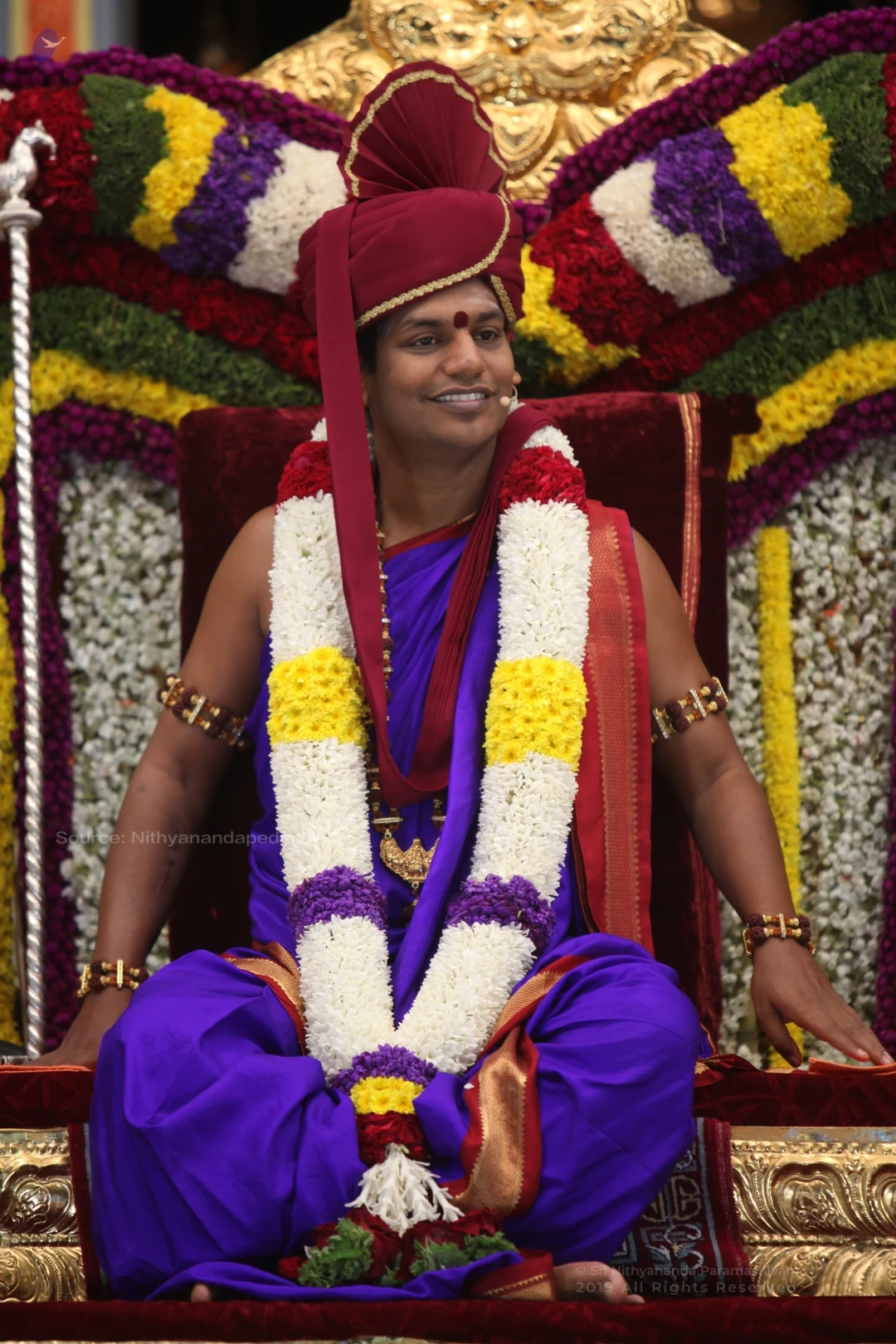
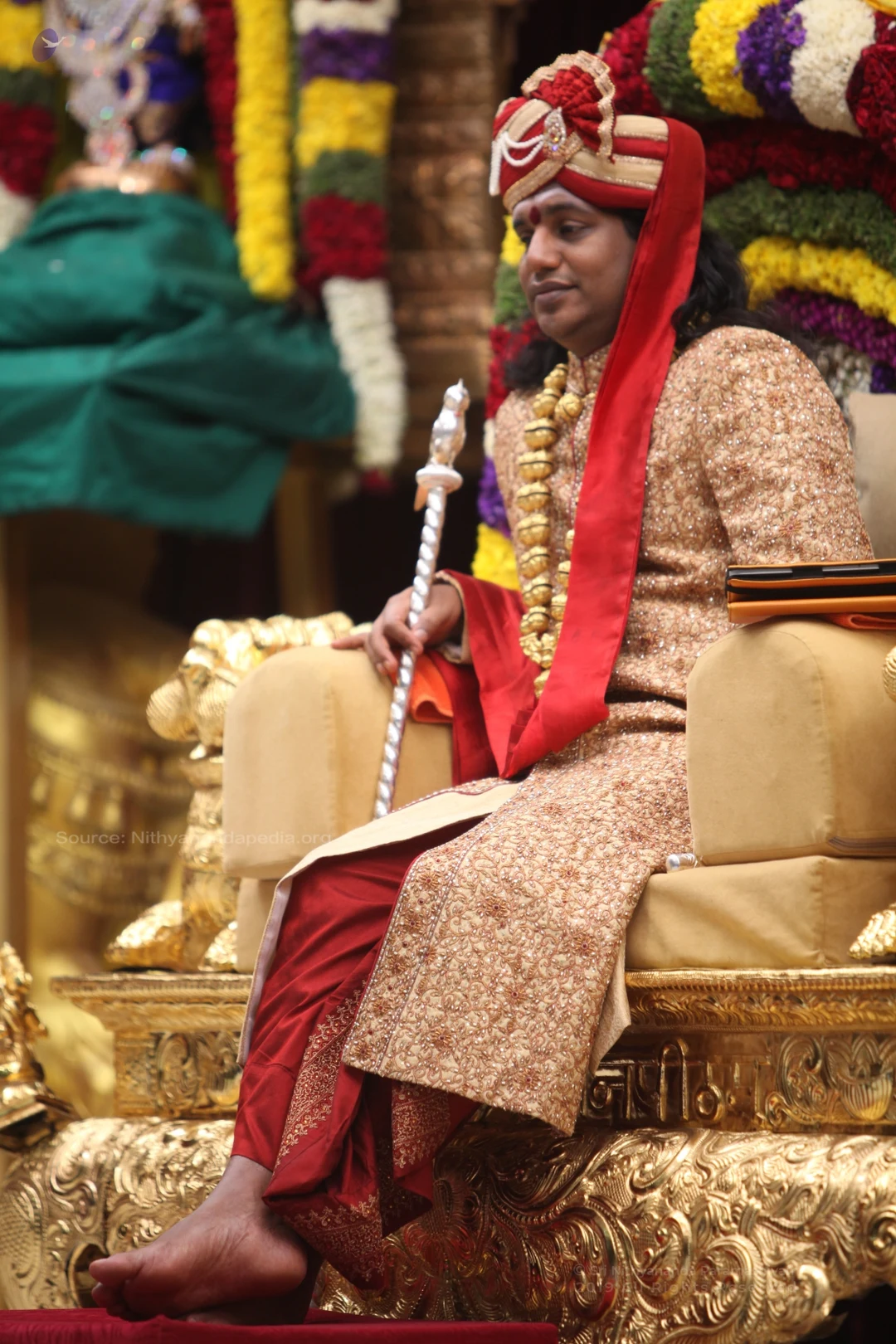
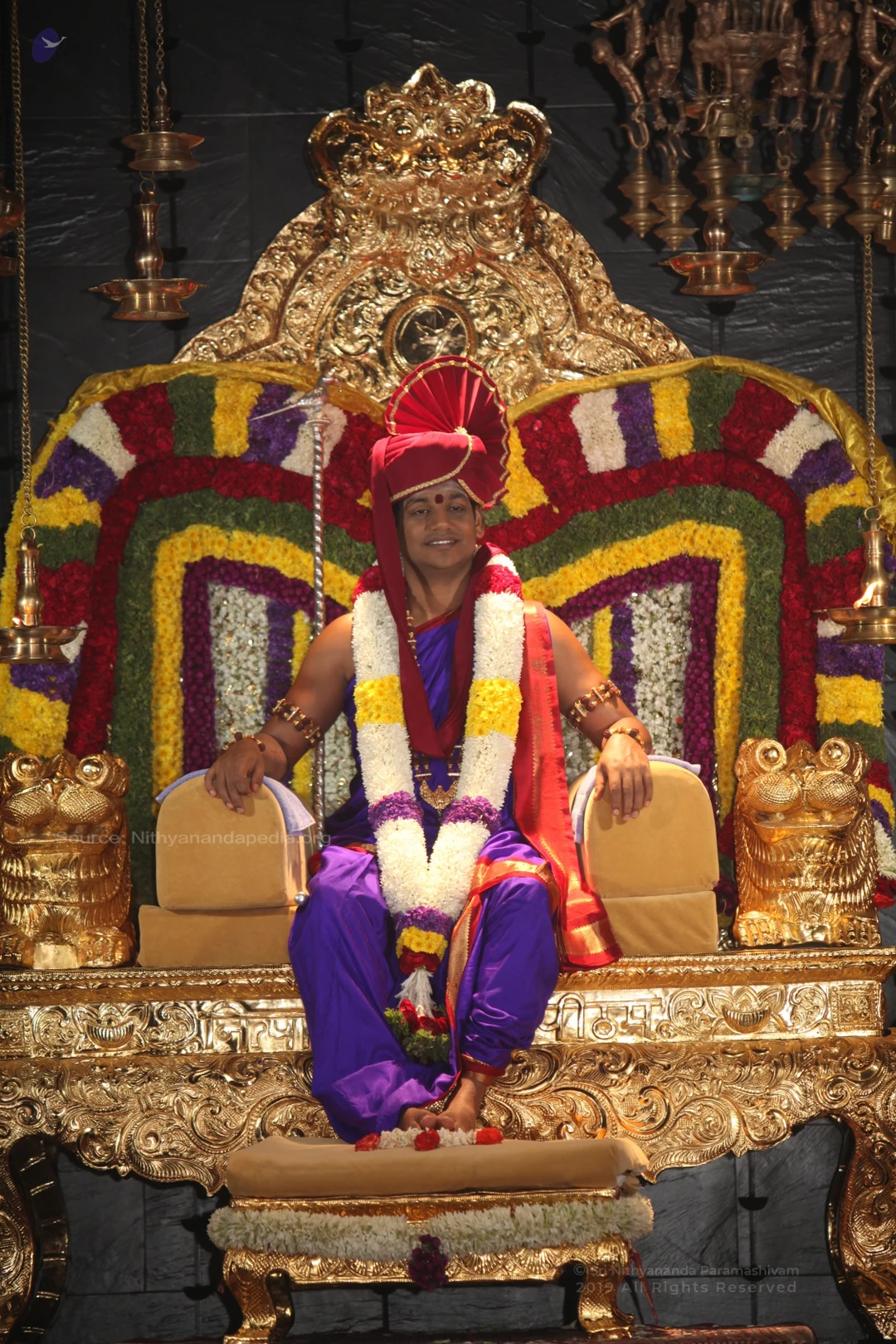
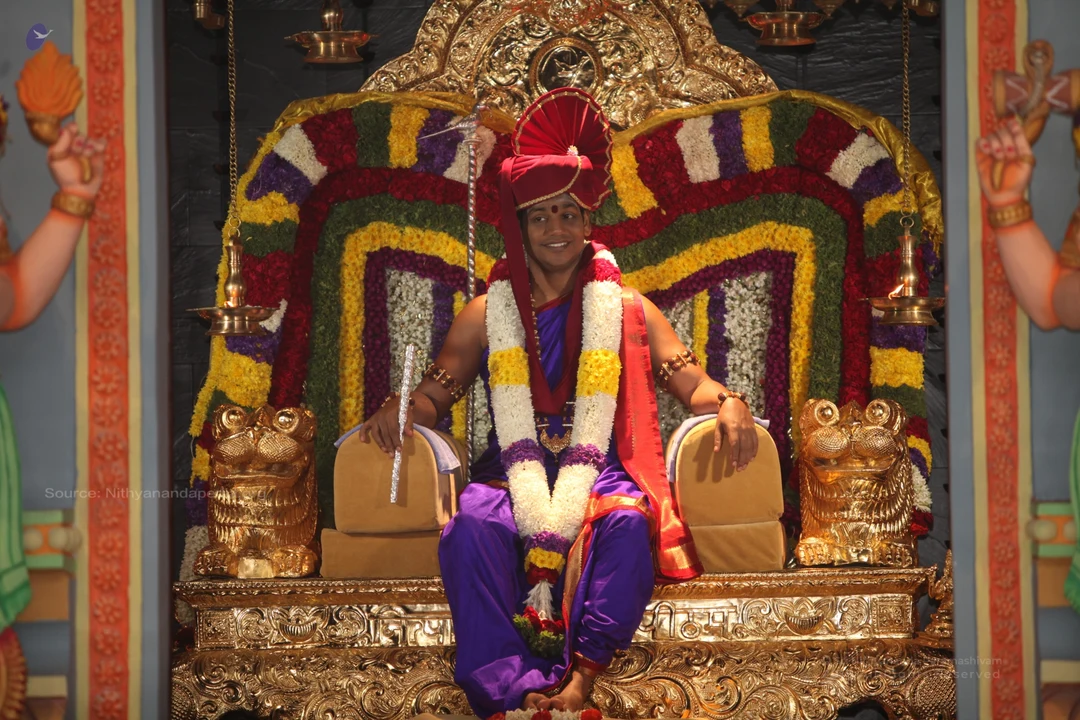
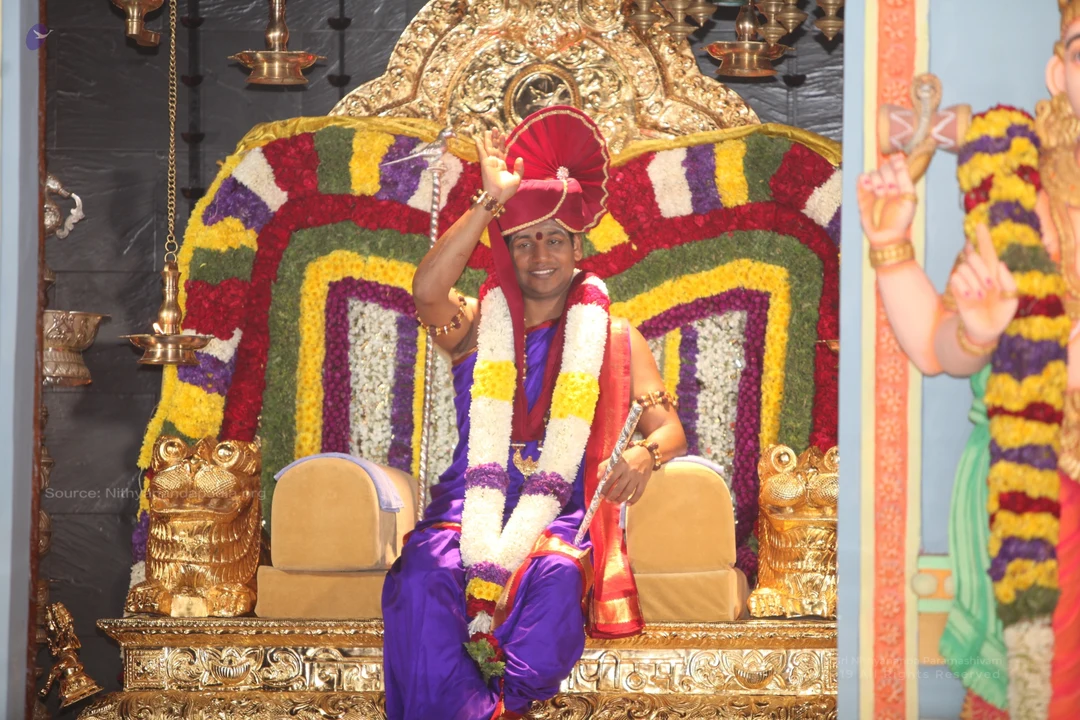
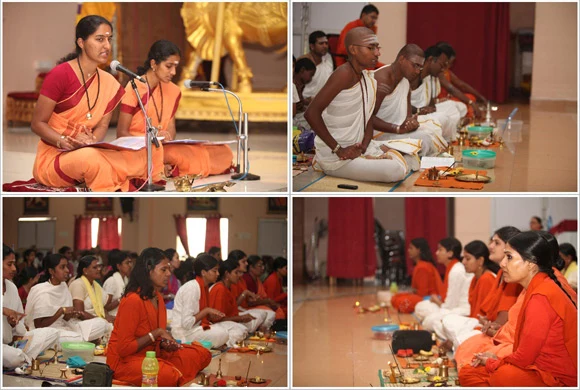
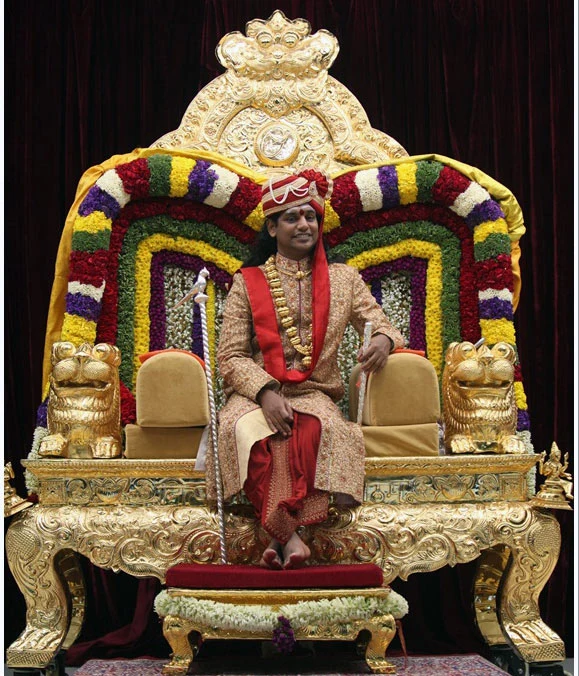
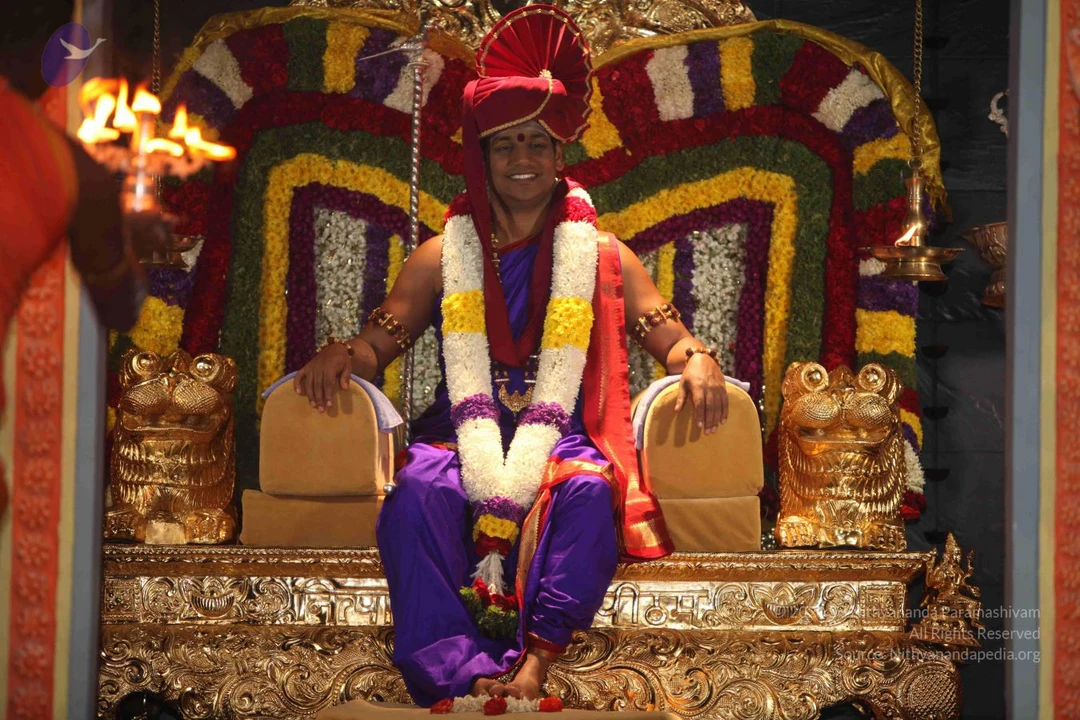
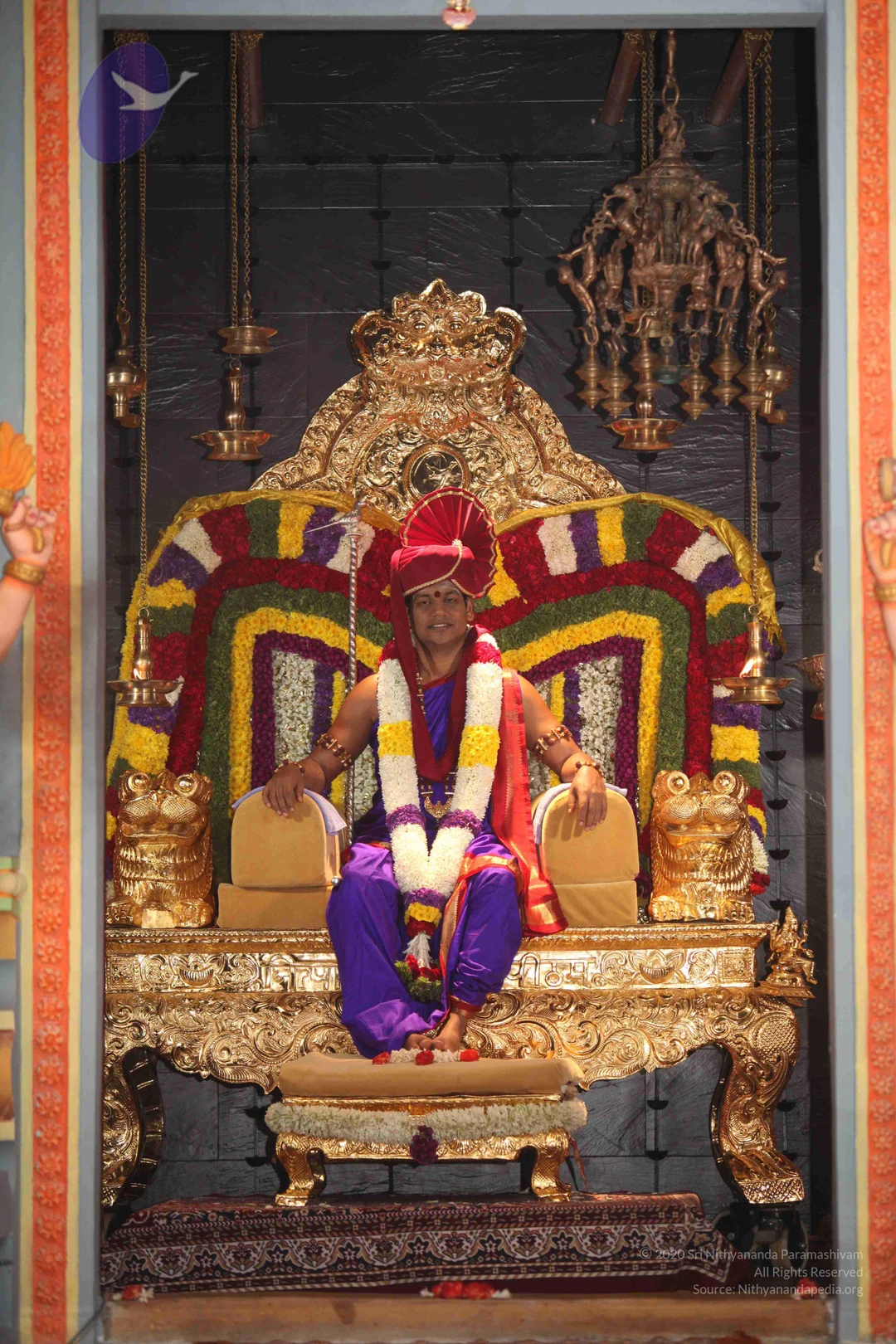
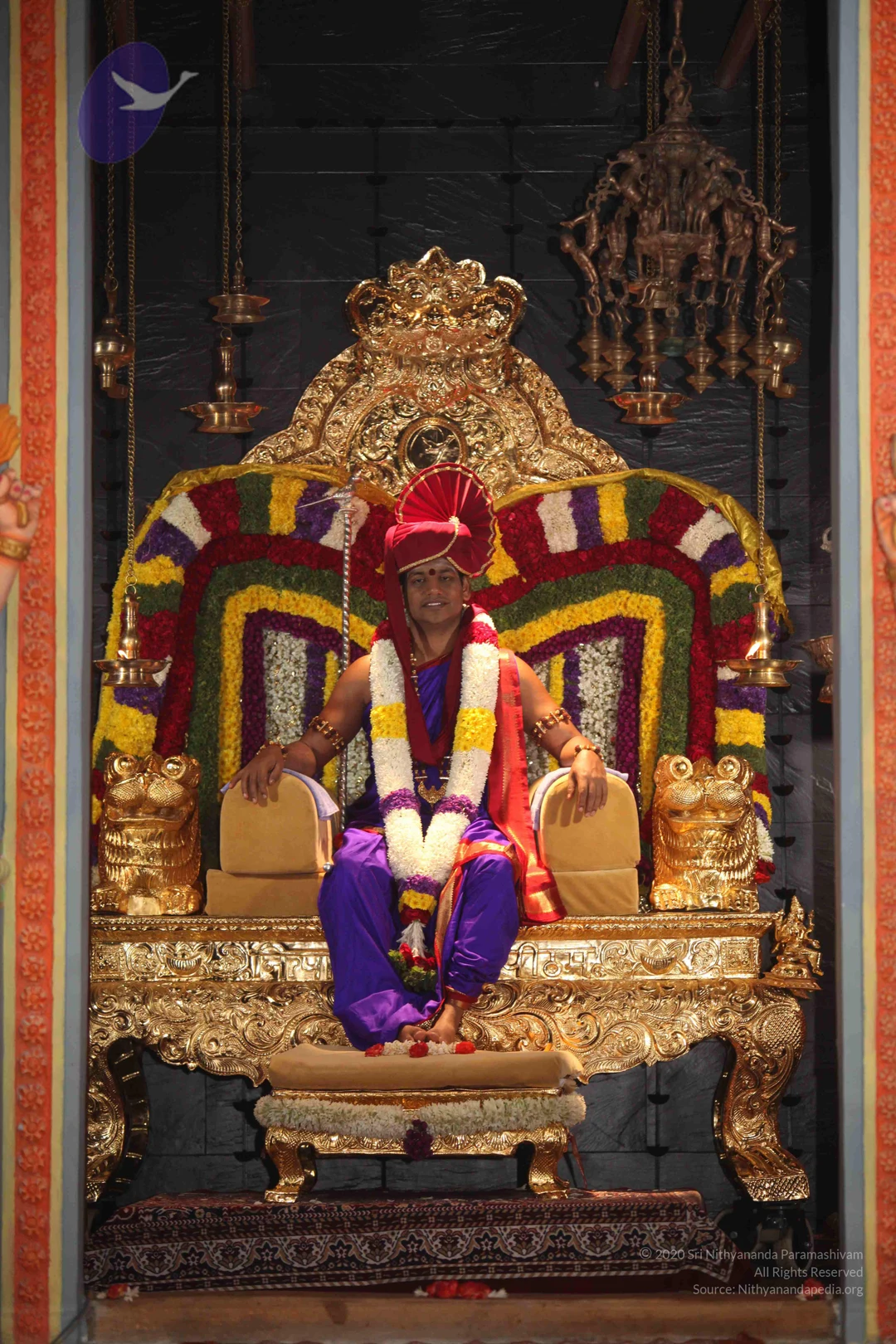
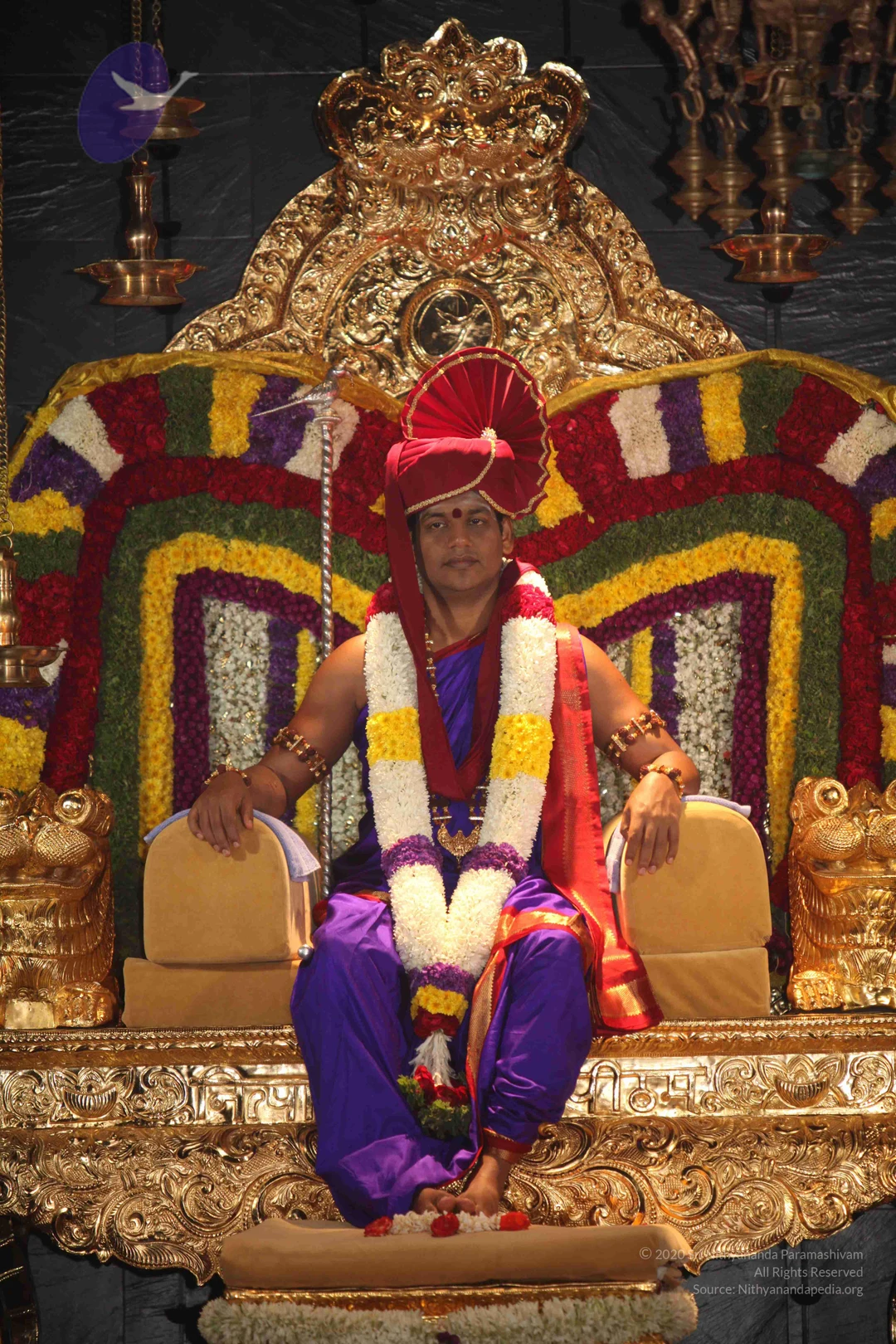
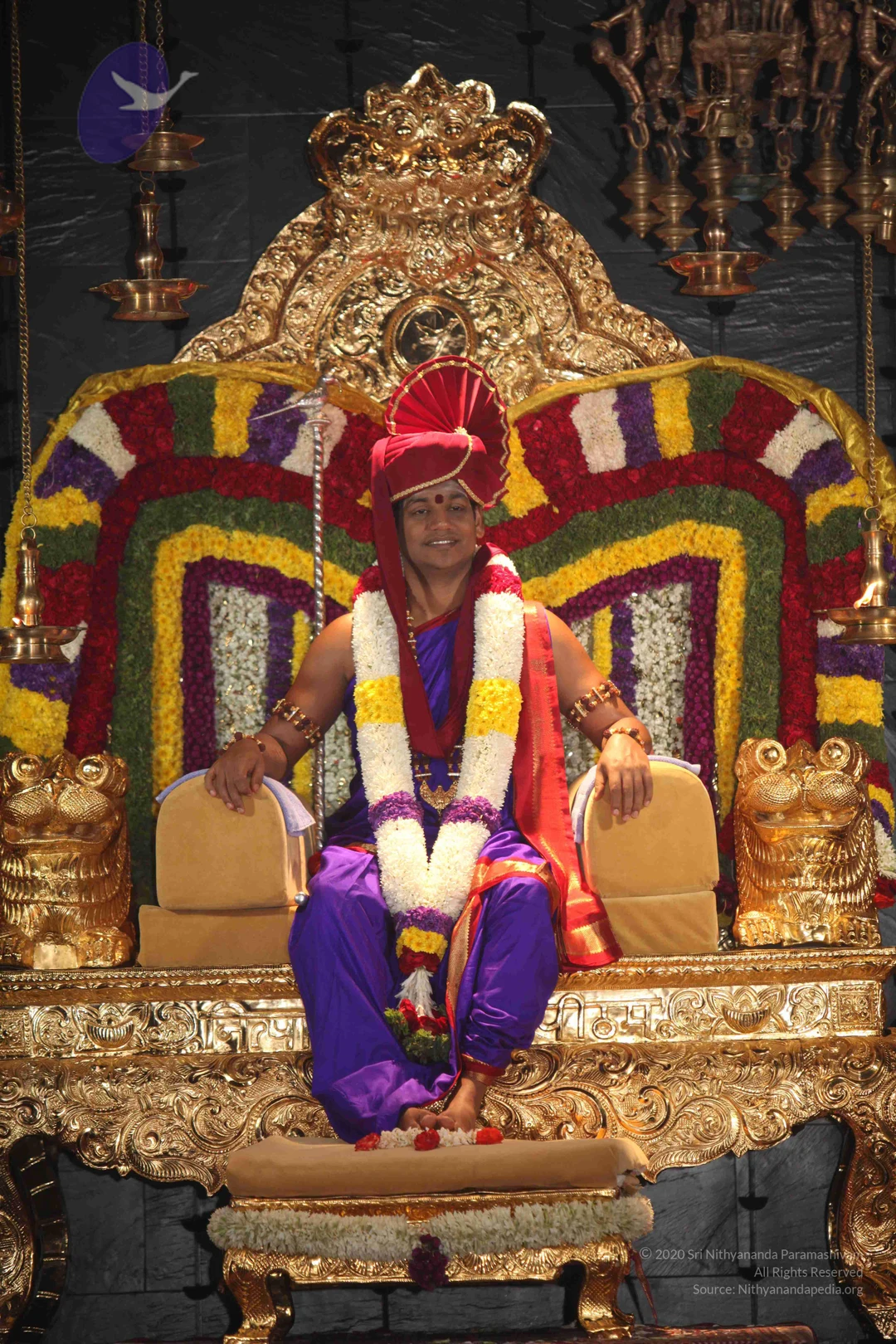
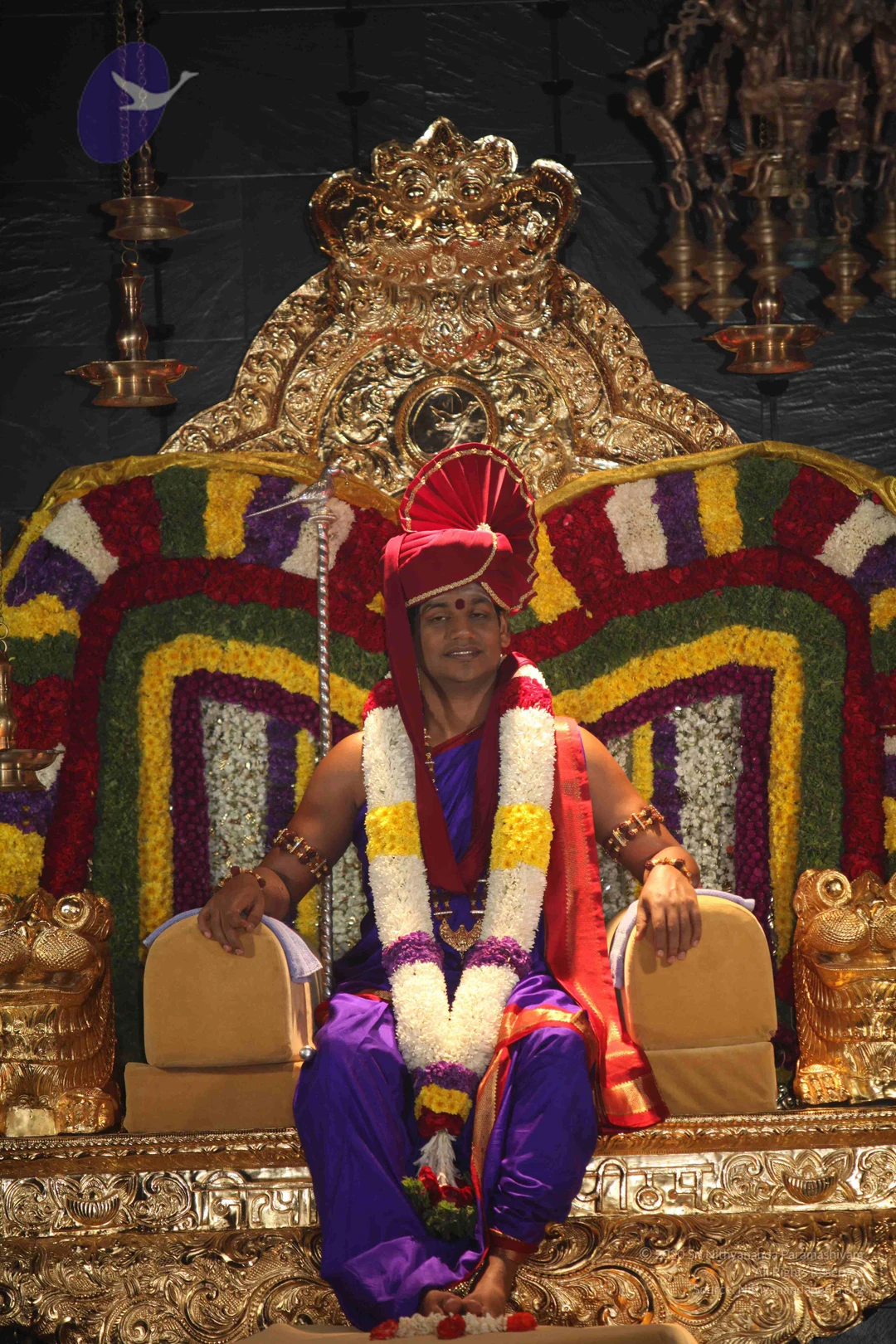
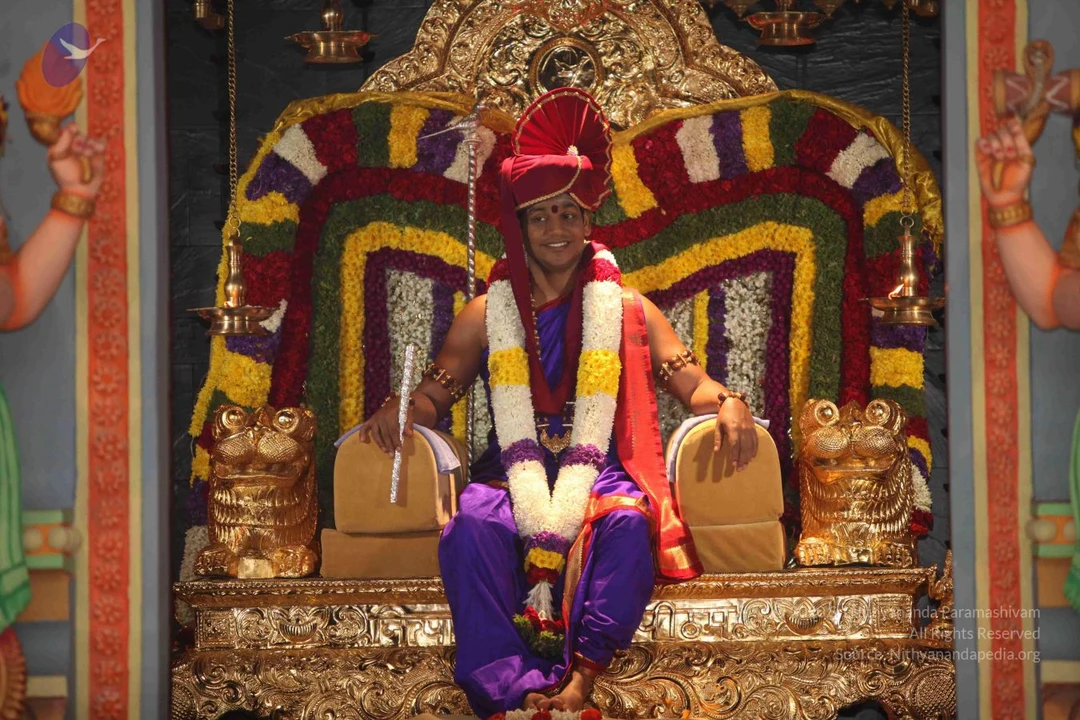
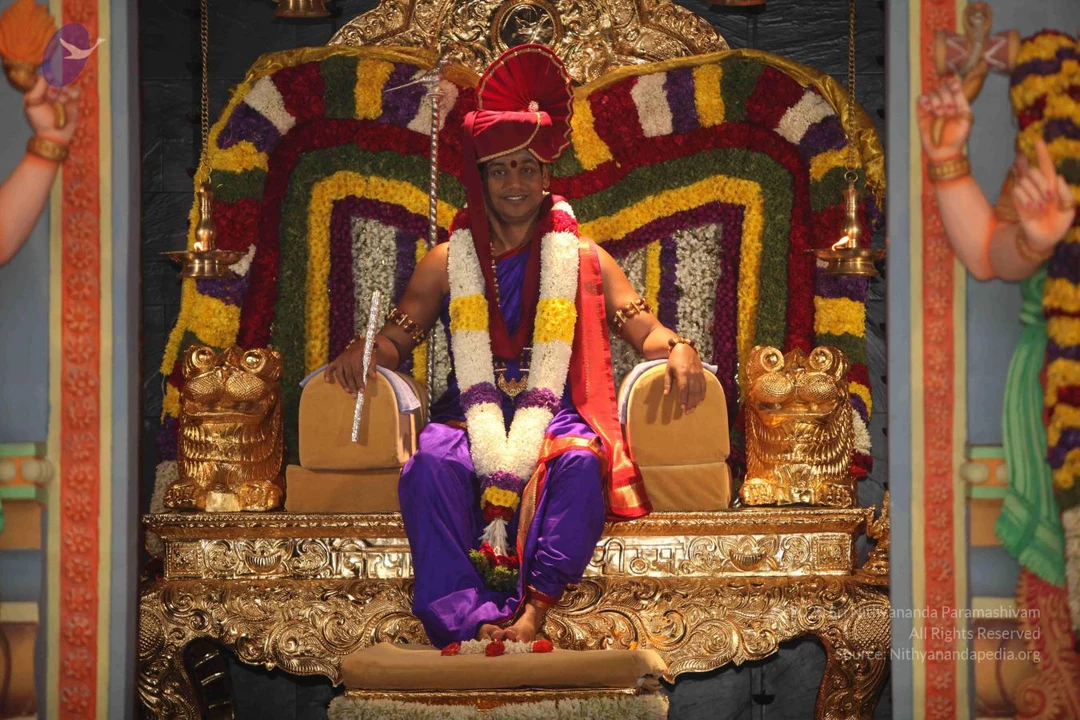
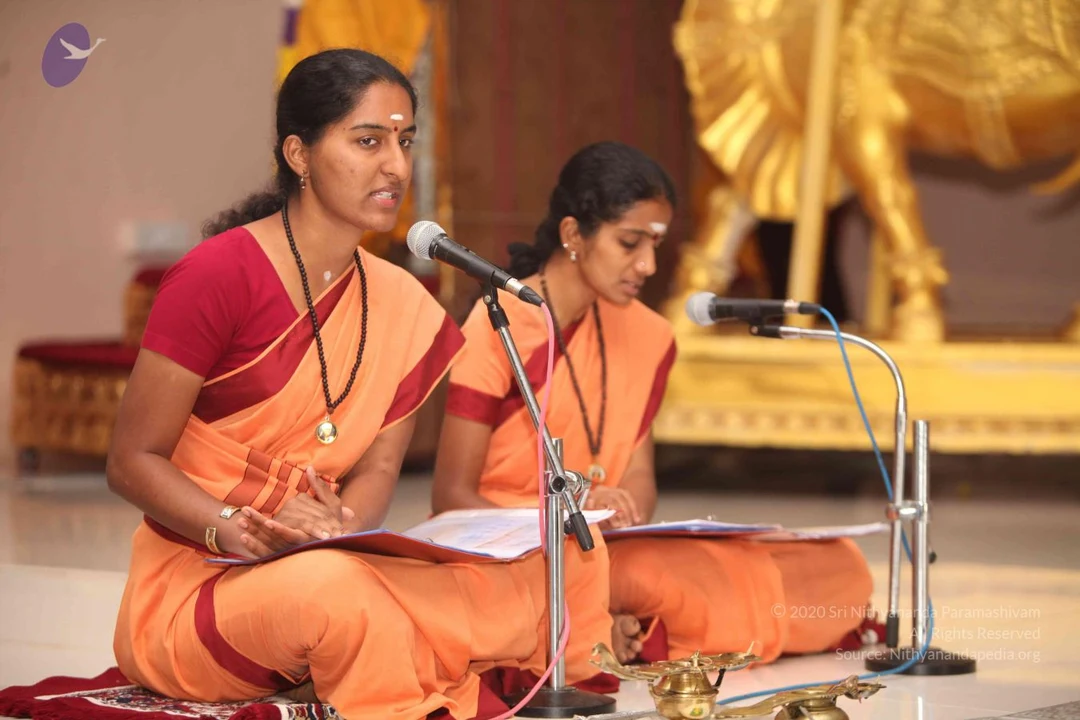
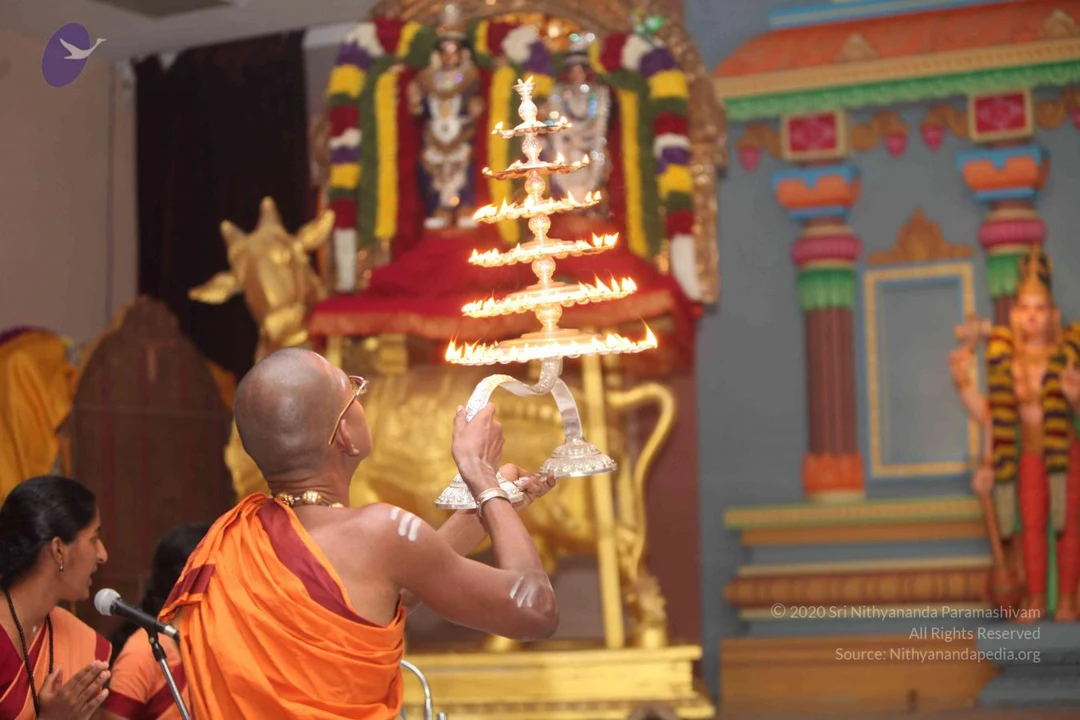
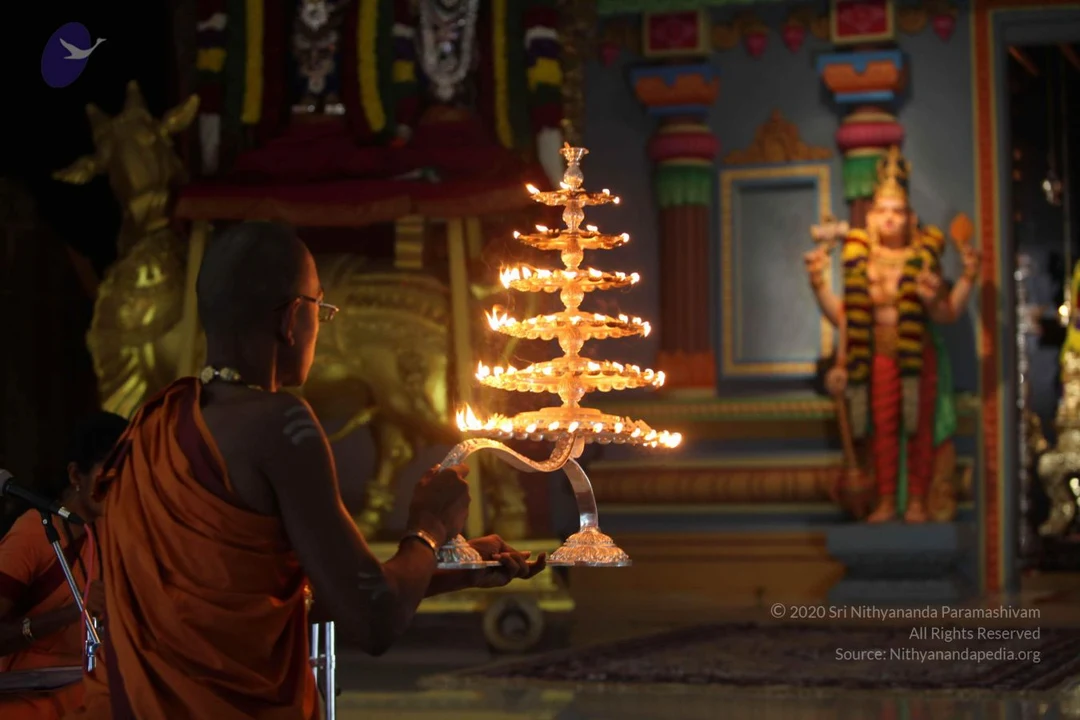
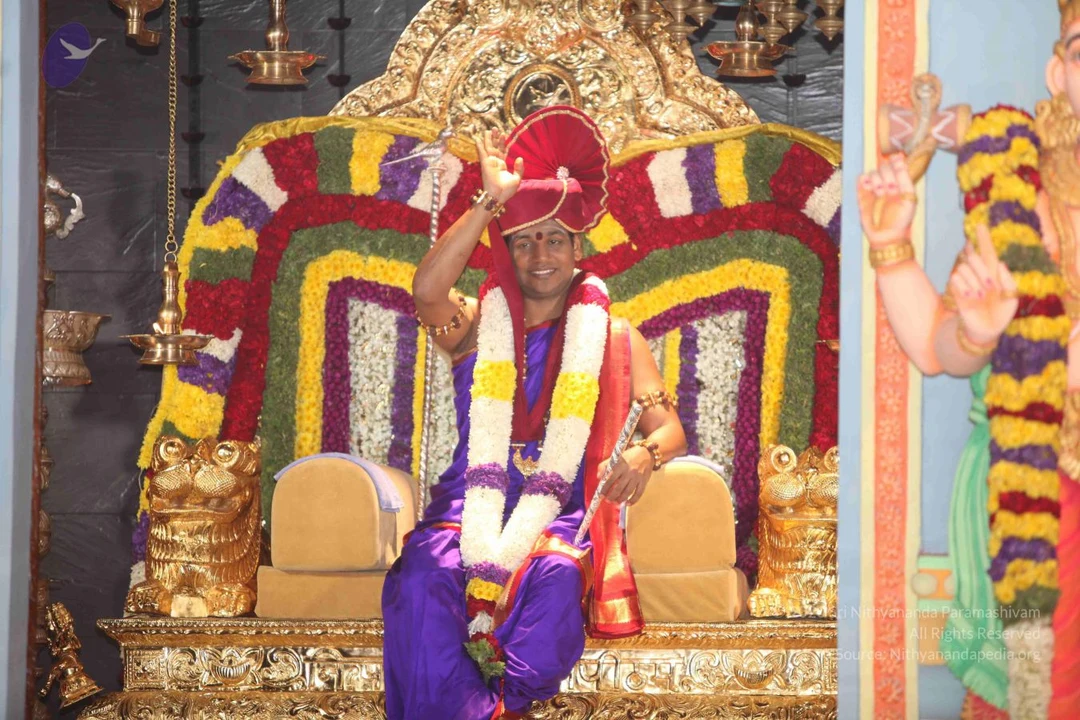
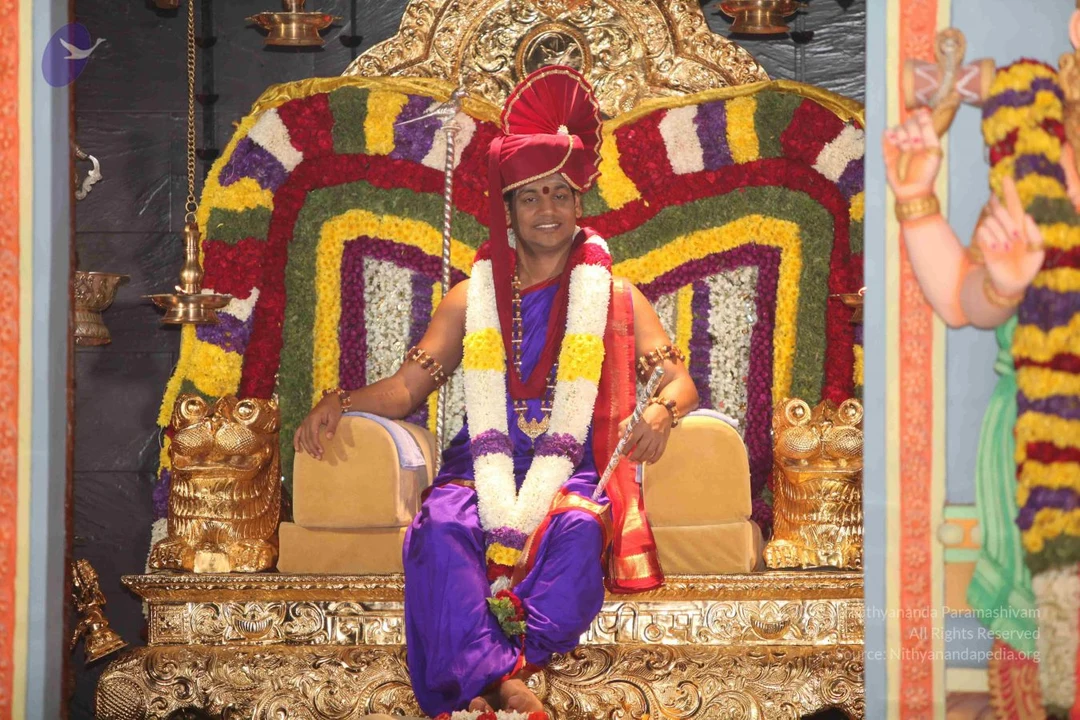
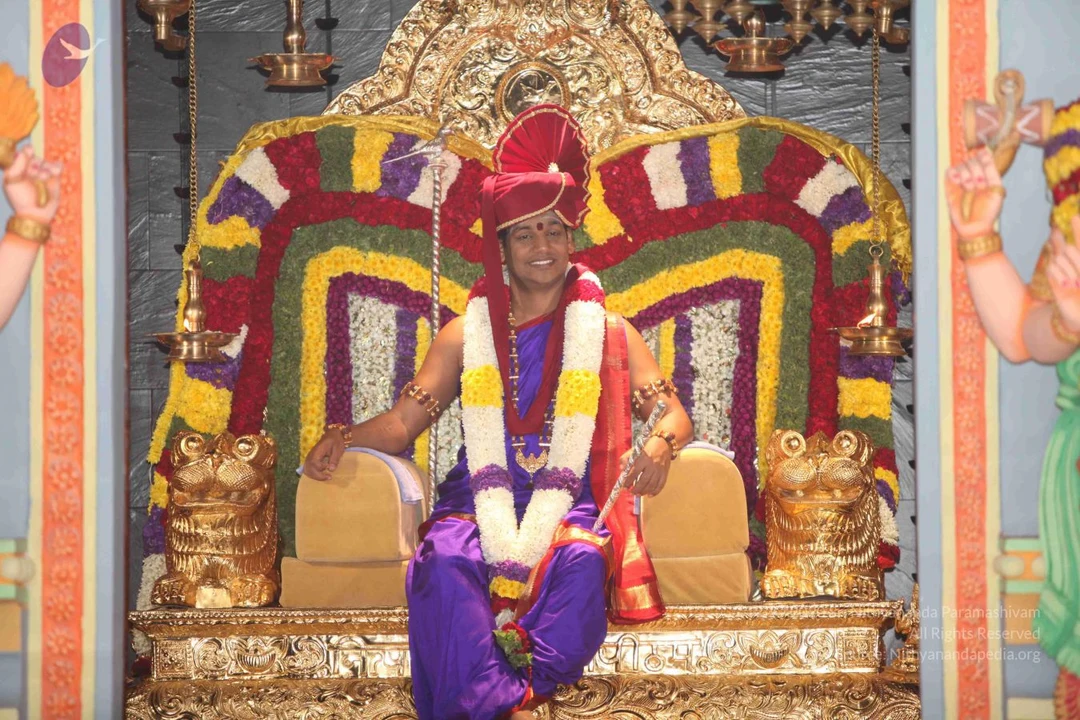
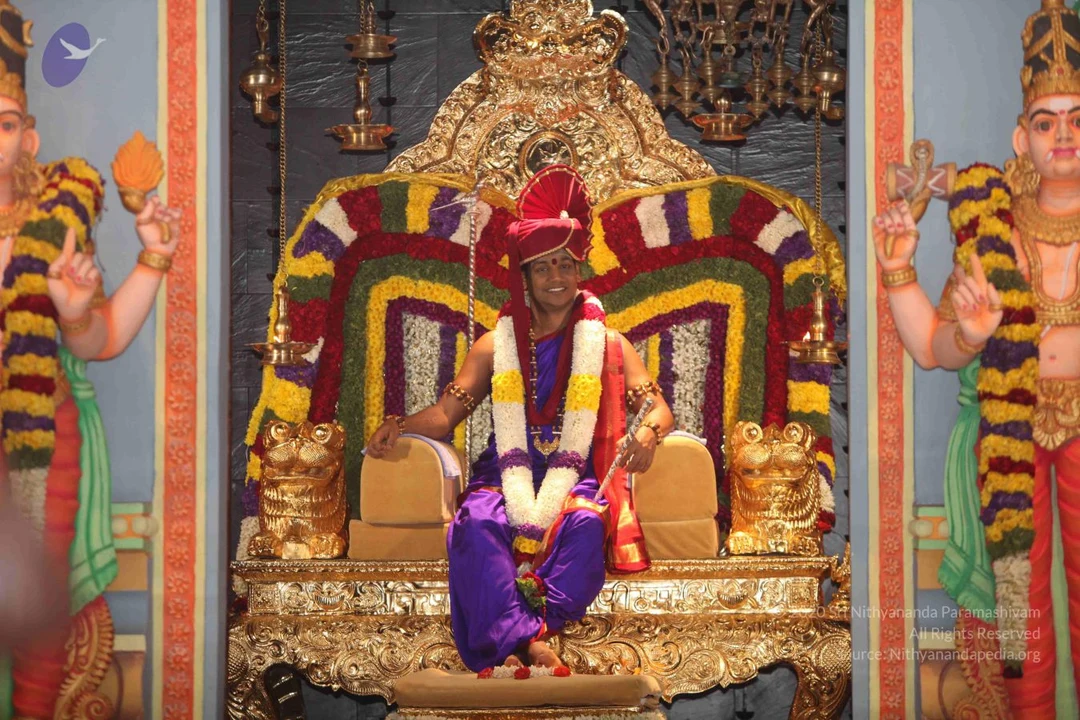
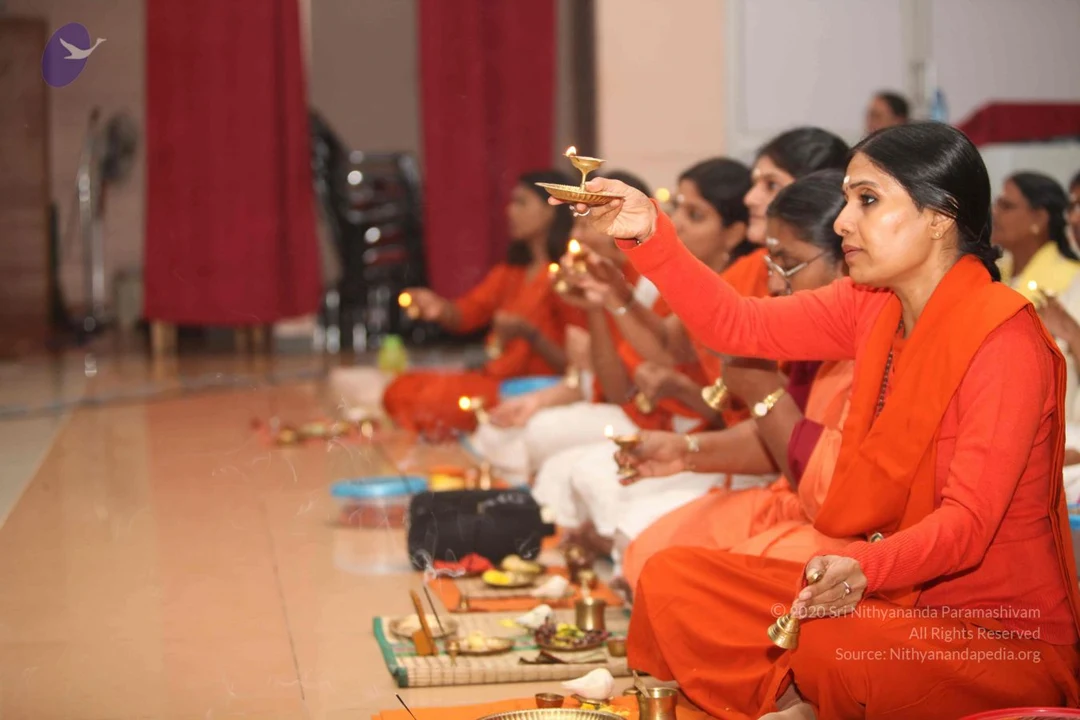
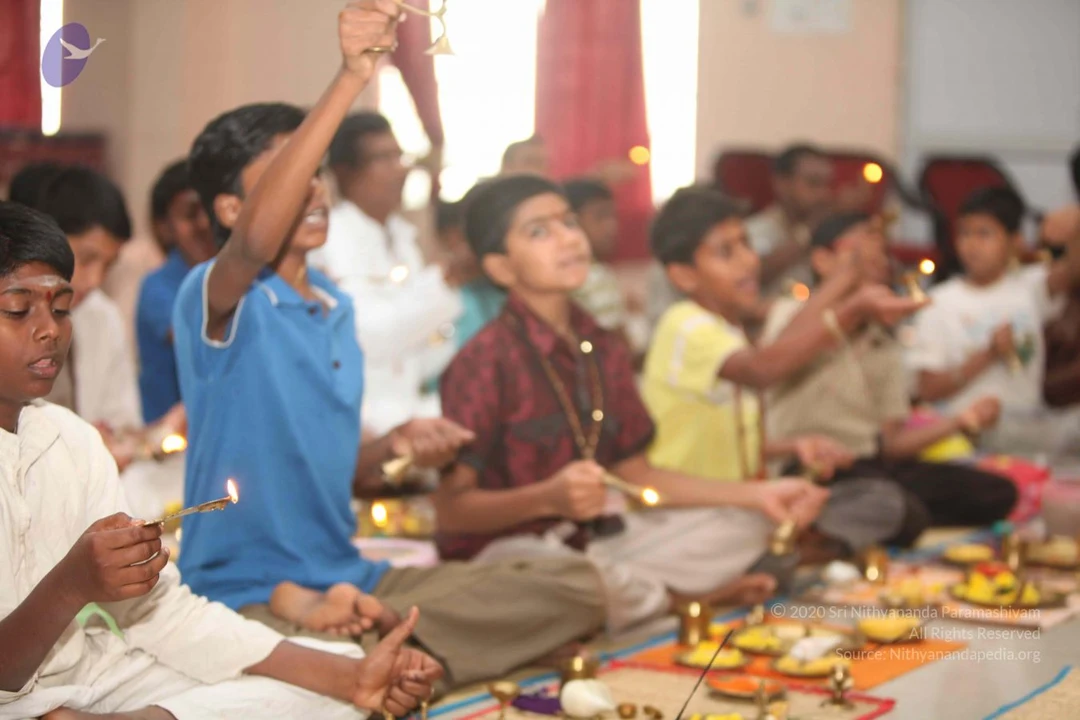
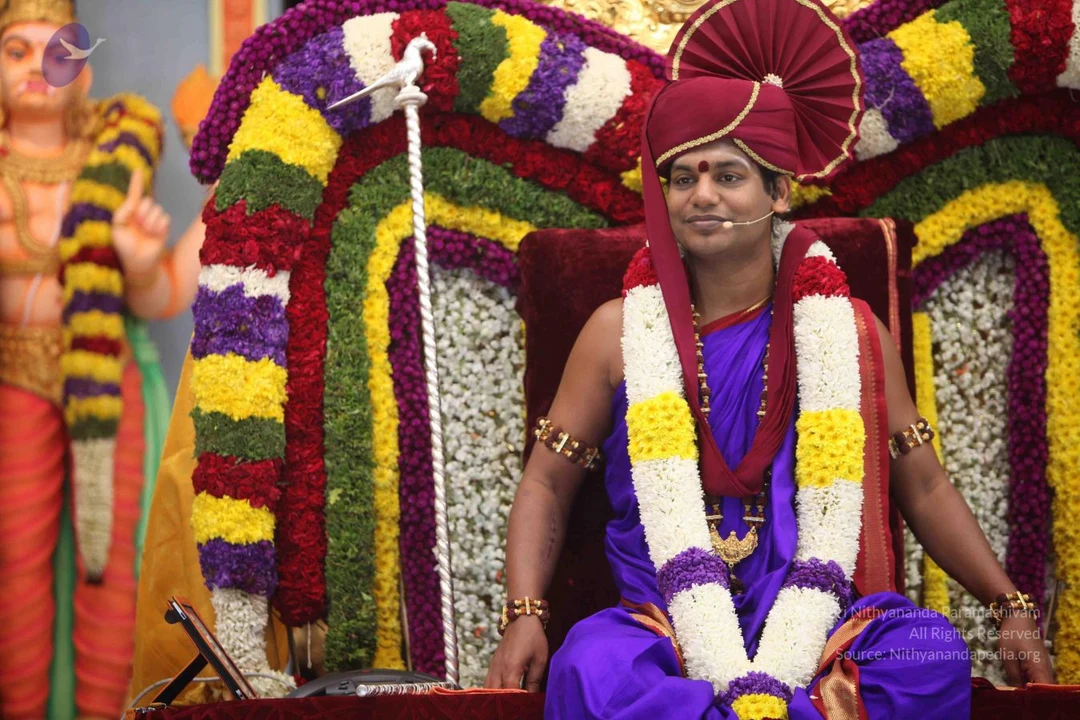
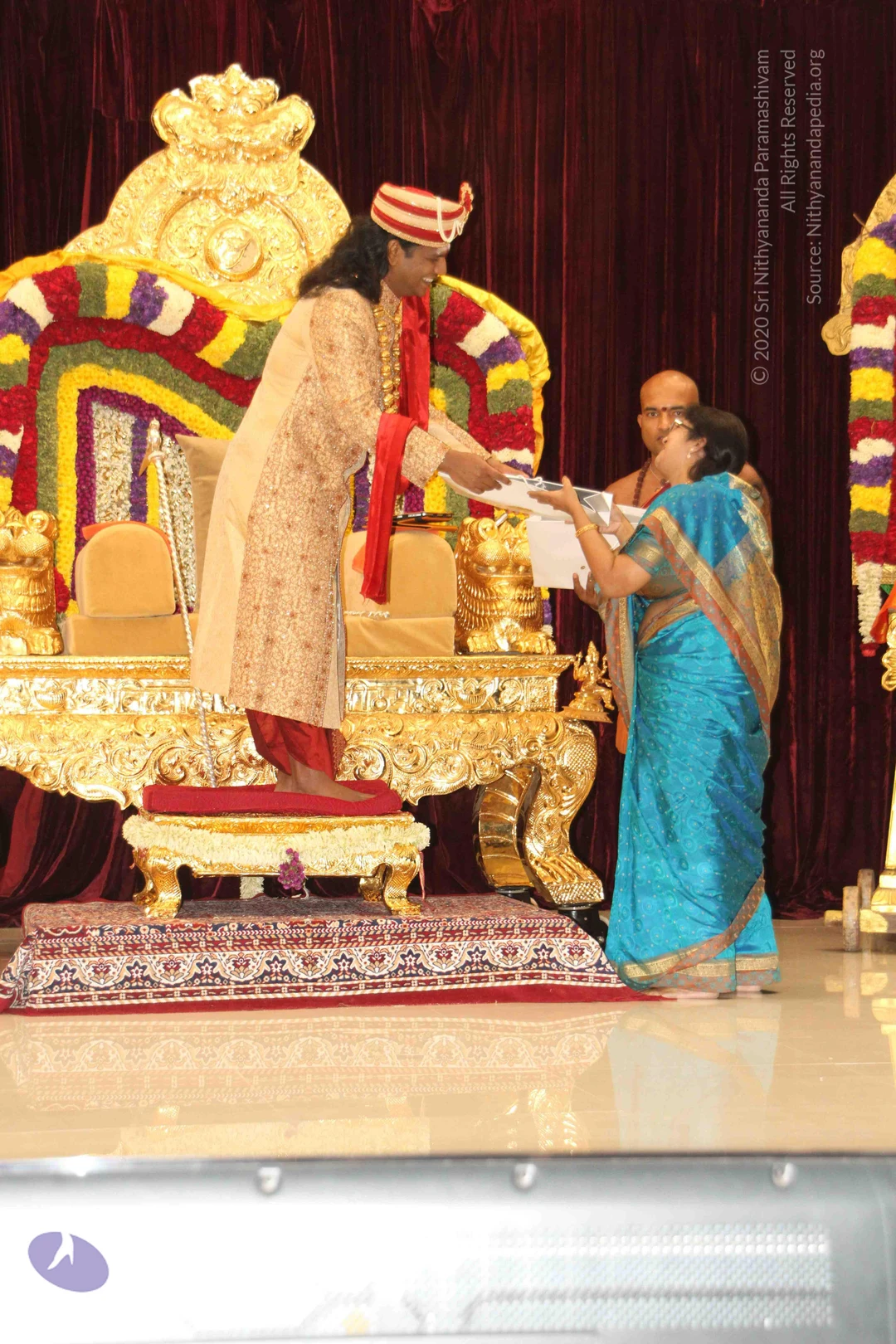
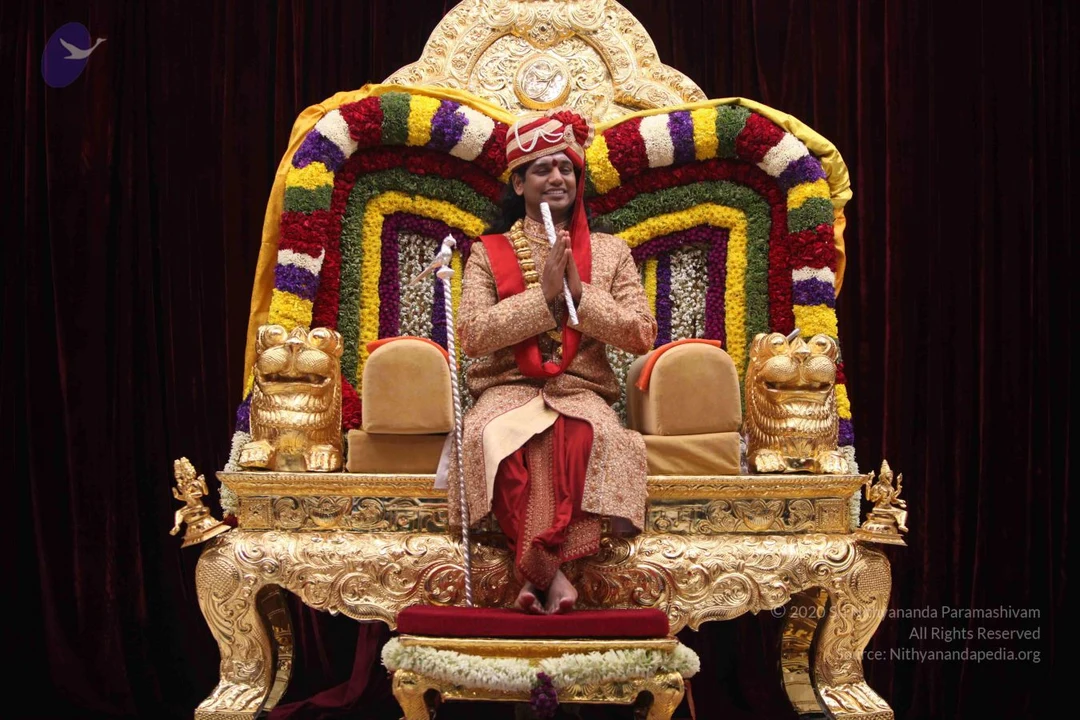
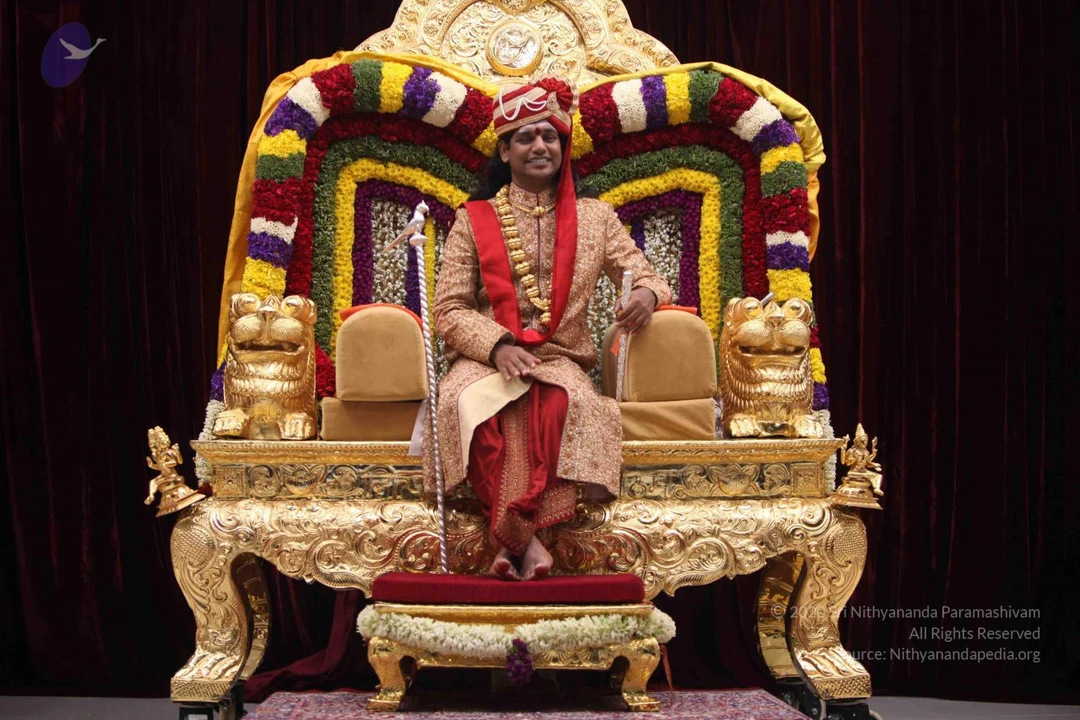
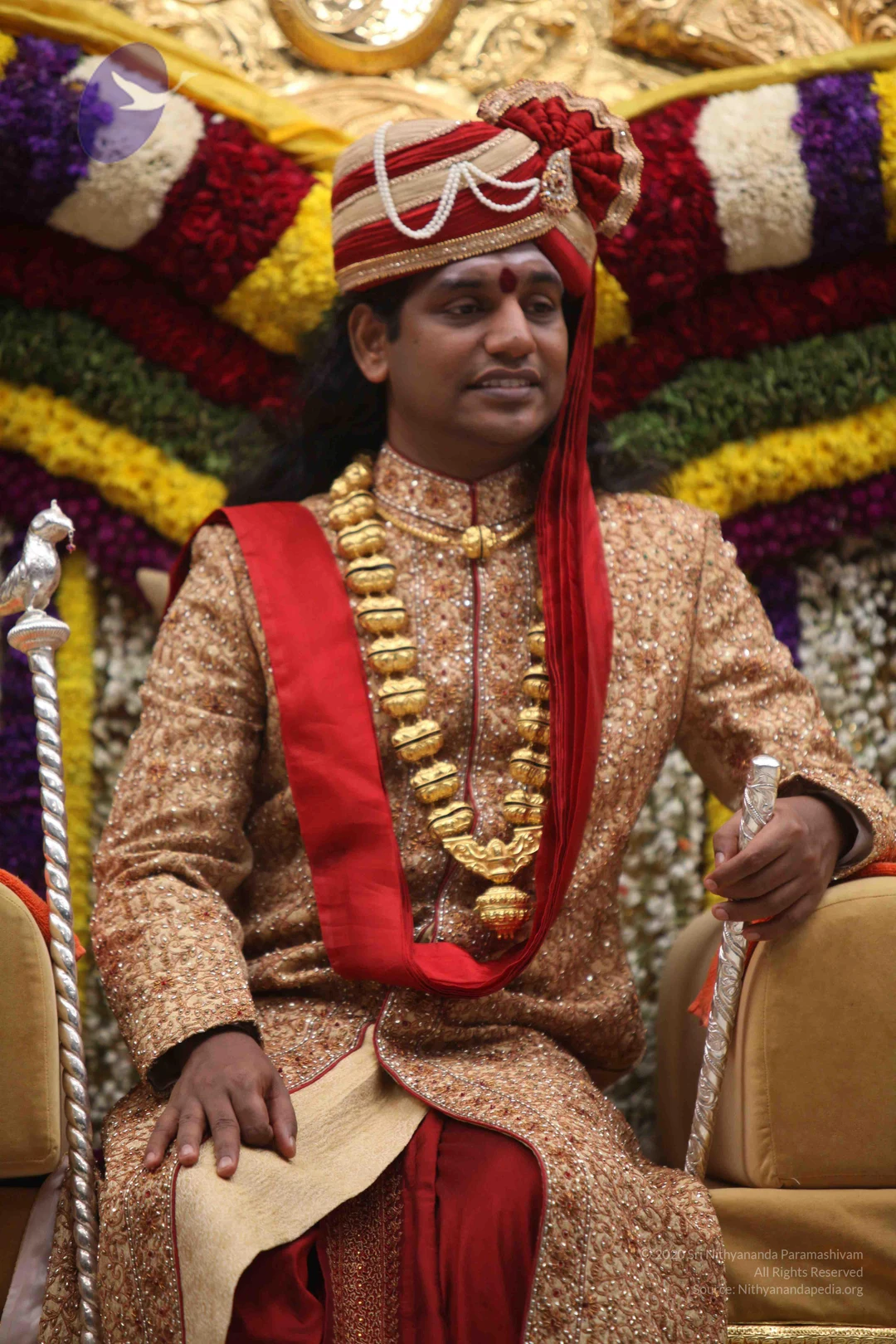
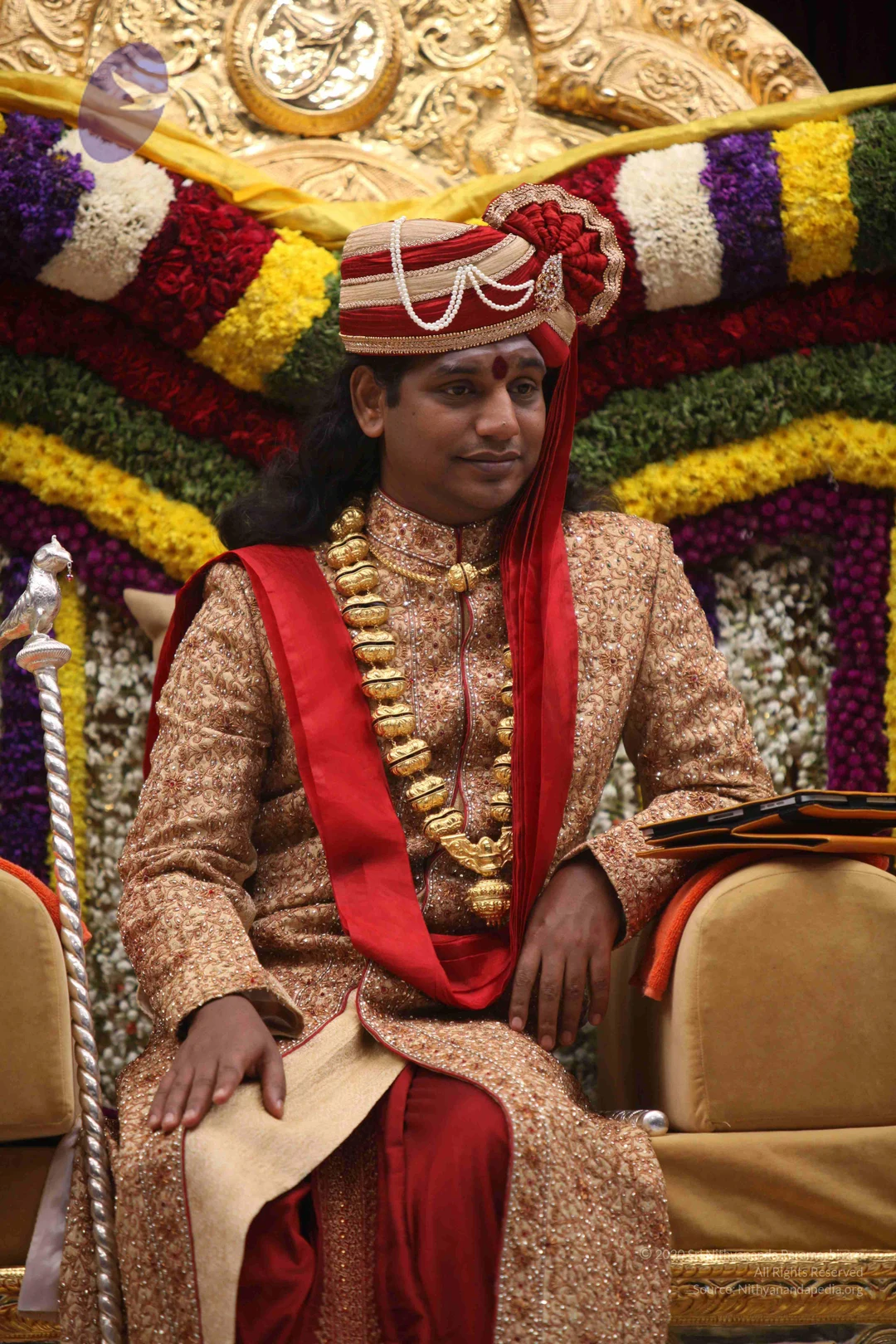
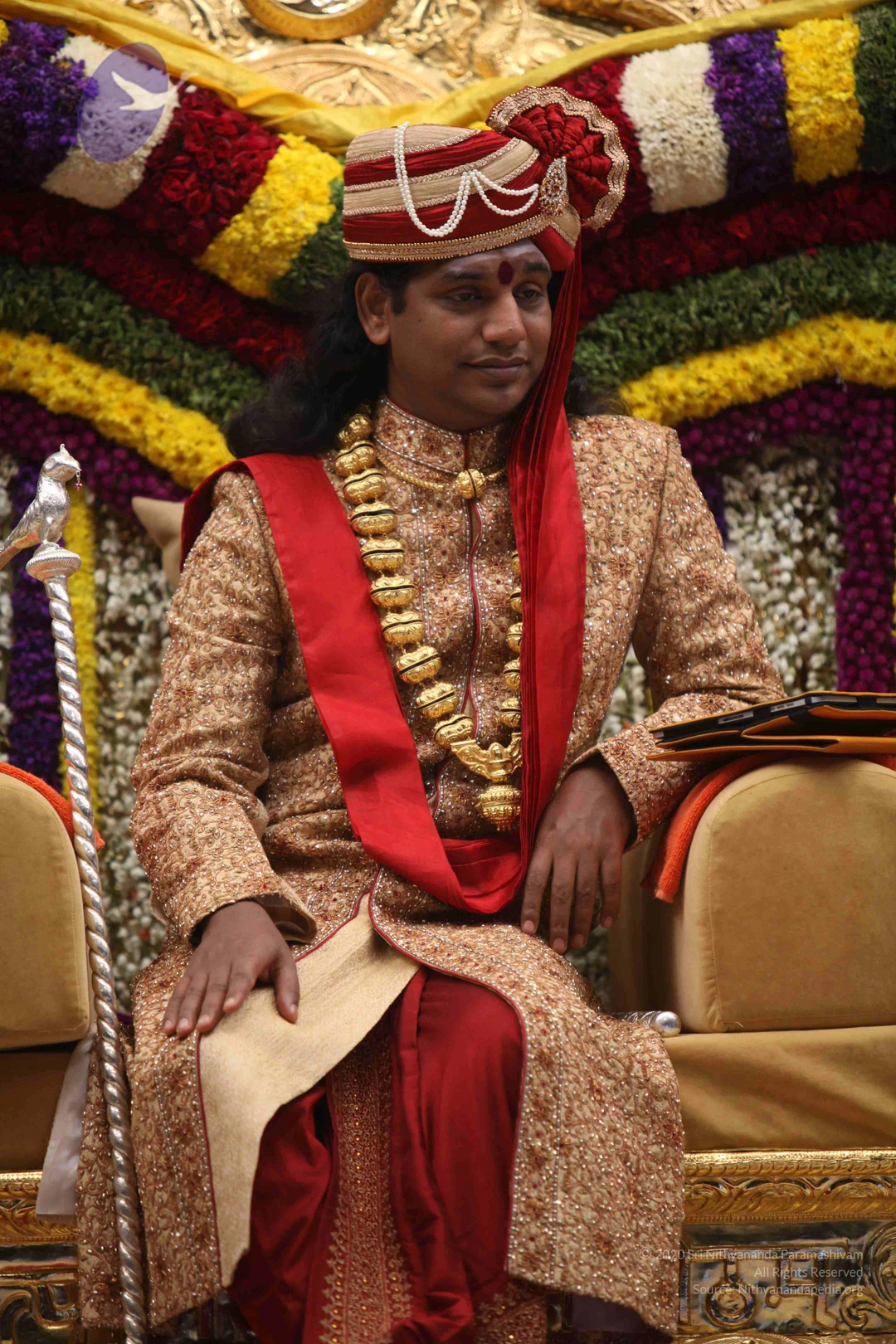
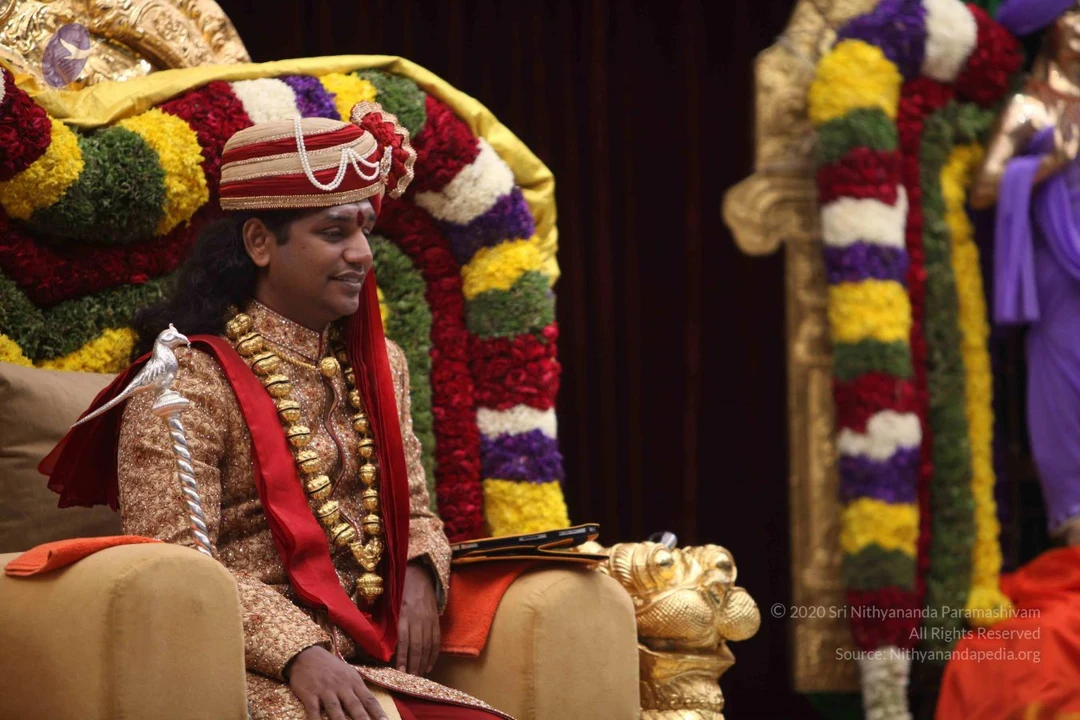
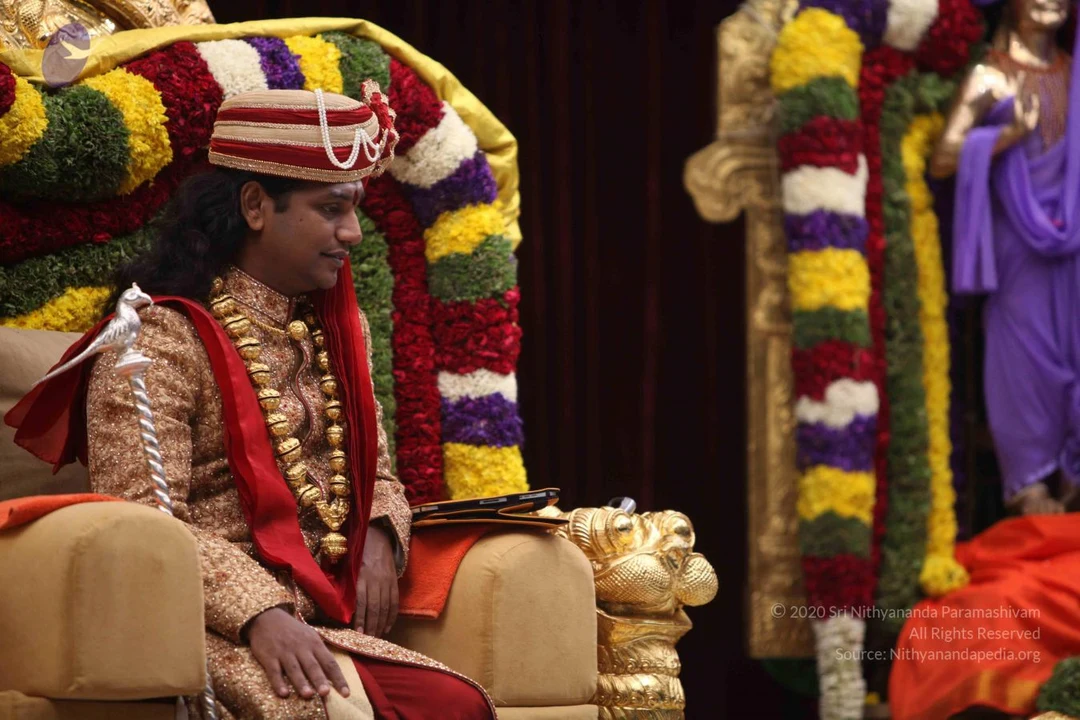
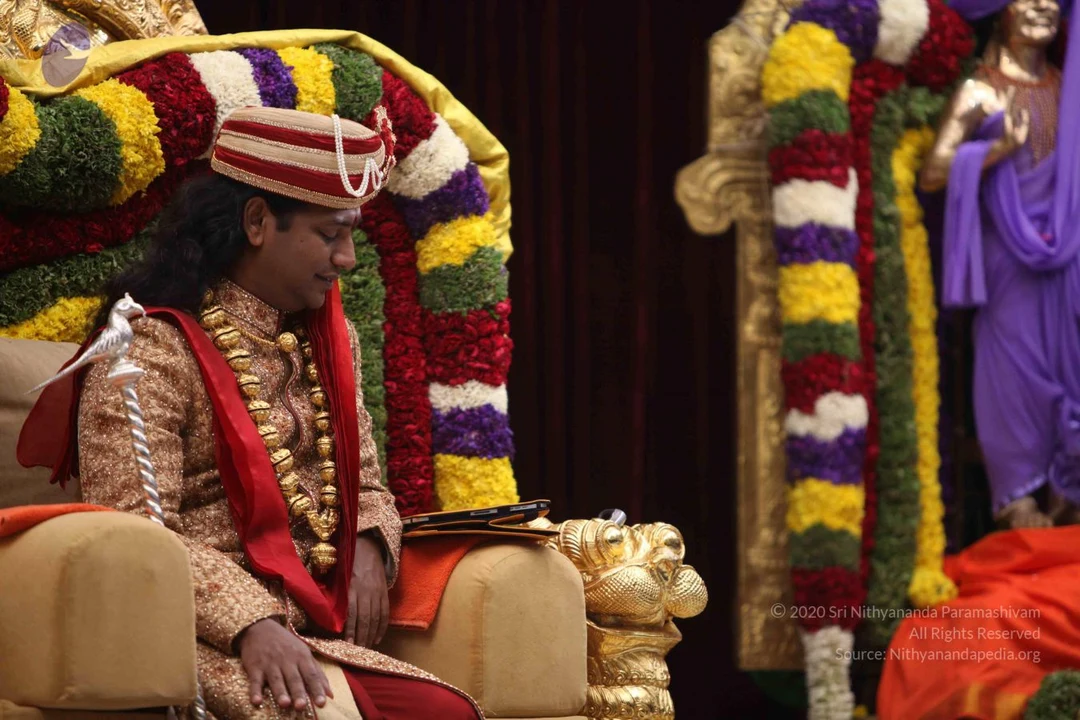
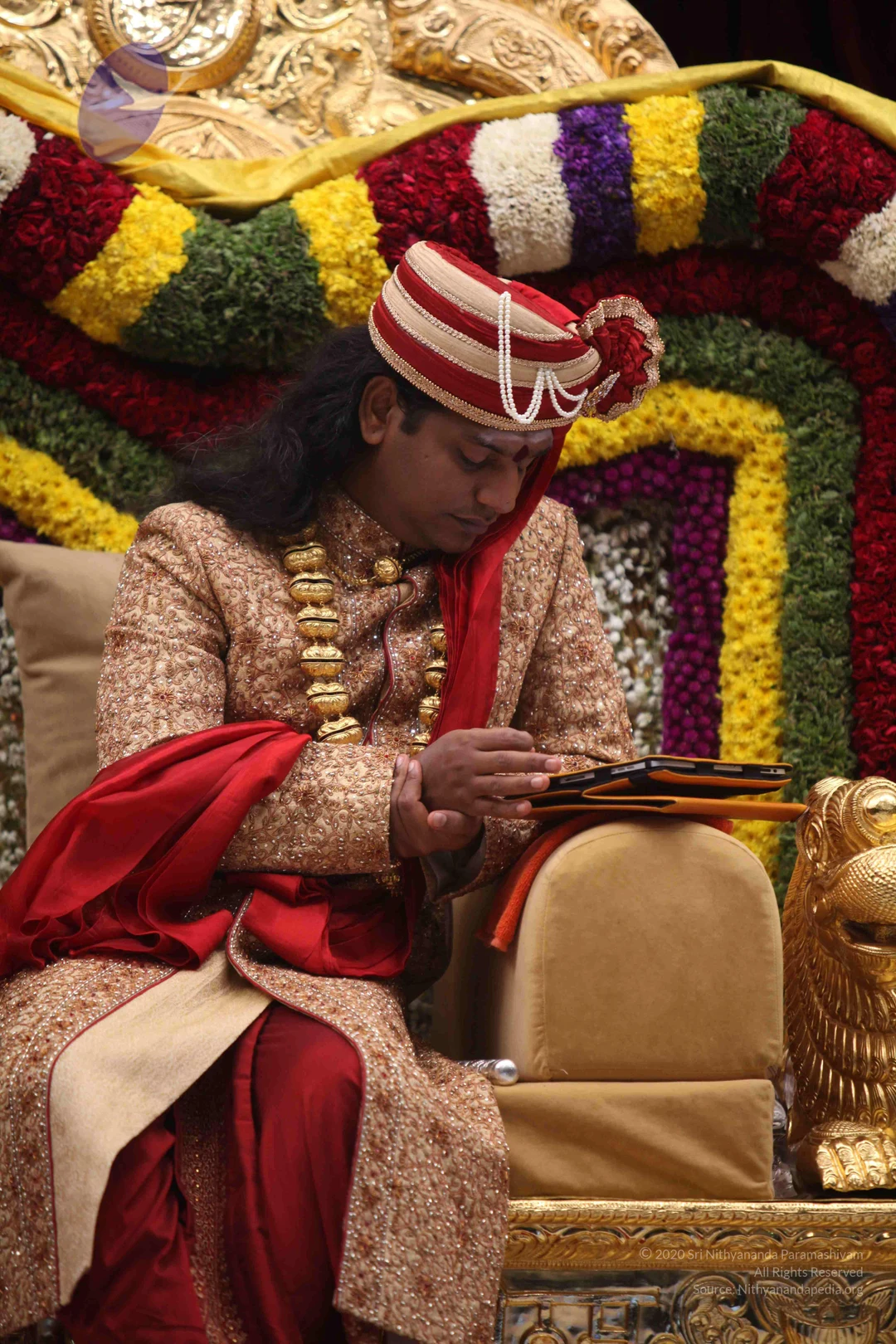
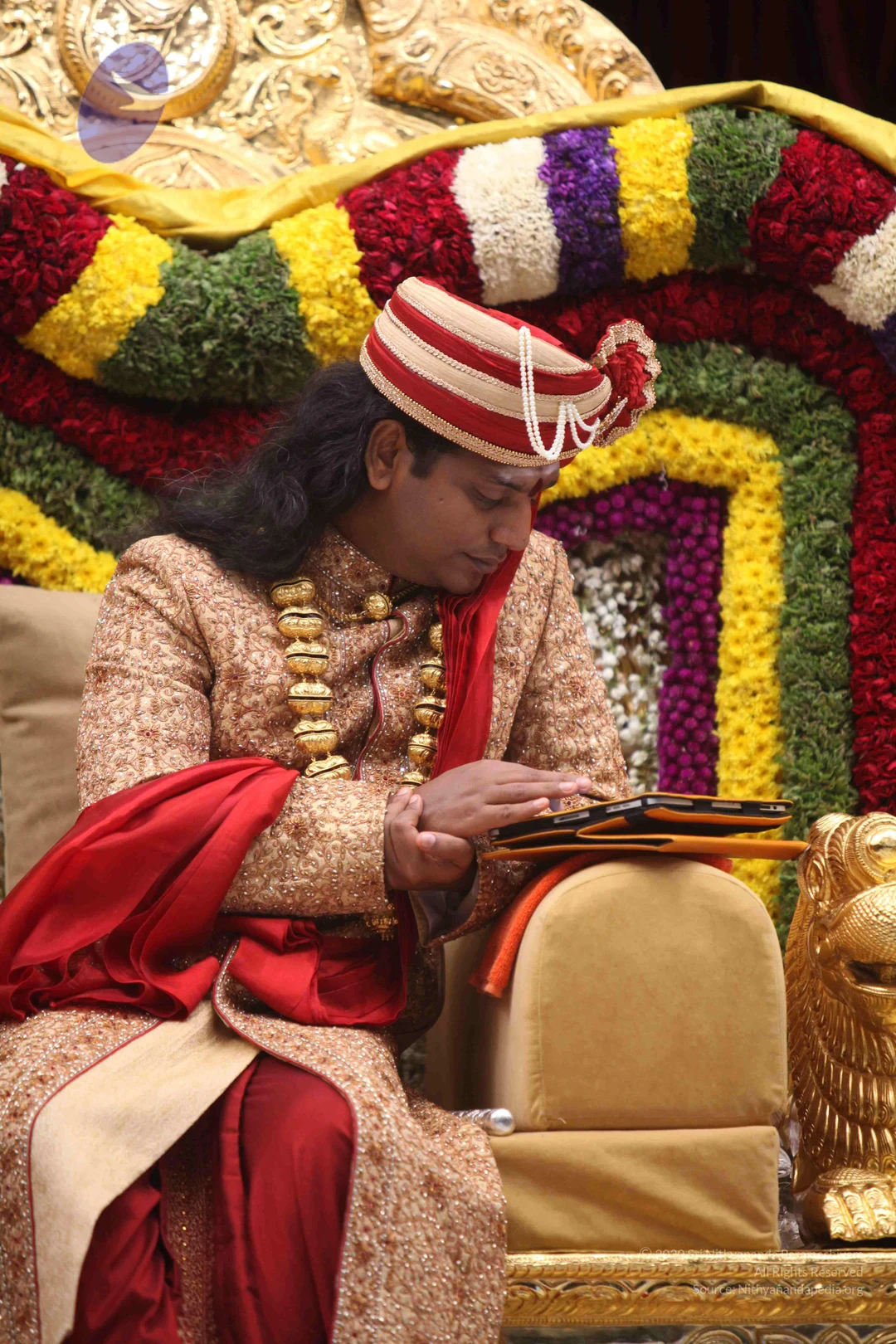
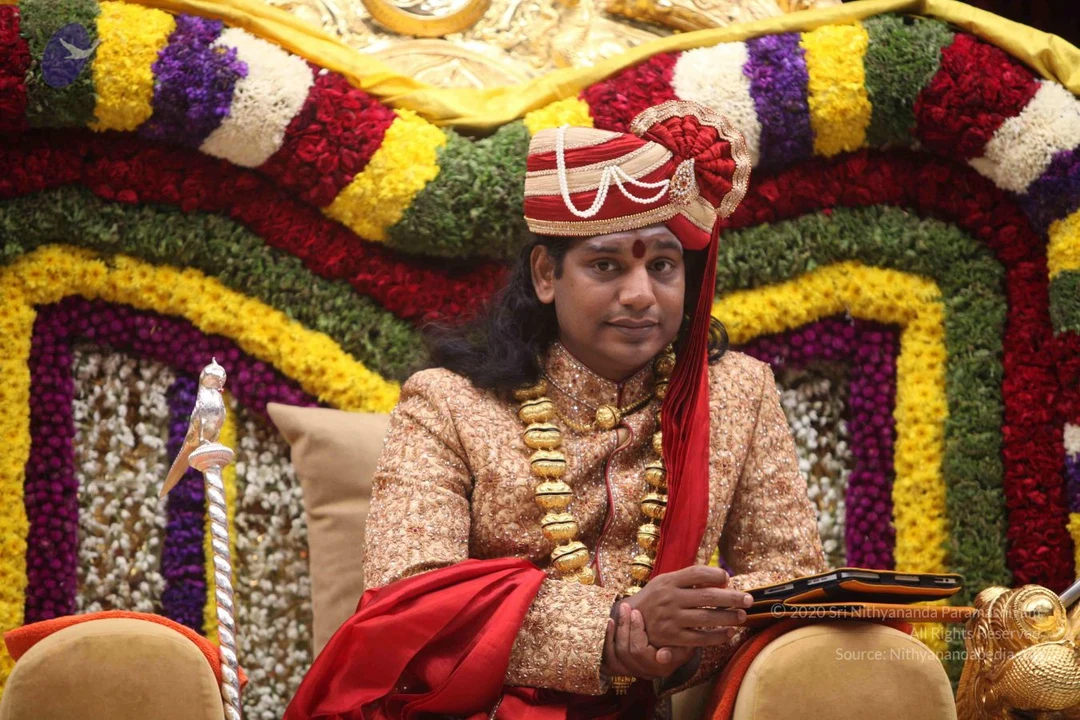
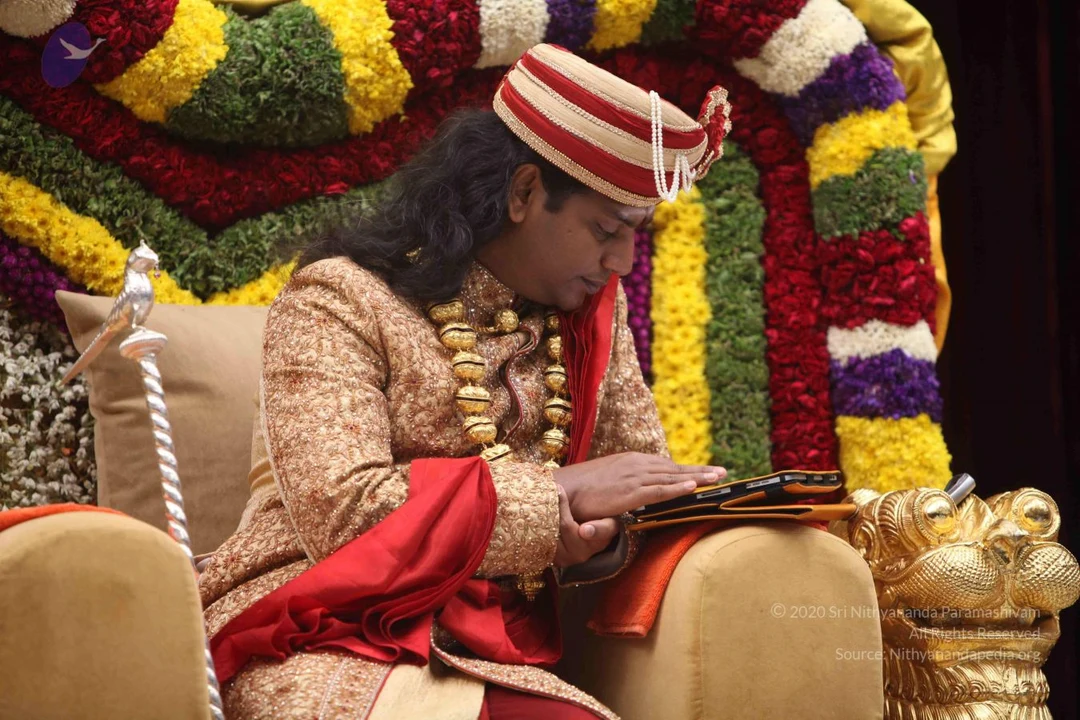
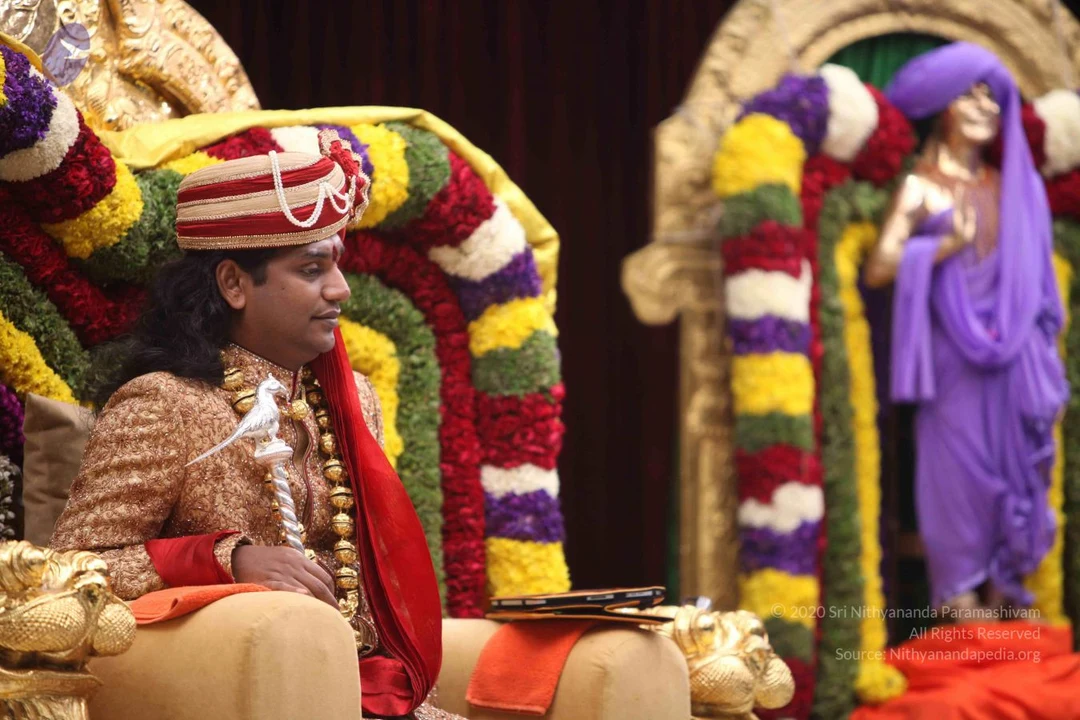
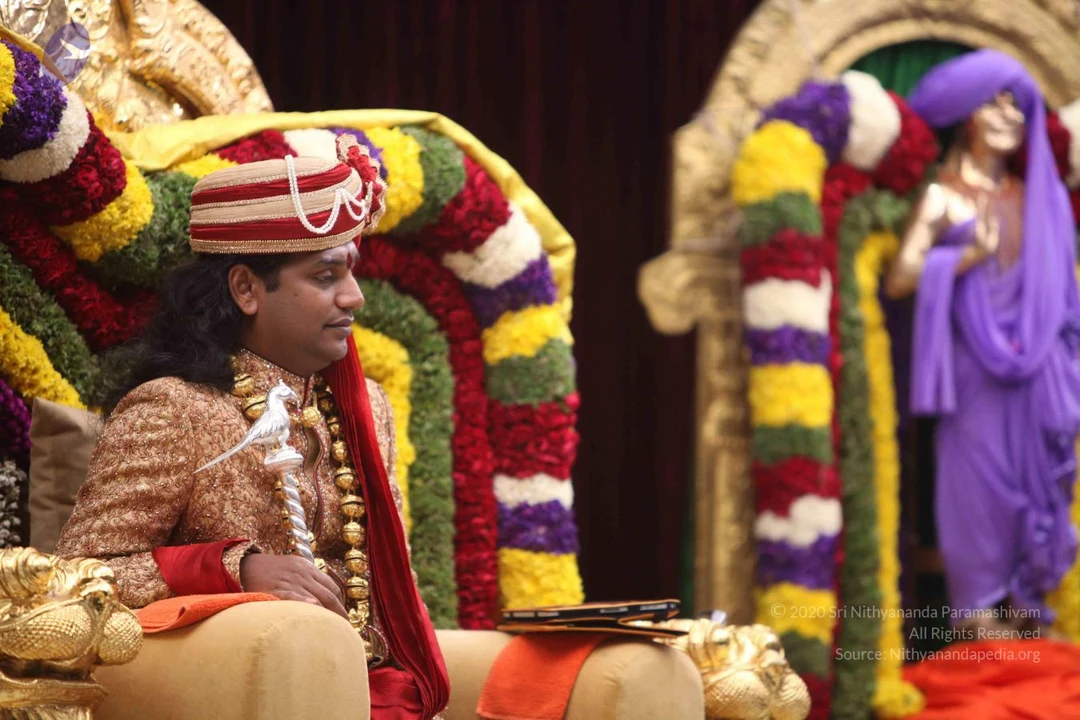
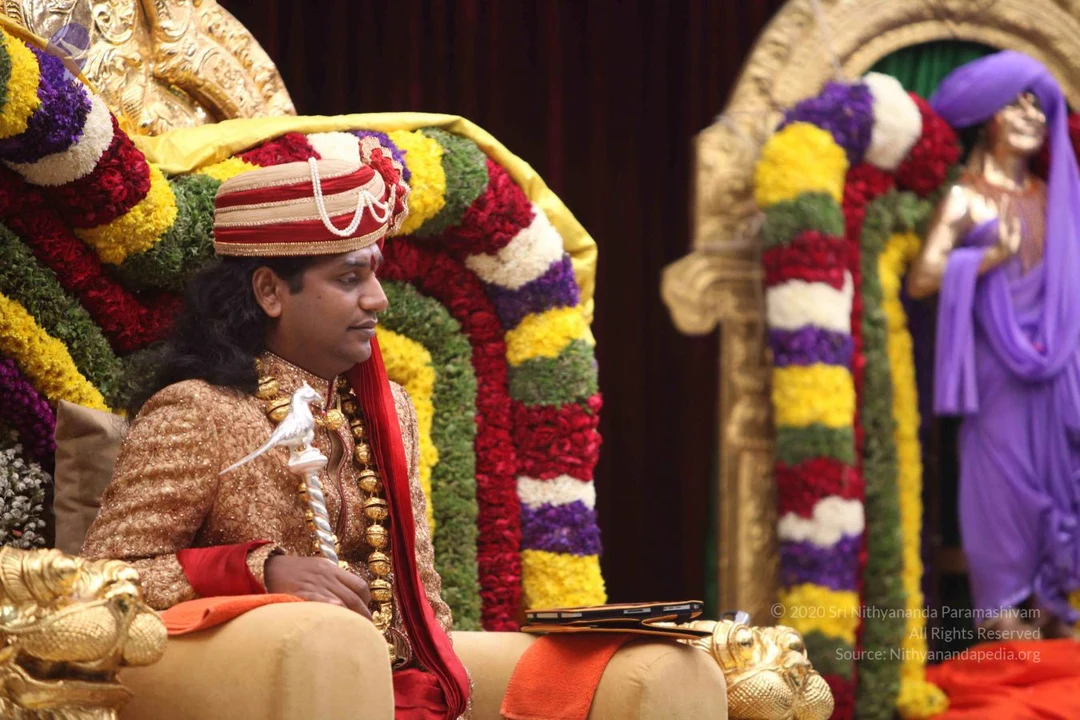
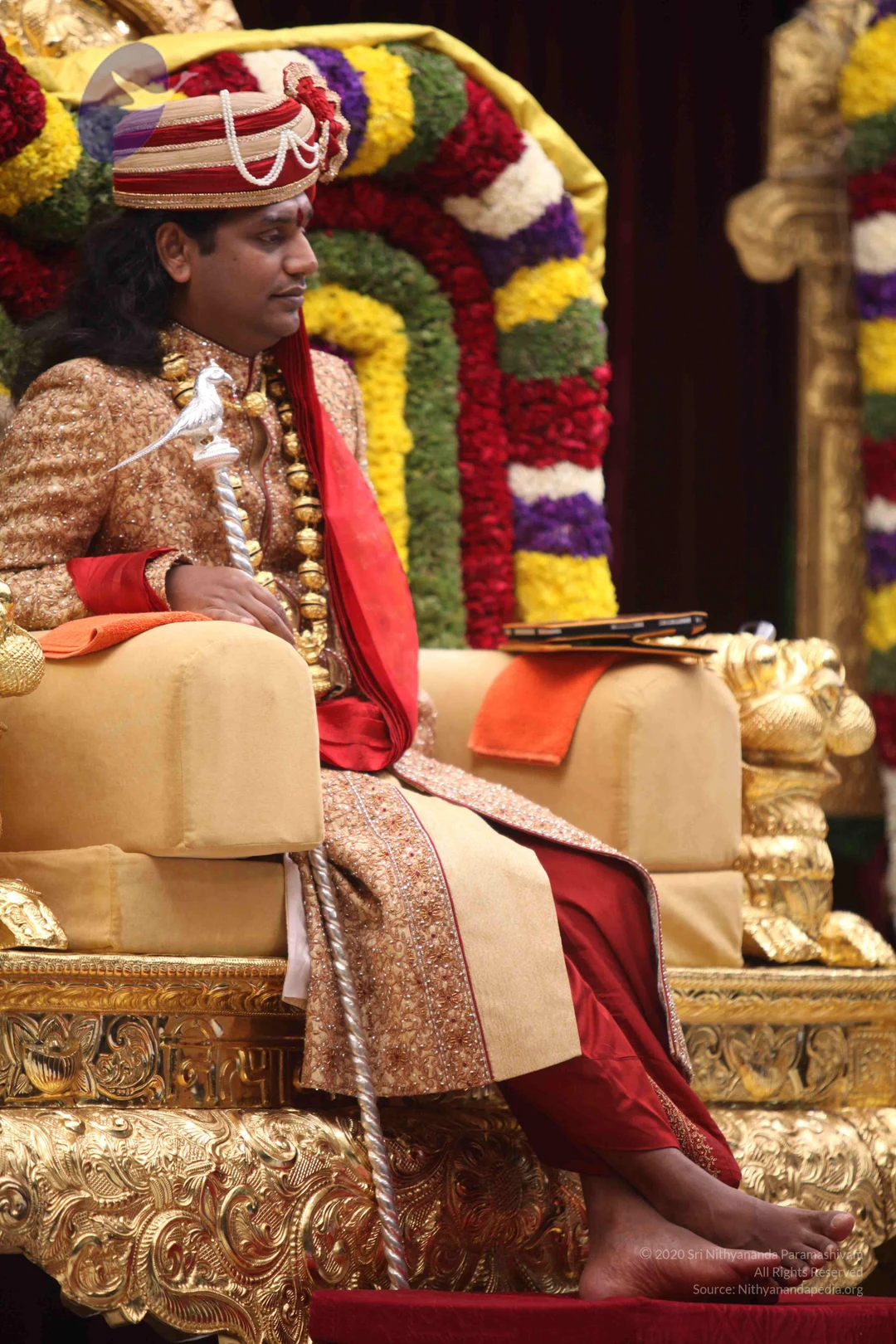
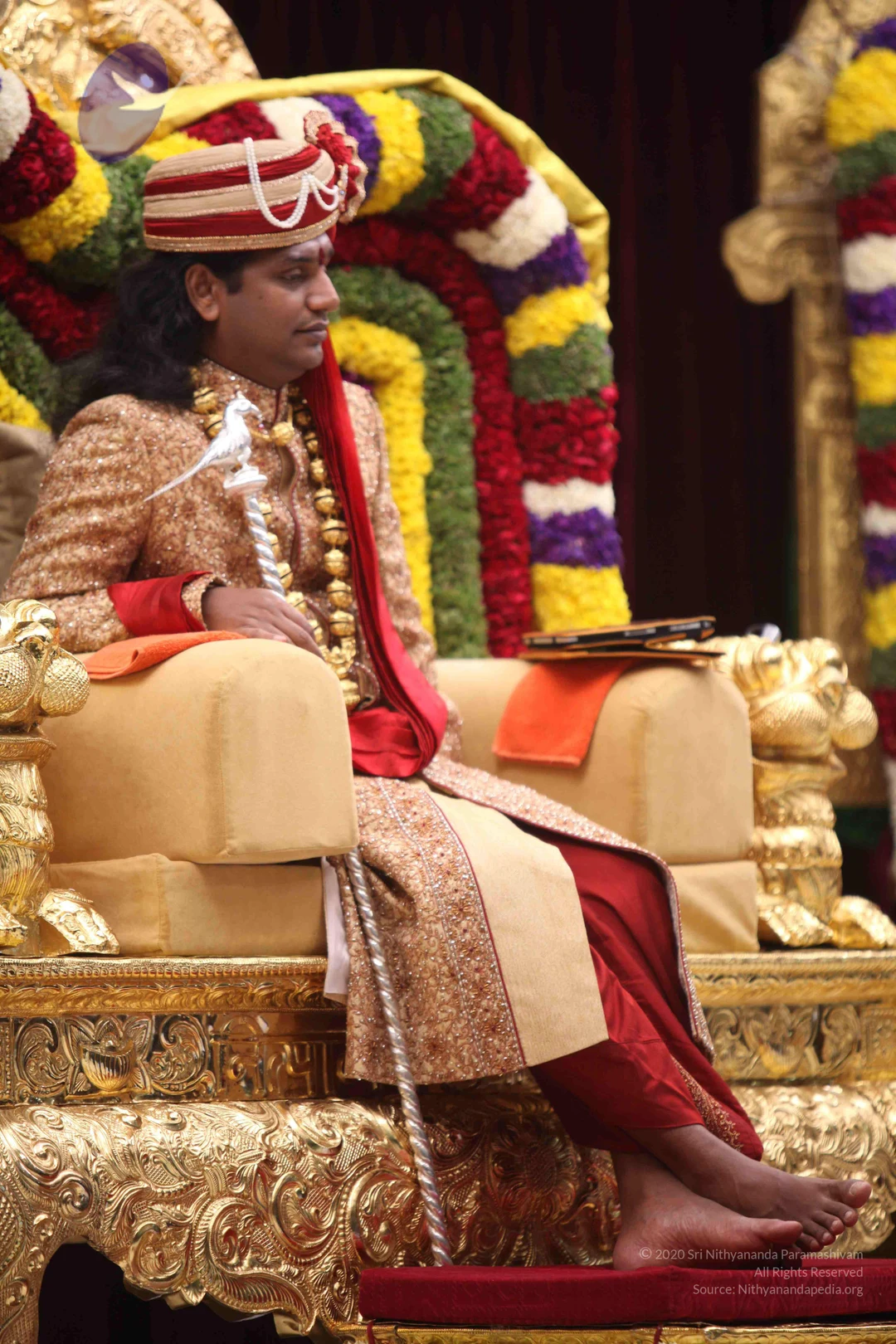
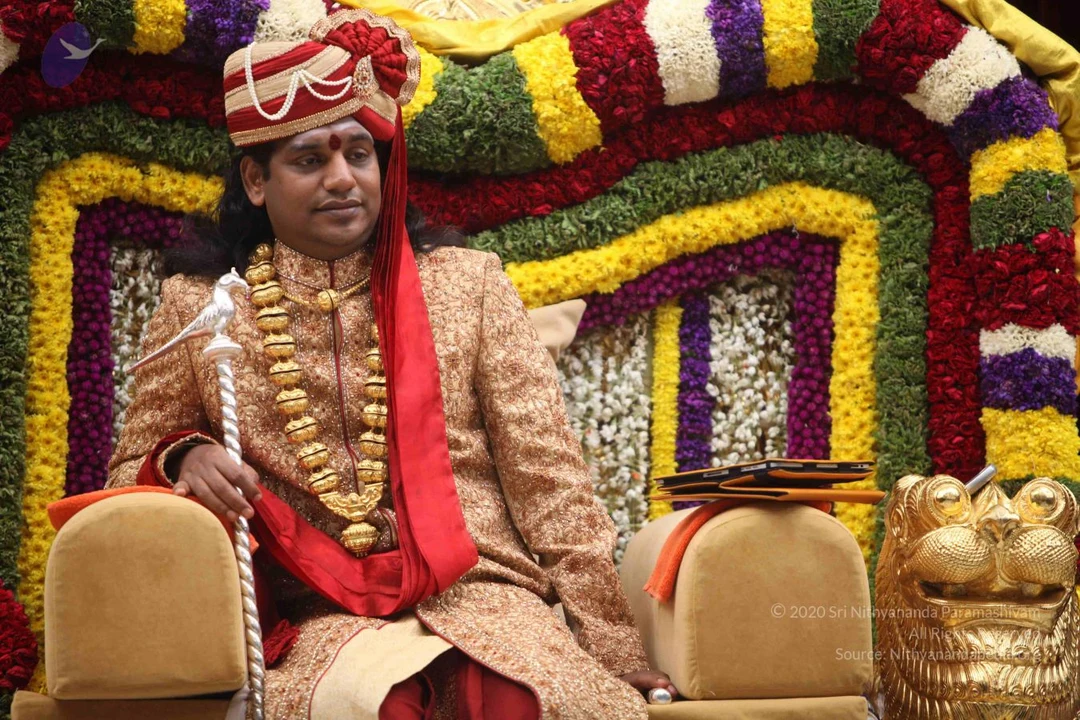
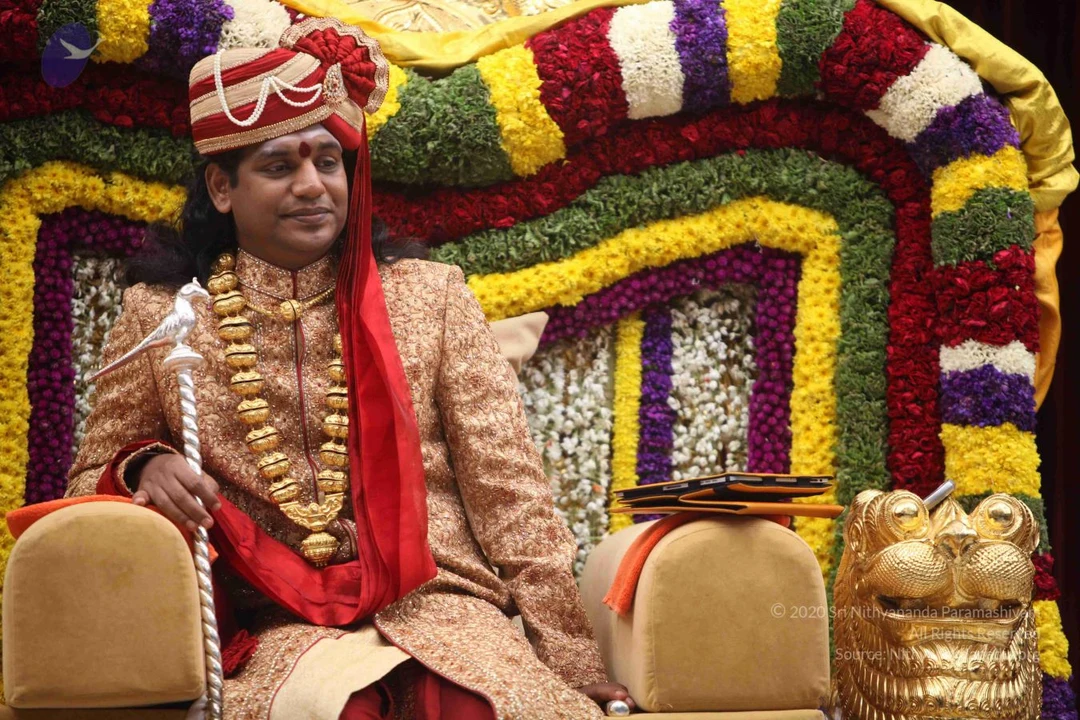
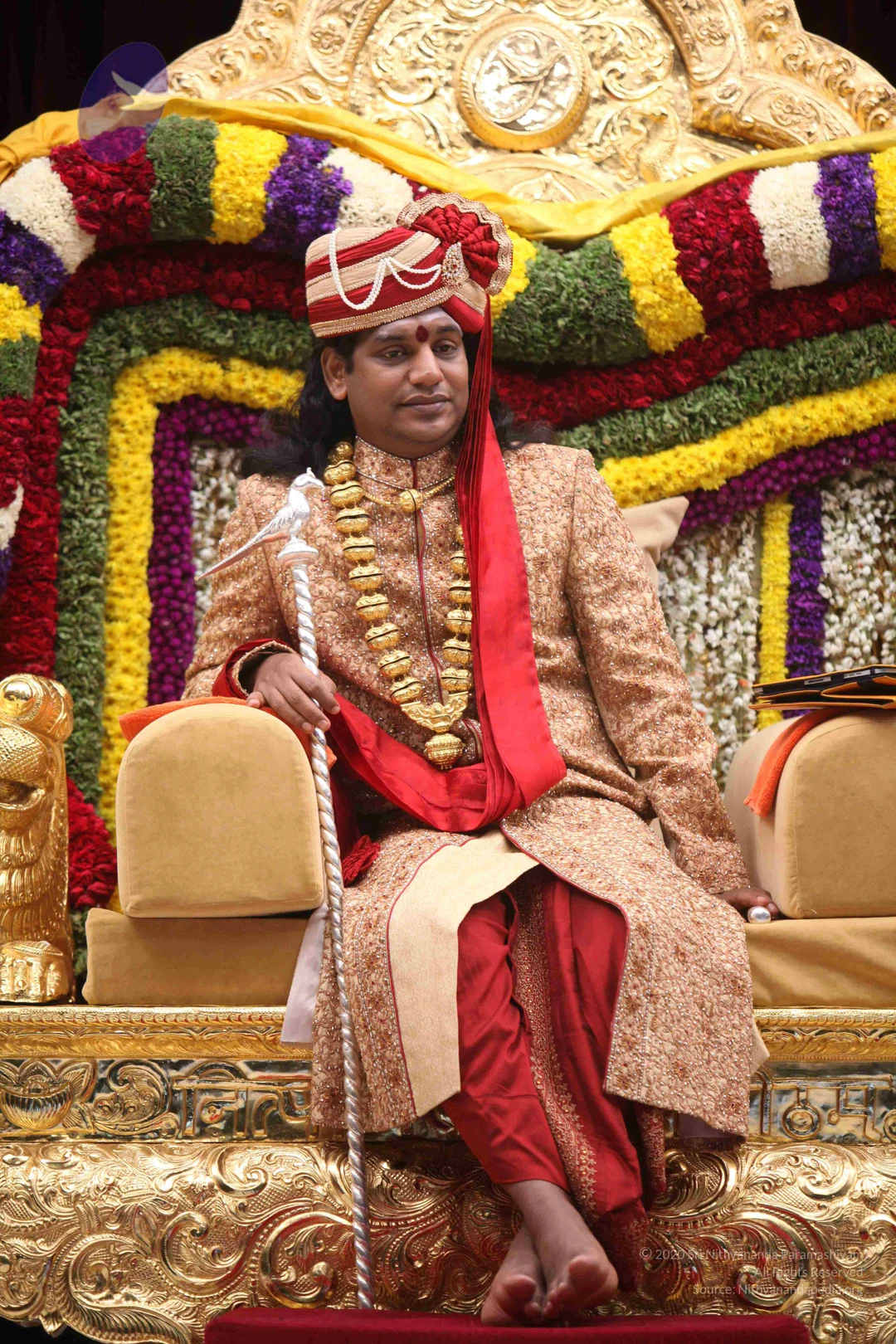
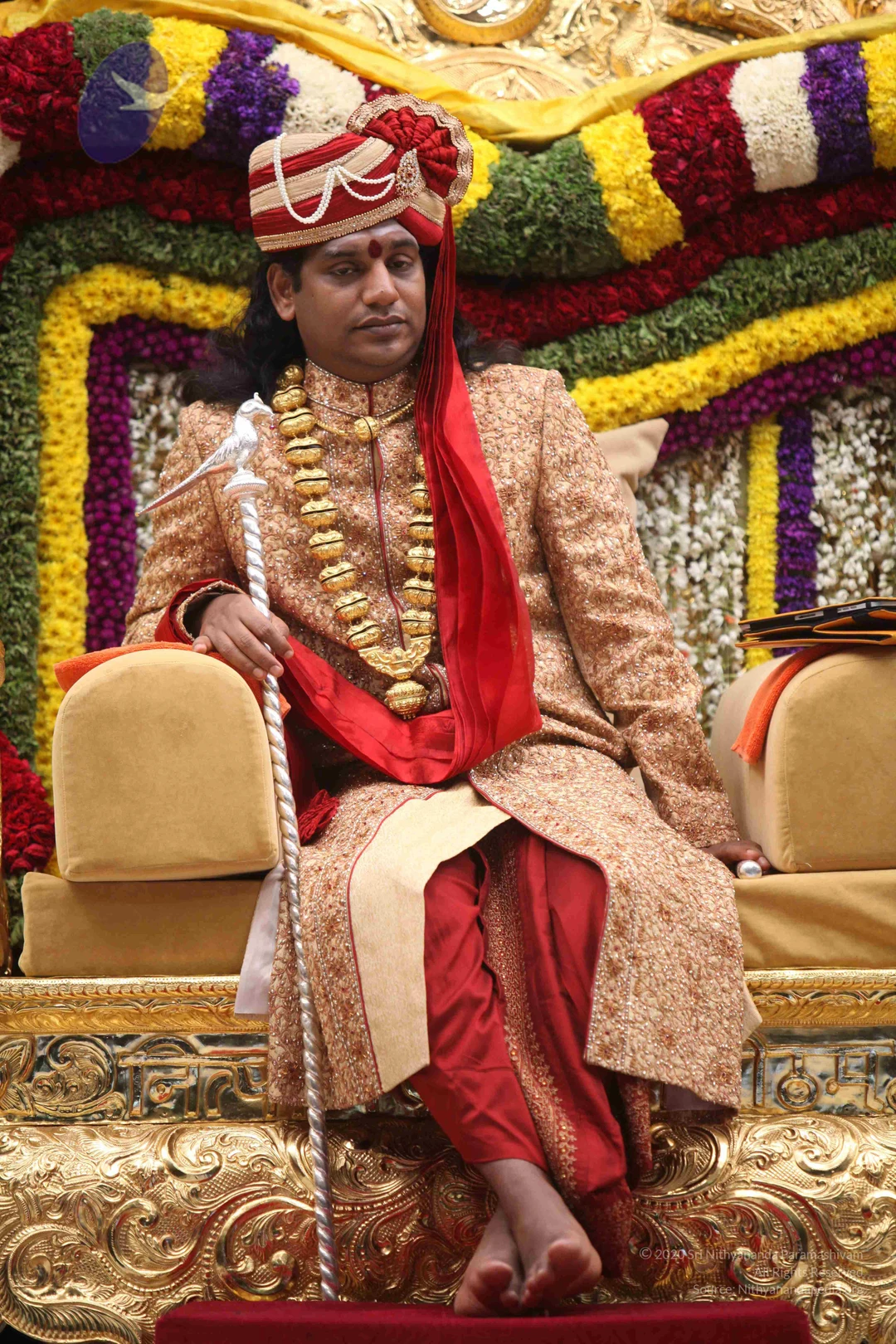
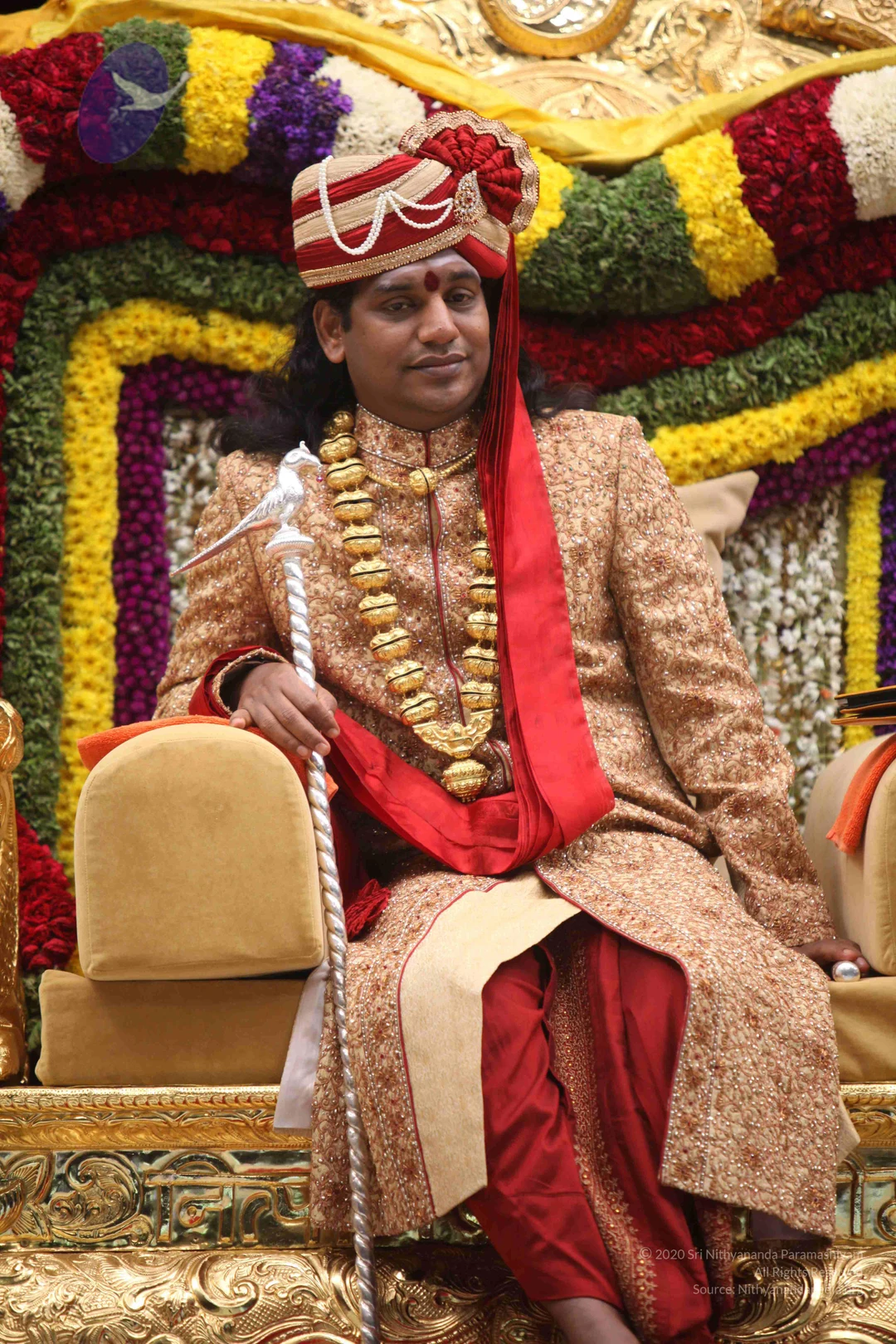
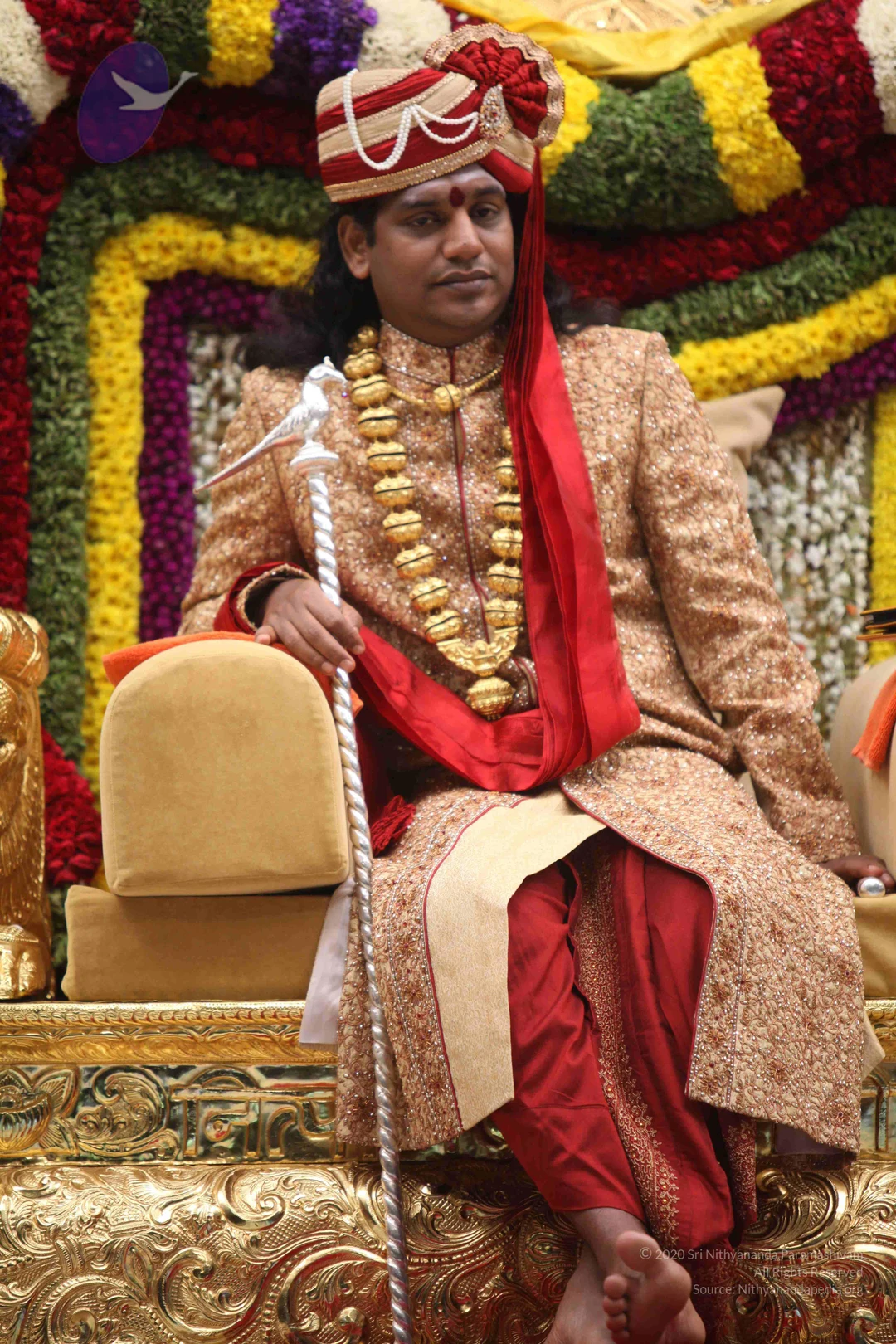
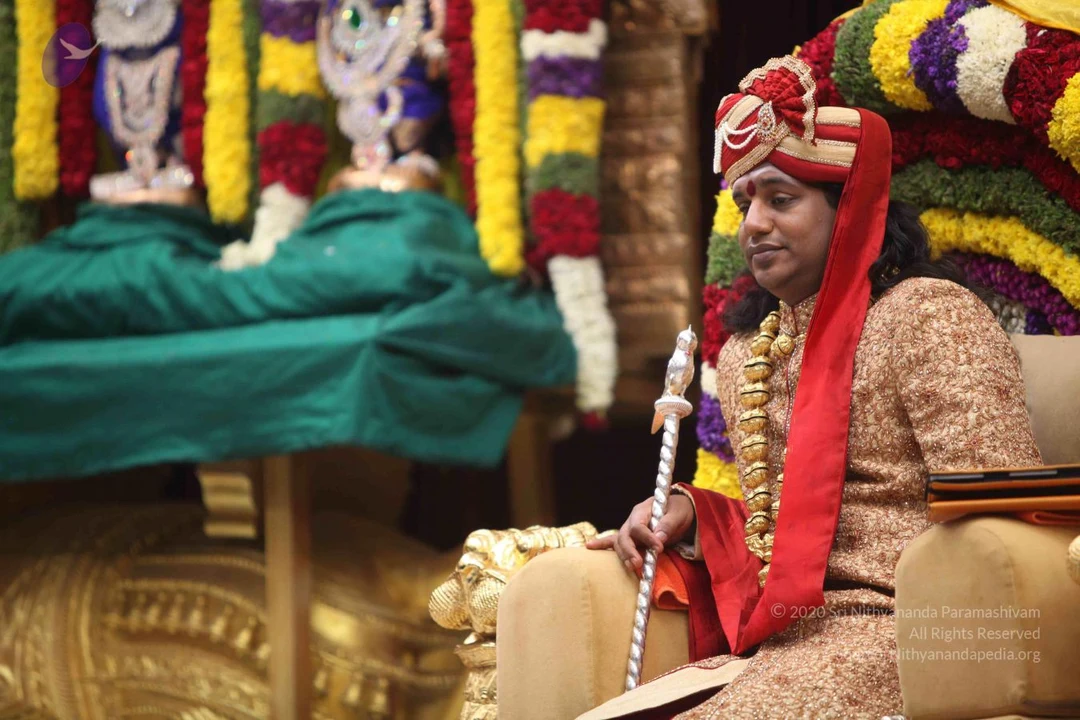
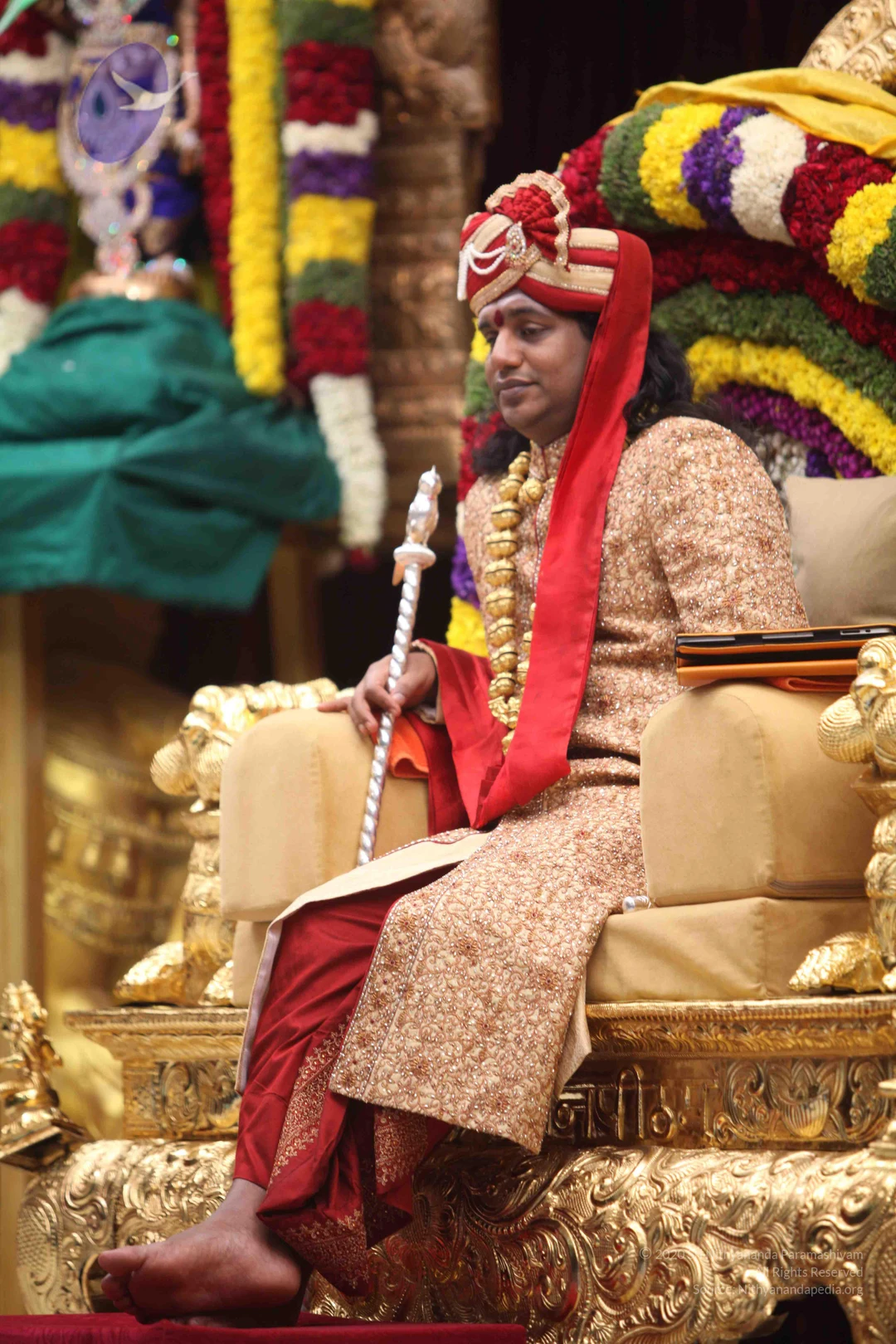
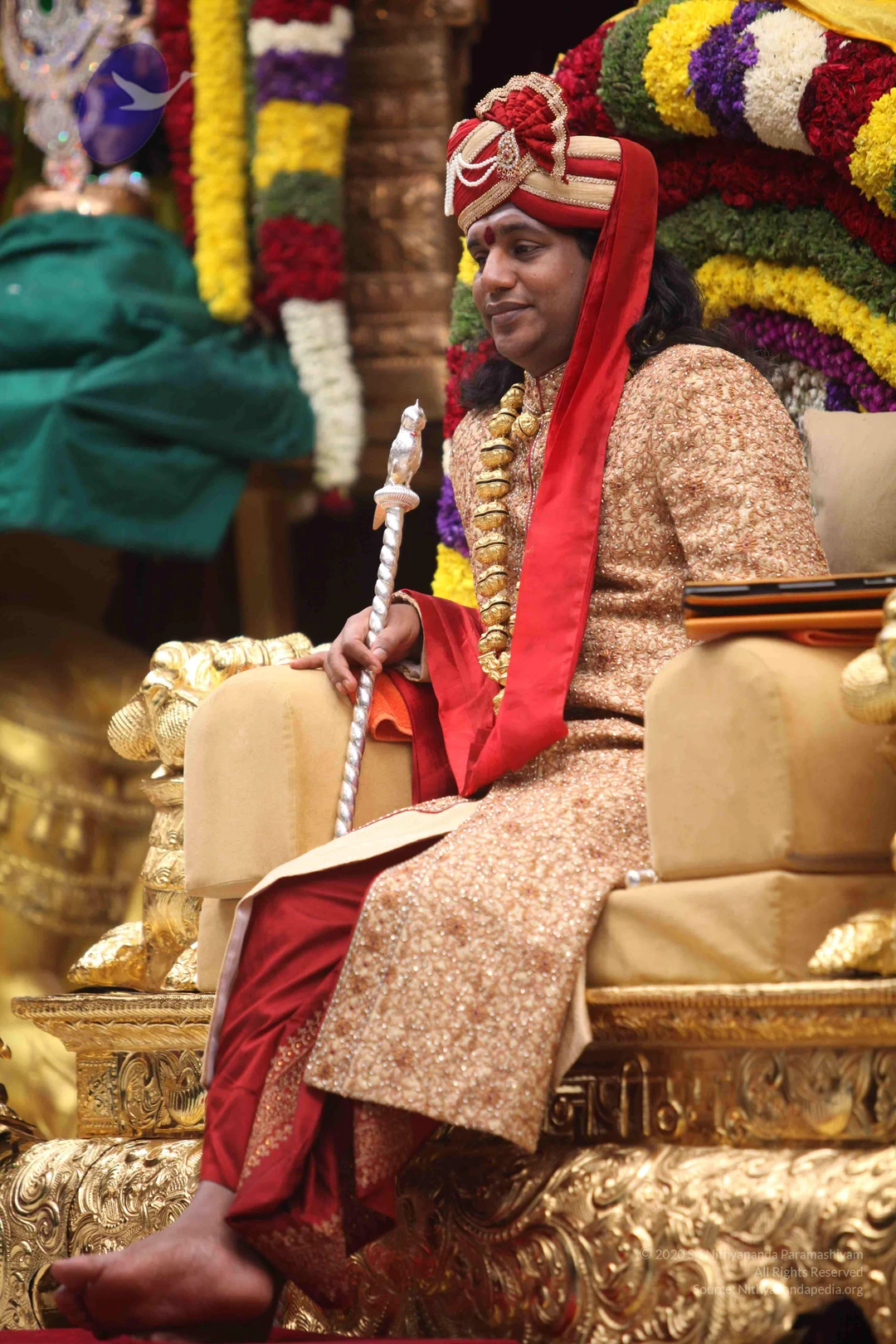
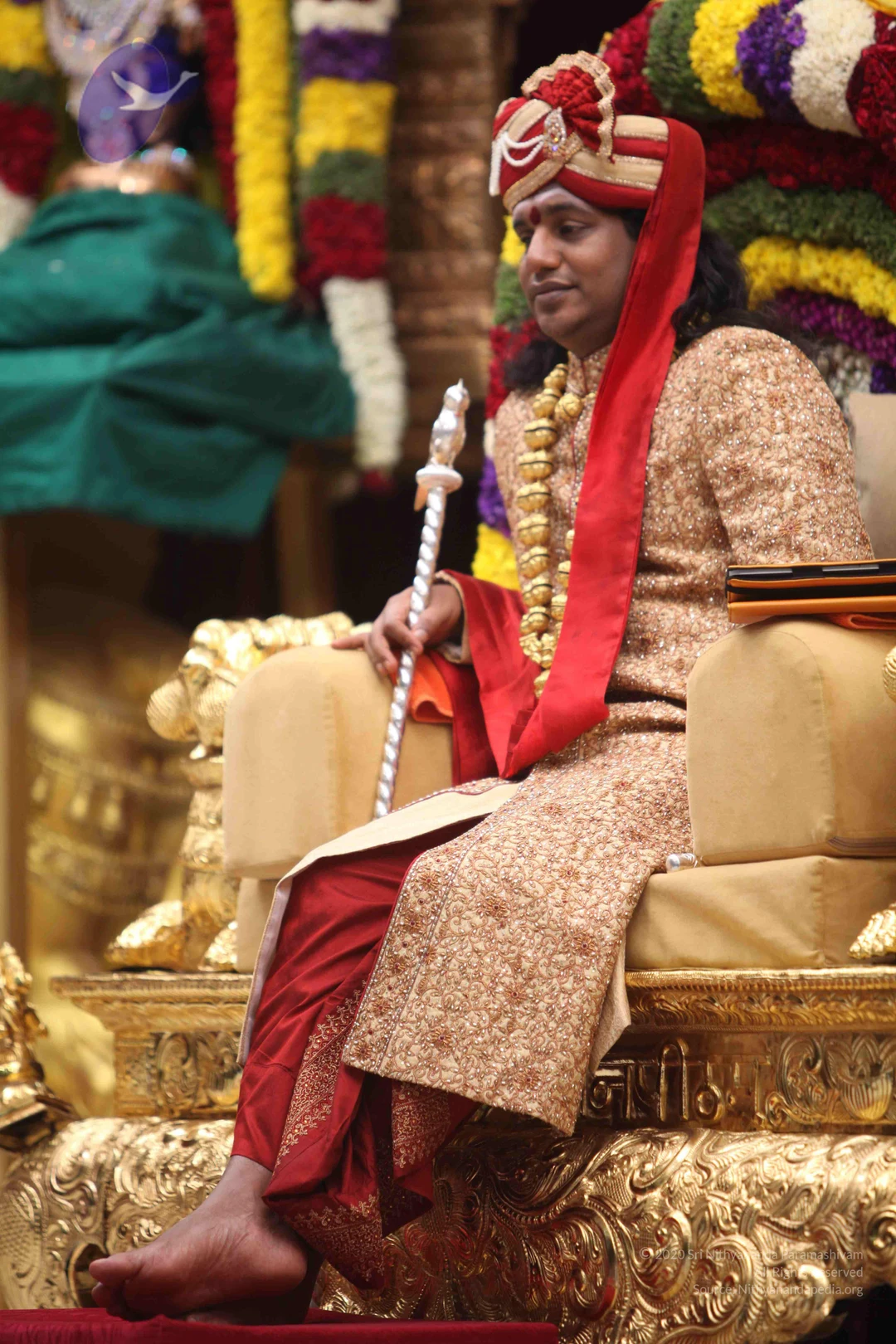
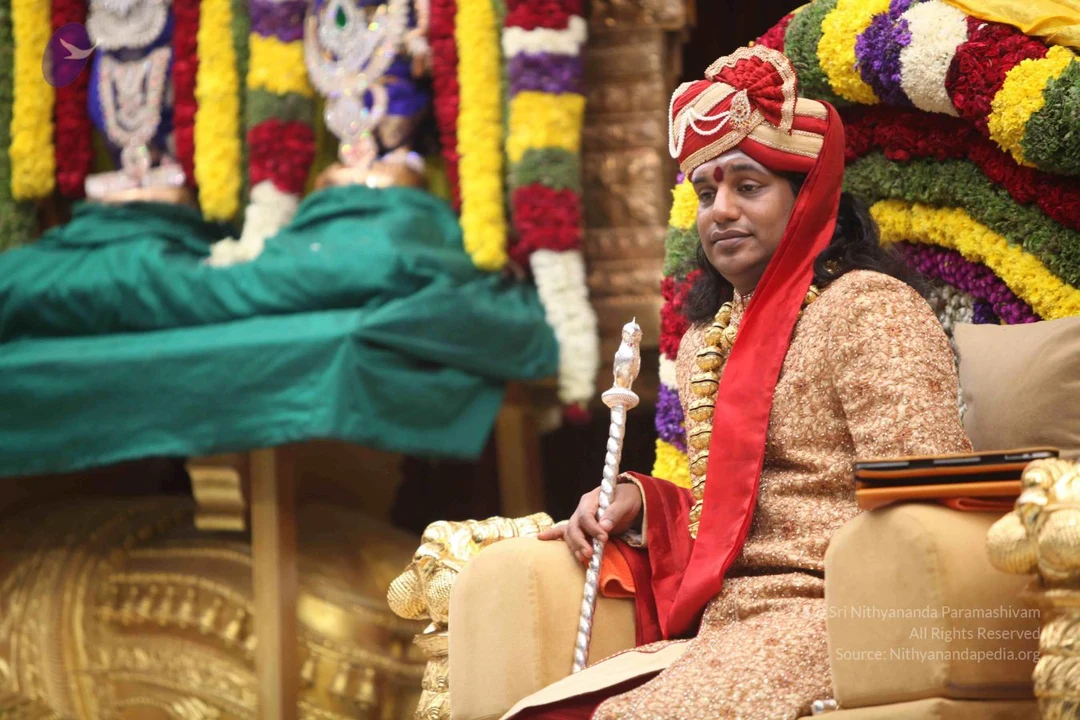
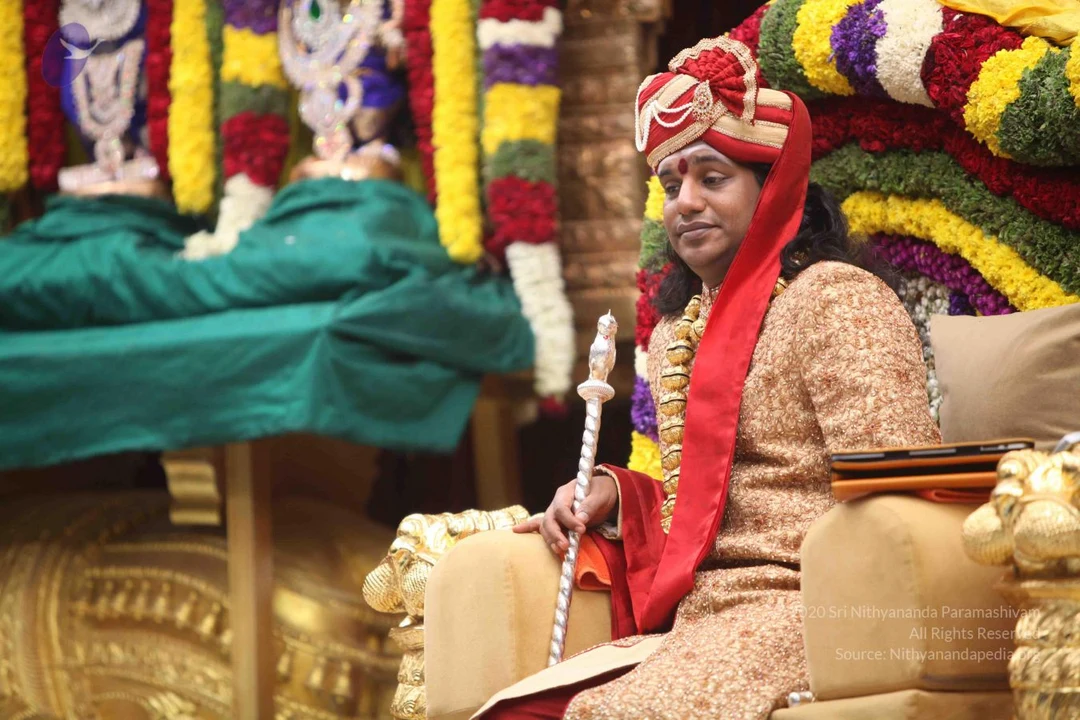
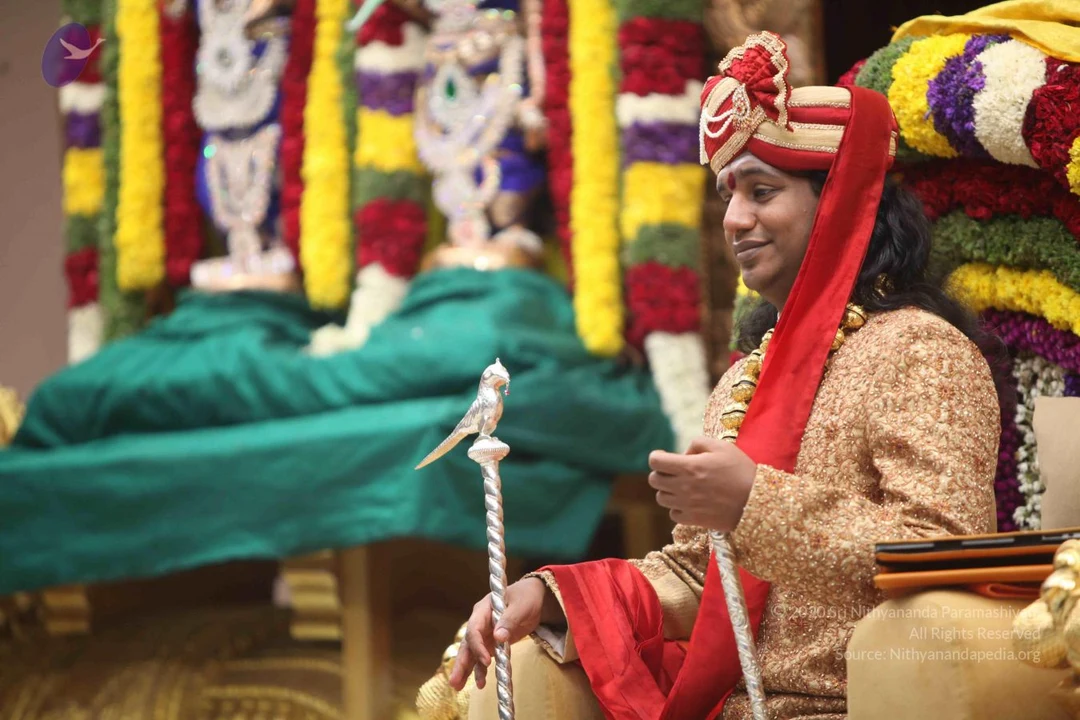
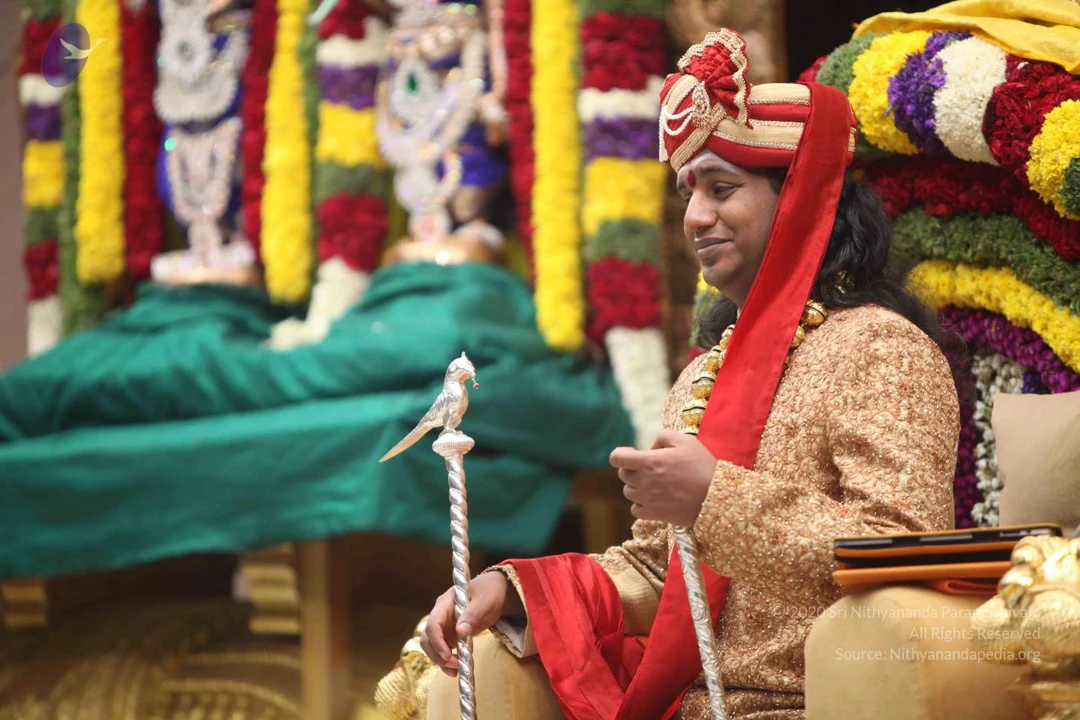
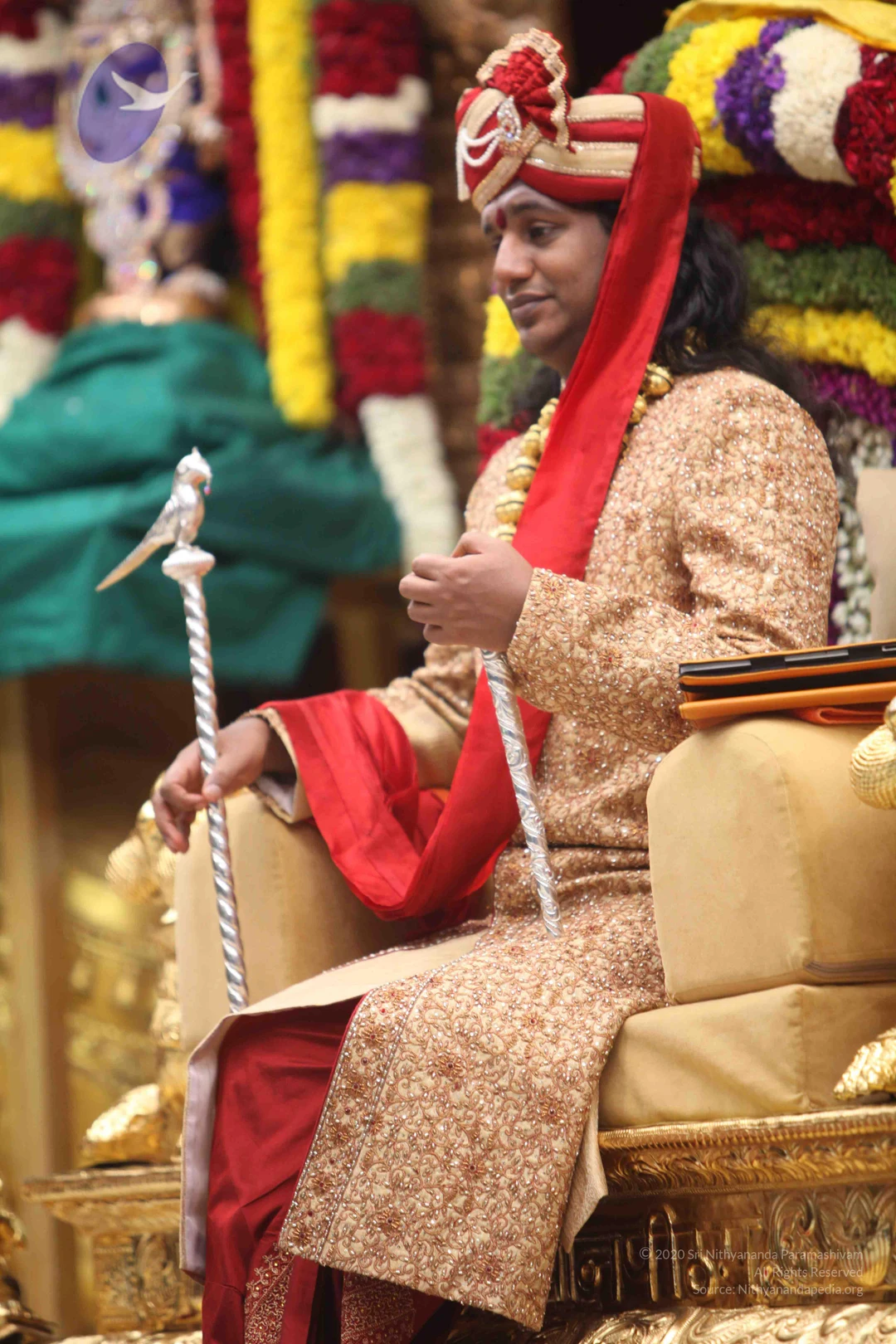
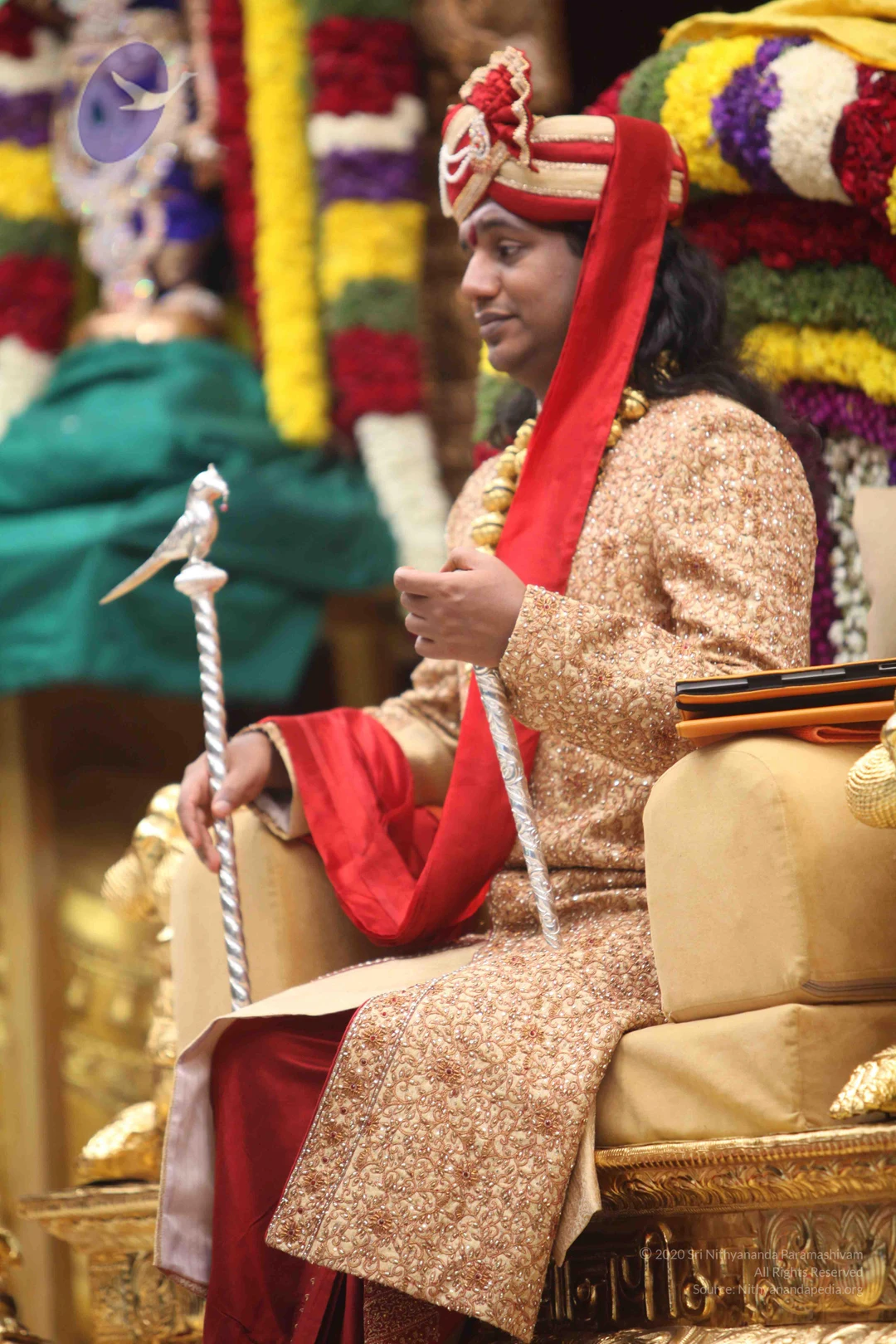
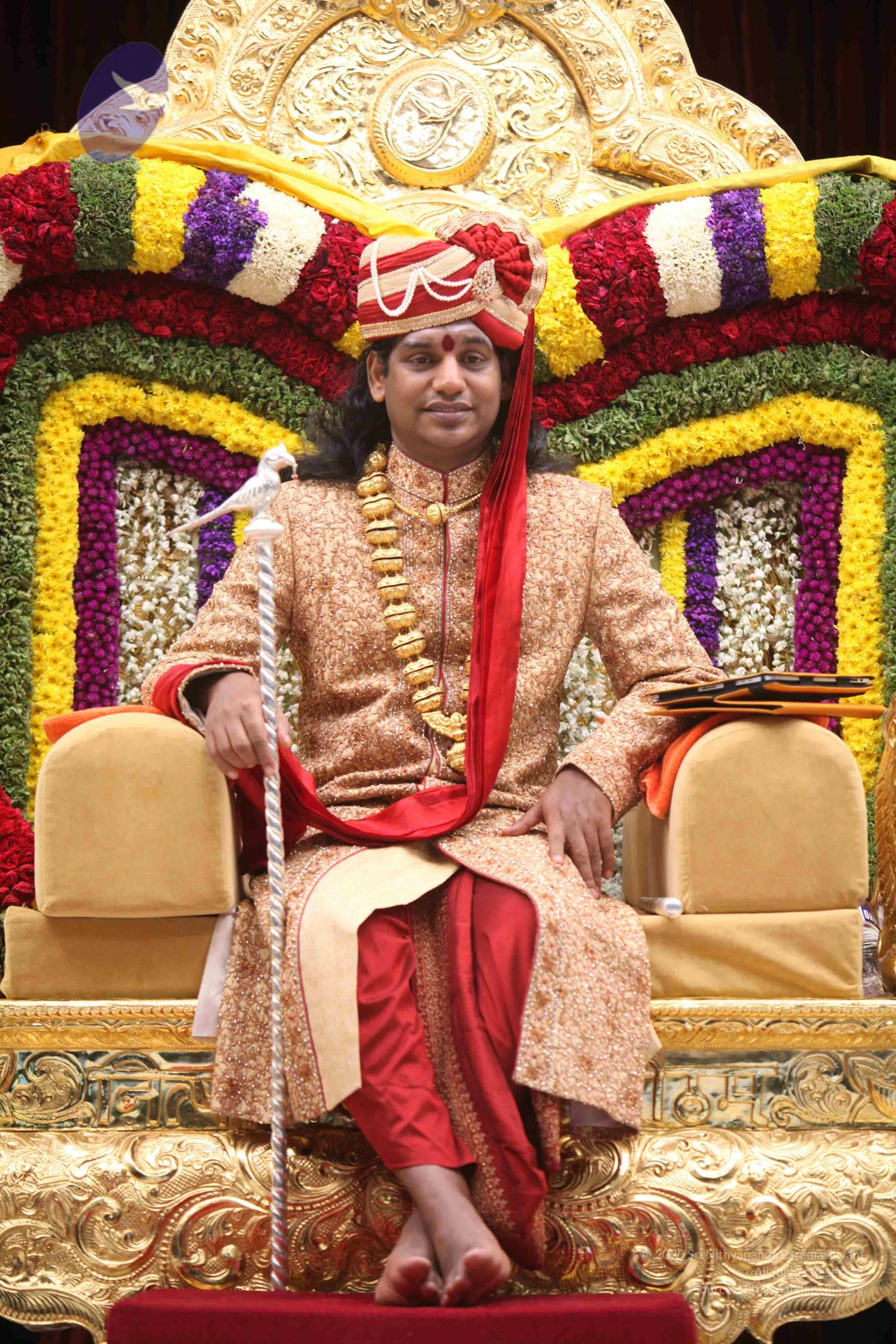
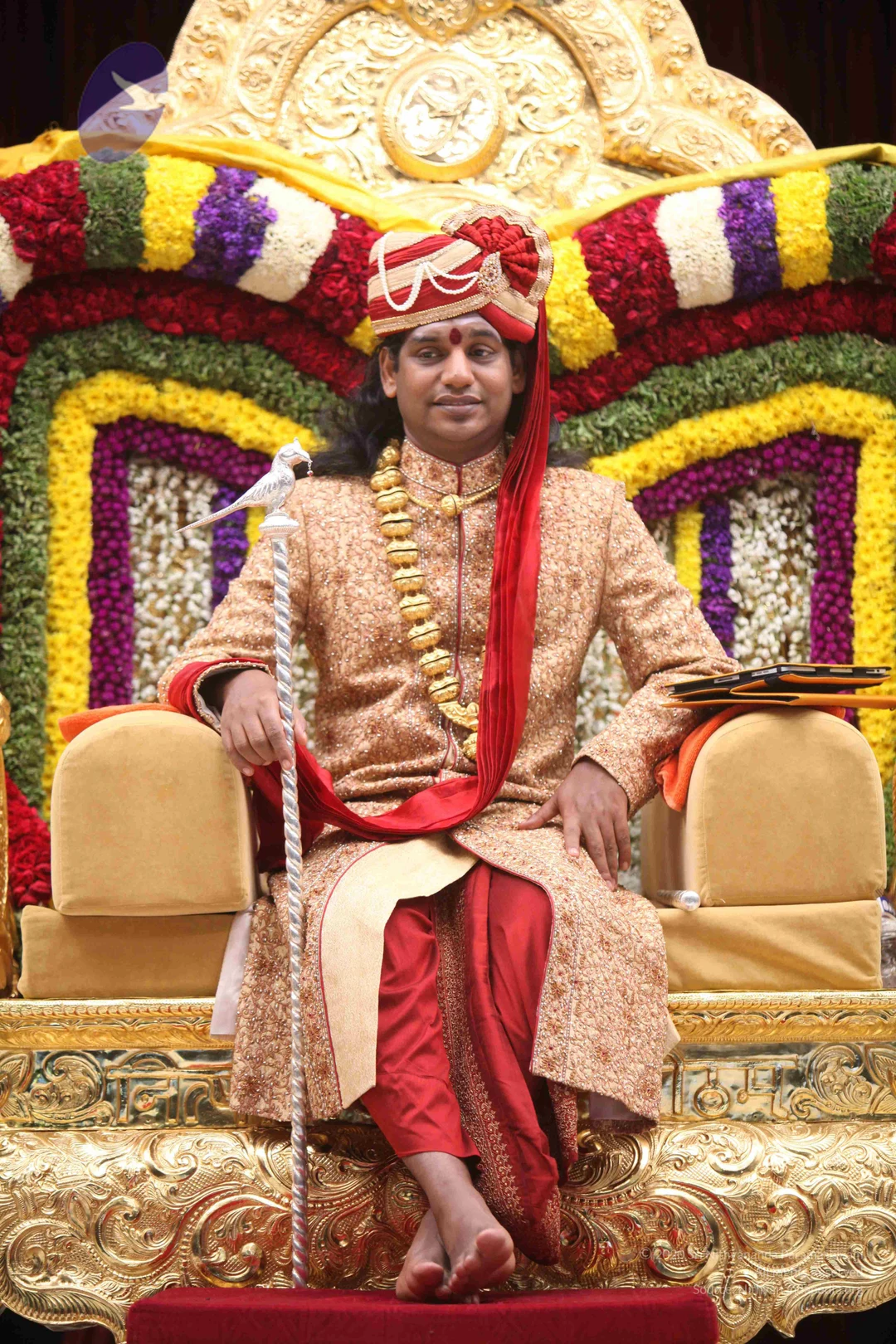
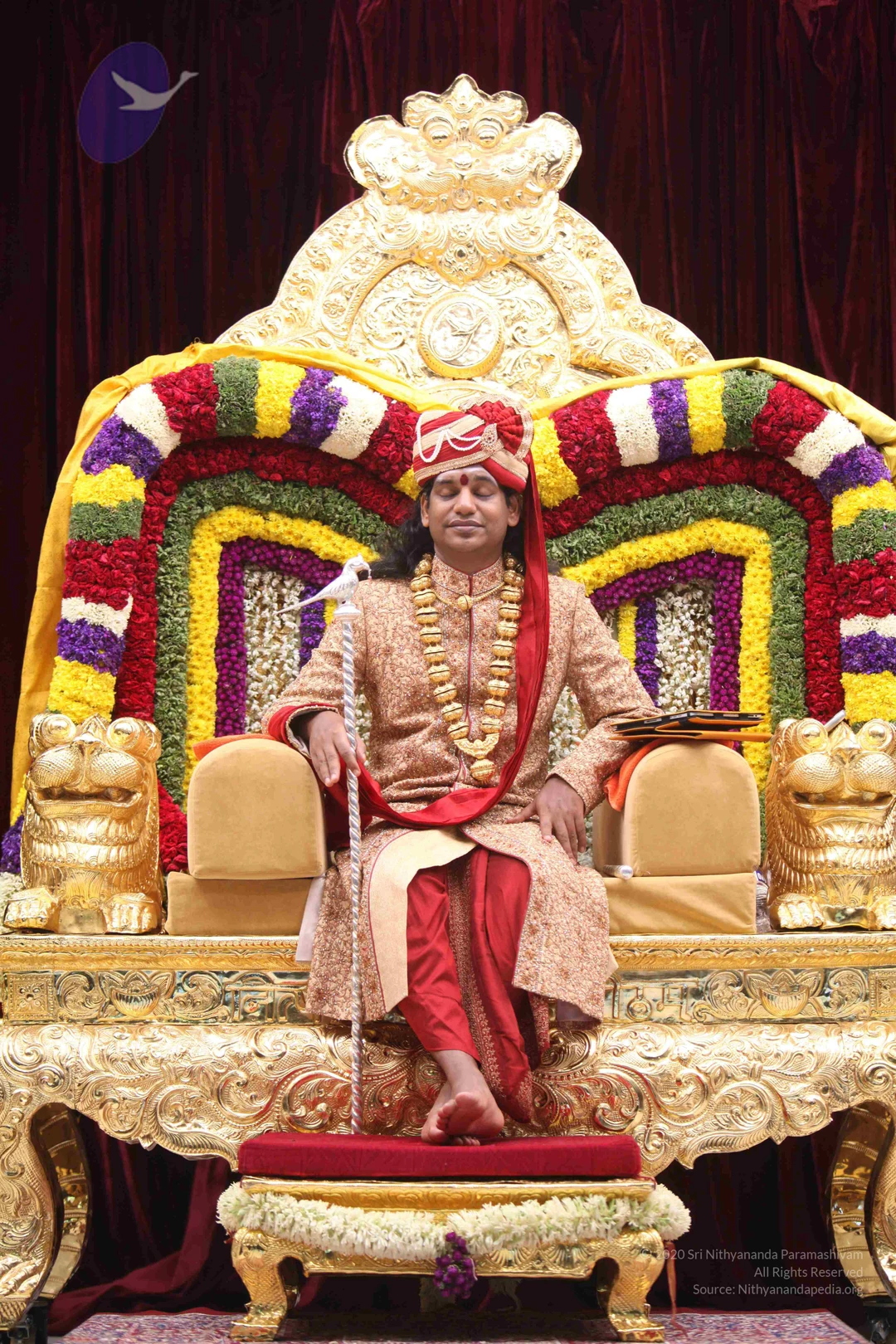
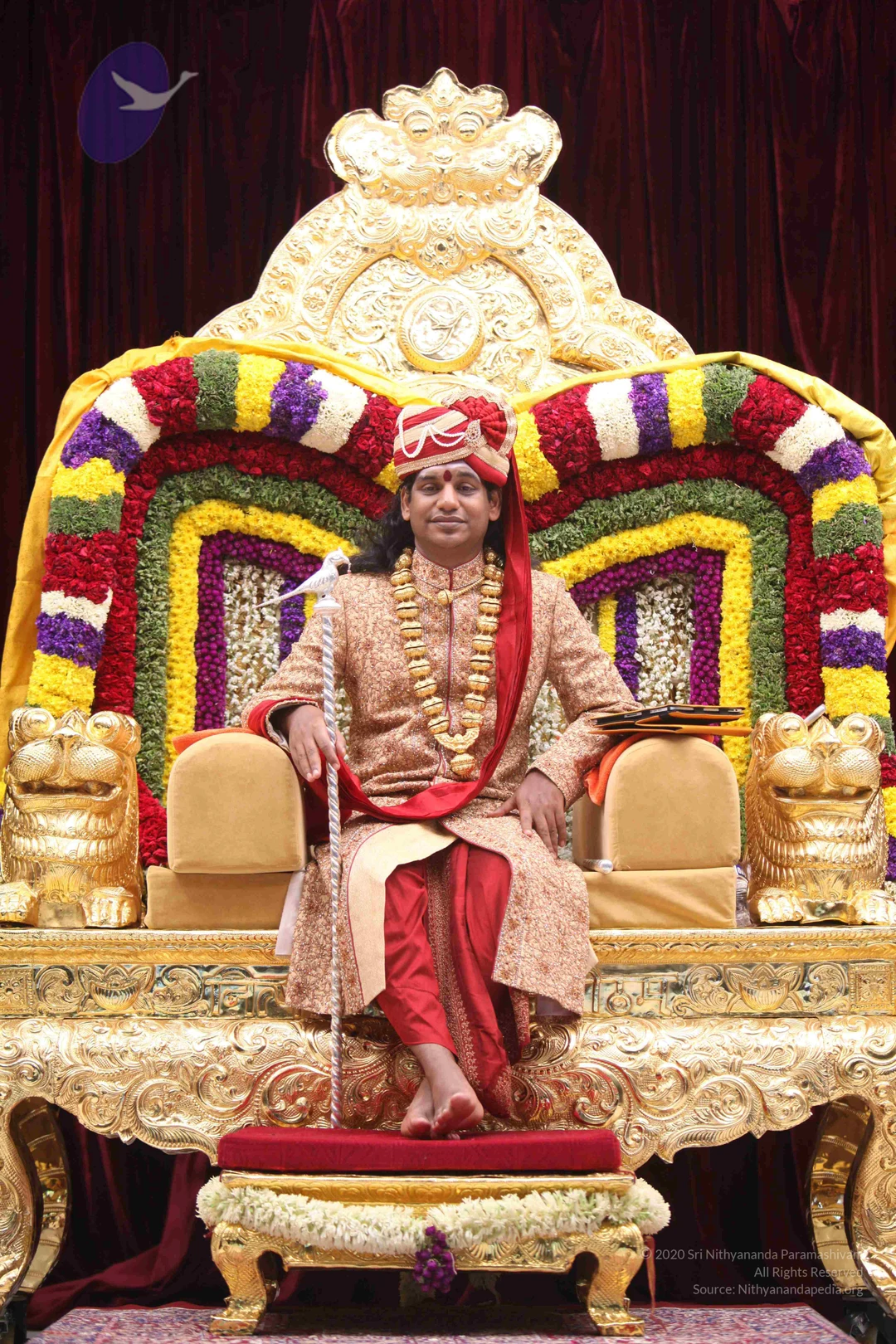
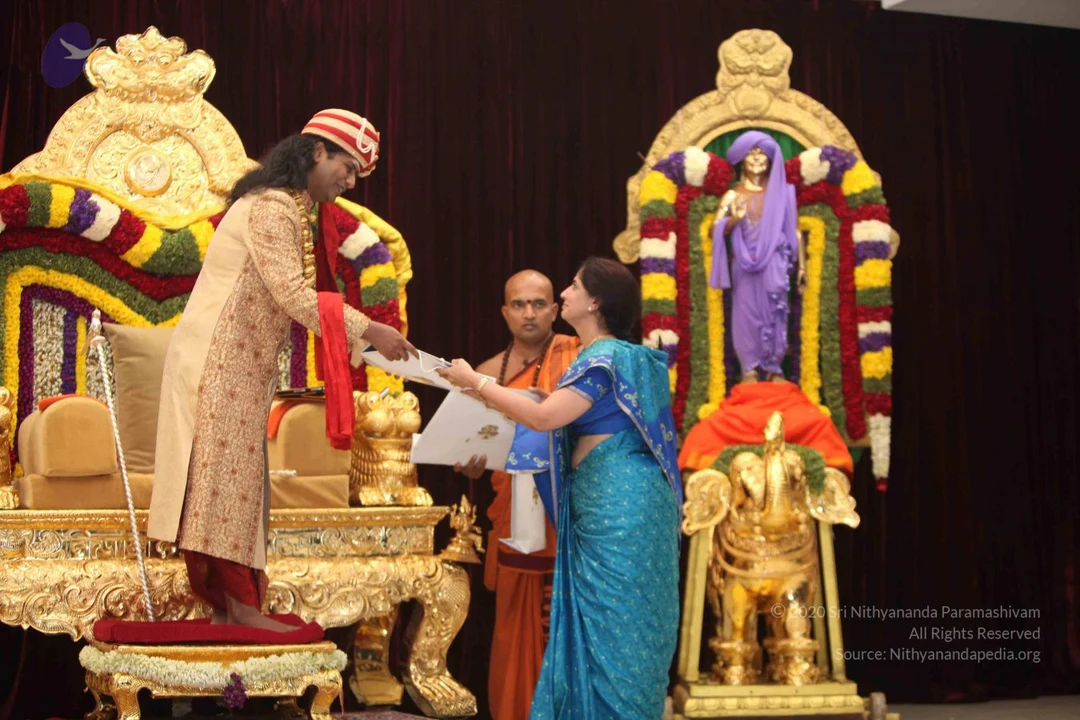
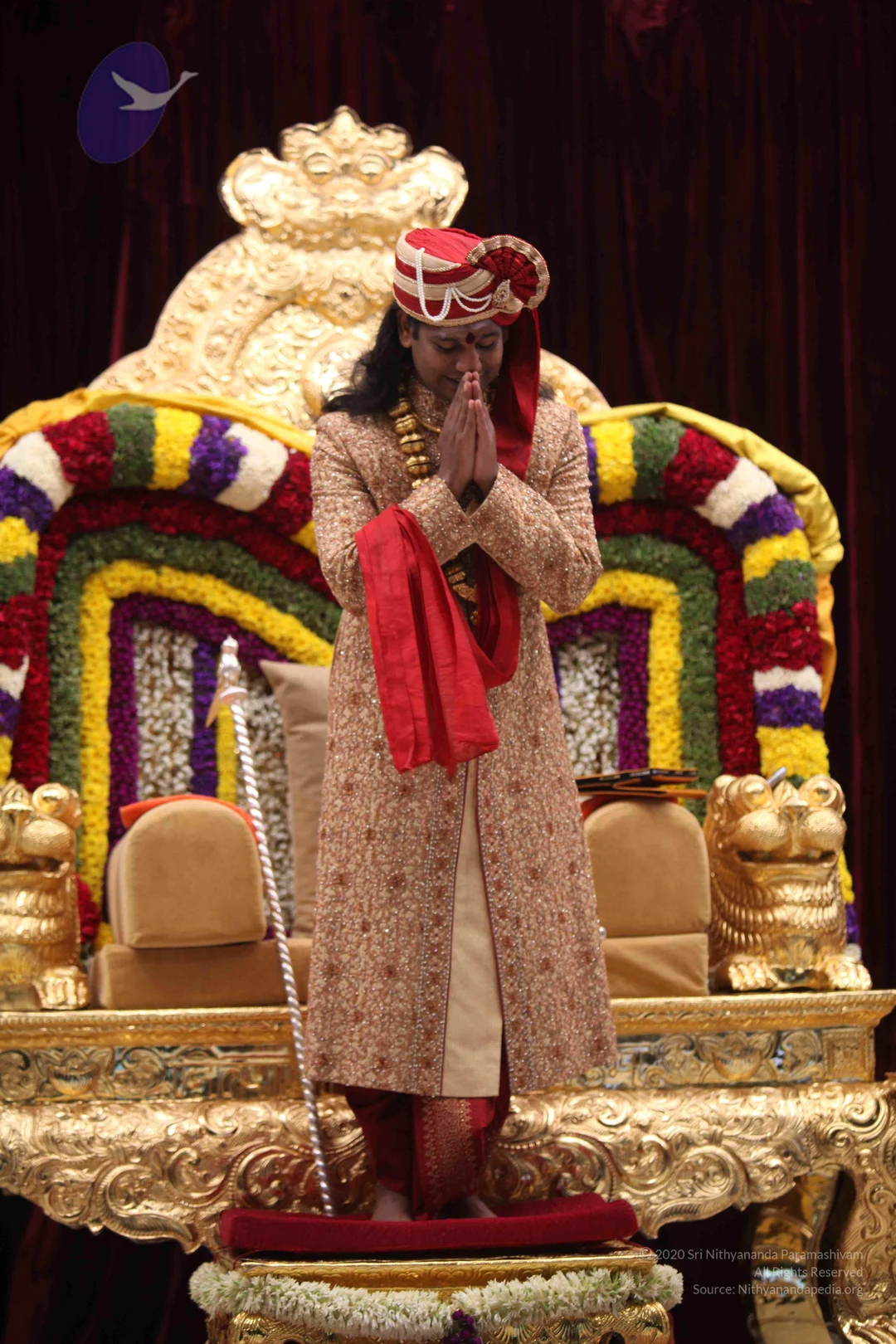
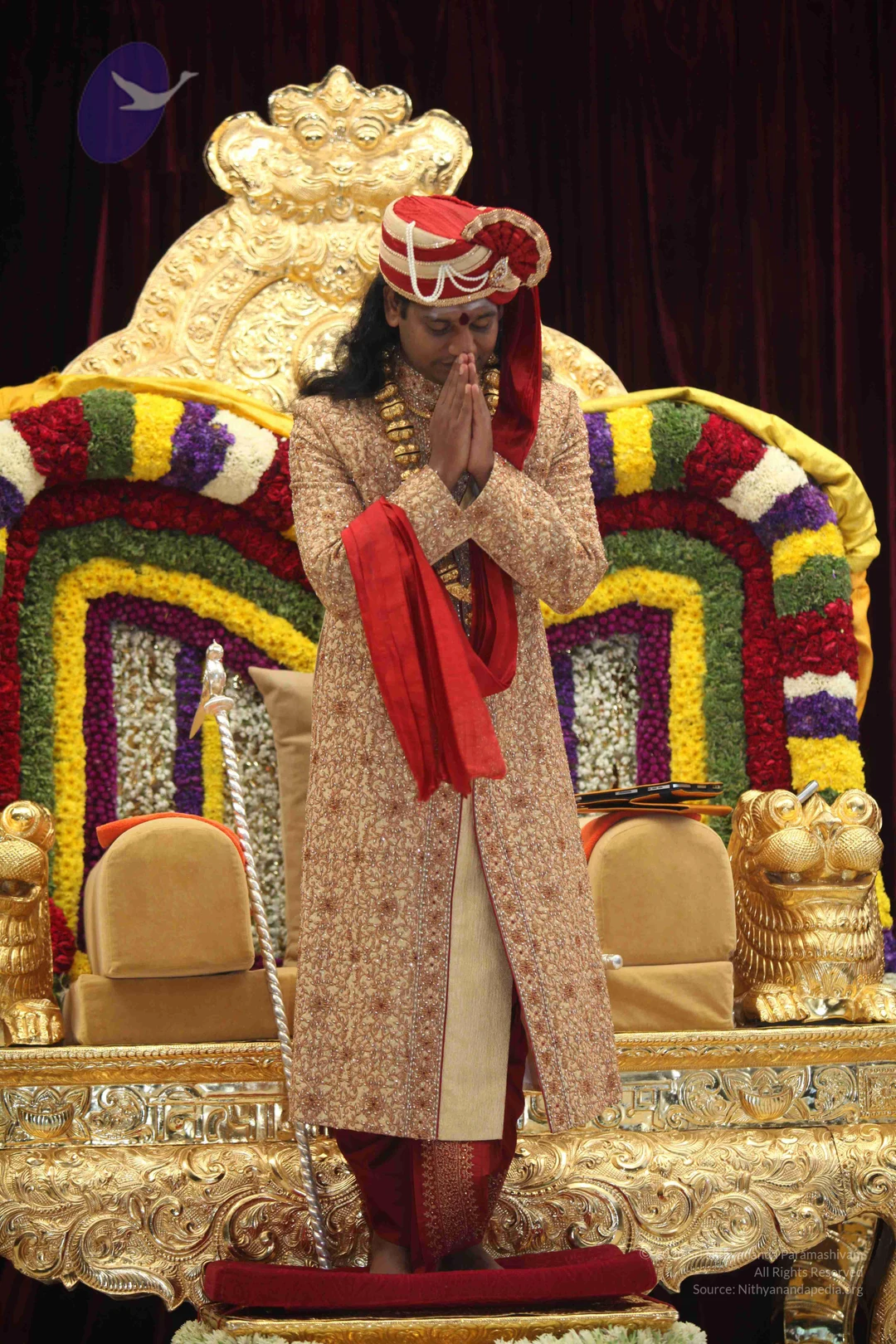
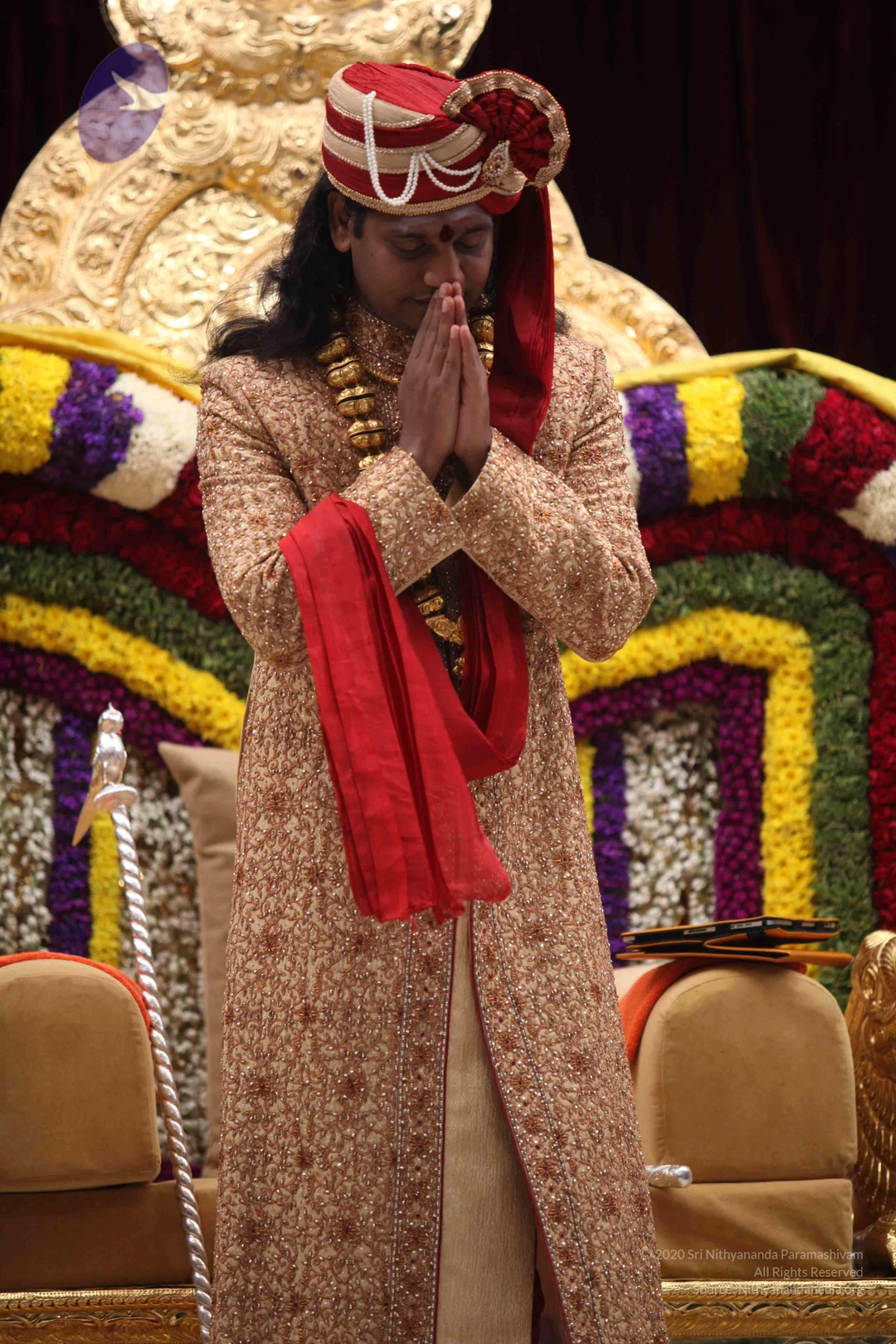
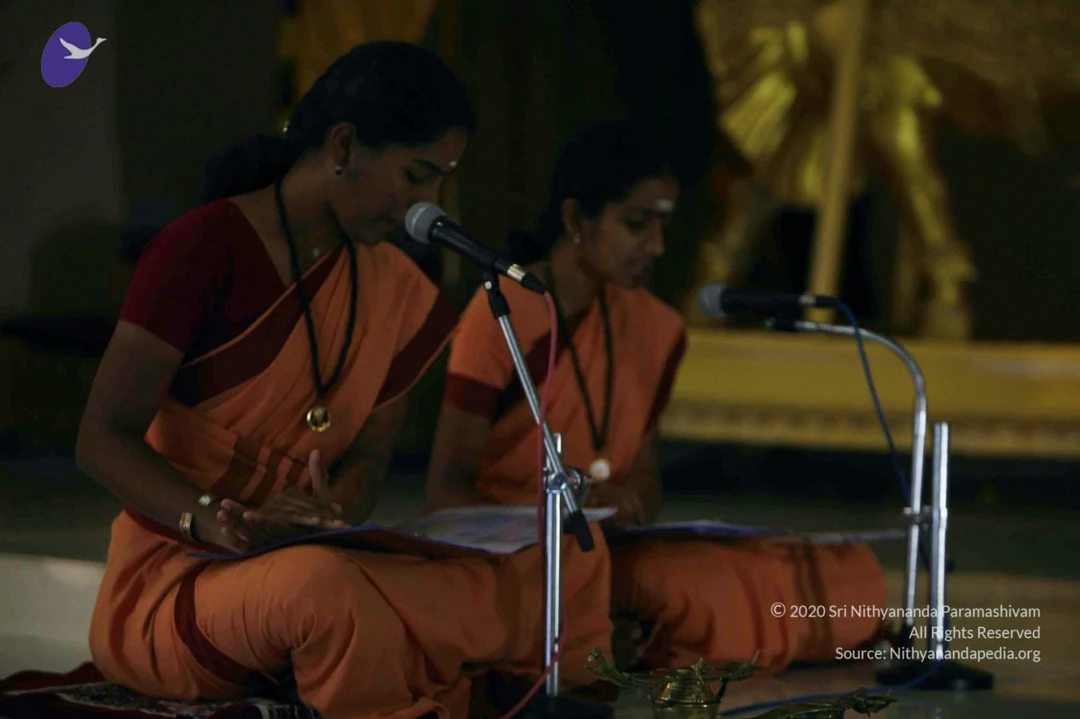
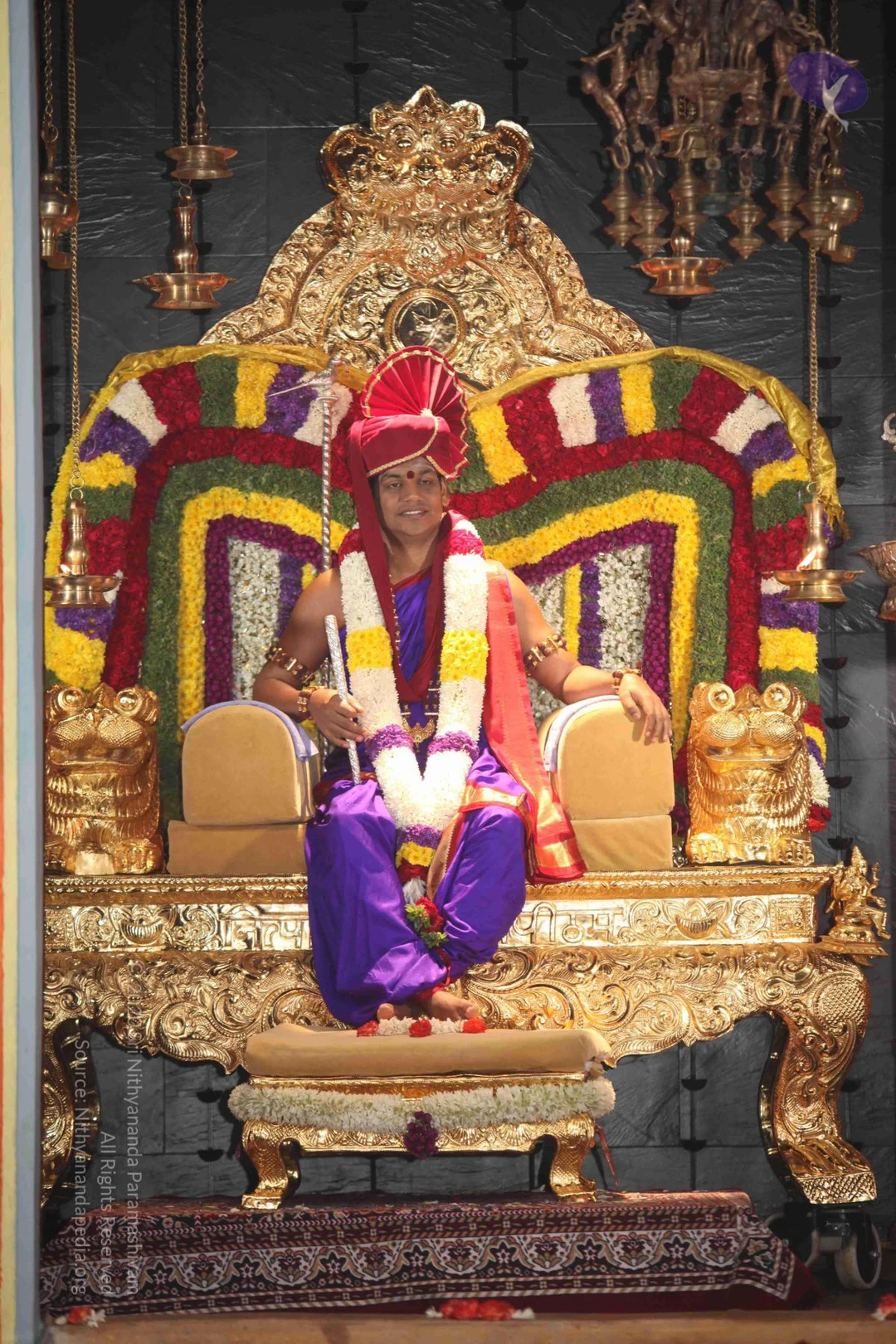
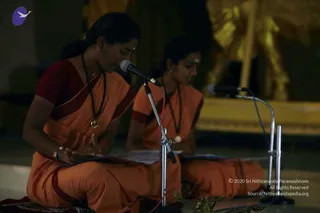
Two women sit cross-legged on a mat in orange saris with dark red blouses and dark beaded necklaces, reading from papers placed on their laps in front of two microphone stands. The woman on the left holds a paper with her hands and looks down; the woman on the right, with a vertical tilak mark on her forehead, also reads. Brass oil lamps sit in the foreground, and a blurred golden deity figure appears in the background. The scene is dimly lit.A seated man on an ornate gilded throne in a temple-like hall receives pada-puja. He wears a red turban, purple dhoti and a red-and-gold shawl, with a long white-and-yellow flower garland draped from his neck and a rudraksha-style mala visible at the chest, and he holds a silver staff upright. The throne is framed by a multicolored flower arch of red, yellow, purple and white blooms, with golden lion-head armrests and a golden footrest strewn with flowers. Brass hanging oil lamps and a gilded canopy surround him. A single person is physically present; the appearance cues are a red turban, ornate clothing and garlands, so this is a probable Swamiji candidate.