Skip to content
Tuesday

15 November 2011

Dated photos
294
Source pages
1
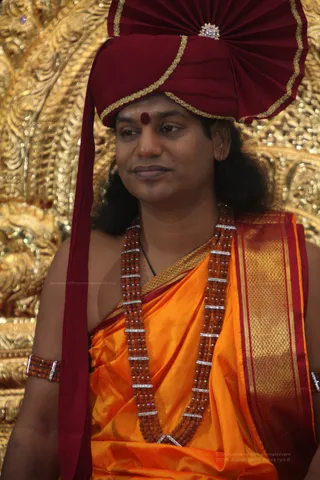
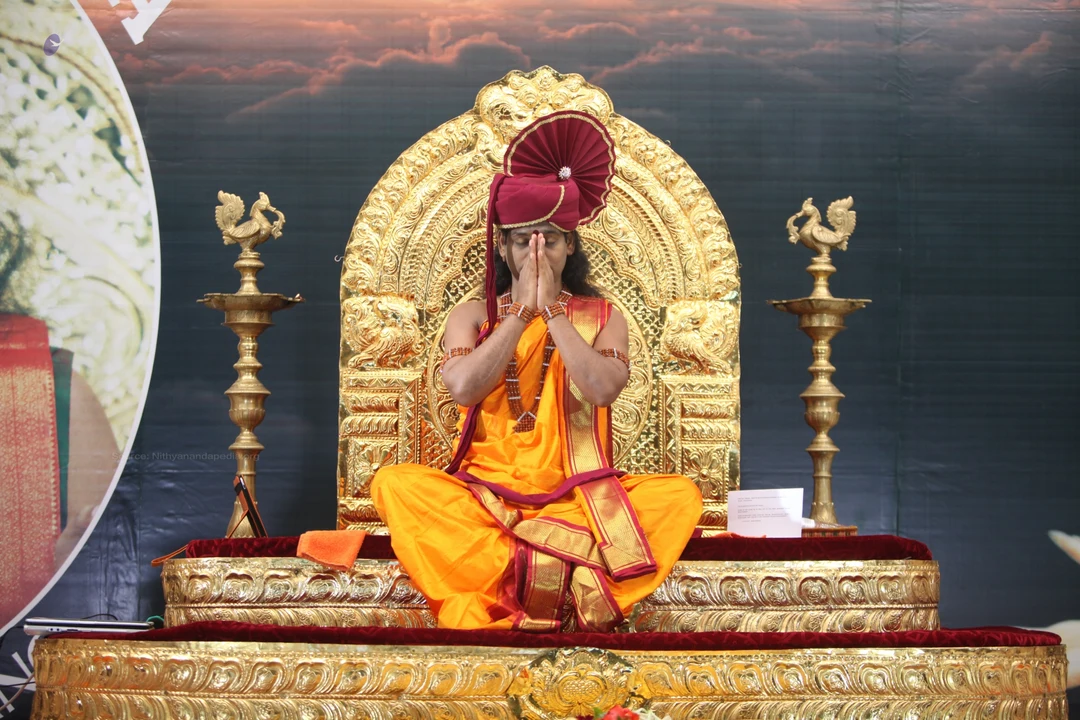
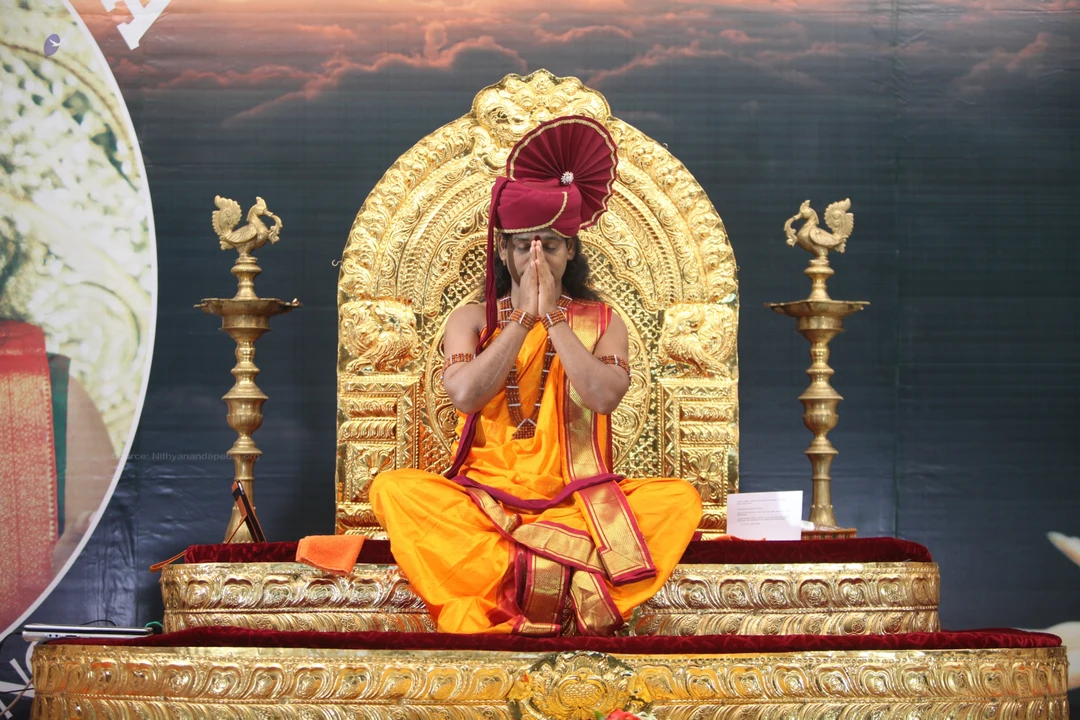
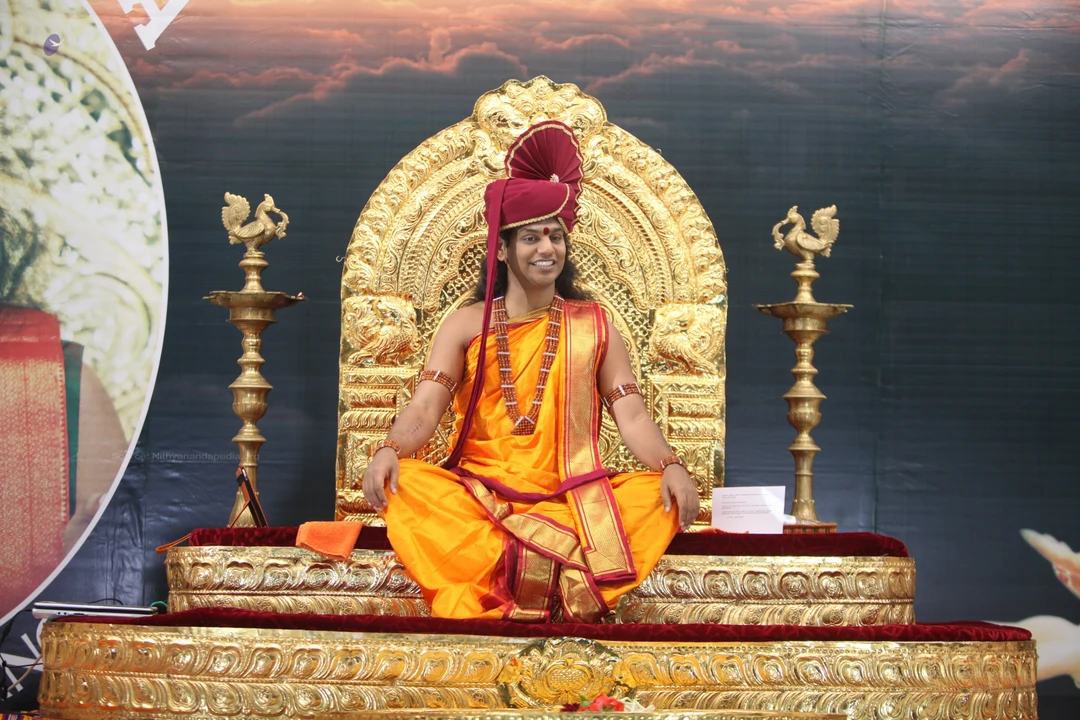
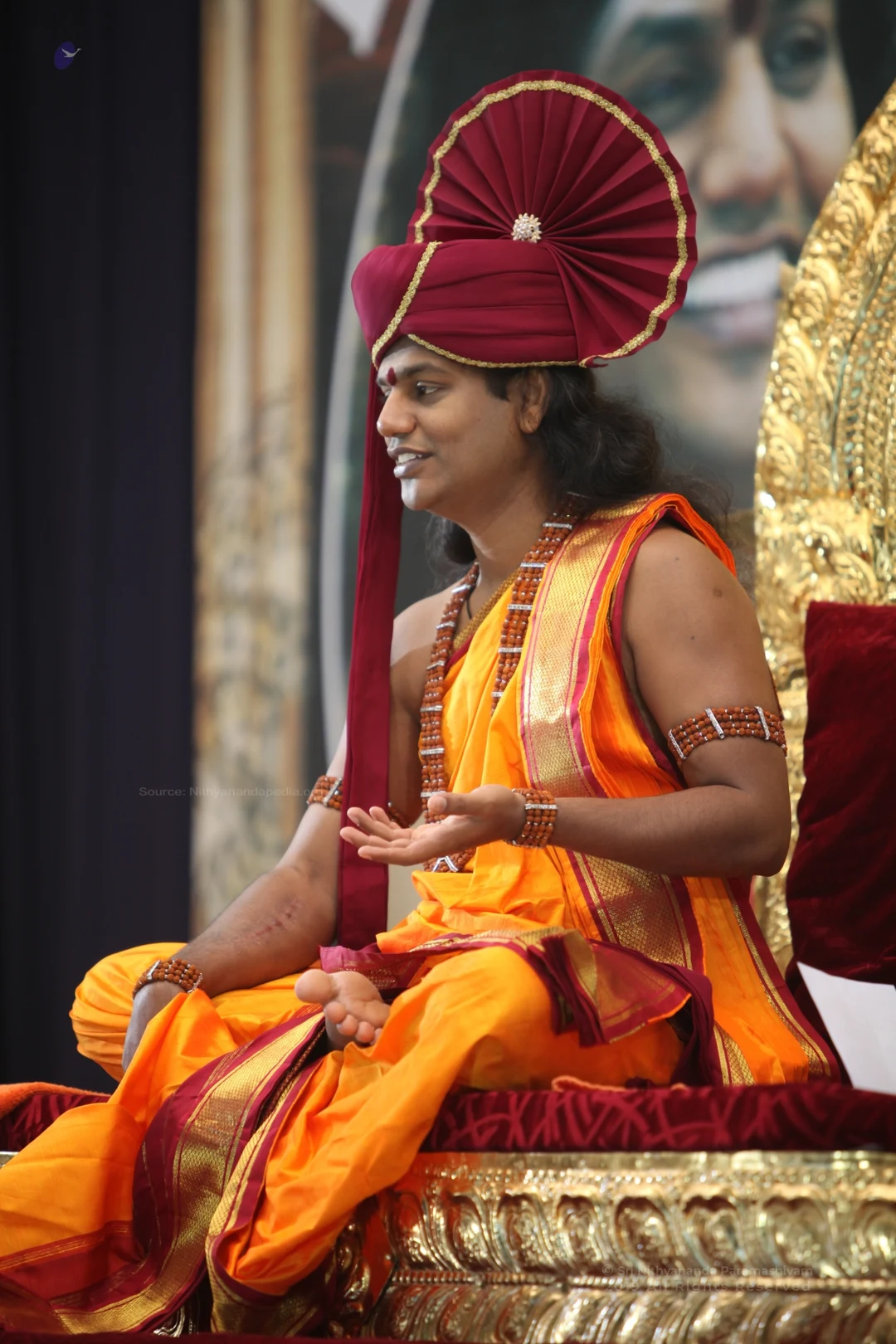
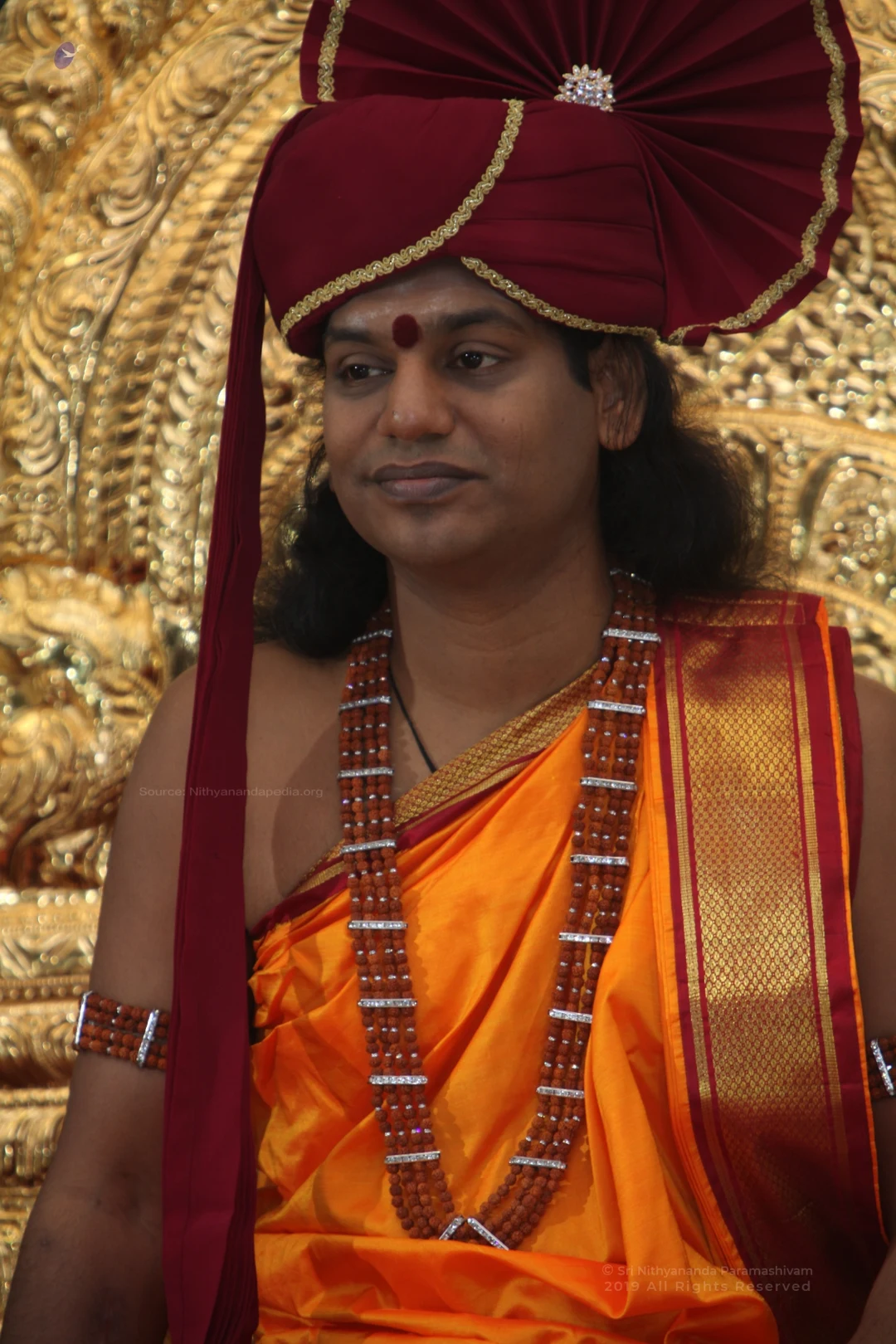
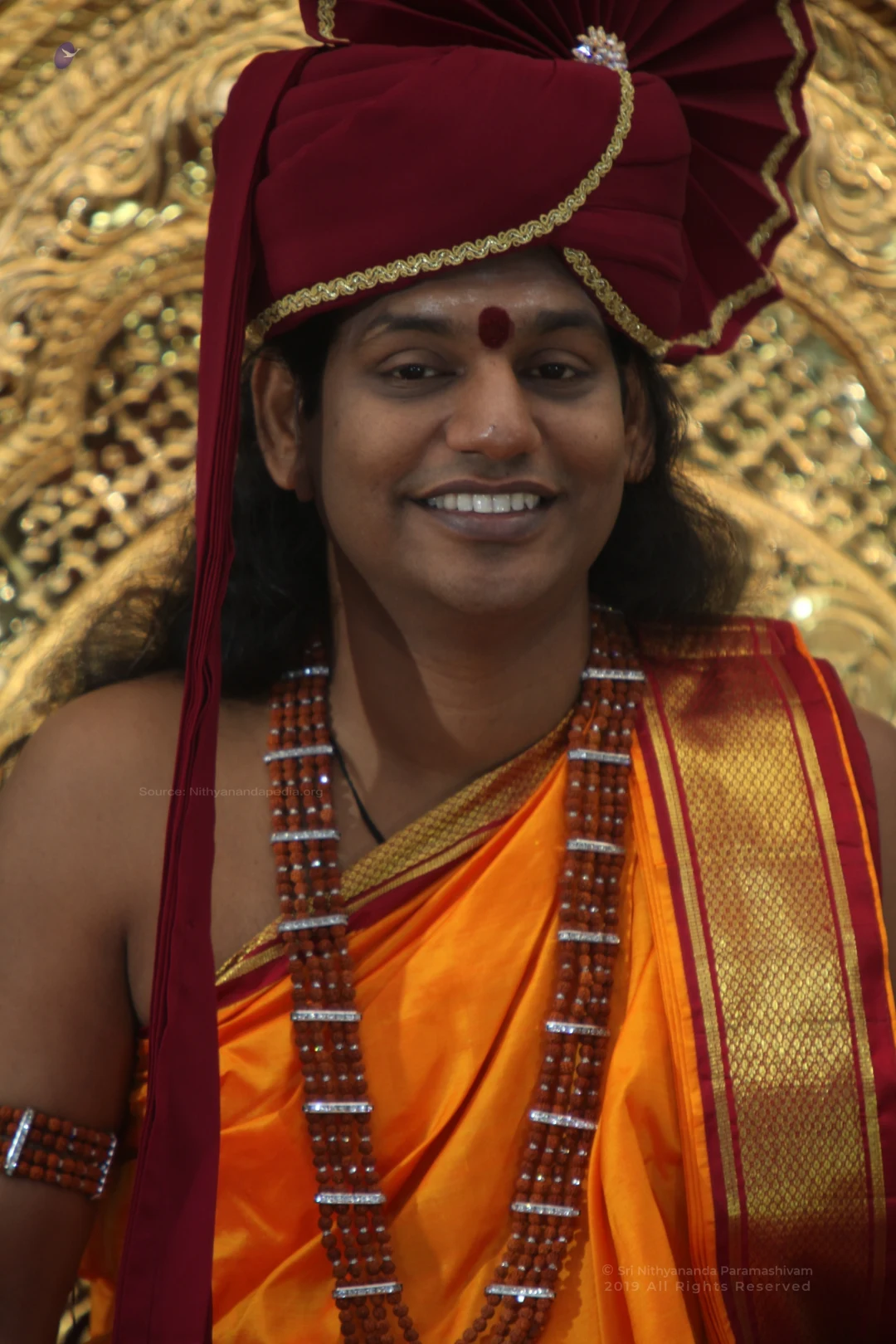
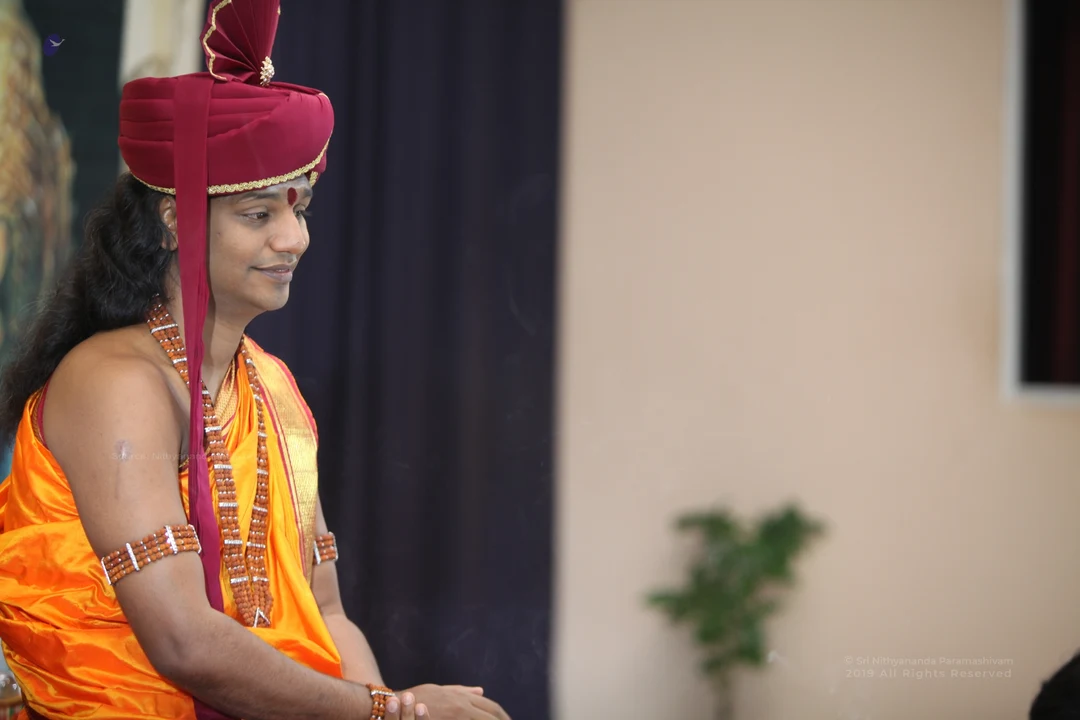
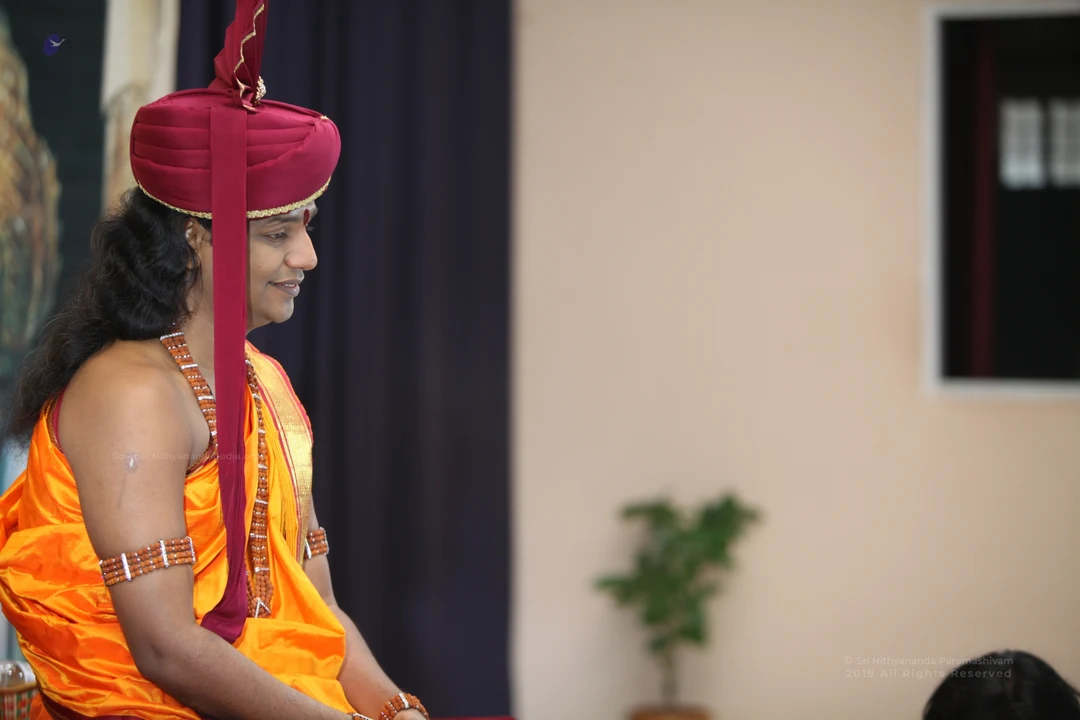
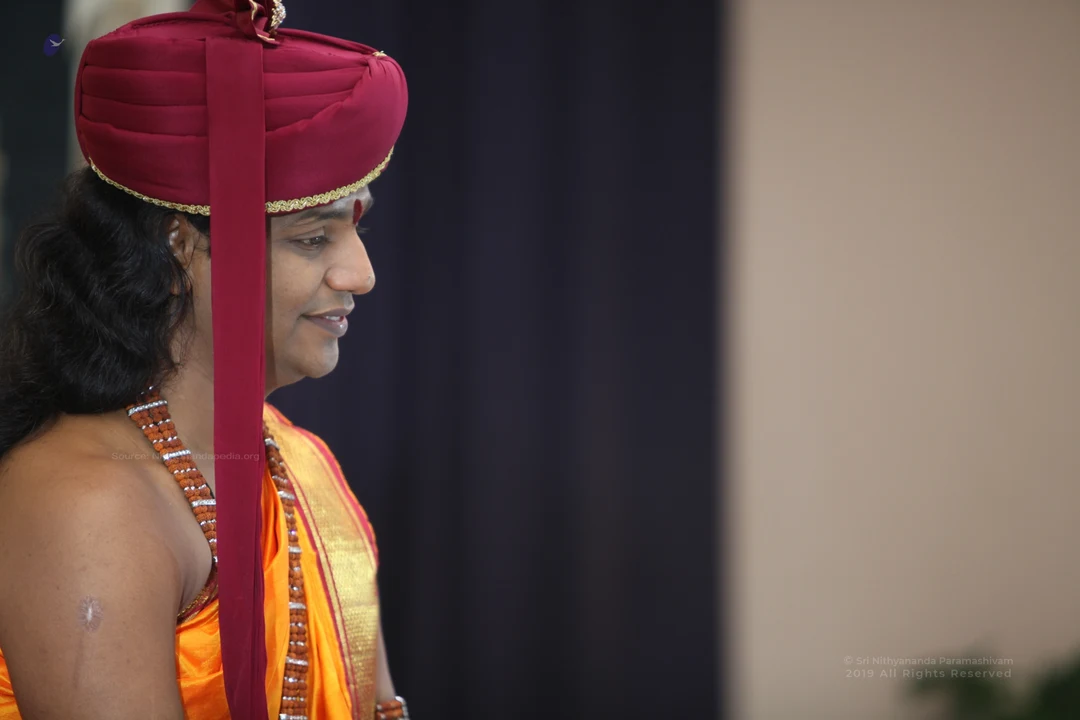
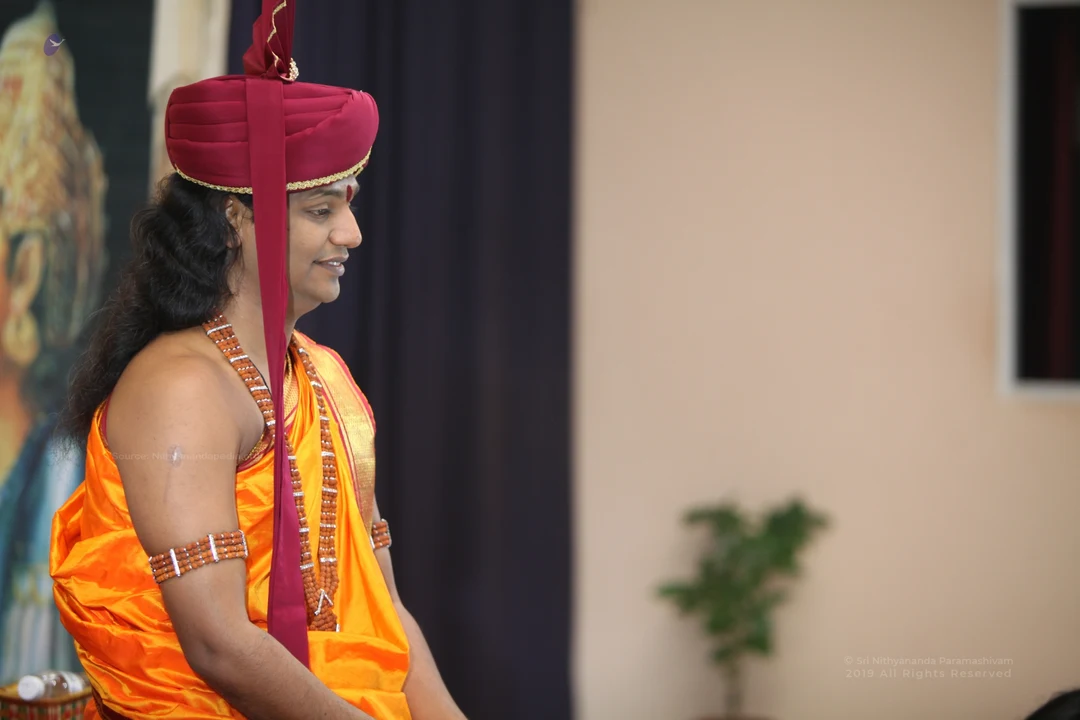
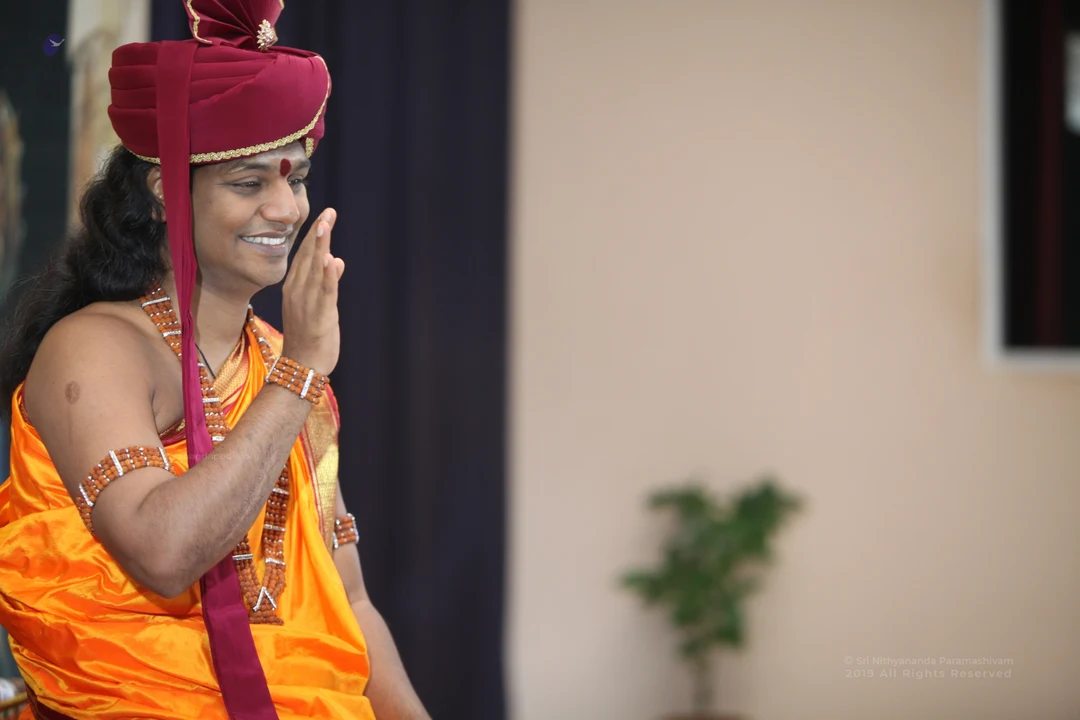
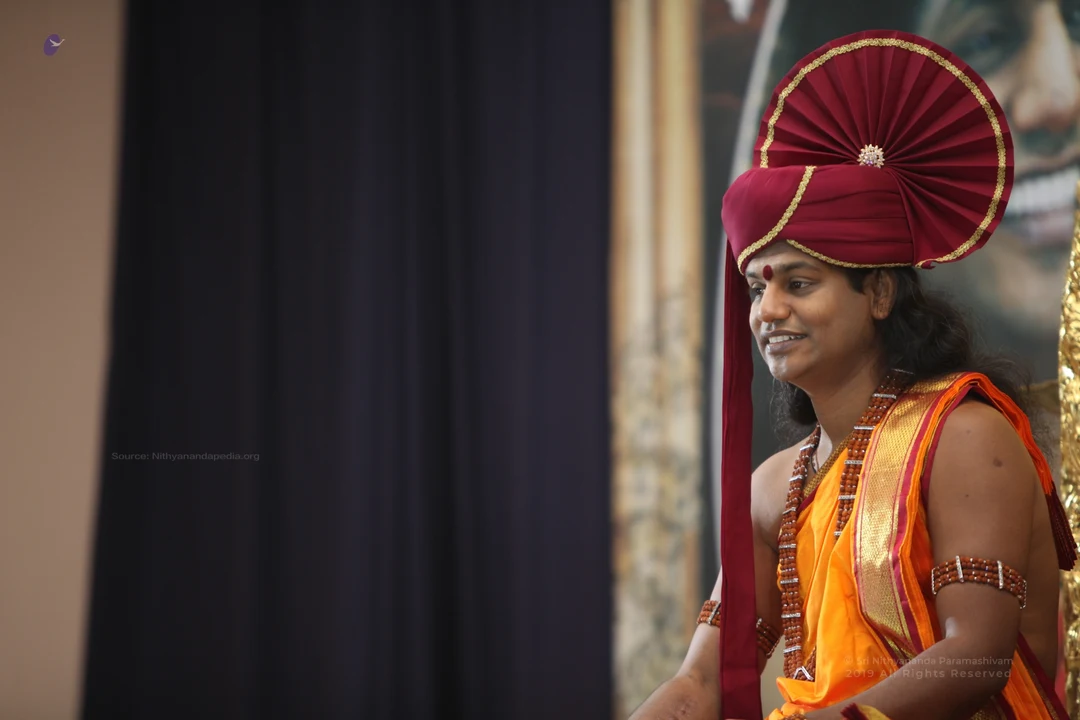
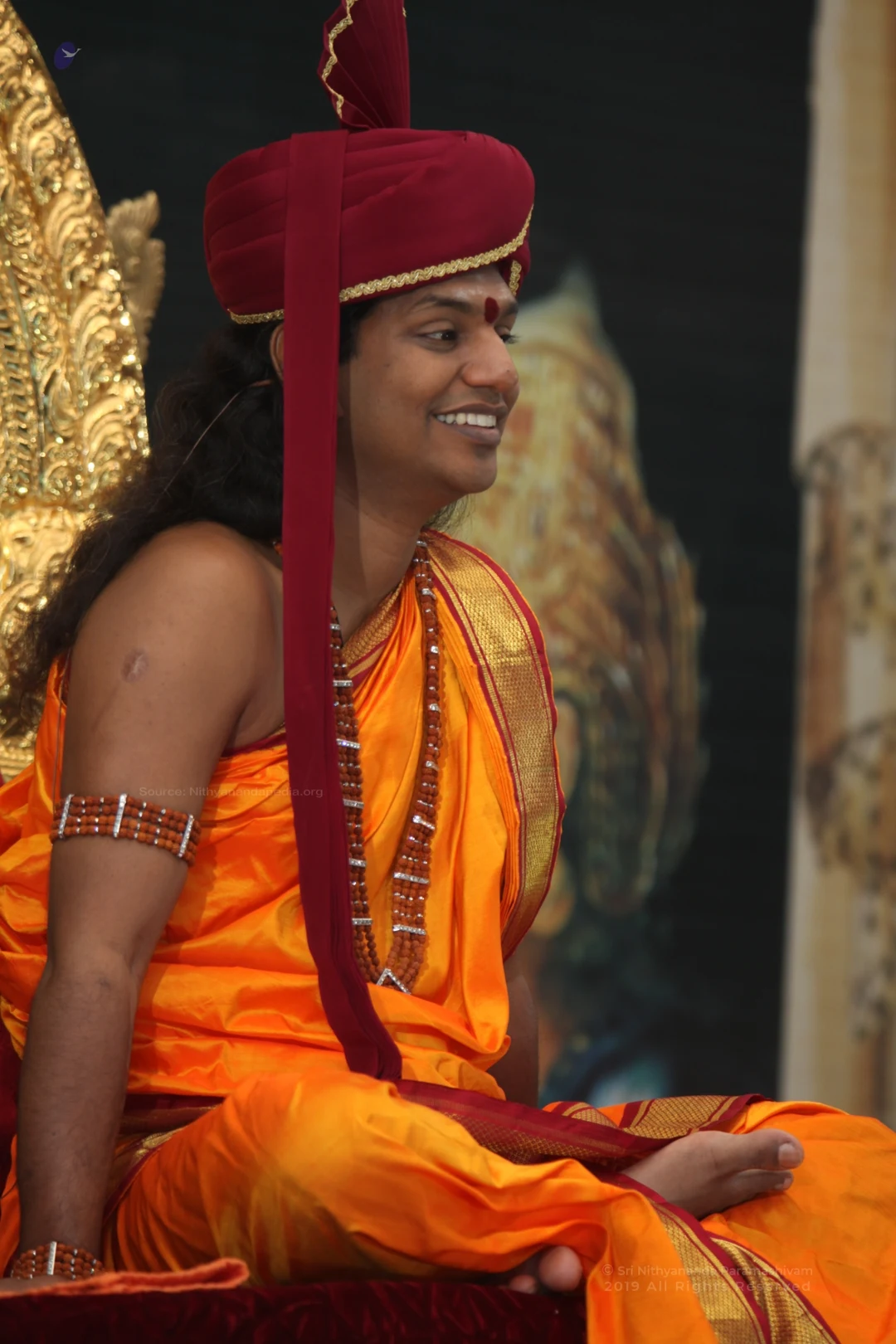
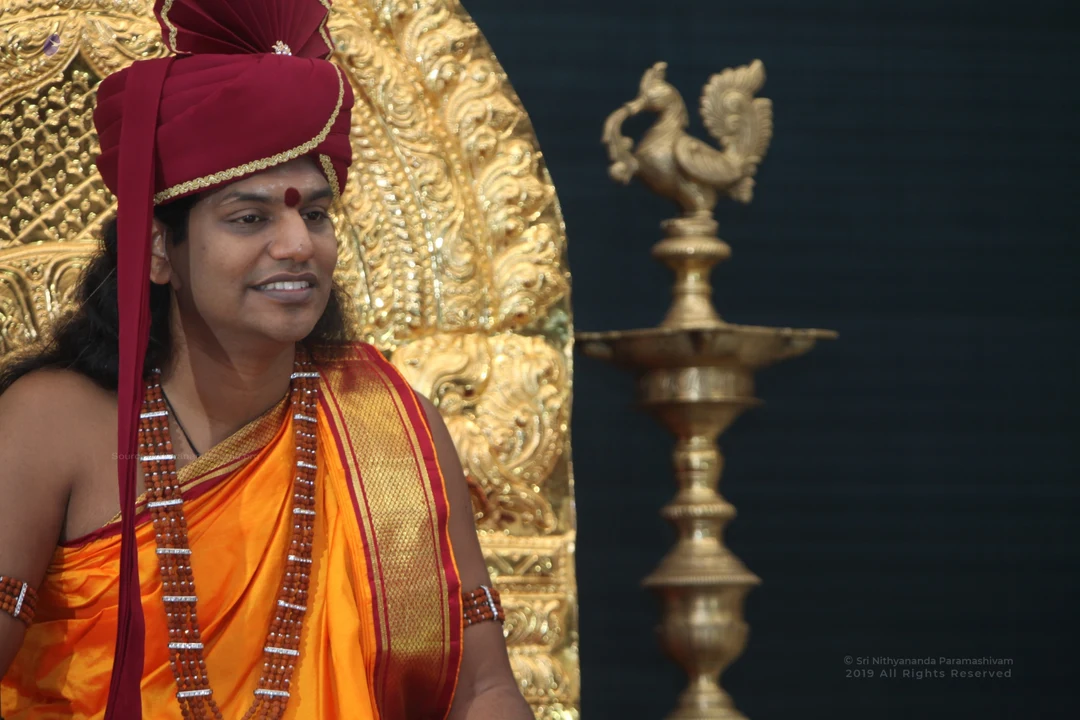
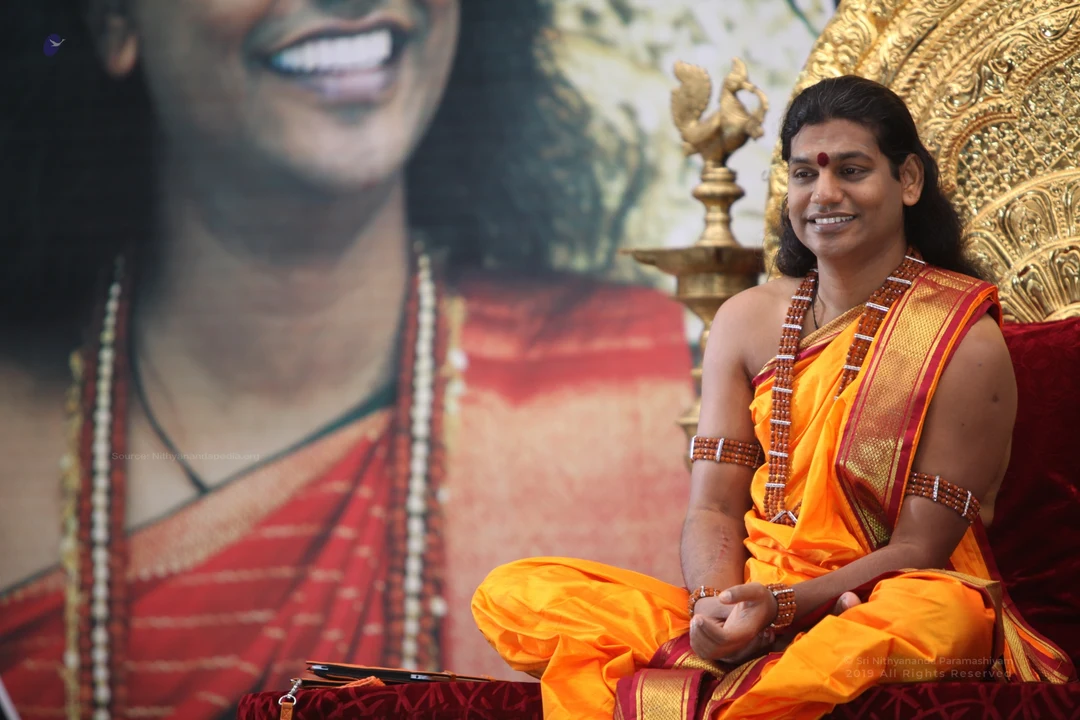
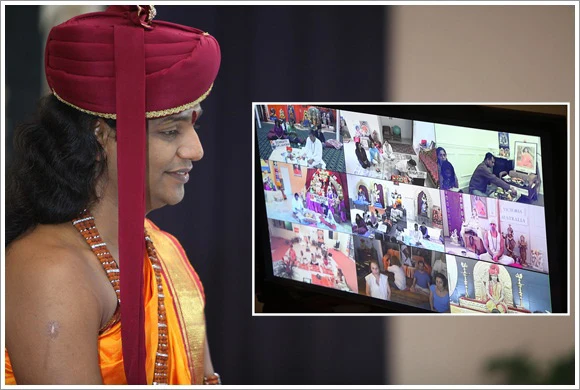
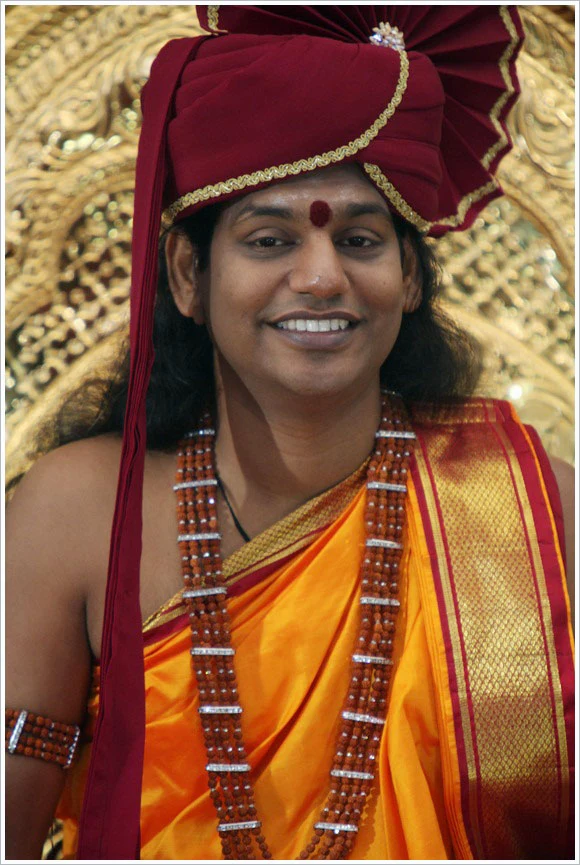
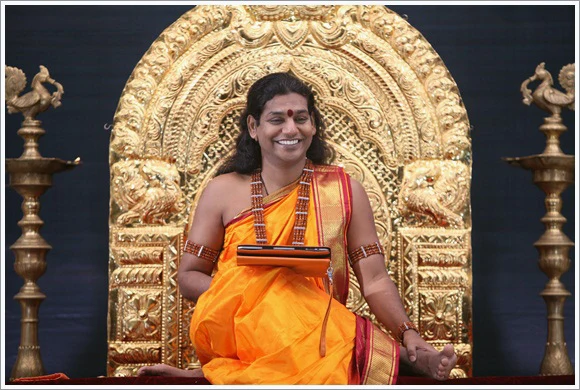
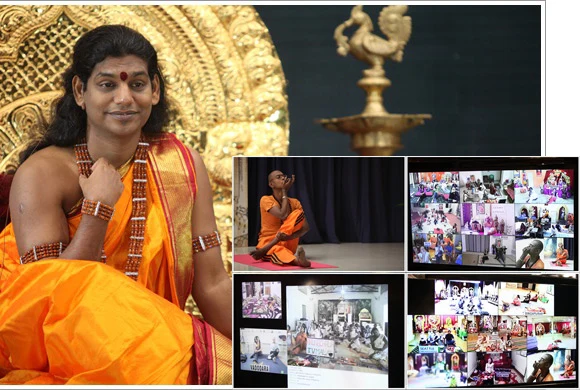
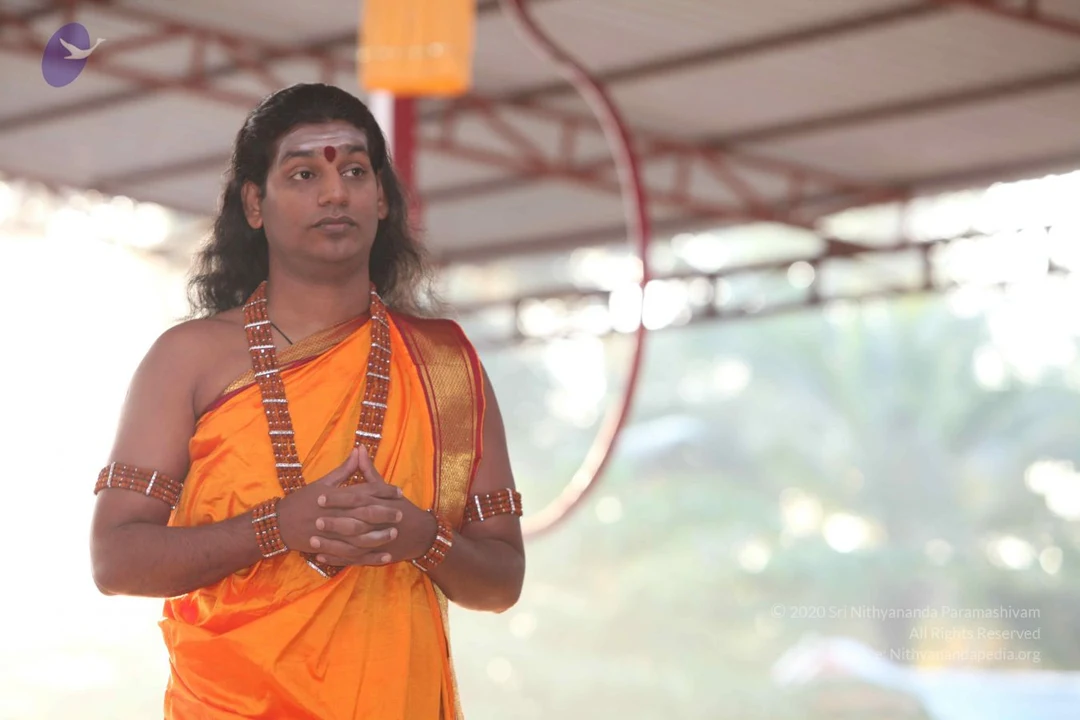
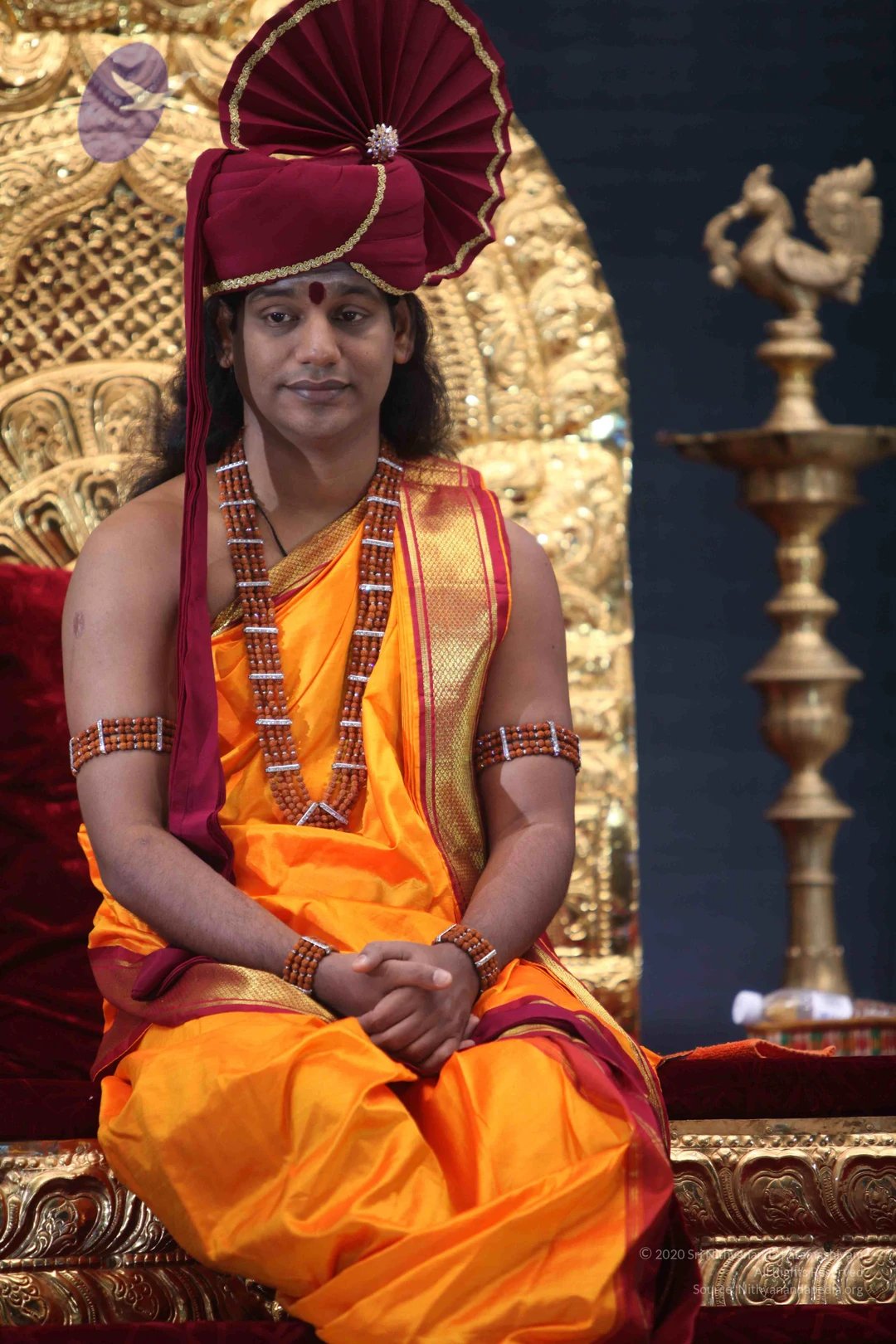
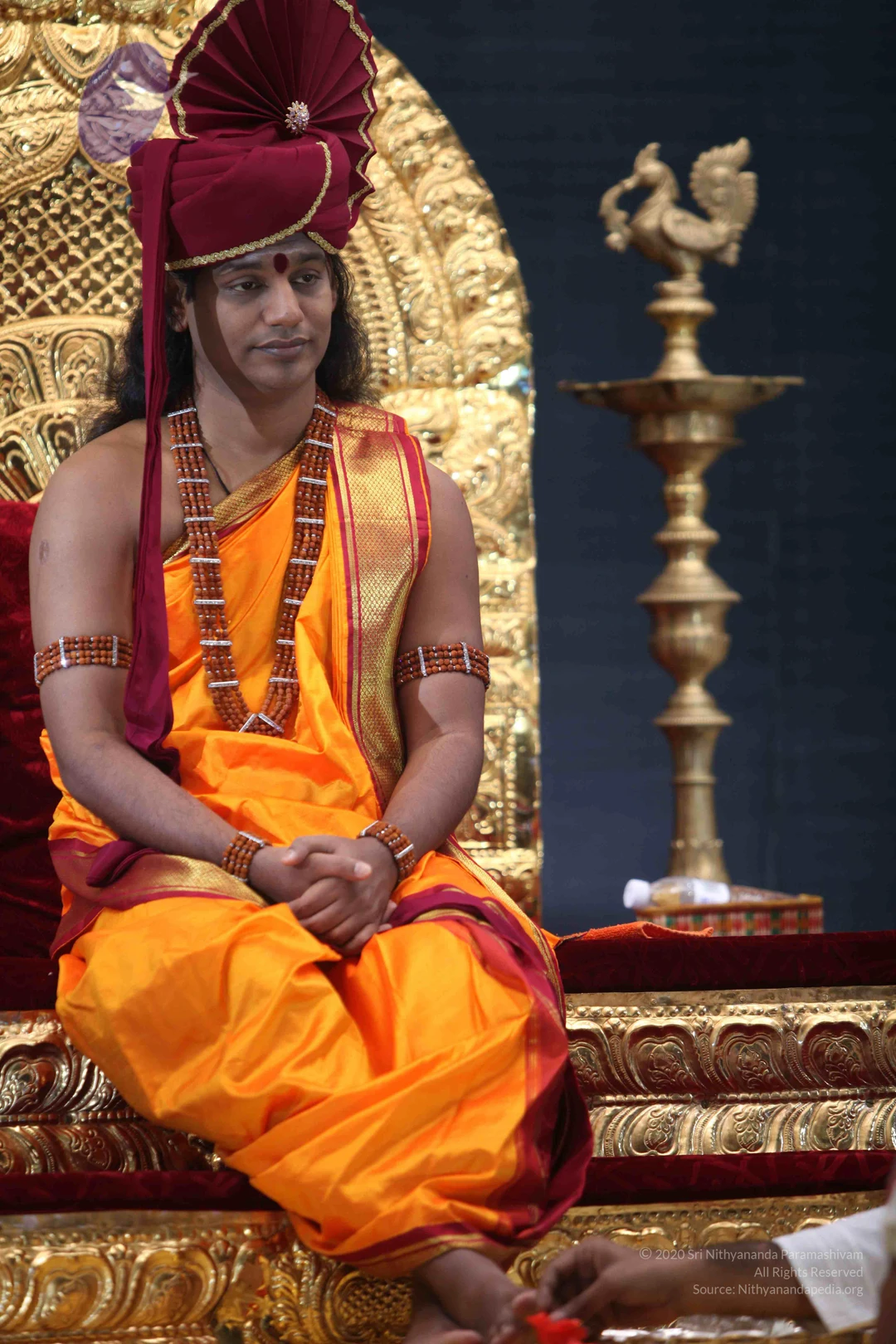
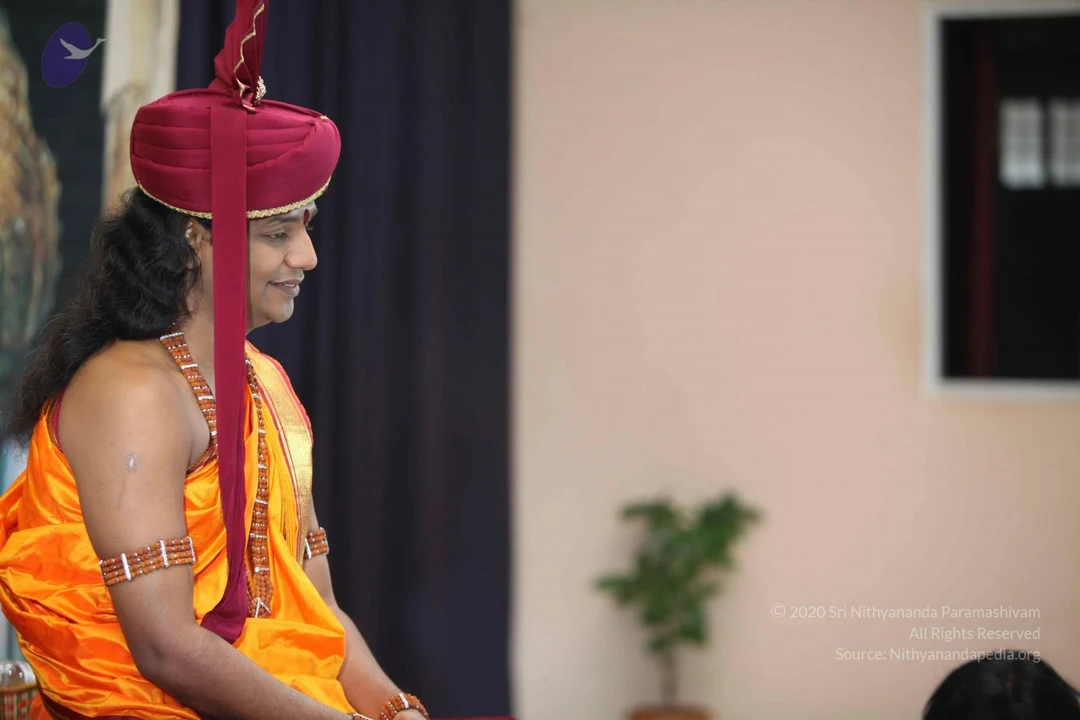
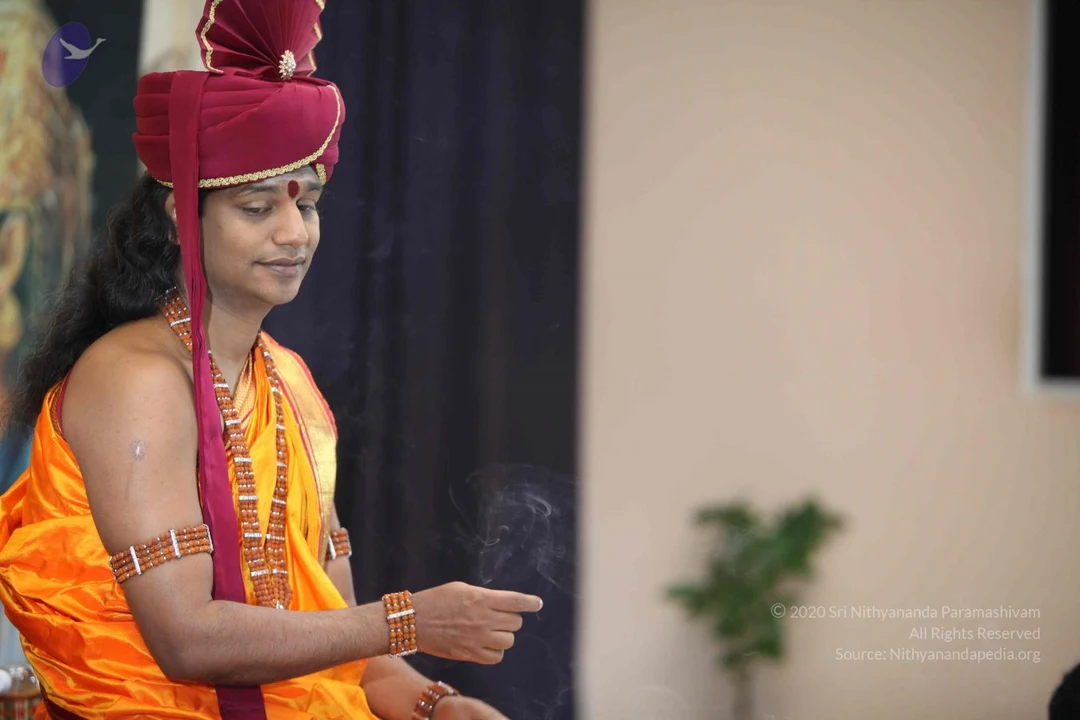
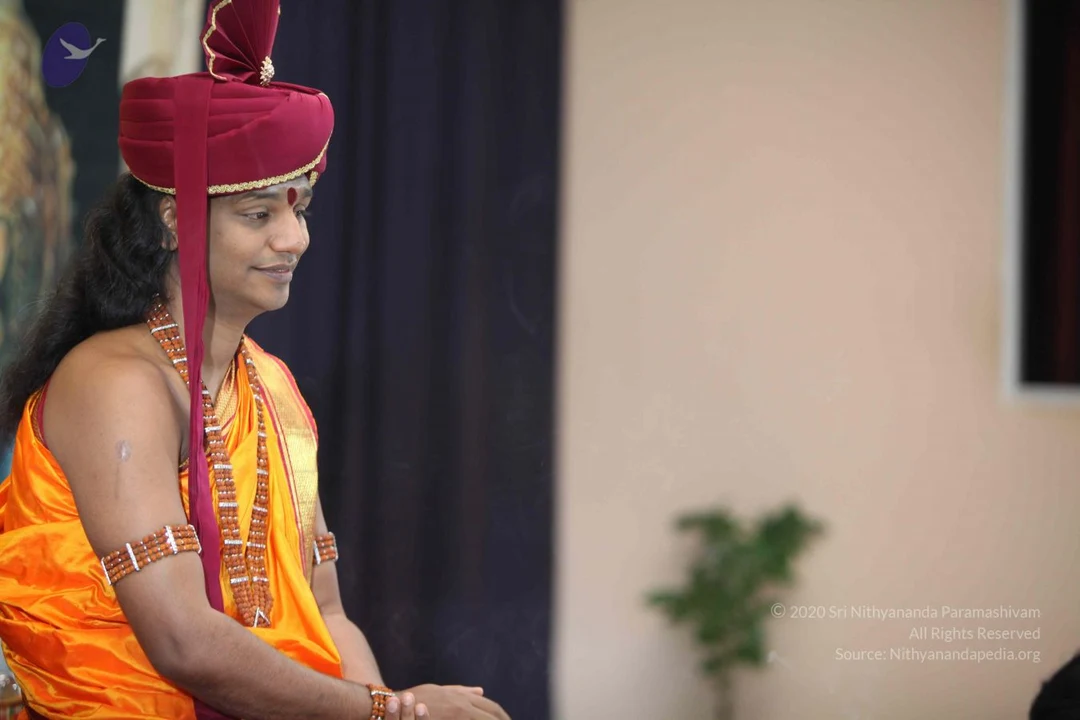
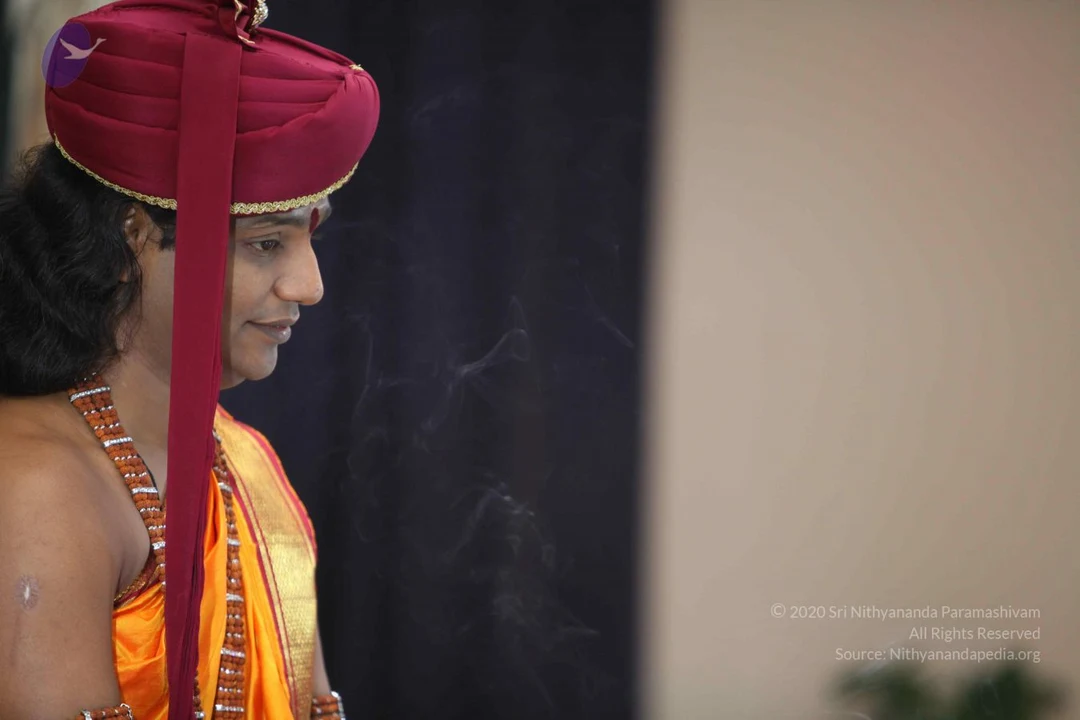
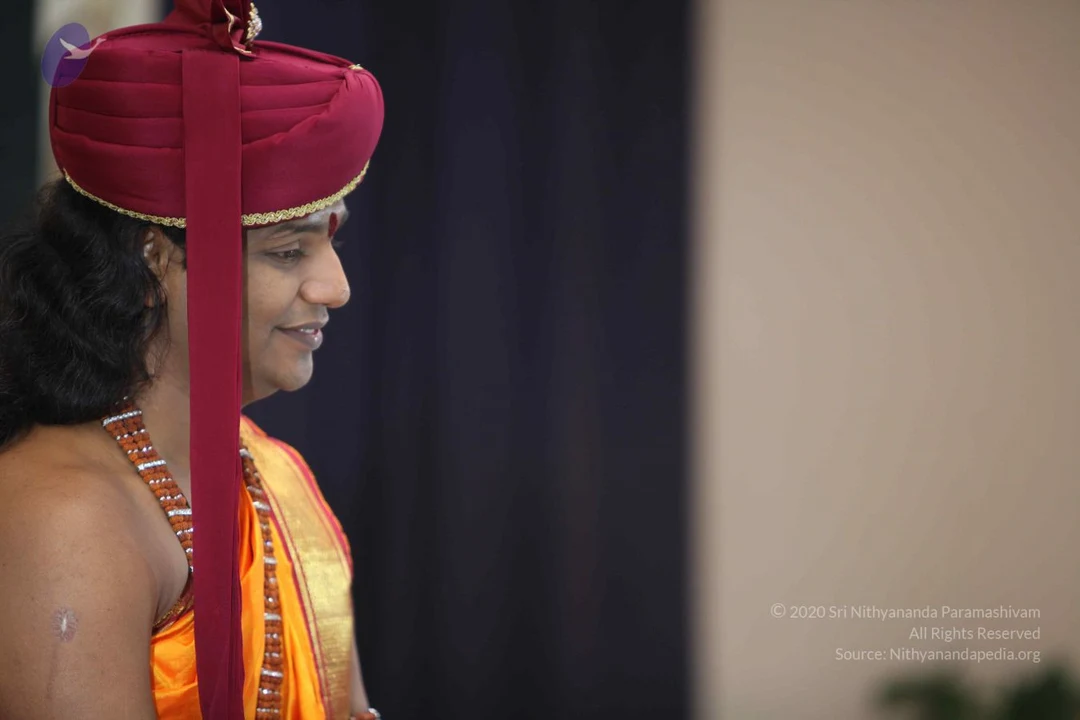
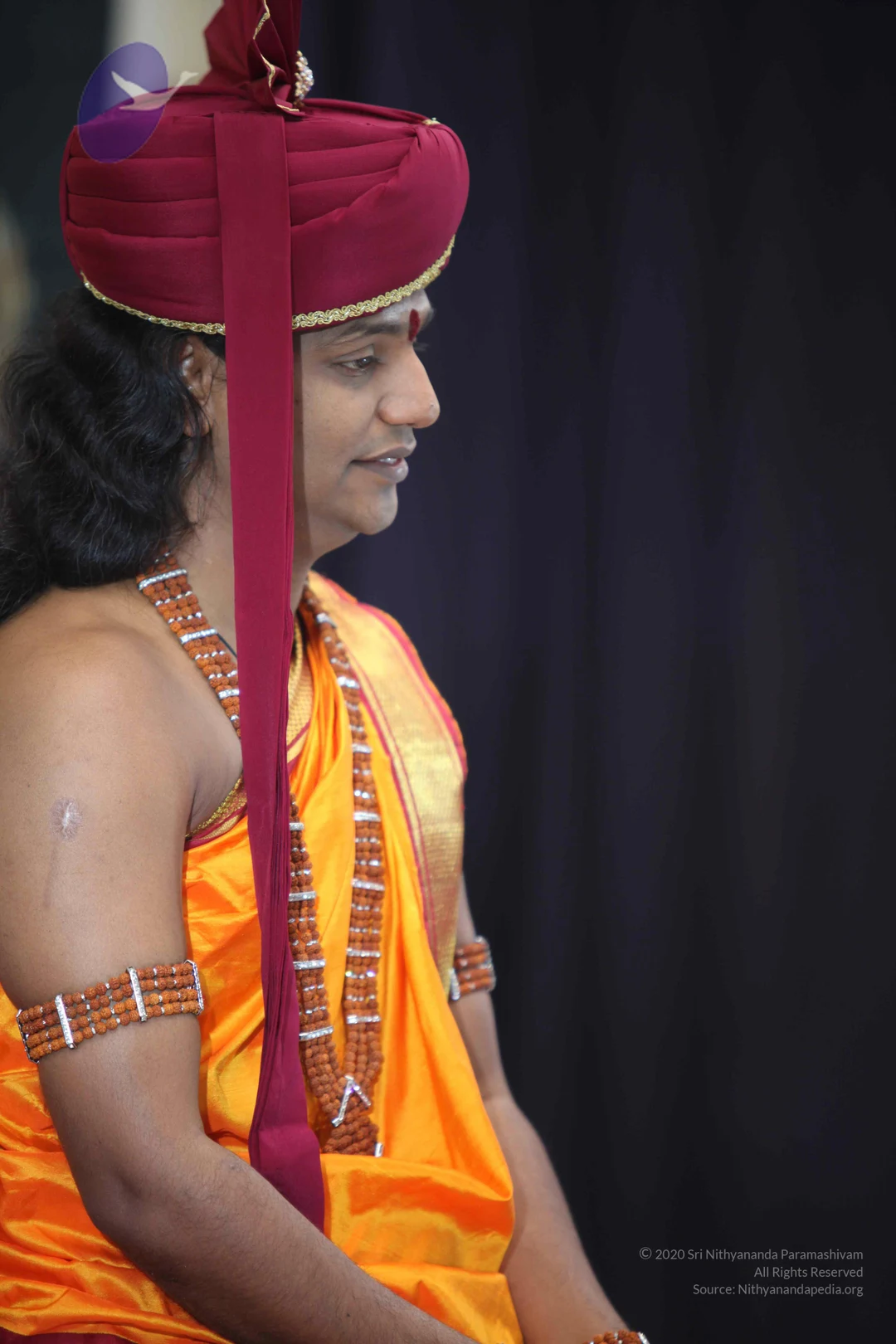
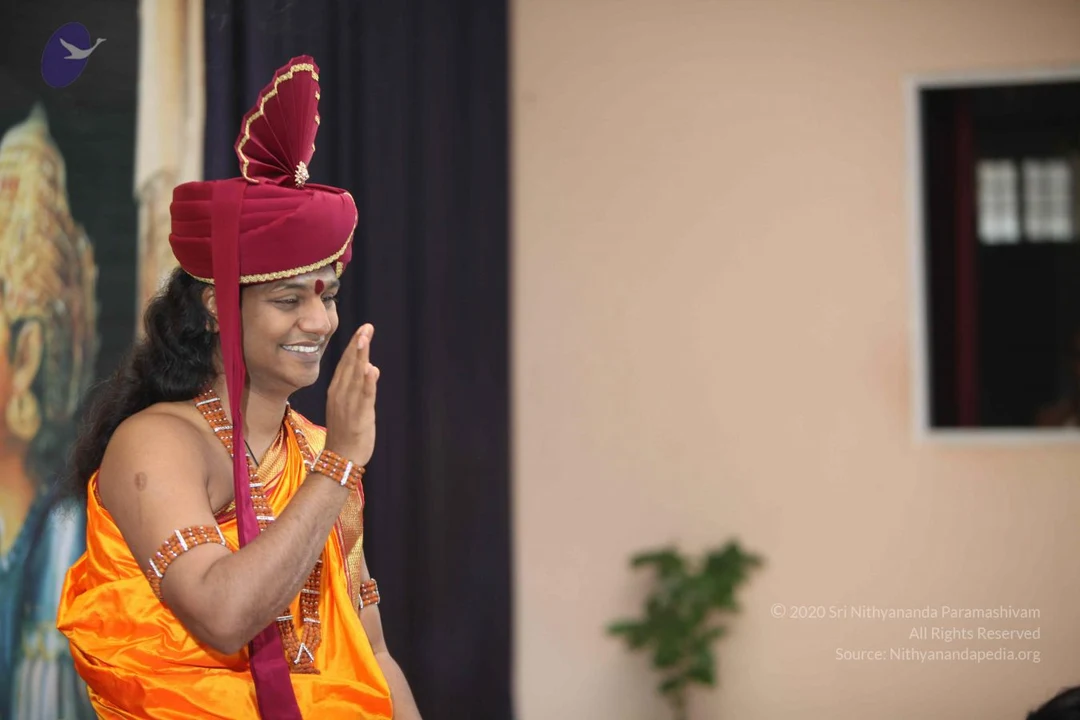
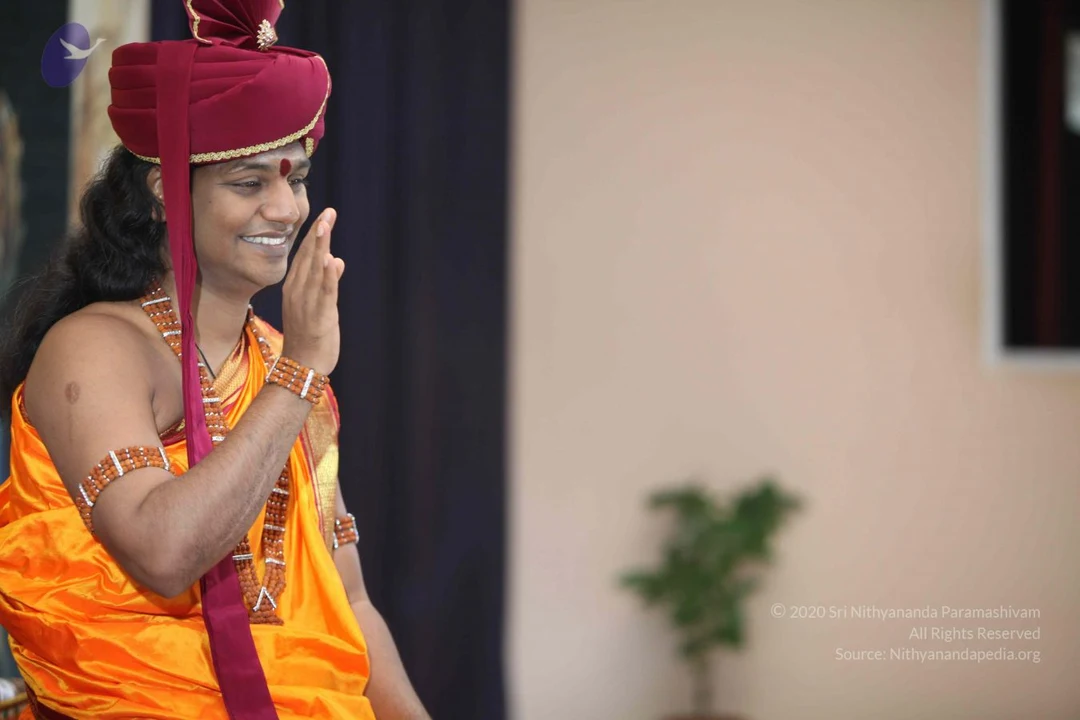
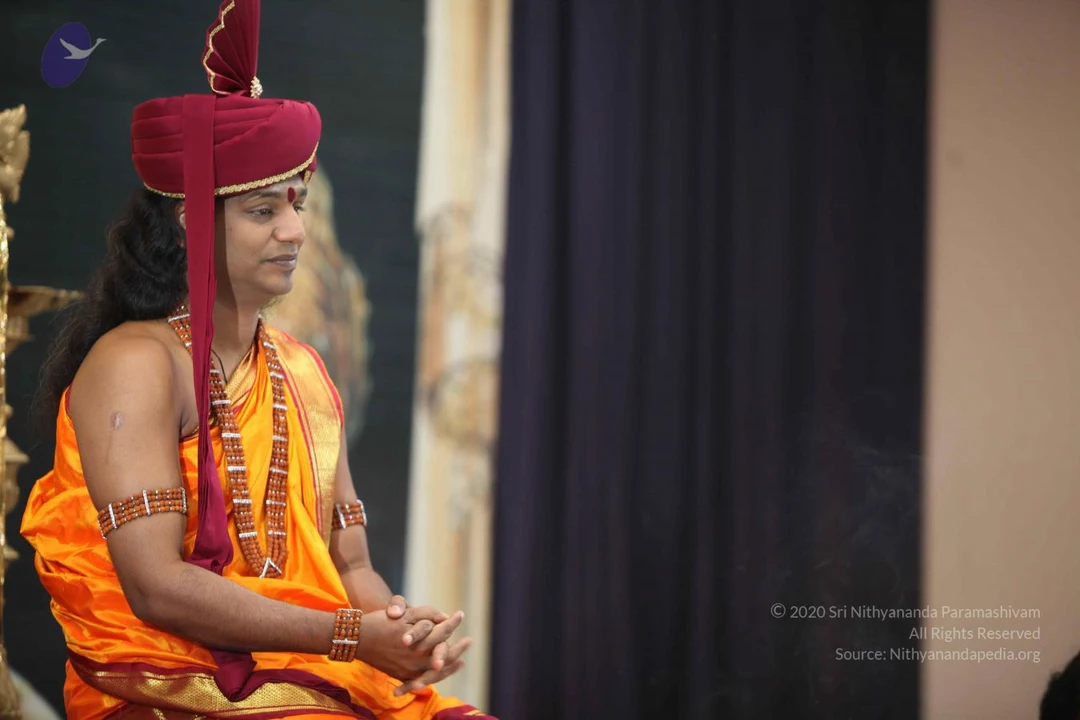
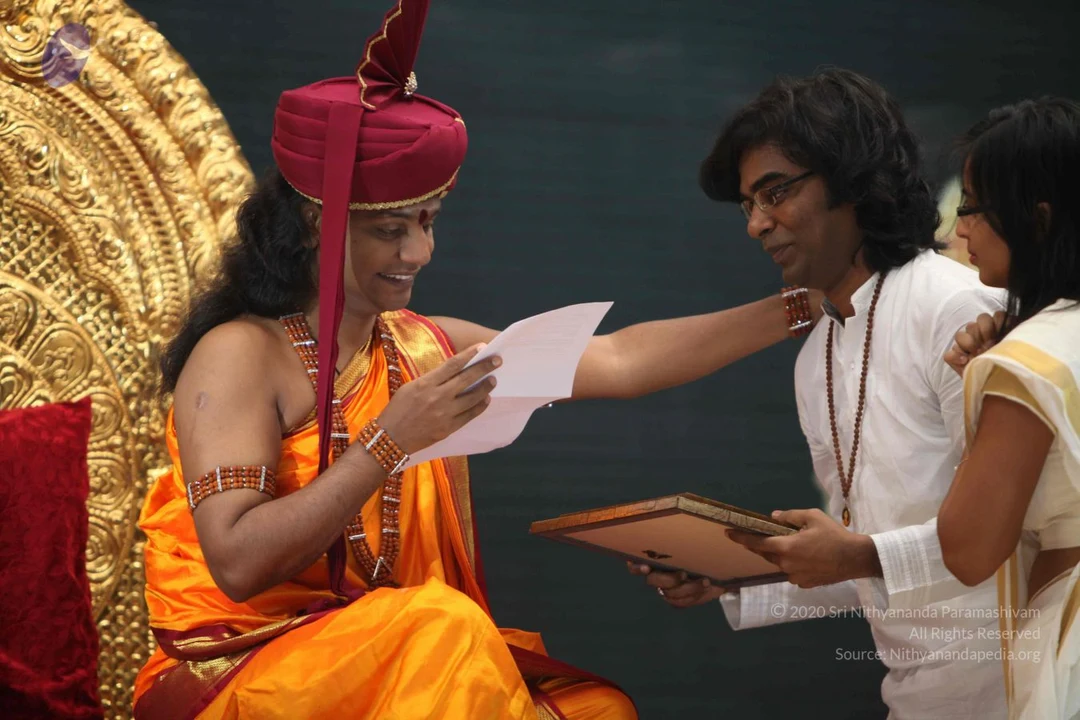
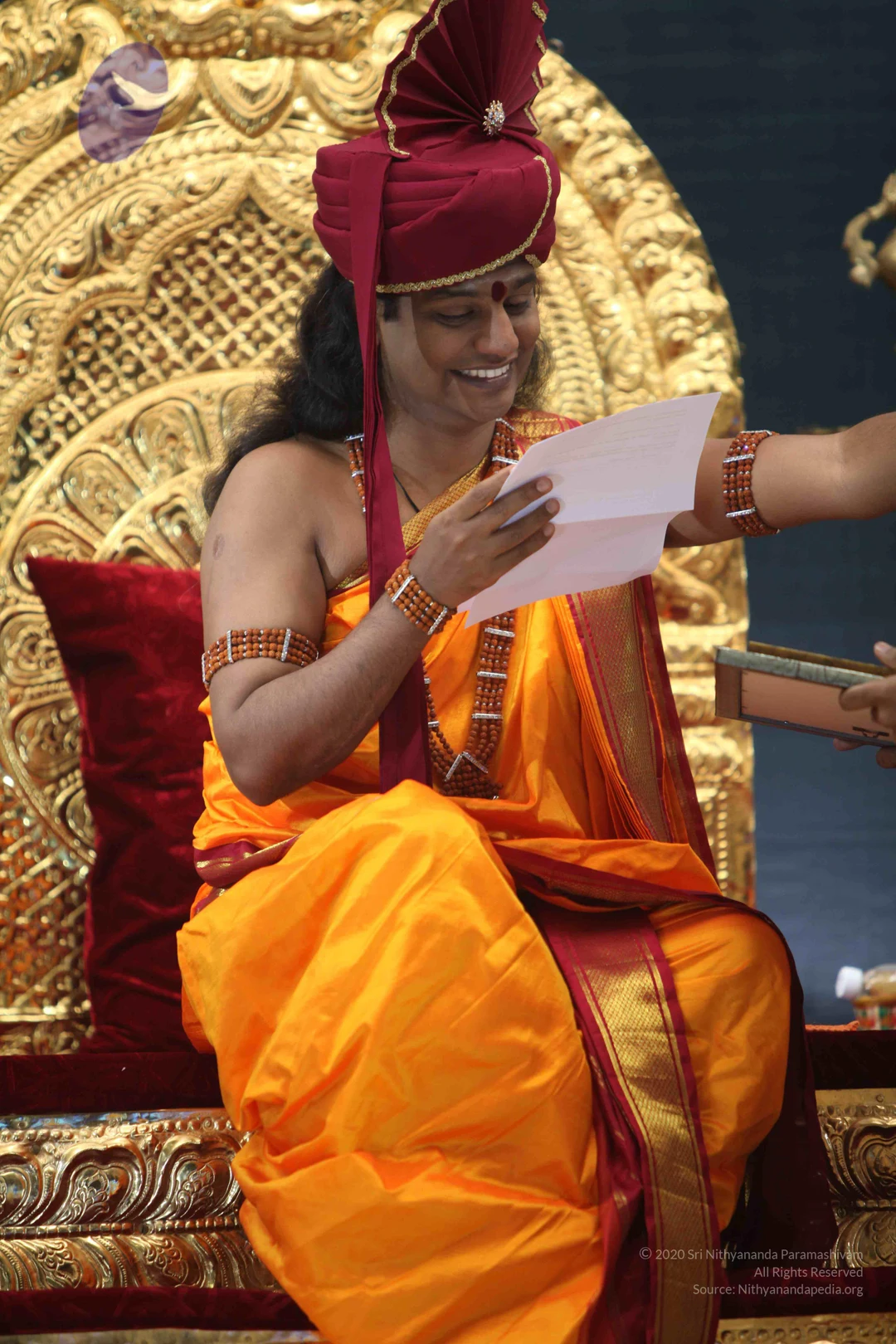
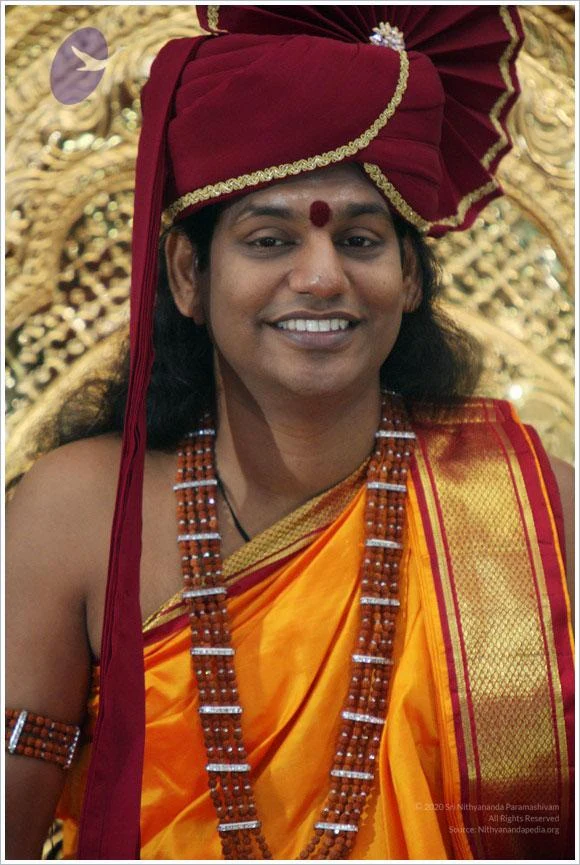
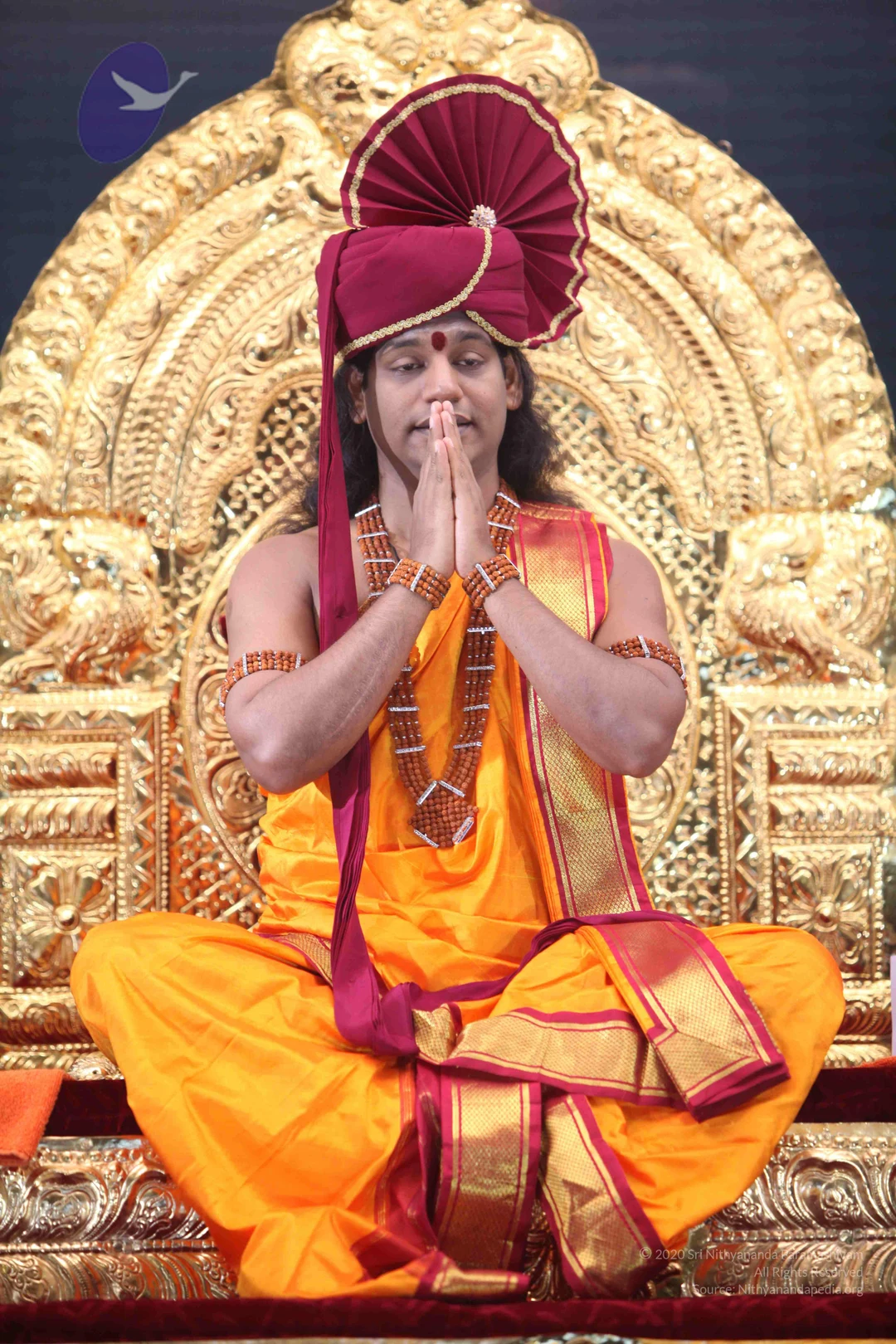
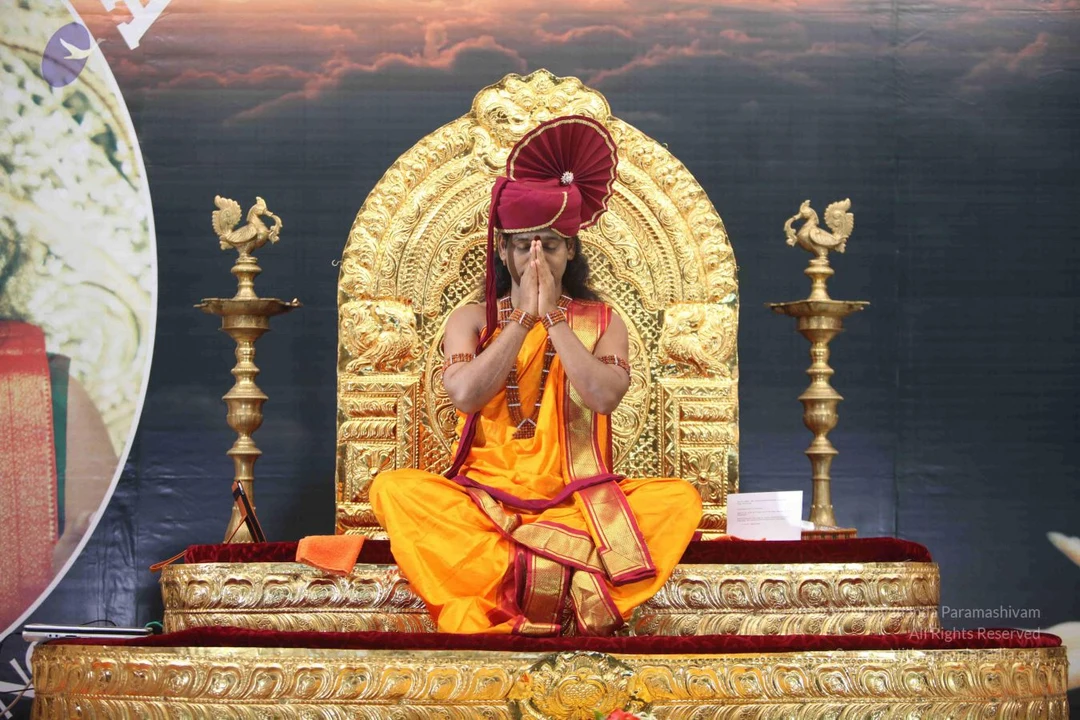
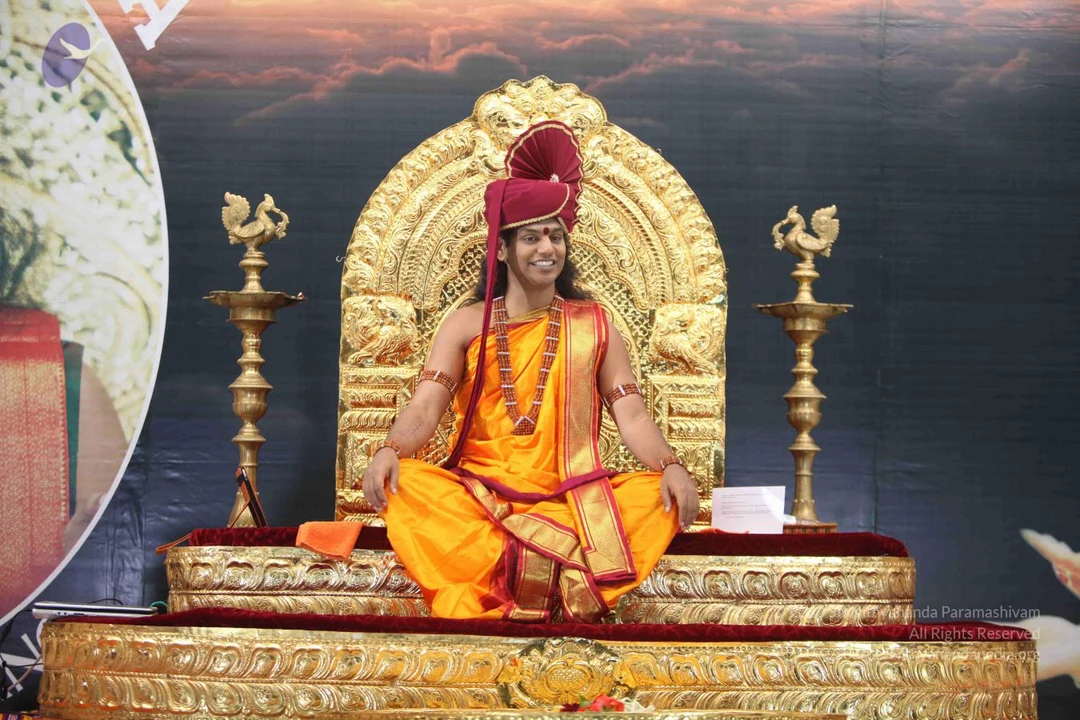
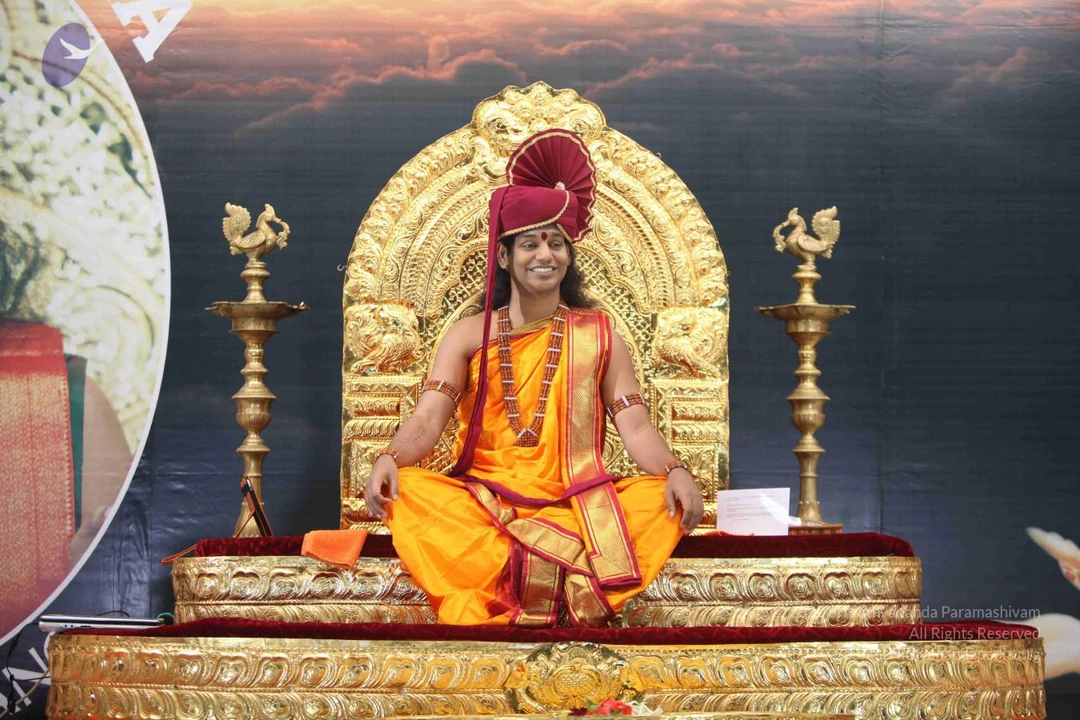
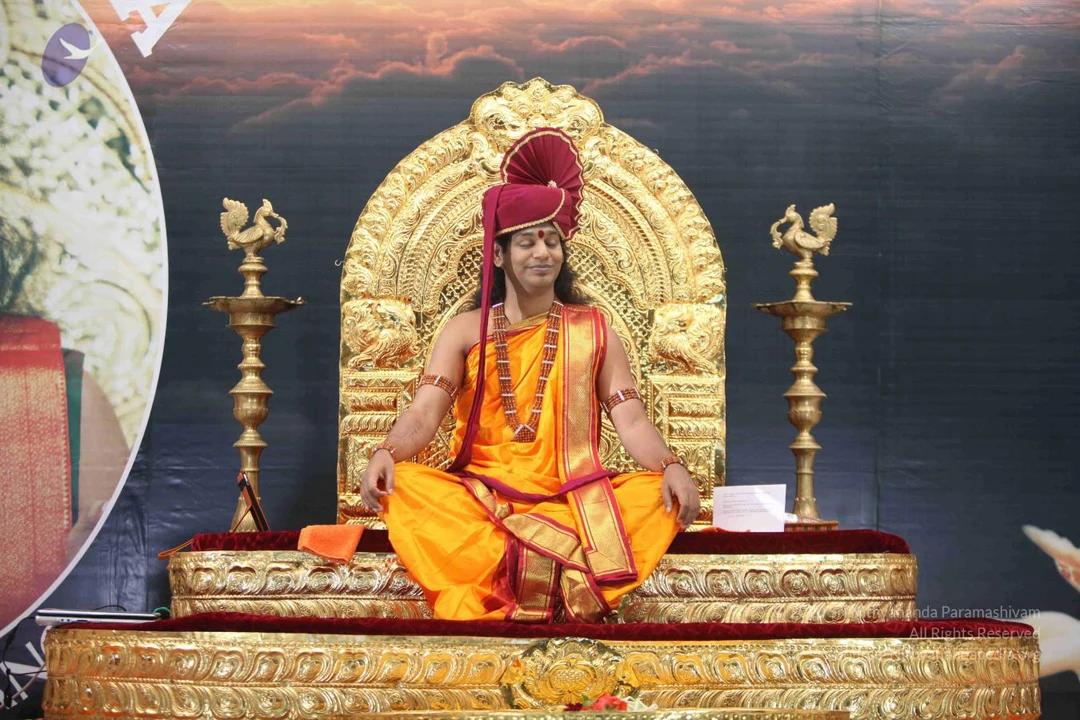
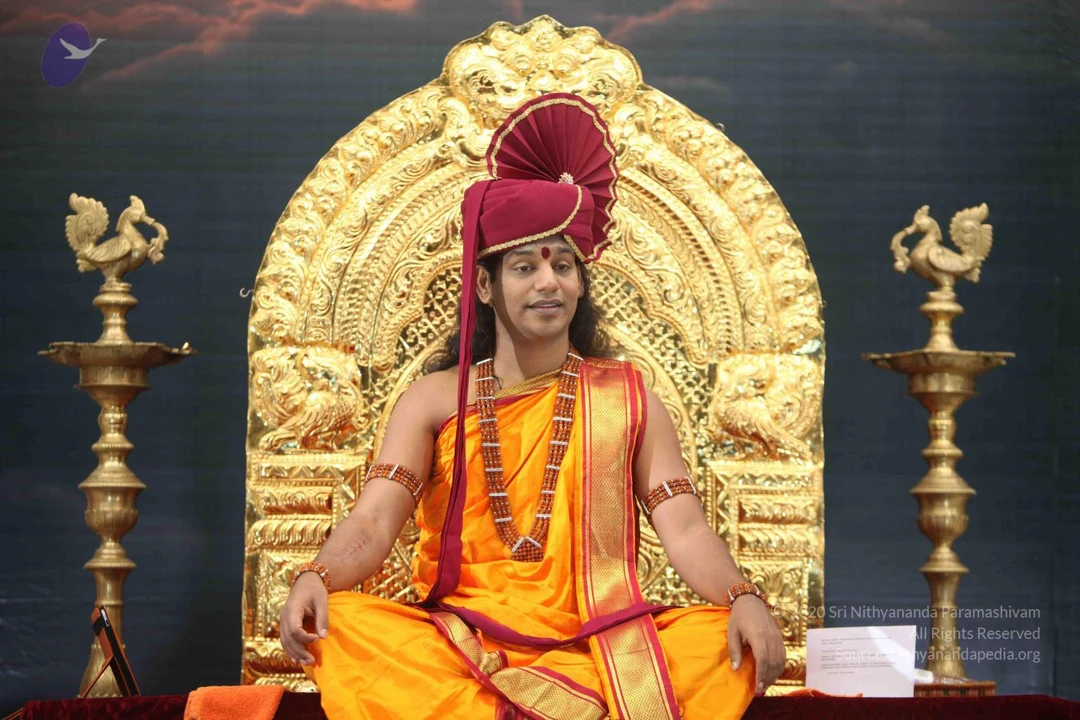
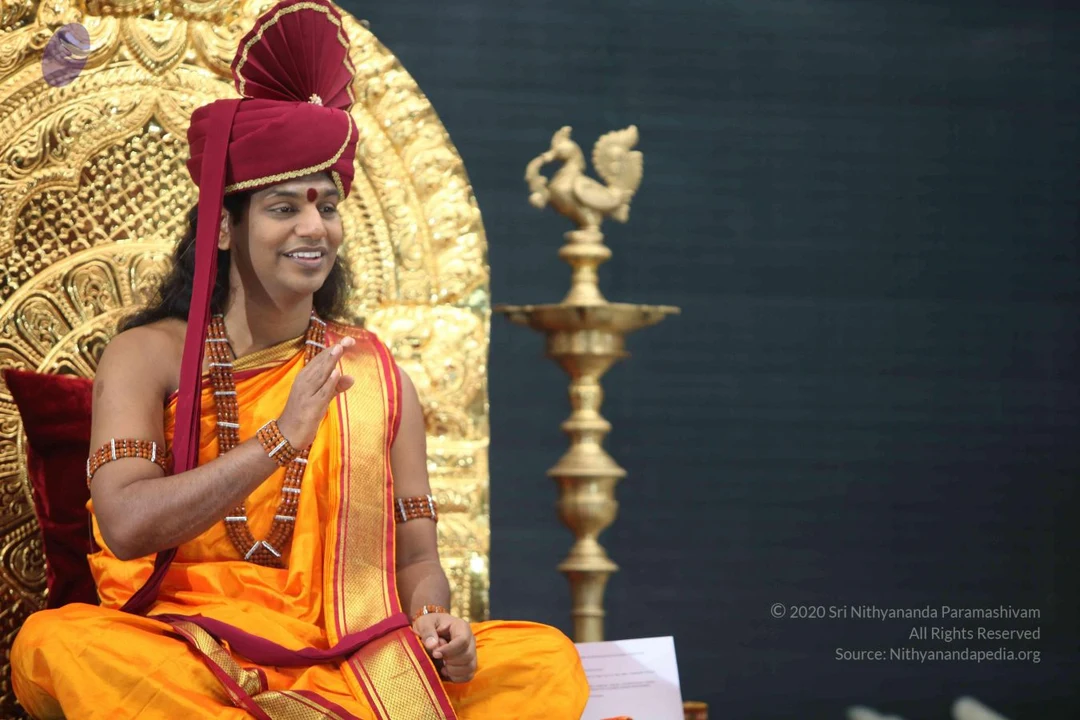
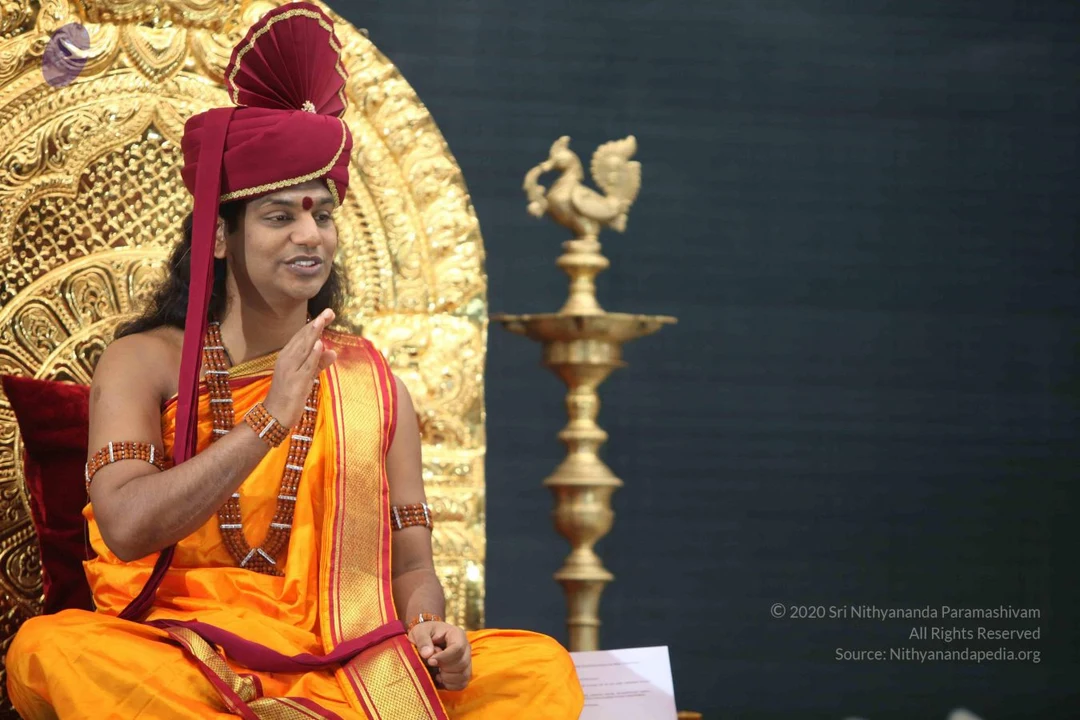
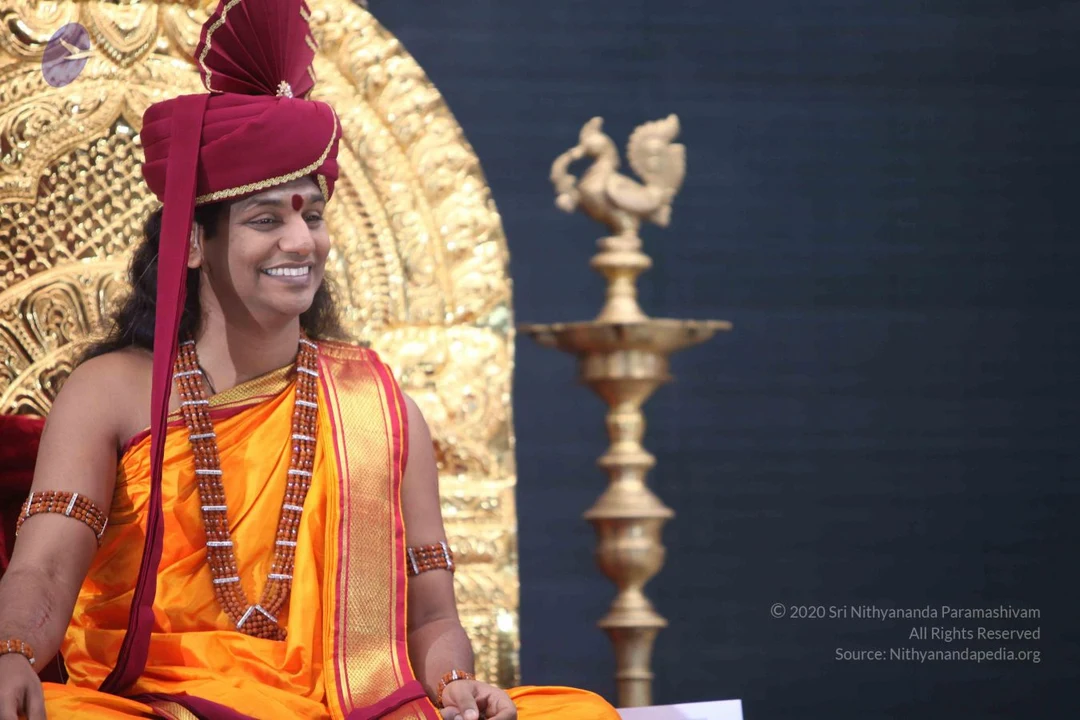
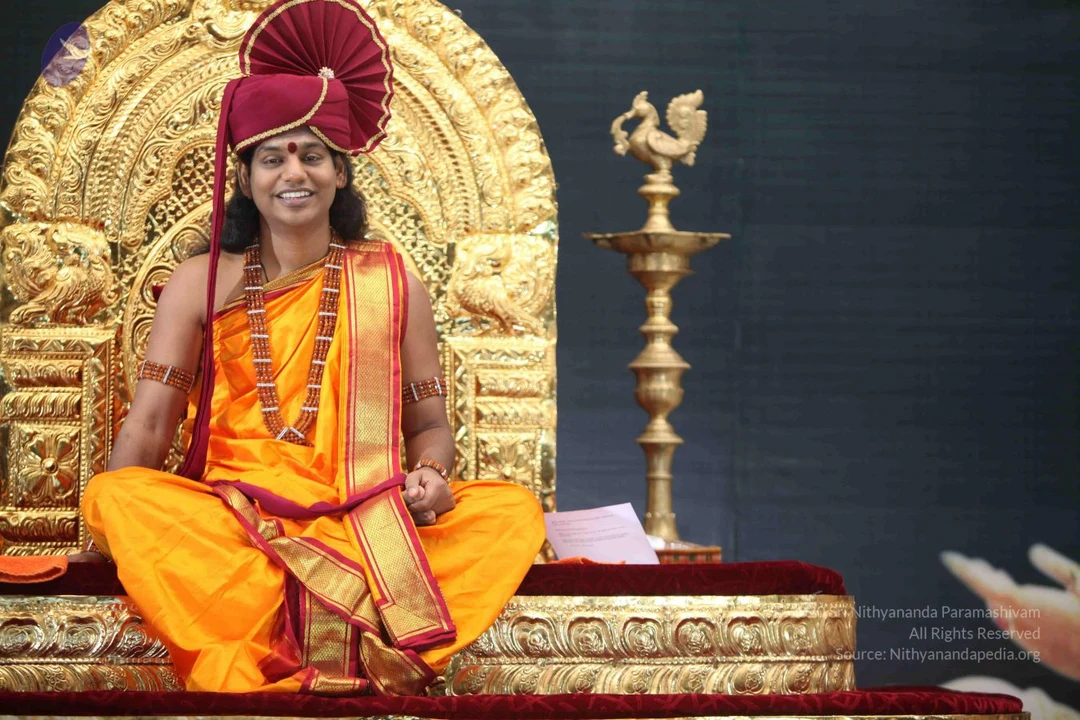
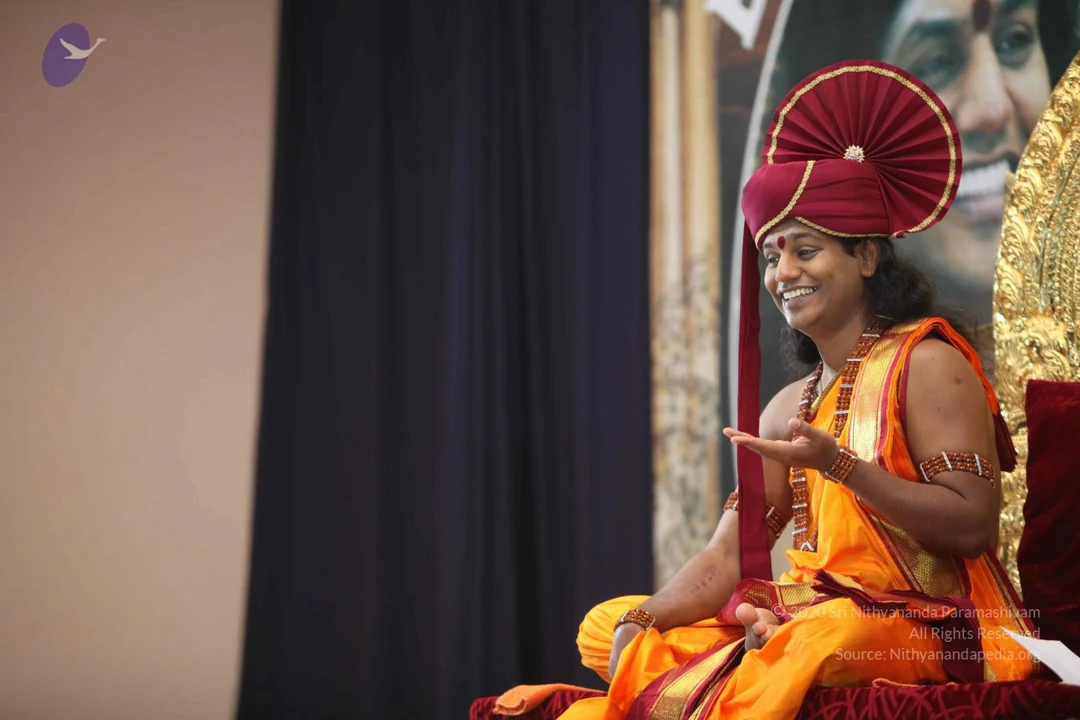
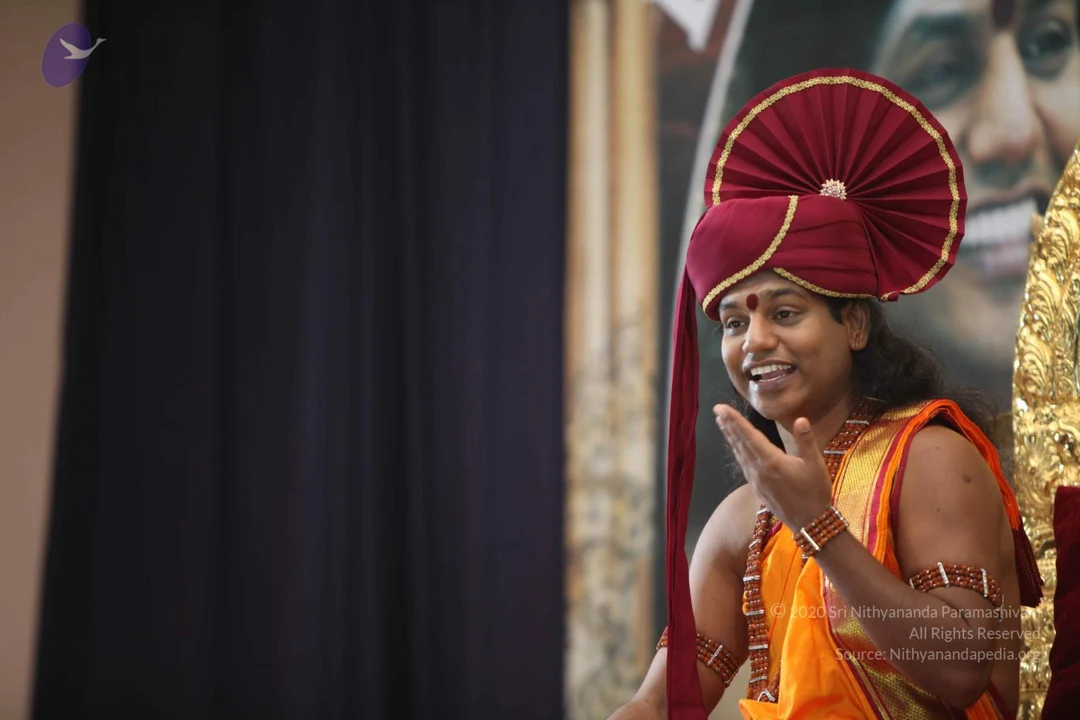
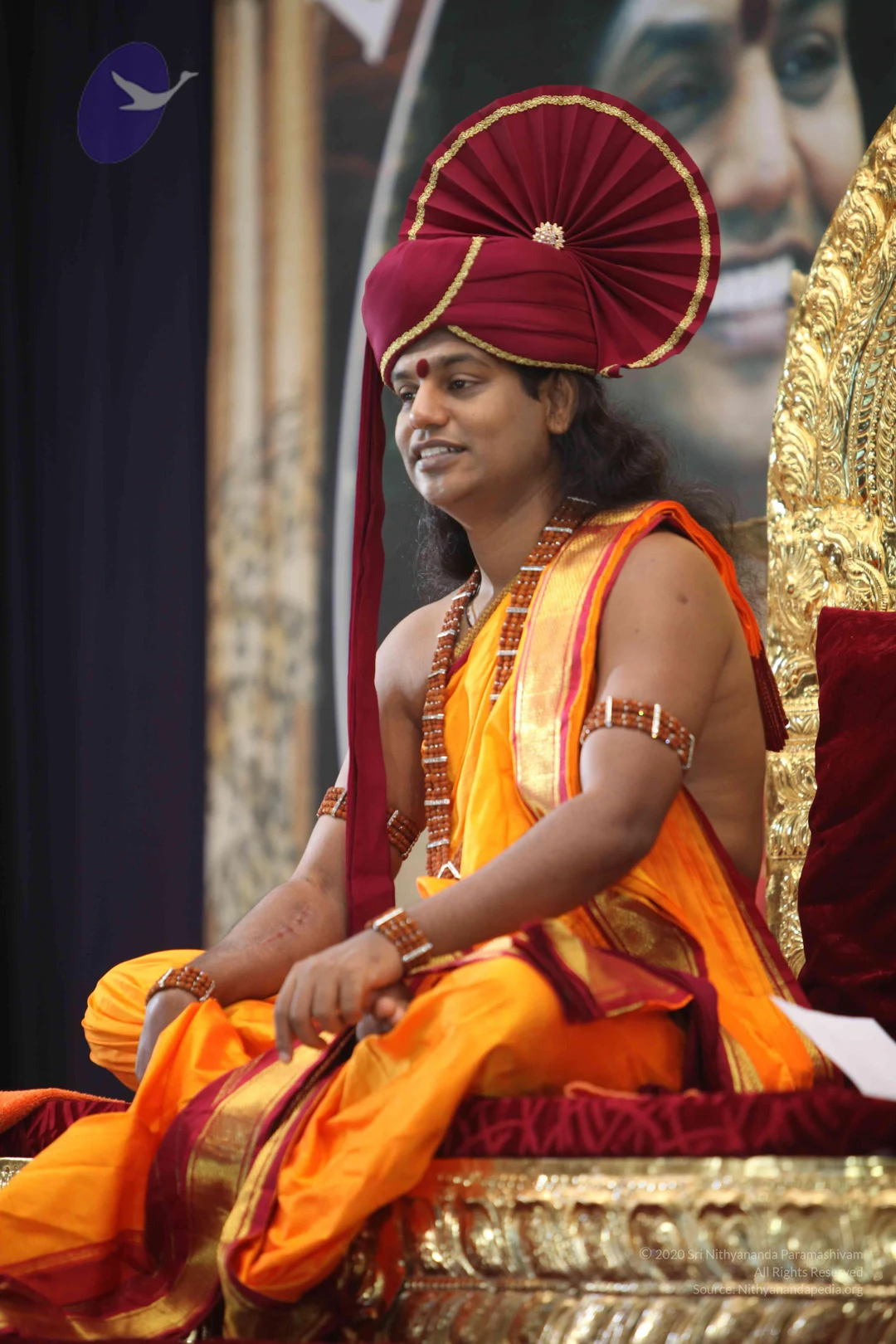
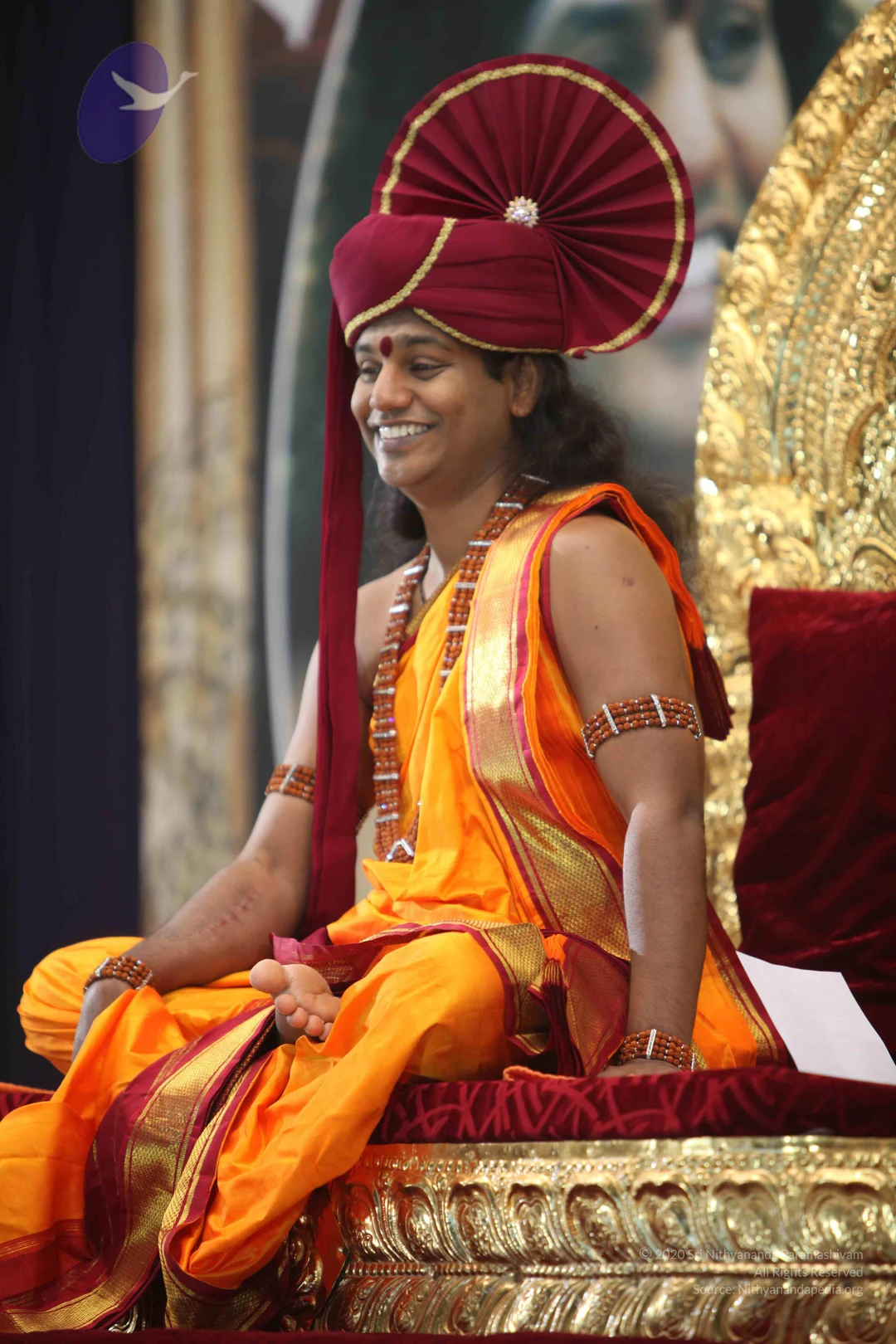
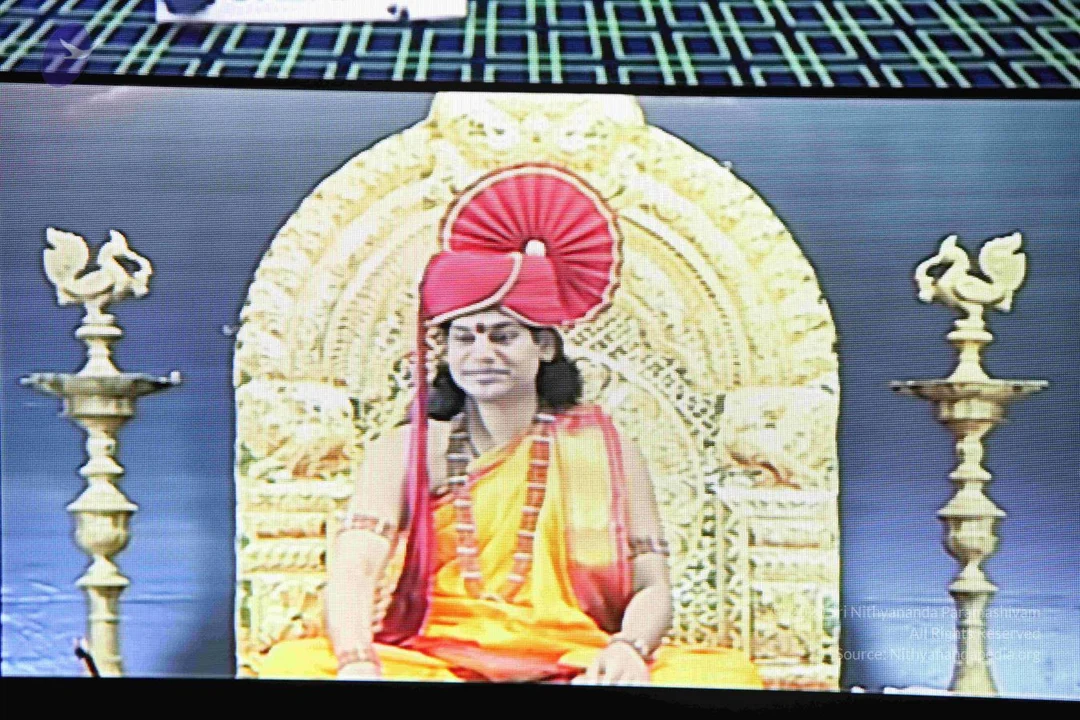
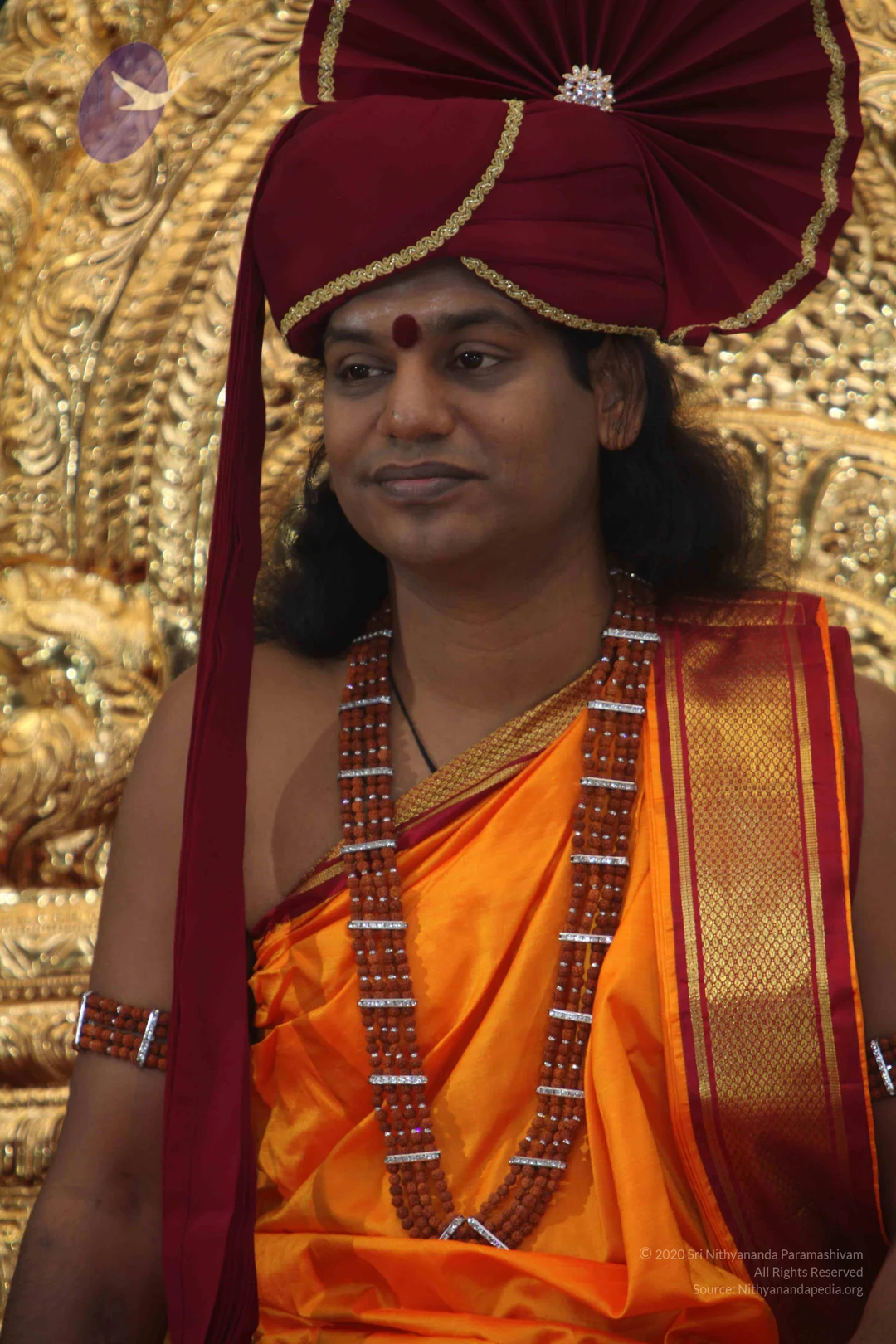
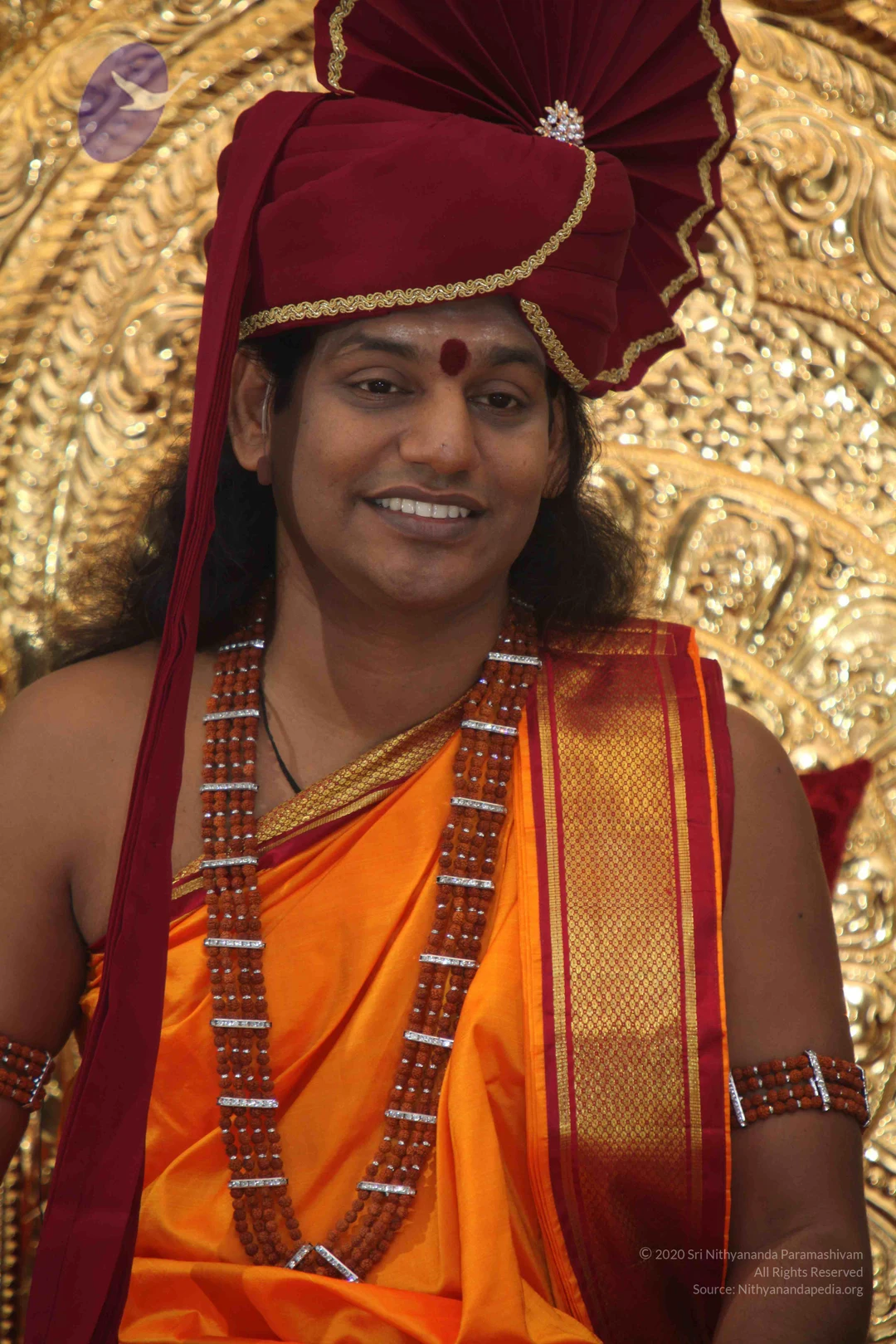
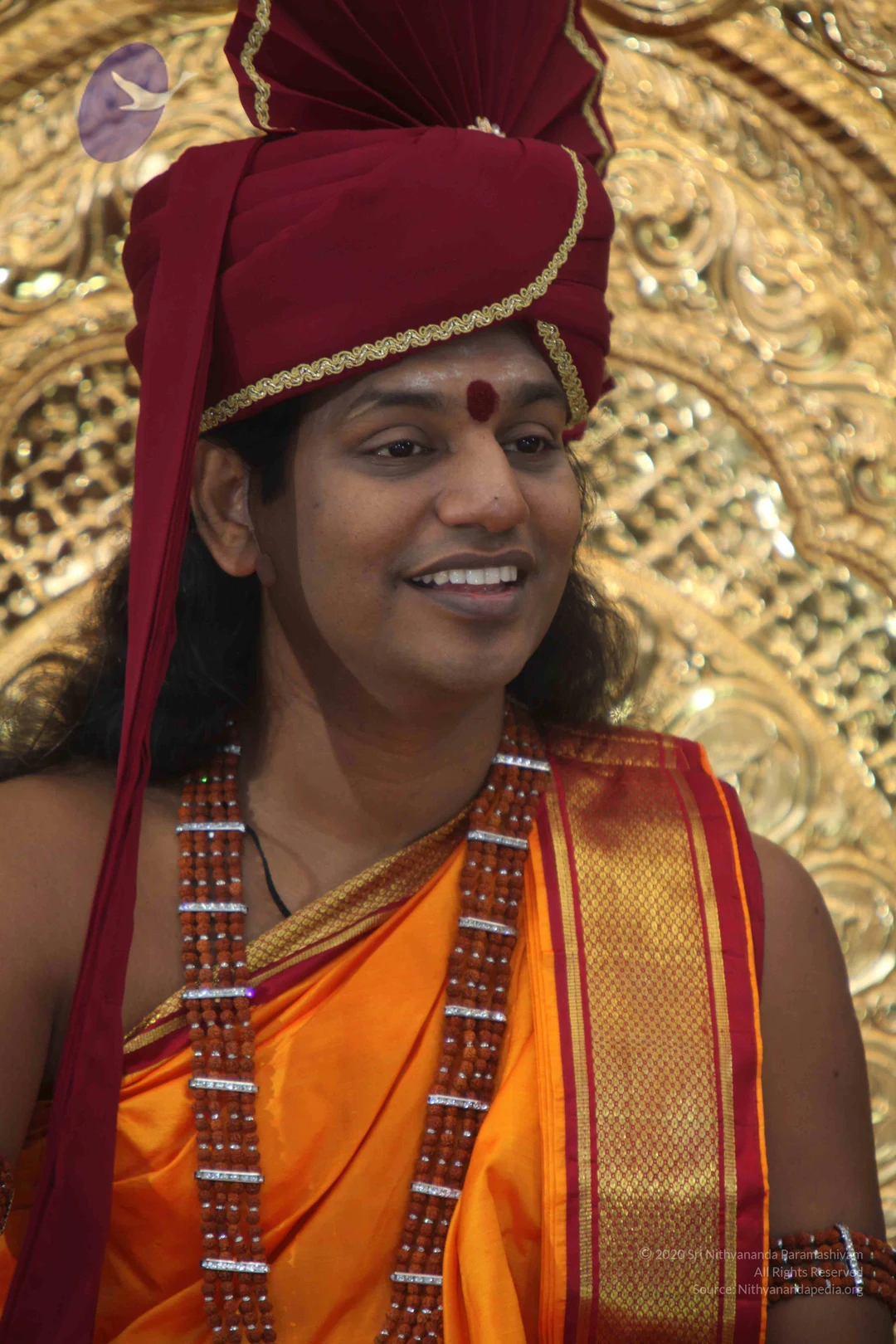
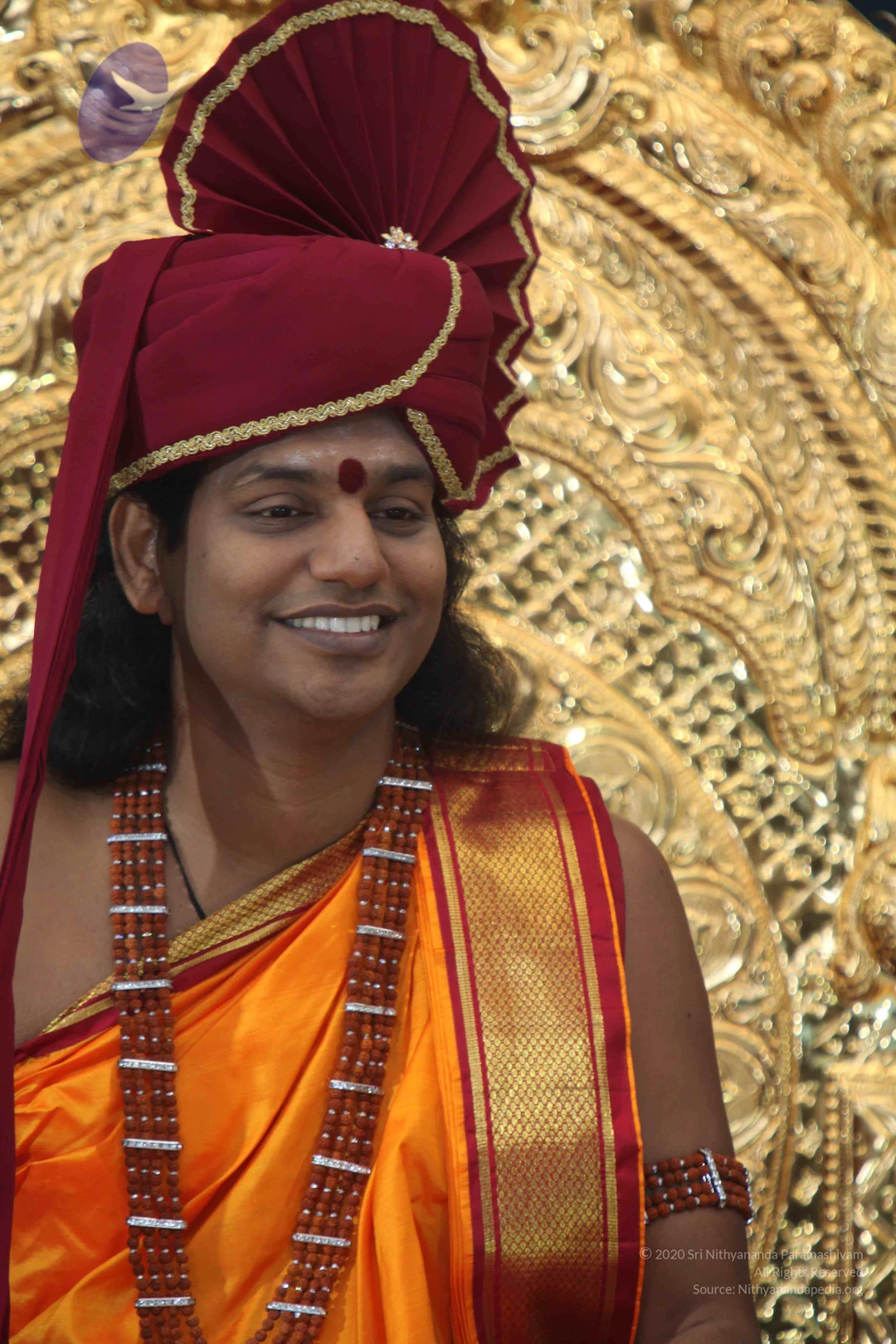
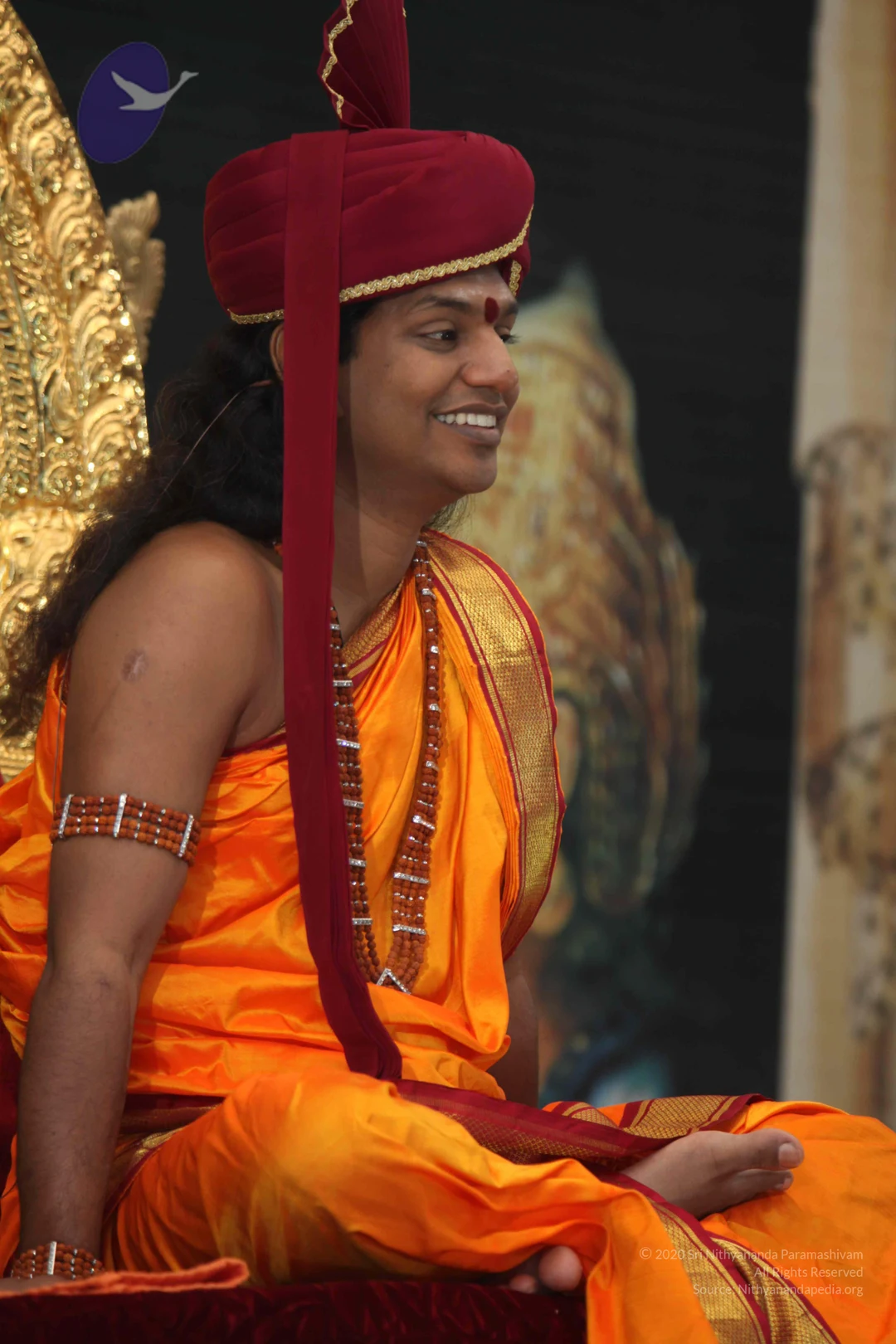
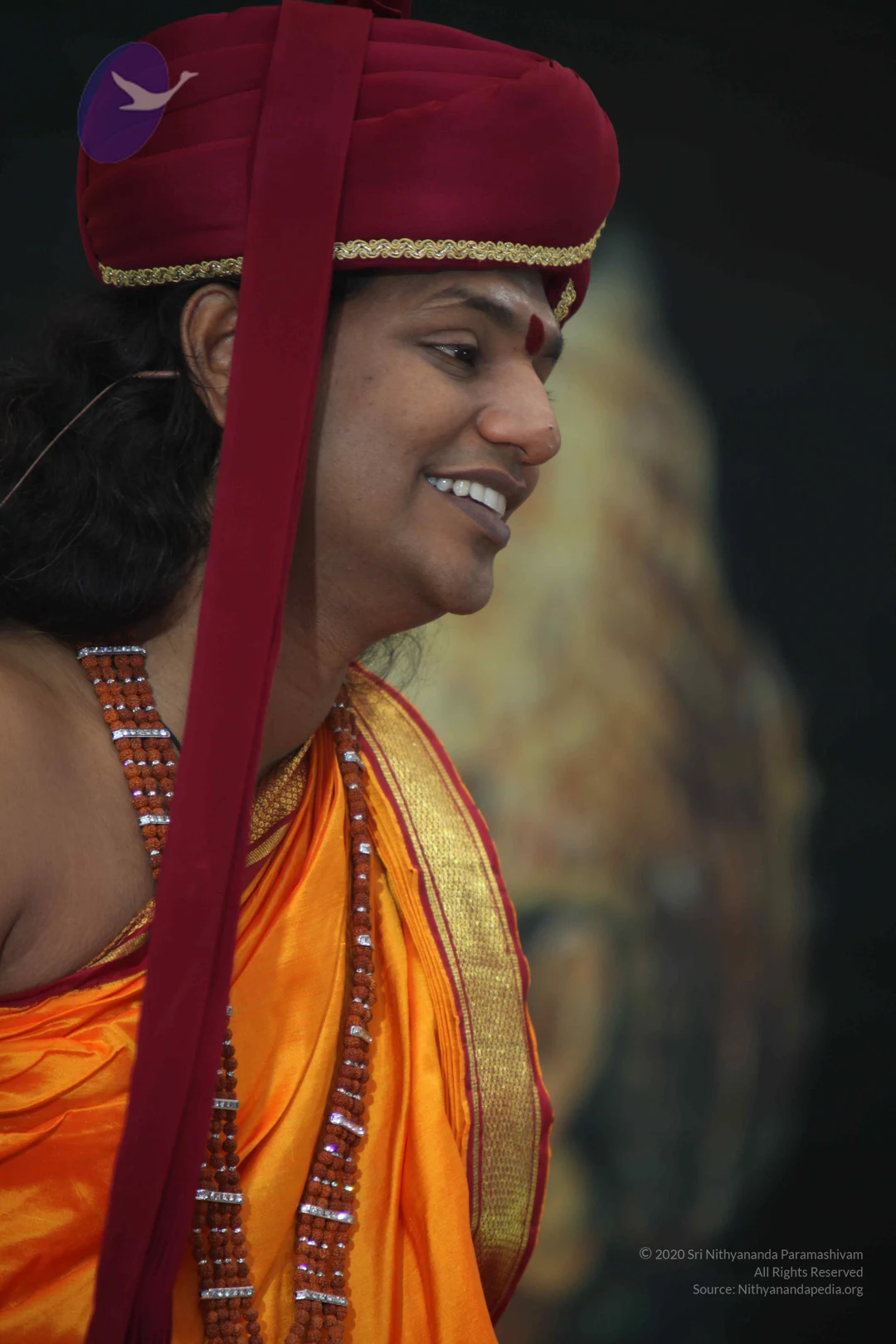
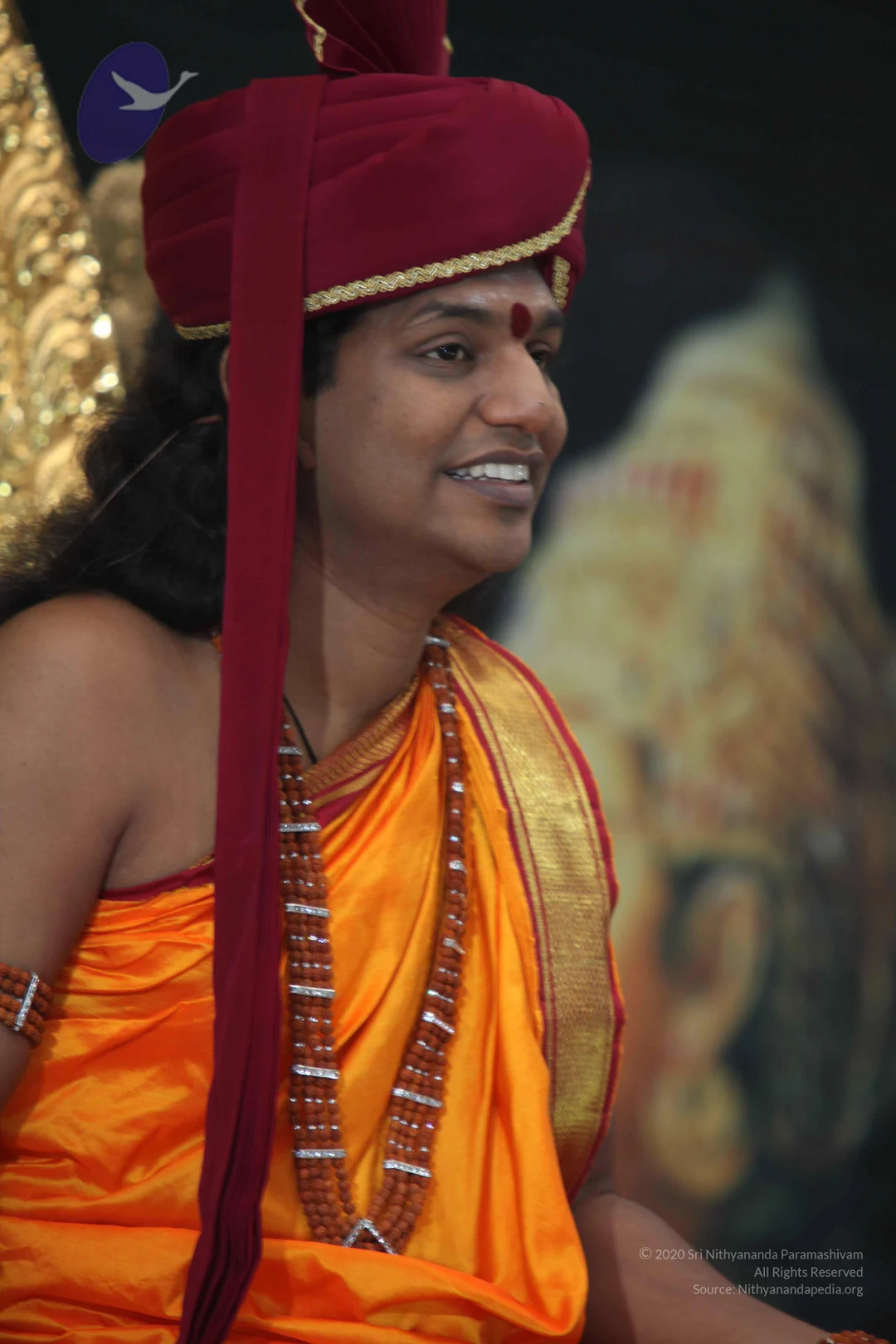
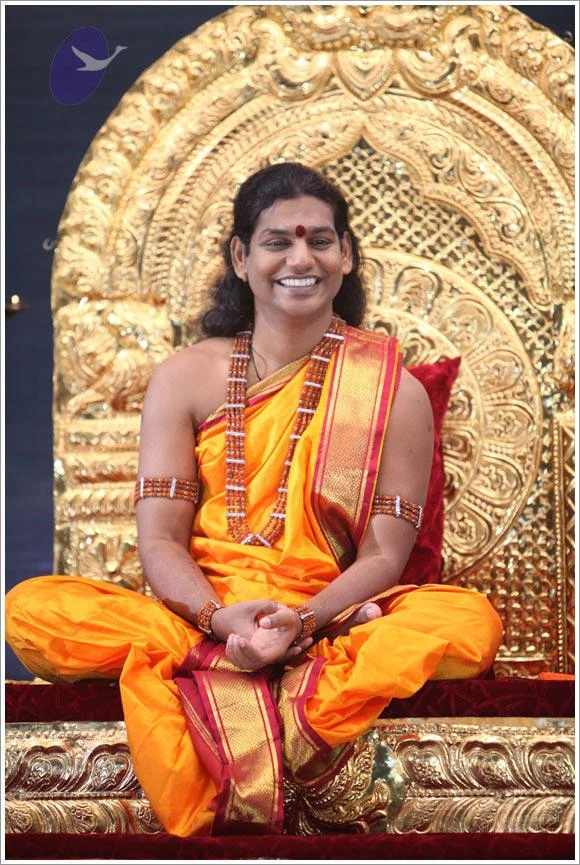
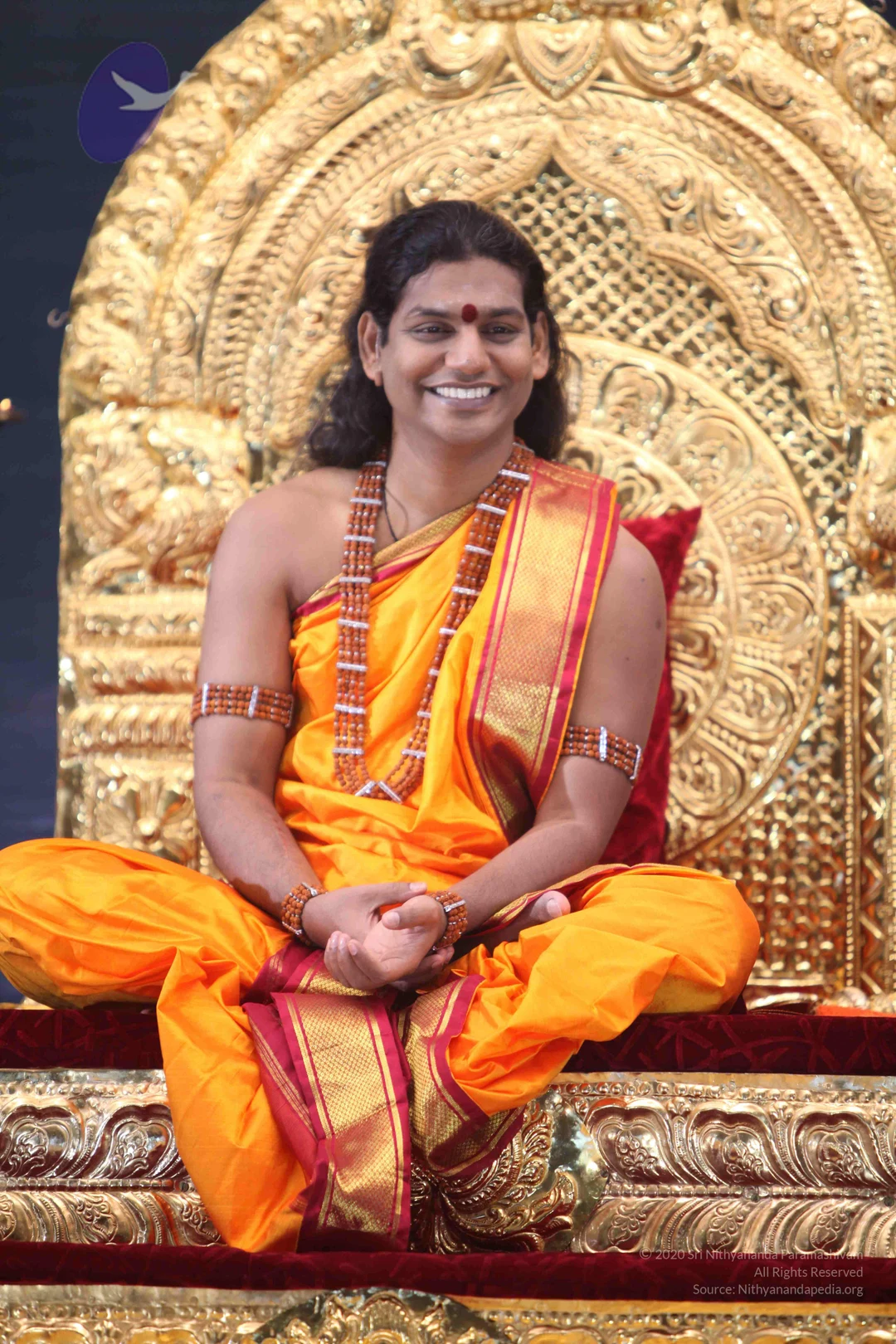
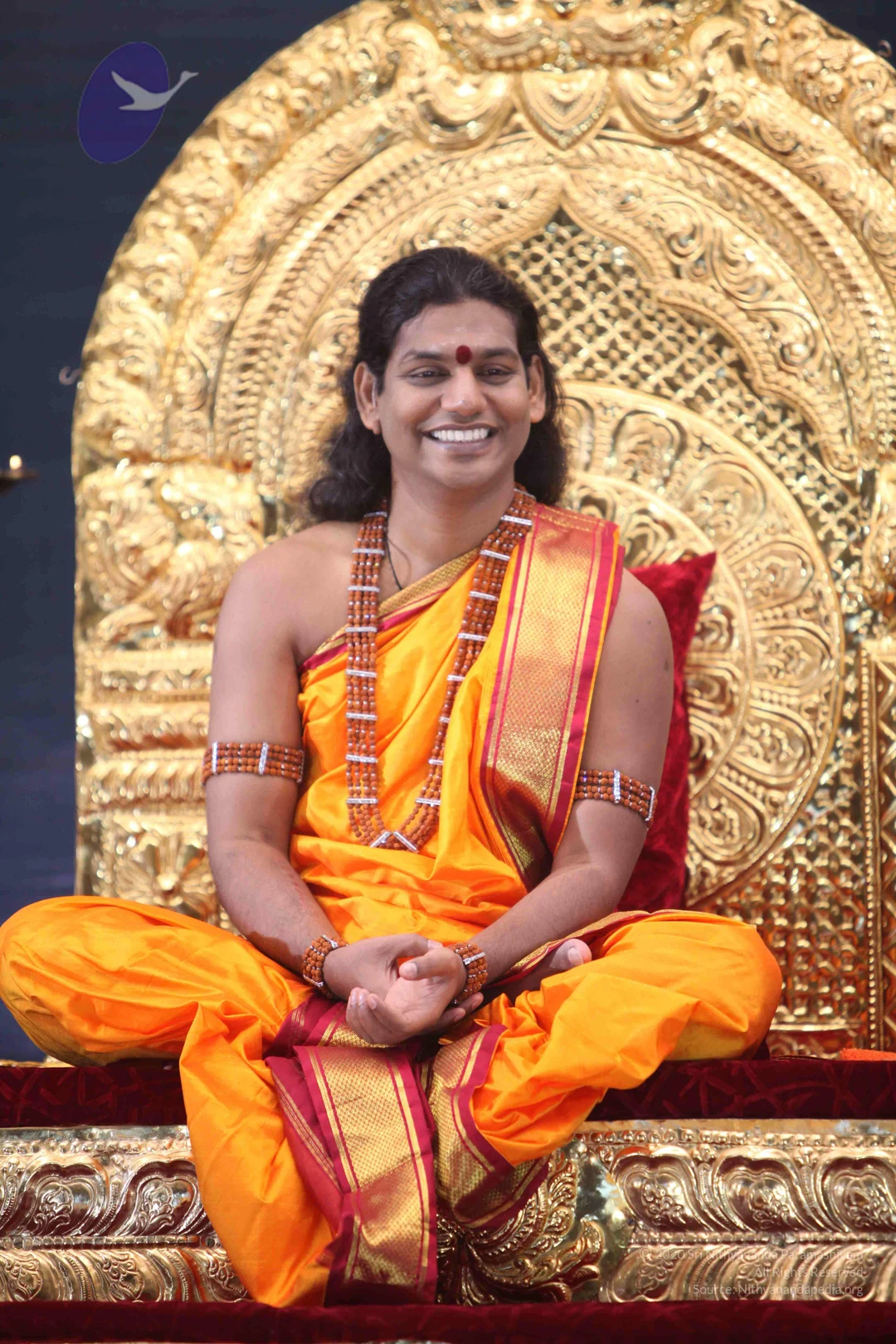
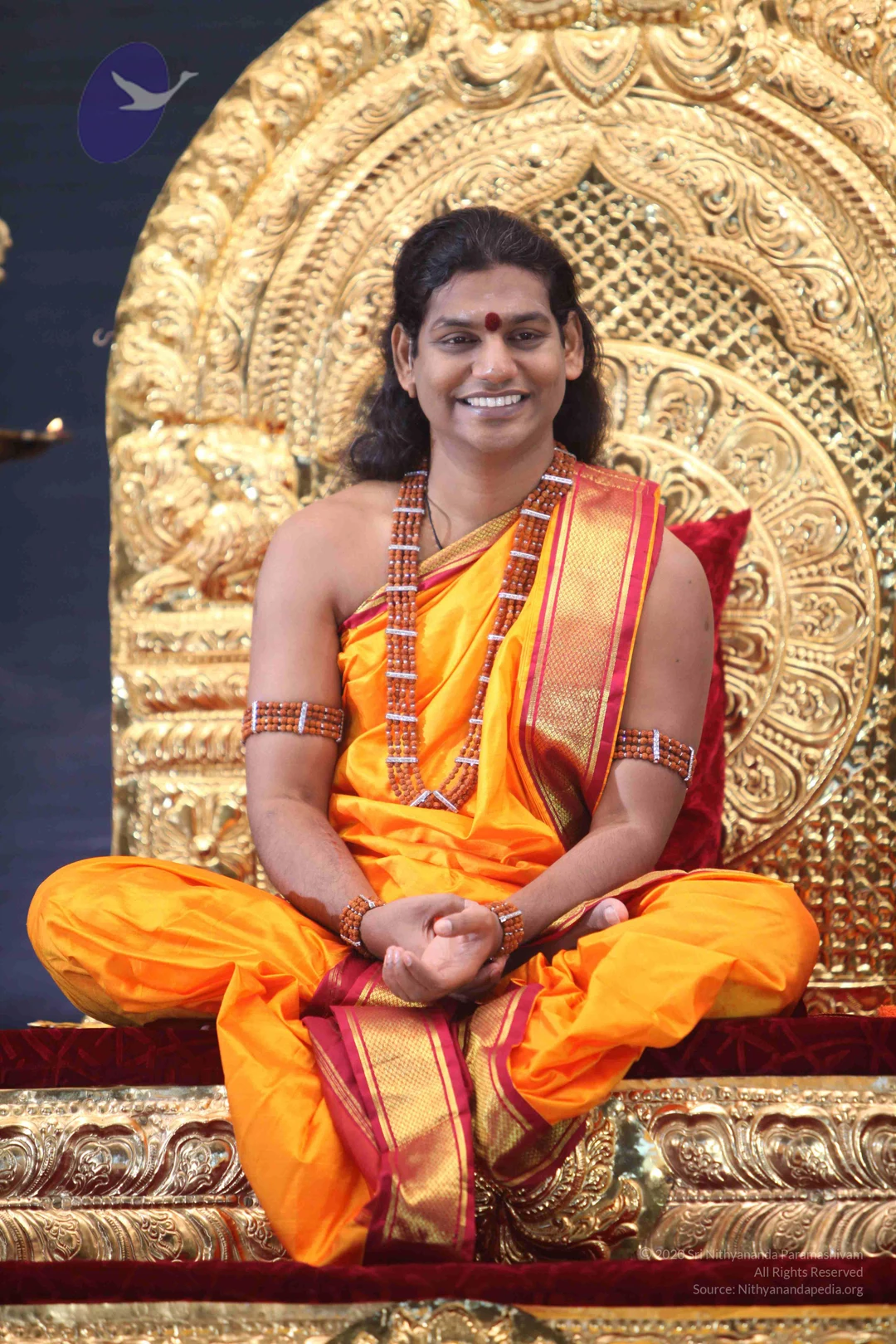
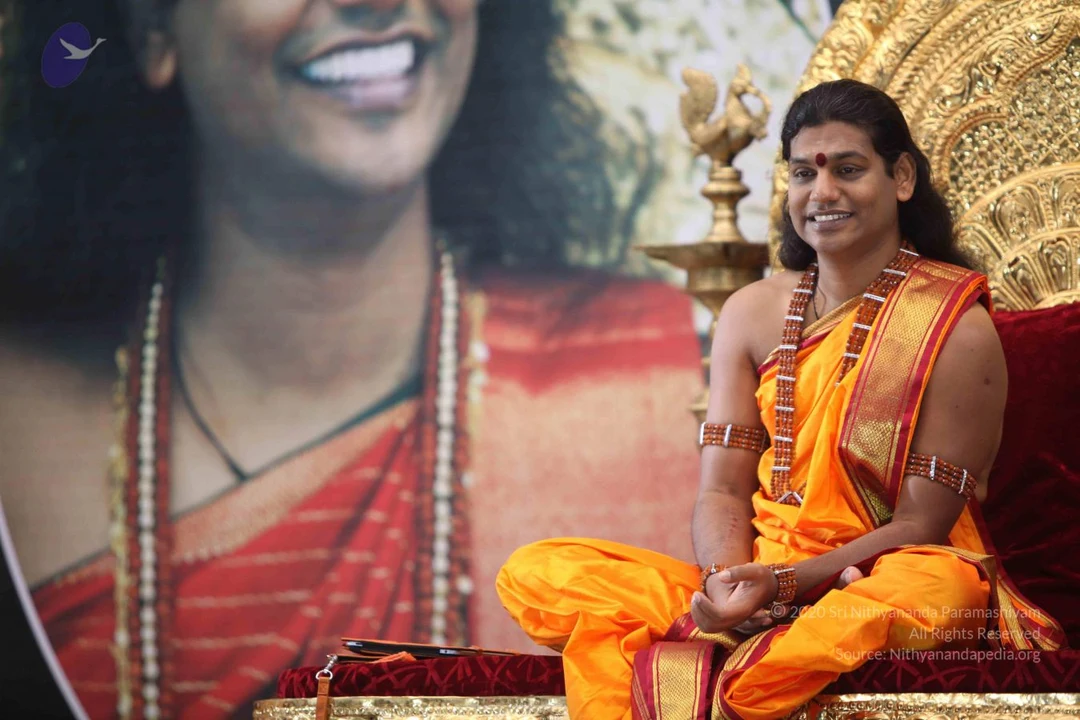
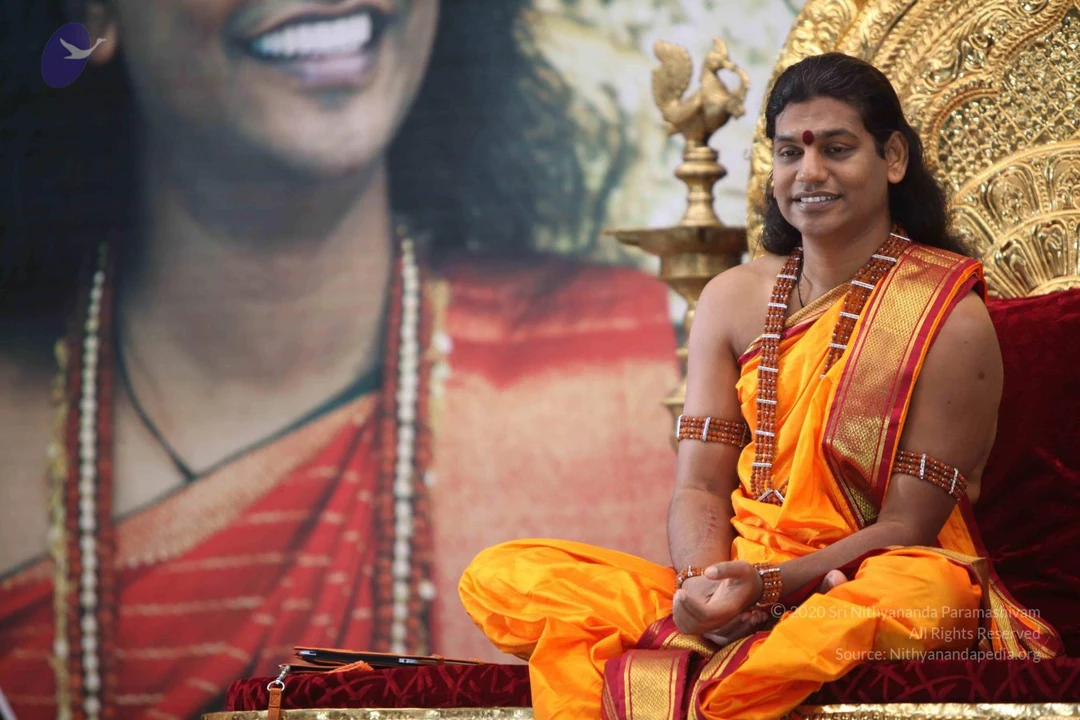
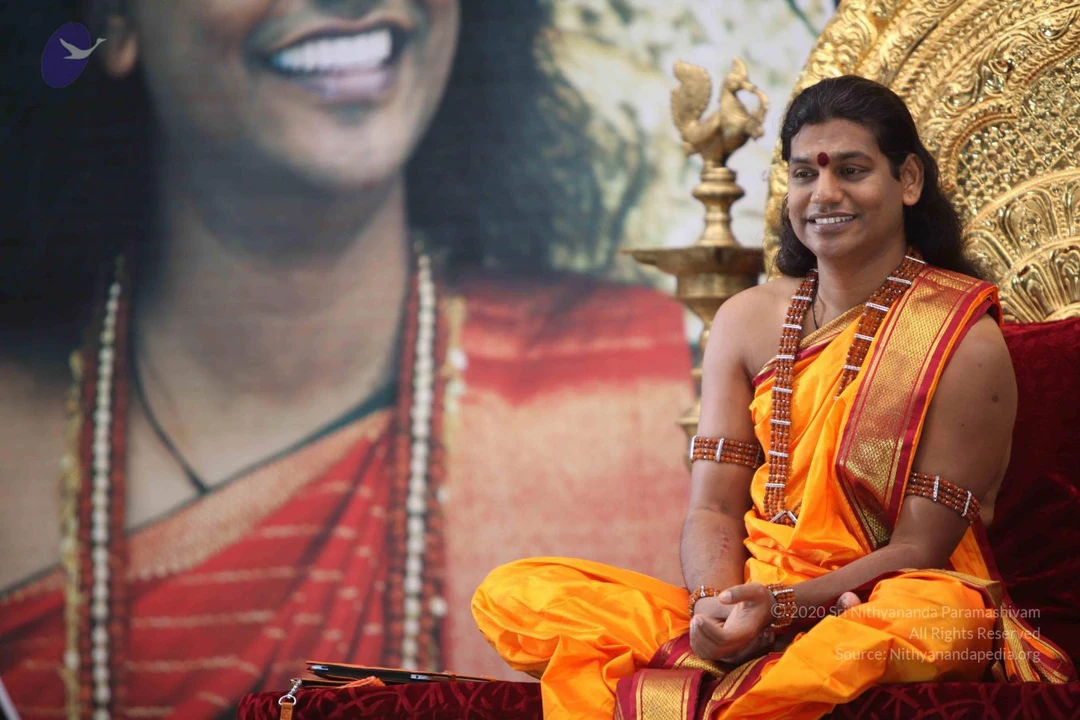
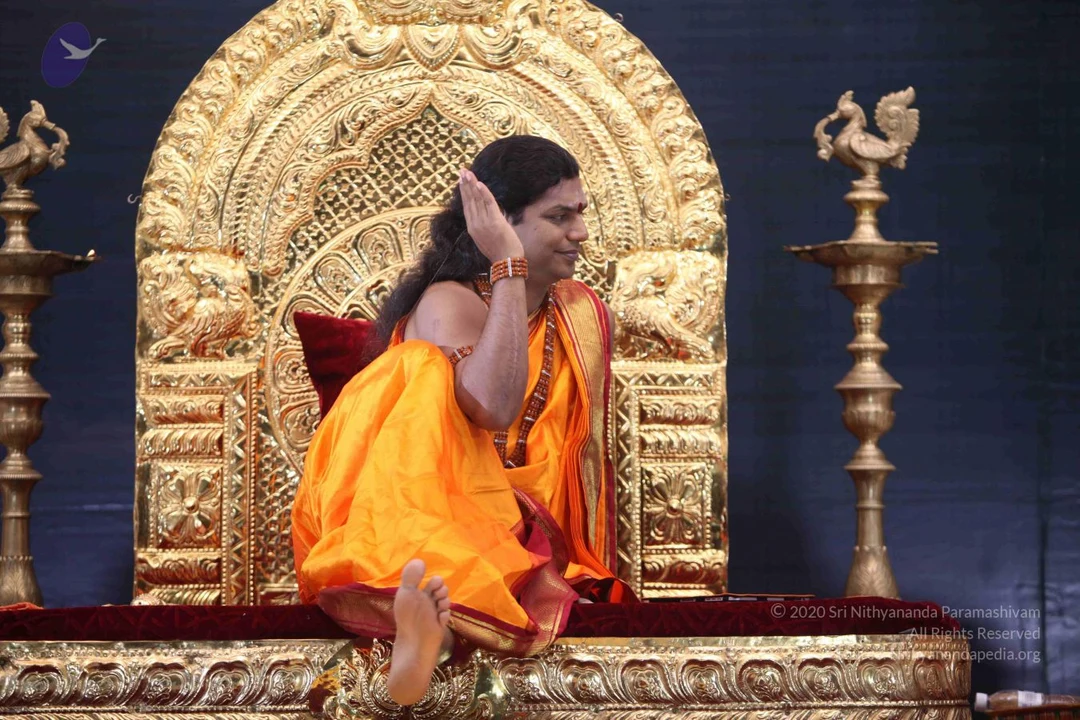
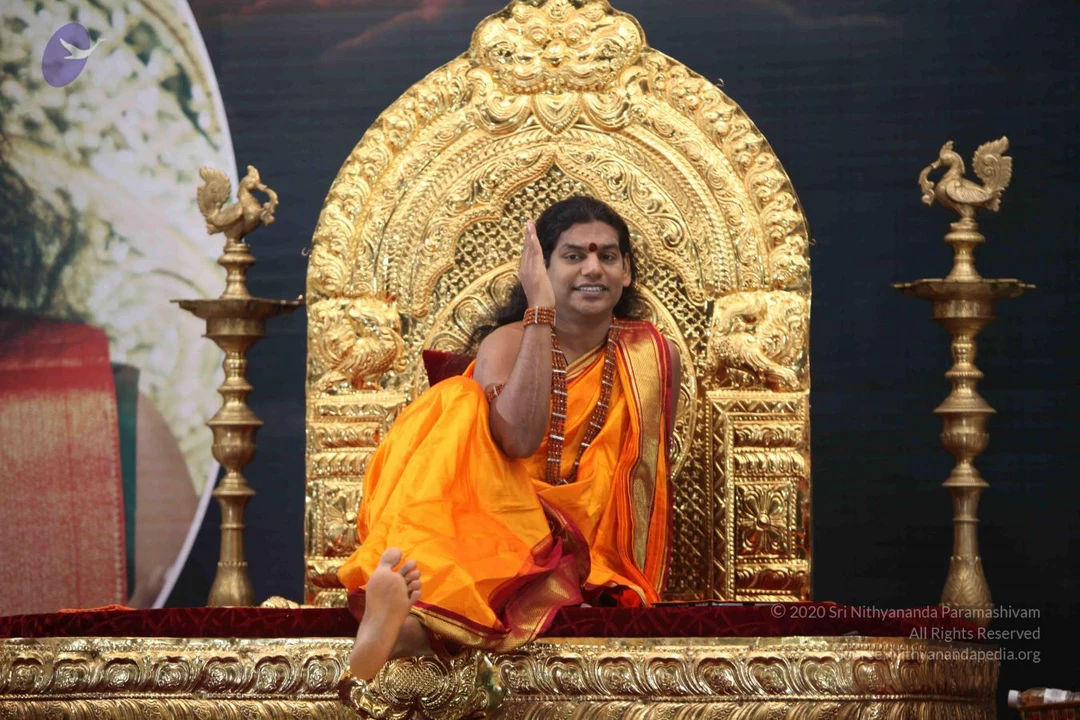
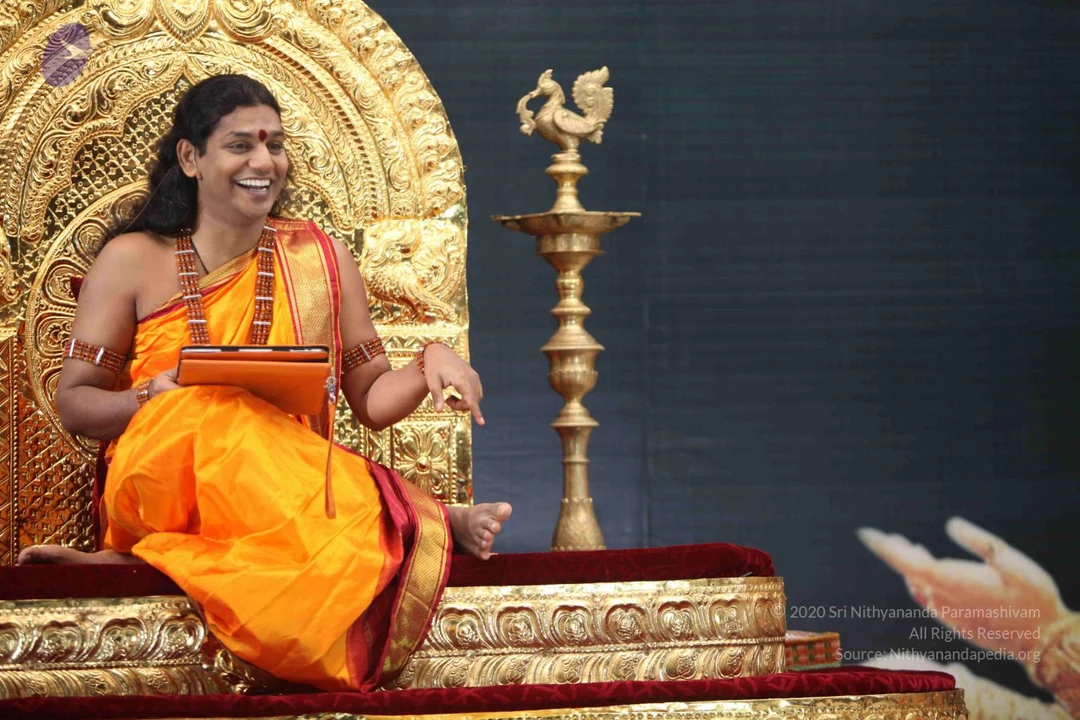
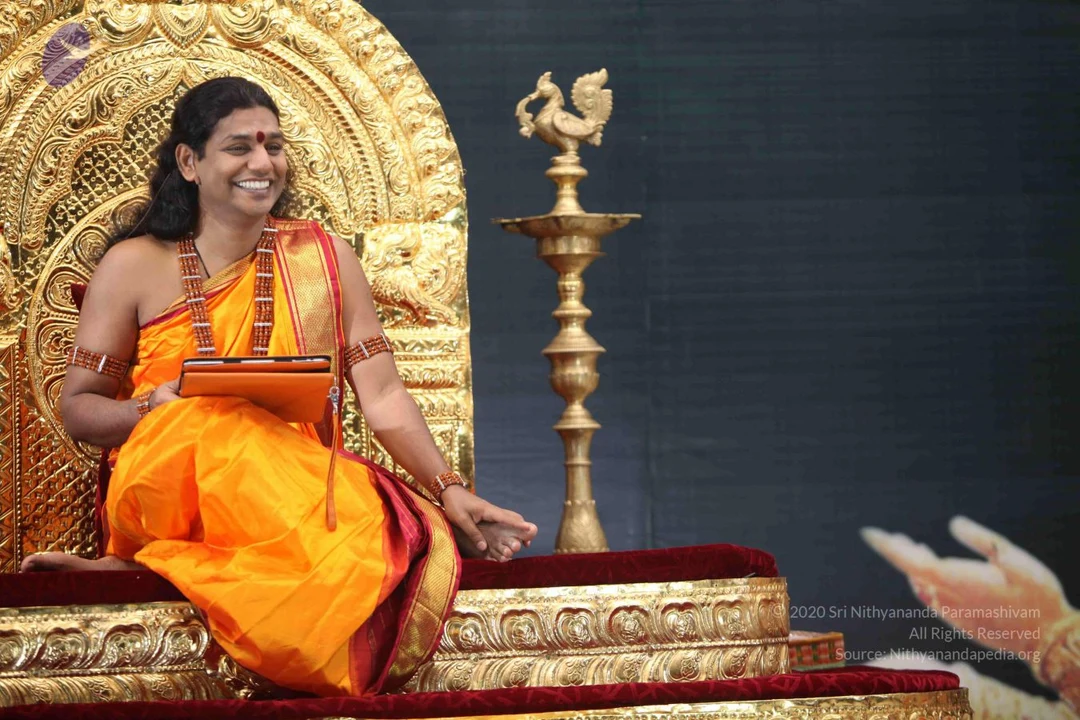
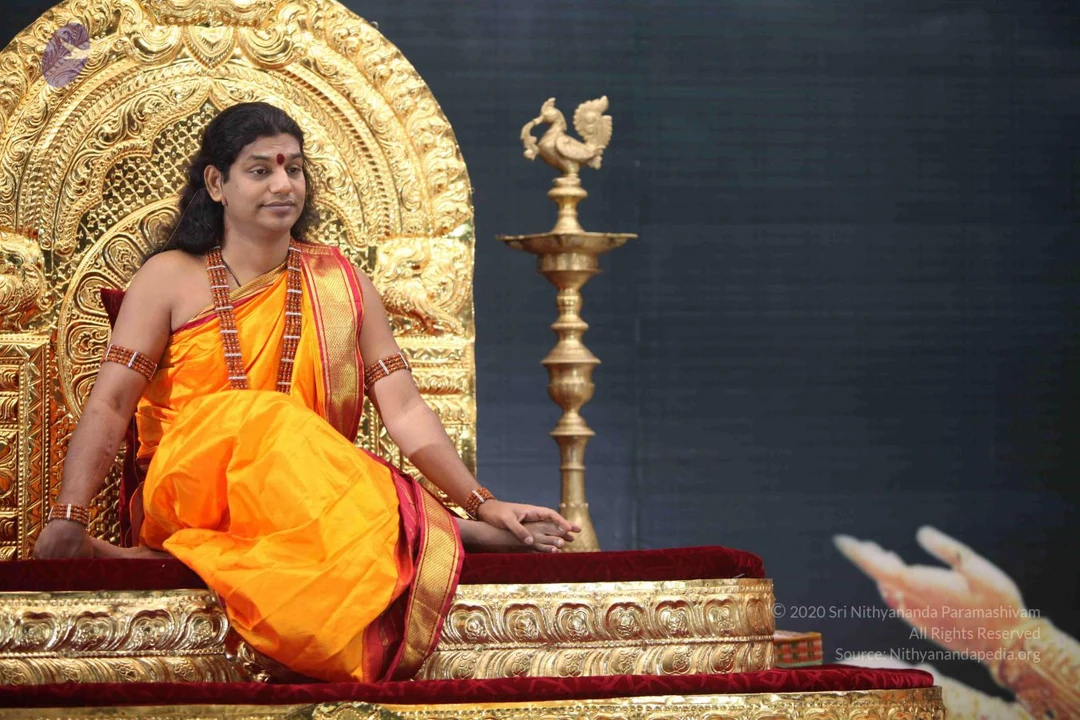
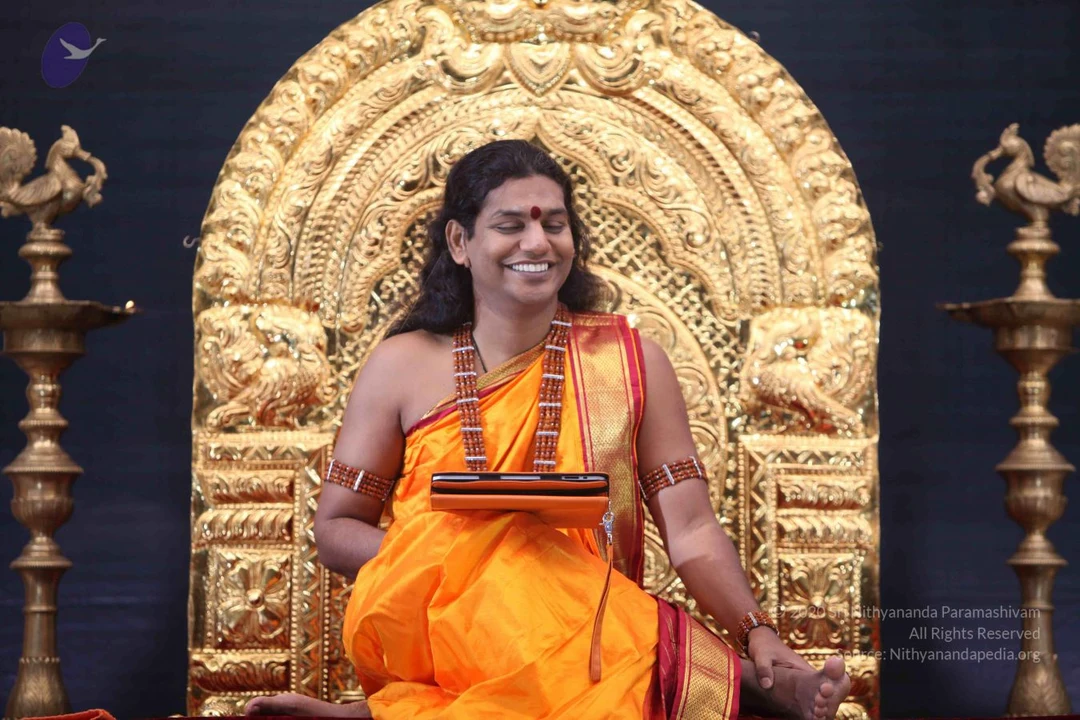
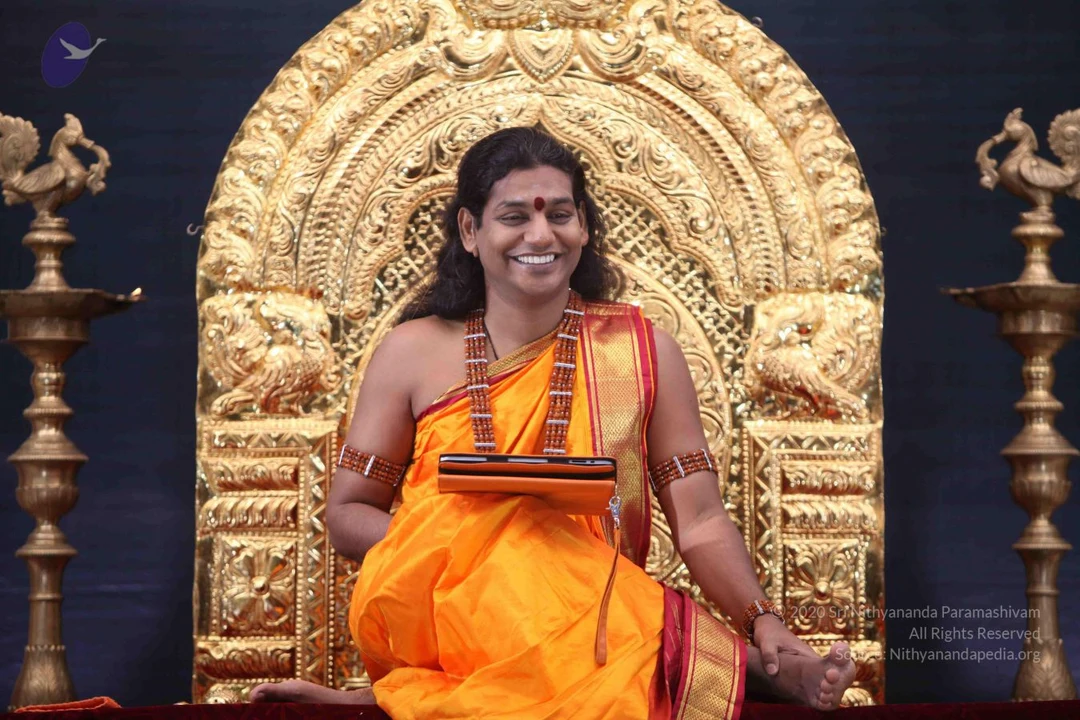
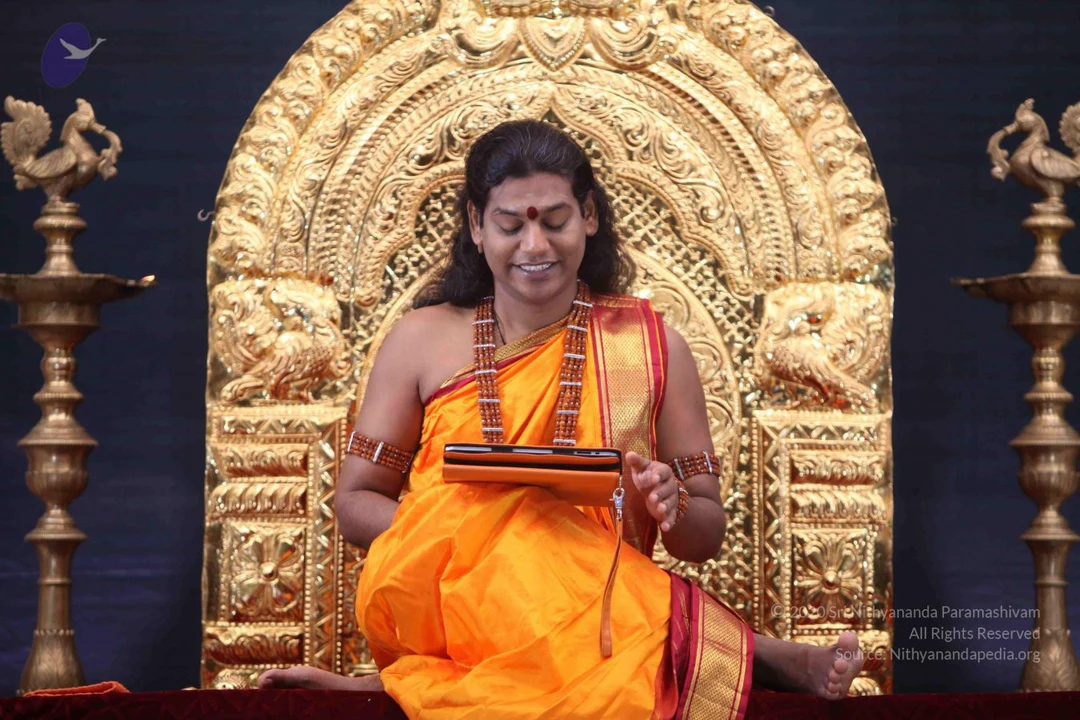
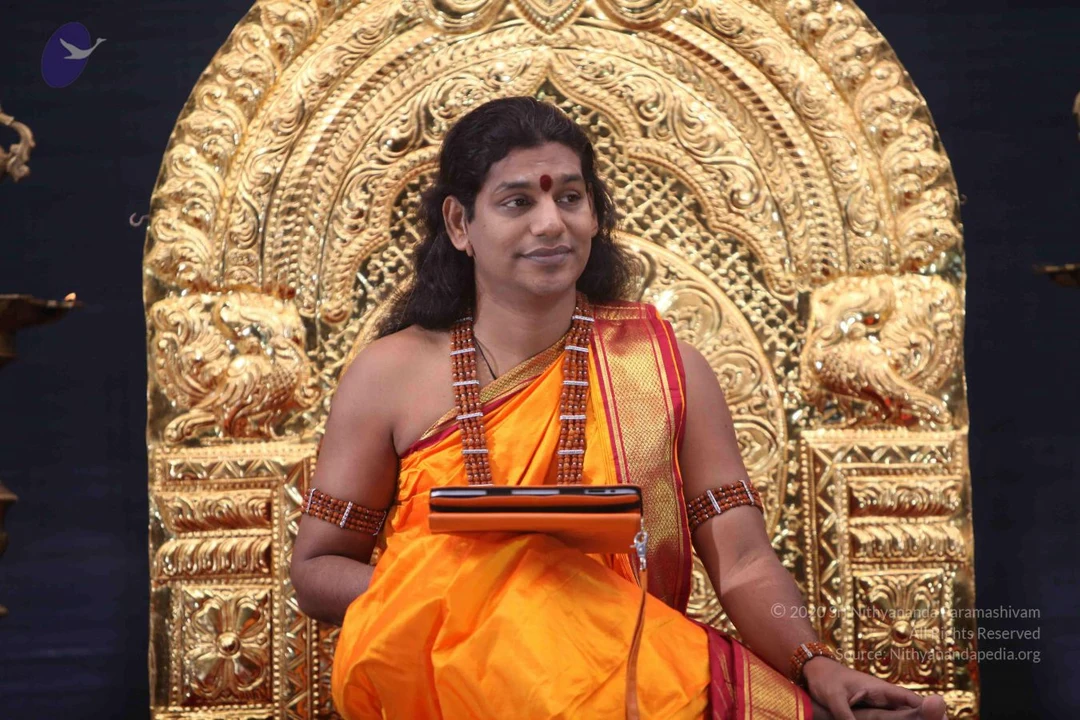
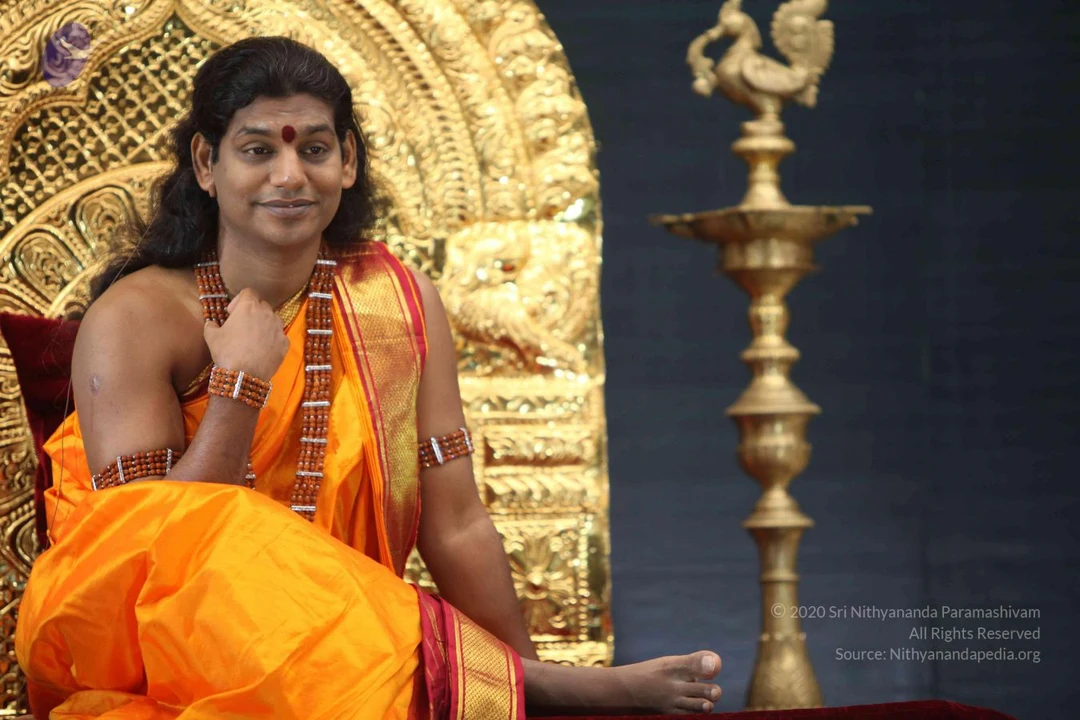
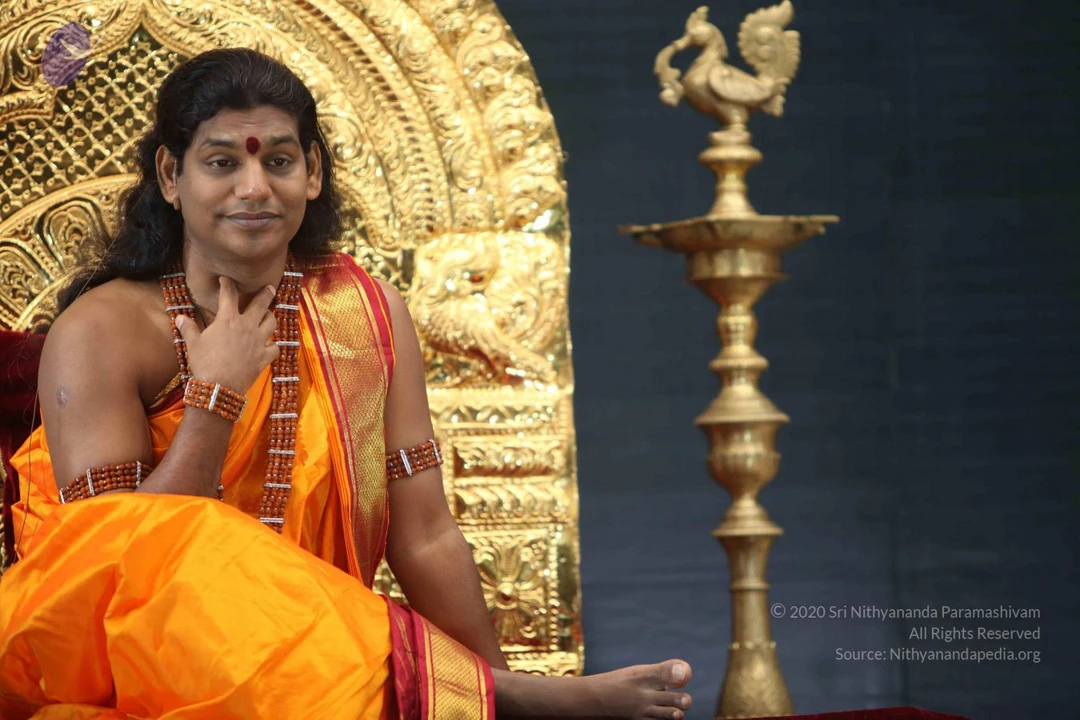
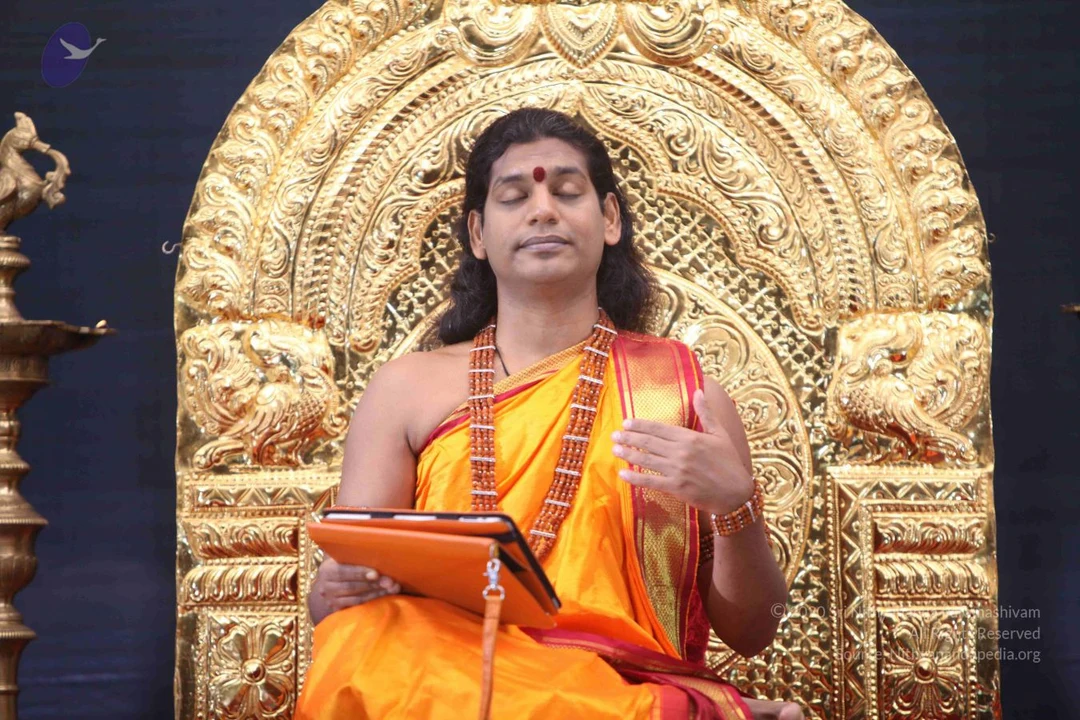
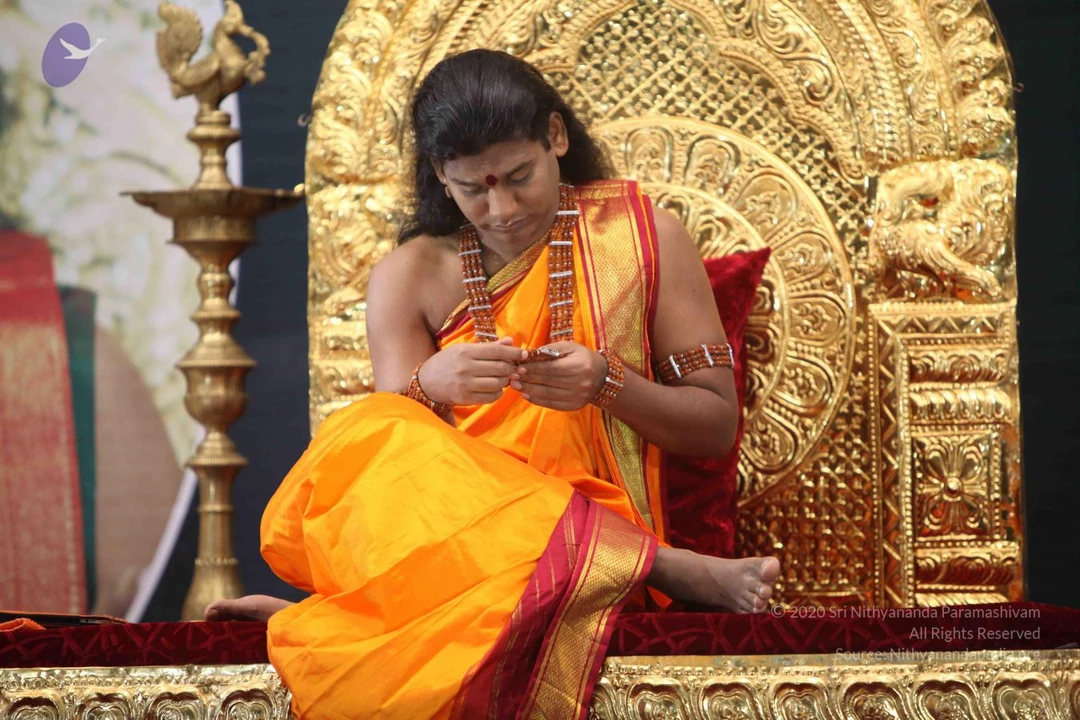
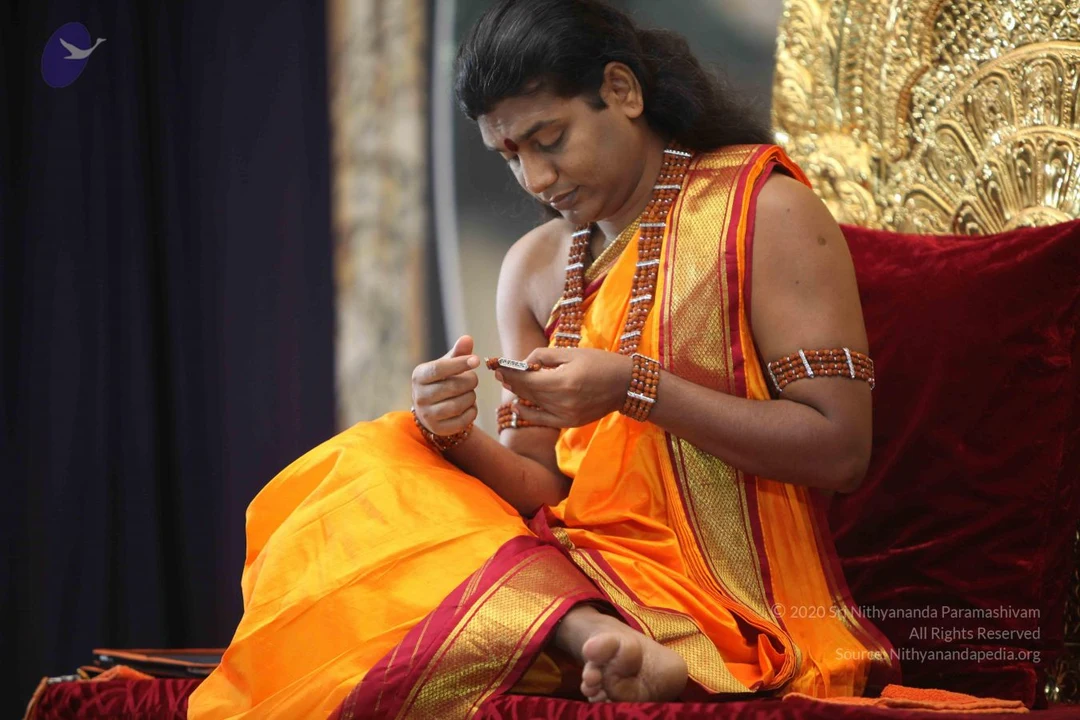
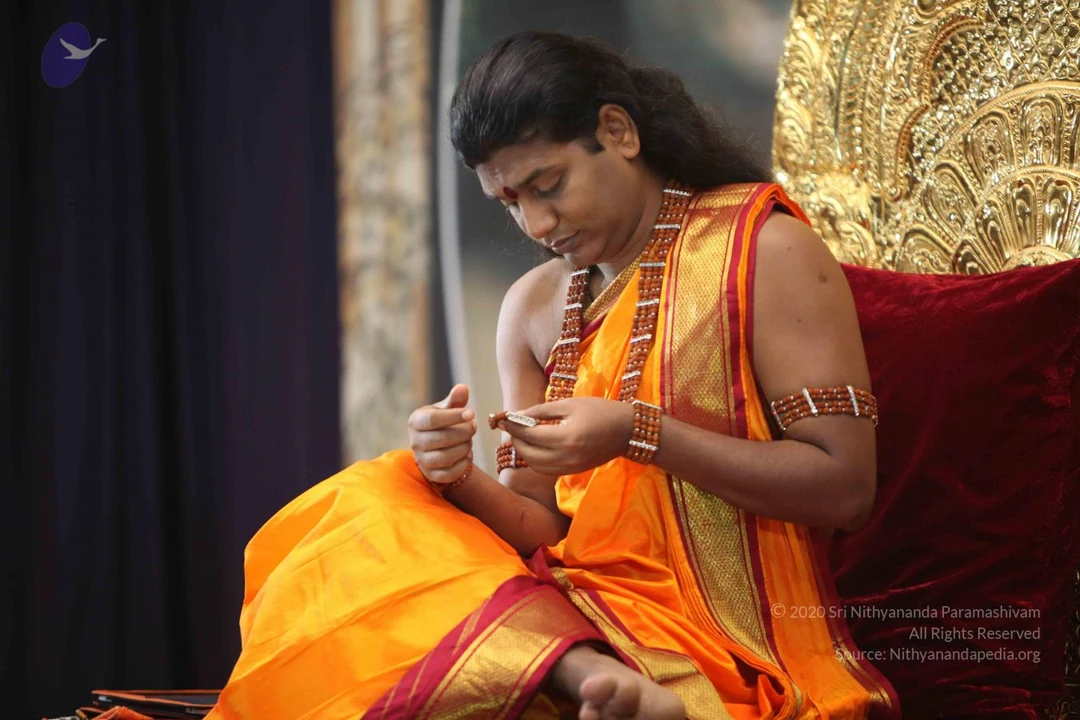
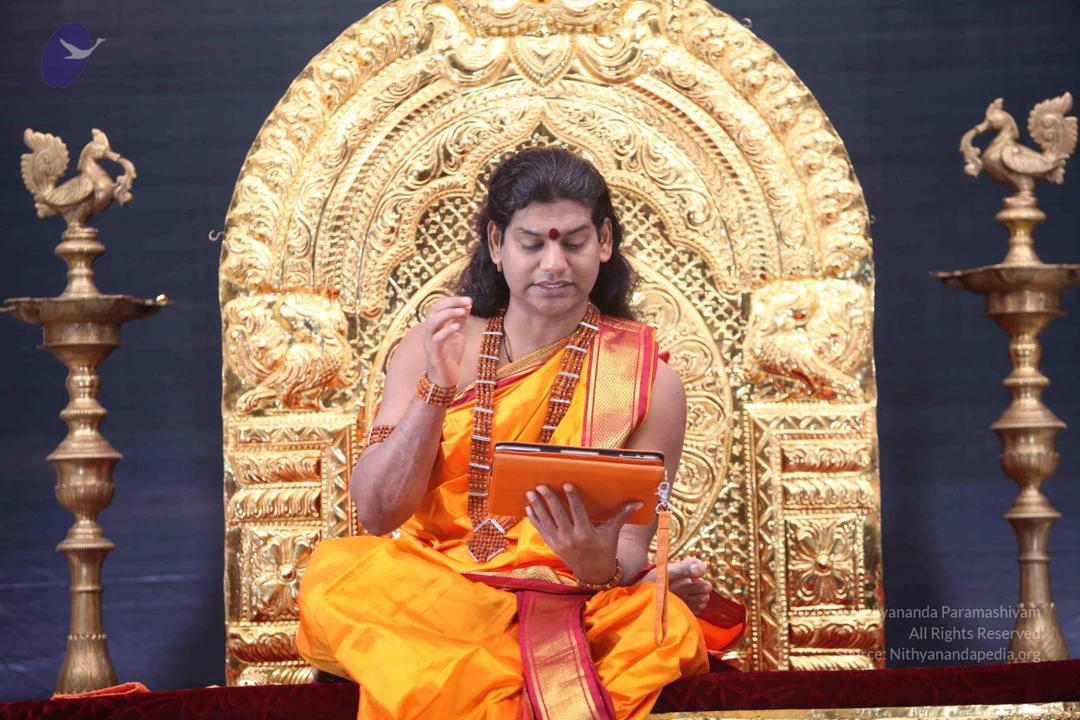
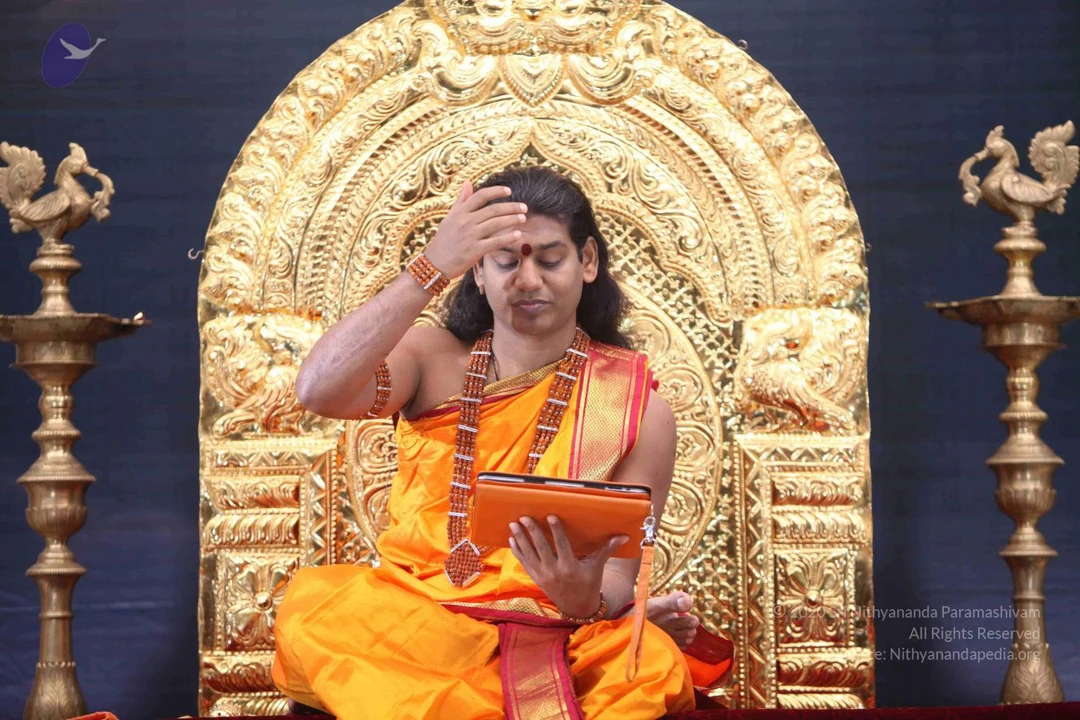
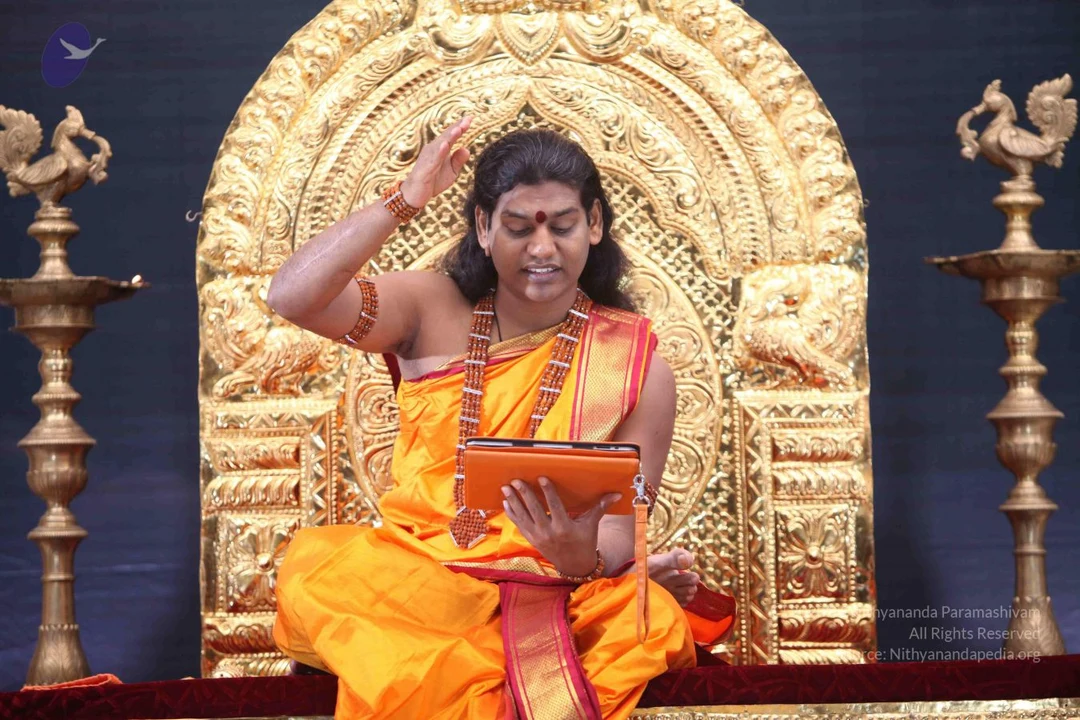
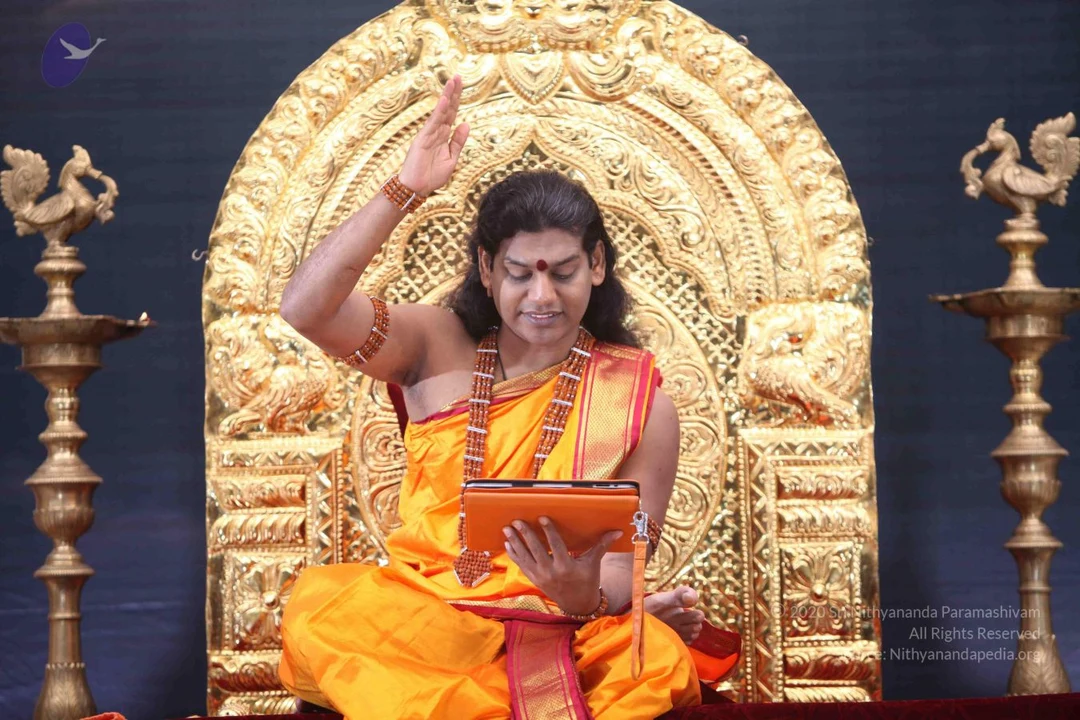
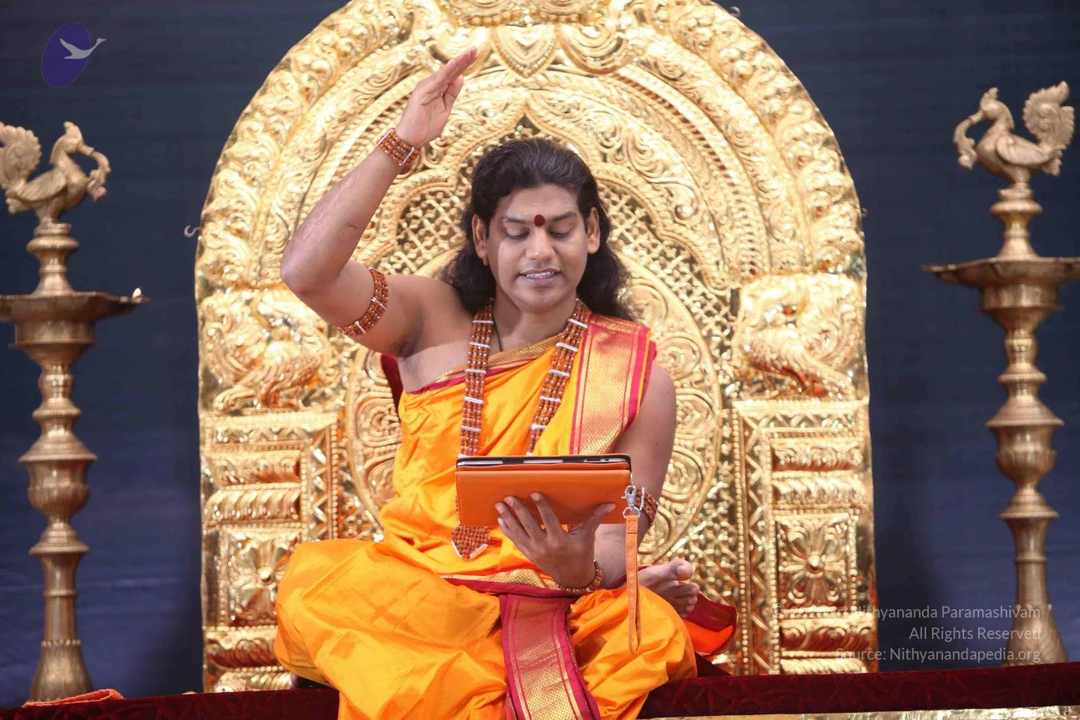
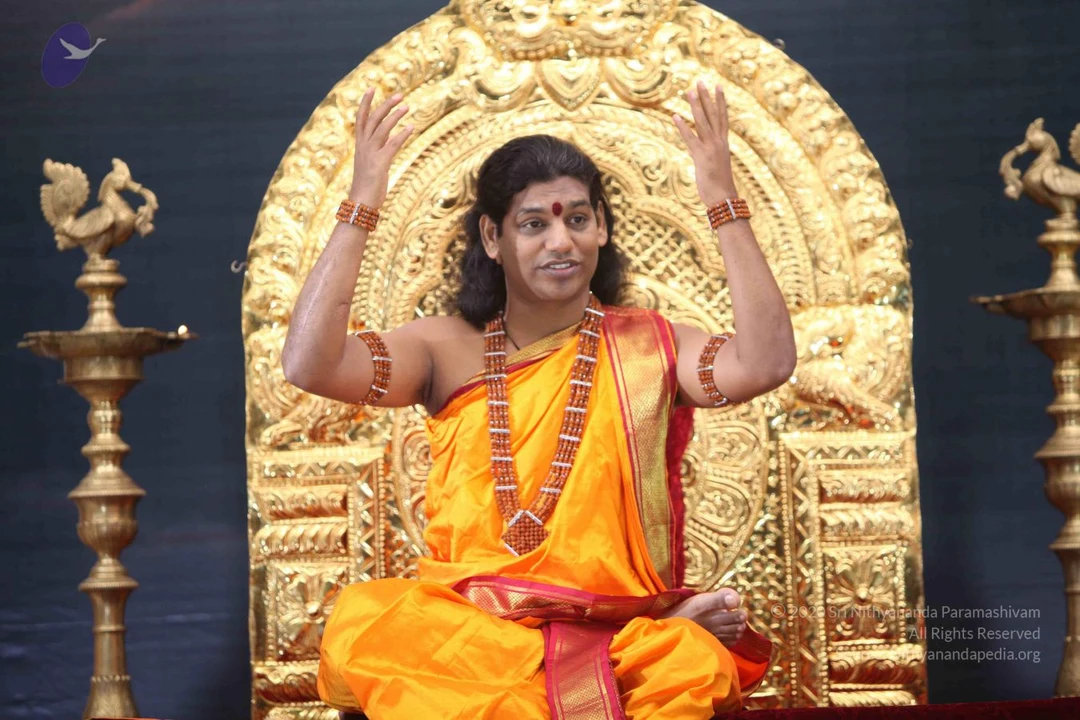
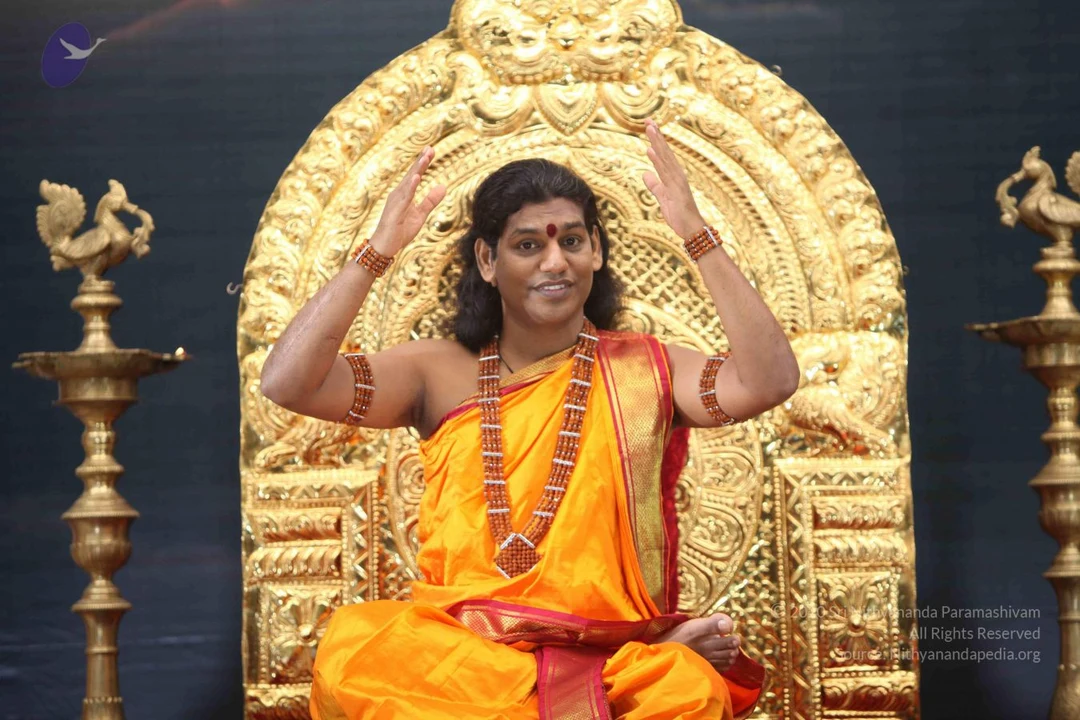
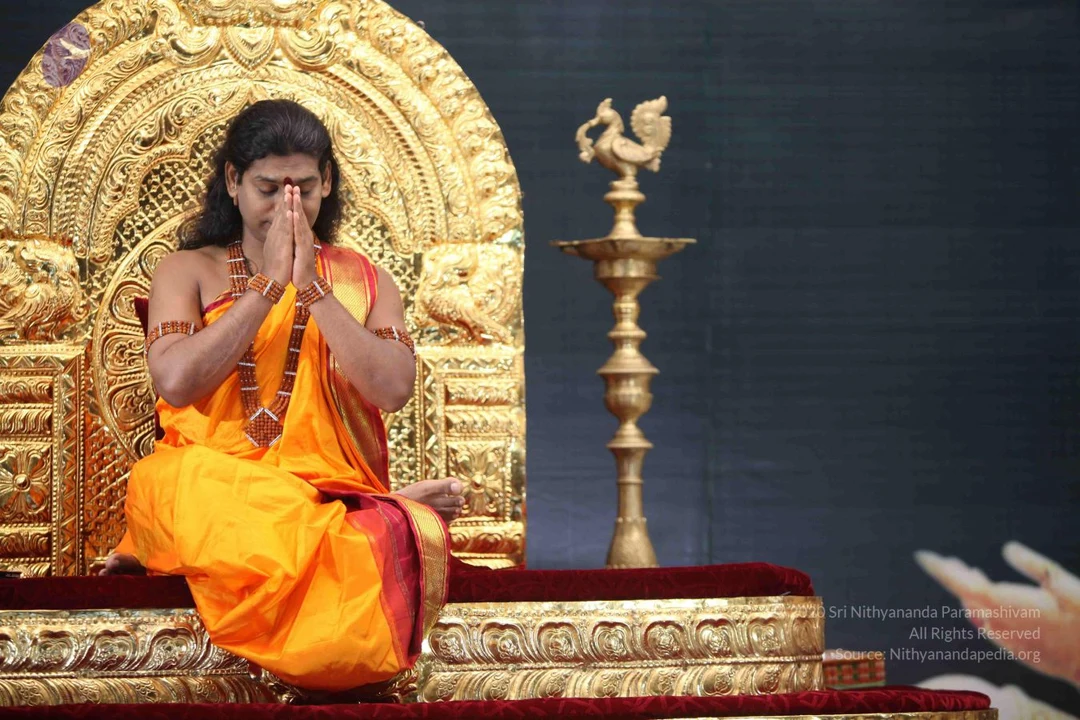
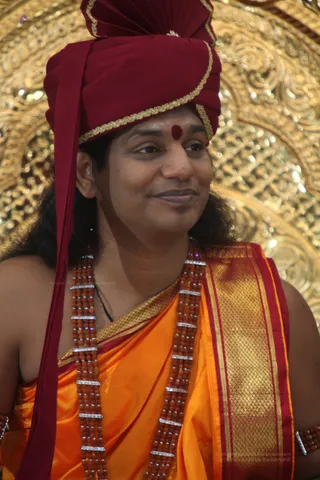
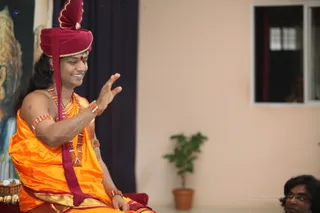
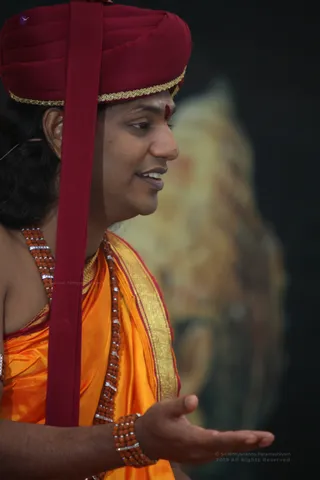
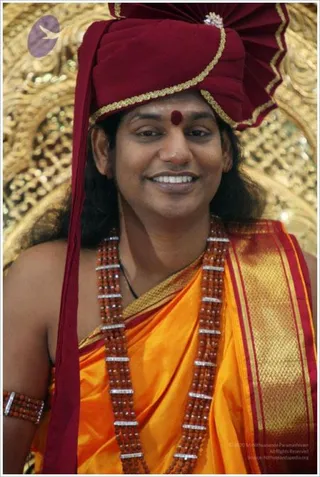
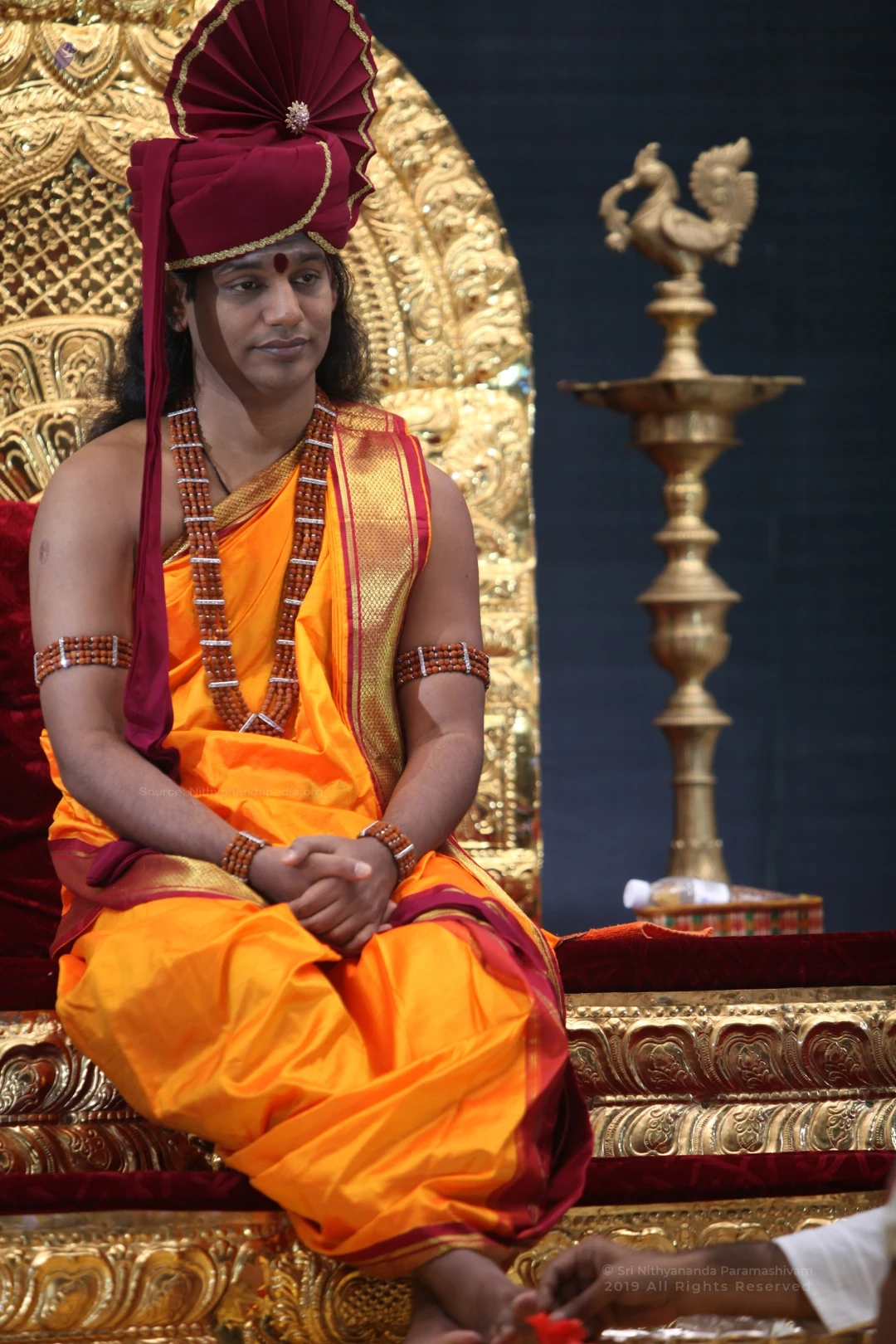
Close photograph of a man seated before an ornate gold-embossed backdrop, wearing a deep maroon turban with gold piping and a silver brooch at the top. He has a red bindi on his forehead, long dark hair falling behind his shoulders, and a bright orange silk shawl edged with maroon and a gold-woven border draped over one shoulder. Multiple strands of rudraksha beads with silver spacers form a long mala around his neck, and matching rudraksha bands are worn on his upper arm.

November 15 2011

Original wiki page
Contents

Transcription

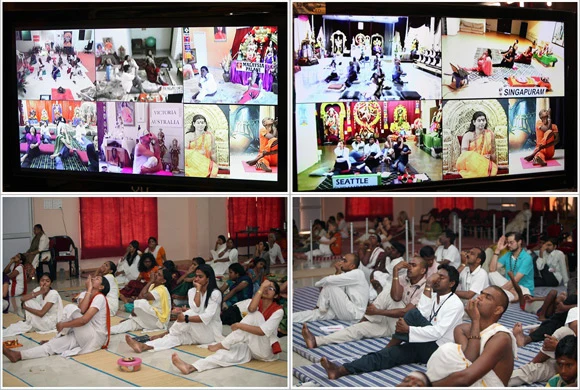
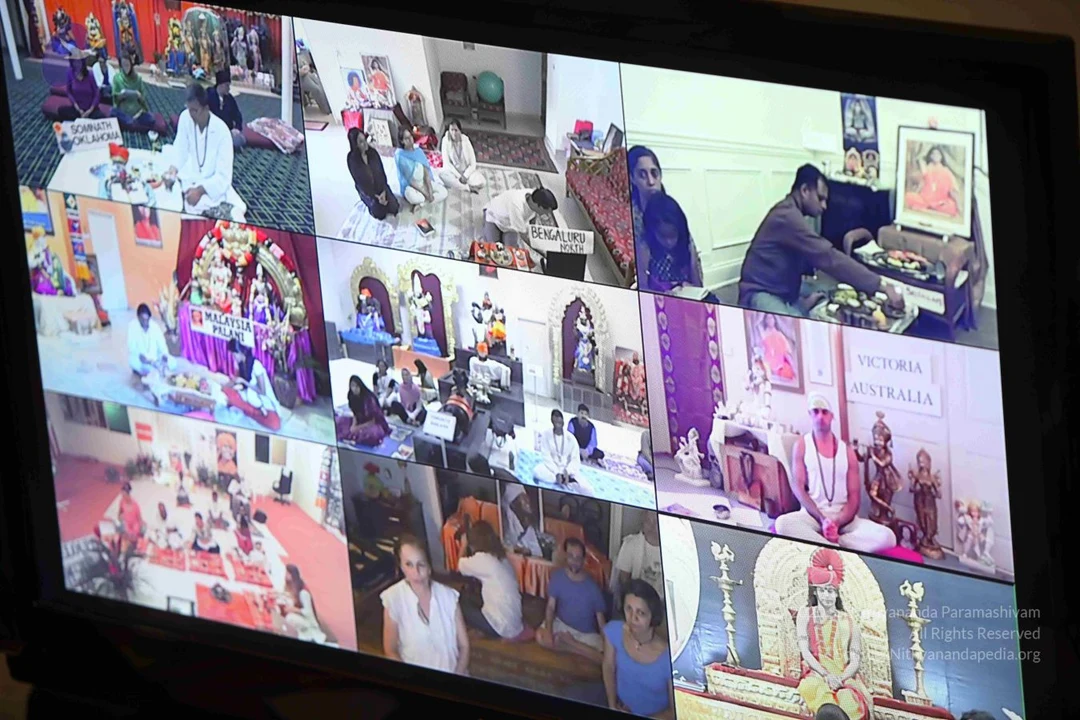
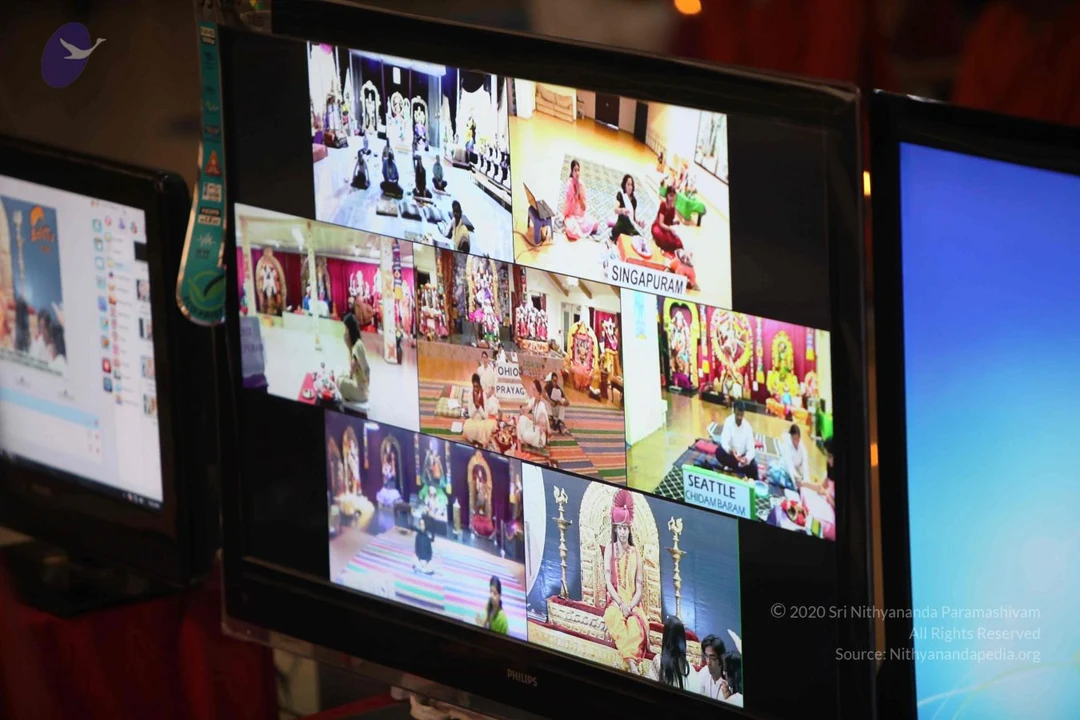
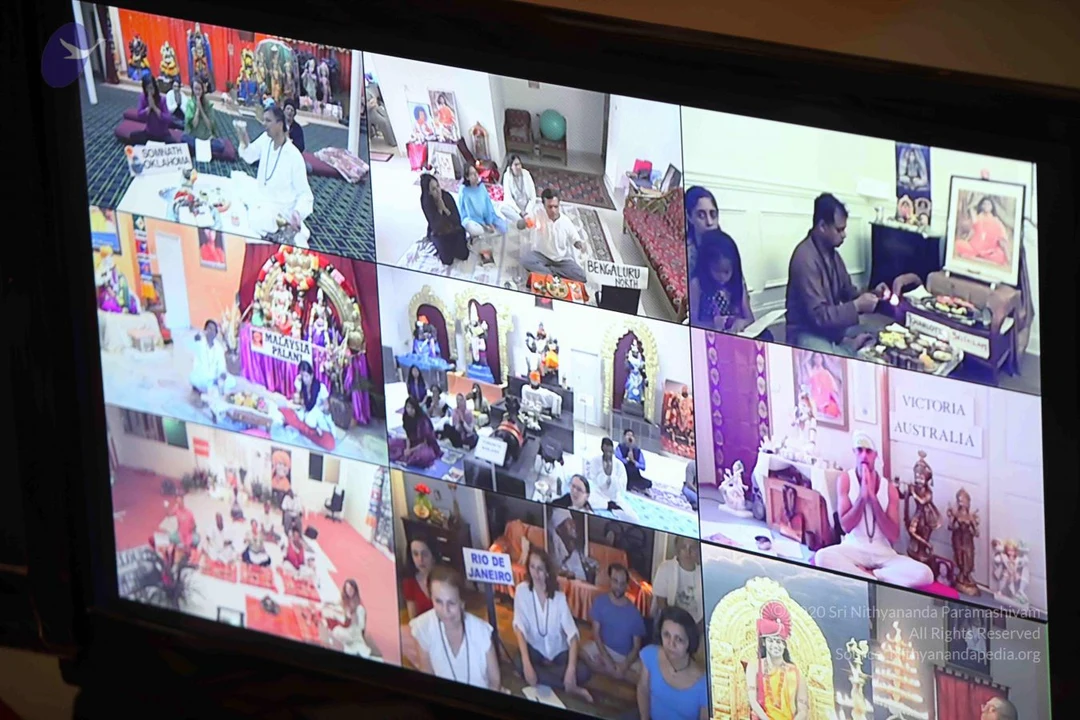
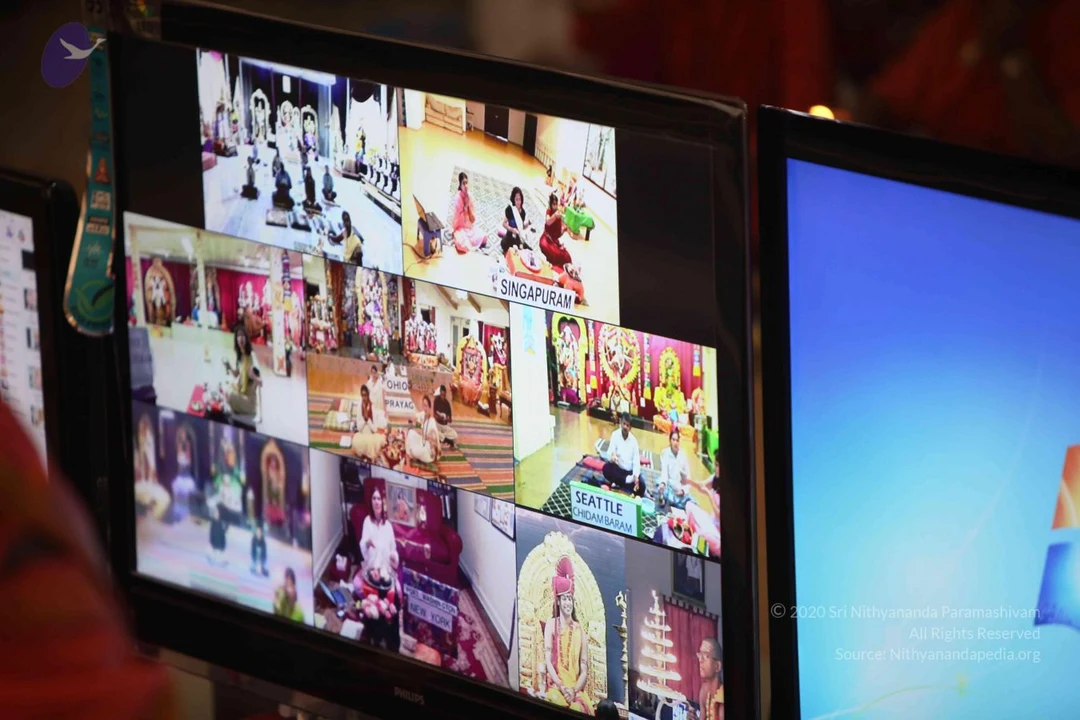
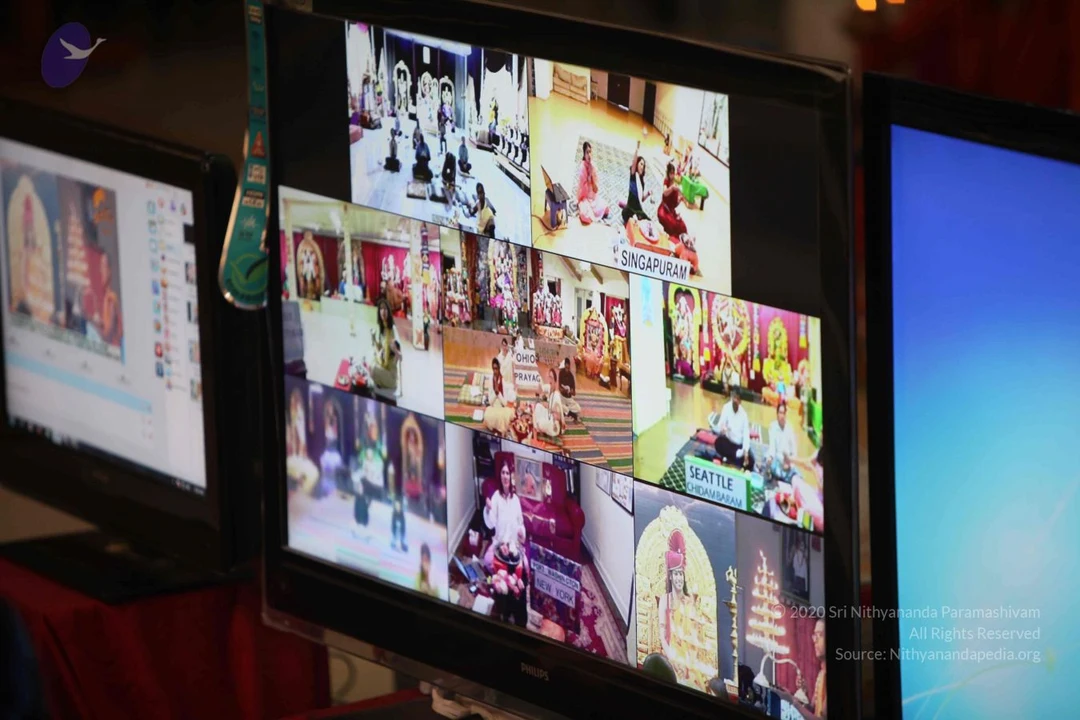
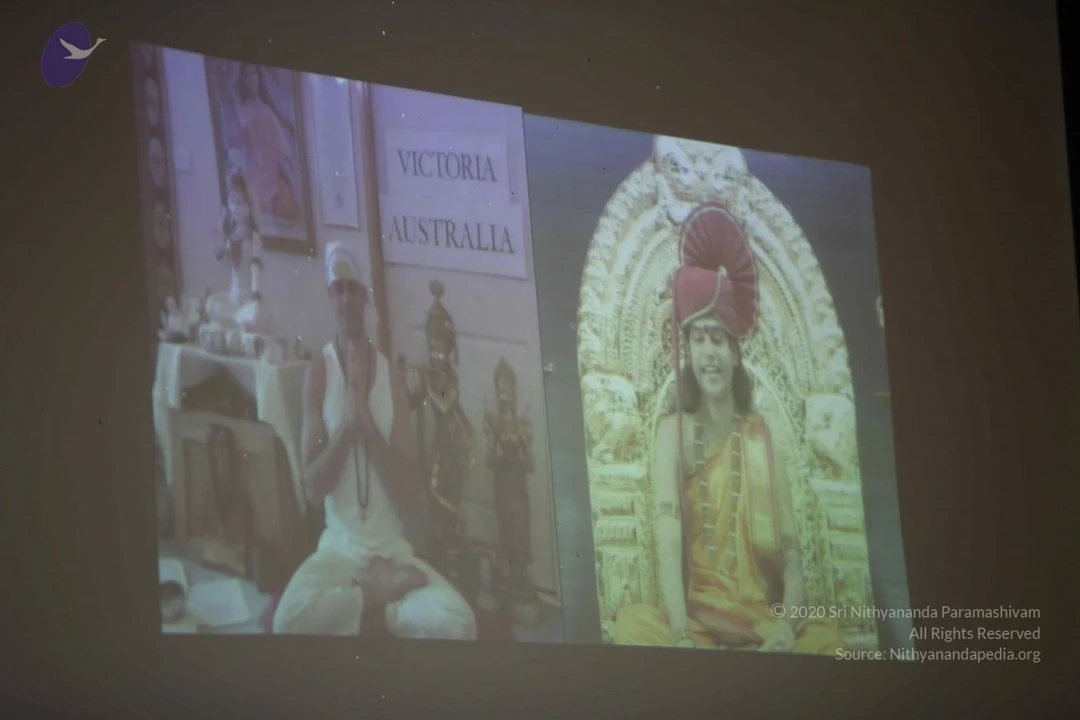
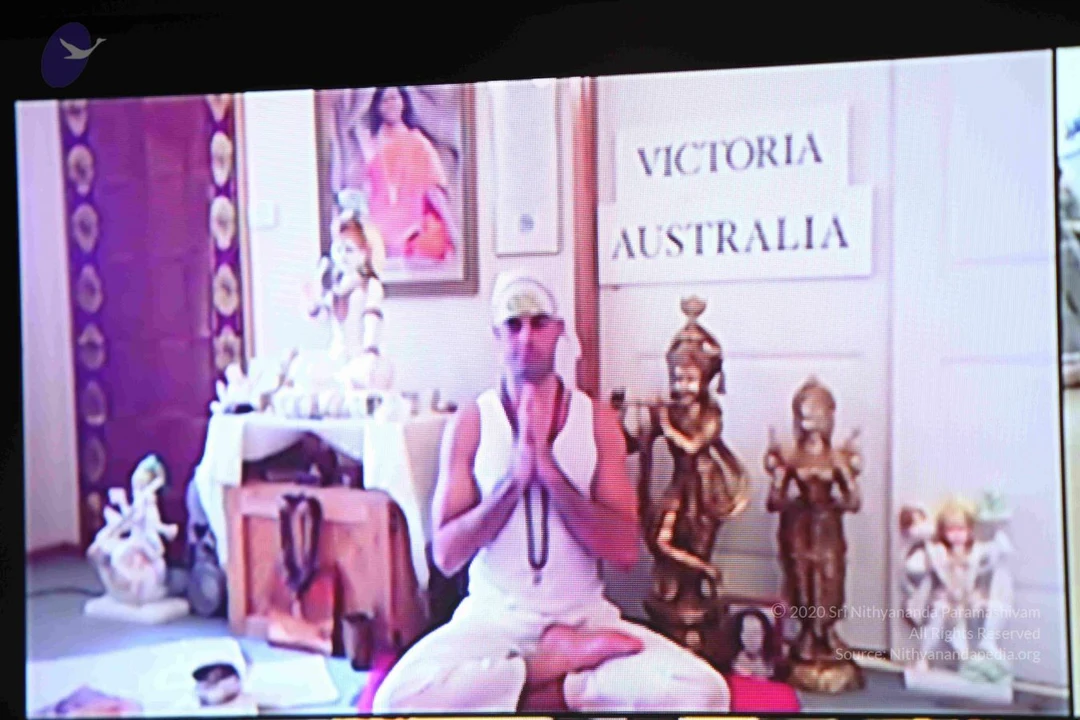
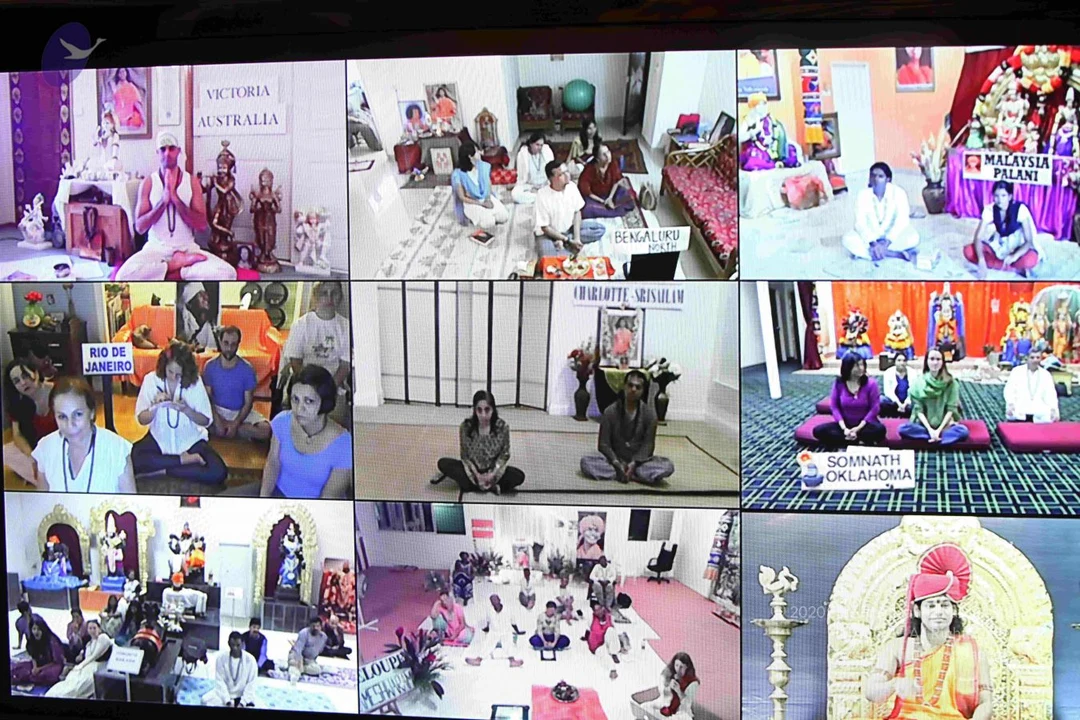
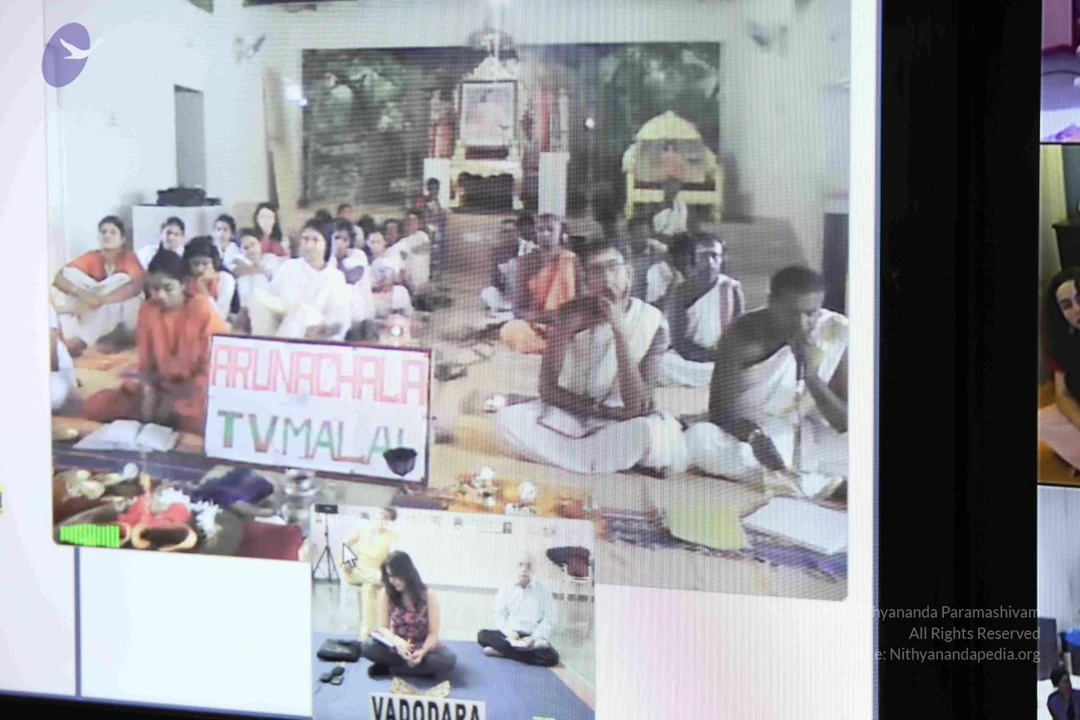
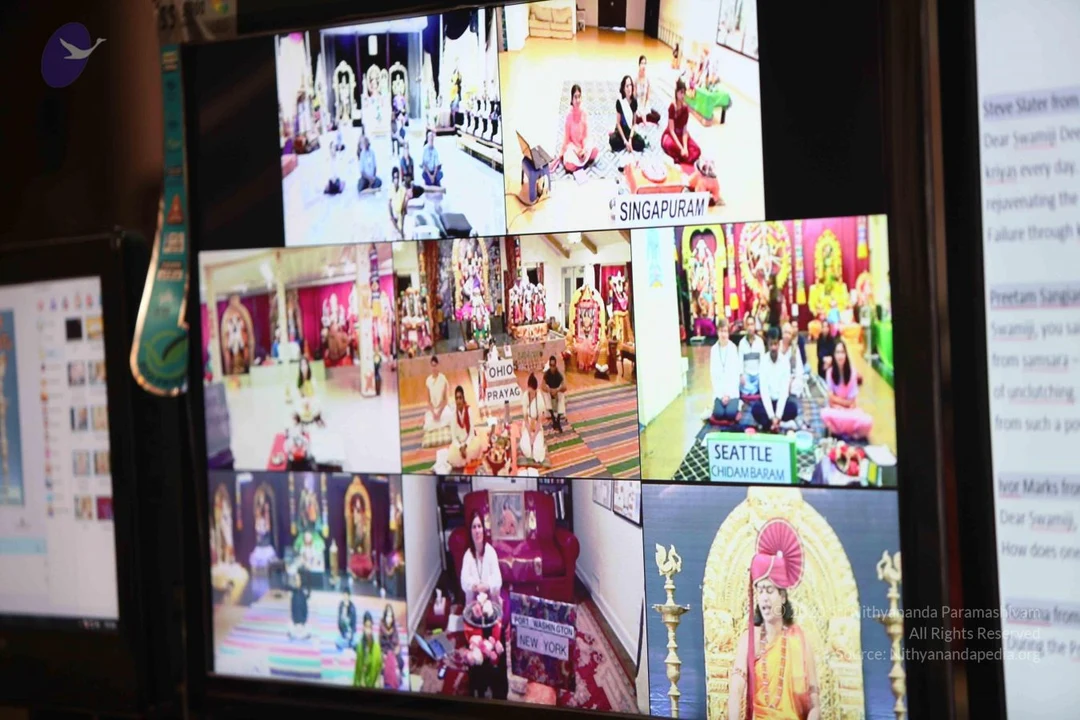
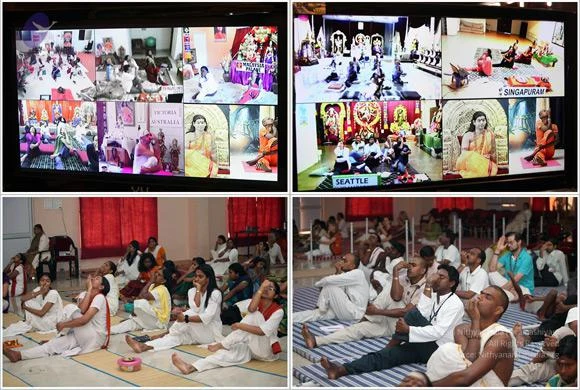
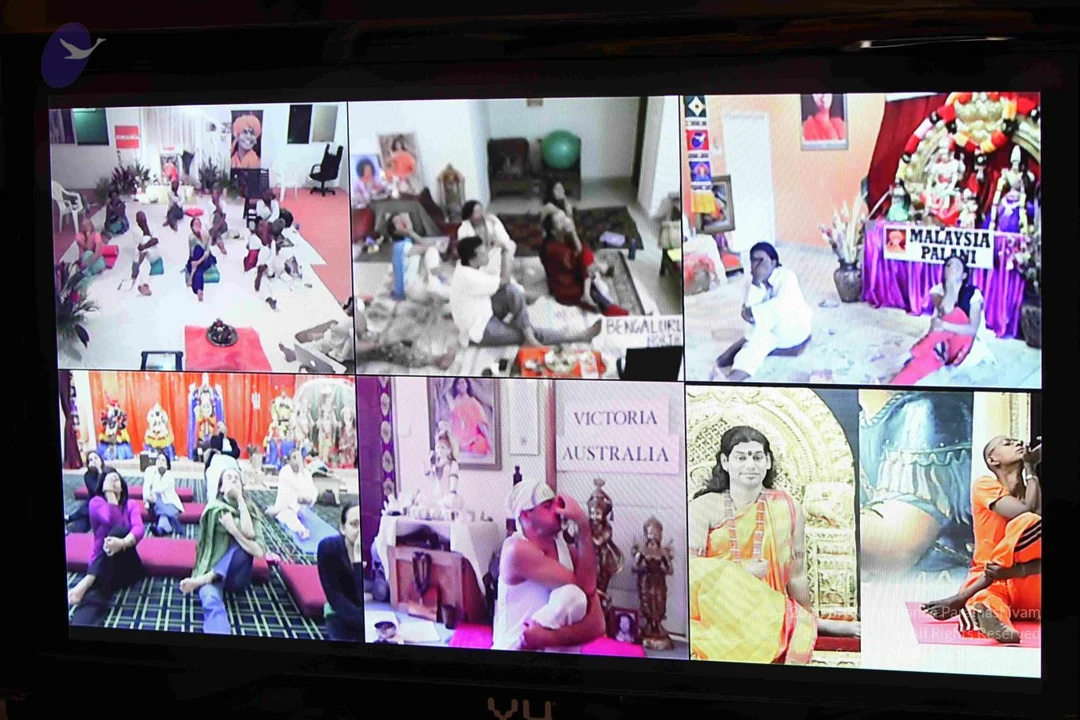
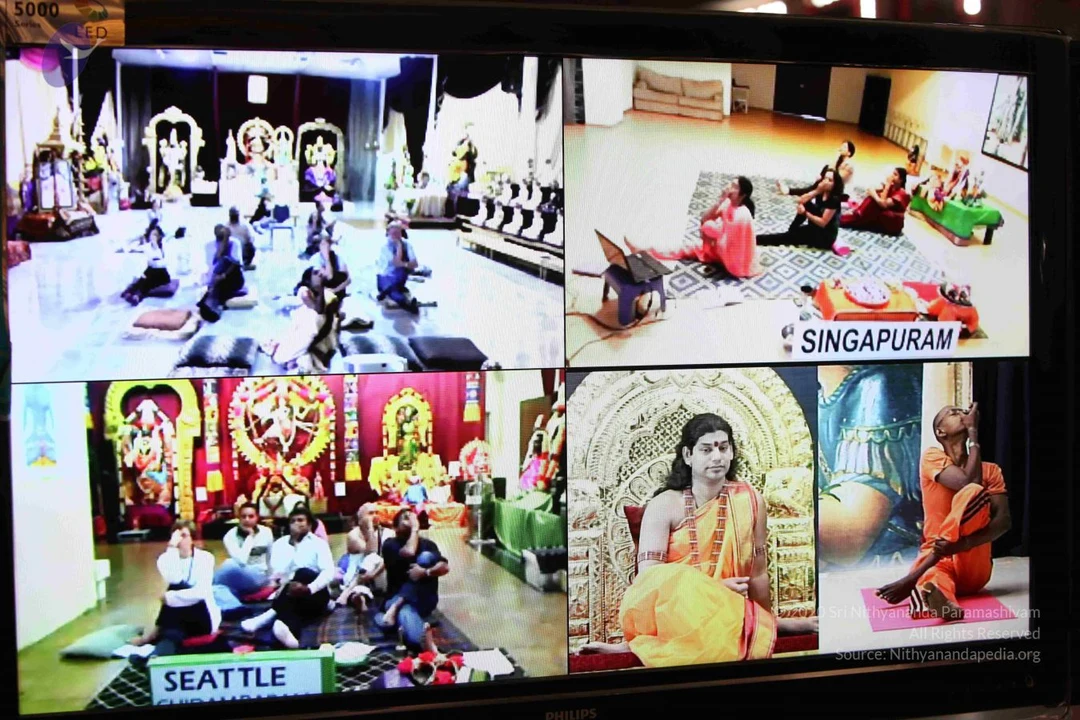
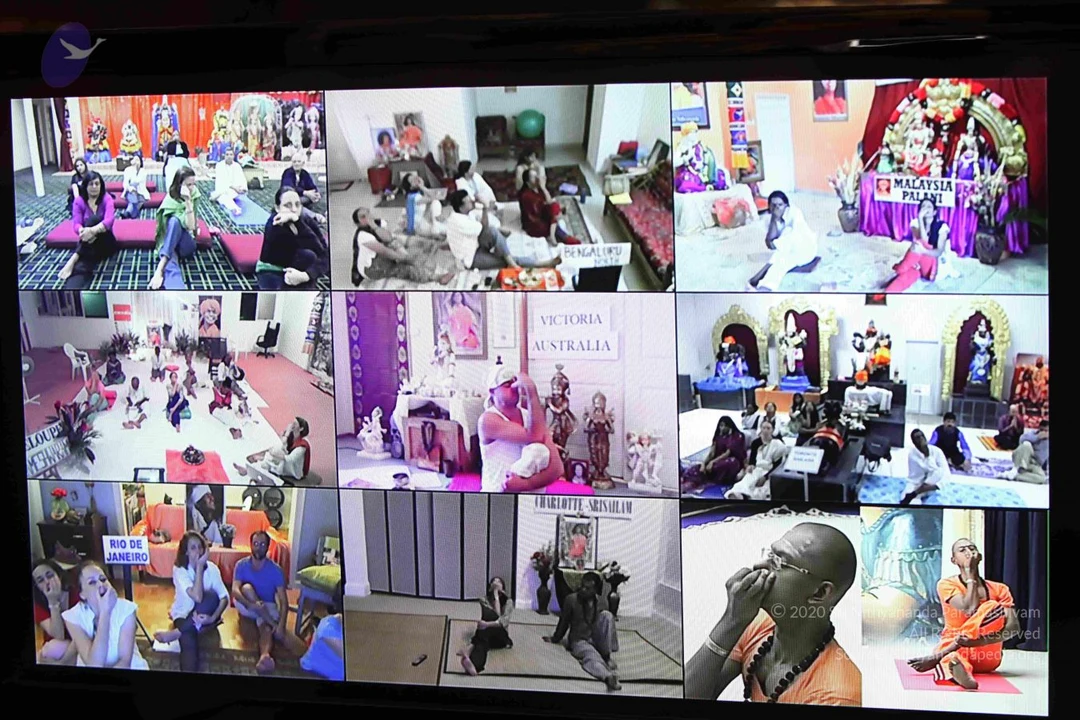
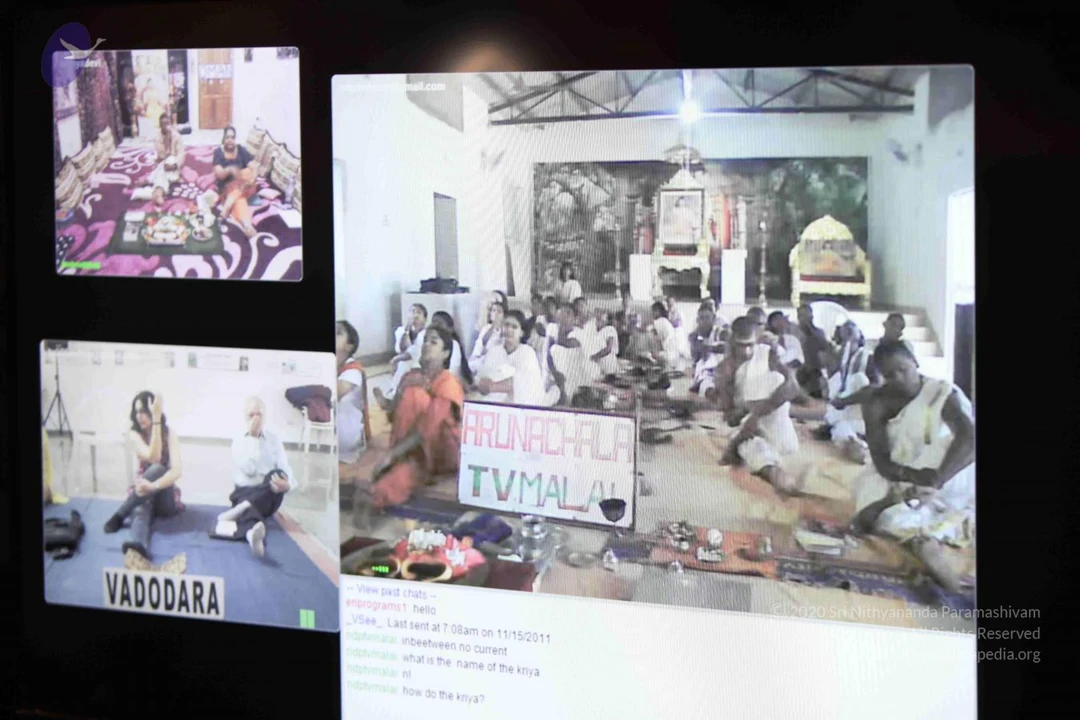
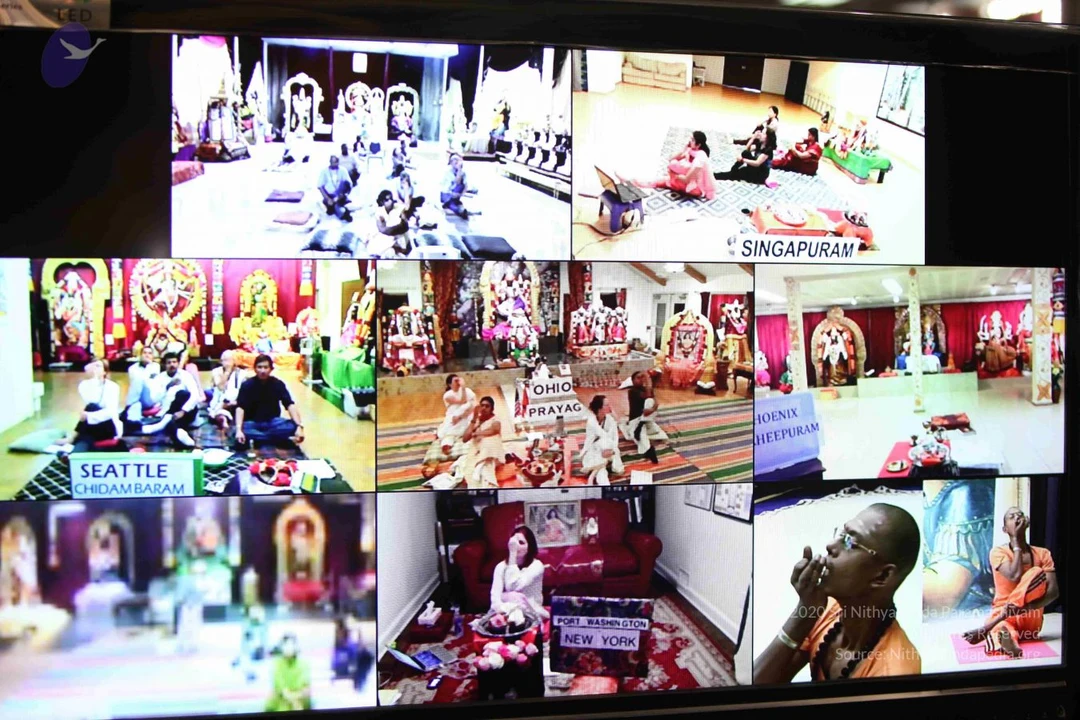
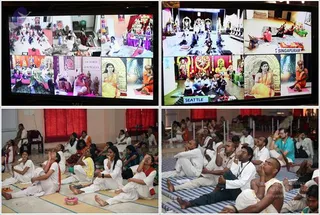
Tuesday, November 15, 2011 “Sadashiva samarambam, Shankaracharya madhyamam asmadacharya paryantam vande Guru paramparam!” I welcome you all with my love and respects! I welcome all the devotees, disciples, Samajis, Satsangis sitting with around the world at this moment in 297 places through eNtv, 17 places 2 way Nayana Deeksha, in 110 cities, in 14 countries! I welcome all the cities… sitting with us in 2 way Nayana Deeksha – Los Angeles Arunachala, Singapore,Seeat chid, Ohio Pr, Phoenix Kanchi, SaN Jose Madhu, Port Wash New York, Aruna Tiru, Vadodara, Ok Som, Bang Norht, Rio degenero, Vict aus, toront kail, guad, Malaysia Palani charlotee srisailam. Blessings to ma Nithya prem thirtha birthday blessings. I will be with you. you will be with me! Let us enter into today’s Satsang. I will answer your questions today also  1) Jeremy from California USA – Swamiji I had an accident in my…. Somebody goes to Bhagavan and says Bhagavan, he is a very simple person. he tells Bhagavan. He is a good Sadhu. He tells Bhagavan I feel to live our life 6 rupee is more than enough… Bhagavan laughs and says I feel to live your life you don’t even need body and mind. Why 6 rupee? Und for you to believe you are immortal you don’t even need other leg, other hand…..you are not able to be immortal? Your whole body is mortal. When I say immortal, which is beyond the body. now you should be able to believe all the more you are immortal. See when you had that one leg, you believed that one leg is you. …. You are alive! Understand when you are able to be alive without one leg, you can be alive without the other leg, …. Reason to believe you are immortal. Jeremy understand step by step. See you say….befasue you are a body, you lost part of your body, how can you be immortal? I am coming from your logic itself…. Now that leg is not there. That is the not the thing you lost your lfie. You are alive, youa re existing! Understand because you lost the leg and still you exist, you have more reasons to believe you are immortal. You can exist you can live without other parts of the body also. 2) Aditya …Swaminji you mentioned in a recent center that one should plan one’s day carefully. Earlier you asked us to jump before you think. Can you explain how can I be disciplined and ….Aditya do any one thing. ….balance. a settled centeredness or discipline your whole day, iron it out. Any one is okay. Any one will lead you to the next level. any one will have a more and more awakening in you. see whatever I am giving is a diff diff diff techniques. But do any one completely. I know See Rama Krishna used to eat only morning breakfast. …Vivekananda used to eat only night dinner…Sharada Devi used to eat only lunch. Nothing else…So one RamaKrishna mision sadhu was eating all the three times….we should not be. He said no in morning I follow RamaKrishna, noon I follow Sharada Devi, evening I follow Vivekananda. Und don’t try to mix and match. You will be in a mess! So either jump before you think constantly that itself will bring a discipline. Or plan your whole day carefully. That will also bring a spontaneity. Any one do it intensely. That’s all I am saying.

3) Swamiji deep gratitude….just wondering if you could give us a Kriya for rejuvenating our kidneys… It is possible. I will give you the Kriya specially for activating, rejunvenating the kidneys again and the cure is possible for….Yogic tradition has really created. See Yogic tradition has created solution for all the existing diseases and diseases which are going to come. They know human beings are in continuous job of creating diseases… Because of the unconsciousness human beings are constantly creating diseases. Our masters they thought, they understood. Where all our unconsciousness can lead and created Kriyas for everything… Only I have not yet started revealing. Soon I will reveal Kriyas for HIV cure, cancer cure and this kidney cure many other diseases which are incurable as per the allopath science….i am very clear I am going to bring new world health order! I am not here fooling around. Come on, I am too serious about what I am talking and I know what I am talking. I am not promoting Yogic Tradition, Vedic Tradition …I mean our tradition has solution for everything. I mean out tradition, the Yogic Tradition not only has the solution for everything, it can snub the problem before even the problem starts. I am really serious. My initial level struggle is only not having infra structure. Und not having….we can do it. I will do it! 4) Preetam =- …you said few days ago that we can directly be released from Samsara….how can a technique be sufficient for such a powerful pattern Unclutching is not an ordinary technique. It is beyond technique. Techniqueless technique..for example I am sahying…if I walk though the 6 feet door ….if I have a 6 feet opening and walk through I will have a 6 feet place. No. walk thought it, you will und, the whole world is waiting for you. same way, unclutching is not a small door. It is a door to the cosmos. It is nto an ordinary technqie. It leads to the complete fulfillment or ultimate liberation or freedcom. So pl und unclutching will destroy the very pattern of making patterns. I can say unclutching is internal earth quake, wild earthquake. Your blood will have Tsunami, your bones will have EQ and your samskaras wil have forest fire. And your Ananda Gandha…. Not the Tsunami in ocean, …in your blood, not the EQ outside, EQ in your bones….unclutching si the knife in the hadns, sword in the hands of Kalki. You are going to be the ultimate incarnation when you use the unclutching. It is a very ..lpowerful … 5) How does one identify one’s life mission and purpose clearly? I can say sit with yourself without letting all the influcences of the society, family, friends. Spend few days just contemplating on it. maybe take up this as a vrata…. Family, friends, contemplate. You will suddenly realize your purpose and mission completely in your life. I have even given some more techniques earlier itself for ppl to find out purpose in their life, … 6) Is Kund a purely mystical phenomena… Everything which is mystical phenomnea has a scientific basis. Science is yet to evolve to our level….whoever funds they guide the research and the result. So 400 yrs with so much of flaw. Btu spir mysticism is at least 4k years without any flaw…repeat …ifnot 400 billion years without any flaws. So und science is yet to catch up with us!

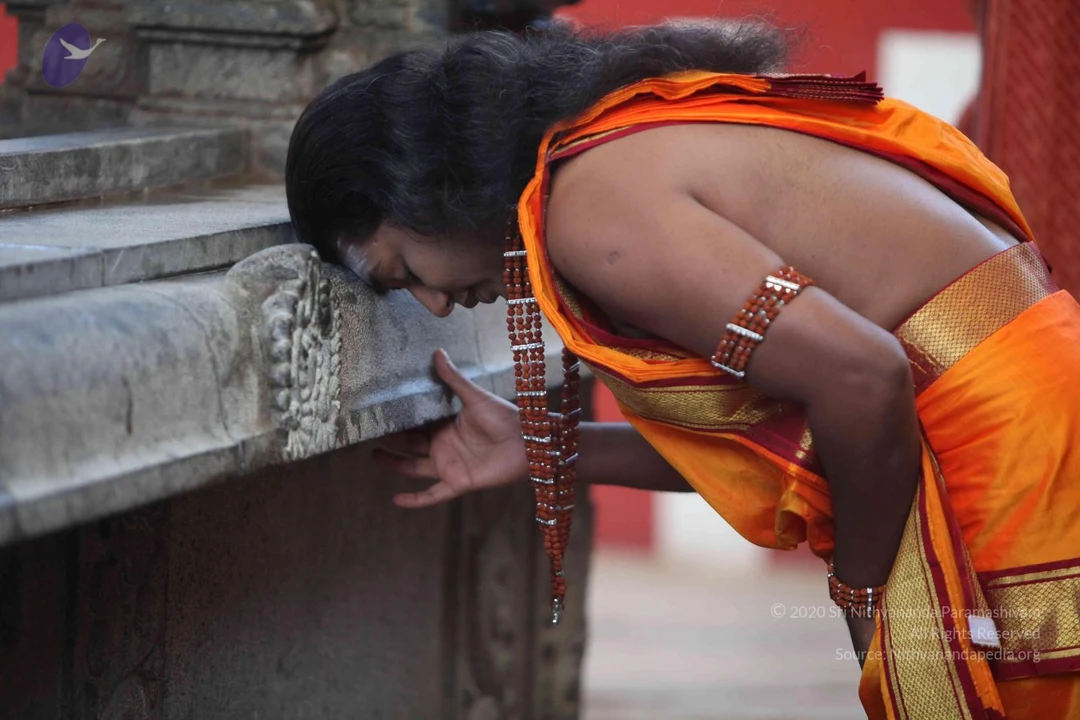
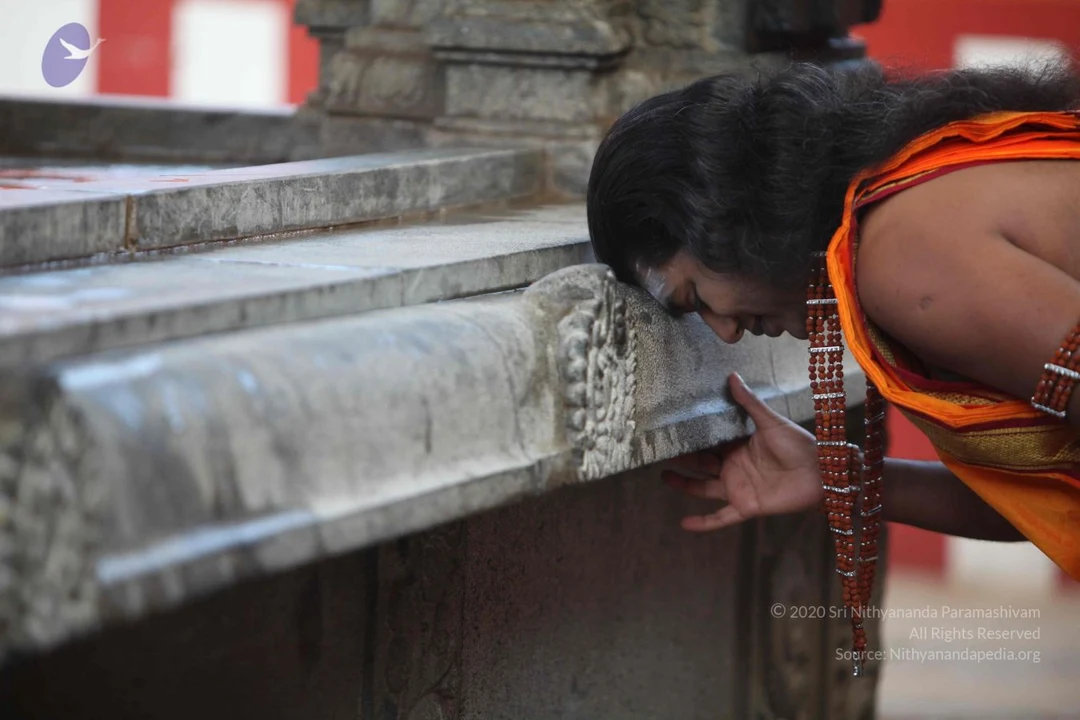
7) Steve from Can kund awakening be controlled thru the mind…if a disease is healed by ..continuing negative mental pattern? Steve, one good thing of the Kund is not only it heals you it frees you from the negative mental pattern also…so mostly you will not have the same negative mental pattern to bring the disease back. 8)….all the three ppl I talked to that day, I felt I was talking to God. The only thing is in one of my relationships, I still feel…. Suvarna – I am not replacing your husband! See I teach you how to love him. he should a ctually be more happy that you have connected to me and living life so happily….i am teaching you to love him, he is teaching you to hate me. see the behavior human mind. It is like both of you go to a counselor…that fellow starts hating the counsellow. What to do now? ….but poor fellow he is unable to understand. Uncon scious guys. Basically man cannot stand another man praising the wife. …men cannot stand if a women looks at even celebrities or actors int eh cinema and movie. Why when you guys look at all woman celebrities. Alright I don’t want to get into that area. But men are basically sick! I tell you. …because of my inspiration. Instead of understanding that, that guy thinks that I am his completion…hs is too small for me. I don’t know how these fools get into this sickness. I think we should treat him as a sick baby. That’s all. 9) I find that when I am in romantic relationship this is where I struggle…super my world mode where I fantacise about past and present…. Super my world more, you are not really in romance. You are in fantasy. Romance is loving the truth, fact. Romance is something like a completely not having fantasy but being in love! Repeat is love. Kara understand, when you are going to that my world mode, you are not in romance you are in fantasy…relax you will realize. 10) I have heard that kund enhances the sexual …infertility problem which I am suffering with since many years. I WILL GIVE kriya for removing, curing infertility problem and I will give Kriya for Bramhacharya both I will give. Of course Brahmachazrya is not becoming impotent…. 11) After KA WILL th eunconsc patterns I inherited from my paretns and grandparents also be destroyed? Sure... 12) Idols in your temples. Ravi idols are not idols, they are deities. When prana pratishtya happens, I myself enter inot it. what has entered into my body ….enters intot he idol to make it deity. Sow ehn it is a deity, it is an ind intelligence response to your prayer, everything. So und it really, really, really, really it can give what you want and take you to the space where you don’t want anything else. It can give you ultimate. Really it can give you even enlgiht. It can act, deity can act as a substitute for living master. That is the reason…..i am so devoted even to my own dieity. Once I energize my paadukas give it to the temples or centers….for the center and kept it in the corner. While I was walking my feel touched that. I bent…the BCs who are talking care of me said …it is a ind intelligence. Paadukai naachiyar now it is a deity. That’s it. even I have to respect it. when I go to

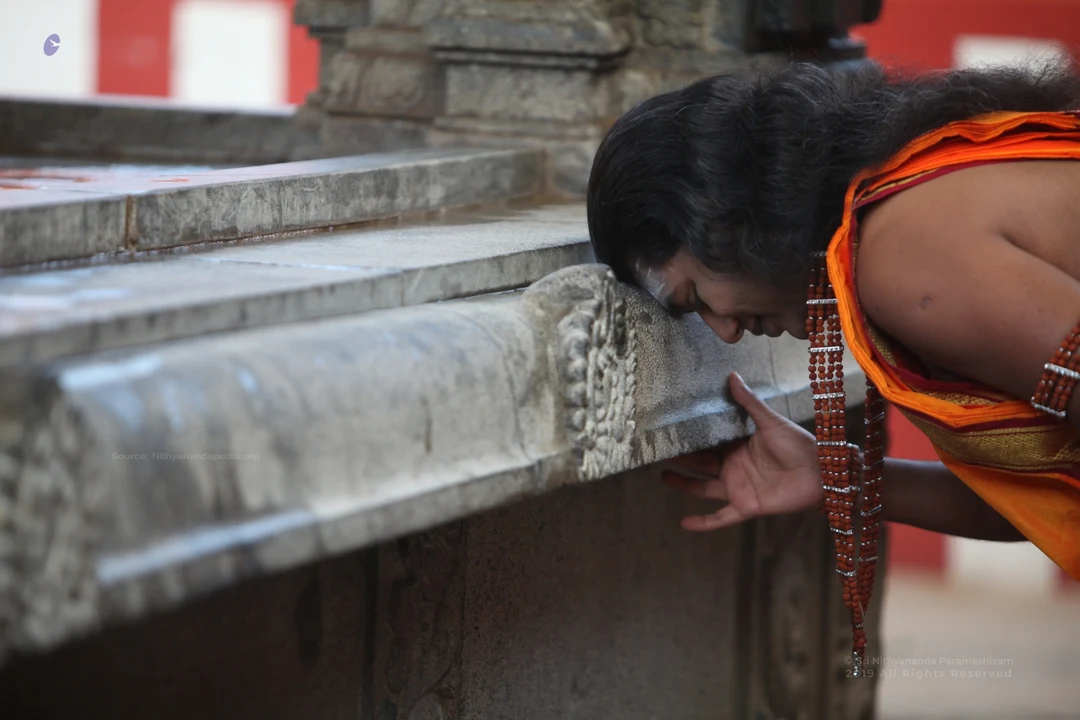
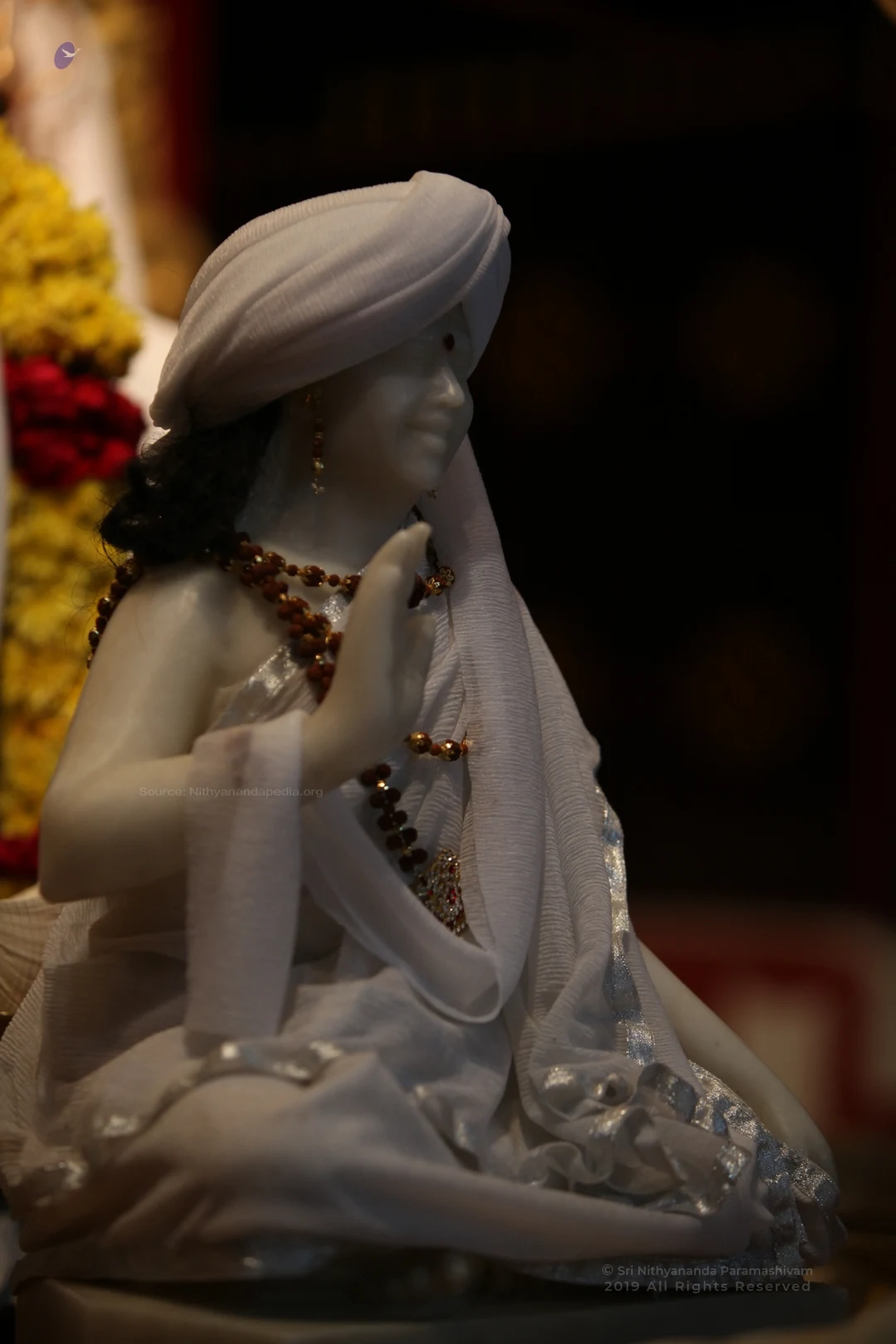
the temple everyday morn, I put my head on my own deity. It is there in the Garbha mandir and I put my head. Treat it with tre… Atma naadha means Shiva himself worshipped his own deity just to tell the world how to do puja. Srisailam is atma linga or Mahadeva….Sriranagam…sri Ramachandra Prabhu. Srisailam Ravana tried to….Srirangam Vibheesahnd tried to ccarry from Lanka… So und Rama himself worshipped Ranganatha and showed how to deo puja. Shiva himself worshipped shiva linga and showed how to worship. Diety is God 11) 2 nights ago I had a dream that you are helping me unclutch. I woke upwith such a sweet feeling…flood your being with the doing…all day I was in bliss….always Laon, watch Satsang everyday… 13) Islove a delusion for me? the love I have from my family….my heart melts. Is this also an illusuion? Diano beloo I don’t want to say this is illusion…have more deeper and deeper love. 14) Umesh from Toront Kailasa – in pure Tamil. I am giving you the name Kailasam. I watned Toronto temple to be Tamil temple becos it is …

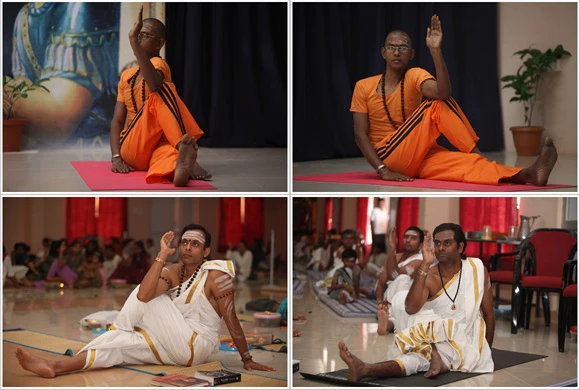
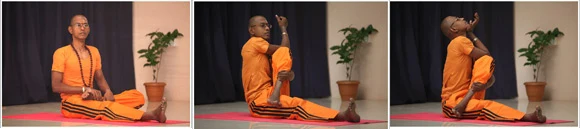
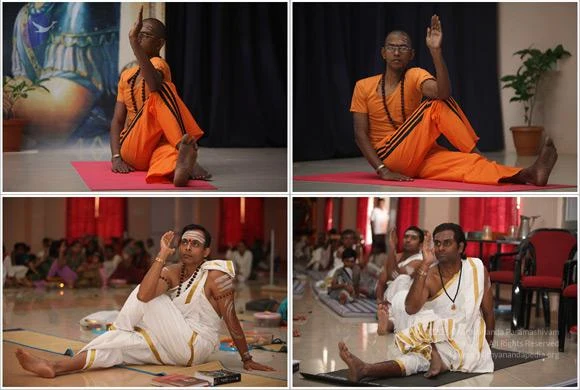
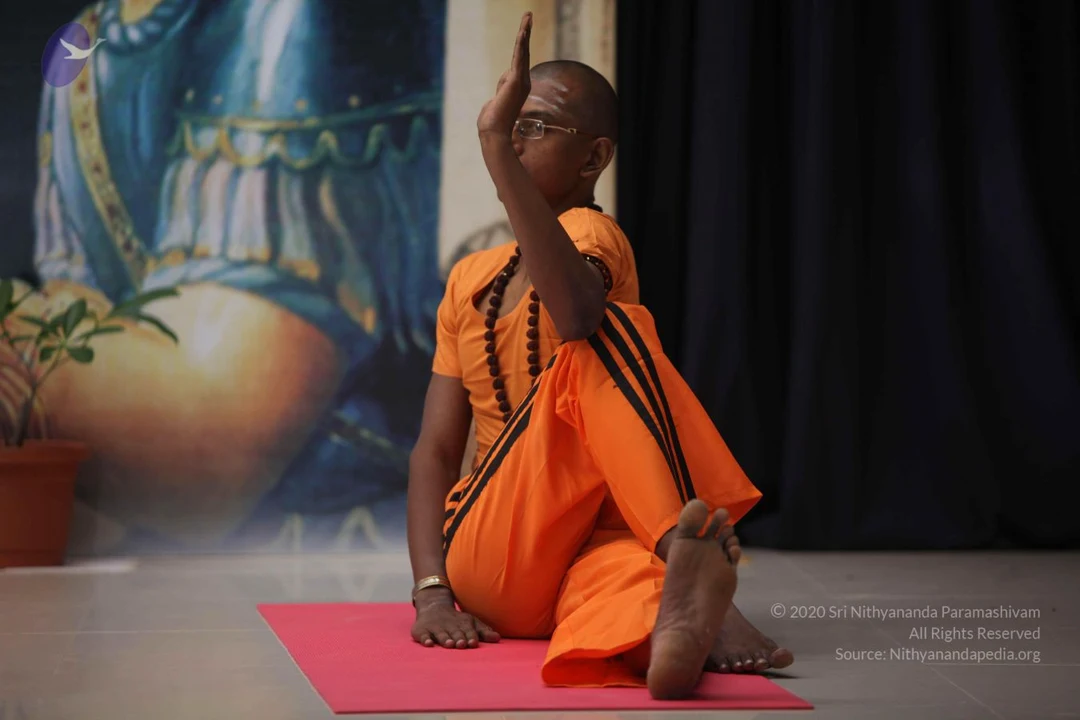
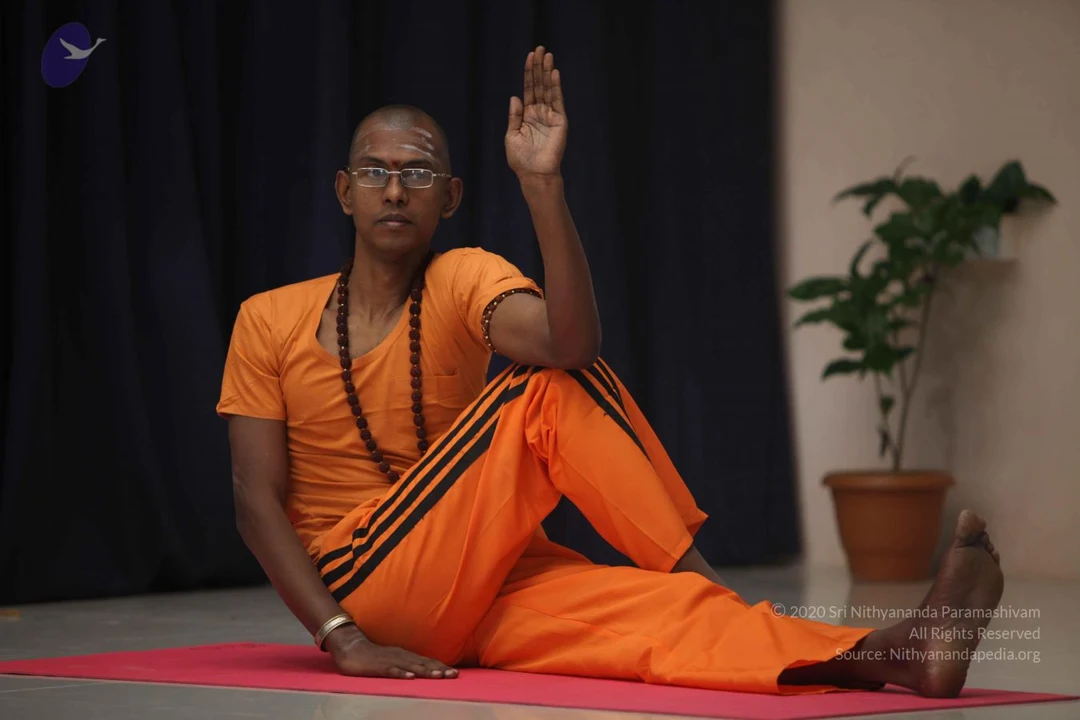
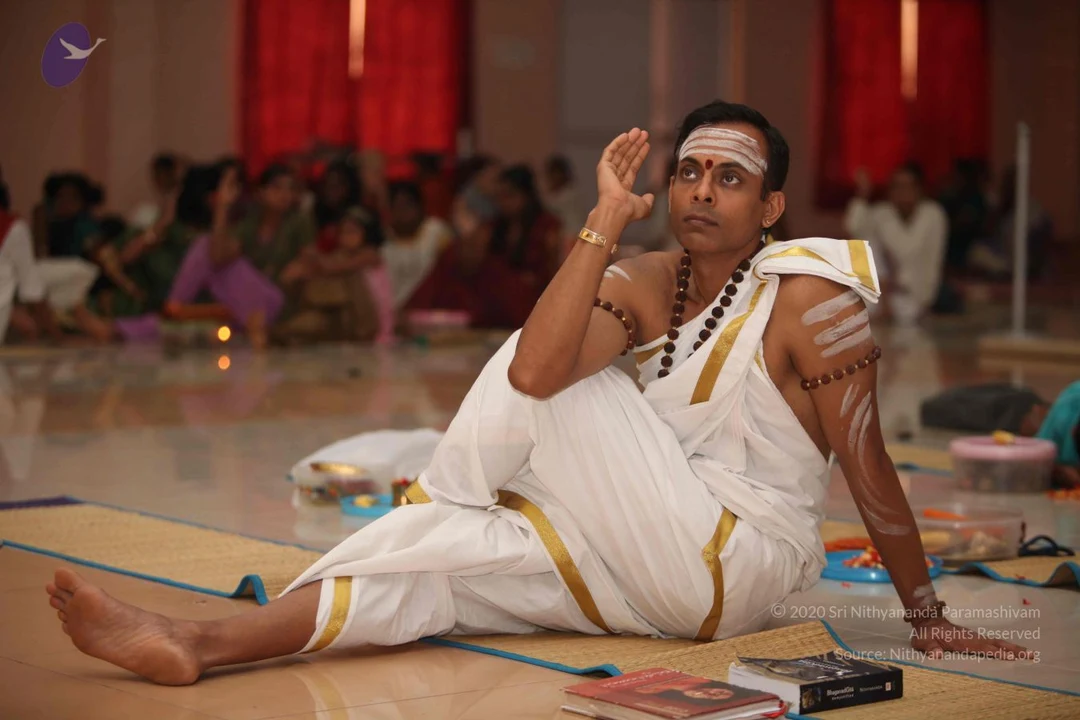
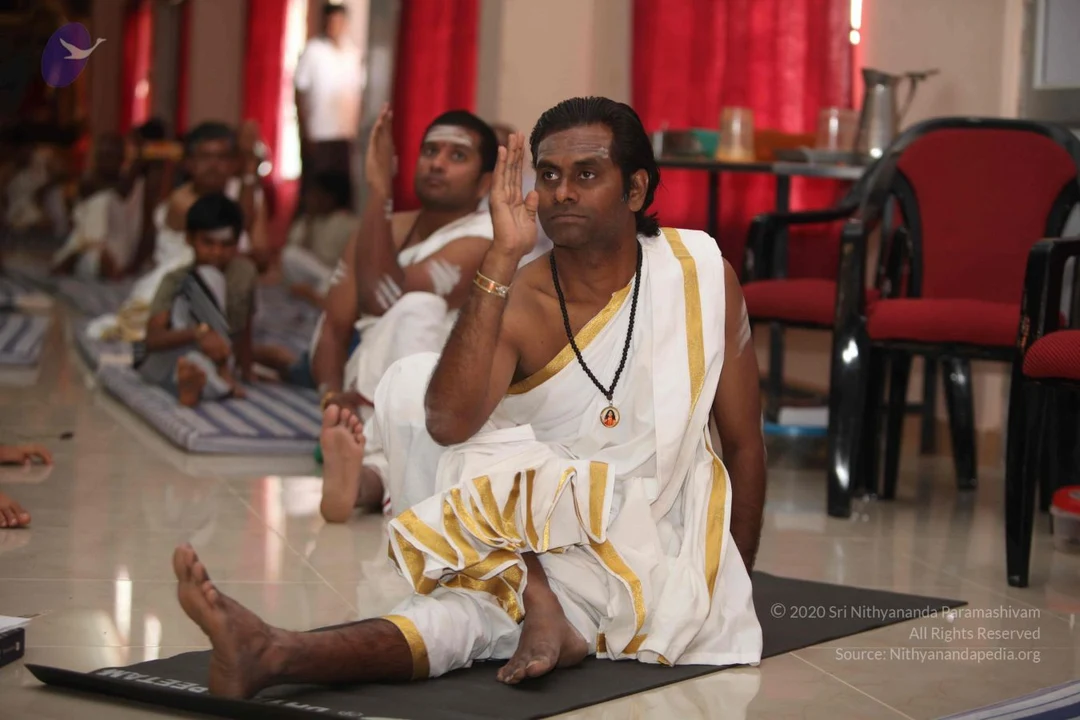
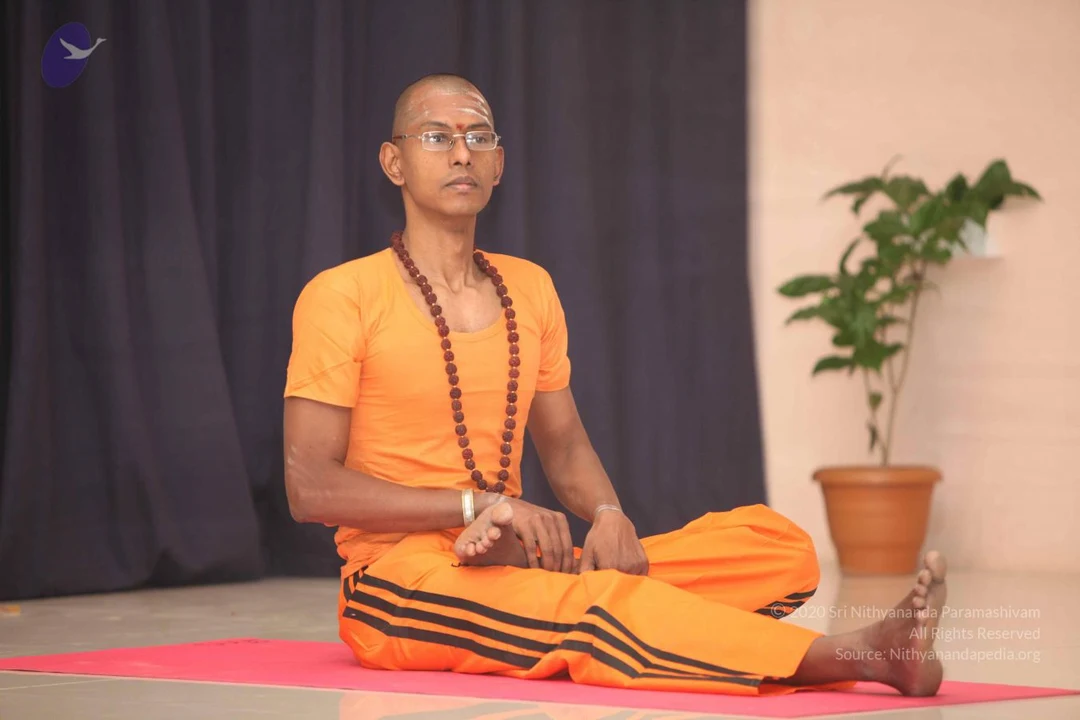
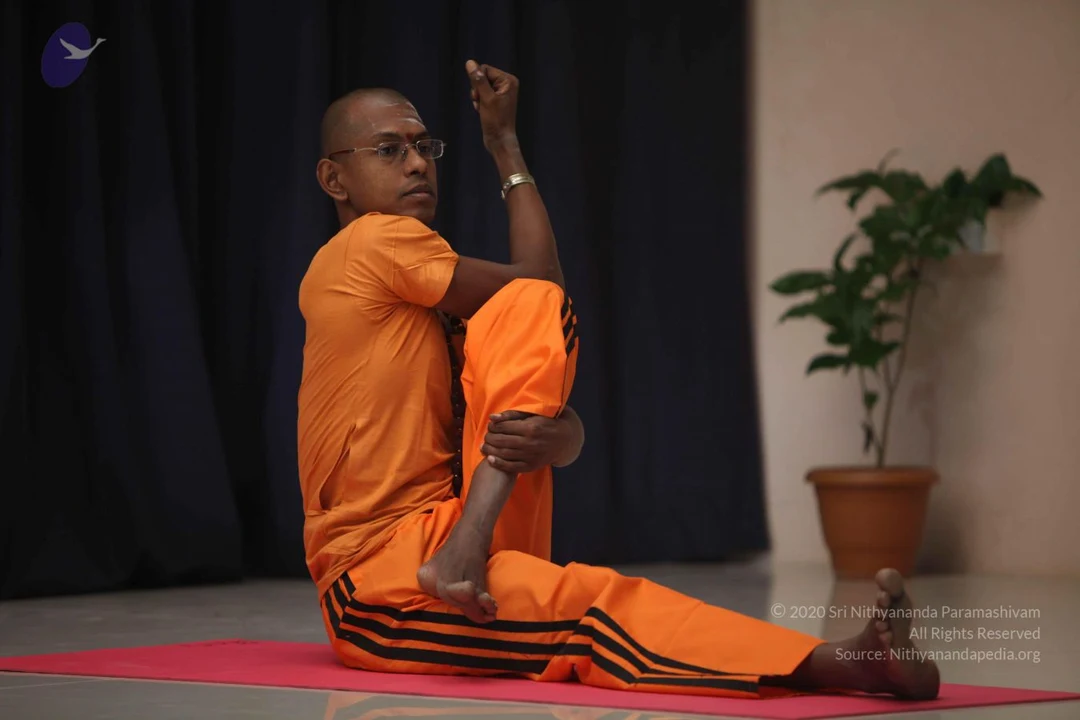
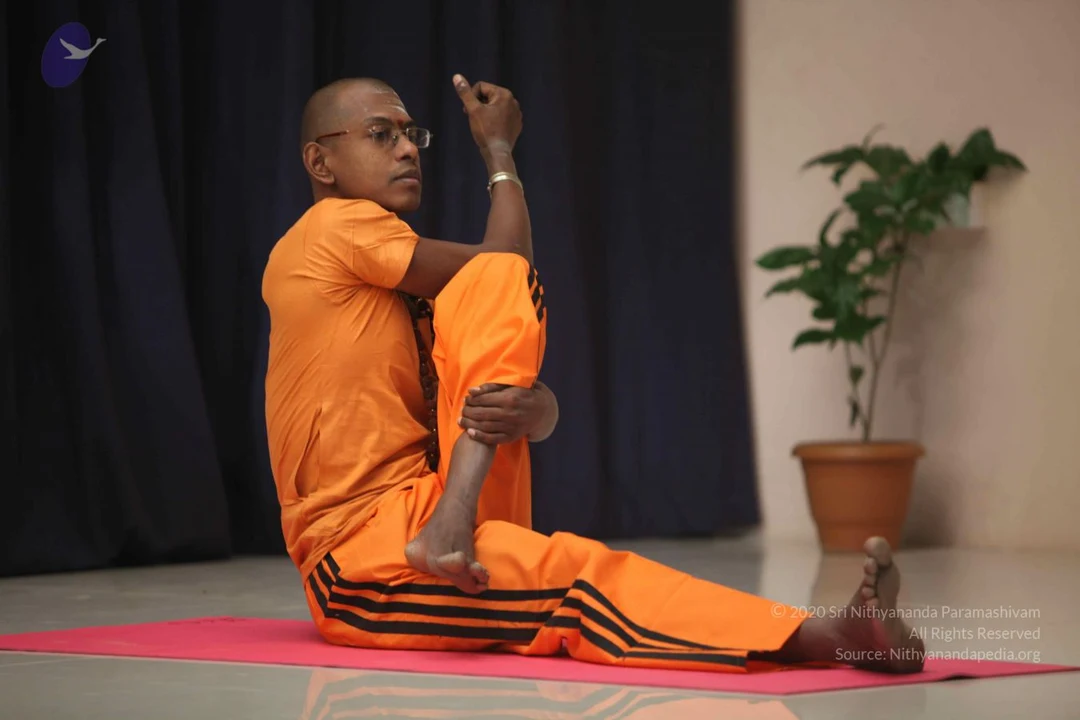
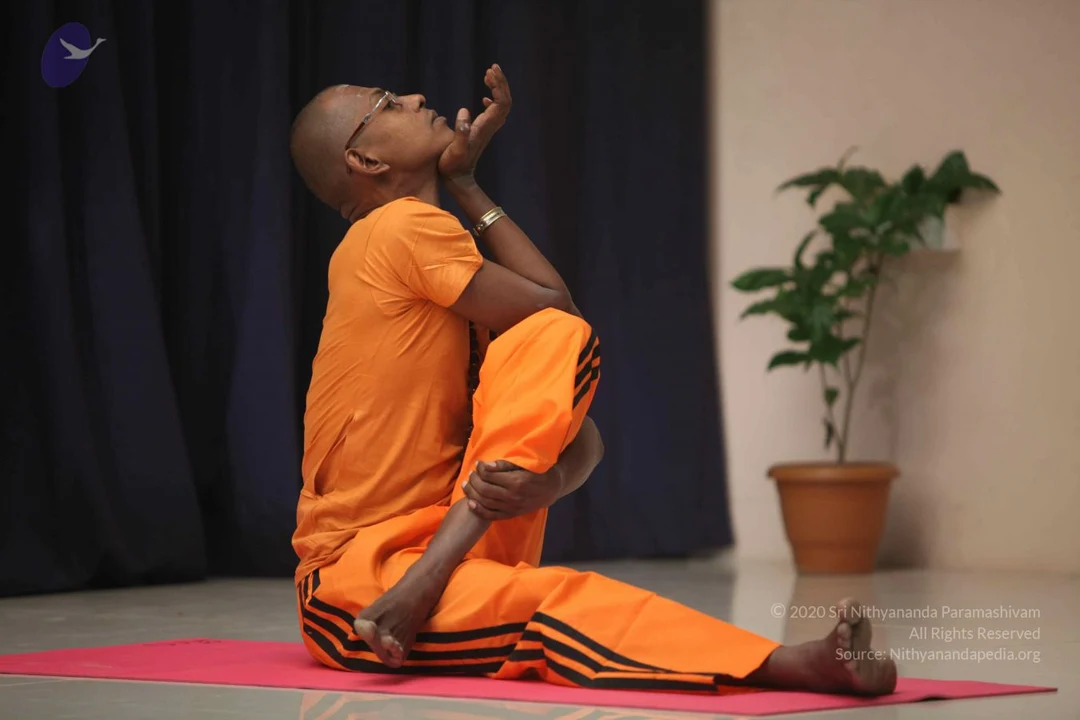
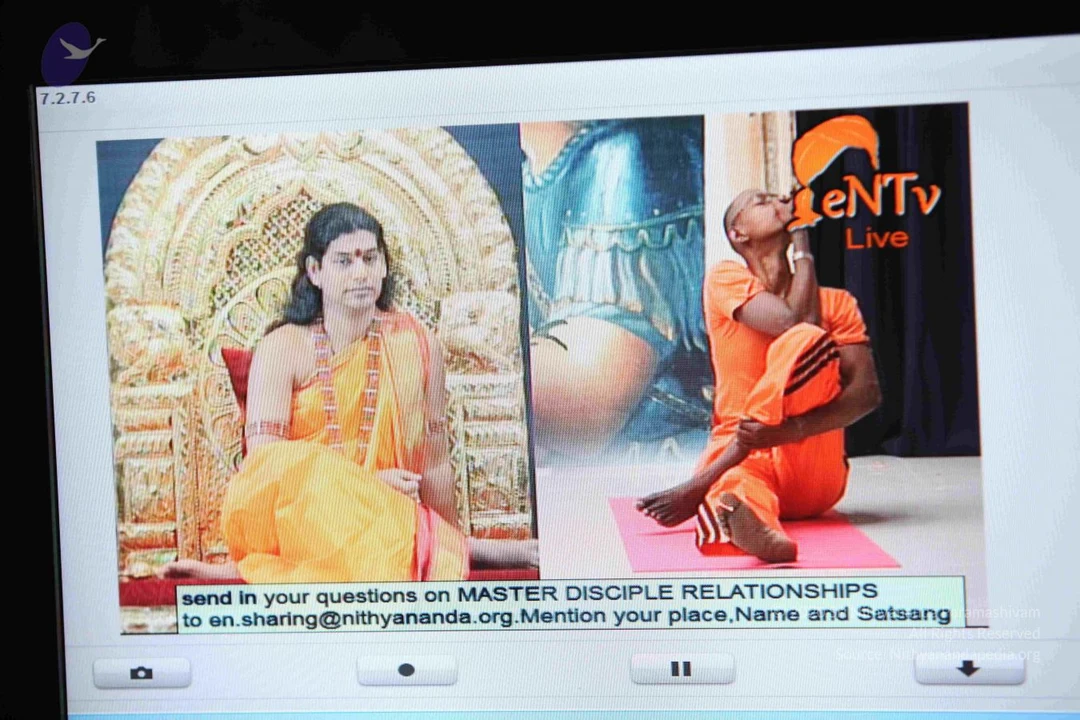
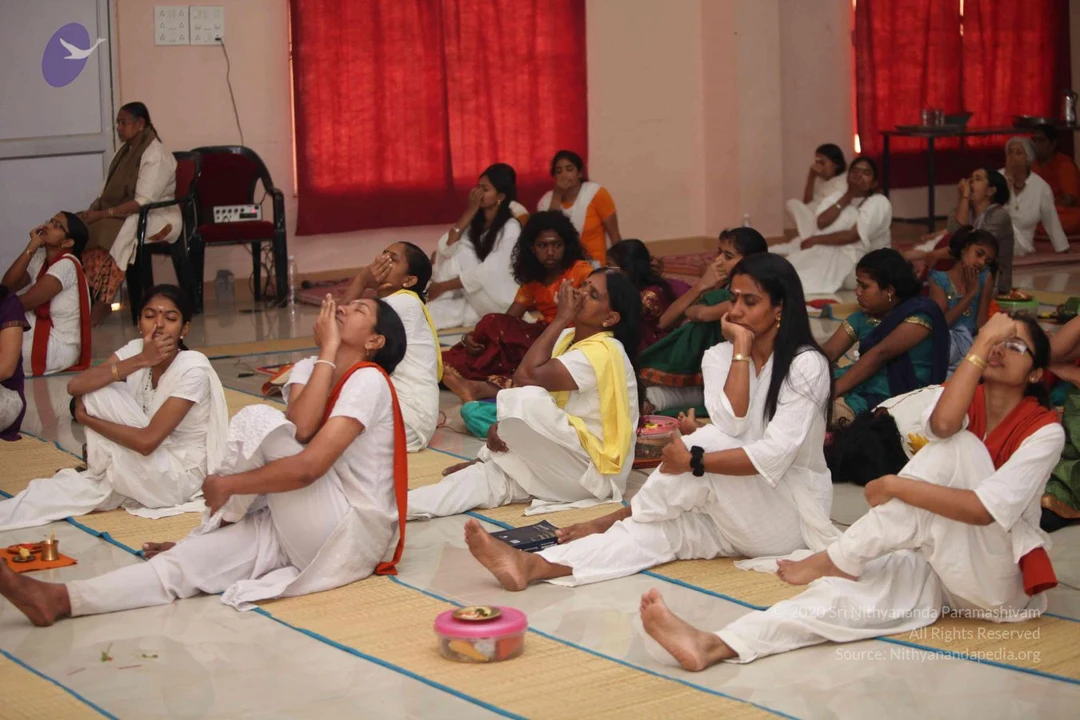
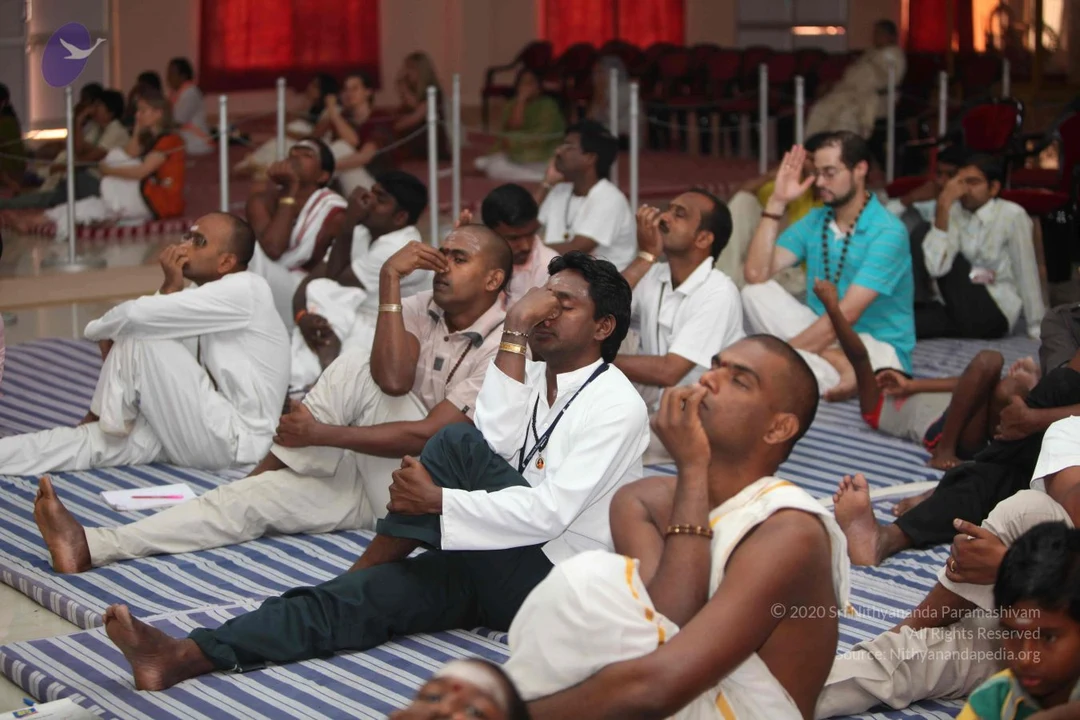
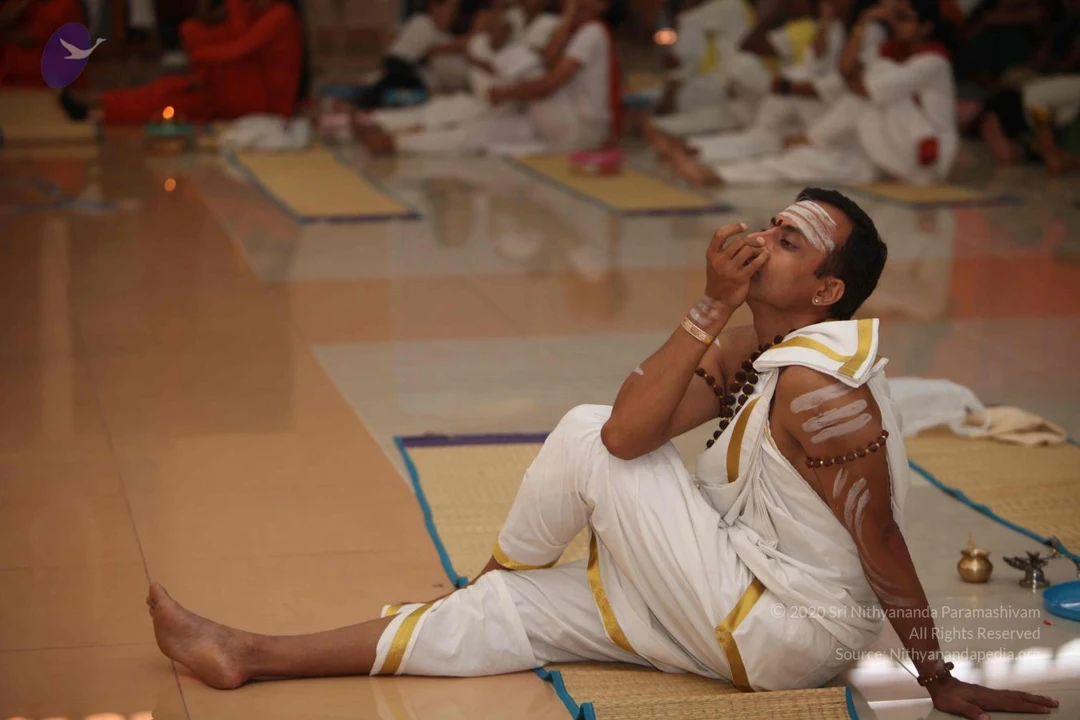
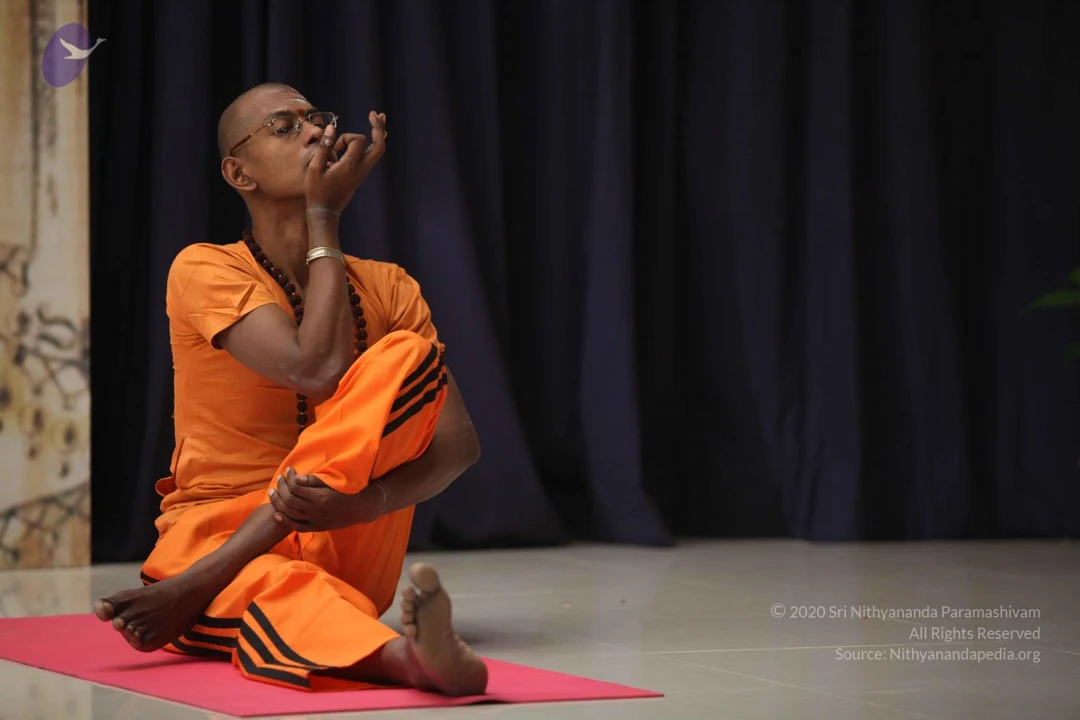
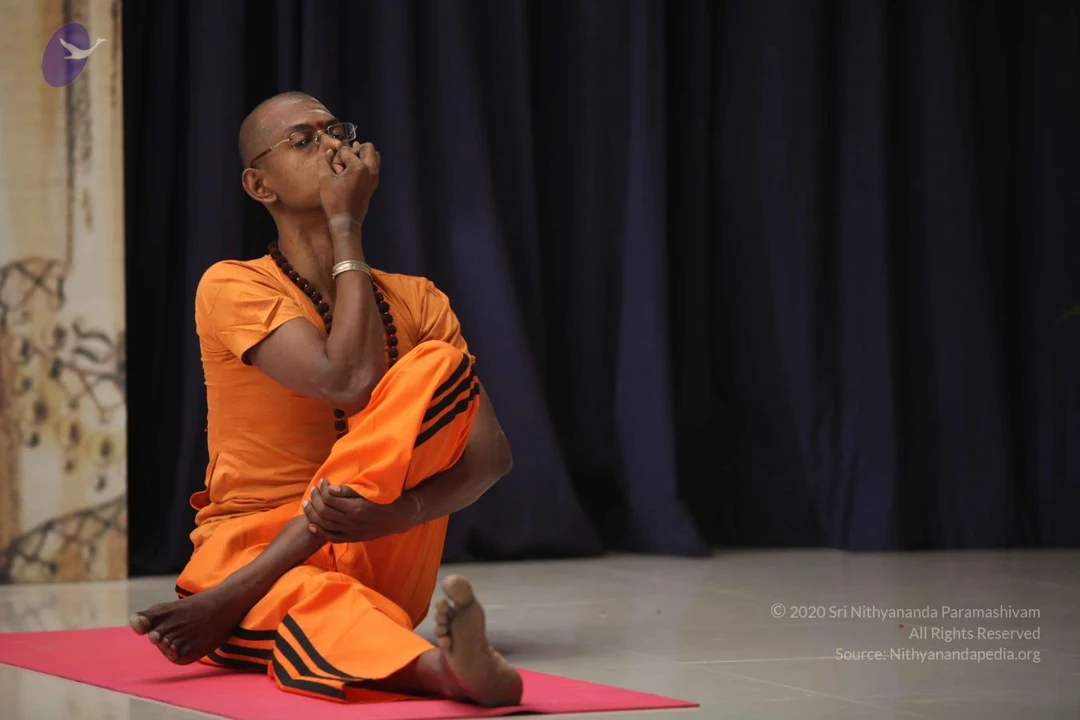
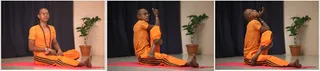
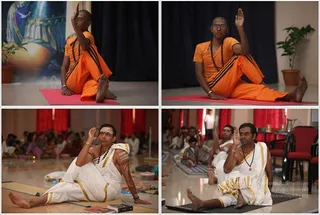
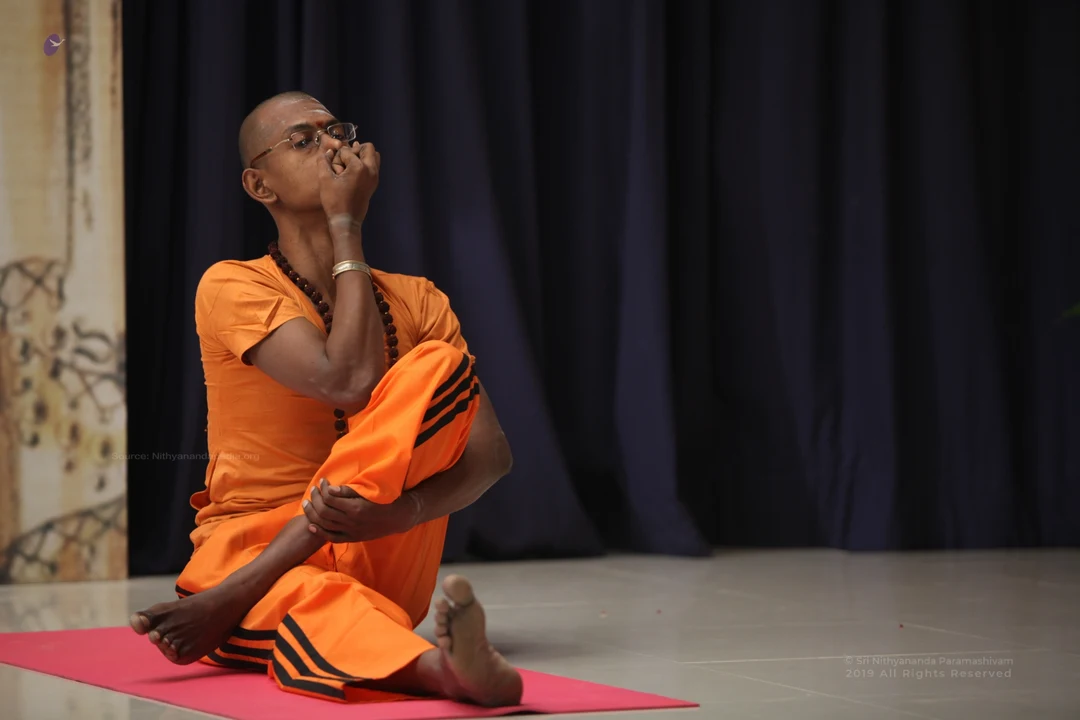
You mentioned that ppl with desires to achieve their dreams go thru unnecessary sufferings….what is the diff bet trying to achieve my desired goals and trying to ahc ieve enlgithenment. ? Here you are saying short term pain truning into long term gain. There in enlight even short term pain will nto be there. … 15) I met someone who I really liked and she seemed to be really like me…I cant imagine liking anyone else….can you pl give me some advice on what should I do in regard to this person. You should try once more. …it can work. Yest! Let us enter into today’s Kriya. Care for anxiety. Before the Kriya it is a very long Kriya. So 3 minutes break. You can gather after 1,2,3. (08:08-08:11) We will start the kriya. First step – Matsyendrasana. It is from Gheranda Samhita, 2 nd Upadesha, 23 rd verse - “Having kept the abdomen at ease, similar to the back, the bent left leg should be placed over the right lap. There in that posture the right elbow should be placed on this and the face has to be placed on the right palm. The sight fixed at the eye brow center. This is called Matsyendrasana.” (Swamiji demonstrates this) This is Matsyendrasana. Be in that posture for 30 seonds. This will create ceratin chemicals and energy in your body. Straight away you will be released from anxiety.

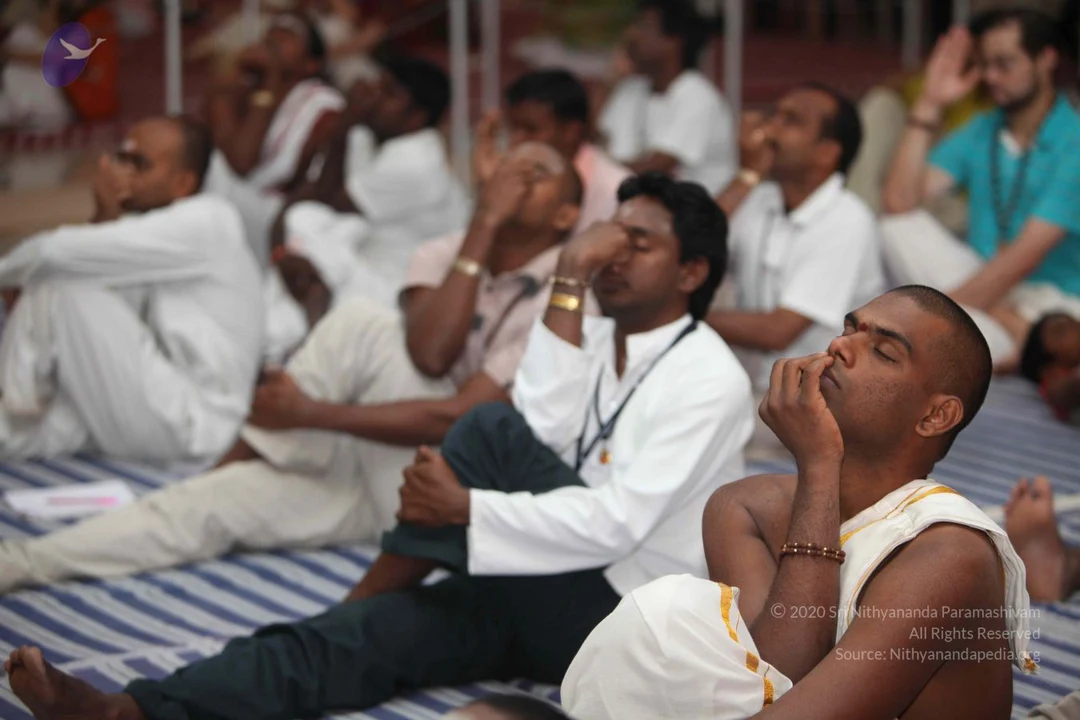
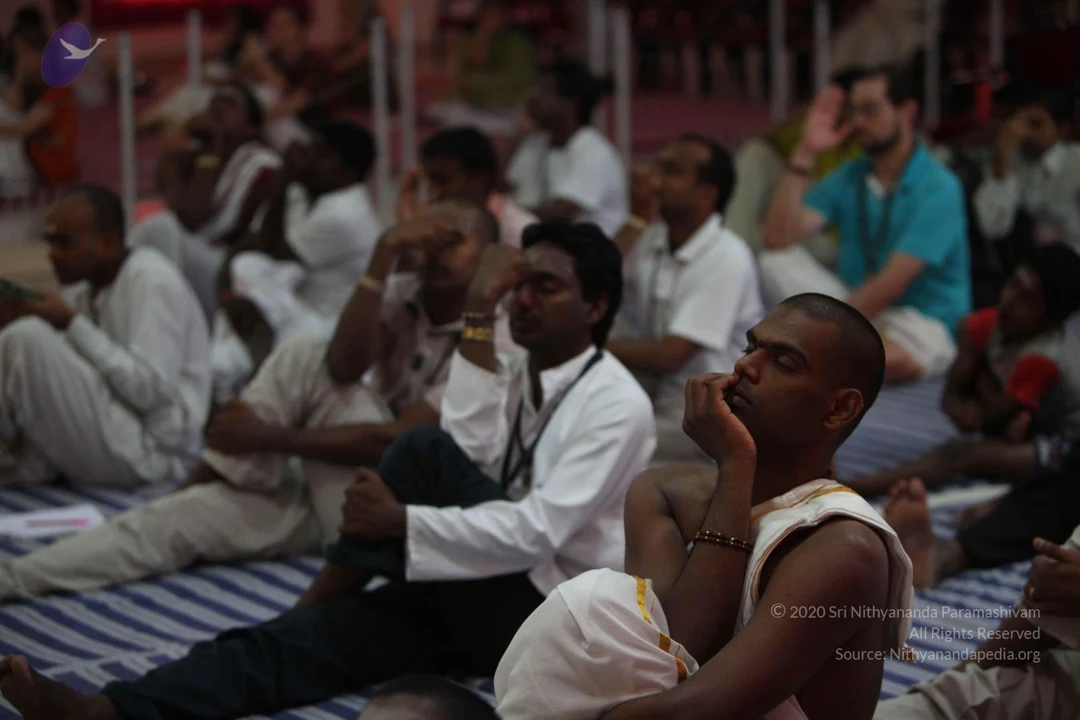
Now change. I will tell you step by step. Stretch your legs, bend your left leg and place it on your rigt lap. Now place your right elbow on the left knee. See lift the leg. That left leg. Lift. Yes. Place your face on the right palm. This is for doing the Kriya. You are ready? Yes. With this you will have to do the Kriya. All anxieity willd disappear. Because now you will be having so much of anxiety to do this Kriya!  you don’t need to put your face exactly on the palm but you can use this hand for the Kriya. Next in this Kriya, start the Trishoola Kumbhaka. “Inhale through the nostrils and also through the mouth simultaneously. Hold the breath as long as you can judiciously and exhale very slowly.” Do this 21 times. Start! (08:15-08:23) Next step - Seethkari Pranayama. Hata Yoga Pradipika, Upadesha 2, verse 54. “The breath needs to be sucked in through the mouth with a hissing sound and the exhalation to be done through the nostrils.” I will show you. “Sit in a comfortable way. Of course sit in the same Matsyendrasana. By now it should have beocme comfortable  and press the lower teeth with the upper teeth, open the lips comfortably. Suck the air through the gaps in between the teeth . Be aware of the sound produced. After inhaling close the mouth and exhale through the nose. Don’t hold.” I will show you (Swamiji demonstrates) Do the Seethkari for 21 times. (08:25 – 08:30) Next technique – Sheethali. It is Gheranda Samhita, 5 th Upadesha, 54 th Verse - “The breath has to be filled in the abdomen by drawing air through the tongue. After having retained the breath for a moment, the exhalation should be done through the nostrils.” “Sit comfortably. Close the eyes. Protrude your tongue as much as possible. Let me show you. Roll it. Roll the sides of the tongue like a tube. Now inhale through the tube formed by the tongue. Hold as long as you can, then exhale through the nostrils.” Do it 21 times. (08:31-08:35) Next. Next is the last step. Trinetra Kumbhaka – Please understand. This is Kumbhaka Paddhati, 192 nd verse - “Inhale through the left nostril. Hold the breath. Without exhaling, inhale through right also, hold the breath, without exhaling, inhale through both and hold the breath as long as you can. Then exhale and relax. Inhale through right and again without exhaling, inhale through left, again without exhaling hold

through both. Hold judiciously as long as you can. Then relax.“ Let’s start. 21 times. Relax. (08:36-08:42) I bless you all who are sitting with us at this moment around the world in 636 places through eNtv, 18 places through 2 way Video conferencing, in 298 cities, 22 countries! Let you all achieve, experience, live, express, radiate and share the eternal bliss, Nithyananda. Thank you!

Photos
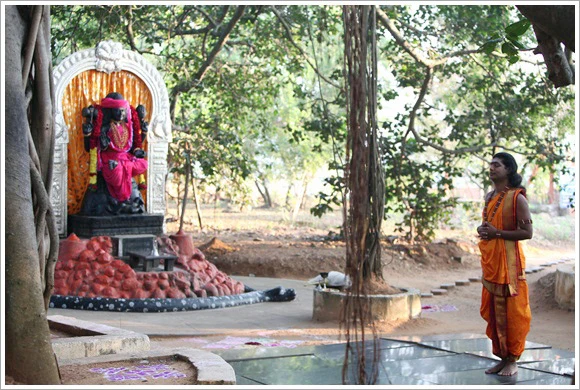
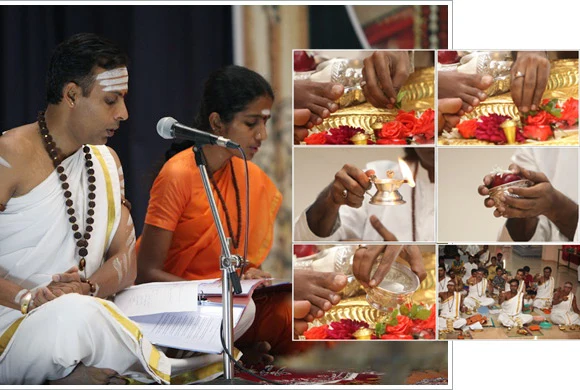
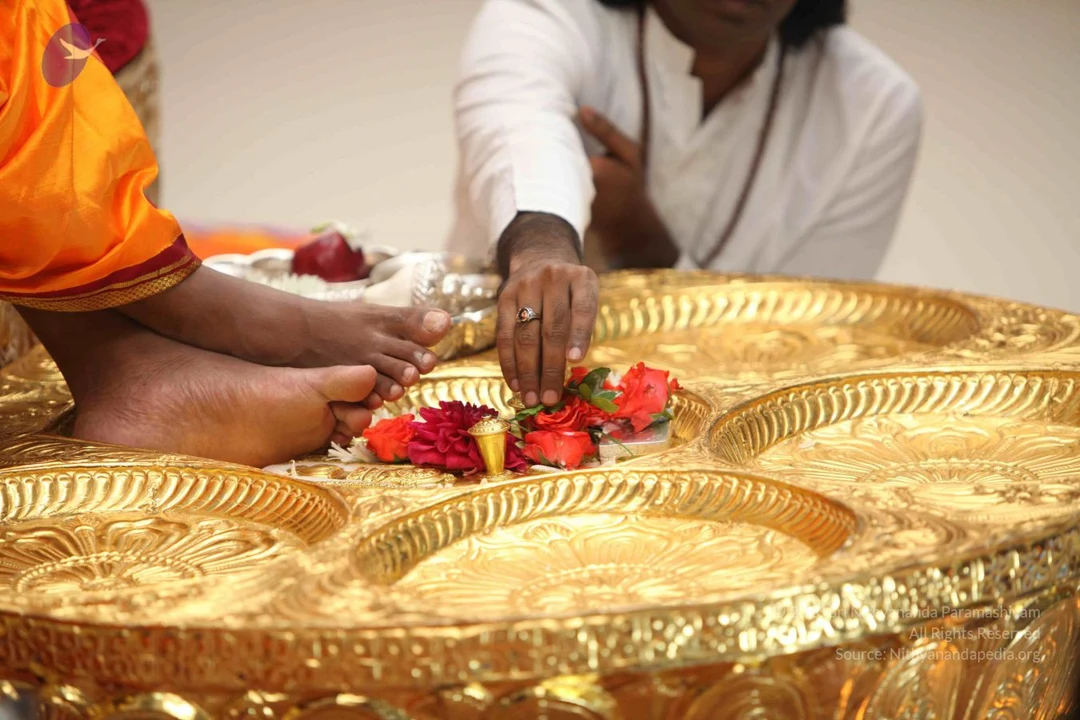
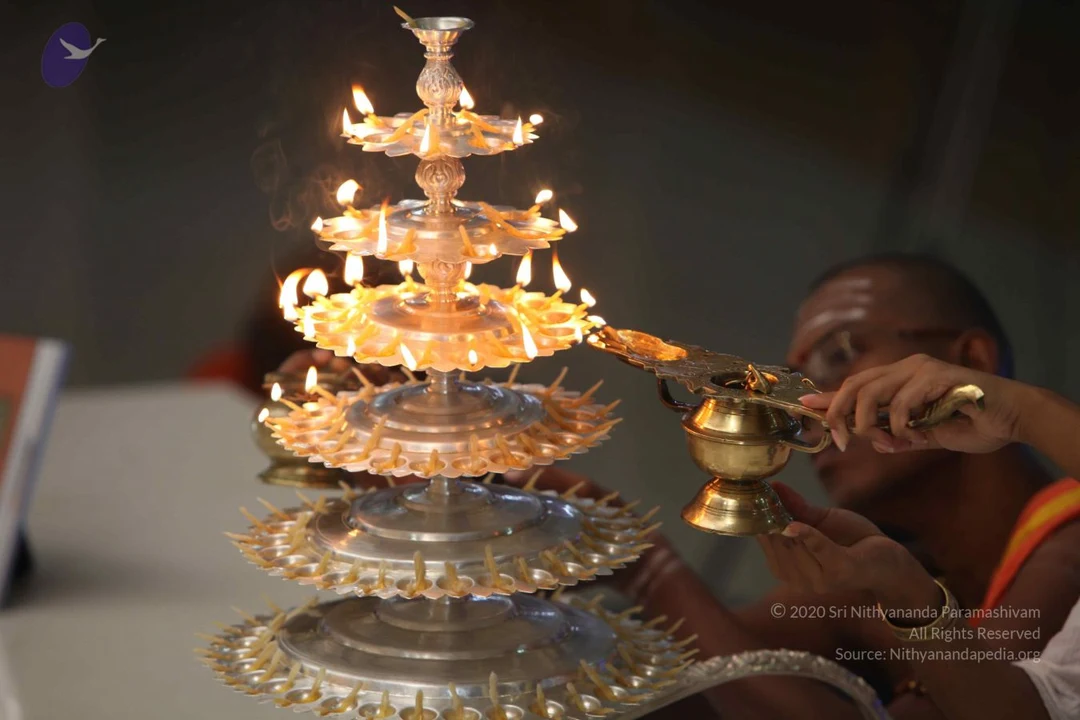
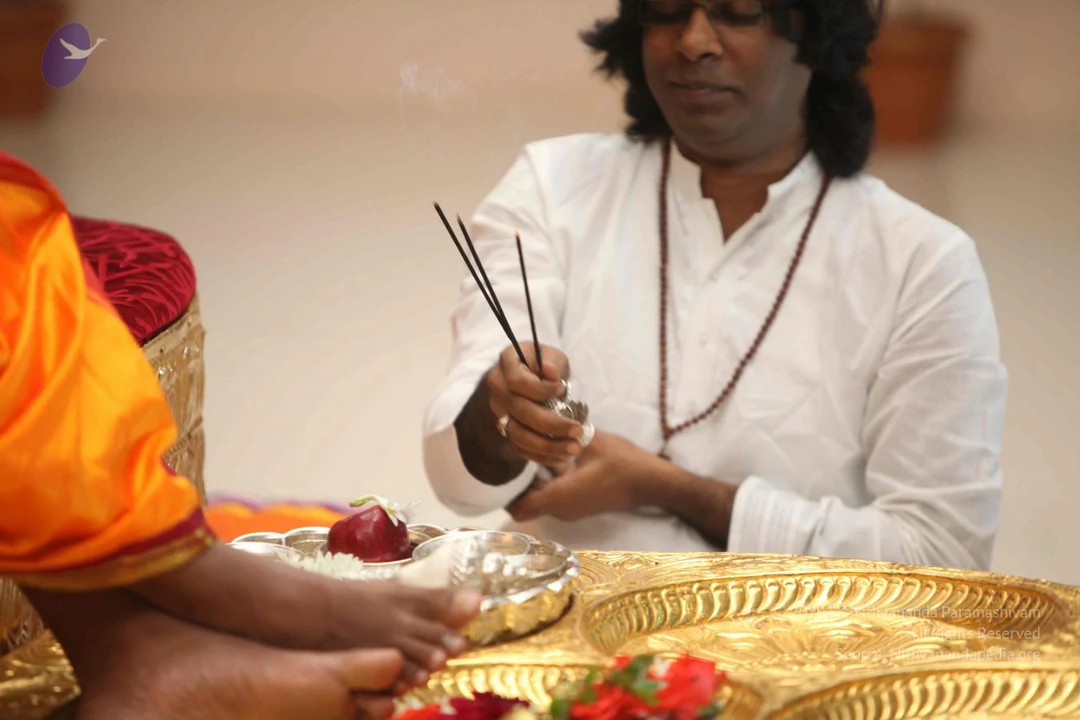
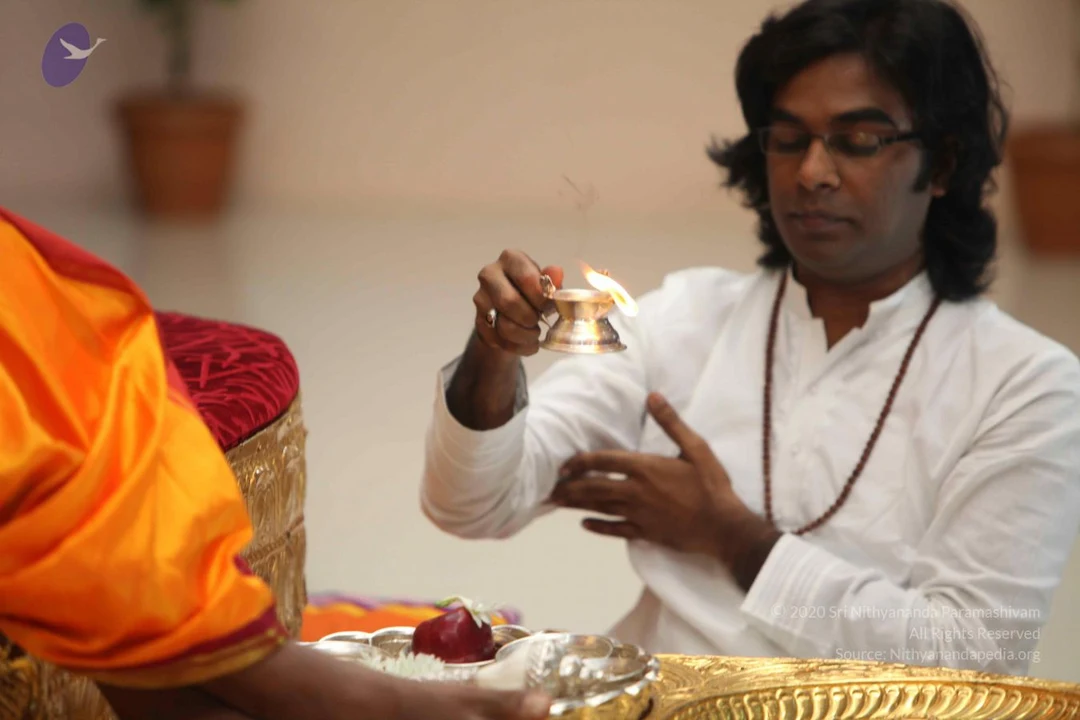
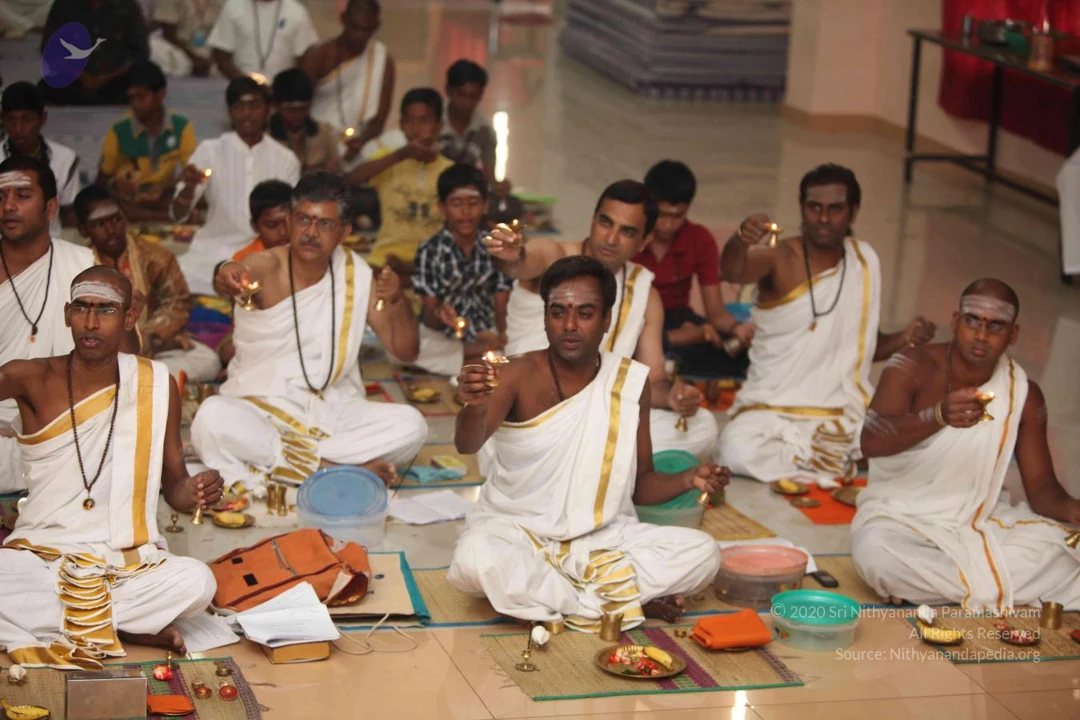
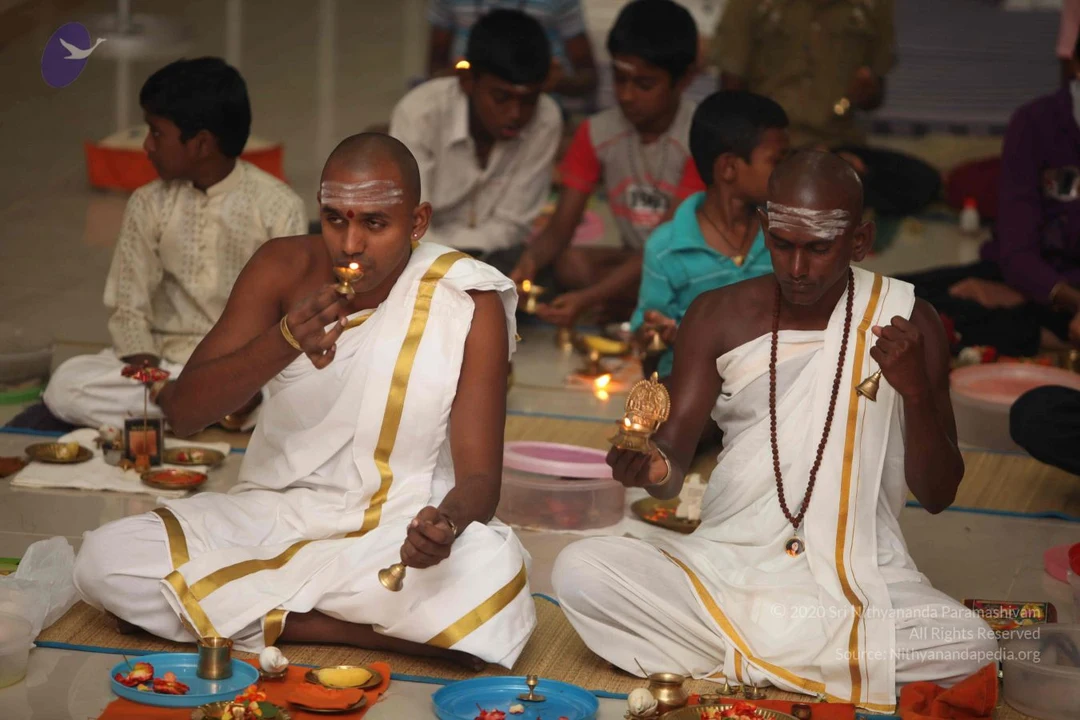
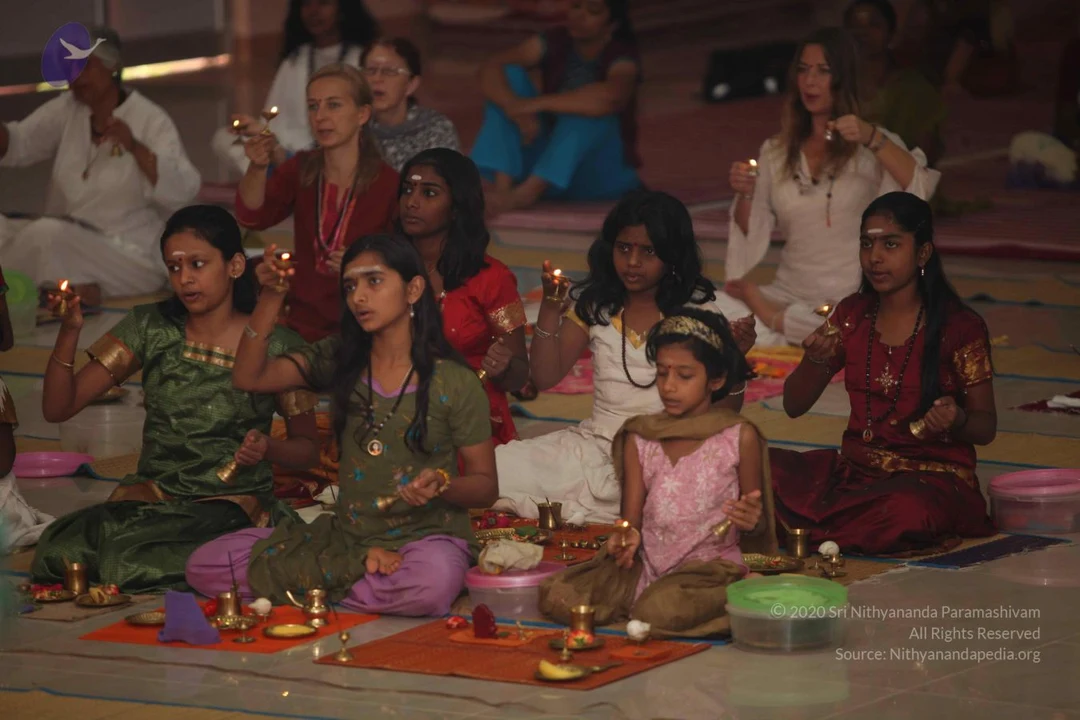
Temple Visit | Pratyaksha Pada Puja | Bhagavad Gita Satsang – 15 November 2011

Photos Of The Day:
Photos Of The Day:
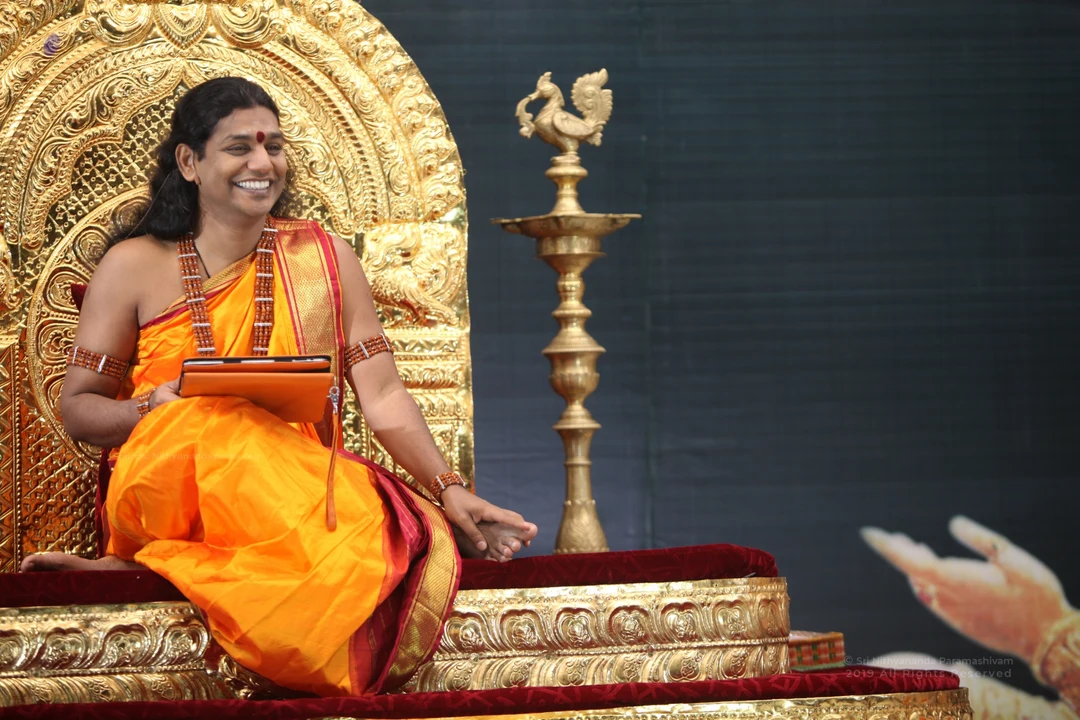
Temple

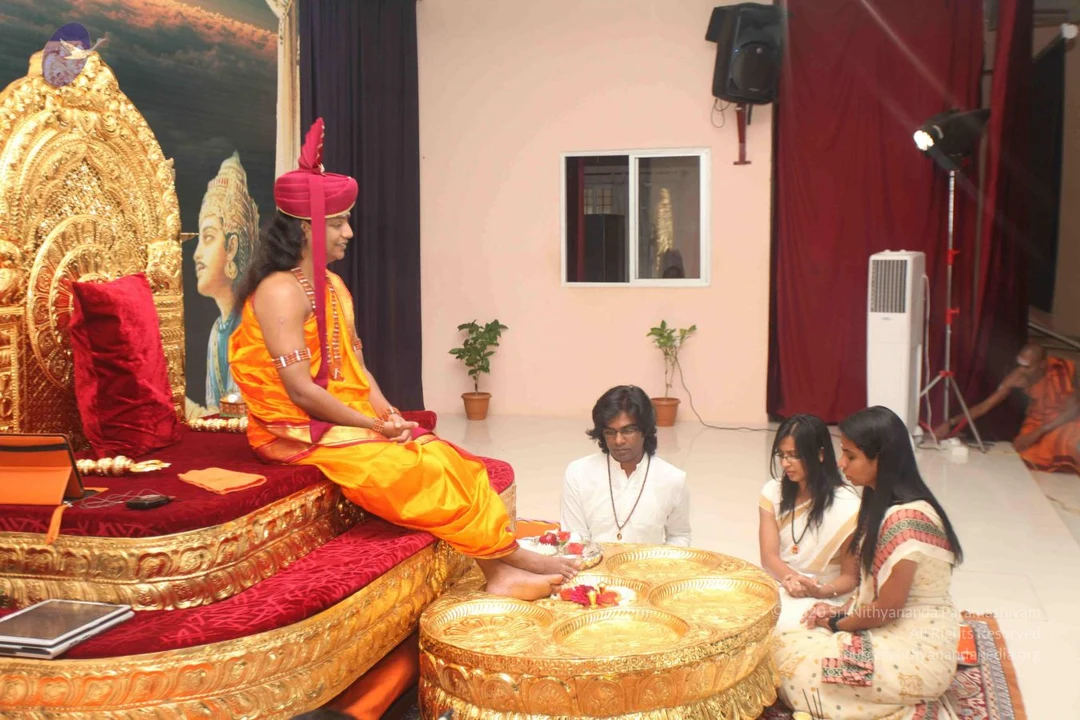
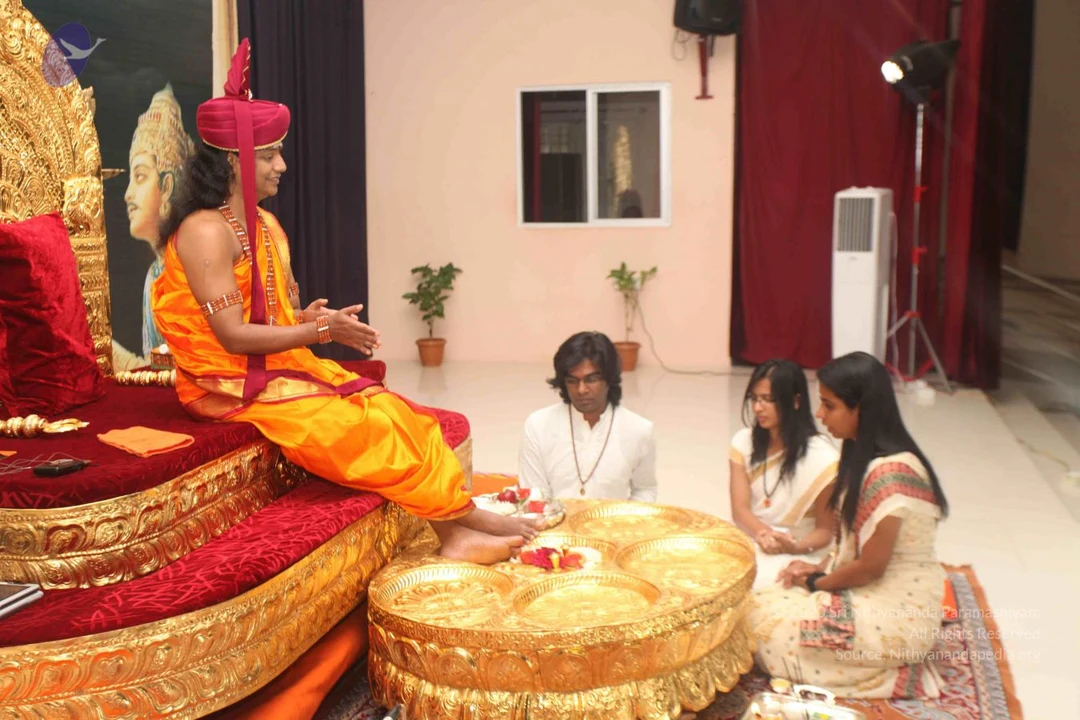
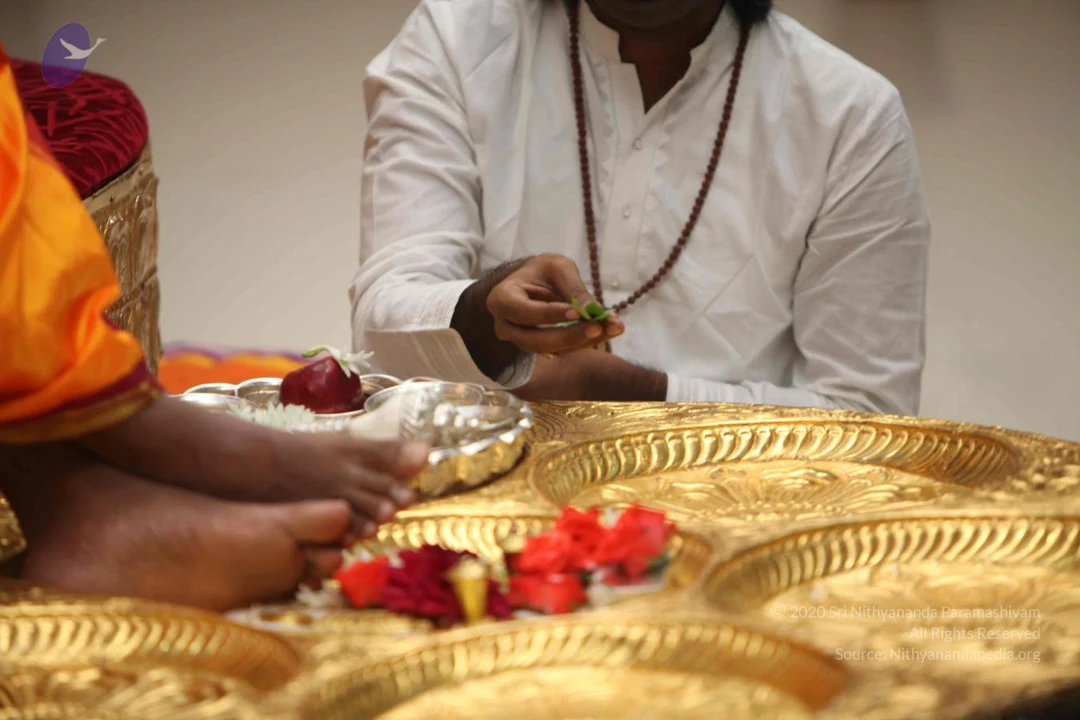
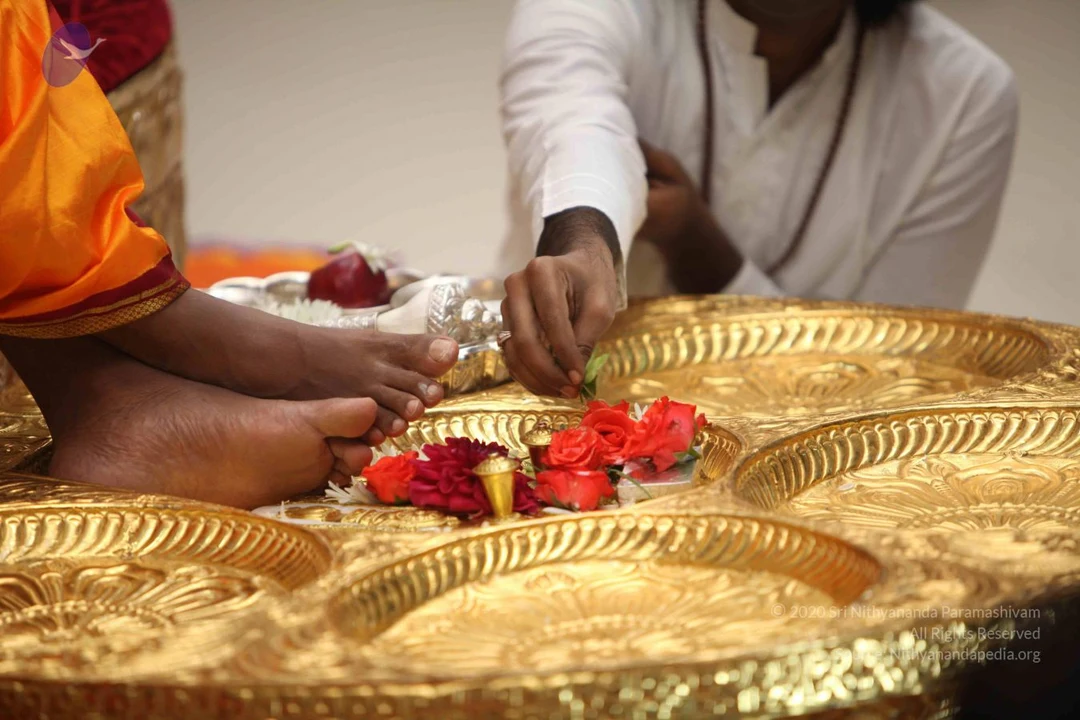
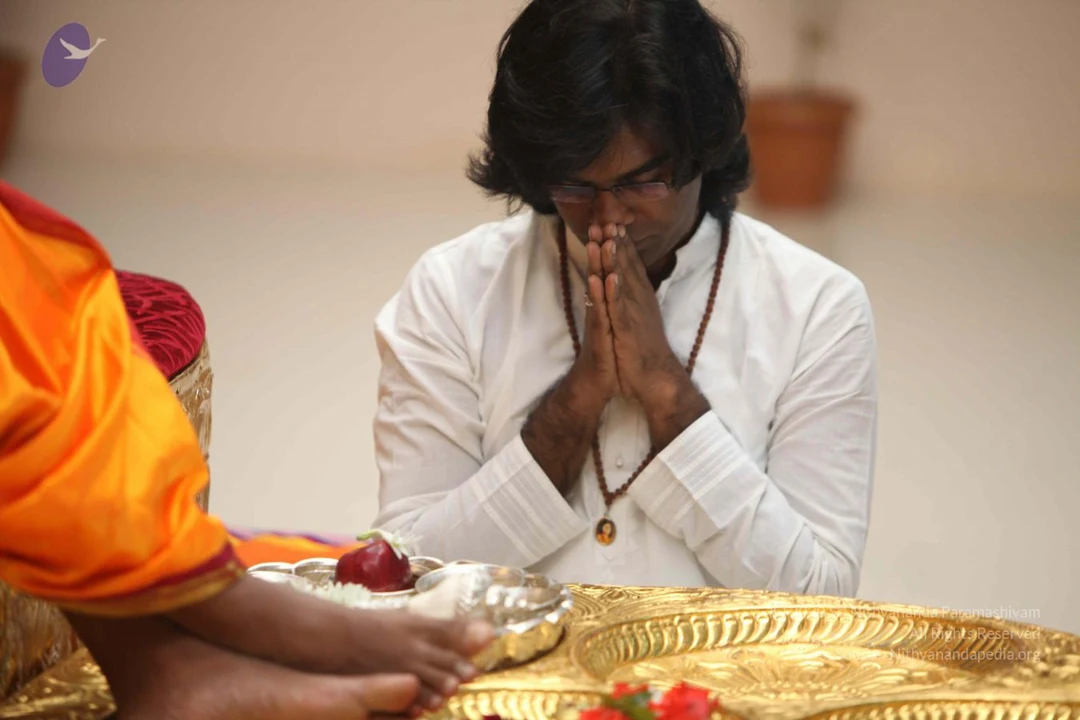
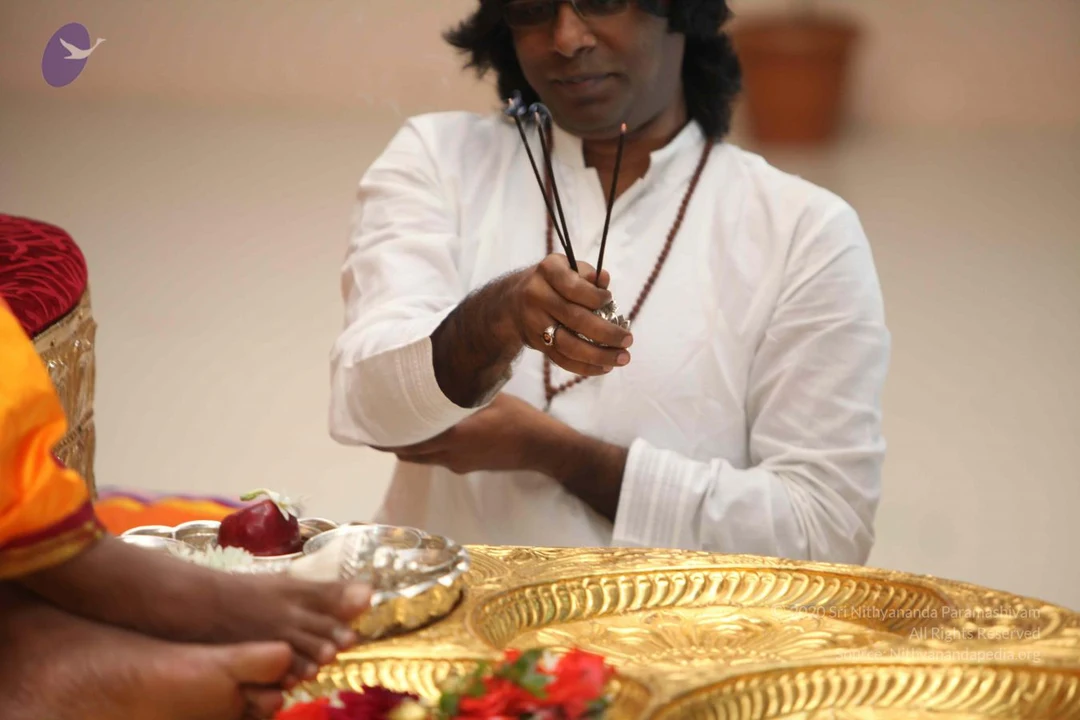
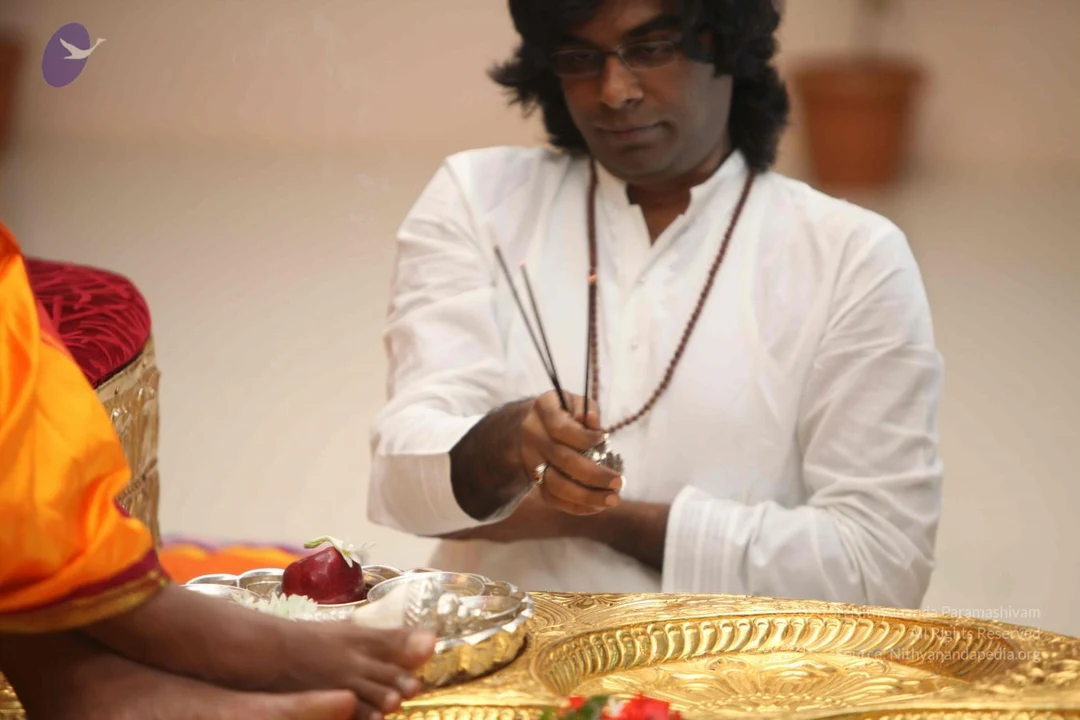
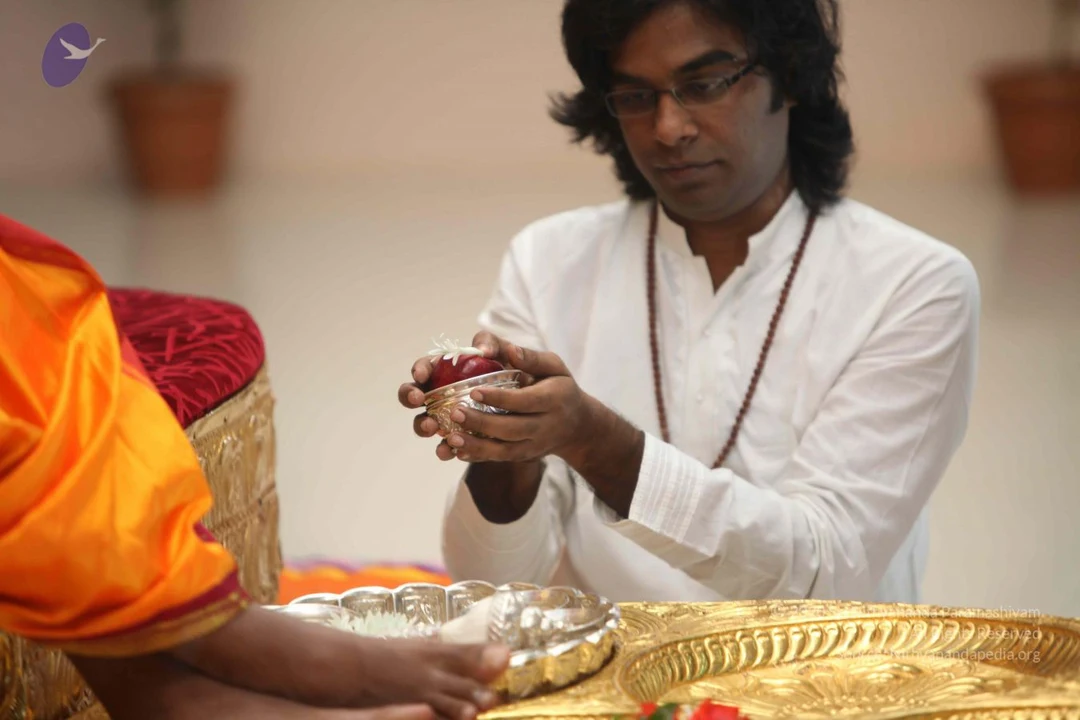
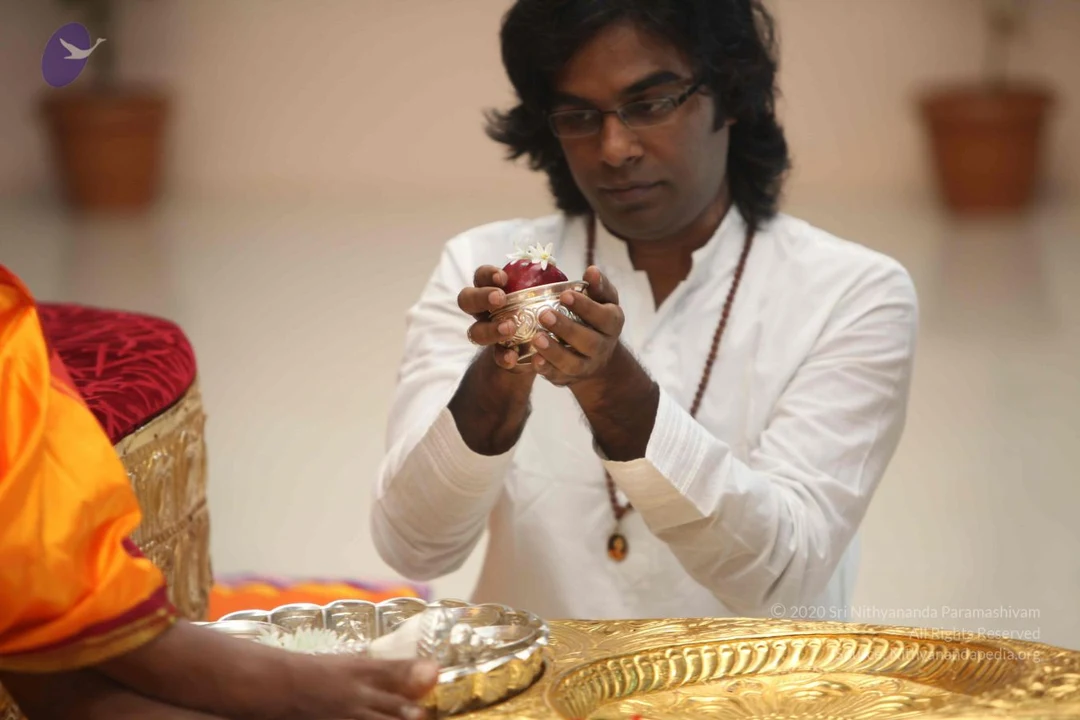
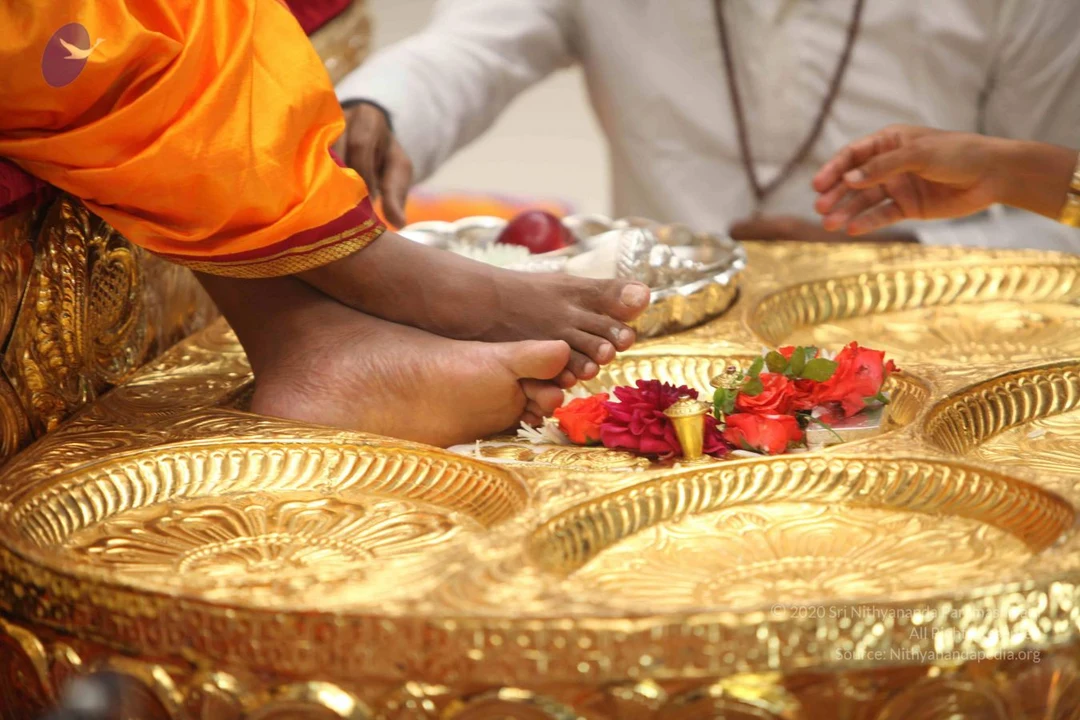
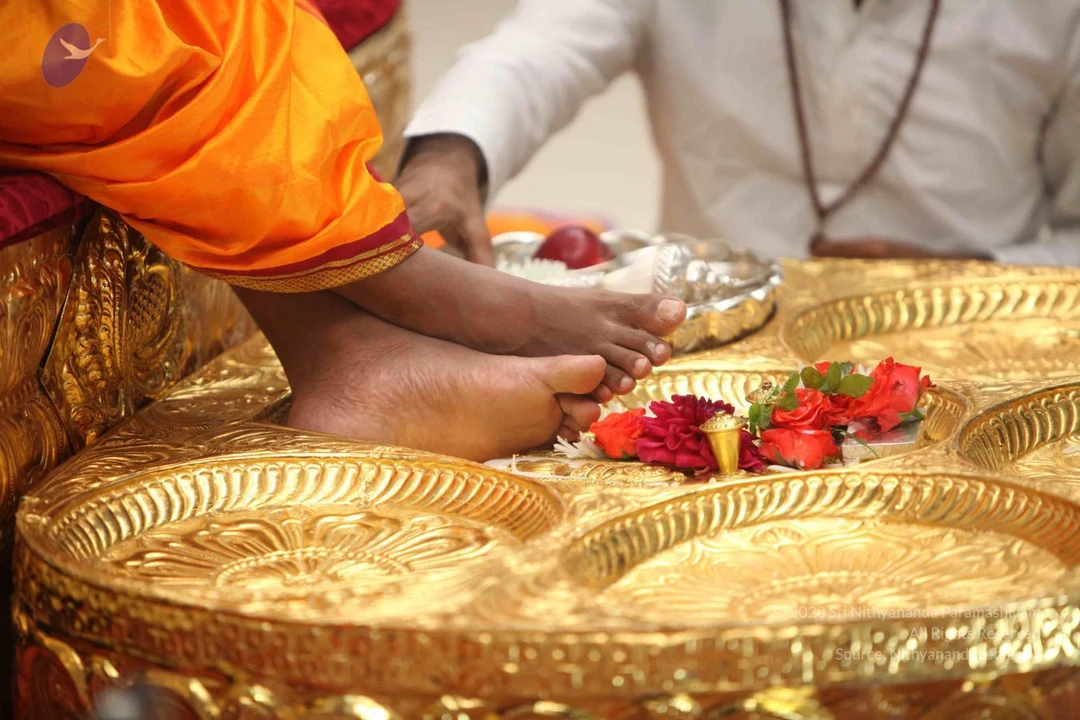
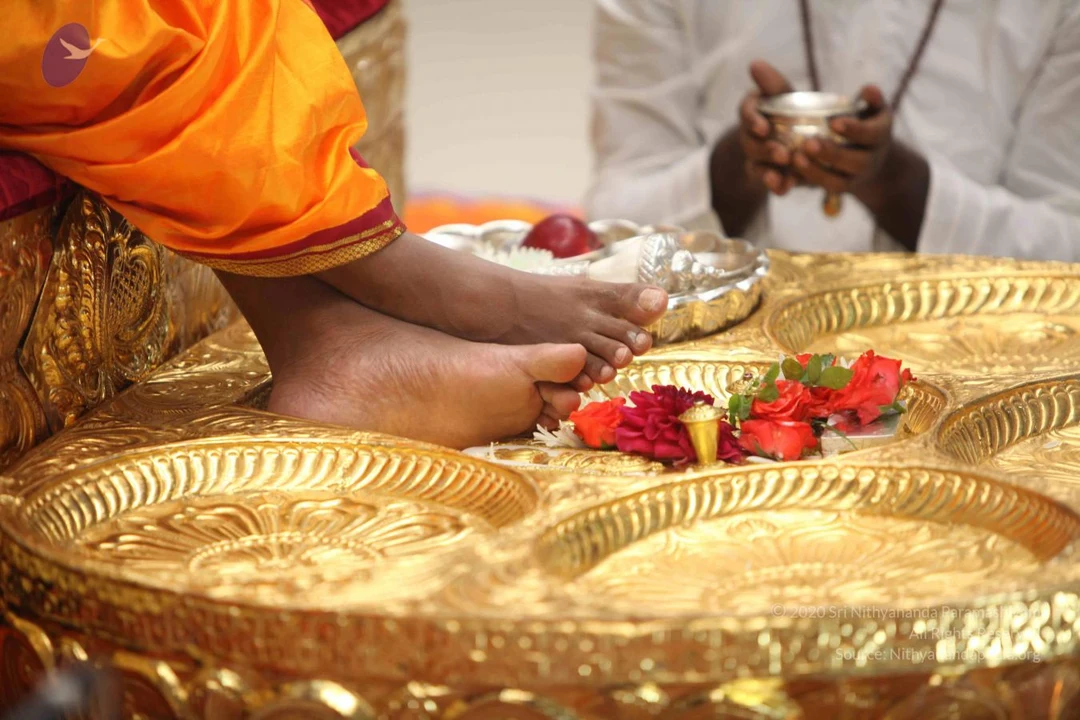
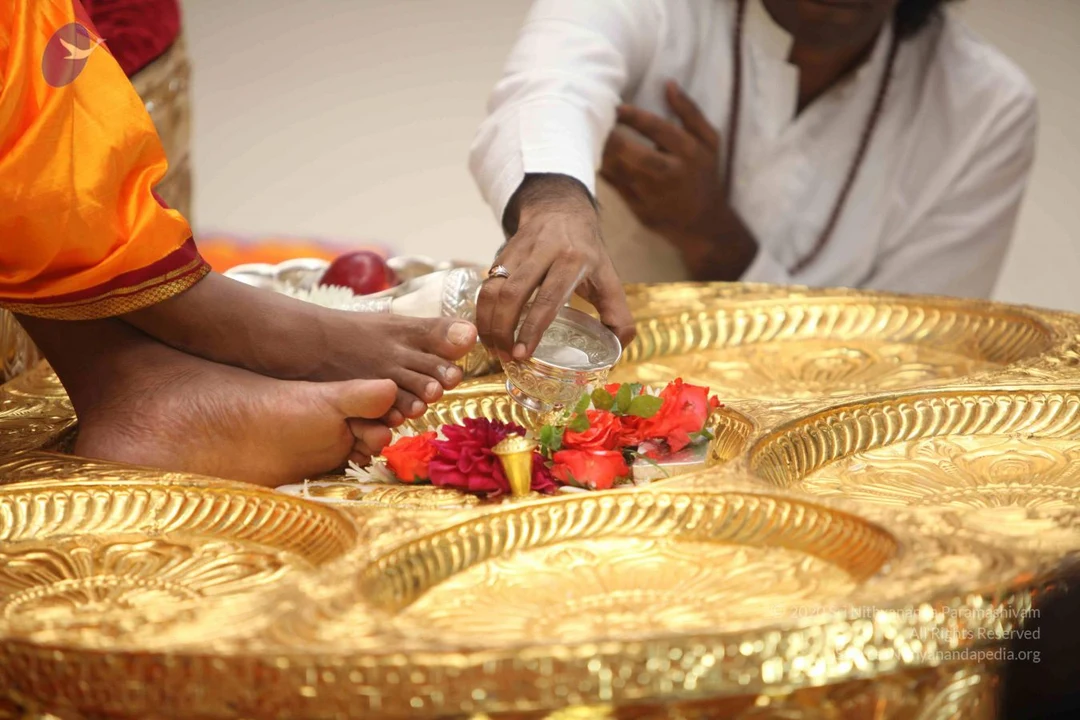
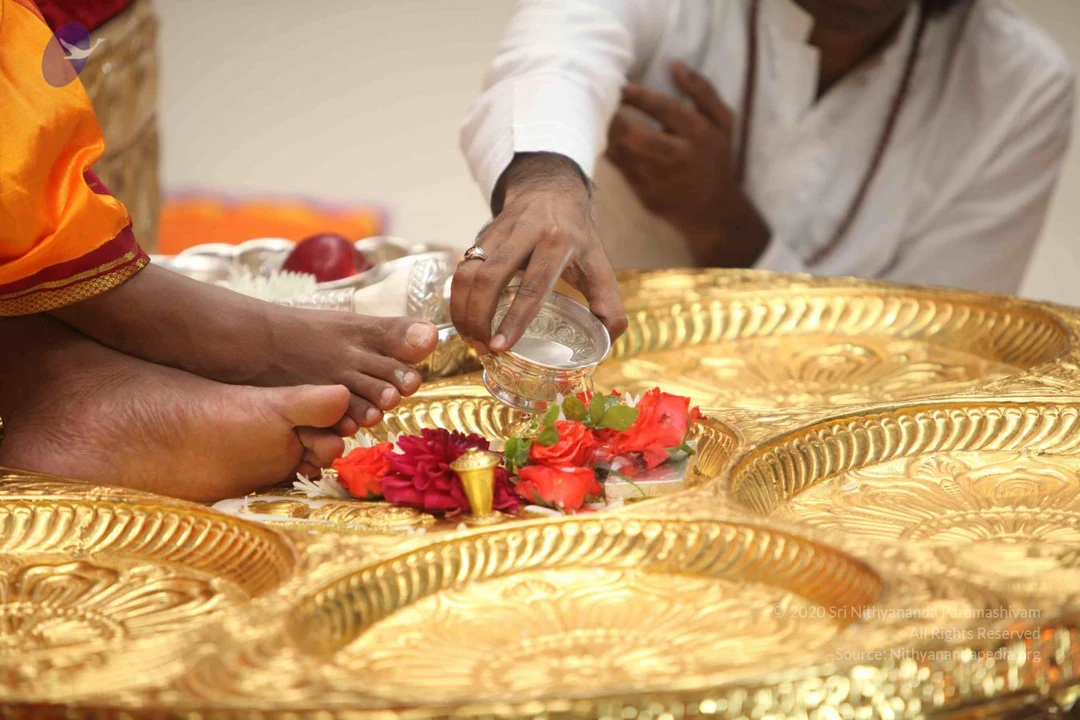
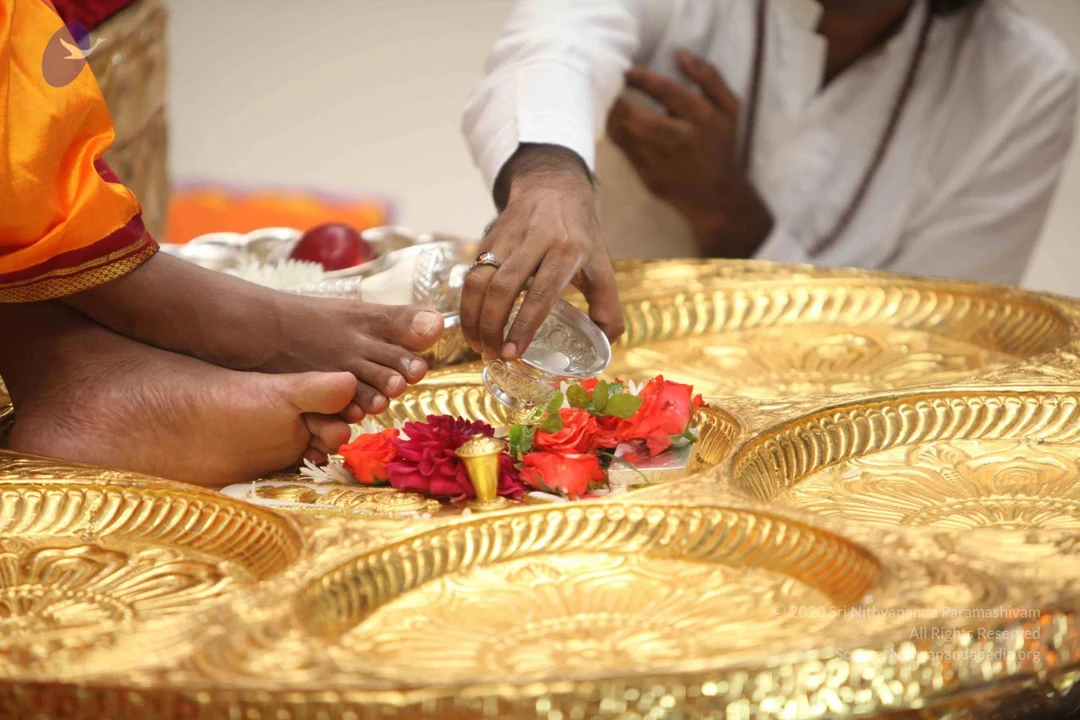
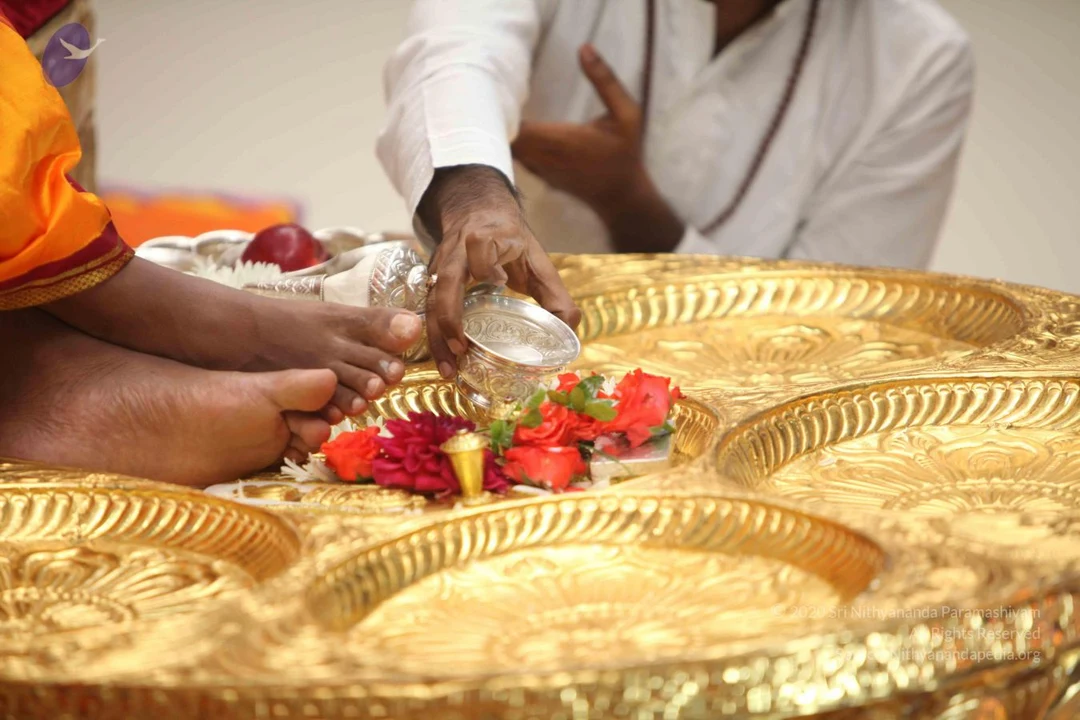
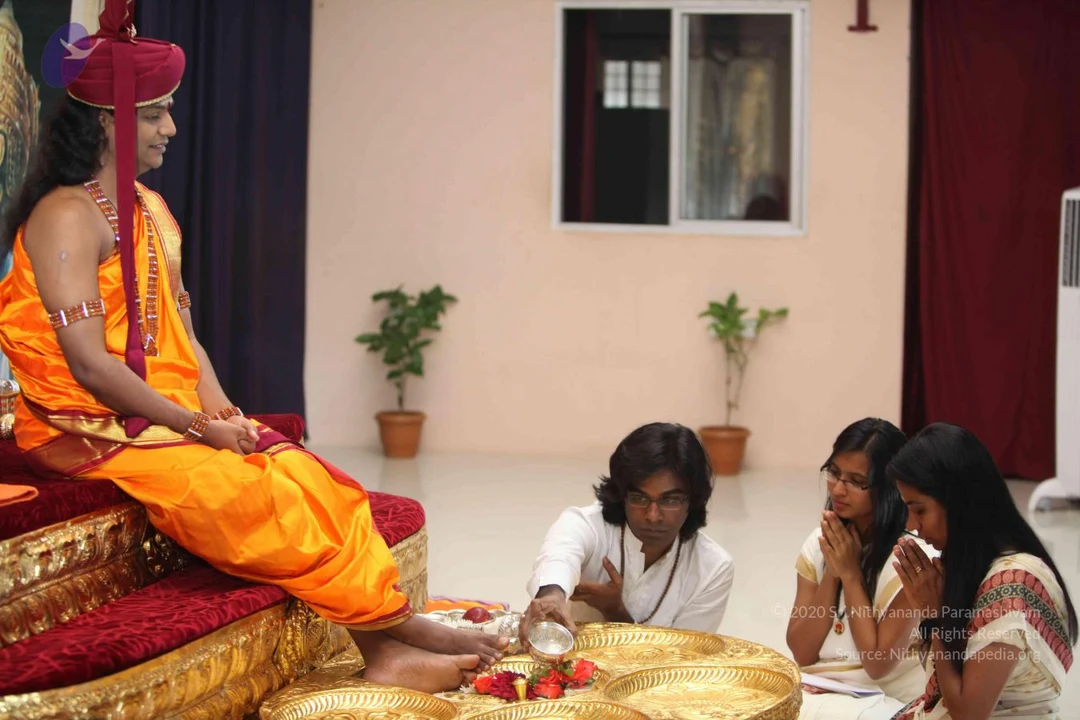
Pada-Puja

BG-Satsang

Nithya-Kriya-Anxiety-Care

Sarva-Darshan

Photos Of The Day:
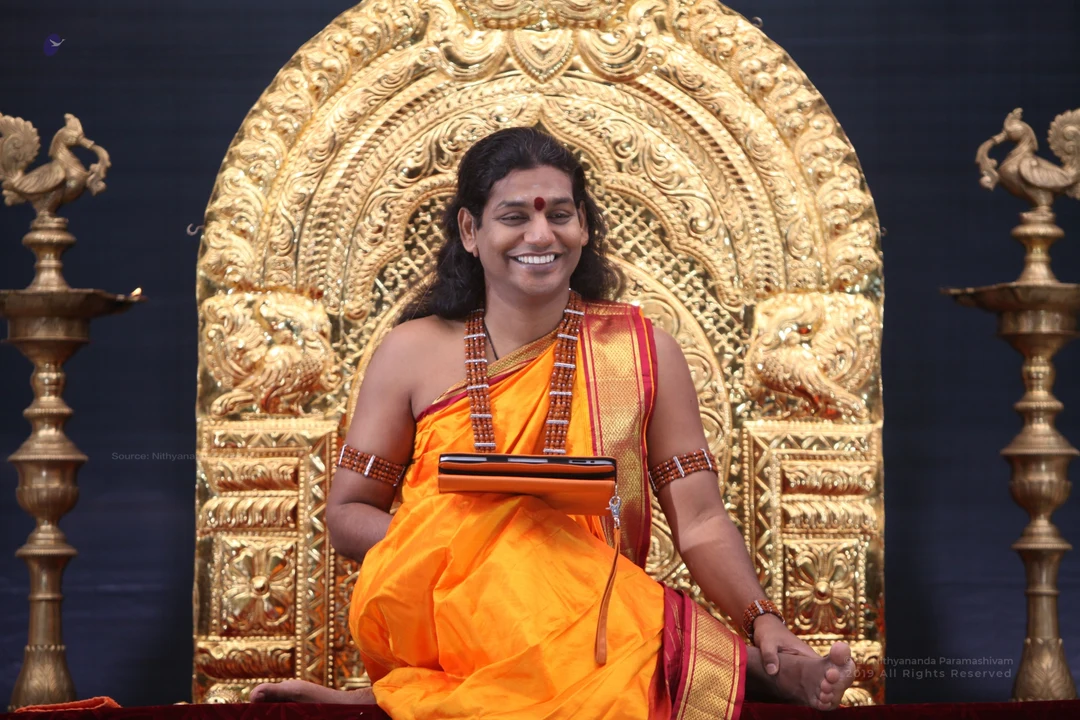
Temple

Photos from this day
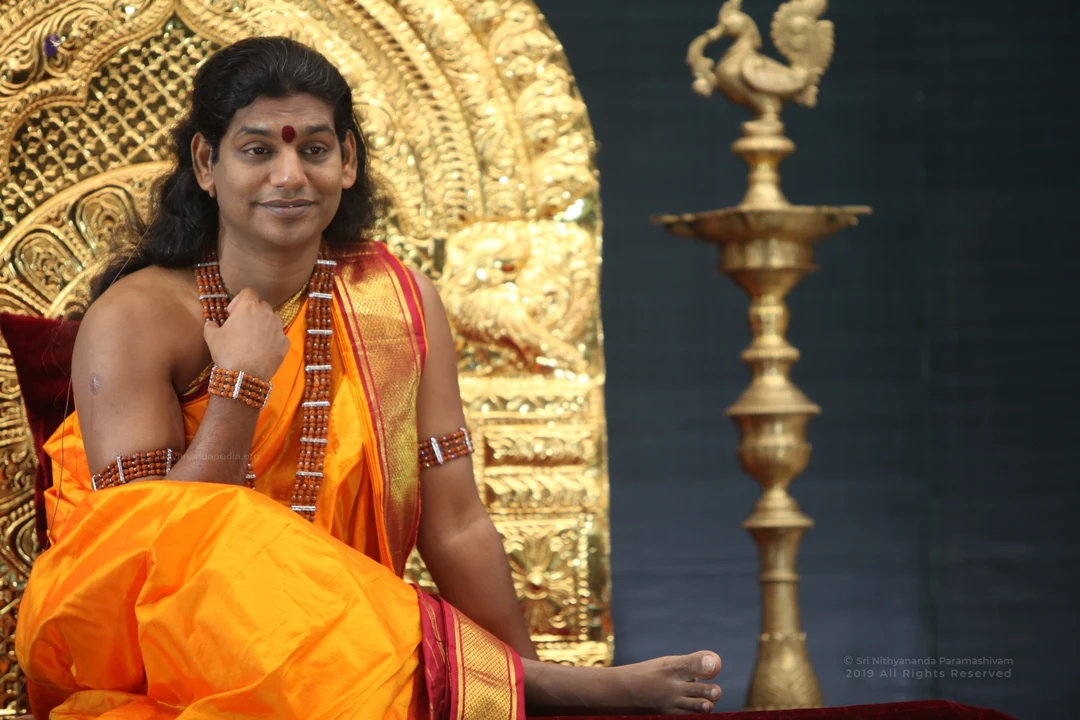
View all 294 photos
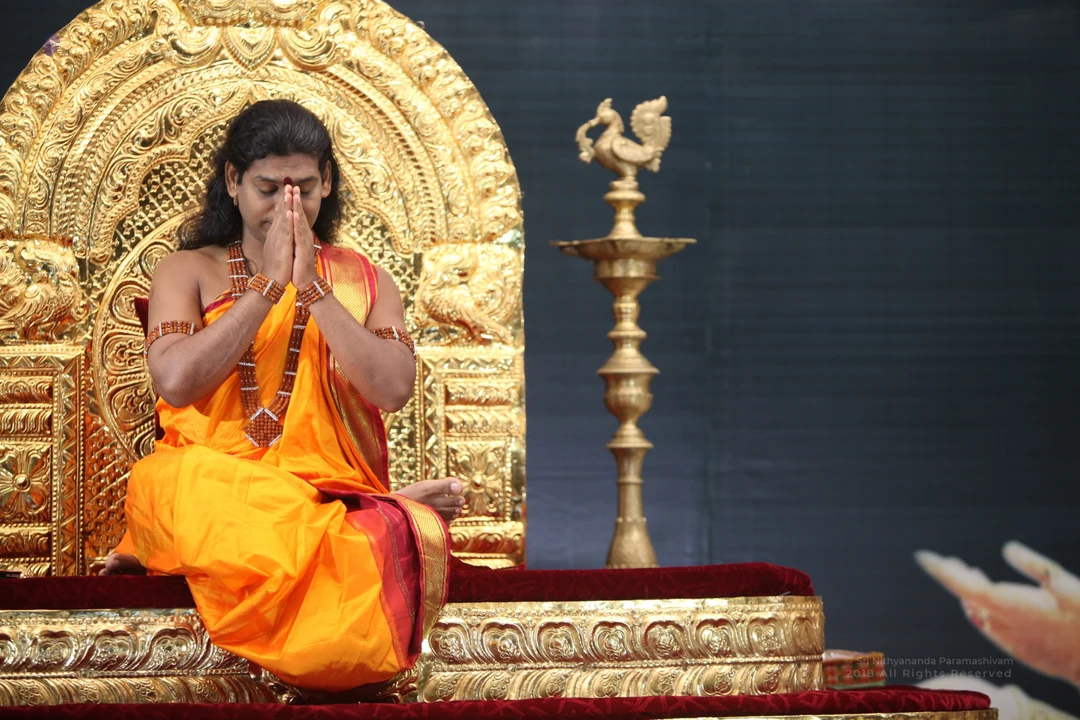
Photos
14 photosSource gallery
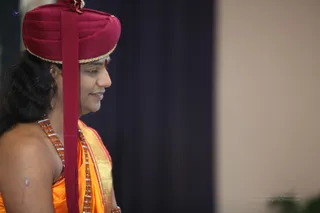
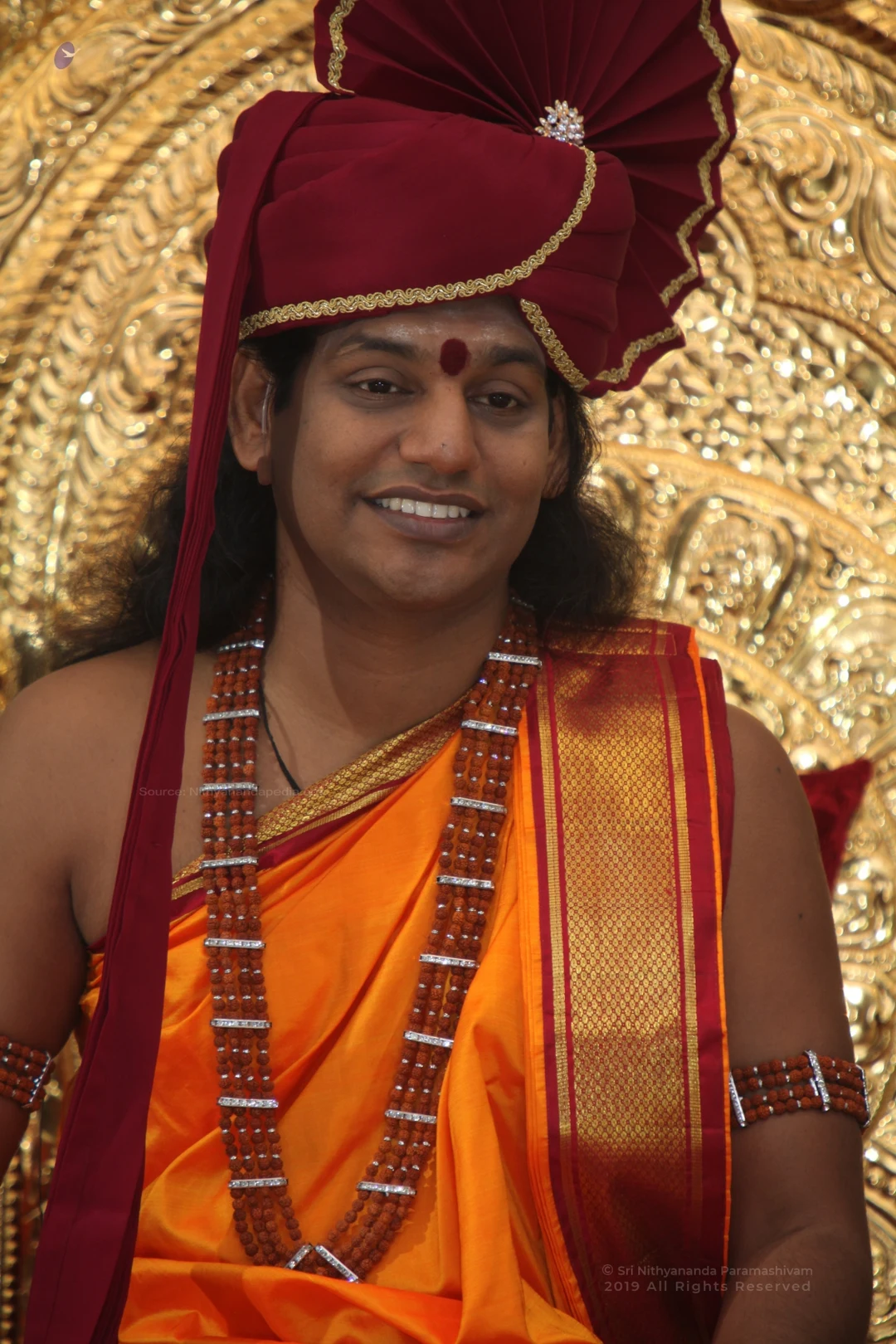
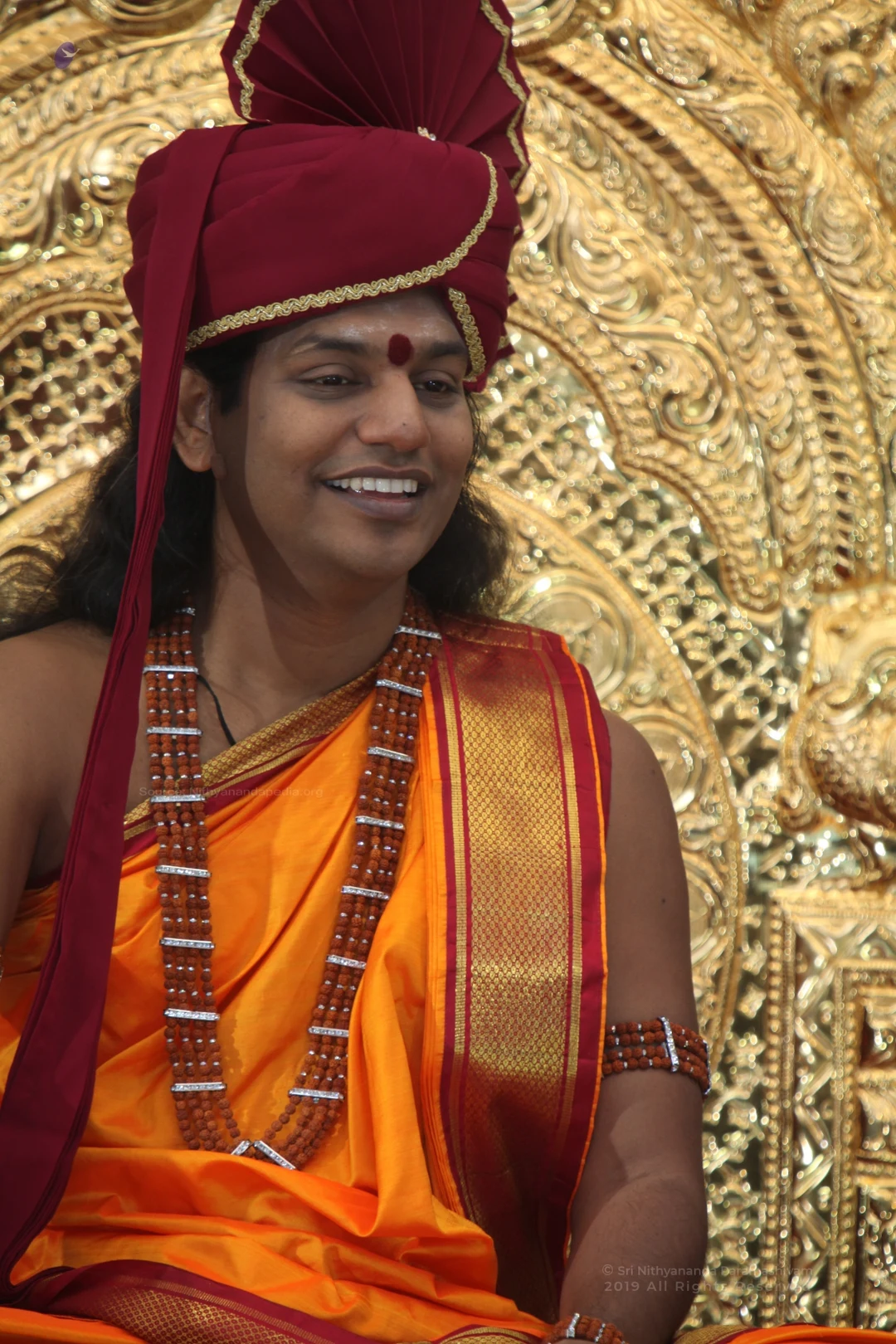
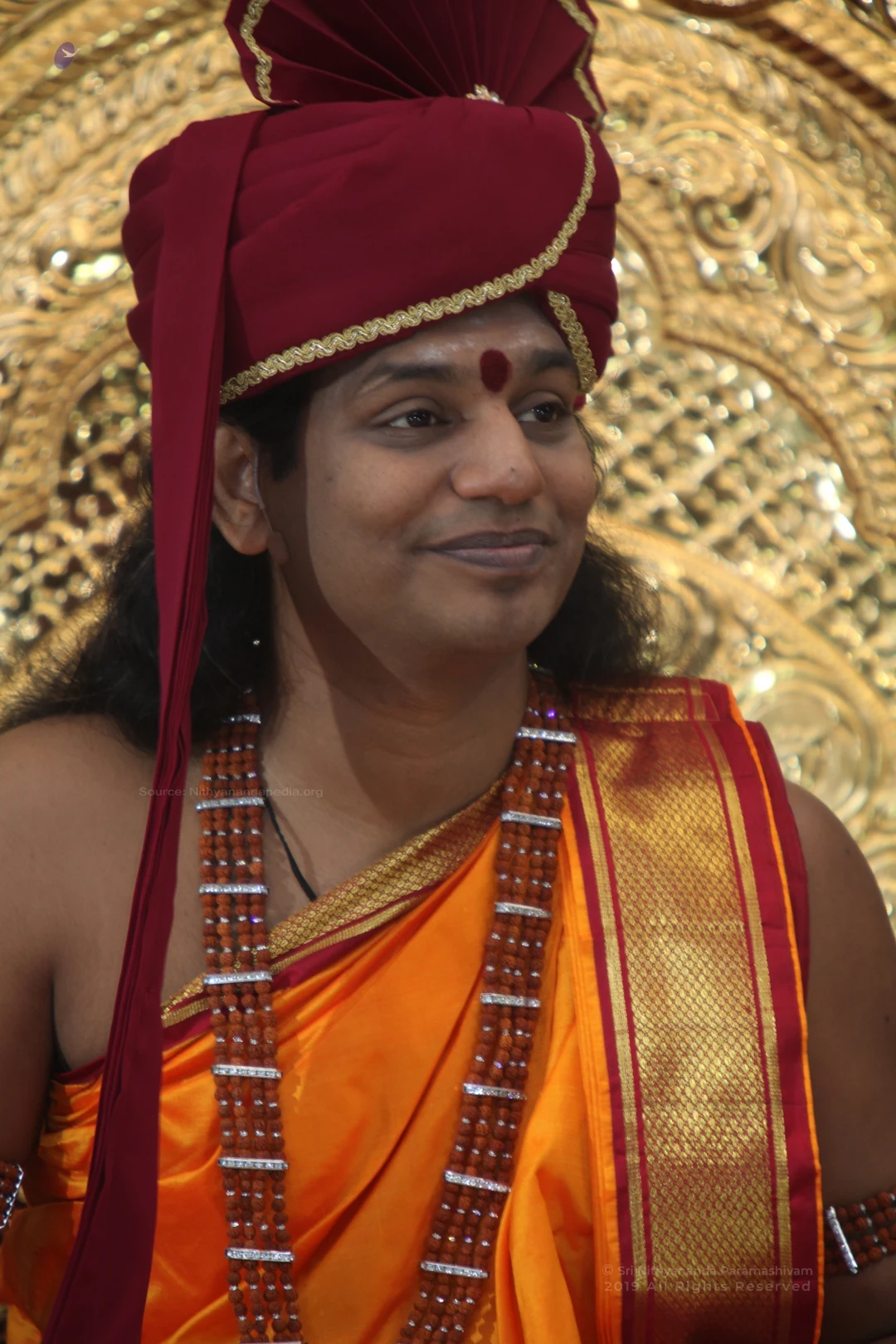
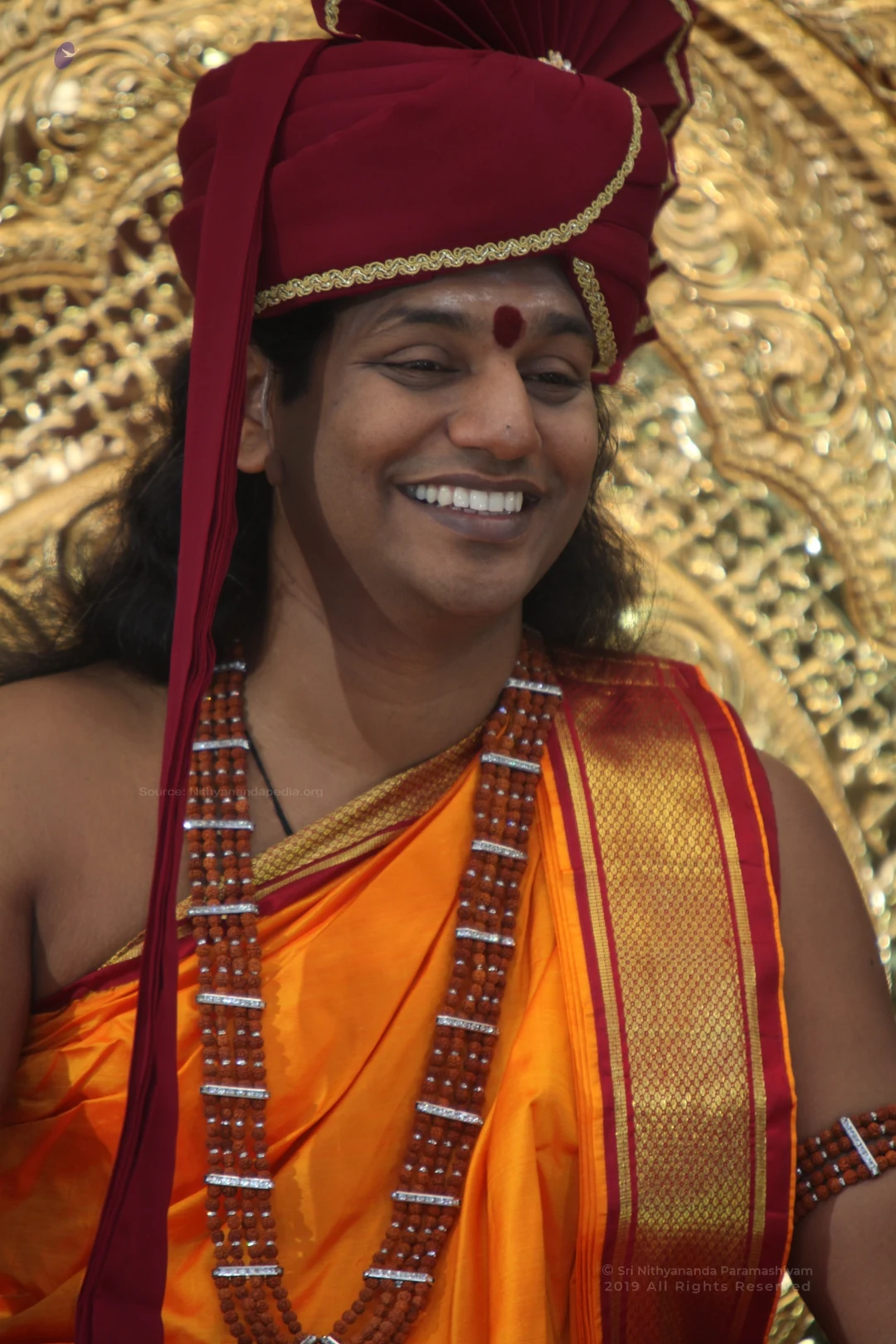
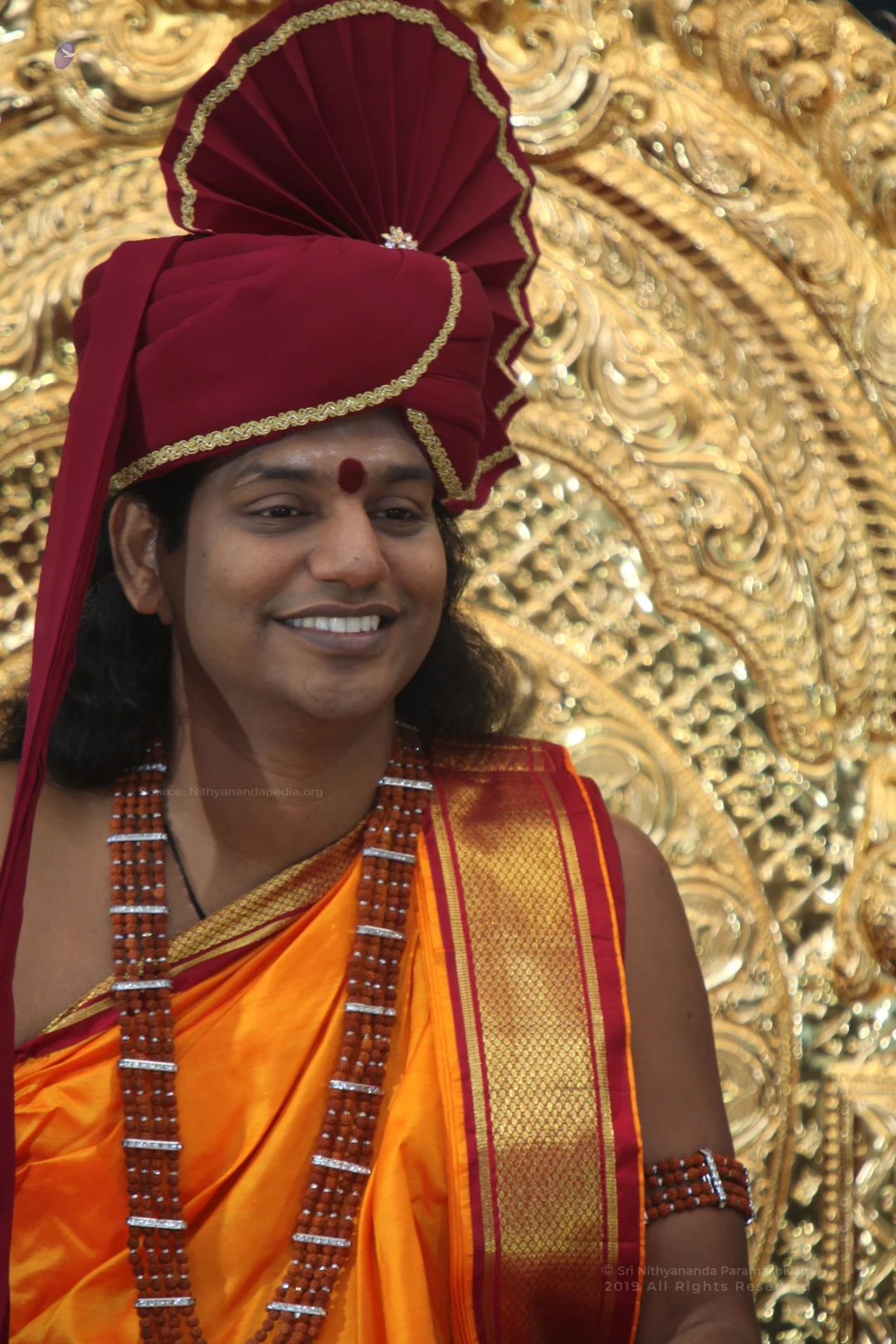
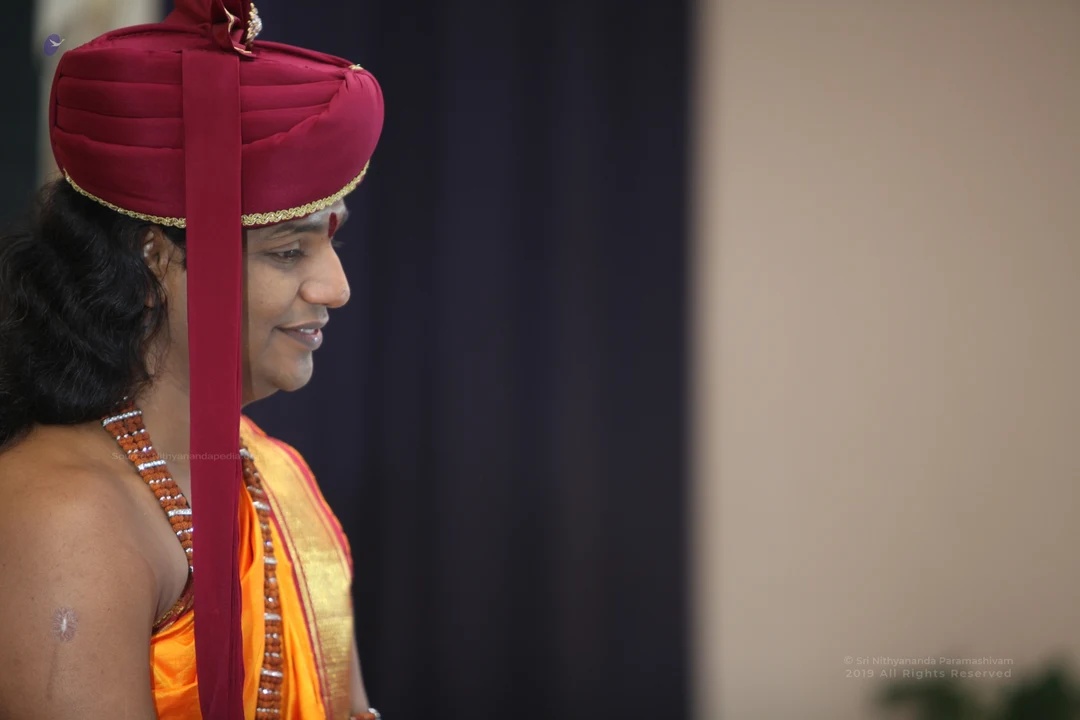
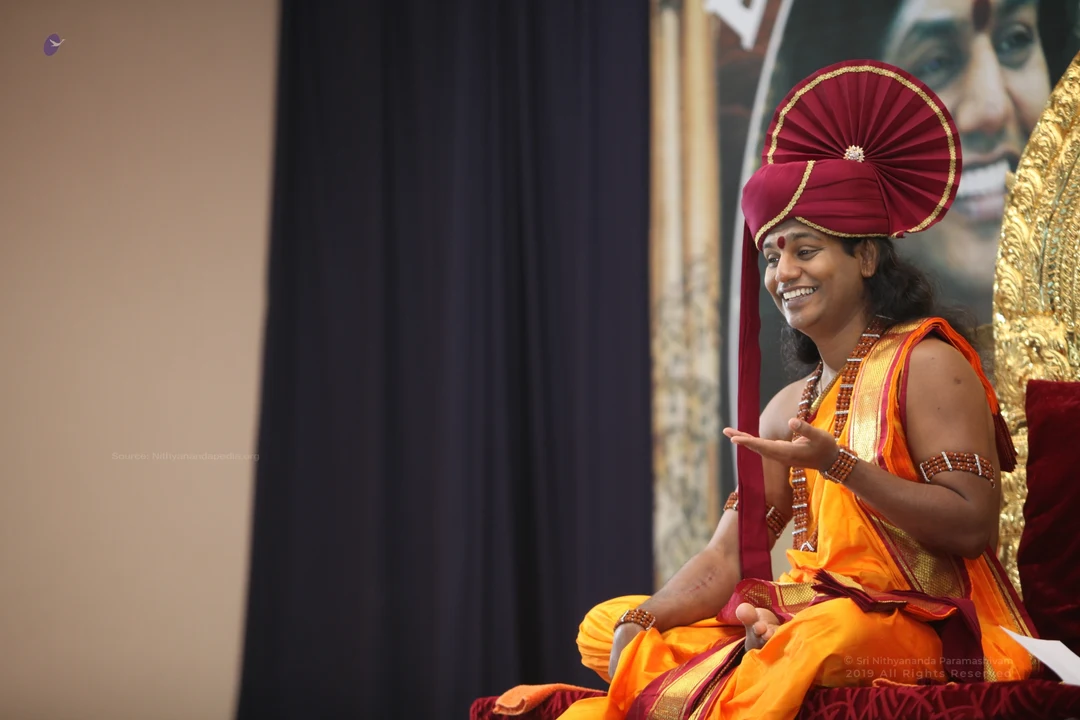
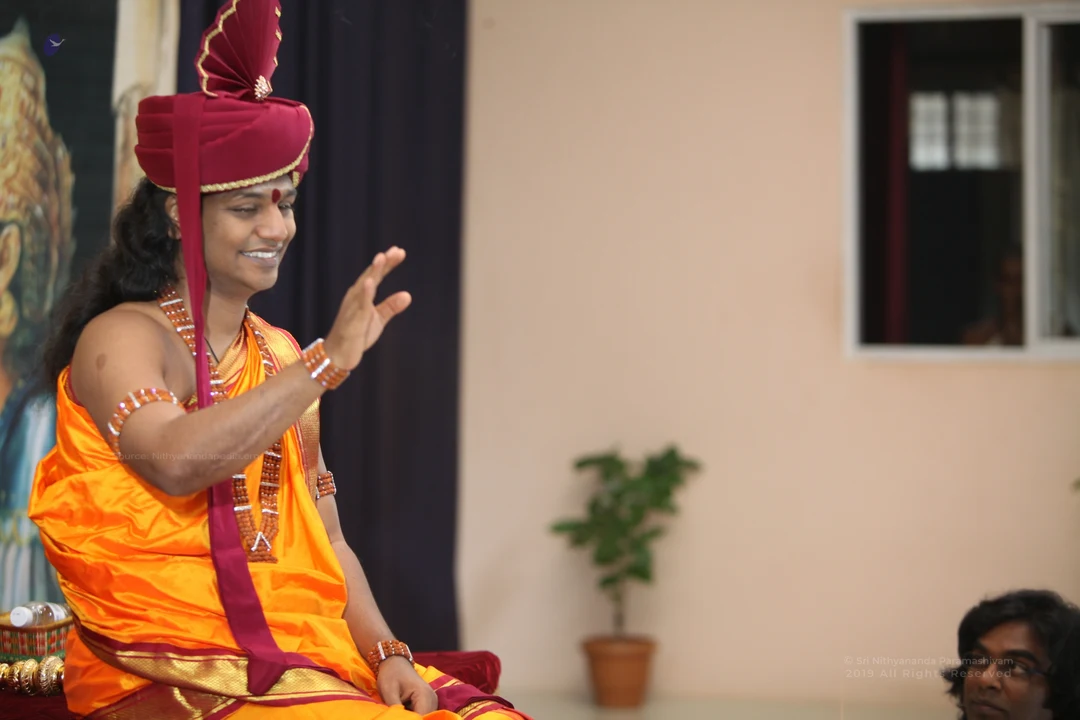
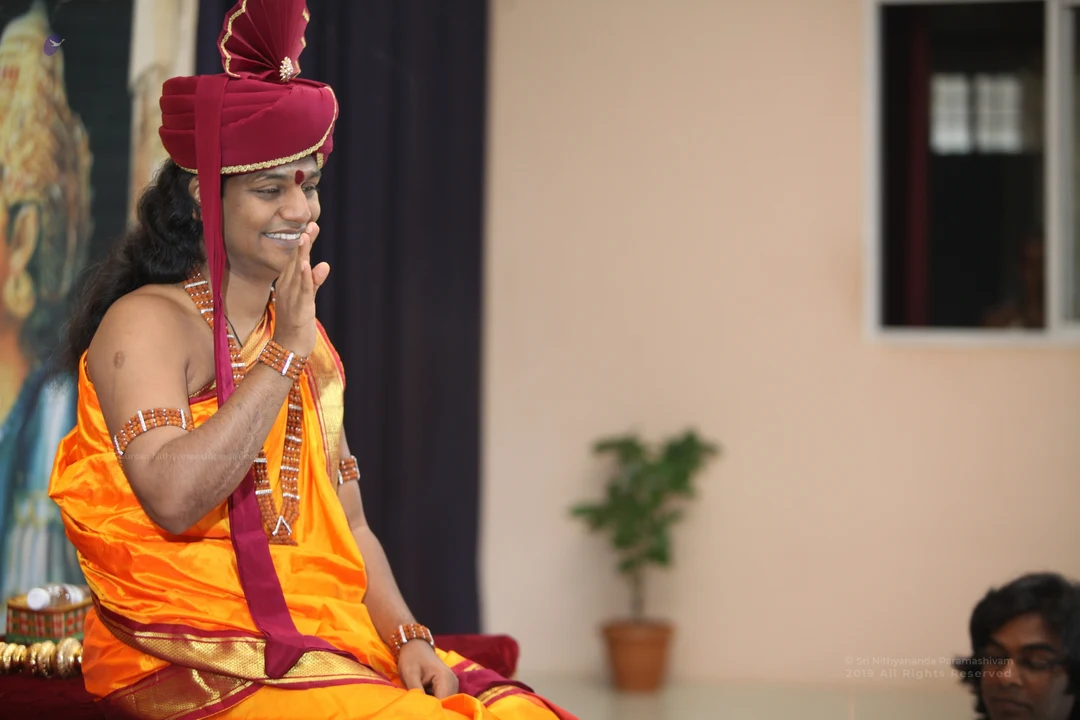
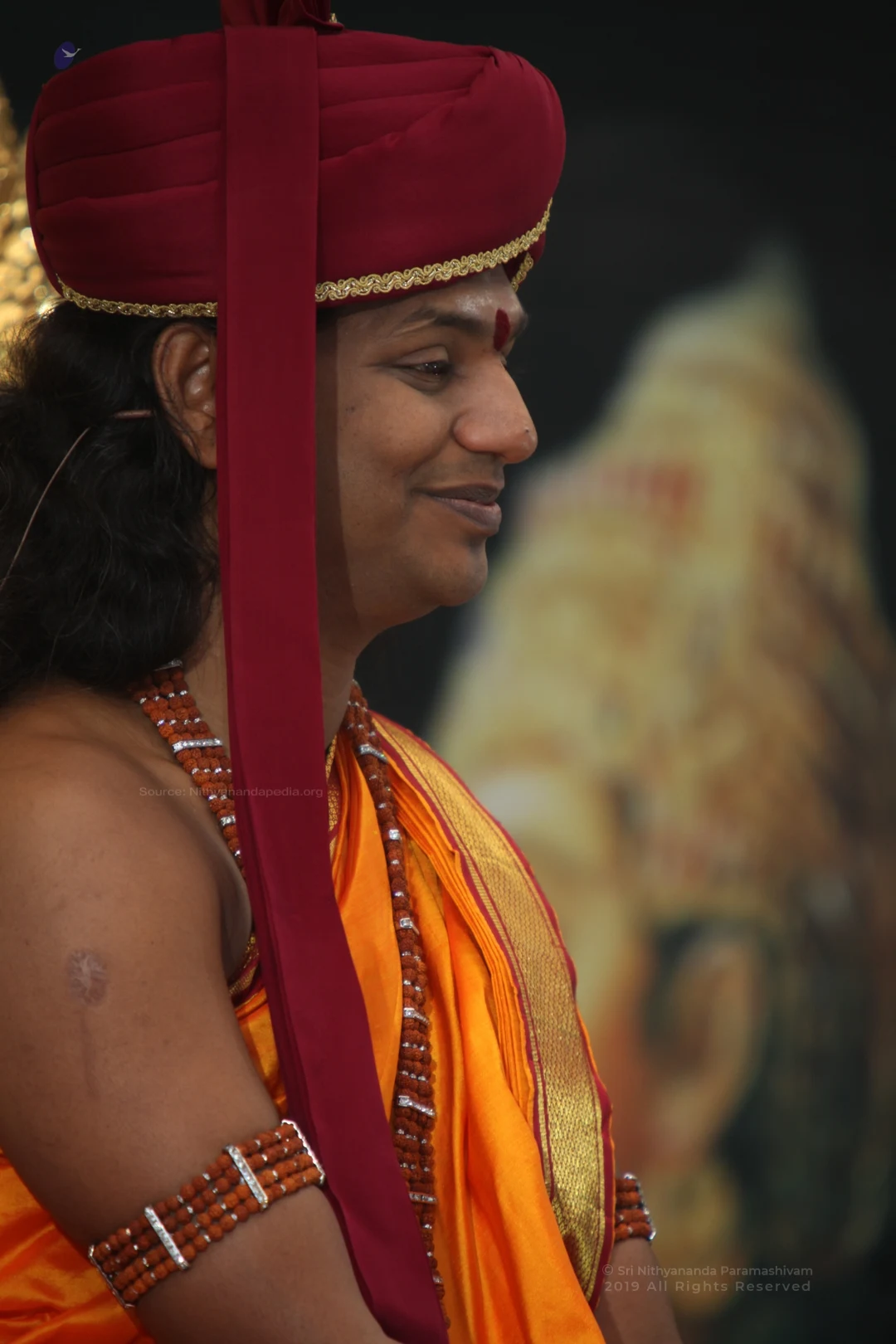
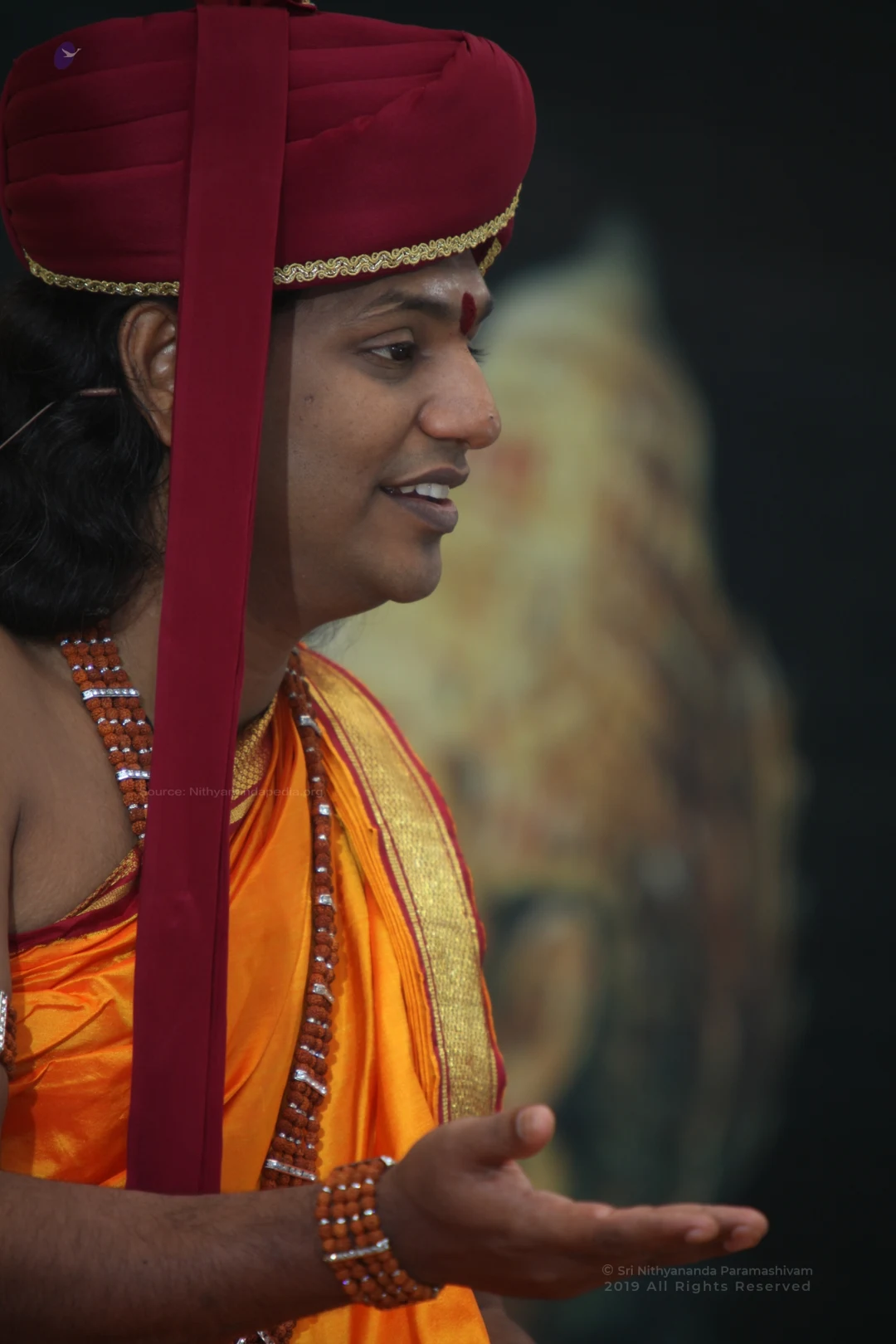
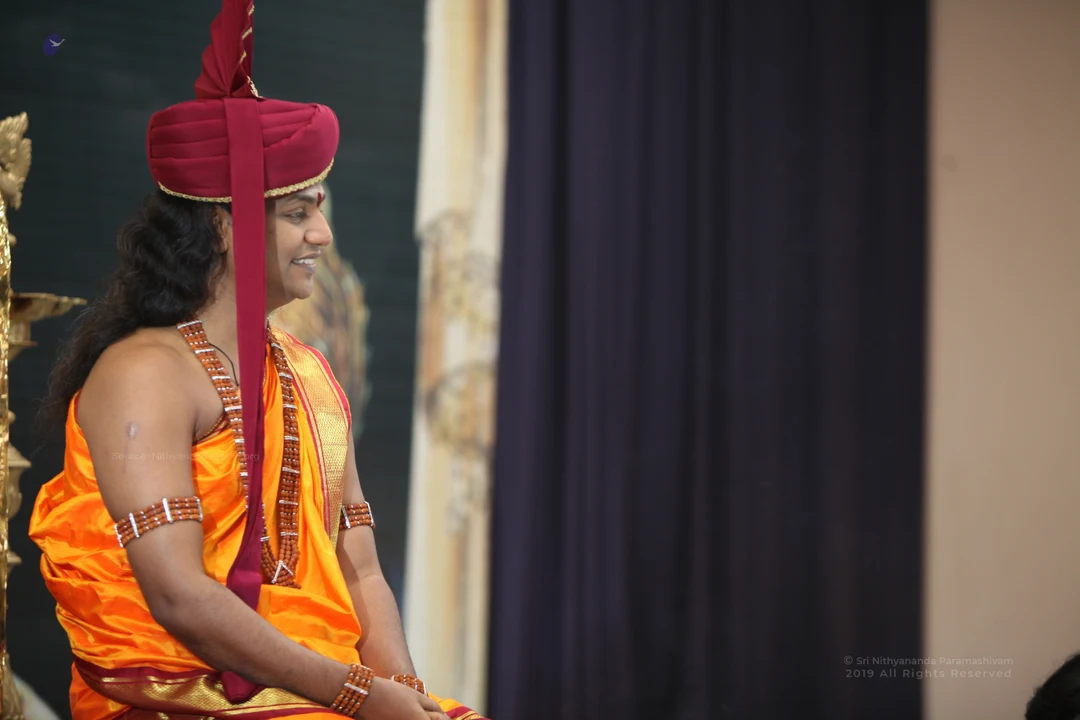
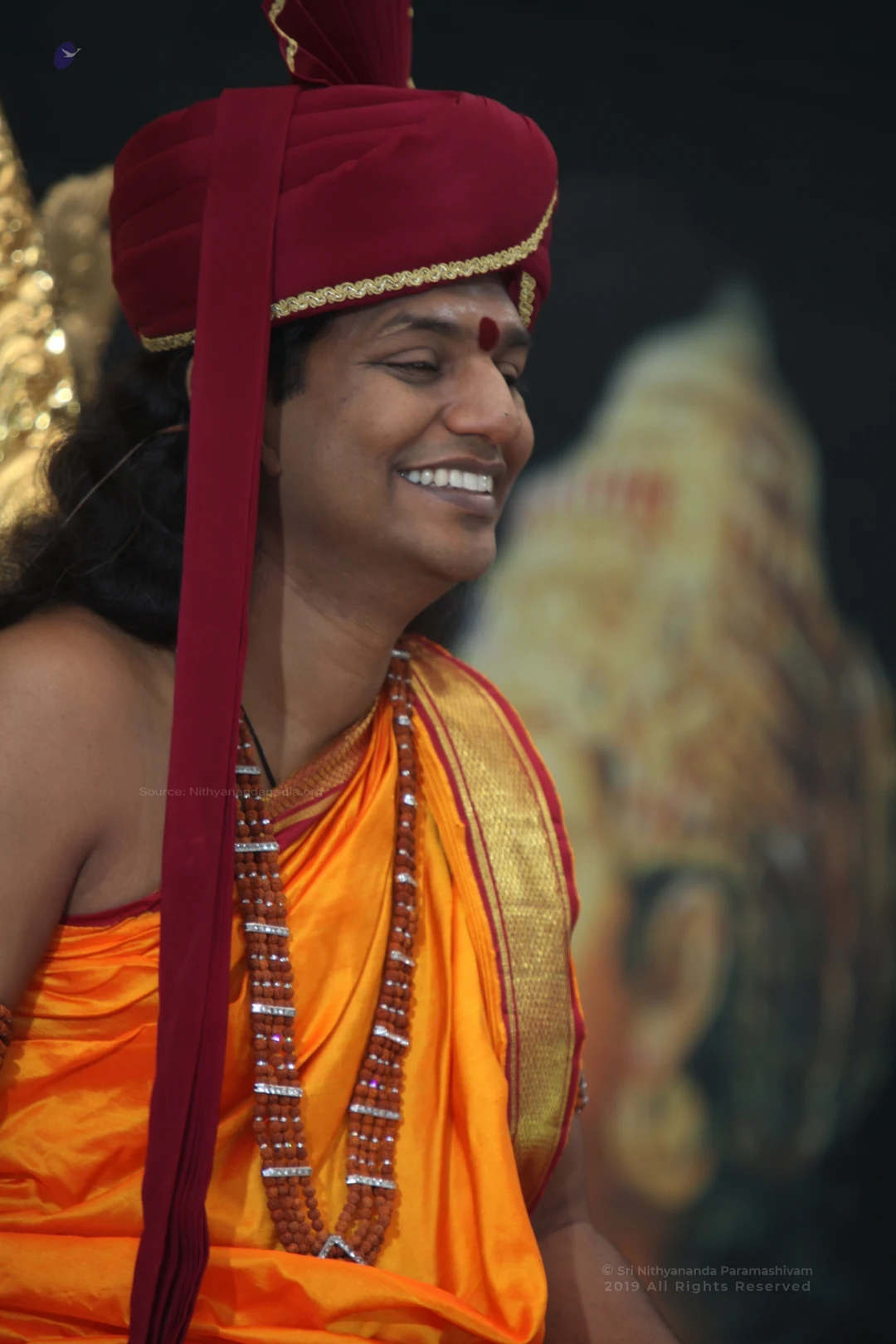
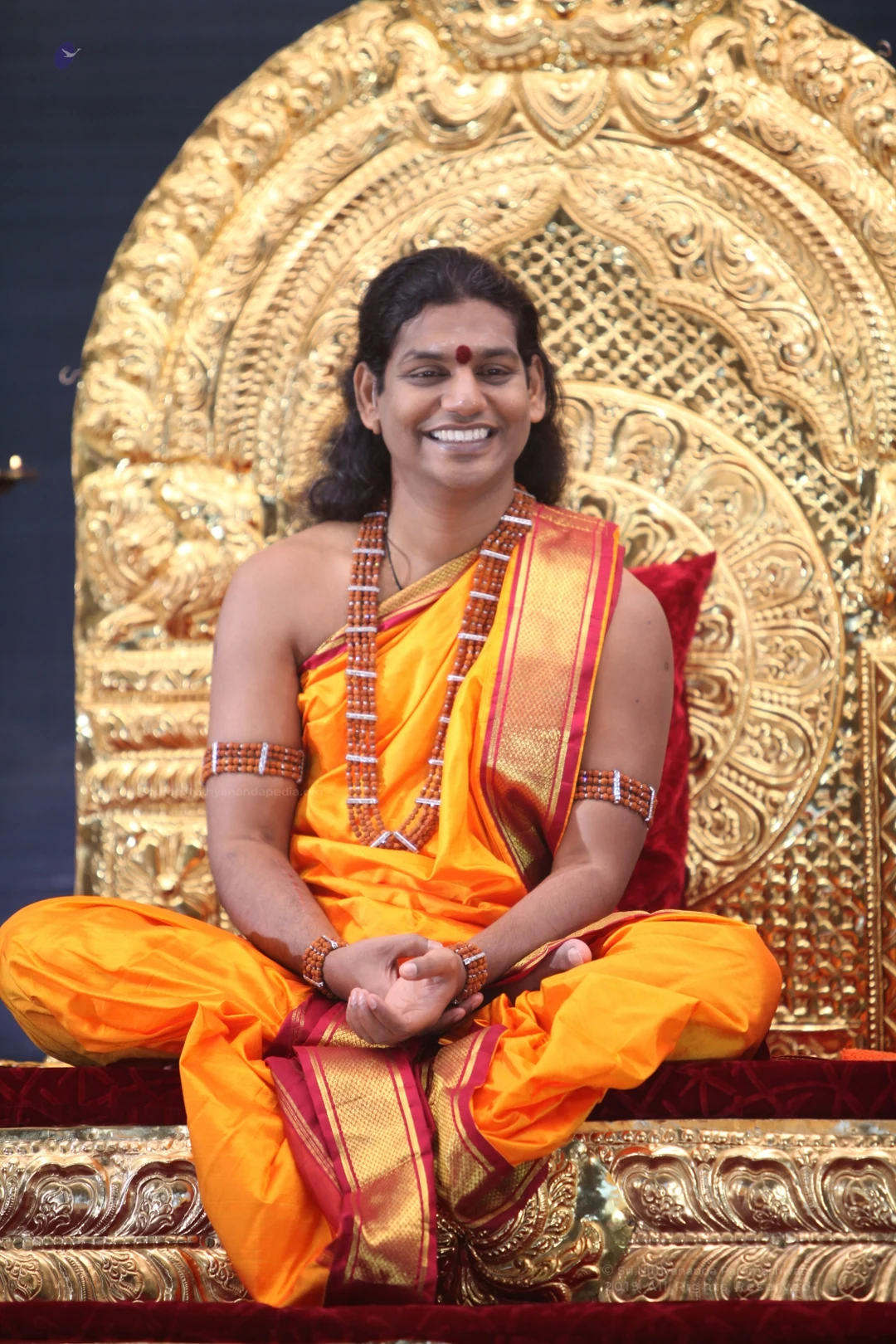
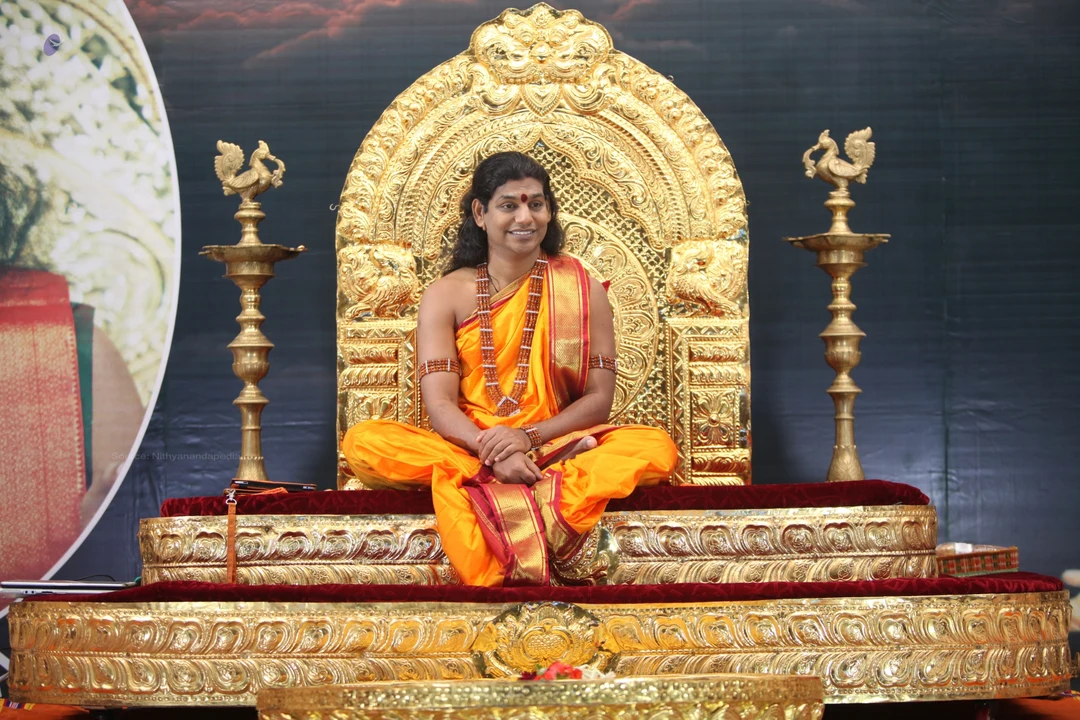
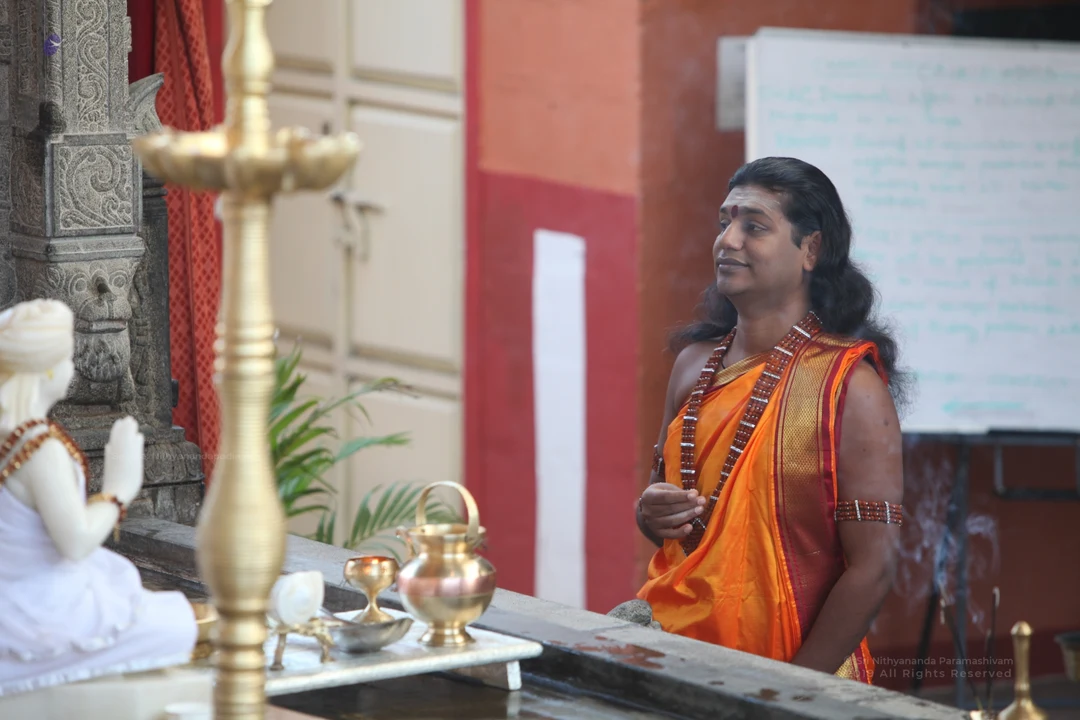
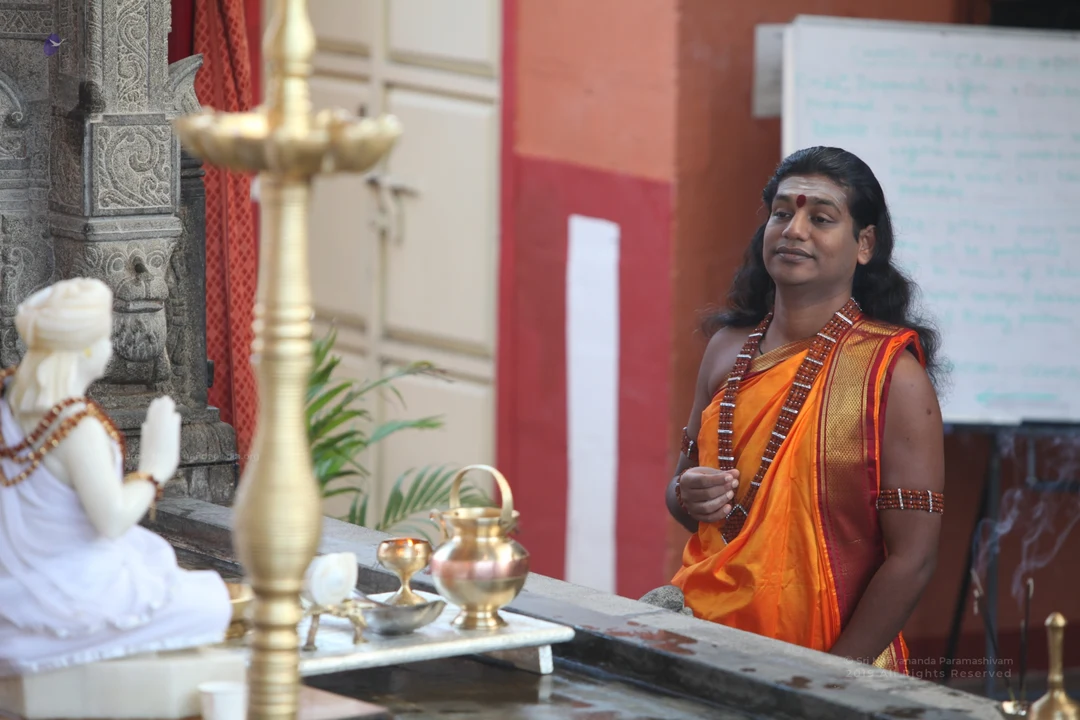
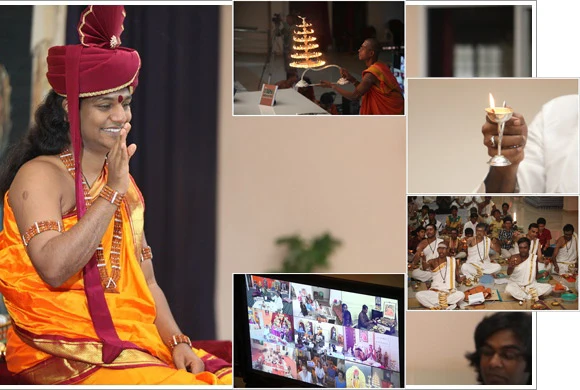
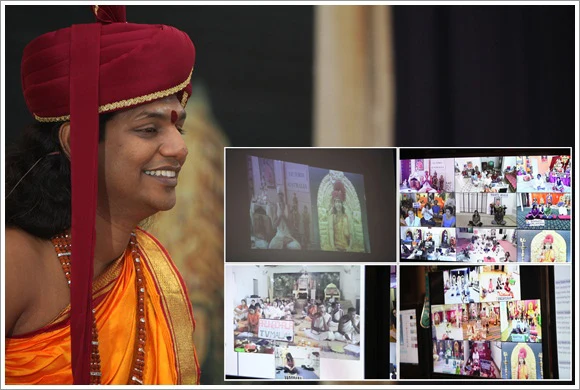
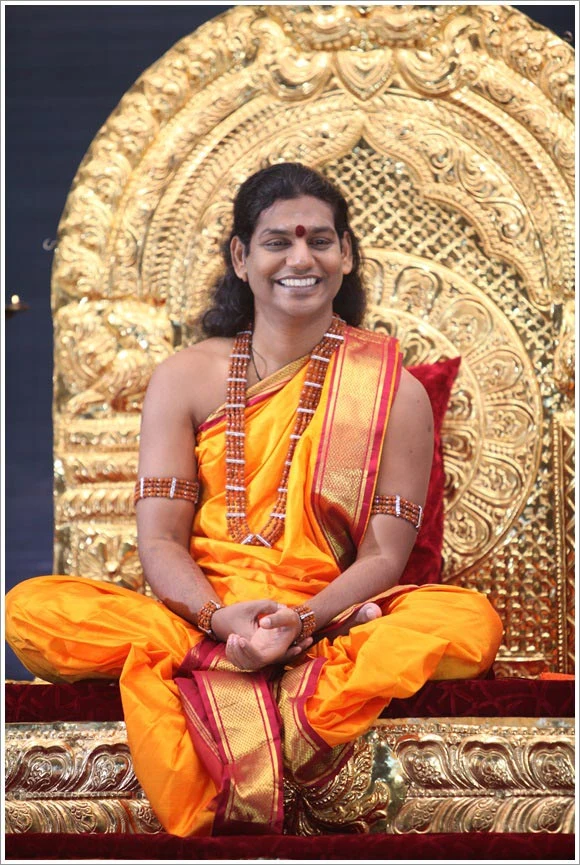
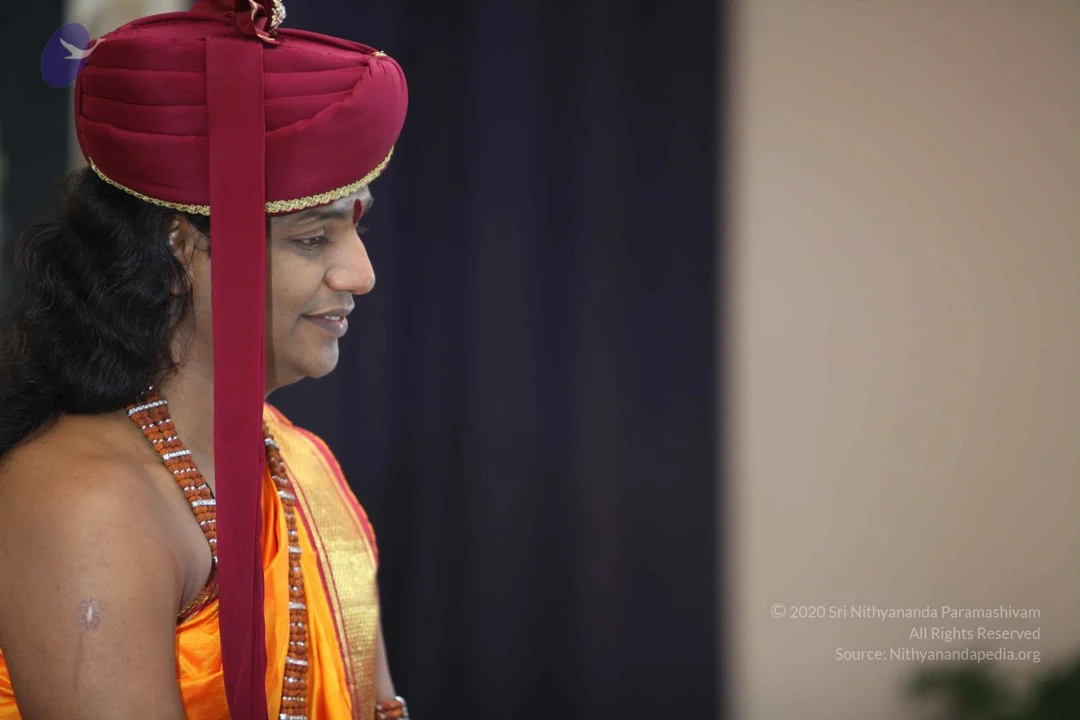
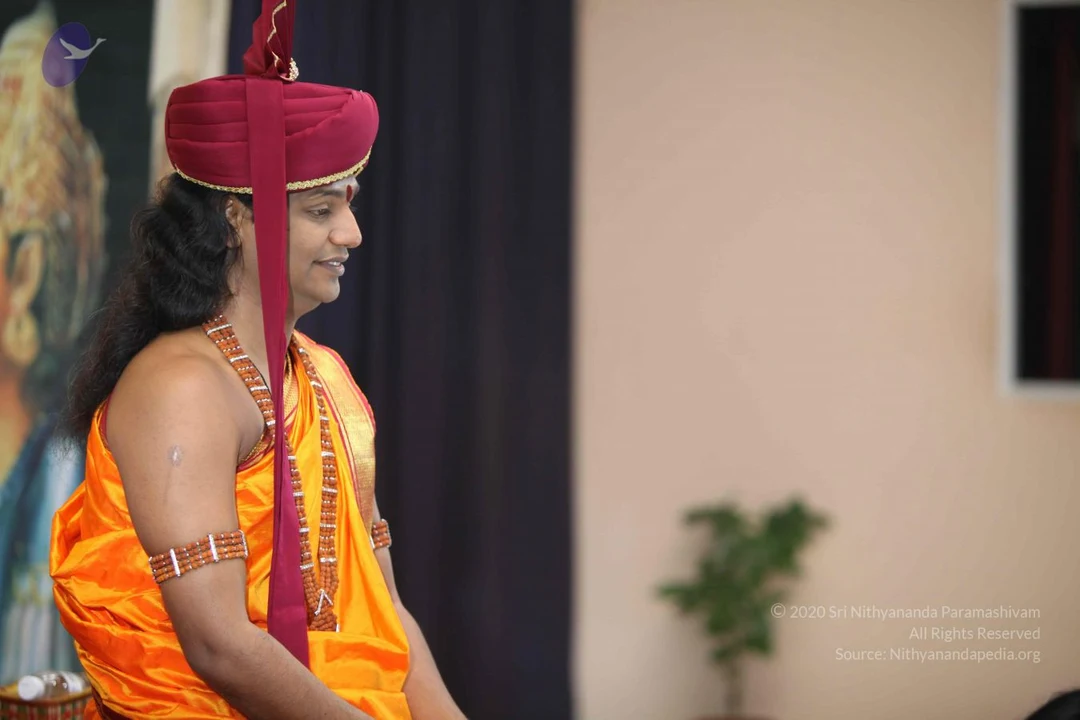
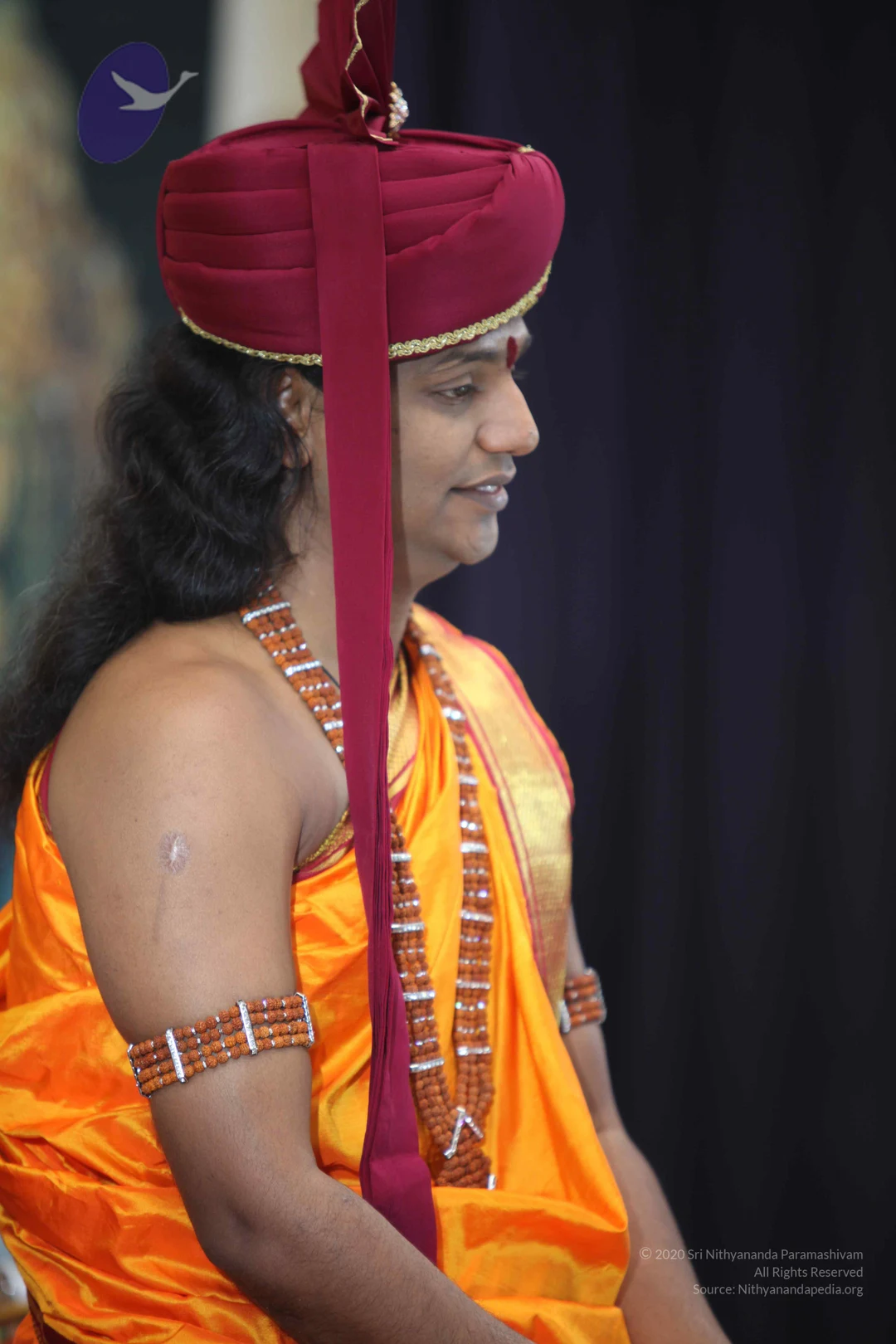
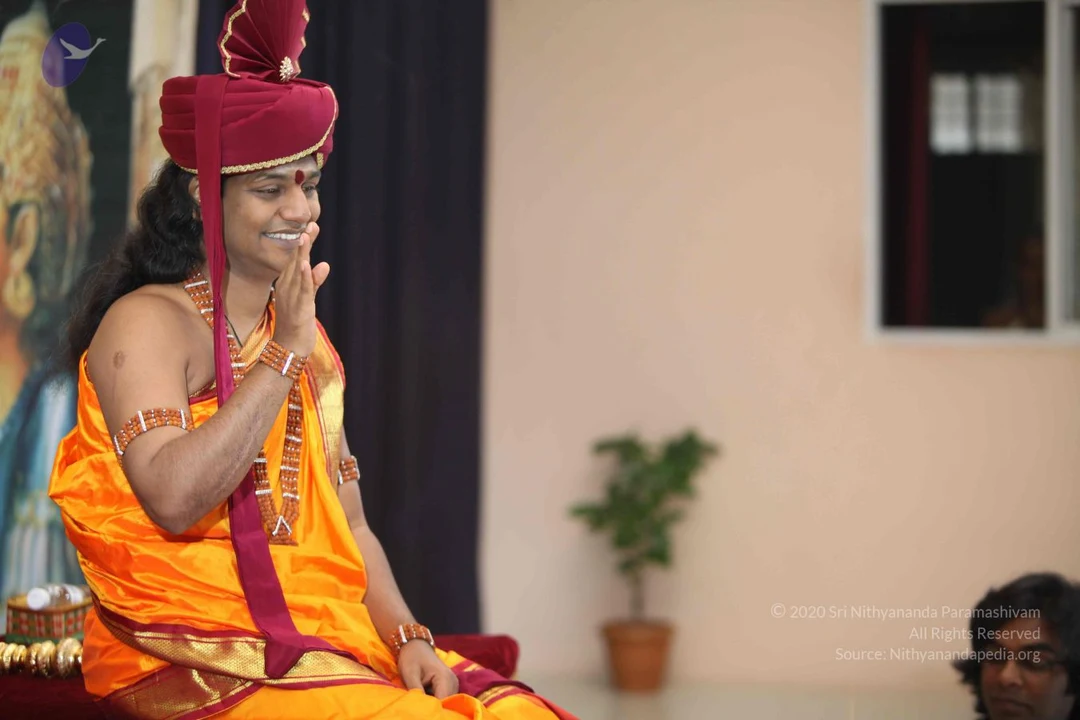
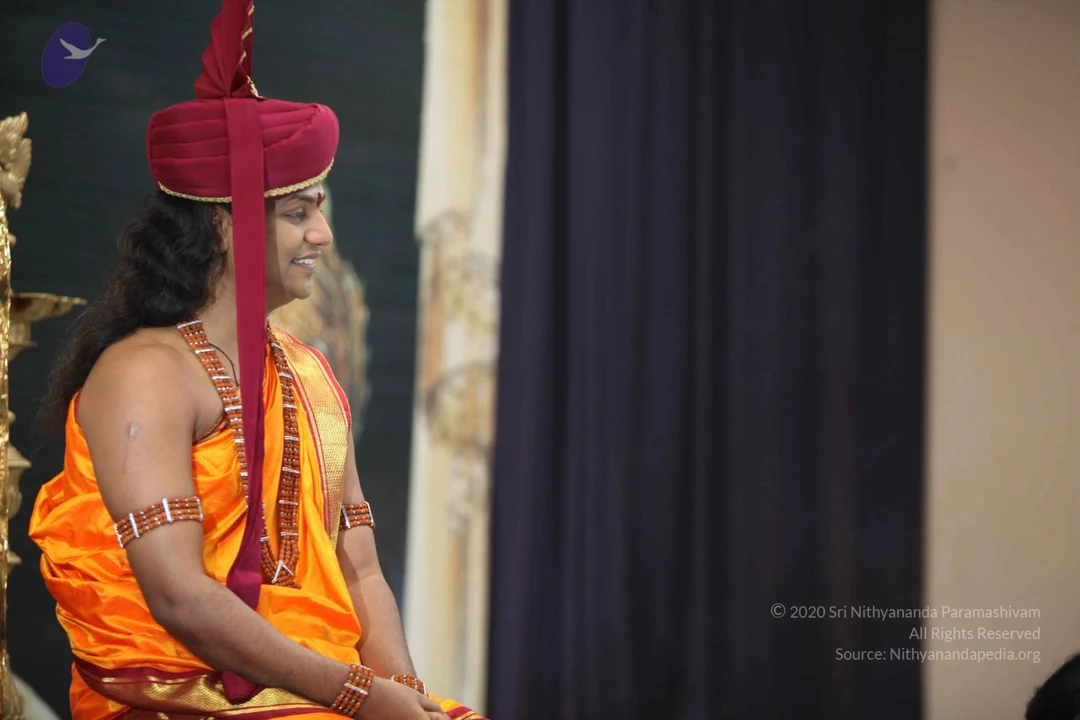
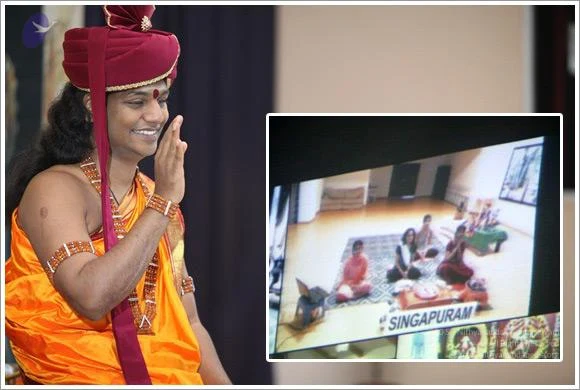
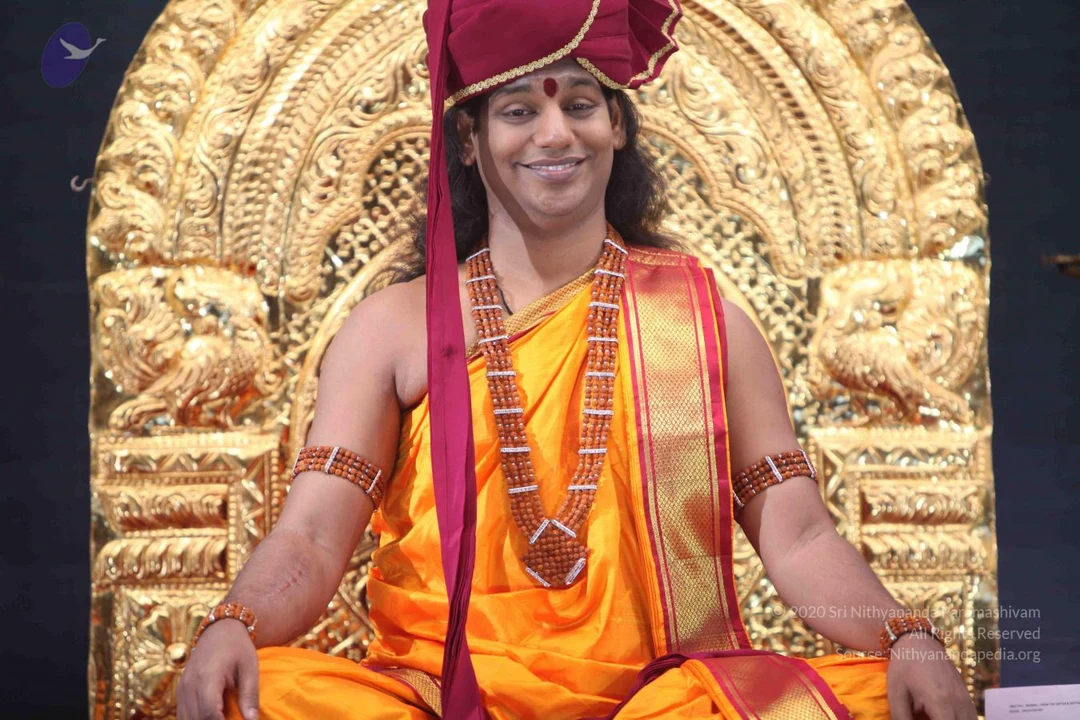
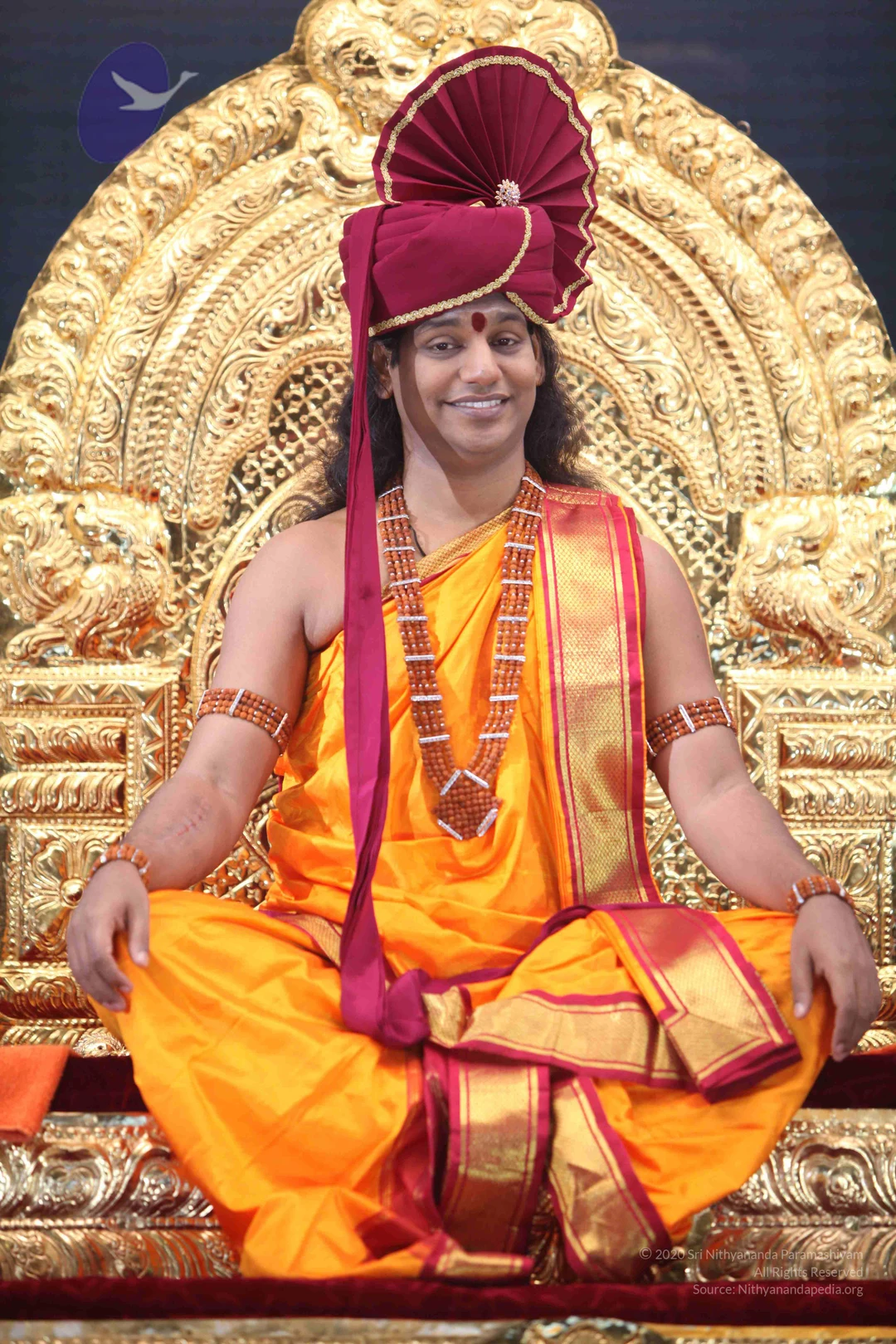
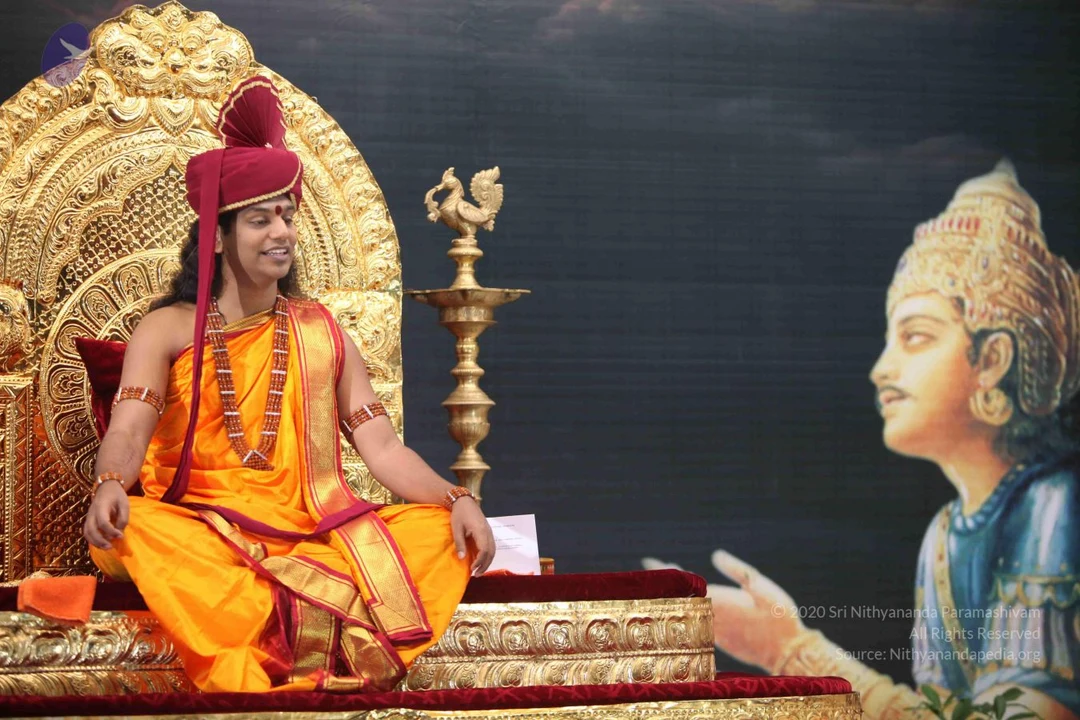
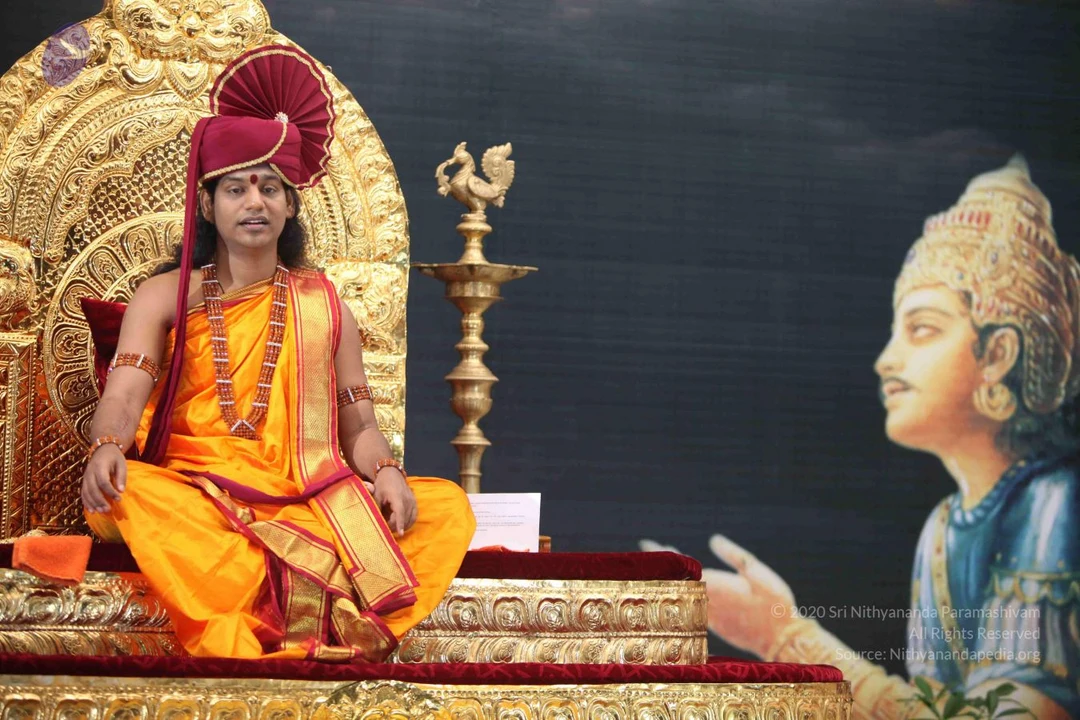
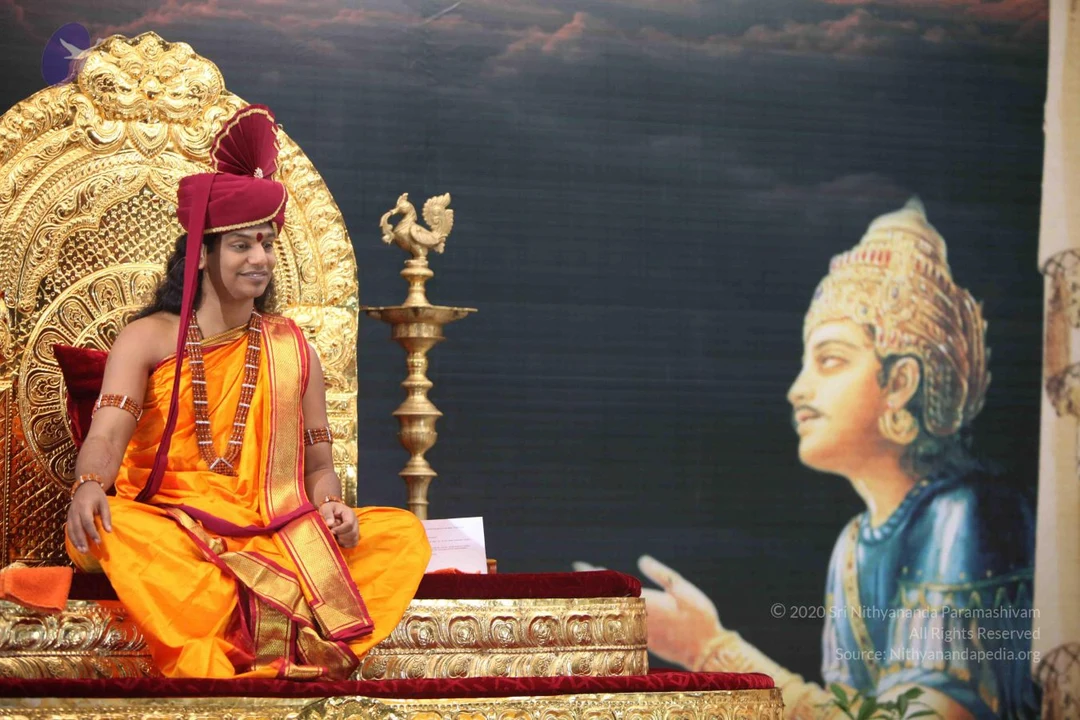
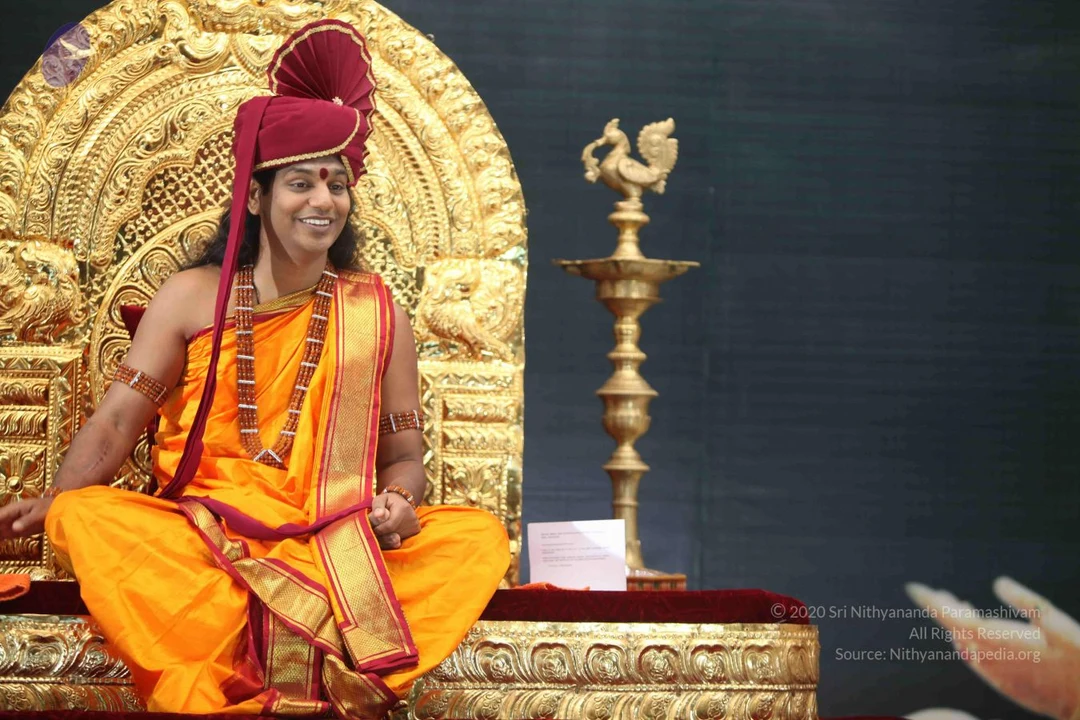
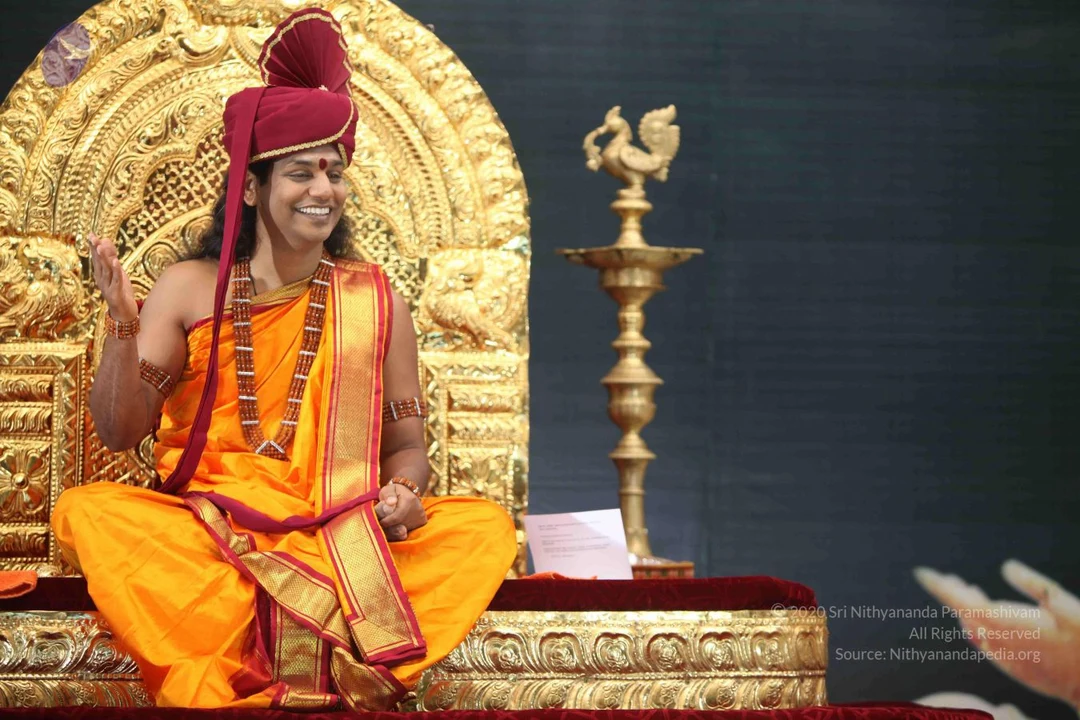
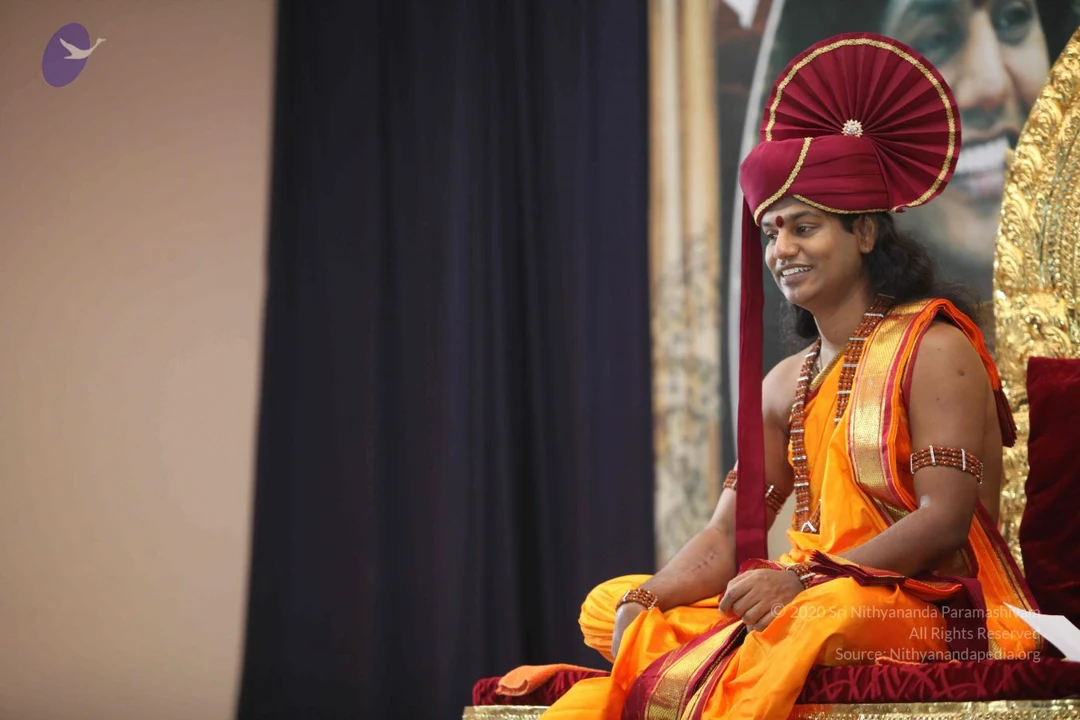
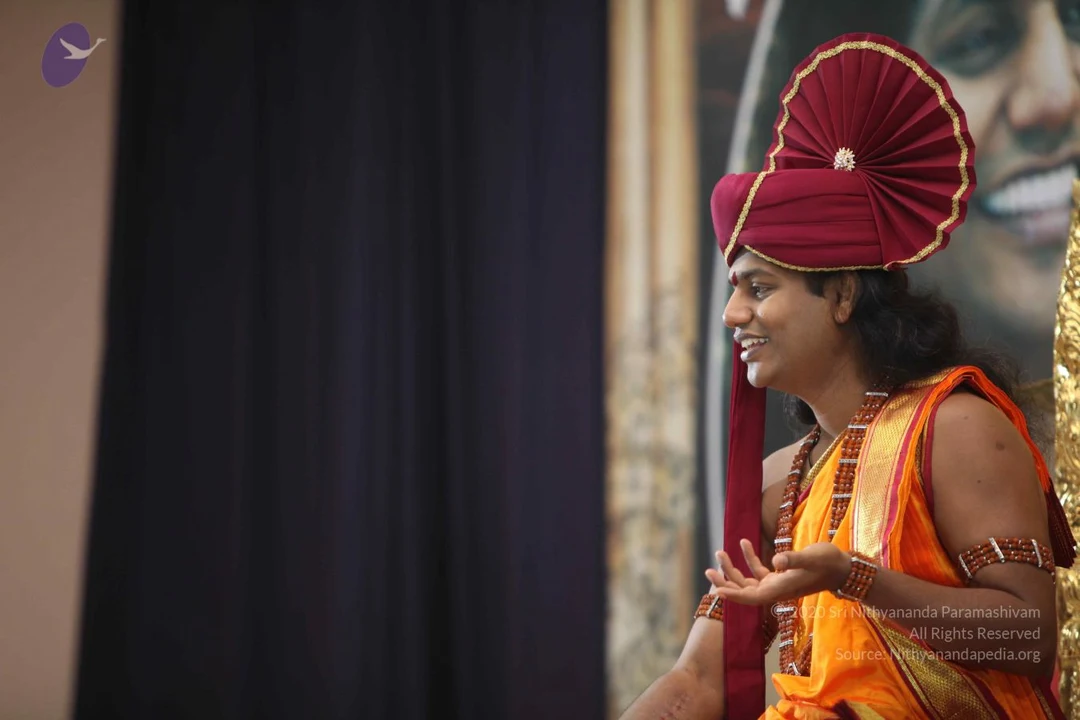
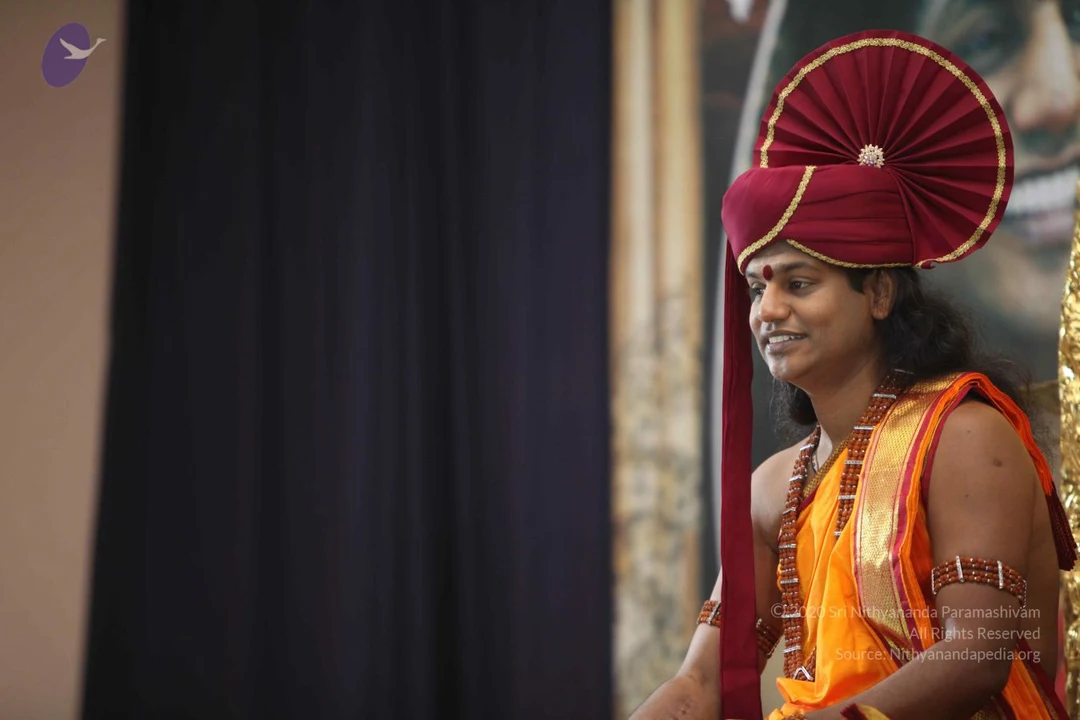
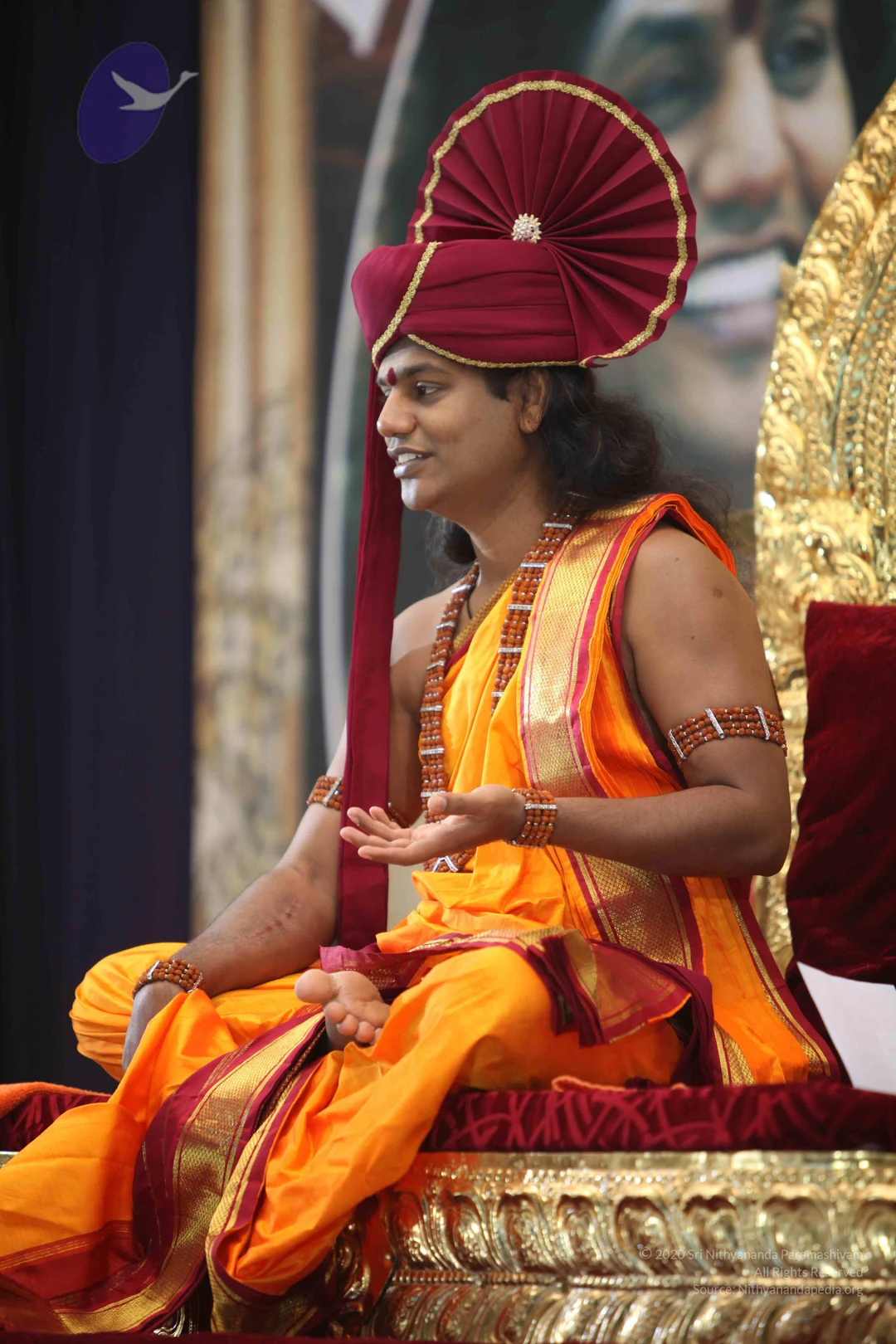
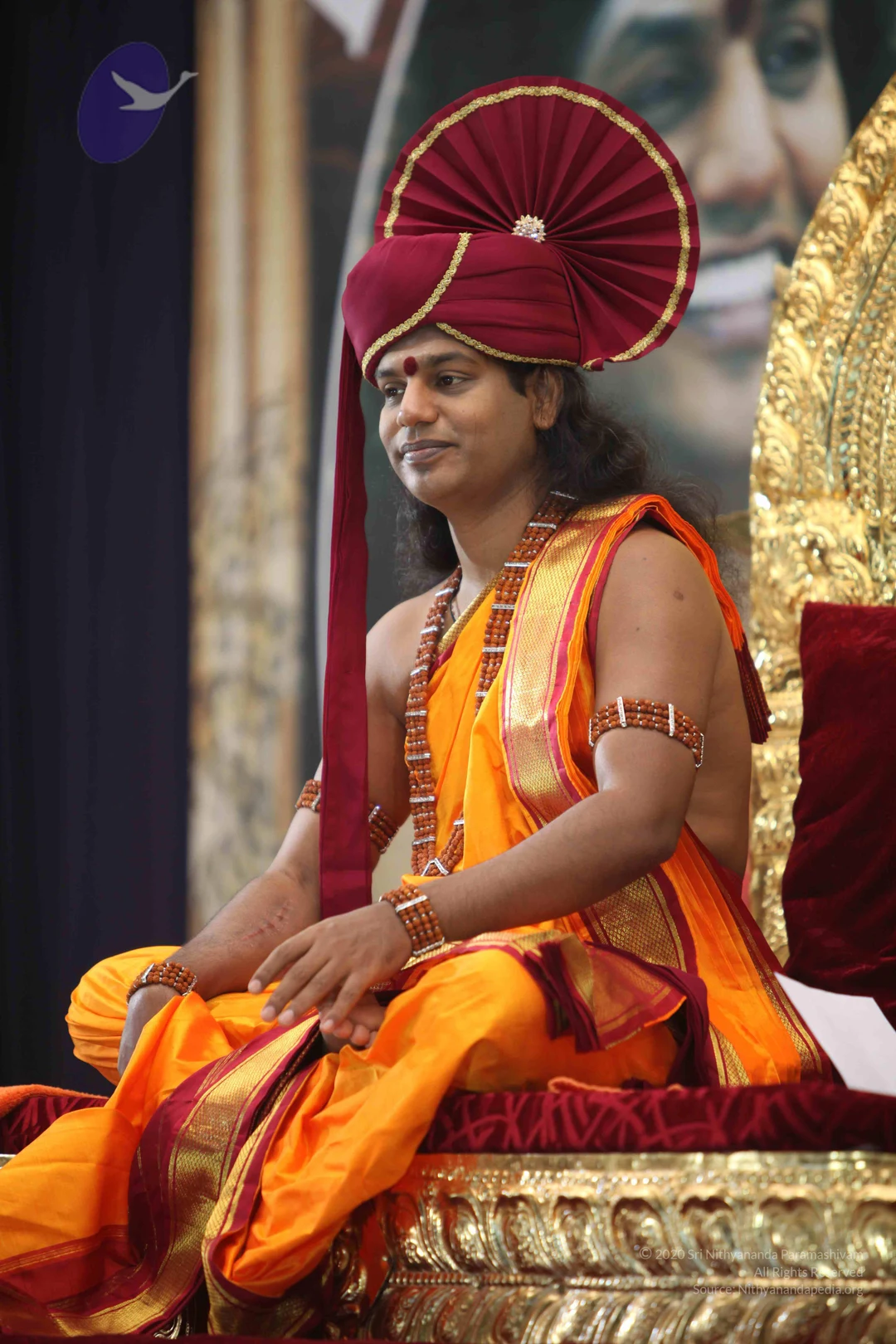
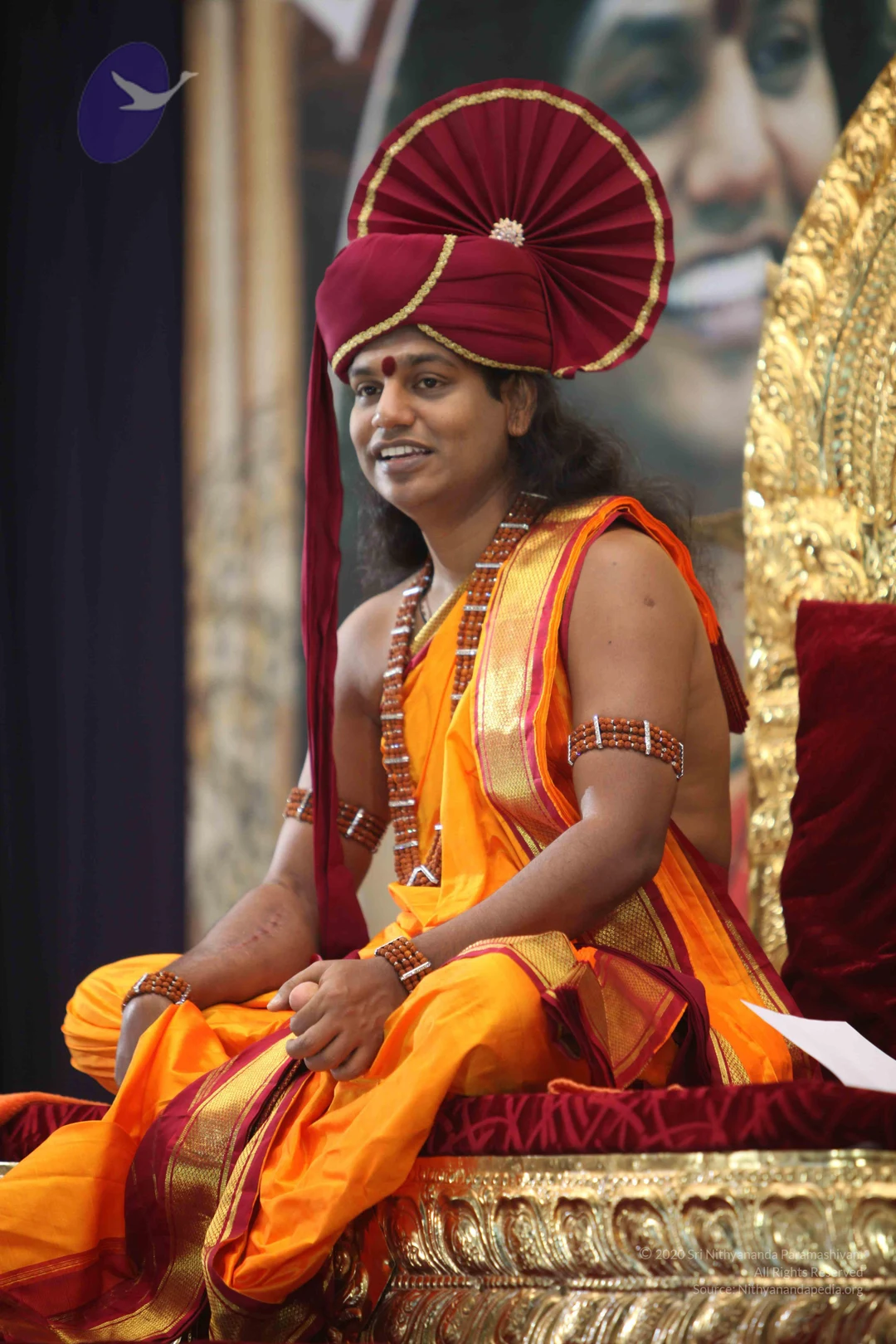
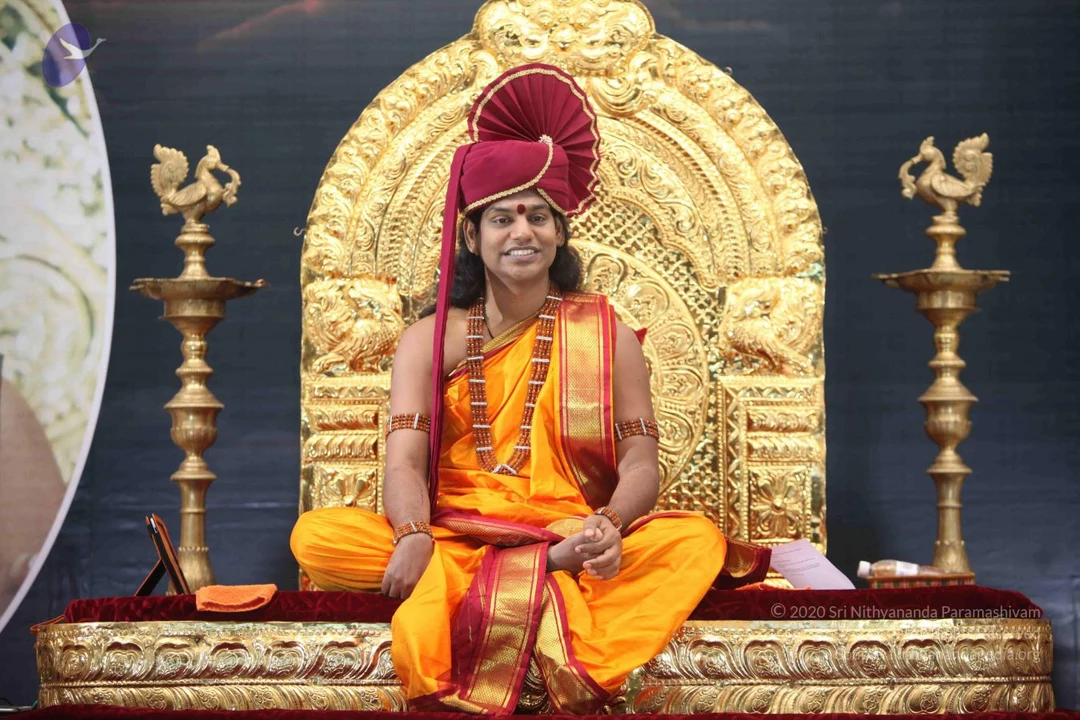
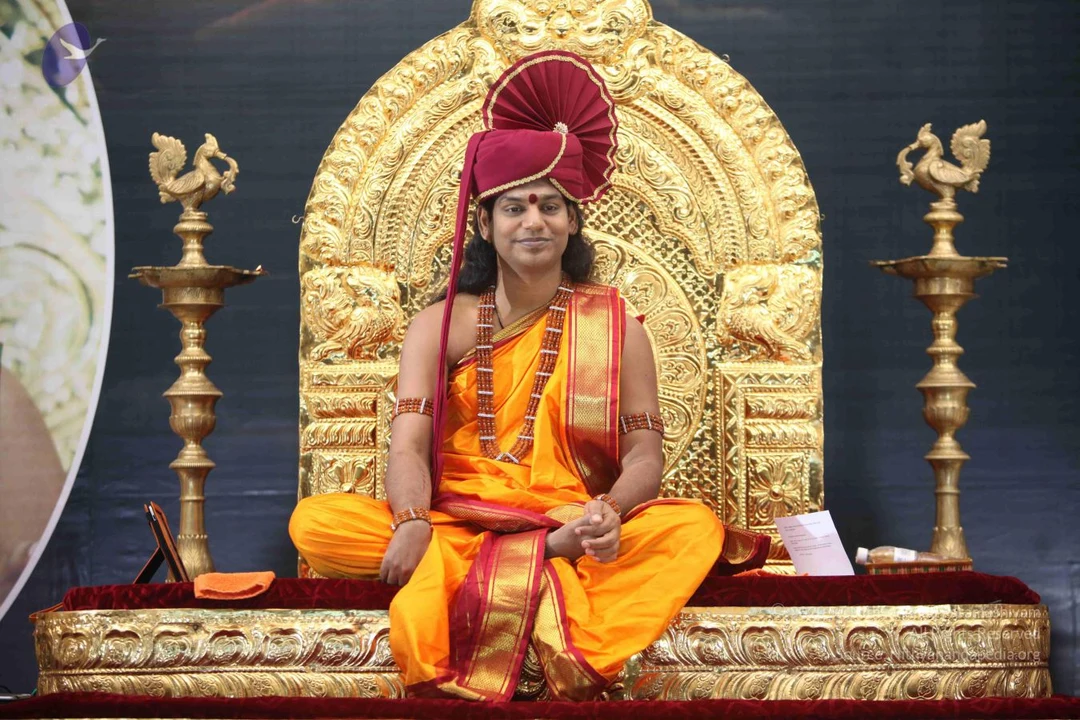
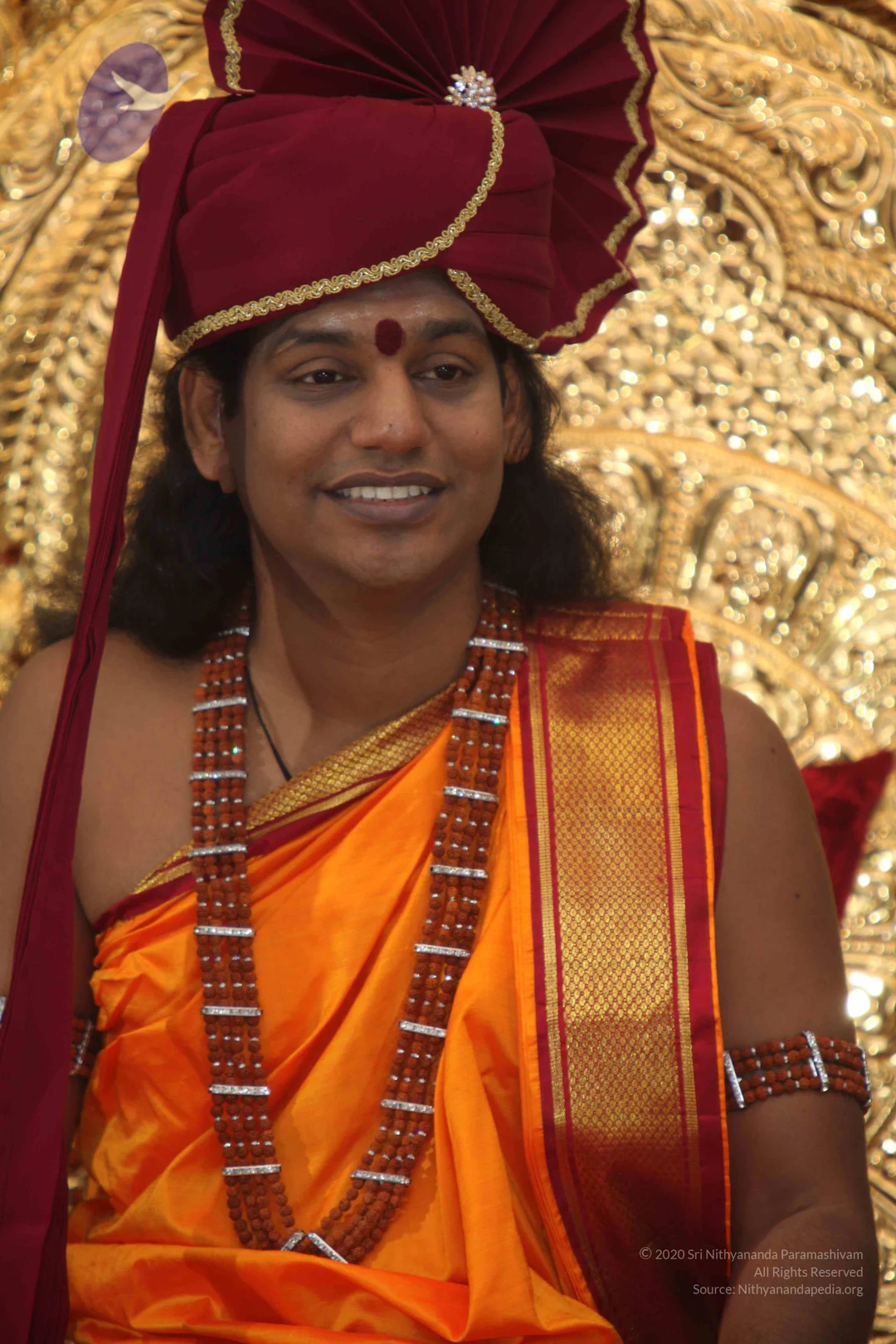
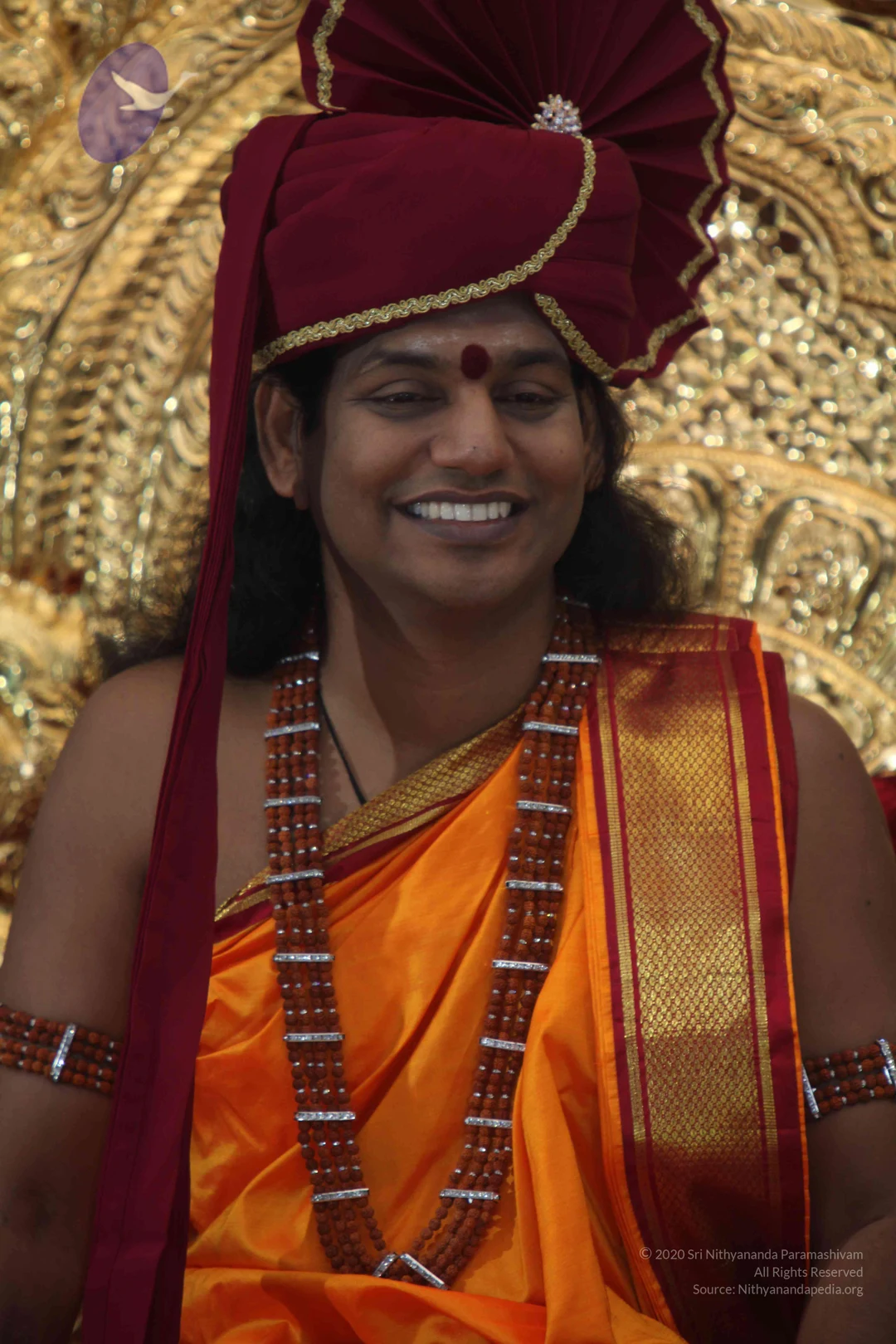
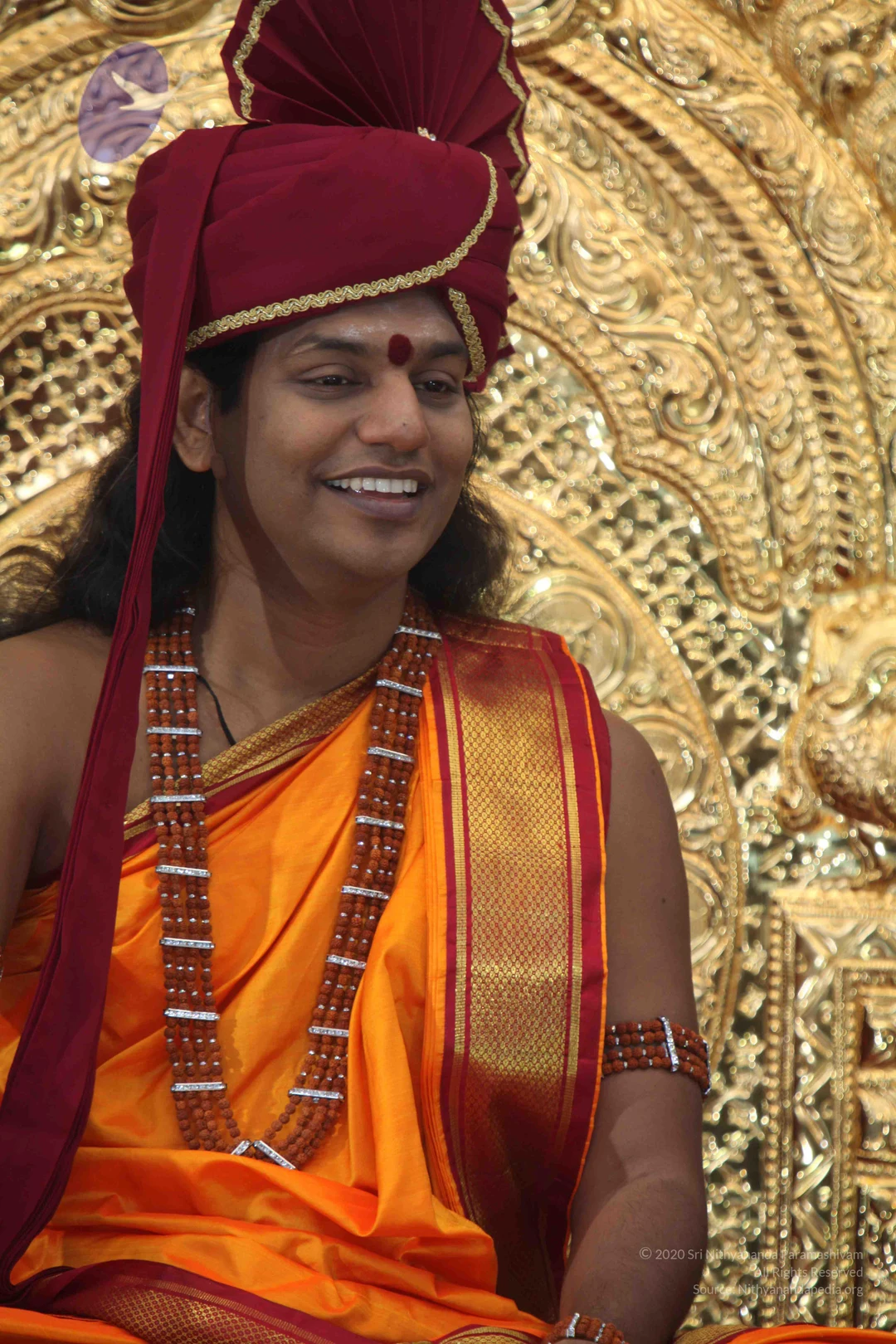
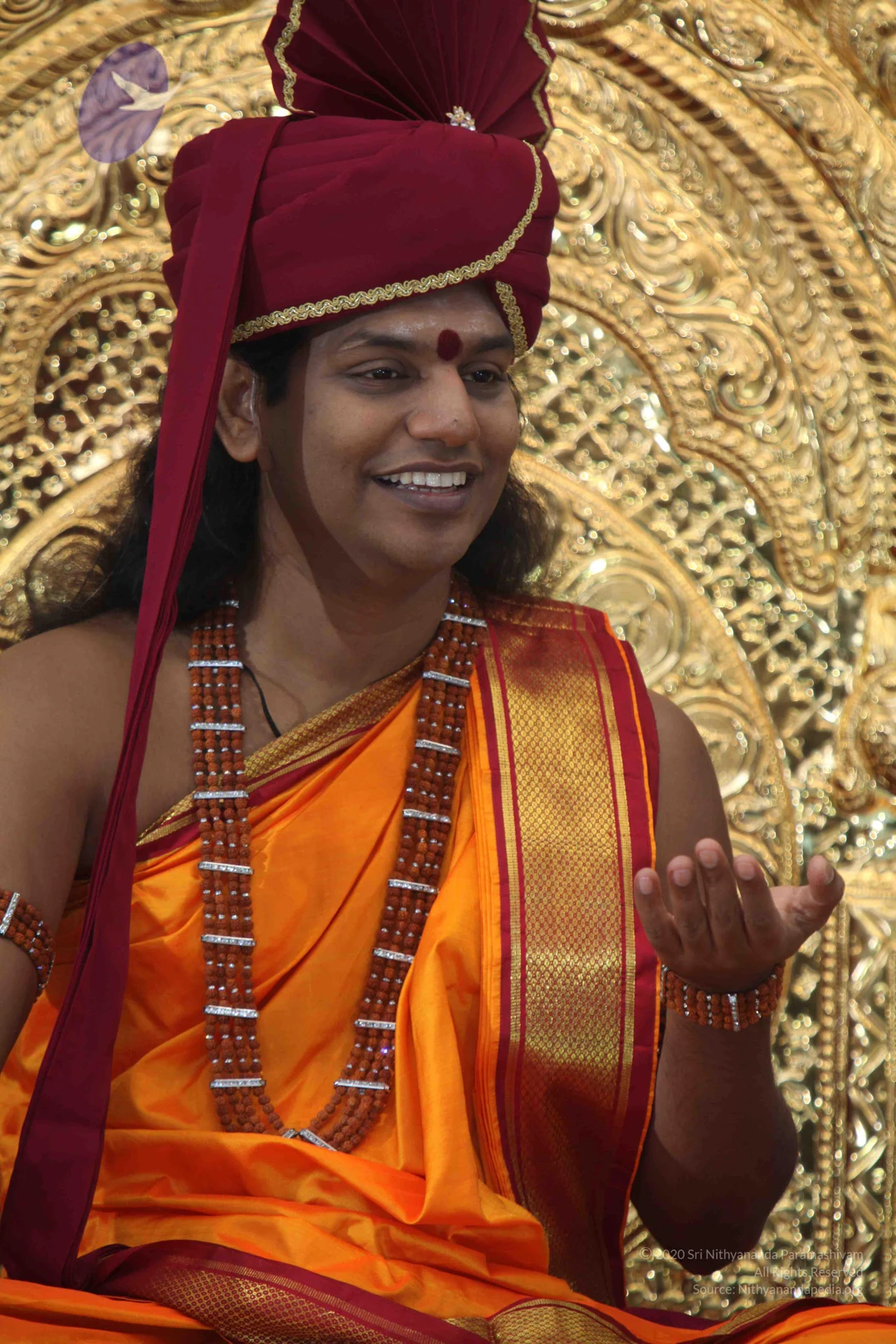
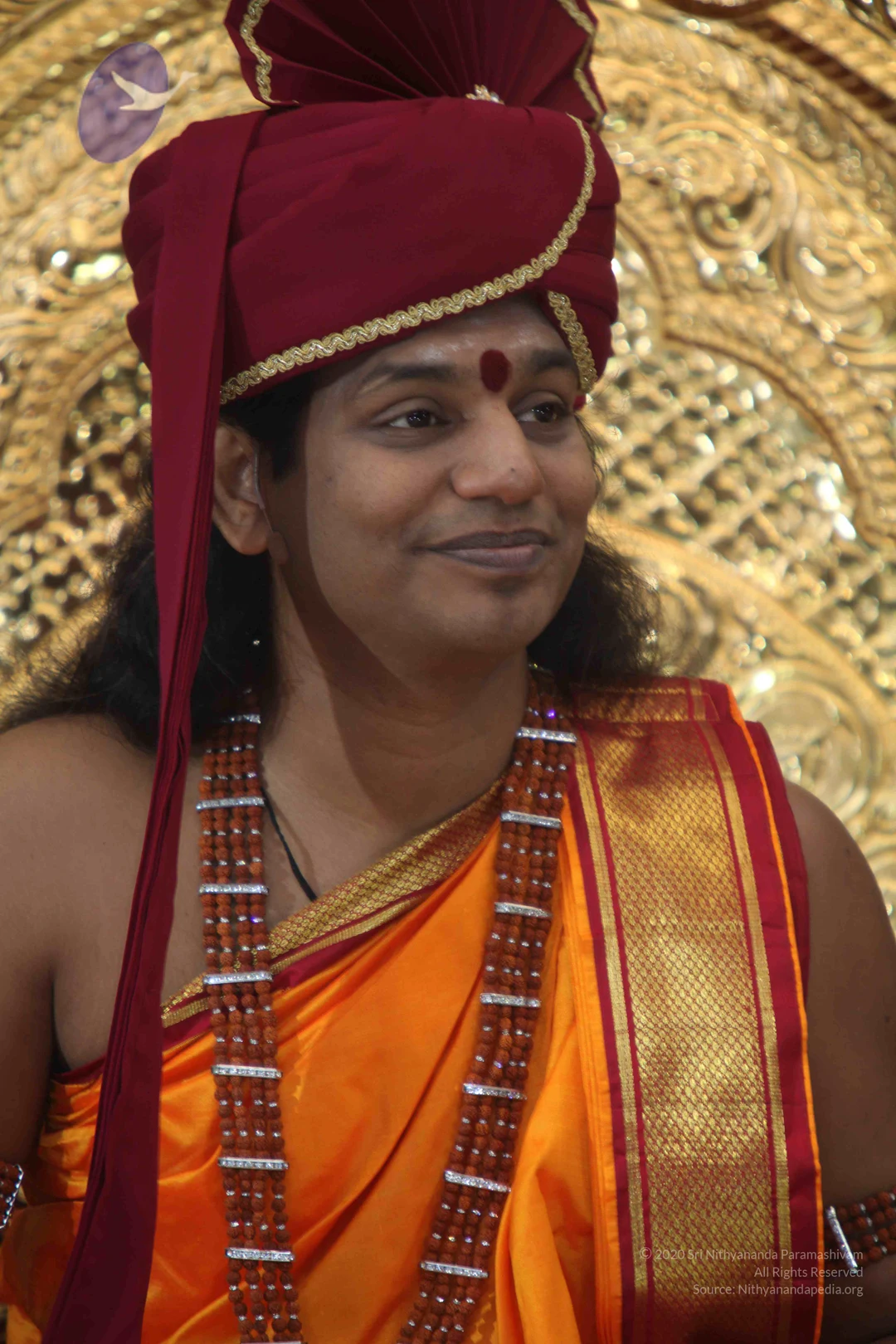
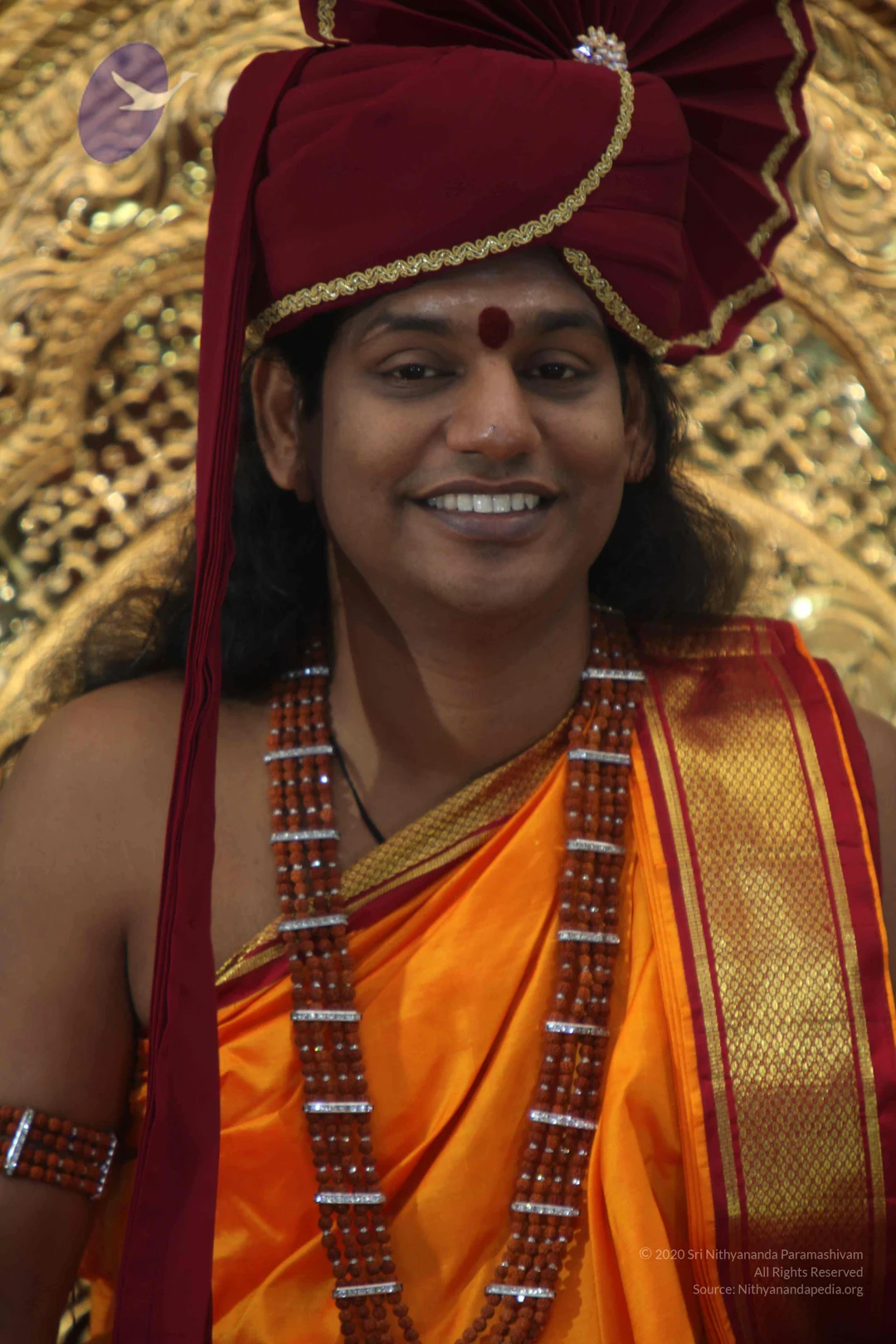
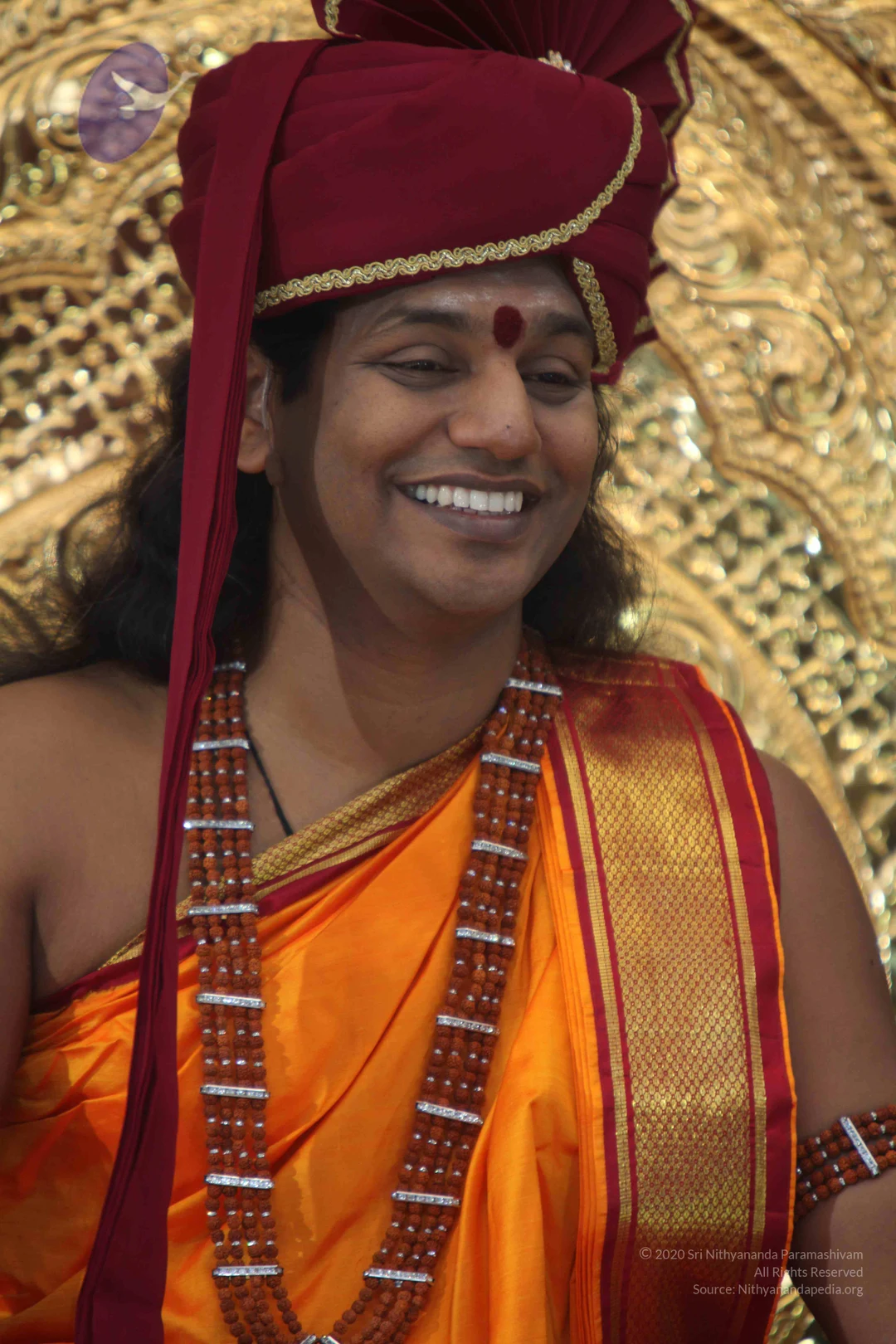
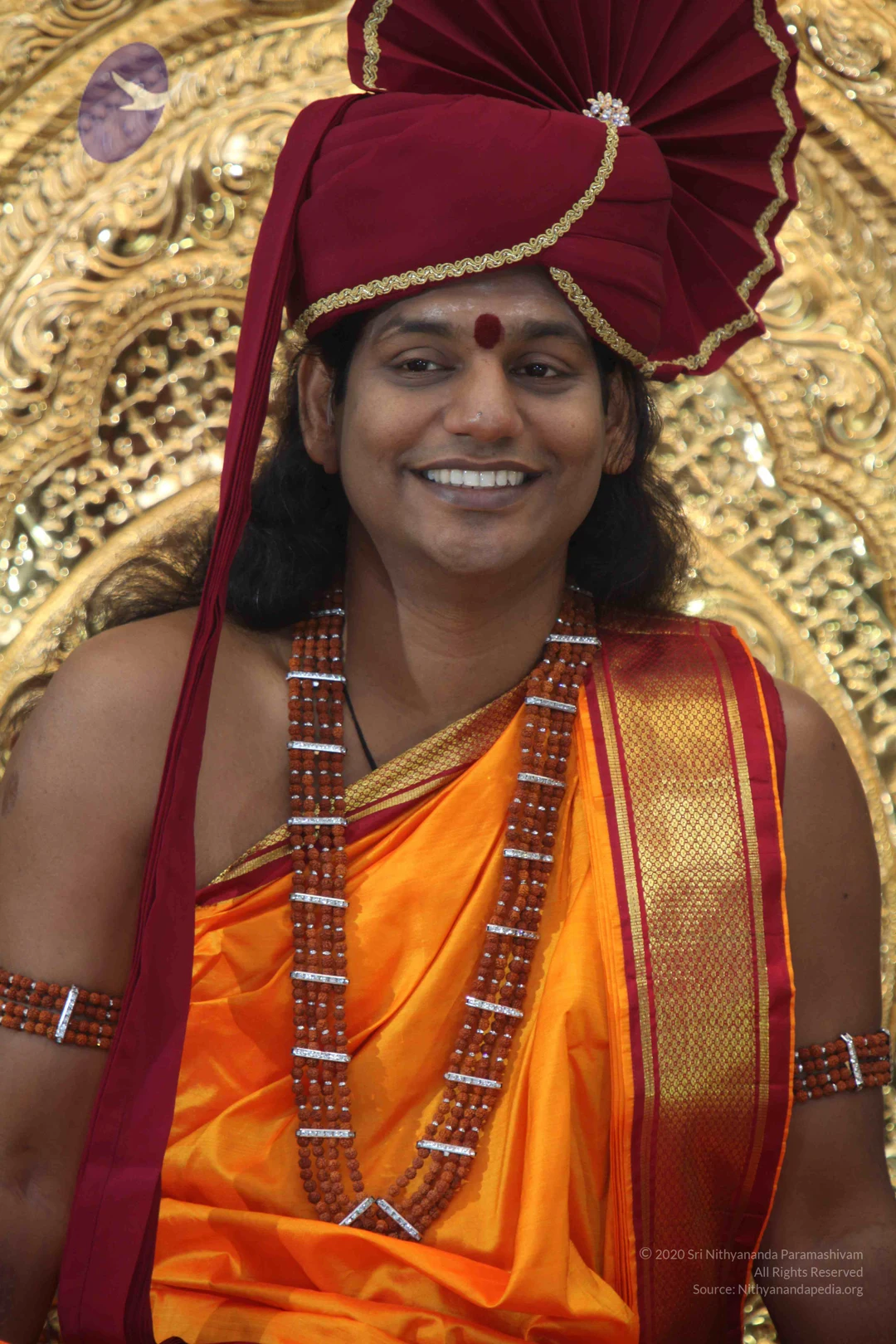
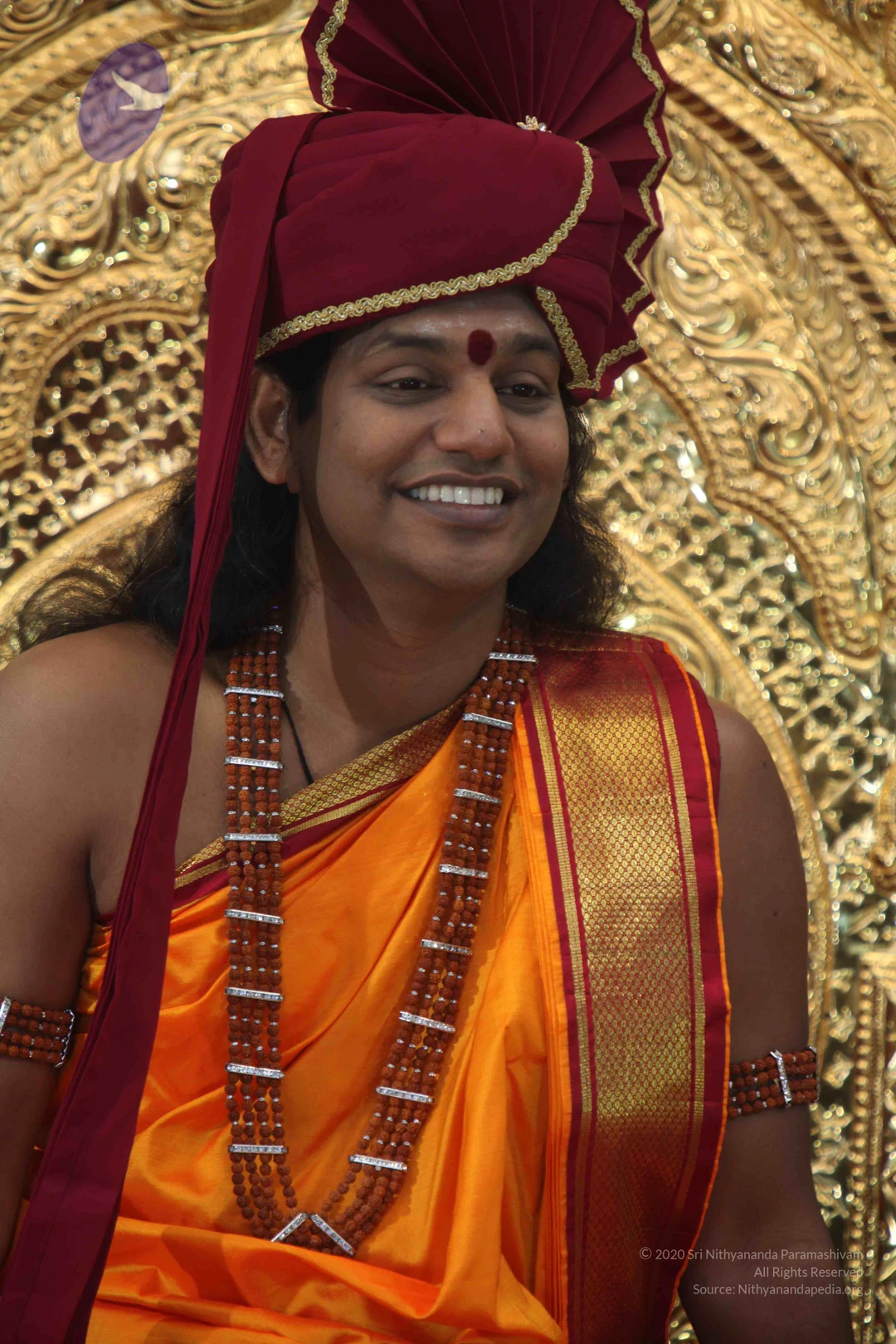
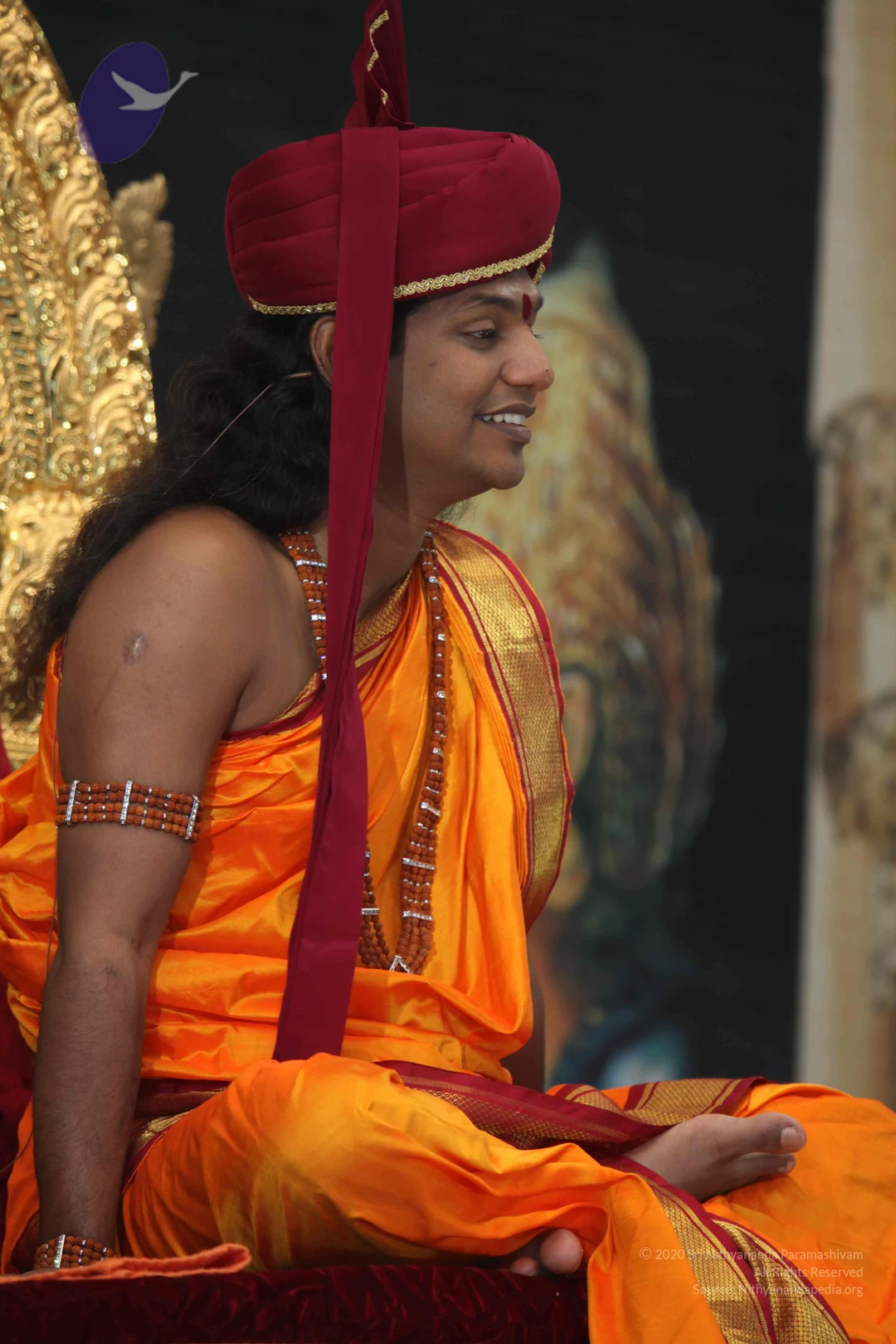
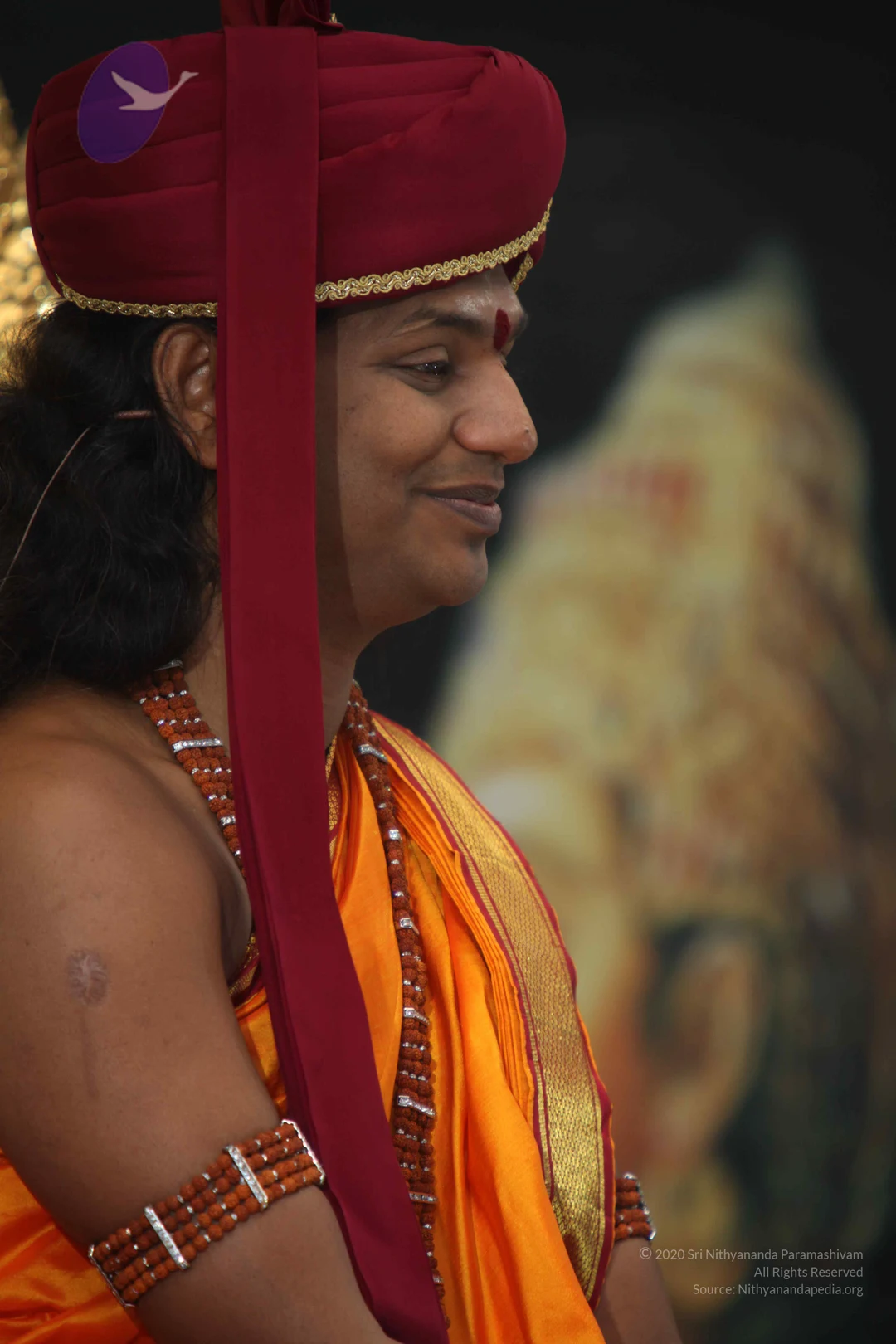
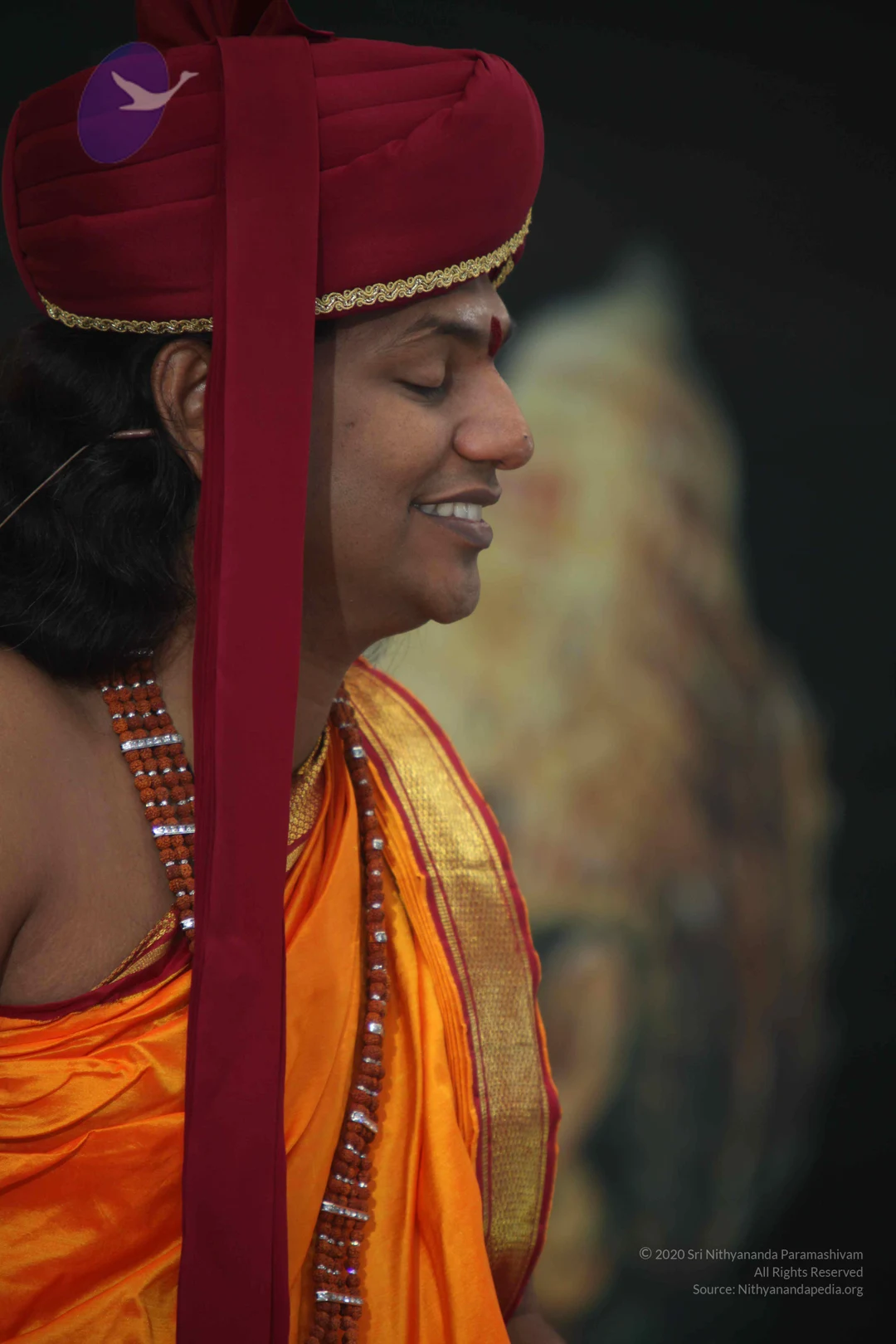
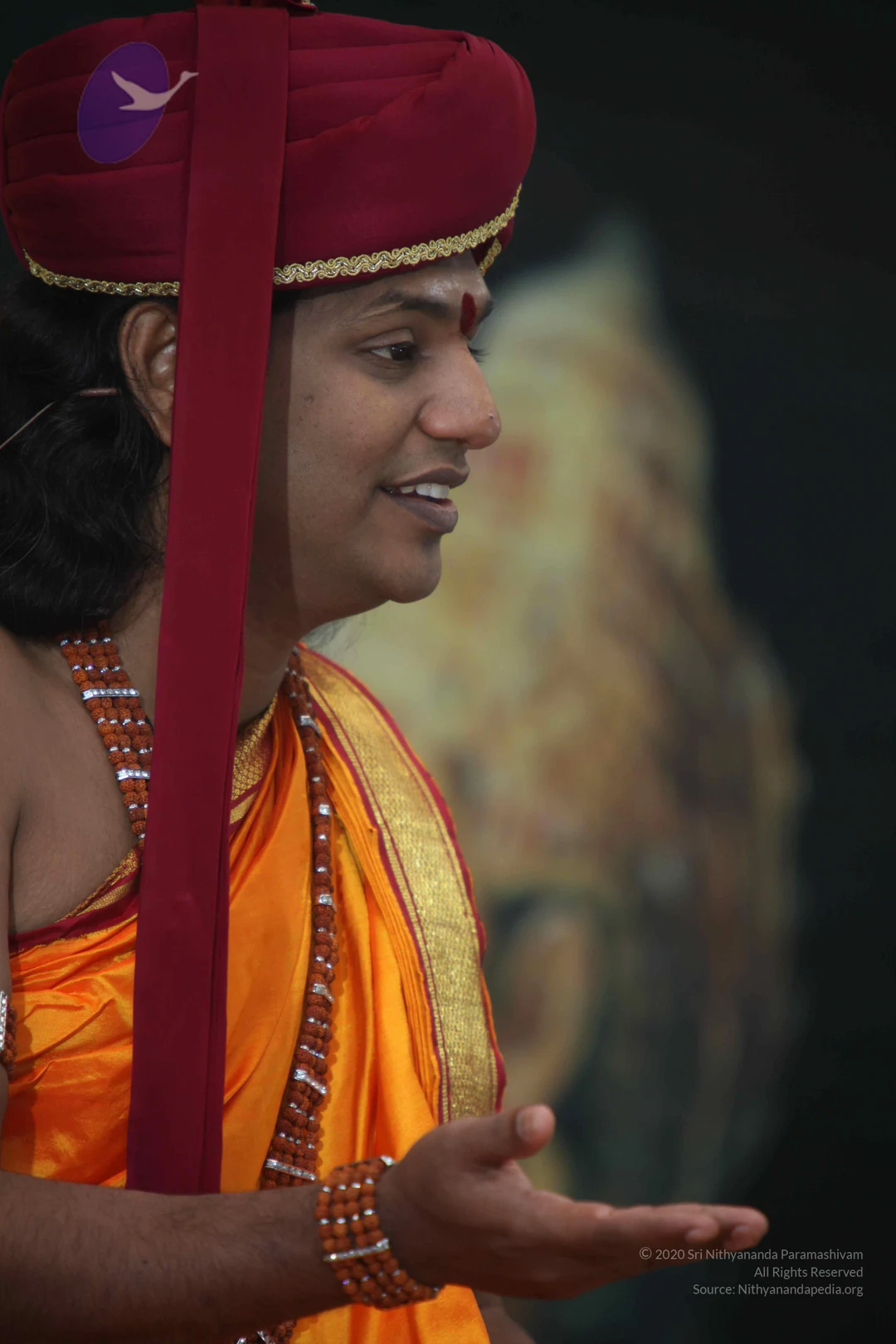
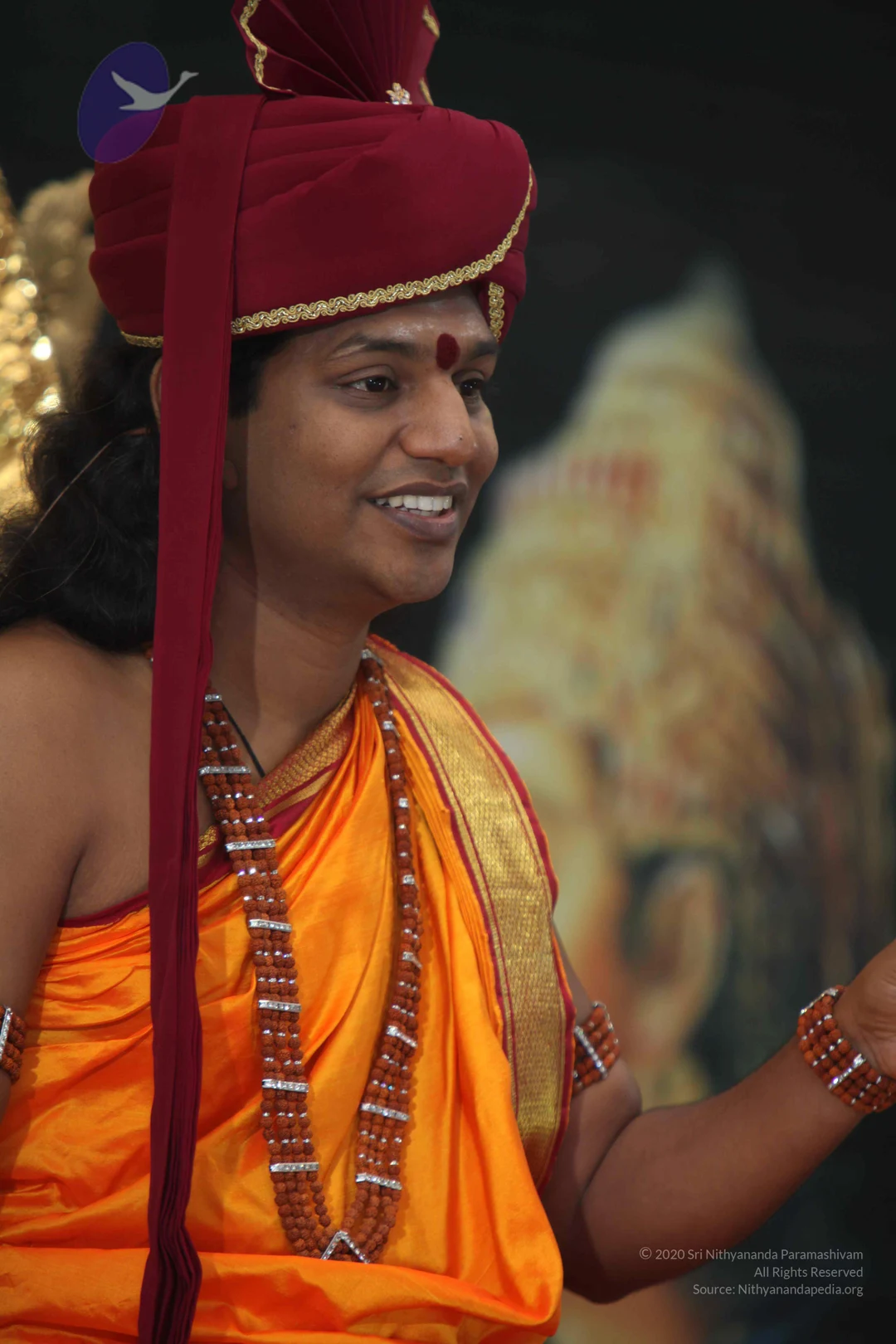
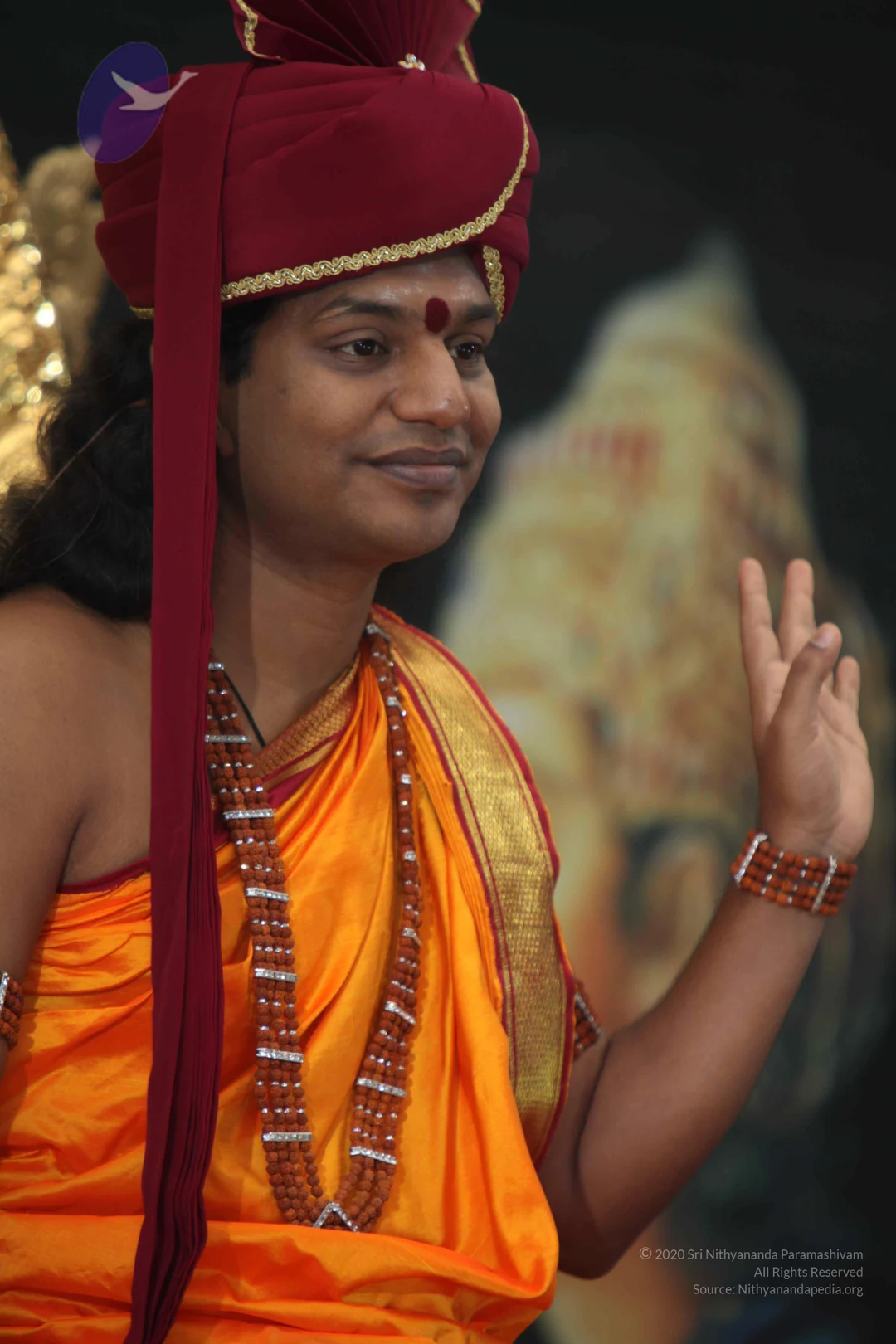
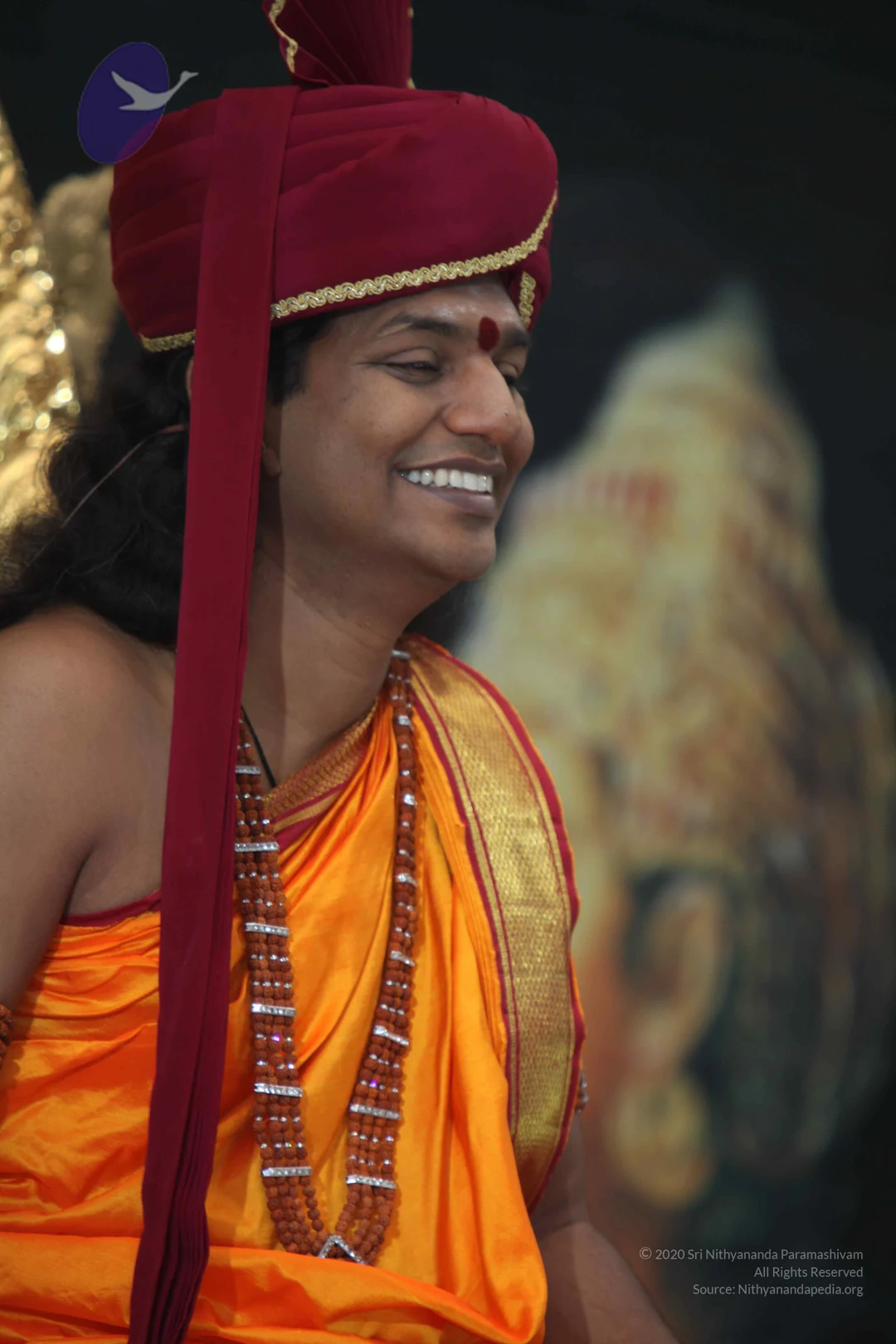
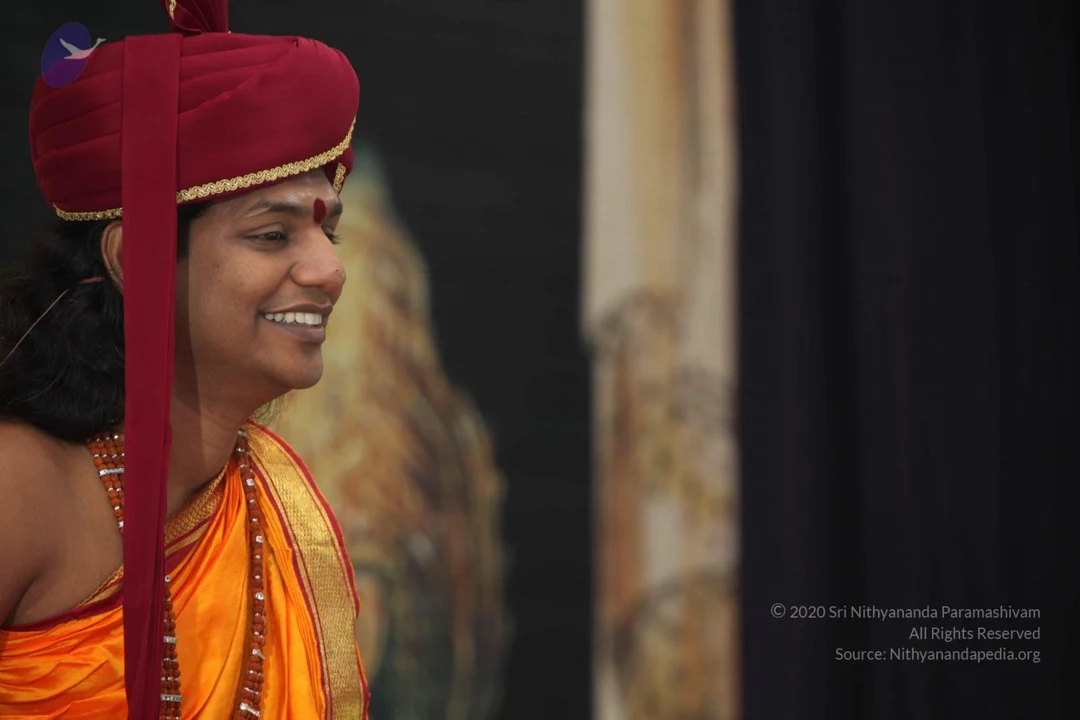
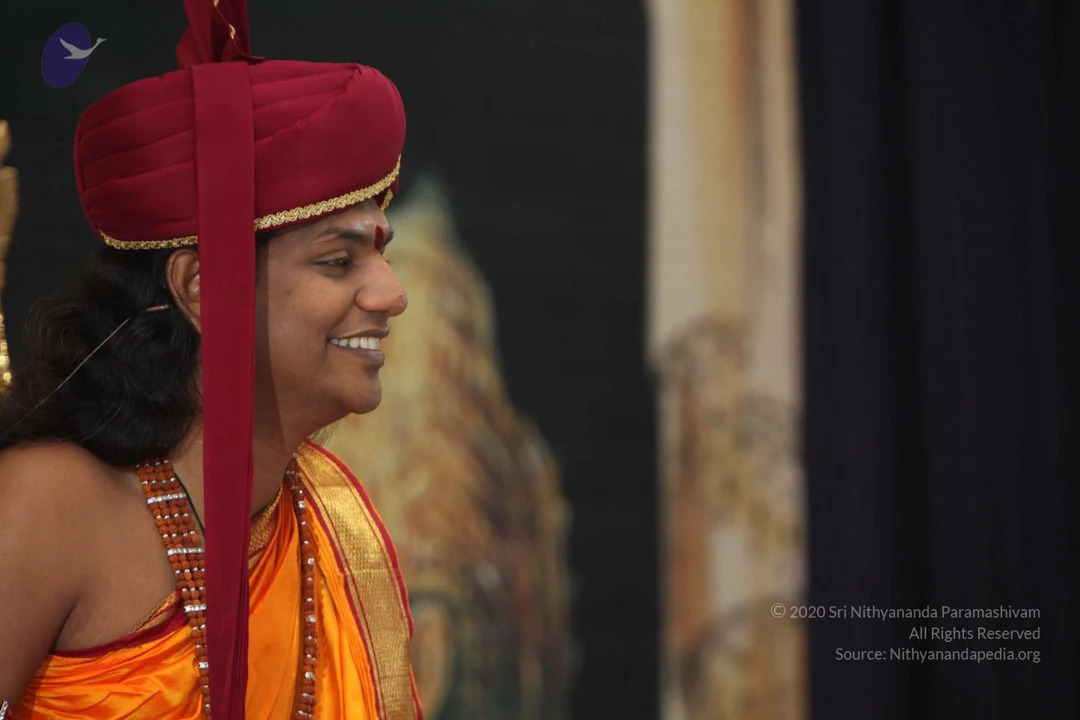
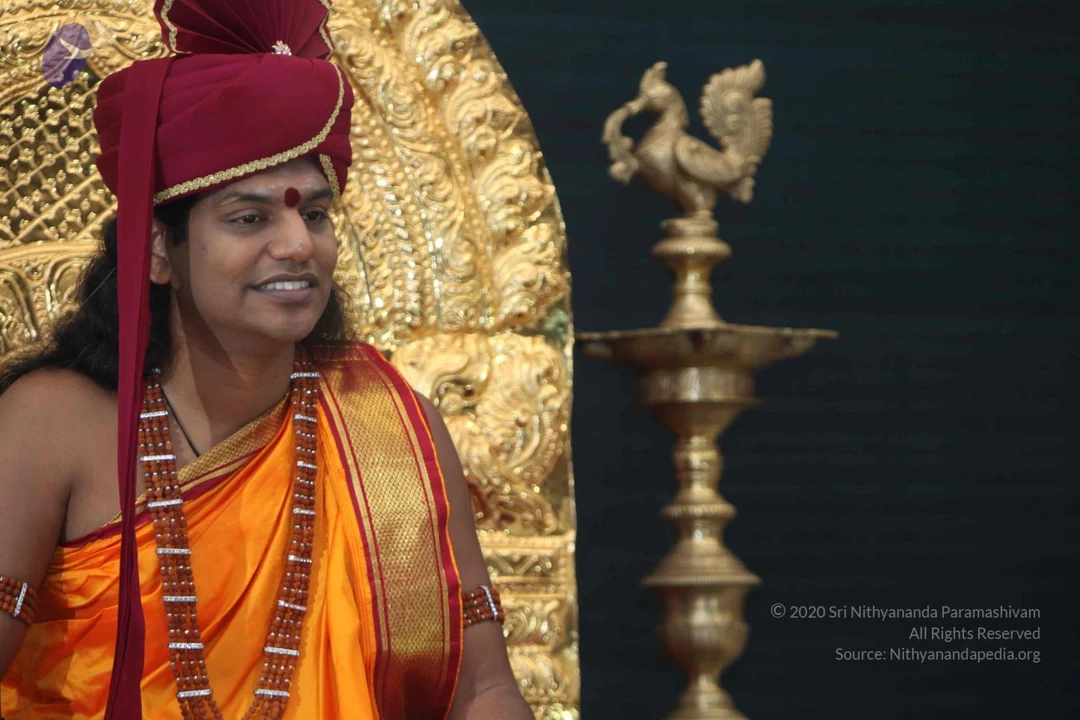
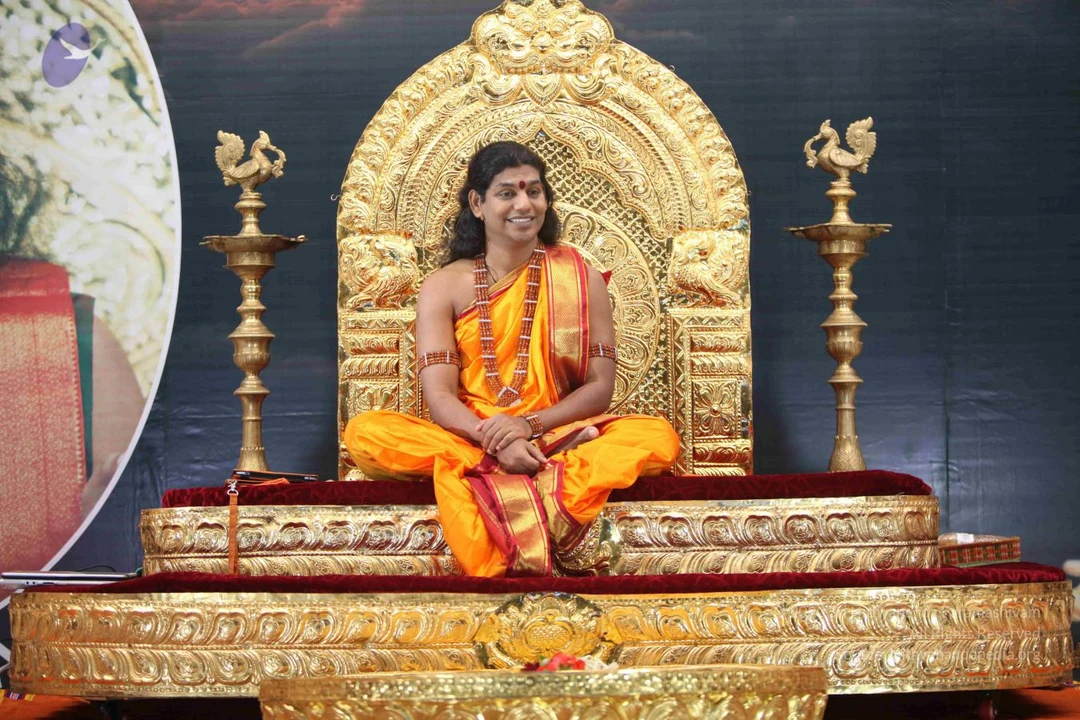
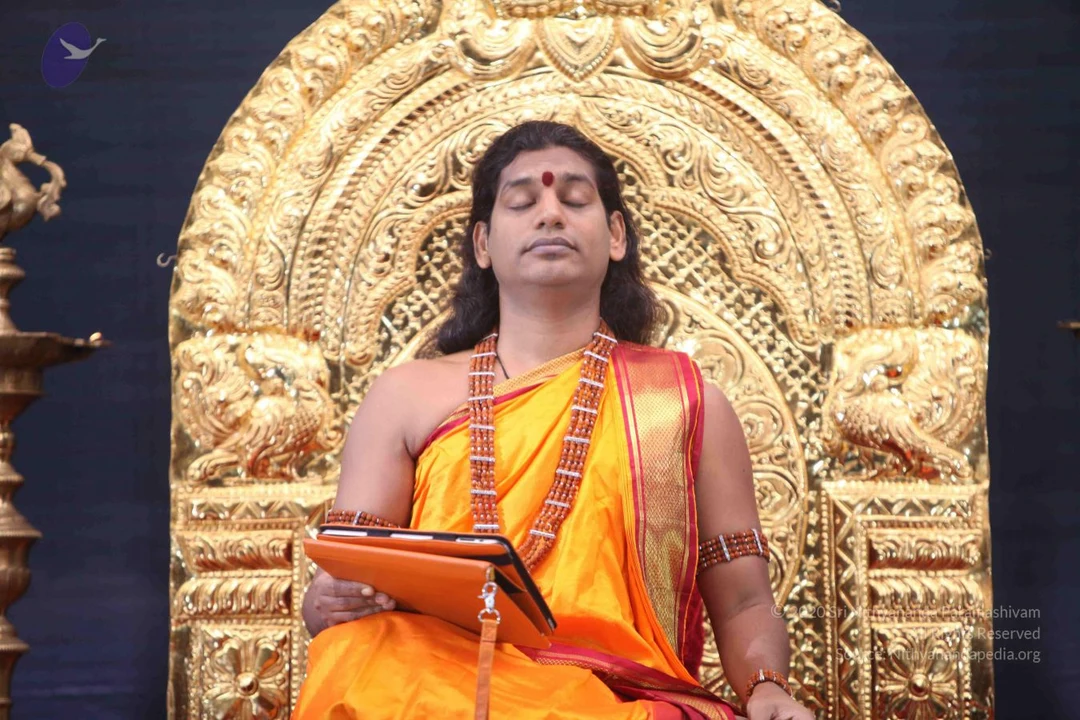
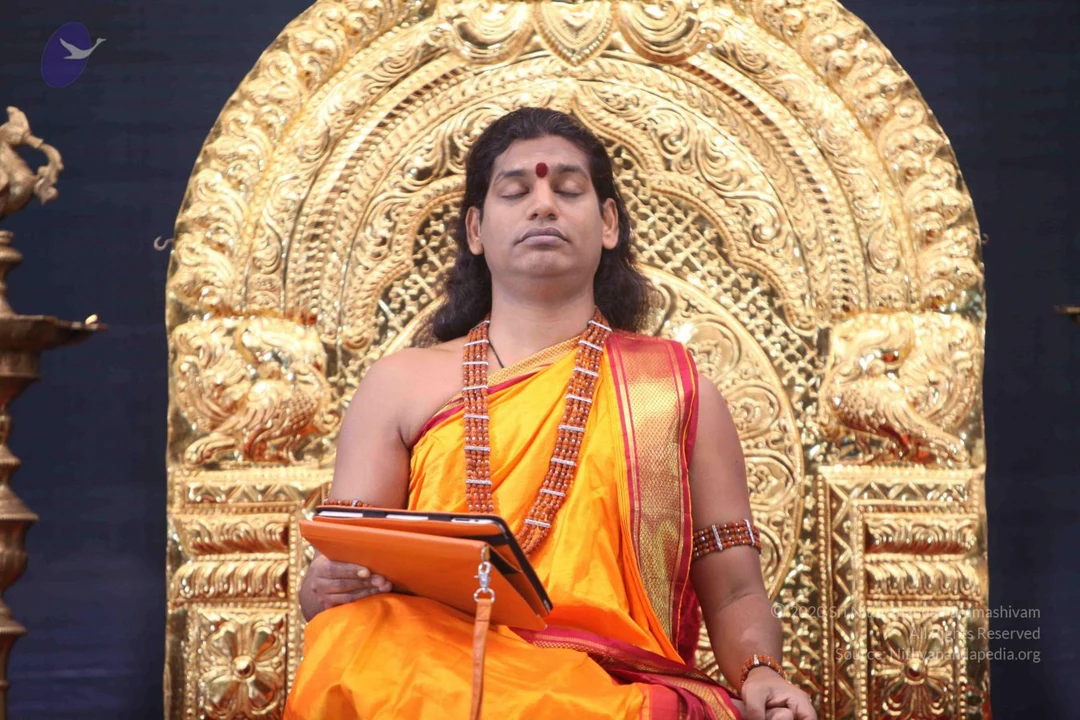
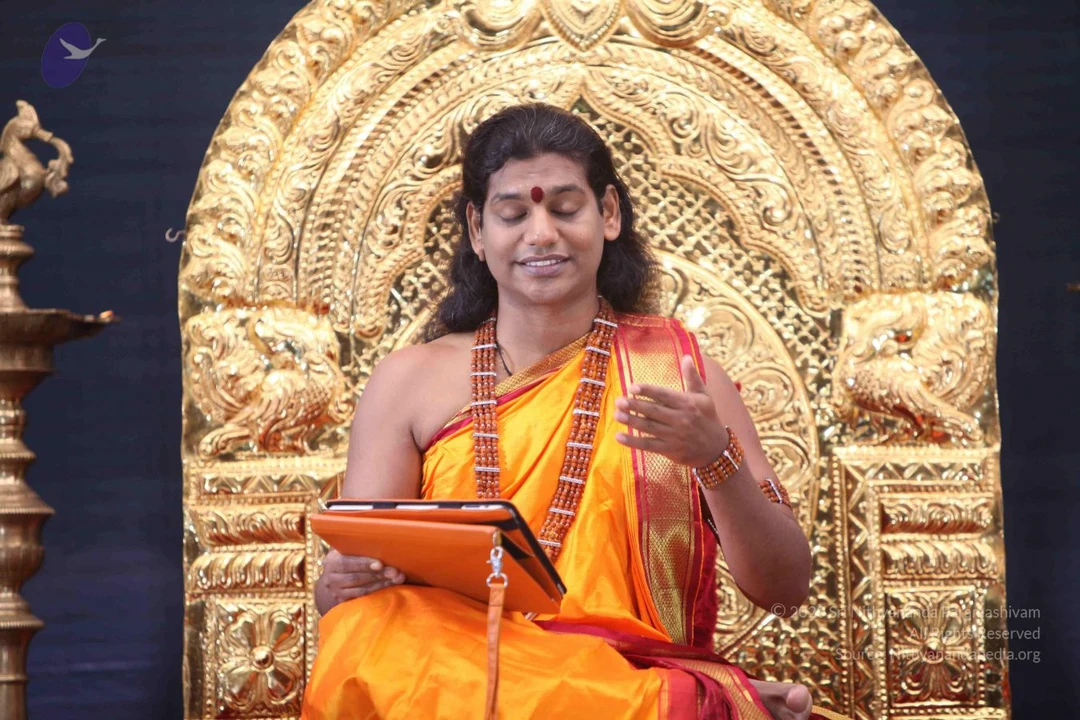
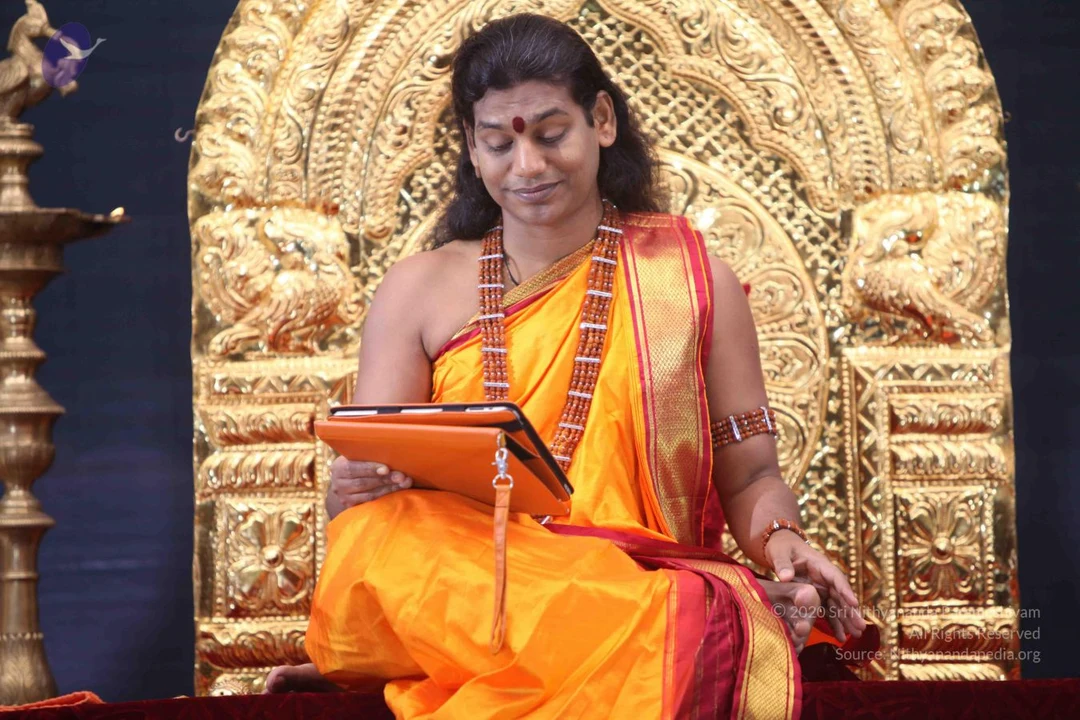
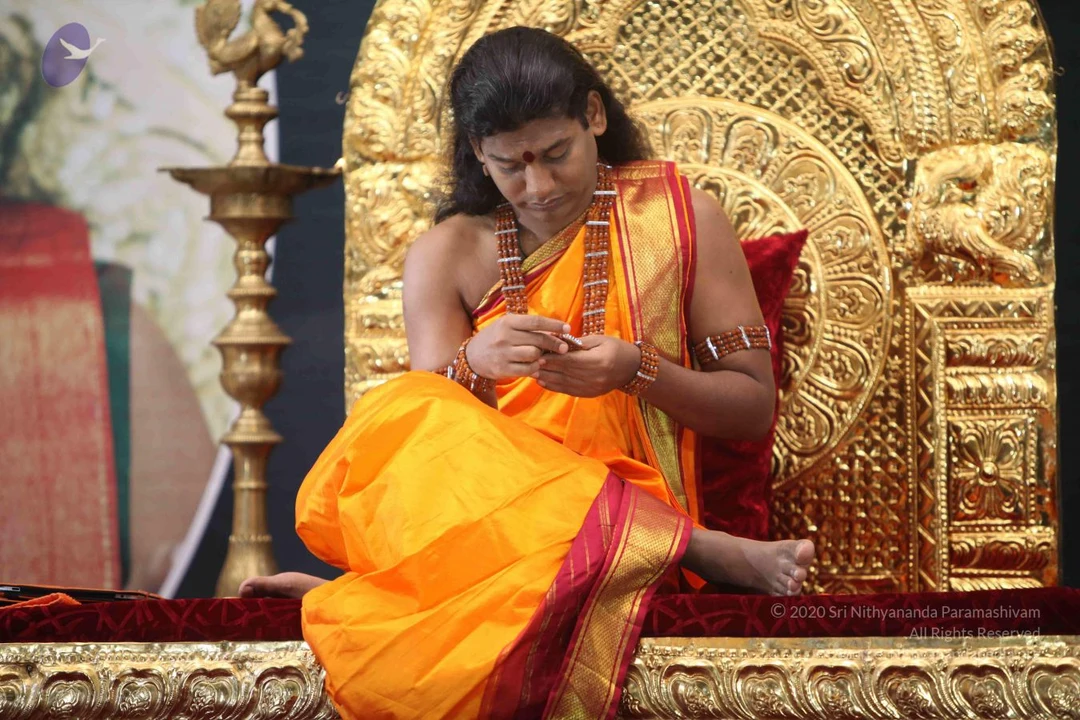
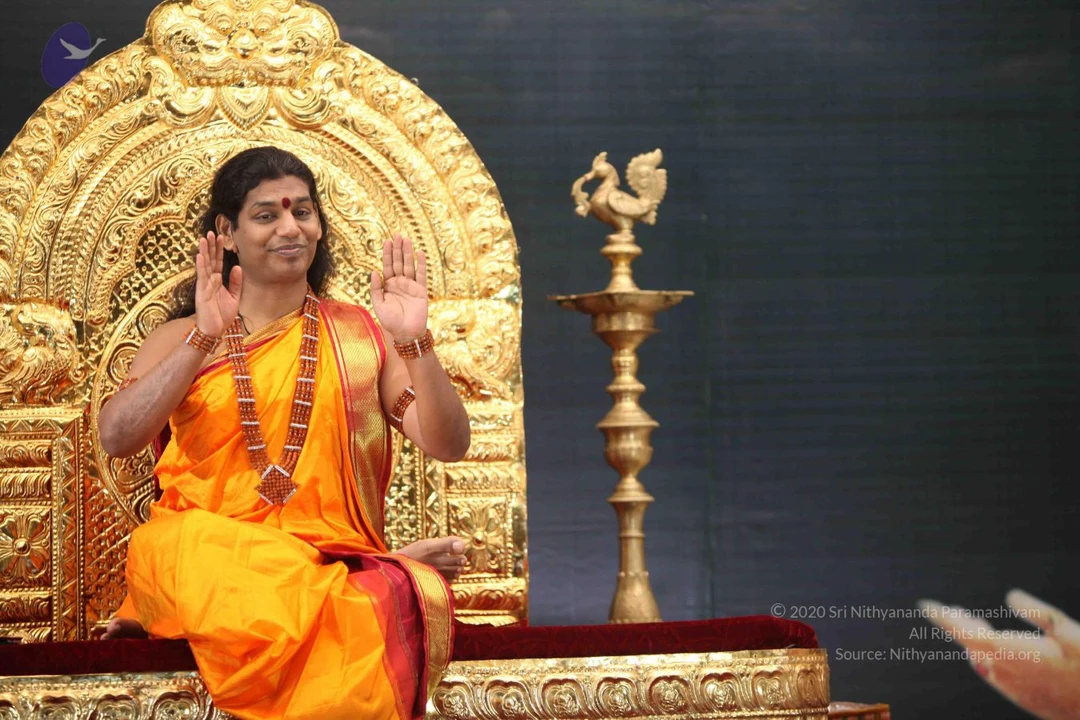
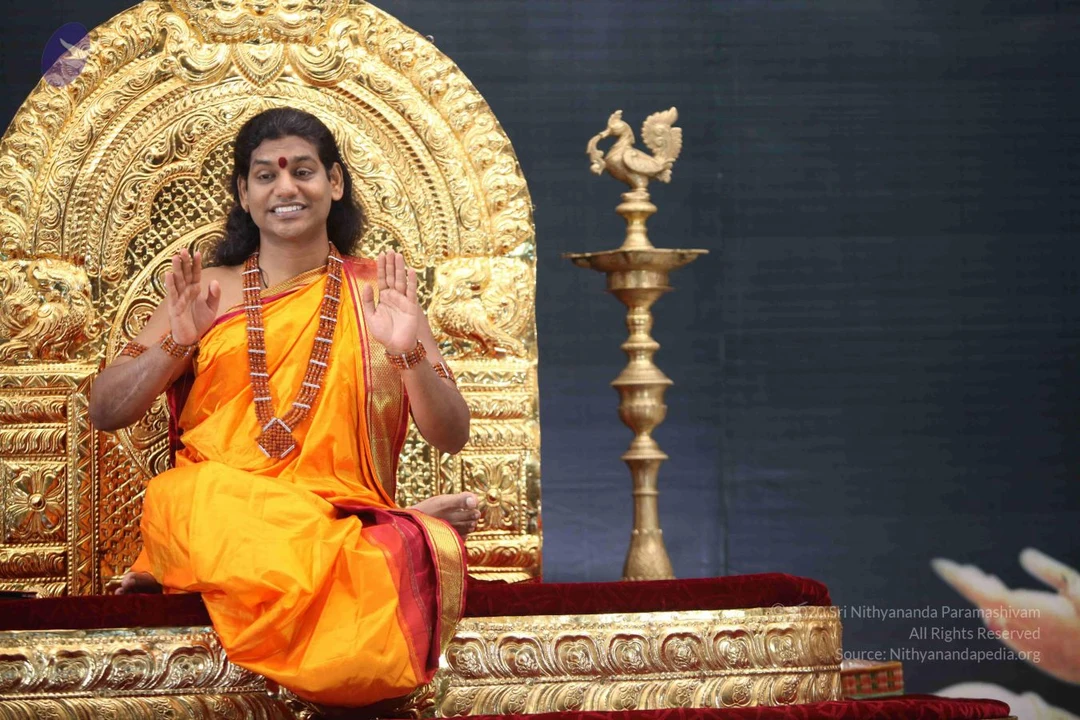
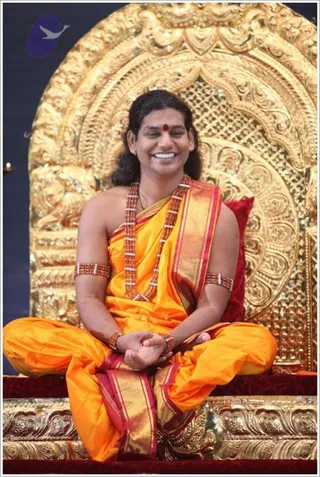
Close photograph of a man seated before an ornate gold-embossed backdrop, wearing a deep maroon turban with gold piping and a silver brooch at the top. He has a red bindi on his forehead, long dark hair falling behind his shoulders, and a bright orange silk shawl edged with maroon and a gold-woven border draped over one shoulder. Multiple strands of rudraksha beads with silver spacers form a long mala around his neck, and matching rudraksha bands are worn on his upper arm.Close-up photo of a smiling man in a deep red turban edged with gold braid and a red tilak on his forehead, wearing an orange silk garment with gold and maroon border, multiple strands of rudraksha beads with silver spacers, and a rudraksha bracelet on his arm. Long dark hair falls over his shoulders. Behind him is an ornate gold-carved backdrop. Probable Swamiji appearance cues: red turban, orange silk, layered rudraksha malas. He is the only person visible.A seated figure in saffron-orange silk garments with a gold-bordered sash, wearing a maroon turban with a red-and-gold ornament, rudraksha mala necklaces and beaded orange bracelets, gestures with his right hand while smiling during a talk. Behind him a painted deity image hangs at left beside a dark curtain, a potted plant sits on the floor, and a partly visible listener appears at lower right. The appearance-based label Swamiji (probable) applies: long swept-back hair, turban, saffron clothing and mala cues are present.Photograph of a man seated in profile on a stage, facing right and smiling. He wears a deep red turban with a long trailing tail, an orange-saffron silk garment draped over one shoulder with a gold-bordered edge, multiple rudraksha mala necklaces, and beaded armlets on both arms. Long dark hair falls past his shoulders and a red bindi is on his forehead. A dark purple curtain and a gilded ornamental pillar stand behind him.
Temple Visit | Pratyaksha Pada Puja | Bhagavad Gita Satsang – 15 November 2011
1 photoSource gallery
A three-panel collage of a bald man in orange clothing with a rudraksha mala practicing seated yoga poses on a red mat in front of a dark backdrop with potted plants. In the first panel he sits cross-legged with hands on knees. In the second he raises one arm with a hand near his head while seated. In the third he twists his torso with an arm wrapped around a raised leg. Only one physical person is pictured across the panels, shown in each frame as a figure in a collage.

Photos Of The Day:
4 photosSource gallery
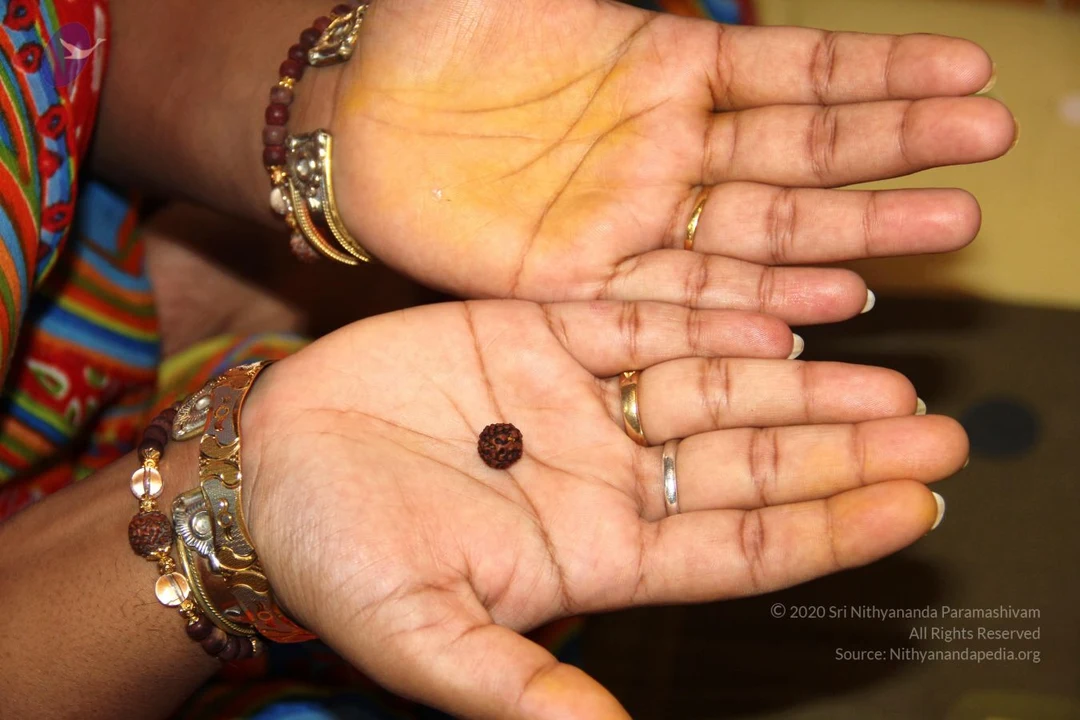
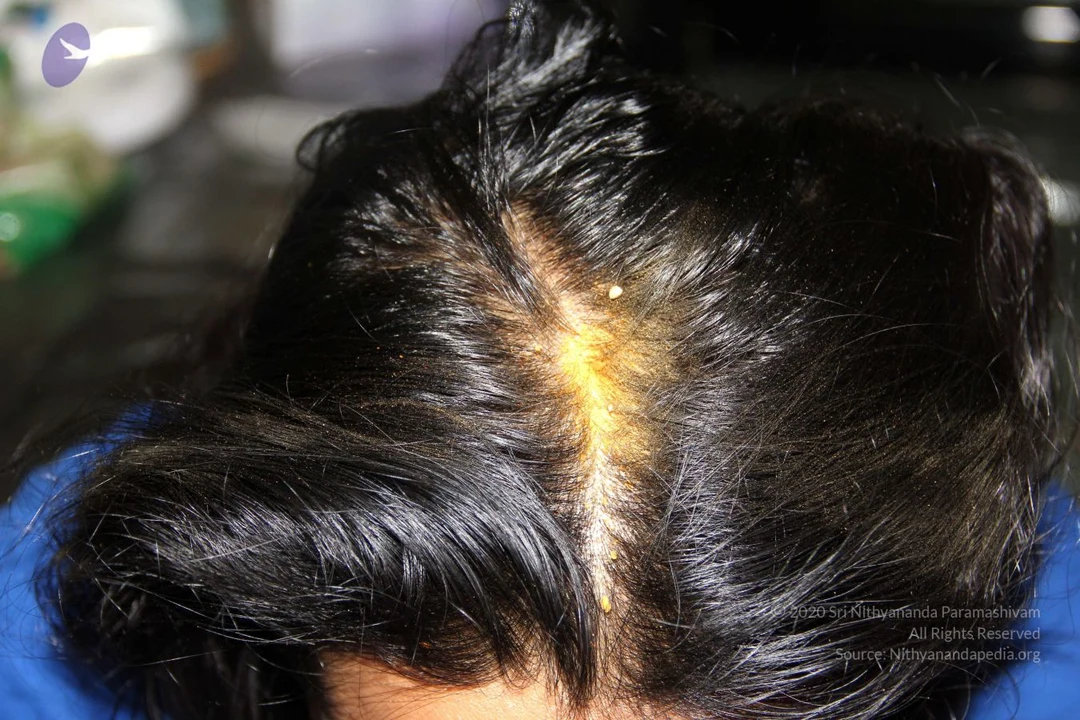
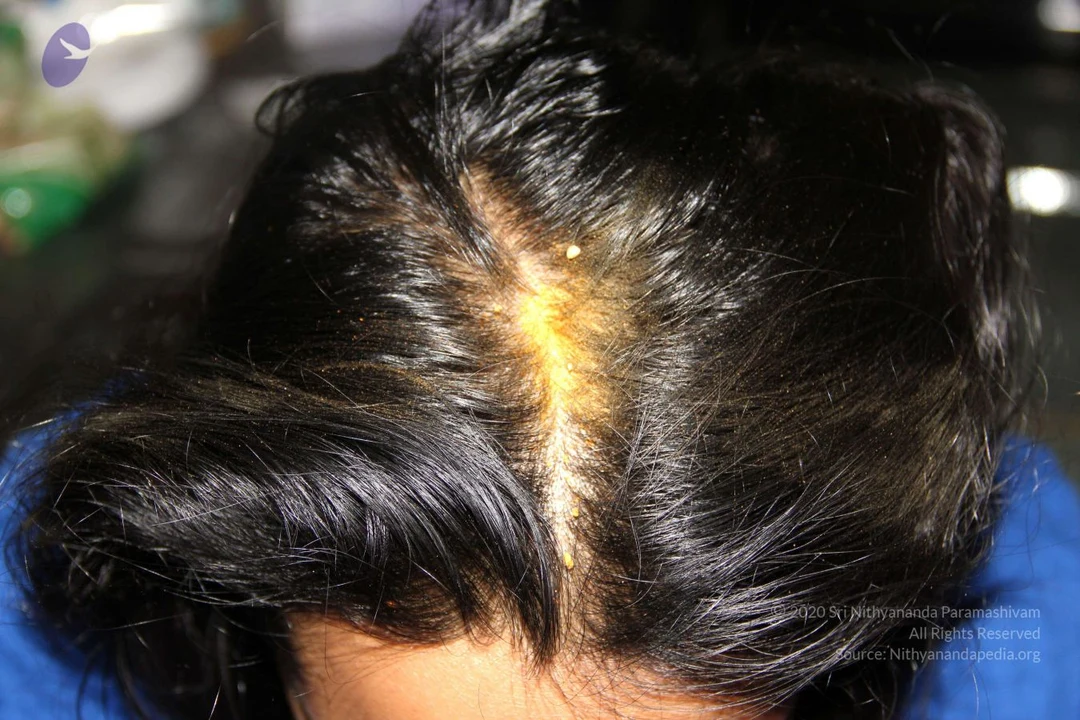
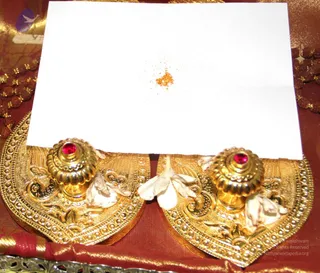
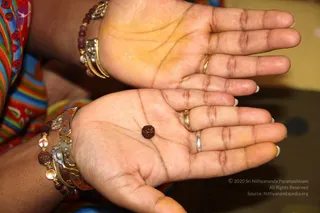
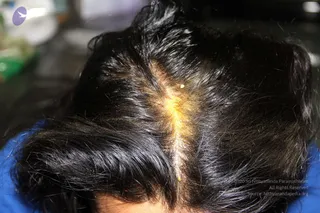
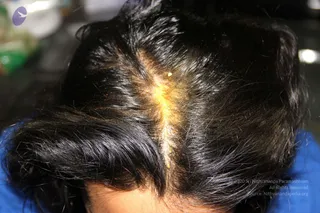
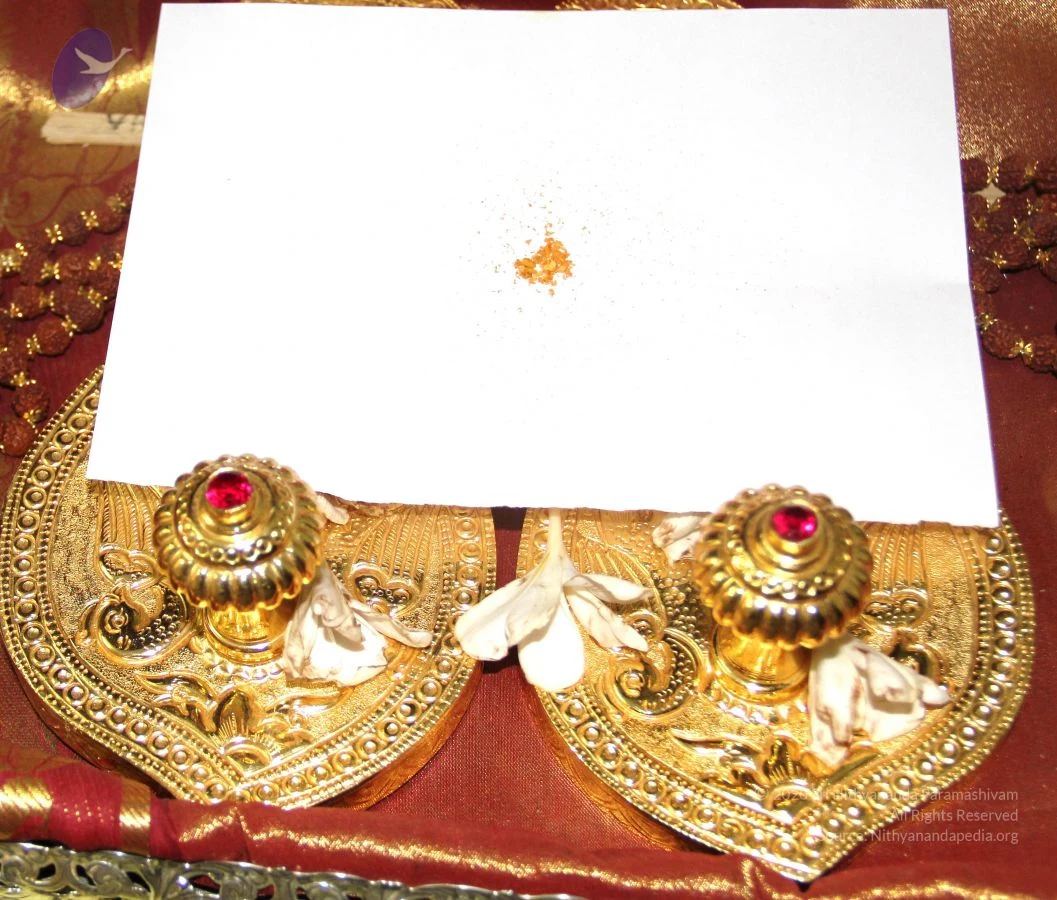
Close-up photo of an ornate gold ceremonial object with two domed finials set with red stones, resting on a red and gold brocade cloth. White flower petals lie among the gold filigree, and a small pile of orange-yellow powder. A rudraksha mala with gold spacer beads is visible at the upper left and right edges. No people are visible.Close-up photograph of two open palms held out together, showing a single small dark brown rudraksha bead resting in the lower palm. The wearer has gold and beaded bracelets on both wrists, including one with red and brown beads, and a gold ring on the fingers. A multicolored striped fabric sleeve is visible at the left edge. No face or full person is shown, and no ceremony is visible. The image is a detail shot of the bead and hands.Close-up photograph of the top of a person's head showing long, straight, glossy black hair parted down the centre. A yellowish-orange paste or powder. A blue garment is visible at the lower edge and a blurred indoor background appears at the top. No other people are visible.Close-up photograph from above of a person's head showing dark, glossy, shoulder-length hair parted down the centre. A streak of yellow powder. The person wears a blue top at the lower edge of the frame. Blurred background shows indistinct shapes.

Temple
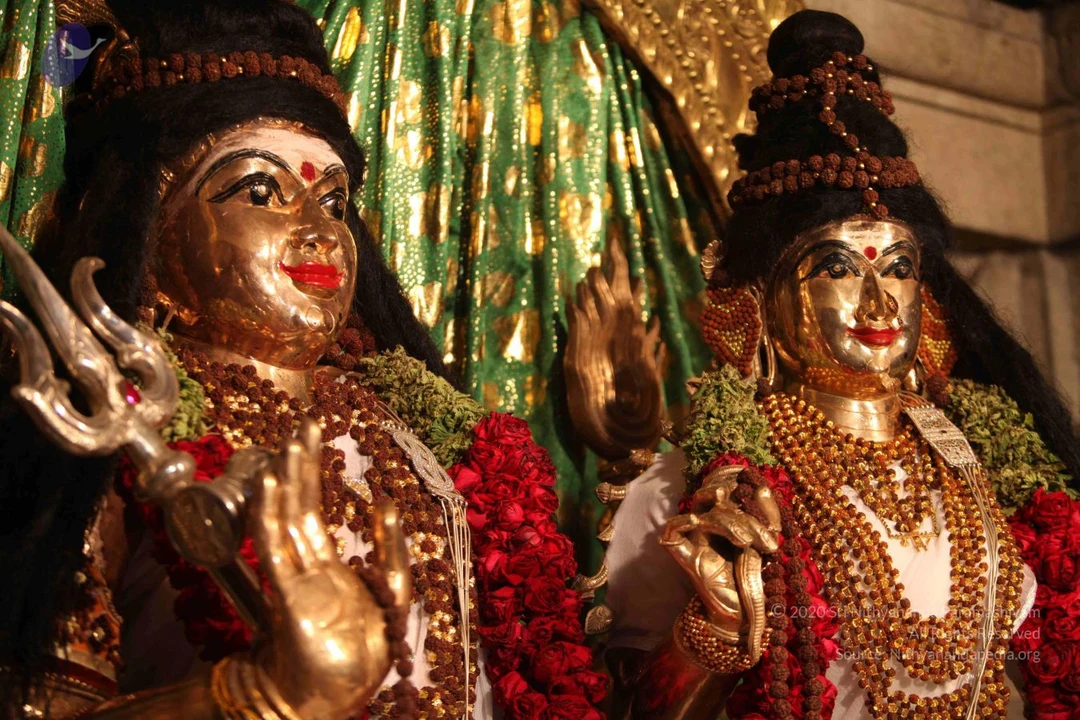
54 photosSource gallery
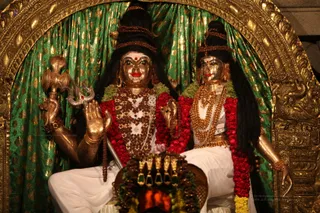
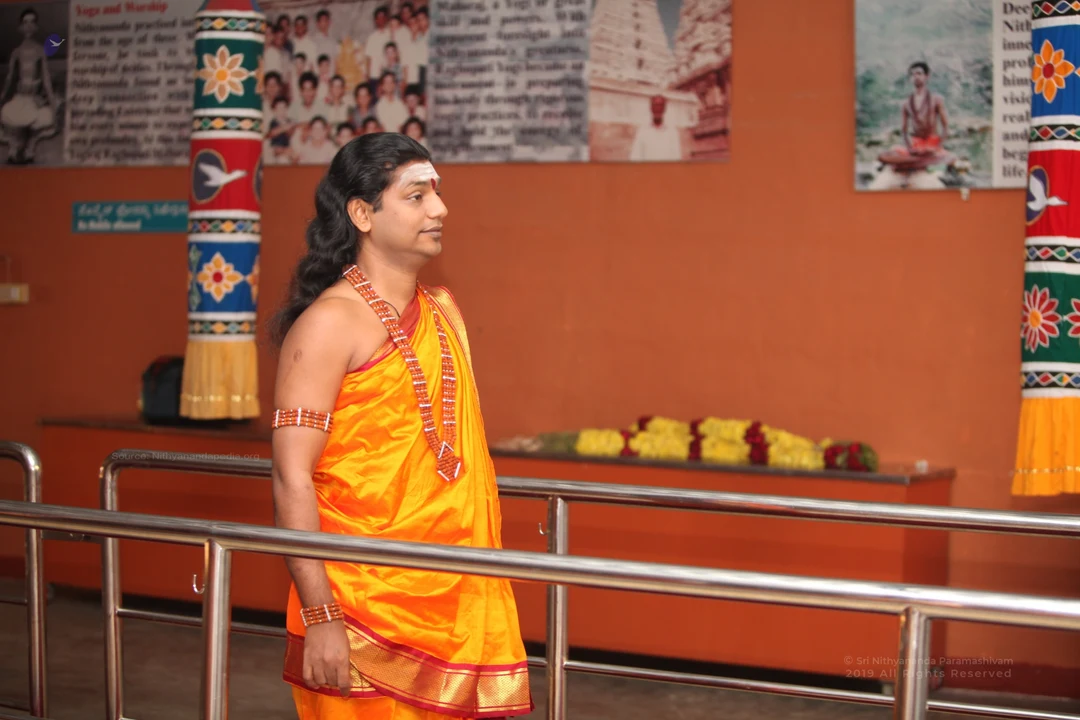
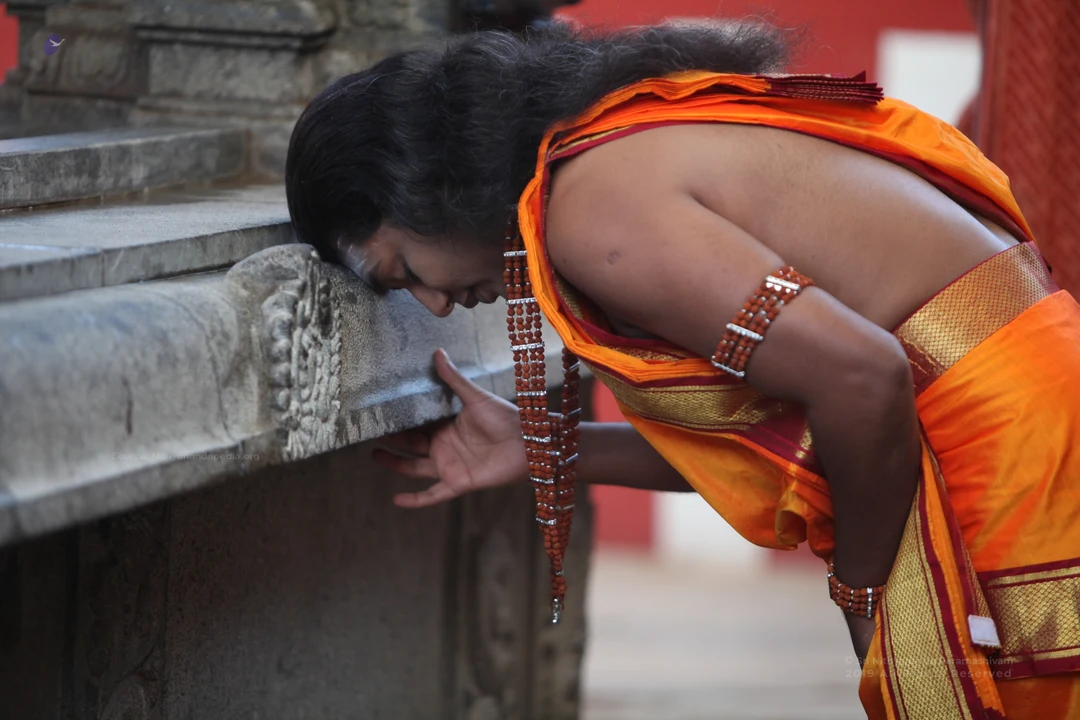
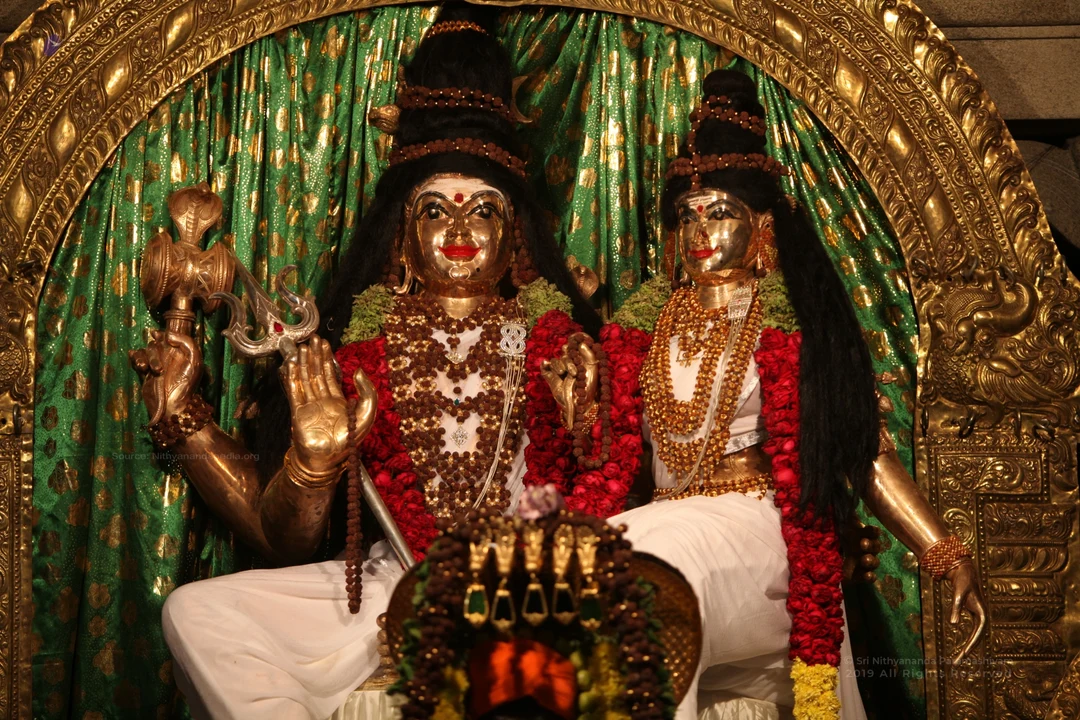
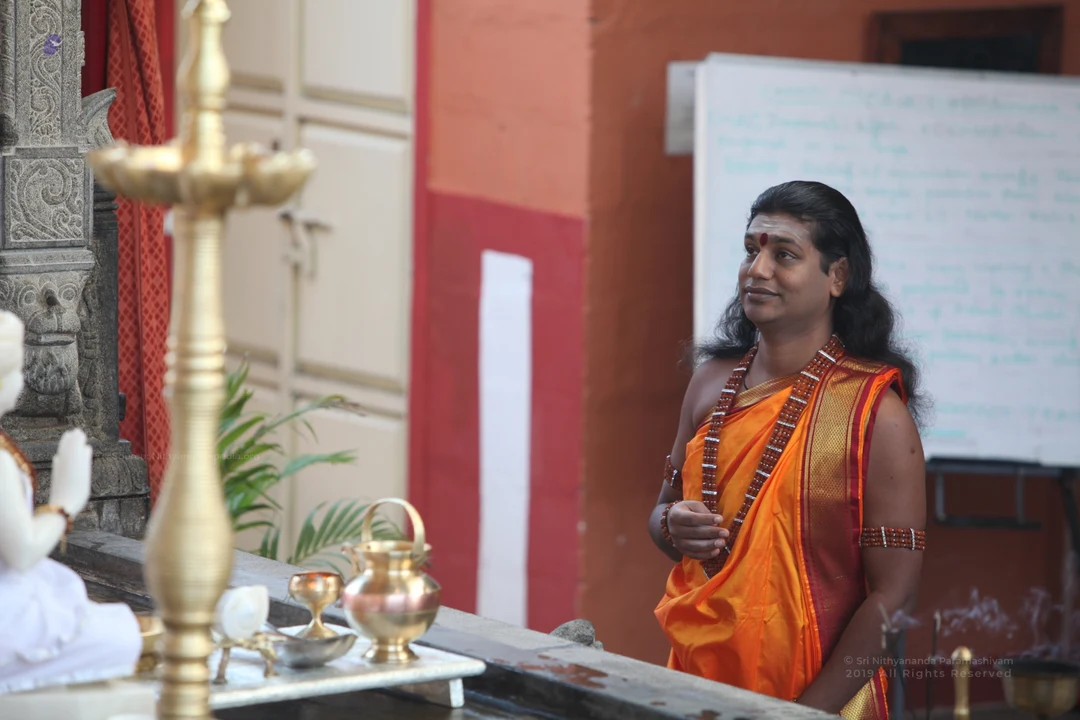
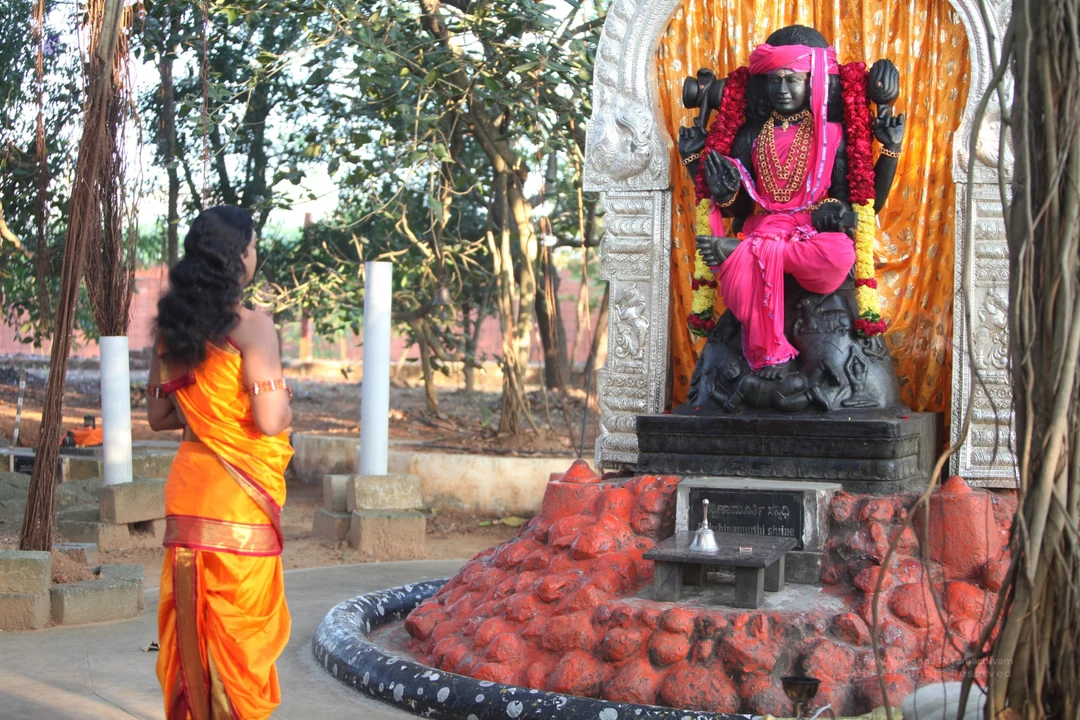
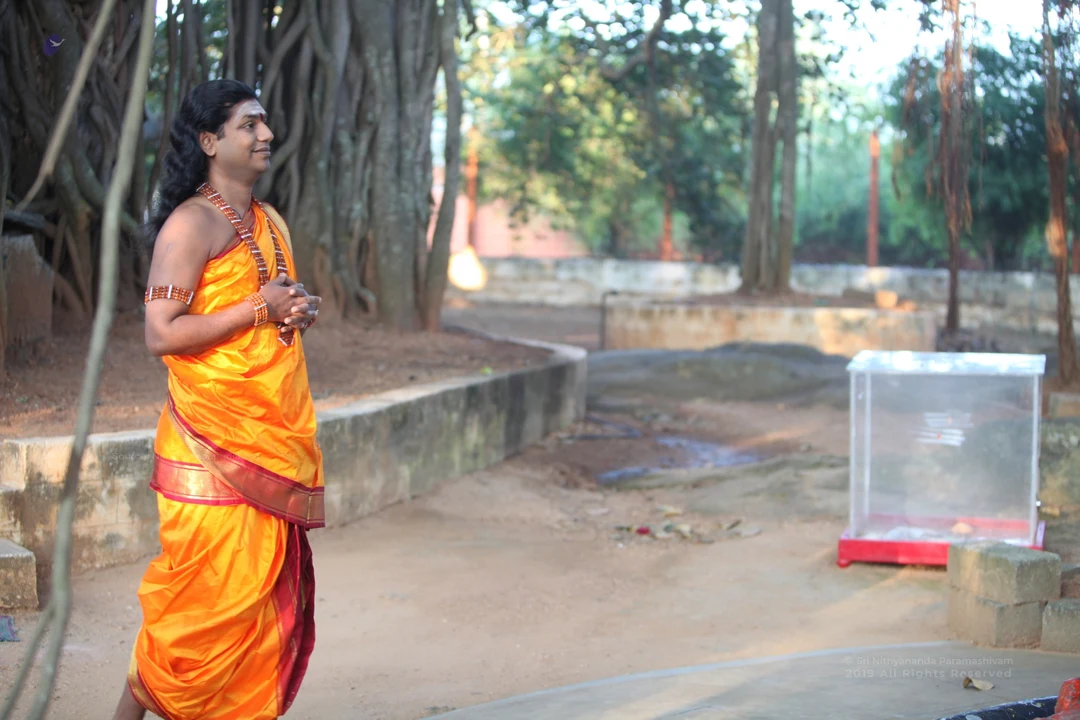
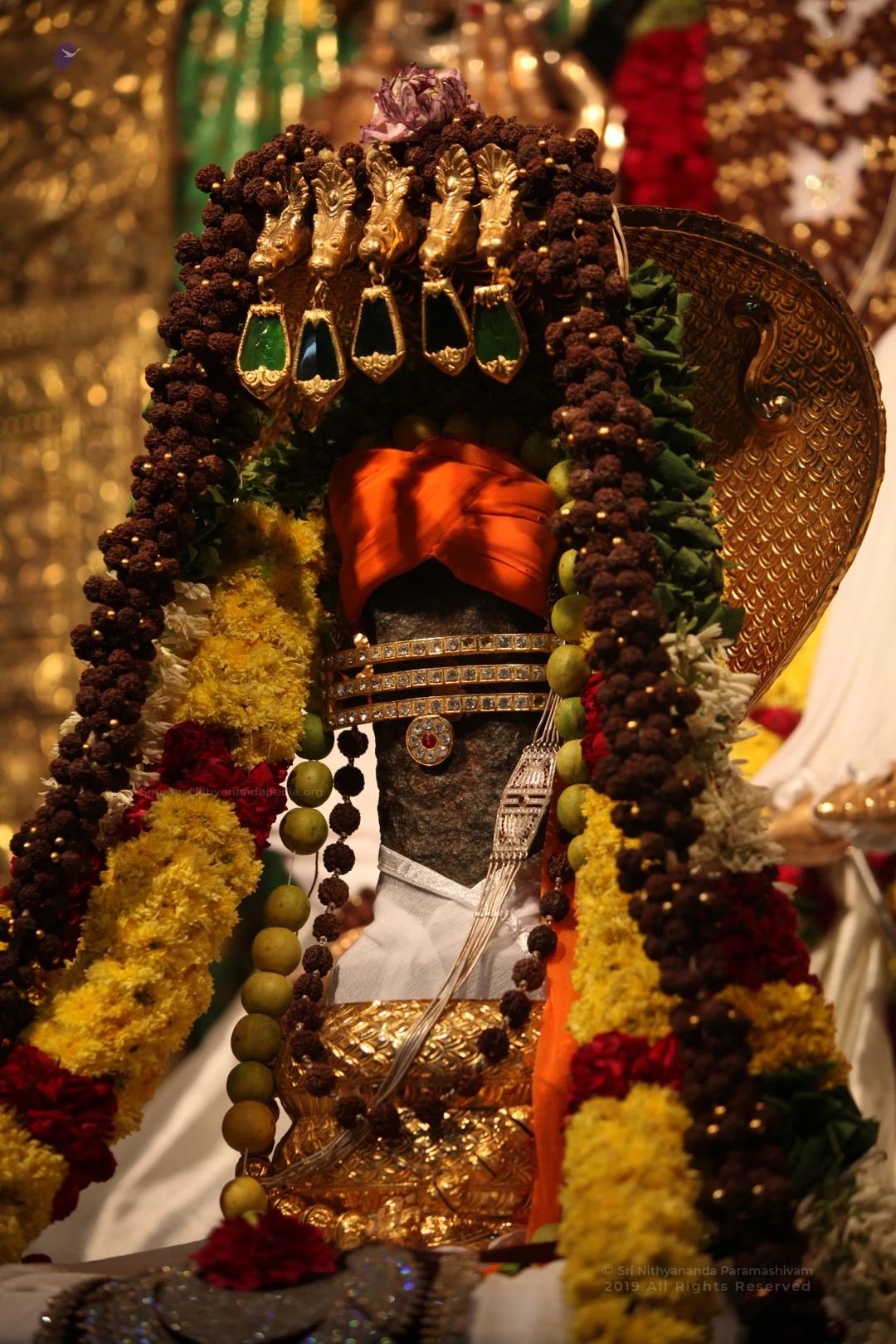
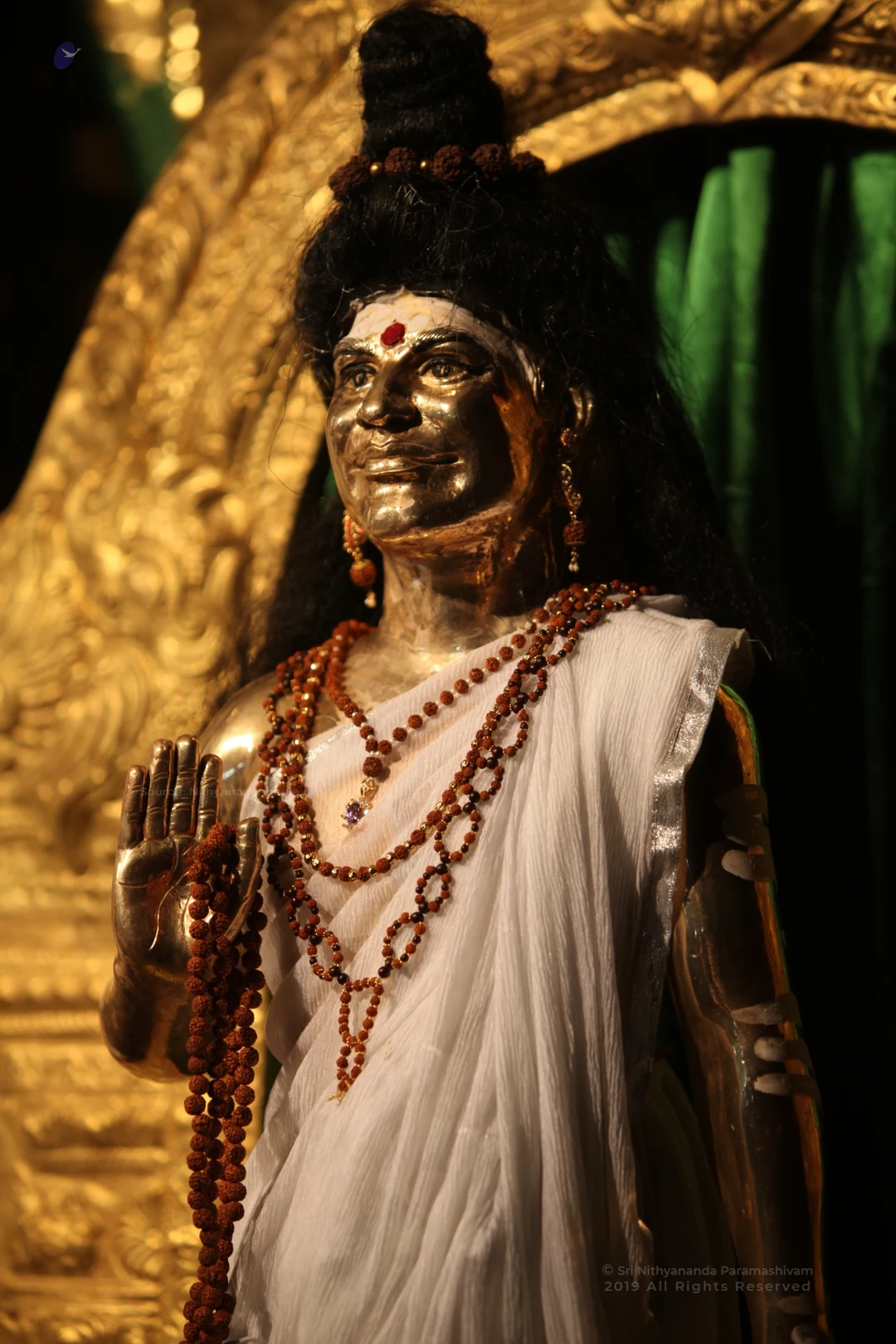
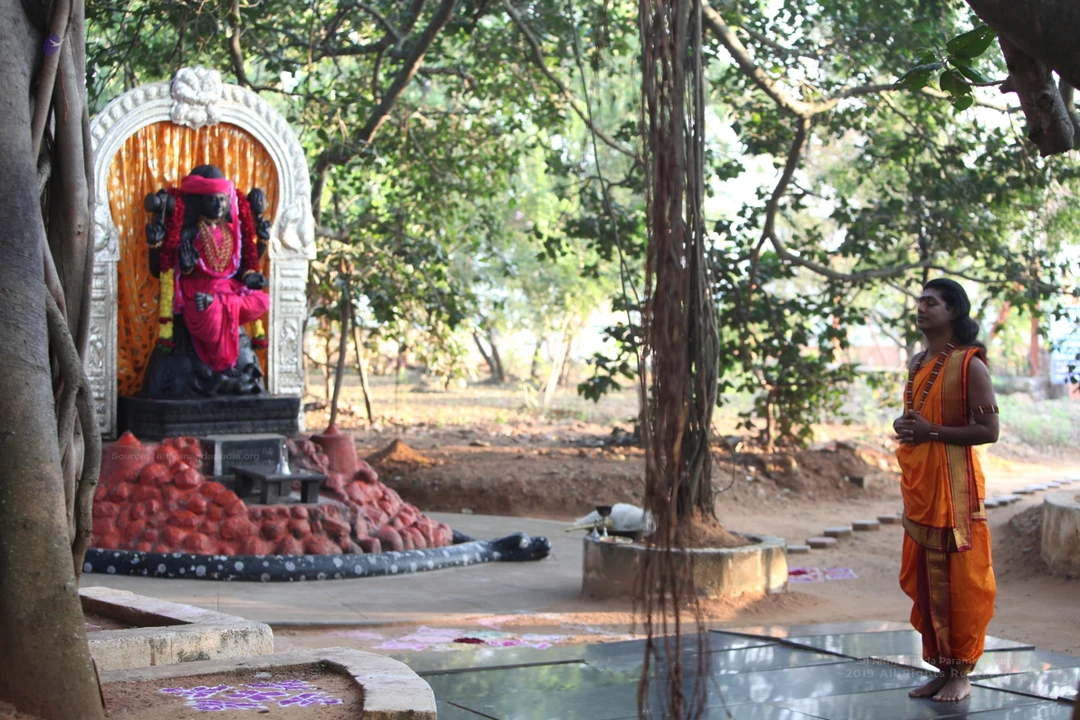
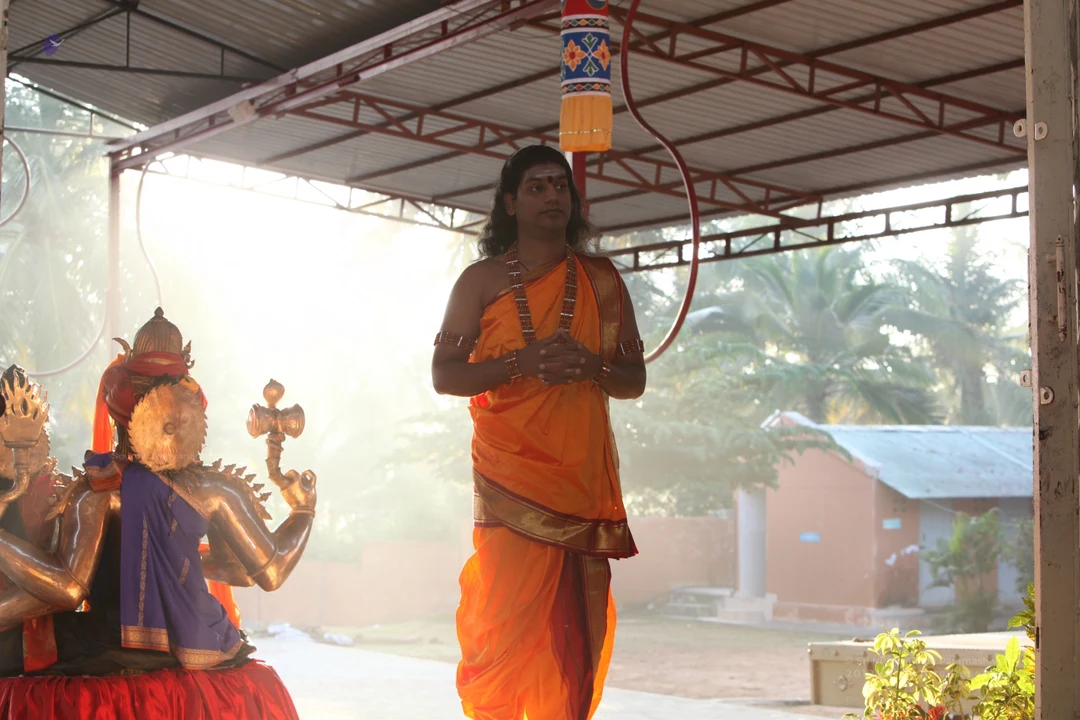
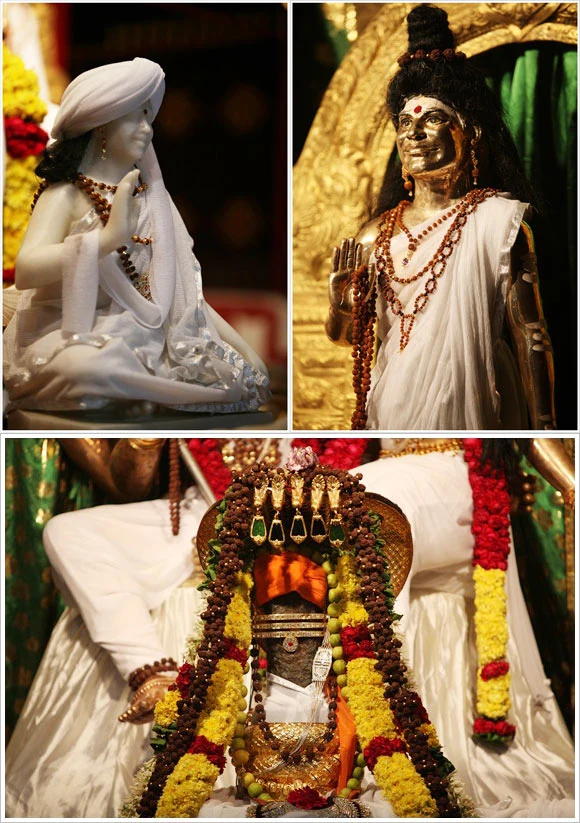
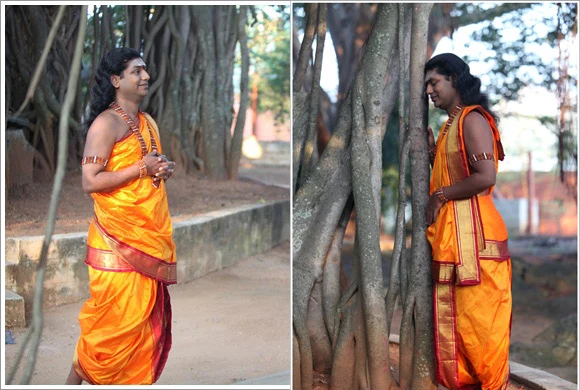
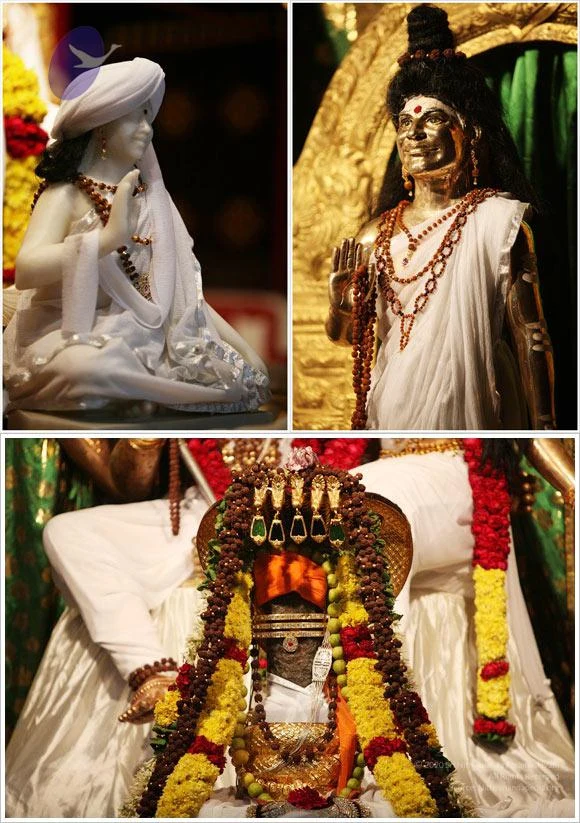
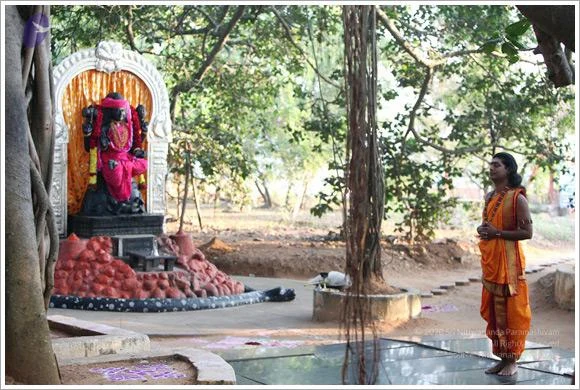
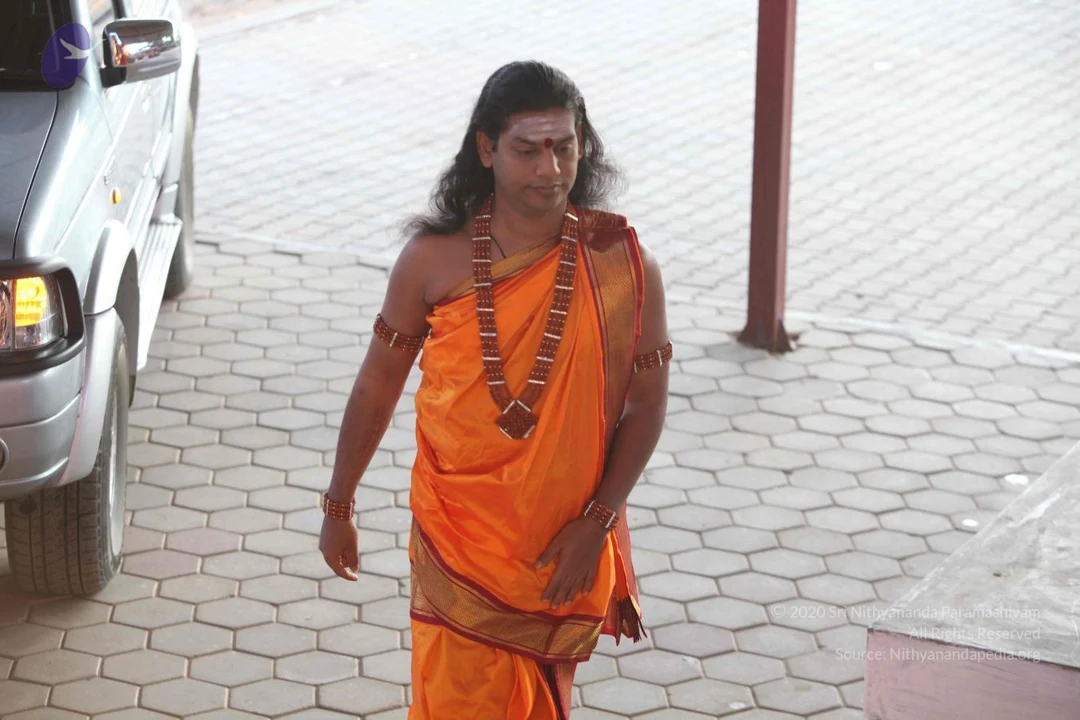
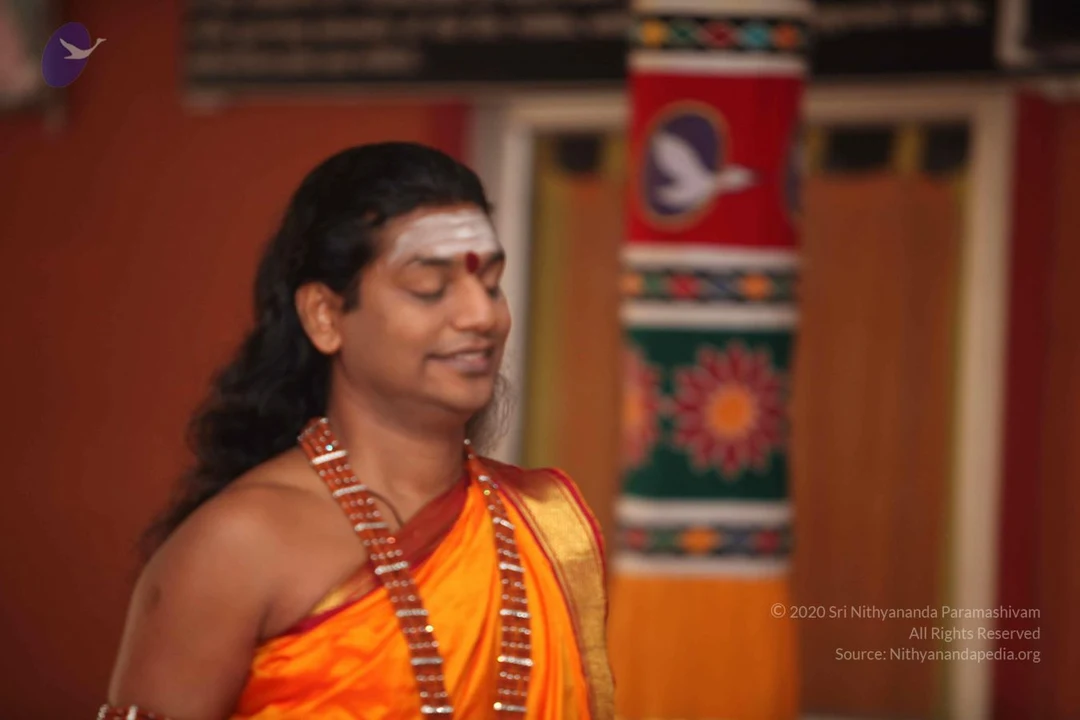
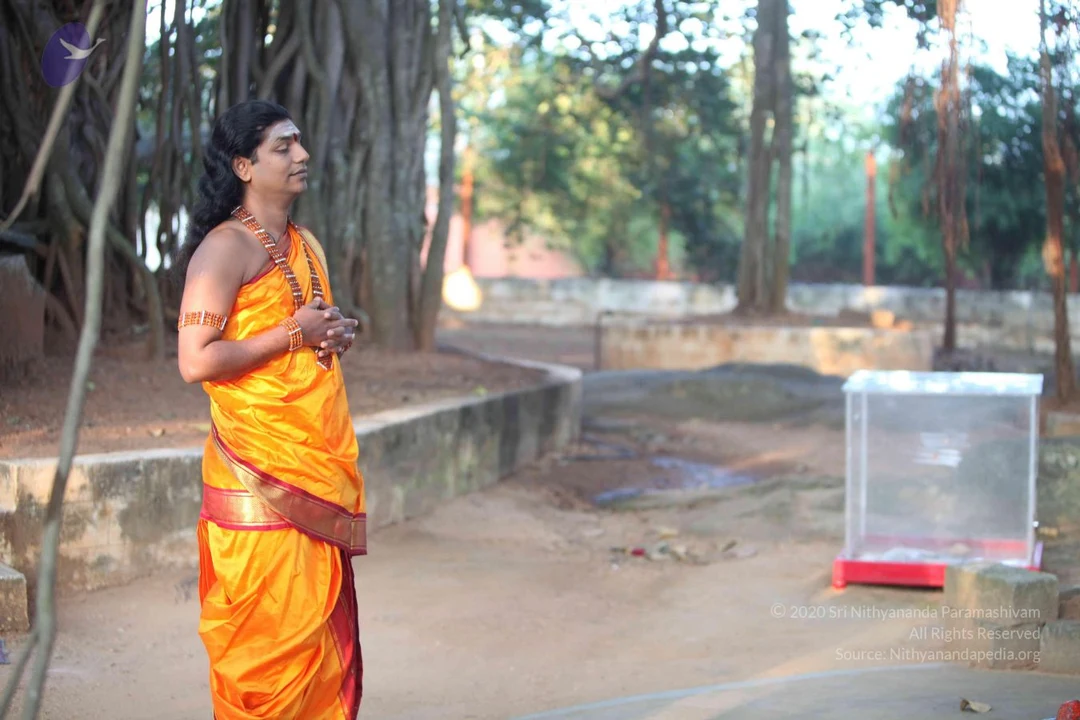
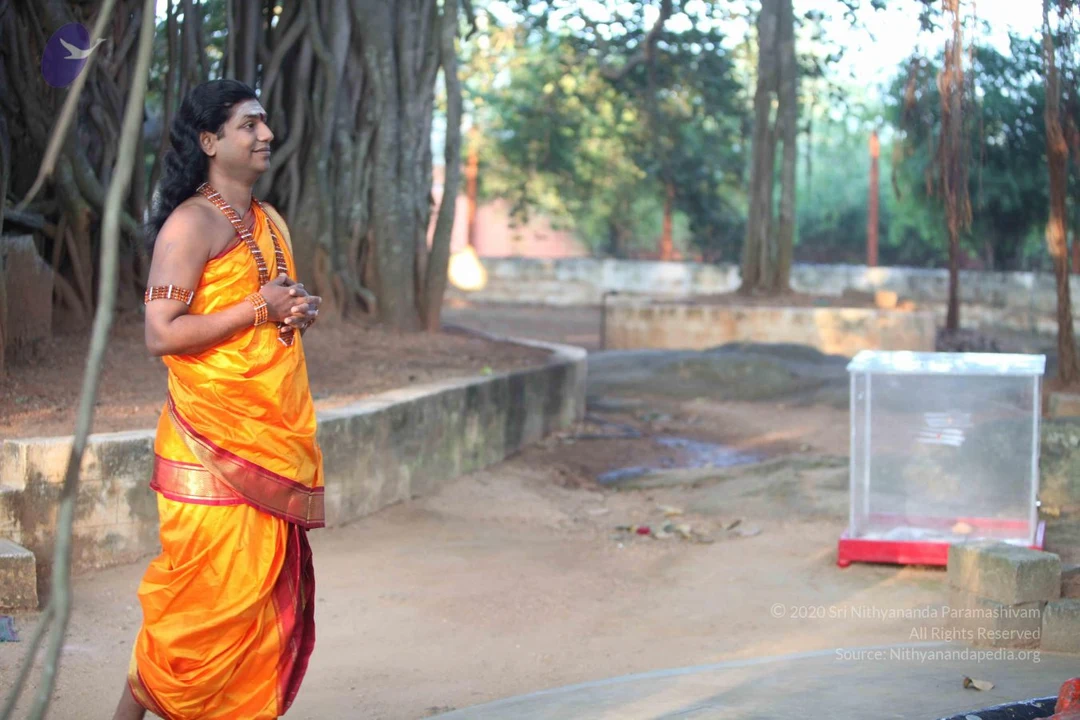
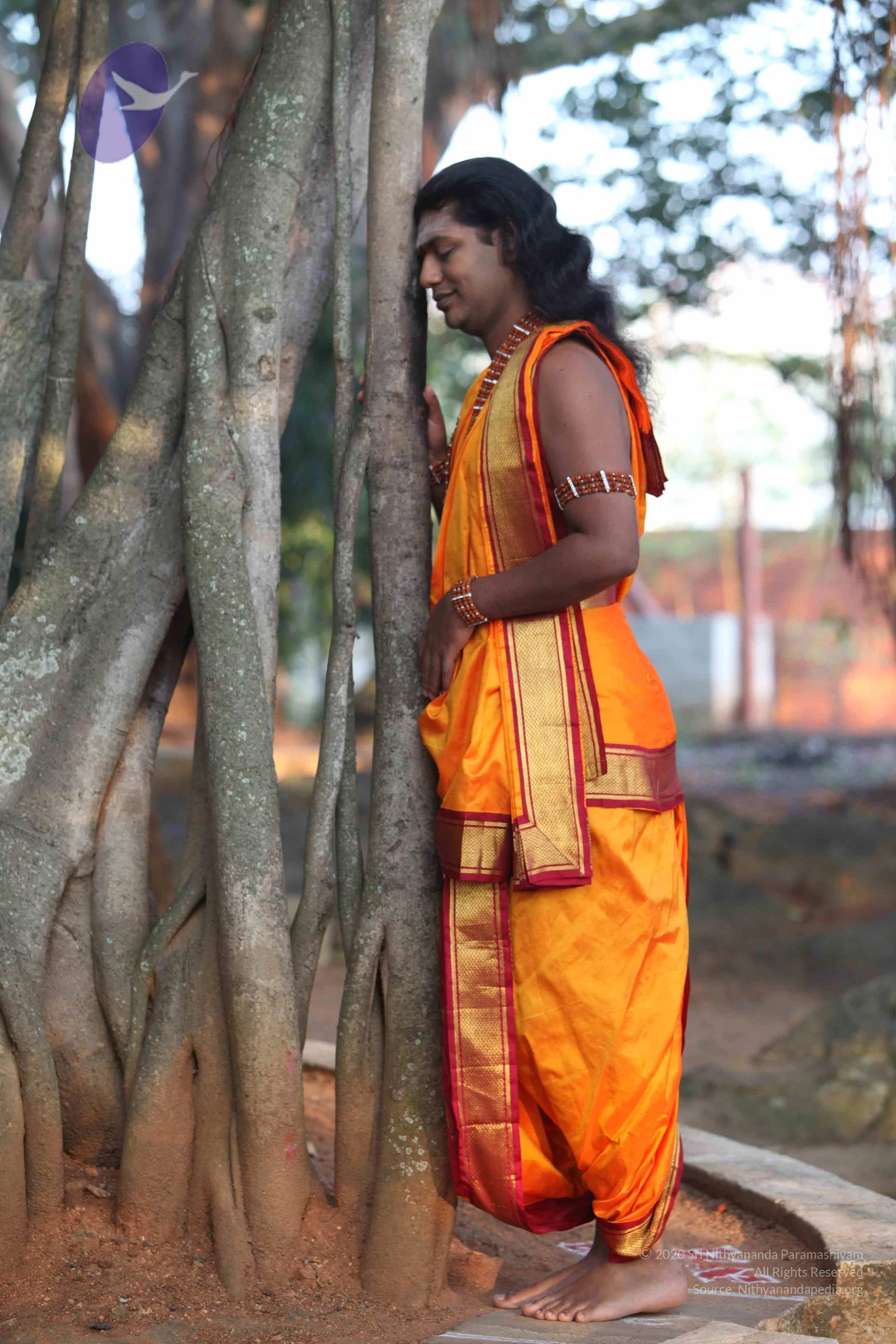
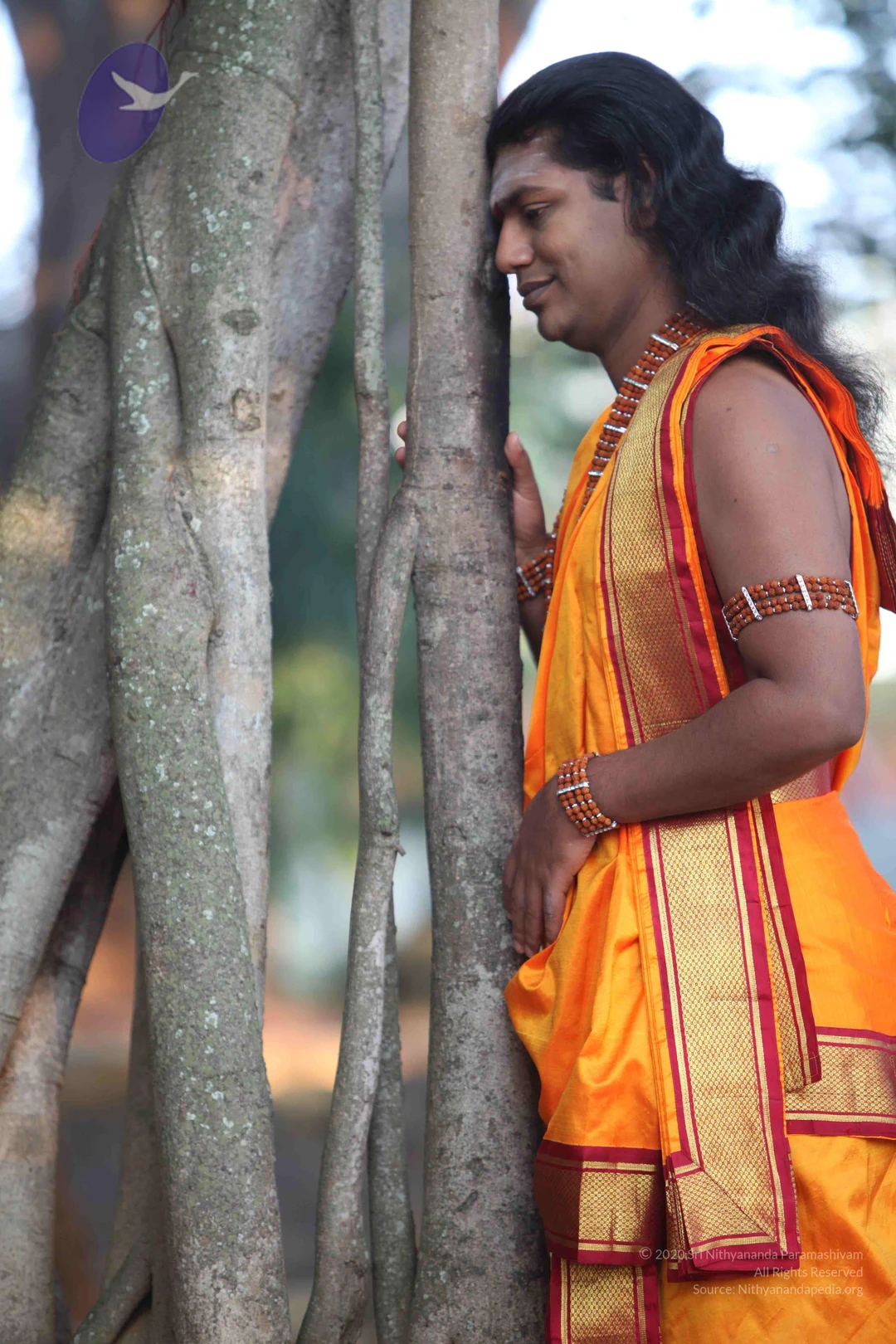
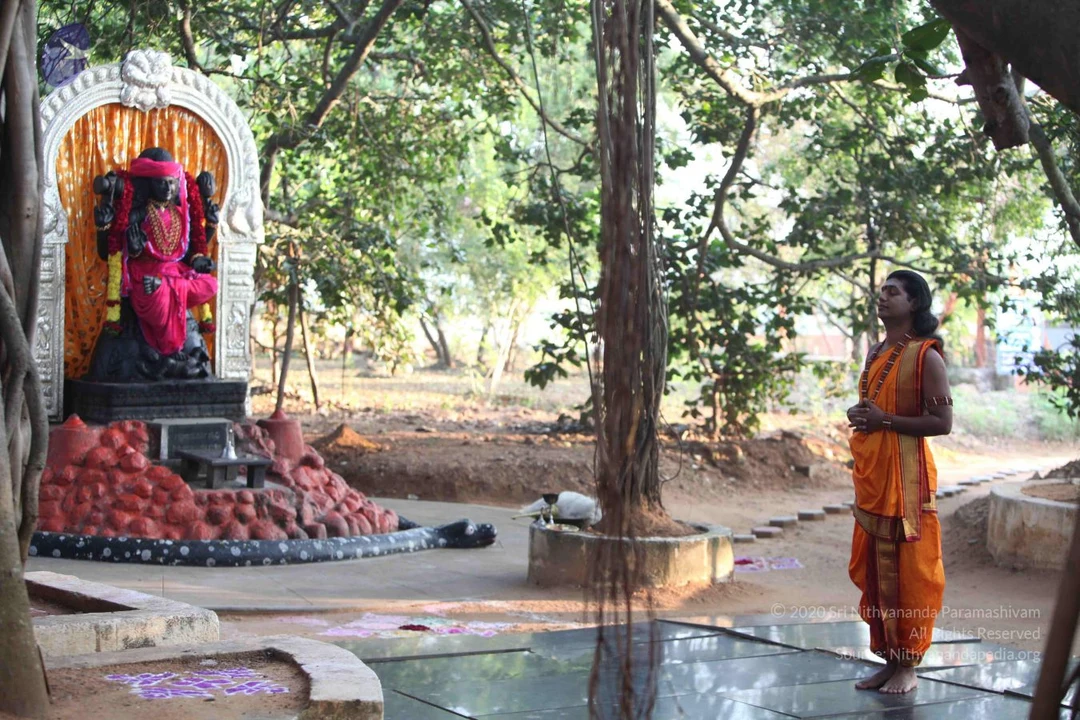
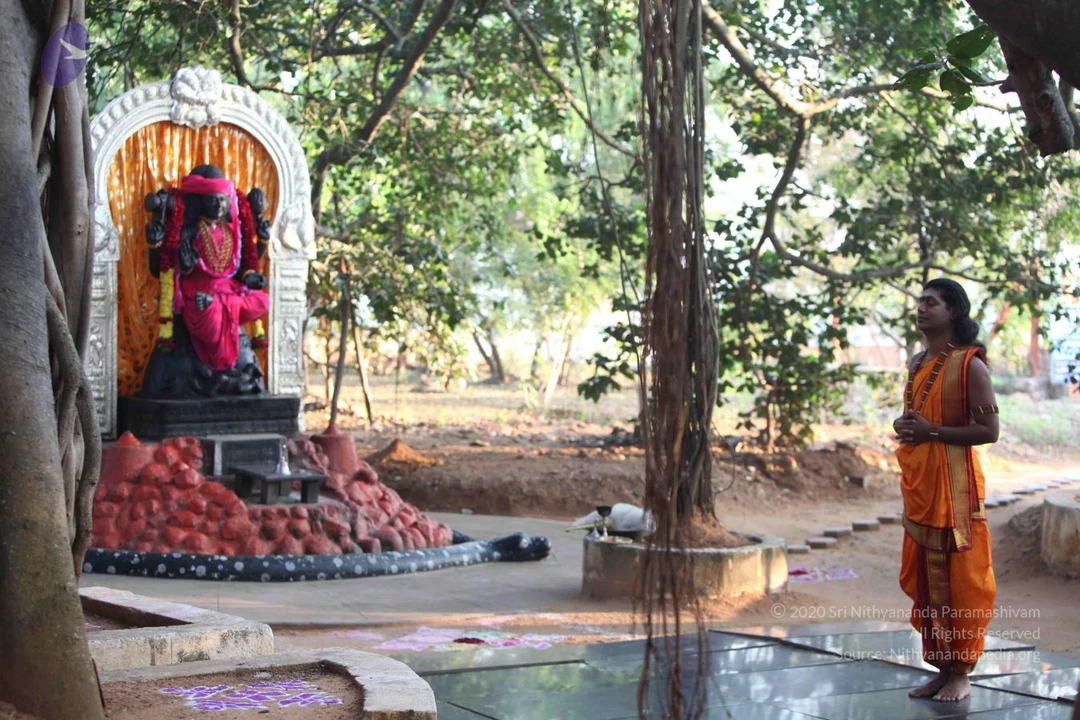
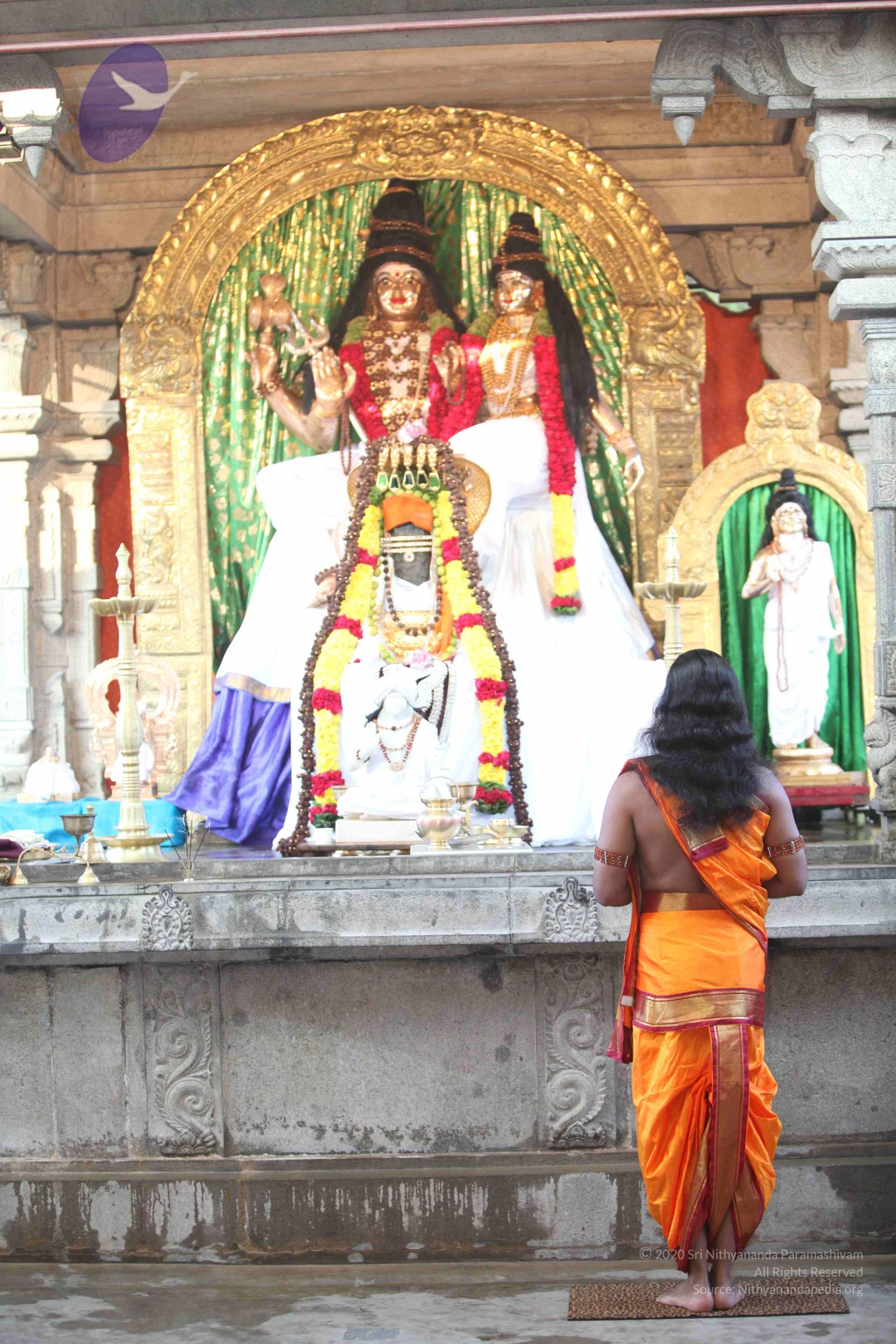
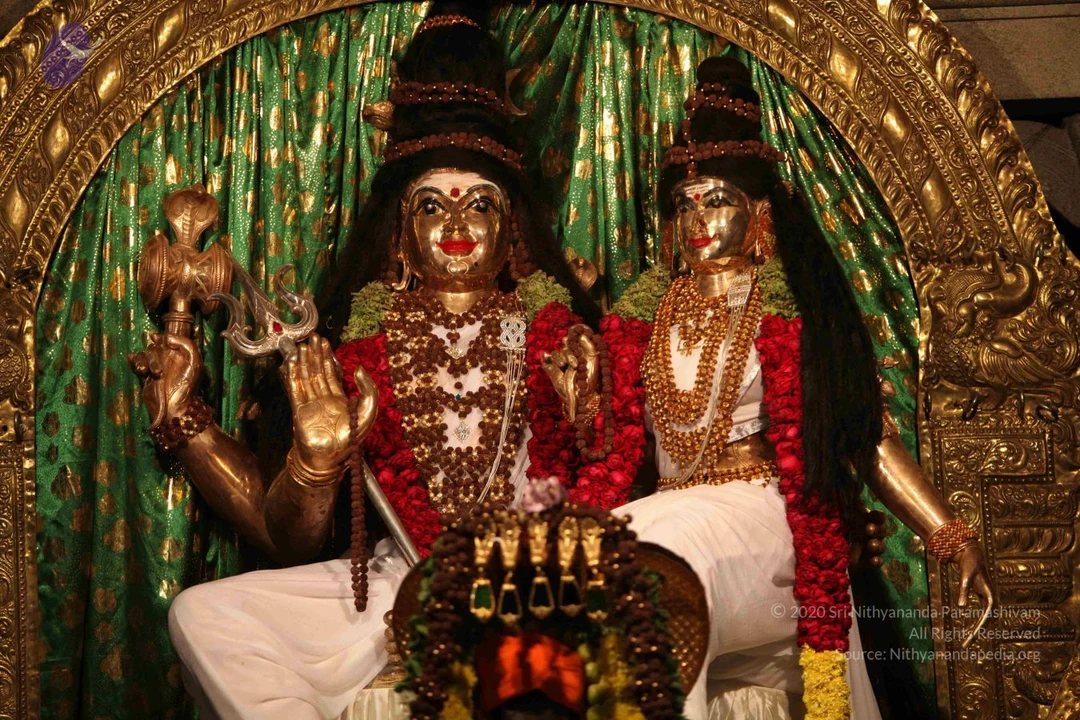
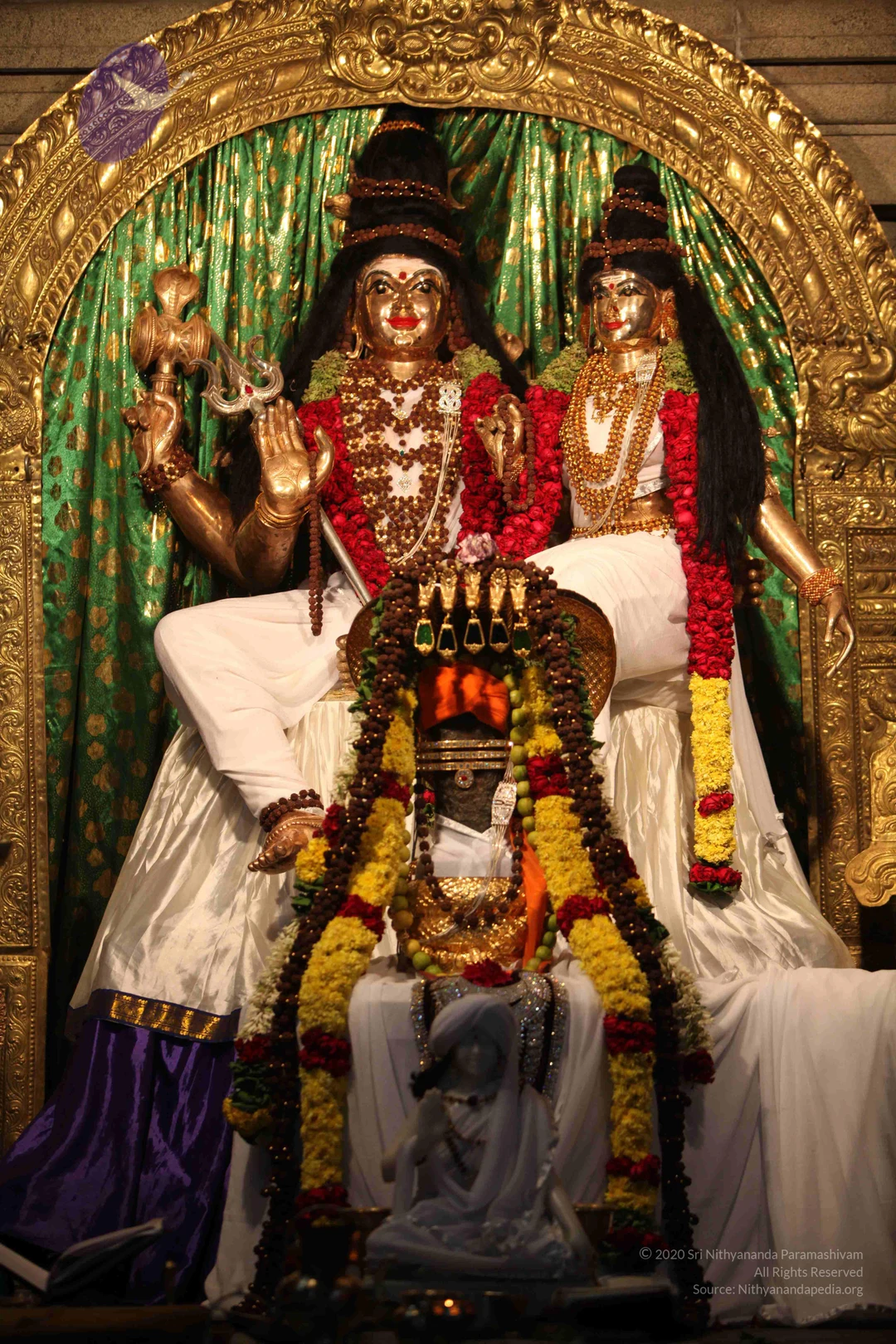
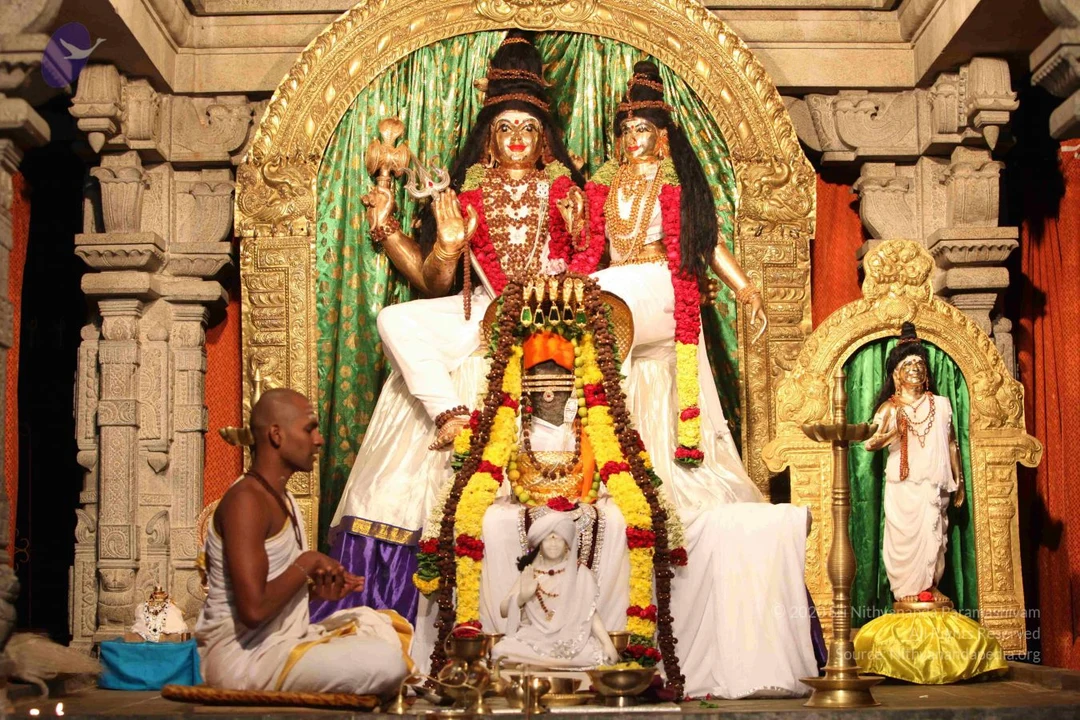
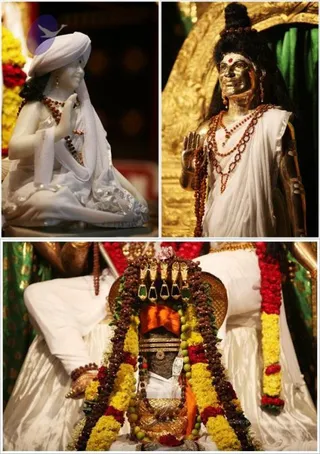
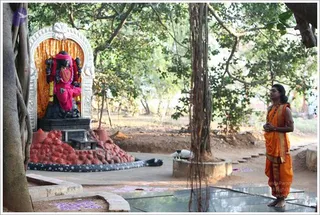
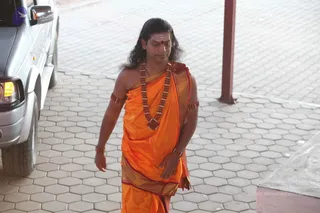
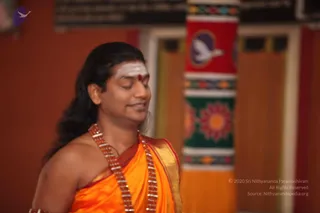
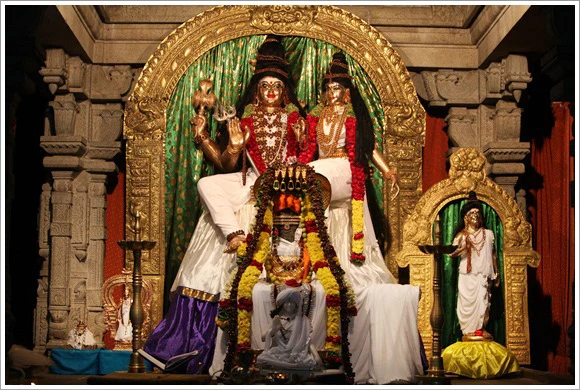
A photograph of a temple-style stage with an ornate golden backdrop. Central figures sit on a decorated dais; a woman in a red and gold sari sits at the front-left beside a standing figure in white and gold. Floral garlands and brass lamps flank the setting, with a deity murti visible in a side shrine. No clear identification of any person is possible from appearance alone.A three-panel graphic collage of statues associated with the a person archive. Top left: a white marble seated figure with a white turban, hands folded in namaste, wearing rudraksha malas and white draped cloth. Top right: a golden-toned standing figure with long dark hair, raised right palm in abhaya gesture, multiple rudraksha malas and white robe, before a gold background. Bottom: a figure seated on a white throne, draped in white and garlanded with yellow and red flowers and rudraksha, with an orange cloth, a crown-like ornament and green stones, in front of a gold and green backdrop. No physical people are present; all figures are statues or statue-like depictions.A two-panel collage of photographs showing a man in saffron-orange draped garments with a bare upper body and a long dark hair swept back. In the left panel he stands on a path beside a tree; in the right panel he stands leaning against a large banyan tree with aerial roots. Visible adornments include a rudraksha-style necklace. No other people are visible.Outdoor shrine under a large banyan tree with aerial roots. A pink-and-red painted deity murti stands in an arched niche with orange draped cloth, beside a heap of red-powdered offerings on a dark base. In the foreground, a standing man with a shaved head wears an orange-saffron cloth draped over his shoulder and a dhoti-style lower garment, holding a small object in his hands before the shrine. Paved stone path and bare earth surround the site.A man with long, swept-back dark hair walks across a paved hexagonal-tile courtyard beside a silver SUV, under a covered walkway with a red pillar. He wears a saffron-orange silk garment draped over the shoulders with a gold-bordered edge, a long rudraksha mala necklace with a pendant, beaded armlets and bracelets, and a red bindi on his forehead. a person by appearance cues: long hair, saffron clothing, rudraksha mala and ceremonial adornments, shown walking as he arrives.A man with long dark hair, eyes closed and a faint smile, stands in front of a red, green and orange decorated pillar with a white dove emblem. He wears a saffron-orange silk garment with a gold border over one shoulder, a beaded rudraksha-style necklace of silver-toned beads, and a white vibhuti tripundra with a red kumkum dot on his forehead. The background is warm orange and red with draped curtains. Swamiji (probable): long swept-back hair, saffron clothing, ceremonial beaded necklace and sacred markings suggest the Nithyananda Paramashivam candidate, shown in person during a satsang setting.

Pada-Puja

69 photosSource gallery
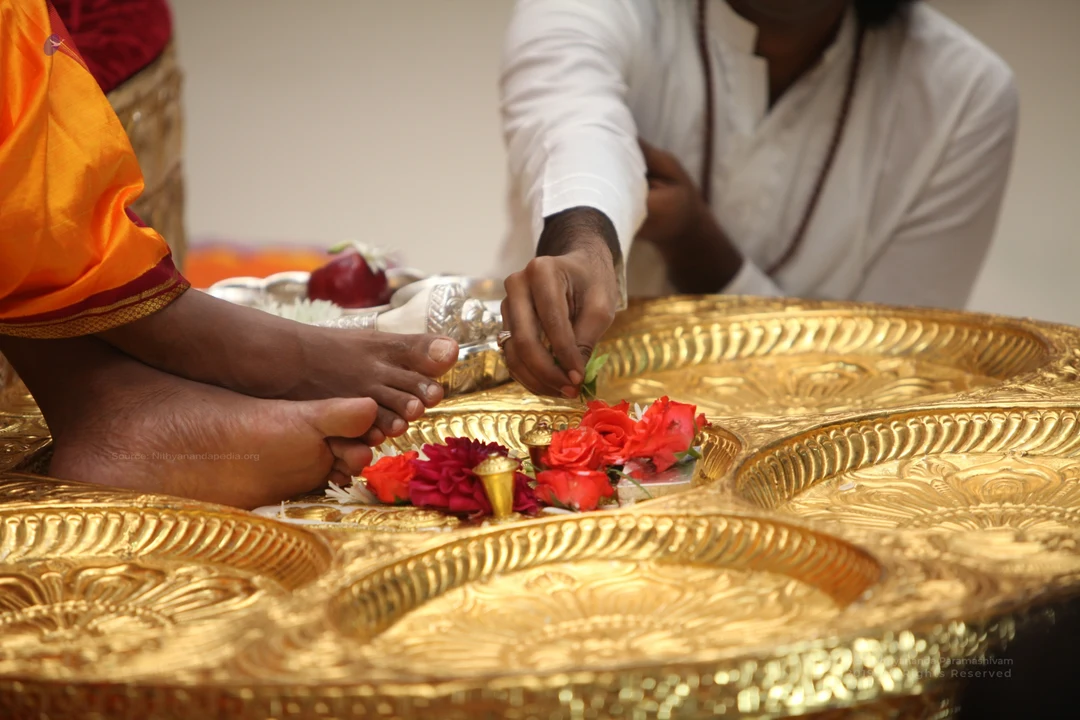
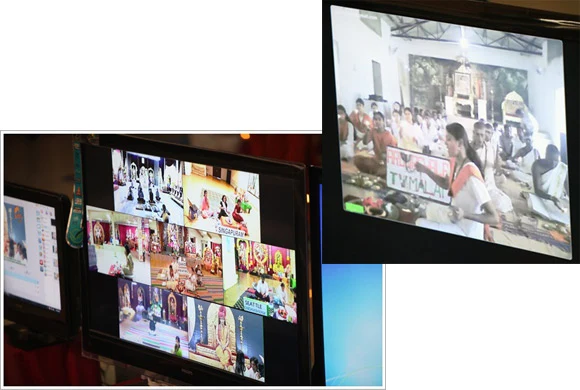
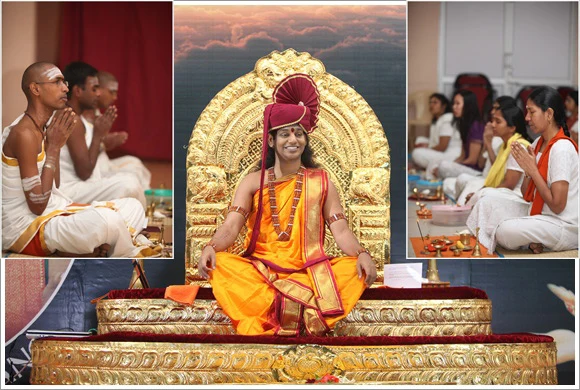
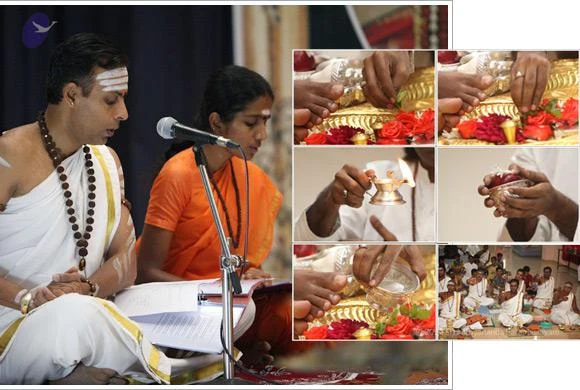
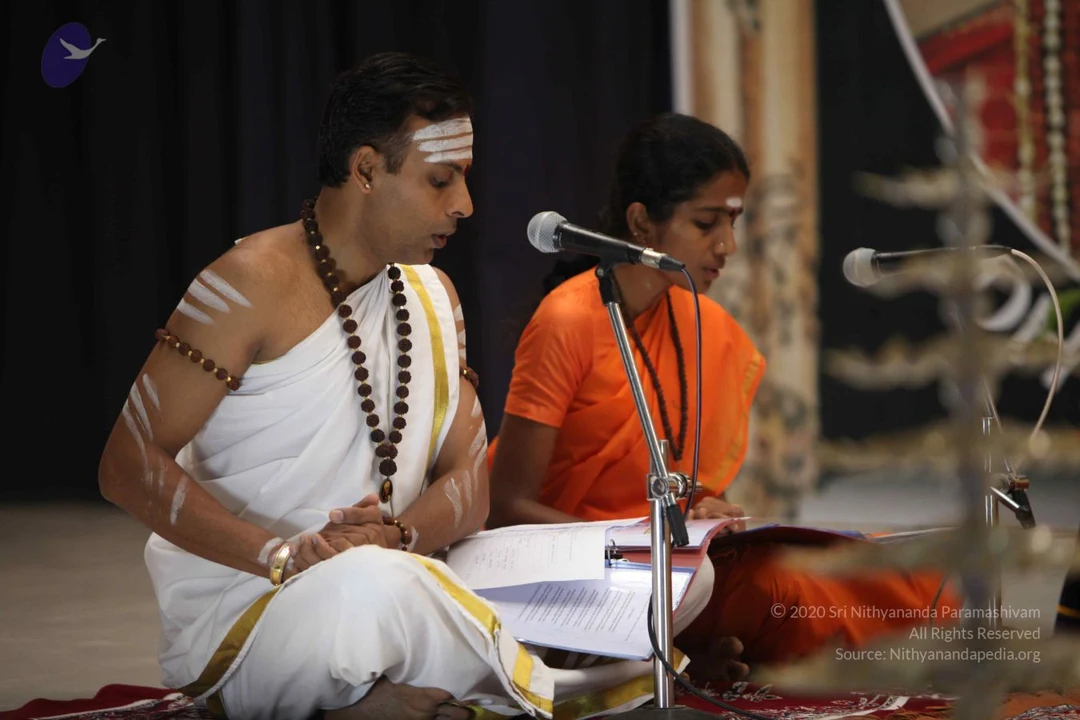
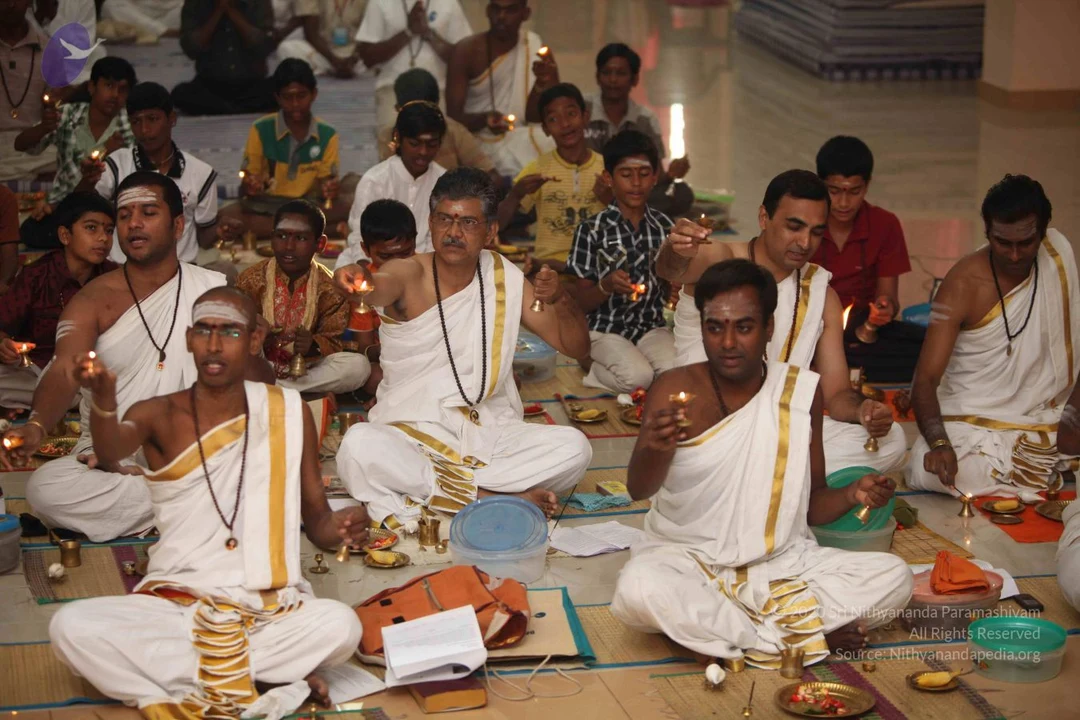
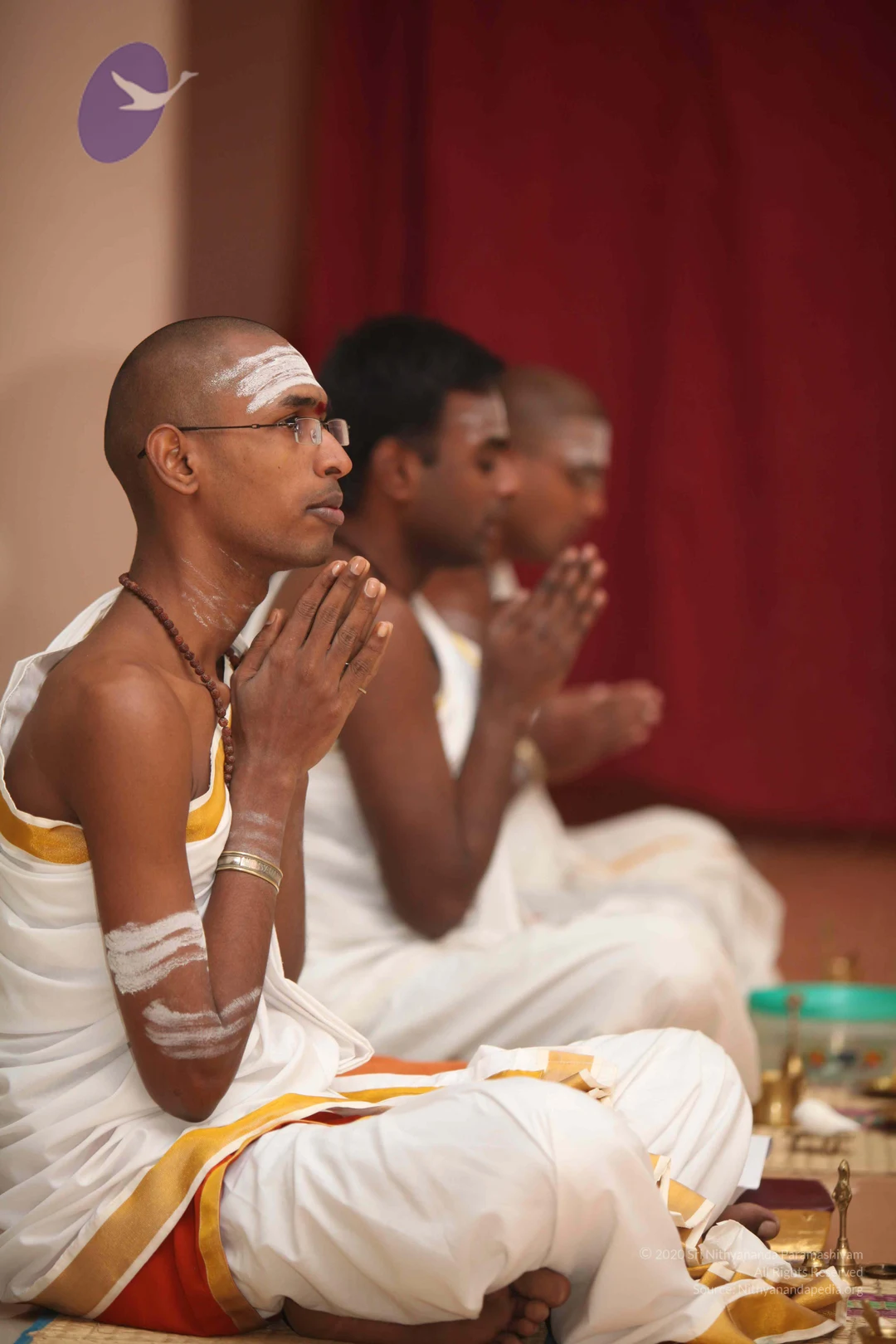
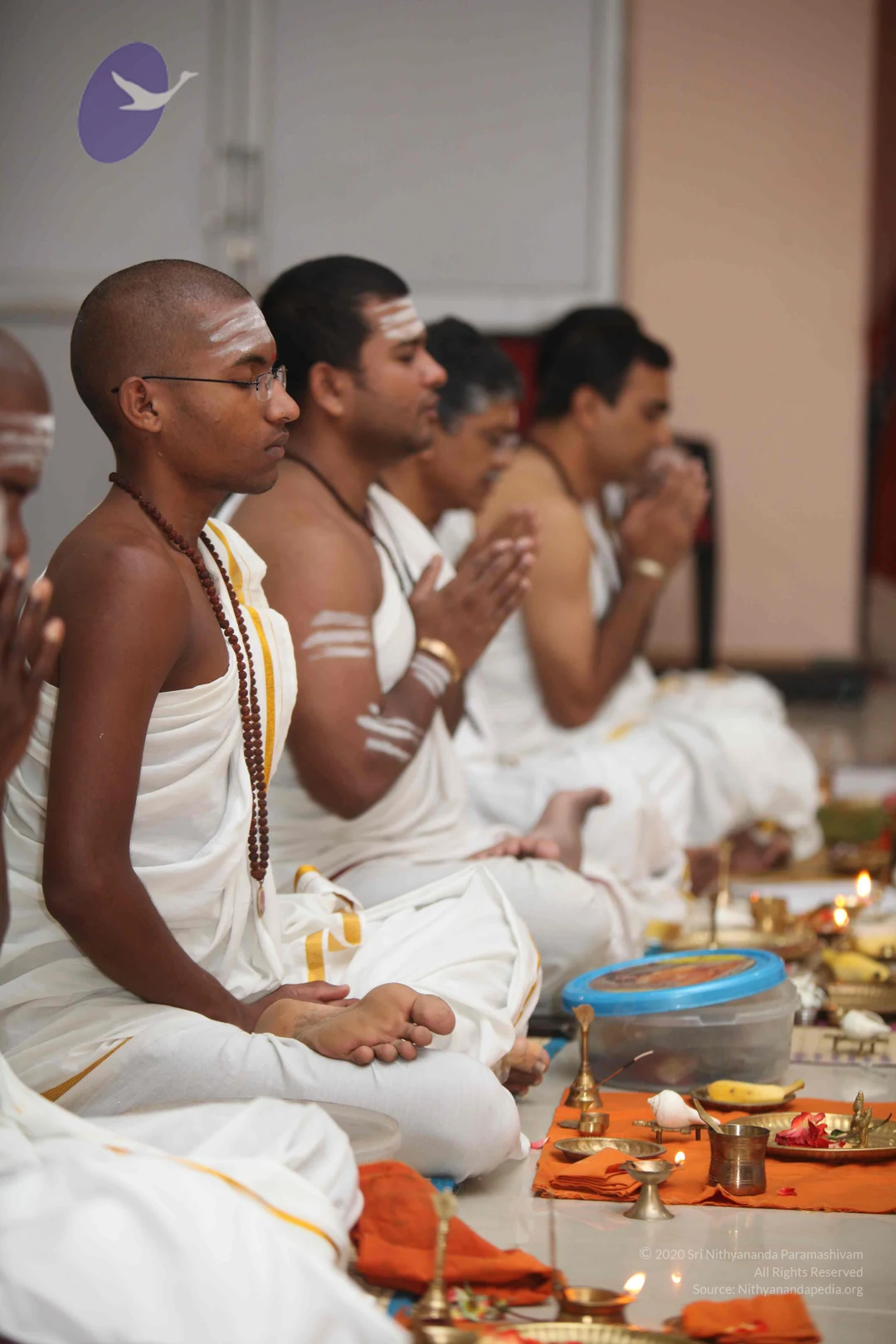
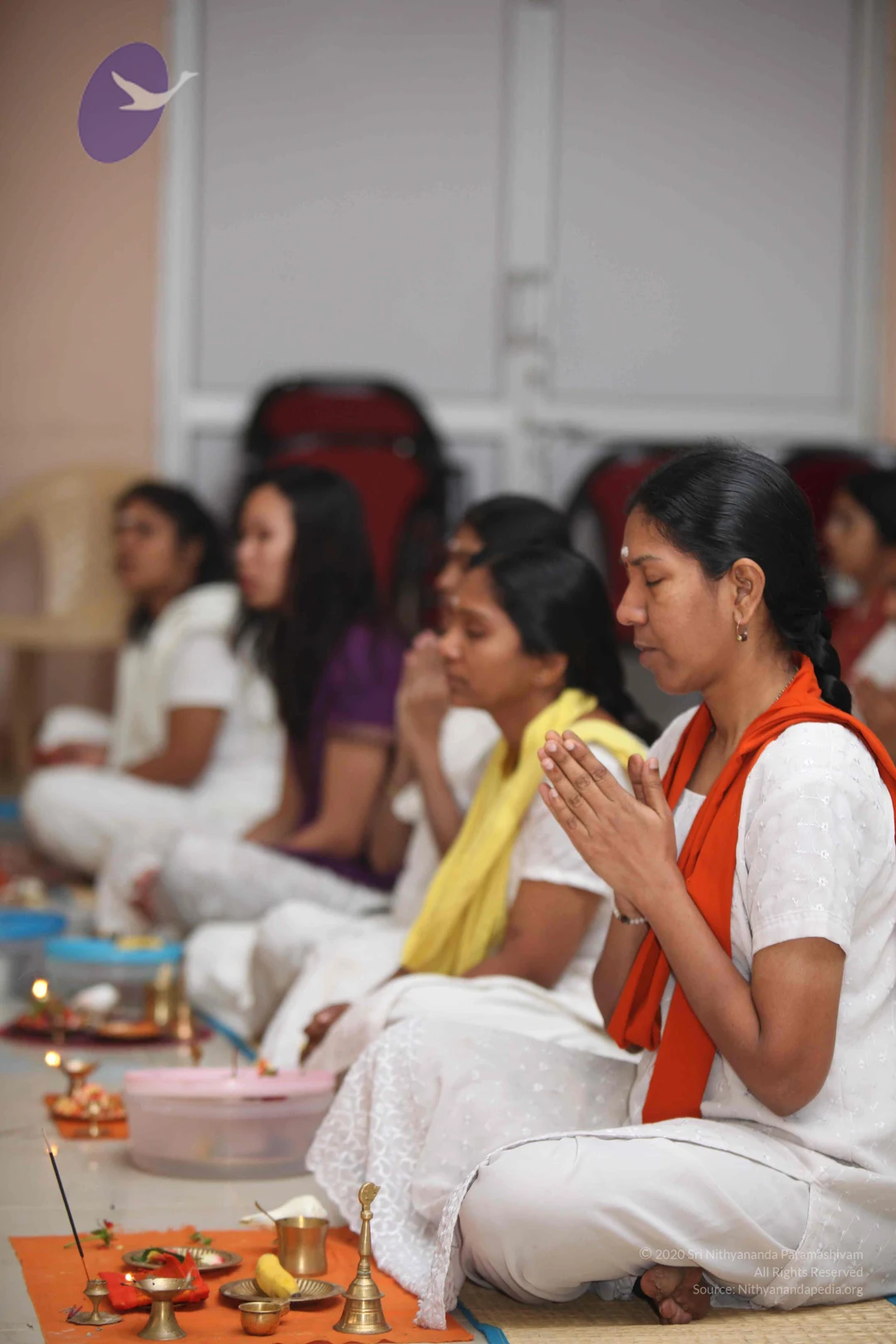
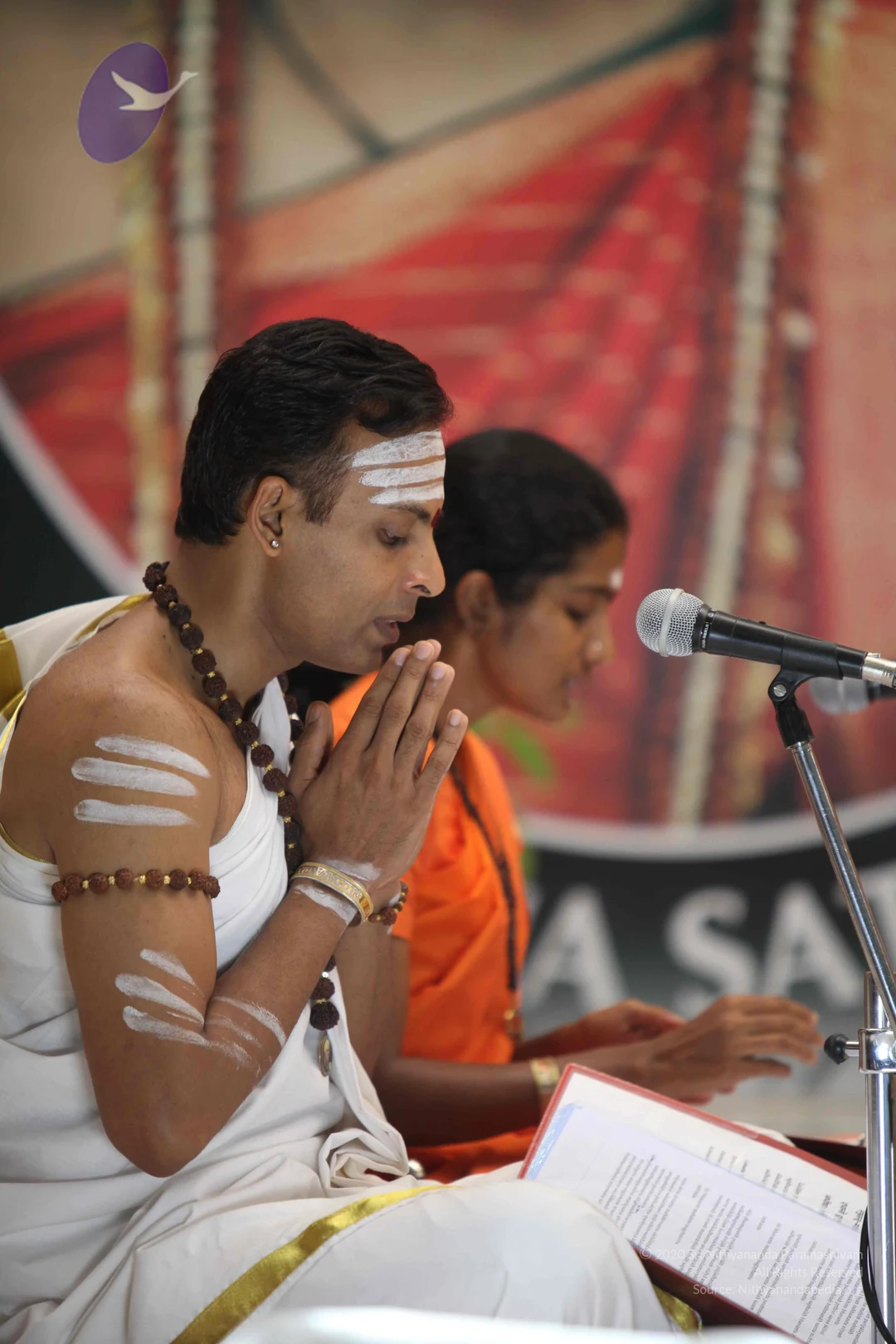
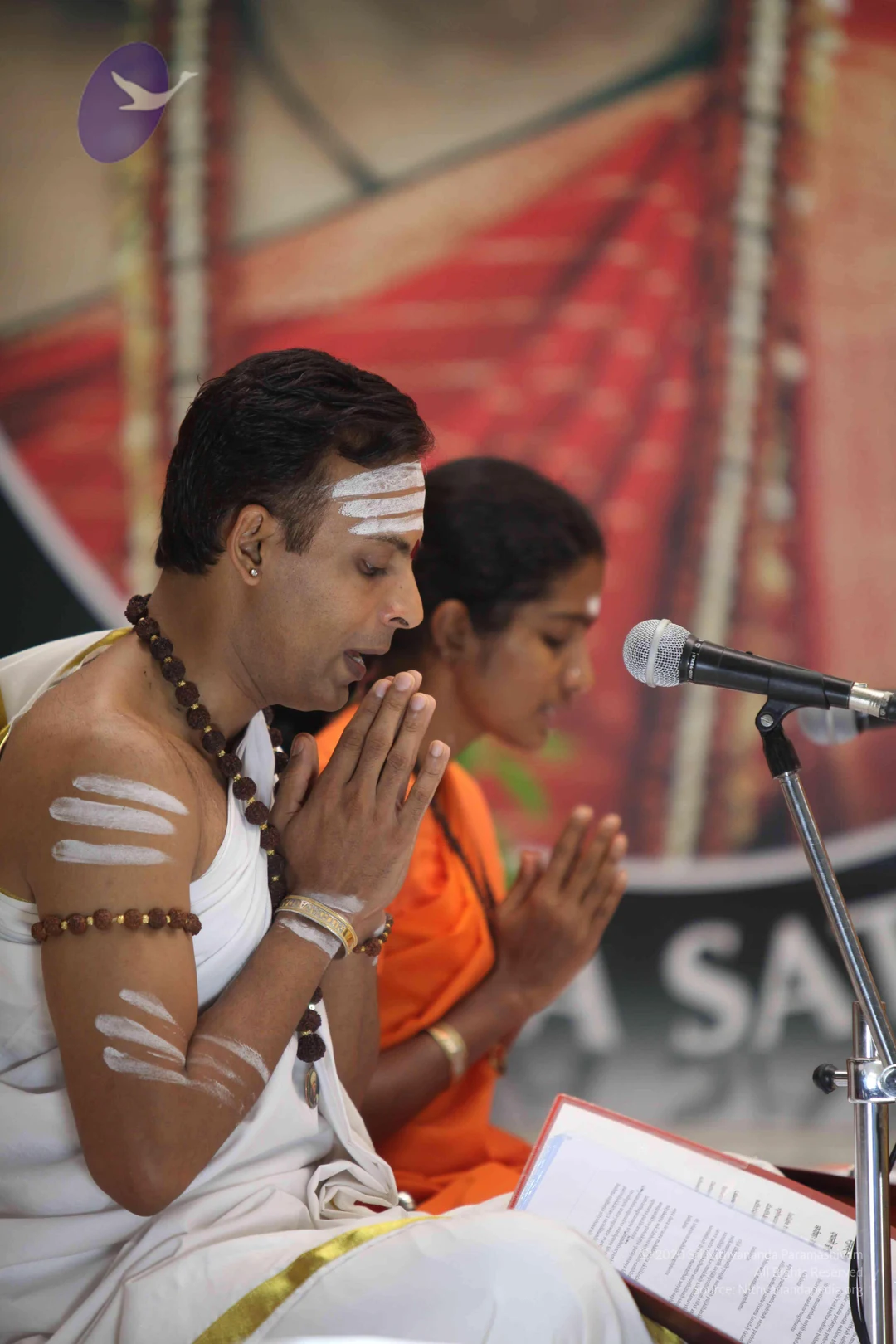
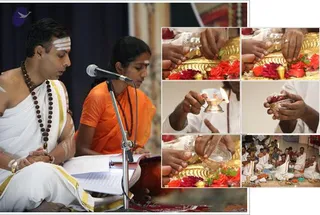
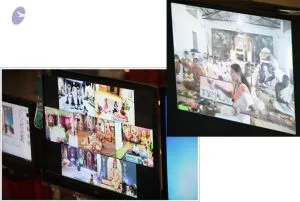
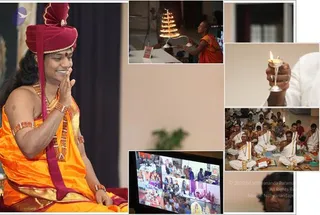
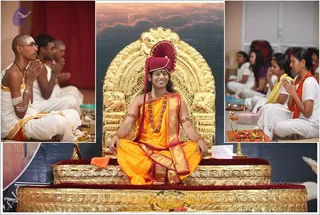
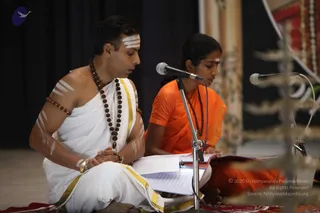
A multi-panel collage of photographs. The large left panel shows a man in white dhoti with a tripundra on his forehead and a rudraksha mala around his neck, seated at a microphone beside a woman in an orange sari who reads from an open booklet. Smaller right-side panels show hands placing red roses and flower petals around a golden deity murti, a hand lighting an oil lamp, a hand pouring liquid into a small silver bowl, and a group of men in white seated on a mat during a puja. Only the people in the left photo and the group in the bottom-right panel are physical people, and the group is seated in a room.A two-panel photograph of television screens showing a live satsang broadcast. The left screen displays a grid of video windows with many small figures, some in white and saffron clothing, participants seated in rows. The right screen shows a seated speaker on a raised seat in front of a gathering, with people in white, and a red-clad figure beside him. Screens sit on stands in a hall with a wooden cabinet nearby. Both screens are physical, so the people shown on them are depictions, not present in the room.A photograph of a woman in an orange and red sari with a red head covering stands in the left foreground, facing a flat-screen television mounted on the right. The screen shows a live video feed of a crowd of people seated and standing in a hall with a bright backdrop. The woman appears to be watching the screen. The person on screen is not described.A multi-panel collage of event photographs. Right panels show a woman in an orange sari lighting a tiered brass lamp on a table, a hand holding a small oil lamp, and a group of about a dozen people in white ritual clothes seated on the floor before lamps and offering plates. The bottom panel shows a television screen displaying a grid of video-linked participants.A four-panel collage of photographs from an ashram satsang. The central panel shows a seated figure in a golden ornate throne with a gilded backrest carved with lion-like motifs, wearing a deep red turban, orange-saffron robe with gold border, rudraksha-style beaded necklaces and gold armlets, seated in meditation pose with hands resting on the lap. Top-left panel shows two white-clad men with shaved heads and vertical white tilaka marks, hands pressed together in namaskar. Top-right panel shows several women in white and orange-trimmed saris seated with folded hands. Bottom panel shows a gold-draped dais with a red and gold cushion and a white-cloth table with flowers. Swamiji (probable) appears as the seated figure on the throne in the central panel, identified by his orange robe, red turban and ornate throne cues, while the surrounding panels show devotees and priests.Photo of two people seated cross-legged on a red mat during a satsang recitation, with microphones on stands before them. A man on the left wears a white dhoti and shawl edged in gold, a rudraksha mala, gold bangles and a white tilak with horizontal stripes on his forehead and arms. Beside him a woman in an orange saree and orange blouse, with a rudraksha mala and a small tilak, reads from printed papers in a clipboard folder. Both look down at the pages. The background is a dark draped curtain with a decorative floral arrangement at right.

BG-Satsang

70 photosSource gallery
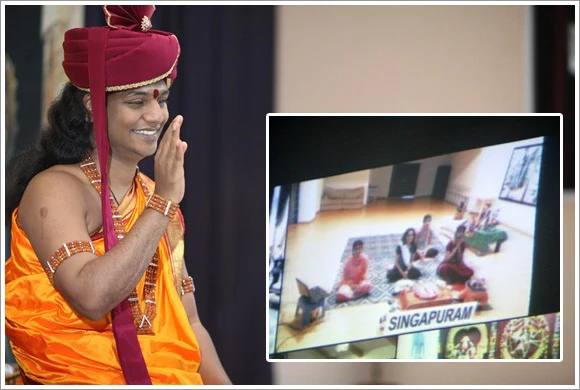
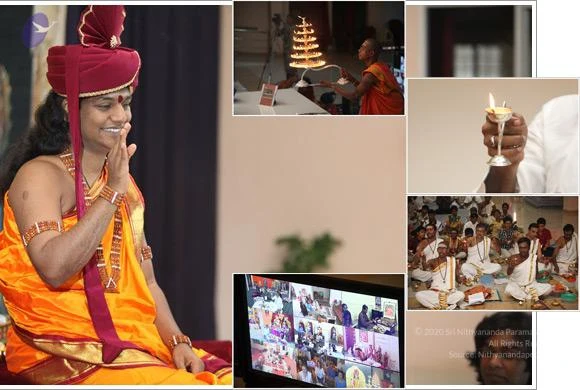
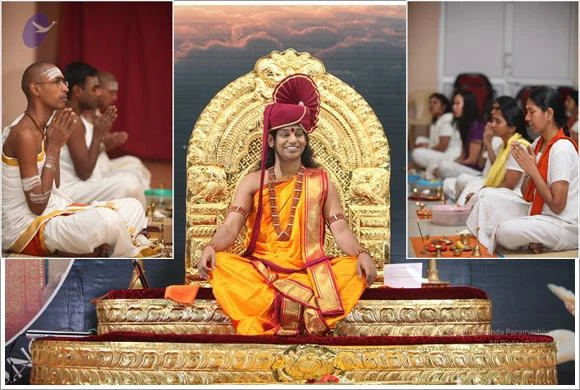
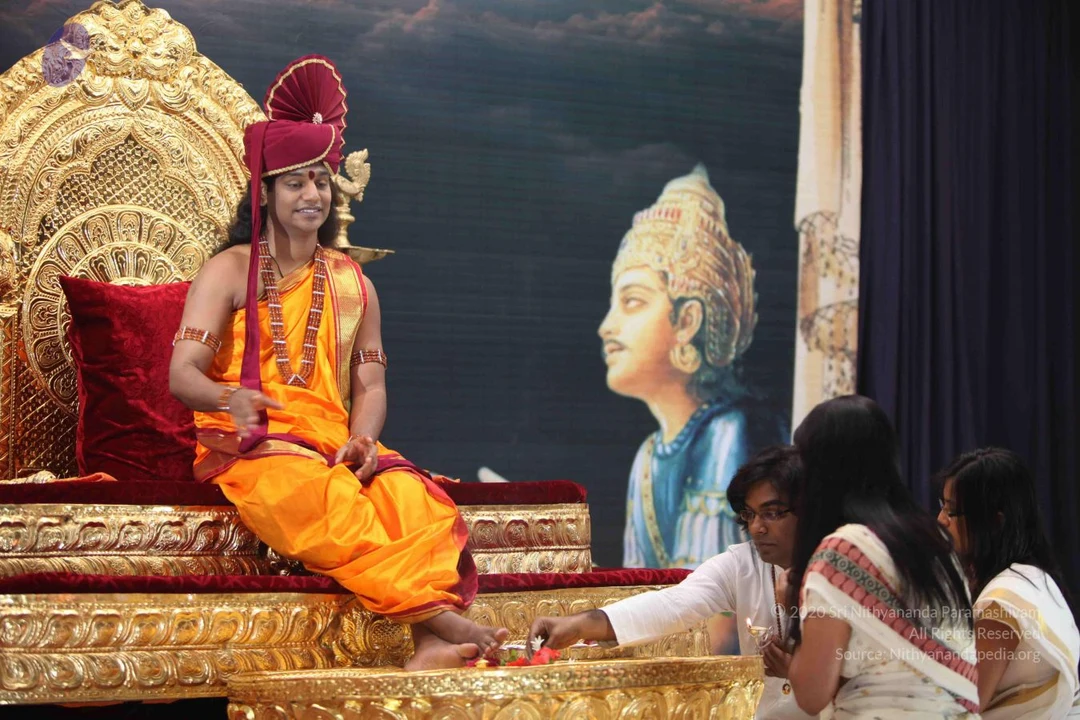
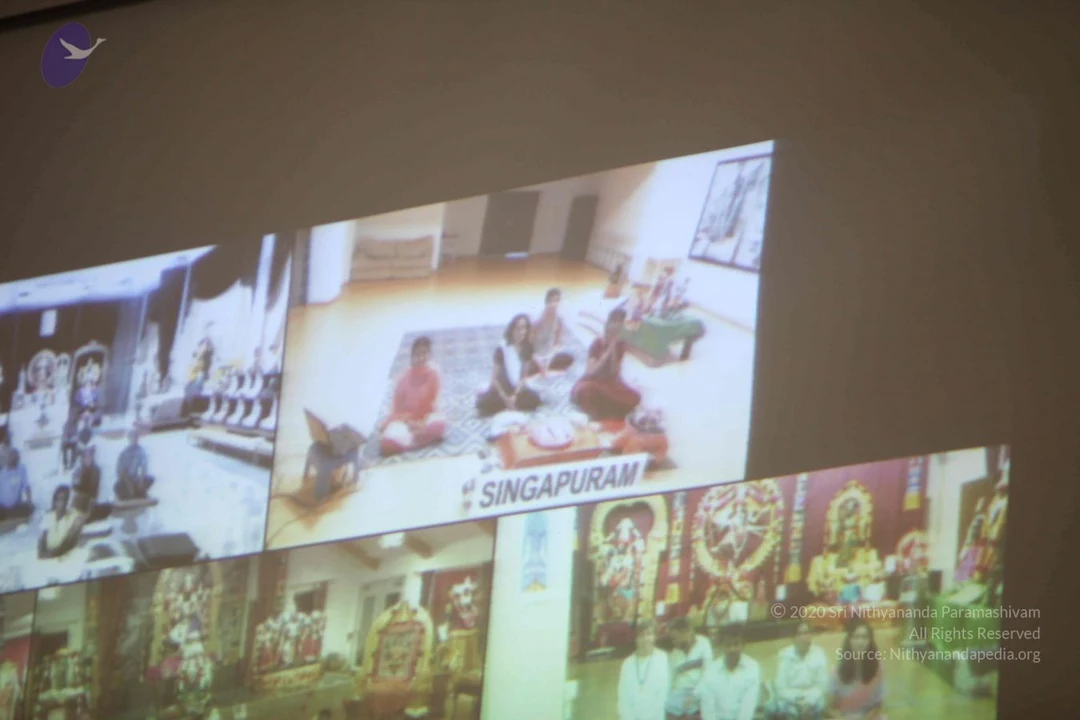
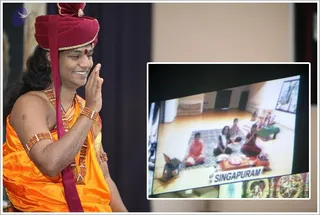
A collage of two panels. The main panel shows a smiling man with long dark hair wearing a maroon turban with a red-and-gold fold, an orange-saffron robe draped over the shoulder, a beaded bracelet and ornate gold-toned necklaces. He raises one hand in a gesture of greeting or blessing. An inset panel on the right shows a television screen displaying a live video feed of several people seated on a cream mat in a room, with a dog in the foreground and the word SINGAPURAM visible on the screen. Probable Swamiji with the distinctive orange robe, maroon turban and ornate ceremonial jewelry.A photograph of a seated figure in an orange-saffron robe on an ornate chair, wearing a tall red-and-gold headdress and holding a small object in one hand. The setting is a formal stage with a dark draped backdrop and a light-coloured wall. The figure appears to be giving a talk or satsang. a person: the candidate wears a saffron robe and a tall ornate headdress, with ceremonial dress consistent with the page's description of a teaching session.A three-panel graphic of the same photograph repeated, showing a person seated on an ornate golden throne with red cushioning. The figure wears a bright orange-saffron garment with gold trim and a tall red ceremonial headpiece, with a gold necklace visible. Hands rest in the lap in each panel. Background is gilded and draped in red fabric.A collage graphic of six panels combining a central photograph with smaller images. The main panel shows a person in orange and red ornate clothing with a shawl, with long swept-back dark hair and a fabric wrap draped over the shoulders, standing against a dark background. Surrounding panels show a crowd gathered in an indoor hall, people seated in rows, and other scenes of devotees. a person: the central figure has long swept-back hair, orange-red ornate clothing and a shawl, cues consistent with the page's claim, but the image is small so the identification is uncertain.A smiling man in a deep red turban with gold trim and a red bindi on his forehead wears a bare-chested orange silk garment with a gold-bordered red edge. He wears long multi-strand rudraksha malas with silver spacers, a red armband bead band, and a black cord. Behind him is ornate gold carved decoration. The photograph is a close-up portrait of a single person. Appearance-based candidate: a person, shown in person.A seated man in ornate saffron-orange silk robes with a gold-bordered magenta shawl draped over one shoulder and a maroon turban with gold trim on his head. He wears a long rudraksha mala with silver bead spacers, matching rudraksha armlets, and a red tilak on his forehead. He sits on a richly carved golden throne with lion motifs, smiling broadly. A small printed caption sits at the lower right edge.

Nithya-Kriya-Anxiety-Care

71 photosSource gallery
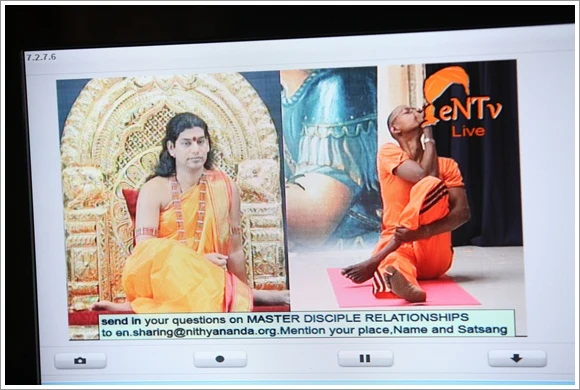
A photograph of a seated man in saffron-orange robes and a red-and-gold shawl, with long dark hair, rudraksha beads and a gold necklace, sitting on a red cushioned seat in front of an ornate gold backdrop. Beside him, a large screen shows a smiling woman in a red top with a gold necklace.A seated man on an ornate golden throne with a carved arched backrest and red cushion, smiling broadly with legs crossed in meditation pose. He wears a saffron-orange silk garment with a red and gold zari border draped over one shoulder, a red-and-white beaded mala necklace, rudraksha-style beaded armlets and bangles, and a red bindi on his forehead. His hands rest together in his lap. Two bold cues fit the Swamiji (probable) presentation: long swept-back hair and saffron/orange ceremonial clothing with beaded malas. The throne and regal setting are shown, but no name is printed.Four-panel collage of seated yoga and meditation postures. Top two panels show a shaved-headed man in saffron-orange robes with rudraksha malas, seated on a red mat with one leg extended and an arm raised in a stretch, against a blue-and-gold backdrop. Bottom two panels show a man in white dhoti and shawl with gold borders, seated on a mat, one hand raised in a mudra, with a seated audience of devotees in the background and red curtains and chairs visible. The panels are a composite graphic rather than a single scene.A three-panel graphic collage of photographs showing a seated figure in orange clothing on a red mat, with a plant and a potted tree in the background. The figure is shown in a meditative or yoga posture in each panel, with hands resting in the lap or raised in the frames. The panels are arranged side by side against a dark backdrop, and no other physical people are visible. The figure's appearance is consistent with a robed teacher in saffron-orange, but identity is uncertain from appearance alone.A four-panel collage of satsang sessions linked by video. The top two panels are screens showing remote centres: one with a large screen view of seated devotees in white and a deity shrine with flower decorations, labelled Victoria Australia on a banner; the other showing a shrine with a deity murti and a seated woman in a yellow sari, labelled SEATTLE and SINGAPURAM. The bottom two panels are photographs of devotees in white clothes sitting cross-legged in a hall with red curtains, eyes closed in meditation, some wearing rudraksha malas; one shows men in white seated on striped mats. The screens show people, so the physical count reflects only those in the live hall photos.A photograph of a computer monitor or screen displaying a web page with two images side by side. On the left, a painted deity figure in a red-and-gold ornate style is shown. On the right, a figure in orange-saffron robes is shown beside a golden design.

Sarva-Darshan

10 photosSource gallery
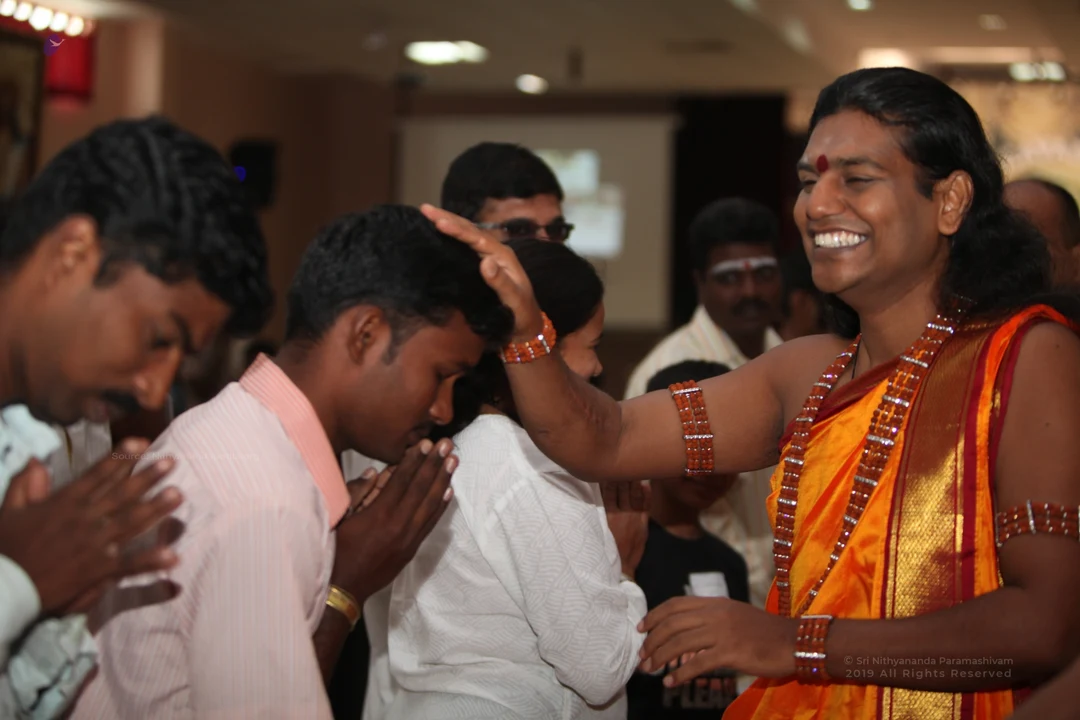
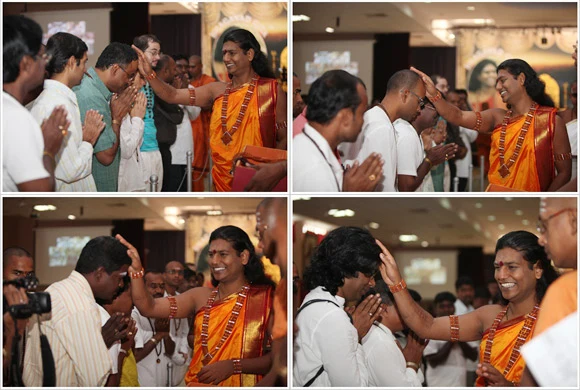
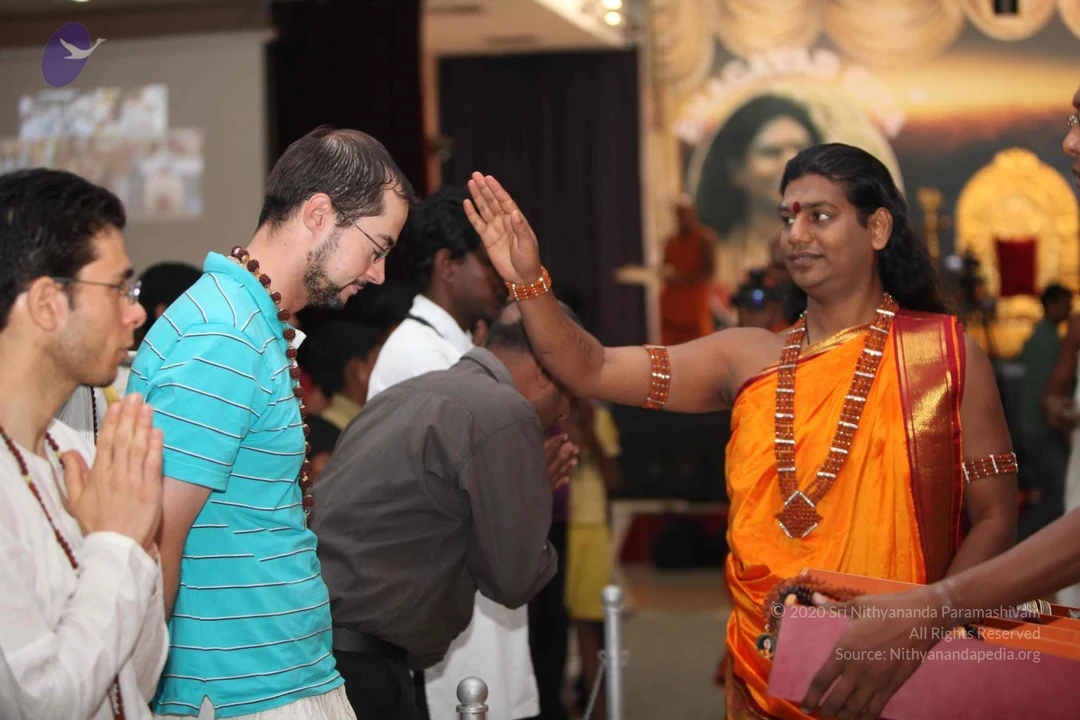
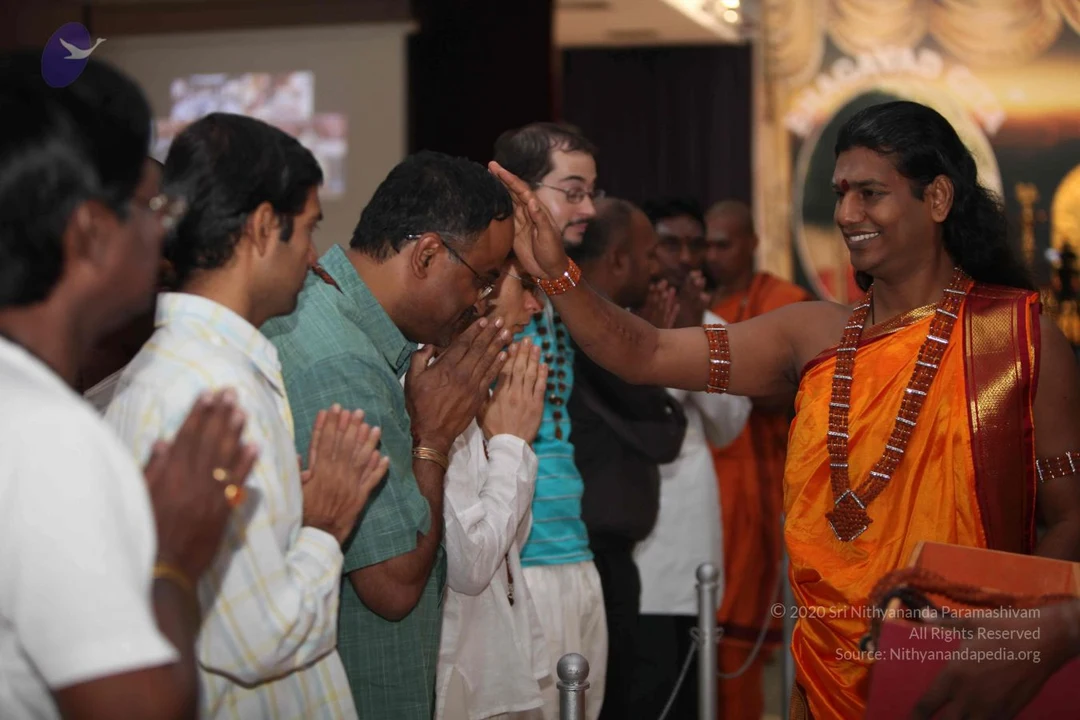
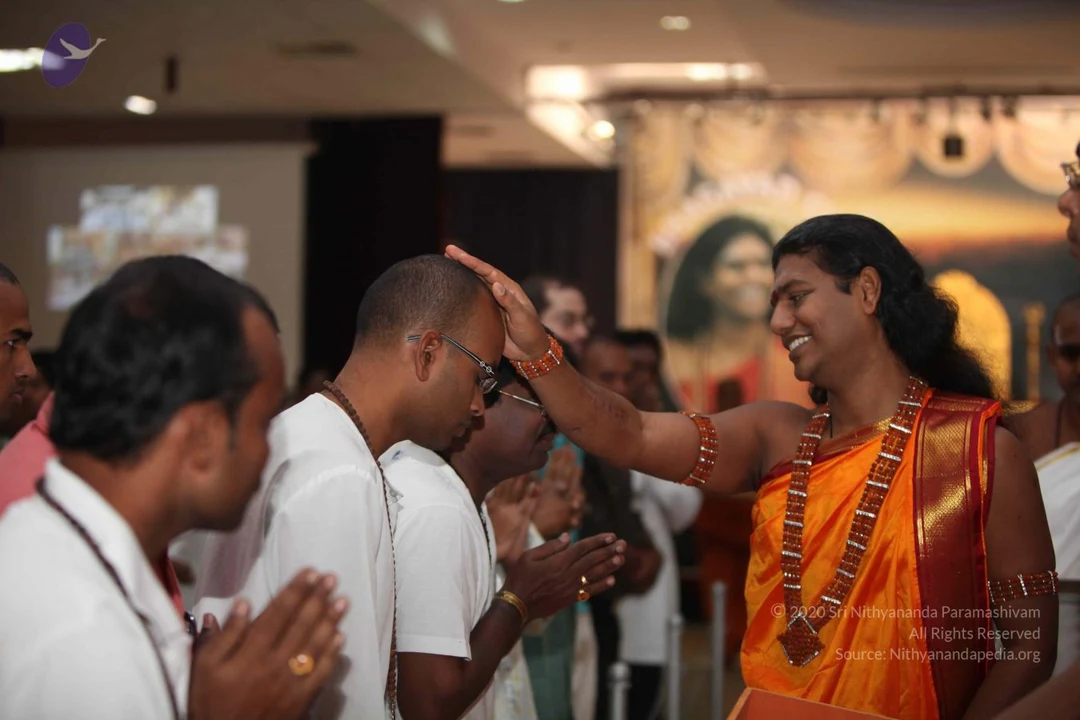
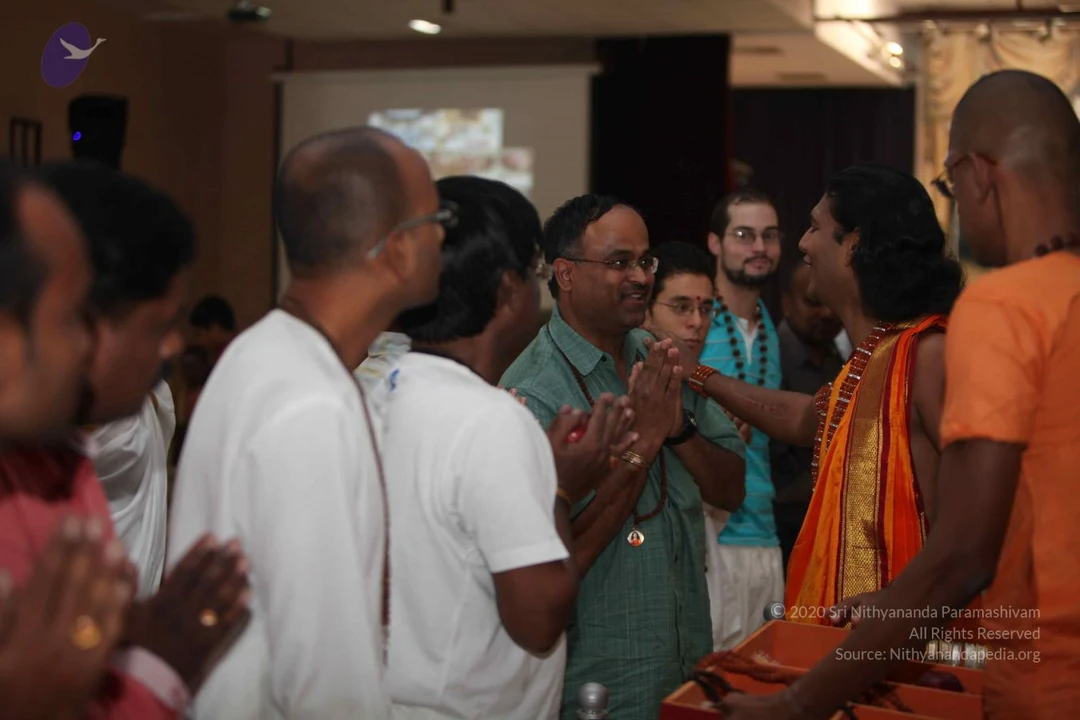
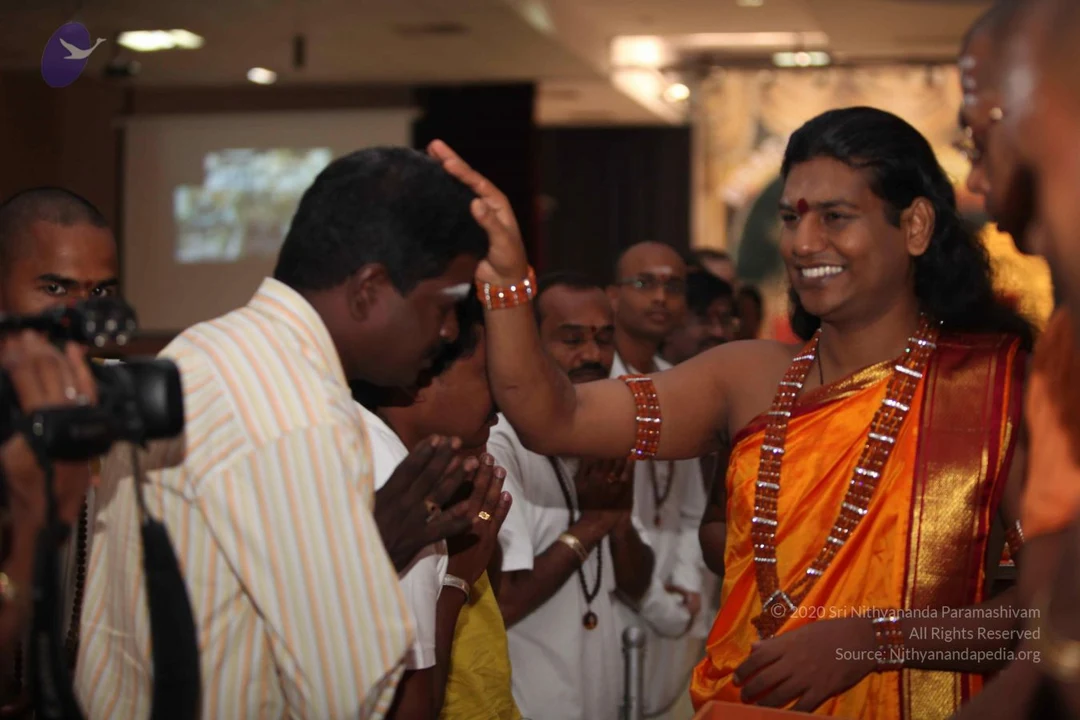
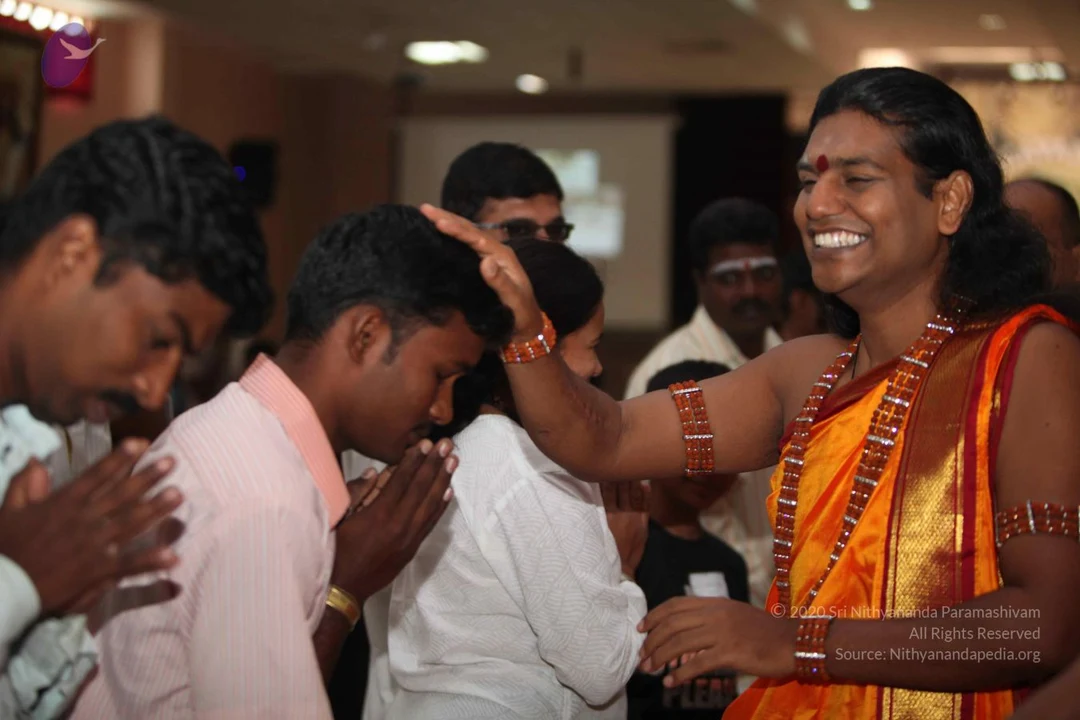
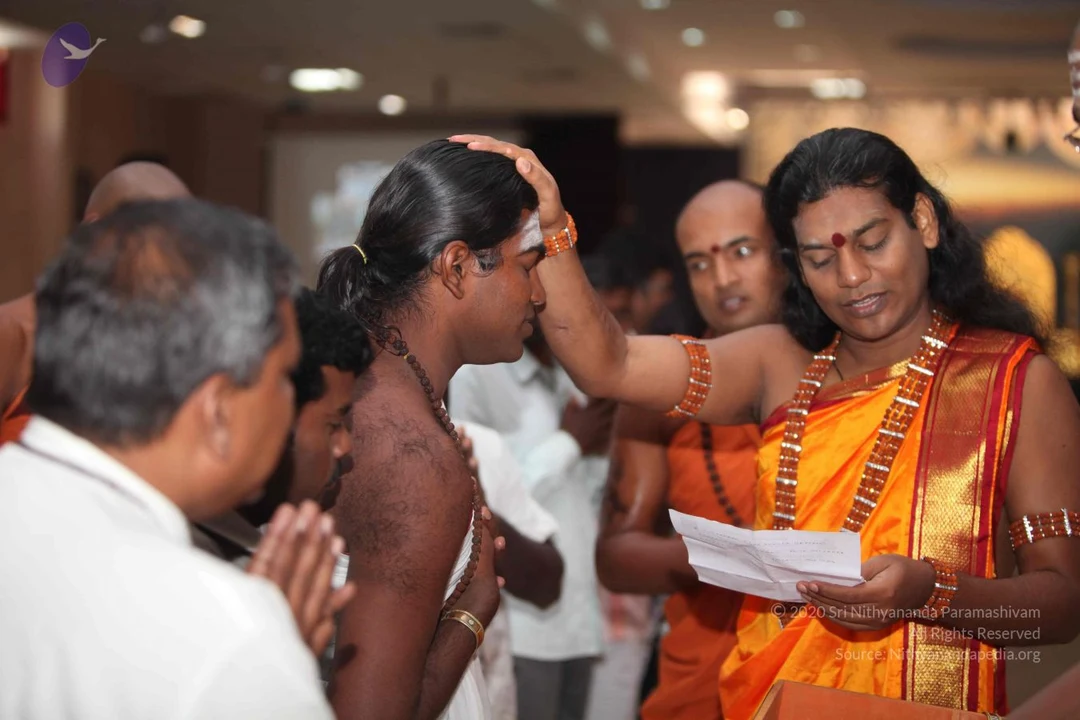
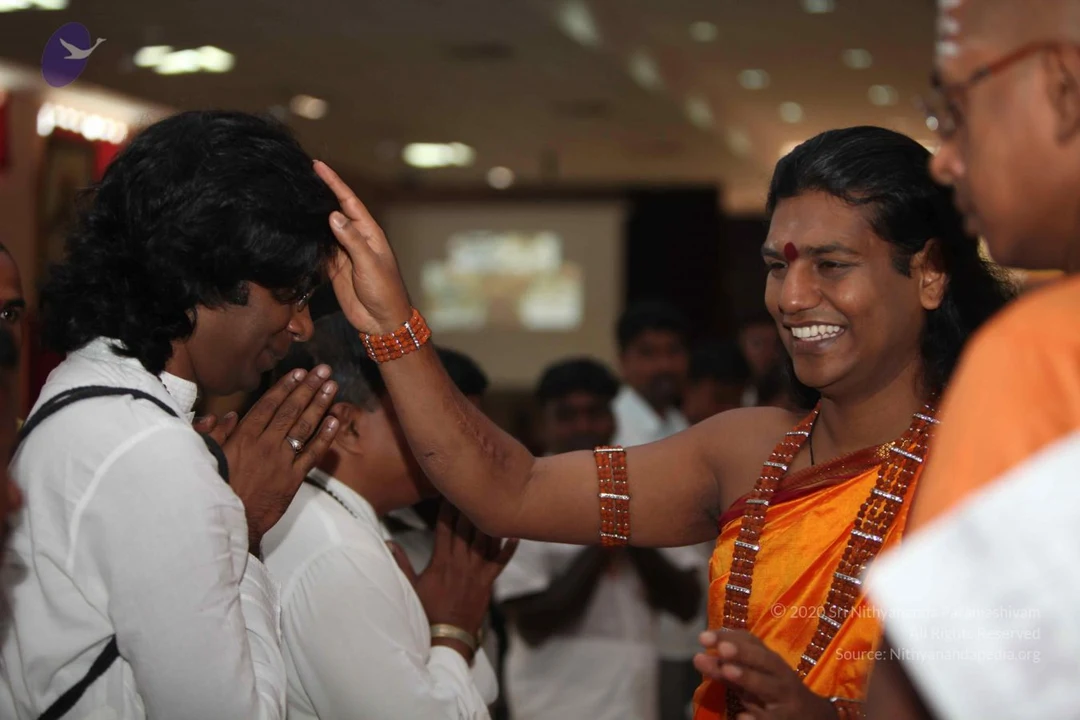
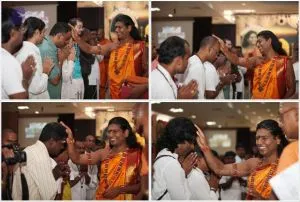
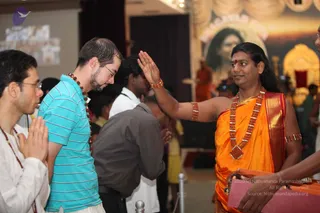
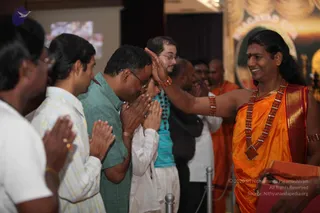
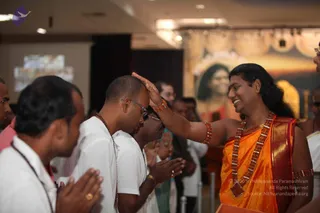
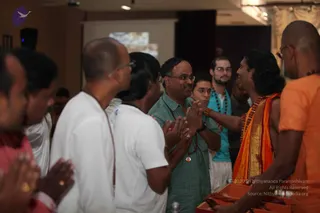
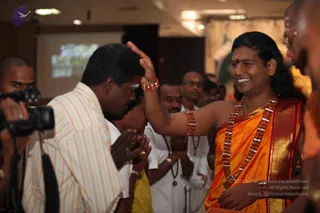
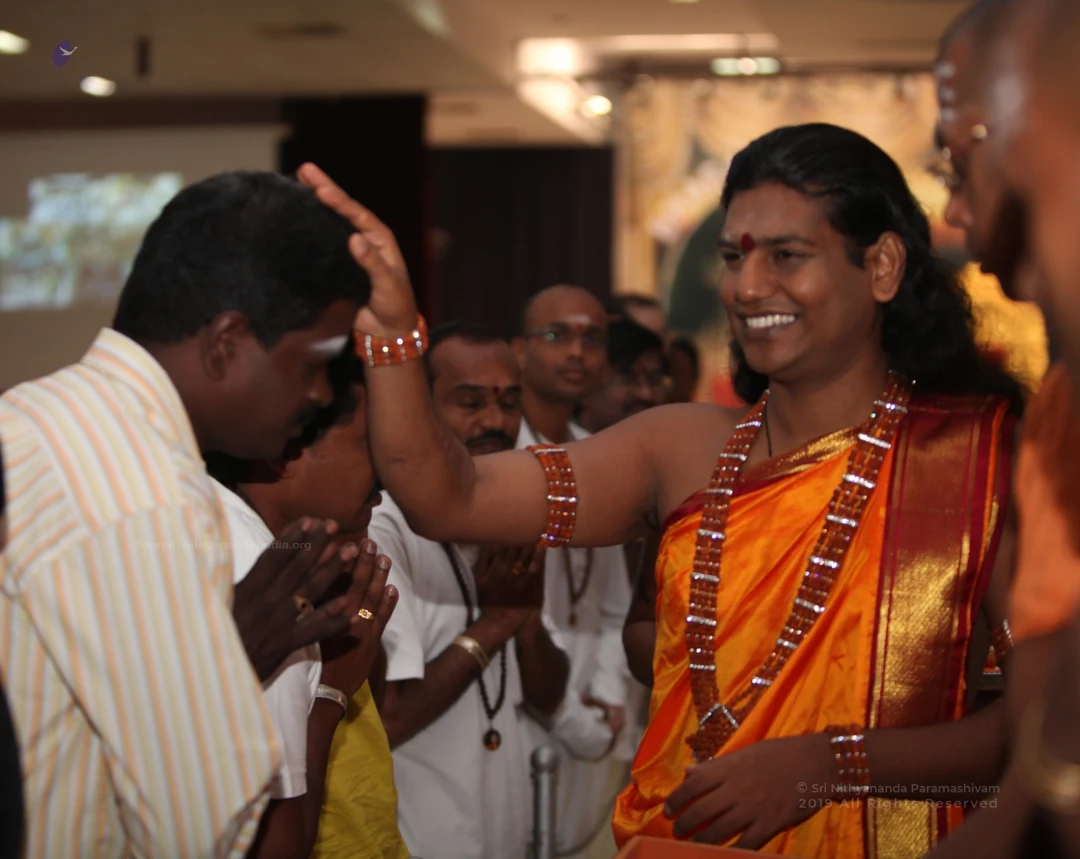
A four-panel collage of photographs showing devotees in an indoor hall. In each panel a woman in an orange-saffron sari stands and places her palm on the forehead of a person kneeling or bending before her, while others around stand with hands folded in anjali. Some onlookers wear white shirts and a few have their hands joined in prayer.A photograph of a devotional blessing at an indoor event. A man in an orange saffron garment with red-and-gold border and a long tied-back hairstyle, wearing layered rudraksha malas and a gold chest pendant, raises his palm to bless a bowed man in a teal striped polo shirt and rudraksha mala. To the left a man in white clothing presses his palms together in namaste. Behind them a banner shows a portrait and a golden throne backdrop, with saffron-robed figures near a stage. Swamiji (probable): the orange-robed man has long swept-back hair, saffron clothing and rudraksha malas, and is performing the blessing.A photograph of a satsang-style gathering in an indoor hall. A long-haired man in an orange saffron garment with a red shawl and a red-beaded rudraksha necklace stands at right with a smile, his right hand raised and palm pressed to the forehead of a devotee. Several devotees in front stand with palms joined in anjali, one bowing head-down in a green shirt, others in white and yellow shirts. Behind them, saffron-clad sannyasis and a white-clad person stand near a stage backdrop with gold decorations and a portrait banner. Other people show devotion through folded hands.A photograph of a long-haired man in an orange-and-gold silk sash with rudraksha mala necklaces and beaded bracelets placing his right hand on the forehead of a devotee with glasses and a shaved head. The devotee, dressed in white, has hands folded in prayer. Other devotees in white stand with palms pressed together in namaskar, and a rudraksha mala hangs from one man's neck. A large backdrop portrait shows a smiling woman with flowers and warm orange light. The man in orange has long hair and distinctive ceremonial adornments, a person by appearance. Roughly six to ten people are visible.Indoor photo of a devotional gathering in a hall with a projector screen and dark curtains in the background. At right, a figure with long swept-back dark hair, rudraksha beads, ornate gold necklaces and an orange-and-gold shawl stands facing a devotee and reaches out toward him; a bald man in an orange robe stands beside a tray of red and orange offerings. Several men at left and centre have hands folded in namaste or palms pressed together, including a man in a green shirt with glasses and a rudraksha mala, and men in white dhotis and shirts. A bearded man in a blue shirt with a mala watches from behind.A photograph of a long-haired man in an orange-gold silk shawl and rudraksha malas smiling as he places his right hand on the forehead of a devotee bending forward with hands folded in namaskar. The devotee wears a striped yellow-and-white shirt. Around them stand other devotees in white clothes and beads, one holding a camera at left, and a projection screen and warm backdrop are visible behind. a person, a bindi on the forehead, in an orange silk shawl with multiple rudraksha malas, giving blessing to the devotee in an indoor satsang setting.

Temple
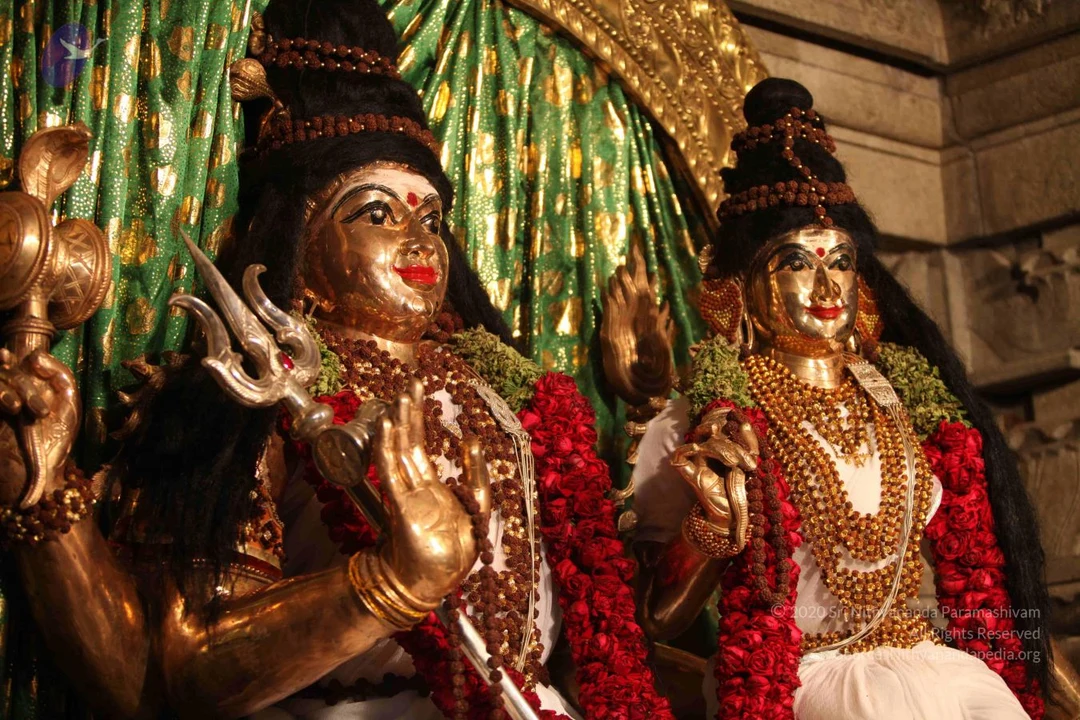
1 photoSource gallery
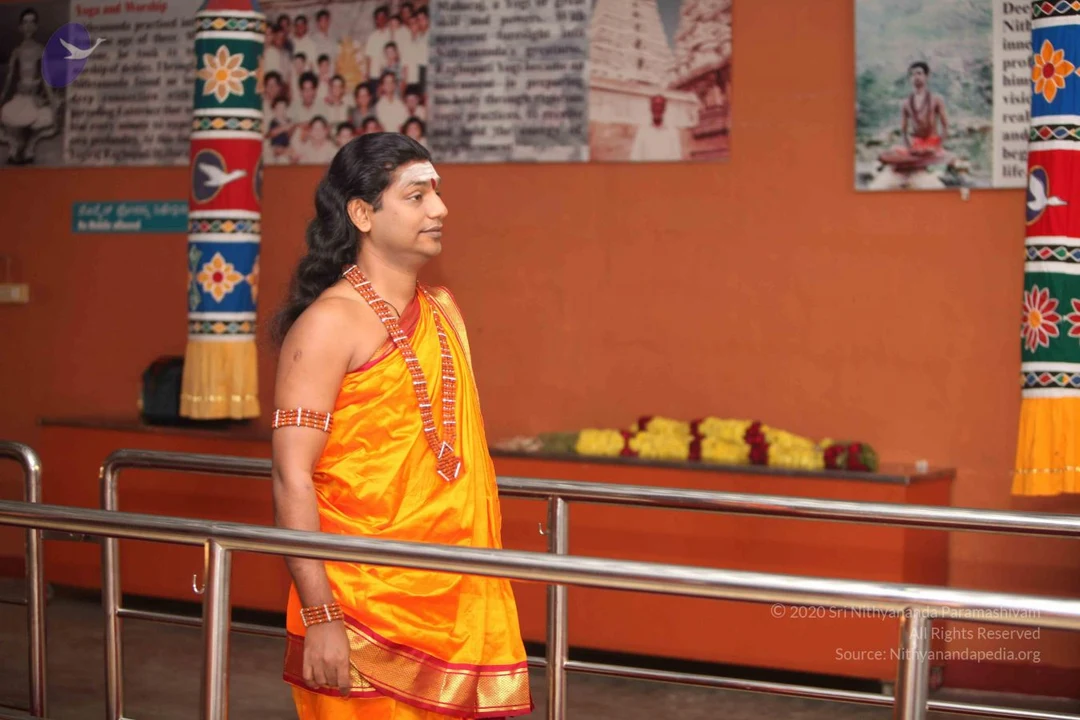
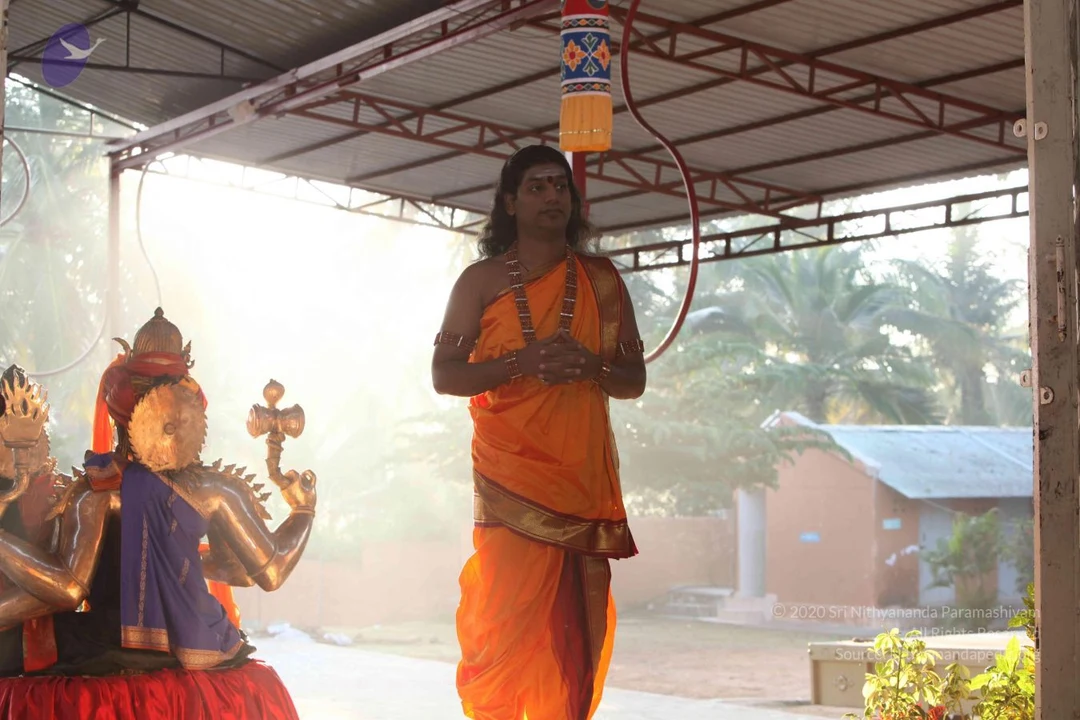
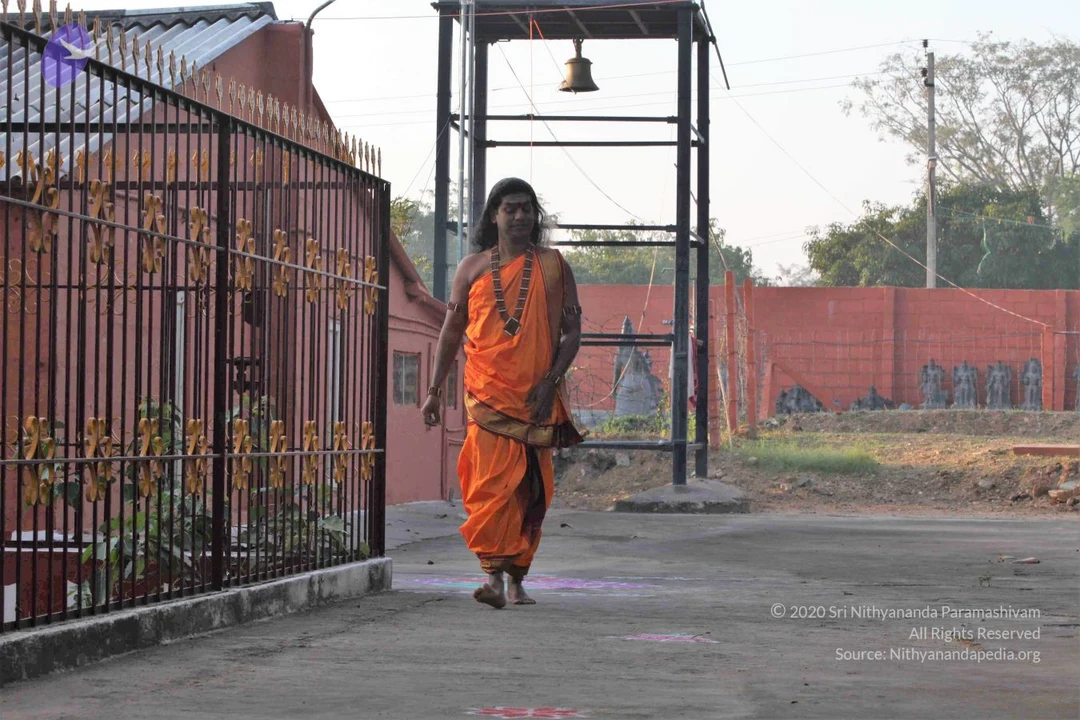
A barefoot man in saffron-orange sannyasi robes walks across a concrete courtyard toward the left. He wears a thick rudraksha mala across his chest, a vertical tilak on his forehead, and a saffron shawl draped over one shoulder, with long dark hair swept back. Behind him stands a black metal bell frame with a hanging bell, beside a red-painted wall with black-painted figures and a gate with decorative gold finials on the left. Faint pink and purple floor markings lie on the ground.