Skip to content
Monday

24 October 2011

THE SUPREME PONTIFF OF HINDUISM JGM HDH BHAGAVAN SRI NITHYANANDA PARAMASHIVAM

Dated photos
357
Source pages
1
Media
2
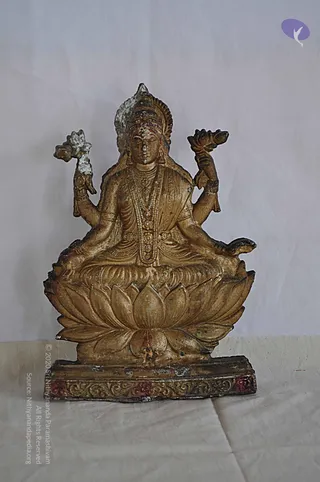
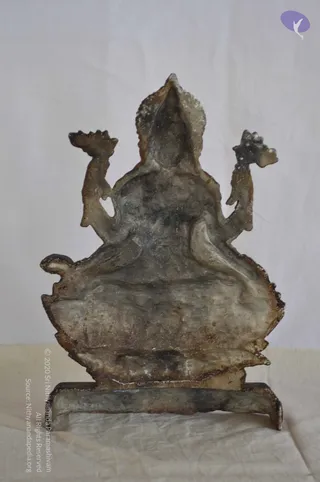
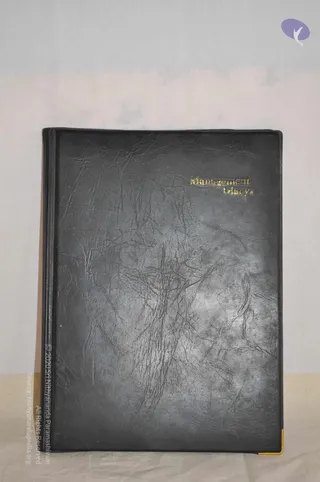
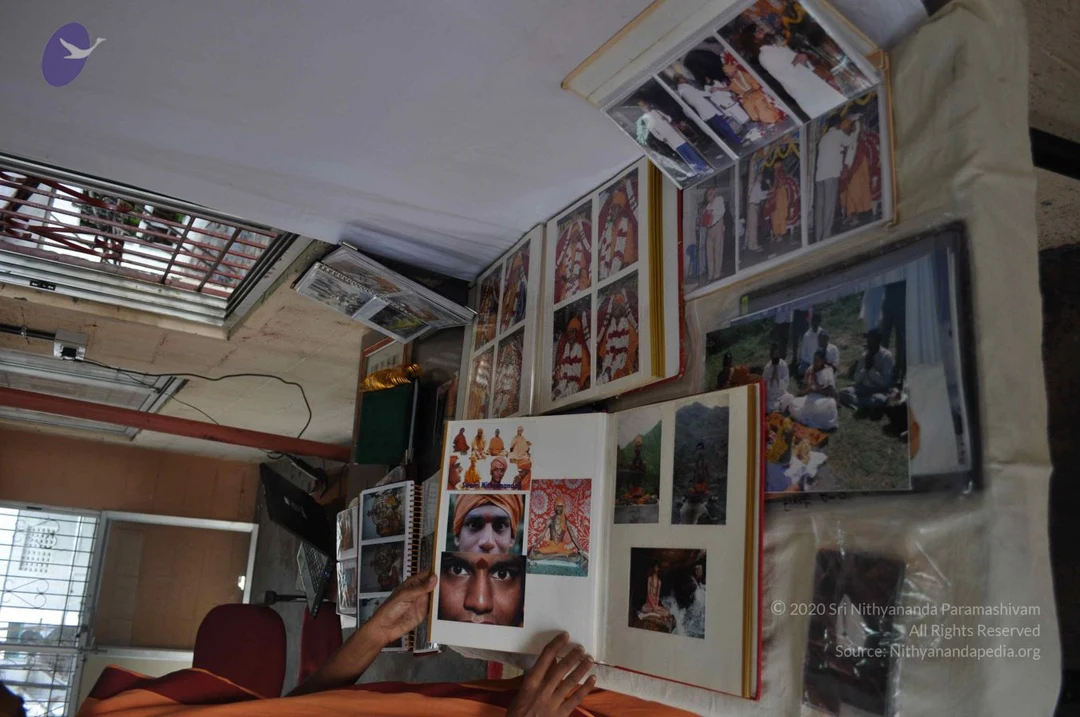
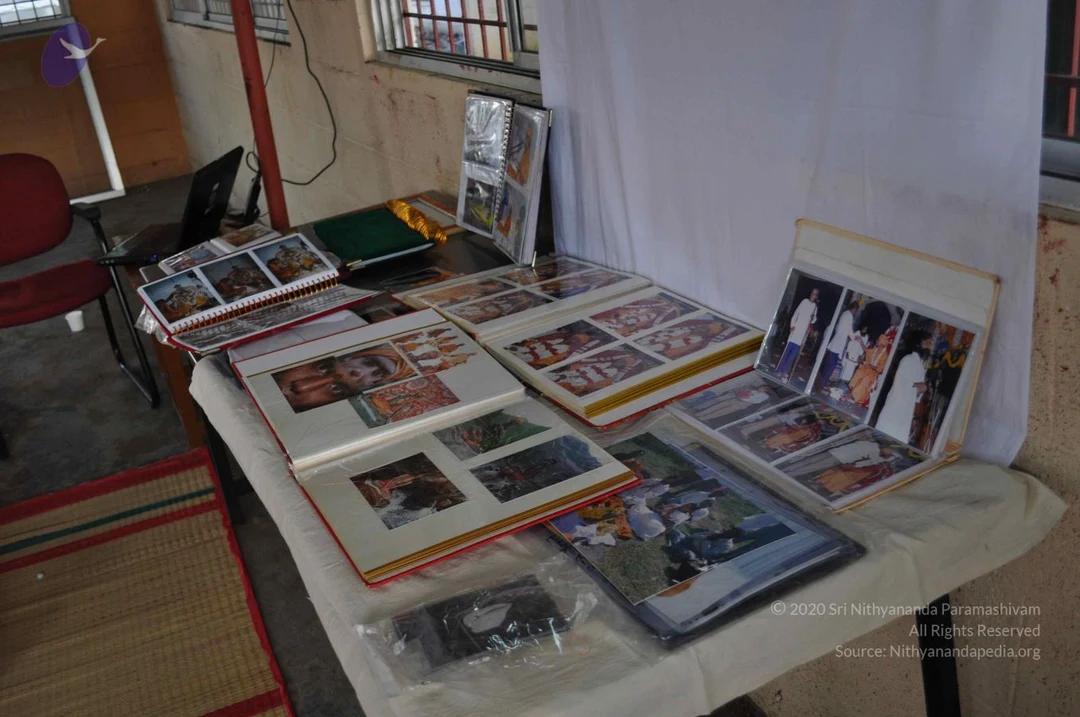
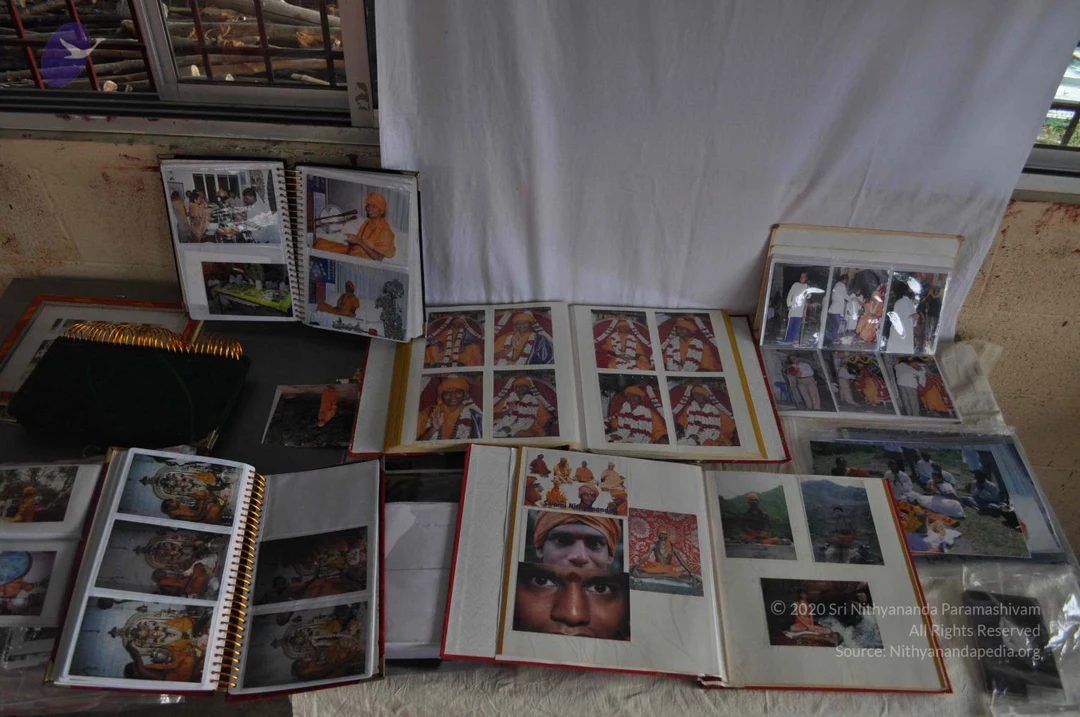
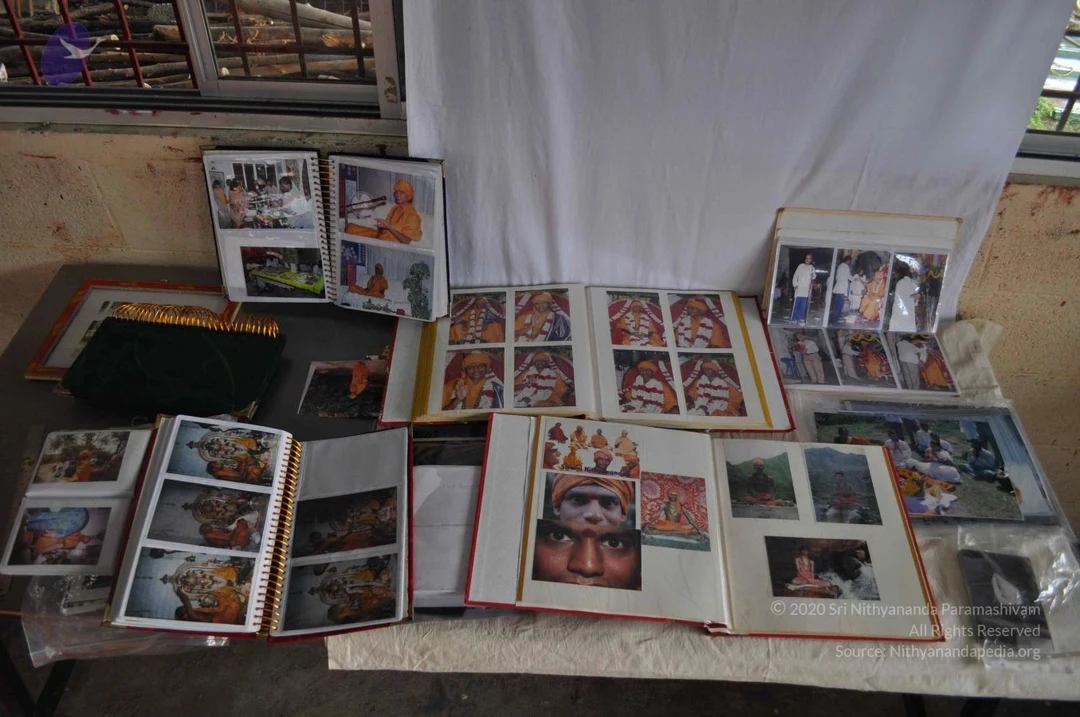
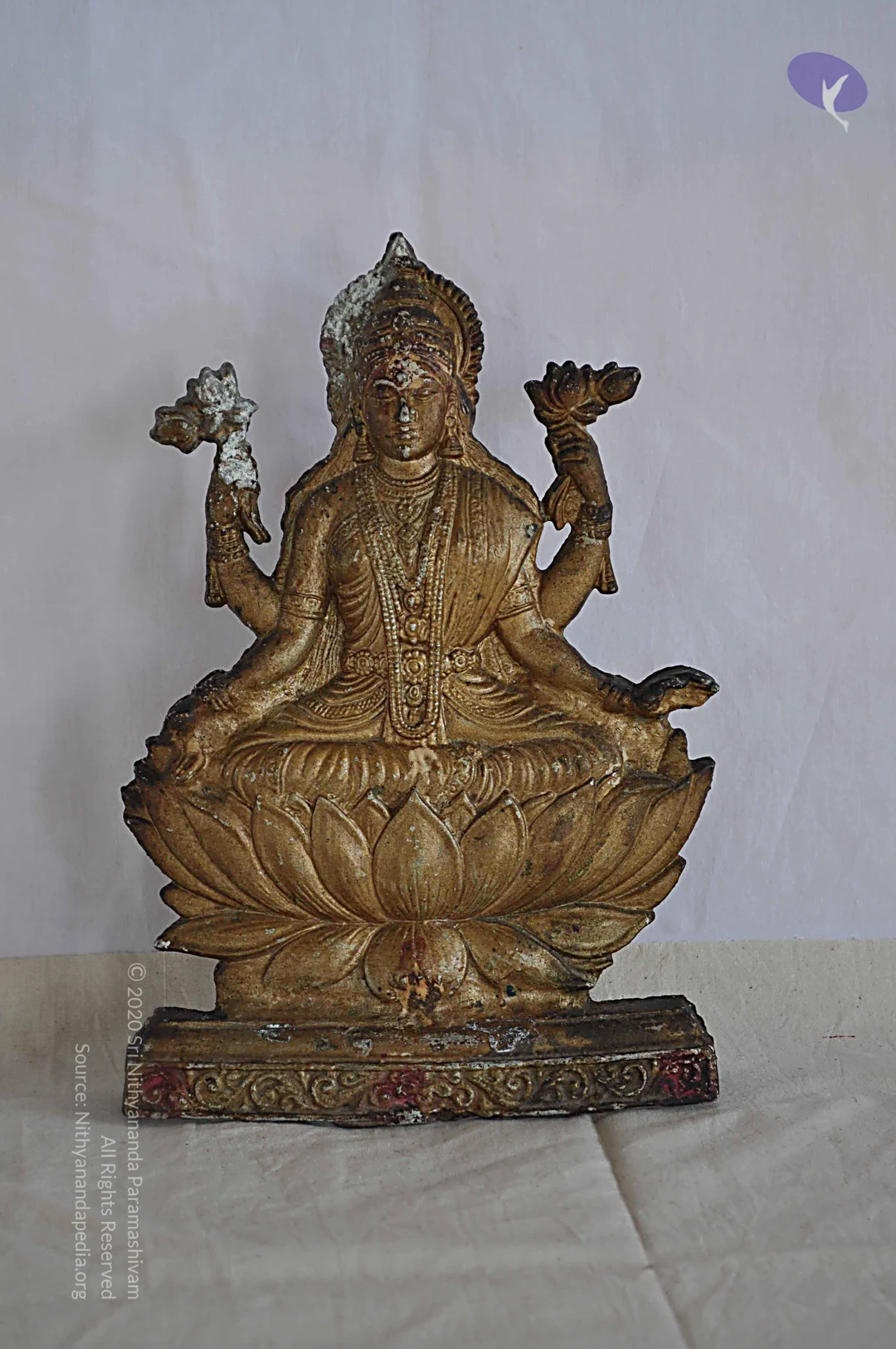
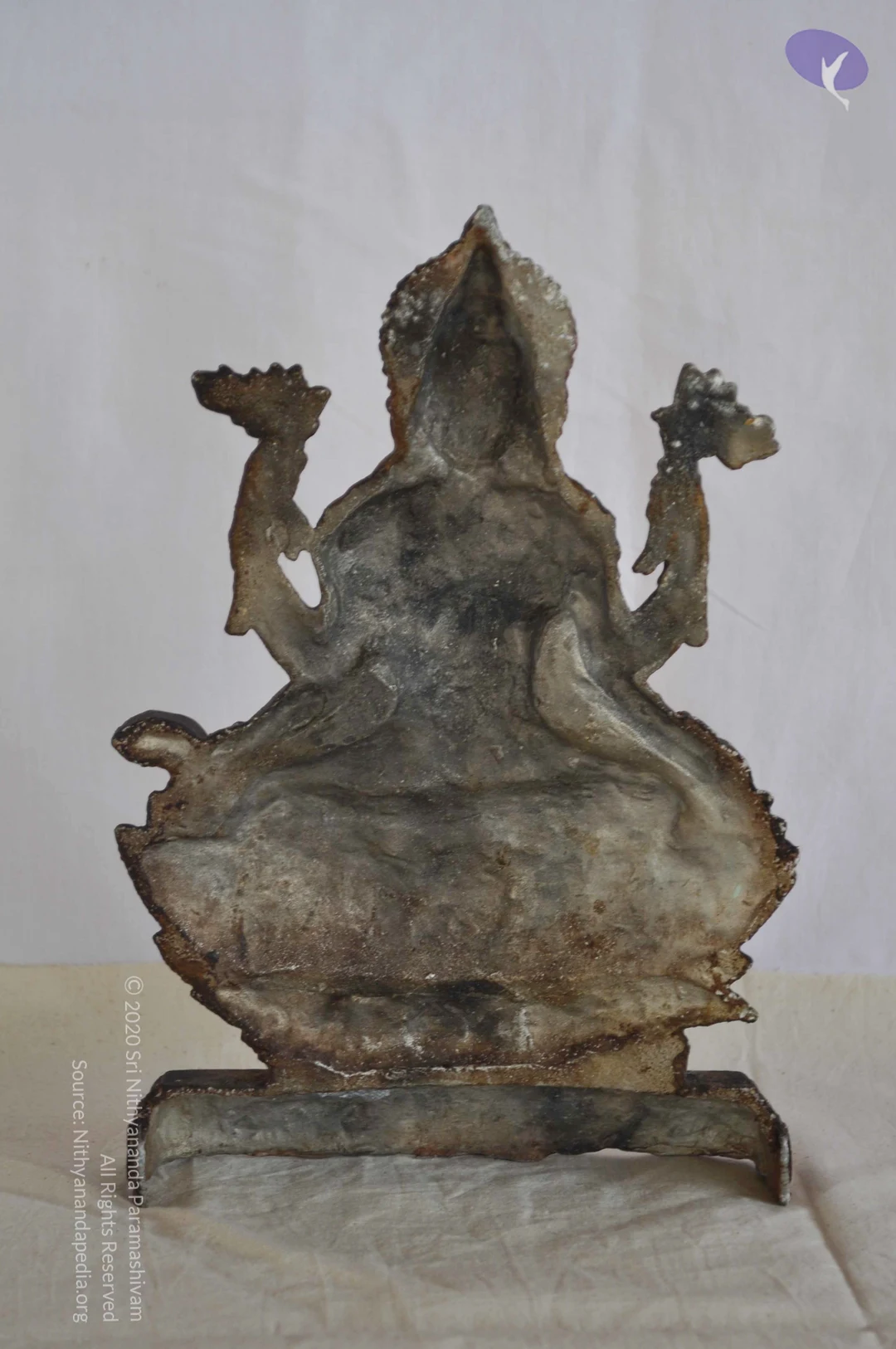
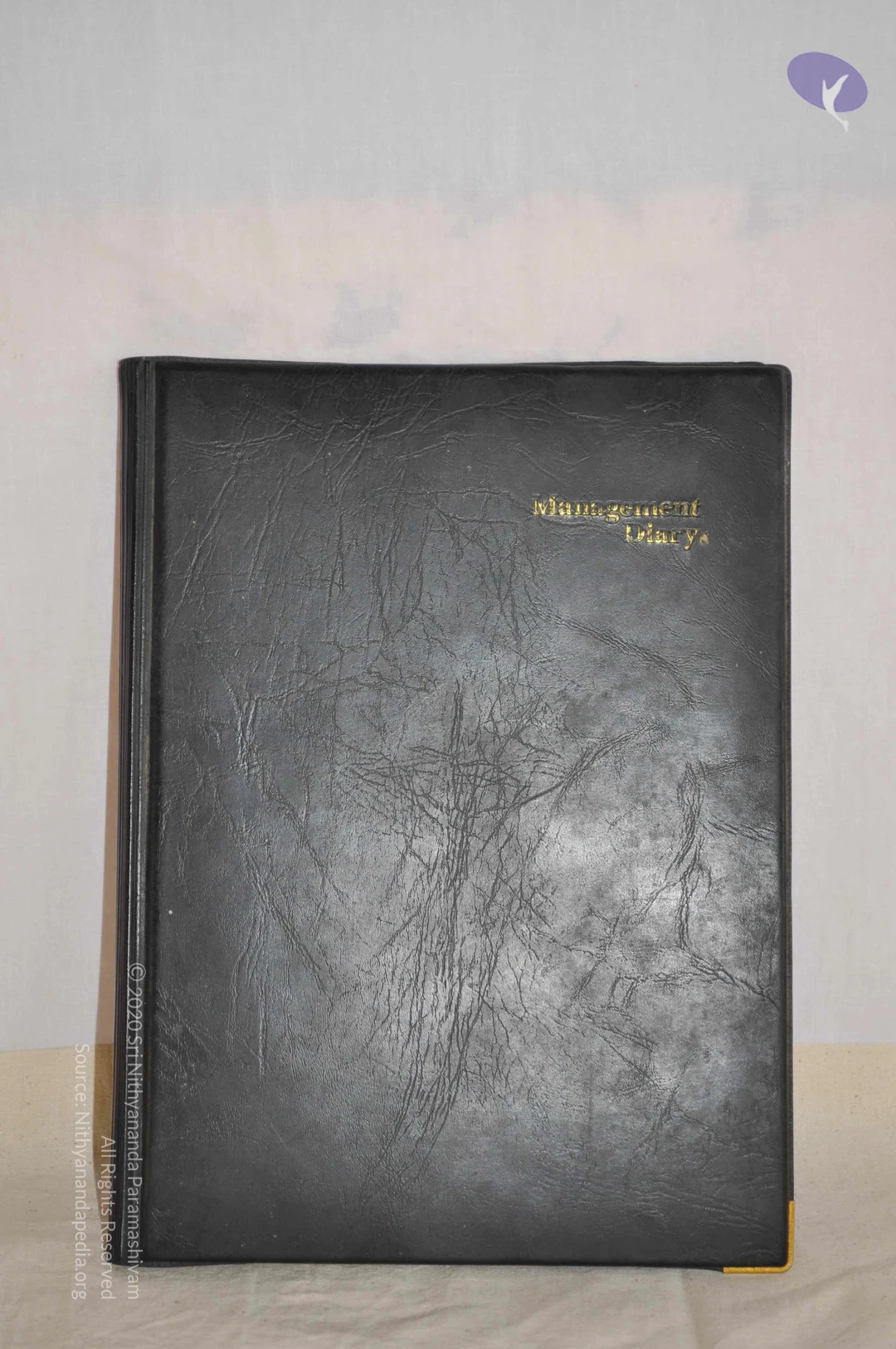
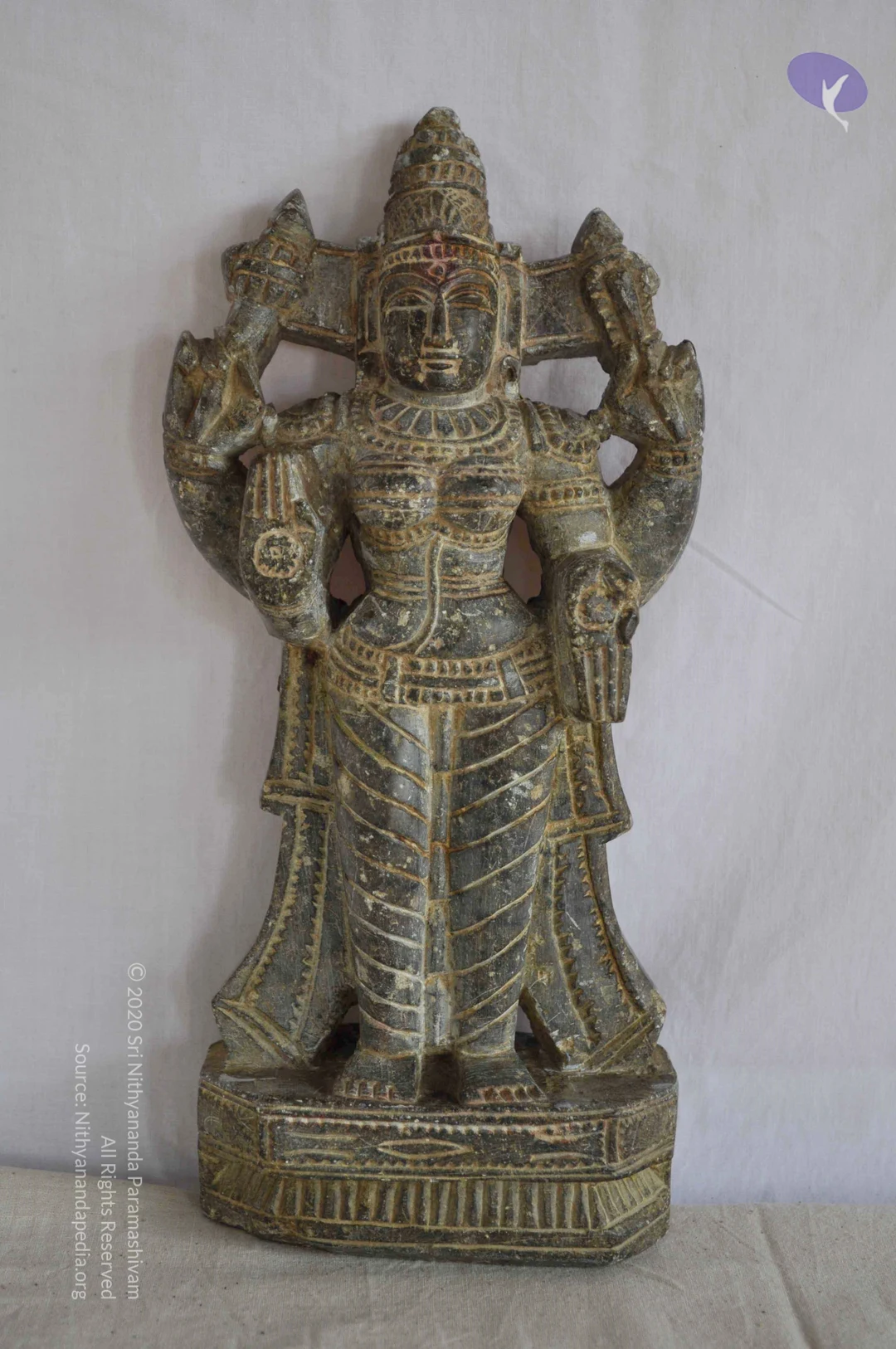
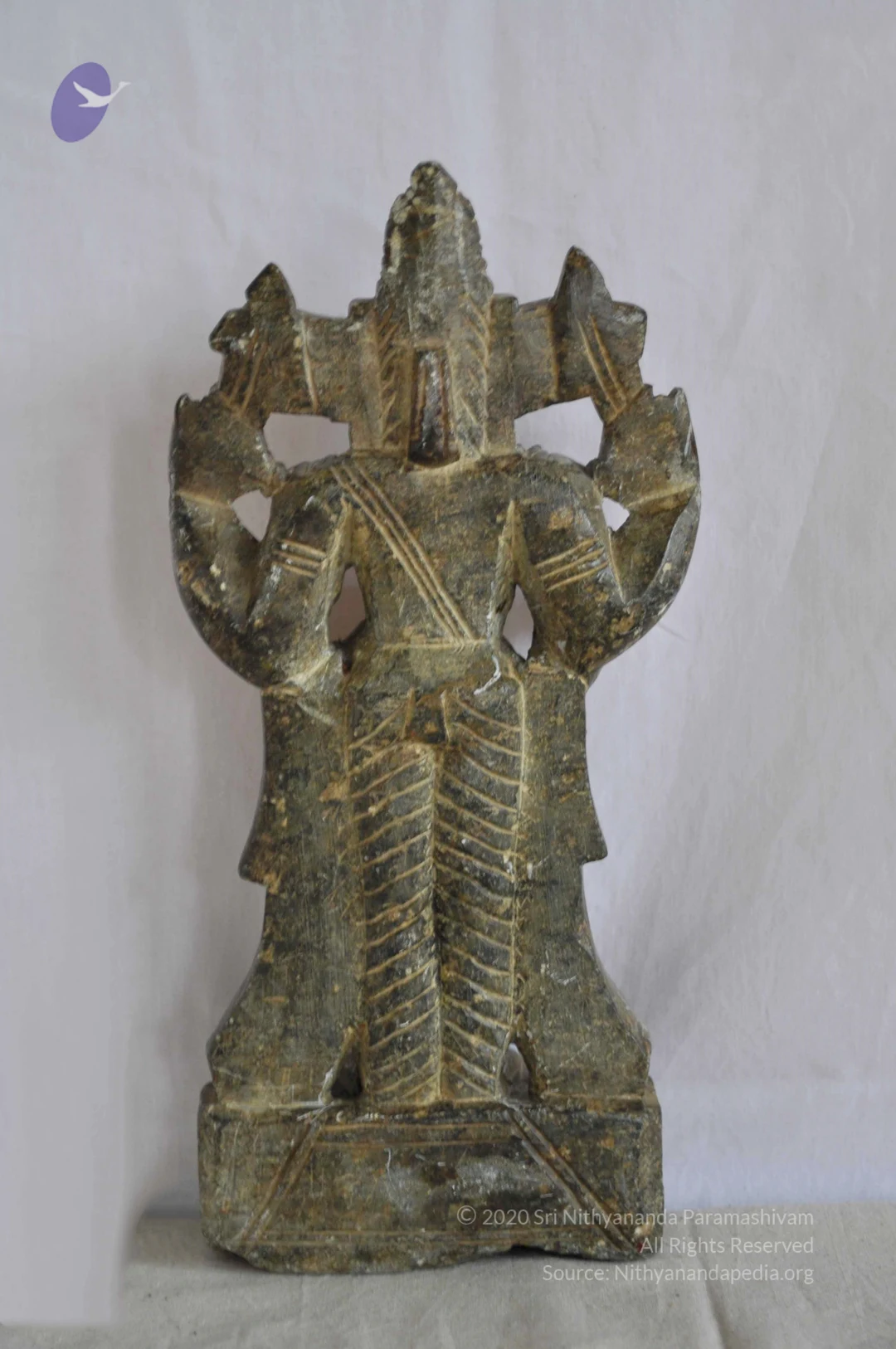
A photograph of a small gold-coloured metal murti of a four-armed seated deity on a lotus pedestal, set against a plain light background on a cream cloth. The figure wears a tall crown, layered beaded necklaces and a draped garment, with lotus blossoms held in the upper hands and the lower hands in gesture. The base has a scrolled decorative border with traces of red paint. No people are visible.A photograph of a weathered, corroded metal deity murti seen from behind against a plain grey backdrop on a cream cloth. The seated figure has a pointed, flame-like halo or crown, and raised arms with stylised hand forms, resting on a lotus-like pedestal and a flat rectangular base. The surface is pitted and rust-brown in patches with grey tarnish. No physical people are visible.A photograph of a black leather-textured management diary standing upright on a cream cloth against a pale grey backdrop. The cover has gold embossed lettering reading "Management Diary" in the upper right, and a gold-edged page block shows at the lower right corner. No people are visible. A faint purple logo appears in the upper right corner of the image.

October 24 2011

Original wiki page
Contents

Title:

THE SUPREME PONTIFF OF HINDUISM JGM HDH BHAGAVAN SRI NITHYANANDA PARAMASHIVAM

Description

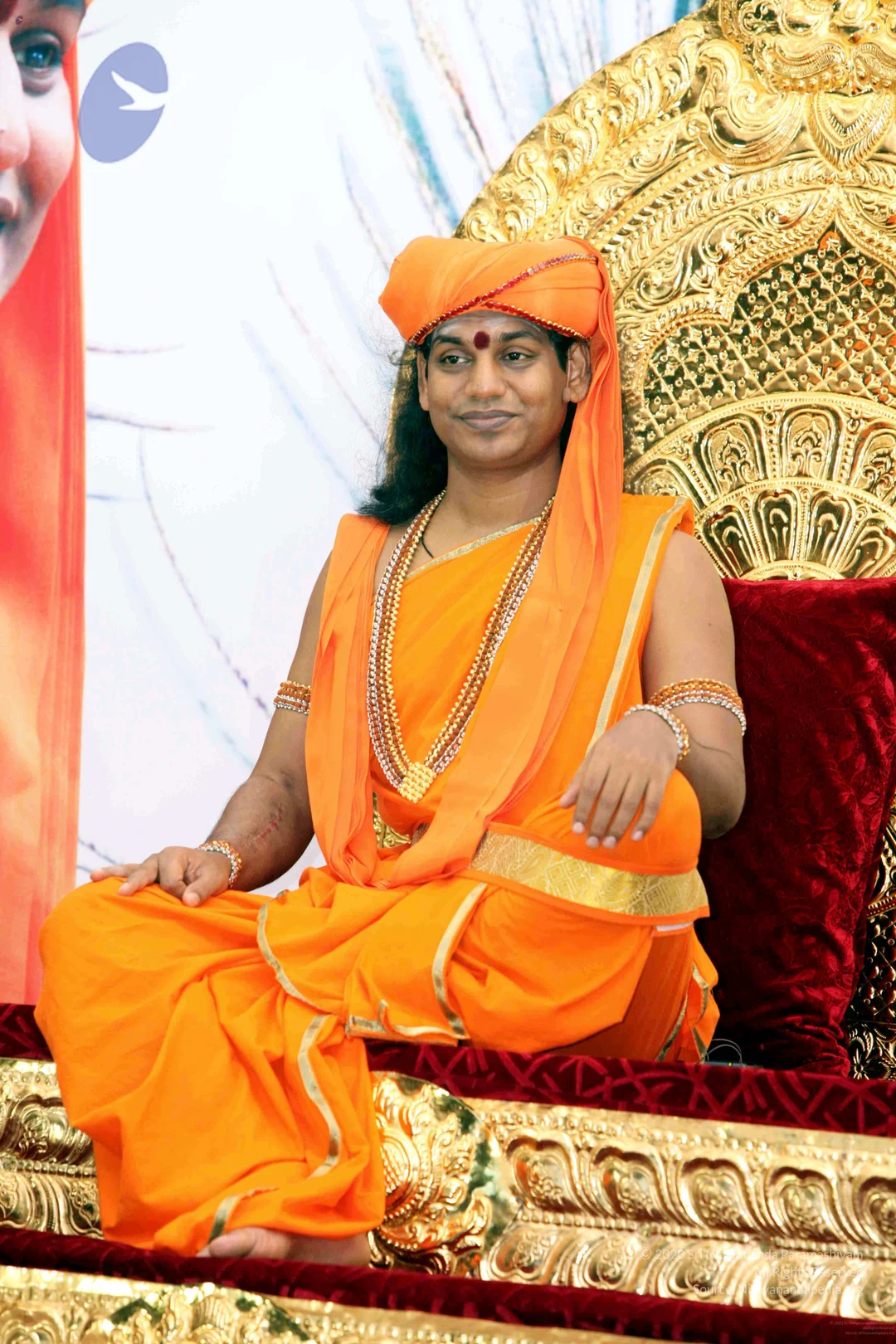
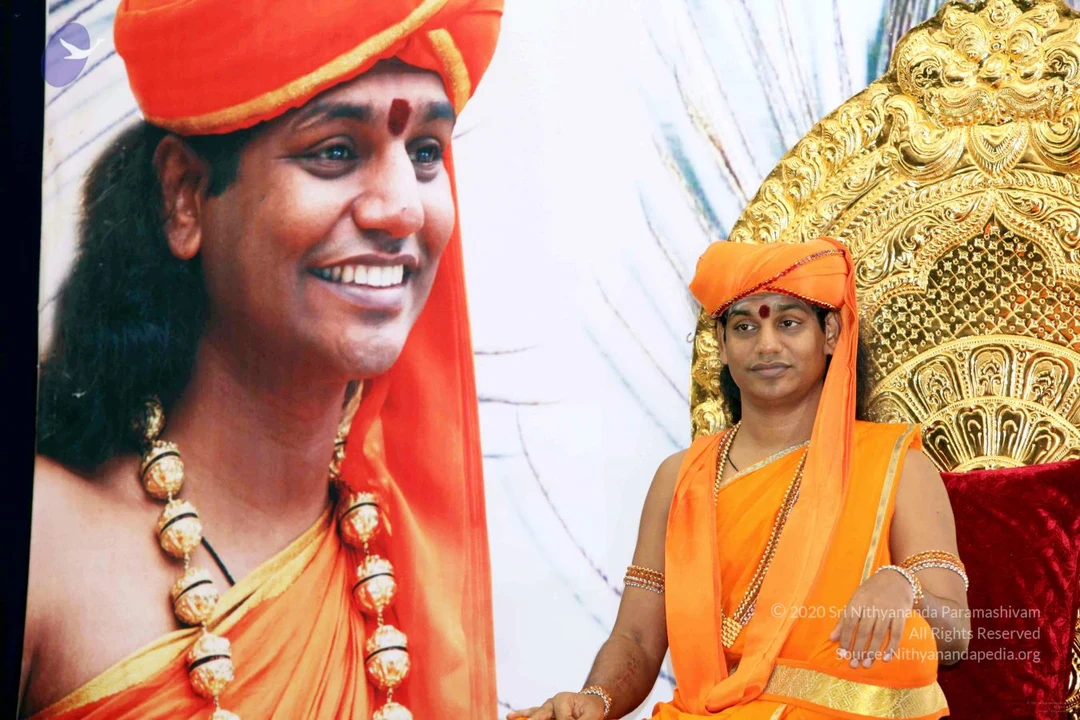
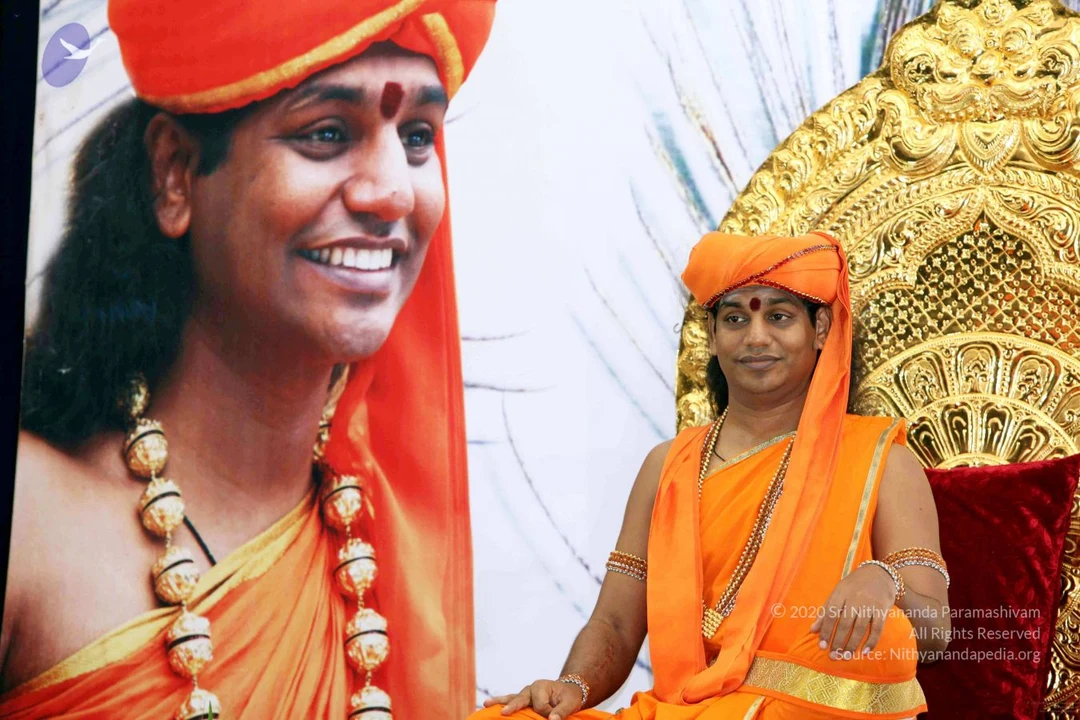
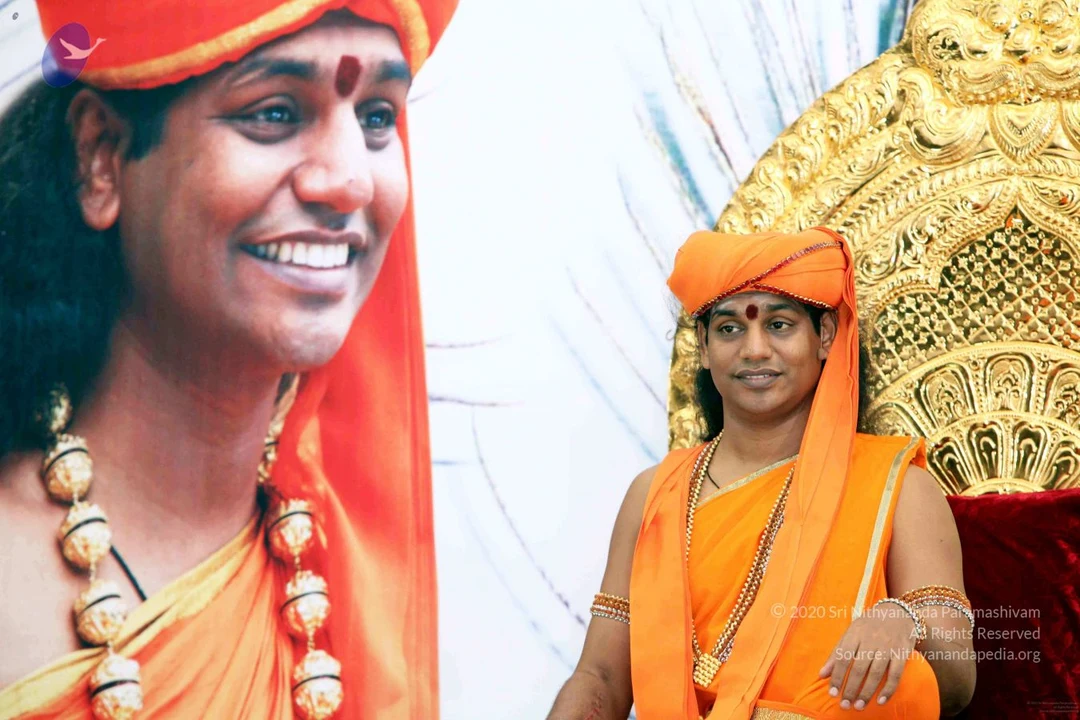
Bhagavad Gita (Song of God) is a timeless treatise on the essence of living enlightenment. The Gita was imparted by the enlightened Hindu incarnation Sri Krishna to the warrior-prince Arjuna over 5000 years ago. Amazingly, the spiritual wisdom and life solutions offered in the Gita are so universal and current that it is even today used as a personal transformation guide in universities and management schools worldwide..

In today's talk on Bhagavad Gita, Chap 2, 51st Verse, Paramahamsa Nithyananda unveils the compassionate pinnacle of Sri Krishna's wisdom. All previous teachings direct us to this: the shackles of perpetual birth and death. Many of us do not understand why we should work for freedom from the repeating wheel. Paramahamsa describes the clarity of spiritual liberation by comparing it to life after leaving a tiny village for wider horizons. Our perspective transforms; we develop the awareness that small items we looked to for well-being in the village, no longer have any importance for us. Just so, when we evolve to the experience of our immortality, we can see how small and unimportant our temporary lives truly are.

Link to Video:

VideoAudio

Photos

Photos Of The Day:

Visit to temple
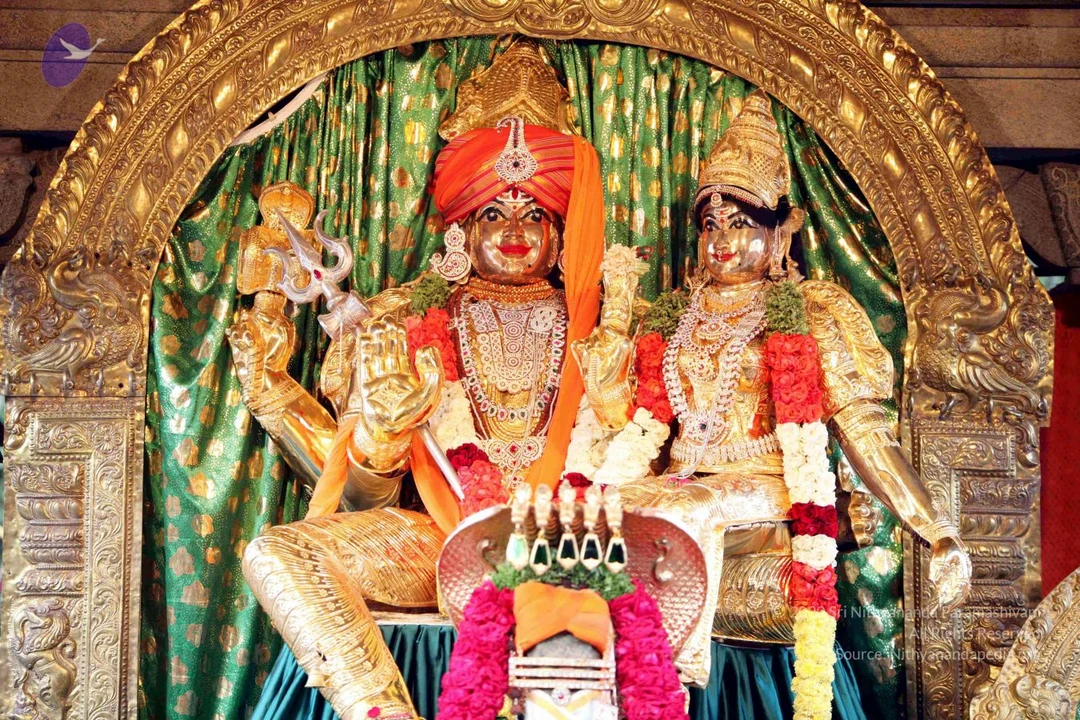
Nithya satsang
Tamil Satsang

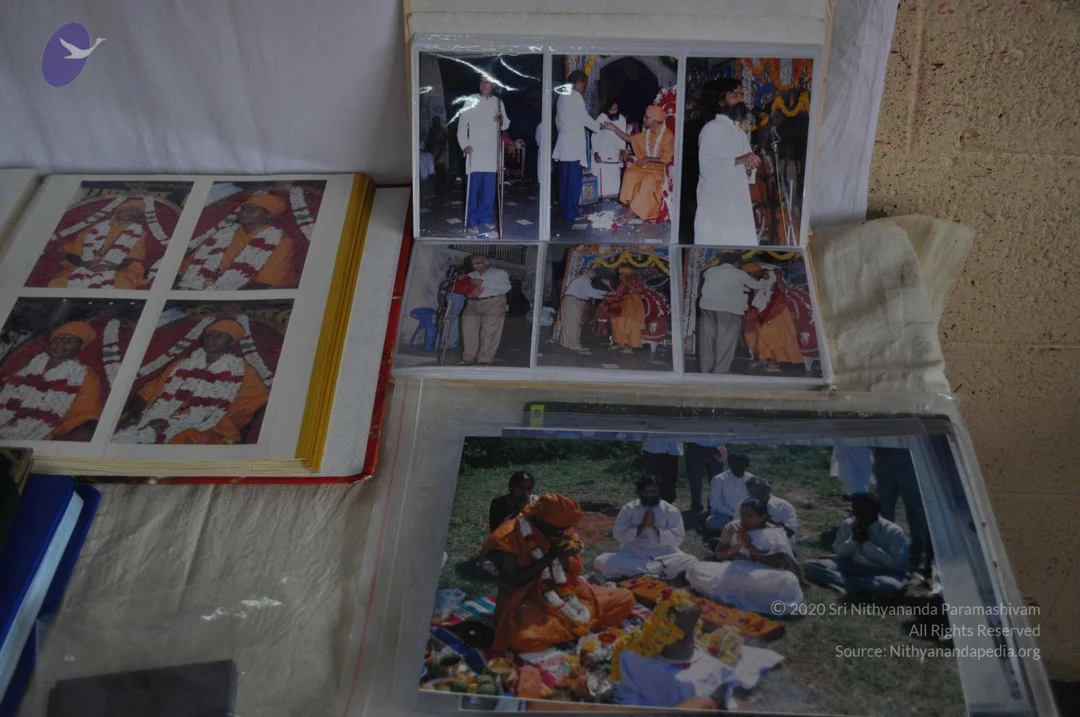
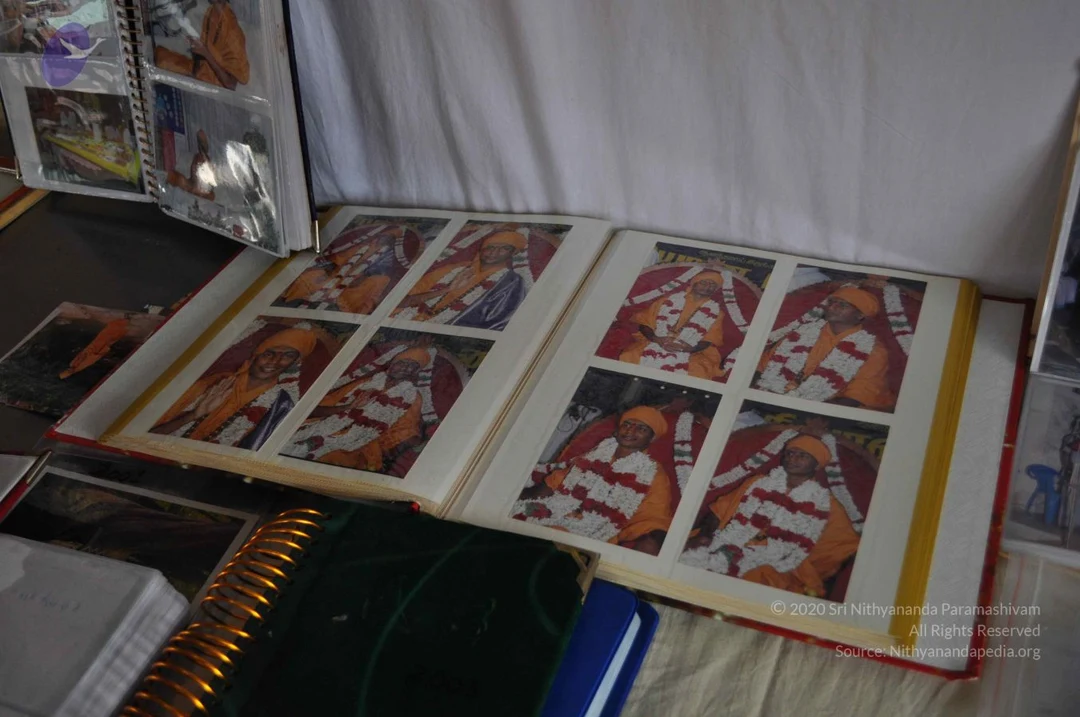
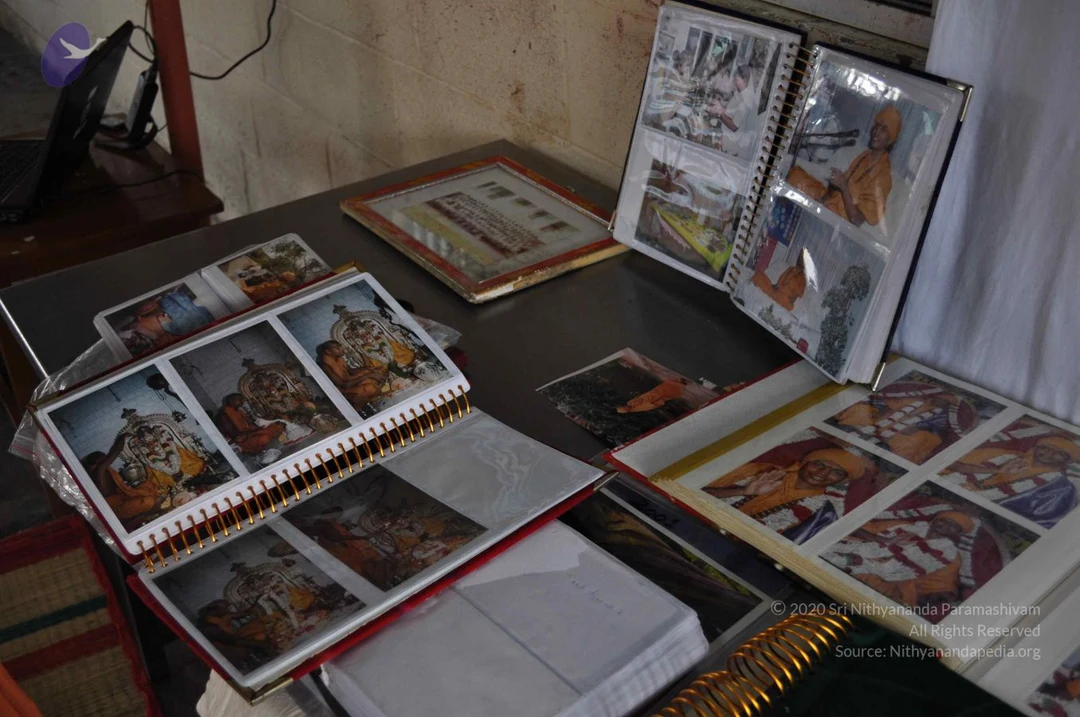
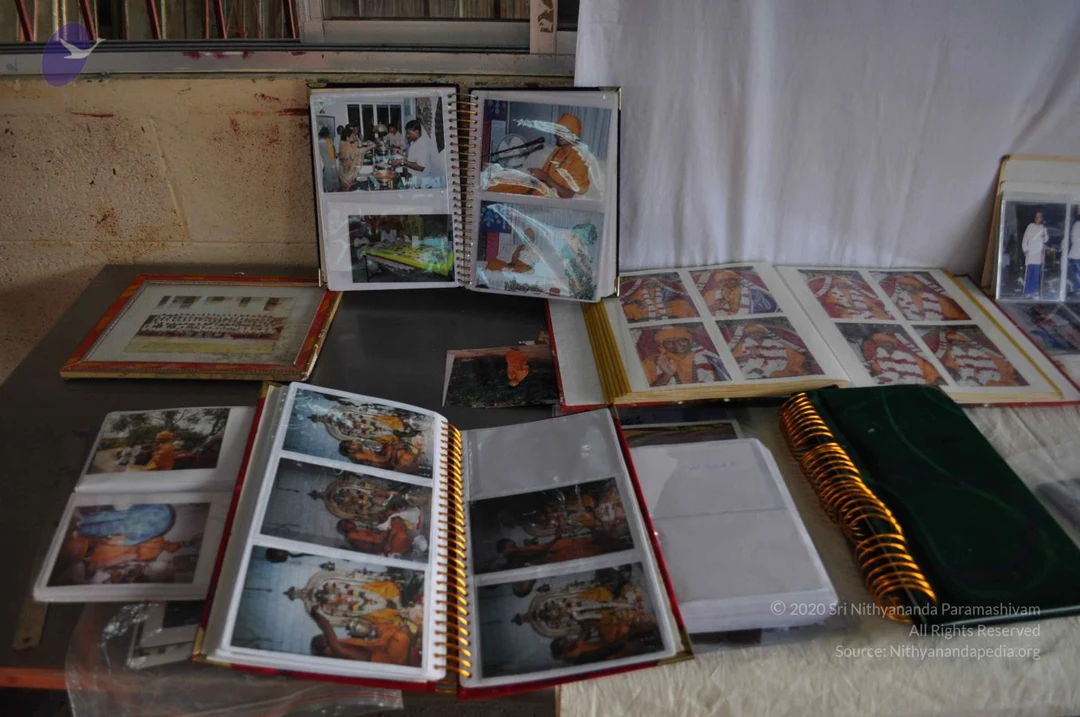
Archive pics_Chitrakala parishath

1-Archive-Pics-Chitrakala-Parishath

Photos from this day

View all 357 photos

Photos

15 photosSource gallery
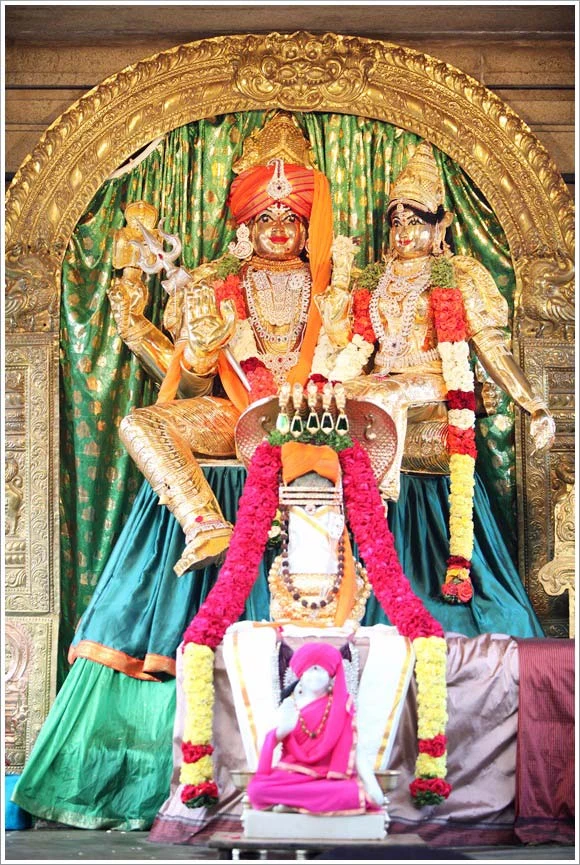
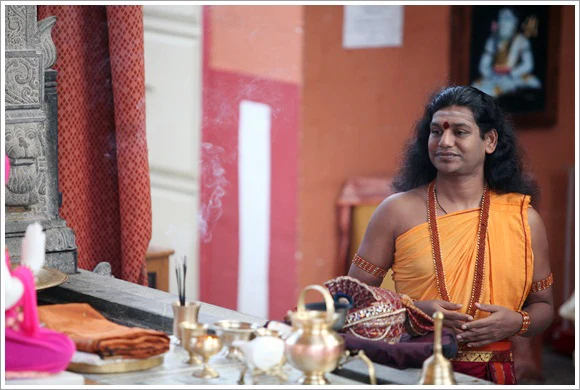
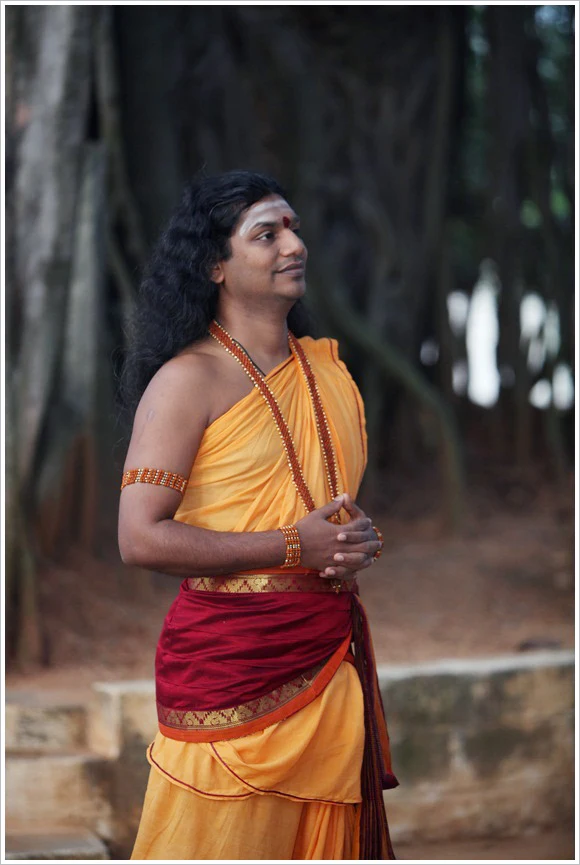
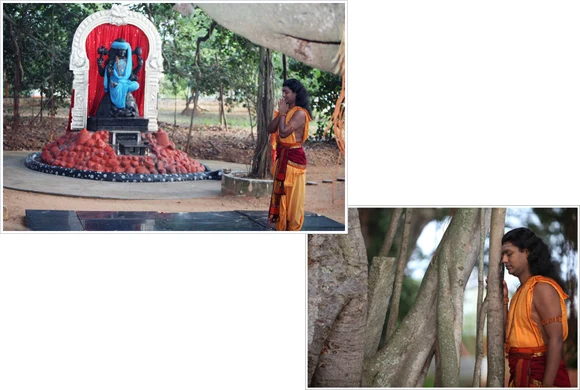
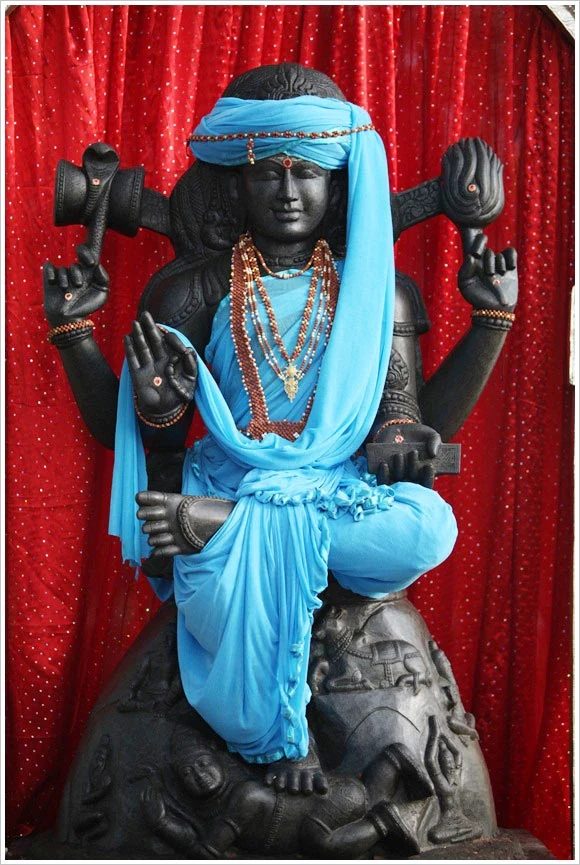
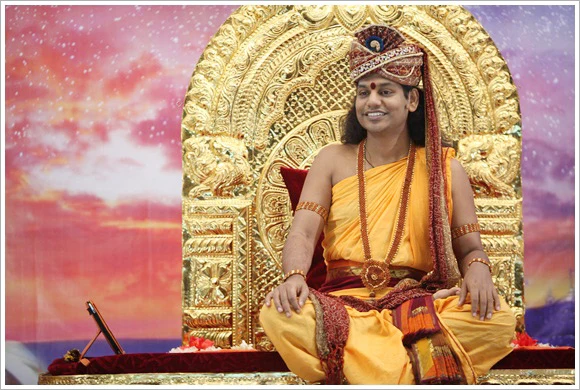
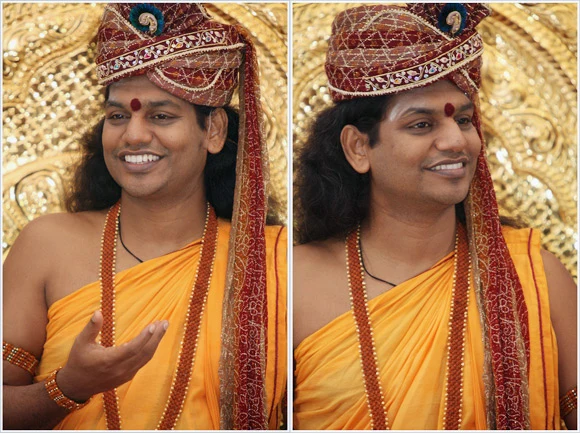
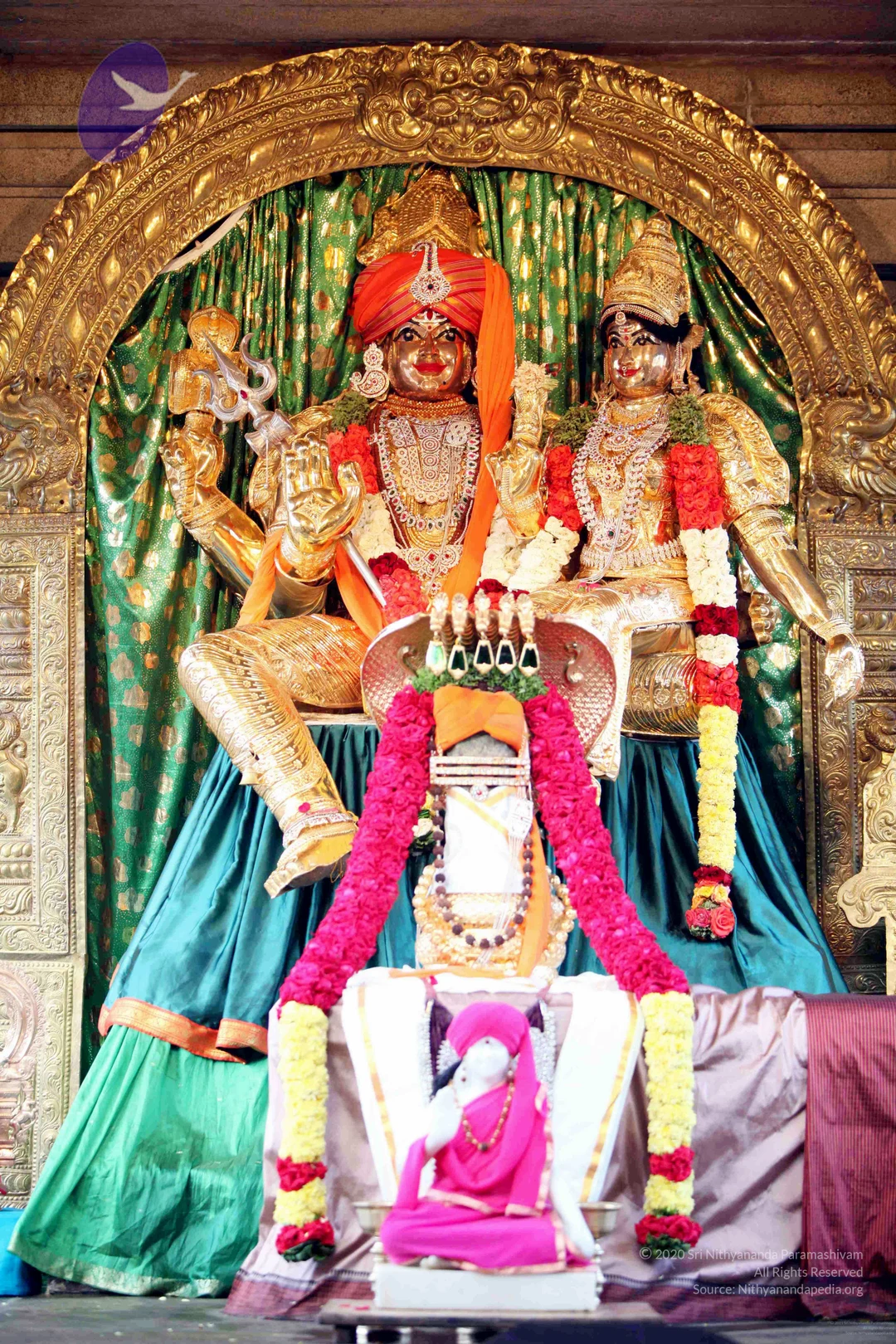
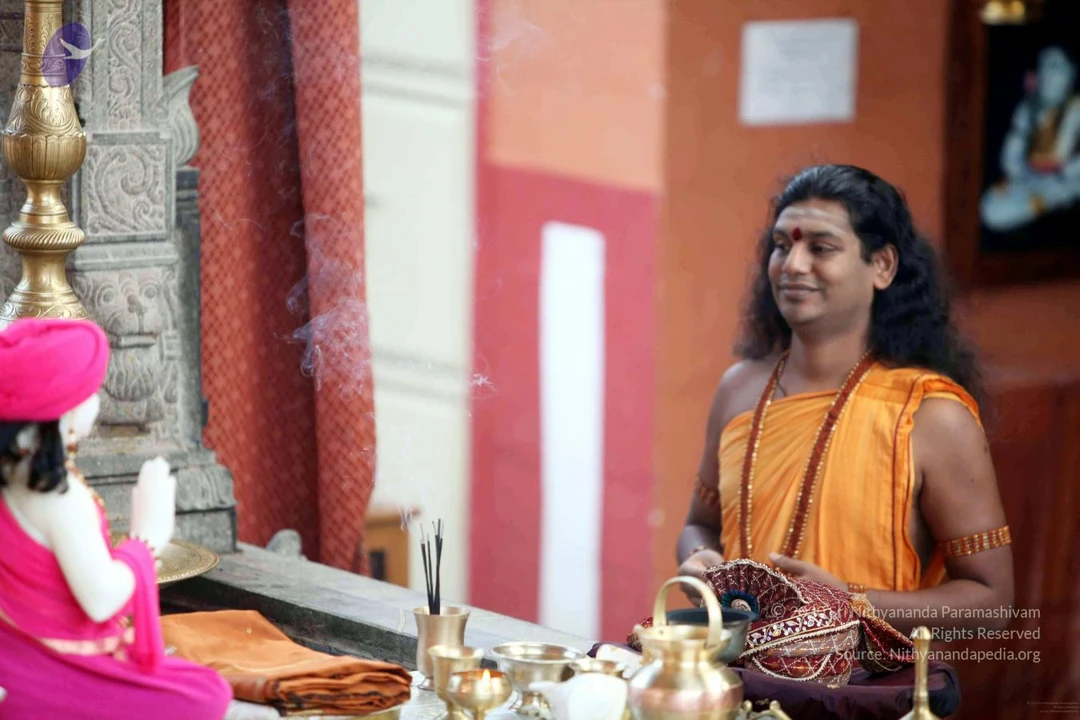
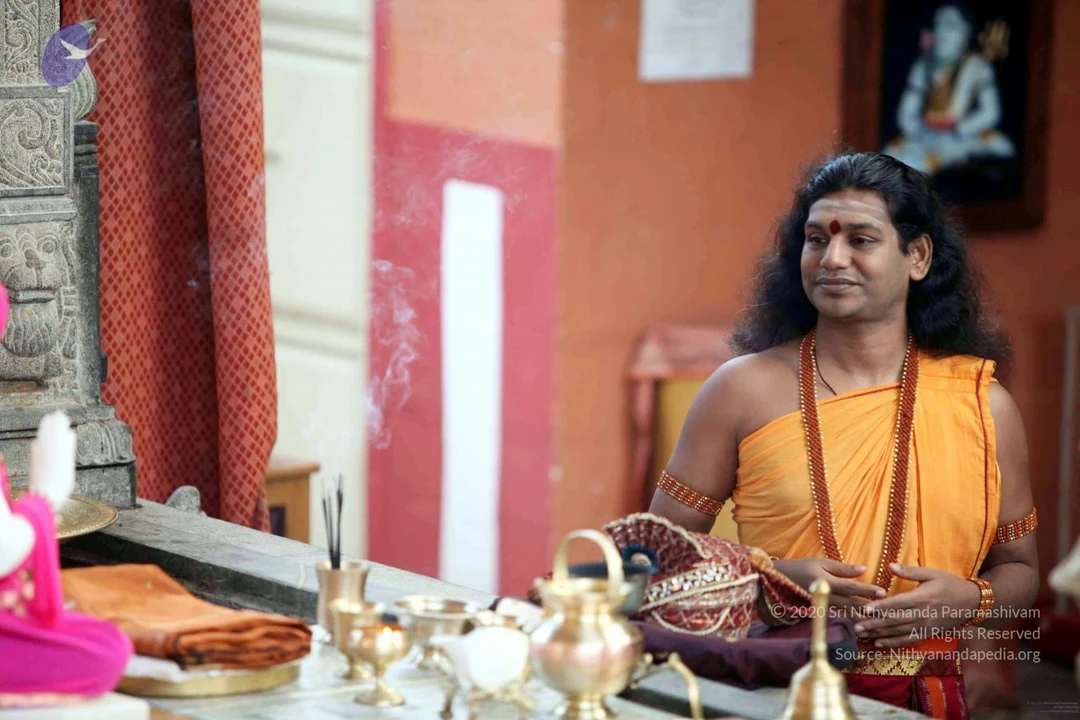
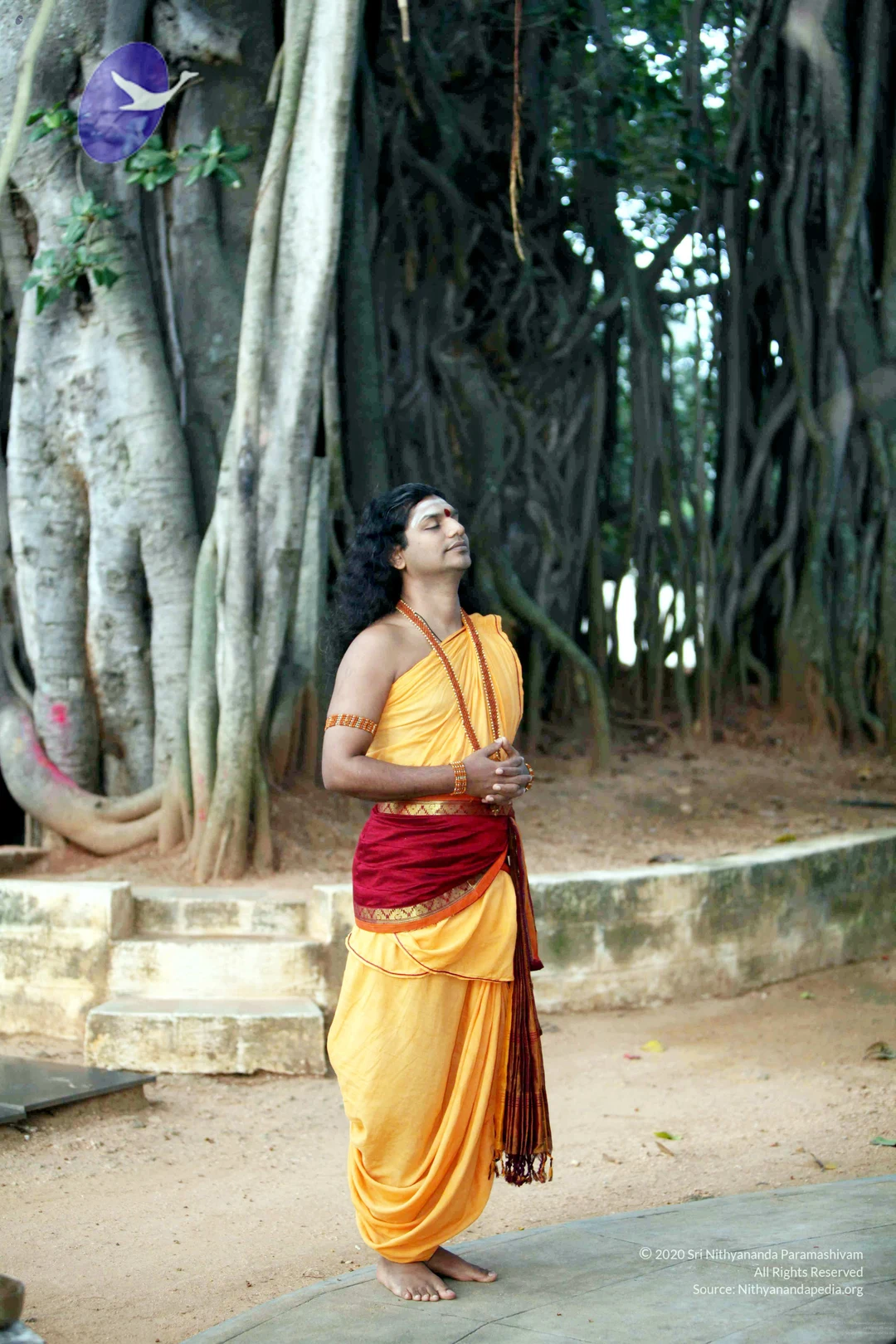
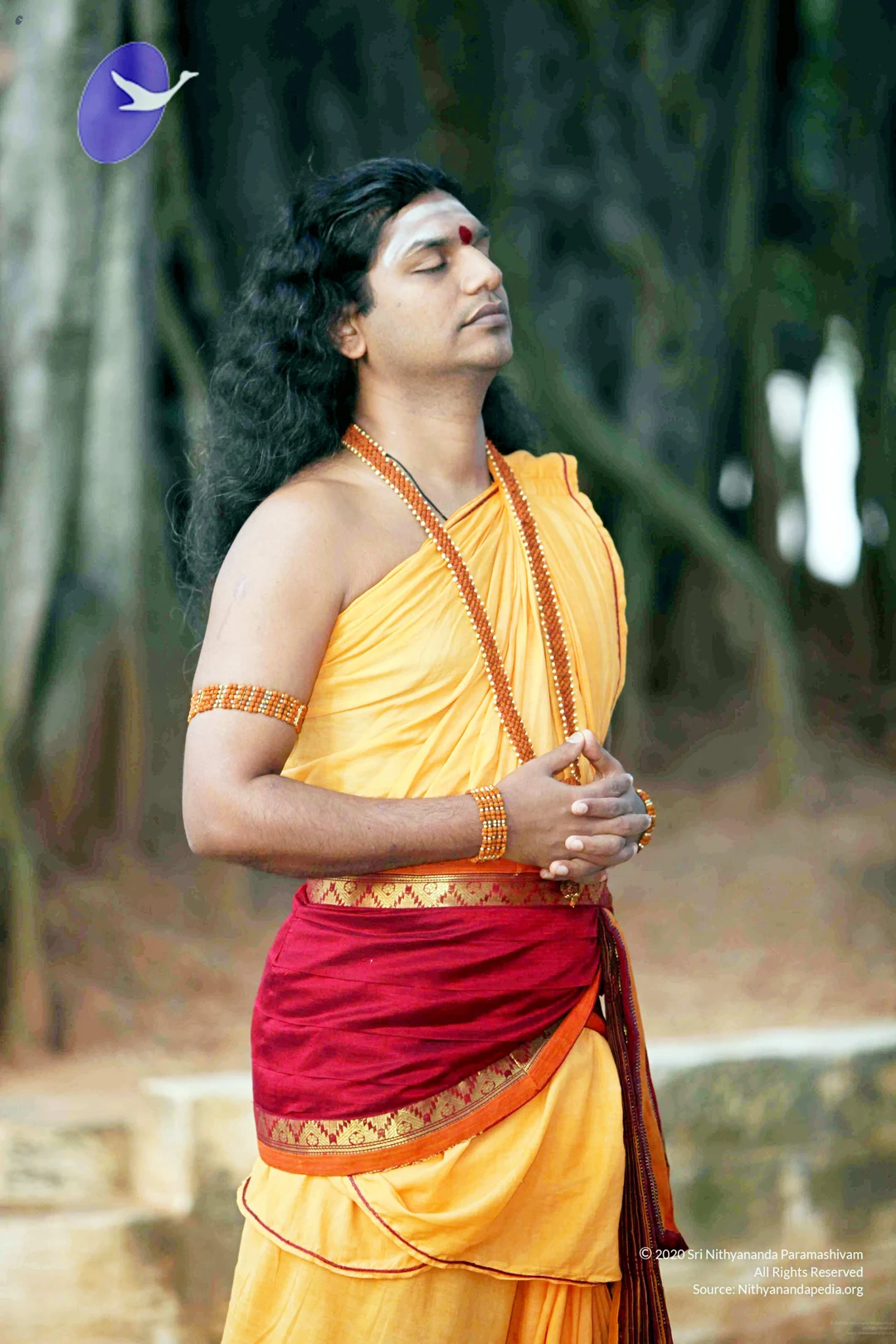
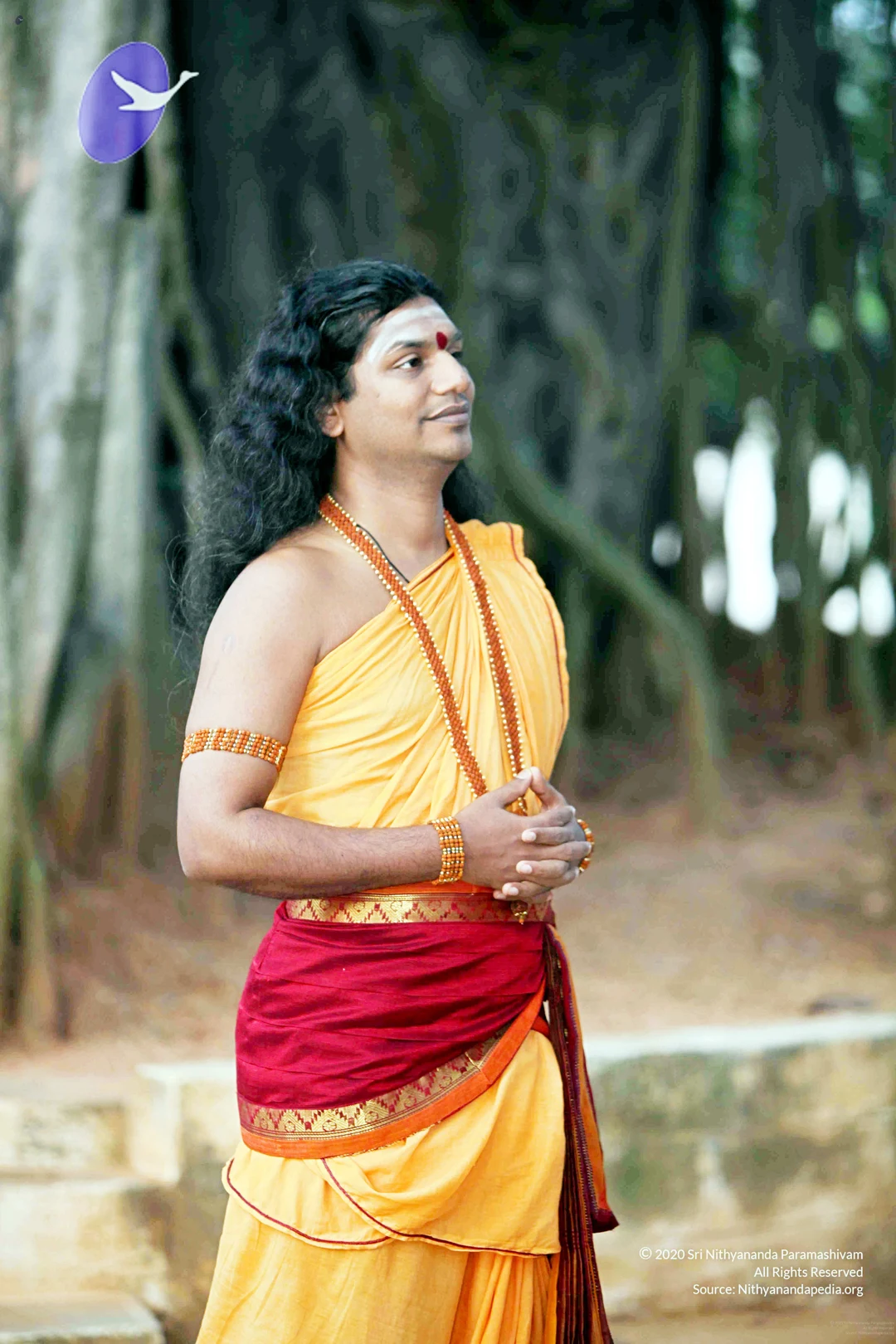
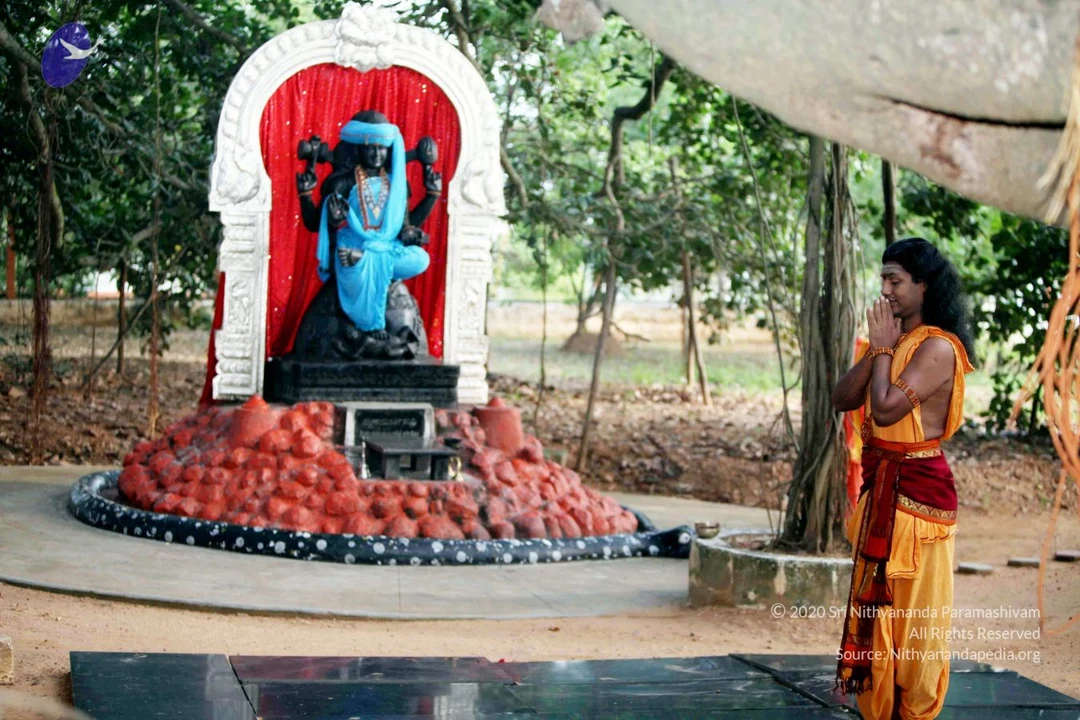
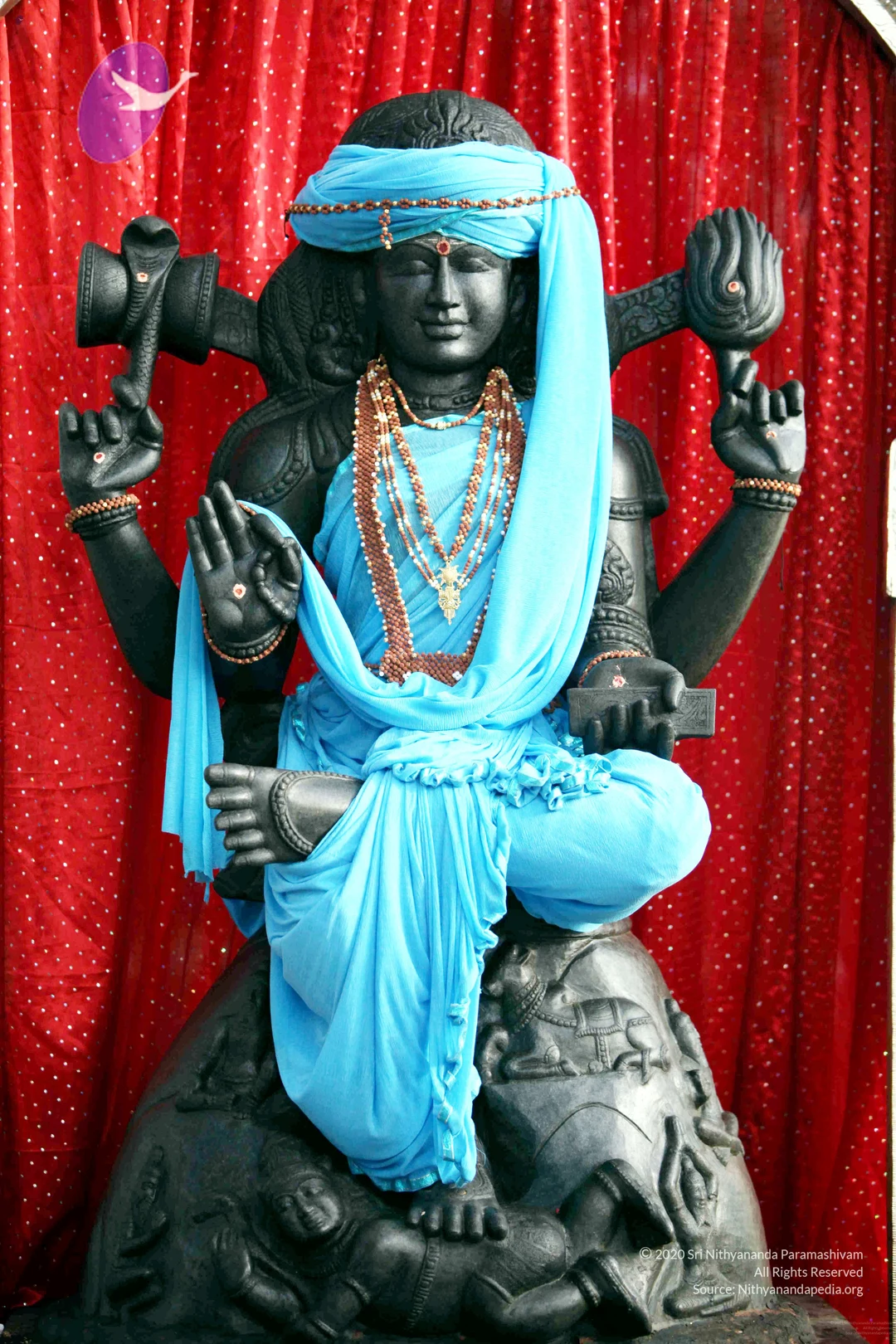
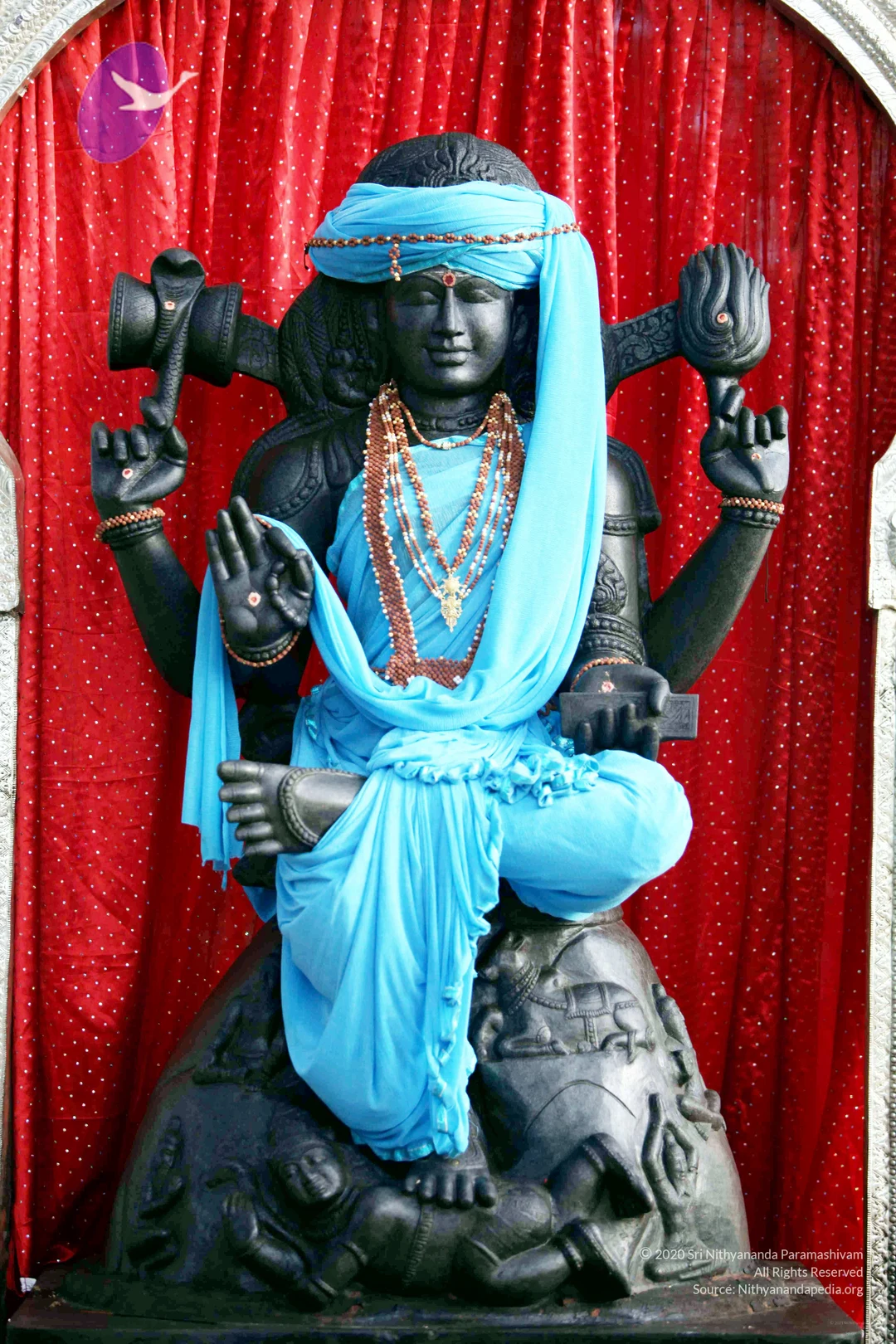
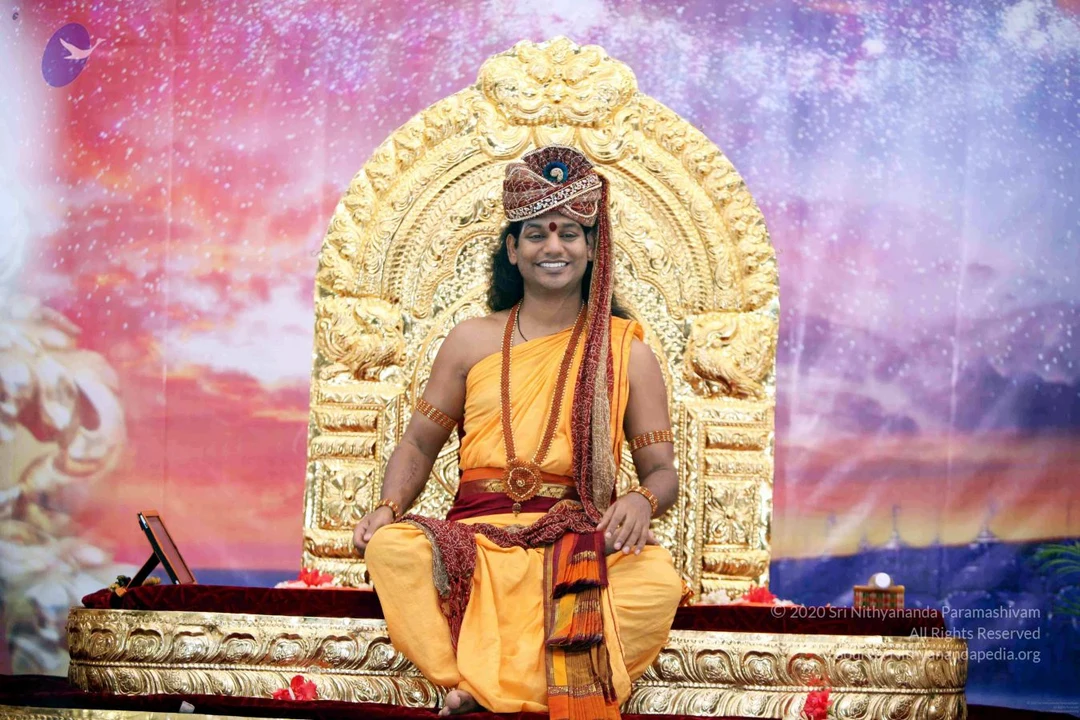
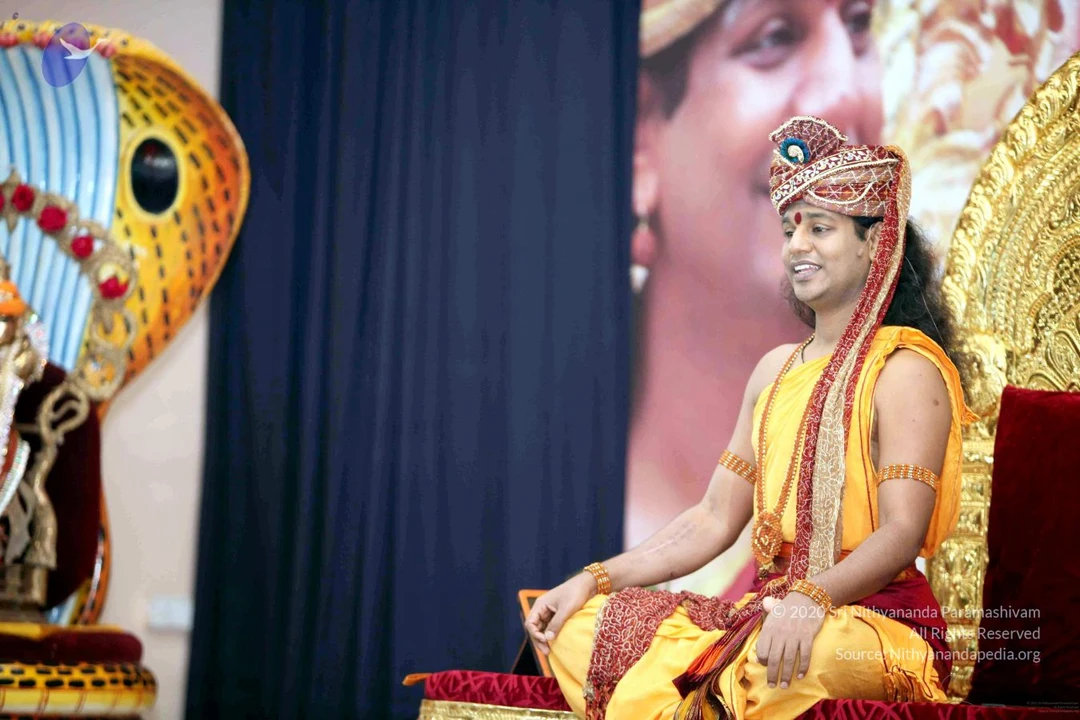
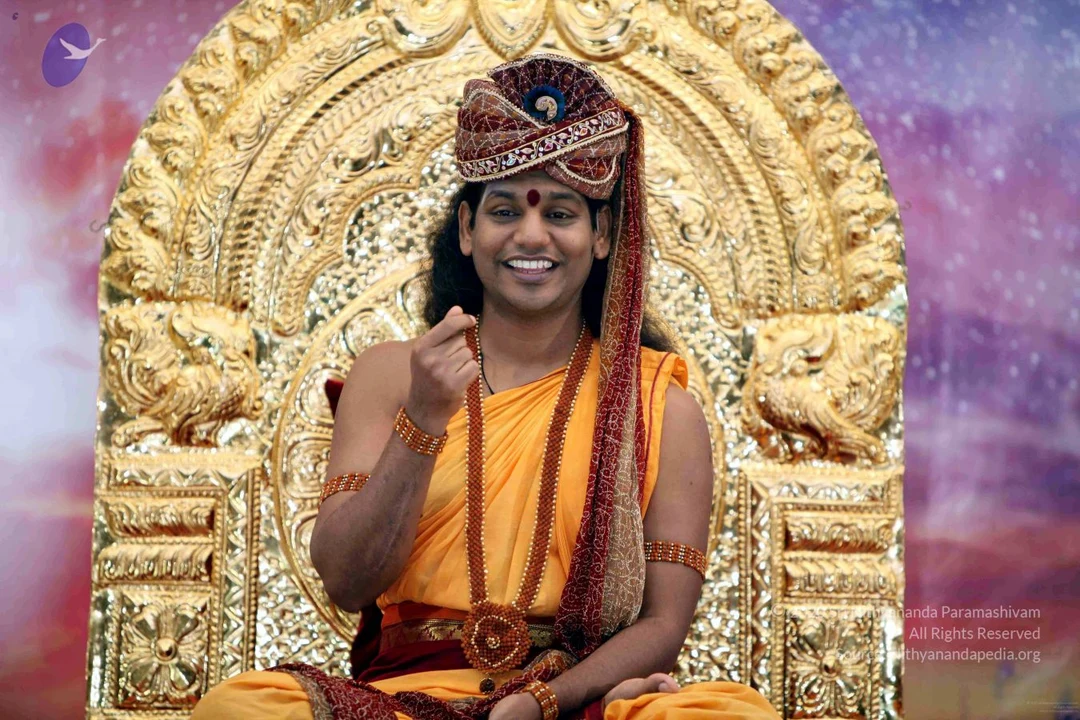
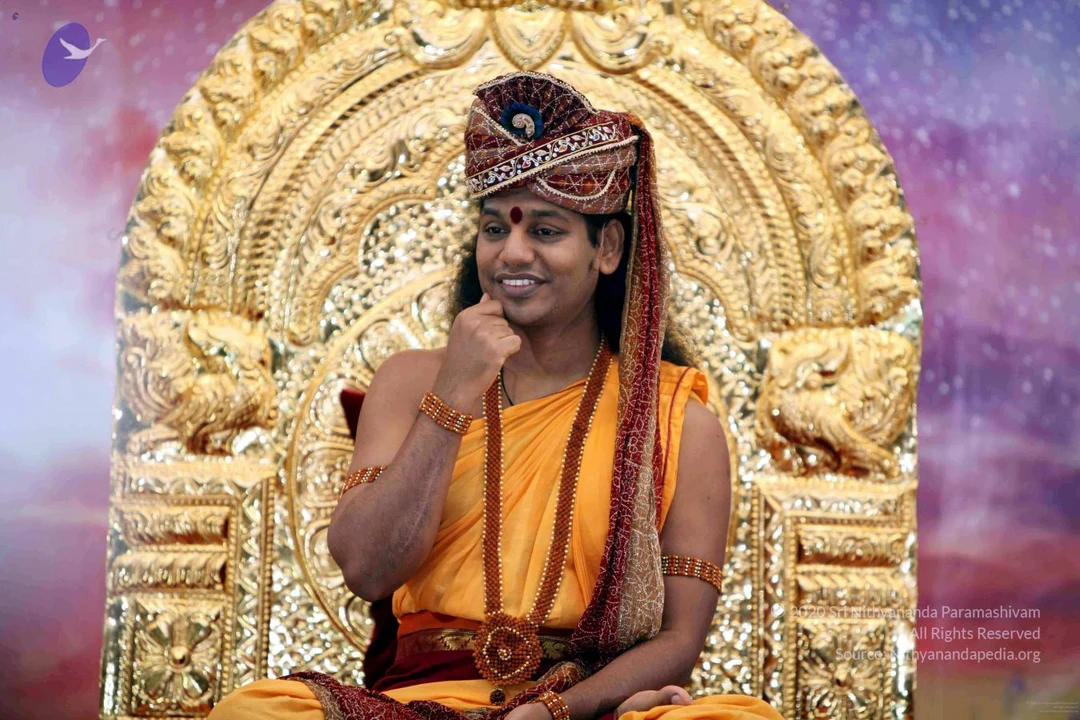
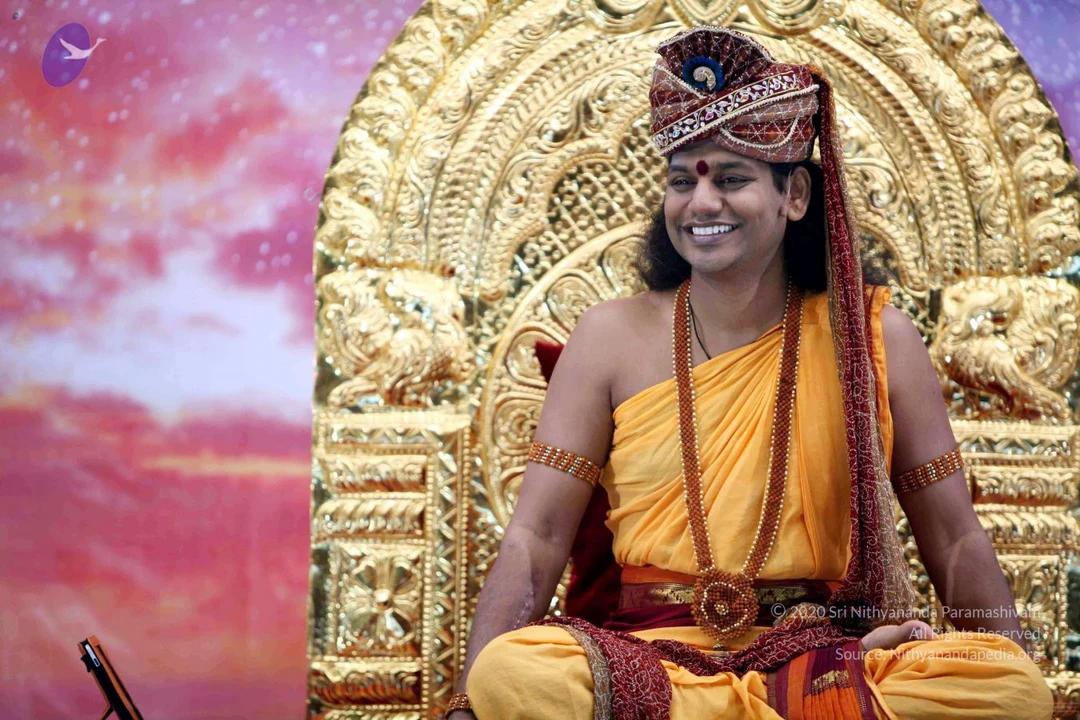
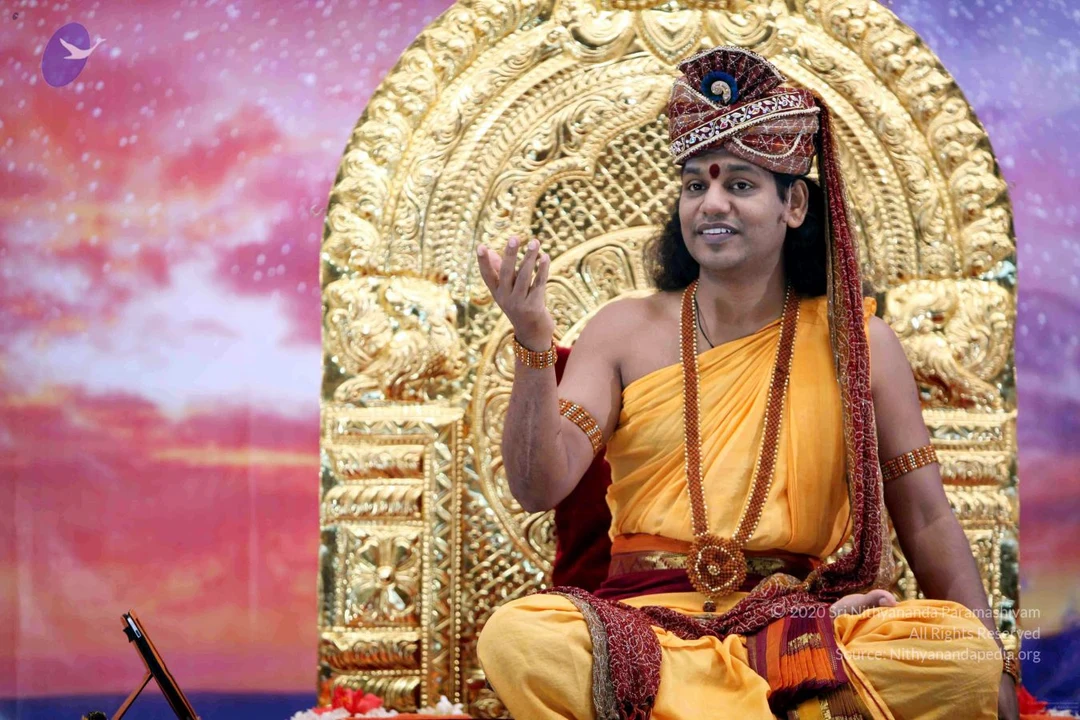
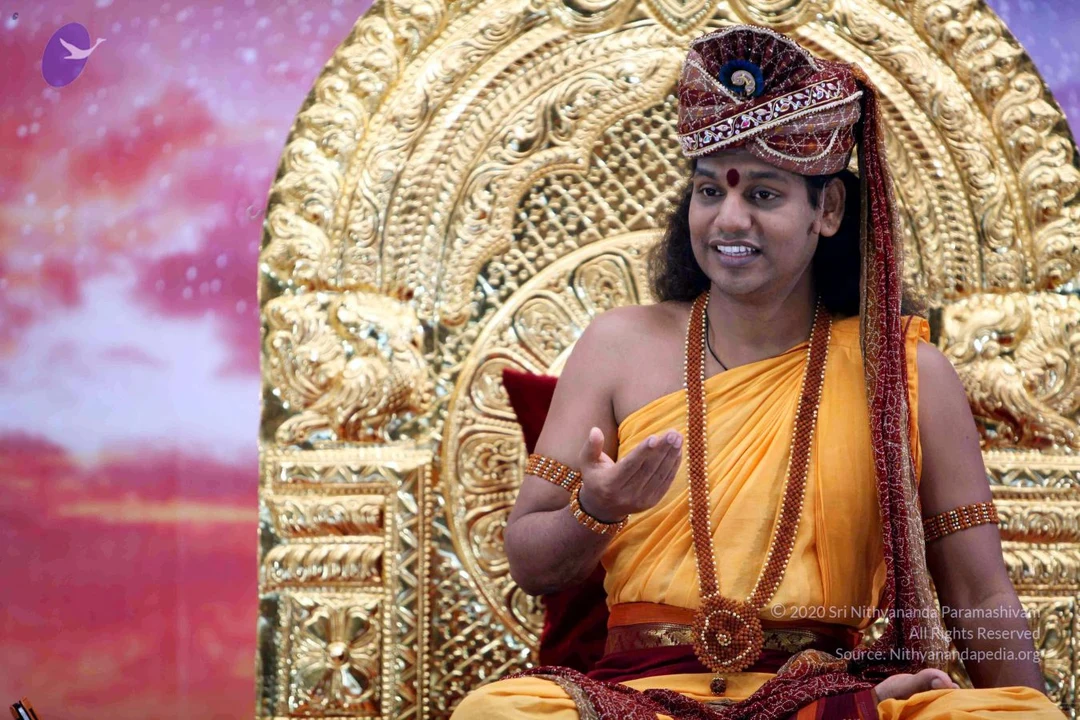
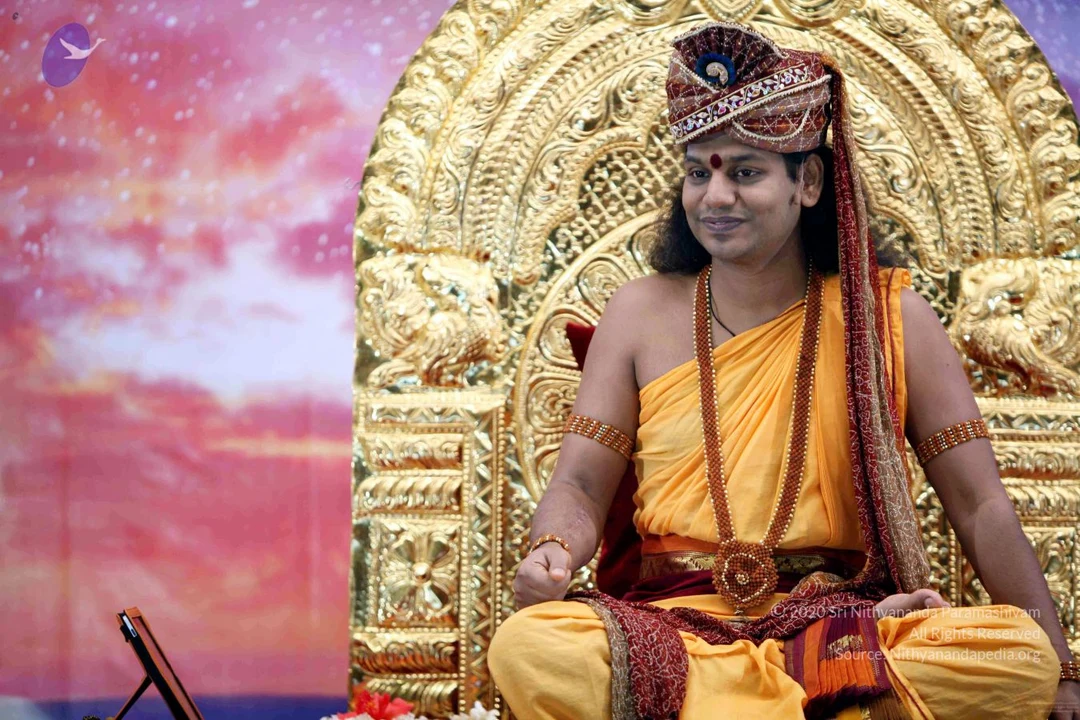
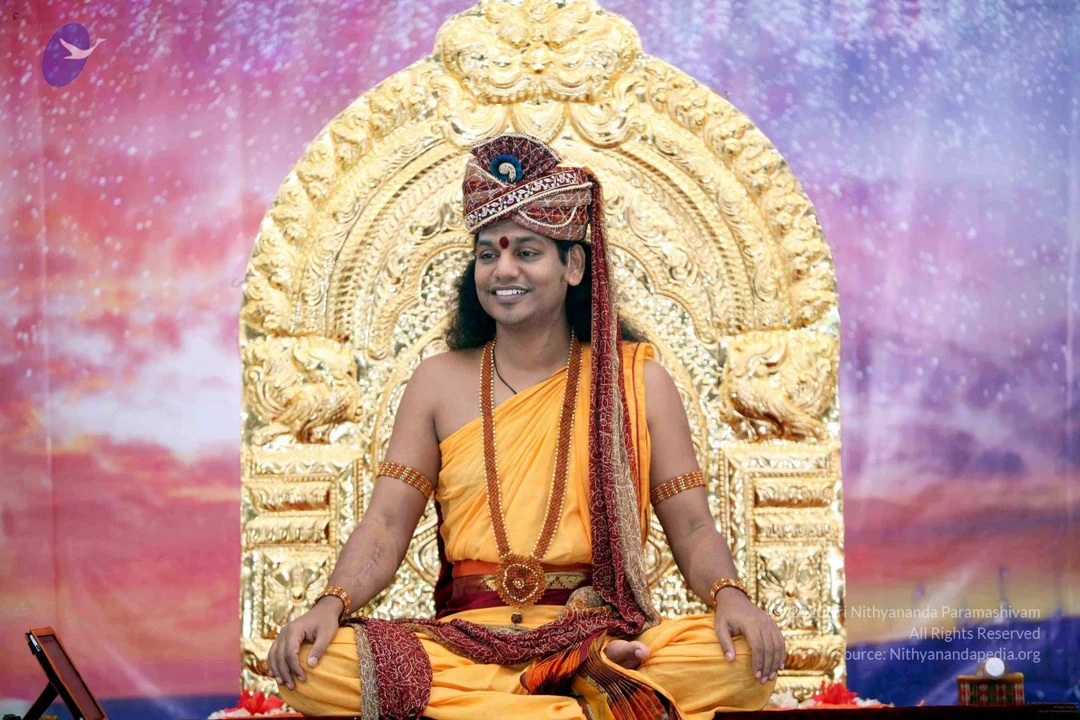
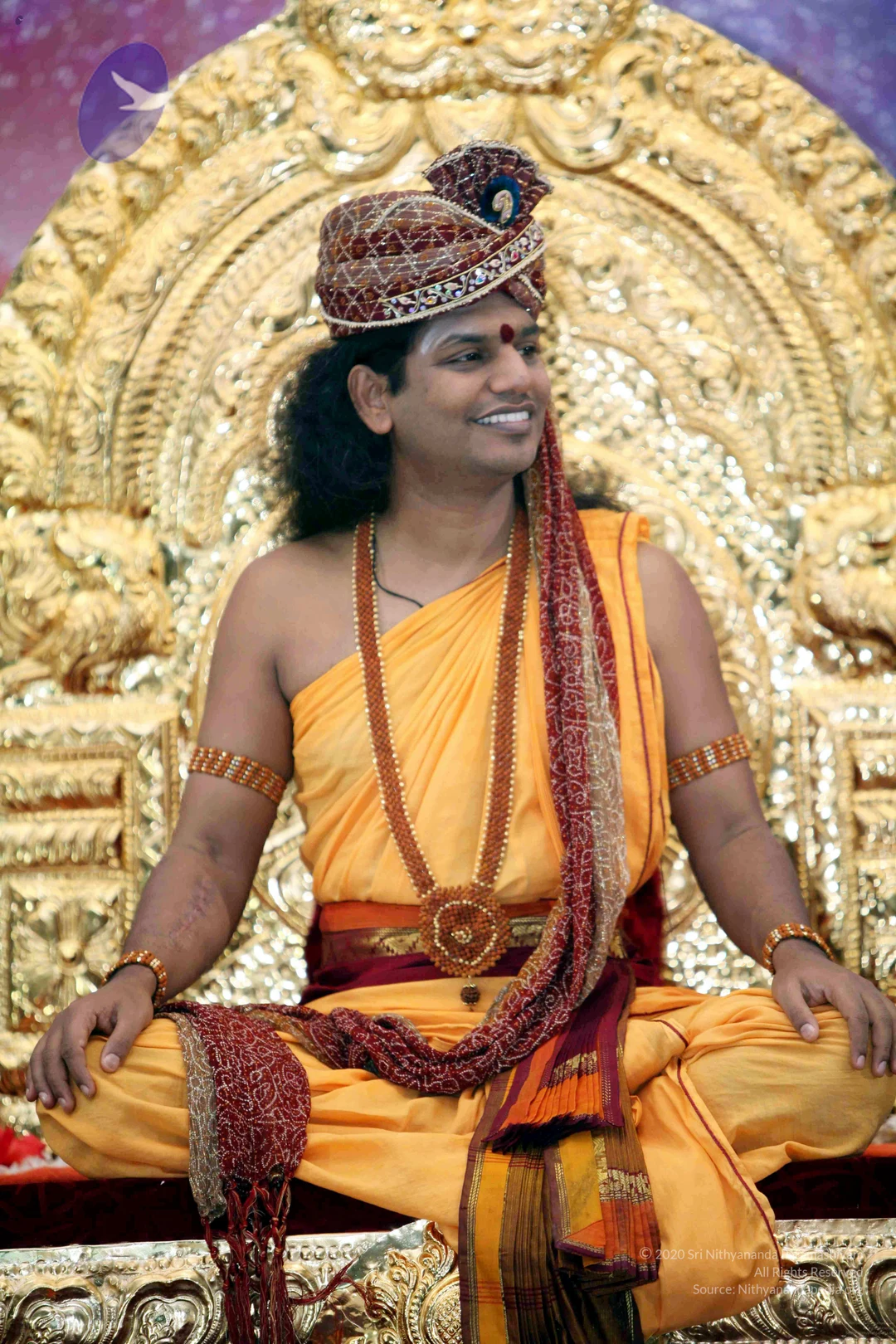
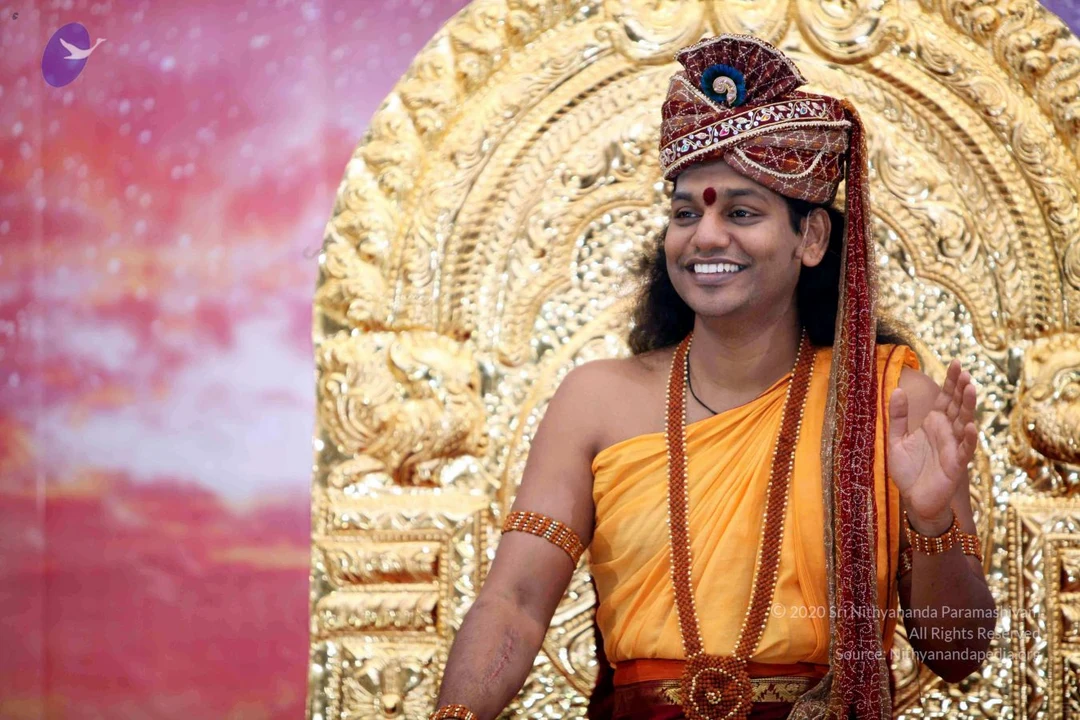
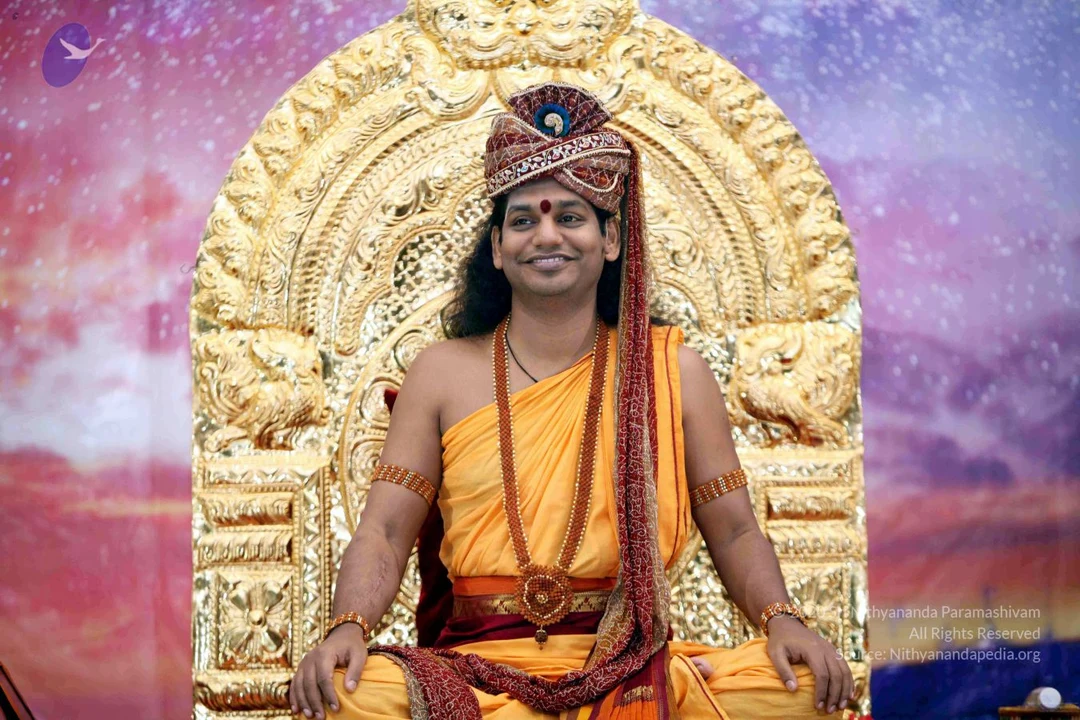
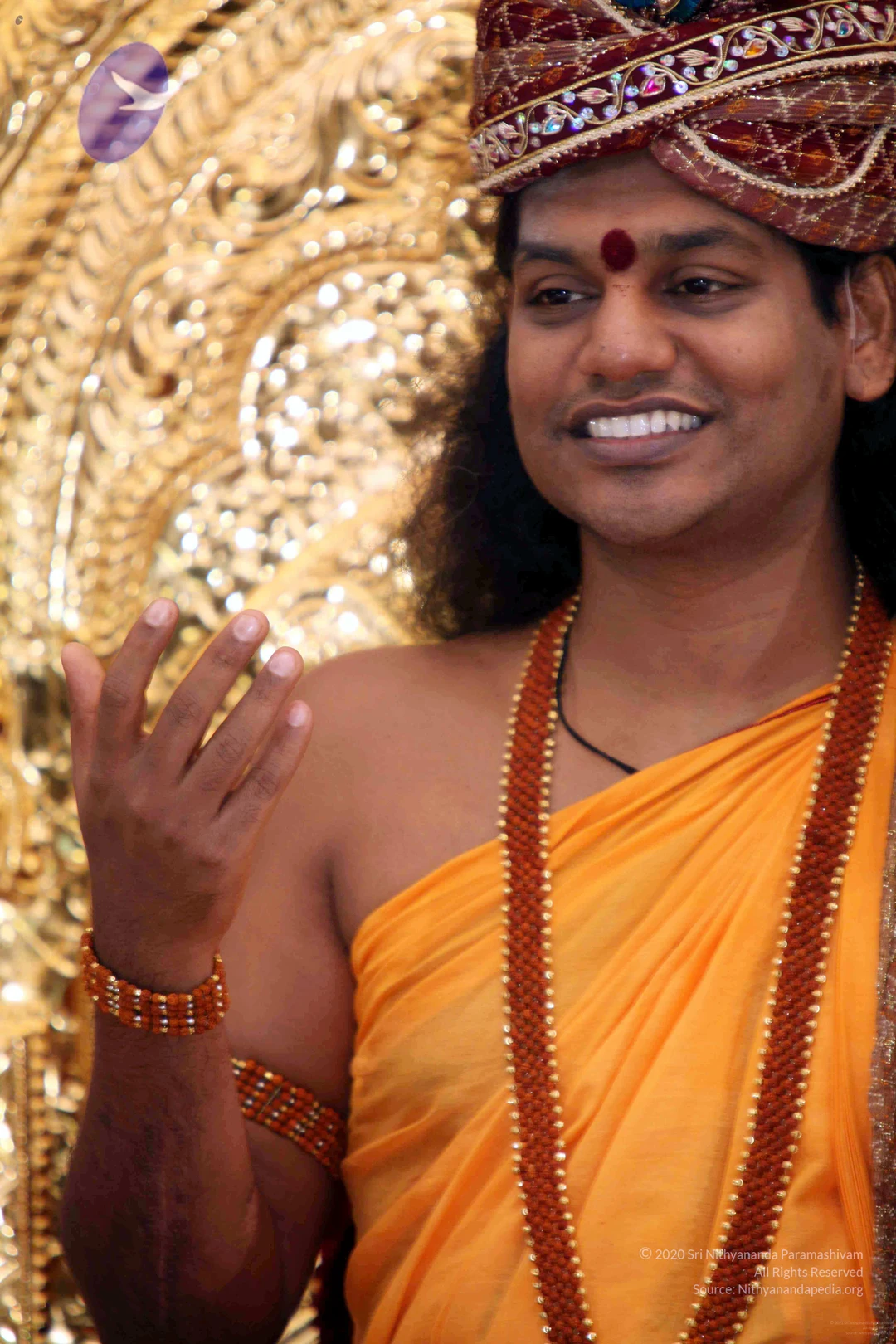
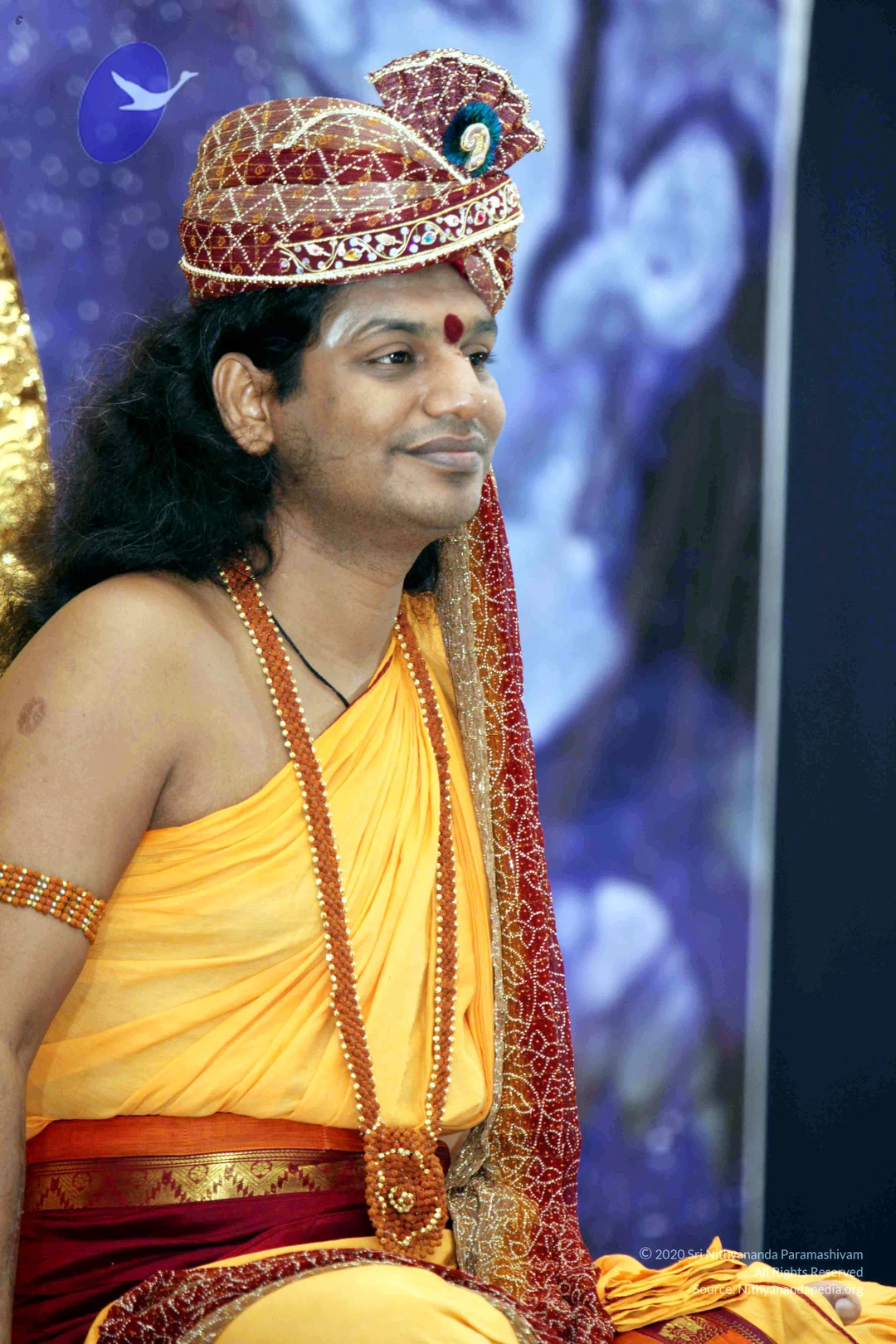
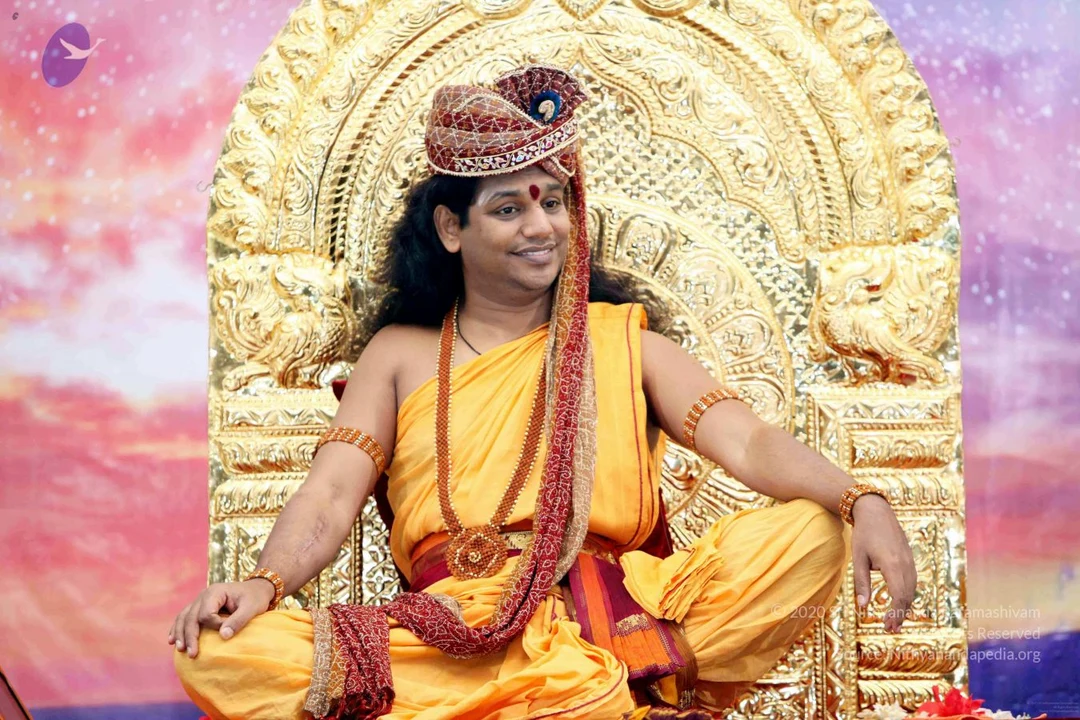
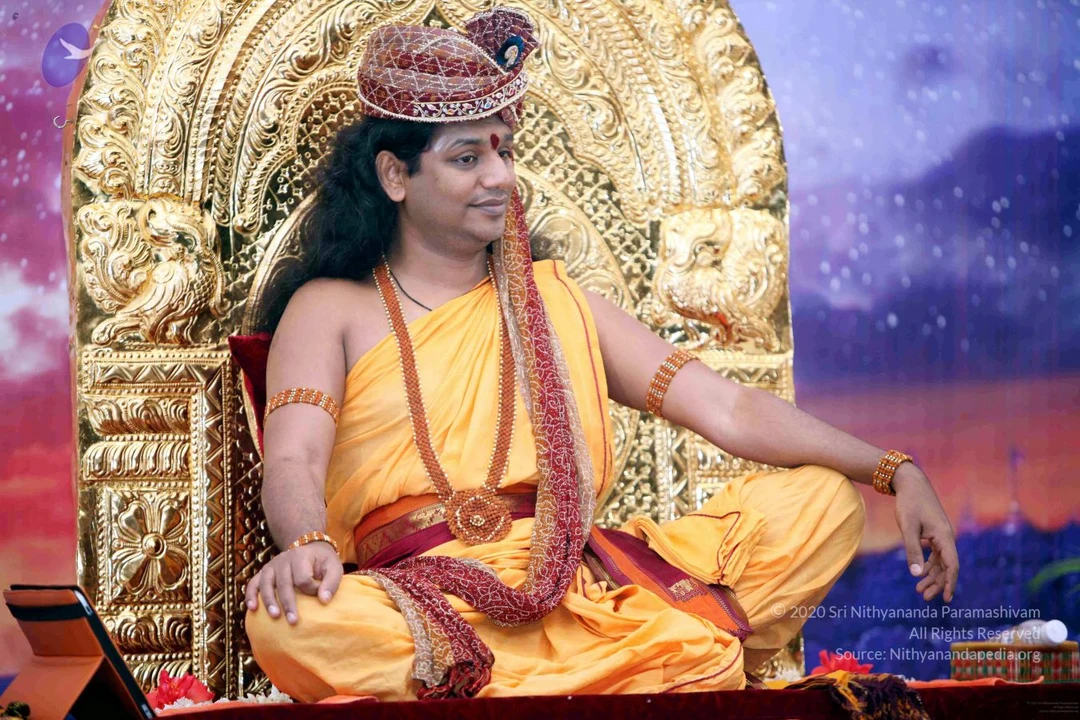
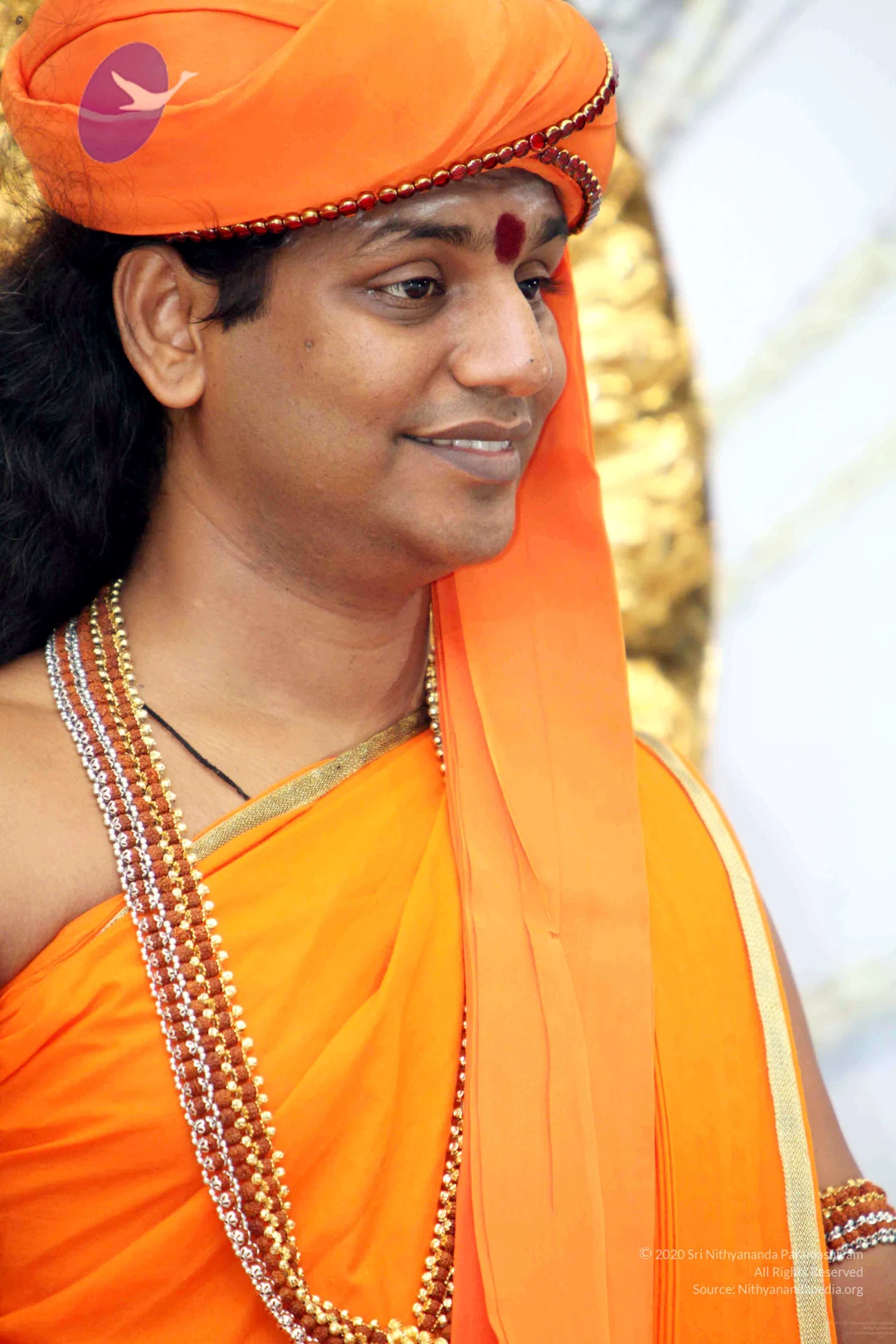
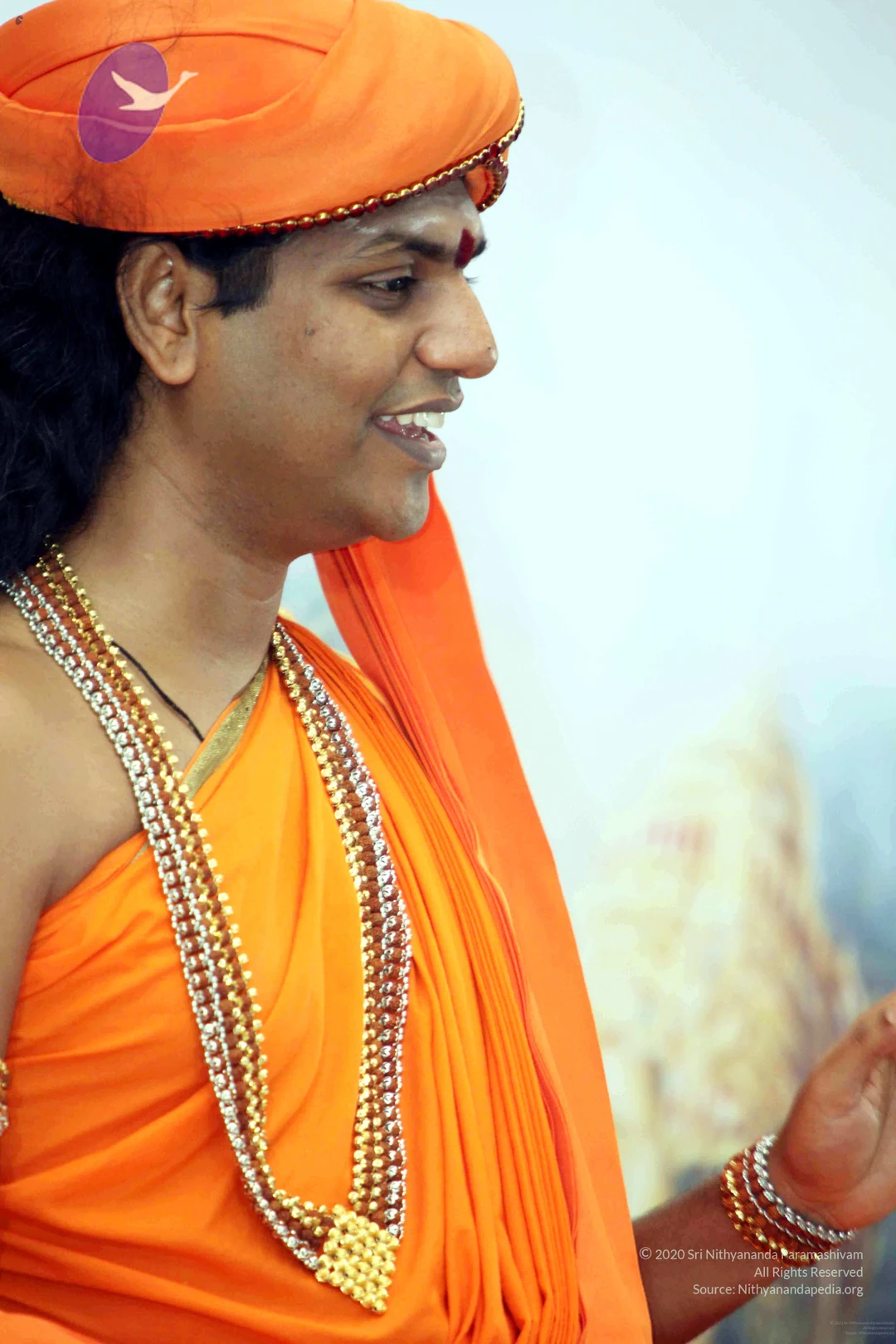
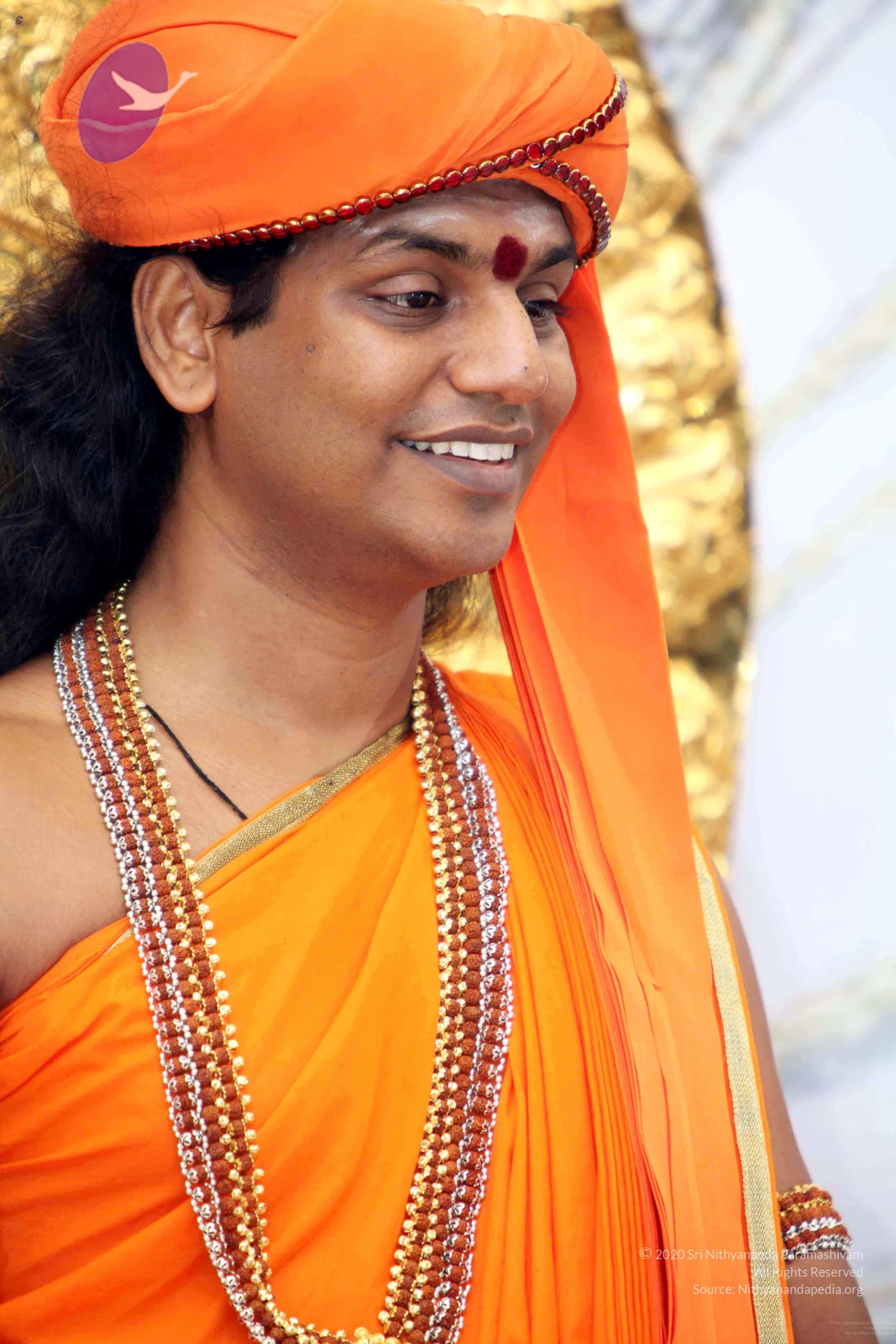
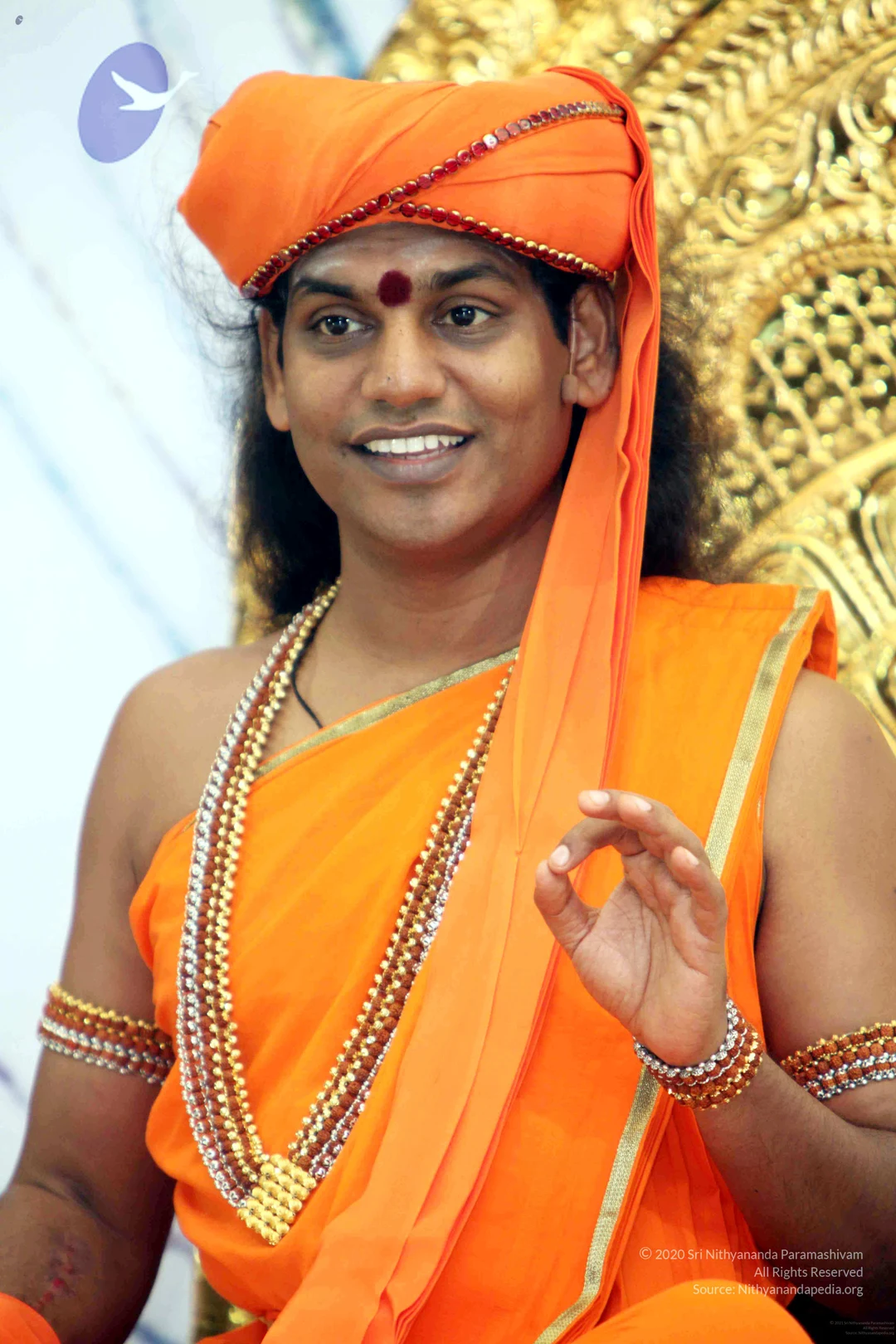
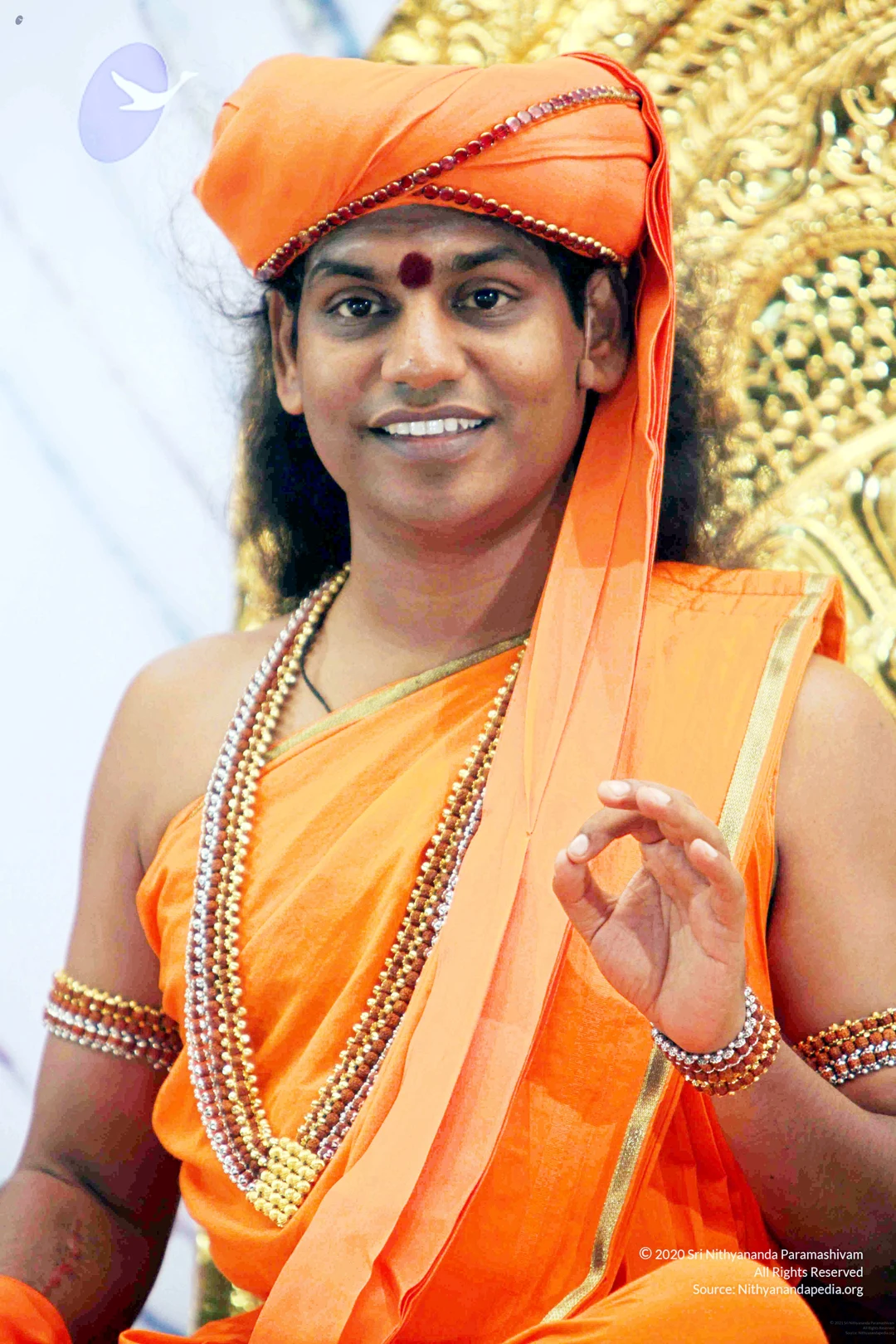
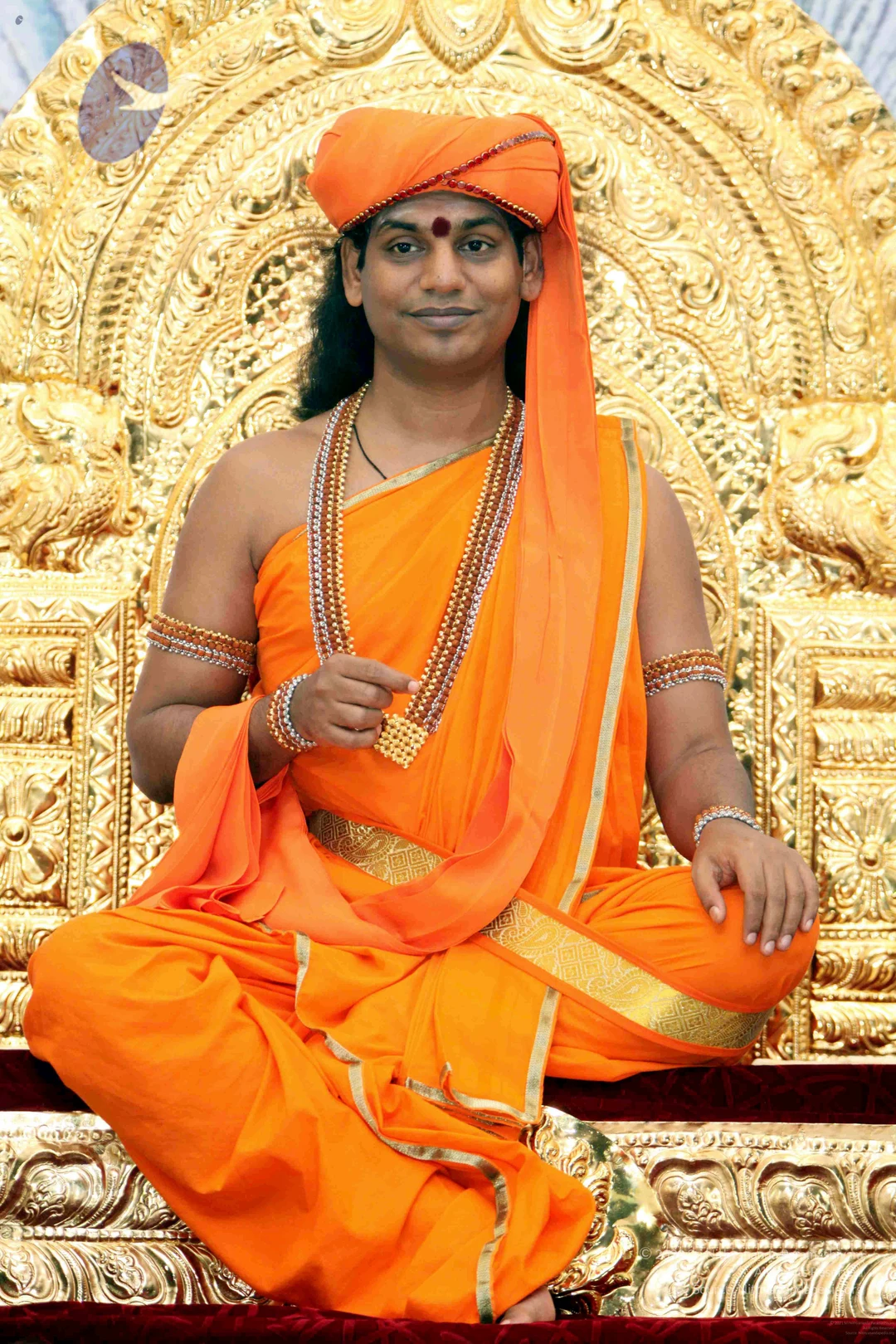
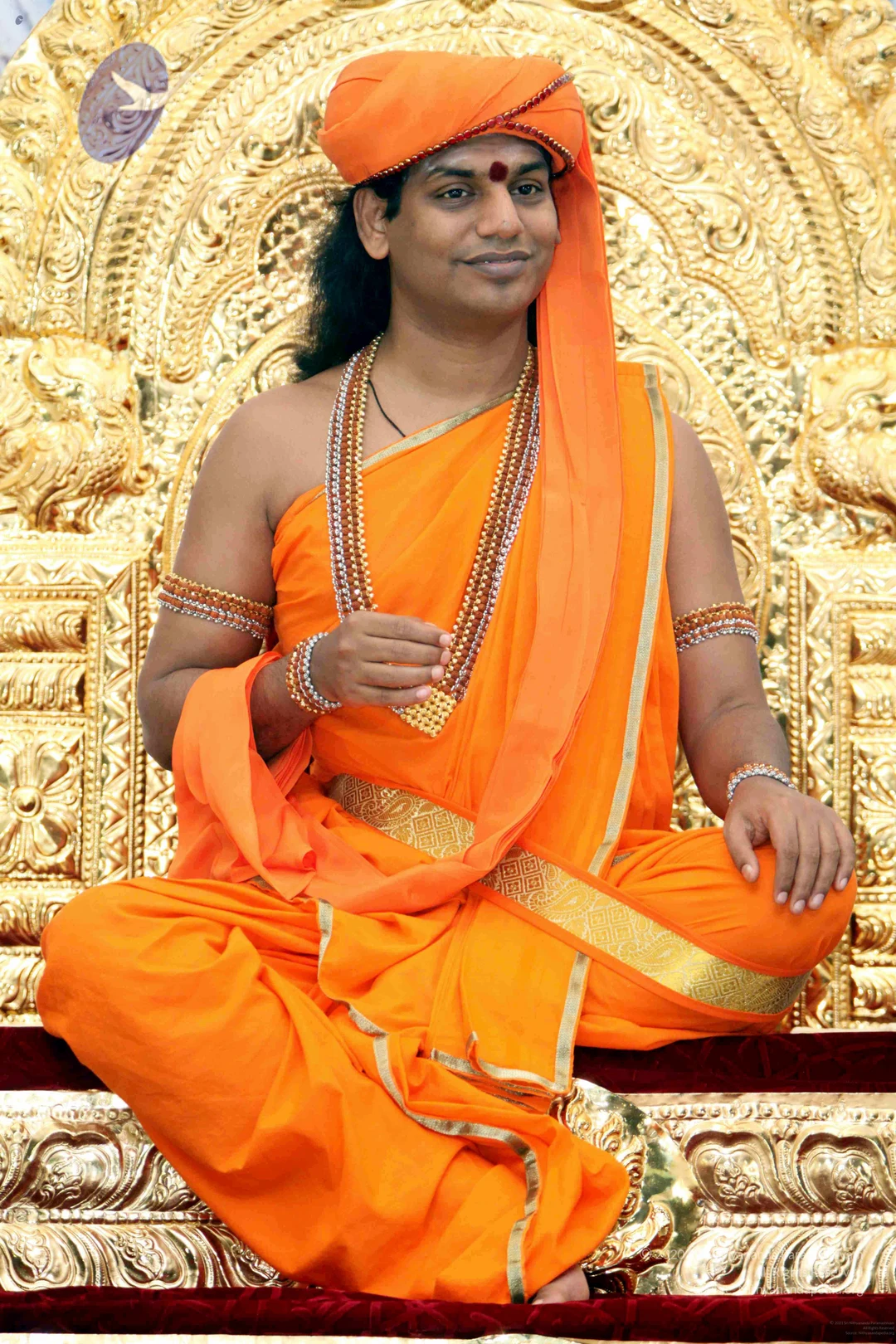
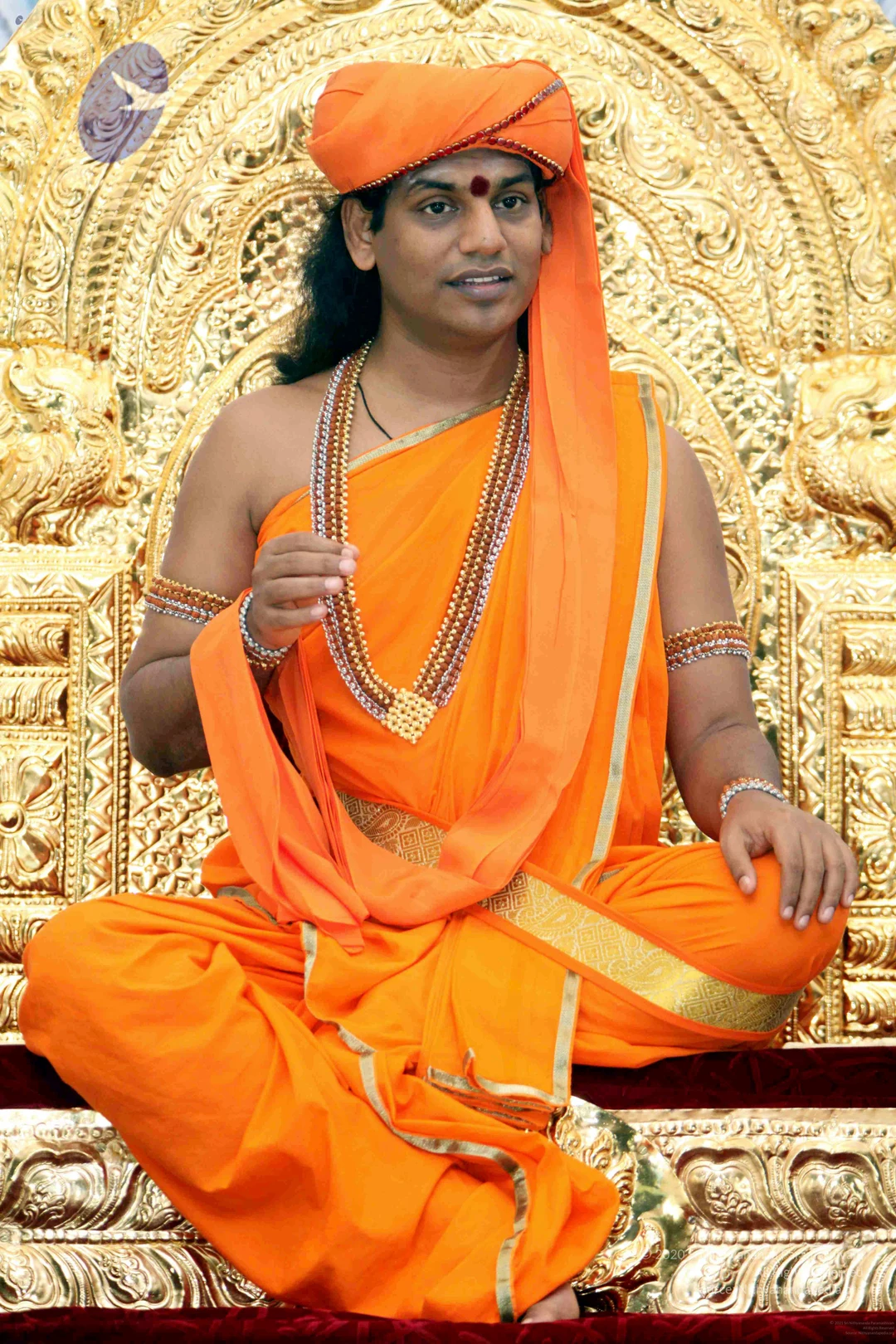
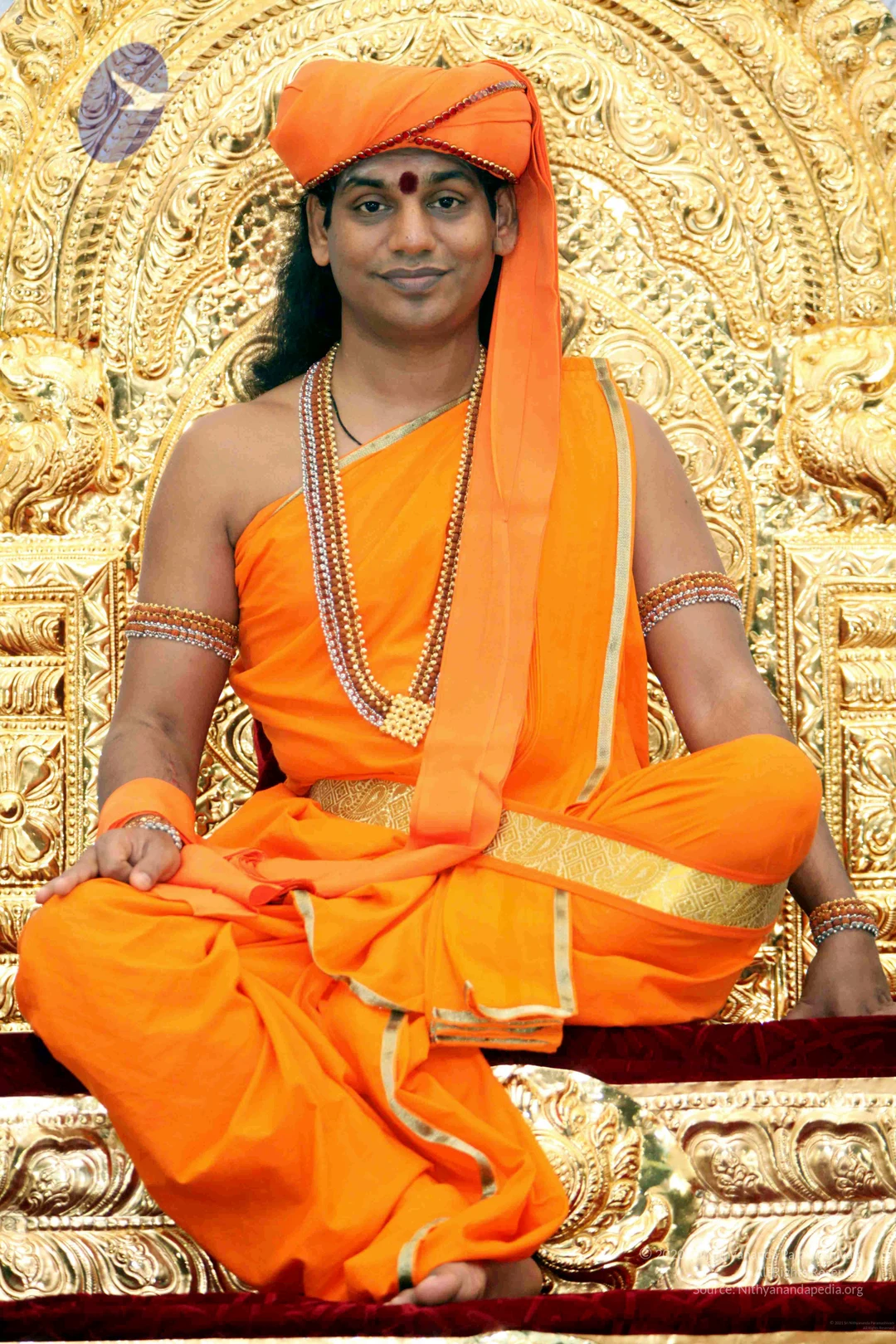
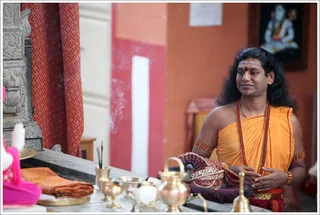
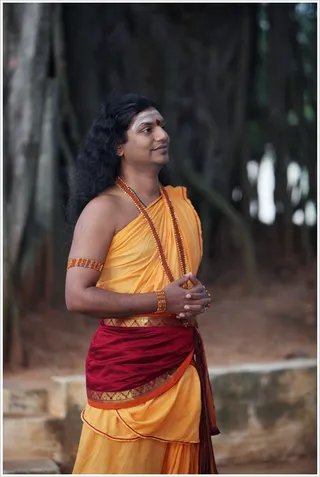
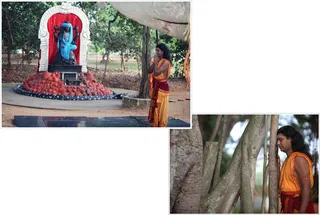
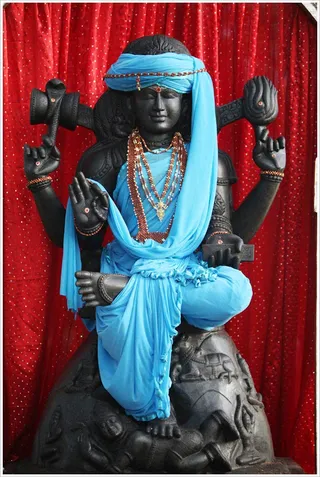
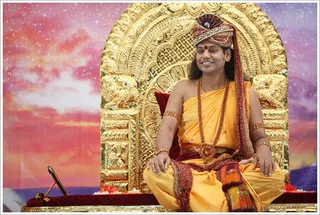
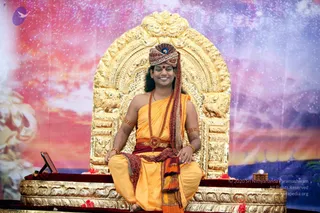
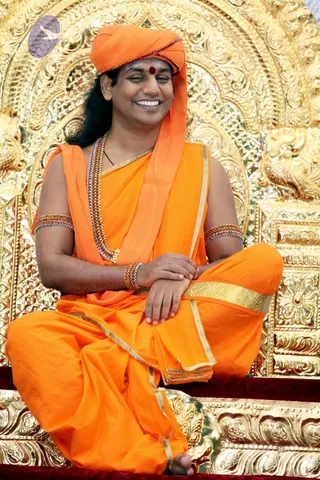
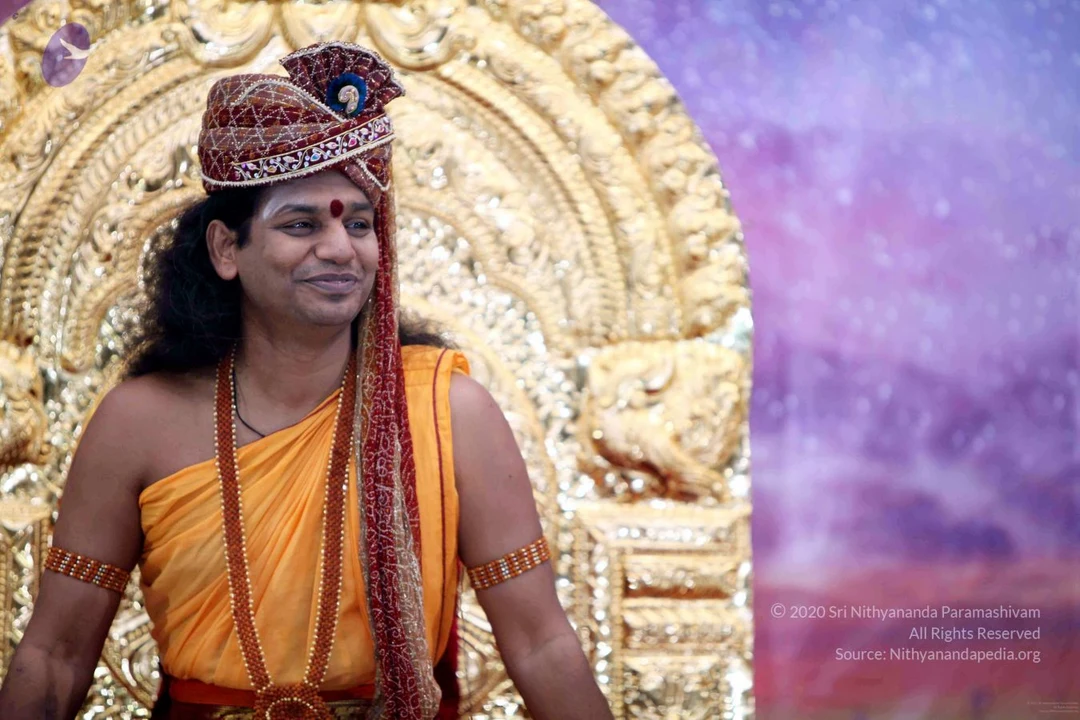
A golden deity murti on an ornate gilded arch backed by green drapery. The seated figure on the left holds a trident and wears an orange turban, gold jewellery and a long necklace. Beside it sits a second golden deity murti with a crown and floral garlands. In front, a Shiva lingam sits on a peetha draped with an orange cloth and a red and yellow flower garland, and a small white figure in pink garments and a pink headcloth sits at the base. No physical people are visible.A photograph of a long-haired man in an orange-saffron shawl and orange dhoti, wearing rudraksha mala beads and a gold armband, standing at a shrine table. Brass puja vessels, a small bell, a kalasha-style brass pot and oil lamps sit on the altar cloth, with incense smoke rising beside a carved stone shrine. A framed picture of a deity hangs on the red wall behind him. Swamiji (probable) appears in person, with cues including long swept-back hair, saffron clothing and rudraksha mala beads; he is shown in a puja setting.A standing man with long, dark, swept-back hair wears an orange-yellow shawl draped over one shoulder, with a red-and-gold bordered waistcloth at the hips. He wears a red rudraksha mala across his chest and a beaded armlet on his upper arm, and a red bindi and white forehead markings. His hands are clasped at his waist as he gazes upward and to the side. Behind him stand large banyan-like tree trunks and a stone ledge with steps. Swamiji (probable): long swept-back hair, saffron-orange shawl, rudraksha malas and ornate clothing marked him as a.A two-panel collage of photographs set outdoors among trees. The left panel shows a small shrine with a blue deity murti seated within a red-curtained arched niche, surrounded by a mound of red powder or kumkum and a black stone border. A standing person in orange and yellow robes with long dark hair holds palms together in anjali near the shrine, beside a tree trunk. The right panel shows a close view of the same person in orange robes with hands clasped, leaning against a tree trunk with aerial roots. The scene conveys a quiet devotional setting in a garden or ashram grounds.A black stone statue of a multi-armed deity seated in lotus-style pose on a carved rock base, draped in a turquoise-blue cloth wrapped as a turban and garment. Multiple strands of rudraksha-style beads and a pendant hang on its chest. Its raised hands hold a trident-like emblem and other objects, and a small red tilak marks its forehead. Behind it hangs a red sequined curtain. This is a deity murti, not a living person, and no physical people are visible.A photograph of a seated man on an ornate golden throne with carved lion-like armrests and a gilded arched back, set against a pink and orange sky backdrop. He wears a saffron-orange dhoti and shawl, a red and gold turban-style crown, long wooden or rudraksha-style beaded necklaces with a gold pendant, and gold armbands. He sits with a smile on a red cushioned platform strewn with flowers, a small red book or tablet lying at his left side. Appearance-based label: Swamiji (probable), seated in person, with long hair, saffron clothing, a crown and ceremonial beads as qualifying cues.

Visit to temple

20 photosSource gallery
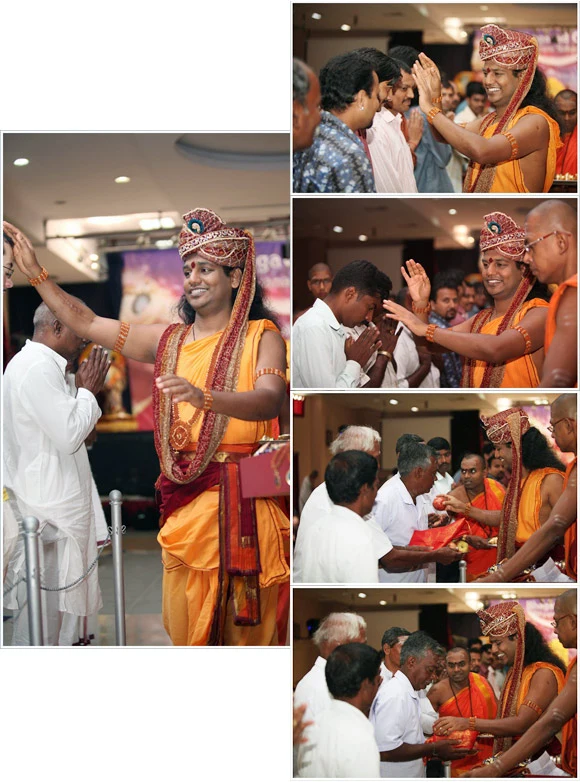
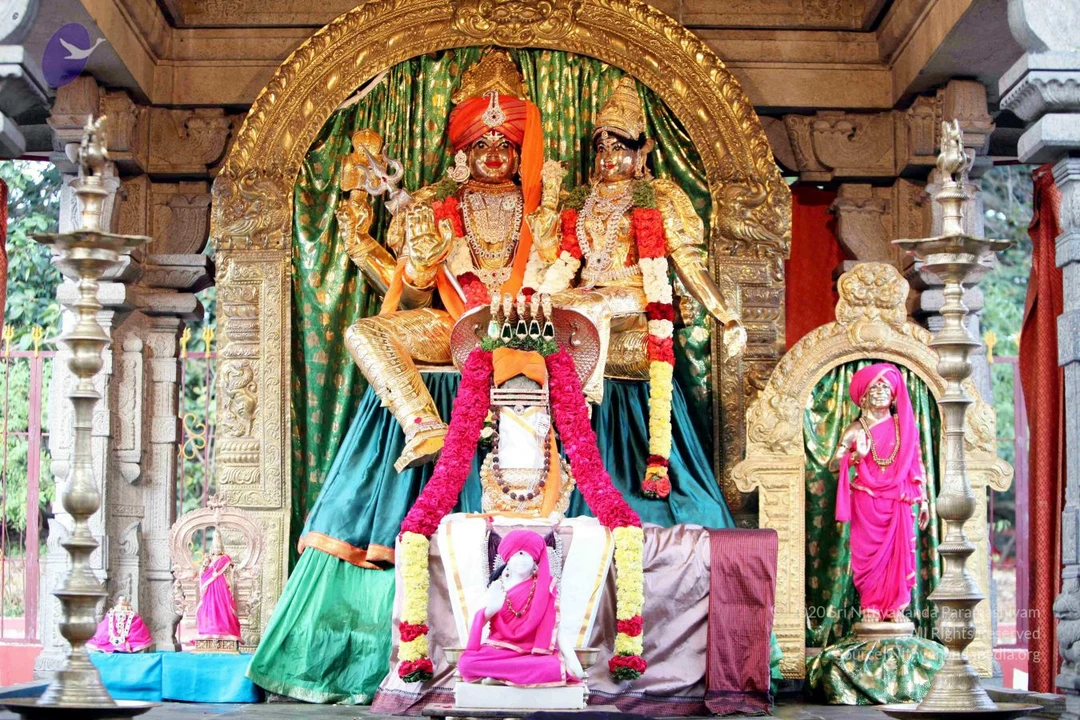
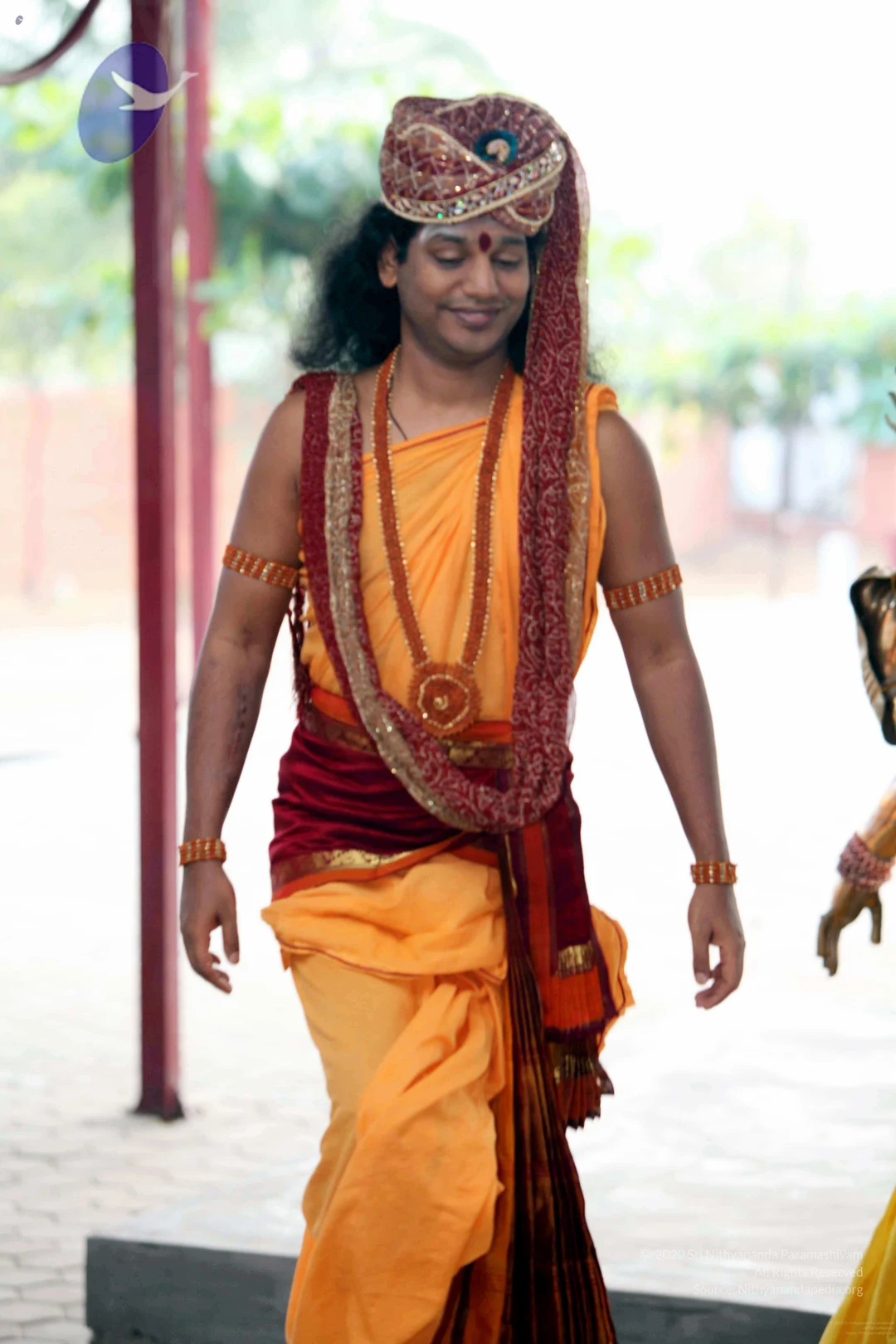
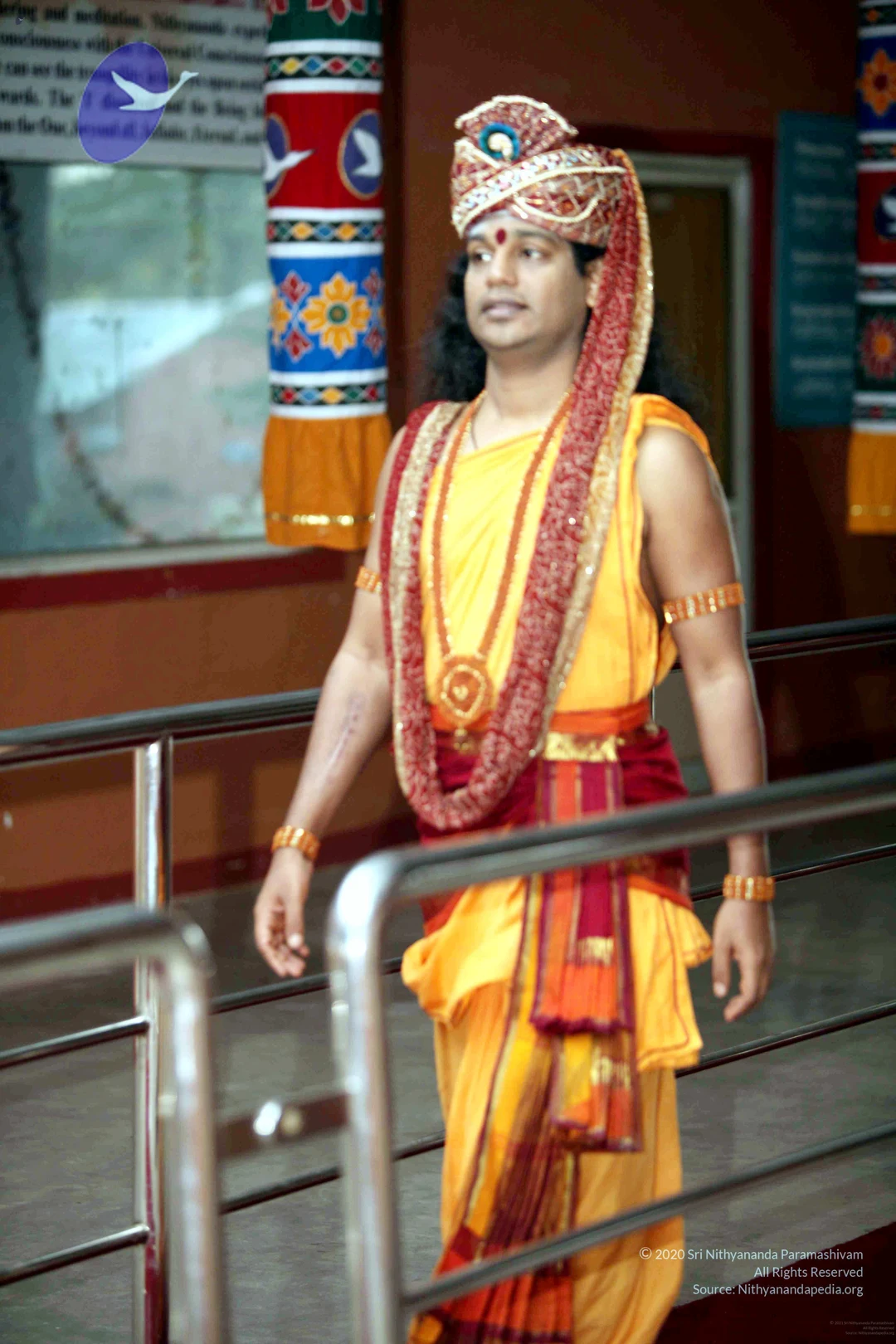
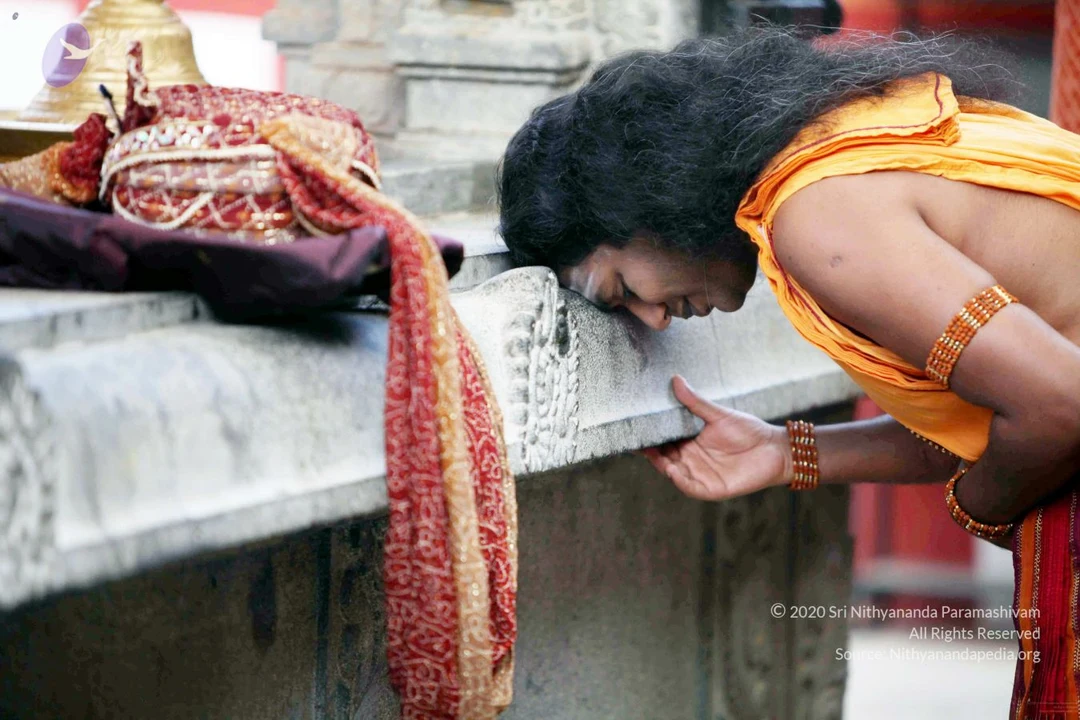
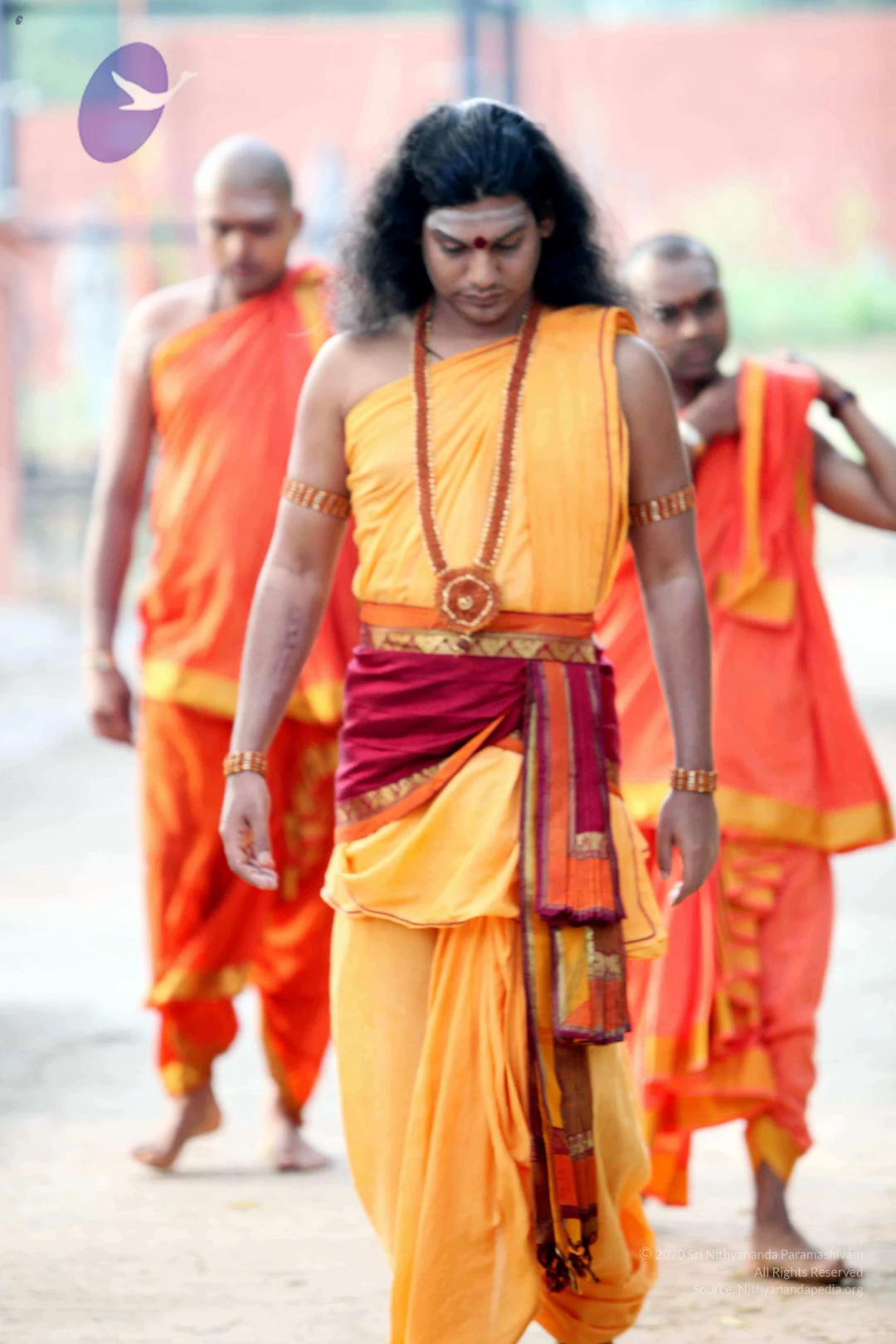
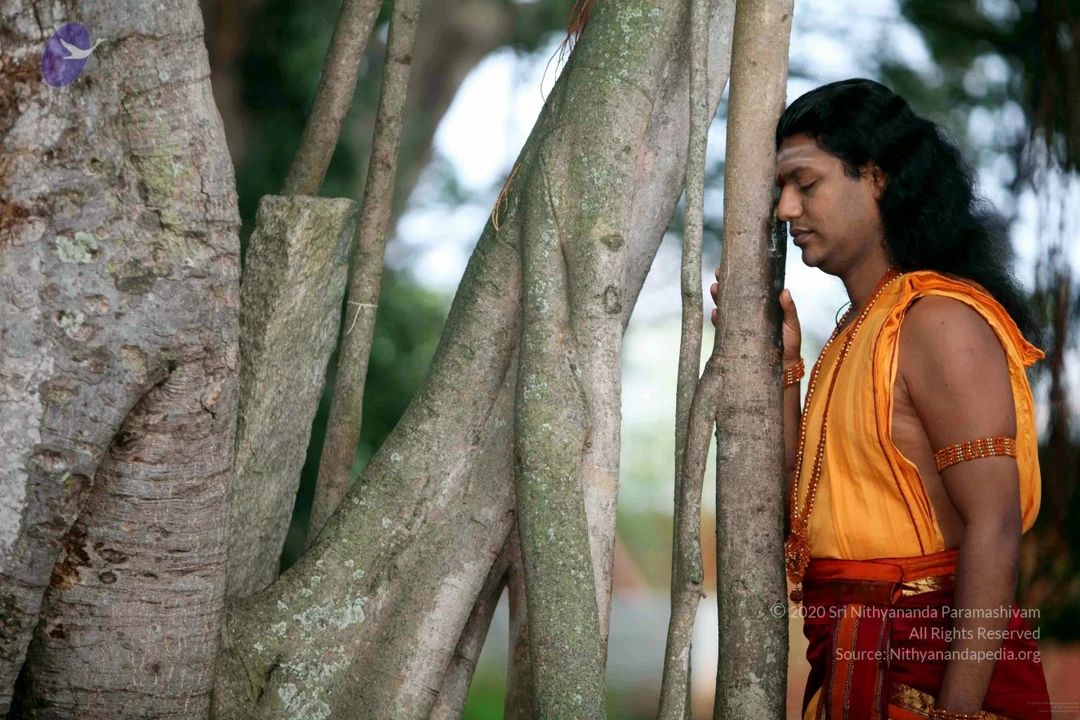
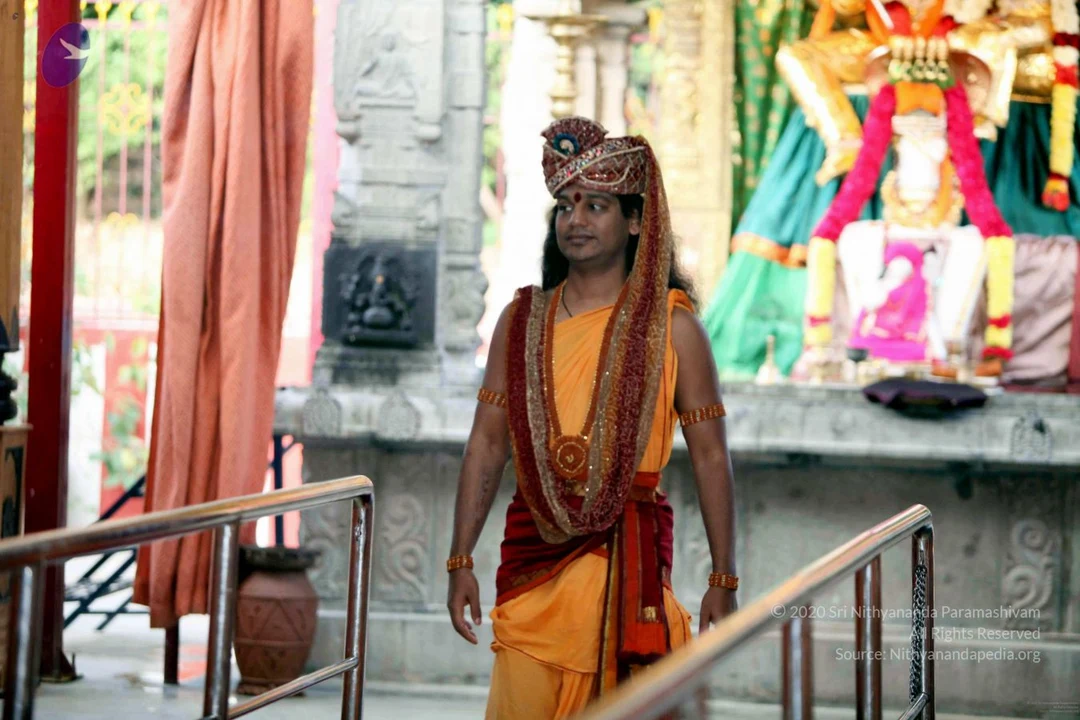
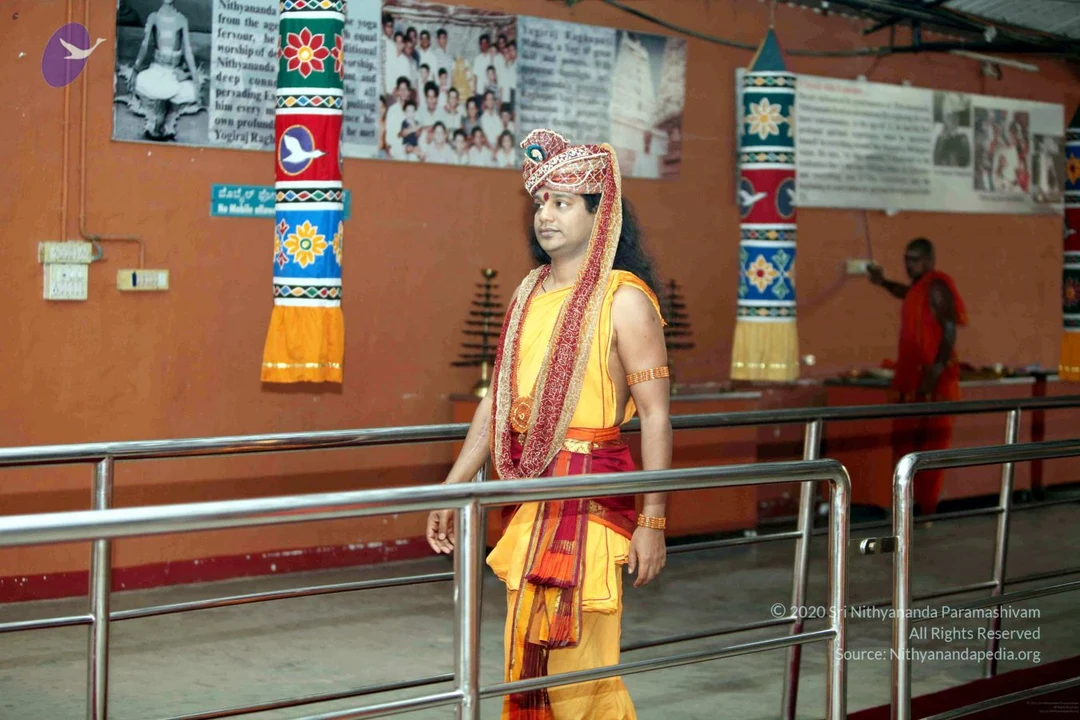
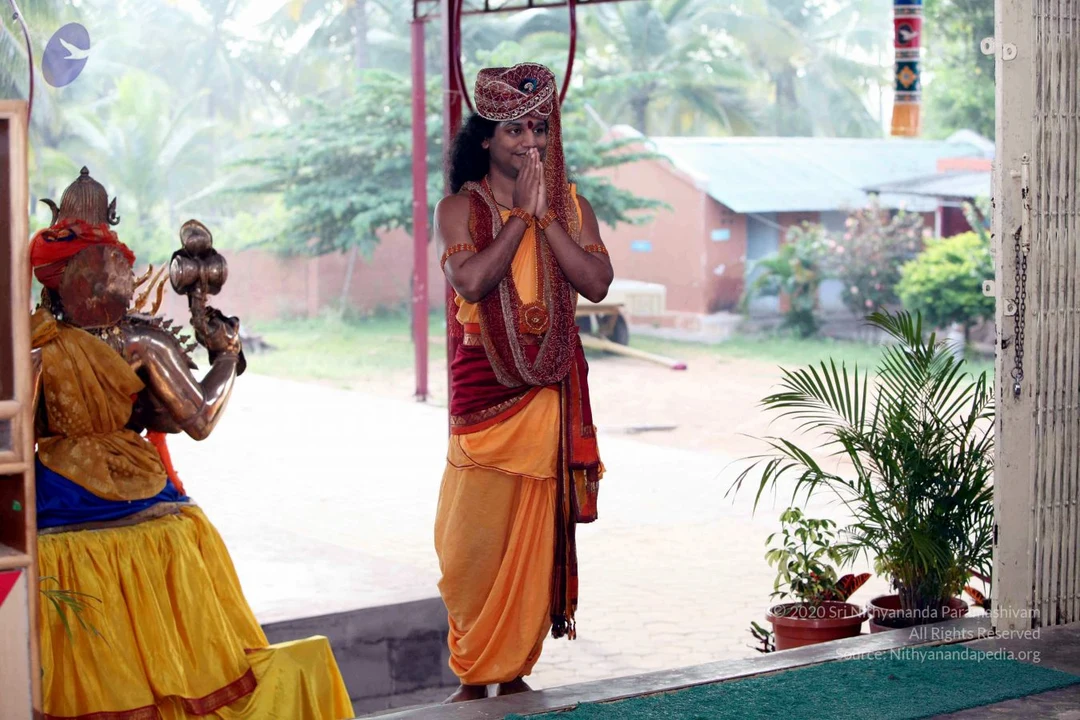
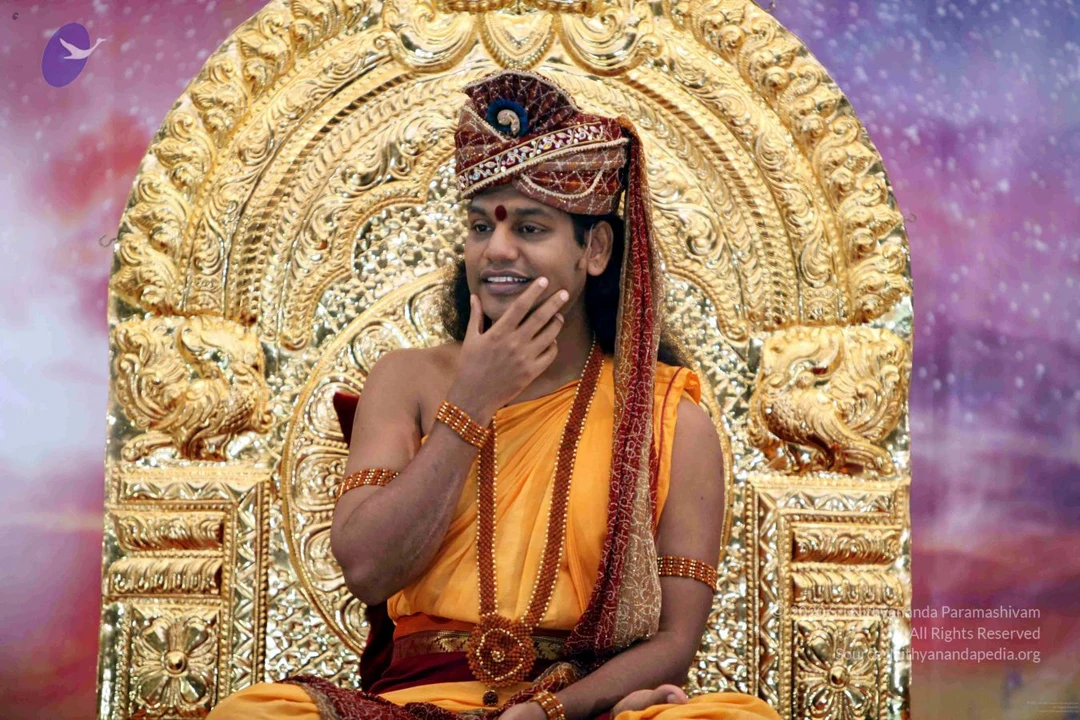
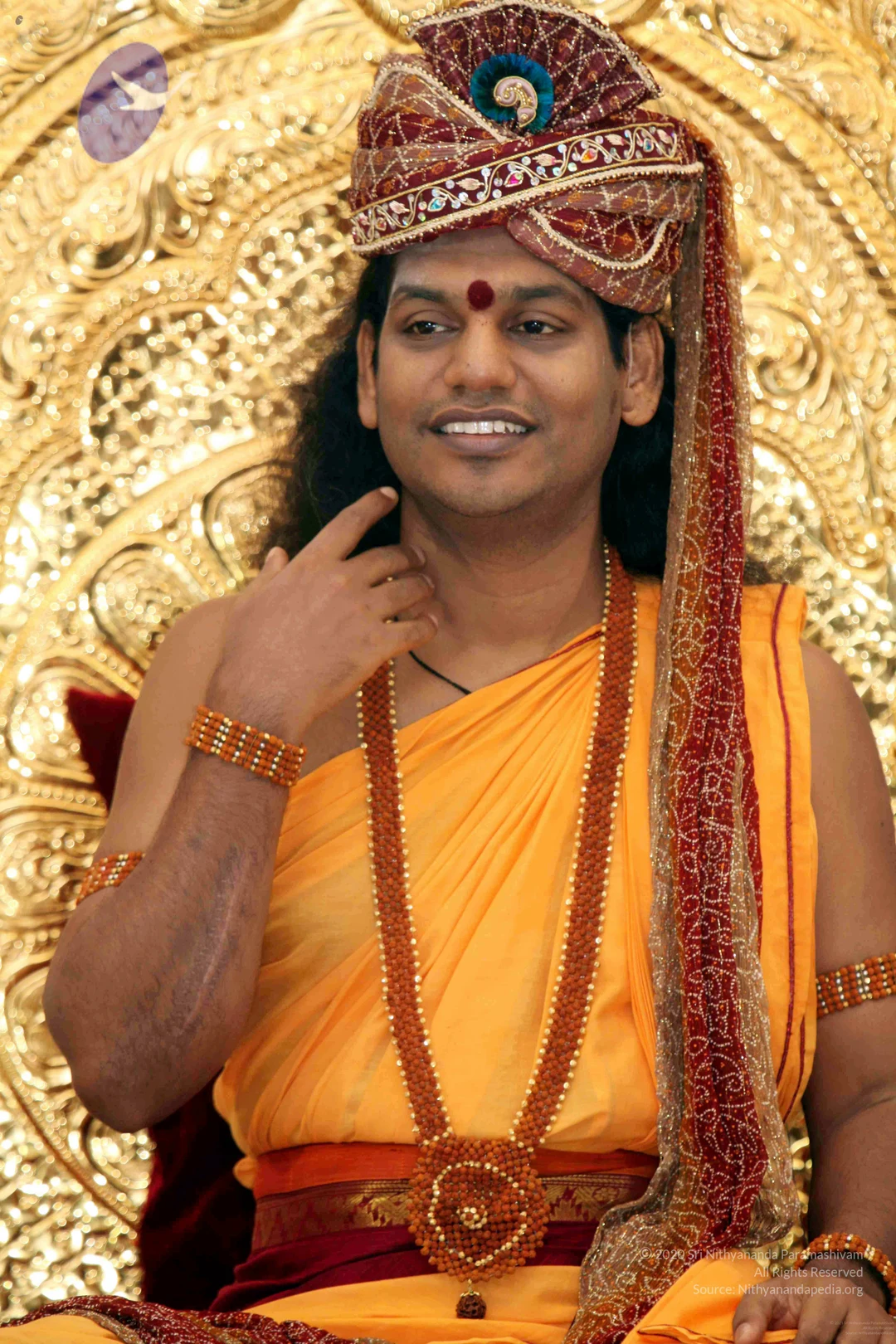
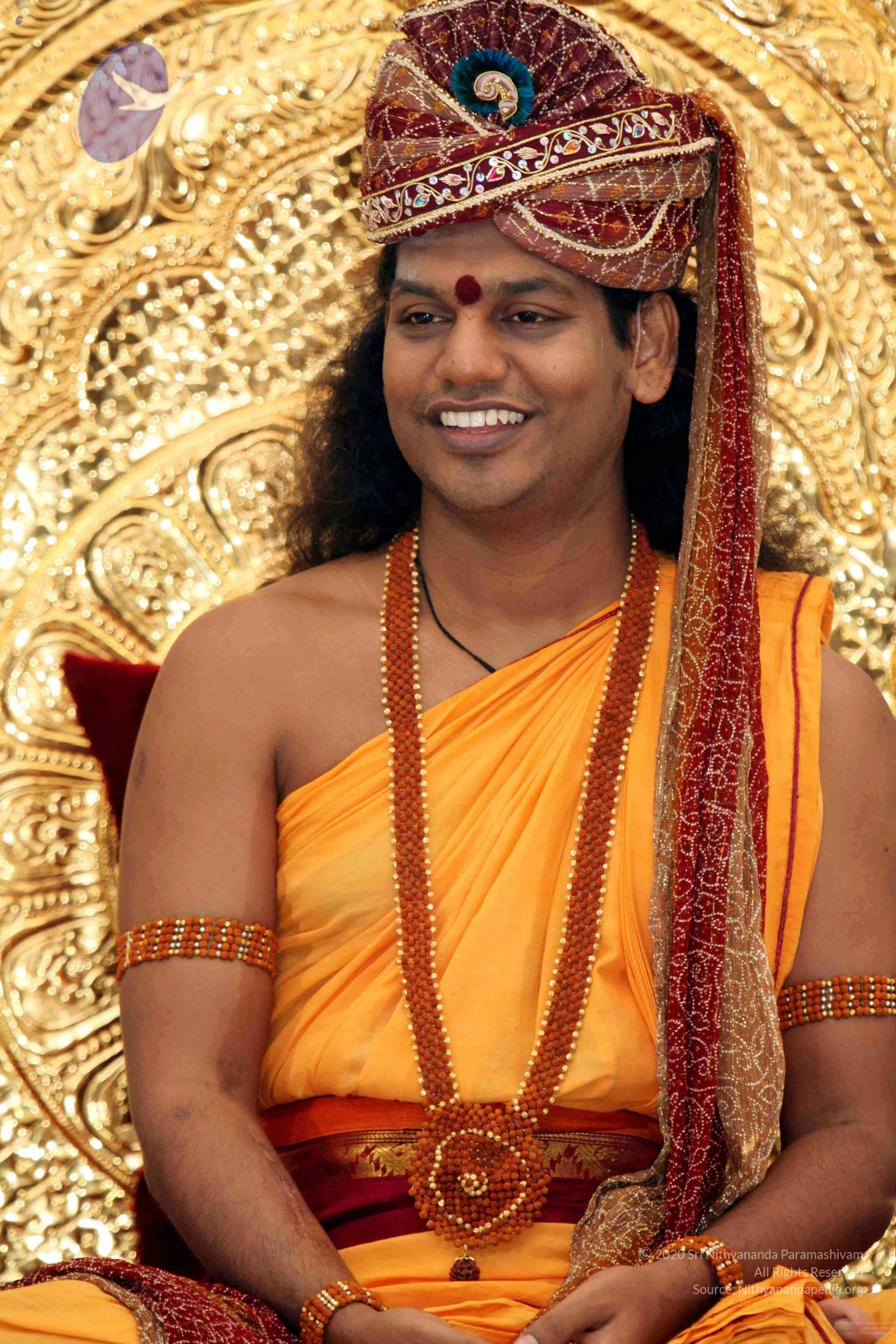
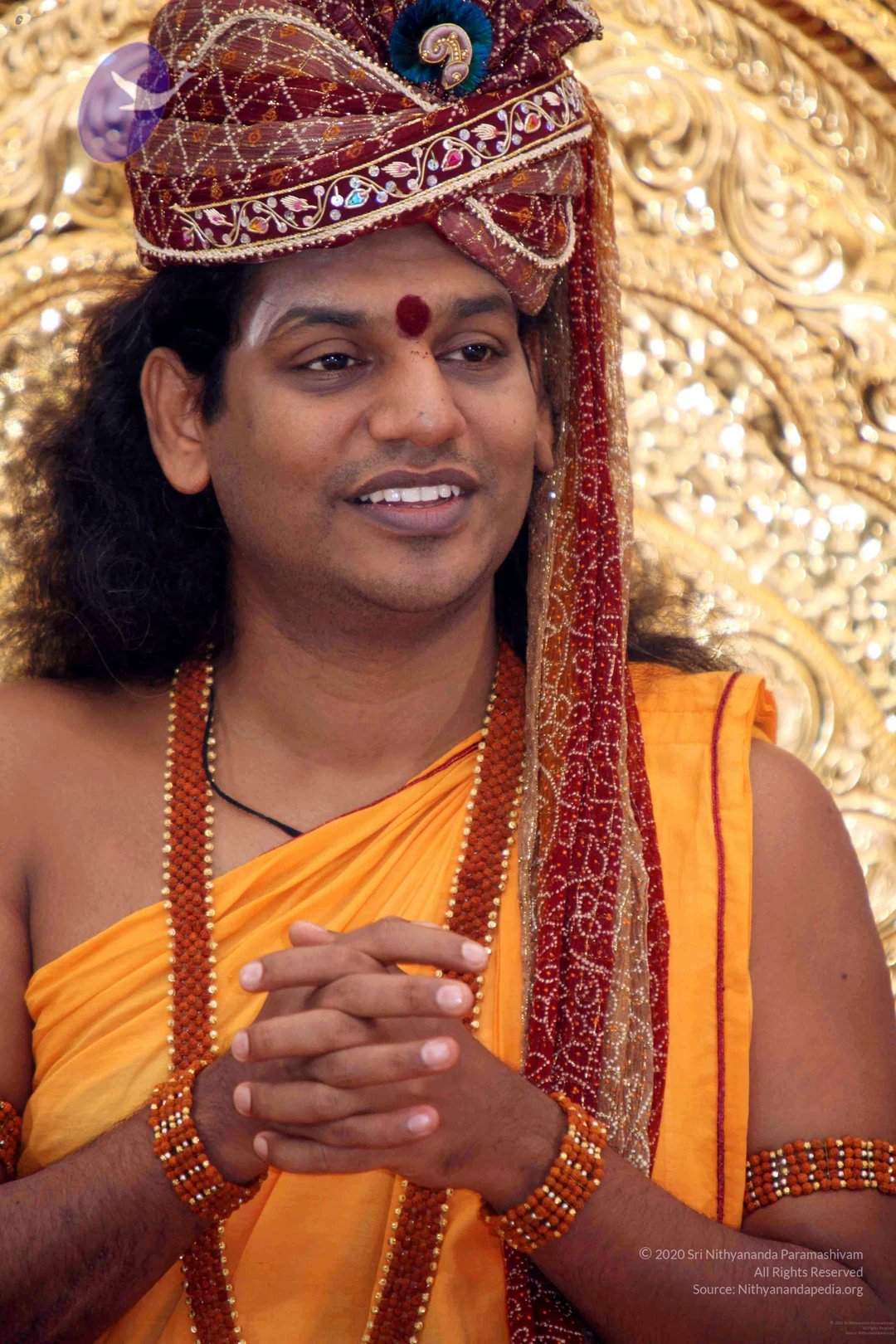
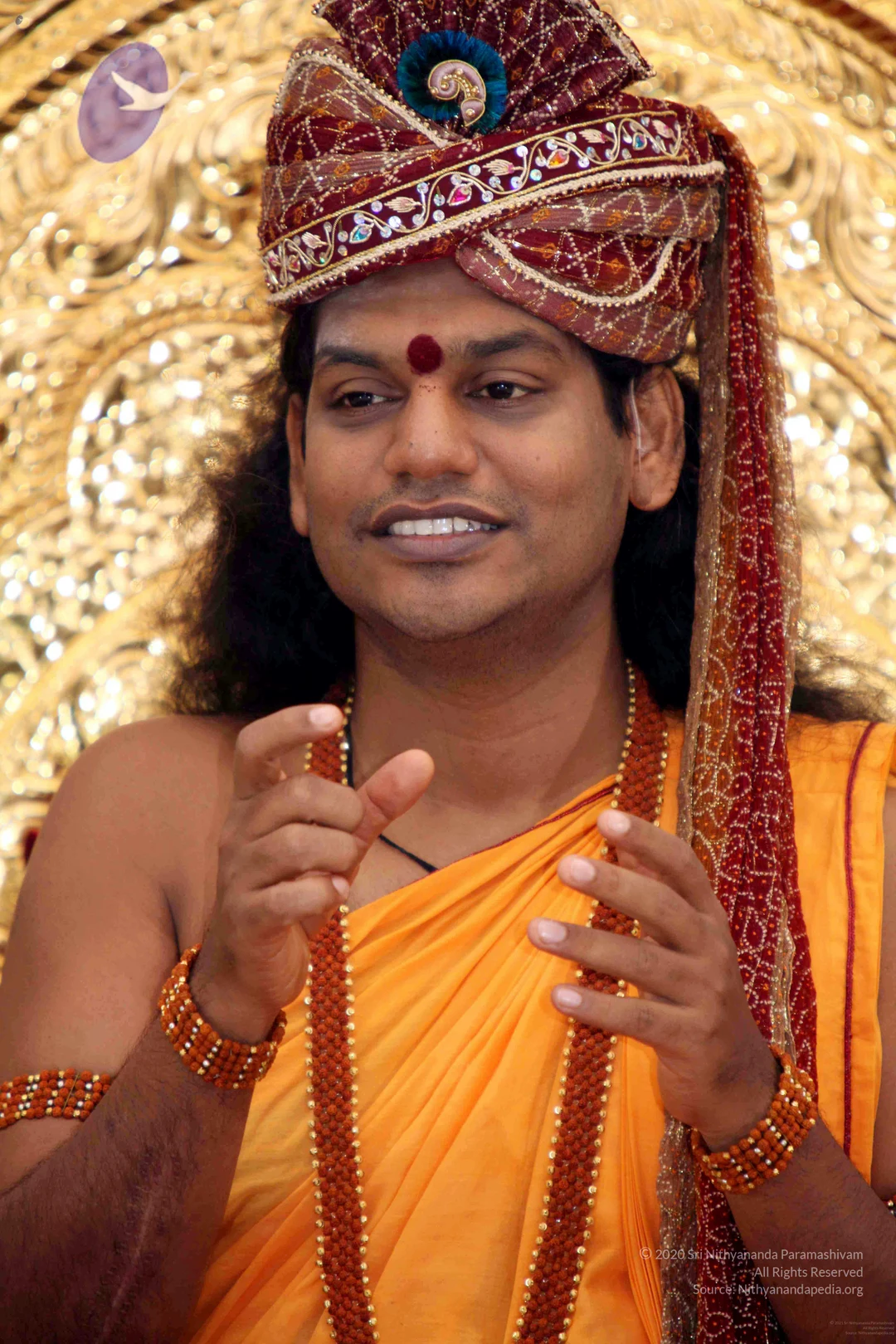
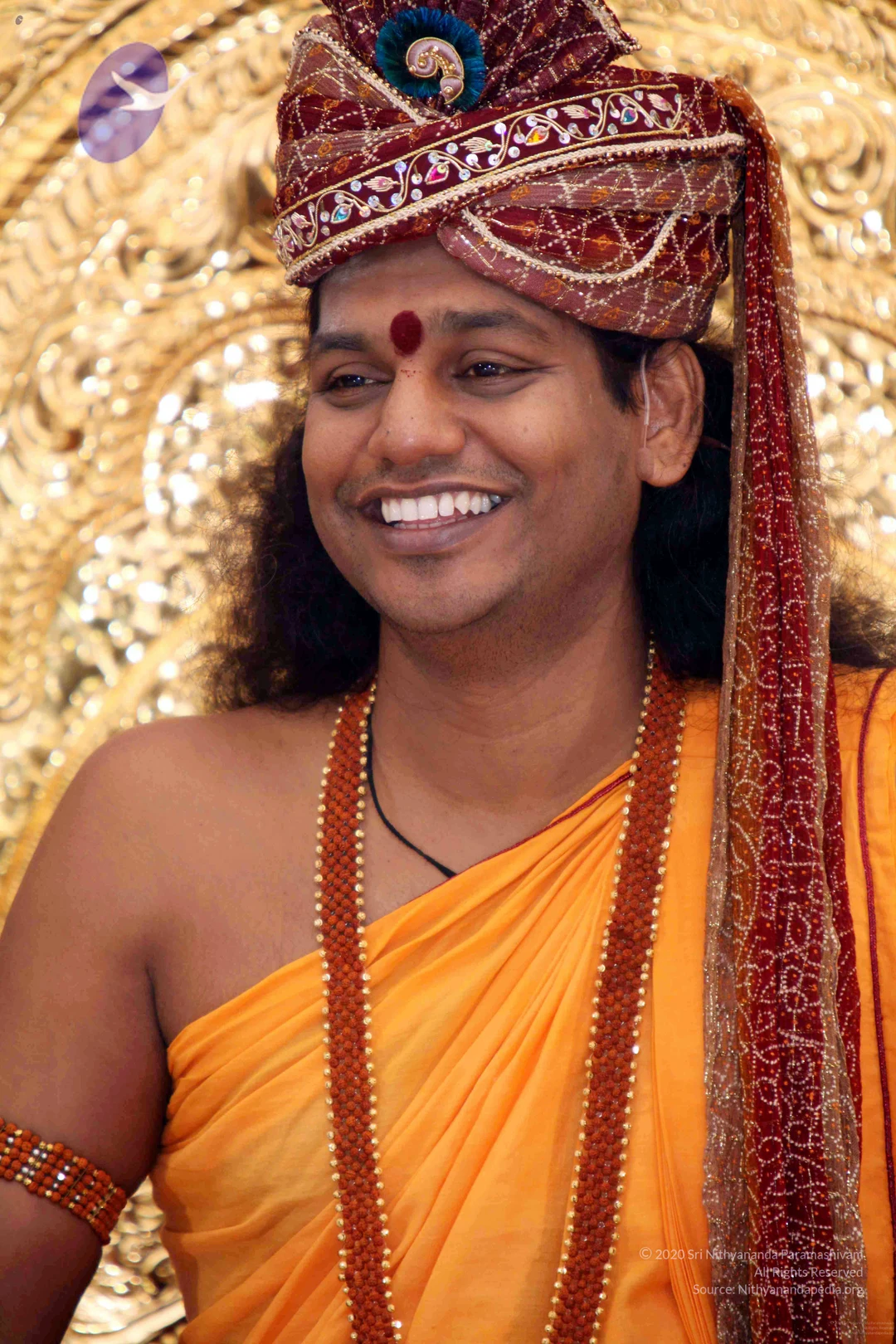
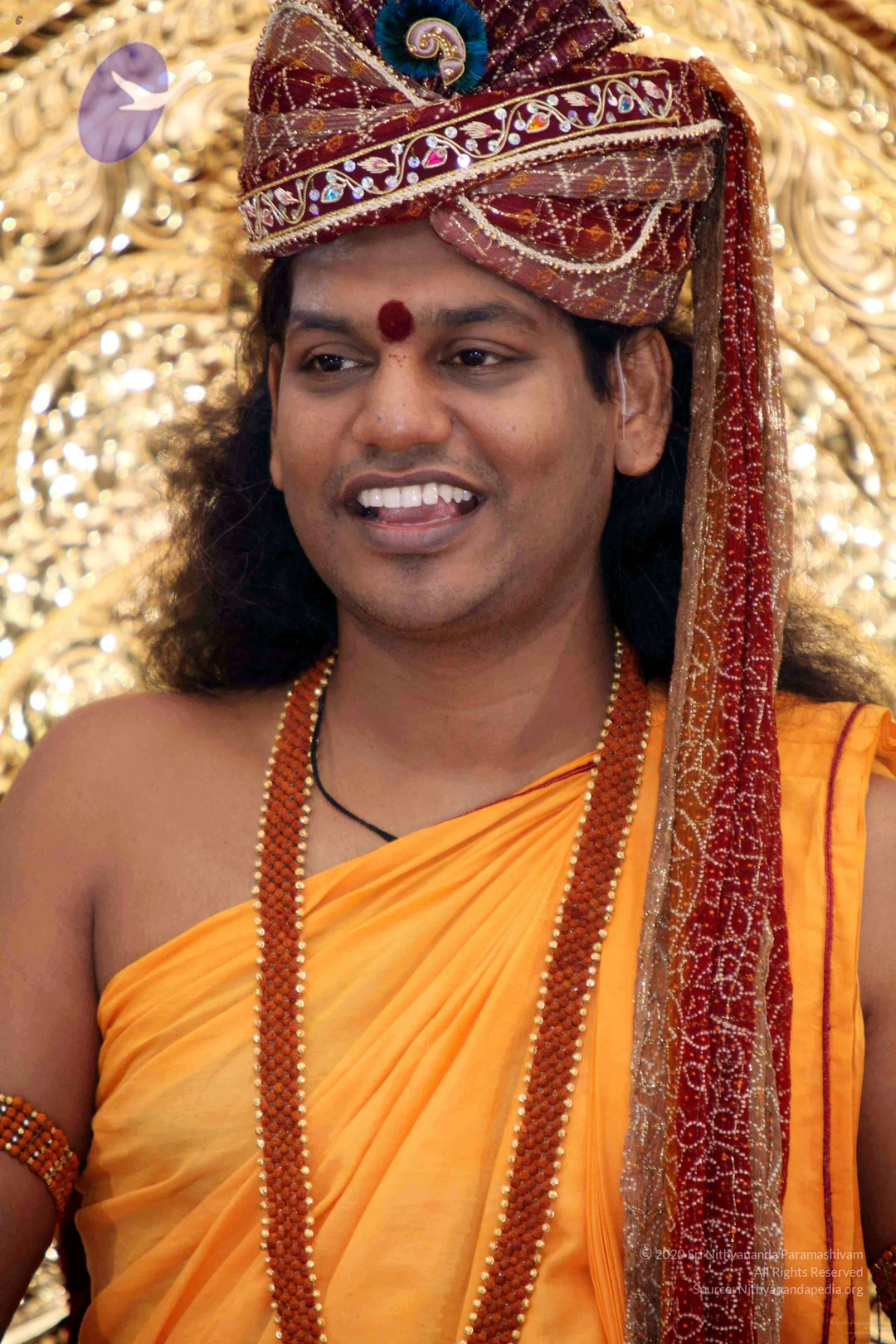
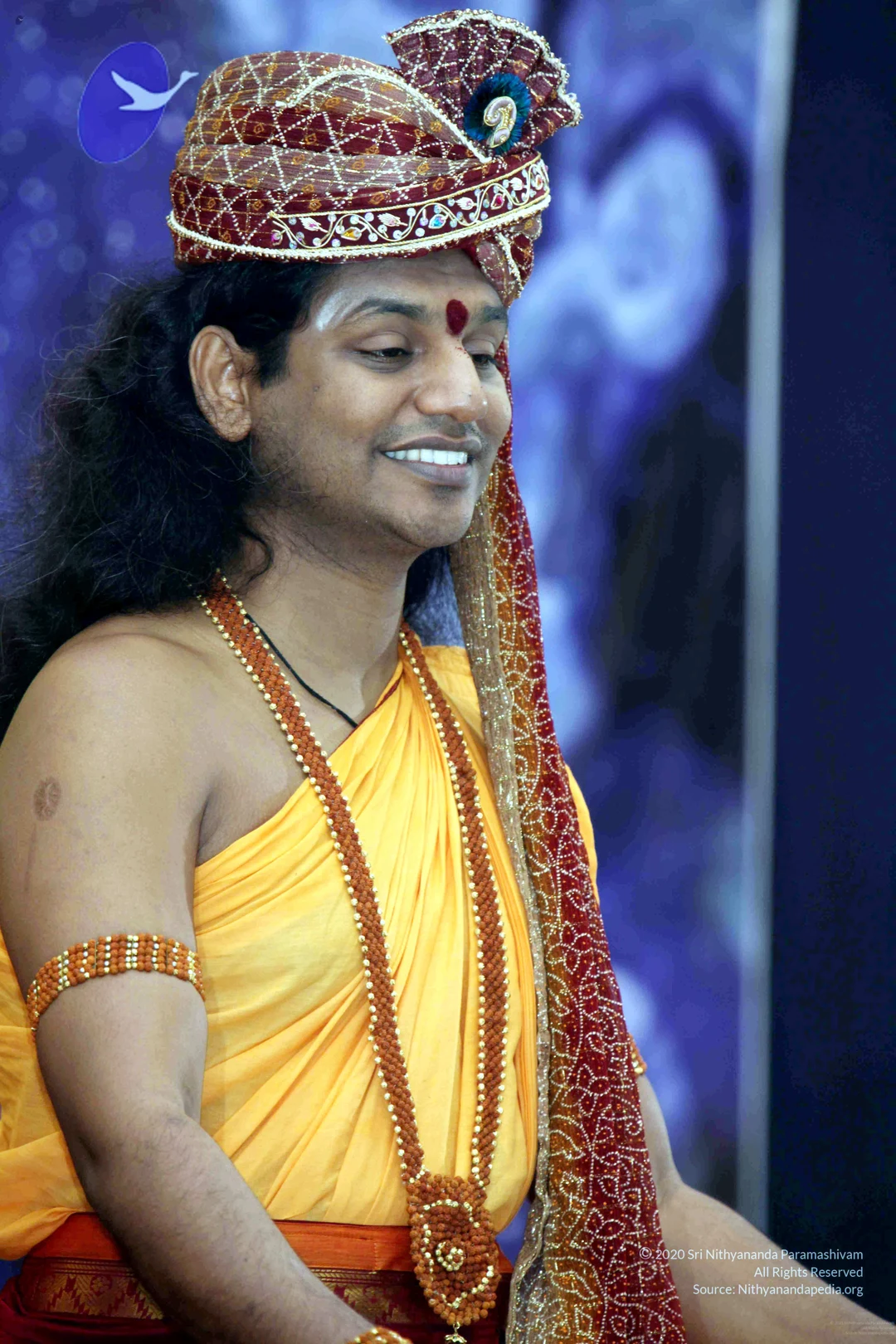
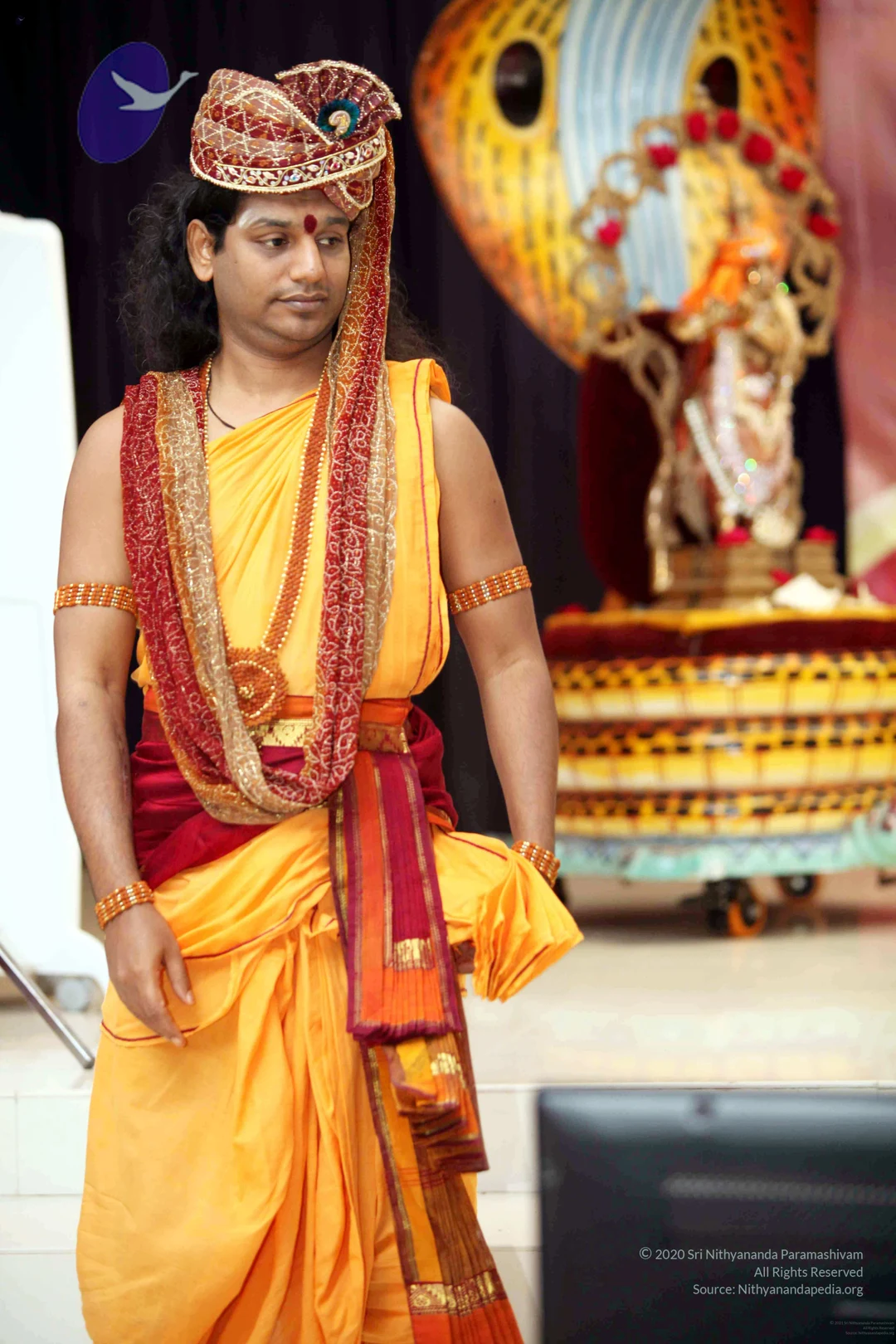
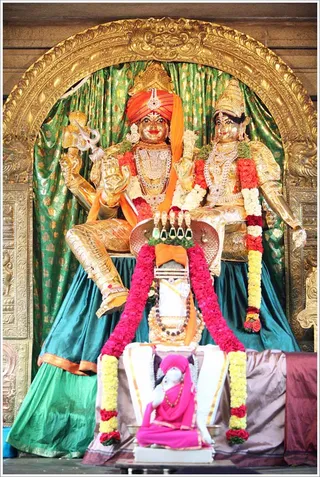
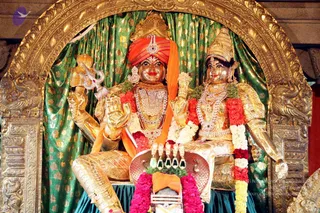
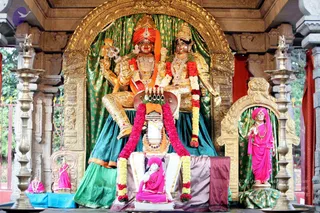
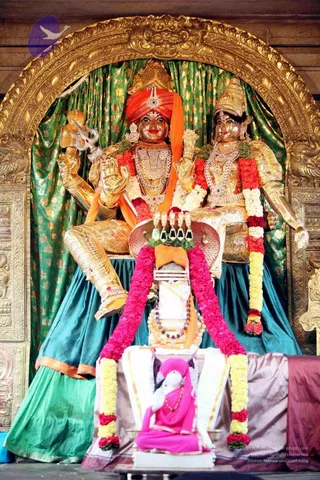
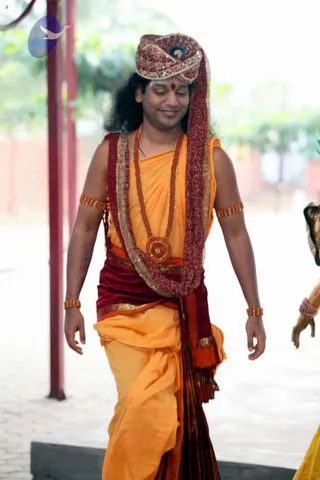
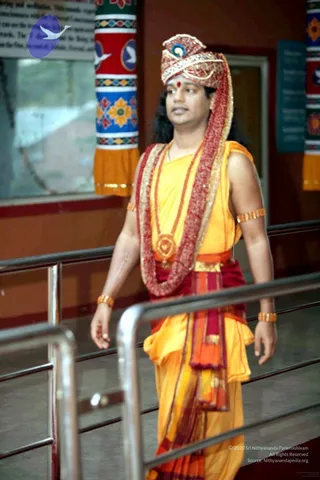
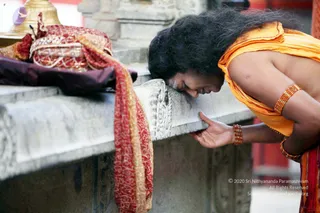
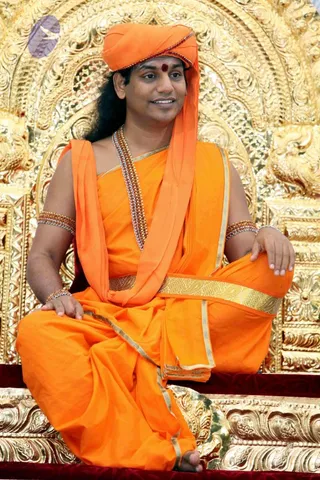
A golden murti of a seated Shiva and Parvati pair in a gilded arch framed by a green shimmering curtain with gold motifs. The left figure wears an orange turban, a trident in one hand, and a heavy jewelled necklace; the right figure wears a tall gold crown and layered gold necklaces. Both are adorned with garlands of red and white flowers. In front, a shivalinga with an orange cloth and pink and red flower garlands sits on a green-draped pedestal. Deity murti scene with ornate gold ritual decoration.A photograph of a shrine with a large gilded deity murti of Shiva and Parvati seated on a raised dais, the figures adorned with gold jewellery, rudraksha-style necklaces and red-and-white flower garlands. The god wears an orange turban and holds a trident, while a green-and-gold drape forms the backdrop. In front, a shivalinga draped with a red-and-white garland and an orange cloth sits on a pedestal, with a small pink-clad figure seated before it. A pink-robed statue stands at the right, and two tall brass oil lamps flank the shrine.A golden murti pair seated on a raised throne-like platform under an ornate gilded arch with green gold-patterned drapery. The figure on the left wears an orange turban, heavy gold and jewelled necklaces, and holds a trident; the figure on the right wears a gold crown and garlands. Red and yellow flower garlands drape the platform and a shivalingam-like form below. In front, a white-clad seated figure in a pink shawl with a rudraksha-style necklace sits on a white pedestal with a small oil lamp. No living people are visible.A man walks along a paved colonnaded walkway, smiling with eyes lowered. He wears an ornate maroon and gold embroidered turban with a peacock-eye ornament, a red tilak on his forehead, and long dark hair falling behind. His saffron-orange garment is draped over one shoulder with a deep red patterned sash, and he wears a long beaded rudraksha-style mala with a large round pendant, gold-toned armlets and bangles. A carved wooden figure is partly visible at the right edge. A green tree and red pillars are in the background.A standing man walks along a corridor past metal handrails, wearing an ornate red and gold turban with a peacock-feather motif and a red-and-gold embroidered shawl draped over his shoulders. He wears a saffron-yellow dhoti and sleeveless top with a red sash, gold armlets and bangles, a long orange-and-gold beaded necklace with a gold pendant, and a red bindi on his forehead. Behind him, painted red, blue and white columns with floral and bird motifs stand beside a glass window and a wall board. A probable Swamiji is shown in ceremonial saffron and gold regalia, distinguished by long swept-back hair, the crown-like turban, ornate red shawl and the saffron-gold costume, and is the only physical person visible in the photograph.A photograph of a person in an orange sleeveless garment with long dark hair bending forward and resting their face against a grey stone ledge, one hand extended palm-down on the stone. Beside them on the ledge sits a red and gold embroidered cloth draped over a purple cushion, with a red and gold textile hanging down the stone. A golden object is visible at the upper left and red architecture behind. Orange bangles are worn on the wrist and arm. The setting appears to be a temple. One person is visible.

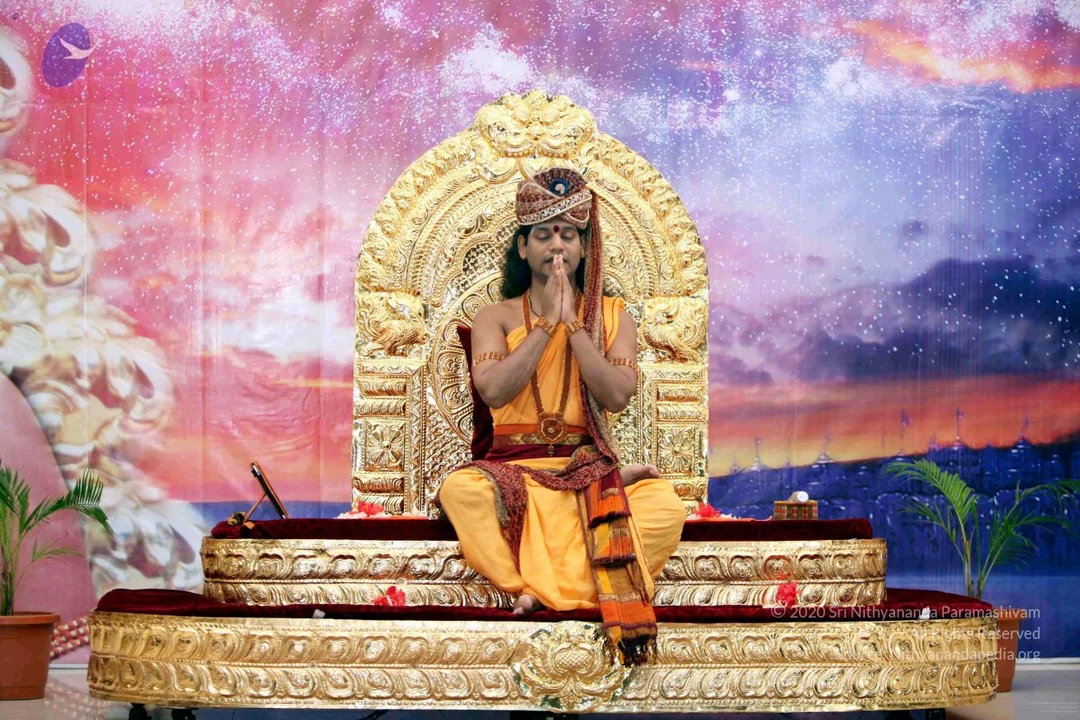
Nithya satsang
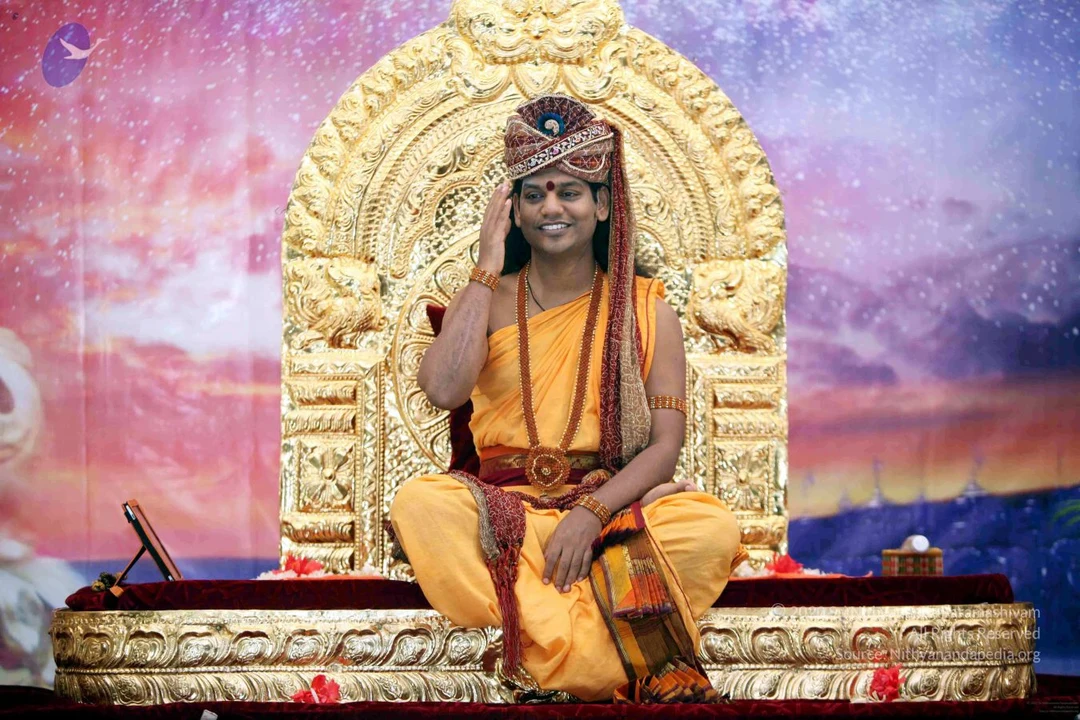
82 photosSource gallery
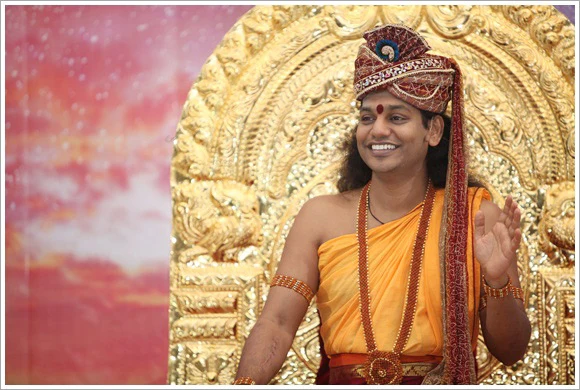
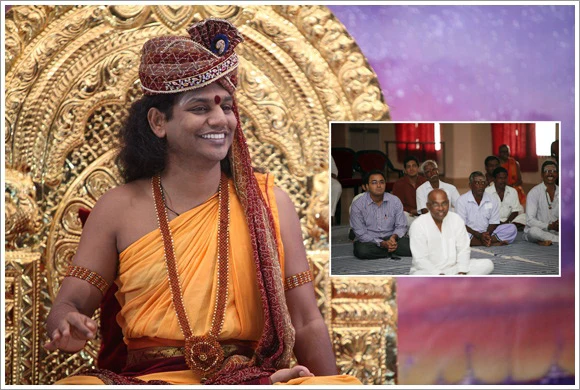
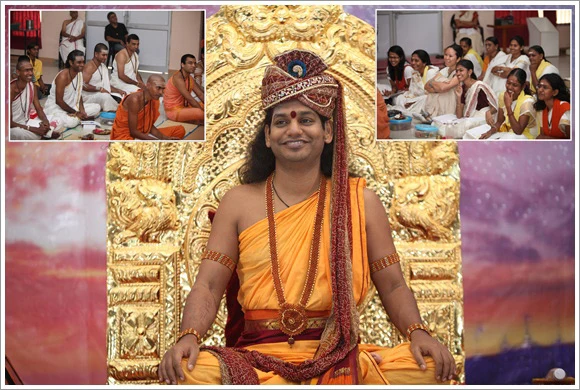
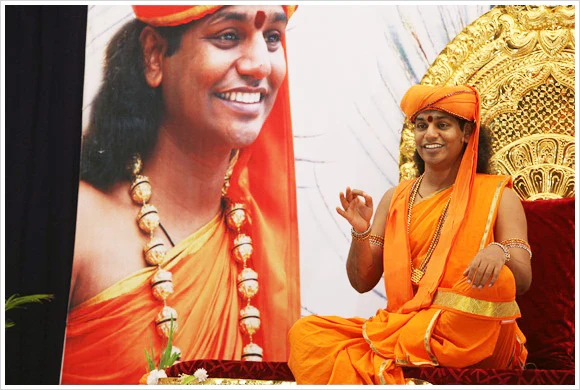
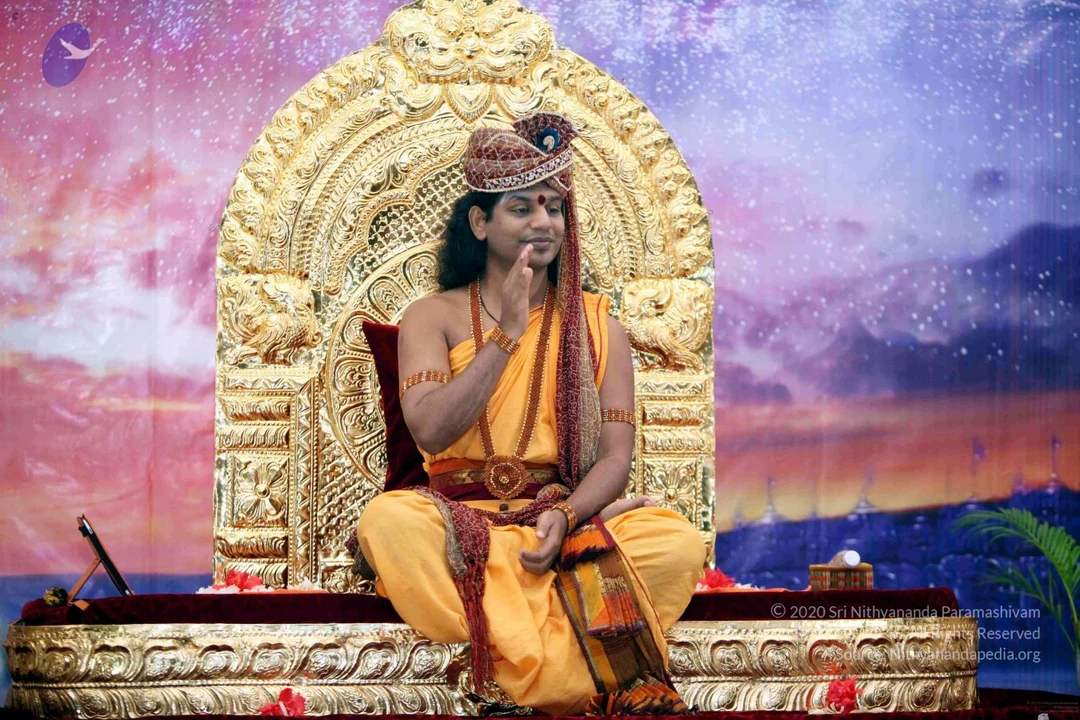
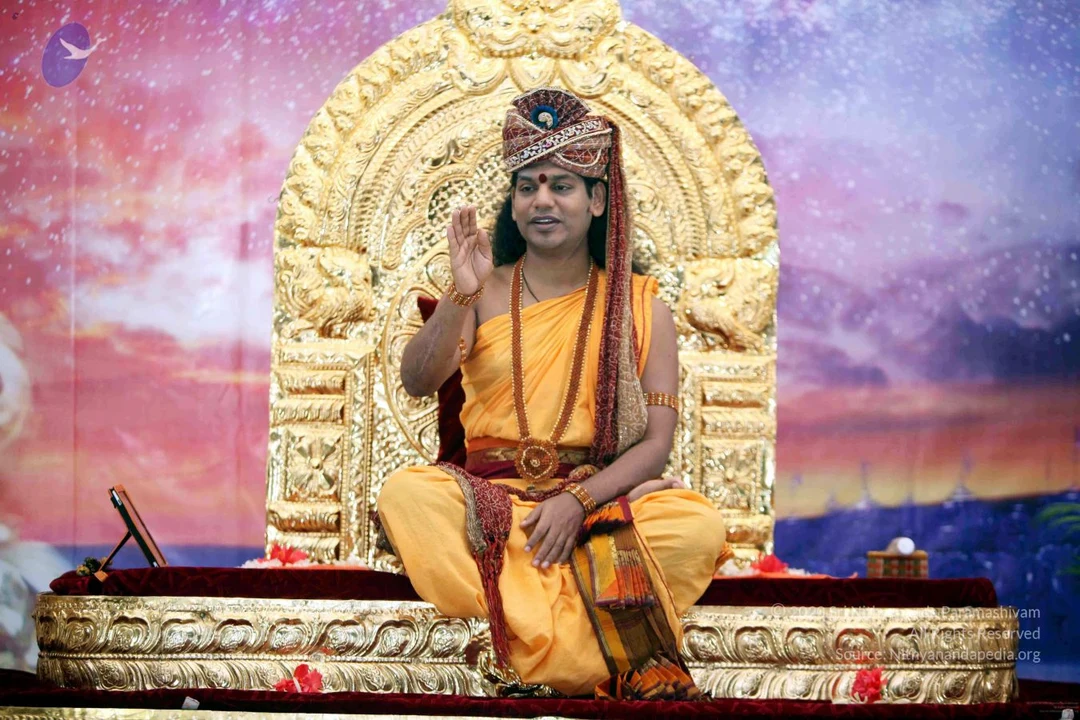
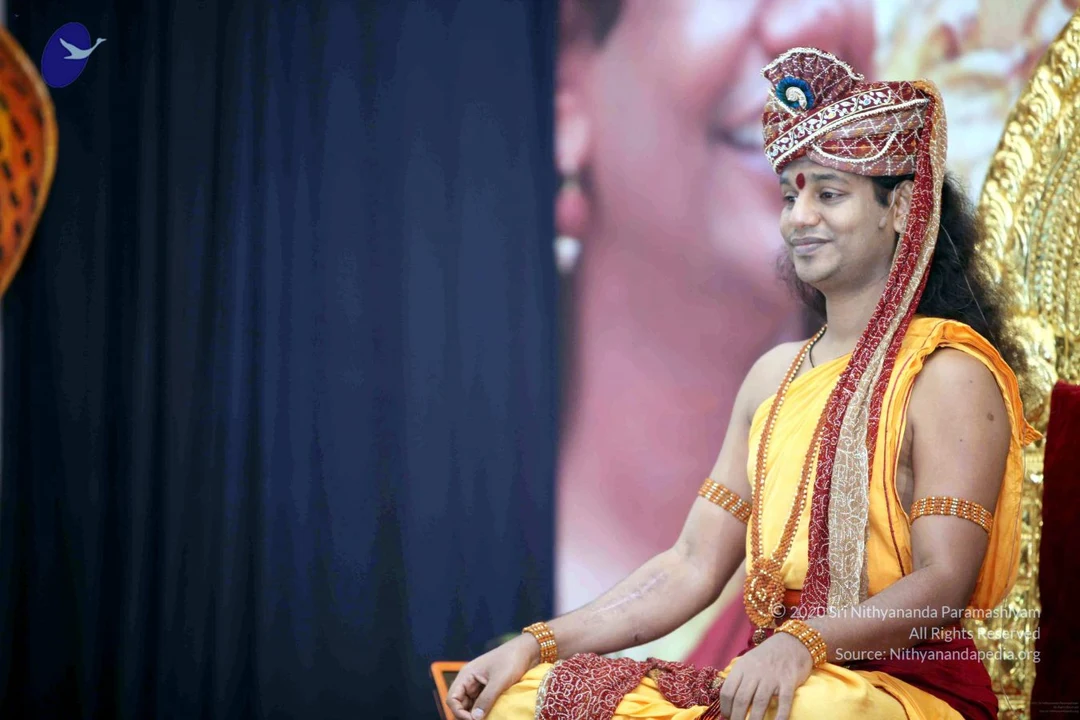
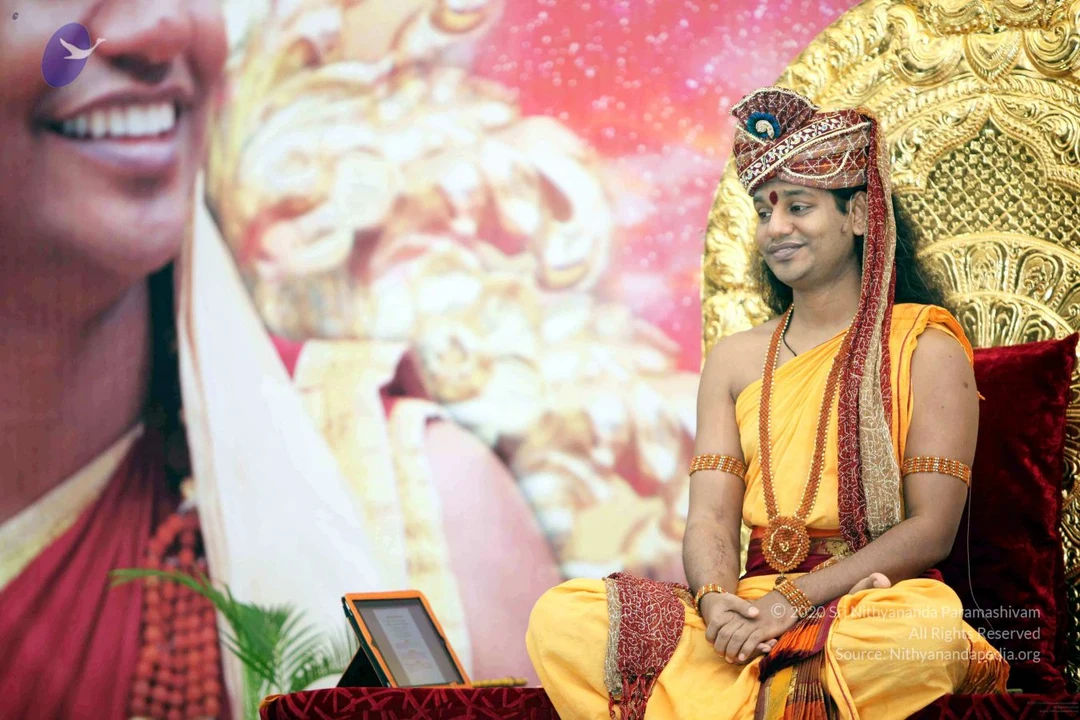
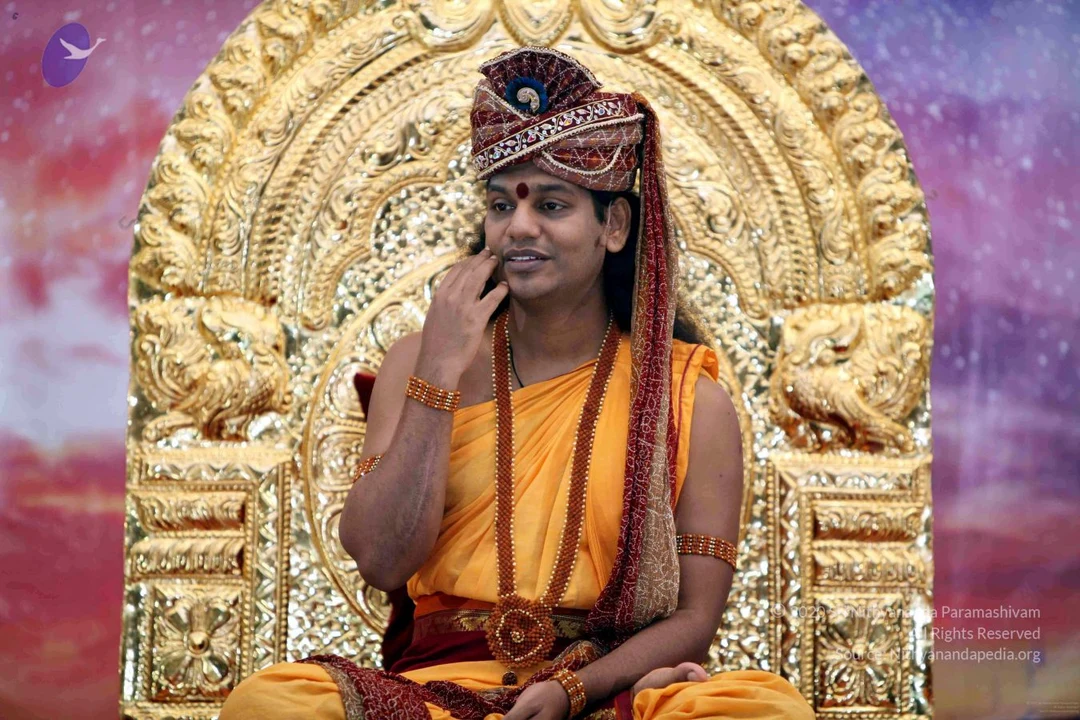
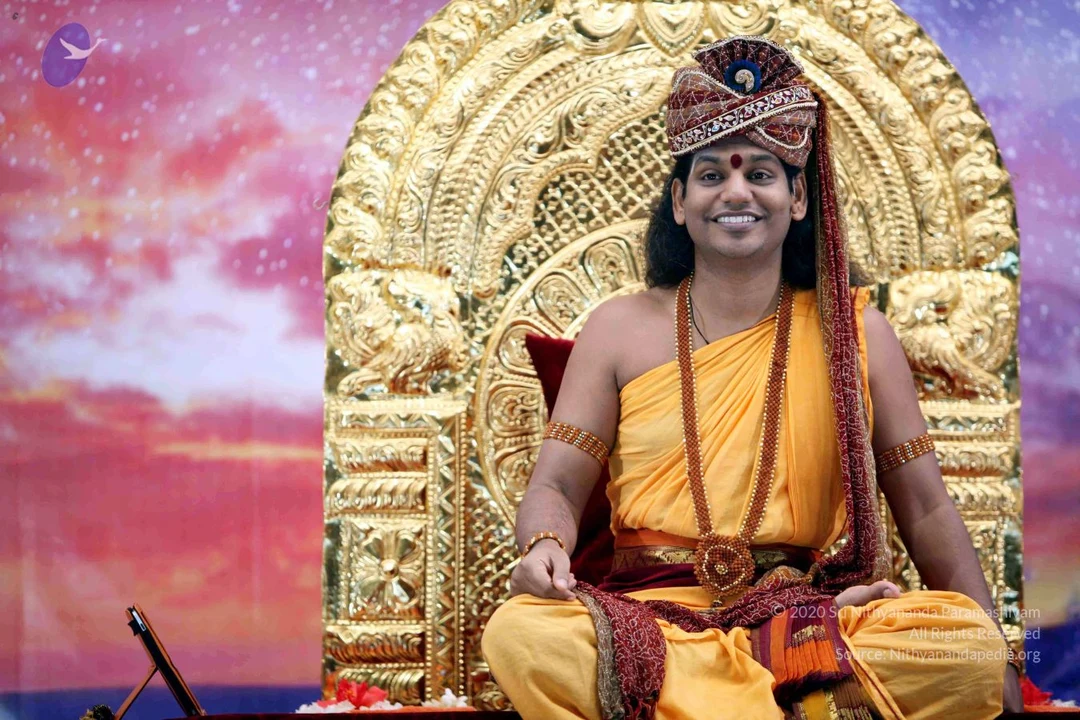
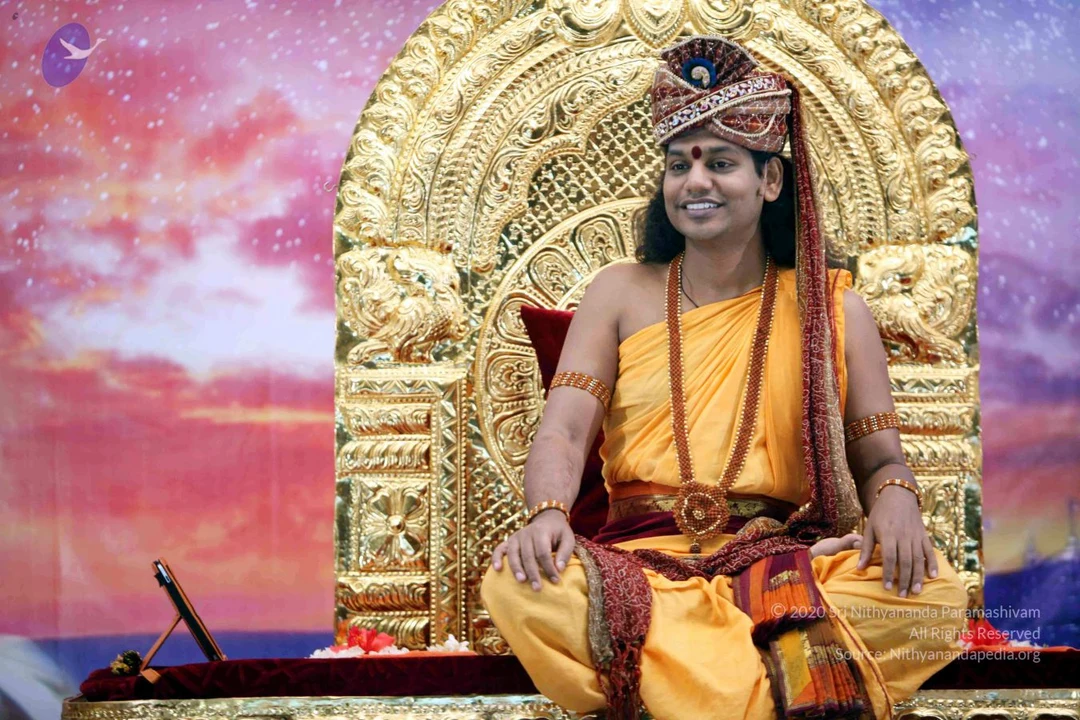
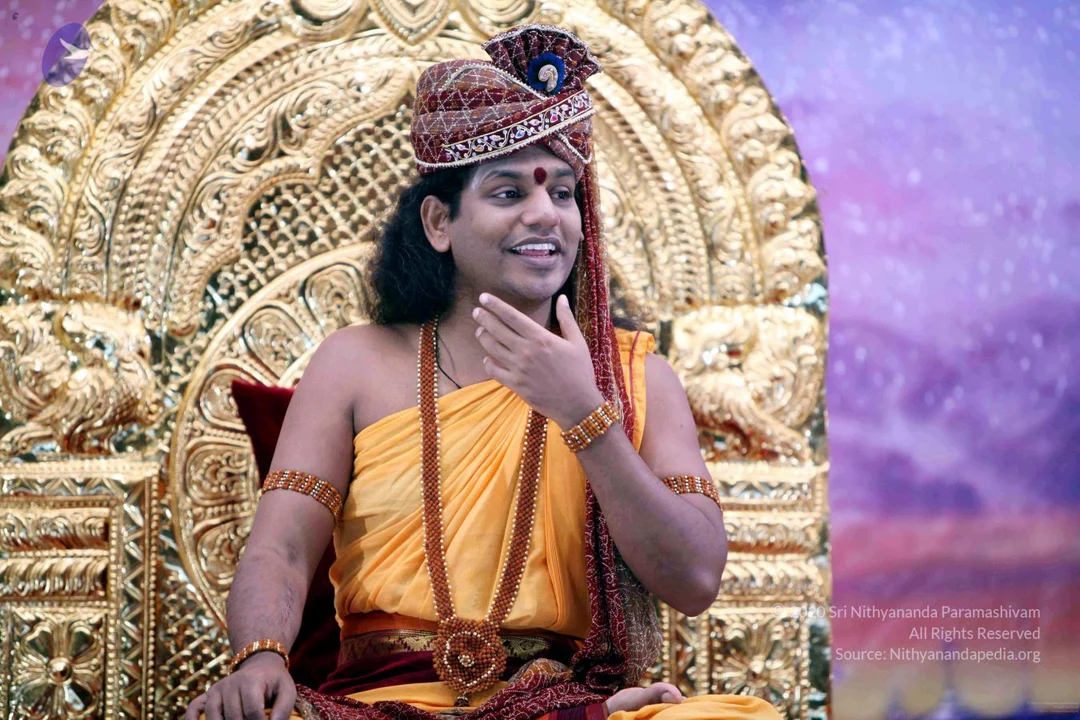
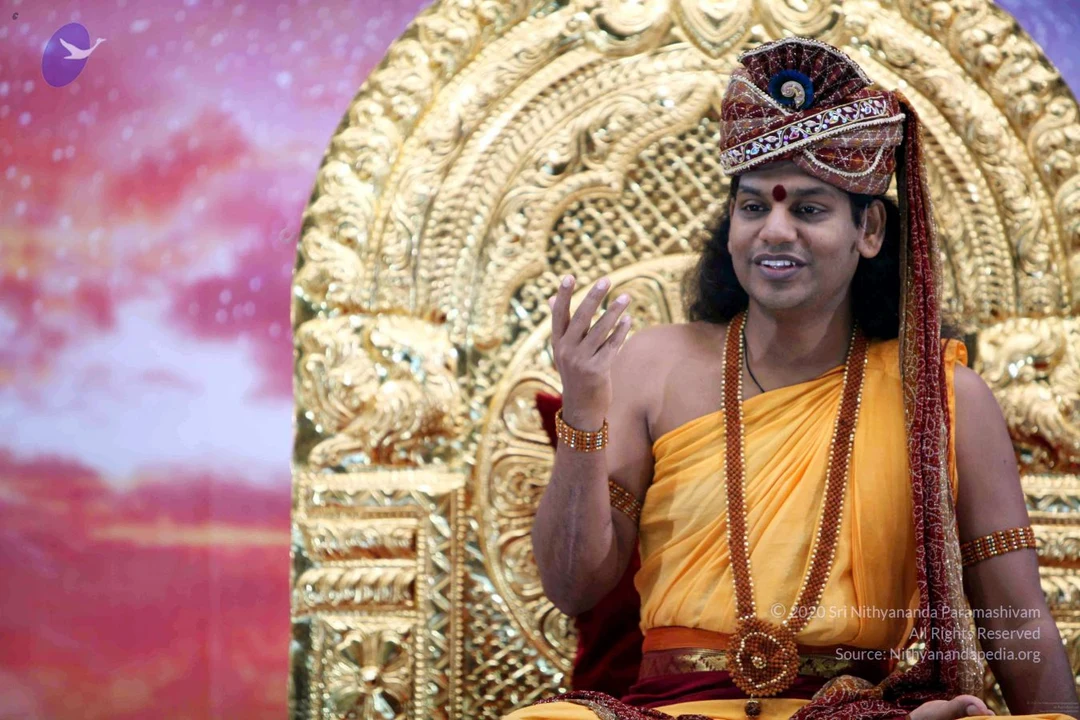
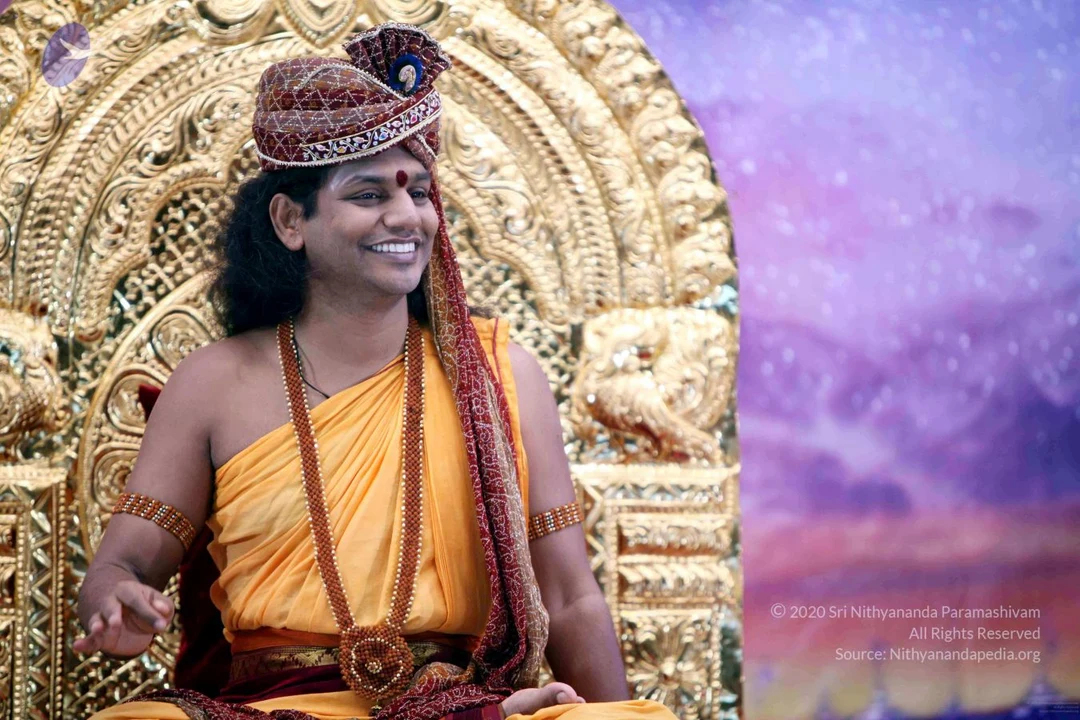
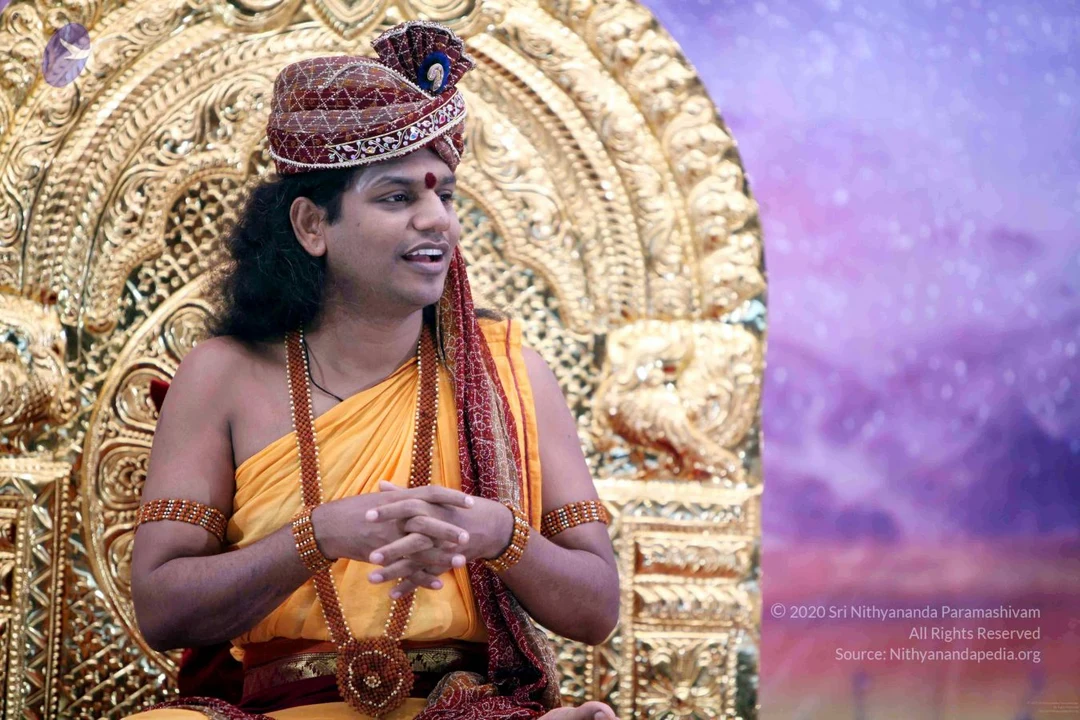
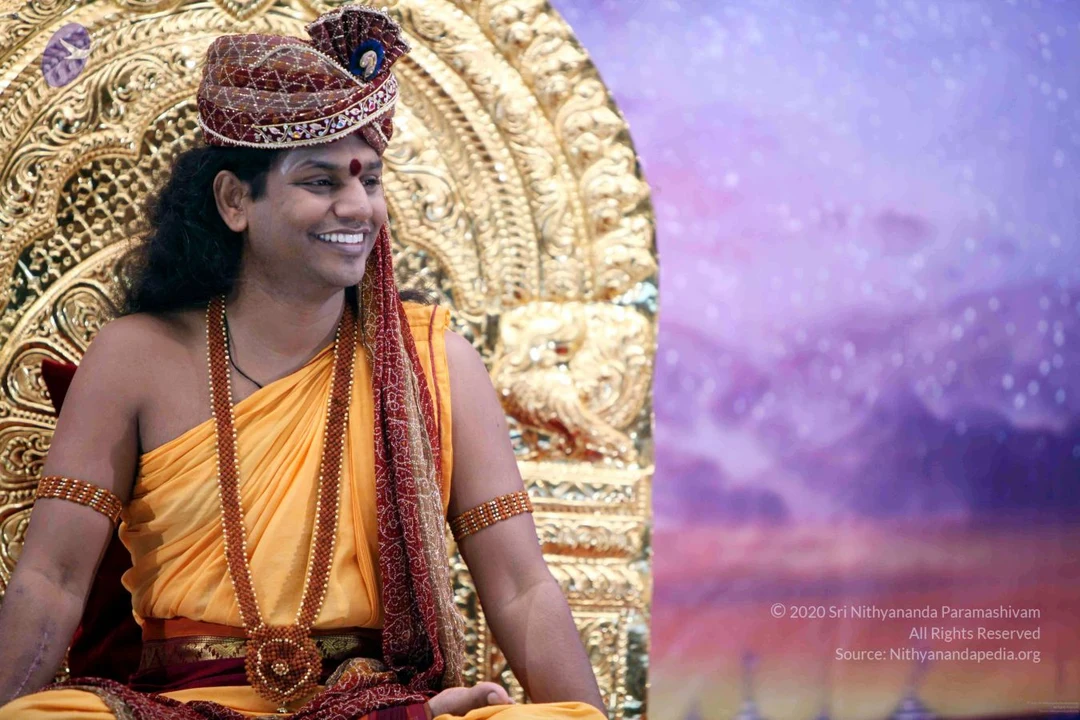
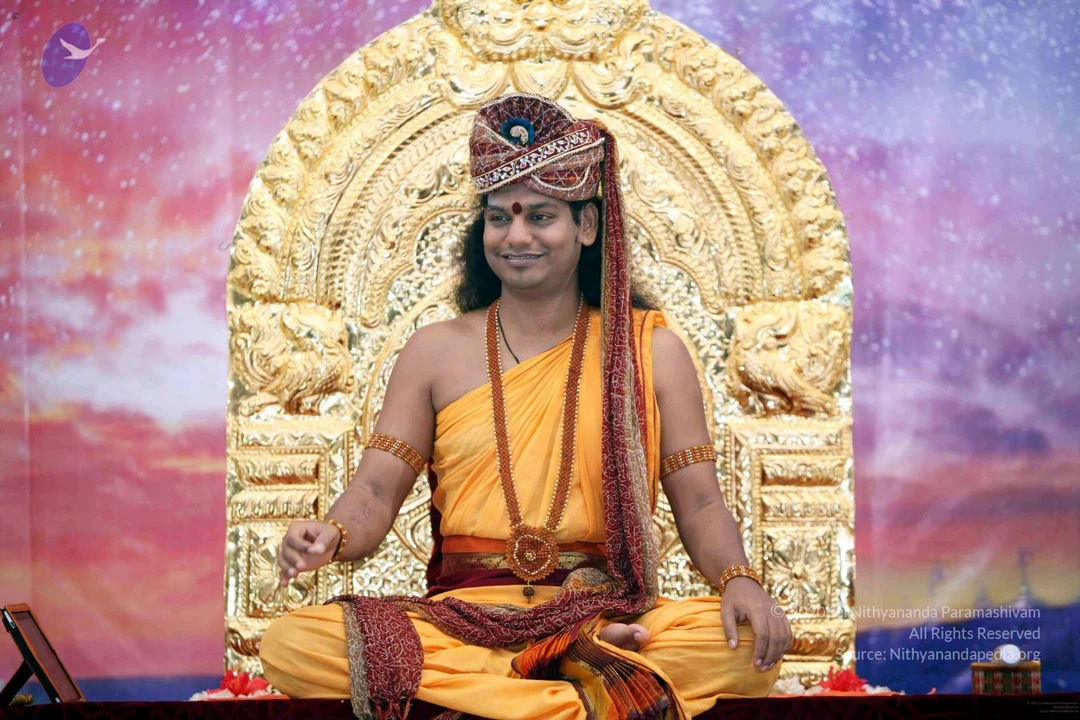
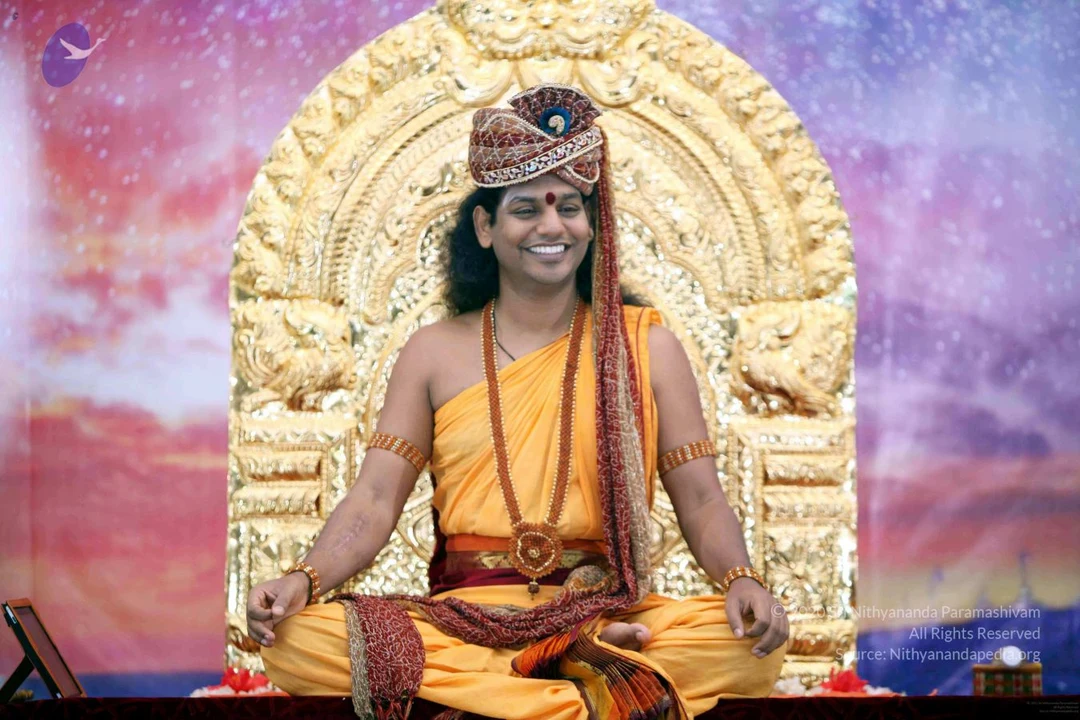
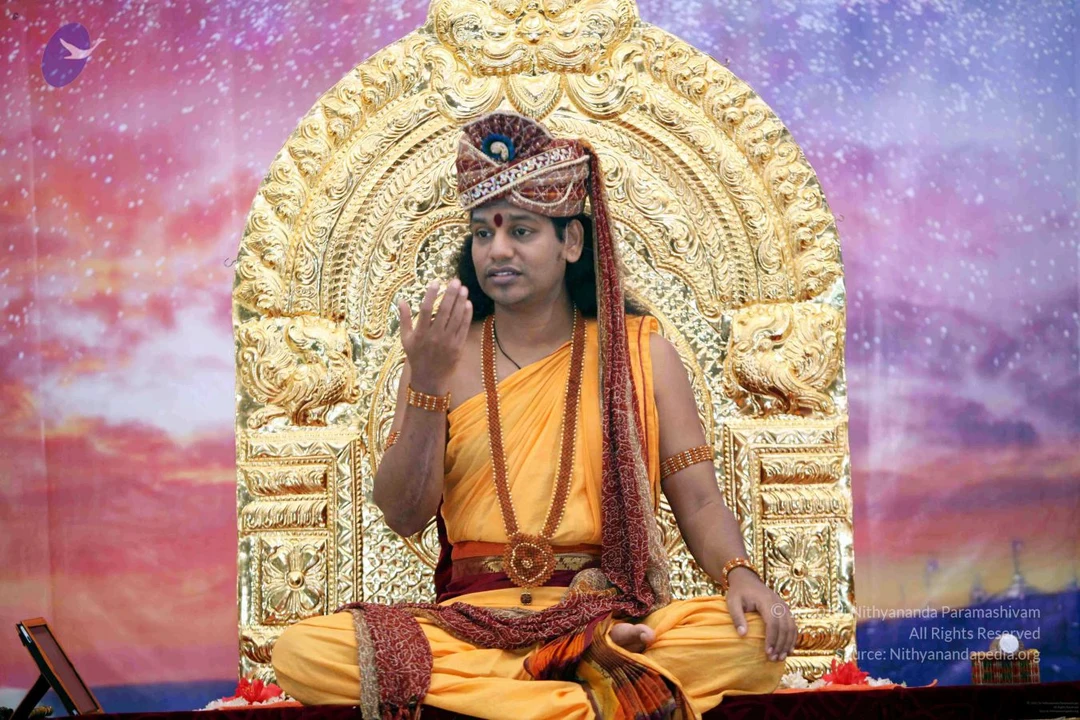
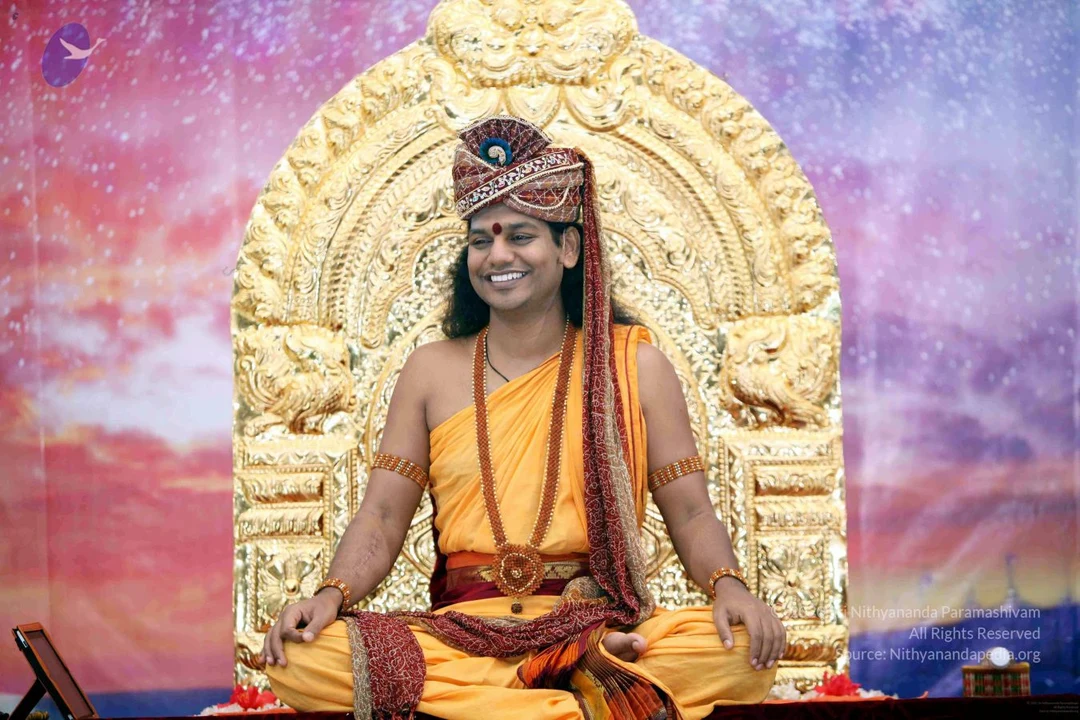
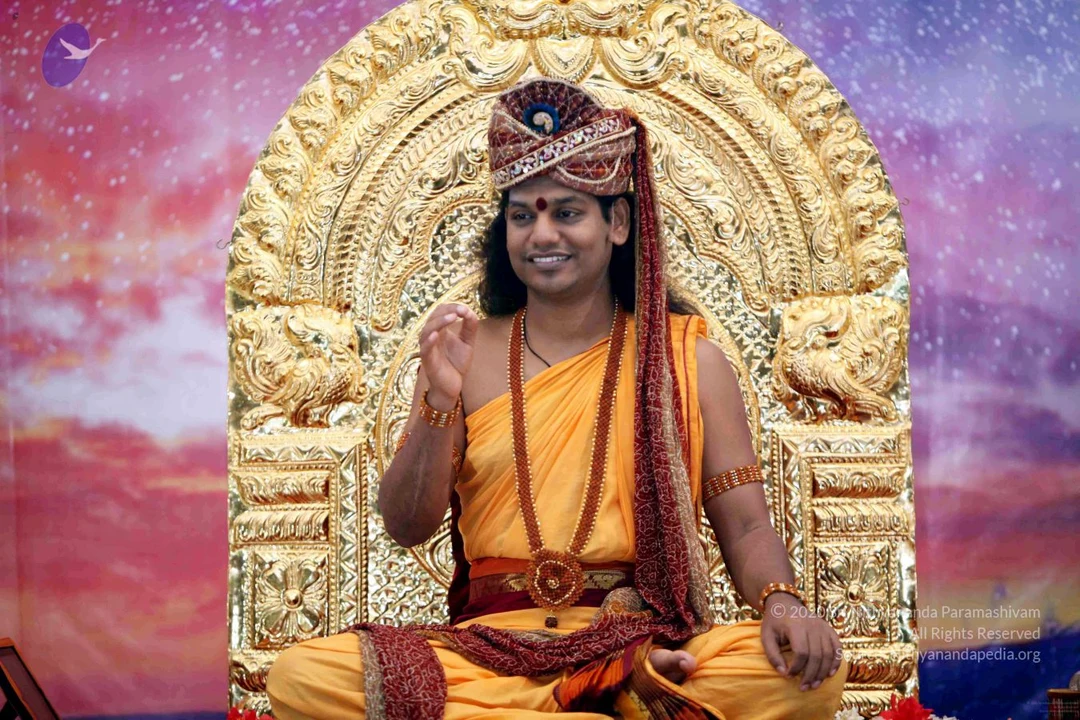
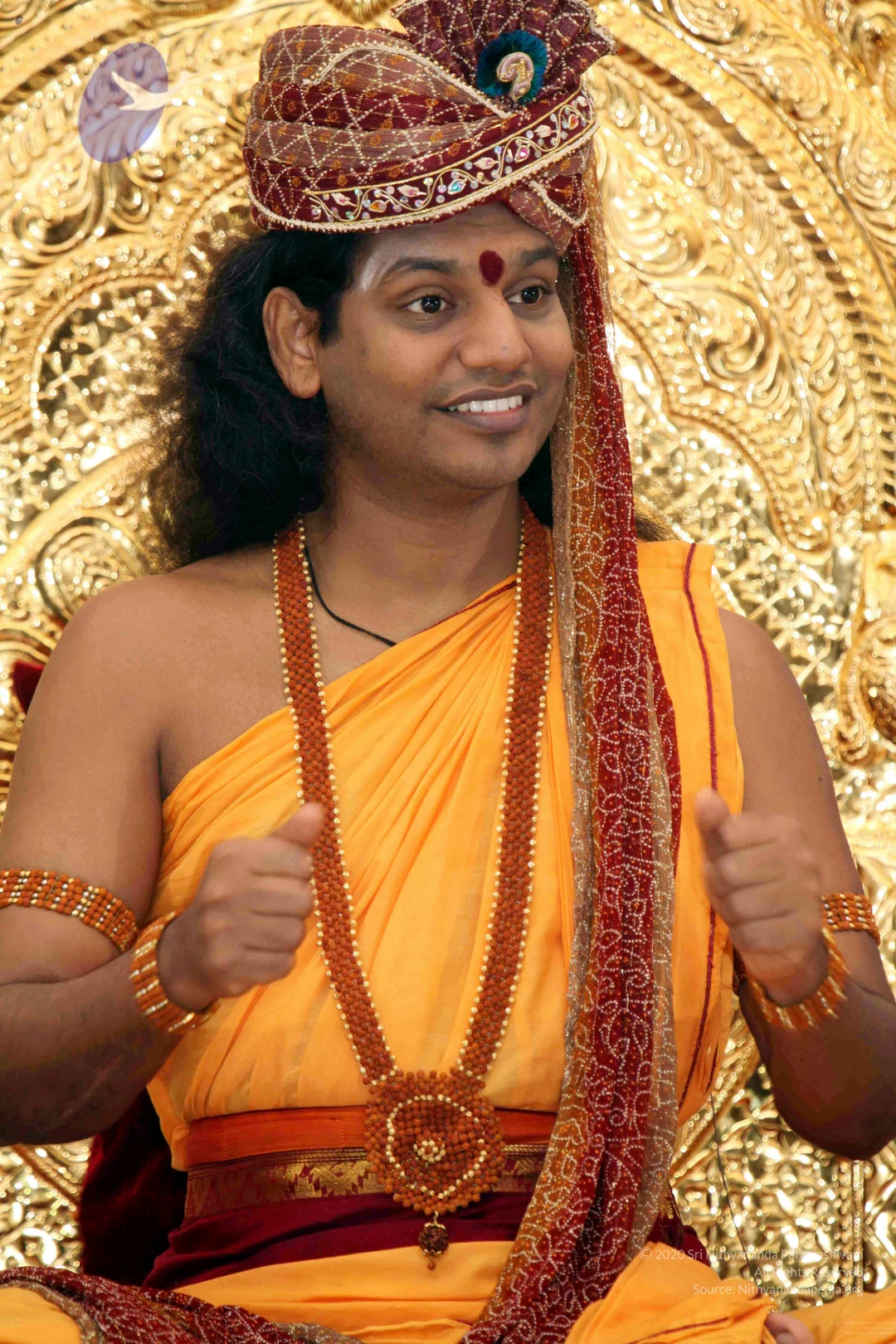
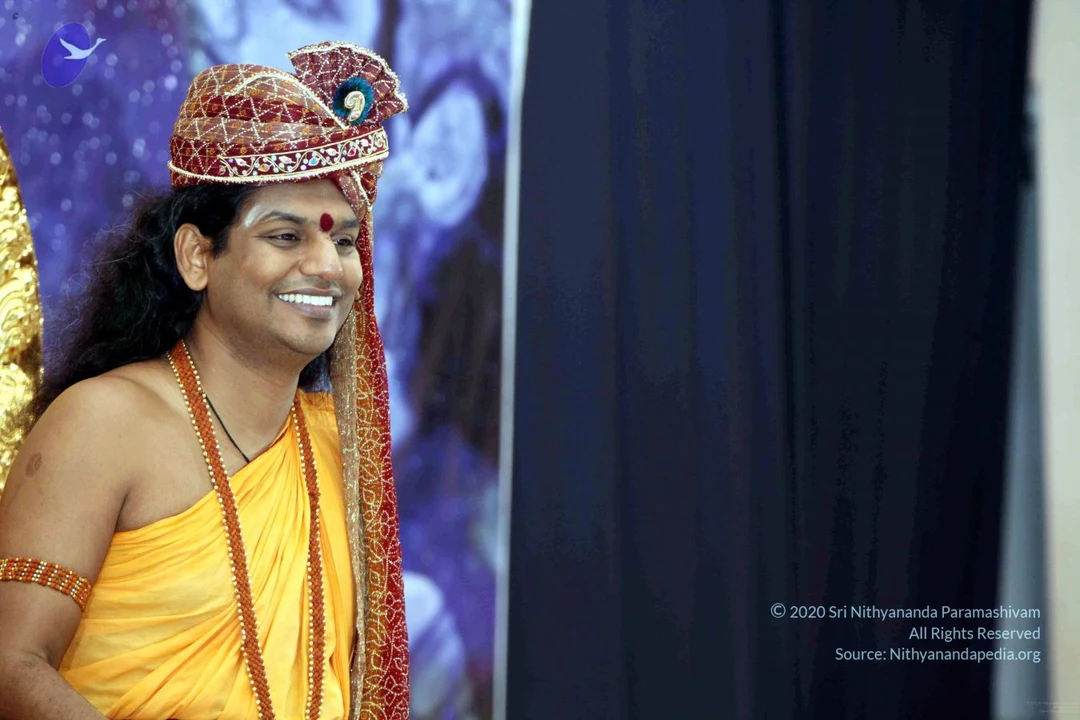
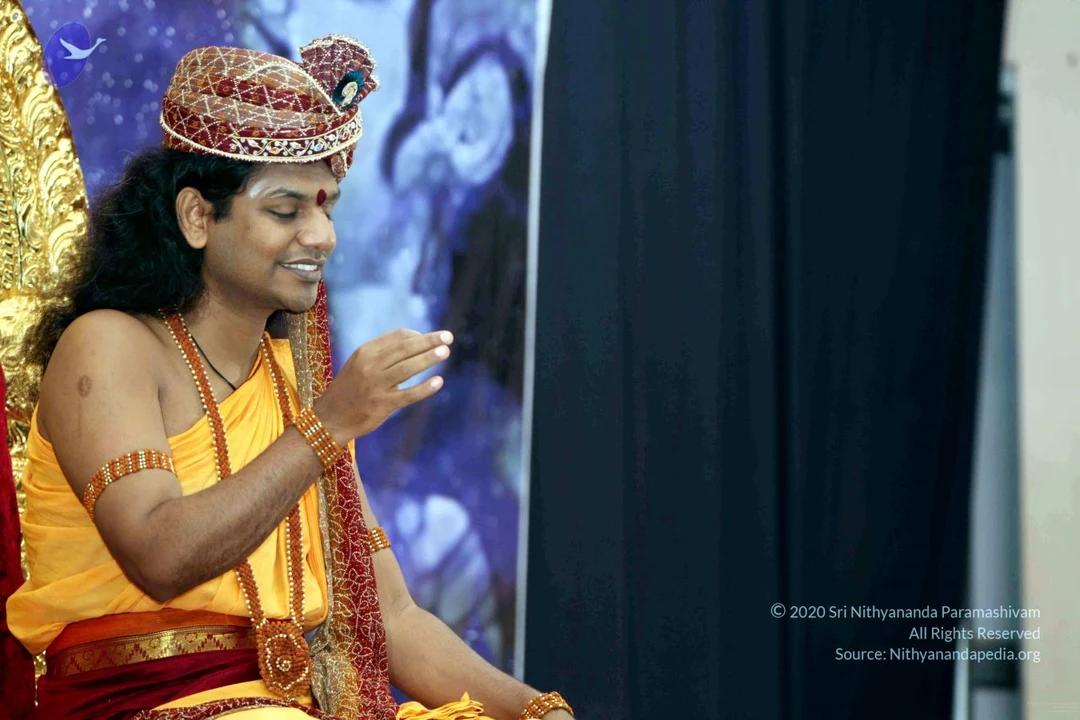
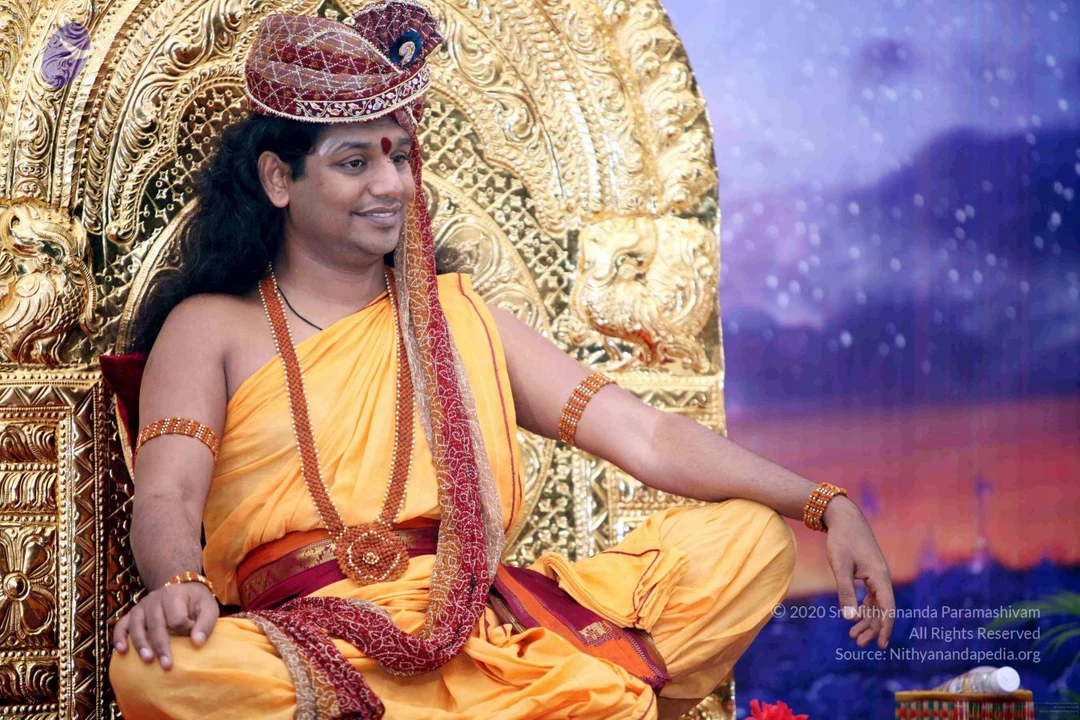
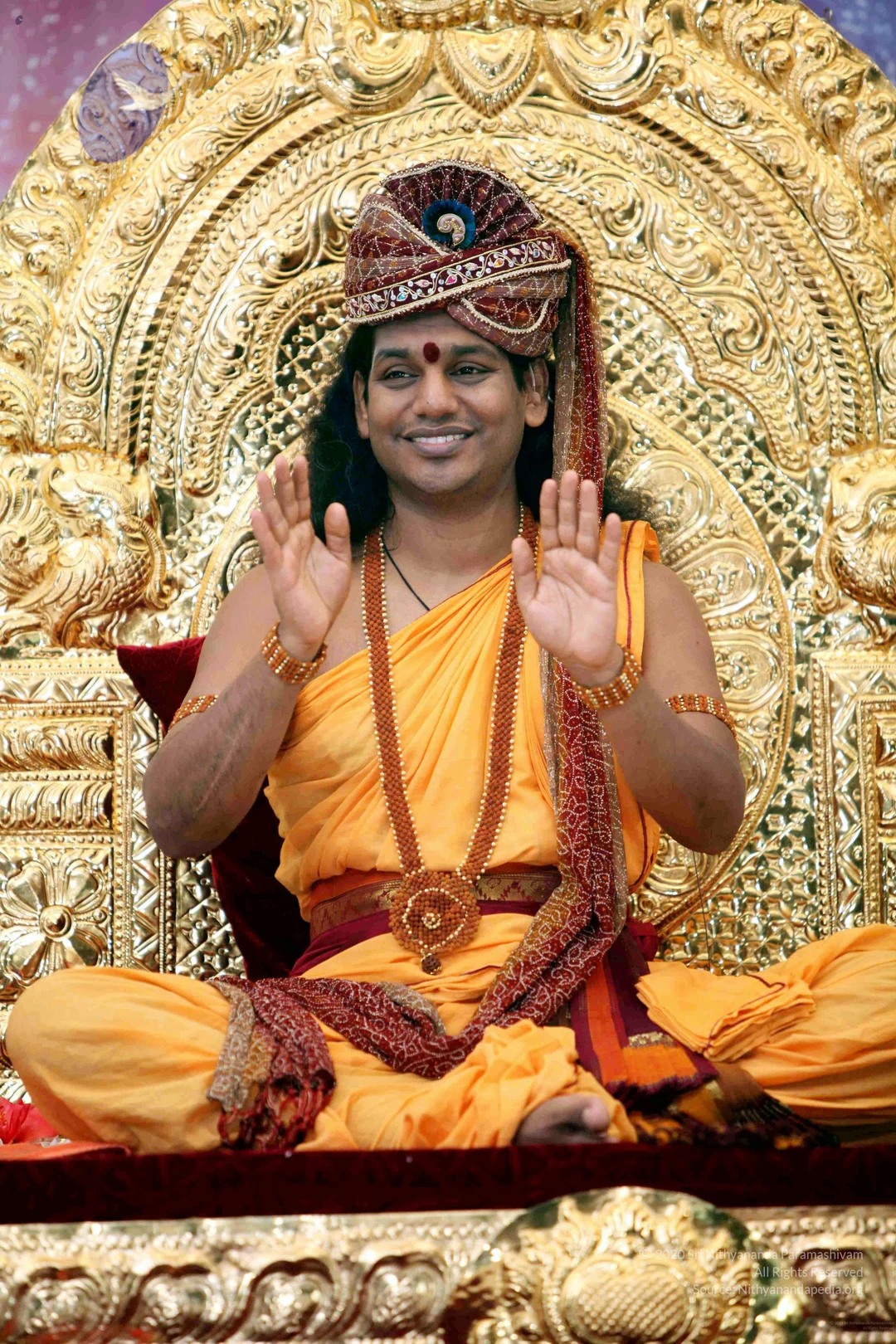
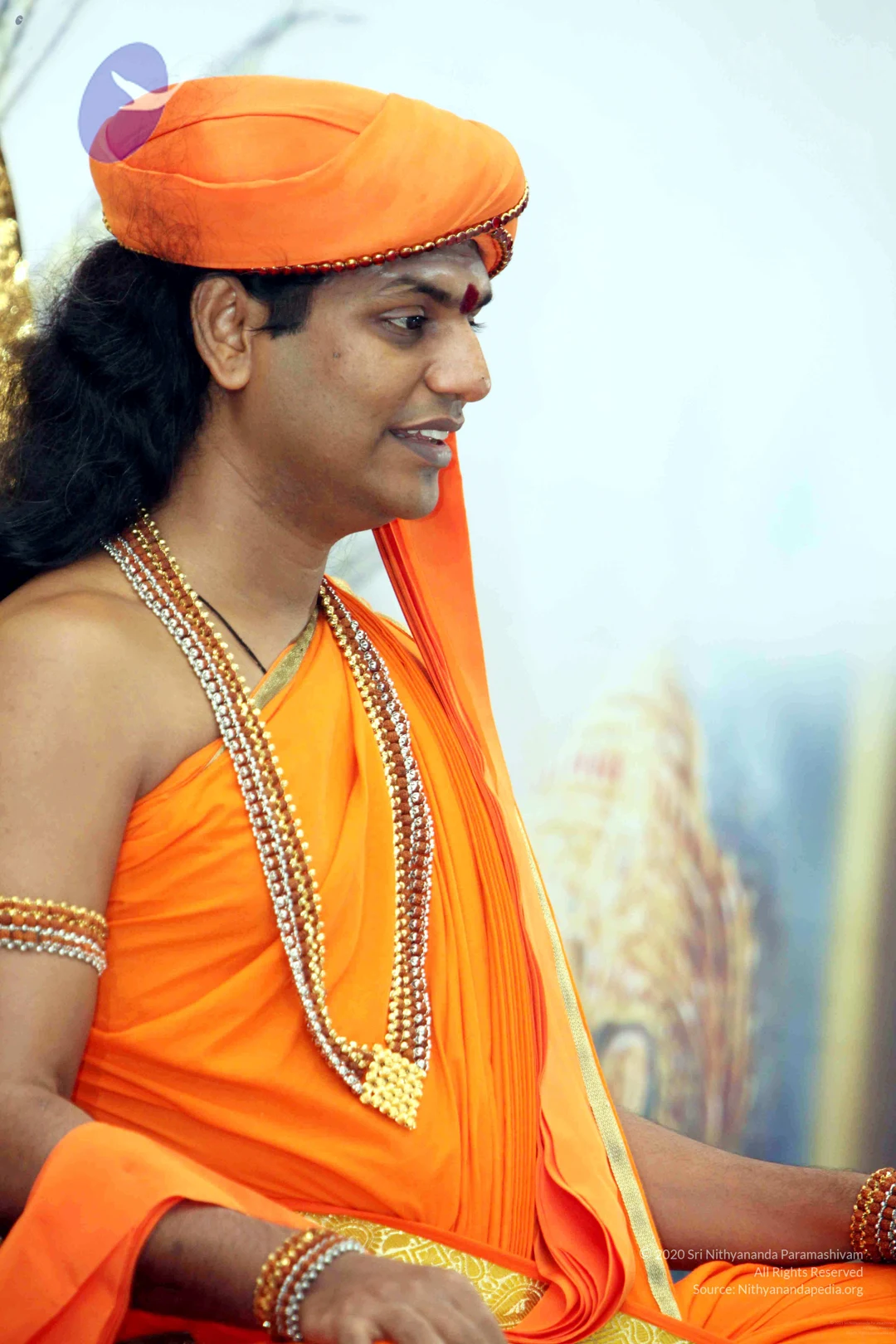
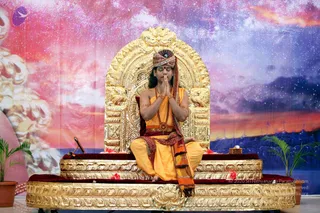
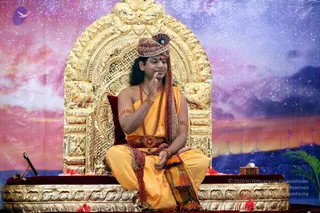
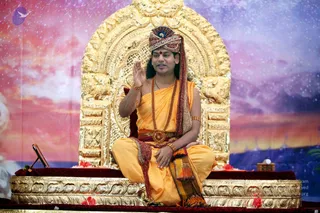
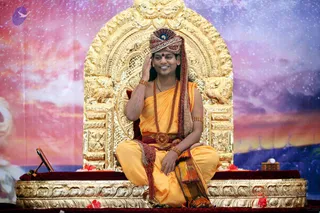
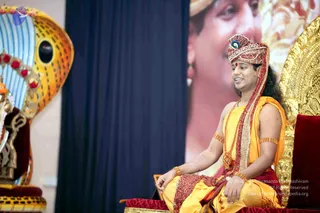
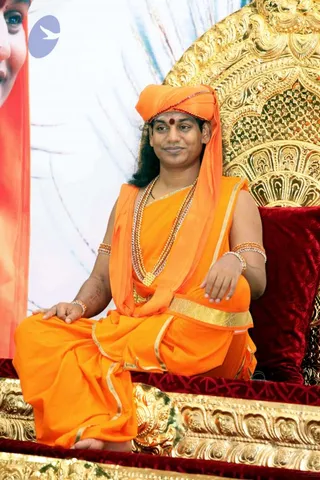
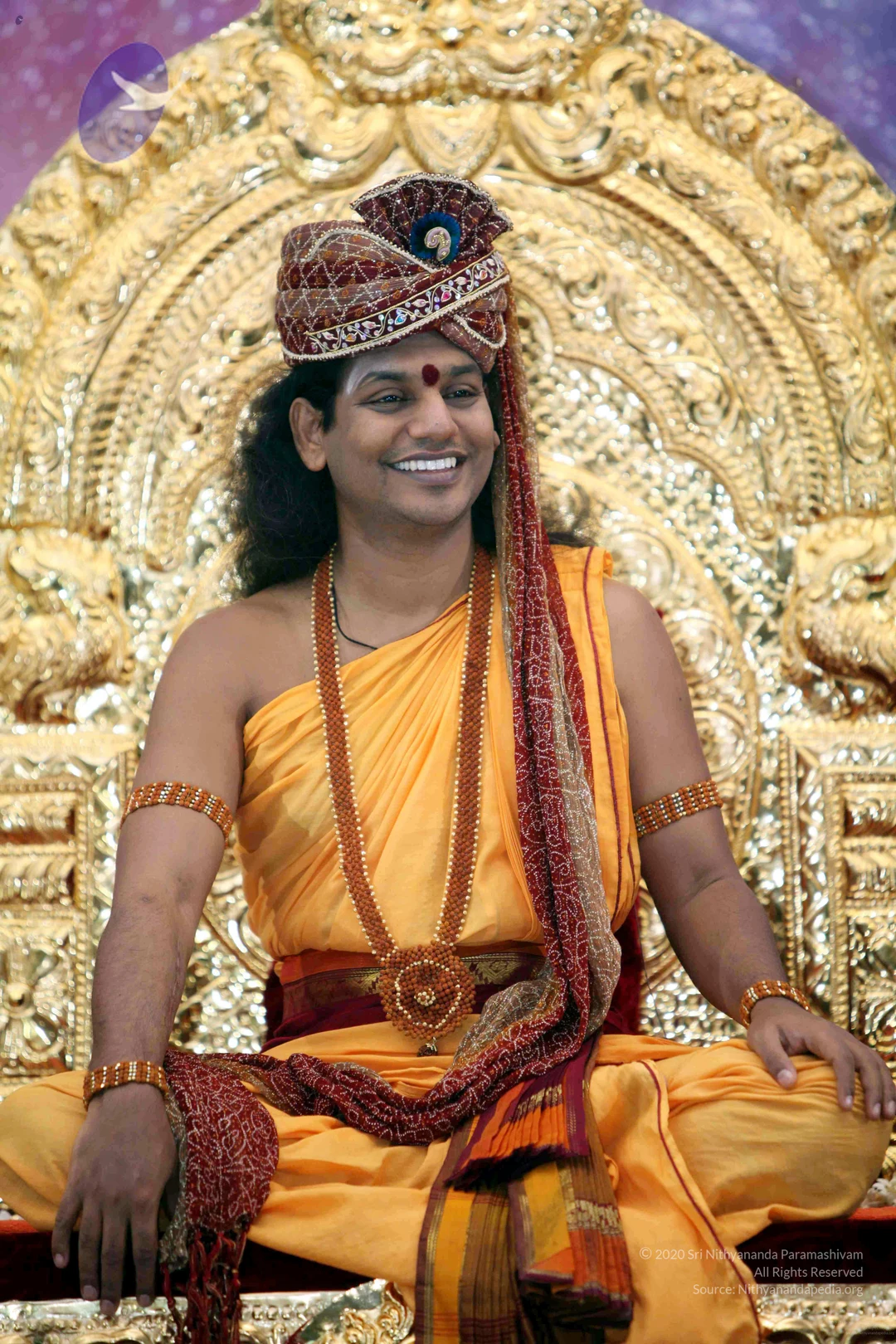
A seated man in an ornate gilded throne with an arched backrest, palms pressed together at chest level in namaste with eyes closed. He wears a saffron-orange dhoti and shawl, a dark red and gold cloth draped over one shoulder, a rudraksha mala and gold necklace, and an orange-and-maroon turban with a gold ornament. A small wooden stand and a covered box sit beside the throne, with red flowers scattered on the cushioned platform. Potted palms flank the stage in front of a painted backdrop of pink, orange and violet clouds over a blue landscape.A seated man in saffron-orange dhoti and upper cloth sits cross-legged on an ornate gold throne with a carved arched back and lion-like figures. He wears a maroon and gold turban with a peacock-feather ornament, a rudraksha mala and gold chain, and gold armlets and bangles. A maroon sash and striped cloth lie across his lap. A red-and-white flower garland decorates the throne base and a small tablet sits at the left. The backdrop is a painted sunset sky with clouds and distant temple spires. Swamiji (probable), seated on the throne in saffron robes with a crown-like turban and rudraksha mala, gives a smiling darshan-style pose.A seated man in saffron-orange robes sits cross-legged on an ornate gold throne with a carved arched back and lion-like figures. He wears a maroon and gold turban with a blue jewel, a red bindi, multiple beaded necklaces, a large round pendant and gold armbands. His right hand is raised near his face in a teaching gesture. A red-and-black cushion lies beneath him, red flowers decorate the dais and a small wooden box sits at right. Behind him is a painted backdrop of a pink and purple sky over distant mountains and temple spires.A seated man in saffron-orange robes gestures with his right hand raised while speaking, sitting cross-legged on a red-draped dais in front of an ornate gold arched throne-backdrop with carved lion-like figures. He wears a maroon and gold turban with a blue emblem, a rudraksha mala and a large gold pendant necklace, a gold armband and bangles. A small tablet or device sits on the left of the dais, with red flowers scattered on the platform. The background is a painted pink-and-purple sky with stars. a person is seated in a discourse setting, consistent with a satsang talk. Visible cues include the turban, saffron clothing and ceremonial gold necklace.A seated man in saffron-orange robes sits cross-legged on a red-cushioned gold throne with an ornate golden arch and lion motifs. He wears a tall decorated crown with a blue gem, a red bindi, a long rudraksha-style mala and a broad gold waist ornament, and raises his right hand to his head while smiling. Red flowers lie on the dais and a small table holds a book. The backdrop is a pink and purple painted sky. Appearance-based a person seated on throne in an in-person satsang setting.A man seated on an ornate golden throne with red cushions, smiling, on a stage during a discourse. He wears an elaborate red and gold crown with a blue jewel, a red-and-gold shawl over a saffron-yellow garment, a gold necklace and gold armbands, and a red bindi. Behind him a large backdrop shows a close-up portrait of a smiling man, and to the left stands a golden serpent-hooded seat with red flower garlands. Probable Swamiji by visible cues: long swept-back hair, crown, saffron and ornate clothing, gold necklace. A throne and stage setting describe a seated discourse.
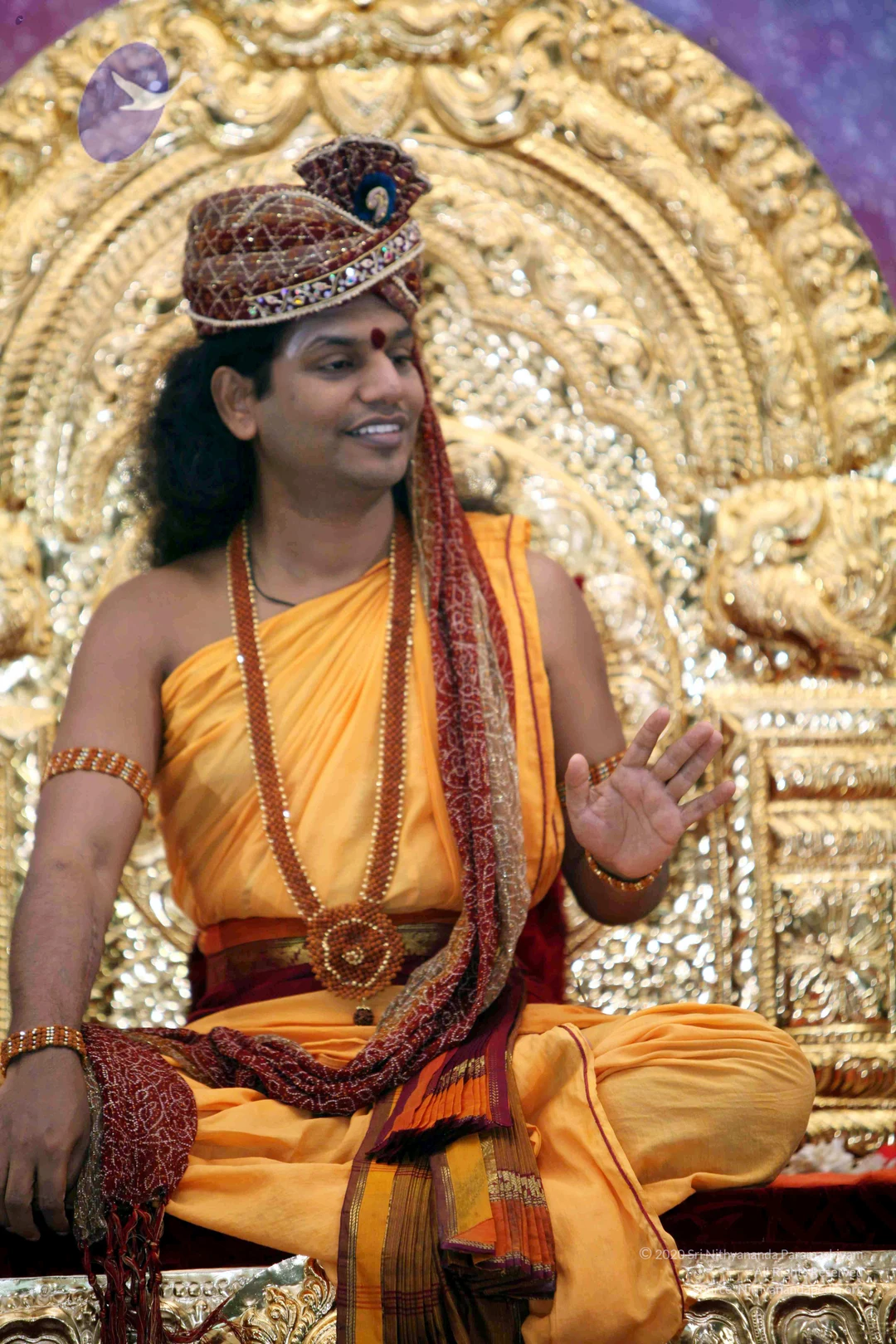
Tamil Satsang

39 photosSource gallery
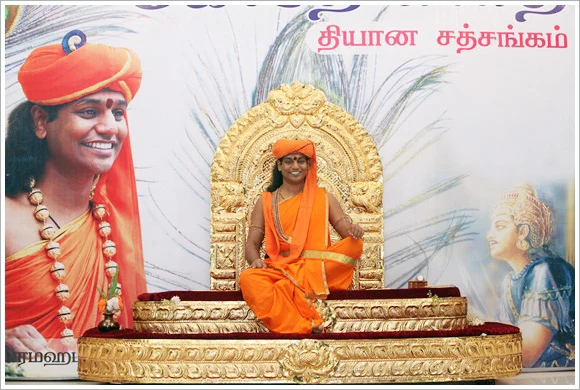
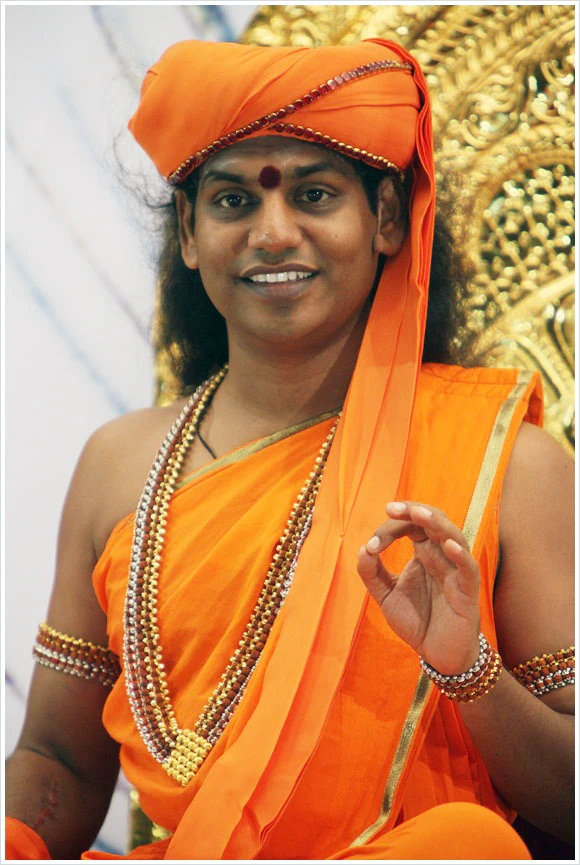
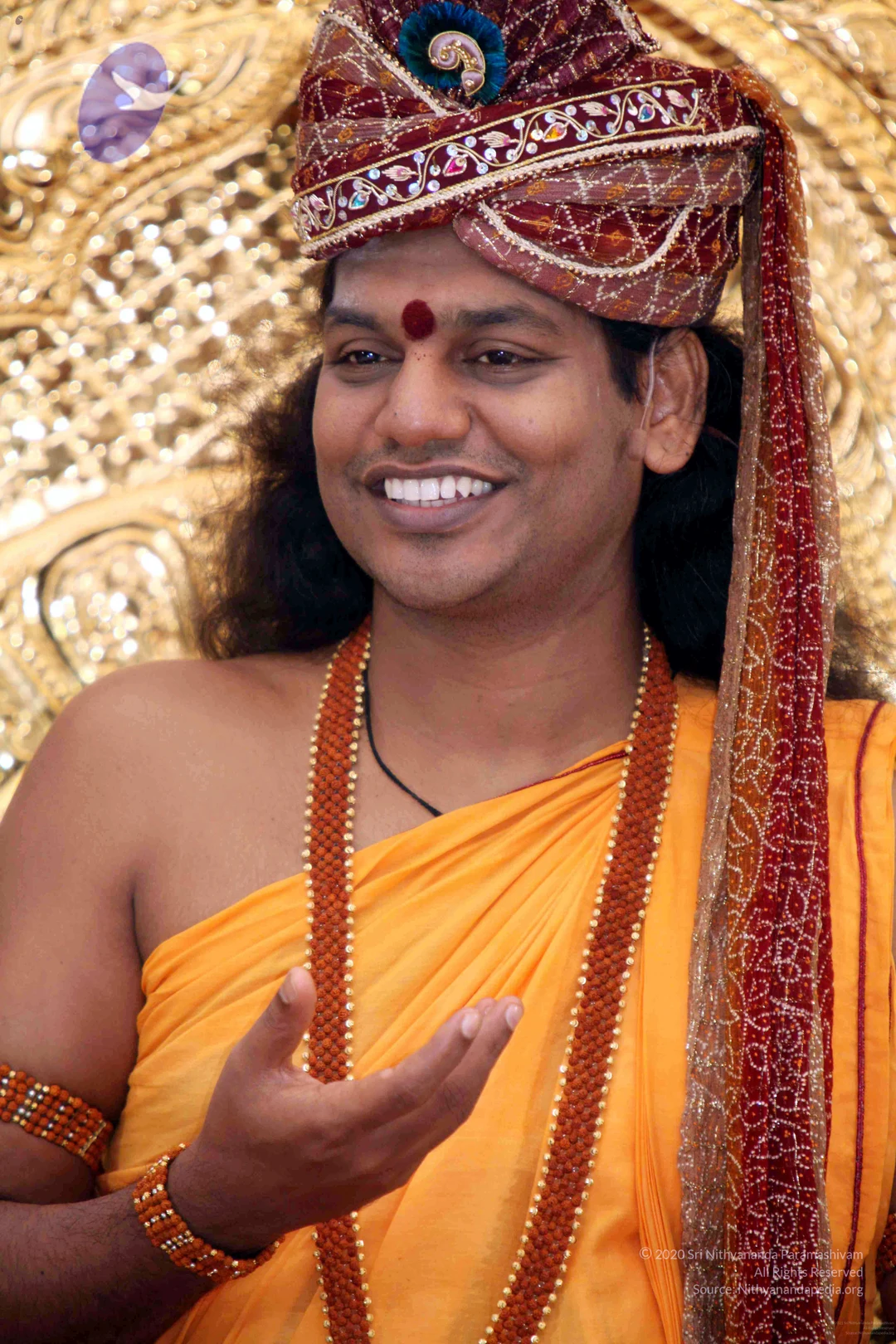
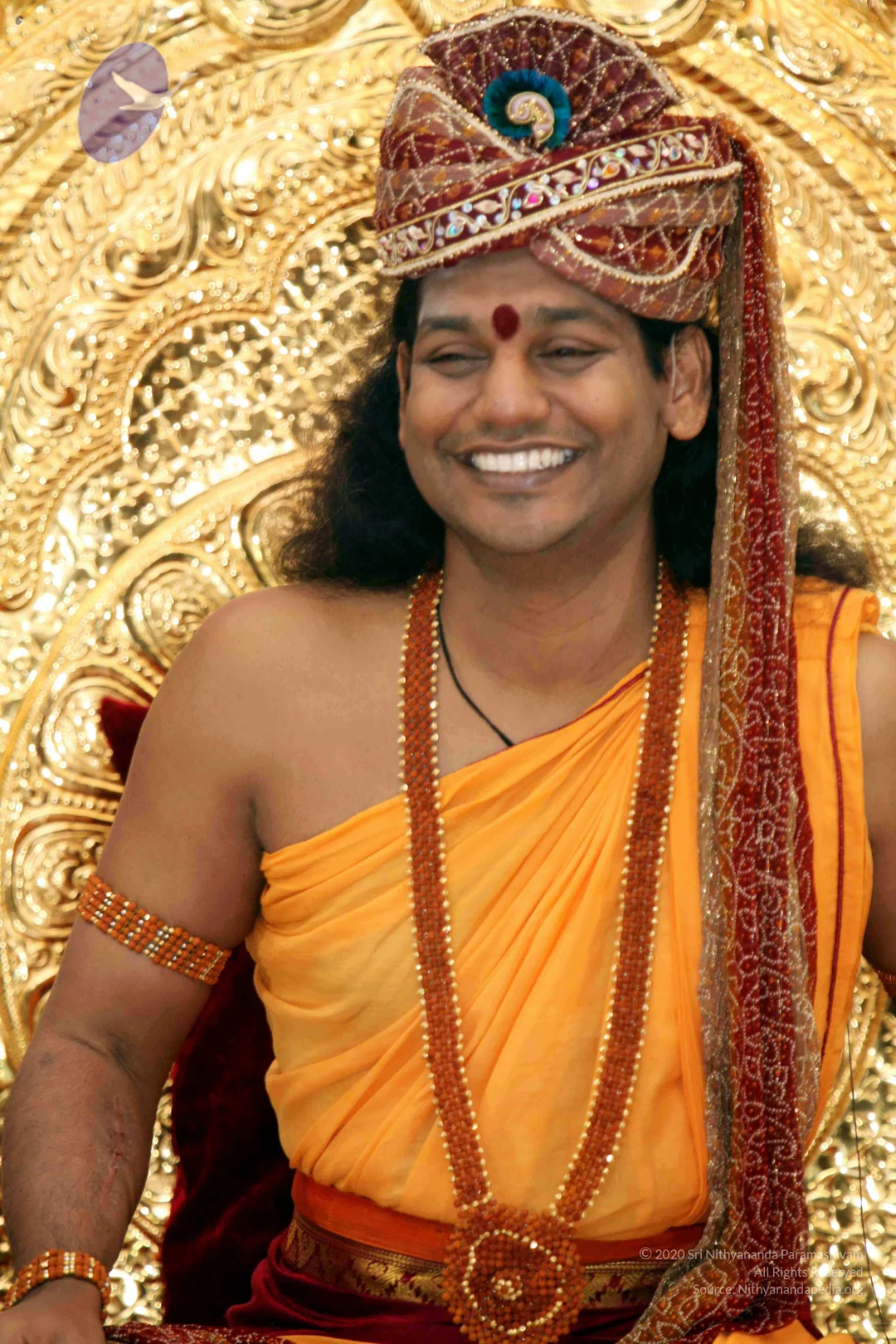
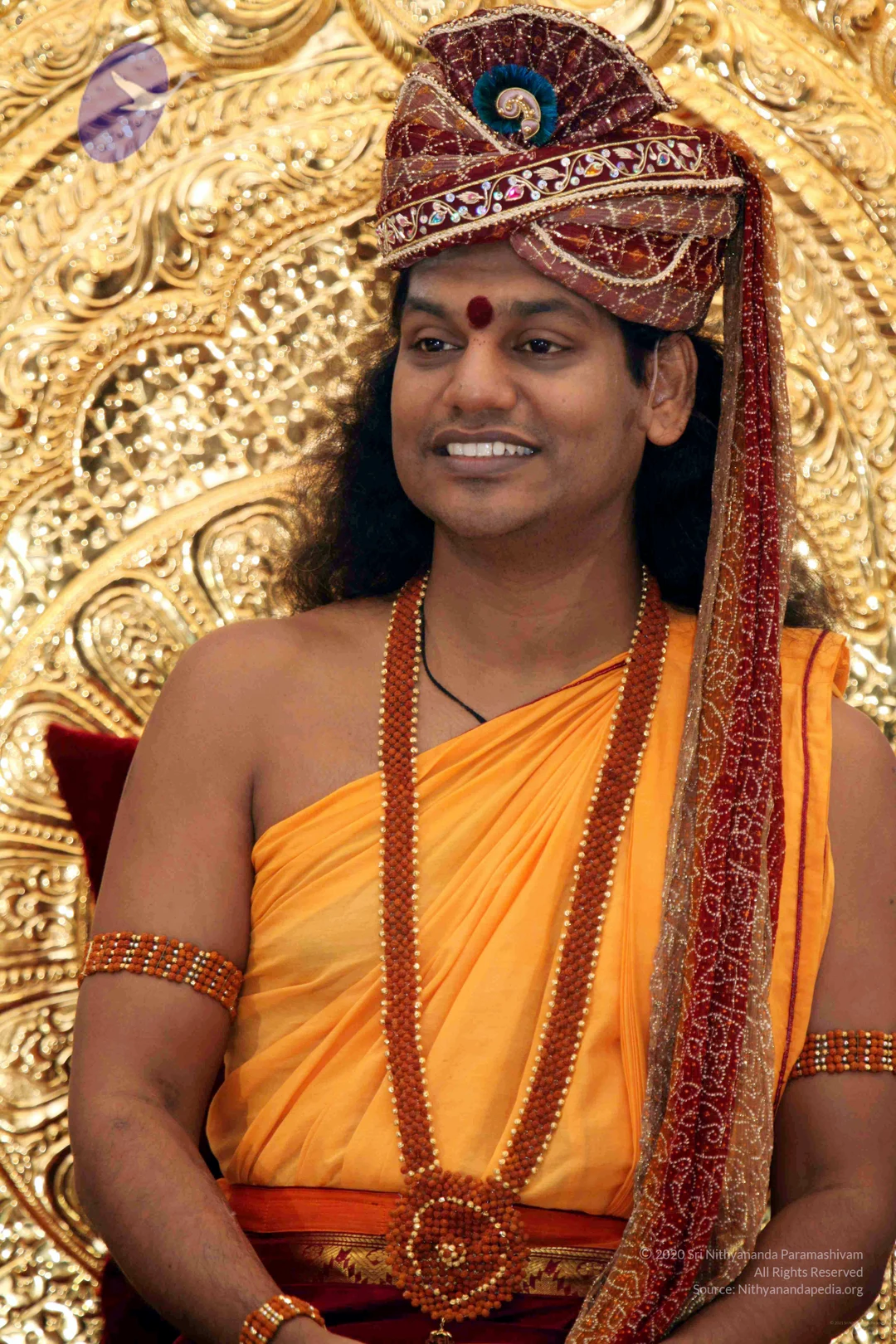
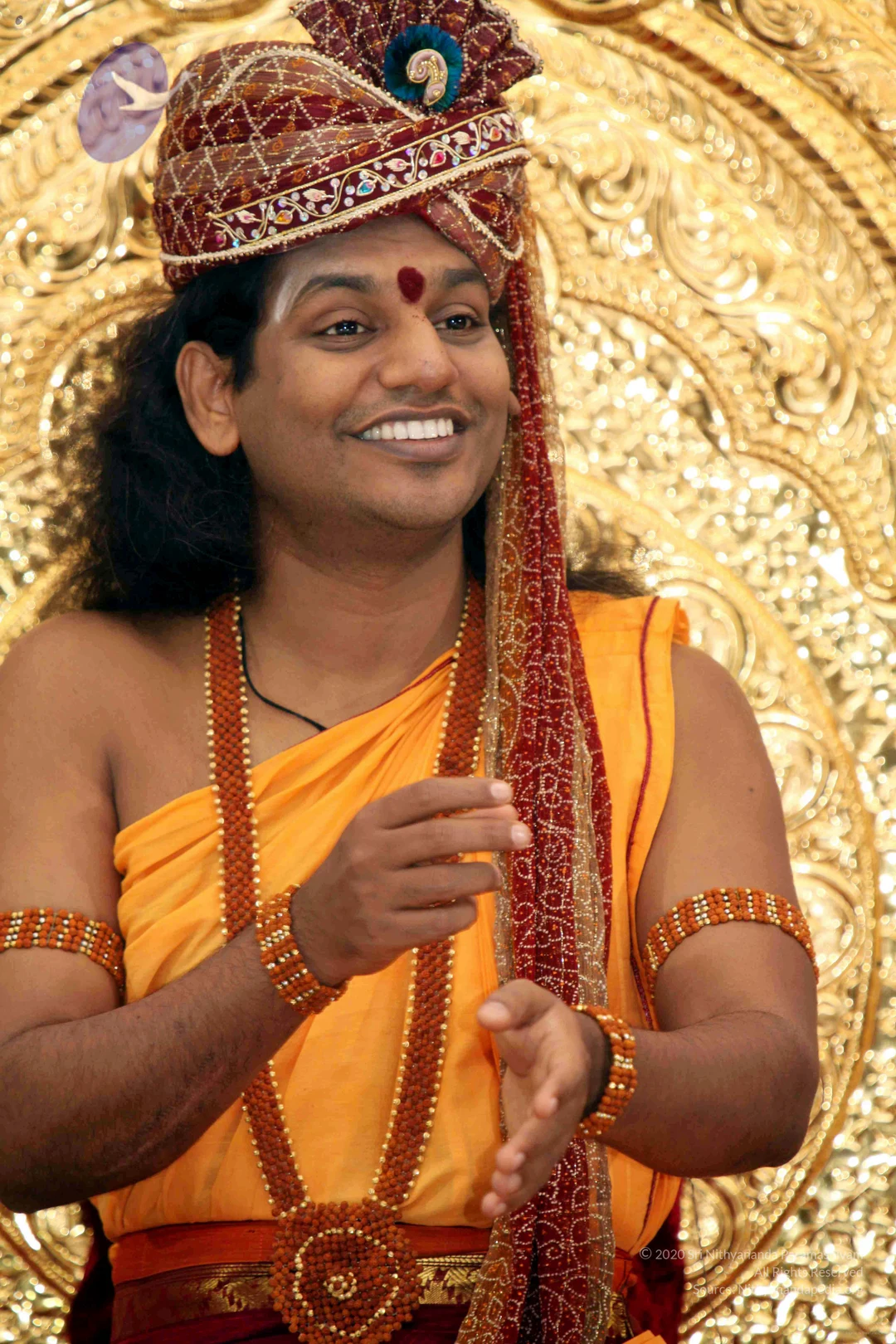
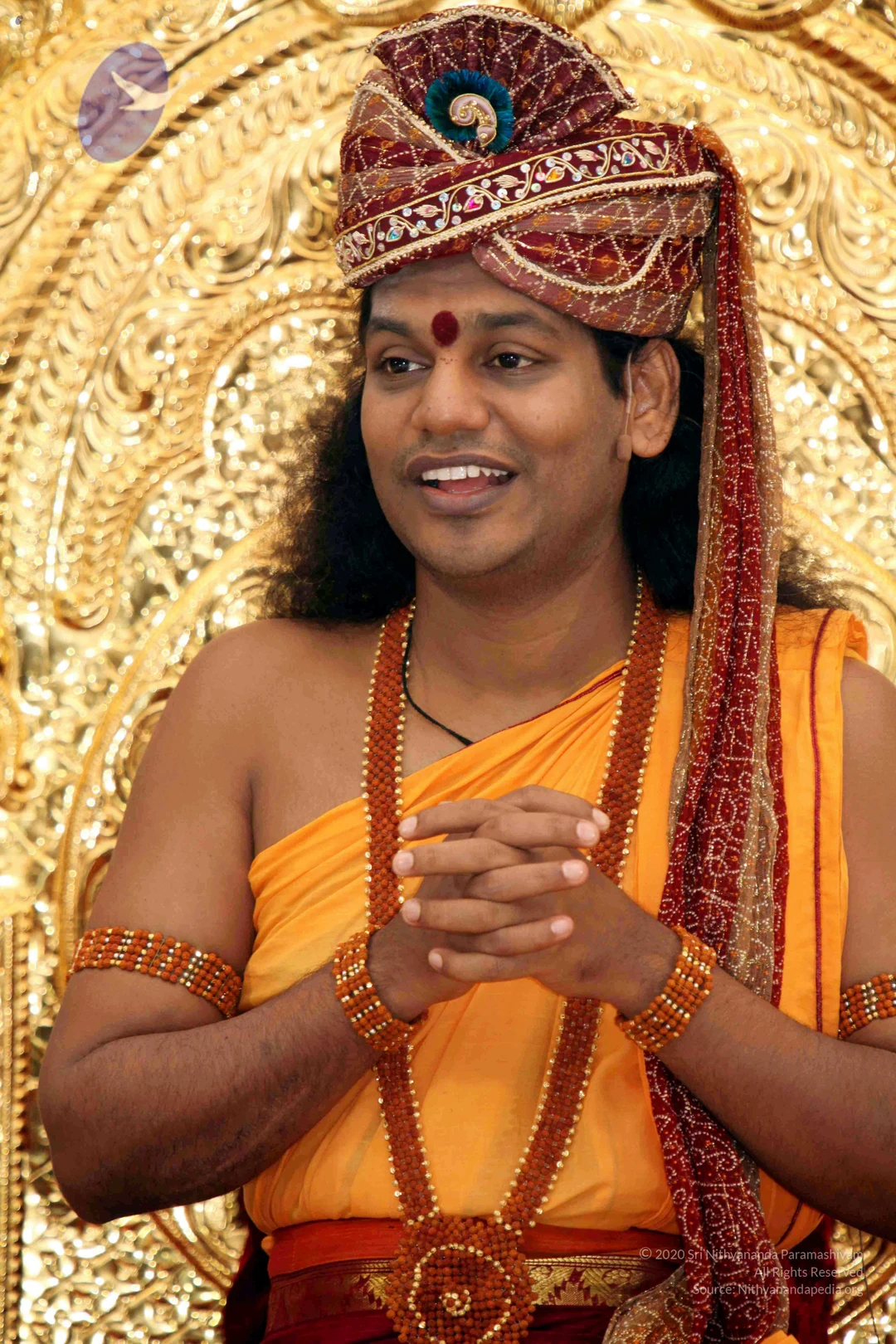
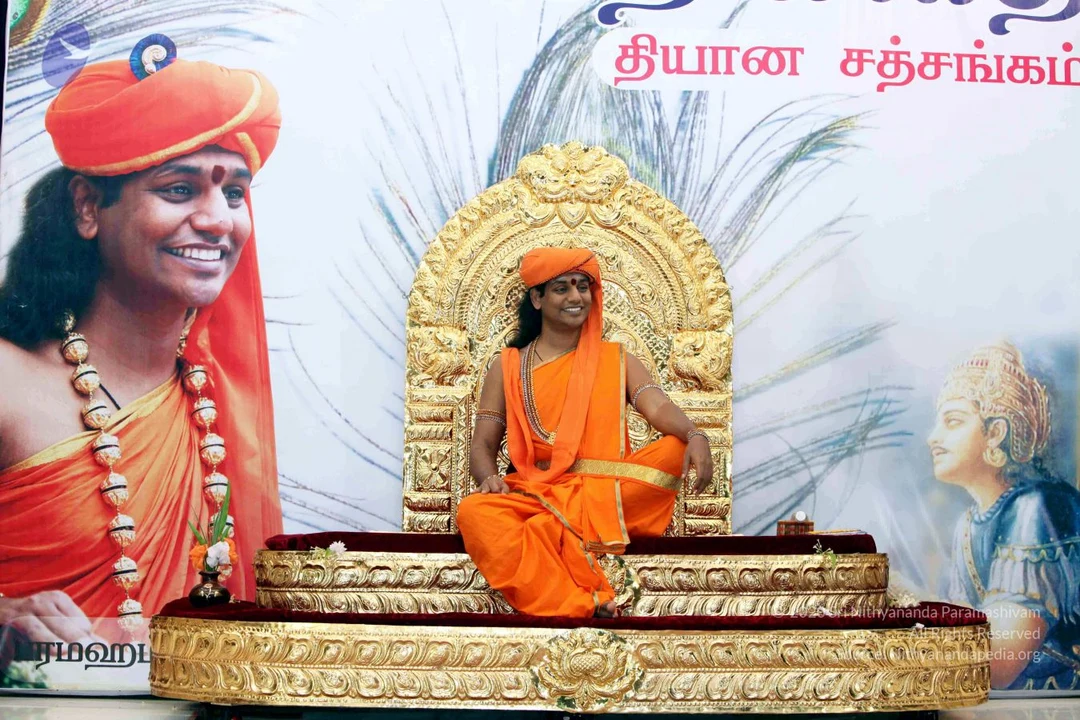
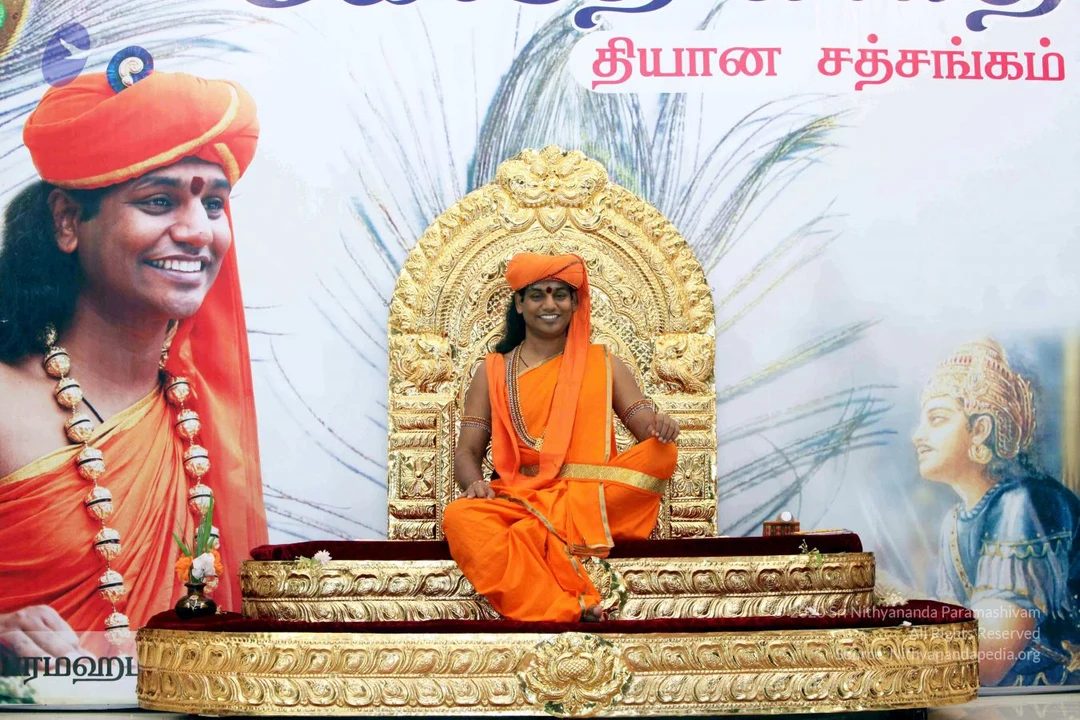
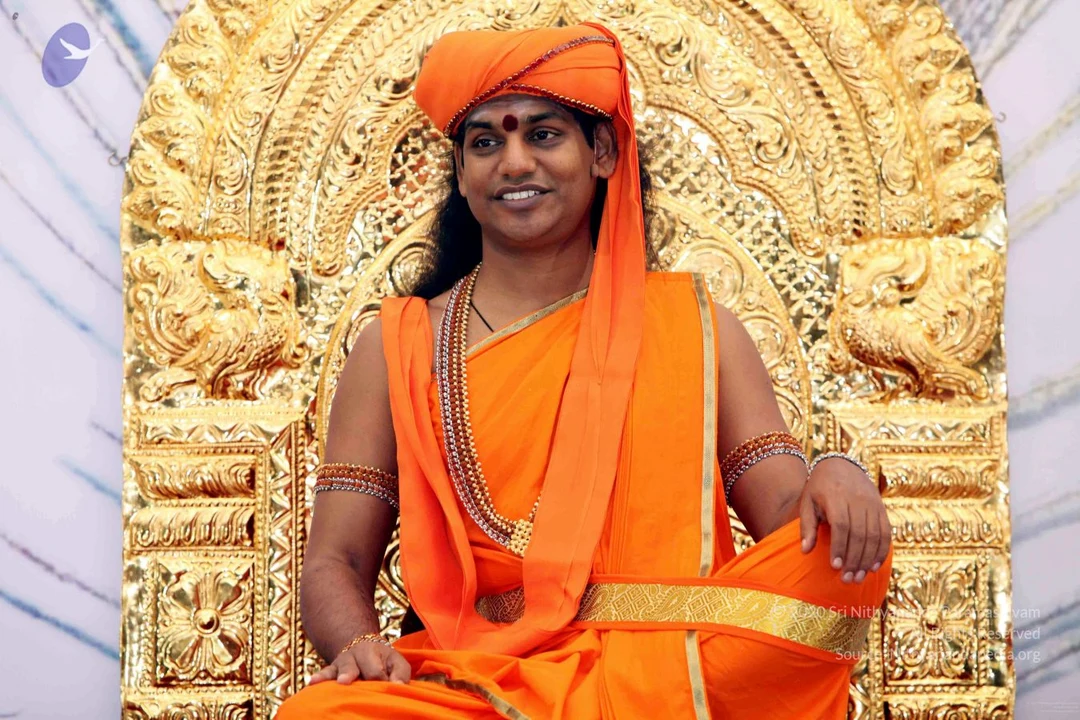
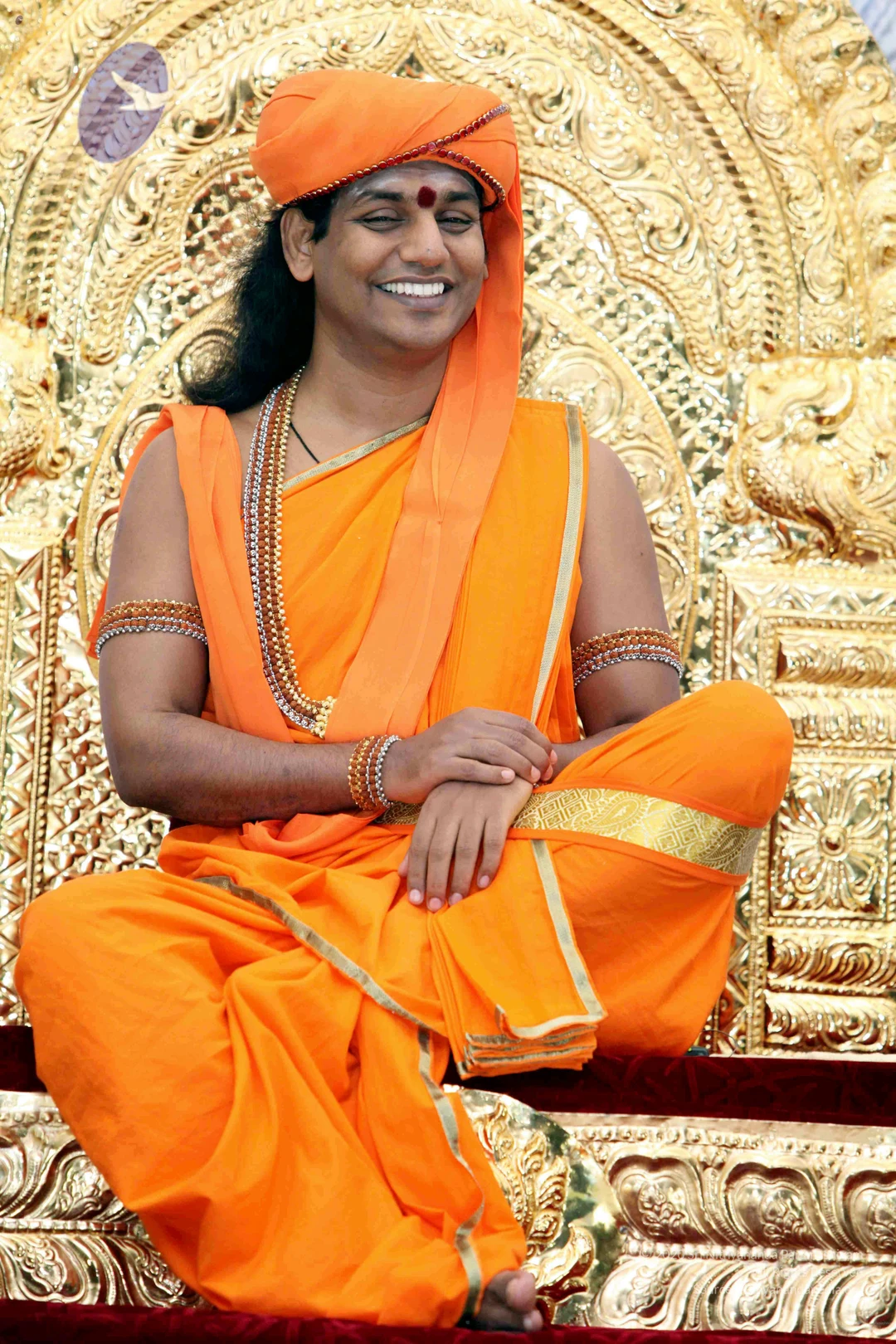
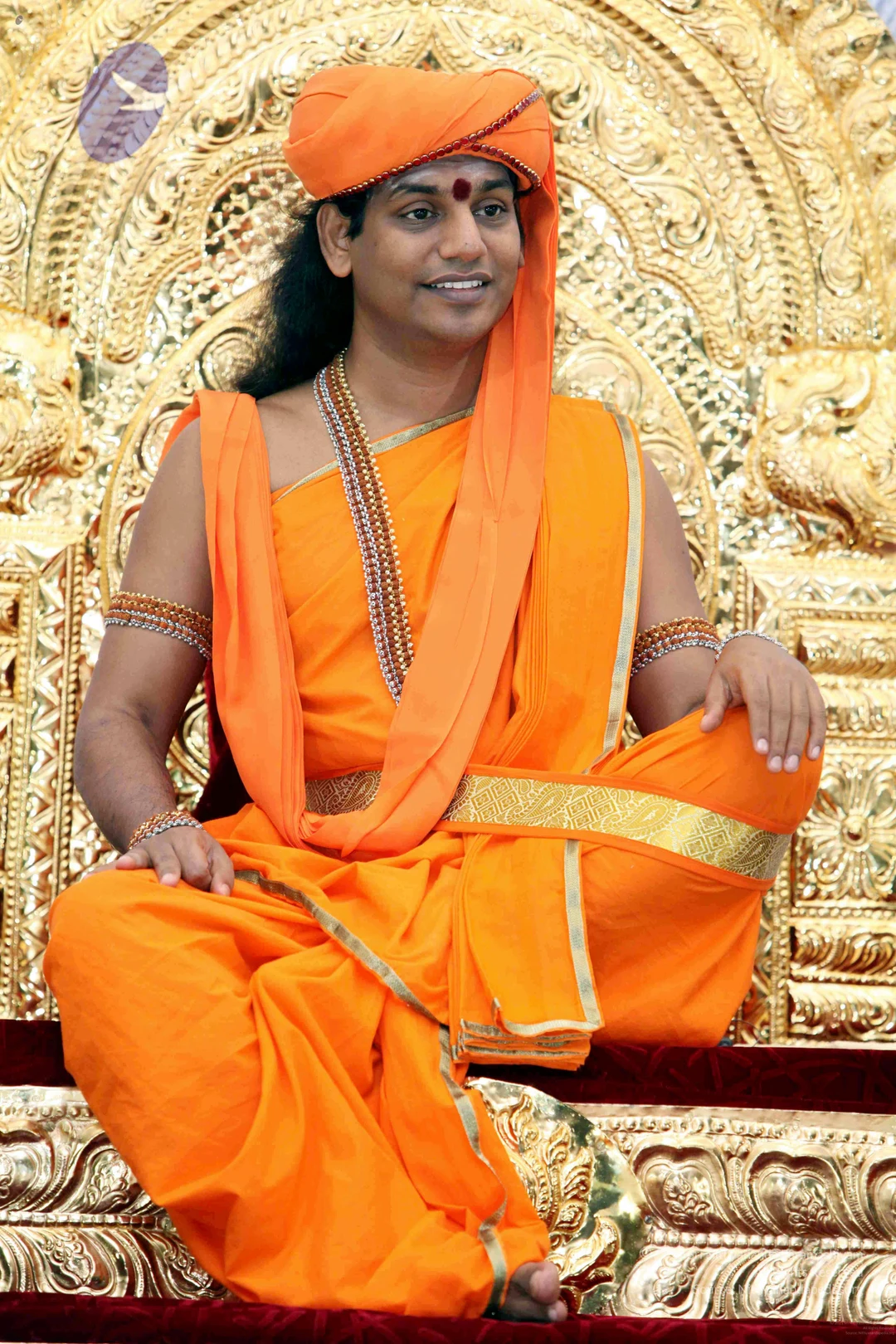
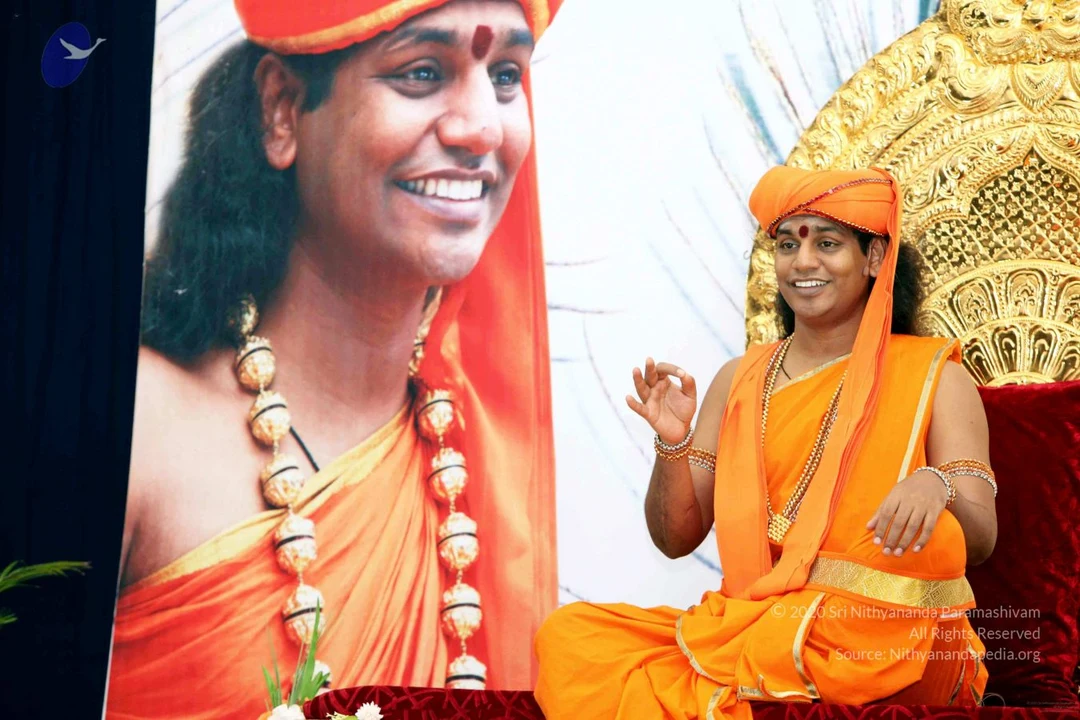
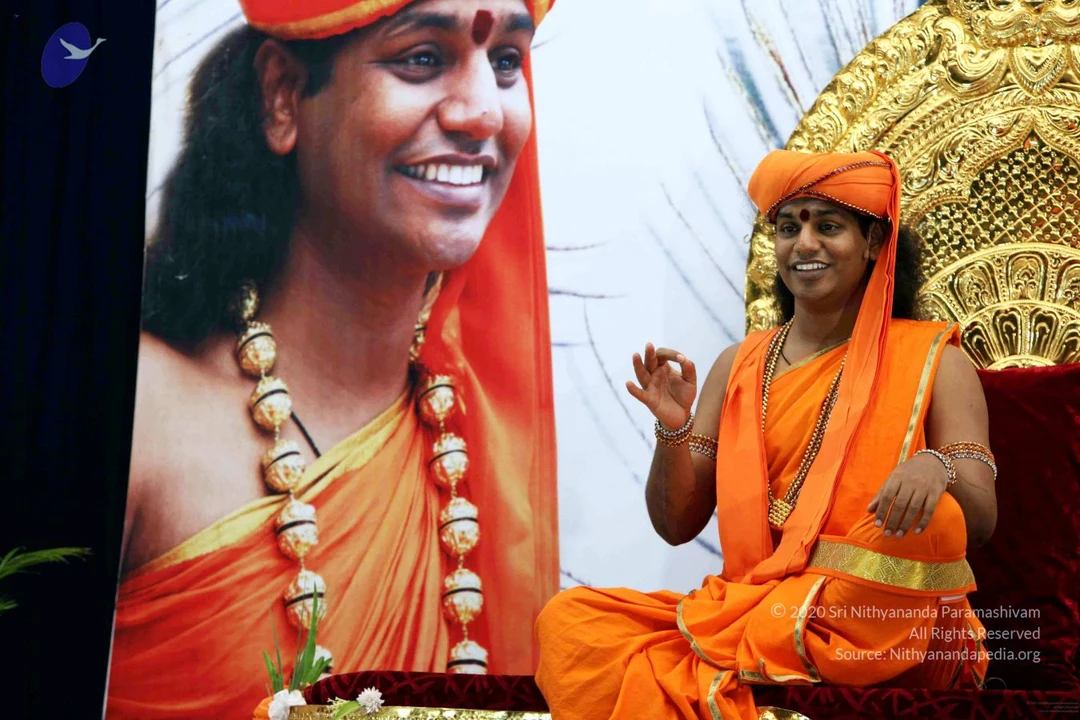
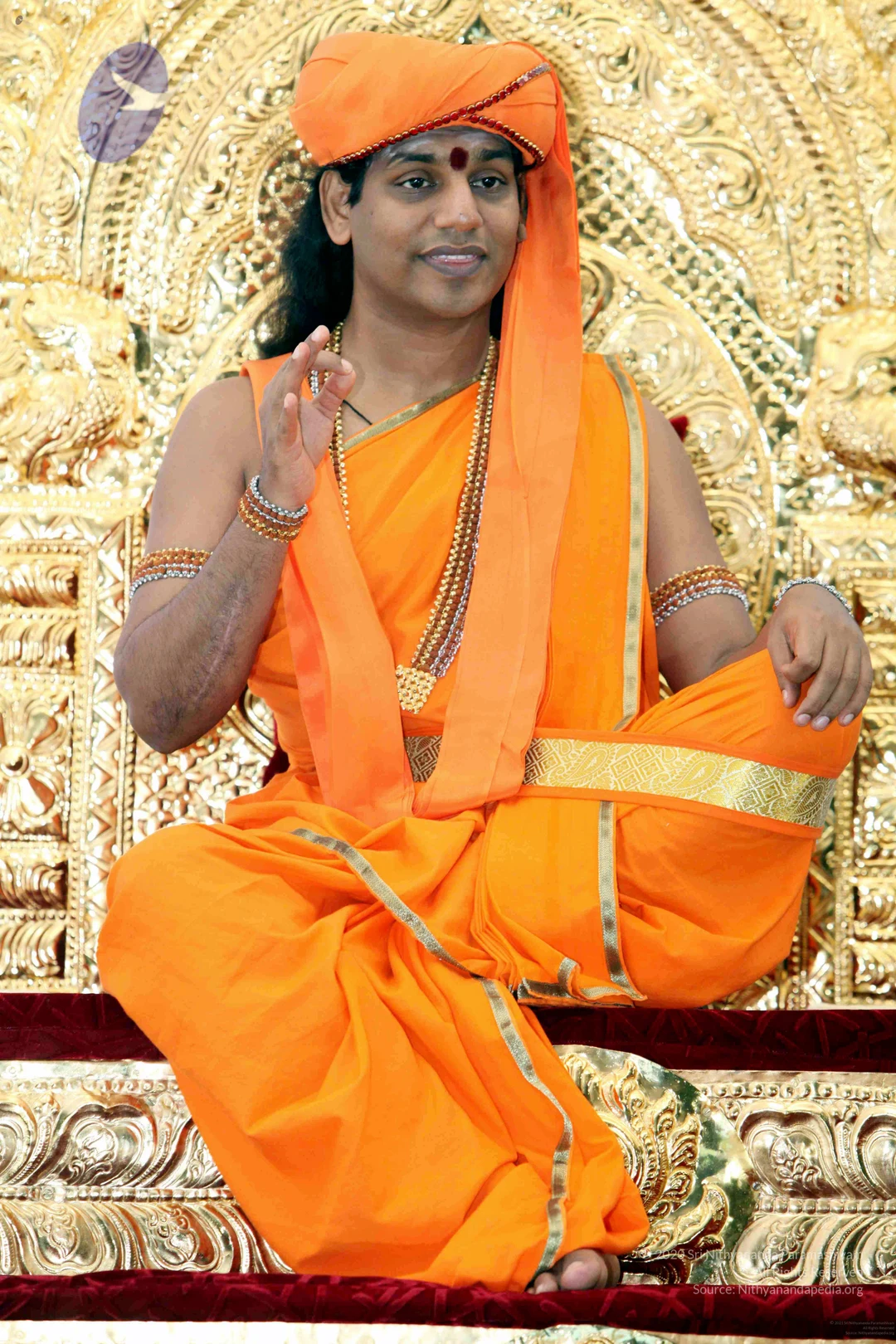
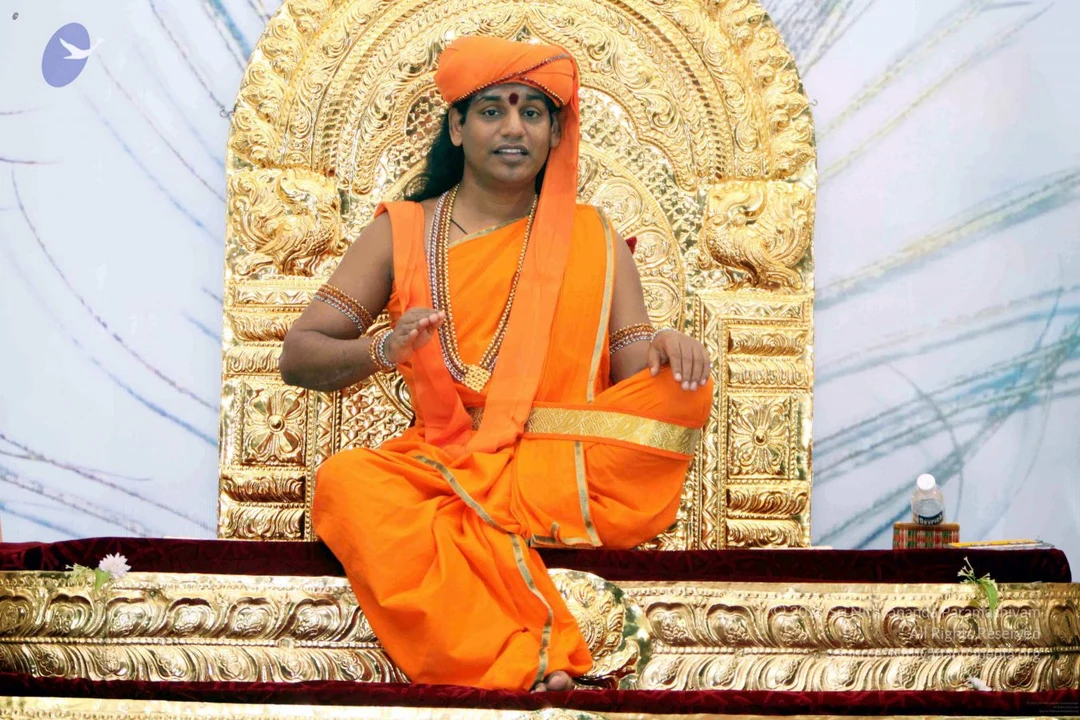
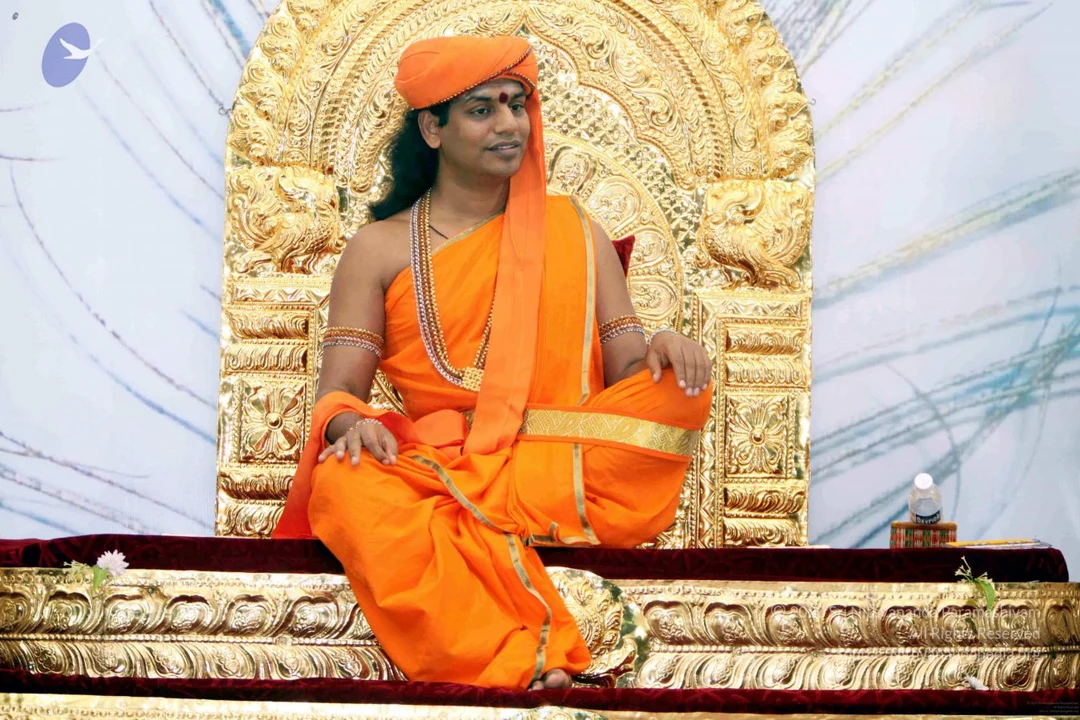
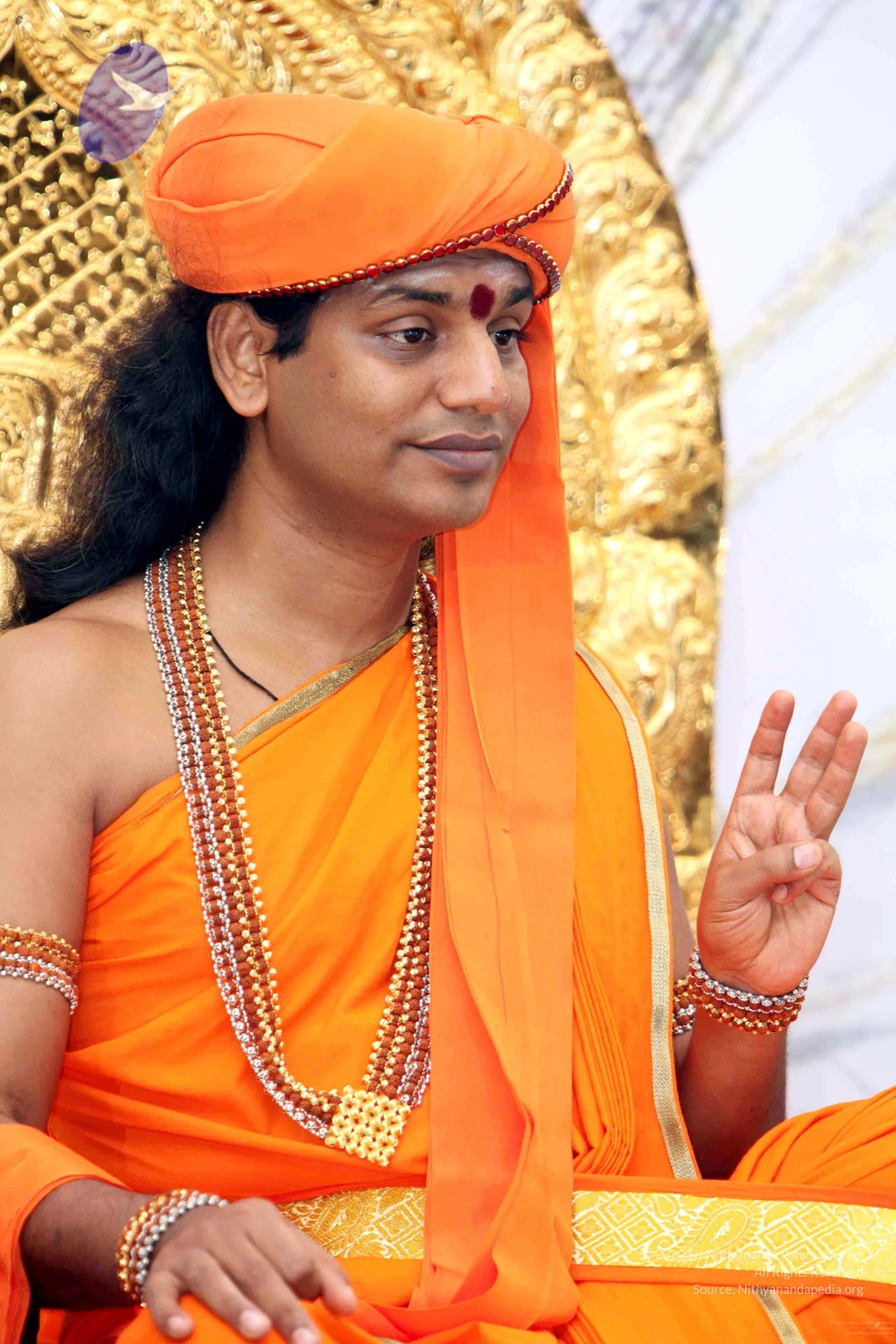
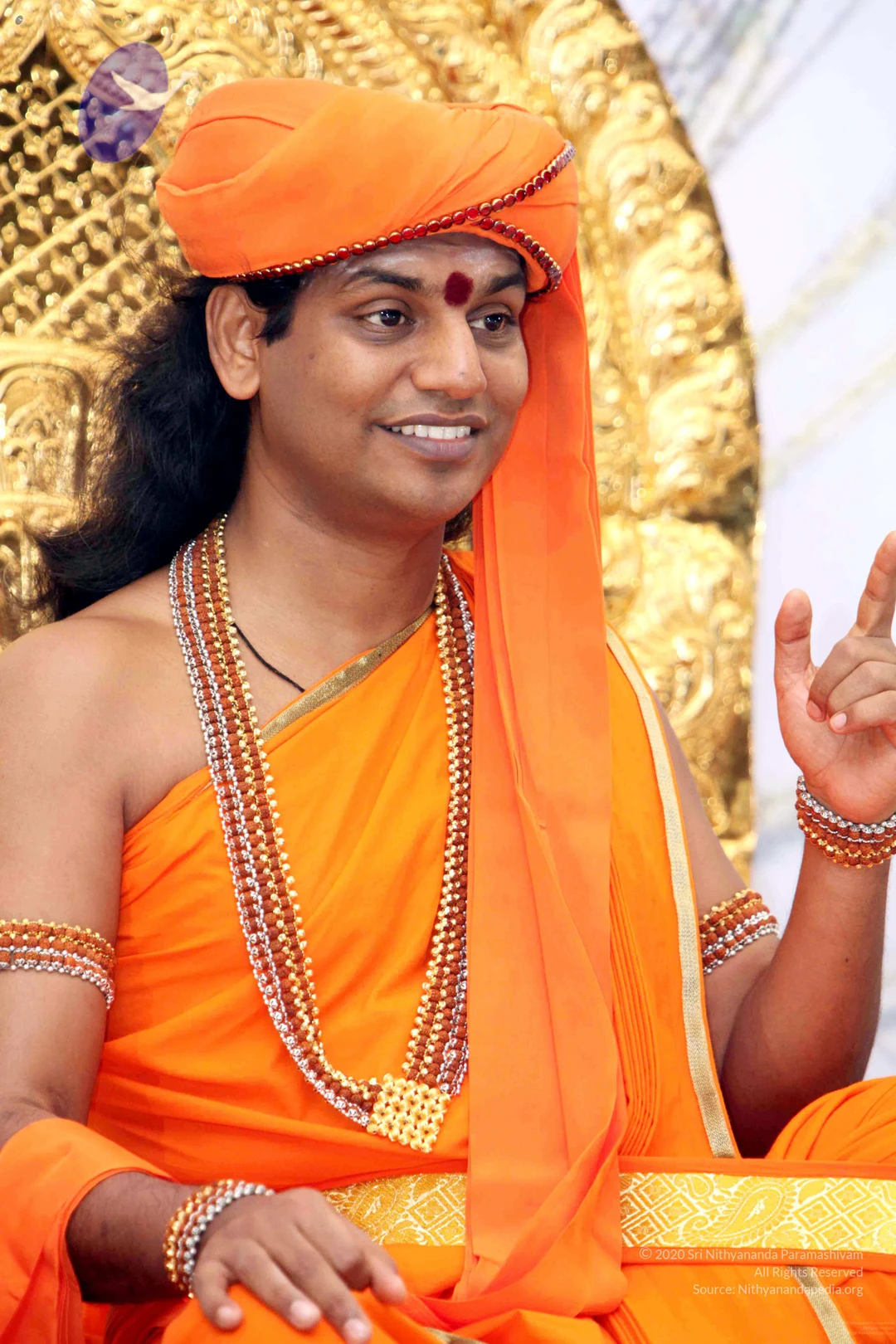
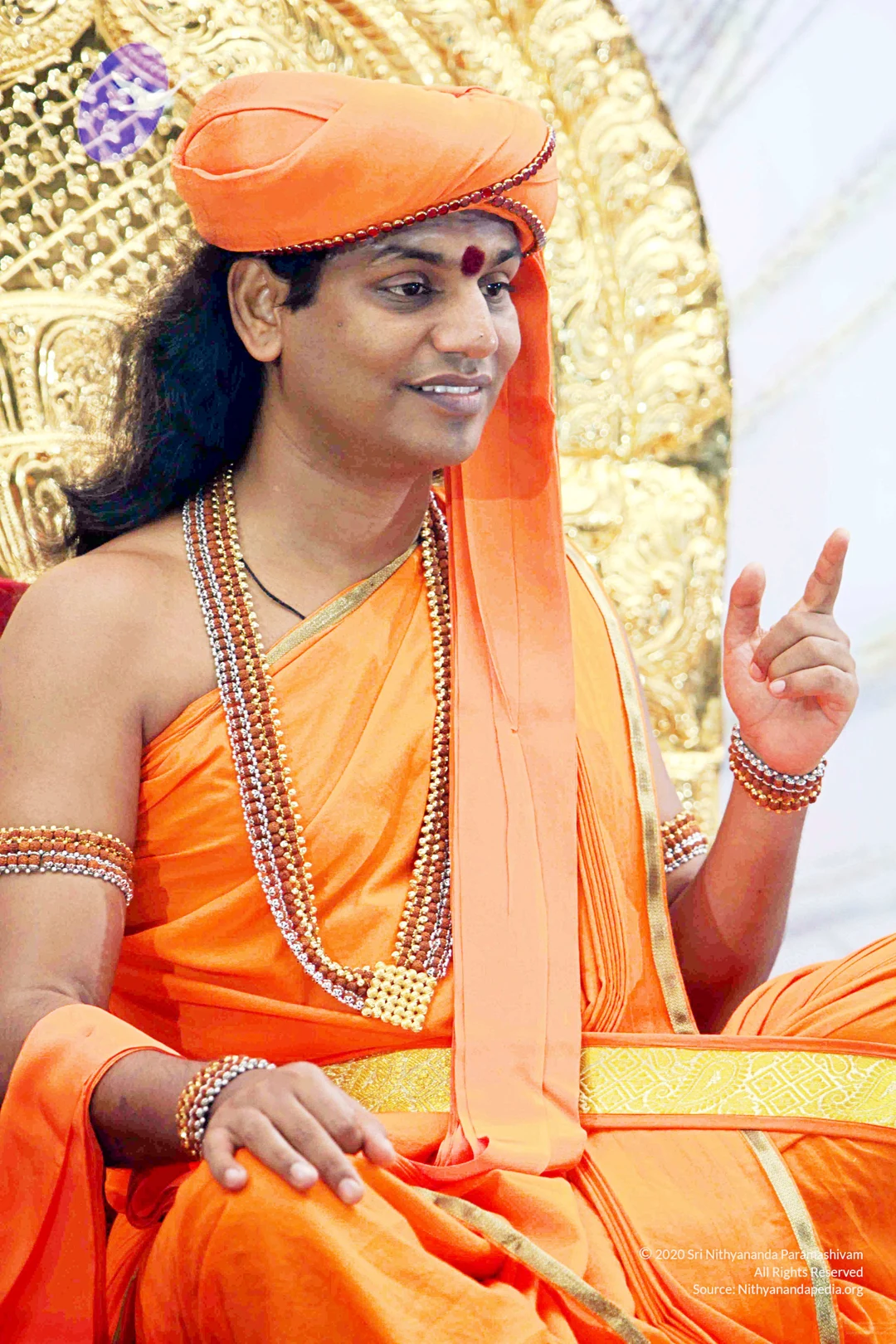
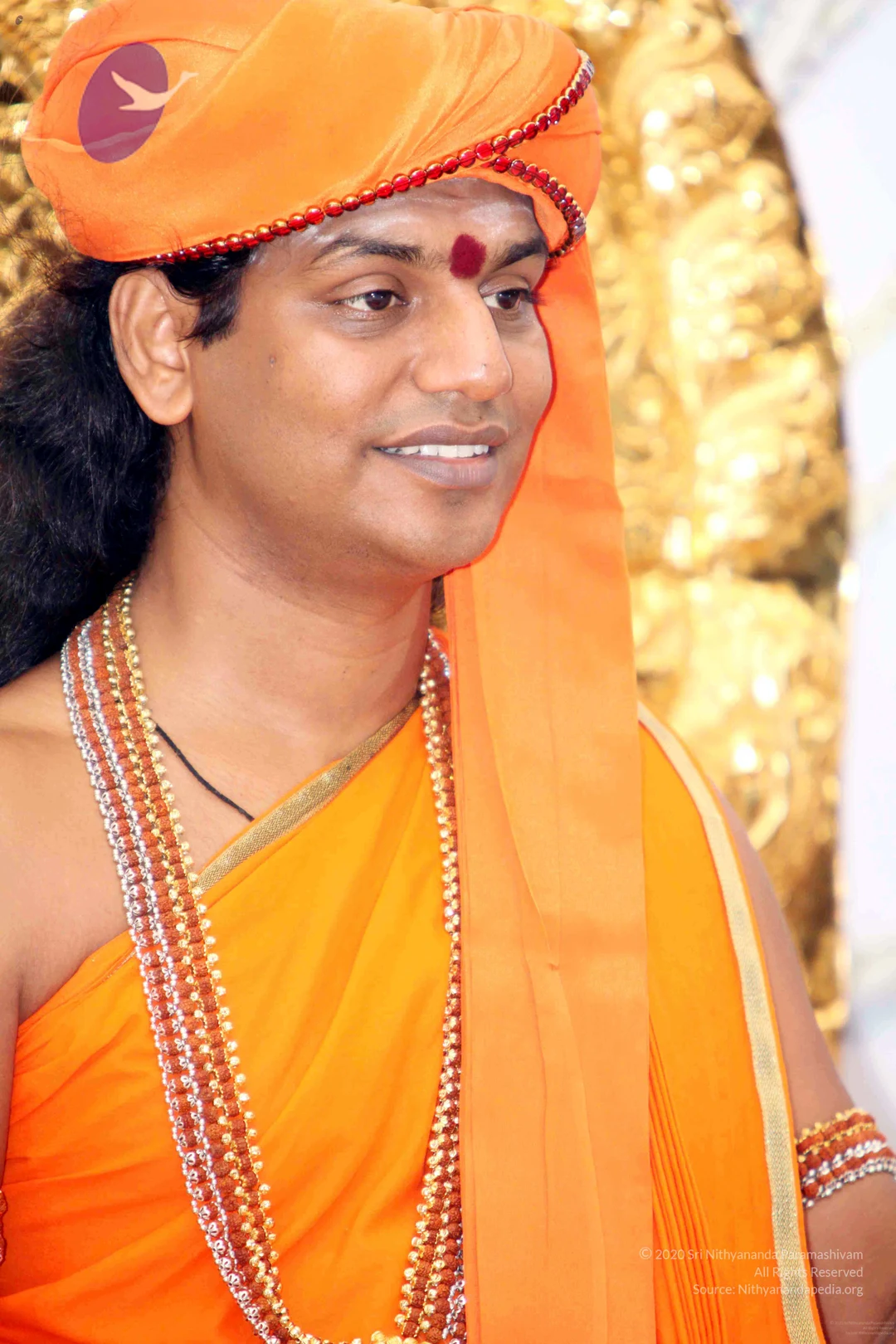
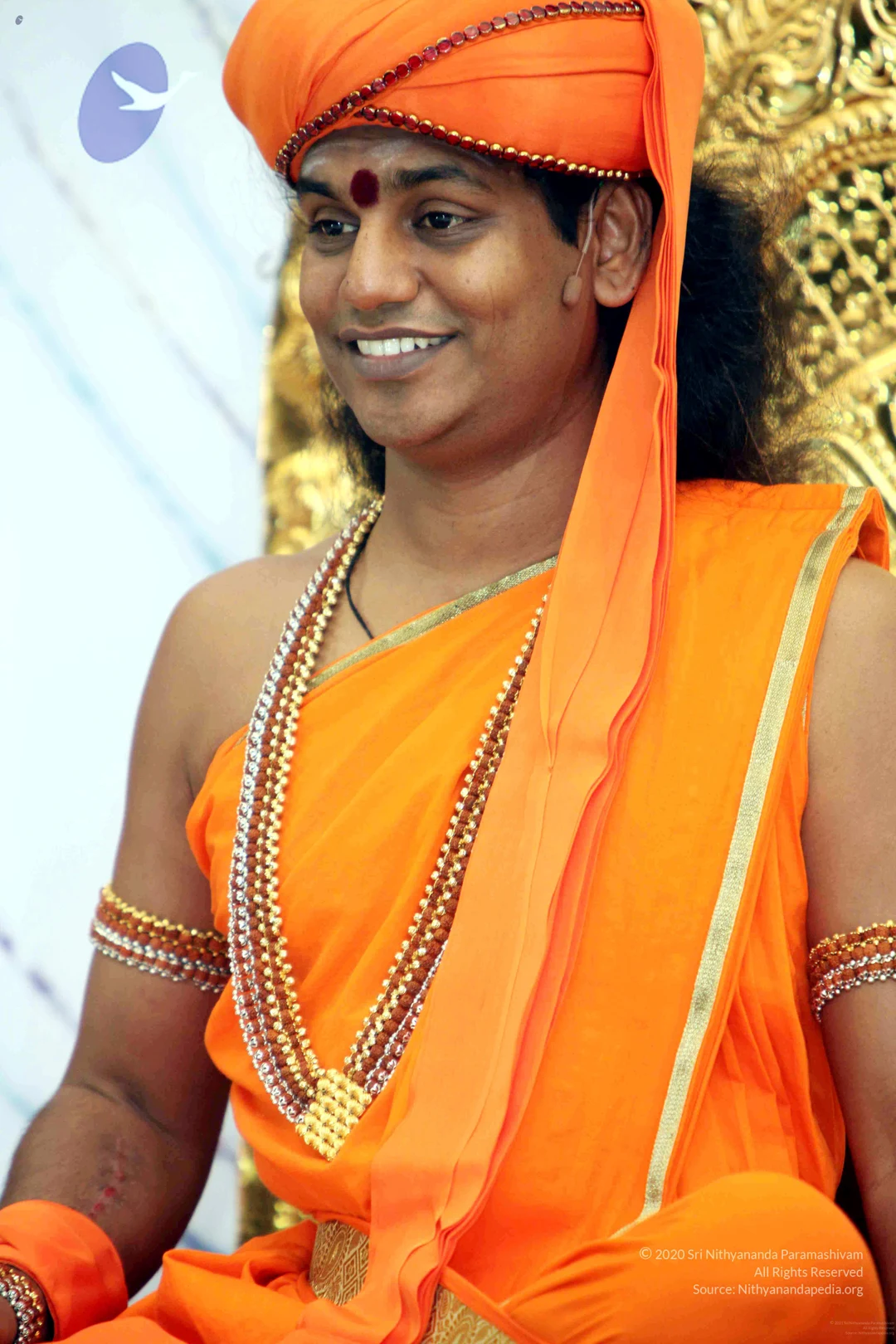
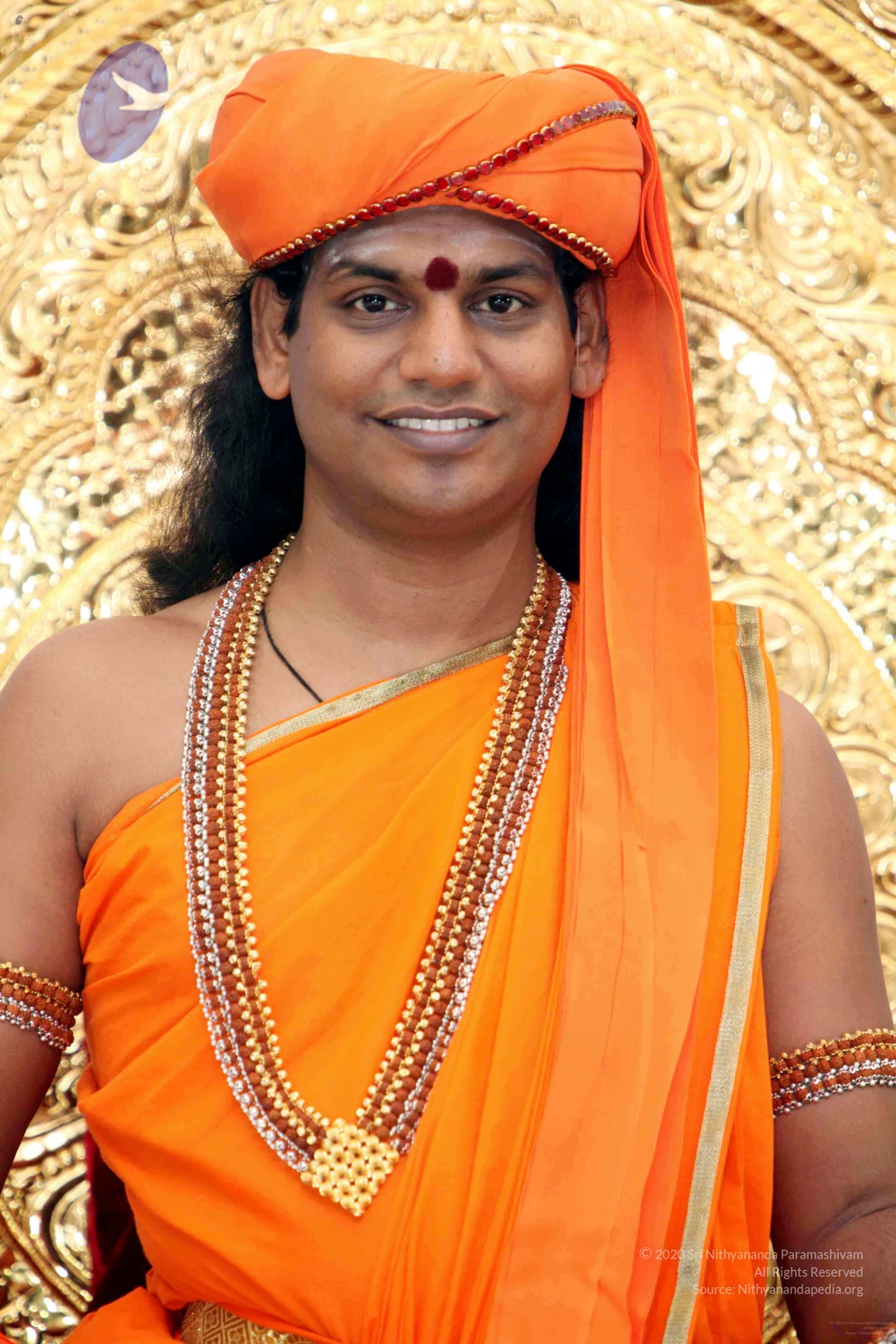
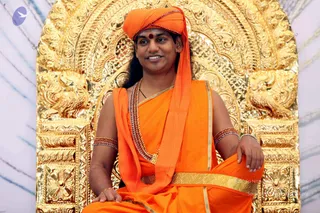
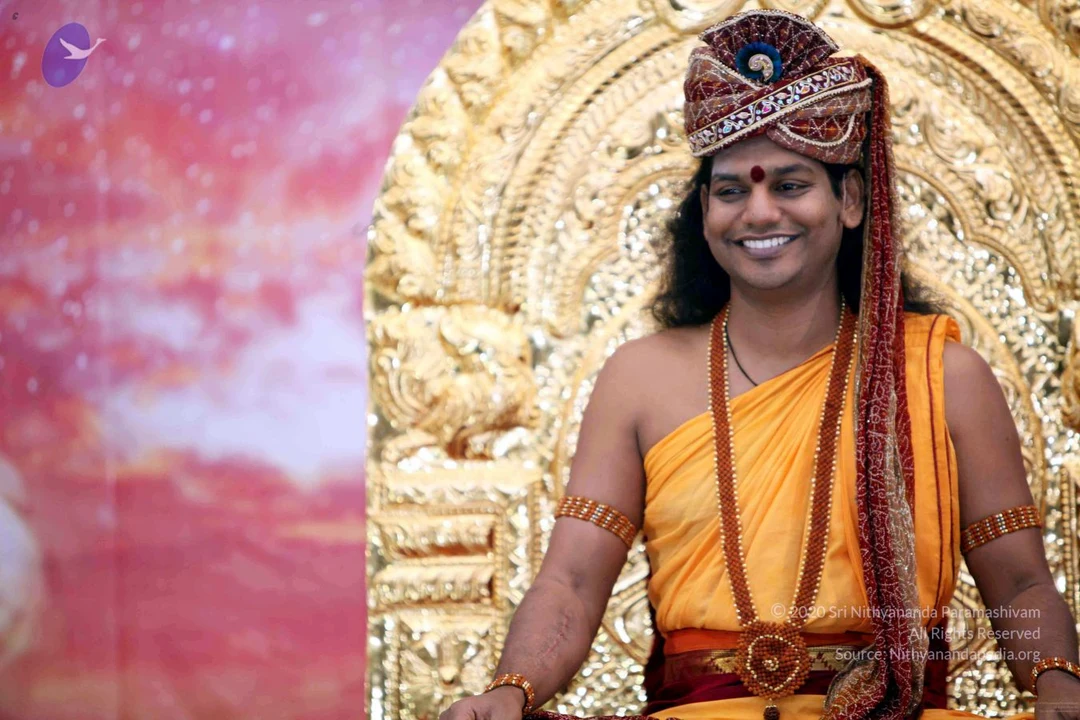
A seated man in saffron-orange robes and an orange turban sits cross-legged on an ornate gold throne with red cushions, a rudraksha mala around his neck, smiling toward the left. He is in a hall in front of a large banner with a Tamil headline and a large portrait of a smiling man in an orange turban, rudraksha necklace and orange robes. A painted figure in blue with a gold crown appears at the right edge, and a small vase of white flowers sits on the lower step.A seated figure in orange robes and an orange turban sits on an ornate gold throne with carved arches and lion-like figures, on a red velvet cushion. A gold ornamental necklace and bangles are visible; the figure wears a rudraksha-style necklace and a wrap draped over the shoulder. Behind the throne is a large banner with a smiling man in an orange turban and orange shawl wearing a rudraksha mala, a Krishna figure in blue with a crown at right, peacock feathers, and a small oil lamp and flower vase on the platform. The banner carries Tamil text for a dhyana satsang. The seated figure appears to be a Swamiji (probable) by ornate orange turban, saffron robes and ceremonial gold necklace, seated in the central role of a satsang discourse.A smiling man in saffron-orange clothing sits on an ornate gold throne carved with lion-like figures and floral scrollwork. He wears an orange turban with a red bindi, an orange shawl draped over the shoulders, a beaded multi-strand necklace with a gold pendant, and beaded armlets. Behind the throne is a pale backdrop with blue streaks. Based on appearance cues including orange turban, shawl and beaded jewellery, this is Swamiji (probable), seated in person.A smiling man sits cross-legged on an ornate gilded throne with heavily embossed golden scrollwork and carved animal figures. He wears a saffron-orange turban with a red and gold beaded edge, a saffron-orange dhoti and wrap with gold borders, a multi-strand beaded necklace in gold and silver tones, beaded armlets and bangles, and a red bindi on his forehead. His hands rest one over the other in his lap. Cues including the long swept-back hair, ornate gold necklace, turban and saffron clothing make him a probable Swamiji on a throne. Single person photographed in an outdoor event setting.A seated man on an ornate gold throne with intricate repoussé carvings behind him. He wears an orange turban with a beaded red-and-gold trim, an orange robe with gold border, and a gold-patterned orange waist sash. He has a red bindi on his forehead, multiple strands of beaded necklaces, and beaded armbands. He sits cross-legged with one hand resting on his knee and the other on his raised leg, smiling. Swamiji (probable): a person with long hair, a crown-style orange turban and saffron ornate clothing with rudraksha-style beads, seated on a golden throne.A seated man in an orange turban and orange robe with gold-edged sash sits on an ornate gold-and-red throne with a red velvet backrest. He wears layered beaded necklaces, bangles on both wrists, and a red bindi. A large portrait of a figure in orange hangs on the left against a white backdrop. Swamiji (probable): long hair, orange turban and saffron robes, layered ornate necklaces and bangles, seated in an honoured position. Photo copyright text is visible at the lower right.
Archive pics_Chitrakala parishath

161 photosSource gallery
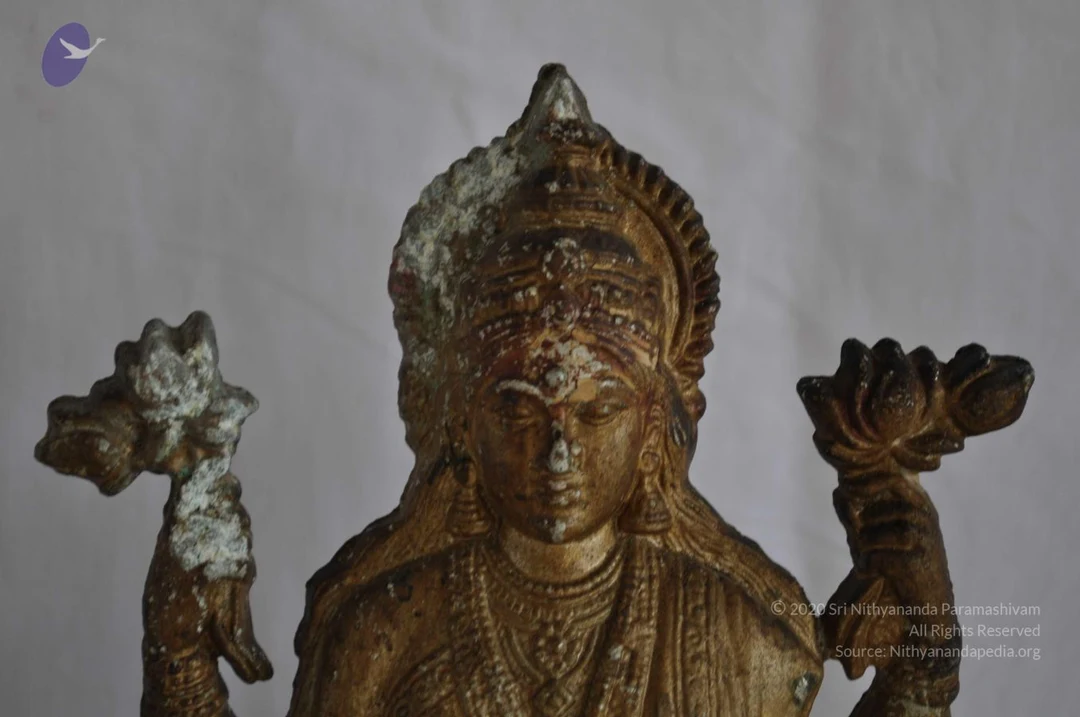
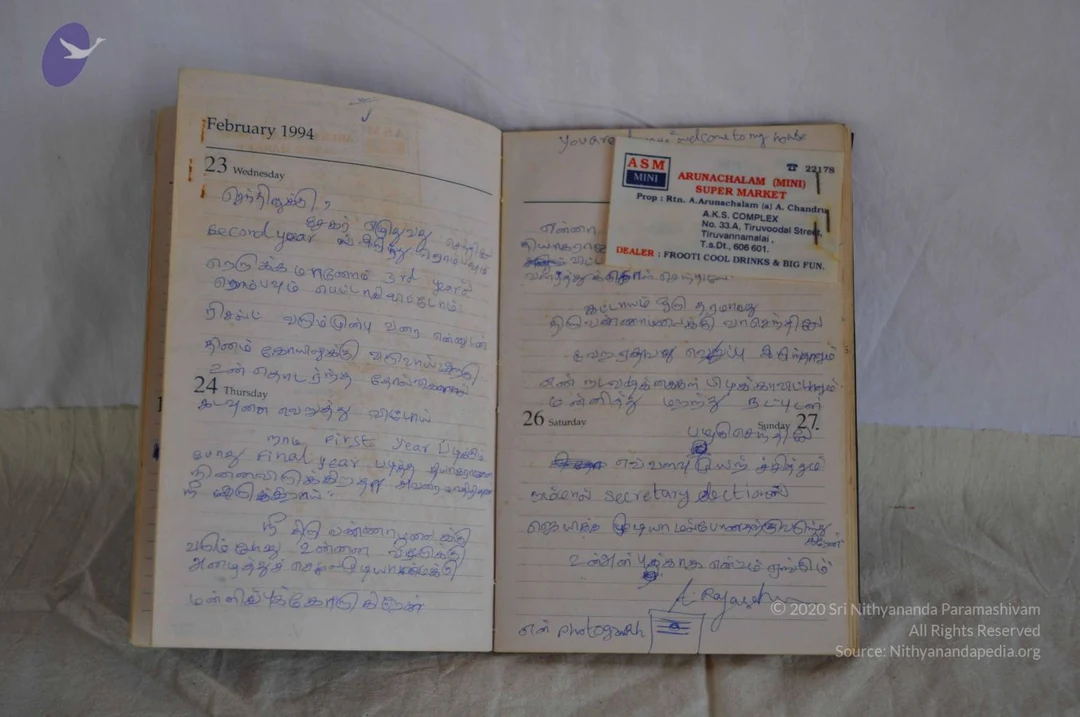
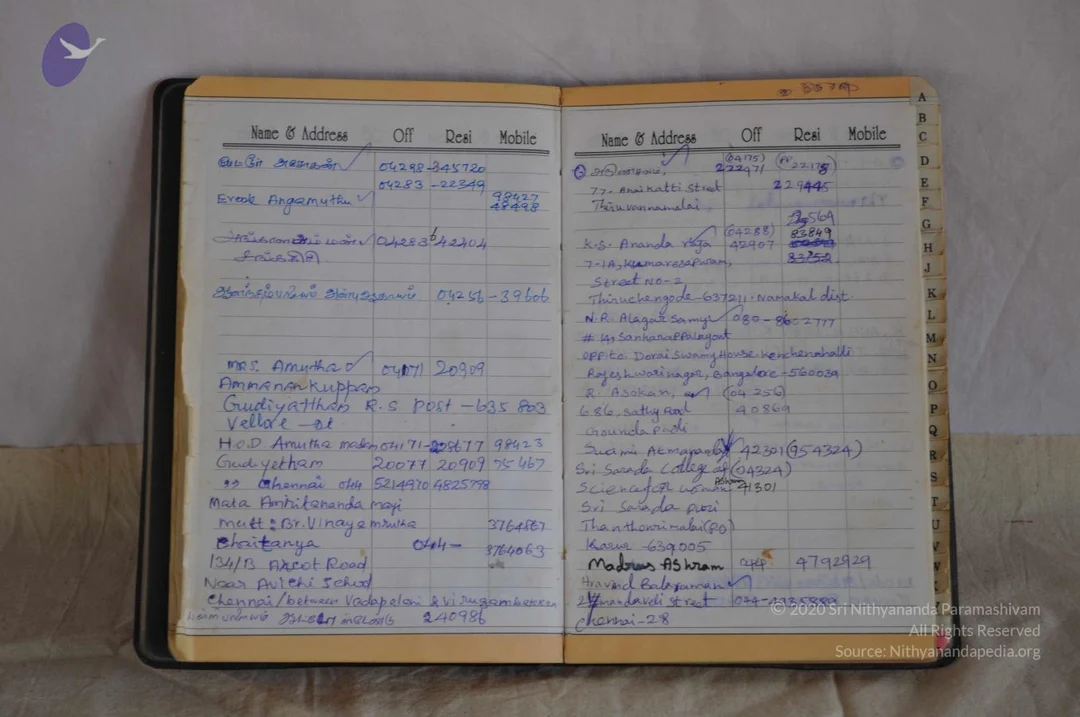
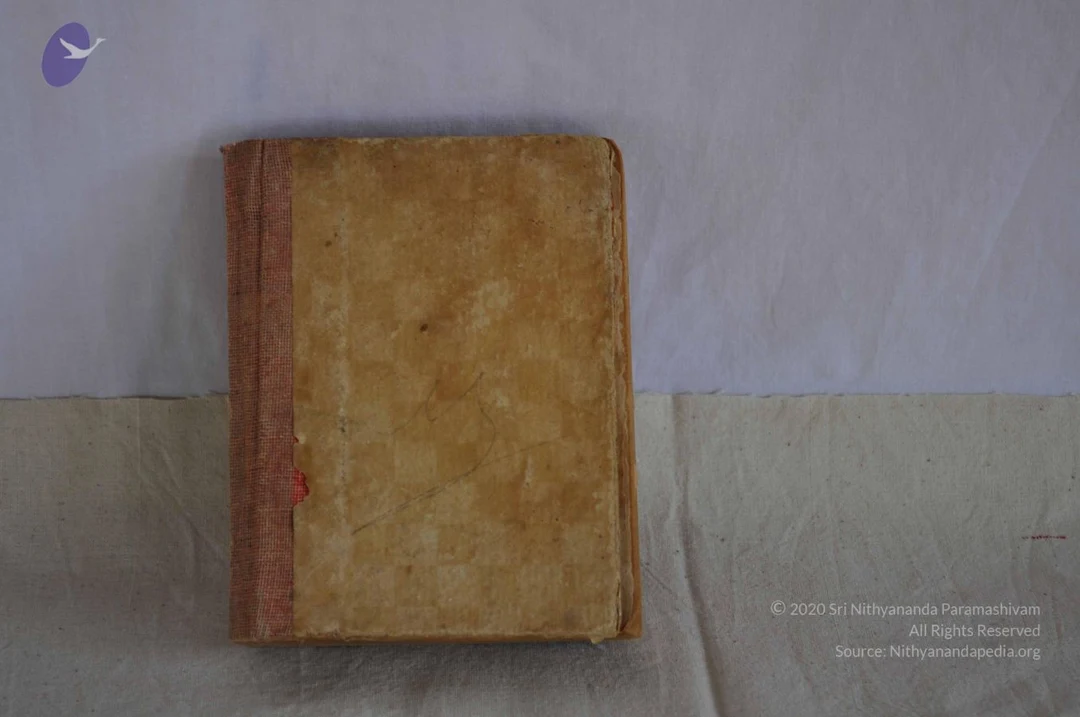
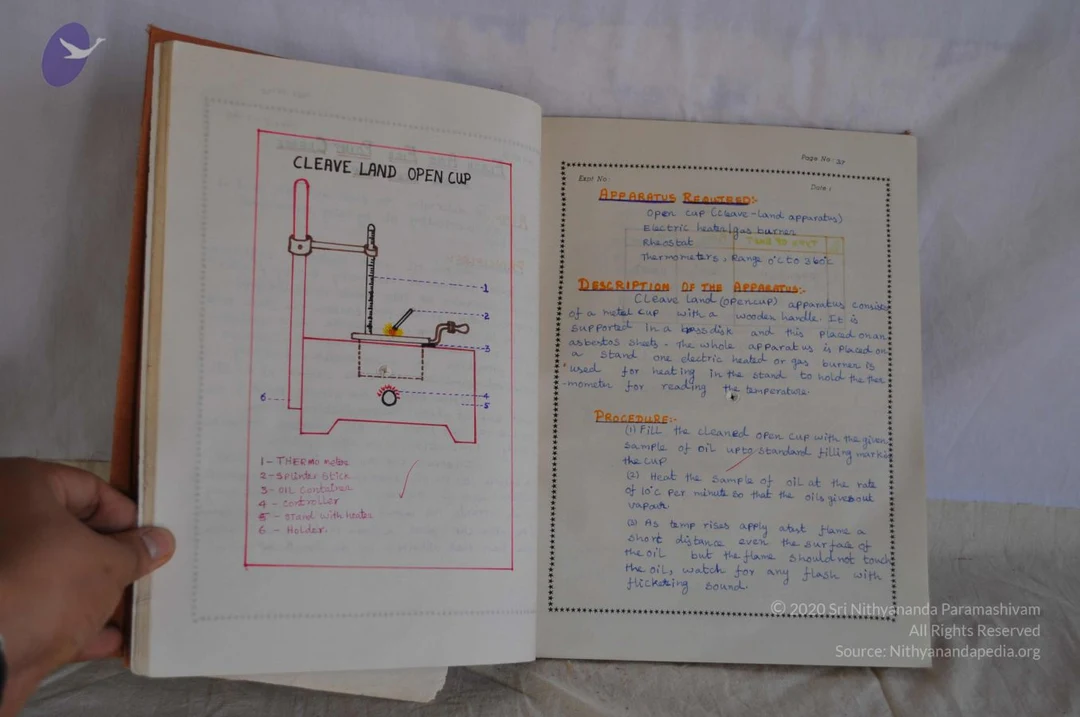
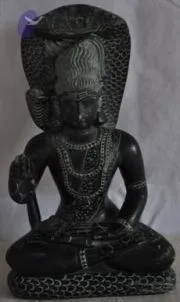
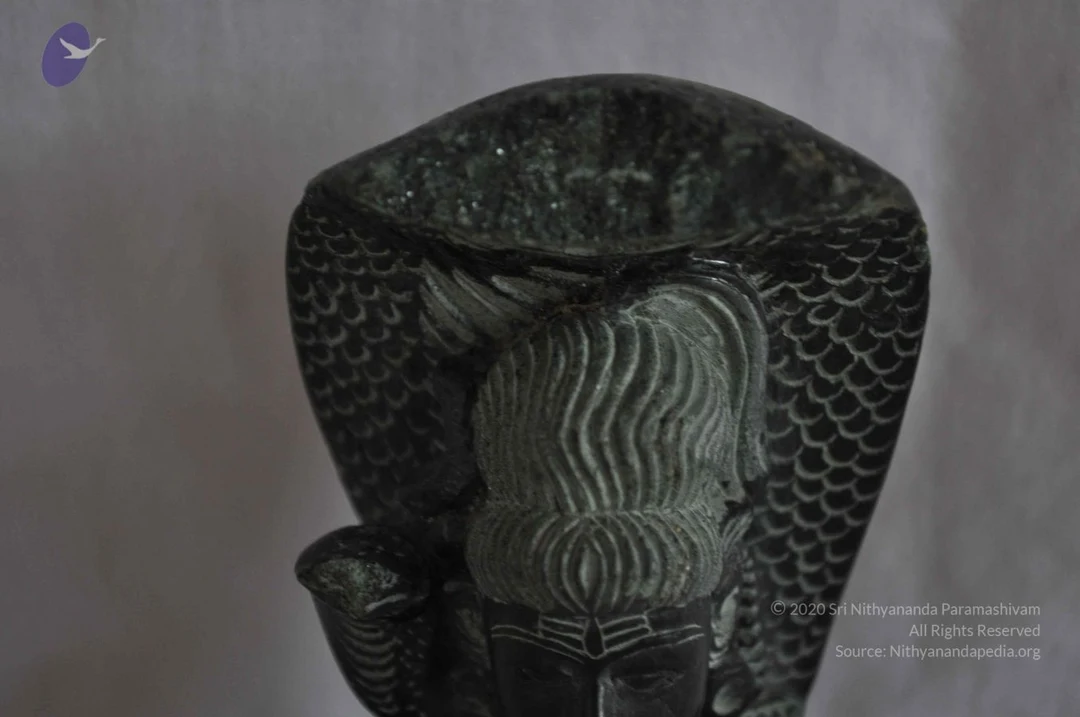
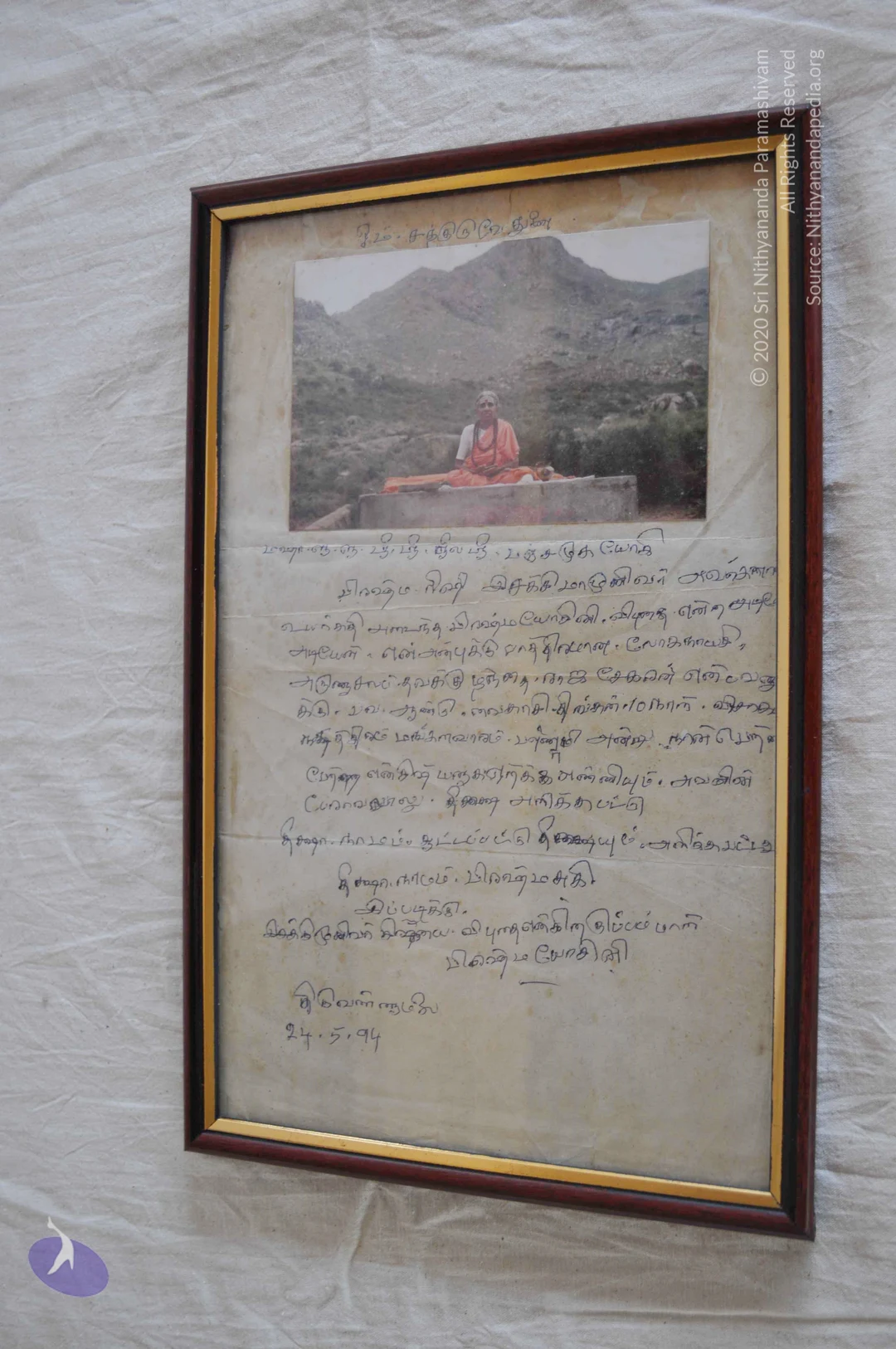
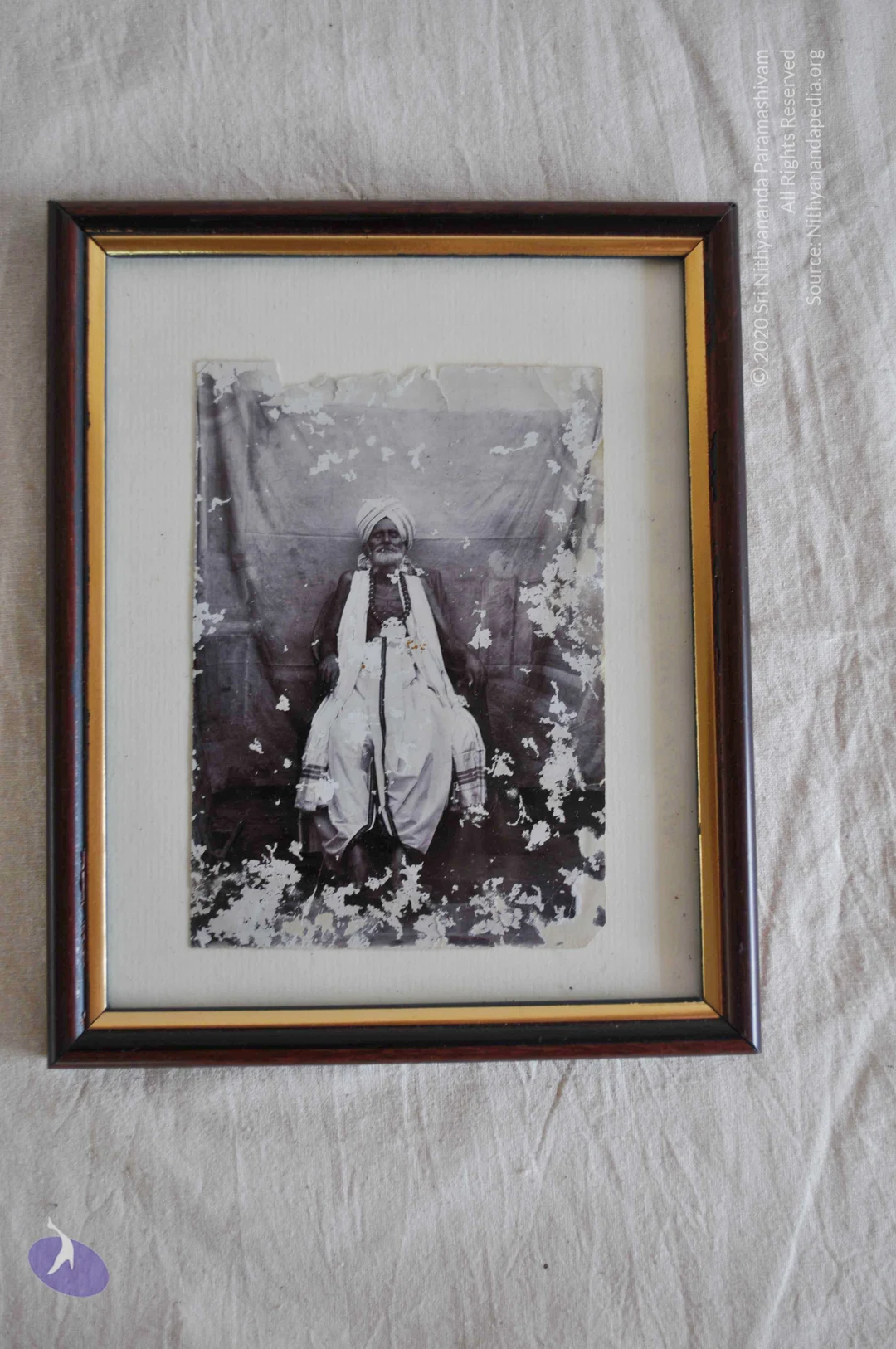
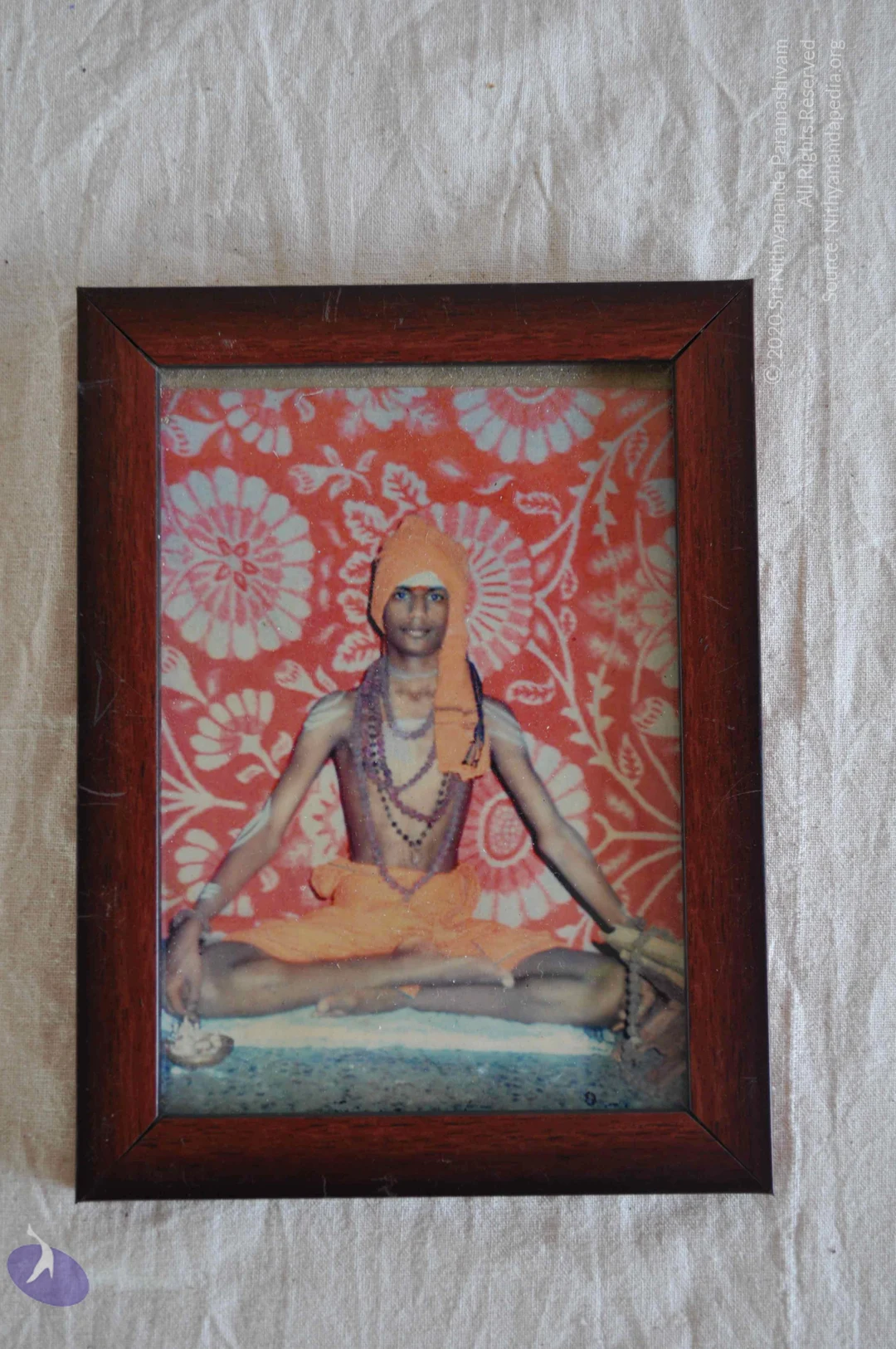
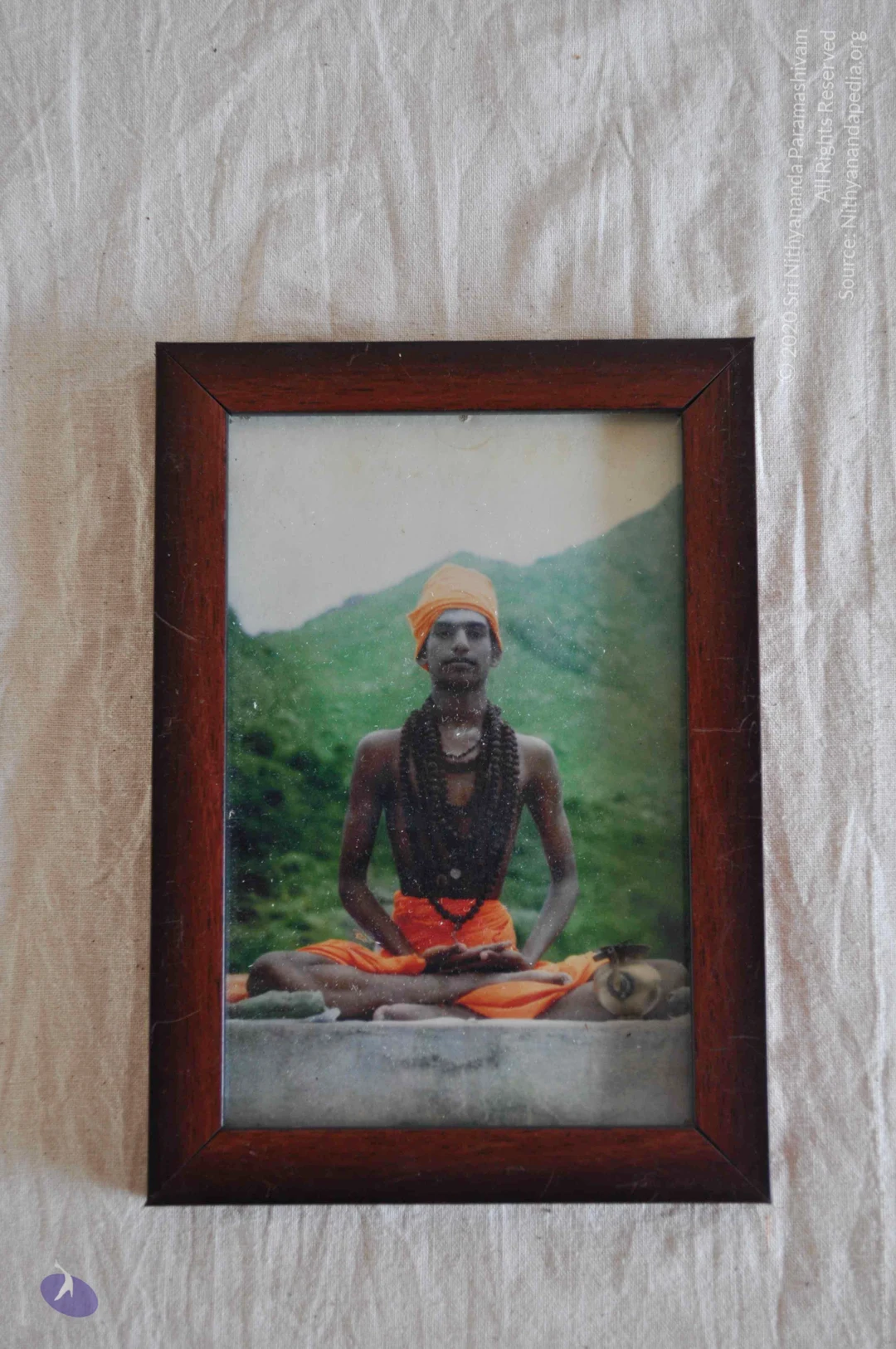
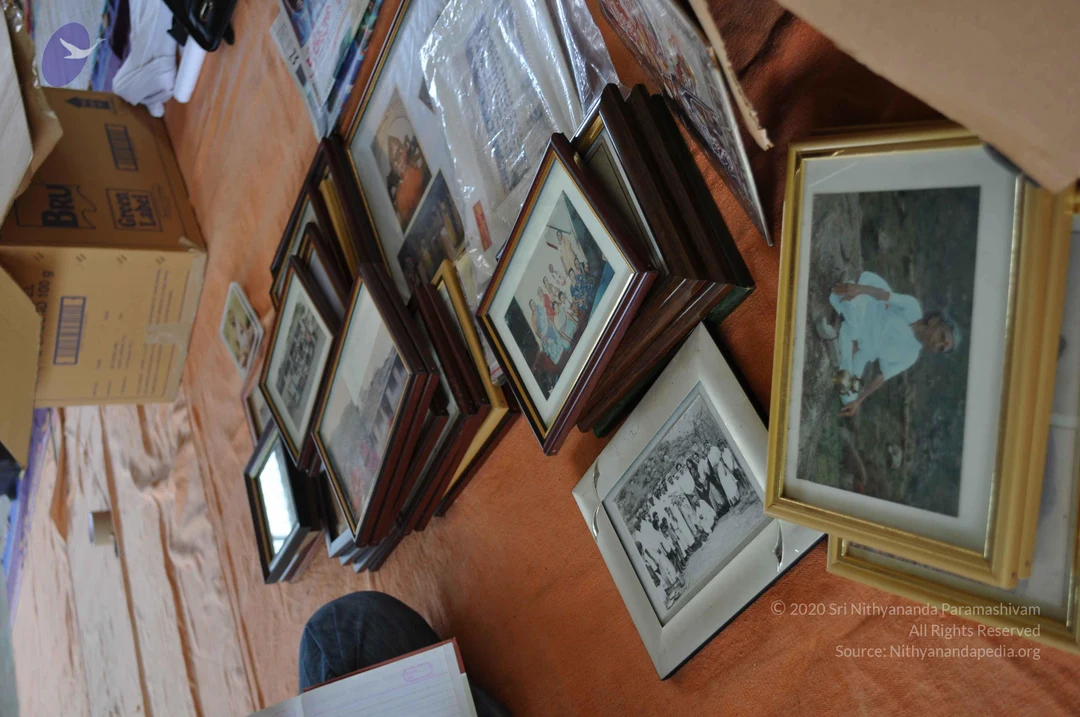
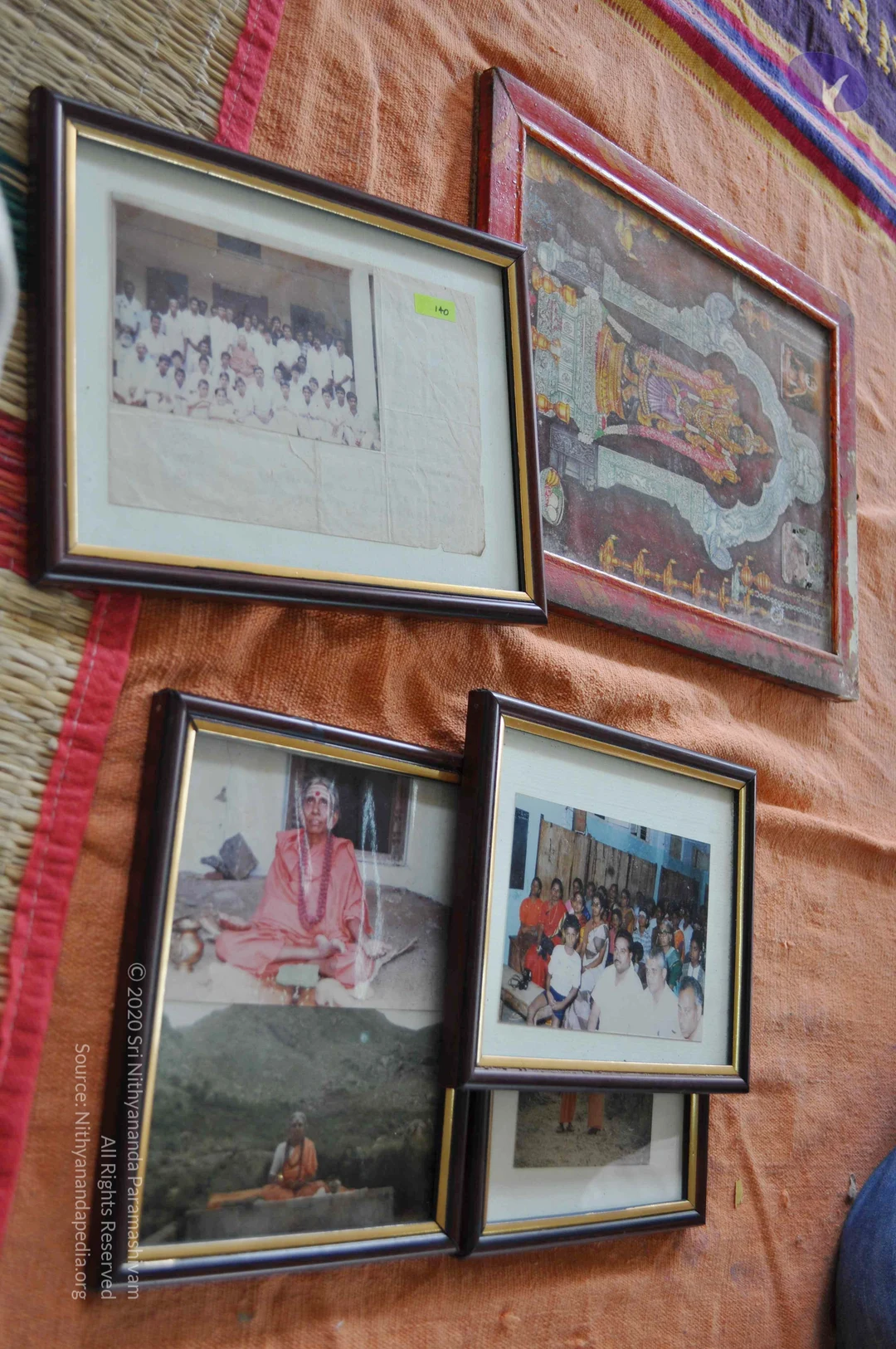
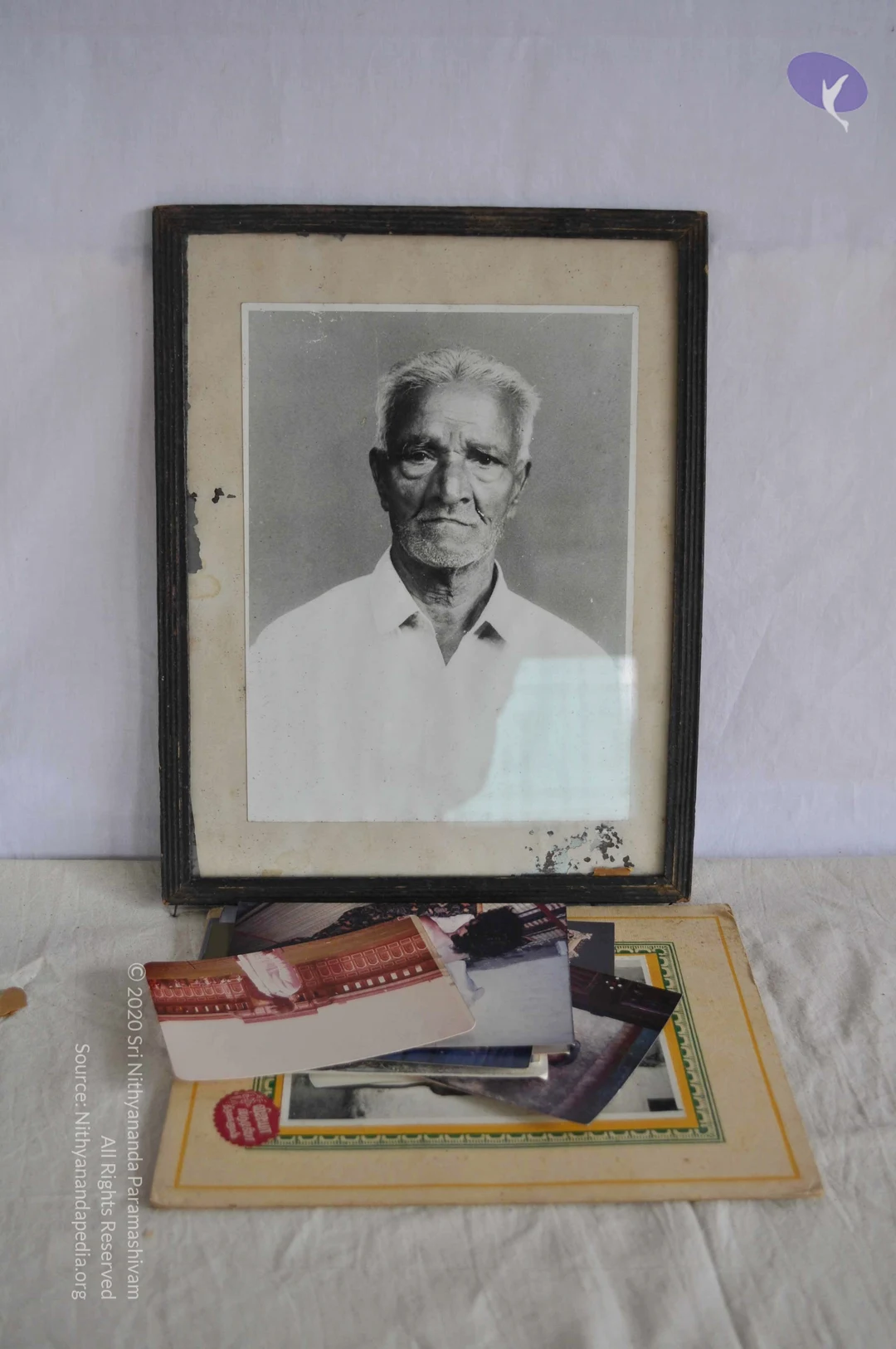
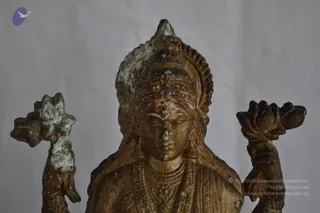
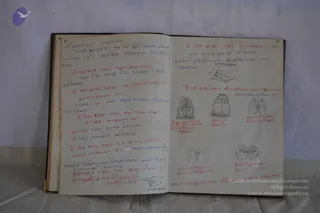
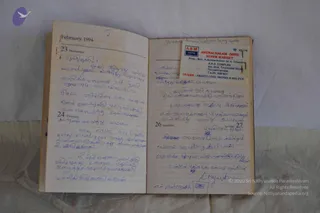
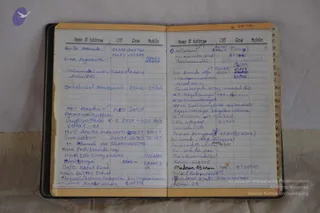
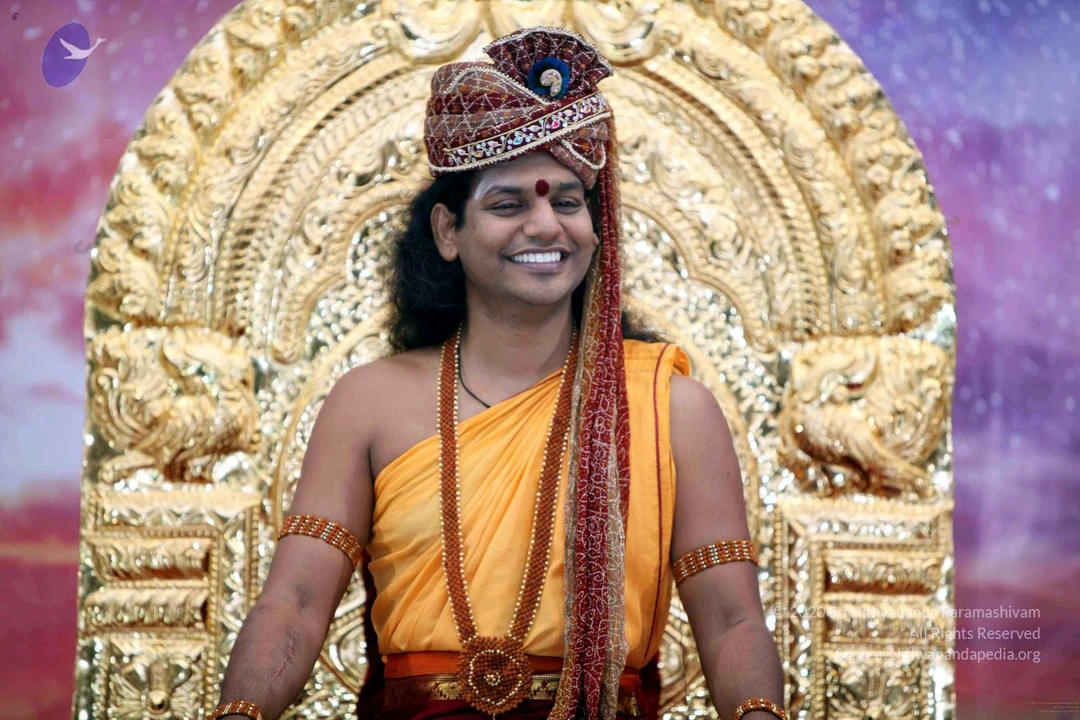
Close-up photograph of a weathered bronze deity murti with a tall crown and a fan-like halo behind the head. The face has downcast eyes and a prominent nose, with a vertical tilak mark on the forehead, and white residue clings to the crown and face. Two raised hands hold lotus-bud objects, and layered necklaces hang across the chest. A plain grey backdrop fills the background. No people are visible.A photograph of an open, handwritten notebook lying on a light cloth against a plain white backdrop. Both pages are covered in Tamil script in blue, red and black ink, with hand-drawn sketches of mudra hand positions in the lower right and lower left areas. A red pointing hand sketch appears near the bottom of the left page. No people are visible in the scene.A photograph of an open handwritten diary lying on a light grey cloth against a white backdrop. The left page is dated February 1994, Wednesday 23 and Thursday 24, with handwritten Tamil script. The right page includes a handwritten English note at the top reading 'you are always welcome to my home' and a printed business card for Arunachalam (Mini) Super Market pasted over the page, listing Prop. Rtn. A. Arunachalam and a Tiruvannamalai address. No people are visible.A closed rectangular notebook or diary with a tan-orange leather-look cover lies flat on a white cloth draped over a surface. A faint embossed or handwritten signature appears on the left side of the cover. No people are visible.A photograph of an open black-bound address book resting on a cream cloth against a plain grey backdrop. Both pages are ruled with columns headed 'Name & Address', 'Off', 'Resi' and 'Mobile', filled with handwritten entries in blue ink in Tamil and English, including phone numbers and addresses such as Chennai, Vellore and Bangalore. No people, deities or ritual objects are visible; the subject is a handwritten contact directory.A photograph of a worn, aged book lying flat against a pale cream cloth backdrop. The book has a tan, mottled paper cover with faint scratches and a reddish-brown cloth spine along its left edge. No people are visible. A small purple bird logo appears in the upper left corner.
1-Archive-Pics-Chitrakala-Parishath
40 photosSource gallery
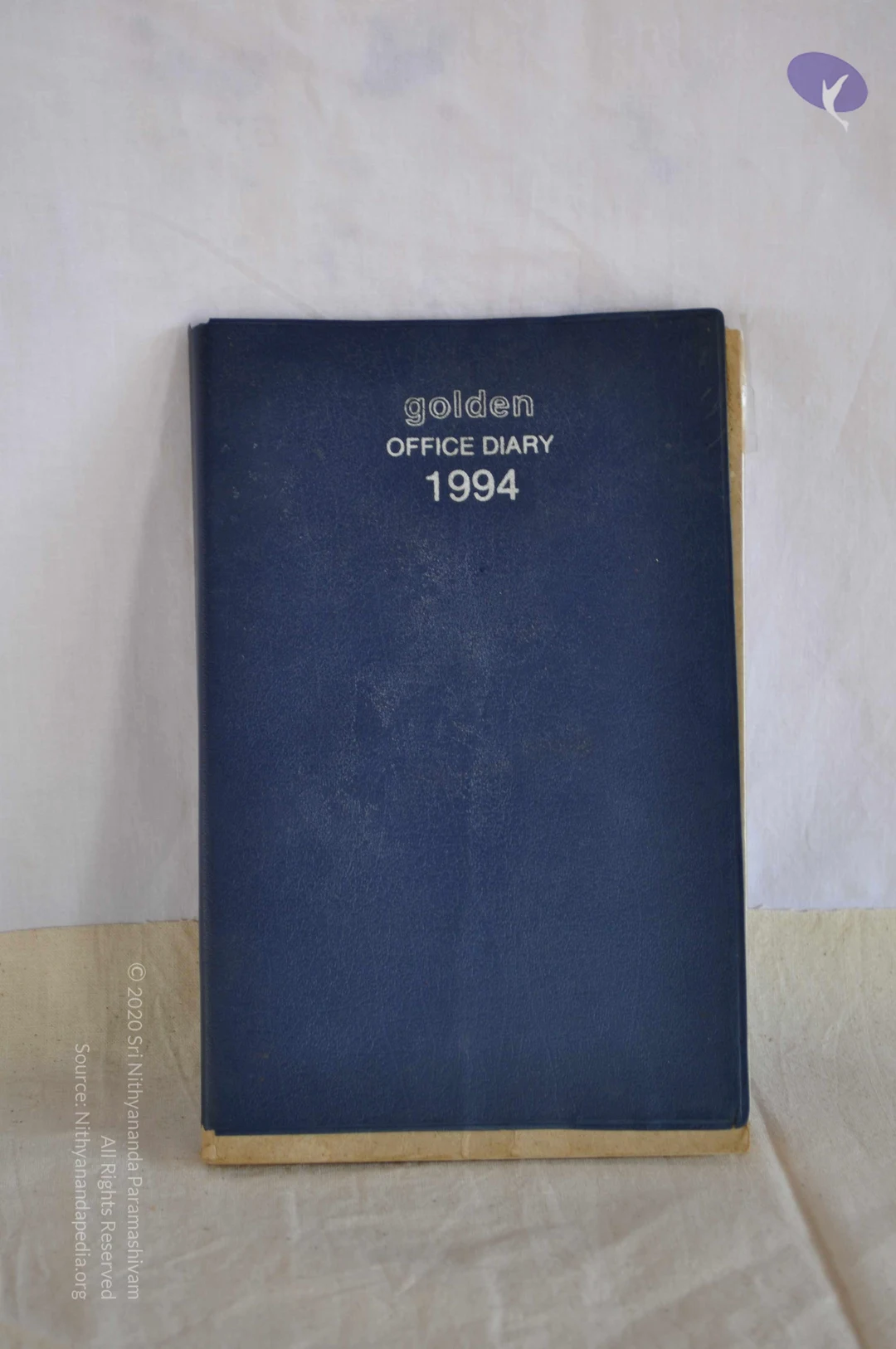
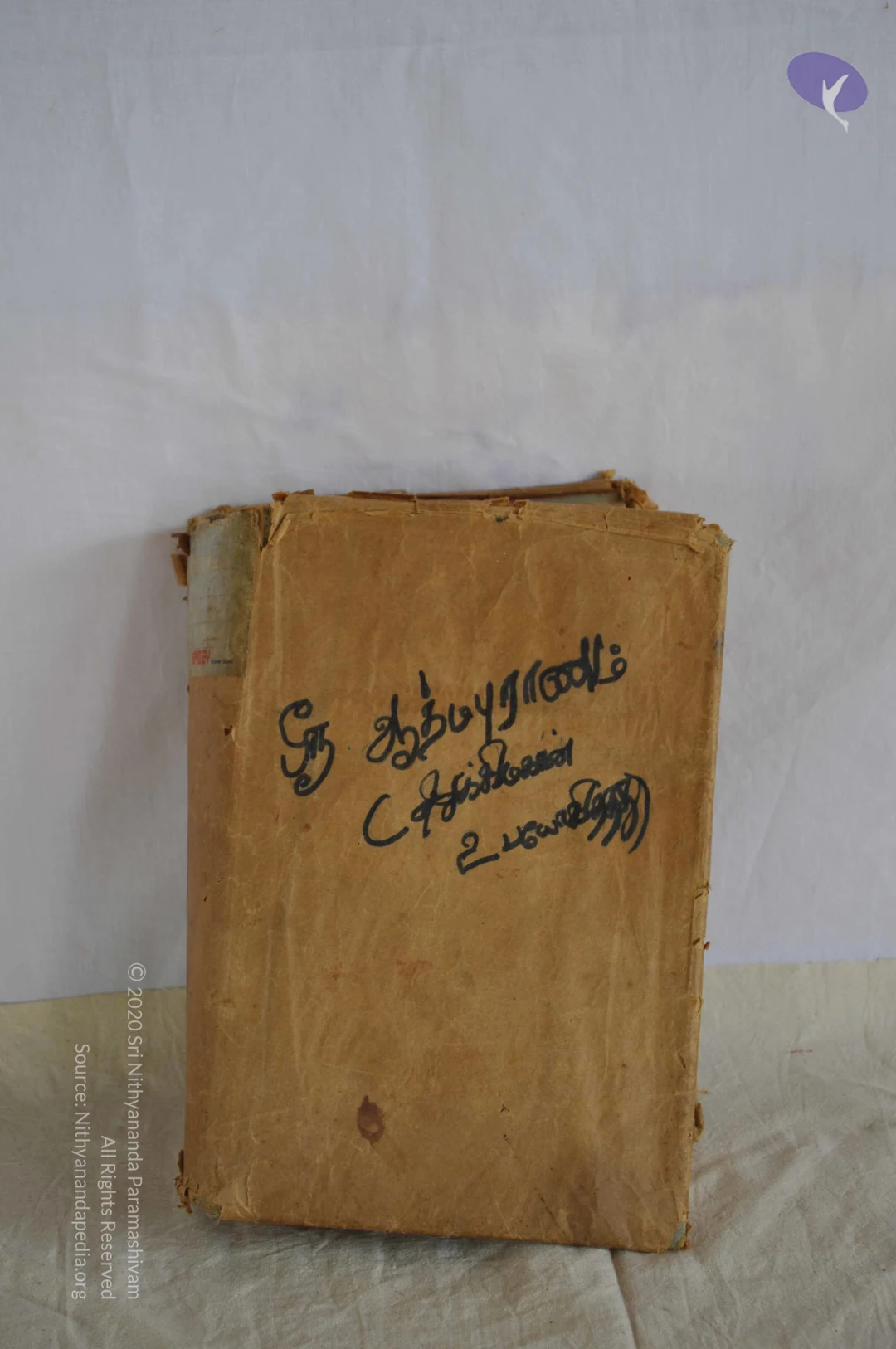
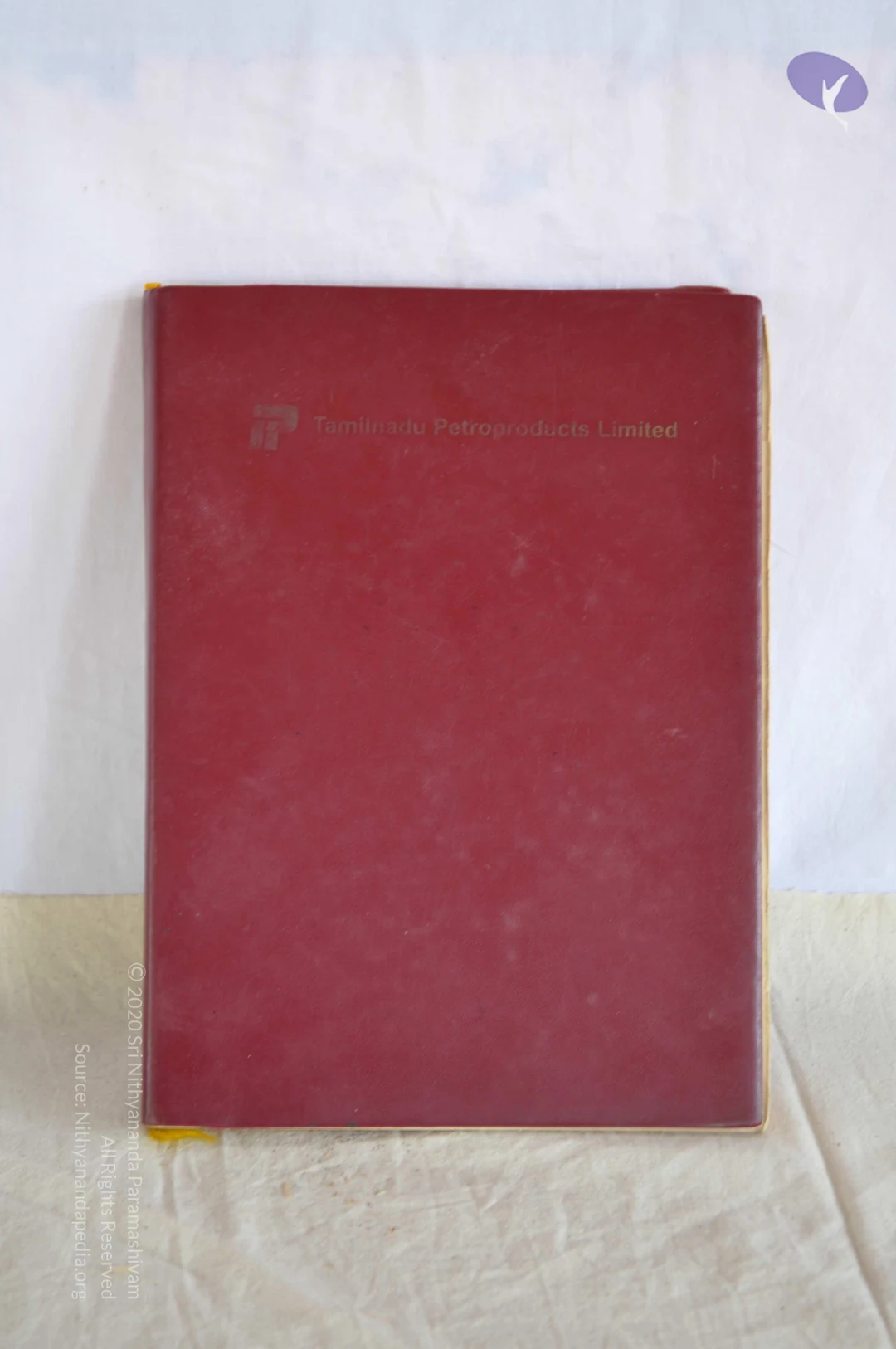
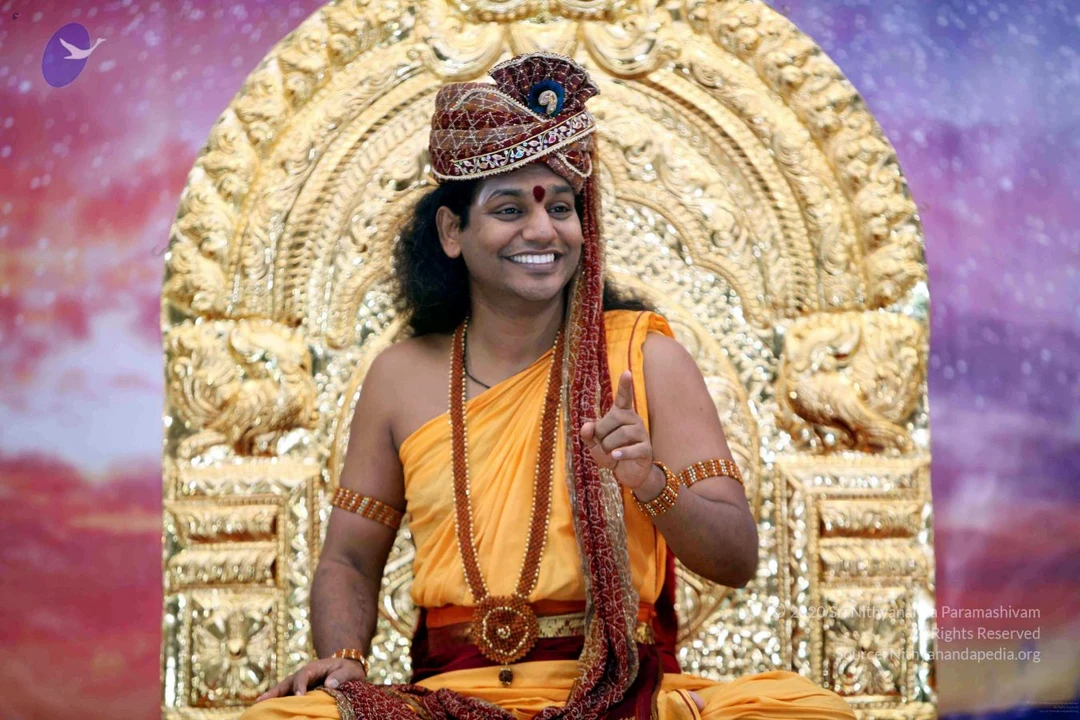
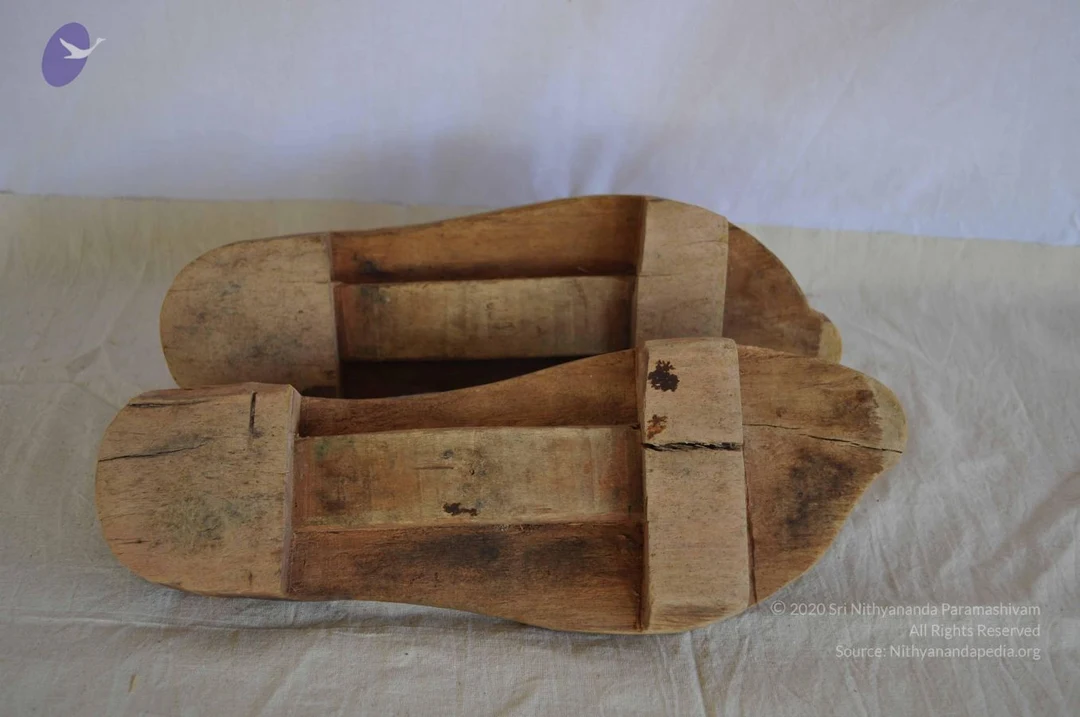
A photograph of a small gold-coloured metal murti of a four-armed seated deity on a lotus pedestal, set against a plain light background on a cream cloth. The figure wears a tall crown, layered beaded necklaces and a draped garment, with lotus blossoms held in the upper hands and the lower hands in gesture. The base has a scrolled decorative border with traces of red paint. No people are visible.A photograph of a weathered, corroded metal deity murti seen from behind against a plain grey backdrop on a cream cloth. The seated figure has a pointed, flame-like halo or crown, and raised arms with stylised hand forms, resting on a lotus-like pedestal and a flat rectangular base. The surface is pitted and rust-brown in patches with grey tarnish. No physical people are visible.A photograph of a black leather-textured management diary standing upright on a cream cloth against a pale grey backdrop. The cover has gold embossed lettering reading "Management Diary" in the upper right, and a gold-edged page block shows at the lower right corner. No people are visible. A faint purple logo appears in the upper right corner of the image.A dark blue hardcover office diary lies on a plain cream cloth against a pale wall. The cover is embossed in silver-white lettering reading golden OFFICE DIARY 1994. A small purple logo appears in the upper right corner, and a yellowed paper sleeve shows at the bottom edge. No people, deities or ritual objects are visible.A photograph of an old, worn book with a brown paper cover lying on a pale cream cloth against a plain light grey backdrop. The book's spine is frayed and its edges are torn. Handwritten black ink in Tamil script is written across the front cover. No people are visible; the scene shows only the book and the cloth.A photograph of a dark red leather-bound notebook or diary standing upright against a plain white backdrop, resting on a cream cloth. The cover carries the embossed logo and text "Tamilnadu Petroproducts Limited" in the upper left. Yellow page edges show at the bottom and right side. No people, a person candidate, or ritual activity is visible.