Skip to content
Friday

22 July 2011

THE SUPREME PONTIFF OF HINDUISM HDH BHAGAVAN NITHYANANDA PARAMASHIVAM

Dated photos
19
Source pages
1
Media
1
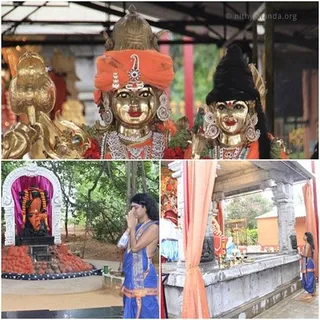
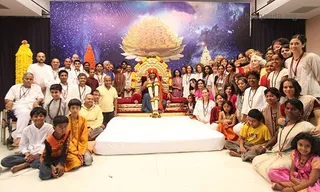
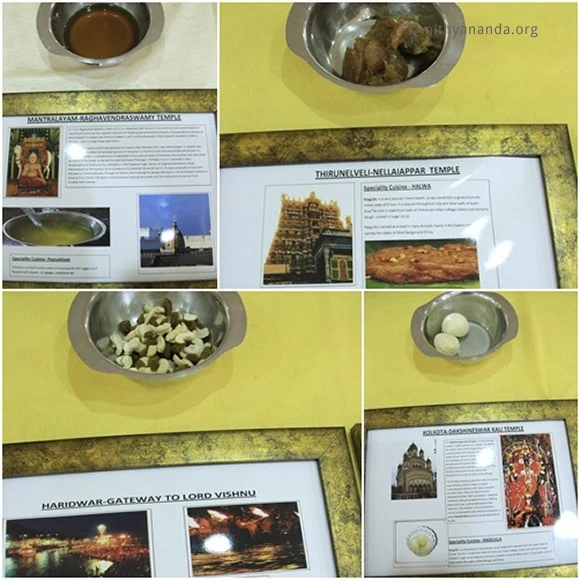
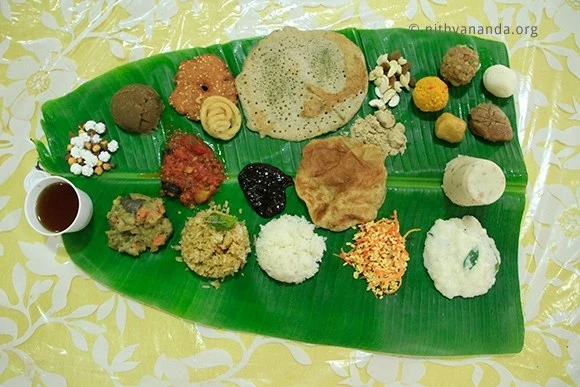
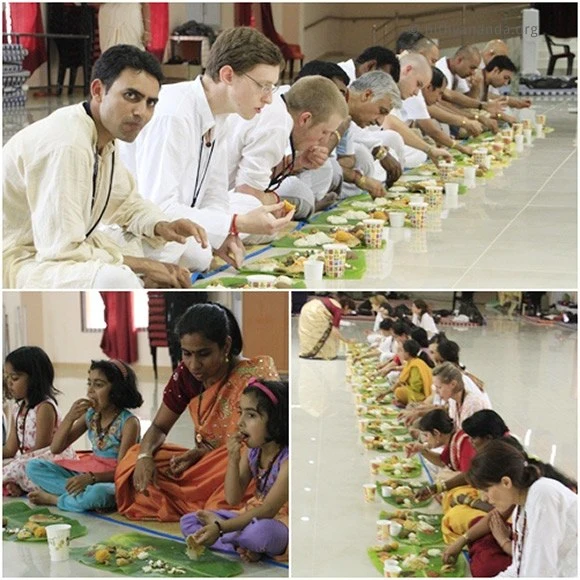
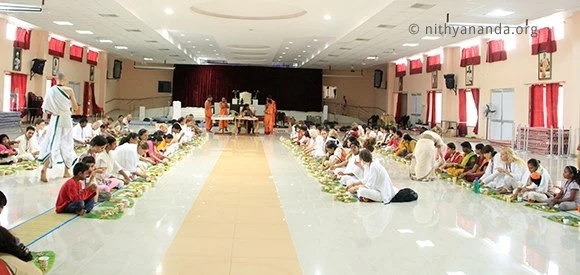
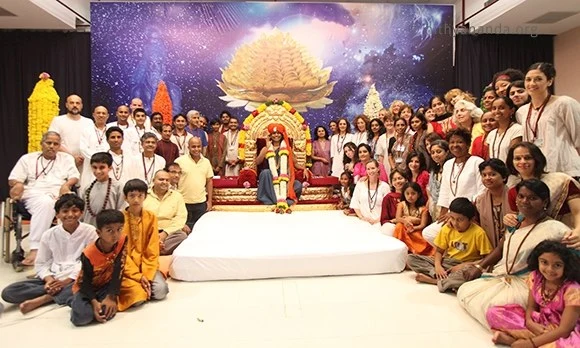
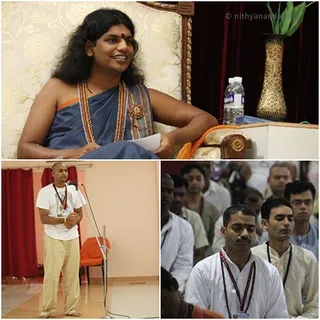
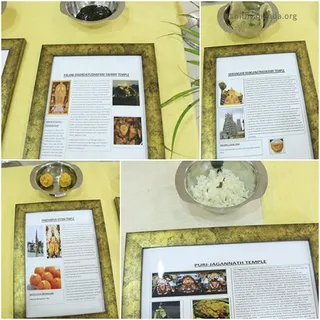
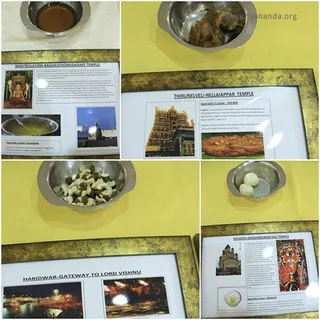
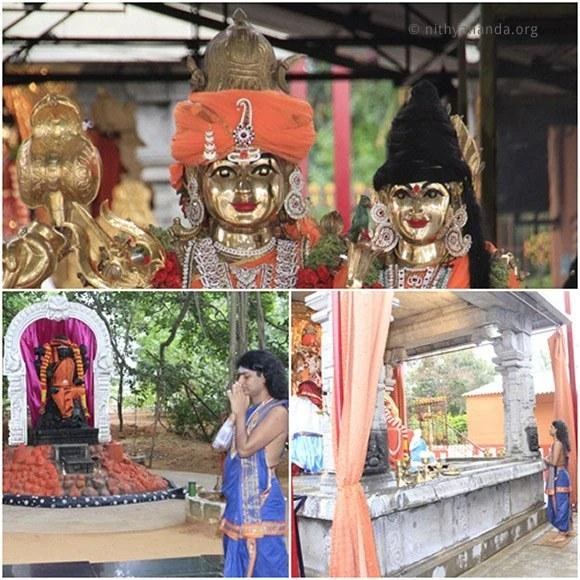
A four-panel collage photograph of temple scenes. The top panel shows two gilded metal deity murtis with ornate crowns, jewelled earrings and necklaces, one wearing an orange turban and the other a black cap, with red garlands and a golden ceremonial fan at left. The bottom-left panel shows a shrine with a dark deity murti adorned with orange garlands, a pile of red offerings in front, and a man in blue dhoti and white upper cloth with folded hands. The bottom-right panel shows a stone-pillared pavilion with orange drapes and a standing man in blue dhoti with folded hands before a shrine. Shown as a collage, no physical people are the subject beyond these small figures.Group photograph in a bright hall in front of a cosmic backdrop of blue-purple galaxy with a large golden lotus motif. A seated figure in the centre sits on a red and gold ornate throne with red cushions and a white mat in front, wearing an orange and red garment and a red-orange head covering. Around the throne, rows of devotees sit and stand: men in white kurtas and dhotis, women in saris in pink, red and white, children in orange, yellow and pink clothes, and a few people wearing rudraksha malas. Golden ornamental decorations stand at the left edge of the frame. Several people are seated on the floor in the foreground, and some are smiling toward the camera.

July 22 2011

Original wiki page
Contents

Title:

THE SUPREME PONTIFF OF HINDUISM HDH BHAGAVAN NITHYANANDA PARAMASHIVAM

Photos:
Sakshi Pramana:

Sharing from Satsang experience

Photos from this day

View all 19 photos
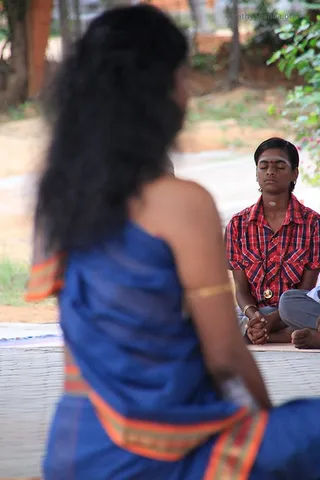
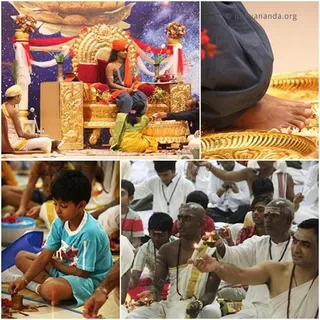
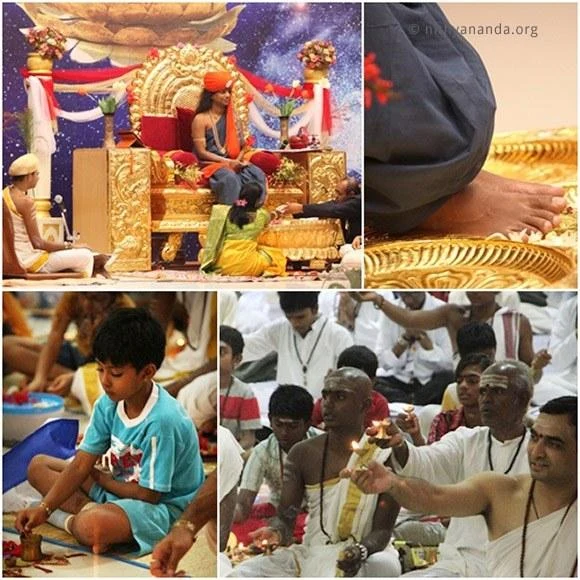
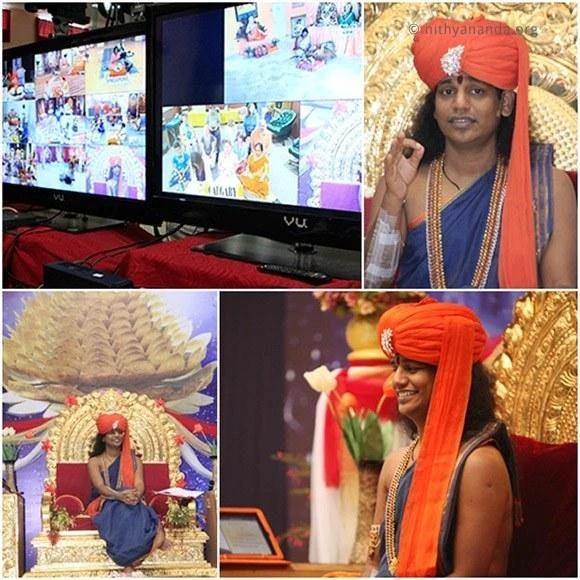
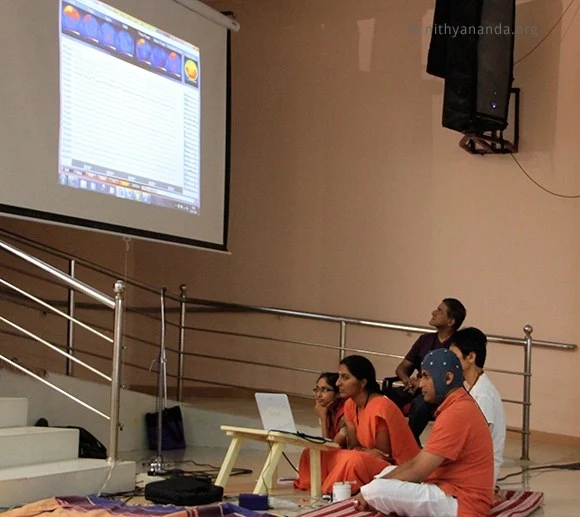
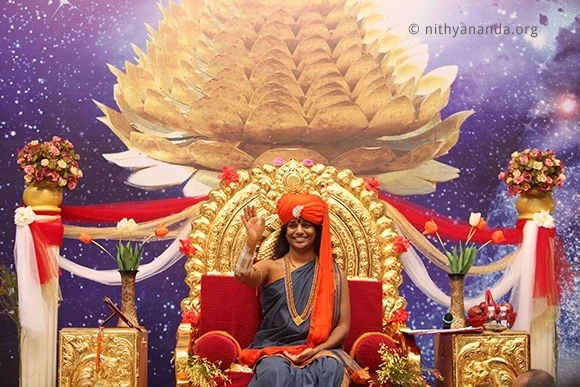
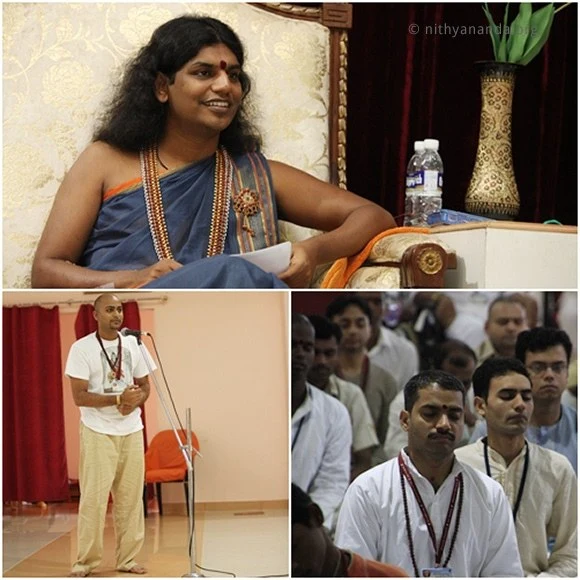
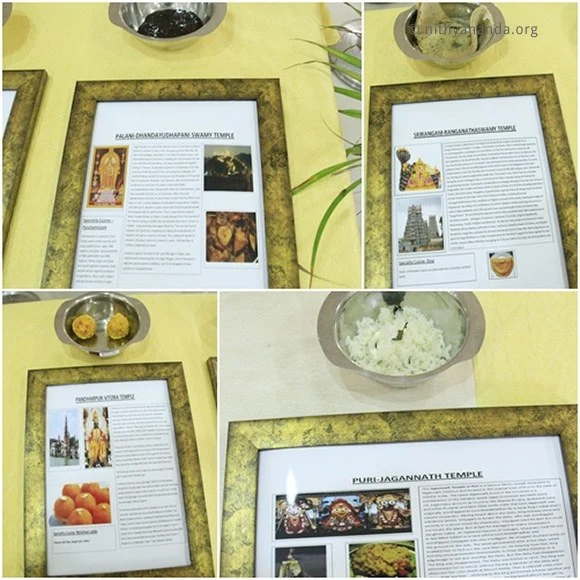
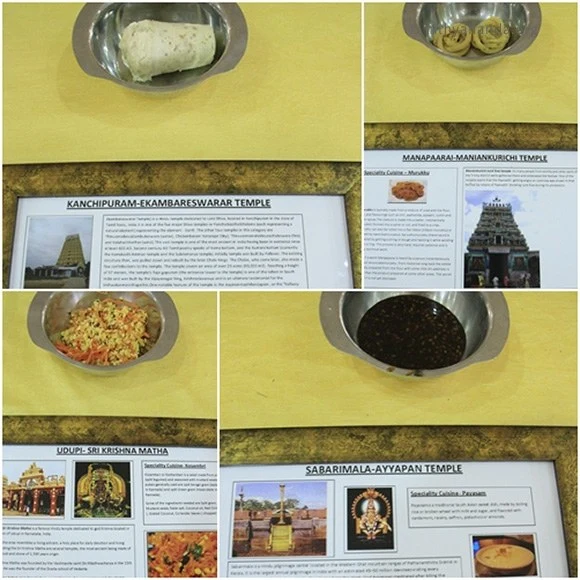
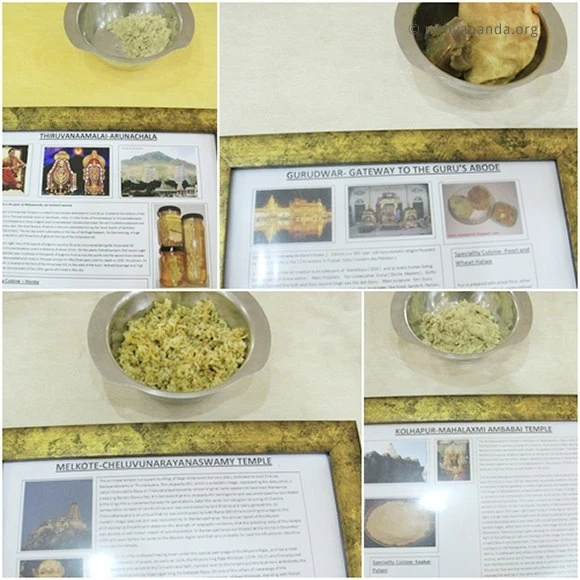
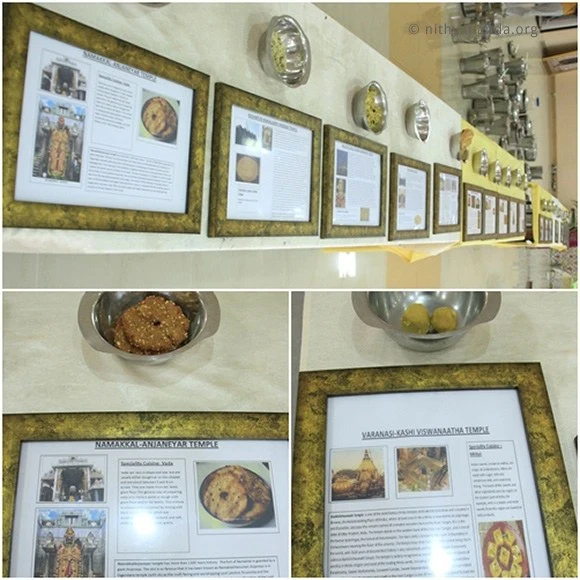
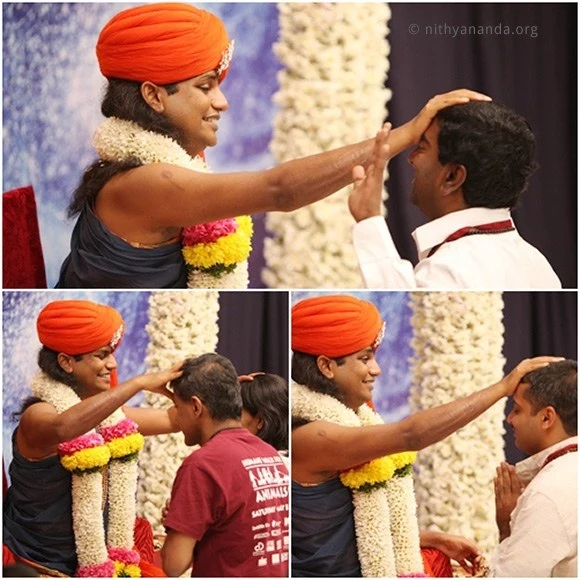
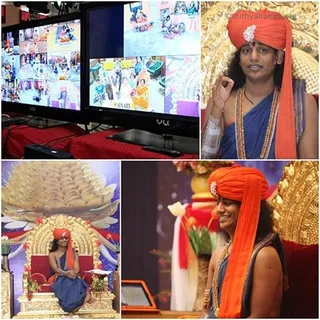
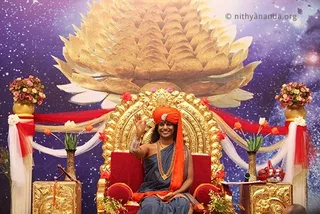
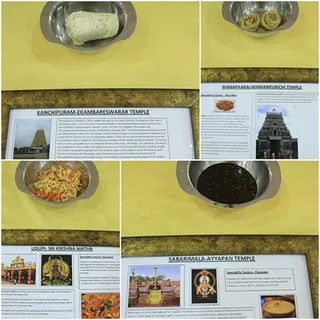
A four-panel collage photograph of temple scenes. The top panel shows two gilded metal deity murtis with ornate crowns, jewelled earrings and necklaces, one wearing an orange turban and the other a black cap, with red garlands and a golden ceremonial fan at left. The bottom-left panel shows a shrine with a dark deity murti adorned with orange garlands, a pile of red offerings in front, and a man in blue dhoti and white upper cloth with folded hands. The bottom-right panel shows a stone-pillared pavilion with orange drapes and a standing man in blue dhoti with folded hands before a shrine. Shown as a collage, no physical people are the subject beyond these small figures.A multi-panel collage of photographs from a Paada Puja ceremony. The top-left panel shows a seated figure in an orange turban and red-and-gold ornamented garments on a large gold throne with gold-trimmed red cushions, while a woman in a green sari kneels before the throne and a man in white stands beside it. The top-right panel is a close view of a bare foot resting on a gold tray. The bottom-left panel shows a boy in a light blue shirt sitting cross-legged and tending a small brass vessel. The bottom-right panel shows a crowd of people in white ritual clothes seated on the floor, with a shaved-headed priest in a white dhoti and orange-and-gold shawl holding a lamp in one hand and a pooja offering in the other, and a man in white beside him gesturing with a lamp.A four-panel collage graphic about a satsang. The top-left panel shows two monitors displaying a grid of video feeds of people in colourful rooms, some seated among flowers and decorations. The top-right panel shows a man in an orange turban, rudraksha-style gold necklaces and a blue-and-orange wrap, gesturing with one hand while speaking. The bottom-left panel shows the same figure seated on a large gold throne with a carved golden canopy and red cushions. The bottom-right panel shows him in orange turban and gold necklaces beside a red-draped table with a book and white flowers, smiling. A photo caption on the image reads nithyananda.org. Swamiji (probable) appears in three panels, identified by the orange turban, gold necklaces and blue wrap with a central gold throne.A photograph of a seated group in a bare, pale-walled hall facing a projection screen at left showing a spreadsheet-like table with a row of coloured circular icons. Four people sit on a low red-and-white mat around a small wooden stool holding a laptop and a cup. Two women in orange garments sit centre, one with long dark hair; a person in an orange head covering and orange top sits in front; a man in dark clothing and a figure in white sit behind. A metal railing and a wall-mounted speaker appear at right. The page indicates a satsang sharing session, but no one in the scene is identified by appearance.A man seated on an ornate gold-and-red throne (peetha) raises his right hand in blessing before a large gilded lotus backdrop against a starry blue galaxy background. He wears a saffron-orange turban, a grey-blue dhoti-style garment, and a gold ceremonial necklace with a red pendant; a sandalwood or vibhuti mark is visible on his forehead. Flower arrangements in pink, red and white stand on gold pedestals at either side of the throne, with white and red draped fabric behind. A small white flower-decorated lotus structure sits at the lower corners. A probable Swamiji (Paramashivam) figure is seated in the central role, with visible cues including the saffron turban, ceremonial gold necklace and grey-blue ritual dress.A three-panel collage of photographs from a satsang gathering. The top panel shows a long-haired figure seated on an ornate cream upholstered chair, wearing a blue and orange wrap, rudraksha malas and a gold ornament, with a red bindi, holding a sheet of paper; beside them stand a clear water bottle and a gold vase with green foliage. The bottom-left panel shows a bald man in a white t-shirt and cream trousers with a lanyard, standing at a microphone stand in front of red curtains and an orange chair. The bottom-right panel shows a seated audience in white and light clothing, with lanyards and rudraksha malas, eyes closed in meditation. The collage shows several panels but depicts people physically present in each photograph, so counts are for the scene as photographed.A four-panel collage of framed temple information boards set on a yellow tablecloth, each paired with a small stainless steel bowl of food offerings. Panels cover Palani Dhandayuthapani Swamy Temple with panchamrutham-style sweets, Srirangam Ranganathaswamy Temple with a bowl of sweet rice, Pandharpur Vitthal Temple with a bowl of orange-coloured prasad and a fruit-like sweet, and Puri Jagannath Temple with a bowl of white rice. Each board has a printed text column and small photographs of deities, temple gopurams and food. No people are visible. The image is a composite of framed displays rather than a photograph of a living scene.A four-panel collage of photographs of food offerings in small stainless steel bowls on a yellow tablecloth, each beside a printed information card about a temple. Top left shows a dark liquid in a bowl with a card on the Mantralayam Raghavendraswamy Temple and a specialty cuisine note for Pazhamkanji. Top right shows a brown sweet-looking dish in a bowl beside a card on the Thirunelveli Nellaiappar Temple with Kaiwa as its specialty cuisine. Bottom left shows small pale cubes in a bowl beside a card on Haridwar, gateway to Lord Vishnu, with night photographs of the river ghats. Bottom right shows two round white sweets in a bowl beside a card on the Kolkata Dakshineswar Kali Temple, with a deity murti photograph. No physical people are visible.A four-panel collage of food items served in stainless steel bowls on a yellow cloth, each panel paired with a framed information card about a South Indian temple. Top left: a white rice-cake or idli-like roll in a steel bowl with a framed card for Kanchipuram-Ekambareswarar Temple, showing a gopuram tower photo. Top right: a steel bowl of golden rolled sweet with a card for Manapaarai-Maniankurichi Temple, showing a gopuram and a 'Specialty Cuisine - Murukku' note. Bottom left: a steel bowl of yellow and orange rice dish with carrot and a card for Udupi-Sri Krishna Matha with temple photos. Bottom right: a steel bowl of dark sauce or dessert with a card for Sabarimala-Ayyappan Temple, noting 'Specialty Cuisine - Payasam' with a photo of a pale pudding. No people are visible.