Thursday
31 March 2011
- Dated photos
- 49
- Source pages
- 1
- Media
- 2
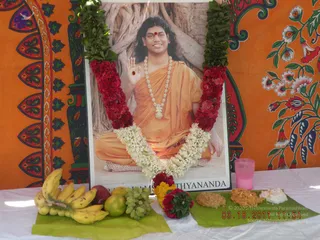
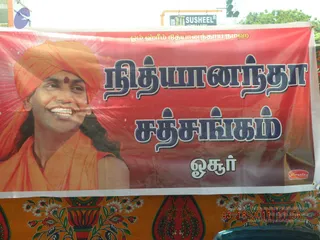
March 31 2011
Original wiki pageTitle:==
Art of mind reading Patanjali Yoga Sutras 141
Link to Video:
| Video | Audio |
Transcript:
Sadāshiva samārambām shankarācharya madhyamām Asmadācharya paryanthām vande guru paramparām.
[00:48]
I welcome you all with My love and respects. I am seeing so many mirrors in Ohio, in Los Angeles in… where else? I think that’s all. So many mirrors in Bidadi! Good! Understand, feel you are the mirror and everything is mirroring in you. Constantly remember this for every action every thought; even the idea you are a male or female is a mirror. Please understand, even that idea is a reflection on your mirror. You.... you are not female or male or man or woman or any idea. Even if you have an idea you are a human being, it is an idea - reflection from a lie. So just see that you are a pure mirror mirroring all the fun, chaos, fear, greed. Whatever is happening you are just mirroring. Good!
[02:28]
Let’s enter into today’s satsang. Today’s subject ‘Art of mind reading’ Patanjali gives a very powerful samyama on mind reading; 141st sutra in Patanjali’s yoga sutra - 3rd chapter 35th verse; very beautiful sutra. Hridve… हृदये चित्तसंवित् ॥ hridaye chittasanvit// That’s it. Sorry it’s not hridve… hridaye, hridaye chitha sanvit. Swami Vivekananda translates this sutra as: through samyama on the heart, comes the knowledge of minds. Swami Prabhavananda translates as: by making samyama on the heart one gains knowledge of the contents of the mind. Swami Sachidananda translates as: by samyama on the heart the knowledge of the mind stuff is obtained. Bhagwan Osho translates as: by performing on the heart brings awareness to the nature of mind.
[04:05]
hridaye chittasanvit Sanvit is a key word in this sutra. Let Me give you the exact translation and the sacred secret hidden behind this sutra. Here hridaye does not mean heart. Ramana Maharishi again and again clarifies whenever in our traditional scriptures the word hridaye is used, it is not heart it is ananda gandha. Ramana Maharishi says very clearly it is not anahata chakra it is ananda gandha. Patanjali has given so many different samyamas. He is today taking us to the omega, the ultimate point through the ananda gandha.
[05:18]
Please understand, when you do samyama on ananda gandha two things will happen to you. The stuff out of which your mind is made will be revealed to you. So you will settle into the no mind space and stuff out of which others' minds are made will be revealed to you and simply you know how to live your life. Ananda gandha is just below the heart center above the navel center…. this area. There is no exact location. It differs from person to person. When you bring your awareness suddenly at one point automatically it will get sucked. The point where you get sucked is ananda gandha. The point where you get sucked is ananda gandha.
[06:56]
Today’s samyama should be done only after you do this yesterday’s samyama - pradeepa - because pradeepa prepares you. That samyama prepares you. Today’s samyama will not bring fruit on you if you practice it directly. You will not be able to practice actually. Unless you do the samyama on the pradeepa, unless you do the yesterday's sutra’s samyama, become at least cloudless… you see, pure sky is different, cloudless is different. Cloudless means at least there is no big negativity. Then pure sky means not only cloudless, even the air should not be polluted, only then you can see the pure sky. At least you should reach the level of cloudless… the cloudlessness. To that level you will reach only when you do the samyama on pradeepa. Now this samyama on ananda gandha is more like purifying the air so that you can see the whole pure sky.
[08:17]
Anahata, bring your awareness and see how every thought comes inside you, every movement happens inside you and do samyama on the source of the movement. The stuff from which thoughts are getting made, the stuff from which mind is made, the stuff from which ideas are evolving, stuff from which the existence of the feeling ‘I’ comes up… that stuff is ananda gandha. That stuff is samvith. By the word samvith that stuff is what is meant by Patanjali. When you look at somebody if you want to read his mind, don’t see the head. No! Look at the ananda gandha space. When you look into your ananda gandha, how you look, with the same awareness look at the other persons ananda gandha. You will just see what he is thinking.
[09:57]
But before you practice on others, you need to practice on you. First you need to find out what you think because you don’t even know what you think. What goes on inside, you don’t even know. I know people take decisions without even knowing what they are thinking, without even being aware what they are thinking. That is the reason for all their suffering.
[10:31]
In your life also you do not know why do you want to get married? You do not know why do you want kids? You do not know why do you want this kind of a job? You don’t understand what you think. Your whole life is an accidents after accidents after accidents happening. Your love is a accident, your marriage is another one big accident, your child is the biggest accident, your job is another one big accident. Because you are there you start liking it or you force yourself to liking it. One side you go on stretching your fantasy, the other side you go on denying your creativity.
[11:41]
See spiritual sadhana is creativity. Every morning when you bend your body and do intense yoga, pranayama and the unique workout which I designed... I have evolved a unique workout combining the best of the yoga, hatha yoga and traditional body building with modern equipments. In India we had a unique system called akhada. Akhada means the traditional body building system along with kundalini awakening. I brought that science and connected it with modern equipment so that your muscles don’t get damaged. All these things are direct spiritual practice. Everyday just like construction is done with cement, brick… with the spiritual ideas and the akhada I am building your body, new muscle memory.
[13:01]
Unfortunately we don’t even think, we don’t even know what we think. I think more than trying to find what others are thinking, better first you find out what you are thinking so that your life becomes much better, your life becomes more blissful, more joyful. First time I made the spiritual practice as fun. That is why people take spiritual practice for granted. See this yesterday’s samyama, if you read the orthodox translations and start doing you will never be able to practice. Because of what I learnt from My mentors and My own experience, I made the whole thing as fun. Just hang the mirror and whole day visualize you are a pradeepa. Spontaneously you will get enlightened… this one technique.
[14:24]
Same way everything I create…. intense, direct, powerful process for enlightenment. Unfortunately you don’t even know what you think. So you neither bother nor look into the practice. Again and again and again look in. Find out the stuff out of which your thoughts are made, stuff out of which your mind is made. You will know what you think and you will know what others think. It’s a samyama which can directly enrich your life. If you know what you think you will simply be able to know what others think. If you know the chaos inside you, you will know the chaos happening outside you.
[15:51]
Doing samyama on ananda gandha just below the heart center. I wanted to define the samyama. Samyama means doing dharana dhyana samadhi on that subject - Ananda gandha - in this sutra ananda gandha and becoming one with that stuff, becoming one with that idea is samyama on hridaye. On Hridaya let you experience, on ananda gandha let you experience the pure conscious space so that just like that you will know any thought happens in you, you will know any thought happens in others. Reflection…. Reflection…
[17:46]
chittasanvit… hridaye chittasanvit On the heart do the samyama, so that you know what you are thinking and what others are thinking. I do not want to add much words to it and another one thing unfortunately you can’t practice this samyama unless you do the yesterdays samyama - pradeepa. So, I am speaking on this samyama just to put it on record so that it is recorded for future. So this is the essence. Learning to find out what you think is more important than learning to find out what others think. First learn your mind reading. Then you will be able to read others mind. I think I will leave you with the pure translation and sacred secret from this sutra.
[19:29]
I bless you all. Let you all, let you all achieve, experience, live, express, radiate and share the eternal bliss, Nithyananda. Thank you.
[19:51]
Photos Of The Day:
01-Car-Festival


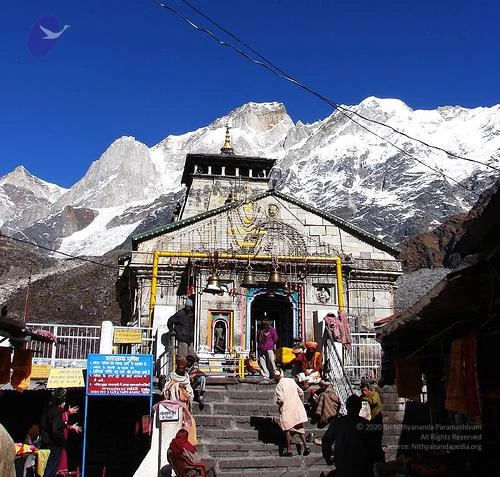
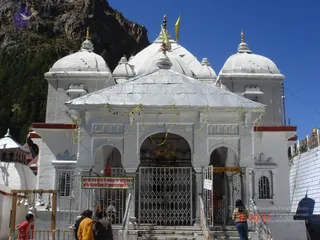
02-Himalayan-Chaar-Dhaam-Temples
_CMP_WM.jpg)
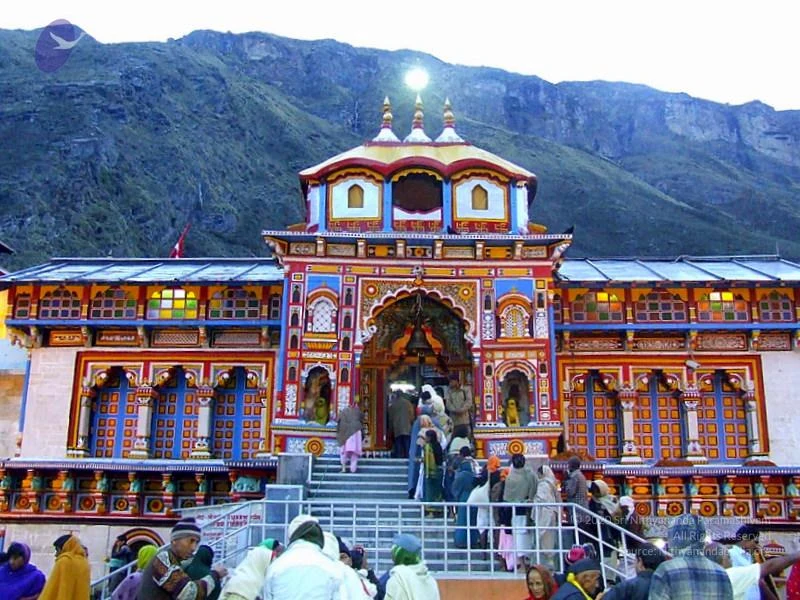
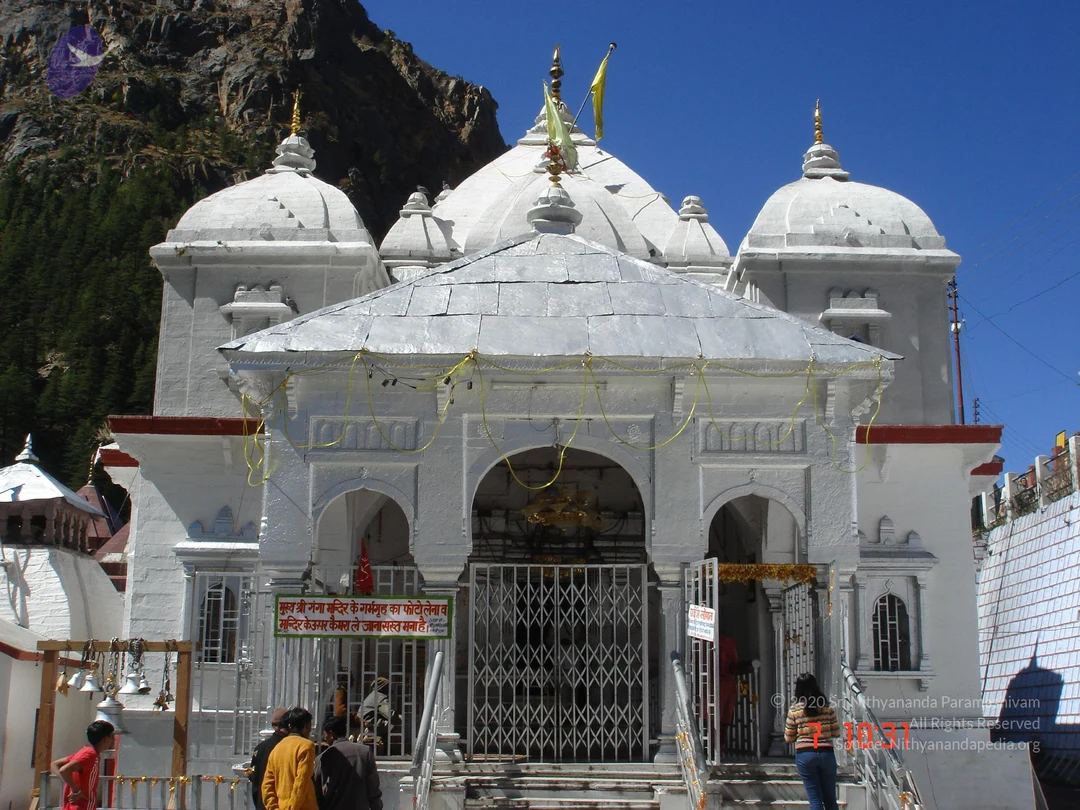
Photos from this day
View all 49 photos02-Himalayan-Chaar-Dhaam-Temples
3 photosSource gallery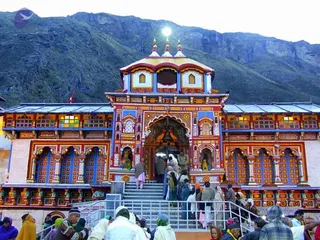
March 31 2011
46 photosView all