Skip to content
Sunday

16 January 2011

Supreme Pontiff of Hinduism HDH Bhagavan Sri Nithyananda Paramashivam

Dated photos
522
Source pages
1
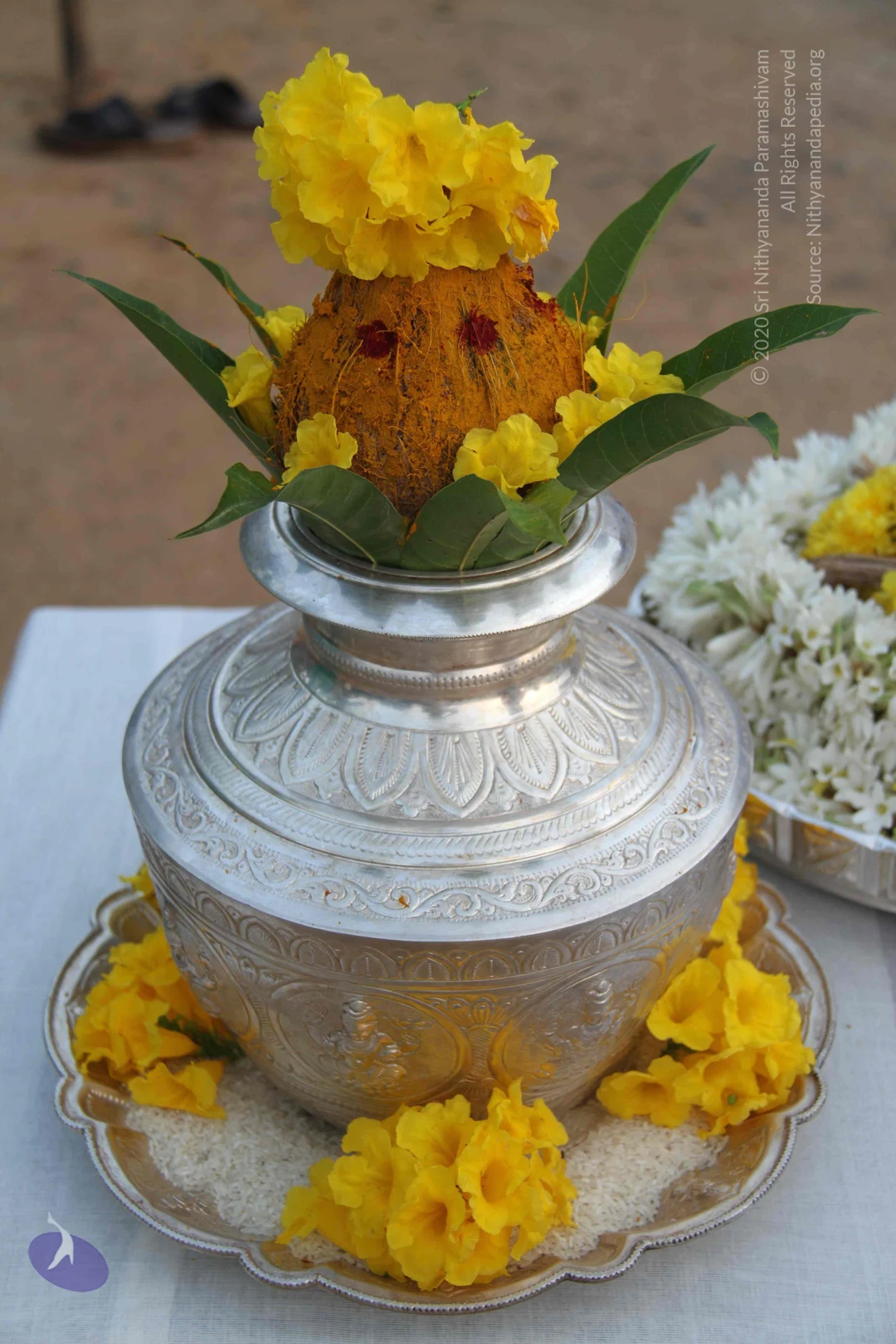
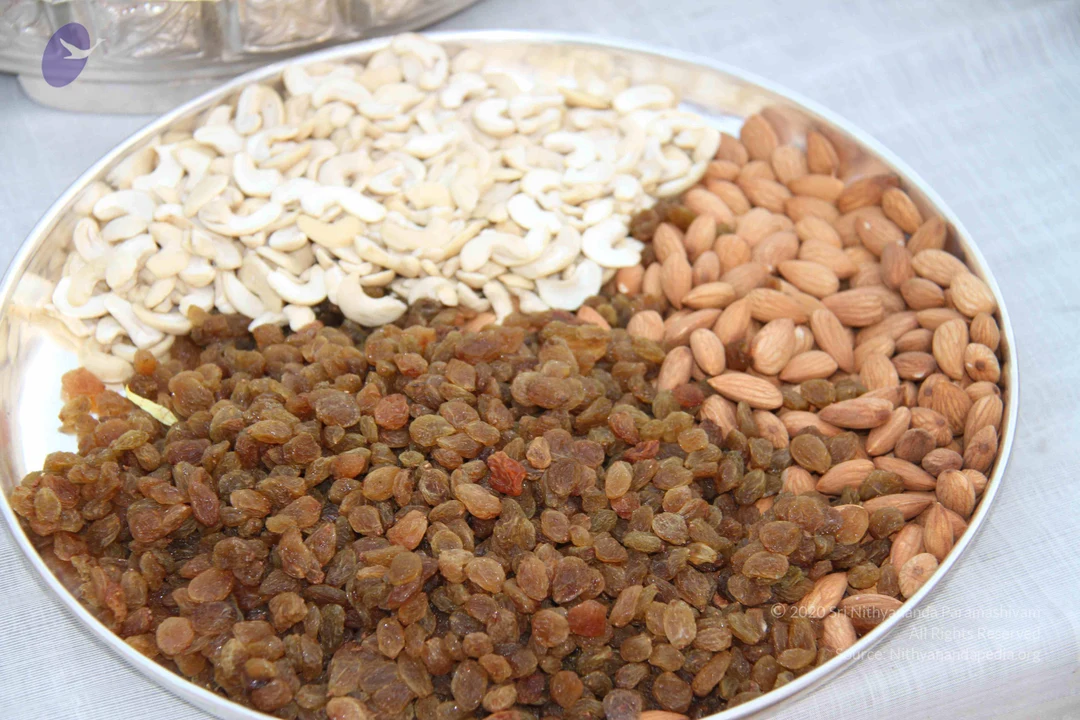
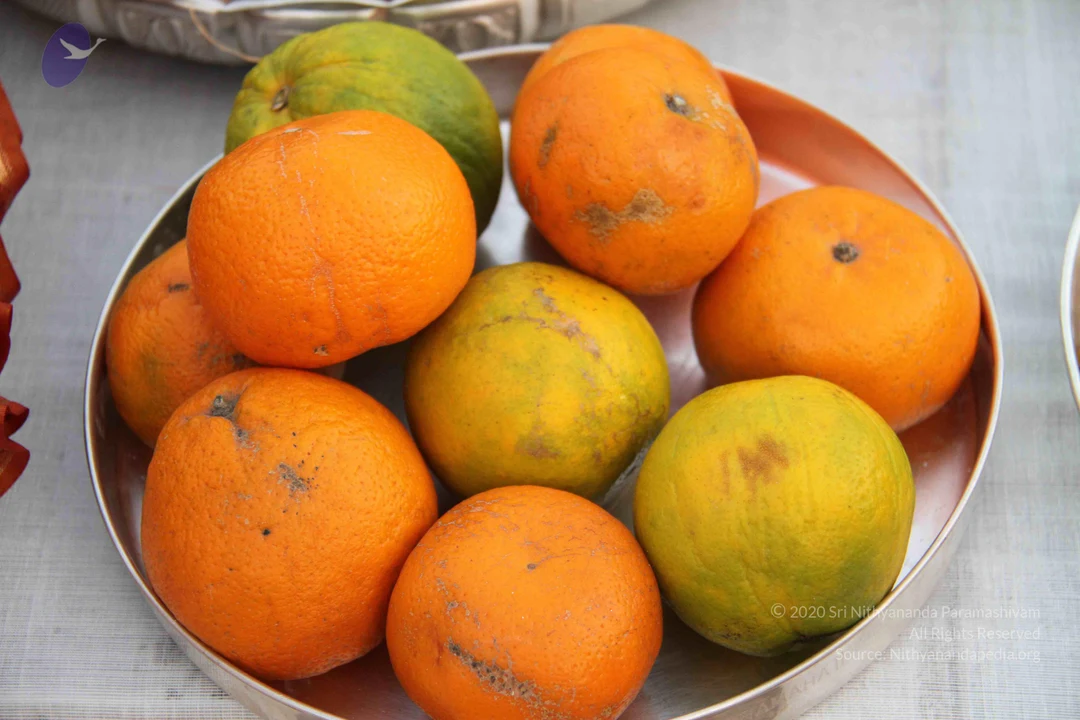
A photograph of a ritual offering table laid with a white cloth on sandy ground. In the foreground stands a polished silver pot with embossed floral patterns, topped with a conical mound of yellow turmeric paste decorated with yellow flowers and green leaves, and surrounded by a silver tray of yellow flowers. Beside it, a silver plate holds garlands of white jasmine, yellow marigold and red flowers. Behind them are coconuts, bananas, oranges, betel leaves, small brass cups and bowls, and a folded white cloth with gold borders. No people are clearly visible; the setting appears to be a temple-style puja arrangement.A close overhead photo of a round silver thali filled with dry foods arranged in sections: pale curved cashew nuts at upper left, brown raisins filling the lower left and centre, and light brown almonds at upper right. No people are visible; the plate sits on a white cloth, with part of a silver vessel at the top edge. The image is a plain still life of offering ingredients.Close overhead photo of a round steel tray holding about ten oranges, some fully orange and some green-yellow, several with brown marks and small blemishes. The tray sits on a light woven cloth. At the upper left a red offering or garland edge is partly visible, and a metal vessel rim appears at the top. No people are visible in the frame; the fruit appears to be an offering, though no ritual is shown.

January 16 2011

Original wiki page
Contents

Title

Supreme Pontiff of Hinduism HDH Bhagavan Sri Nithyananda Paramashivam

Photos

Photos for the Day

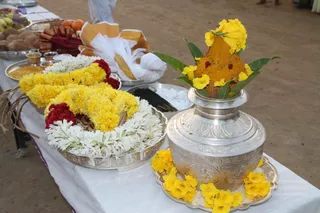
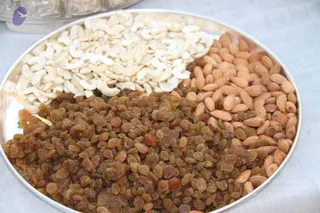
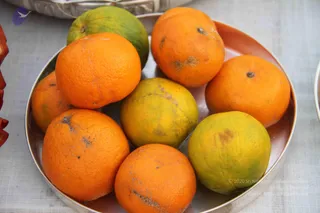
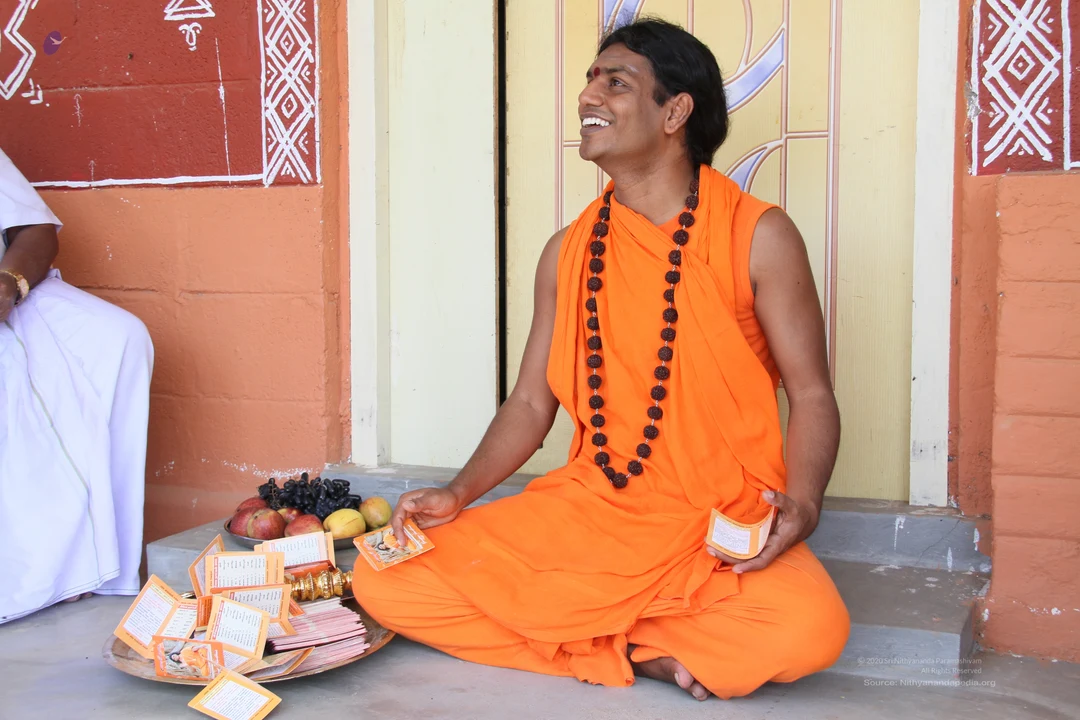
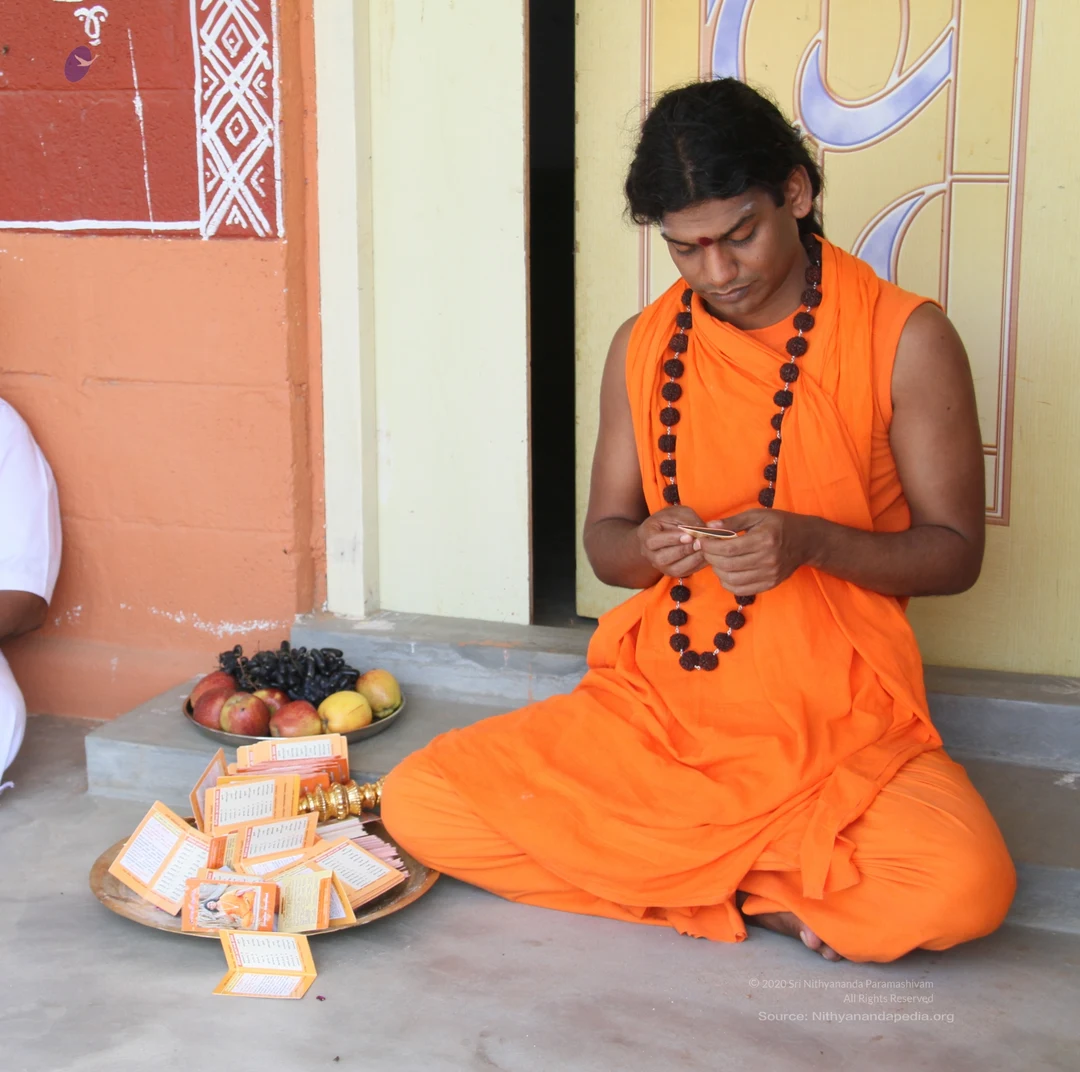
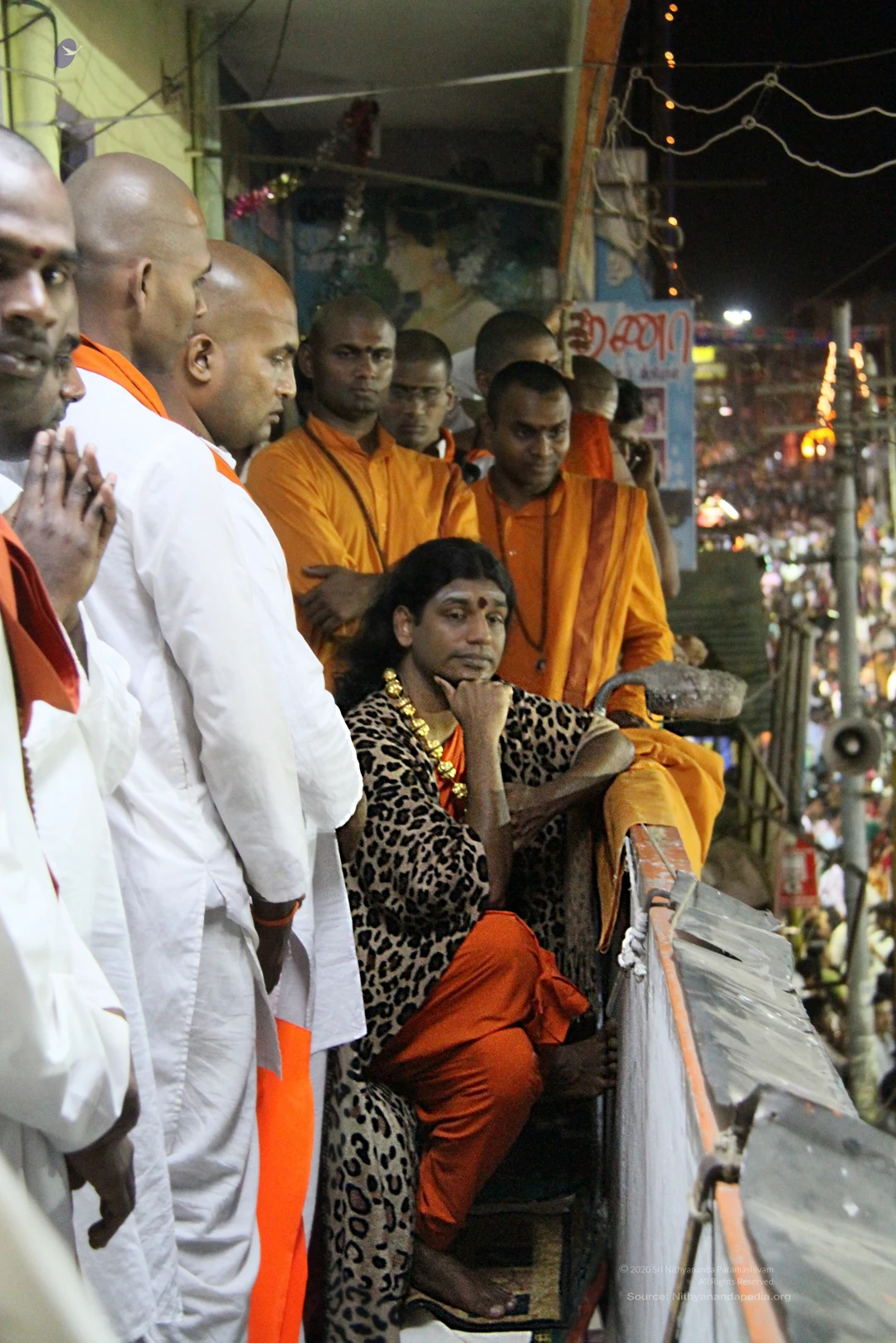
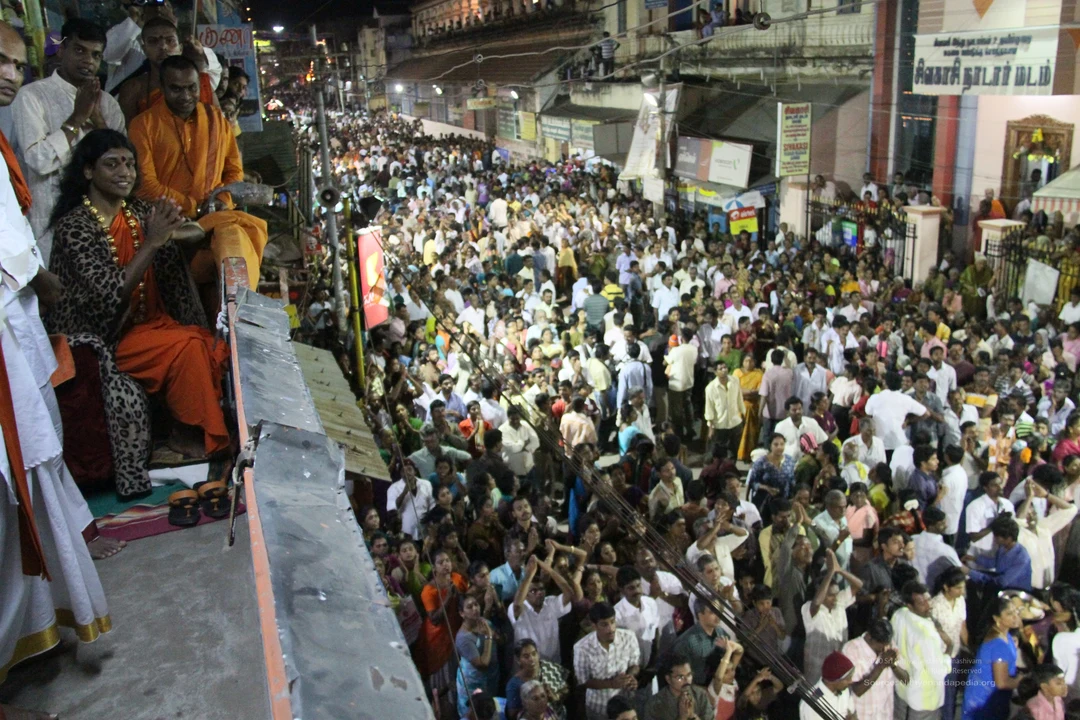
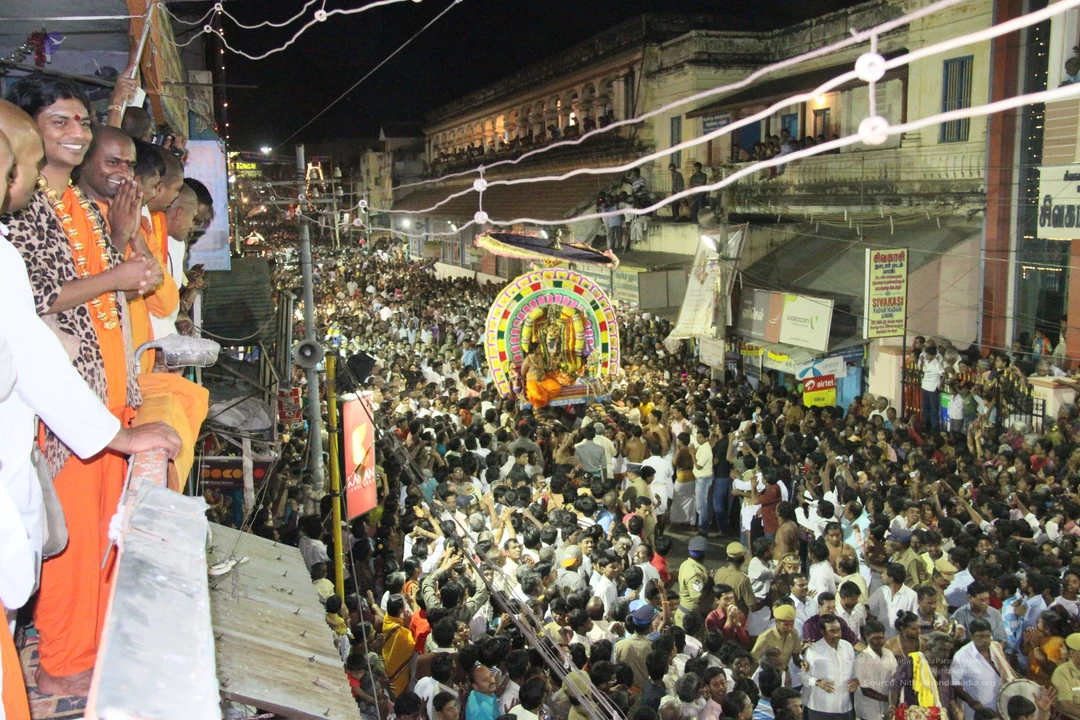
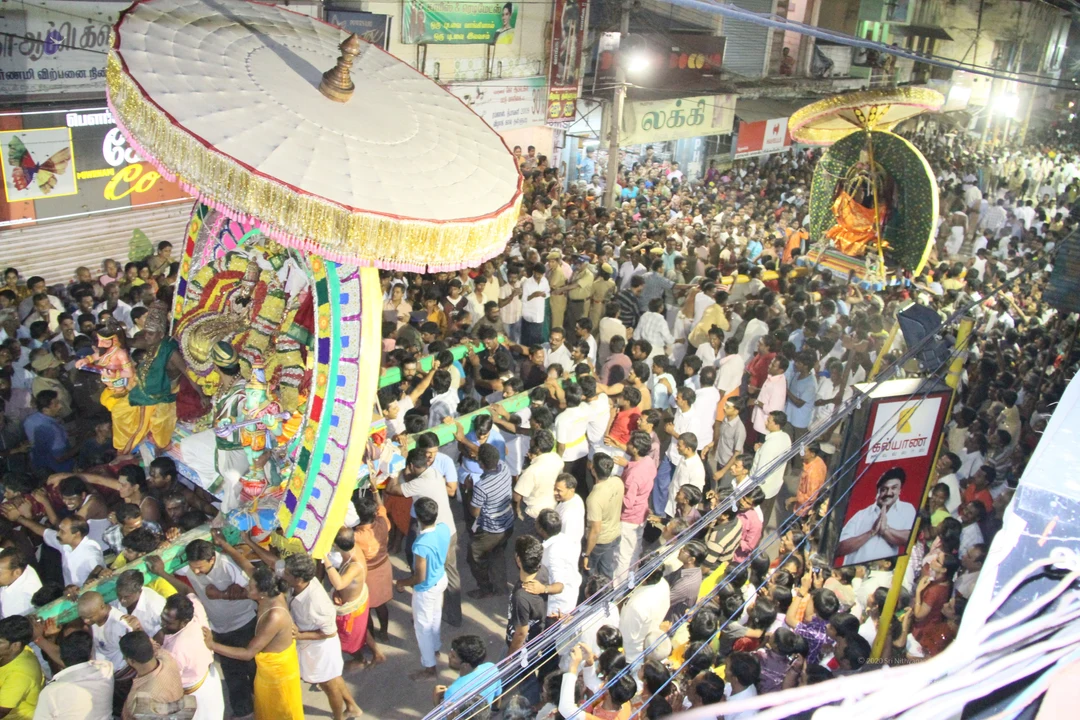
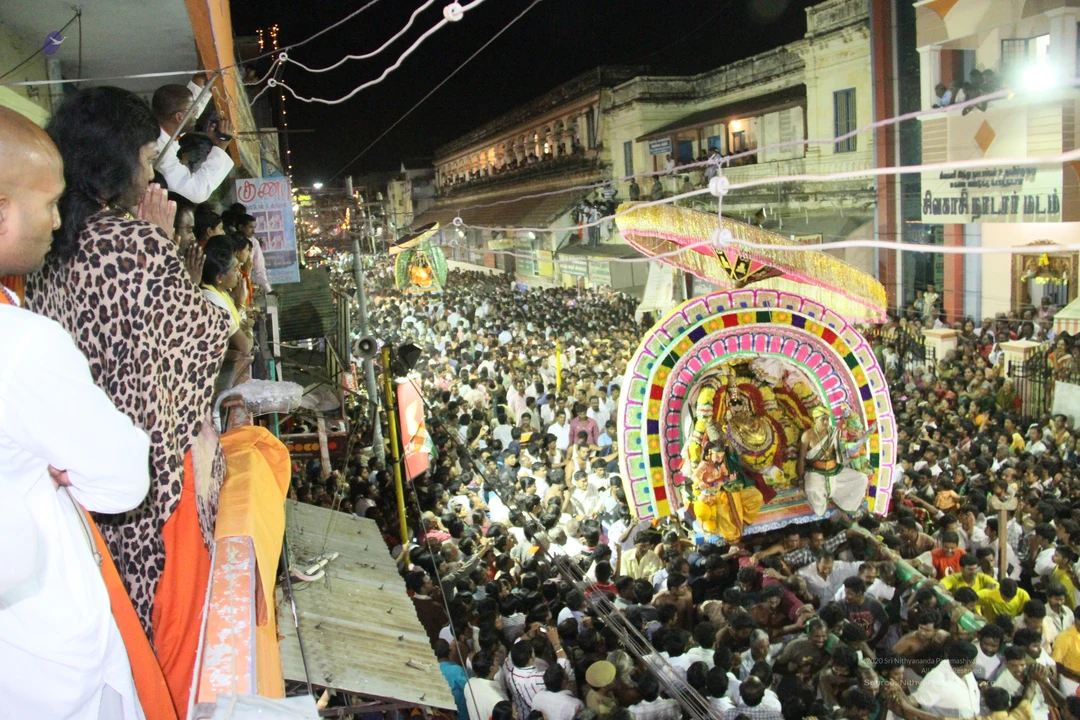
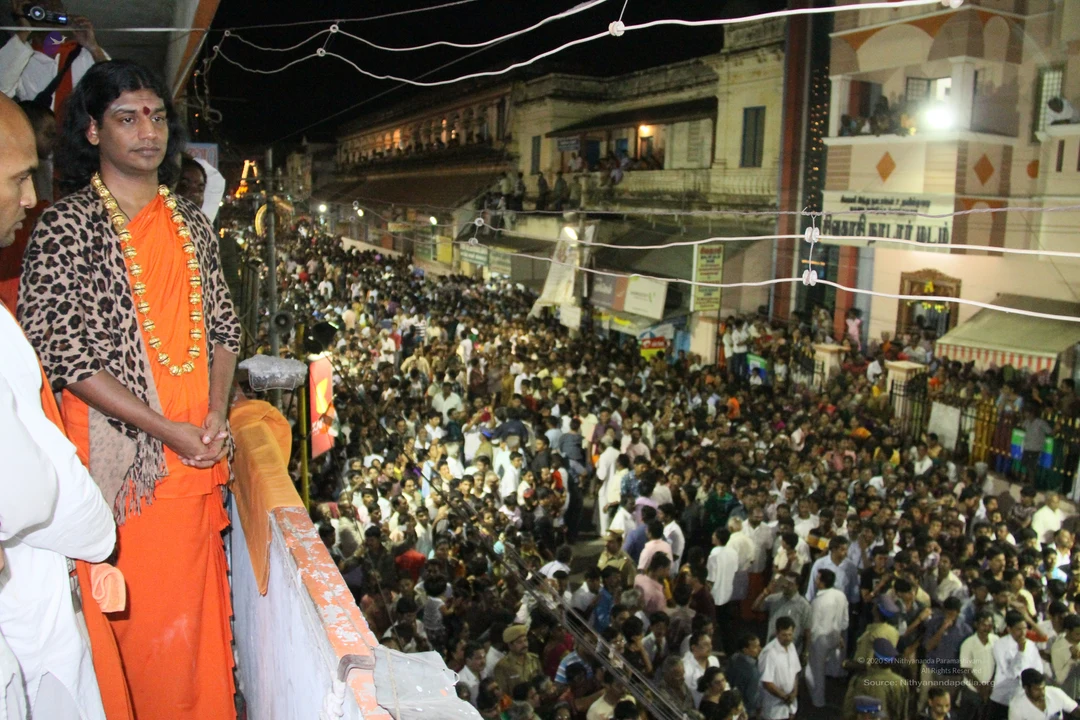
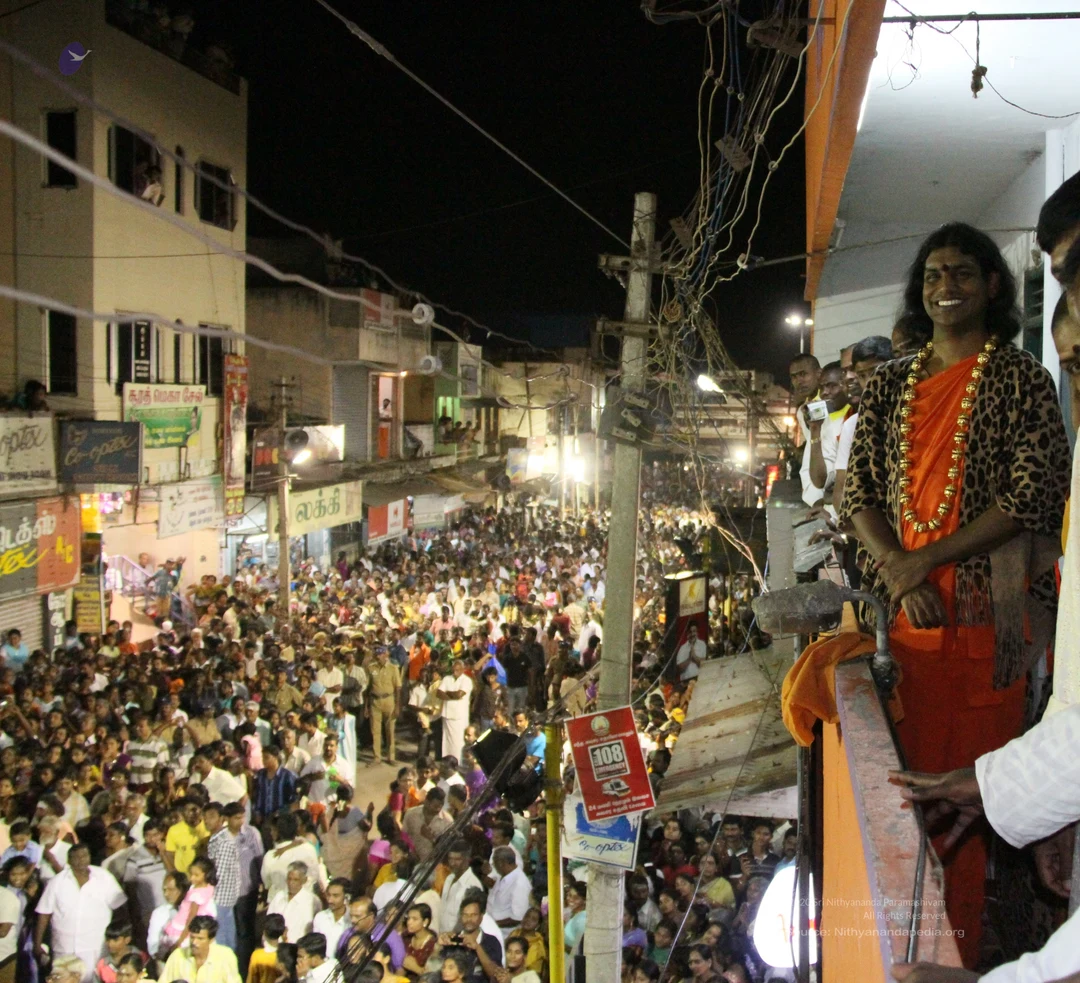
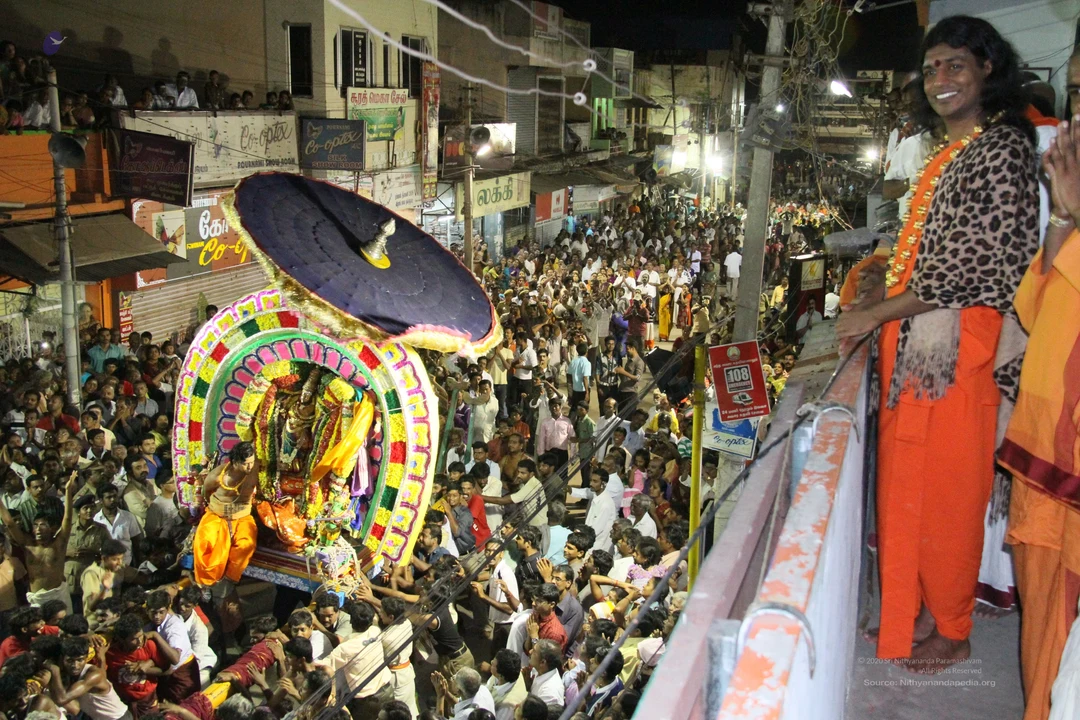
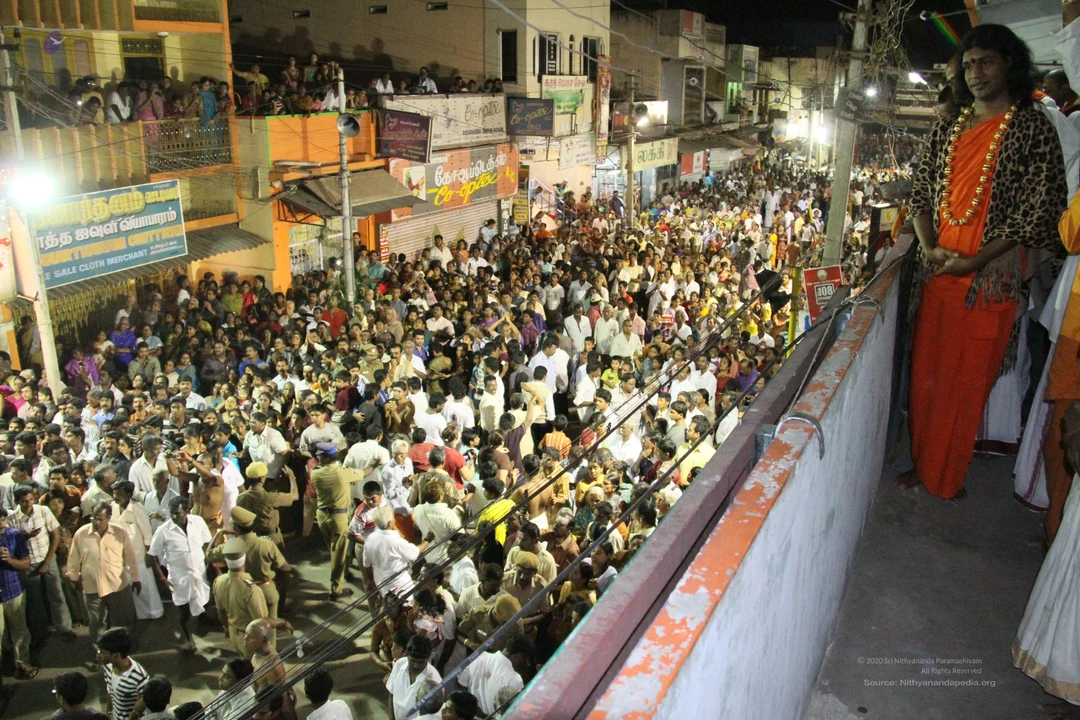
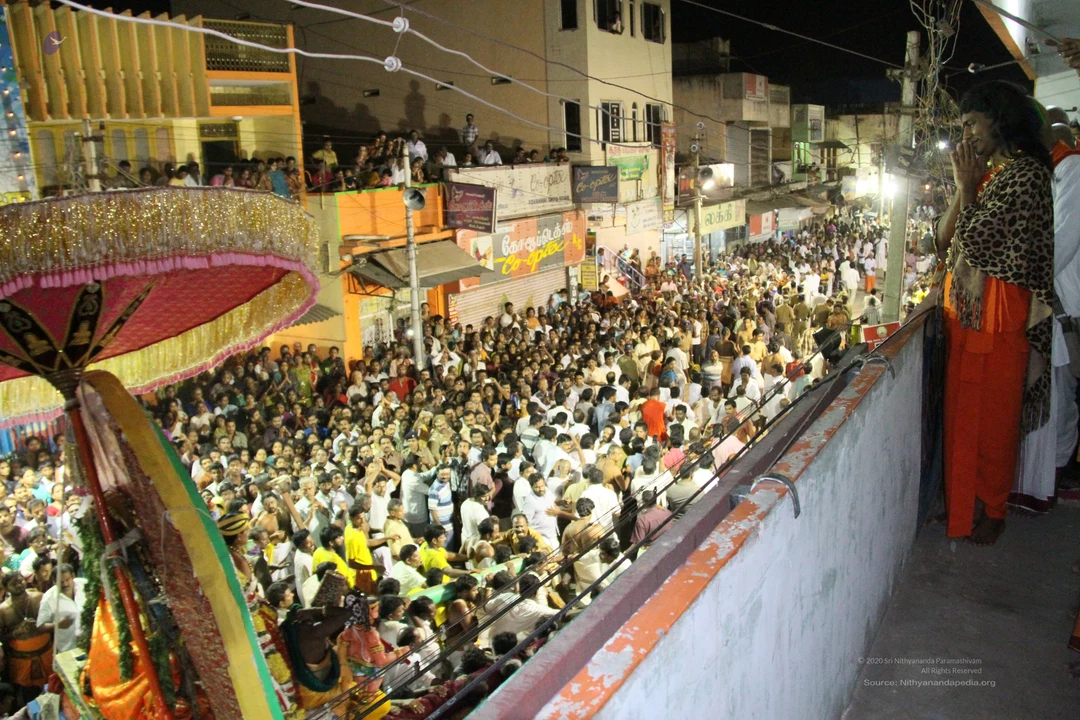
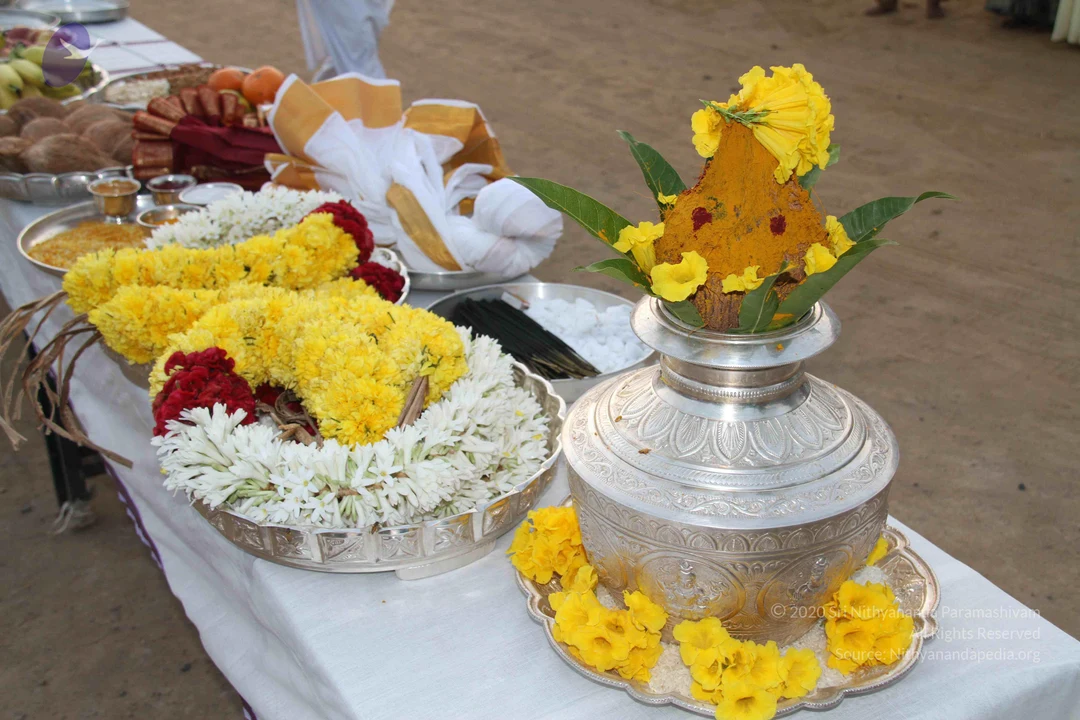
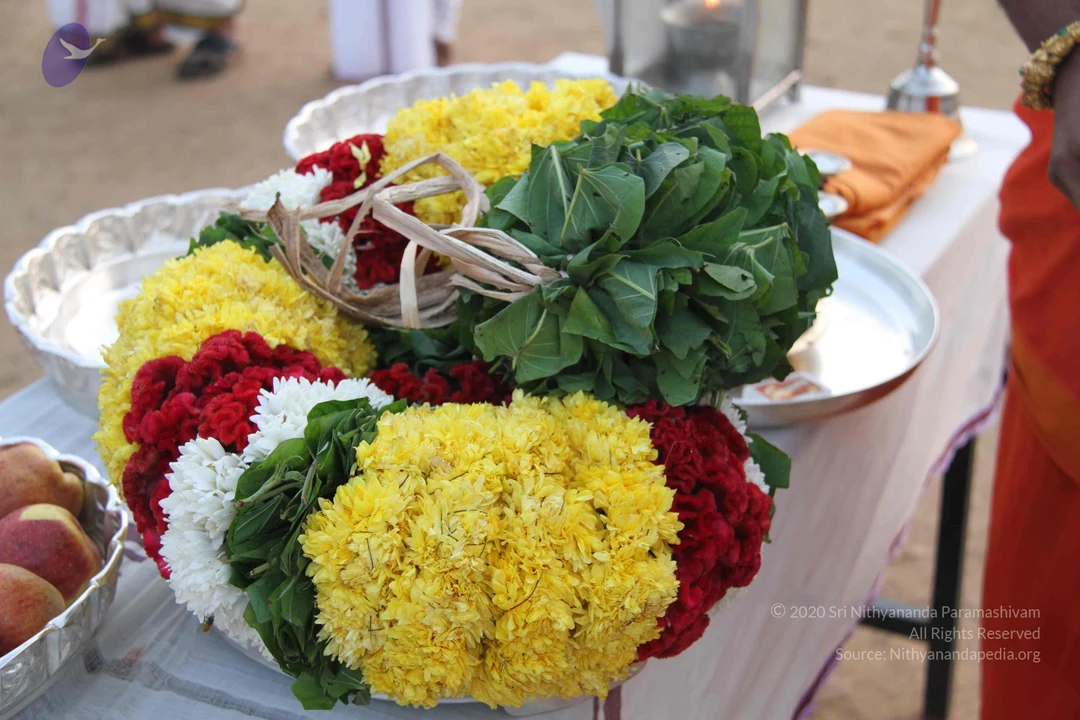
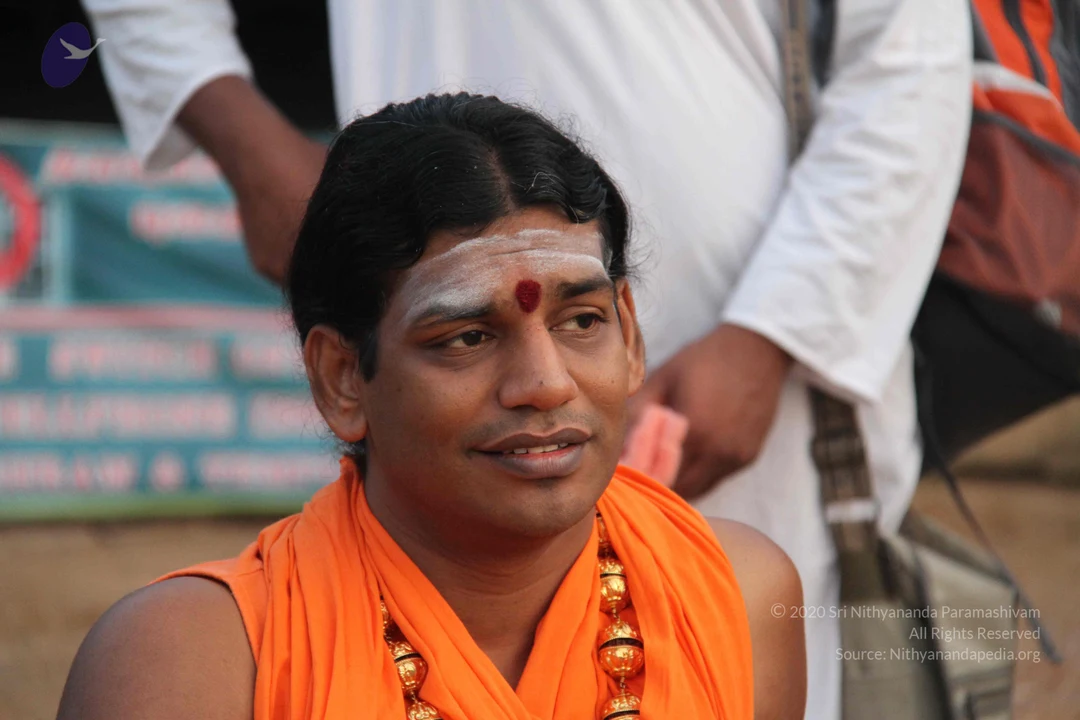
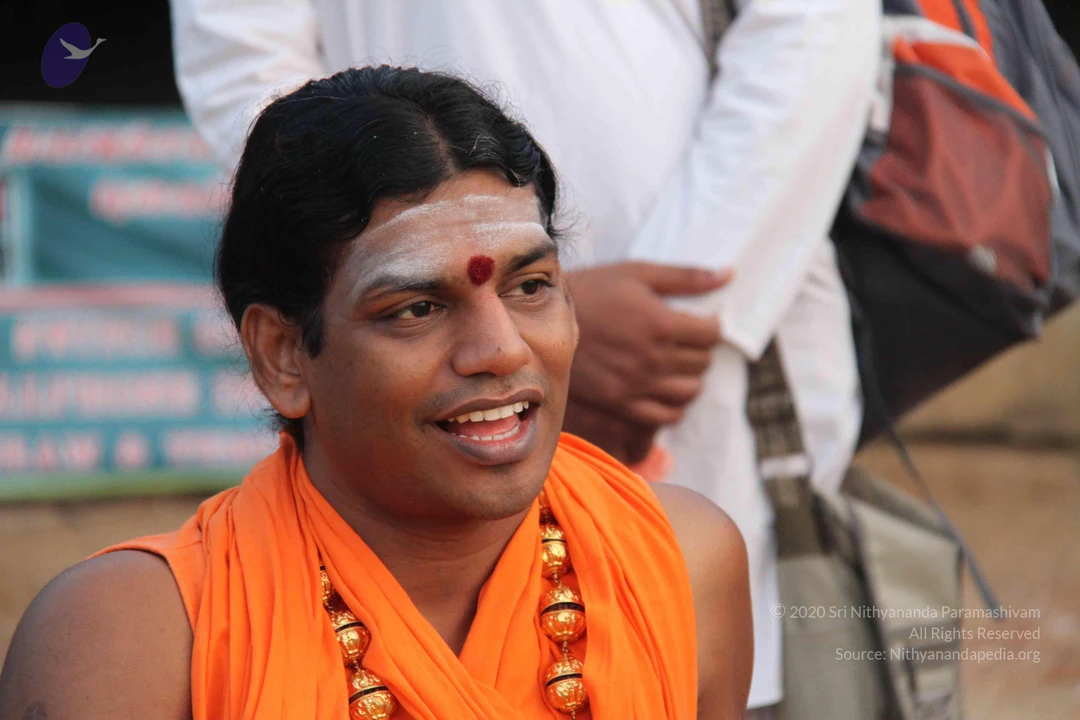
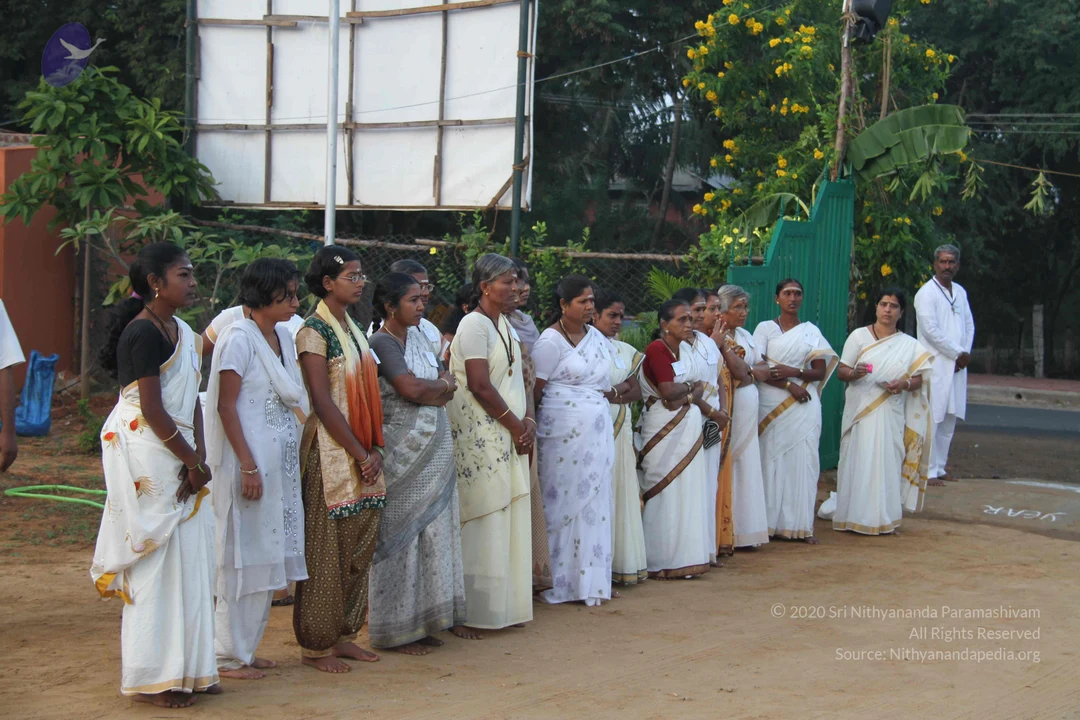
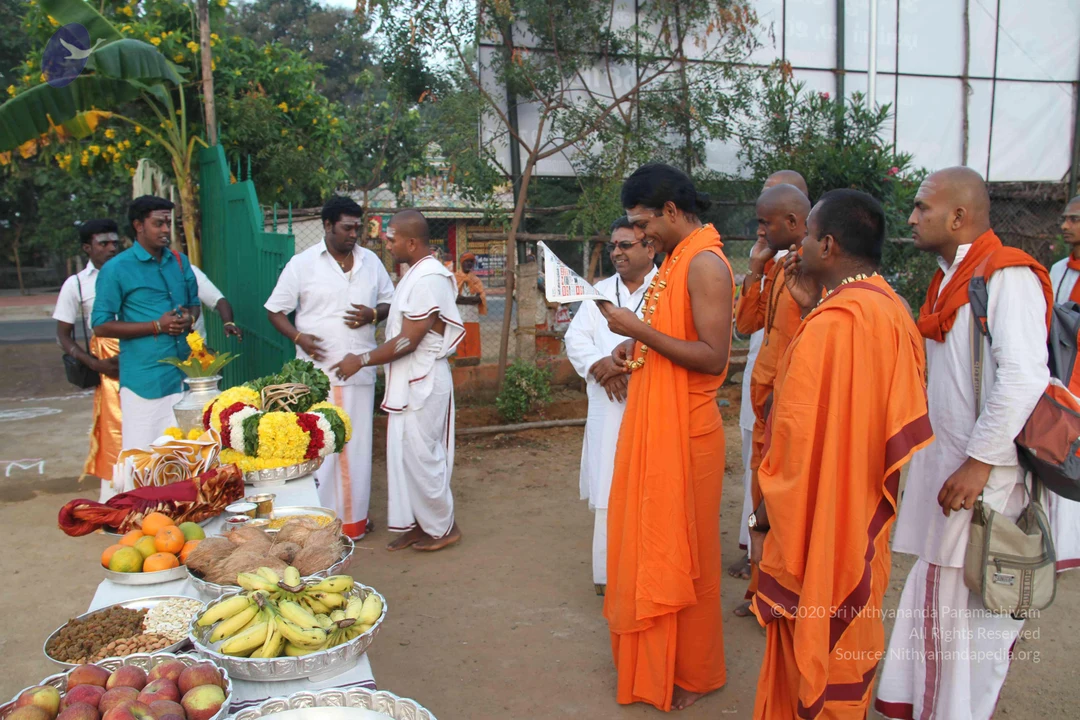
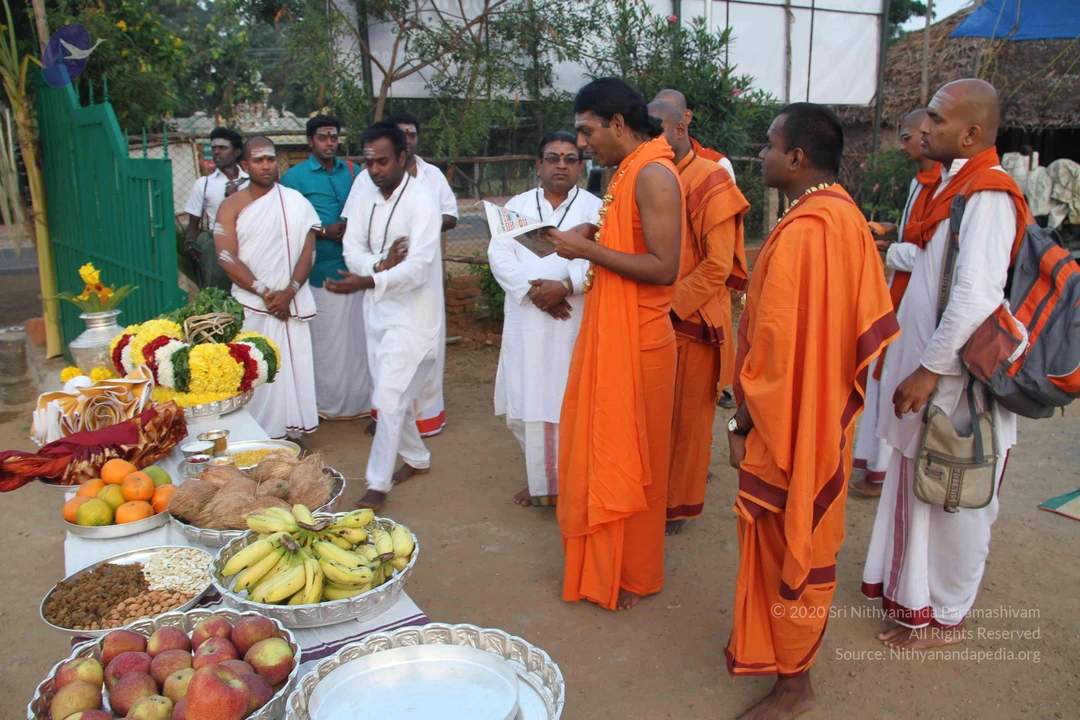
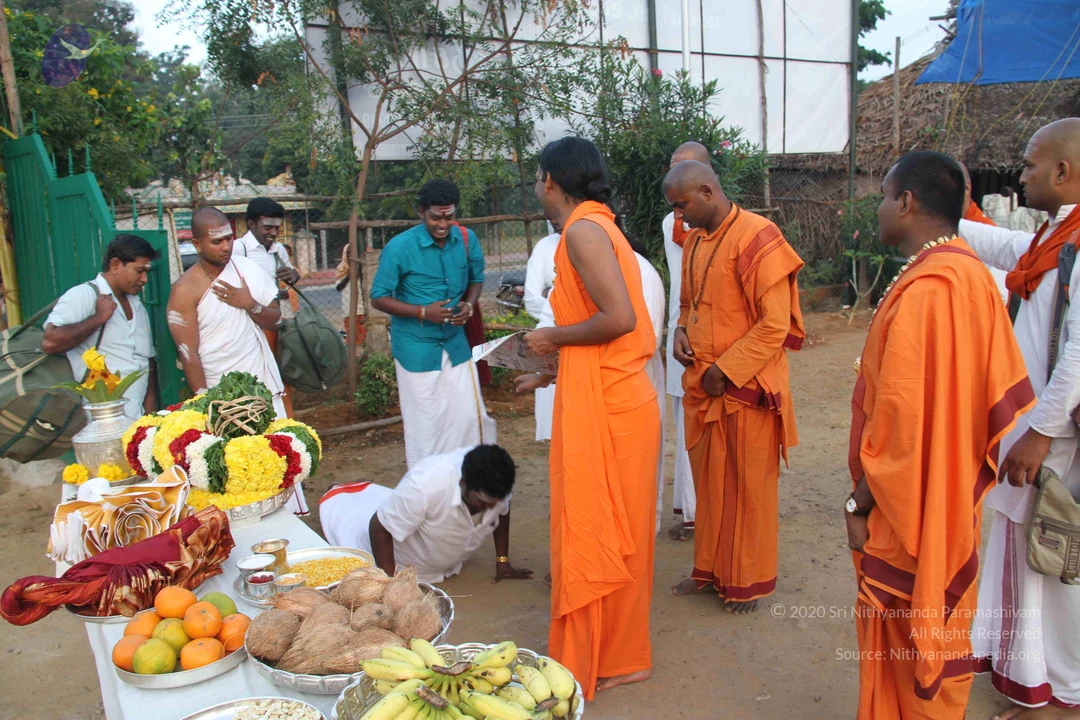
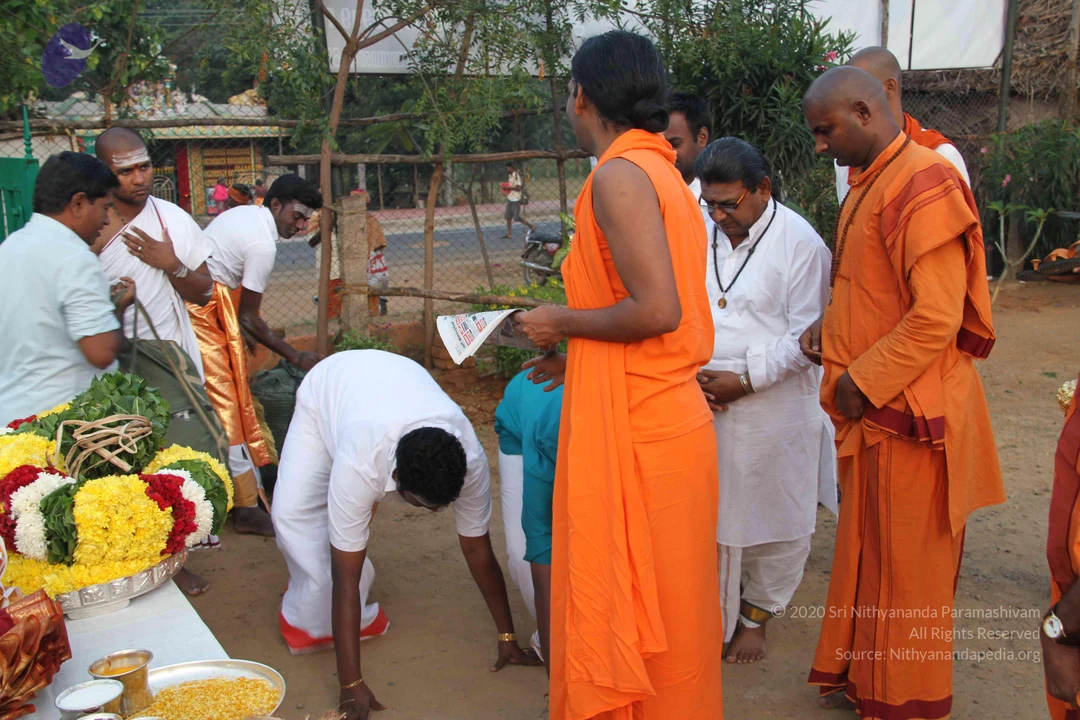
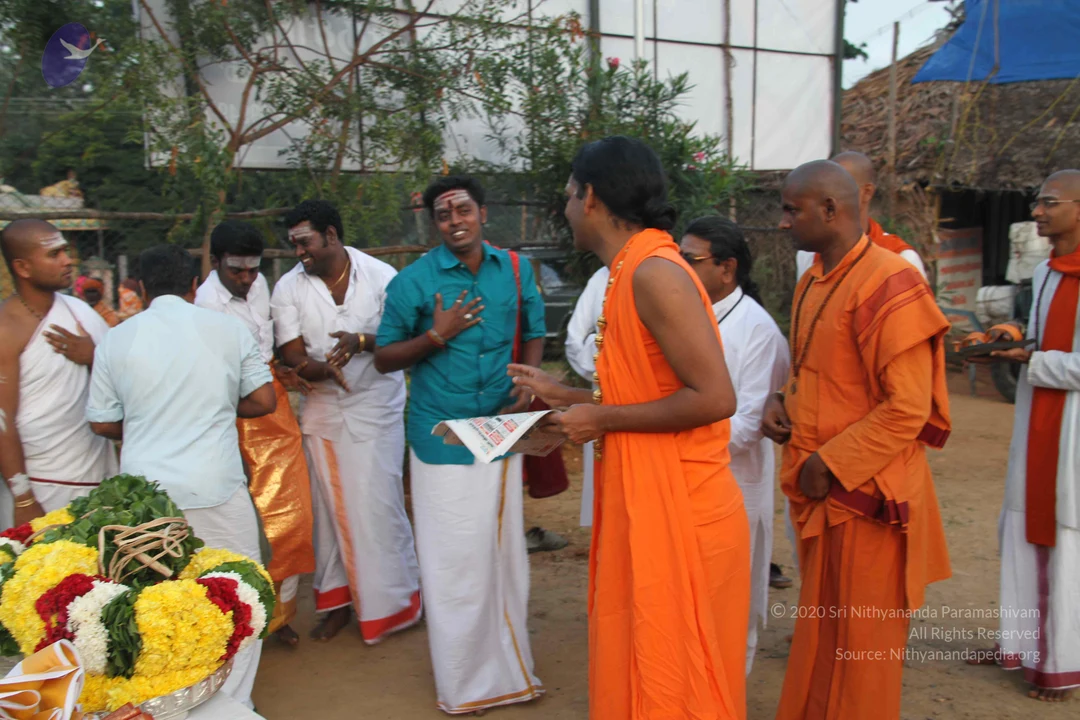
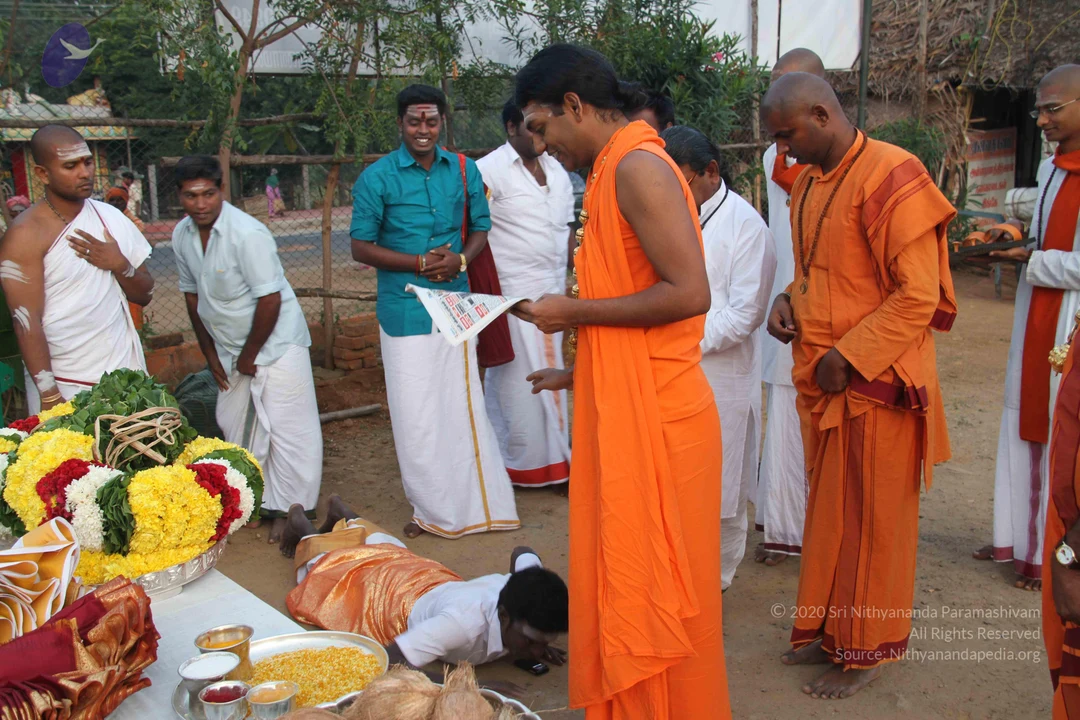
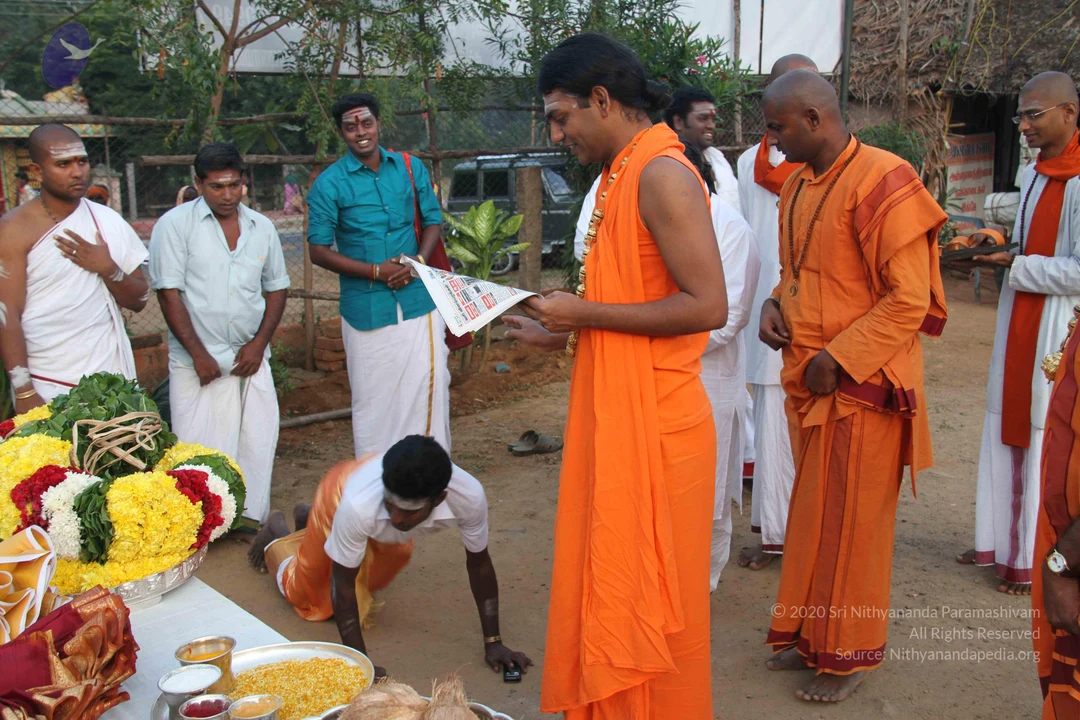
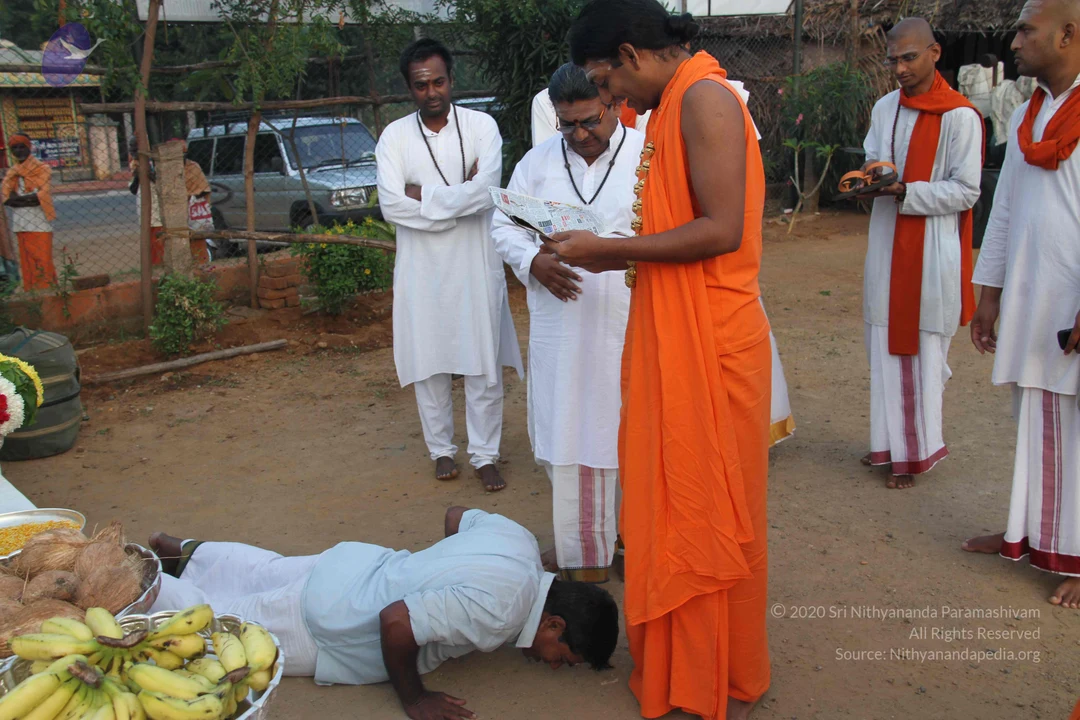
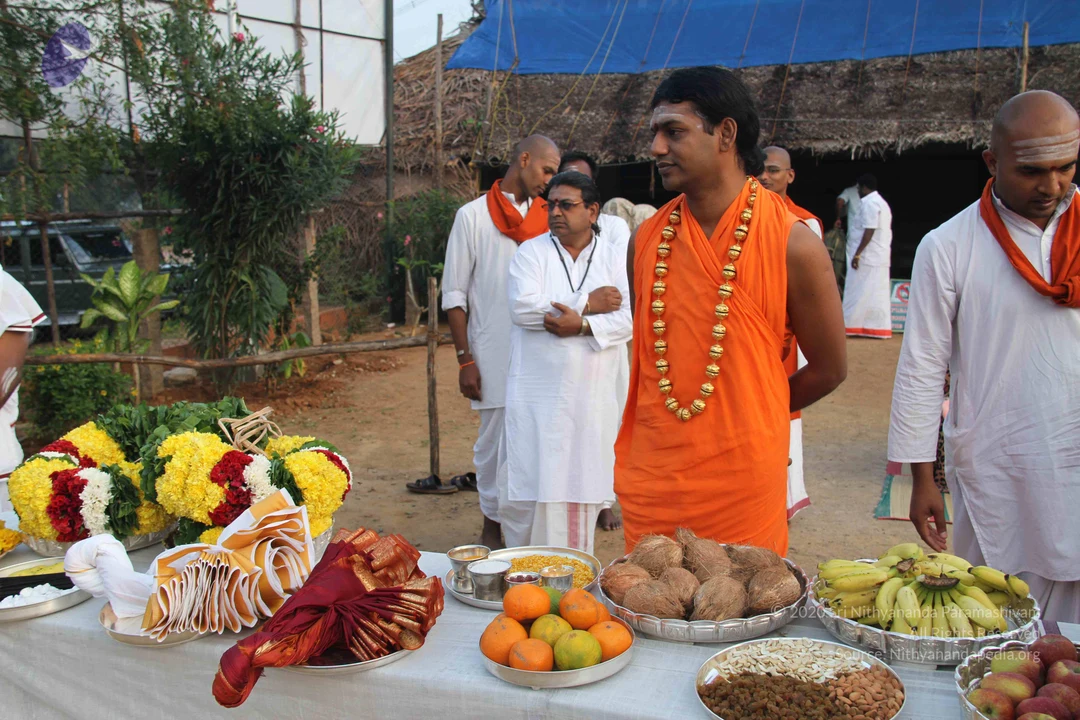
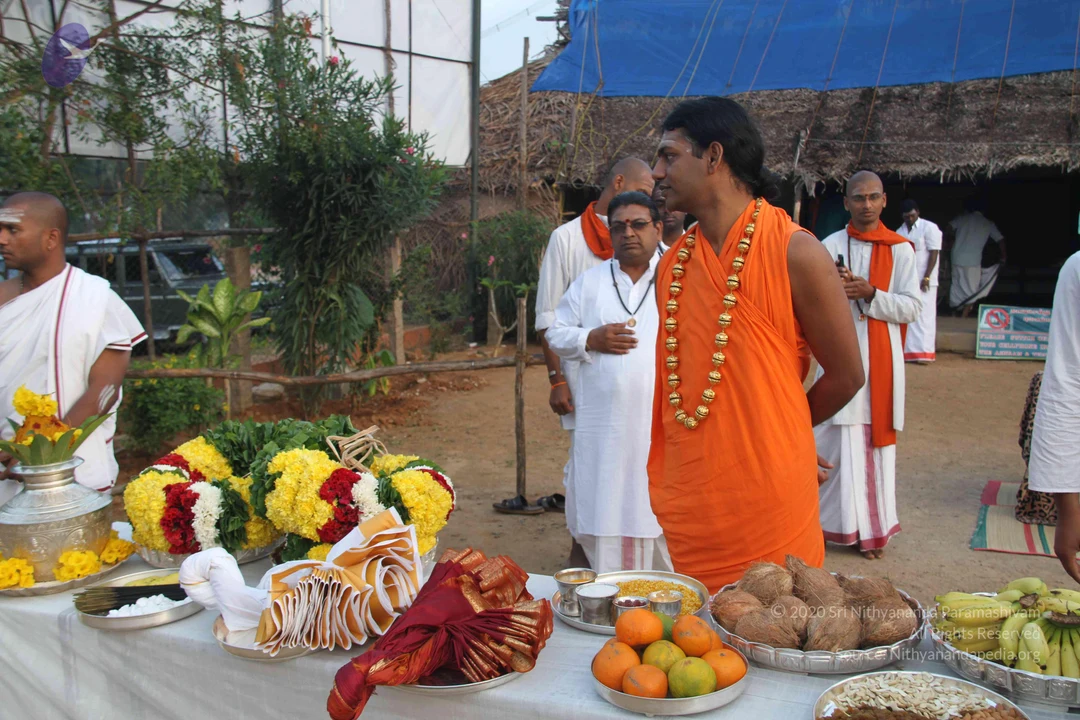
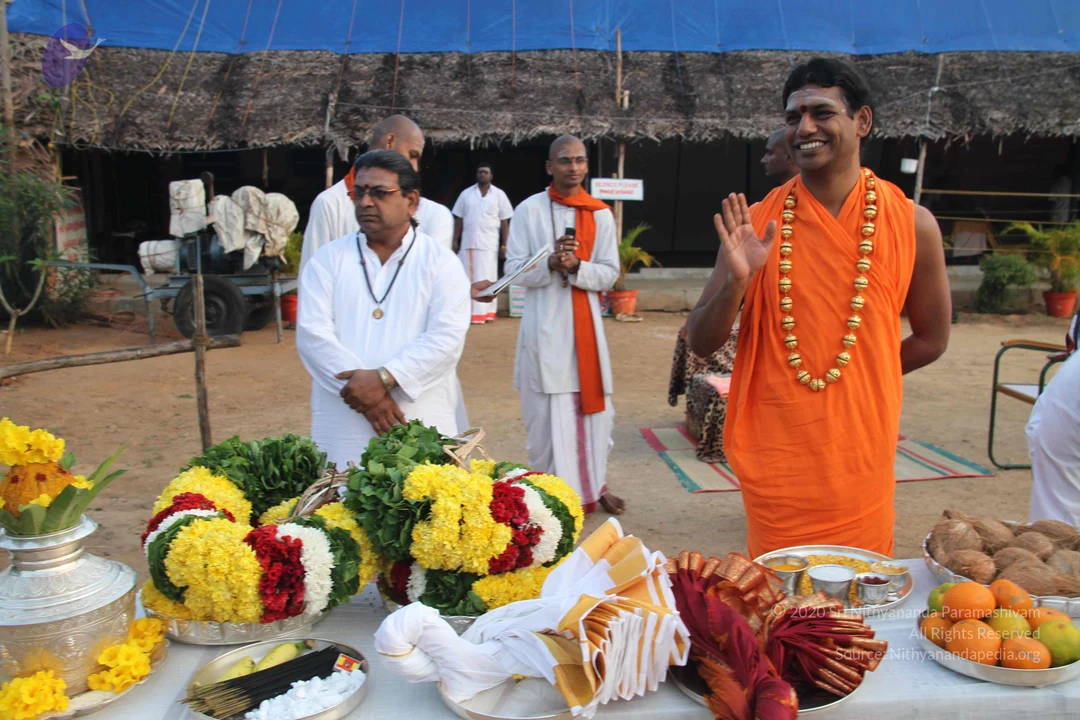
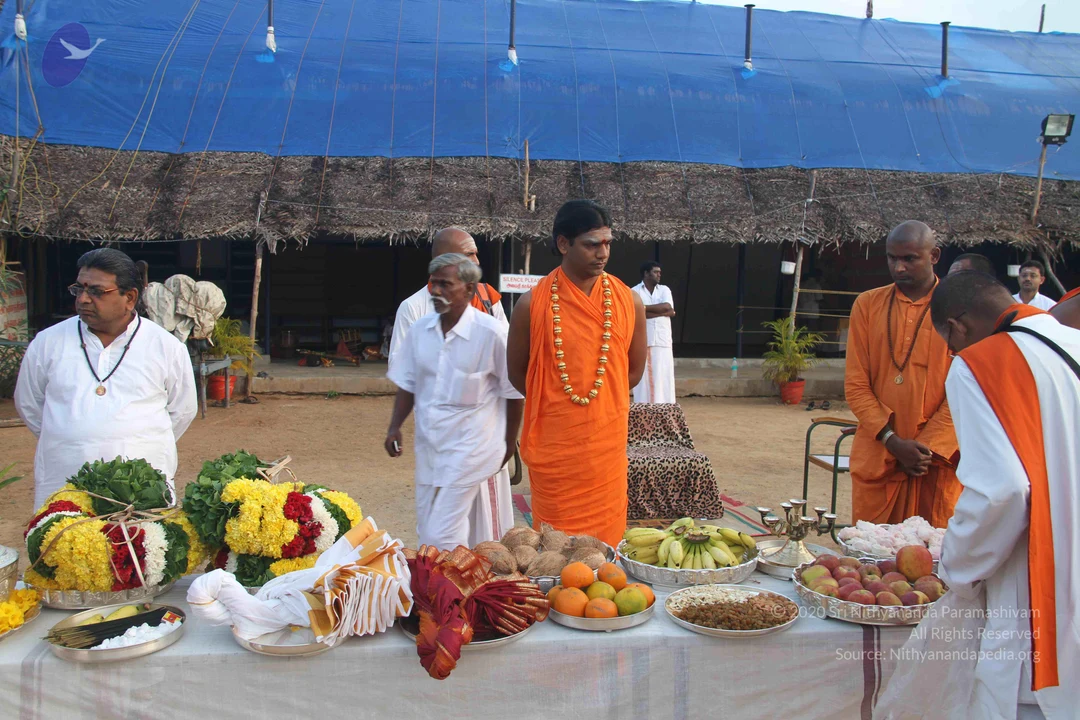
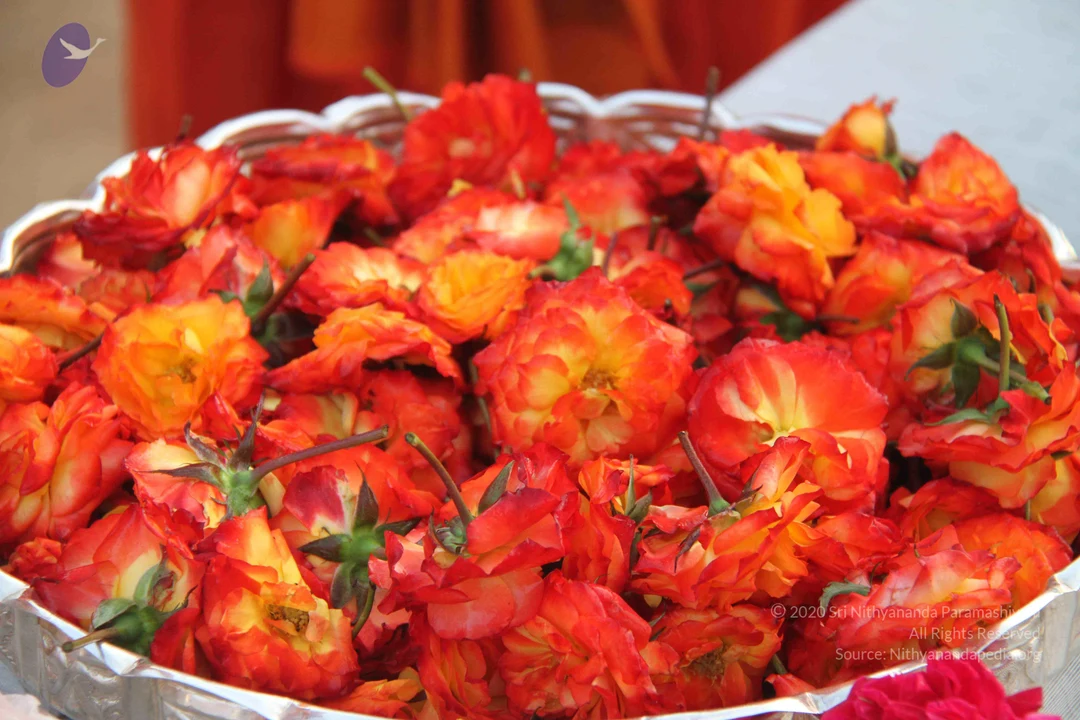
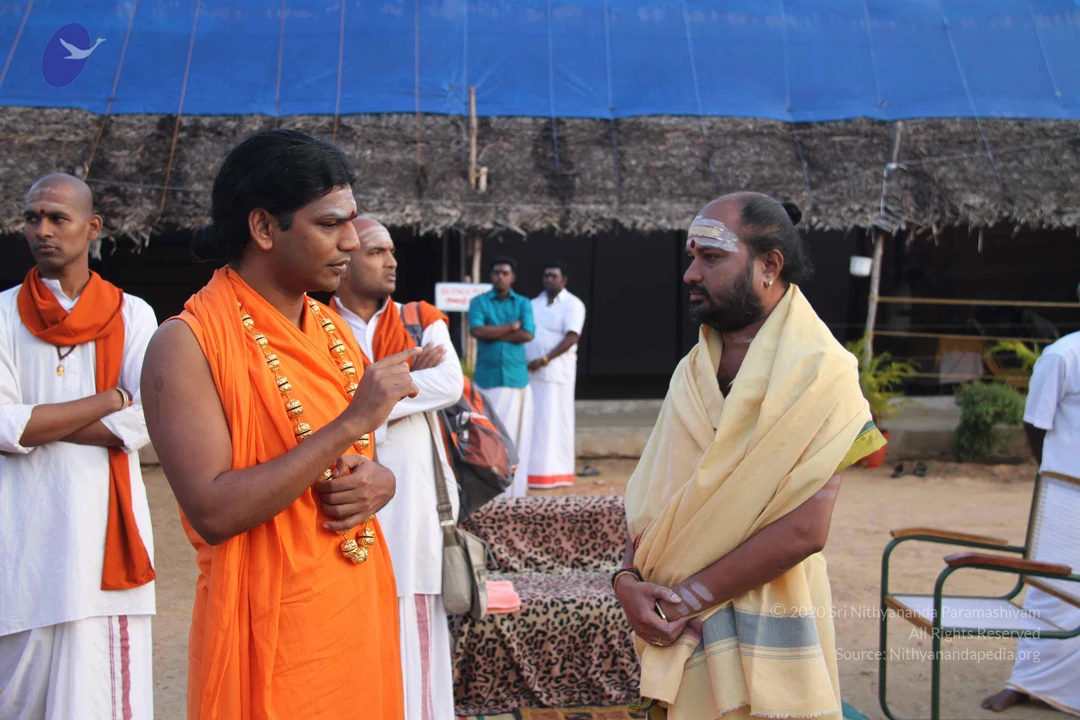
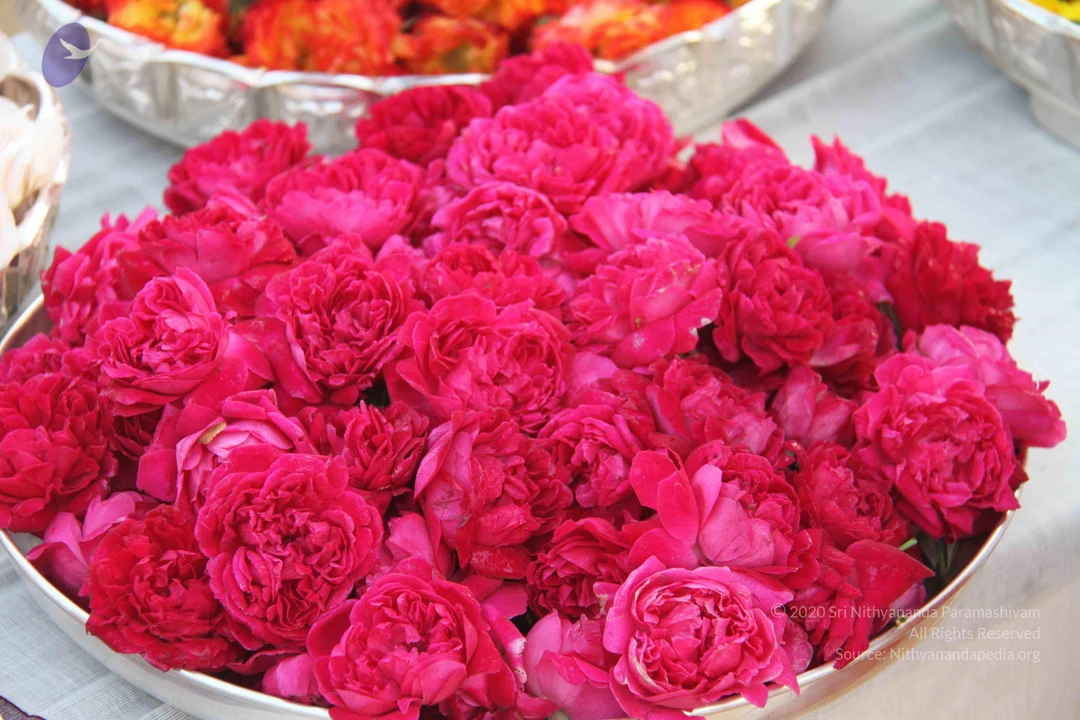
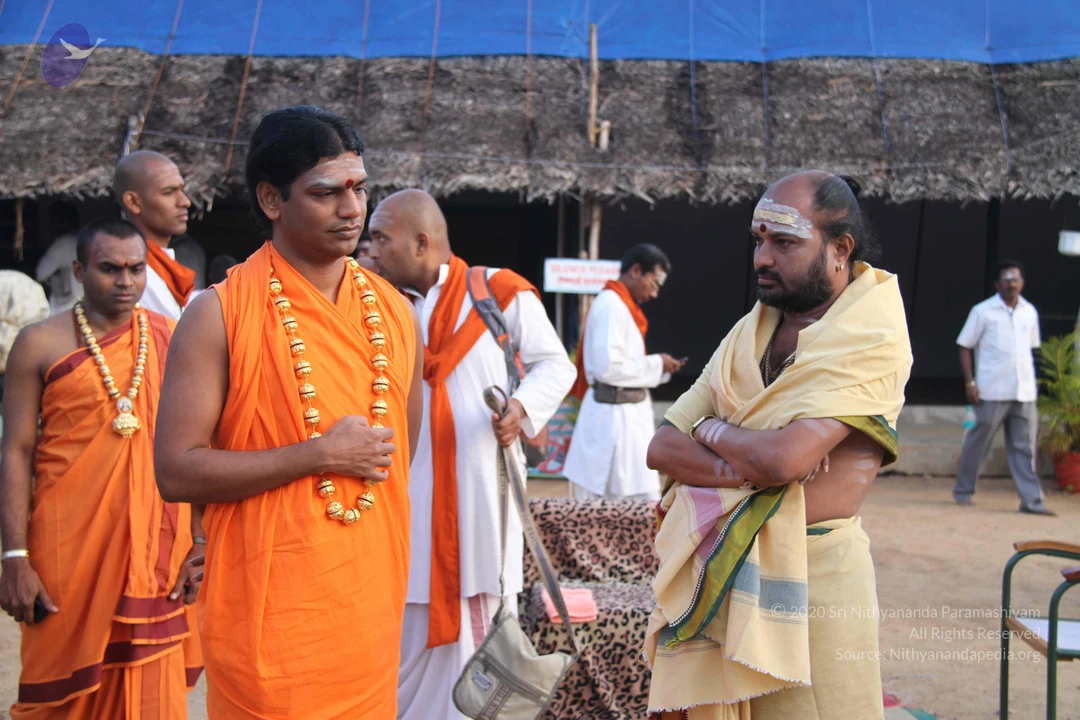
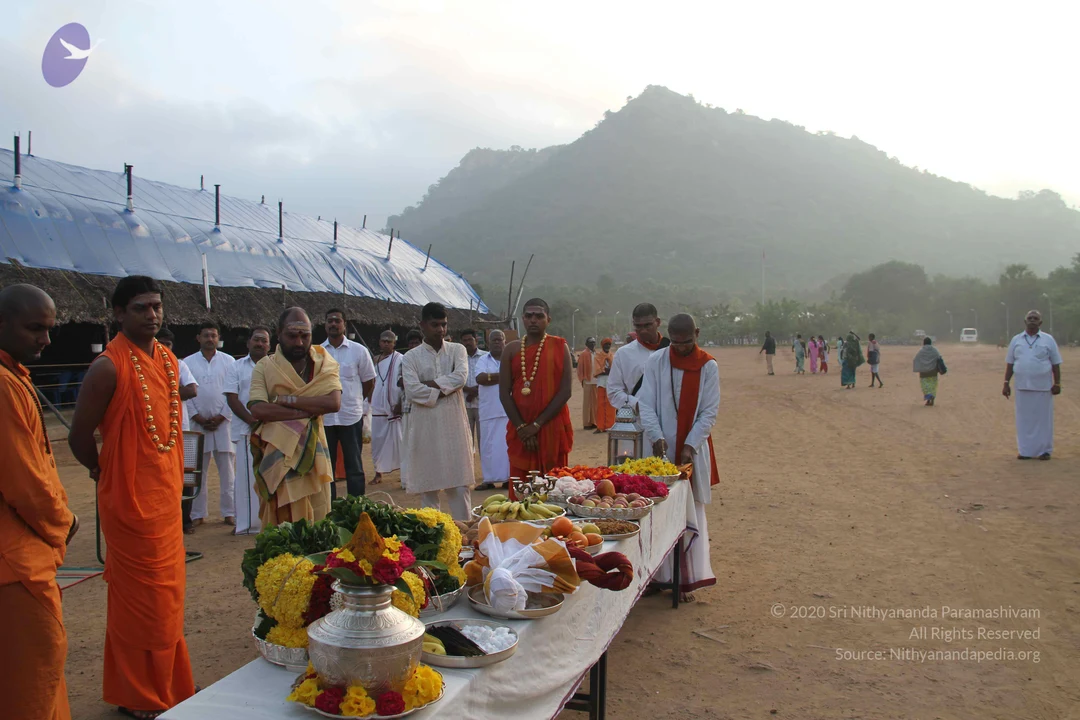
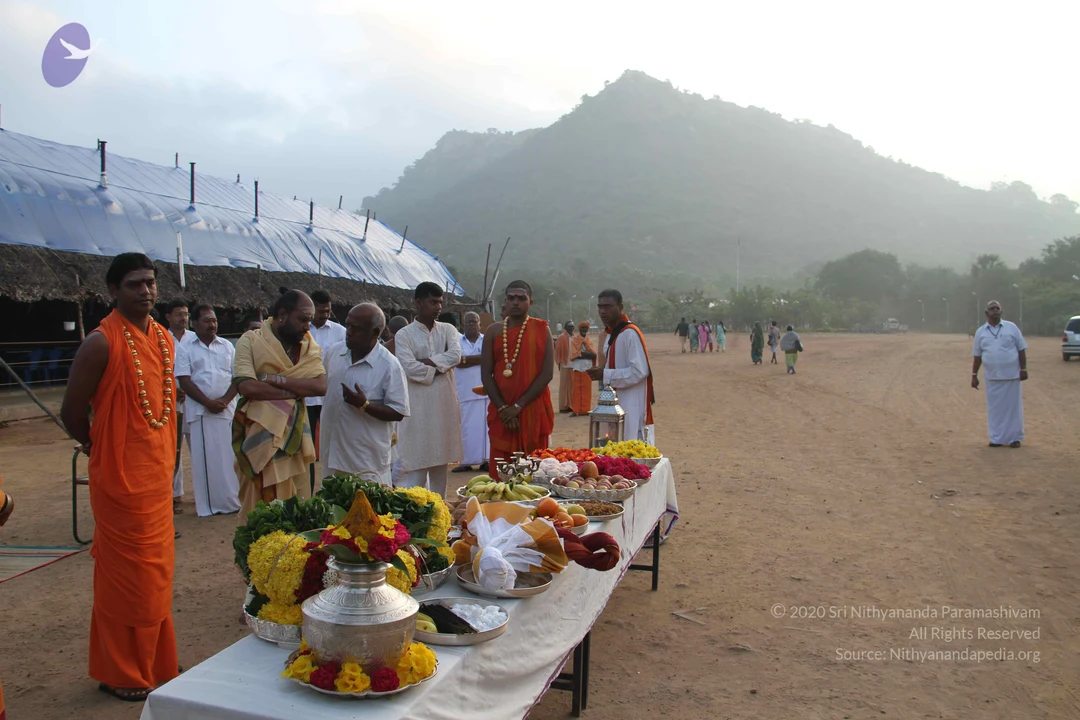
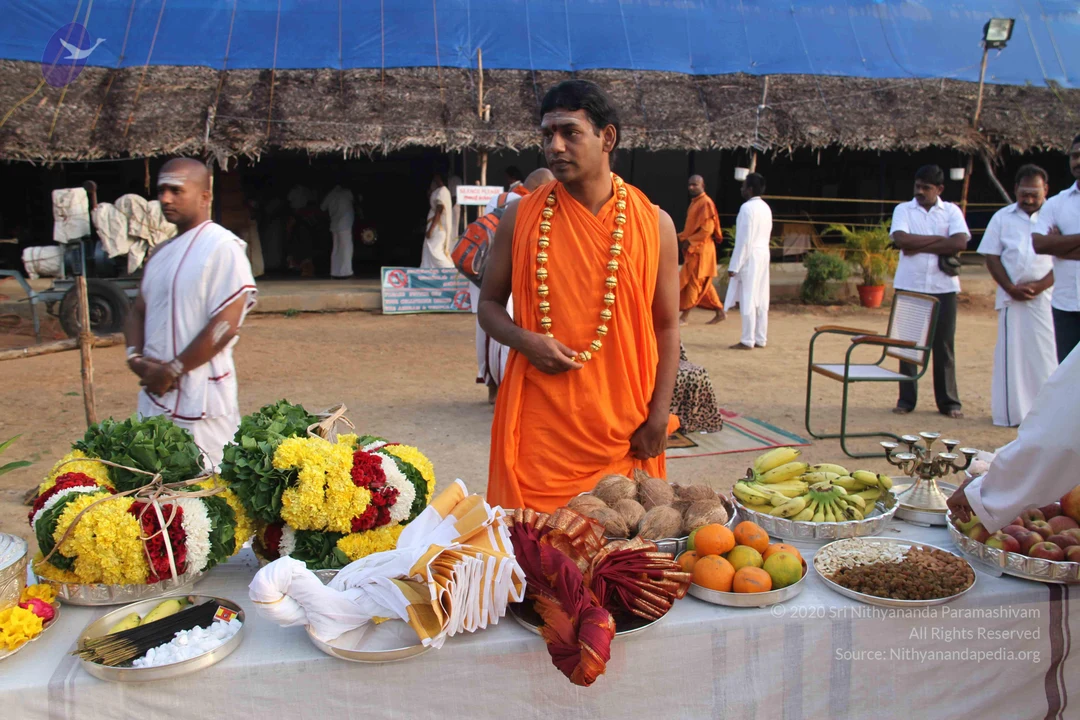
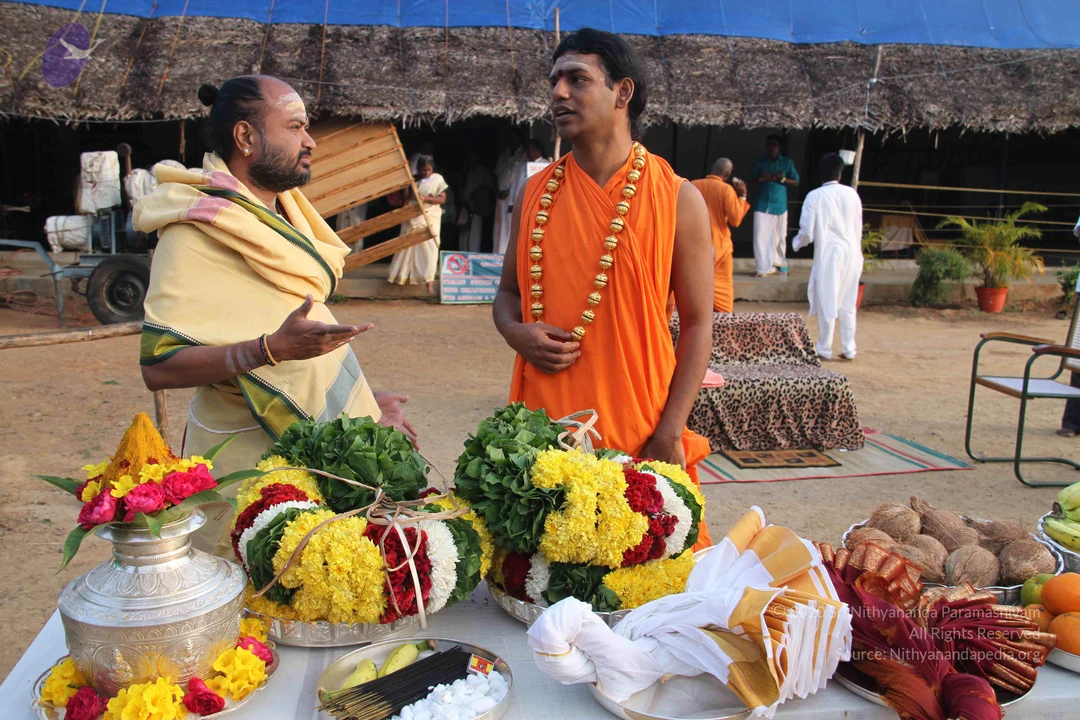
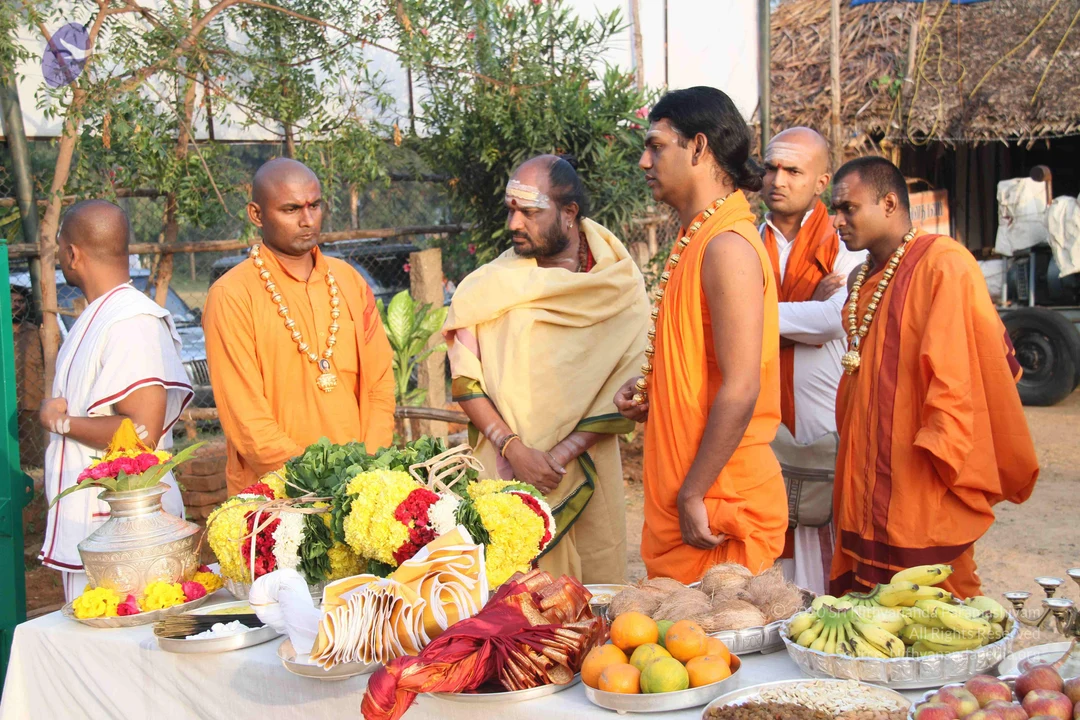
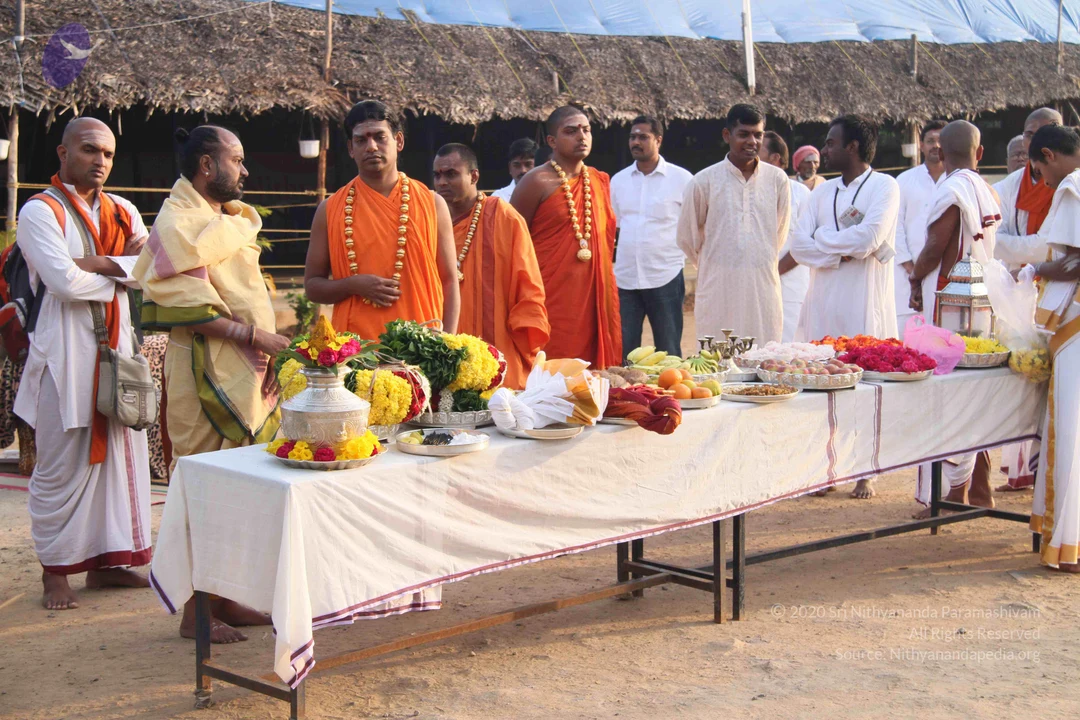
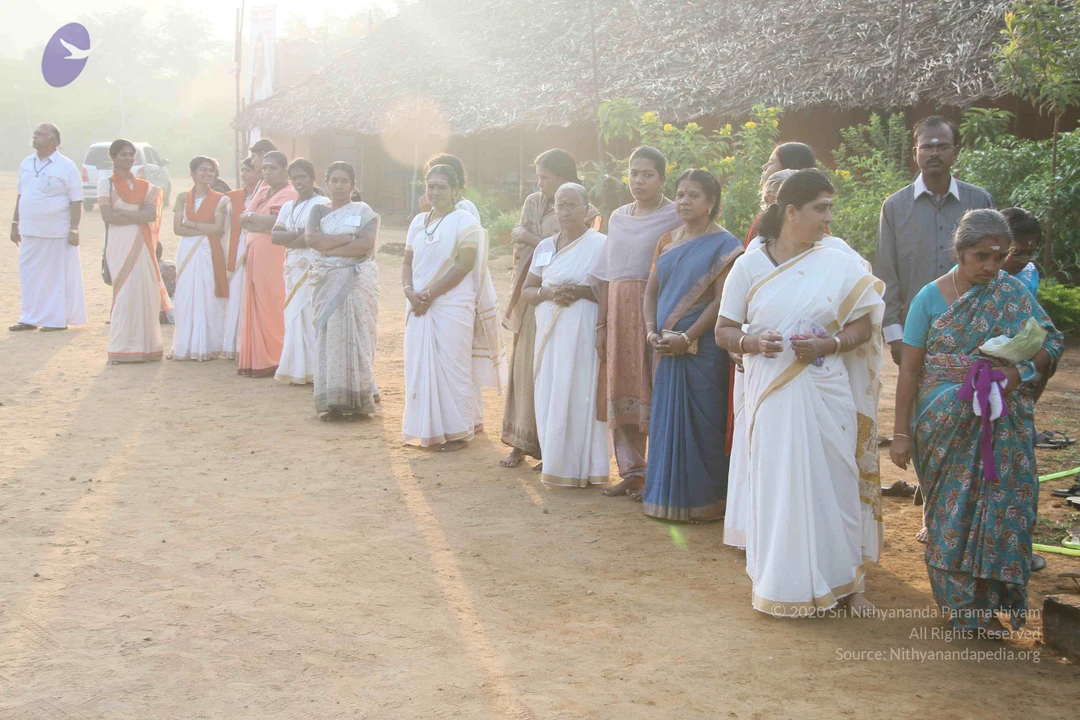
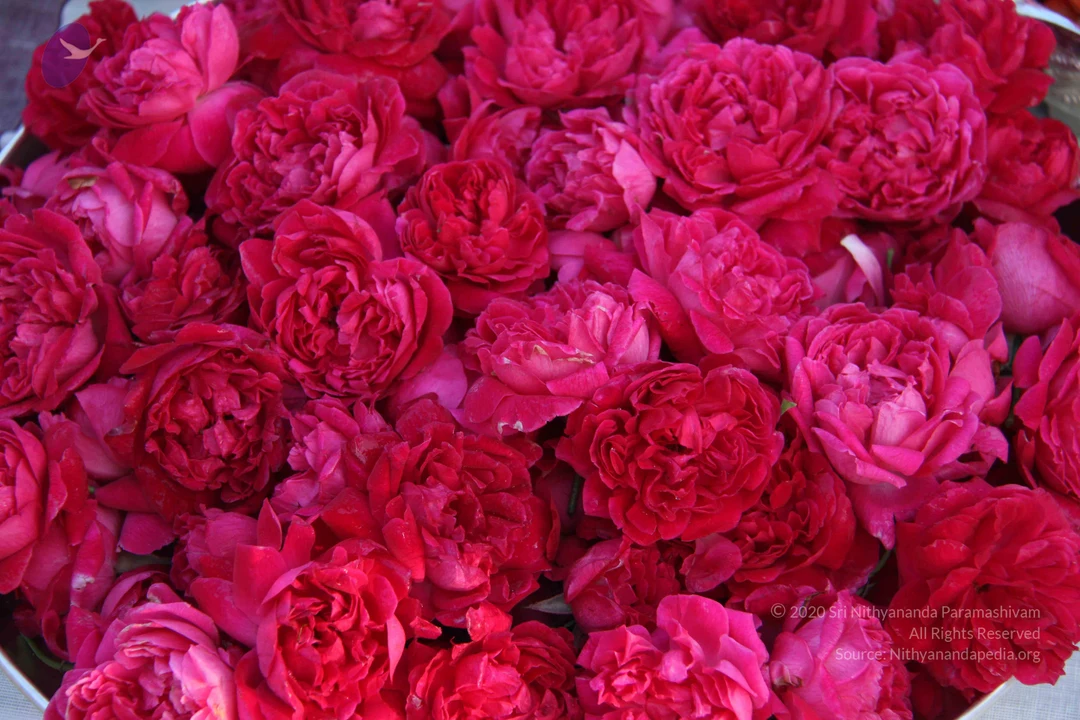
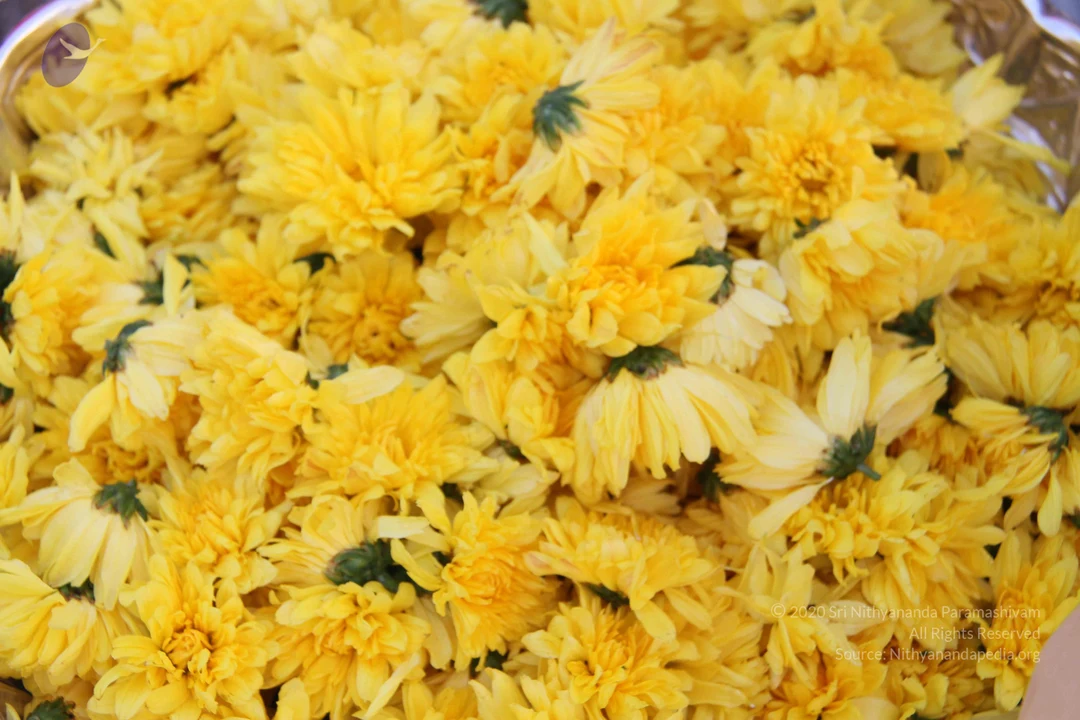
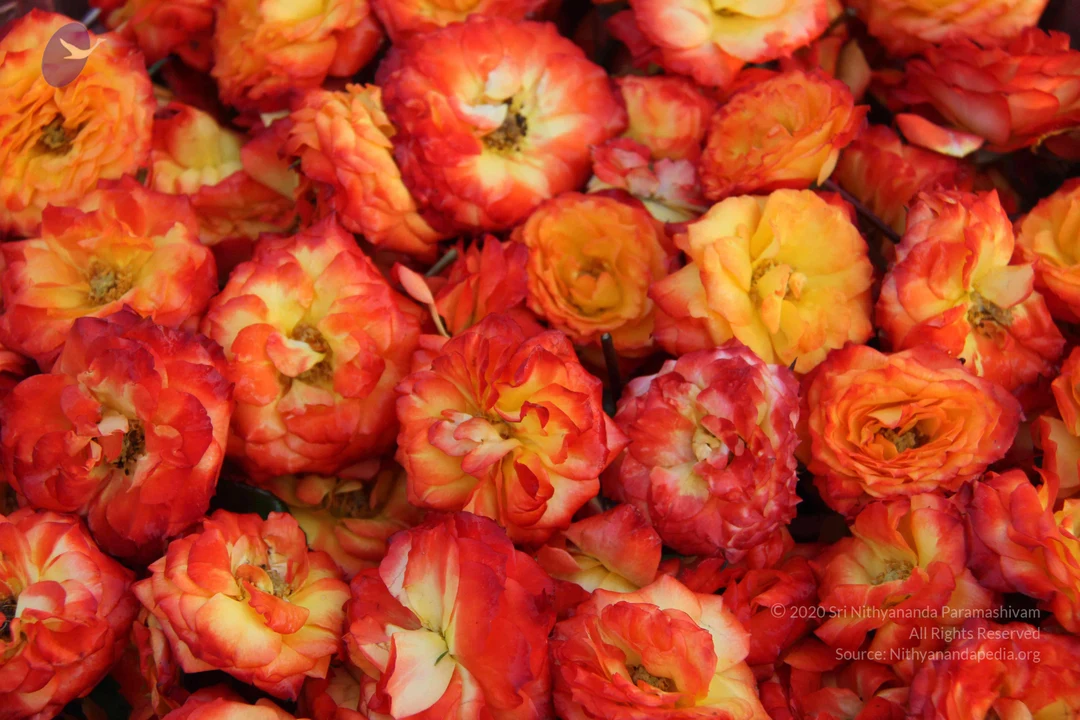
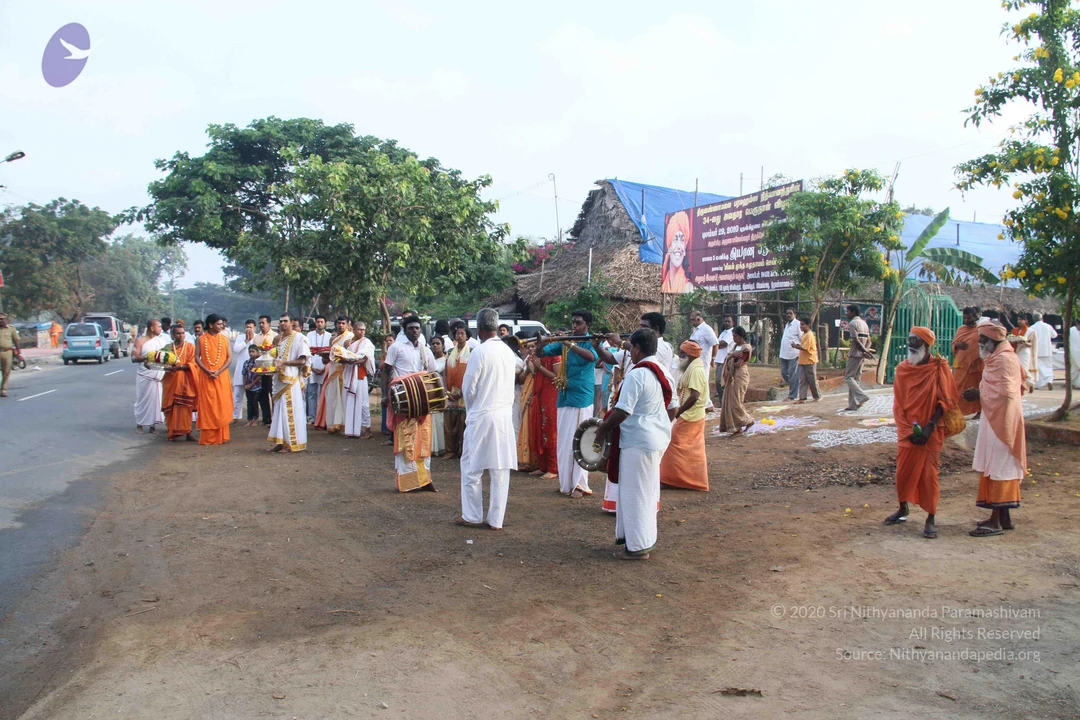
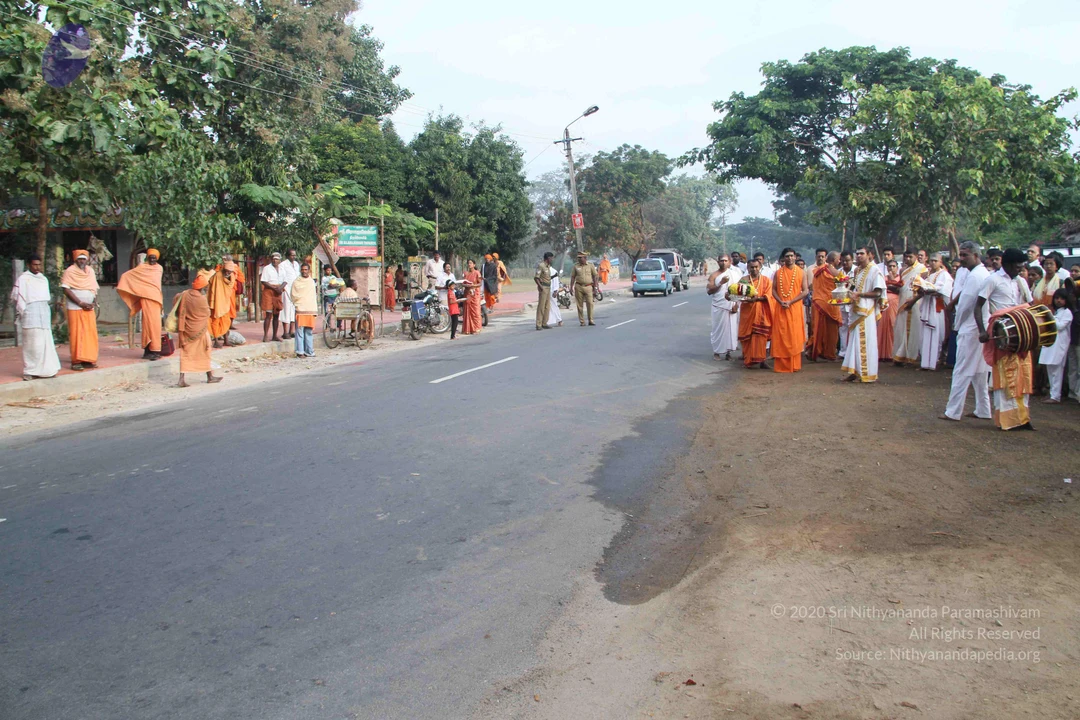
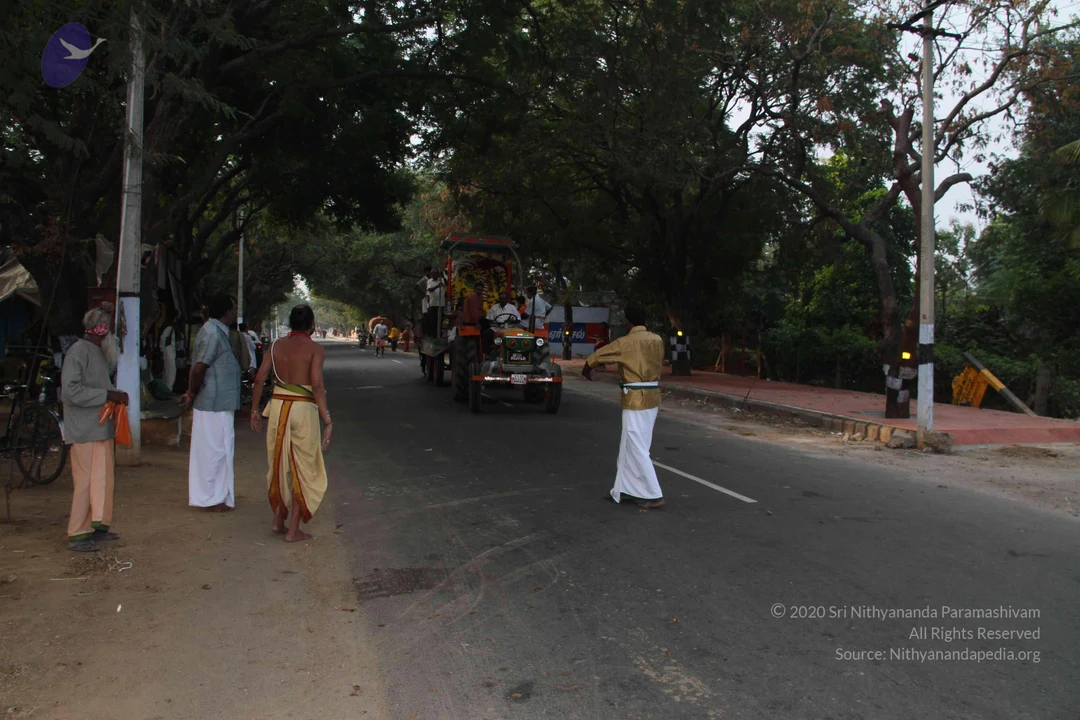
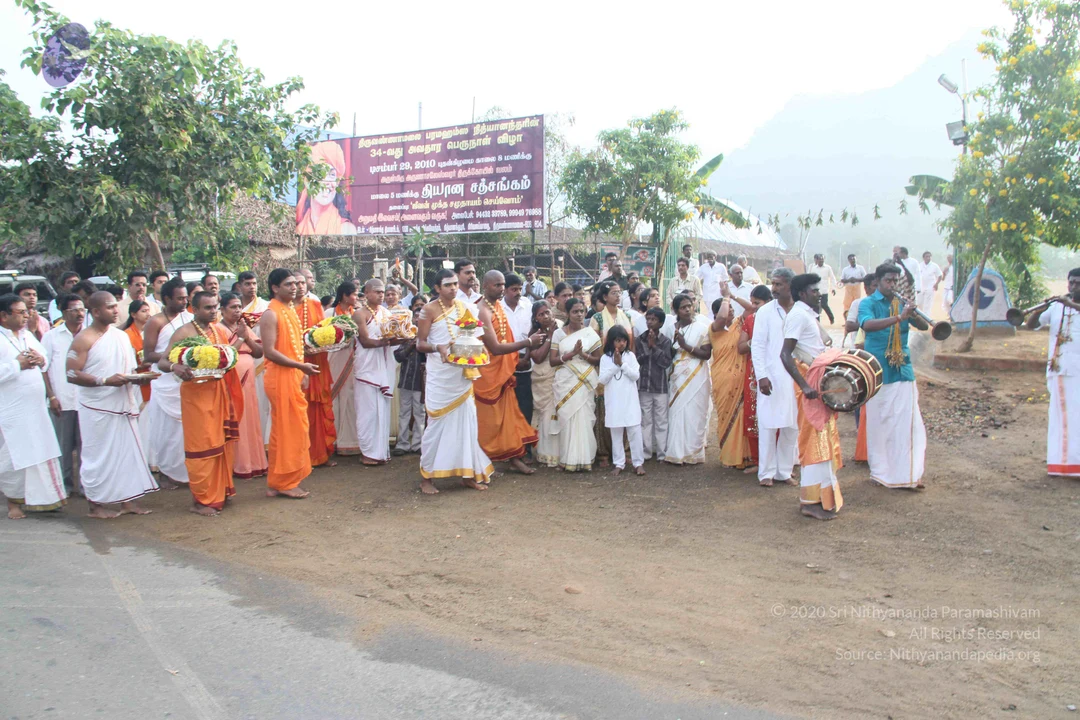
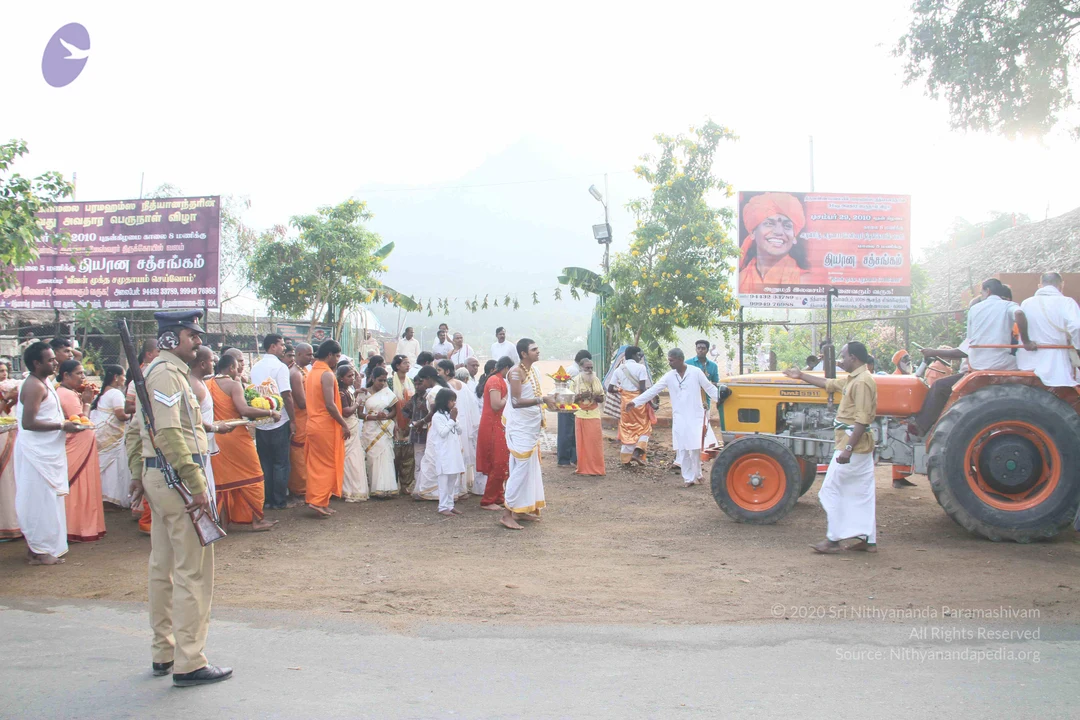
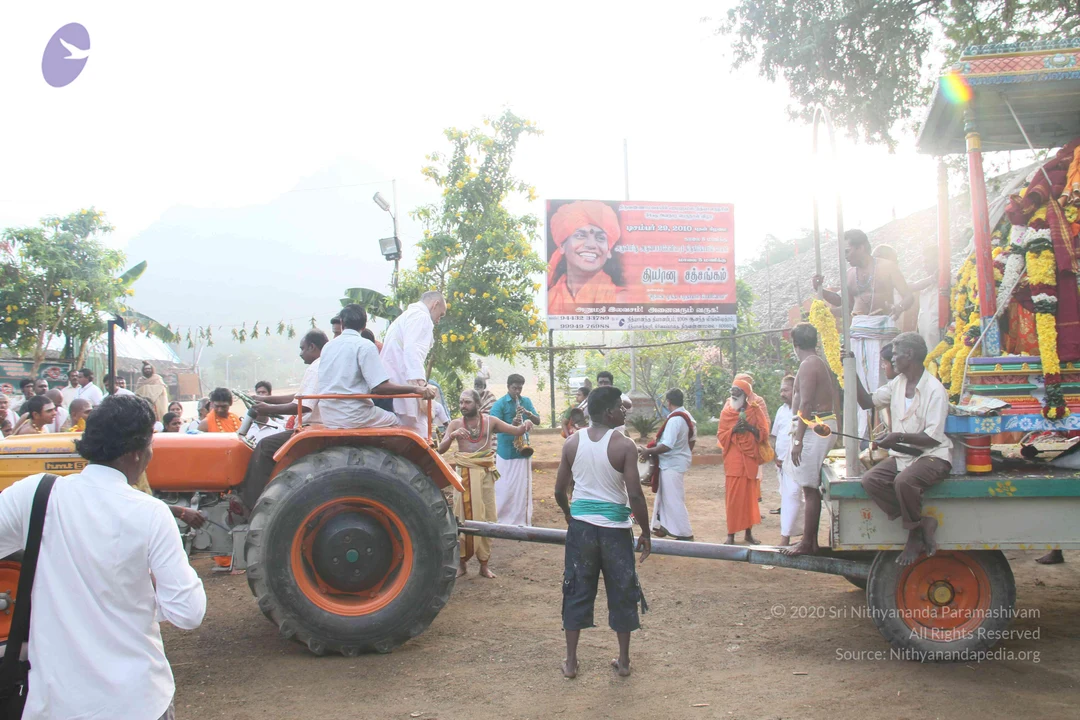
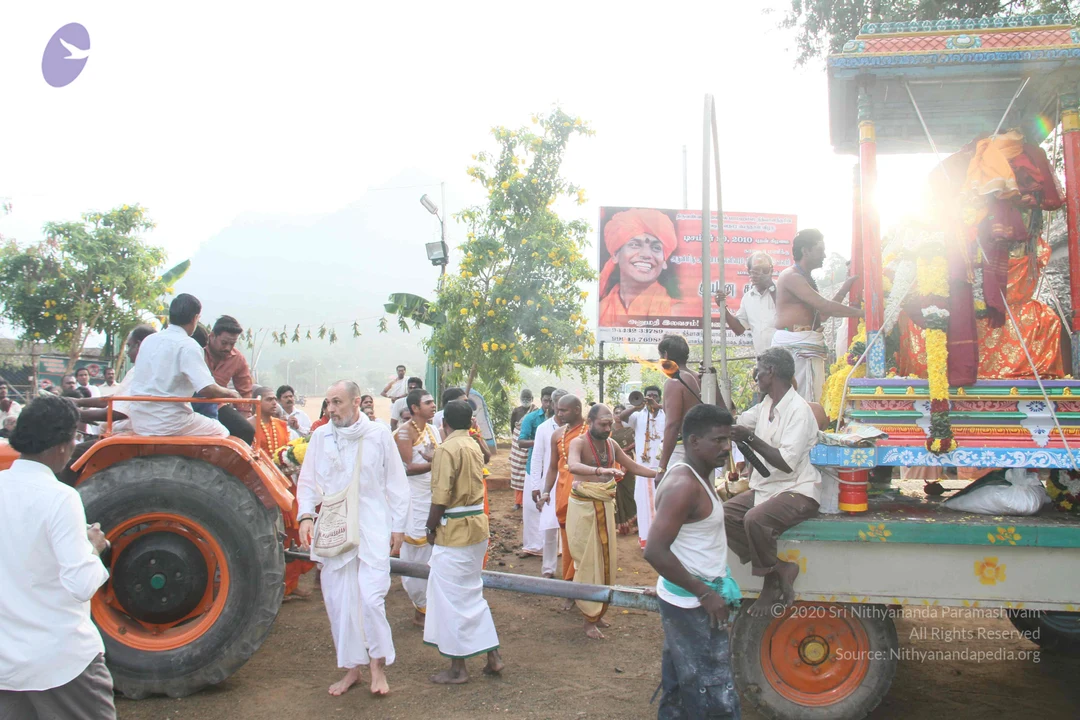
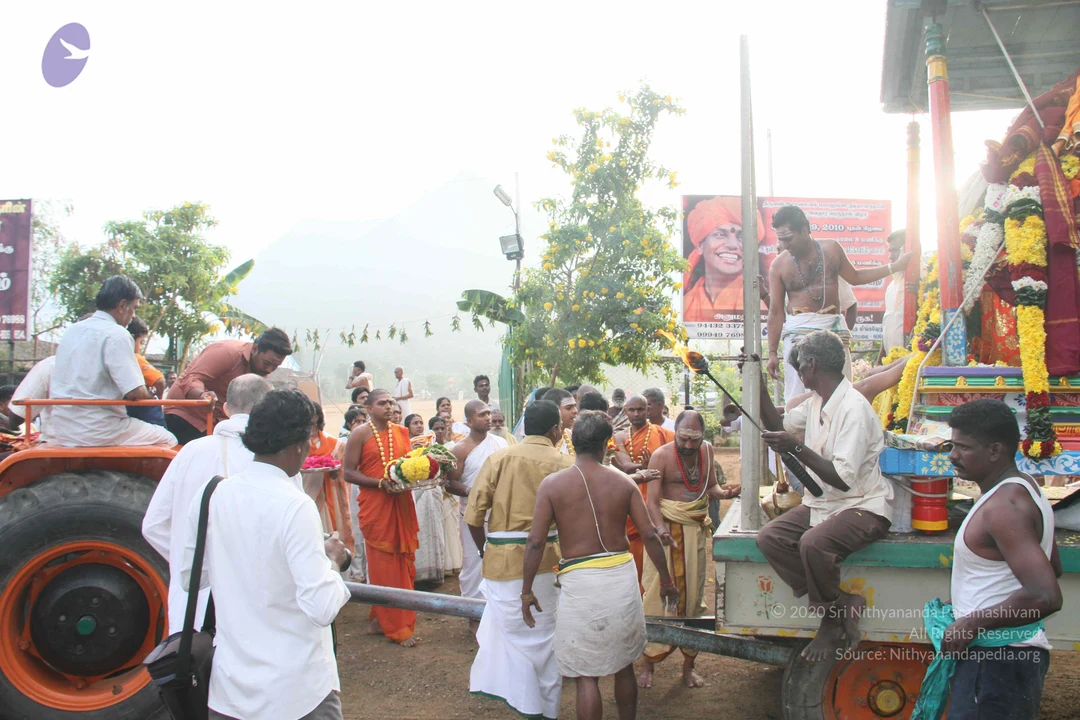
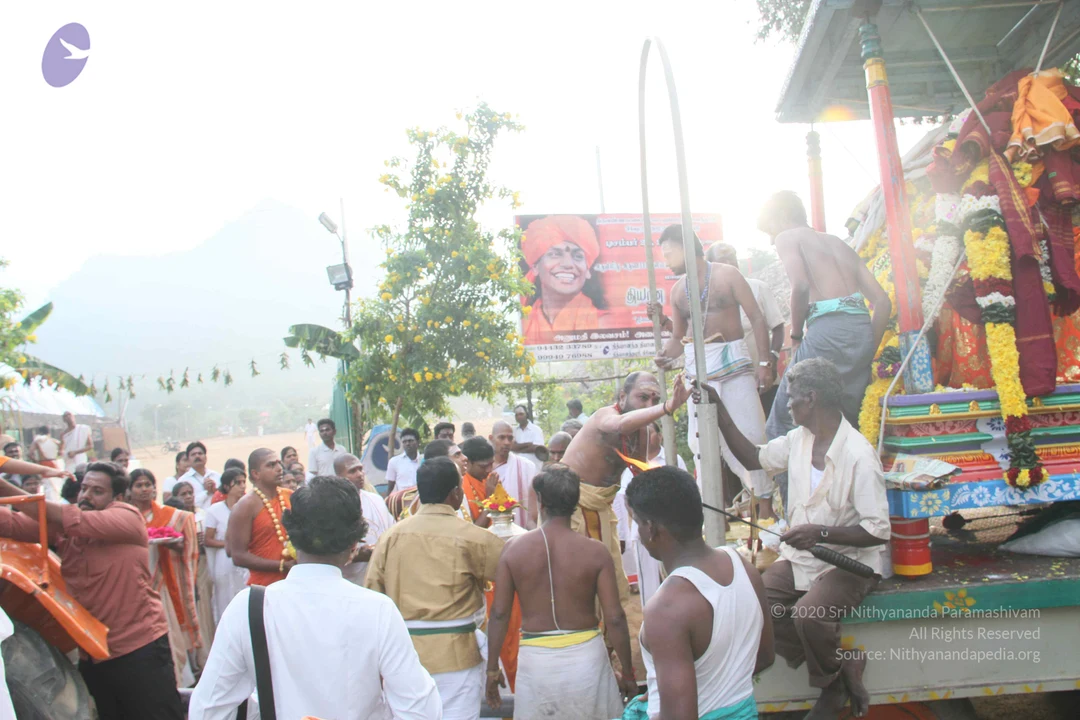
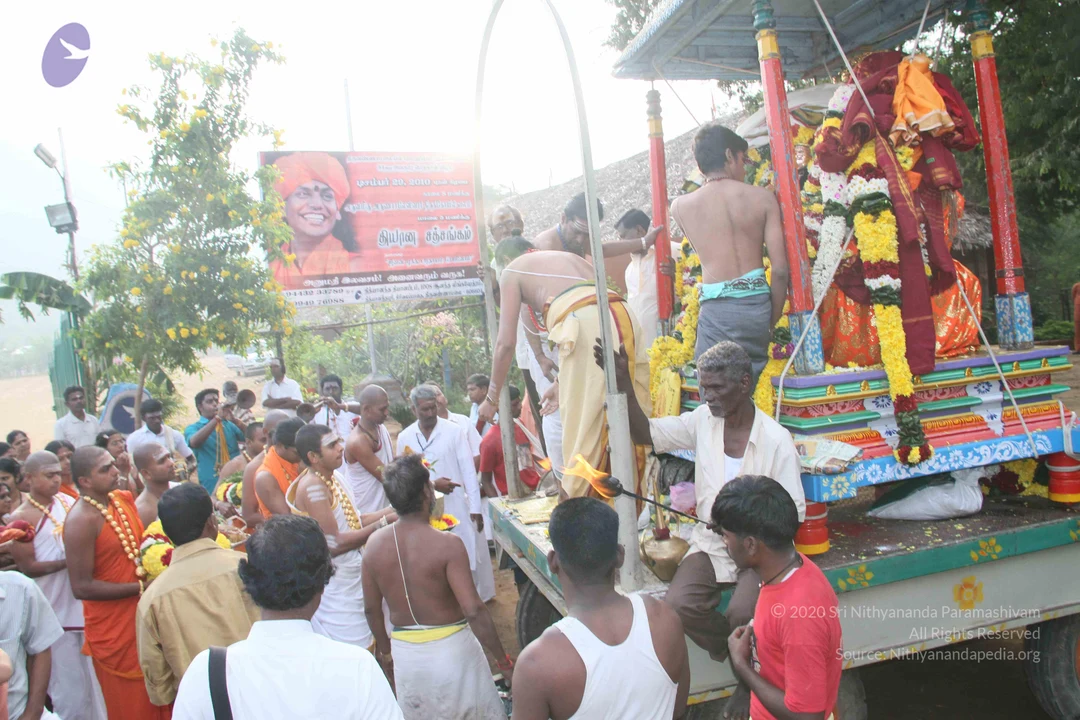
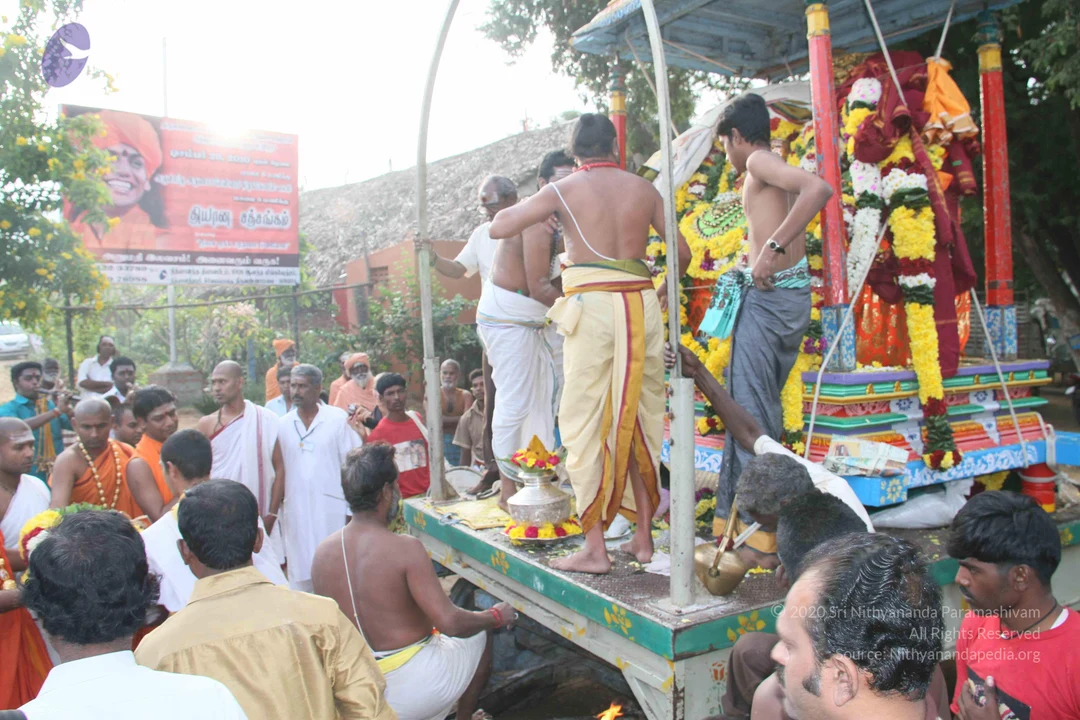
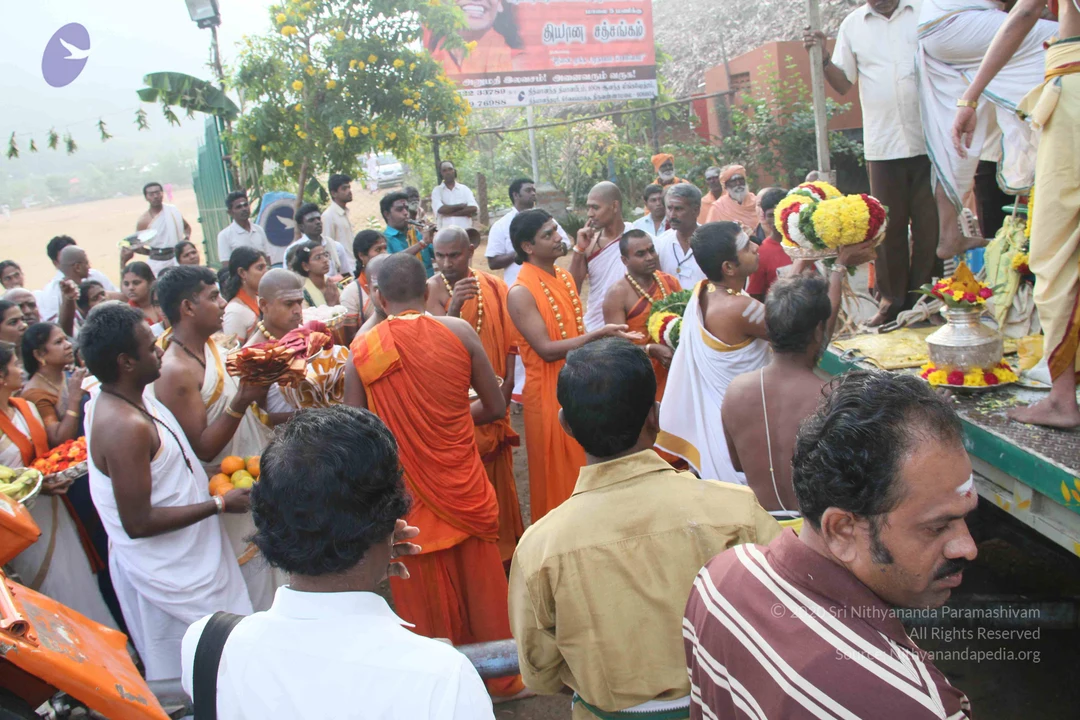
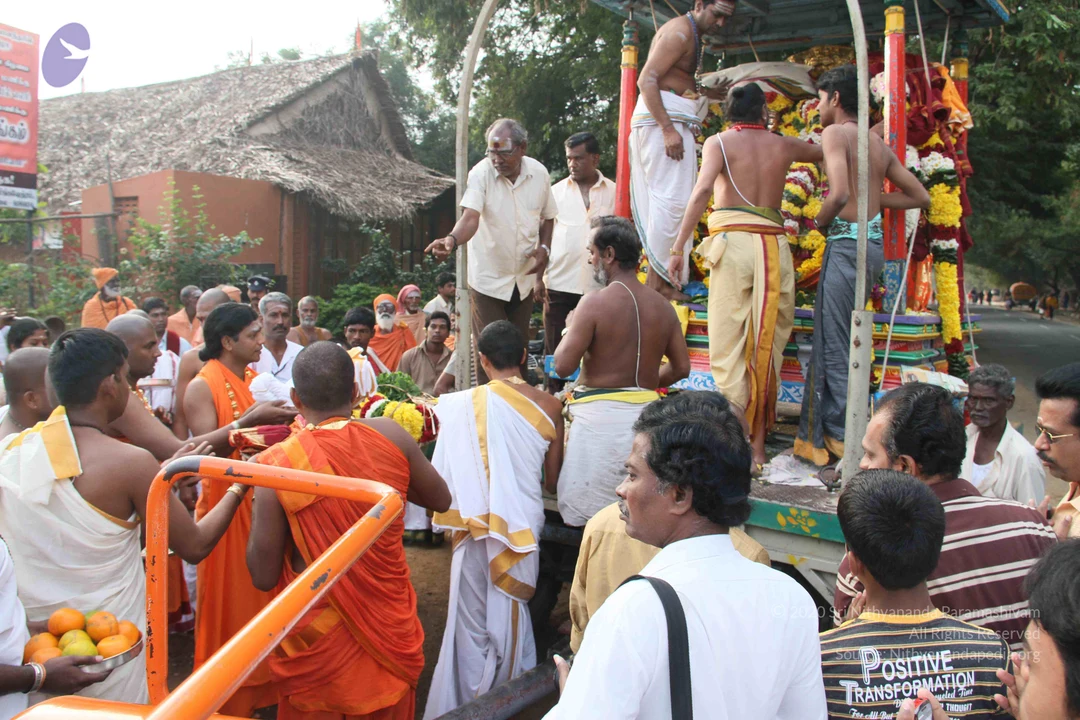
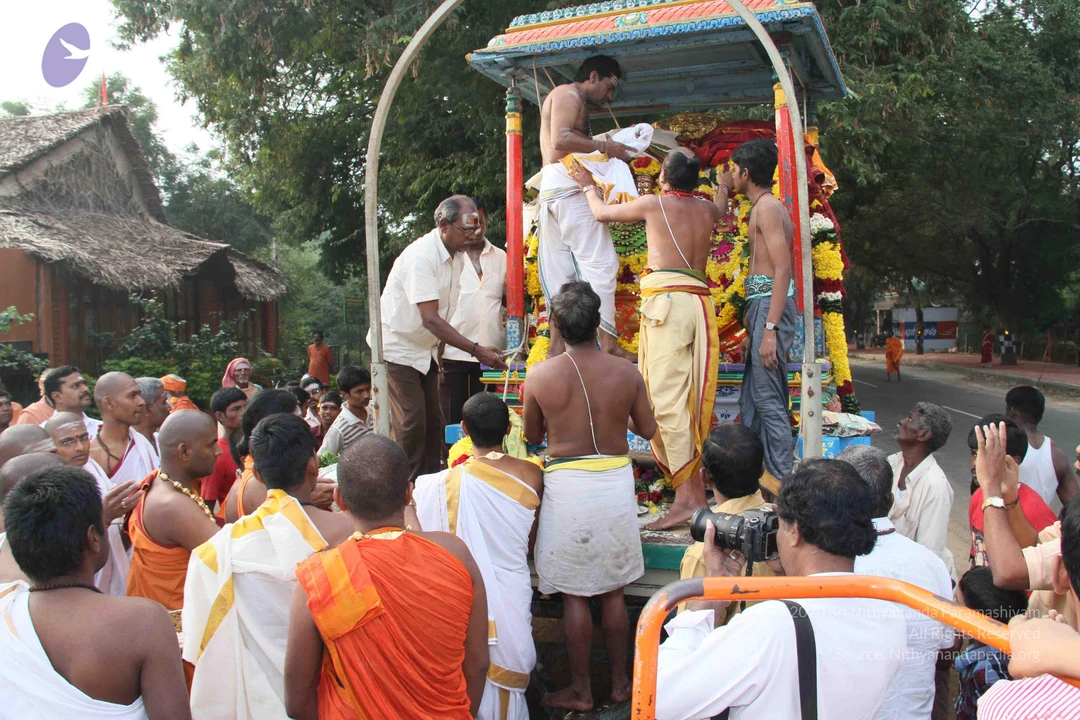
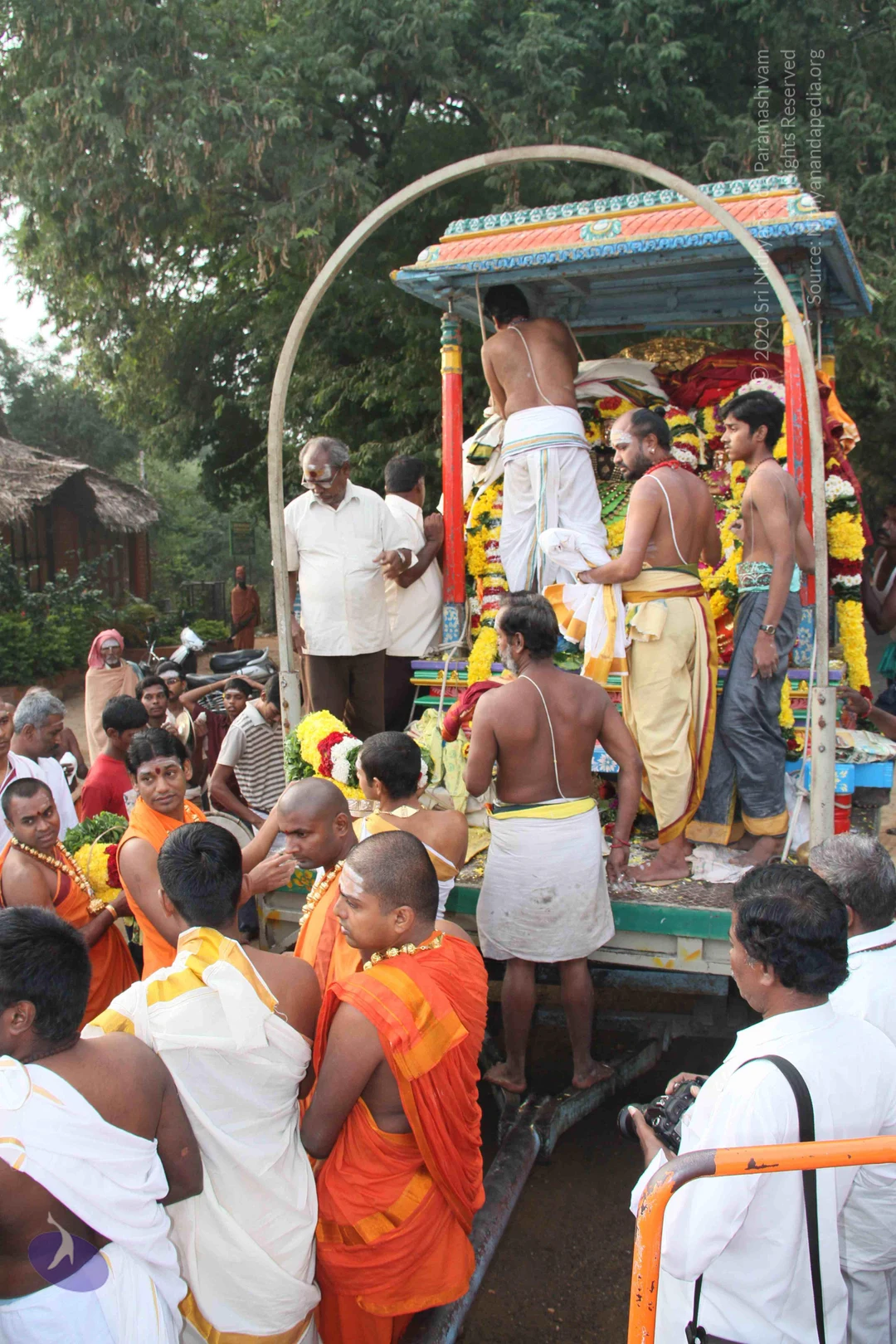
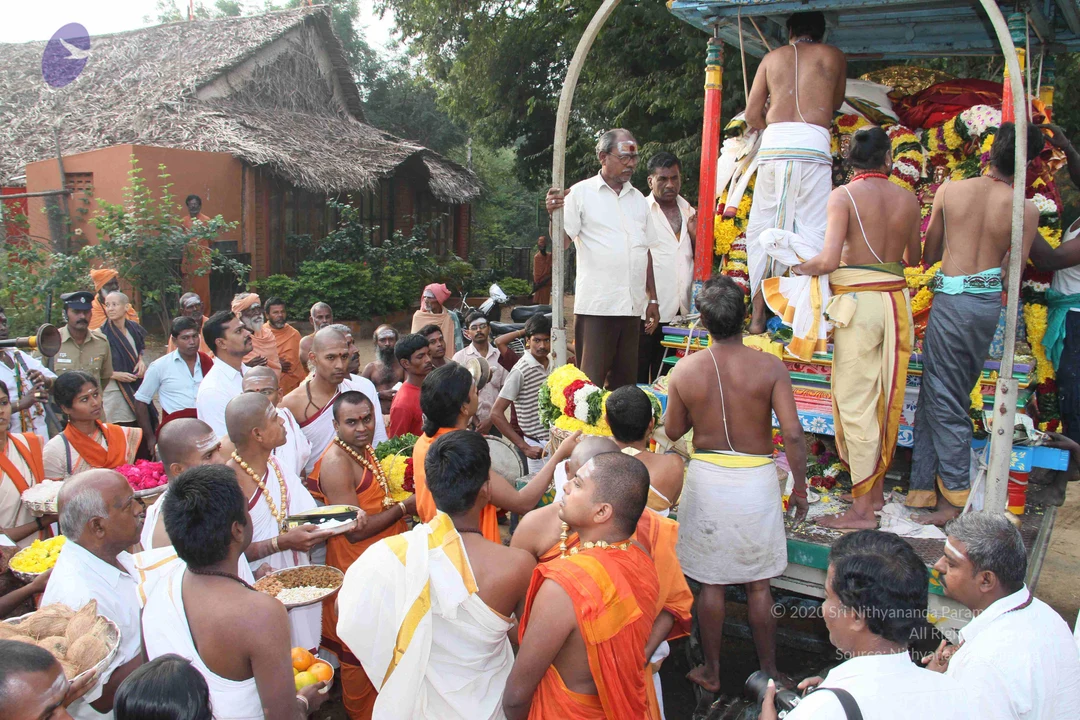
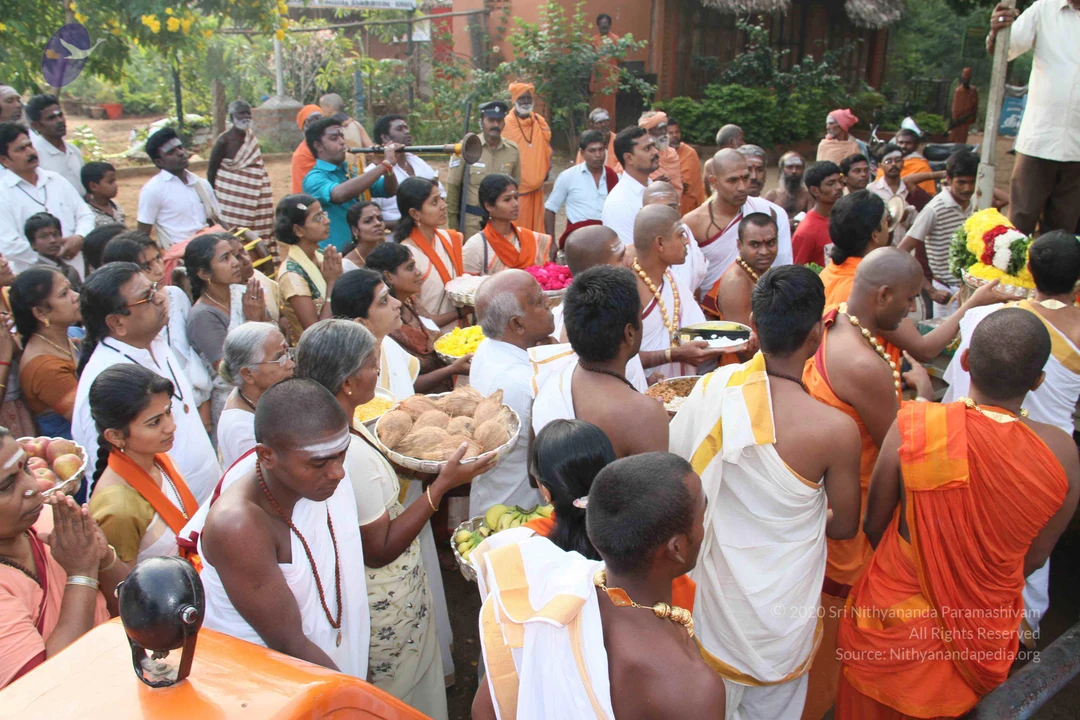
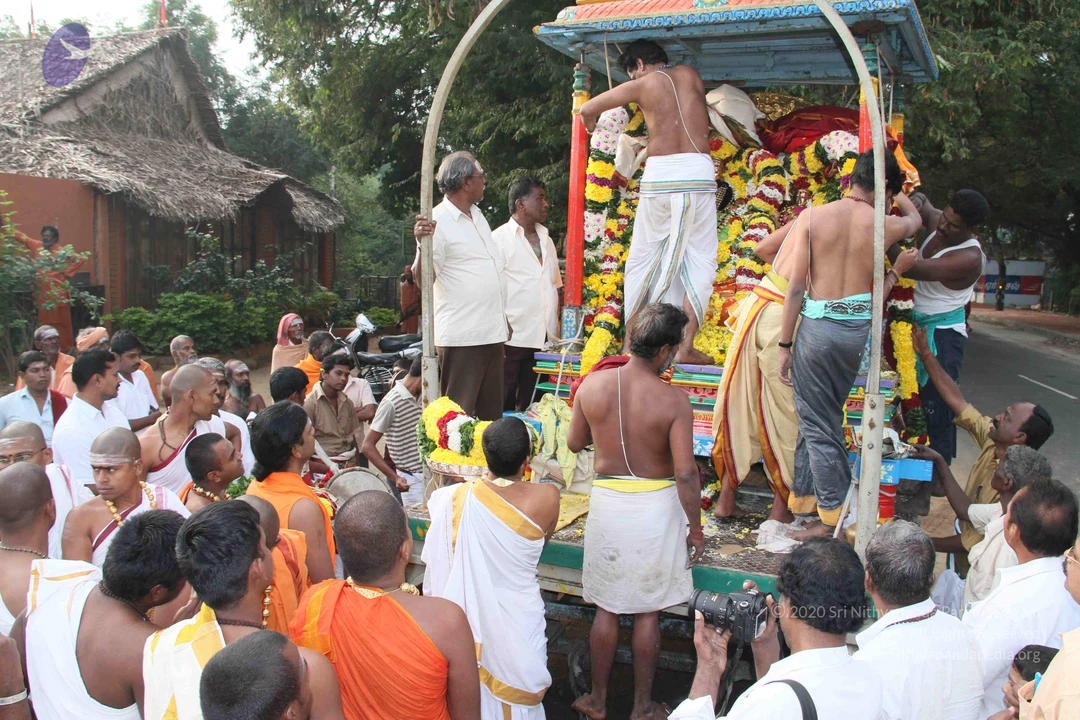
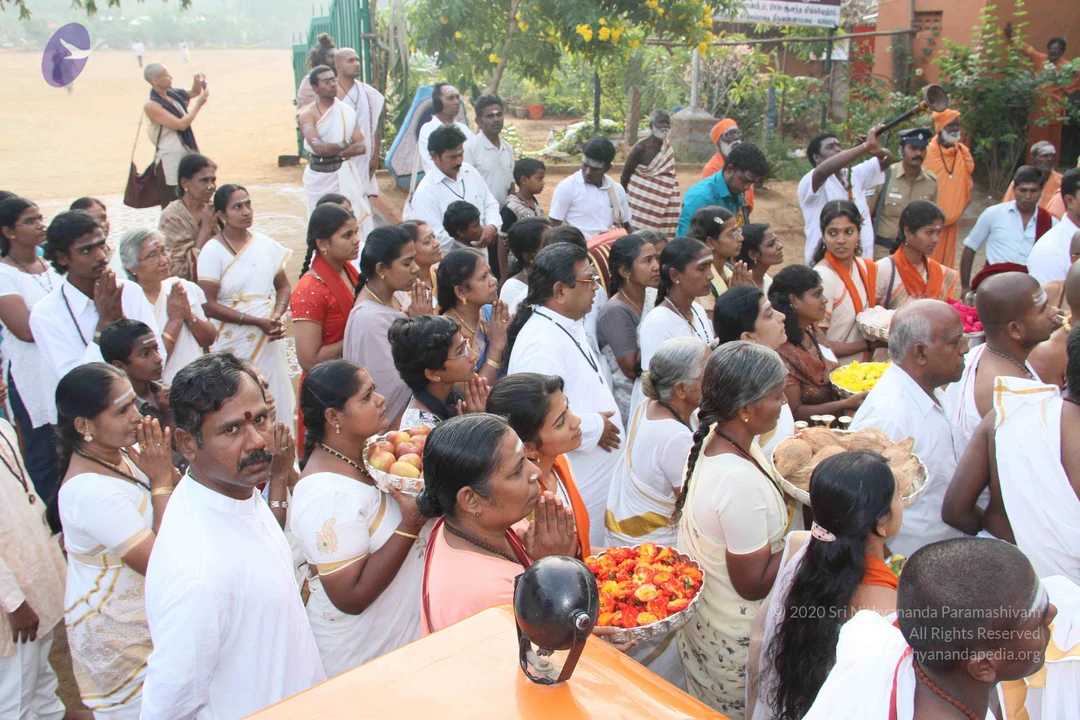
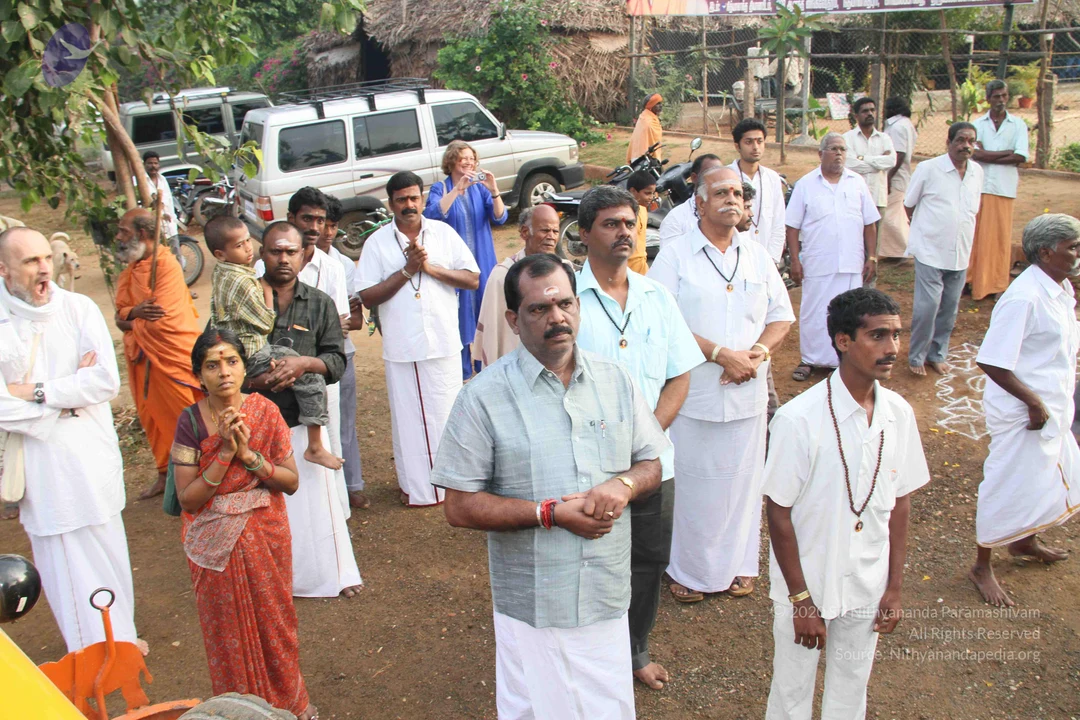
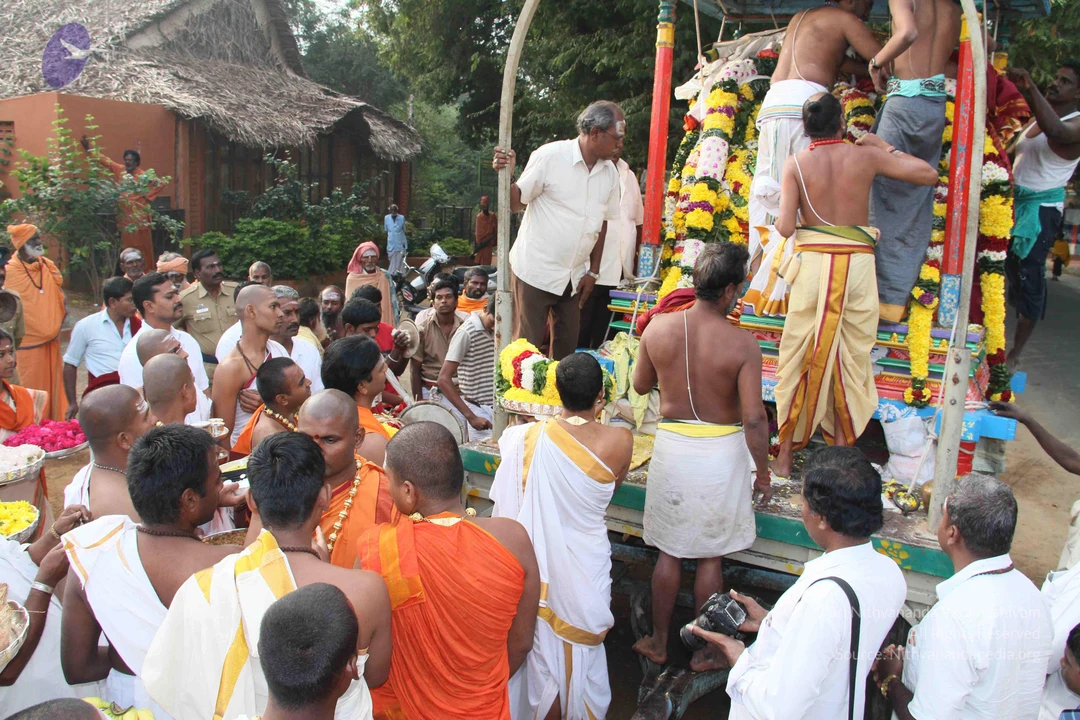
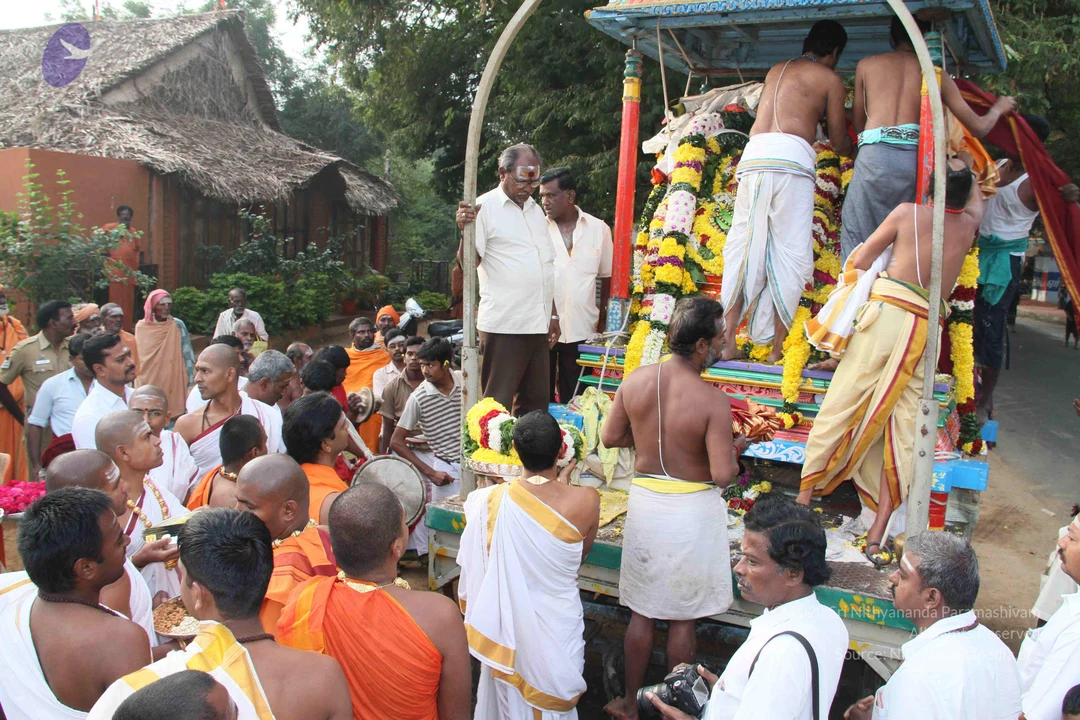
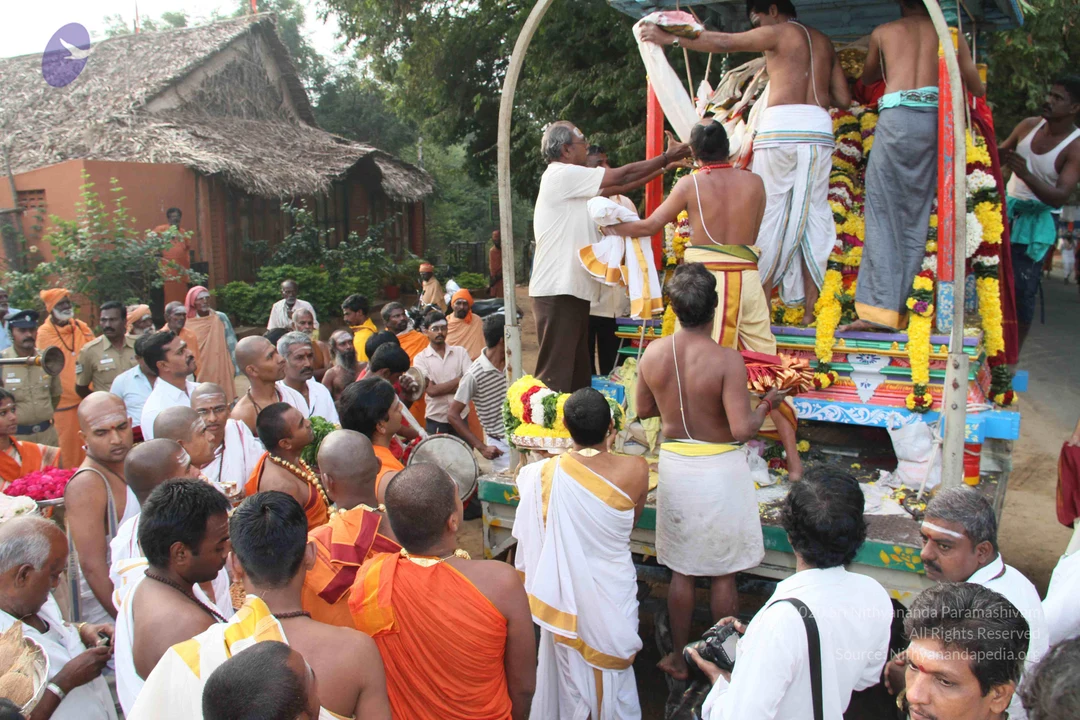
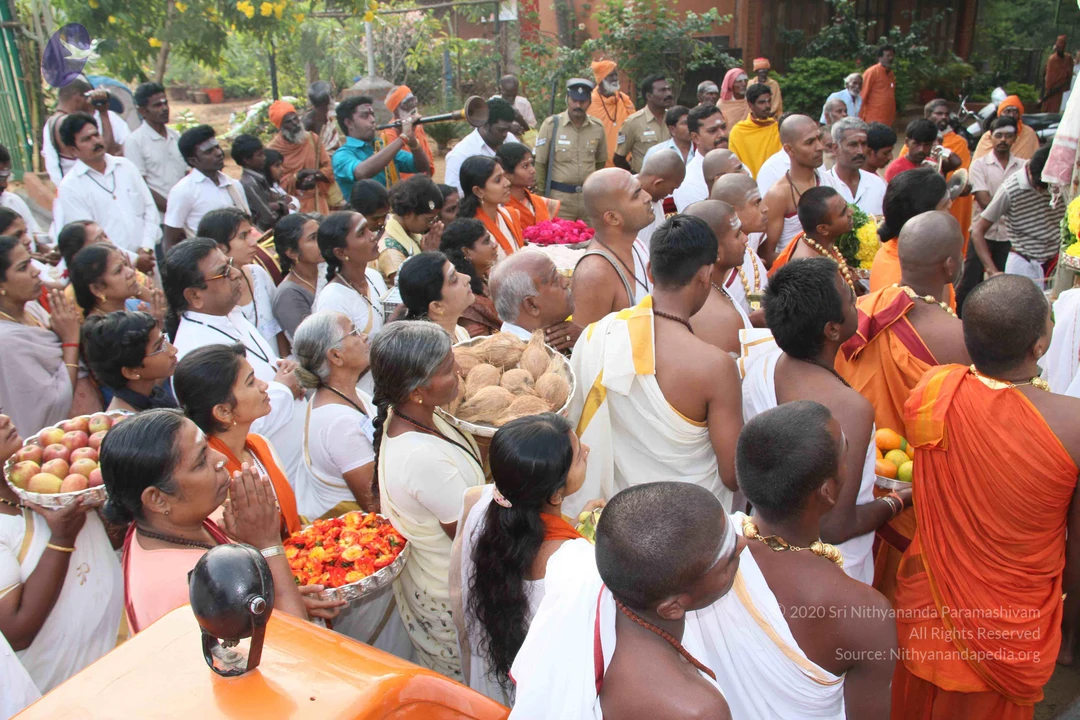
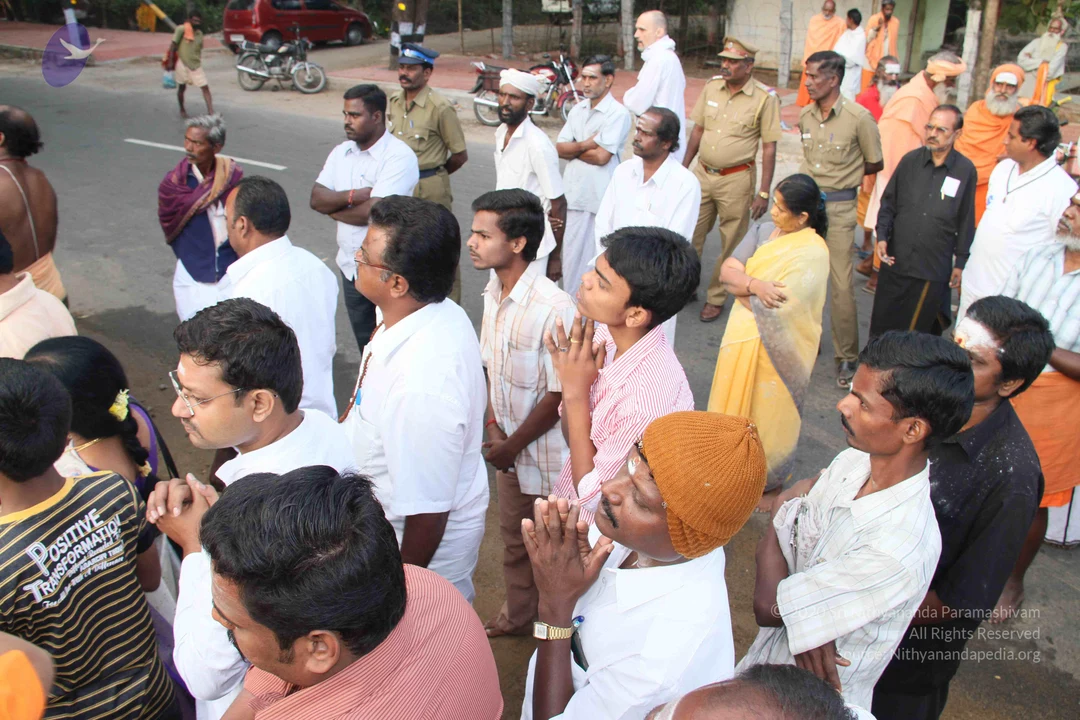
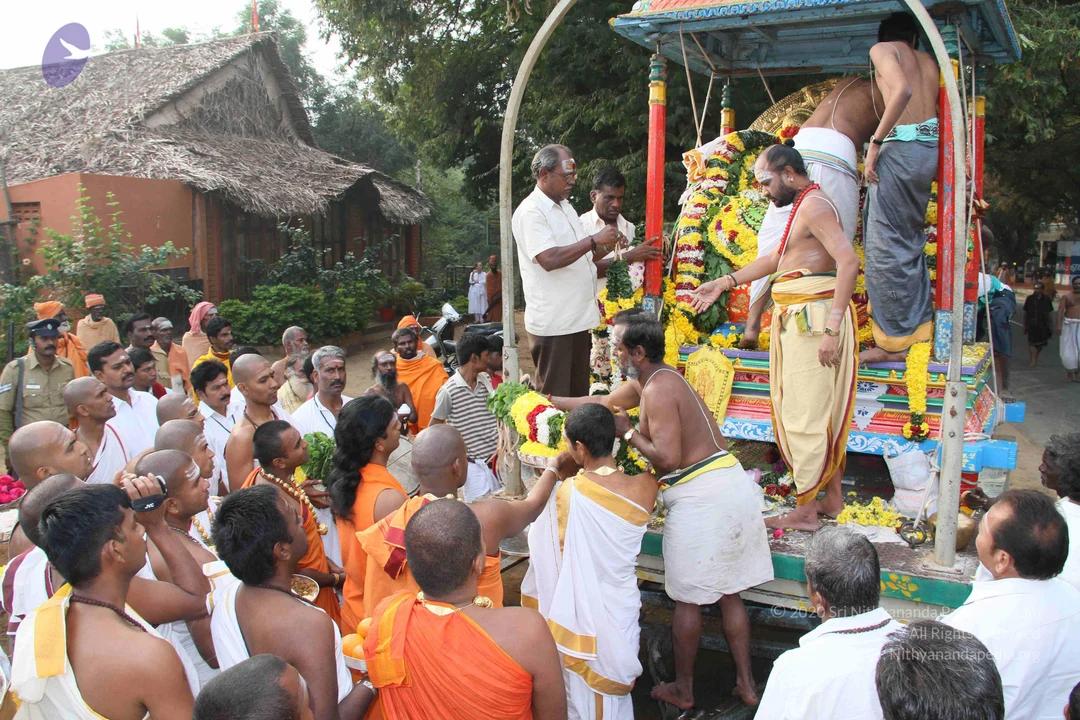
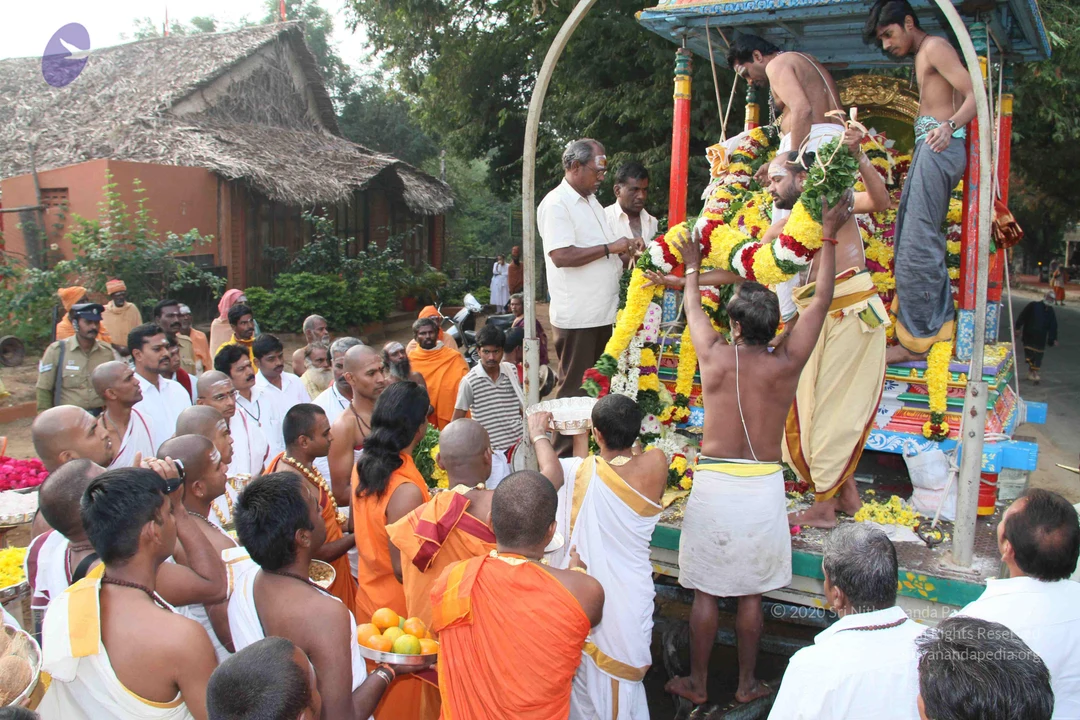
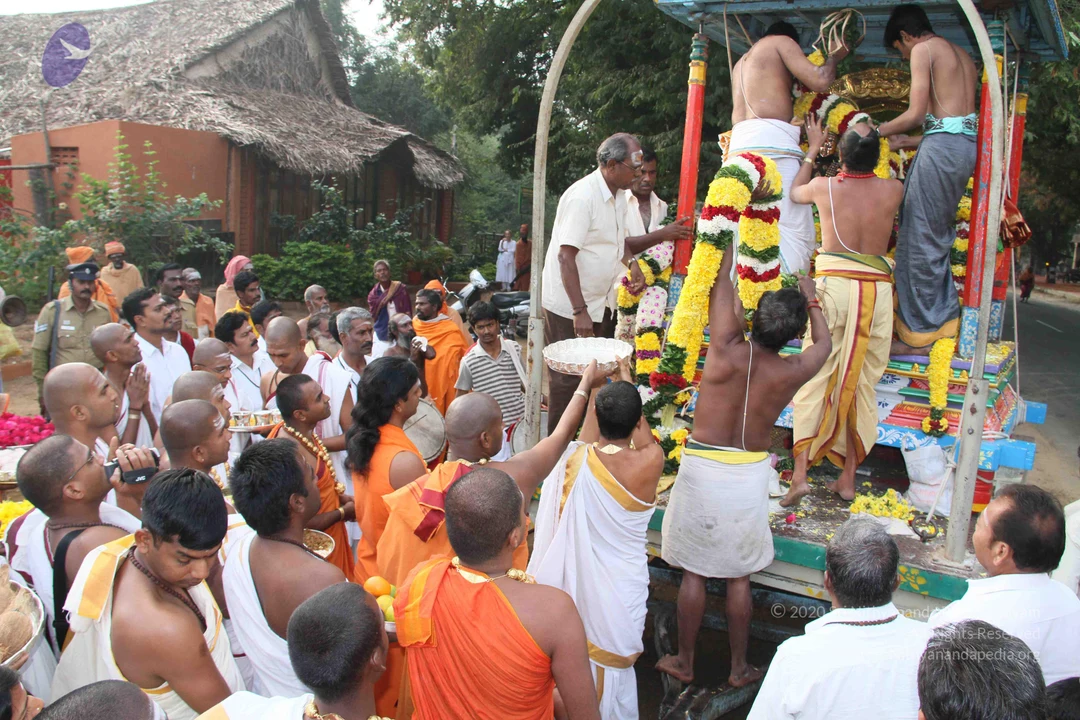
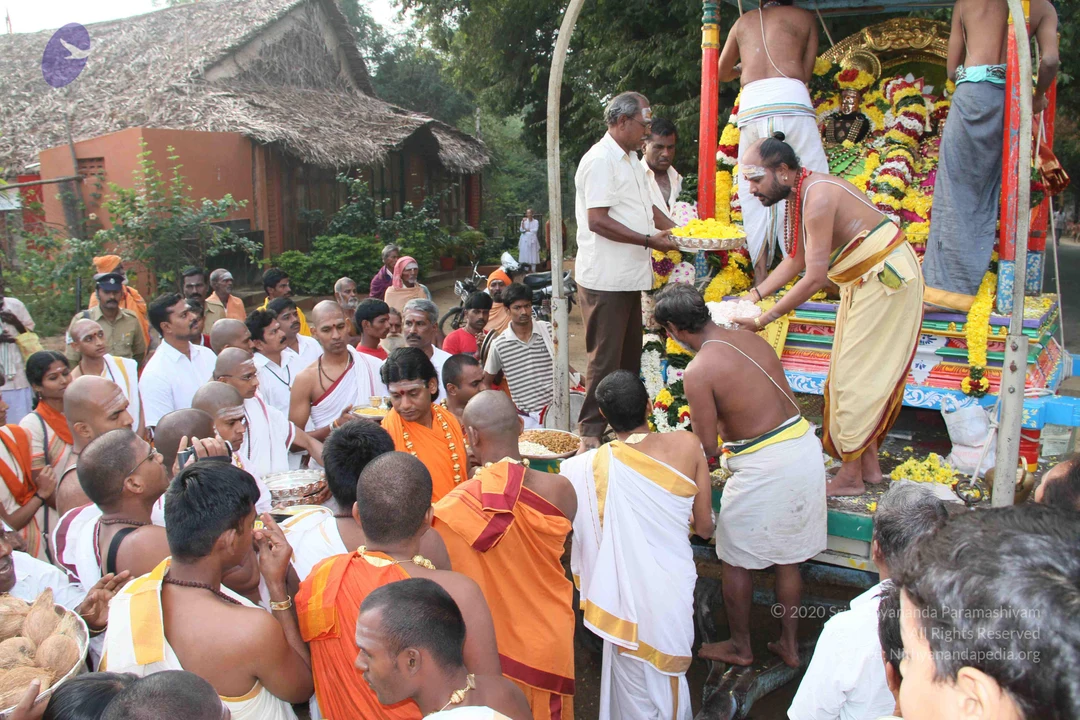
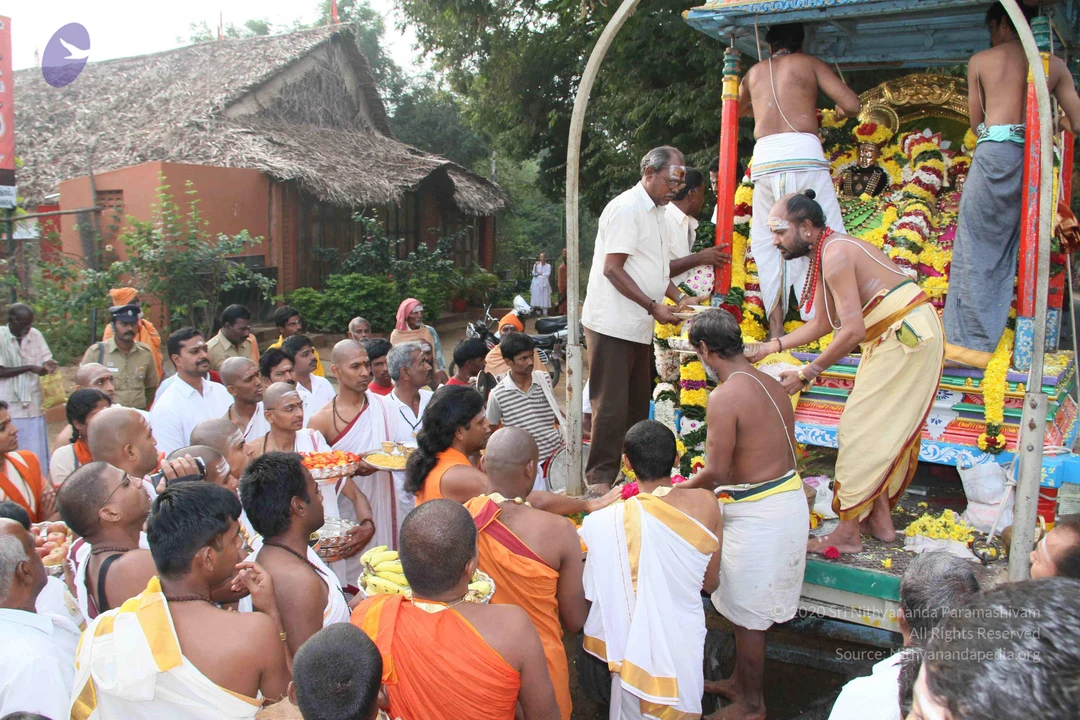
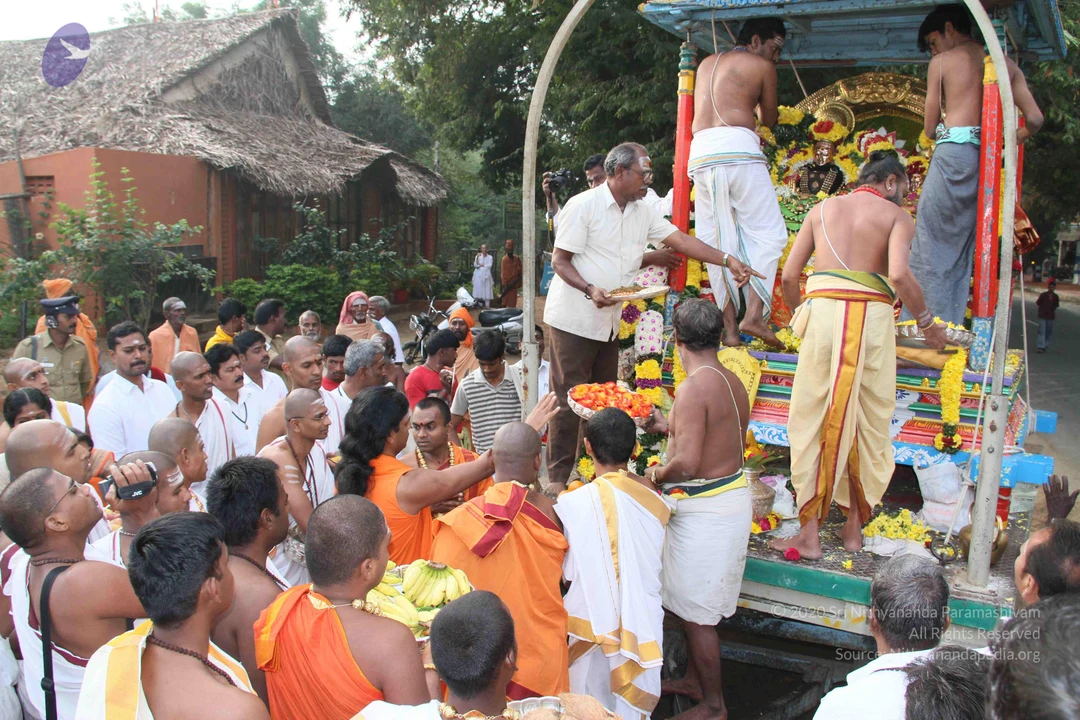
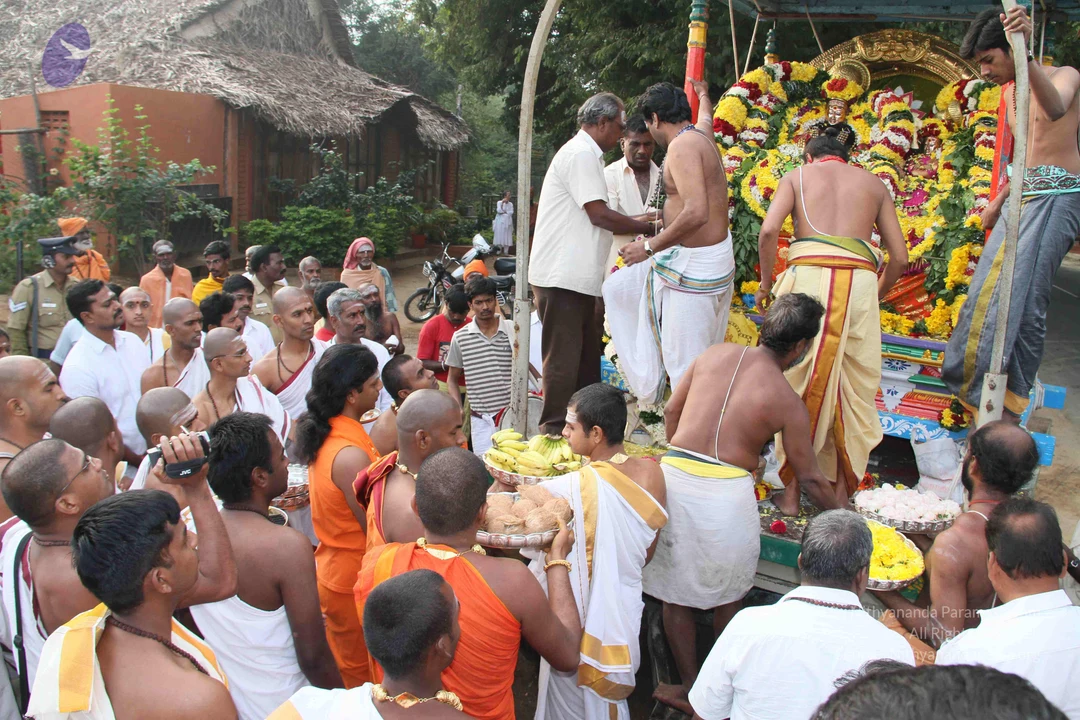
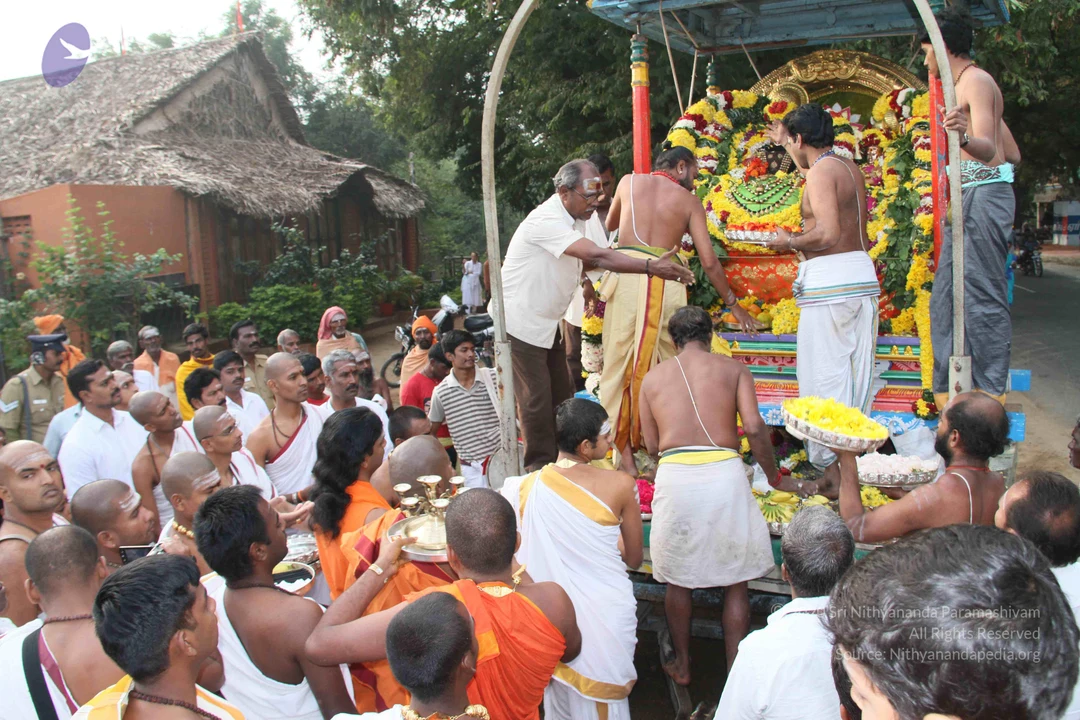
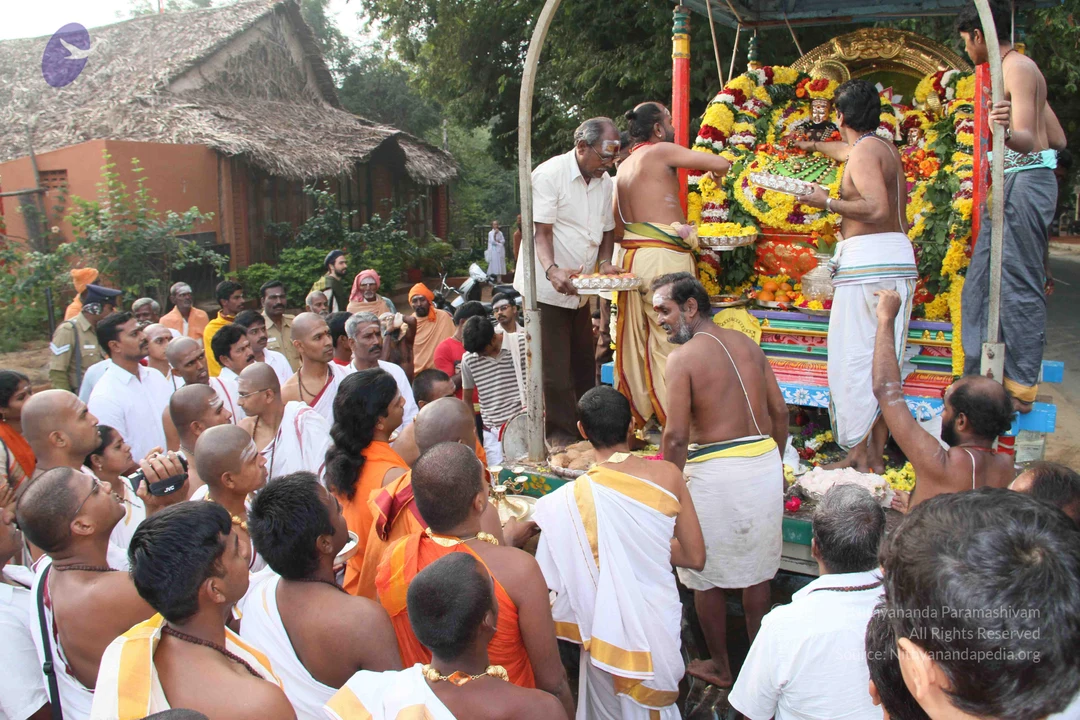
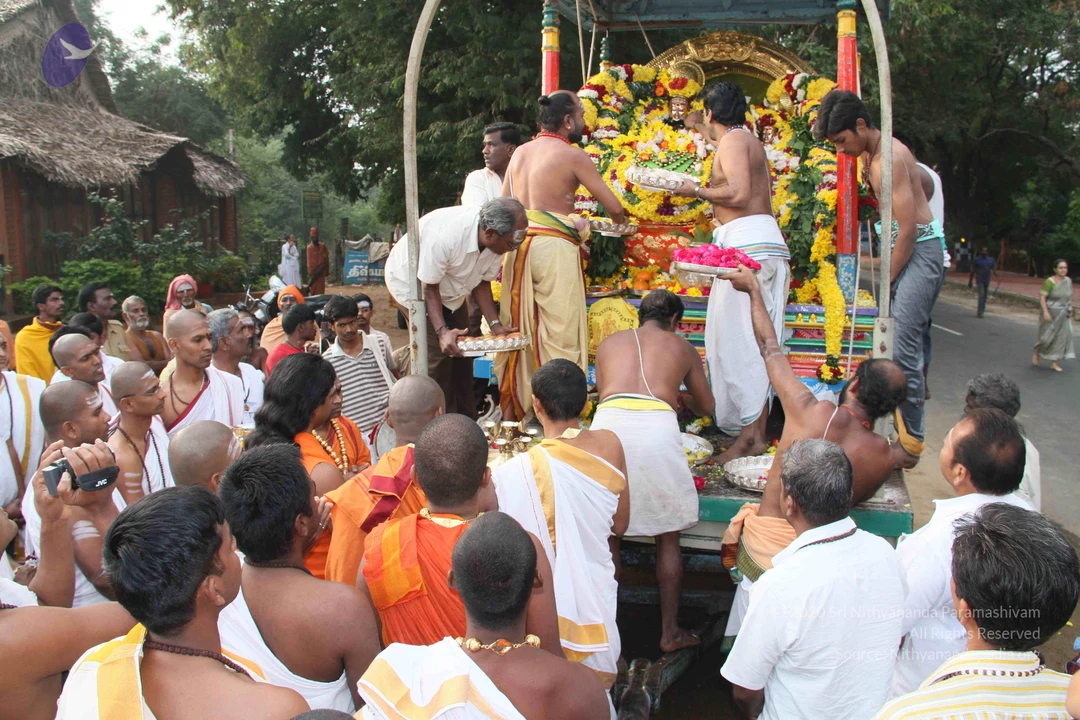
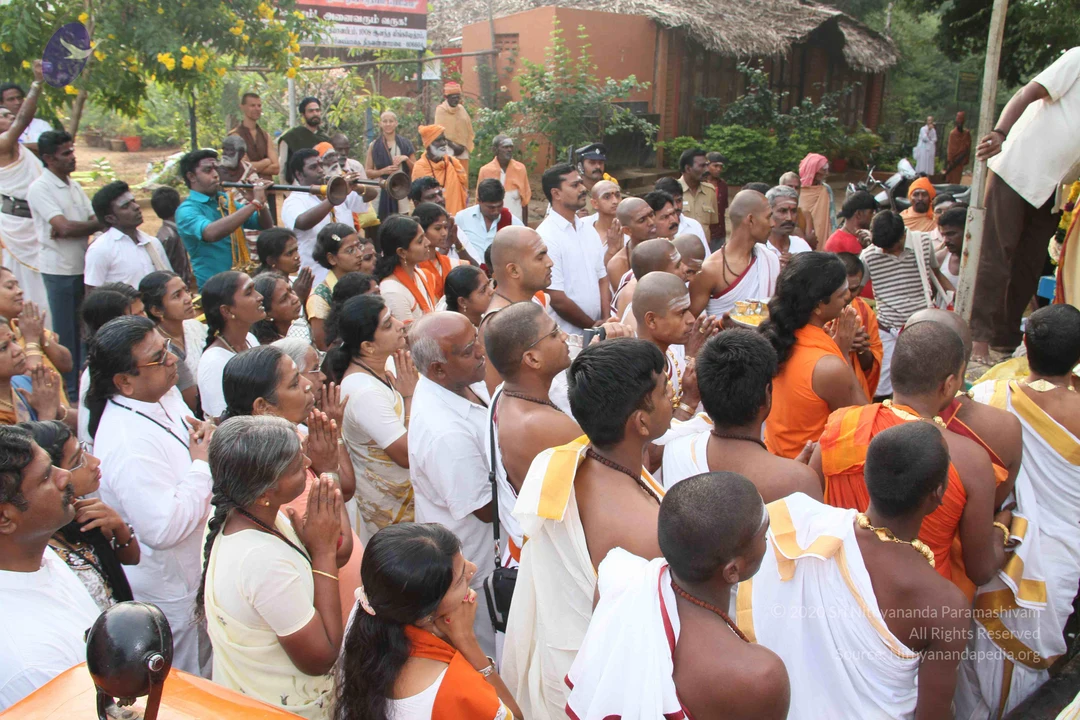
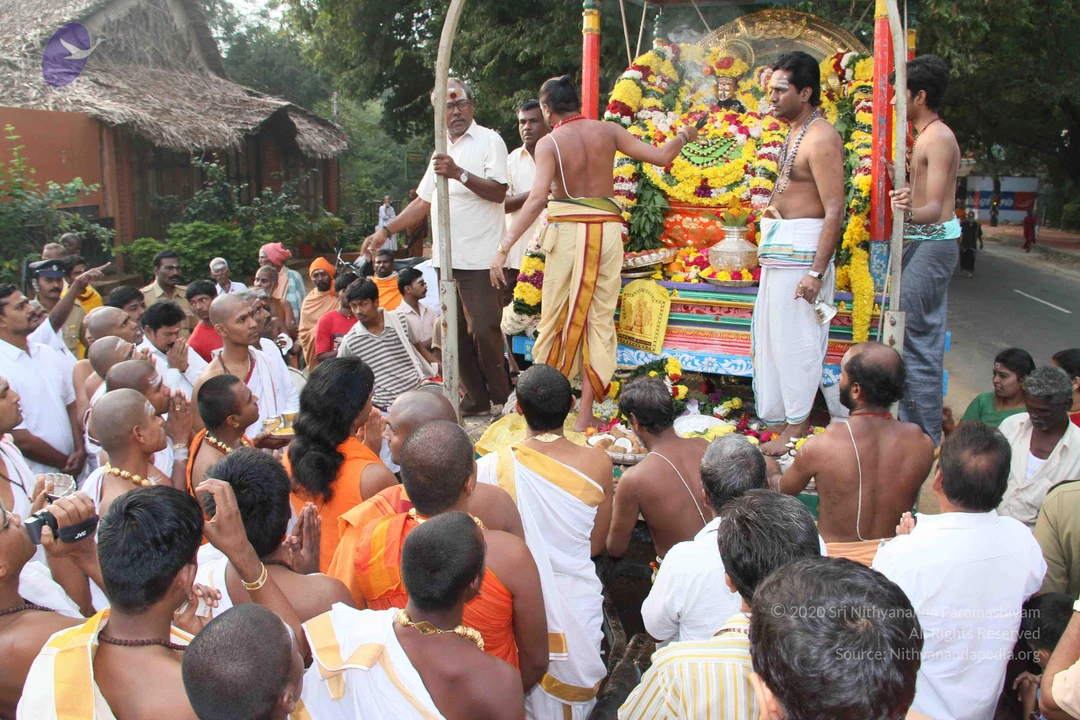
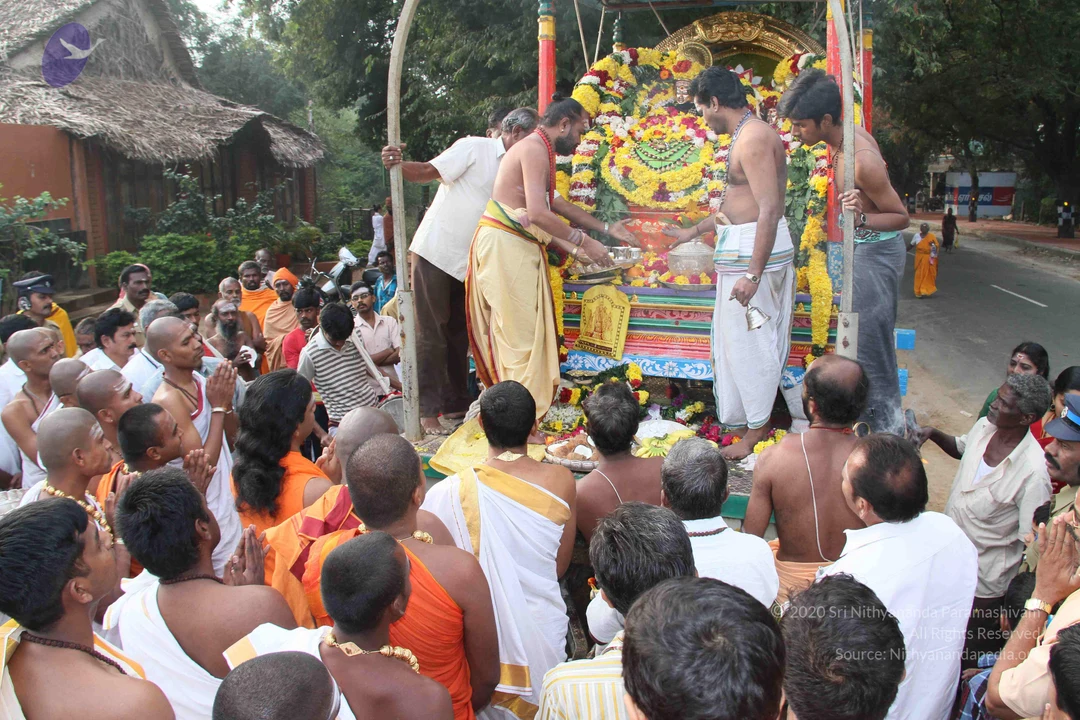
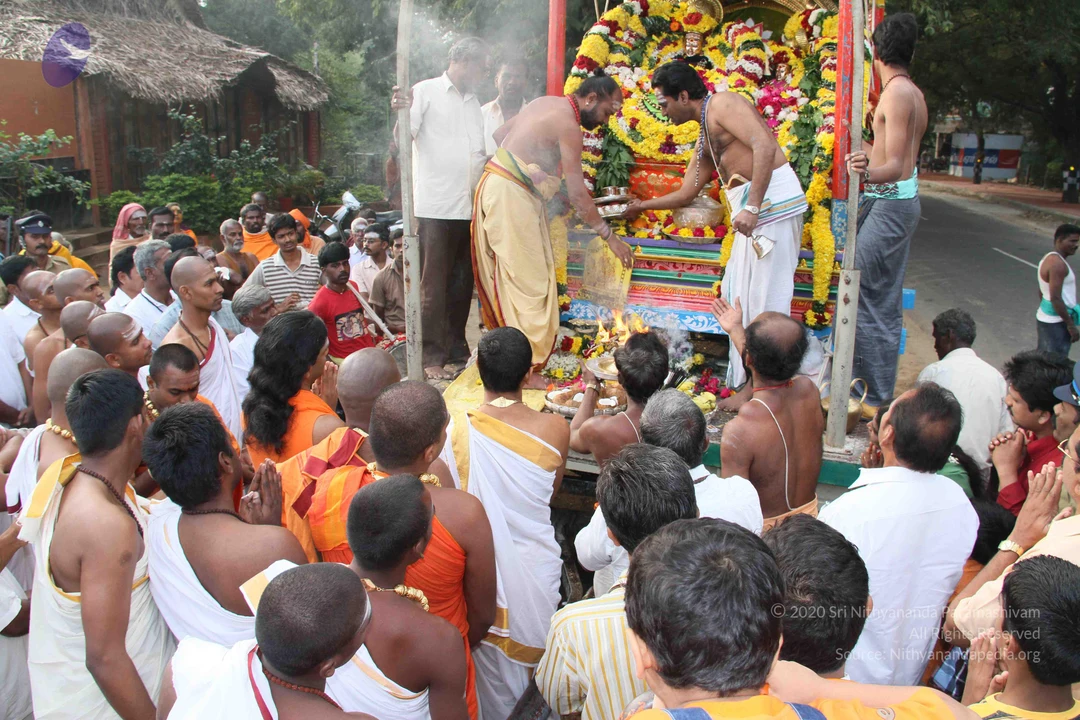
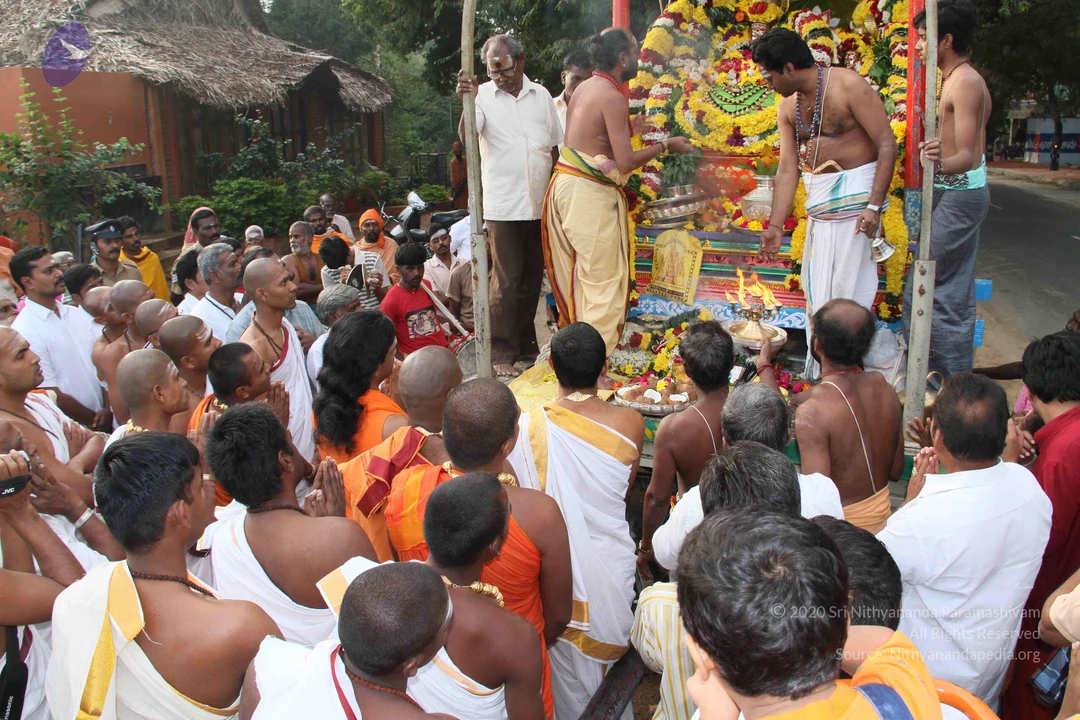
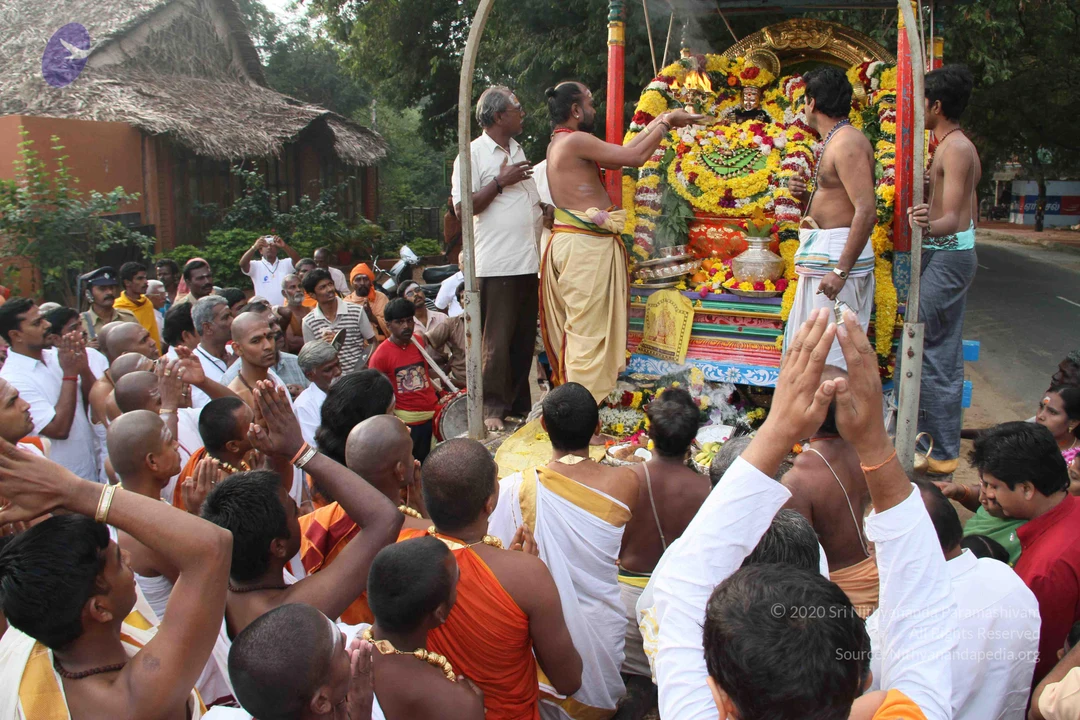
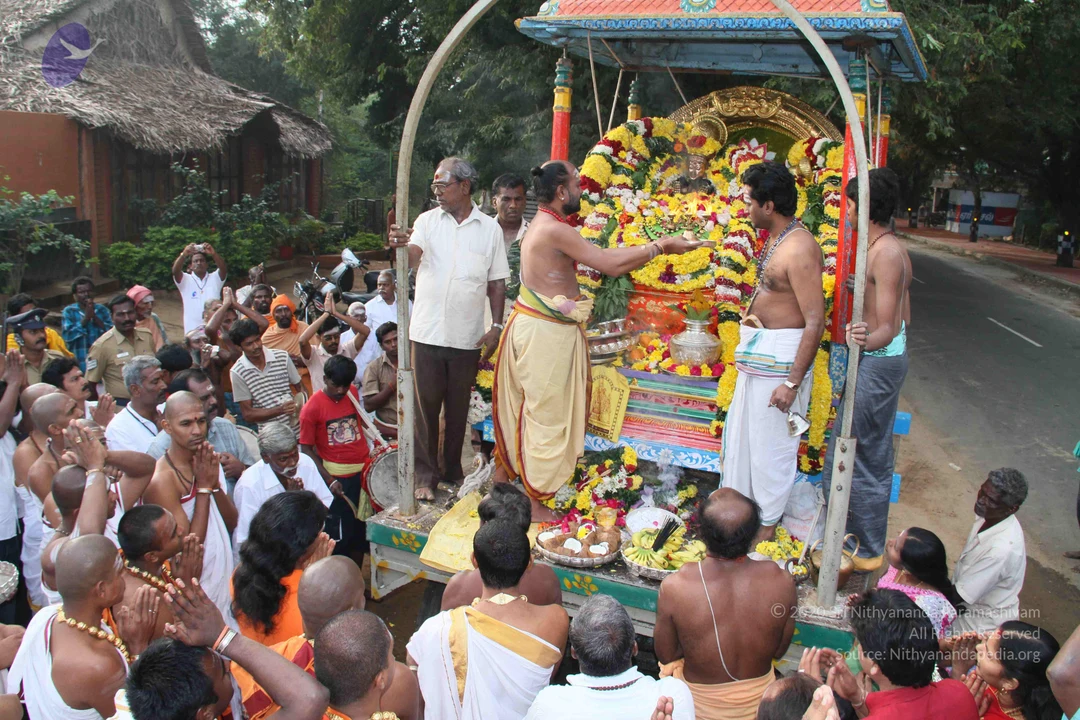
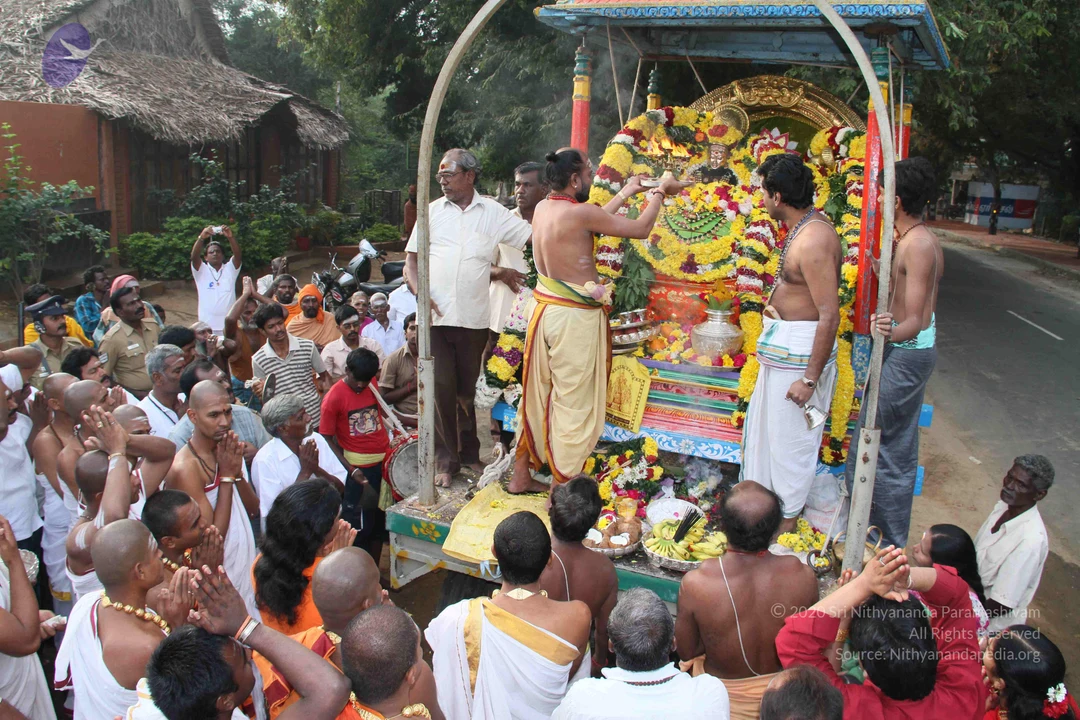
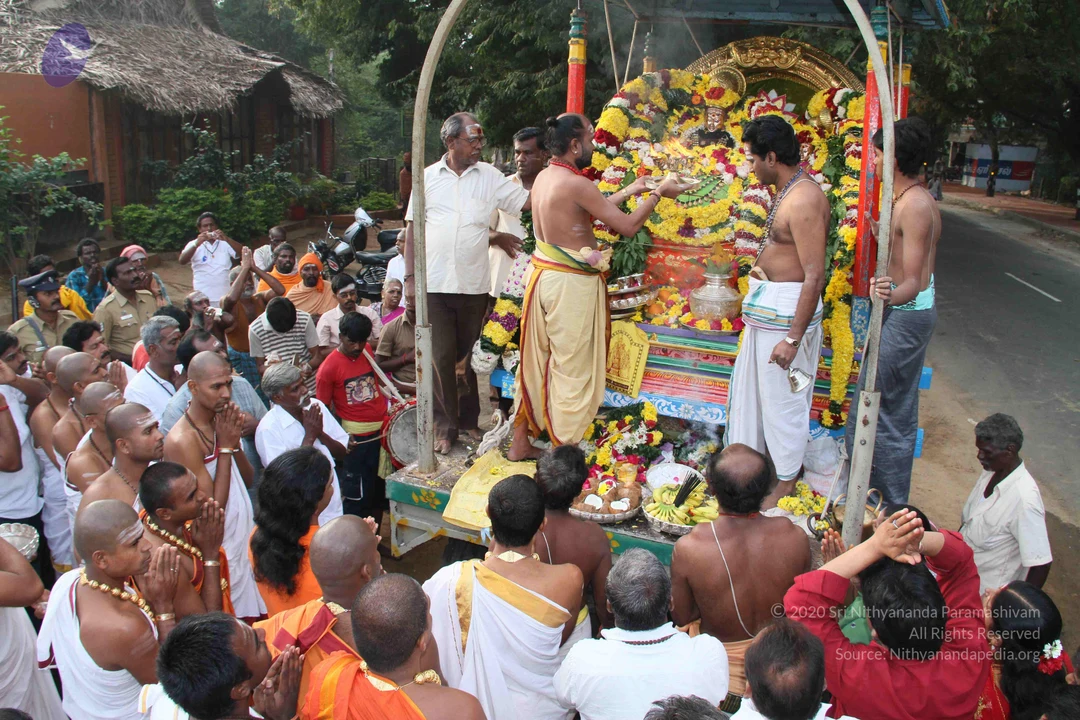
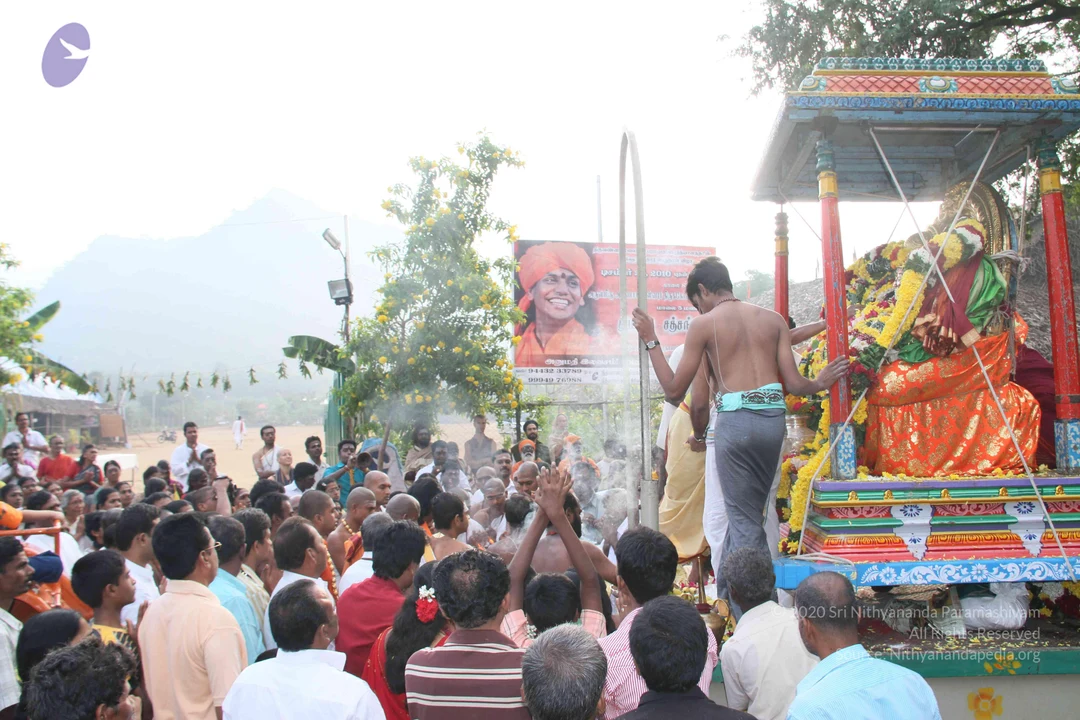
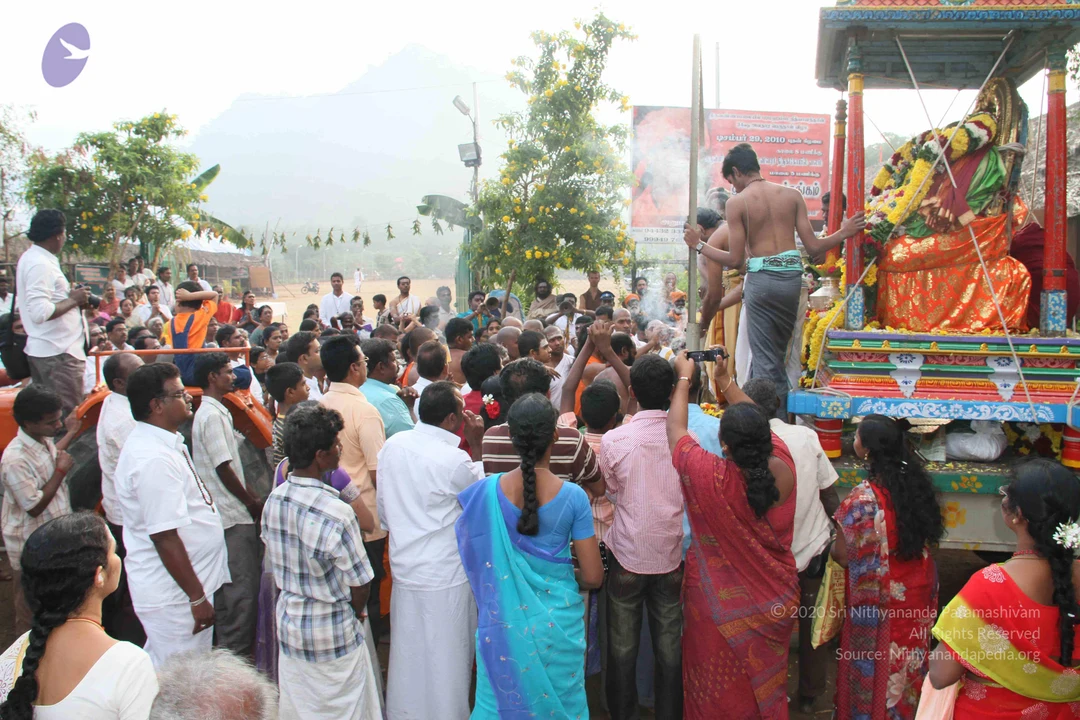
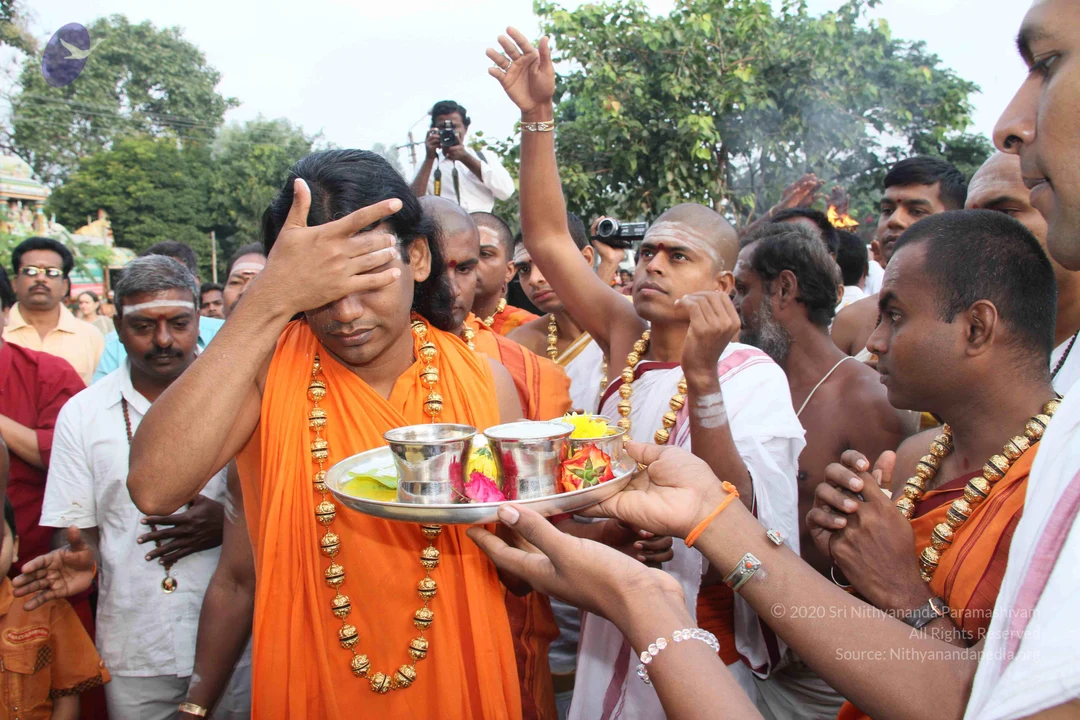
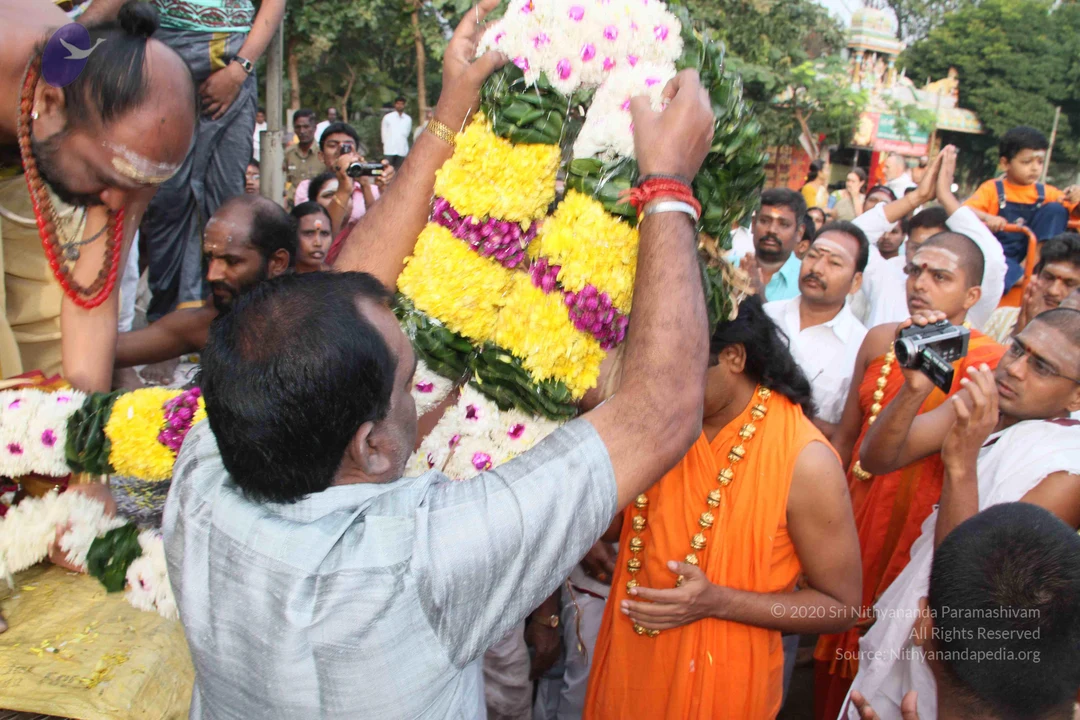
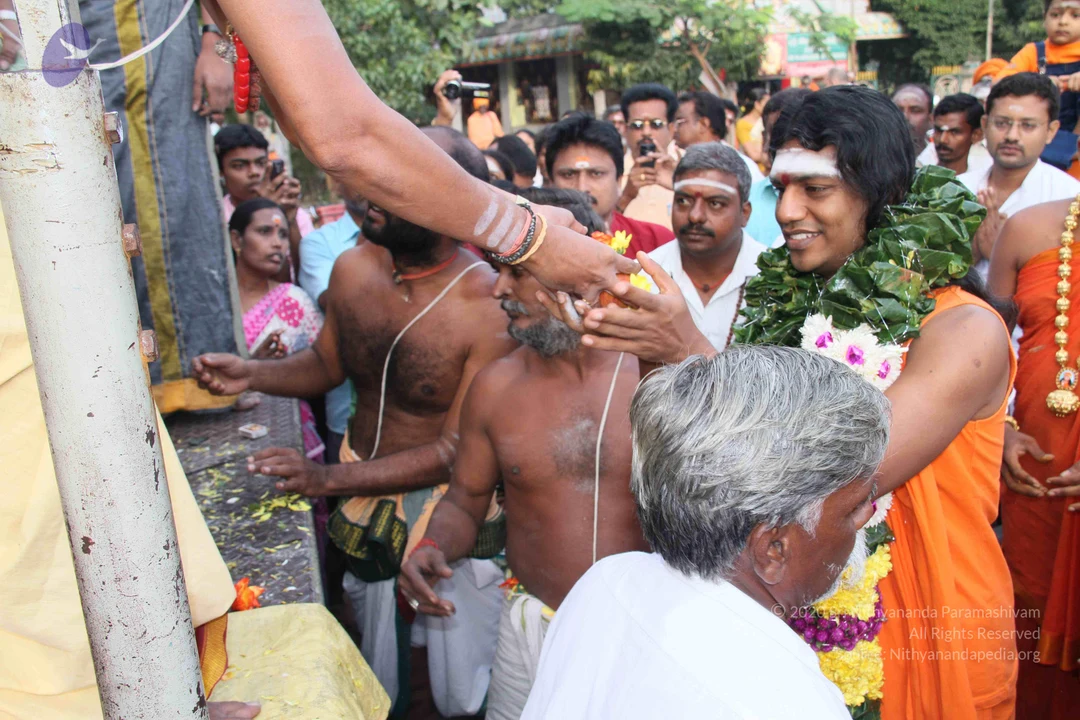
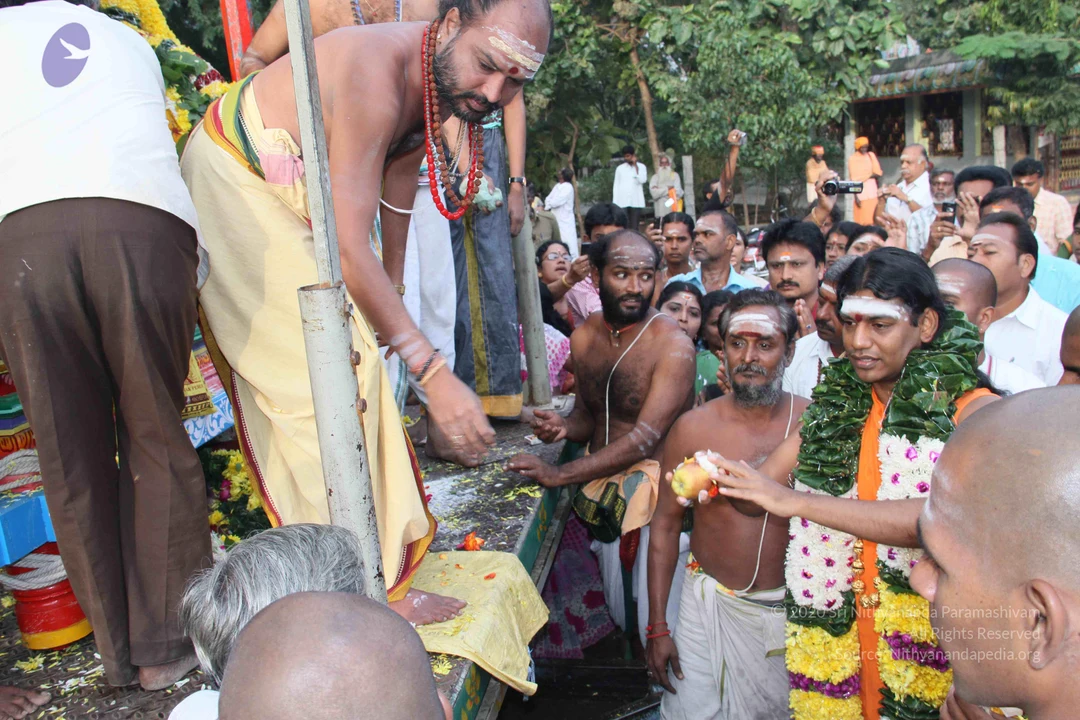
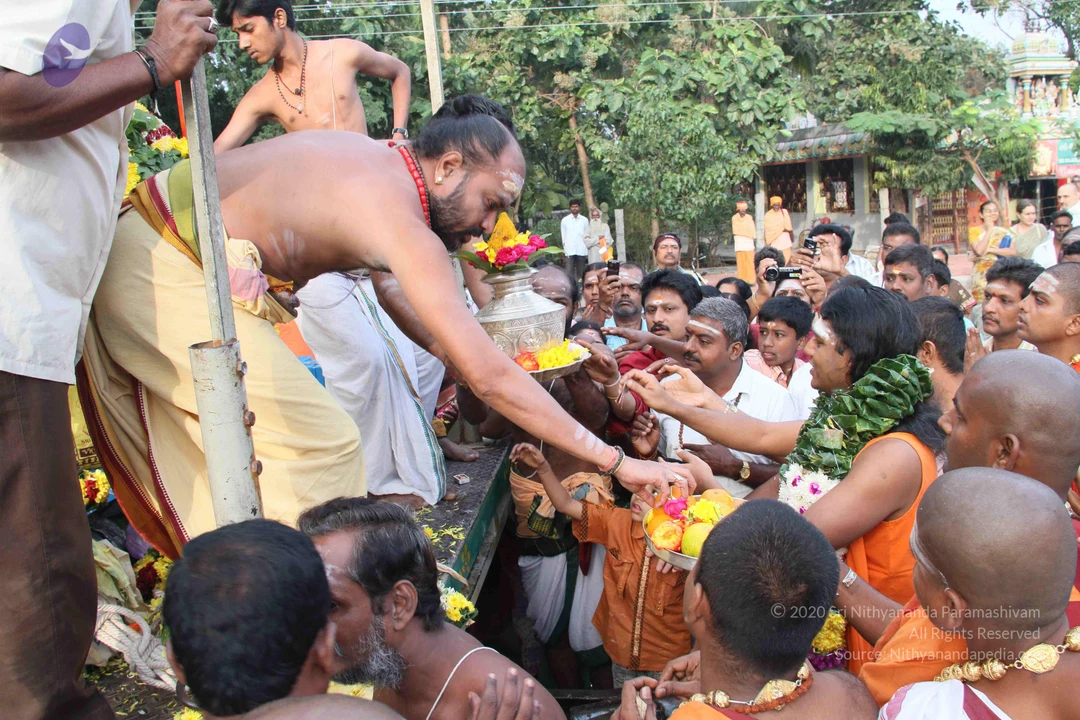
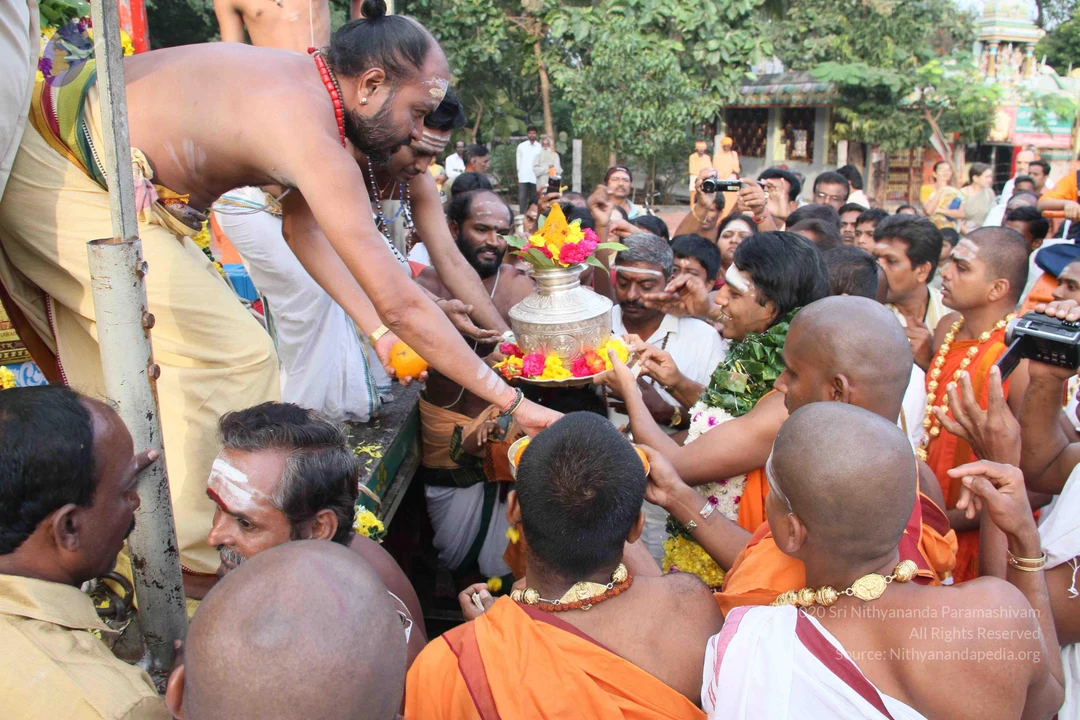
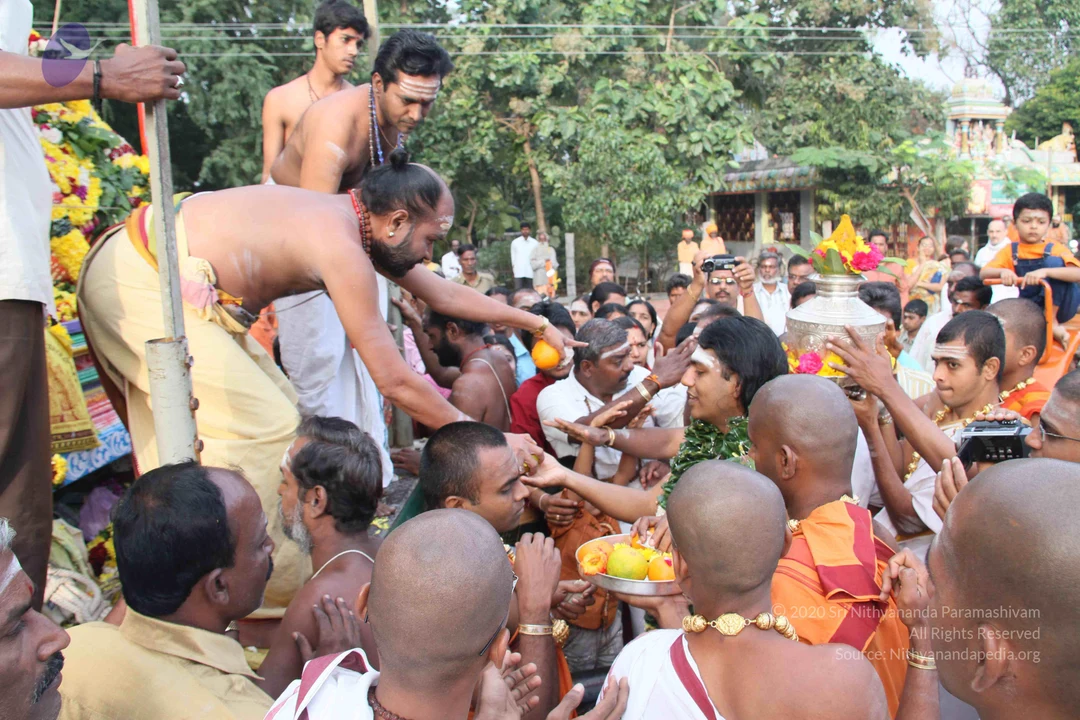
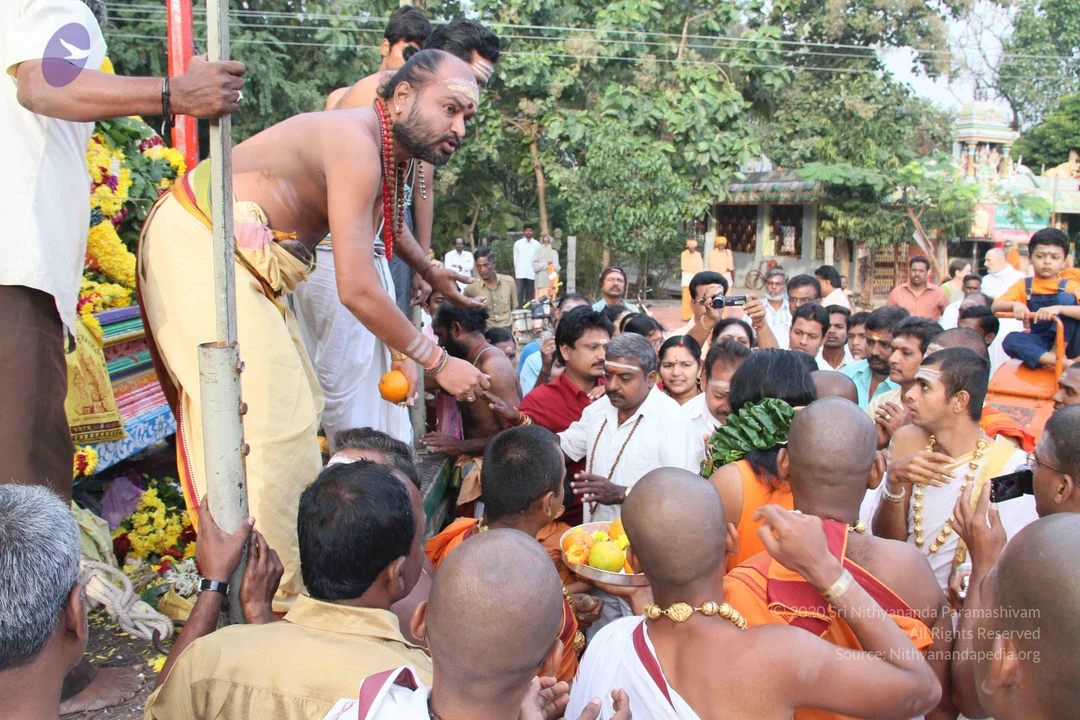
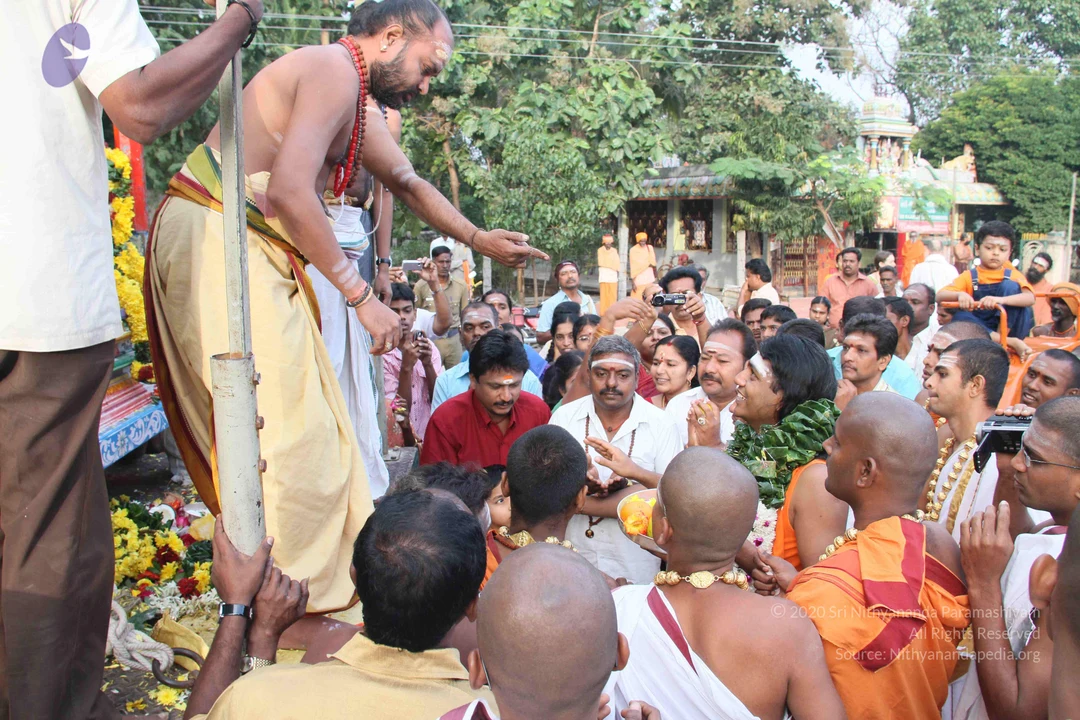
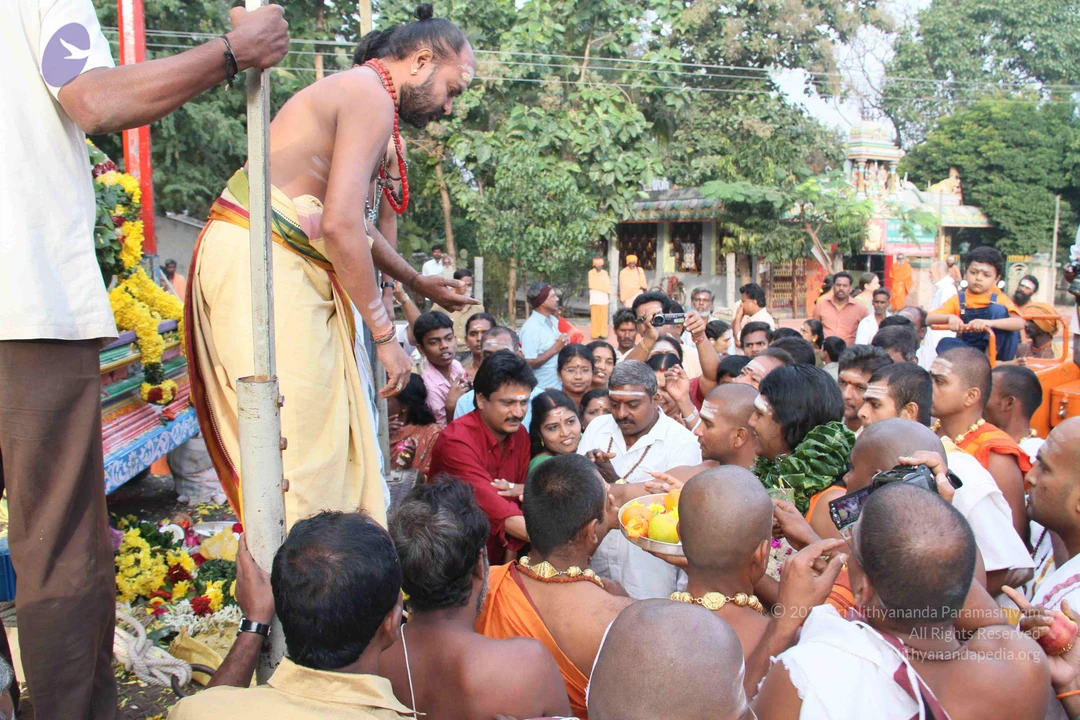
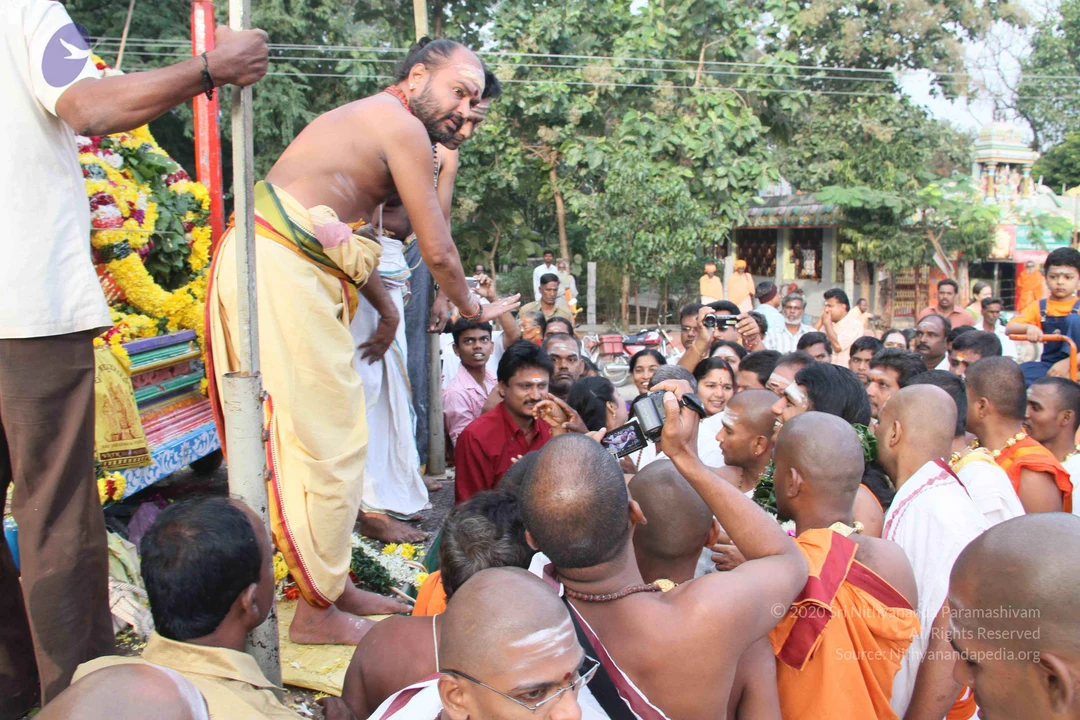
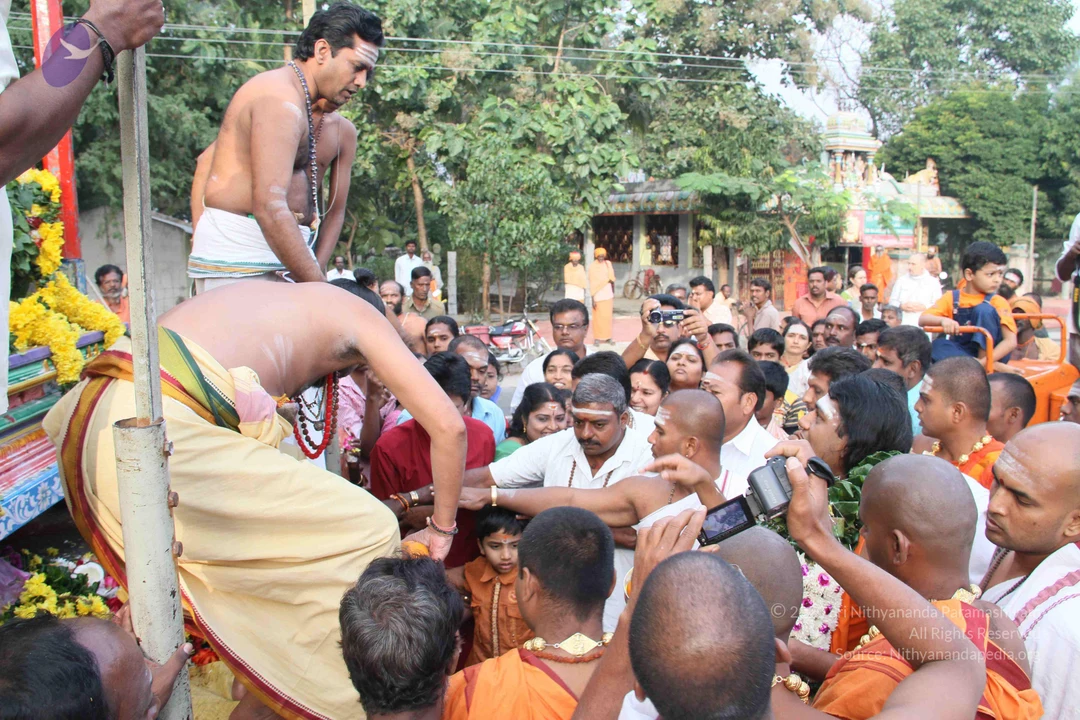
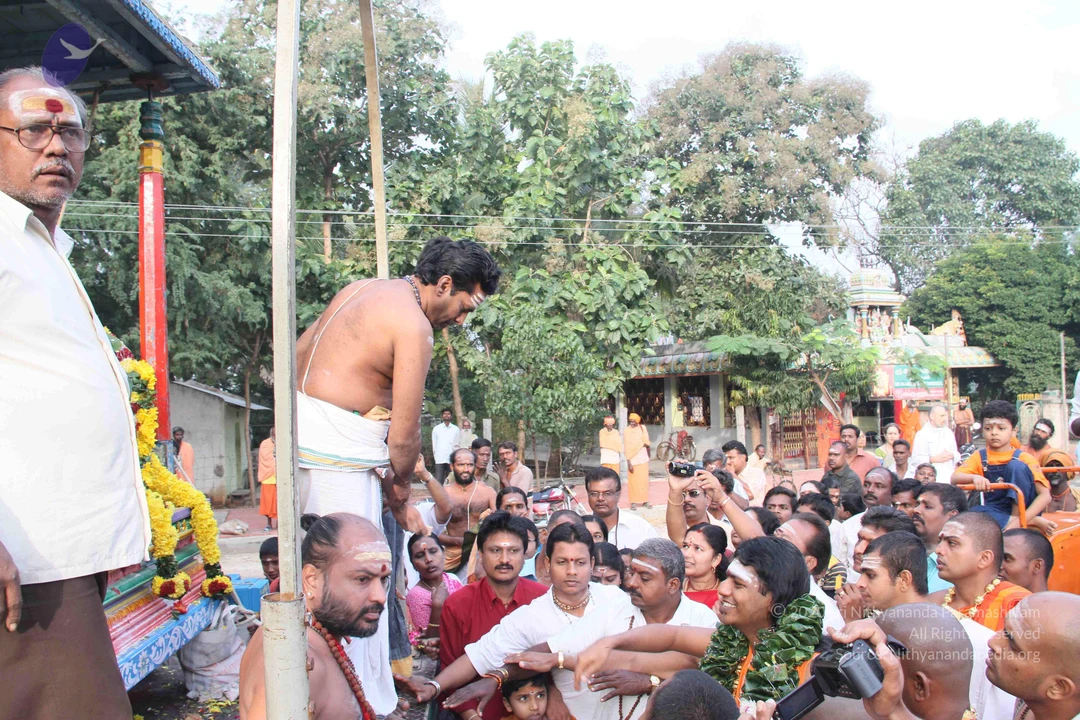
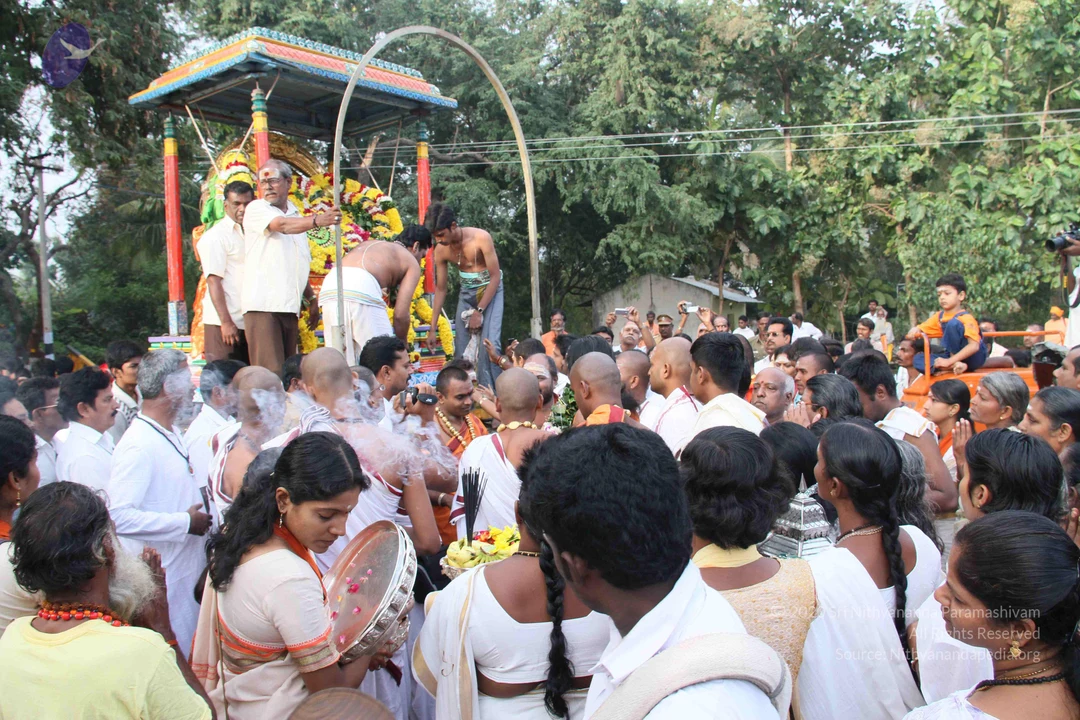
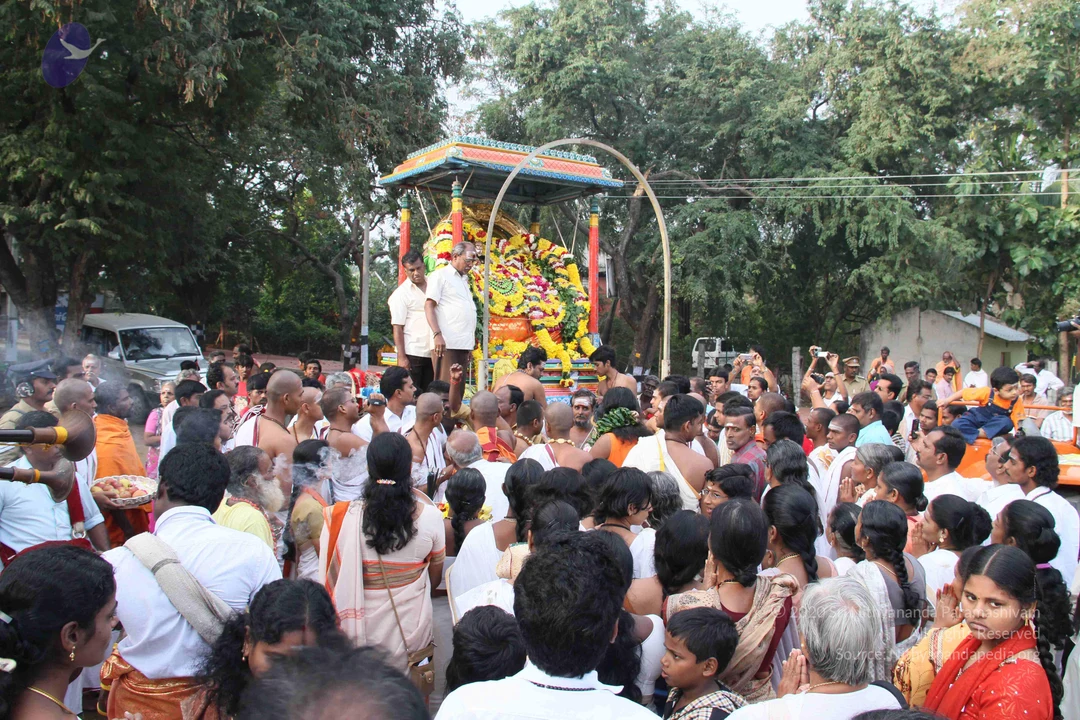
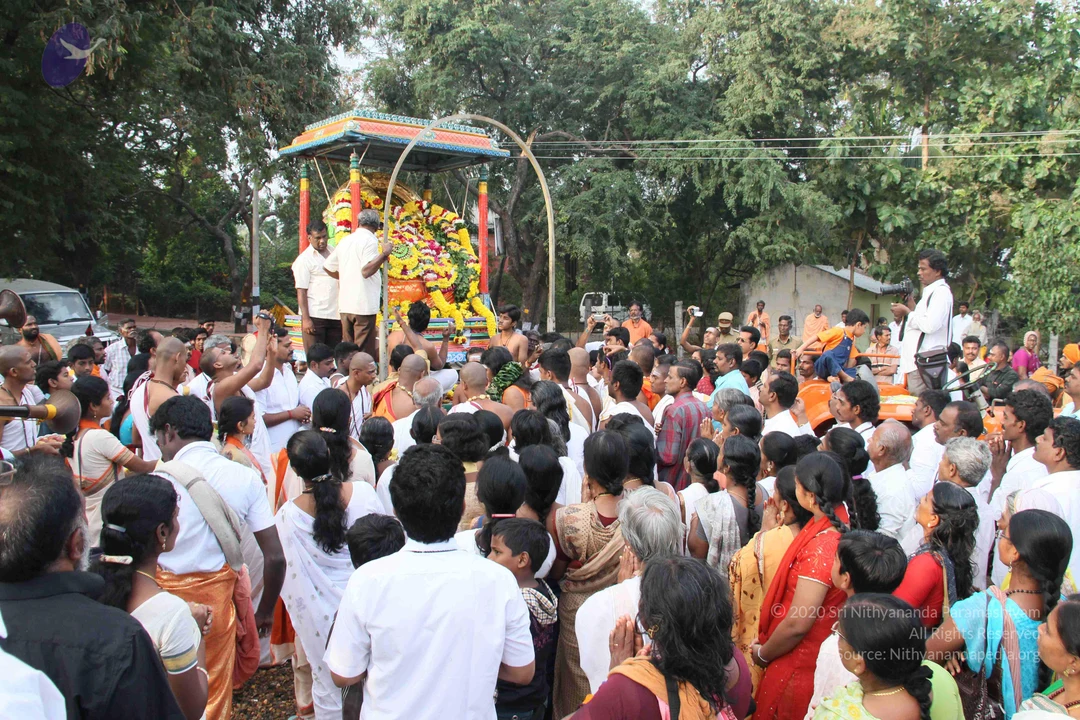
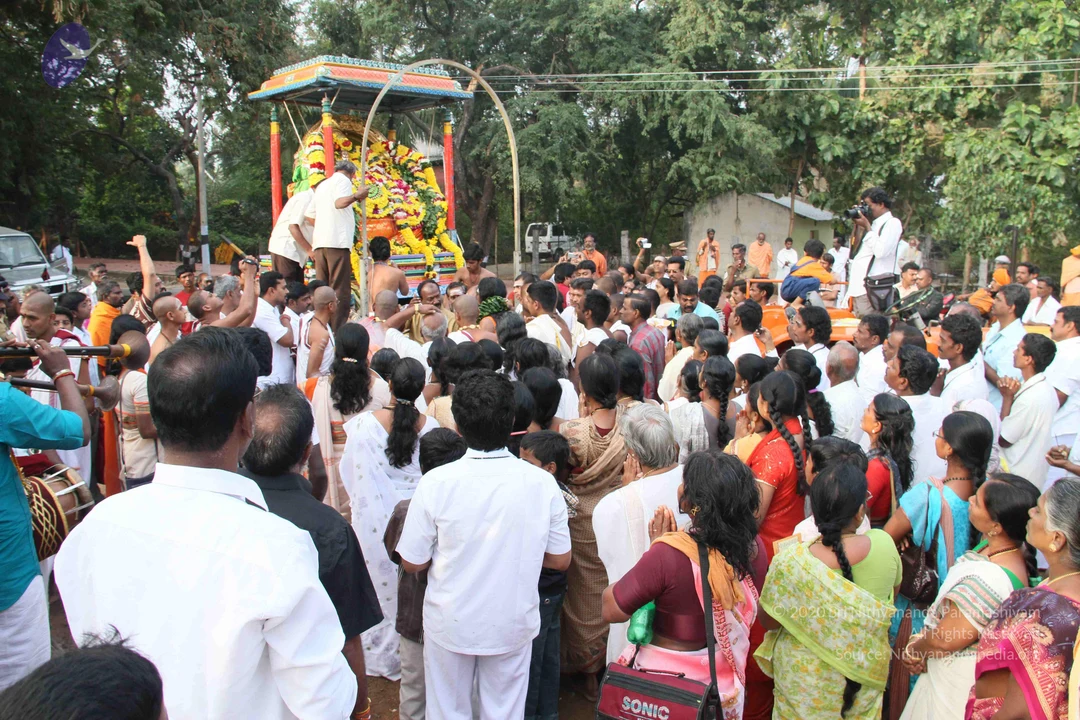
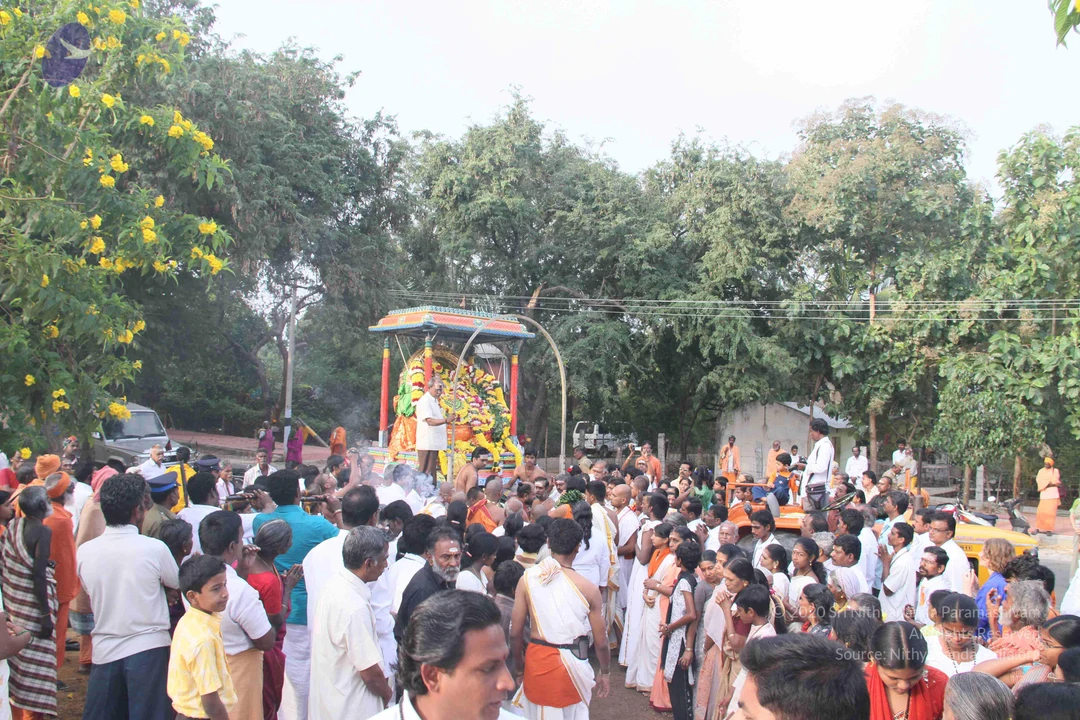
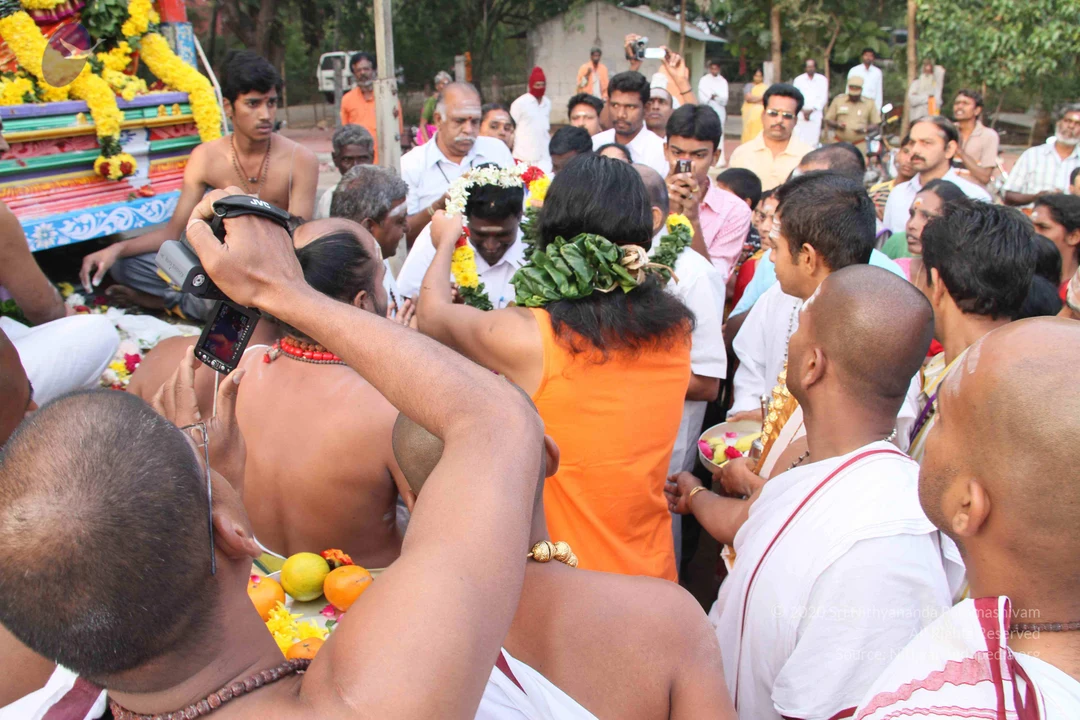
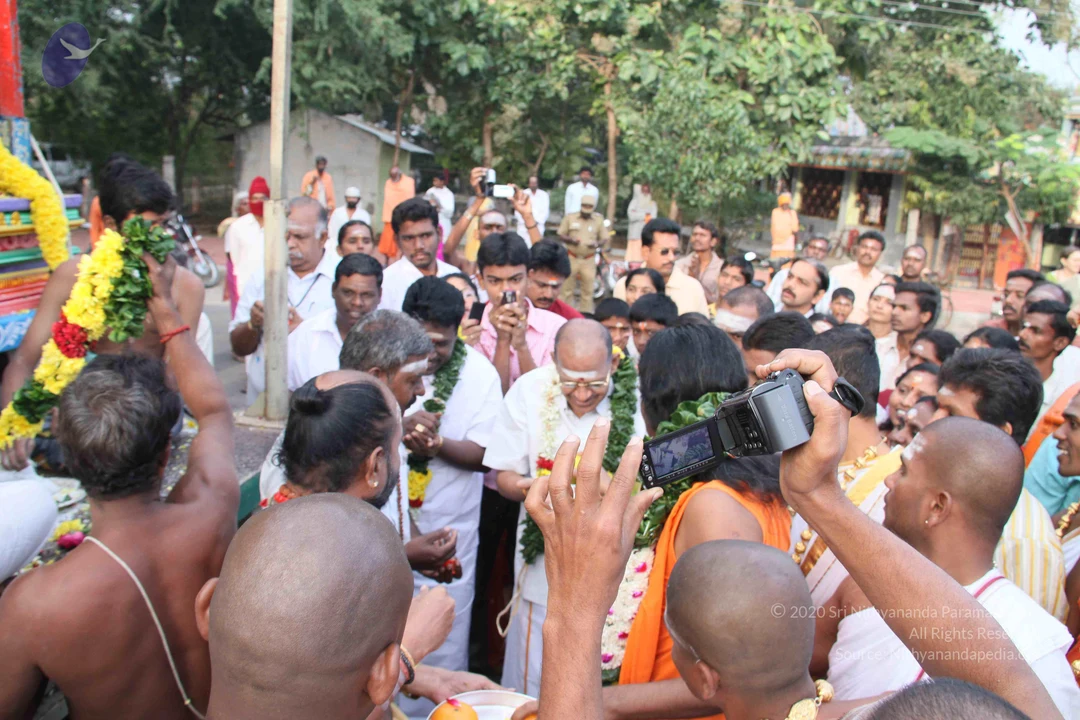
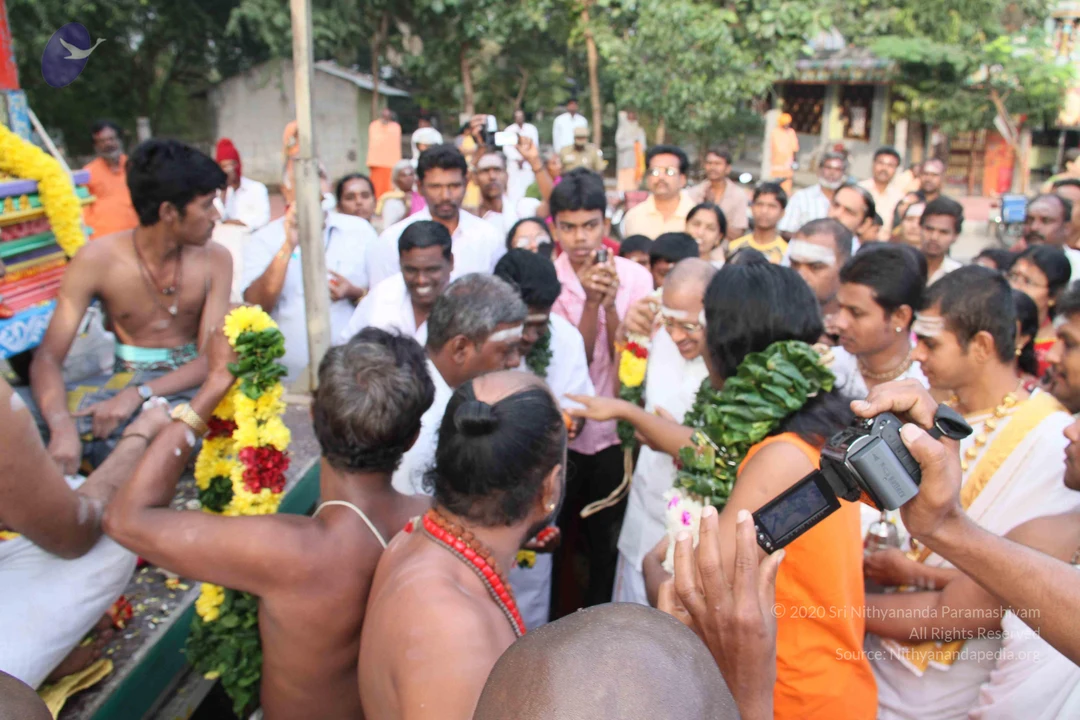
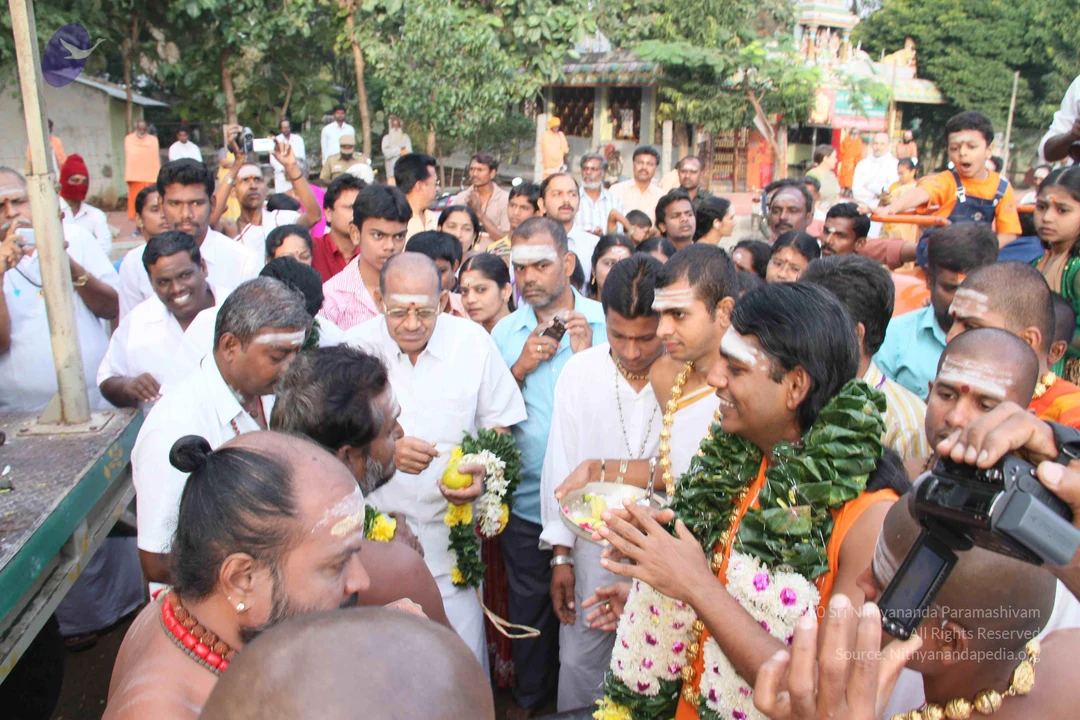
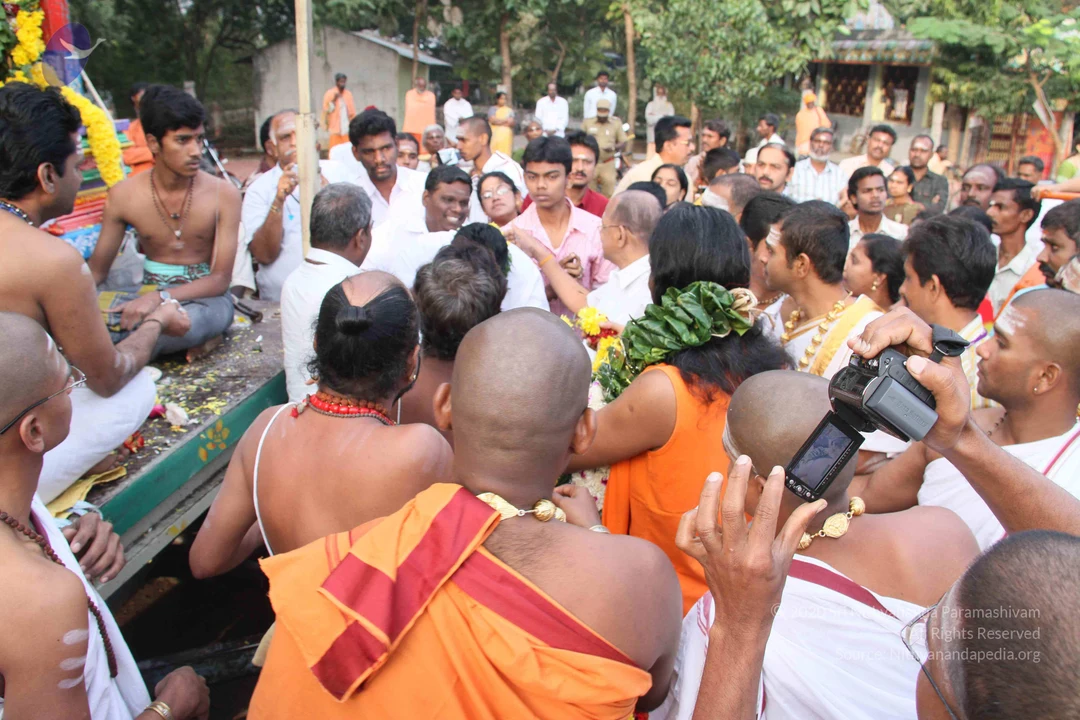
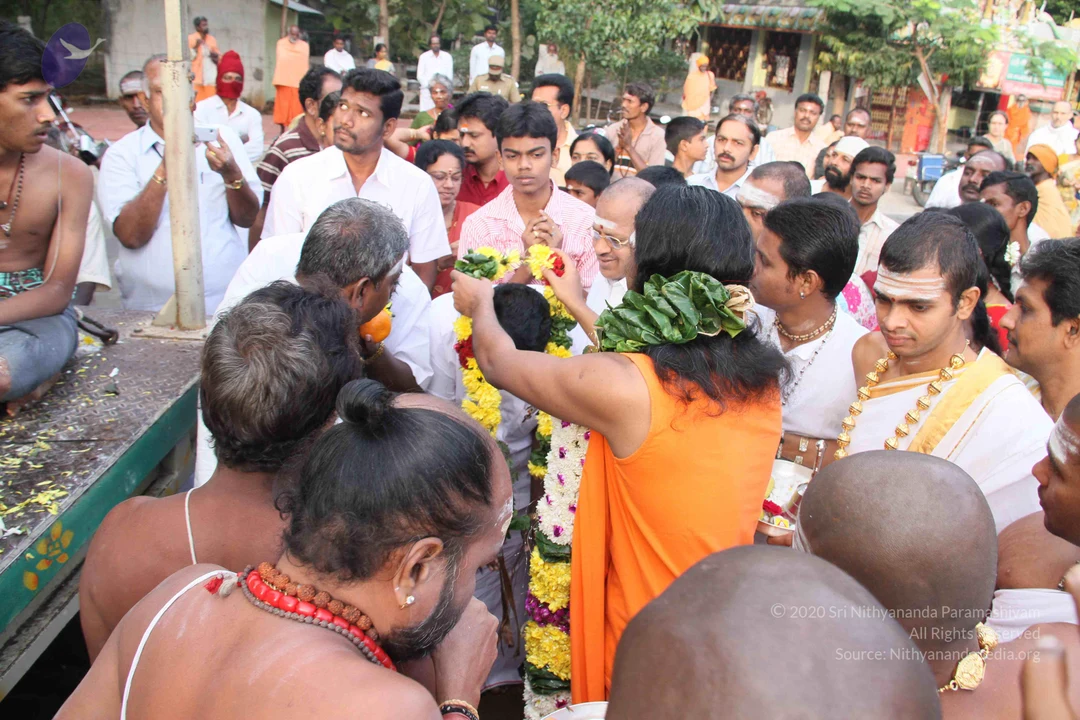
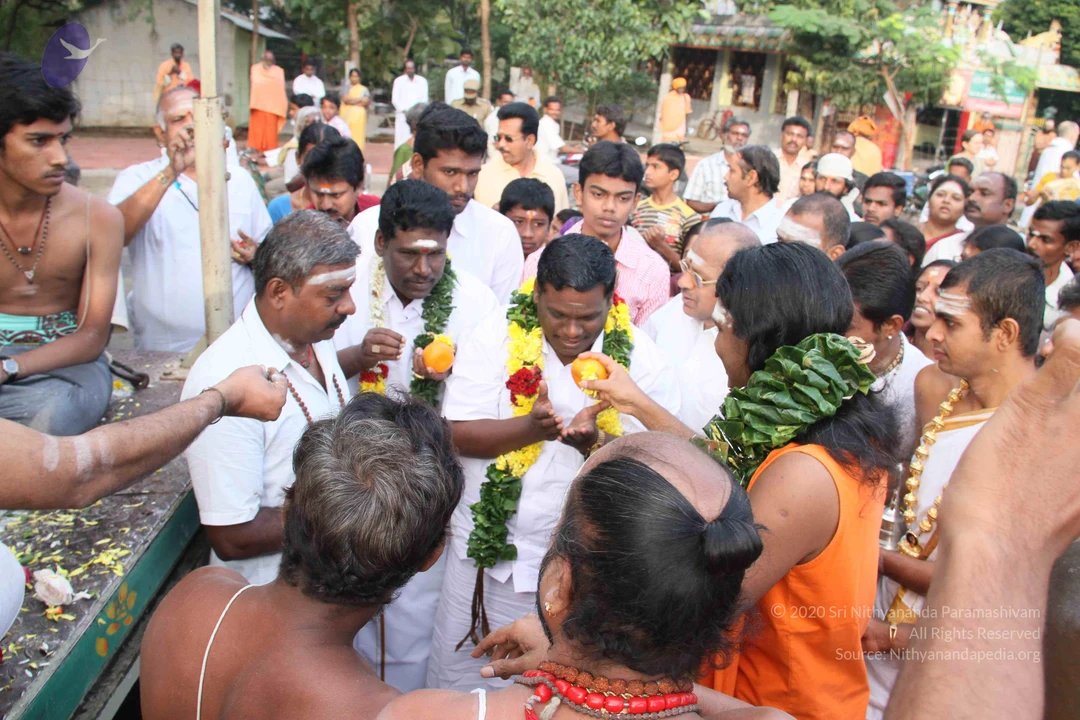
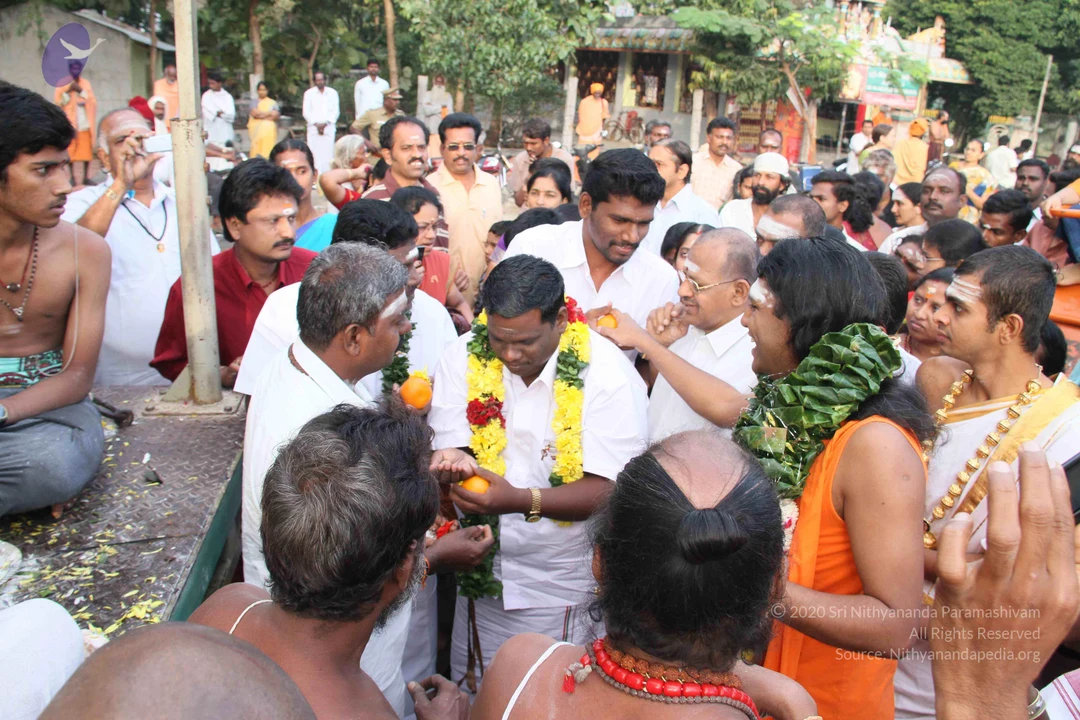
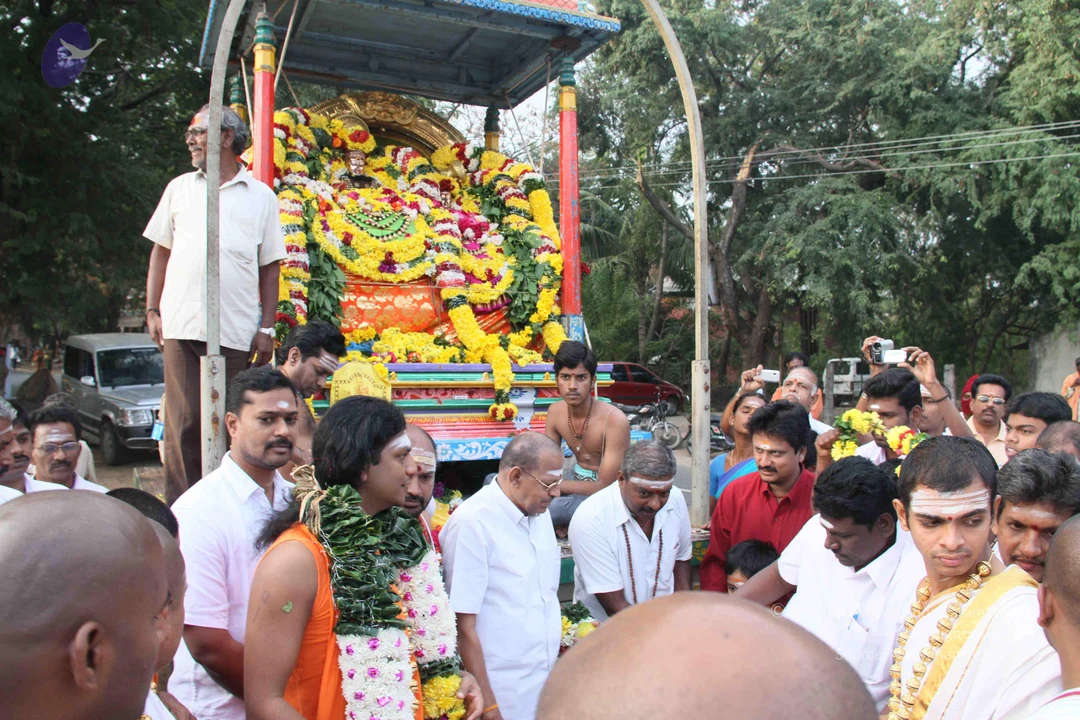
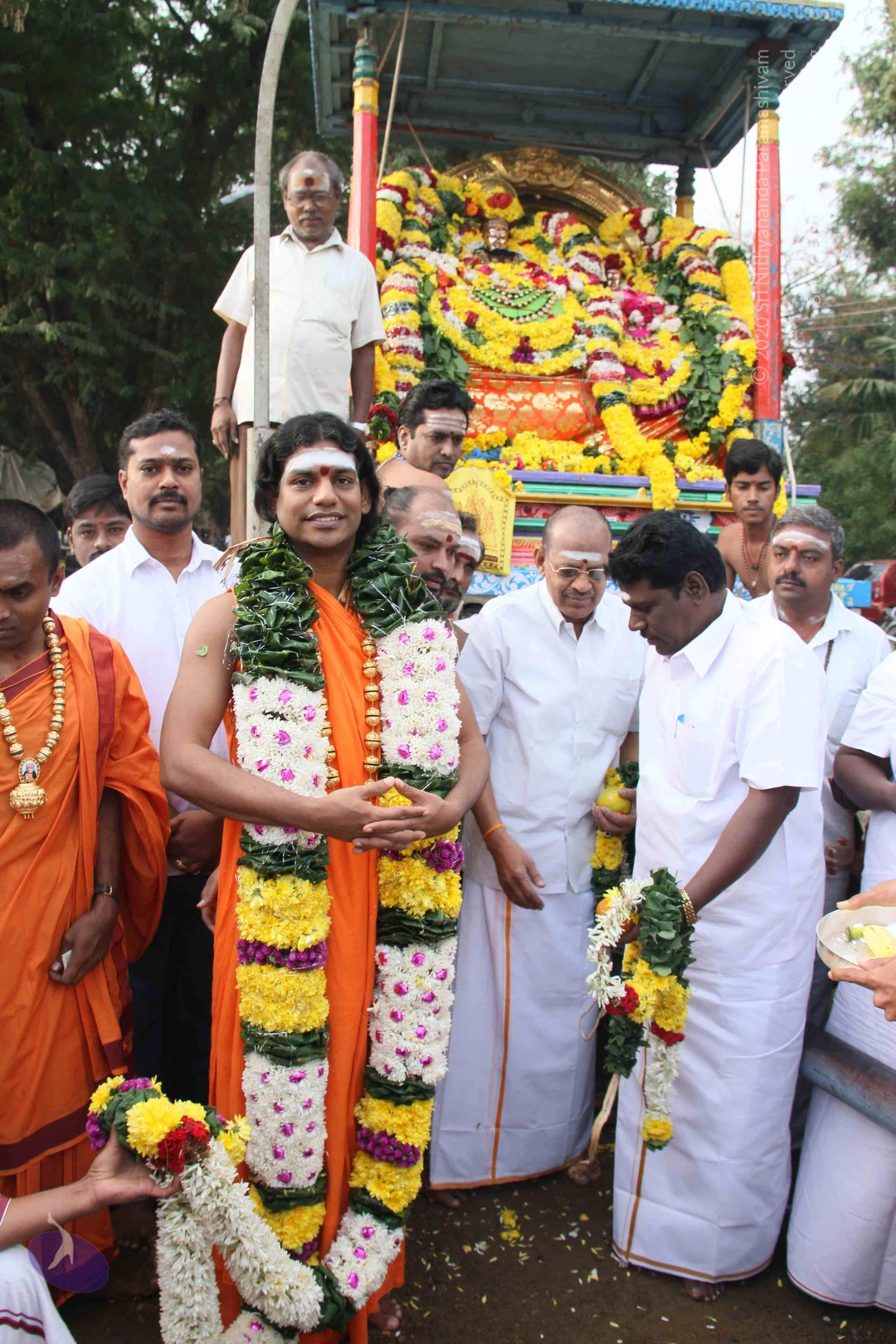
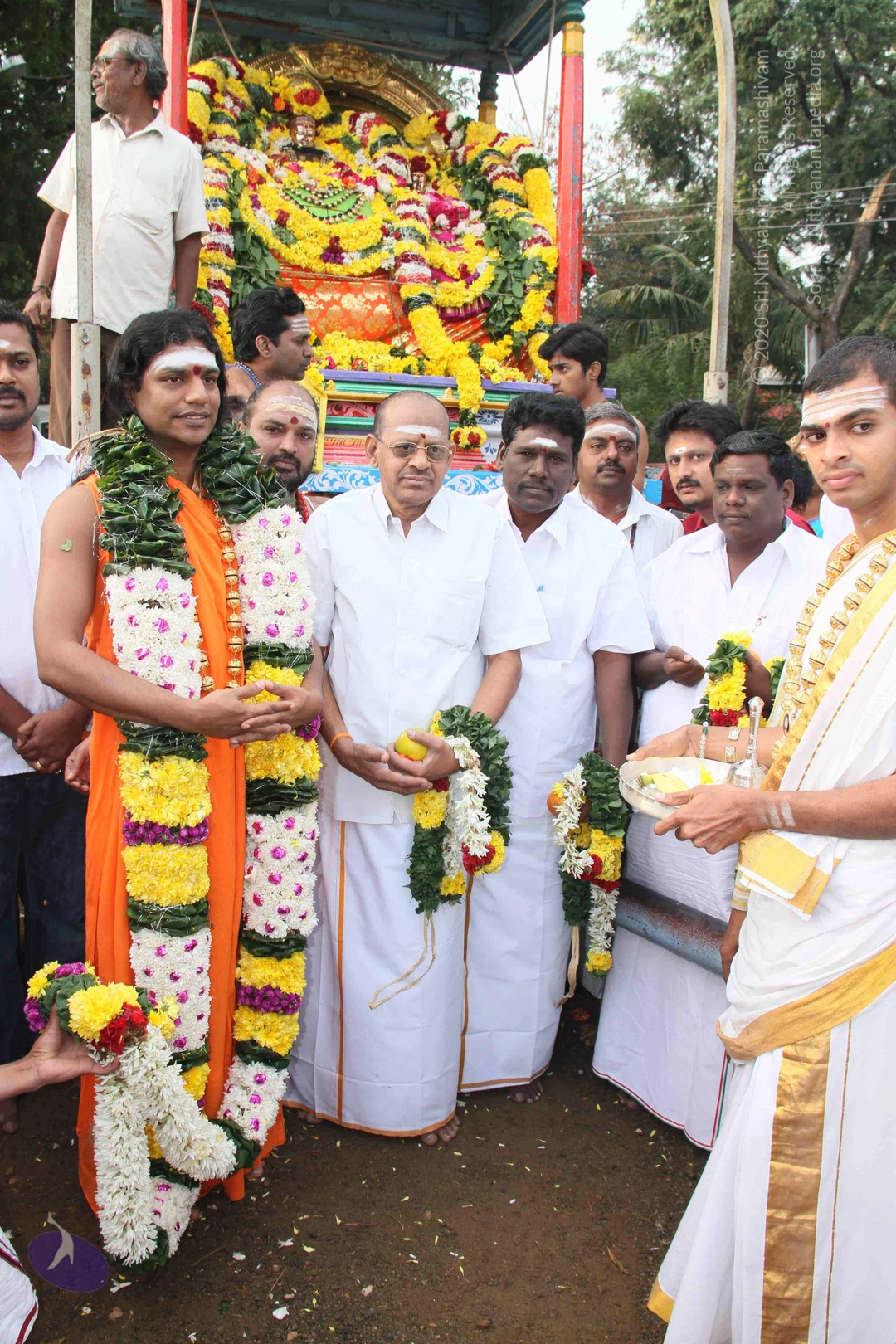
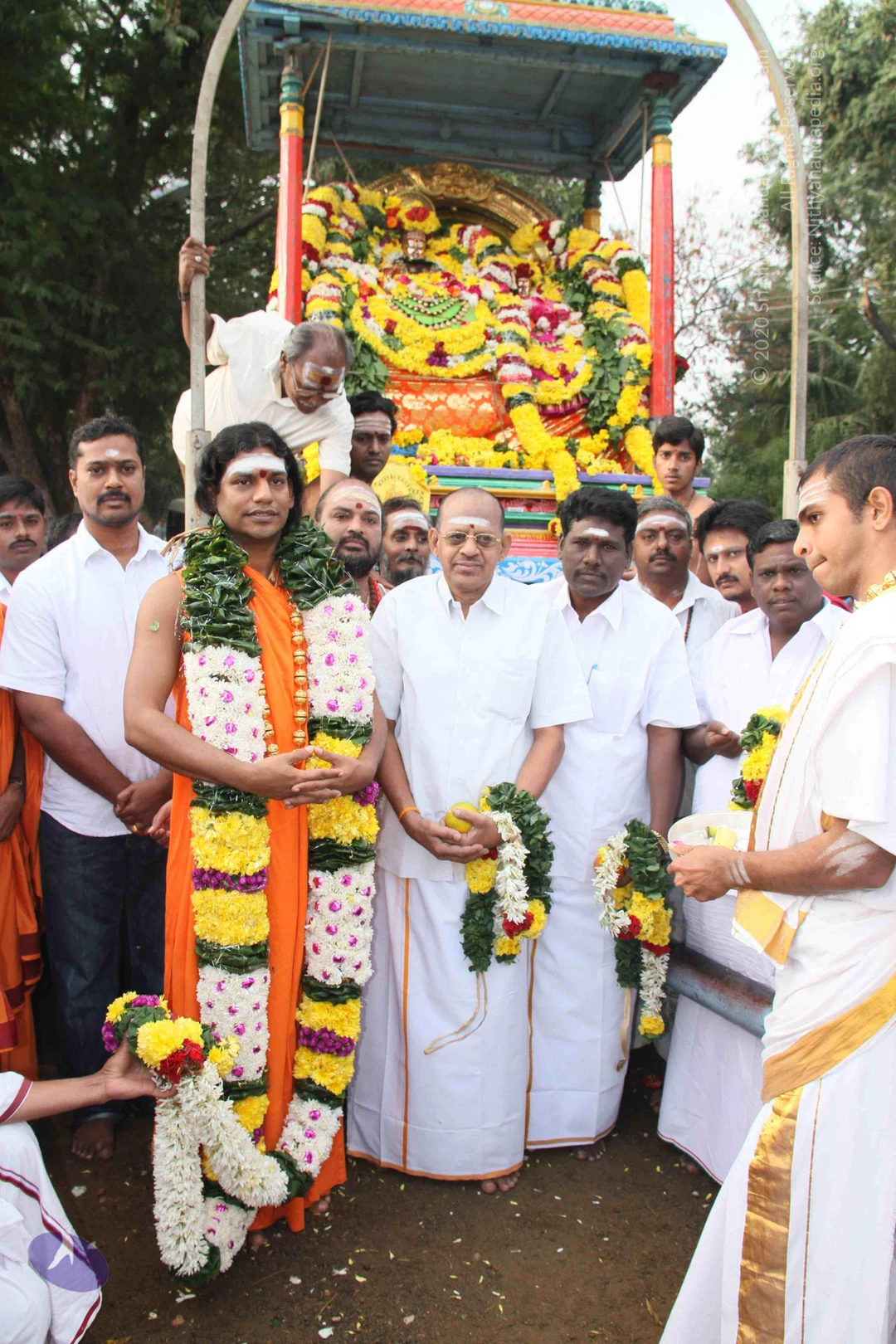
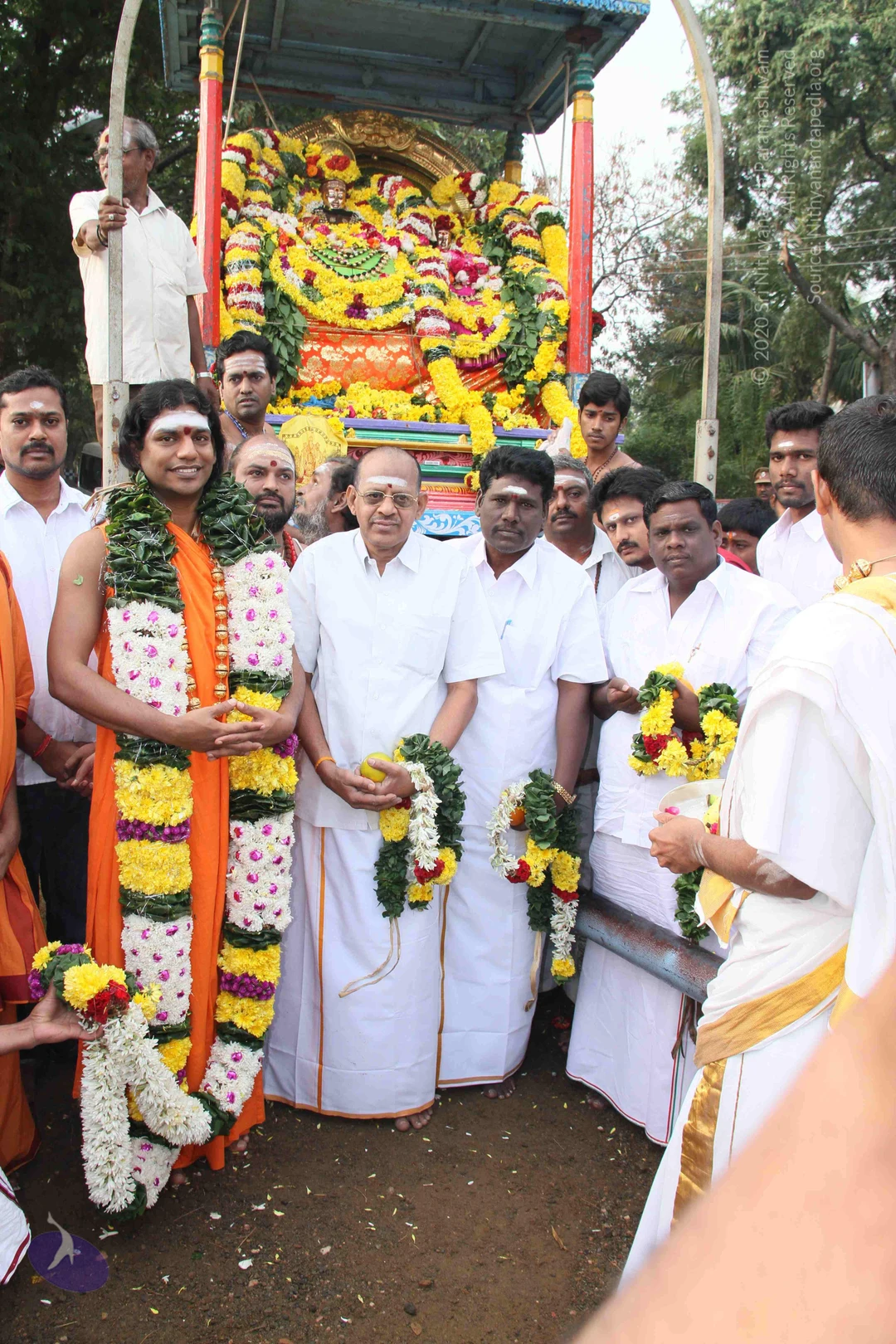
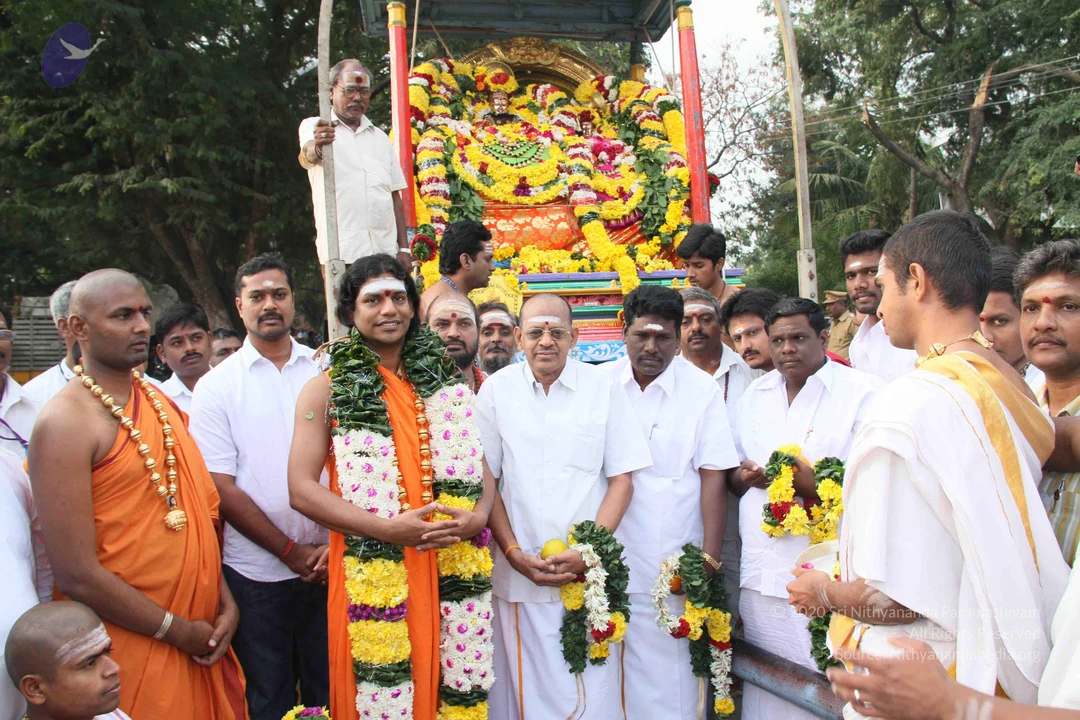
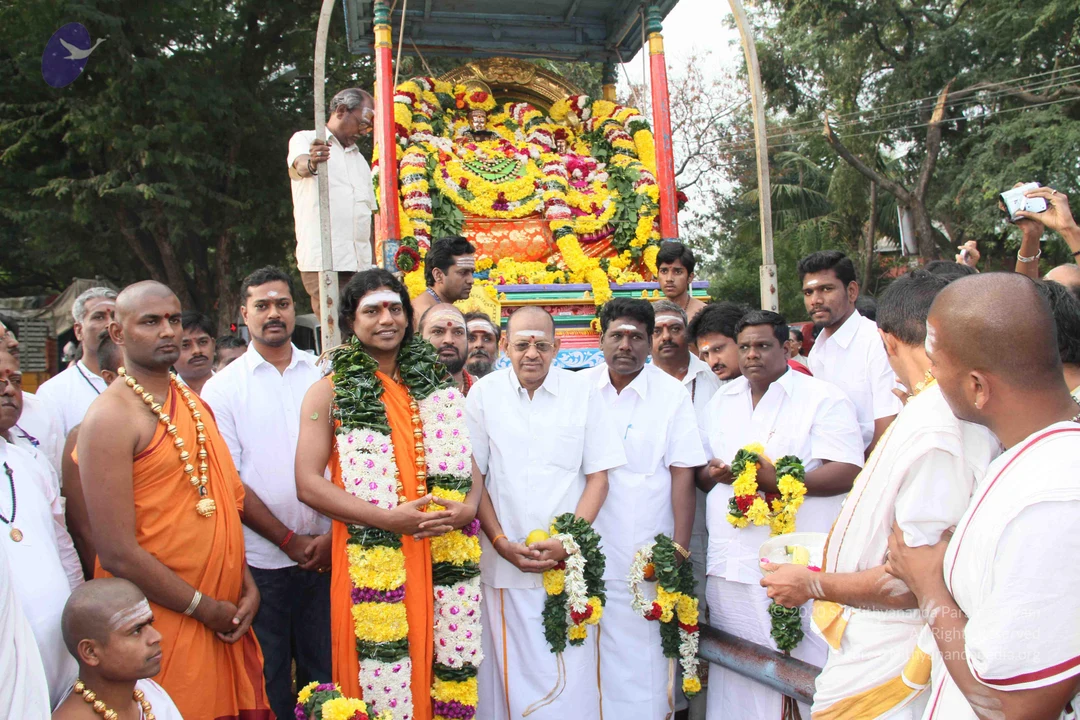
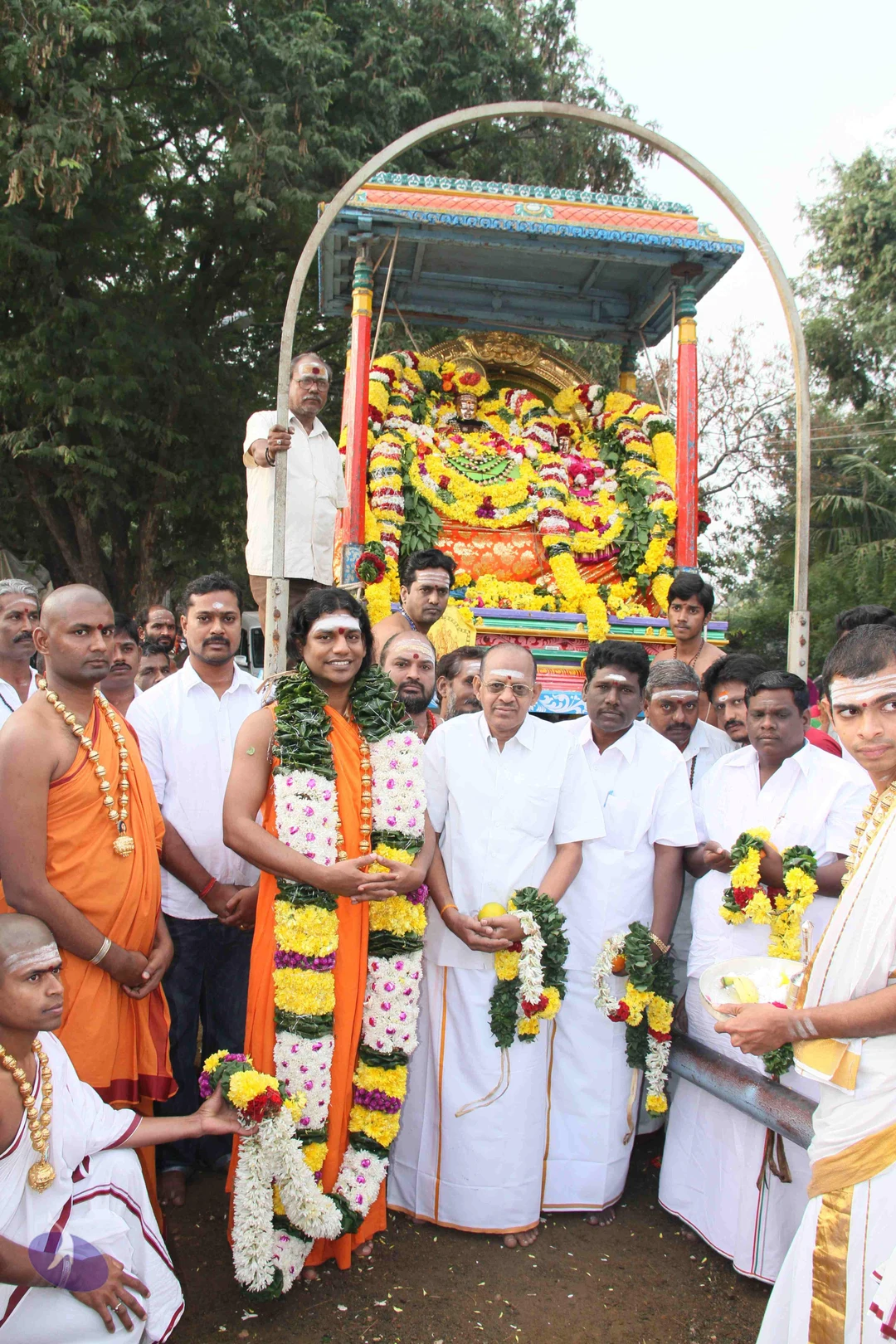
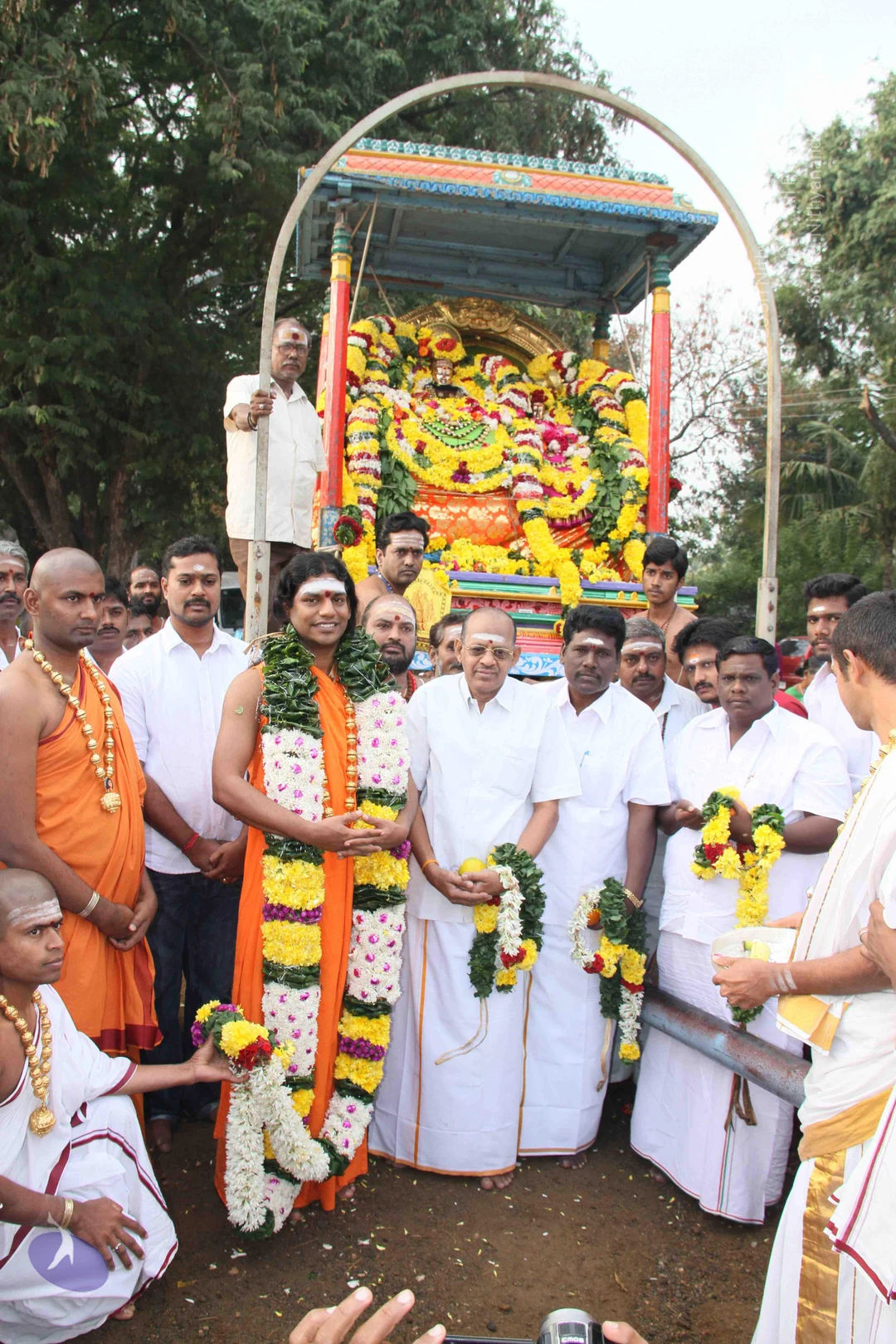
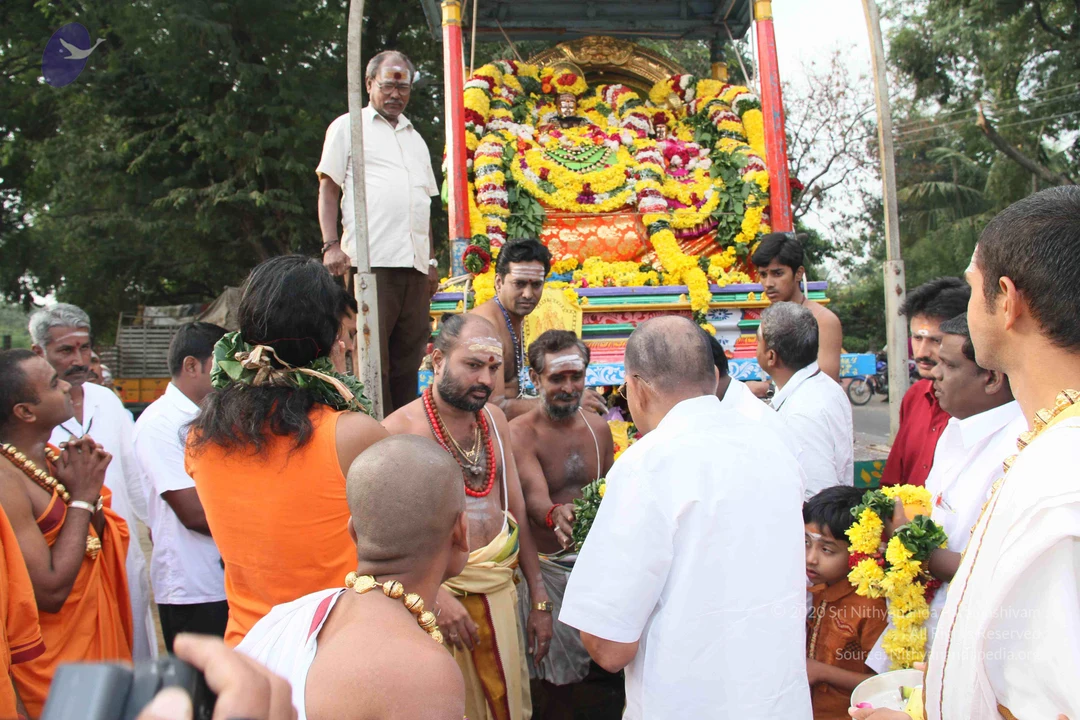
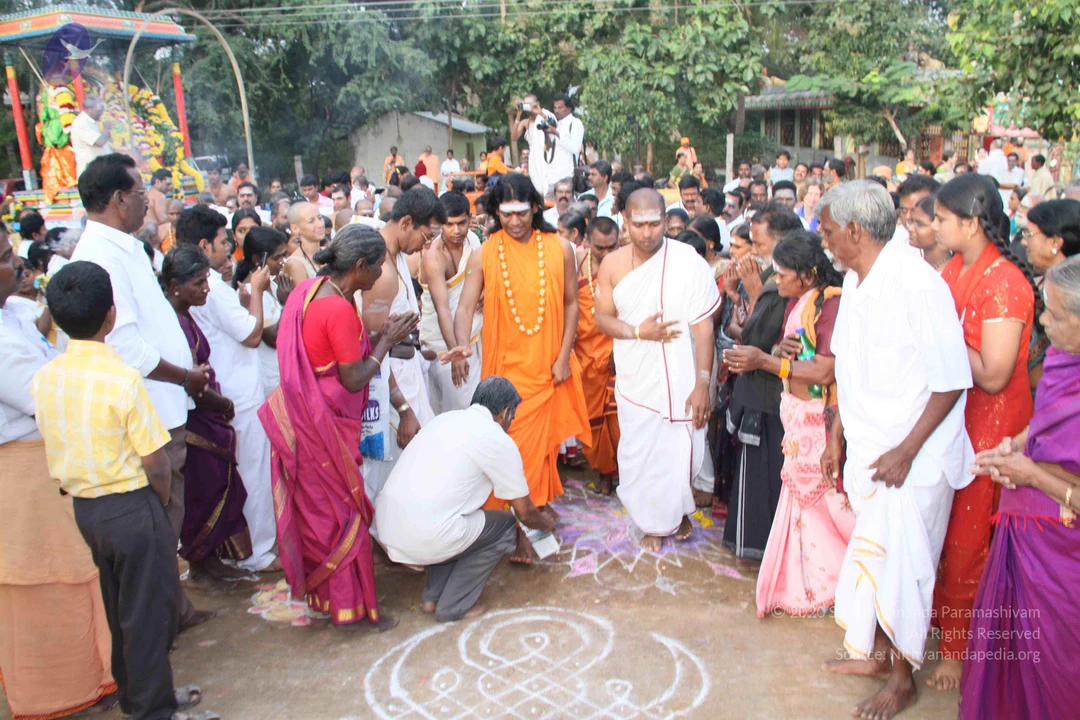
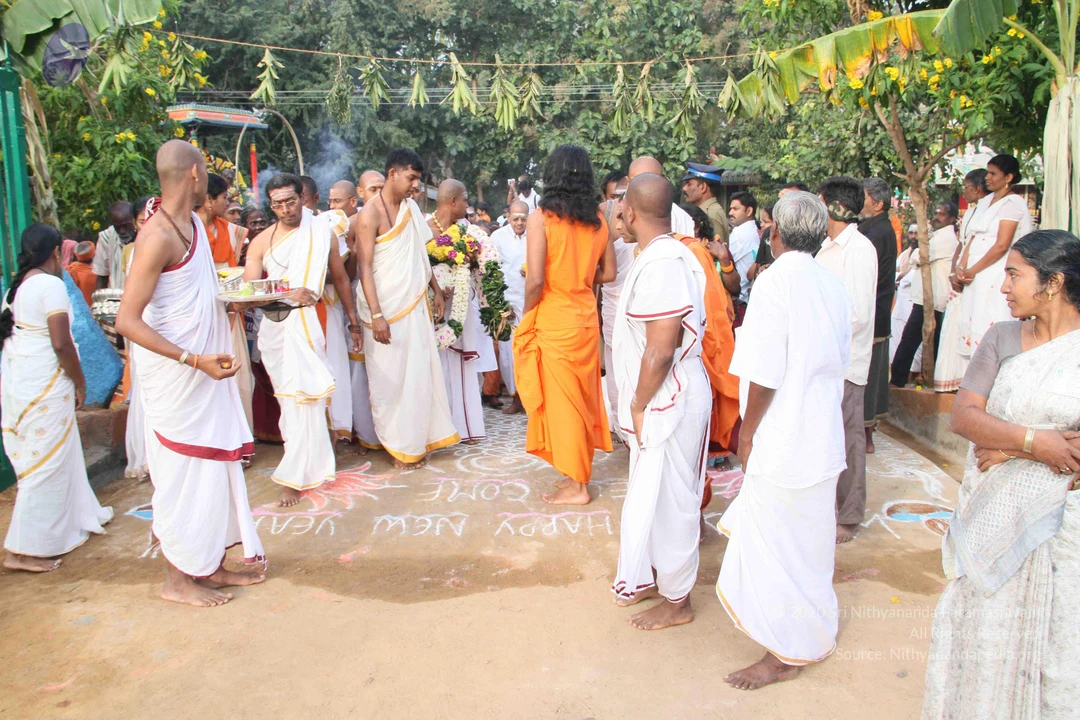
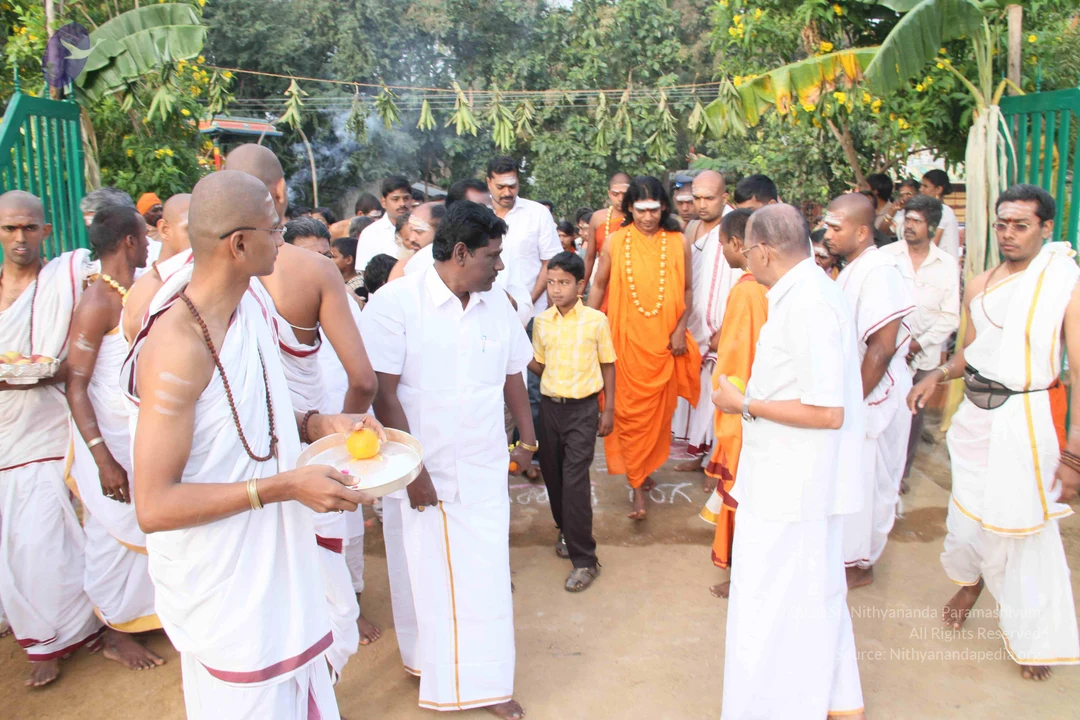
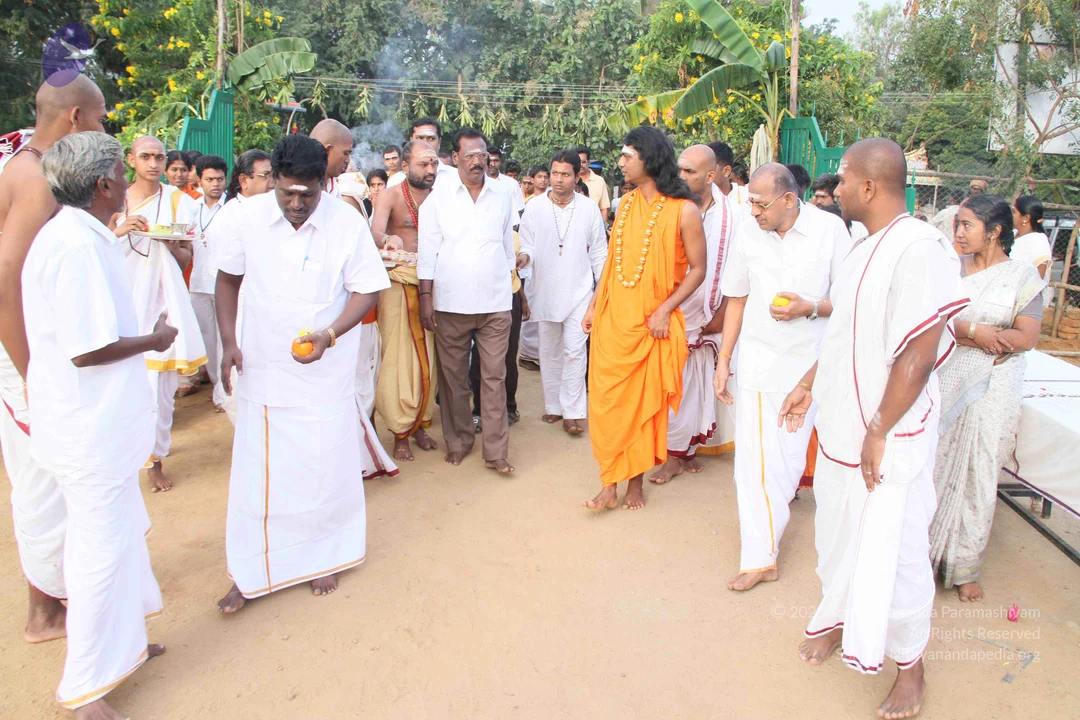
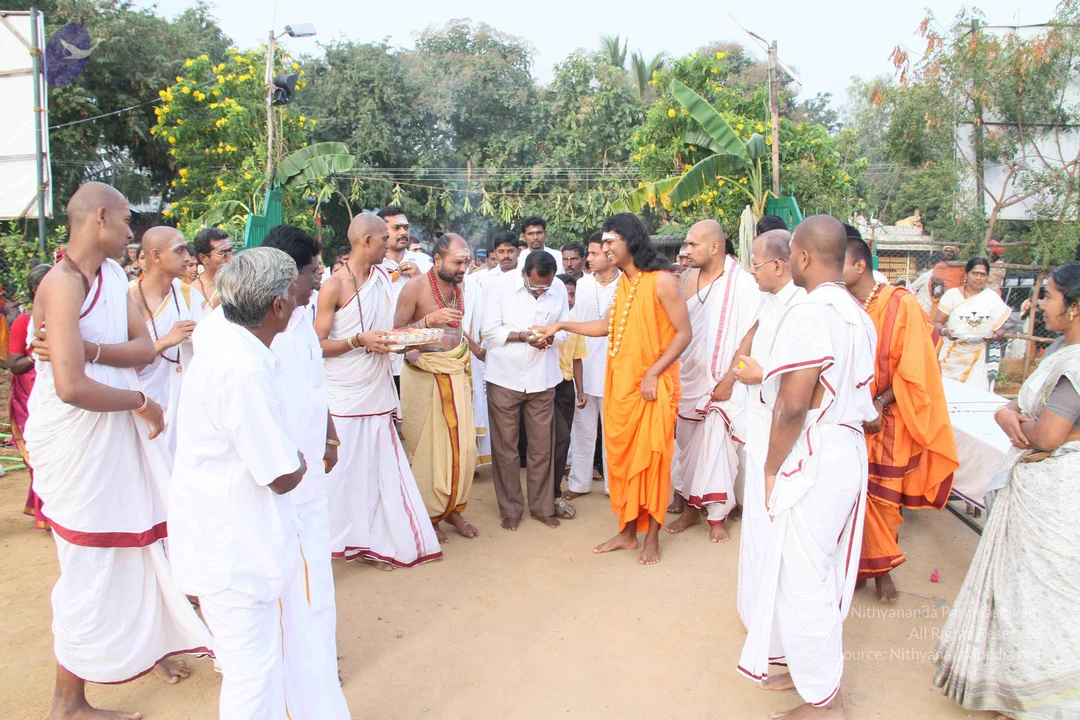
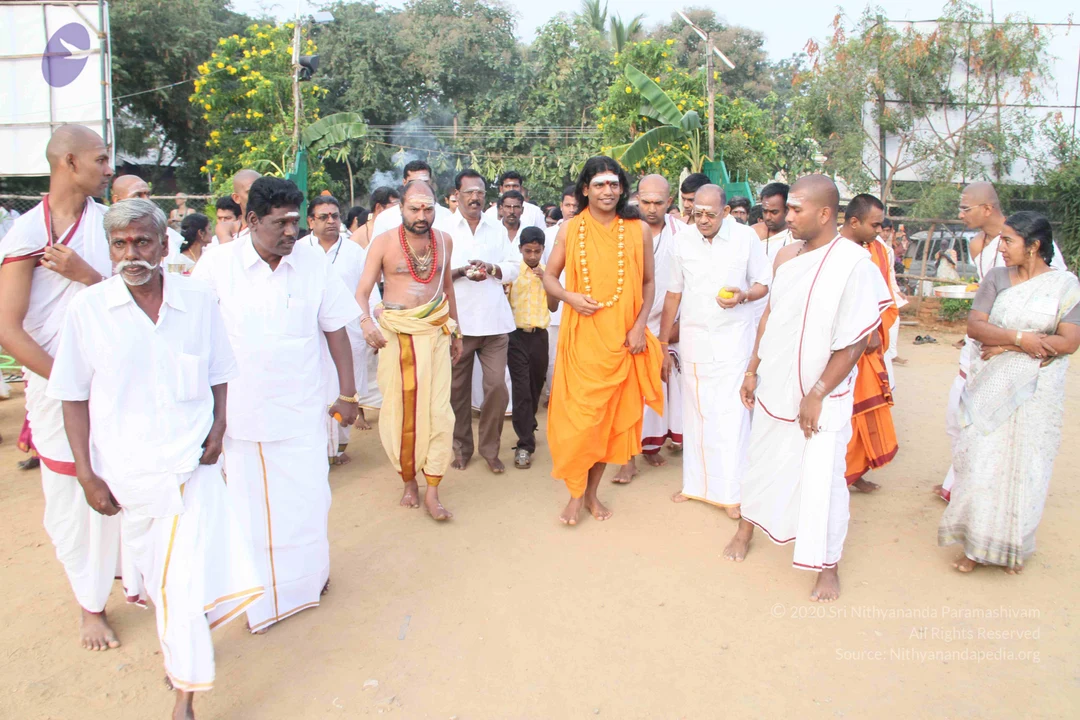
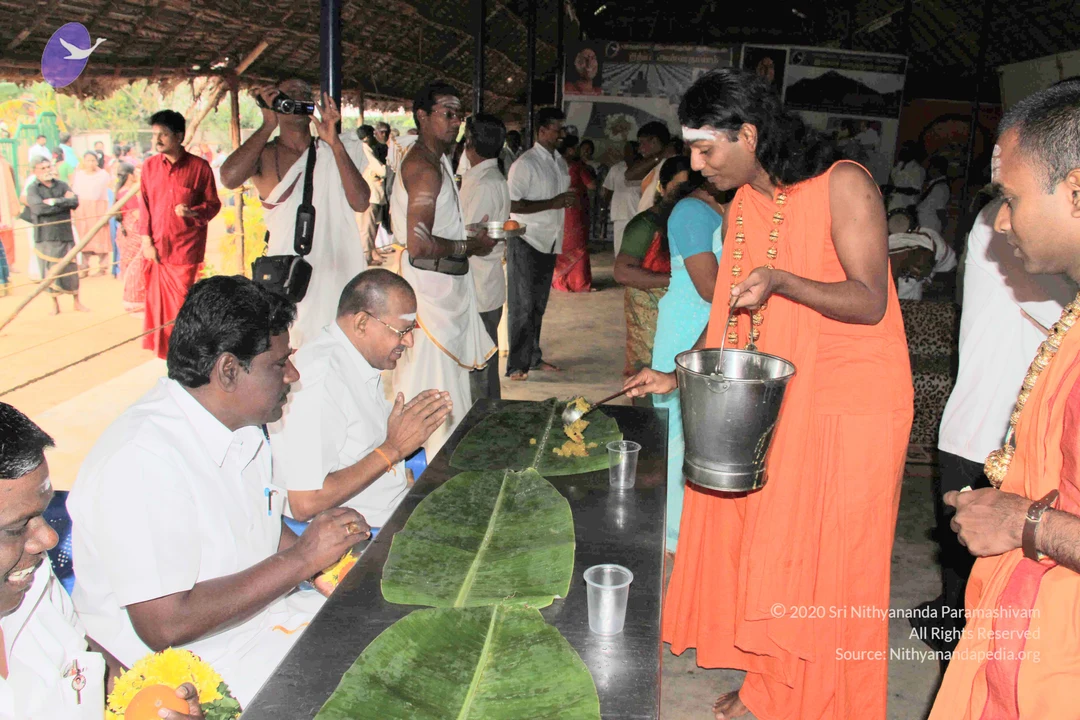
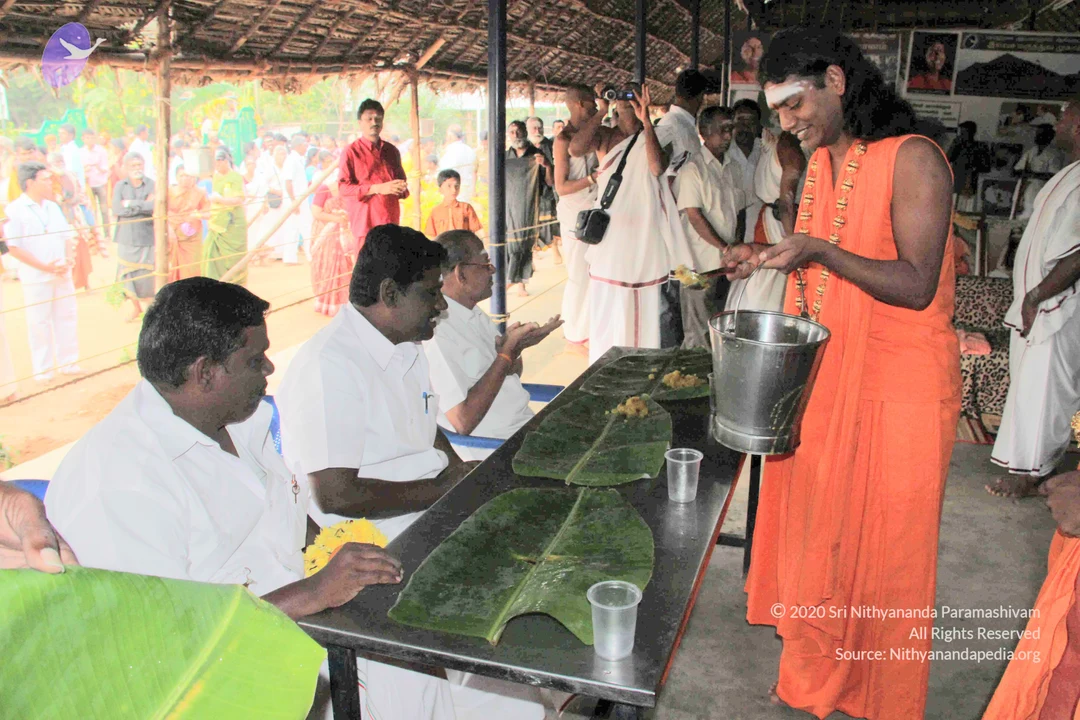
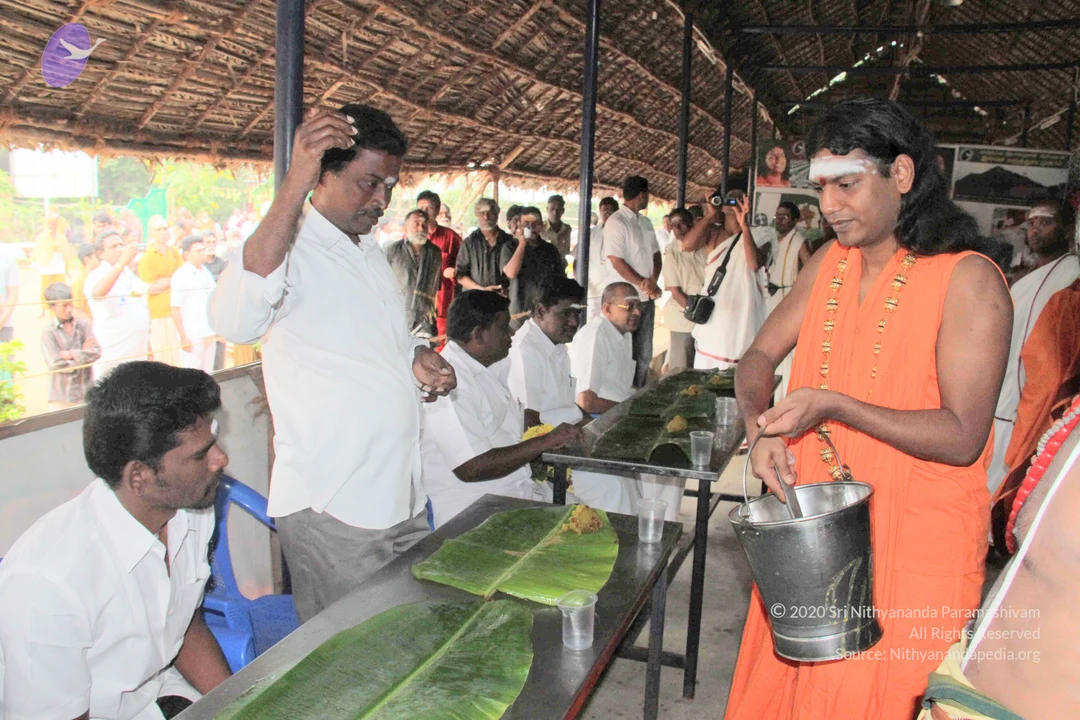
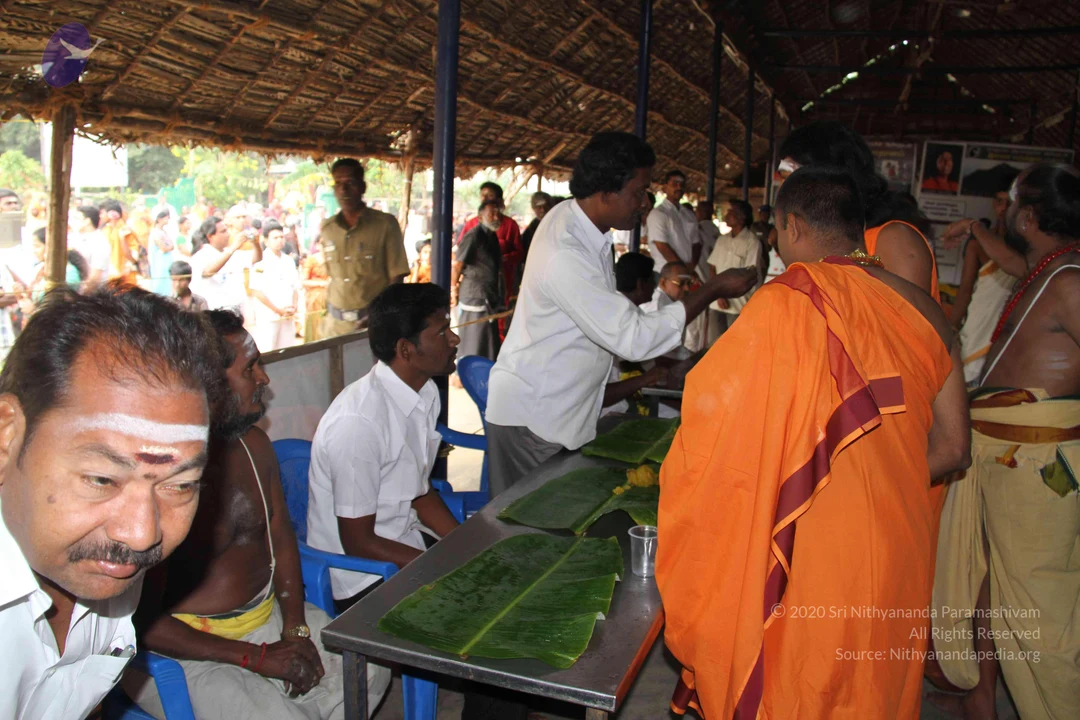
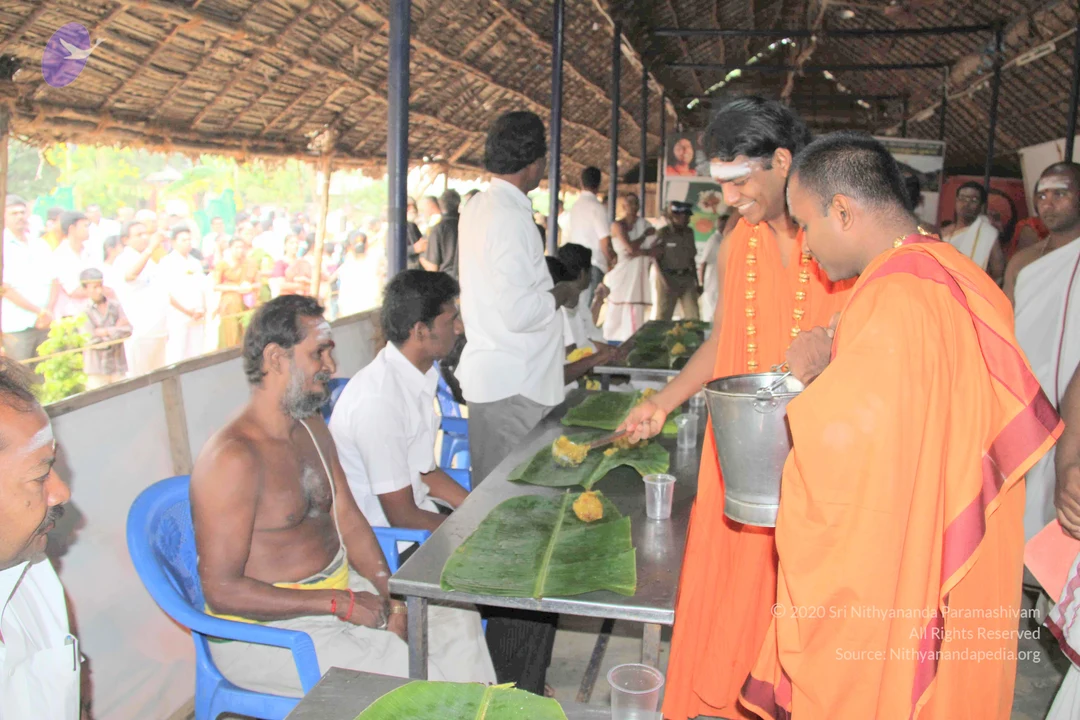
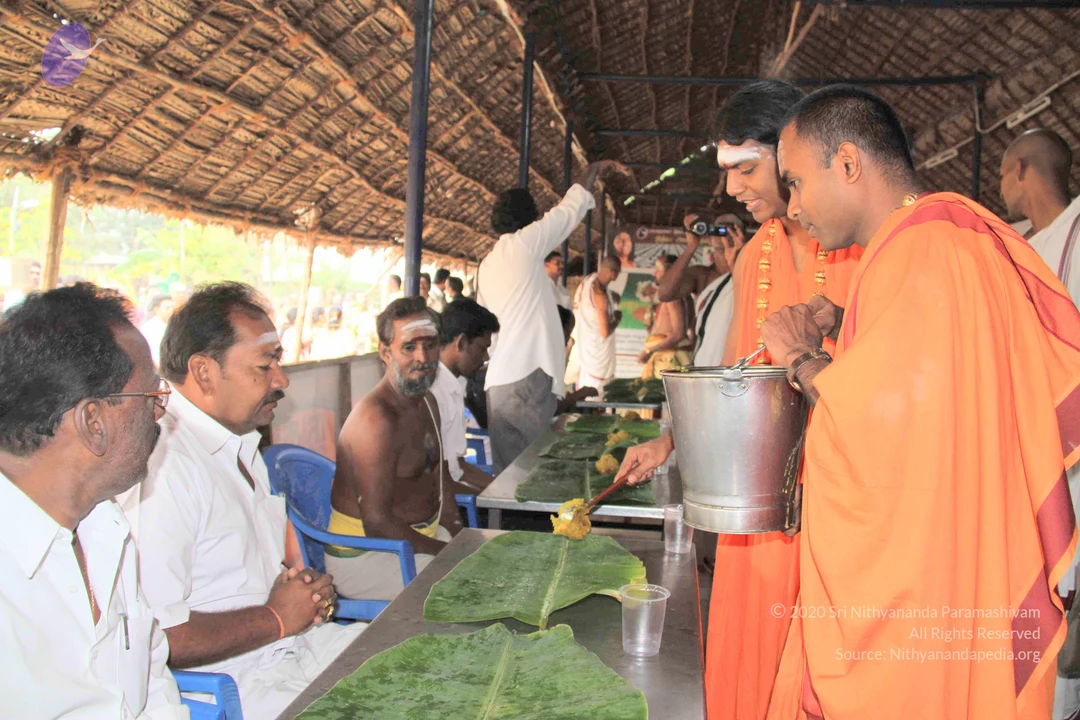
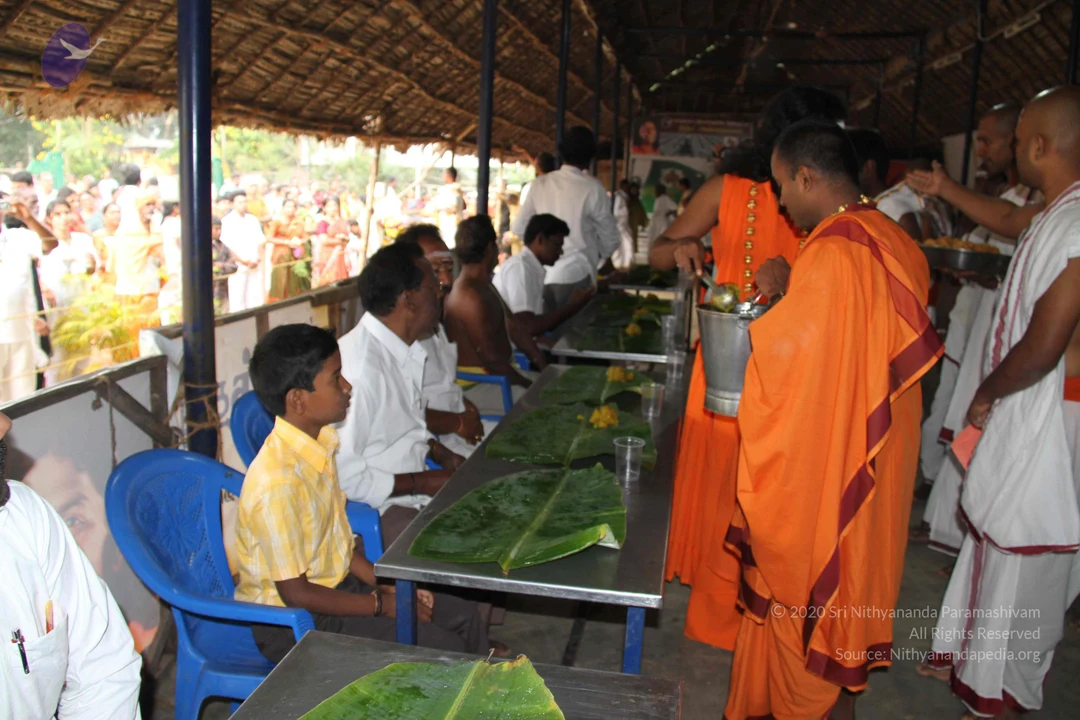
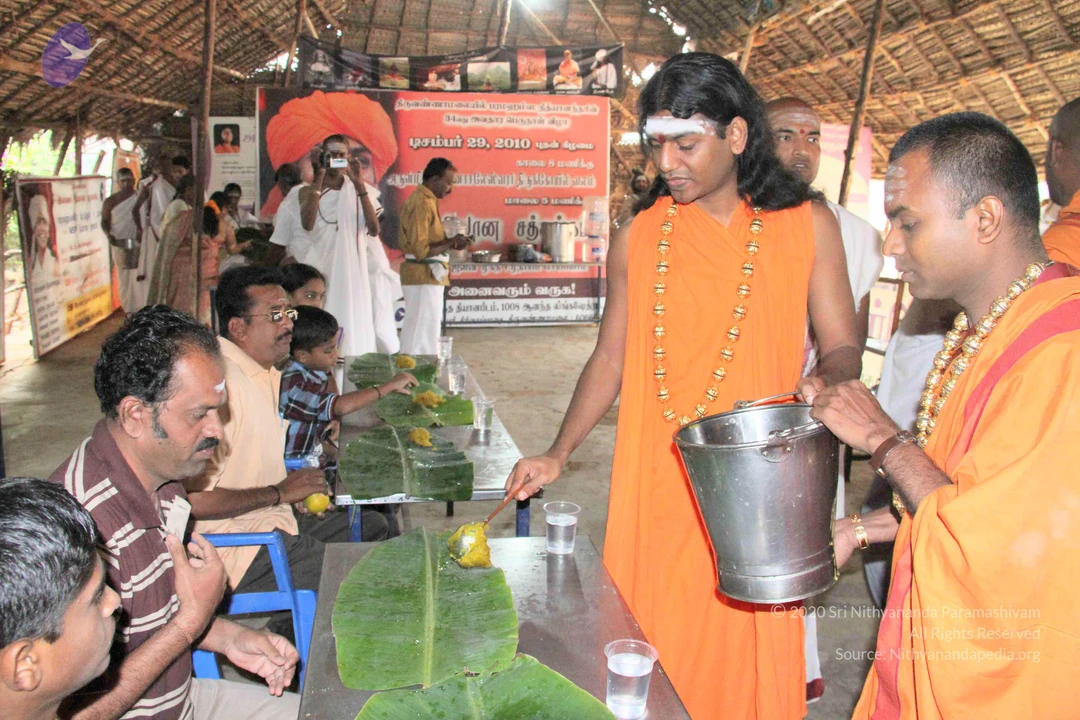
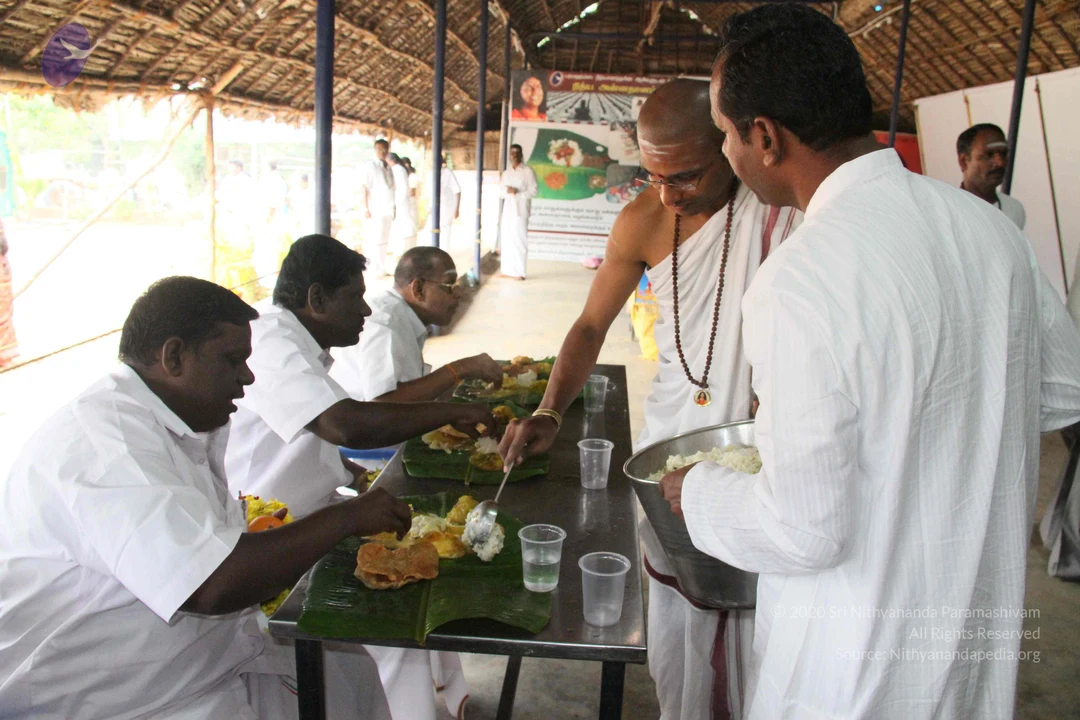
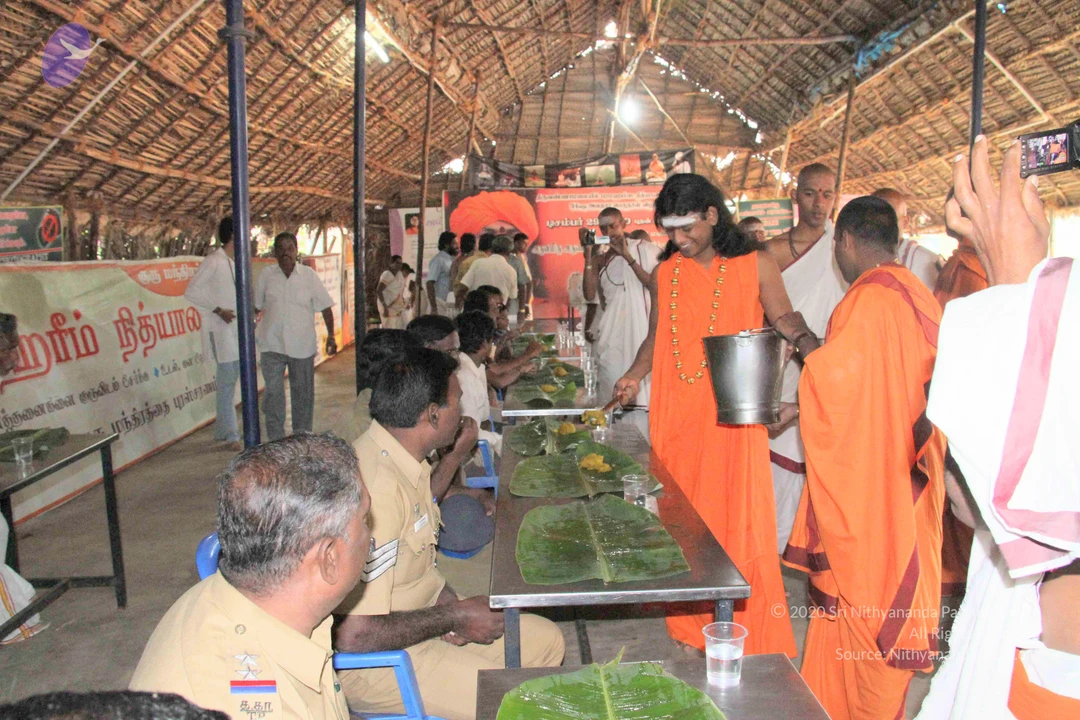
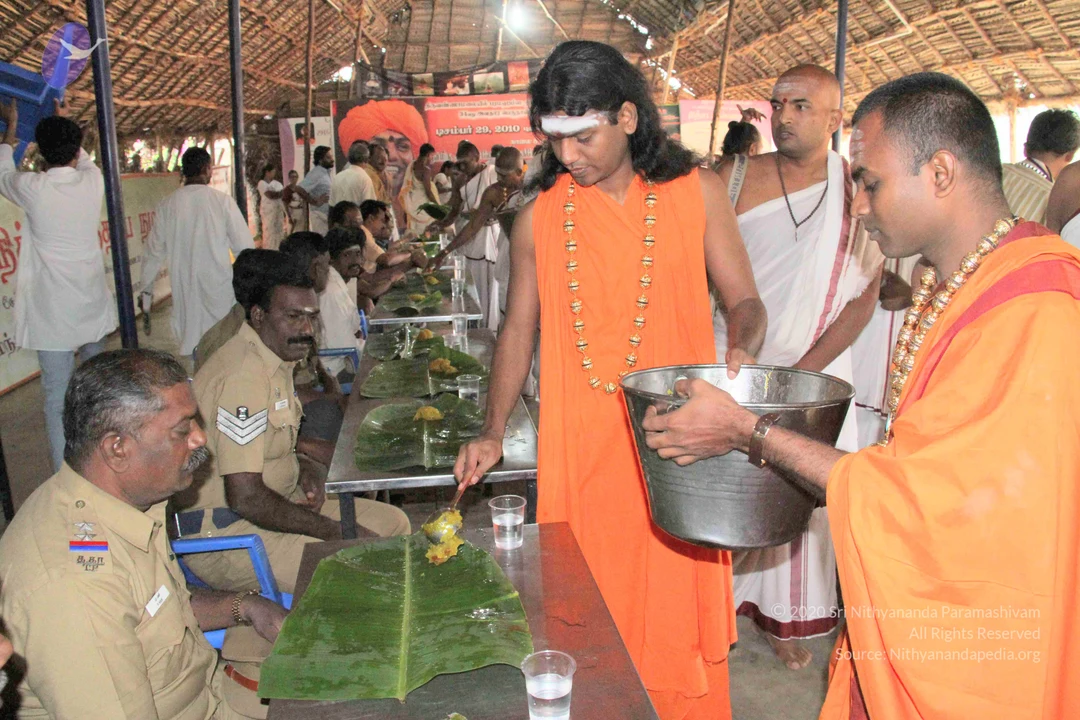
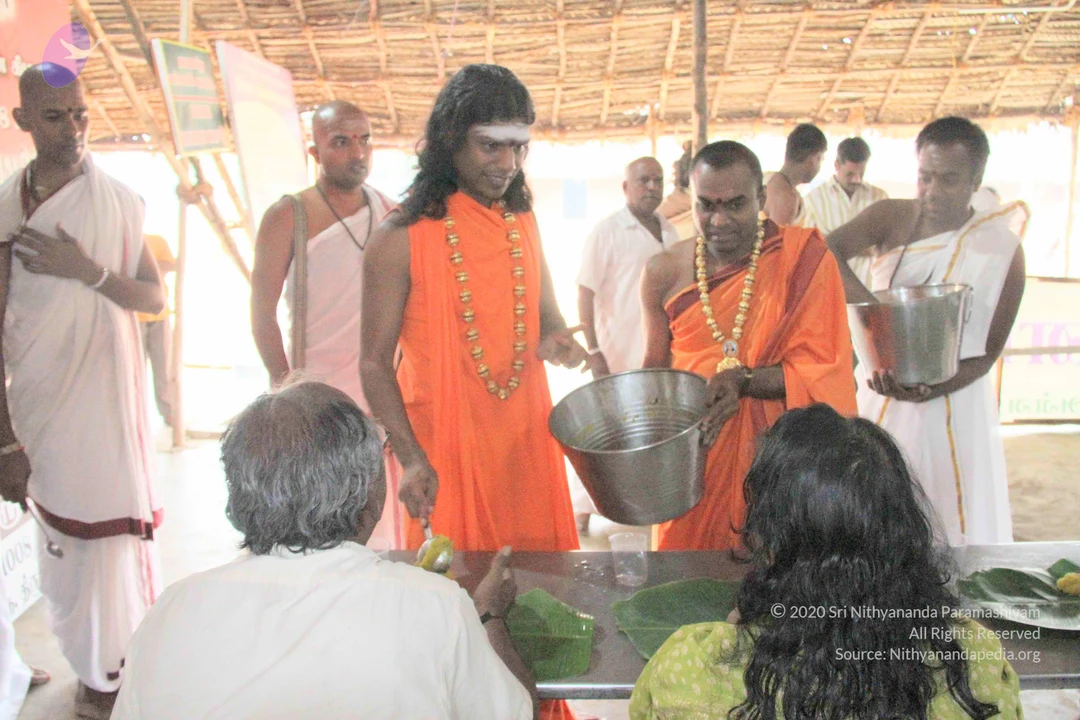
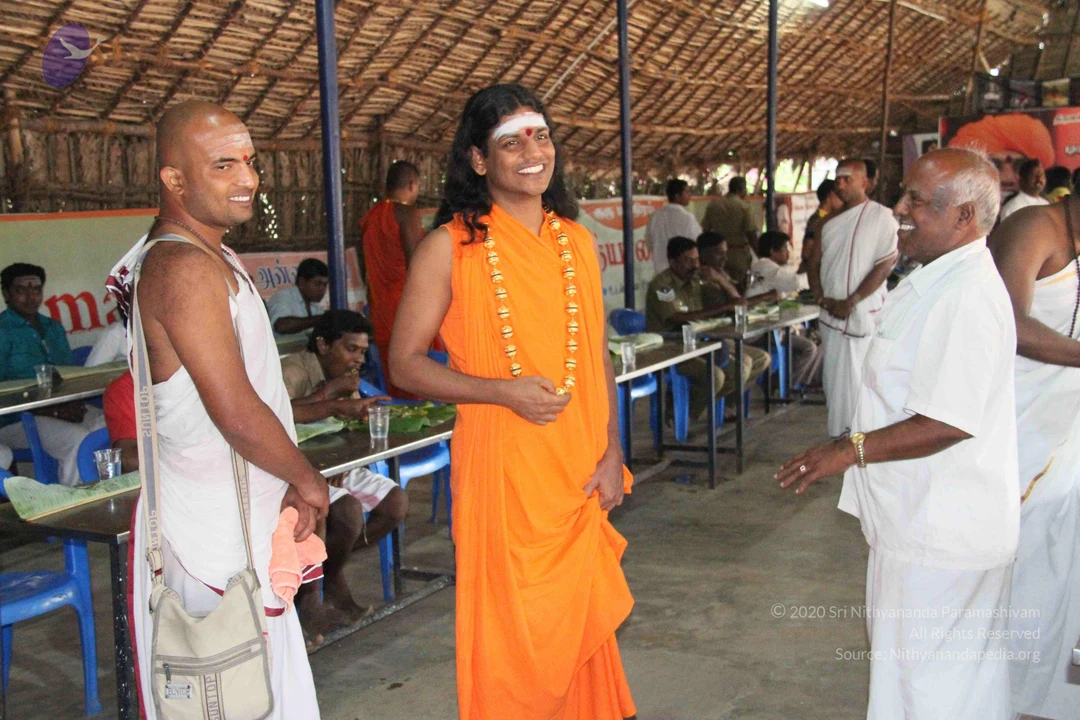
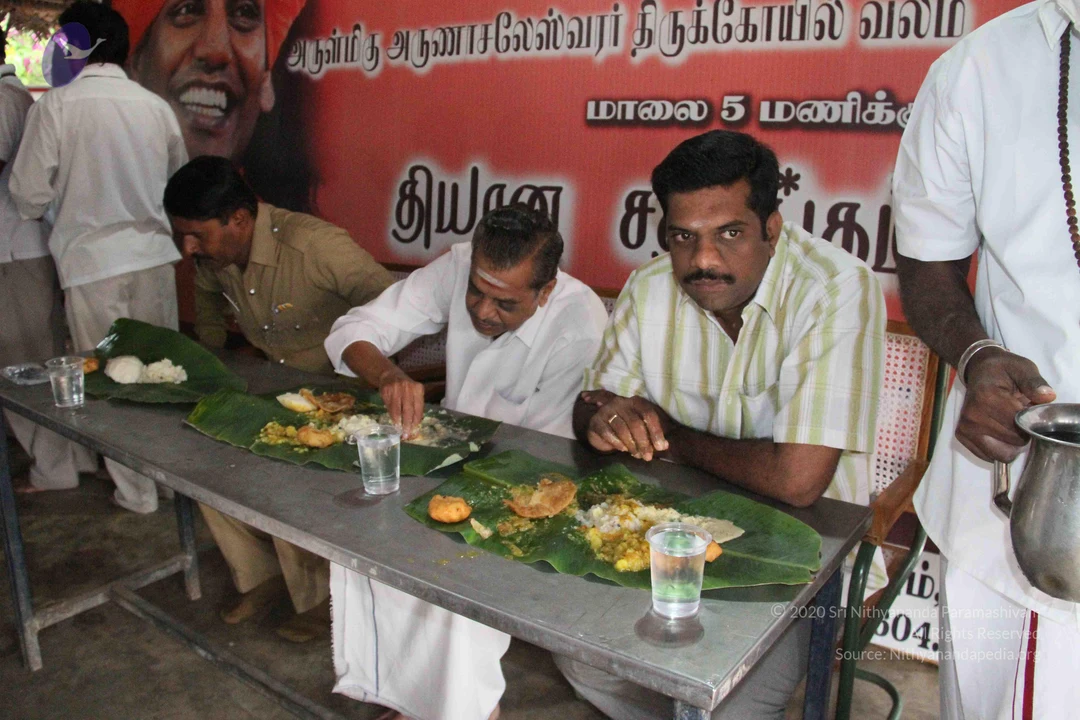
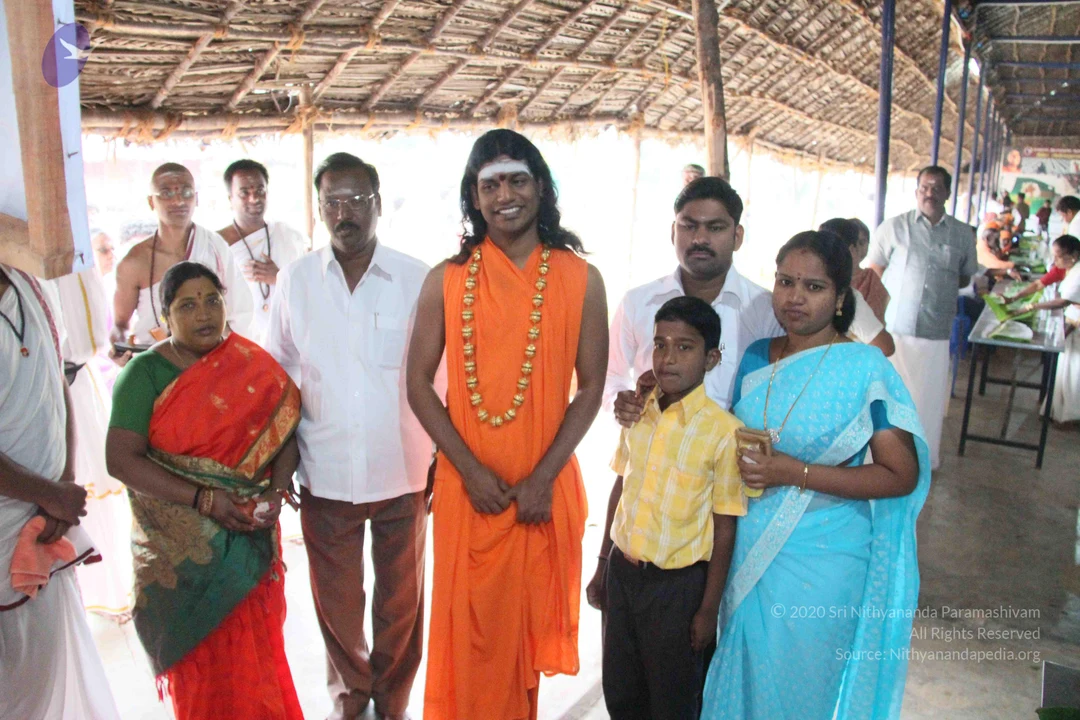
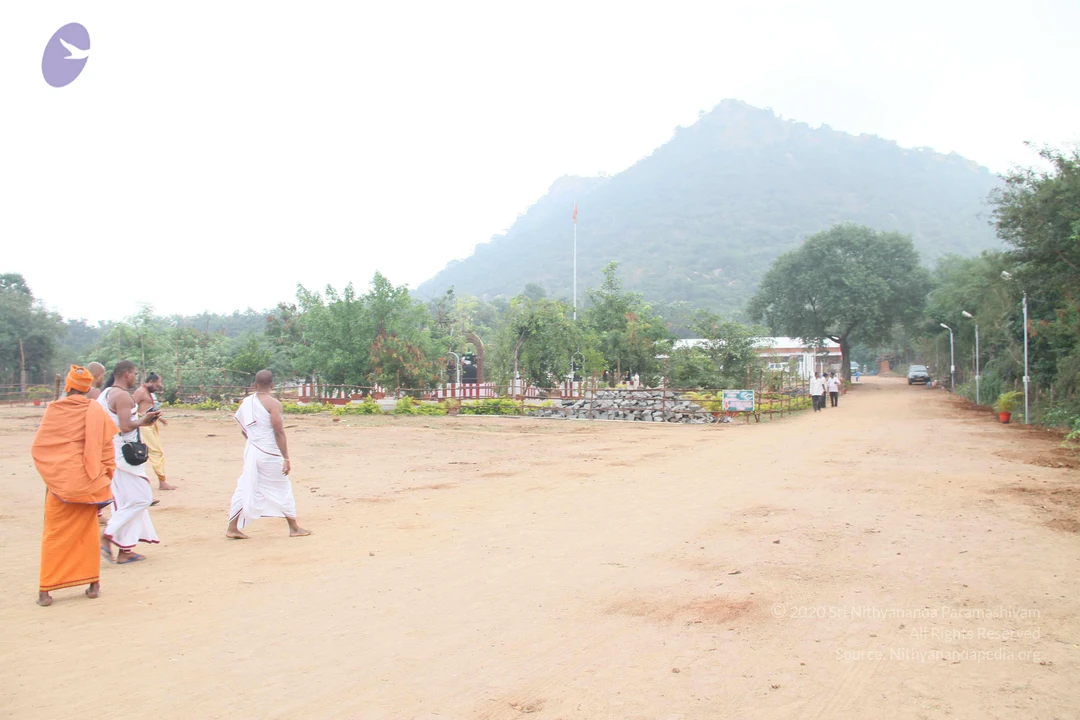
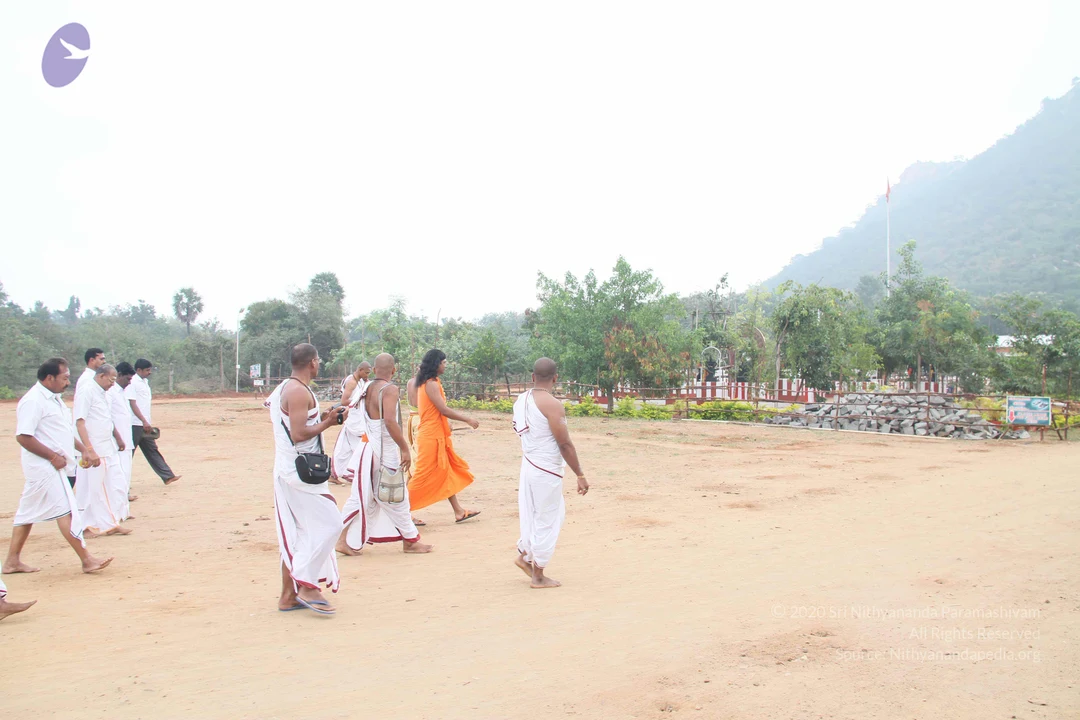
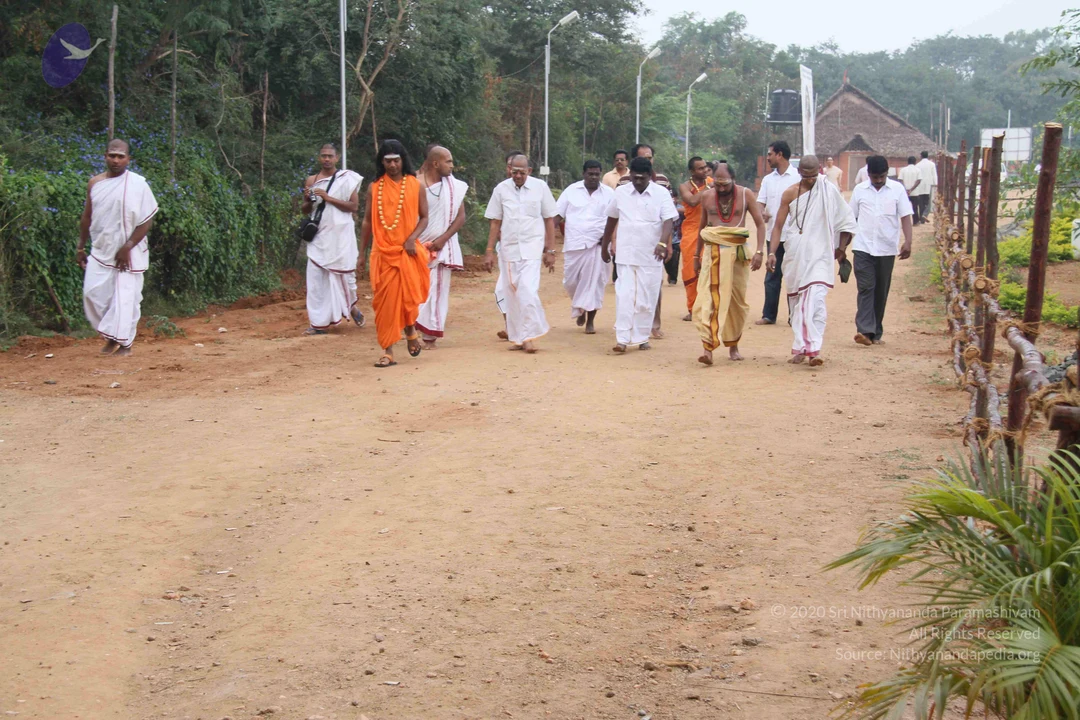
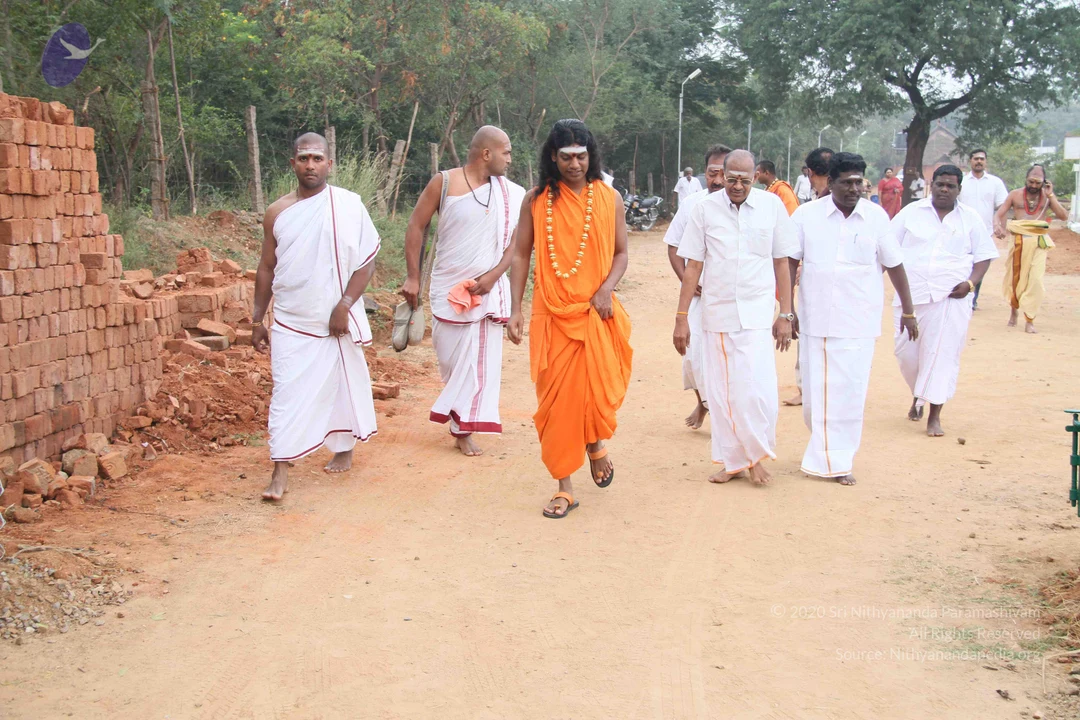
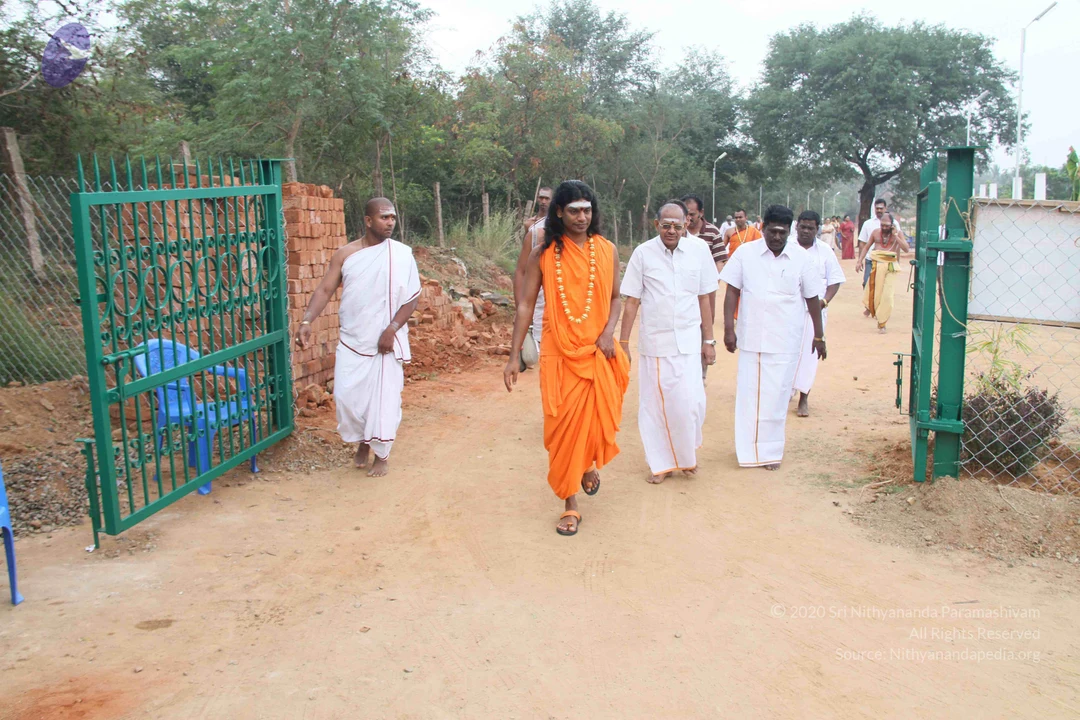
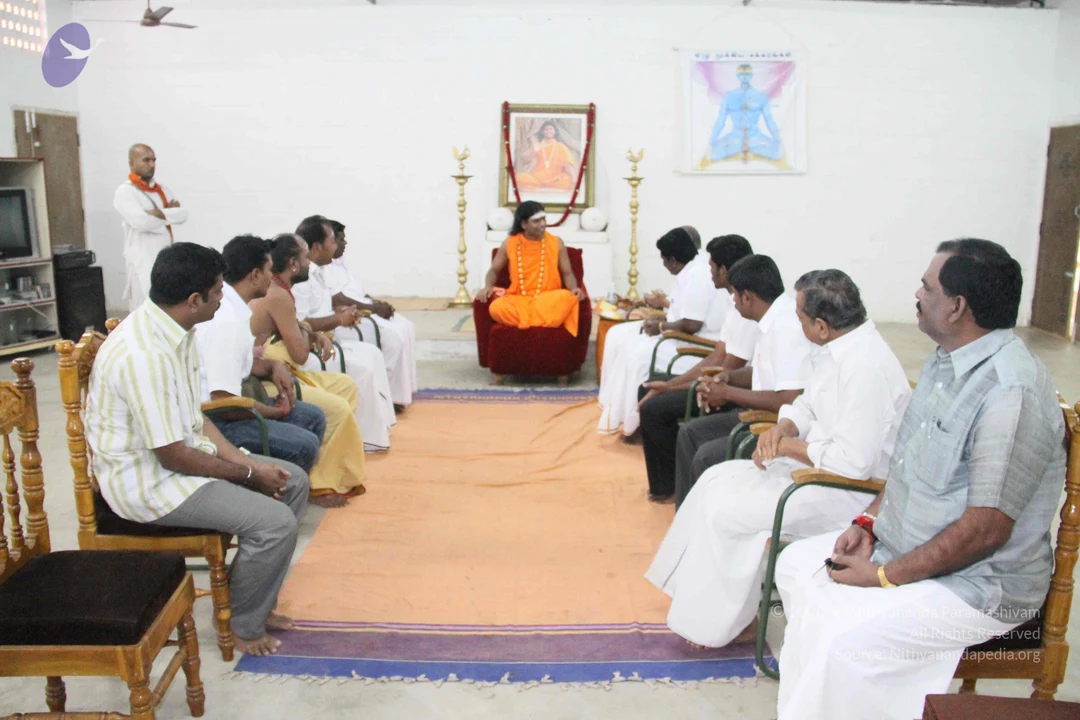
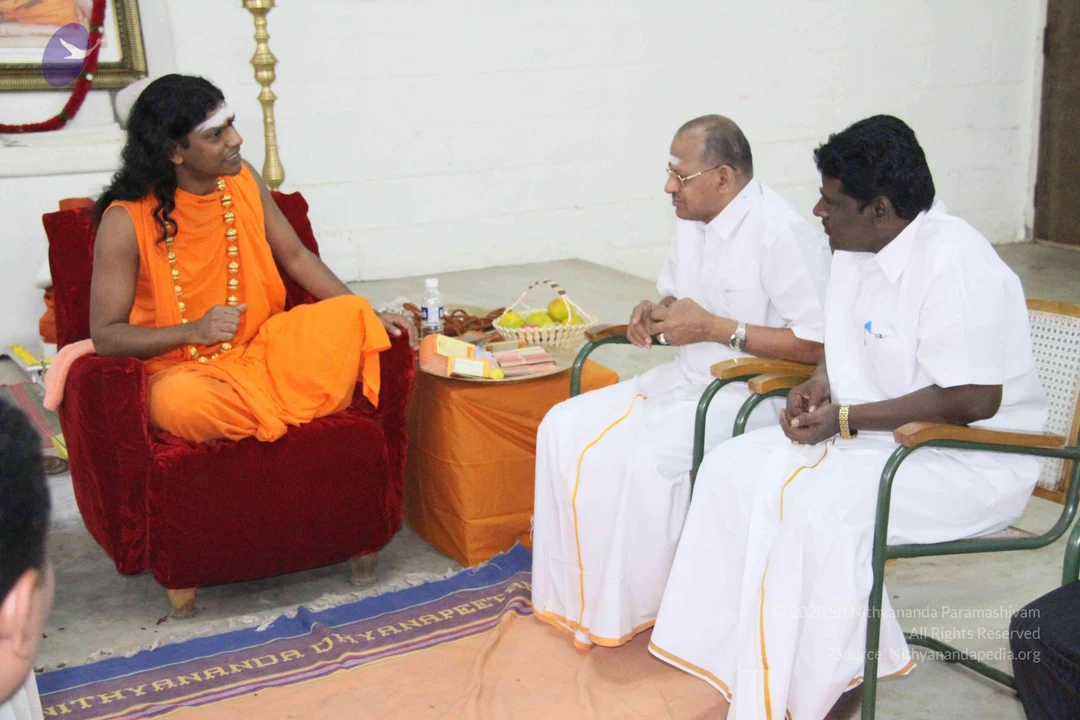
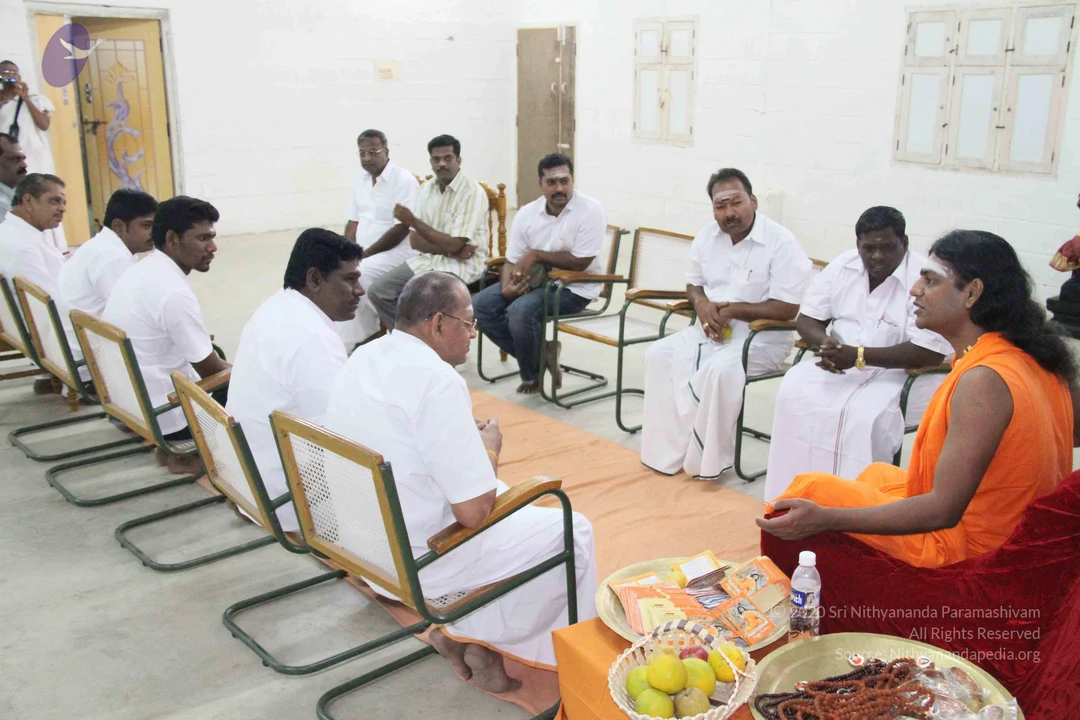
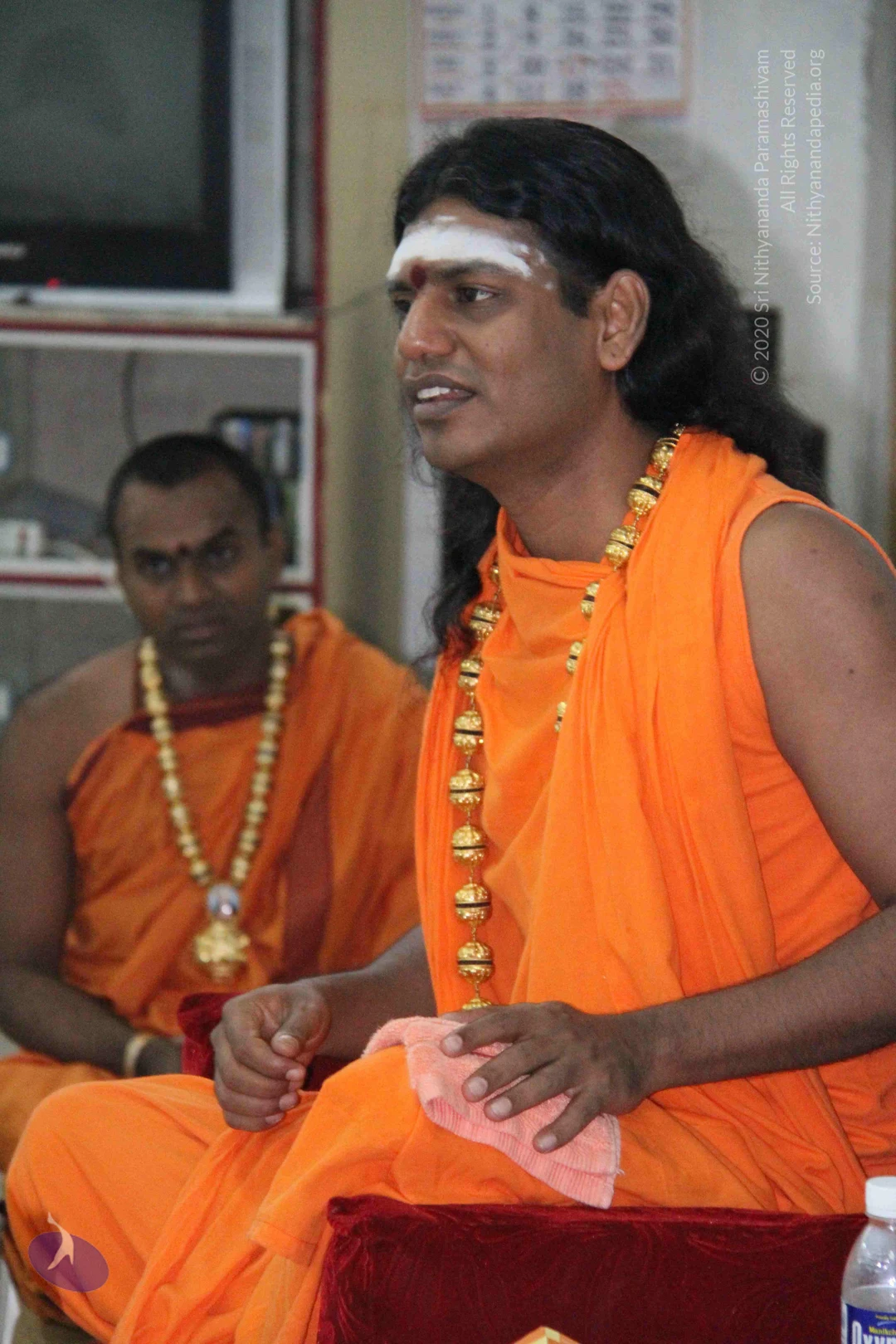
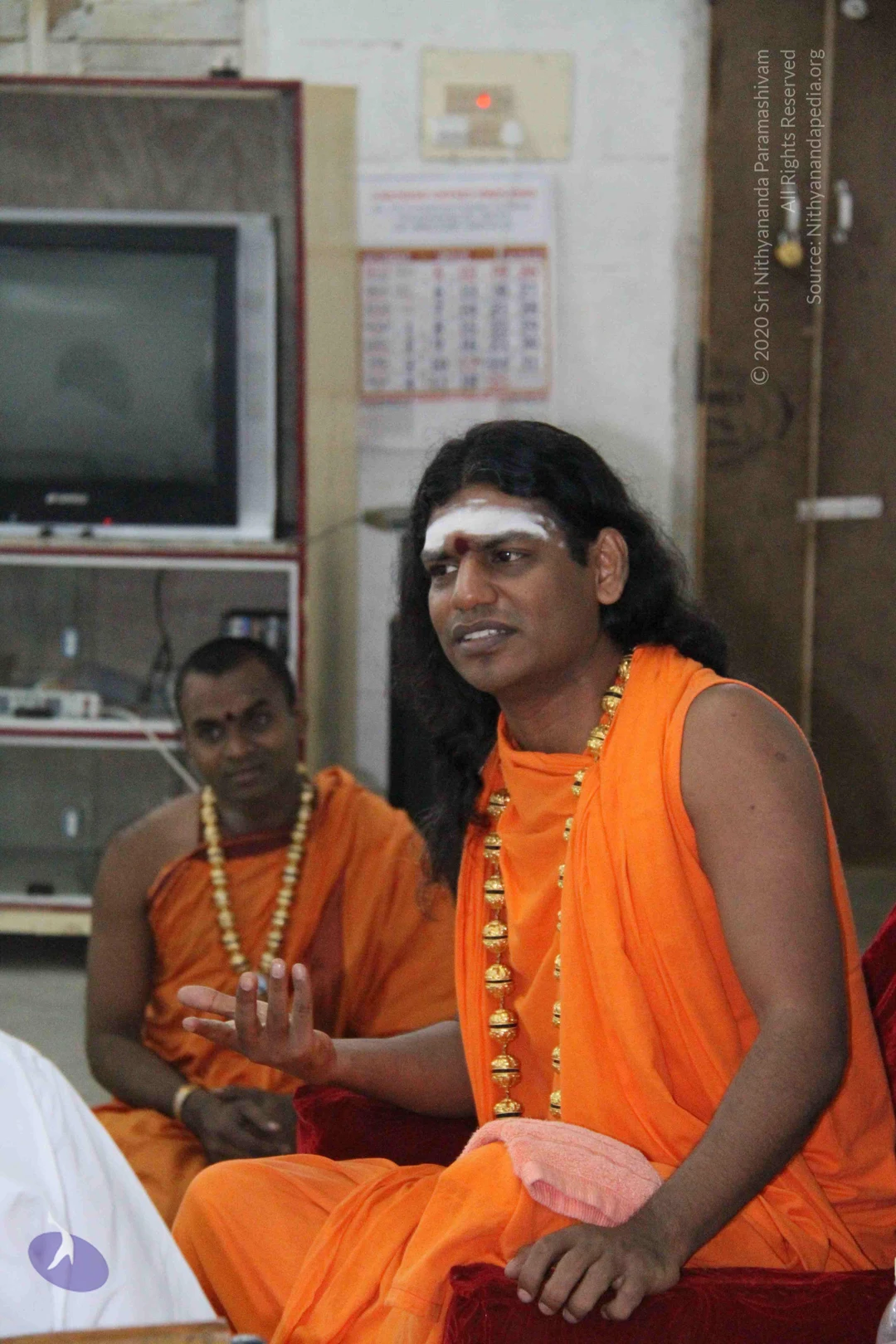
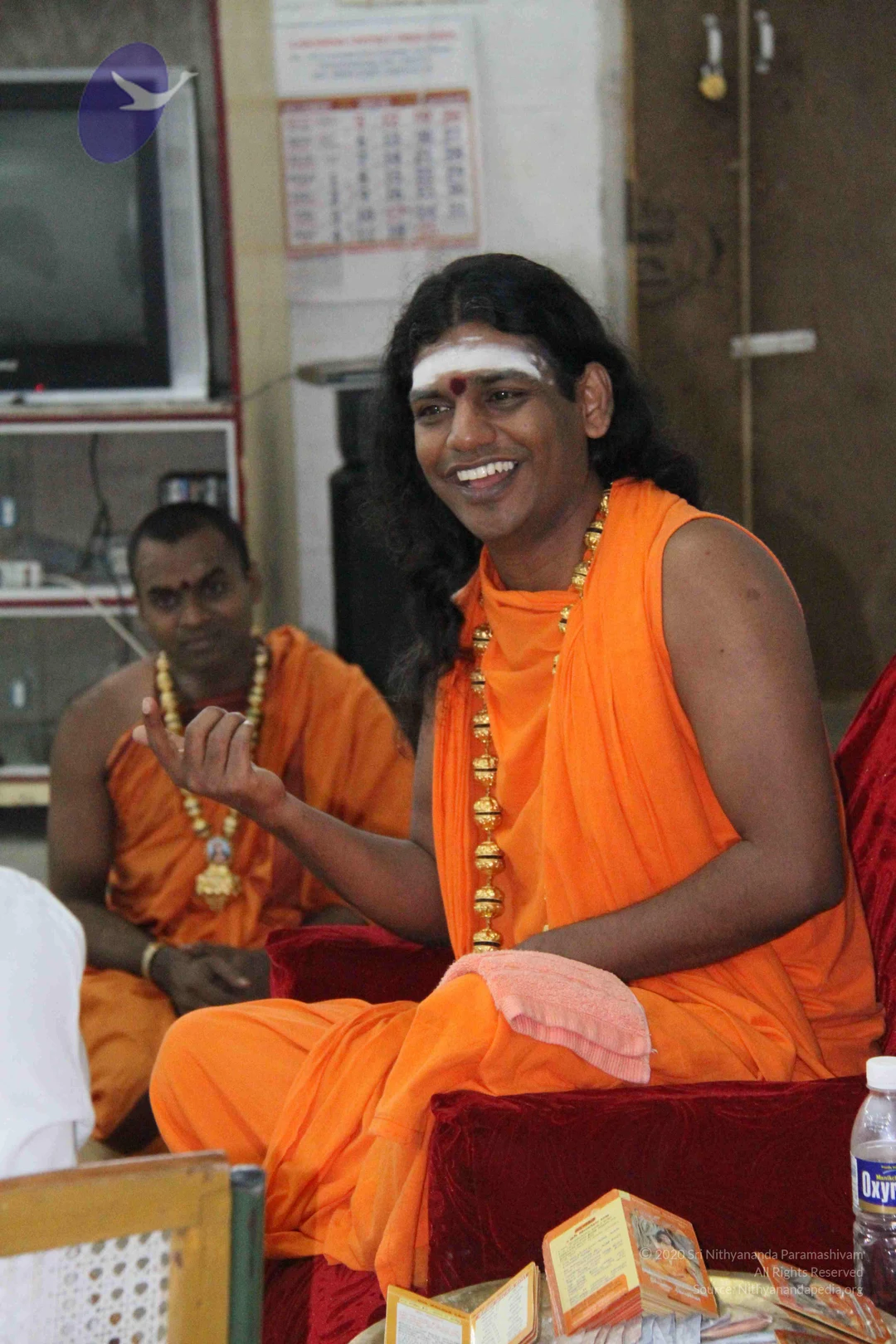
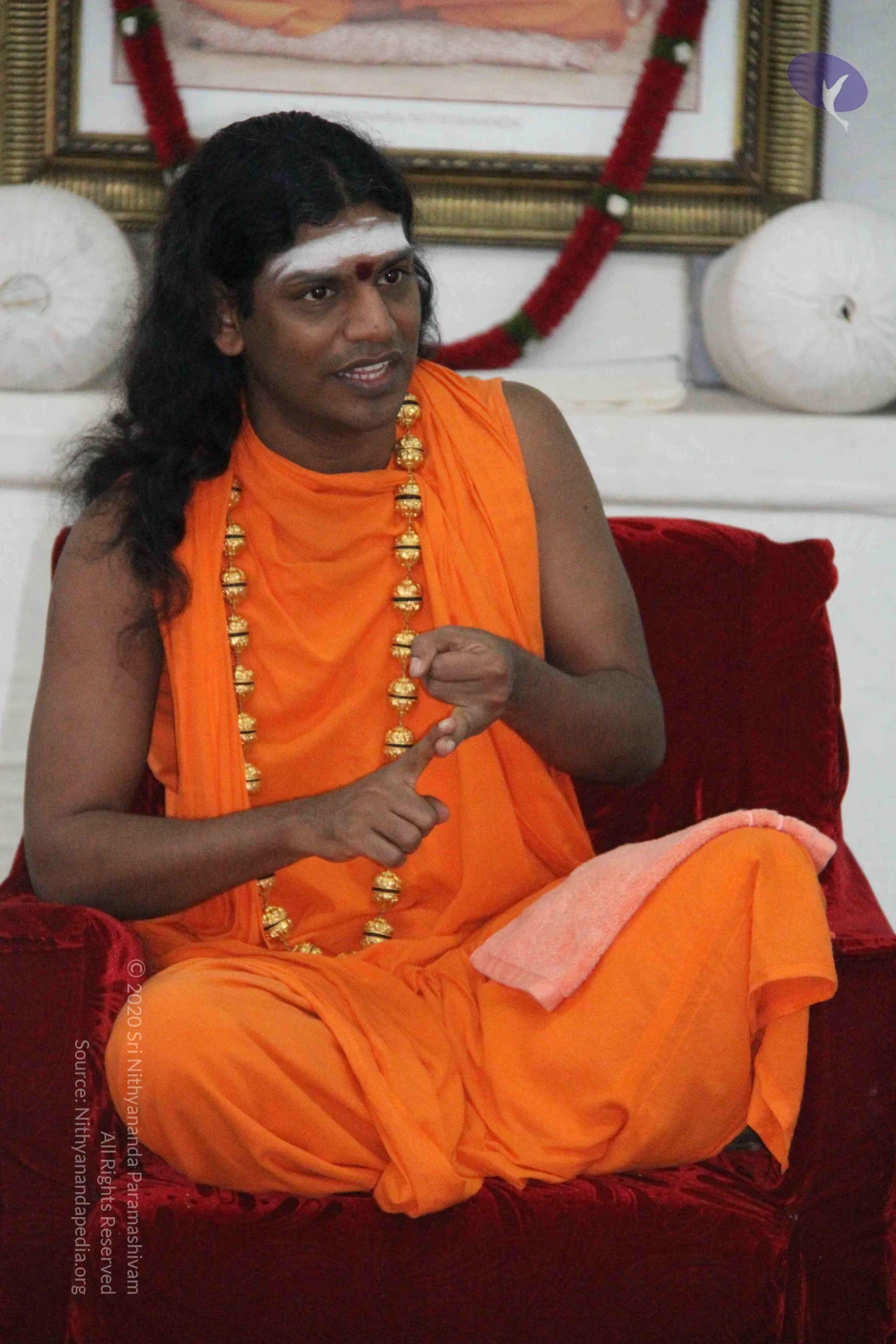
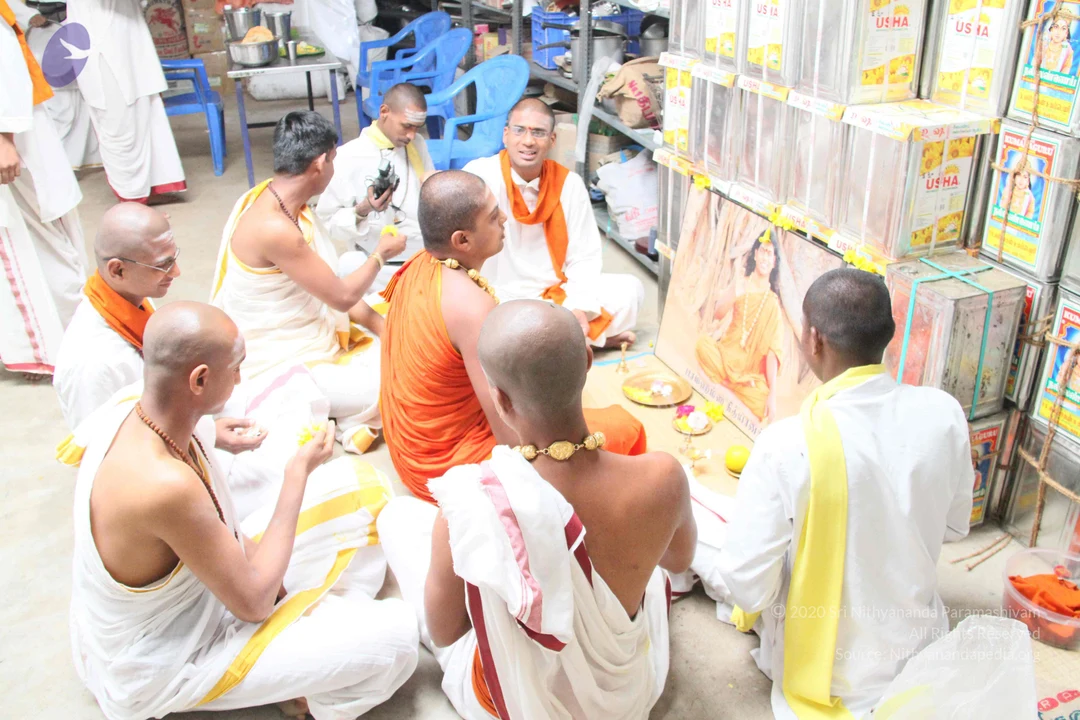
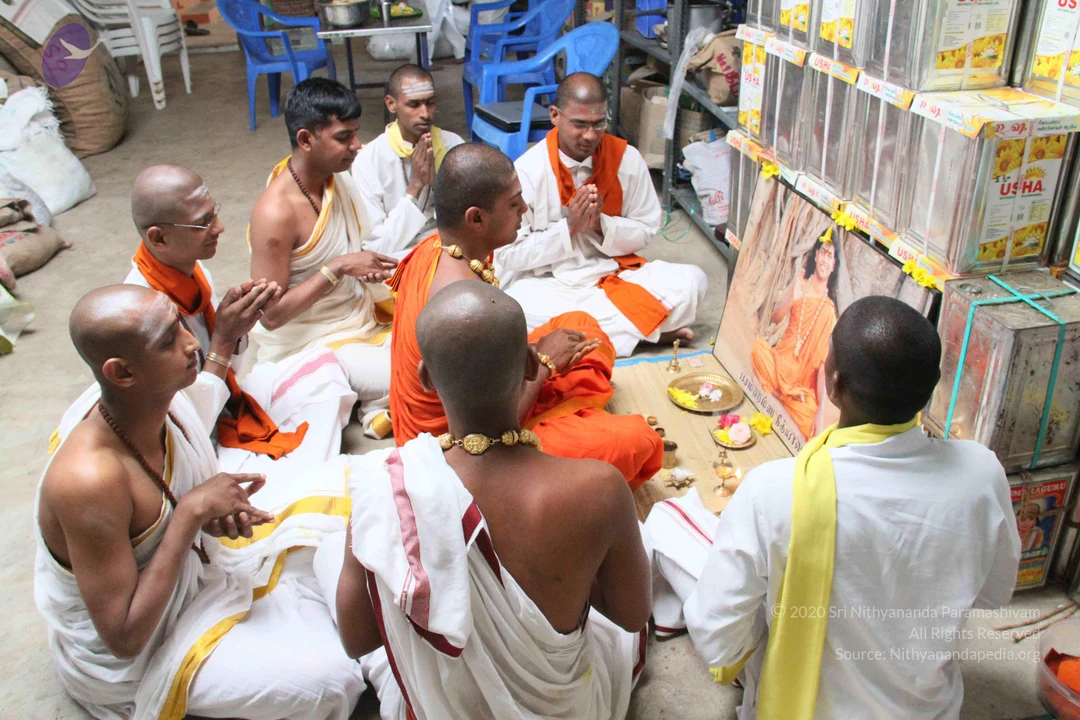
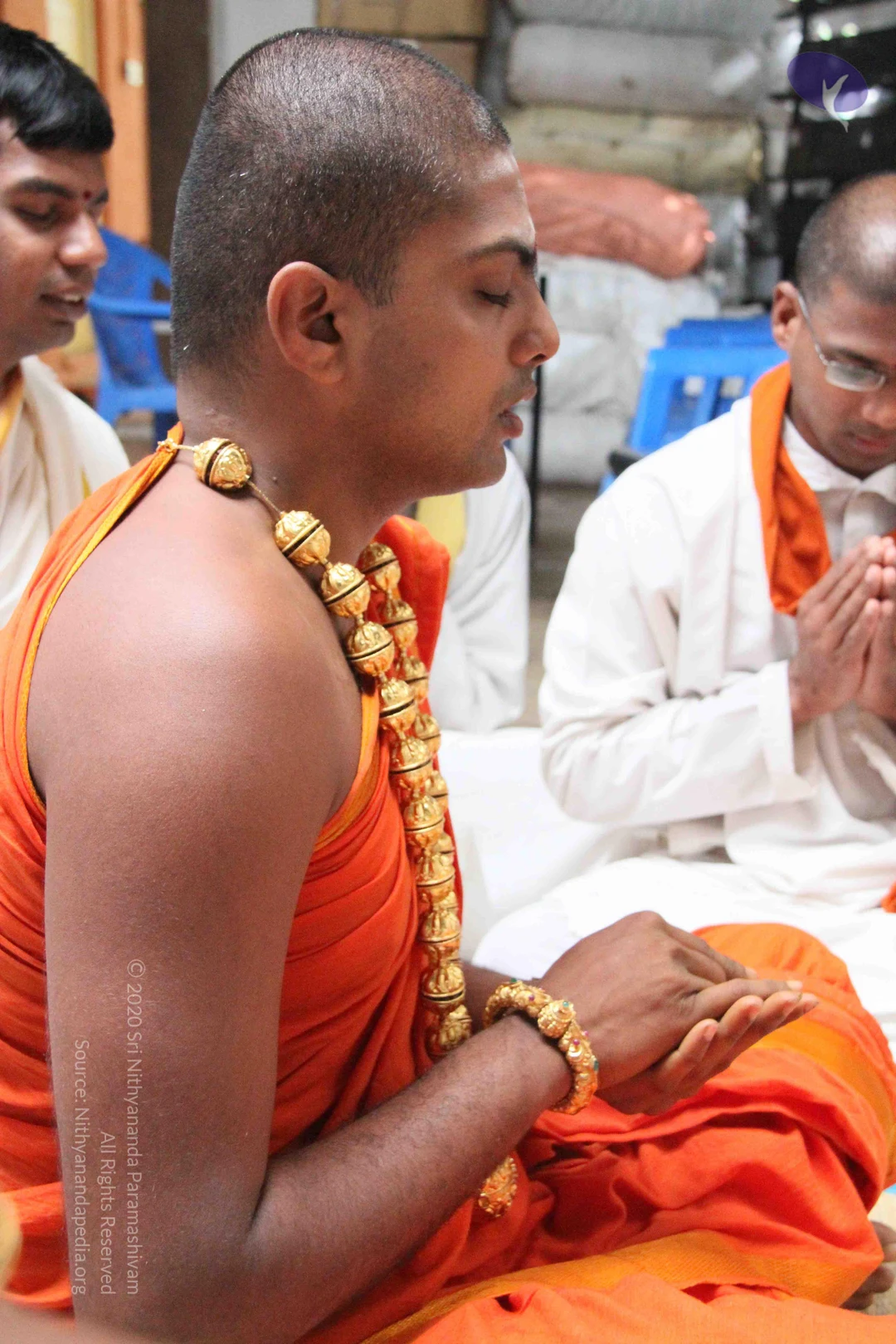
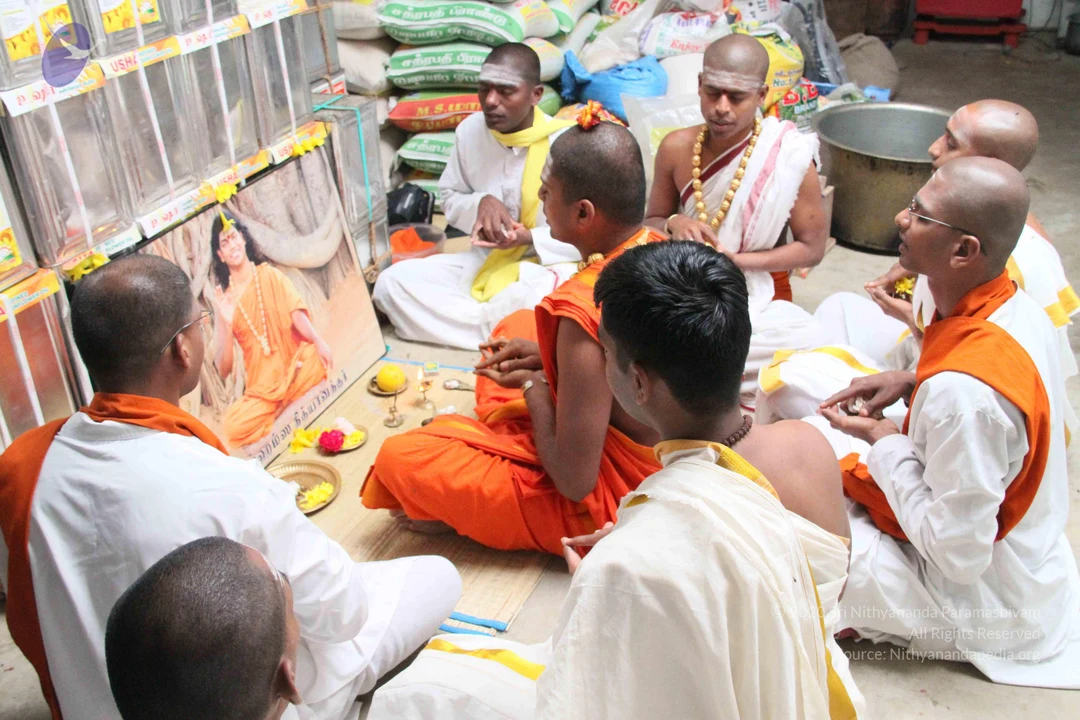
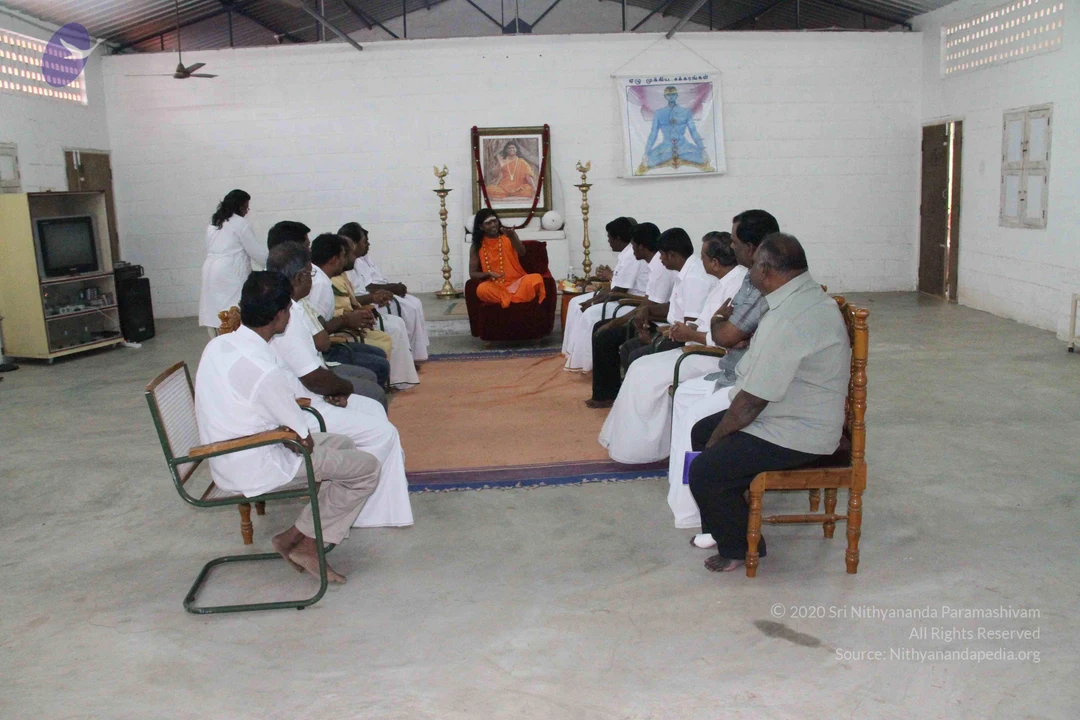
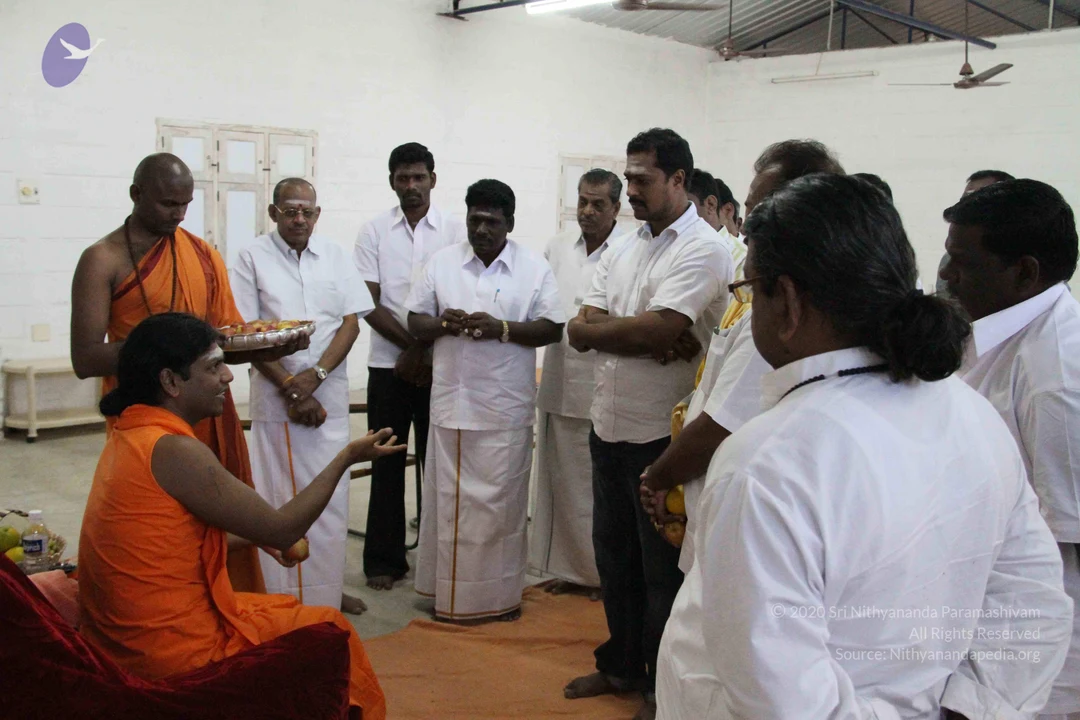
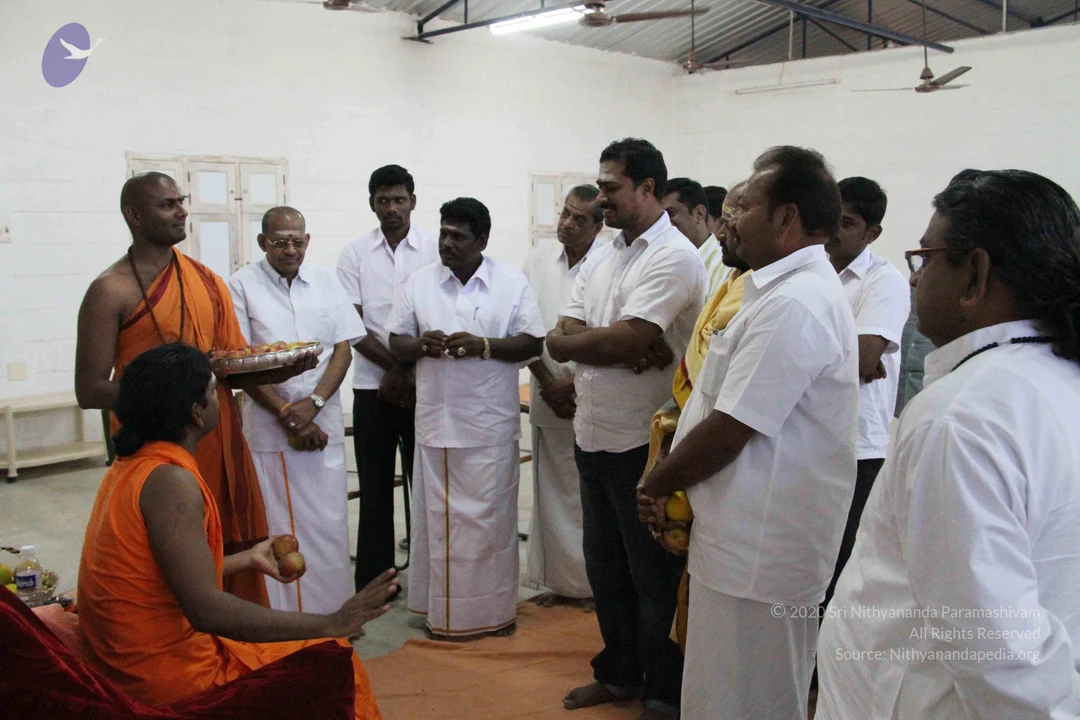
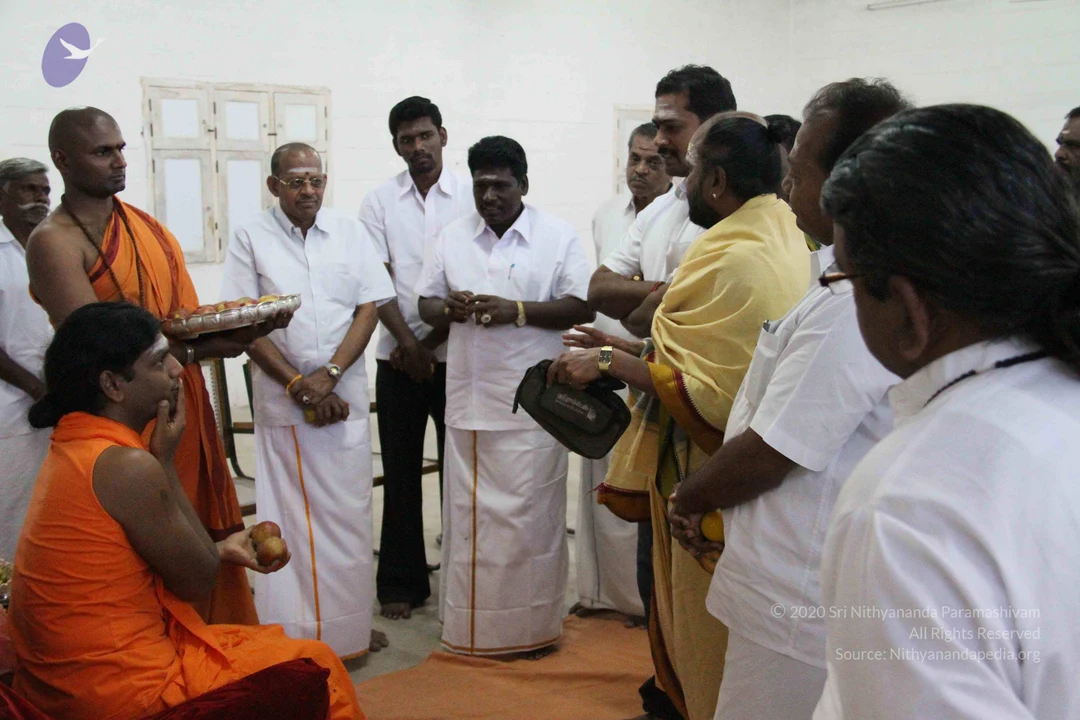
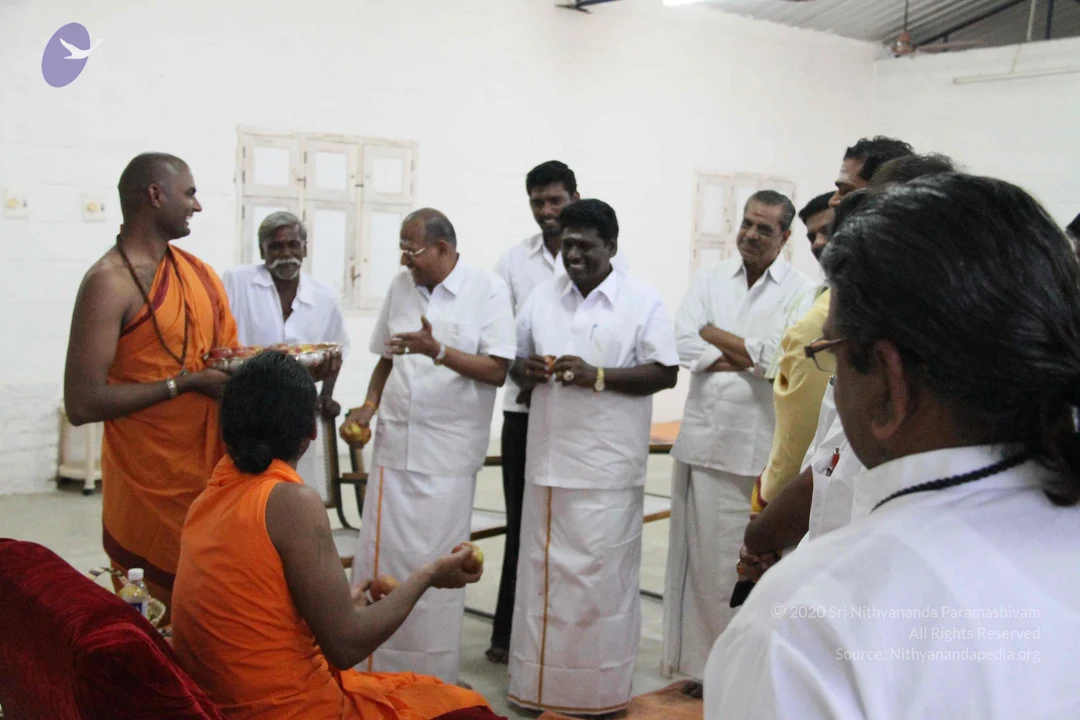
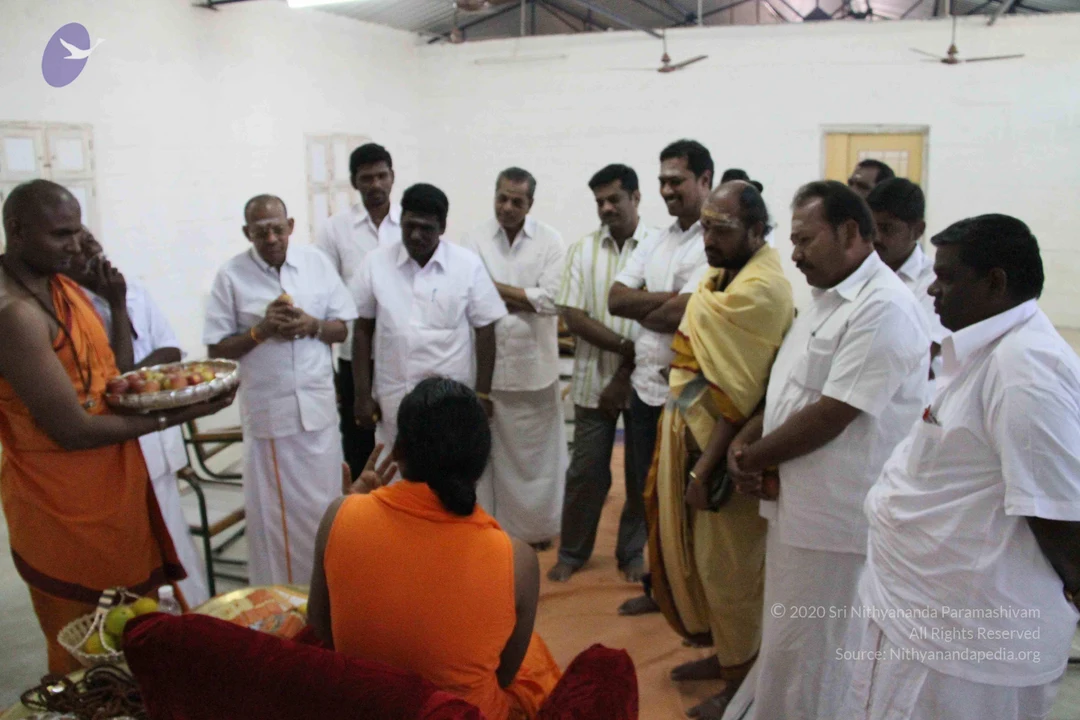
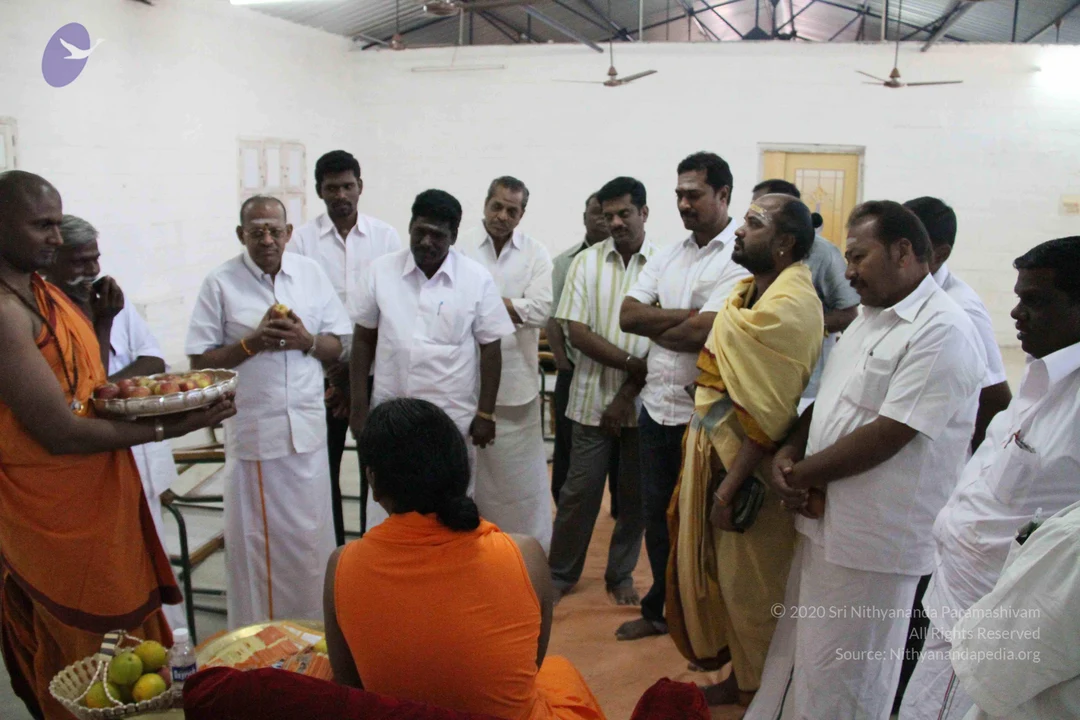
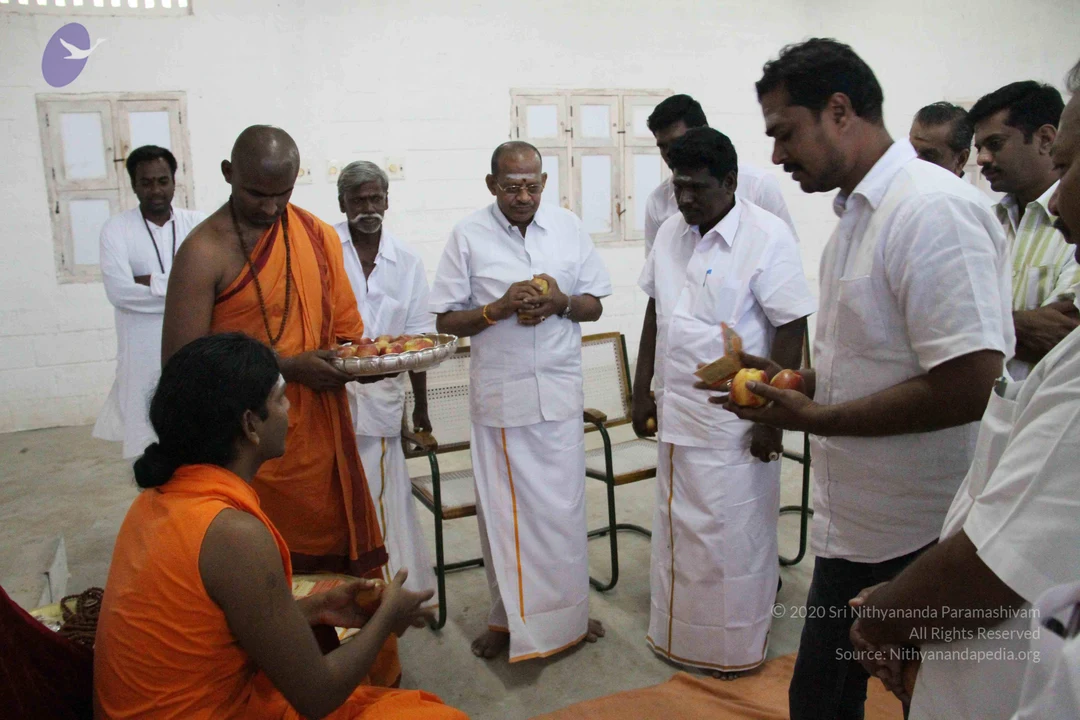
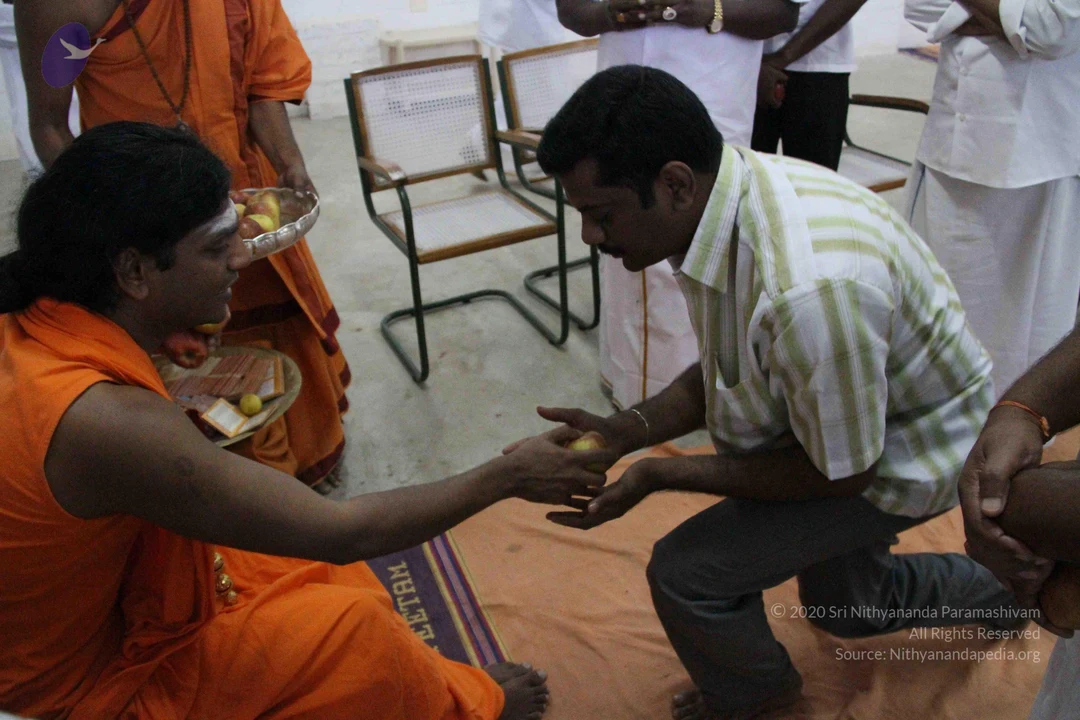
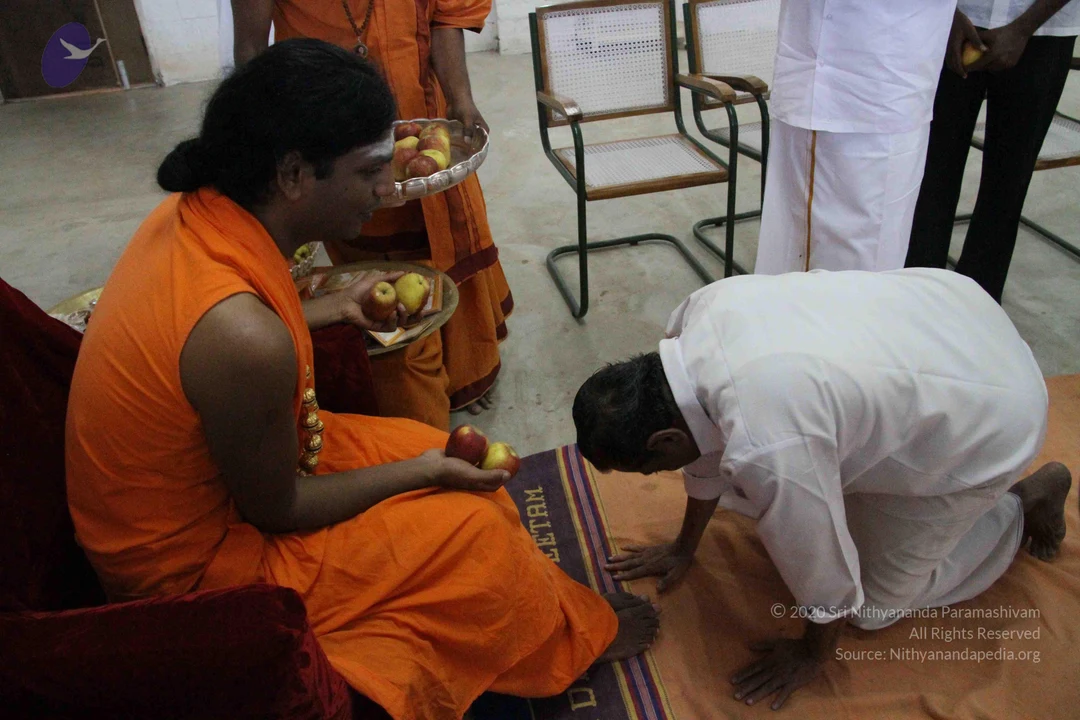
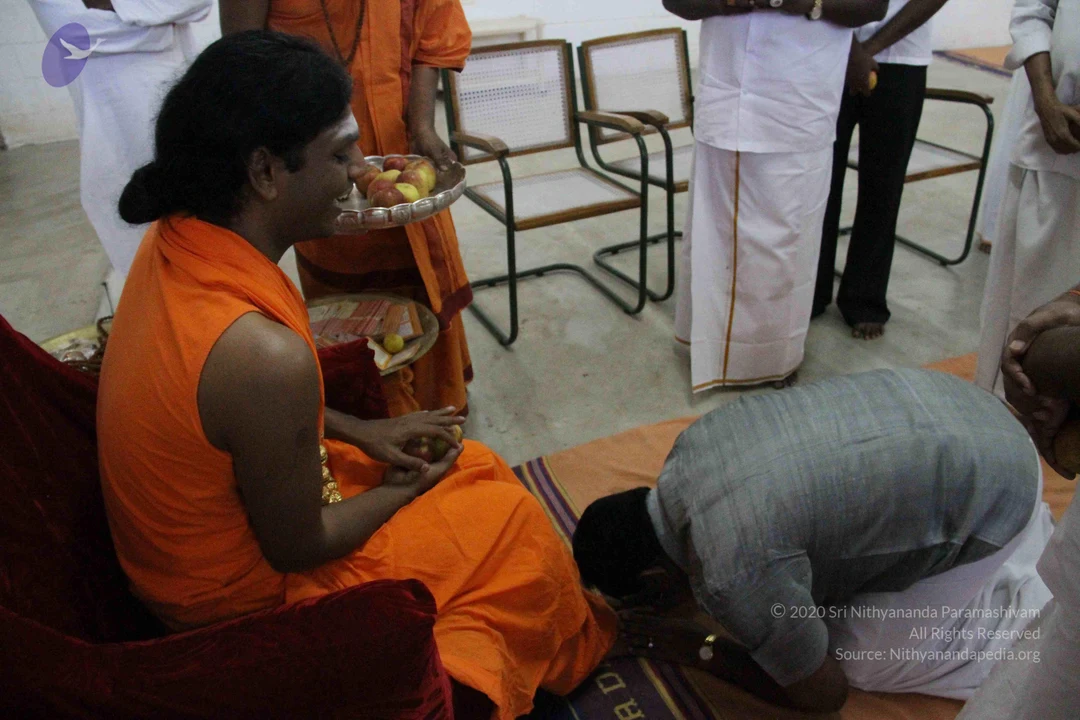
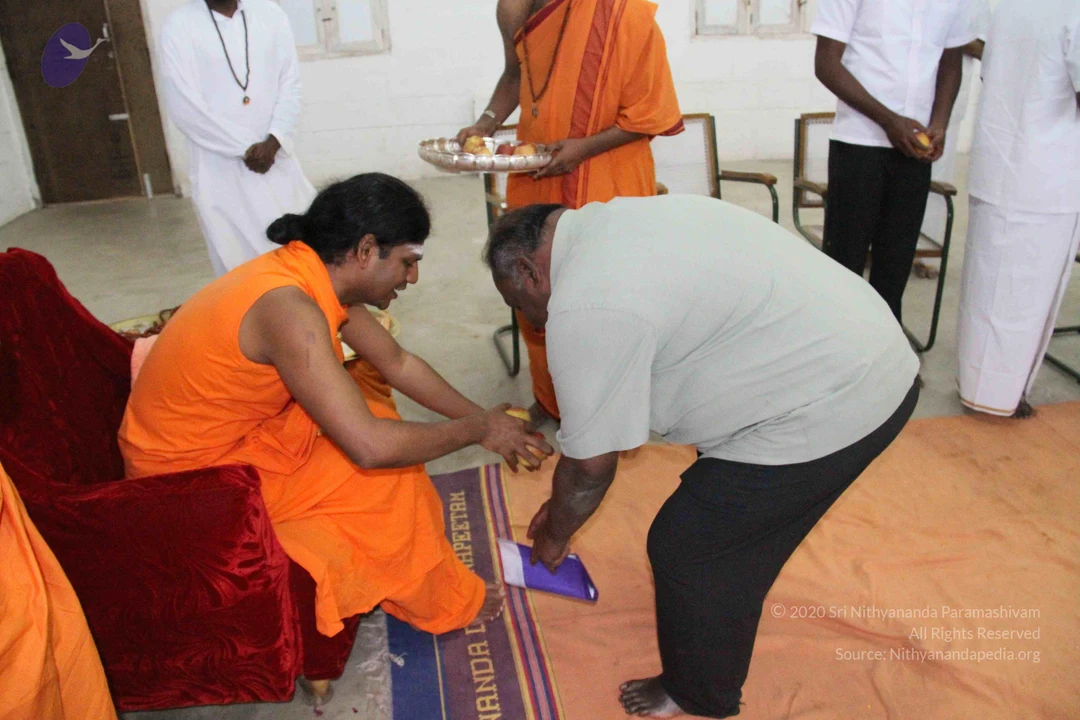
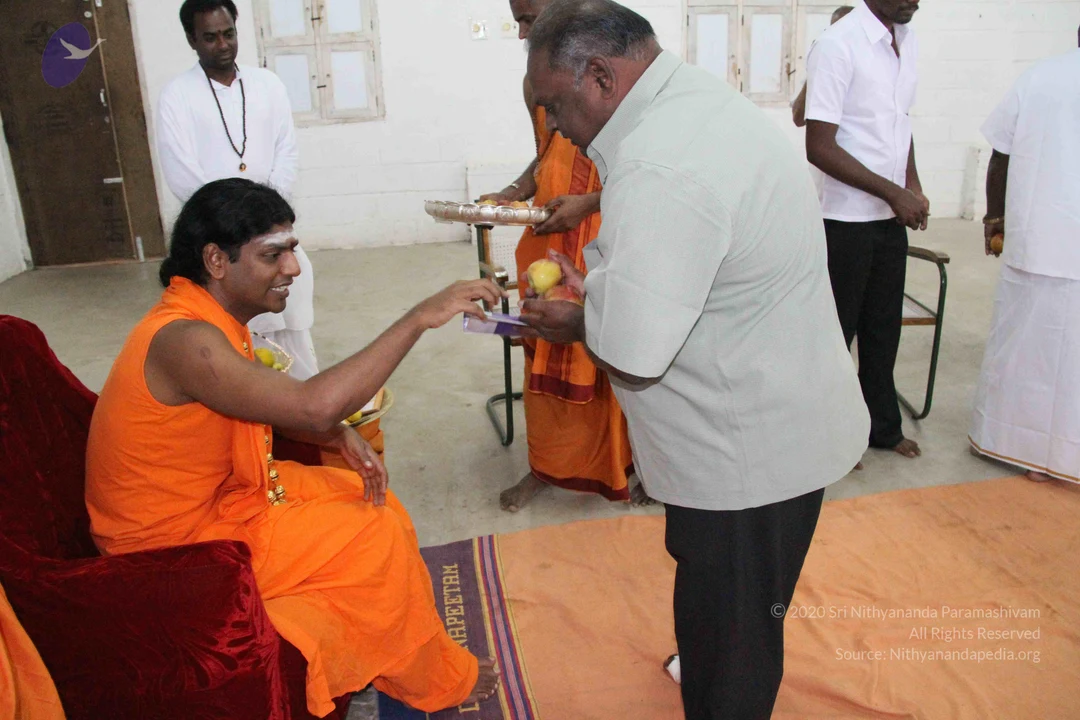
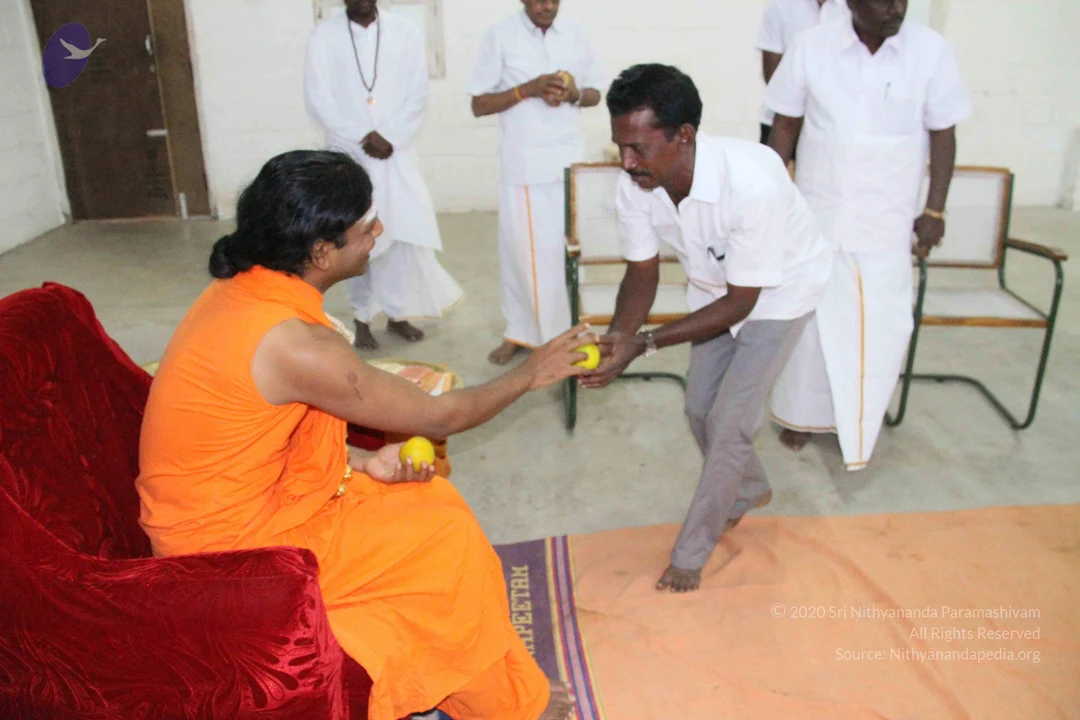
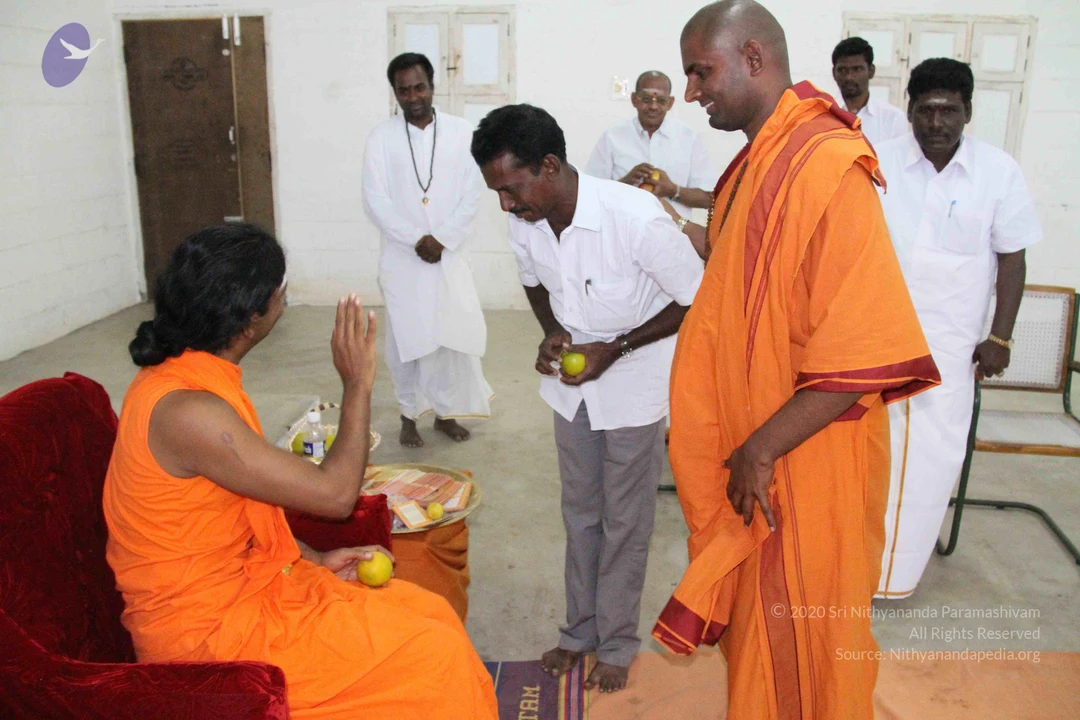
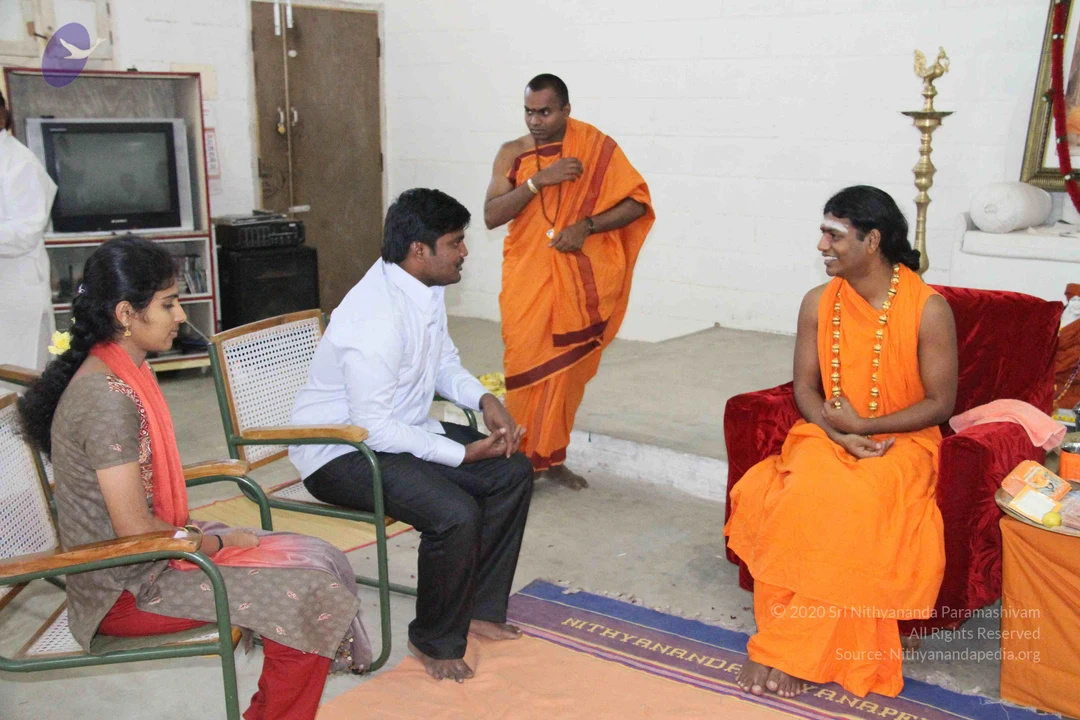
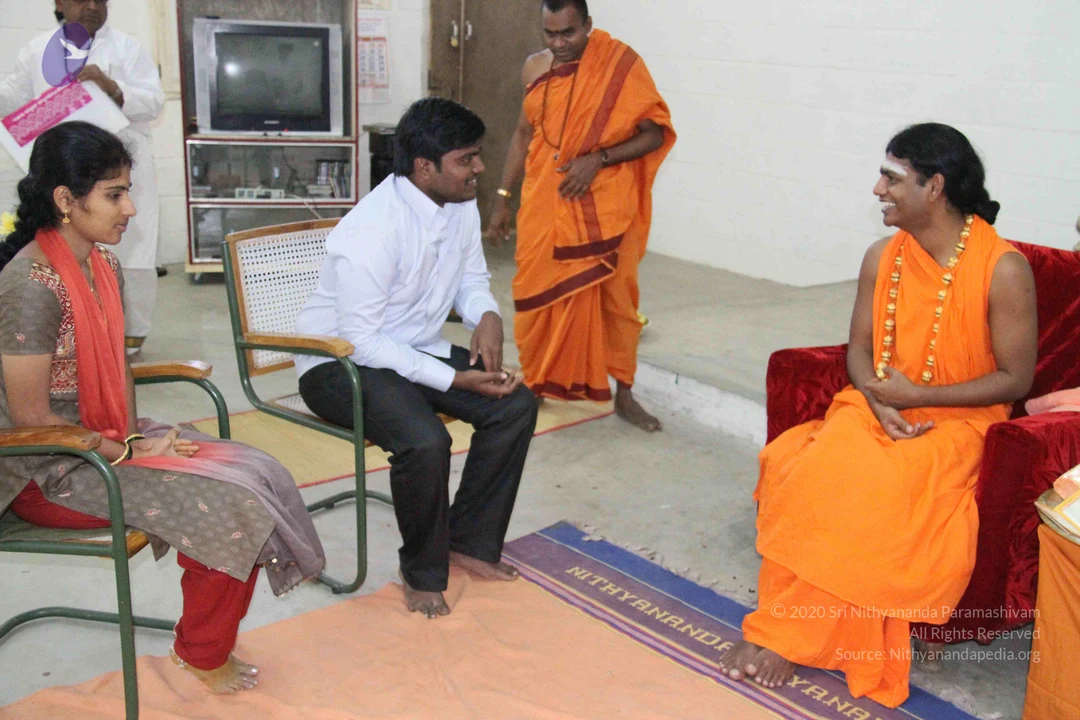
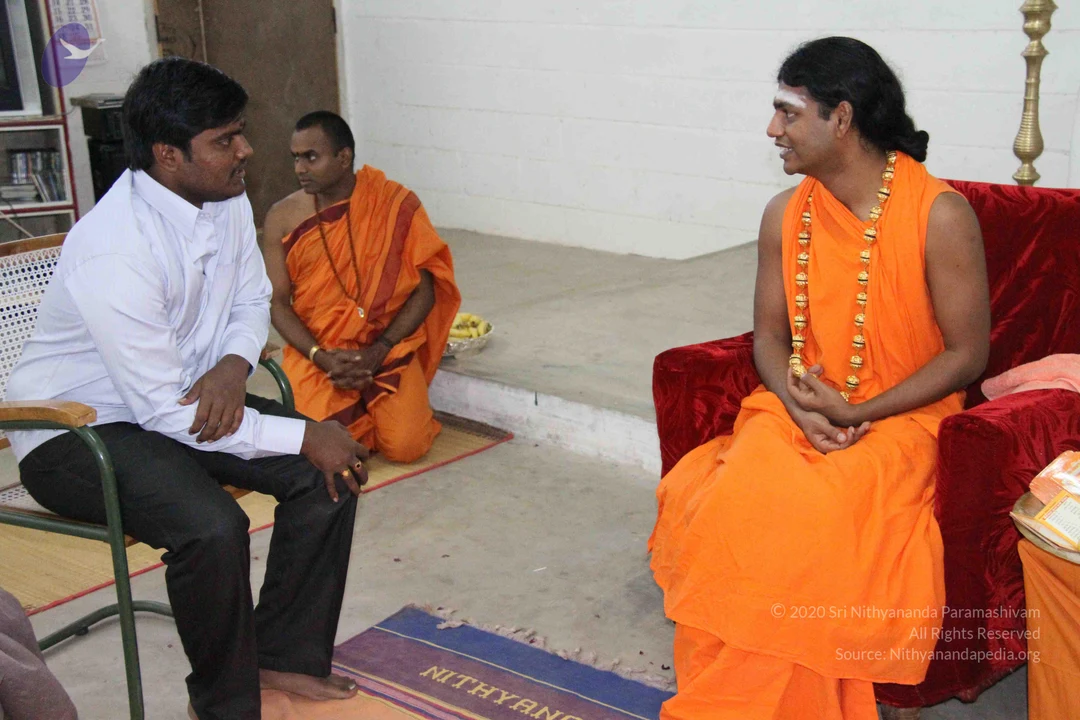
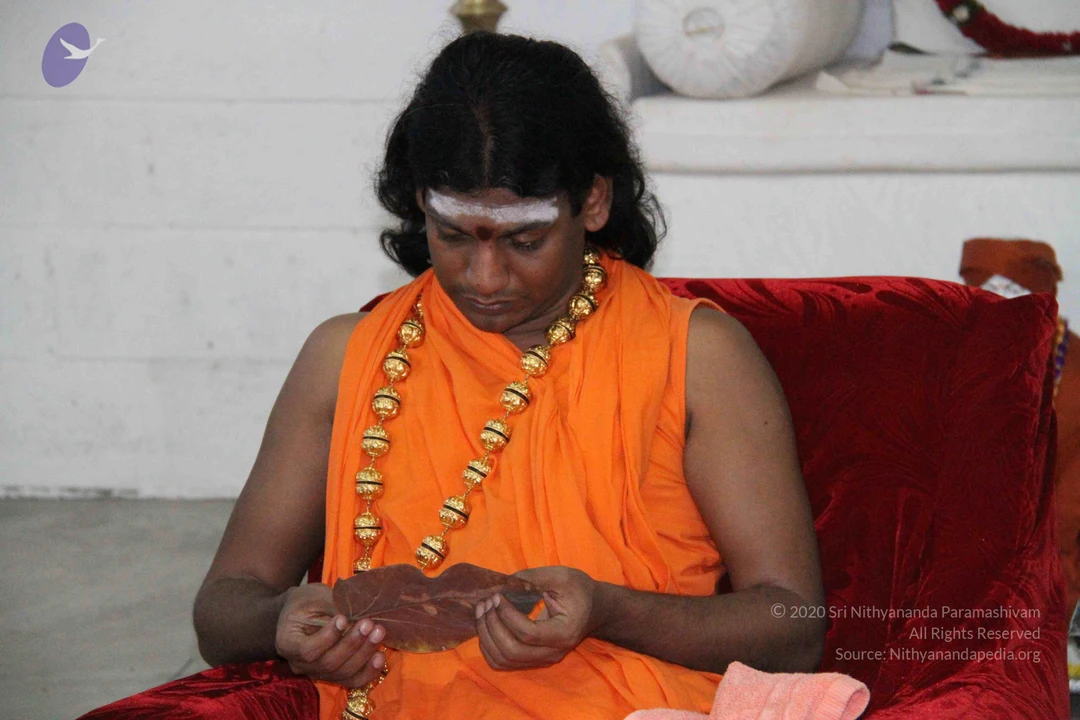
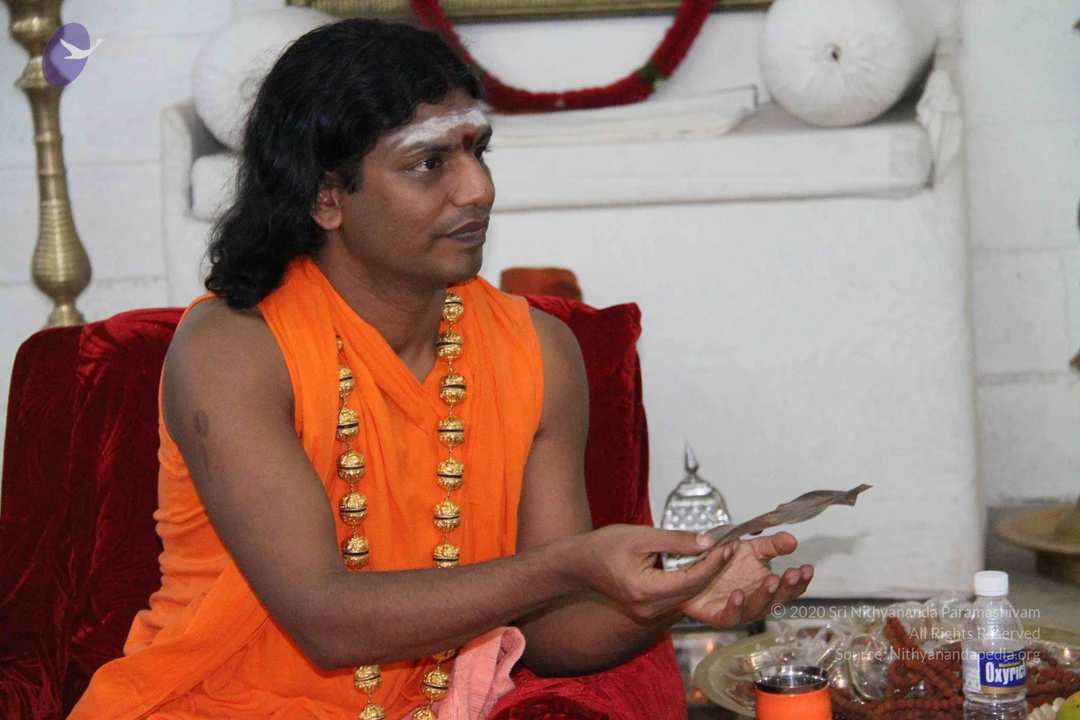
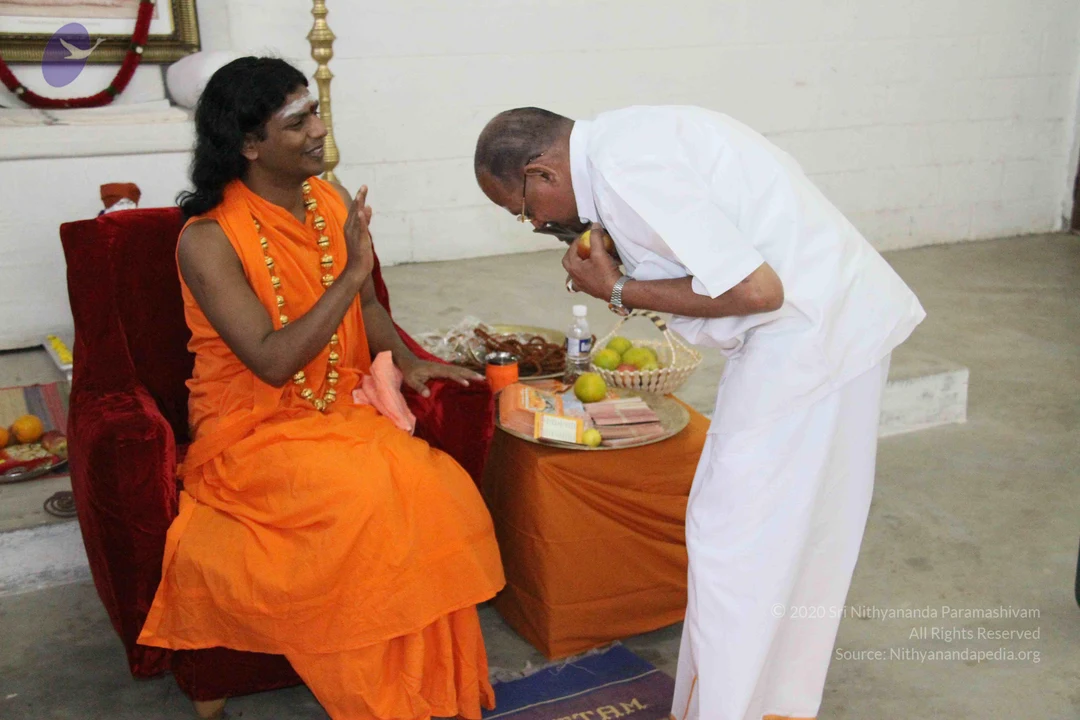
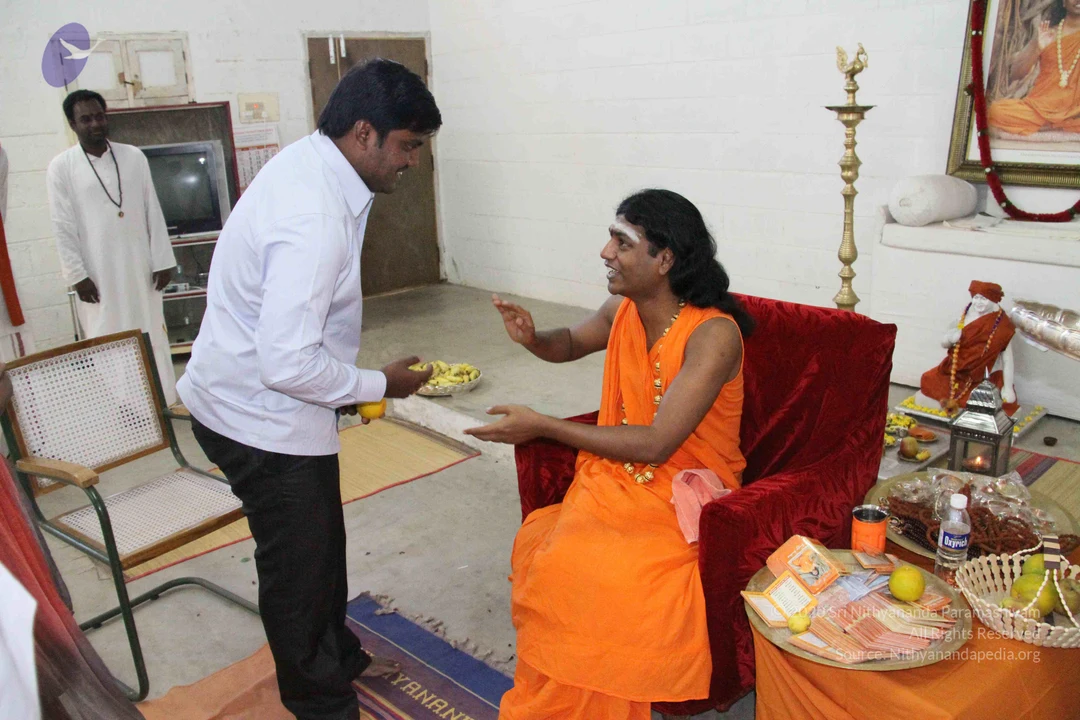
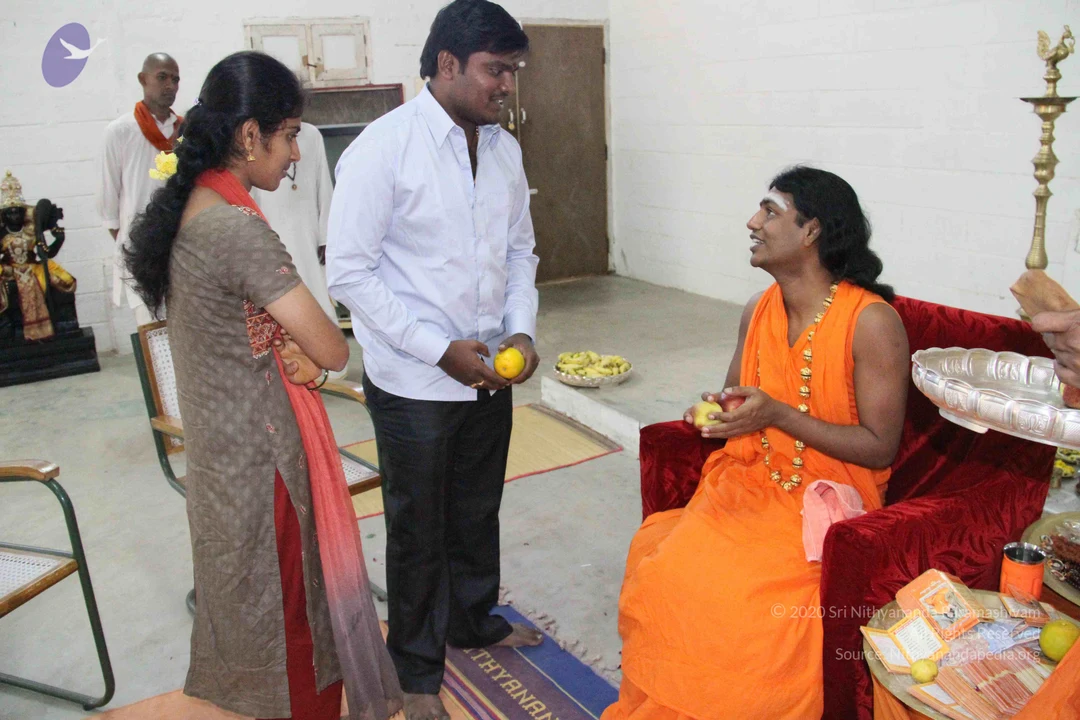
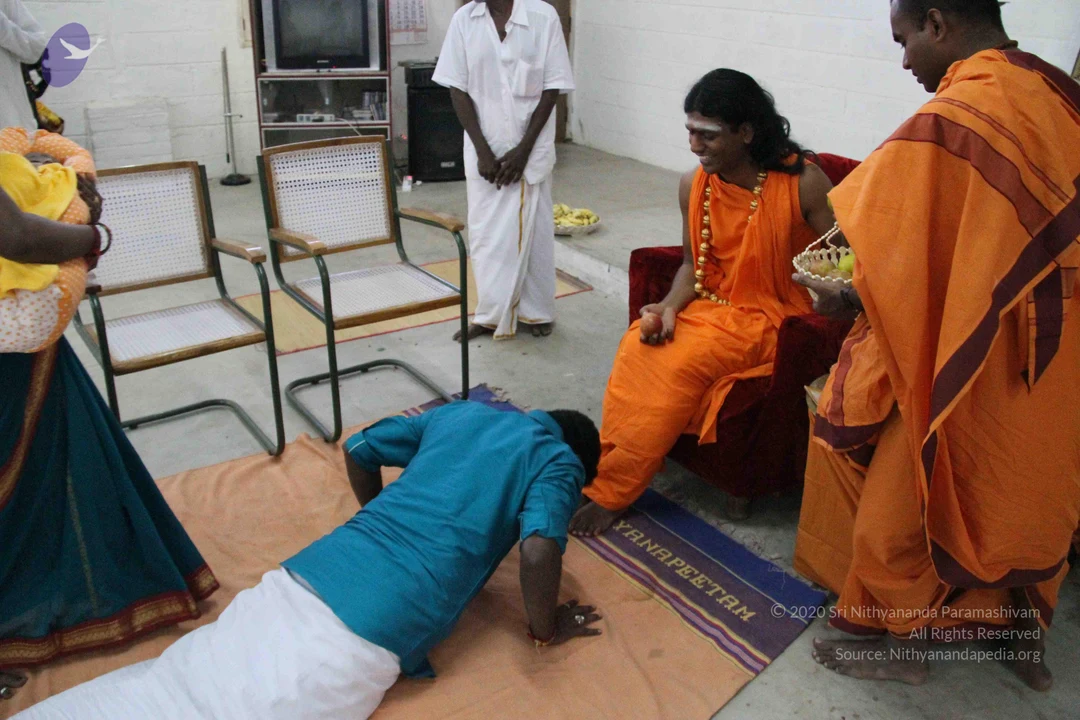
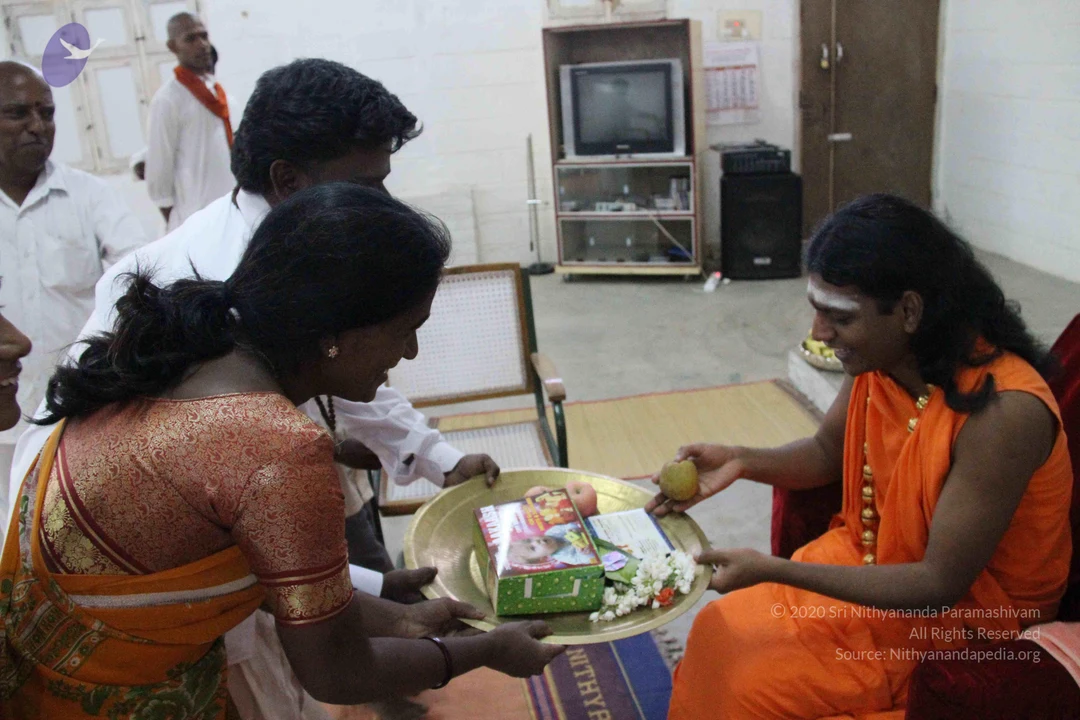
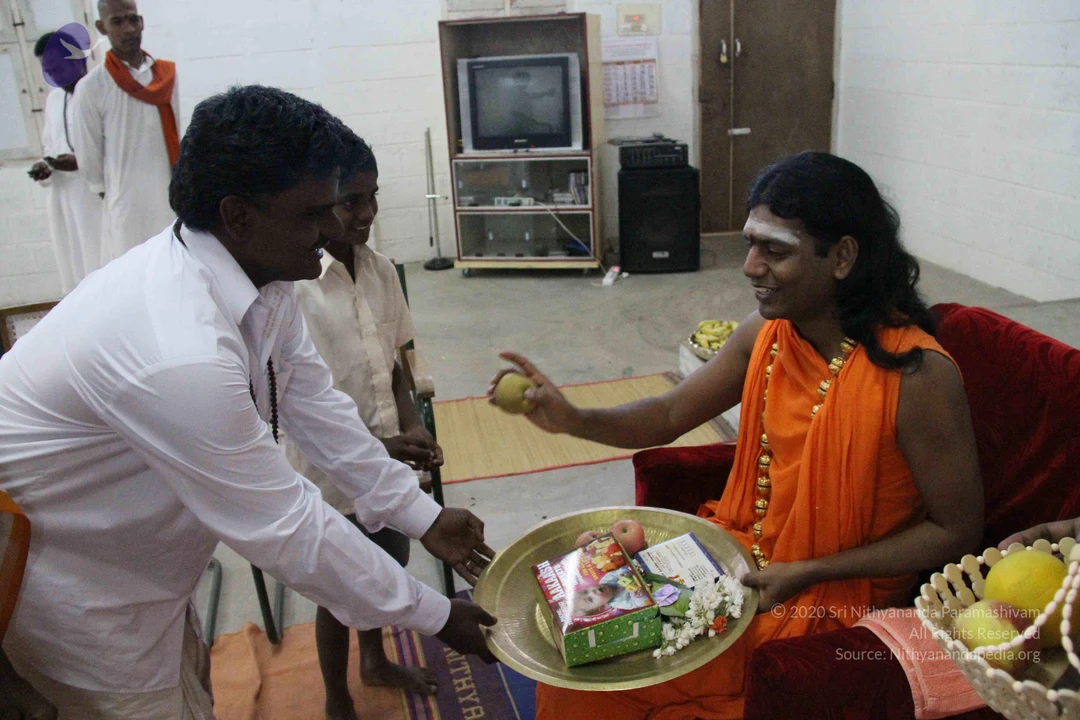
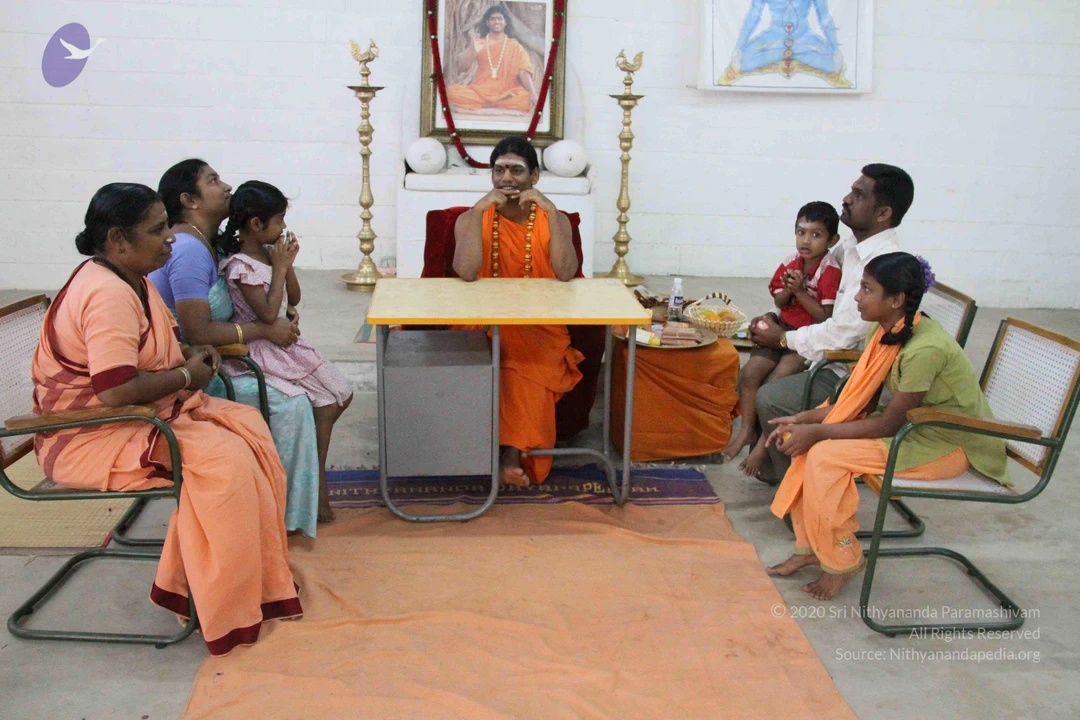
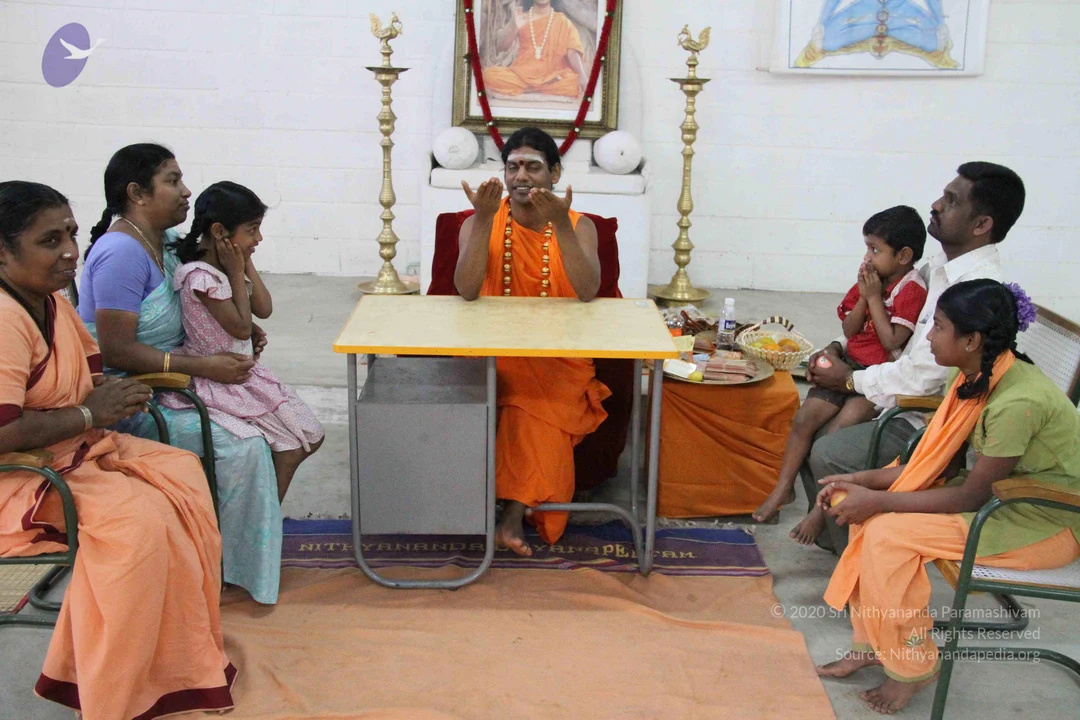
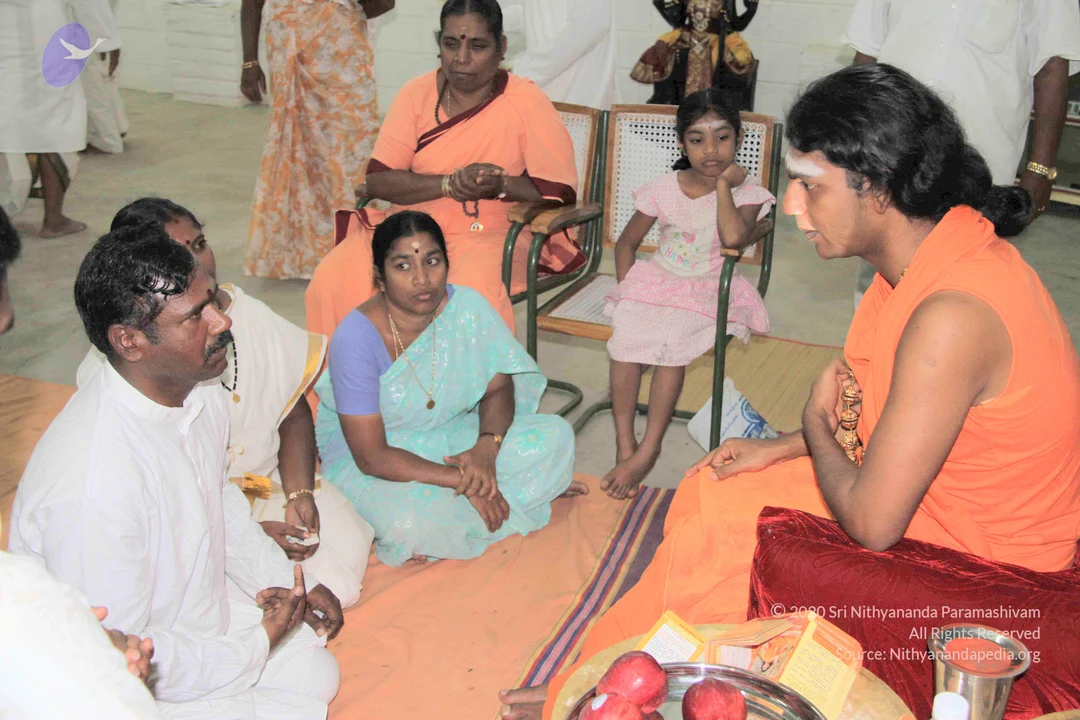
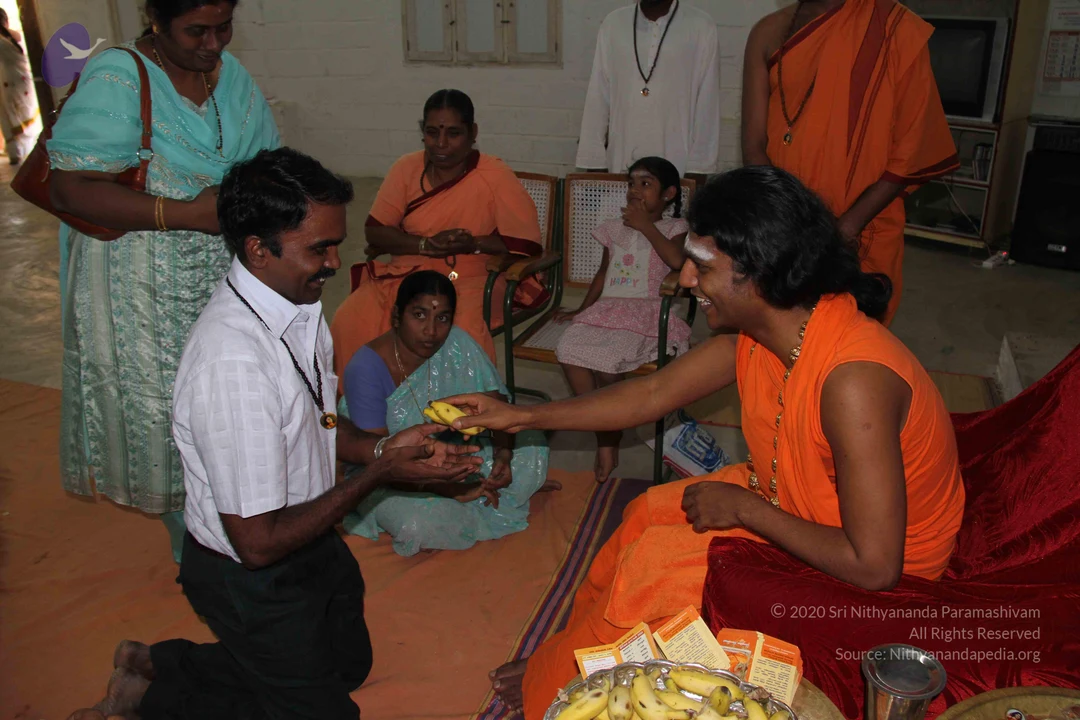
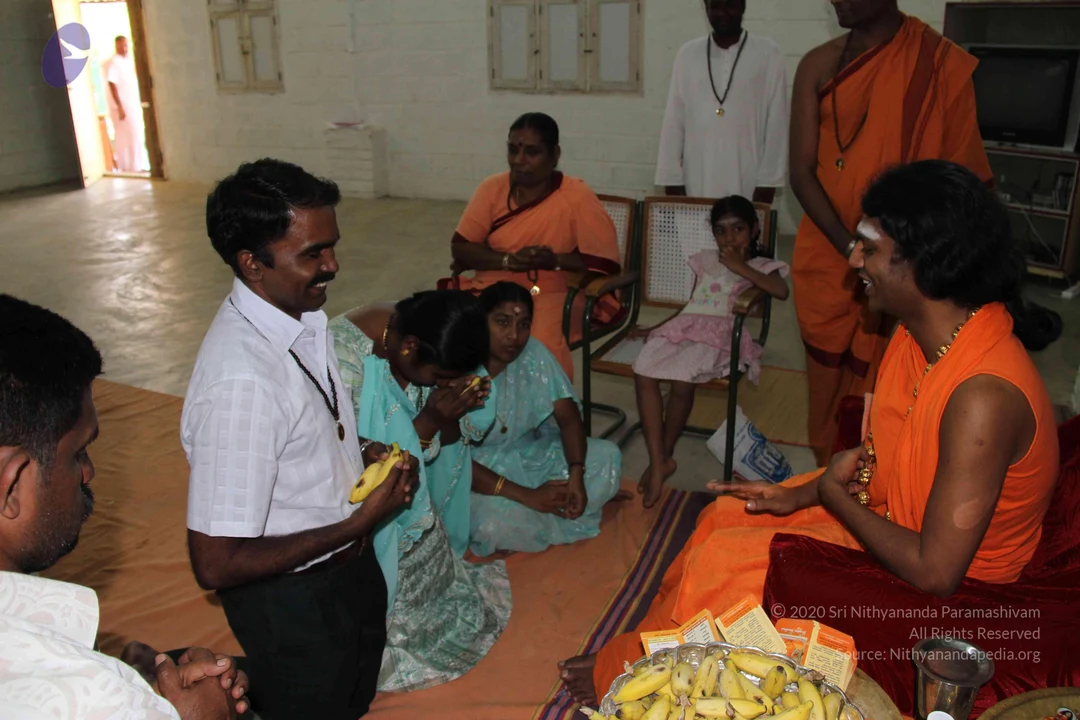
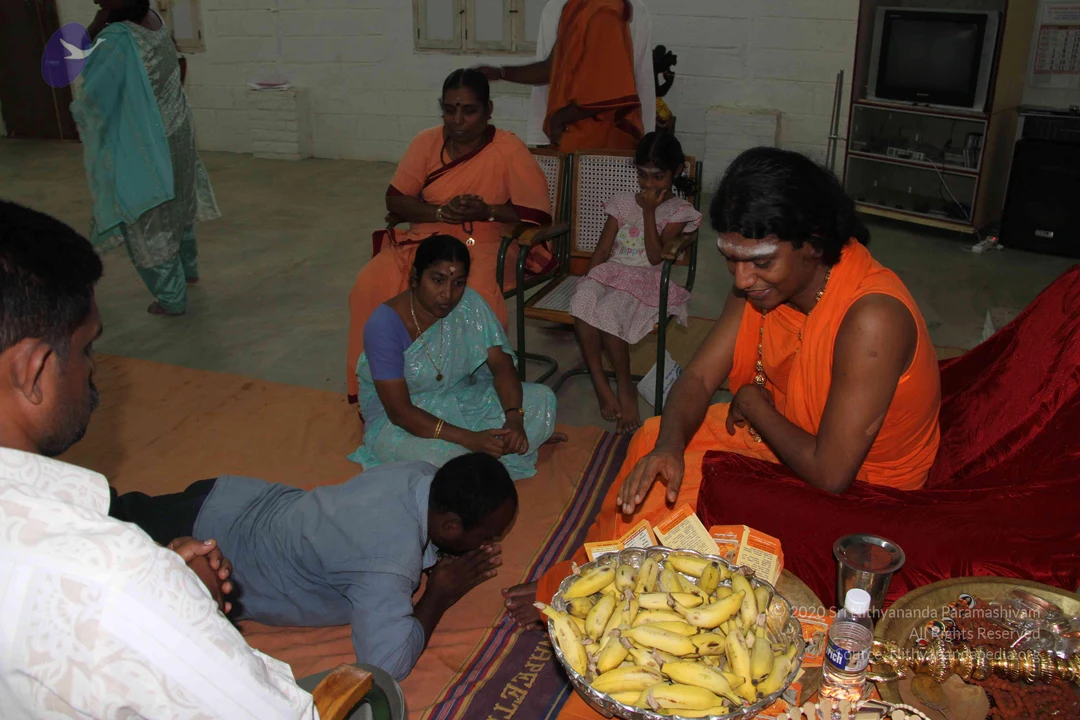
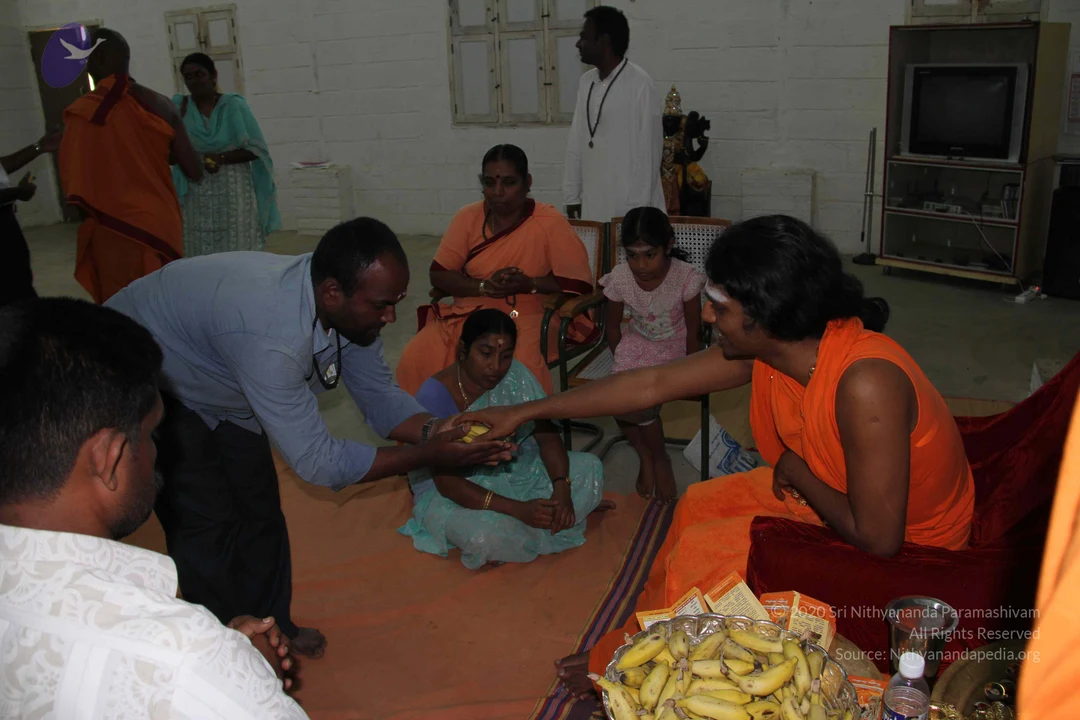
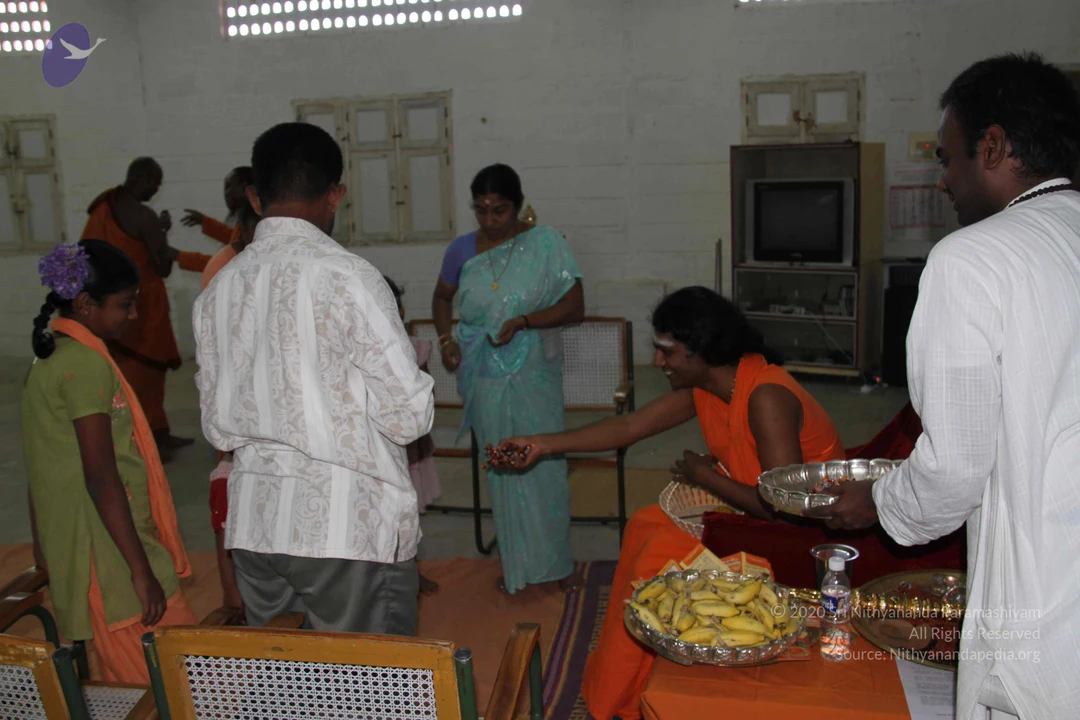
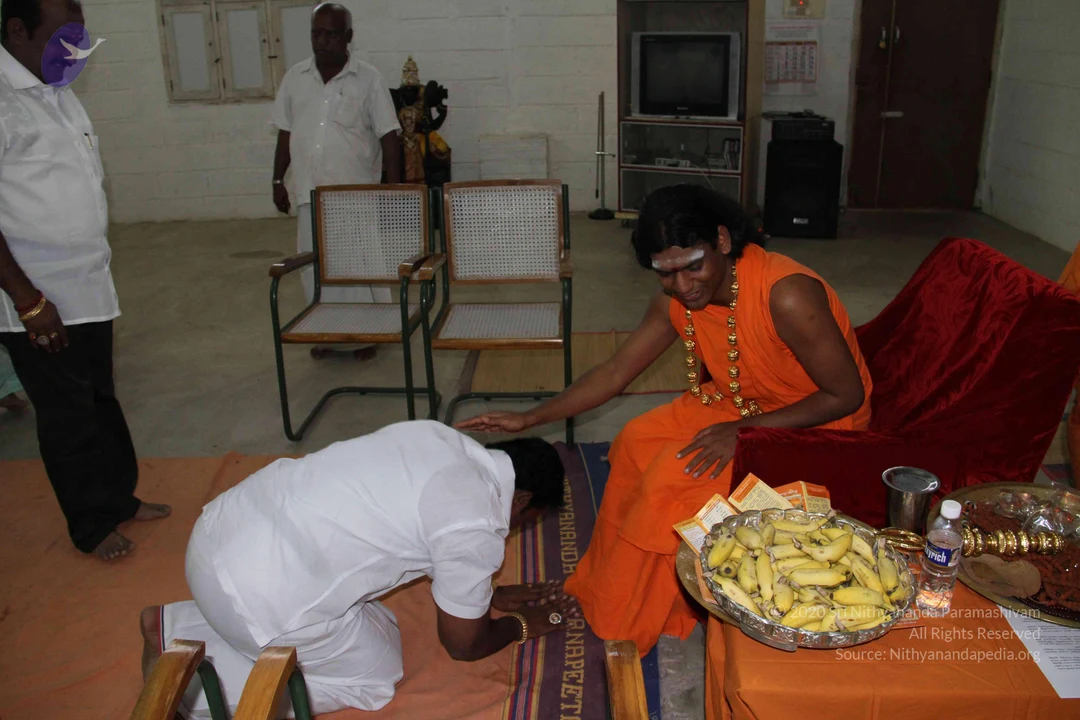
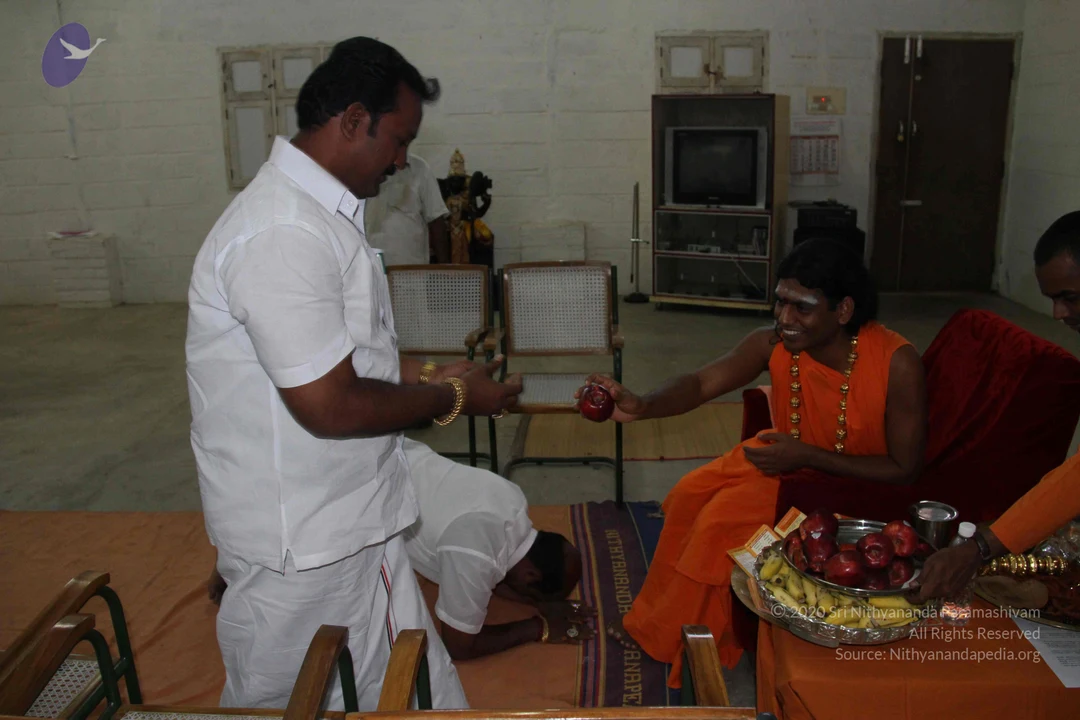
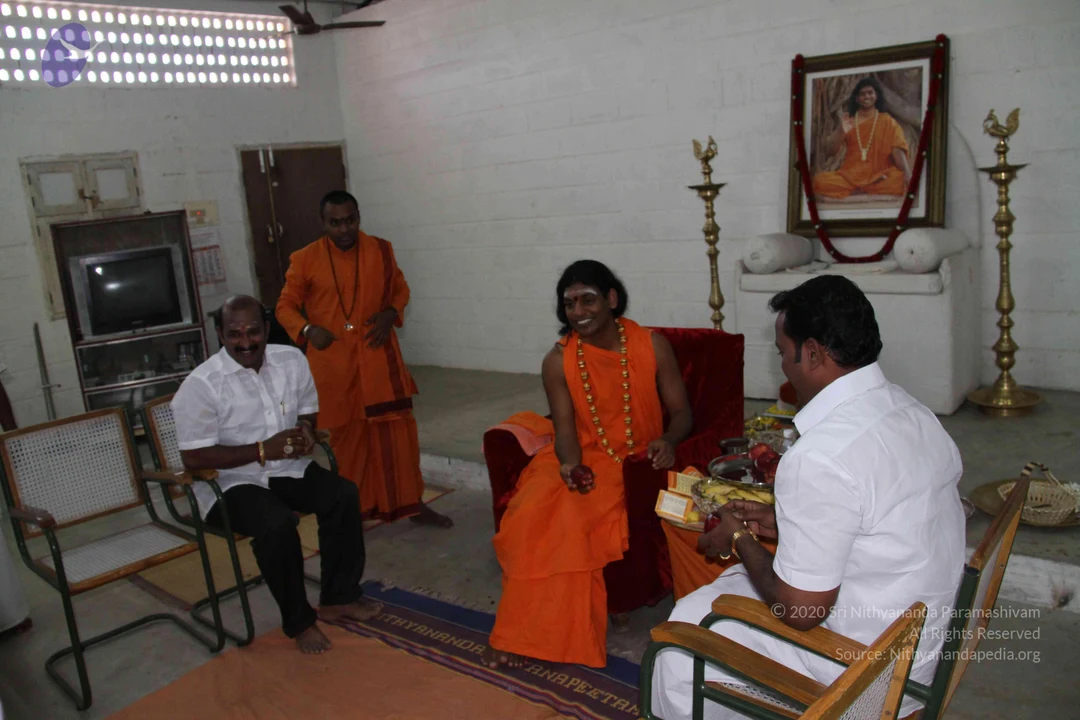
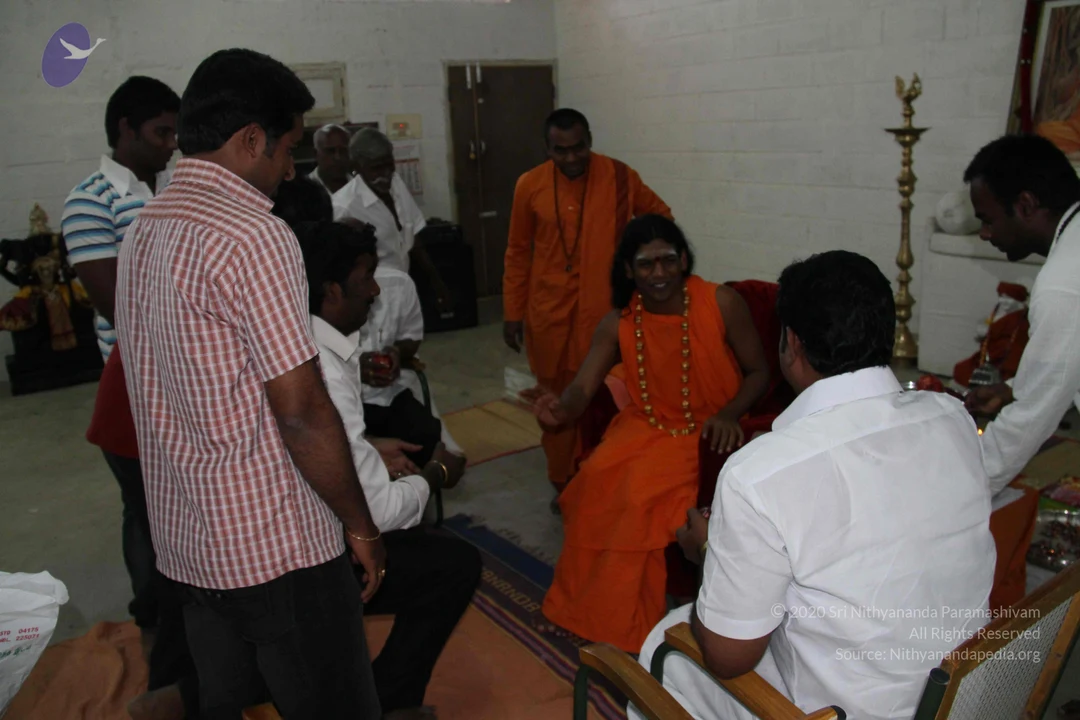
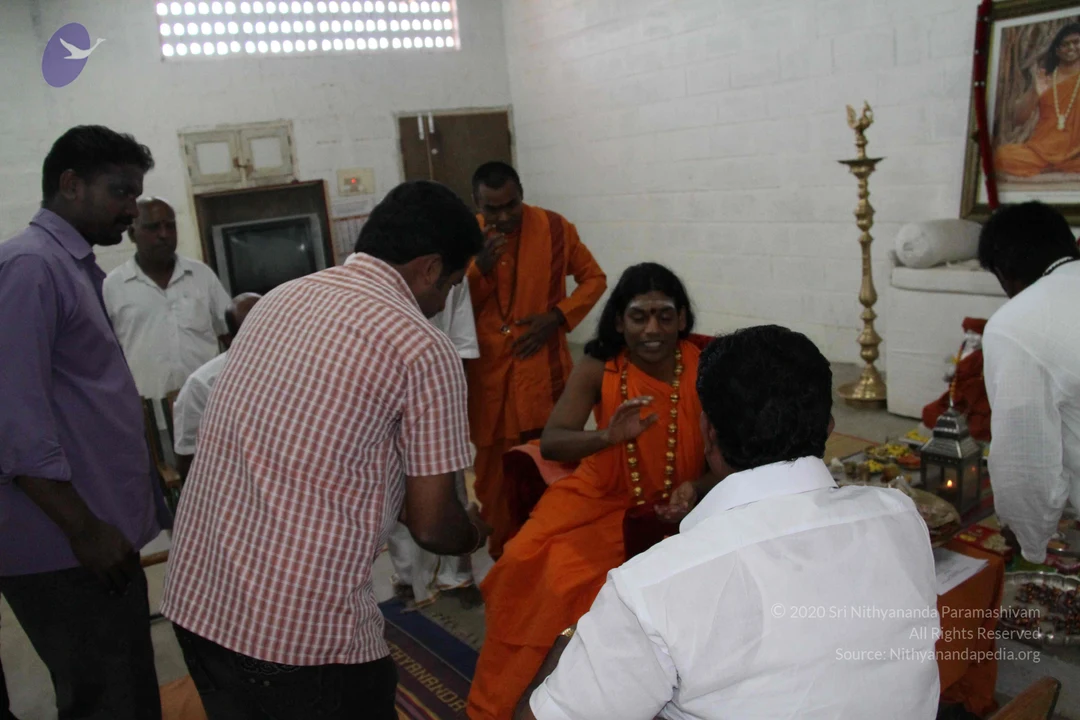
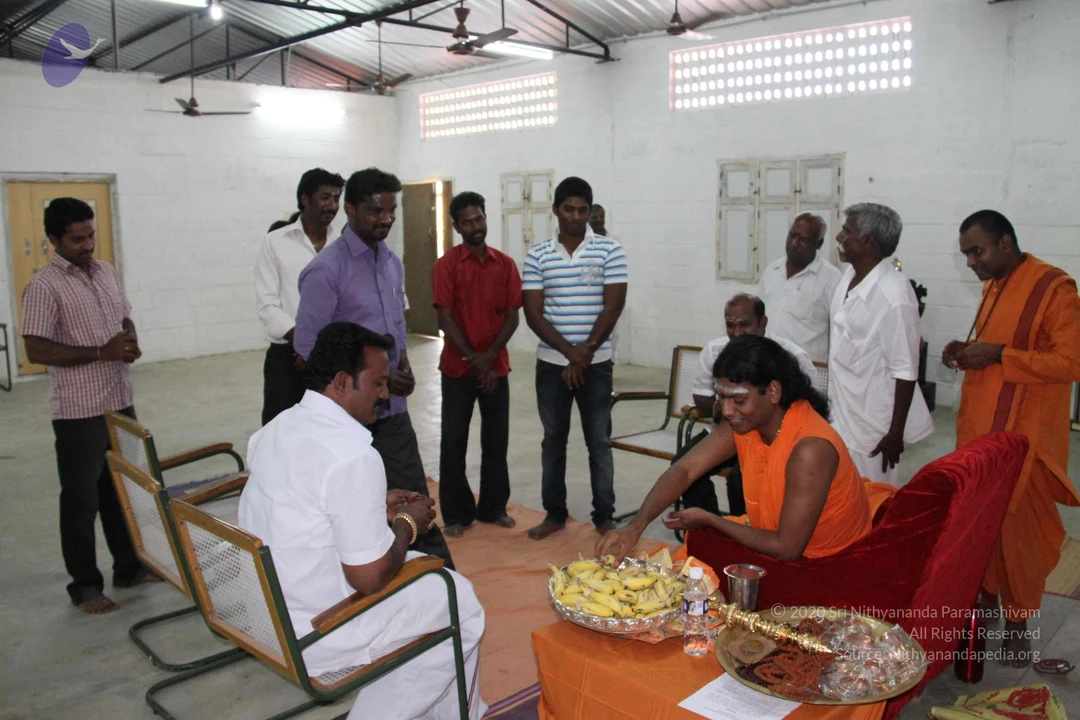
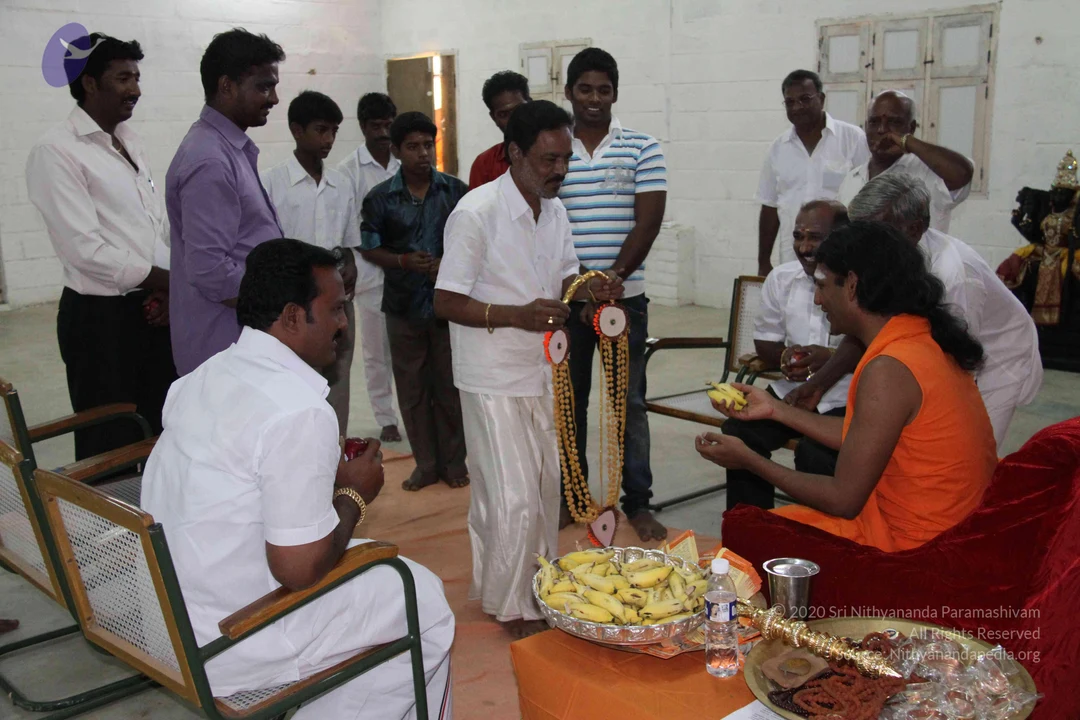
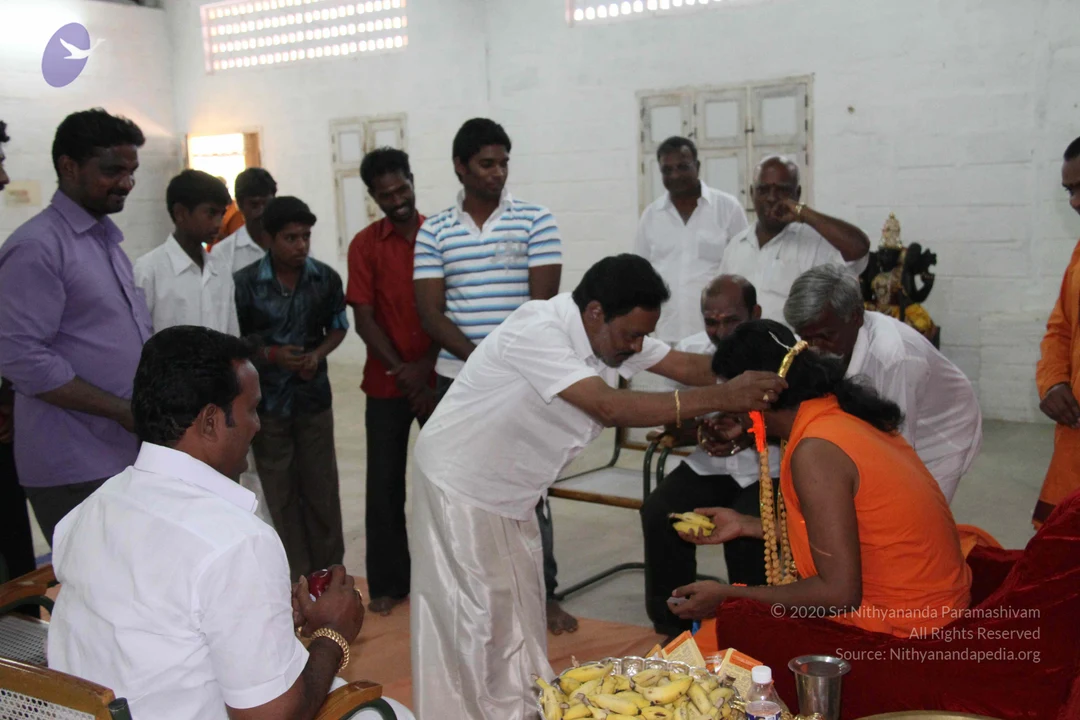
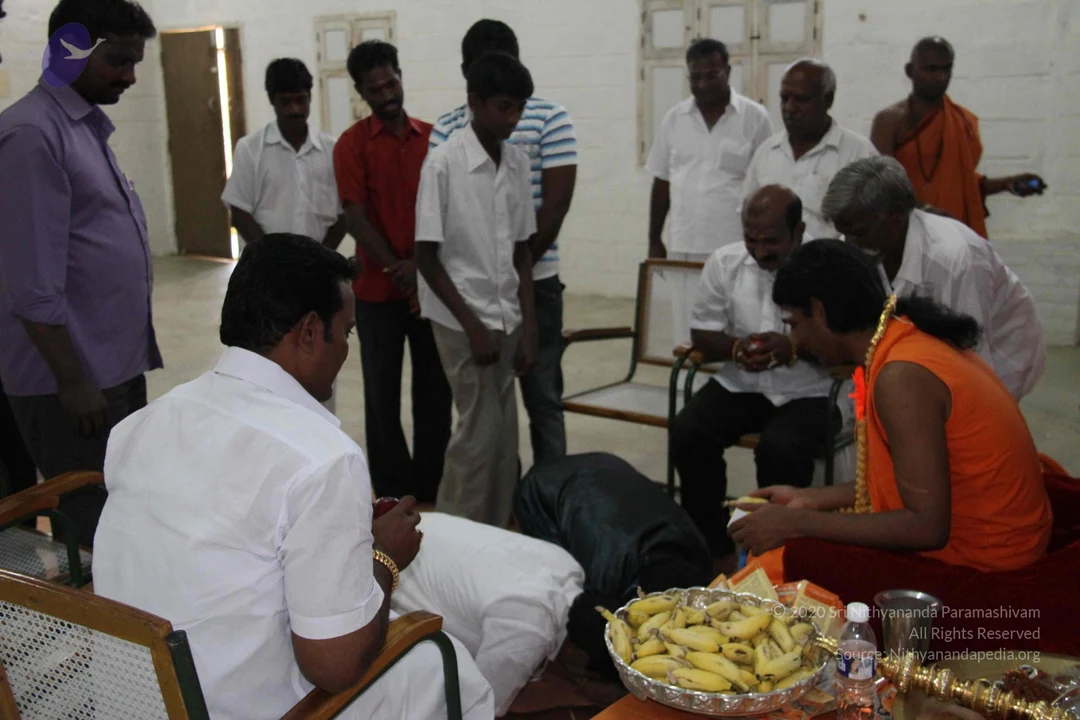
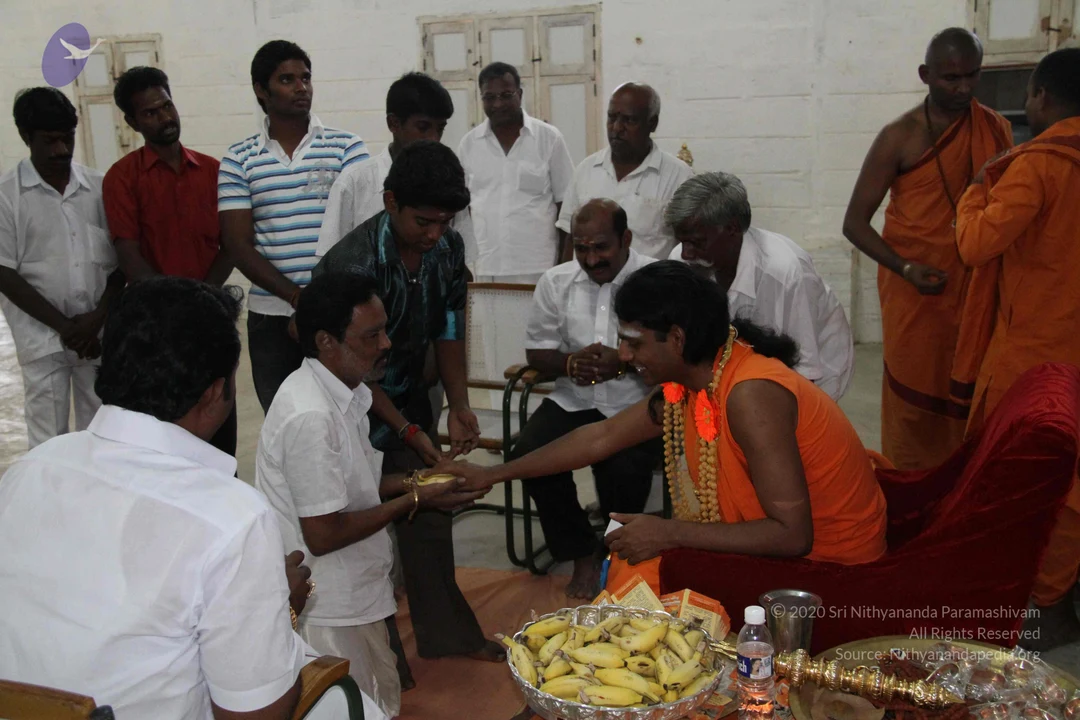
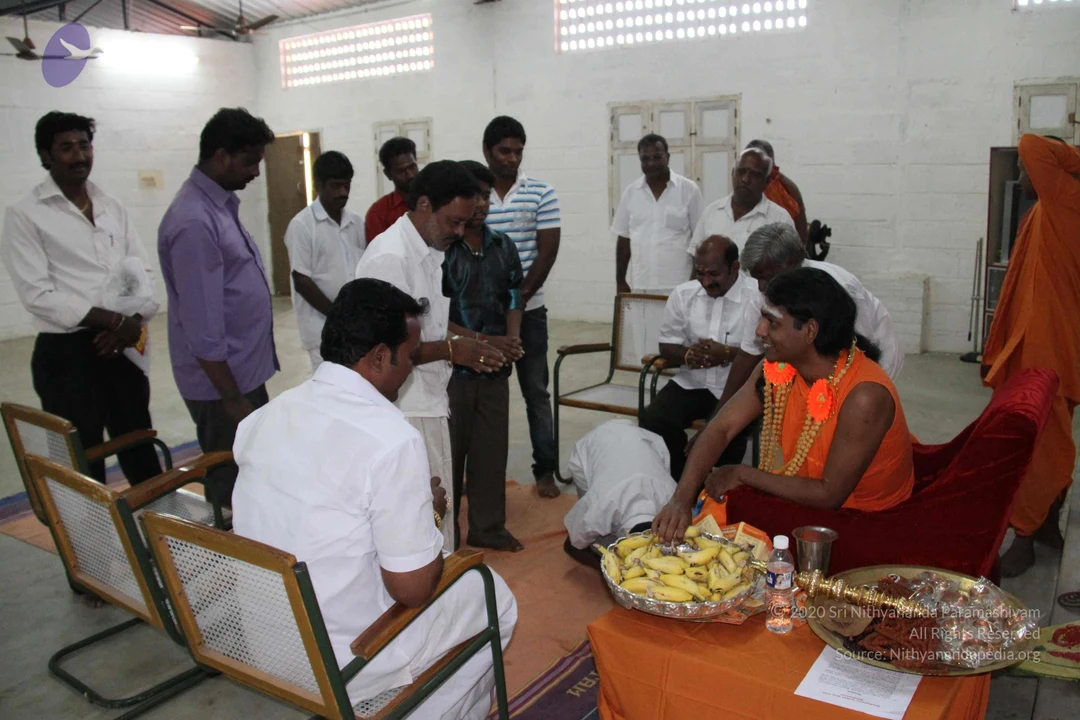
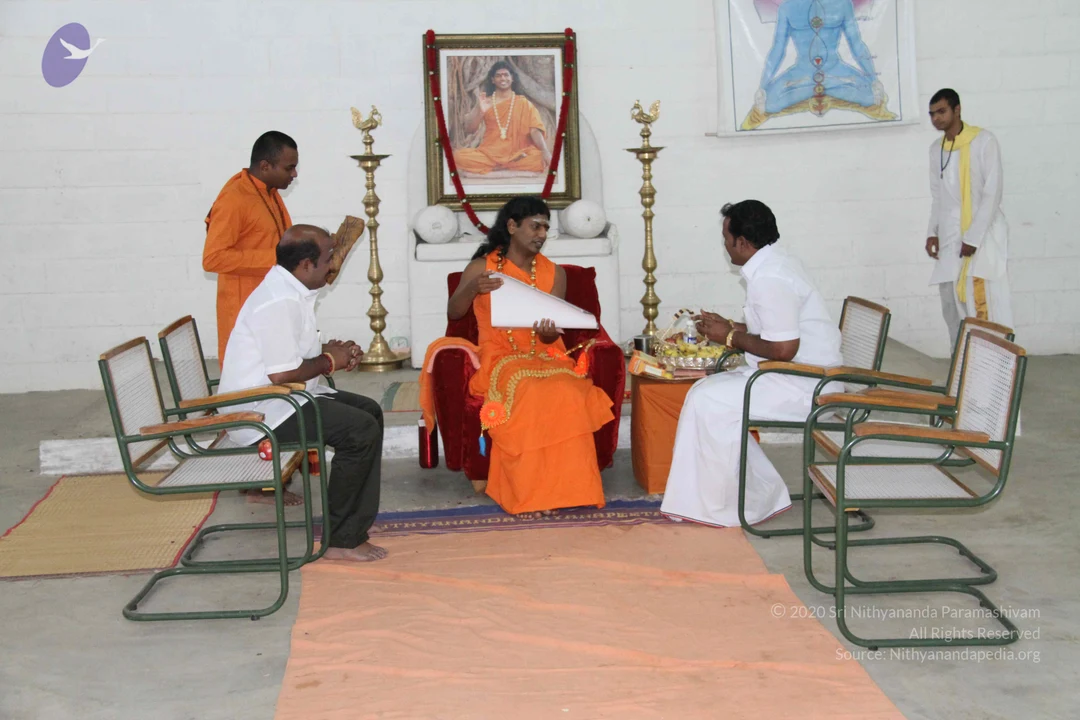
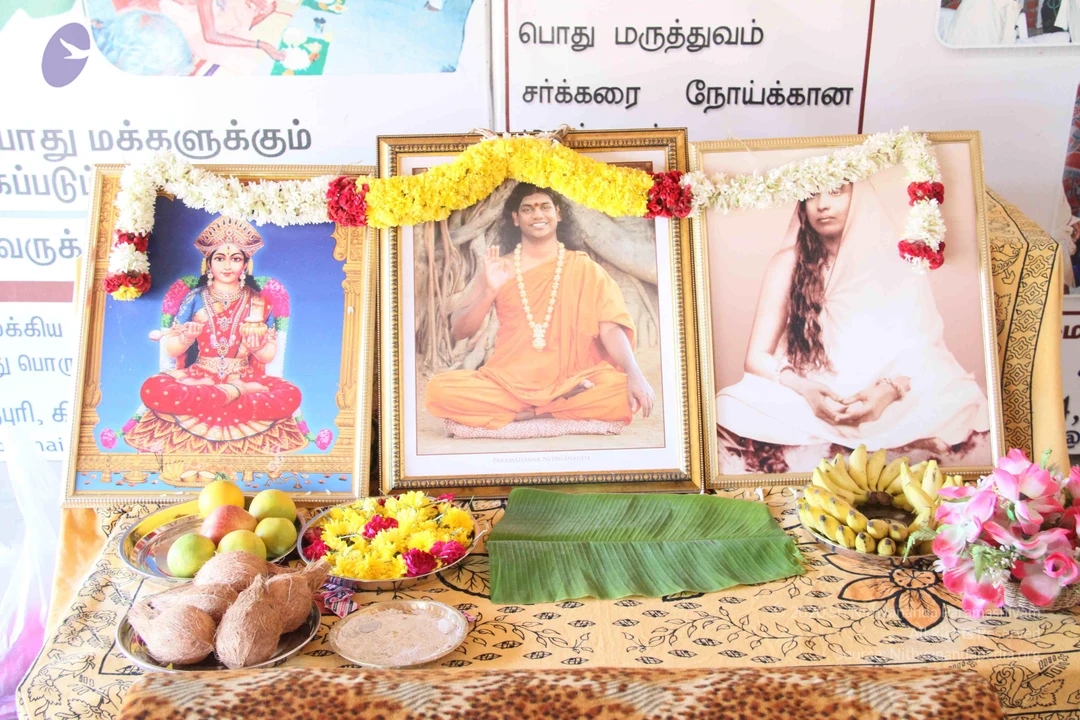
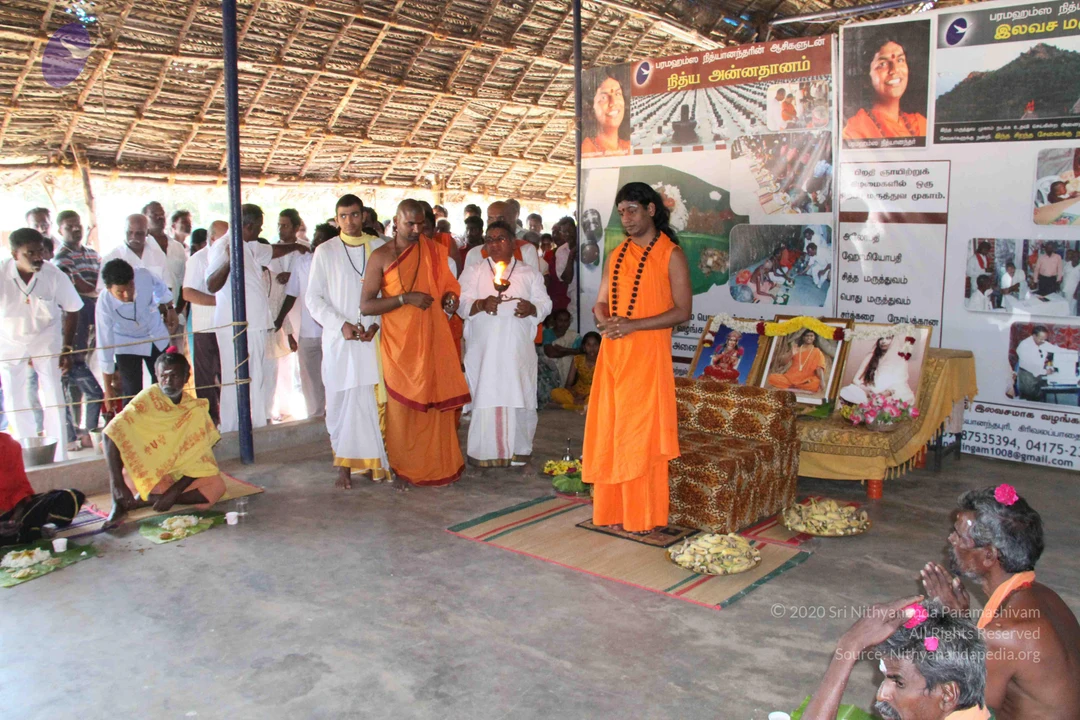
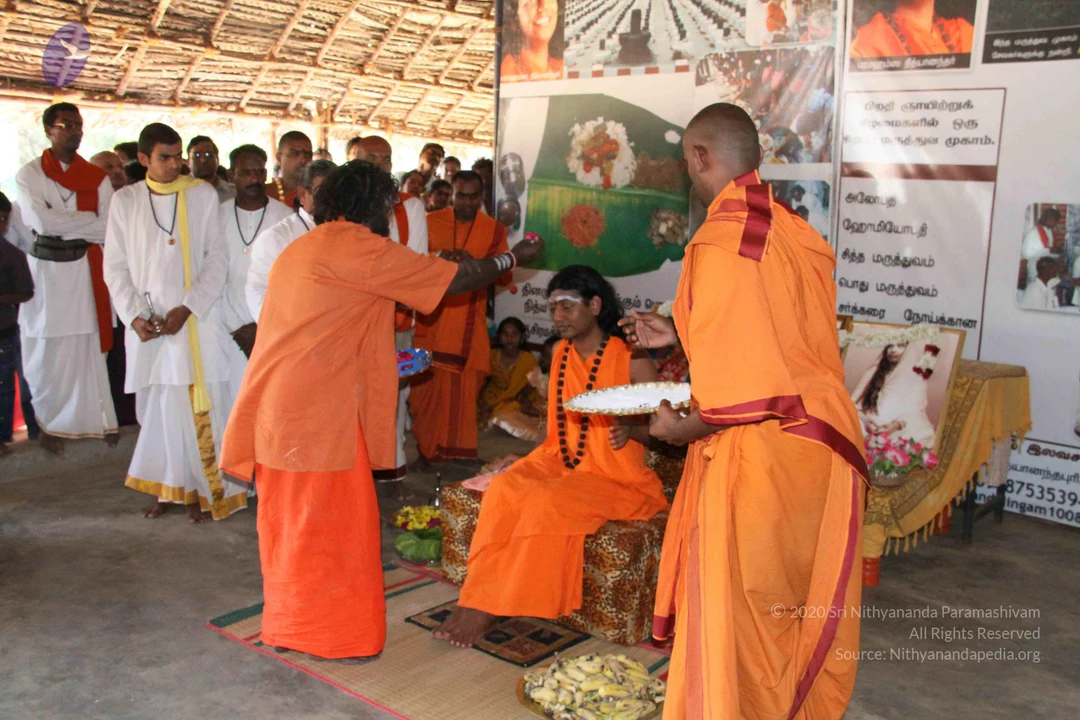
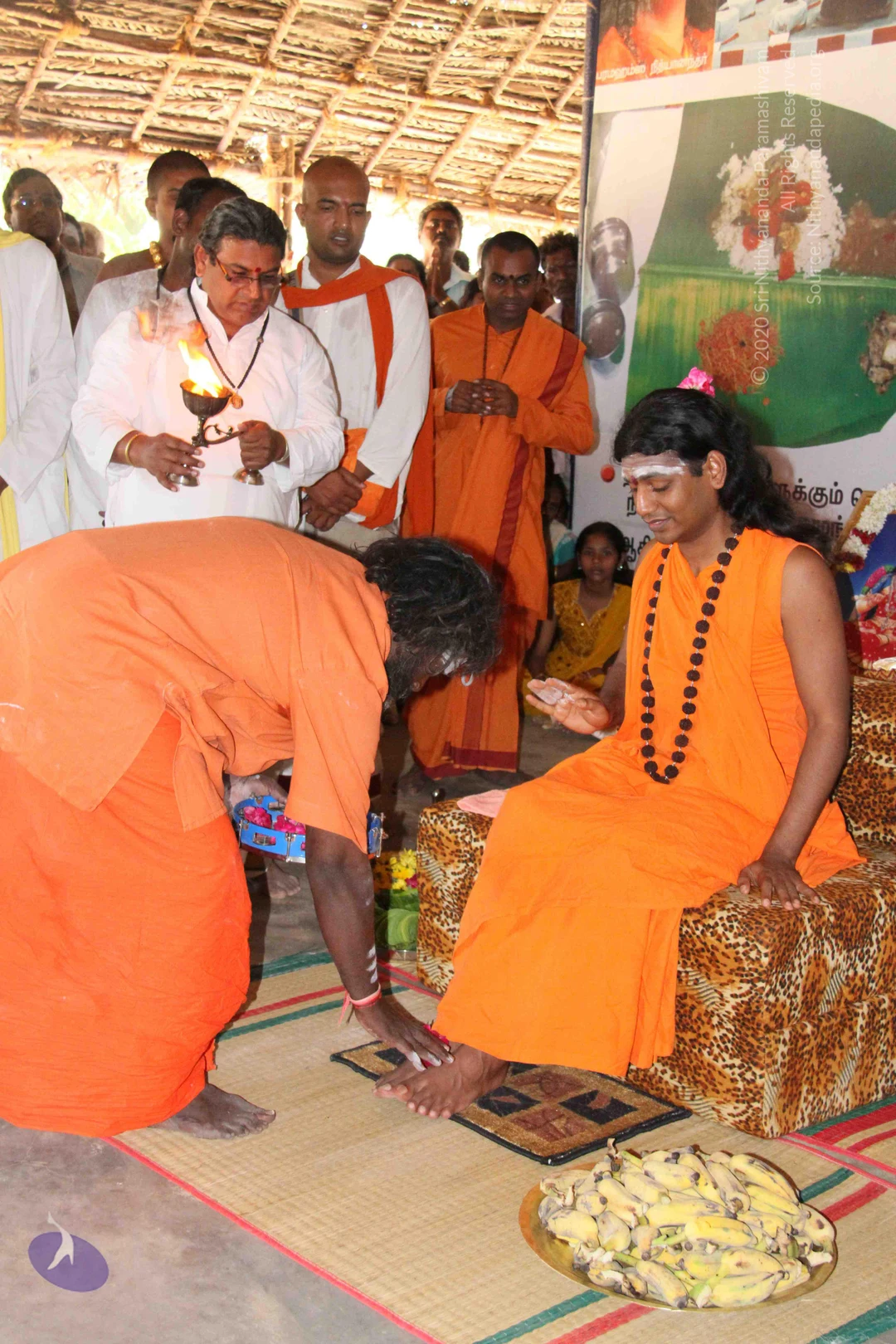
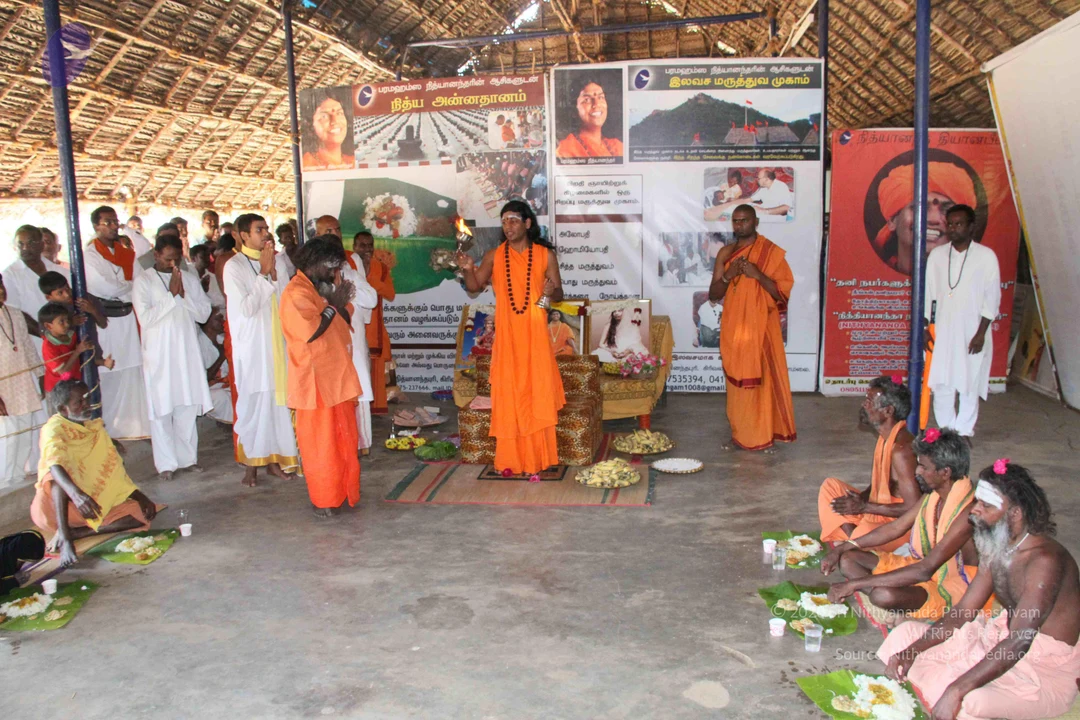
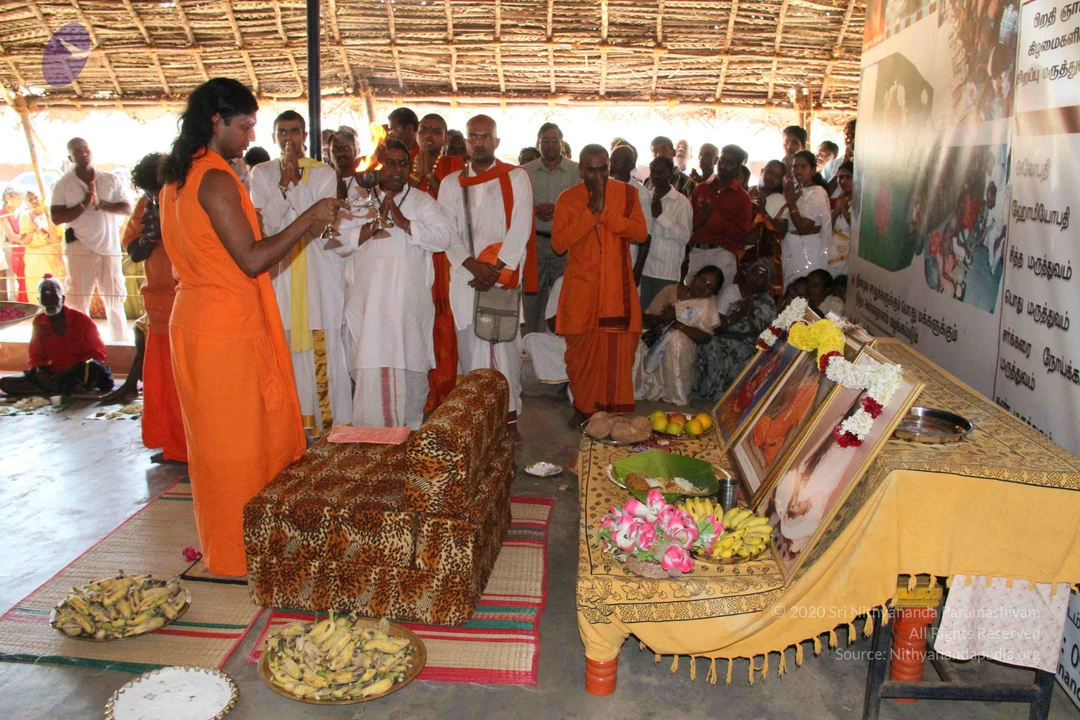
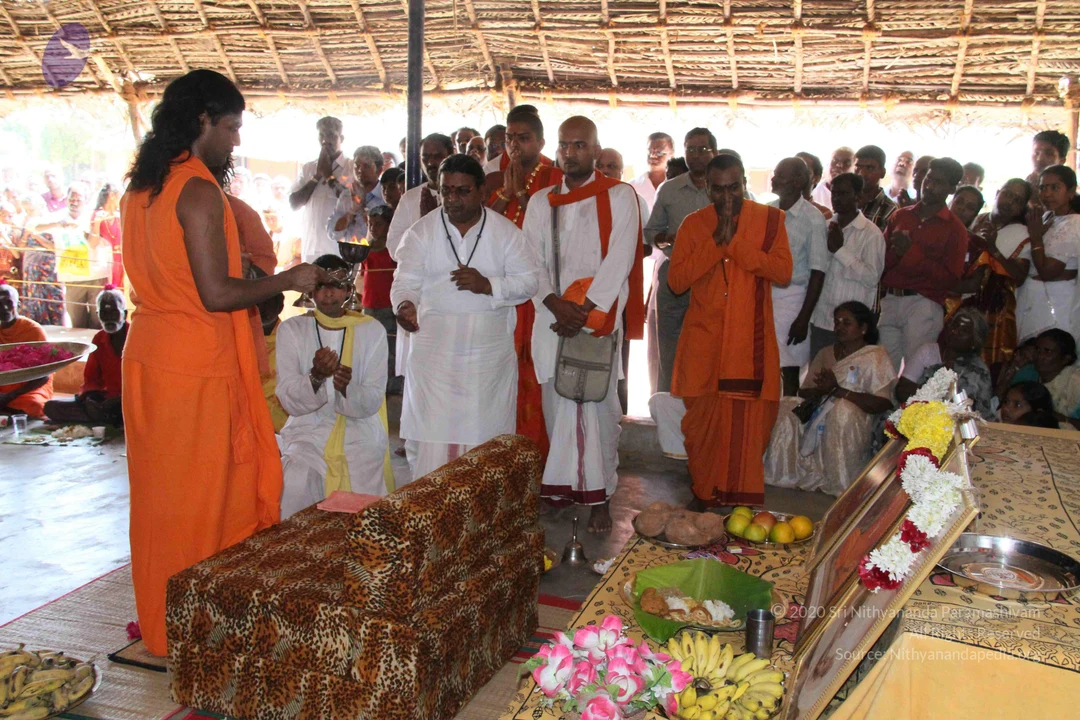
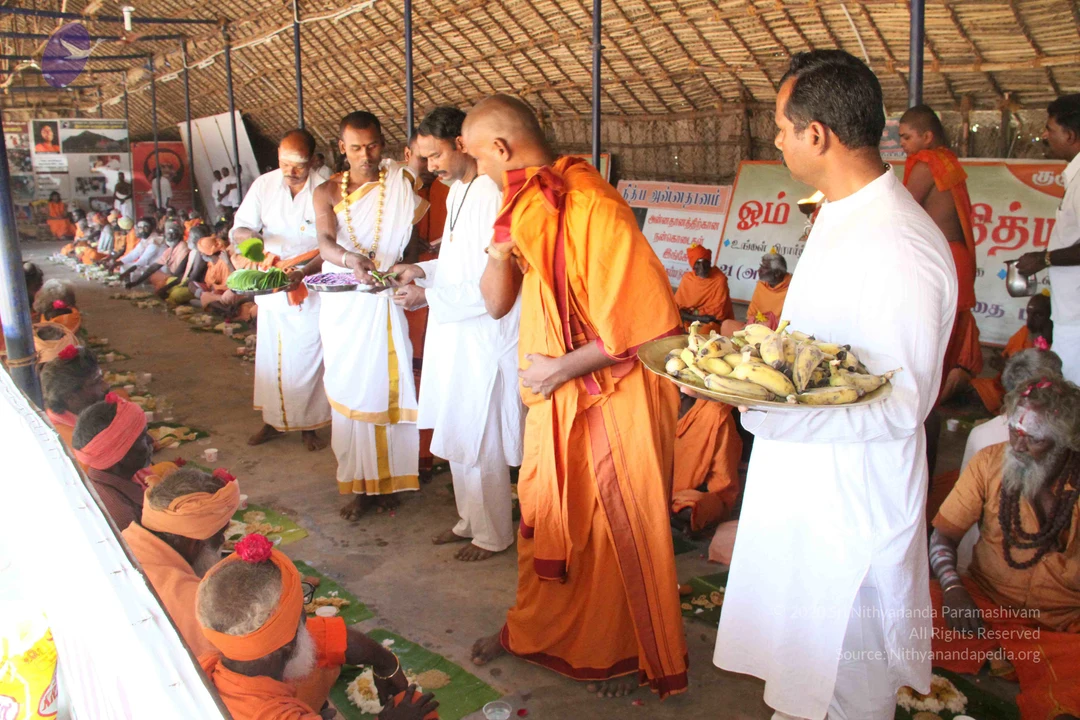
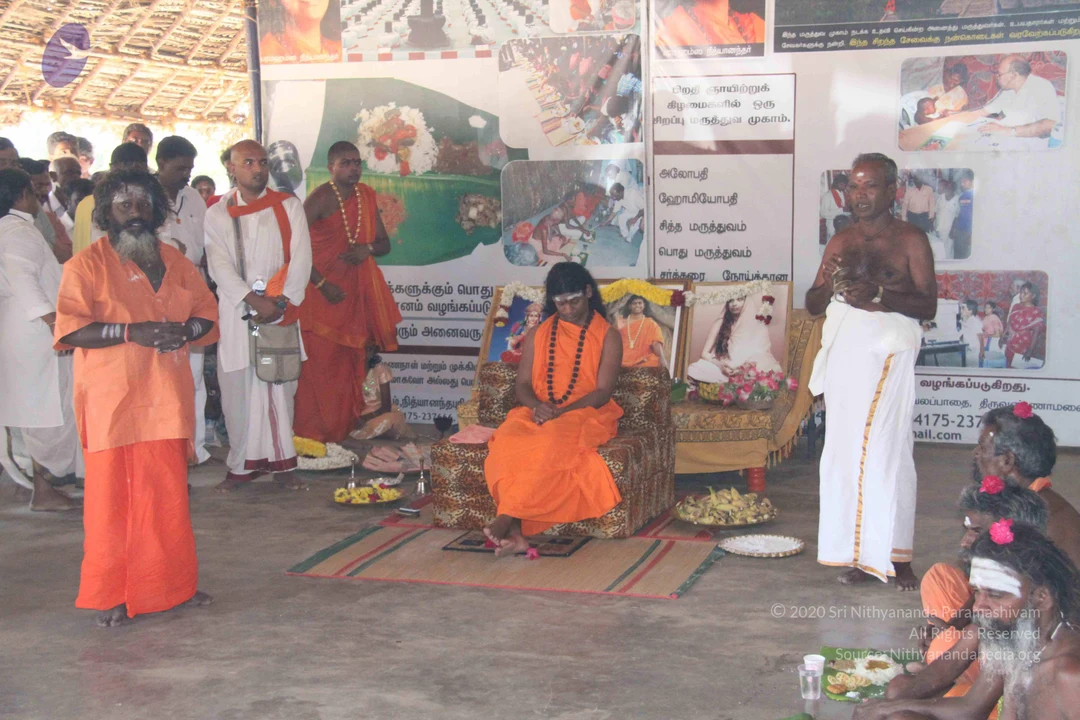
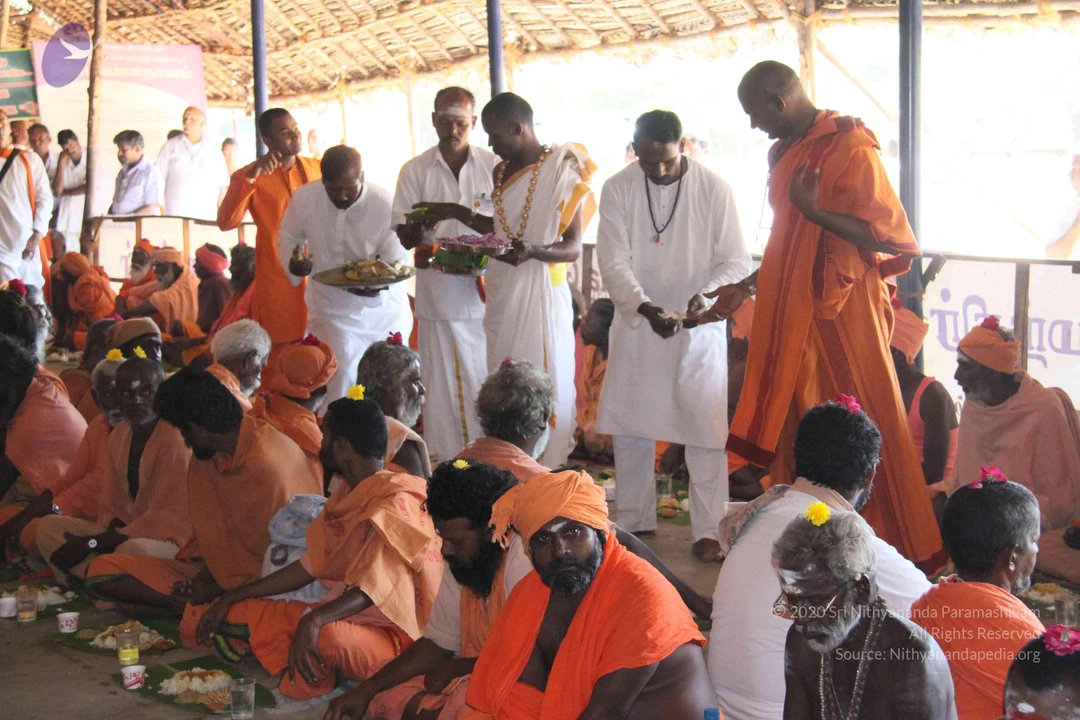
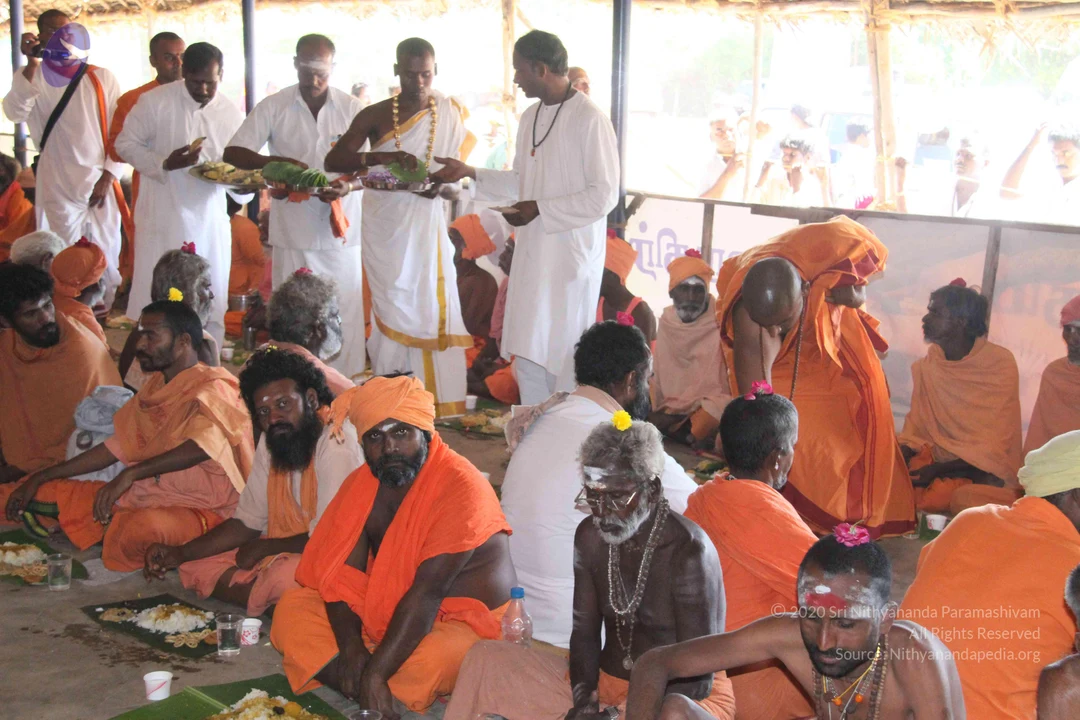
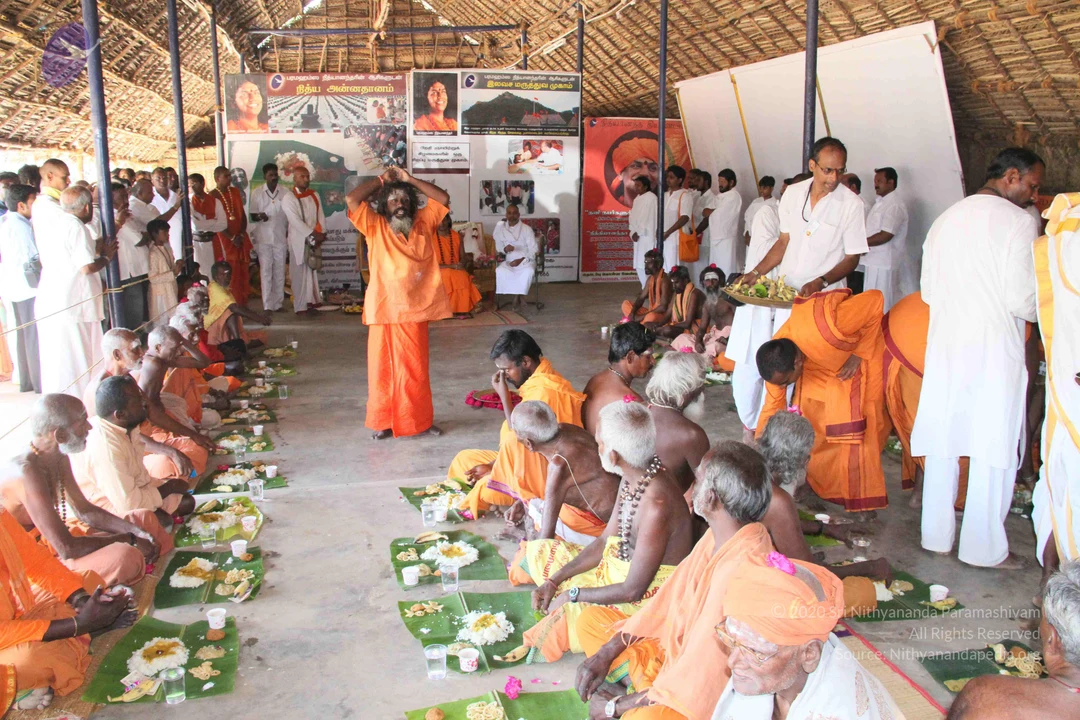
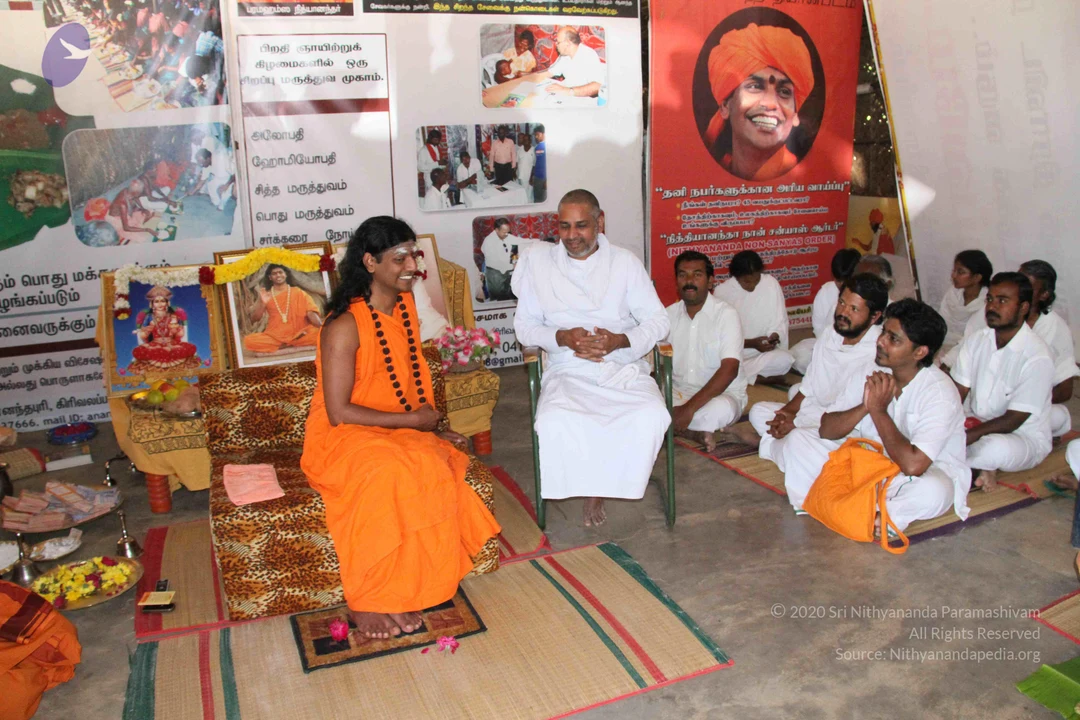
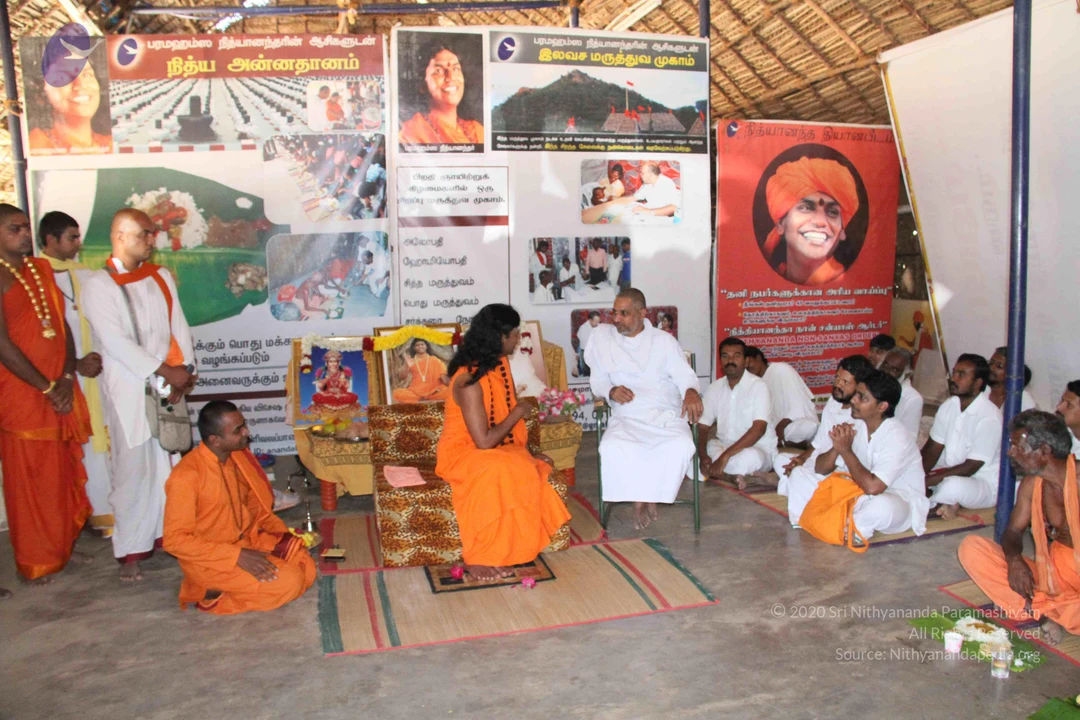
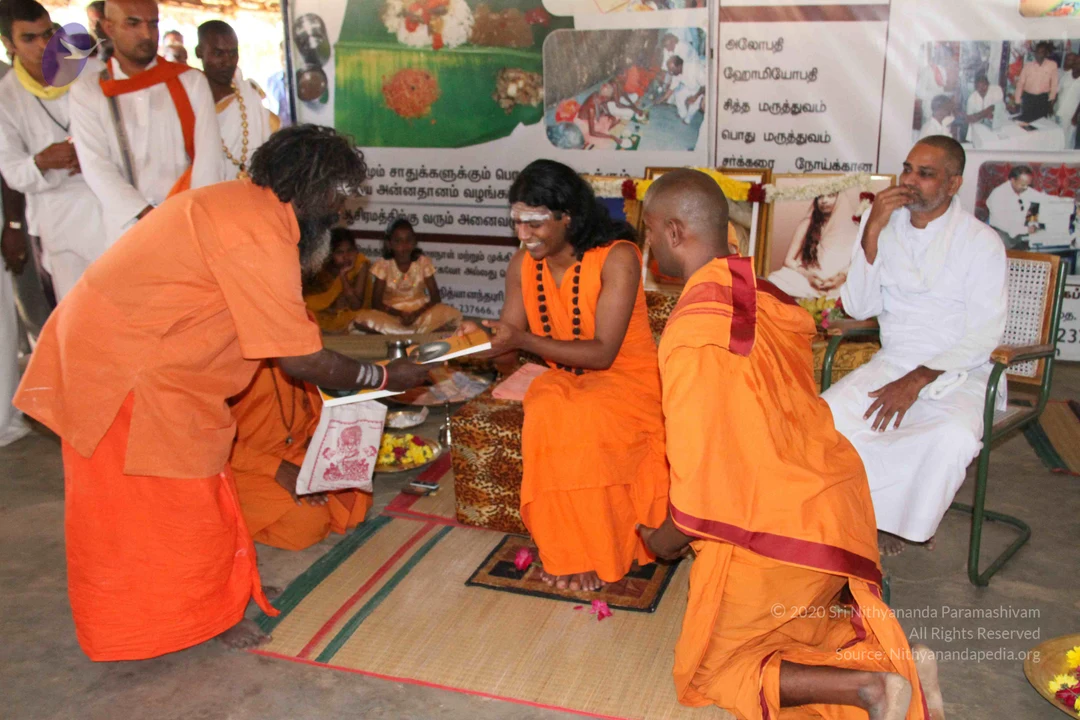
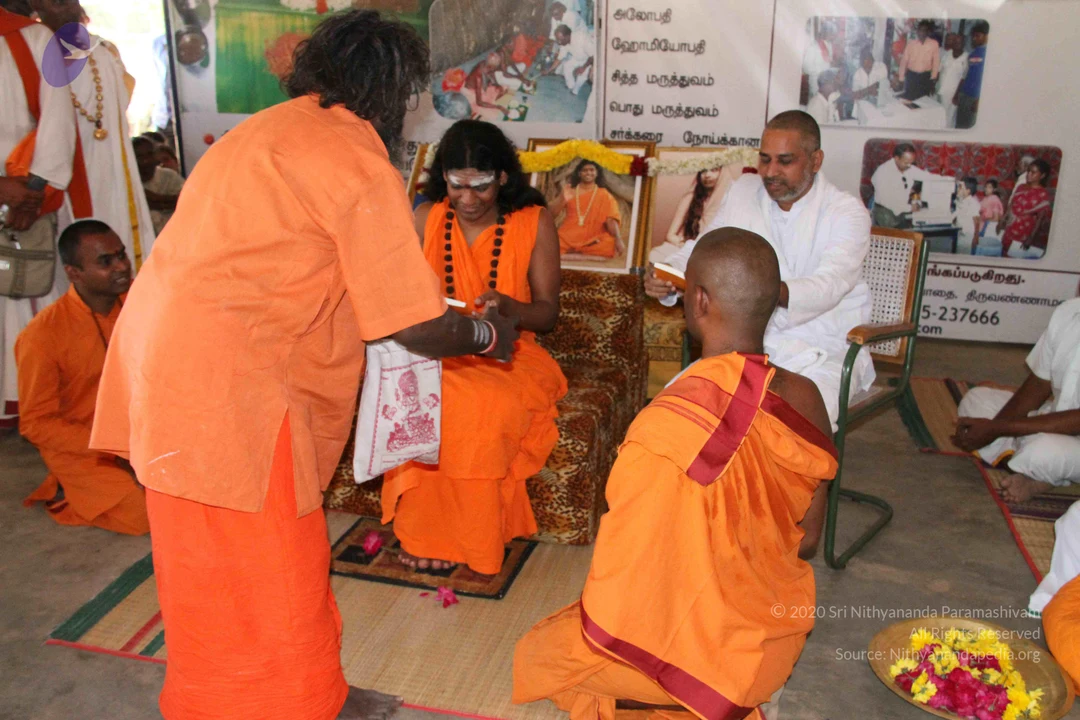
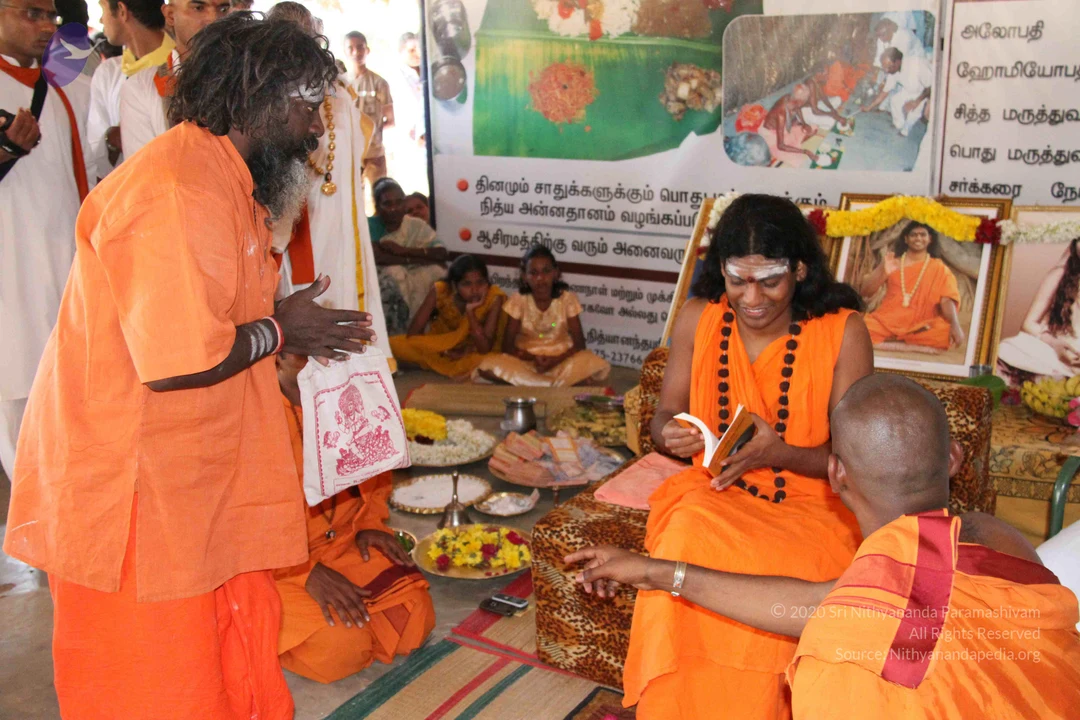
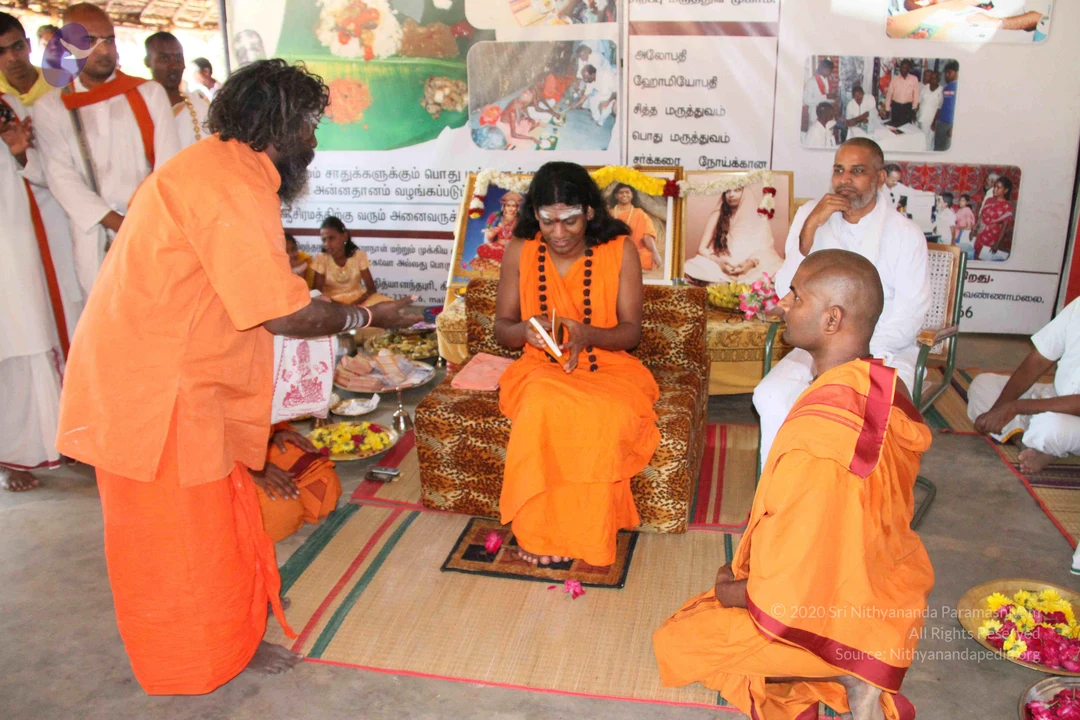
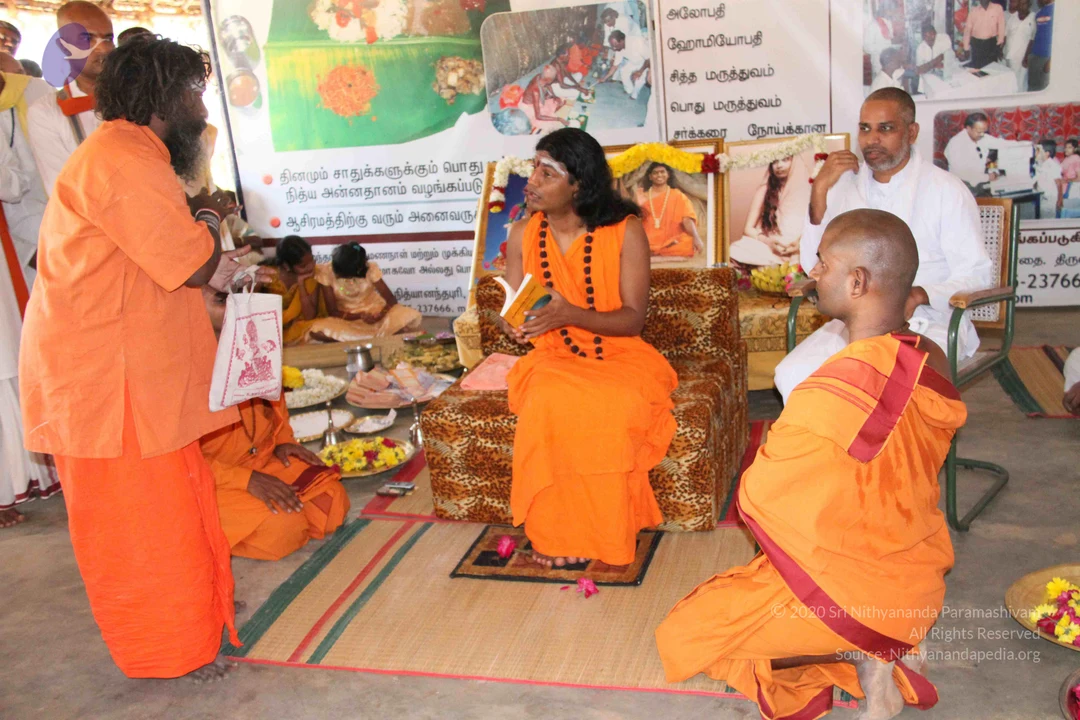
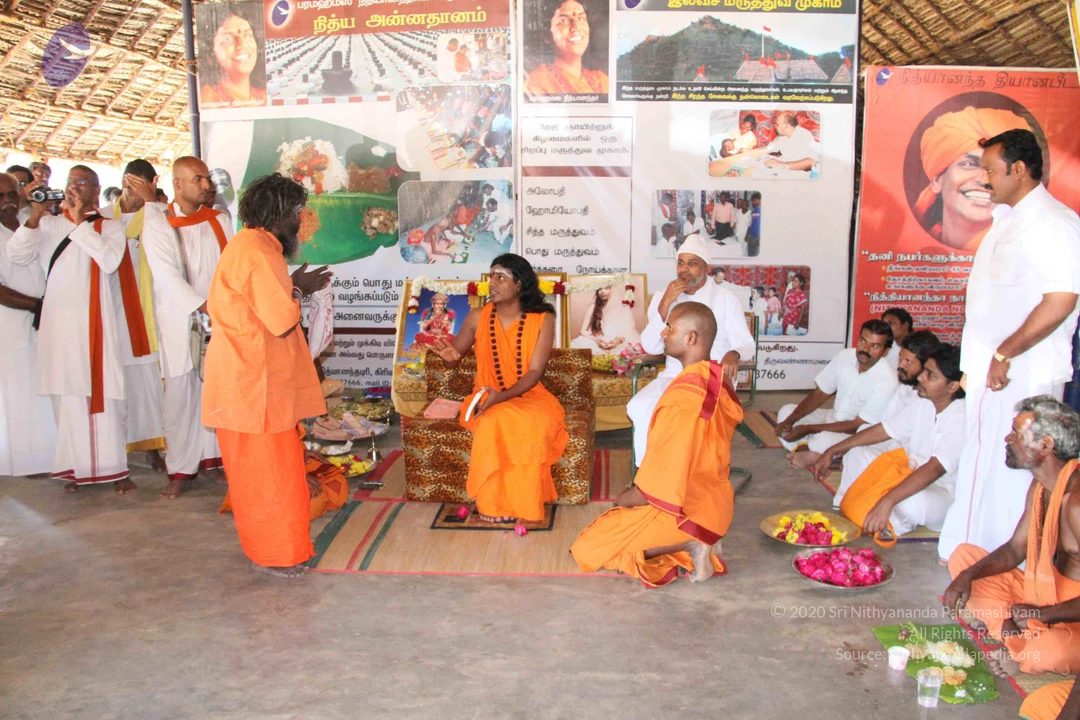
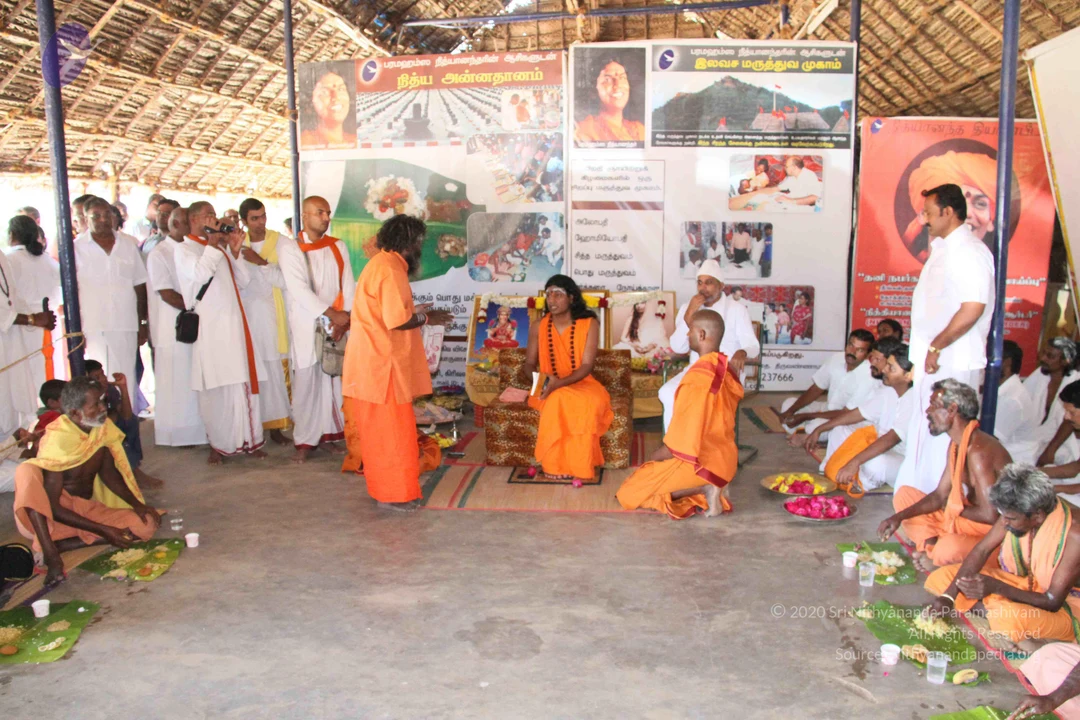
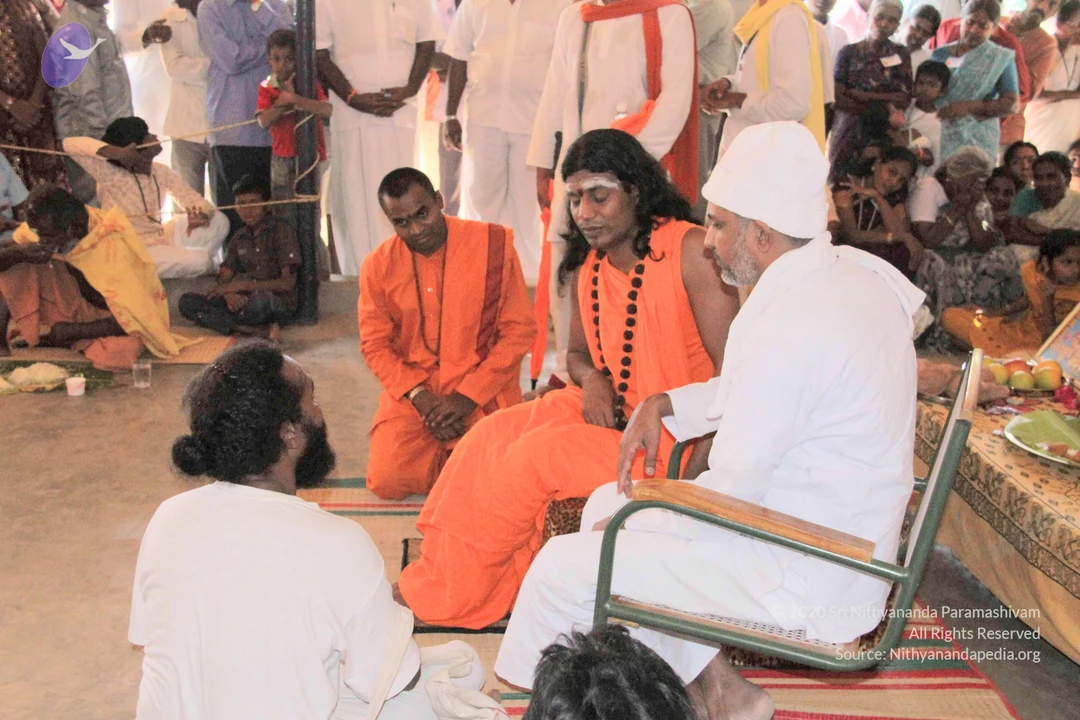
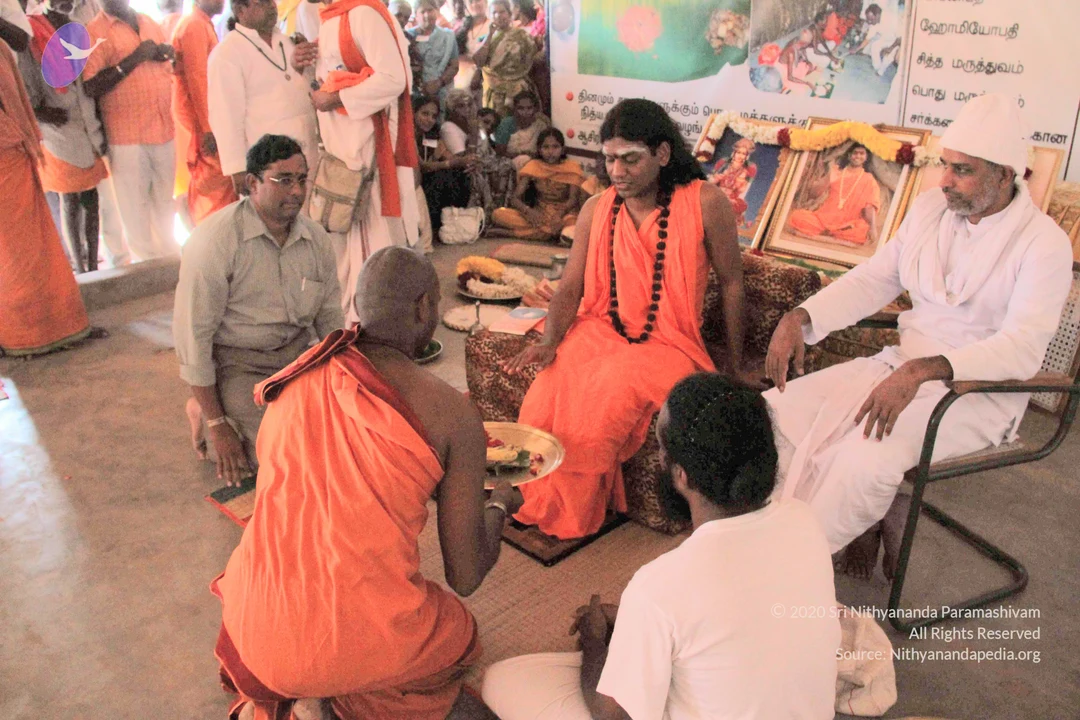
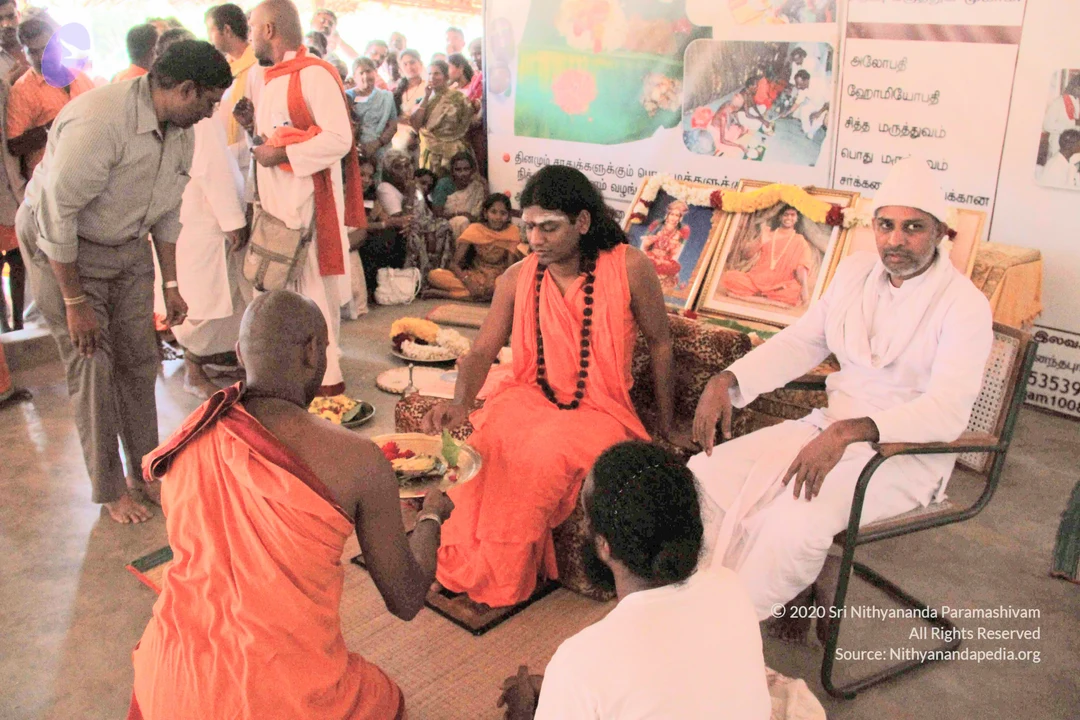
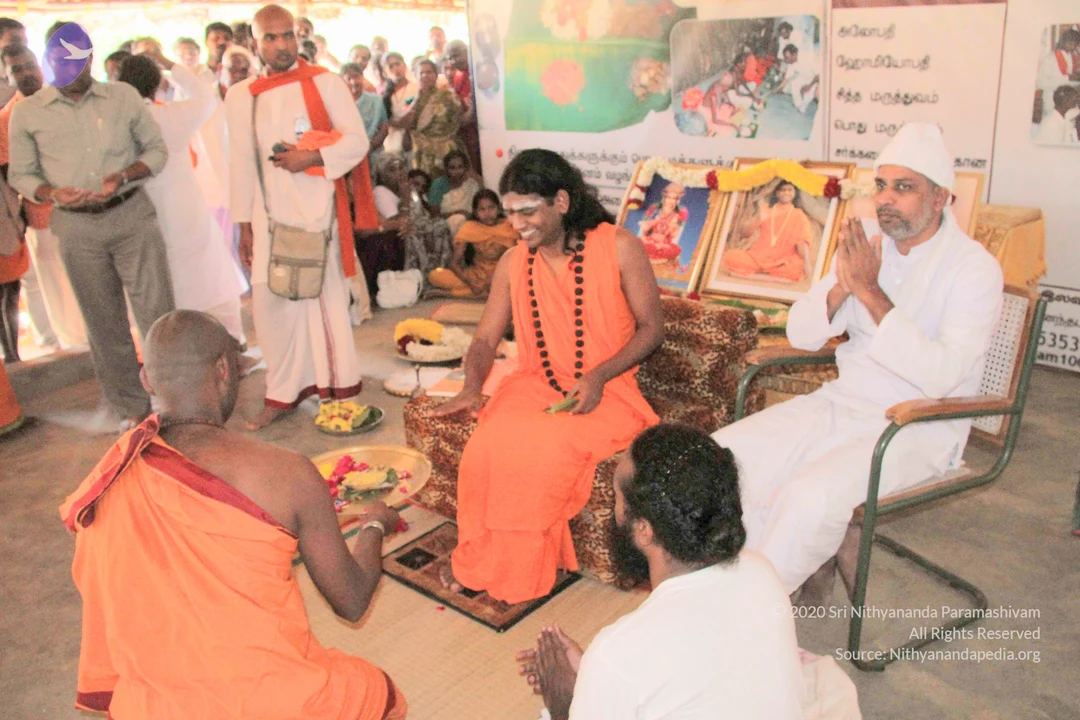
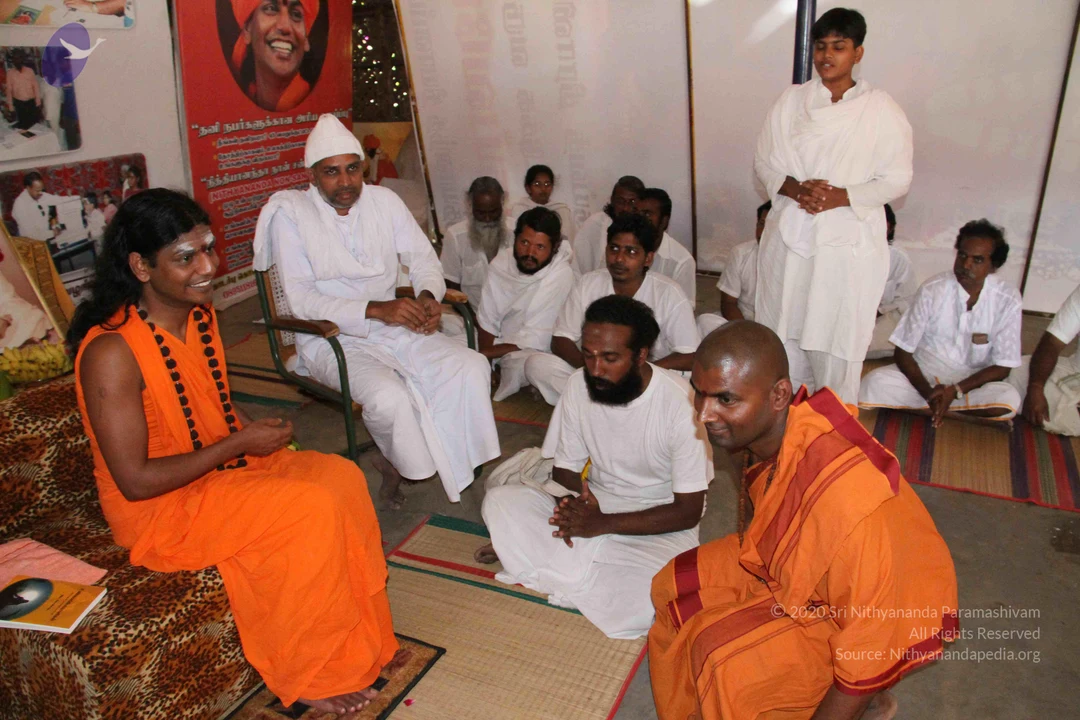
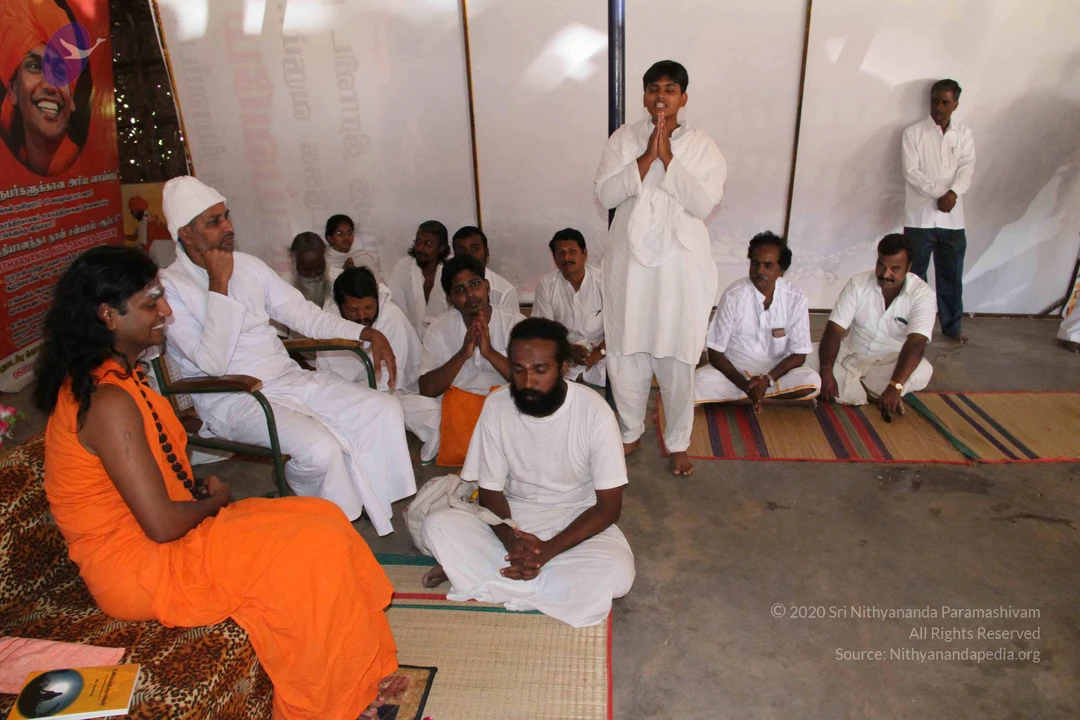
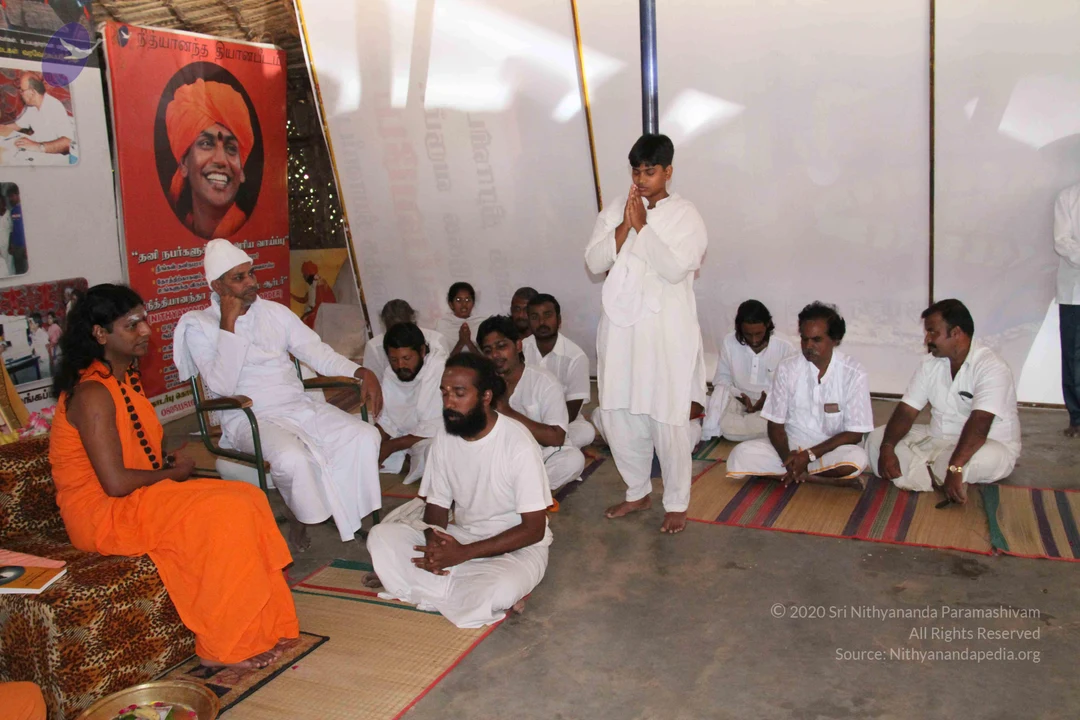
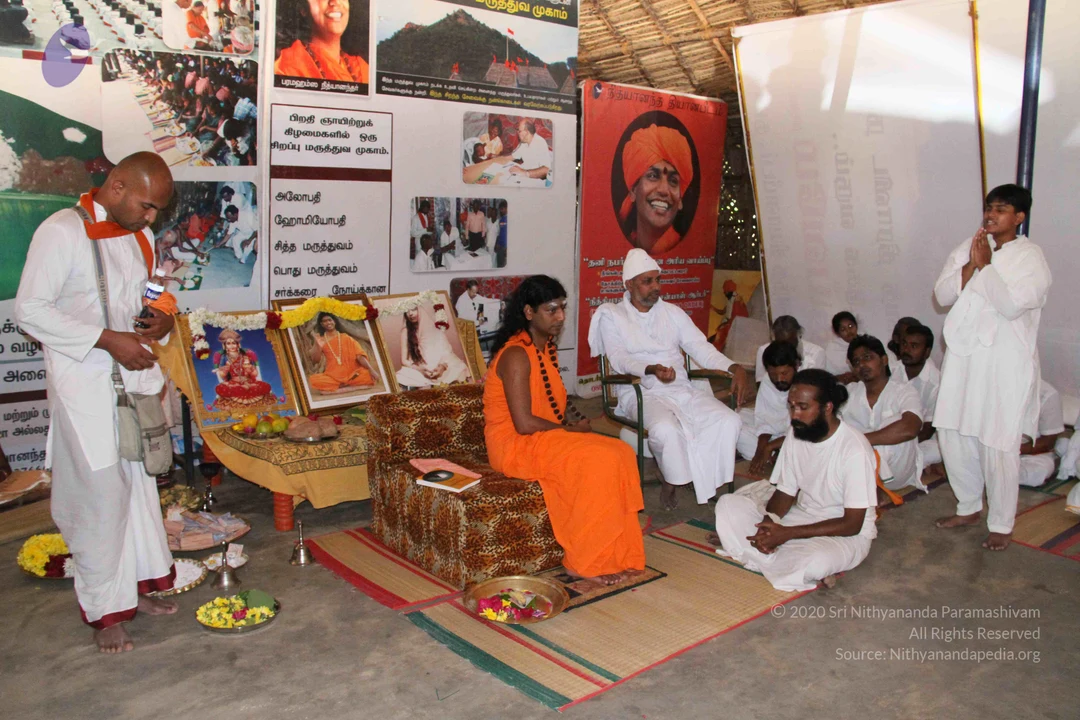
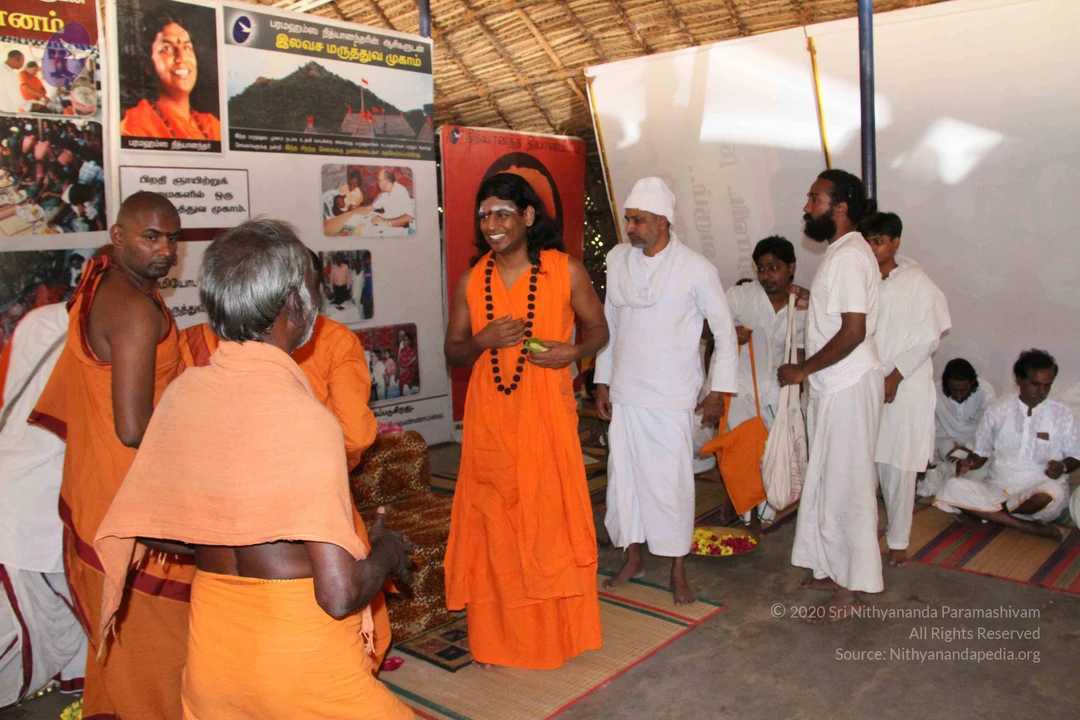
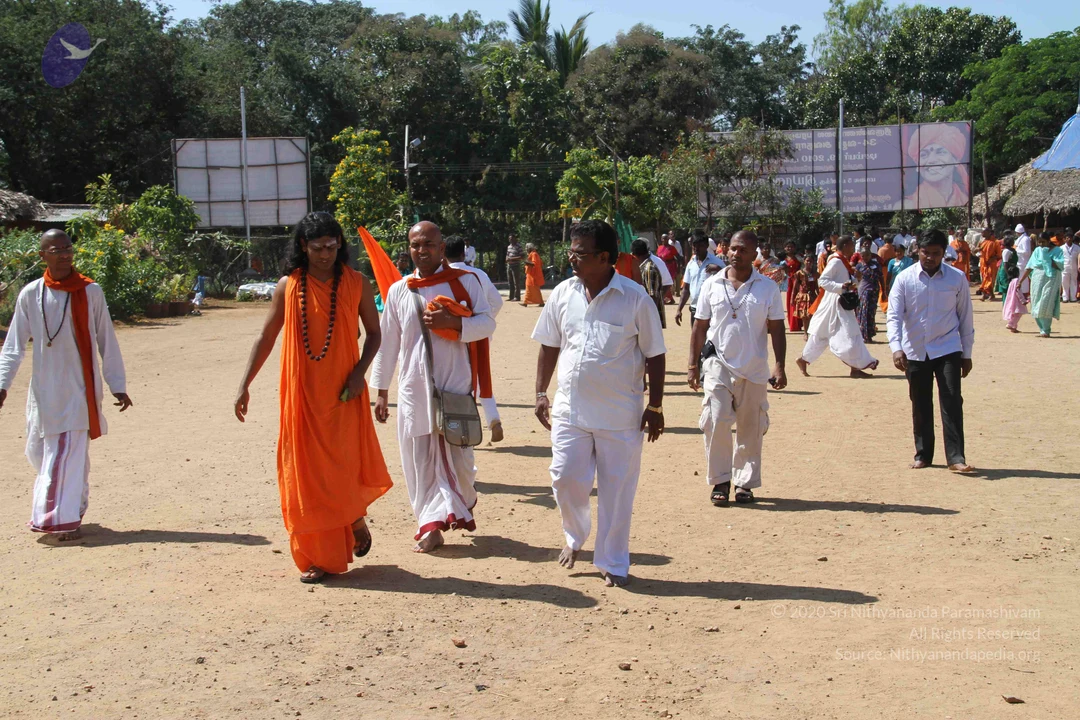
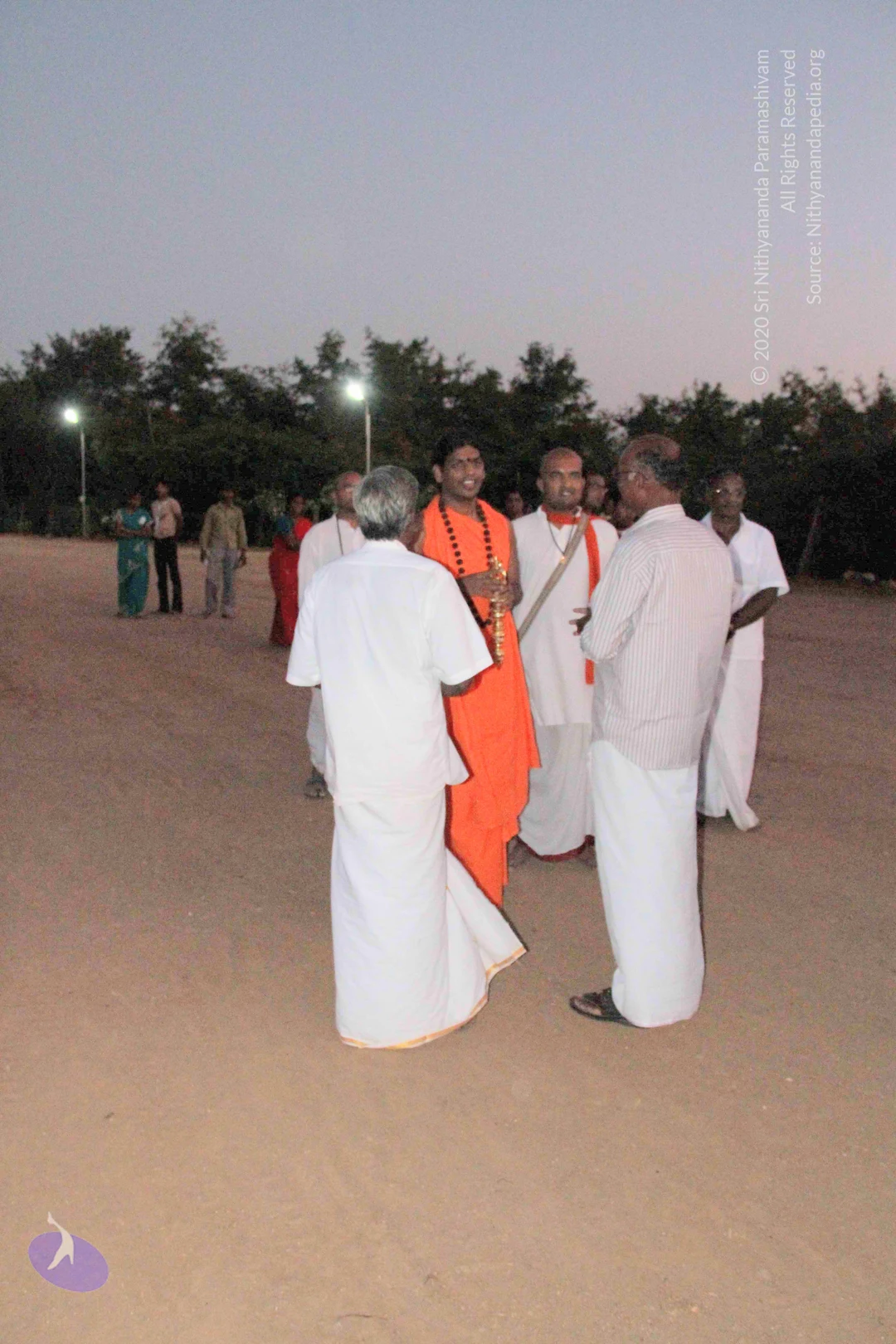
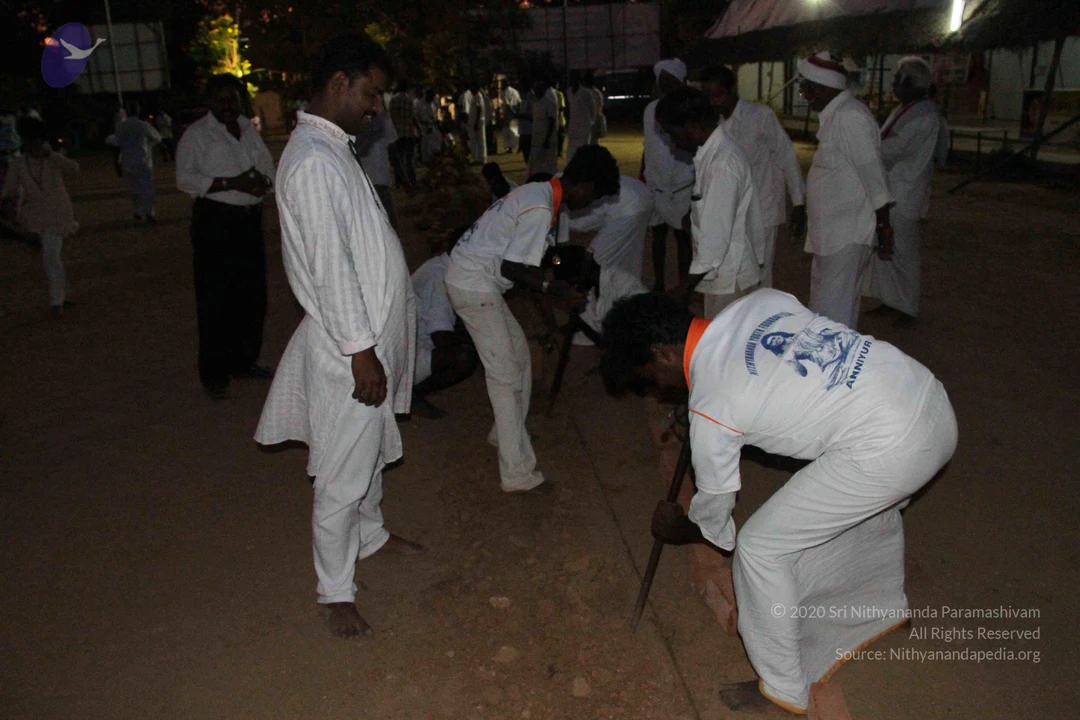
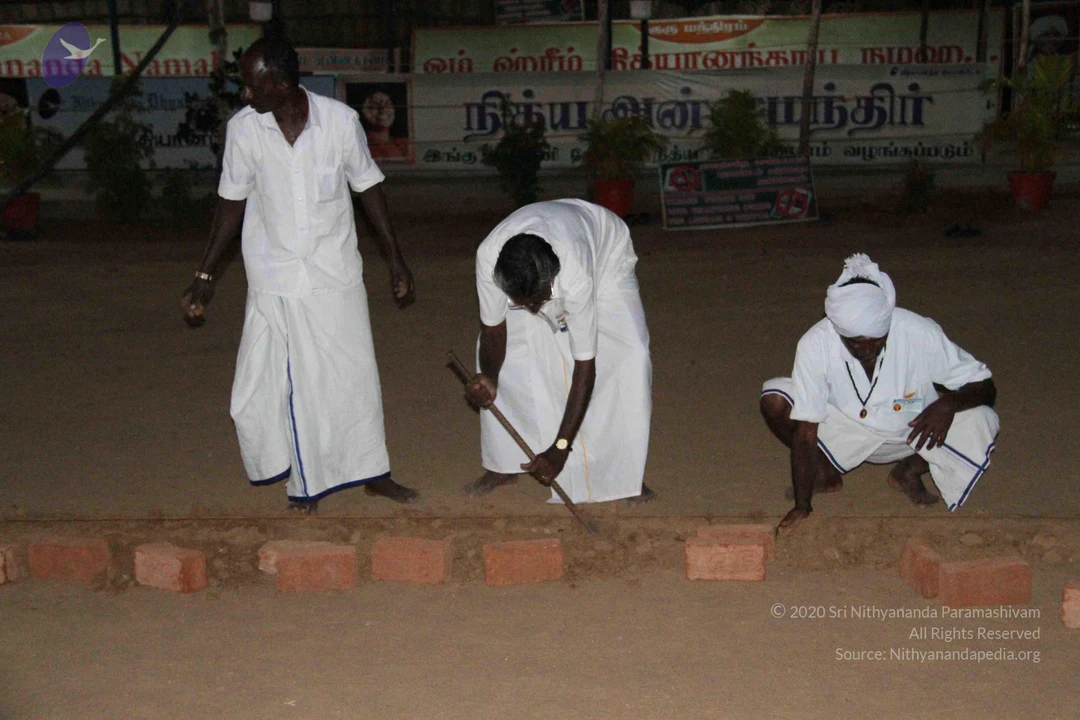
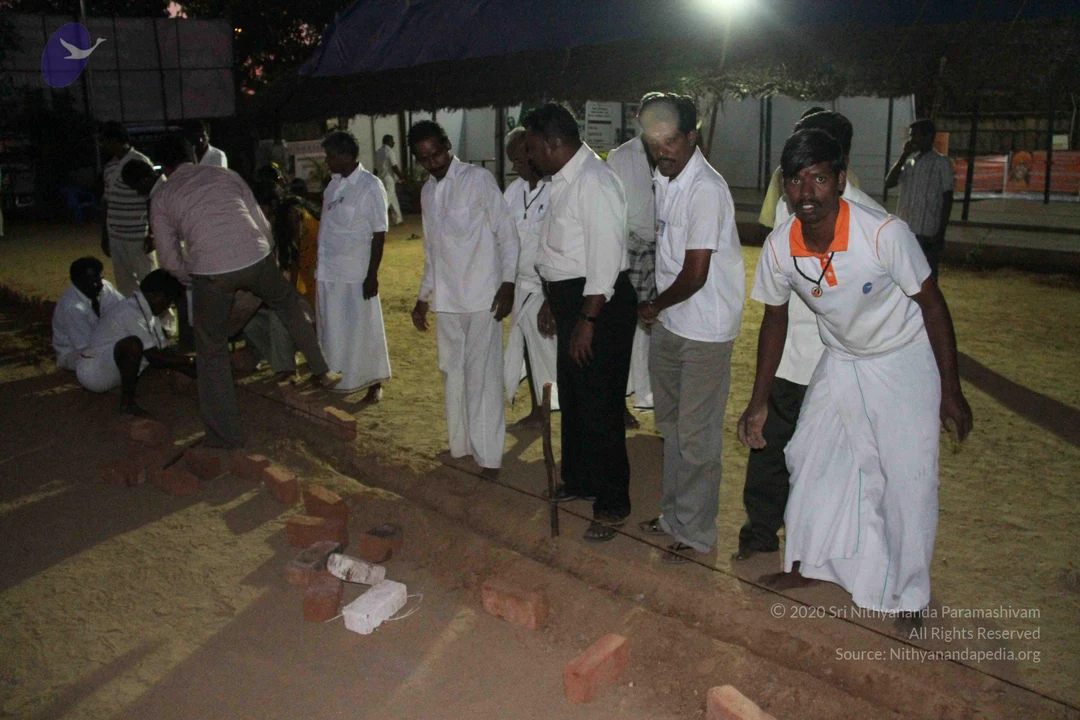
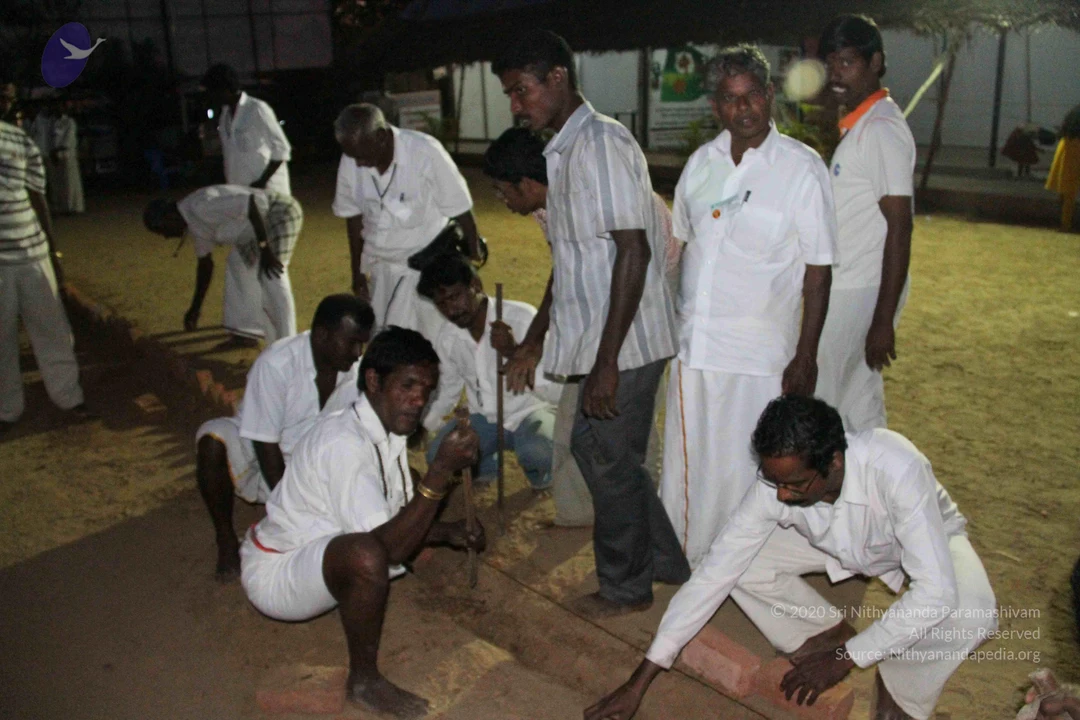
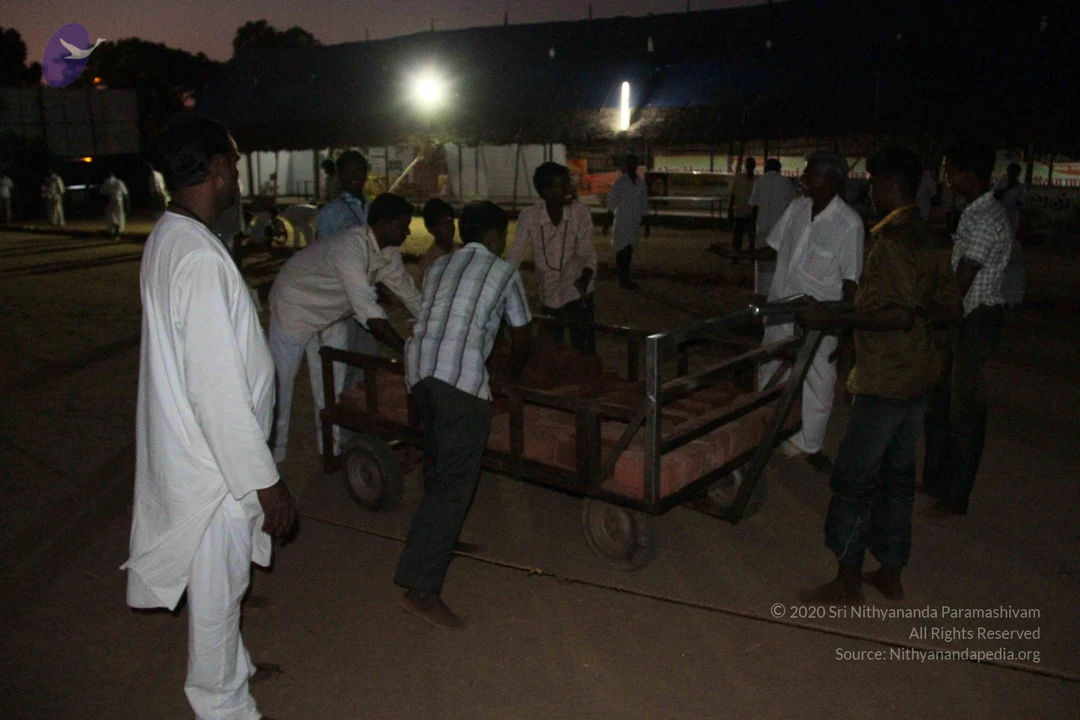
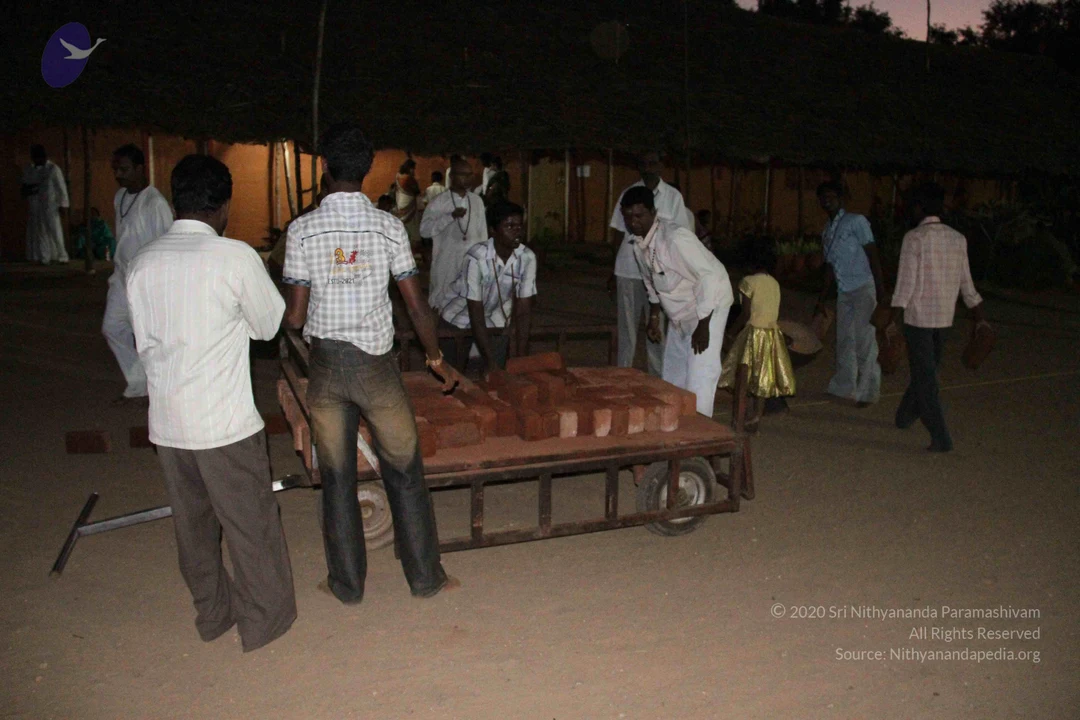
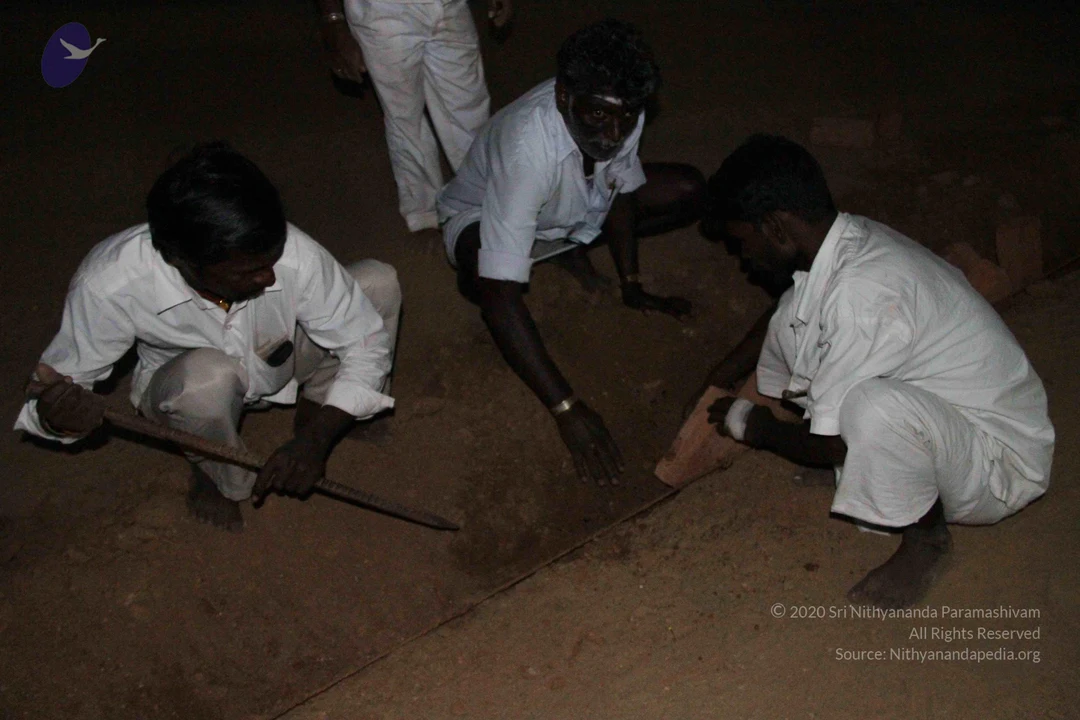
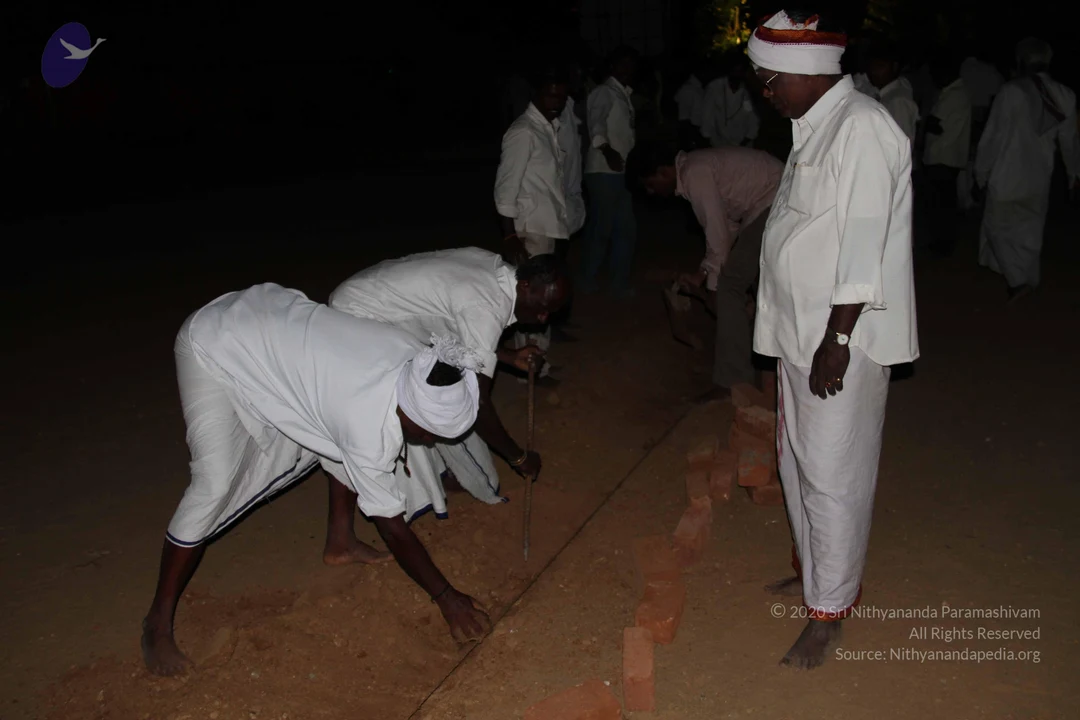
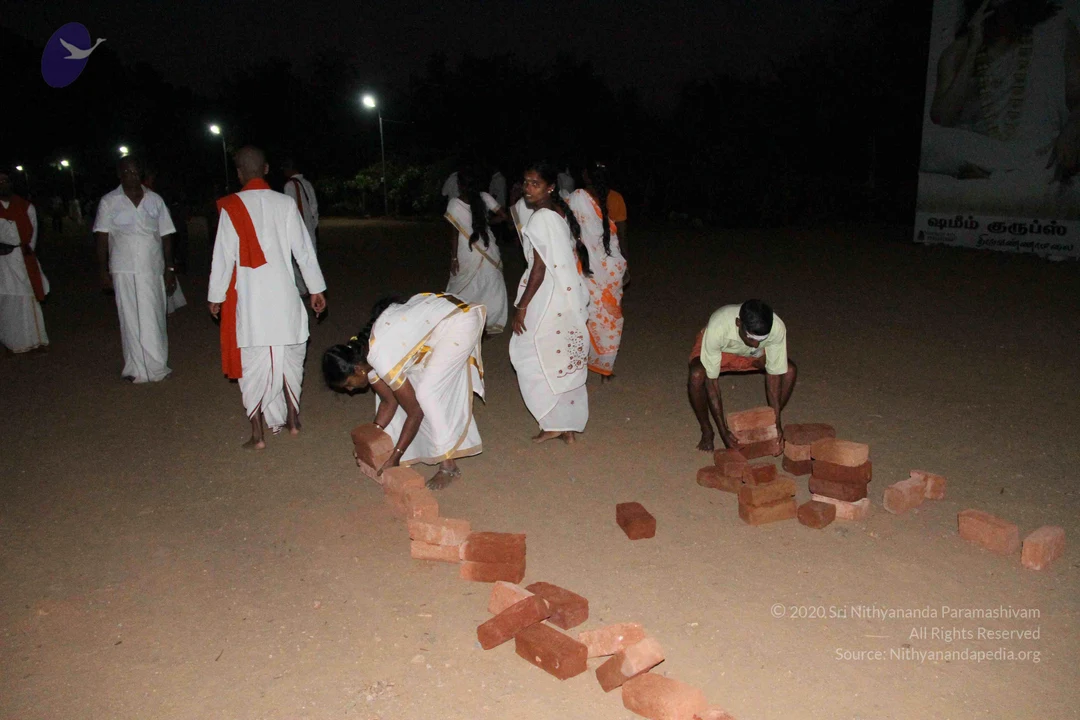
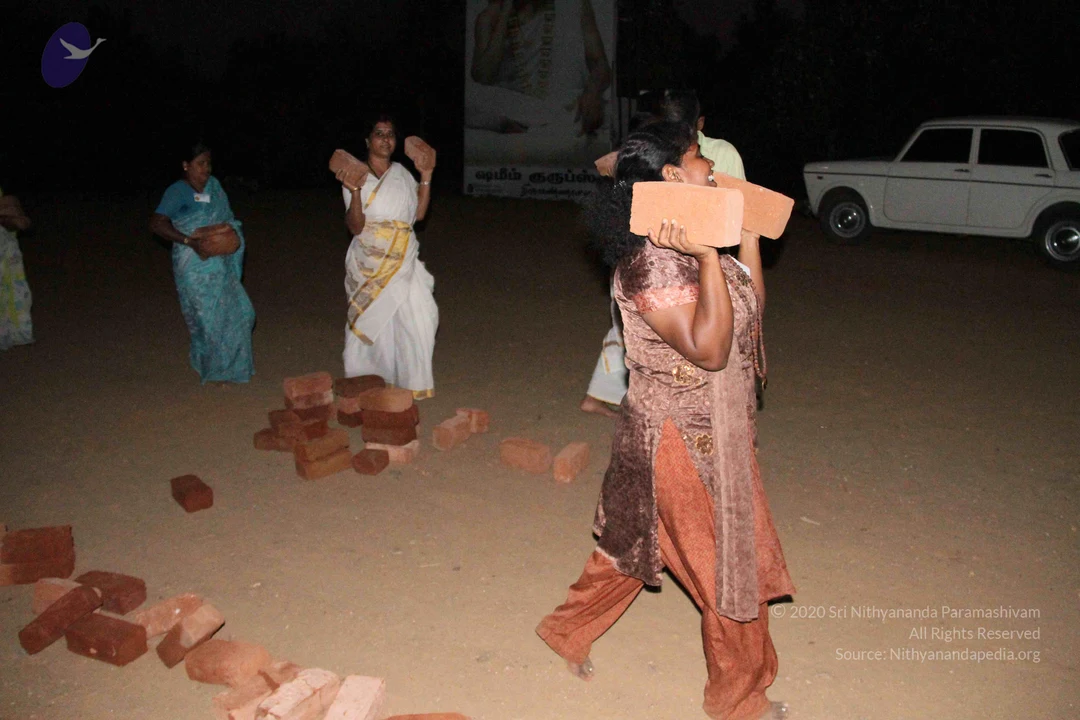
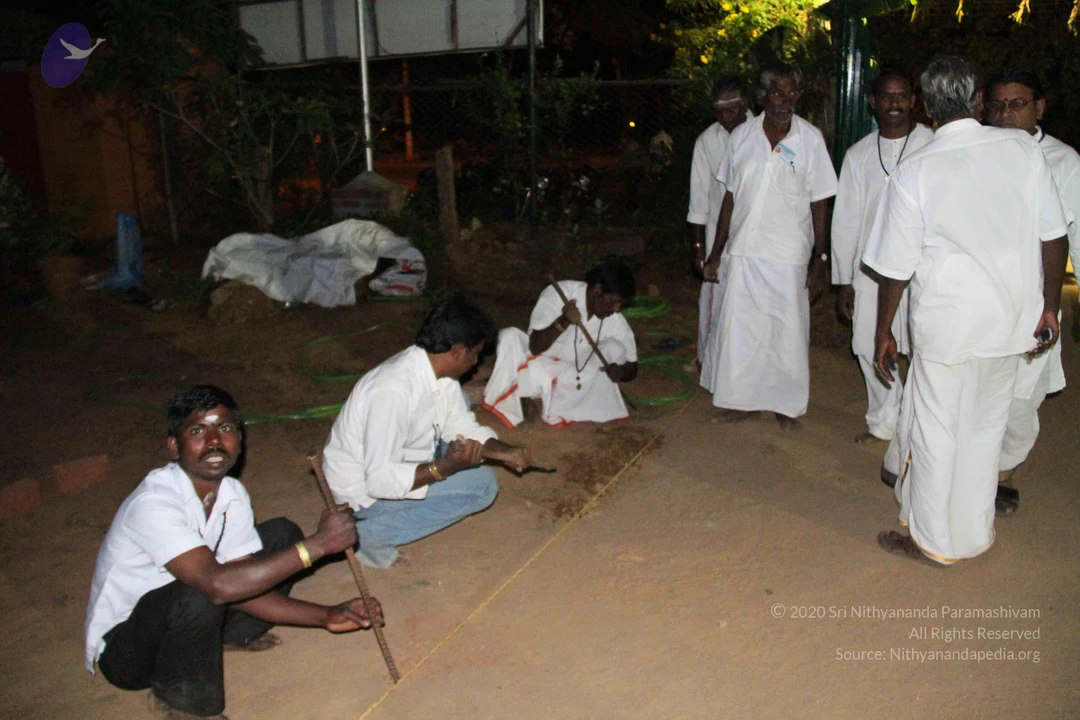
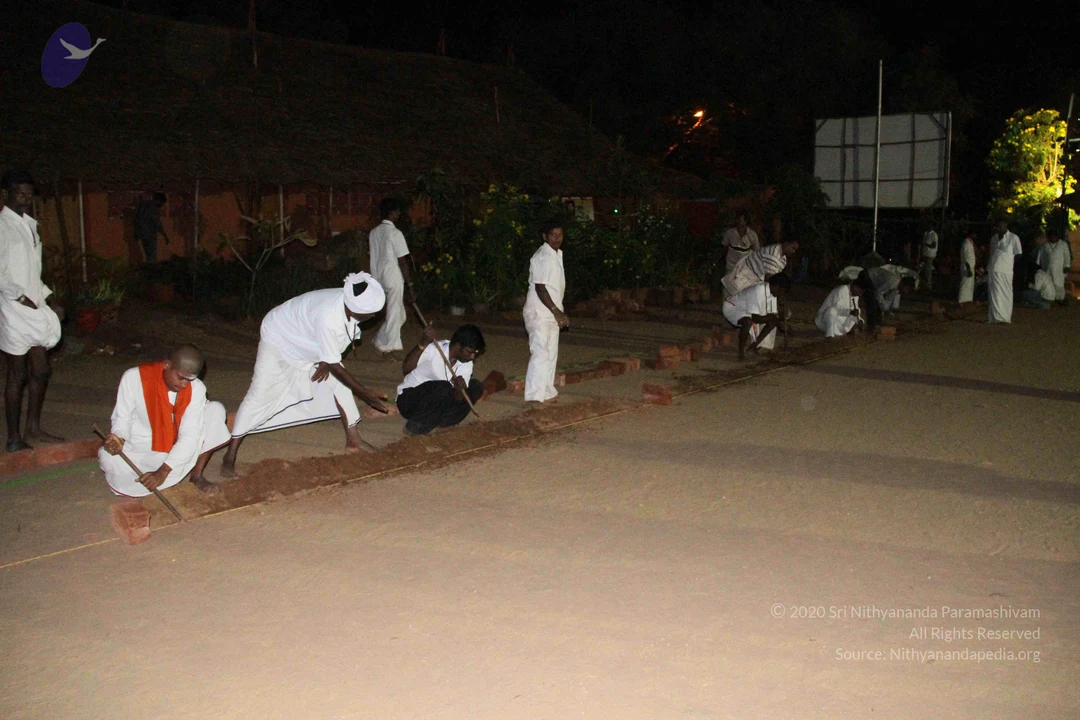
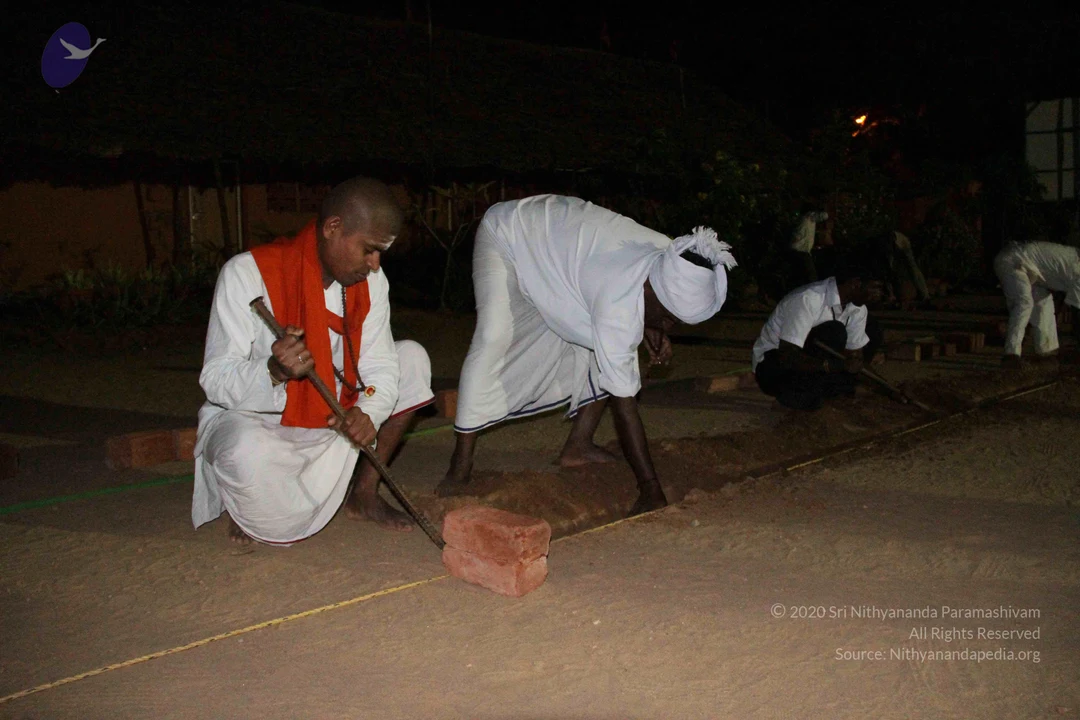
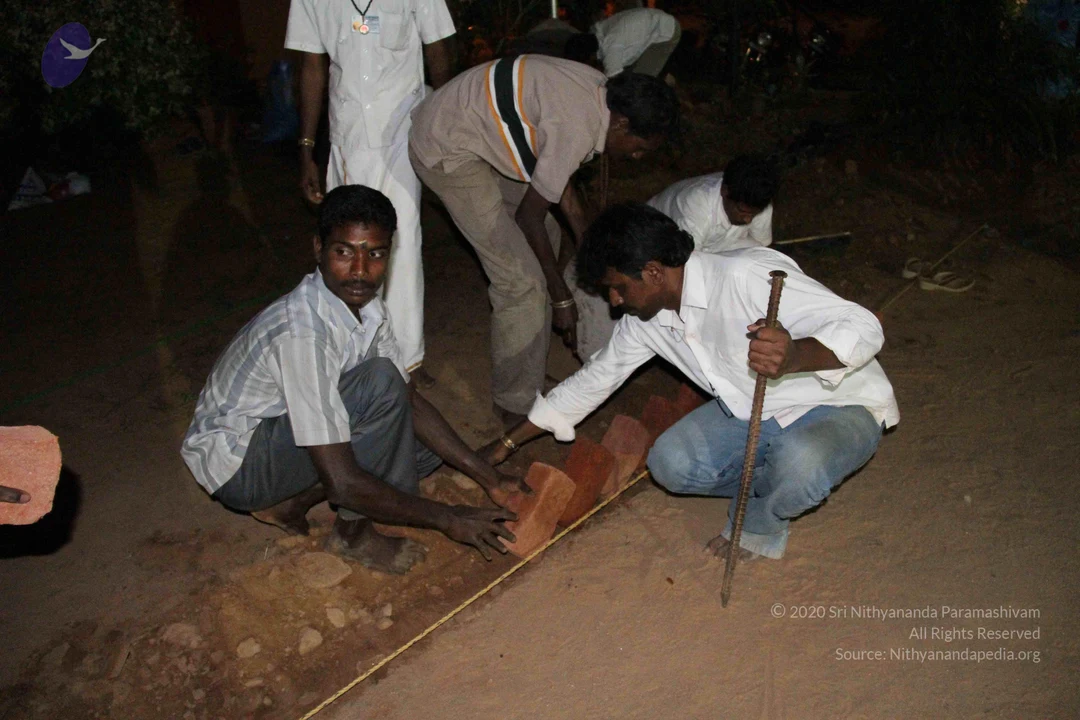
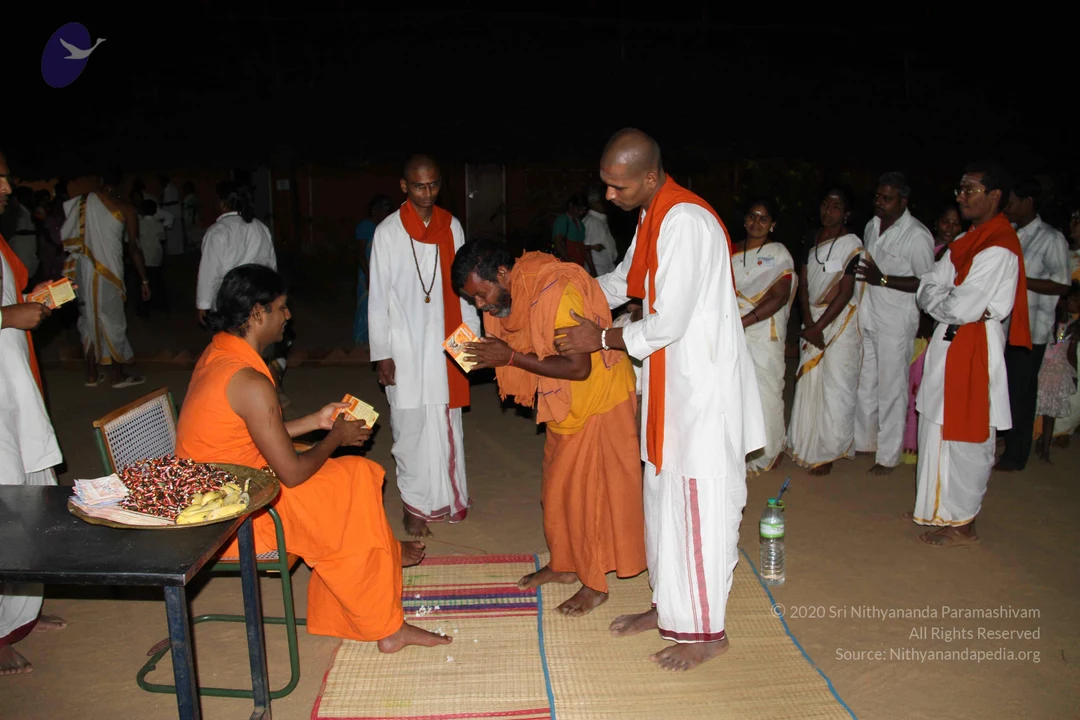
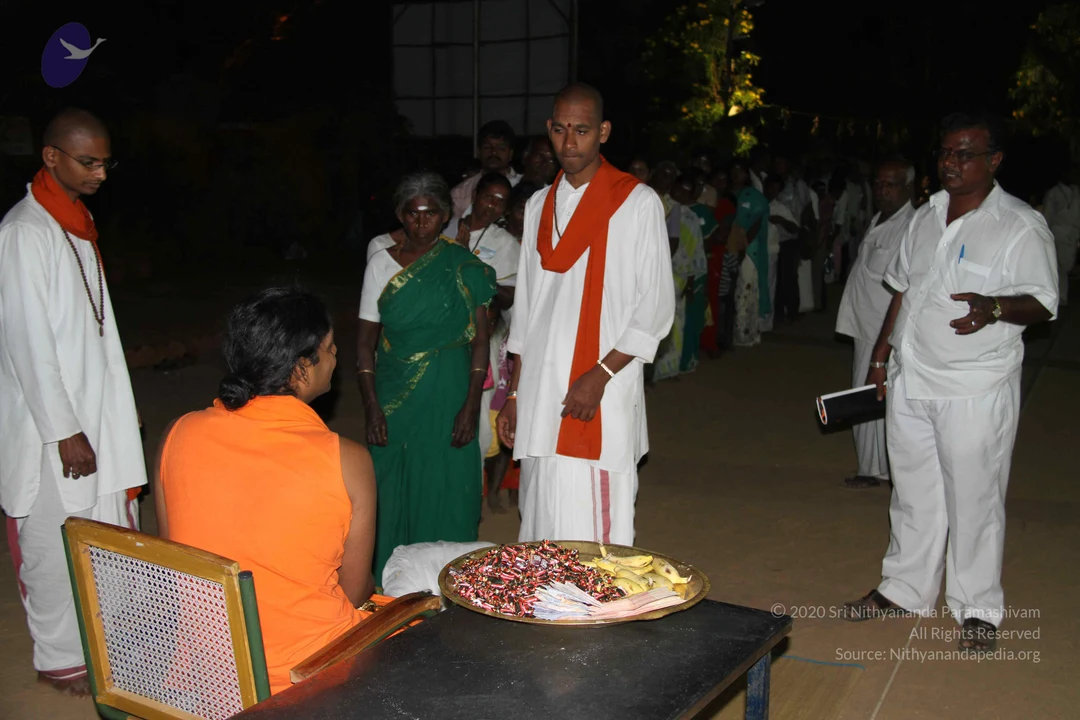
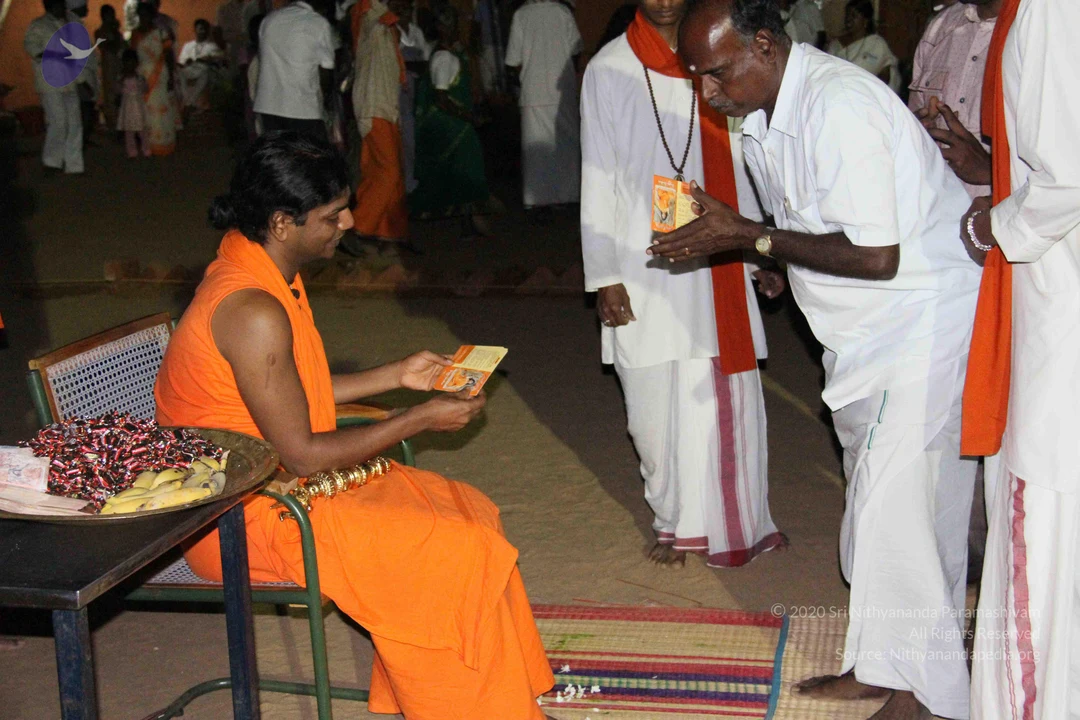
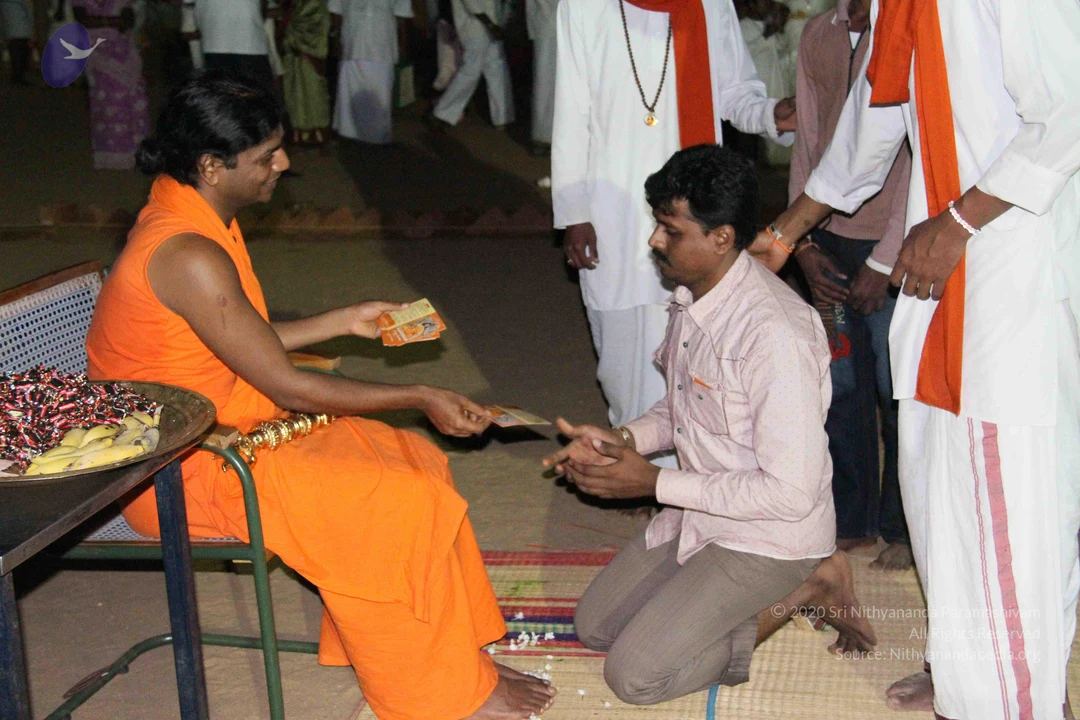
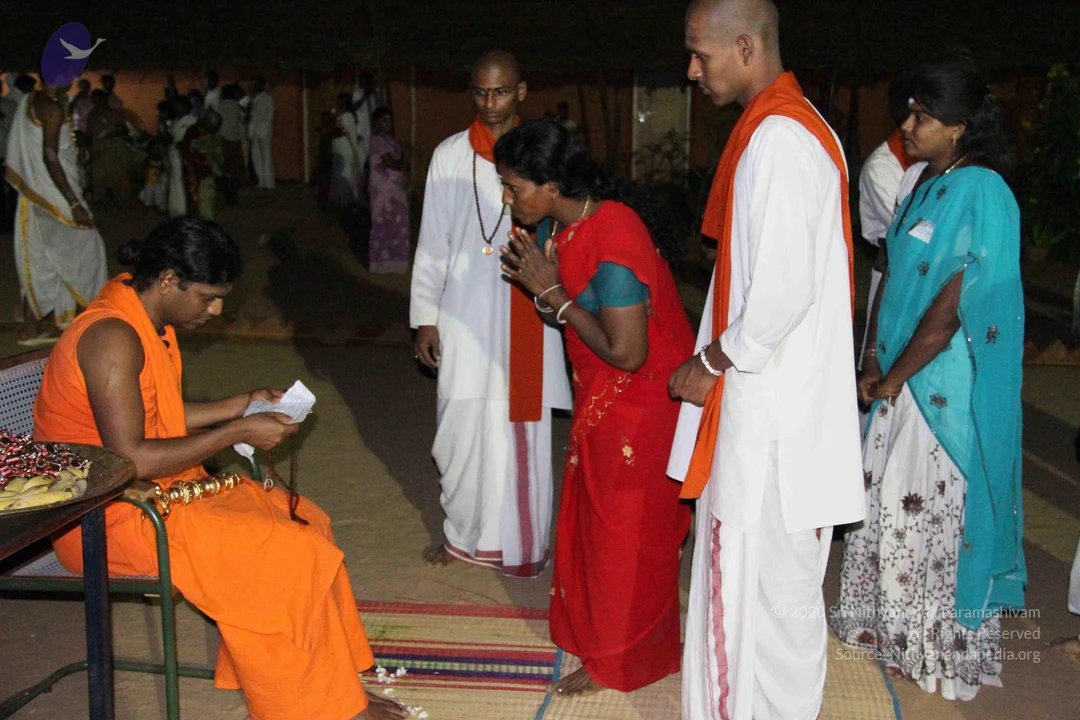
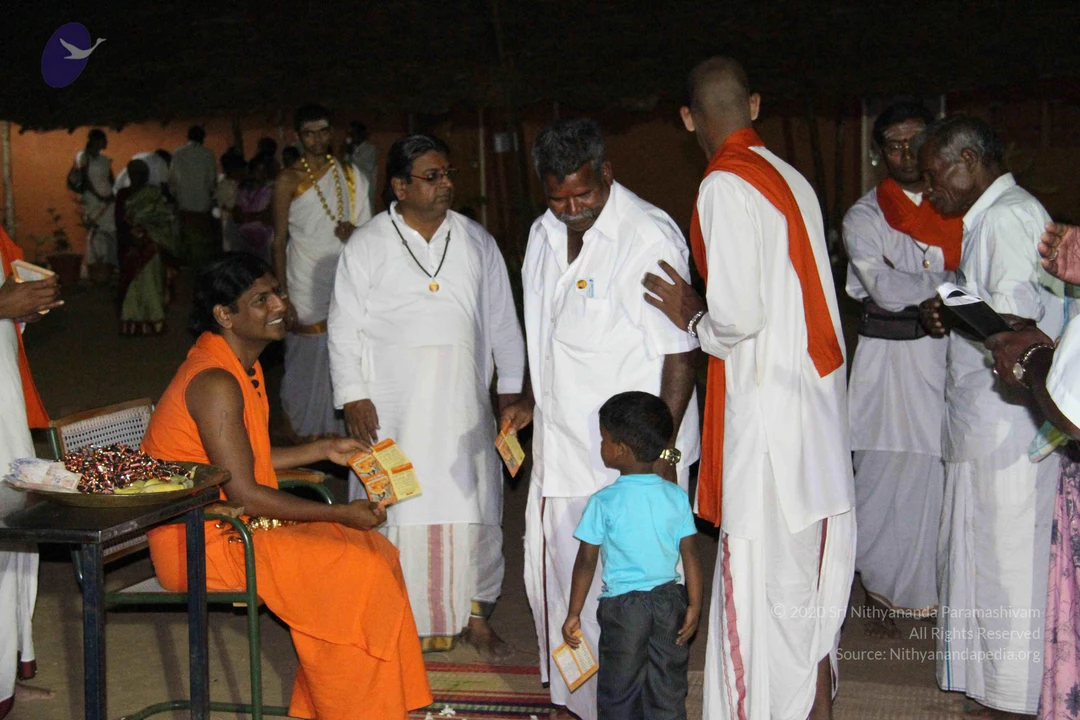
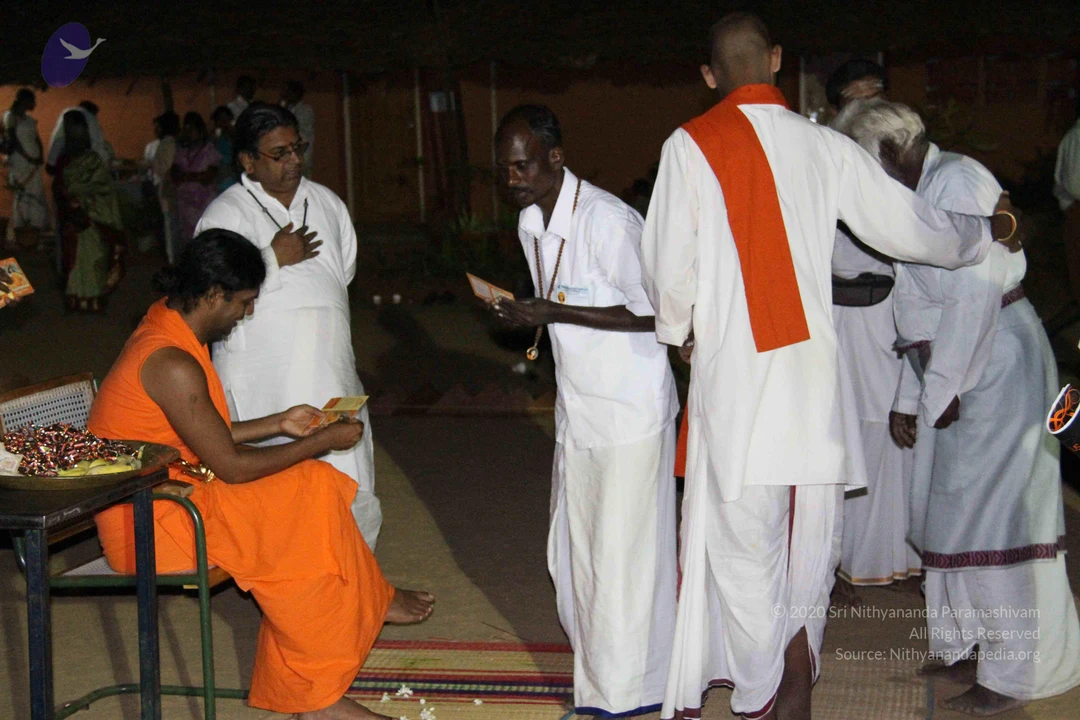
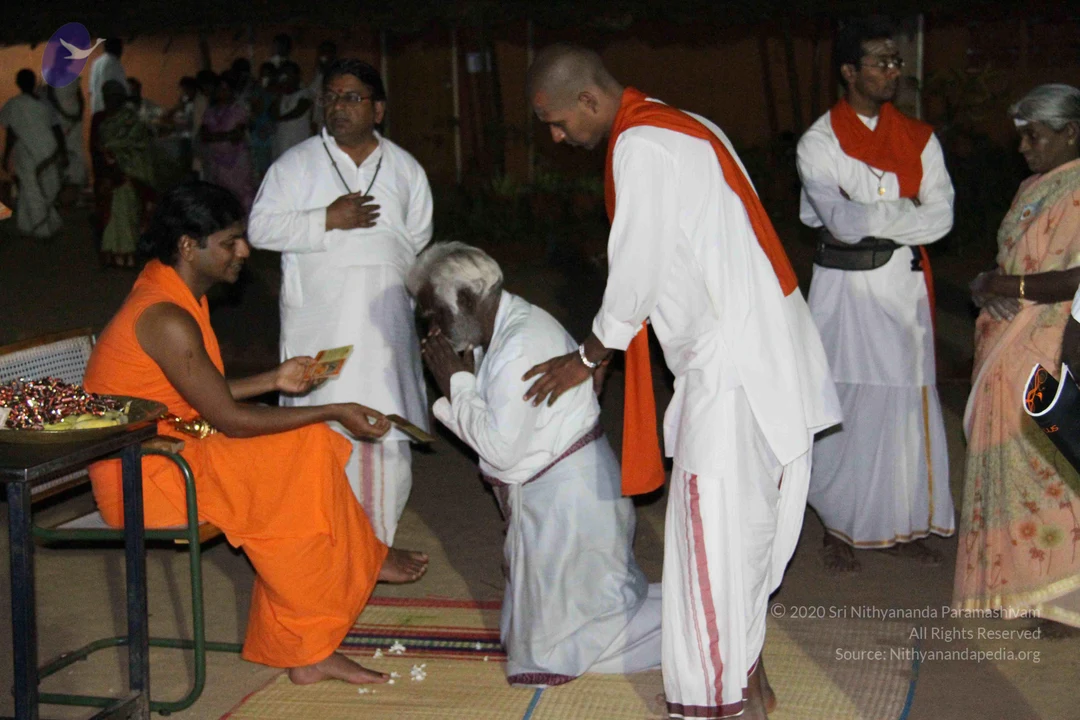
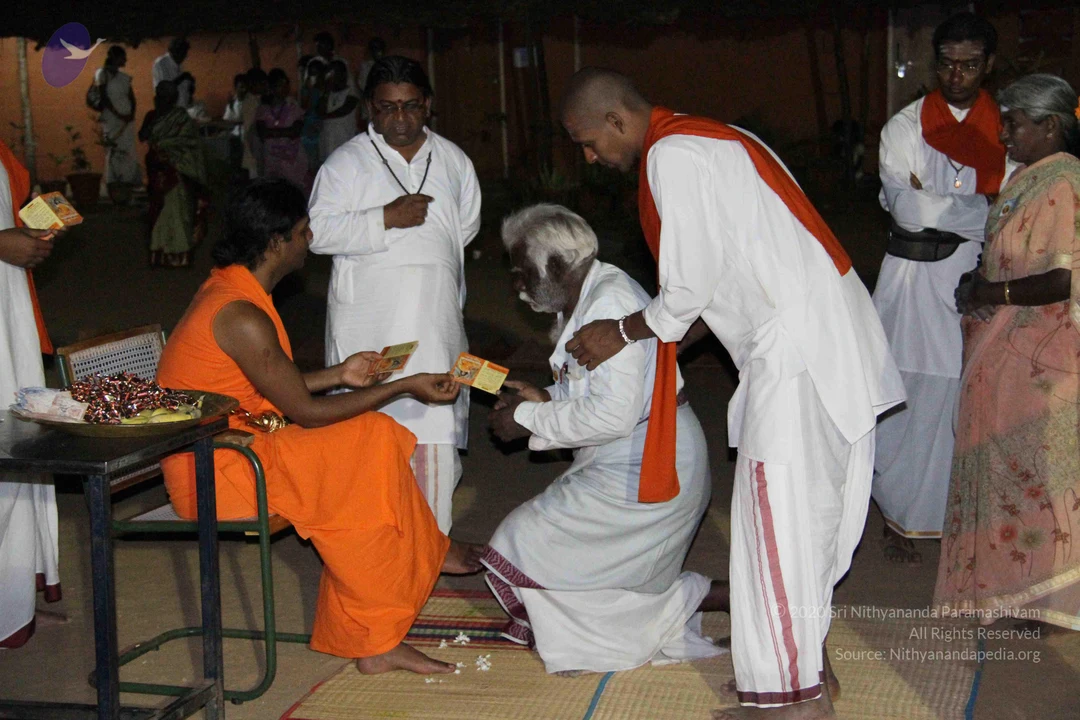
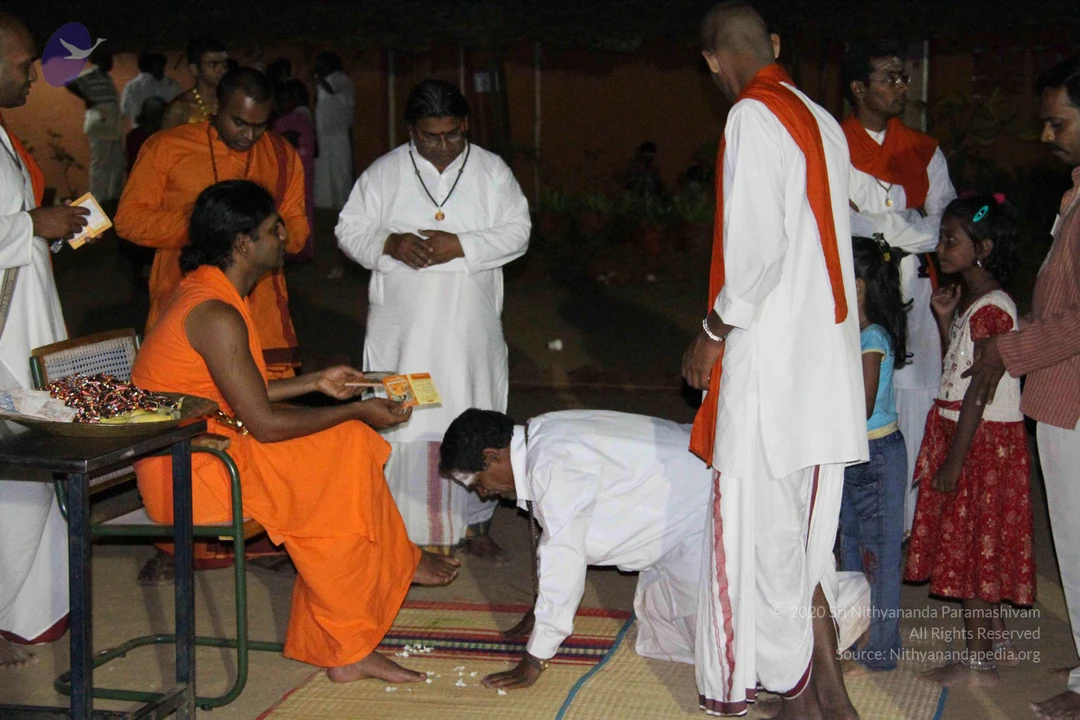
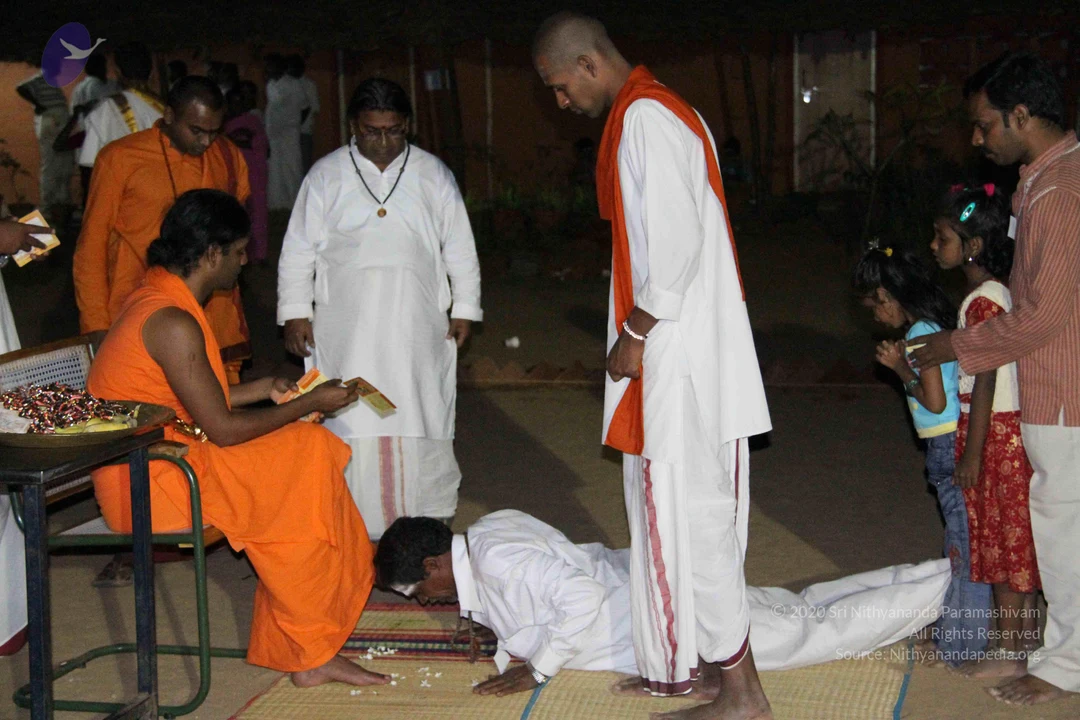
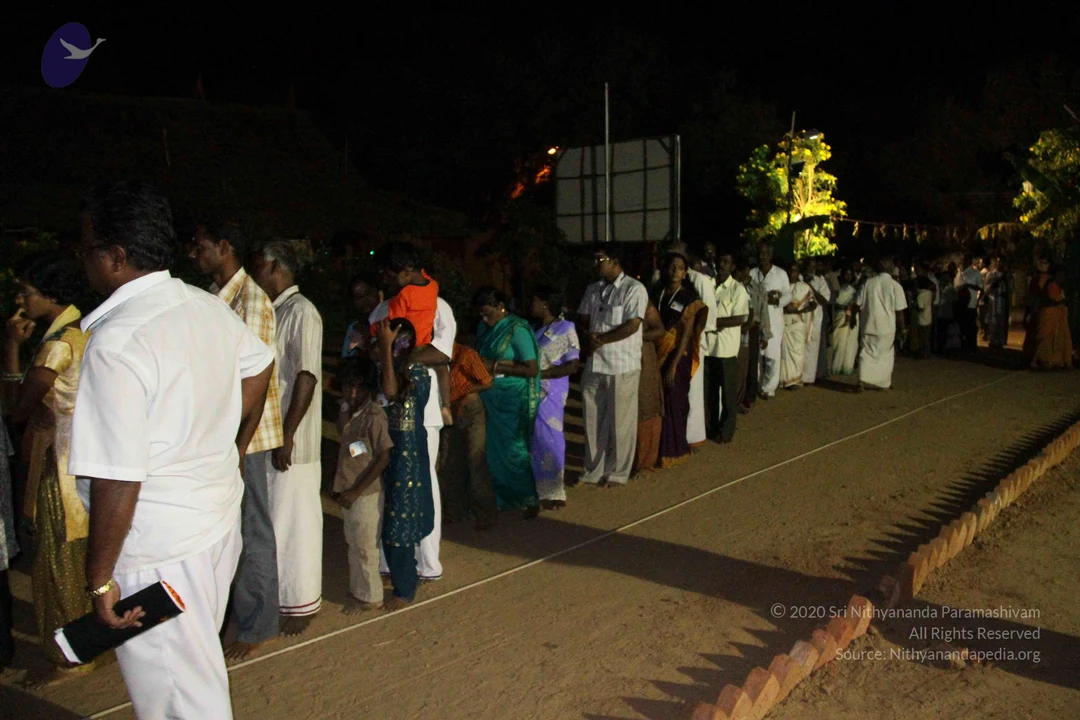
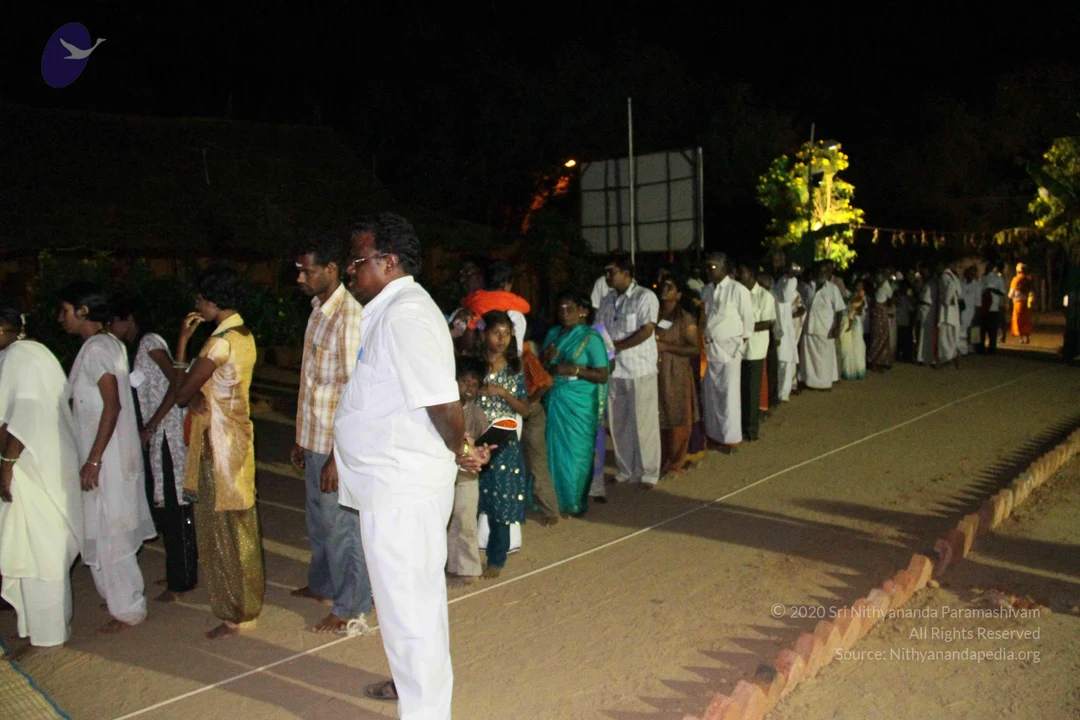
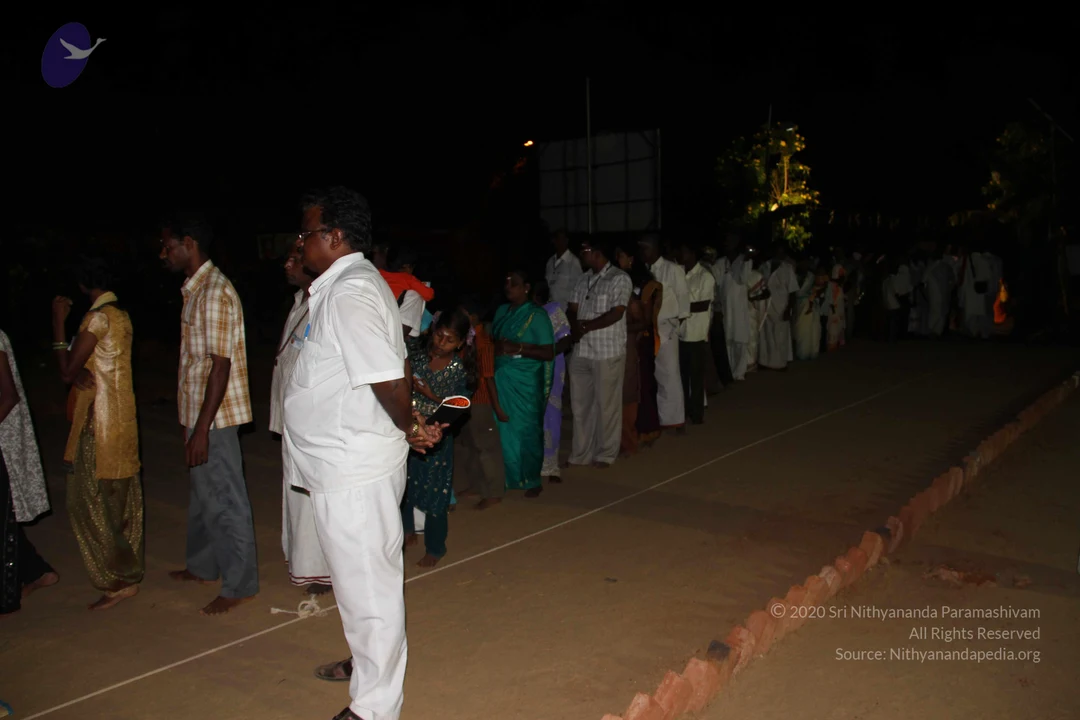
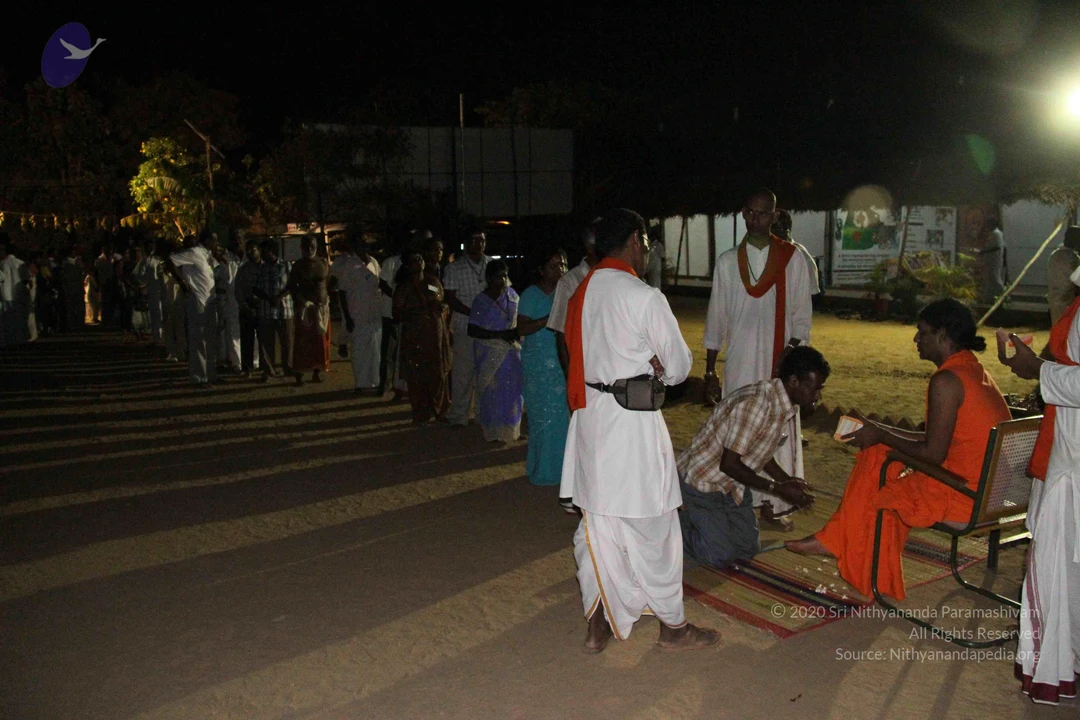
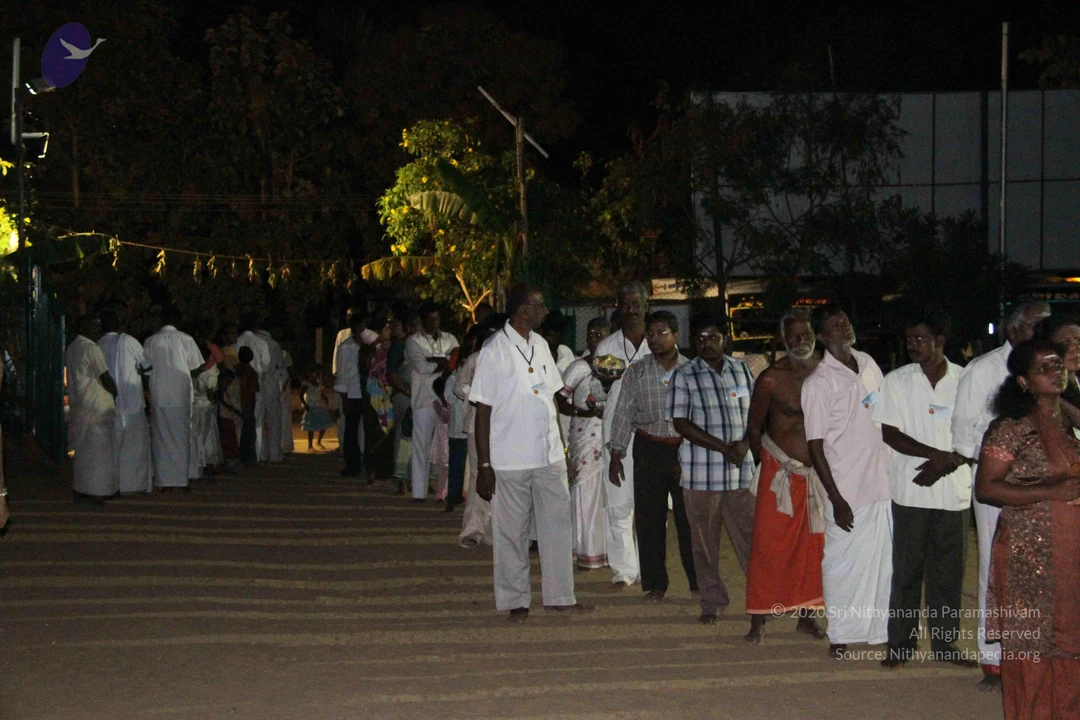
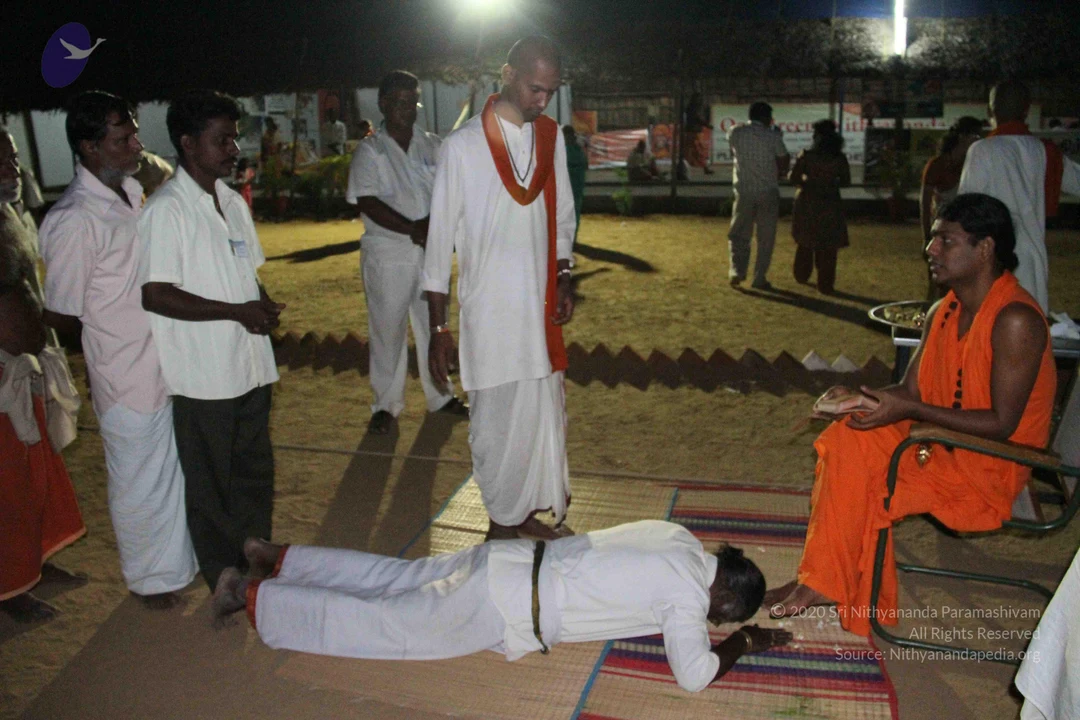
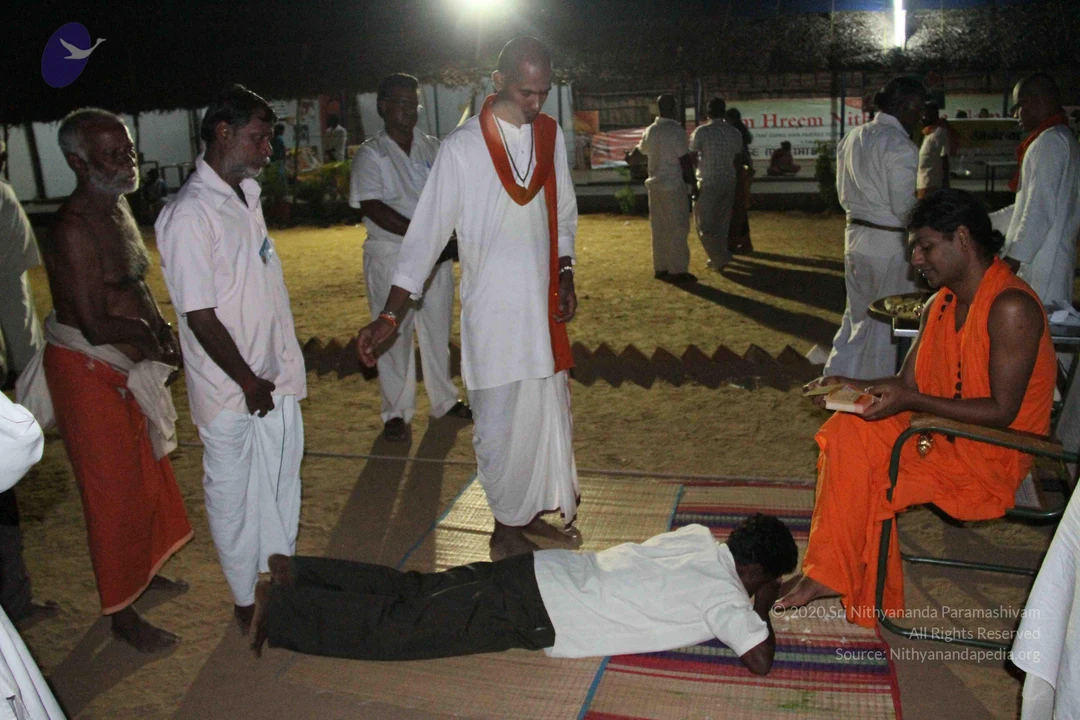
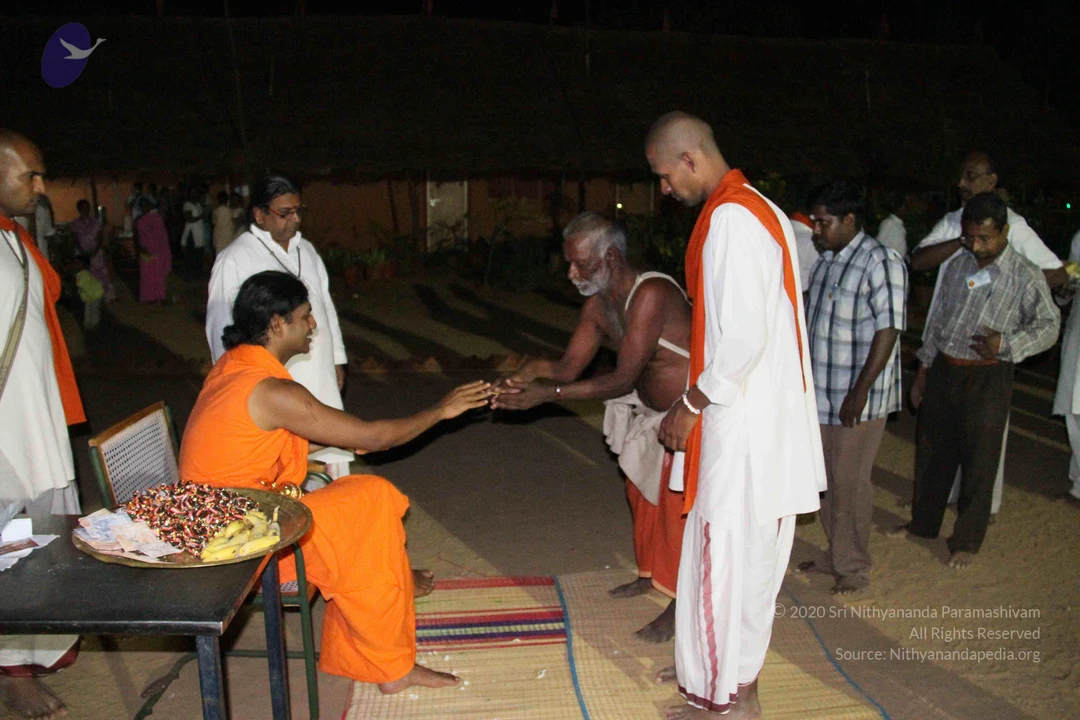
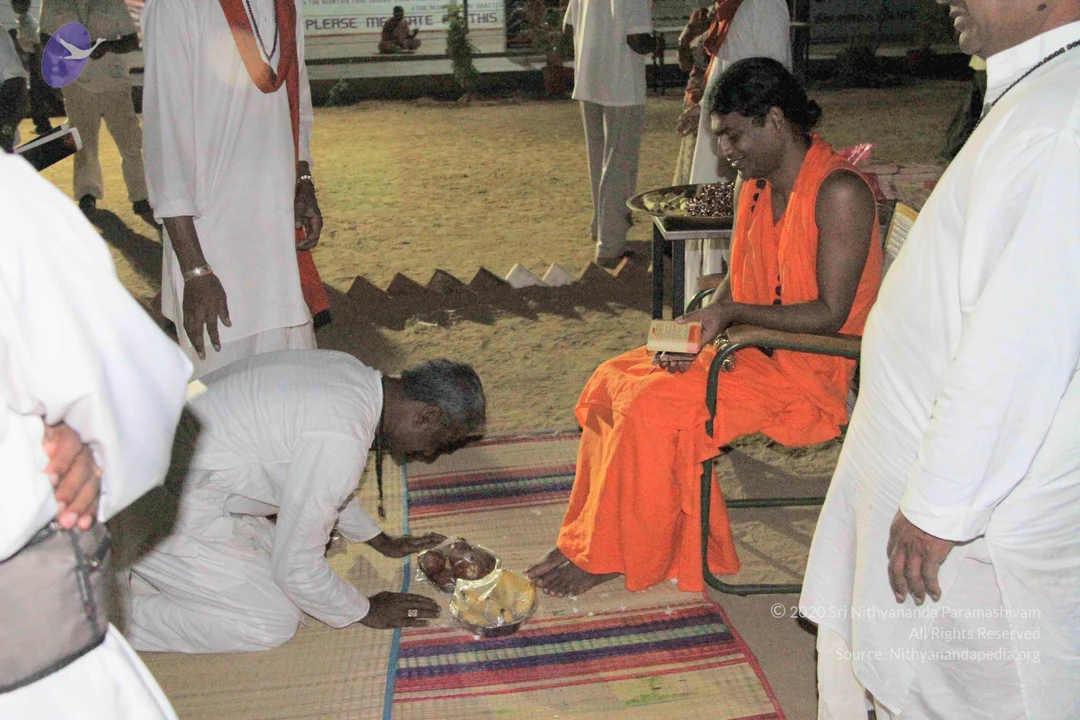
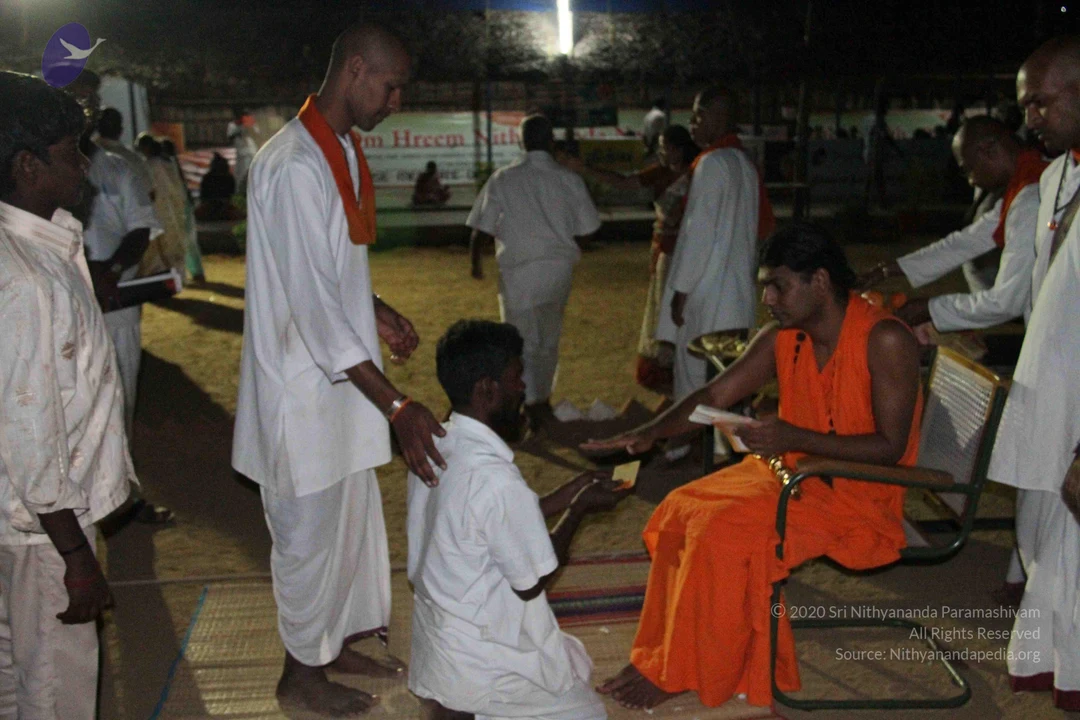
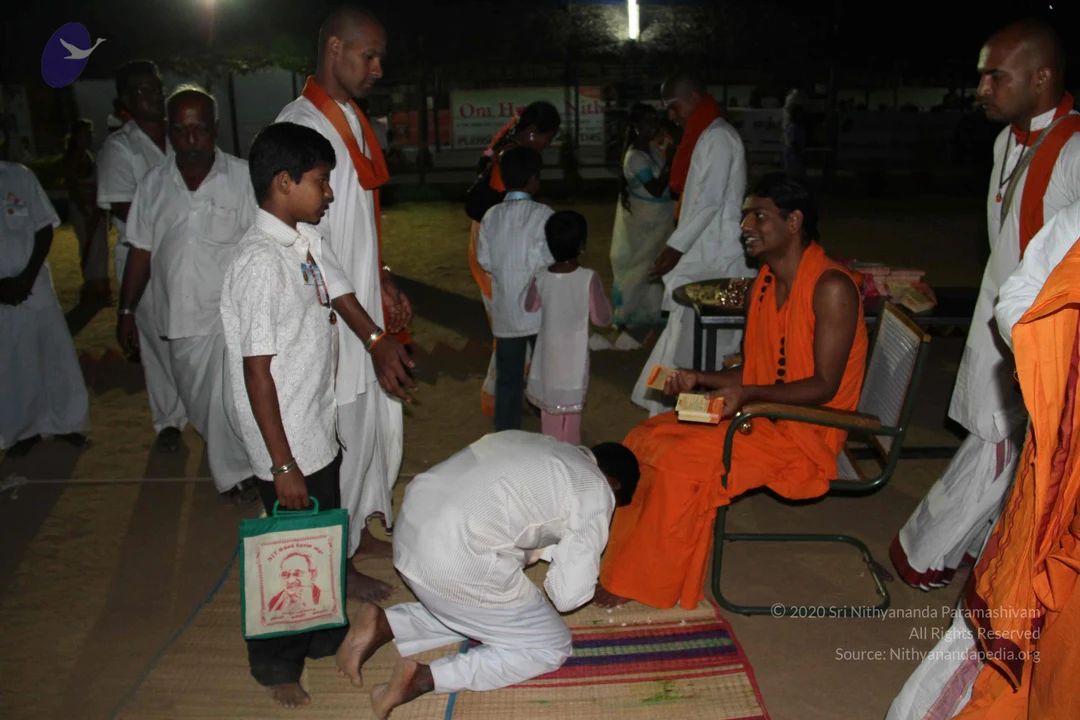
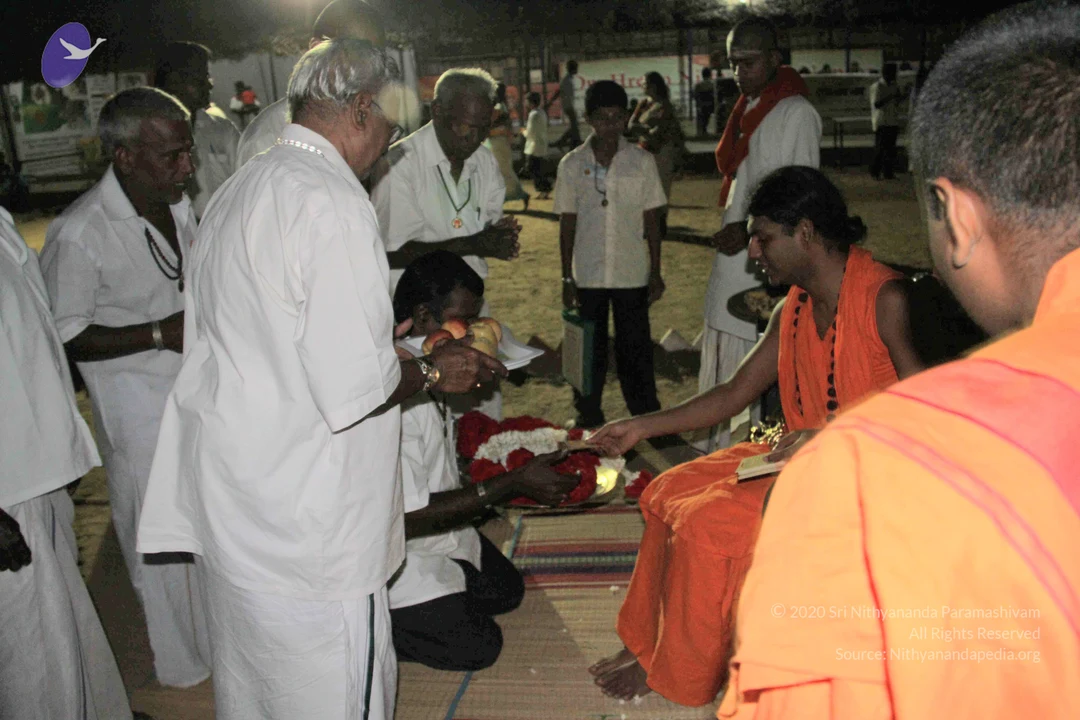
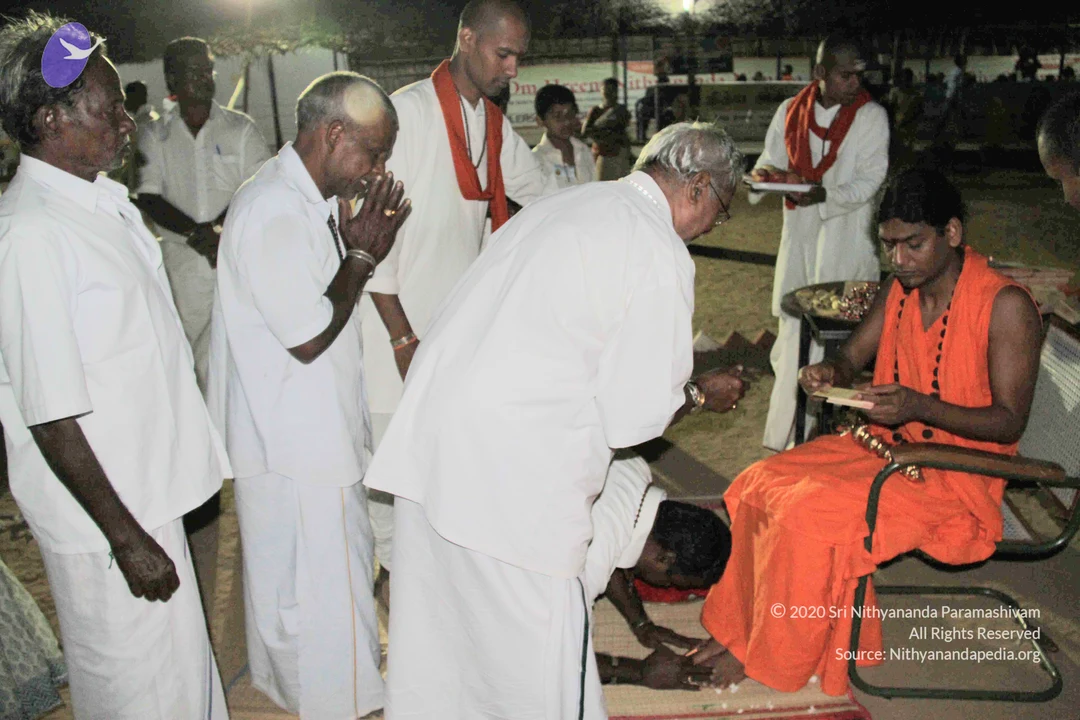
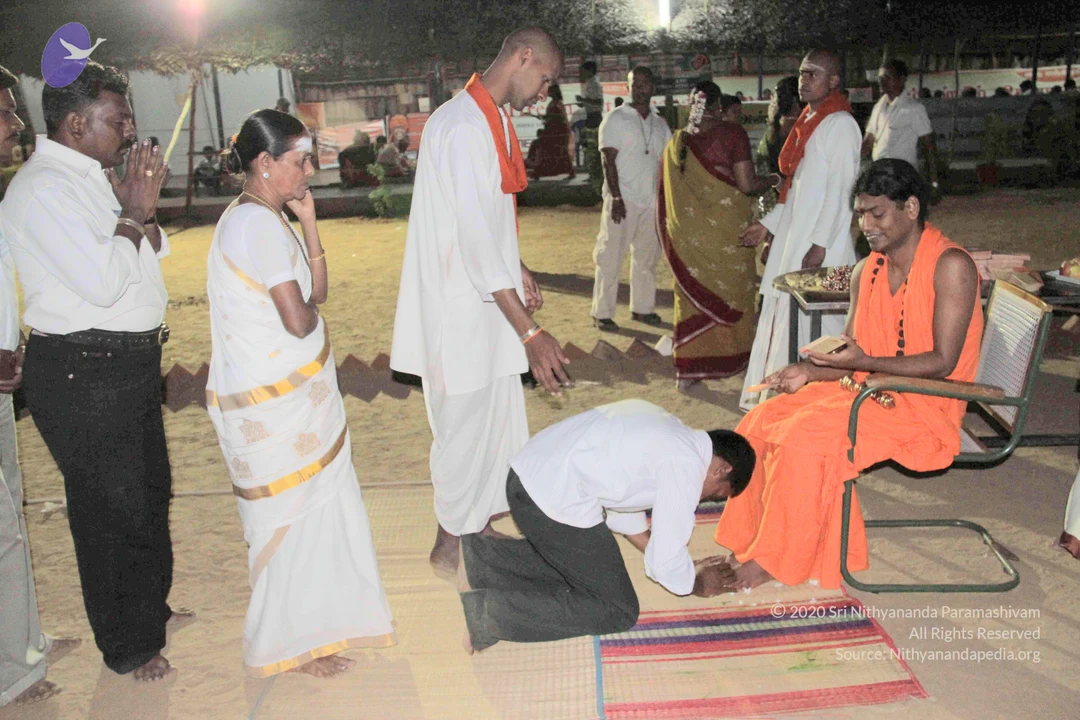
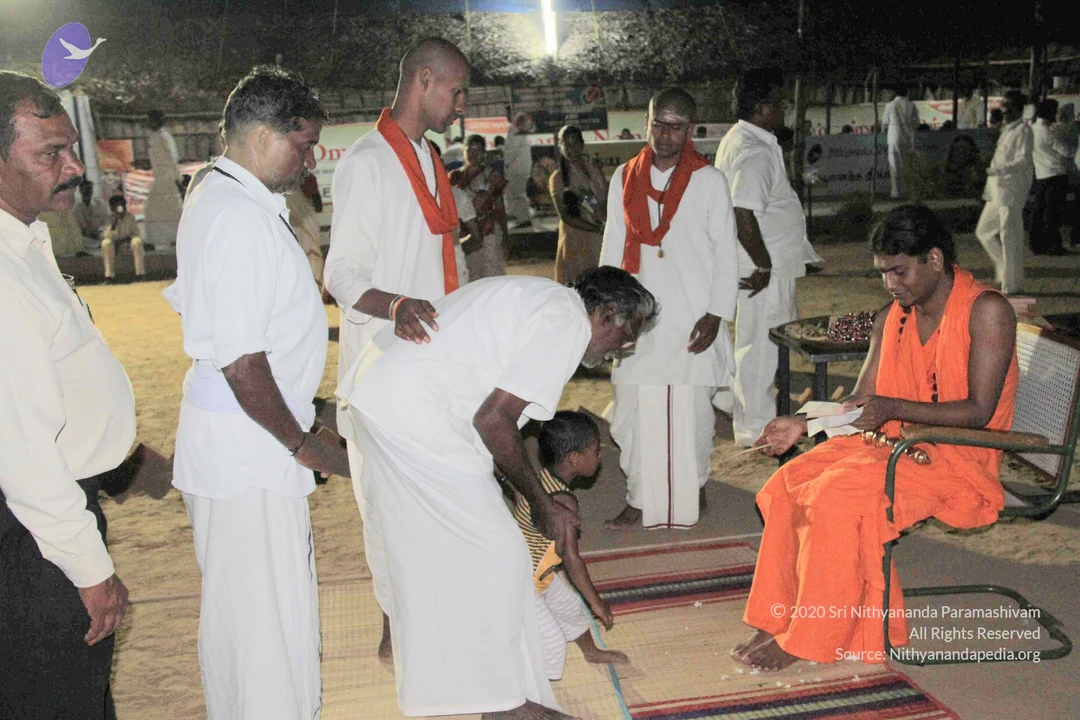
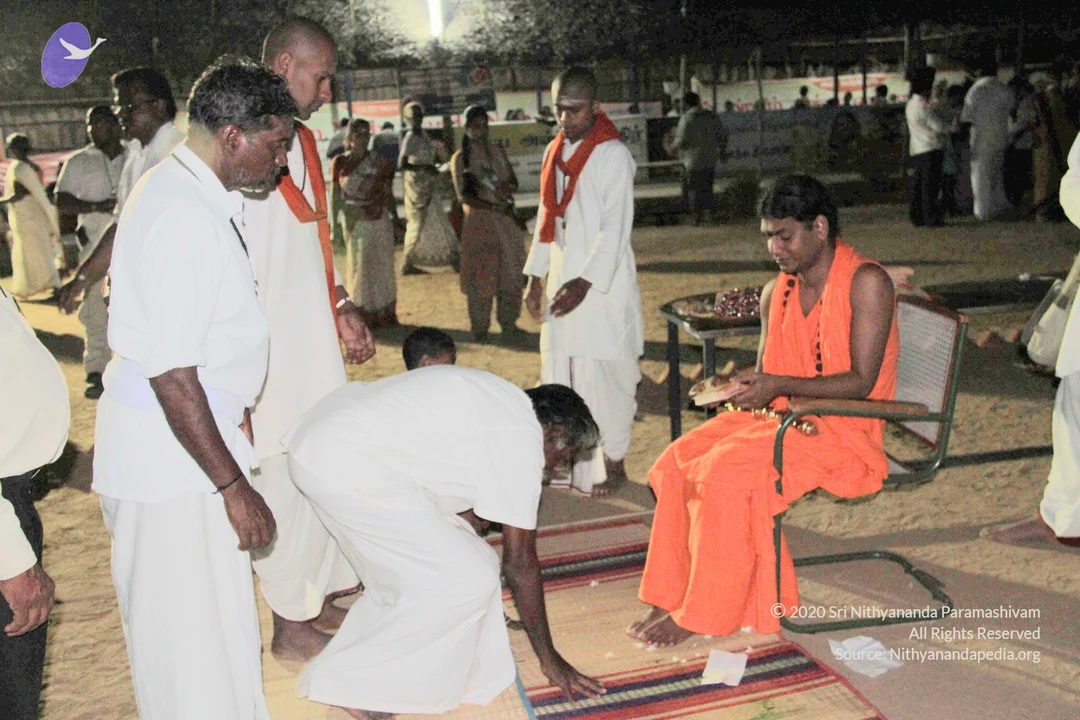
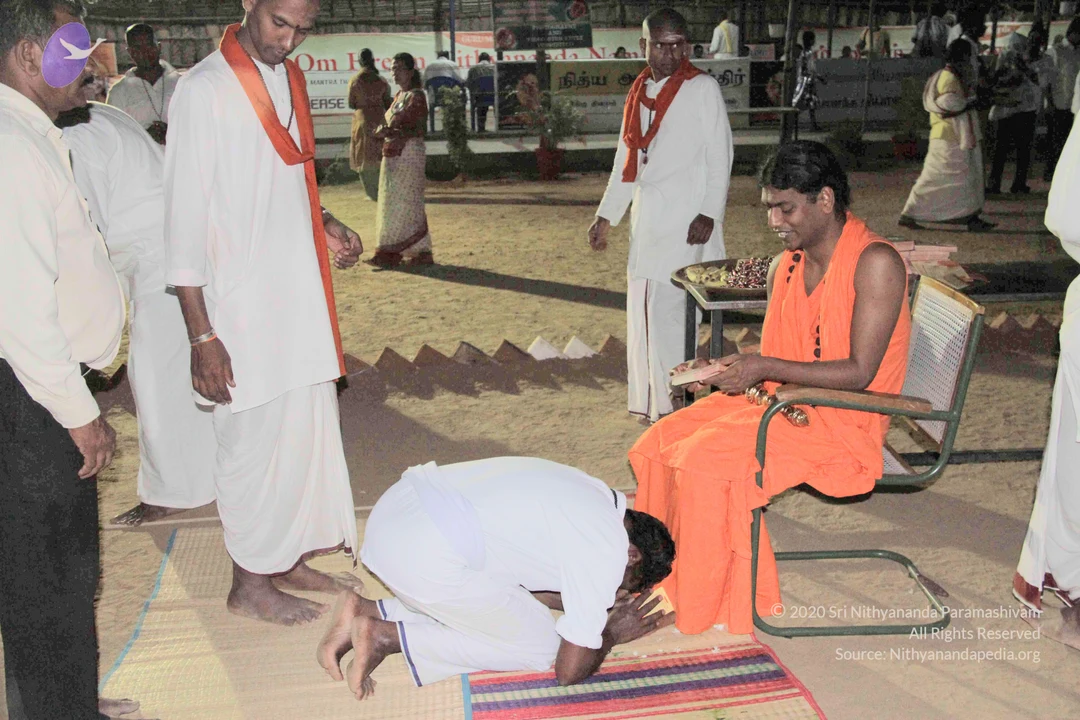
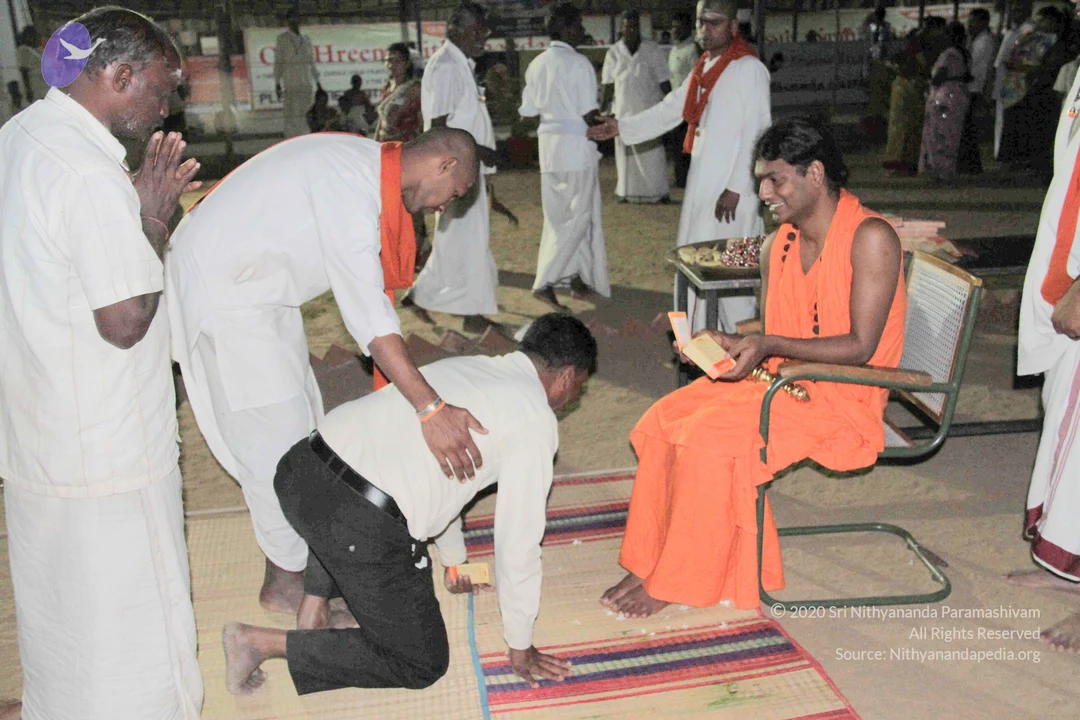
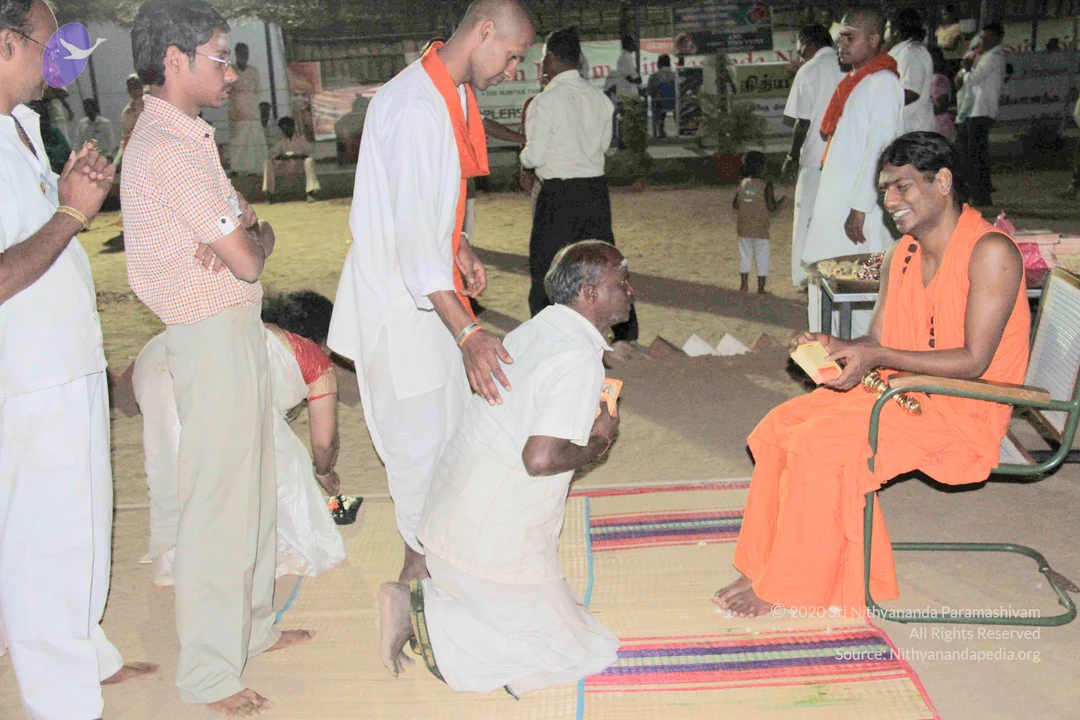
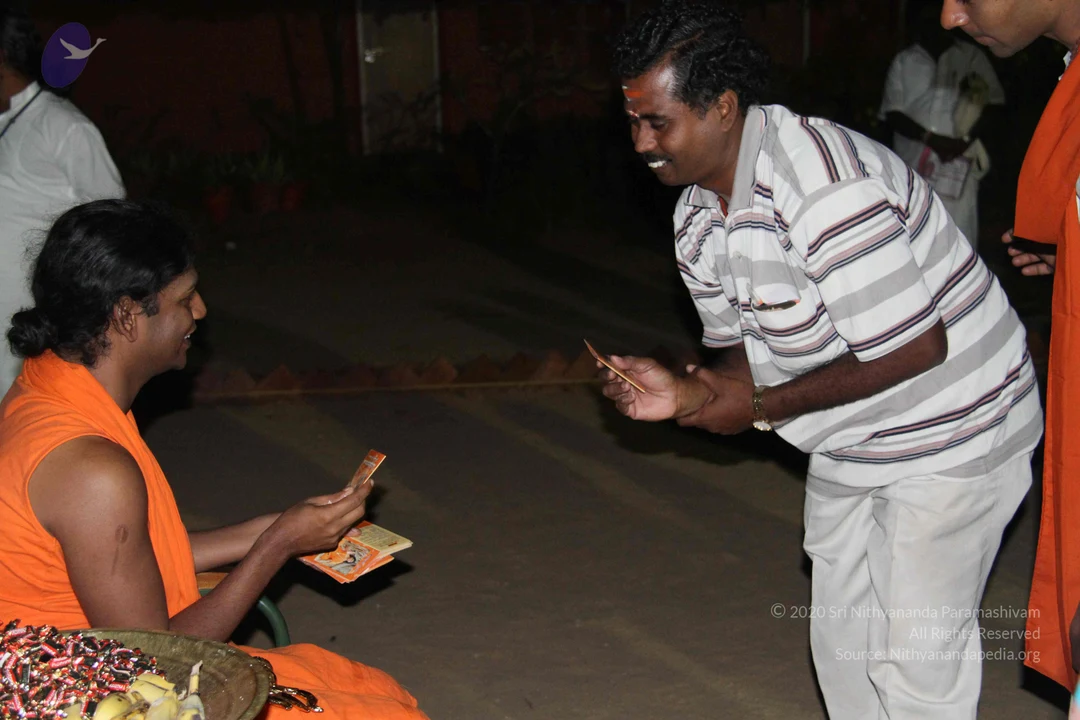
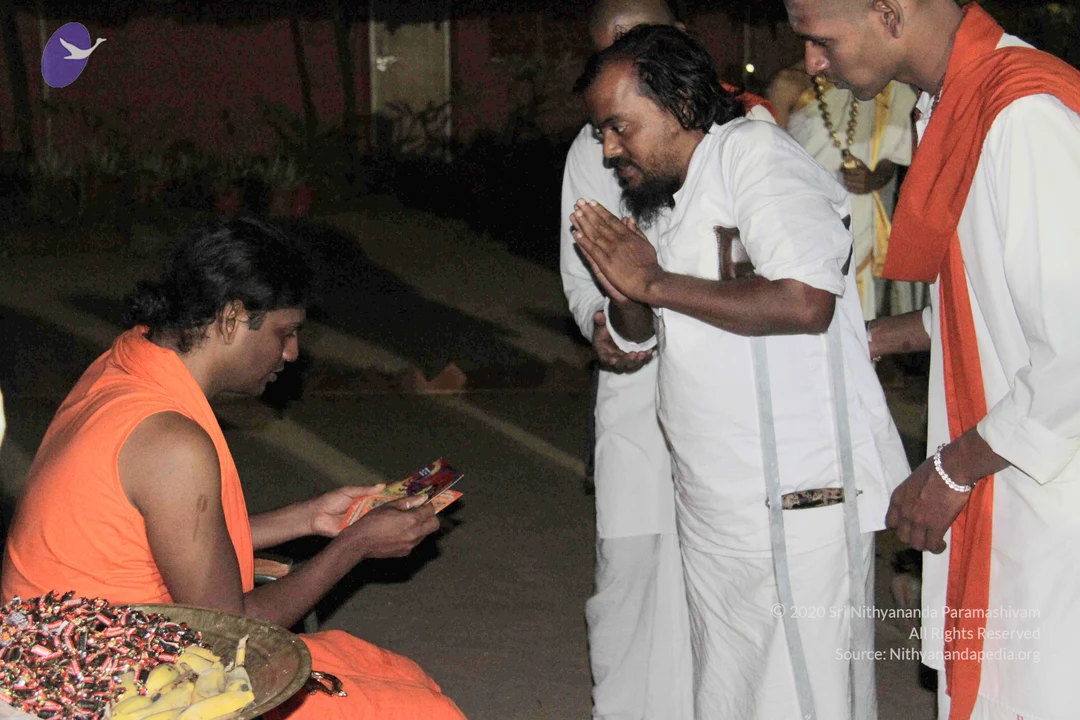
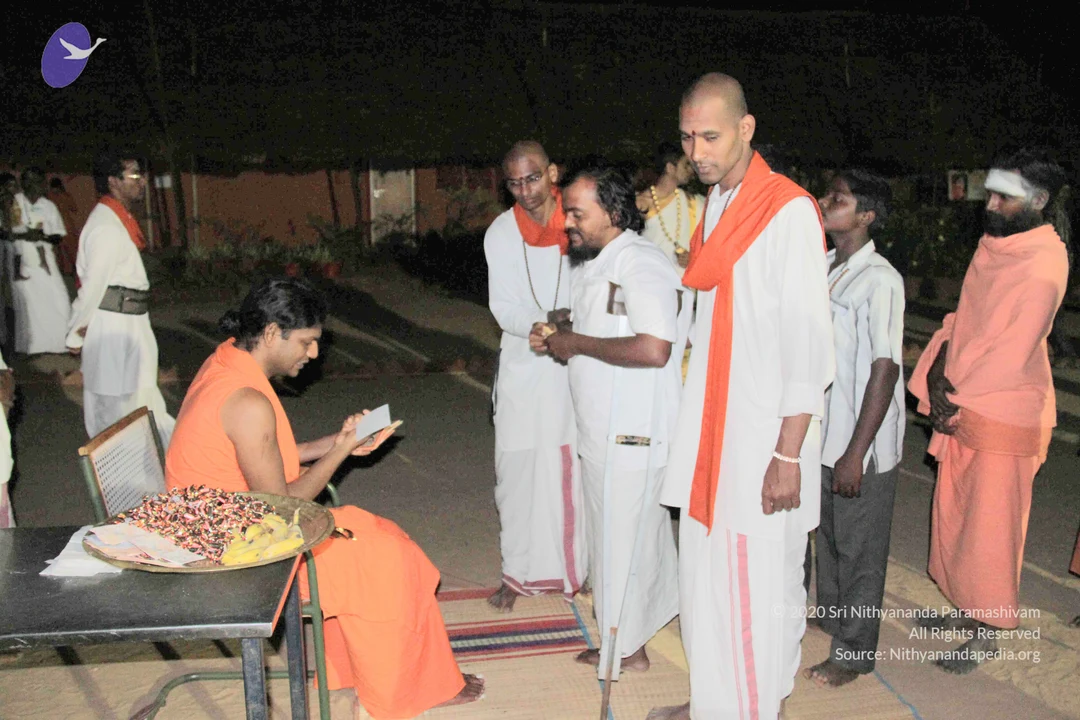
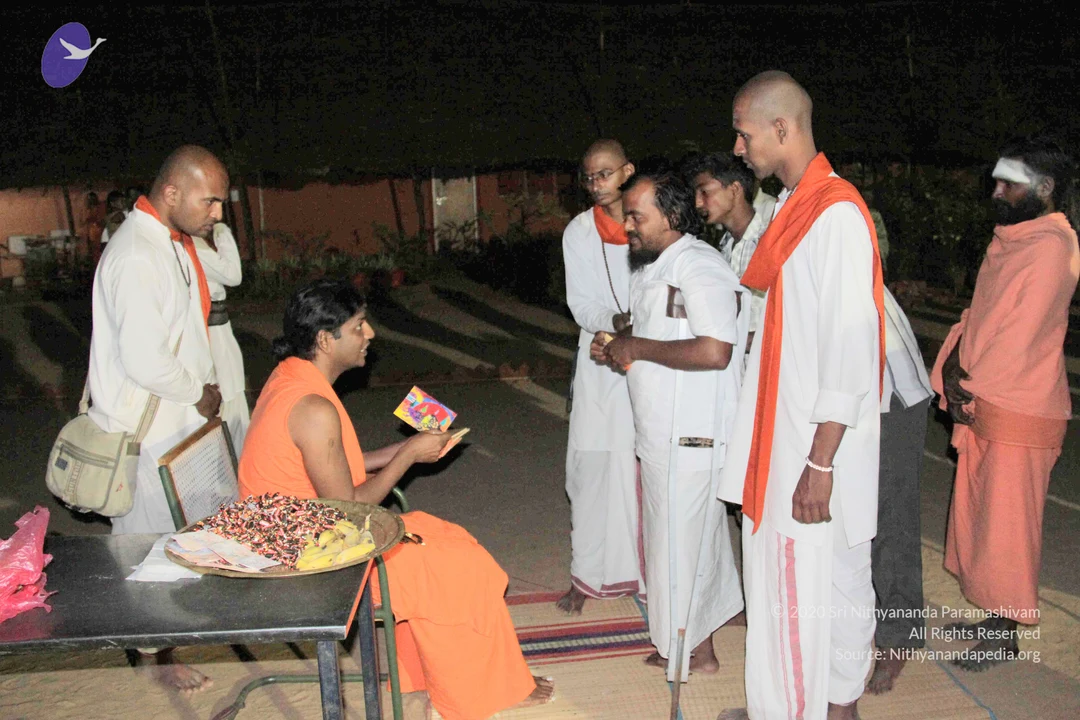
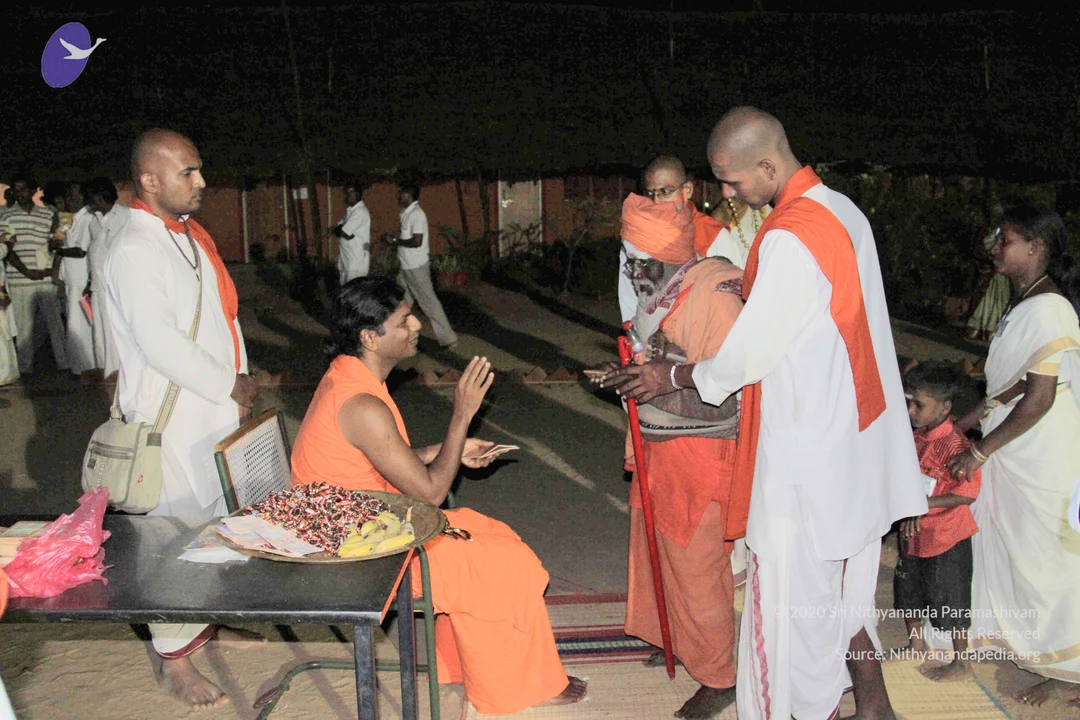
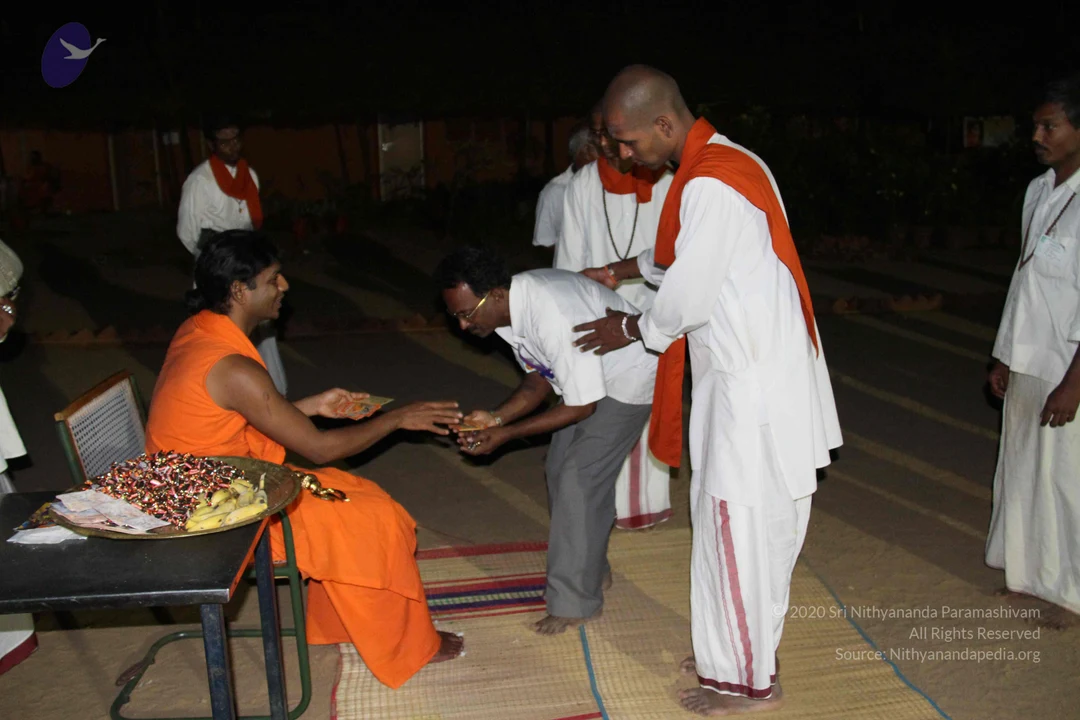
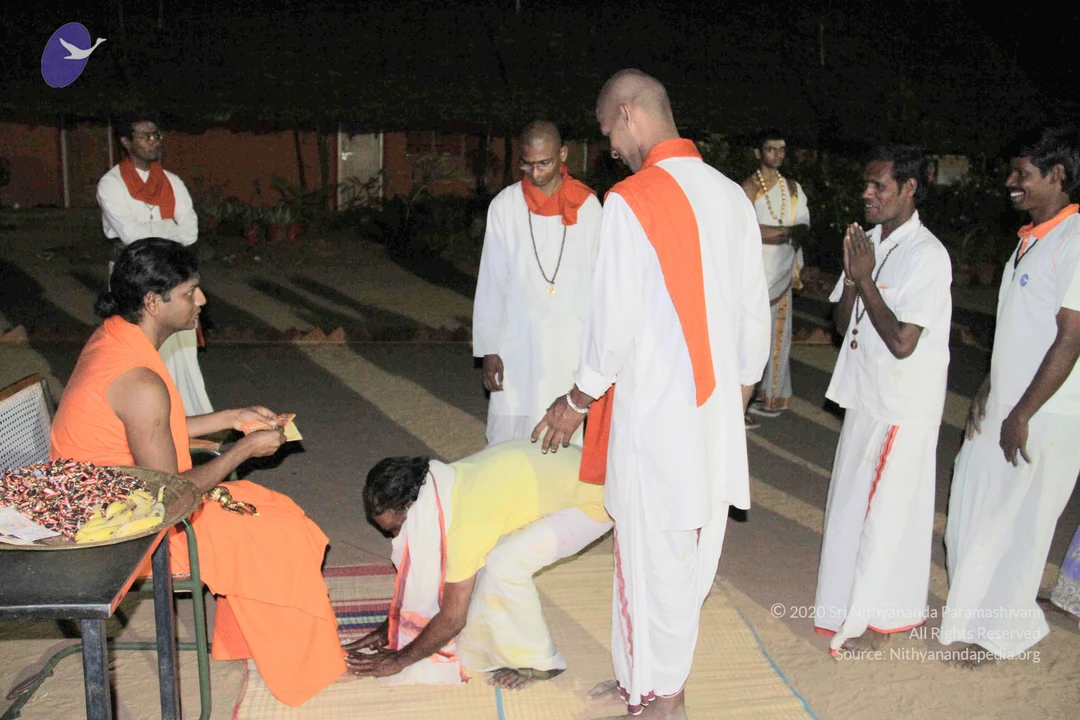
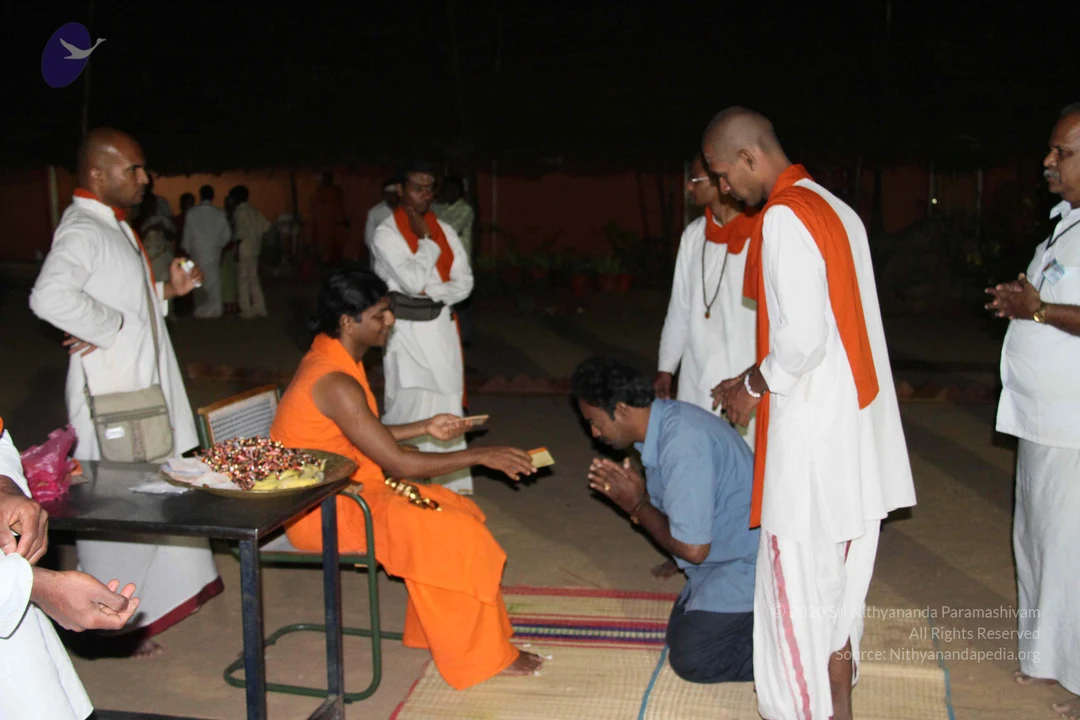
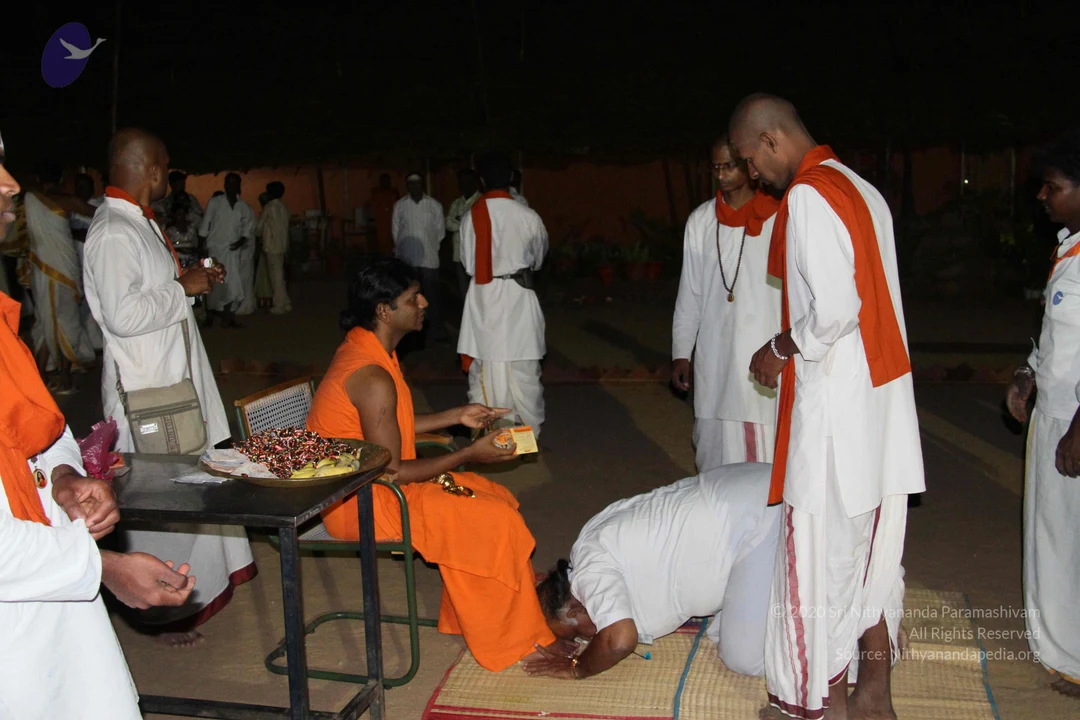
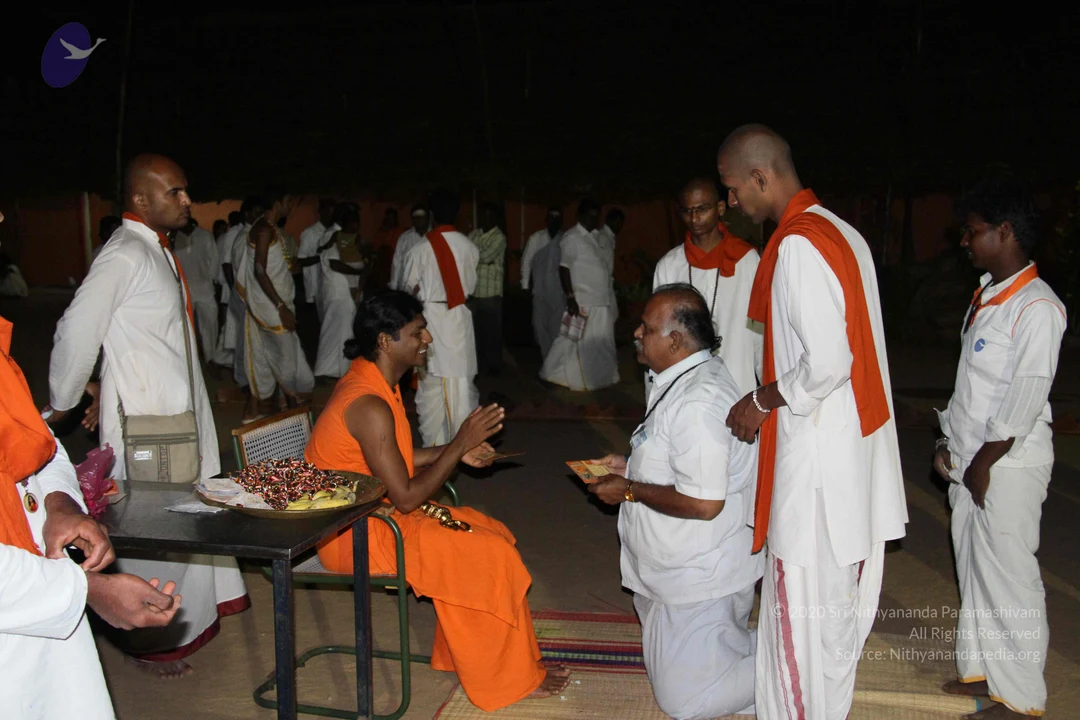
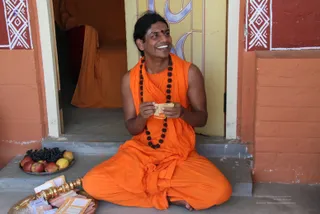
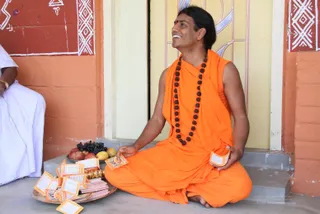
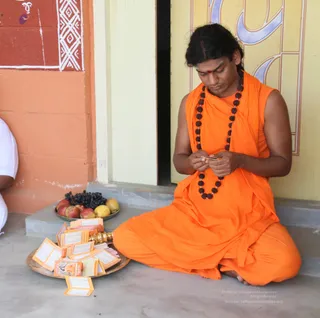
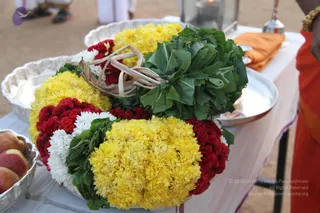
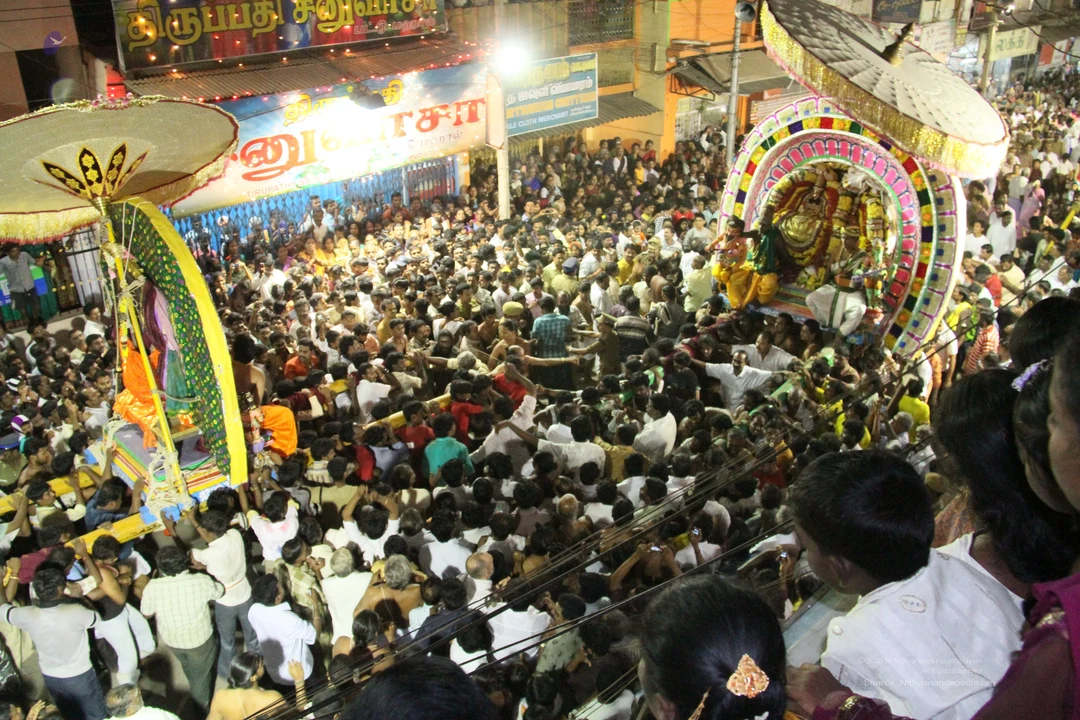
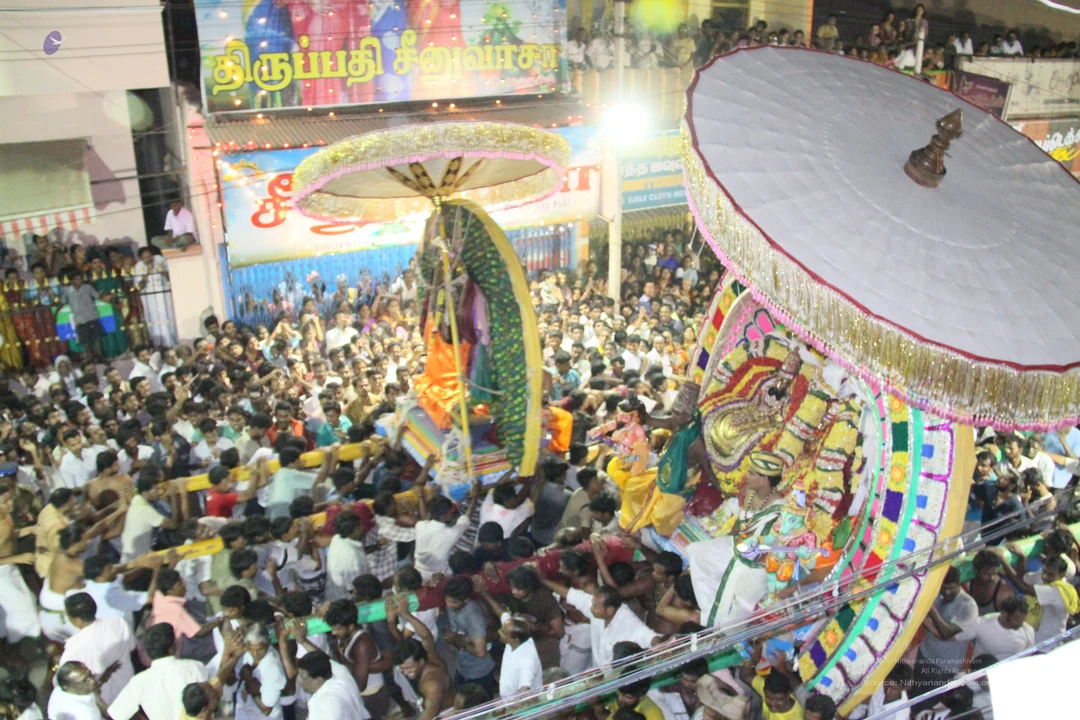
These pictures dates back to the year 2011 when the Supreme Pontiff of Shrikailasa, the greatest and only Hindu Nation, HDH Nithyananda Paramashivam himself prepared the ritualistic offerings called mandagapadi to be offered to Arunachaleshwara who would come in grand procession during the infamous Thiruvoodal and Maruvoodal festival in Tiruvannamalai. Today SriKailasa boasts of reviving the Temple-based lifestyle through at least 100 established temples (over 30 full fledged temples) around the world. Every deity, every jewelry piece on the deity, puja items, priest, integrity to the scriptures while performing the rituals, and every other detail involved in temple building and maintenance has been personally overlooked by His Divine Holiness.

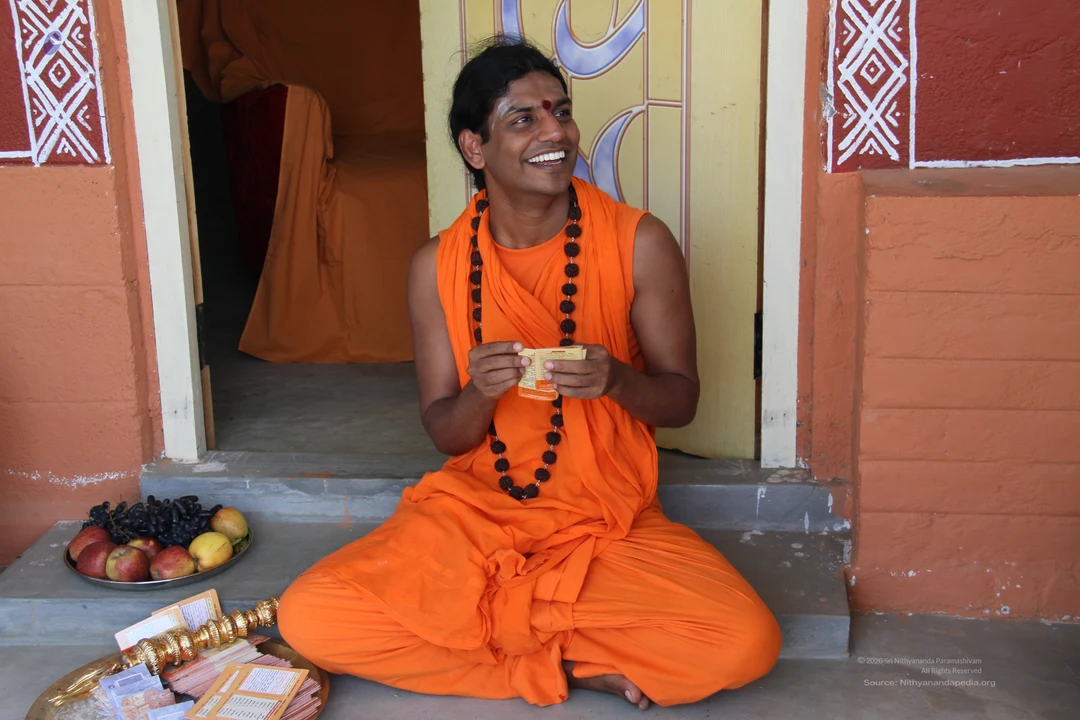
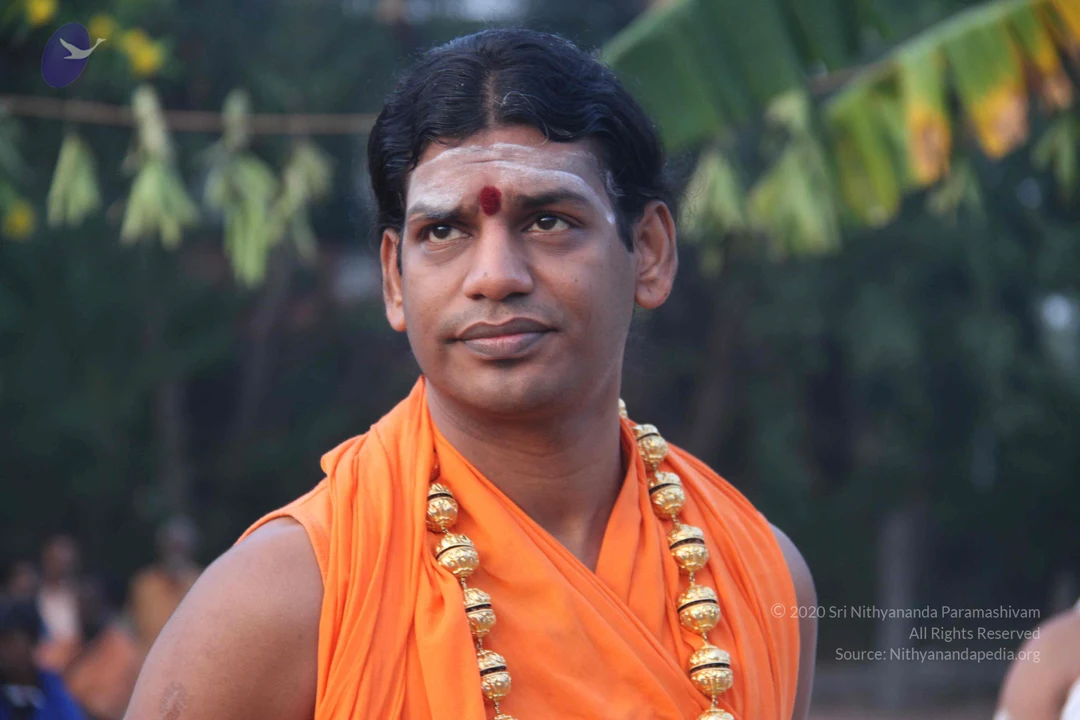
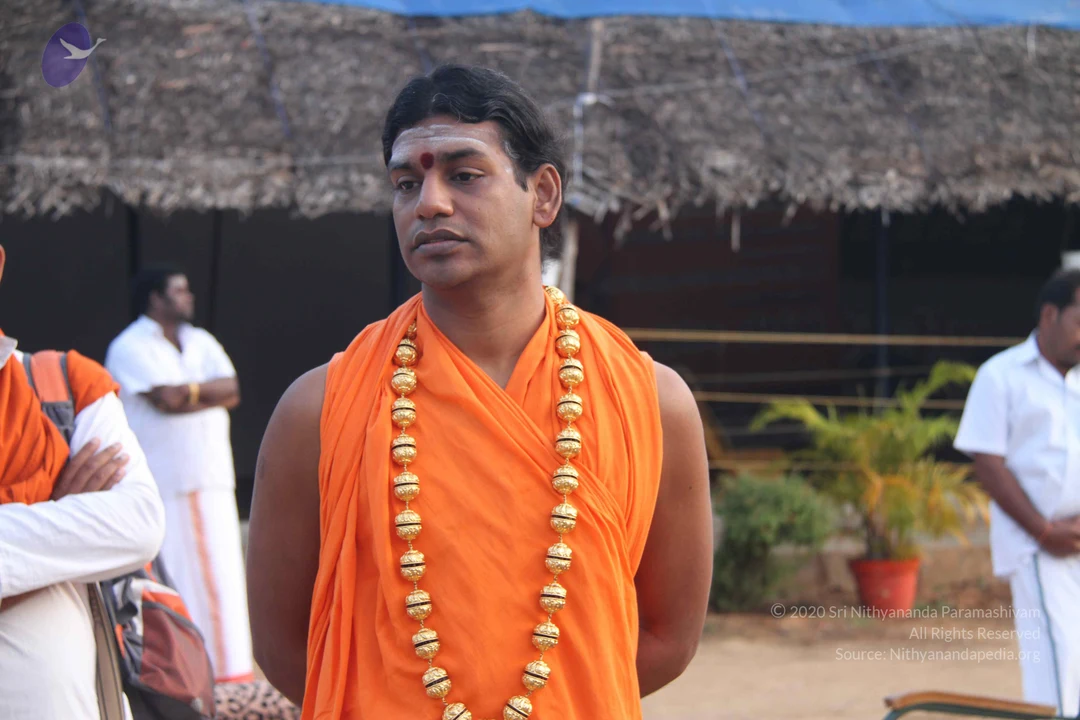
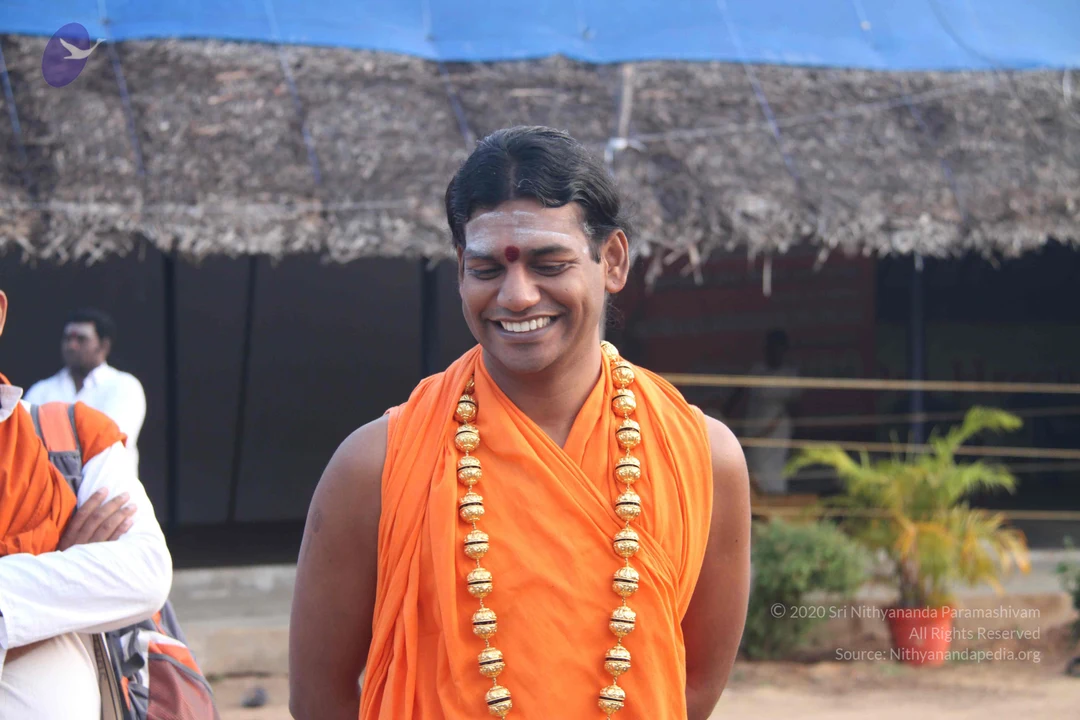
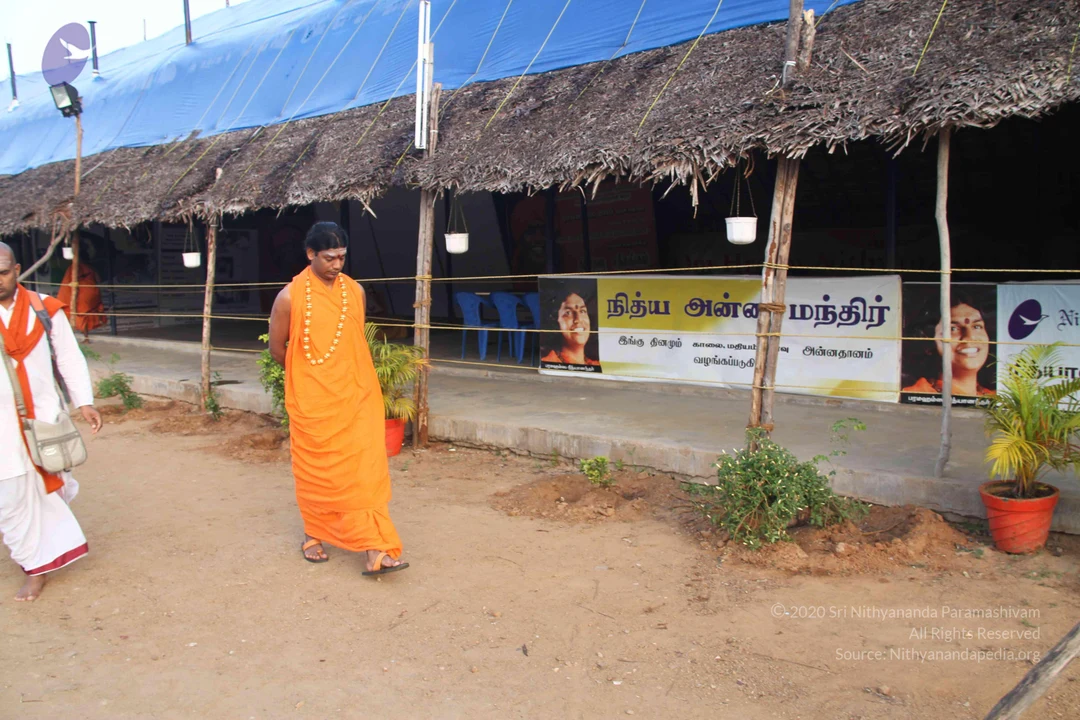
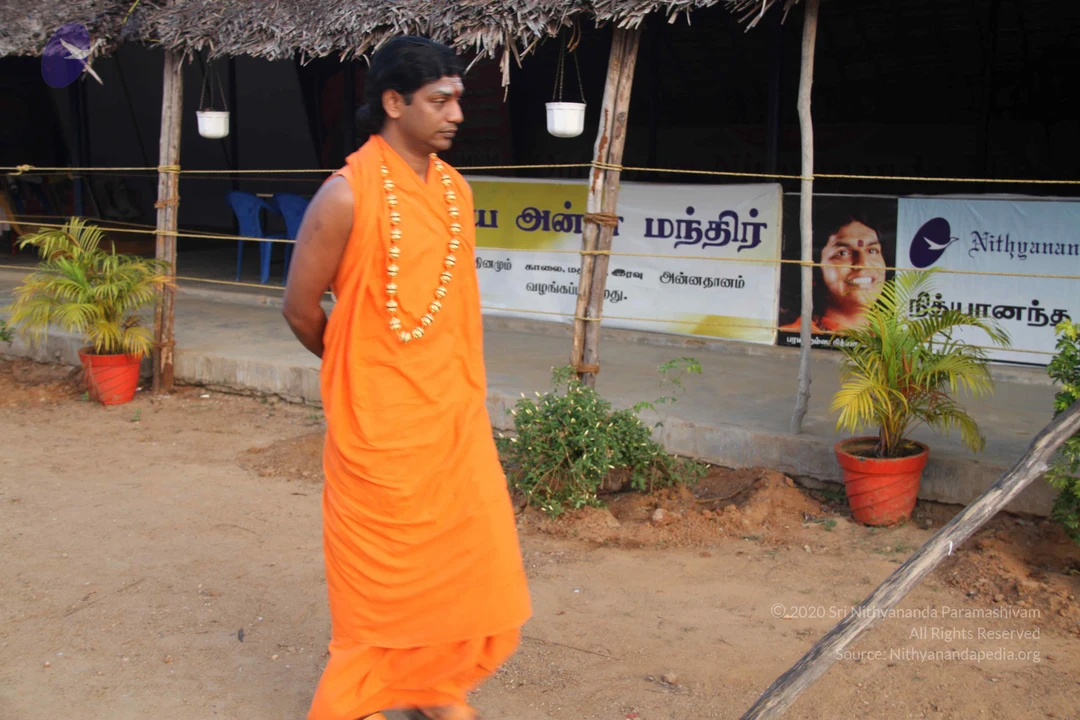
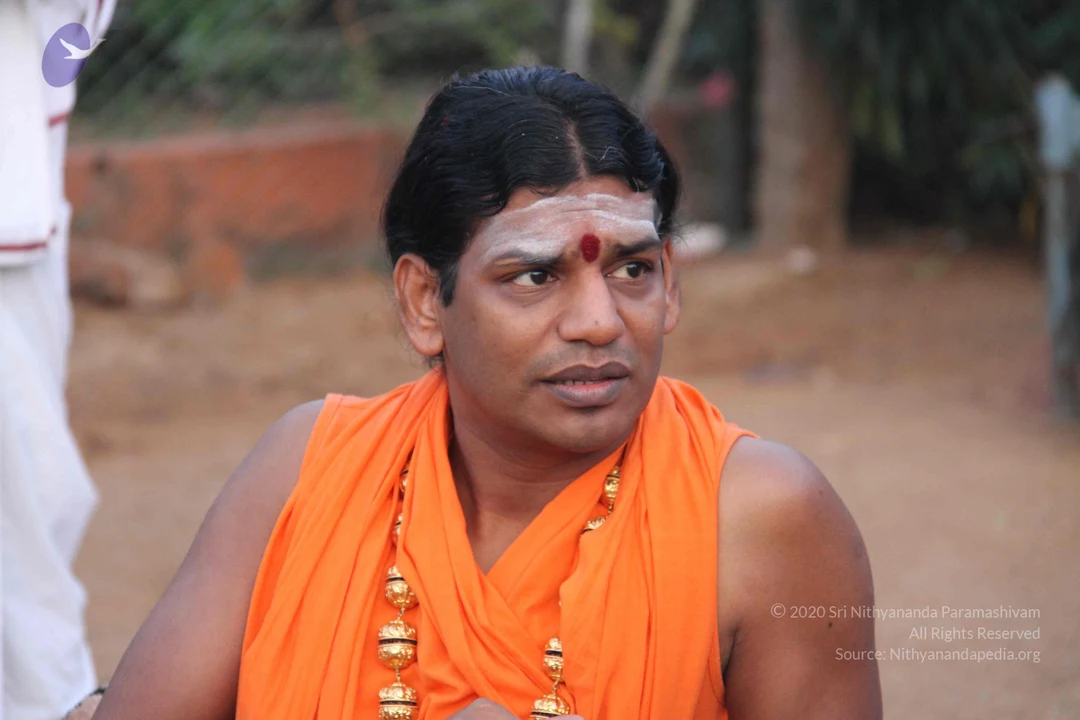
This picture is from the former years of the mission, after one of the major persecution attempts. It speaks volumes on HDH’s single-handed, continued efforts to revive the sciences of Hinduism.

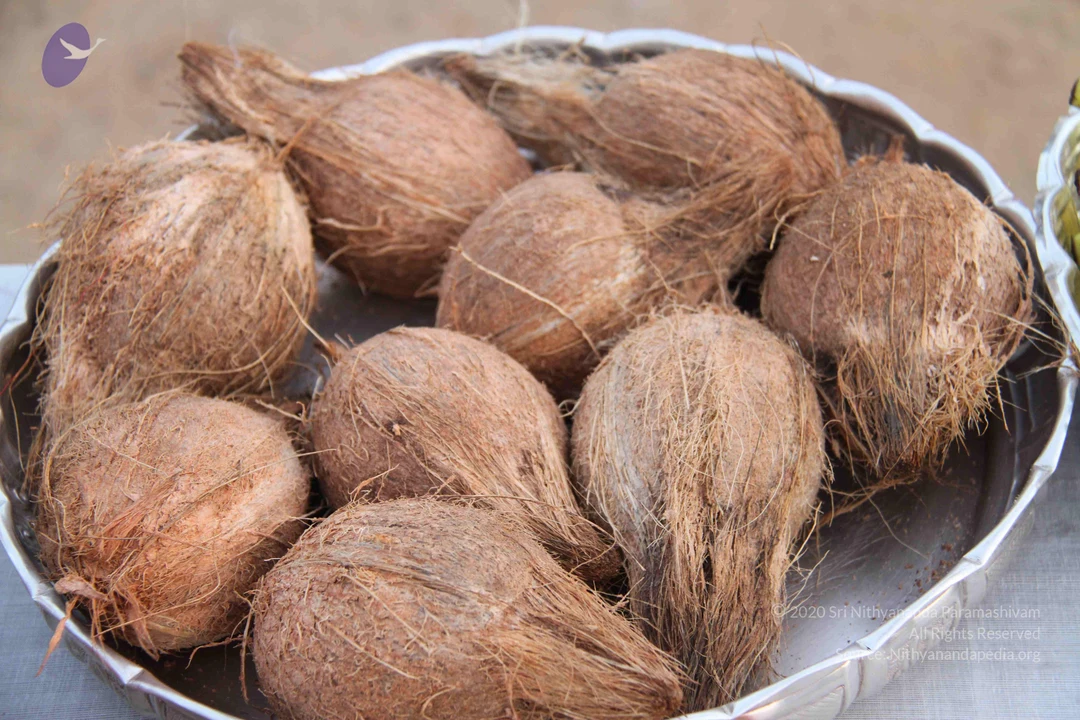
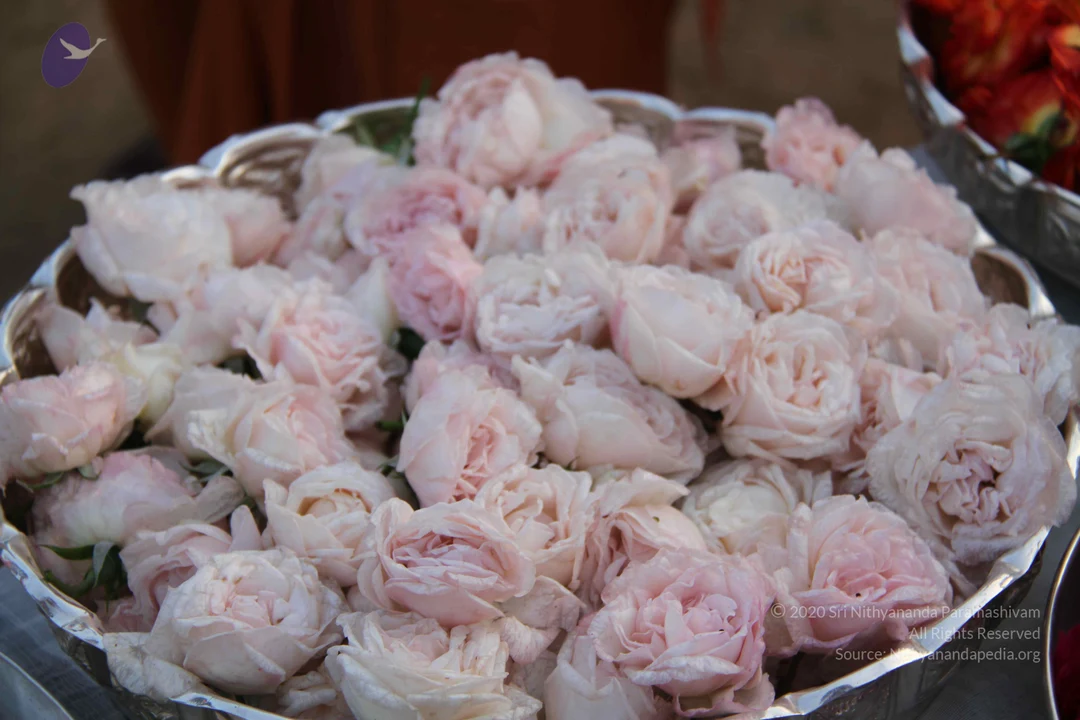
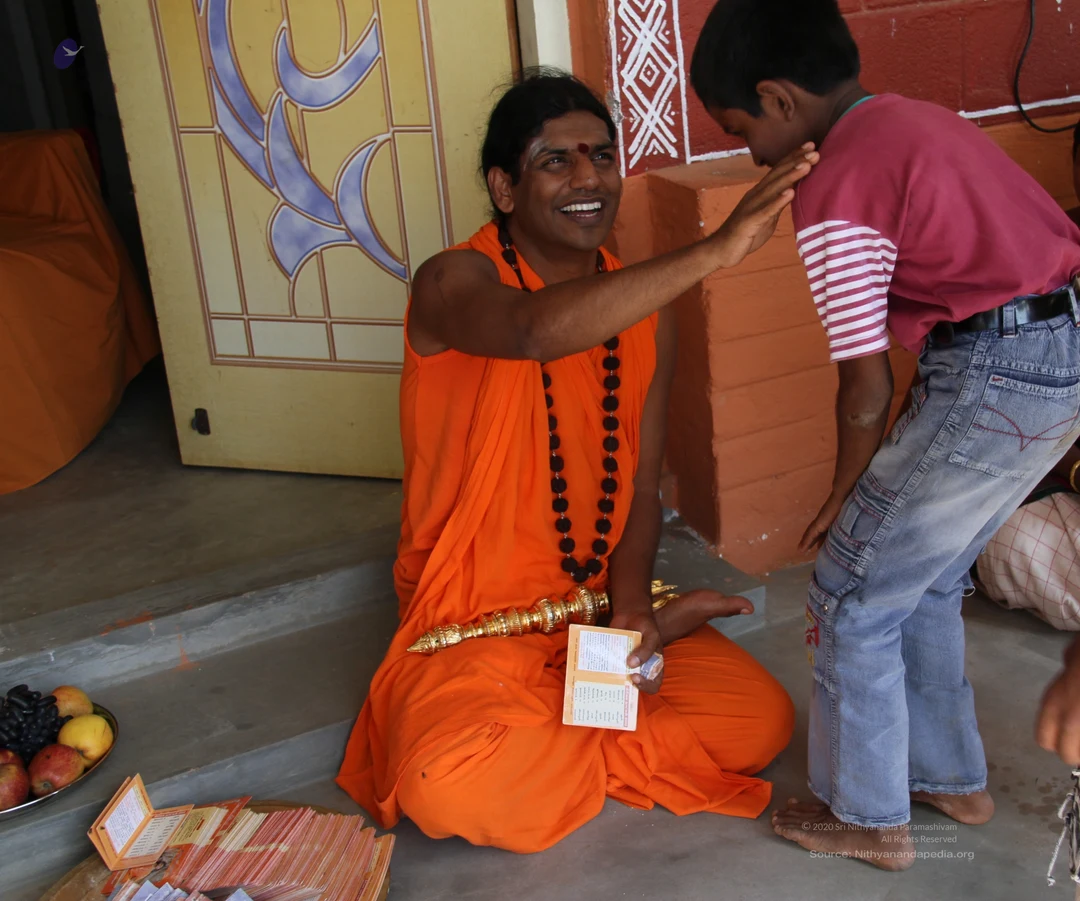
Through every action, HDH teaches us simple techniques, tasks along with the great truths of Life. Though recognised as incarnation by the adepts in science of reincarnation, HDH performs all the ritualistic processes just to revive these great sciences, teach the world and lead by example. Here He is seen preparing the mandagapadi- an offering of fruits, coconut , other valuables offered to Greet Arunachaleshwara during the Thiruvoodal festival when he passes by the Arunachala Sarvanapeetam, located at a key position on the Girivalam path.

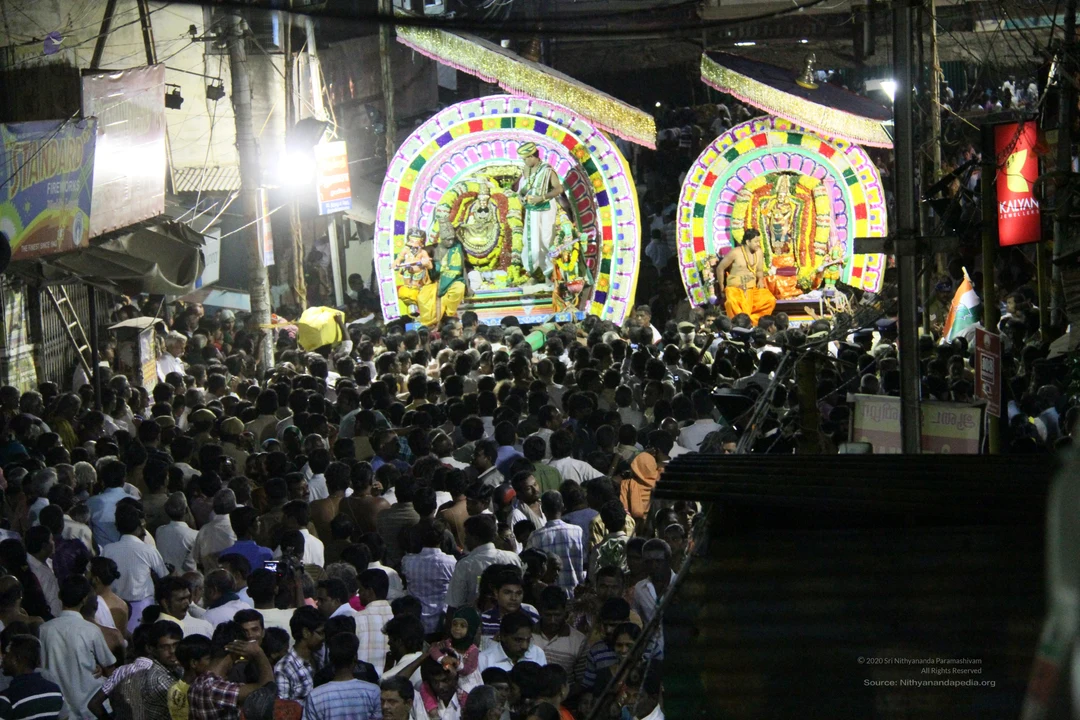
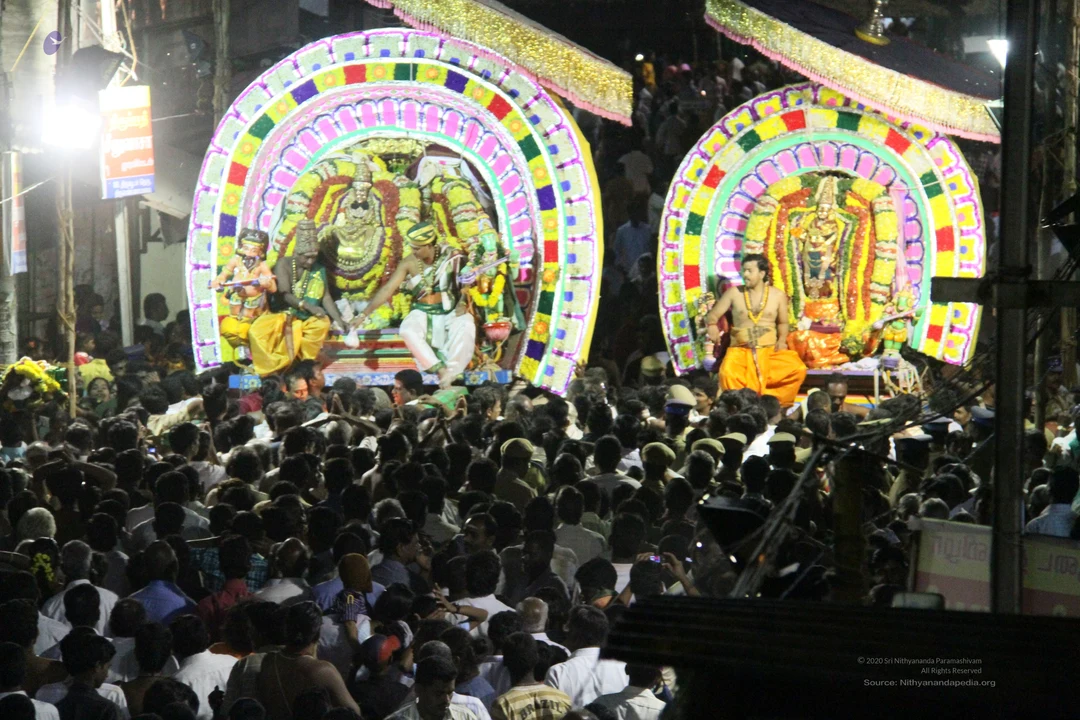
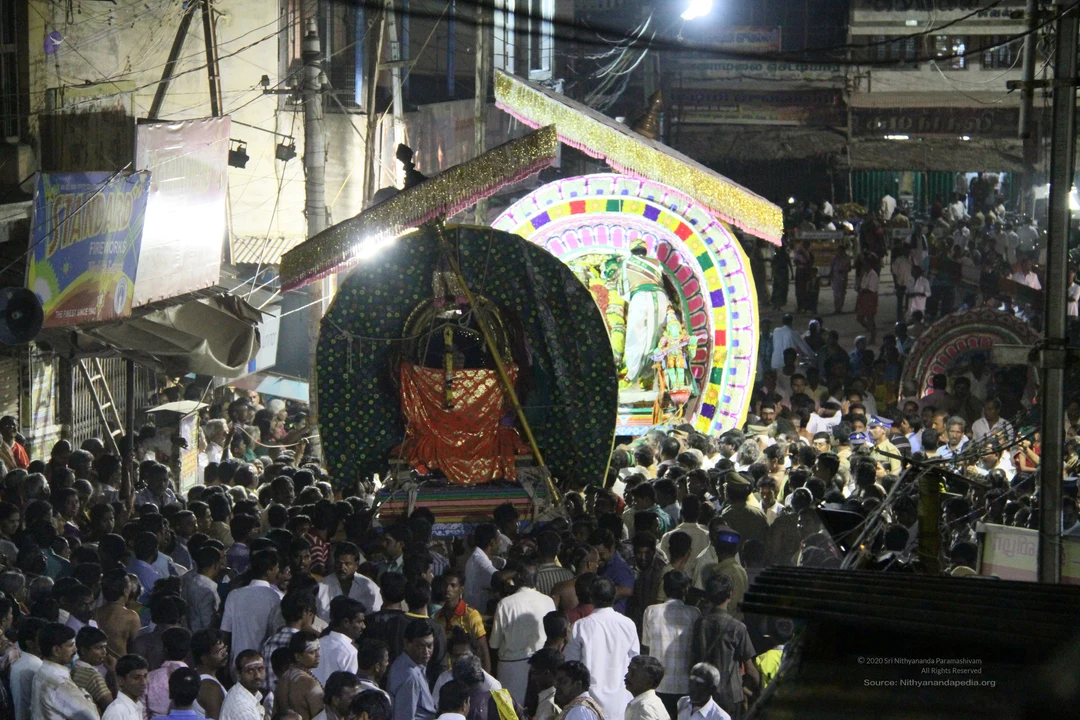
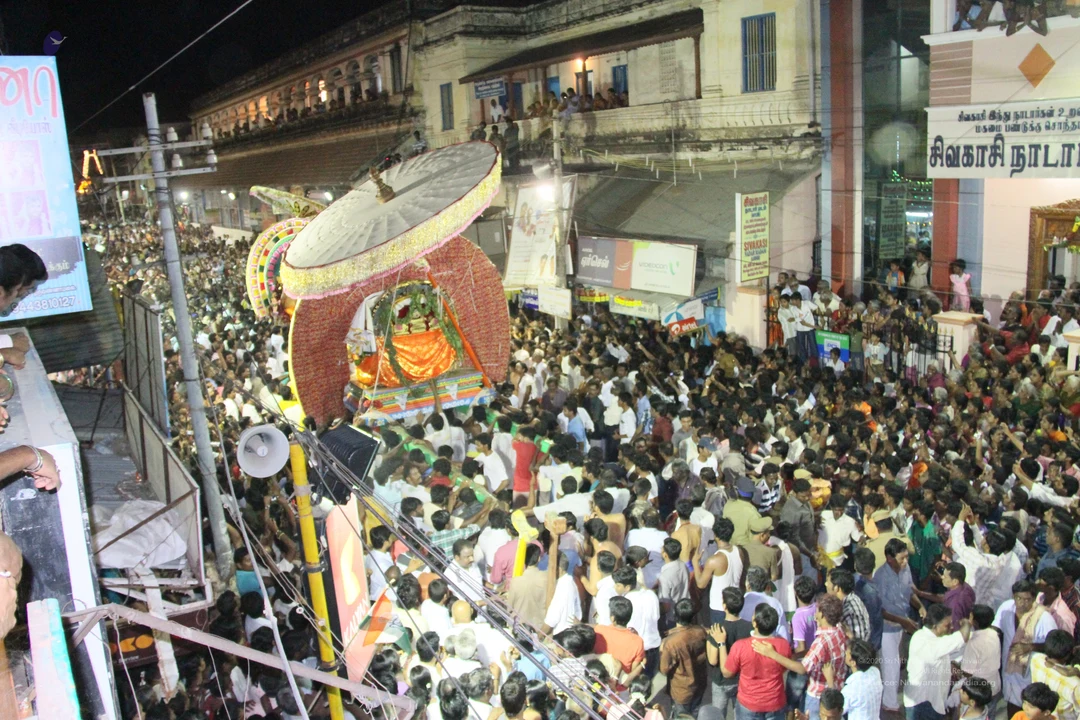
It would seem that the Tiruvoodal festival is celebrated in Tiruvannamalai in order to commemorate the time when Shiva and Parvathi were in discordance. Nevertheless, it finishes with the divine union and brings them both back together in harmony. On the first day, there are three processions of the deities starting from the big temple and going on the four streets around the temple. The Utsava Murthis are Sri Mula Nayakar (Shiva in the form of Somaskanda), Tani Ambal (the independent goddess) and Sundaramurthi Nayanar (one of the main tamil saivaite saints).

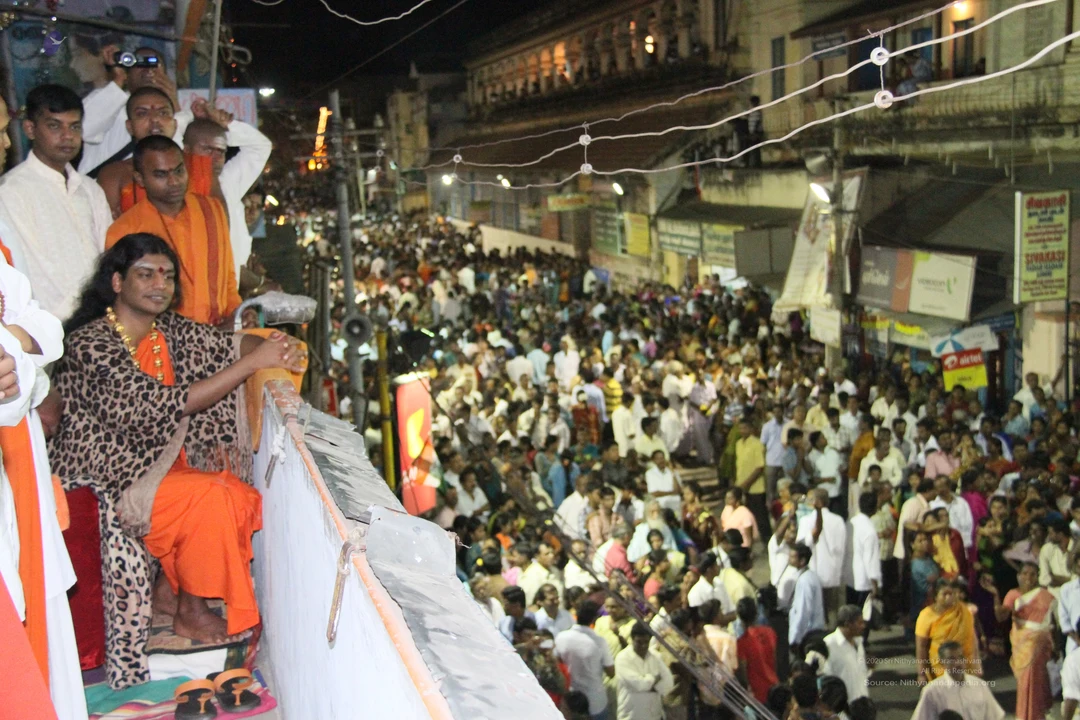
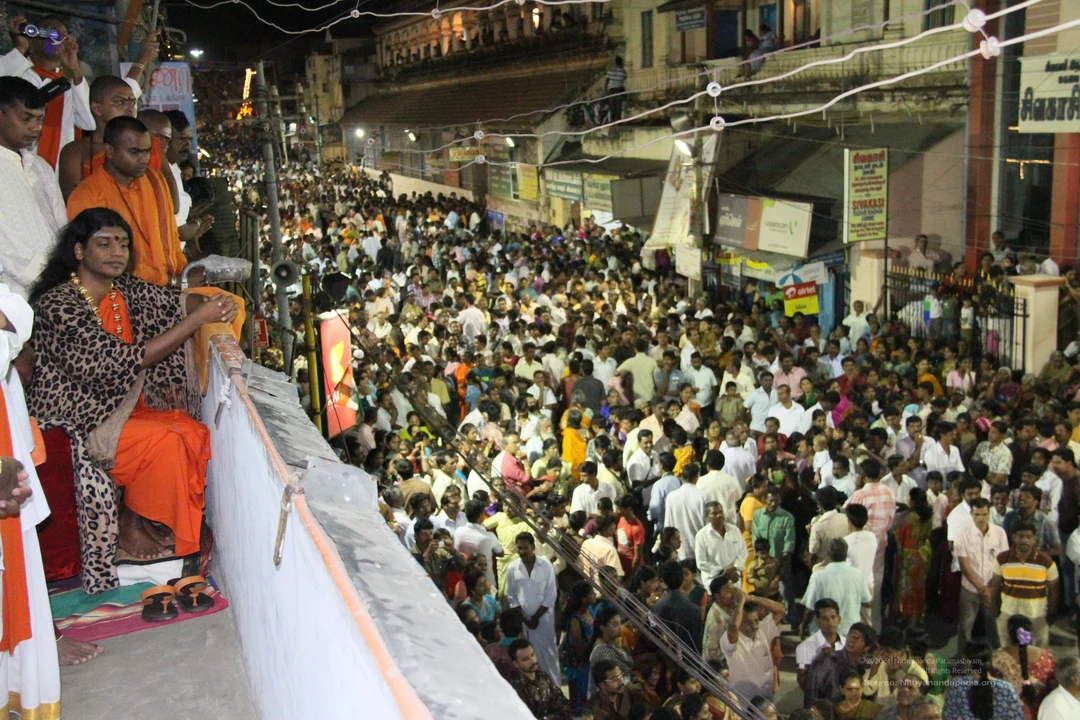
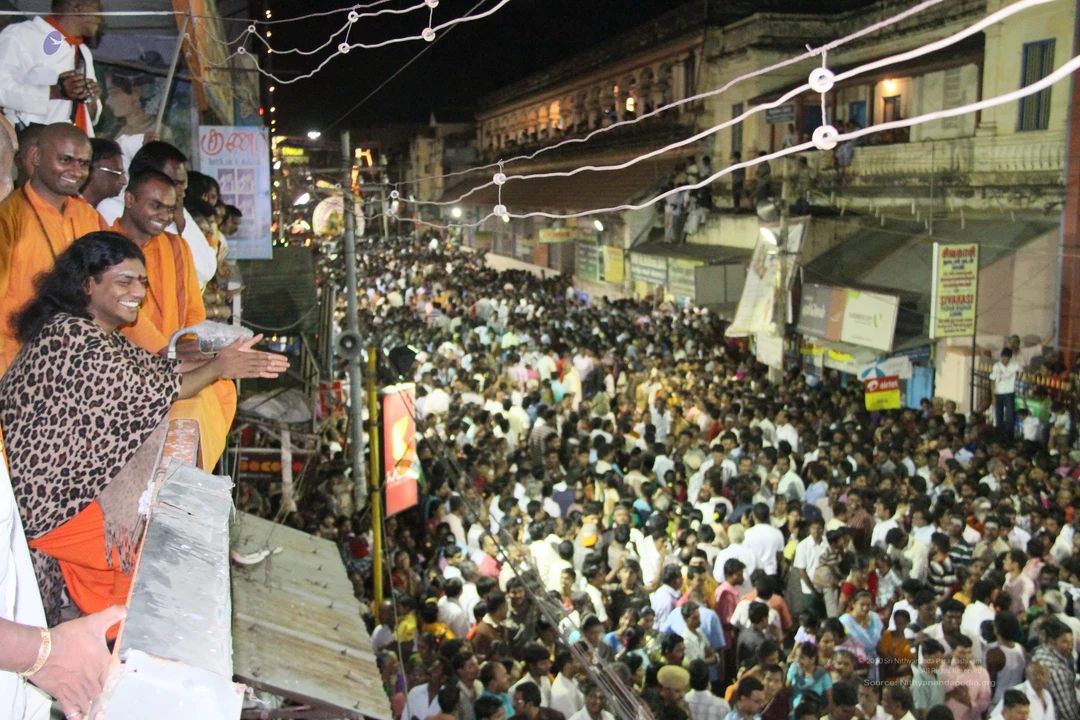
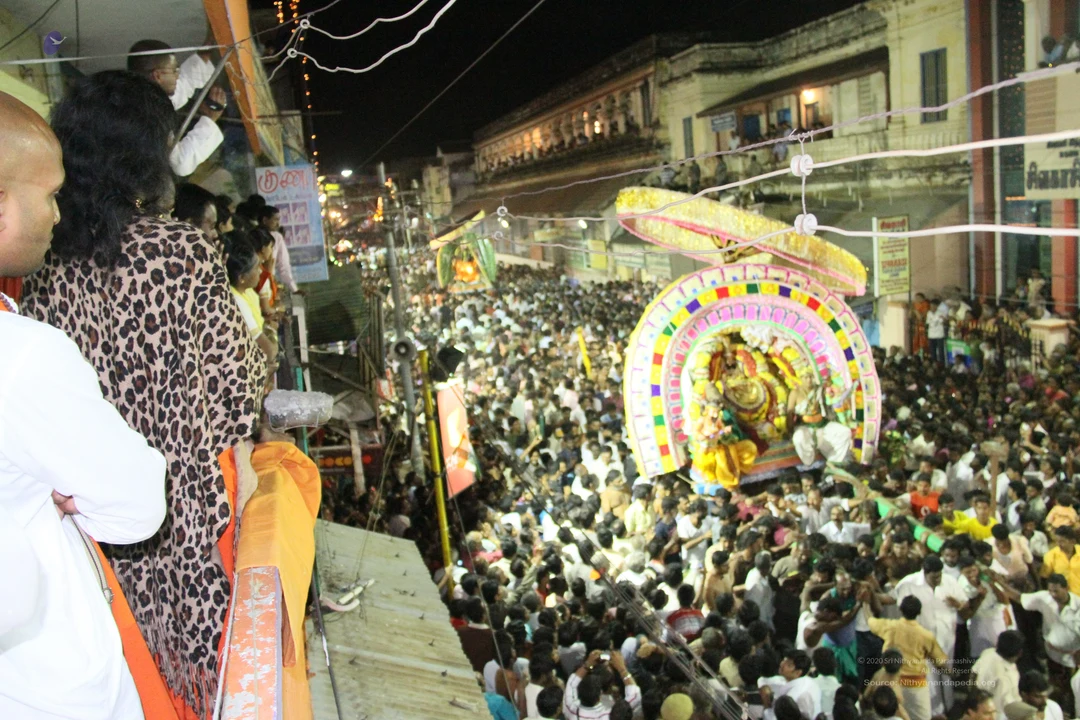
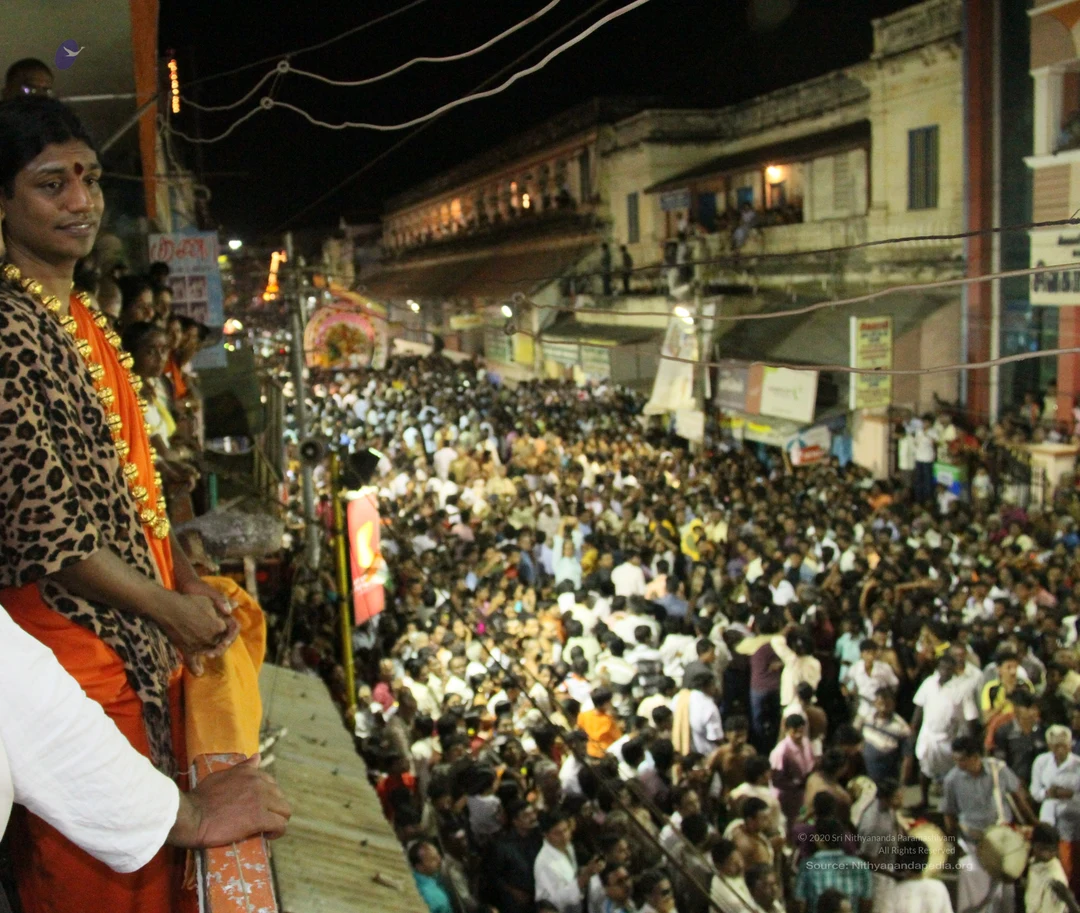
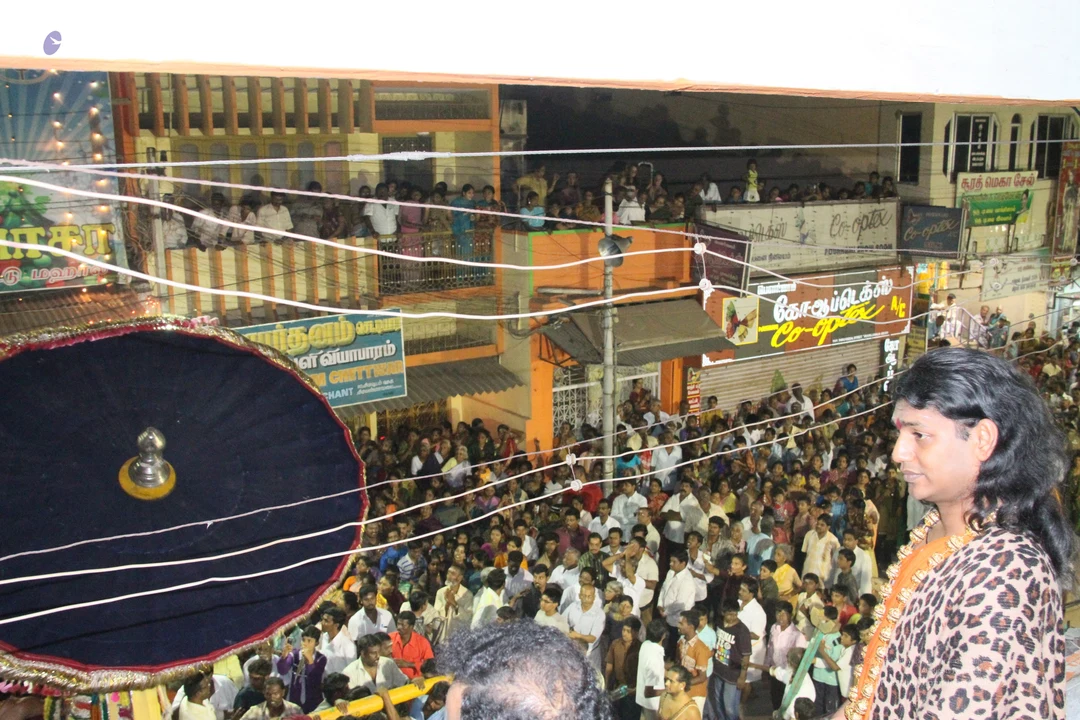
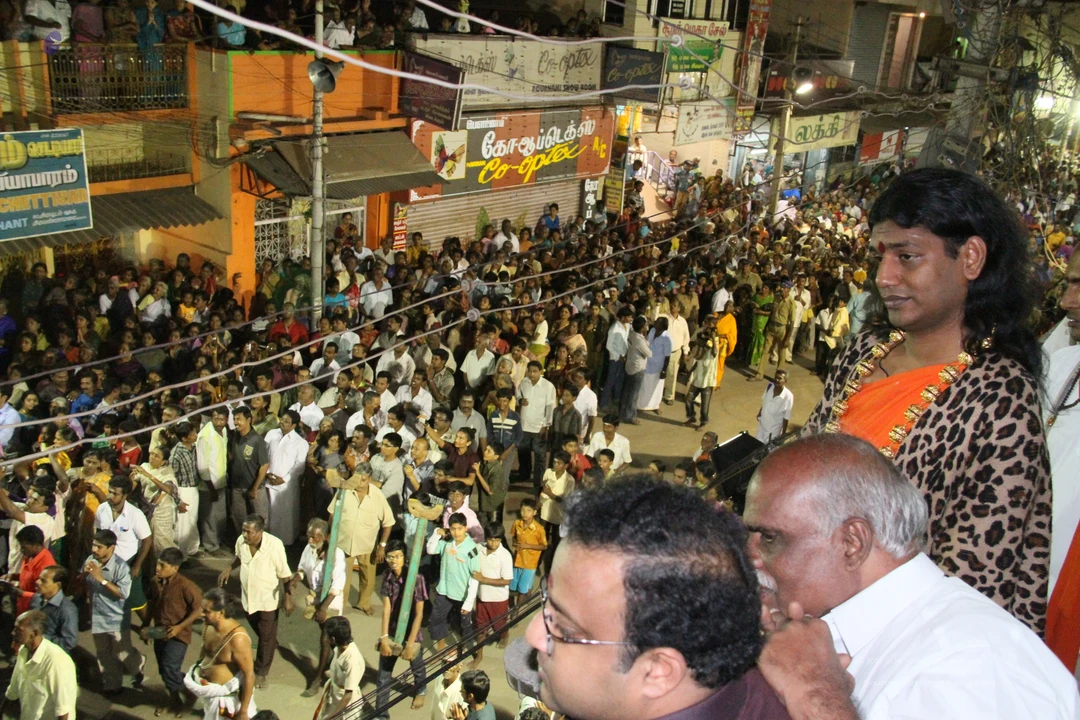
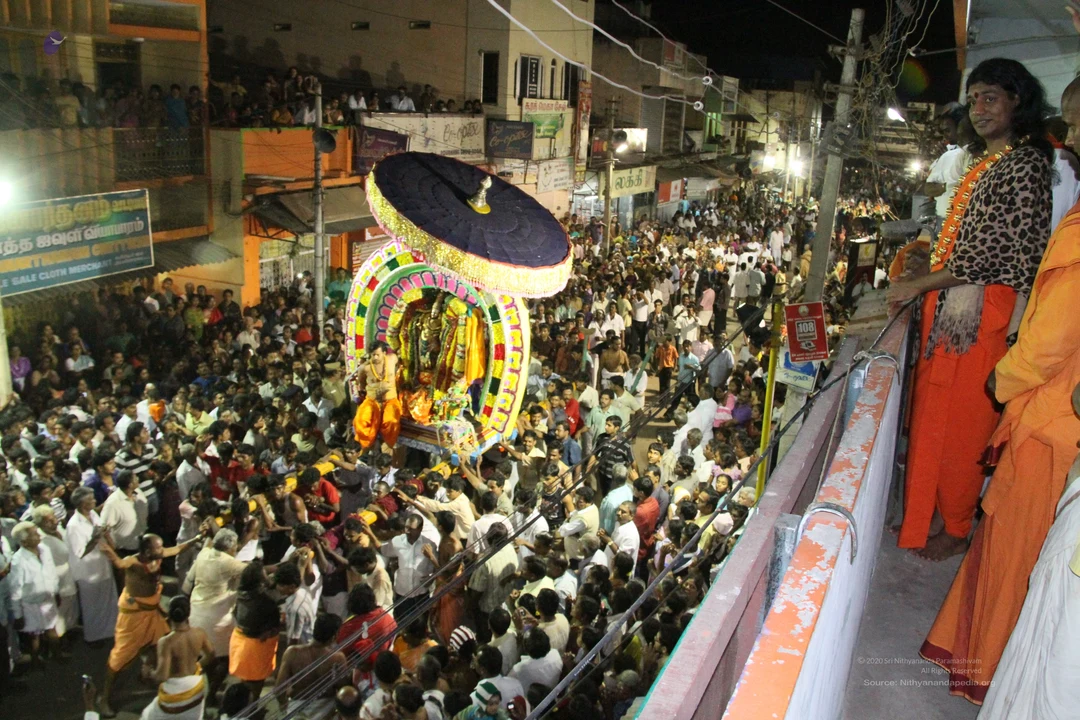
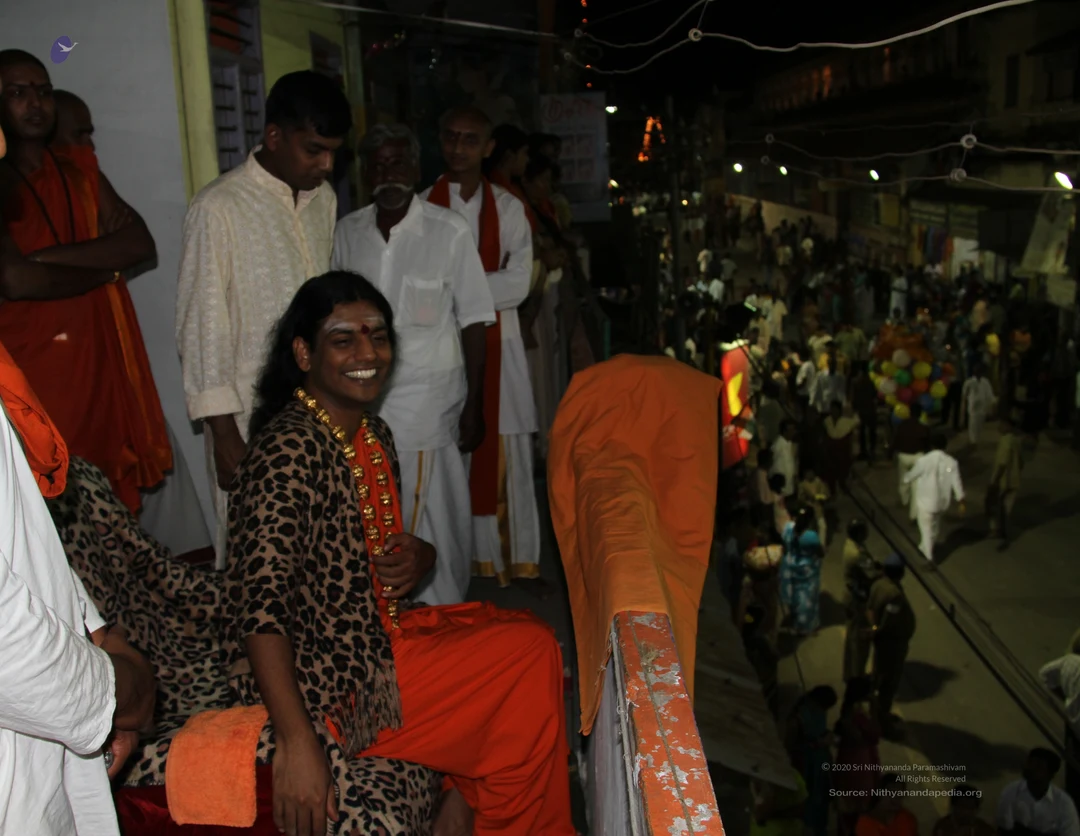
The most interesting part of the festival takes place in the evening on Tiruvoodal street. During this part, the quarrel between Shiva and His consort, Parvathi, is enacted in public on the streets and witnessed by a large gathering of devotees who are assembled there eagerly to watch the divine drama. The God and the Goddess are brought on palanquins from opposite ends of the street and then borne down to face each other. The narrative of the quarrel is chanted by an Oduvar (temple singer) in tamil lyrics. After this ensues a dramatic dancing procession. Six times the God and the Goddess are borne down at a great speed and then meet in the centre and have their quarrel. This is played out by the palanquin bearrers jumping and shaking the palanquin up and down, which makes it appear as if the deity inside is jumping up and down in a fit of rage. The temple musicians play their drums in fitting accompaniment, adding to the frenzied rantings of the gods as they are shouting at each other. After each quarrel-dance, the deities change sides and each goes off in the opposite direction from which he or she came initially. The crowds of devotees are hysterical with excitement and after each dance-quarrel, the tension mounts and so do the loud cries of fervor and devotion which increase in volume and fury.

The next day, Shiva is up at dawn and leaves on Giripradakshina during which he makes a halt at the Vedarpari mandapam where his jewels are supposedly stolen and later on he also grants salvation to his ardent devotee Kannappa. This is the reason for the Kannappa temple on that location. Shiva also grants darshan to another of his devotees the great rishi ‘Bhringi’ during this trip. Shiva eventually completes his giri pradakshina and returns to the temple in the afternoon where he enters, dancing the dance of the Swan (Hamsa Natanam). The bearers of the palanquins have a special technique to execute this dance and it causes a type of swaying, continuous oscillation of the deity without losing balance, quite a fascinating sight!

Now a ritual takes place in the southern area of the temple which covers directly the sanctum sanctorum. Sundaramurthi Nayanar first goes to warn the Goddess about the return of Shiva. Of course, She, being curious, leaves Her door open so that She can have a glimpse of the dancing arrival of Her Lord. On seeing this spectacle, however, She is so dazzled by her Lord’s beauty and splendour as He arrives majestically doing His swan-dance, that She submits to Him and wishes to be re-united. Thus the reconciliation and reunion of the gods take place and to synchronise this, both the deities are brought together and placed on the same pedestal and the priests perform an Arathi puja waving and encircling one flame around both of the deities to signify the restoration of harmony

Morning-Darshan
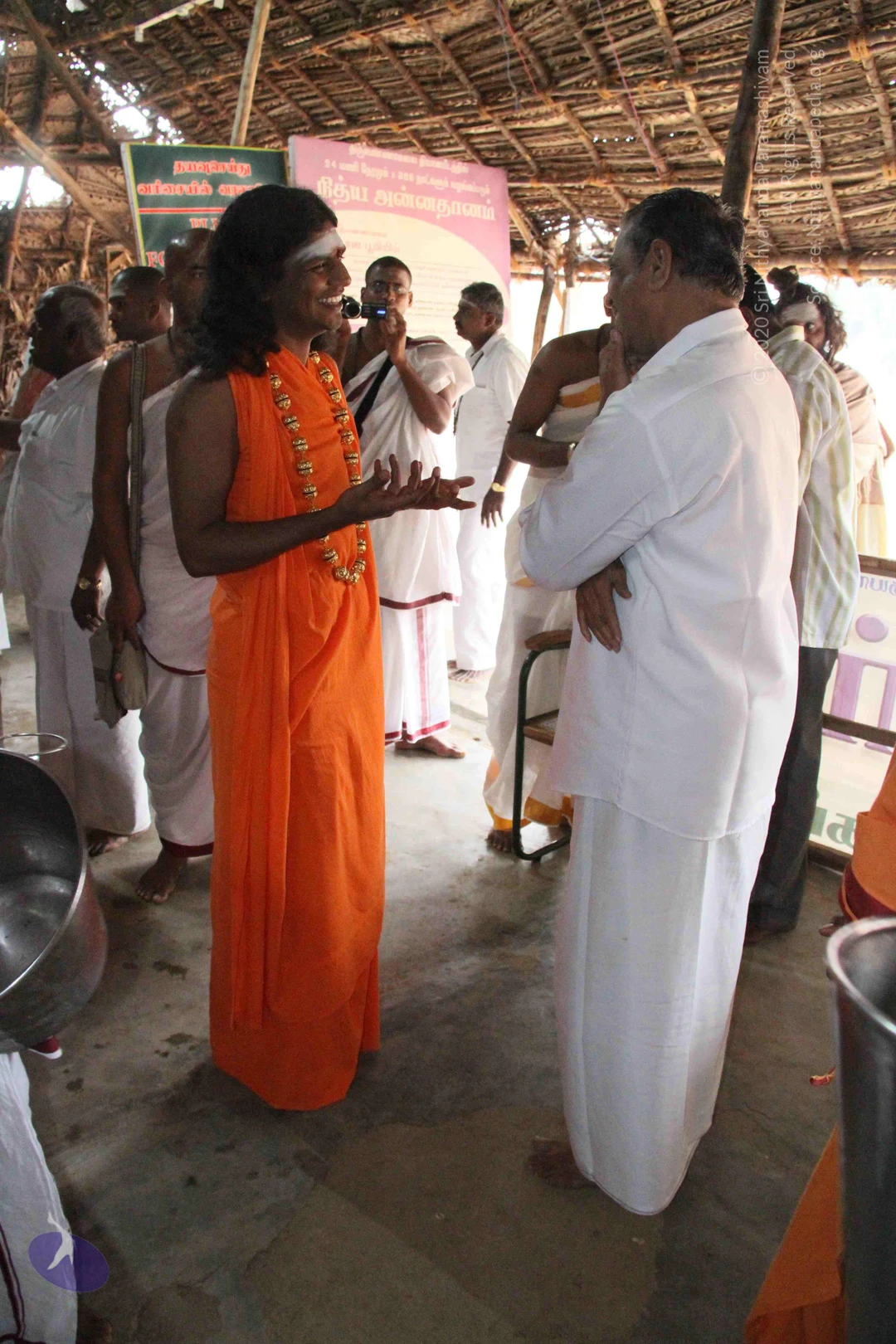
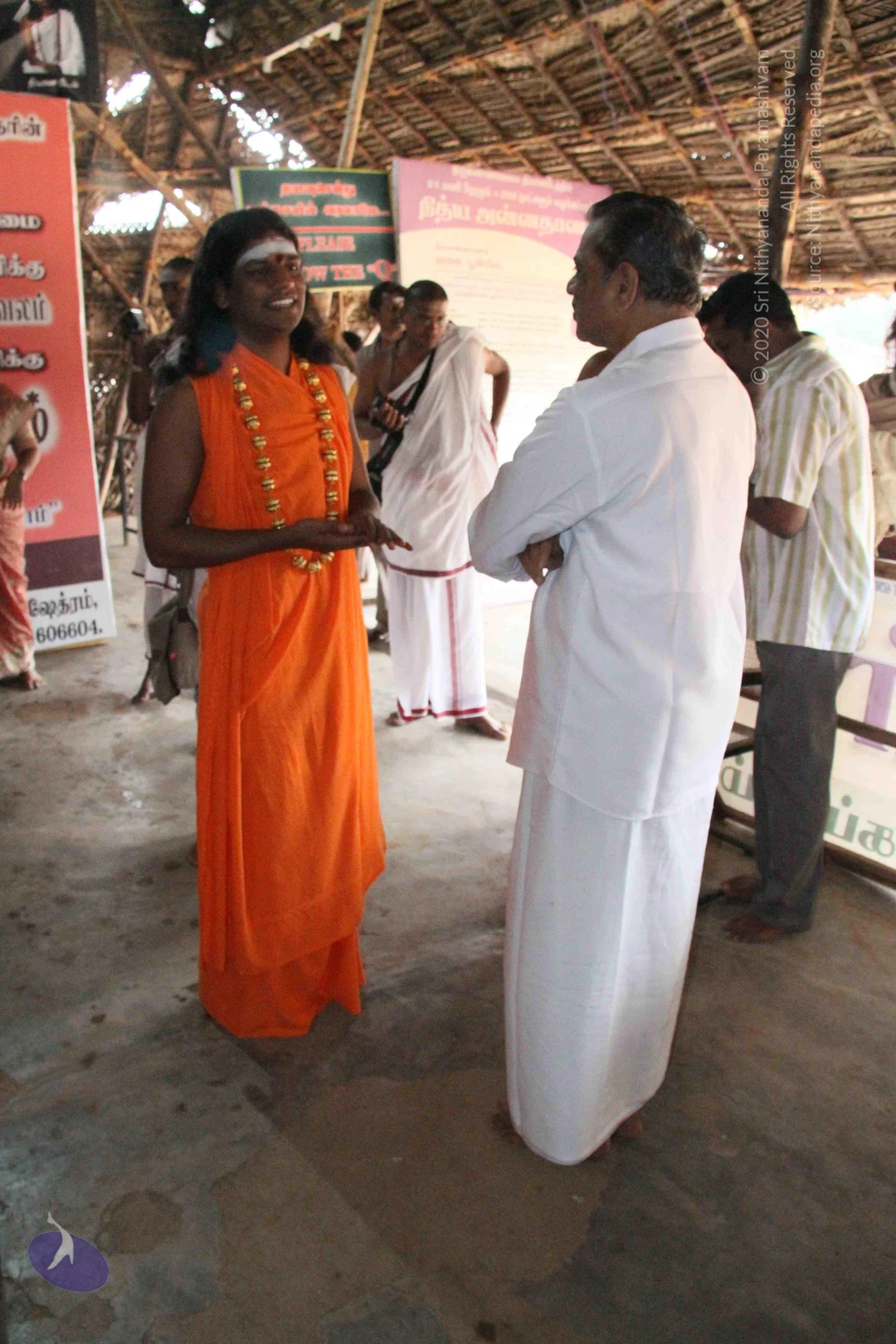
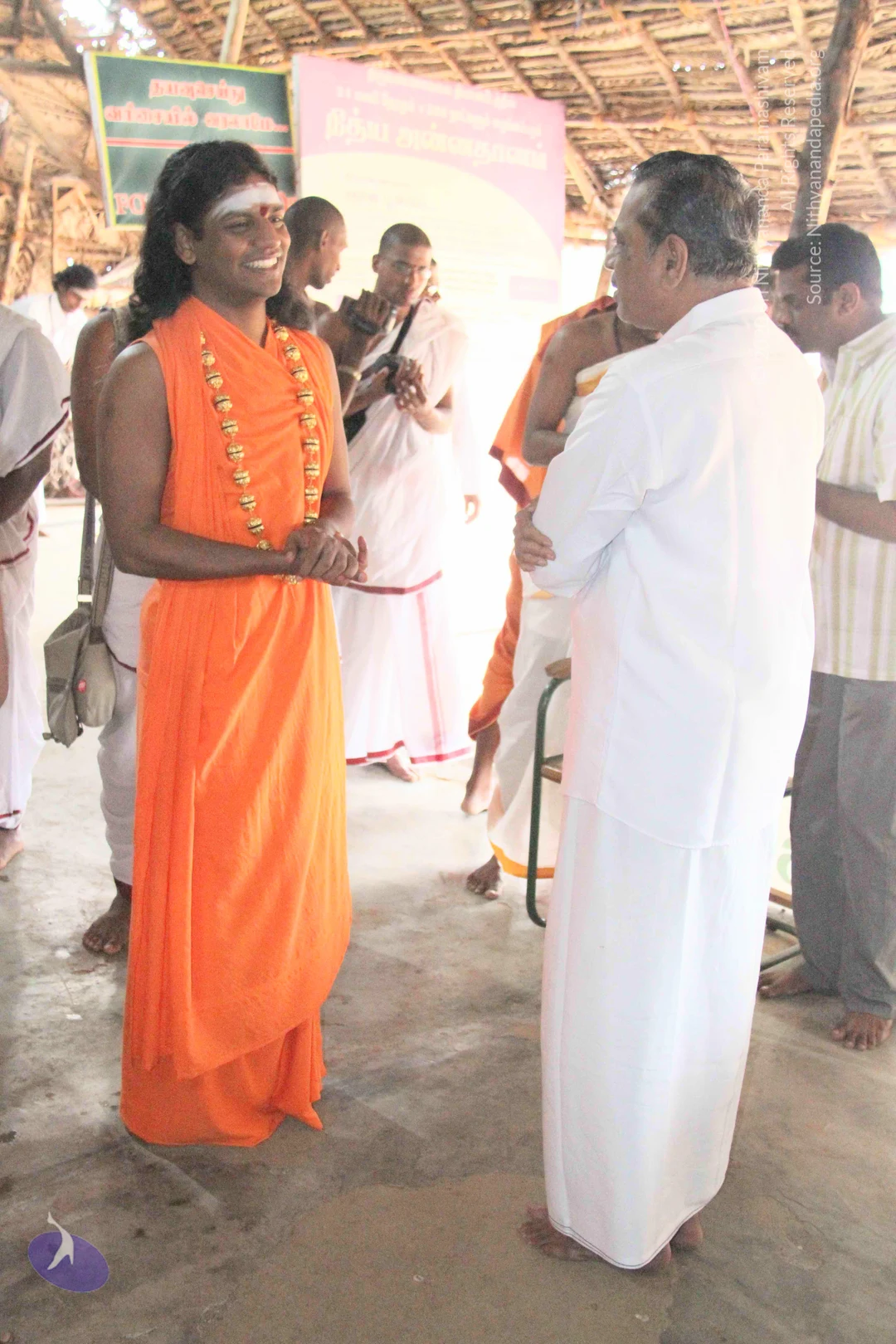
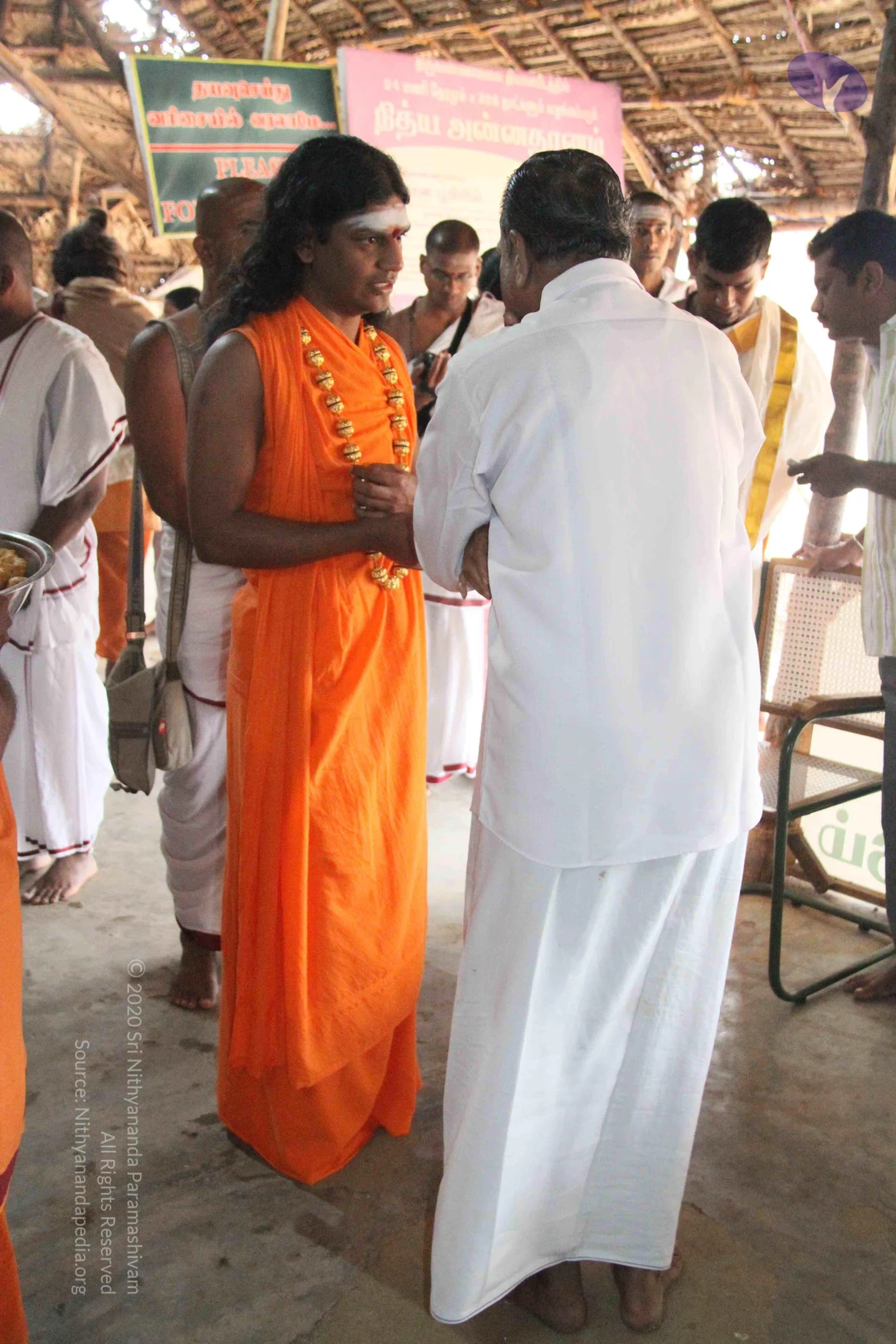
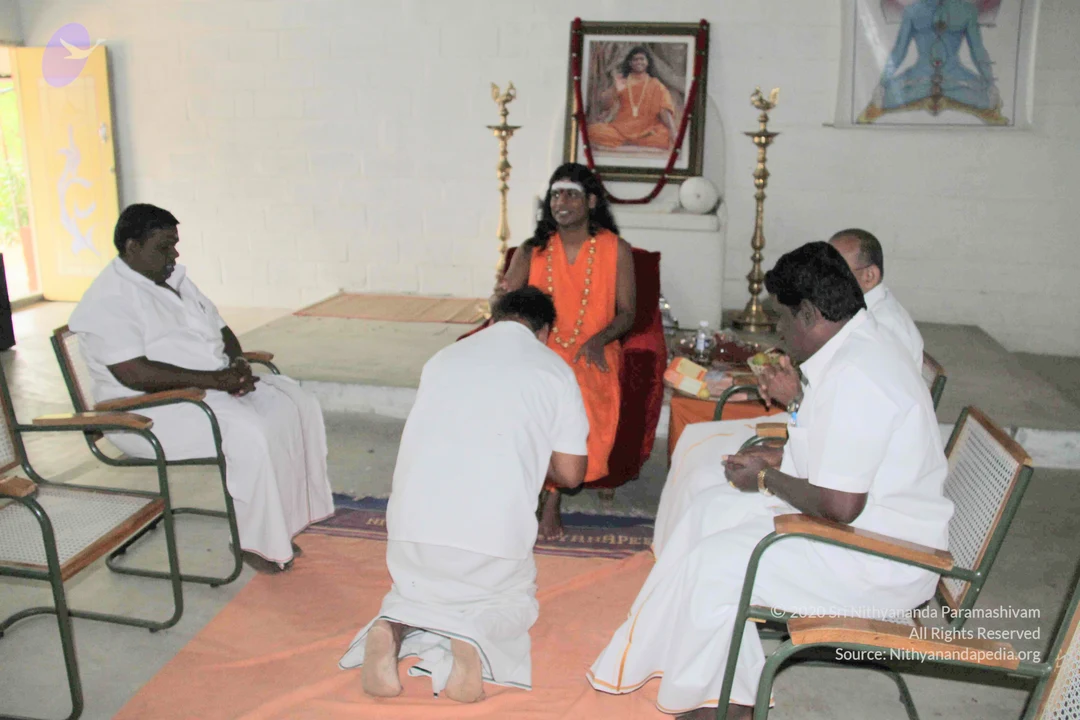
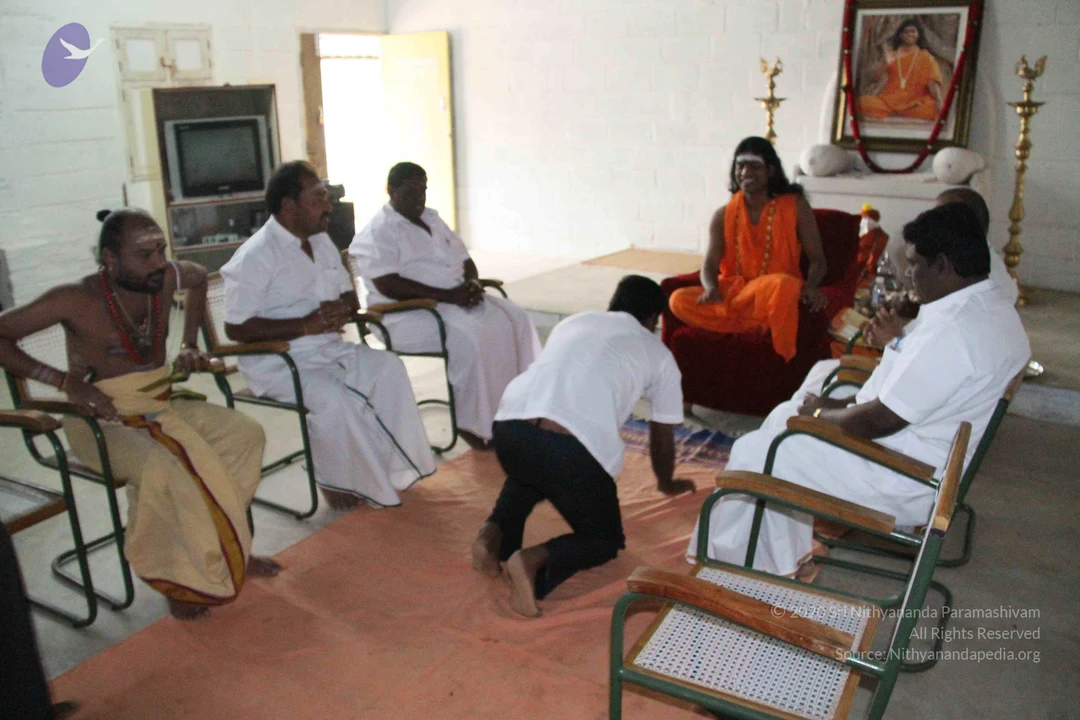
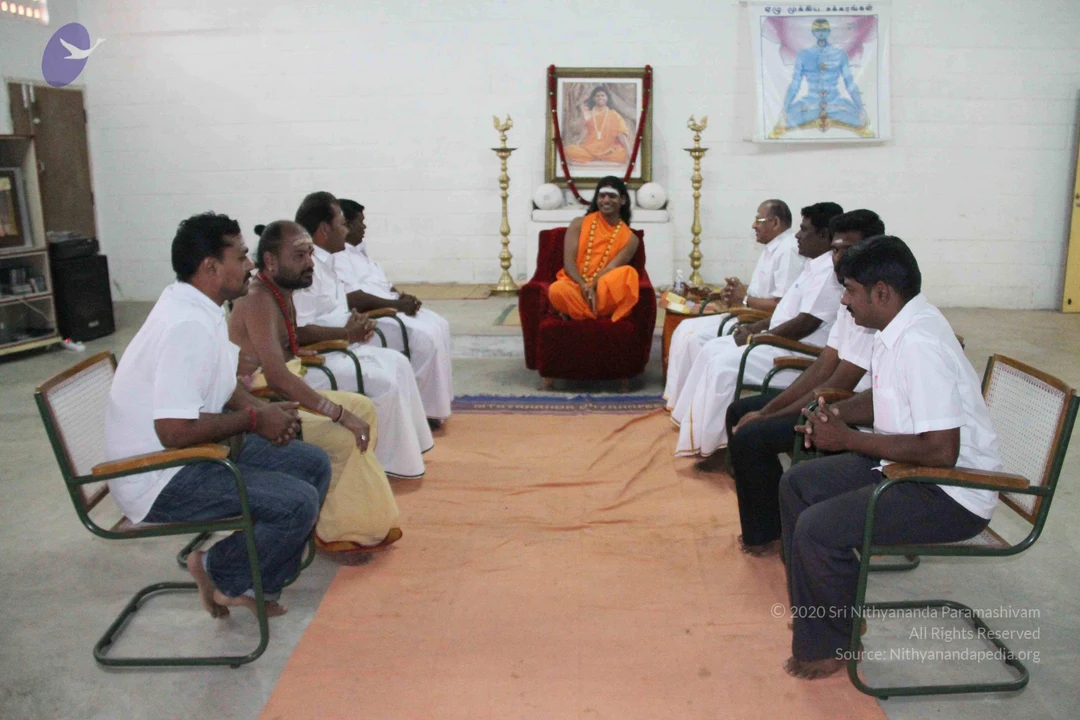
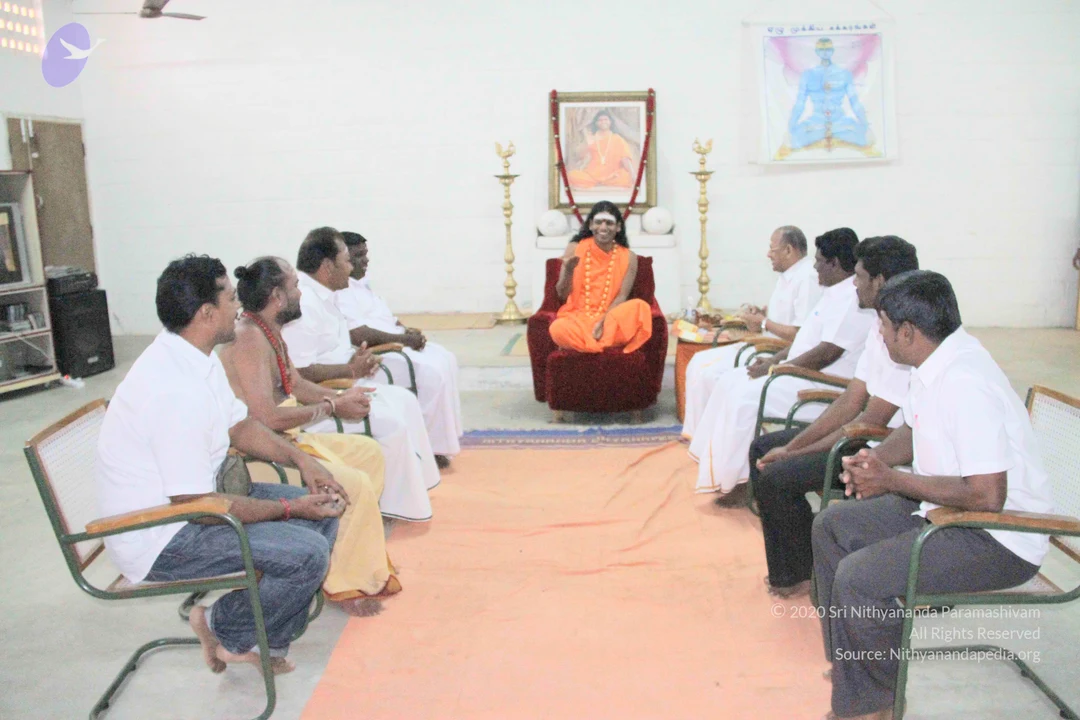
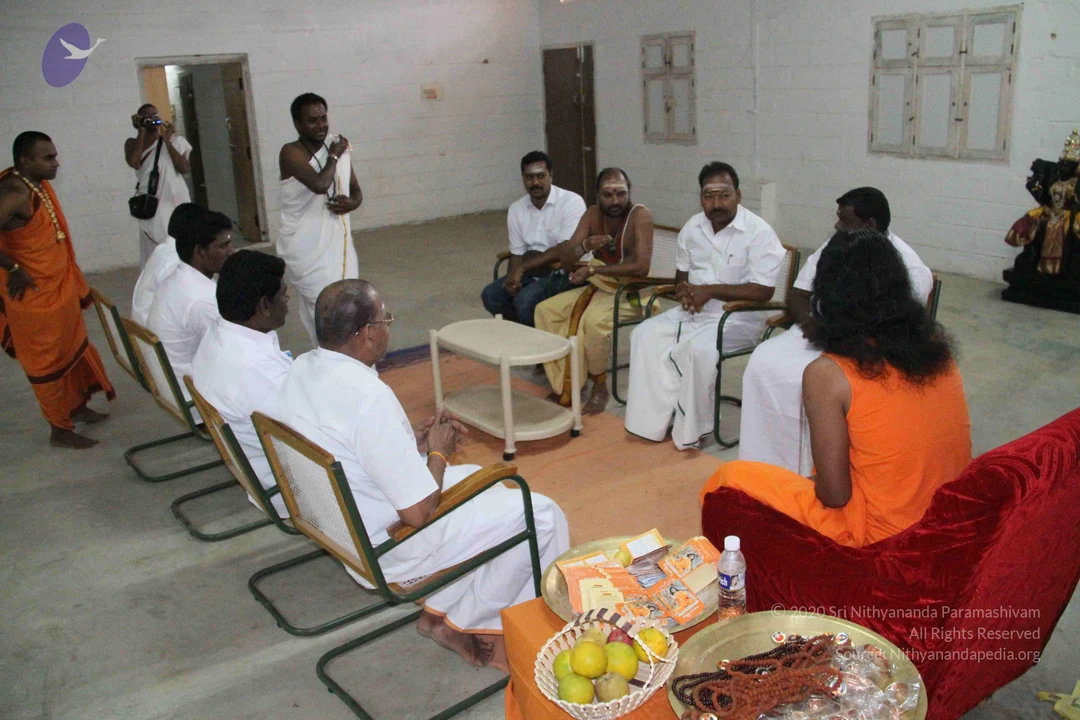
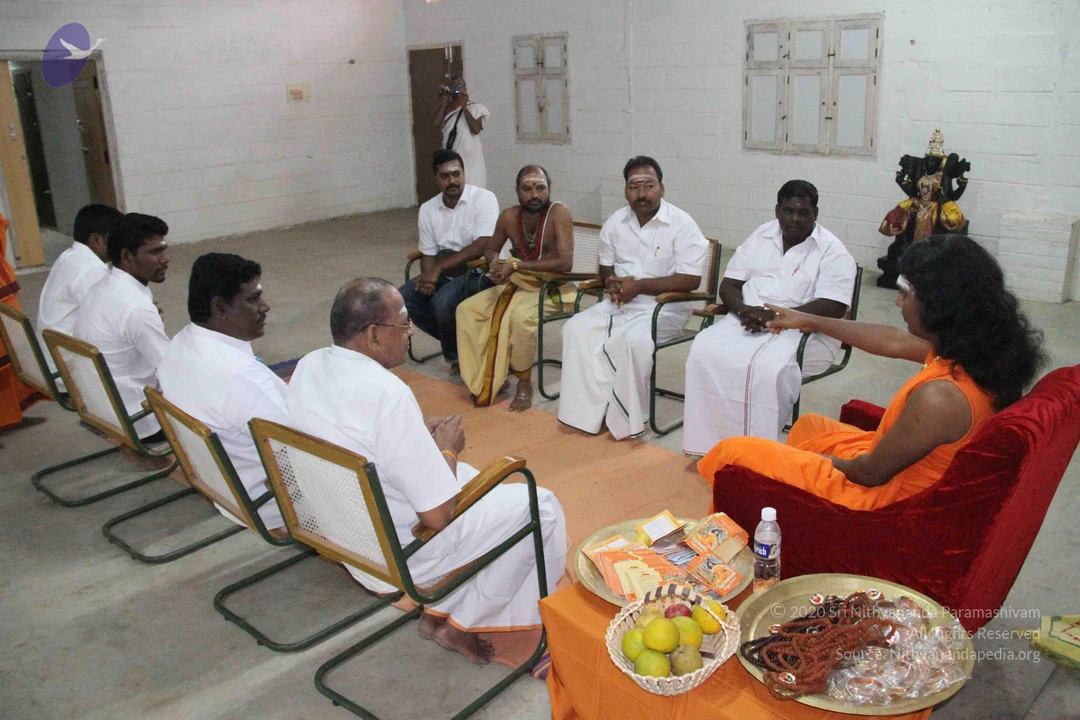
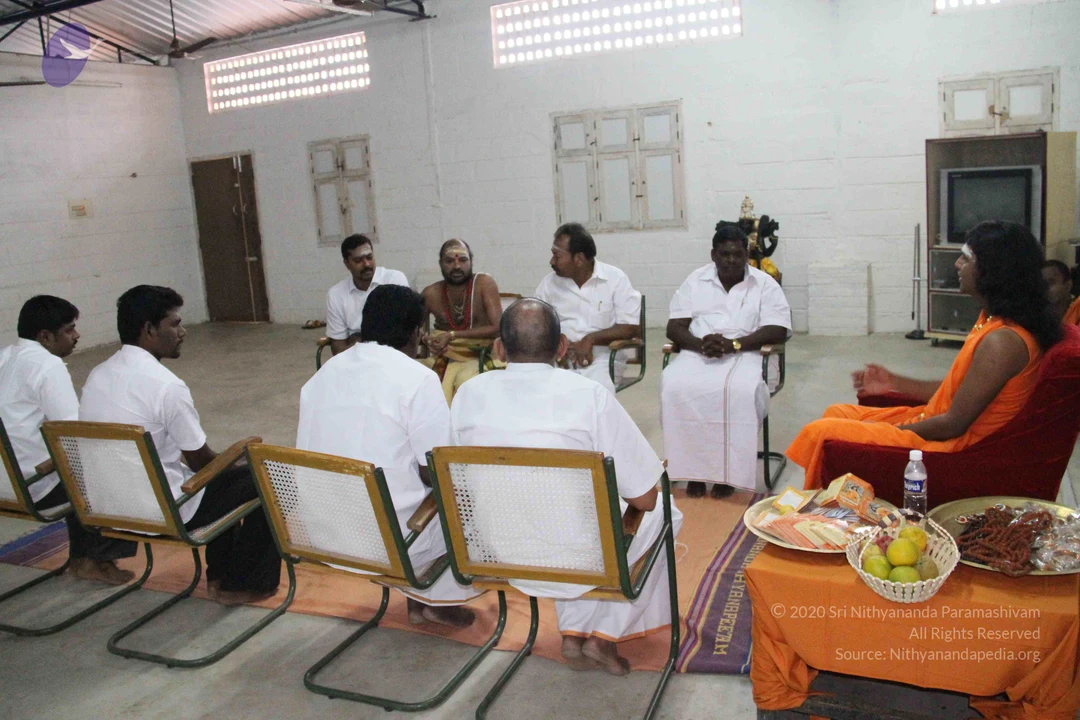
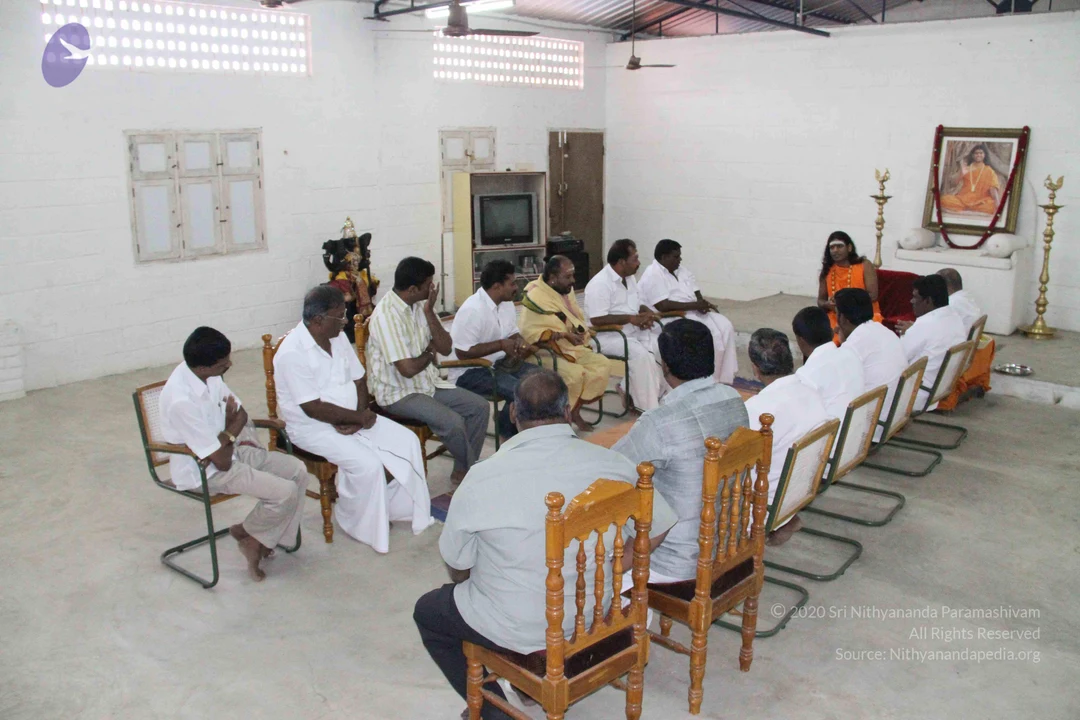
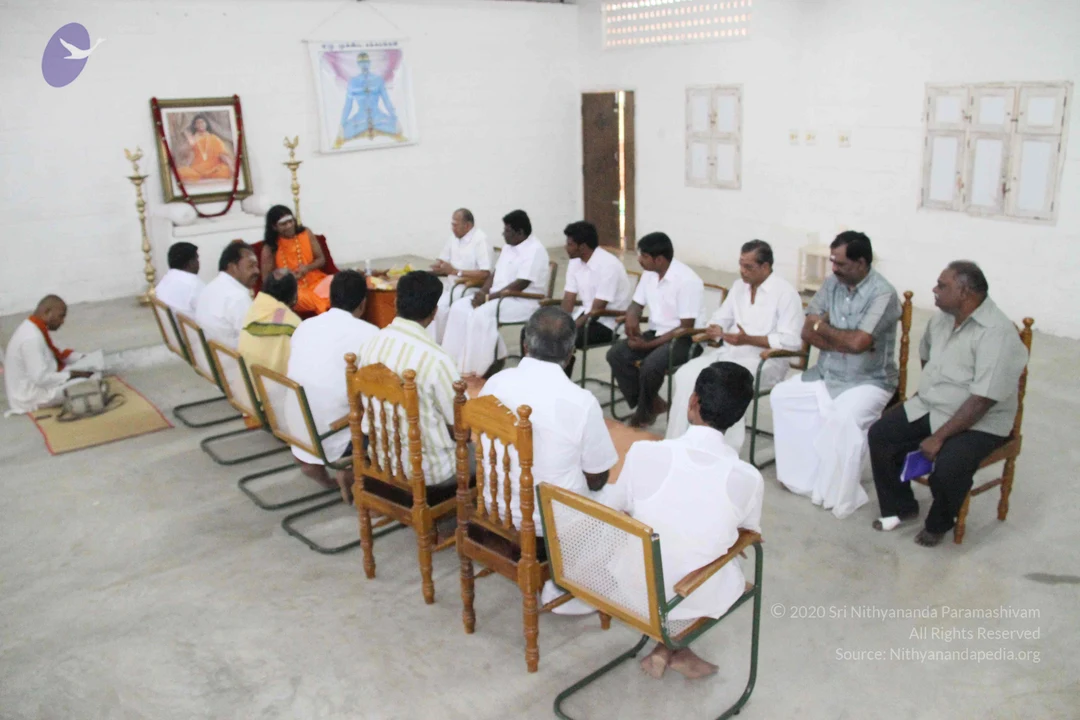
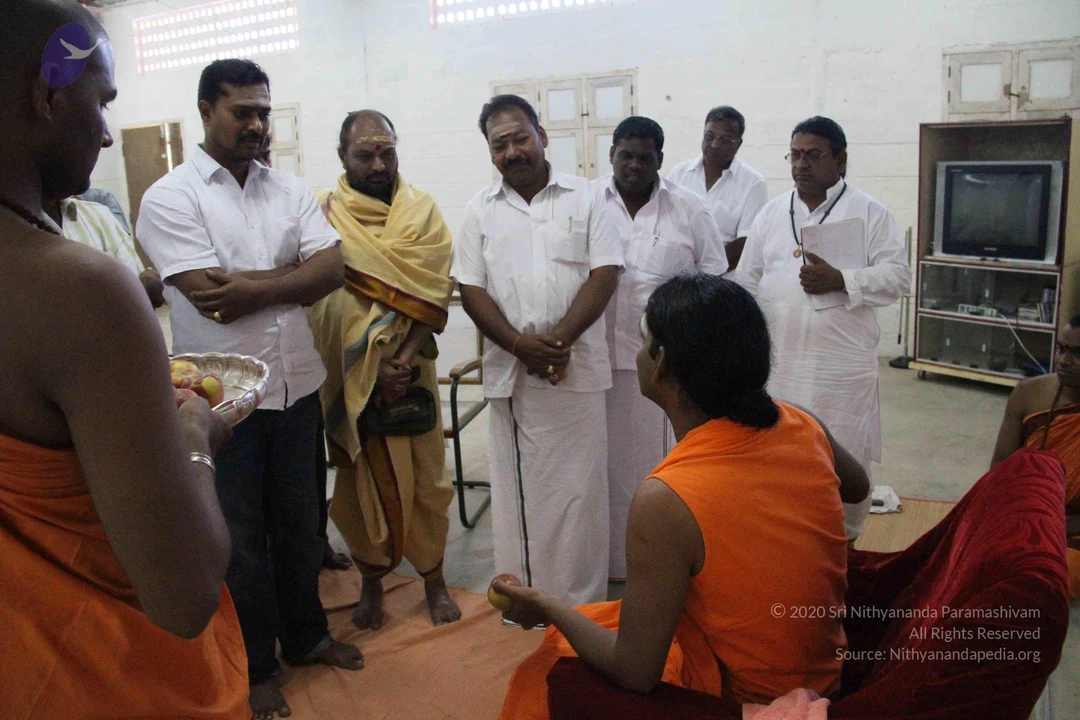
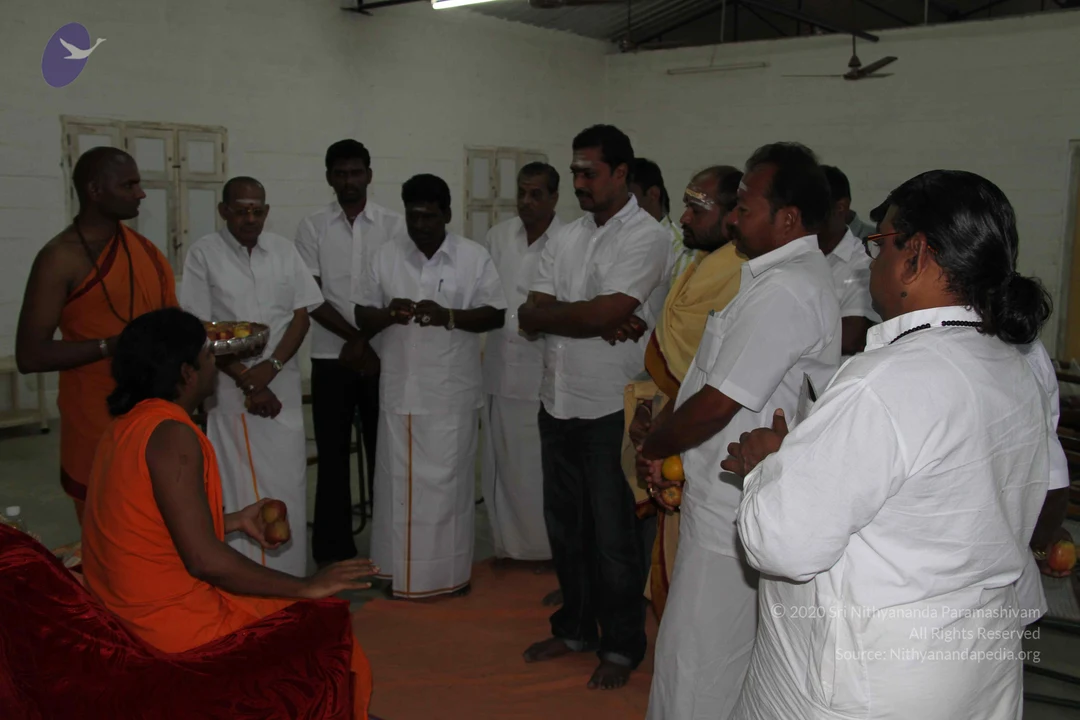
Meeting-With-Temple-Officials
Thiruvoodal and Maruvoodal festival
Photos Of The Day:

01-SWAMIJI-AT-THIRUVANNAMALAI

Sub Category: Festivals

Photos from this day

View all 522 photos

Photos

8 photosSource gallery
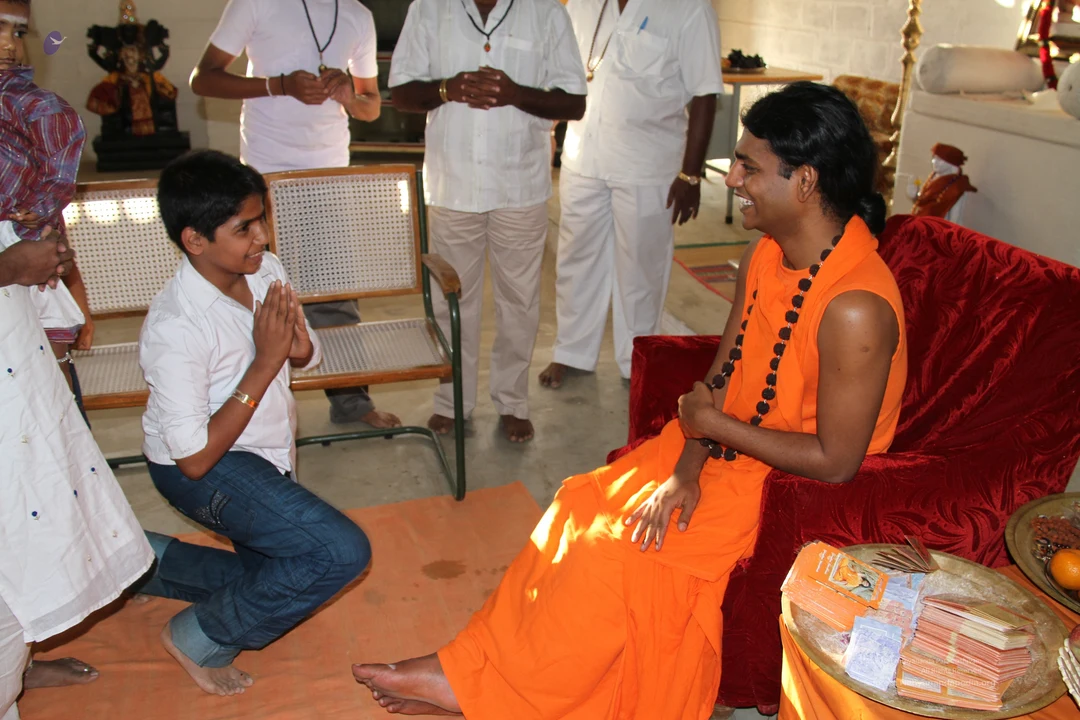
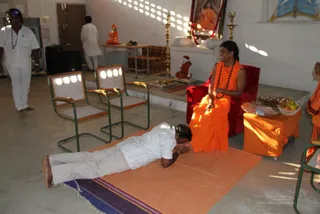
A smiling man in saffron-orange robes sits cross-legged on a concrete step beside an orange-draped chair and a plate of fruit including apples, mangoes and grapes. He wears a rudraksha mala with a gold ceremonial staff across his lap, holds a small orange card, and raises one palm to bless a young boy in a maroon striped t-shirt and jeans who bends forward to receive it. Stacks of printed orange and pink cards lie in front of him beside a patterned doorway with a stained-glass panel.A smiling man in saffron-orange robes sits cross-legged on a concrete step in front of a doorway with orange and yellow walls and white geometric patterns. He wears a long rudraksha mala with dark beads, a small red bindi, and holds a small yellow-and-orange card or booklet. Beside him on a brass tray are a bowl of apples, bananas and grapes, and a brass lamp with scattered printed papers and small cards. The setting is a simple ashram-style entrance. a person: the saffron robes and rudraksha mala are the appearance cues, and the page names him, so he is shown in person.A photograph of a smiling man seated cross-legged on a stone step in front of a doorway, dressed in orange saffron robes that drape over one shoulder and sleeveless. He wears a long necklace of dark rudraksha beads and a red bindi on his forehead, and holds orange paper cards in both hands. In front of him on a metal tray are fresh fruits including apples, mangoes and grapes, along with a brass vessel and a stack of orange-bordered printed cards. Beside him at the left edge, a person in white dhoti and white shirt is partially visible. The walls are painted orange and red with white geometric patterns. Swamiji (probable) is identified by the saffron robes, rudraksha mala and long swept-back hair; the page attributes this photo to Nithyananda Paramashivam.A photograph of a seated sannyasi in saffron-orange robes and a sleeveless saffron wrap, wearing a long rudraksha mala and a red bindi, sitting cross-legged on a concrete step in front of a yellow doorway. He is folding small orange-and-white printed cards with ritual text while a brass tray of cards and a bowl of fruit (apples, mangoes, grapes) sit beside him. A partially visible person in white clothes is at the left edge. The wall behind has red and orange painted panels with white geometric motifs. Swamiji (probable): long swept-back hair, saffron robes and rudraksha malas, presented as the central seated figure performing the card-folding task.A photograph of a rocky, tree-covered hill rising against a clear blue sky. The hilltop has bare brown rock outcrops among scattered green shrubs and trees, while the lower slopes are dense with green foliage. A pale half moon hangs in the upper left sky, with a small bluish crescent-shaped mark near the top left corner. No people, deities or ritual activity are visible.A photograph in a bare, whitewashed hall with a concrete floor. In the centre, a man in a white shirt and white trousers lies prostrate face-down on an orange cloth, his forehead touching the feet of a seated figure. The seated figure wears orange saffron robes and a long rudraksha mala, sits on a red-draped chair, and smiles while gesturing with one hand. Behind him hang a framed portrait of a figure in orange robes, a painting, and brass lamps. An orange-draped table holds fruit and offerings on trays. Other people in white clothing stand in the background, and a cane-backed chair sits to the left. The seated figure appears to be a person with distinctive orange robes and rudraksha mala cues, shown in an in-person setting, while the person prostrating is a devotee.

Photos

1 photoSource gallery
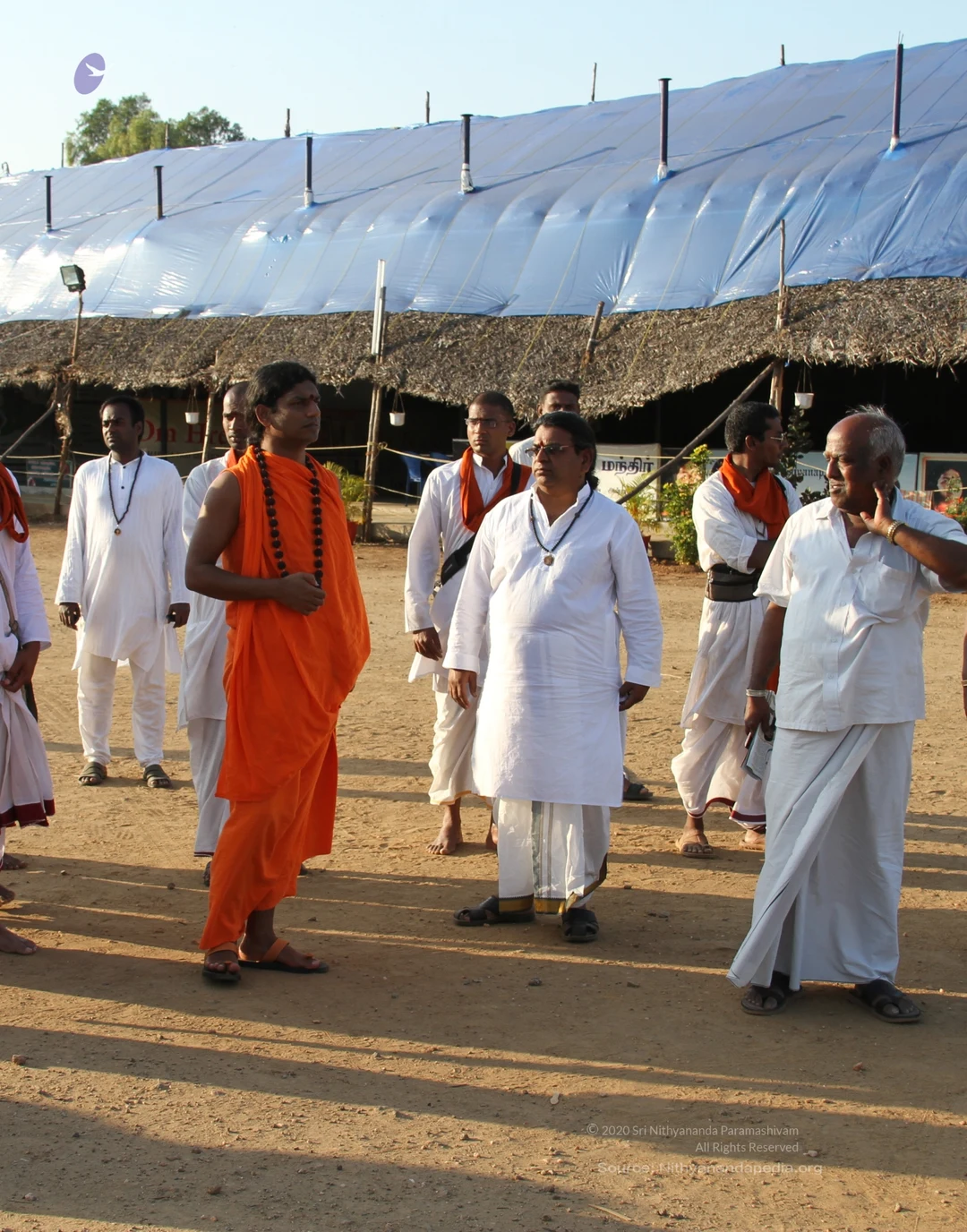
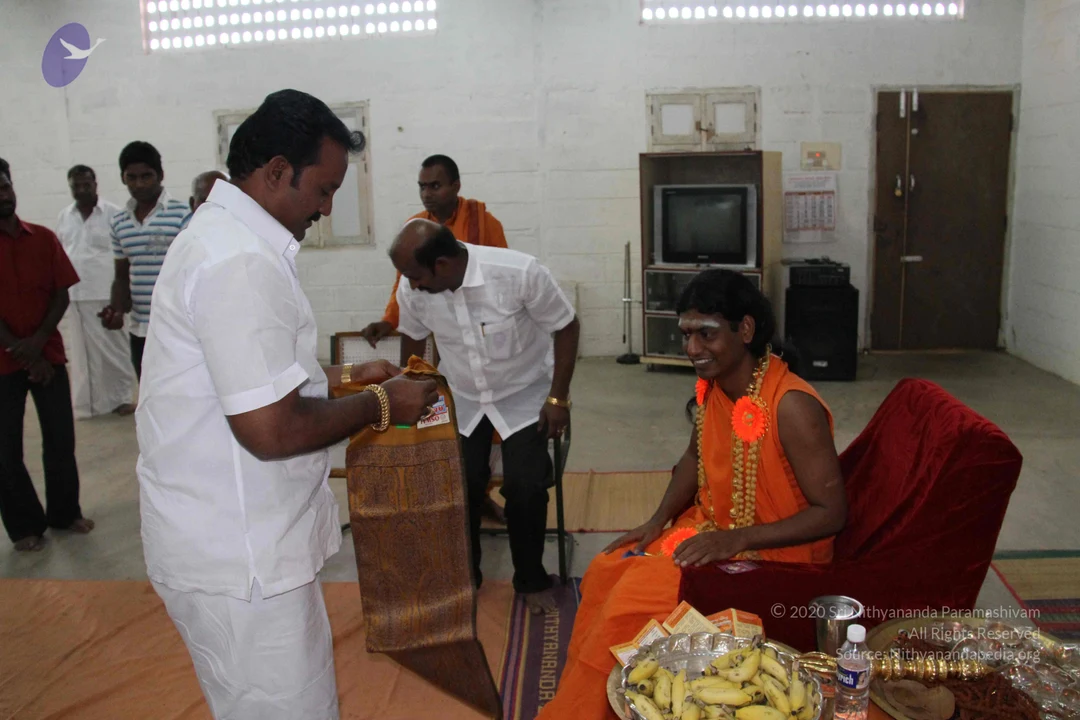
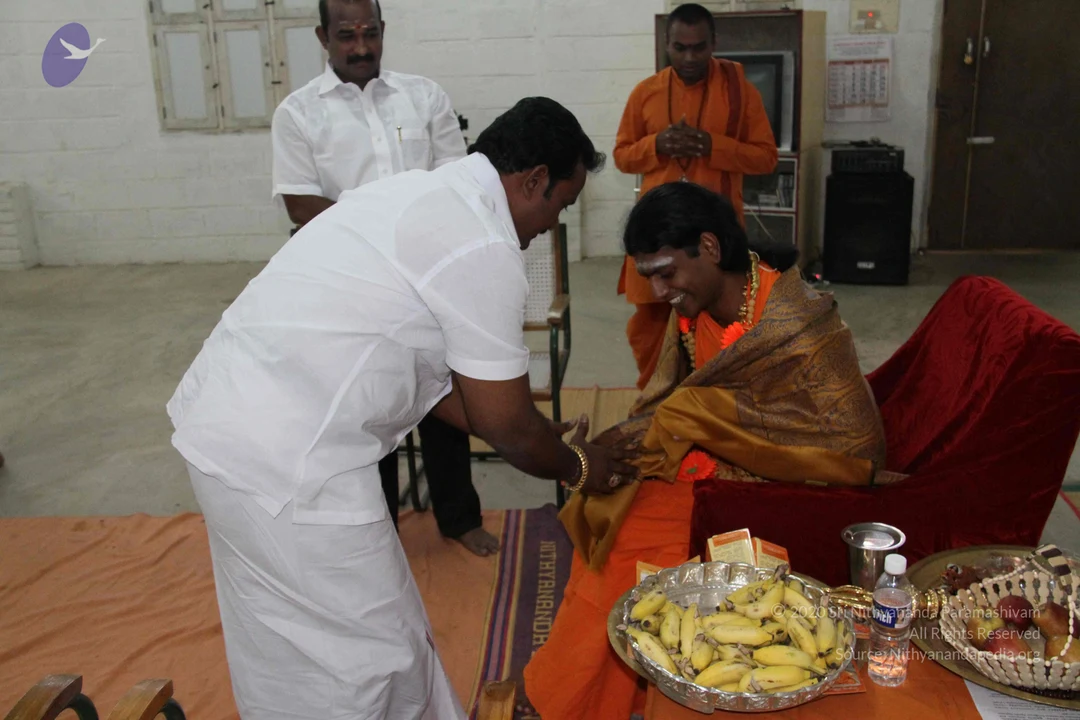
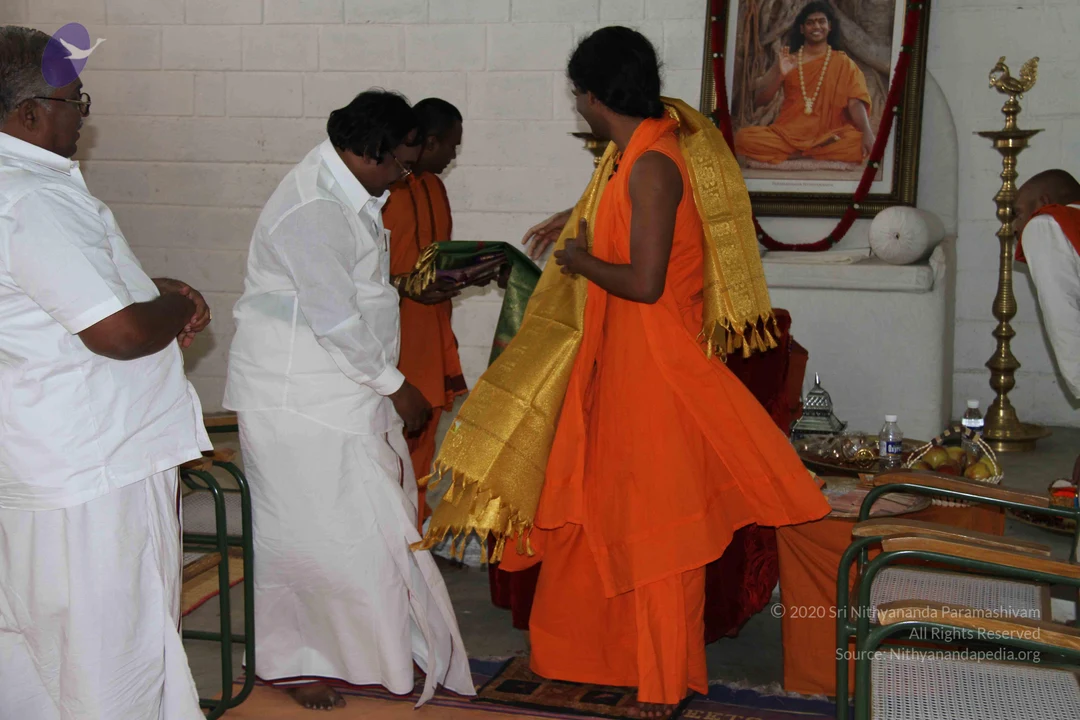
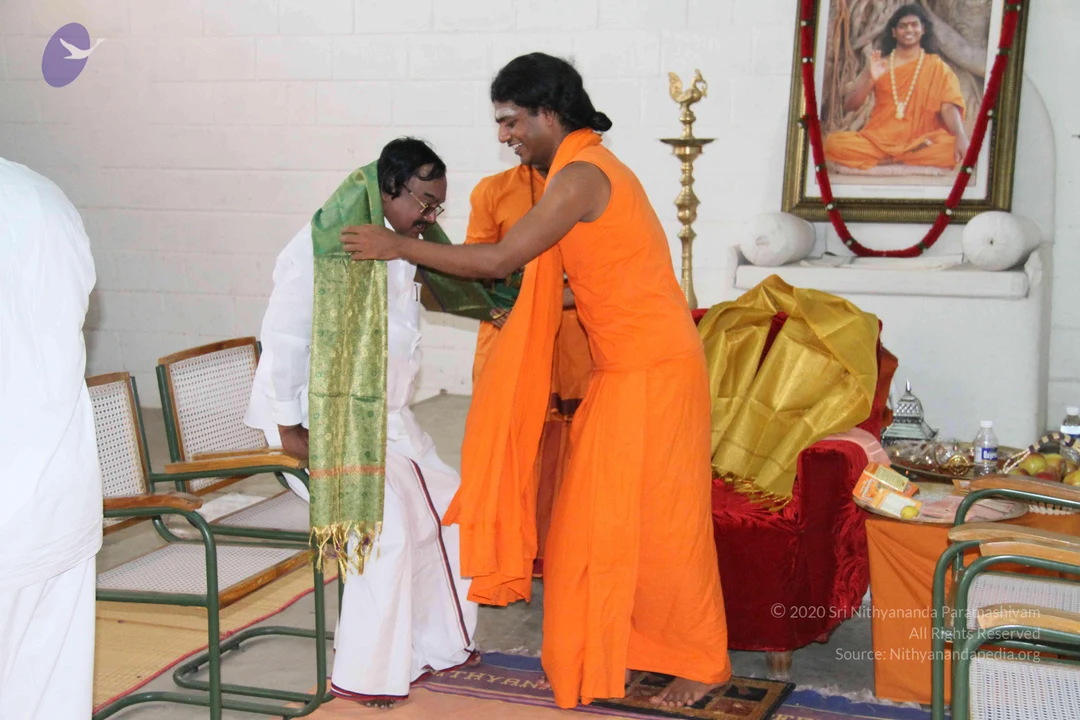
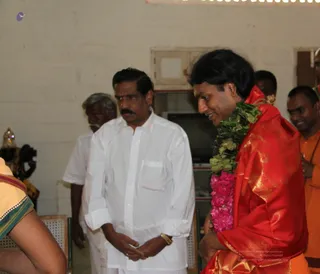
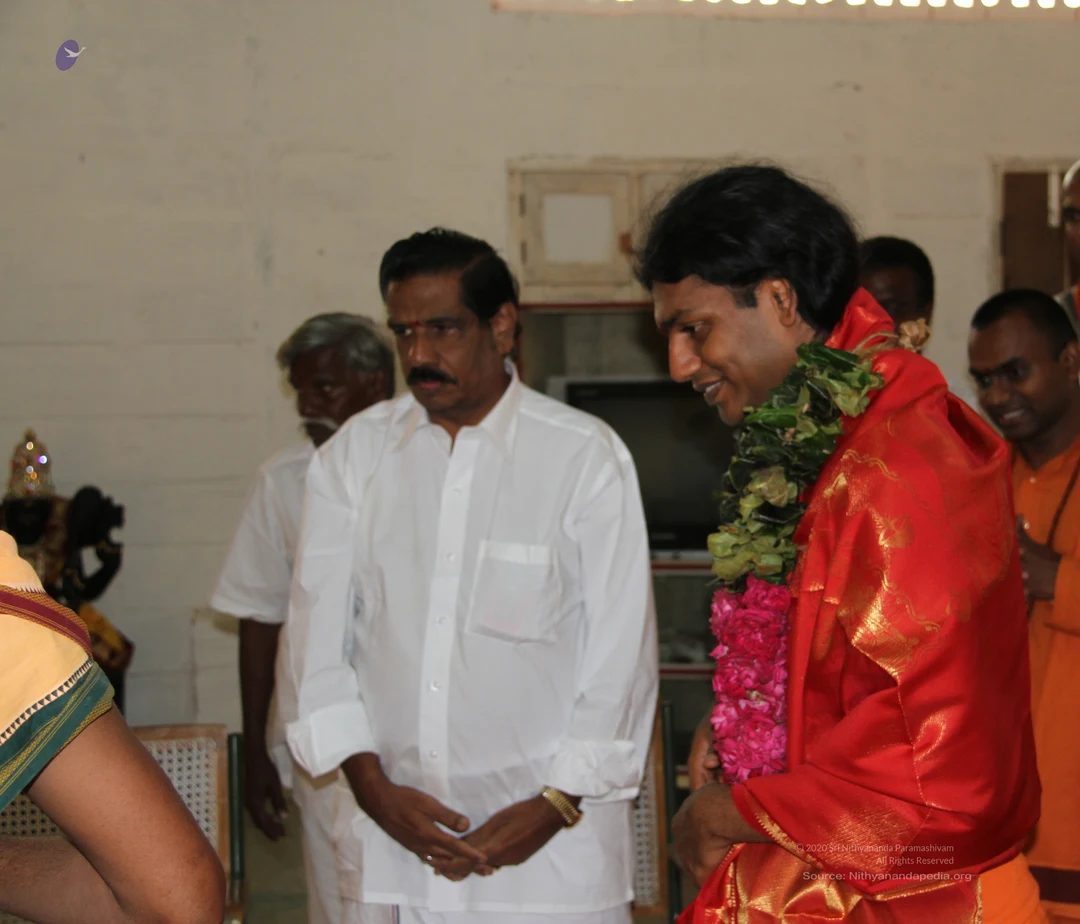
Photograph of an indoor room with plain whitewashed walls and a wall-mounted window grille. In the centre, a man in a white shirt and white dhoti, with a mustache and a wristwatch, stands with hands clasped in front of him. Beside him, a younger man in a red and gold silk shawl with a green leaf garland and pink flower garland walks forward with a smile, looking down. Behind them an older man in white stands at the back, and a man in saffron robes is partly visible at the right edge. At the lower left, a person in a yellow and maroon garment is seen from behind, and a small deity murti sits on a shelf at the left. Four people are visible in total.

Photos

14 photosSource gallery
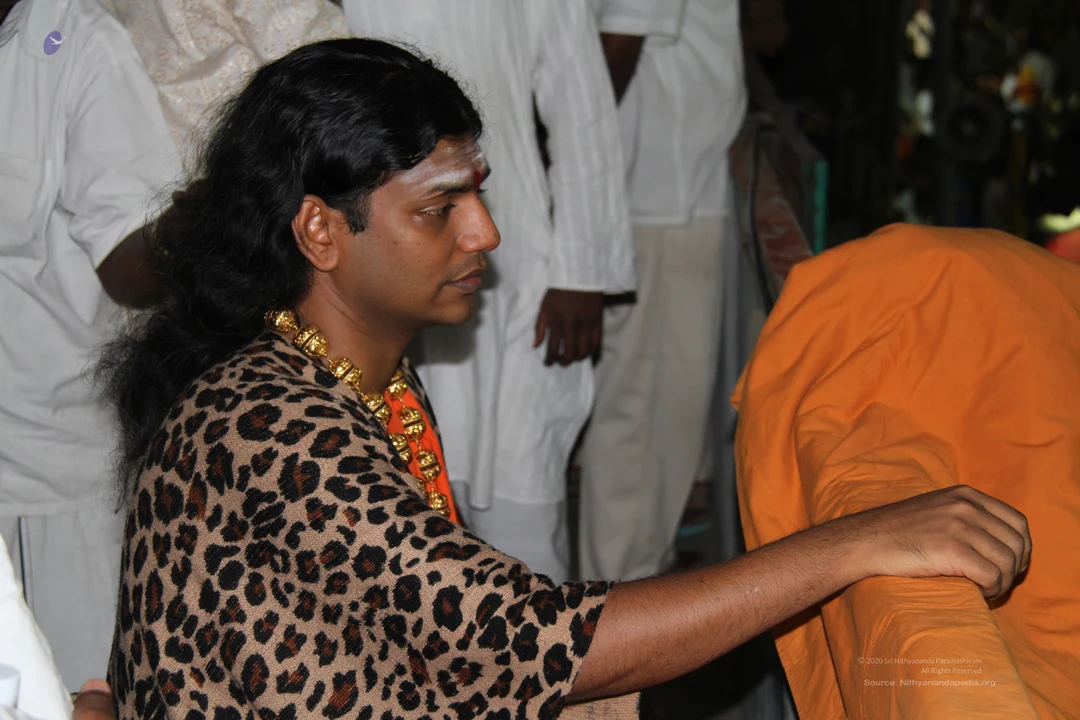
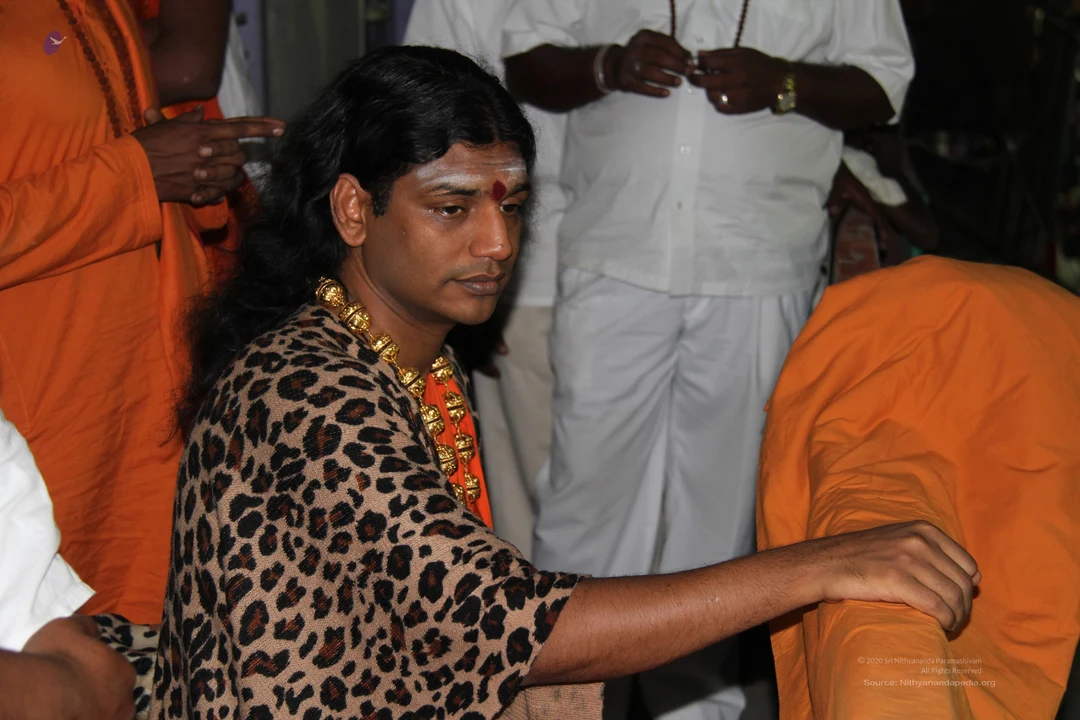
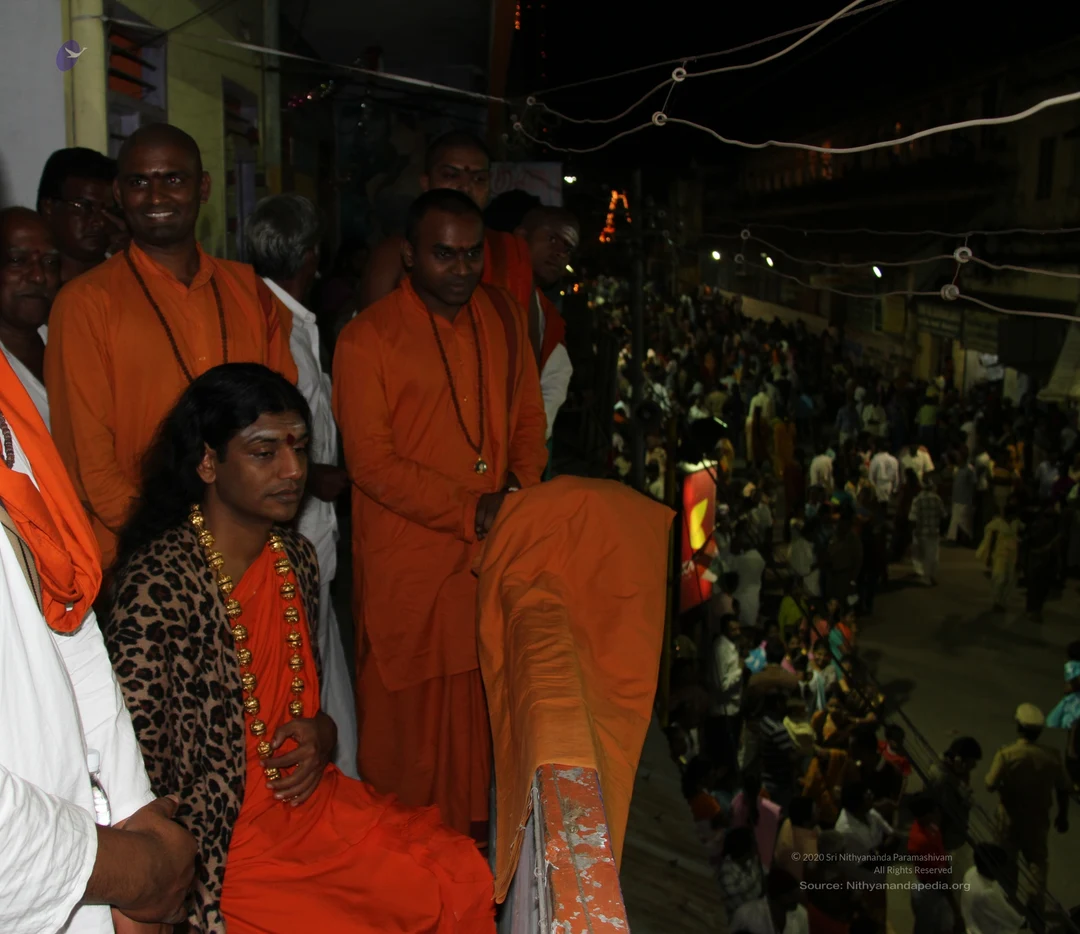
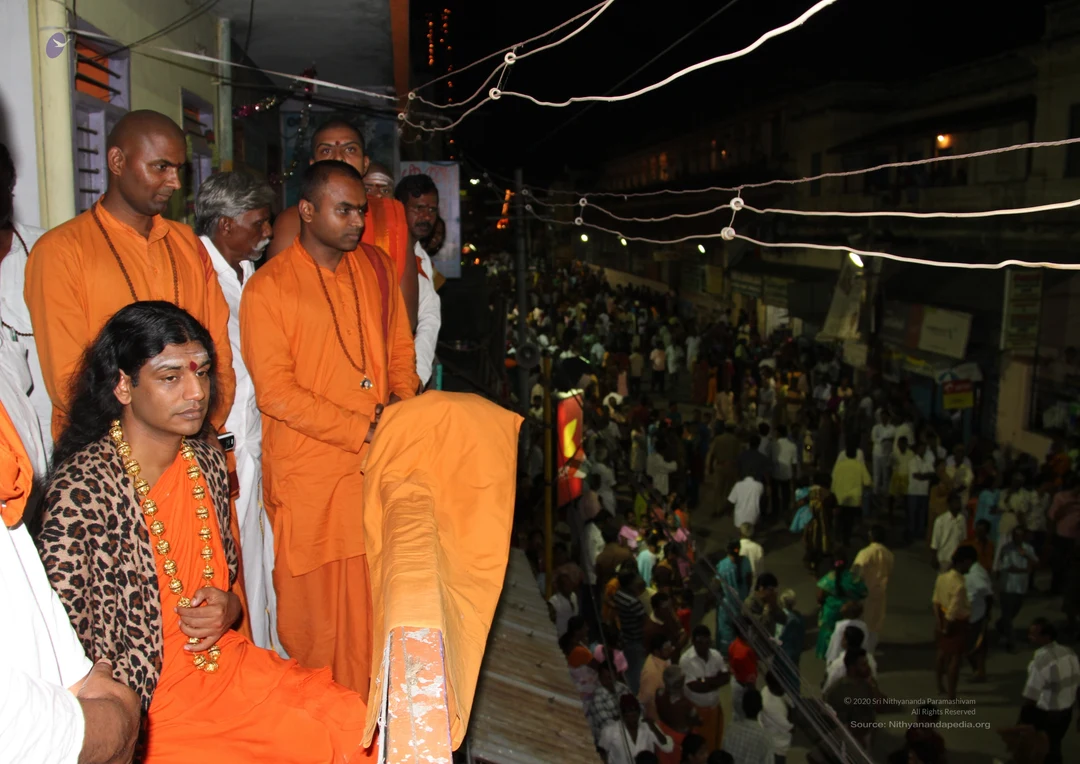
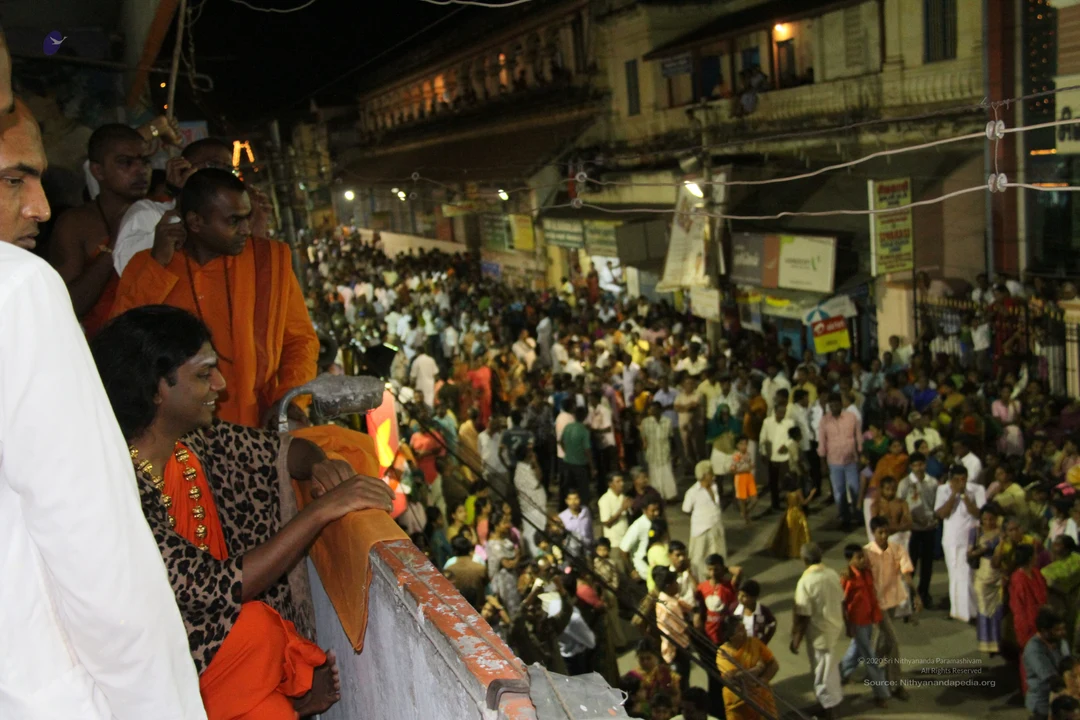
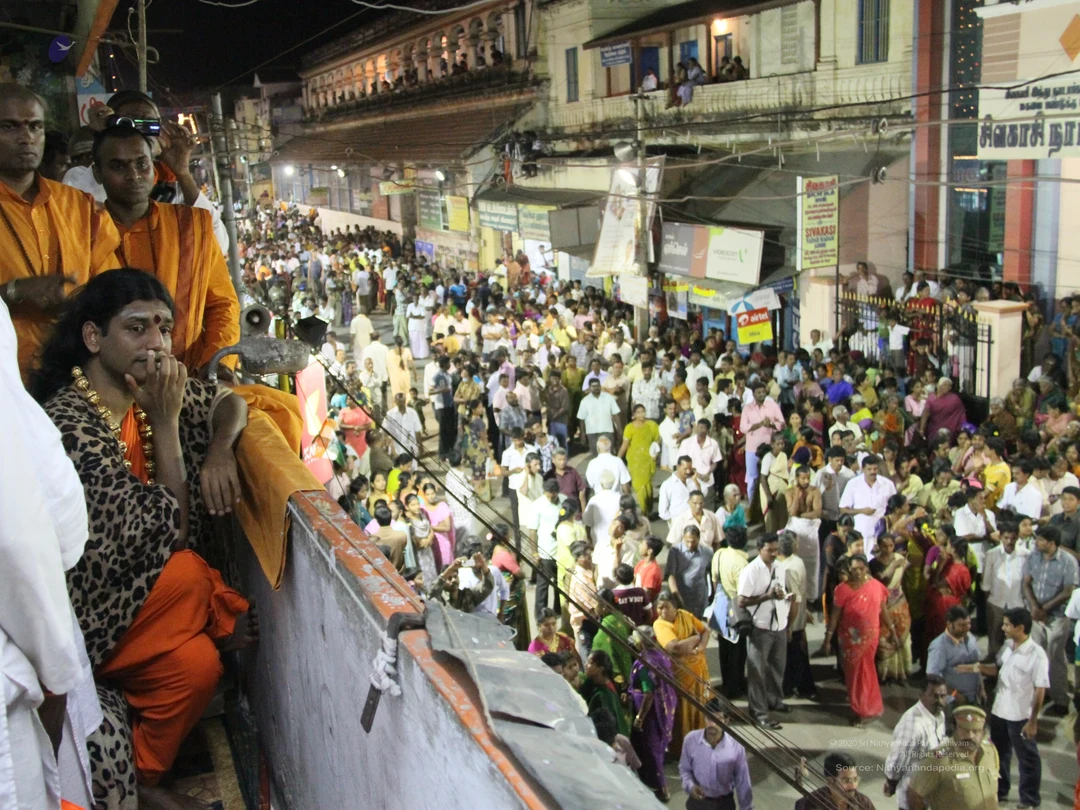
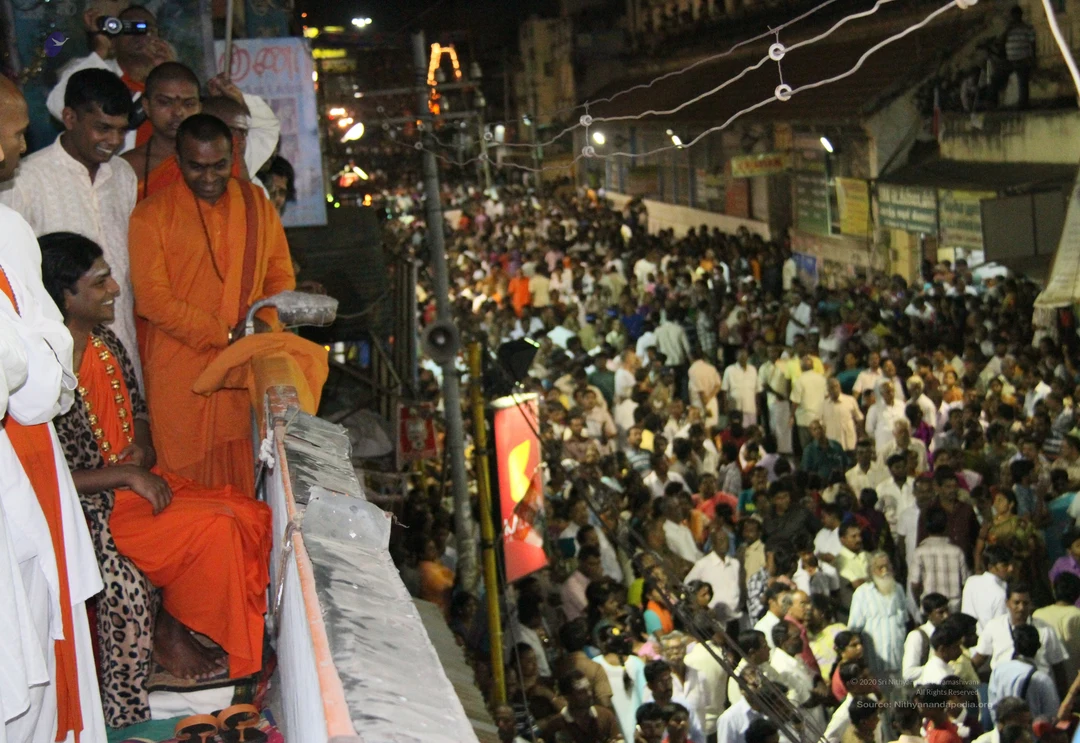
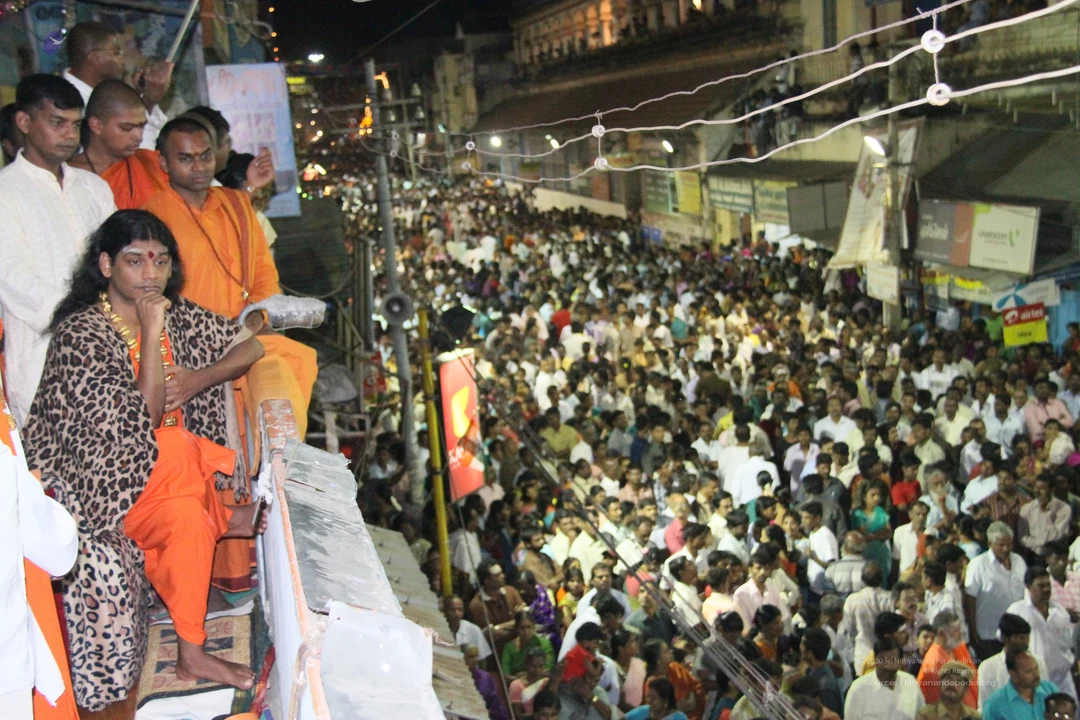
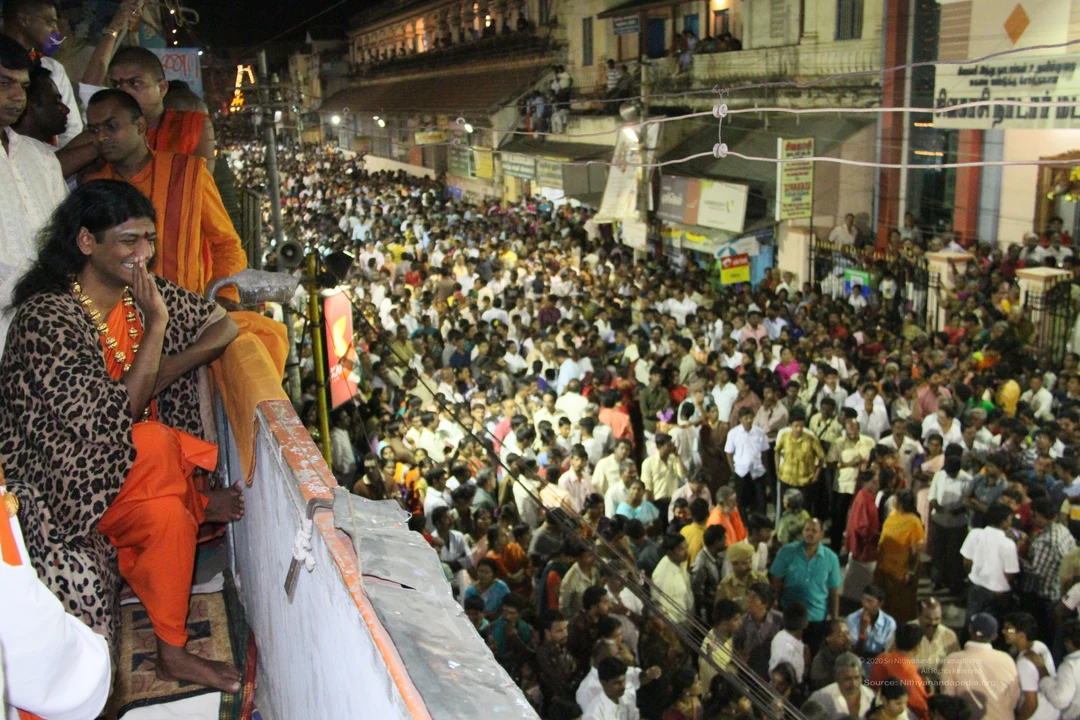
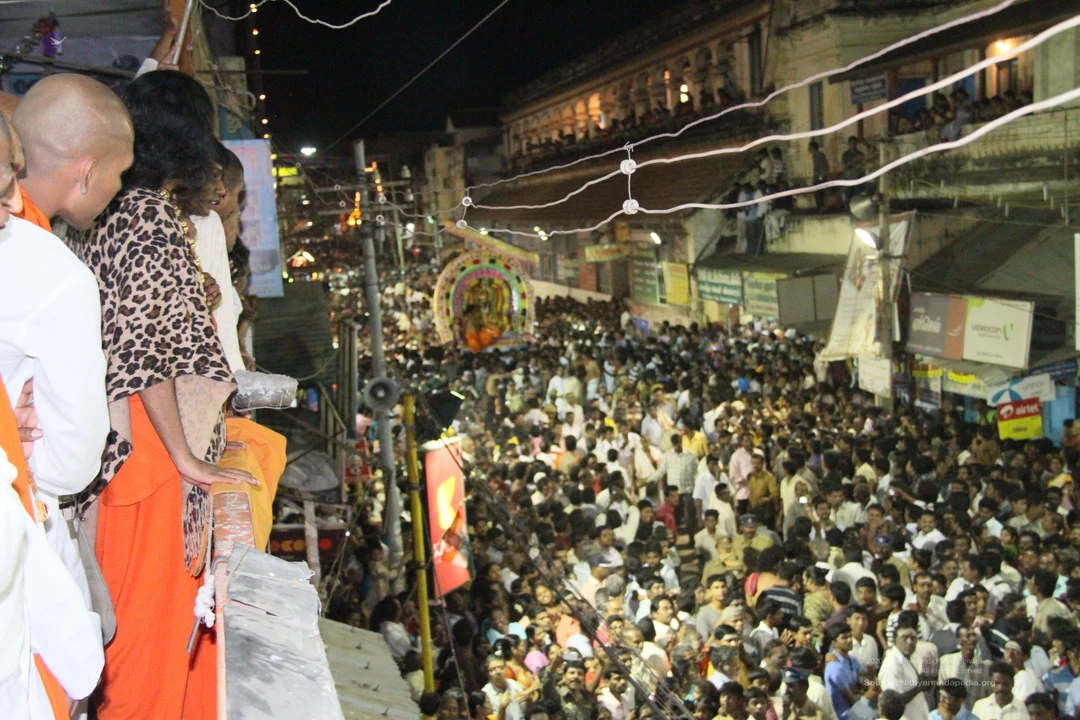
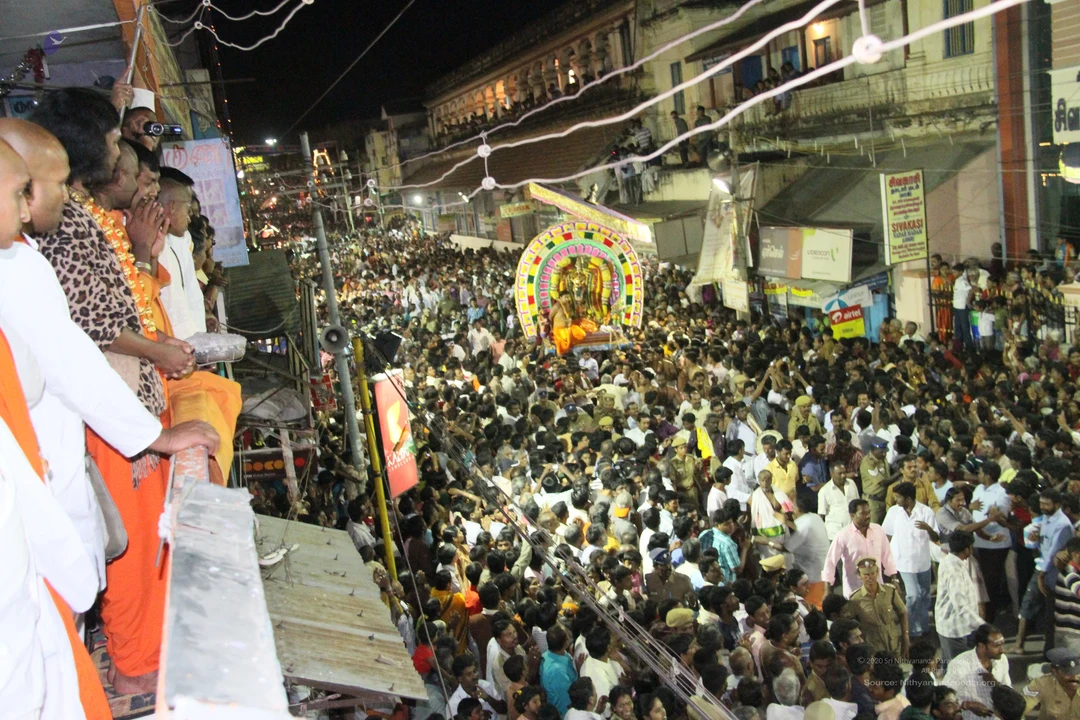
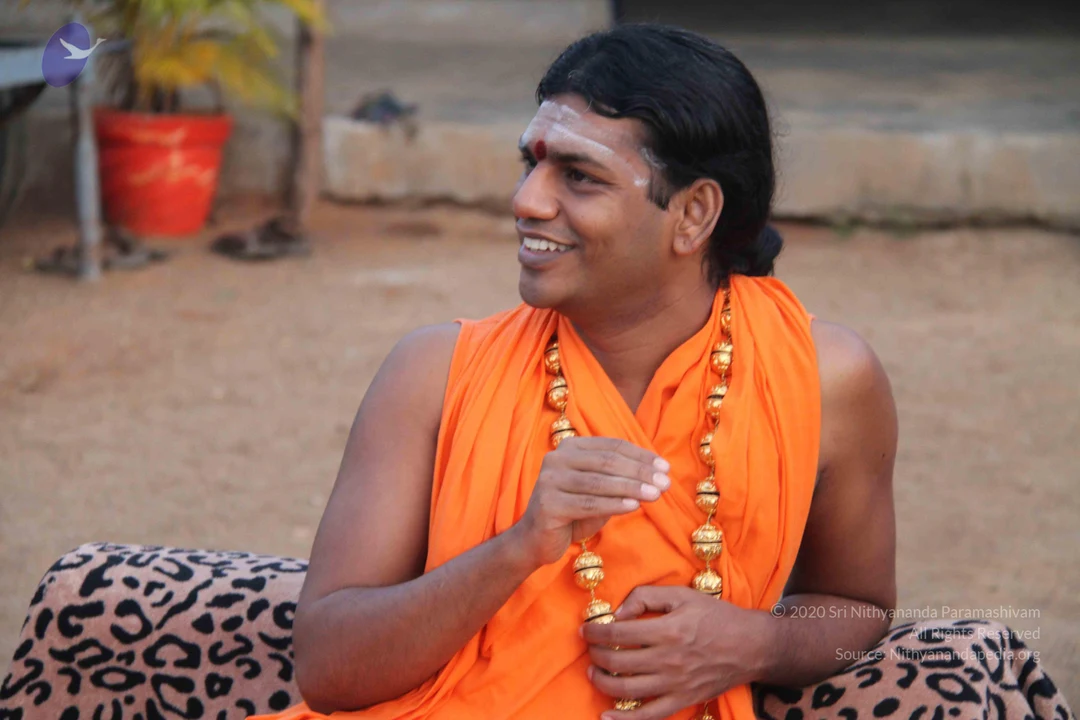
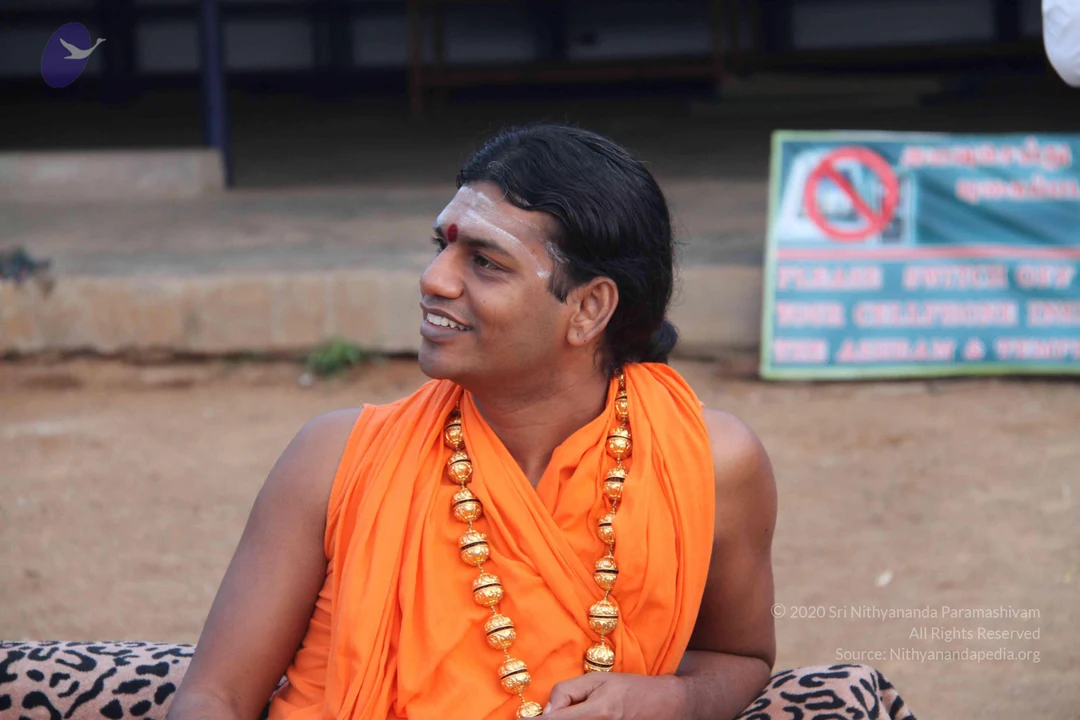
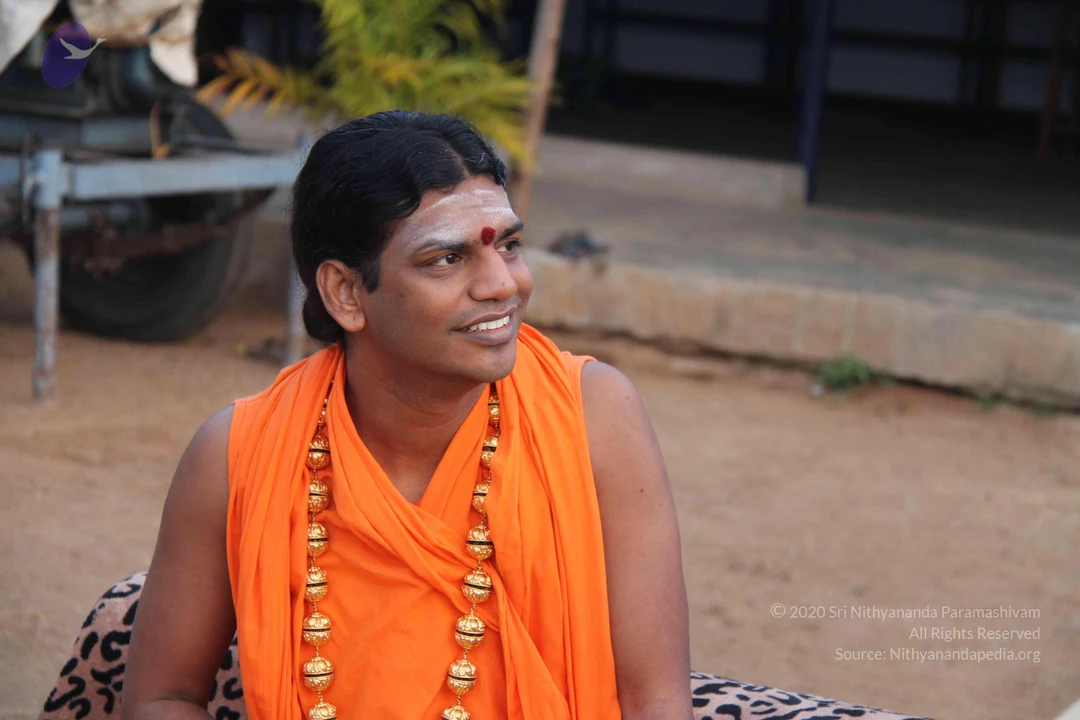
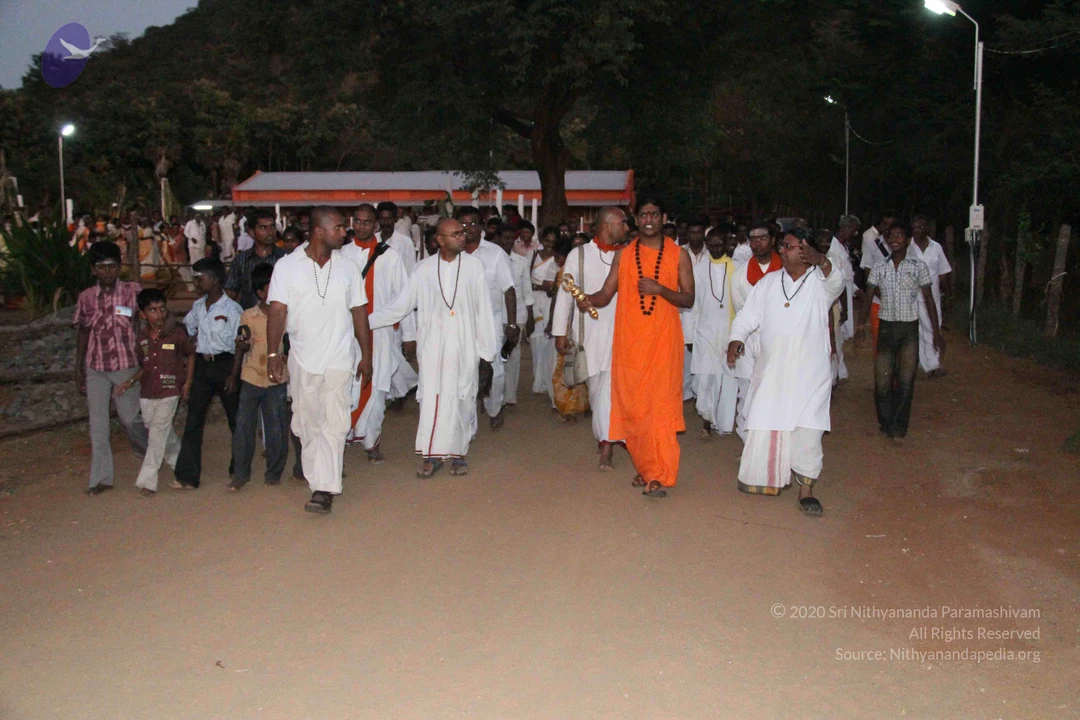
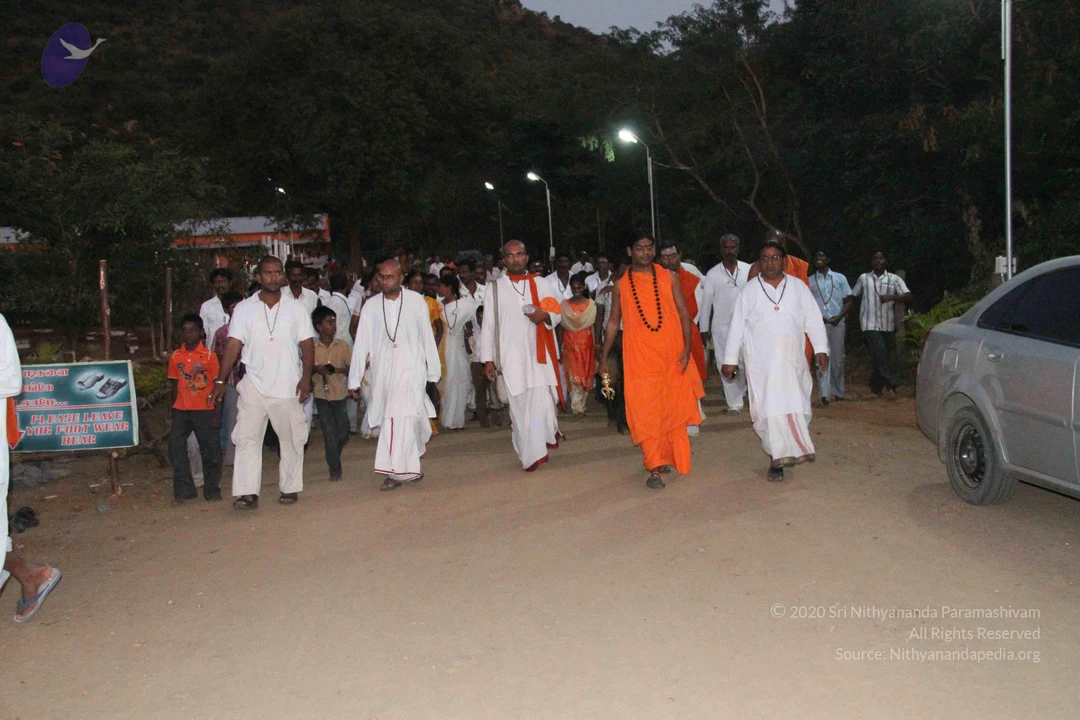
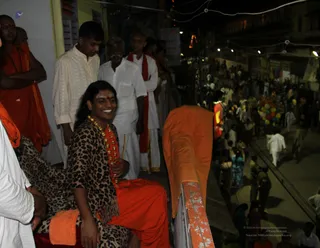
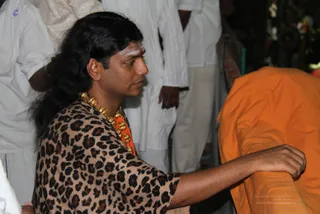
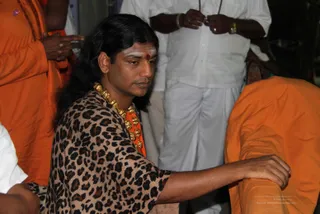
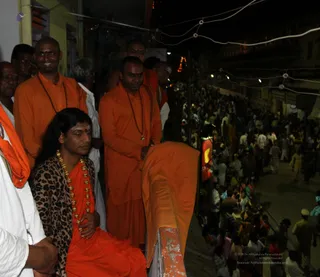
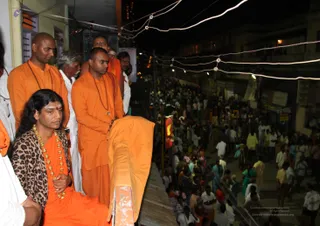
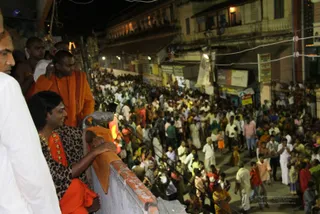
A night street scene during a festival procession. In the foreground, a smiling man with long dark hair, a red tilak on his forehead, a gold-bead necklace and a red-orange cloth draped over his shoulder sits on a raised orange-covered seat, wearing a leopard-print top over orange garments. Behind him, robed men in white dhotis and orange or red shawls stand on a platform, and an orange-saffron clad man stands at left. A crowd moves along a lit street, some holding colourful balloons, with string lights overhead and an orange-draped railing in front.A photograph of a man with long, swept-back black hair, a white sandalwood tilak with a red dot on his forehead, and a heavy gold necklace over a leopard-print shawl, leaning forward and resting his right hand on an orange cloth draped over a seated figure. Behind him, people in white clothes stand in a dim temple setting.A photograph of a man with long swept-back black hair, a white vertical mark and red kumkum bindi on his forehead, wearing a leopard-print shawl over an orange garment and a heavy gold necklace of large beads. He sits leaning forward with one hand resting on an orange-robed figure whose head is bowed at right. Behind him stand a man in a white shirt and white dhoti holding a rudraksha mala, and an orange-robed attendant at left gesturing with a pointing hand. The scene appears to be a ritual or devotional gathering. a person: long swept-back hair, ornate gold necklace and leopard-print shawl, seated in a role of honour with an orange-robed devotee bowing before him.Night photograph of a street procession viewed from an elevated platform. In the foreground a long-haired man in a leopard-print shawl over an orange robe, wearing a gold-bead necklace, sits with hands folded, a red tilak on his forehead. Behind him, saffron-robed men with rudraksha malas stand at the railing, one smiling. A large orange cloth drapes over the railing. Below, a dense crowd fills the street under strings of lights and a red flag.Night street scene at a festival procession, photographed from a raised balcony or platform. In the foreground, a seated man with long dark swept-back hair, a red tilak on his forehead, a leopard-print shawl over orange robes, and ornate gold beaded necklaces sits beside an orange cloth-draped railing. Behind him stand several men in saffron-orange robes with rudraksha malas, and an older man in white. Below, a dense crowd of devotees lines a street lit by strings of bulbs, with bunting and signboards overhead. Probable Swamiji is the seated figure, identified by long hair, a shawl over orange clothing and gold necklaces; attributed to the leading seated role. Around ten to twenty visible people are present.Night street scene in a crowded Indian town during a procession. A large dense crowd of men, women and children lines both sides of the road, many in white, yellow and pink clothing. In the foreground on a raised ledge, a man with long swept-back hair wears a leopard-print top, a red and gold ornate necklace and an orange shawl, smiling and leaning on the railing with a hand. Beside him stands a man in a saffron/orange robe and two bare-chested men in the upper left. Shop fronts, balconies and hanging wires line the street under warm lights.
01-SWAMIJI-AT-THIRUVANNAMALAI
477 photosSource gallery
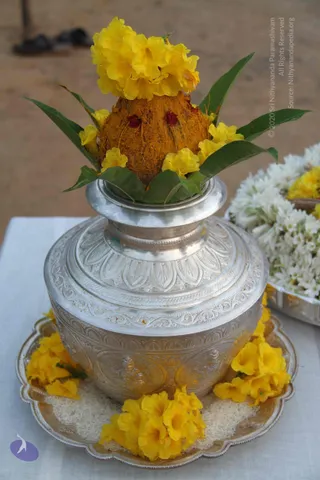
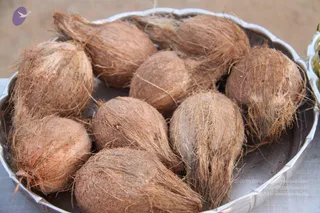
A photograph of a ritual offering table laid with a white cloth on sandy ground. In the foreground stands a polished silver pot with embossed floral patterns, topped with a conical mound of yellow turmeric paste decorated with yellow flowers and green leaves, and surrounded by a silver tray of yellow flowers. Beside it, a silver plate holds garlands of white jasmine, yellow marigold and red flowers. Behind them are coconuts, bananas, oranges, betel leaves, small brass cups and bowls, and a folded white cloth with gold borders. No people are clearly visible; the setting appears to be a temple-style puja arrangement.A photograph of a ceremonial silver kalasha pot on a silver tray, topped with a turmeric-smeared coconut crowned with yellow flowers and mango leaves. Yellow blossoms are arranged around its base on rice grains, and a tray of white jasmine-like flowers sits beside it on a white cloth. No people are visible.A close overhead photo of a round silver thali filled with dry foods arranged in sections: pale curved cashew nuts at upper left, brown raisins filling the lower left and centre, and light brown almonds at upper right. No people are visible; the plate sits on a white cloth, with part of a silver vessel at the top edge. The image is a plain still life of offering ingredients.Close overhead photo of a round steel tray holding about ten oranges, some fully orange and some green-yellow, several with brown marks and small blemishes. The tray sits on a light woven cloth. At the upper left a red offering or garland edge is partly visible, and a metal vessel rim appears at the top. No people are visible in the frame; the fruit appears to be an offering, though no ritual is shown.A close photo of a shallow silver-coloured tray holding about nine whole brown coconuts with fibrous husks, arranged in a rounded cluster. The tray has a scalloped rim and sits on a pale cloth, with sandy ground blurred in the background. No people are visible. The coconuts appear to be ritual offerings prepared for a temple ceremony.A close photograph of a ritual offering arranged on a white-draped table outdoors. Large heaps of yellow marigold-type flowers, red celosia-style blooms and white flowers are bundled with green leaves and tied with a dry straw band. Silver bowls and a plate sit beside them, a peach-coloured fruit is at the left edge, and a lit oil lamp is visible at the top. A person in an orange garment stands at the right edge, partly cropped. No face of any person is clearly visible, so no identifiable a person appearance is shown.