Skip to content
Sunday

1 August 2010

Message to Former Devotees: Nithyananda on Patanjali Yoga Sutras

Dated photos
486
Source pages
1
Media
2
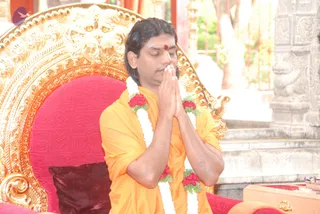
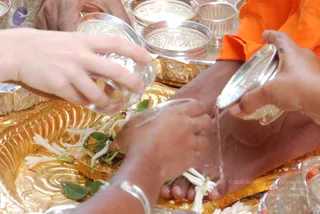
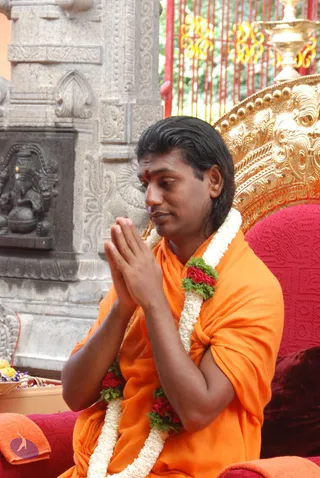
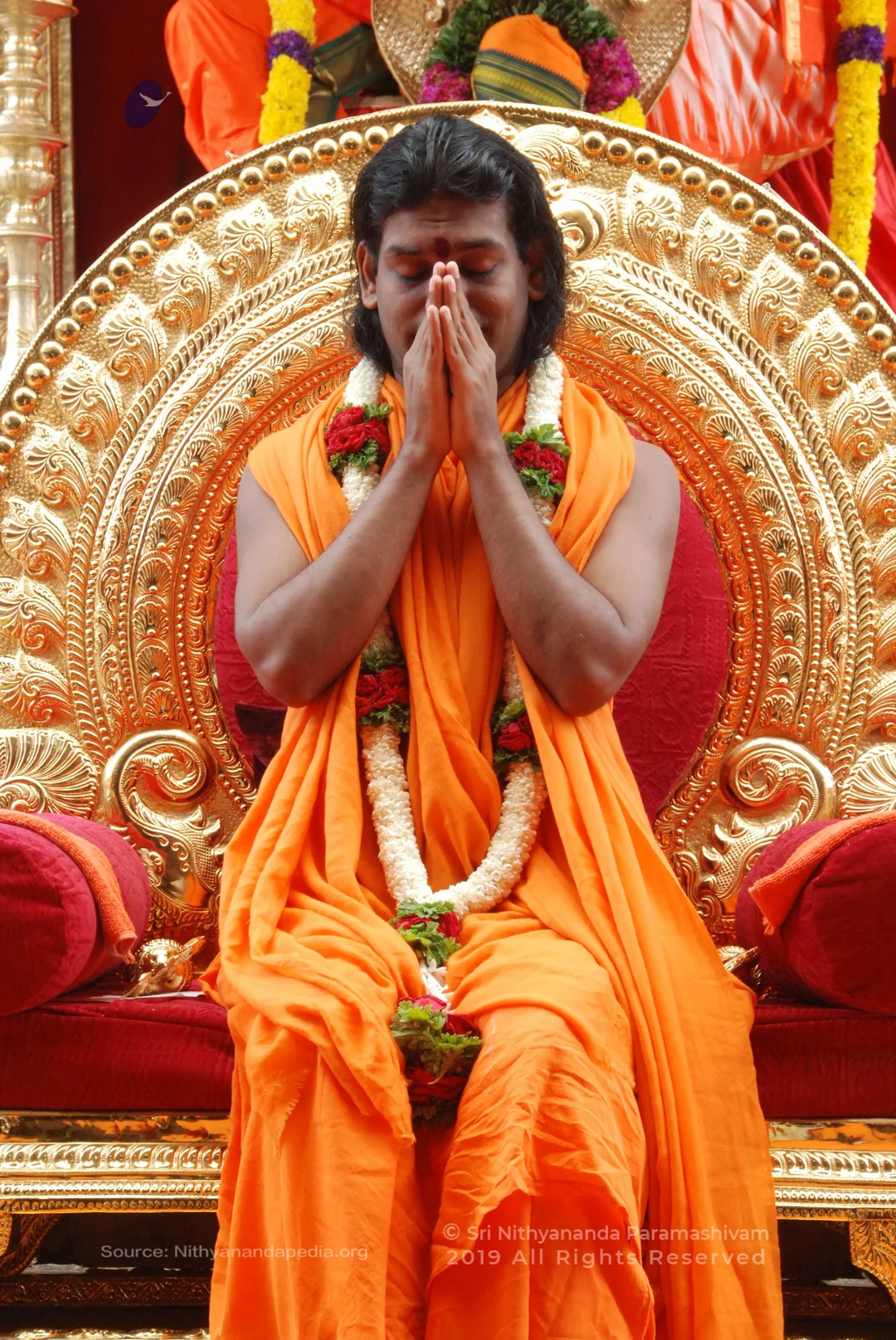
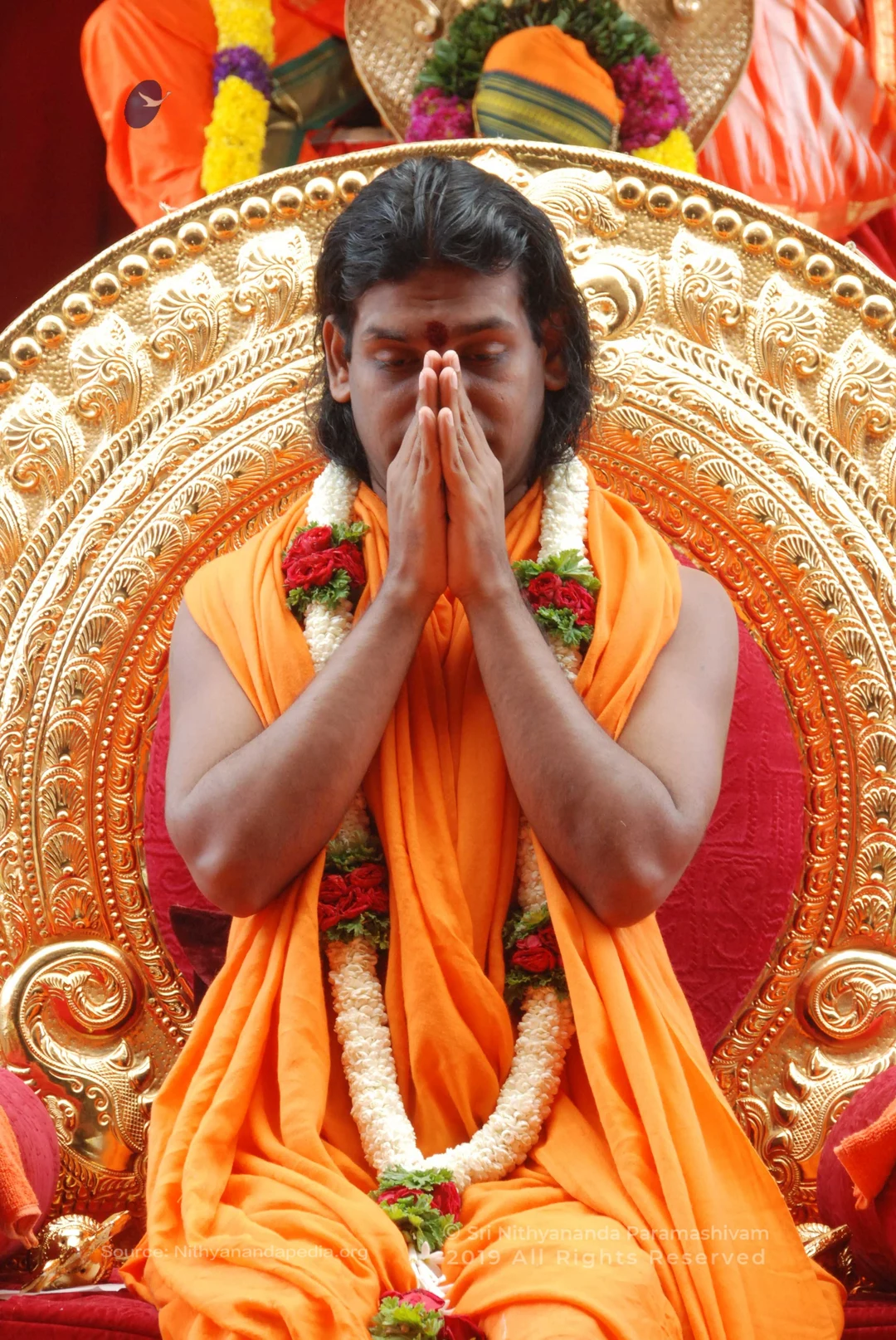
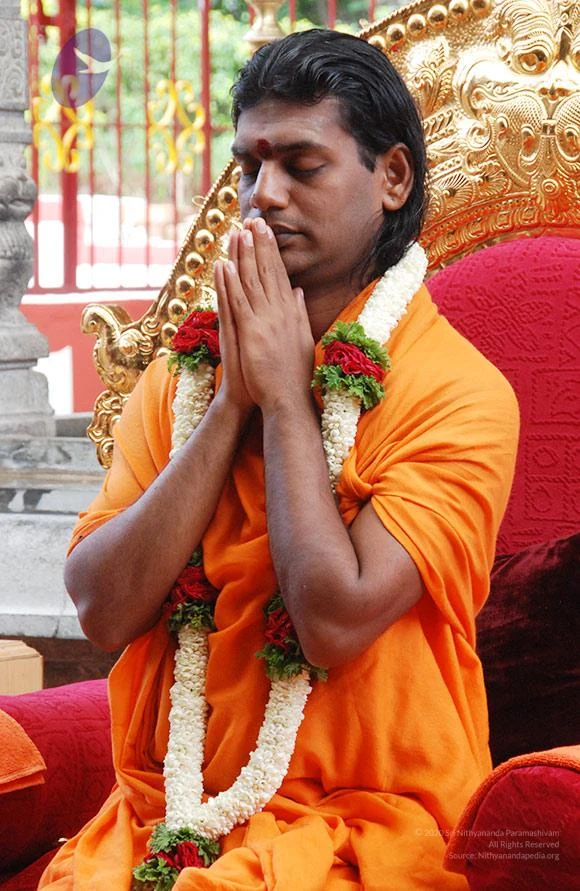
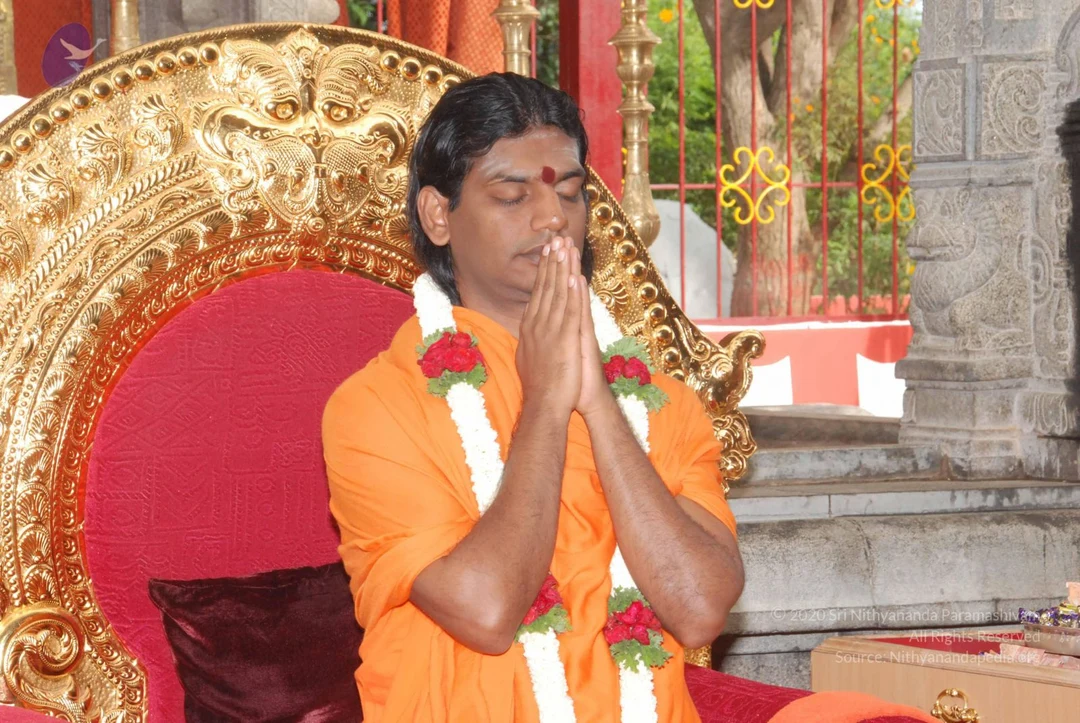
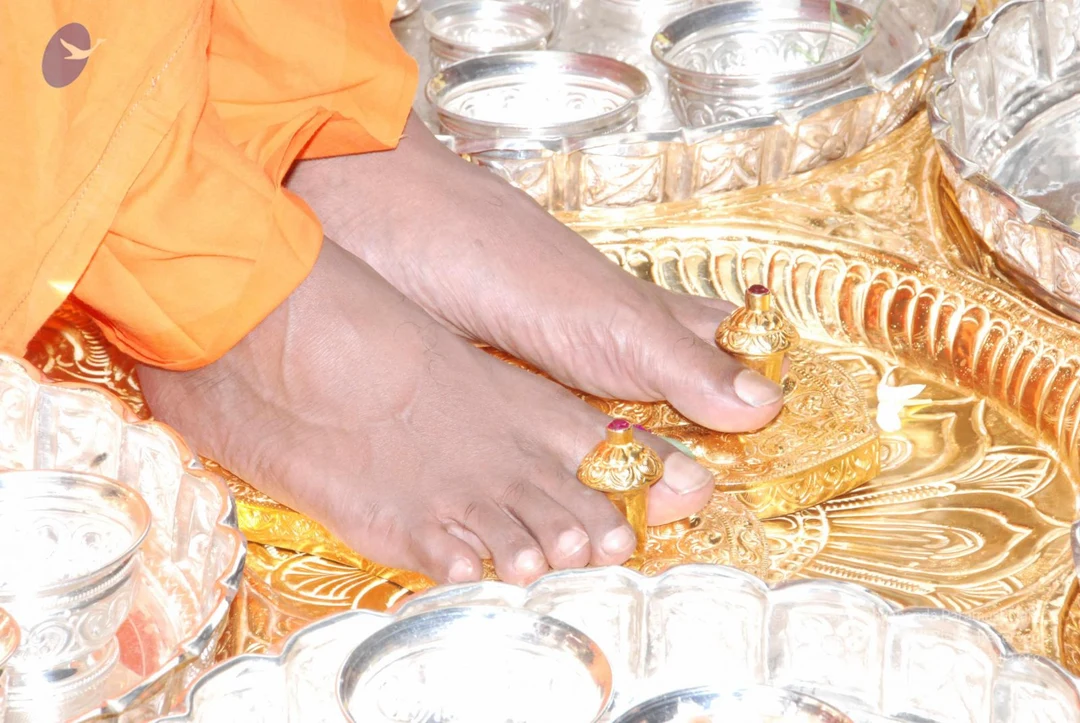
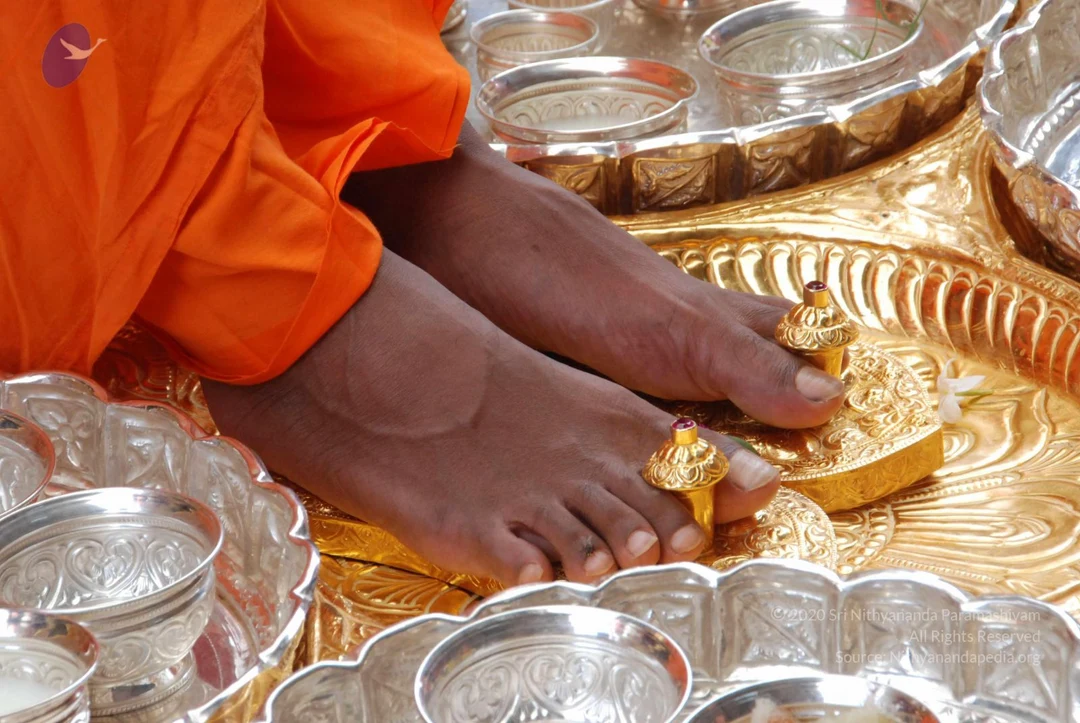
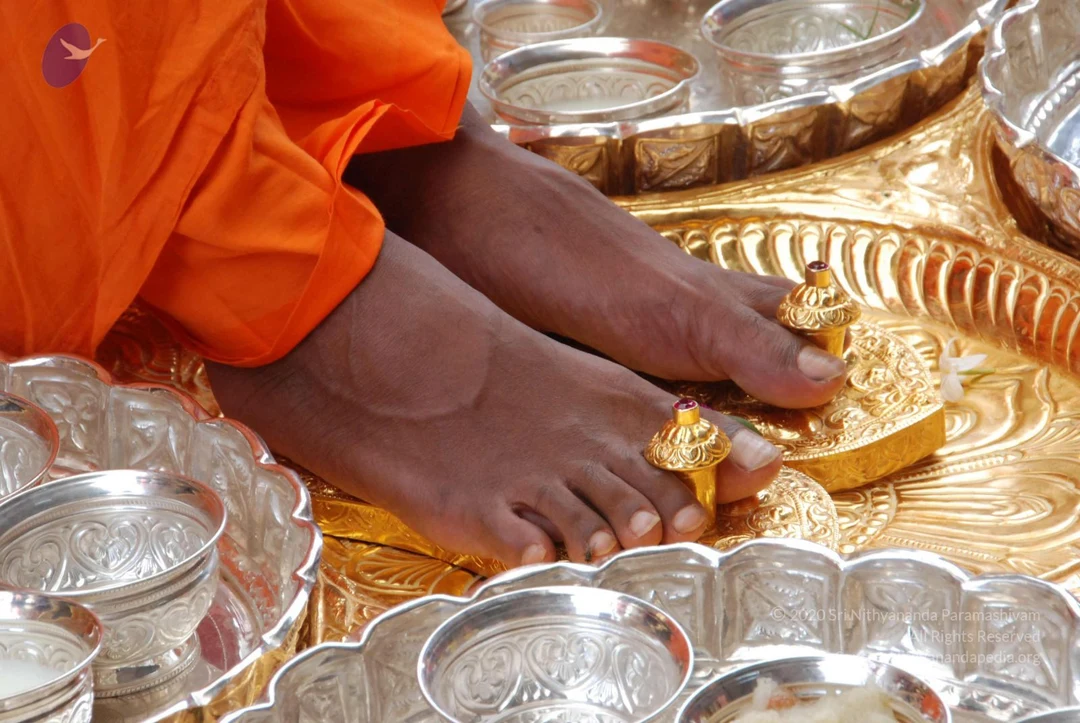
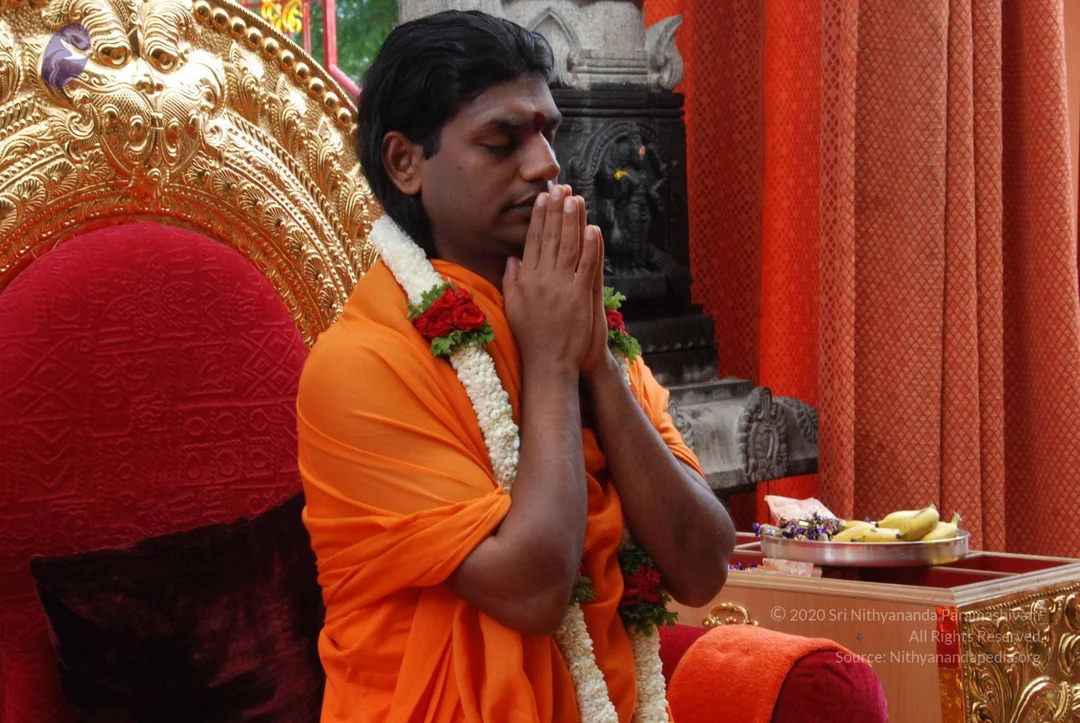
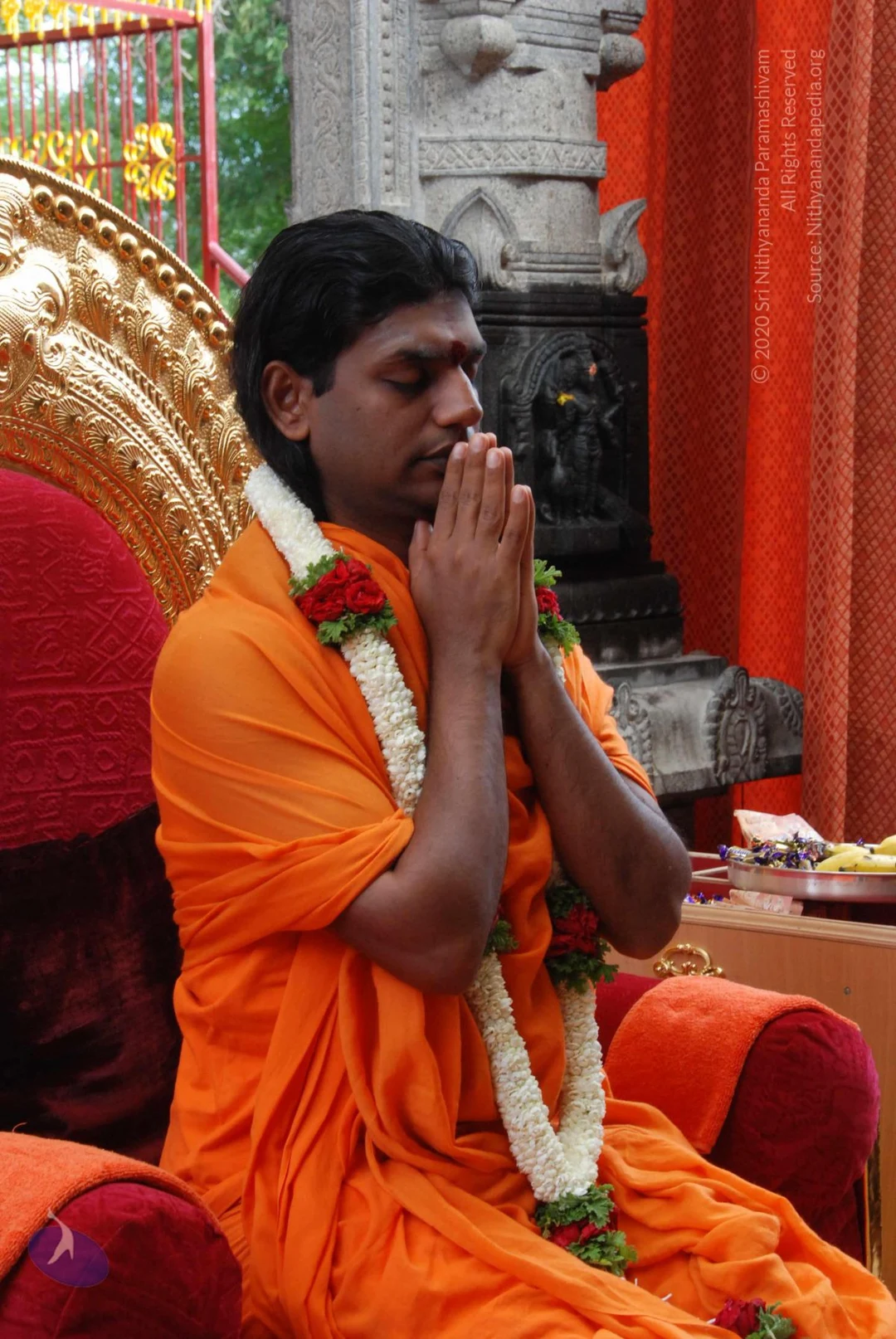
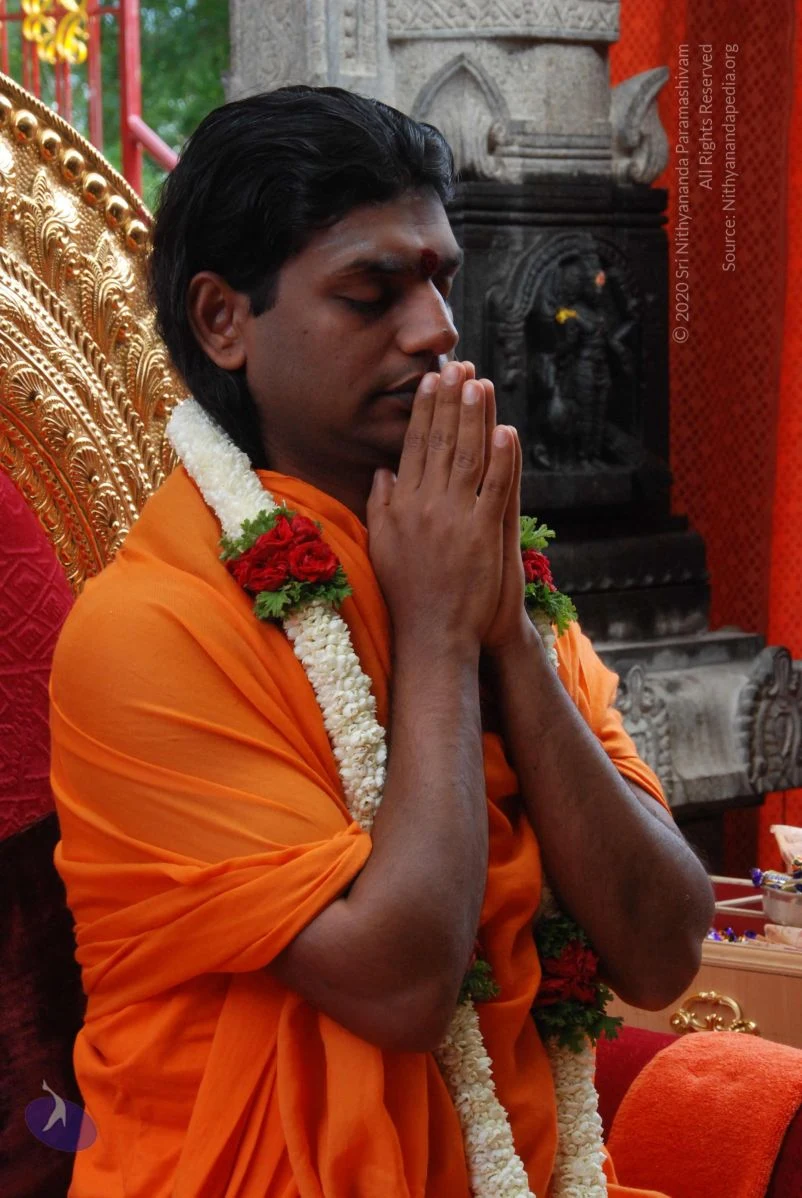
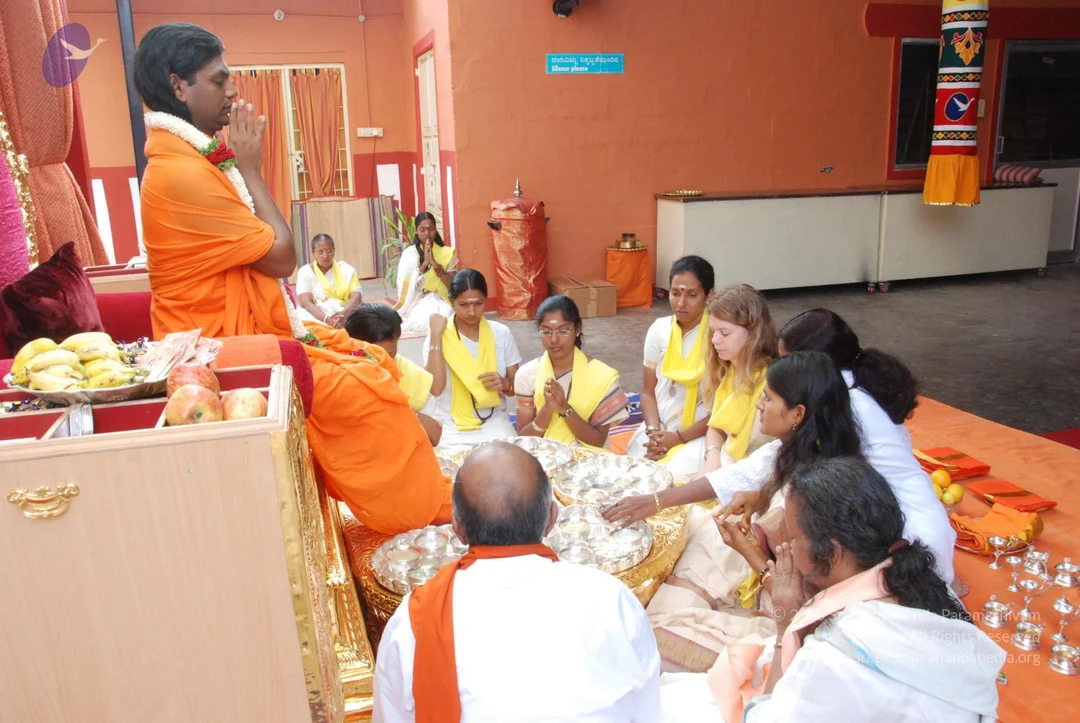
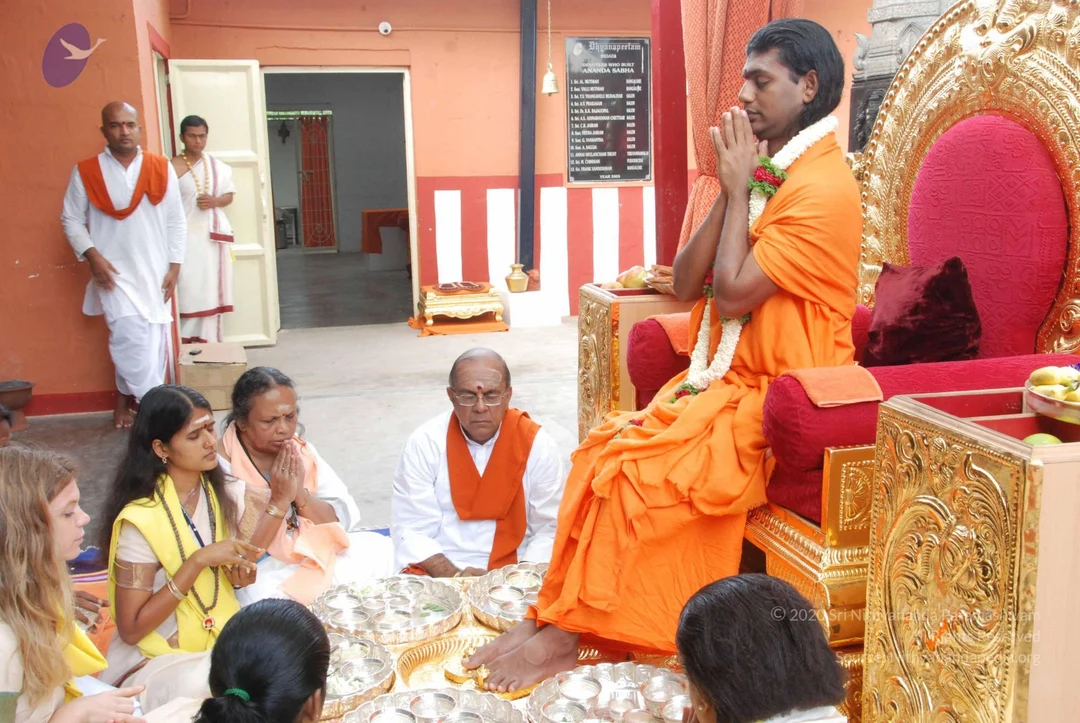
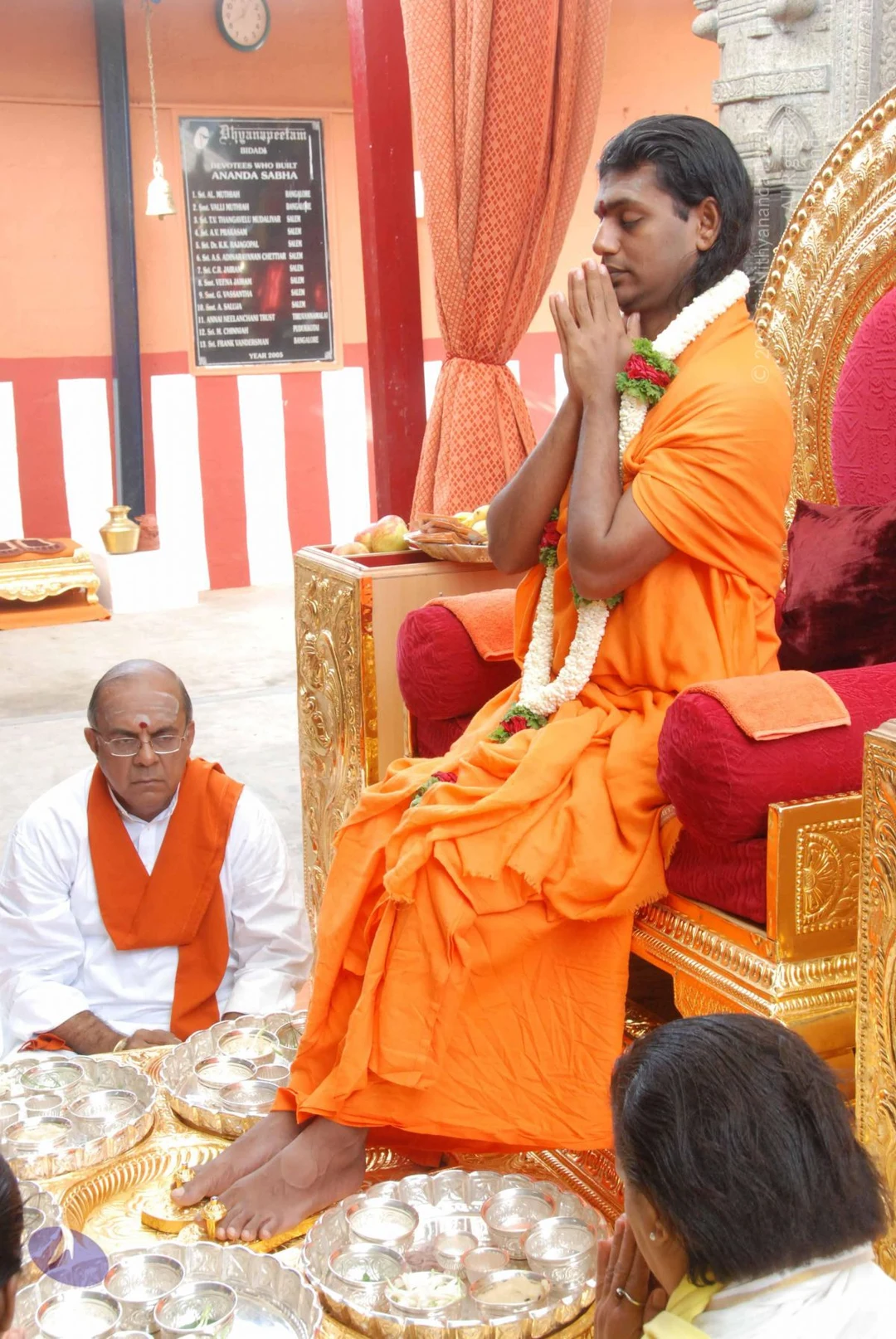
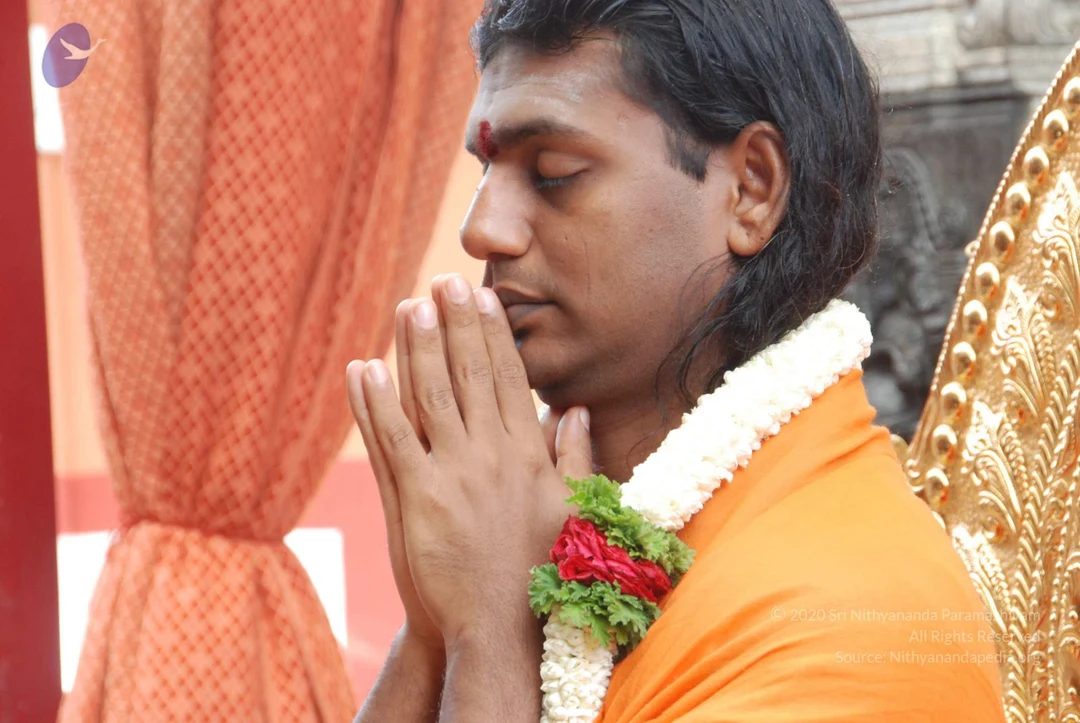
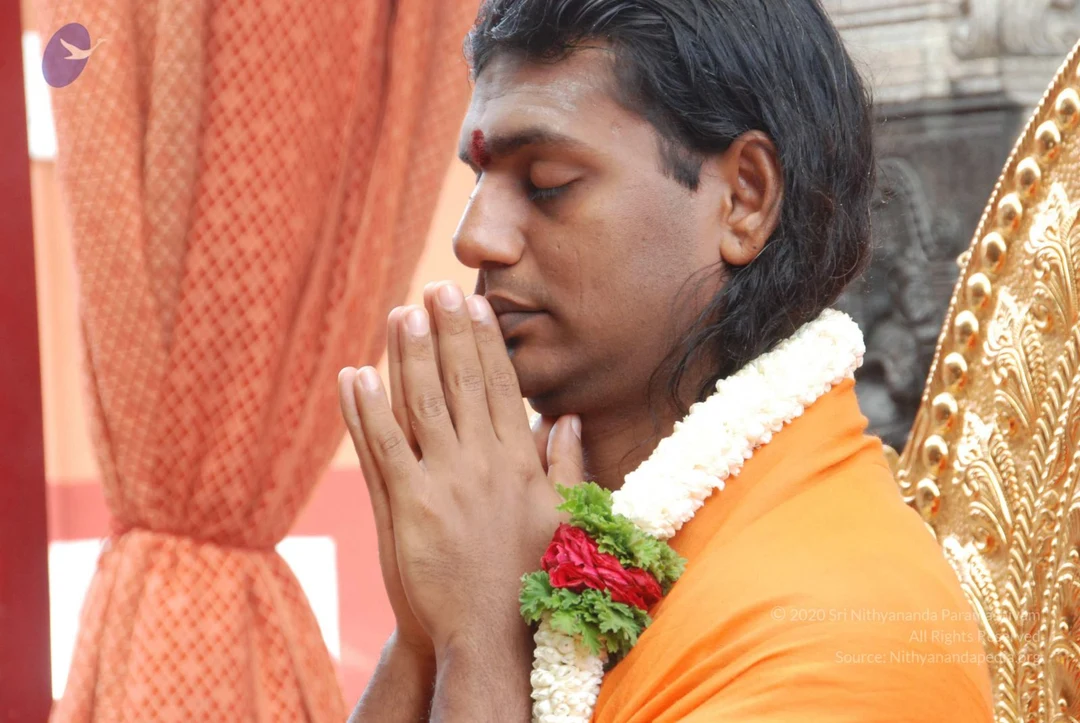
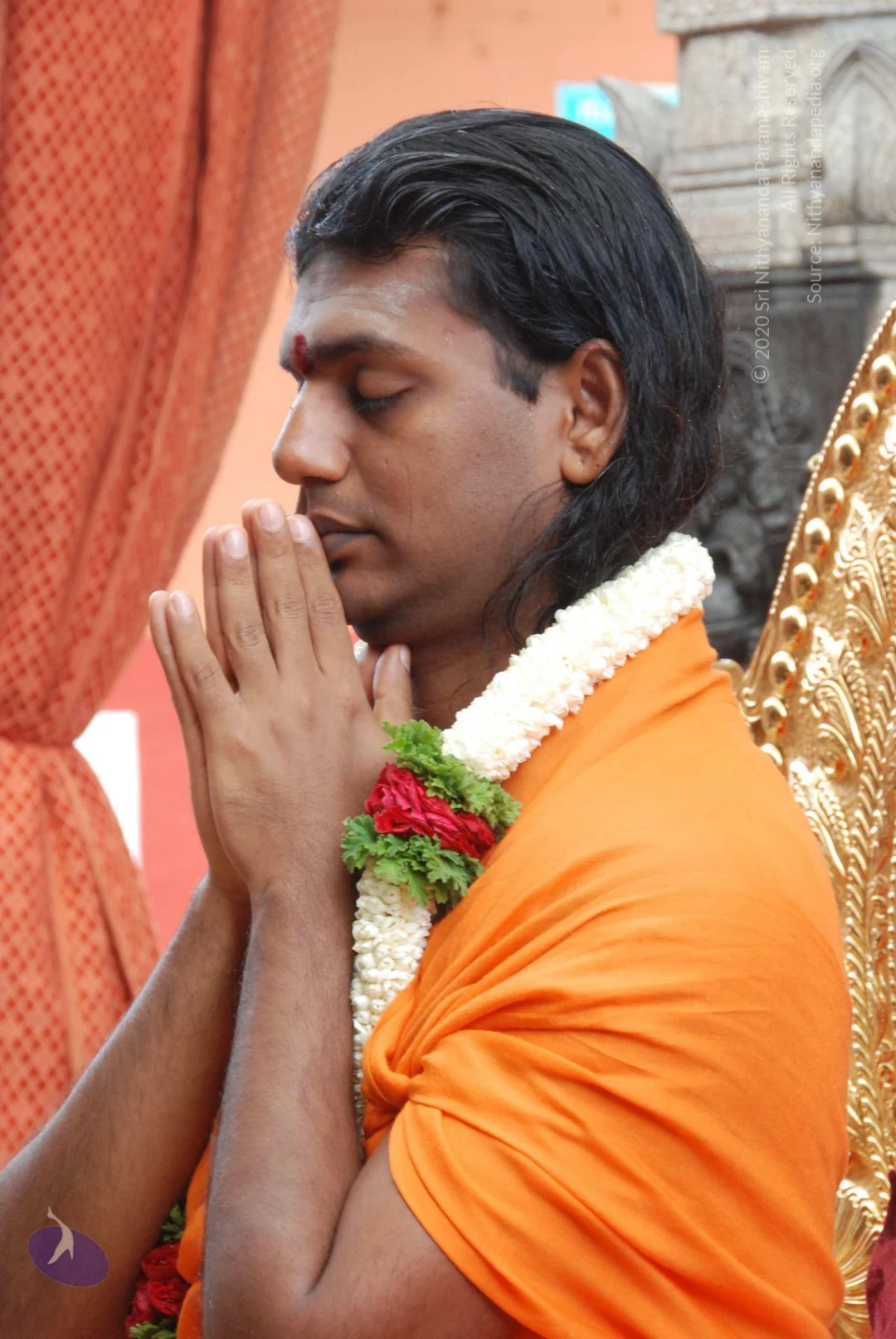
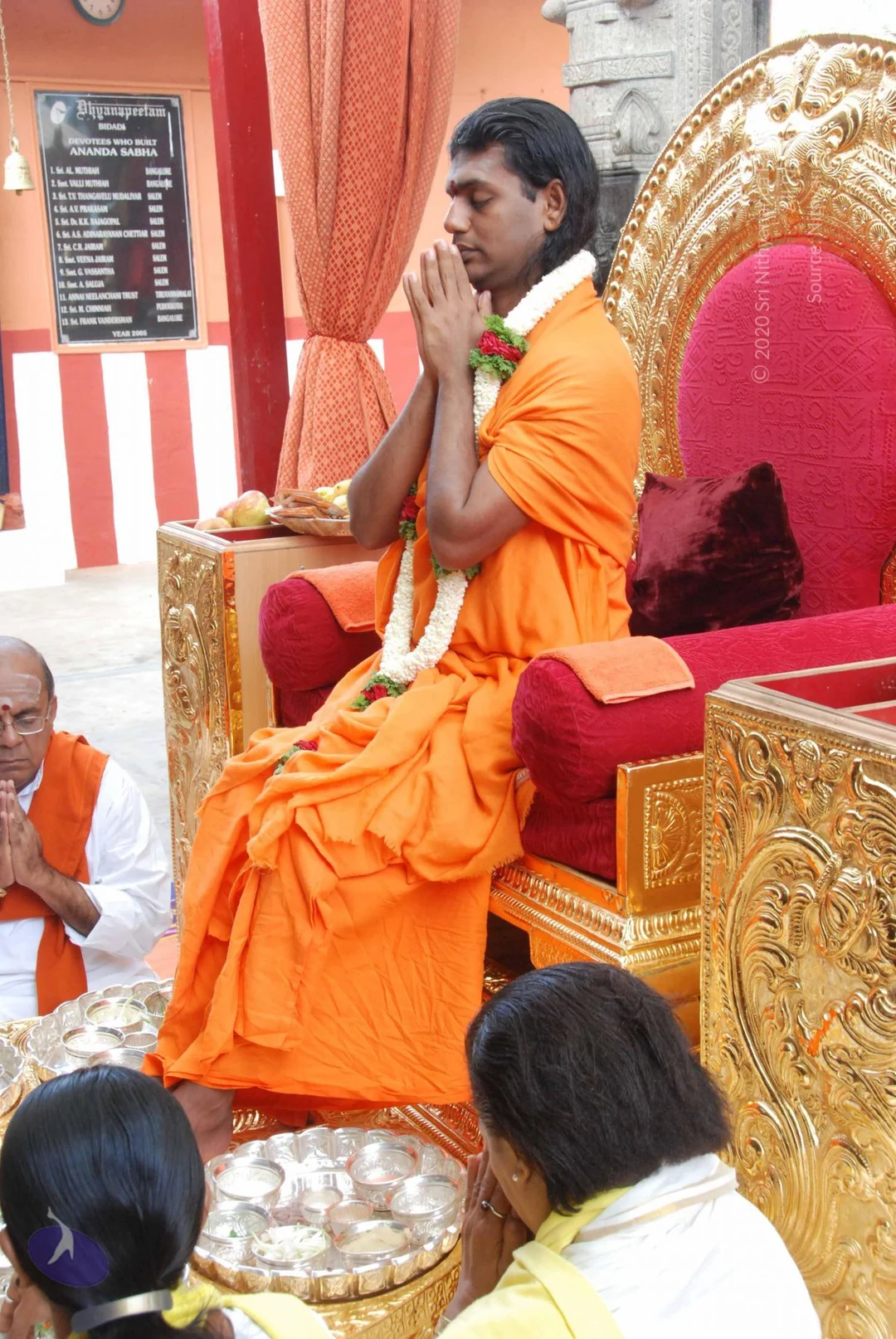
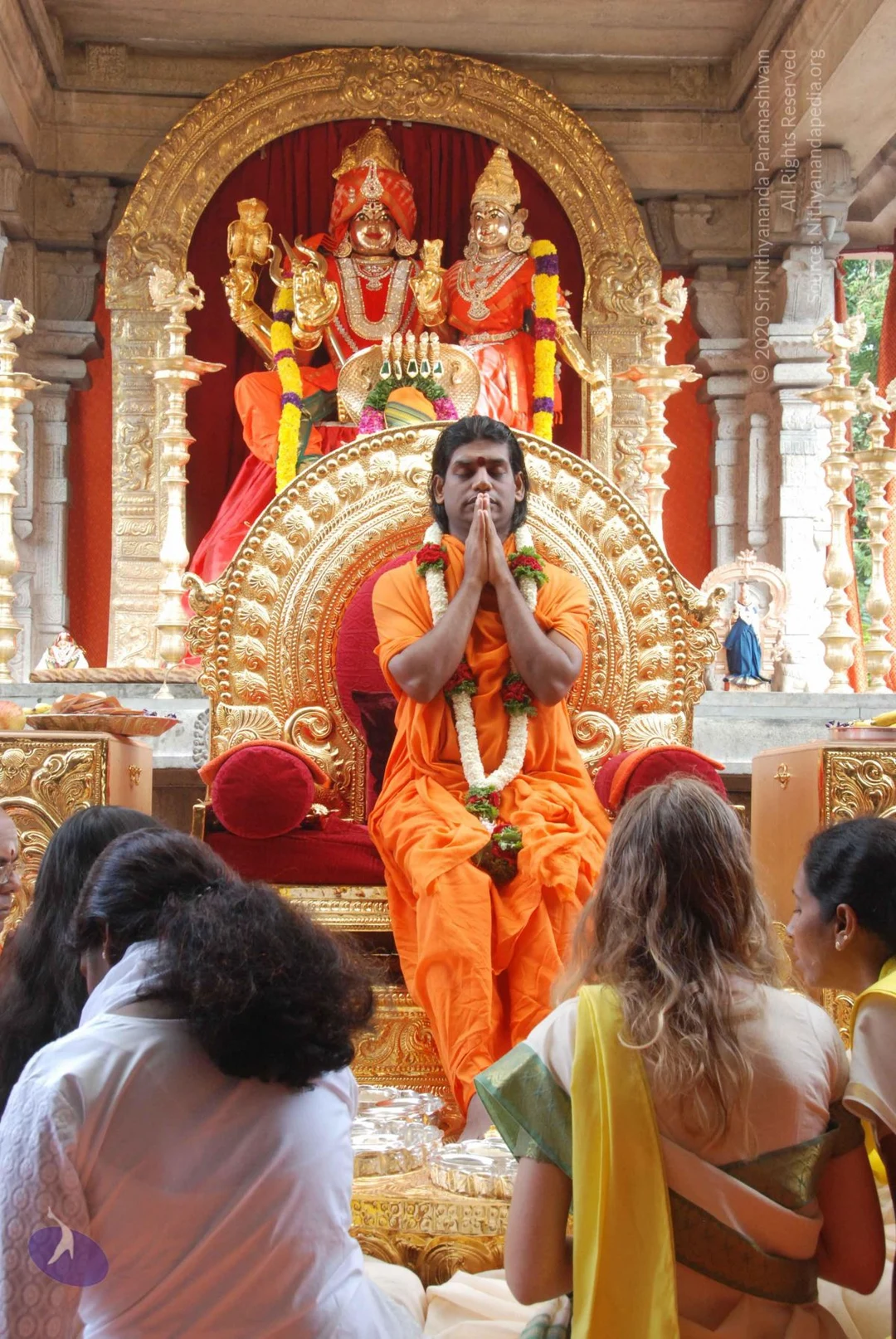
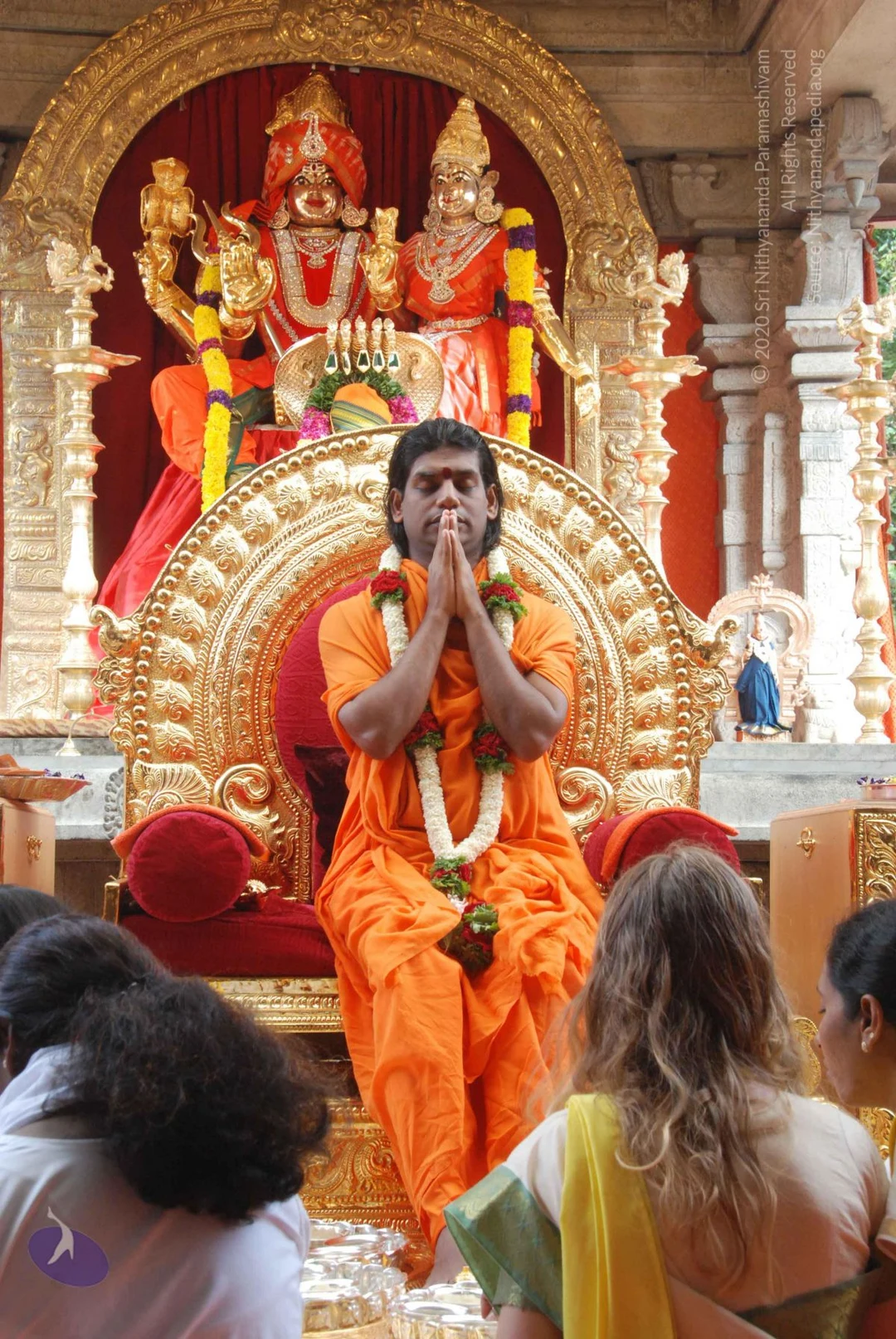
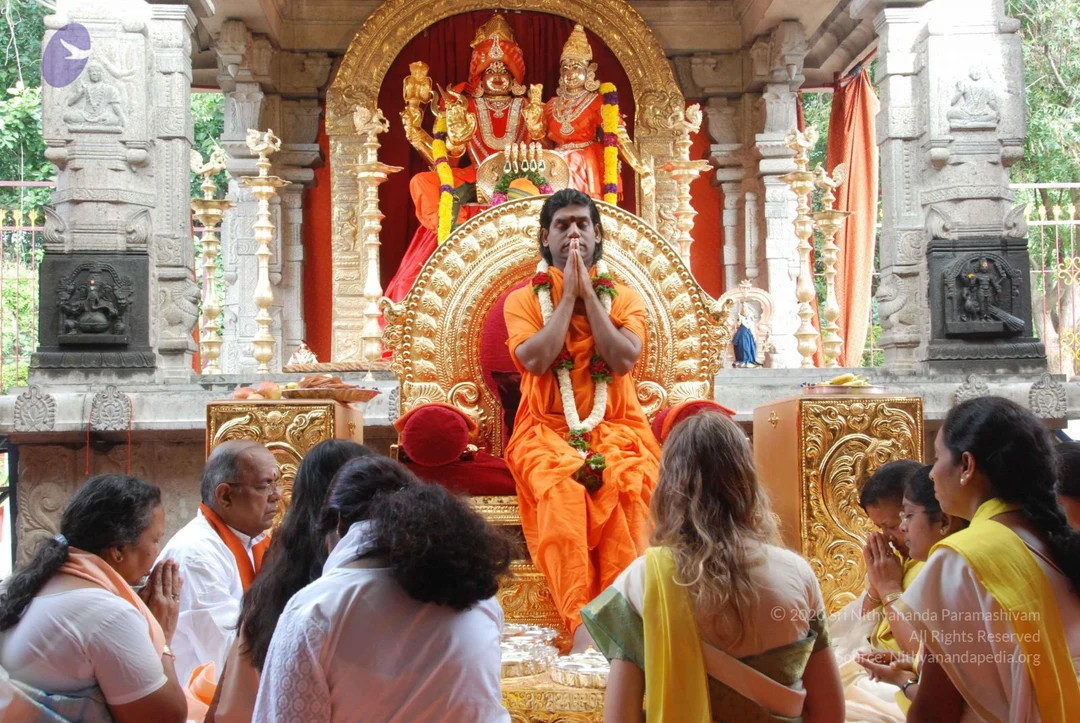
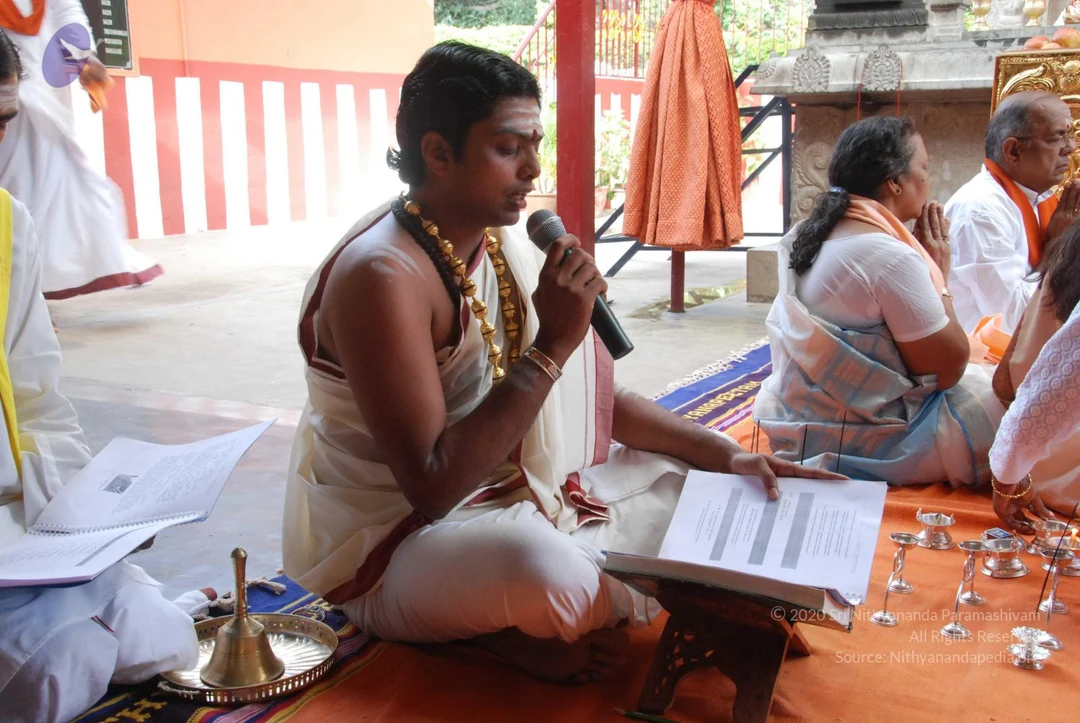
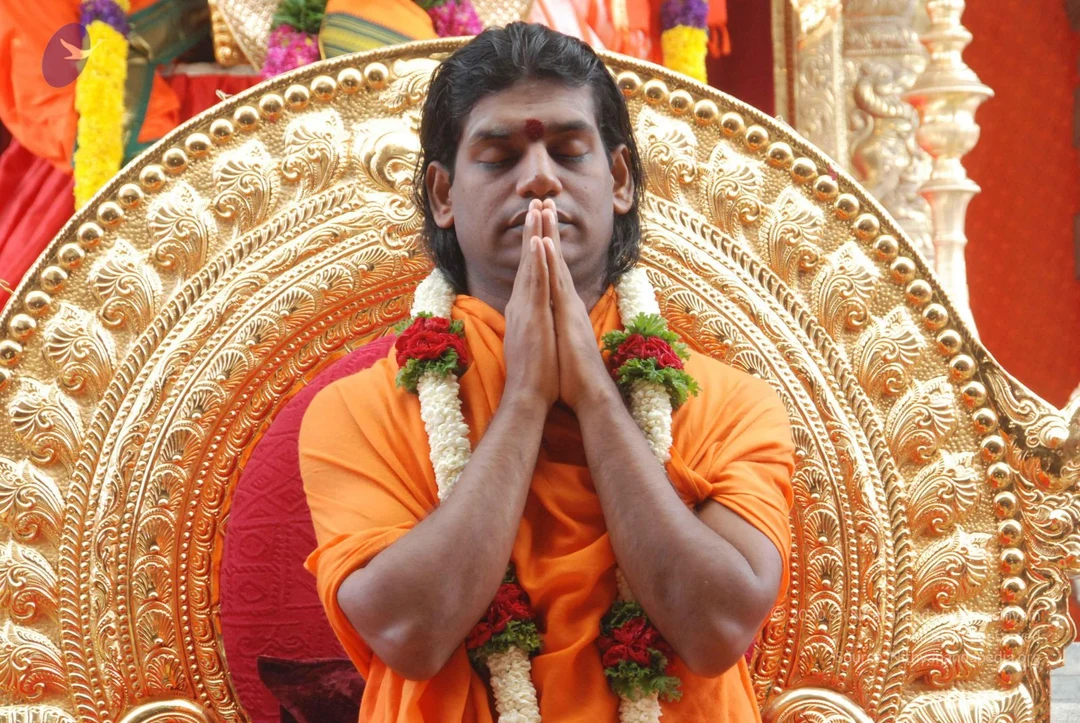
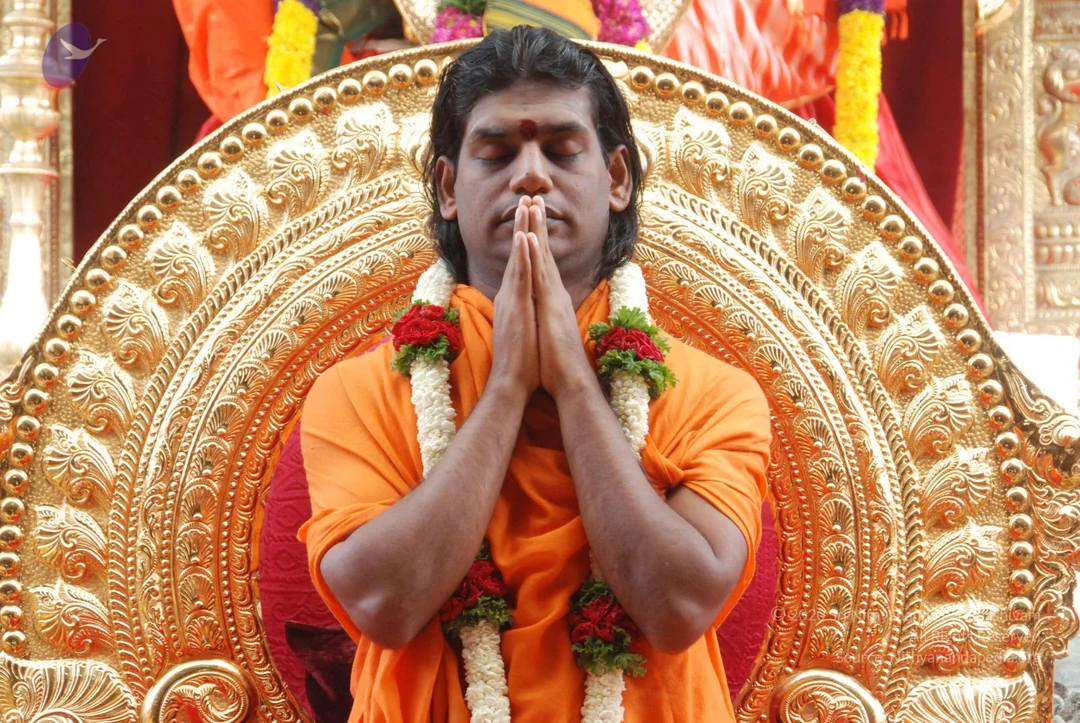
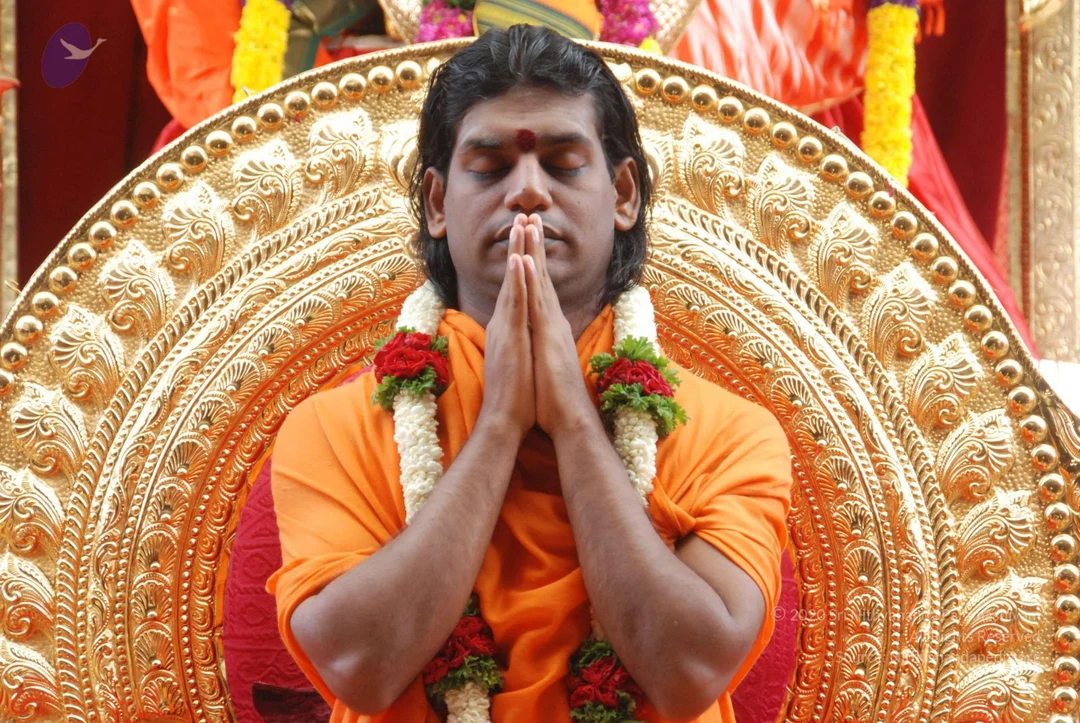
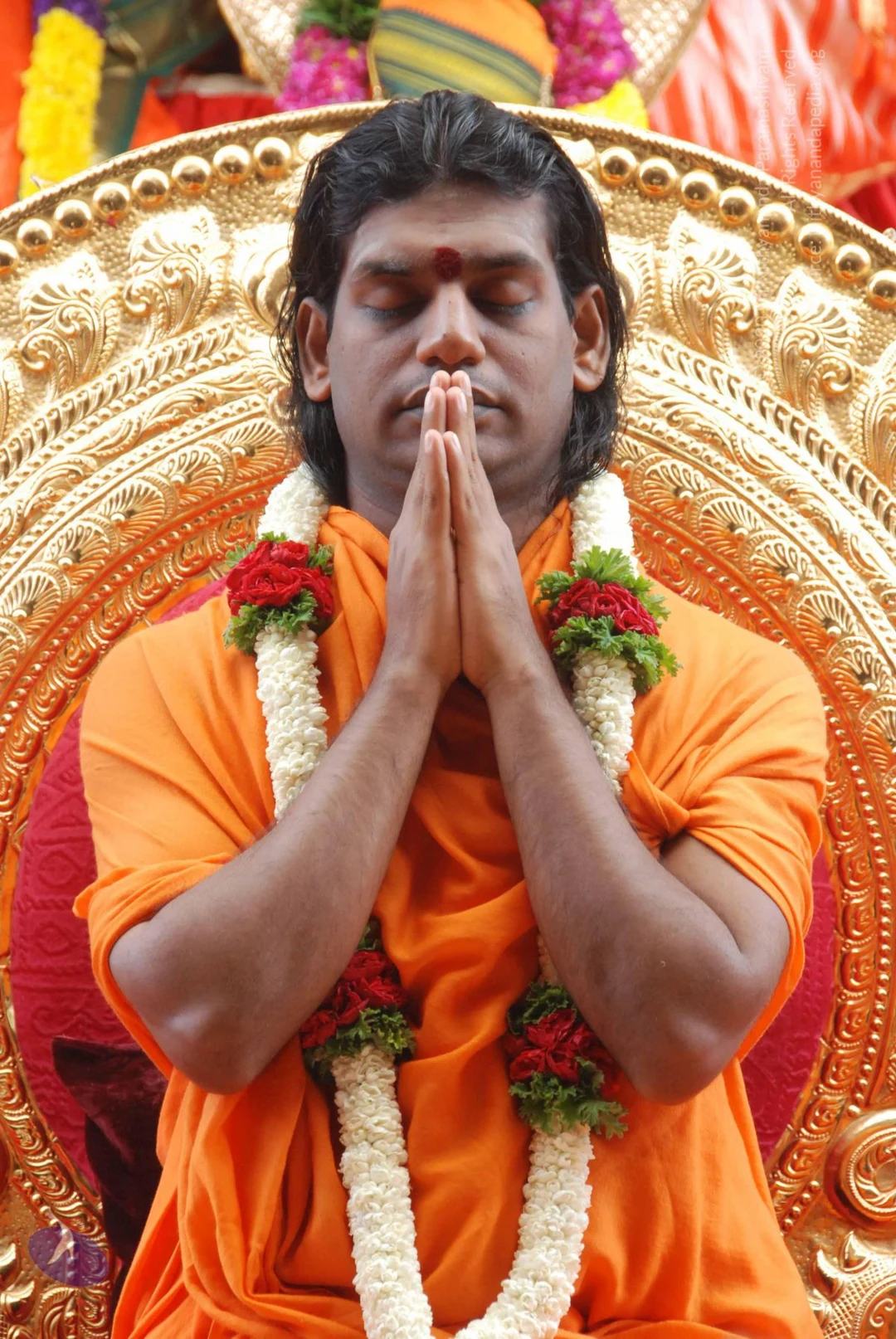
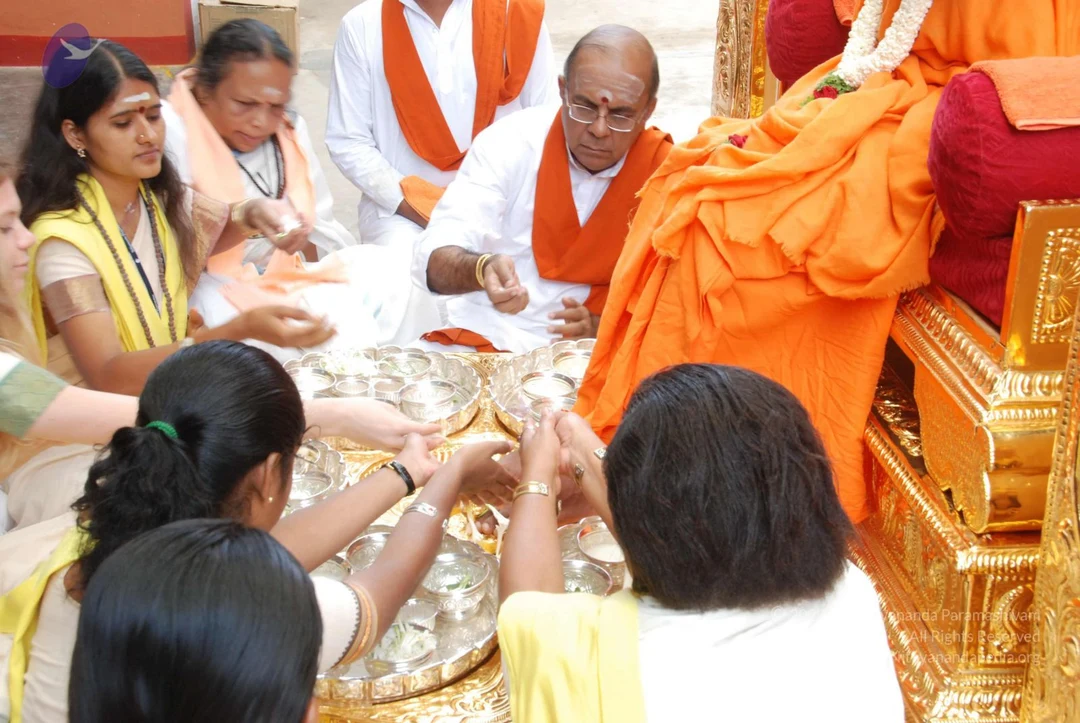
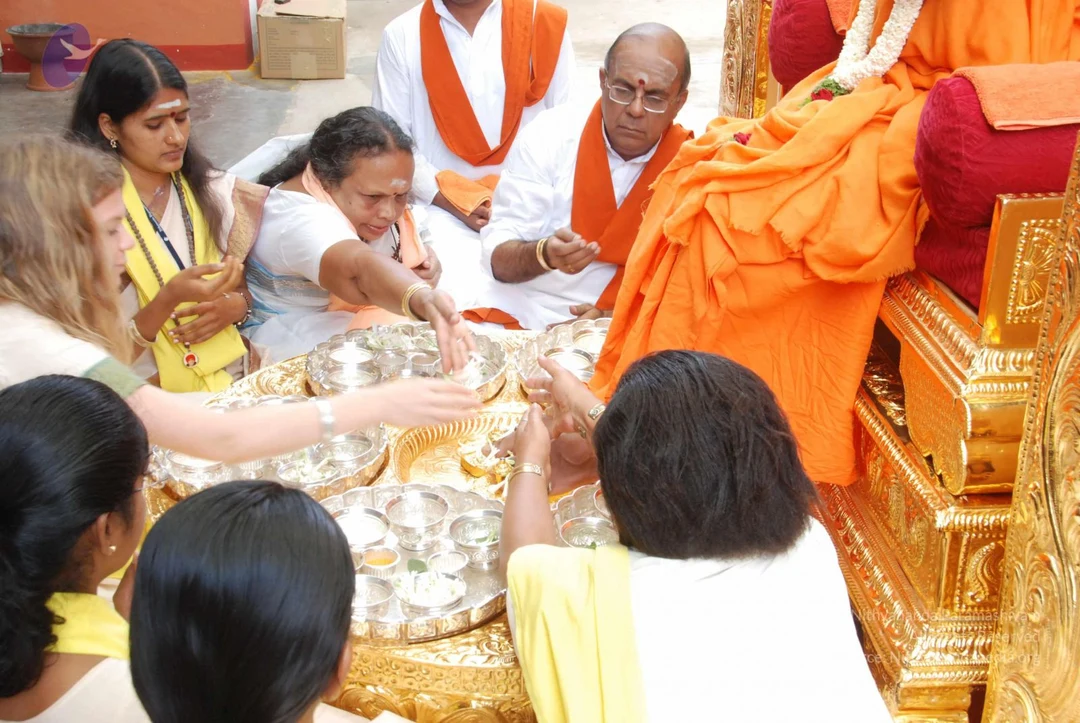
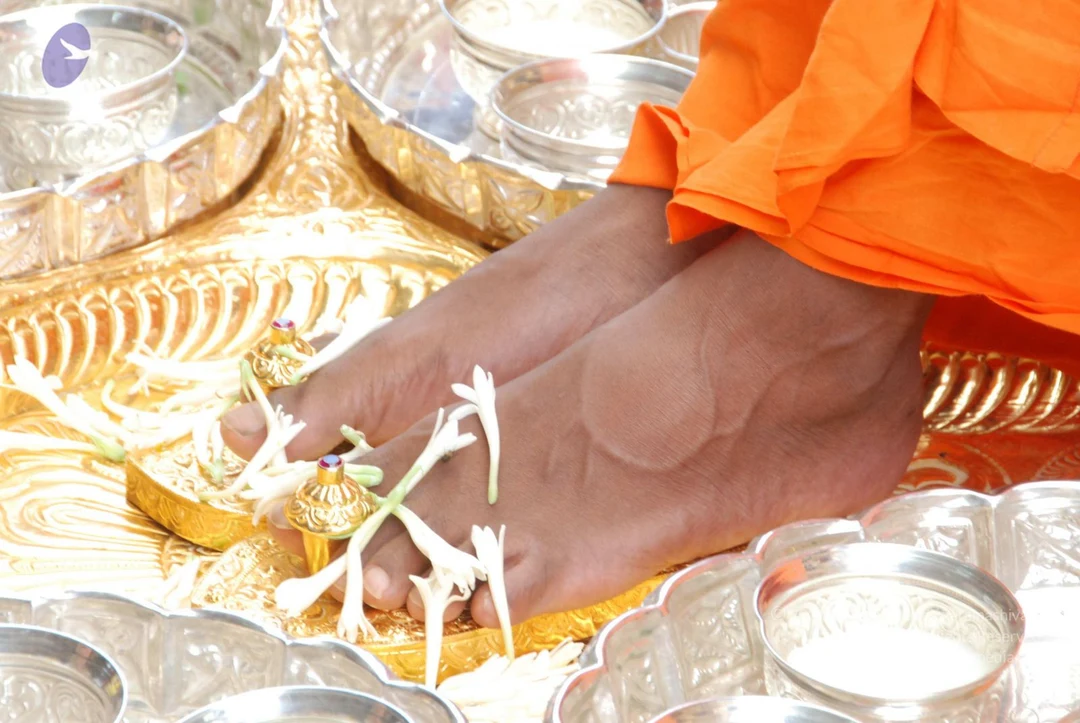
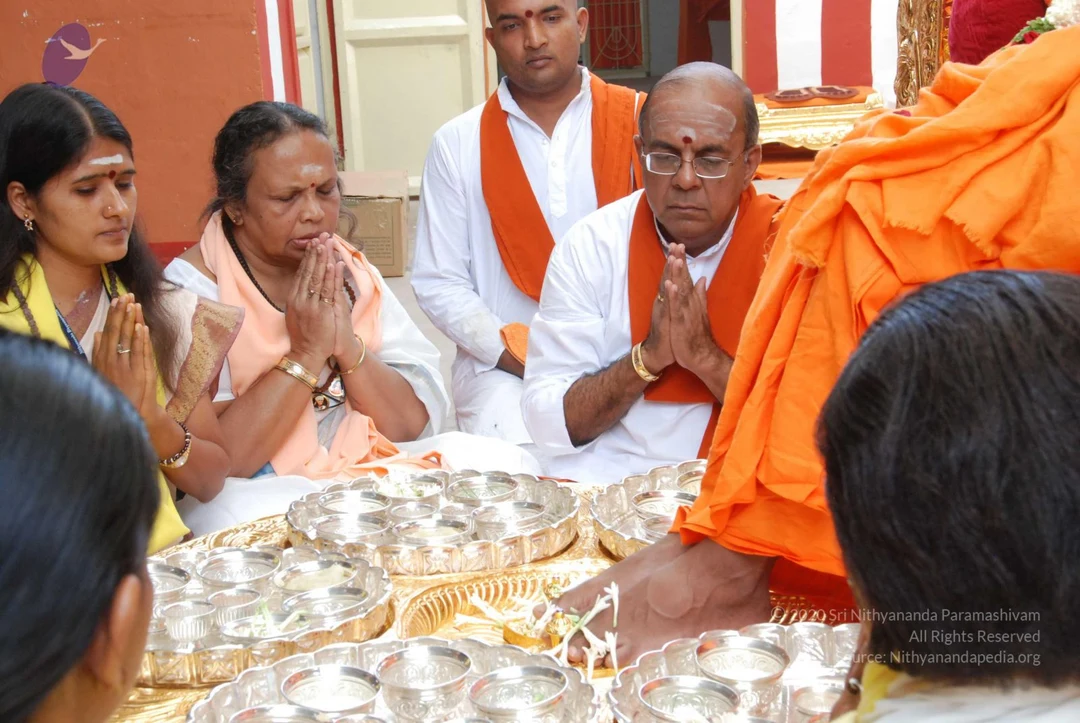
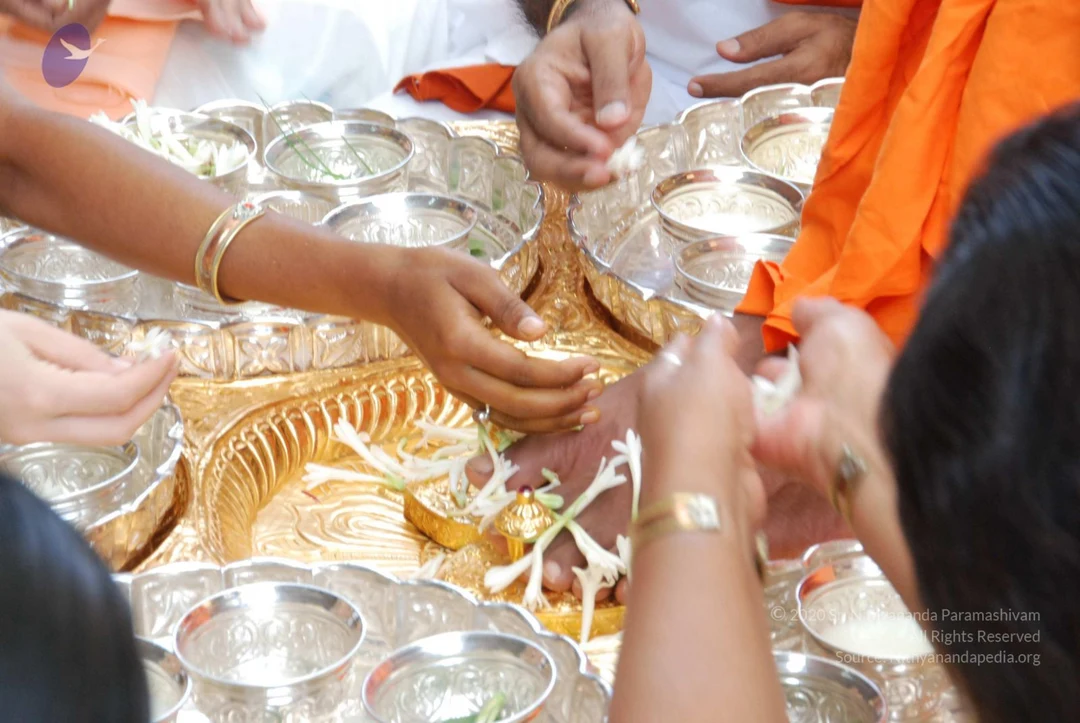
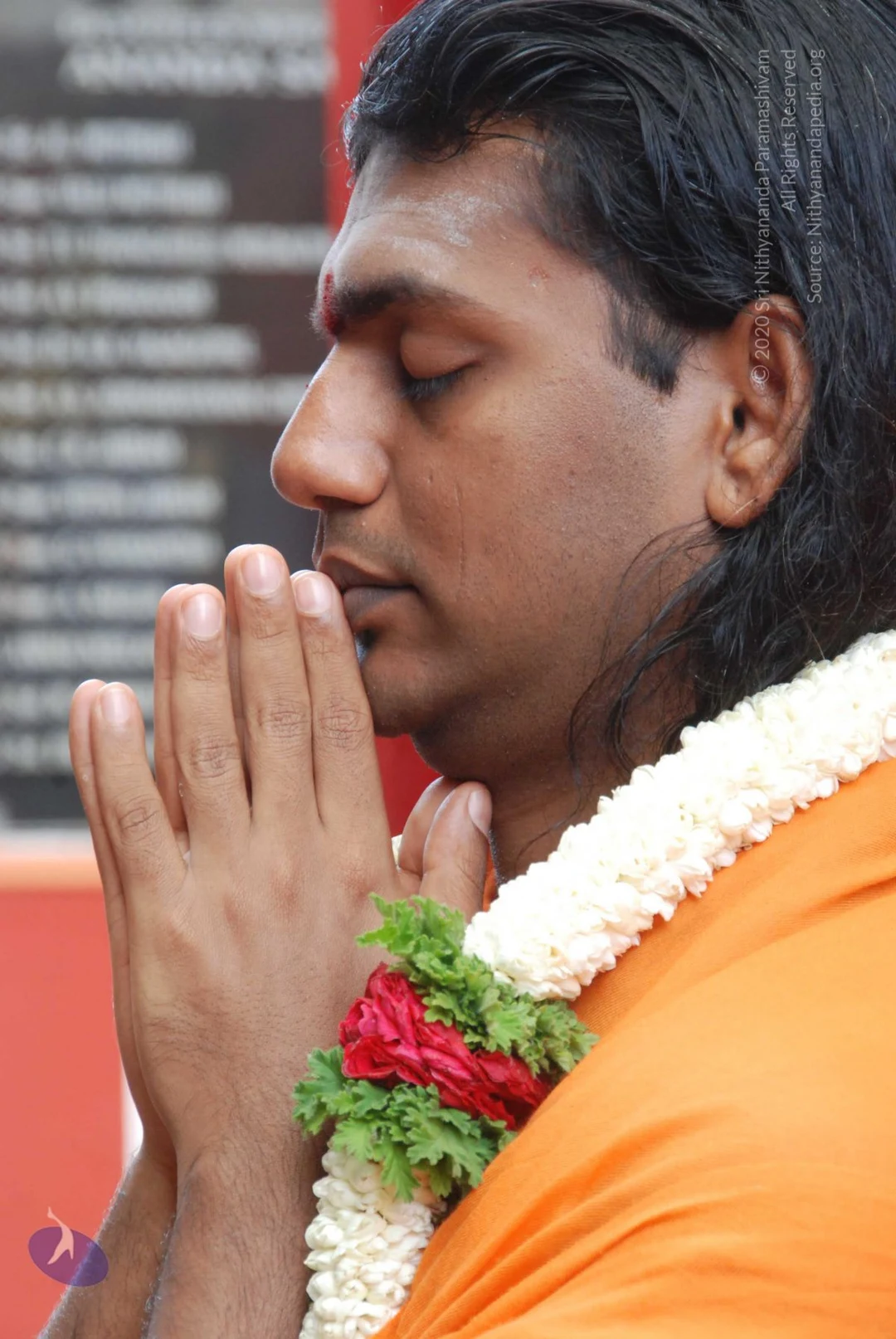
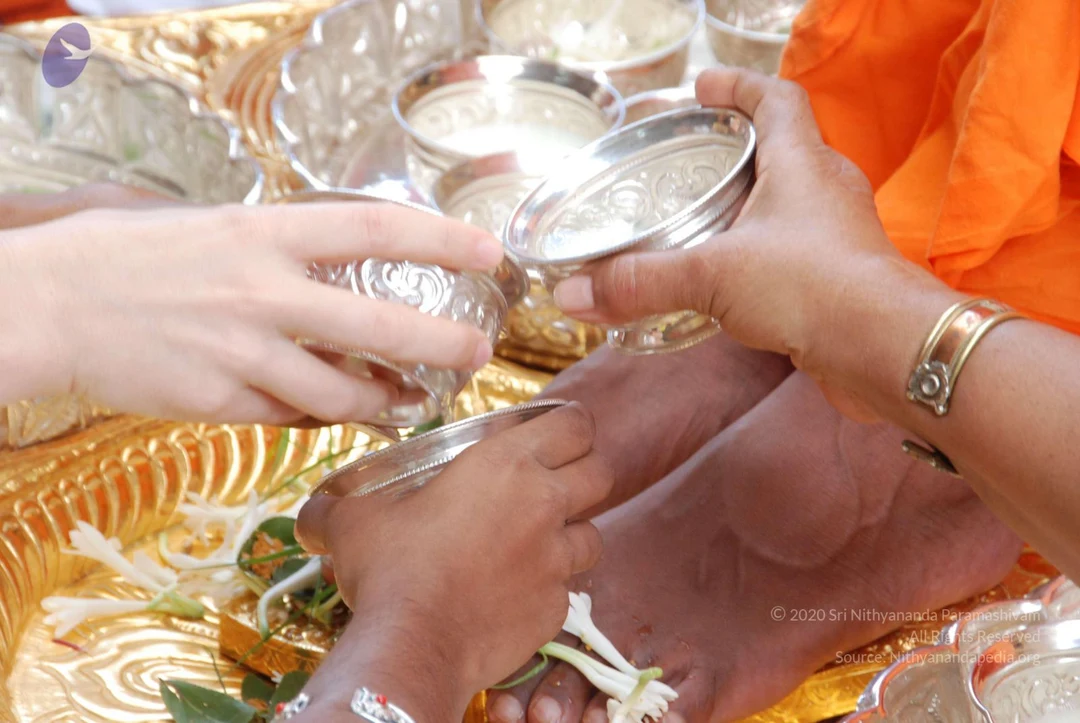
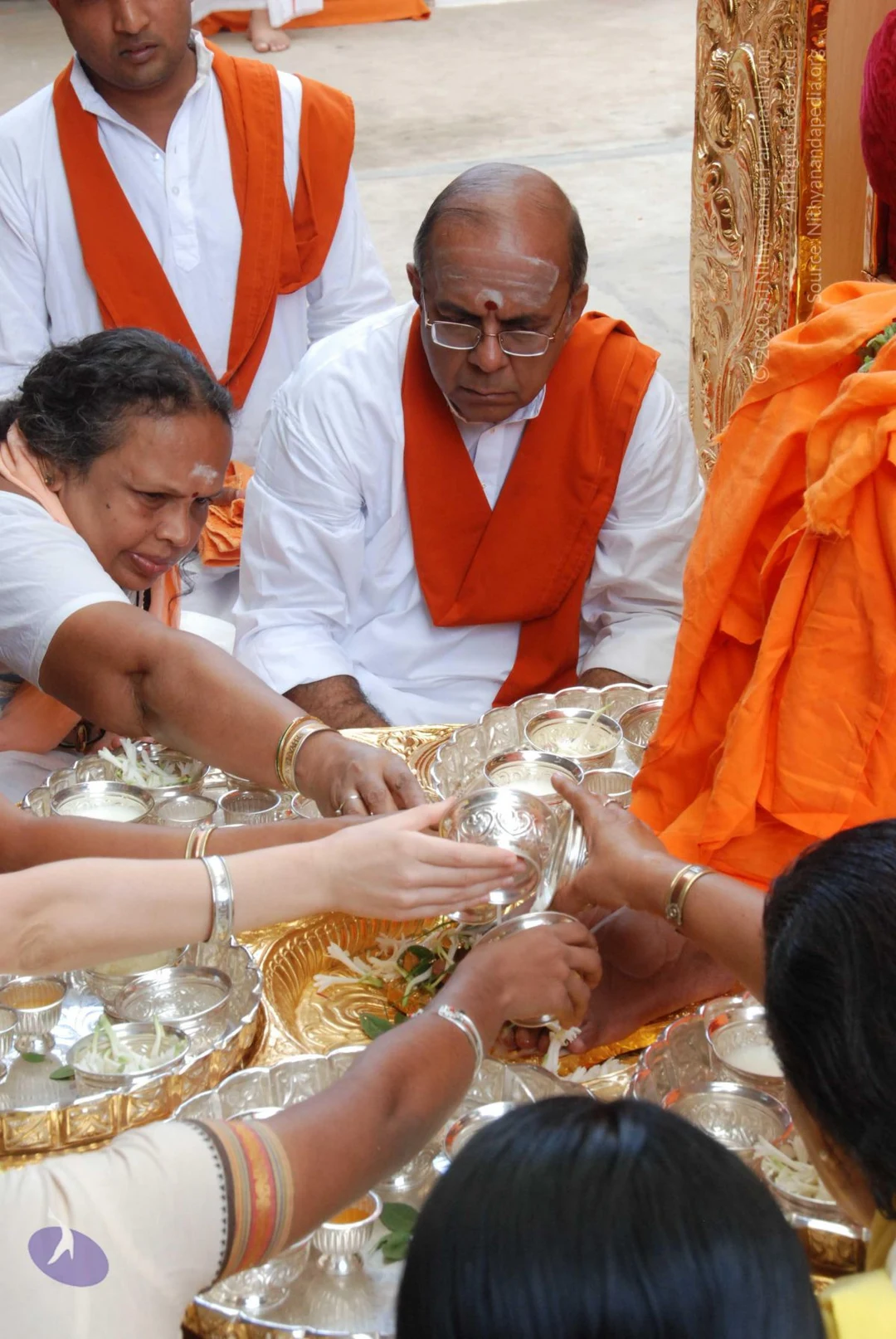
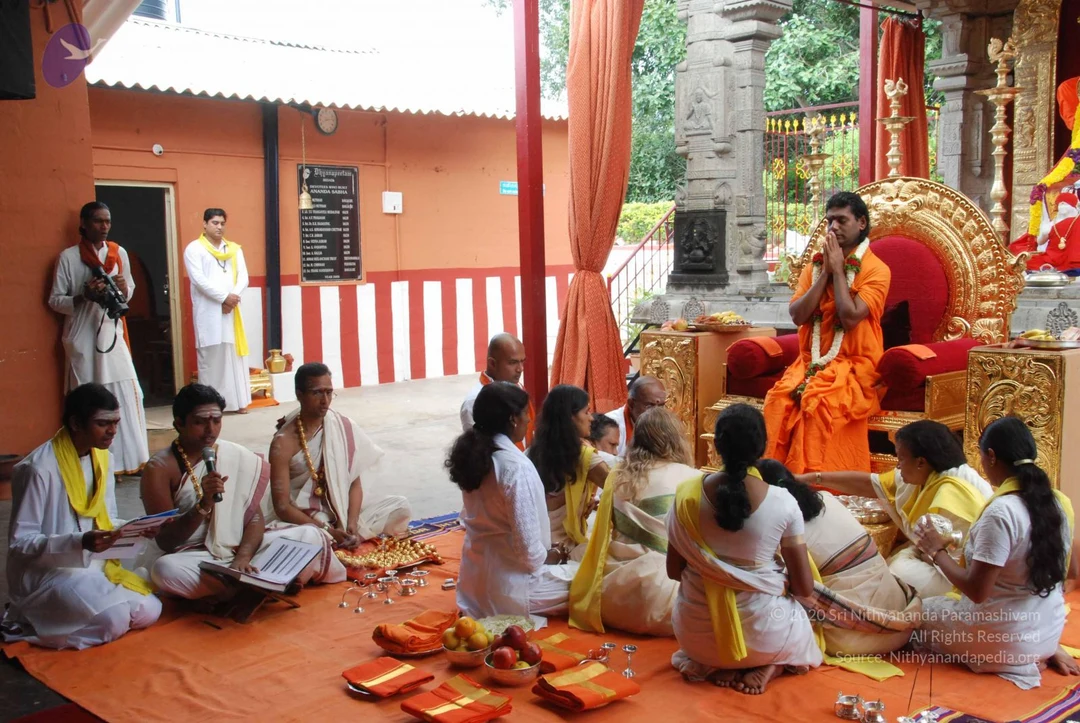
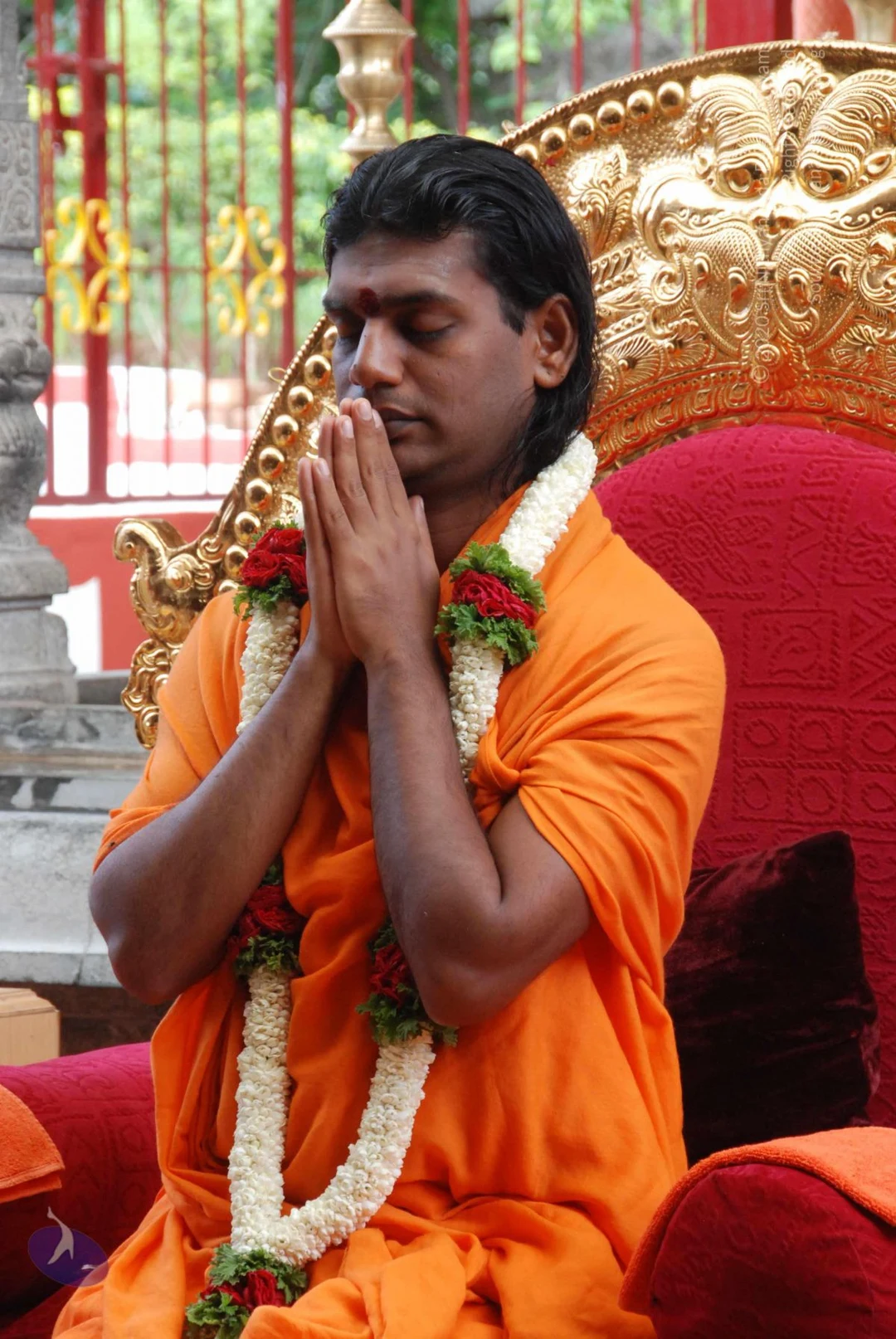
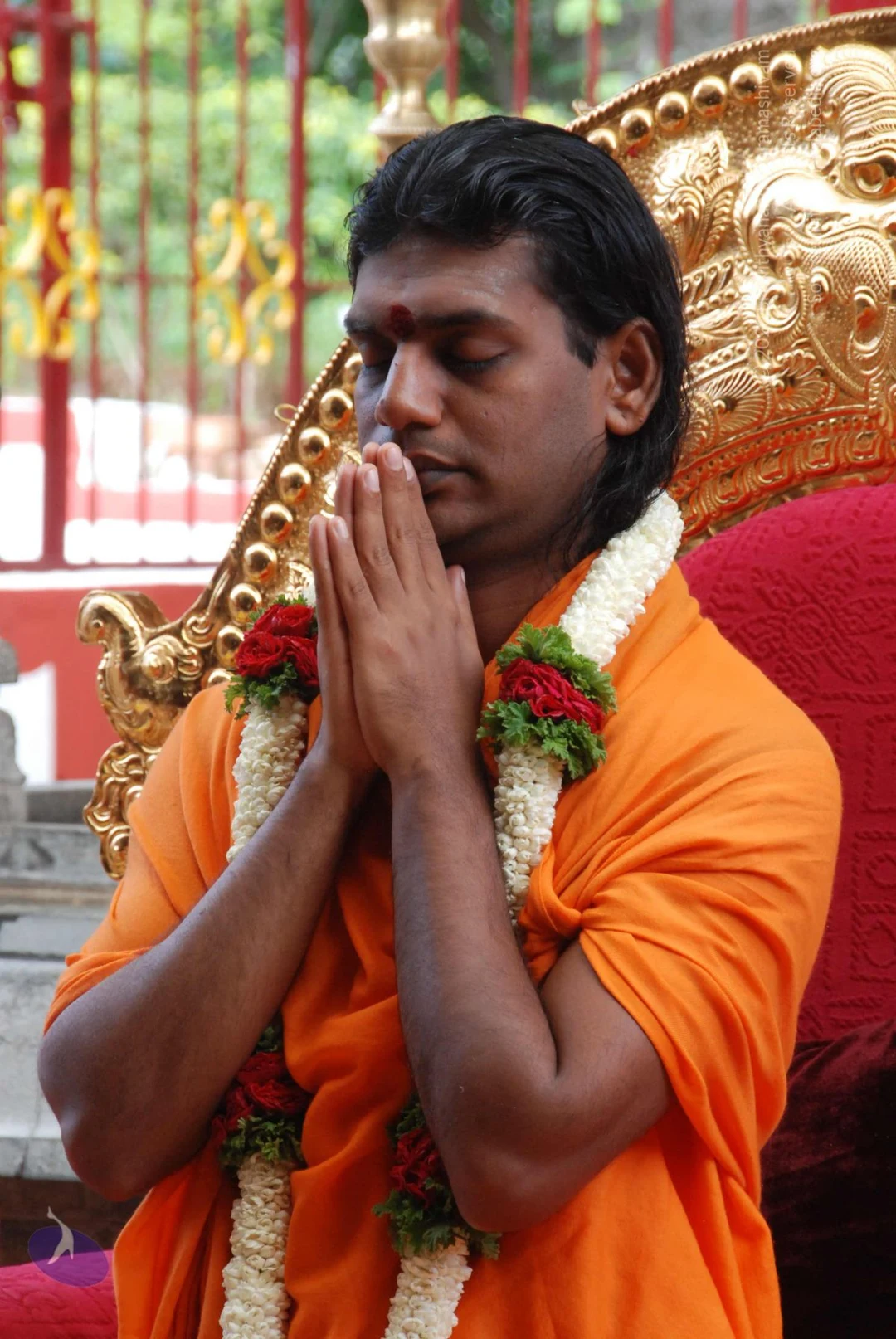
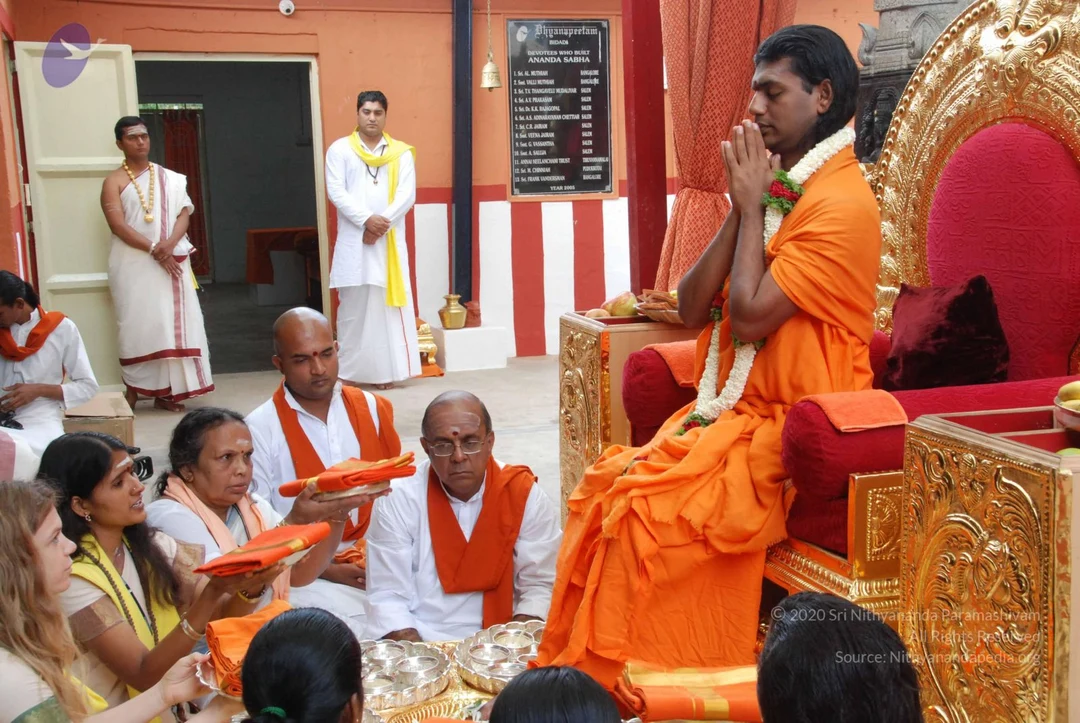
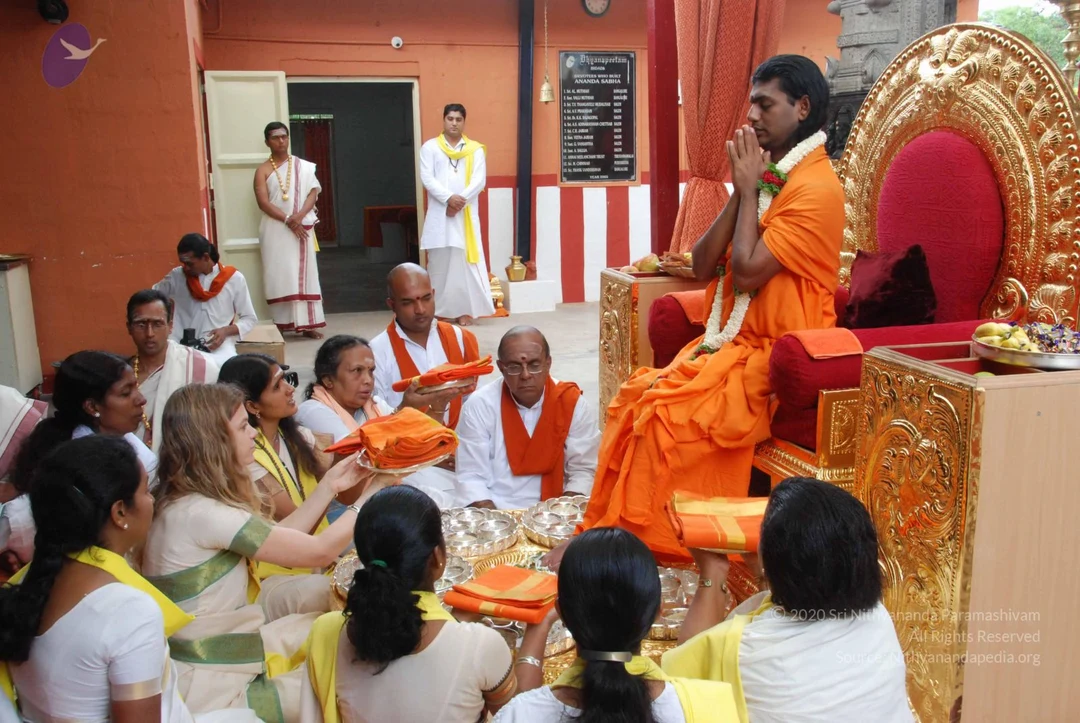
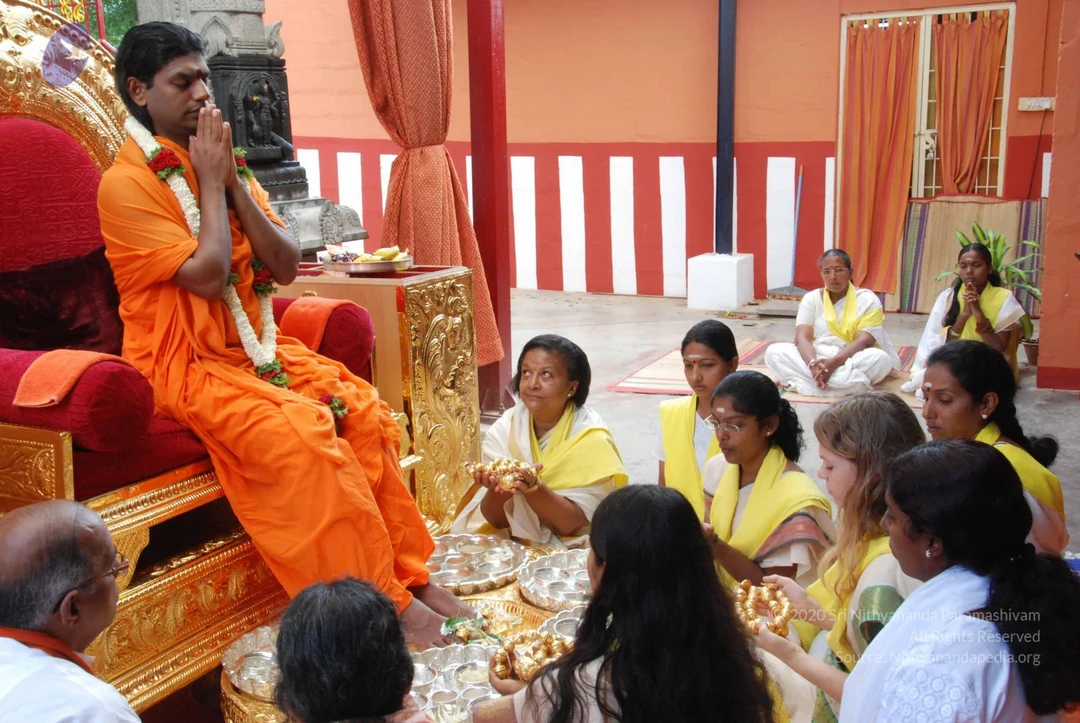
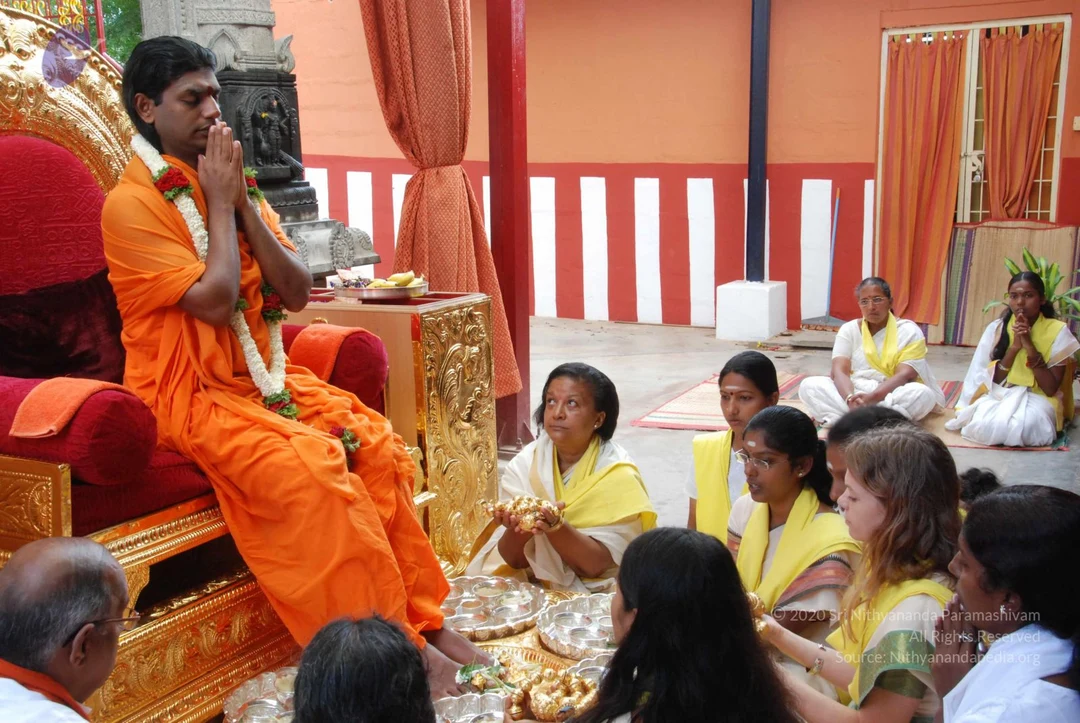
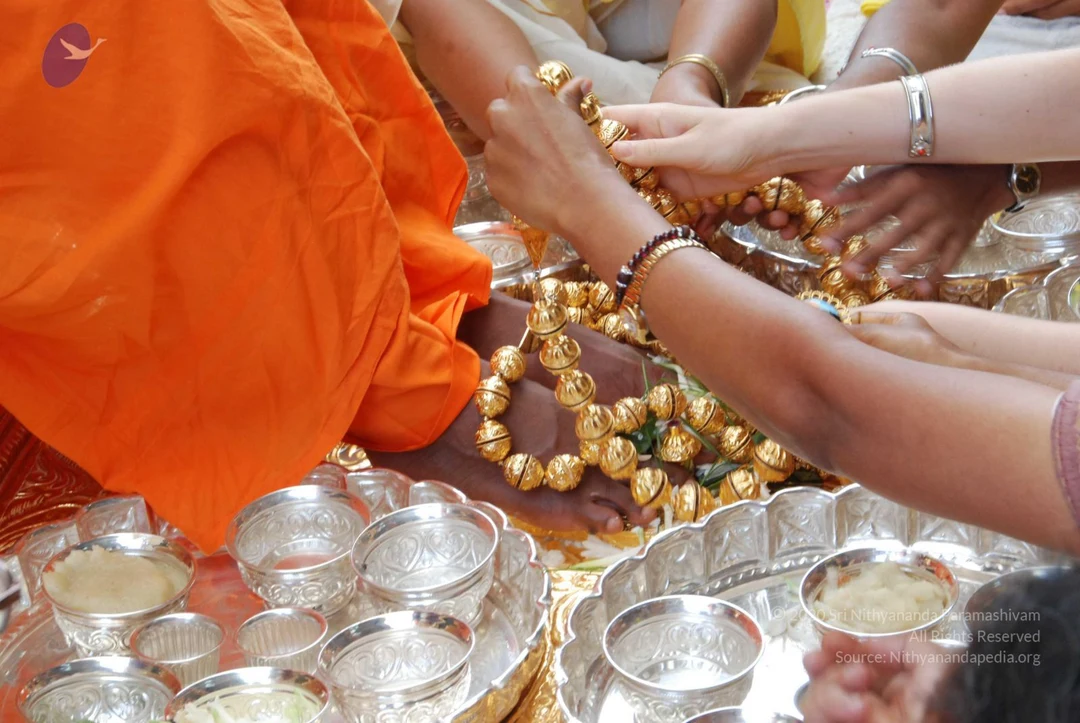
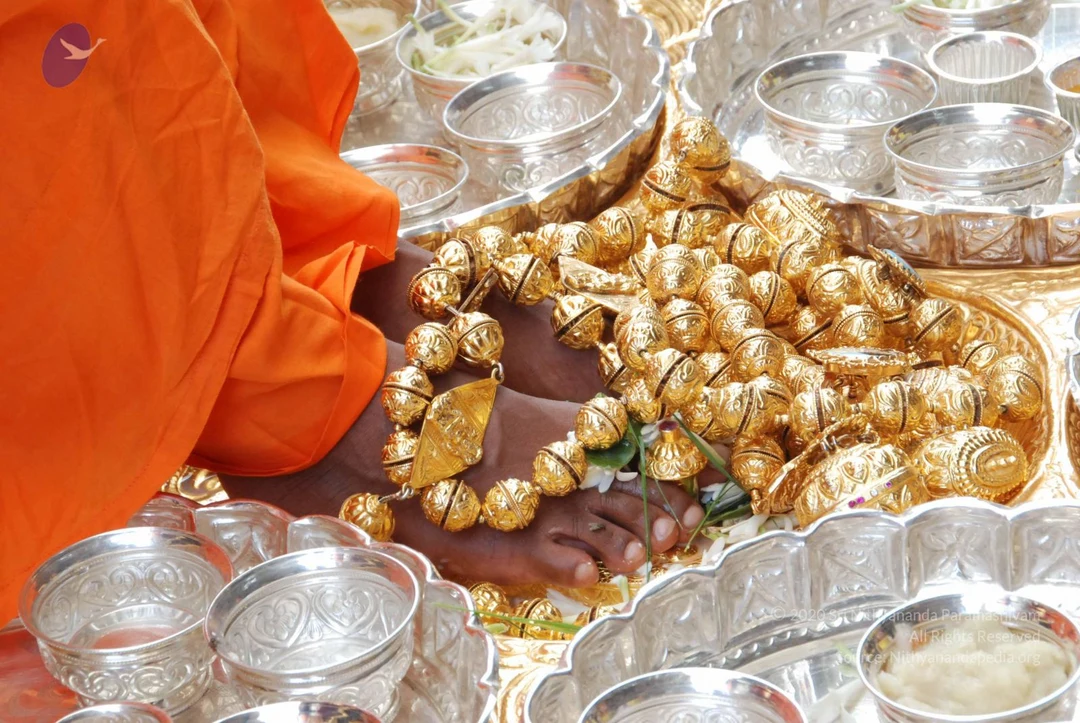
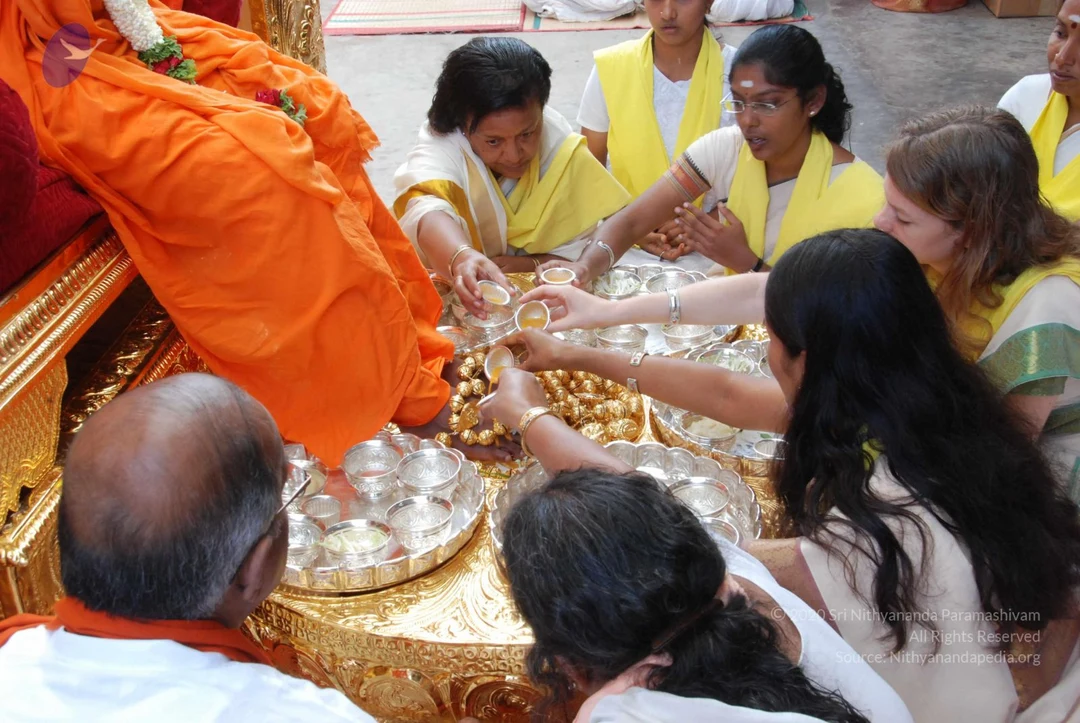
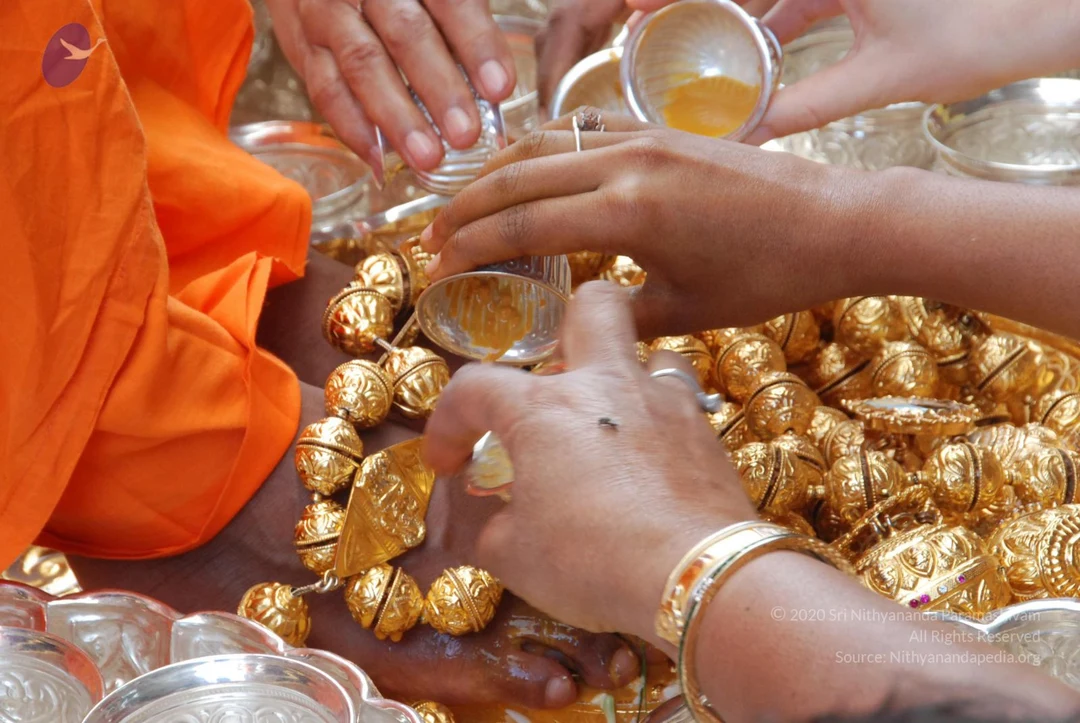
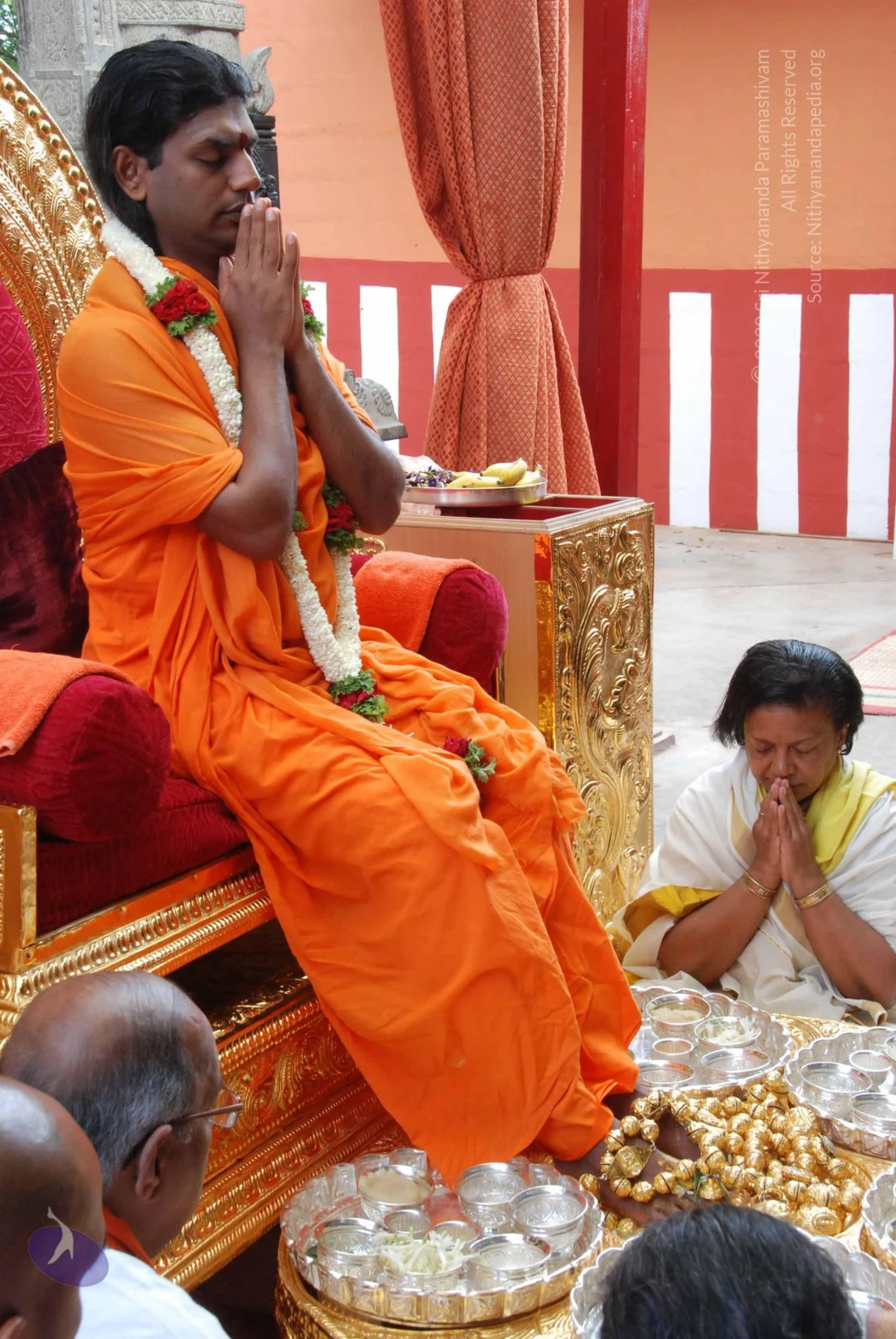
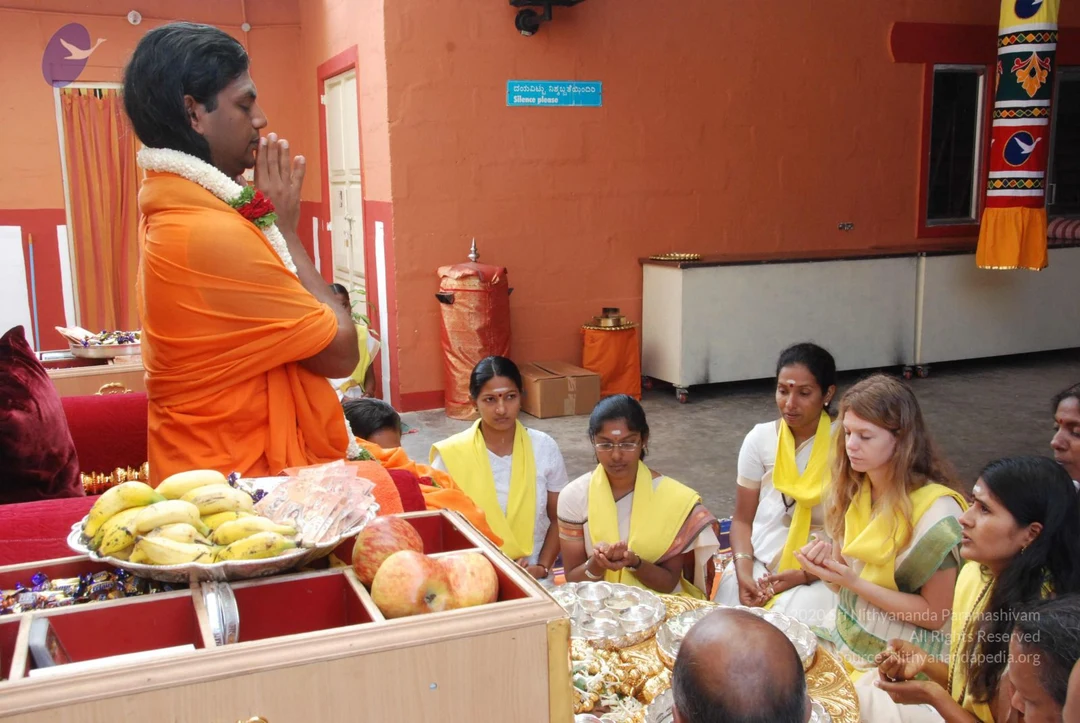
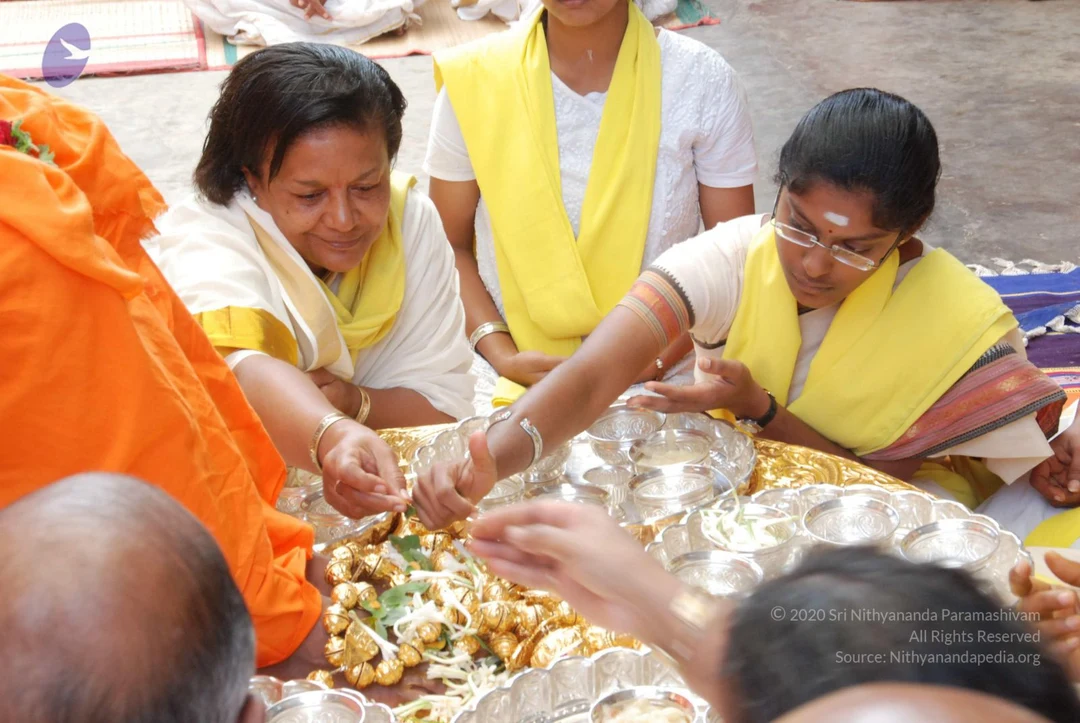
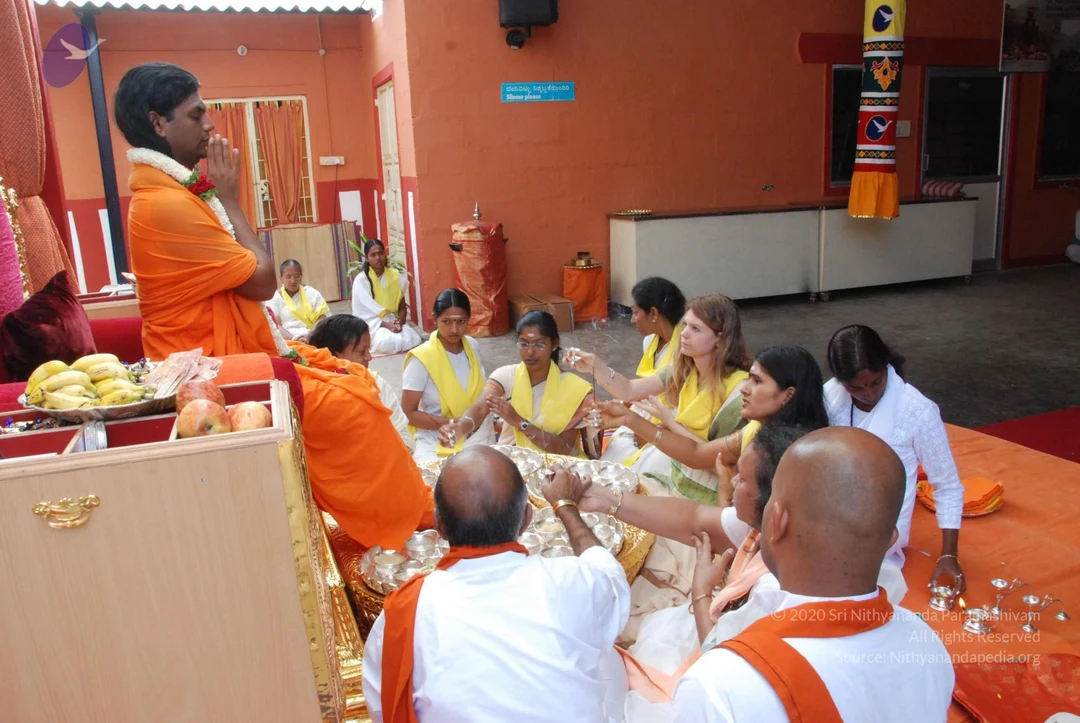
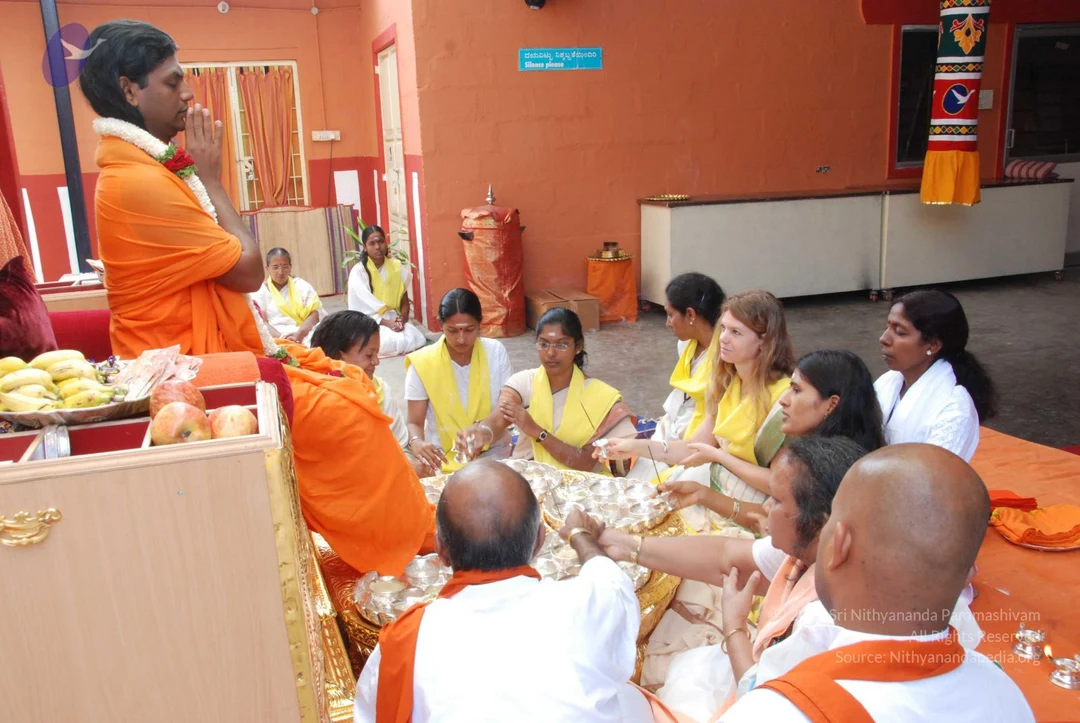
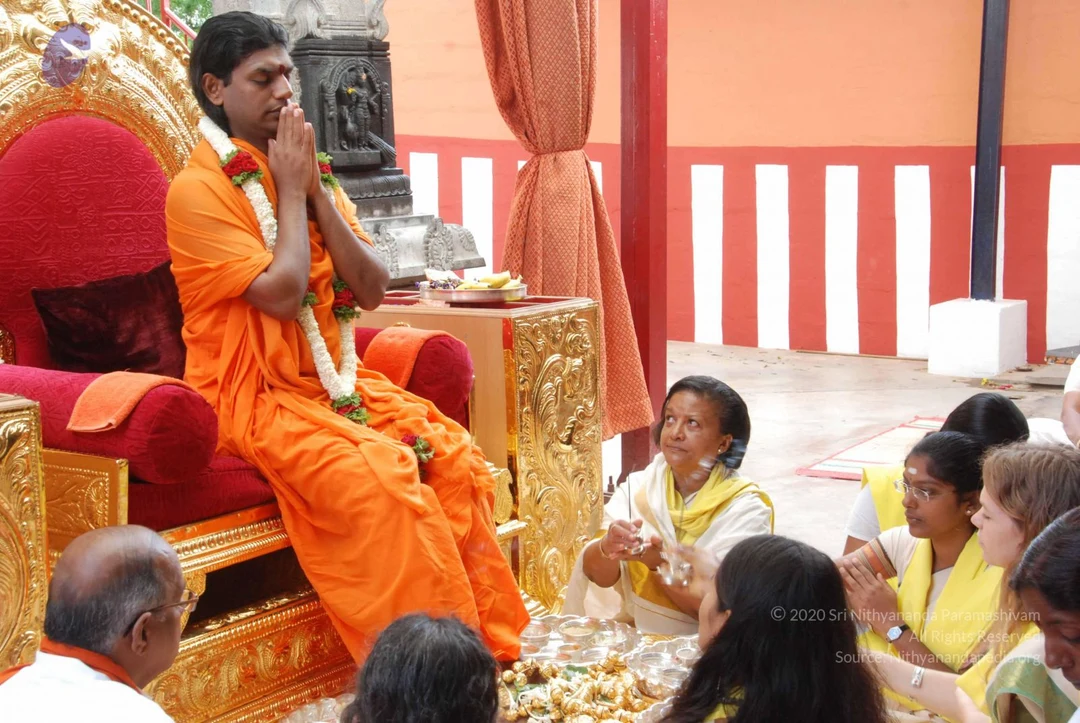
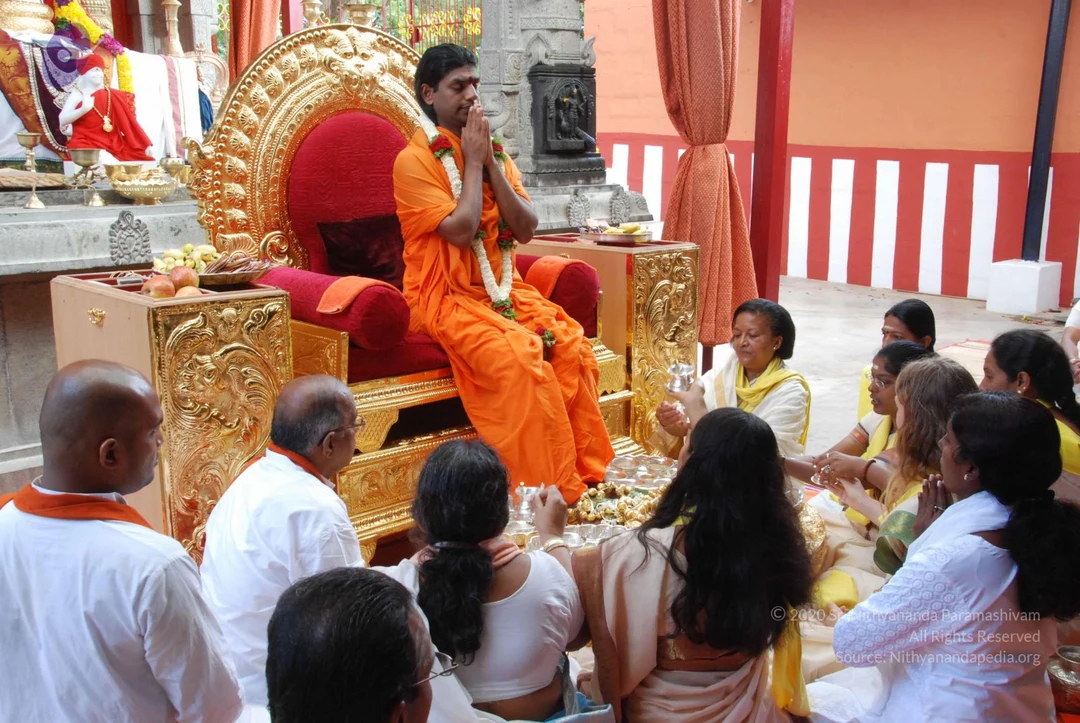
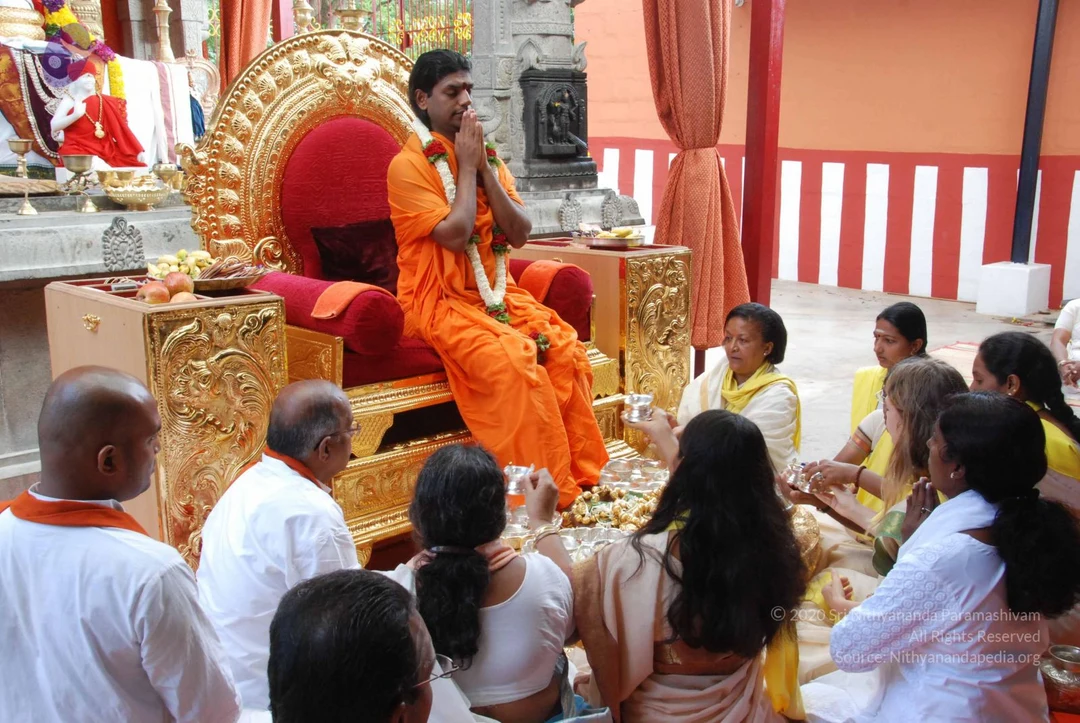
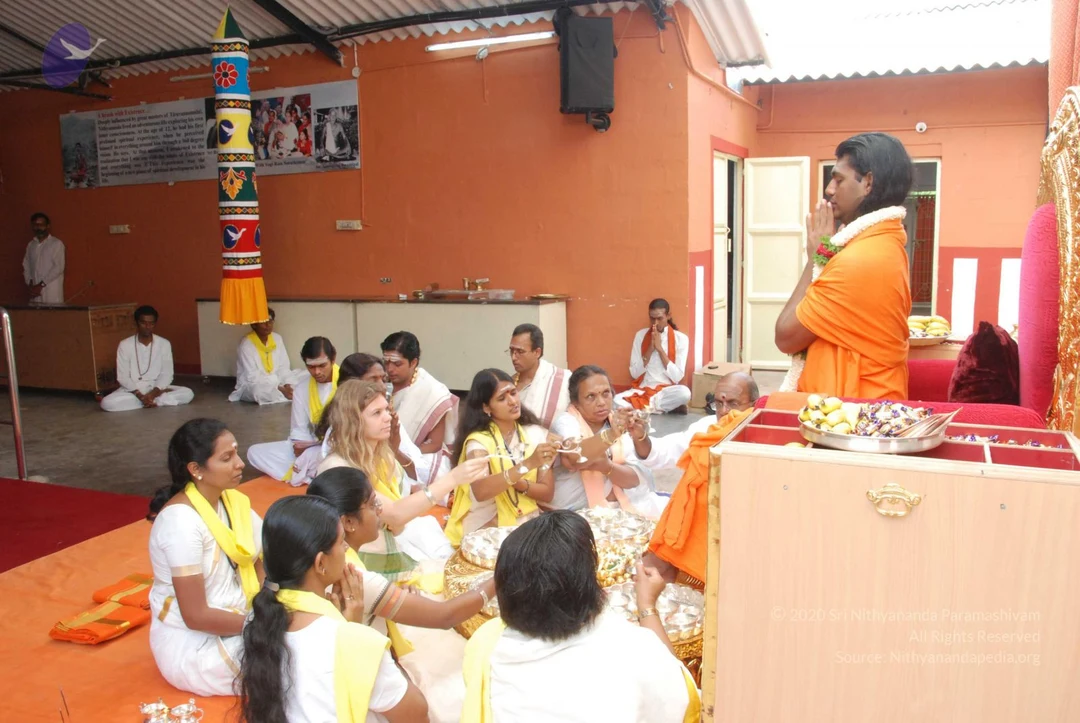
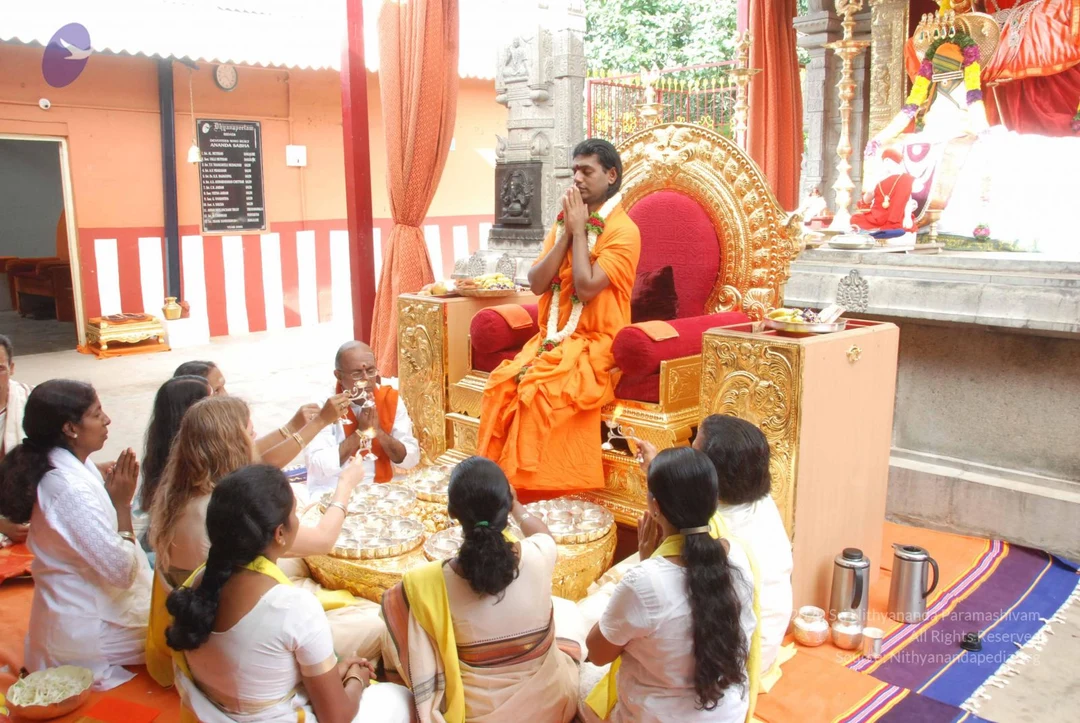
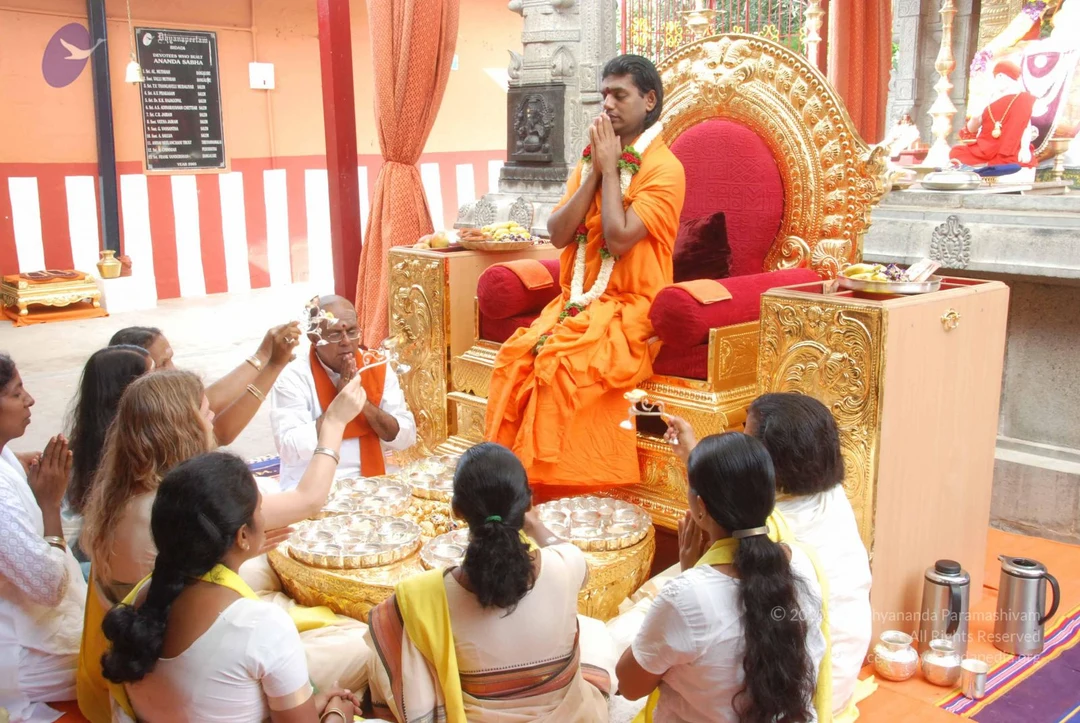
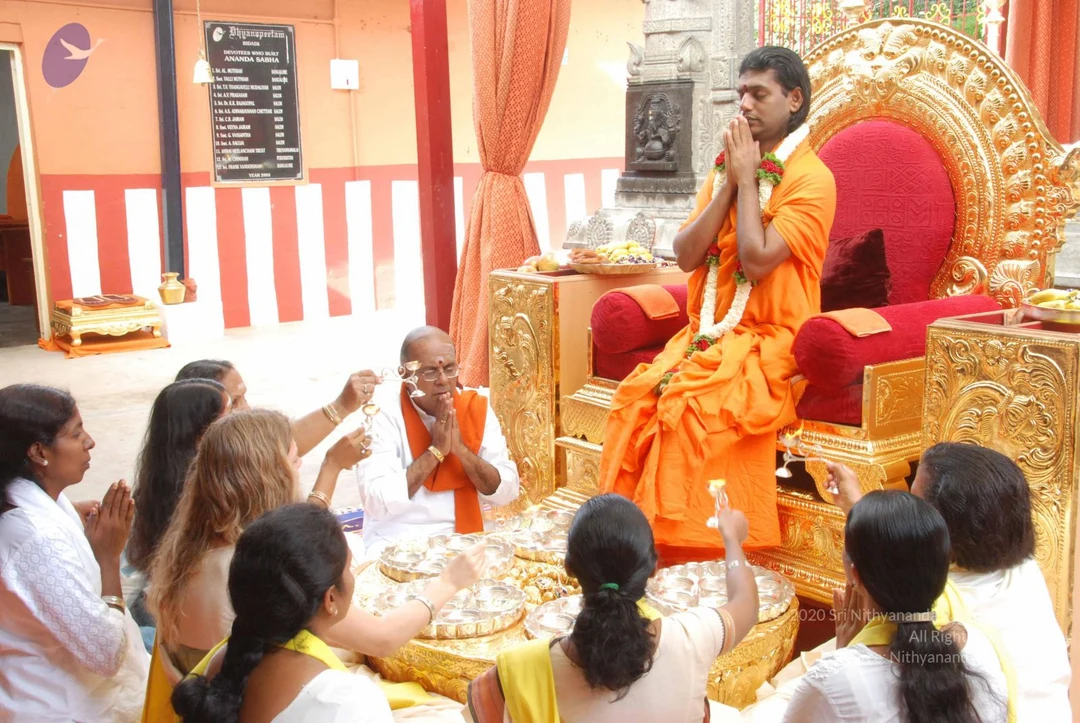
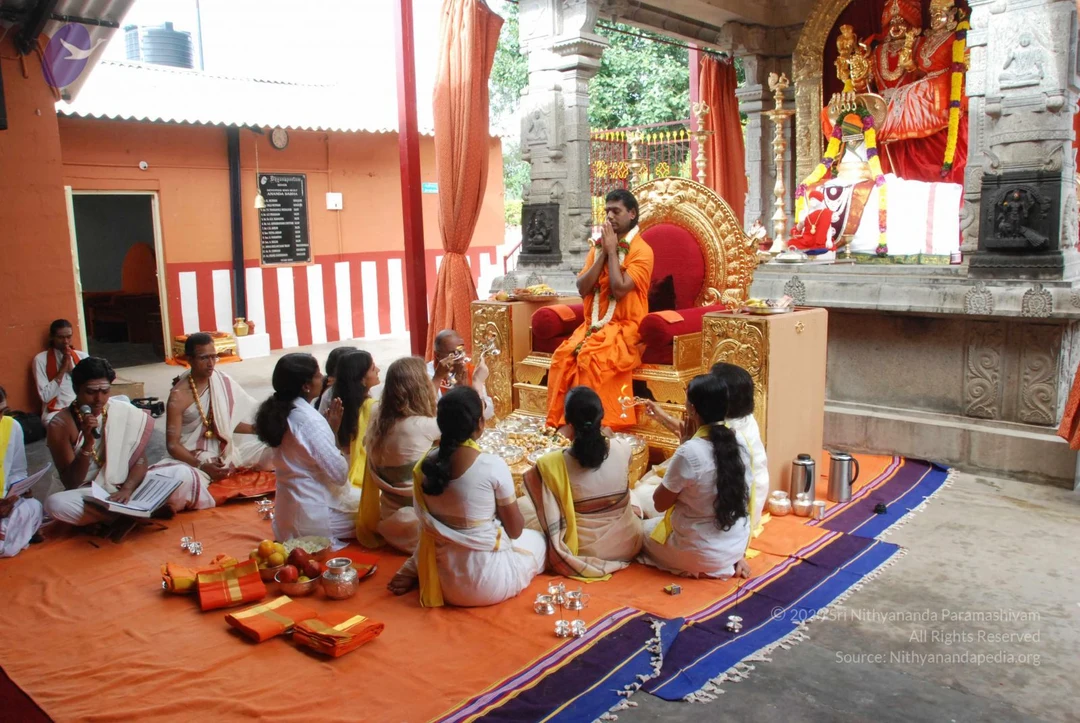
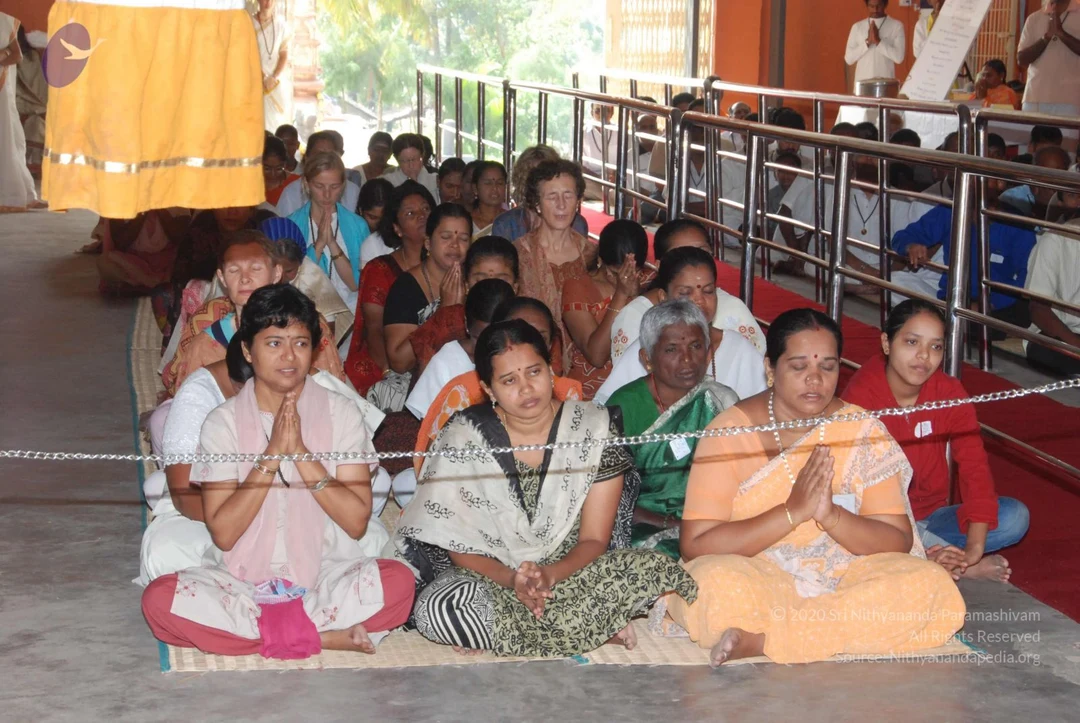
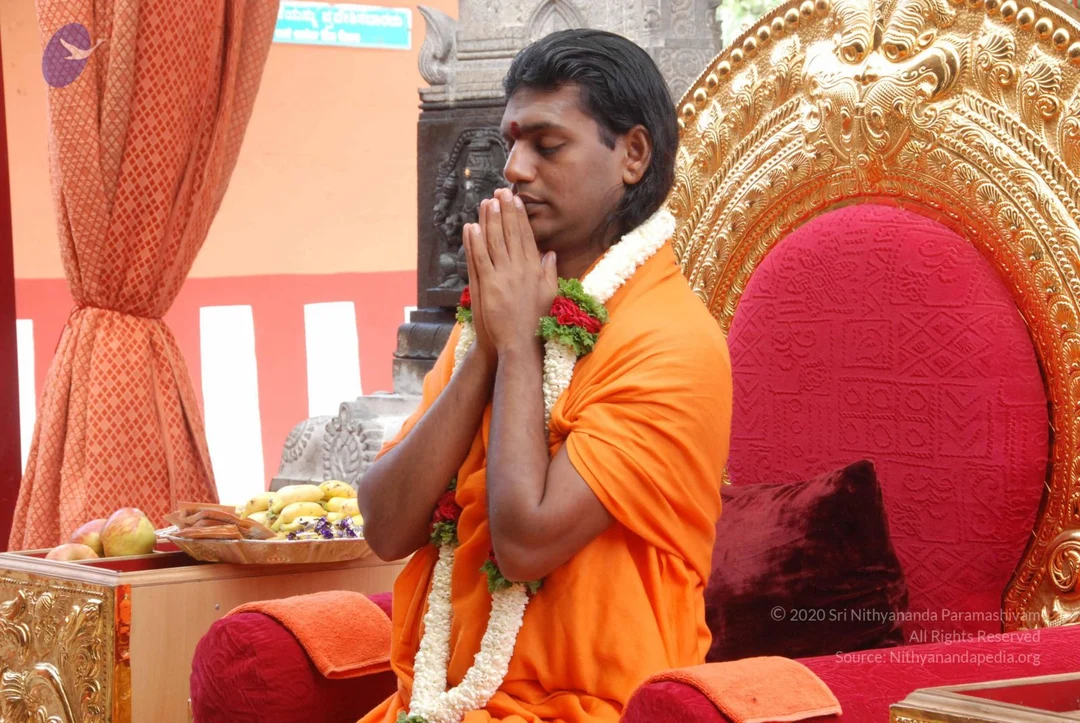
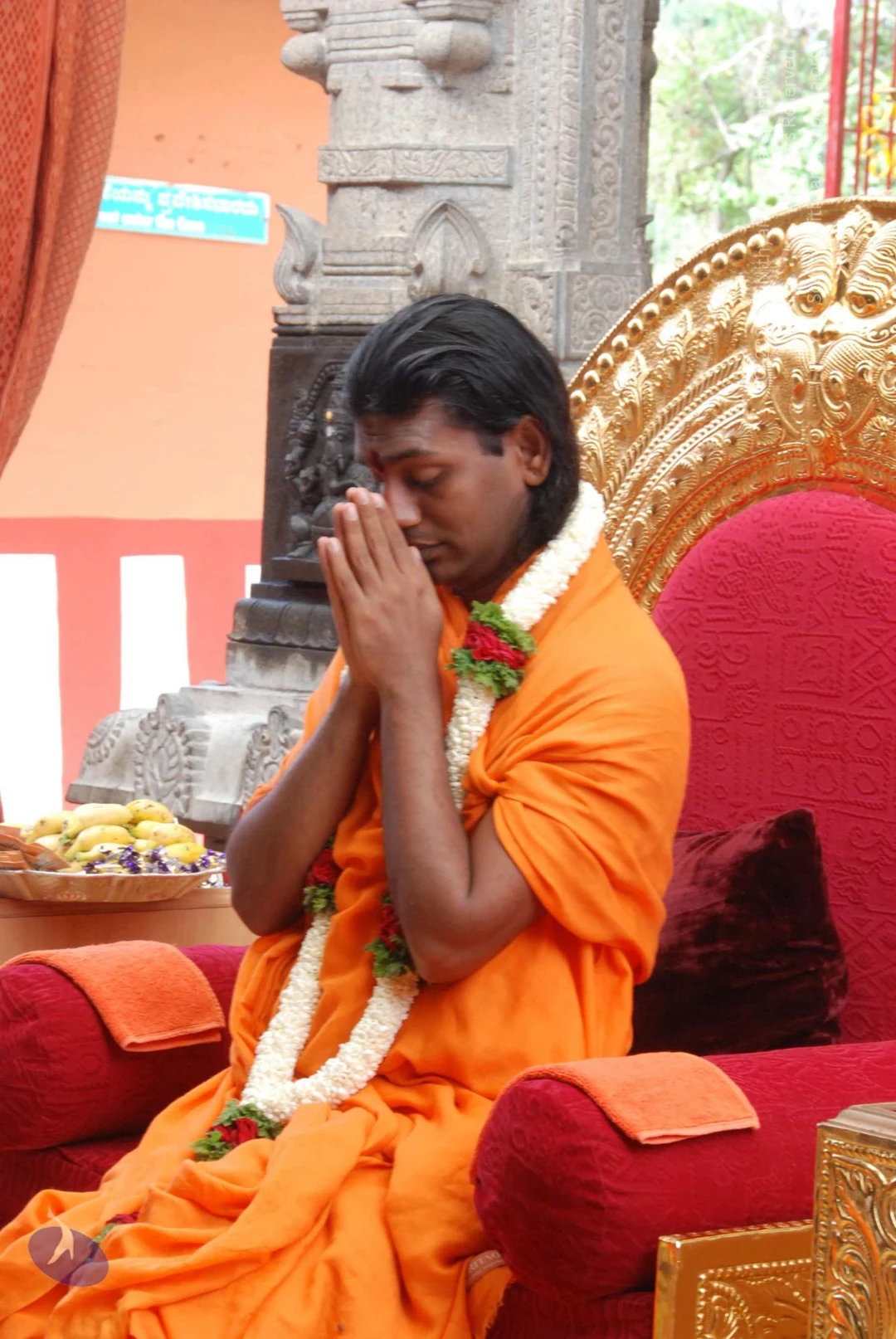
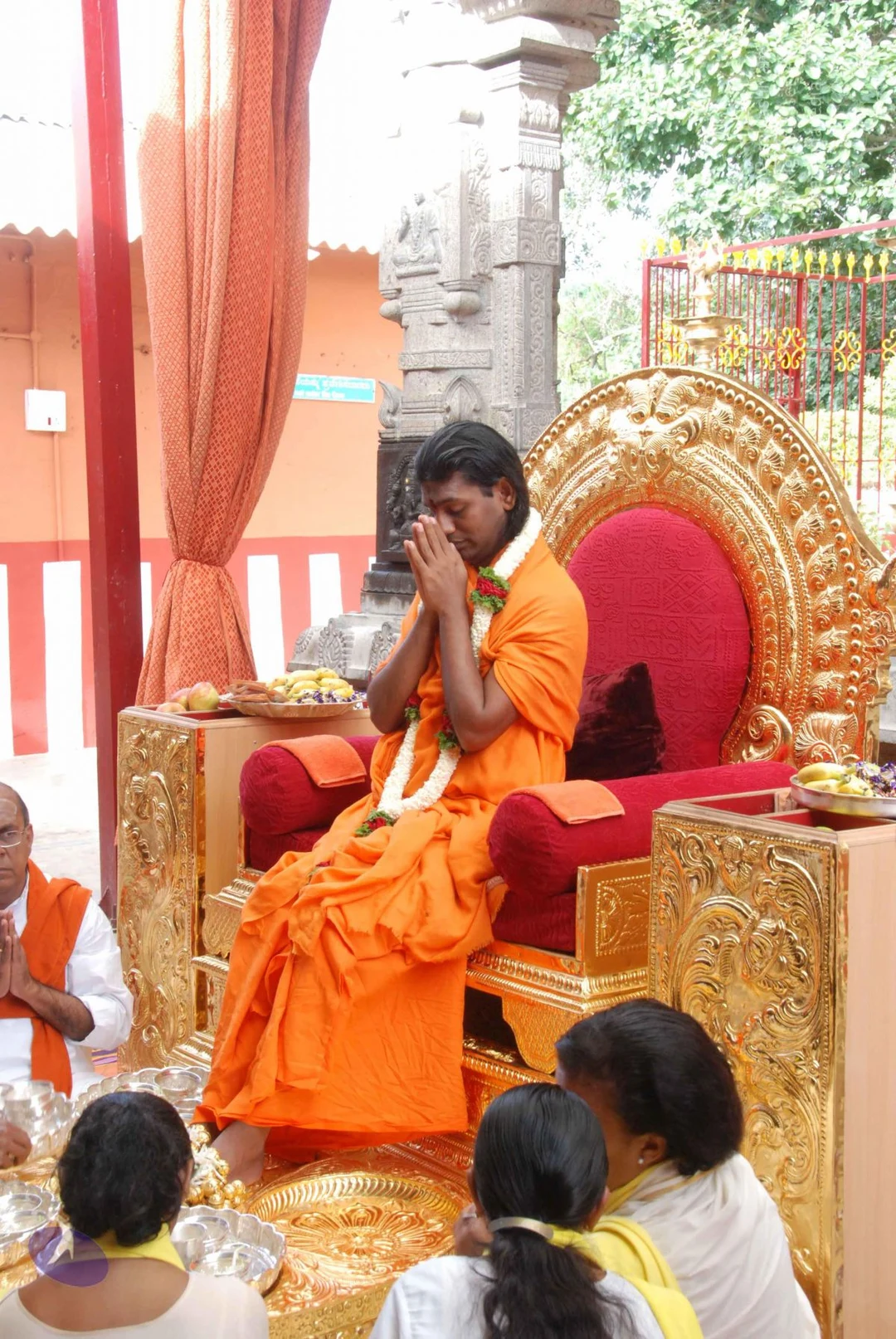
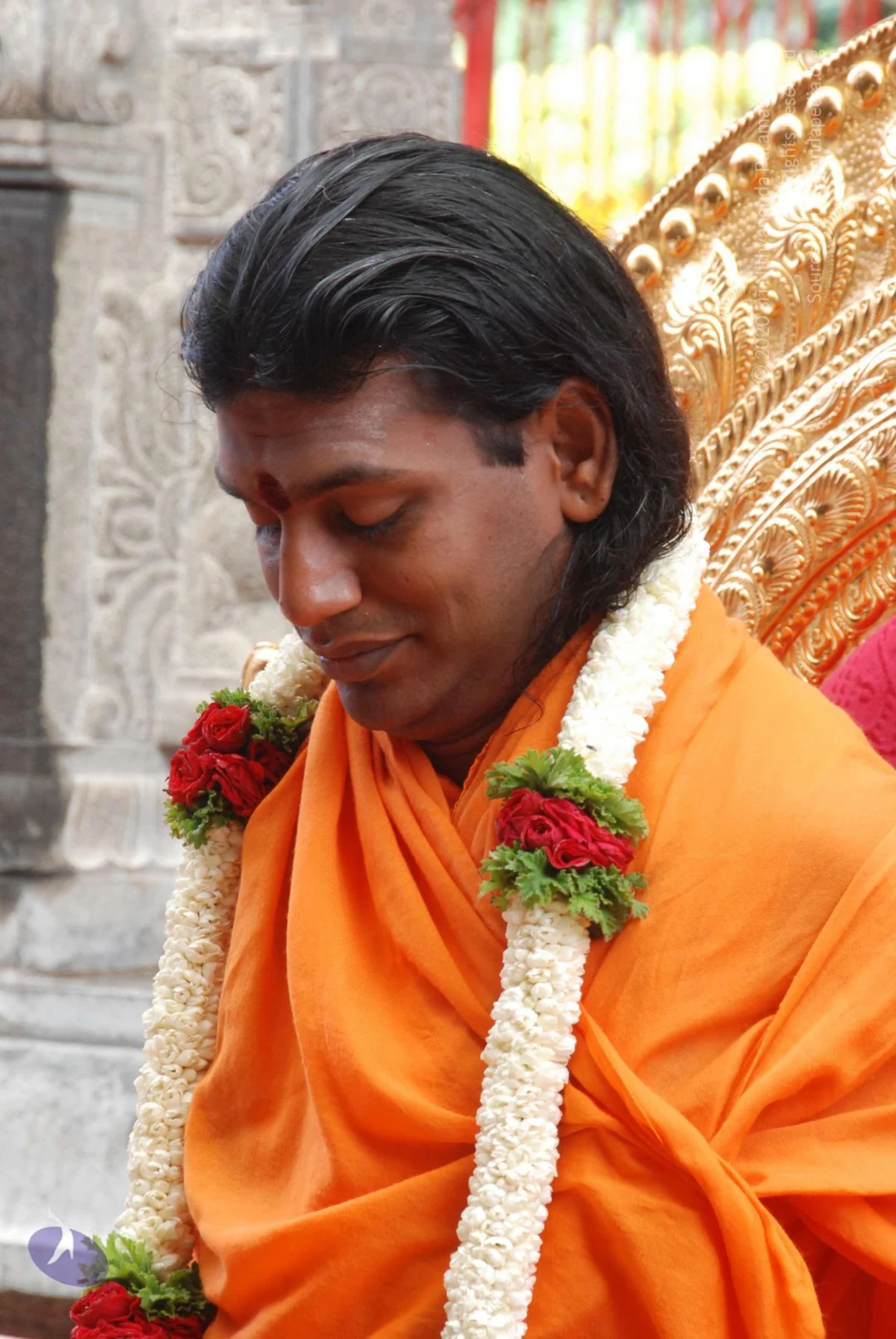
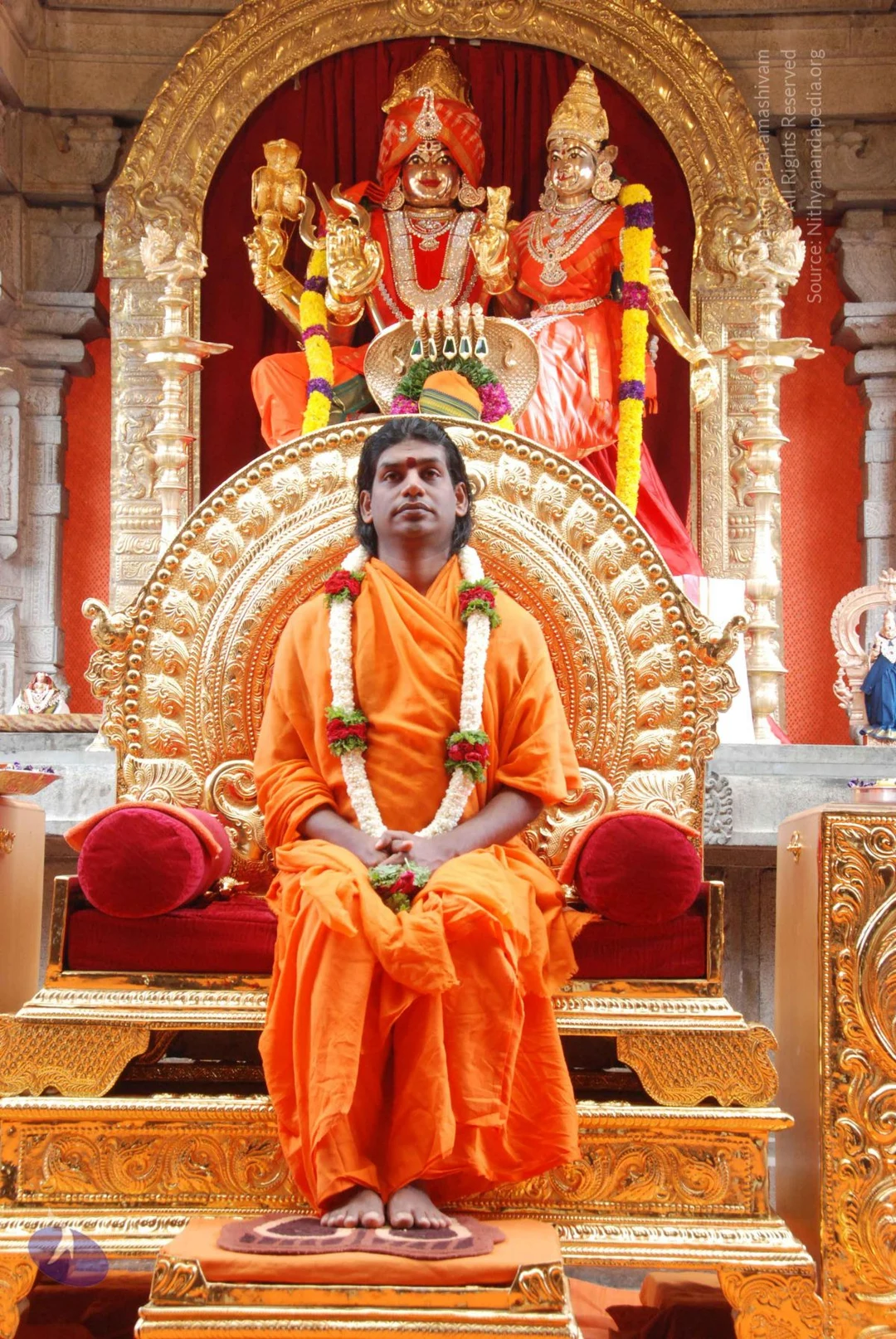
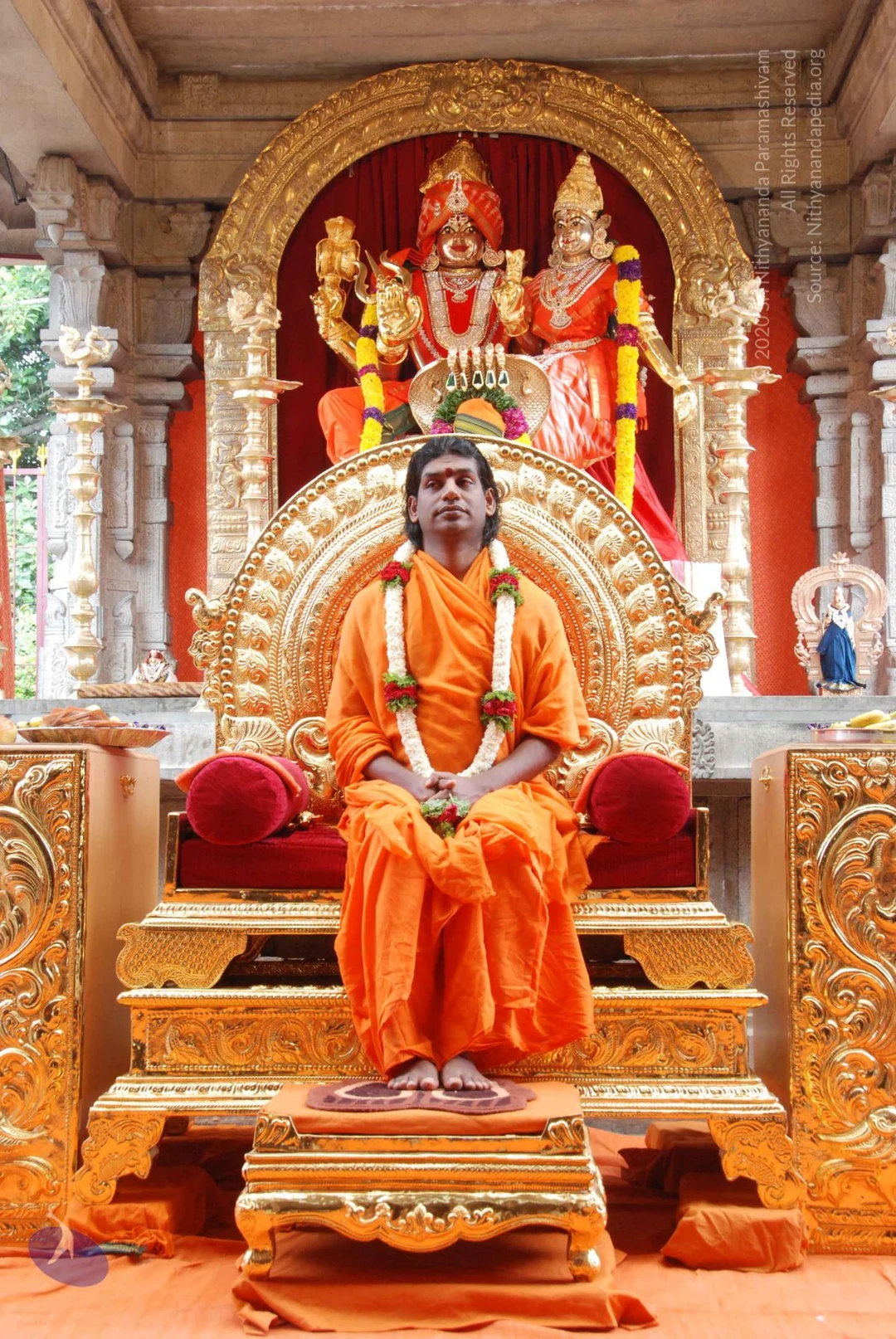
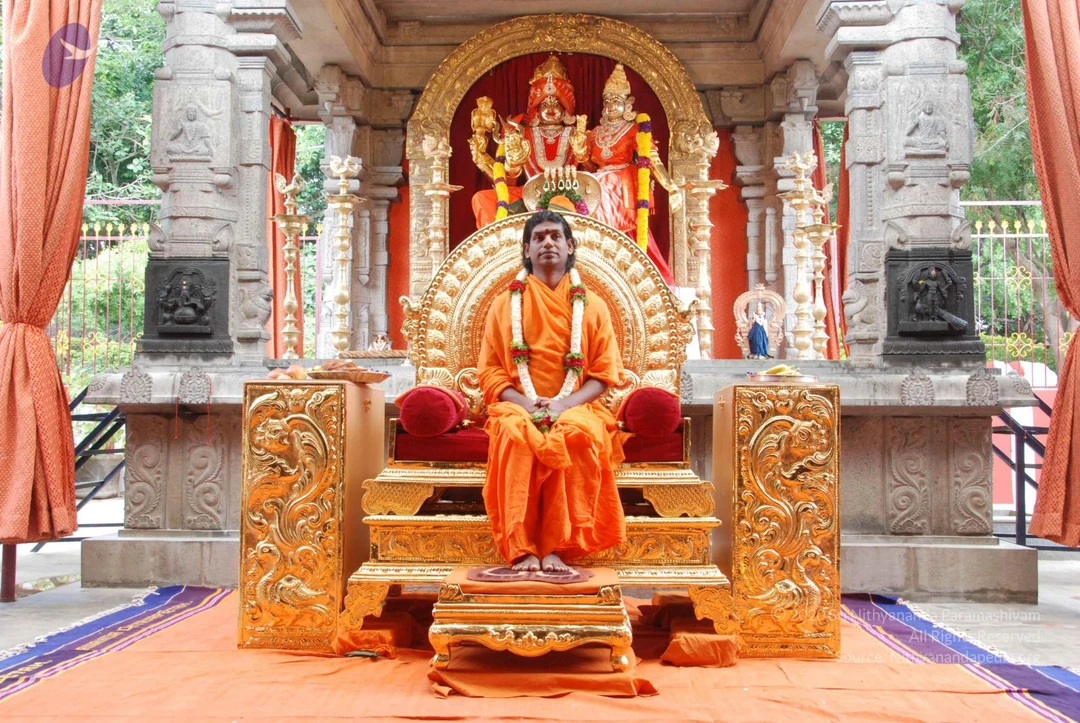
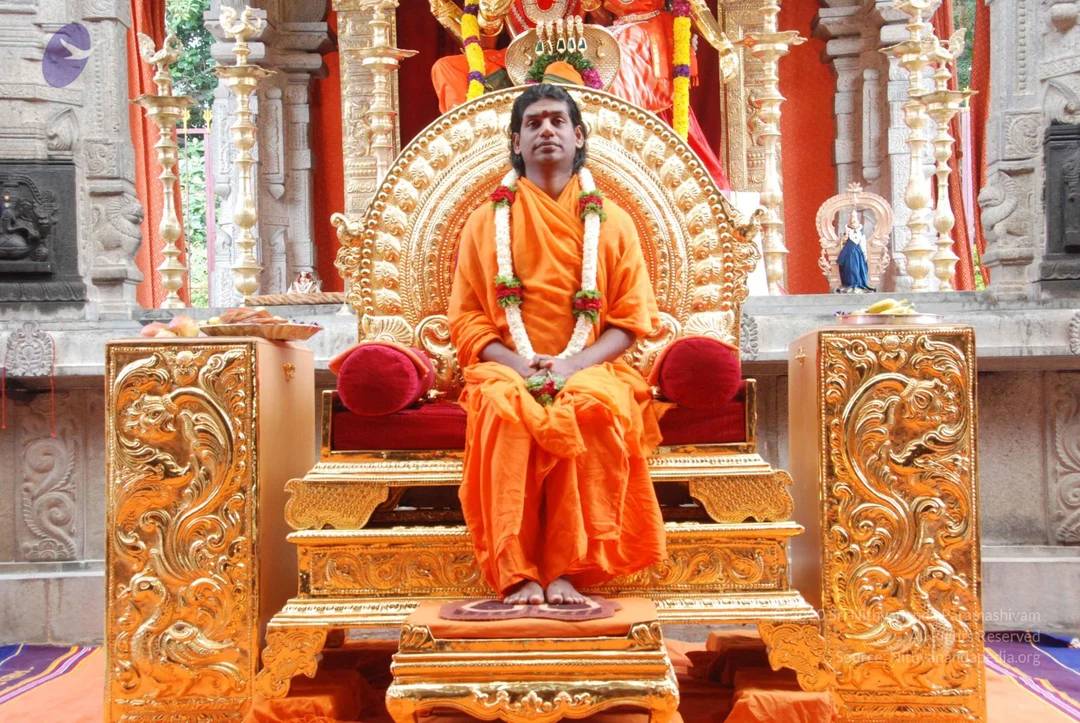
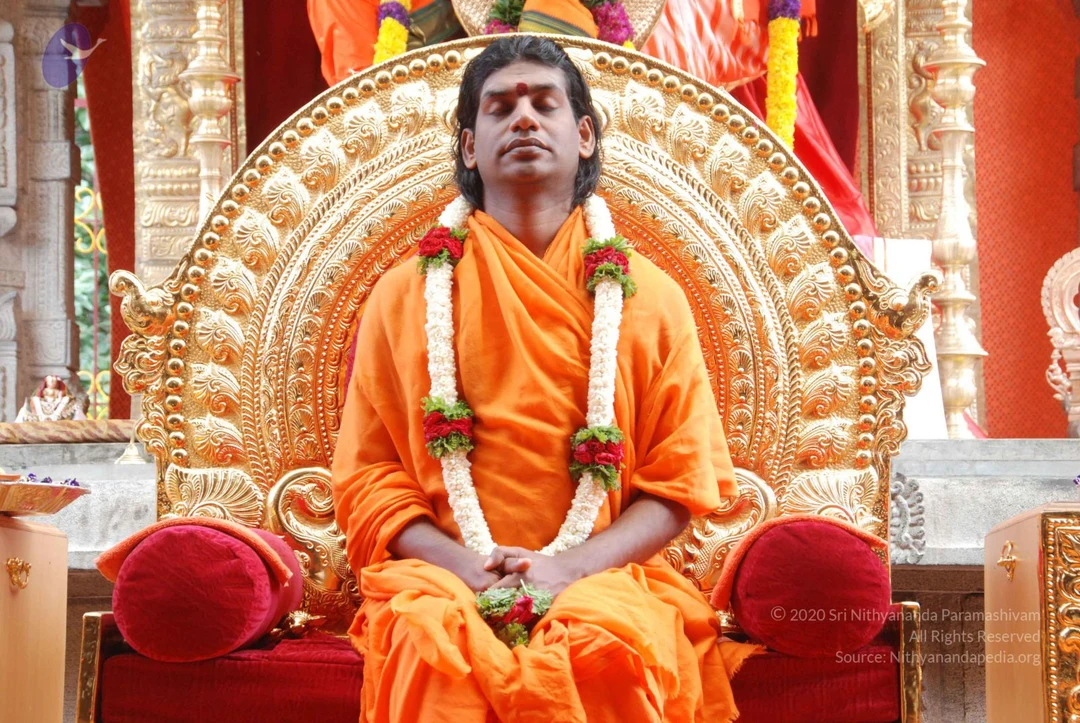
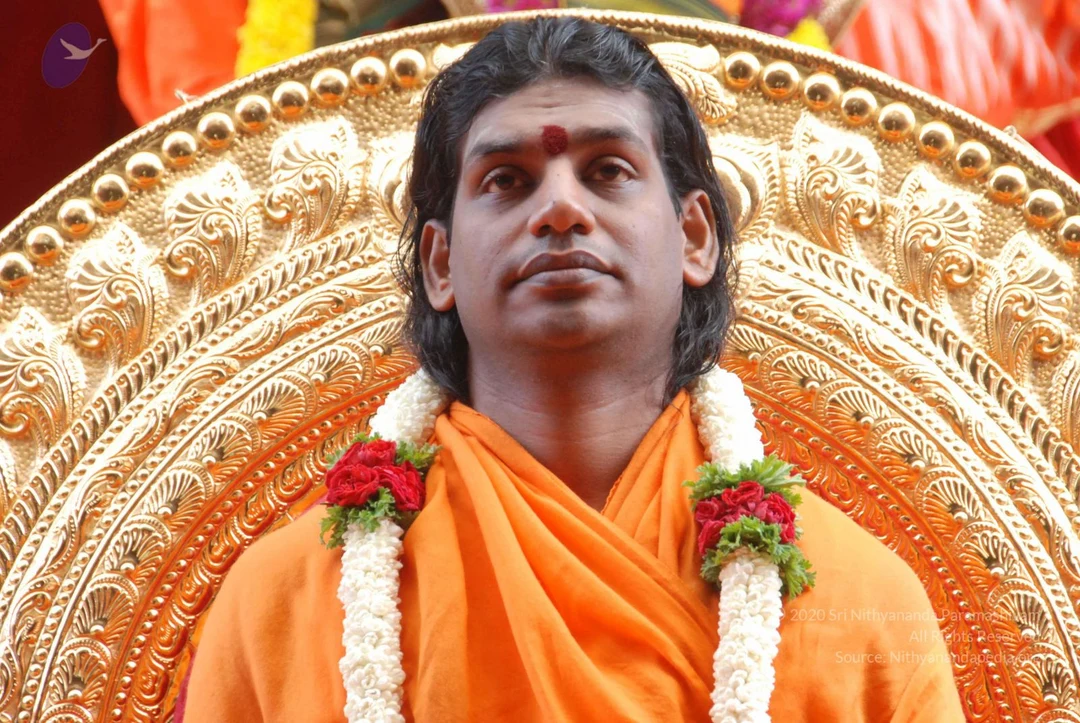
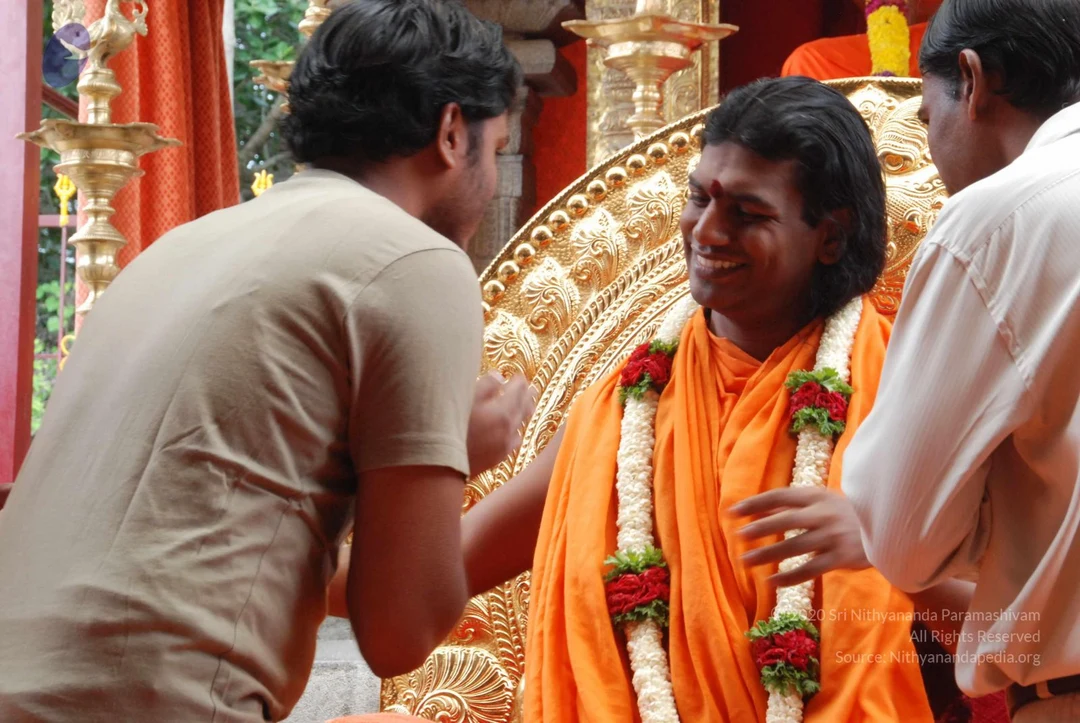
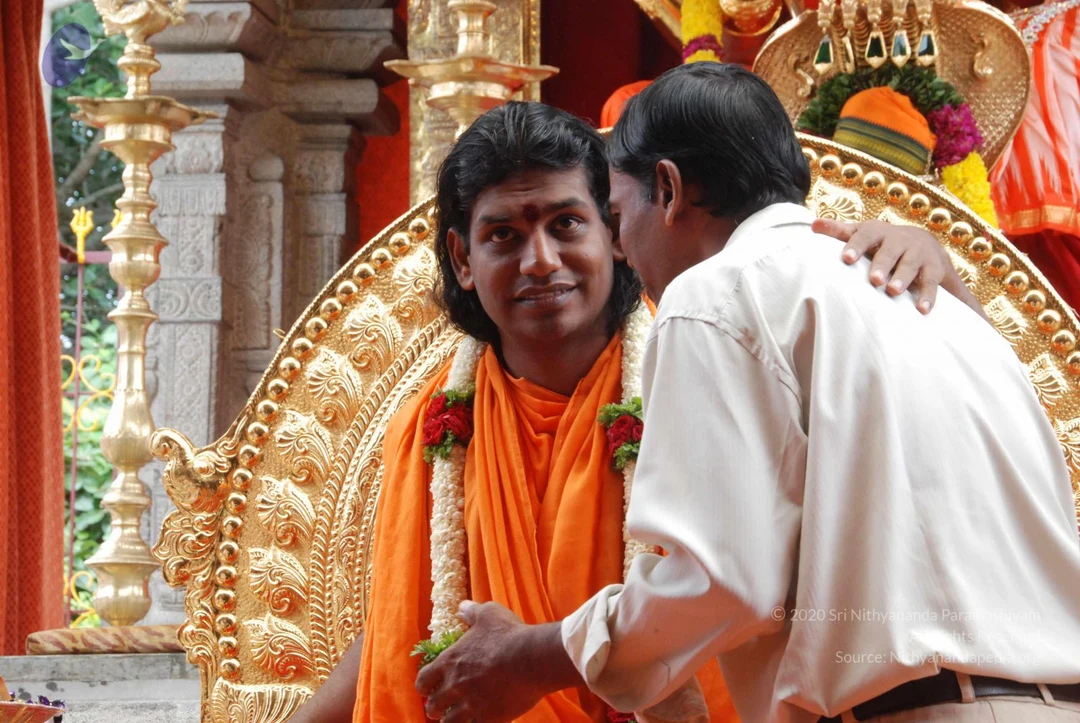
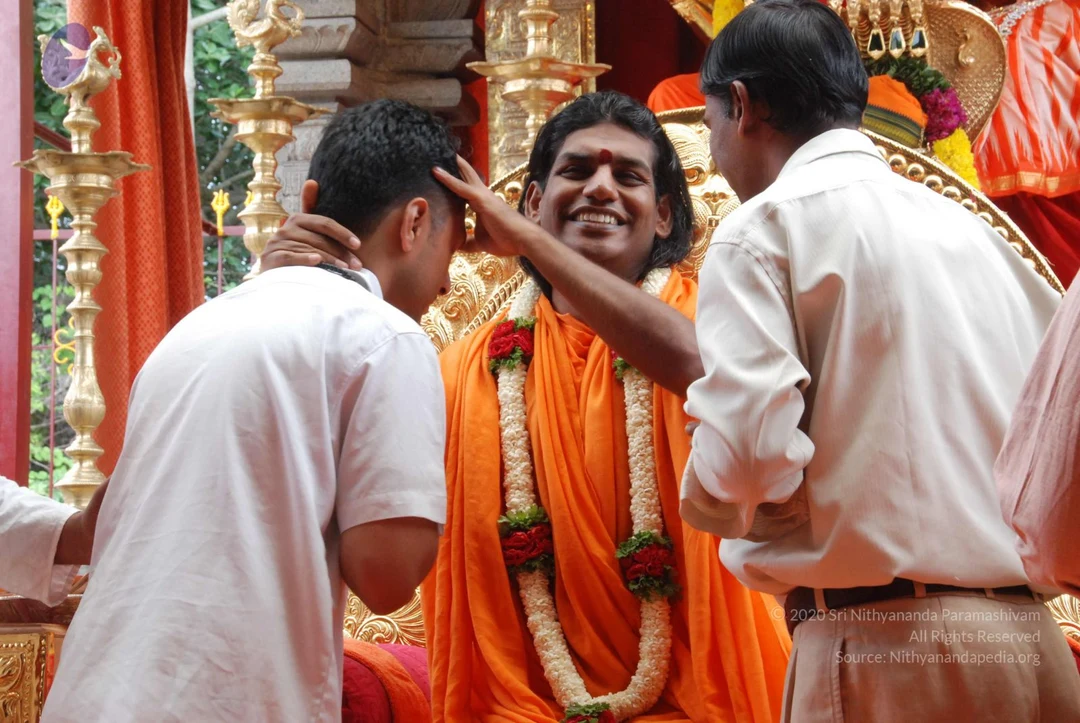
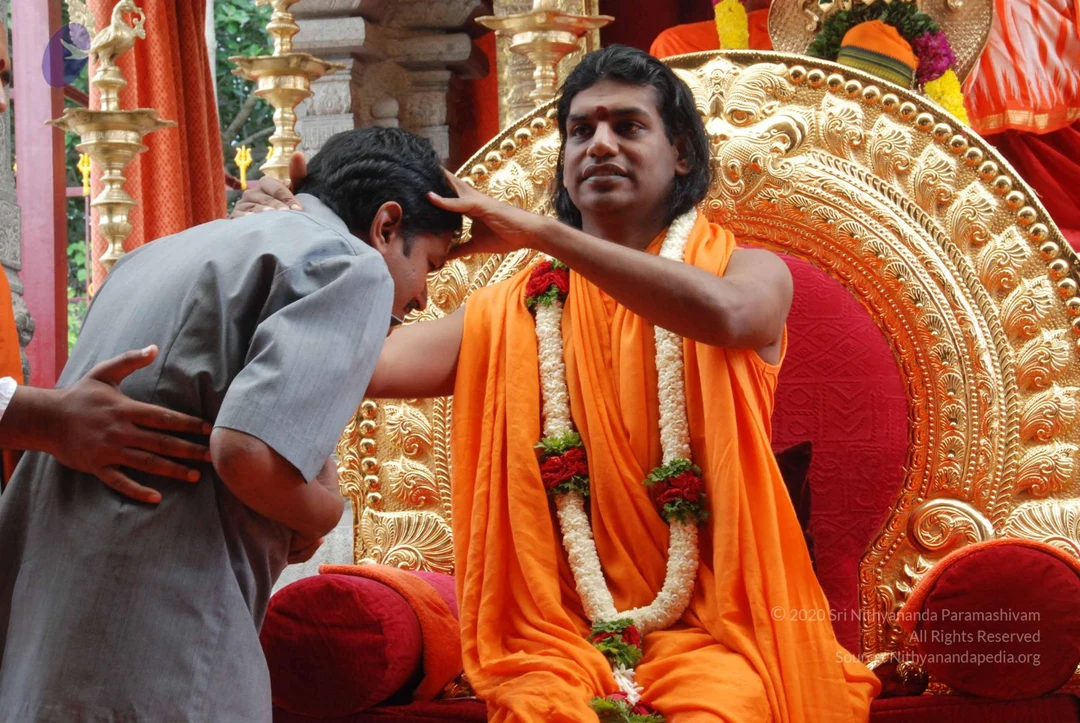
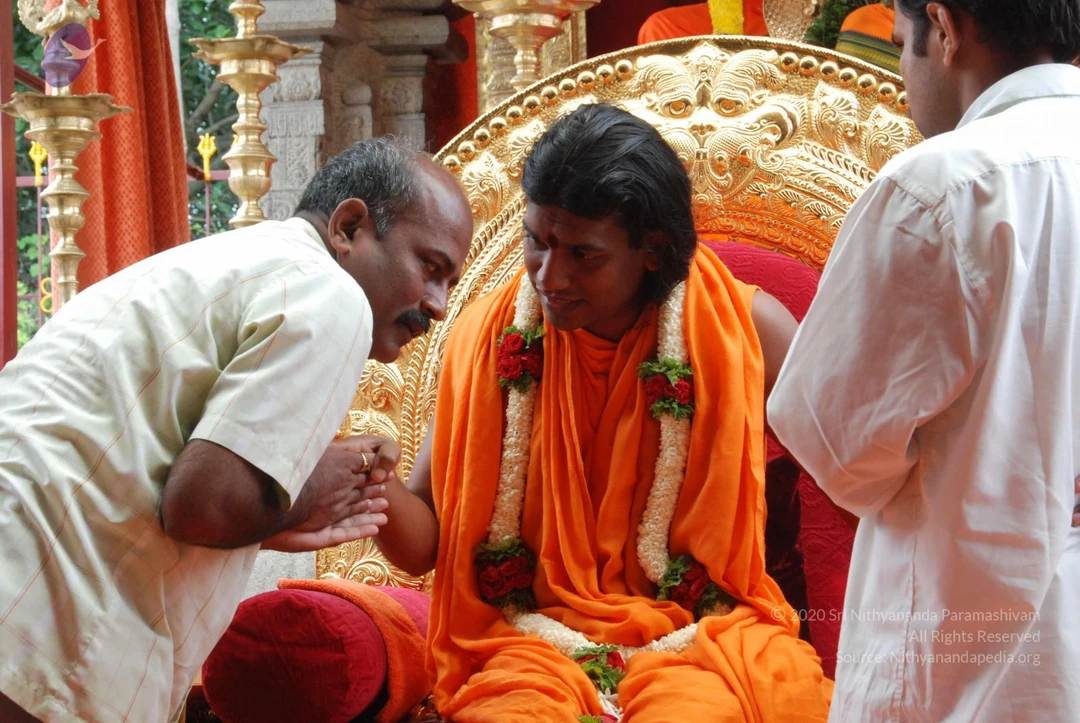
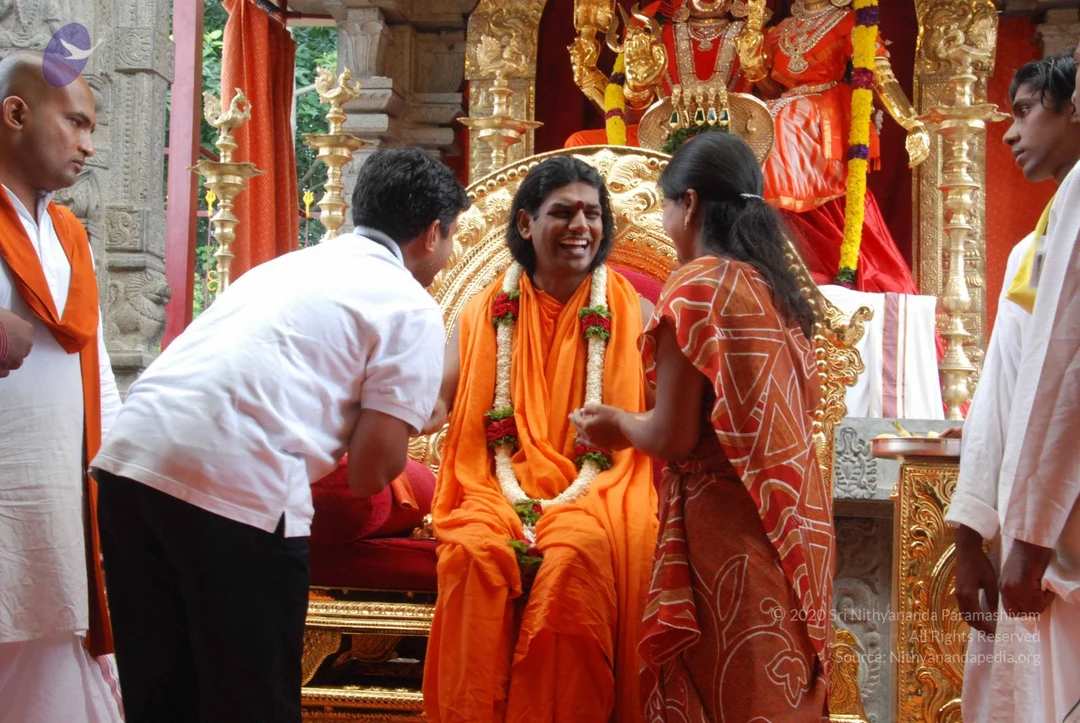
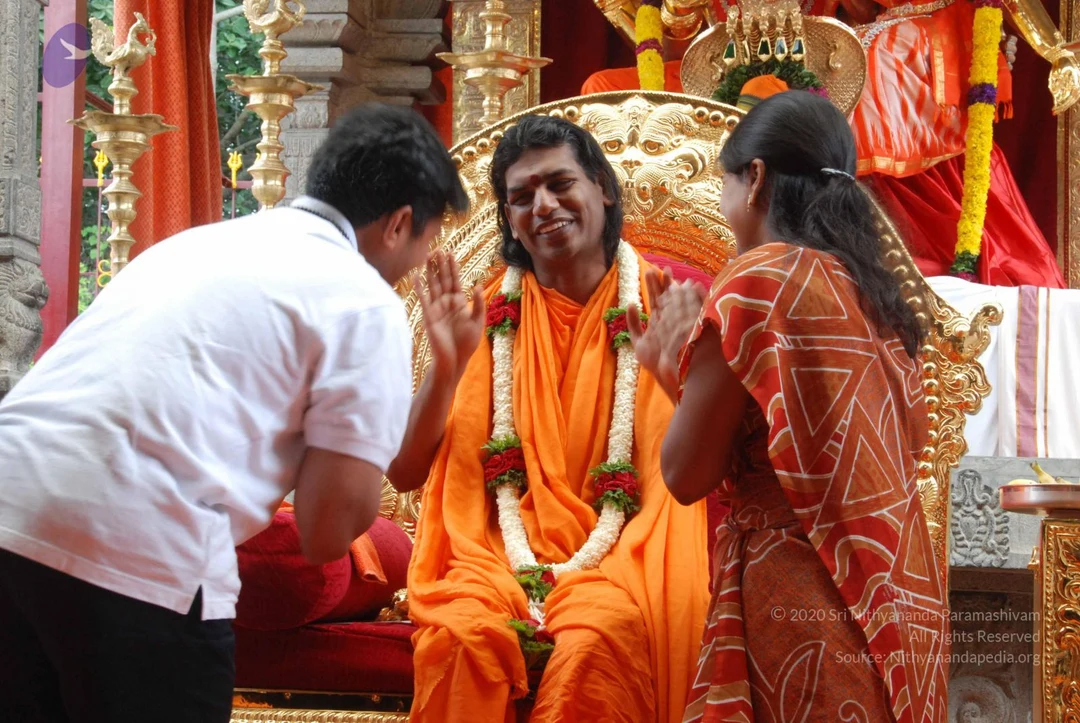
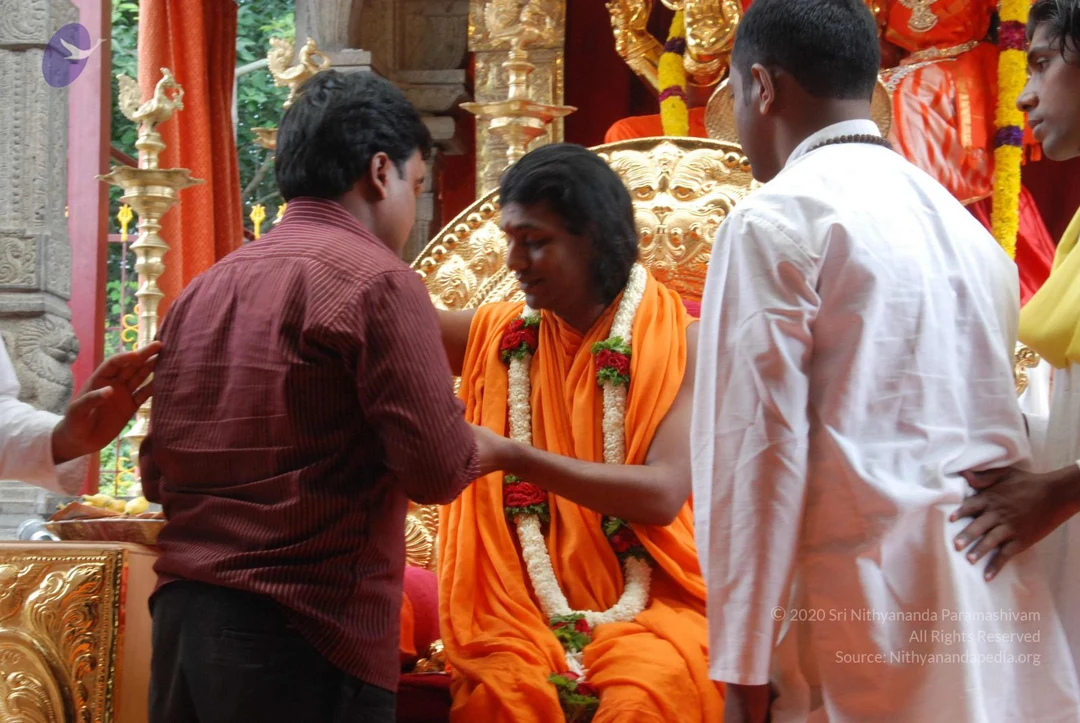
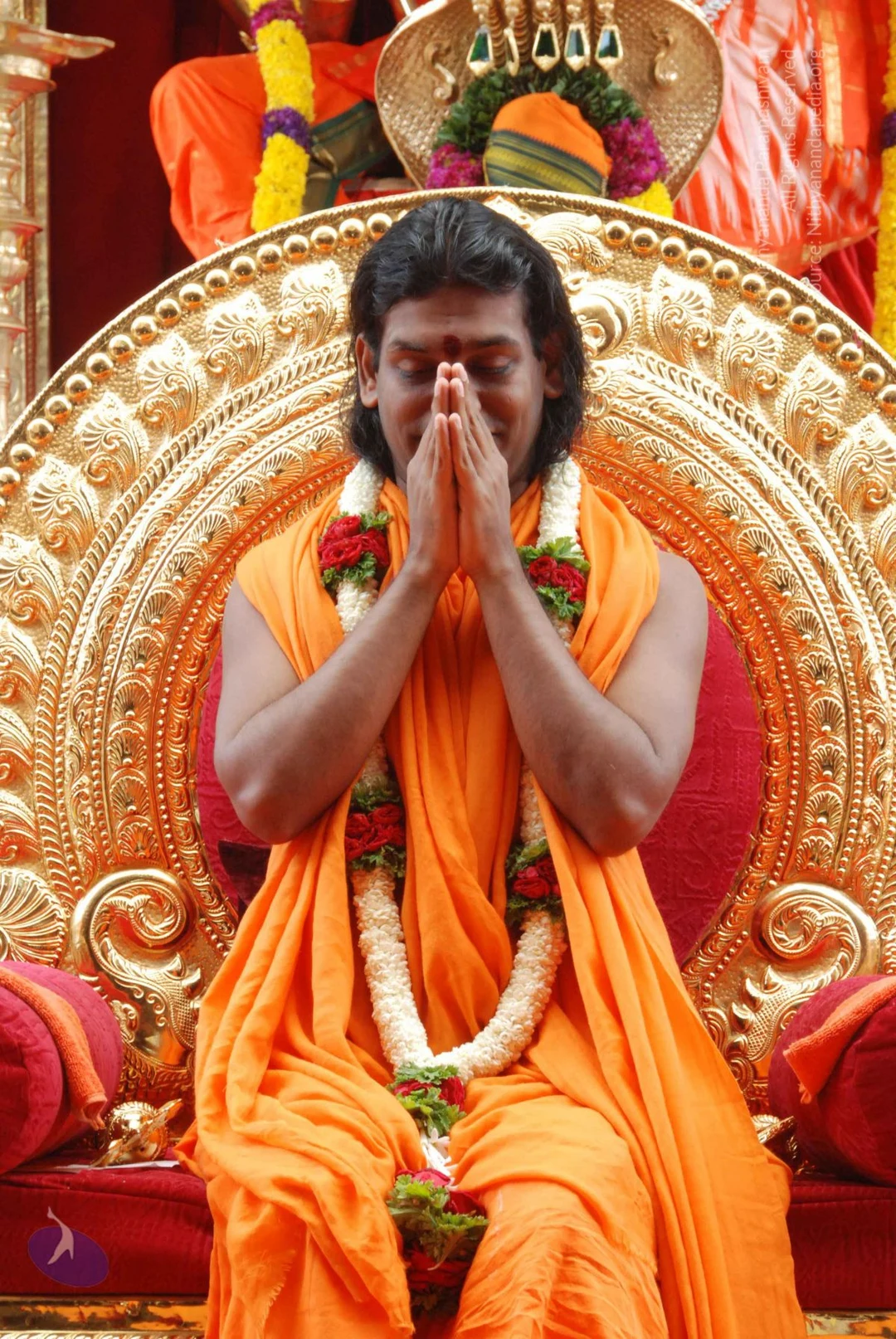
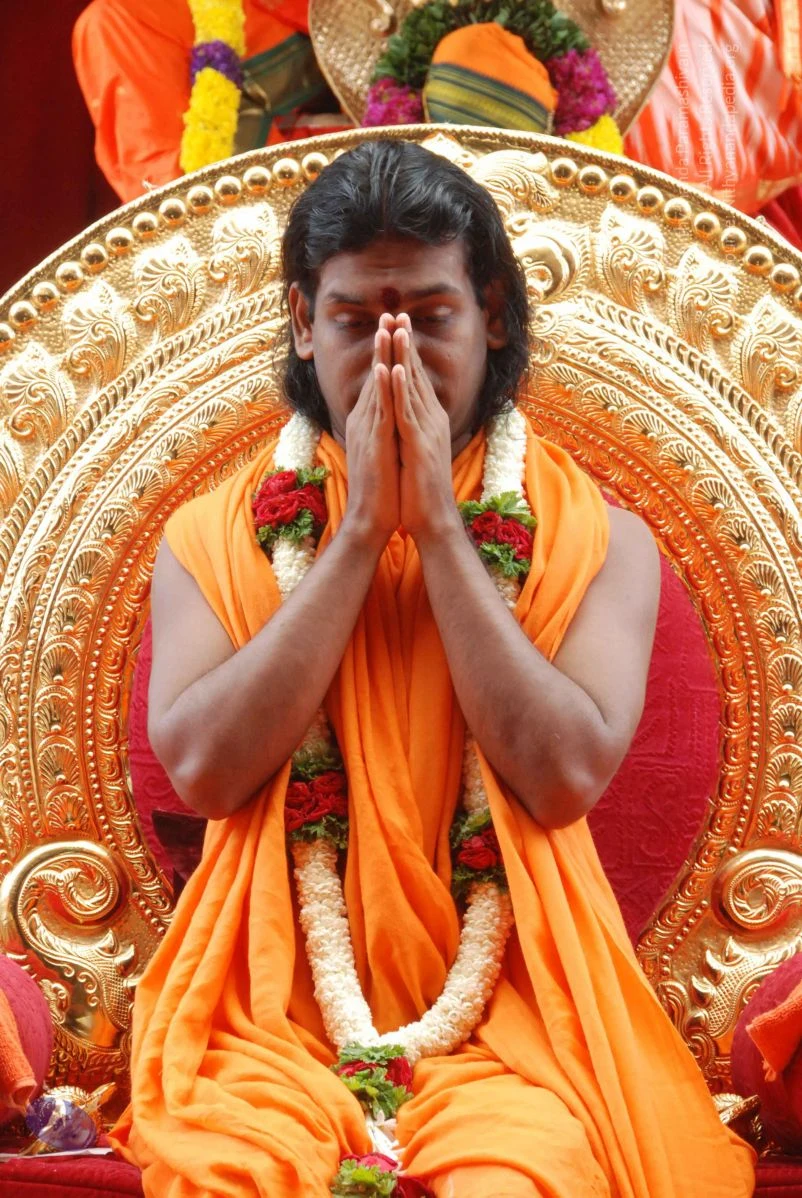
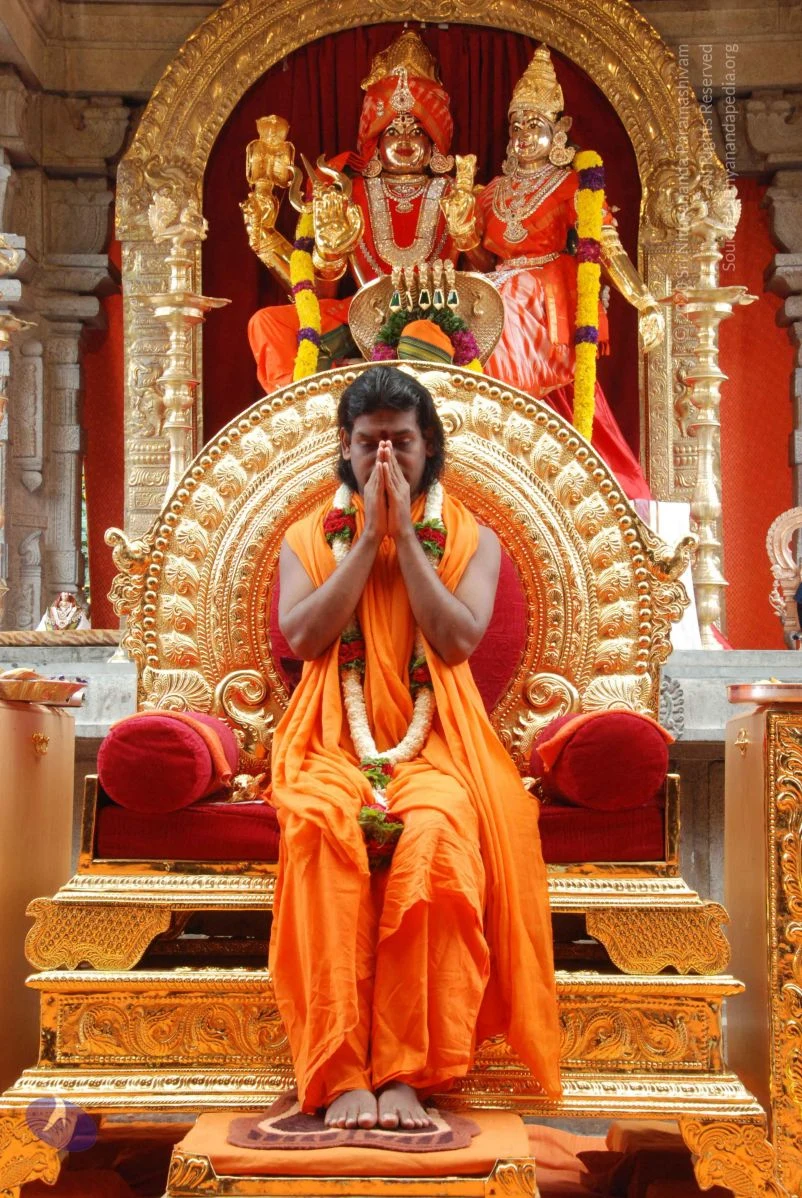
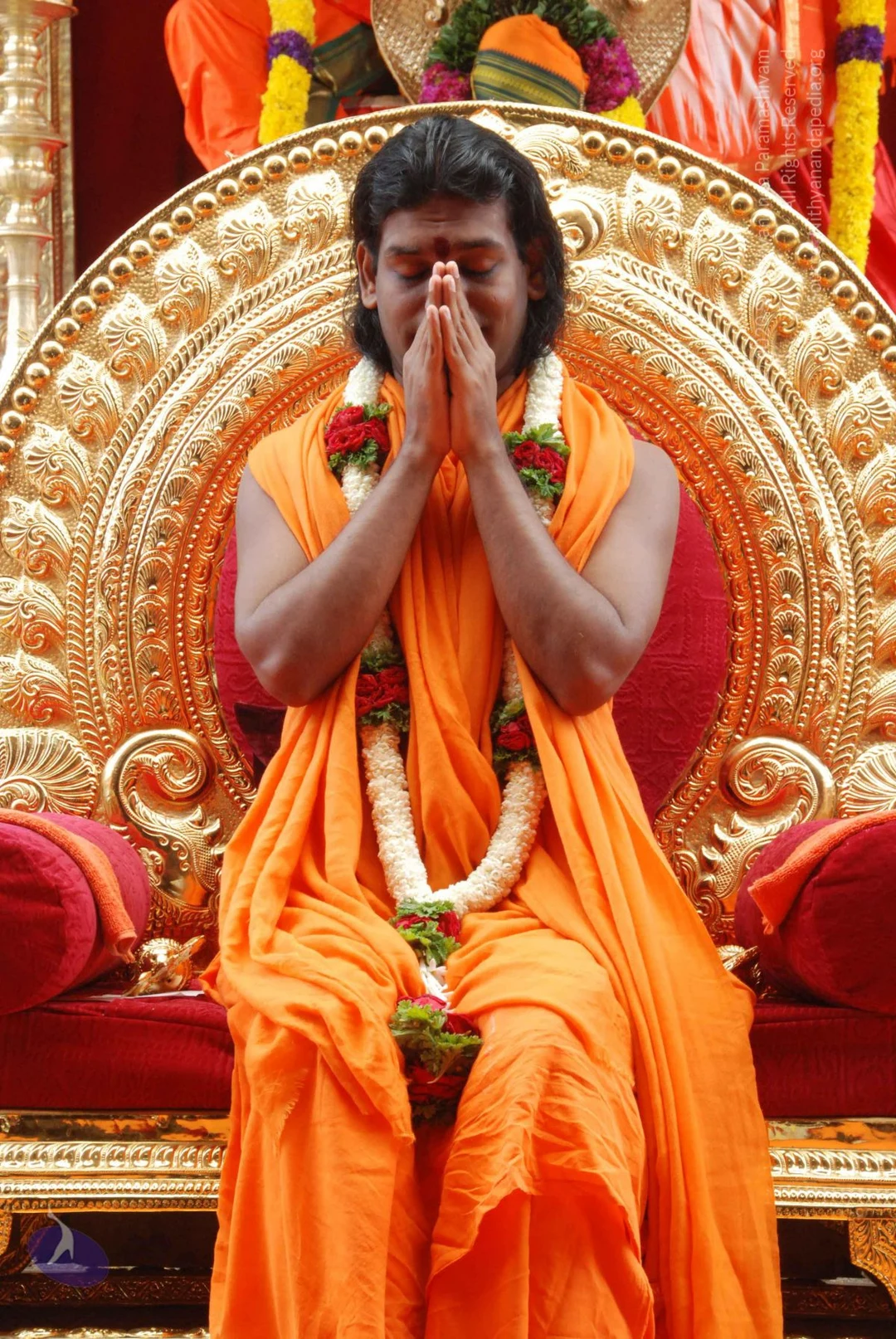
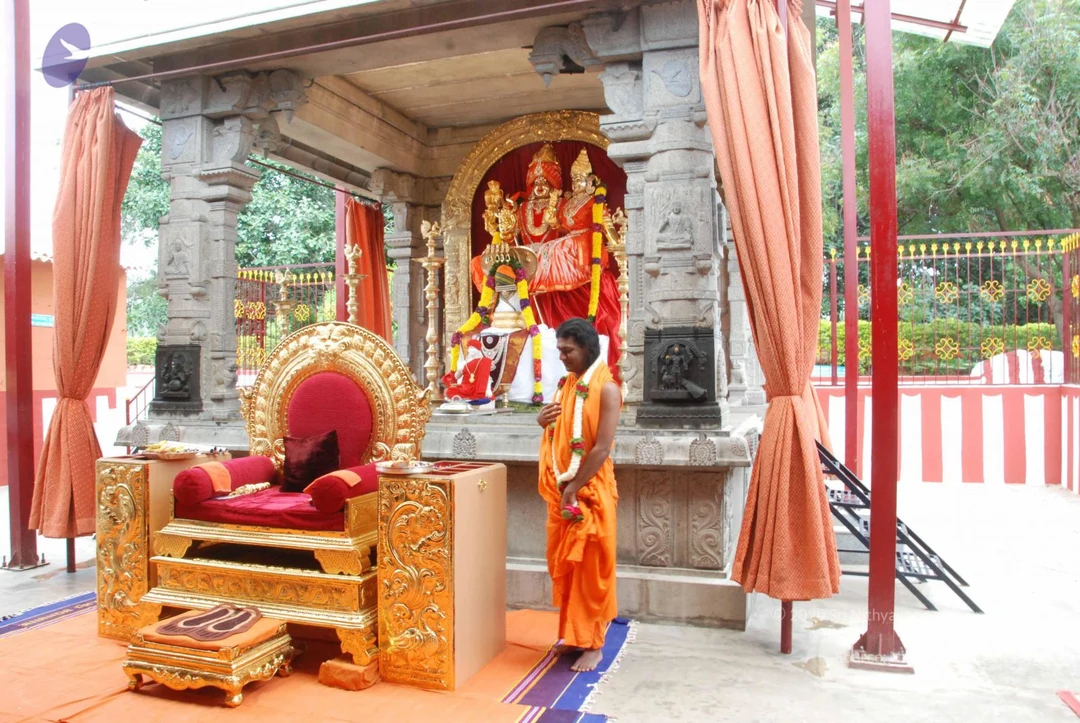
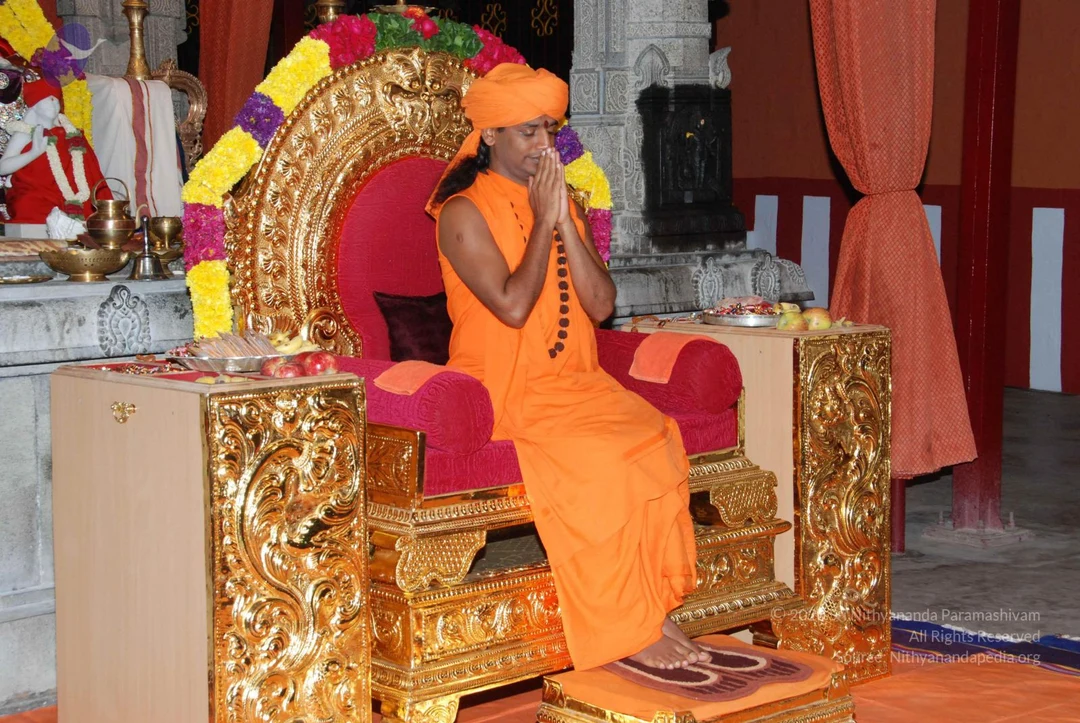
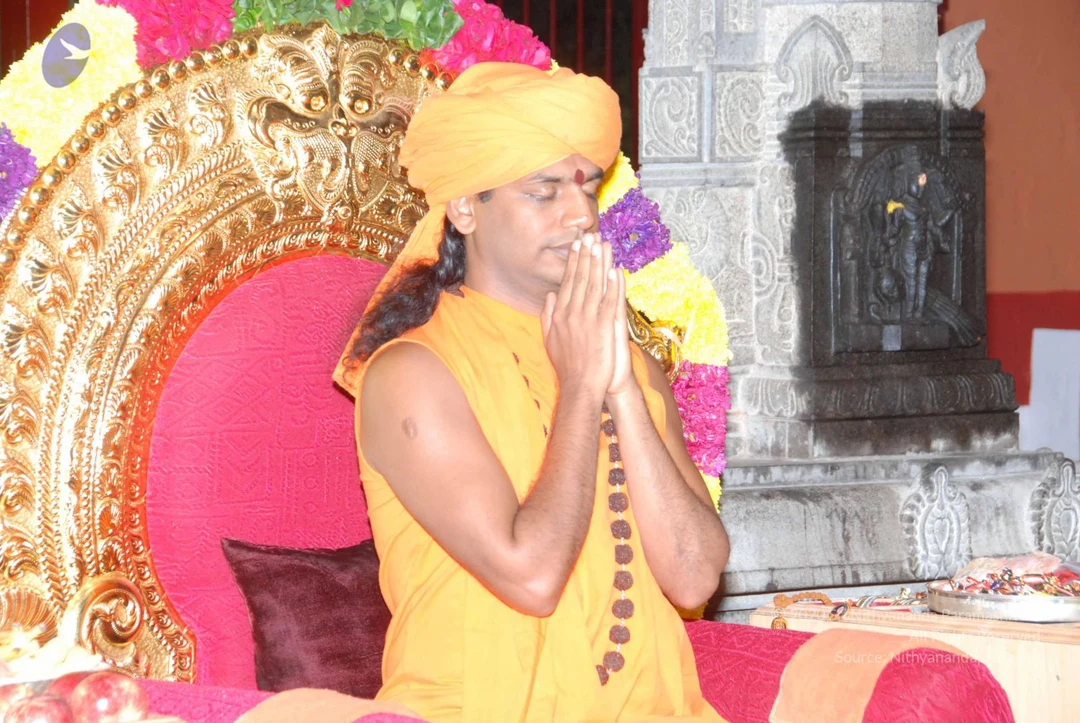
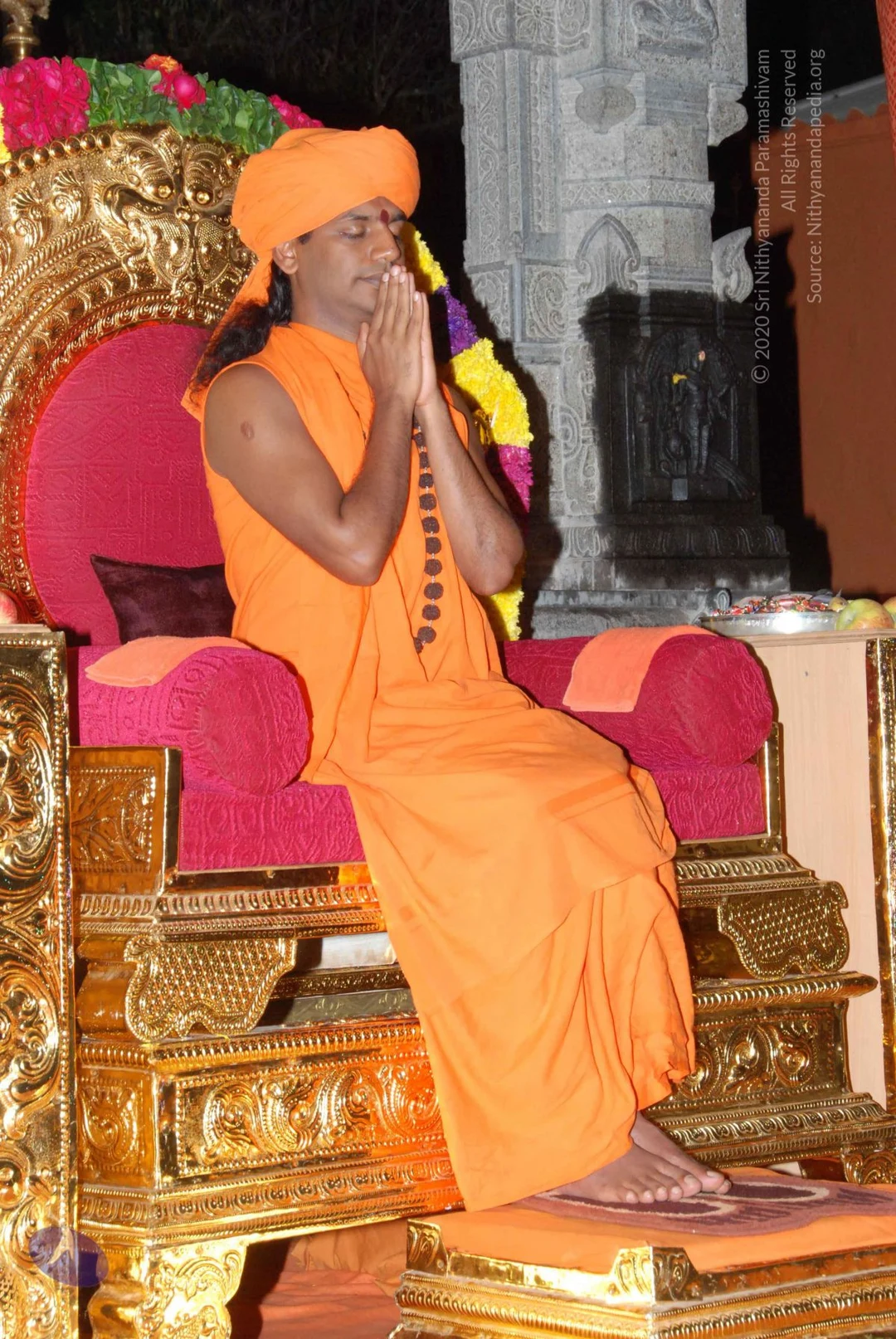
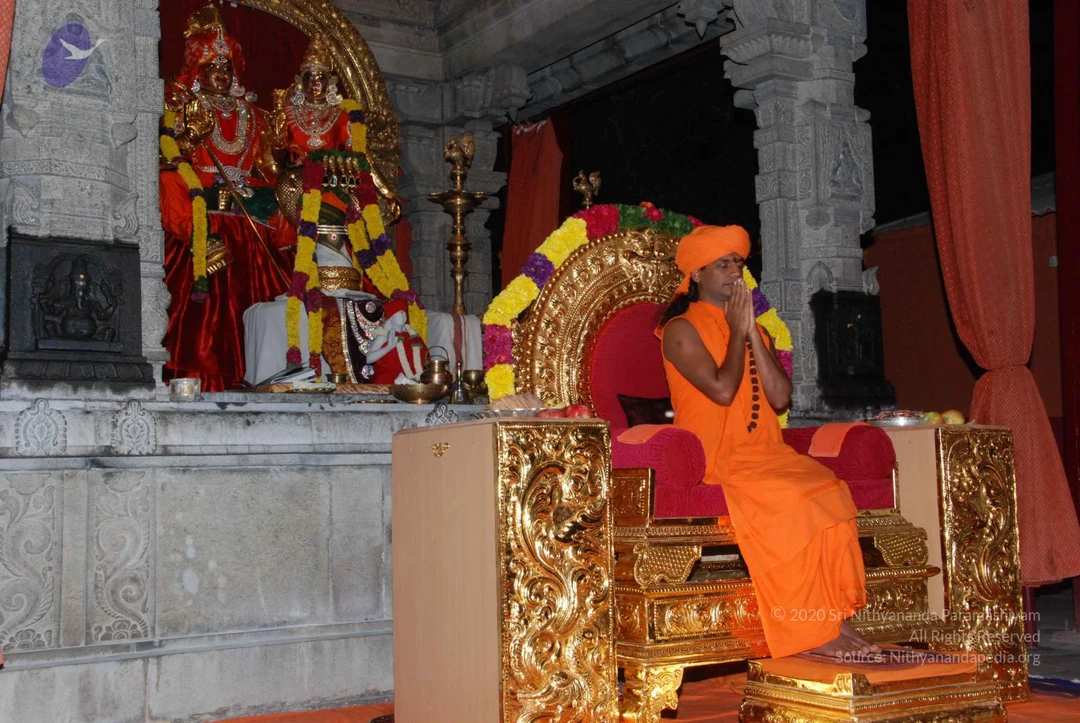
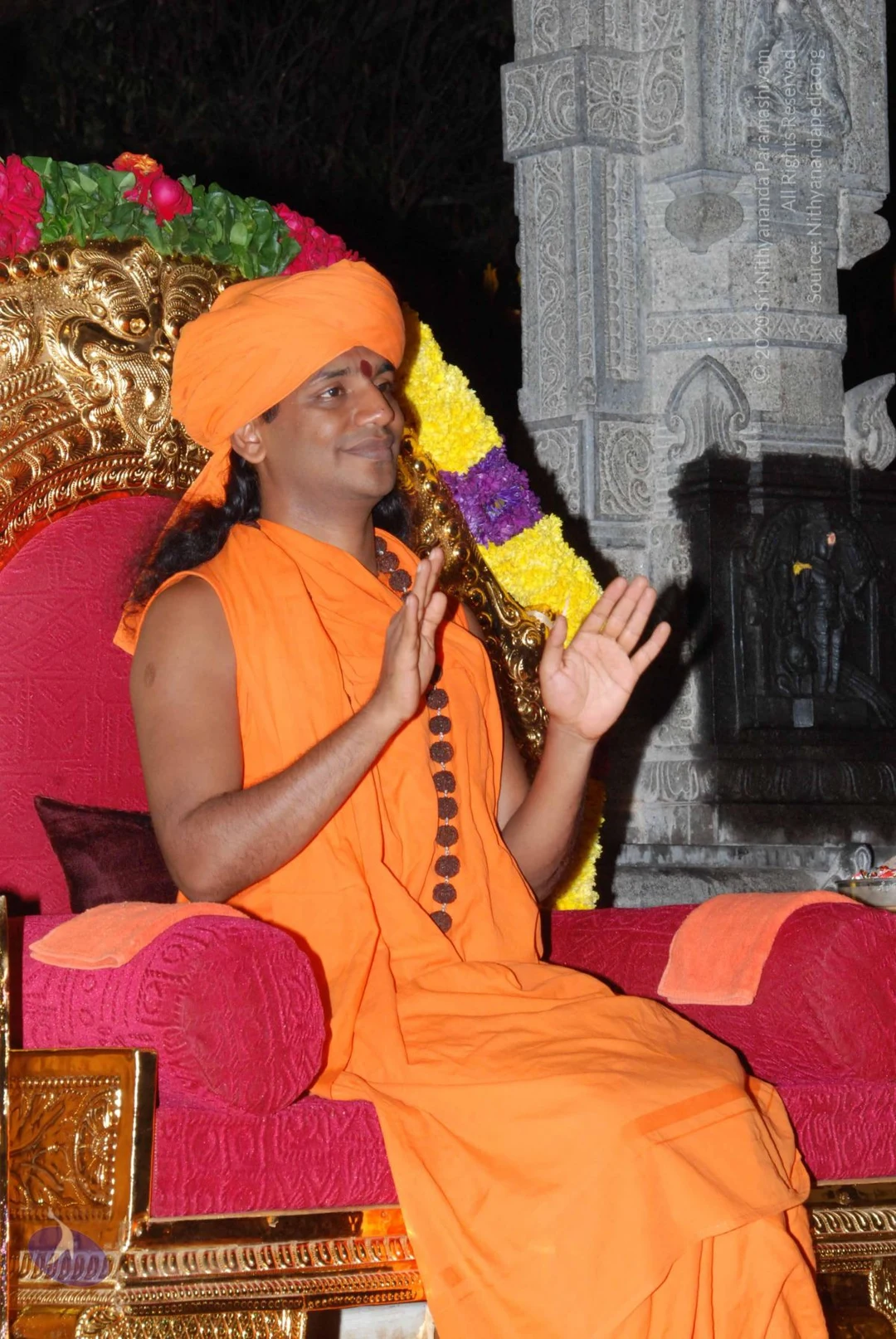
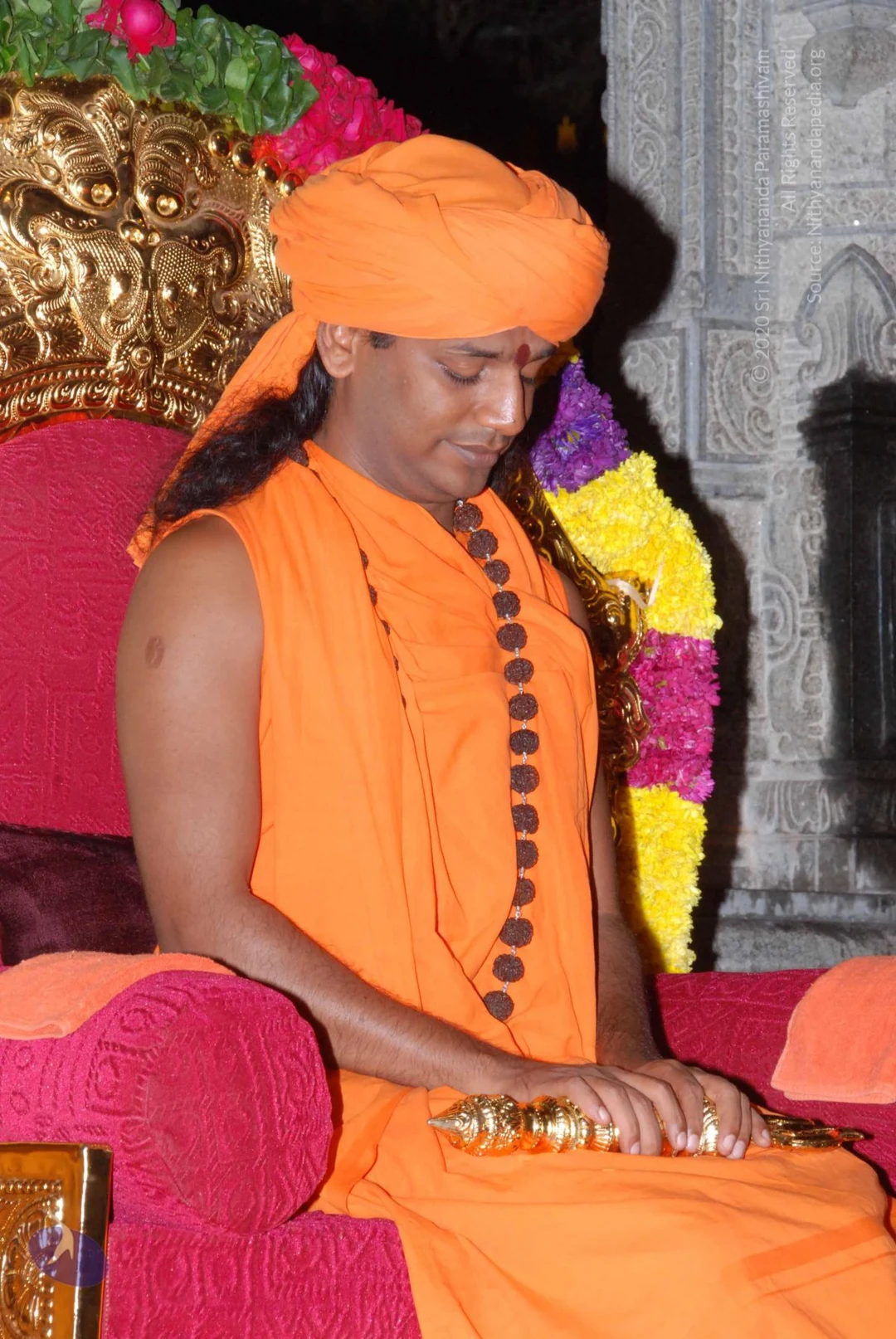
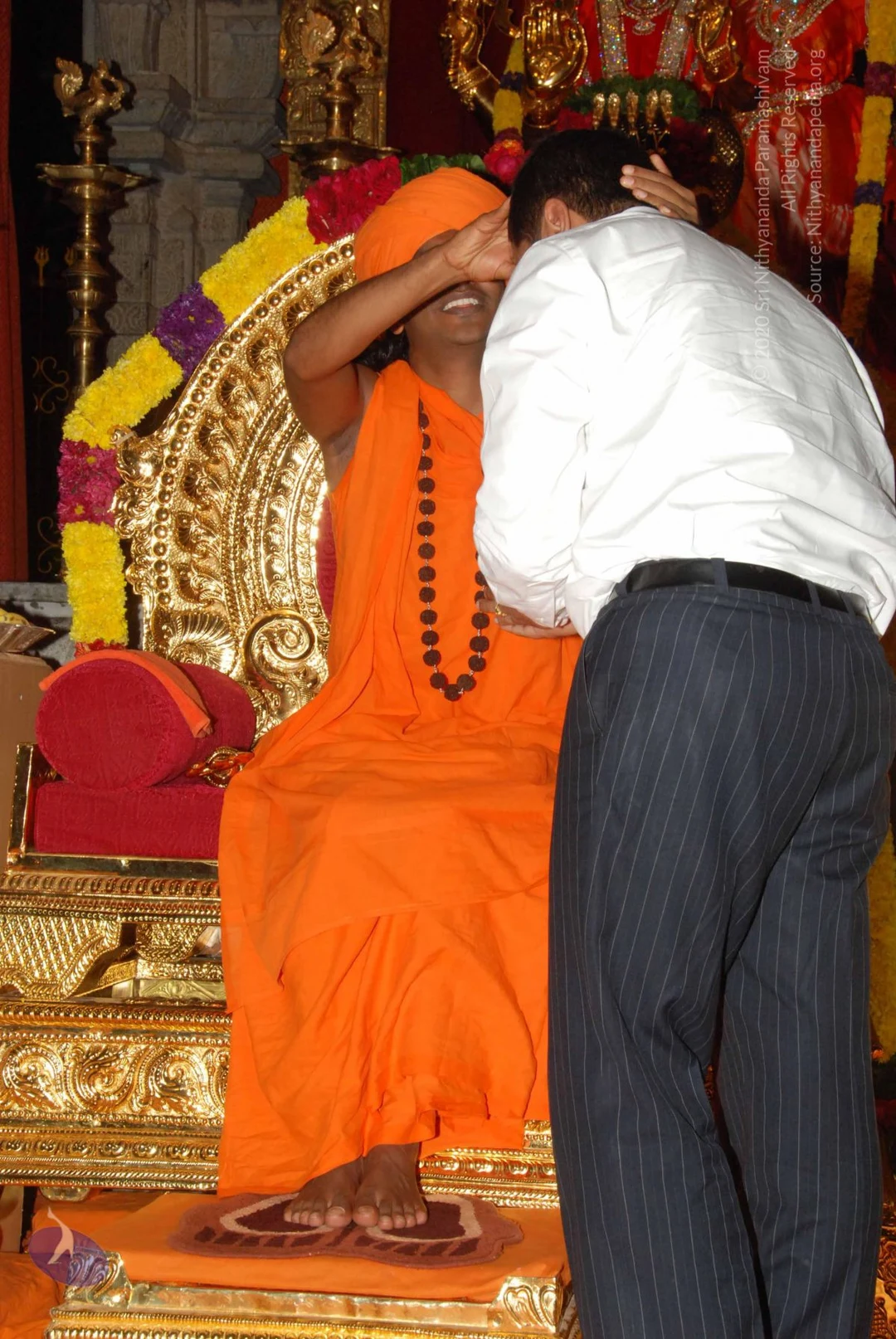
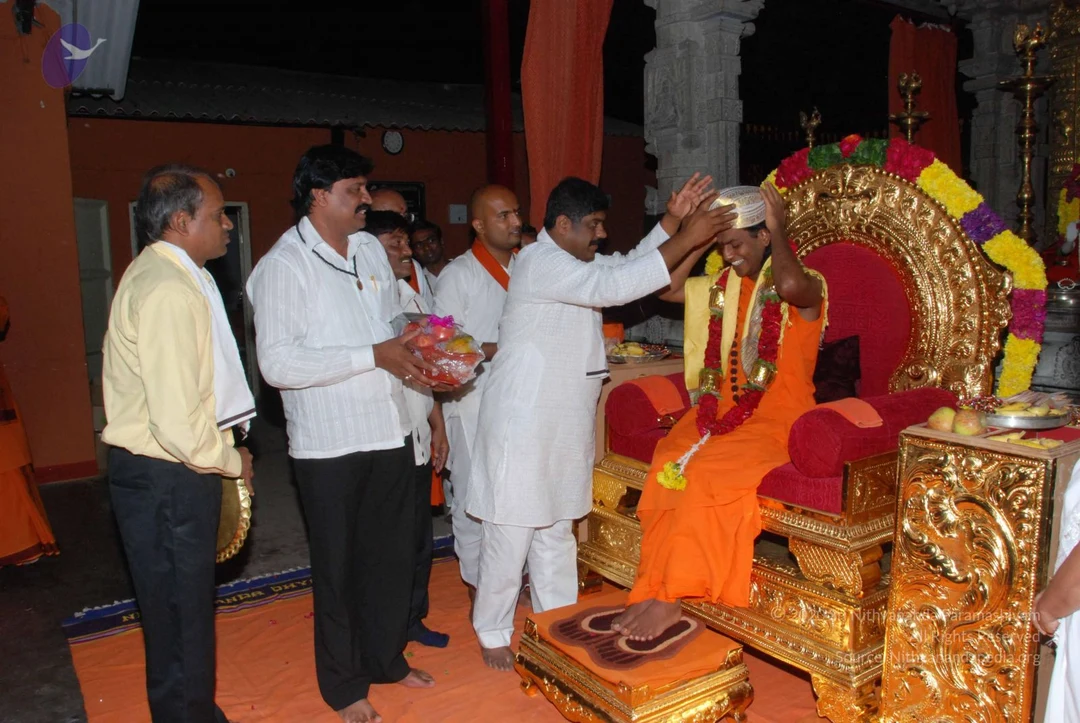
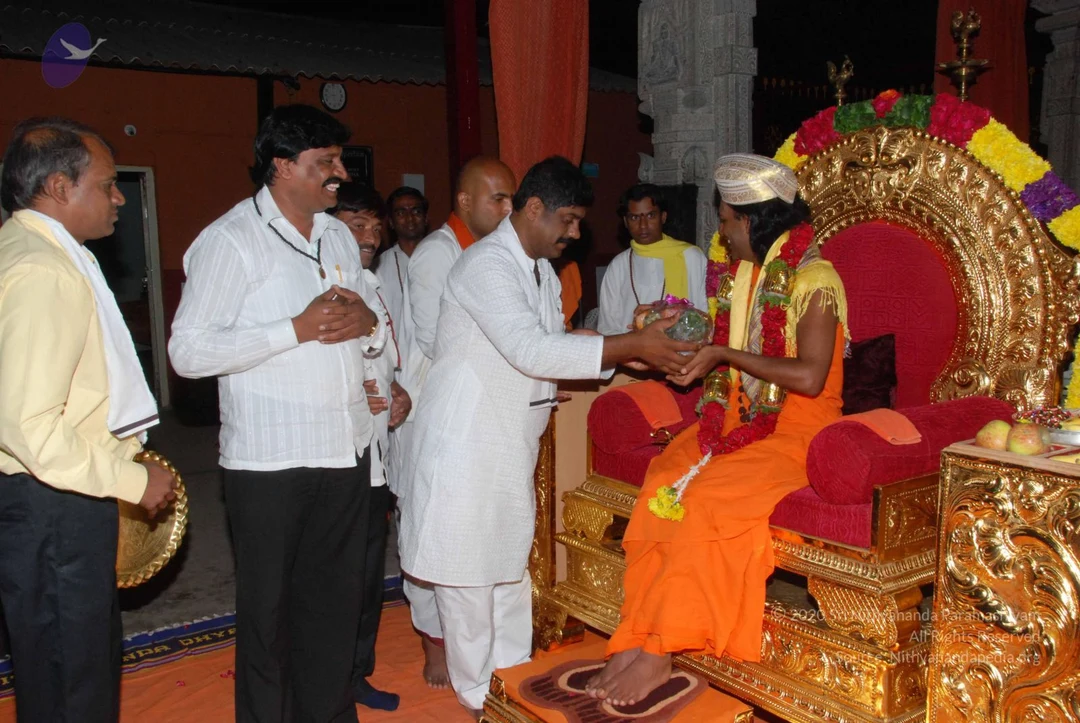
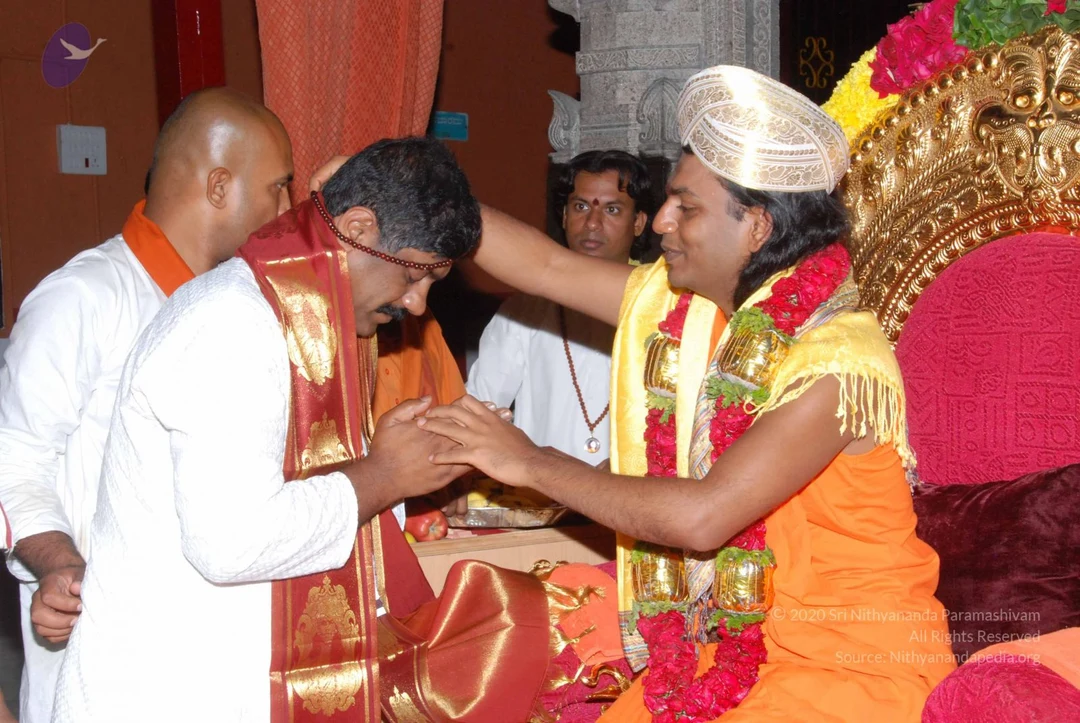
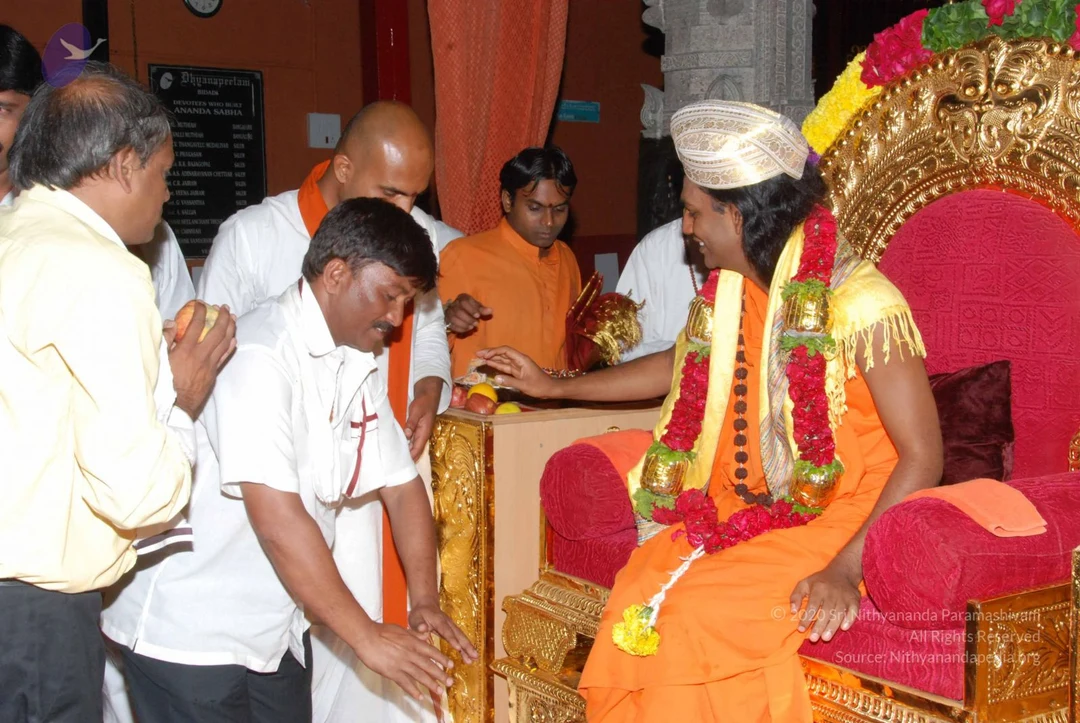
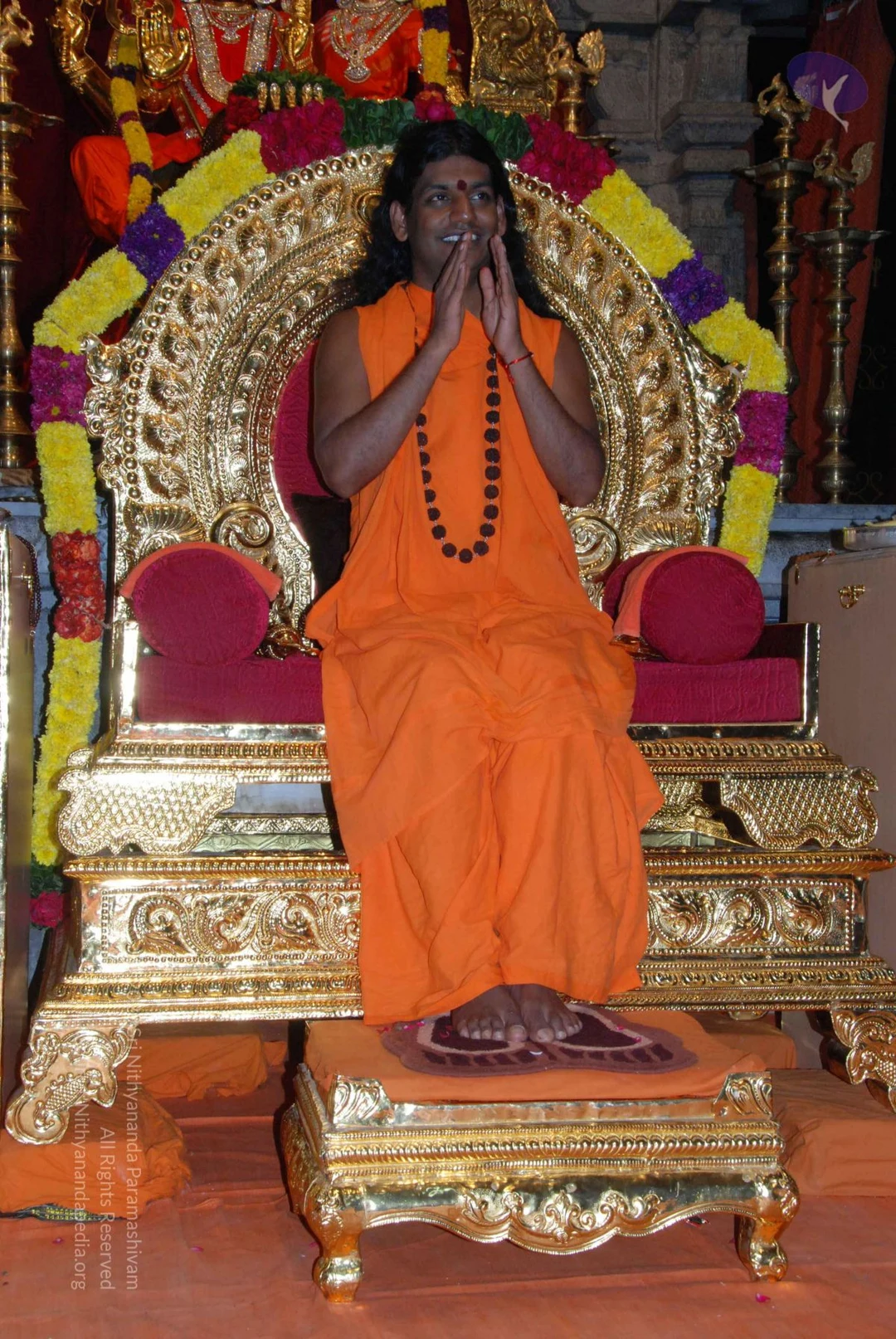
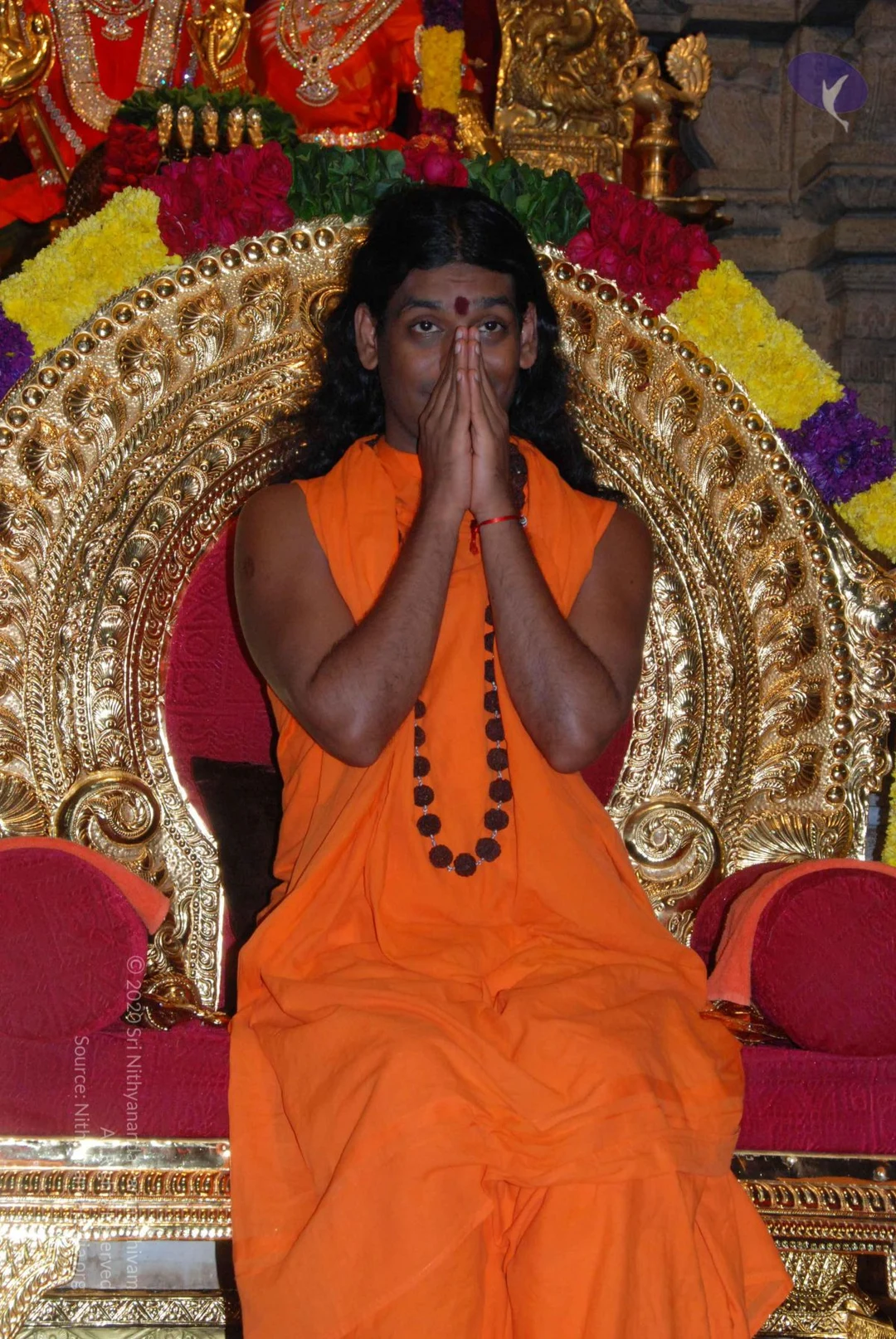
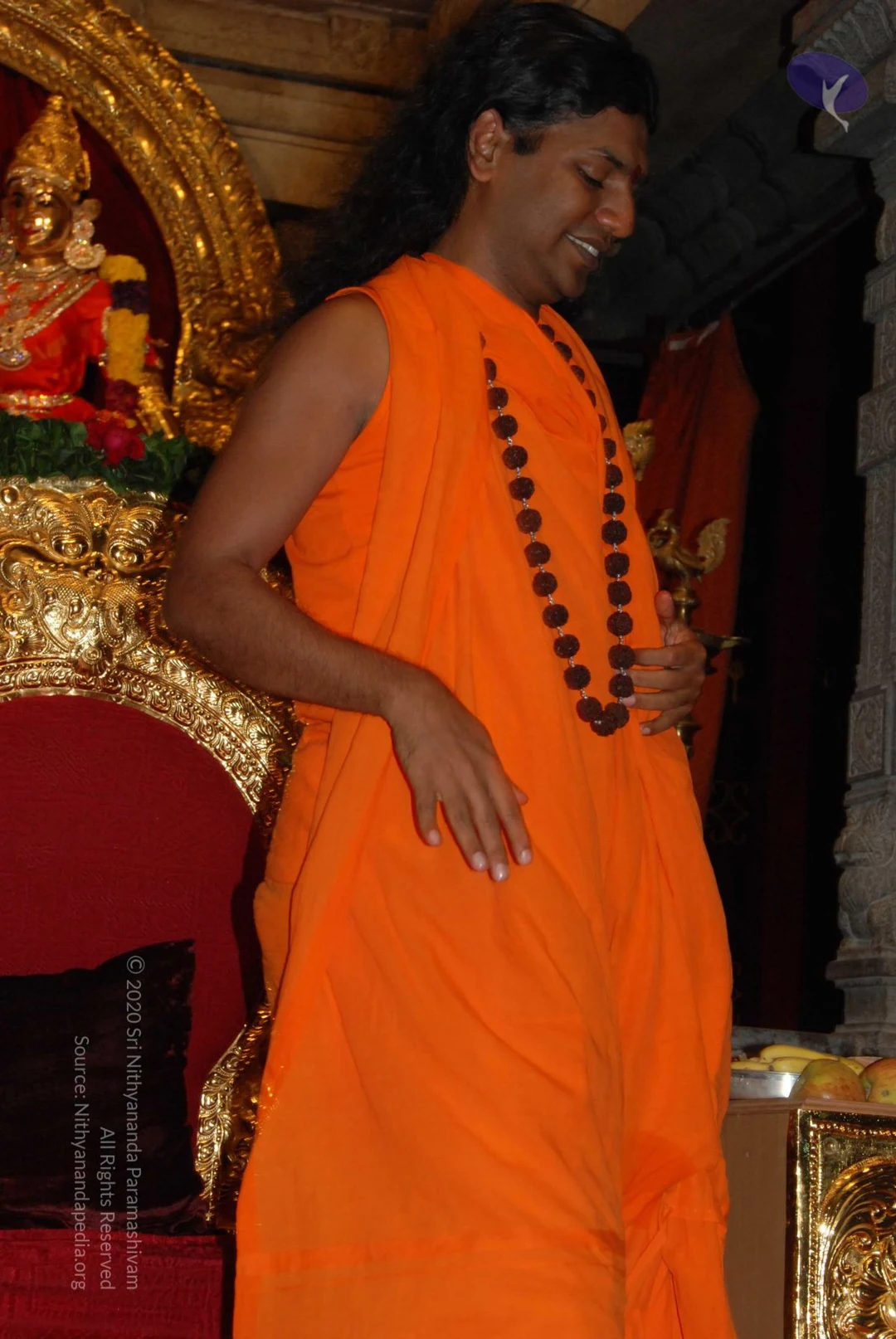
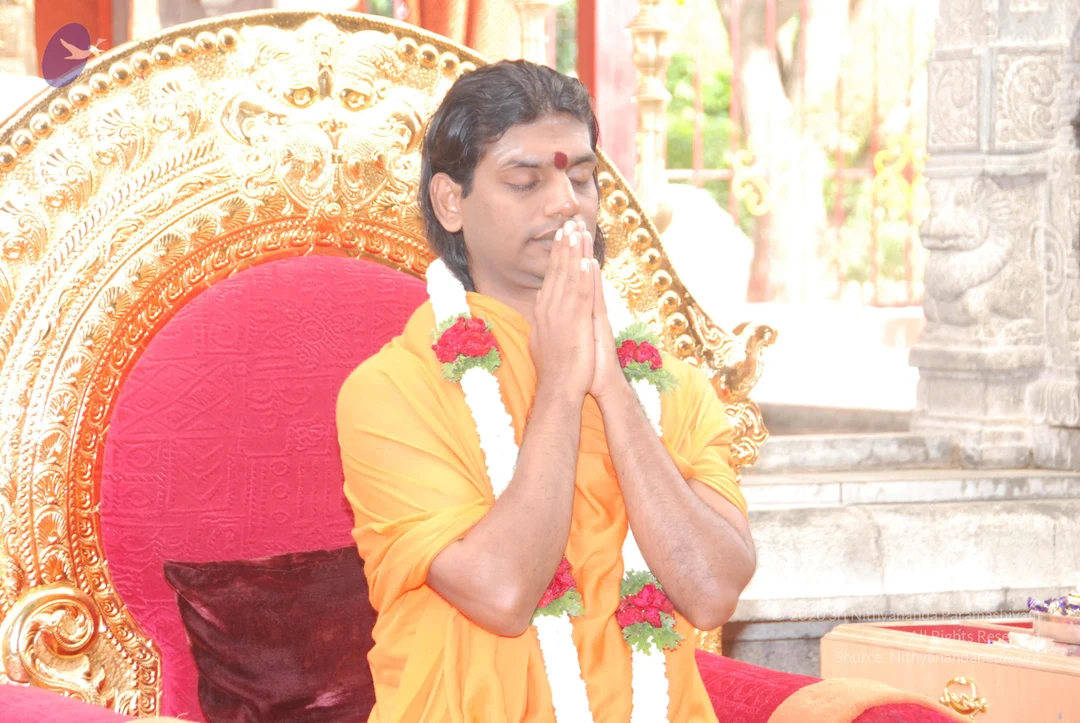
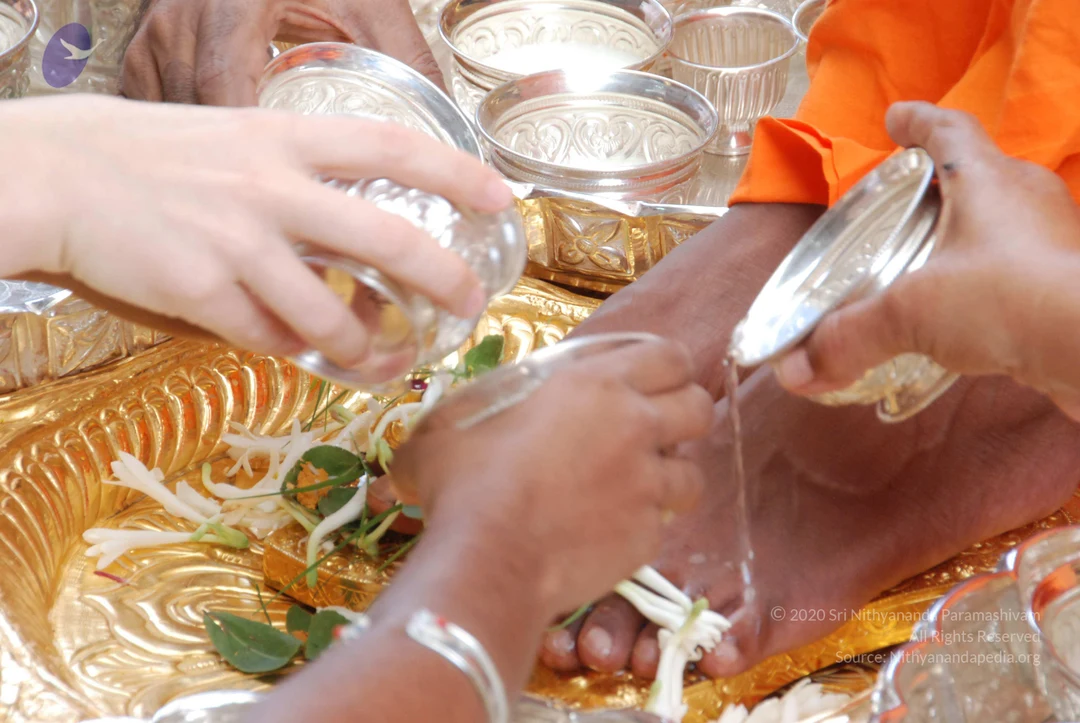
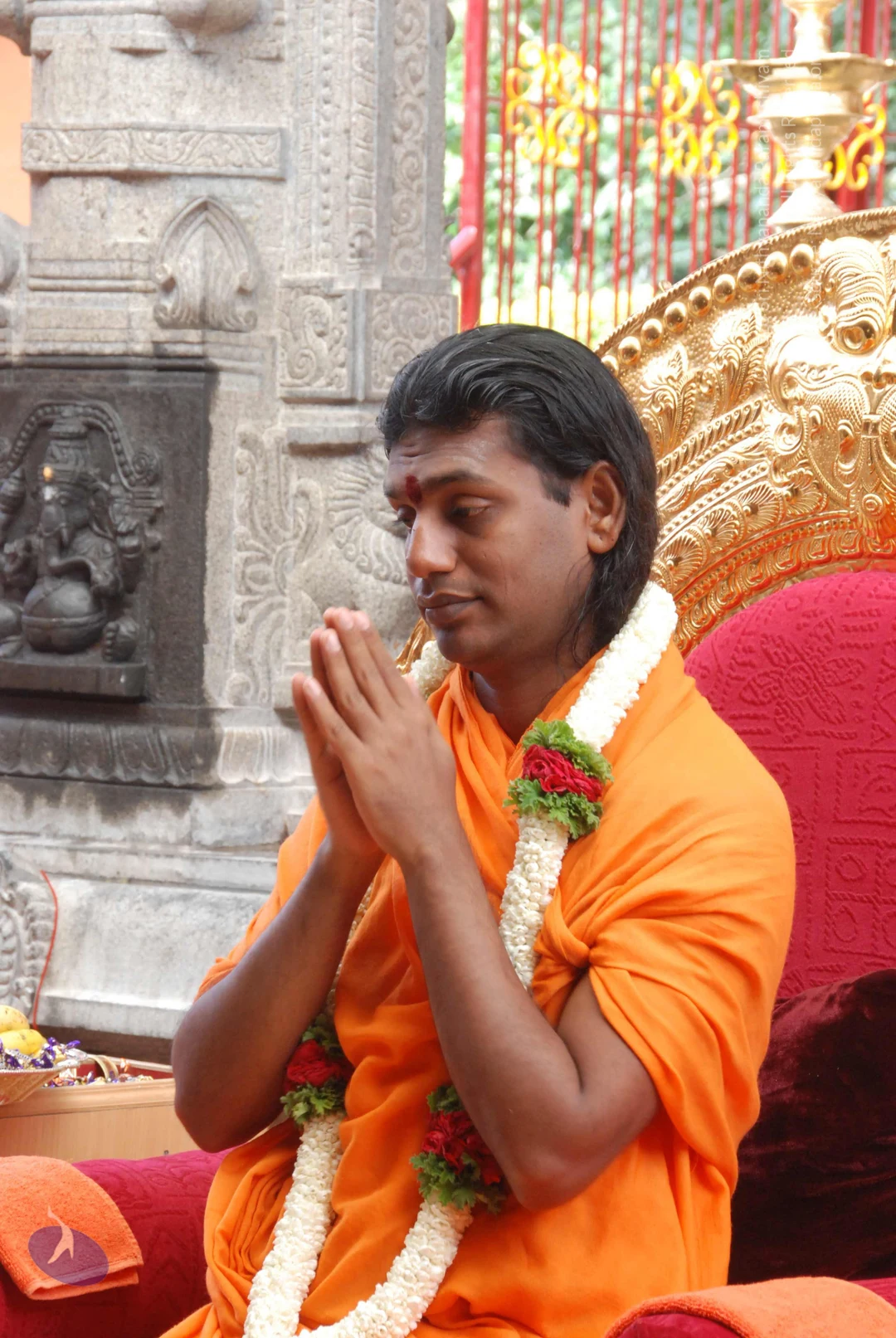
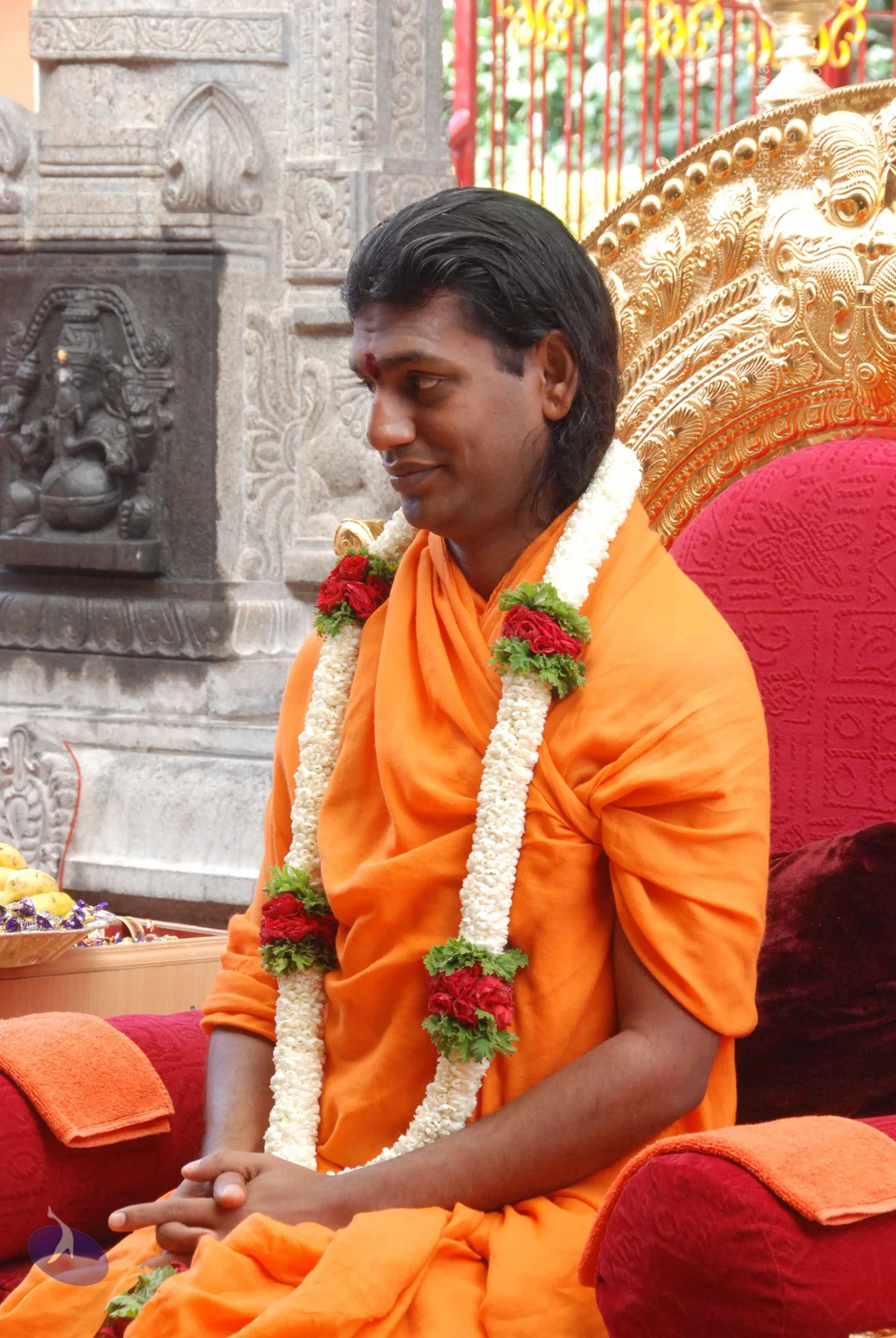
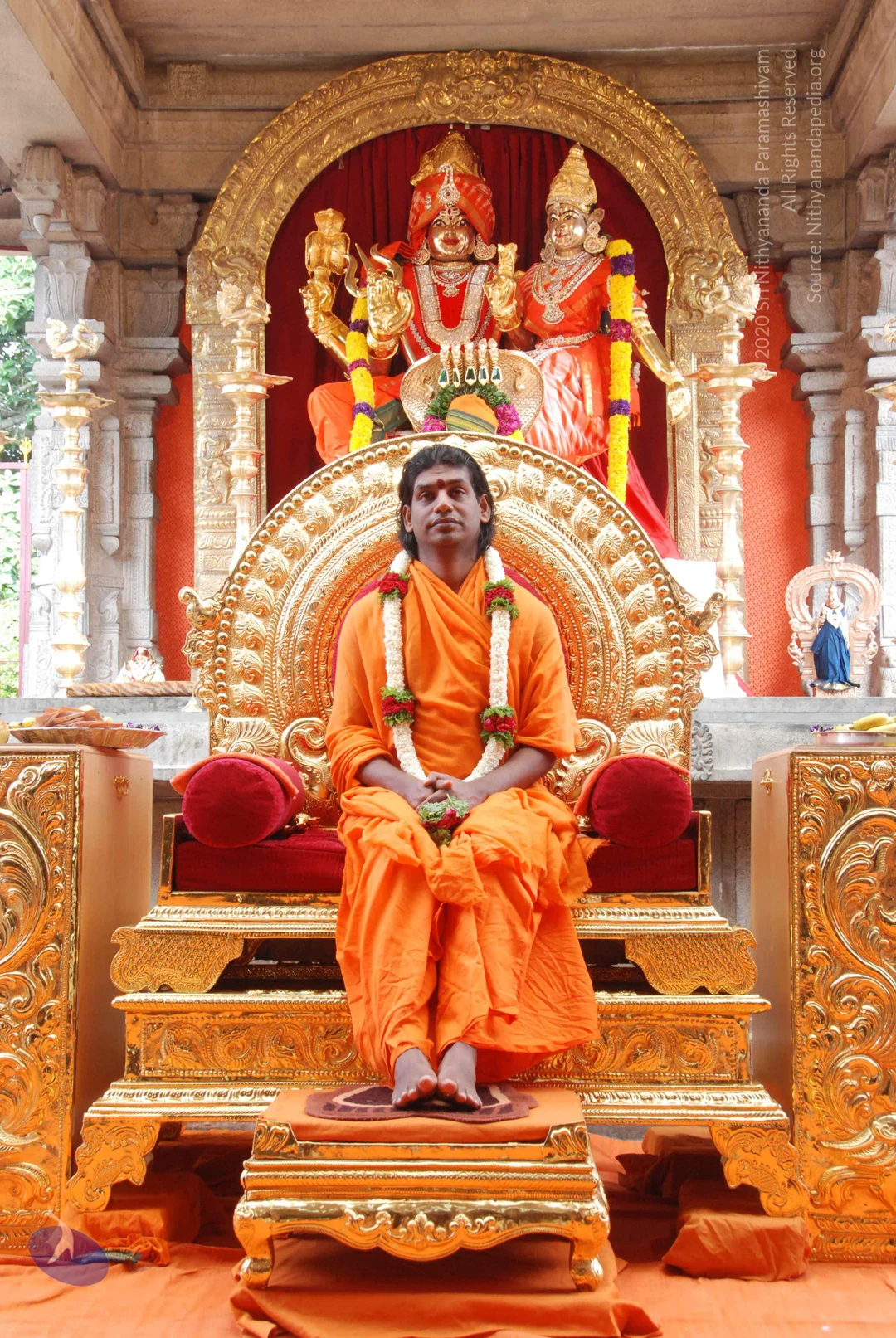
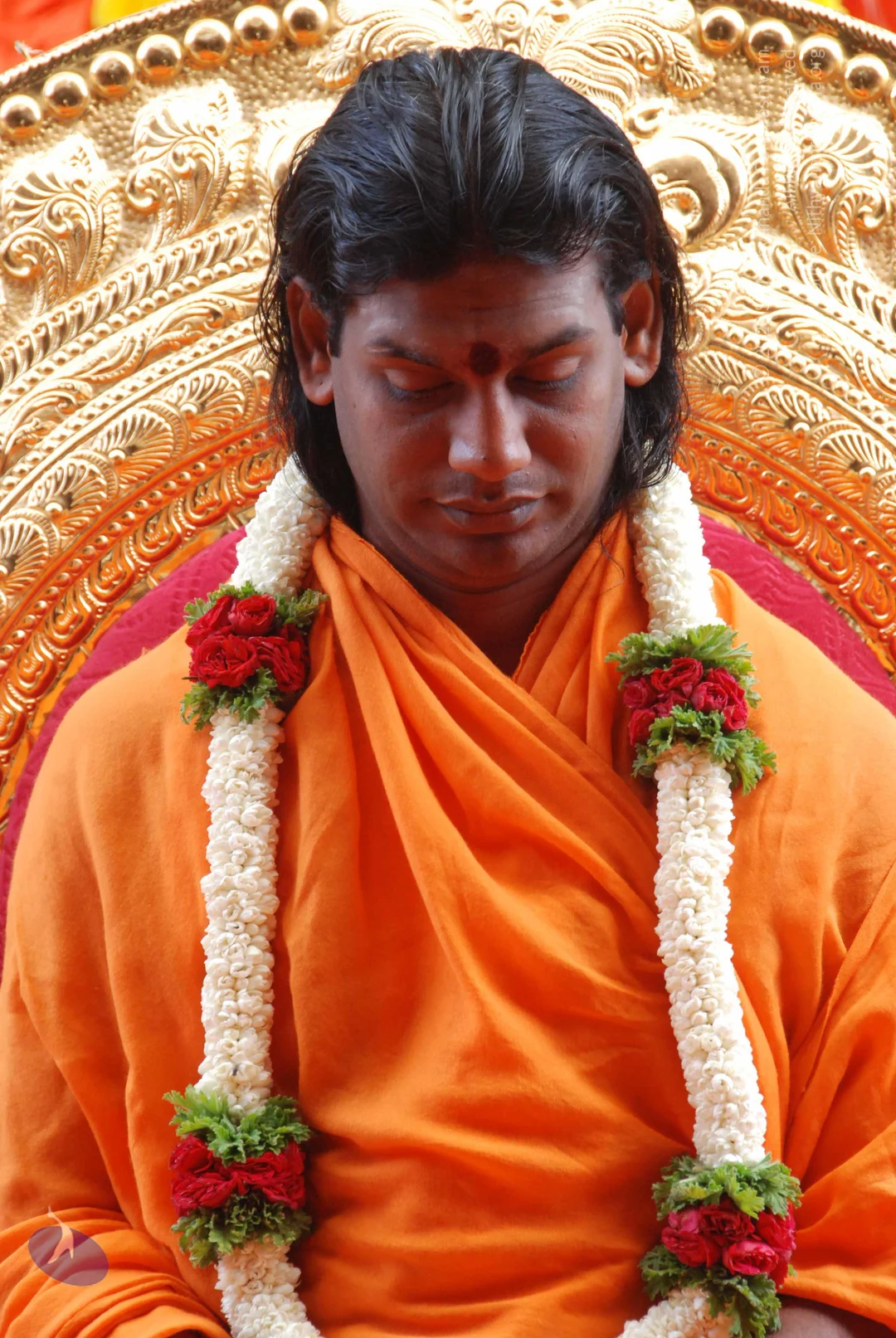
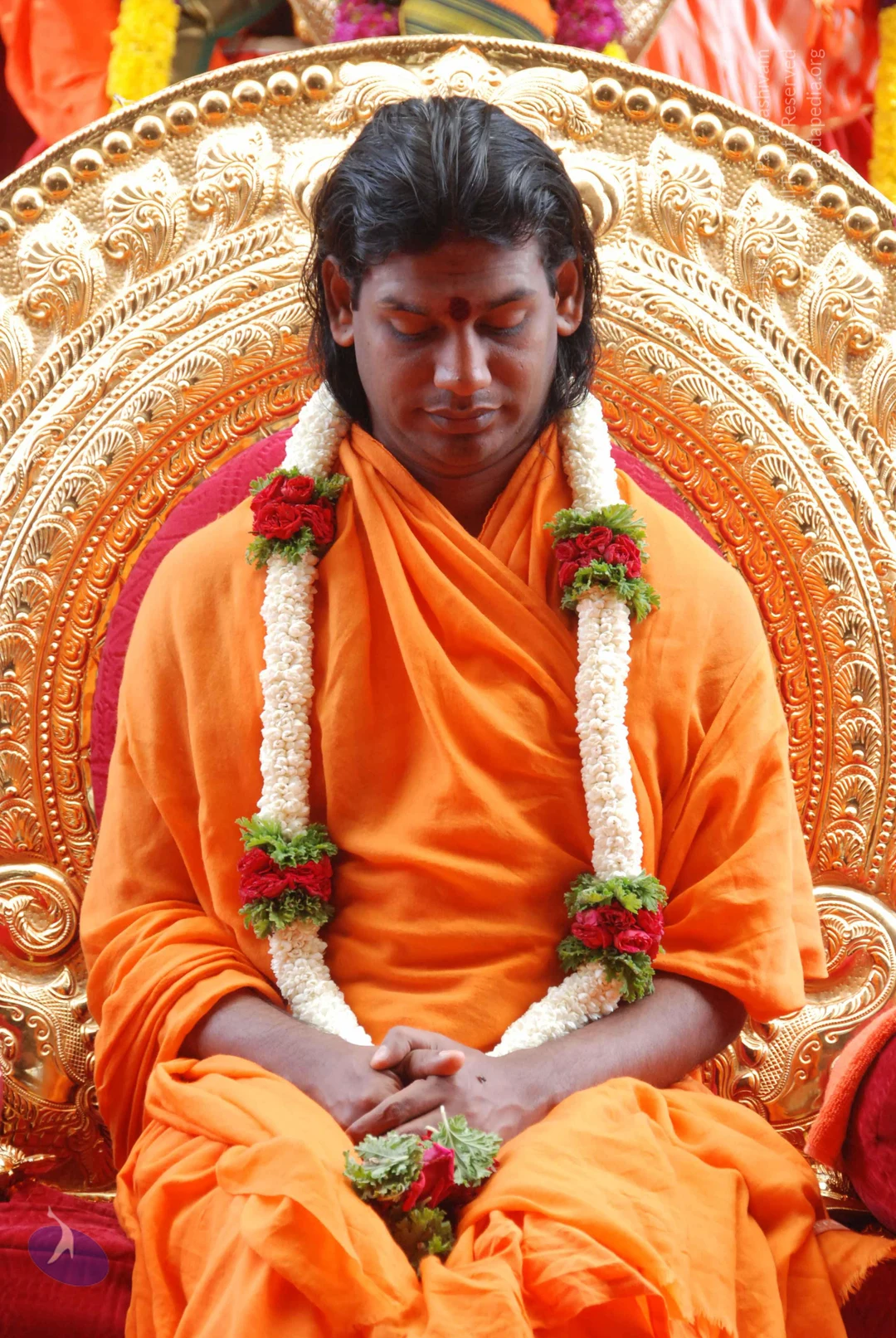
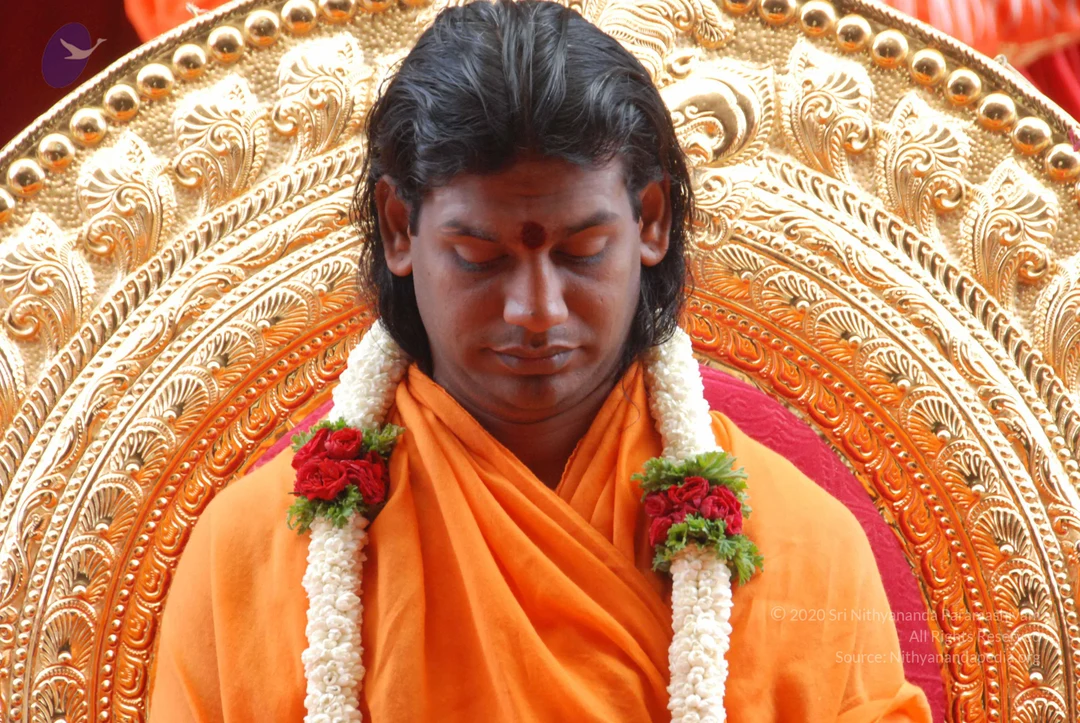
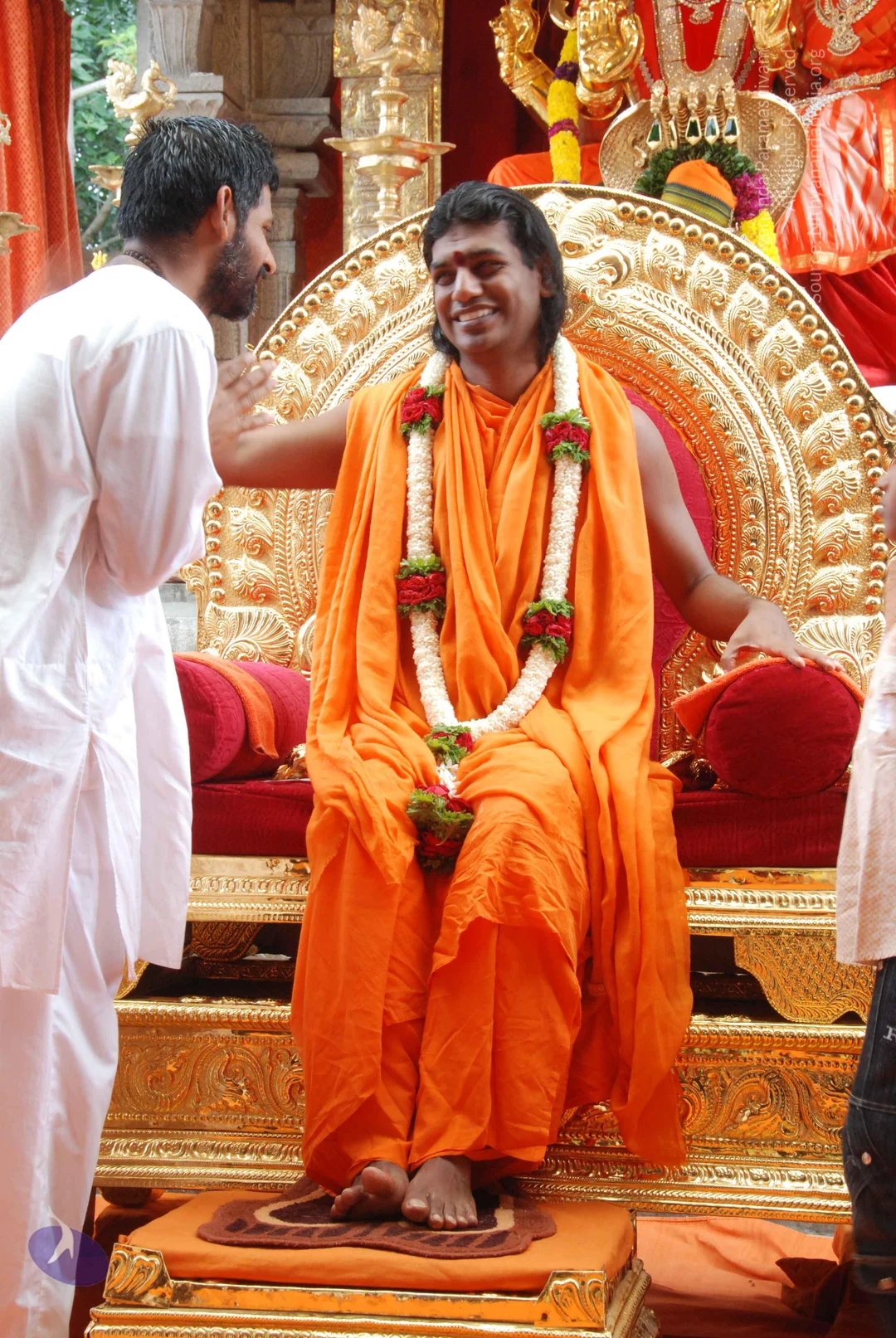
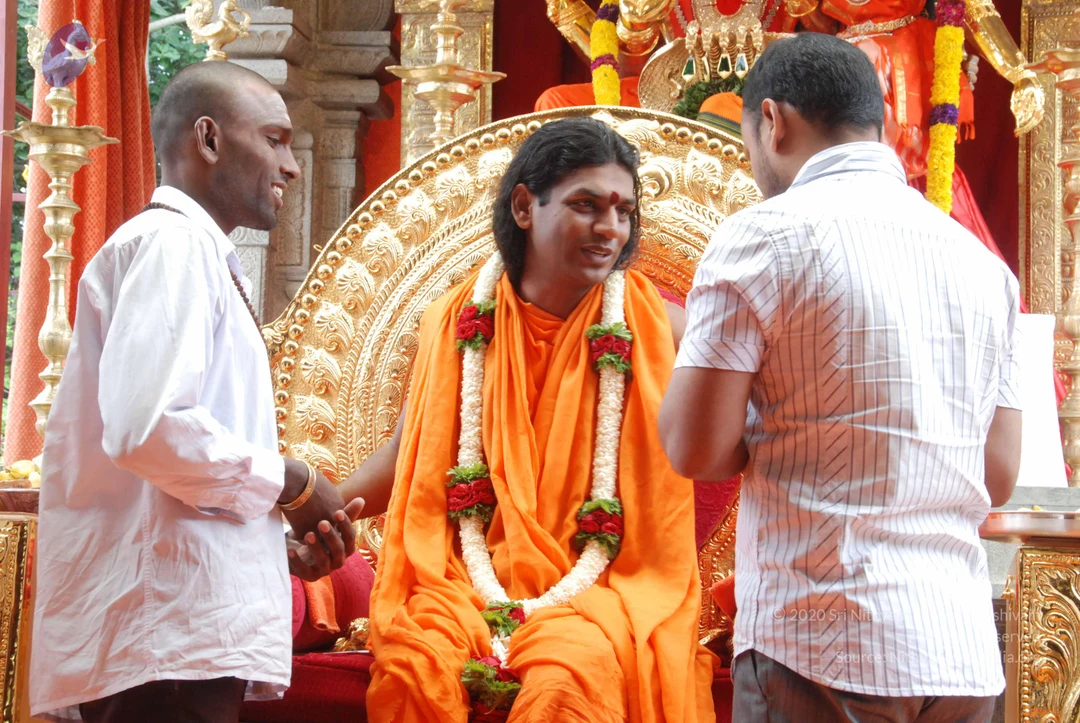
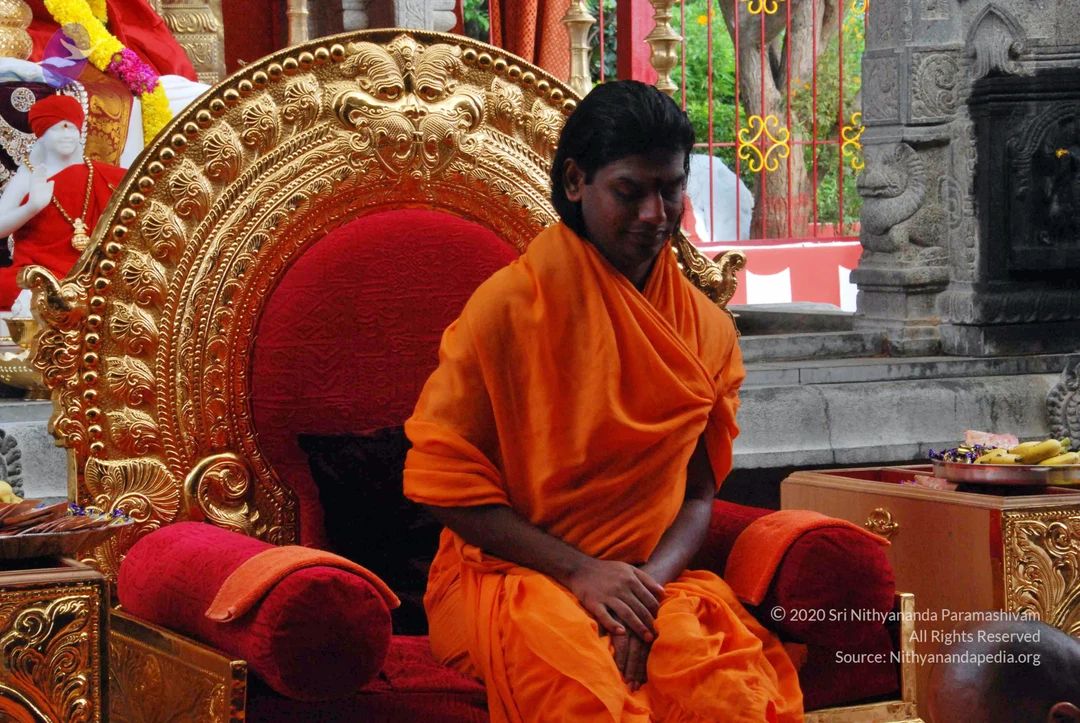
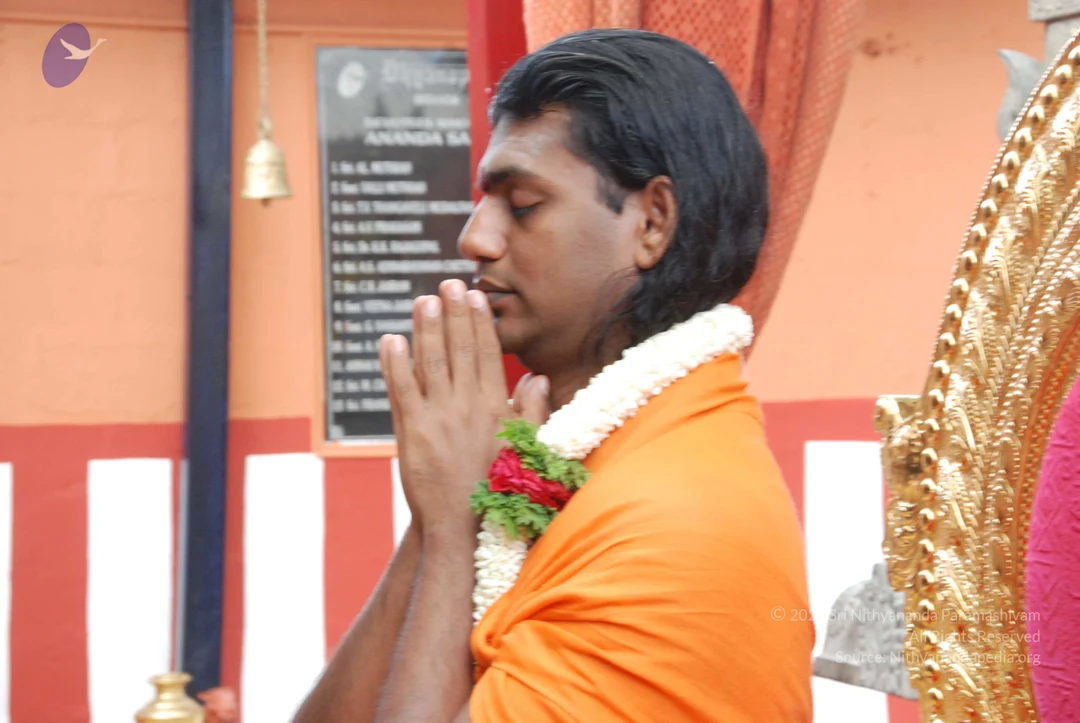
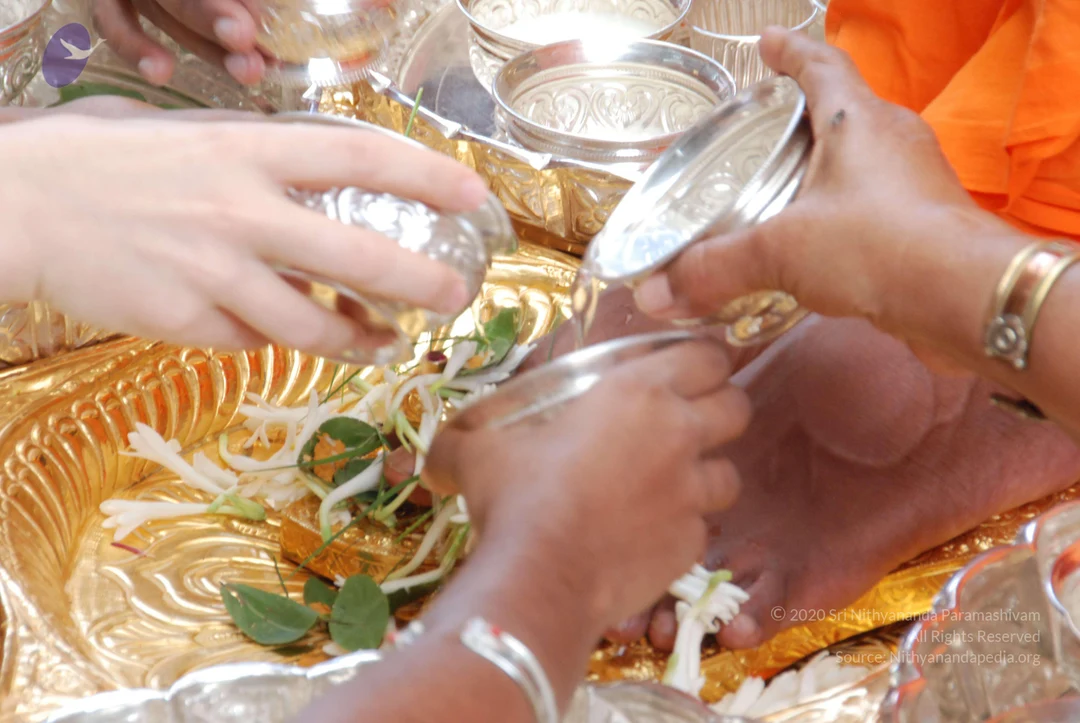
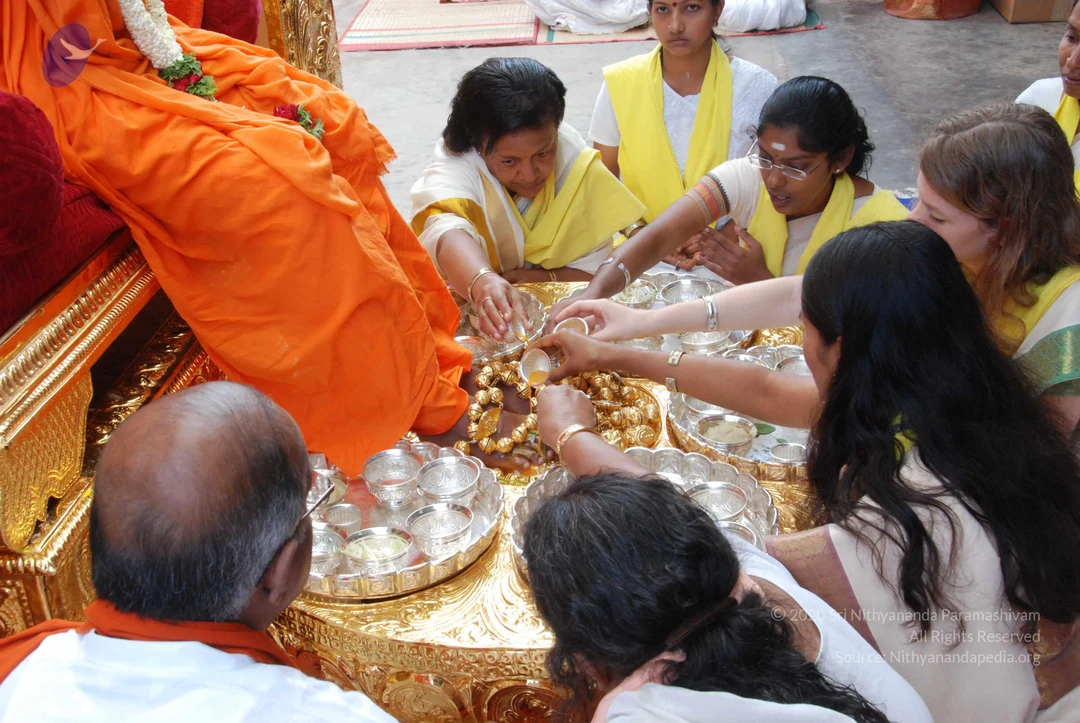
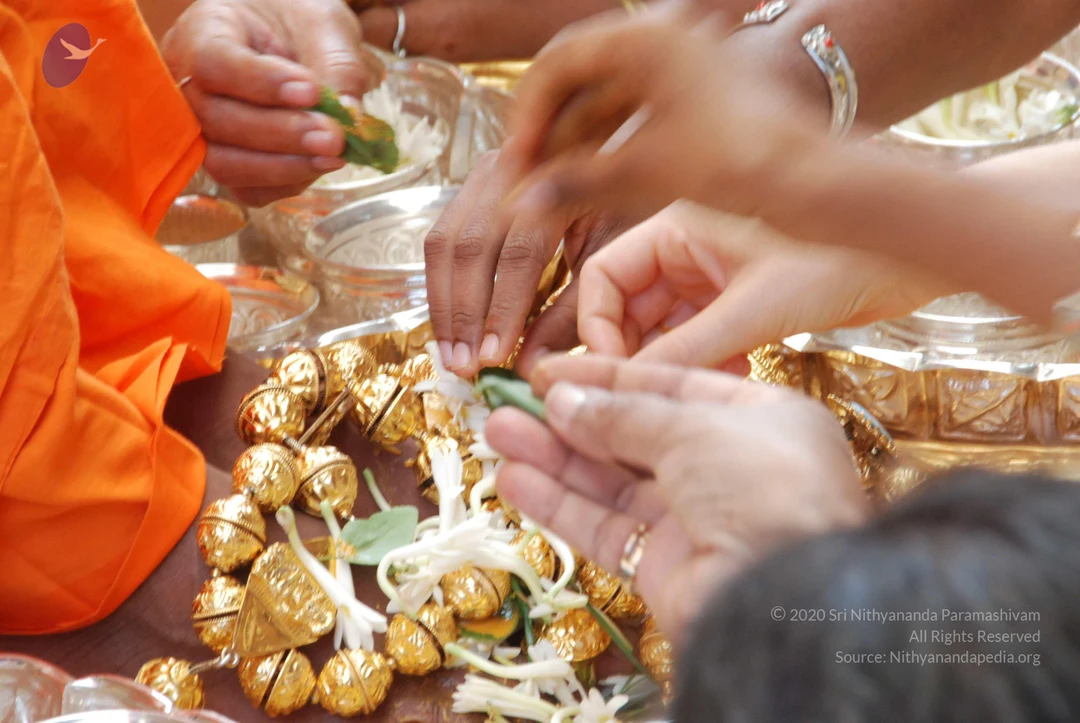
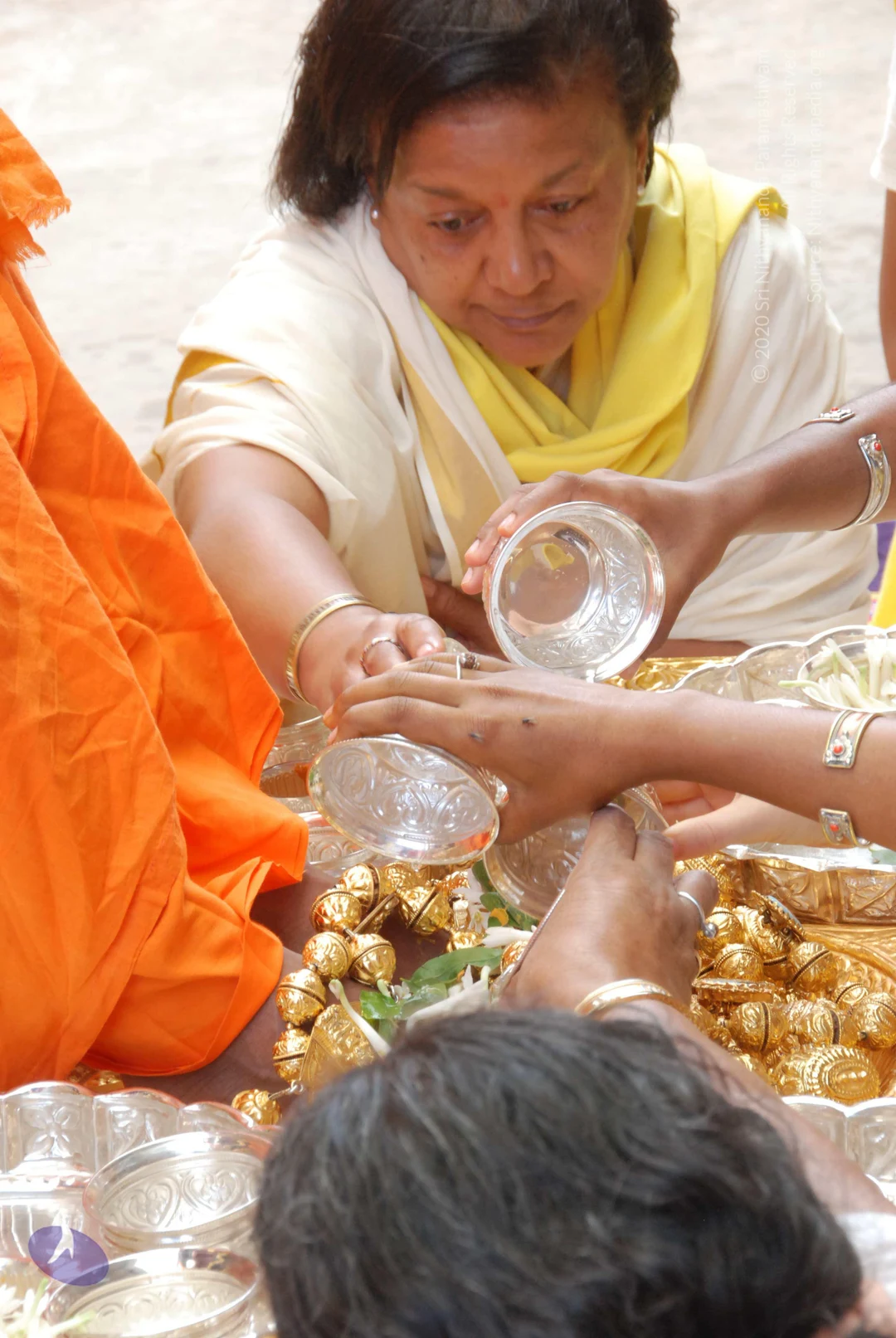
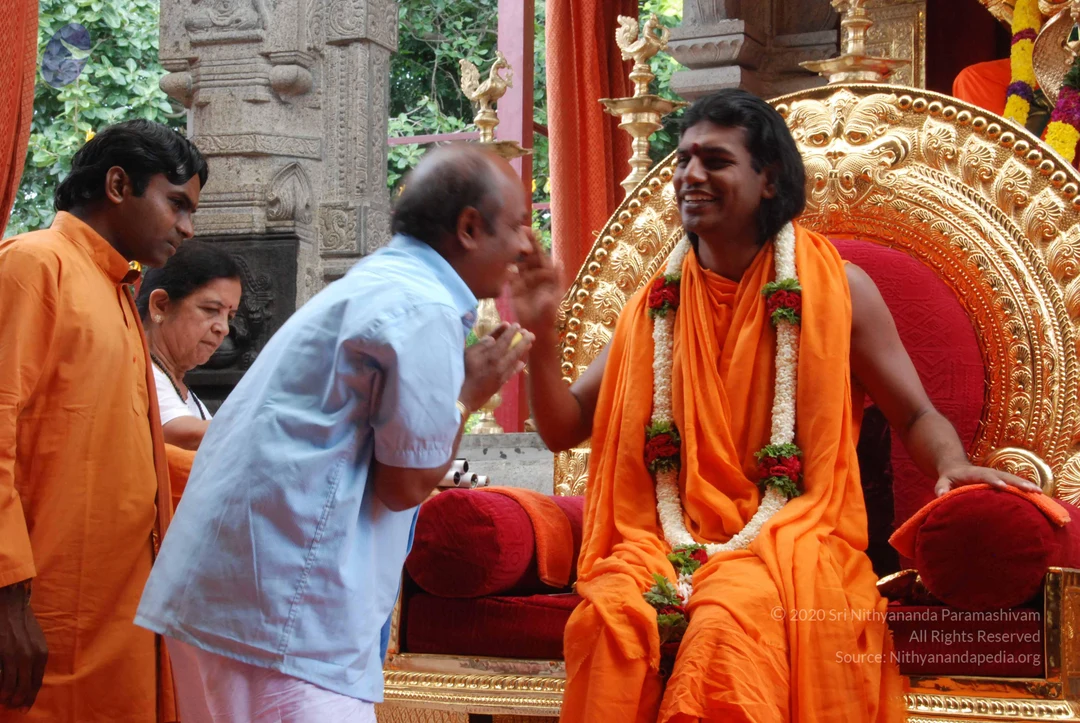
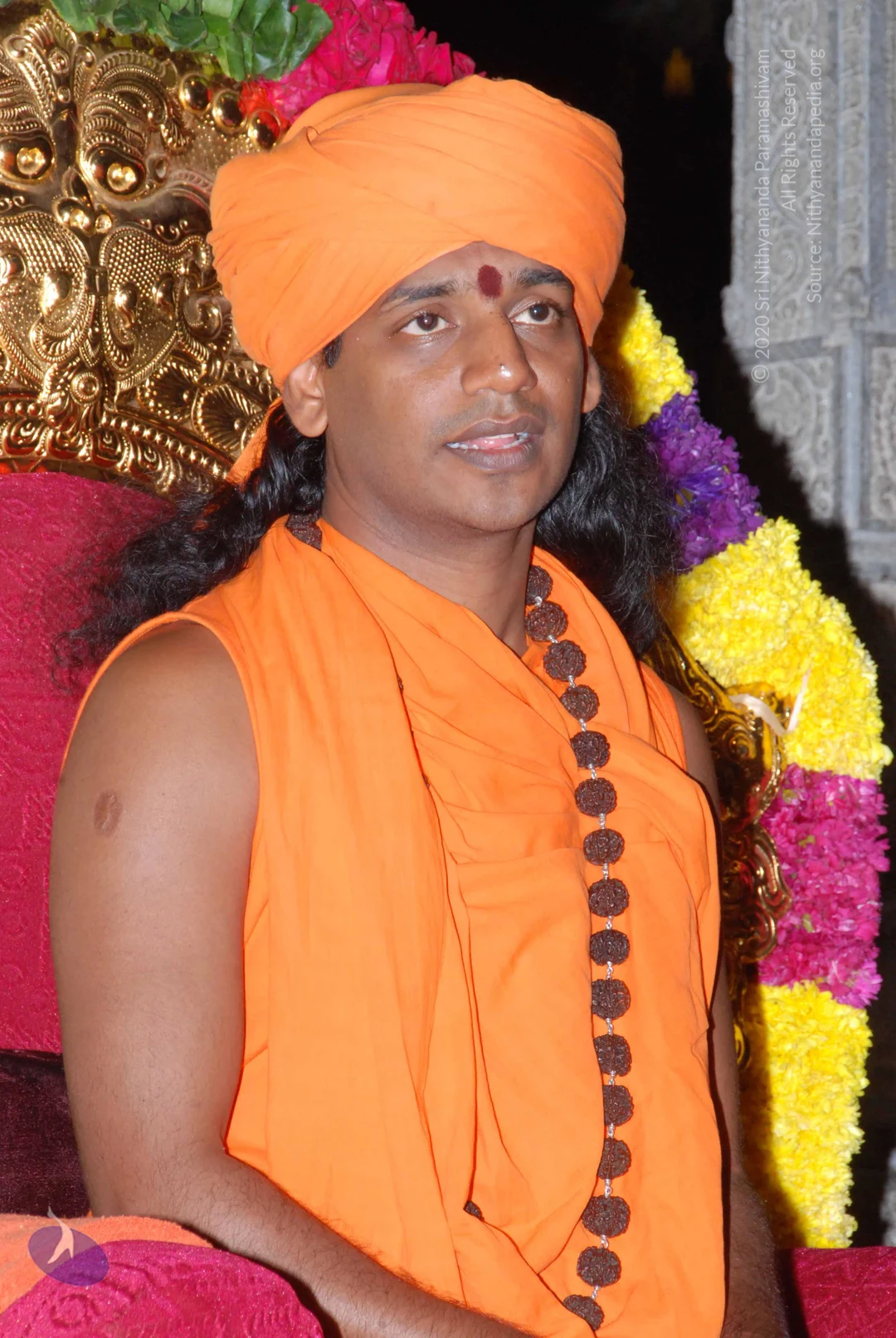
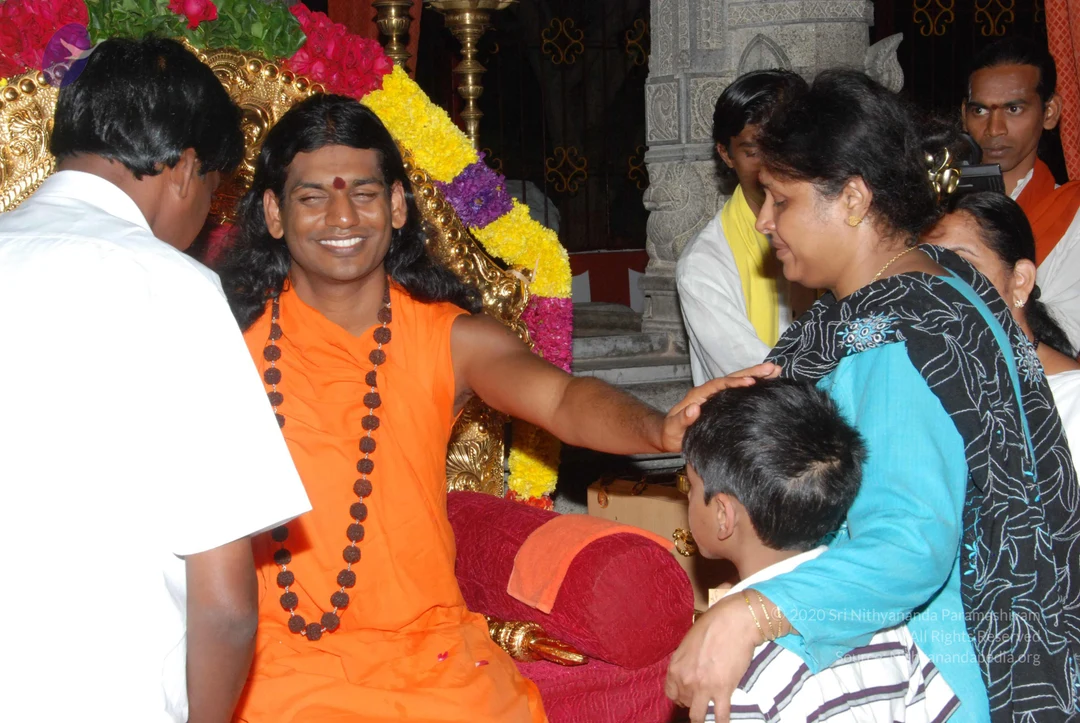
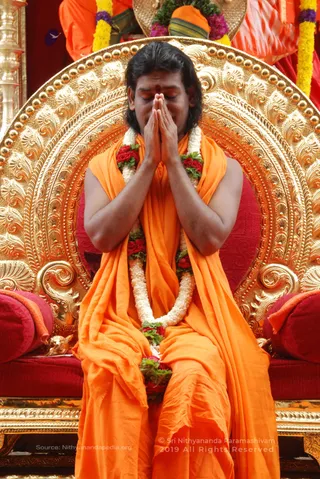
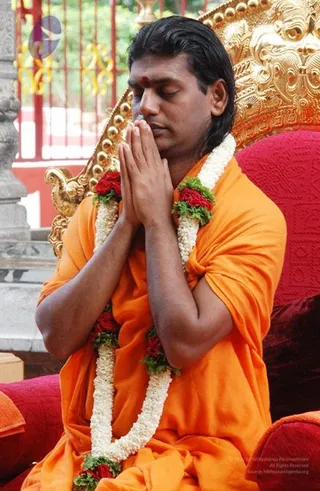
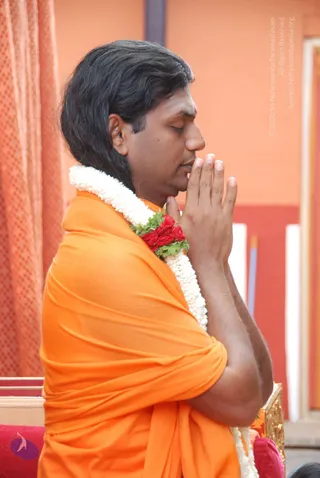
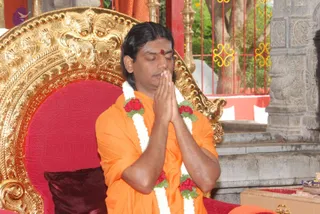
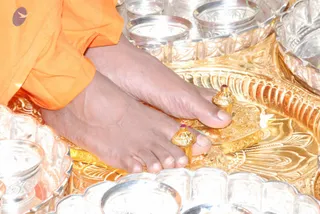
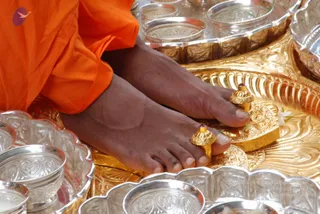
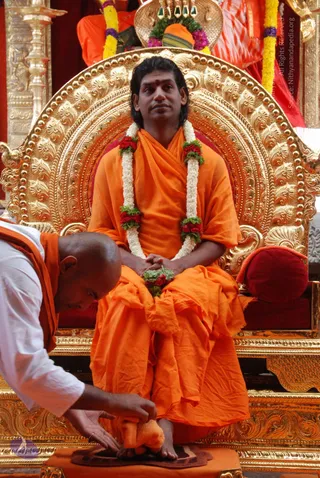
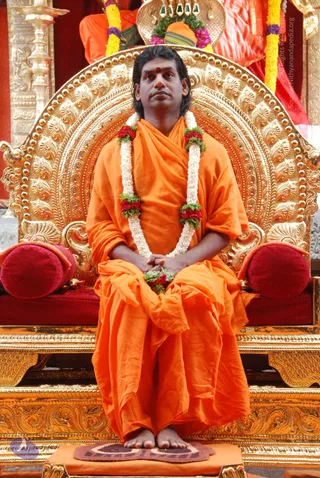
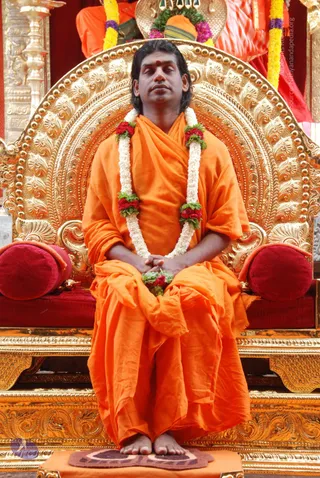
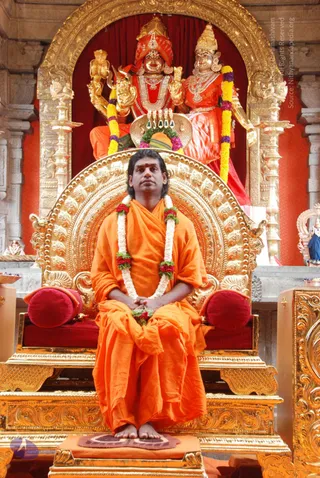
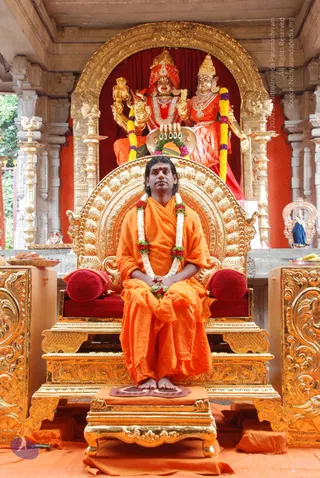
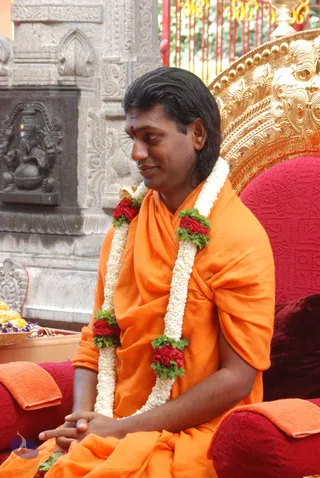
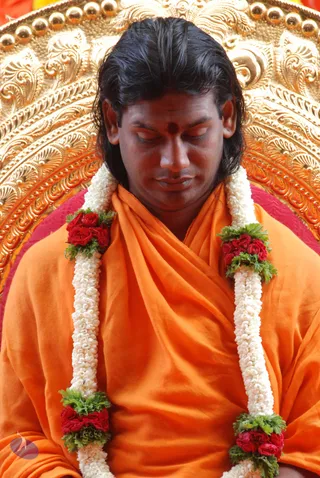
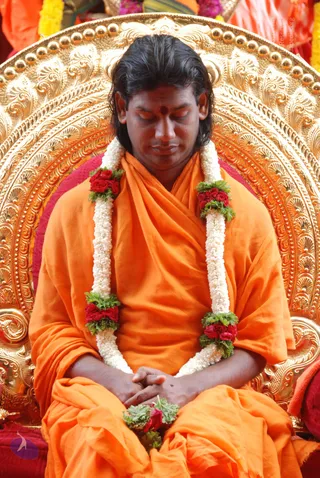
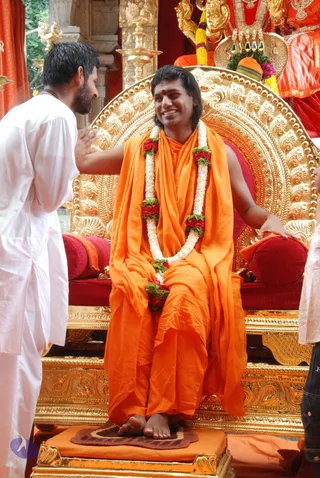
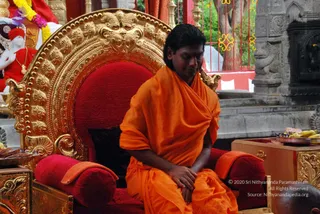
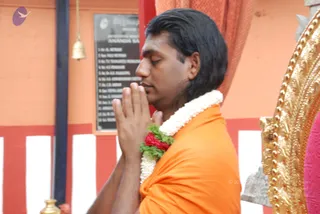
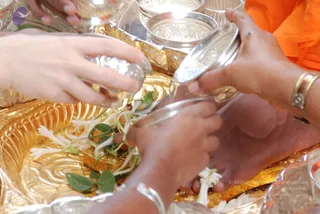
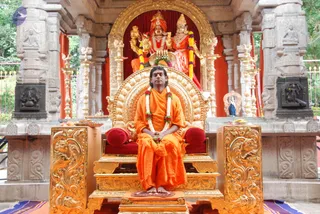
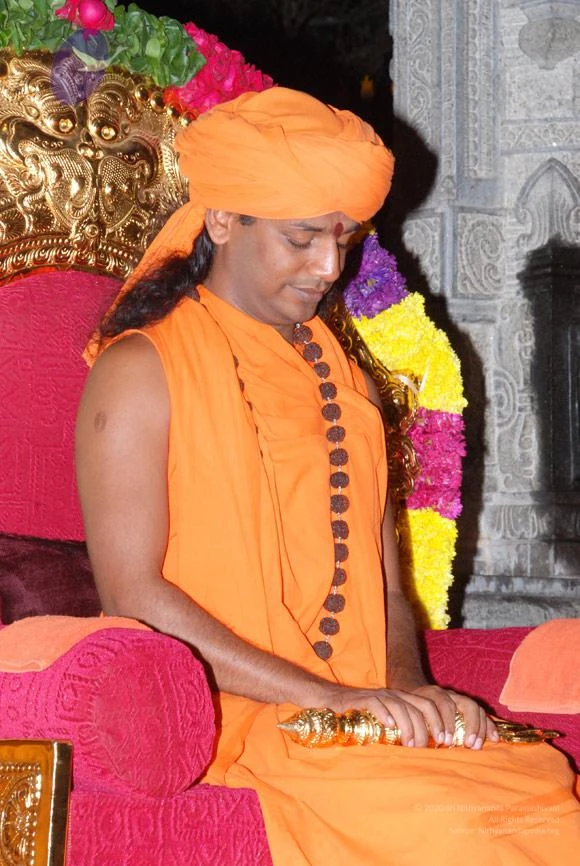
A man seated on an ornate gold-and-red throne with a plush red cushion, hands pressed together in anjali mudra with eyes closed. He wears an orange-saffron shawl over his shoulders and a garland of white and red flowers draped around his neck, with a red kumkum mark on his forehead. Behind him stands carved grey stone architecture and a red-railed pillar.Close-up of a padapuja ritual: a bare foot in the frame is being washed with water poured from a silver vessel held by a hand on the right, while a second hand on the left pours water from a glass. The foot rests on a gold-toned tray scattered with white flowers, green leaves and petals. Silver bowls and cups sit in the background, and an orange-clad arm is visible at upper right. Only hands and feet are visible; no face is shown.A man with long swept-back dark hair sits with palms pressed together in anjali mudra before a gold-embossed ornate throne with a red cushioned seat. He wears a saffron-orange shawl wrapped over his shoulders and a red tilak on his forehead, with a garland of white jasmine and red roses with green leaves around his neck. Behind him is a carved grey stone pillar with a relief of Ganesha. To the left, a tray holds fruit and offerings, and a folded orange cloth lies on the chair. Appearance cues are consistent with a person, seated in a devotional or darshan setting.

August 01 2010

Original wiki page
Contents

Title

Message to Former Devotees: Nithyananda on Patanjali Yoga Sutras

Narration

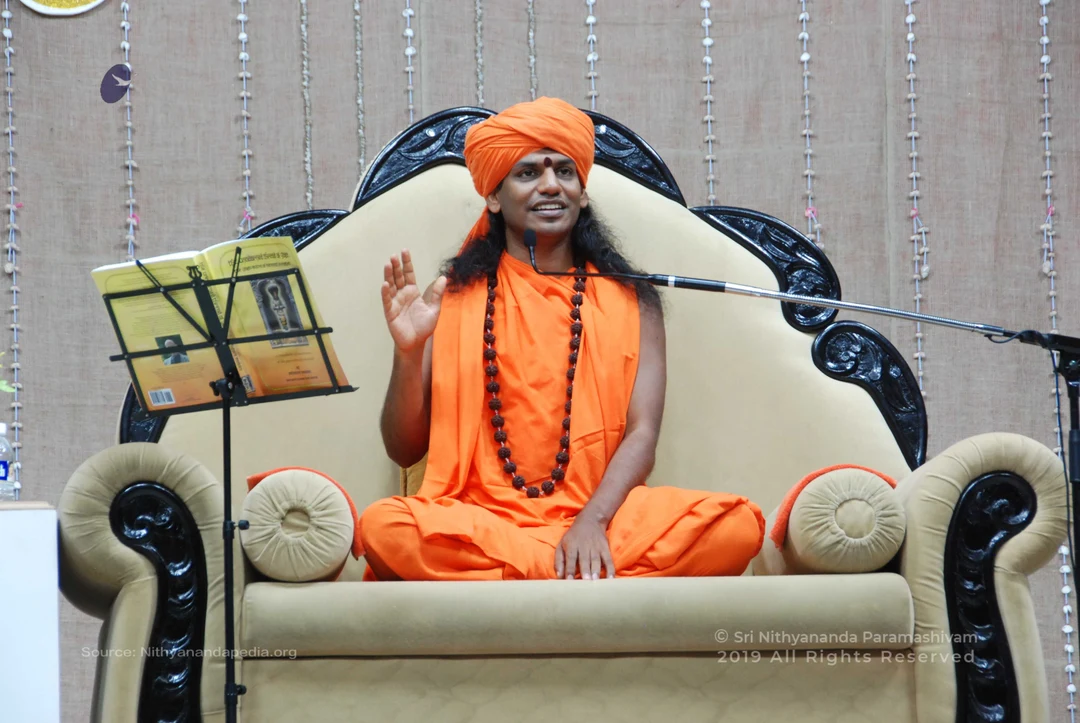
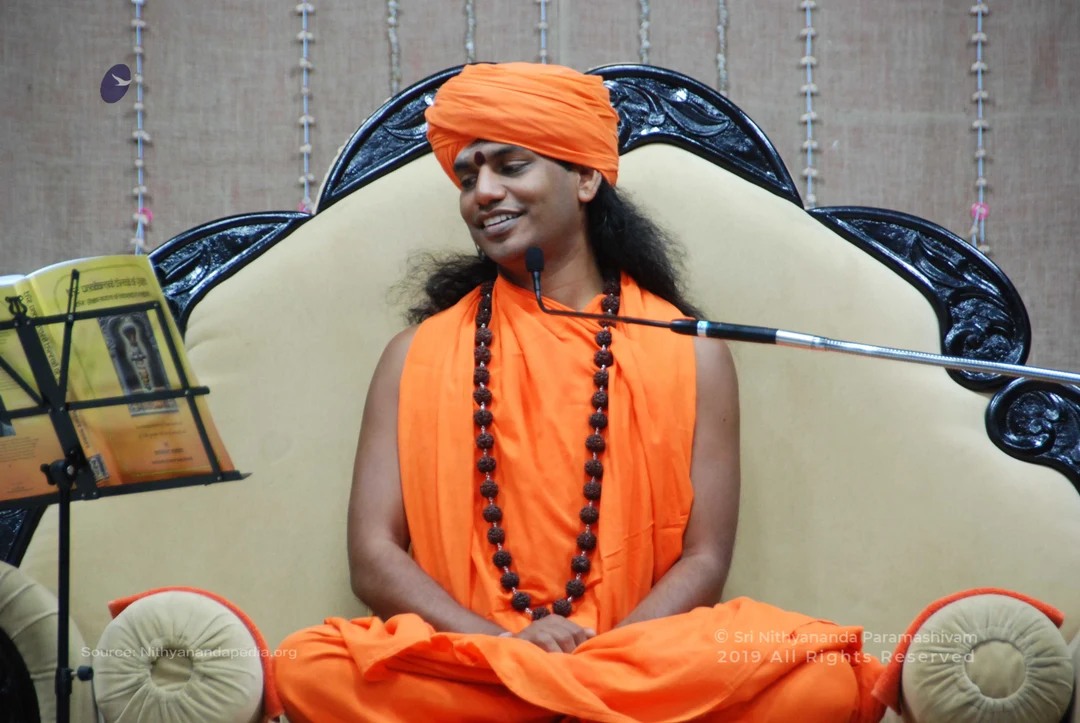
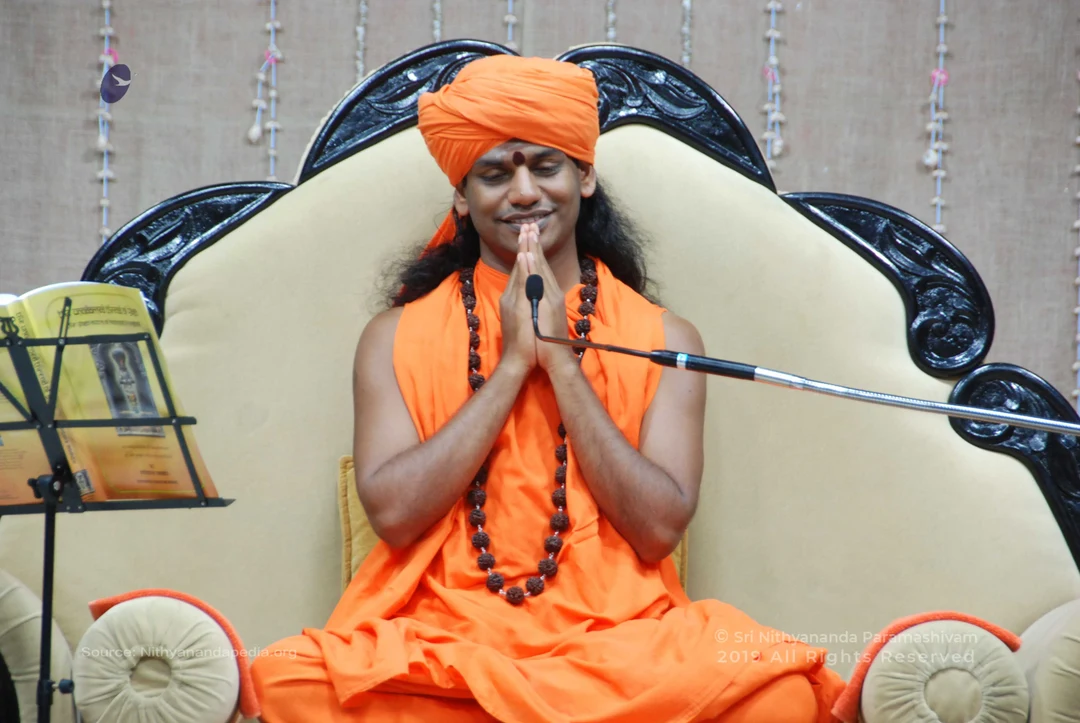
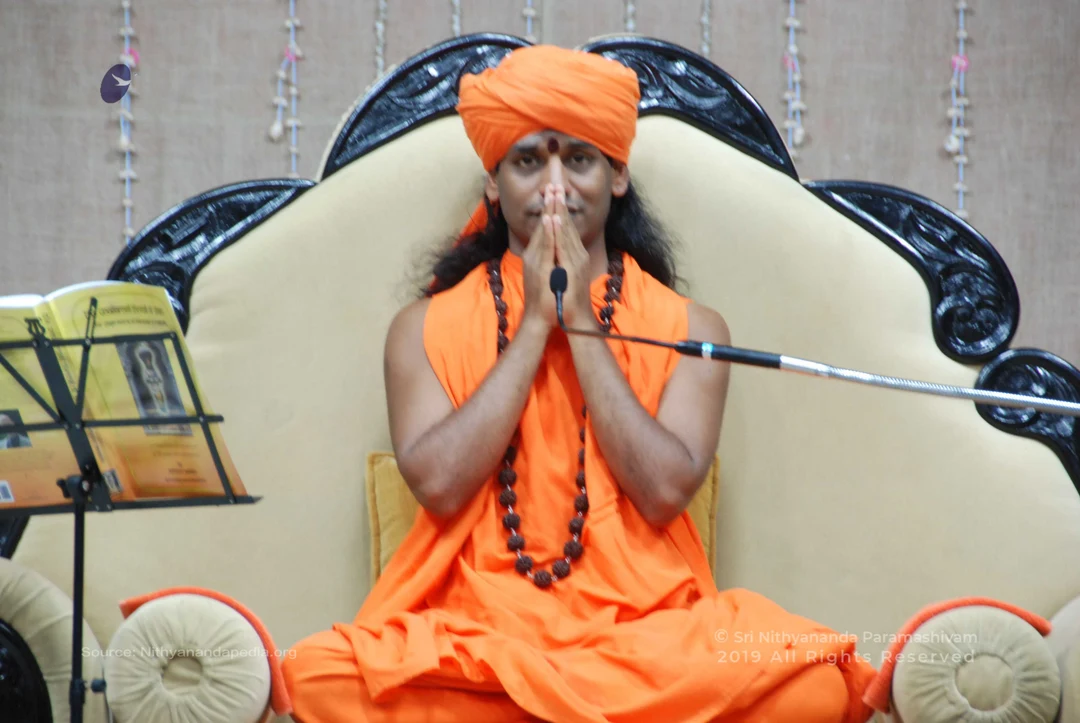
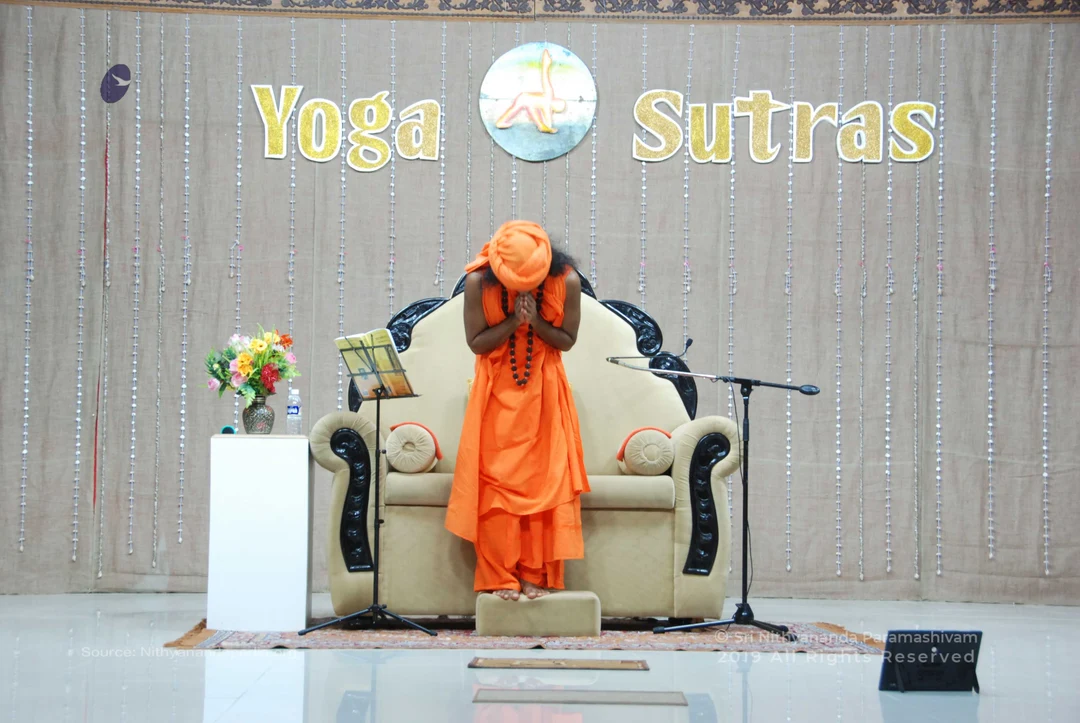
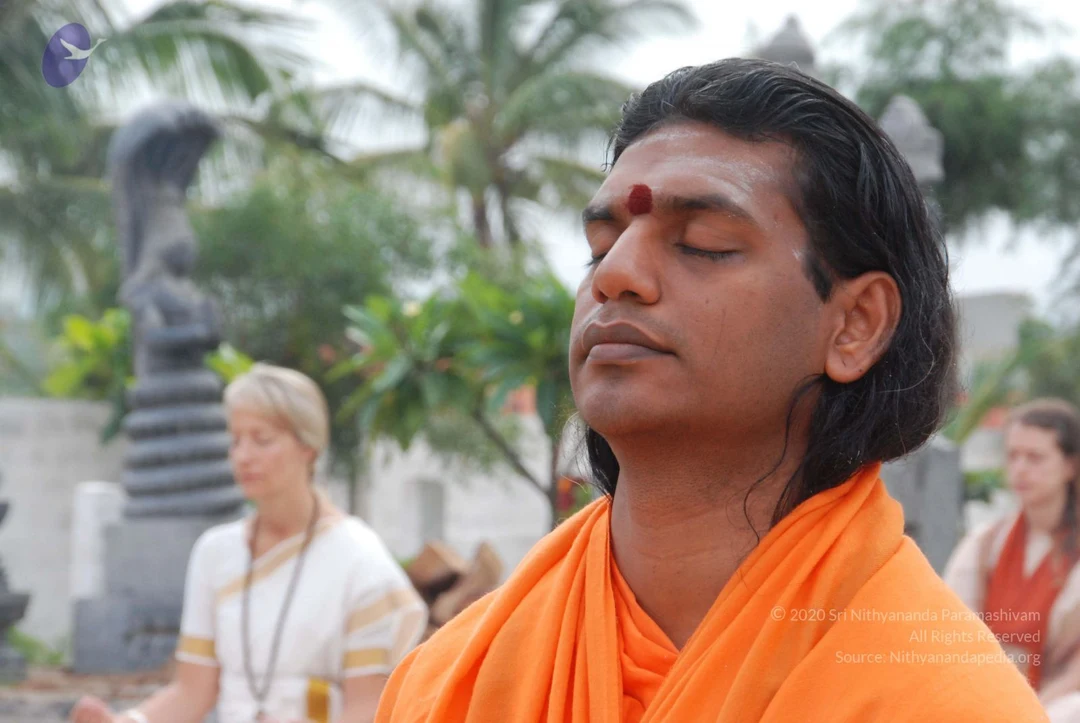
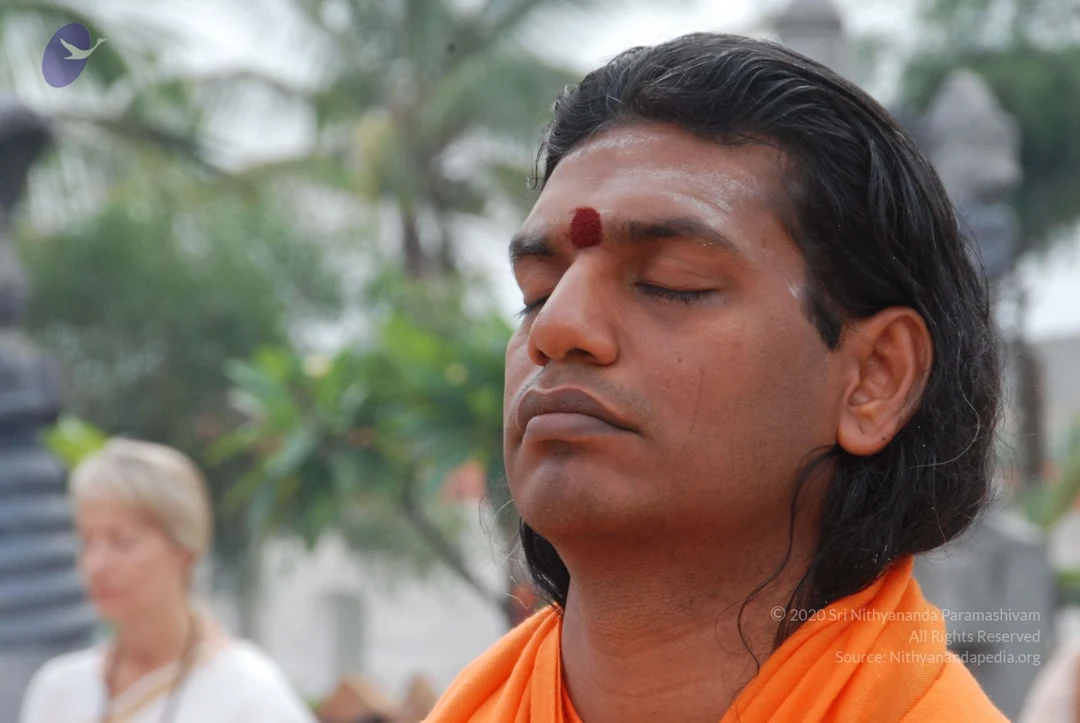
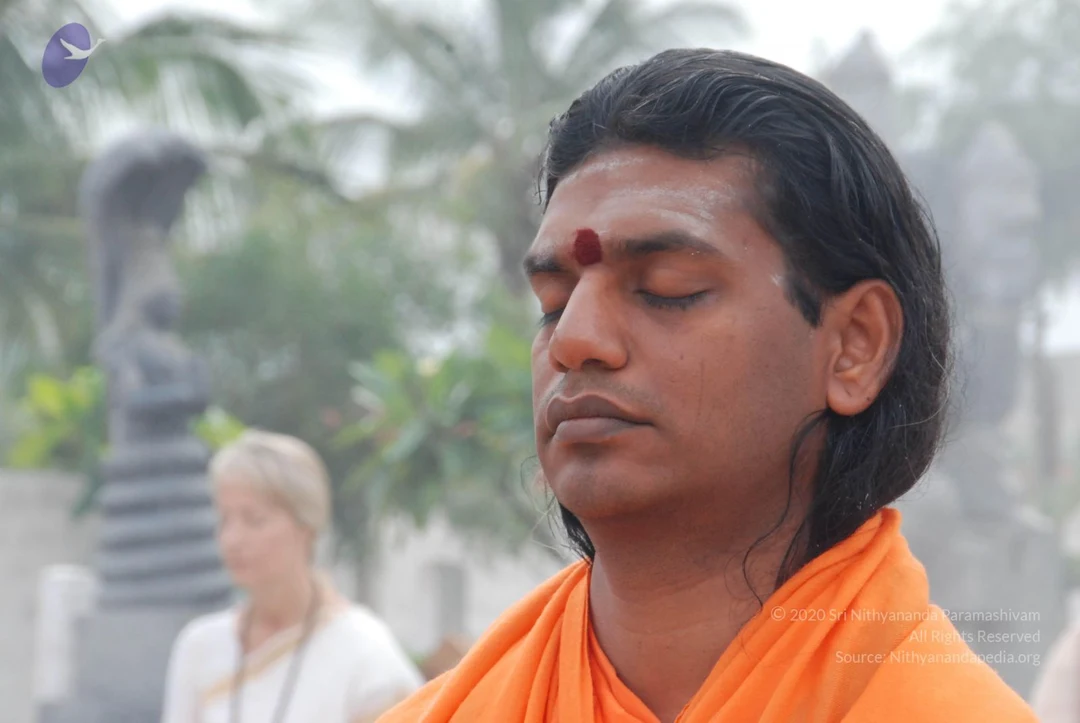
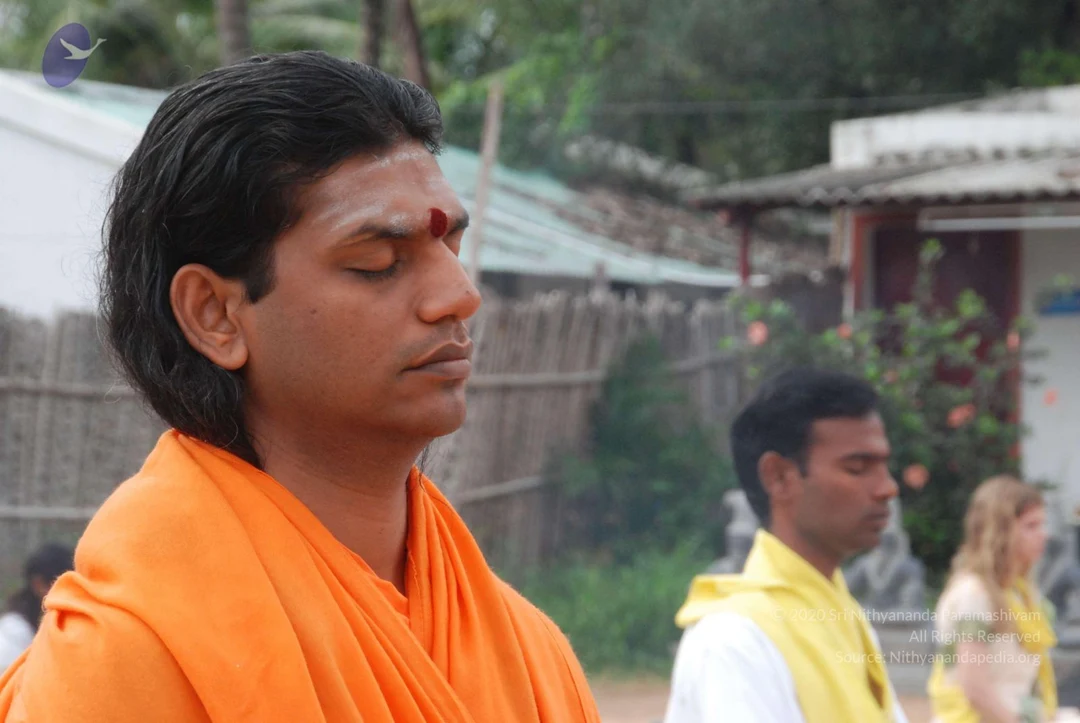
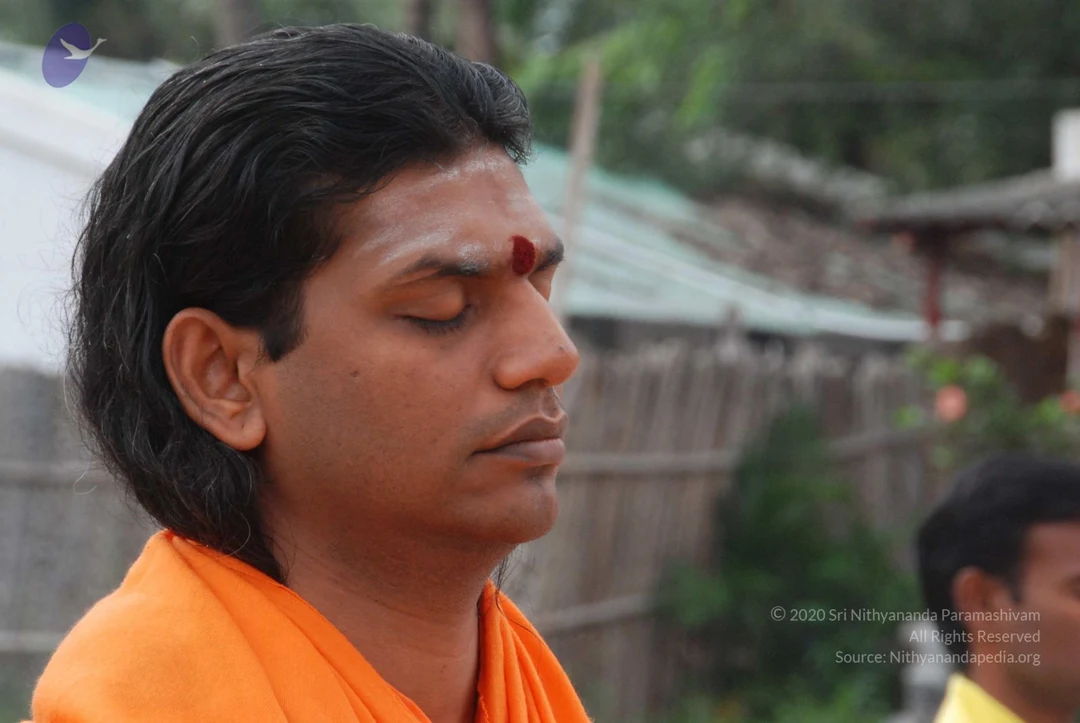
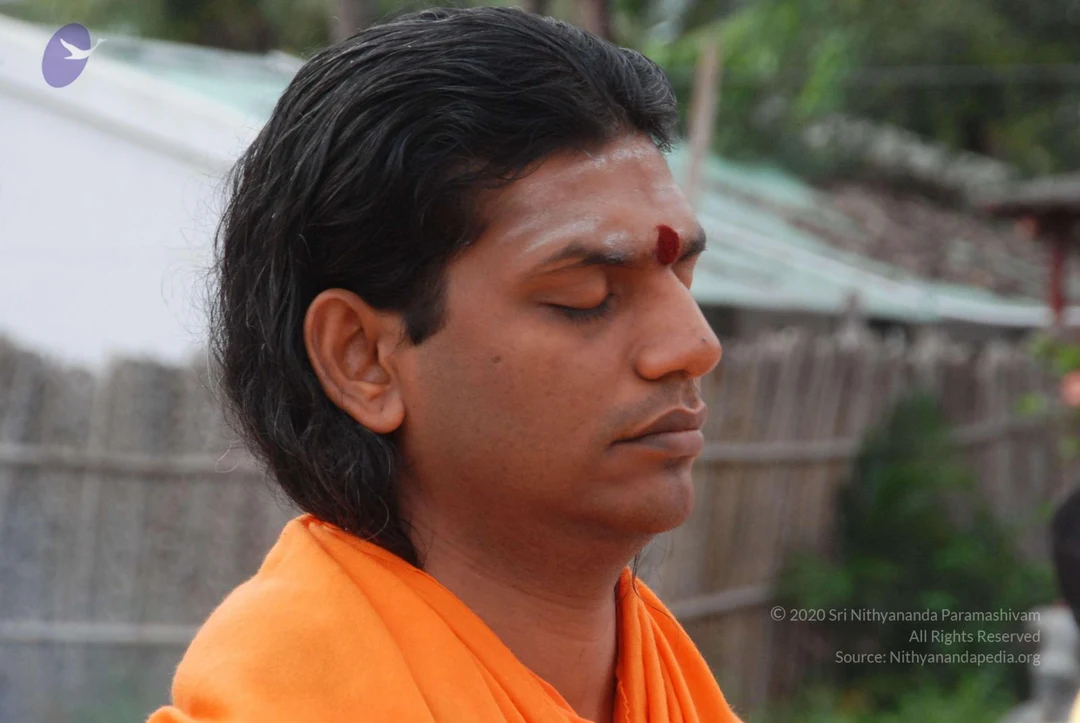
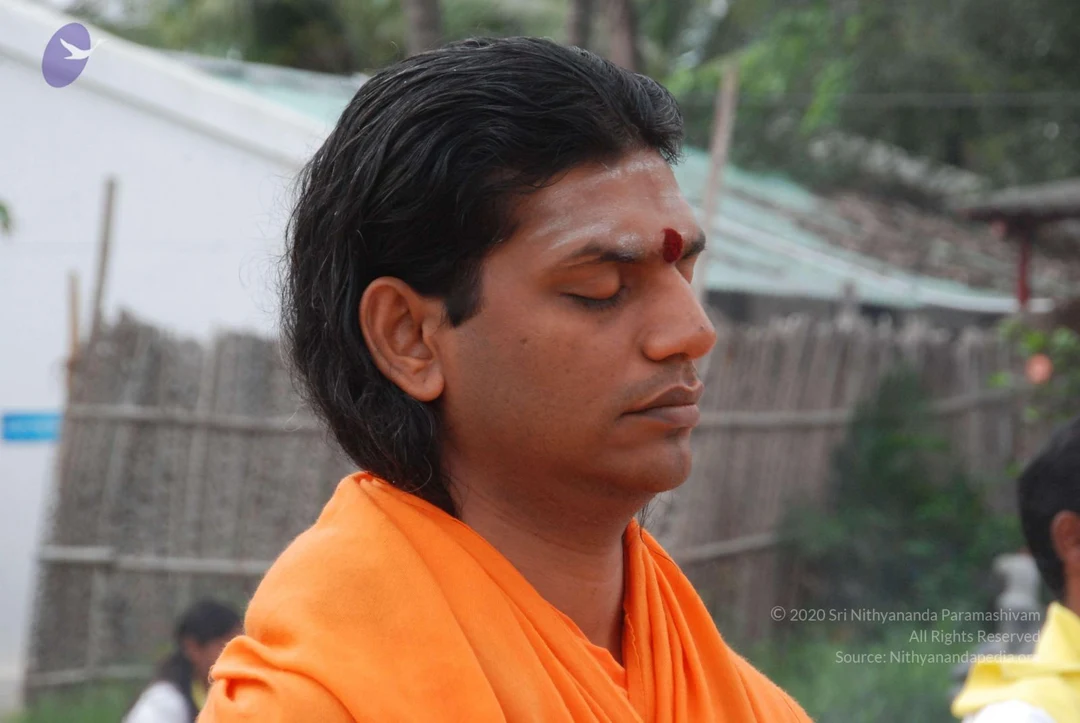
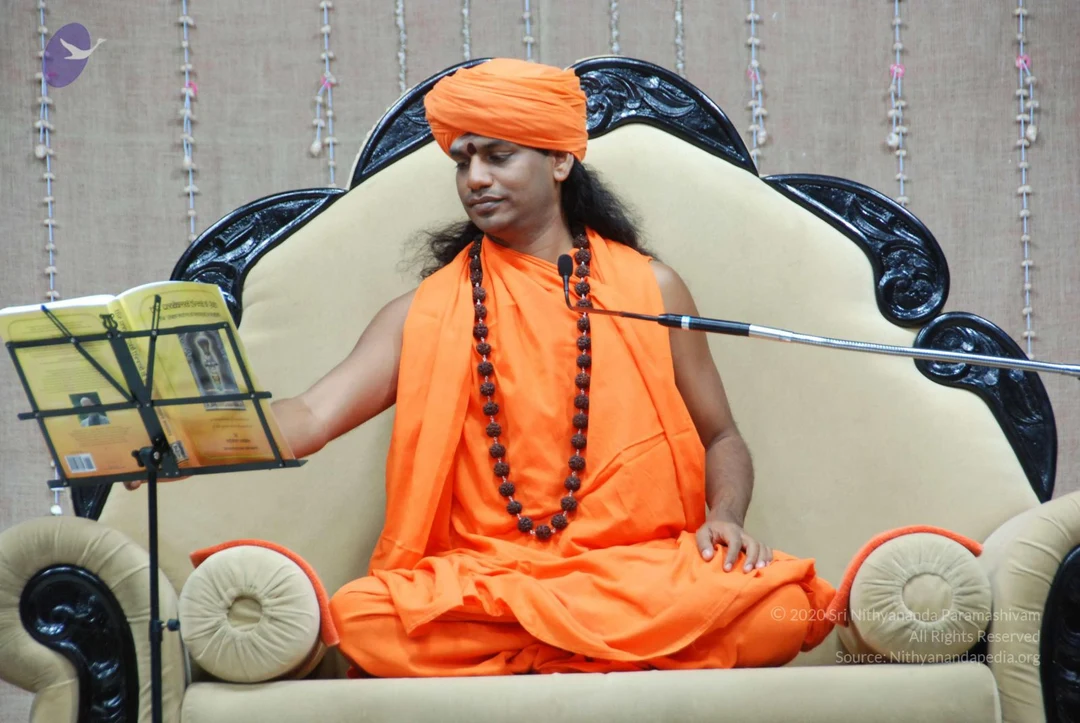
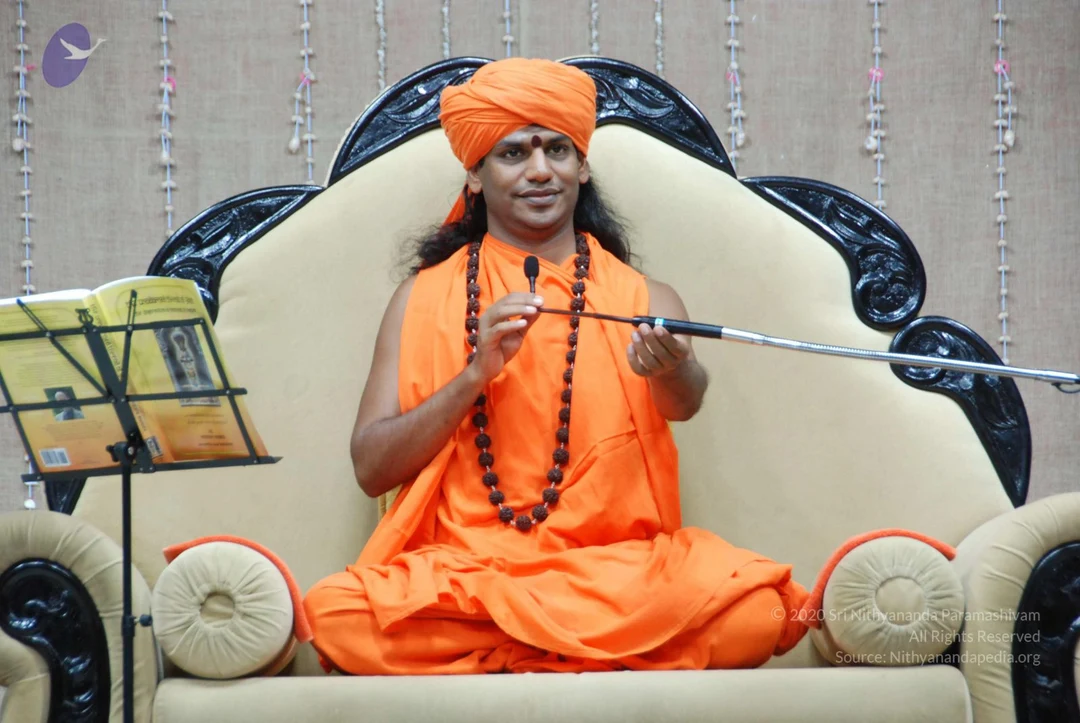
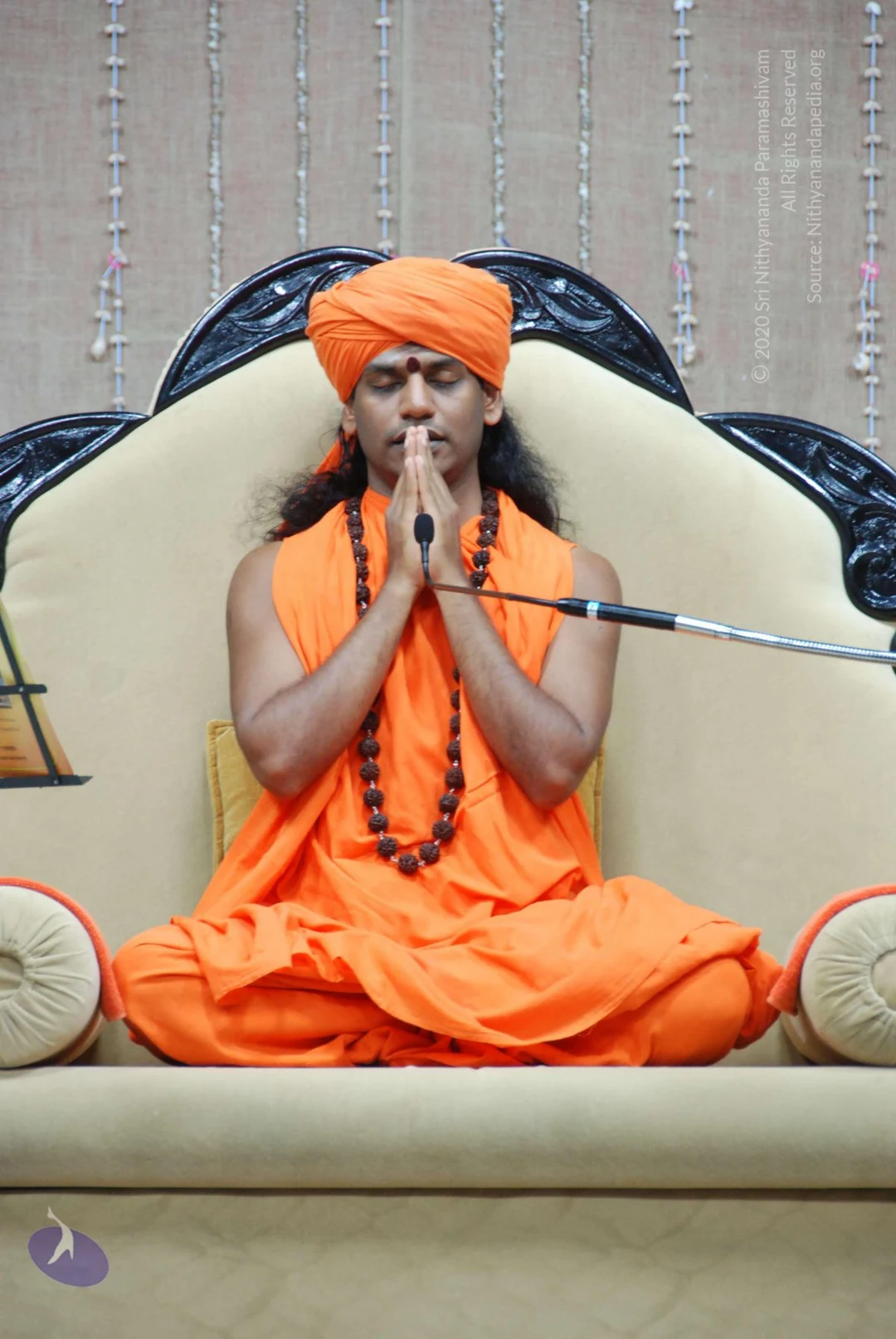
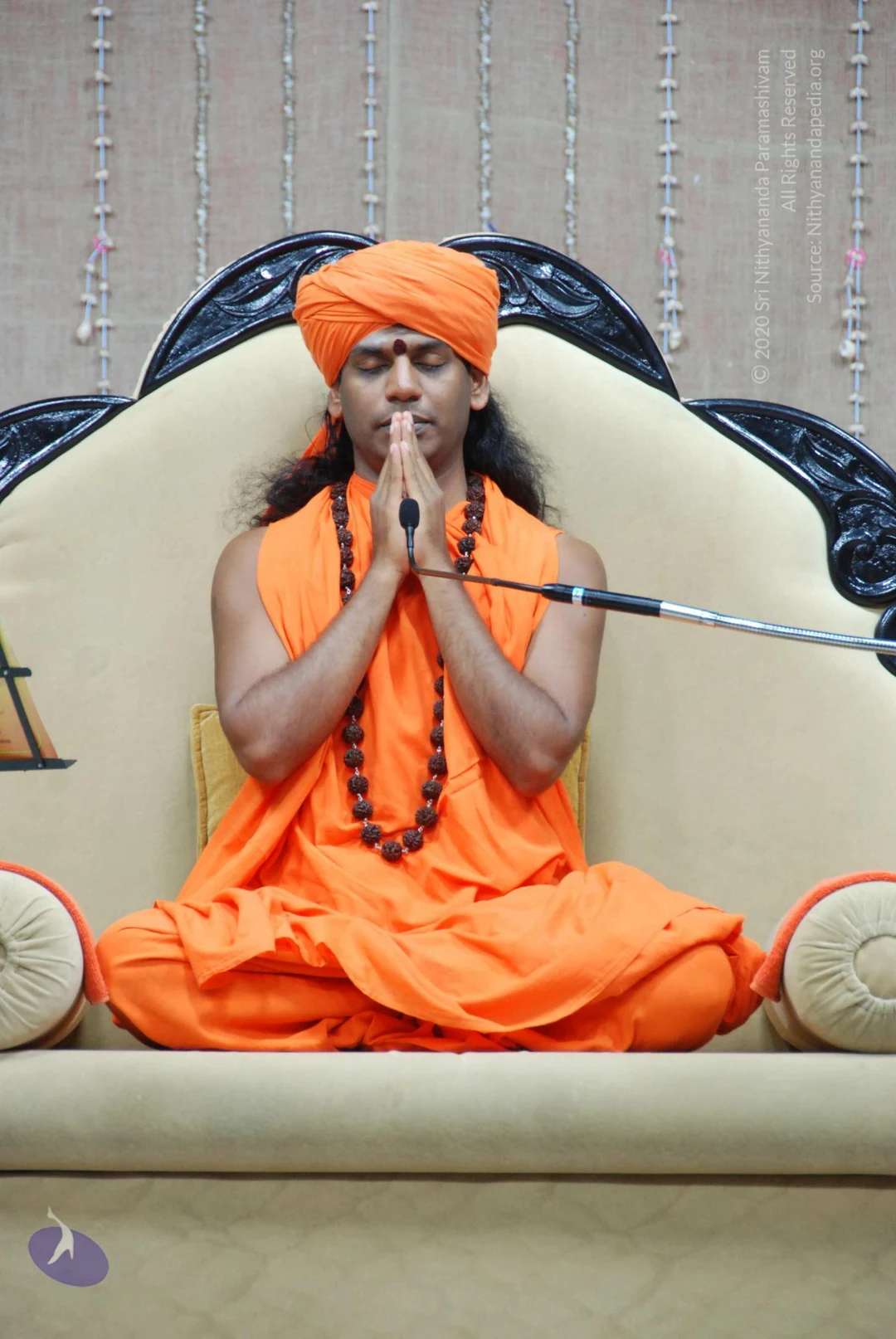
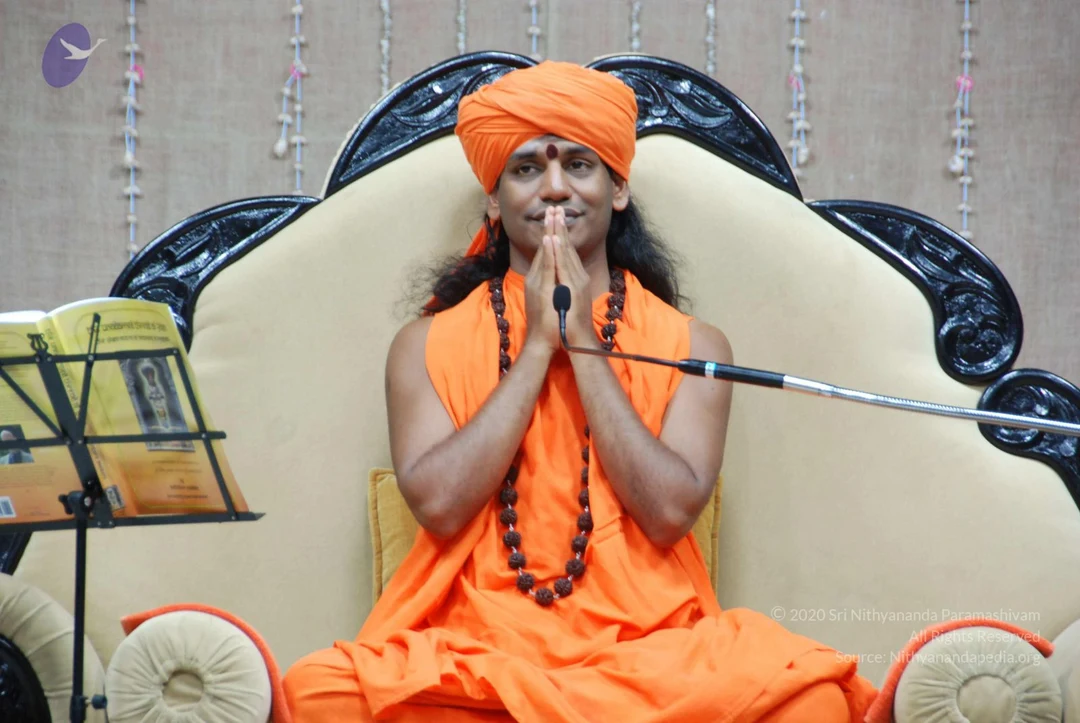
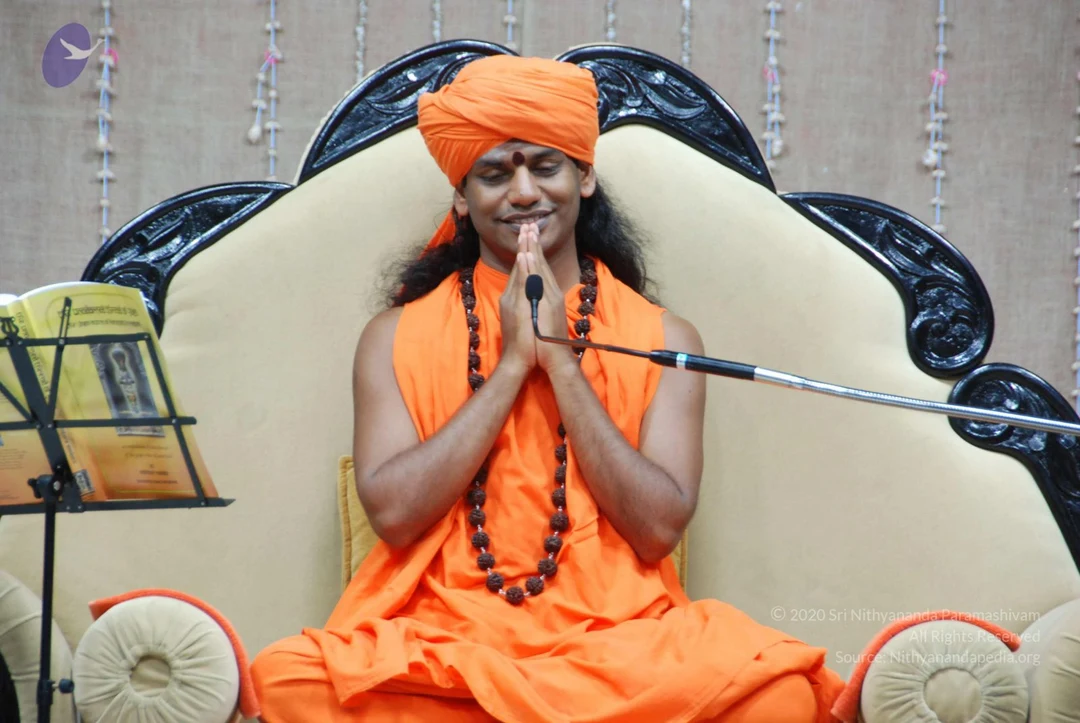
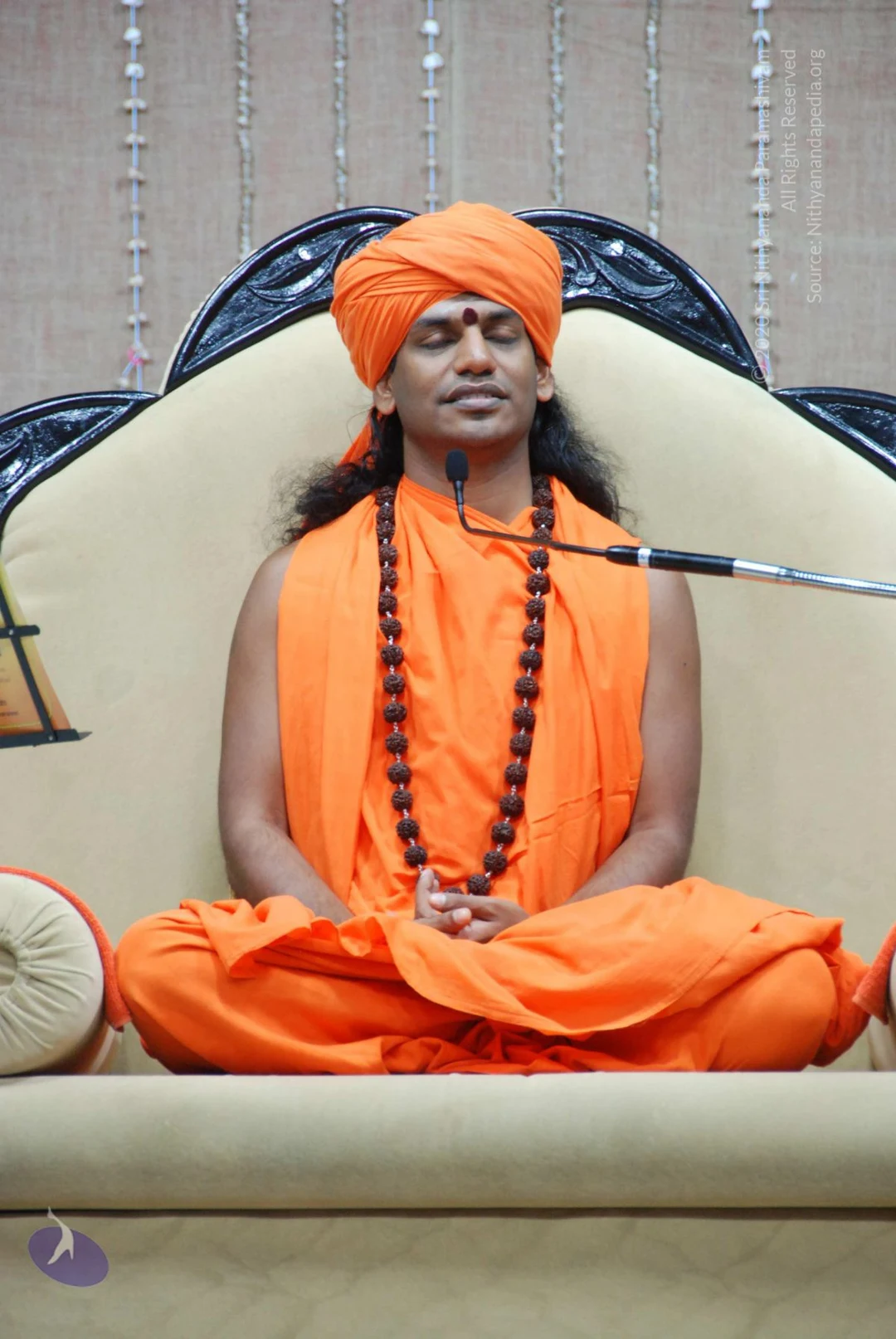
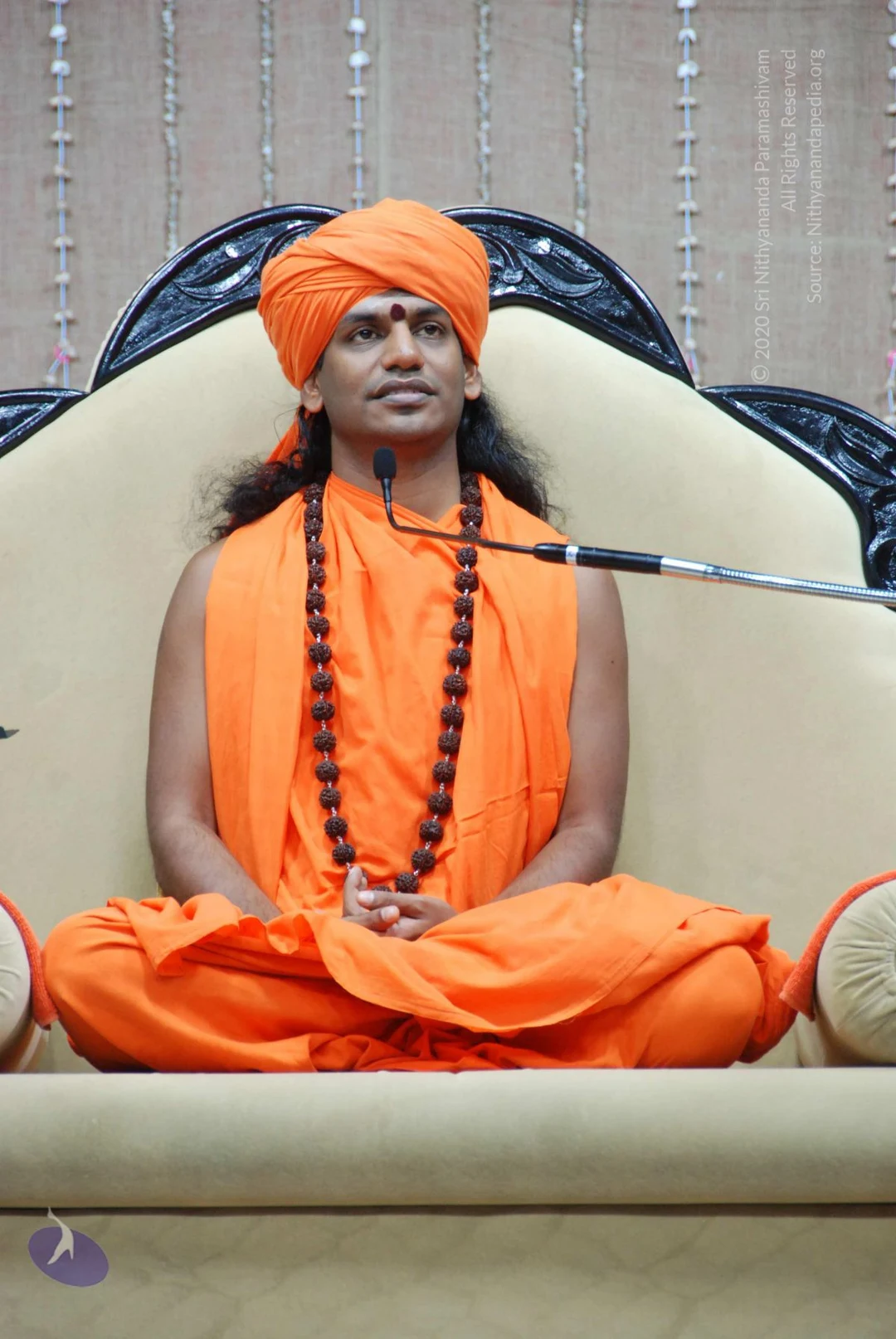
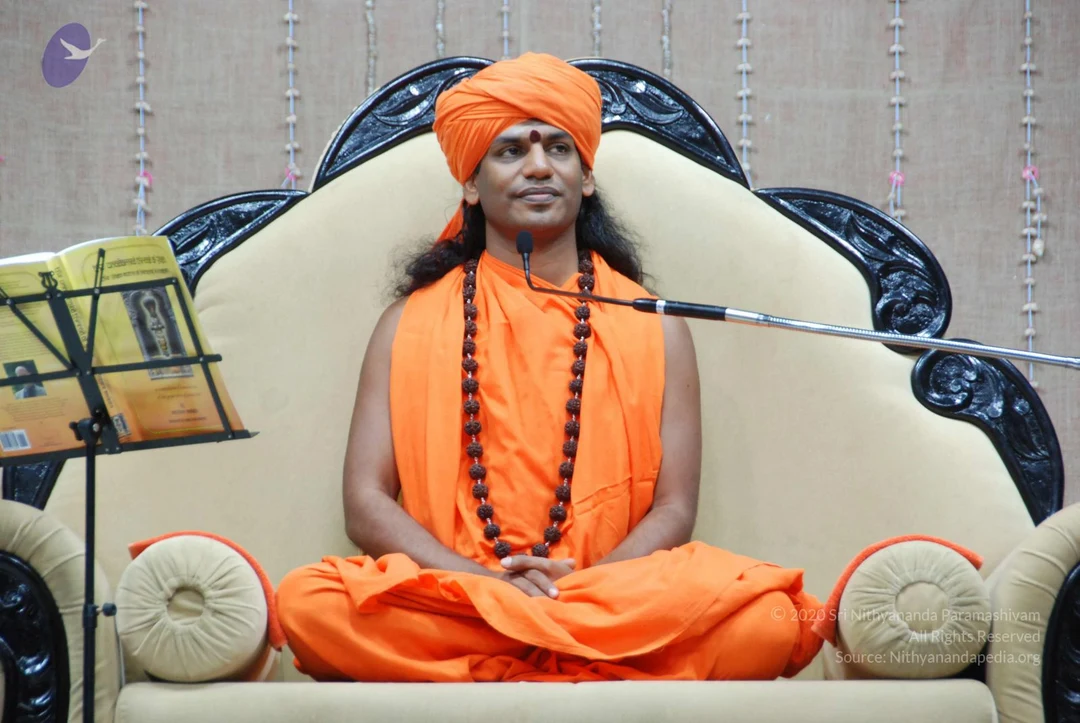
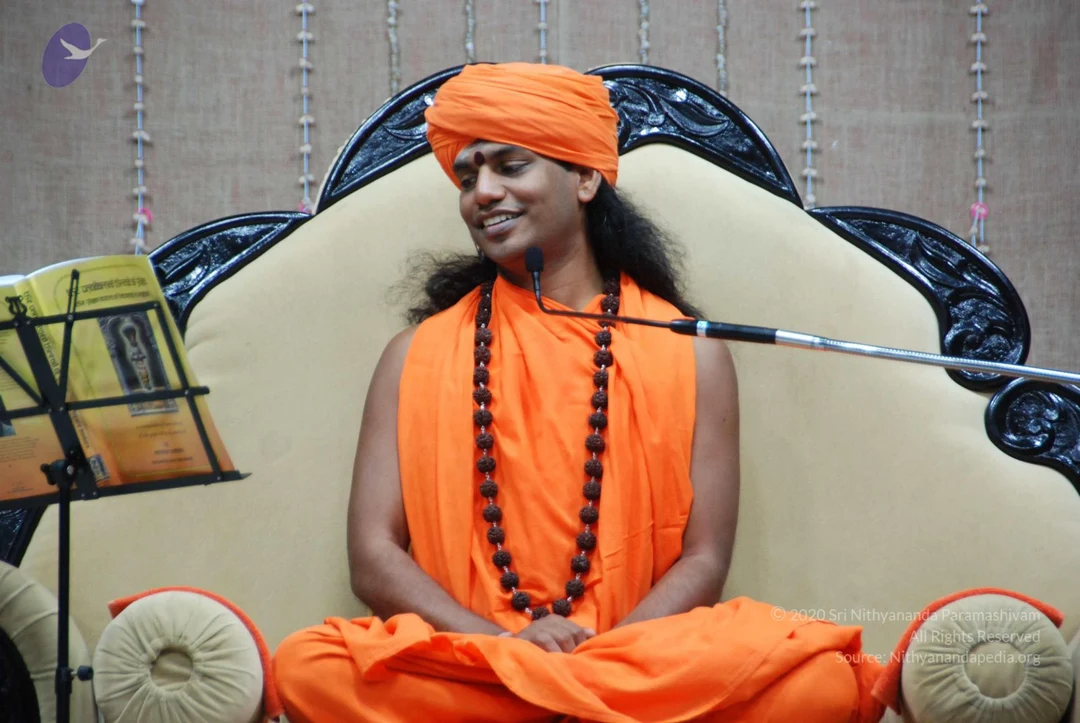
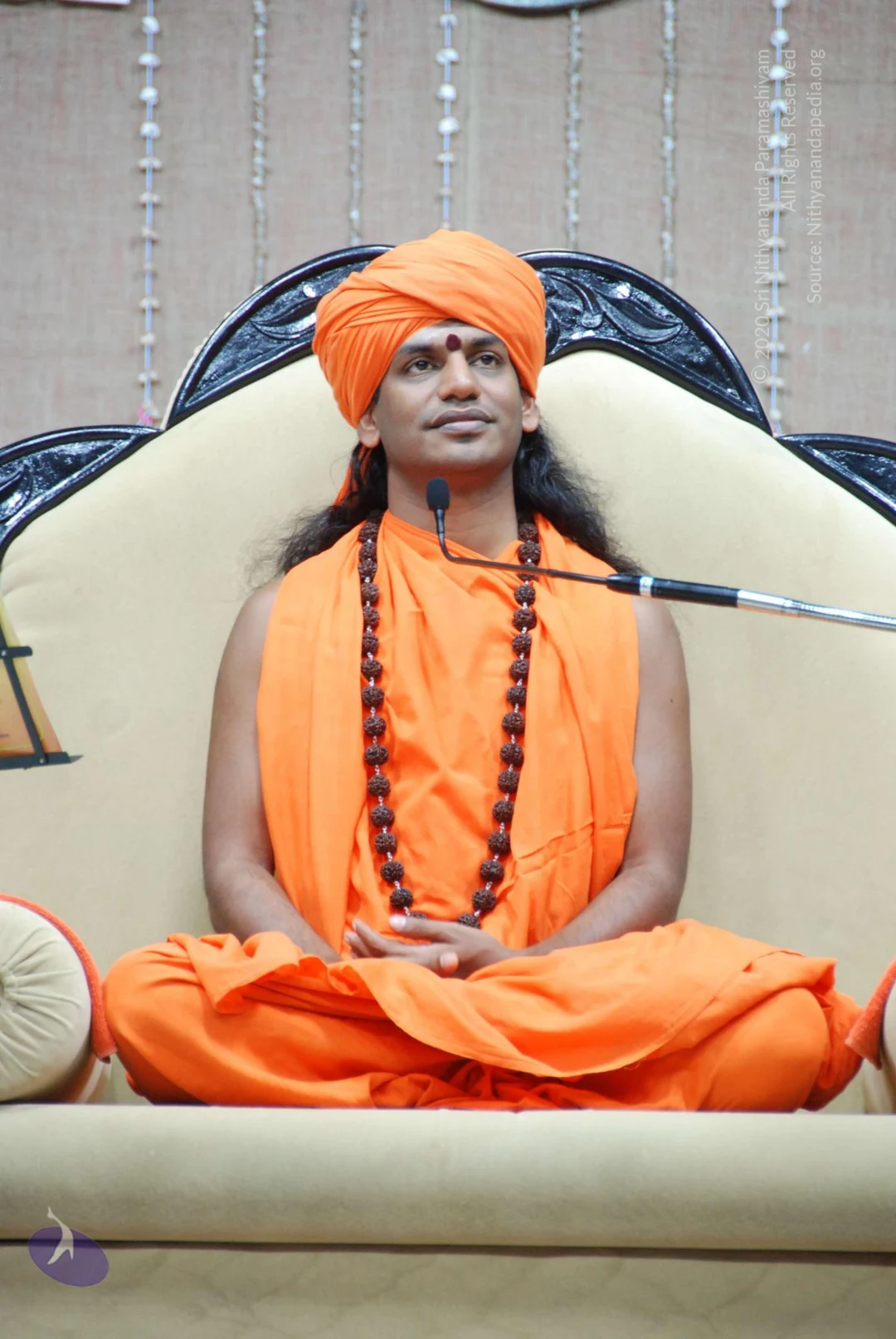
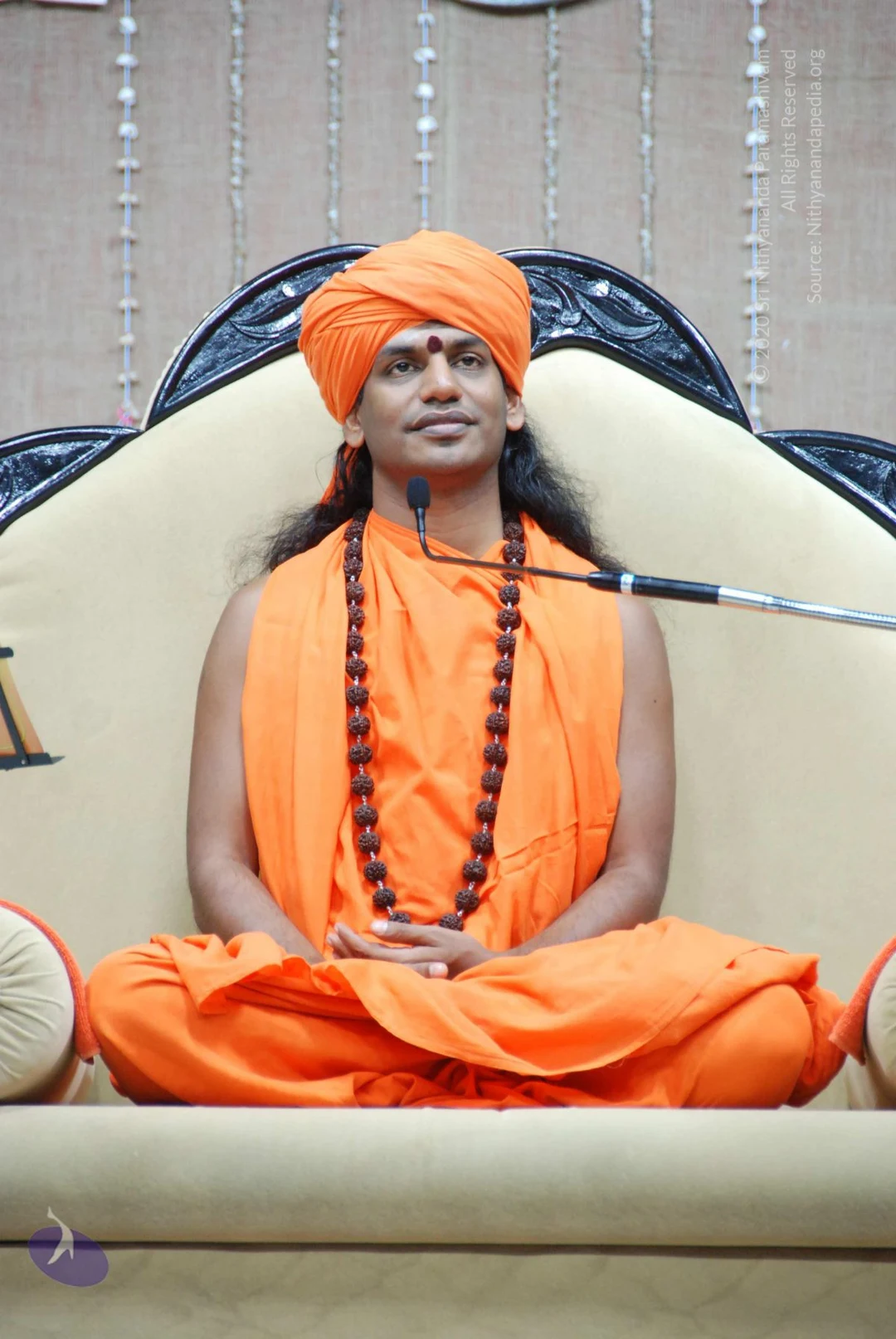
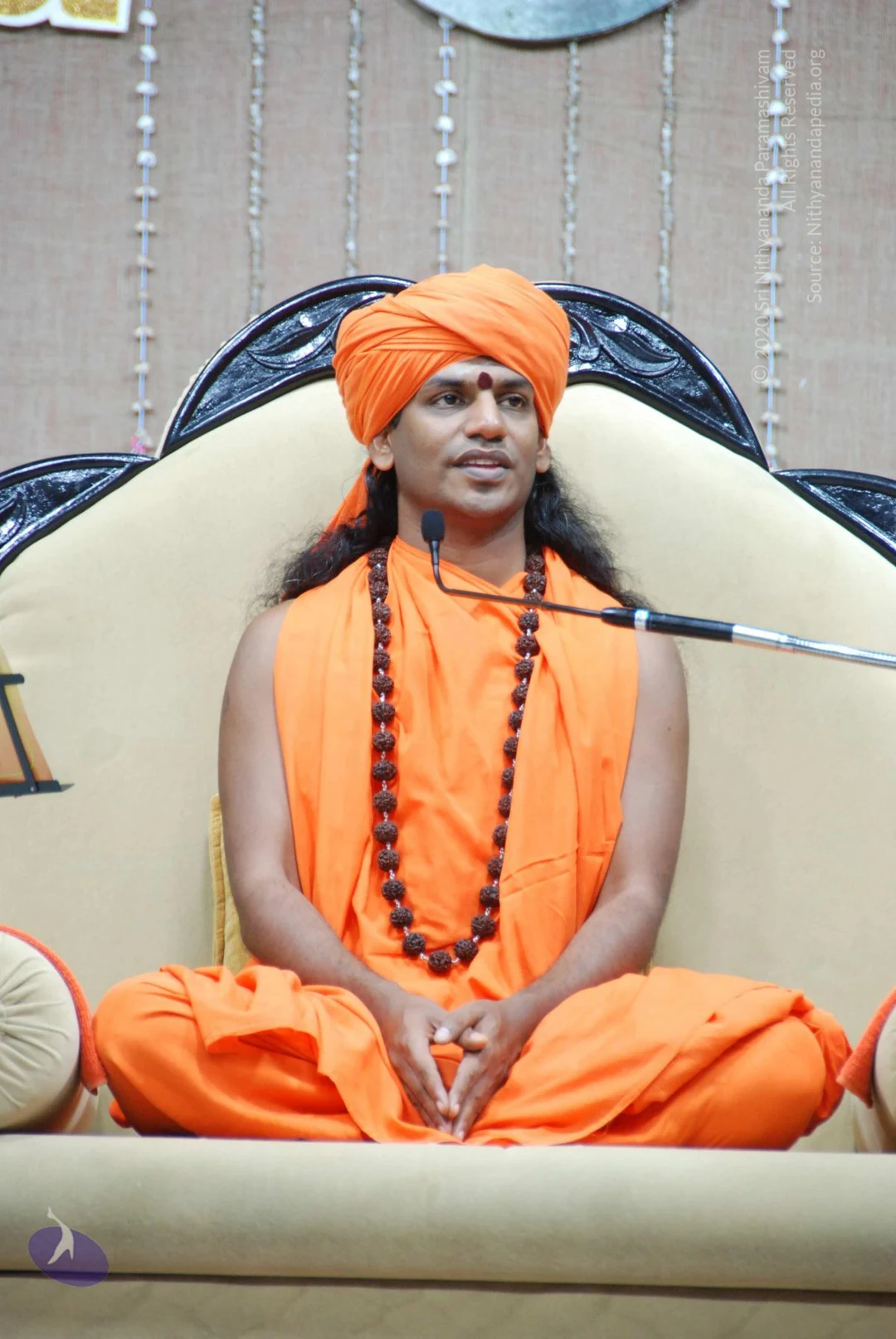
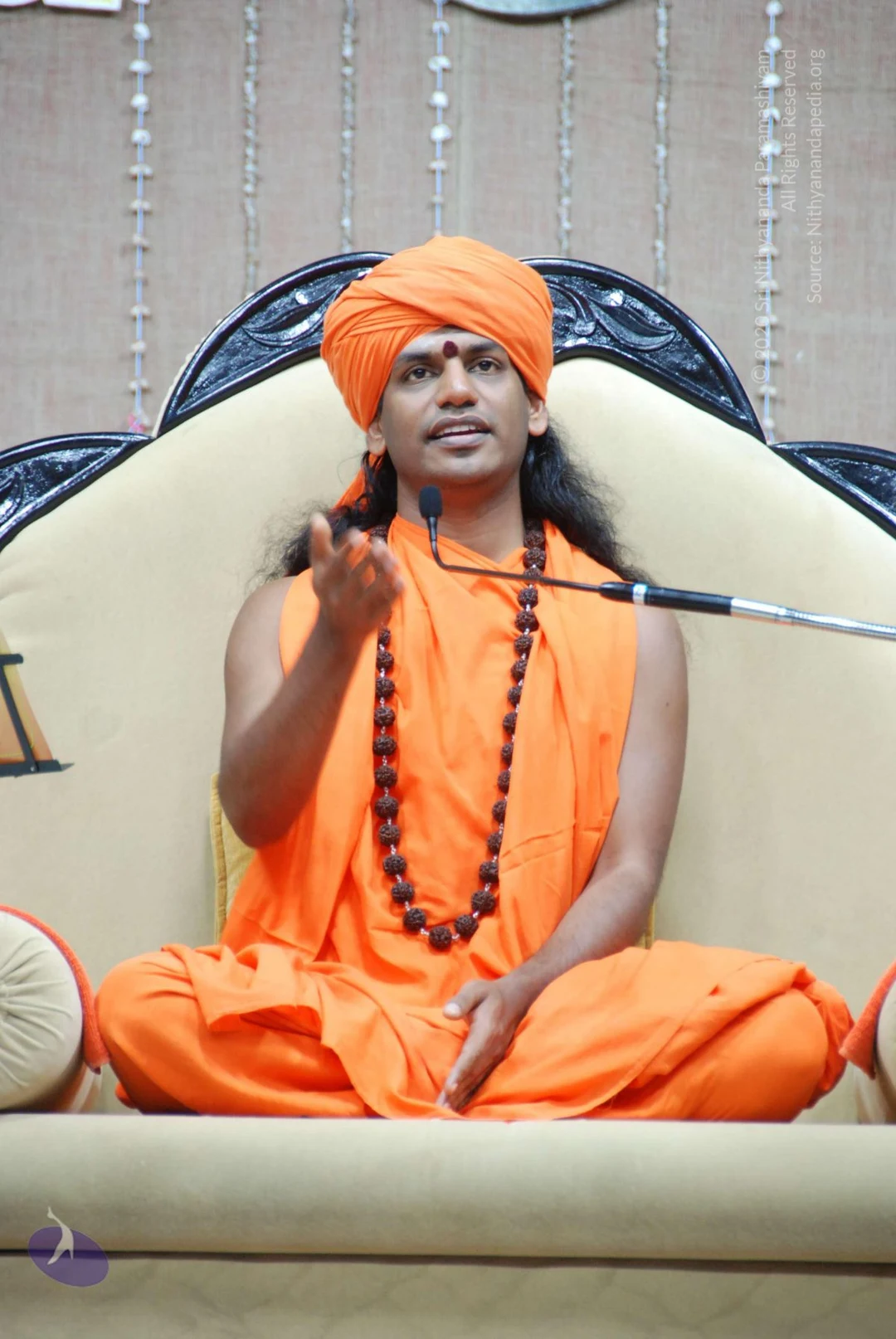
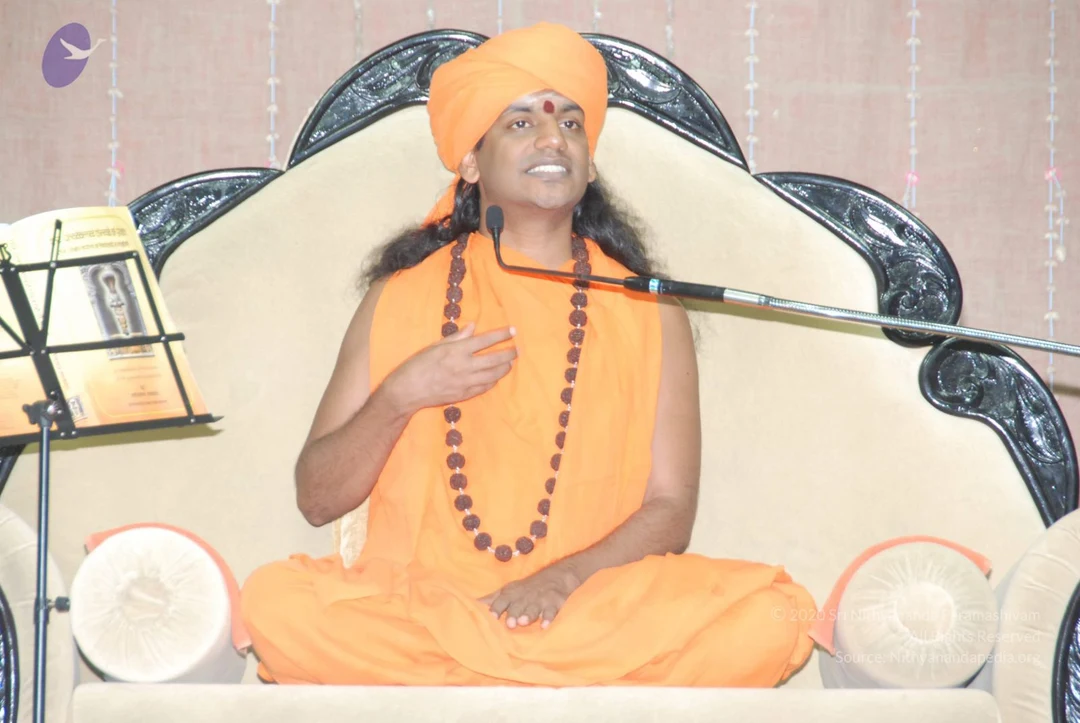
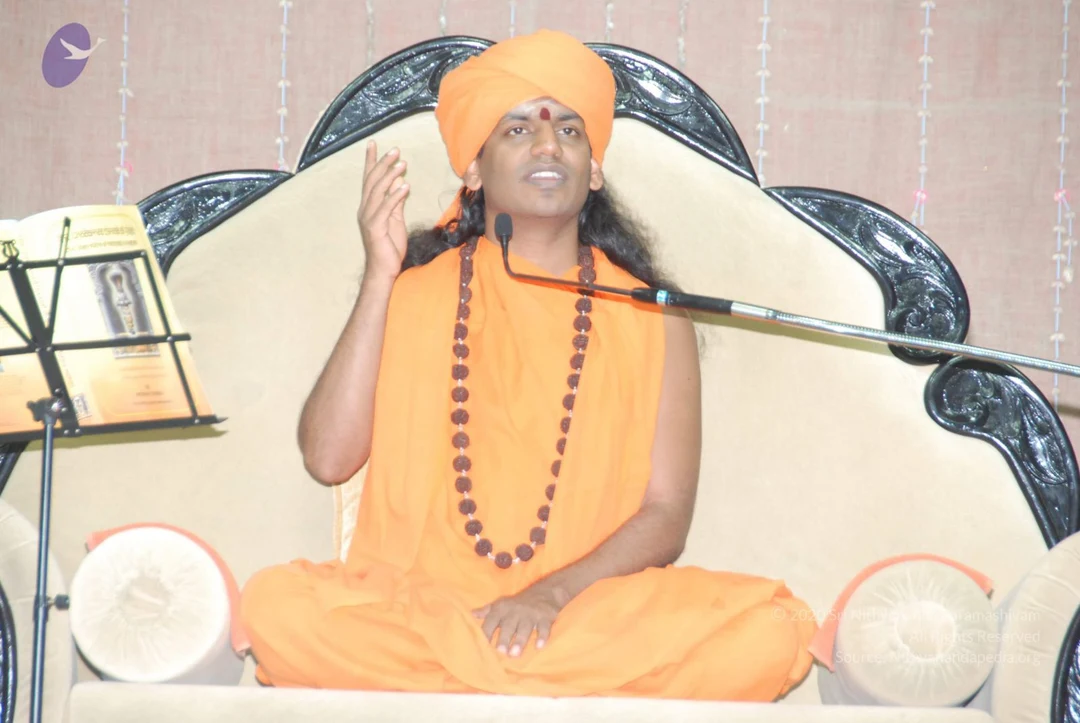
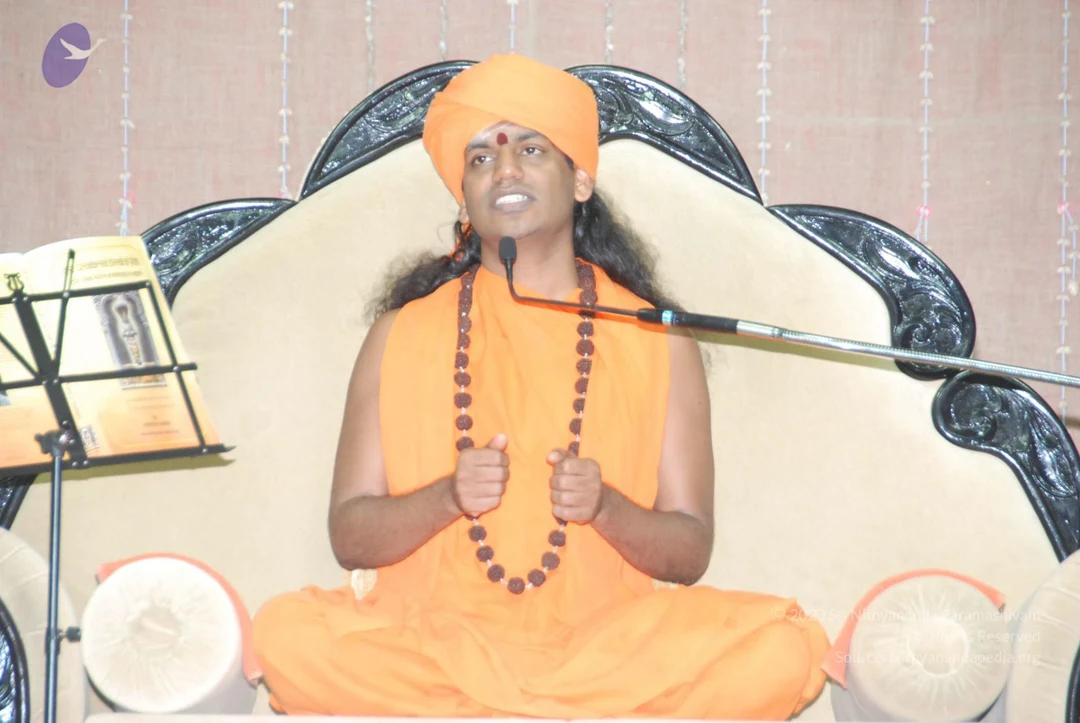
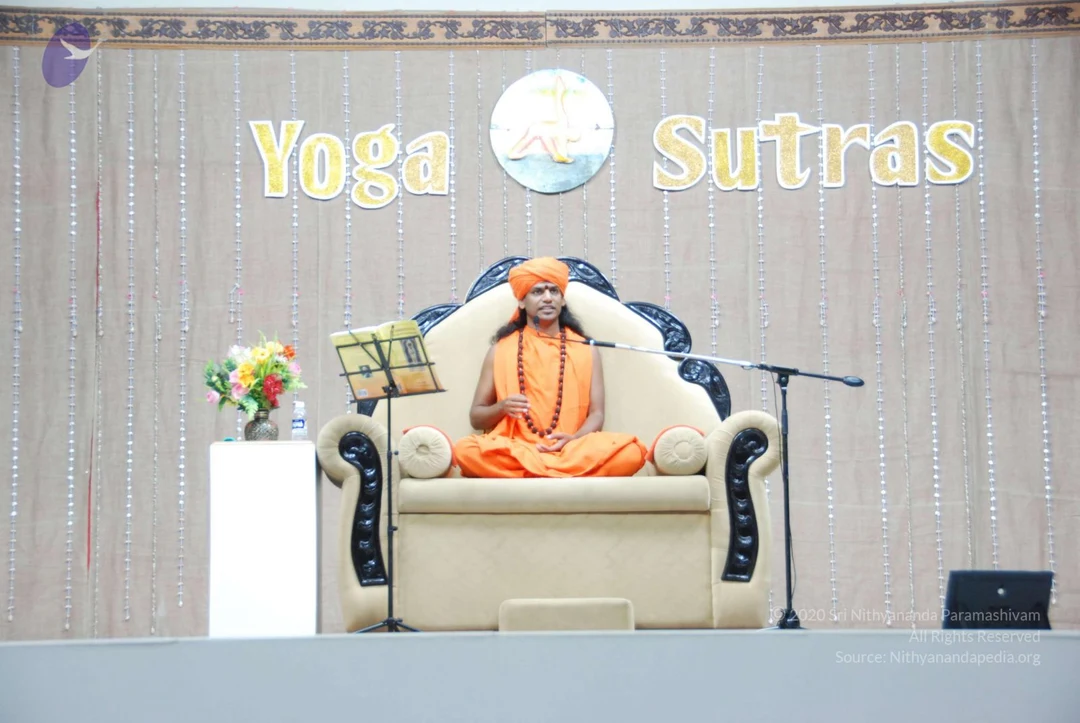
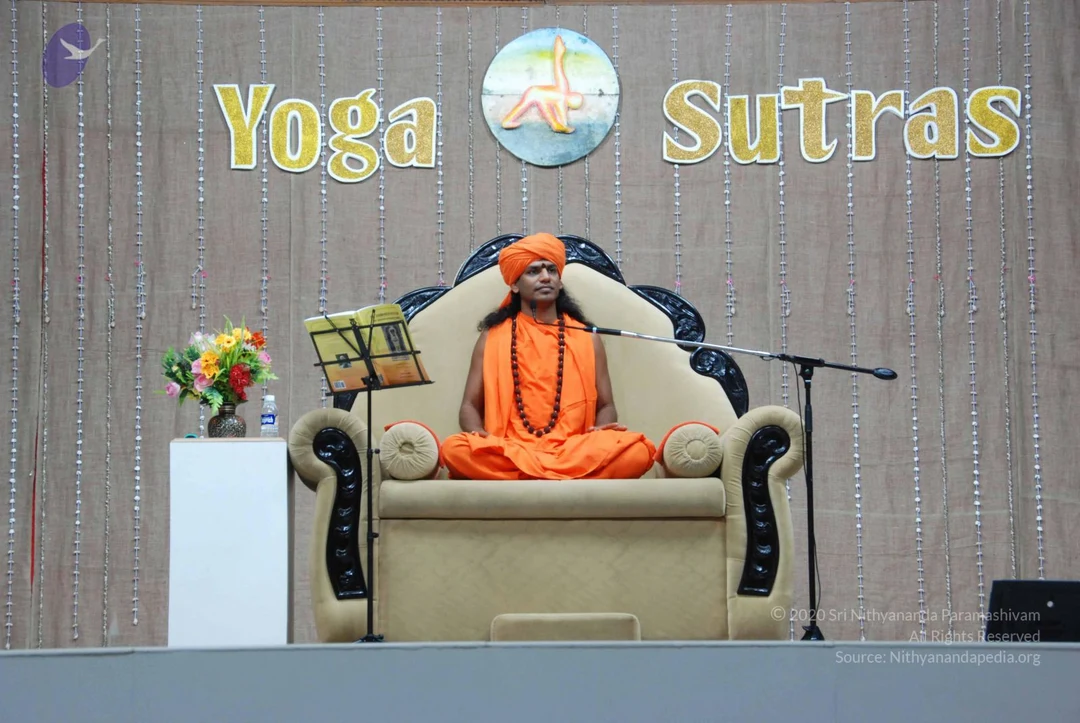
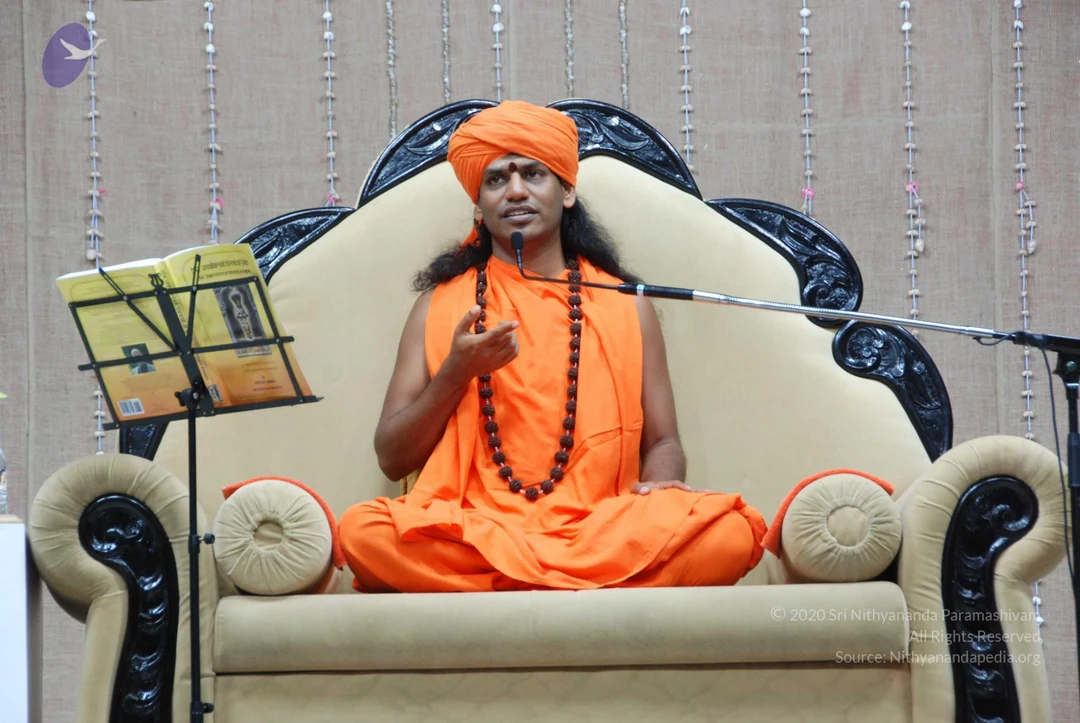
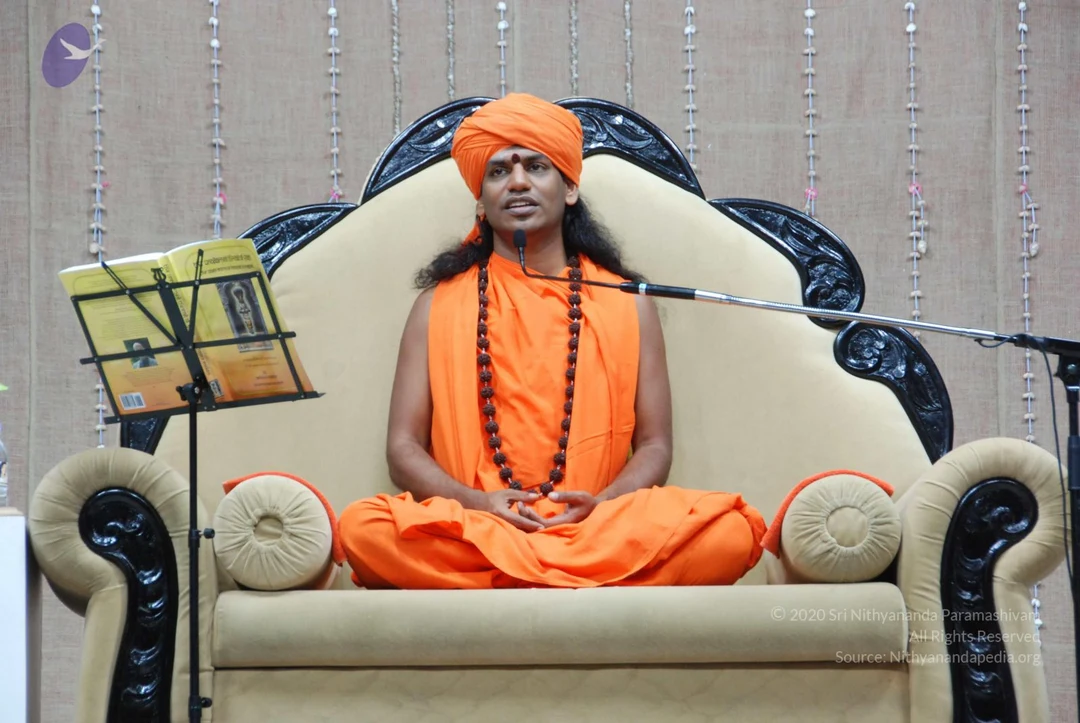
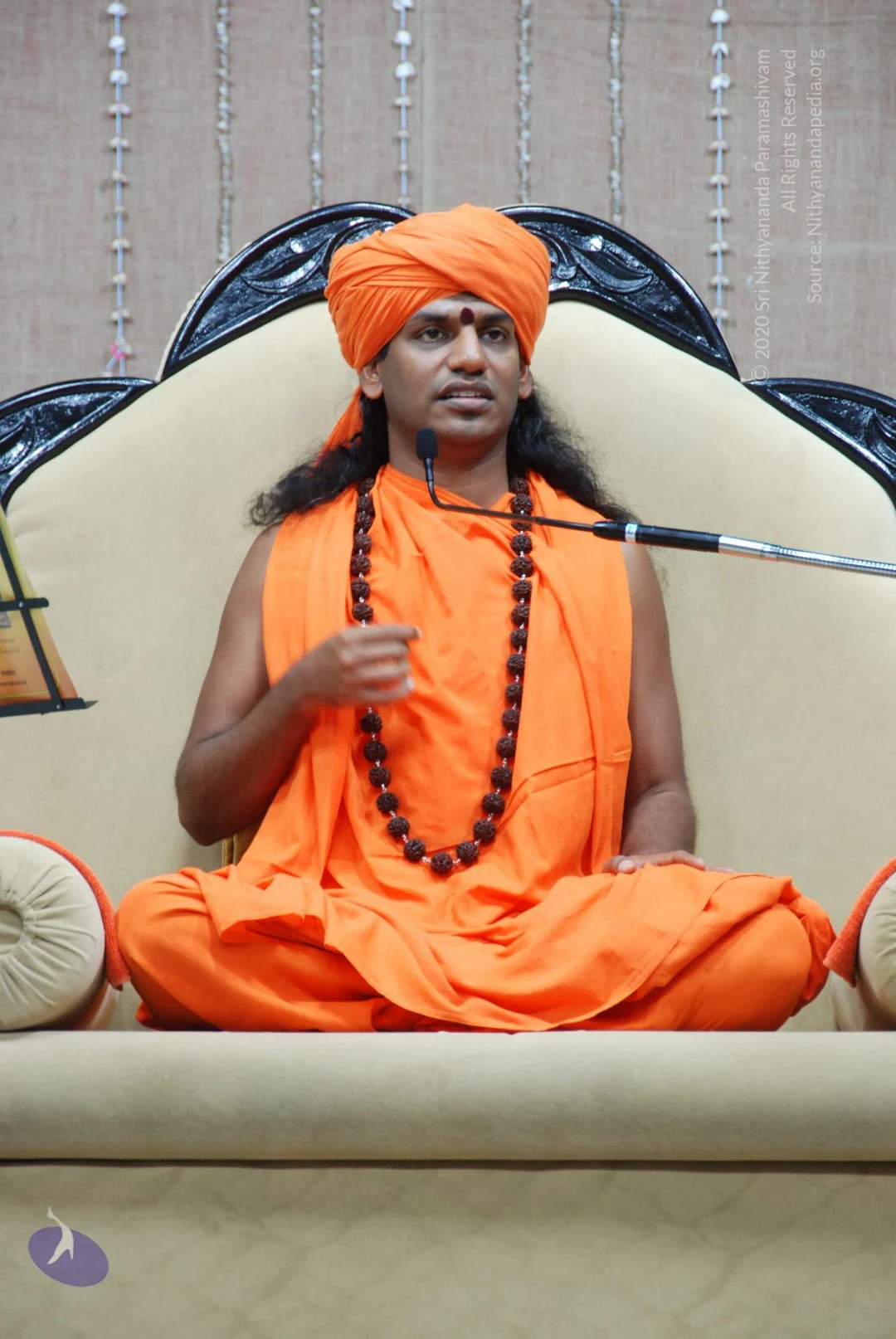
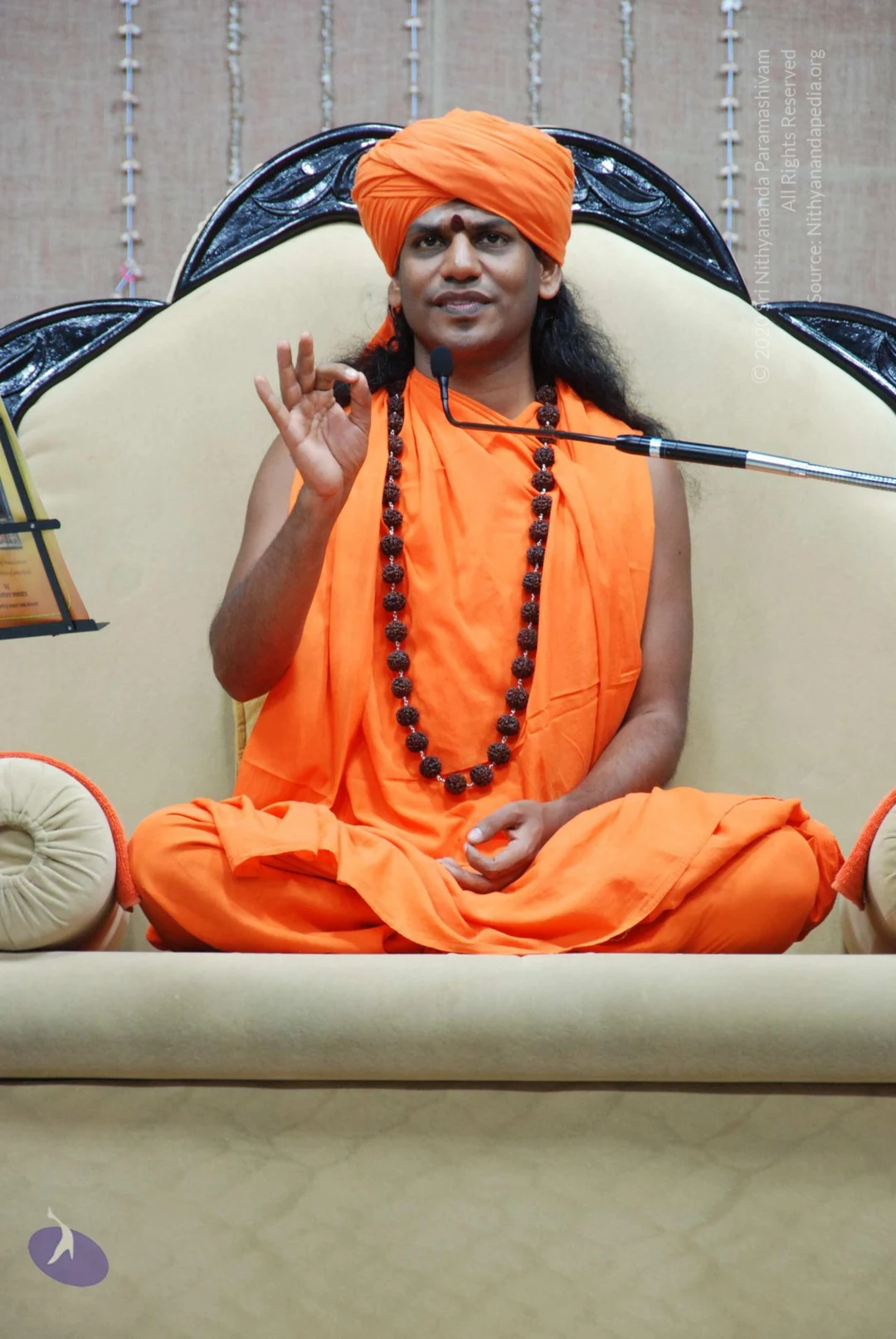
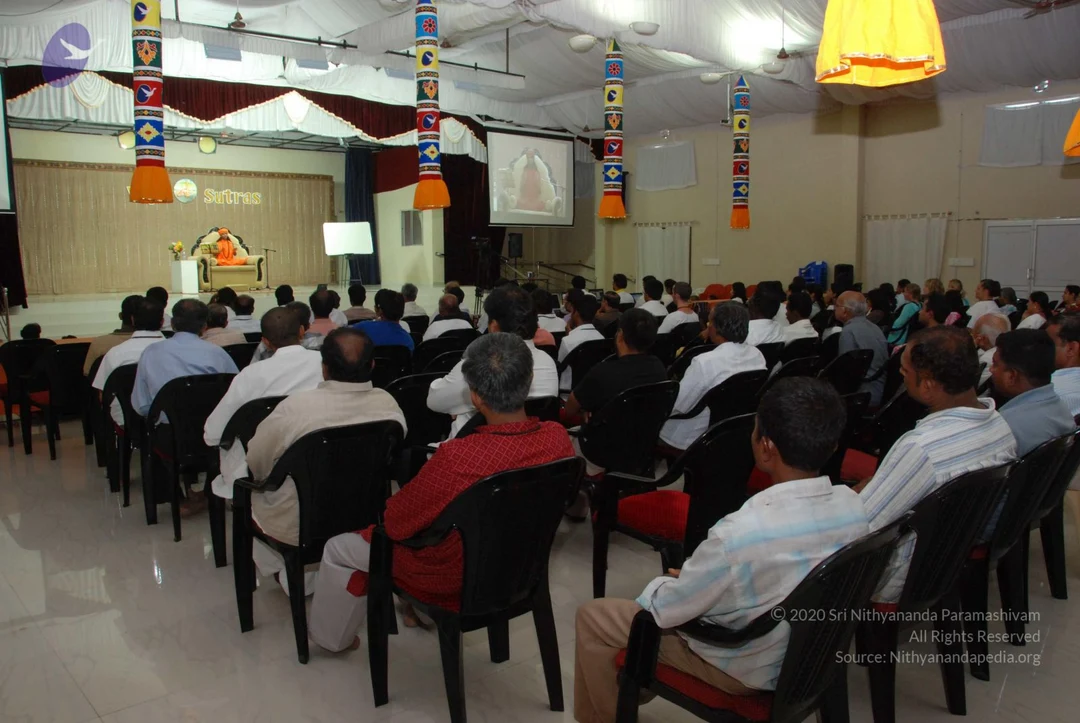
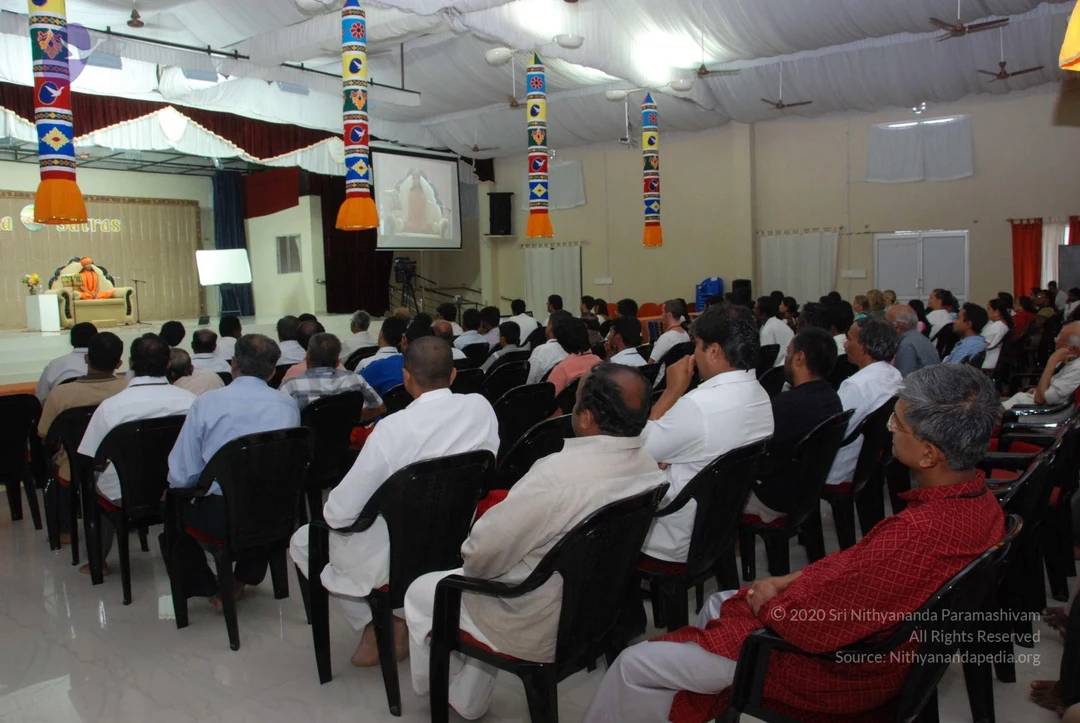
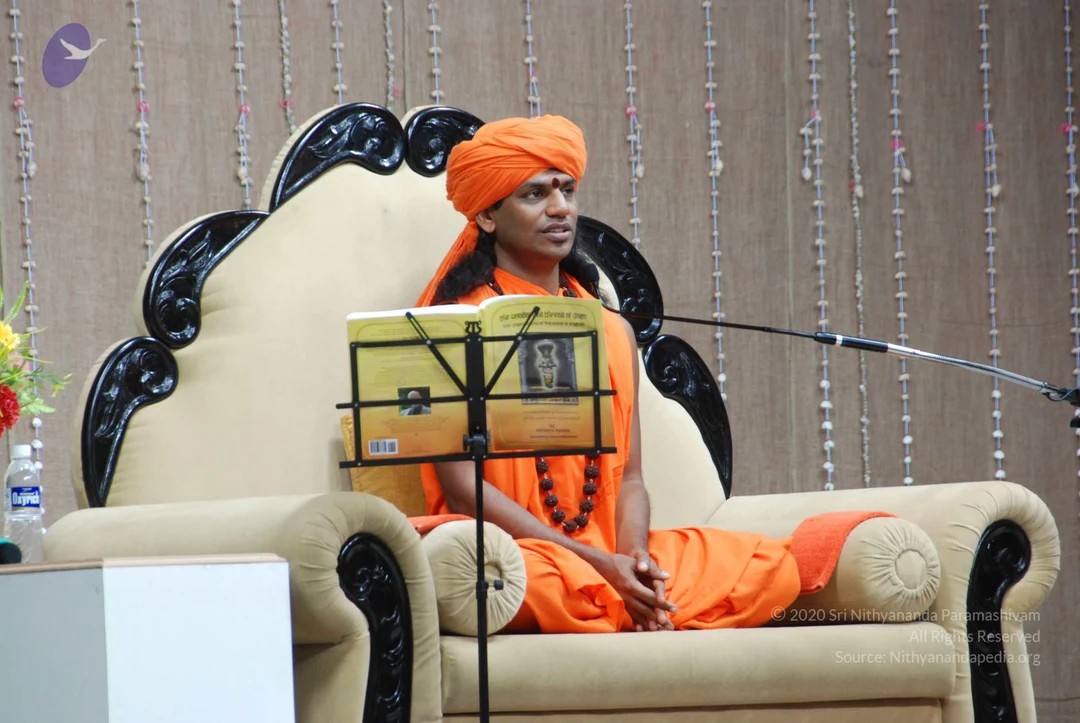
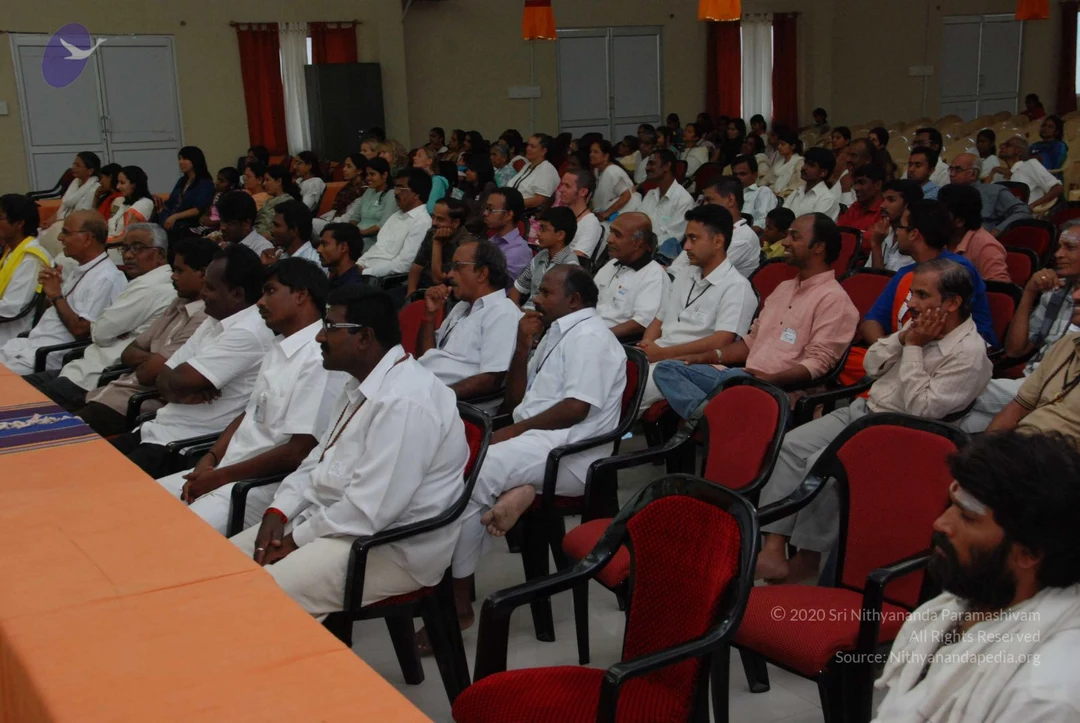
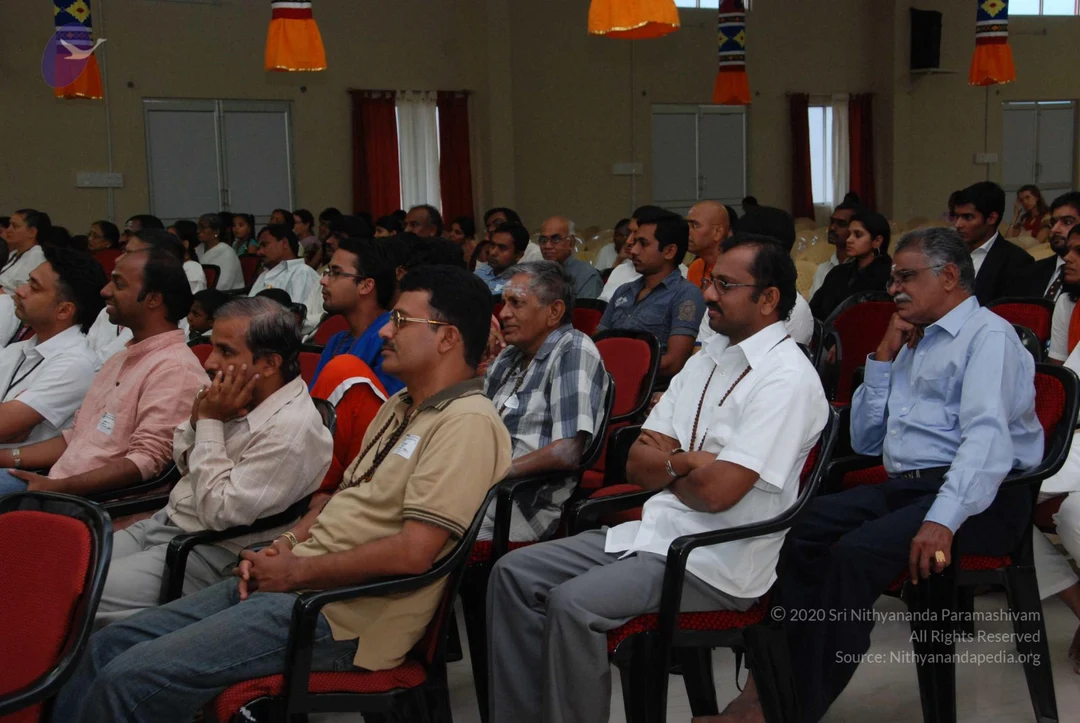
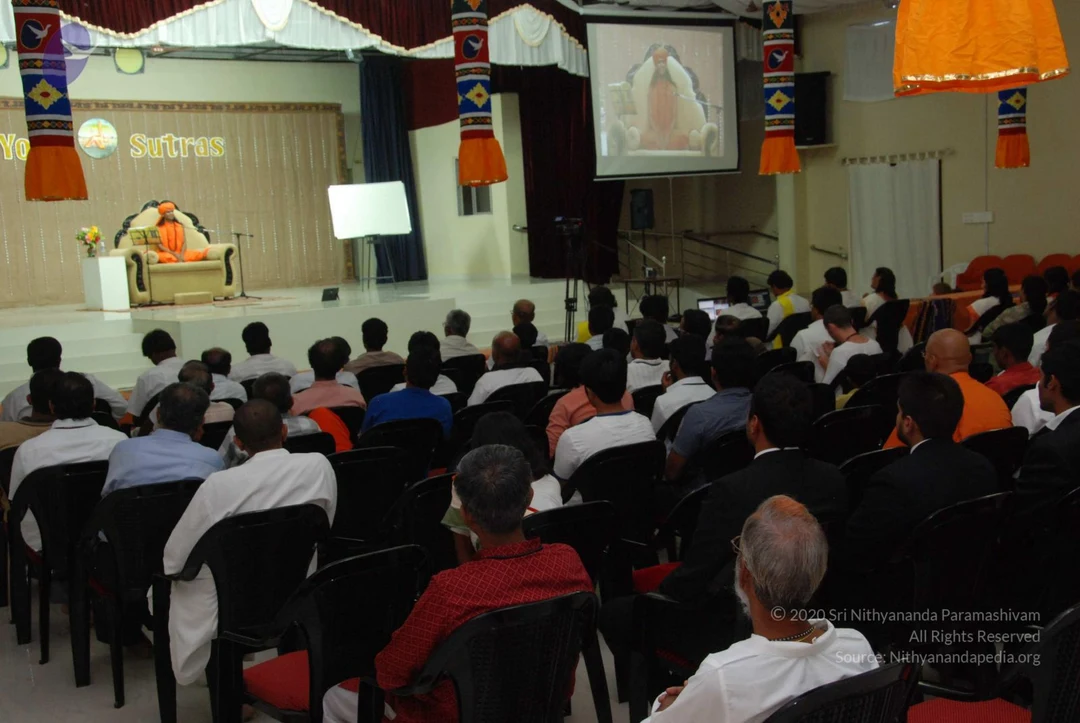
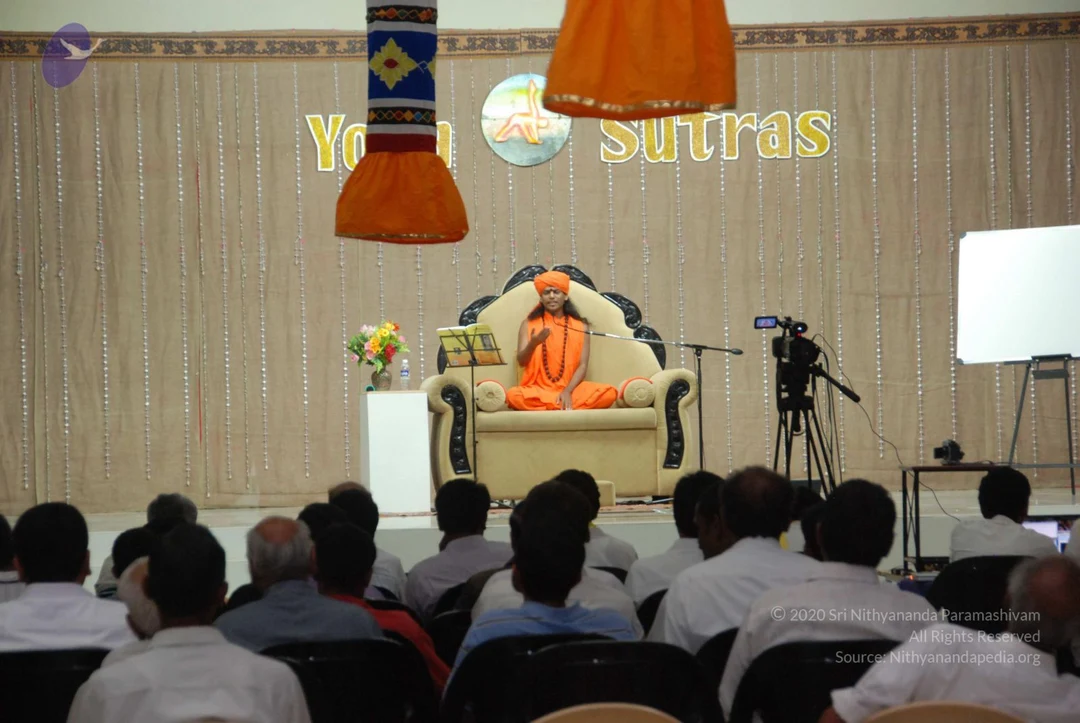
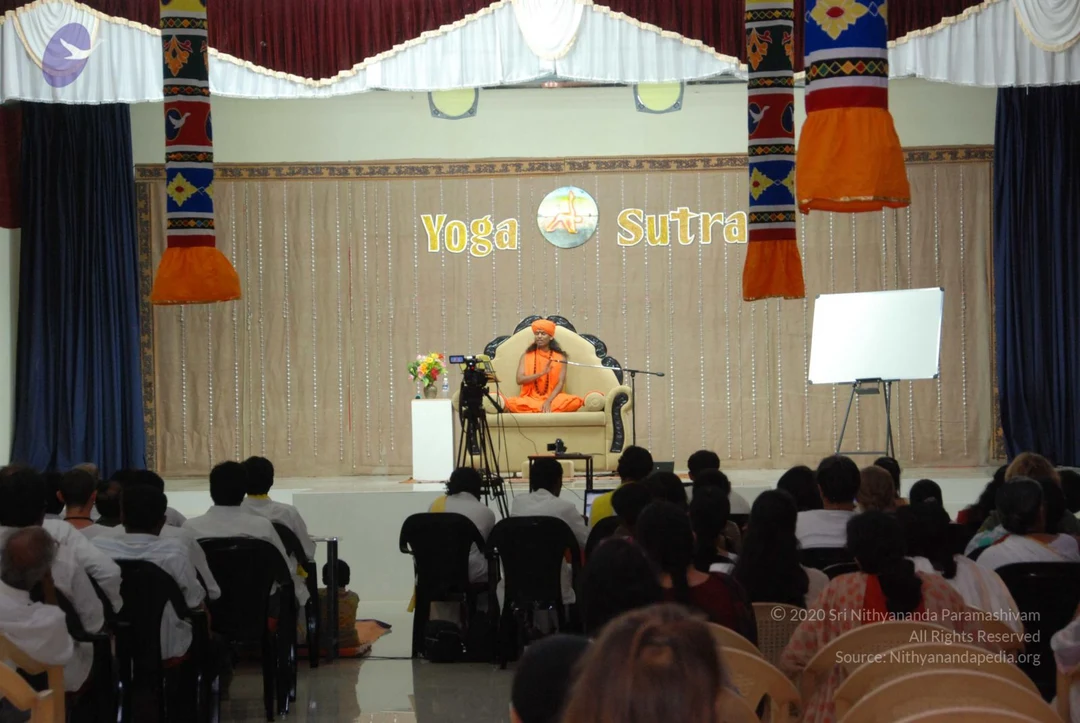
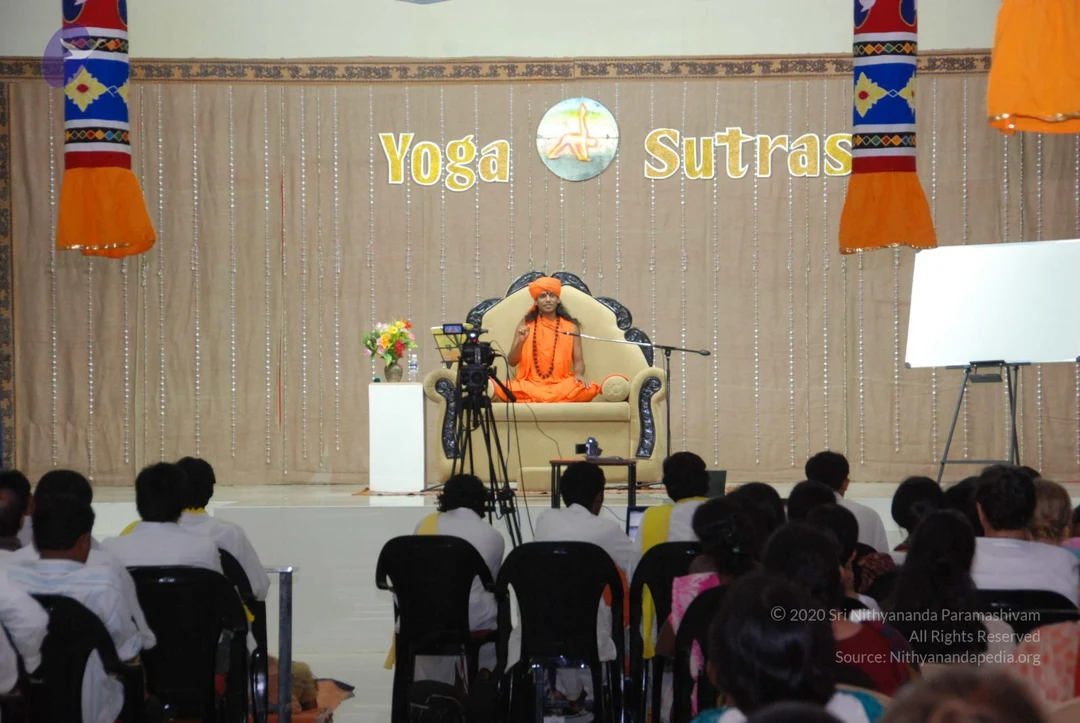
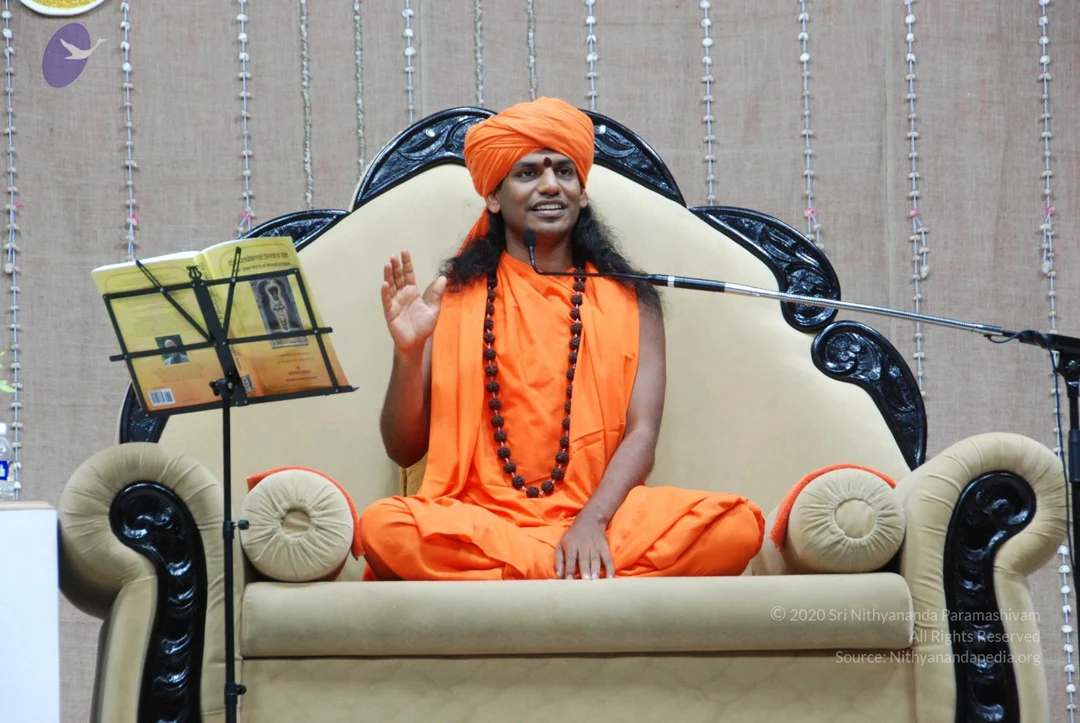
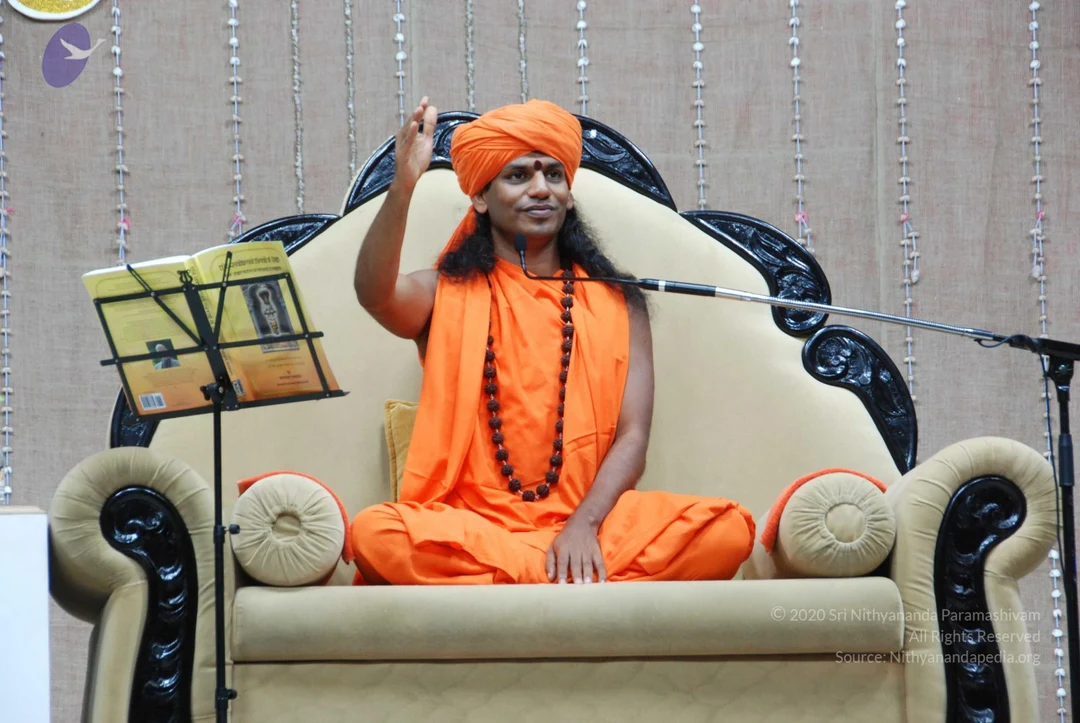
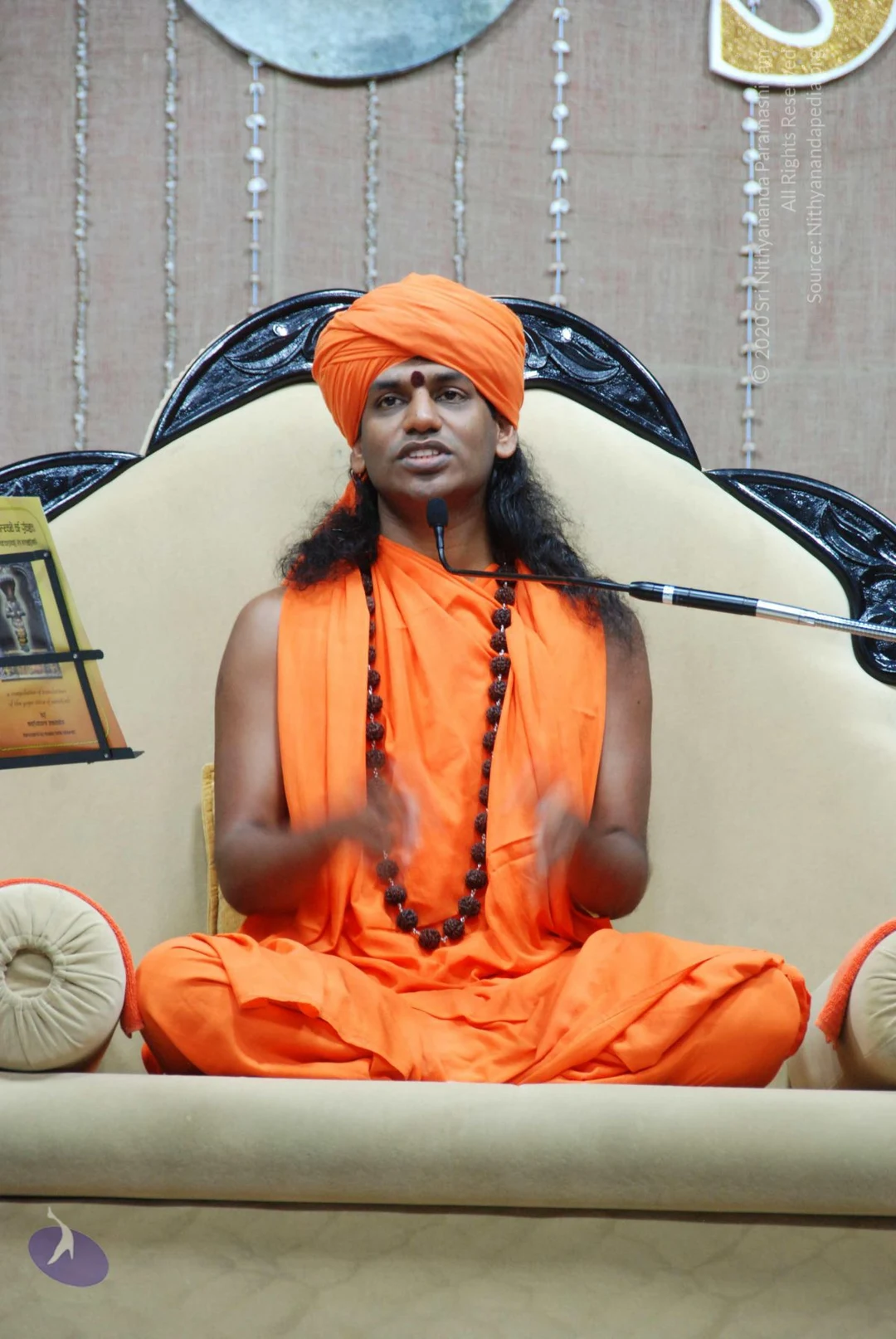
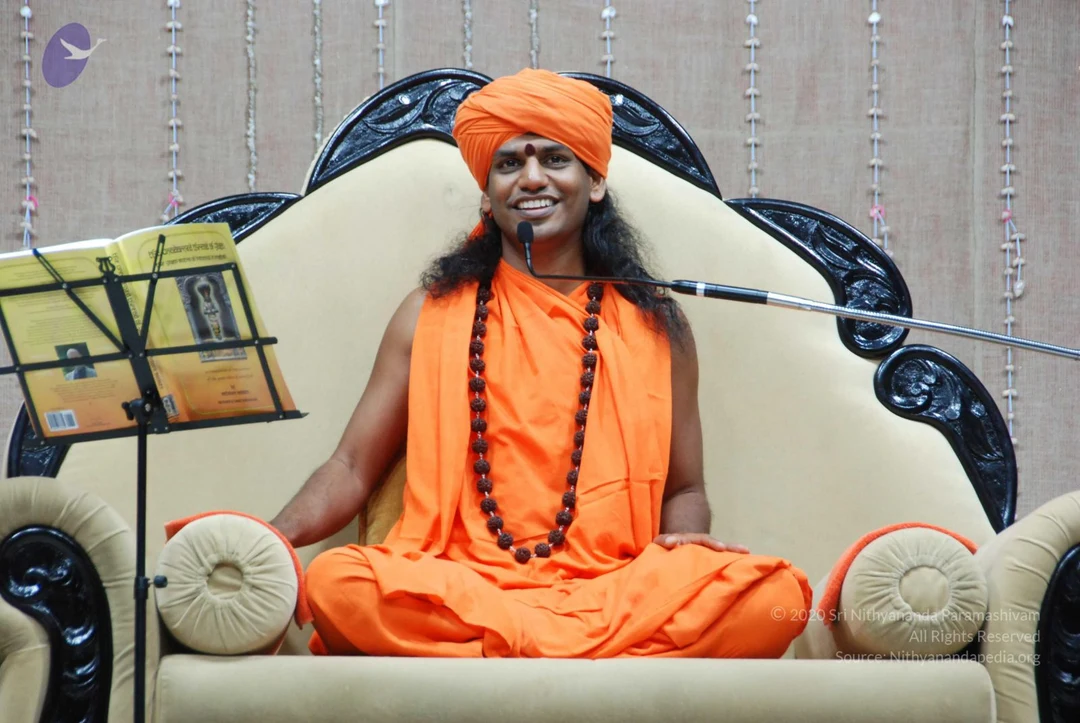
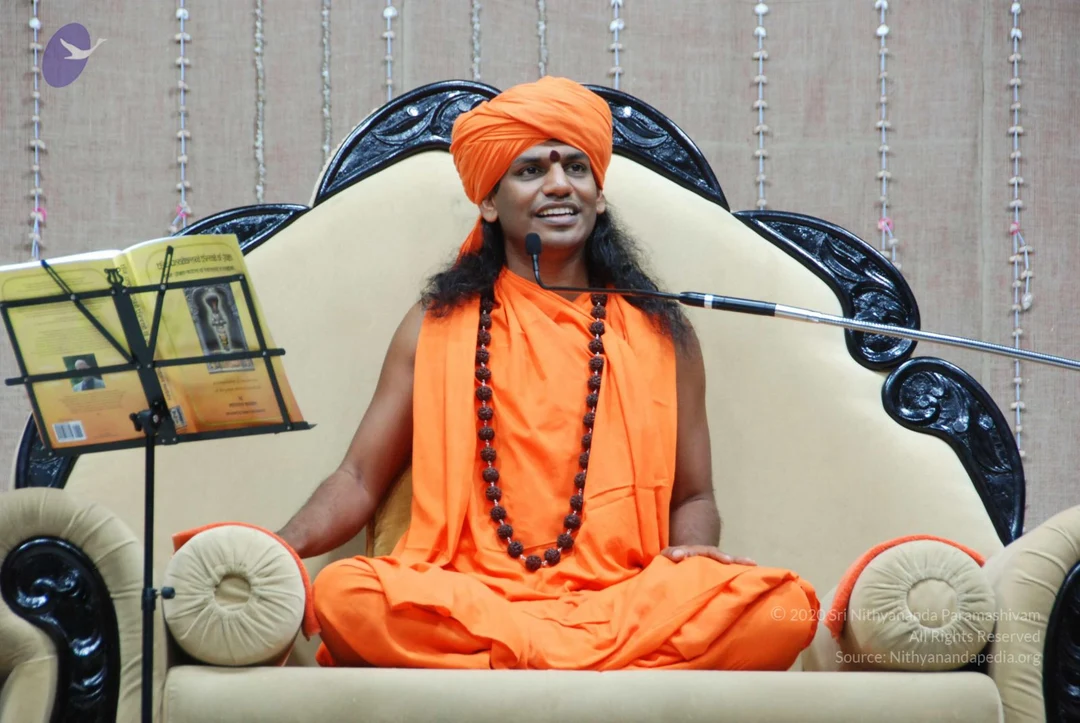
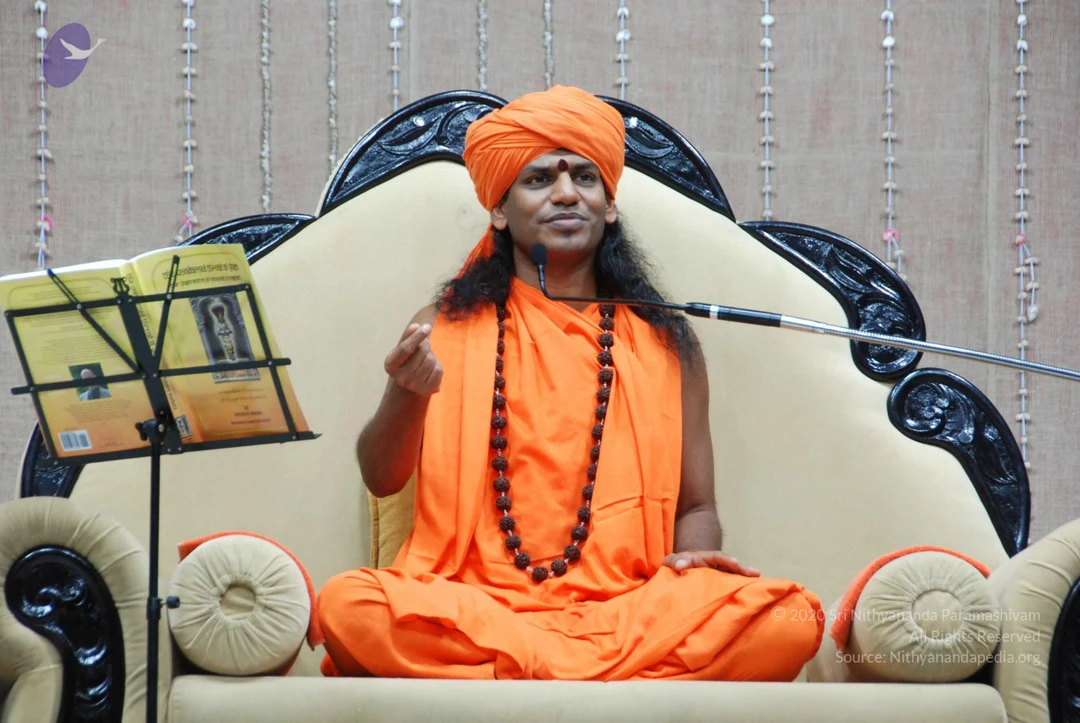
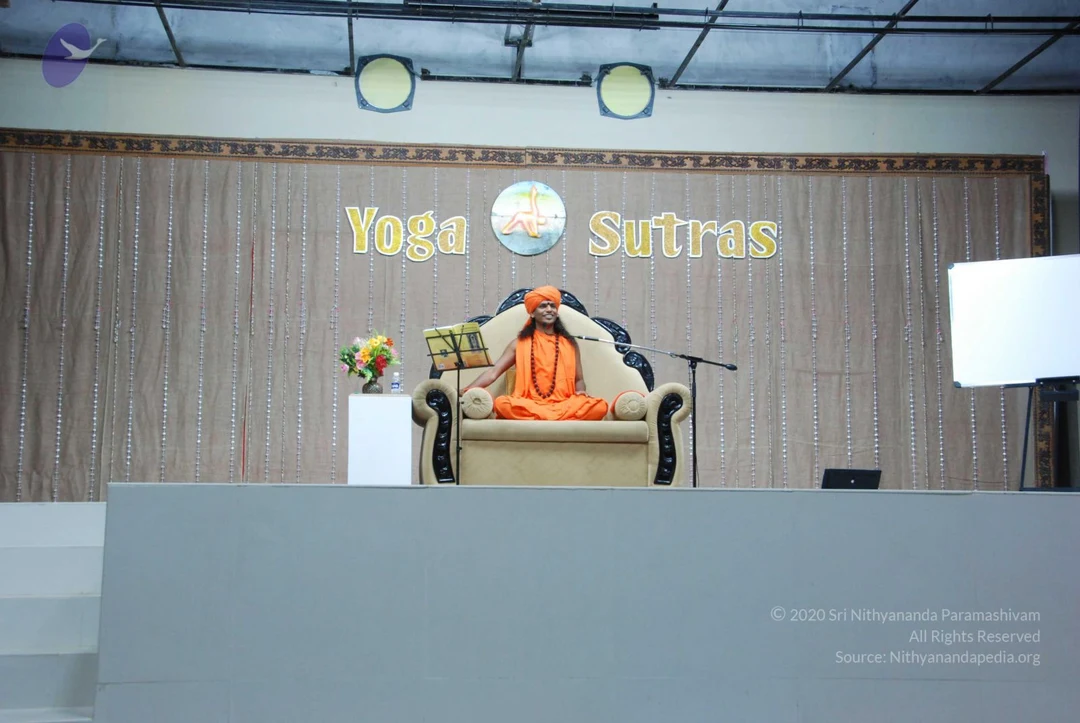
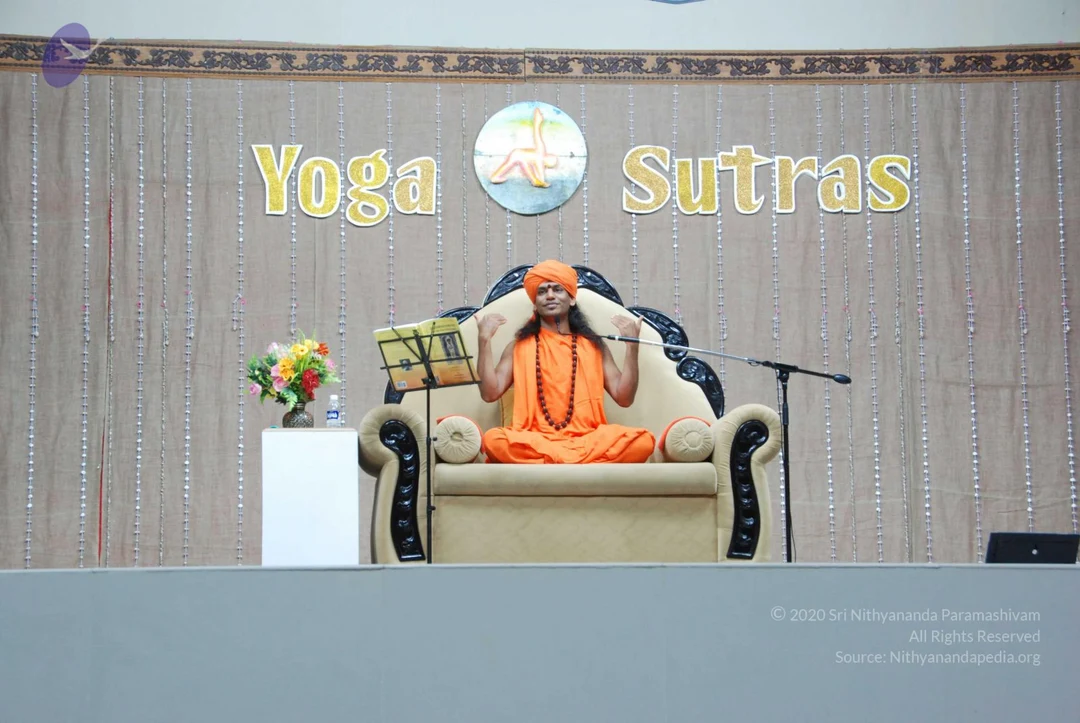
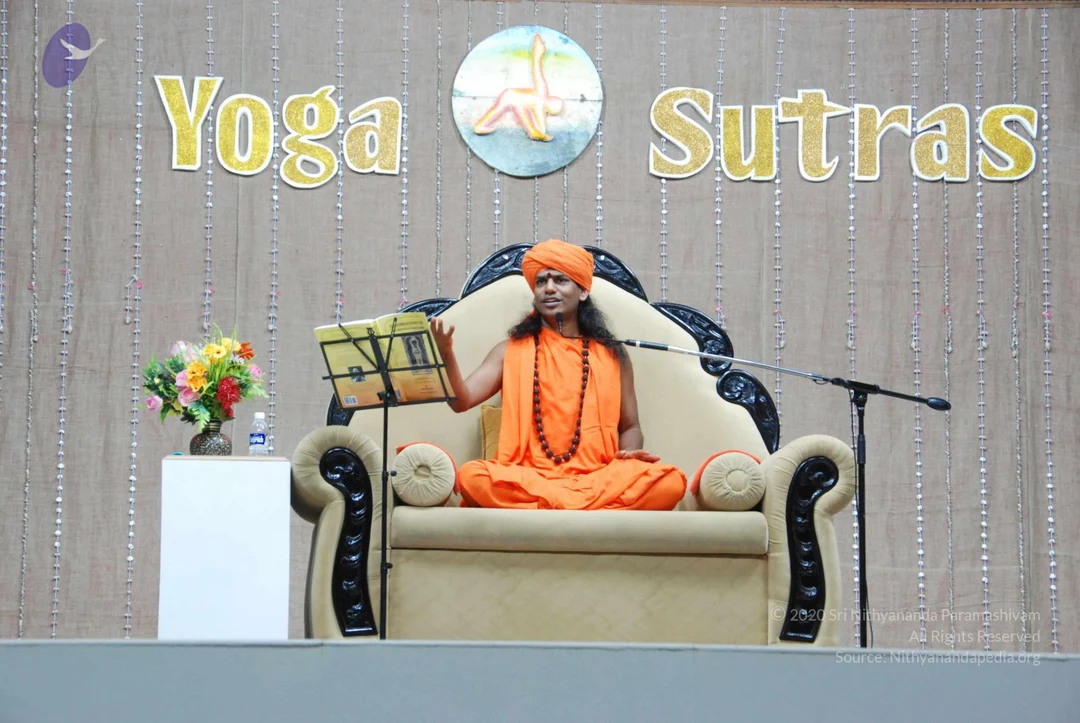
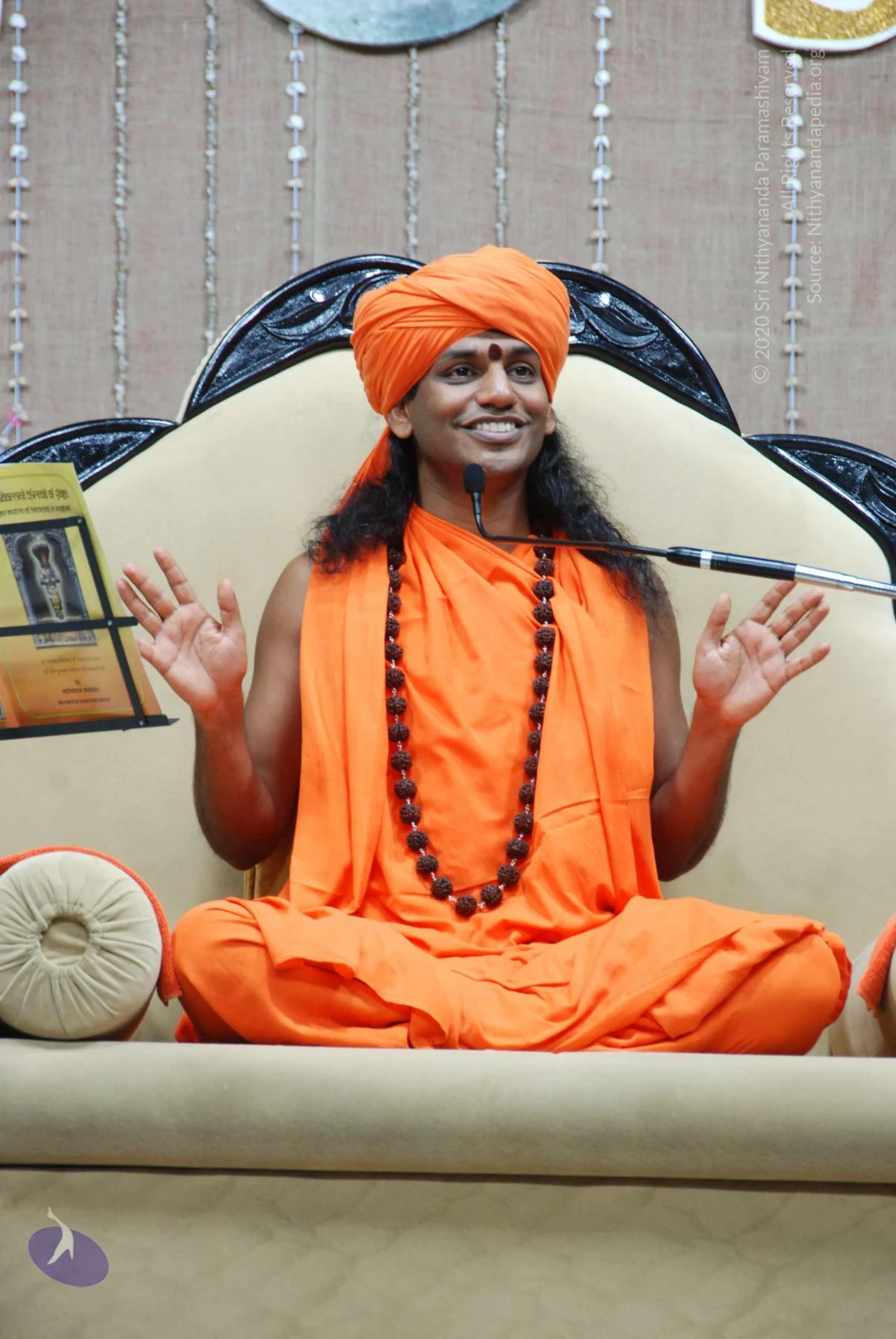
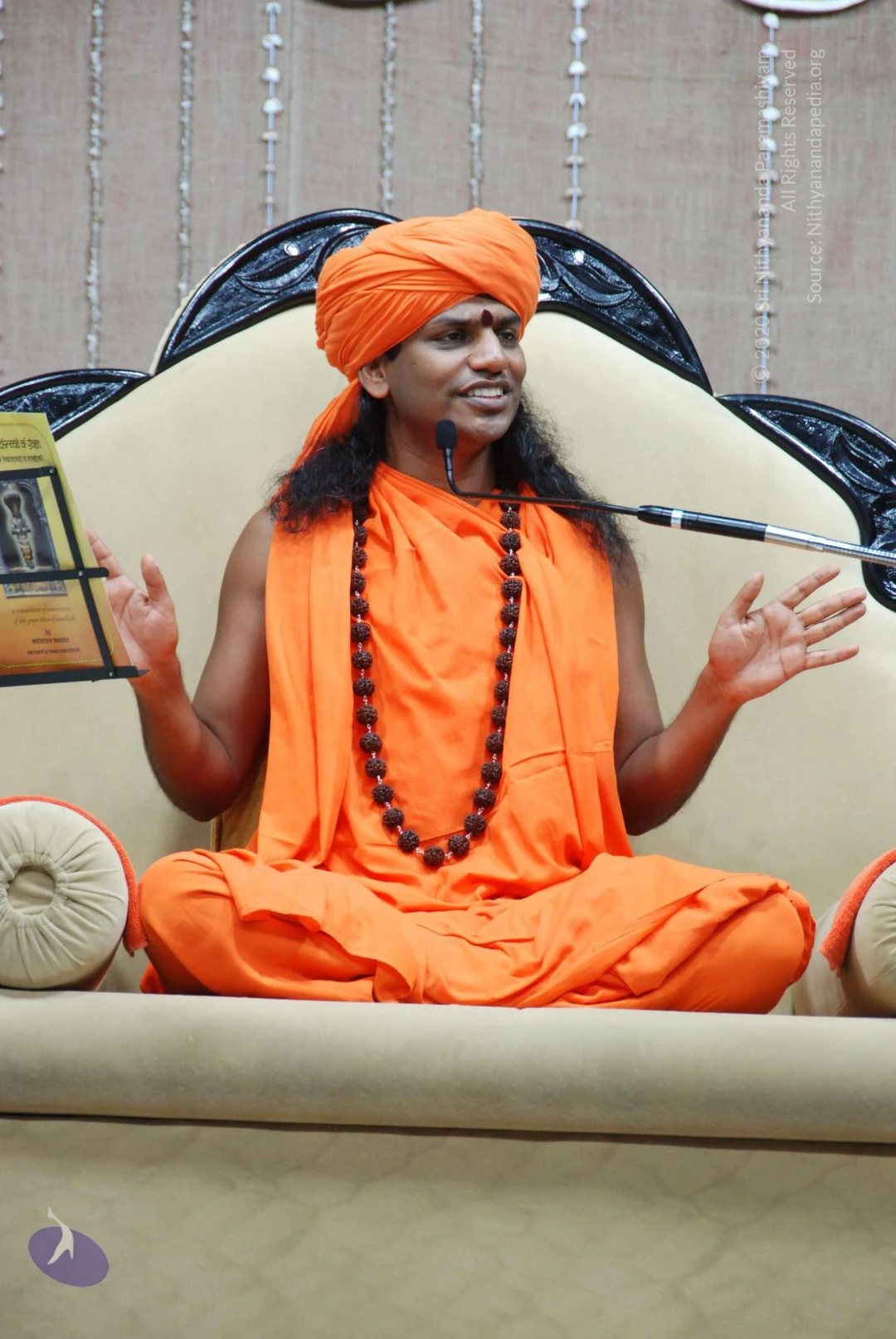
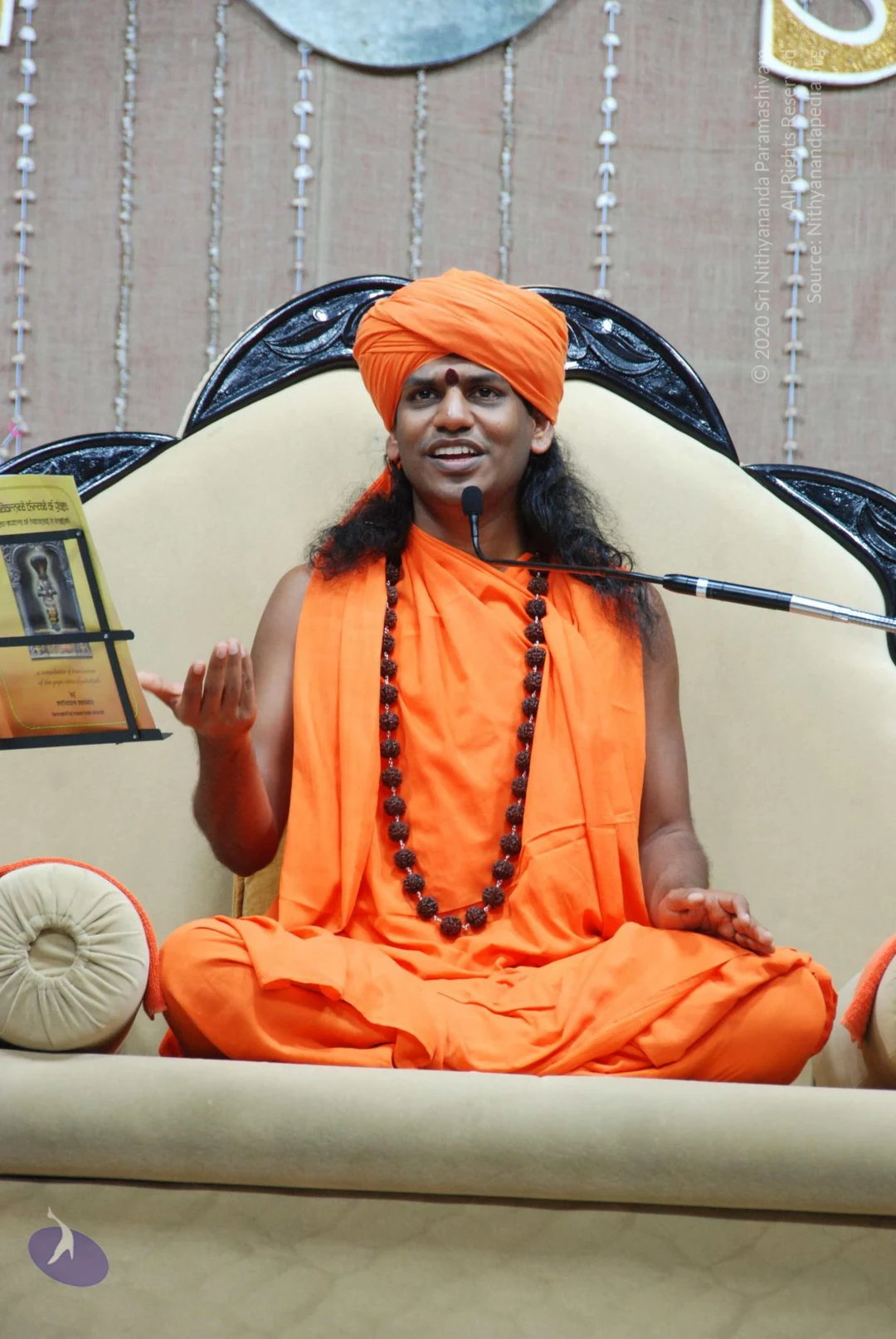
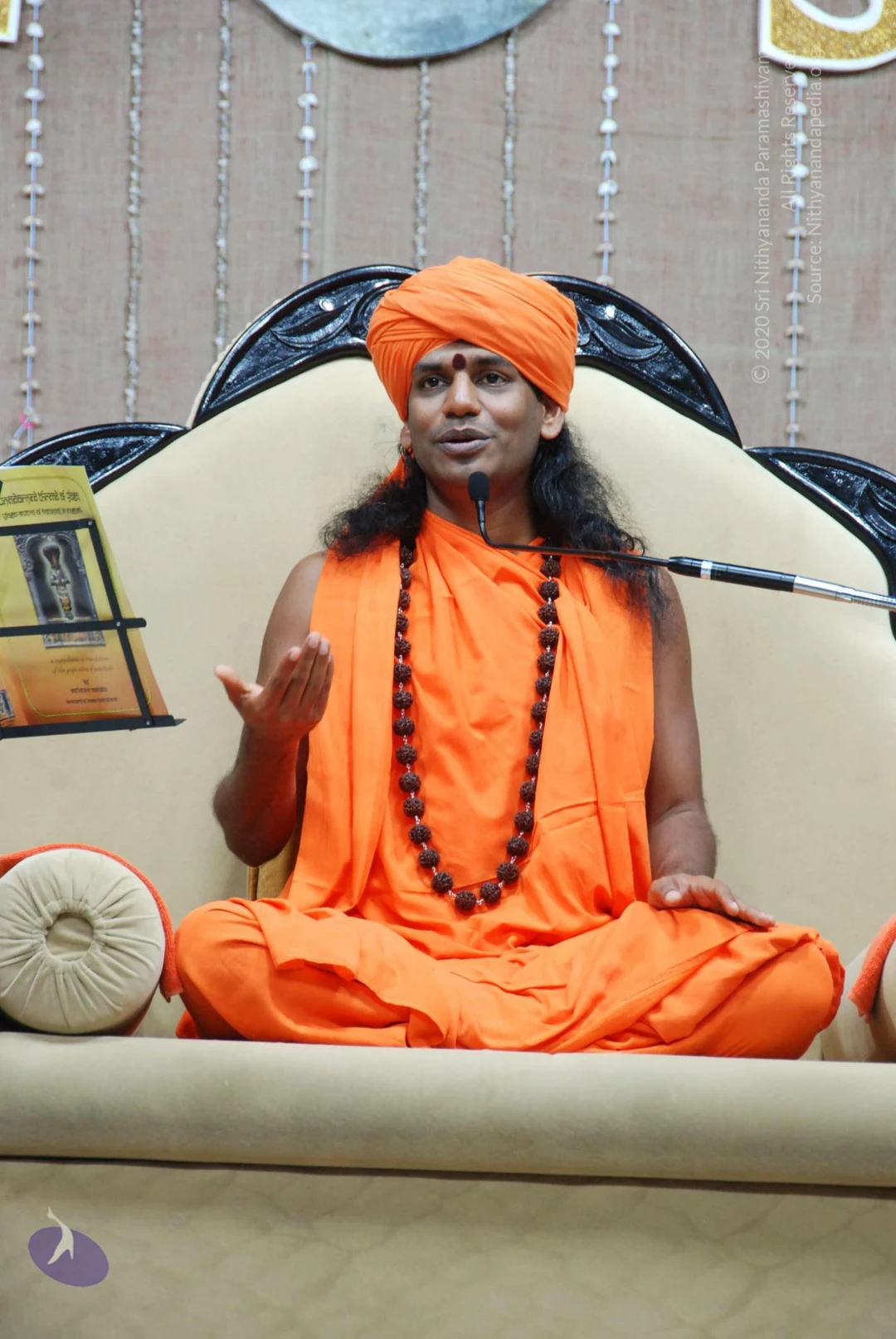
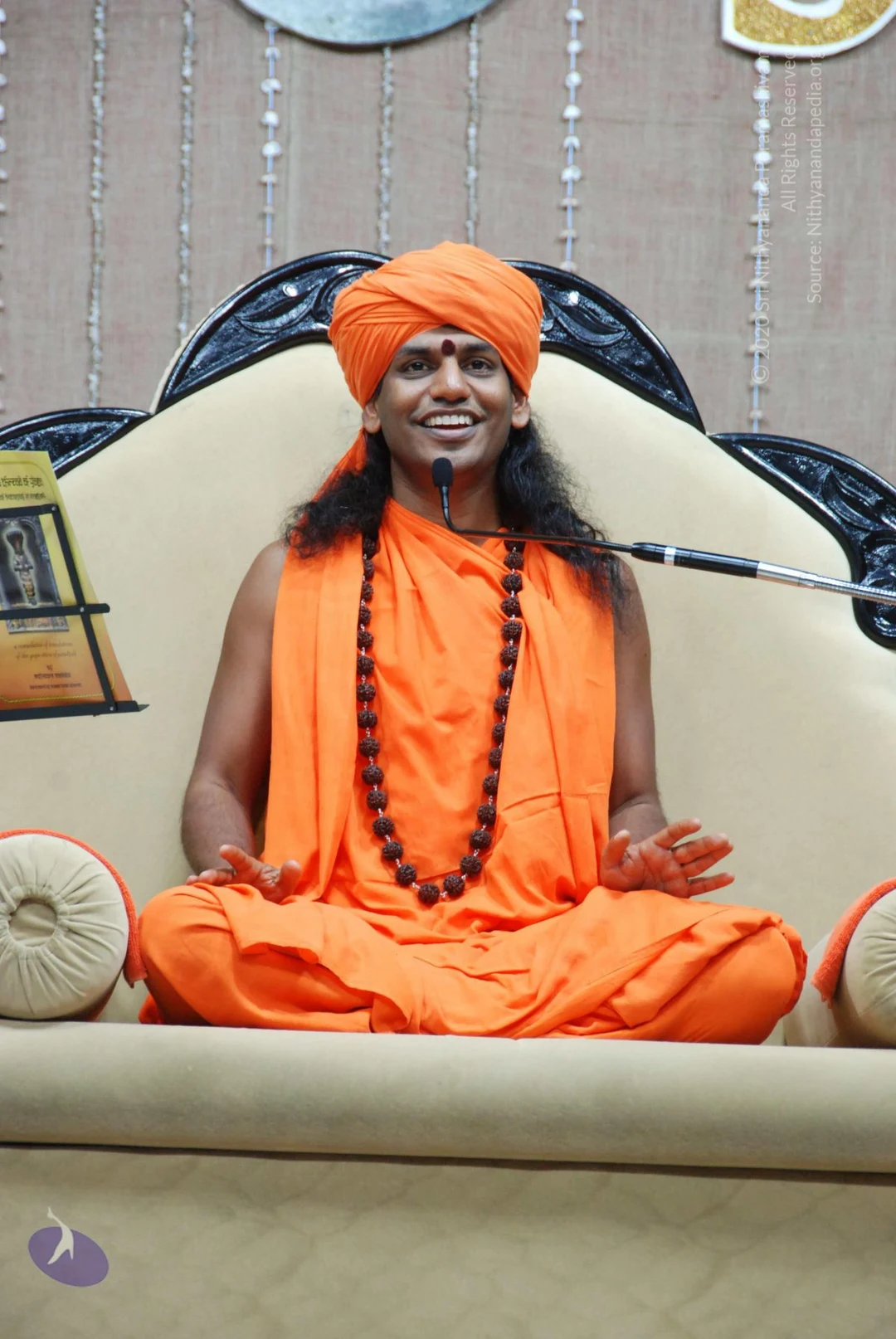
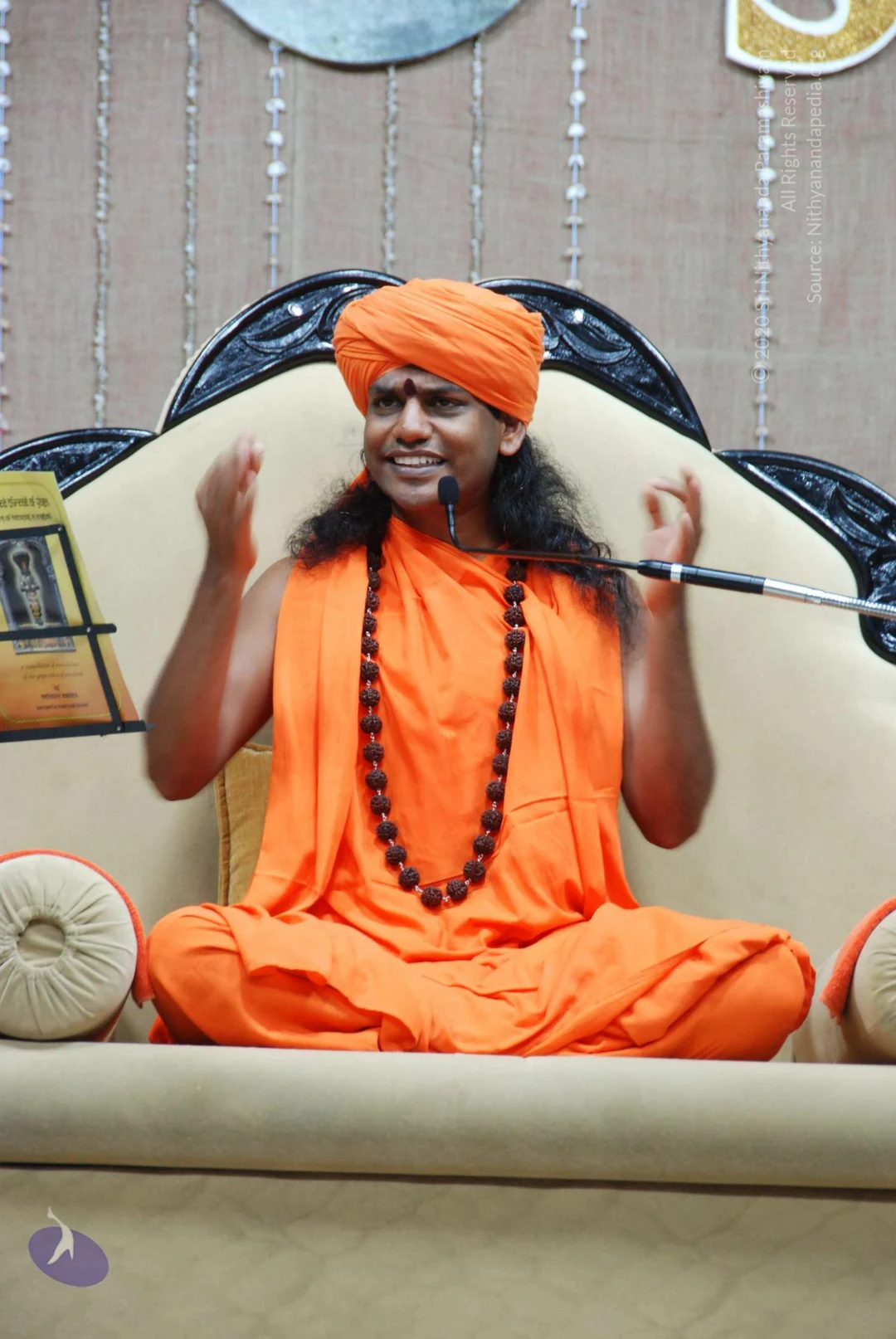
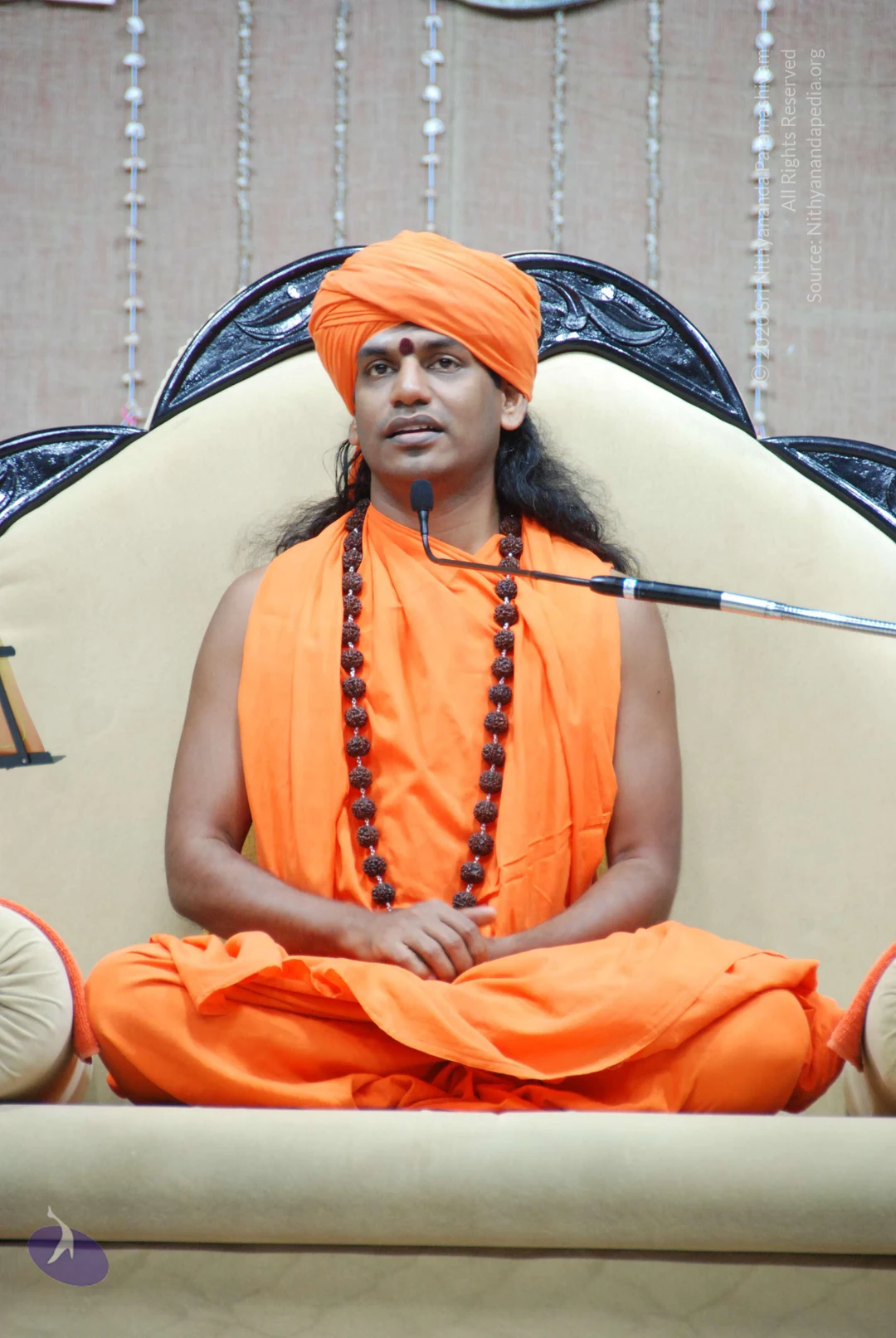
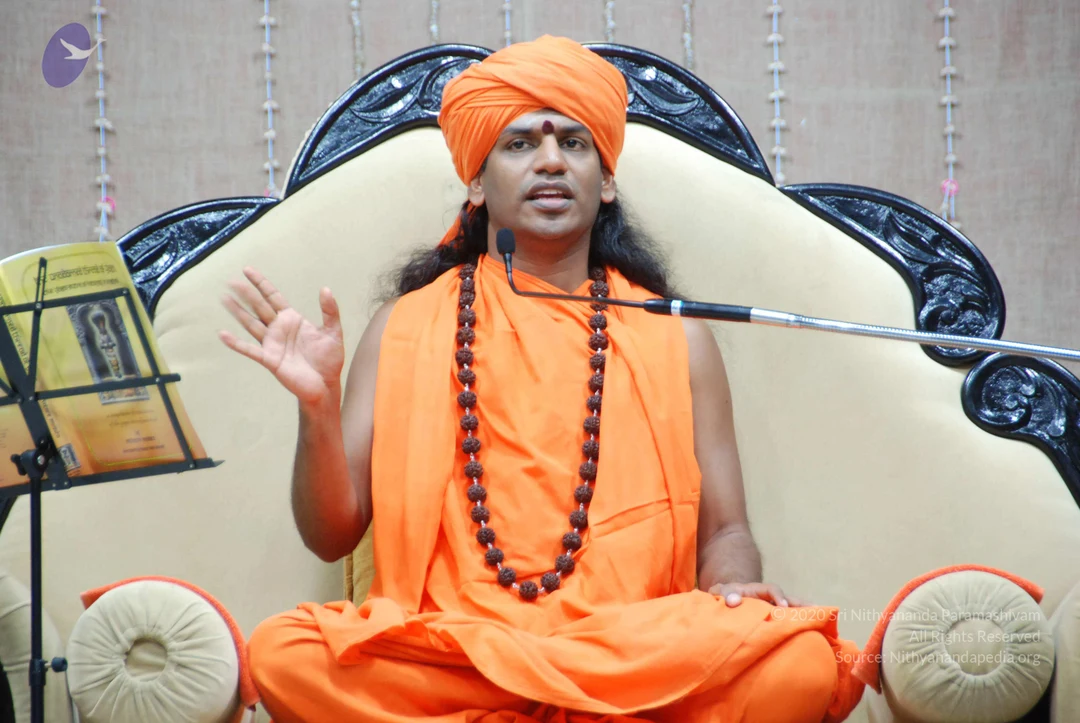
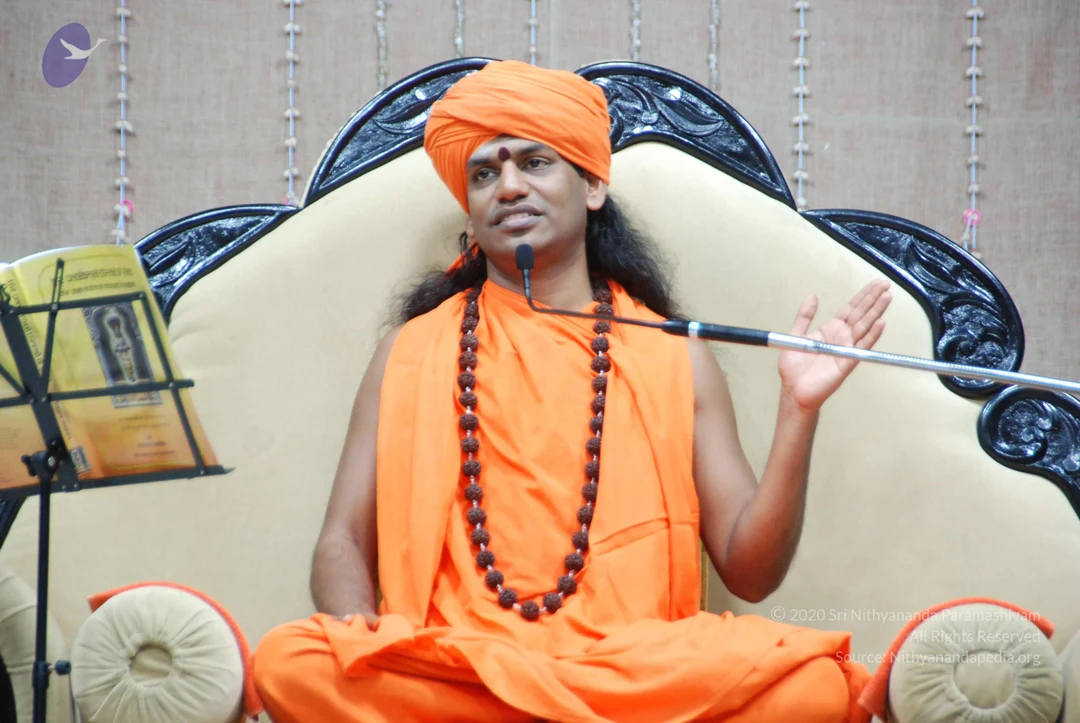
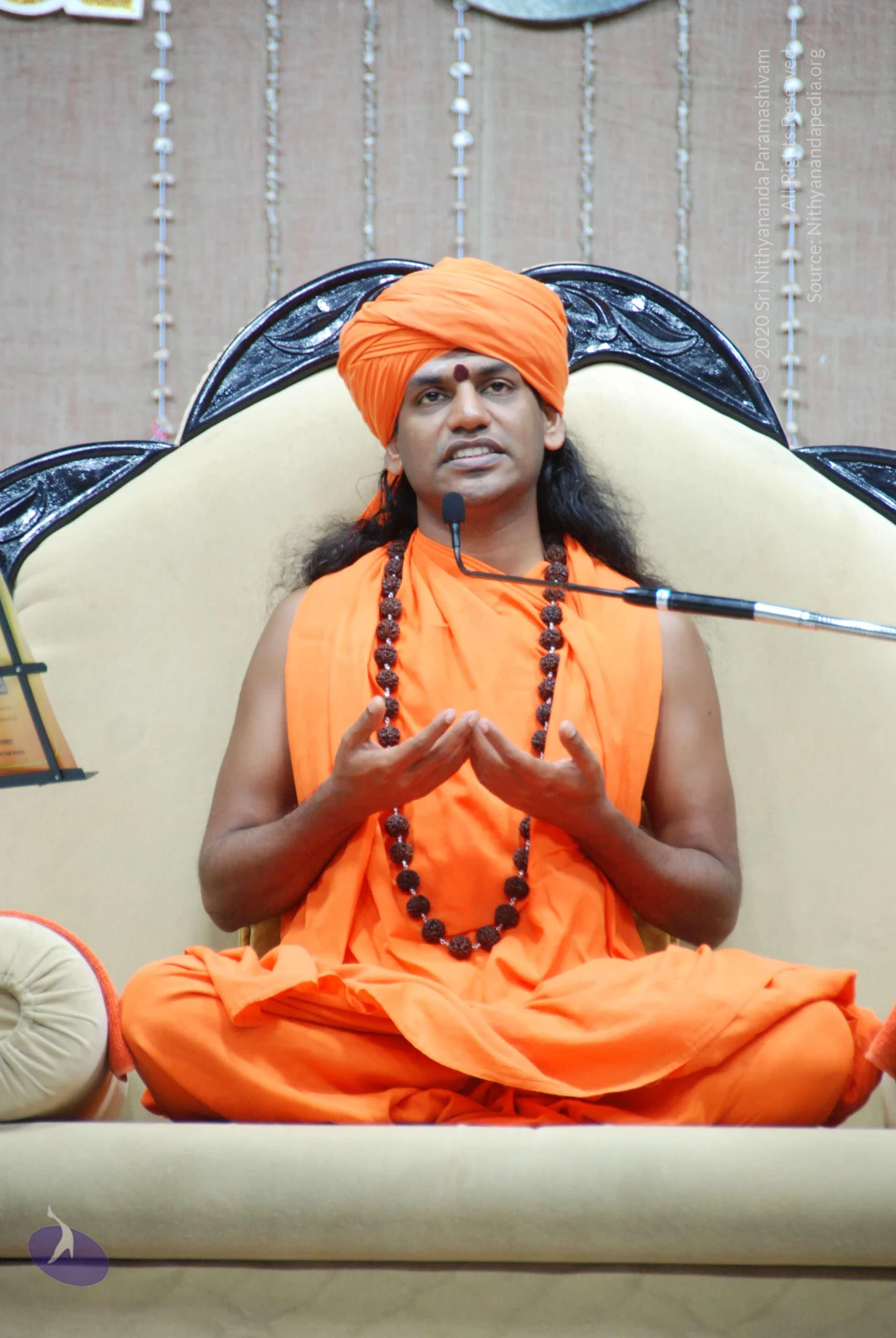
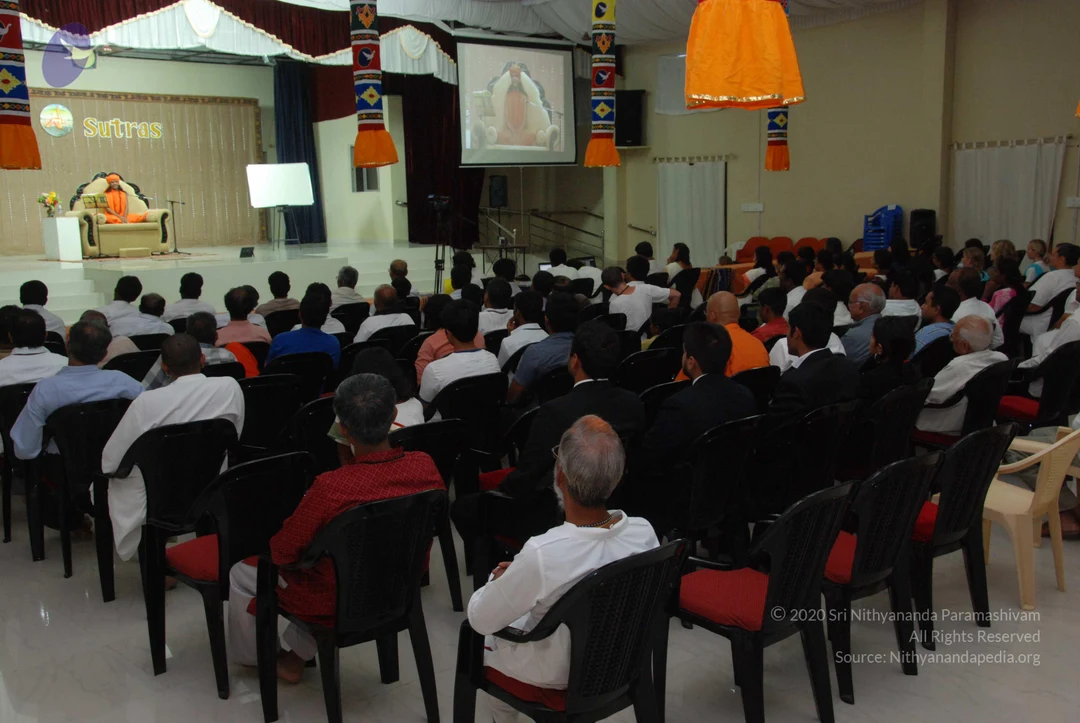
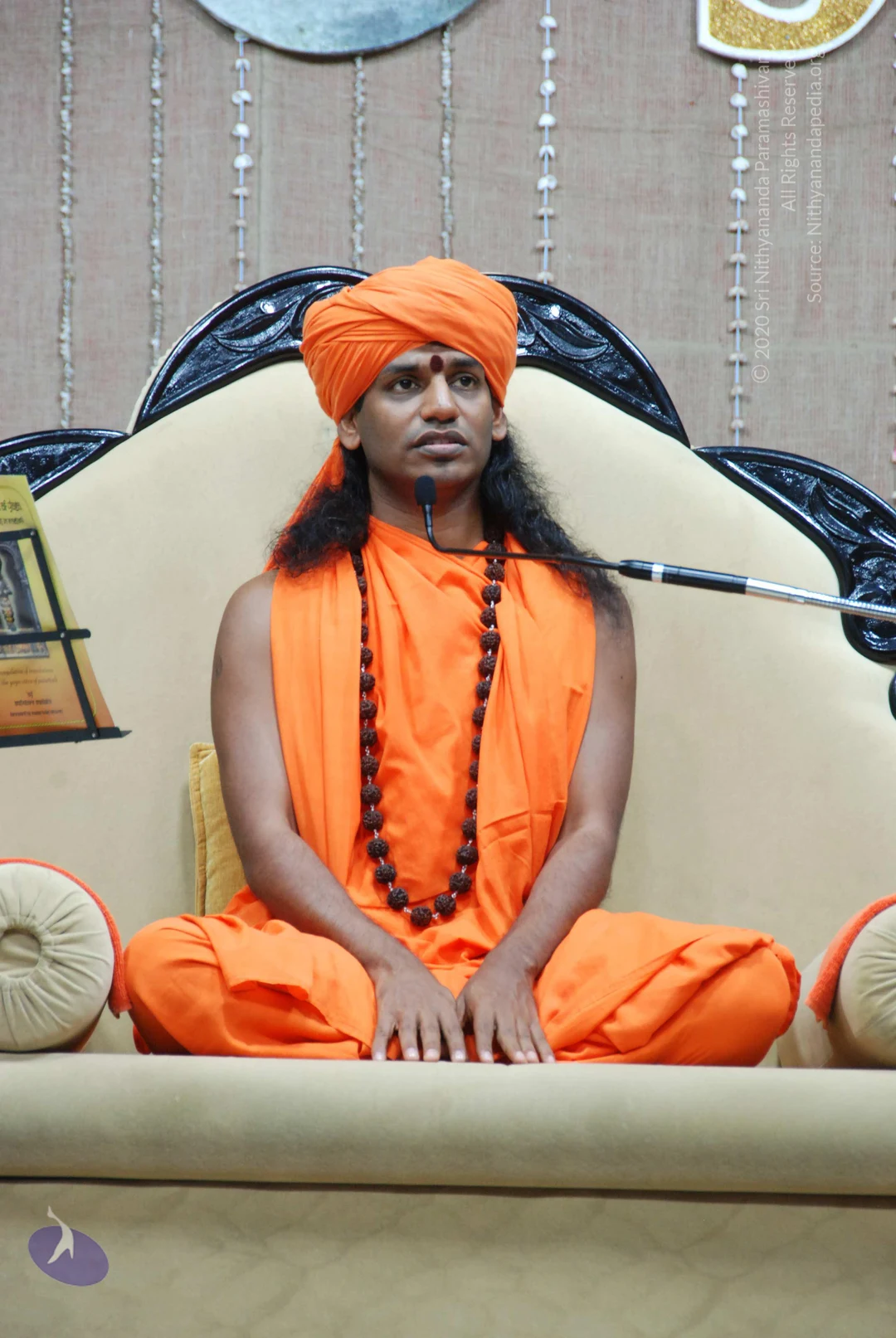
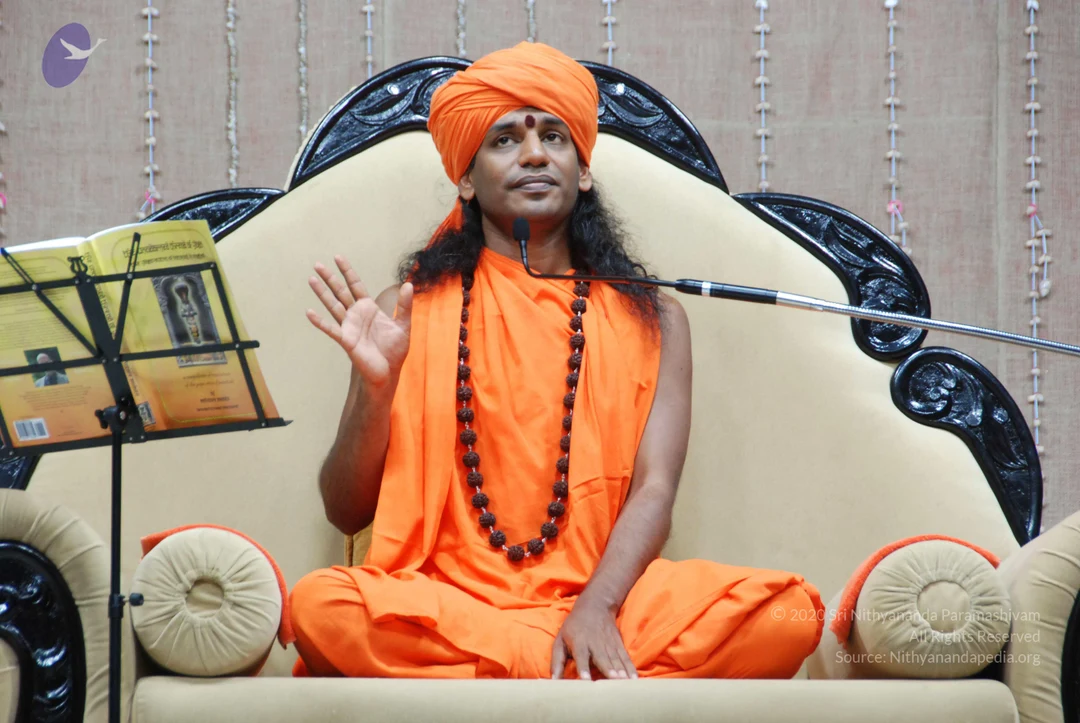
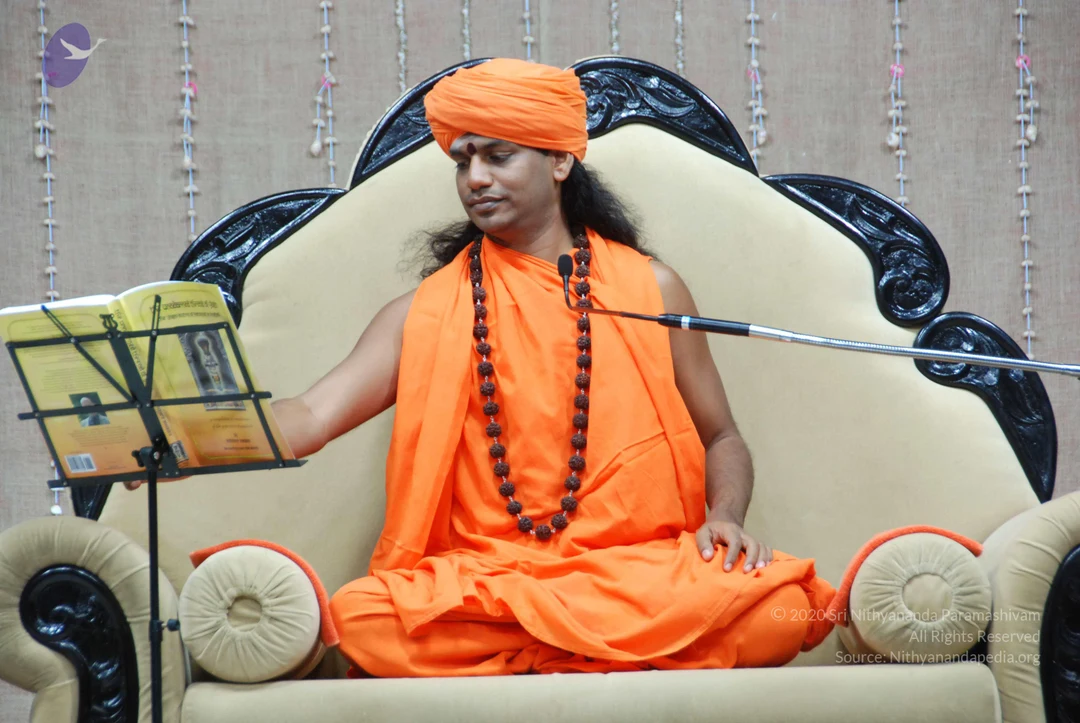
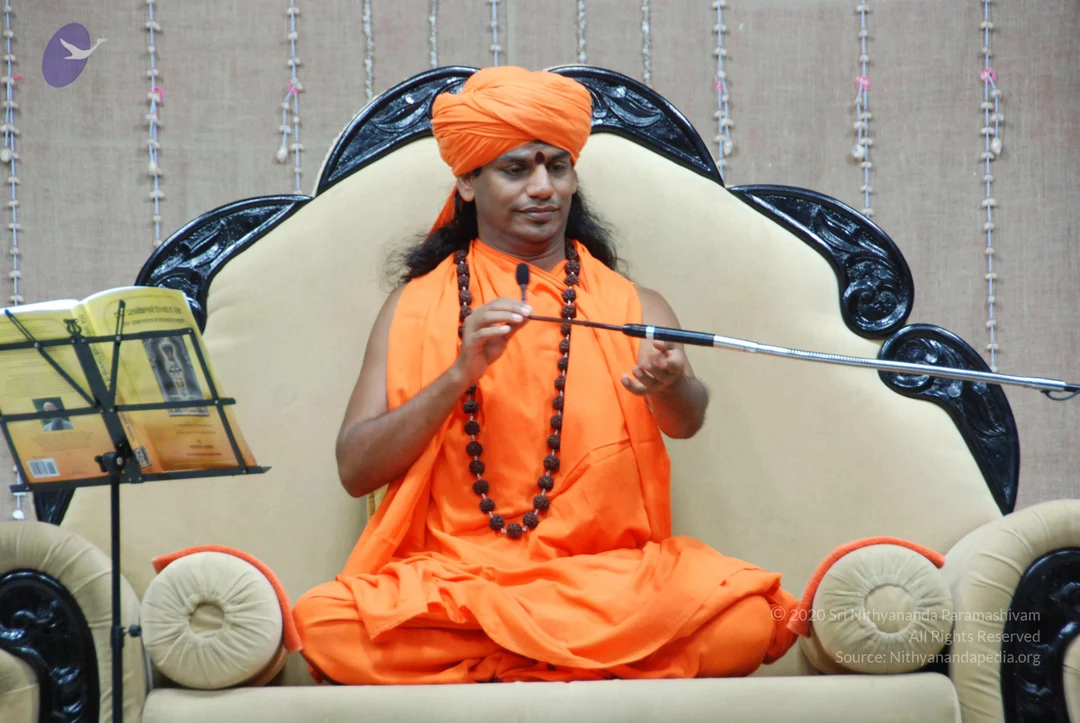
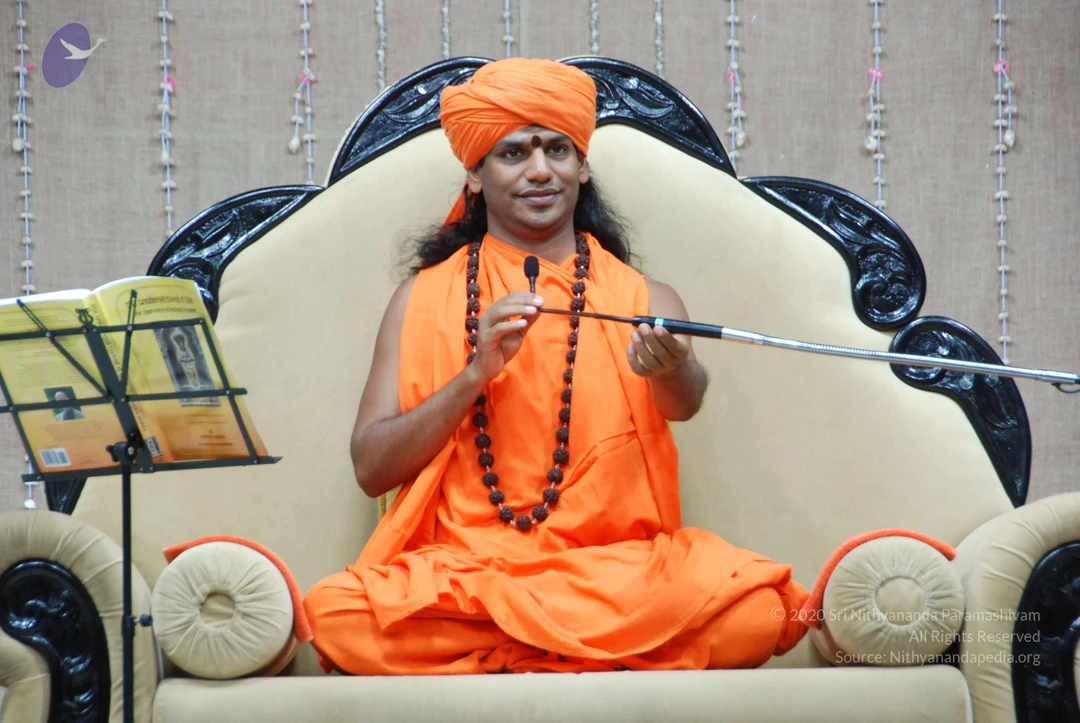
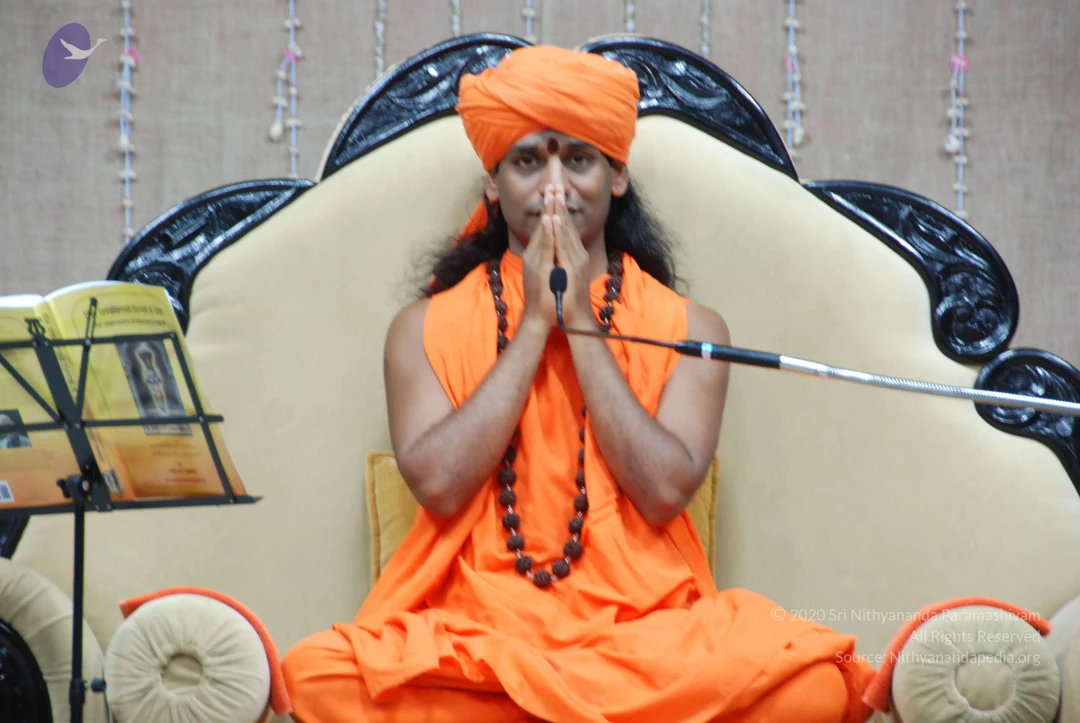
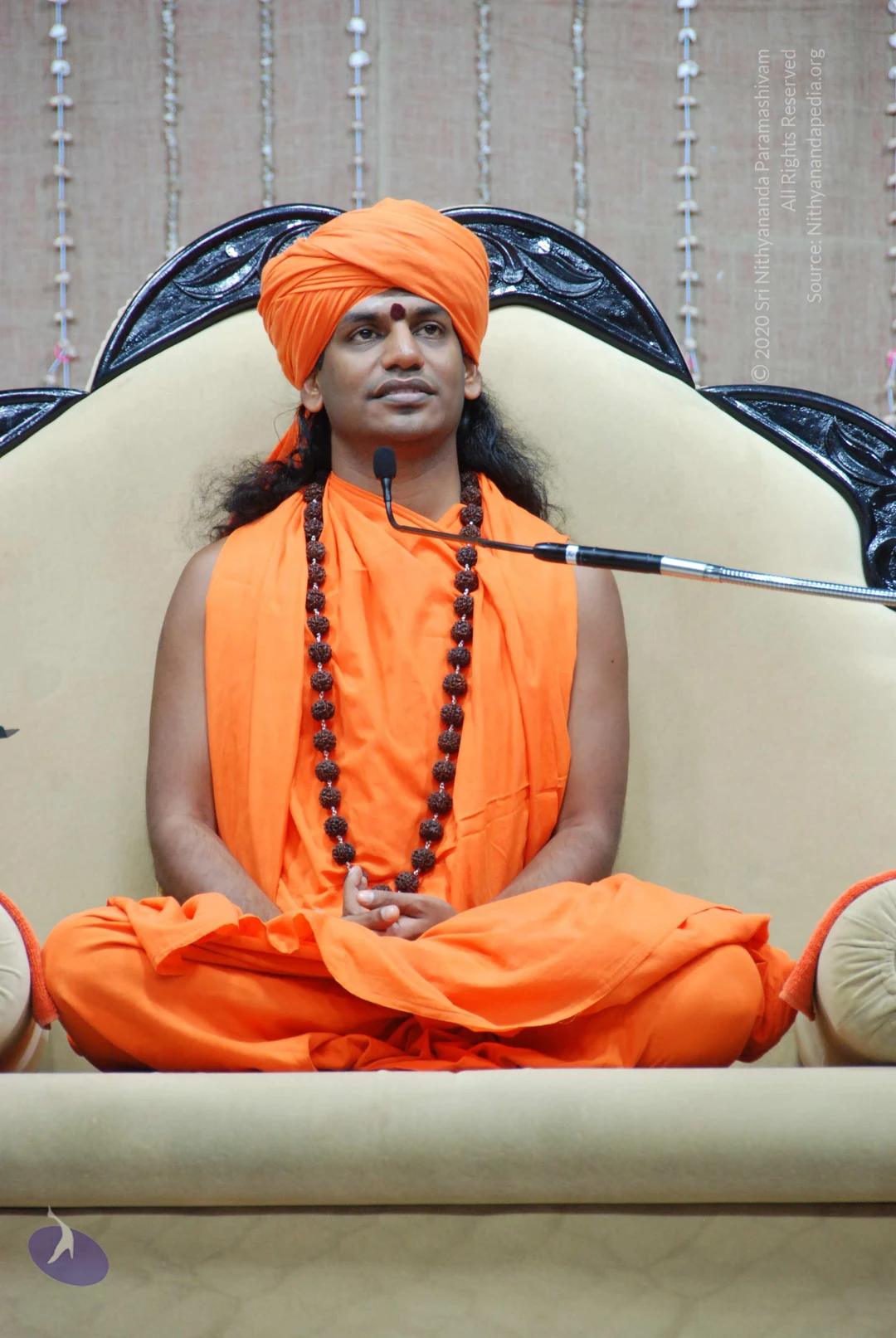
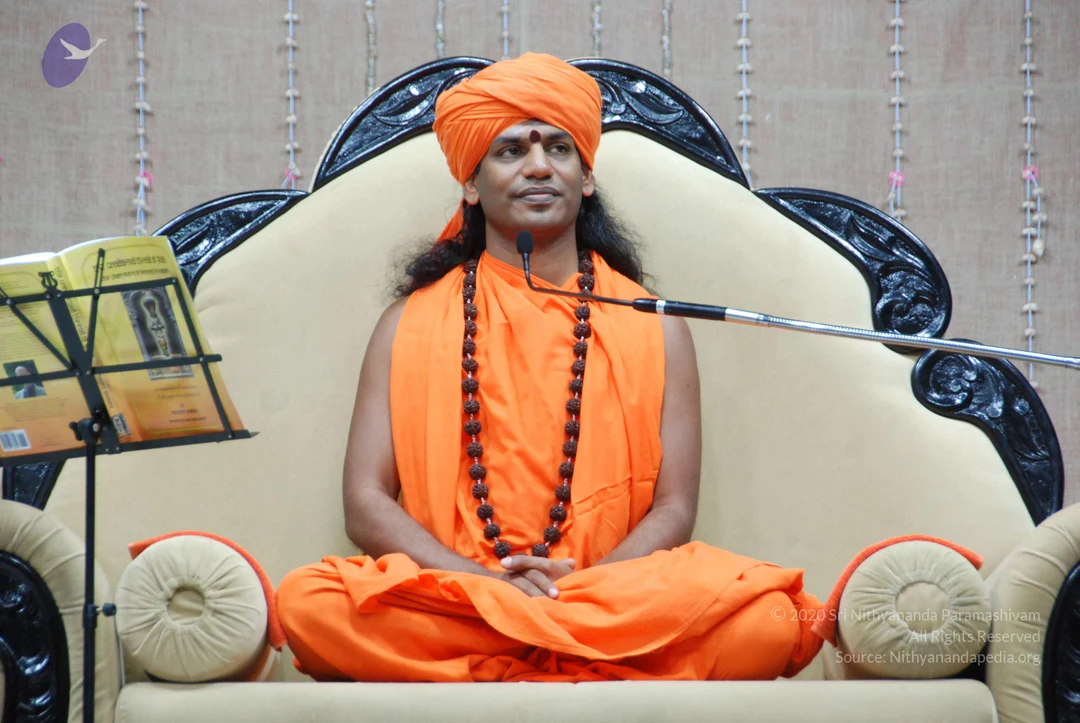
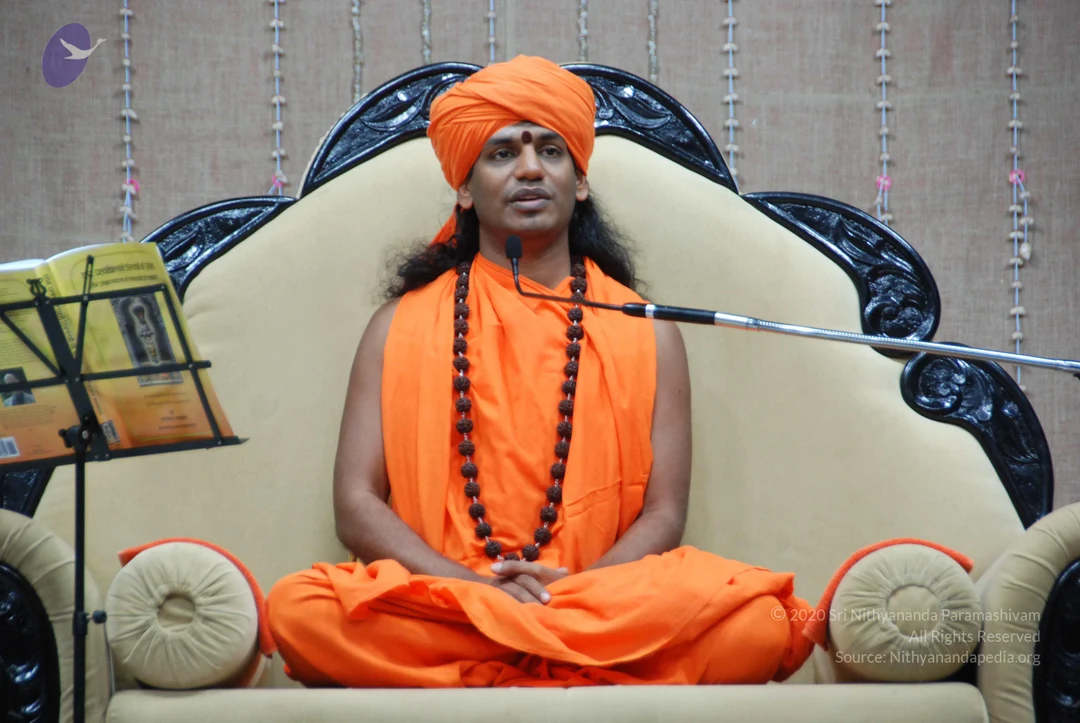
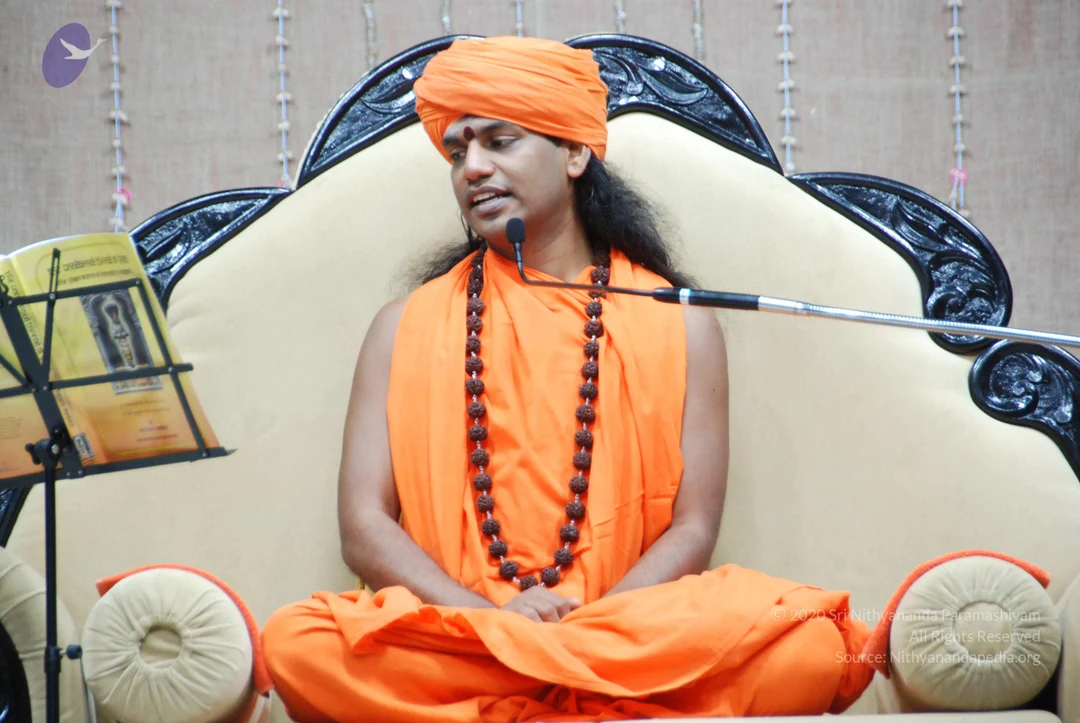
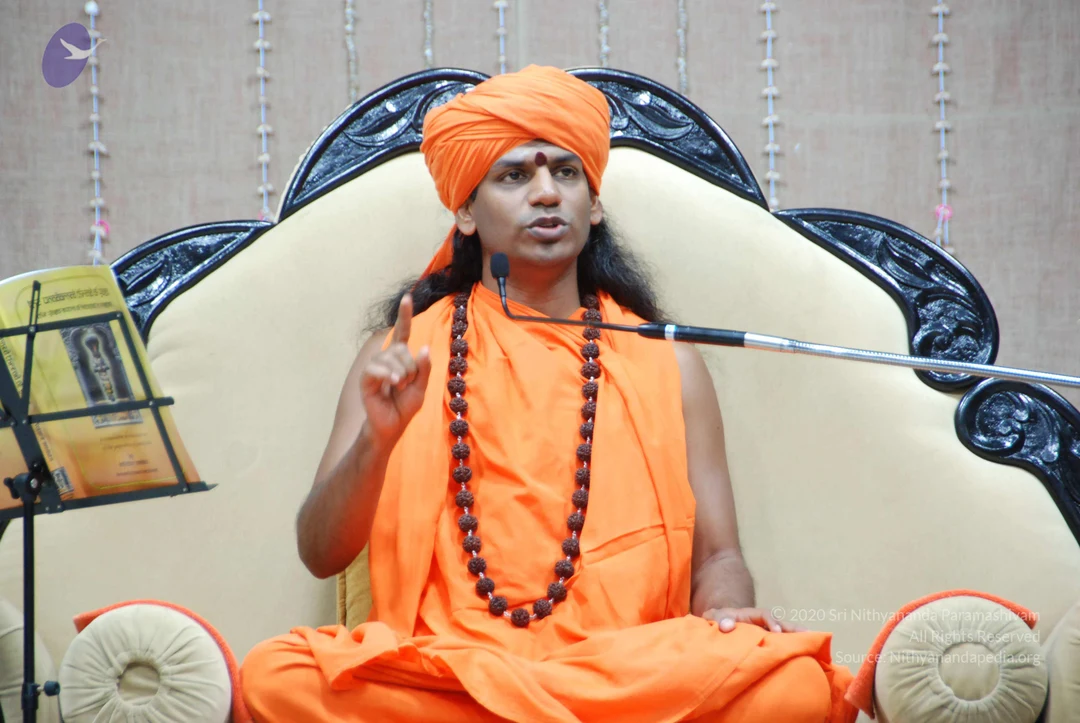
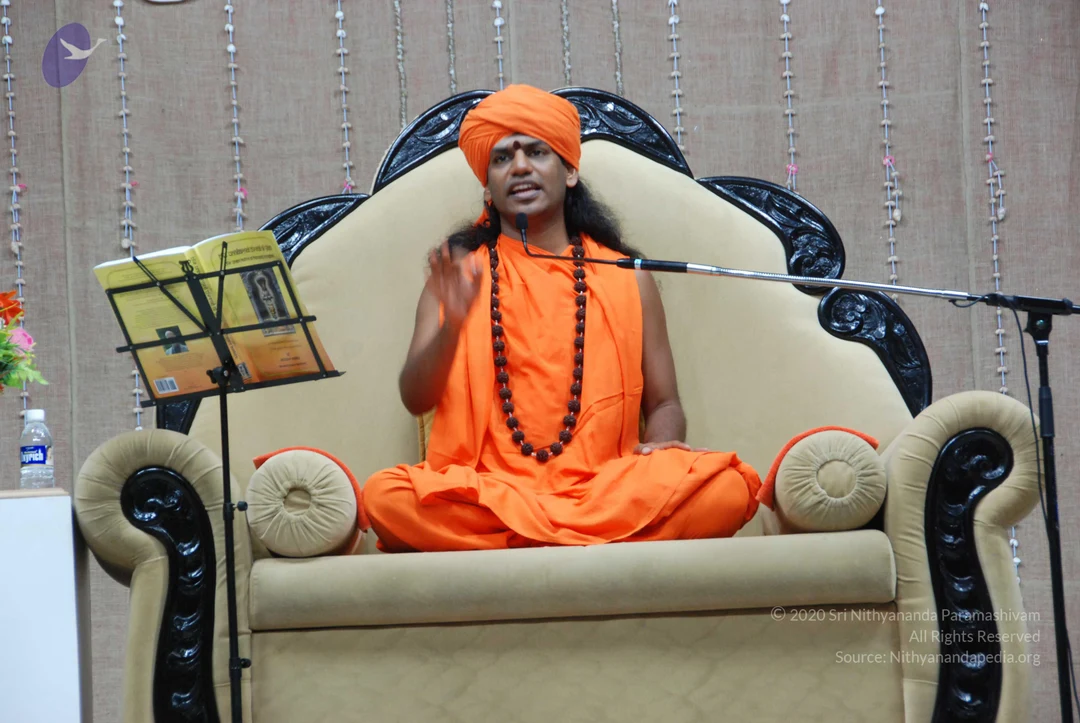
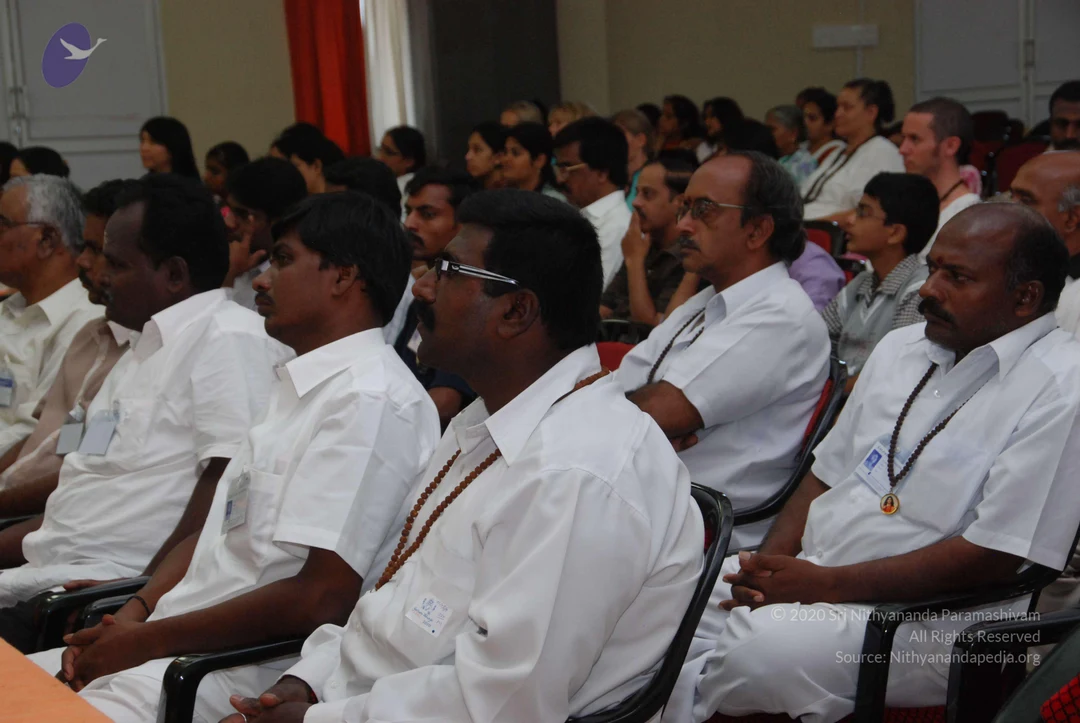
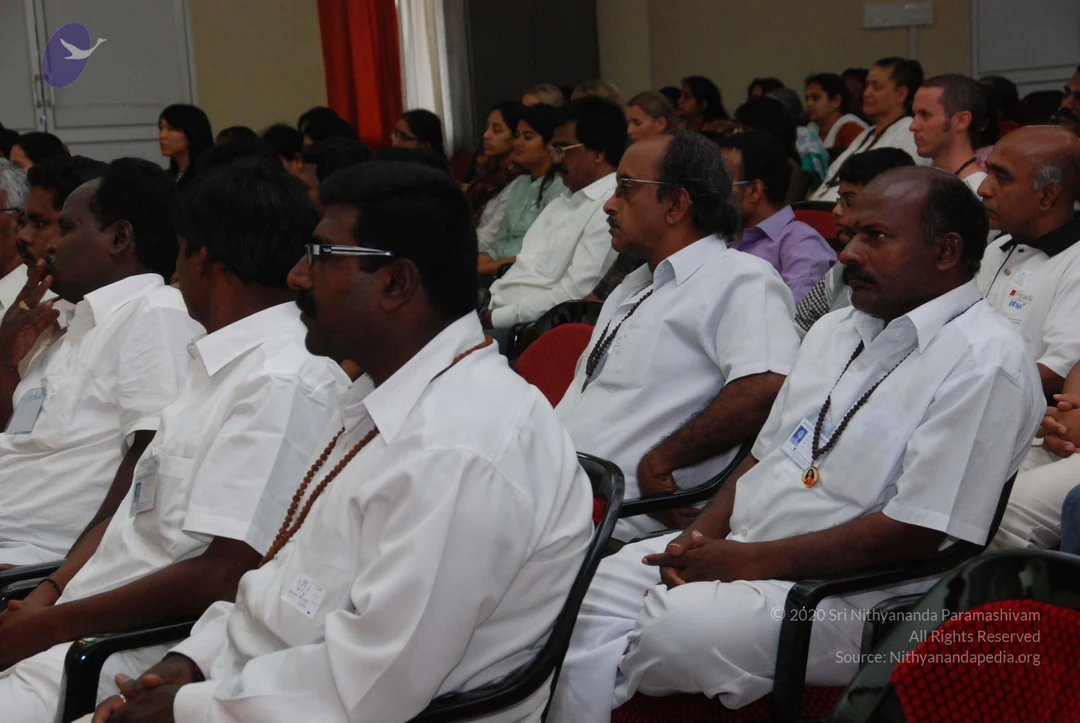
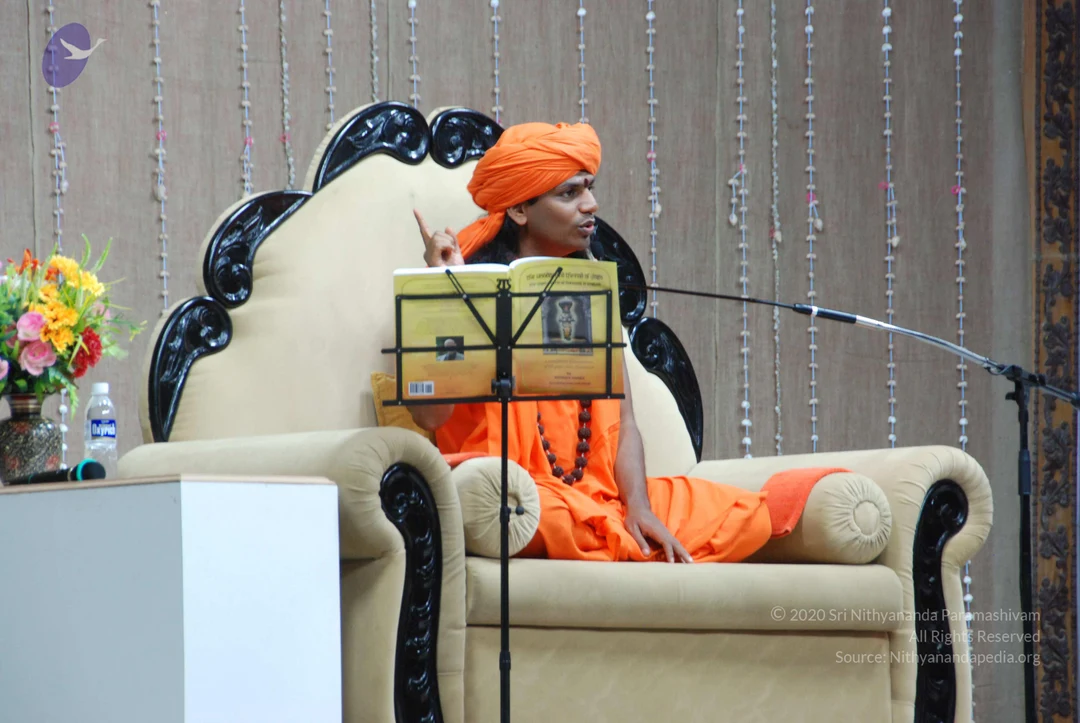
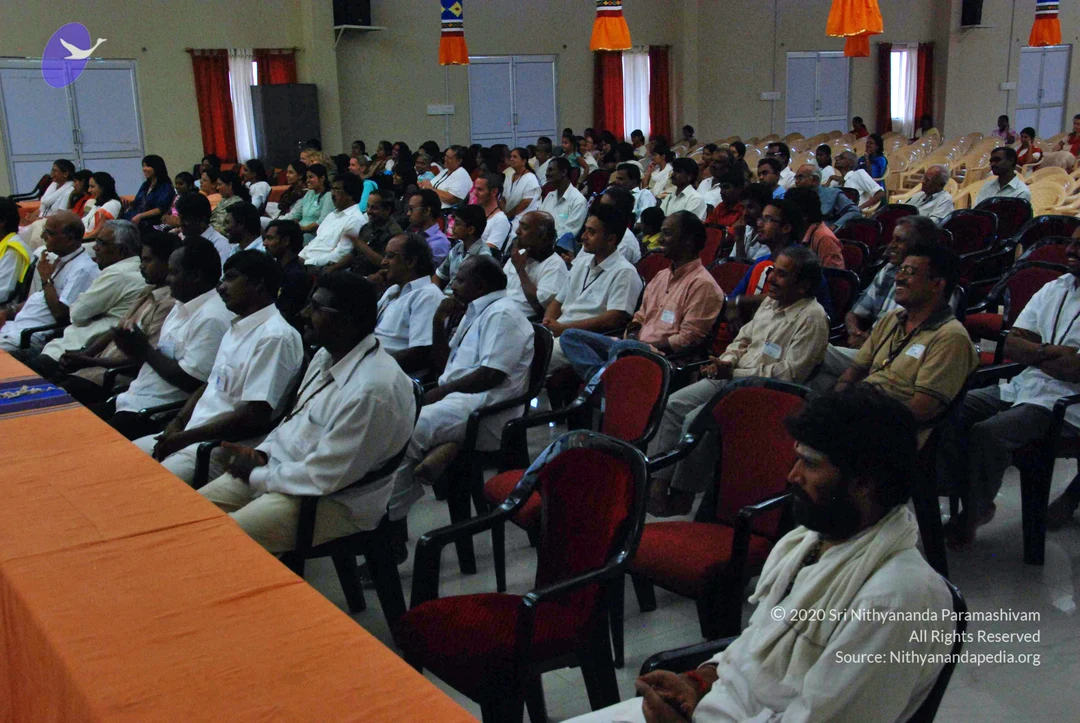
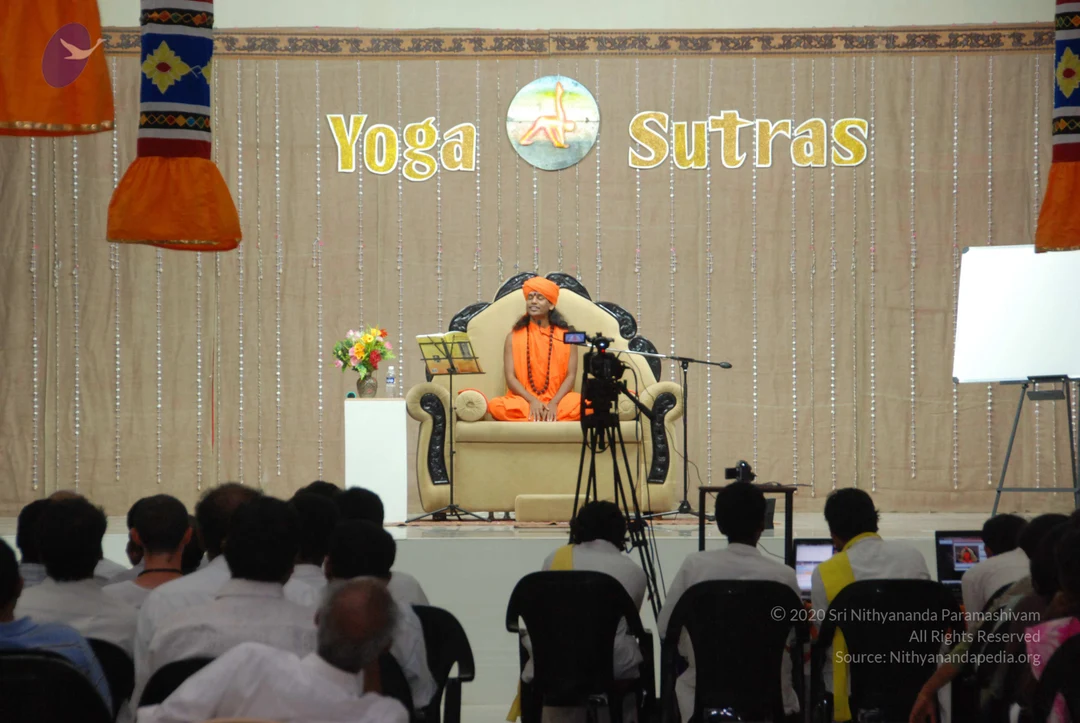
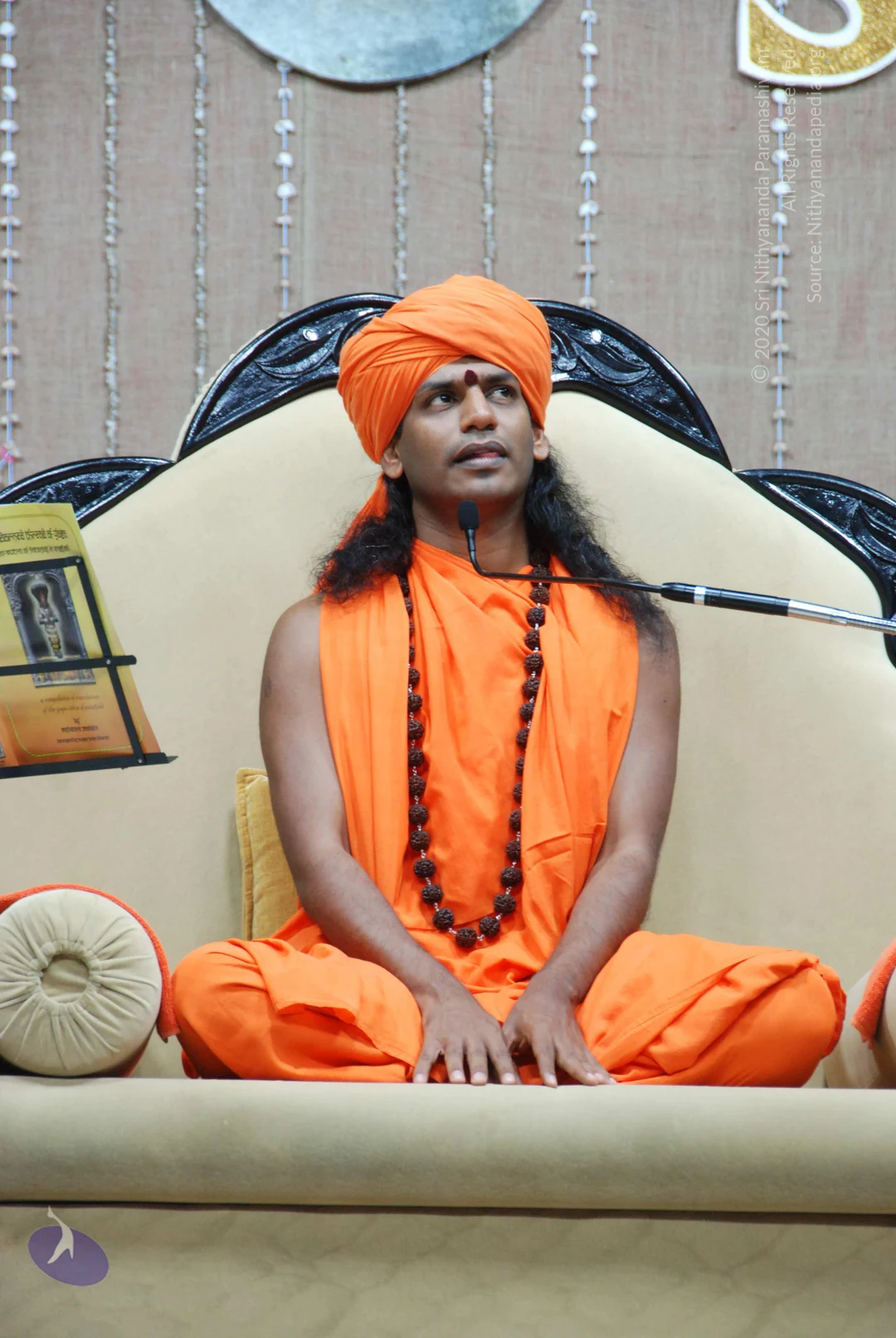
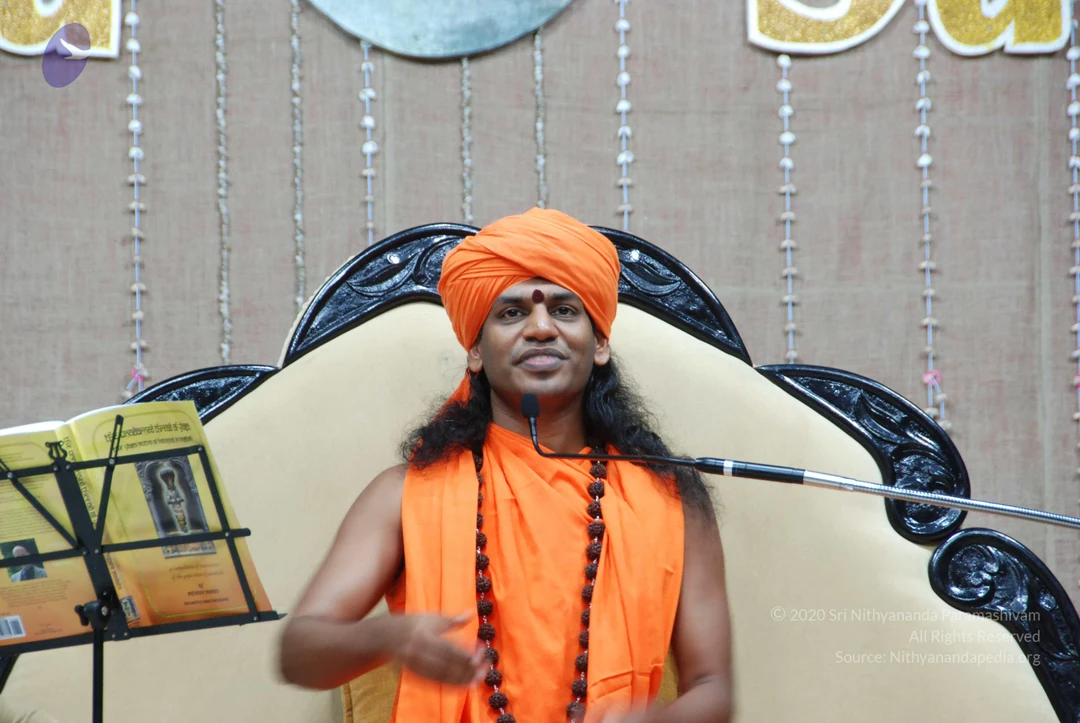
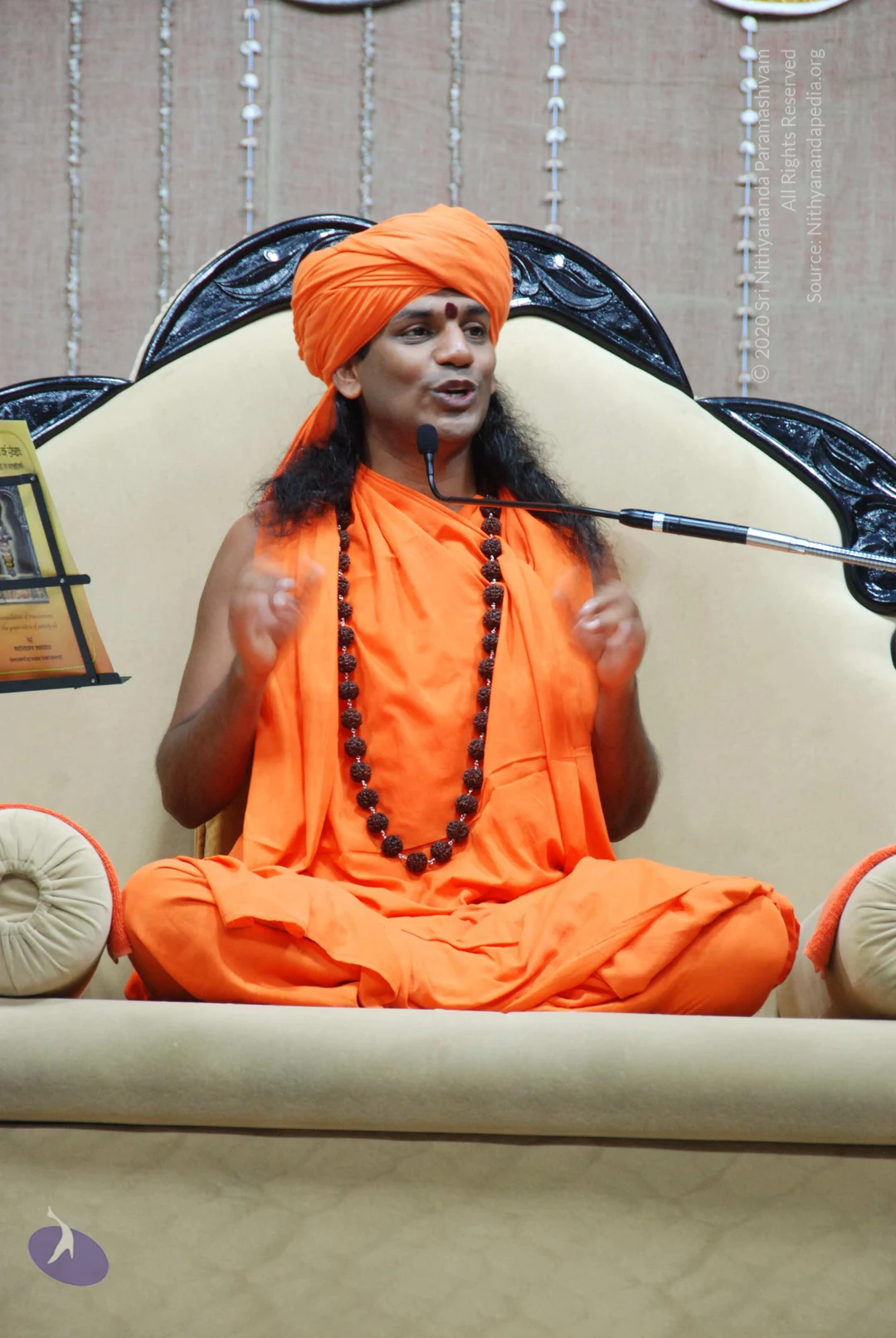
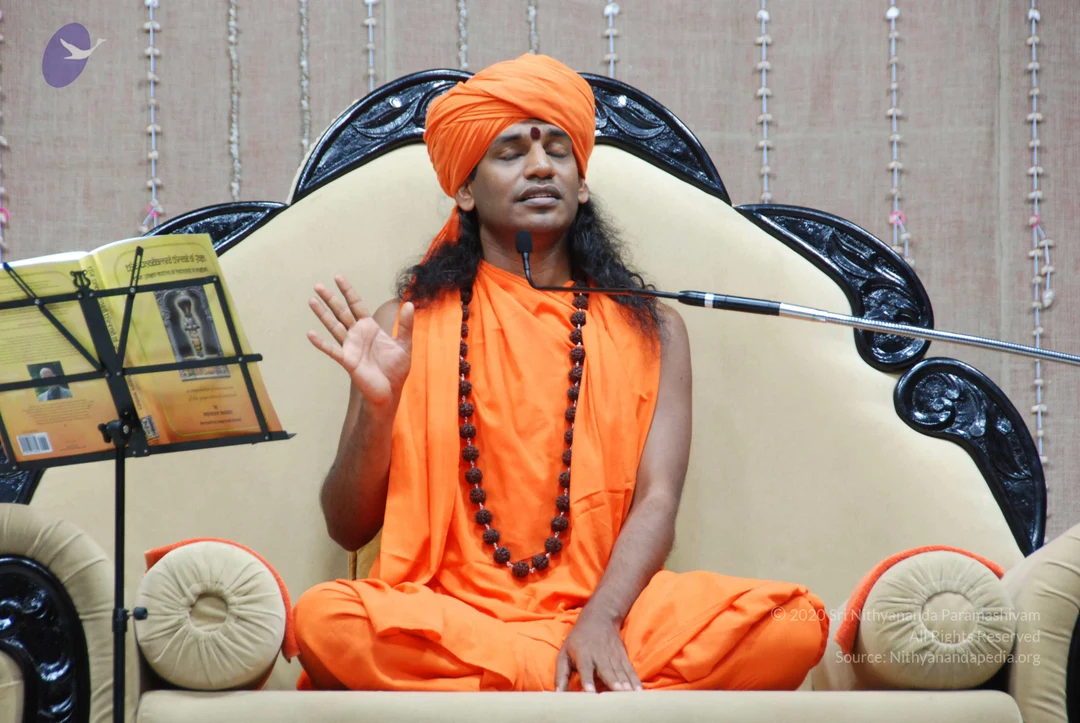
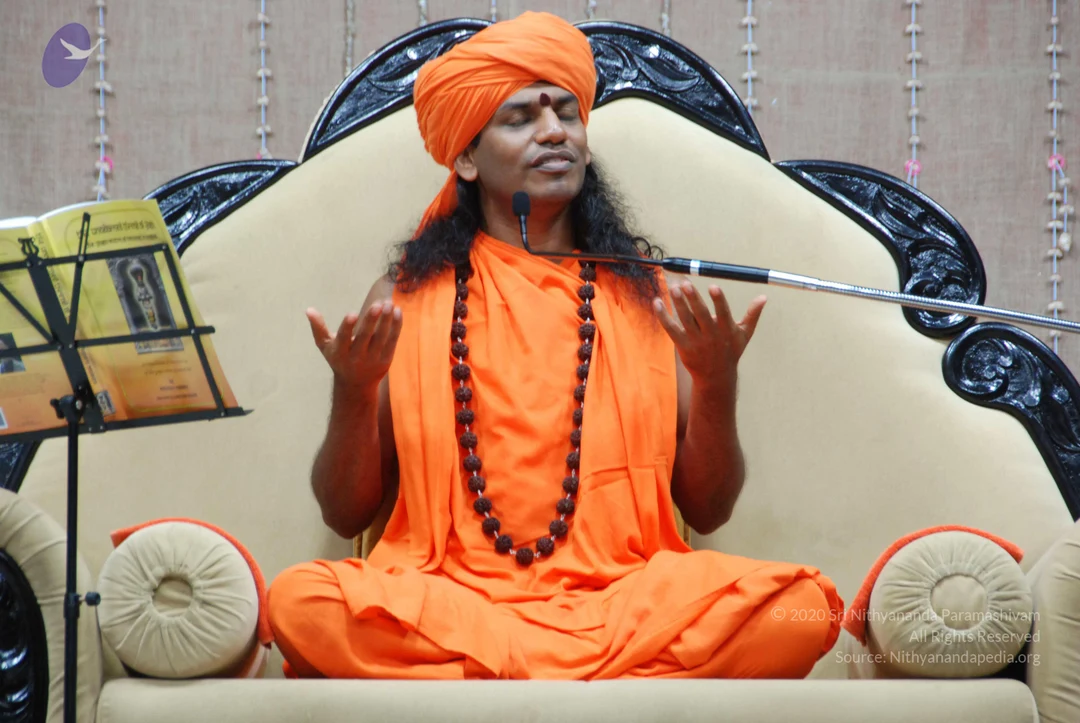
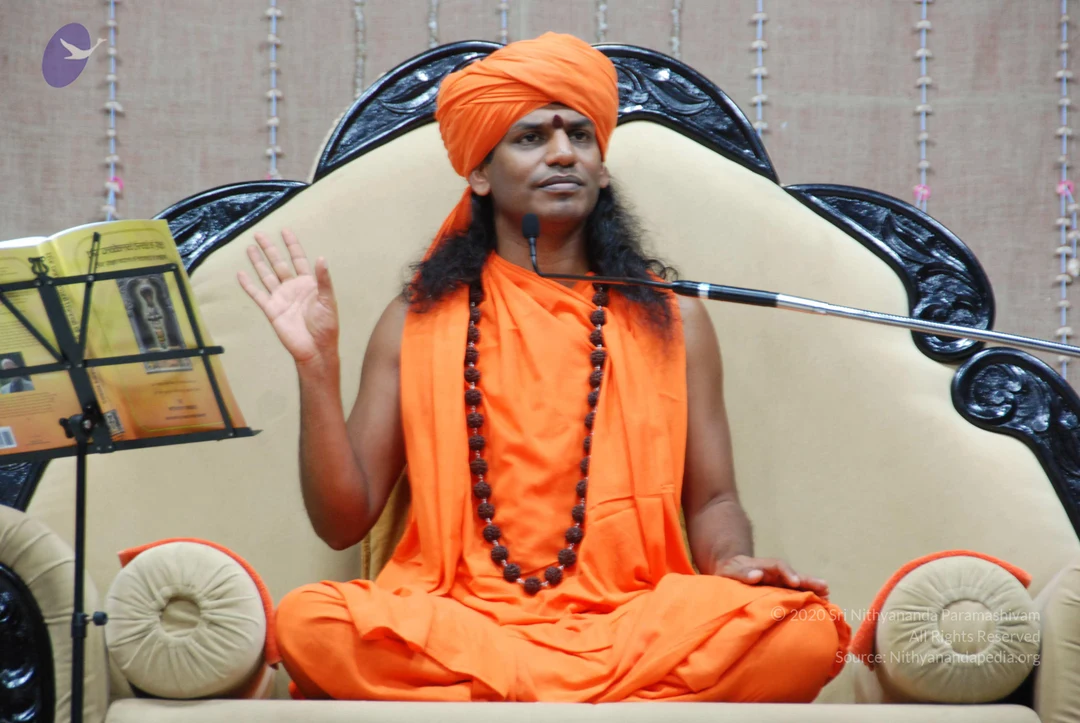
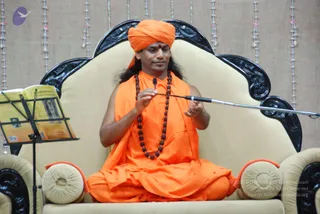
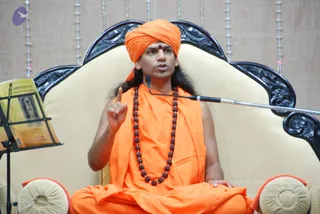
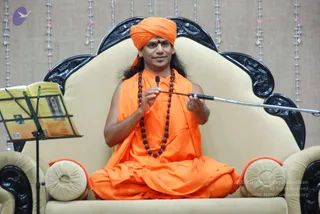
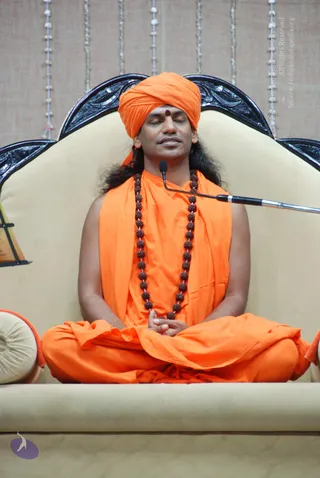
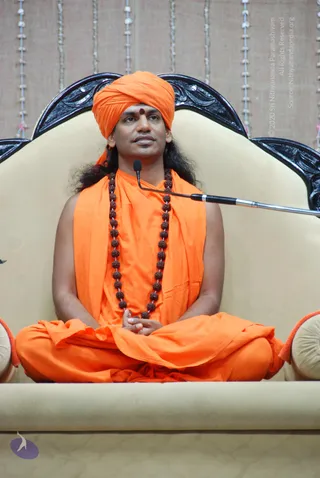
The Supreme Pontiff of Hinduism, Jagatguru Mahasannidhanam, His Divine Holiness, Bhagavan Nithyananda Paramashivam, expounded on the Cosmic Principles from Patanjali Yoga Sutras during a talk - entitled Message to Former Devotees: Nithyananda on Patanjali Yoga Sutras. The Supreme Pontiff of Hinduism explained in detail about the 3rd Sutra of Sadhana Pada: “Avidya, asmita, raga, dvesha, abhinivesha klesha.” He described Patanjali as the GPS for the inner world because he is giving clear-cut guidance on all the possible obstacles one goes through. His Divine Holiness shared that when Patanjali is describing all these different obstacles, it equips you with all the tools and knowledge weapons, so, naturally, you will be able to handle and live through it when it happens in your life.

Video and Audio

Message to Former Devotees: Nithyananda on Patanjali Yoga Sutras

VideoAudio

Transcript

(0:53)

Sadāshiva samārambhām Shankarāchārya madhyamām | asmat āchārya paryantām vande guru paramparām || I welcome you all with My love and respects.

(01:35)

In today’s sutra, Patanjali describes different obstacles. You may think why such an elaborate description about obstacles are required. I tell you, many time, just knowing about the obstacles is more than enough, it will disappear. Because, having awareness about obstacles when it happens in your life itself is a great benefit, that you will just handle it; you will just be able to handle it; just having a clear awareness that these are the possible obstacles, these are the possibility. Patanjali describes all the possible obstacles, what all we may have to go through, we may have to live, we may have to relive. It is almost like giving you the clear-cut guidance, GPS. Patanjali is the GPS for the inner world.

(03:16)

Let us enter into today’s sutra: avidyā-asmitā-rāga-dveṣa-abhiniveśaḥ kleśāḥ. How Vivekananda translates this sutra let us see. “The pain-bearing obstructions are ignorance, egoity, attachment, aversion and clinging to life.” Swami Prabhavananda translates as: “These obstacles, the causes of man’s sufferings are ignorance, egoism, attachment, aversion and the desire to cling to life.” Again Swami Satchitananda translates as: “Ignorance, egoism, attachment, hatred and clinging to life are the five obstacles.”

(4:30)

Many time, people tell me, ‘Everybody knows about obstacles. What is there Swamiji? You give directly solution.’ I say, ‘No! If you know about obstacles, that is solution!’ Knowing about the obstacles is solution! If you need something called solution independently, be very clear you do not know about the obstruction - obstacle. Because, when you have intelligence about any obstacle… see, the intelligence about the obstacle includes the way in which you need to go through the obstacle. It is not just information. Here, when Patanjali is describing all the different obstacles, the very description, the very understanding, the very clarity equips you with all the tools and weapons, what I call shāstra shastrās, the knowledge weapons. So, naturally, you will be able to handle it, live through when it happens in you.

(05:52)

First Patanjali starts with the word avidyā, ignorance. The word “ignorance” is too small for avidyā. Avidyā means trusting things which are not permanent in your life as permanent, solid support to move to divert yourself from the constant insecurity reminder happens in your system. Understand, all of us by nature, built with a constant reminder of insecurity system. Like, if you don’t put the seat belt, how the light goes on in the car, continuously reminding you, or some special sound. Same way, till you become enlightened, there is a constant reminder in you, that insecurity. I tell you, you are in-built with that insecurity. When you try to divert yourself from that constant reminder using something which is very impermanent… sometime people are so foolish, knowing it is impermanent, they use those diversions; because the fear of fear, when that insecurity haunts, it feels too much, and they don’t know what to do or they don’t want to do the real solution. Like alcohol. They know in two-three hours they will be out of the… that mood in which they forget all this insecurity. But they wanted to go on, use alcohol and cling to it just to forget this insecurity or forget this fears and problems for few hours. Nothing else. They know in that few hours the problem is not going to be solved. It may become little more.

(08:35)

Many time, these people come and tell Me, “Oh! Sitting in meditation, is it not like trying to forget all the problems, escaping from the problems?’ No! Not sitting in meditation is what is trying to escape from the problems; trying to divert yourself through other things. Any entertainment, except you facing you directly, is escaping from that insecurity, is escaping from that red signal, that constant reminder. Avidyā means trying to divert yourself from that constant insecurity using something which is impermanent.

(09:21)

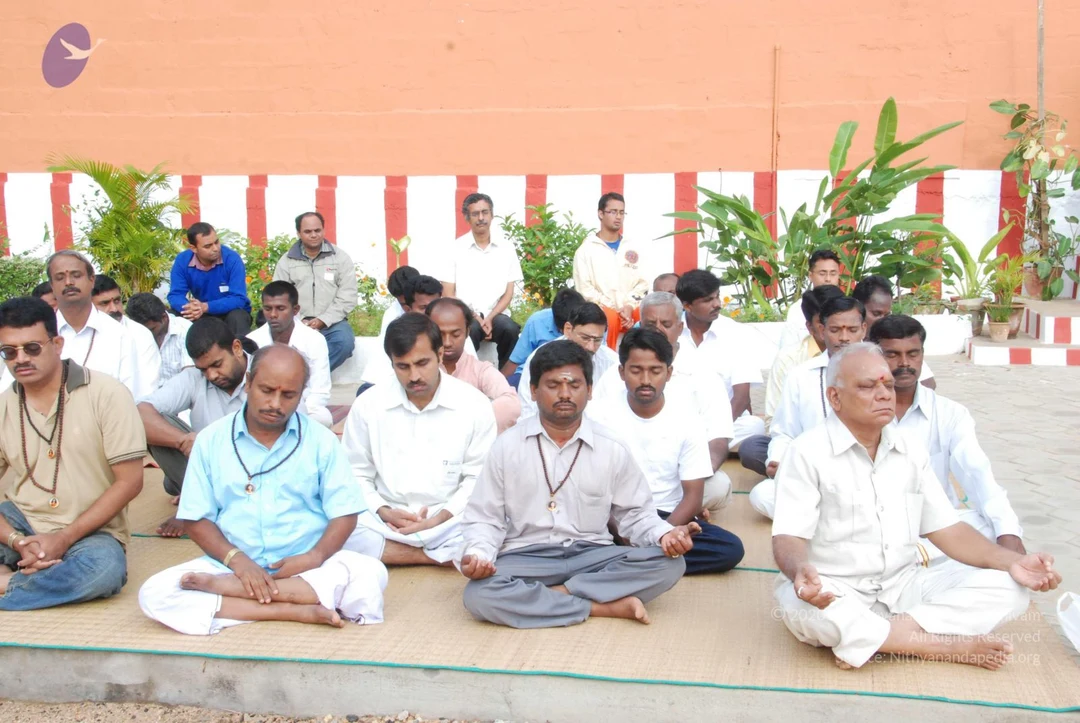
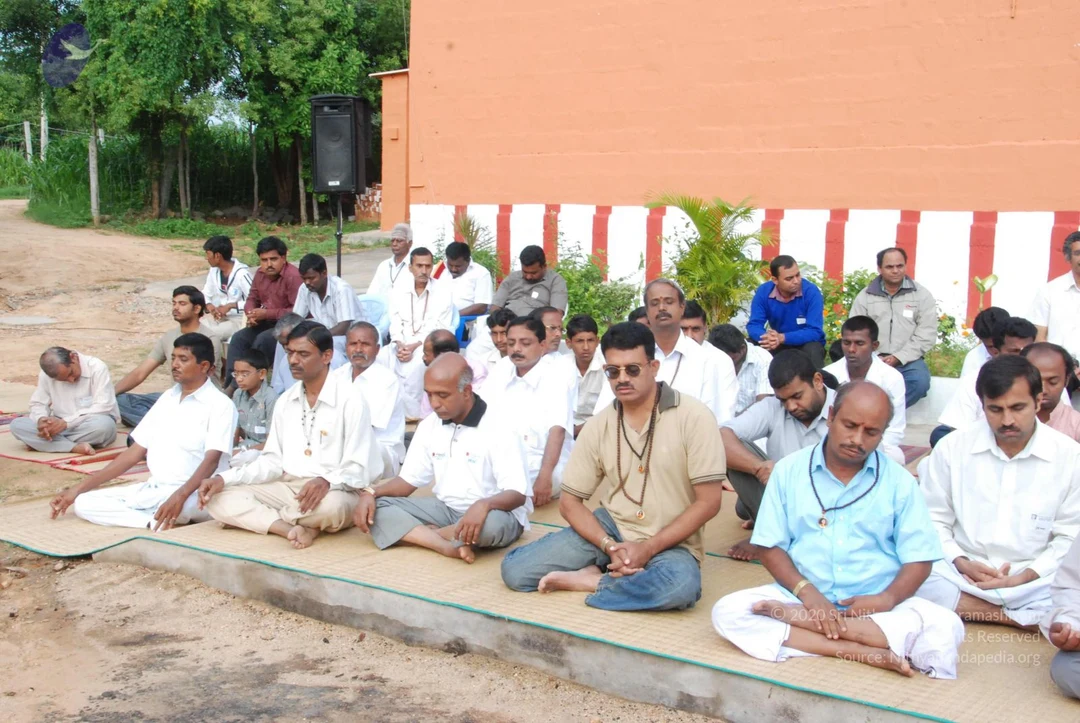
I tell you, if you have the capacity to sit with you, with closed eyes, just forty minutes a day, nothing else, forty minutes a day. Every day, whatever may be your outer world situation, whatever may be your mood swing, whatever may be, if you are able to sit forty minutes with closed eyes, you don’t need to meditate, or get into samadhi, or I am not telling about all those things. I am not giving you any big, big technique, or method, or nothing. Just forty minutes you are able to sit with closed eyes, I tell you, you will not have any problem, you don’t need to escape from any problem, because forty minutes all your insecurity will come up and haunt you, and the great, beautiful thing about your insecurity is if you just sit with it directly, it will give you solution and go away! It will just give you solution! You will come to terms with it. Either the strategy to work will happen in you or you will just come to terms with it.

See, if that insecurity, the situation has to be handled in the outer world, means some other person is also involved and responsible for that insecurity, you will have the right strategy to handle that person. And if nobody is involved, you are alone creating, like a ghost, then you will simply come to terms with it. You will come to terms; you will face it. I tell you, nothing, just sitting with yourself; nothing else! Forty minutes, with closed eyes, just sitting! Whatever comes, comes, comes, comes, comes, you will see in two months, all the things which you need to face, you would have faced already. The biggest asset for any human being is ability to sit with himself. I tell you, you do not know the value of that asset.

(11:46)

Just today, one of our devotee, she was asking Me, “Swamiji, bless me that I should be centered in my being. How you went through this whole scandal, without getting disturbed, I should be in that same awareness.” I tell you; this is the secret! This is the secret. The only one secret! You don’t need anything else; you don’t need even enlightenment! You don’t need anything. If you wanted that awareness, being centered in the sthita prajna, means the unshakeable, immovable joy, the consciousness of jeevan mukti, nothing else is required. Just have this one capacity, the ability to sit with yourself at least forty minutes every day. Nothing else. Because when you sit, forty minutes is too much time for your bio-memory to keep quiet or move away from you or hide from you. See, because constantly you are trying to engage yourself in some entertainment, you are trying to say “no” to your bio-memory, the insecurity, whatever is inside, that insecurity also slowly starts saying “no” to you. Sitting with you forty minutes, simply you come to terms with it. Forty minutes you cannot suppress. See, it’s like a… in a big bowl, if you put many objects made out of wood and you go on churning the water, all the wooden objects will go inside. But the moment you take the hands off, the moment you remain silent, all that will come up and start floating. Same way, because you are constantly churning your inner space with something, all those insecurity has gone inside, and they are sitting inside. Moment you take your hands off, stop churning, they will just come up and start floating. Trying to hold on to the things which are not permanent and avoiding the in-built insecurity is avidyā.

(14:22)

I tell you, Ramakrishna describes avidyā as kāmini-kānchana. Means, the lust and wealth. I tell you an important avidyā: personality built on name and fame. That is also an important avidyā. If you try to build your personality on name and fame, especially in the age of communication, you will create the possibility for the greatest suffering. Unable to face the reality as it is, is avidyā. Building the personality on false things is avidyā. The Master’s Presence removes all the entertainments from you and suddenly puts you into the higher reality, reminds you of the possibility to exist in higher reality, teaches you the extraordinary way of existence, extraordinary way to exist.

Just remembering clearly the word avidyā is enough, when it comes you can face it; because most of you are mind-based beings, mind-based personalities. You don’t have any problem which is directly physically, physically, physical. Nobody is coming and beating you. Nobody is trying to imprison you. It is not physically, physically, physical. It is more or less fighting with you. Mental! So, remembrance of avidyā, understanding about ignorance is more than enough to experience the liberation, to experience the higher consciousness, to experience the samadhi, going beyond the obstacles.

(17:37)

The next word, ‘Asmitā’. ‘Ahankāra’, they translate this asmitā as ‘ahankāra’. Vivekananda translates as ‘egoity’. Satchitananda translates as ‘egoism’. Prabhavananda translates as ‘egoism’. I will translate as “Sense of I-ness mixed with the things which are not really ‘I’. Again, the same thing. Same avidyā itself is expanded and explained in this next word also. Patanjali is trying to explain the different, different component of avidyā. He is taking us deeper and deeper level through this sutra.

(18:54)

See, the feeling of I-ness with the things which are not you, which are not really the “I”, part of “I”… how to segregate the “I-ness” from the things which are not really “I”. The vitarka, the trust with some higher energy or the trust on something which is not you, on even a single stone is enough, nothing else, just a single stone, just vitarka on a stone, deep trust on a stone, or on a deity, or on some concept, or on a God, or with some Guru will completely purify you, will liberate you from this identification of “I-ness” with the things which are not “I”. Please understand, one day one of My ashramite asked, ‘Swamiji, why do you go to the temple everyday morning so religiously? We all know you did prana pratishta. You put that energy. But everyday so religiously you go and bow down and do pradakshina, and do namaskar and come!’ I told him, ‘It is just to set the precedence!’

(20:37)

Understand, start your life, any action, anything, by remembering something which you think it is not you. Surrender in front of anything; no problem! Surrender in front of anything; have vitarka with anything, other than what you think as you.

See, this ego is actually unconsciously identifying with something which is not you. The antidote for ego is consciously surrendering to something which you think really it is not you. It may feel very funny. The ego and vitarka are completely opposite to each other. Ego is unconscious identification with something which is not you vitarka is consciously identifying with something which is not you. When you consciously identify, all the unconscious identification starts falling. It just starts taken away…it is slowly moving away from you, and simply you will surrender into it. You will relax into it.

(22:09)

I tell you, the power of feeling connection with God, or Guru, or even a stone, the ability to feel connected with a stone, or god, or anything, is ability to make things sacred. If you have learnt to make a stone sacred, you will simply be able to make yourself sacred. That is the ability to do prana pratishta. Understand, if you have the ability to do prana pratishta on a stone, you will have the ability to do prana pratishta on you. It is a very powerful truth, very important truth. I tell you, I tell all the people, do not lose the ability to do prana pratishta, ability to establish sacredness on something, ability to surrender to something.

(23:25)

The other day, I was talking to some of the ashramites. “Swamiji, do you have anything to tell the people who had a strong feeling connection with you and now lost it?” I have only one thing to tell them: ‘Please understand, if you miss Me, nothing wrong. But don’t miss the ability to have the deep vitarka, the feeling connection! Catch some other Master, or God, or a deity, and have that deep, strong feeling connection. Don’t miss it! That is the greatest thing can happen to a human being.’ I tell you, that feeling connection how much it elevates you! It is just nothing but a rope bridge between you and shambala - the plane of enlightened beings. It is just a thin rope bridge - the feeling connection with anything. For some reason if you are not able to have that with Me, it’s okay, no problem, don’t worry; nothing is lost! If you are not able to have with Me, nothing; you have not lost anything. But don’t stop having that feeling connection. Catch some other Guru, some other Master, some other God, or at least a stone in your house, a deity in your house. Build that feeling connection, build that deep trust. Because, in this whole drama, that feeling connection is important; neither the information about Me, nor the facts or truths or ideas or concepts you carry about Me. The important is that strong feeling connection. Build that feeling connection with somebody, with some Master, some Guru, some deity, you will not lose anything in your life. You will have that ultimate in your life; and that possibility for ultimate is open.

(25:56)

I wanted to share with you an important incident happened during My parivrajaka. I think I would have shared with you already. Once I was… when I was traveling in central India, under a tree there was a stone. I was feeling like relaxing. So, I put My head on that stone and sleeping. Suddenly, in two-three hours, one farmer was almost about to hit Me, shouting! I woke up and I saw he is just burning and boiling! I couldn’t understand why! He said, ‘Because you are a sadhu, I am not hitting you. I am leaving you. Move away!’ I didn’t understand. I thought maybe it is his land. Even then… usually North India people don’t abuse sadhus. North India they have a great respect for sadhus. I couldn’t understand why he is so angry. Then he said that stone on which I put My head, that is his Shiva; he worships that stone as a Shiva everyday. And surprising thing is, that fellow was sleeping in his house. He had a dream, he had some feeling, some telepathy message kind of a thing that he has to protect his deity; ran and came, and he saw I am putting My head on it and sleeping. The moment I understood, I apologized to him. ‘So sorry, please forgive me! I didn’t know it is the deity you worship.’ Anyhow, I moved. Then he did whatever he need to do as parihāra… and he continued… just left it. I stayed in that village for few more days. Something else happened; that is the most funny thing. After a few days, one westerner and his Indian guide, both of them came to that village. They came to know about this guy worshipping that stone as a deity. And they saw this guy is doing all puja sincerely, very sincerely. And, they… that guide, Indian guide, he wanted to show some Indian sadhus to him, that westerner. So he brought that westerner to Me. I was staying in that… nearby there was a small temple, I was staying there. He brought that westerner to Me and he introduced Me to him and he to Me. So I told this incident just to tell that westerner about that Indian culture and tradition. “See that ordinary villager who is worshipping that small stone, he is able to have telepathy message with that stone. I just put My head and slept on that stone and this guy rushes… gets a dream and vision in his bed and rushes here to move me out of the stone!” He was shocked! He was shocked! Anyhow he wanted to go and meet that guy again. So both of them went. I also went just to see the fun.

(29:33)

When this westerner went and asked that farmer who was worshipping that deity, asked about that incident, he described the same way as I described. Like, he was sleeping in the noon time, he was having a nap and he had a vision that his Shiva coming and telling, “Come on, the….”, coming and showing him something, telling that he should come and move Me out or whatever. Or he felt that …the farmer felt by putting My head on that deity, I hurt his sentiments. So he rushed and came after having the darshan and moved Me out. This is what he said. One funny thing happened. This westerner, he just wanted to check the strength of that farmer. He asked, “If I give you money, five thousand dollar…..”, those days five thousand dollar is too much, few lakhs, “will you give that stone to me?” I was very sure that farmer will not give. He will say…he will get angry and shout at the westerner and get him out. I was really expecting a very nasty scene. You will be surprised, that farmer gave it!!! He said, ‘Take it and give the money!’ But one thing, I used… I was able to see very clearly, that guy, that farmer has vitarka, the feeling connection; it is not a lie. And that guy just said, ‘Give the money; take it!’ And he gave it away actually! That westerner gave the money, and took that deity and went away as a testimony, or as a memory, or as a souvenir from India. Because I explained to him how the telepathy works in the Indian traditional system, any stone can become a transmitting center with a highest frequency if you have that feeling connection. So, I was really shocked how this guy sold his deity with which he is living! Anyhow, after that westerner went away, I asked, “What have you done? What happened to you? Why did you sell your God? You sold your God, your Shiva! Don’t you understand?!” He laughed and said, “Swamiji, I did not sell Shiva. I sold the stone which I considered as Shiva.” Then I asked, “What about it? Even that is a sacred for you!” He said, “No! I did prana pratishta. Now I will put another one stone and do prana pratishta! That’s all!” See the ability! The guy has a clarity and ability! This is what I am telling you: having siddhis, but having the clarity about enlightenment. See, just because he had a telepathy connection with that deity, he did not lose, or he did not get lost, and he did not forget the truth he did prana pratishta; the stone itself is not something special. I was shocked! And he said, “I will put another one stone and do prana pratishta, and the same experience will be there!” I told, Oh, God! A villager! What a clarity!

(33:21)

I tell you, not being caught by siddhis and forgetting the ultimate truth is this. Having the ultimate clarity even when you have the extraordinary experiences. I am really, really shocked! A villager… first of all, it is very rare to have this kind of a feeling connection which leads you to the level of telepathy experiences; but having this connection, having the telepathy experience, above all having the clarity “I put it; so I will get another one stone and do prana pratishta. The God will be there!” He says, “The ability to do prana pratishta is in me. So, after all, he will really love to have that stone as a souvenir from India. Let him have it, that’s all. And with that money, I will build a new temple for that new deity which I am going to put.”

(34:28)

And this guy really built! He built it! I will trace it actually. Now I am able to trace all the place…..now I am sitting and doing the tracking of all the parivrajaka yatra places I went; because there is so much of controversy about My parivrajaka, I wanted to give a clear picture. I am coming up with a clear picture and… from My memory, I am trying to pick up all the files. Maybe, in some places where I traveled in train with ticket when devotees give, we will be able to trace back some of the records. I wanted to rebuild that whole parivrajaka time with as much evidence as possible. Because now, everything about My life is legal! I will have to provide evidence! We will trace that place. That guy really built! A small temple, not big, small temple with a new deity. And he did prana pratishta, and he is living with that. Maybe he is still alive also. We don’t know. If we trace it we will be able to get him.

(35:55)

Understand, the ability to do prana pratishta should not be lost. The ability to do prana pratishta is antidote for egoism. Egoism means, feeling connection, associating yourself with things which are not you, unconsciously. Devotion means, feeling connected to things which are not you, consciously. When you consciously feel connected, that thing which is not… which is not you becomes you. Because, in underground, underlying, deep down, you are everything. In a different plane, it is you who is everything. And the ego, and devotion - Devotion is a direct antidote. Means, feeling connection is a direct antidote to egoism. That is why I insist… this farmer, see, you can learn a…..learn a beautiful lesson from this guy. He did prana pratishta. He put that as a sto… deity and started worshipping; but his feeling connection is so strong, he is able to have telepathy experience. Even after having that telepathic experience with that deity, he is not caught with the deity. He has… still he has a clarity, “I can do this same with another one stone.” That is what I say, “going beyond form”. Going beyond form does not mean dumping My form; the ability to create the same feeling connection with another one form.

(37:54)

If you have the ability to create the same feeling connection with another one form, if you dump My form, it is perfect. Nothing wrong. If you have the ability to have that same feeling connection with another one form or formlessness, then if you dump My form, it is perfect. Nothing wrong. You are free from it. But, by dumping My form, if you have lost the ability to have that feeling connection, one of the important channel in your life is locked. Sealed. One of the great possibility is lost.

(38:36)

All I am requesting, or humbly suggesting for all the former disciples who had that feeling connection and now lost, if you have lost this form or Me, no problem; nothing wrong. You have not lost anything. But, don’t lose the ability to have that feeling connection. Catch some other Master, some other Guru, some other deity, some God, and open, rebuild, redevelop the possibility of feeling connection. You will really see the ultimate possibility happening in you. The antidote for egoism is feeling connection, vitarka. So when you start your life remembering anything other than you, it is sacred. When you do anything by remembering something which is other than you, it is sacred. If you are living anything by remembering which is other than you, you are living spiritual life.

(40:06)

Next obstacle, Patanjali is describing here: Rāga. Vivekananda translates this as “attachment”. Prabhavananda translate again, translates this word again as “attachment”. Satchitananda also translates again as “attachment”. I will not translate. I will tell you the concept of the word rāga; you try to understand.

(40:48)

Rāga is not just attachment; the reaction of attachment. Reaction of attachment is feeling bound. And the hatred which comes because you are feeling bound is rāga. Just the pure attachment will never bring any problem to you. Pure… The pure attachment does not bring any suffering to you. But the reaction to the pure attachment, feeling bound, and the hatred which happens in you because of that feeling bound - that bound, or being slave. The reaction to the rāga, reaction to the attachment is rāga.

(41:52)

One more thing, your inner space is so intelligent, the moment you have the attachment, the reactions of attachment will start happening in you. That is why all your relationship is love-hatred relationship. I call that “intimate enemy”. All the people with whom you are intimate, they are intimate enemies. The moment you have attachment, the other side of you immediately feels, “Oh, god! Now I am attached. I don’t know how this fellow is going to reciprocate or respond to it. And how am I going to handle if that fellow is not responding as I want? How am I going to handle even if he responds as I want?” Already the calculation has started. The reaction of attachment is rāga; not directly attachment. The pure attachment does not bring any suffering because it does not sit and calculate. The reaction to the attachment, or your own calculations about the attachment - that is what is rāga. That is what is a big obstacle in the spiritual progress or peaceful life or samadhi.

(43:16)

A small story. One man is in death bed. Asked his wife that she should be truthful to him and marry his friend after his death. She said, ‘That is okay, I will marry him. But you always told me you hate him even though he is your friend. Why do you want me to marry him?’ He said, ‘Yes, I hate him. That is why I wanted you to marry him!’ 😊 Intimate enemies! All our relationships are intimate enemies till you experience the pure rāga.

(44:10)

Pure rāga will not have any repenting feelings, will not expect that you are supposed to react and respond in such a way for the love shown. The pure rāga is like a river, only flows, never comes back. But, the word “attachment” is like a river which is stopped by the dam. When the river is stopped by the dam, for few meter it comes back, because it is stopped. The speed with which it went, and it stopped, and it comes back. So rāga cannot be exactly translated by the word attachment. It is reaction of attachment… is rāga. When the pure attachment flows, and the logic dam is built, which starts calculating… you see pure attachment is almost like a falling into the abyss.

(45:23)

One more small story. One guy fell from the third floor and lying on the ground with multiple fracture. The friend rushed and asked, ‘Did the falling hurt you?’ He said, “No, the stopping has really hurt me! Not the falling! The falling has not hurt me; the stopping has hurt me; the sudden stop!” Without stopping, if you are just falling, it is flying. It is floating. That does not hurt you.

(45:56)

Understand, the pure rāga, the pure flow of desires does not attach you, does not disturb you, does not bring suffering, but your logical calculation about that flow… if you can flow without logical calculation, you are living enlightenment. The day you put the logical dam for the pure flow, your honeymoon ends. That is why the word “moon”, not “sun”. The pure flow of your being with anything does not bind you, bring suffering; it is not attachment; you cannot suffer from it. It is your logical calculation. That is why the people who go on calculating are almost always a failure in relationship. In relationships they are big failure.

(47:16)

One lady goes to the doctor. And after the checkup doctor says, ‘You have only six months to live.’ She is shocked, started crying, ‘Six months! Too short time! Please give some solution!’ Doctor says, ‘Alright! Marry an accountant.’ She says, ‘Oh, that will make My life long? I will become alright?’ He says, ‘No! It will look very long!’ Impossible!

(47:59)

The other day one guy came, and he asked Me, ‘Swamiji, bless me that I wanted to go for divorce.’ I said, ‘Why?’ I enquired, ‘What you are doing?’ He said he is a doctor. I enquired, ‘What she is doing?’ ‘She is B.A., B.L., Swamiji. Lawyer.’ I asked, ‘Does she goes to court and practices?’ ‘No, Swamiji! She argues in the house itself!’

(48:30)

Constantly if you have… if you build the dam of logic for the, for the flow of love, please understand, by nature, by the very quality of your bio-memory, you are built for love, and for flowing, for life. Flowing is life. That is expansion. I tell you, even the chair with which you are sitting, try to have few seconds and flow with that chair. Feel that chair is alive, and sit with lot of love. ‘God, you are holding me! You are holding me! If you are not there, I may have to sit on the ground little uncomfortably’. Just few seconds. The chair will become alive! And it will respond to you! It will respond to you! I tell you, really it does miracles! Really… two-three times it happened in My own life! My car, which I used for last eight years, I call that as Nandi, at least two times, we have very clear evidence, ran without petrol or diesel, without fuel, for thirty kilometers! Completely empty! Still I am not able to understand how that guy ran thirty kilometers, till the next petrol bunk. In the next petrol bunk, it stopped. Still I can’t understand! But I always treat that car in a very loving way. When I sit in… get into that car and sit, I just feel I am sitting on a living energy. Just give the. just like a… I will touch with very loving way. Nothing else! Your… your flow can make anything alive!

(50:22)

In Yogananda’s life there is a beautiful incident. He had a rose plant in his bedroom near the window. Every day he will just go and stand near the plant and tell the plant, “I’ll take care of you. You don’t need to have a self-defense mechanism…” that thorns. “…you don’t need to protect yourself.” And very beautifully the… one of His close disciple who was taking care of Him, she writes in her reminiscence, “Just in three weeks, just in three weeks, that plant dropped all the thorns! It was giving only flowers. No thorns! It just dropped!” She writes, “I know, because I am around him, I am taking care of him, I am serving him. I know how deep secured feeling I feel around him! I know that secured feeling. But I can’t understand a plant can feel that security and drop the thorns literally, physically!” The life can make everything alive. The moment you put the logical bridge, calculation bridge, everything will become dead.

(51:51)

So, rāga is not exactly attachment. The word attachment is not the right word, right translation. Because, the pure rāga does not bind you. It is never an obstacle for enlightenment. I tell you; I had a pure rāga with millions of people. Few people have… what to say that… conspired or did whatever they want to do; but still I am very clear, My rāga towards them has not disappeared. It is there. Because I never expected that they should not do anything wrong to Me. If I had that expectation they should not do something to Me, they should do only this, if I had the calculation how they should behave, now My rāga will disappear. But My rāga has not disappeared. Still, when I remember the so… people who cherish enmity towards me, I don’t have any problem. There is no problem.

(53:01)

The rāga itself, the pure attachment or desire itself is not a problem; your calculations about the desire, your profit-loss statement about that desire, the moment you try to have utility value out of the desires… for example, your love flows, your simple desire flows, your simple attachment flows towards some direction. Then you have your notebook: if this flows in this direction this many kilometer, what will happen? With this guy, with this situation, with this place. Will it bring suffering? Will it bring joy? Will it bring this? Will it bring that? Will it bring wealth? Will it bring name and fame? Will it bring this, that? That calculation, that is what I call dam. Then this river goes and hits the dam, comes back. What happens in the dam is attachment. That is suffering. The reaction to your pure flow is obstacle for enlightenment; not the flow itself.

(54:12)

We need to have a clear understanding about the love, flow, desire, attachment and all these words; because wrong understanding about all these words can bring suffering to you. Understand, in the country law, if a wrong interpretation is given to one word, that can bring suffering to a person. Same way, in the cosmic law, the wrong interpretation is given to a word, it can bring inner suffering to you. Wrong interpretation of the word in the country law can prison… can put you in prison in the outer world. Wrong interpretation in the cosmic law, one word in the cosmic law, can put you in the internal prison. Many of us suffer in the internal prison. So, this is the cosmic law. Have the right interpretation, the right understanding.

(55:19)

Rāga means, when your pure energy flows and your calculation starts. The celebrities’ personal life or the love life is always failure, because everything in their life they calculate: If I live with this guy, what will be the effect and side-effect, if I marry this guy, what will be the effect and side-effect, if I am with this guy, what will be the effect and side-effect. The flow is stopped with a logic. When you bring some other utility value into the flow, it is a failure. That moment it ends. Continuously I am seeing. In any field, in any field, the moment you start the calculation, the utility value of this flow - gone! Over! It’s over! Rāga, the pure rāga leads you to enlightenment, but the reaction to the rāga, if you start having calculations about the rāga, that is what is obstacle.

(56:55)

Next word: Dveṣa. Again, Vivekananda translates this word as “aversion”. Prabhavananda also translates this as “aversion”. And Satchitananda translates as “hatred”. Maybe, I will translate the… this as “repulsion”. That can be the much better word. Or you can say, all these words put together – aversion, hatred, repulsion – all these words put together, that concept is dveṣa.

(57:54)

The moment you remember something, if you feel unpleasant, you have dveṣa; that’s all. The moment you remember something, or person, or somebody, if you are feeling unpleasant, you don’t want to remember it, you just wanted to change, you wanted something else in your mind than that, you have dveṣa for it. The only remedy is, meditate on it. Whatever object, person, situation, space, place, you have dveṣa, meditate on it. Sit with it. Conduct like a court. Why I have a… why I have dveṣa? Bring all the complaints. Conduct your own trial. Acquit that guy with honor. See that dveṣa is nullified. Please understand, cherishing dveṣa in the inner space is such big bondage for you; not for anybody else, not for anybody else - it’s for you!

(59:31)

My brahmacharis are… were telling me, ‘Swamiji, by constantly teaching compassion, compassion, compassion, you made us all very powerless... or strengthless.’ I told them, ‘No! By teaching compassion, I made you guys strong.’

(59:54)

The real strength is, the internal stability not being shaken by anything internally, not being moved by anything internally. The dveṣa may bring outer world success, but will never be able to let you live in a relaxed way. My description about life is totally different from the description you learn from your universities, college, friends, subordinates, colleagues, and higher authorities, or from the so-called society. I tell you, society is nothing but bunch… or I can say, thick layer of hypocrisy. It is just hypocrisy constantly justified as morality. That is a funny thing. I really, I was surprised. Who all have started teaching morality to Me in this scandal! 😊 I was really surprised! And all these guys who go on writing articles about Me, and go on debating about Me, judging about Me, those guys should understand, after all the elite society is in touch with Me, all their personal life stories are very clearly known to Me. I am really surprised! The guys who passed comments during this scandals, all their life is very clearly known to Me, because I am in constantly in touch with the elite society. The elite society continuously comes to Me to see or to have My darshan, or blessings, or … And, all their stories are very clearly known to Me. I was really surprised that how these guys are… May be, the…..there is a beautiful proverb that “Cat thinks if it closes its eye, the whole world will become dark!” Hypocrisy! The social hypocrisy!

(01:02:59)

When you have no reason, but leading your energy towards the other person just based on your plus minus, is dveṣa. Understand, I am describing dveṣa. When your energy is freely flowing, if you put the logical calculation to it, it is attachment. That is what is the description of rāga. But your energy is not flowing toward somebody, but you are pushing it because of your own calculation, is dveṣa. If I have to describe based on this example, the river flowing is pure desire. It never does anything wrong to you. But it is being stopped by the dam, is attachment. That is the reaction of rāga. That is what is attachment. The dam is logic. What happens in the dam, that going and coming back, that is what is attachment. And pumping the water again uphill for some reason, your own calculation, is dveṣa. Means, forcing yourself, and pushing your energy towards somebody even though you don’t like it, just thinking that you will have something which you wanted out of it, is dveṣa.

(01:04:41)

See, dveṣa is never your nature. Your nervous system is not built for dveṣa. Your brain is hardwired for ‘God experience’. But unfortunately it is softwared with “dog experience”. You can see very clearly, whenever dveṣa spreads in your body, you don’t feel pleasant. It is not a pleasant experience, but you feel it is… there is a utility. If dveṣa flows in My system, I will have this, this, this, this, this. For the sake of utility, letting the energy to flow in your system forcibly towards somebody or person, with the calculation, is dveṣa. Free flow of the river is rāga. The logical calculation is the dam. And the reaction happens in the dam, means the water going and hitting the dam and getting back is attachment. And the water being pumped to the uphill by force is dveṣa.

(01:06:01)

Next word: abhiniveśaḥ kleśāḥ. Next two words. They are really powerful words. Let us understand this next two words in the next session; because I don’t want to quickly finish it. It is a very beautiful word. “Clinging to life”. That is something, very deep truth, which you need to understand, I need to express it with… in a elaborate way.

(01:06:42)

Not even one moment I suffered in the prison, because there is no clinging to life. I did not feel I am missing sitting with My people, laughing, My night class, where I sit and laugh, or chit chat, or talk to all My ashramites, or this so-called throne, or… nothing! I was looking so deeply into the whole thing. I am reminding myself continuously, “Hey, you are in prison. You are supposed to suffer. What are you doing?” But there is no suffering! I had so much of gratitude for My own body and mind. “Oh, god! What a body!” For eight years, these guys have pampered Me with so much of service and taking care, but within a day I have to lie down on the ground without even a pillow or bedsheet! Not once, not once the body complained! It is just eight foot… eight feet by four feet cell; very difficult to hold My six foot frame. The problem is, I am not only six foot; when I relax into samadhi, I just feel that I am at least ten-twelve feet! So I always have to wind myself up when I was lying down in the prison. The officers asked Me, ‘Why are you continuously shrinking you, Swamiji?’ But I can’t tell them! If I stretch My body, six foot, I feel it is fourteen to fifteen feet! So, I feel that I am hitting the wall! Even now, the people who live around Me they know, when I enter the… any door, I will stand for a second and measure the door with My eyes and then walk; because I constantly feel I am in a big balloon. Being in samadhi, you will feel that you are in a big balloon. And you do not know exactly the measurements.

(01:08:57)

Even if you unclutch few days continuously, when you fall into the ananda gandha, you will feel you are expanded. You will just feel you are more than what you are. See, you will feel that your breathing space also is you. There is a distance you can smell. Usually, normal man can smell for around four to five feet. So, you will feel that breathing distance also is you. So suddenly I have to be in a eight by four cell, but not even once body has had any complaint! The same way, the mind; not one complaint! The clinging to life was not there.

(01:09:48)

You need to understand the clinging to life. Clinging to life happens if you don’t live deeply now. I am telling you very clearly, I don’t repent for anything. If today My body is taken away, I am very clear, I lived happily. Nothing… I have not lost anything! I lived with this body and mind the maximum thing I can live, maximum way I can live. The best way I can exist, I existed. So there is no repentance about the life. Because there is no repentance about the life, there is no clinging to life. Because there is no clinging to life, no need to take revenge on anybody.

(1:10:37)

So, not clinging to life is one of the most sacred quality to enjoy life. To enjoy life. Not having the external furnitures in your inner space is what I describe as not clinging to life. With whatever you are living, let that not live in you. Let that not be in your inner space. When you close your eyes, you should not be able to visualize clearly your living room and bedroom and the people with whom you are living.

(1:11:31)

Alright, we will understand this word abhiniveśaḥ kleśāḥ, in the next session, because it will transform the way in which you look at the life. Let us have the remaining truths in the next session. Whatever you heard, let that sink in you, work in you, express itself in you, and let you all live and radiate enlightenment! Let you all live, achieve, radiate the eternal bliss, Nithyananda! Thank You.

(1:12:40)

Photos
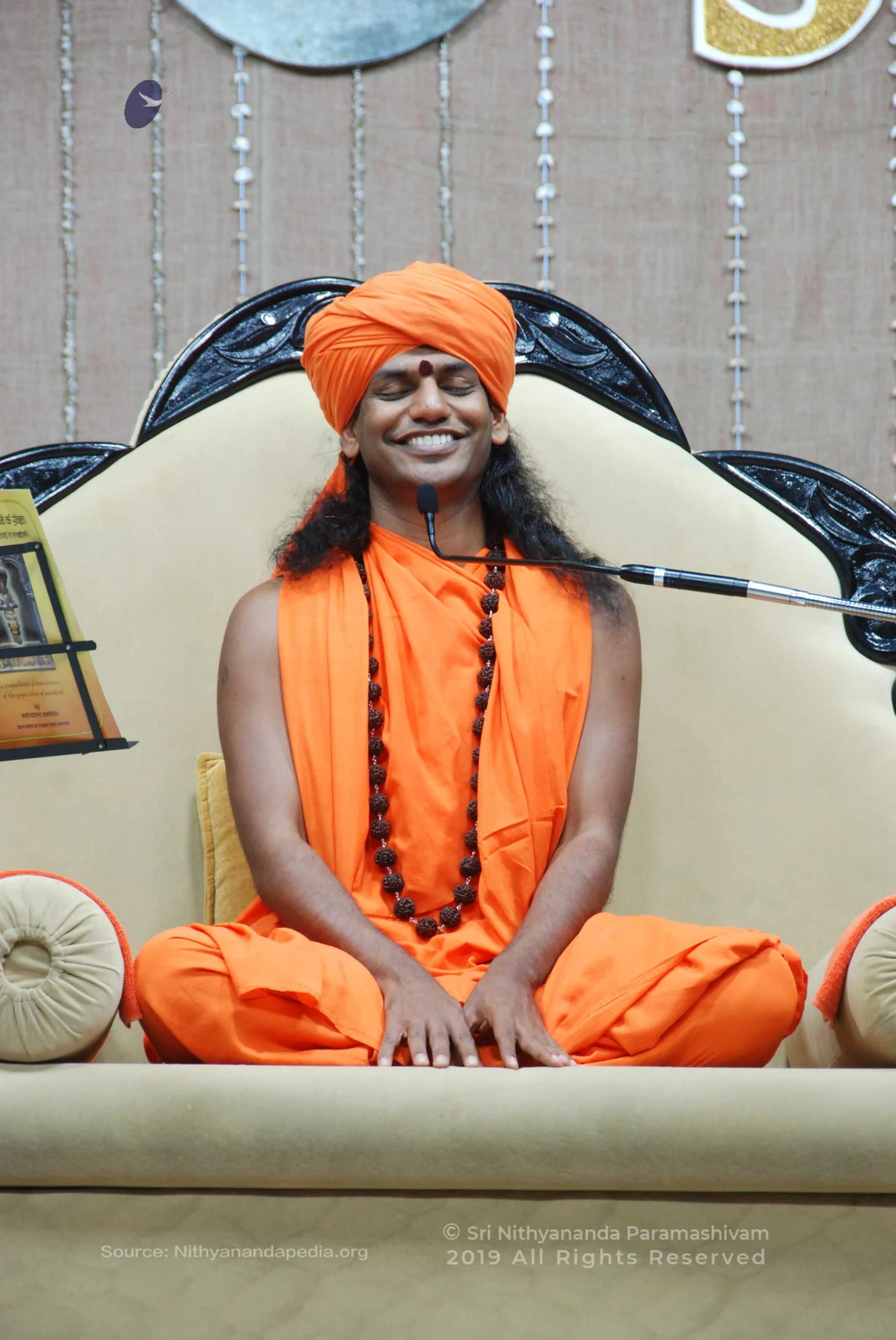
Photos Of The Day:

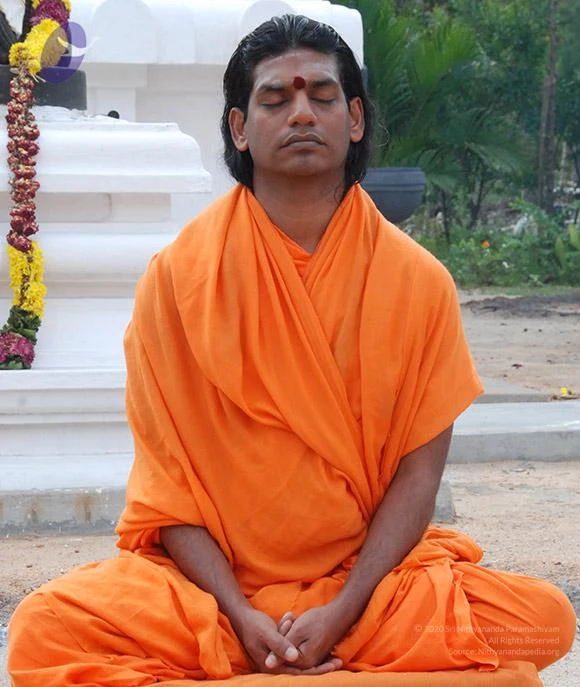
PANCHA-TAPAS
PADA-POOJA
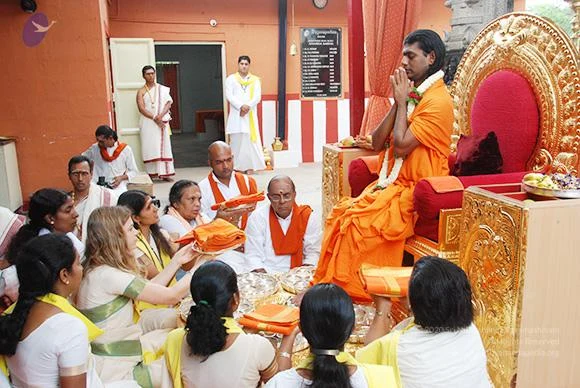
SARVA-DARSHAN

KANNADA-ASP

KALPATARU-PROGRAM-AND-DARSHAN
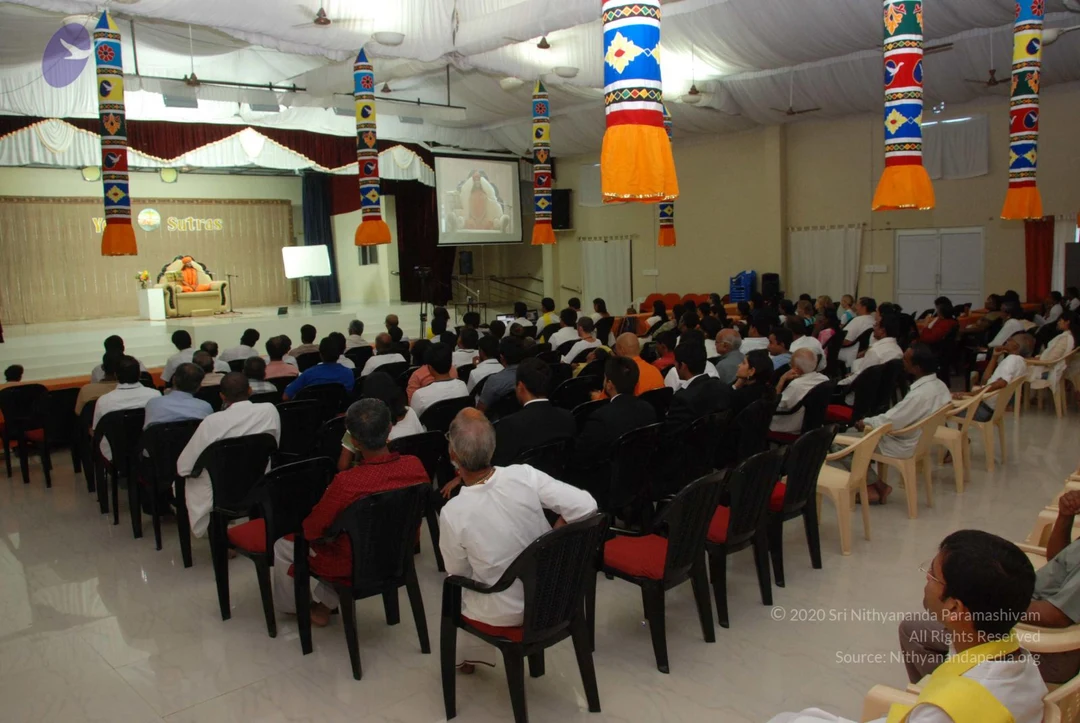
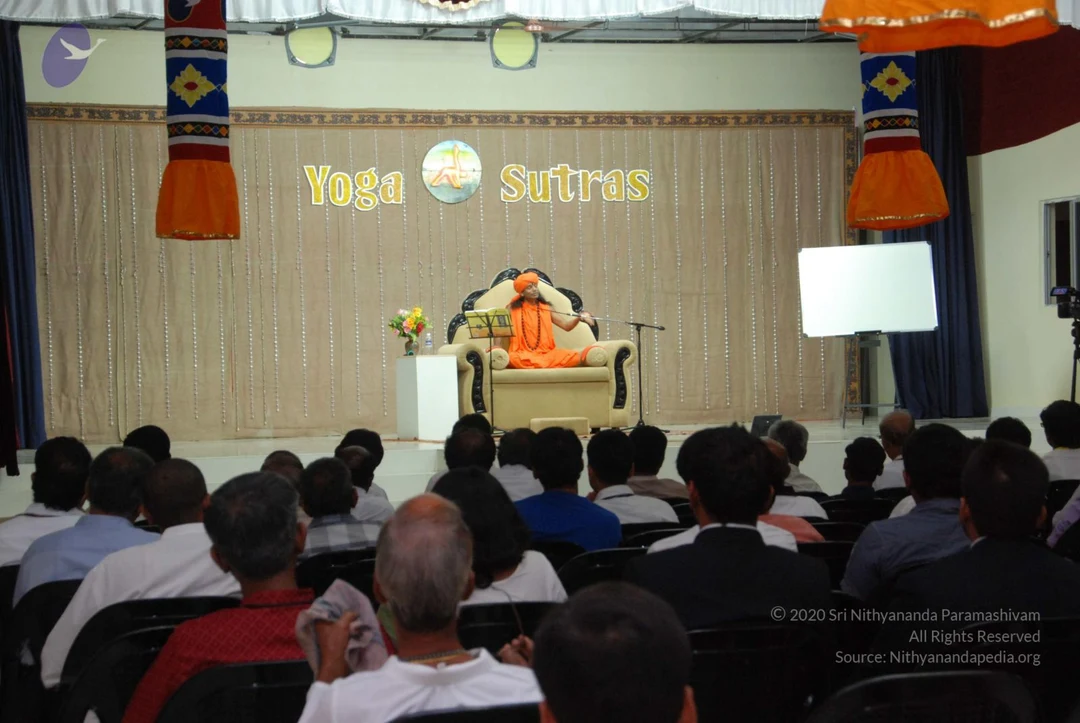
YOGA-SUTRAS-SATSANG-BY-HDH
Photos Of The Day:

Prathyaksha-Padha-Pooja
Sarva-Darshan

Pancha-Tapas

Yoga-Sutras-Discourse

Acharya-Kalpataru-Class

ASP-Class-Acharya-Session

Kalpataru-Darshan

01-Prathyaksha-Pada-Puja

02-Sarva-Darshan

04-Yoga-Sutras-Discourse

01-Prathyaksha-Padha-Pooja

02-Sarva-Darshan

03-Pancha-Tapas

04-Yoga-Sutras-Discourse

06-Kalpataru-Darshan

Photos from this day

View all 486 photos

Photos

4 photosSource gallery
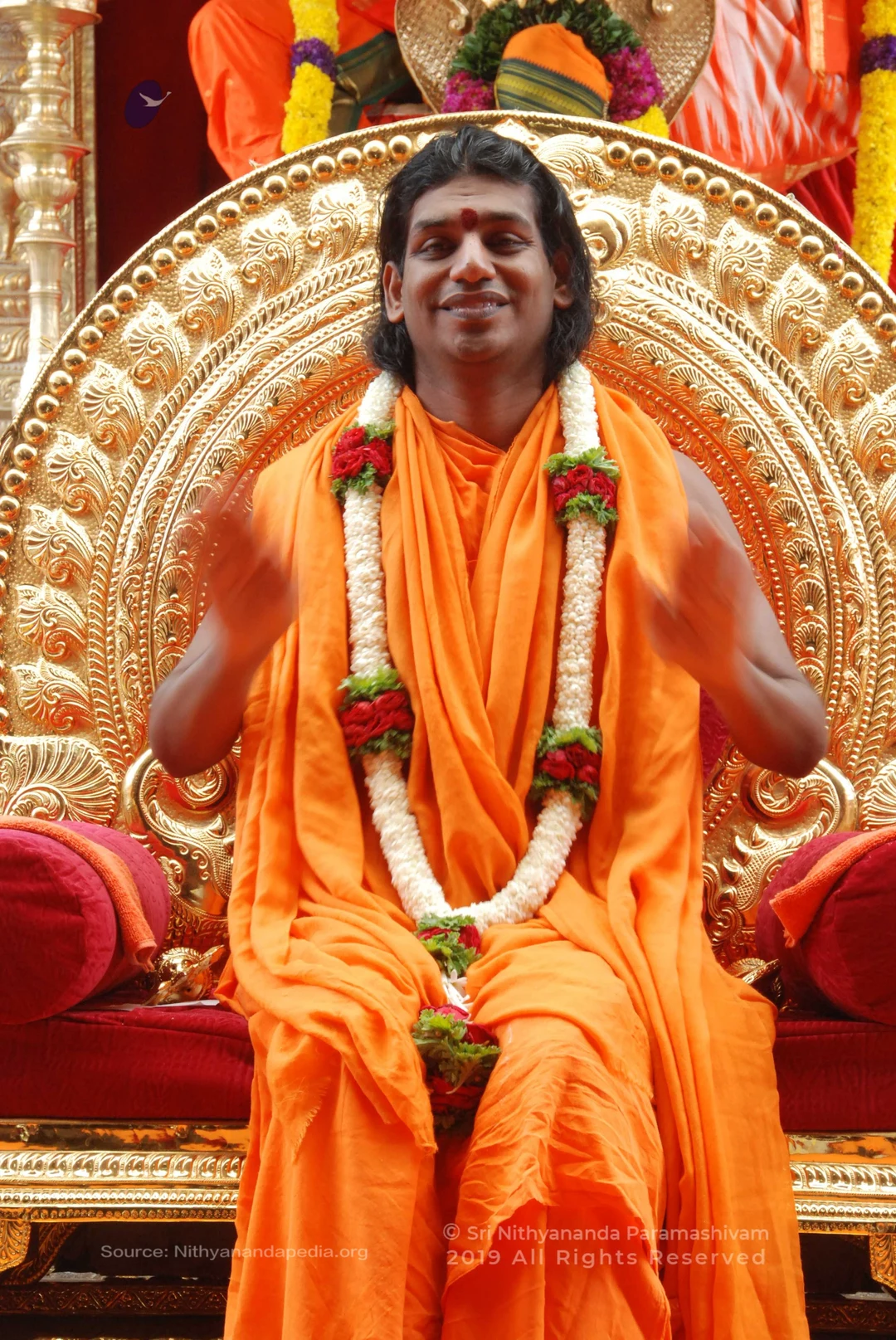
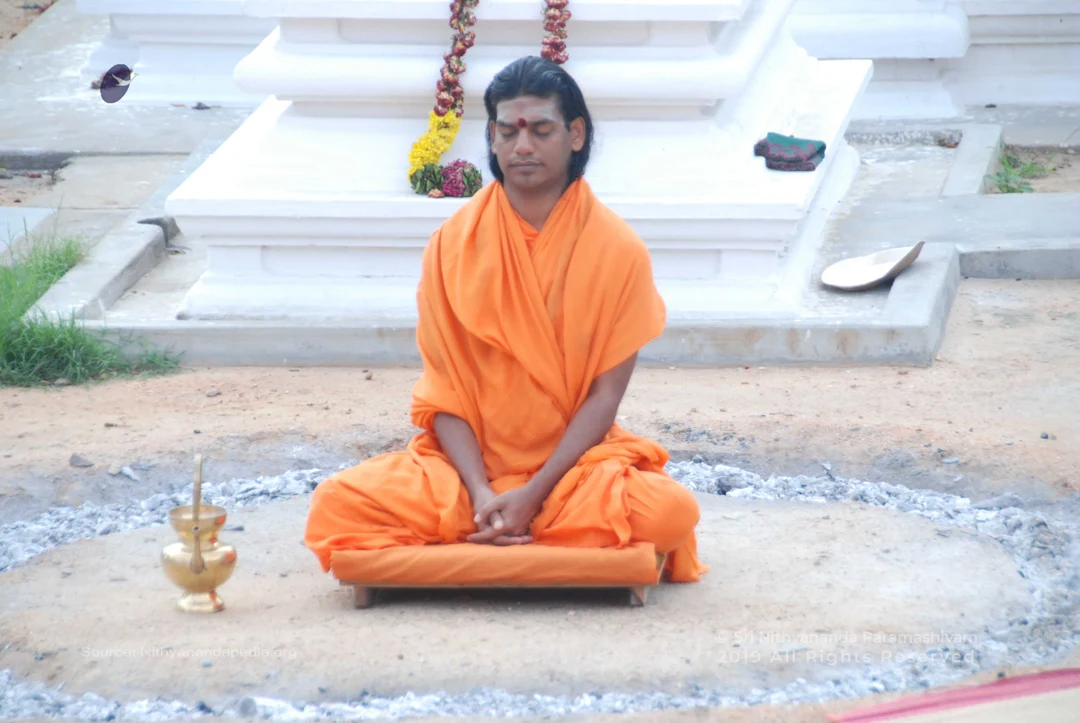
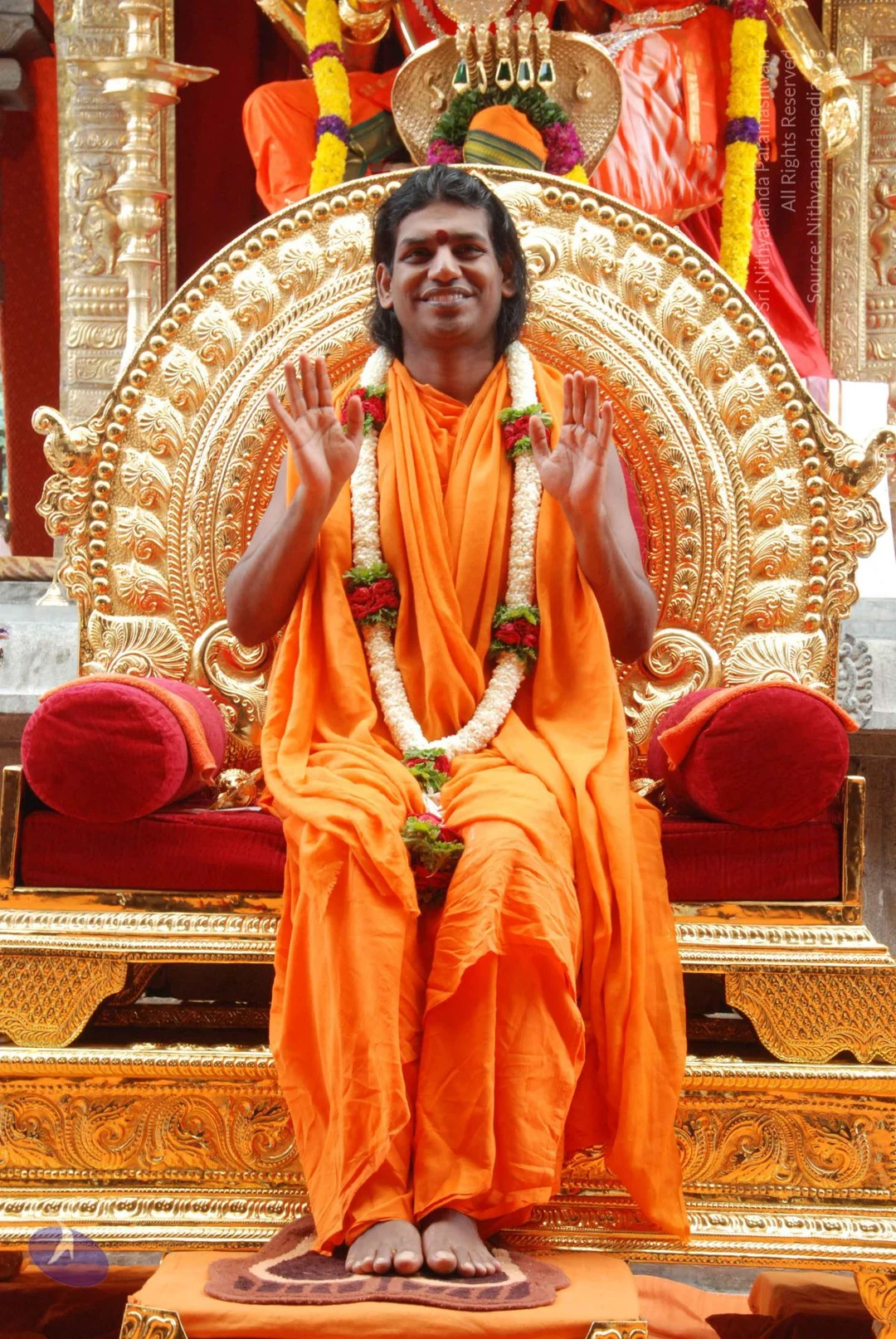
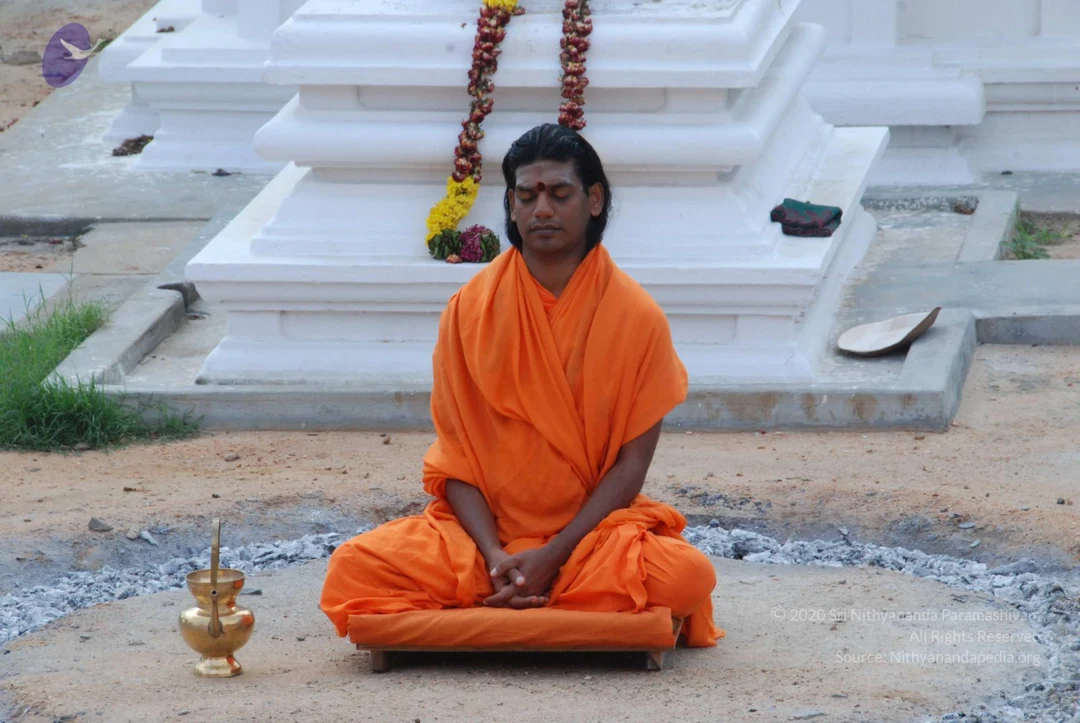
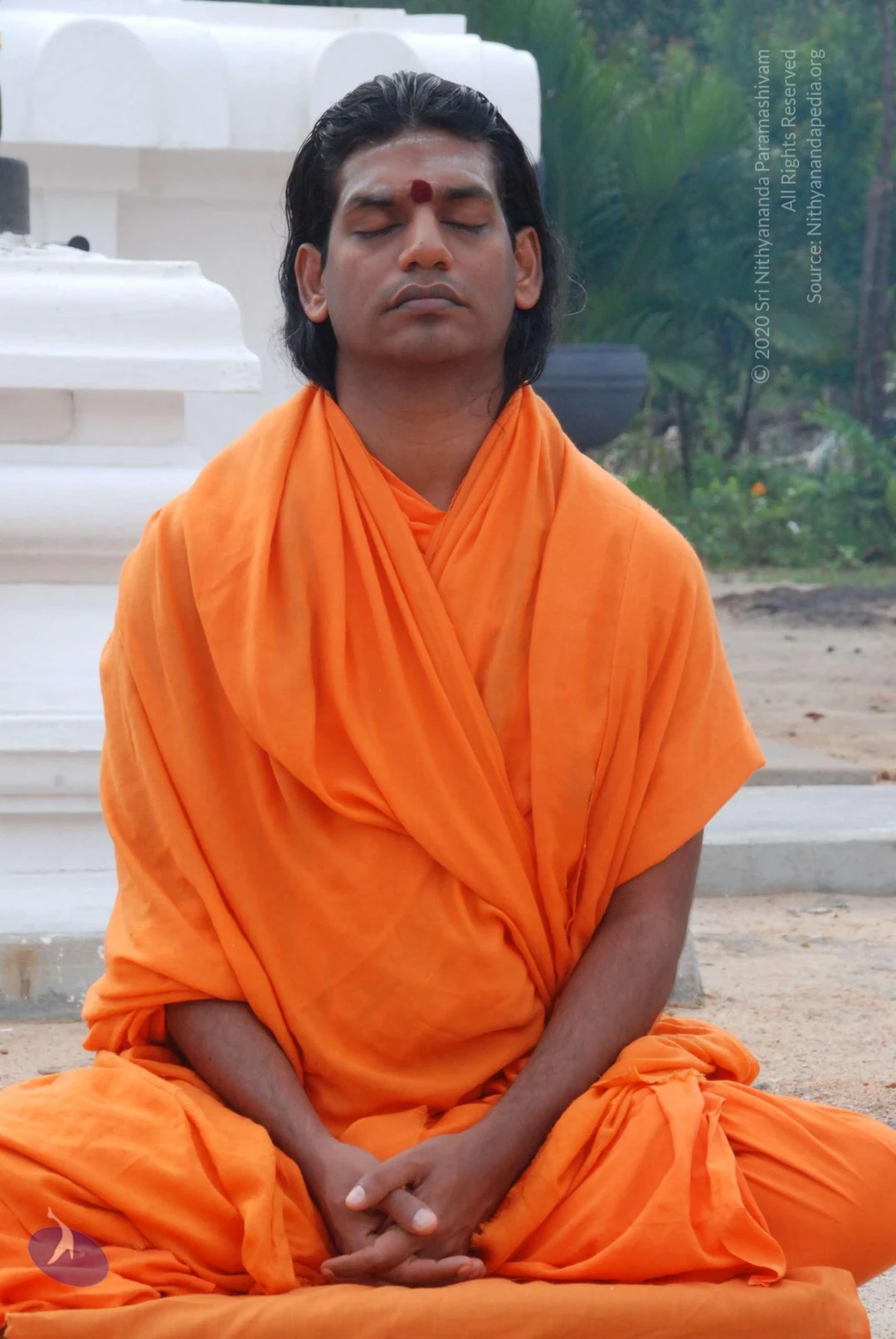
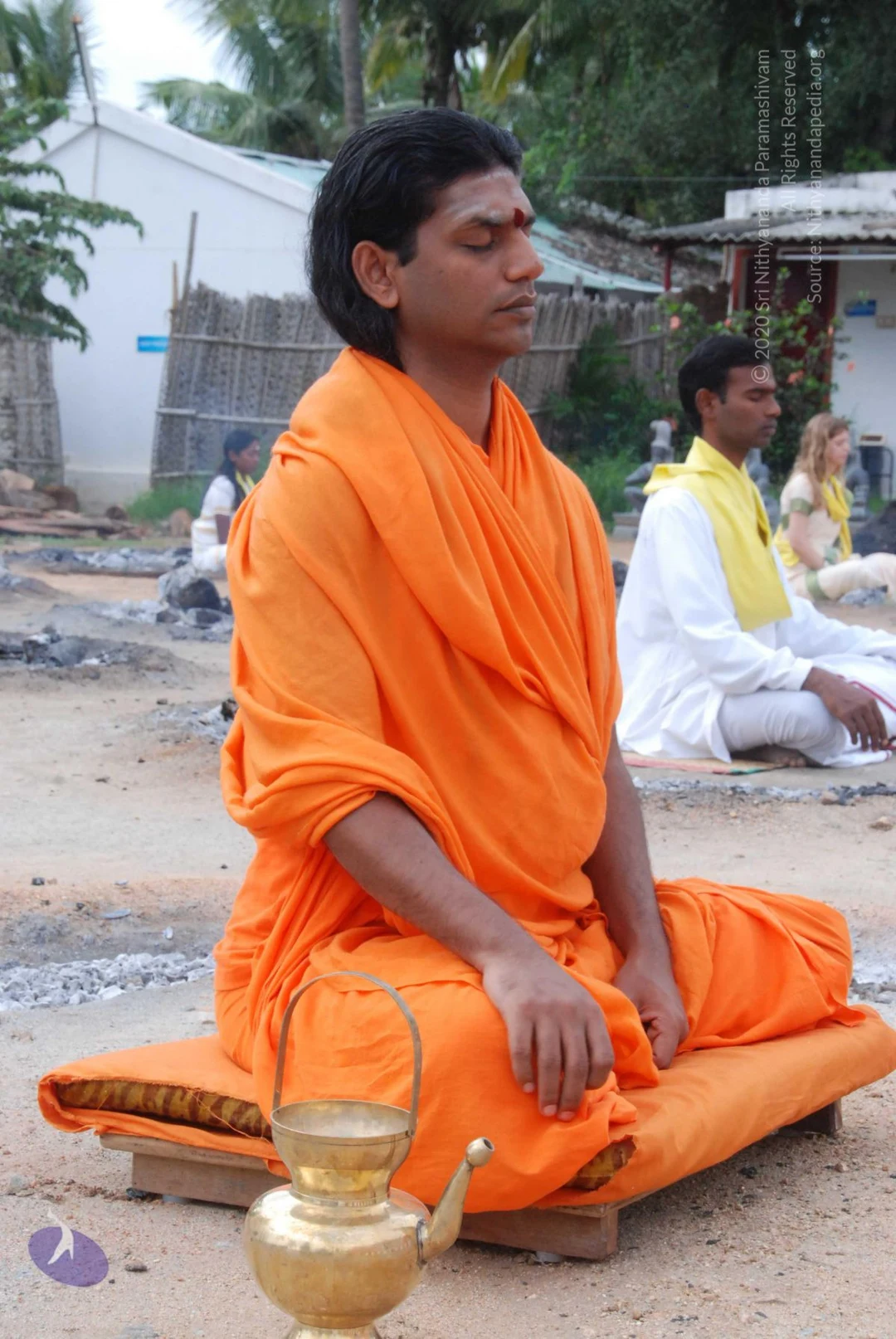
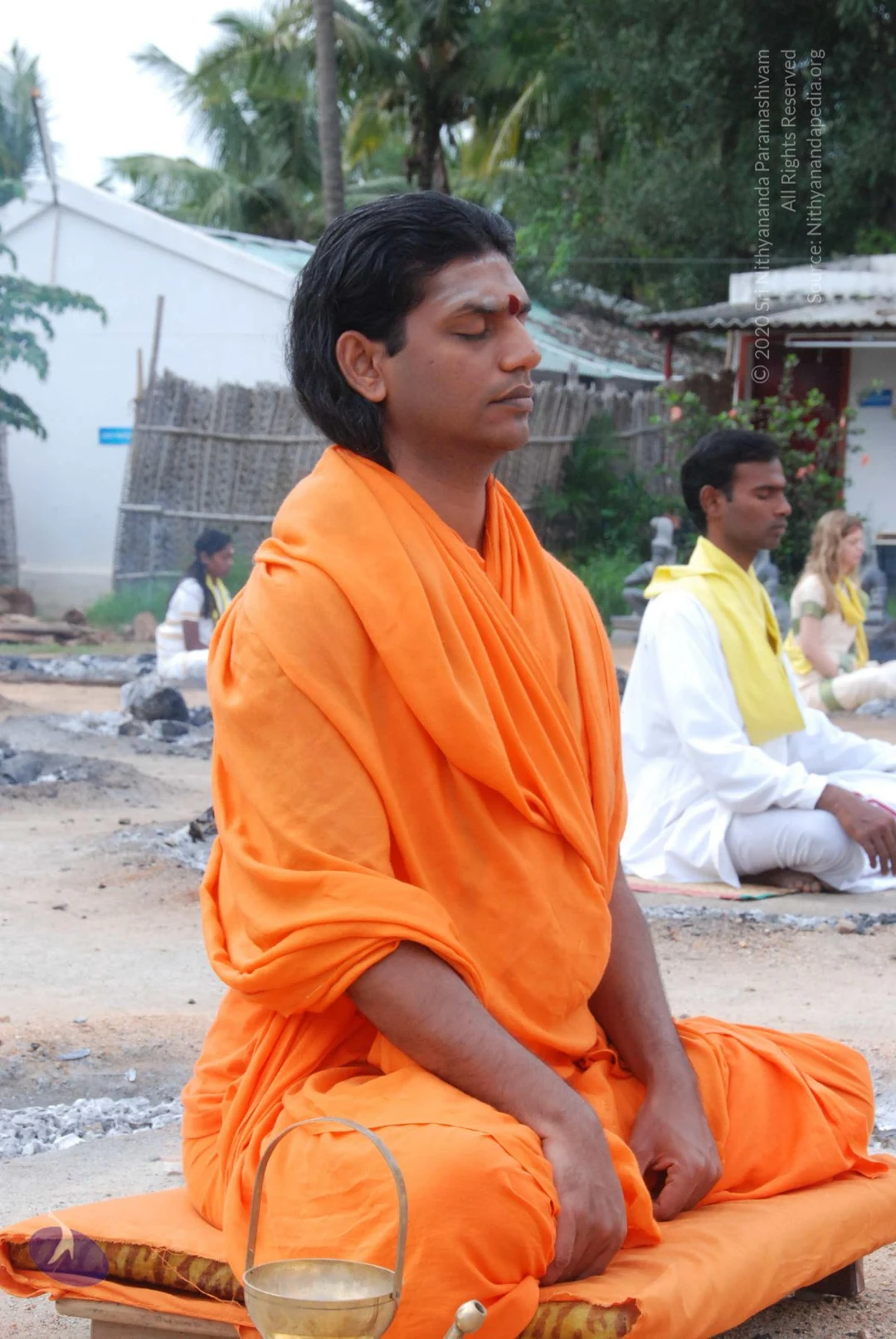
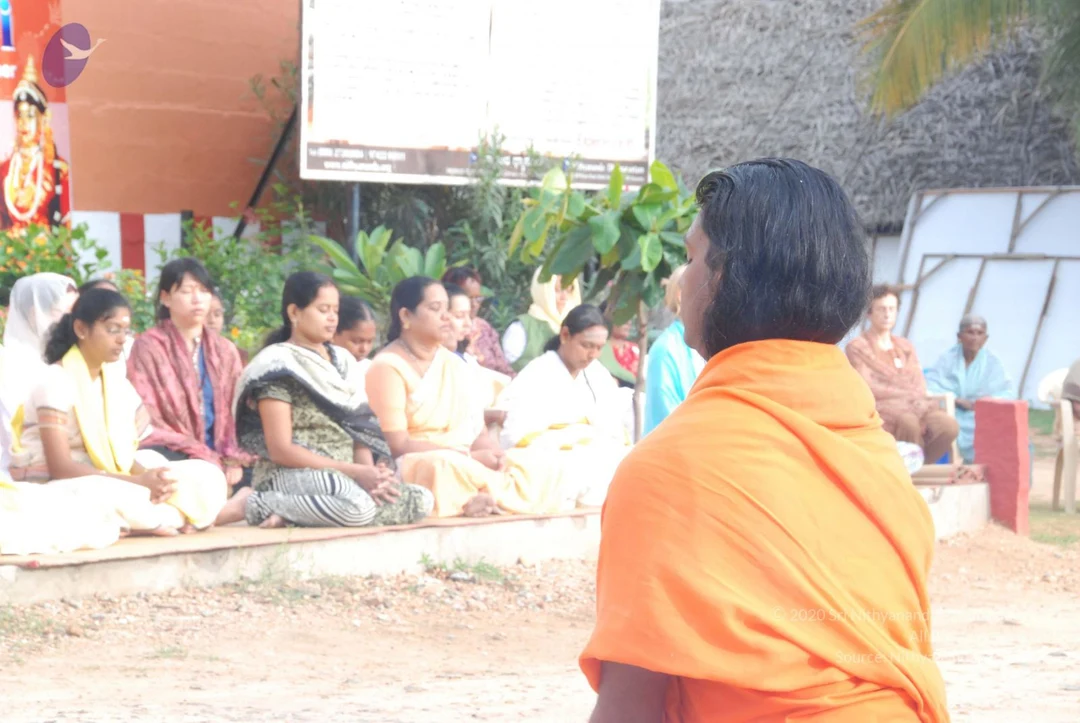
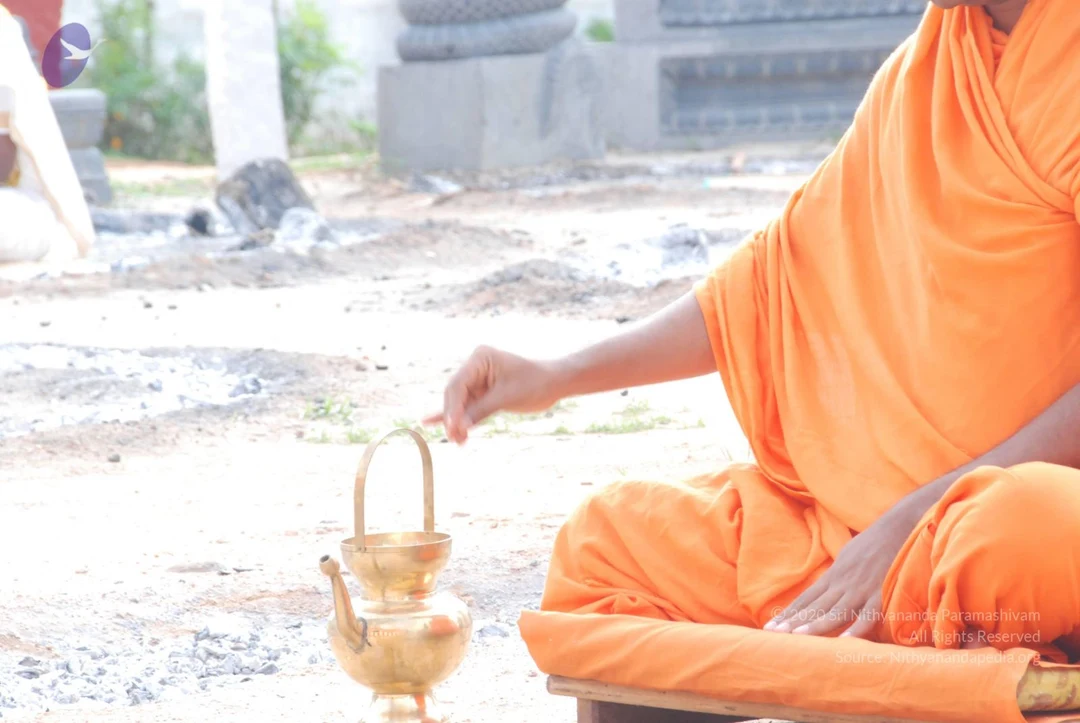
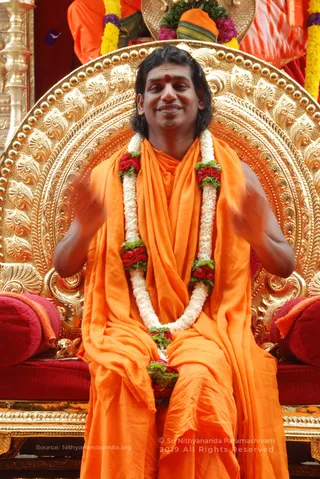
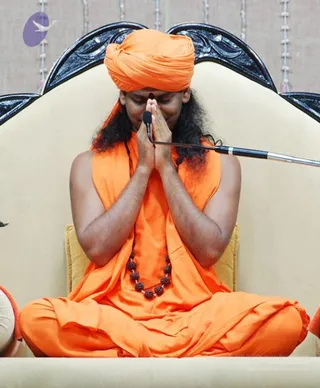
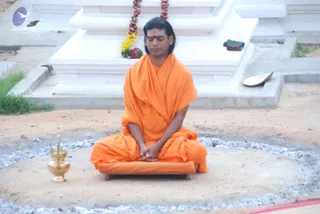
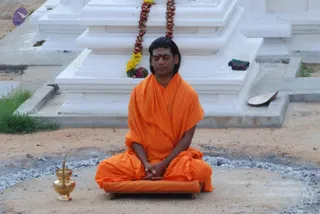
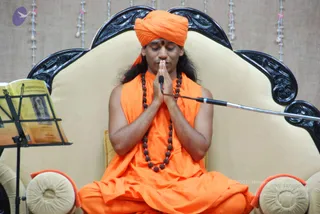
A photograph of a single robed figure standing barefoot on a polished stage in a folded-hands namaste pose with head slightly bowed. The figure wears orange saffron robes, an orange turban and a rudraksha mala. Behind is a beaded curtain of silver strands and a draped grey-brown backdrop with a large gold numeral visible at the top. To the right stand a white pedestal with a vase of colourful flowers and a gold-and-black armchair. A navy curtain hangs at the left edge. The figure appears to be Swamiji (probable), identified by the orange robes, turban and rudraksha mala with a ceremonial setting.A man seated on an ornate gilded throne with a large arched backrest carved with scrolls and floral motifs, wearing a flowing saffron-orange robe draped over his shoulders and body, with a white and red rose garland with green leaves around his neck and more flower garlands at his lap. He has a red tilak on his forehead and is gesturing with both hands raised in front of his chest while smiling. Behind him are red velvet cushions, a gilded lamp stand at left, and other saffron-robed attendants and marigold garlands in the background. a person: long swept-back dark hair, saffron robe, ceremonial garlands and a throne seat are visible cues, but the appearance is not conclusively established.A man seated cross-legged with eyes closed on an orange cushioned seat outdoors, hands folded in his lap in meditation. He wears a flowing saffron-orange robe draped over his shoulders, with a red bindi on his forehead and long dark hair swept back. Behind him stands a white stepped platform with a garland of yellow and red flowers hung on its top. A brass kalasha-style vessel with a metal stick sits on the ground to his left, and a folded cloth lies on the platform. The ground is sandy with ash scattered around the seat. The scene suggests a meditation or yoga session in an open ashram setting.

PANCHA-TAPAS

2 photosSource gallery
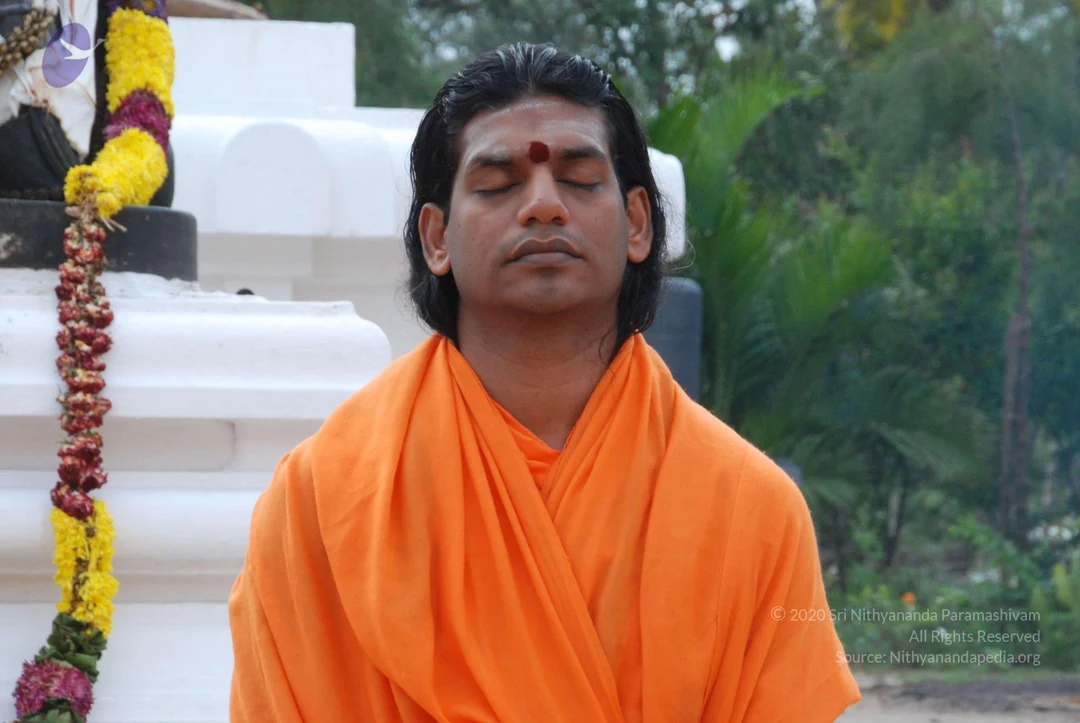
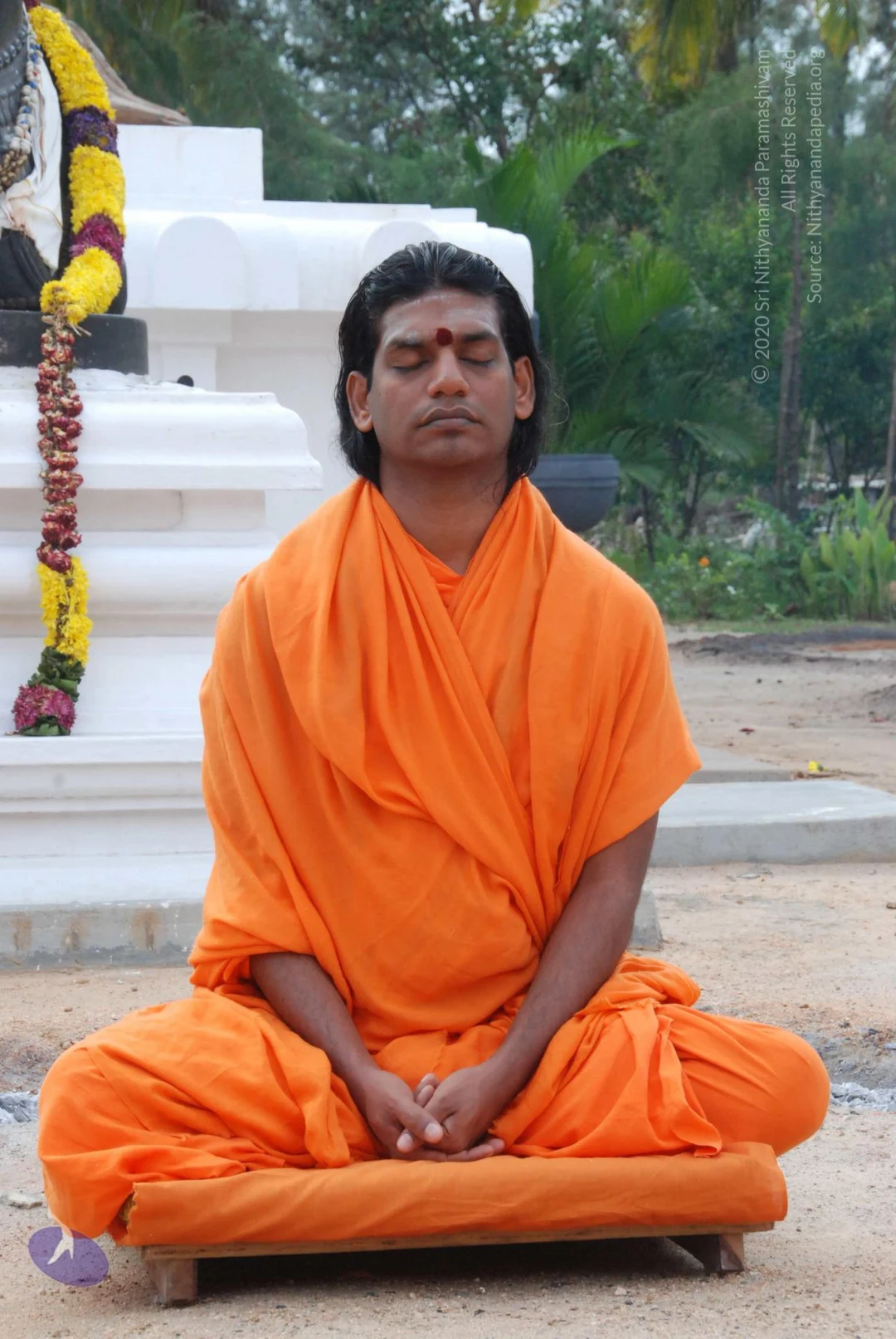
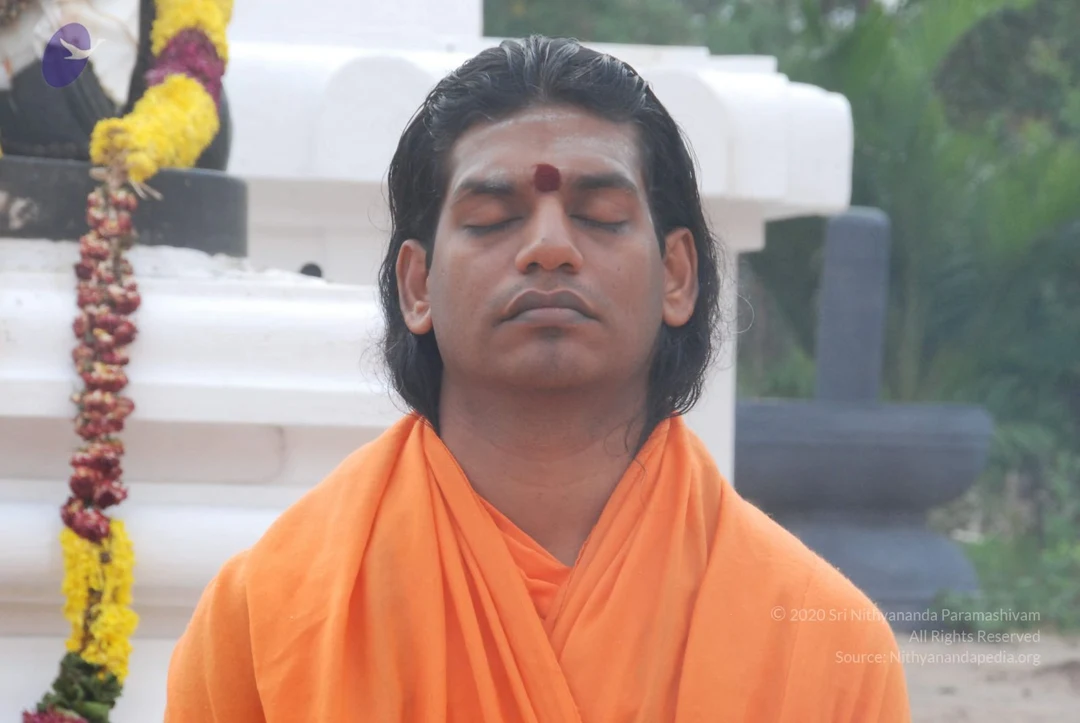
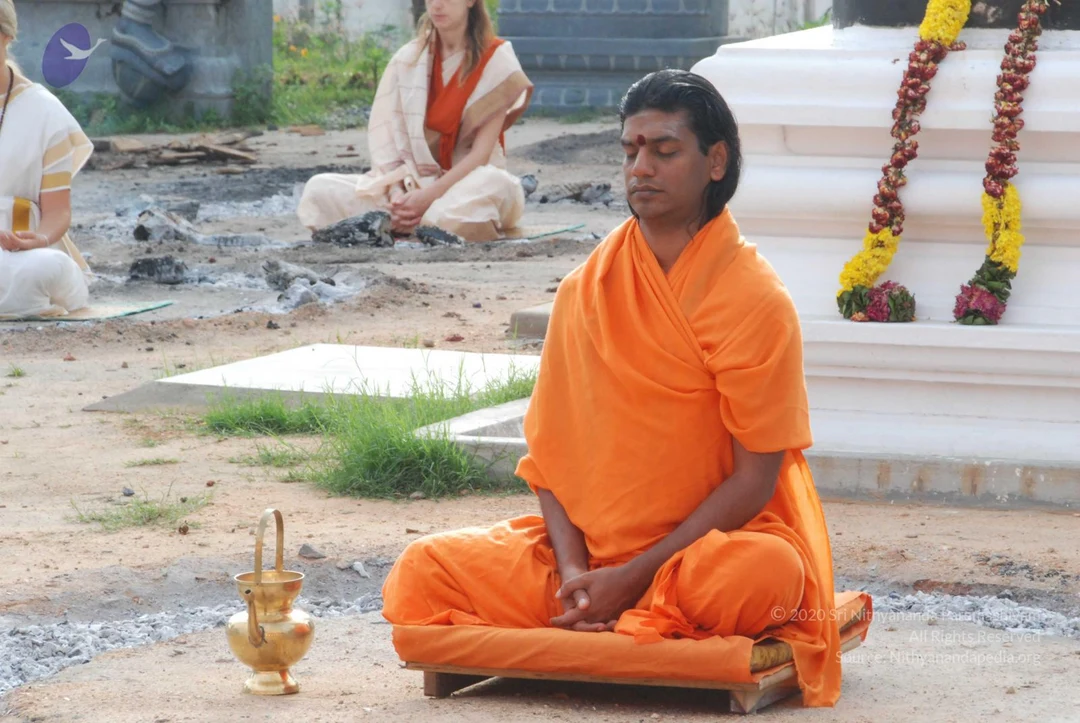
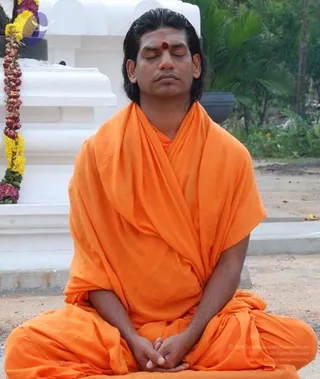
A seated man in saffron-orange robes meditates with eyes closed, hands clasped in his lap and legs crossed. He has long, swept-back dark hair and a red bindi on his forehead, and wears an orange shawl draped over his shoulders. A white stone structure with a floral garland of yellow and red flowers hangs at the left edge, with green foliage and a sandy ground behind him.A three-panel collage of photographs from an outdoor ashram gathering. On the left, seated devotees in white clothes sit on mats in rows facing a central figure. In the centre, a man in orange ochre robes with long swept-back hair and a rudraksha mala sits on a raised seat under a tree, with a crowd seated before him. On the right, a woman in a pink top and blue head covering stands in front of a building with a green lawn. The panels depict the activities of the event rather than being one unified scene.

PADA-POOJA

4 photosSource gallery
A two-panel collage. The left panel shows several women in yellow and white saris seated on the floor, serving food from silver containers and plates arranged on a cloth, with a man in orange partly visible at the left edge. The right panel shows a close-up of a man with short dark hair, eyes closed and palms pressed together in namaste, wearing an orange garment and a white and green garland of flowers around his neck, with a bare shoulder visible. The scene suggests a devotional offering or annadan meal.A man seated on a red cushioned throne with ornate gold carved armrests and backrest, eyes closed and palms pressed together in namaskar. He wears an orange saffron shawl draped over his shoulders and body, a red and white kumkum-style mark on his forehead, and a long garland of white flowers interspersed with red roses and green leaves. Behind him stands a red metal gate and a stone pillar. The scene reflects devotional greeting and reverence, with the seated figure as the focal point.A two-panel collage of a young black-and-white spotted calf. On the left, the calf stands on grass near straw, facing the camera with a dark muzzle and white-spotted head. On the right, a close view shows the calf lying in straw on green grass, with a rope or halter visible across its neck. No people are shown.Split image: on the left, a young woman with long light-brown hair, wearing a cream top and an orange shawl, stands with palms pressed together in namaste before a large tree trunk with a green background. On the right, a black stone deity murti stands outdoors draped in an orange garment and layered with marigold and yellow flower garlands, with a tree and leaves behind it. The two panels are side by side, making this a graphic.

SARVA-DARSHAN

1 photoSource gallery
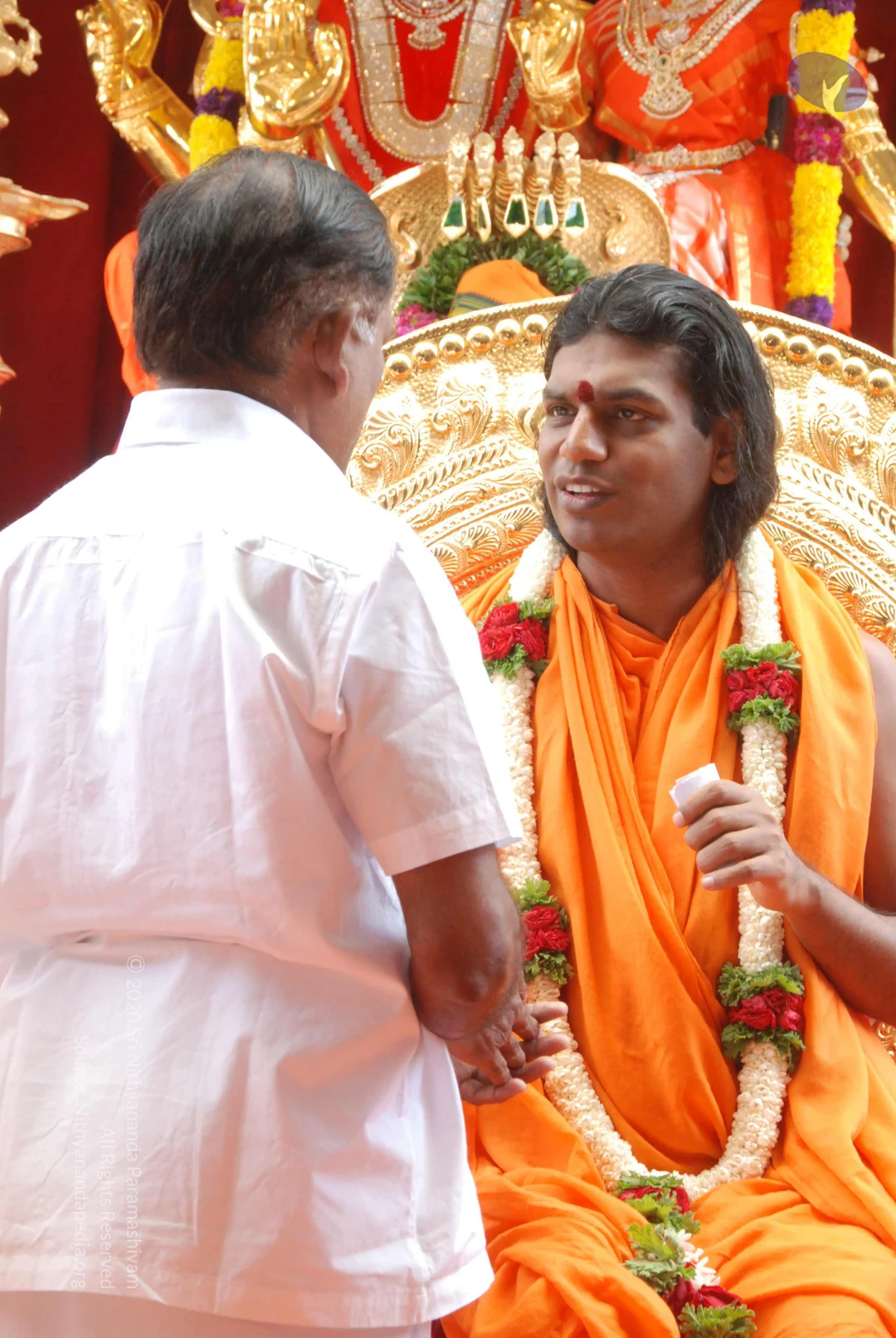
A small photograph showing a man with long dark hair and an orange-saffron garment, seated before a woman in a pale top with a red dot on her forehead. The man wears rudraksha beads and a golden ceremonial necklace and gestures toward her in a conversational or teaching posture. The background is a warm, muted interior setting. The frame is low resolution and the faces are small.

KANNADA-ASP

1 photoSource gallery
A photograph of a formal seated gathering in a large hall with pale walls and a patterned floor. Rows of people in white and light clothing sit facing the camera at long tables. At the far right, a smaller inset shows a robed speaker in saffron standing at a lectern with a microphone, gesturing while addressing the audience.

KALPATARU-PROGRAM-AND-DARSHAN

2 photosSource gallery
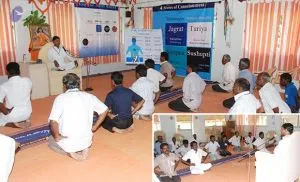
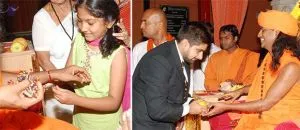
Two-panel collage of a yoga satsang. The main panel shows a seated speaker in saffron robes at a podium in front of a banner reading Jagrut Turiya Sushupti, with a blue meditation figure, while about twenty men in white clothes sit cross-legged on the floor facing him. The smaller lower-right panel shows a similar seated group in white. Several listeners wear white kurtas and dhotis, and the room has a tiled floor with a blue banner and a KAILASA-style logo at the top.A two-panel photograph of a ritual exchange. On the left, a young girl in a green dress with a long braid ties a yellow thread or rakhi-like band onto a man's wrist while a second person in white stands nearby. On the right, a man in a dark suit holds a silver plate of offerings toward a figure in saffron-orange robes with long swept-back hair, who extends a hand; two other saffron-robed attendants stand beside them. Brass lamps and a decorated plate are visible. Background shows a plain interior wall.

YOGA-SUTRAS-SATSANG-BY-HDH

3 photosSource gallery
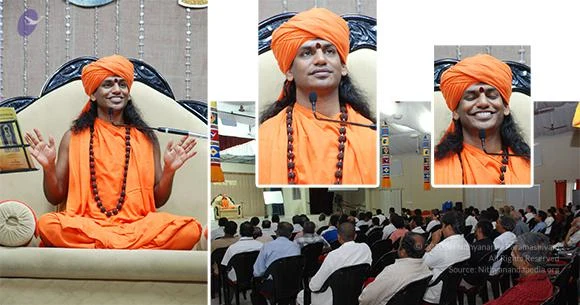
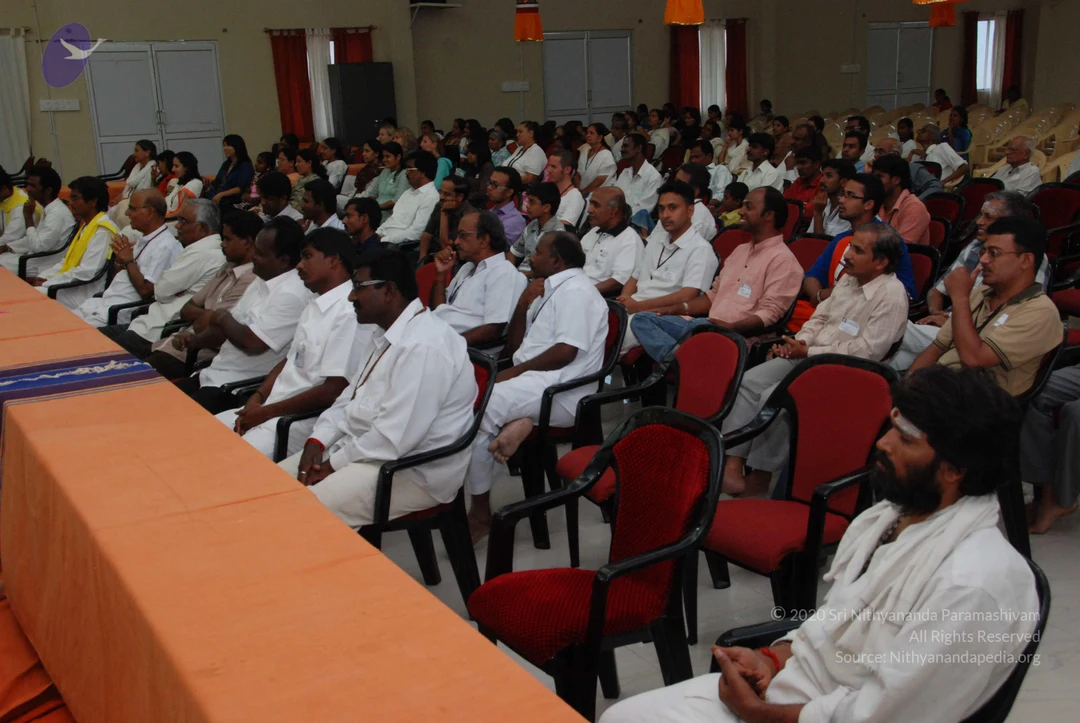
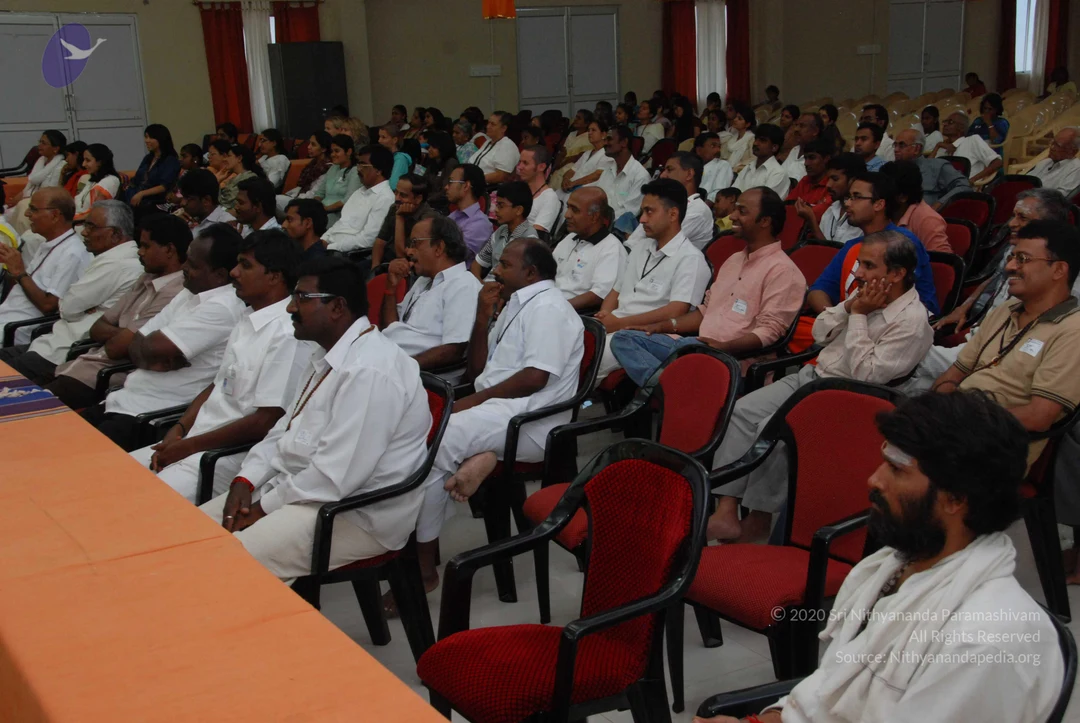
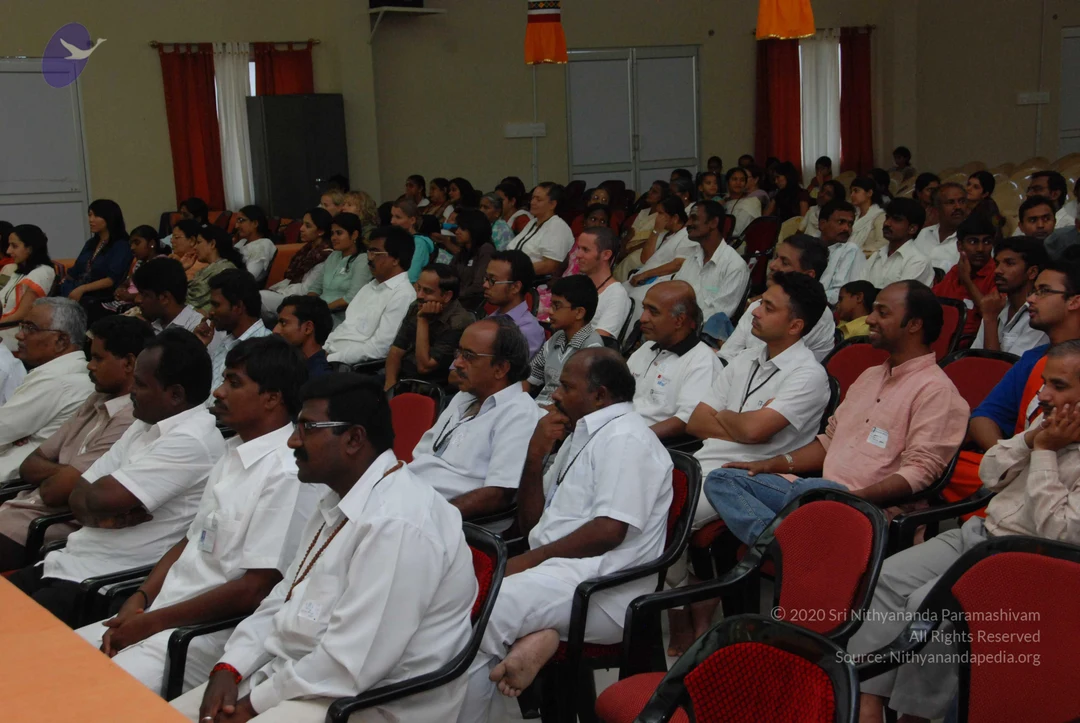
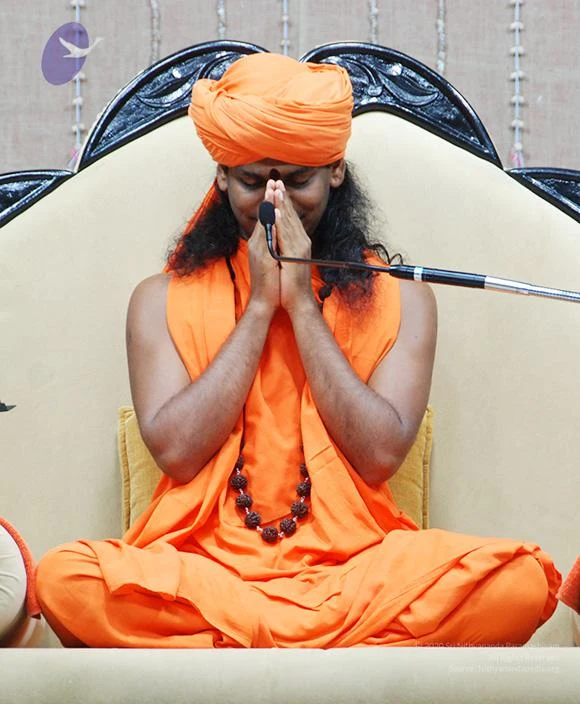
A photograph of a seated saffron-clad man with long hair and a full beard, leaning on a white bolster on a raised platform. Beside him to the right, several men in white dhotis and shirts sit in a row on a pale floor, attentive. The setting appears to be a formal discourse hall. The seated man in orange robes matches the a person candidate cues of long hair and saffron clothing, though the image is small and his face is not identifiable here.

Prathyaksha-Padha-Pooja
77 photosSource gallery
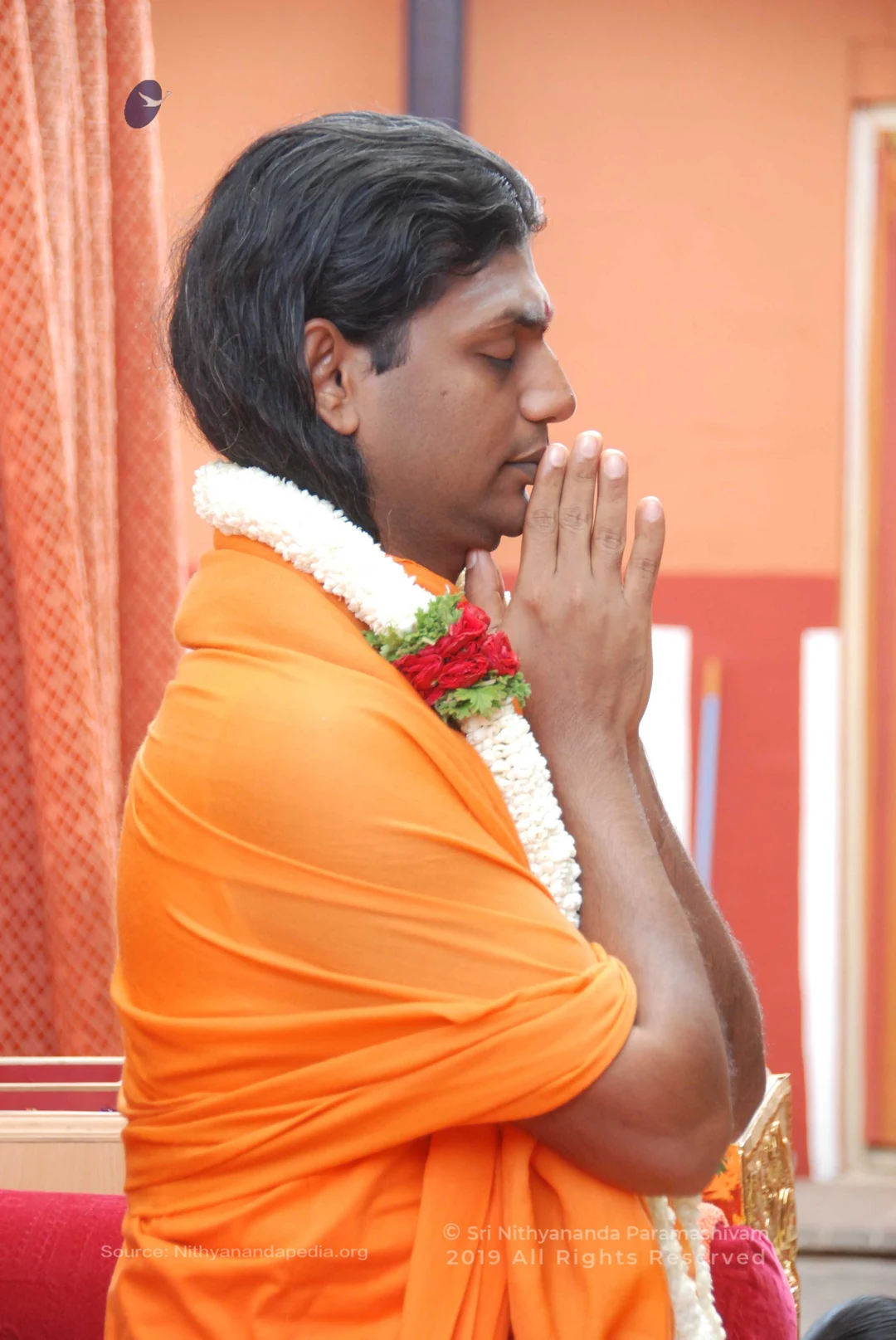
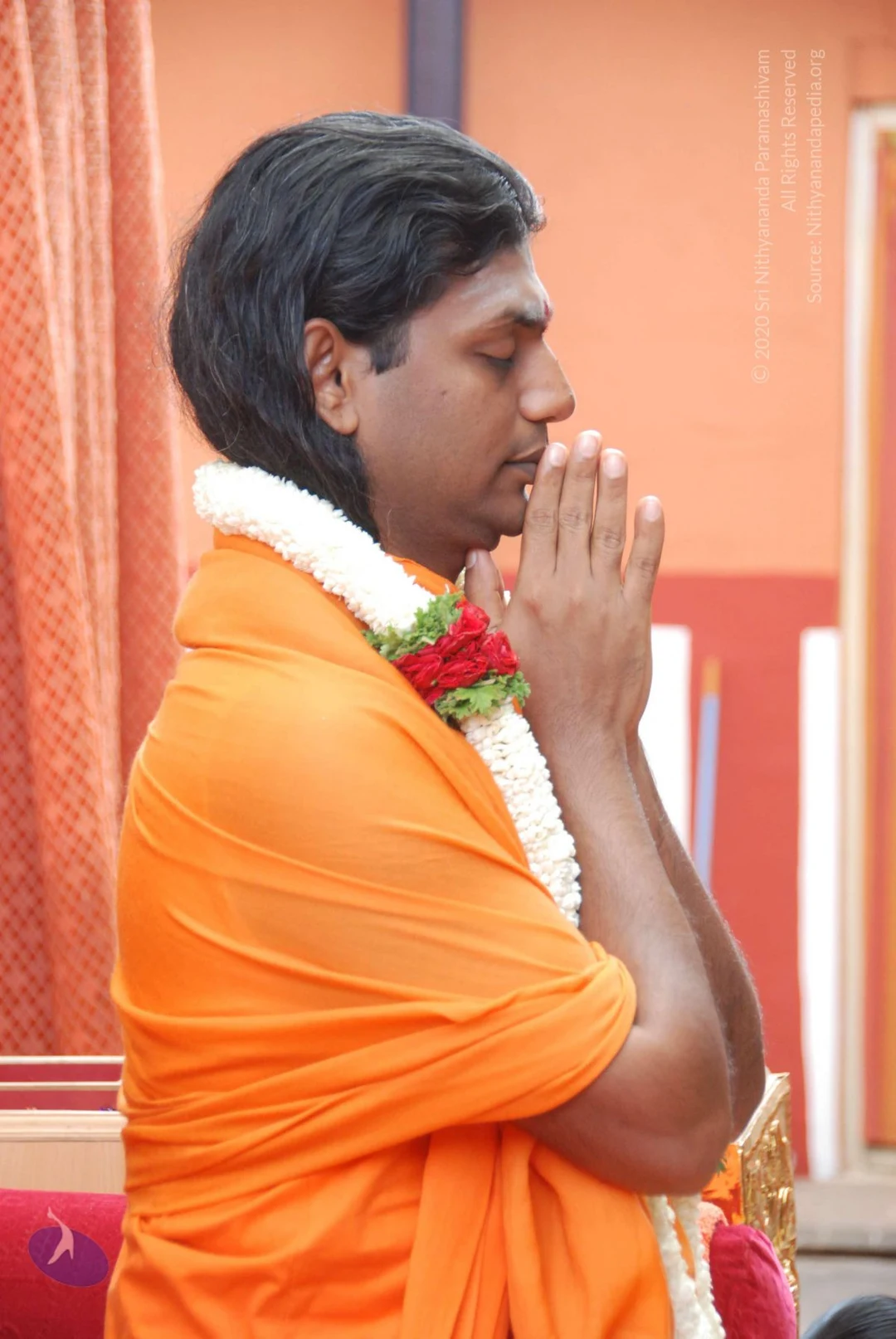
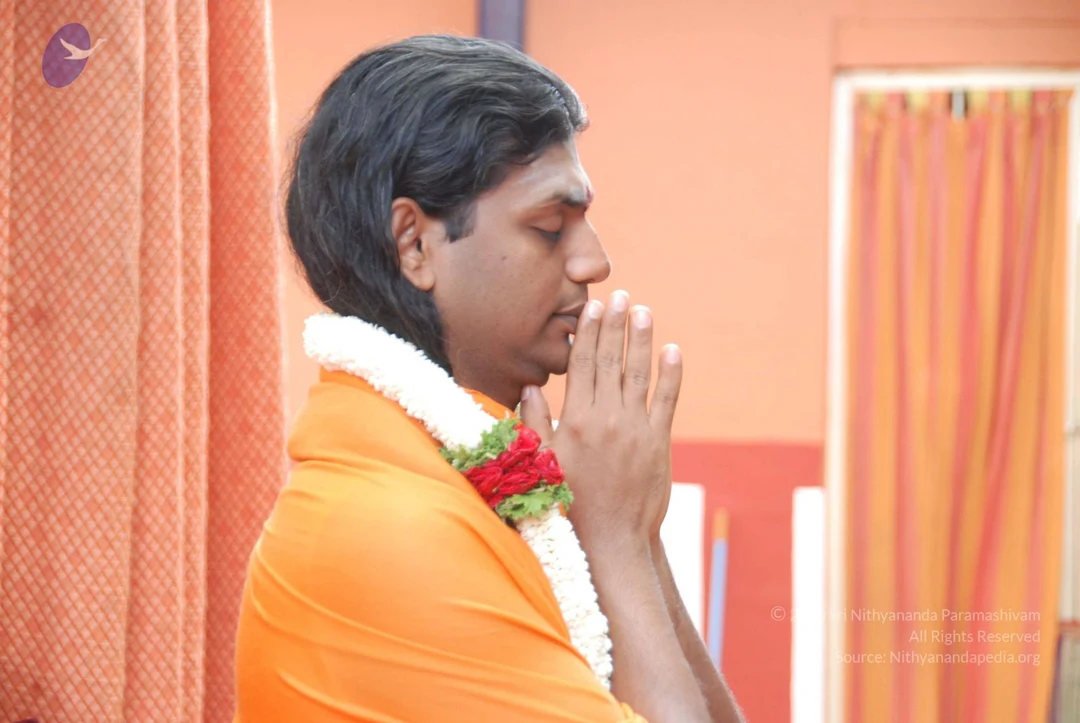
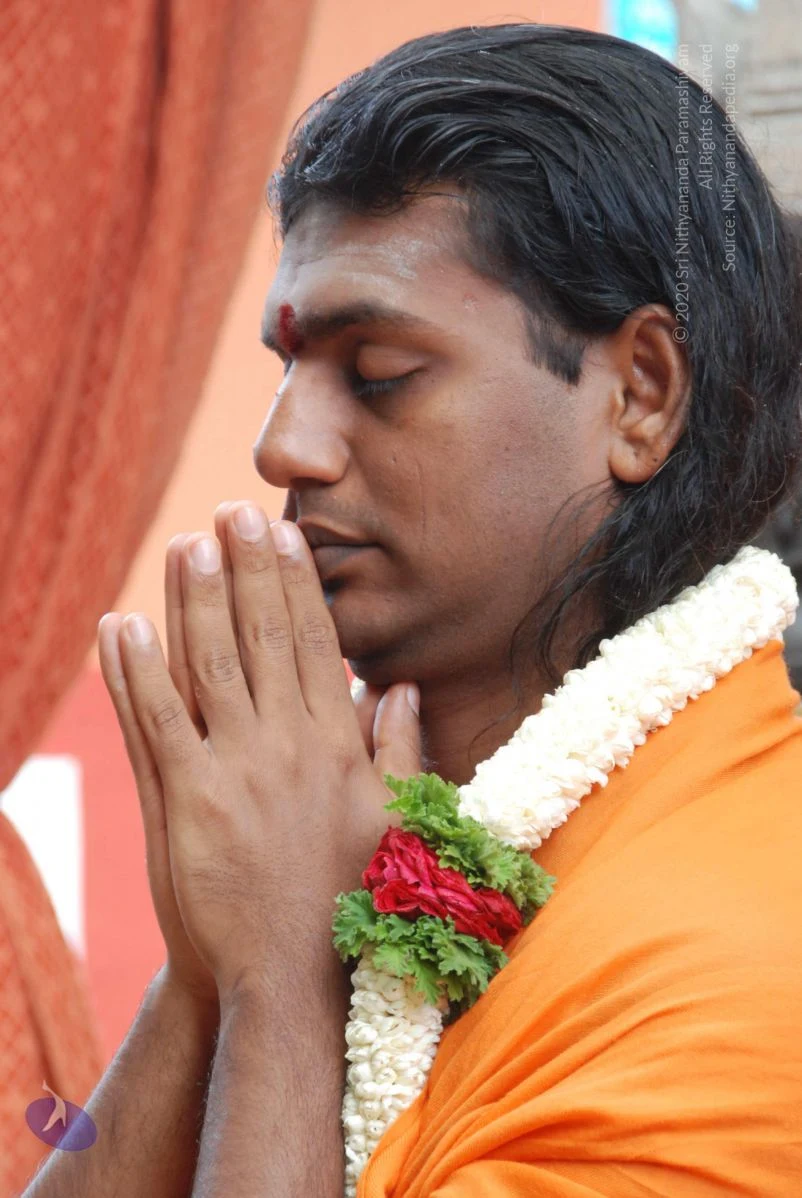
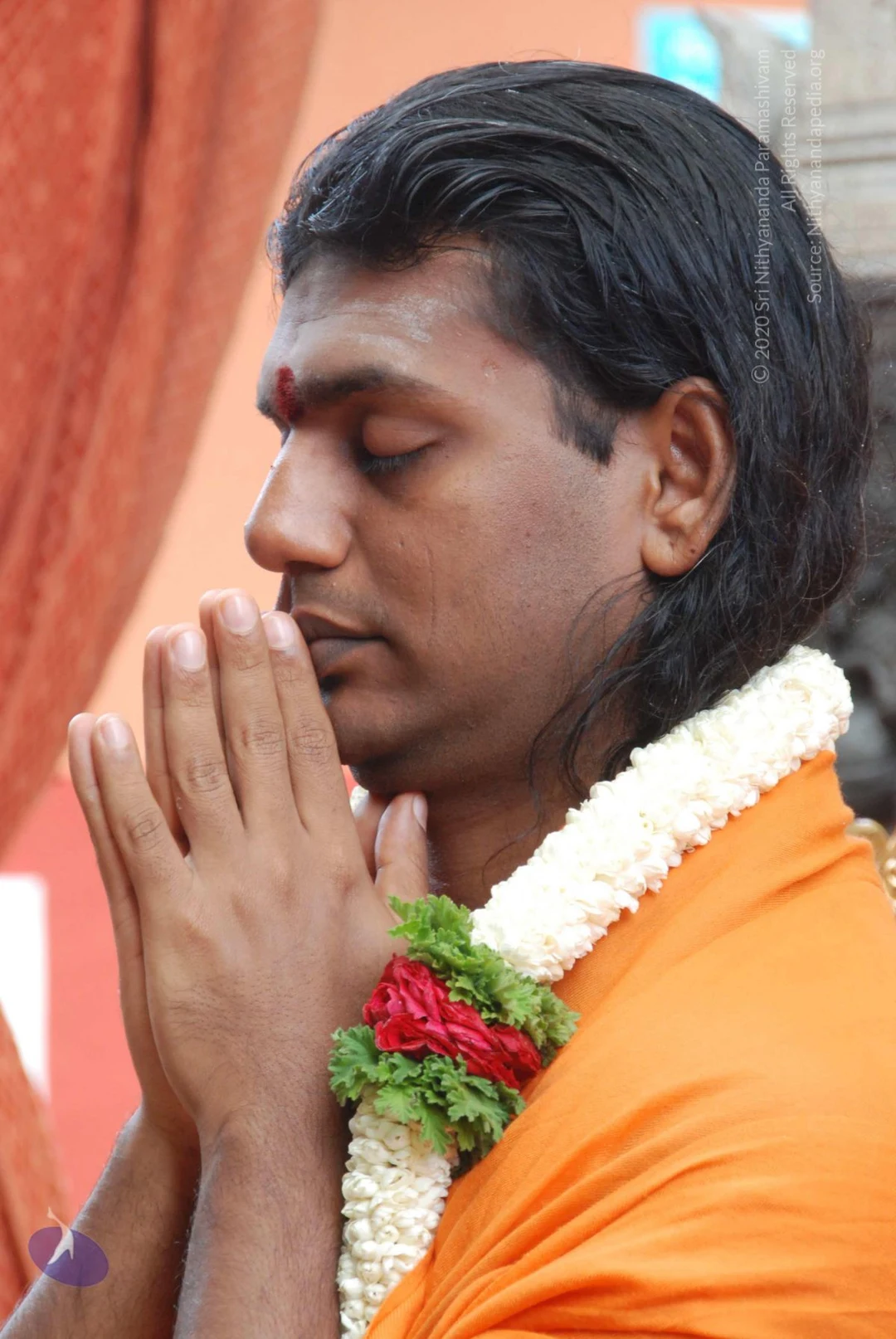
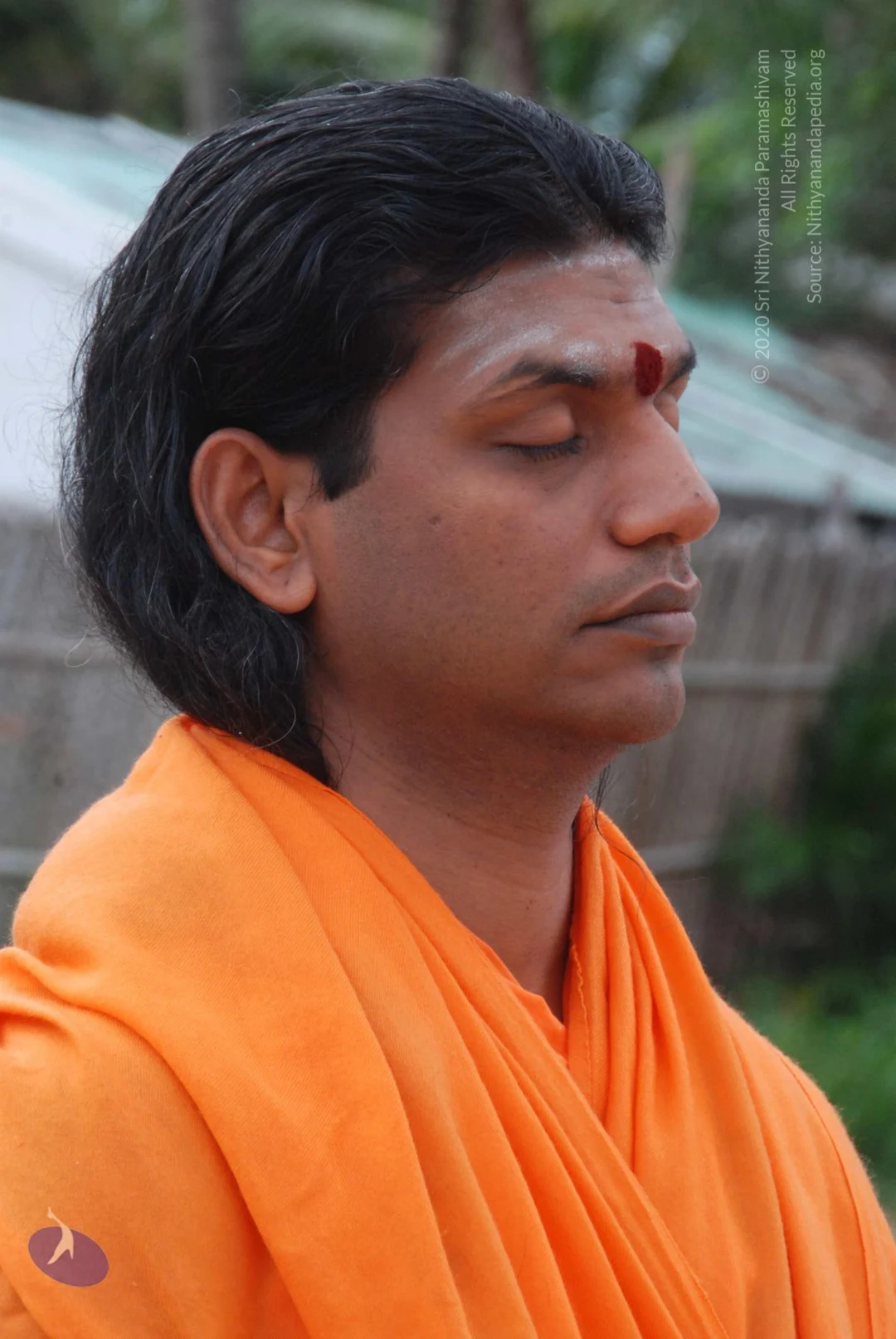
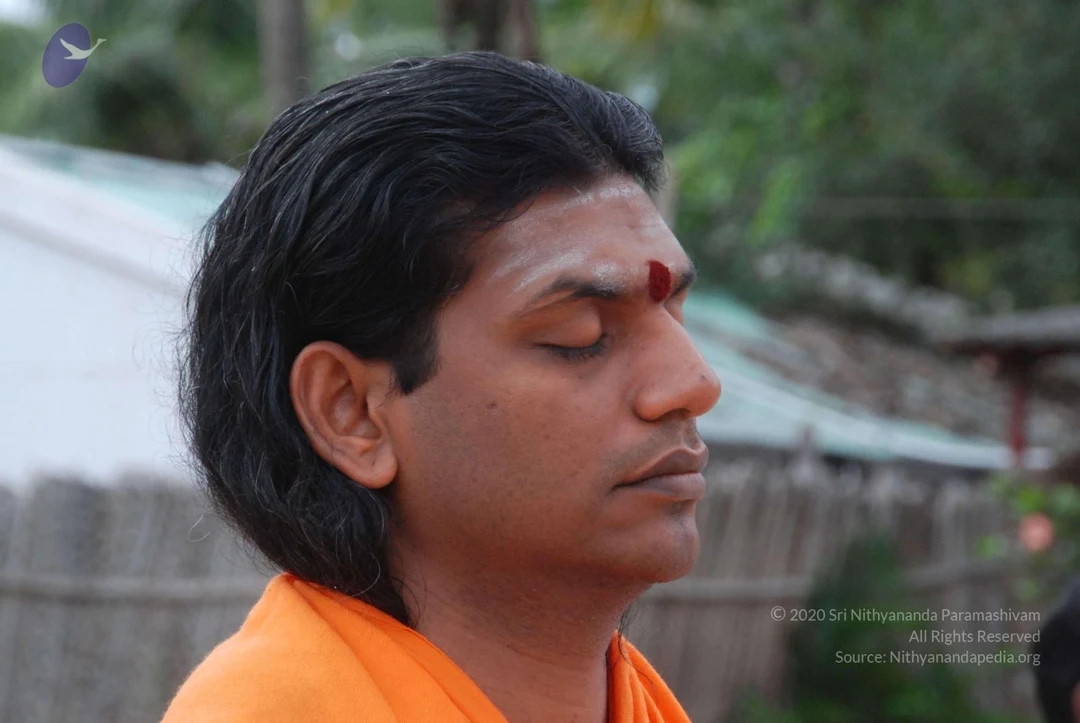
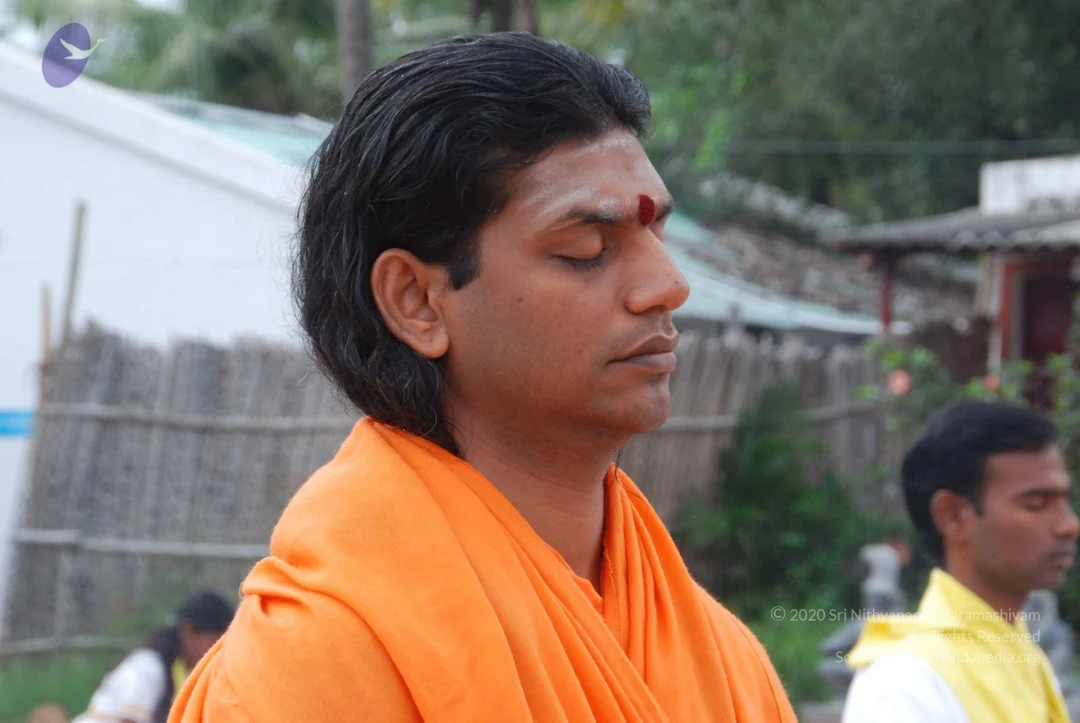
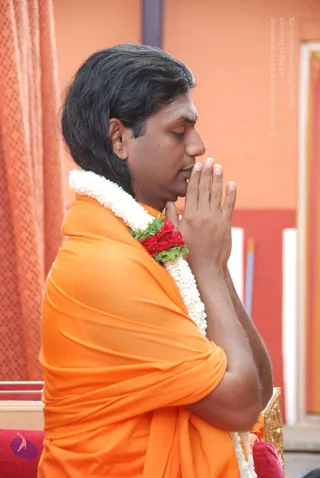
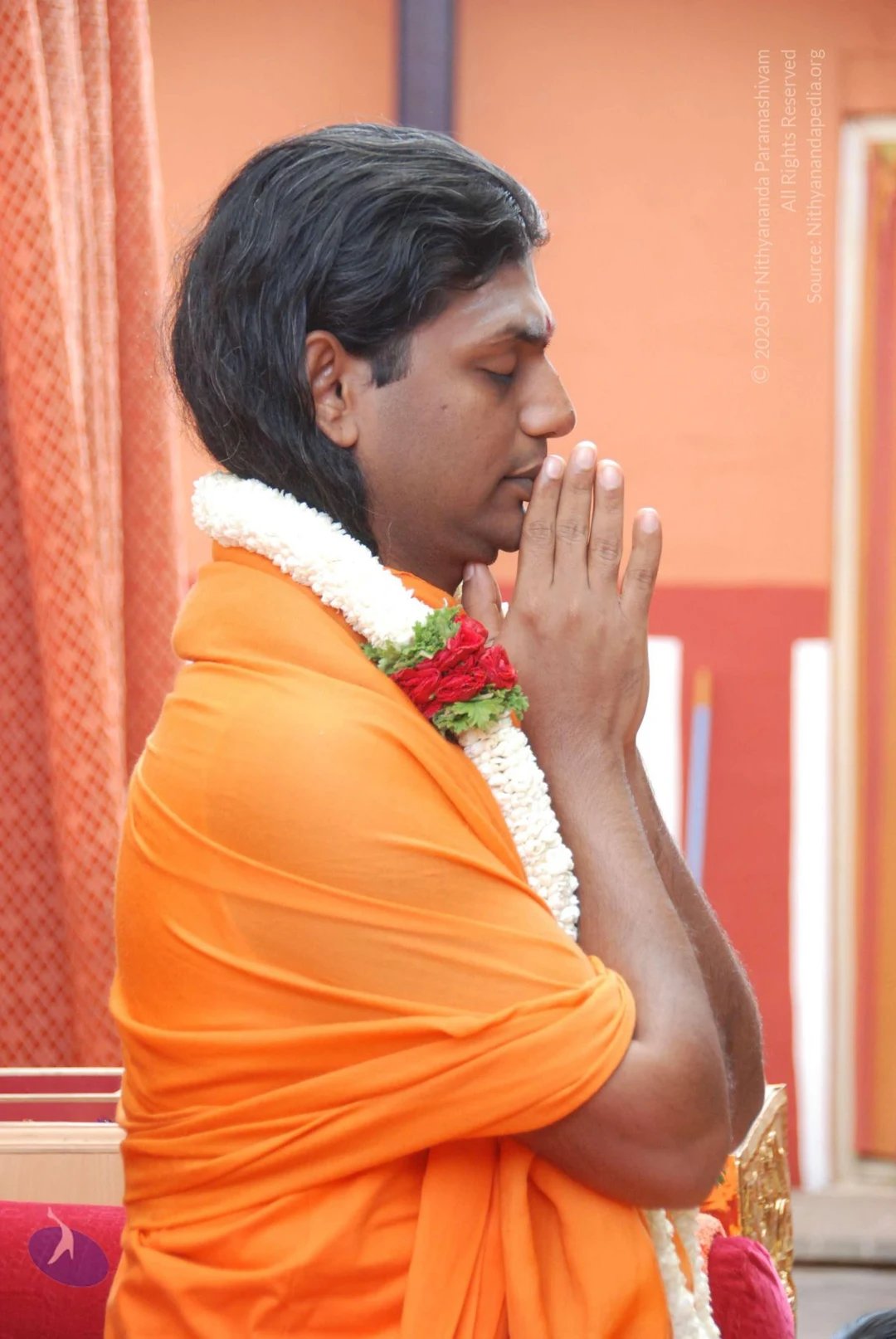
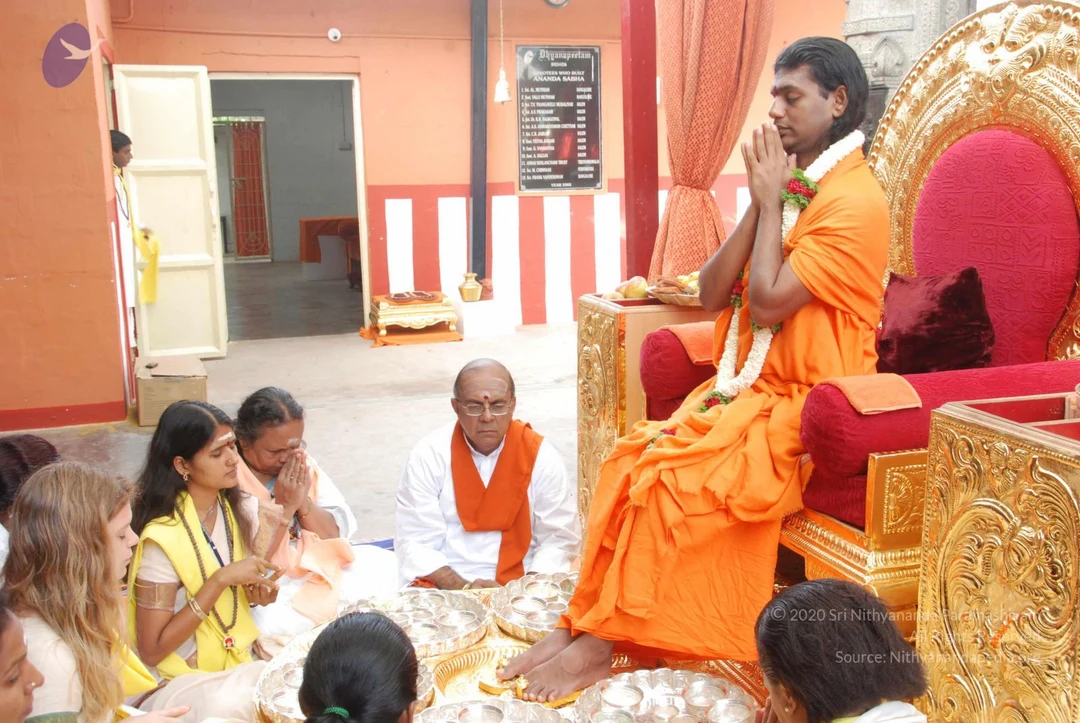
Side-profile photograph of a man with long, swept-back dark hair and eyes closed, hands pressed together in namaste at the chest. He wears an orange-saffron shawl draped over his shoulders and a white jasmine garland with red roses and green leaves at the neck. The background is orange-painted wall and a hanging orange textile, with a red and white striped panel to the right. Swamiji (probable): the long swept-back hair, saffron clothing and garland match the cues for the Paramashivam page, presented as a devotee-style pose in an ashram setting.A man in profile with eyes closed sits with palms pressed together in anjali mudra before his chest. He wears a flowing saffron-orange shawl draped over his shoulders and a white jasmine garland with a red and green flower cluster at the neck. Behind him are orange walls, an orange curtain with a lattice pattern, and a gold-edged chair with red upholstery at lower left. The setting resembles an indoor satsang or talk stage.Profile of a man with long dark hair swept back, eyes closed, palms pressed together in anjali mudra at chest height. He wears an orange saffron shawl draped over the shoulders and a white jasmine garland with a red and green floral section at the neck. Behind him are orange and pink curtains and a warm orange wall. The page identifies this as a person, but only the long hair, saffron clothing and garland are visible, so the identity is uncertain.A seated man in an orange saffron robe with white and red flower garland sits with palms pressed together in namaskar and eyes closed, a red bindi on his forehead. He sits on an ornate golden throne with a red cushion, with a dark maroon pillow beside him. Behind him are a red metal gate, a stone pillar with carvings, green foliage and a brass lamp stand. Swamiji (probable): long swept-back hair, saffron garments and a garland mark him as a probable Swamiji candidate seated in a ceremonial setting. Lower right, a tray holds offerings.Close-up photograph of a pair of bare feet resting on a golden ritual tray during a padapuja-style foot worship. The feet wear gold toe rings set with small red stones. The wearer's orange robe is visible at the left edge. Around the tray are polished silver bowls and dishes, and a small lit lamp sits on the gold plate near the right toes. Only the feet and lower robe are visible, so the person cannot be identified from this image.Close-up photo of a pair of bare feet wearing gold toe rings with red gemstone tops, resting on an ornate gold tray. The feet belong to a person in orange saffron robes, whose cloth covers the upper left. Around them are silver bowls with embossed floral patterns, some filled with liquid, and a white flower lies near the right toes. This appears to be a padapuja-style foot ritual with offerings arranged around the feet.

Sarva-Darshan

60 photosSource gallery
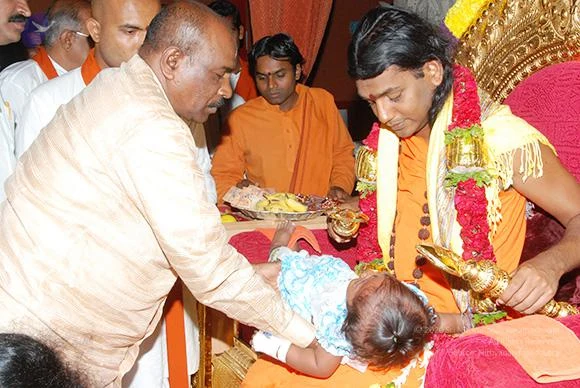
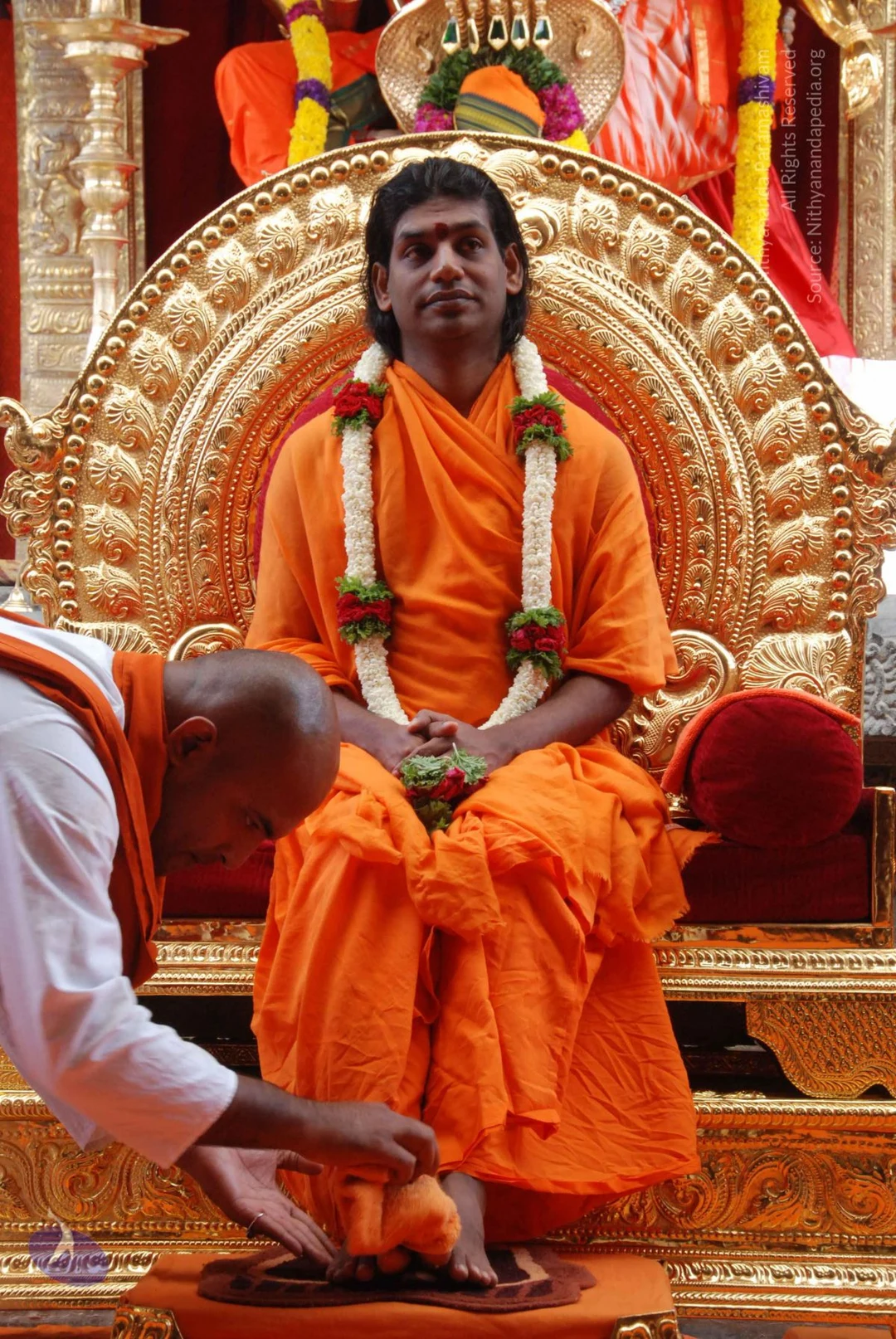
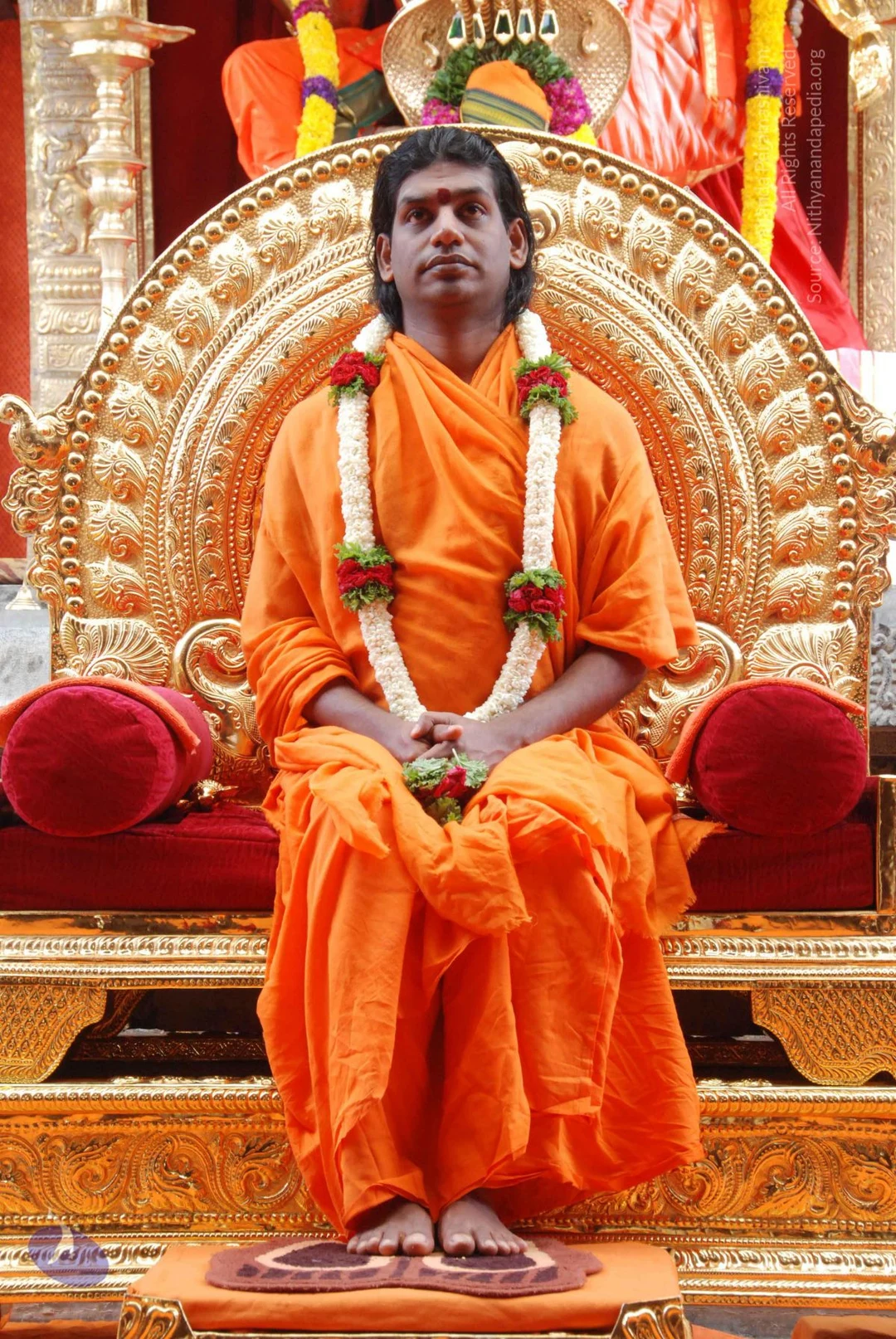
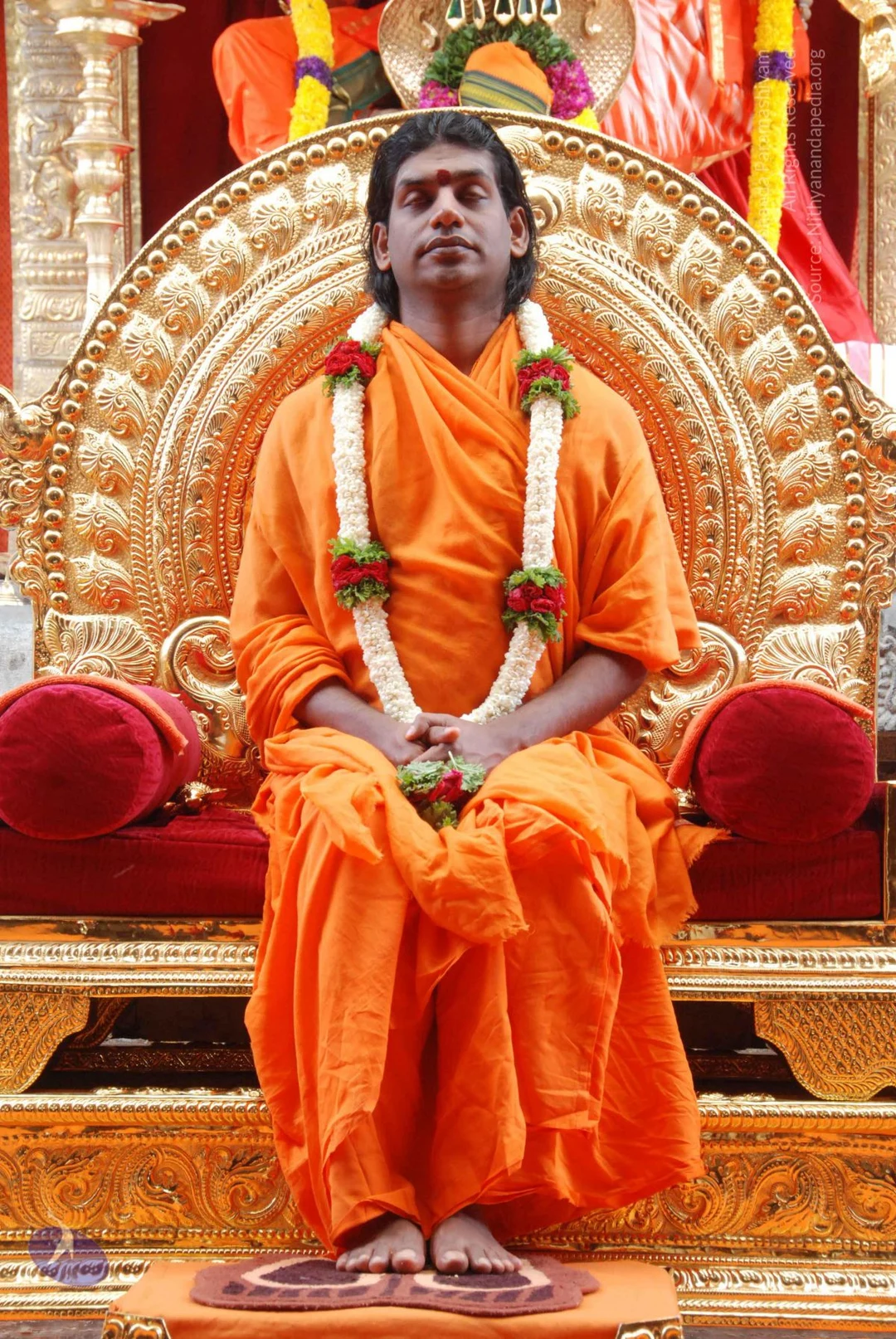
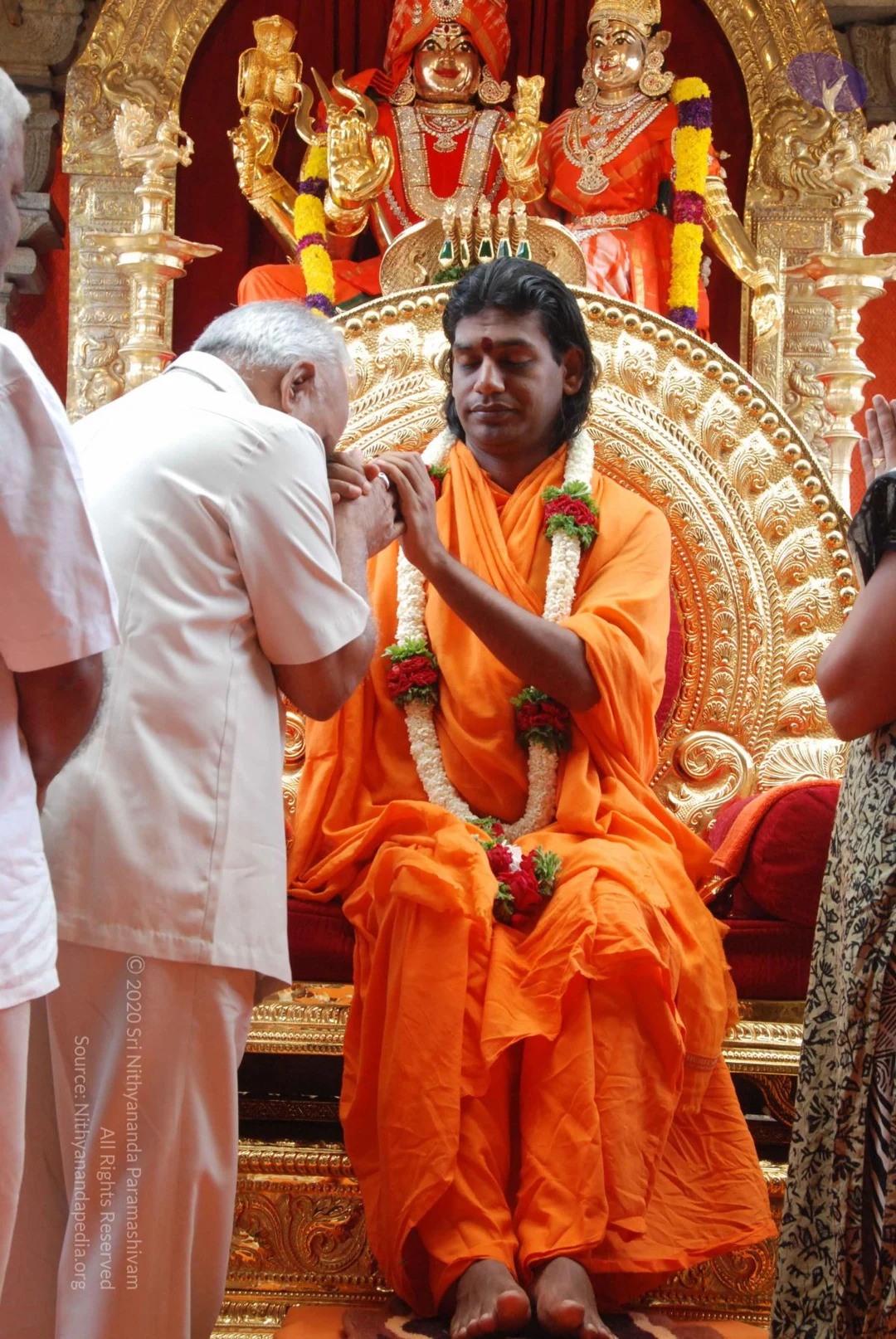
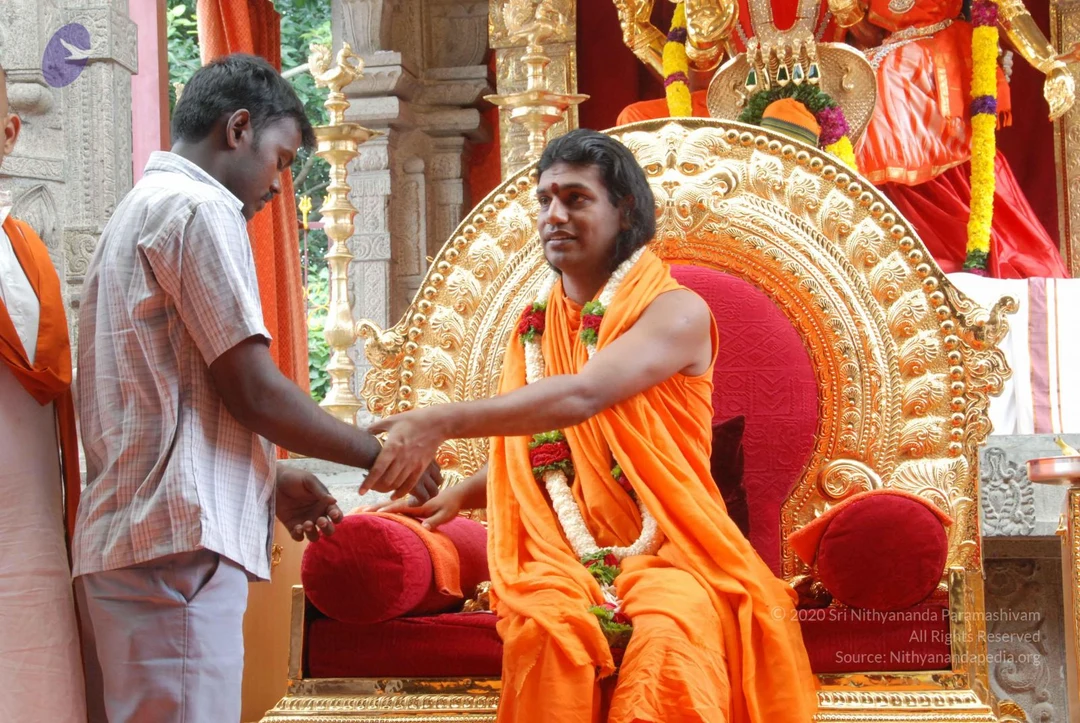
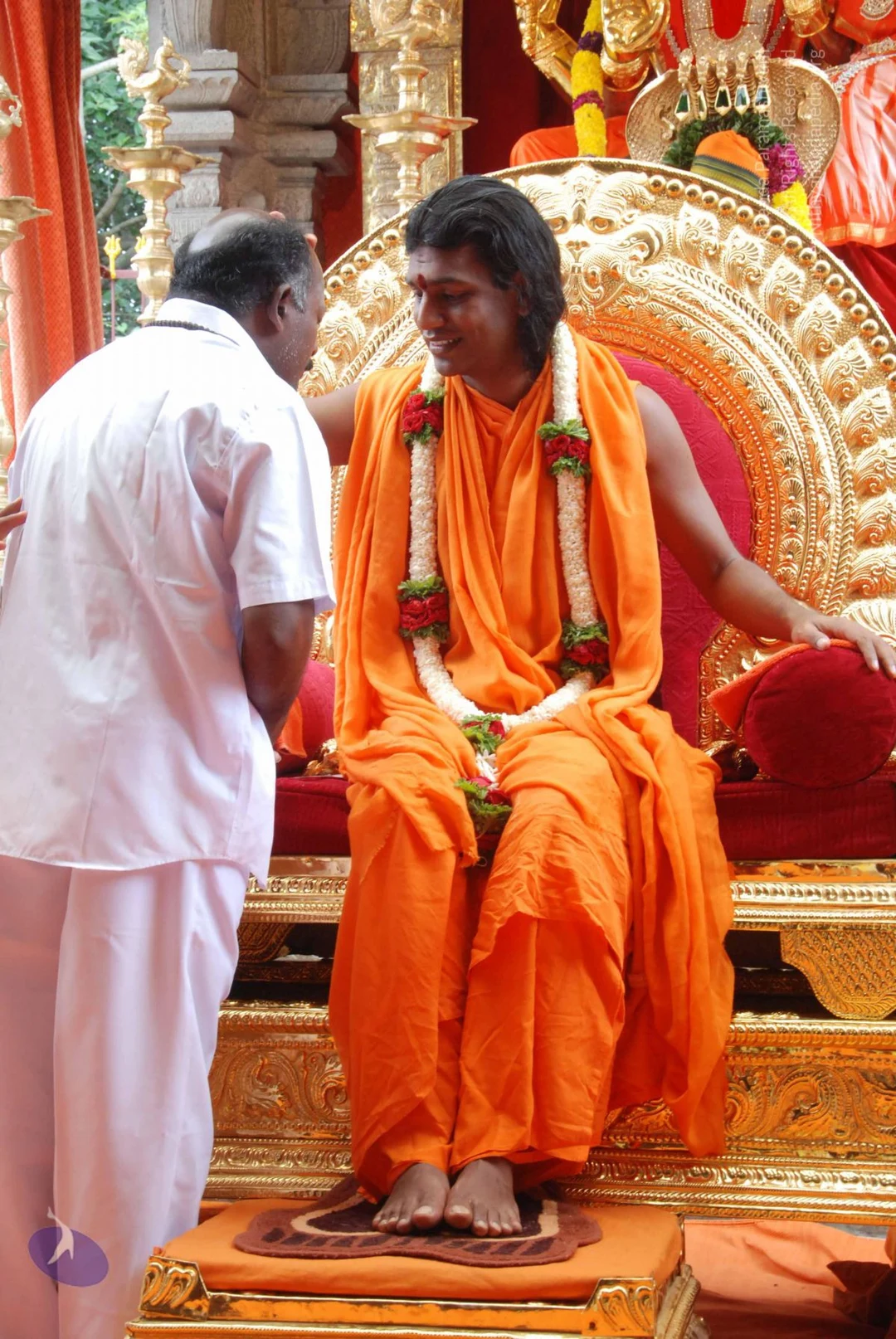
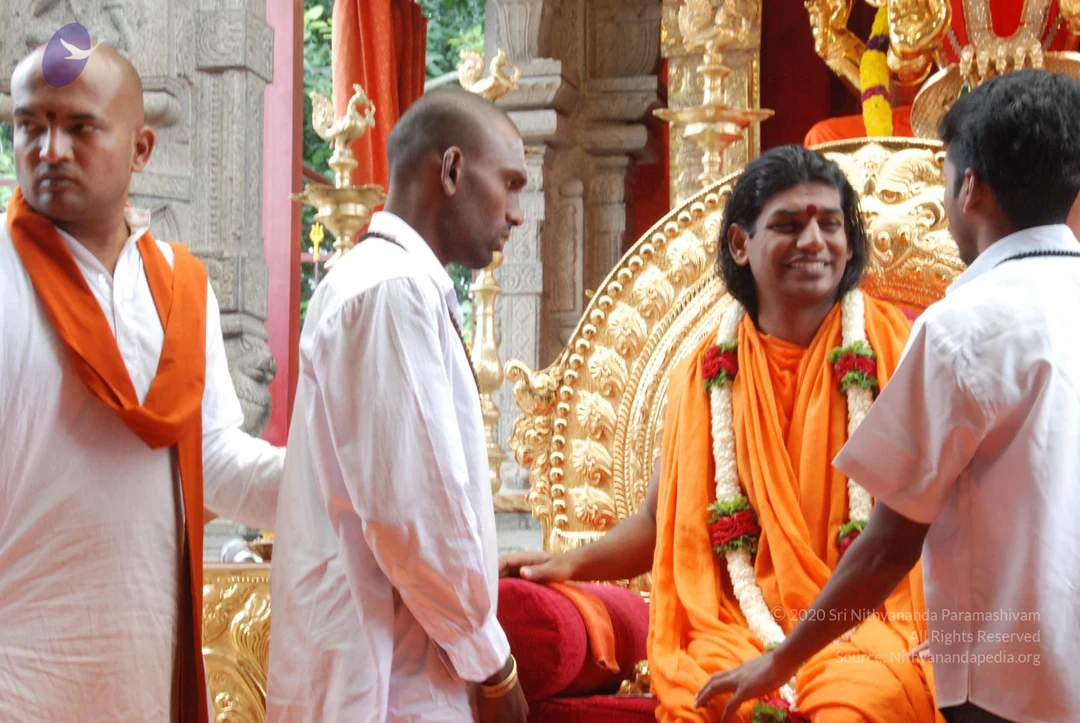
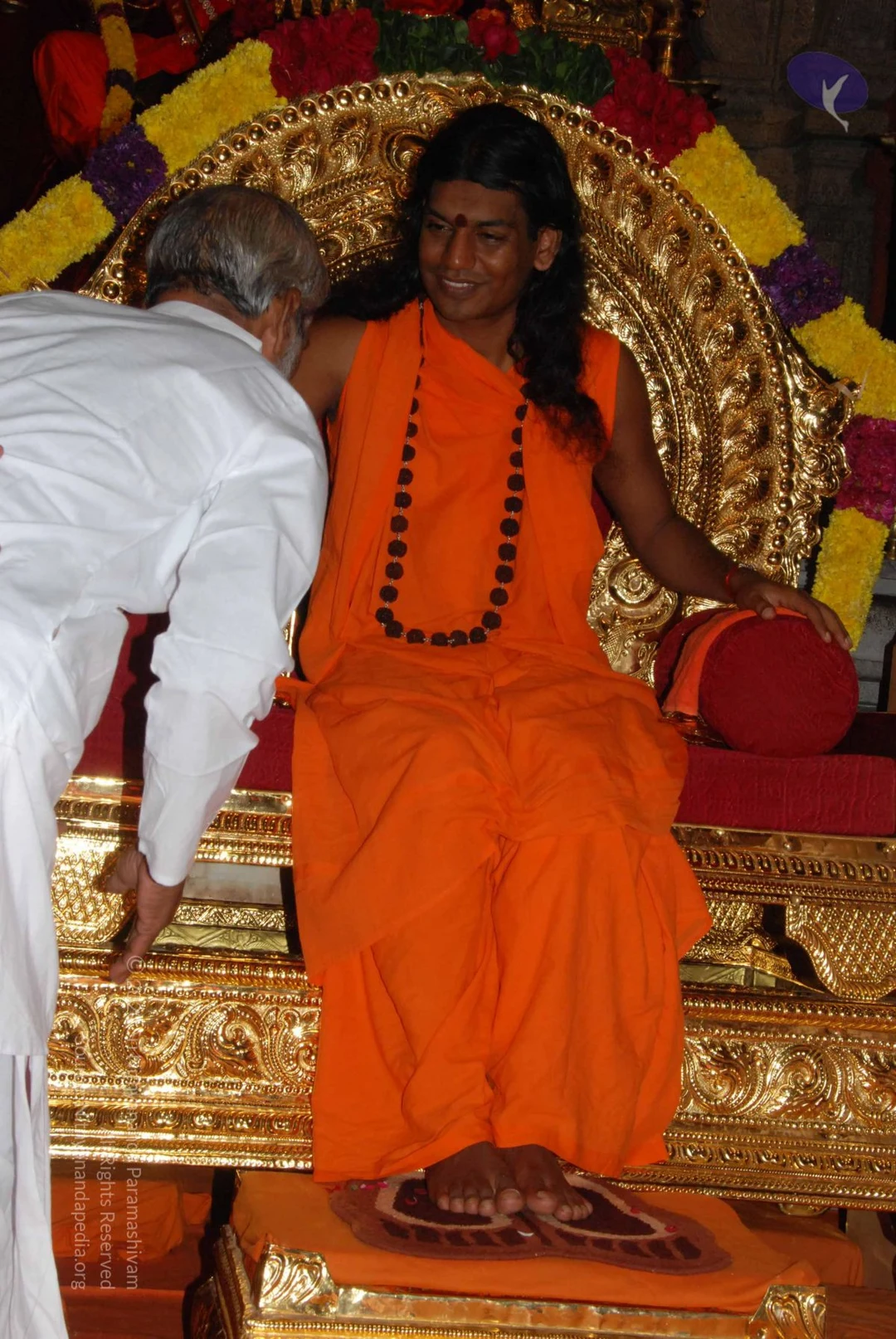
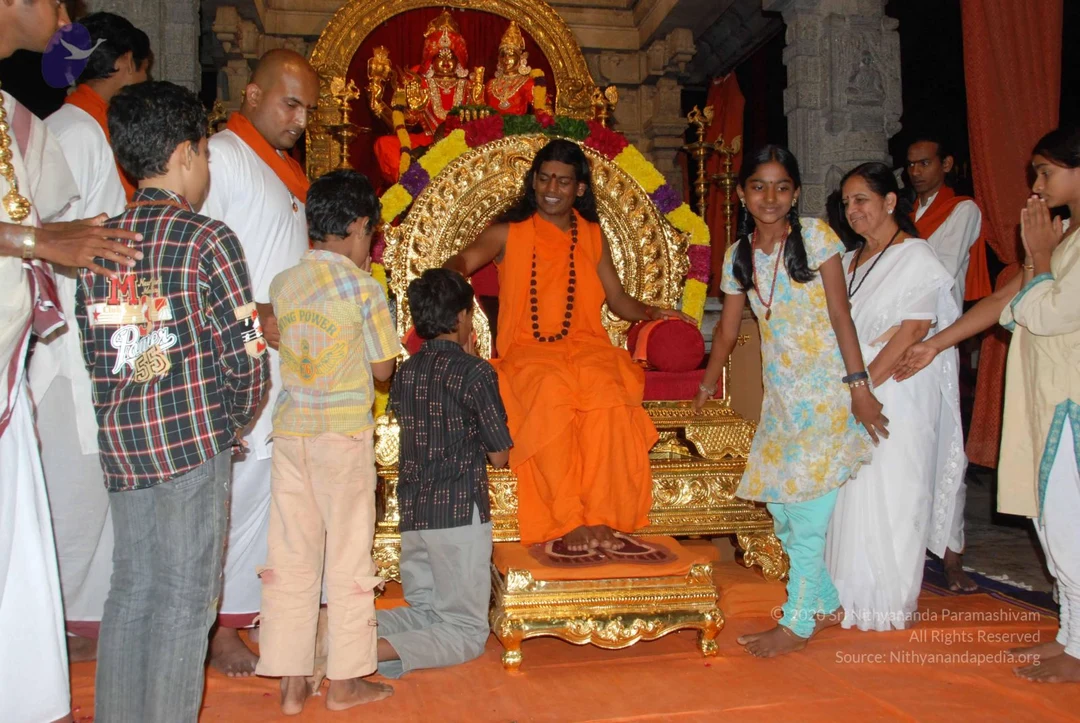
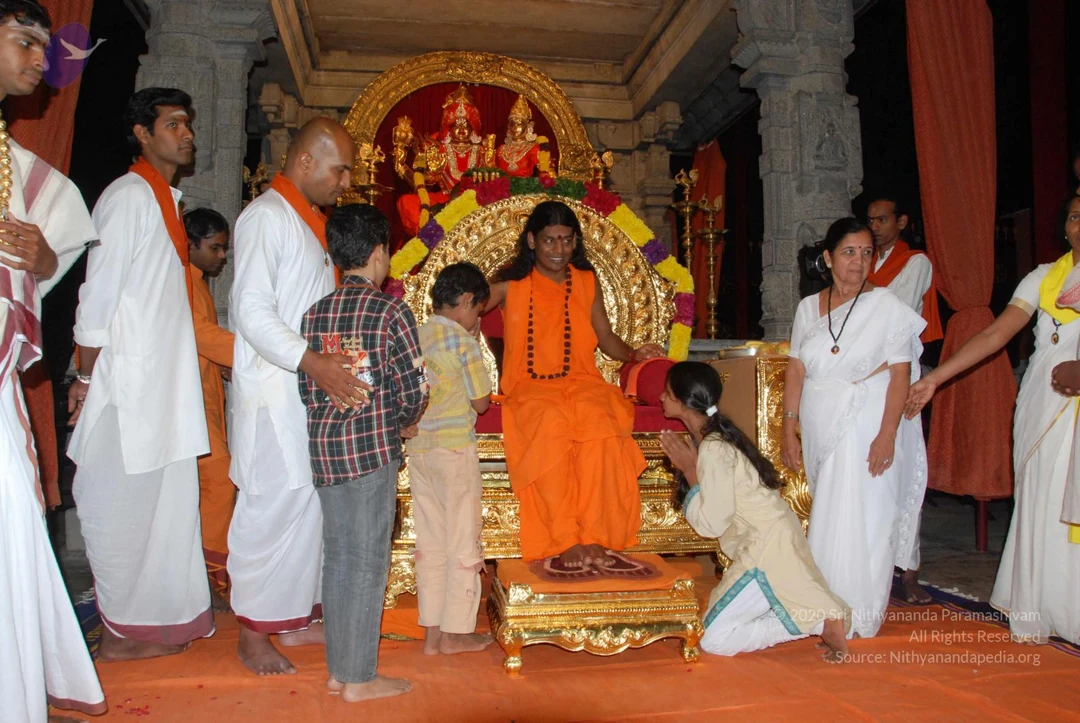
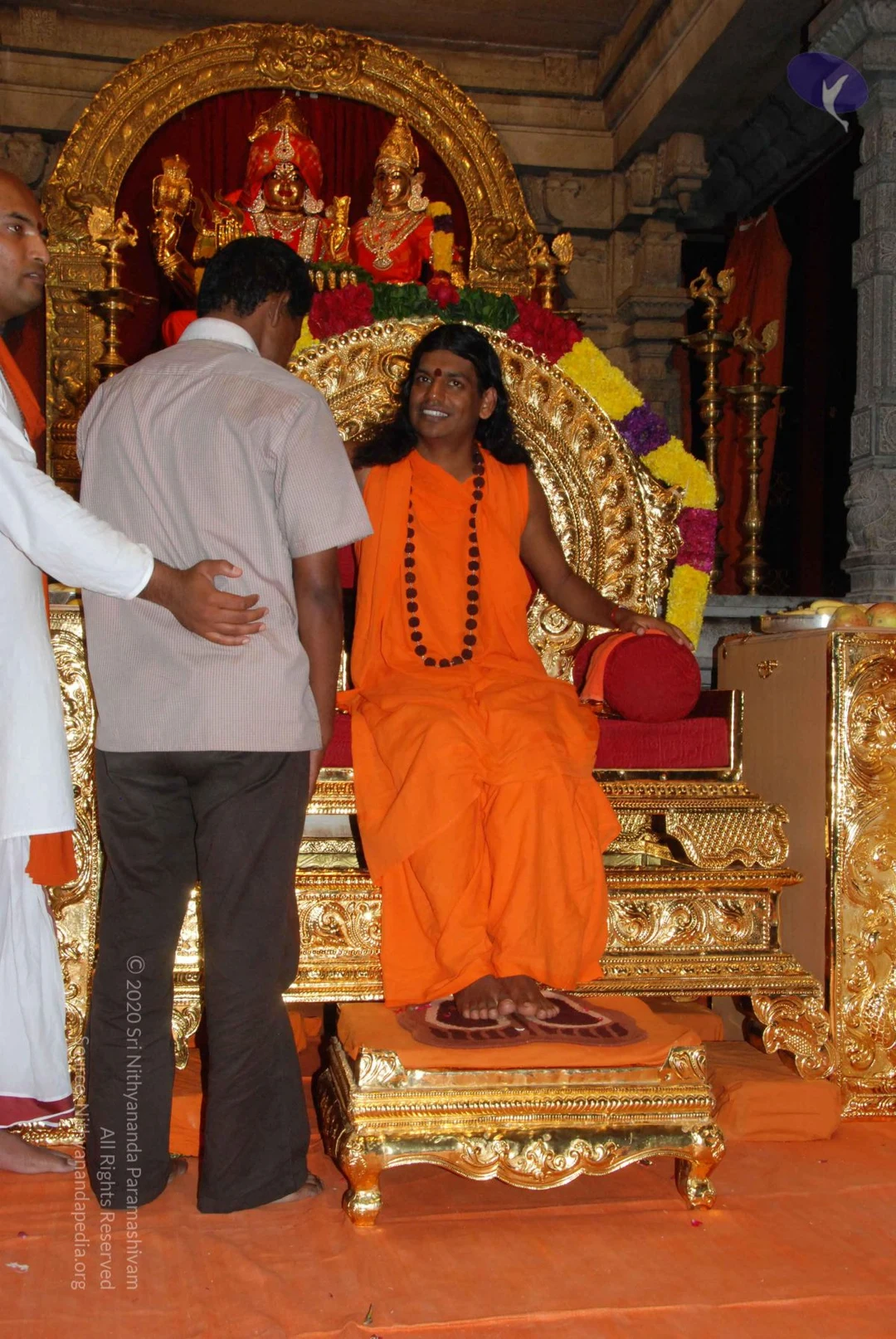
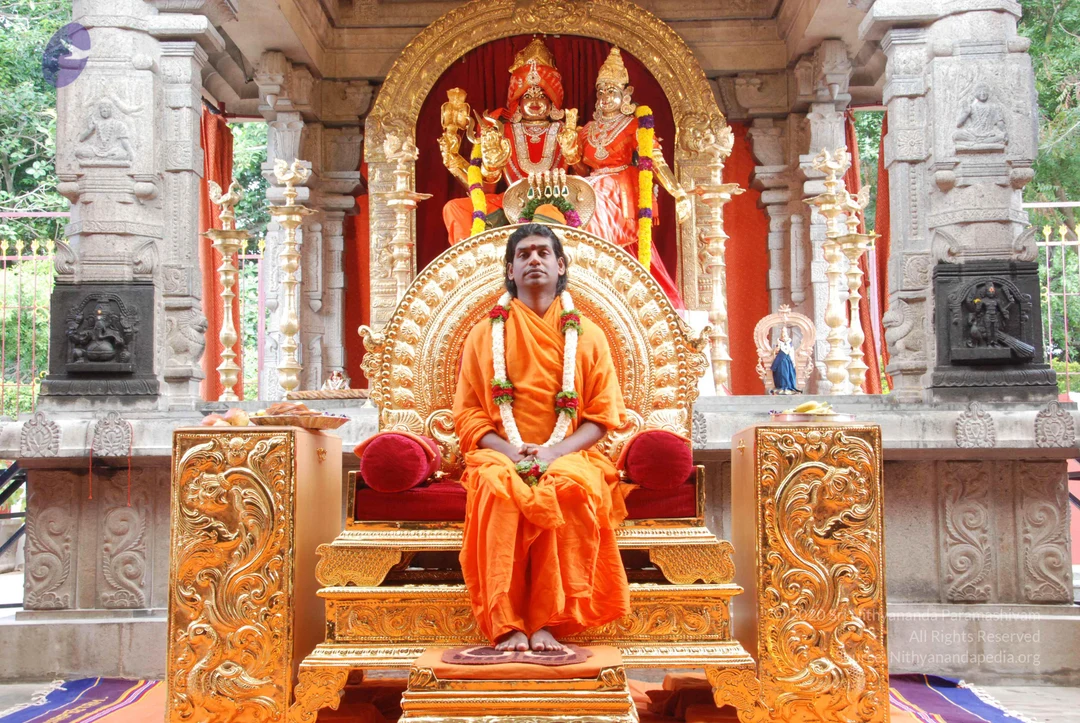
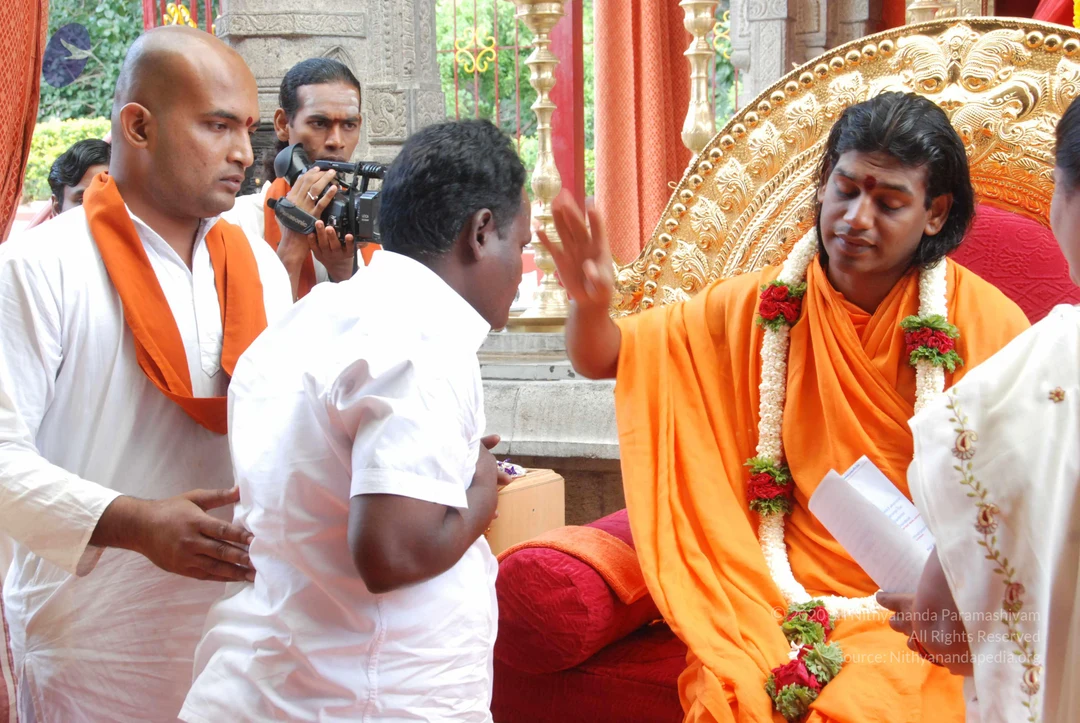
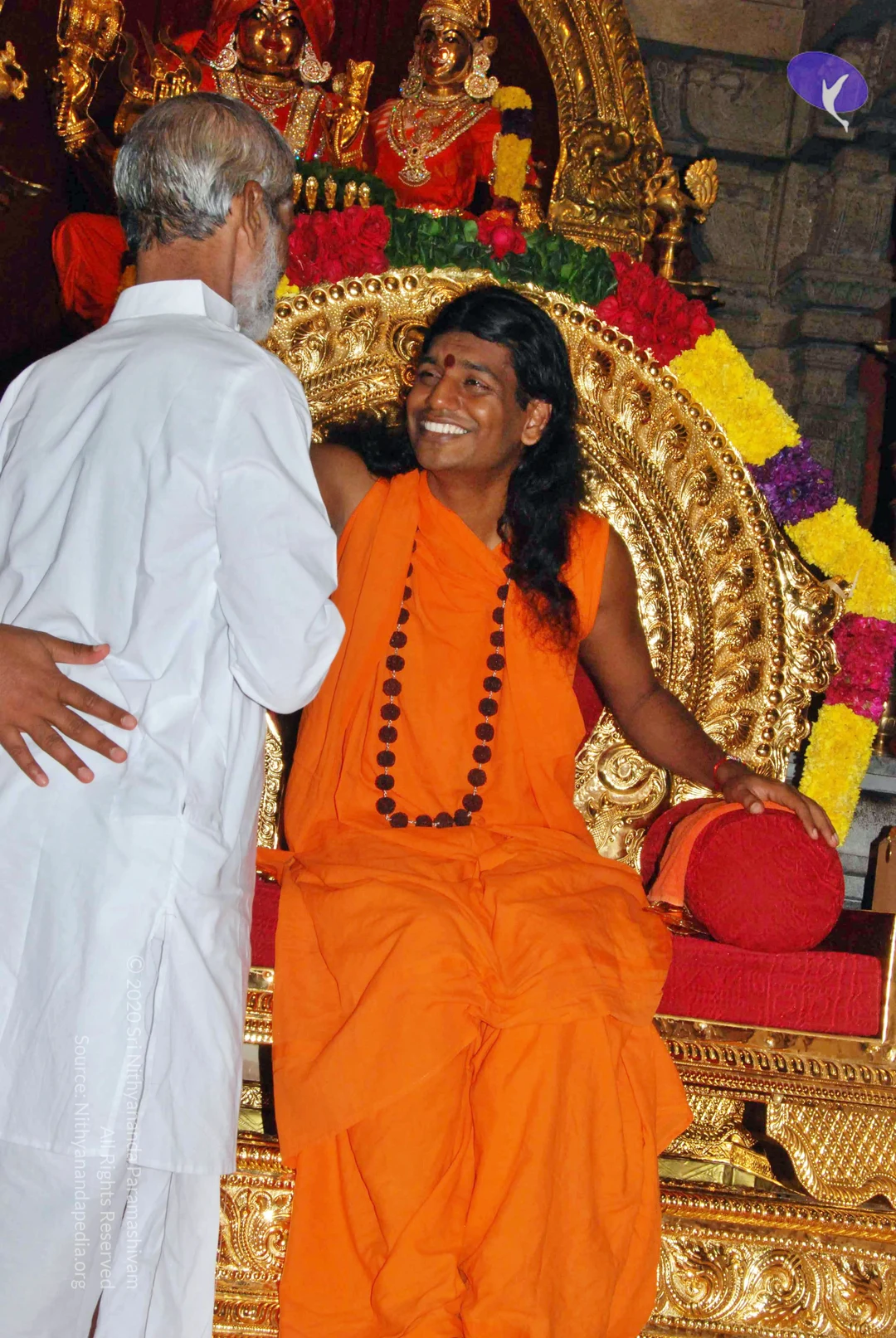
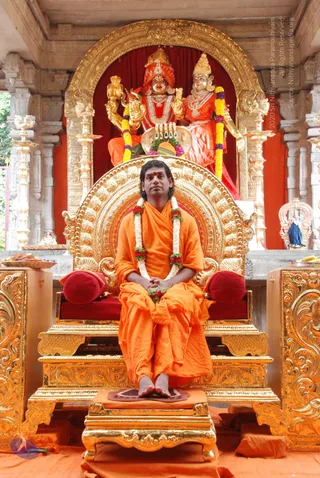
A seated man in flowing saffron-orange robes sits on an ornate gold throne with a red cushion, wearing a white and red floral garland with green leaves and holding his hands together in his lap. A red bindi marks his forehead and his long dark hair falls to his shoulders. At his feet, a bald man in a white shirt and orange shawl kneels and wraps an orange cloth around the seated man's bare feet, in a foot-washing or padapuja-style offering. Behind them, a gold kalasha-topped ornate lamp stand and another orange-robed figure seated on a throne are visible, with yellow and purple marigold garlands hanging nearby. The gold throne has intricate floral and scrollwork carving. a person: the seated man wears saffron robes, a garland and sits on a throne.A man with long dark swept-back hair and a red tilak on his forehead sits cross-legged on an ornate gold throne with red velvet bolsters, wearing saffron-orange robes and a white and red flower garland around his neck. His hands are clasped in his lap and he gazes upward. Behind him is a saffron-draped figure and a golden canopy with a hanging garland. a person, seated on the peetha as the central figure. Bare feet rest on a small cushioned mat.A man seated cross-legged on an ornate gold throne with a red velvet seat and red cushions, eyes closed in meditation. He wears a saffron-orange draped robe, a white jasmine garland interspersed with red roses, and a red tilak on his forehead. His hands are joined in his lap over a small floral offering. Behind him stands a golden kalasha-style ornament and a second orange-clad figure with garlands. The ornate gold throne, garlands and saffron robes suggest a satsang or darshan setting.A man with long swept-back dark hair and a red bindi sits cross-legged on an ornate gold throne with red velvet cushions, wearing a saffron-orange robe and a white and red flower garland, hands folded in his lap, eyes lifted. Behind him, a gilded arch frames red-clad deity murtis with gold crowns and jewelry, one holding a trident, with yellow and purple garlands draped on them, and brass lamps stand at the sides. Swamiji (probable): the seated man shows long swept-back hair and saffron robes, and the page indicates his presence at this event, so he is identified as a probable in-person candidate.A photograph of a man seated on an ornate gold throne inside a temple shrine with red drapery. He wears a flowing saffron/orange robe, a white and red flower garland with purple accents, and a red tilak on his forehead; his long dark hair is swept back and his bare feet rest on a small gold footstool. Behind him stand two painted deity murti in red and gold, one with a crown and holding a trident-like weapon, the other adorned with jewelry and a golden crown. Gold lamp stands flank the arch, and a small blue figure sits in a niche to the right. Probable Swamiji (probable) seated on a peetha, wearing saffron robes, a flower garland and swept-back hair, in a temple setting.A man with long dark hair, wearing an orange saffron robe and a white and pink flower garland, sits cross-legged on an ornate gold throne with red cushions in front of a stone temple shrine. Behind him stands a deity murti with a crown and a gold-framed arch, decorated with marigold garlands. Orange curtains frame the scene, and a gold footstool rests on an orange cloth. Gold lamp stands flank the shrine and carved stone pillars rise on each side. The ornate throne, saffron clothing and long hair are appearance cues that the man may be Swamiji (probable), seated in person.

Pancha-Tapas

103 photosSource gallery
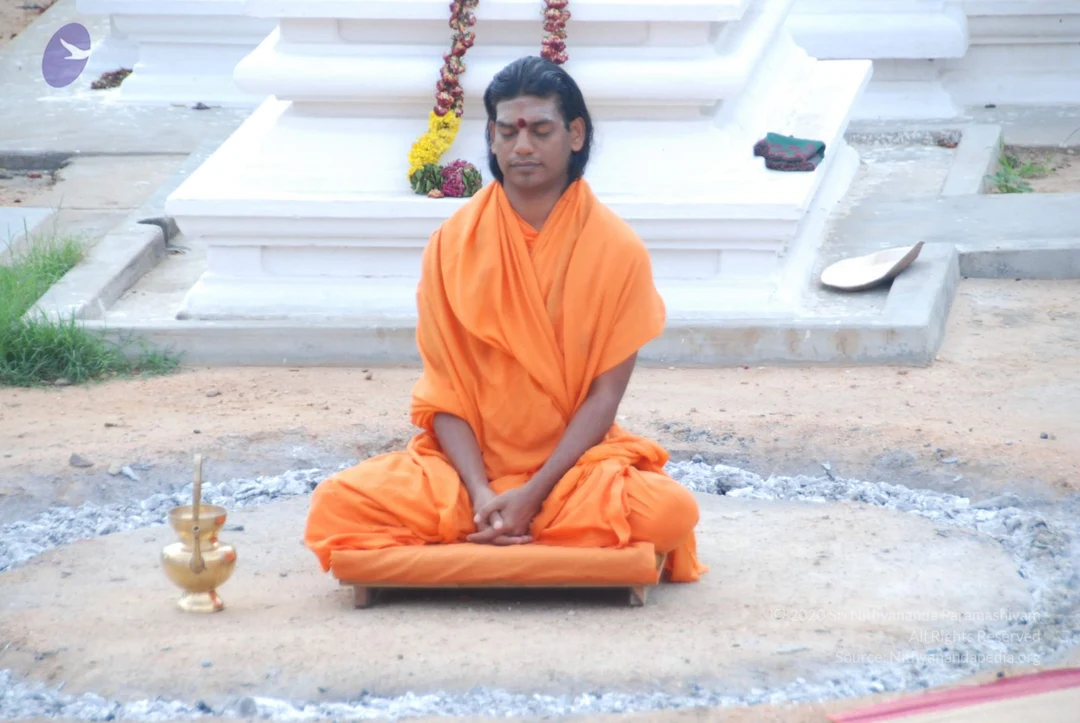
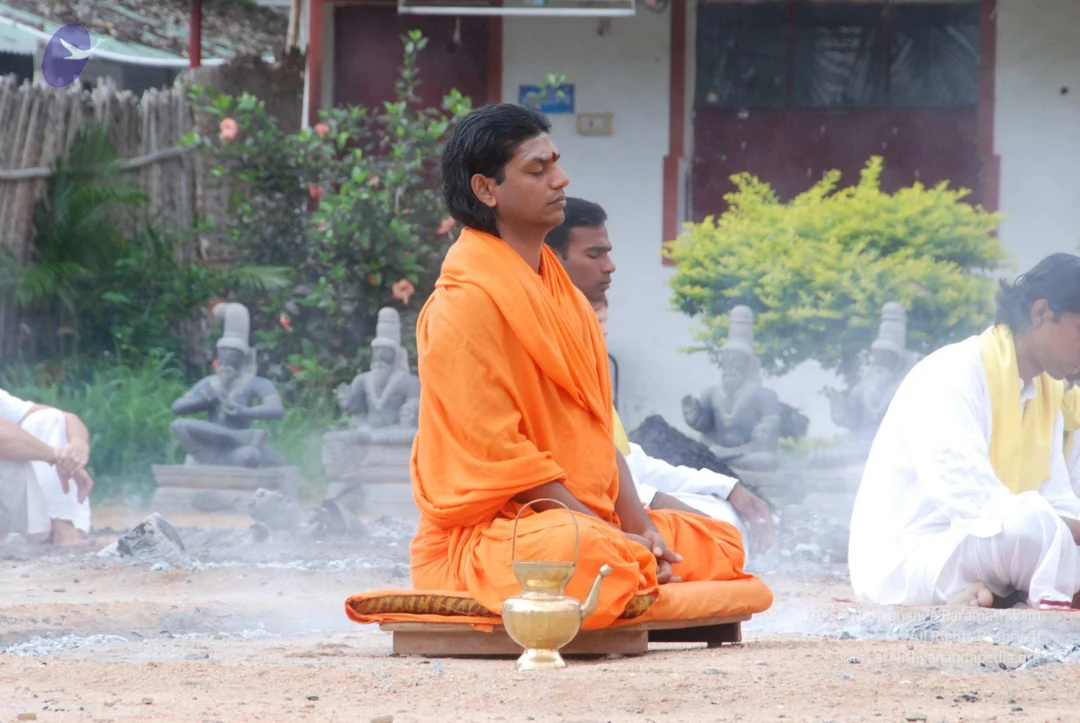
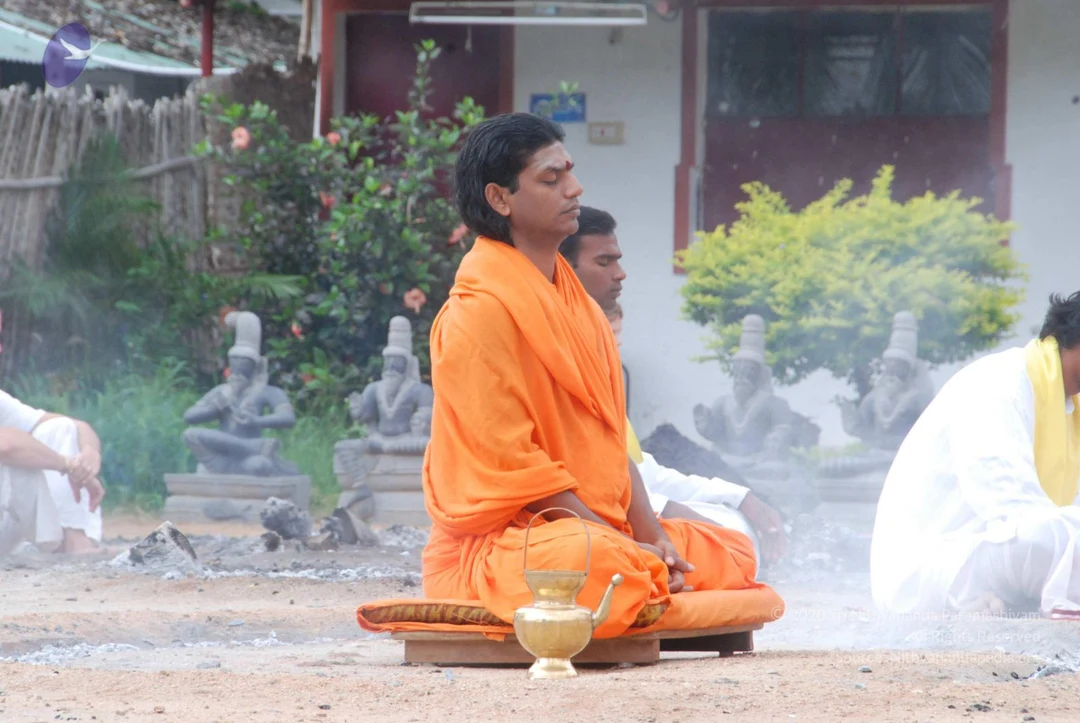
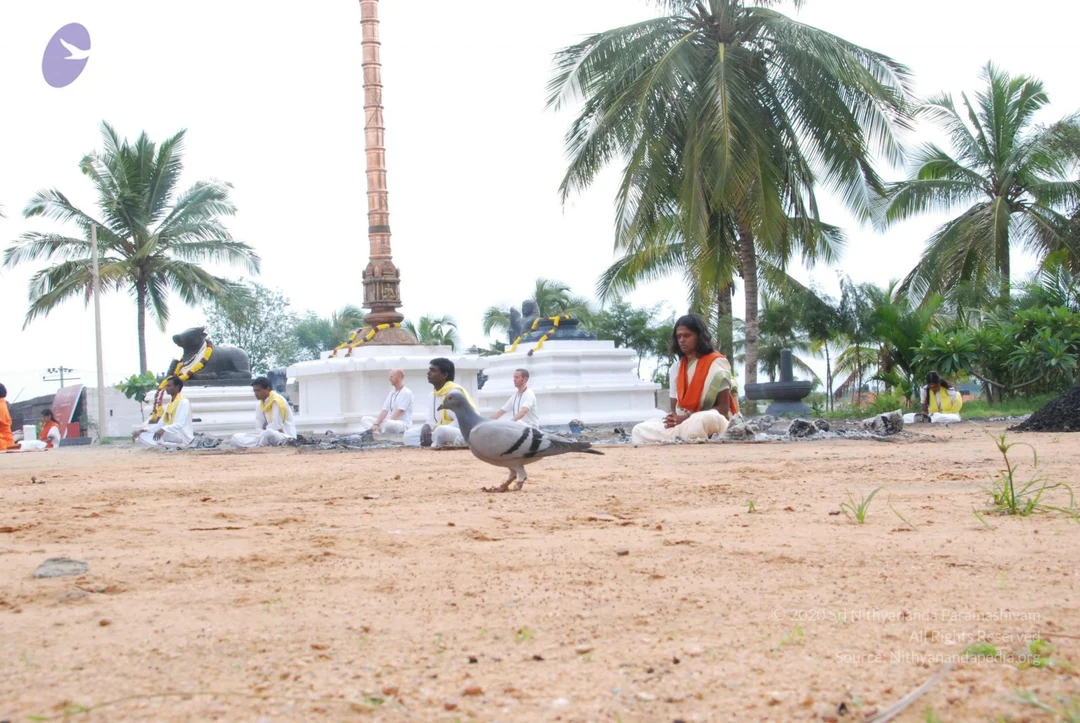
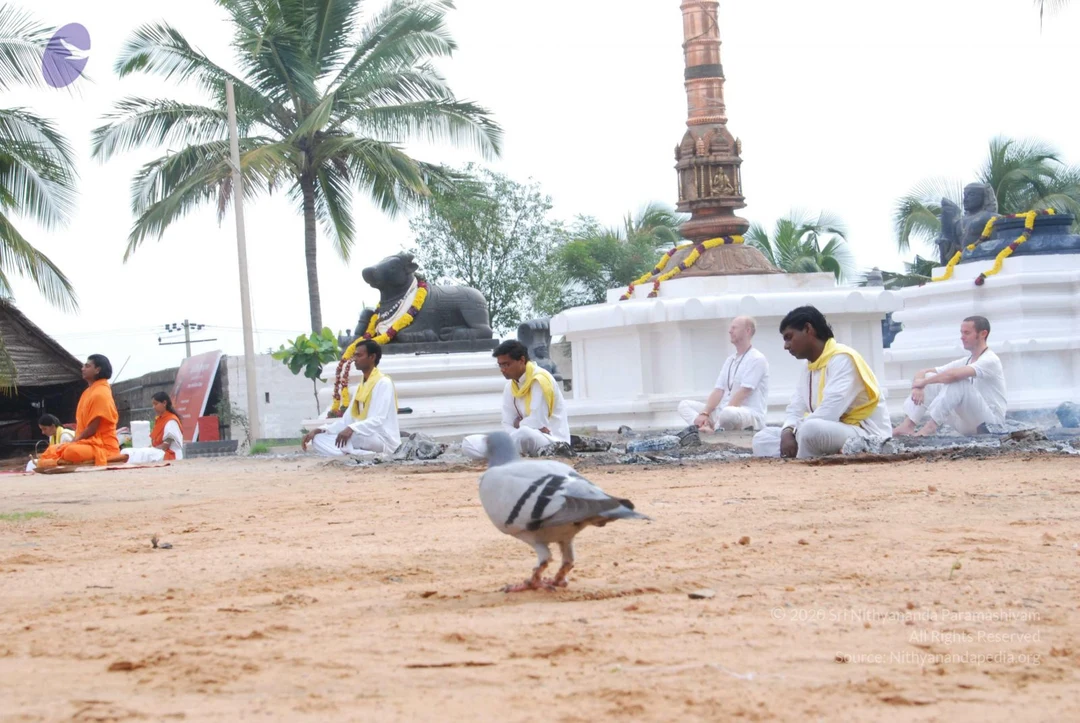
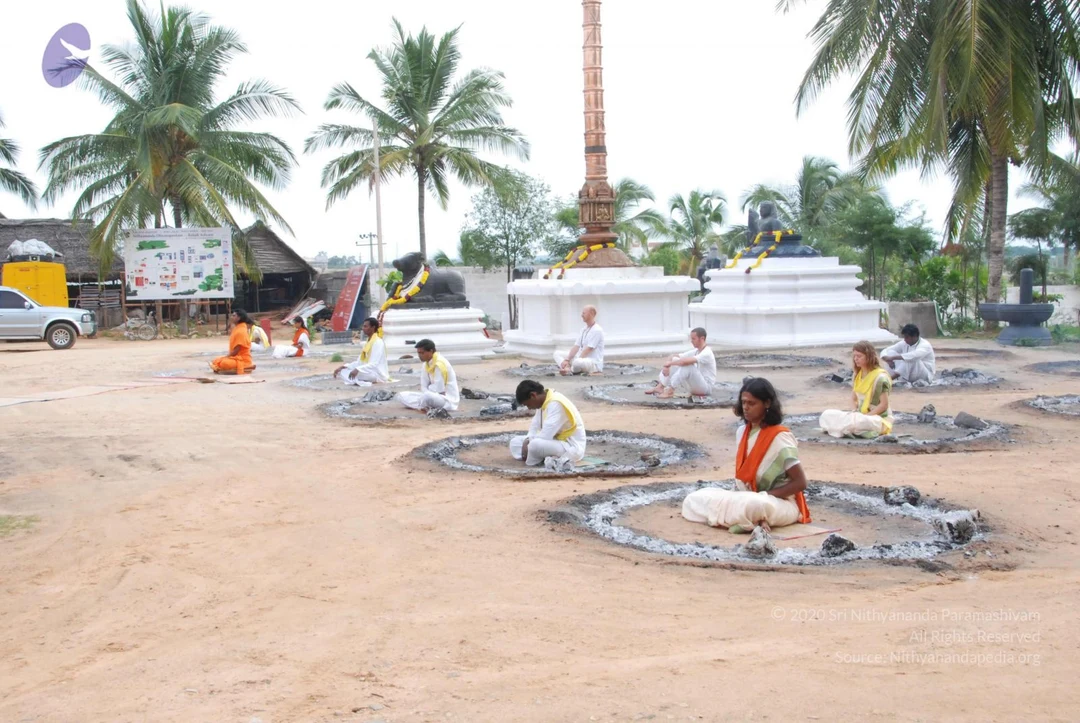
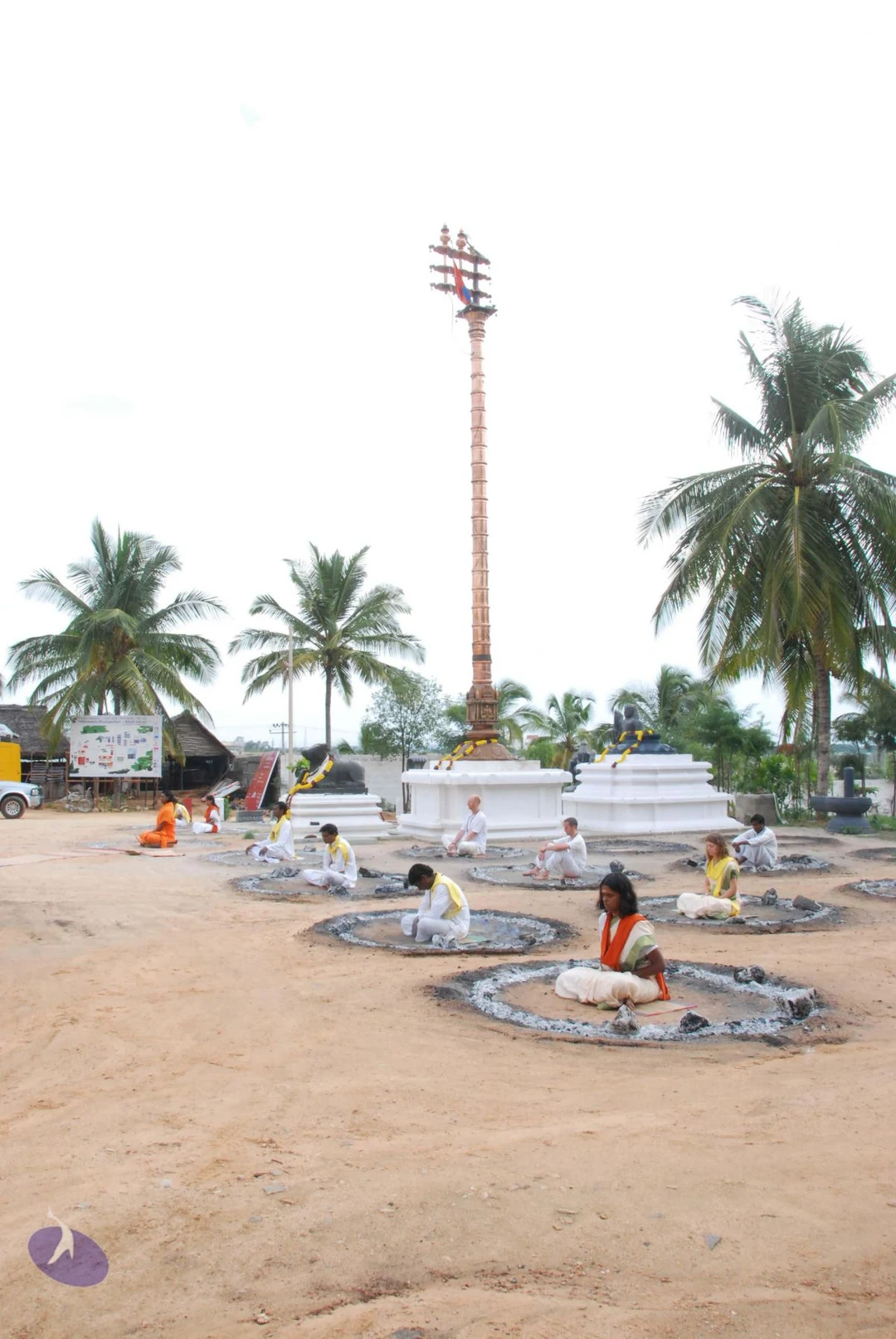
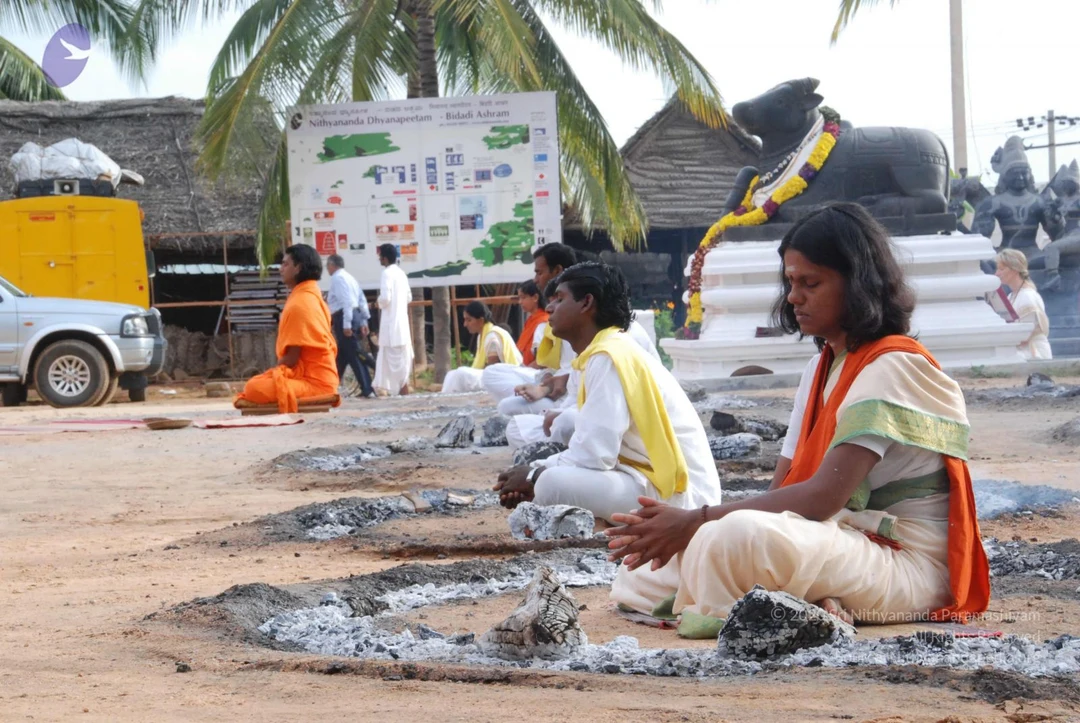
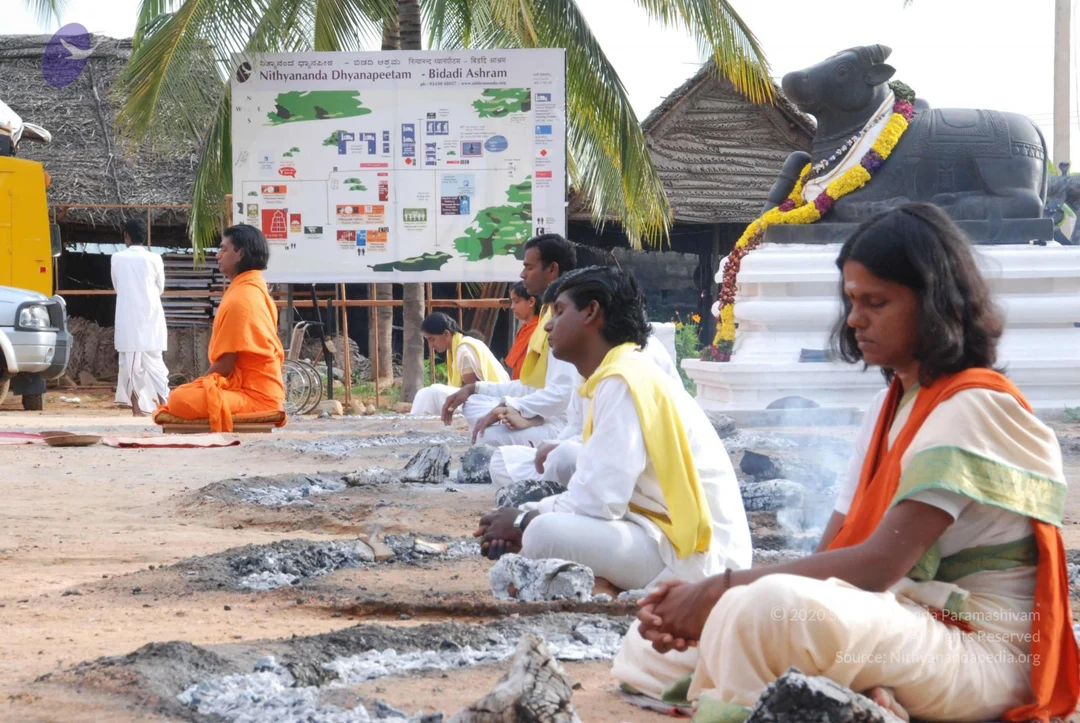
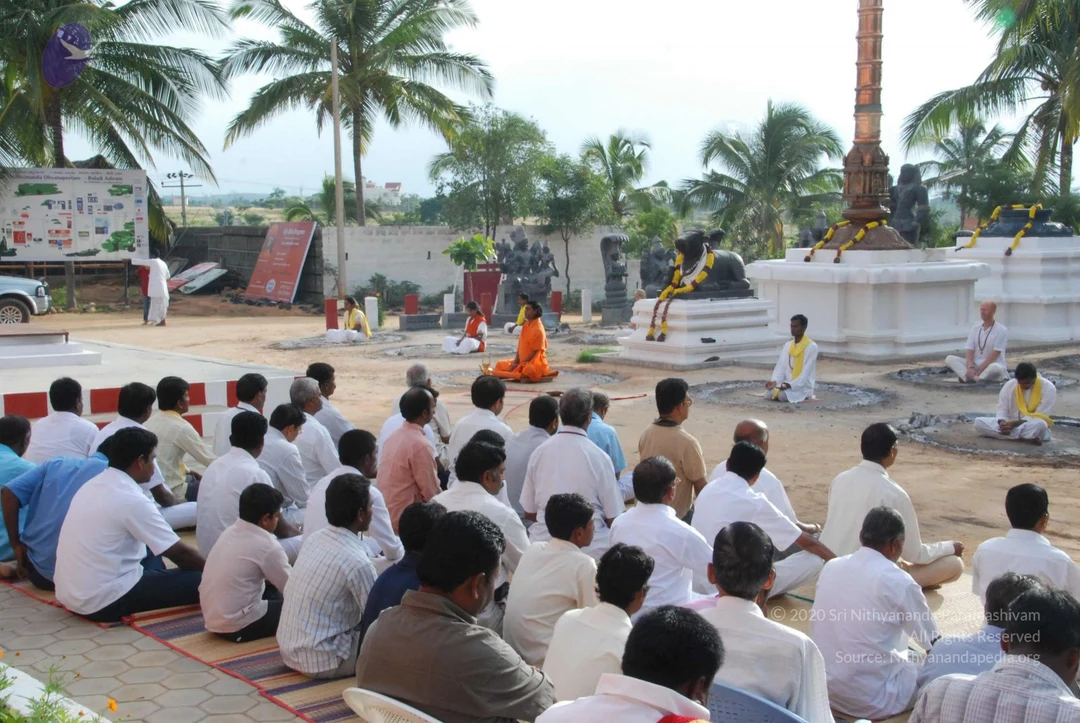
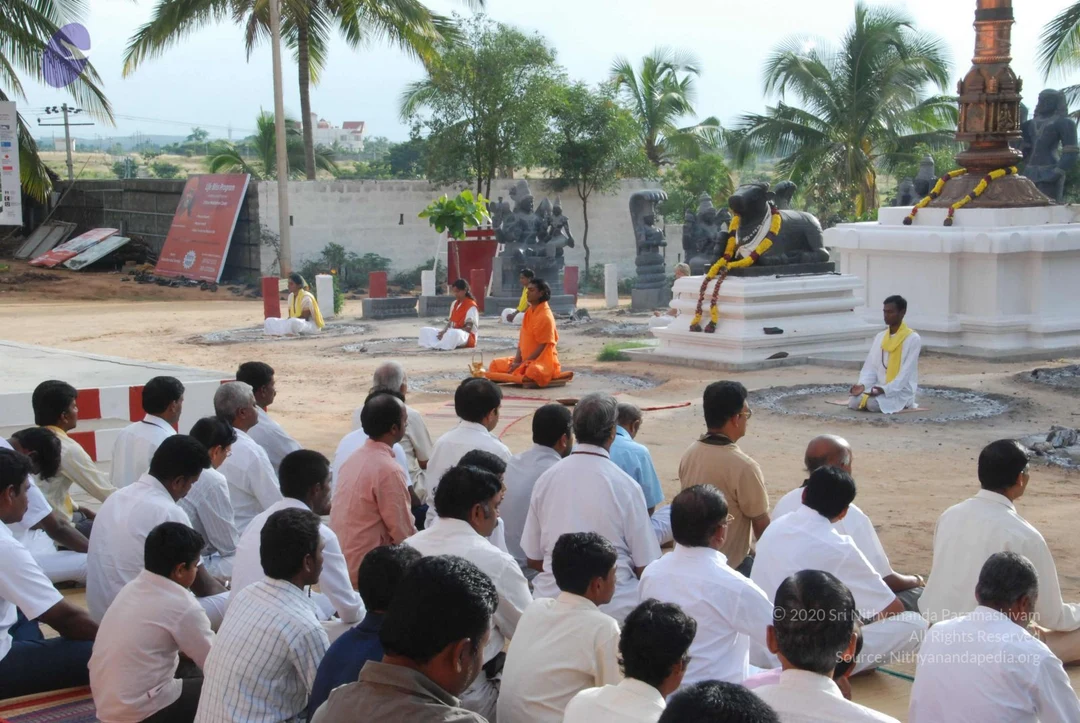
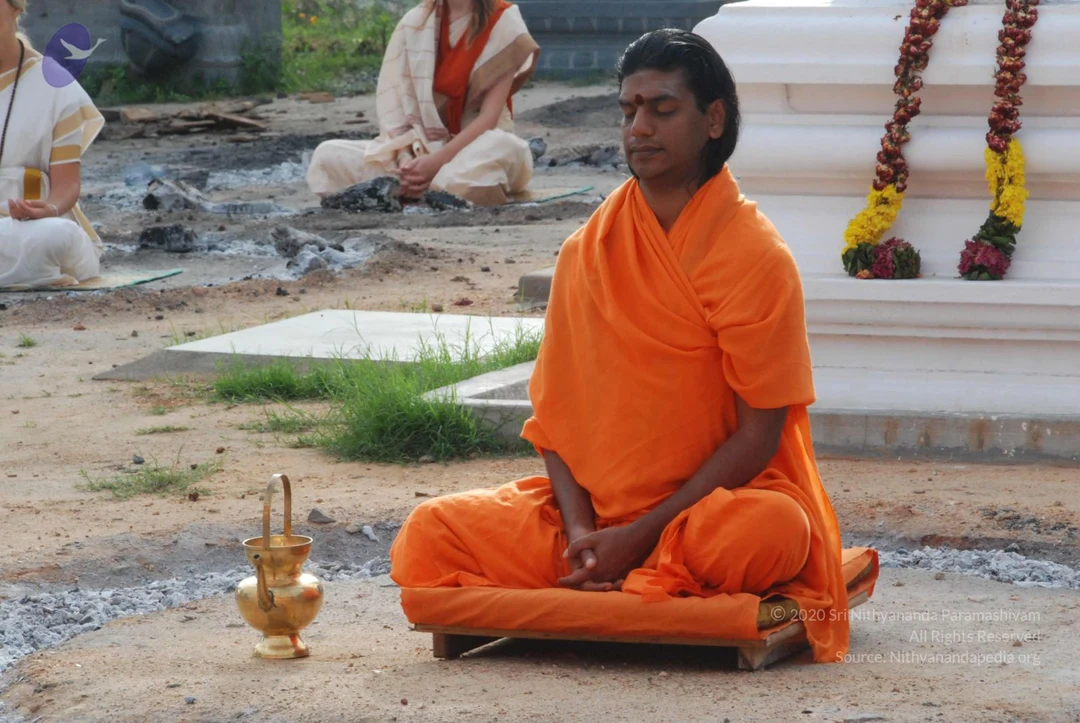
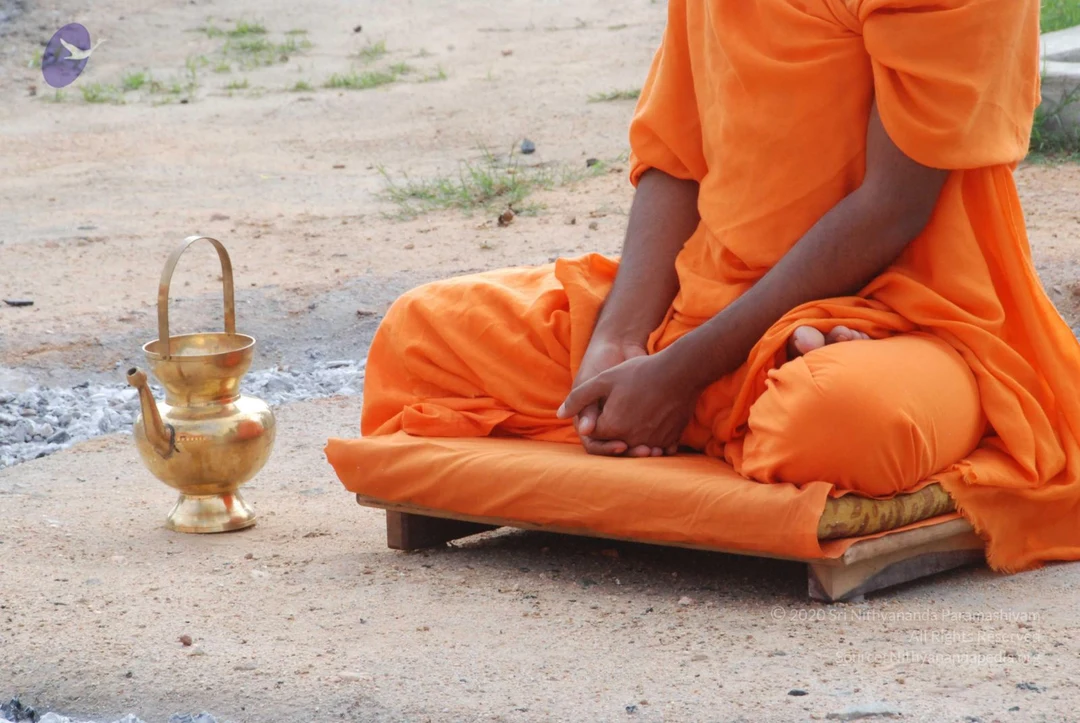
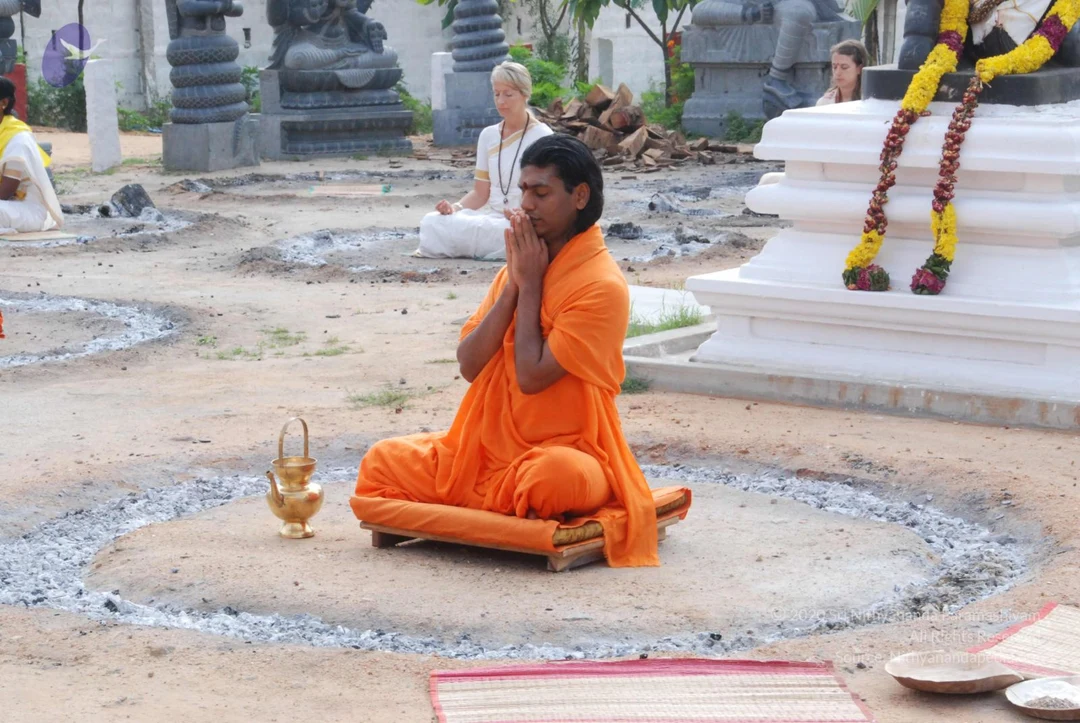
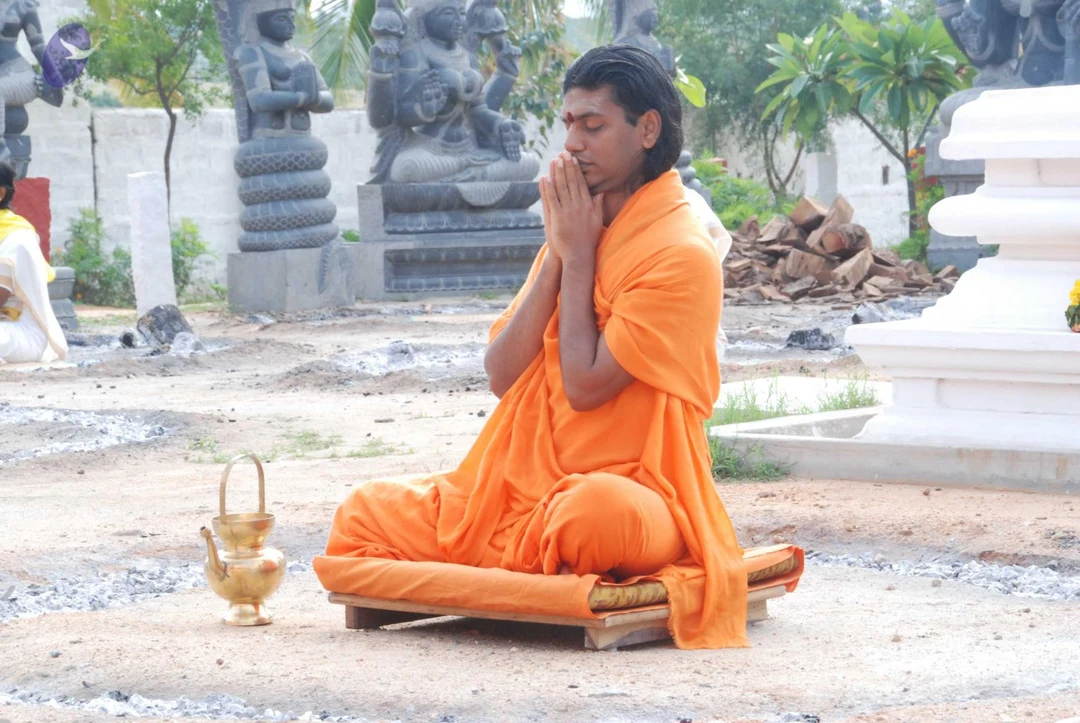
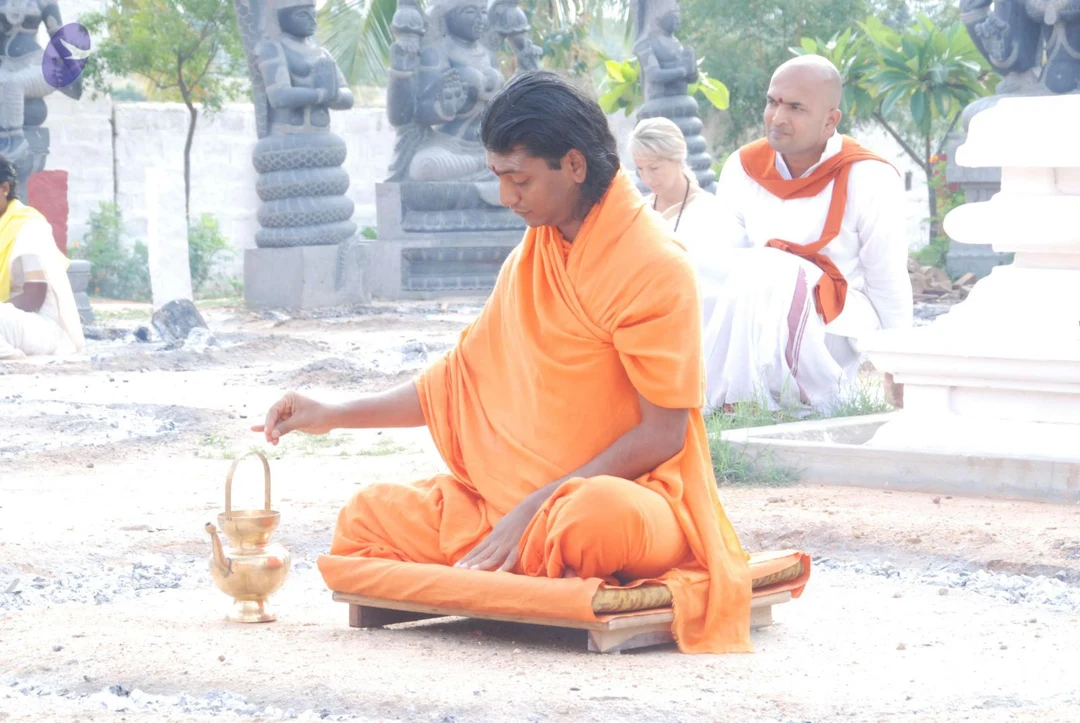
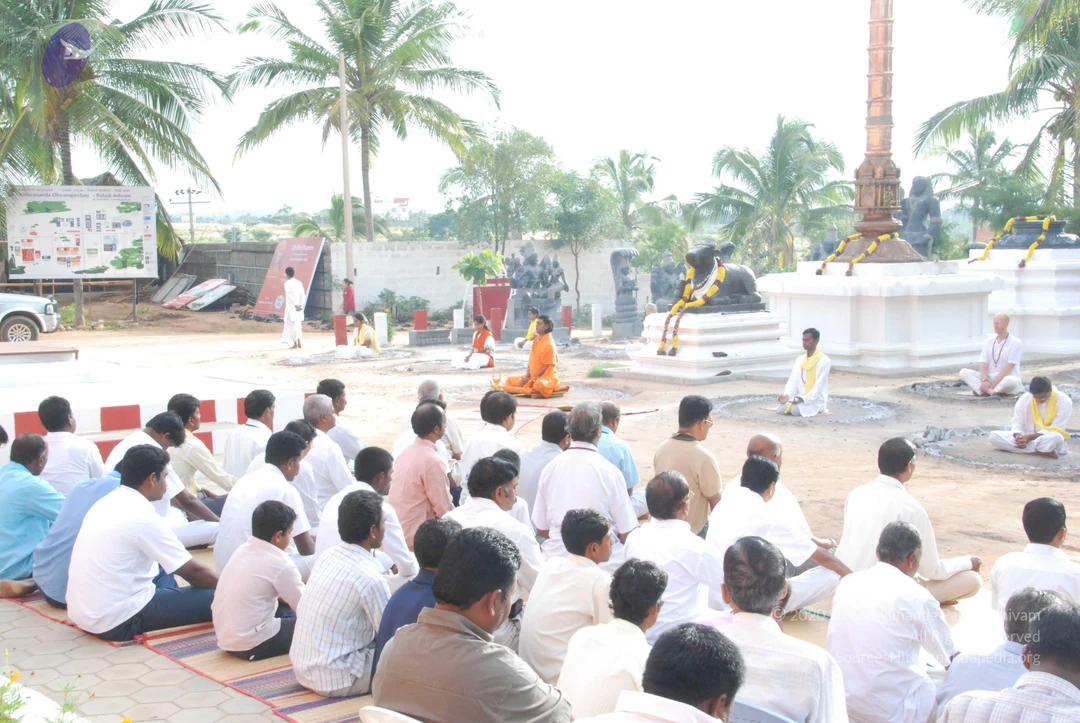
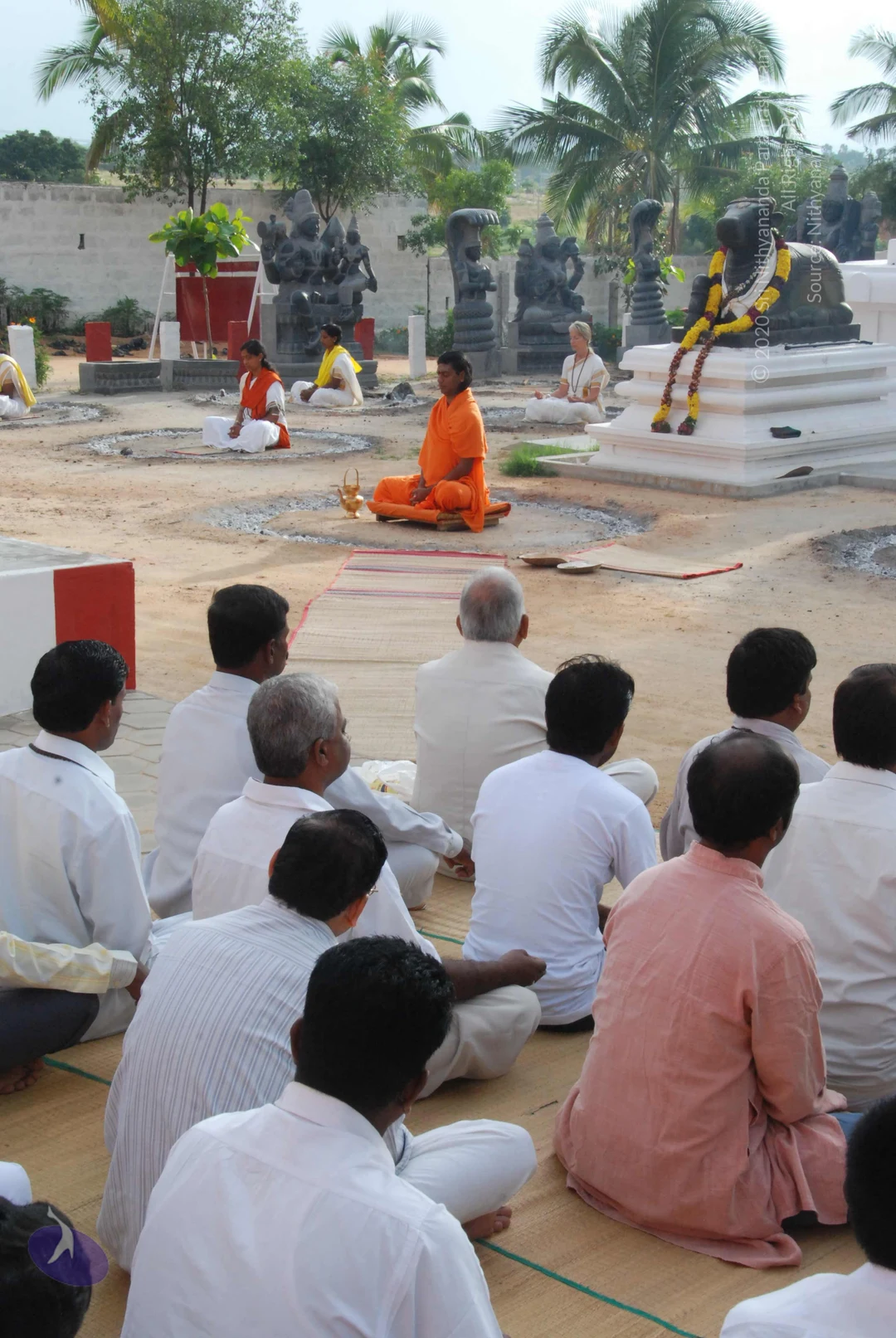
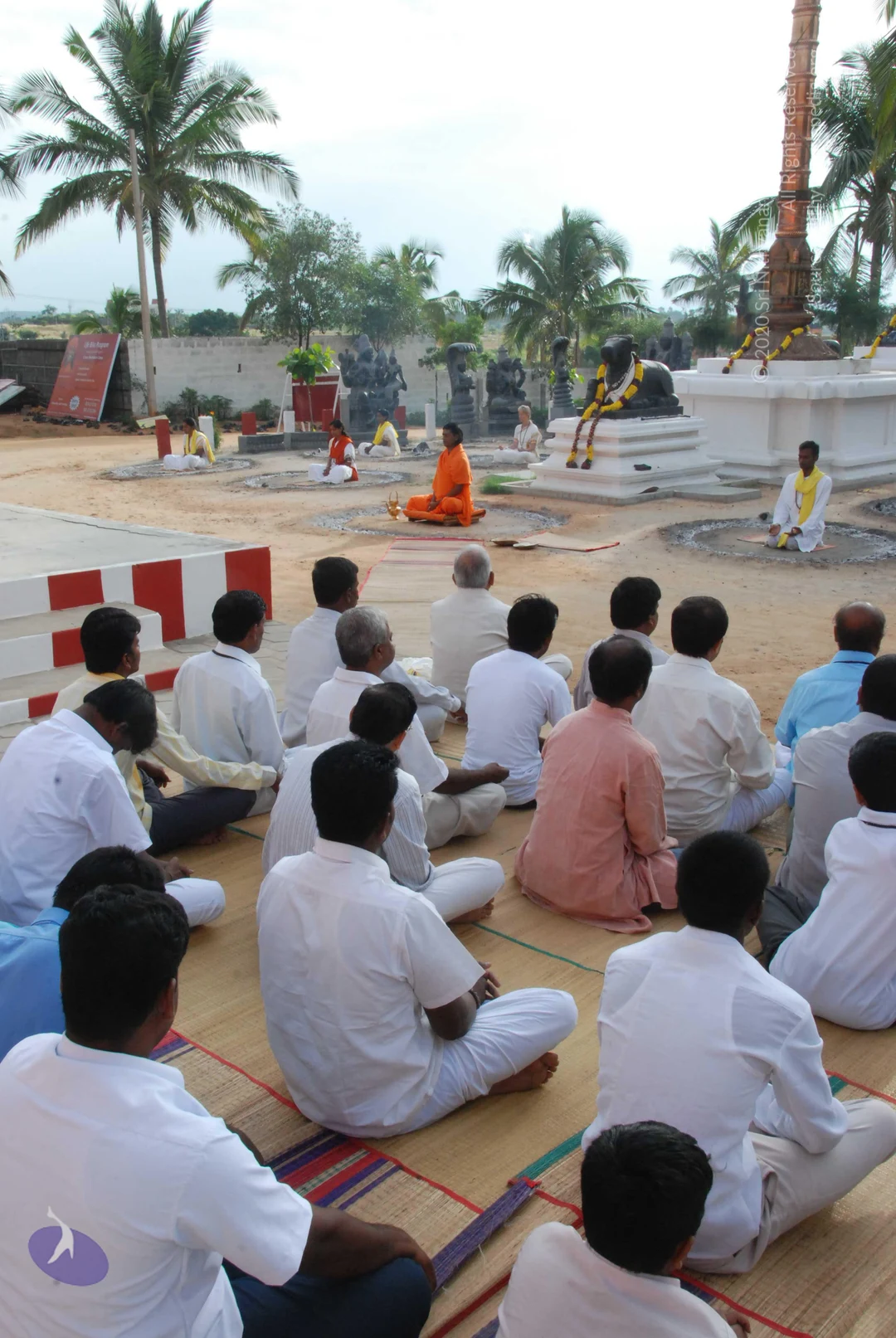
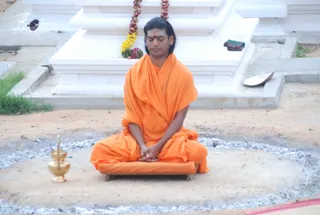
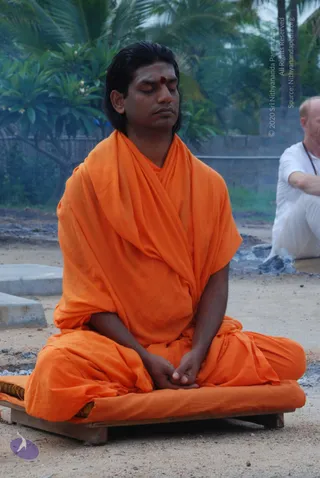
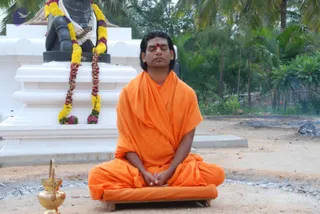
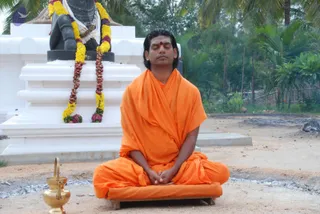
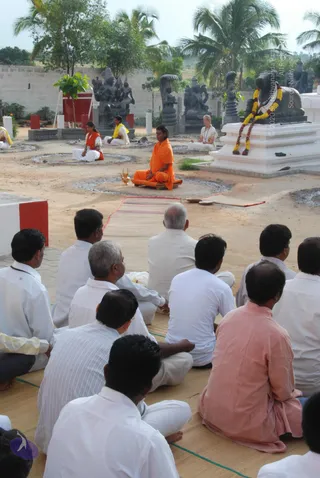
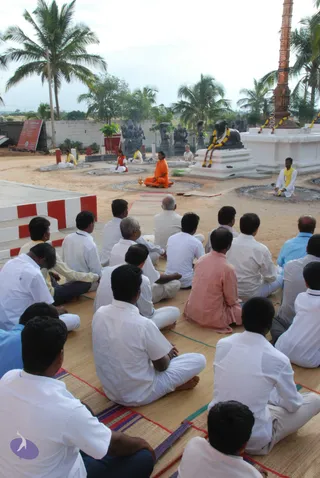
A man with long swept-back dark hair and a red tilak on his forehead sits cross-legged in meditation on an orange-cushioned low seat set on a circle of grey ash on bare ground. He wears an orange saffron wrap over his shoulders and orange cloth around his waist, with hands joined in his lap and eyes closed. Behind him a white stepped platform is draped with a garland of yellow and pink flowers. A brass kalasha-style vessel stands at left and a small folded cloth sits on the platform at right.A man sits cross-legged in meditation on a low orange cushion on bare ground, eyes closed, hands folded in his lap. He wears a flowing orange saffron garment draped over his shoulders and body, with a red bindi on his forehead and long dark hair swept back. Behind him stands a white tiered stone structure decorated with a garland of yellow and red flowers and red beads. To his left sits a small brass kalasha-style pot with a stick, and on the right lies a folded cloth and a wooden bowl. Ash-coloured gravel surrounds the seat, and grass grows at the left edge. The scene is an outdoor meditation setting.A man with long, swept-back dark hair sits cross-legged in meditation on a wooden platform with an orange cushion, eyes closed, hands resting in his lap. He wears a flowing saffron-orange robe draped over his shoulders and a small red tilak on his forehead. Behind him, a palm-lined outdoor setting with a partly visible person in white clothing sits on the ground near a patch of ash or embers.A man with long, swept-back black hair sits with eyes closed in meditation, wearing a loose orange-saffron shawl draped over both shoulders and a red bindi on his forehead. Behind him are green tropical plants, palms and a low concrete wall, with a faint haze of smoke or incense in the air. At the right edge, a partly visible person in a white shirt stands near a rope or cord. The seated man has distinctive saffron clothing and long hair consistent with the page's reference to Swamiji, so the appearance-based candidate is Swamiji (probable), shown in person in a meditative posture.A man with shoulder-length dark hair sits cross-legged on an orange cushion in meditation posture, eyes closed, hands folded in his lap, wearing saffron-orange robes draped over his shoulders and a red bindi on his forehead. Behind him stands a grey stone sculpture of a seated deity with a garland of yellow and red flowers draped over a white pedestal. A brass kalasha-style lamp with a long spout sits on the ground at left. Palm trees and tropical foliage fill the background of an outdoor sandy setting.A man with shoulder-length dark hair and a red bindi sits cross-legged on a low cushioned seat in meditation, eyes closed and hands clasped in his lap. He wears an orange saffron robe wrapped over his shoulders. Behind him a large dark stone deity murti sits on a white pedestal draped with a white cloth and a garland of yellow and magenta flowers. A brass oil lamp stands on the sandy ground at left, and palm trees surround an open outdoor setting. a person appears as the meditating figure, based on the saffron robe, long hair and bindi cues; the caption is not visible in the photo.

Yoga-Sutras-Discourse

72 photosSource gallery
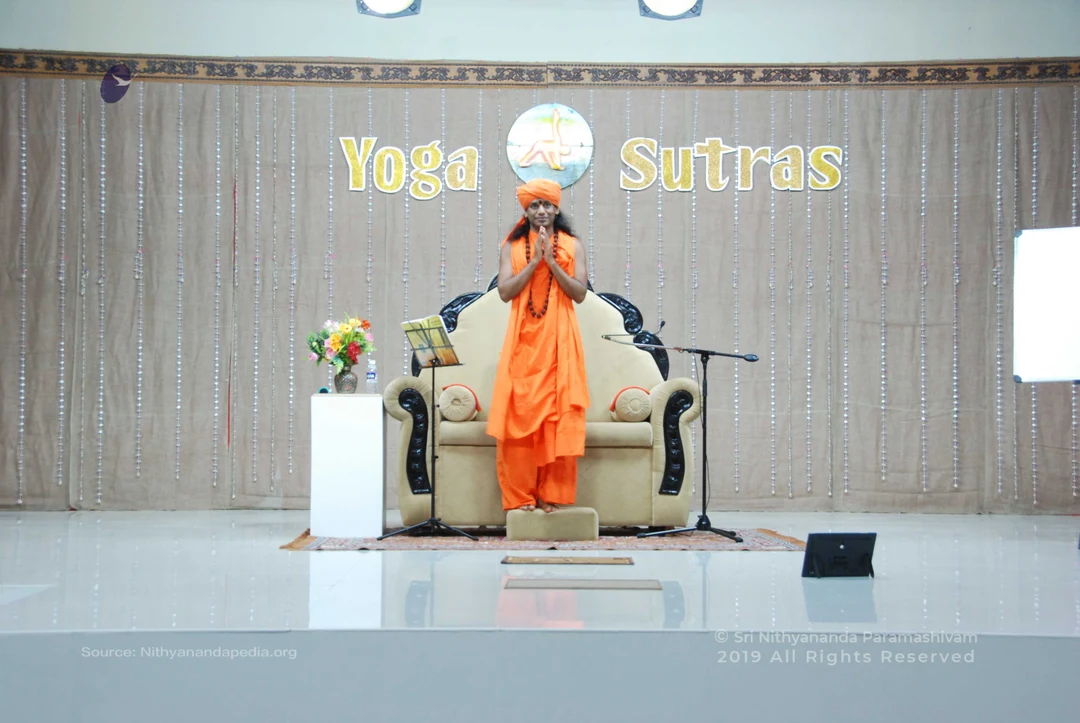
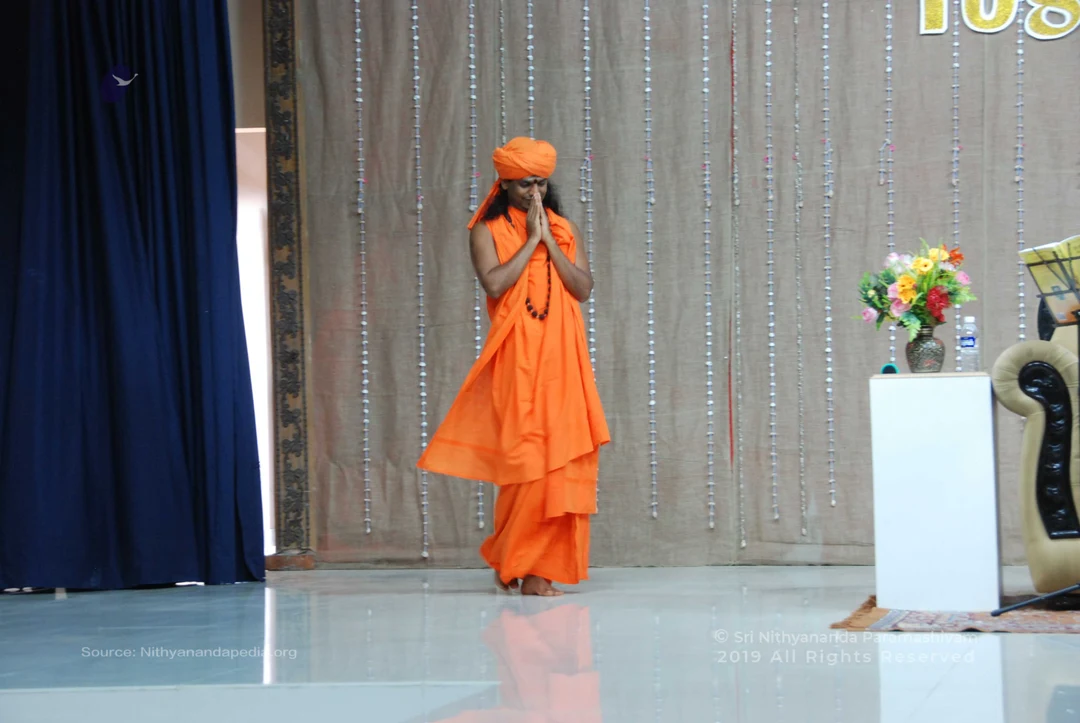
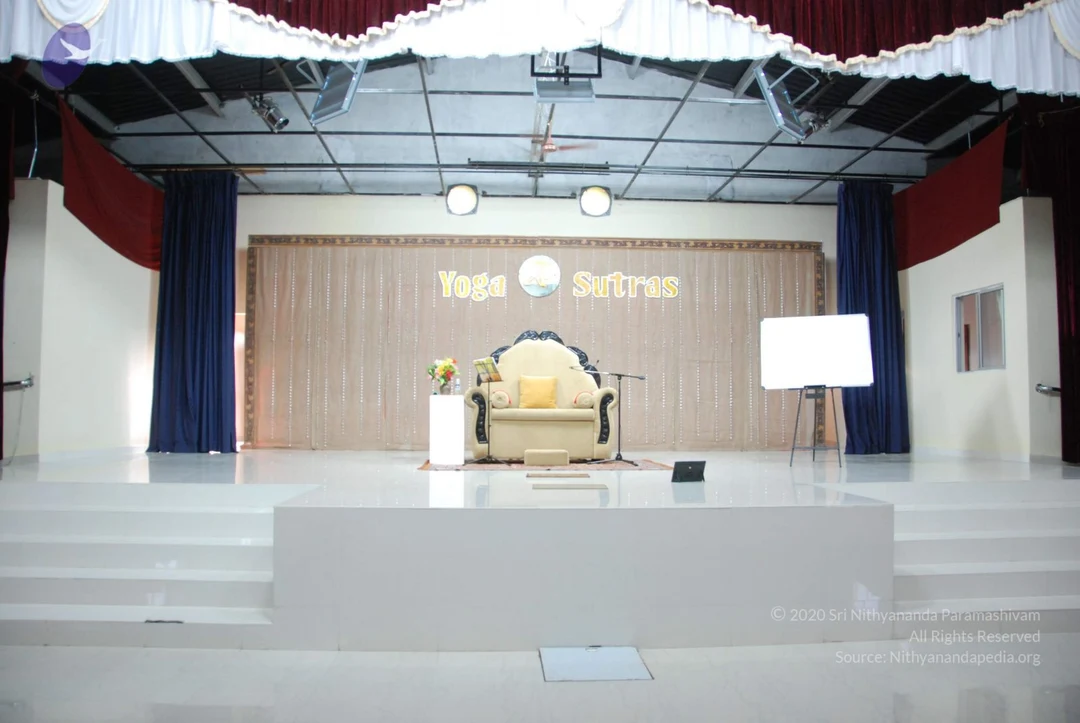
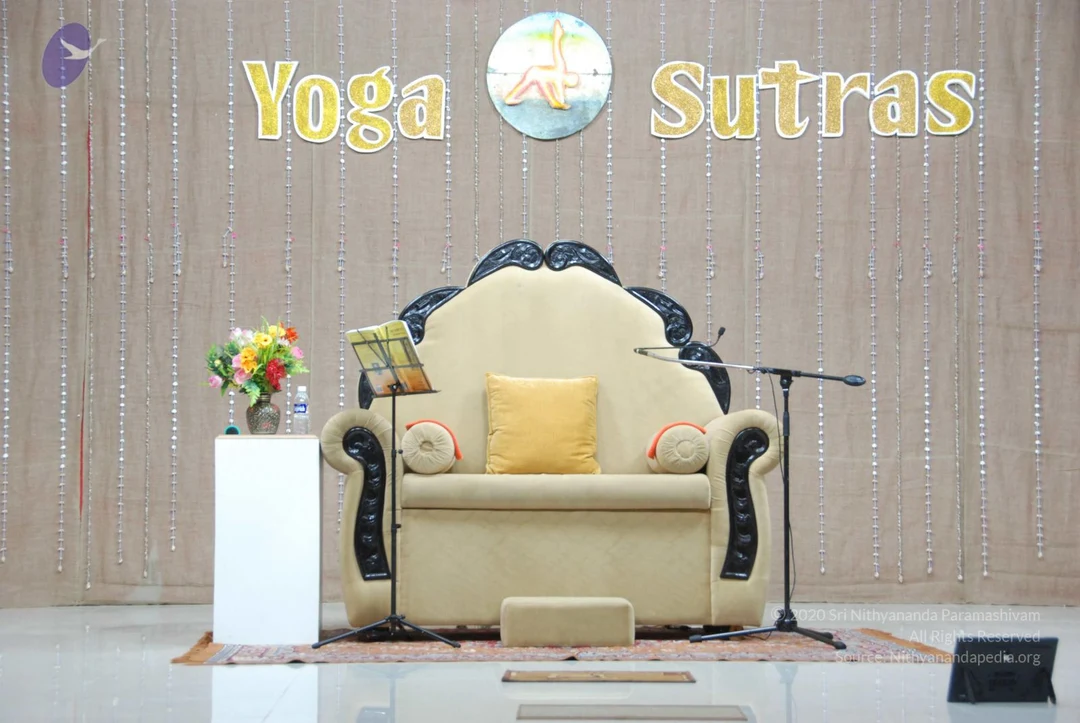
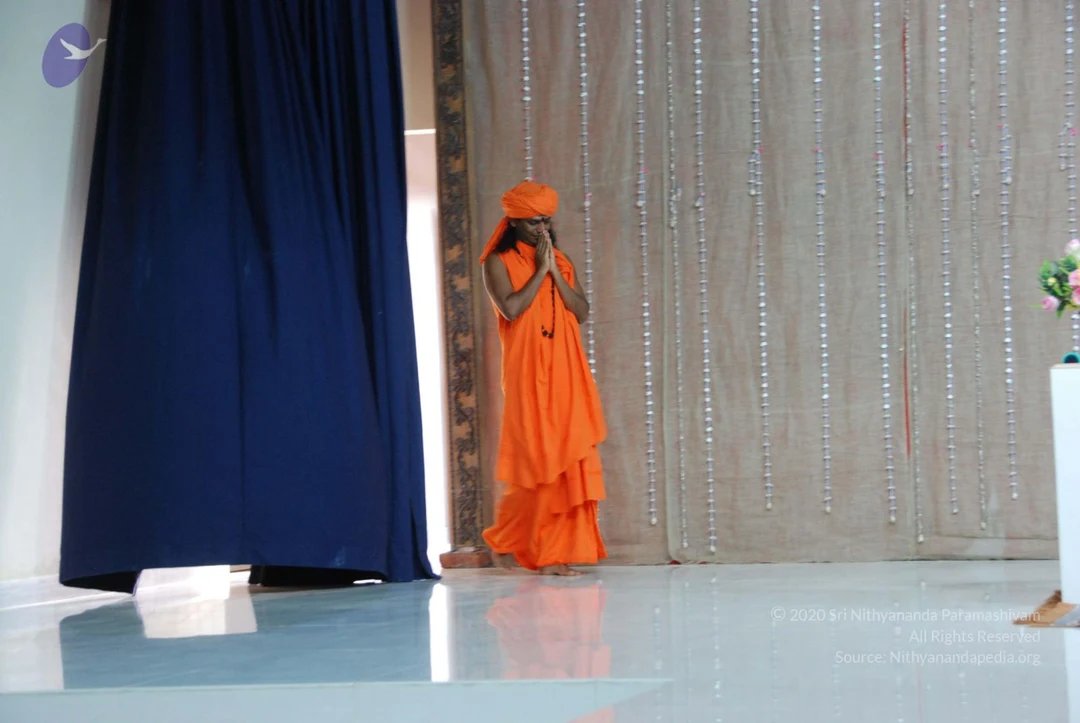
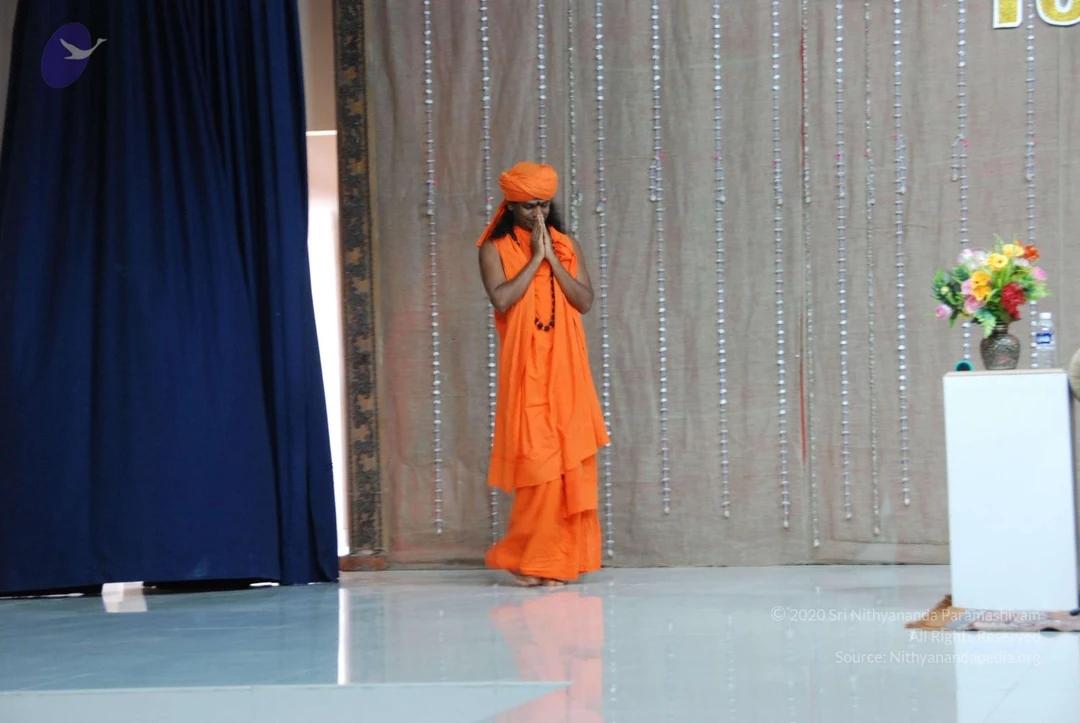
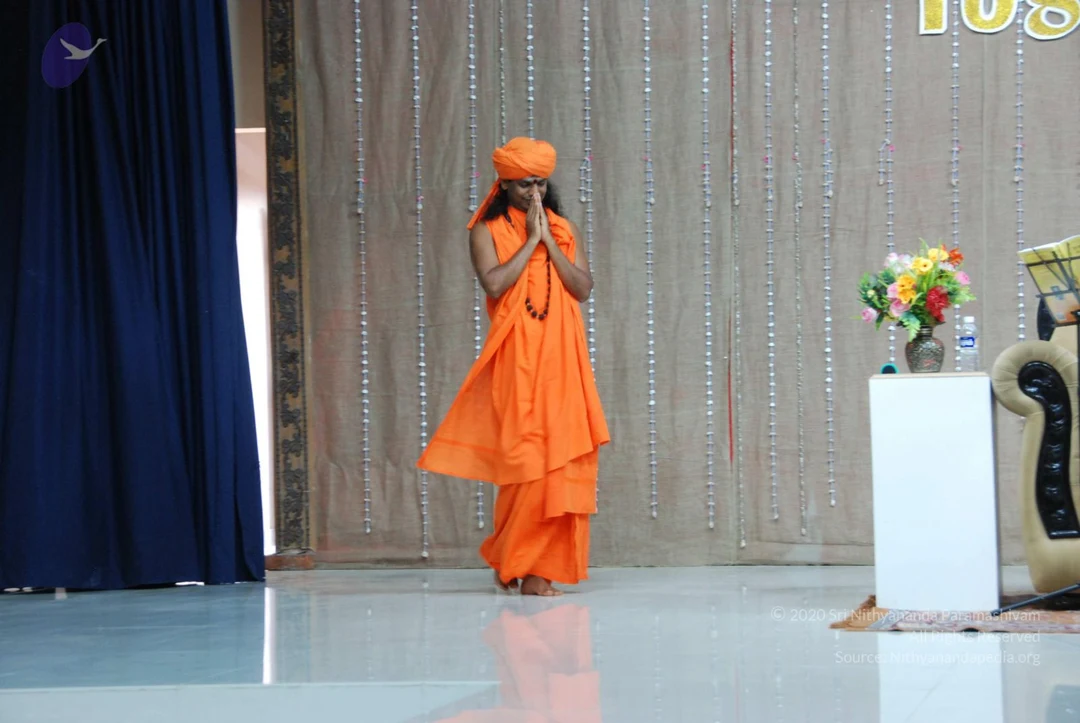
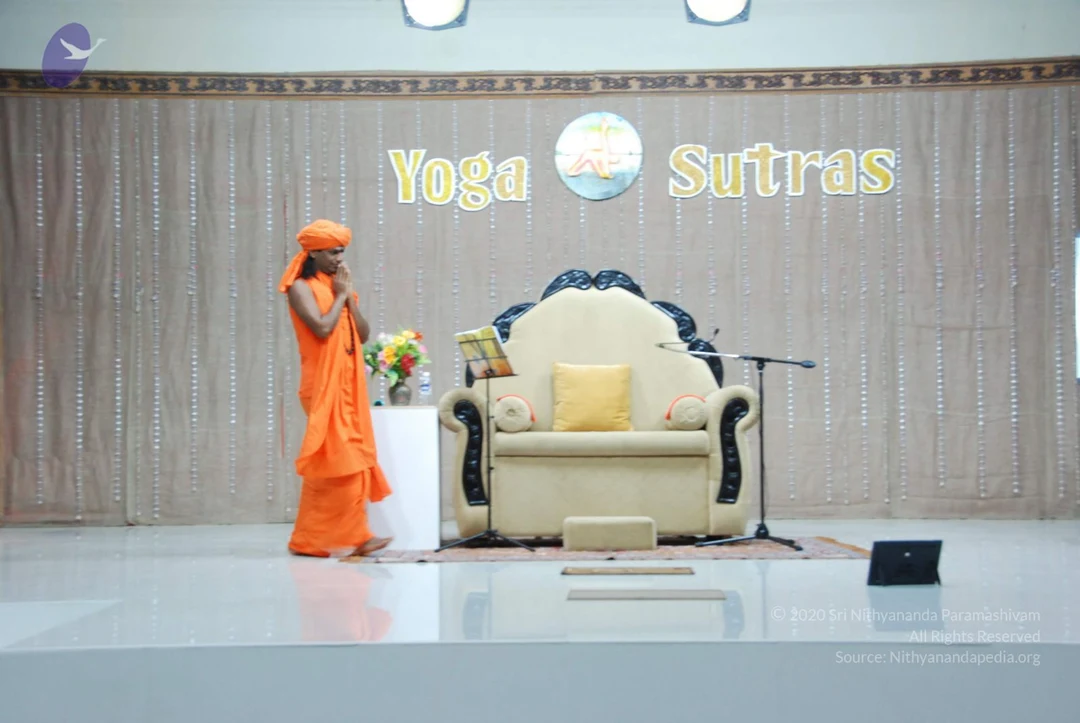
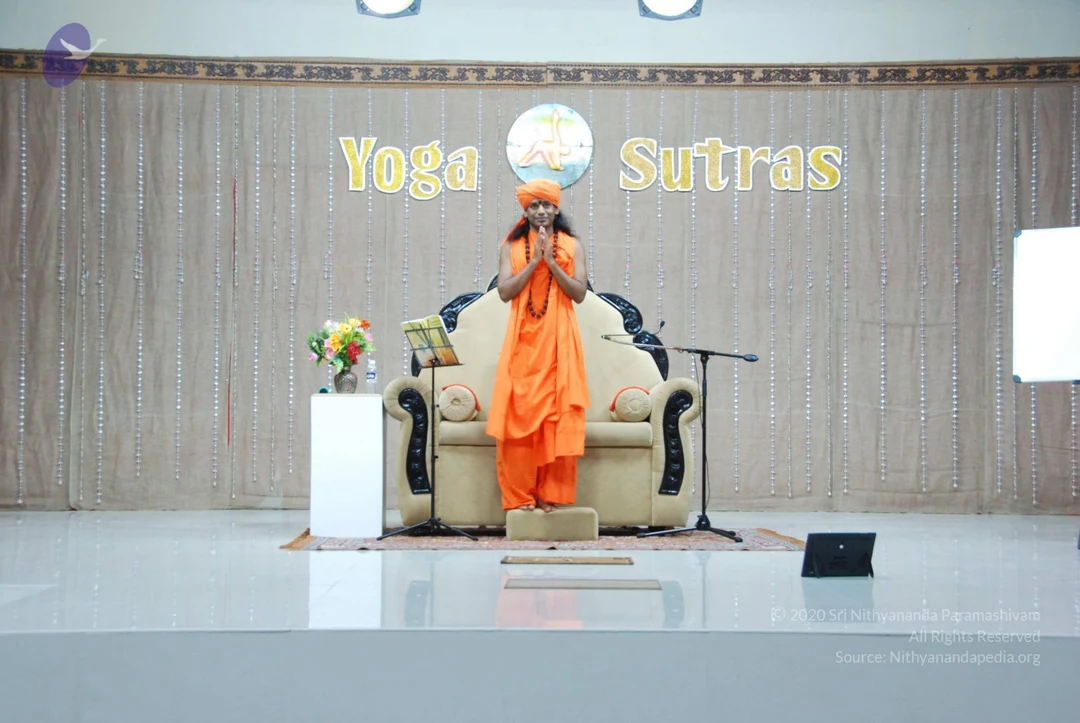
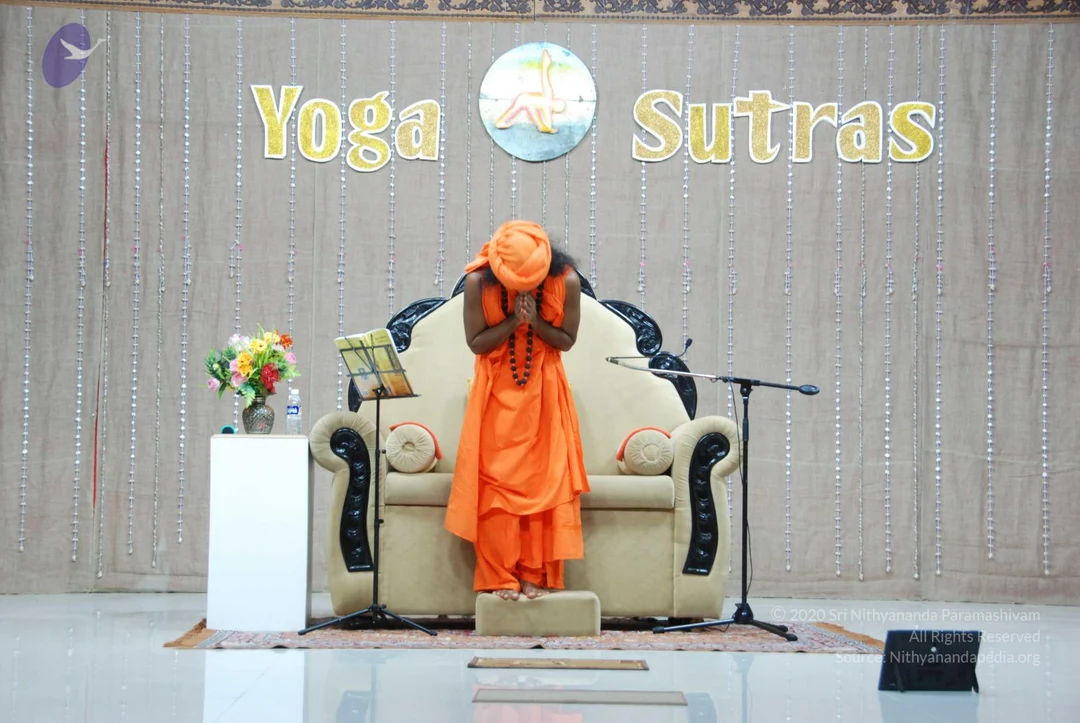
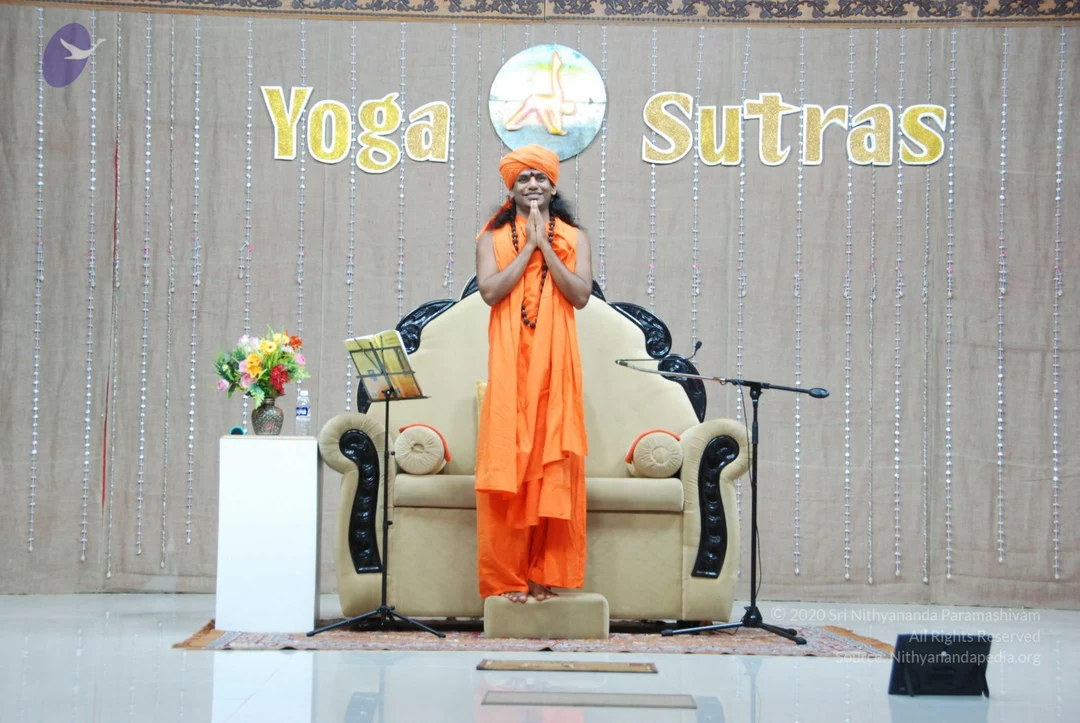
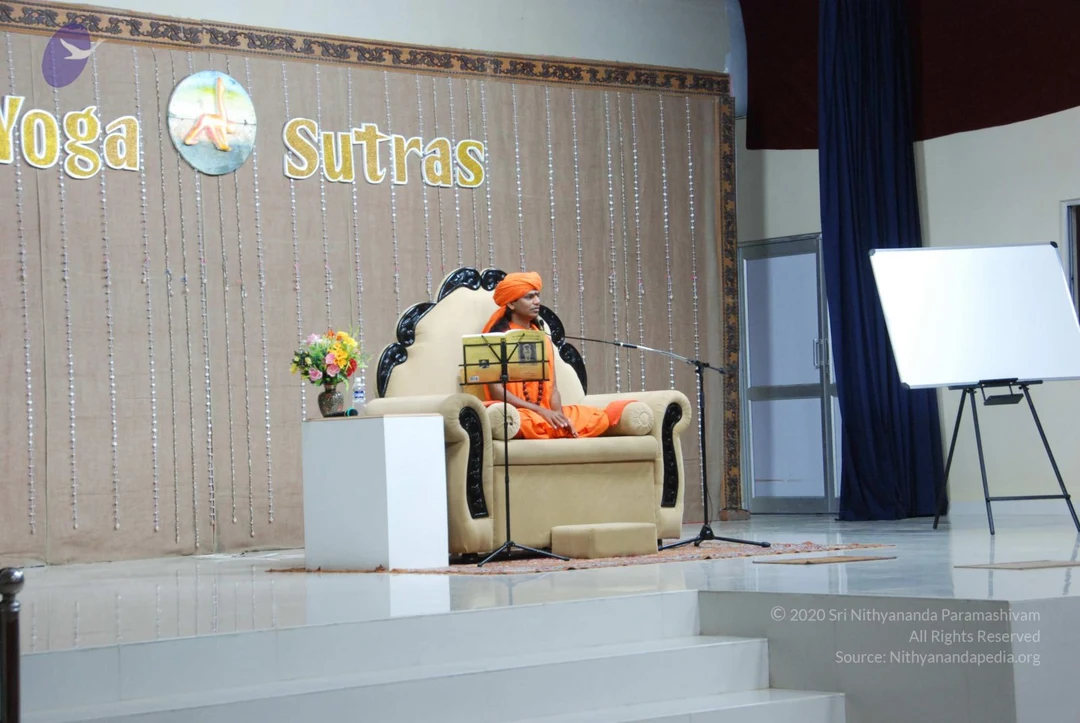
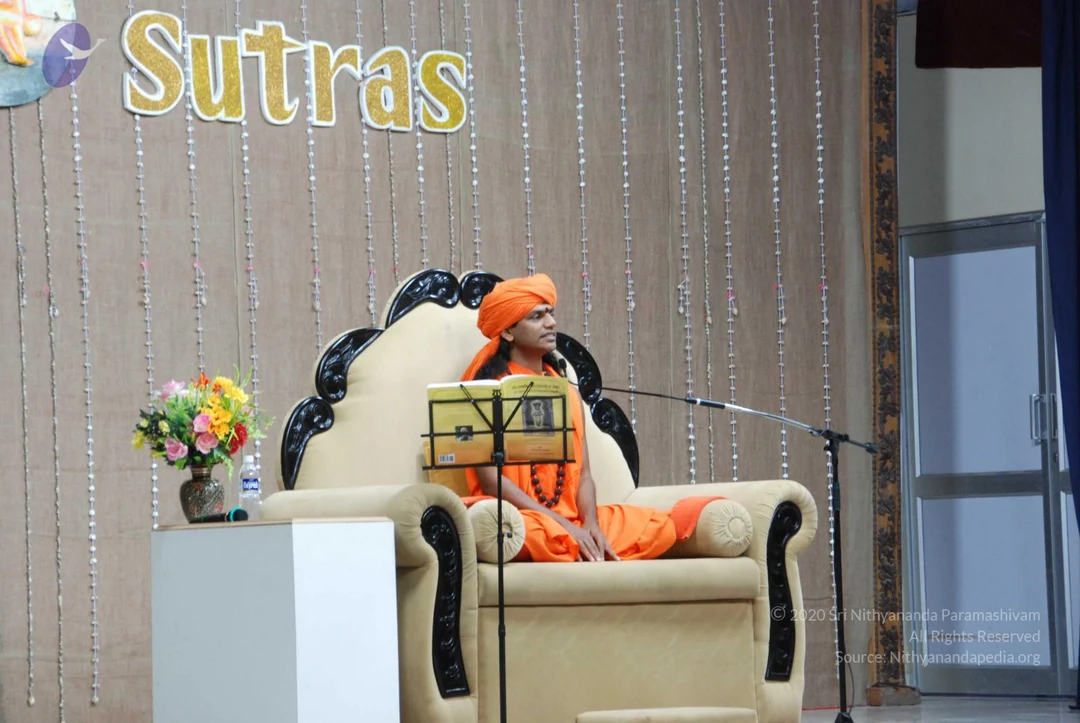
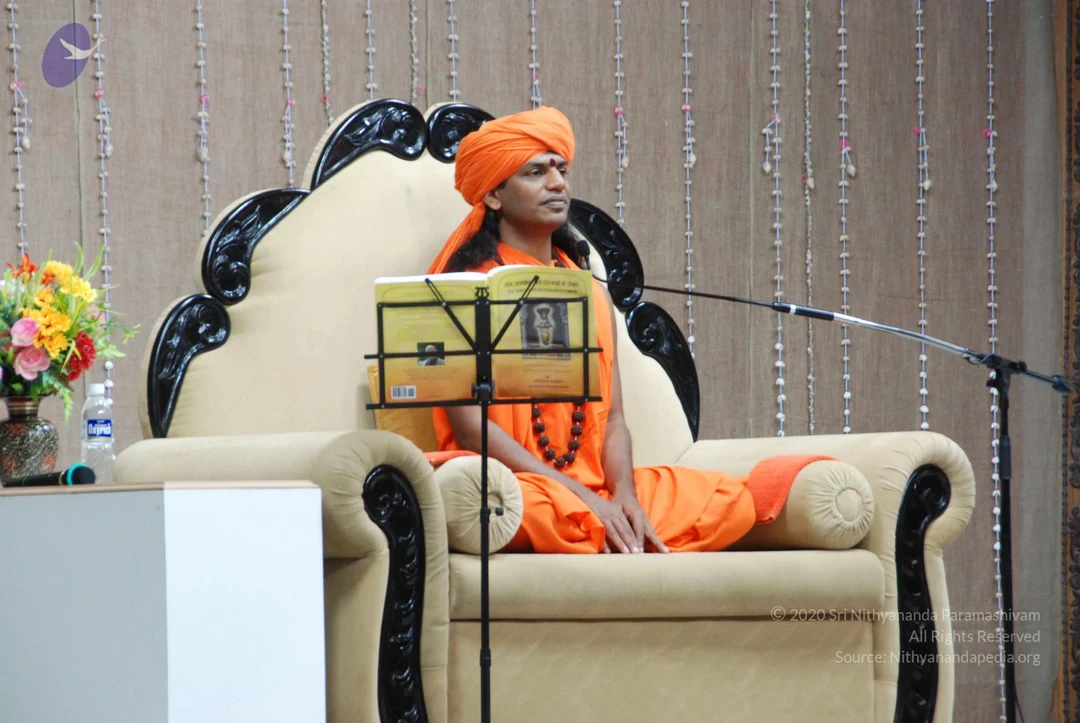
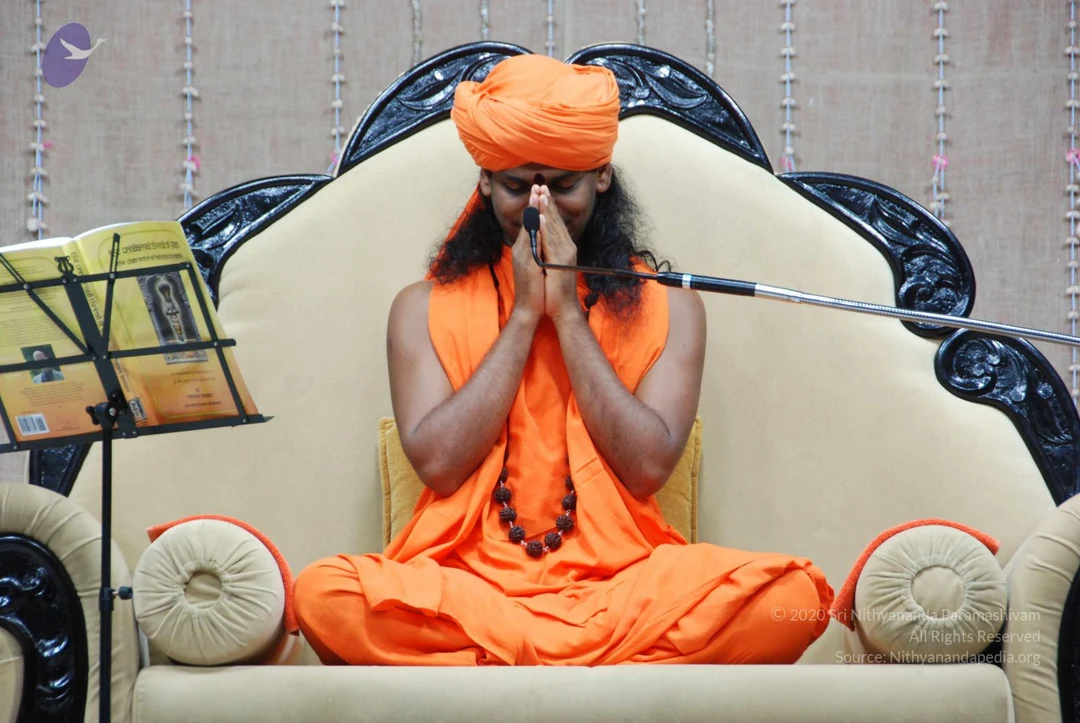
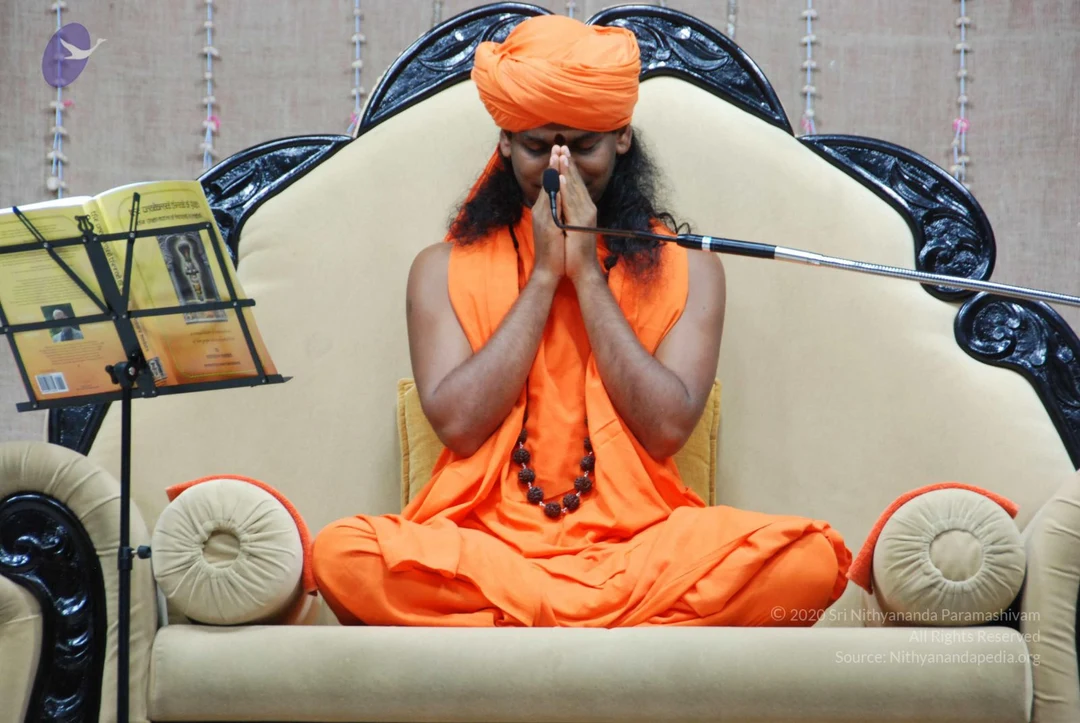
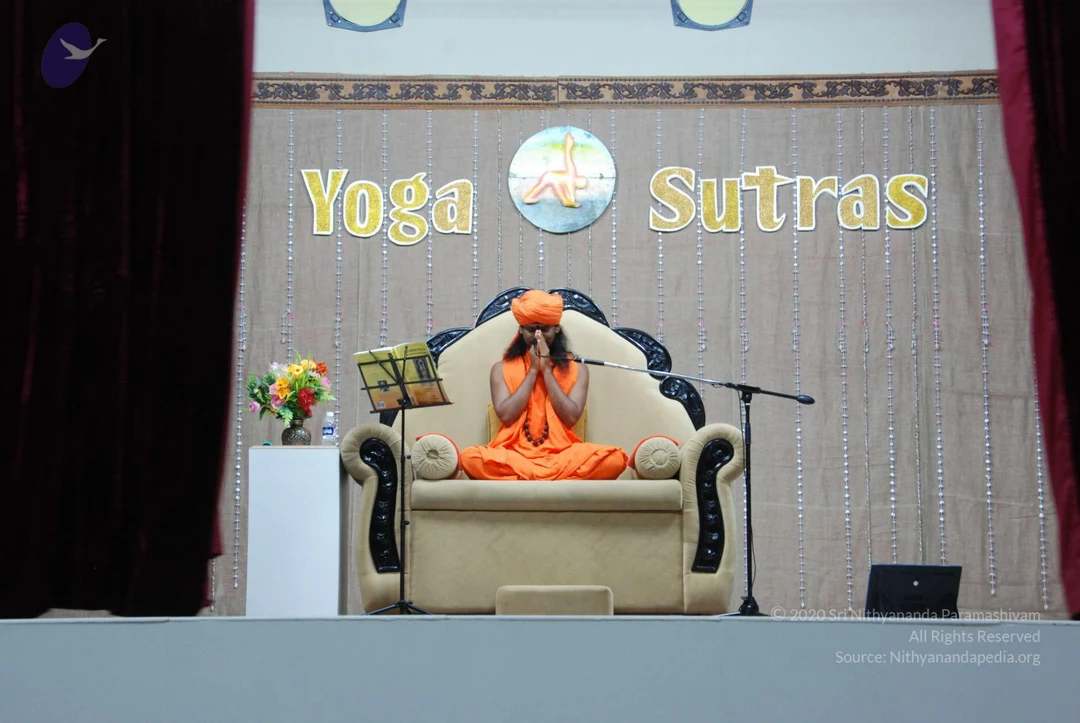
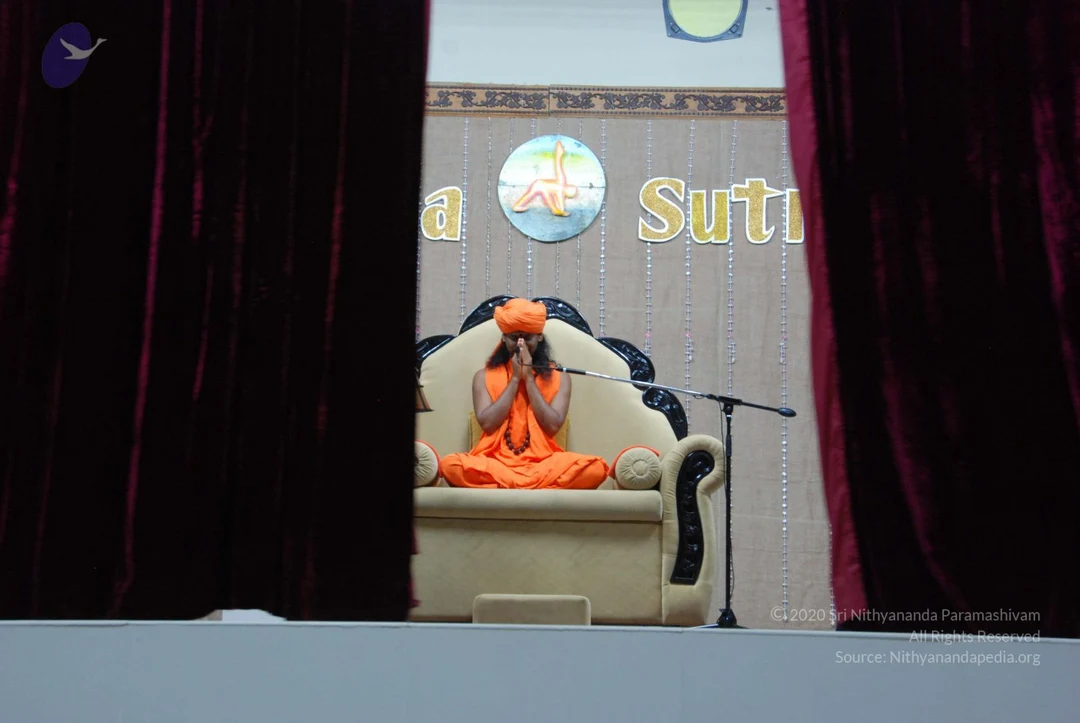
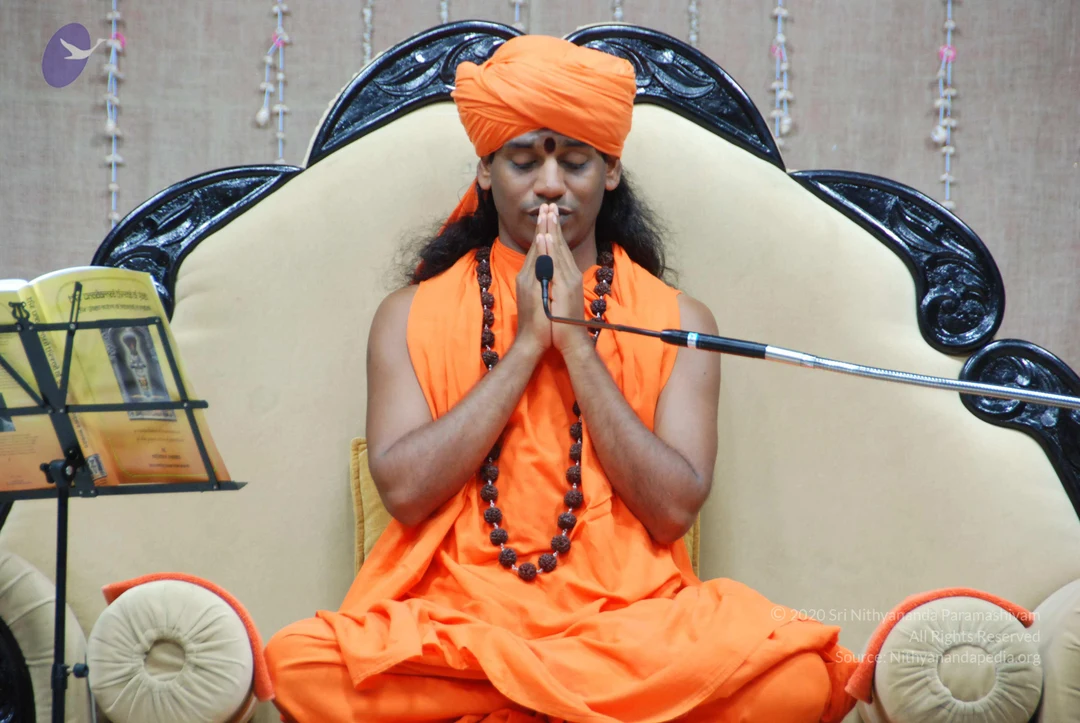
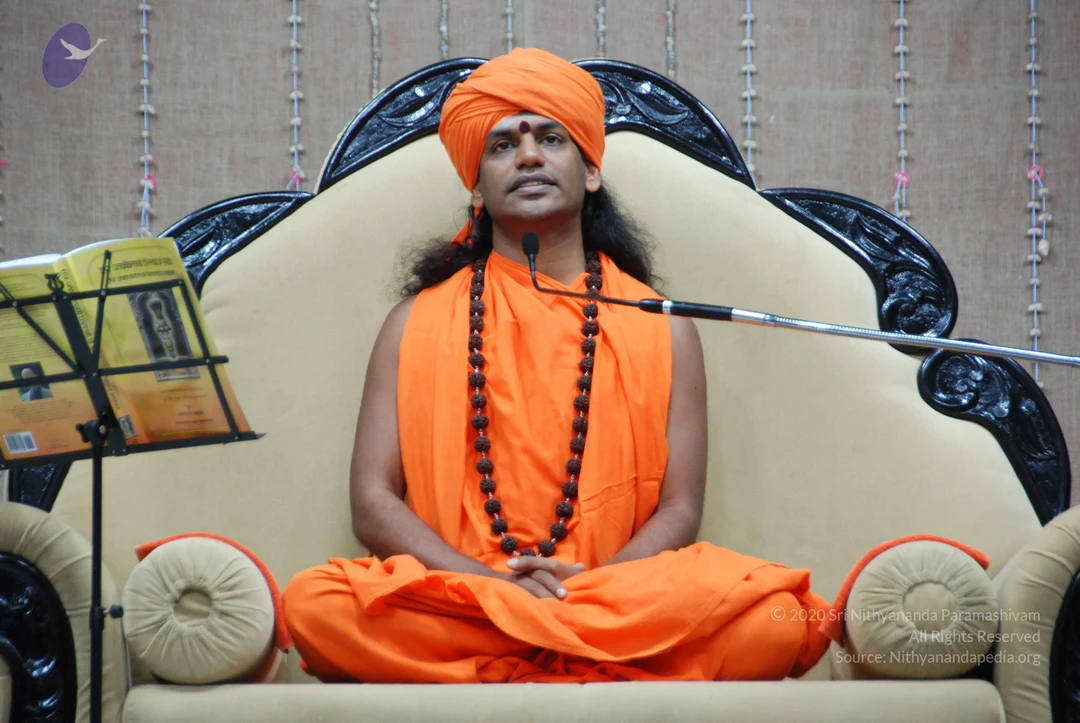
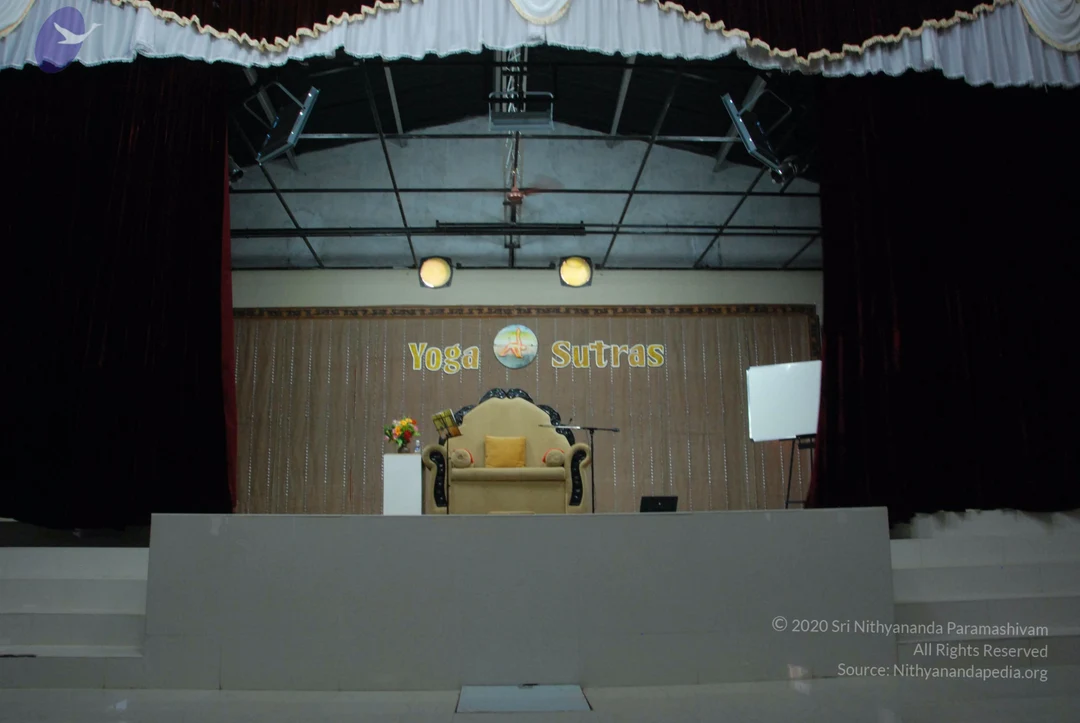
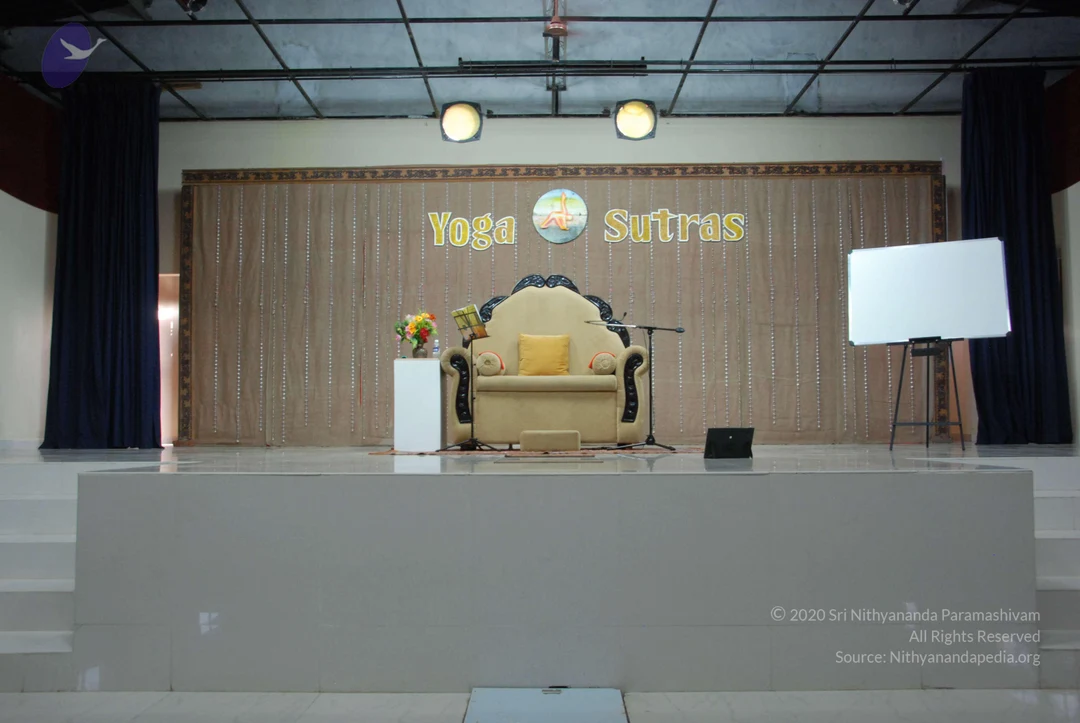
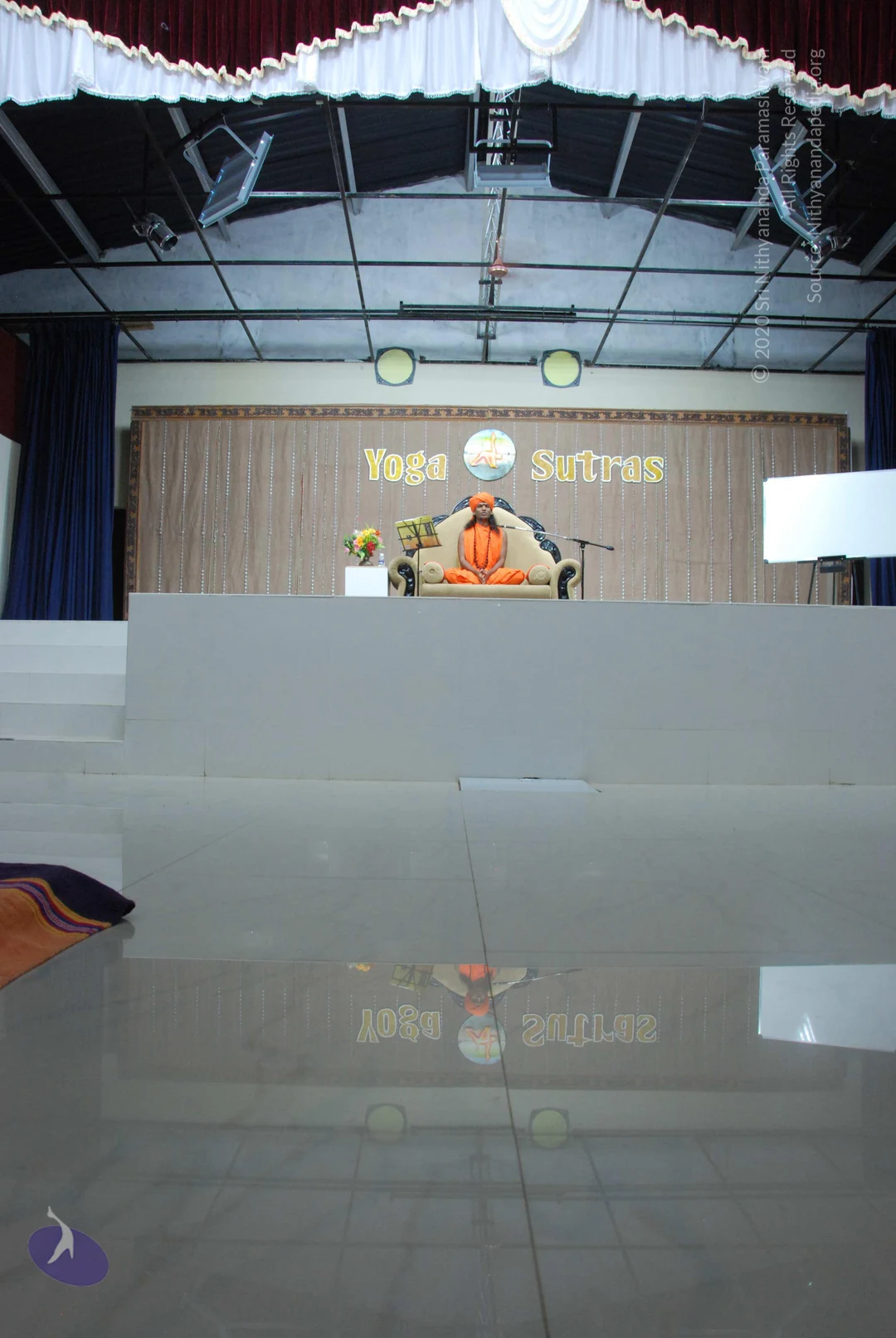
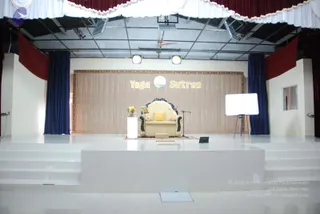
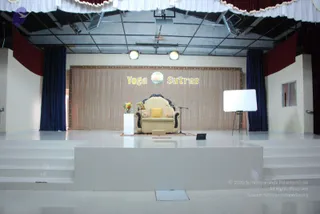
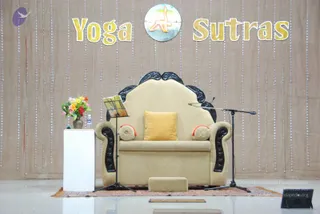
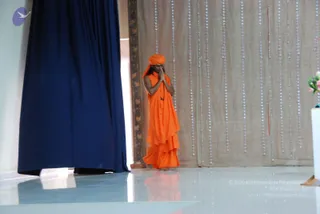
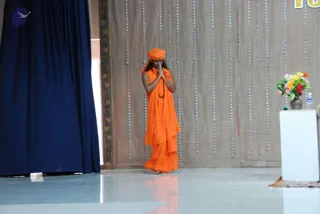
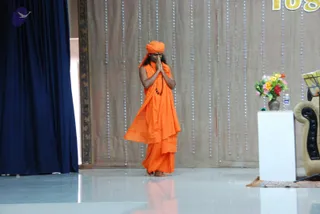
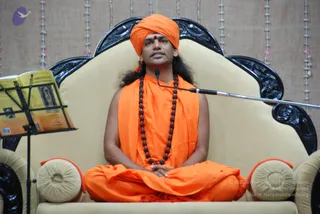
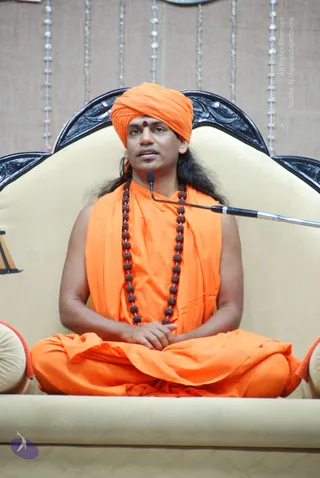
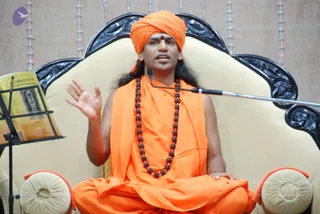
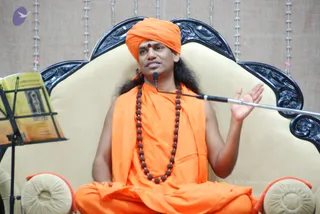
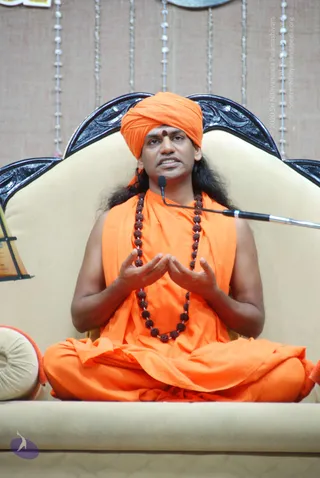
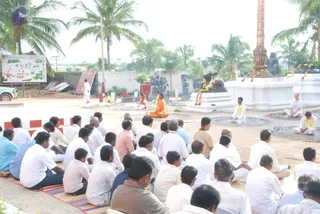
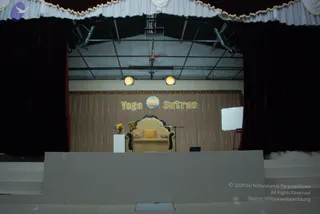
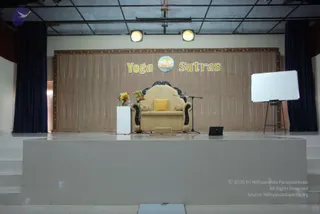
Empty stage set for a talk titled Yoga Sutras, shown as a photograph of the hall with no people present. A cream upholstered armchair with a yellow cushion and ornate dark carved back sits centrally on a small white-carpeted platform. A lit banner reading Yoga Sutras with a round emblem hangs on a beaded gold-trimmed backdrop. Beside the chair are a white pedestal holding a flower arrangement and a microphone stand, a blank white projection screen on an easel to the right, and a dark laptop on the stage floor. Navy and maroon drapes frame the stage, and white steps lead down to the hall floor.An empty stage set for a talk titled Yoga Sutras, with a backdrop of beaded beige curtains and gold lettering reading Yoga Sutras above a circular emblem. A cream upholstered armchair with a yellow cushion sits on a raised white platform, flanked by a small white pedestal with a flower arrangement and books, a microphone stand, and a white flipchart easel on the right. Blue and maroon drapes frame the stage and stage lights hang overhead. No people are visible in the scene.Empty stage set for a Yoga Sutras talk. A beige upholstered armchair with a carved black wooden frame and a yellow cushion sits centrally on a rug, with two round orange-trimmed bolsters and a small footstool in front. A music stand holds an open book beside a microphone stand. A white pedestal holds a vase of colourful flowers and a water bottle. The backdrop is beige fabric hung with beaded strands, under golden letters reading Yoga and Sutras flanking a circular emblem with a lotus-like figure. No people are visible.A photograph of a single person standing barefoot on a pale reflective stage floor, palms pressed together in namaskar before a beaded curtain of strung white beads and a dark blue drape at left. The person wears an orange-saffron turban, a long orange robe with layered skirt and a dark rudraksha-style mala at the chest. A small floral arrangement with pink flowers sits at the right edge.A single person stands barefoot on a glossy pale stage in a prayer pose, palms pressed together at the chest. The figure wears an orange-saffron turban, a long orange robe with a draped wrap, and a rudraksha mala around the neck. Behind is a beige fabric backdrop hung with vertical beaded strands, a dark blue curtain stands at left, and a vase of colourful flowers sits on a white pedestal at right. The scene suggests a satsang or discourse presentation.A barefoot figure in saffron-orange robes and an orange turban stands on a glossy white stage with hands pressed together in anjali mudra, head bowed. A rudraksha mala hangs at the chest. Behind is a beaded curtain backdrop with a dark blue drape at left, a vase of flowers and a small white lectern at right, and a cushioned chair at the edge. Swamiji (probable): a figure with long dark hair and distinctive saffron clothing and rudraksha beads, presenting a welcome gesture on stage.

Acharya-Kalpataru-Class

8 photosSource gallery
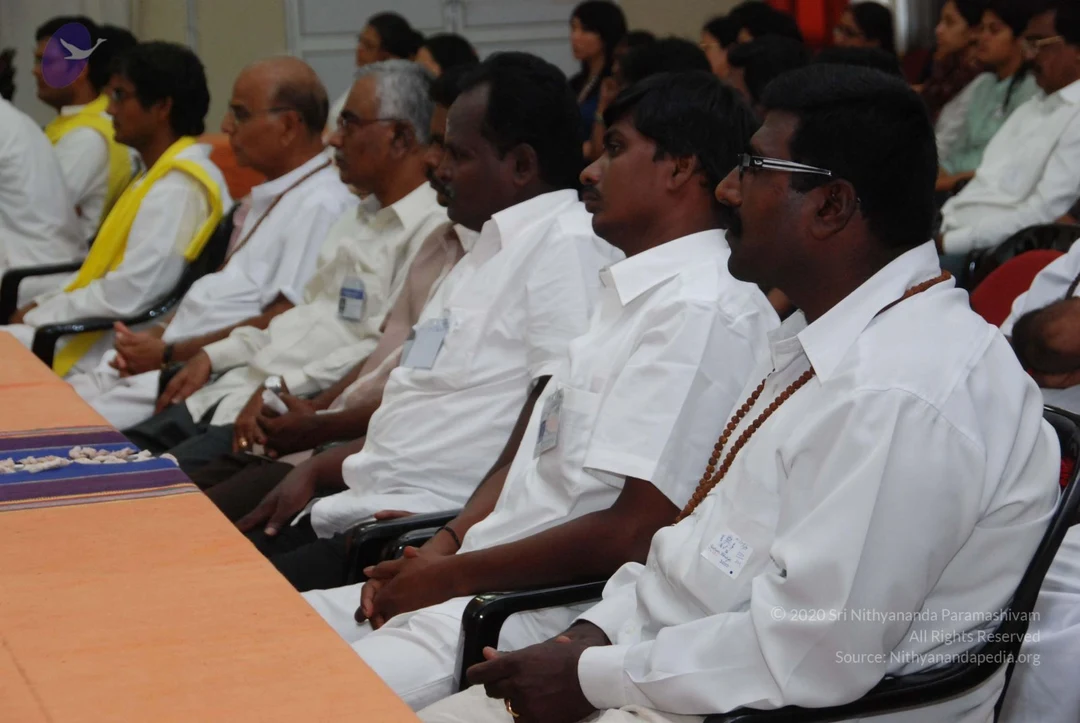
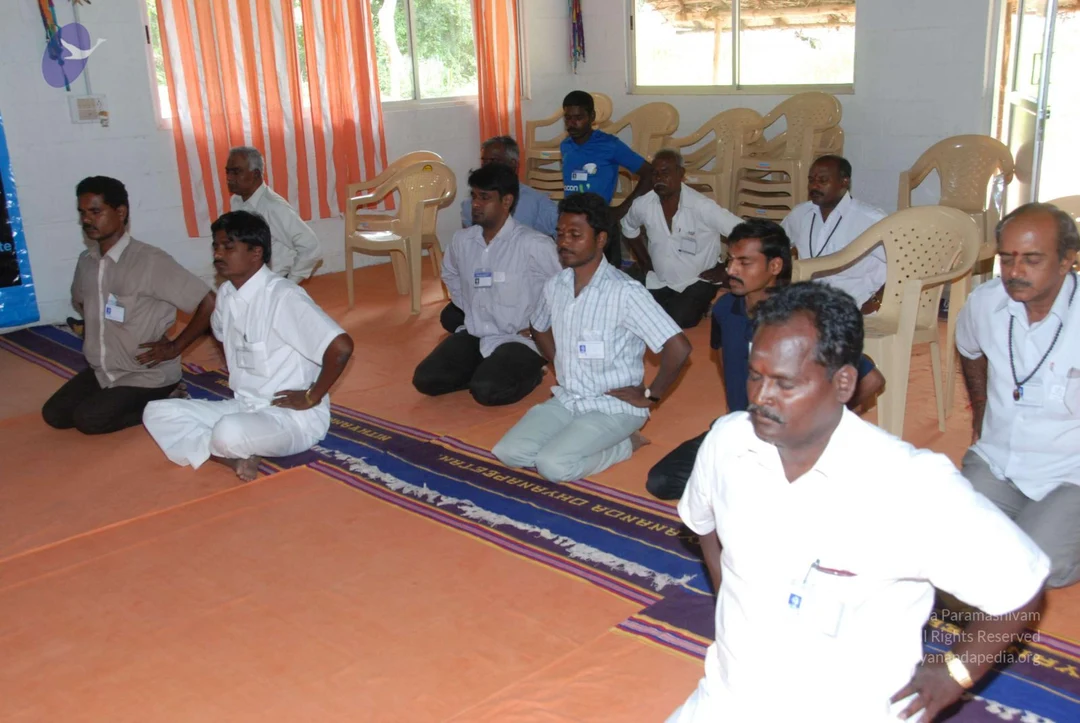
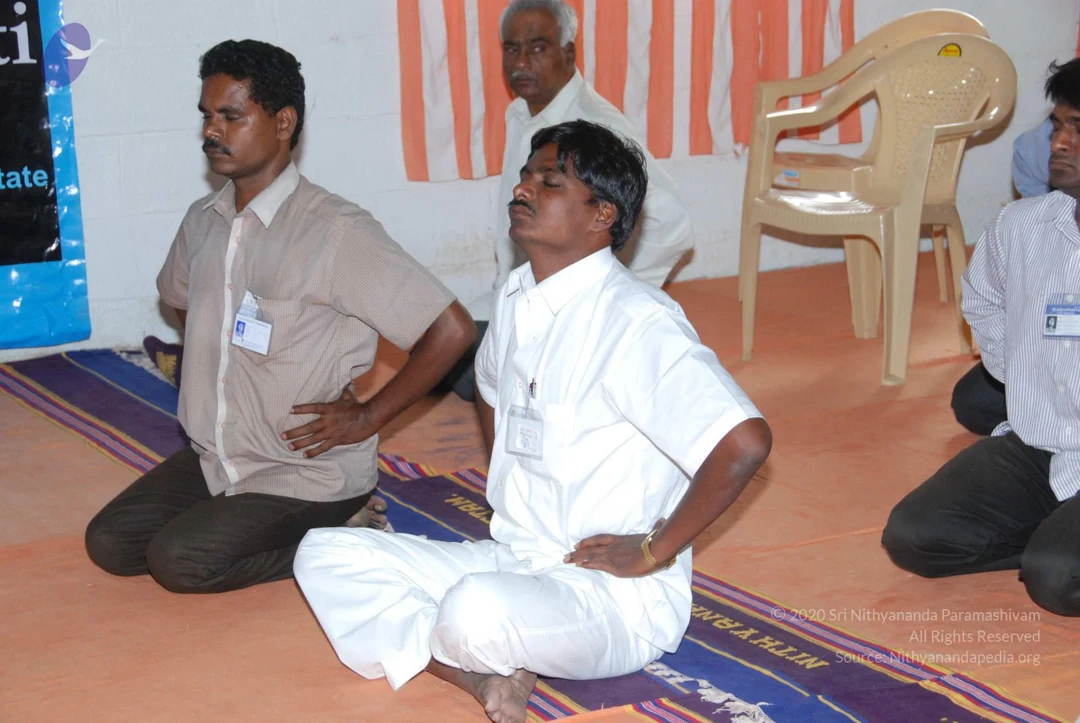
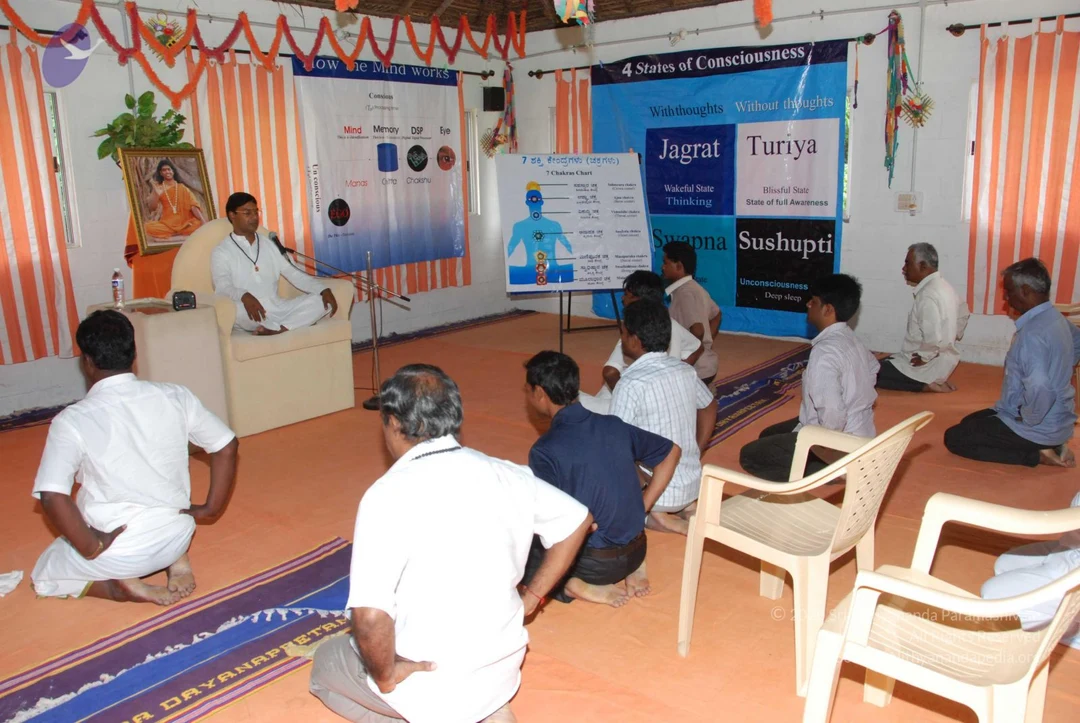
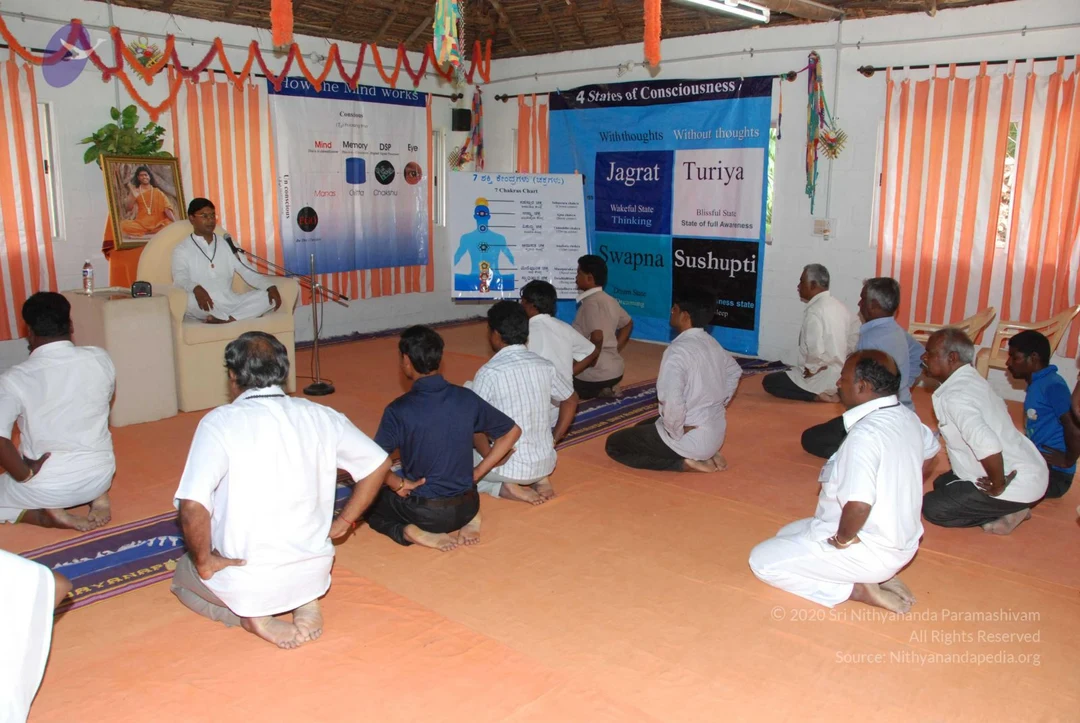
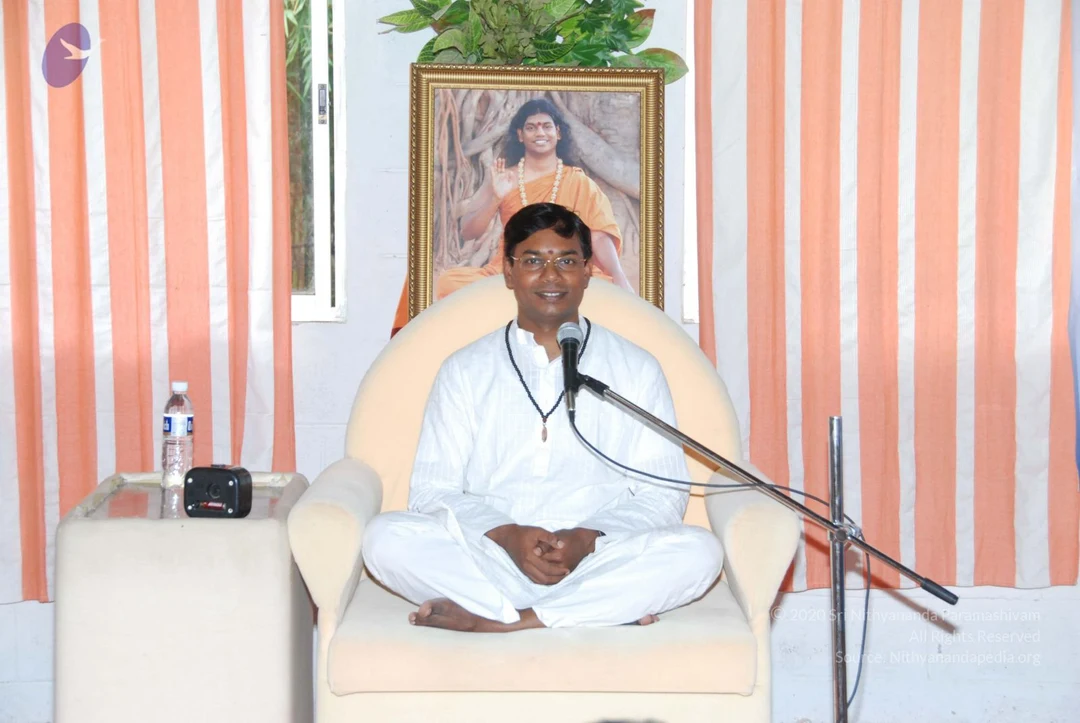
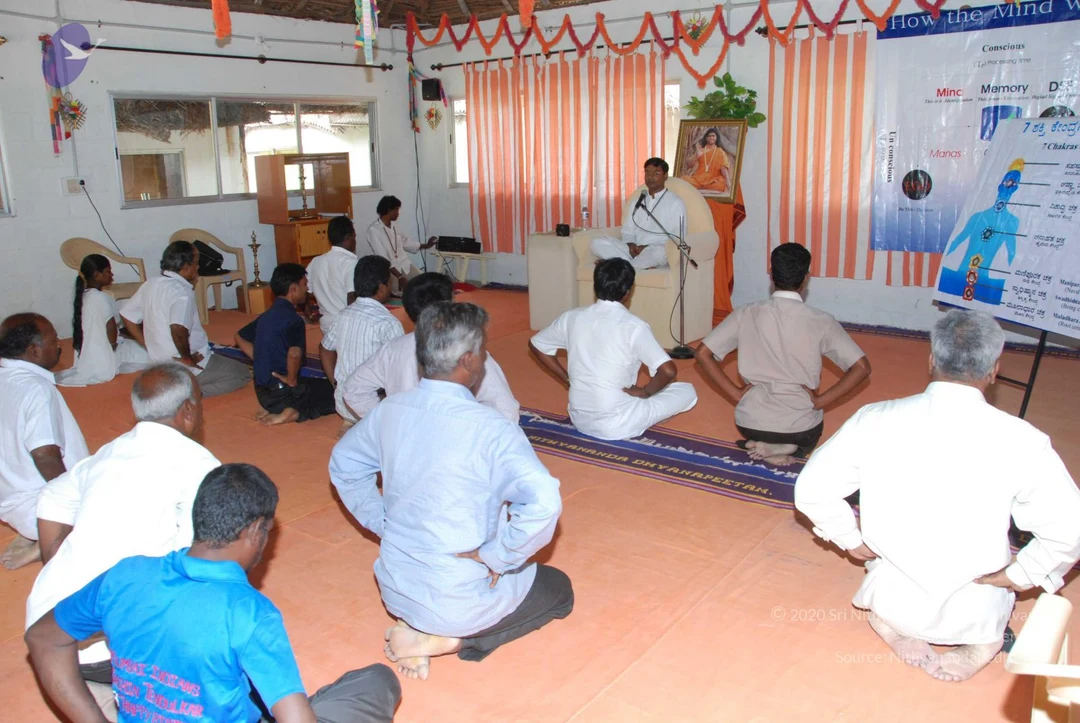
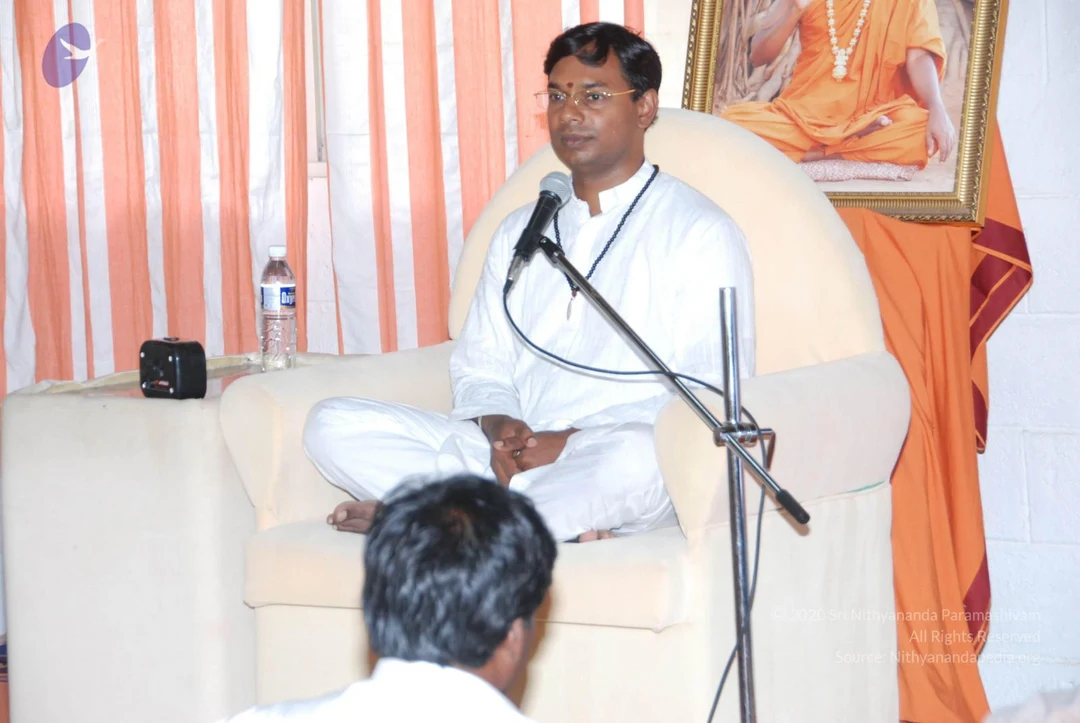
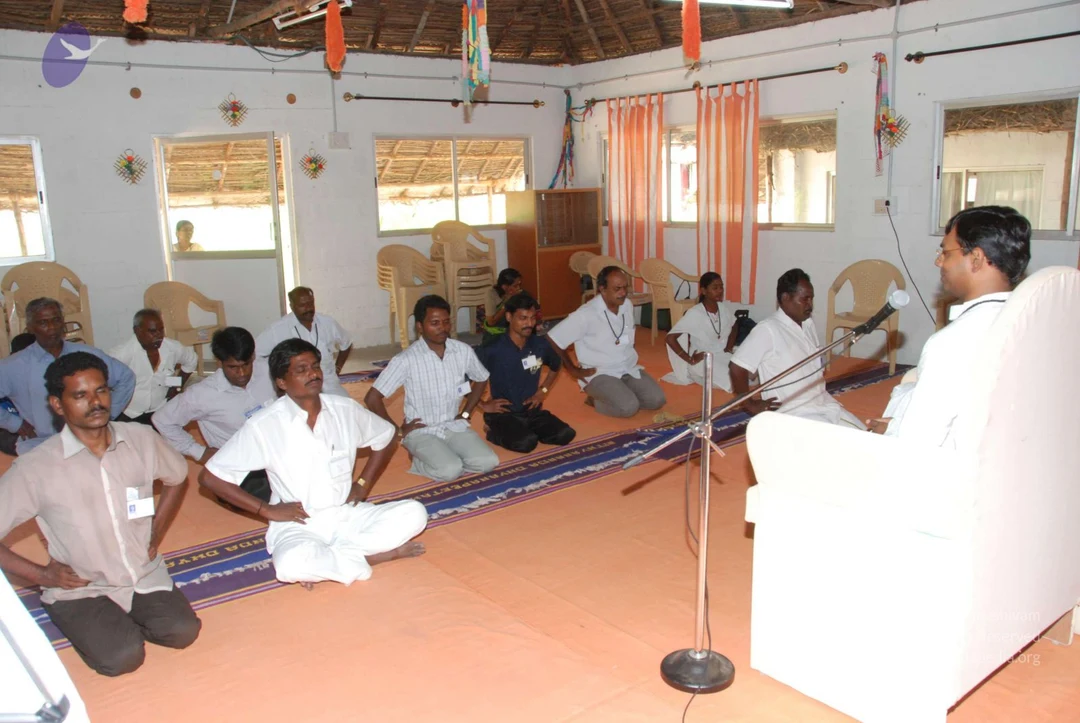
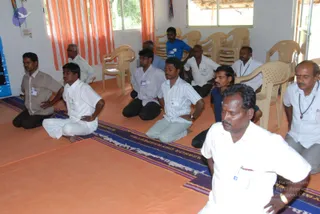
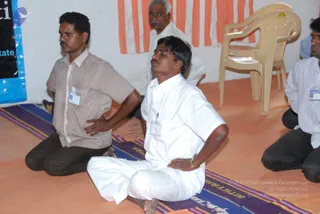
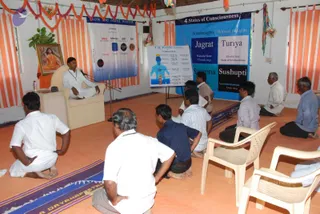
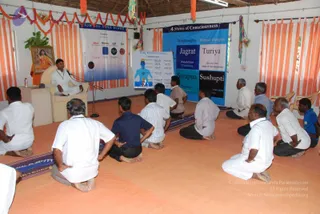
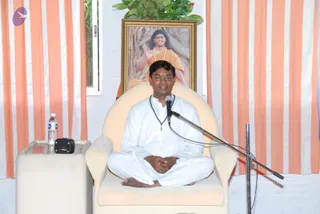
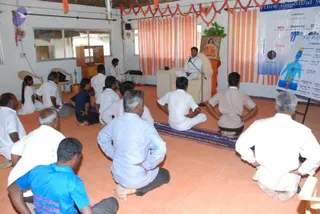
A group of men sit on the floor of a plain room with orange floor tiles, practising yoga or meditation in rows on a striped blue, purple and orange mat. Most wear white or light shirts and dhotis or trousers, and several have identity badges clipped to their shirts. The foreground man in a white shirt sits with a hand on his hip. Behind them, a man in a blue polo shirt stands near rows of beige plastic chairs. Orange and white striped curtains hang at the windows, and a blue banner stands at the left edge.Several men sit on the floor on a purple and blue striped mat during a yoga or meditation session. In the foreground, a man in a white shirt and white trousers sits cross-legged, leaning sideways with one hand on his hip, eyes closed. Beside him, a man in a beige shirt with a name badge kneels with a hand on his hip. A man in white stands or sits in the background before an orange and white striped banner, with plastic chairs at right and a blue and black banner at left. Floor-based yoga practice in an ashram-style hall.A photograph of a satsang talk in a room decorated with orange and white striped drapes and orange marigold garlands. A man in white clothes and a rudraksha mala sits on a cream armchair before a microphone, seemingly teaching. Around him, about eight men sit on the floor on mats, some in white dhotis and shirts, others in dark or light shirts. A framed portrait of a saffron-robed sannyasi with long hair stands on a stand to the left. Behind them hang a blue chart titled 'How the Mind Works' and a blue banner titled '4 States of Consciousness' listing Jagrat, Turiya, Swapna and Sushupti, with a 7 Chakras chart on an easel in front. Potted plant and water bottle at the side.A photograph of a satsang discourse in an orange-and-white hall with striped orange curtains and a thatched ceiling. A man in white clothes with a white cloth over his shoulder sits on a cream cushioned chair behind a microphone stand, speaking to the room; a framed portrait of a saffron-robed figure sits on an easel to his left. Around 15 men in white dhotis and shirts, some in dark or checked shirts, sit cross-legged on orange floor mats and face him. Behind them stand blue posters reading 4 States of Consciousness (Jagrat, Turiya, Swapna, Sushupti) and a diagram of the 7 Chakras, with a poster titled How the Mind Works beside them. Orange and green garlands hang from the ceiling.A man sits cross-legged on a cream upholstered armchair in front of an orange and white striped backdrop, speaking into a standing microphone. He wears white ritual clothes, a rudraksha mala around his neck and a small red tilak on his forehead, and his feet are bare. Behind him, a gilded framed photograph shows a smiling figure with long dark hair in an orange robe, raising one hand beside a banyan tree, with a plant arranged above the frame. A water bottle and a small black audio recorder sit on a glass side table to the left. The person in the chair appears to be a speaker or teacher, and his identity is uncertain from appearance alone. The page is an archive entry for a talk on Patanjali Yoga Sutras.A photograph of a satsang in a plain whitewashed hall with an orange-and-white striped drape behind. A man in white clothes sits in a cream armchair at the front, with a microphone on a stand before him. Behind him hangs a framed portrait of a woman in orange robes, and orange and red paper garlands decorate the top of the wall. Several seated devotees in white shirts, light blue shirts and a blue shirt face him on an orange floor, sitting cross-legged on a blue-and-maroon mat. To the right a large poster shows a diagram of the mind with labelled sections and a blue figure with seven chakras. A small wooden table with a brass lamp stands at the left.

ASP-Class-Acharya-Session

12 photosSource gallery
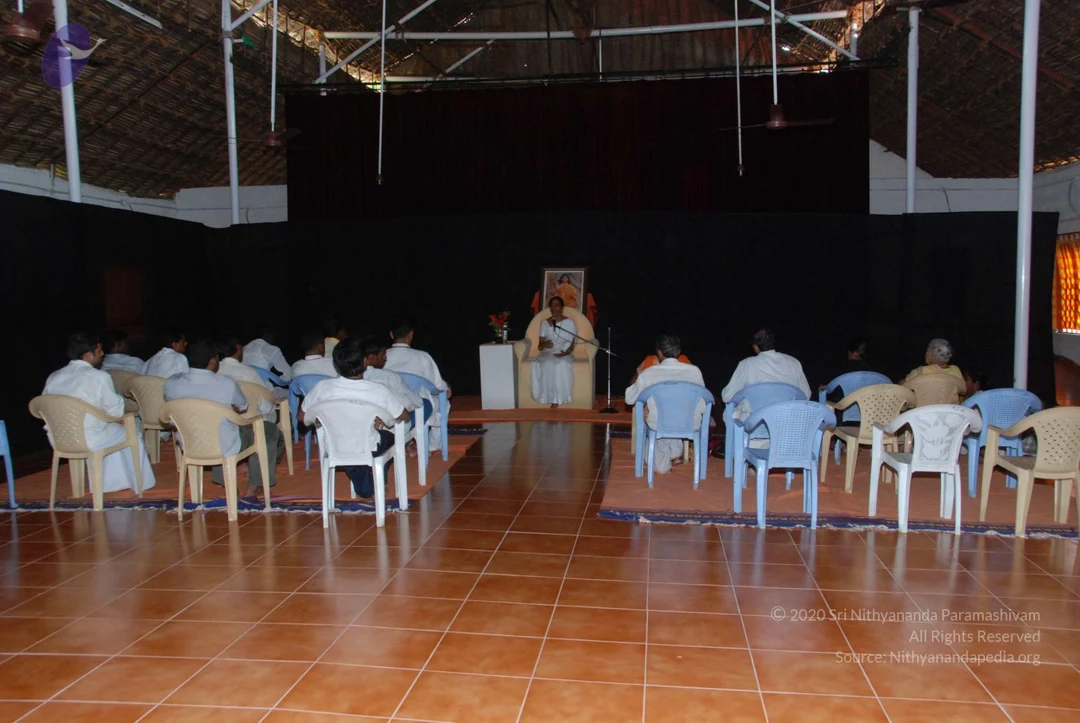
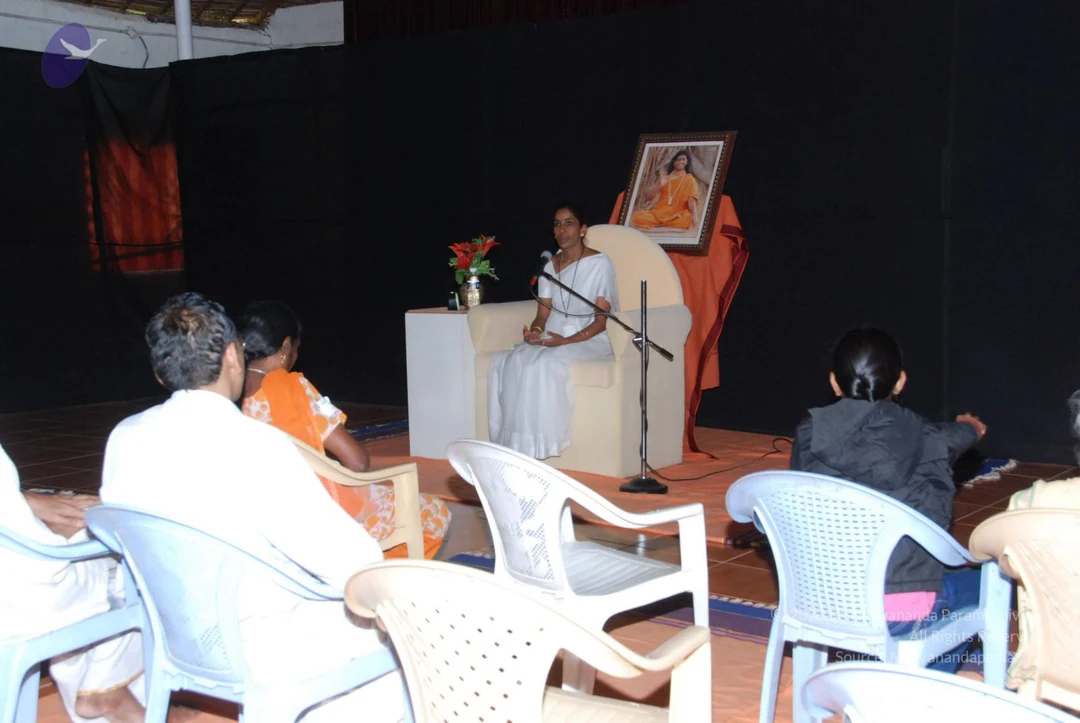
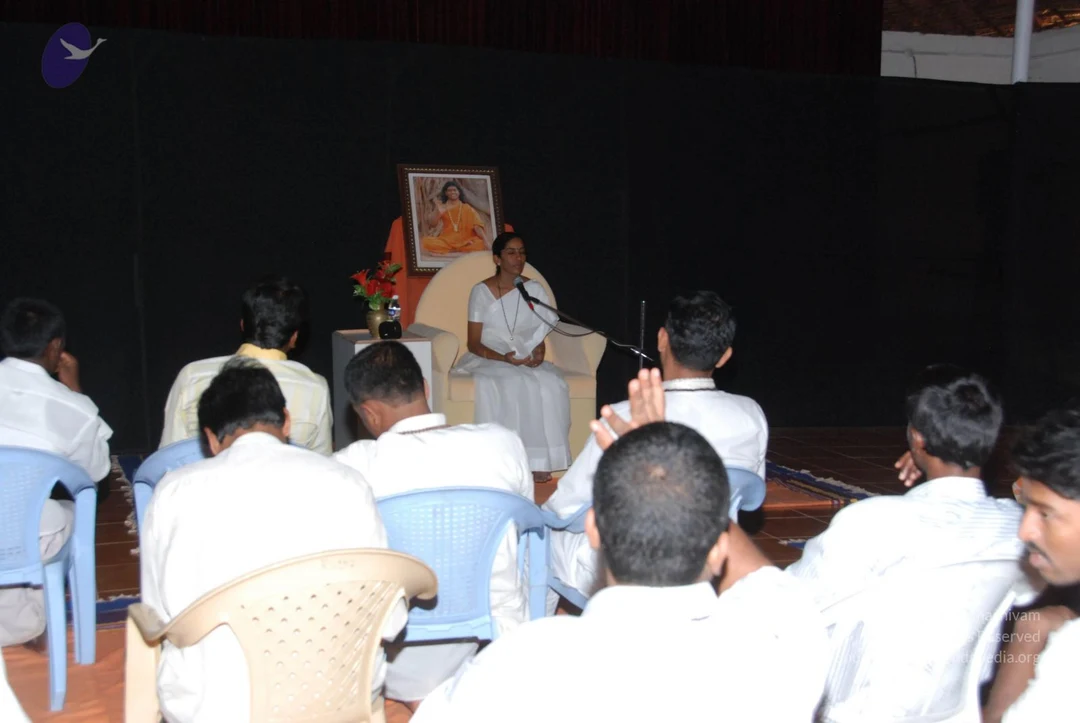
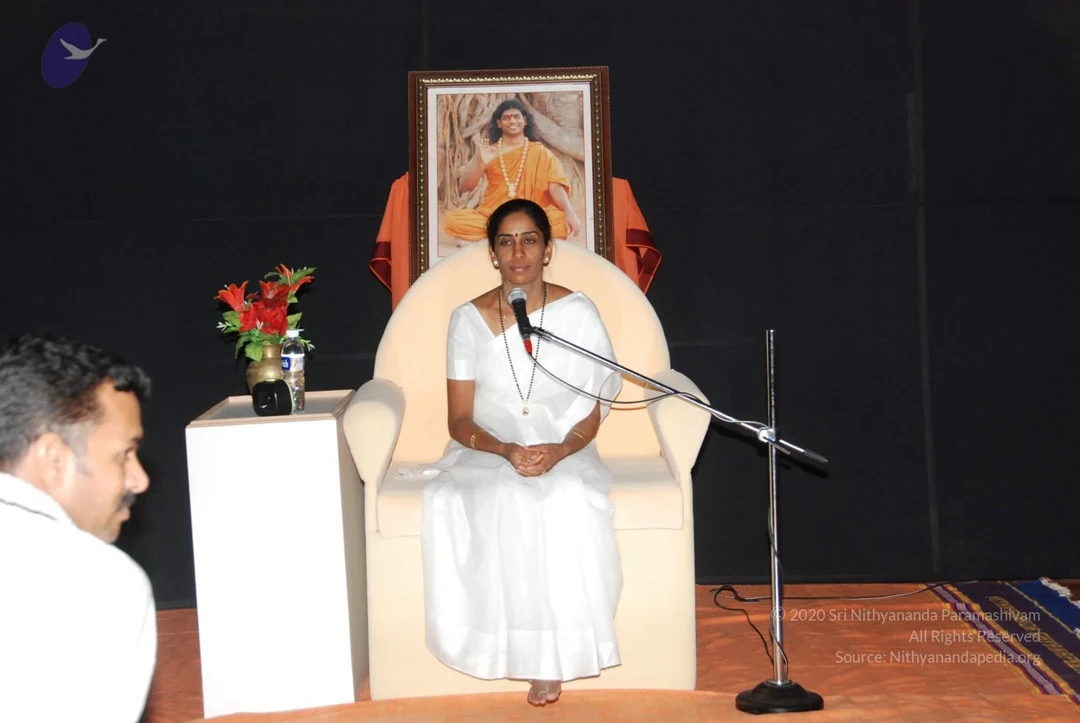
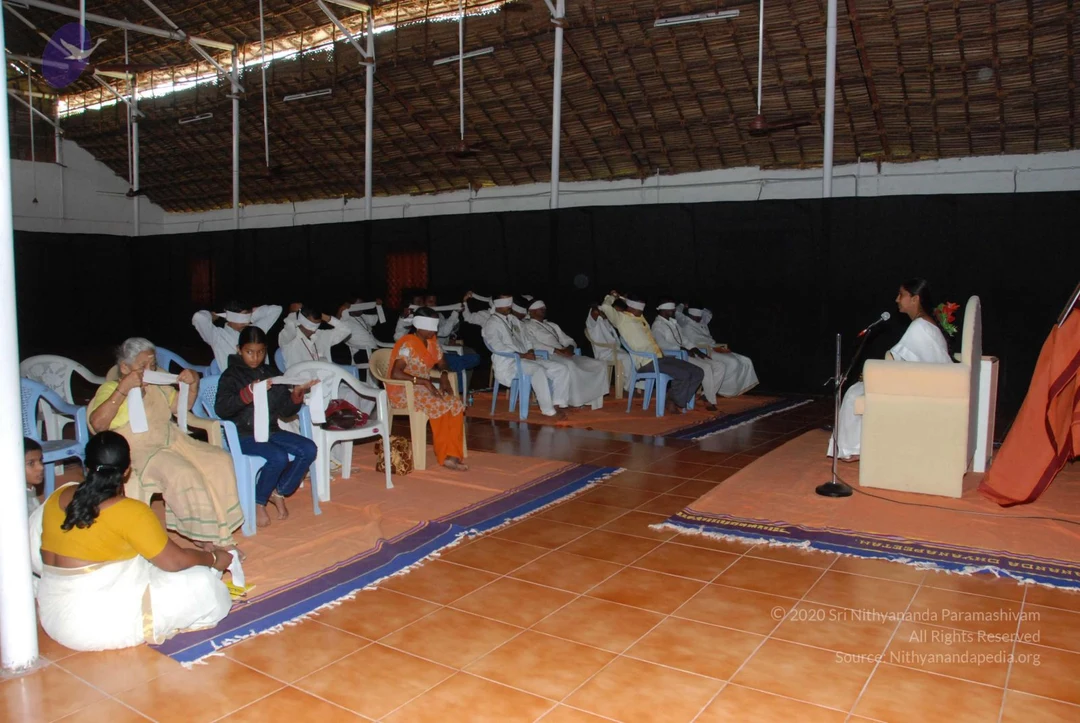
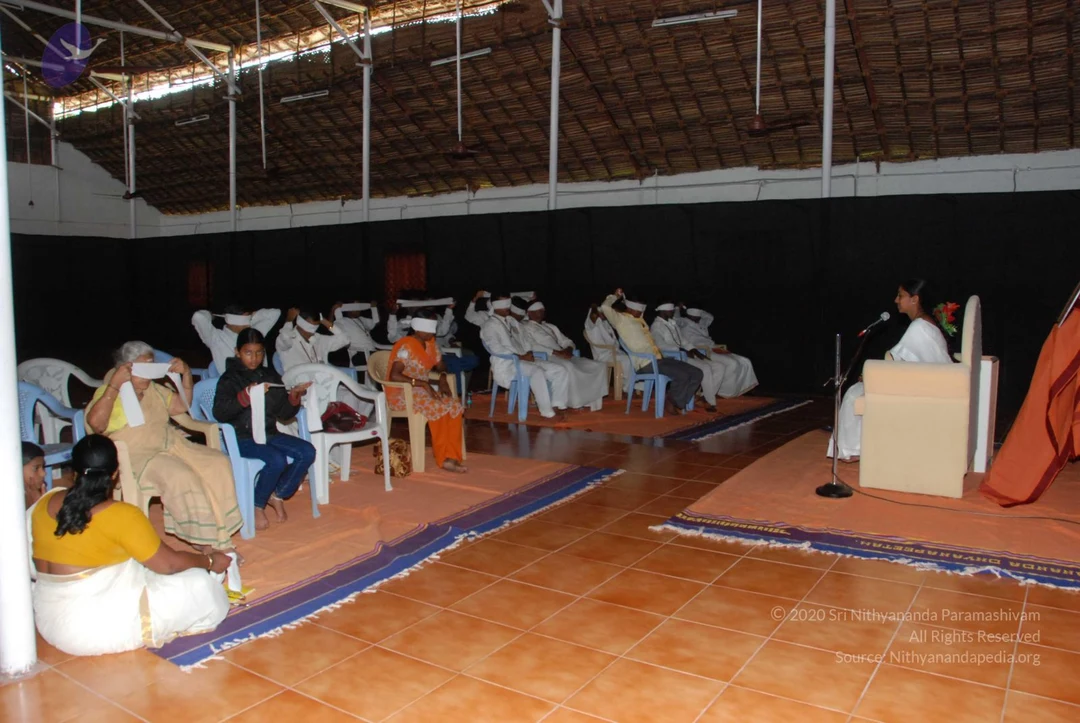
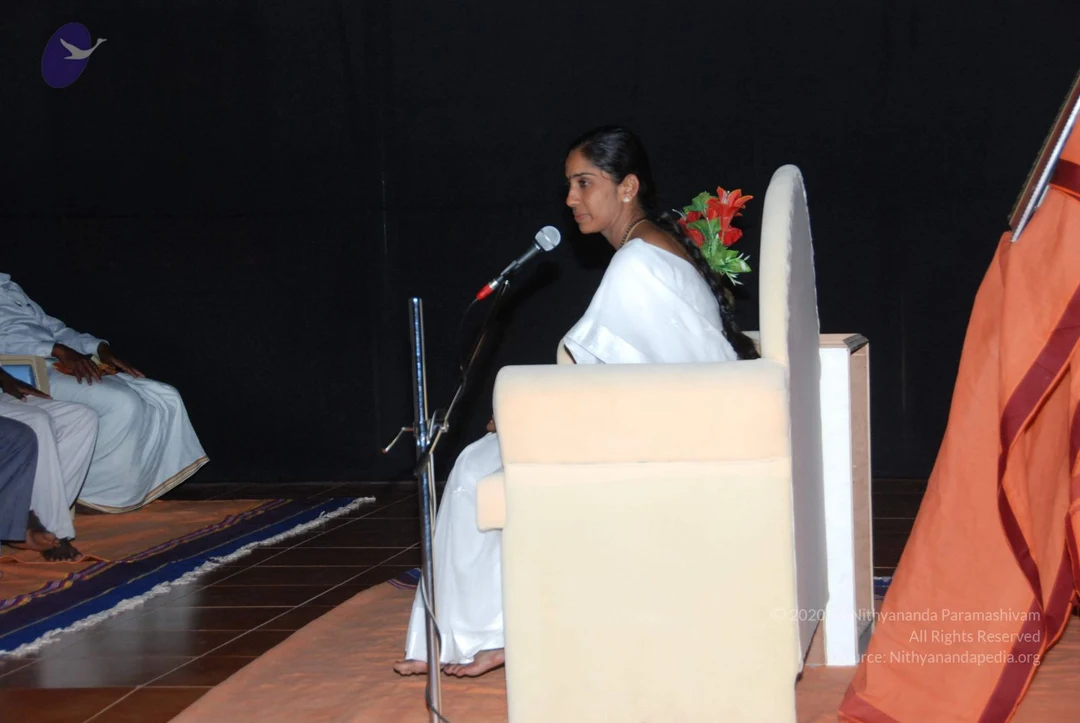
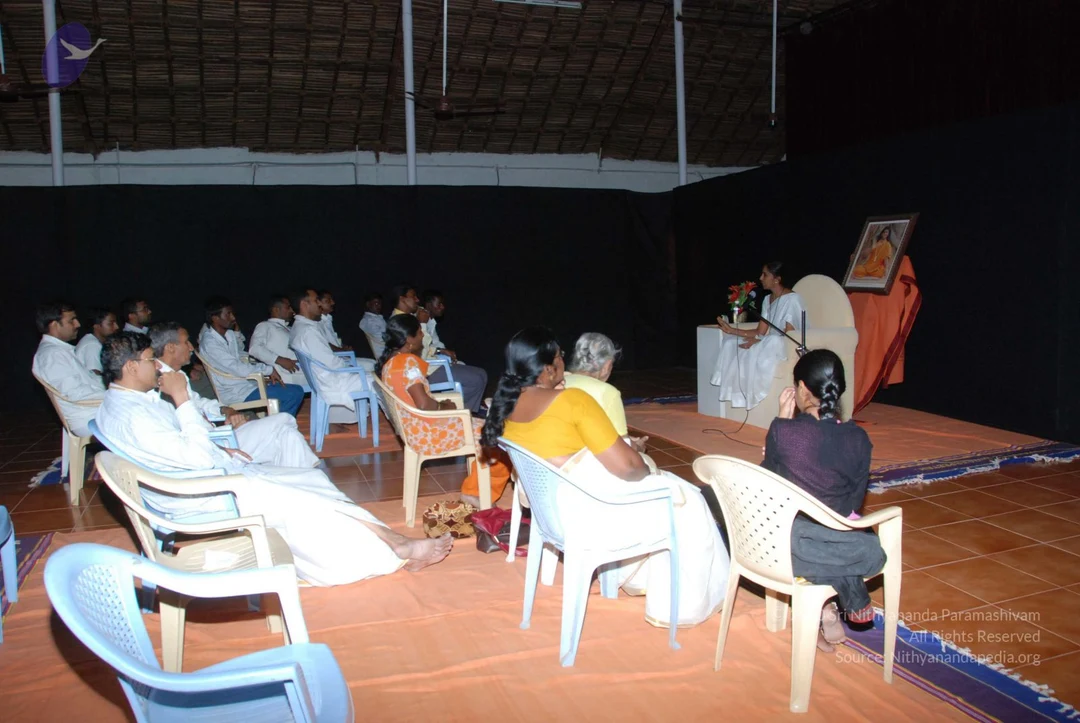
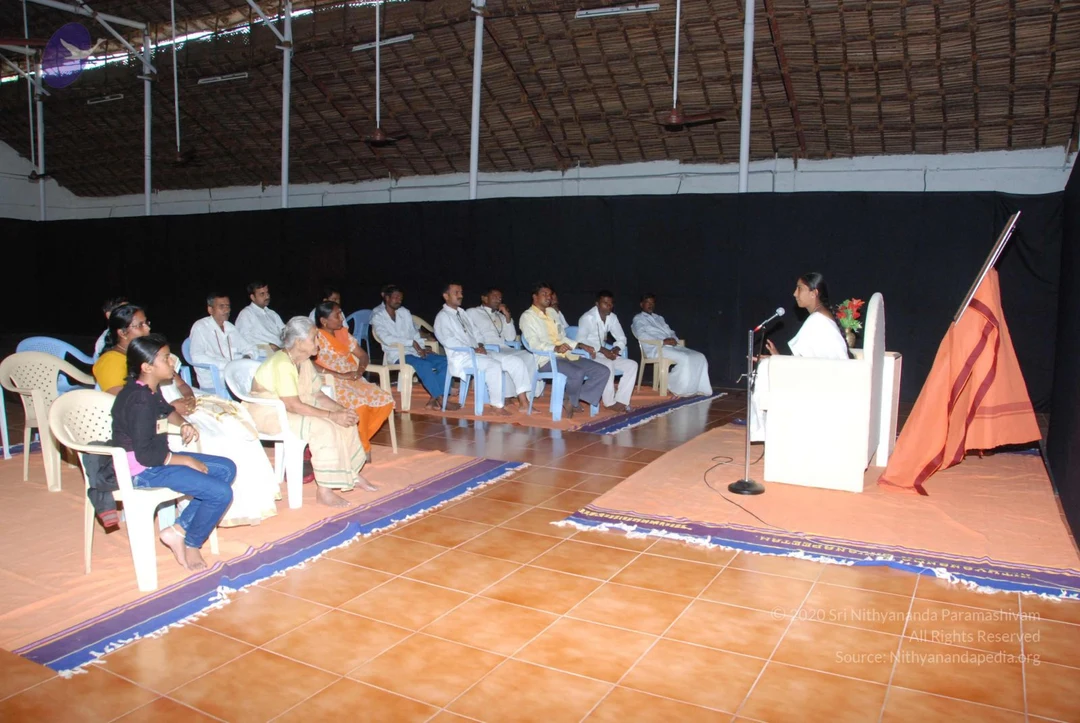
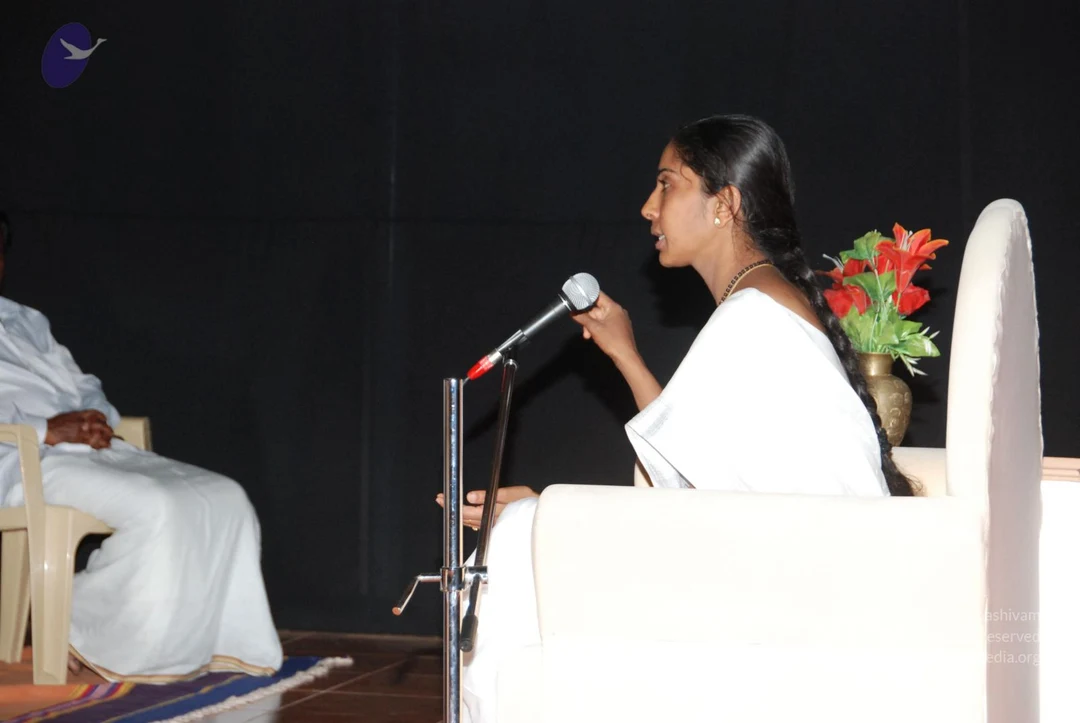
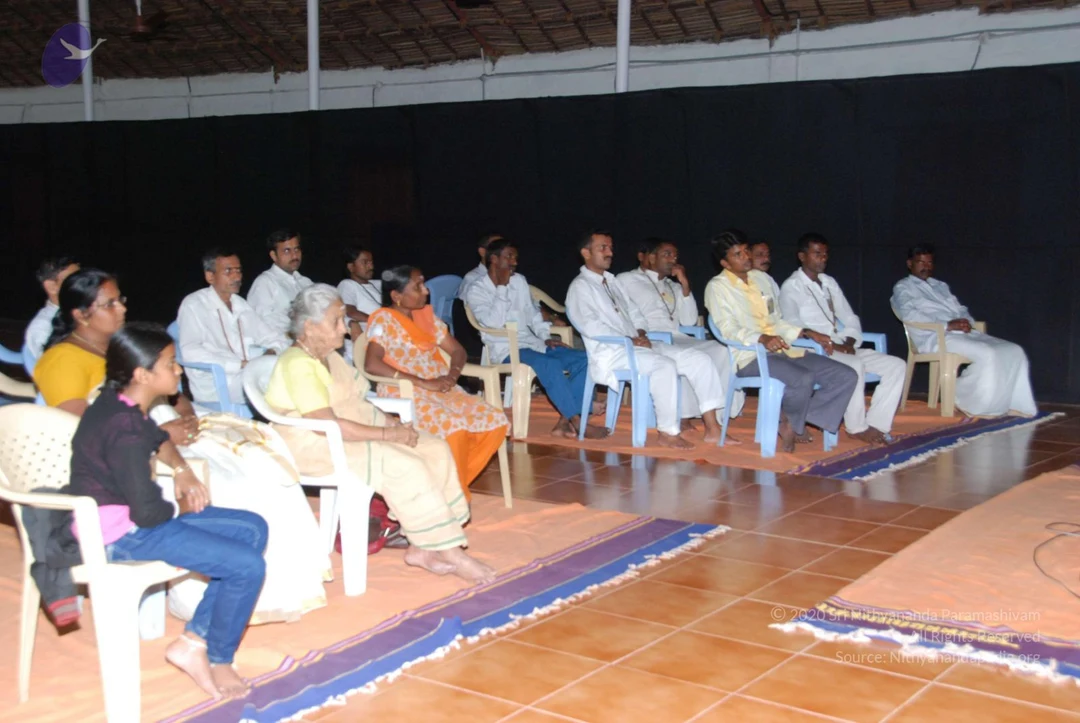
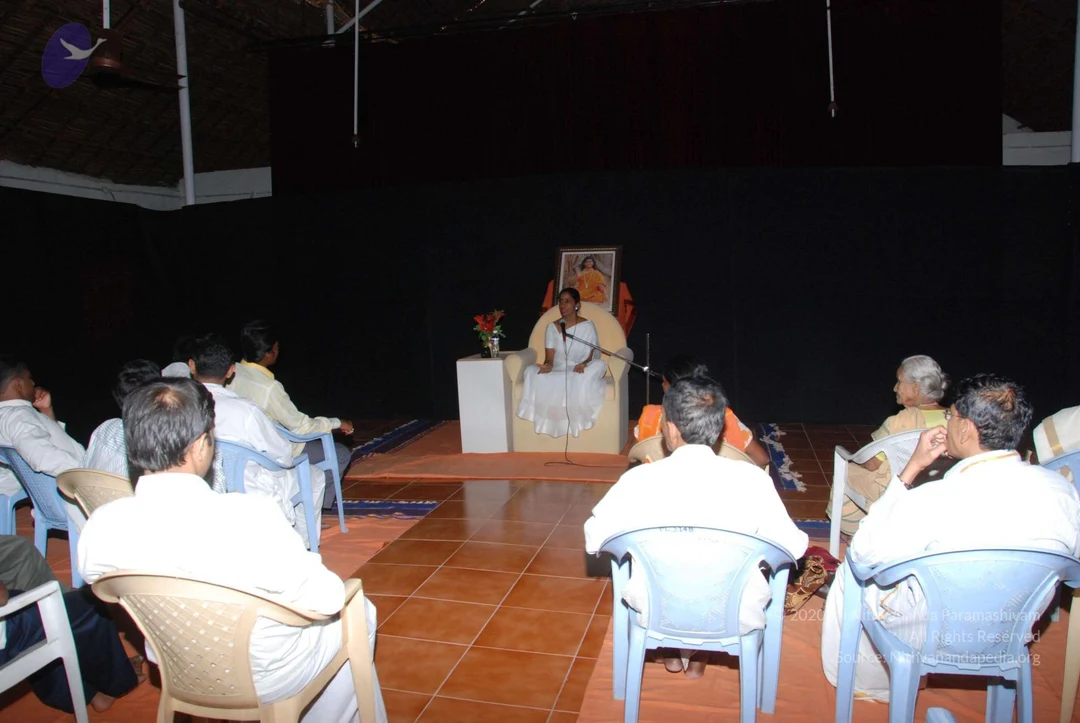
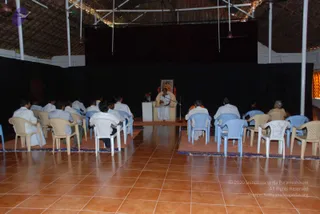
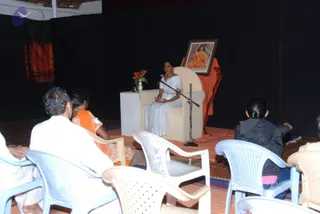
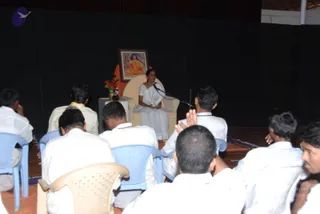
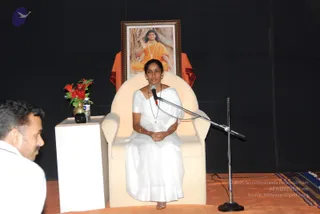
A photograph of a talk hall with a thatched roof and black drapes behind a raised stage. A figure in white sits in a cream armchair at a microphone, flanked by a small white podium holding a vase of flowers. Behind the chair hangs a framed portrait of a figure in orange robes. The audience sits in rows of white and blue plastic chairs on orange-brown carpets, most dressed in white shirts and white clothing, facing the stage on a terracotta-tiled floor.A woman in a white sari with a beaded necklace sits in a cream armchair on a low stage, speaking into a microphone on a stand. A small table beside her holds a vase of red flowers. Behind her, a framed portrait shows a figure in orange robes with long hair, draped over an orange cloth. Seated audience members in white chairs face the stage, including a person in white clothing, a woman in an orange and white patterned sari, and a child in a dark jacket with hair in a ponytail. The room has black drapes and an orange curtain at the left.A seated woman in a white sari with a small necklace speaks into a microphone on a cream armchair against a black stage backdrop. Behind her, a framed portrait labelled as Paramahamsa Nithyananda shows a saffron-robed figure seated with a hand raised. A small vase of red flowers sits on a white pedestal beside her. In the foreground, about eight seated men in white shirts and white dhotis, mostly seen from behind on blue plastic chairs, listen attentively, one with palms pressed together.A woman in a white sari with a rudraksha-style beaded necklace and a red bindi sits in a cream upholstered armchair on an orange-and-red stage, speaking into a microphone on a chrome stand. Behind her, a framed portrait shows a man in orange robes with a beaded mala and raised hand seated before a banyan-like tree, with orange cloth draped on the chair back. A red and orange flower arrangement and a water bottle sit on a white pedestal to the left, and a man in a white shirt is partly visible at the left edge. The backdrop is black drapery.Indoor hall with a thatched roof and a dark backdrop where a seated audience listens to a talk. On a raised orange-carpeted stage a woman in white sits in a cream chair beside a microphone on a stand, with a red flower near her. Many people in white clothes, some with white head cloths, sit in white and blue plastic chairs on the left and centre, several with arms raised to their heads. A woman in a yellow blouse and white sari sits on the floor at the left edge, and an older woman in a green-and-cream sari sits nearby. The floor carpet has a blue border with printed letters.A photograph of a discourse hall with a thatched roof and black backdrop. A woman in white sari sits on a cream-coloured chair at the right, speaking into a microphone on a stand, with an orange-and-blue patterned carpet beneath her. Seated audience members on blue and white plastic chairs fill the left and centre, including several men in white dhoti-style clothes and white head coverings, a woman in a yellow blouse and white sari, an older woman in a light sari, and a woman in an orange top. Several attendees hold white papers or sheets. Partial text on the carpet reads Nithyananda Dhyanapeetam.

Kalpataru-Darshan

65 photosSource gallery
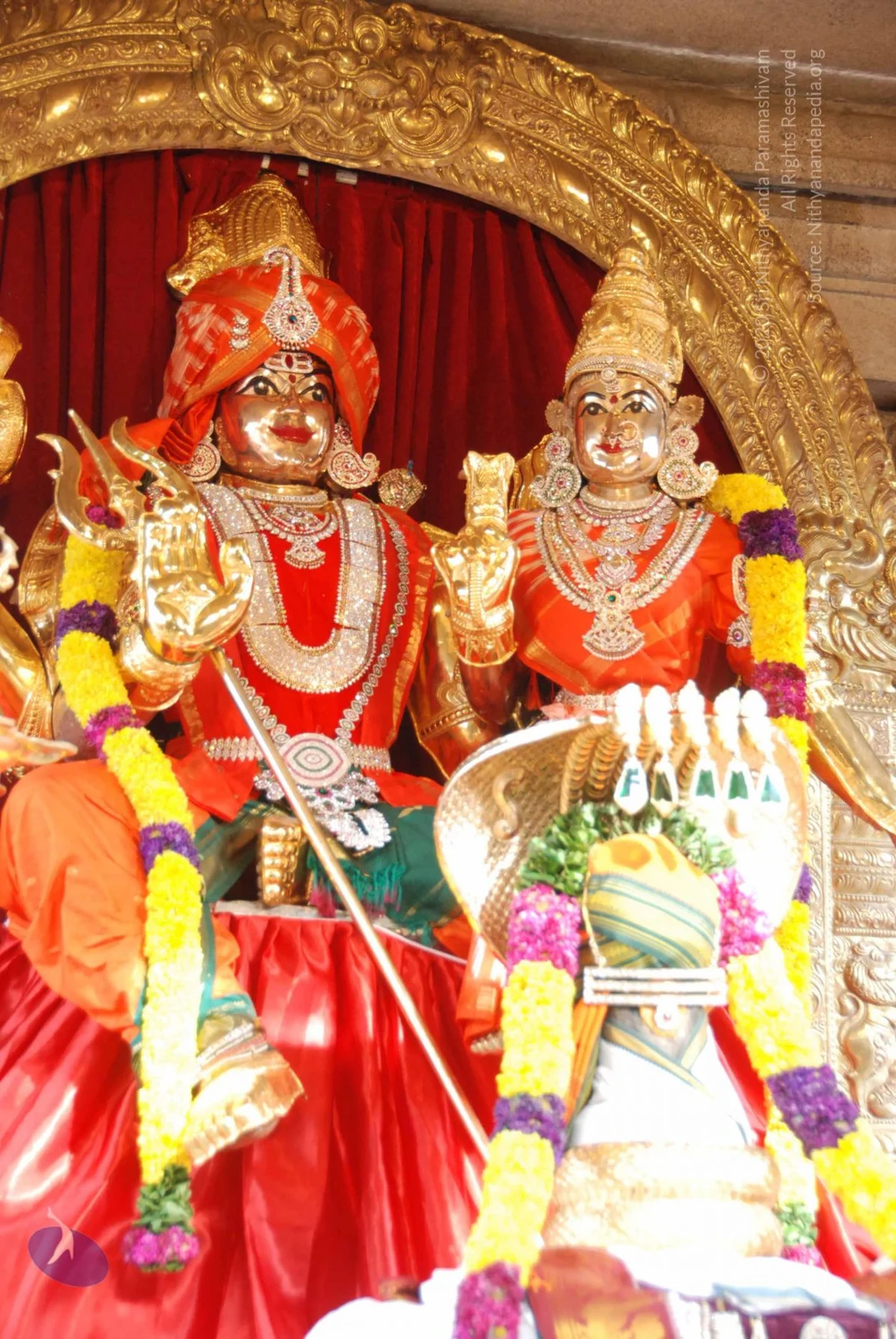
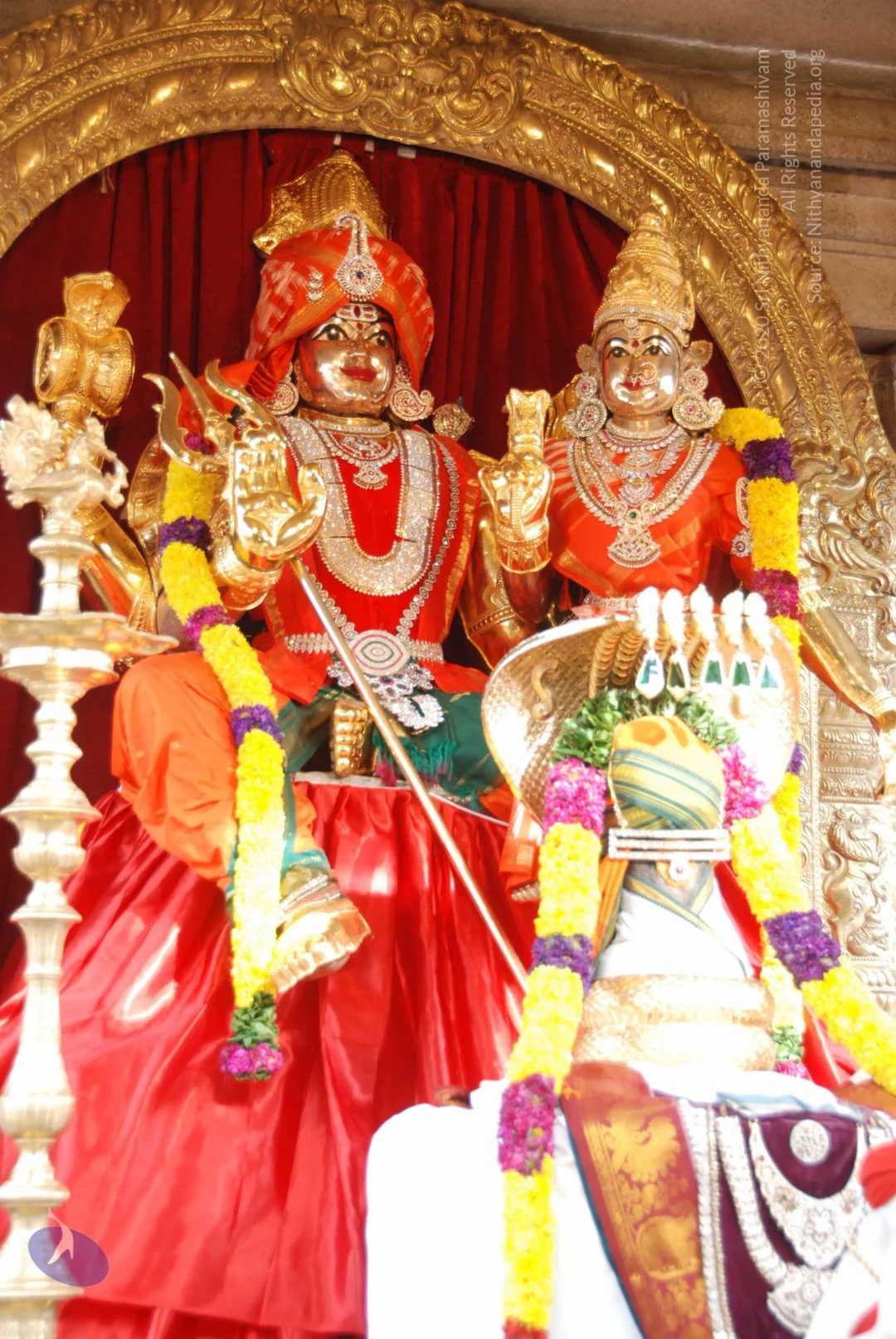
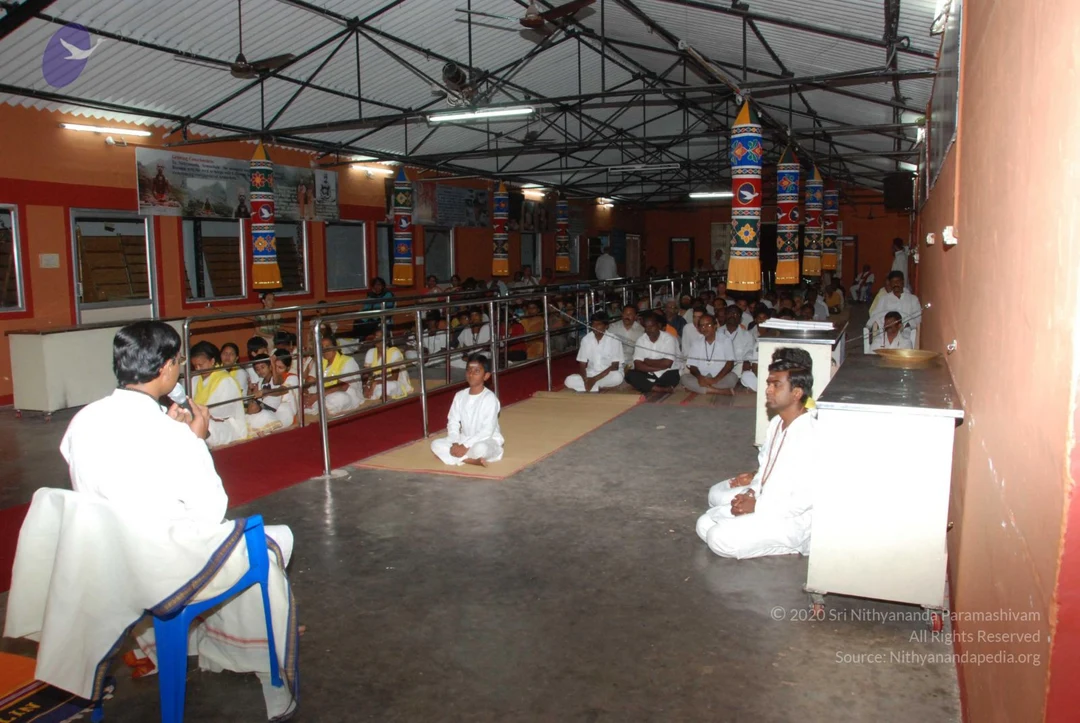
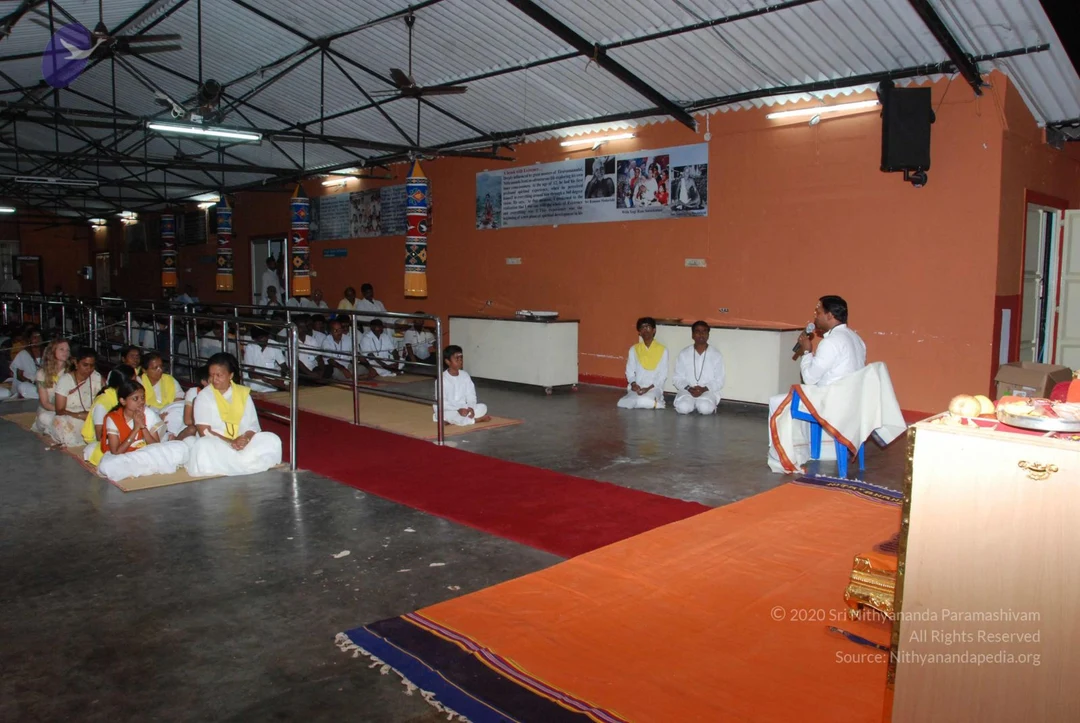
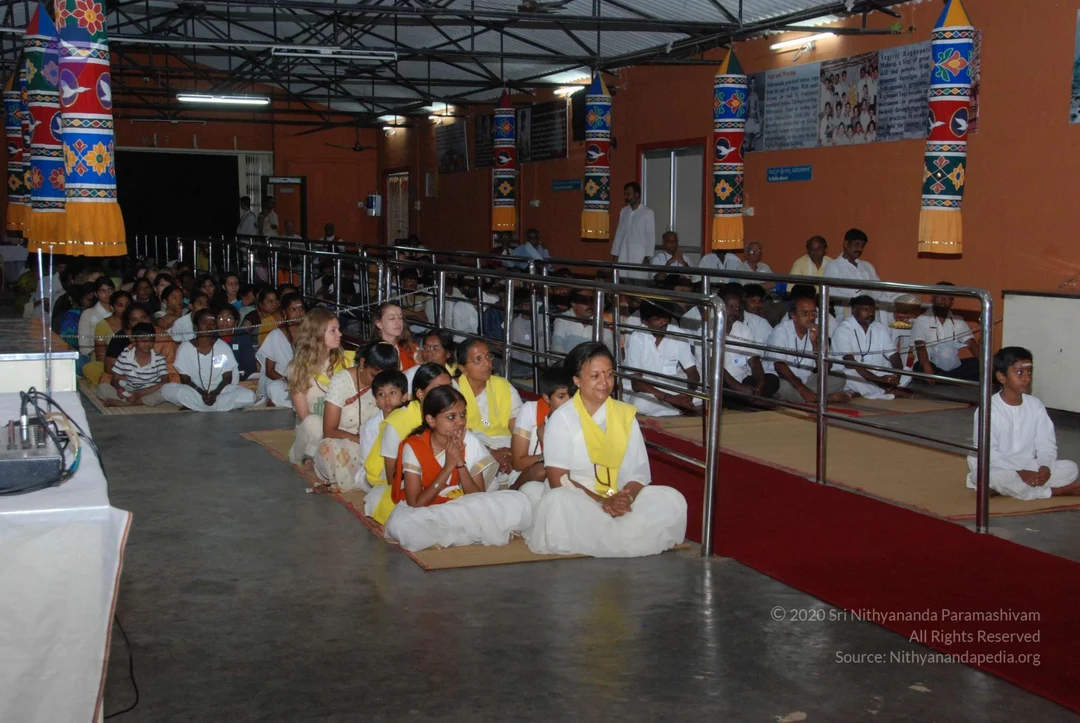
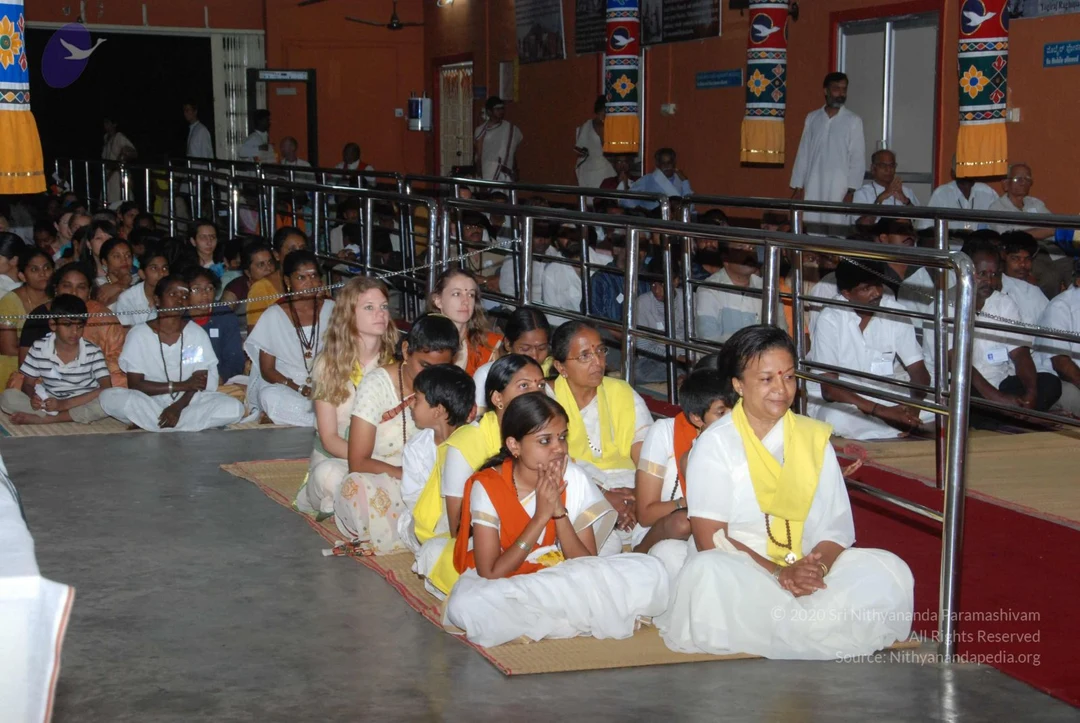
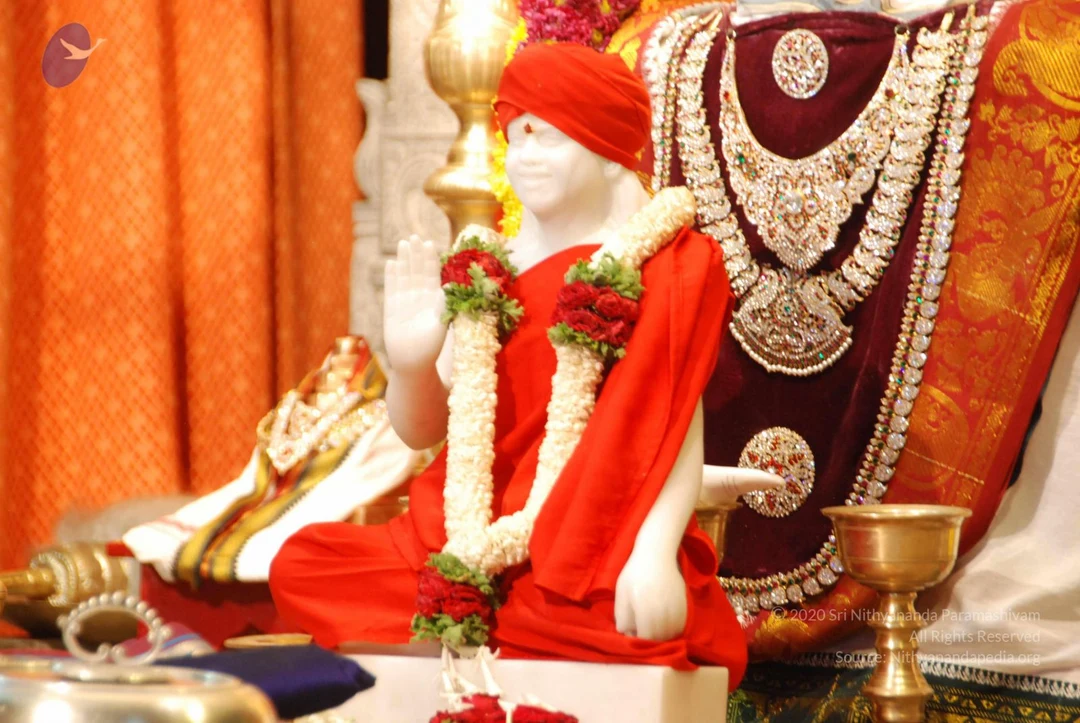
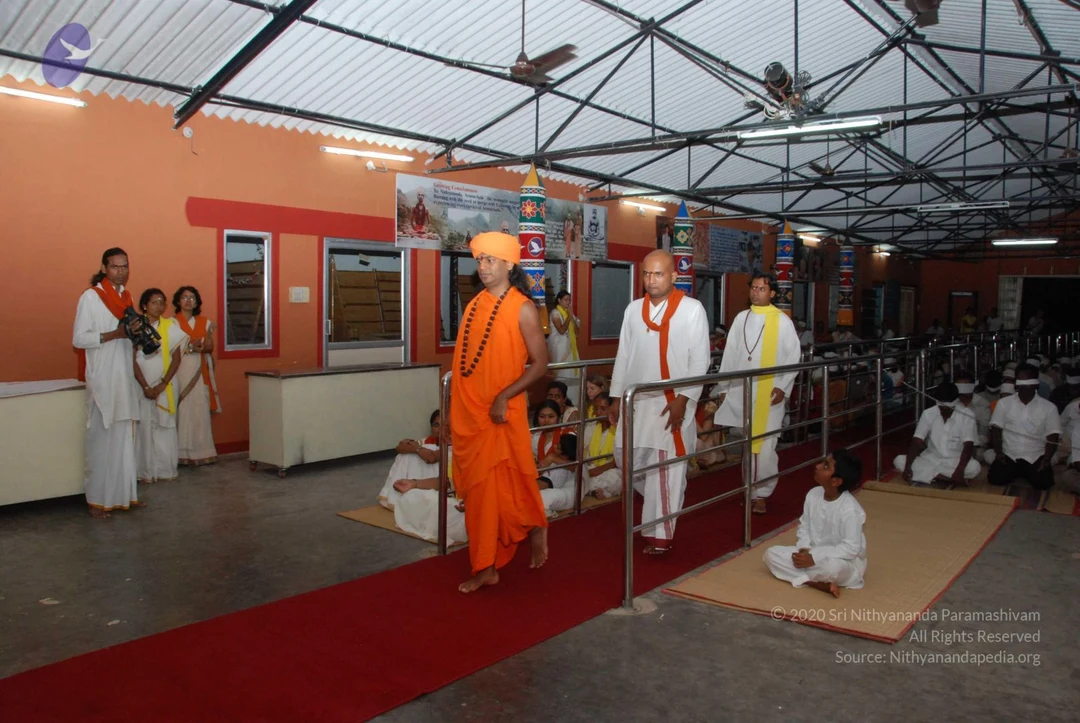
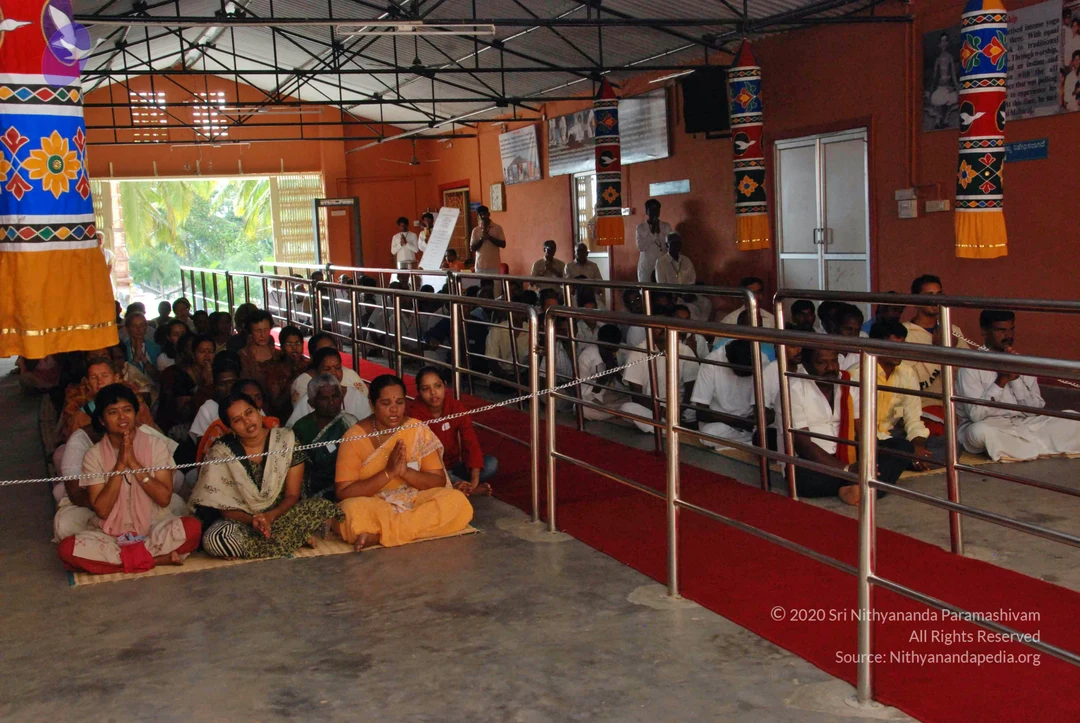
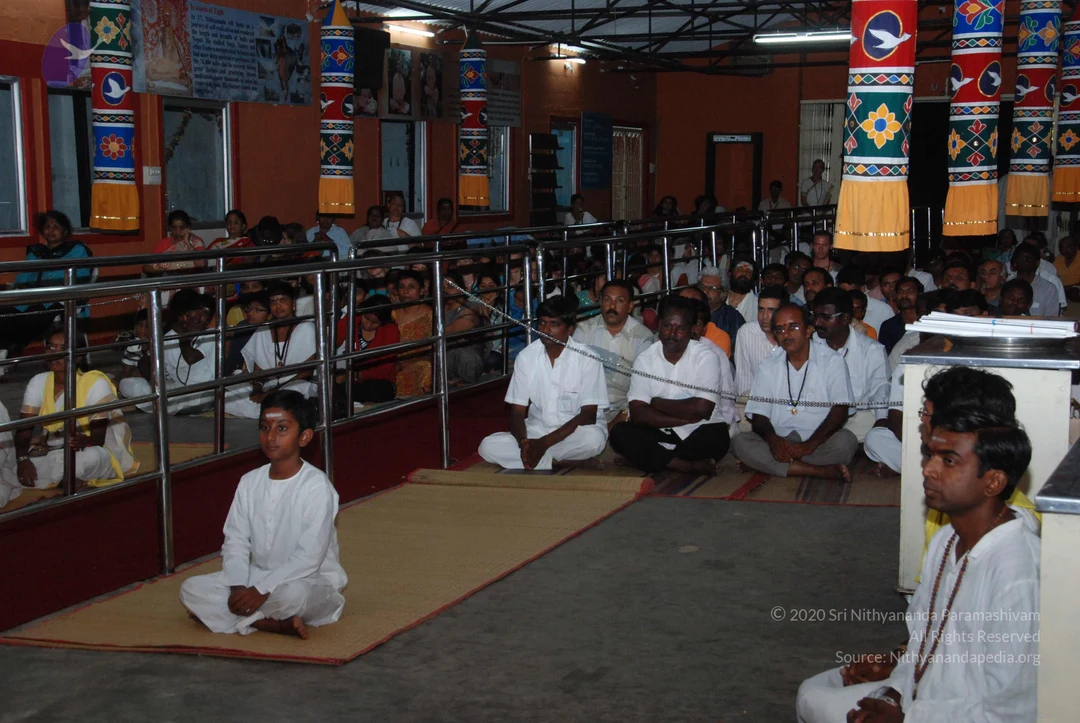
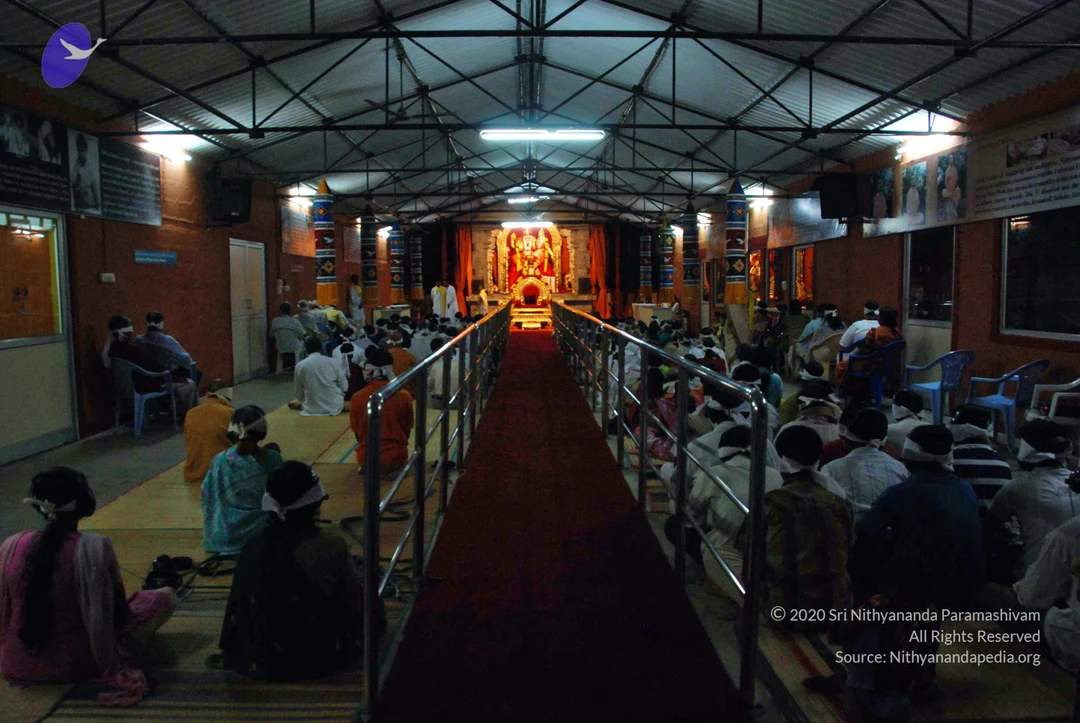
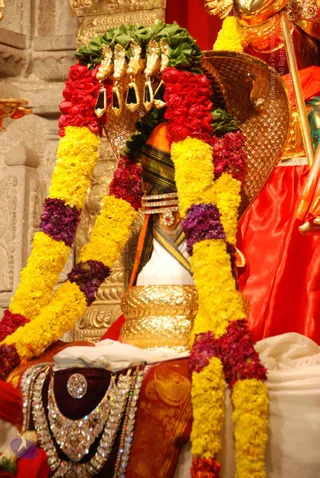
A photo of an indoor hall with a corrugated metal roof and orange walls, hung with colourful woven banners. A man in white clothes and a white shawl sits on a blue plastic chair at the left, speaking into a microphone toward a seated audience. Many devotees in white and yellow sit on the floor and on a raised area along a metal railing, with a small white-clad figure seated on a mat in the centre. A seated man in white on a mat at right faces the crowd beside a white table with a brass vessel. Framed pictures hang on the back wall.Indoor hall with a corrugated roof and orange-painted walls where a man in white clothes sits on a blue chair at the right, holding a microphone and speaking. An orange cloth covers the low platform, with fruit and a brass tray at the right edge. Seated devotees in white clothes and yellow shawls and some in orange sit on mats and a red carpet facing the speaker, with a few standing at the back near a metal railing. A horizontal banner on the wall shows framed photographs, and long decorative hangings hang from the left wall.A seated audience fills a hall with orange walls and decorative patterned pillars with yellow tassels. In the foreground a row of women sits on mats; several wear white, others wear yellow shawls, and one younger woman in an orange top sits front left. Behind them many seated devotees in white, and a standing figure in white near the back. A red carpet runs along a metal railing toward the front, where a small table with equipment sits at left. Photo-level evidence of a discourse or satsang; no identifiable figure is distinguishable as a person.A photograph of a seated congregation during a talk in a hall with orange-brown walls and a metal railing. In the foreground, a woman in a white sari with a yellow shawl and a rudraksha-style bead necklace sits cross-legged with hands folded. Beside her, a young girl in an orange and white outfit presses her palms together, and other women in white and yellow shawls sit on mats. Behind the railing, rows of seated people in white clothes listen attentively, and a few standing attendants in white are visible near the wall. Woven banners in orange, yellow and blue hang on the walls.A white marble statue of a seated sage in saffron-red robes and a matching red turban, with raised right hand in abhaya mudra. The statue wears layered garlands of white flowers and red roses, and ornate gold and jewelled necklaces are draped on the maroon velvet backdrop behind it. A brass oil lamp and brass vessel sit in the foreground, with orange silk drapery and a gold-edged red cloth on the sides. Watermarked archive photo, no visible people.A deity murti is adorned with heavy garlands of yellow marigolds, purple flowers and red roses, with a green leafy crown-like arrangement above. The face is covered by the garlands, and the figure wears a striped green and black cloth, a jewelled crown-like headpiece, and a gold-banded base. A large ornate gold ritual backdrop and a red satin cloth surround it, with a diamond-studded necklace visible at the lower left. No people are visible in the scene.

01-Prathyaksha-Pada-Puja

4 photosSource gallery
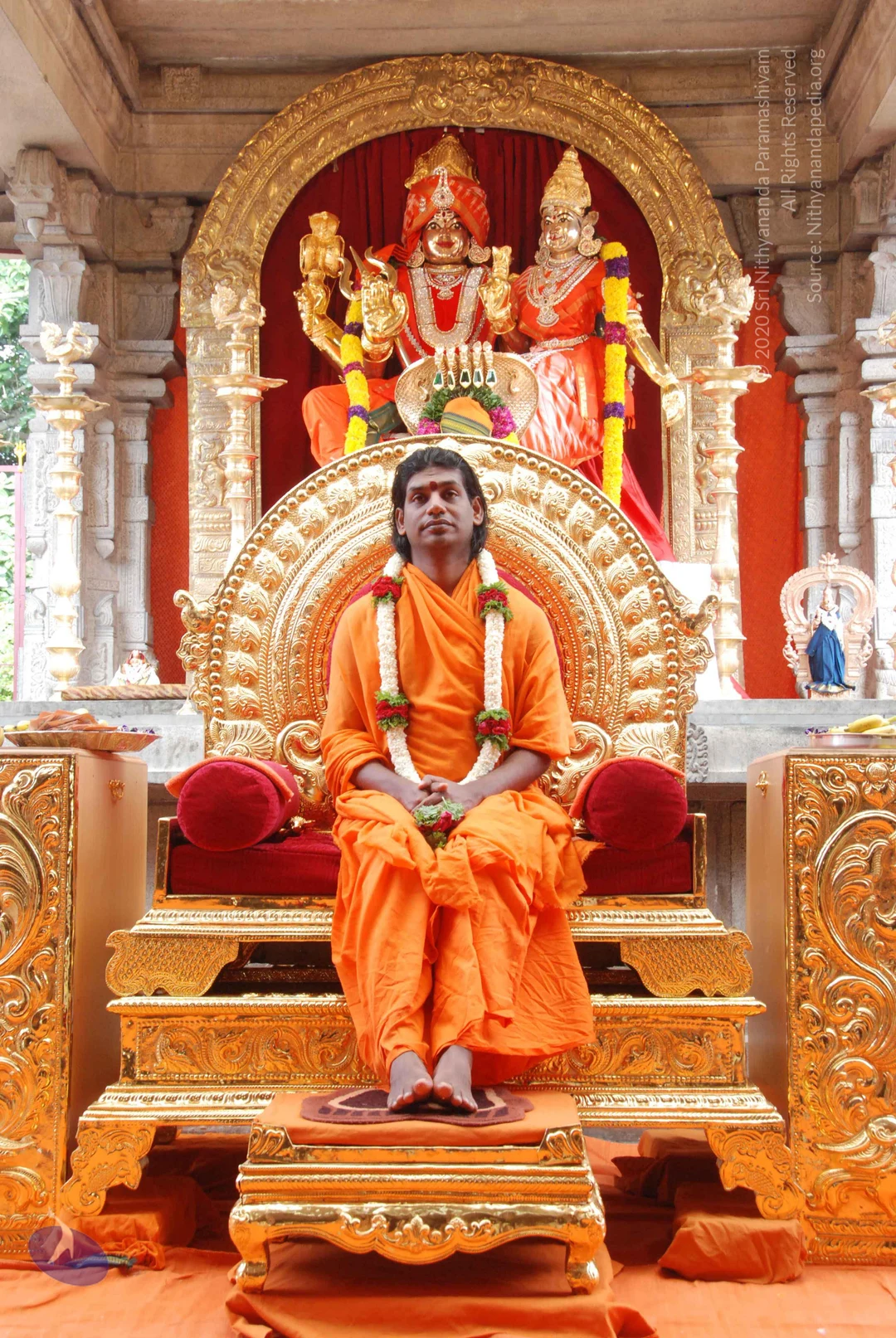
A man seated on an ornate gold-and-red throne with a plush red cushion, hands pressed together in anjali mudra with eyes closed. He wears an orange-saffron shawl over his shoulders and a garland of white and red flowers draped around his neck, with a red kumkum mark on his forehead. Behind him stands carved grey stone architecture and a red-railed pillar.Close-up of a padapuja ritual: a bare foot in the frame is being washed with water poured from a silver vessel held by a hand on the right, while a second hand on the left pours water from a glass. The foot rests on a gold-toned tray scattered with white flowers, green leaves and petals. Silver bowls and cups sit in the background, and an orange-clad arm is visible at upper right. Only hands and feet are visible; no face is shown.A man with long swept-back dark hair sits with palms pressed together in anjali mudra before a gold-embossed ornate throne with a red cushioned seat. He wears a saffron-orange shawl wrapped over his shoulders and a red tilak on his forehead, with a garland of white jasmine and red roses with green leaves around his neck. Behind him is a carved grey stone pillar with a relief of Ganesha. To the left, a tray holds fruit and offerings, and a folded orange cloth lies on the chair. Appearance cues are consistent with a person, seated in a devotional or darshan setting.A man with long swept-back dark hair sits on an ornate gold-and-red throne, wearing an orange saffron robe and a long white jasmine garland interspersed with red rose clusters and green leaves. He has a red bindi on his forehead and his hands rest folded in his lap. Behind him is a carved grey stone wall with a relief of Ganesha, and at left a tray of bananas and offerings sits beside an orange cloth. The setting resembles a temple seat for a discourse or darshan. Swamiji (probable): long swept-back hair, saffron robe and ceremonial garland on a throne.

02-Sarva-Darshan

7 photosSource gallery
A man with long swept-back dark hair sits cross-legged on an ornate gilded throne with red velvet cushions, wearing orange saffron robes and a white and red flower garland, with a red tilak on his forehead and hands folded in his lap. Behind him stands a gilded arched shrine framing a deity murti with a crown, holding a trident and drum, and a consort figure in red and gold; red curtains and brass lamps surround the arch. A small gilded footstool sits before the throne with a saffron cloth. Swamiji (probable): the seated man shows long swept-back hair, saffron robes and a flower garland, the throne is ornate, and the page indicates his presence.A man seated on an ornate gilded throne with red velvet cushions, wearing orange saffron robes and a white-and-magenta flower garland, hands folded in his lap and a red bindi on his forehead. He sits on a gilded footstool before a shrine with a gold arched frame, red draped backdrop, and two deity murtis in red and gold, one with a crown and multi-armed form, with yellow and purple marigold garlands. Brass oil lamps (deepams) flank the shrine and a small figure appears on the right.A close photograph of a man seated on an ornate gilded throne with intricate repoussé scrollwork and a red cushion behind him. He has long, swept-back dark hair, a red bindi on his forehead, and eyes closed in a calm expression. He wears a draped saffron-orange cloth over his shoulders and is garlanded with long white jasmine strands interspersed with red roses and green leaf clusters. The image shows a devotee-style seated figure with distinctive ceremonial cues: long swept-back hair, saffron clothing, and a garland, consistent with the Swamiji (probable) label on the page, though the face alone does not establish identity. Only one person is visible.A seated man in saffron-orange robes sits on an ornate gold throne with intricate repoussé scrollwork and a round beaded border. He has long, swept-back dark hair, a red tilak mark on his forehead, and his eyes are closed in meditation. Garlands of white jasmine strands interspersed with red roses and green leaves hang across his shoulders and chest, and his hands rest folded in his lap over the orange cloth. Behind him, blurred orange and red fabric and yellow flower garlands suggest a decorated stage or dais.A man seated with eyes closed on an ornate gold throne with carved floral and scroll patterns and small gold beads along the rim. He wears an orange-saffron shawl draped over his shoulders and a long white garland of jasmine-like flowers with red roses and green leaves. A red kumkum mark is on his forehead and his long dark hair is swept back. The red cushion behind him contrasts with the gold. The pose suggests meditative stillness in a satsang or darshan setting.A seated man in saffron-orange robes sits on an ornate gold throne with red cushions, wearing a white-and-red flower garland and a red tilak on his forehead. He smiles and rests a hand on the throne's arm. A man in white kurta stands at left with palms pressed together in greeting. Behind them, a deity murti is decorated in orange and red fabric with yellow marigold garlands, and a gold lamp stand is visible. The seated man matches the saffron robes, long swept-back hair and ceremonial garland cues of the Swamiji (probable) candidate, shown here in an in_person setting on a golden throne during a darshan-style reception.

04-Yoga-Sutras-Discourse

9 photosSource gallery
A seated man in an orange saffron turban and orange sleeveless robe sits in a cream upholstered throne with carved black wooden armrests and back, hands pressed together in anjali mudra with eyes closed. He wears a long rudraksha mala of brown beads and has a red tilak on his forehead. A small microphone on a stand is near his face, and an open yellow book sits on a music-stand lectern at left. Behind him hang strings of beads against a beige fabric wall. Swamiji (probable): the orange turban, long swept-back hair, rudraksha mala and saffron robe match the discourse context. A discourse setting with the presenter seated in the throne.A man seated cross-legged on a cream upholstered throne with black carved wooden arms, wearing an orange turban with a red tilak mark, an orange shawl and dhoti, and a long rudraksha mala. His long dark hair falls past his shoulders and his hands rest in his lap while he speaks into a microphone on a silver stand. To his left a yellow book sits open on a music stand. Behind him hangs a beige fabric backdrop decorated with beaded strings. The appearance of this person matches Swamiji (probable): long swept hair, orange turban, orange clothing and a rudraksha mala, seated on a throne during a talk.A man sits cross-legged on a cream upholstered throne with a dark carved wooden back, speaking into a microphone on a chrome boom stand. He wears an orange turban with a small red bindi on the forehead, an orange shawl draped over the shoulders, orange dhoti-style cloth, and a long double strand of brown rudraksha beads. His long dark hair falls past his shoulders. Strings of white beads hang in the background behind him. This matches the Swamiji (probable) appearance: long swept-back hair, orange ornate clothing and rudraksha malas, seated as a discourse speaker.A seated man in saffron-orange robes and an orange turban with a red tilak on his forehead sits cross-legged on an ornate cream upholstered throne with black carved wooden armrests. He wears a long rudraksha mala down his chest and gestures with his raised right hand while speaking into a microphone on a silver stand. A yellow book rests on a music-stand lectern at left, and a cream cushion sits at the lower corner. Behind him hangs a beige fabric backdrop with strings of beads. Swamiji (probable): long swept-back hair, saffron robes, turban and rudraksha mala match the page's claim that Swamiji is present.A man seated cross-legged on a cream upholstered throne with black carved wooden armrests and backrest, speaking into a handheld microphone on a boom stand. He wears an orange turban, an orange shawl and robe, and a long rudraksha mala, with a red bindi on his forehead. He raises one open hand while gesturing. To his left stands a book stand holding a yellow-covered book. Behind him hangs a beige fabric backdrop with vertical strands of beads.Swamiji (probable) seated cross-legged on a cream upholstered throne with a dark carved wooden back, speaking into a clip-on microphone on a boom stand while his hands are held together in front of his chest. He wears an orange turban with a red bindi, long dark hair falling past his shoulders, an orange sleeveless robe and orange dhoti, and a long rudraksha mala. A cream cushion sits at the left edge, and a beaded curtain hangs on the wall behind him.

01-Prathyaksha-Padha-Pooja
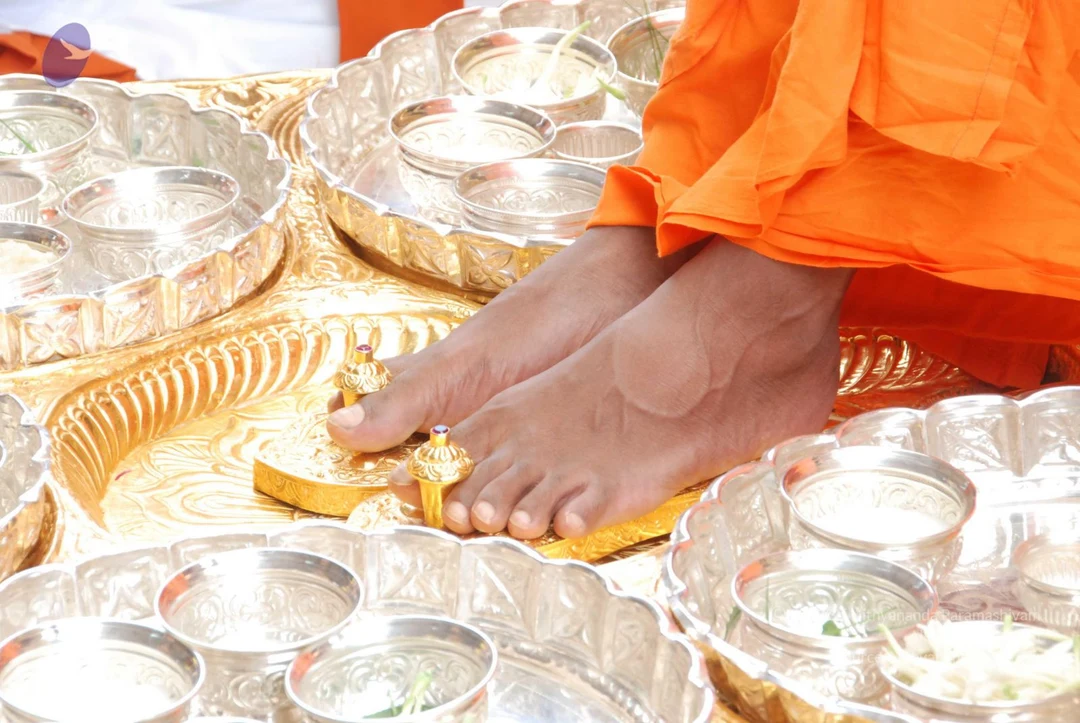
10 photosSource gallery
A seated man in an orange saffron shawl and orange robe sits on an ornate gold throne with red cushions and armrest rolls, his eyes lowered and hands folded in his lap. Behind him are a red and gold canopy, a garlanded deity figure in red robes on the left, and a carved grey stone wall with a window grille. On the right, a wooden table holds a tray of bananas and flower offerings. The man has no visible rudraksha mala or crown, and his face is only partly visible, so his identity is uncertain and he is described by role only as a seated devotee on the throne.A photograph of a man in profile with eyes closed and palms pressed together in anjali mudra at chest height. He wears an orange saffron wrap or shawl and a white flower garland with a red and green floral accent at the chest. His long, swept-back dark hair falls behind his neck. Behind him is an orange and red wall, a hanging brass bell on a cord, a black board with white lettering listing names, and an ornate gold carved throne-like element with a pink cloth at right. The image is an event photo in a temple or ashram setting.Close-up photograph of a padapuja ritual in which bare feet are being washed. A large ornate gold tray holds white flowers, green leaves and a small gold box. Three people's hands pour water from silver cups and a silver vessel over the feet. The person at right wears an orange garment and a silver bangle on the wrist. Silver bowls with liquid sit in the background.A photograph inside a covered hall with orange-painted walls and colourful patterned banners hanging at the sides. Rows of seated devotees fill the floor on a grey concrete surface, most women in saris and salwar kameez, one in an orange sari and another in pink. Behind a metal railing with a red carpet runway, several men in white and light clothing stand near the back, and a standing figure in white is visible at the far left near an open doorway onto palm trees. The scene shows a satsang-style talk with the audience listening attentively.Close photo of a padapuja-style offering in progress. Bare feet of a seated figure wearing saffron-orange robes rest on a golden tray. Several hands hold a long strand of large gold-coloured beads and rudraksha-like balls over the feet, with green leaves and white flowers scattered nearby. Silver bowls with food and silver plates with ornate repoussé rims surround the tray. A woman's bangles and a person's dark hair are visible at the right edge. Hands of several participants reach in to touch or offer items.A photograph of a padapuja-style ritual at a golden throne. A figure in an orange saffron robe with a garland sits on the ornate gold throne, feet and lap area draped in orange cloth. Around the gold tray in front, several women in yellow and white garments and a bald man in an orange shawl with white clothing kneel and pour liquid from small cups into silver bowls arranged on a gold platter with garlands. One woman in white and yellow pours from a small cup, and others extend their hands toward the offerings. Visible people count is six, with additional partial figures at the edges.
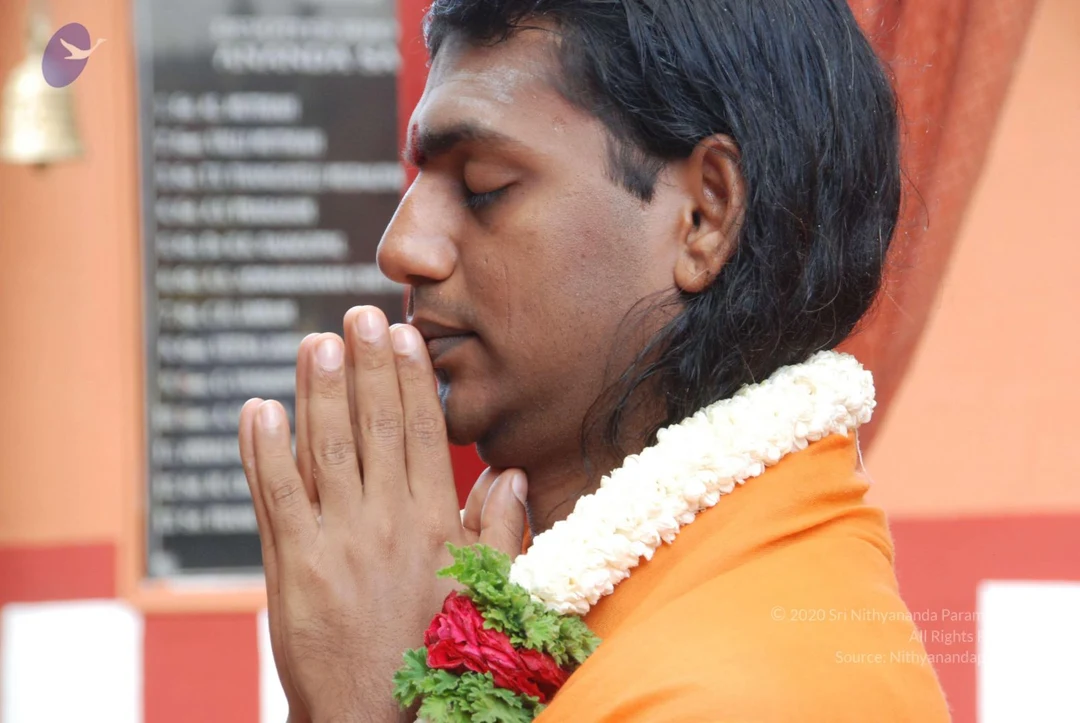
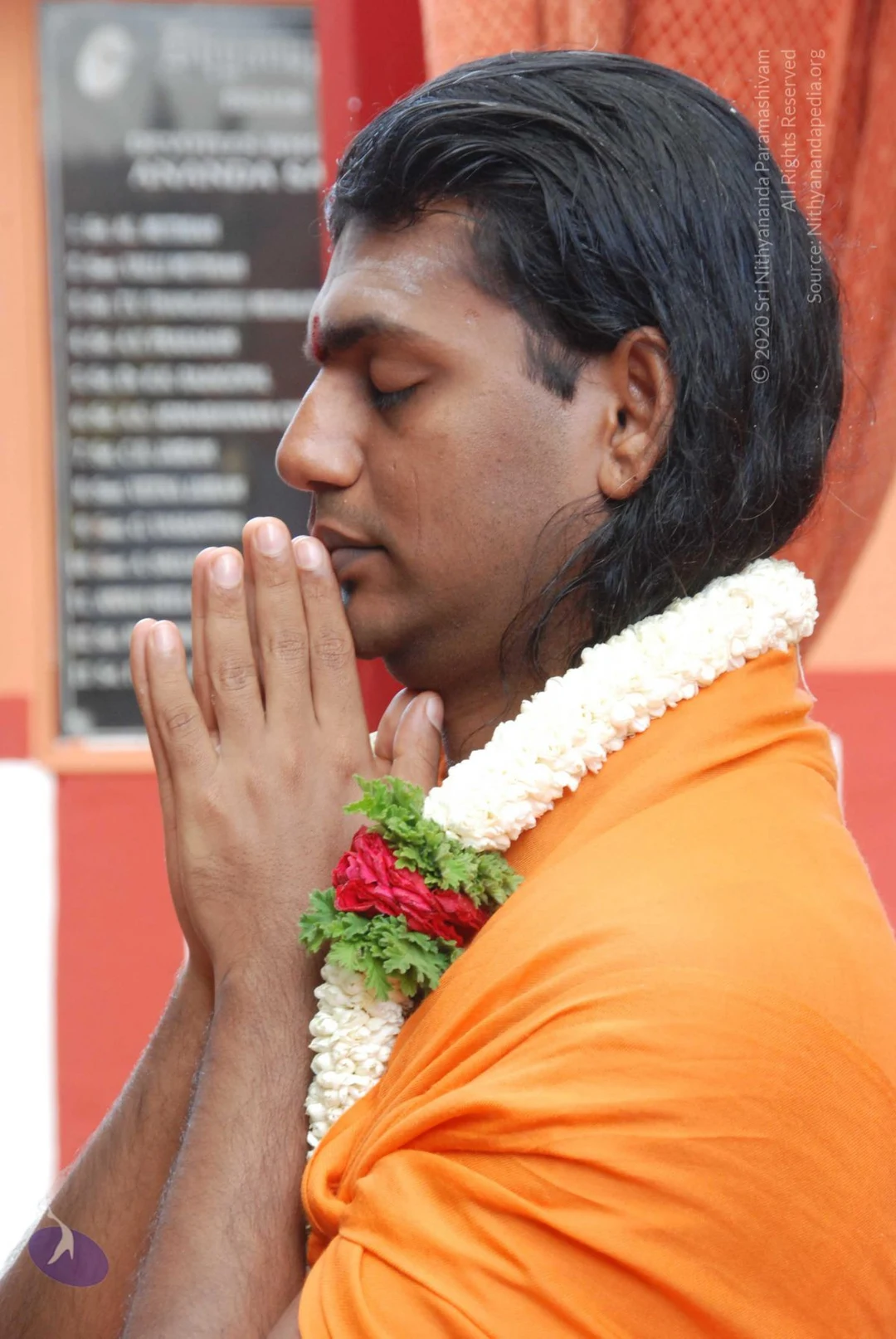
02-Sarva-Darshan
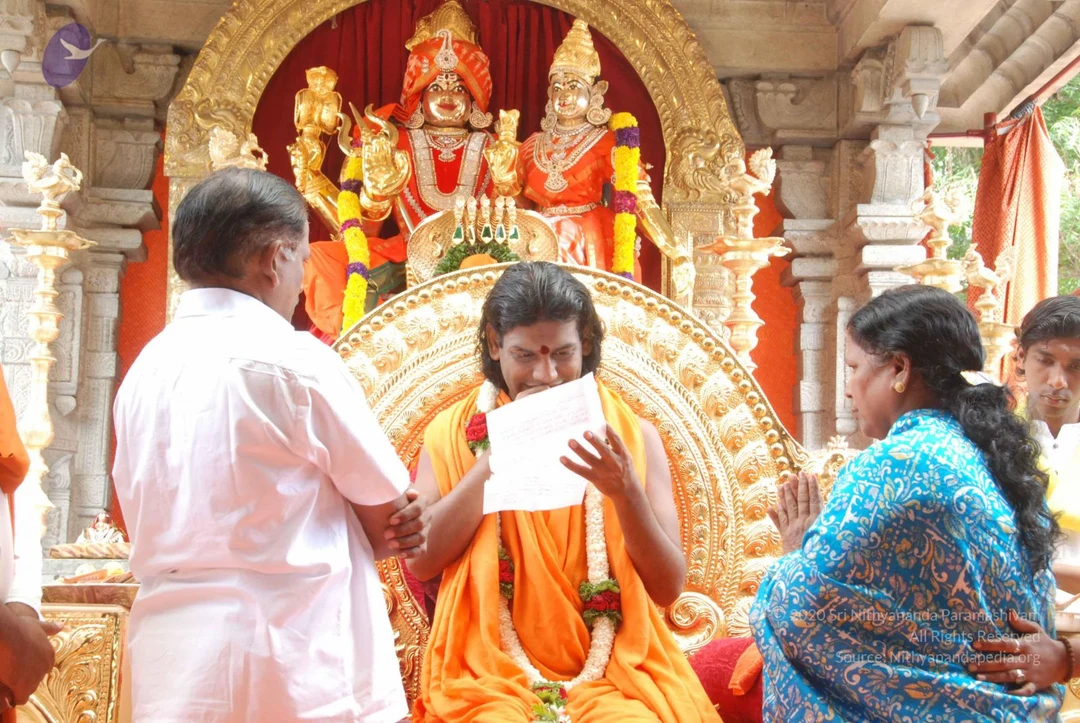
4 photosSource gallery
A seated man in an orange-saffron robe and a white-and-pink flower garland sits on an ornate gilded throne with red cushions in front of a shrine. Behind him stand two deity murtis with tall crowns and garlands, flanked by gold lamp stands and carved stone pillars. The man sits barefoot on a small carved platform, hands folded in his lap, in a calm pose. Green trees and a red-and-gold fence surround the open-air shrine area, with a small figure on a plinth to the right.A photograph of a seated figure on an ornate gold throne with red cushions, wearing an orange saffron shawl over orange clothing and a white and red flower garland, with a red tilak on the forehead and long swept-back dark hair; he raises one hand in blessing toward a devotee. A bald man in white with an orange shawl stands at left, a cameraman with a video camera films, and a person in white stands at right holding papers. A devotee in white kneels before the throne. Orange and red drapes and carved stone pillars frame the scene.A seated man in saffron-orange robes with a white and red garland of flowers and a red tilak on his forehead sits on an ornate gold throne, speaking with a devotee. He holds a small folded white paper in his right hand. The devotee in front, seen from behind, wears a white short-sleeved shirt and white dhoti and has his hands clasped in respect. Behind the throne stand gilded deity murtis with red and orange draped cloth, and a red backdrop.A photograph of a seated man in orange saffron robes on an ornate gold-and-red throne, wearing a white and red flower garland and a red bindi, with long dark hair swept back, smiling broadly while a devotee in a light blue shirt and white dhoti leans in and touches his face with a raised hand. Behind them stand a man in an orange kurta and a woman in a white top with a red bindi, near carved stone pillars, brass kalasha-style finials and green foliage. This appears to be a darshan setting.

03-Pancha-Tapas

3 photosSource gallery
Outdoor photo of a seated group practising yoga or meditation on a paved courtyard among palm trees. A man in a saffron-orange robe sits cross-legged at centre on a mat, with a few other figures in white and saffron seated nearby on low platforms. Two men in white kurtas wearing yellow-and-green garlands sit to the right, one on a round platform beside a white pedestal. Rows of seated devotees in white shirts, dhotis and muted clothing fill the foreground, facing the front. Behind them are black stone sculptures of a bull and figures, a tall ornate stone pillar, and a white plinth with marigold-yellow garlands draped over a dark stone statue. A large display board stands at left. No a person depiction is clearly identifiable from appearance; the orange-robed central figure is uncertain.Outdoor yoga or meditation gathering in a courtyard with palm trees. In the centre, a man in an orange robe sits cross-legged on a mat before a small brass kalasha-style vessel and a shallow dish. Behind him, several people in white and yellow sit on the sand near ash-circle fire pits. To the right, a large black Nandi bull stands on a white plinth draped with yellow and red marigold garlands. Dark stone deity murti, including a cobra-hooded form and an elephant-headed figure, stand along the back wall. In the foreground, many men in white shirts and dhotis sit with their backs to the camera, one in a pink kurta, facing the teacher.Outdoor satsang in a temple courtyard with palm trees and dark stone deity murtis and a Nandi bull statue on white pedestals. In the foreground, around 25 men in white shirts and dhotis sit cross-legged on woven mats facing the front. A man in an orange robe sits centrally on a mat with a small brass lamp before him, flanked by other seated figures in white and yellow shawls. A man in a salmon-pink kurta sits among the audience. A red and white striped platform and a red signboard stand at left. Concentric ring-shaped ritual fire pits are visible on the ground.

04-Yoga-Sutras-Discourse

22 photosSource gallery
An empty stage set for a Yoga Sutras discourse. A large cream upholstered throne-style armchair with a yellow cushion and a small bouquet of orange flowers on a white pedestal sits centre stage in front of a beige curtain with a "Yoga Sutras" sign and a circular emblem. A microphone stand stands beside the chair, and a white board sits on a stand at right. Dark red side drapes, white swagged valance, overhead stage lights and a raised platform complete the scene. No people are visible.An empty stage set for a Yoga Sutras talk. A cream upholstered armchair with a yellow cushion and dark carved trim sits centre stage before a beaded, tan curtain backdrop with the words "Yoga Sutras" and a circular yoga-figure emblem. A microphone stand stands beside the chair, a white pedestal holds a small vase of flowers, and a blank white board on an easel stands at right. Dark side curtains frame the stage, which is raised on white steps. No people are present.A photograph of a seated man in saffron-orange robes on an ornate cream upholstered throne with carved black wooden back, holding a small handheld microphone in one hand and a silver-tipped pointer or rod in the other. He wears an orange turban, a shawl draped over his shoulders, and a long necklace of dark rudraksha beads. A book on a stand with a yellow cover sits to his left. Beaded hangings and a purple logo mark appear in the background.A seated man in orange saffron robes and an orange turban with a red tilak on his forehead sits in a cream-upholstered throne with black carved wooden arms. His hands are pressed together in anjali mudra in front of his chest, and a microphone on a gooseneck stand is near his face. He wears a long rudraksha mala. To his left, an open yellow book rests on a black book stand. Strings of beads hang on the beige wall behind him.A man seated cross-legged on a cream upholstered throne with black carved wooden armrests and backrest, wearing an orange turban with a red tilak on the forehead, orange robes and a long mala of dark rudraksha beads. His hands rest folded in his lap and he gazes forward in front of a microphone on a stand. An open yellow book sits on a stand to his left, and beige fabric with hanging beaded strings forms the backdrop. Swamiji (probable) is seated on the throne, with long swept-back hair, an orange turban and rudraksha mala as visible cues.A seated man in an orange turban and orange robes sits on a cream-upholstered throne with dark carved wooden armrests and orange cushions. He wears a long rudraksha mala and a red tilak on his forehead, raises his right index finger, and speaks into a microphone on a boom stand. A yellow music stand with a printed book stands at left. Behind him hangs a beige fabric wall with strings of beads. A purple bird logo appears in the upper left corner. Swamiji (probable): the figure has long hair, an orange turban, orange robes and a rudraksha mala, and is seated in the central speaker's role.

06-Kalpataru-Darshan
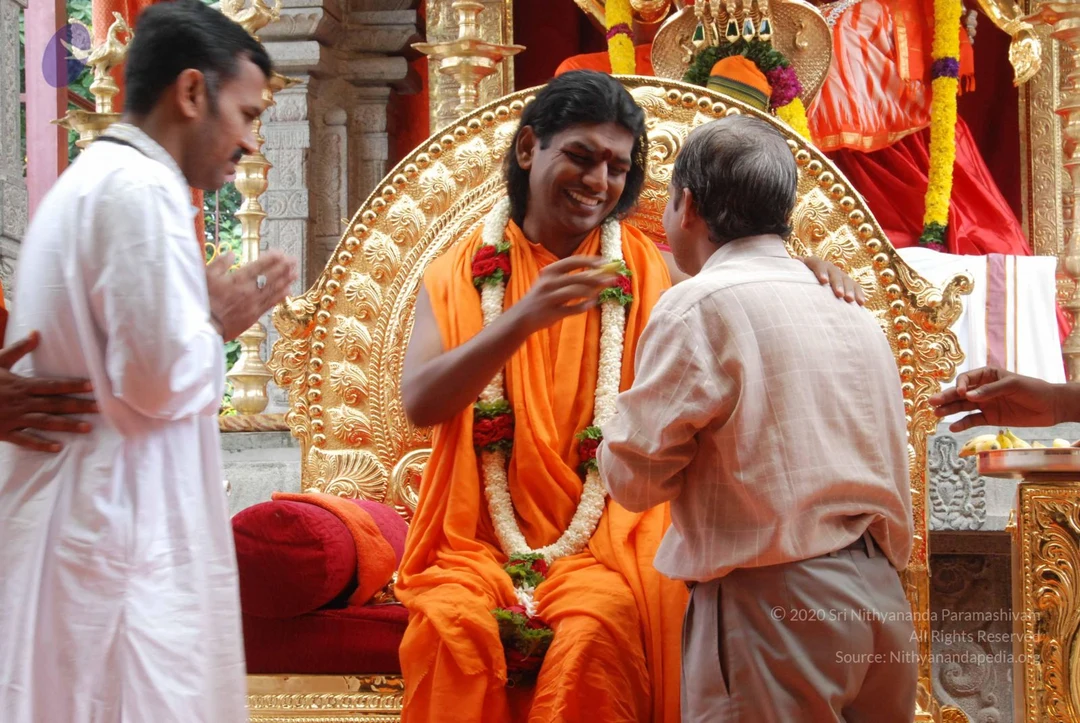
7 photosSource gallery
A photograph of a talk or satsang hall with a large seated audience facing a small platform at the front. In the foreground a young boy in plain white clothes sits cross-legged on a woven mat, and to his right several men in white shirts and white dhotis sit on mats, one wearing a rudraksha-style mala. A metal railing separates the front area from rows of seated attendees, many in white or colourful saris and kurtas. Tall decorative fabric banners with geometric patterns and yellow fringe hang from the ceiling, and framed notices hang on the orange-painted back wall. No individual is clearly identifiable as the speaker in this frame.A photograph of a covered hall viewed from the rear down a long central aisle lined with a red runner and metal railings. Many devotees sit on mats on both sides, most wearing white head bands and white or light clothes, some in orange or pink. At the far end a lit altar holds a deity murti with red and orange draping, flanked by tall blue-and-gold decorated pillars. Wall posters and framed photographs line the side walls. A few people stand near the altar, and the scene is dimly lit with fluorescent tubes overhead.A close view of an ornate gold repoussé throne back, its arched frame embossed with leafy scrolls, beaded rims and a central motif, set against a bright red velvet cushion. The arch is draped with garlands of red roses, green leaves, yellow marigolds and purple flowers. No people are visible; the throne is empty. A stone pillar and dark wall sit behind the arch.An ornate gilded arched throne back, or peetha, is framed by garlands of yellow and purple flowers and fuchsia blossoms. The pink cushioned backrest bears a faint printed pattern, and a dark velvet cushion sits in the lower foreground. A brass oil lamp stands at the left edge beside a golden scroll-patterned railing. No people are visible; the throne is empty and decorated for darshan.A photograph of a seated man in an orange turban with a red bindi on his forehead, wearing a sleeveless orange garment over one shoulder and a long rudraksha mala down his chest. He sits on a red cushioned seat in front of an ornate gold-toned throne decorated with pink, yellow and purple flower garlands. He looks to his right while speaking.A seated man in saffron-orange sleeveless robes and a long rudraksha mala smiles while his arm reaches toward a woman in a turquoise blouse and black patterned sari, whose hand rests on the head of a young boy in a striped shirt. A devotee in a white shirt stands at the left edge, and another person in a yellow scarf and white garment stands behind. The seat is a red cushioned throne-like chair decorated with a garland of yellow, purple and pink flowers, with a gold-trimmed backrest. Gold ornate architecture and a red-painted doorway appear in the background, and a red bindi marks the seated man's forehead. Overall this is a devotee receiving blessing at a darshan setting.
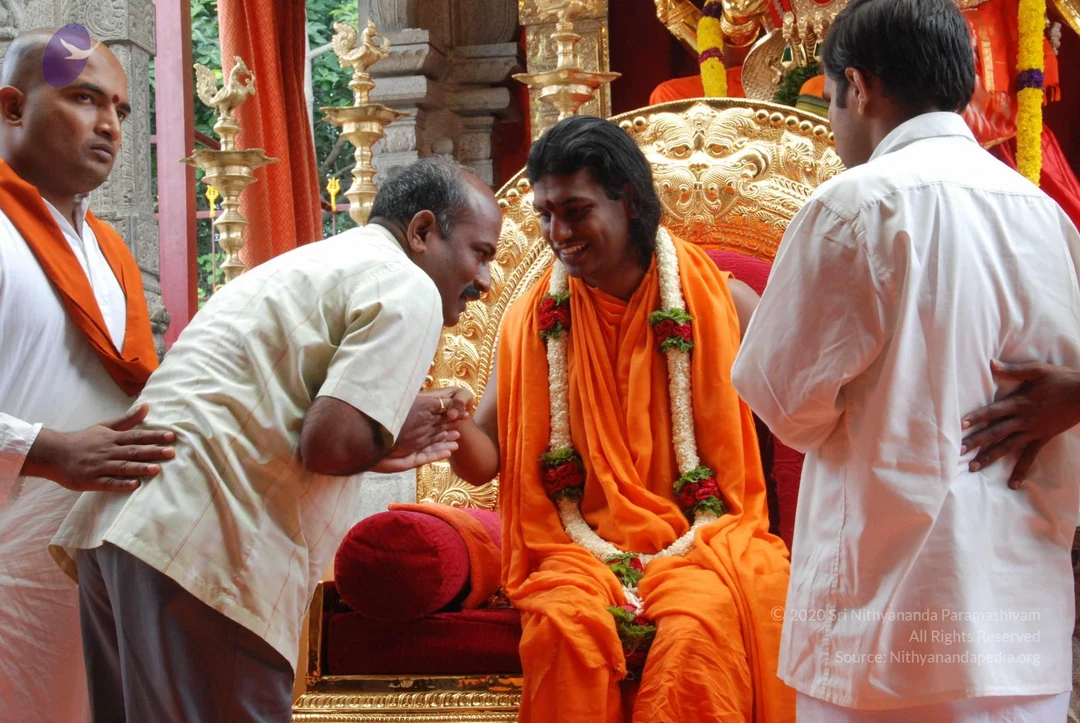
August 01 2010

6 photosView all
A seated man in saffron-orange robes and a matching orange turban sits on an ornate cream upholstered throne with black carved wooden armrests. He wears a long mala of dark rudraksha beads and a red-brown tilak on his forehead. He reads from an open yellow book on a black stand at his left, while a microphone on a boom arm is positioned near his face. Behind him hang strings of beads on a beige fabric backdrop.A seated figure in orange saffron robes and an orange turban sits on a cream upholstered throne with ornate black carved arms, holding a microphone on a long stand in one hand and gesturing with the other. Strands of rudraksha mala beads hang over the robes. A yellow book rests on a music stand at left, and beaded hangings decorate the wall behind. Swamiji (probable), identified by the orange turban, long swept-back hair, saffron robes and rudraksha mala, is giving a discourse as the teacher.A man seated cross-legged on a cream upholstered throne with a dark carved wooden backrest, eyes closed in meditation, hands folded in lap. He wears an orange turban with a small red bindi on his forehead, an orange sleeveless top with a shawl draped over the shoulders, orange dhoti-style lower garments, and a long dark rudraksha mala. A microphone on a stand is positioned near his face. Behind him hang strings of white beads against a beige fabric wall. A faint purple logo appears at the lower left.A seated man in orange clothing sits cross-legged on a cream upholstered throne with a dark carved wooden back. He wears an orange turban with a red bindi on his forehead, an orange sleeveless wrap over an orange robe, and a long rudraksha mala. His hands rest together in his lap, and a microphone on a boom arm is near his chest. Behind him hangs a beaded curtain. Swamiji (probable): the long hair, orange turban and rudraksha mala are visible cues for the page's Swamiji, shown in person seated on the throne during a talk.A man sits cross-legged on a cream upholstered throne with carved black wooden arms, wearing an orange turban with a red tilak on his forehead, an orange sleeveless wrap, and a long necklace of dark rudraksha beads. He has long dark hair and his hands rest folded in his lap. A microphone on a bent stand is in front of him, and a lectern at left holds an open yellow book. Behind him hang strings of white and pink beads against a beige textured wall. The appearance is consistent with the probable Swamiji: long hair, orange turban and wrap, and rudraksha mala, seated on a throne during a discourse.A man seated cross-legged on a cream upholstered throne with a carved black wooden frame, speaking into a microphone on a thin boom stand. He wears an orange saffron turban with a small red bindi on the forehead, a sleeveless orange saffron wrap, and a long necklace of dark rudraksha beads, with long dark hair falling past his shoulders. His hands rest in his lap. To the left stands a black music stand holding a yellow book. Orange-trimmed cream cushions sit on either side of the throne.